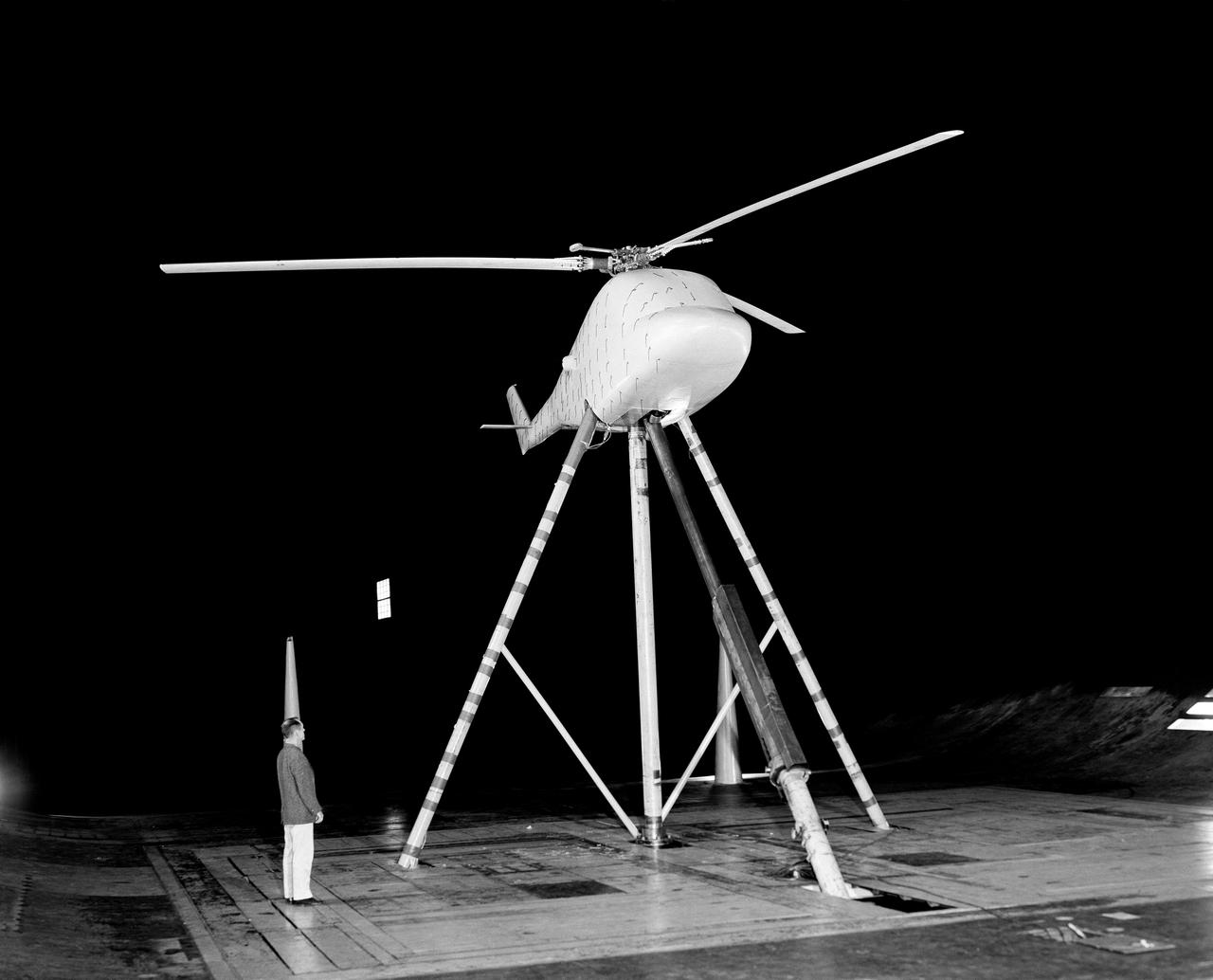
3/4 front view of Lockheed Rigid Rotor model in Ames 40x80 foot wind Tunnel.
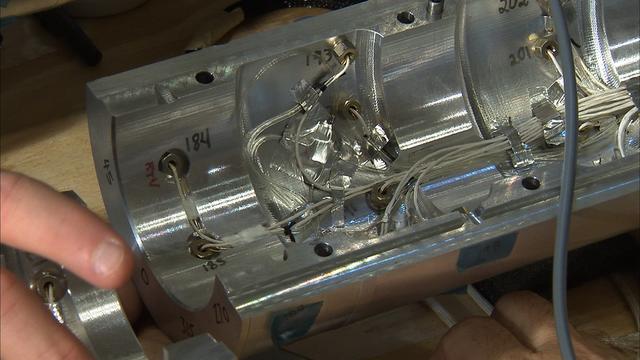
Shown is testing of a 3.5% Ares 1-X buffet model at the transonic wind tunnel at Langley Research Center, Virginia in support of the Ares/Constellation program. This image is extracted from high definition video and is the highest resolution available
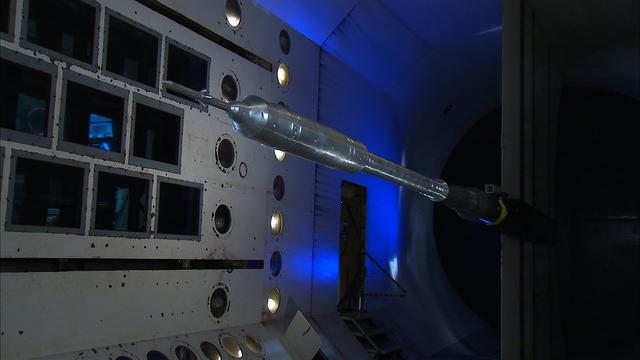
Shown is testing of a 3.5% Ares 1-X buffet model at the transonic wind tunnel at Langley Research Center, Virginia in support of the Ares/Constellation program. This image is extracted from high definition video and is the highest resolution available.
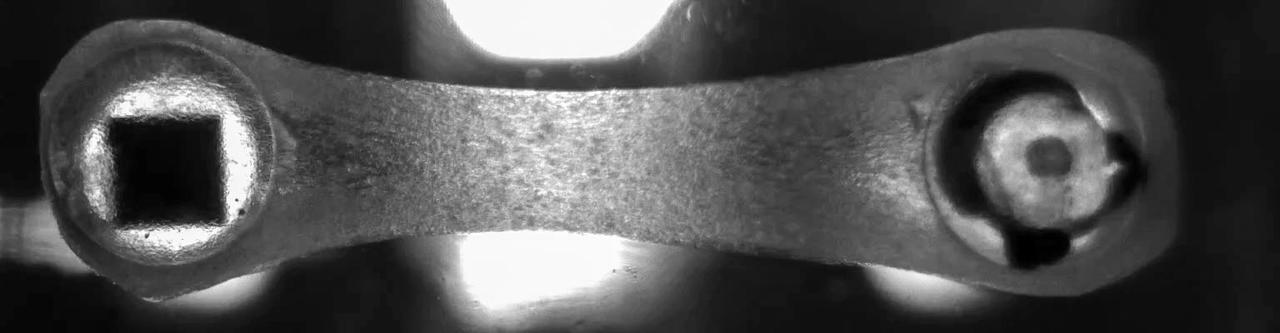
jsc2022e083014 (10/26/2022) --- A preflight image of a beating Engineered Heart Tissue (EHT) for A Human iPSC-based 3D Microphysiological System for Modeling Cardiac Dysfunction in Microgravity (Engineered Heart Tissues-2) investigation. The tissue is fabricated between two posts, one flexible and one rigid. In the flexible post, a square magnet is seen. This magnet enables researchers to measure tissue function using an underlying magnetic sensor, giving real time tissue function data. Image courtesy of Johns Hopkins University.

NASA's Voyager images are used to create a global view of Ganymede. The cut-out reveals the interior structure of this icy moon. This structure consists of four layers based on measurements of Ganymede's gravity field and theoretical analyses using Ganymede's known mass, size and density. Ganymede's surface is rich in water ice and Voyager and Galileo images show features which are evidence of geological and tectonic disruption of the surface in the past. As with the Earth, these geological features reflect forces and processes deep within Ganymede's interior. Based on geochemical and geophysical models, scientists expected Ganymede's interior to either consist of: a) an undifferentiated mixture of rock and ice or b) a differentiated structure with a large lunar sized "core" of rock and possibly iron overlain by a deep layer of warm soft ice capped by a thin cold rigid ice crust. Galileo's measurement of Ganymede's gravity field during its first and second encounters with the huge moon have basically confirmed the differentiated model and allowed scientists to estimate the size of these layers more accurately. In addition the data strongly suggest that a dense metallic core exists at the center of the rock core. This metallic core suggests a greater degree of heating at sometime in Ganymede's past than had been proposed before and may be the source of Ganymede's magnetic field discovered by Galileo's space physics experiments. http://photojournal.jpl.nasa.gov/catalog/PIA00519