The WHAATRR team from NASA Armstrong includes, from left, Derek Abramson Dave Berger, John Bodylski, Robert “Red” Jensen, Scott Wiley, Al Bowers, Justin Hall, Luke Bard, Hussein Nasr and Samantha Ingersoll.
Subscale Glider Could Assist in Weather Studies, Prediction
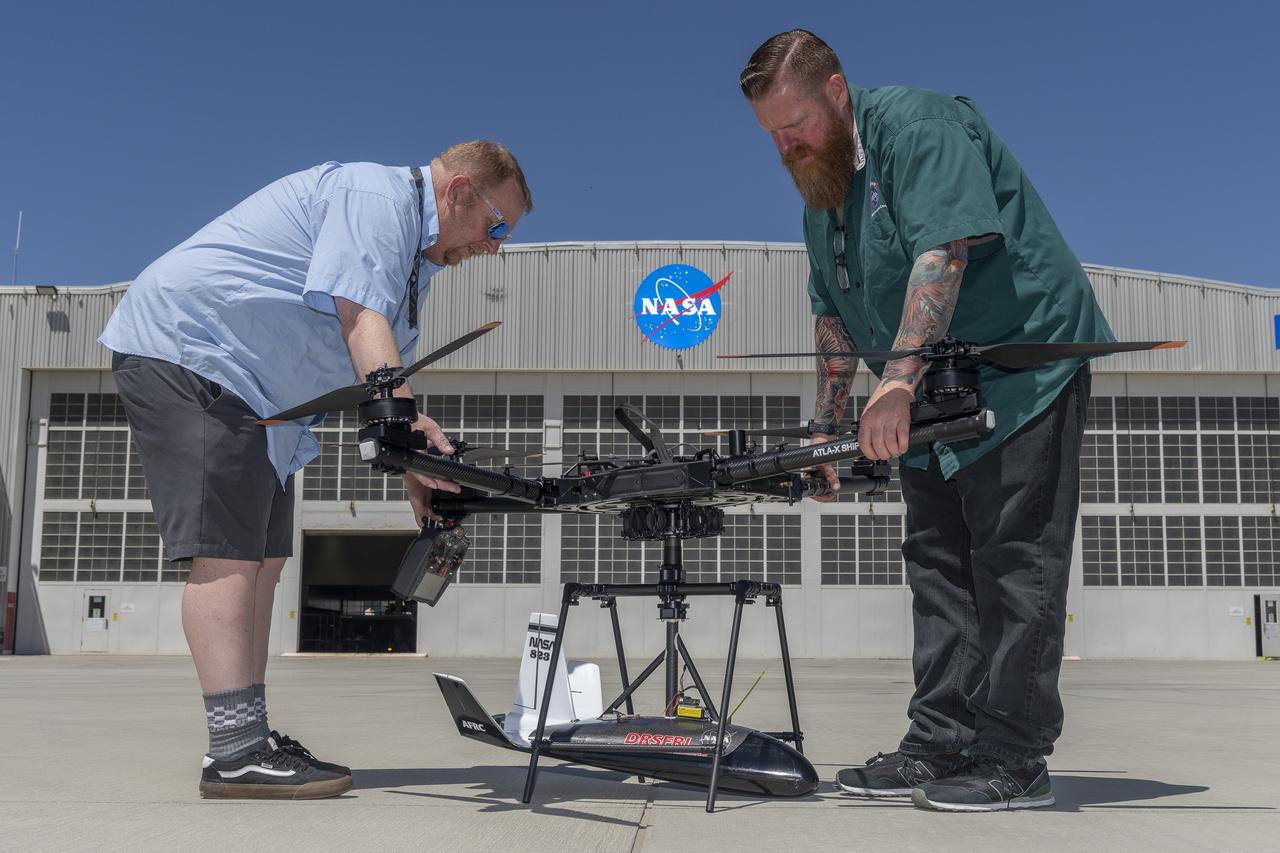
Robert “Red” Jensen and Justin Hall position an atmospheric probe, its host cradle, and the rotorcraft that will air launch the probe at NASA’s Armstrong Flight Research Center in Edwards, California. Jensen and Hall are designers, technicians, and pilots at the center’s Dale Reed Subscale Flight Research Laboratory.
NASA Researchers Prepare Atmospheric Probe Prototype for Flight
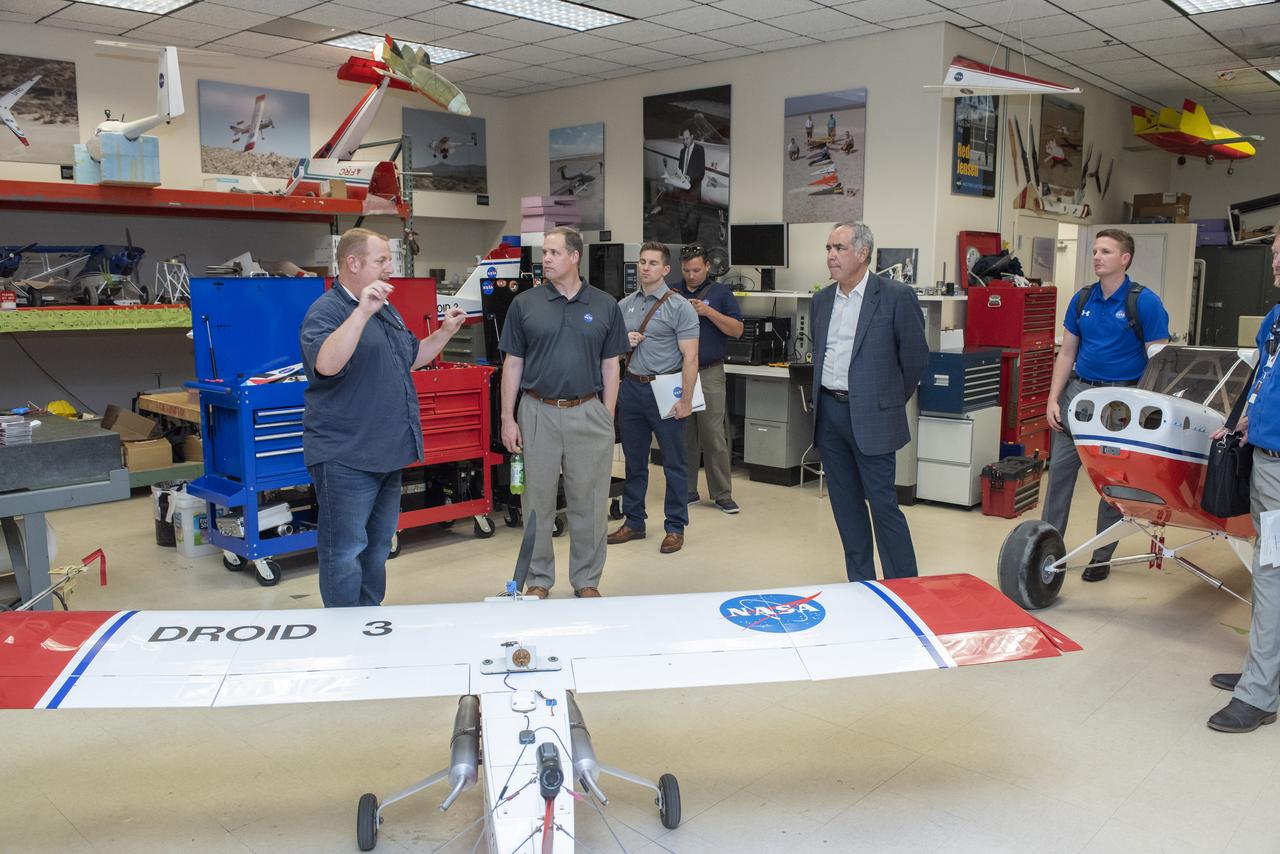
Armstrong's Robert "Red" Jensen talks to Bridenstine about using small scale aircraft to test aeronautical concepts keeping cost of aviation discoveries lower until technology is proved for larger aircraft.
Bridenstine is inside Armstrong's Dale Reed Flight Research Lab aka "The Model Shop" used for rapid prototyping, design, fabrication, assembly and integration, modification, maintenance and operation of experimental subscale flight research vehicles
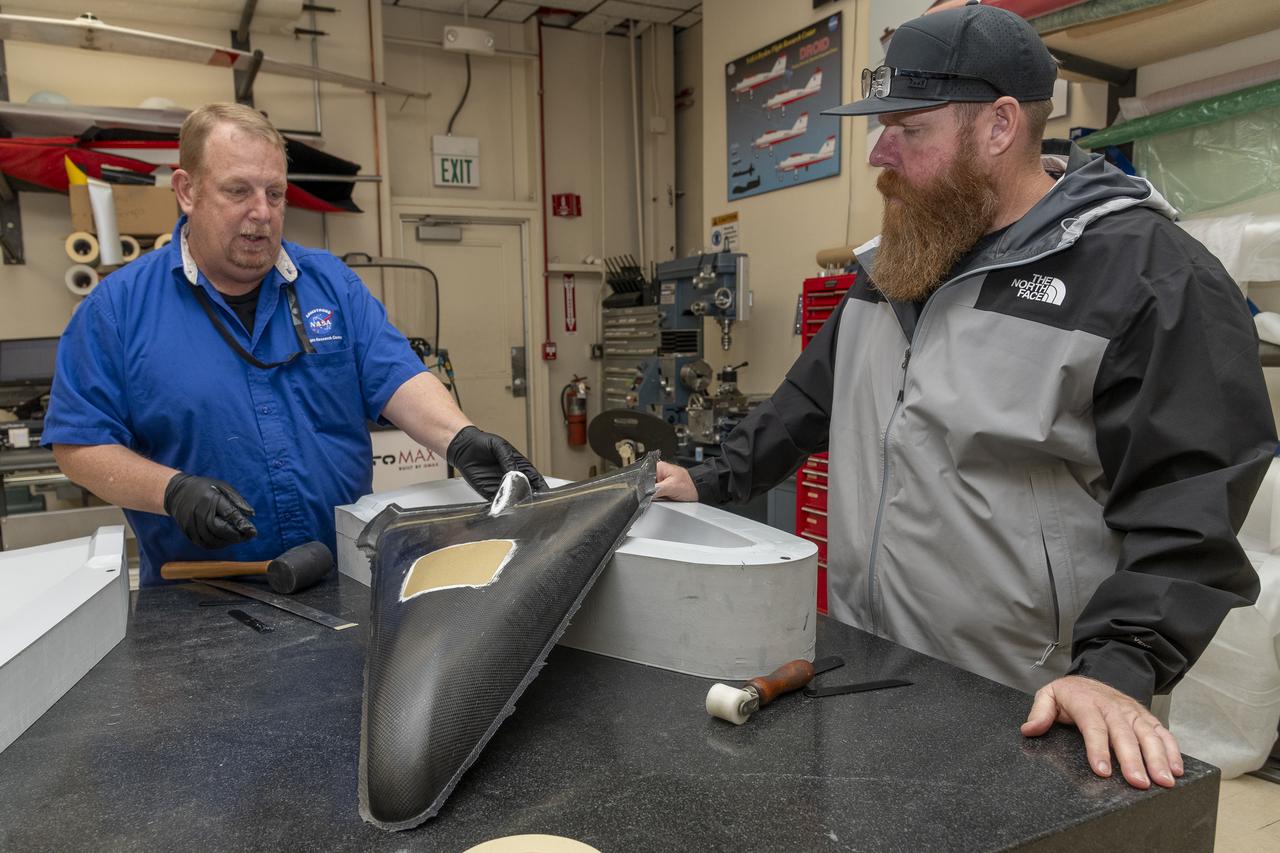
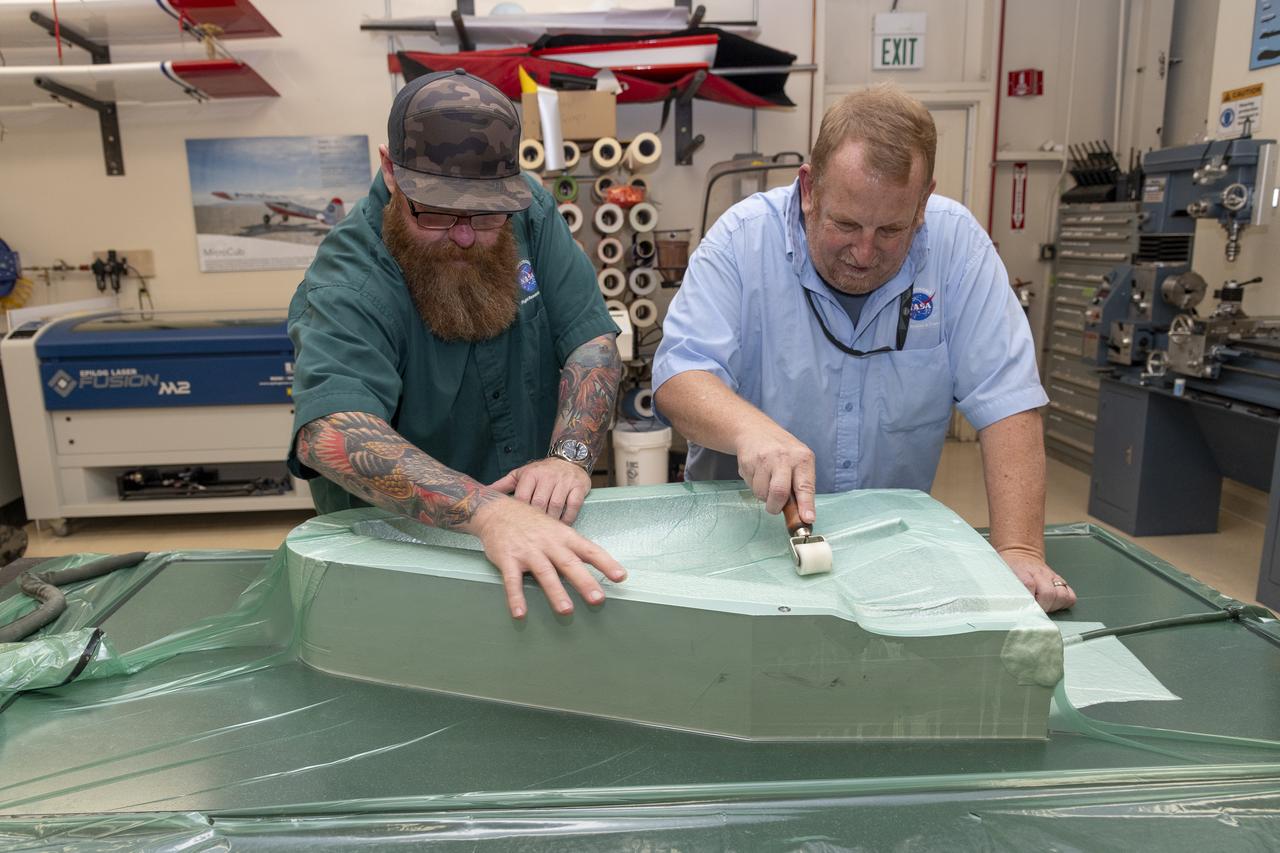
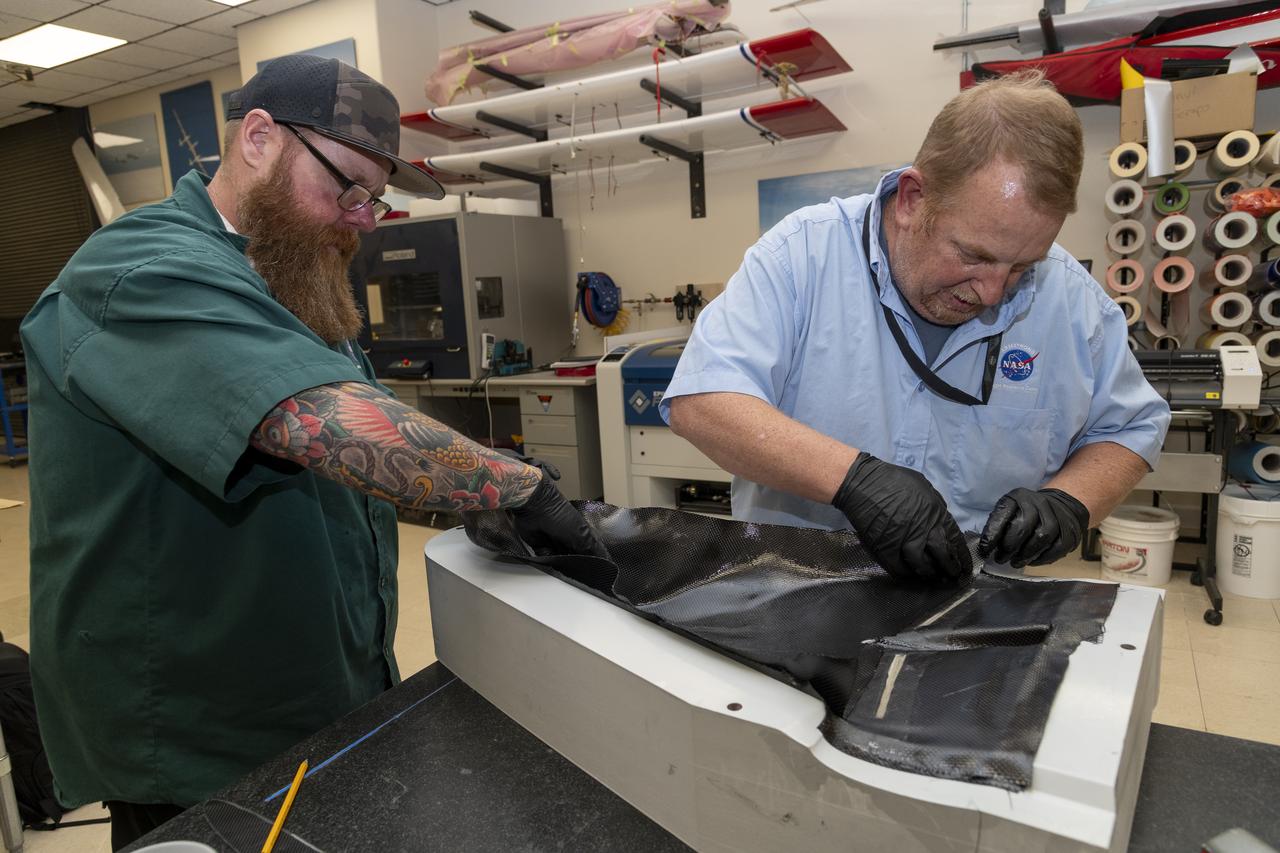
Robert “Red” Jensen removes a major component from an aircraft mold for assembly of a prototype of an atmospheric probe as Justin Hall watches at NASA’s Armstrong Flight Research Center in Edwards, California.
NASA Armstrong Builds Aircraft to be an Atmospheric Probe
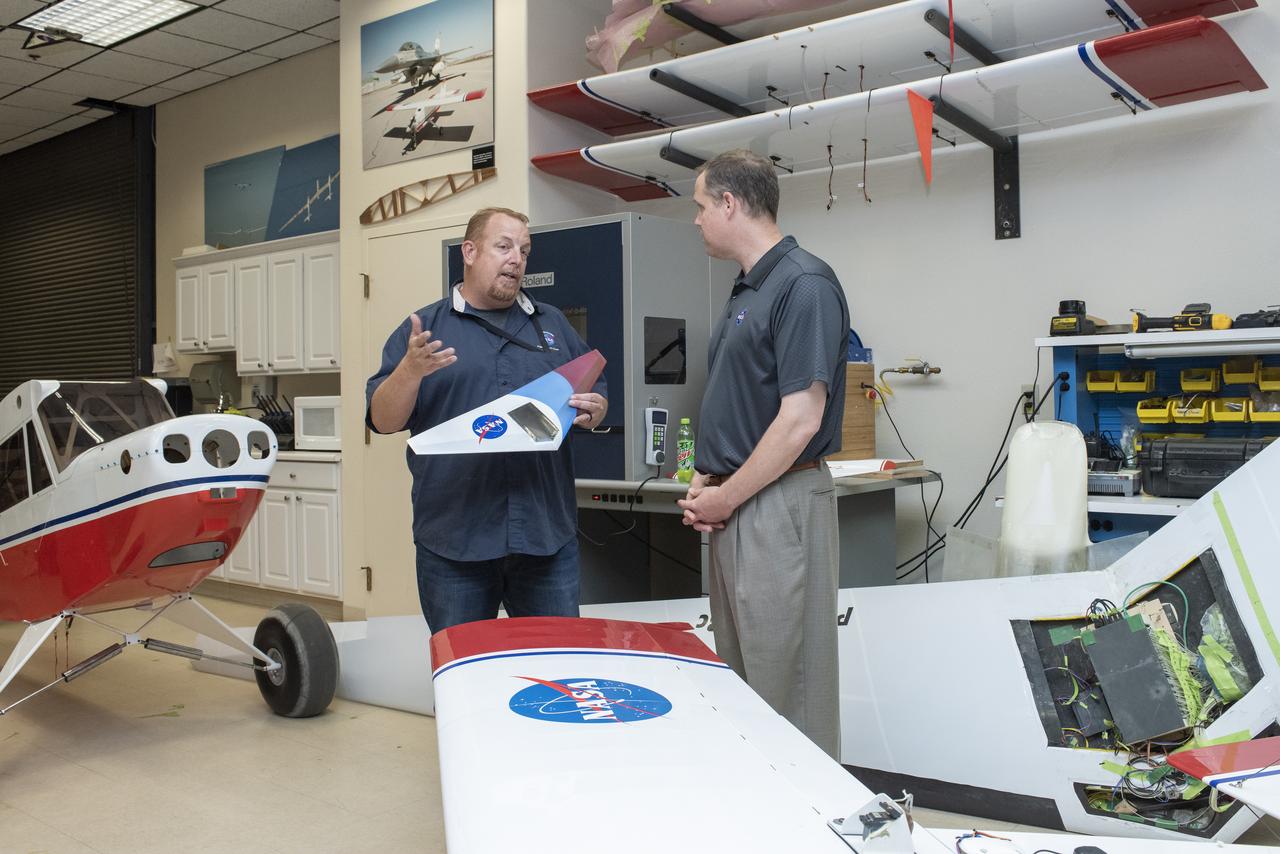
Armstrong's Robert "Red" Jensen talks to Bridenstine about using small scale aircraft to test aeronautical concepts keeping cost of aviation discoveries lower until technology is proved for larger aircraft.
Bridenstine is inside Armstrong's Dale Reed Flight Research Lab aka "The Model Shop" used for rapid prototyping, design, fabrication, assembly and integration, modification, maintenance and operation of experimental subscale flight research vehicles
Justin Hall, left, and Robert “Red” Jensen work to eliminate the air around an aircraft mold where it will cure for eight hours. The subscale aircraft development at NASA’s Armstrong Flight Research Center in Edwards, California, may result in an atmospheric probe.
NASA Armstrong Builds Aircraft to be an Atmospheric Probe
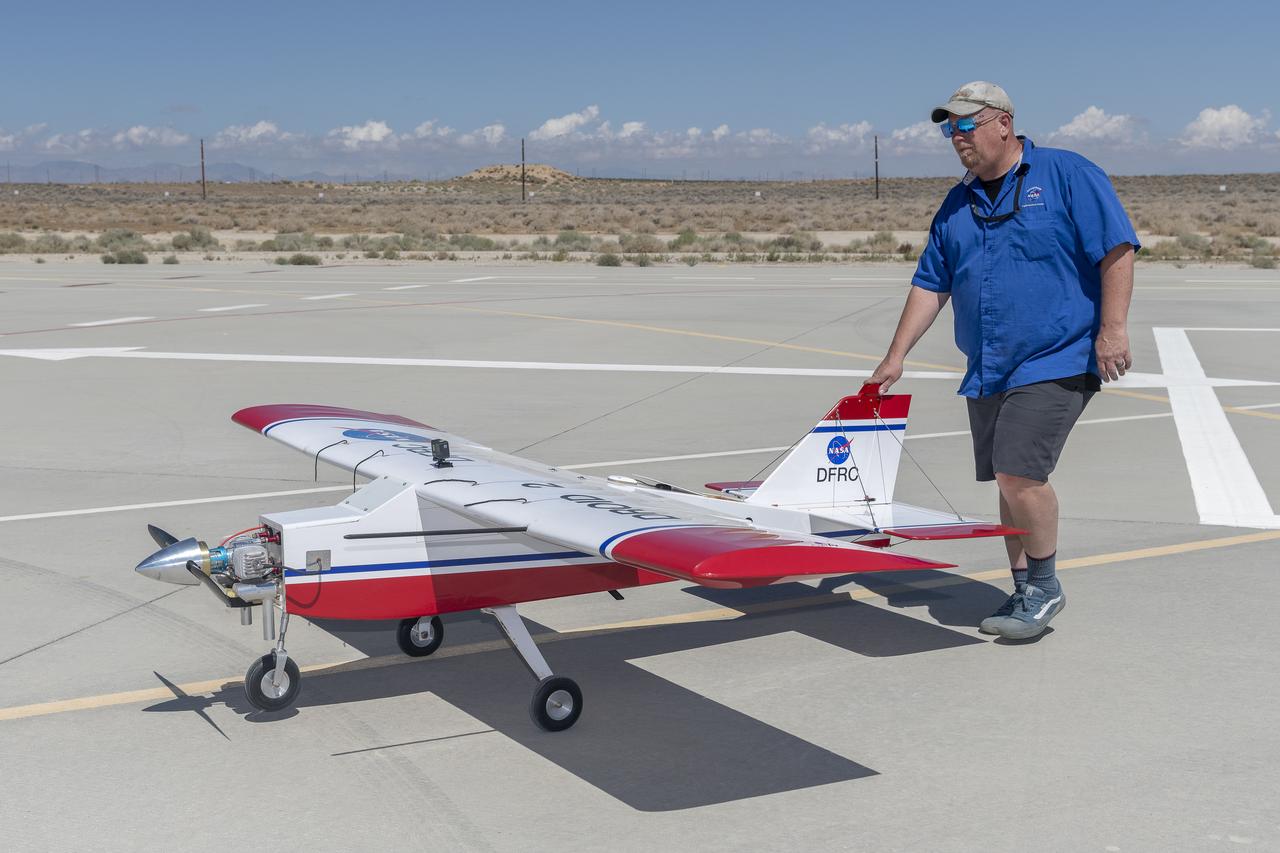
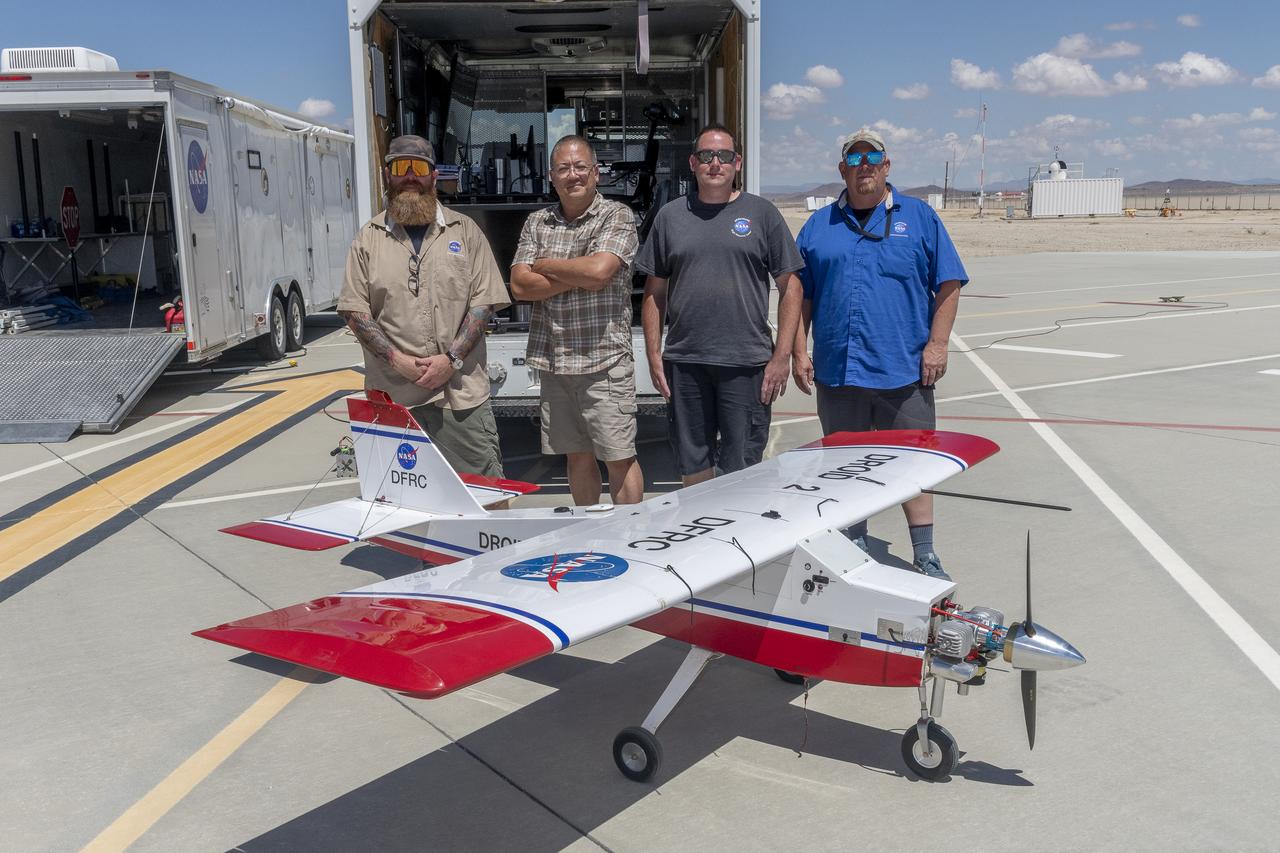
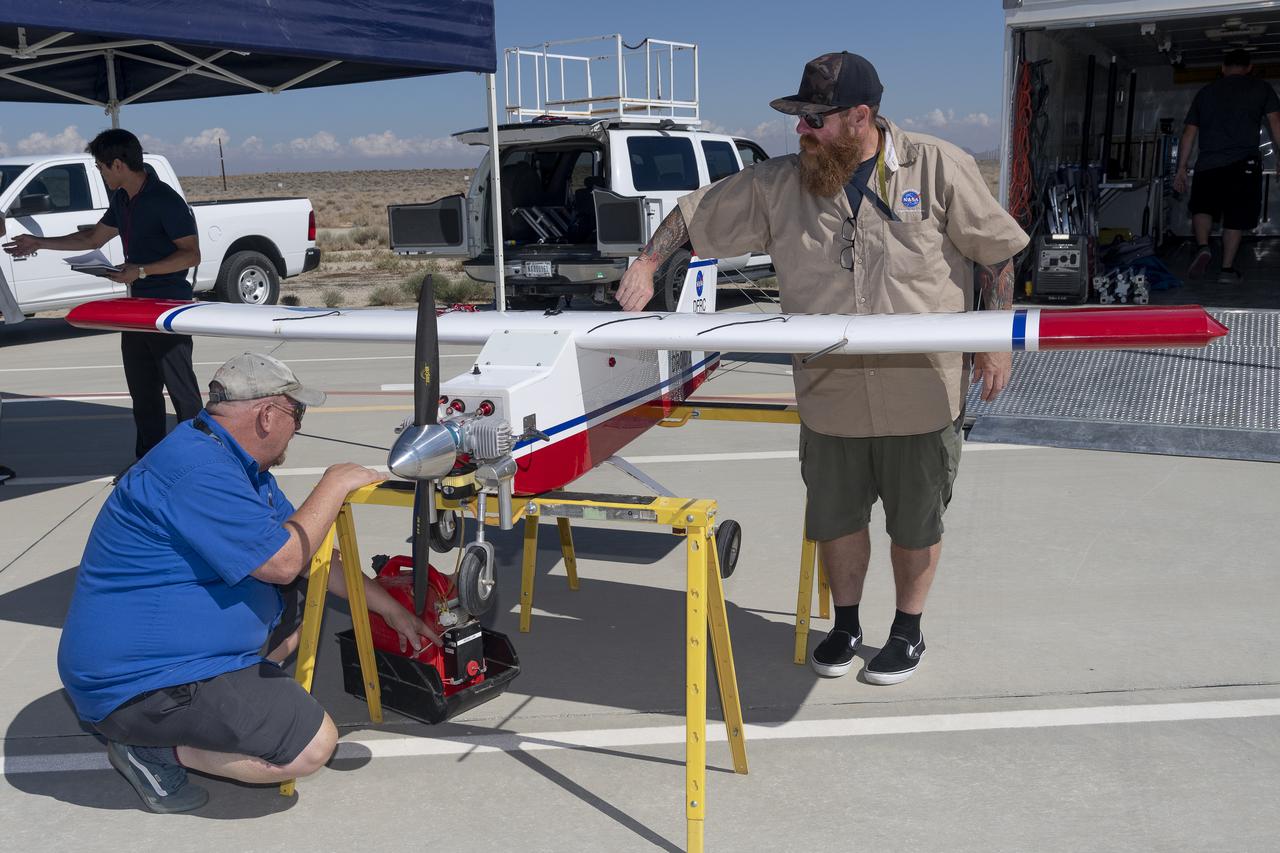
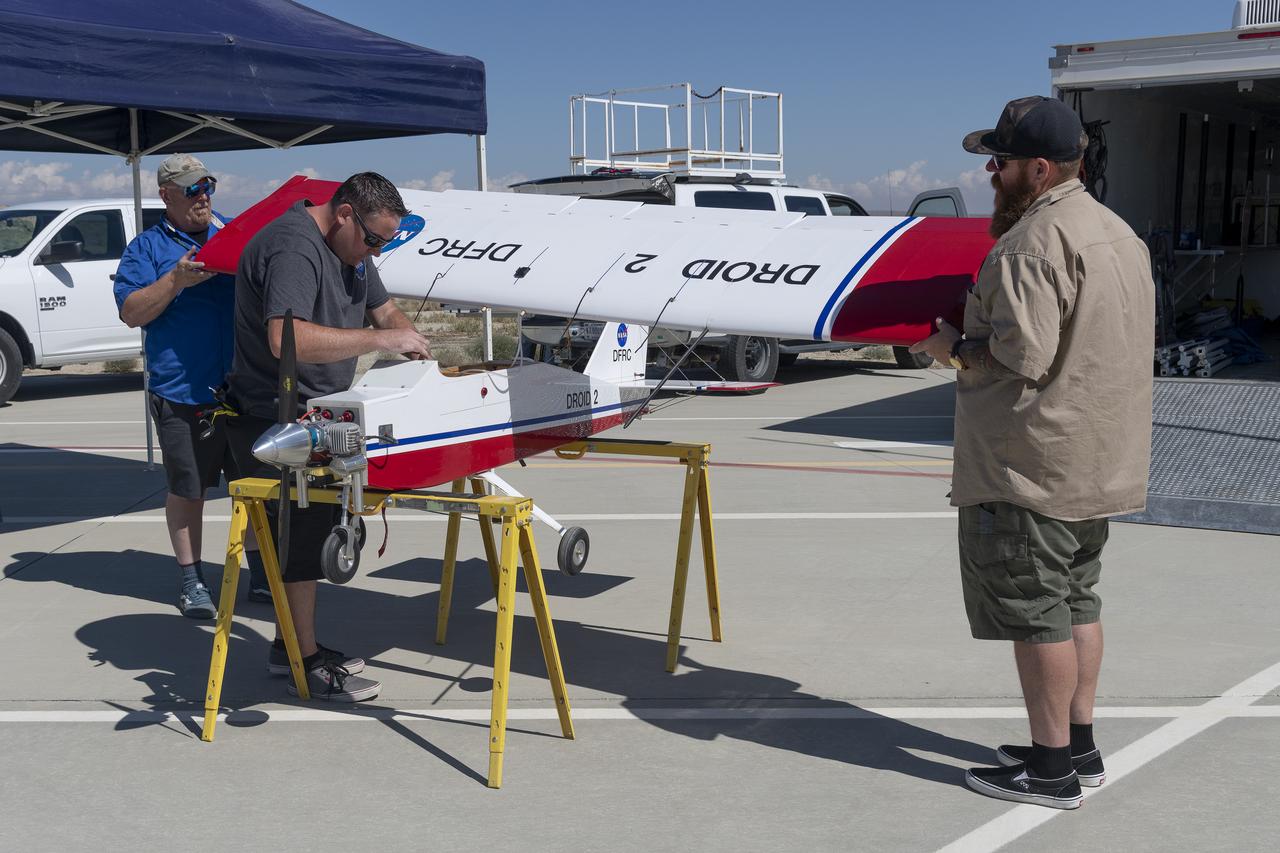
Robert "Red" Jensen positions the DROID 2 (Dryden Remotely Operated Integrated Drone) aircraft before a flight for the Advanced Exploration of Reliable Operation at Low Altitudes: Meteorology, Simulation, and Technology campaign. The weather study was at NASA's Armstrong Flight Research Center in Edwards, California. The focus was to study wind to provide data for safe takeoff and landing of future air taxis.
NASA Concludes Wind Study
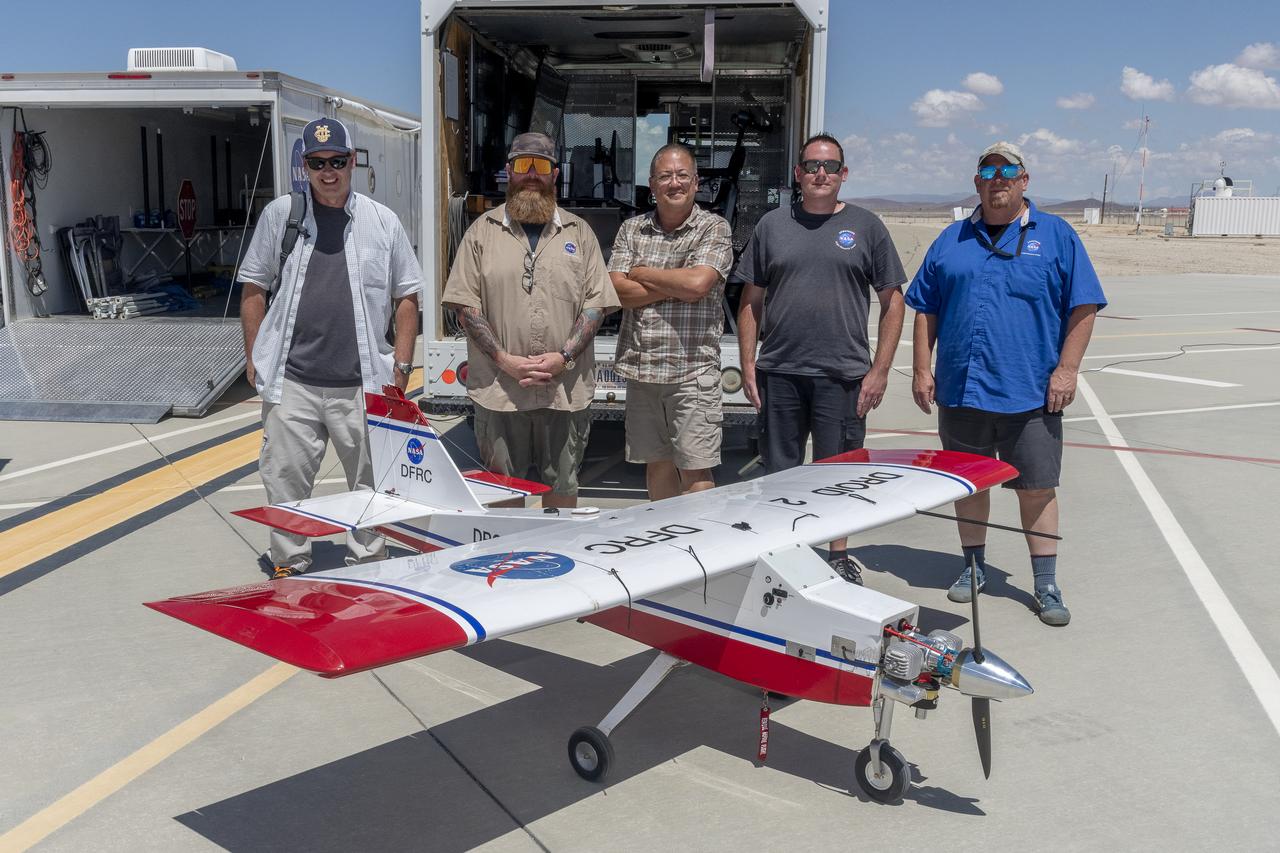
Robert "Red" Jensen, Justin Link, and Justin Hall prepare the DROID 2 (Dryden Remotely Operated Integrated Drone 2) for the Advanced Exploration of Reliable Operation at Low Altitudes: Meteorology, Simulation, and Technology campaign flights. The weather study was at NASA's Armstrong Flight Research Center in Edwards, California. The focus was to study wind to provide data for safe takeoff and landing of future air taxis.
NASA Concludes Wind Study
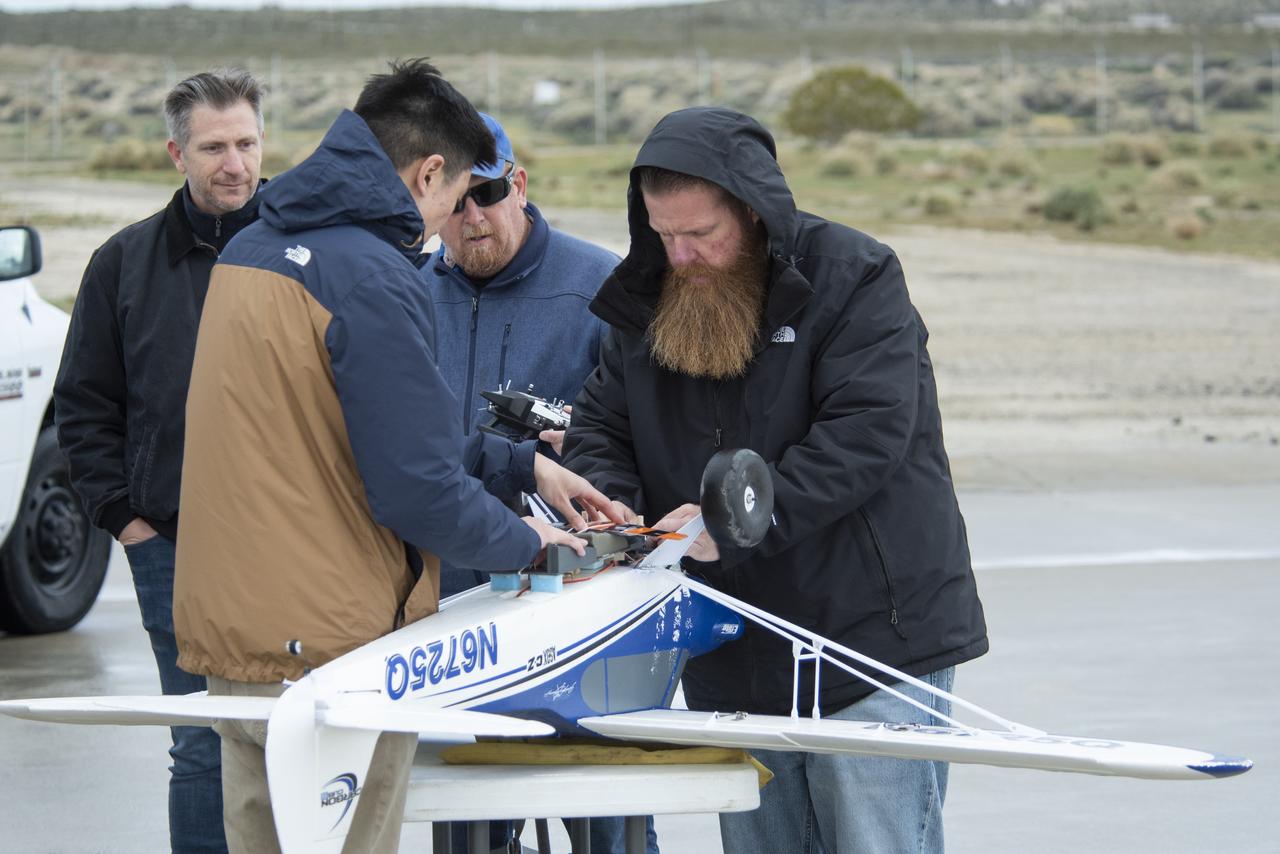
From left Eric Becker watches as Nathan Sam, Robert 'Red' Jensen and Justin Hall attach a Prandtl-M aircraft onto the Carbon Cub aircraft that air launched it at NASA's Armstrong Flight Research Center in California. The aircraft is the second of three prototypes of varying sizes to provide scientists with options to fly sensors in the Martian atmosphere to collect weather and landing site information for future human exploration of Mars.
Latest Mars Aircraft Prototype Flies
John Melton, Justin Hall, Derek Abramson, Justin Link, and Robert "Red" Jensen were key on mission day for the Advanced Exploration of Reliable Operation at Low Altitudes: Meteorology, Simulation, and Technology campaign. The DROID 2 (Dryden Remotely Operated Integrated Drone 2) aircraft supported the campaign at NASA's Armstrong Flight Research Center in Edwards, California. The focus was to study wind to provide data for safe takeoff and landing of future air taxis.
NASA Concludes Wind Study
Robert "Red" Jensen lands the DROID 2 (Dryden Remotely Operated Integrated Drone 2) aircraft at NASA's Armstrong Flight Research Center in Edwards, California, as part of the Advanced Exploration of Reliable Operation at Low Altitudes: Meteorology, Simulation, and Technology campaign. The focus was to study wind to provide data for safe takeoff and landing of future air taxis.
NASA Concludes Wind Study
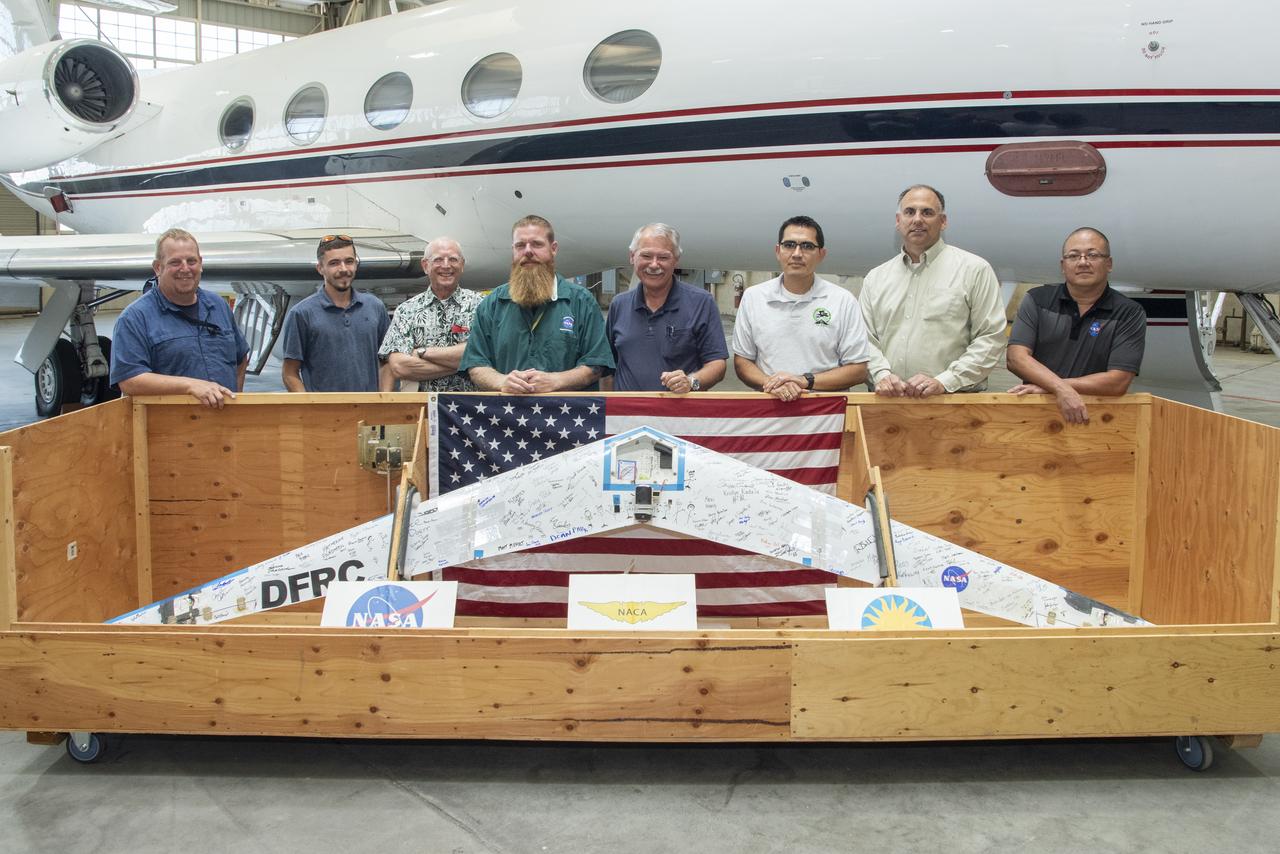
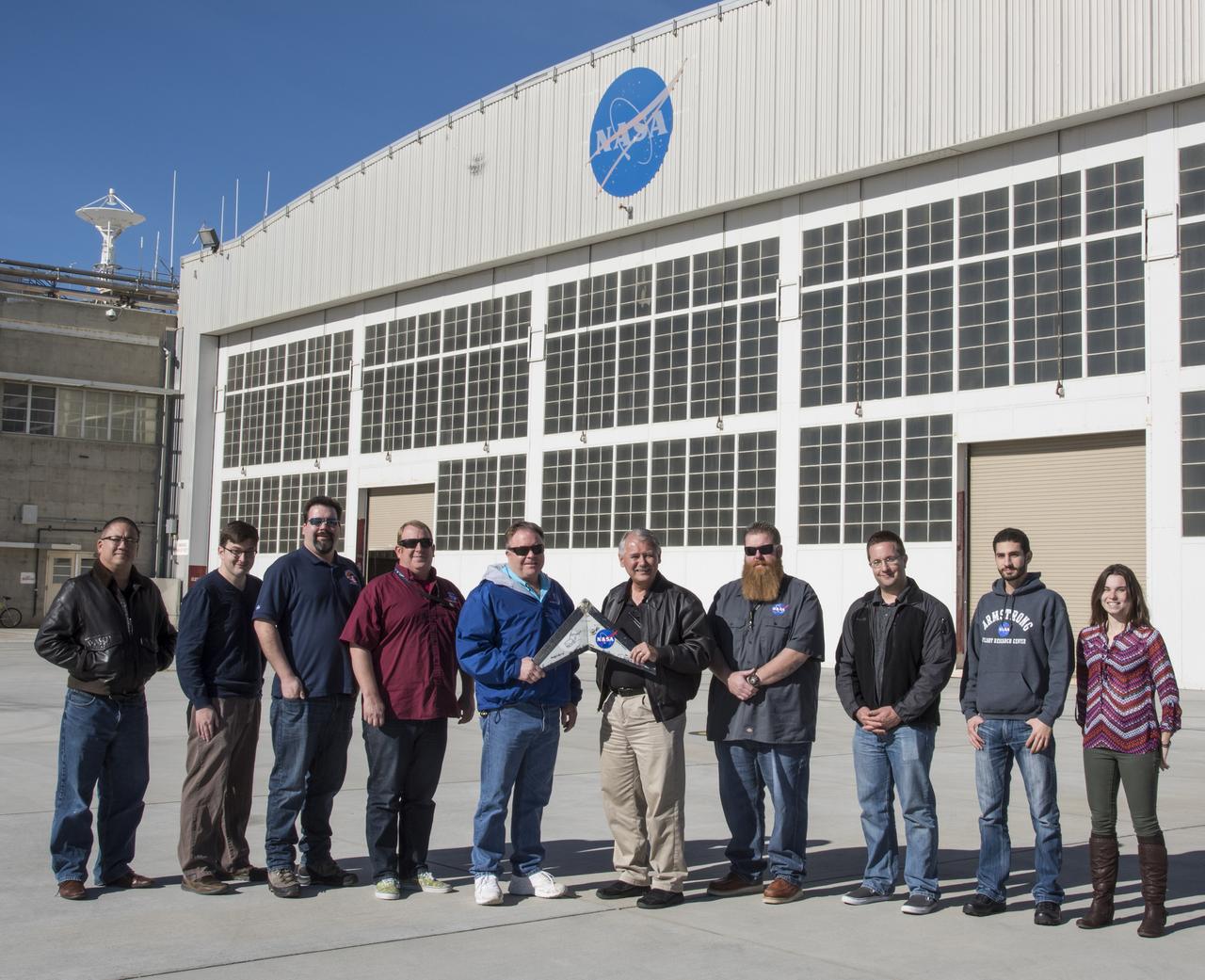
Preliminary Research Aerodynamic Design to Lower Drag, or Prandtl-D1, will be displayed in an upcoming Innovations Gallery at the National Air and Space Museum, the Smithsonian Institute. The aircraft, which flew from NASA's Armstrong Flight Research Center in California, uses a method of aircraft design that introduces a twist that results in a more efficient wing. From left are Robert "Red" Jensen, Logan Shaw, Christian Gelzer, Justin Hall, Al Bowers, Oscar Murillo, Brian Eslinger and Derek Abramson
Prandtl-D Goes to Smithsonian
Robert "Red" Jensen and Justin Hall prepare the DROID 2 (Dryden Remotely Operated Integrated Drone 2) aircraft for the Advanced Exploration of Reliable Operation at Low Altitudes: Meteorology, Simulation, and Technology campaign flights. The weather study was at NASA's Armstrong Flight Research Center in Edwards, California. The focus was to study wind to provide data for safe takeoff and landing of future air taxis.
NASA Concludes Wind Study
Justin Hall, Derek Abramson, Justin Link, and Robert "Red" Jensen were key to a successful mission for the DROID 2 (Dryden Remotely Operated Integrated Drone 2) aircraft at NASA's Armstrong Flight Research Center in Edwards, California. The aircraft flew as part of the Advanced Exploration of Reliable Operation at Low Altitudes: Meteorology, Simulation, and Technology campaign. The focus was to study wind to provide data for safe takeoff and landing of future air taxis.
NASA Concludes Wind Study
Justin Hall, left, and Robert “Red” Jensen, at NASA’s Armstrong Flight Research Center in Edwards, California, add layers of carbon fiber and foam in a mold. Another few layers will be added and then it will be cured about eight hours under vacuum. The parts were later removed from molds, refined, and joined for an aircraft that is designed to be an atmospheric probe.
NASA Armstrong Builds Aircraft to be an Atmospheric Probe