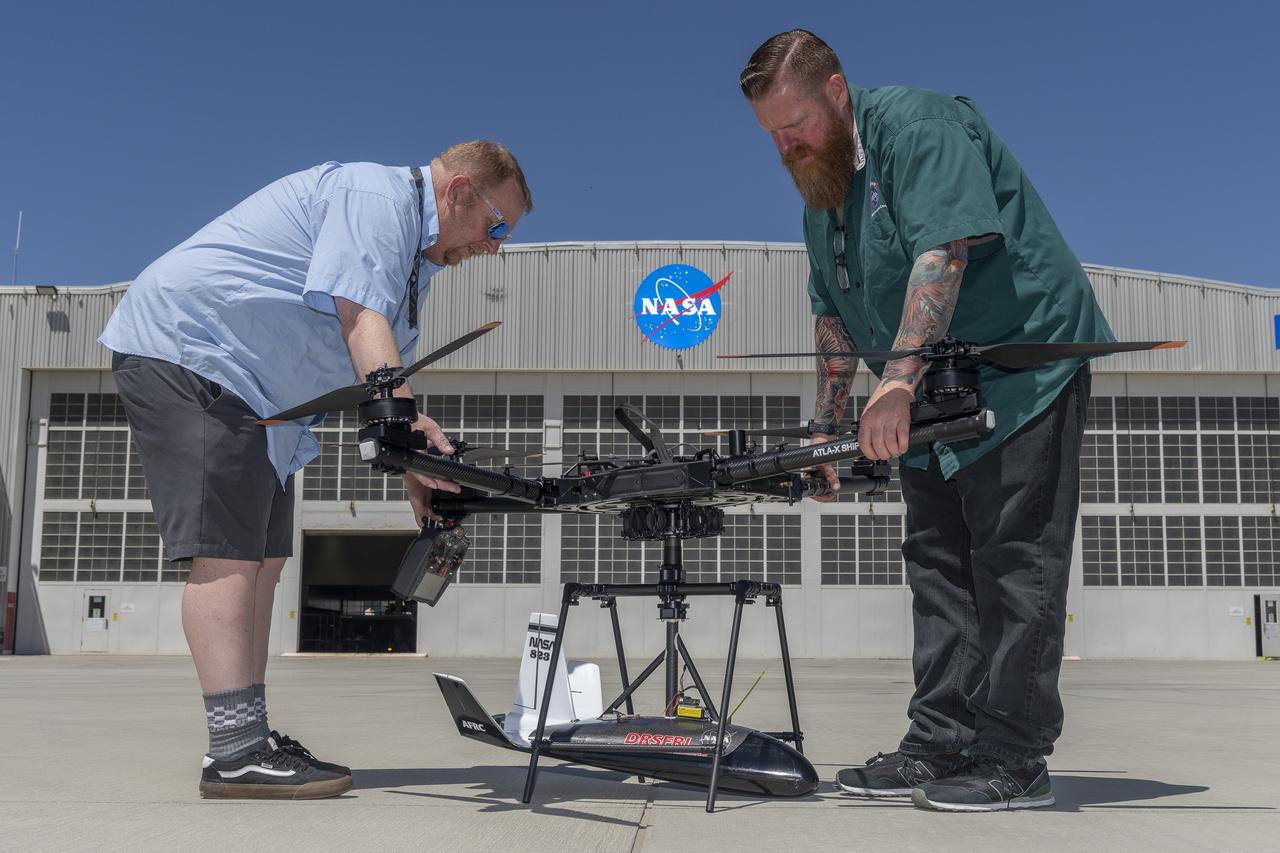
Robert “Red” Jensen and Justin Hall position an atmospheric probe, its host cradle, and the rotorcraft that will air launch the probe at NASA’s Armstrong Flight Research Center in Edwards, California. Jensen and Hall are designers, technicians, and pilots at the center’s Dale Reed Subscale Flight Research Laboratory.
NASA Researchers Prepare Atmospheric Probe Prototype for Flight
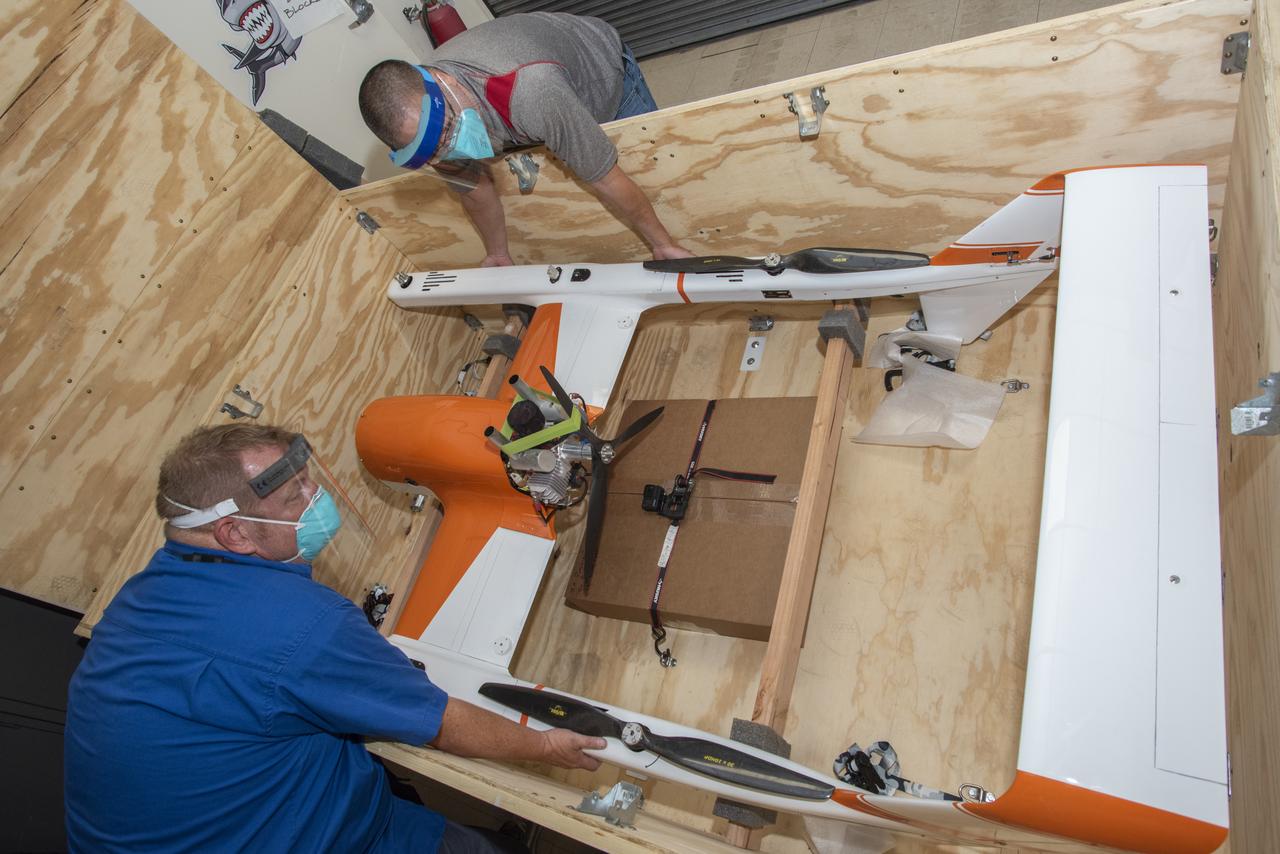
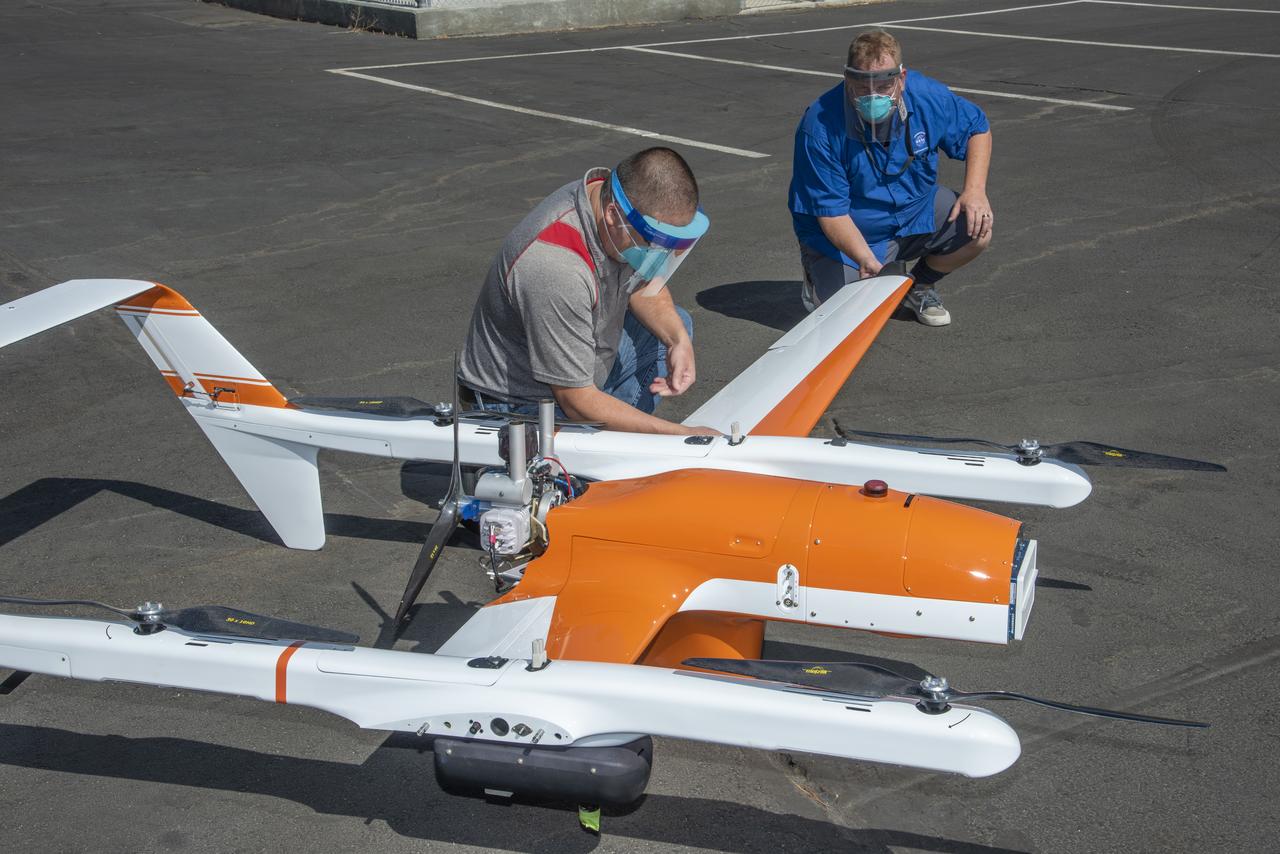
Derek Abramson and Robert Jensen unload the Hybrid Quadrotor 90C (HQ-90) at NASA Armstrong Flight Research Center’s Dale Reed Subscale Flight Research Lab in California on Oct. 1, 2020. The Resilient Autonomy project will use the vertical lift and transition remotely piloted aircraft for software testing at NASA Armstrong.
HQ-90 aircraft arrived and assembled at NASA’s Armstrong Flight Research Center 
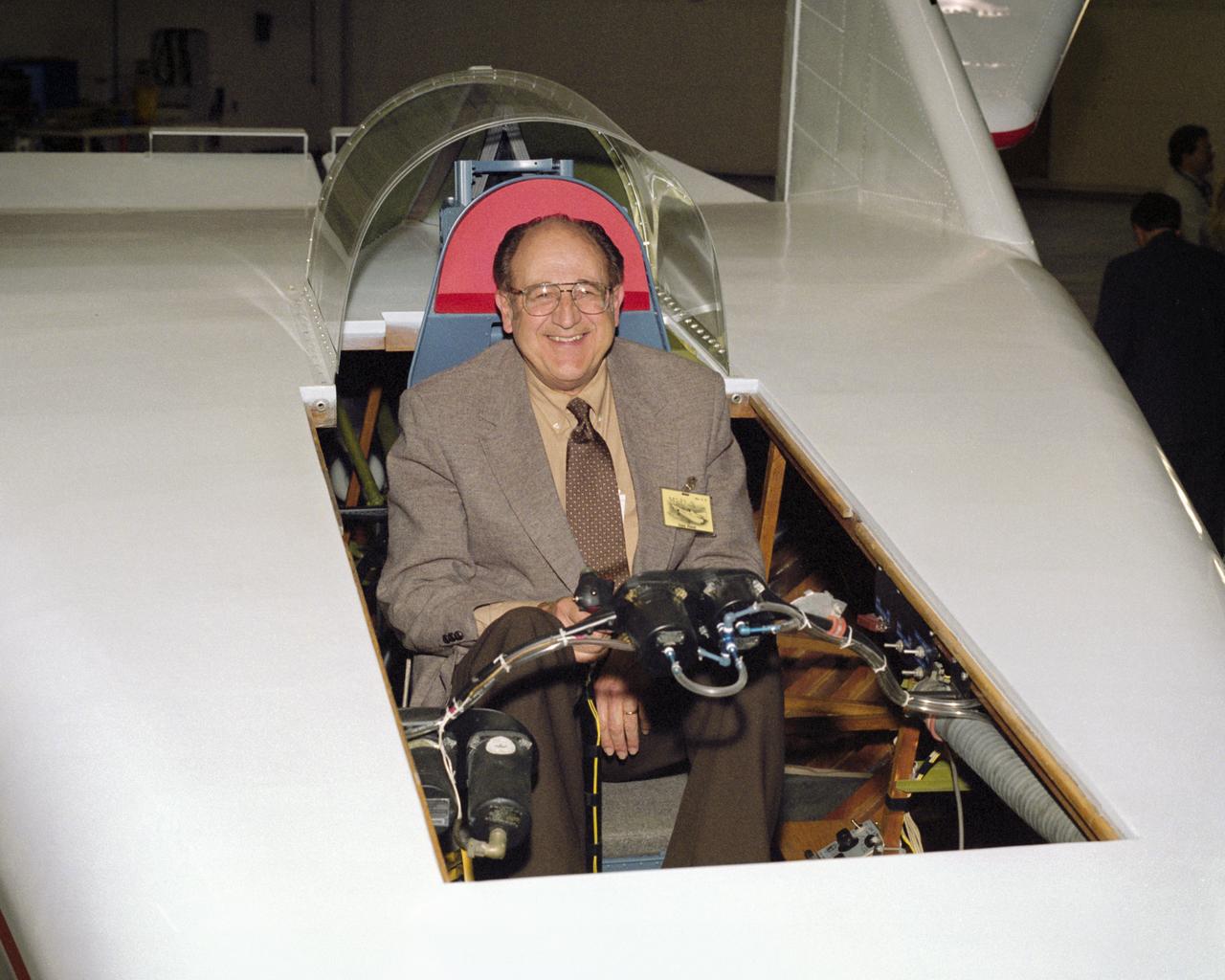
Often called the "Father of the Lifting Bodies," NASA aerospace engineer Dale Reed enjoys a moment in the cockpit of the restored wingless M2-F1 in 1997.
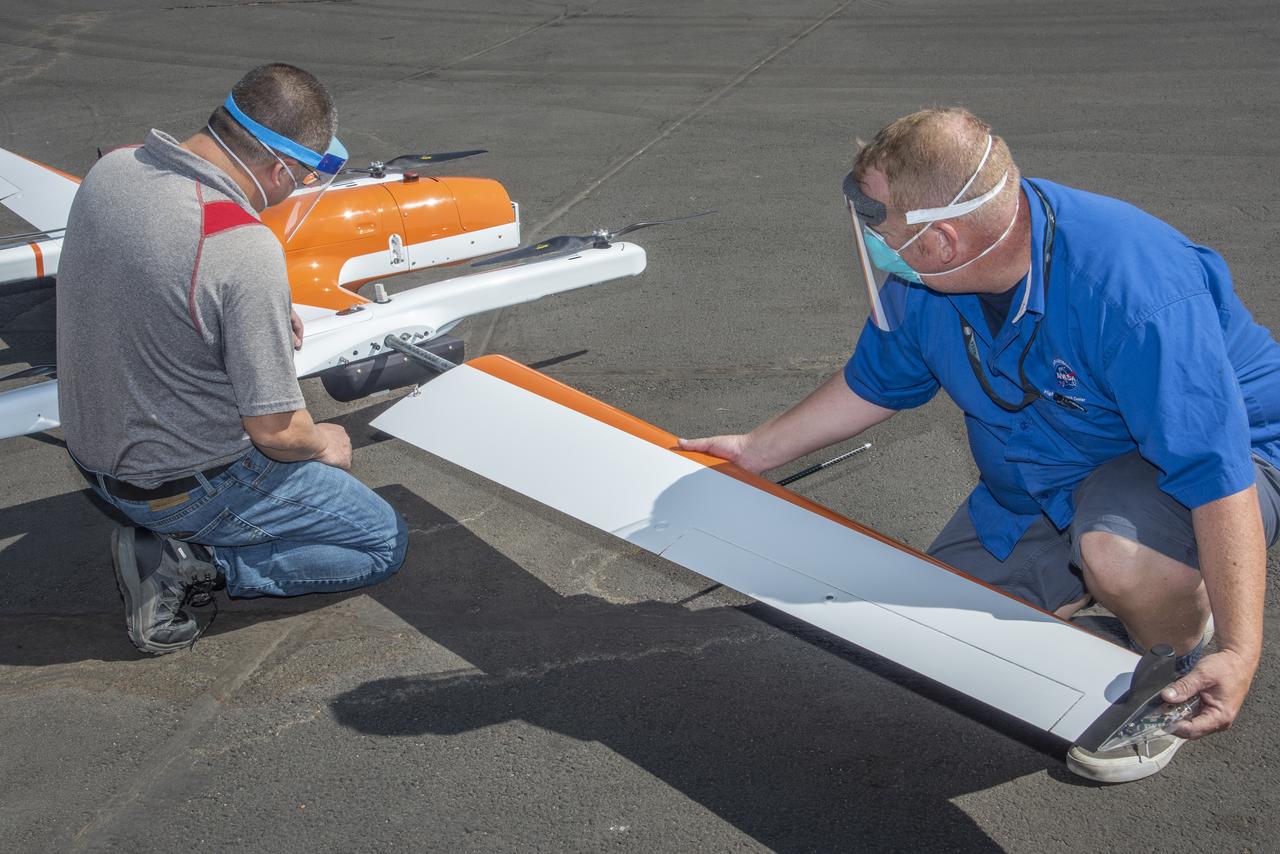
Derek Abramson and Robert Jensen install a wing on the Hybrid Quadrotor 90C (HQ-90) at NASA Armstrong Flight Research Center's Dale Reed Subscale Flight Research Lab in California on Oct. 1, 2020. This vertical lift and transition remotely piloted aircraft arrived in pieces packed in crates for the Resilient Autonomy project to test software in flight.
HQ-90 aircraft arrived and assembled at NASA's Armstrong Flight Research Center
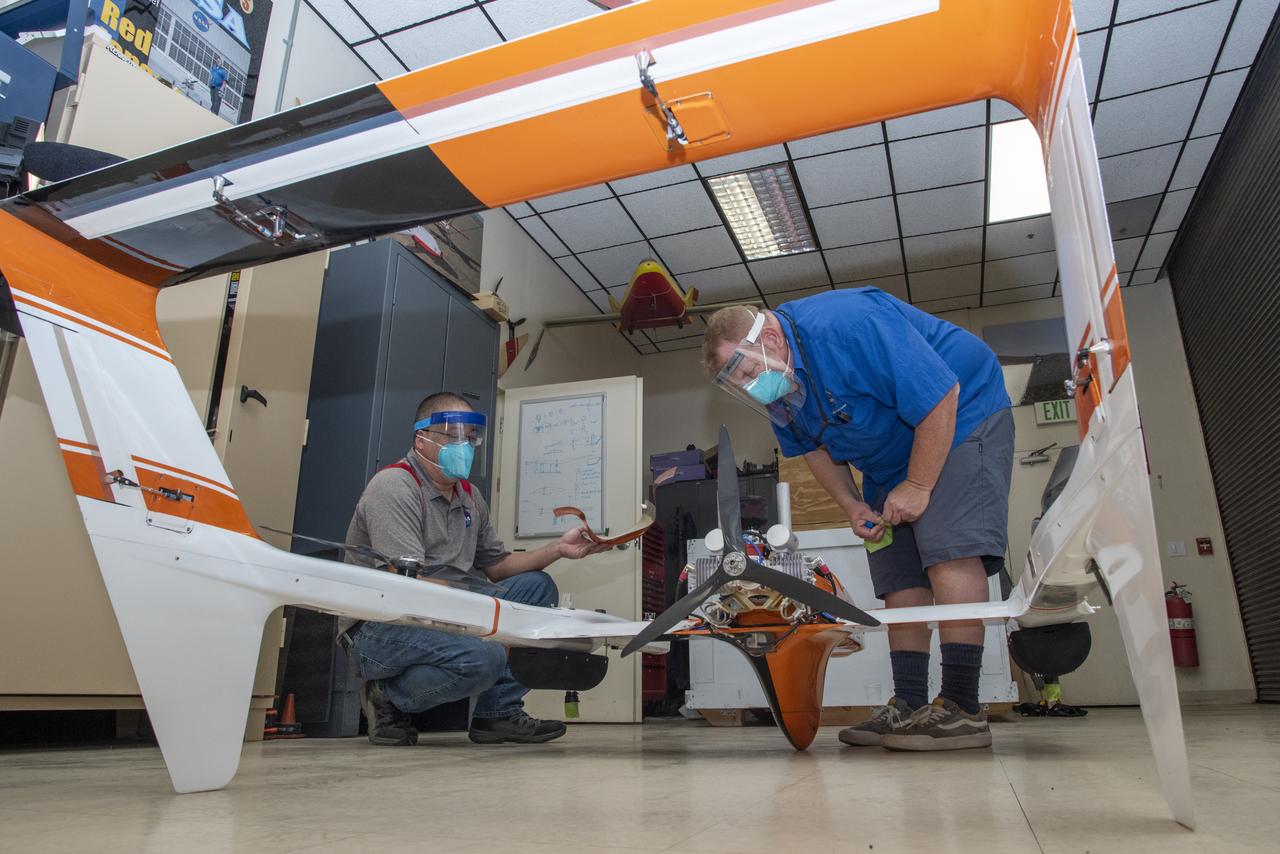
Derek Abramson and Robert Jensen assemble pieces of the Hybrid Quadrotor 90C (HQ-90) at NASA Armstrong Flight Research Center’s Dale Reed Subscale Flight Research Lab in California on Oct. 1, 2020. This vertical lift and transition remotely piloted aircraft arrived in pieces packed in crates. It was reassembled for the Resilient Autonomy project to test software in flight.  
HQ-90 aircraft arrived and assembled at NASA’s Armstrong Flight Research Center 
Derek Abramson and Robert Jensen install one of two wings on the Hybrid Quadrotor 90C (HQ-90) at NASA Armstrong Flight Research Center's Dale Reed Subscale Flight Research Lab in California on Oct. 1, 2020. This vertical lift and transition remotely piloted aircraft arrived in pieces packed in crates for the Resilient Autonomy project to test software in flight.
HQ-90 aircraft arrived and assembled at NASA's Armstrong Flight Research Center
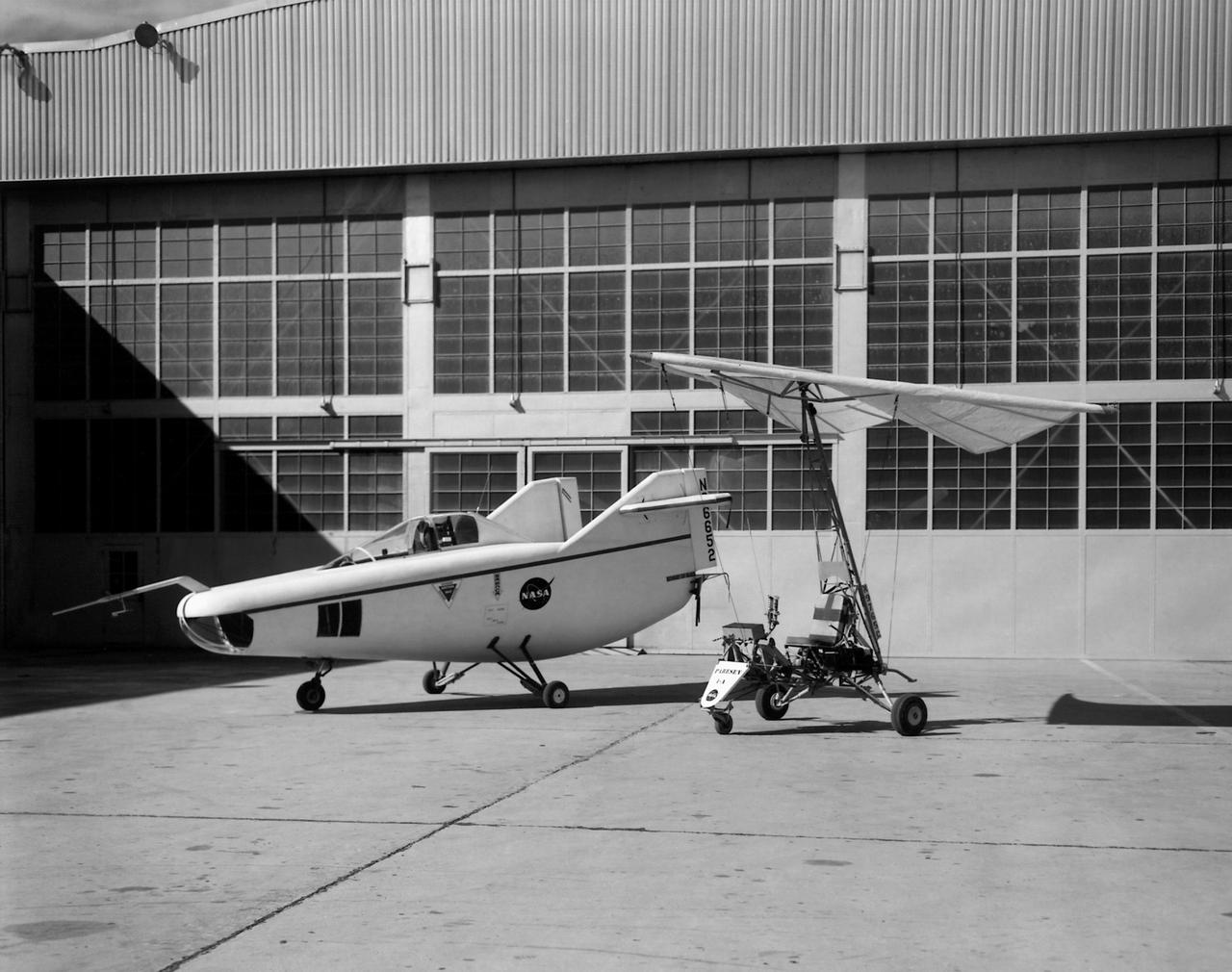
In this photo of the M2-F1 lifting body and the Paresev 1B on the ramp, the viewer sees two vehicles representing different approaches to building a research craft to simulate a spacecraft able to land on the ground instead of splashing down in the ocean as the Mercury capsules did. The M2-F1 was a lifting body, a shape able to re-enter from orbit and land. The Paresev (Paraglider Research Vehicle) used a Rogallo wing that could be (but never was) used to replace a conventional parachute for landing a capsule-type spacecraft, allowing it to make a controlled landing on the ground.
E-10598