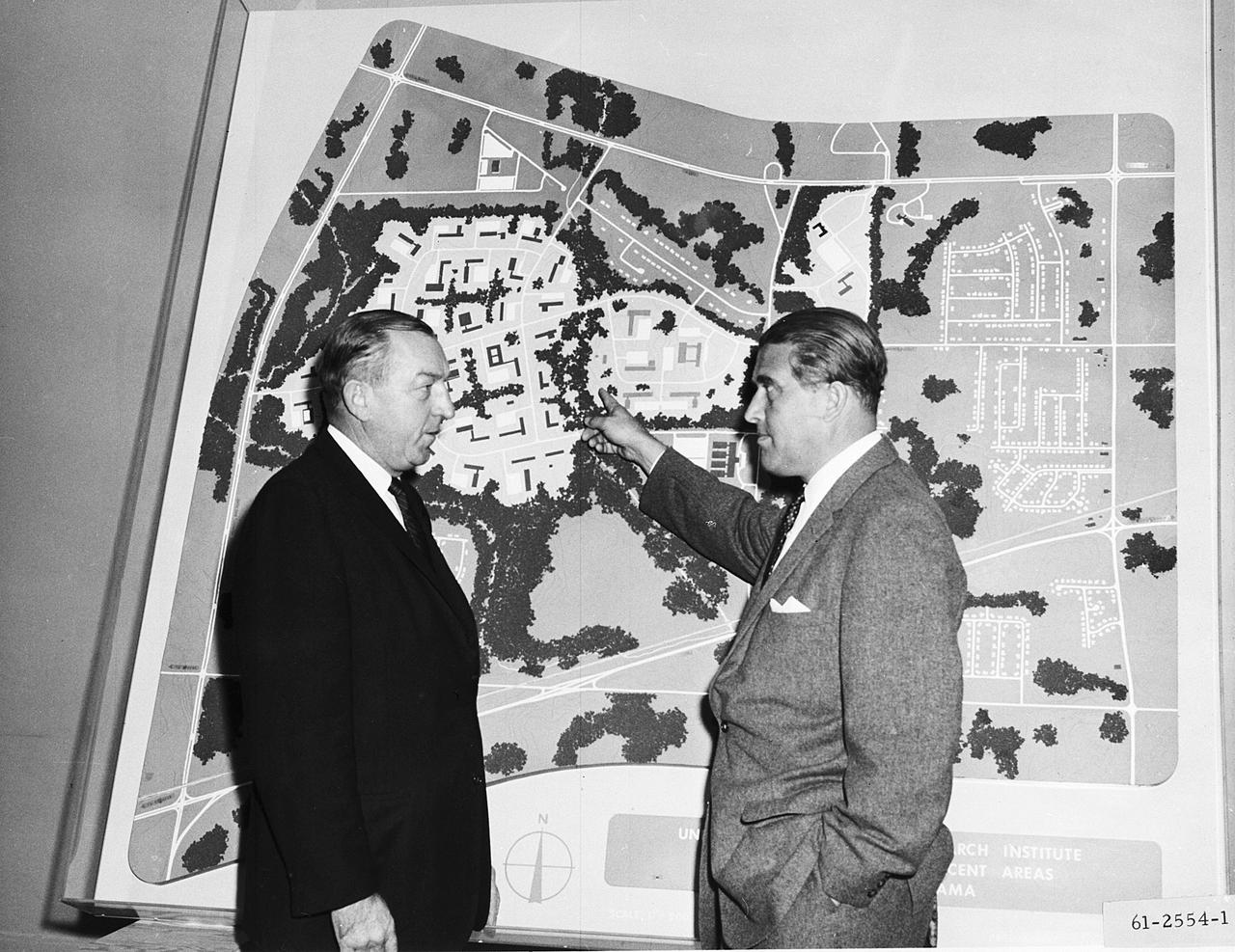
This 1961 photograph shows Dr. von Braun and Alabama Congressman Robert Jones before a huge map illustrating the layout for a Research Institute at the University of Alabama in Huntsville.
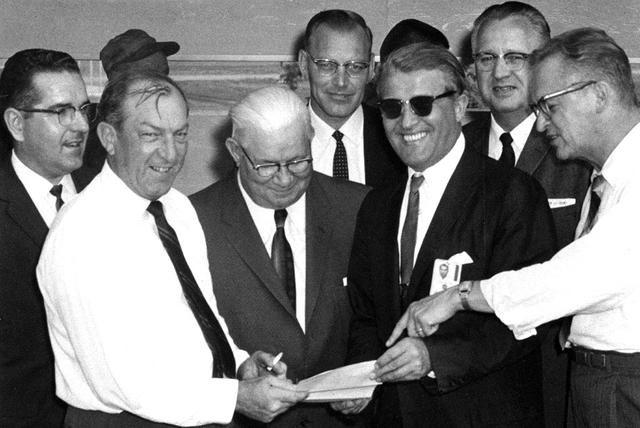
This is a photograph of a group of government officials touring the Marshall Space Flight Center in July 1961 with Dr. von Braun. Second from left is Alabama Congressman Robert Jones.
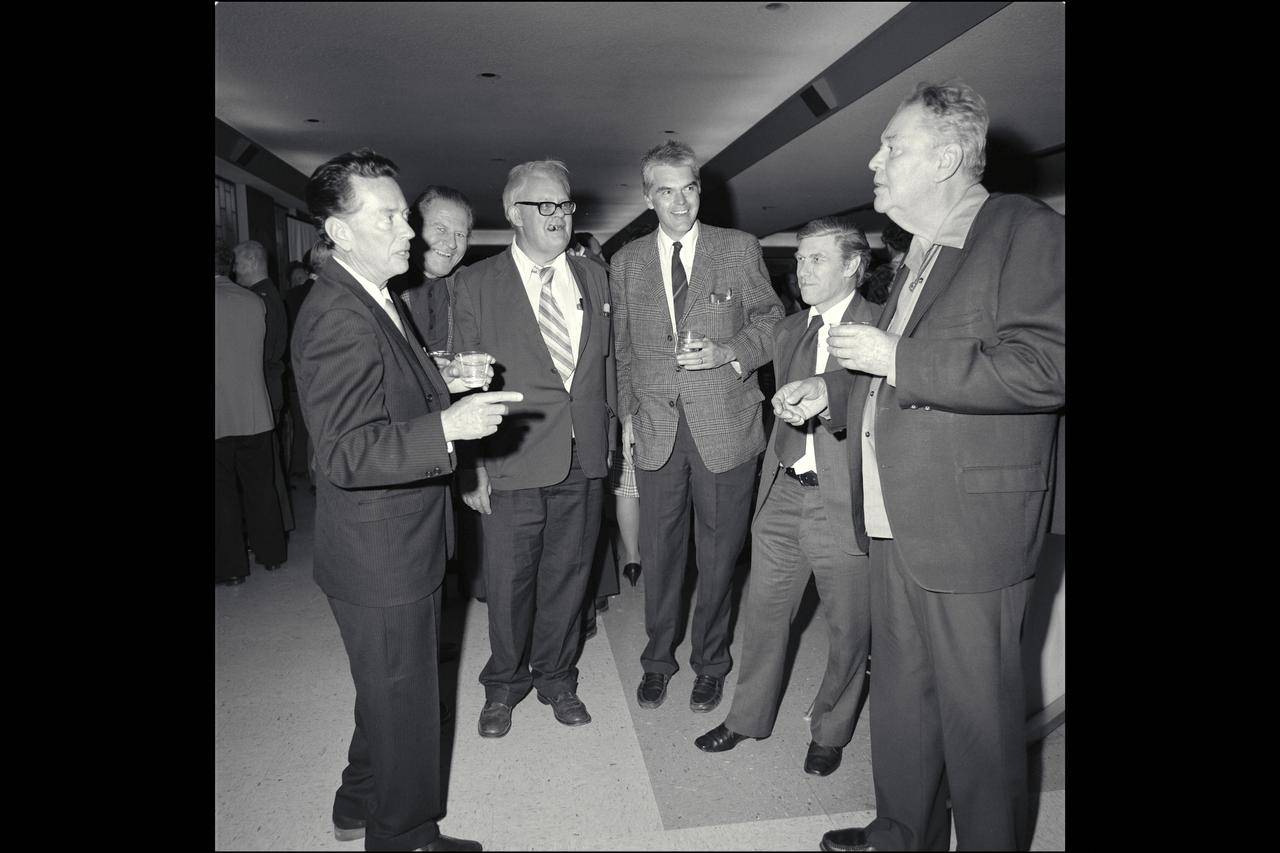
The Ames spirit of free and vigorous discussion; Left to right: R. T. Jones, Jack Nielsen, Hans Mark, Leonard Roberts and Harvey Allen during an award ceremony honoring R.T. Jones.
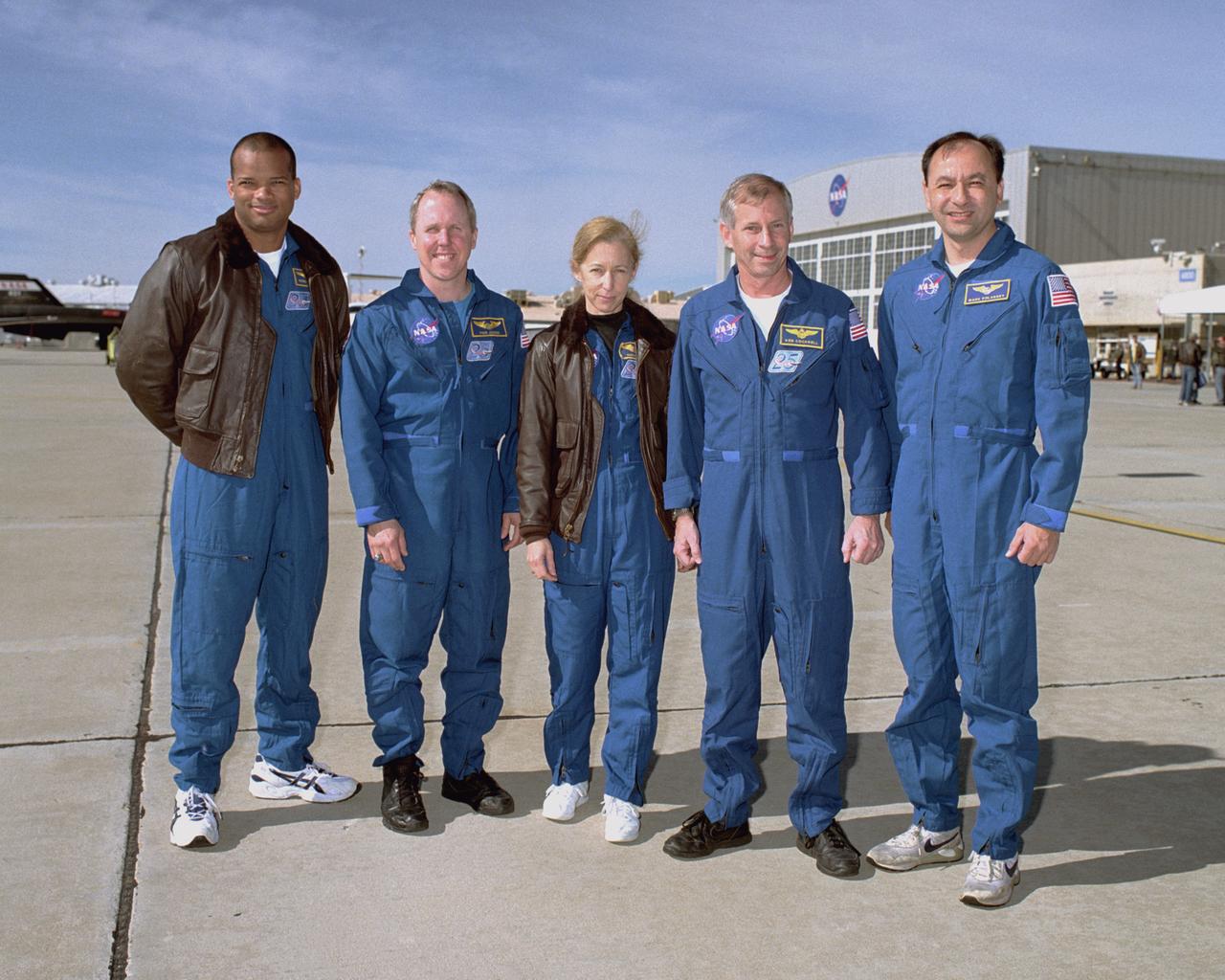
The crew of STS-98 poses for a group photo shortly before leaving NASA's Dryden Flight Research Center after a successful landing of the Space Shuttle Atlantis the day before. L to R: Mission Specialists Robert L. Curbeam, Thomas D. Jones, and Marsha S. Ivins, Commander Kenneth D. Cockrell, and Pilot Mark L. Polansky.
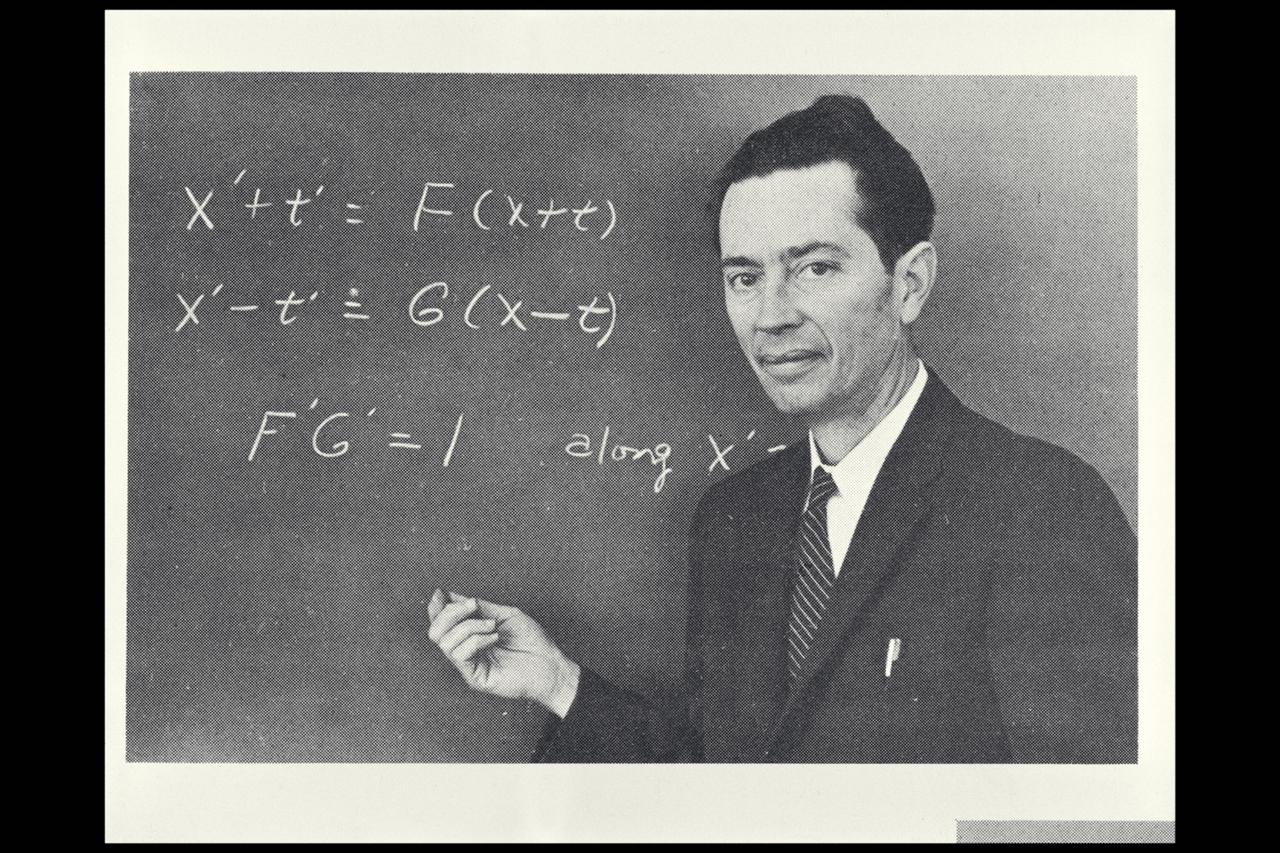
Robert T 'R.T.' Jones, theoretical aerodynamicist at blackboard
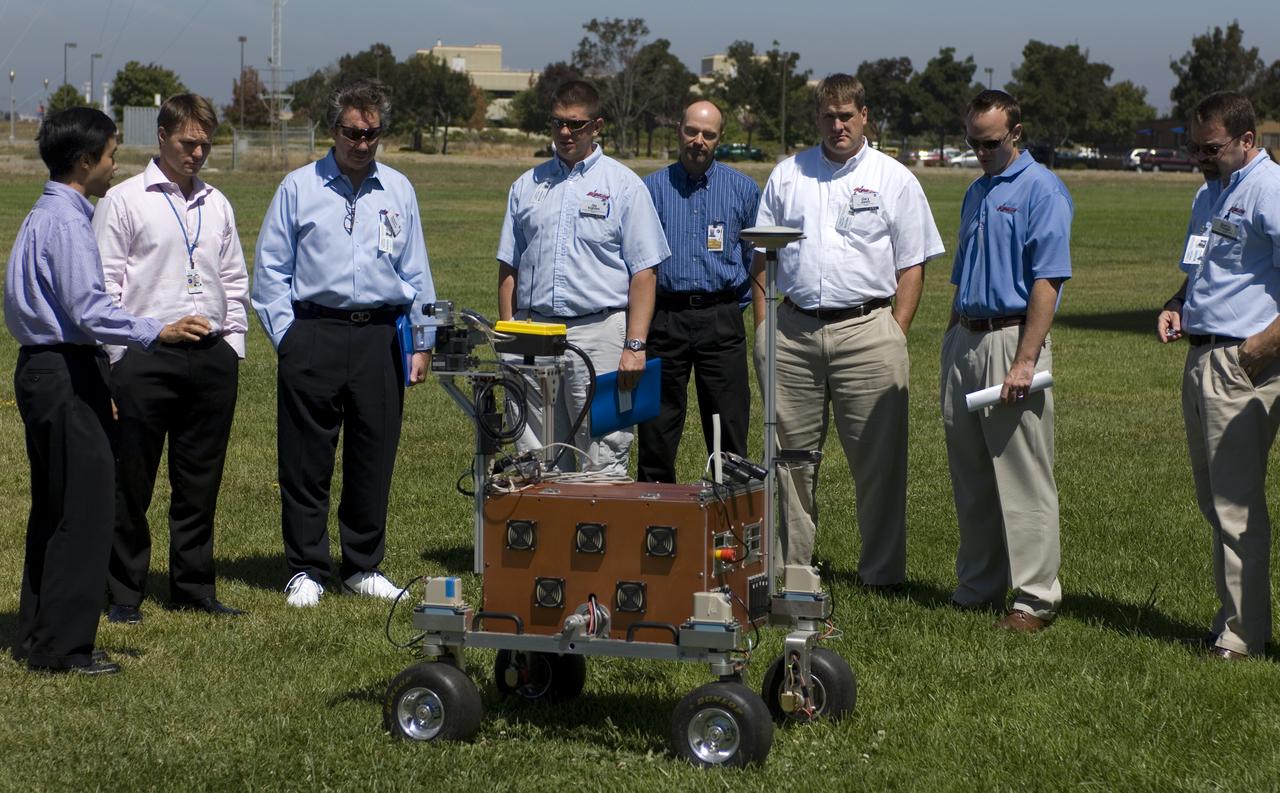
Robert Bigelow gets demonstration of the Ames rover at the Ames Mars Yard. L-R: Terrrence Fong, Robert Schingler (both of Ames) Robert Bigelow, Jay Ingham of NNT, Phil Hearlth, Ames, Gary Jones and ___, of NNT
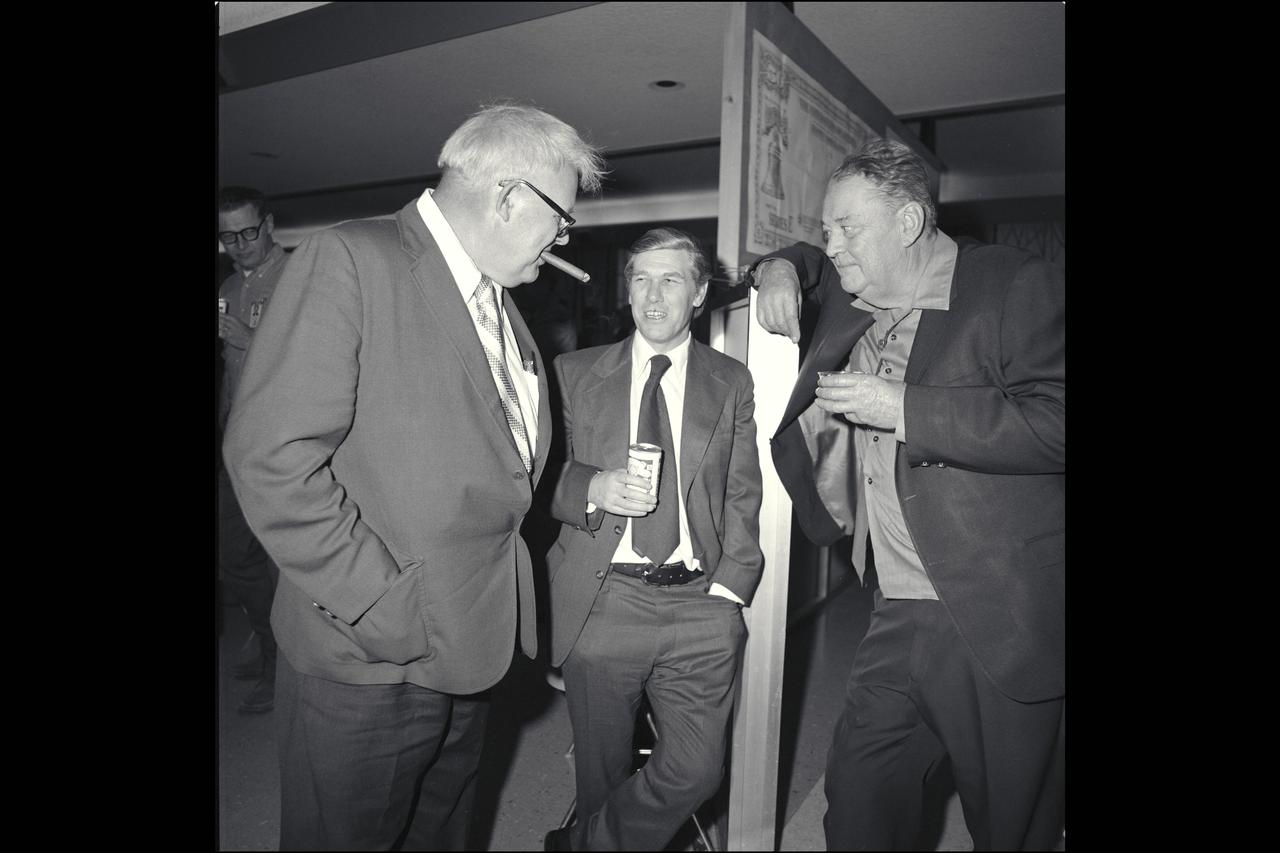
The Ames spirit of free and vigorous discussion; Left to right: Harv Lomax, Leonard Roberts and Harvey Allen during an award ceremony honoring R.T. Jones.
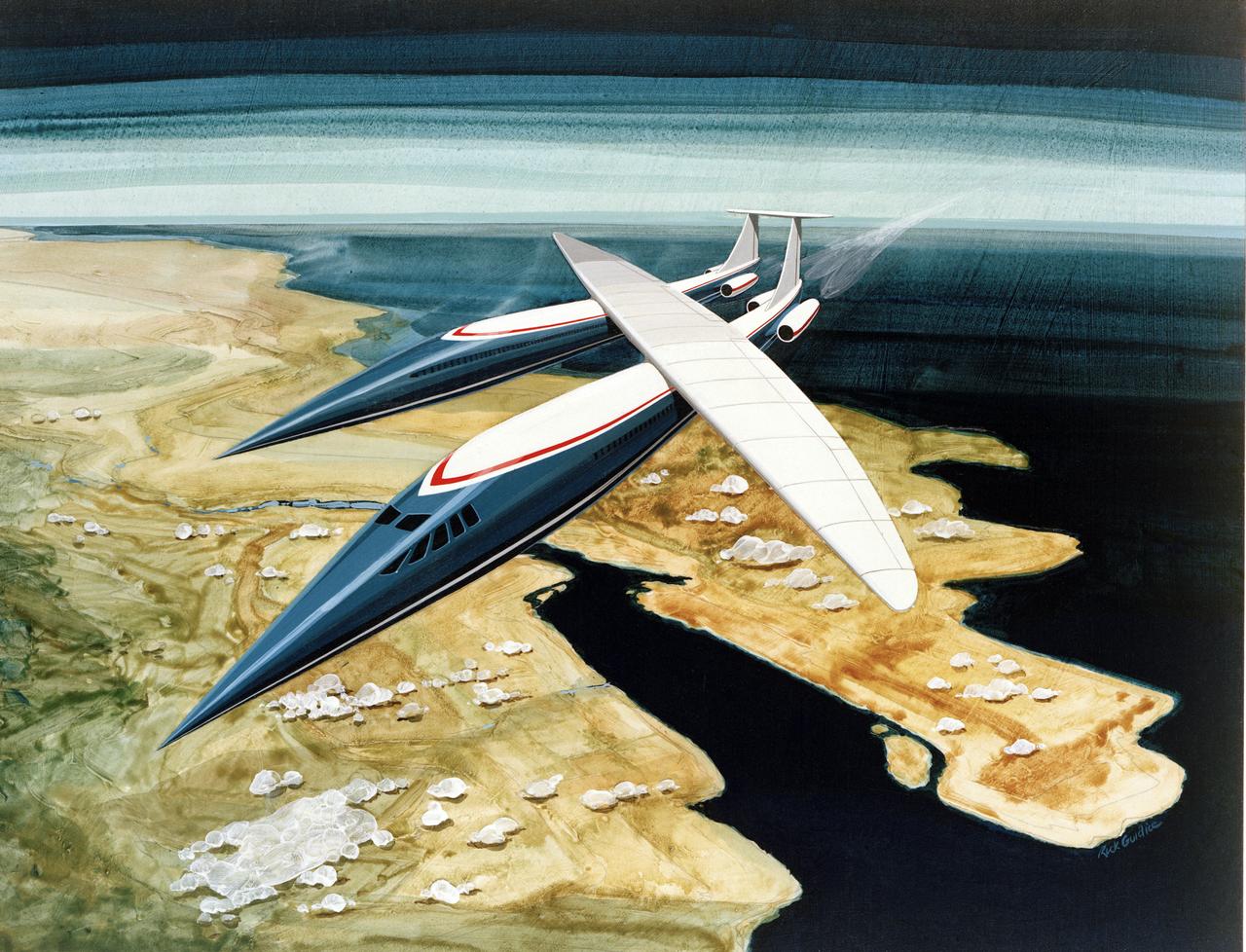
ARTWORK BY RICK GUIDICE OBLIQUE WING TRANSONIC TRANSPORT MODEL: DR ROBERT T JONES 2-BODY 'DOUBLE' FUSELAGE CONCEPT IN FLIGHT
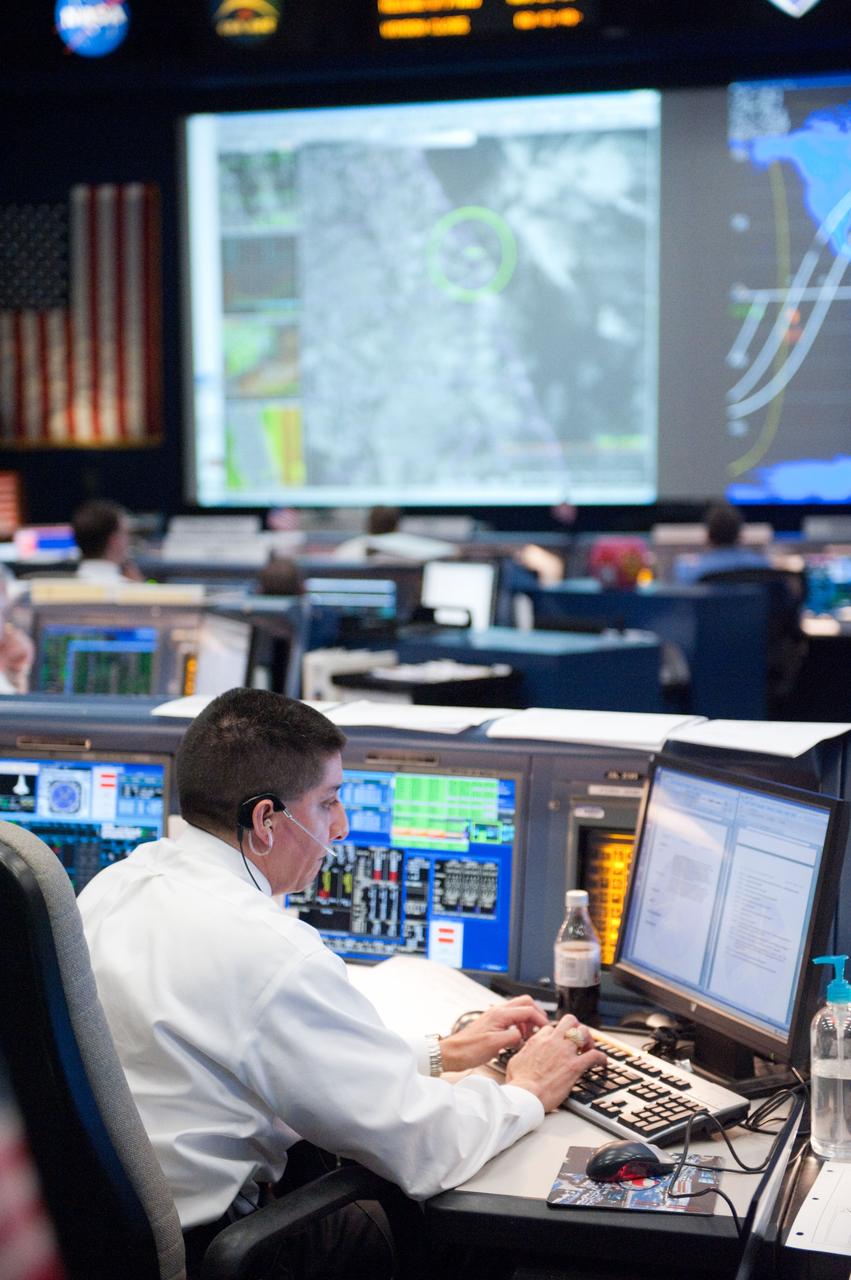
STS-133 flight controllers on console during the launch of Discovery with Flight Director Richard Jones. Photo Date: February 24, 2011. Location: Building 30 south - WFCR. Photographer: Robert Markowitz.
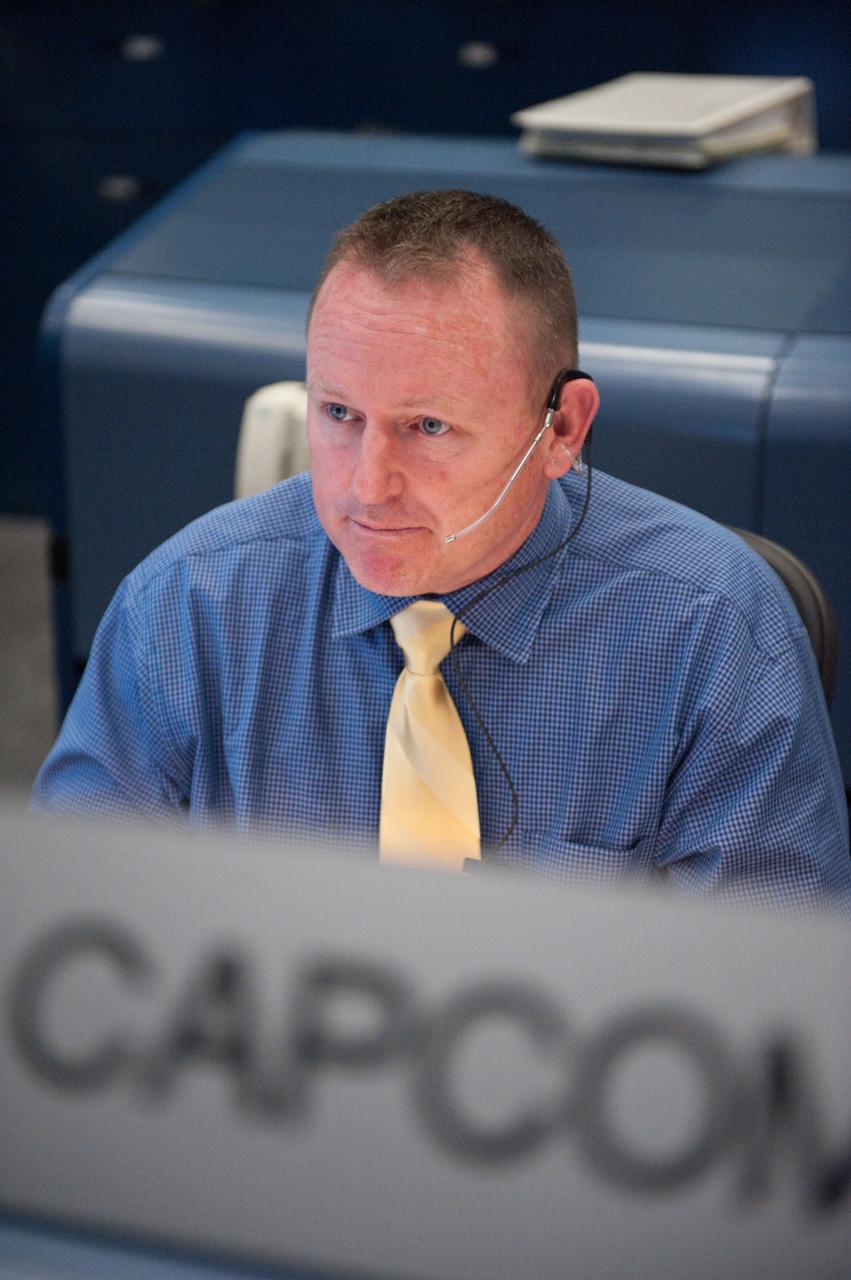
STS-133 flight controllers on console during the launch of Discovery with Flight Director Richard Jones. Photo Date: February 24, 2011. Location: Building 30 south - WFCR. Photographer: Robert Markowitz.
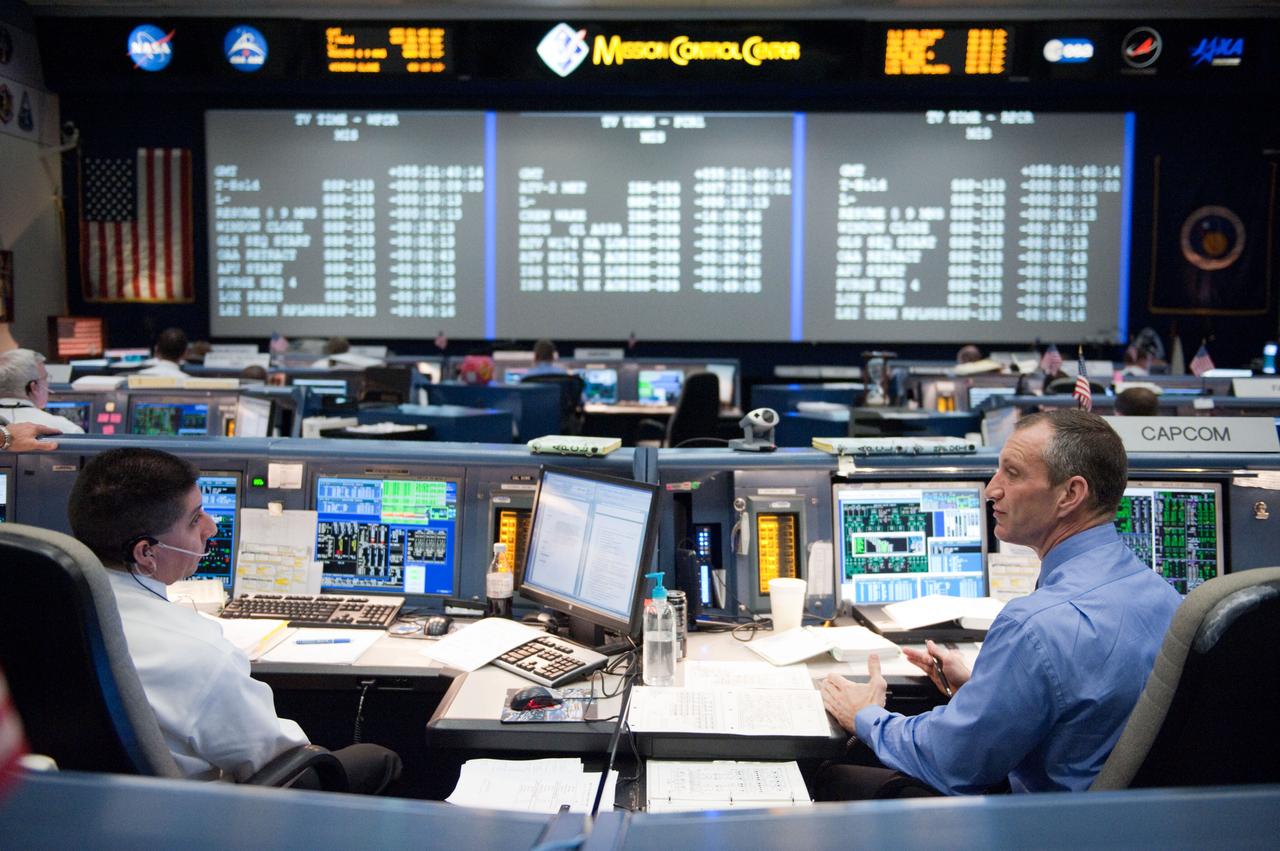
STS-133 flight controllers on console during the launch of Discovery with Flight Director Richard Jones. Photo Date: February 24, 2011. Location: Building 30 south - WFCR. Photographer: Robert Markowitz.
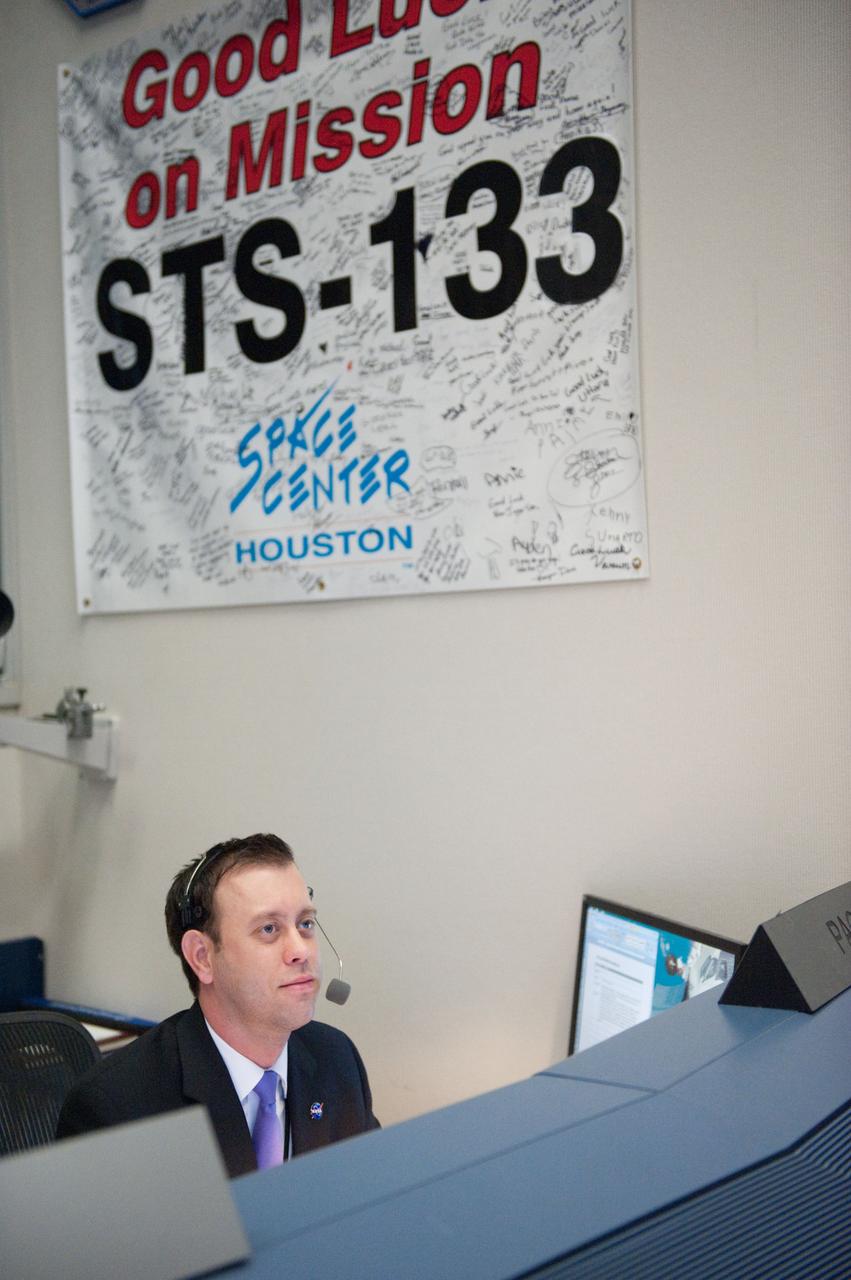
STS-133 flight controllers on console during the launch of Discovery with Flight Director Richard Jones. Photo Date: February 24, 2011. Location: Building 30 south - WFCR. Photographer: Robert Markowitz.
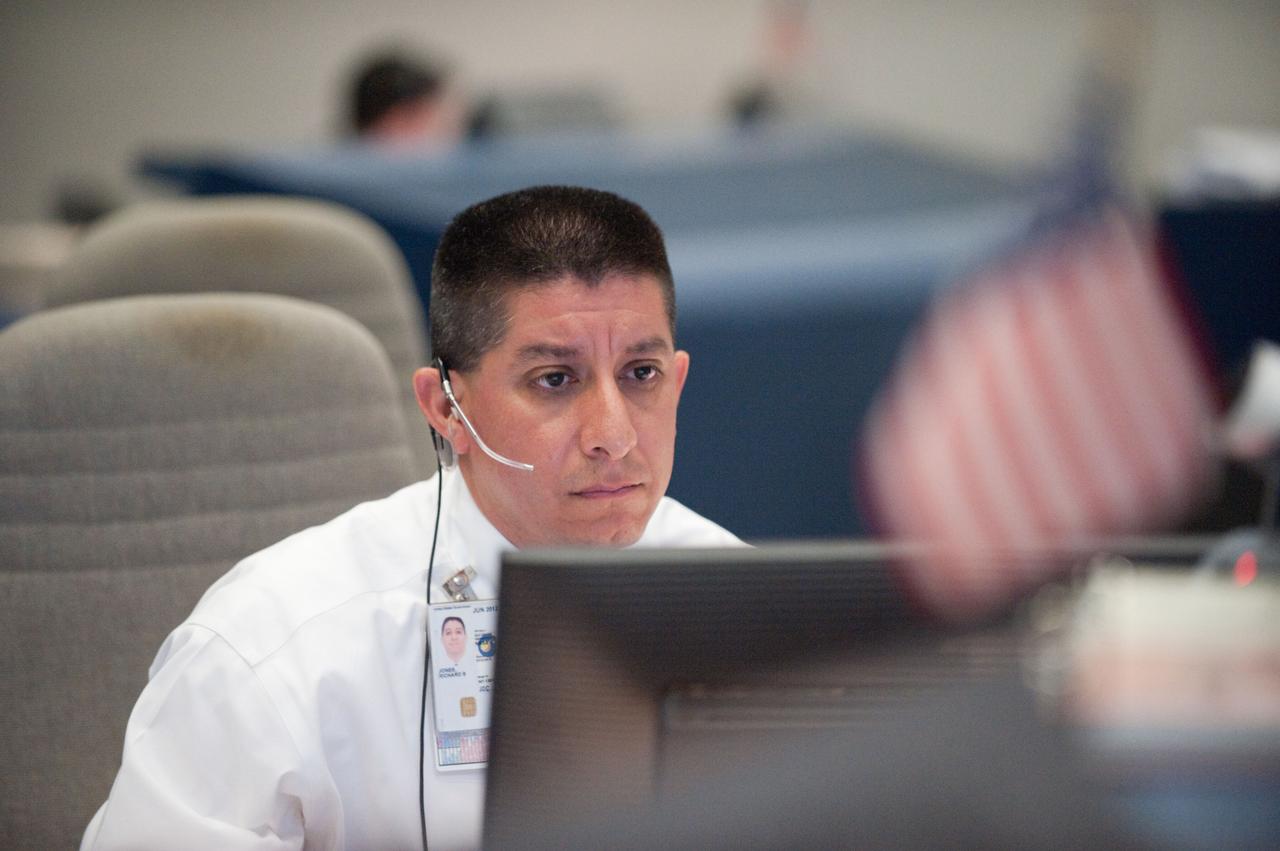
STS-133 flight controllers on console during the launch of Discovery with Flight Director Richard Jones. Photo Date: February 24, 2011. Location: Building 30 south - WFCR. Photographer: Robert Markowitz.
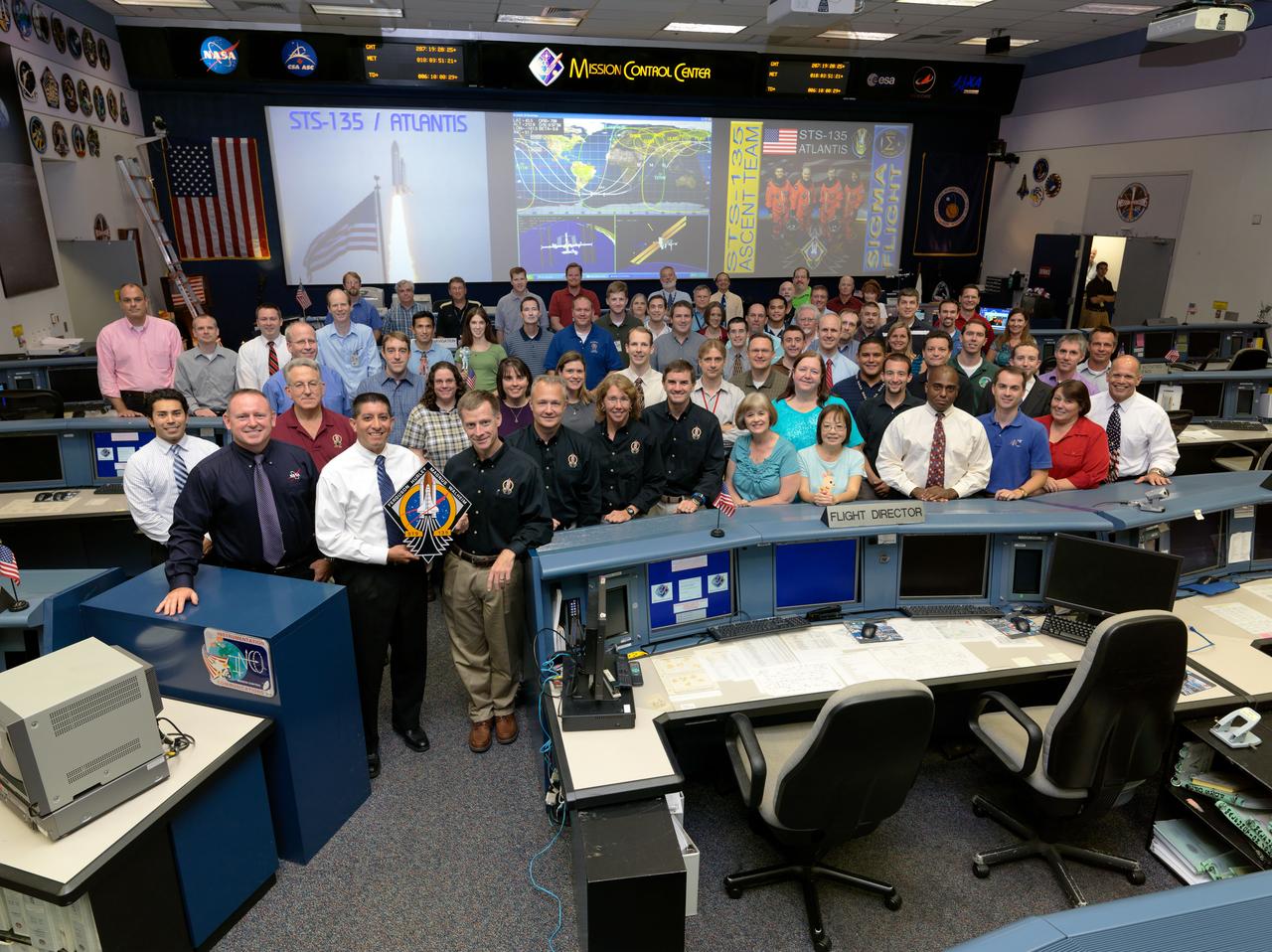
STS-135 Ascent Flight Control Team in WFCR with Flight Director Richard Jones. Photo Date: July 26, 2011. Location: Building 30 south - WFCR. Photographer: Robert Markowitz
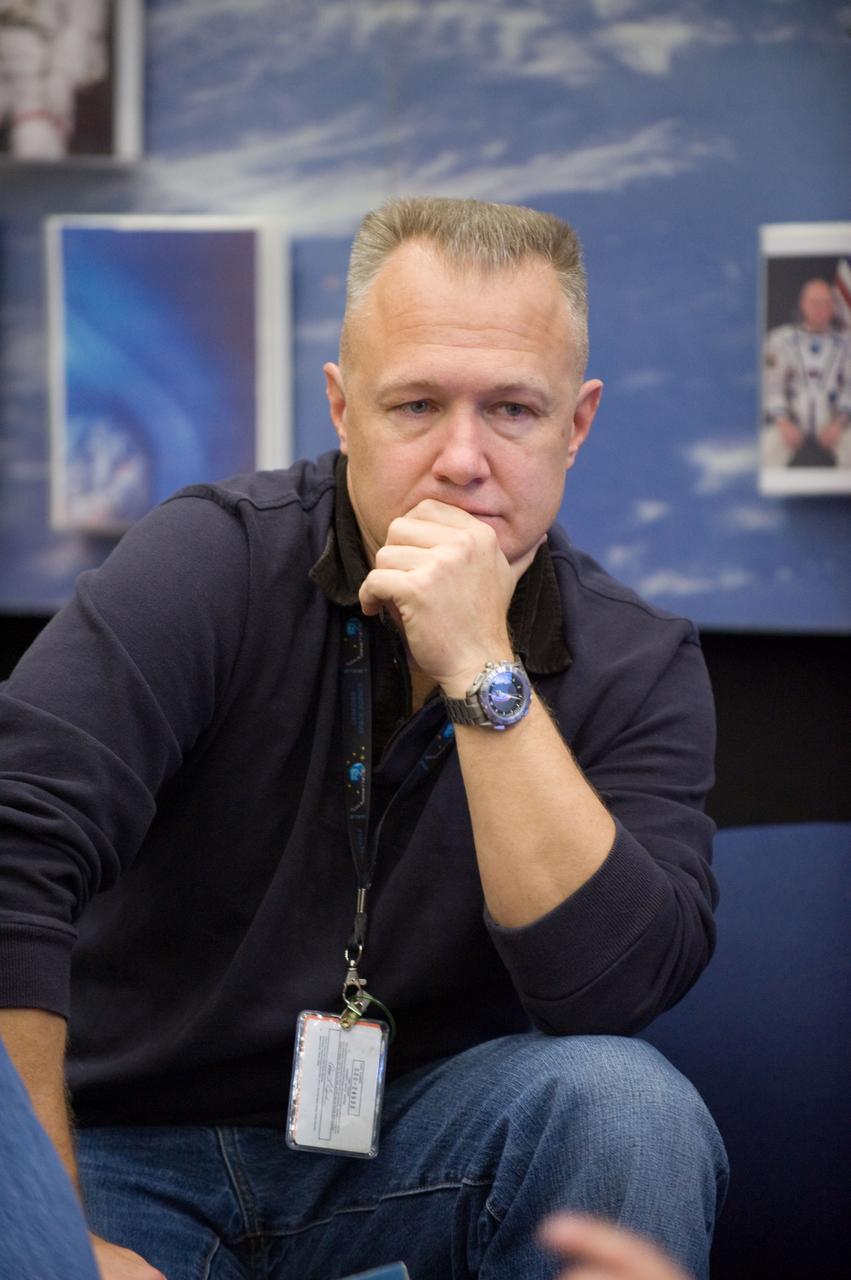
STS-335 crew and training team during Bailout training with instructors Bob Behrendsen and Patrick Jones. Photo Date: December 3, 2010. Location: Building 9NW - CCT-II Mockup. Photographer: Robert Markowitz.
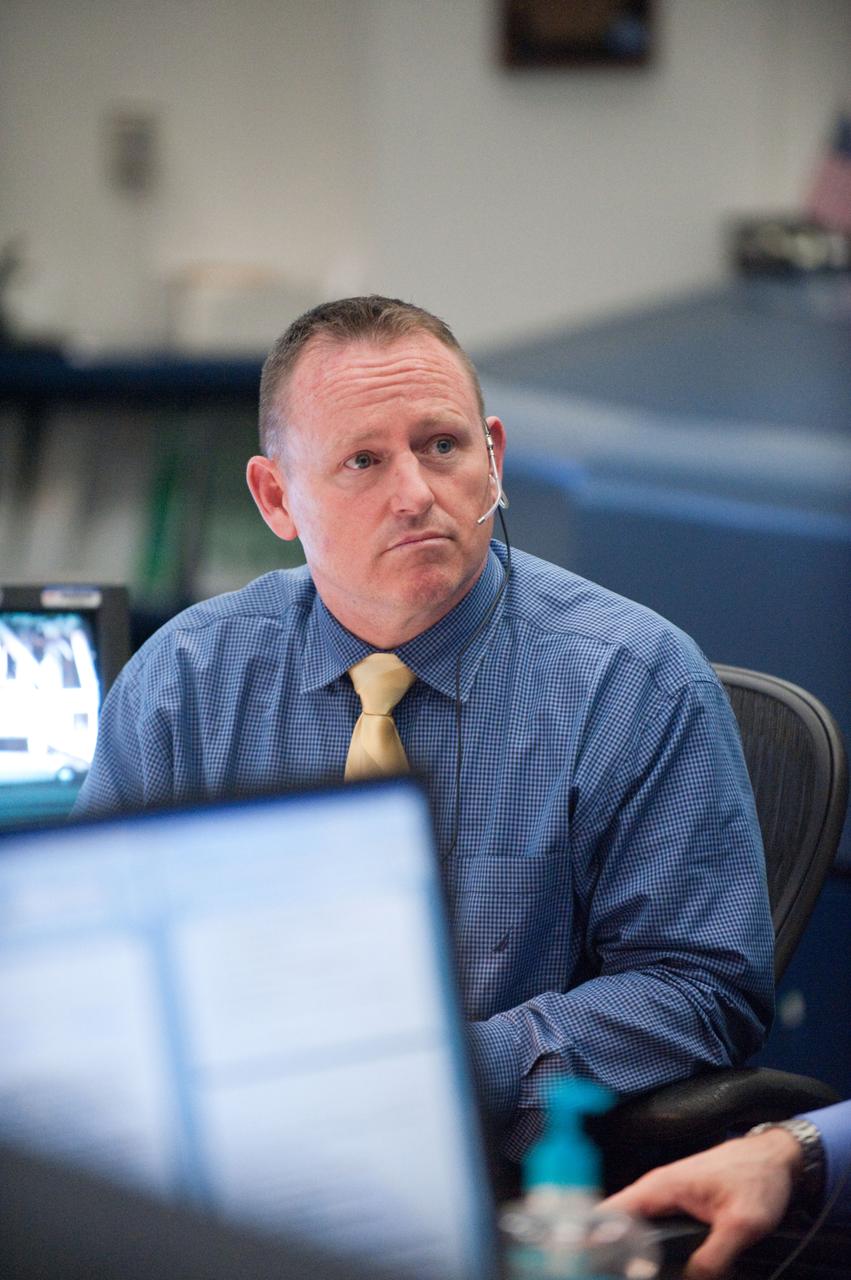
STS-133 flight controllers on console during the launch of Discovery with Flight Director Richard Jones. Photo Date: February 24, 2011. Location: Building 30 south - WFCR. Photographer: Robert Markowitz.
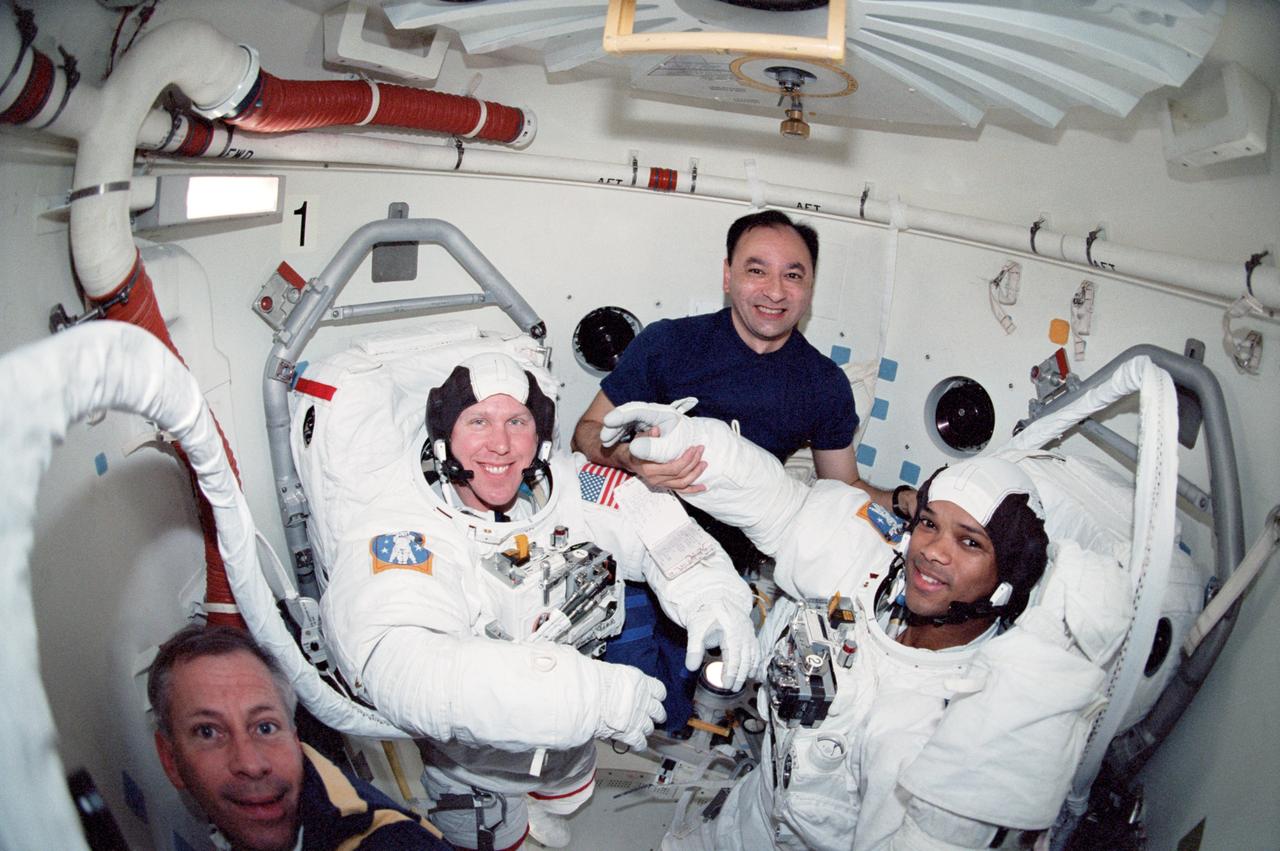
STS098-349-004 (7-20 February 2001) --- Astronauts Thomas D. Jones (second left) and Robert L. Curbeam, both mission specialists, prepare for one of the three STS-98 sessions of extravehicular activity (EVA). Astronauts Kenneth D. Cockrell (lower left), mission commander, and Mark L. Polansky, mission specialist, assist Jones and Curbeam as they don their Extravehicular Mobility Unit (EMU) space suits in the airlock of the Space Shuttle Atlantis.
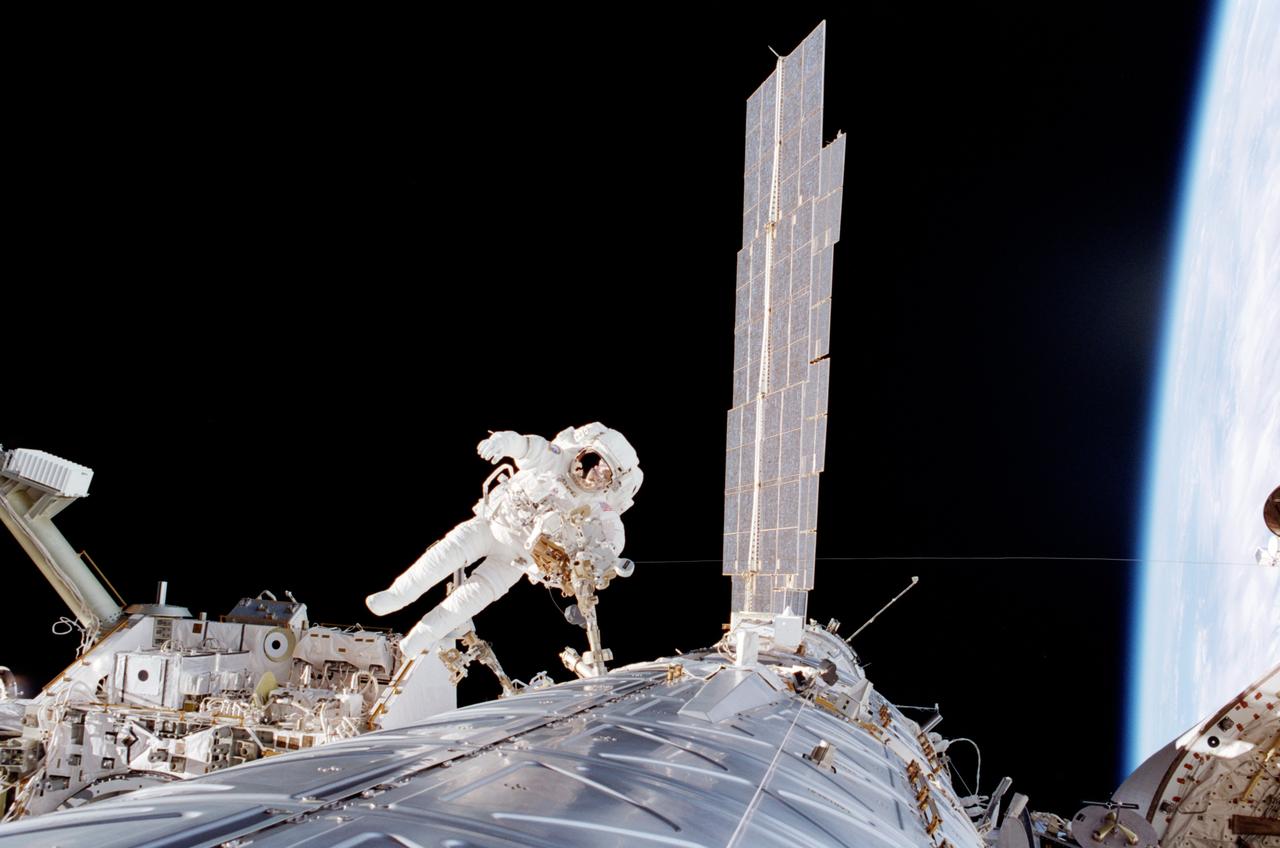
STS098-336-0026 (12 February 2001) --- Astronaut Robert L. Curbeam, mission specialist, participates in the second of three STS-98 sessions of extravehicular activity (EVA). He was joined on all three space walks by astronaut Thomas D. Jones.
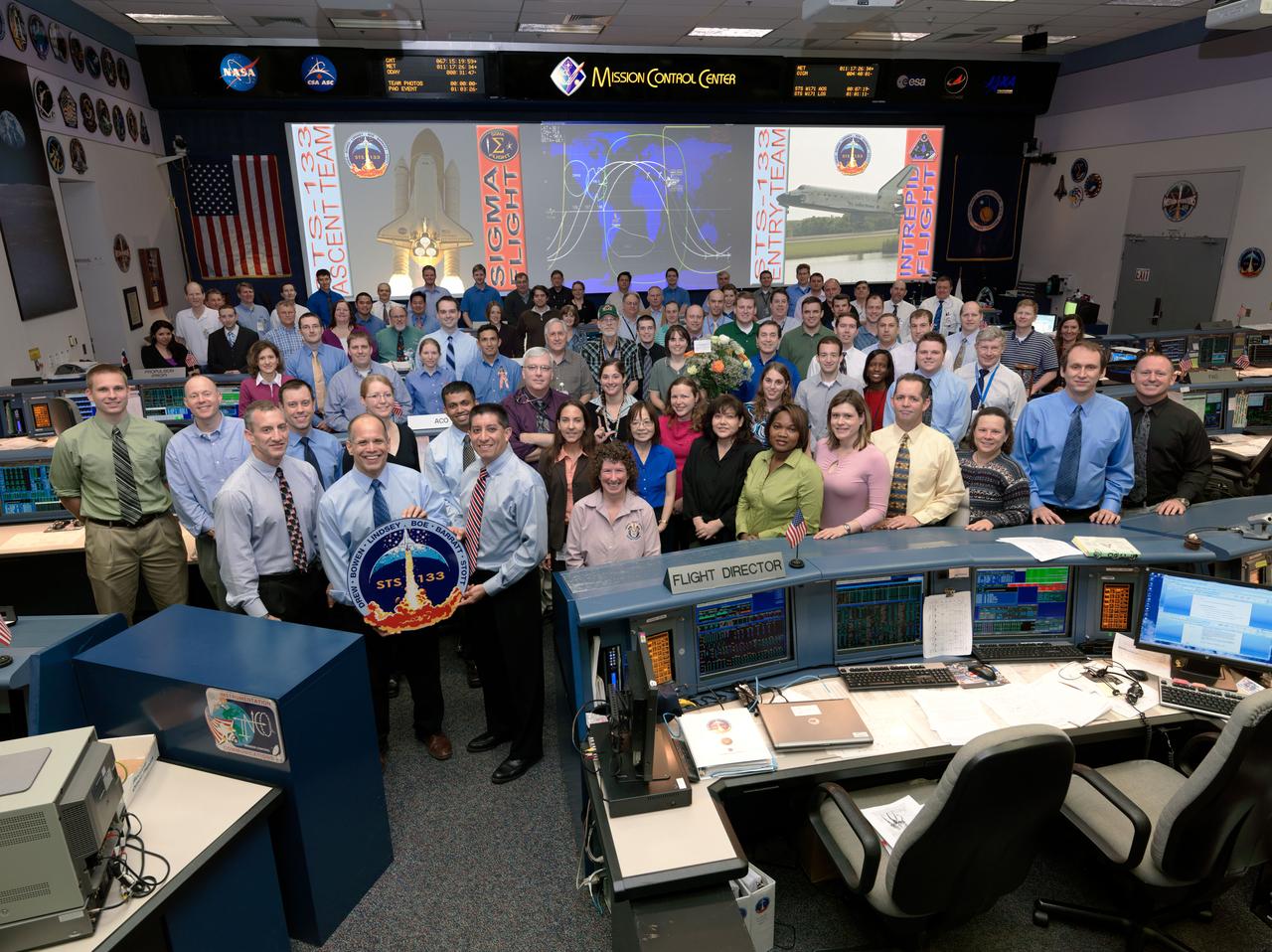
STS-133/ULF5 Ascent and Entry flight control team photo with Flight Director's Tony Ceccacci (Entry) and Richard Jones (Ascent). Photo Date: March 08, 2011. Location: Building 30 south - WFCR. Photographer: Robert Markowitz.
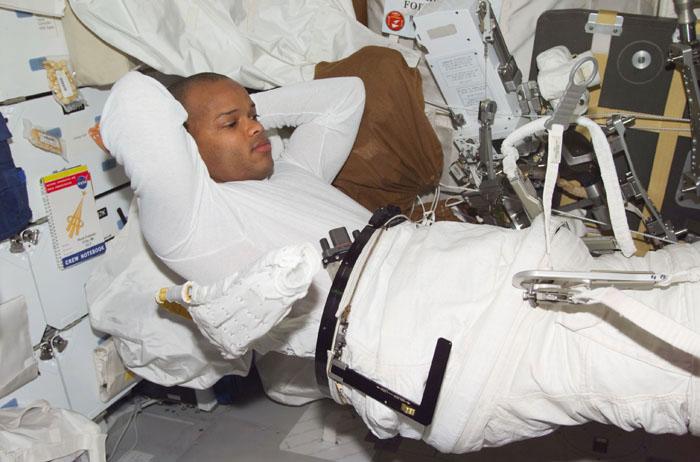
SS98-E-5214 (14 February 2001) --- Astronaut Robert L. Curbeam, STS-98 mission specialist, dons his extravehicular mobility unit (EMU) for the final of three space walks he shared with astonaut Thomas D. Jones on mission 5a. The scene was recorded with a digital still camera.
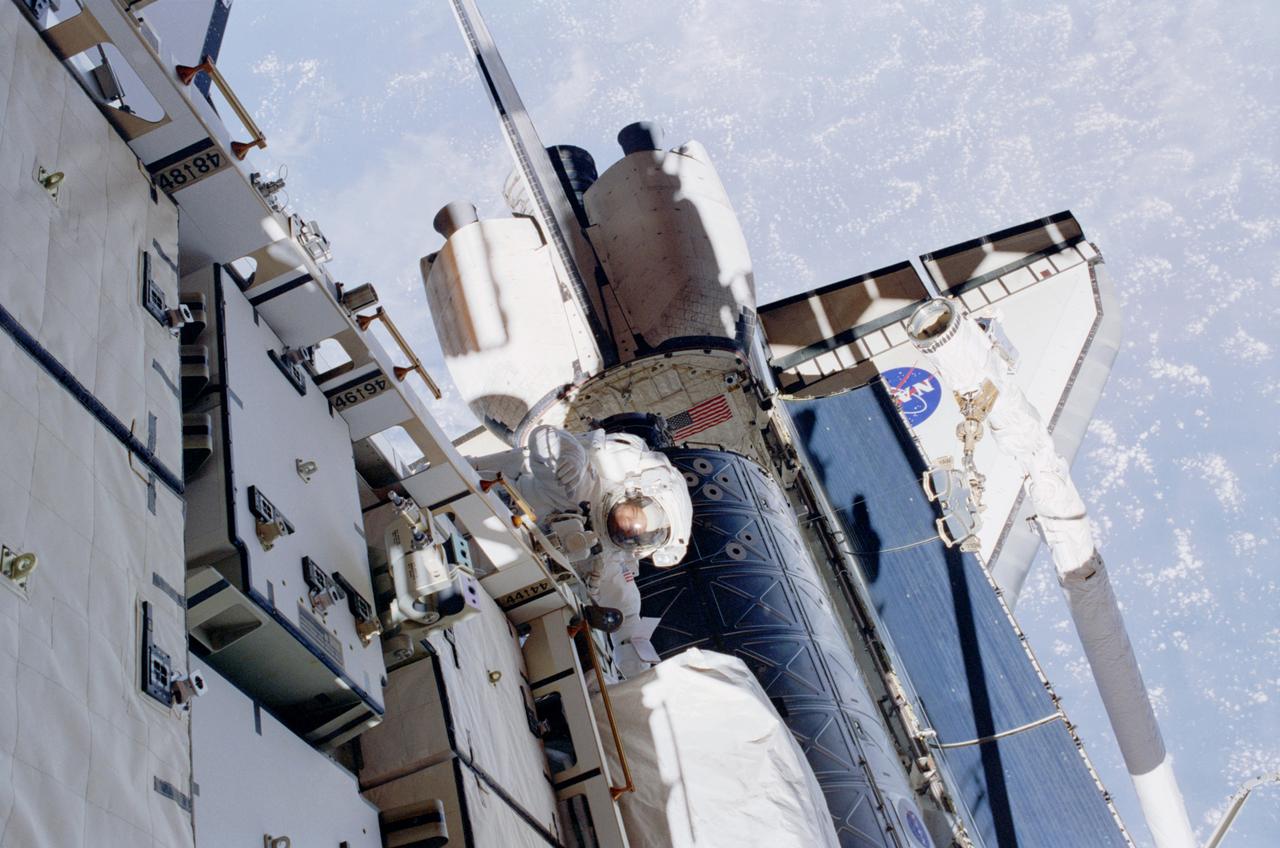
STS098-336-008 (7-20 February 2001) --- Astronaut Robert L. Curbeam, mission specialist, is photographed by fellow space walker Thomas D. Jones, during one of the three STS-98 sessions of extravehicular activity (EVA).
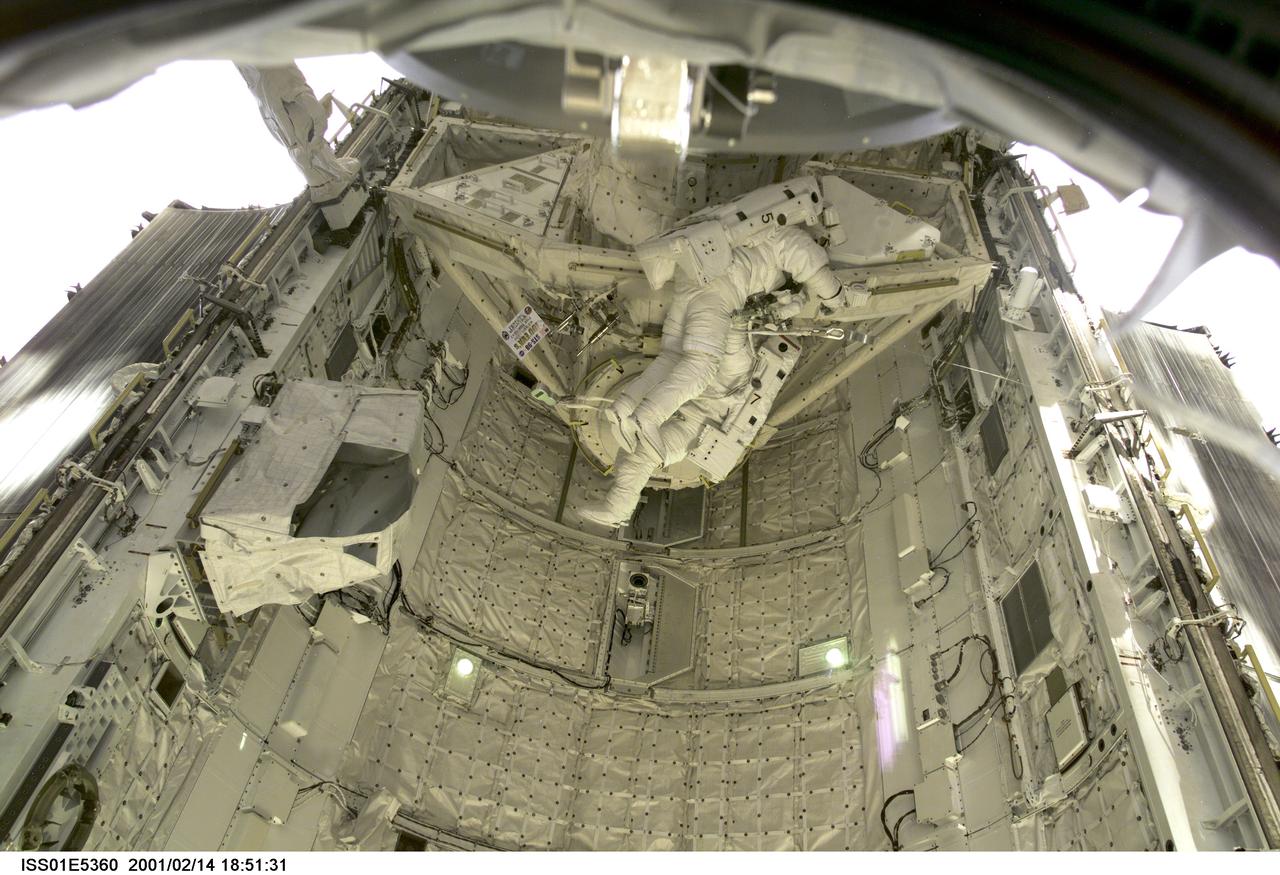
ISS01-E-5360 (14 February 2001) --- Astronauts Thomas D. Jones (partially obscured) and Robert L. Curbeam, STS-98 mission specialists, are pictured in the cargo bay of the Space Shuttle Atlantis during their third space walk, as photographed with a digital still camera from the International Space Station's new Destiny laboratory.
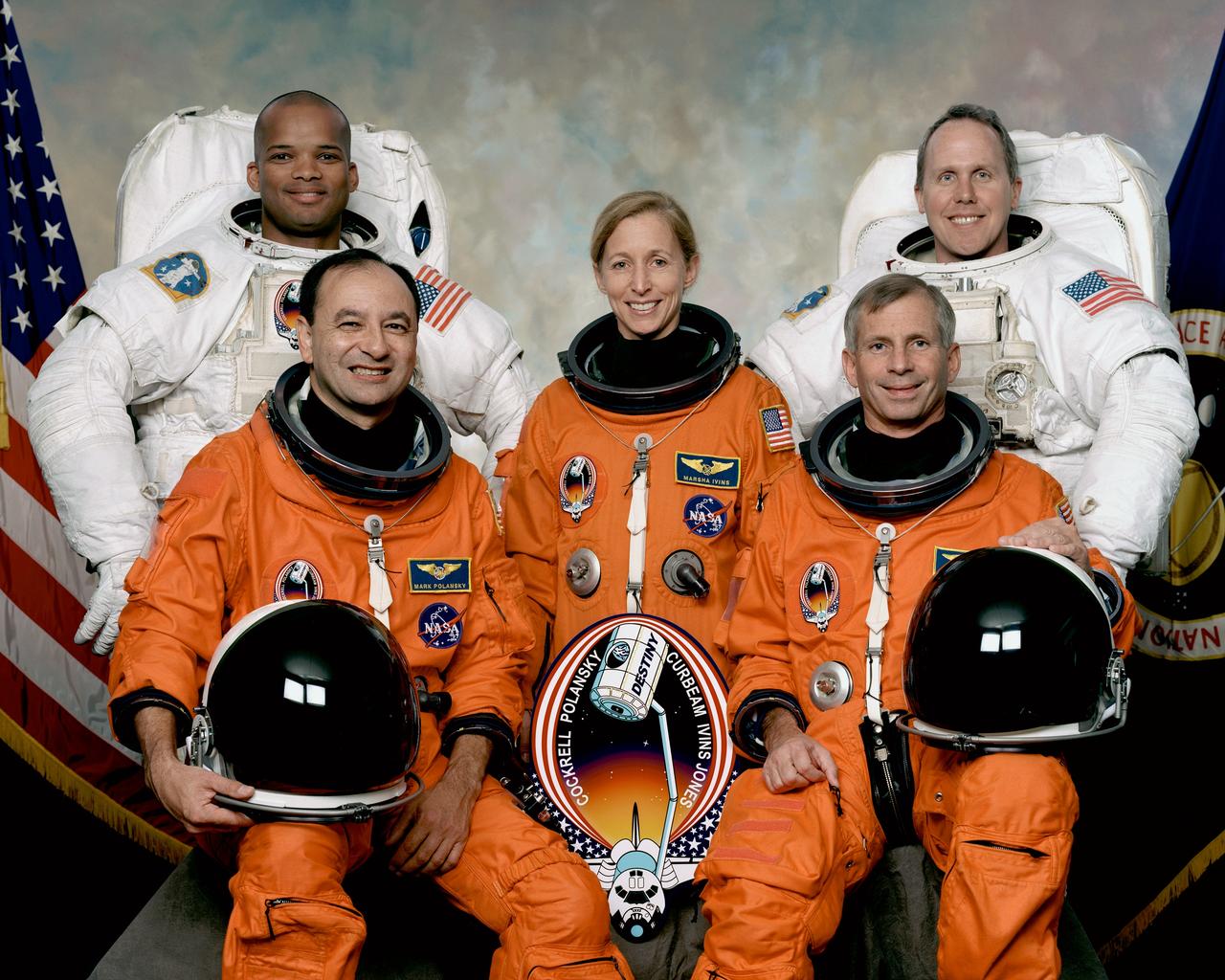
STS098-S-002 (December 2000) --- These five astronauts have been in training for the STS-98 mission, scheduled for launch aboard the Space Shuttle Atlantis in January of 2001. The crew is composed of astronauts Kenneth D. Cockrell (right front), mission commander; and Mark L. Polansky (left front), pilot; along with astronauts Marsha S. Ivins, Robert L. Curbeam, Jr., (left rear) and Thomas D. Jones (right rear), all mission specialists. Curbeam and Jones are the scheduled extravehicular activity (EVA) participants for the International Space Station's 5a mission.
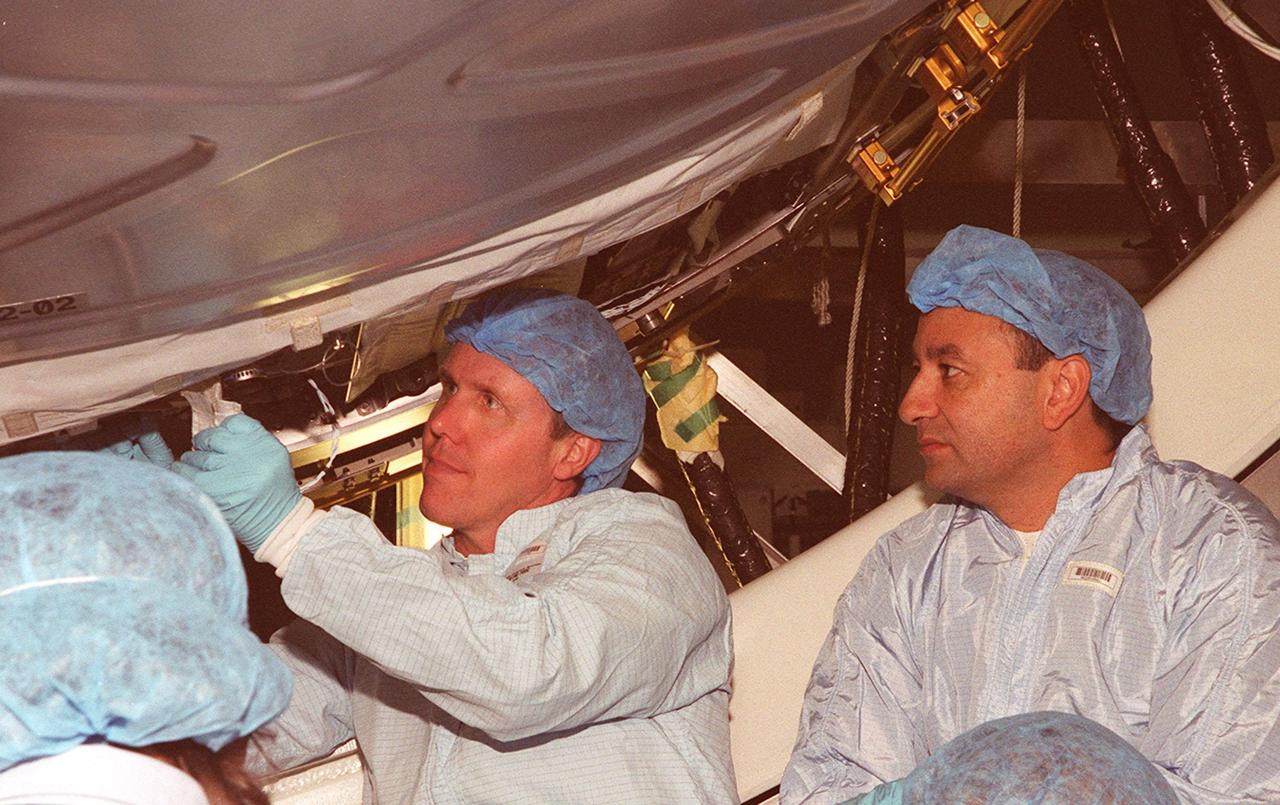
In the Space Station Processing Facility, STS-98 Mission Specialist Thomas Jones works on a part of the U.S. Lab, Destiny. Watching at right is Pilot Mark Polansky. Jones and Polansky, along with other crew members, are taking part in Crew Equipment Interface Test activities to become familiar with equipment they will be handling during the mission. Others in the crew are Commander Ken Cockrell and Mission Specialists Robert Curbeam and Marsha Ivins. The mission will be transporting the Lab to the International Space Station with five system racks already installed inside of the module. With delivery of electronics in the lab, electrically powered attitude control for Control Moment Gyroscopes will be activated. The STS-98 launch is scheduled for Jan. 18, 2001
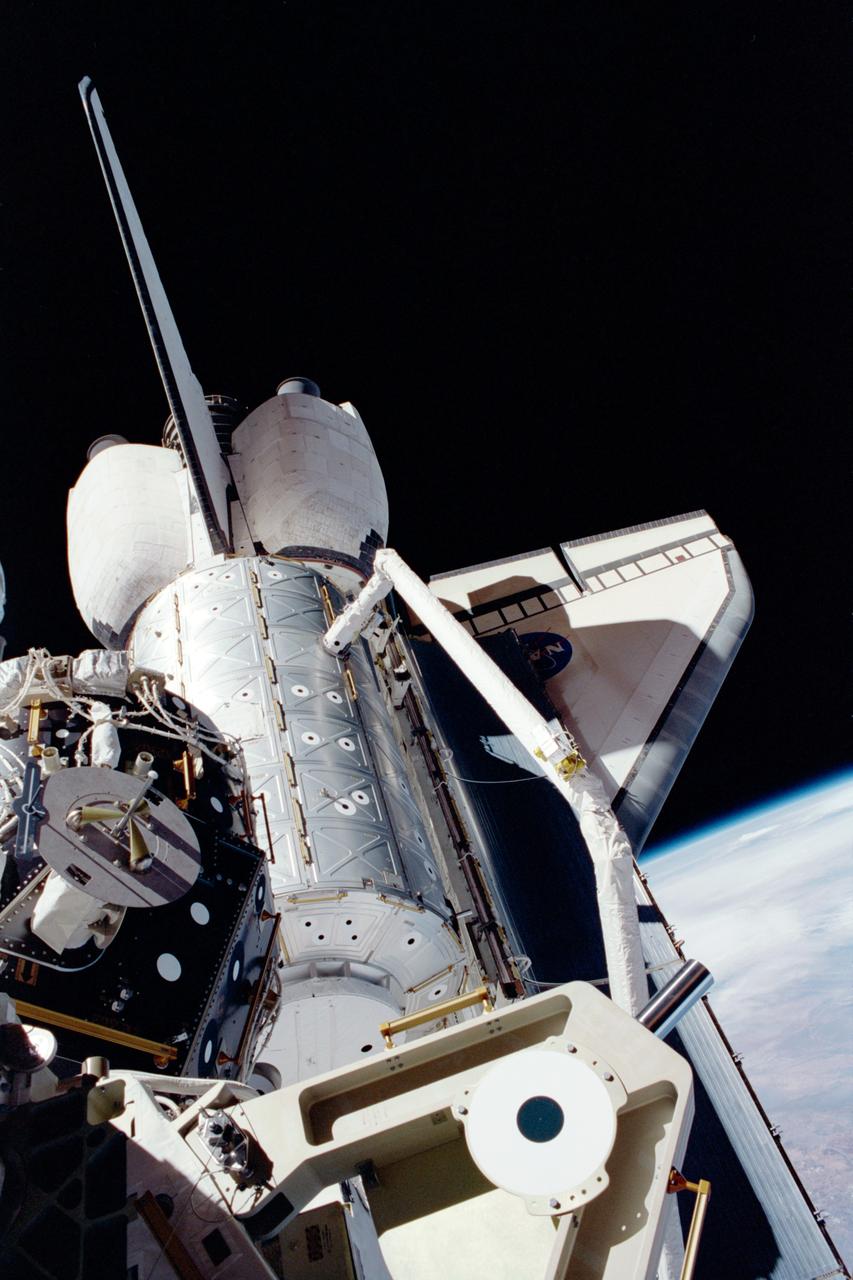
STS098-331-005 (7-20 February 2001) --- In the grasp of the shuttle’s remote manipulator system (RMS) robot arm, the Destiny laboratory is moved from its stowage position in the cargo bay of the Space Shuttle Atlantis. The photo was taken by astronaut Thomas D. Jones, who was participating in one of three STS-98/5a spacewalks at the time. Astronaut Robert L. Curbeam (out of frame) also made the three spacewalks.
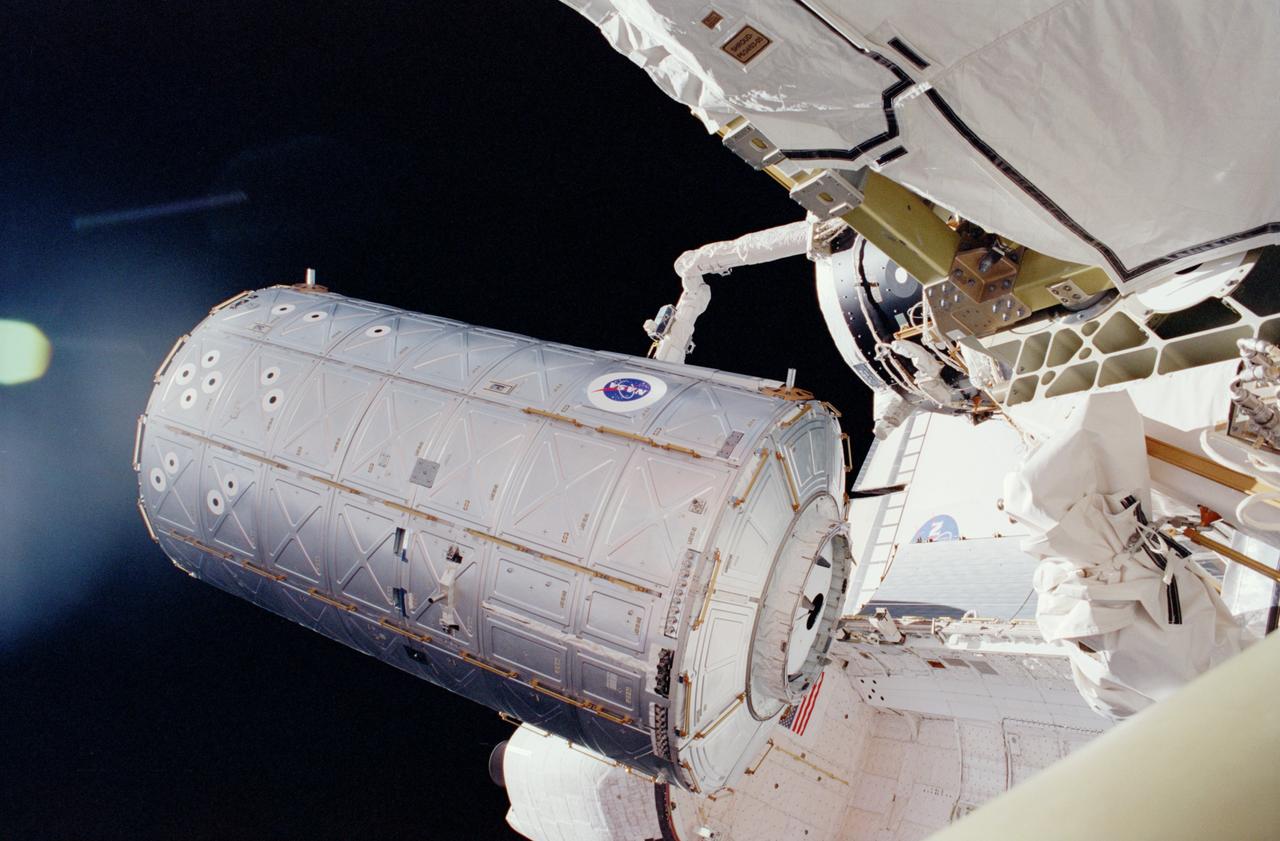
STS098-331-0017 (7-20 February 2001) --- In the grasp of the shuttle's remote manipulator system (RMS) robot arm, the Destiny laboratory is moved from its stowage position in the cargo bay of the Space Shuttle Atlantis. The photo was taken by astronaut Thomas D. Jones, who was participating in one of three STS-98/5a space walks at the time. Astronaut Robert L. Curbeam (out of frame) also made the three space walks.
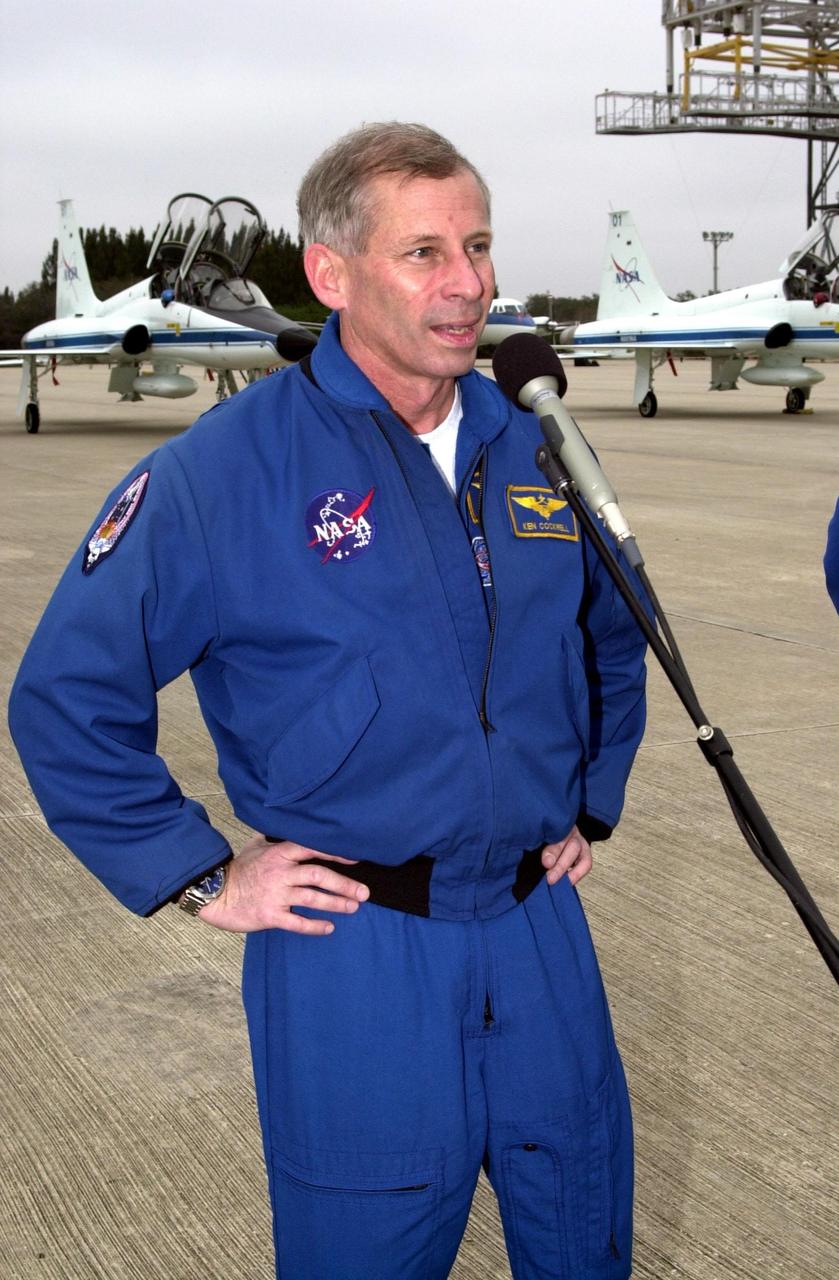
KENNEDY SPACE CENTER, FLA. -- STS-98 Mission Commander Kenneth Cockrell speaks to the media at the Shuttle Landing Facility after the crew's arrival Sunday to complete preparations for launch. The crew also includes Pilot Mark Polansky and Mission Specialists Thomas Jones, Marsha Ivins and Robert Curbeam.; STS-98 is the seventh construction flight to the International Space Station, carrying as payload the U.S. Lab Destiny, a key element in the construction of the ISS. Launch of STS-98 is scheduled for Feb. 7 at 6:11 p.m. EST
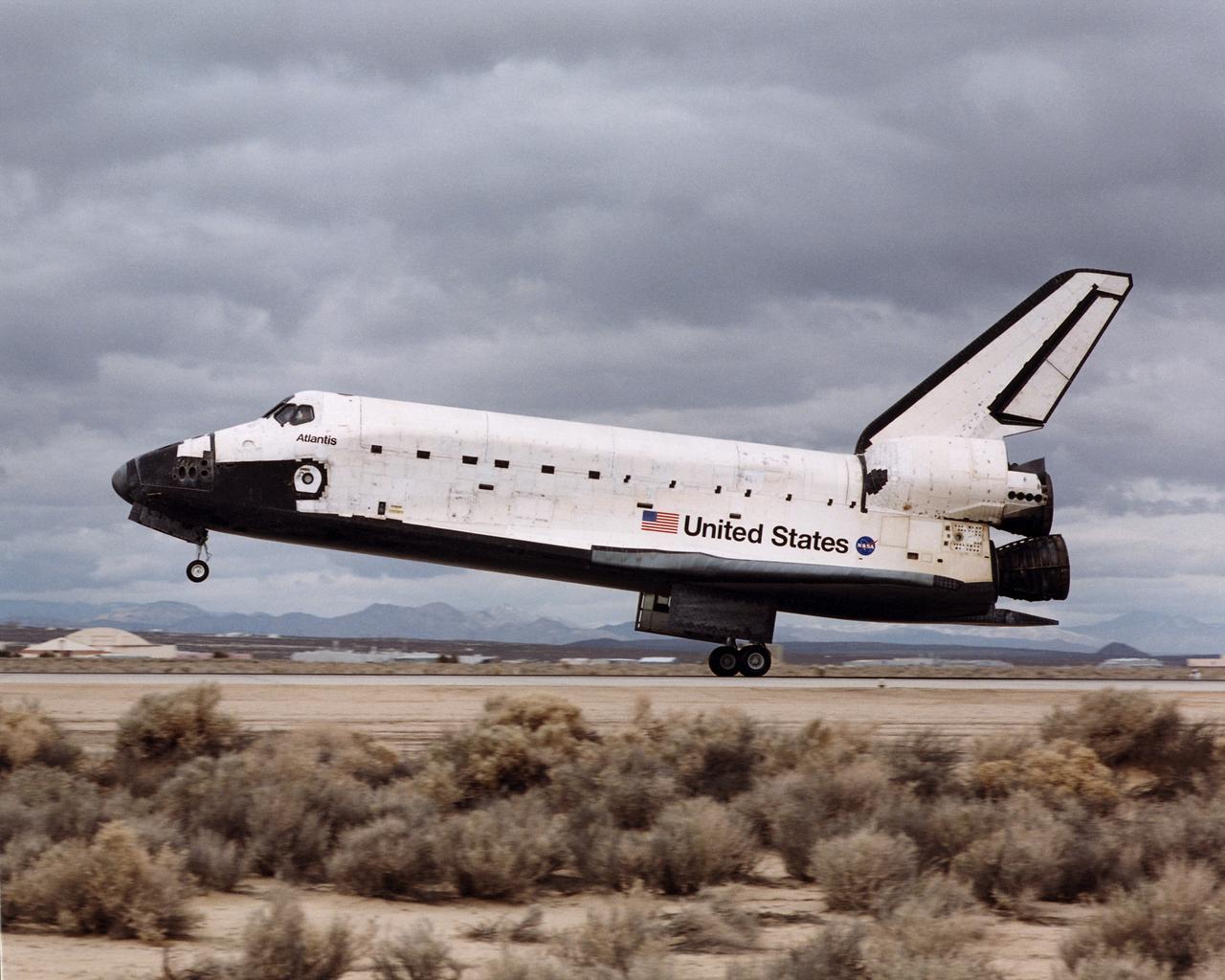
STS098-S-016 (20 Feb. 2001) --- The main landing gear on the space shuttle Atlantis touches down to mark mission completion at Edwards Air Force Base in the Mojave Desert of California.Onboard were astronauts Kenneth Cockrell, Mark Polansky, Robert Curbeam, Thomas Jones and Marsha Ivins. Atlantis touched down on Edward?s concrete runway at 2:33 p.m. (CST), Feb. 20, for a mission elapsed time of 12 days, 21 hours and 20 minutes. Photo credit: NASA
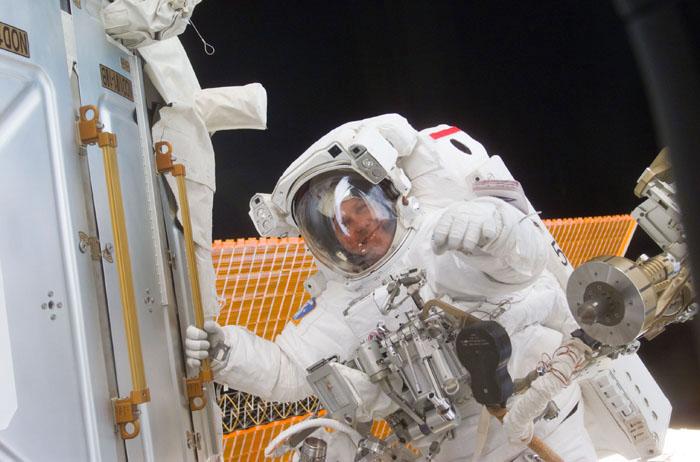
STS98-E-5194 (12 February 2001)--- Astronaut Thomas D. Jones, STS-98 mission specialist, grabs a hand rail while working on the International Space Station (ISS) during the second of three scheduled space walks involving himself and astronaut Robert L. Curbeam and assisted by their STS-98 crew mates aboard the Atlantis. The scene was recorded with a digital still camera.
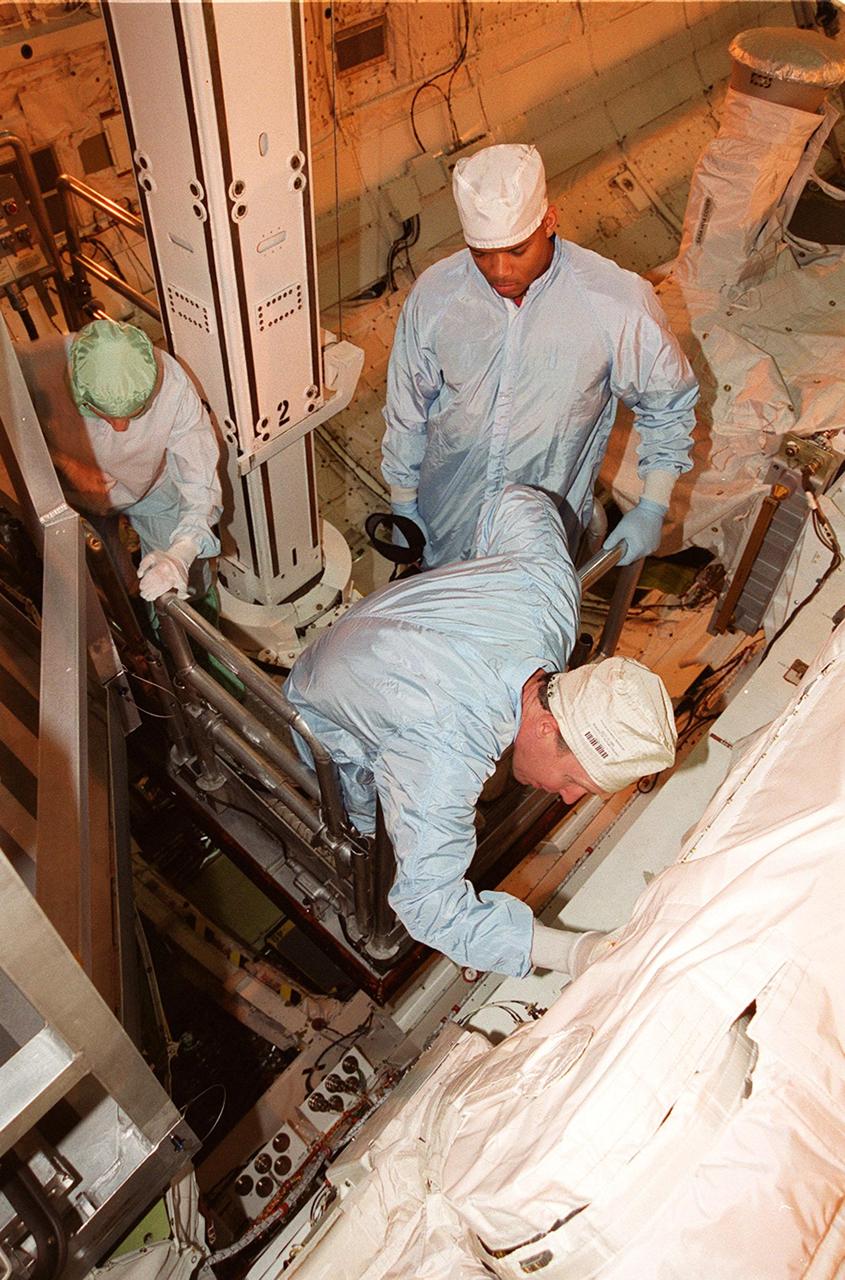
KENNEDY SPACE CENTER, FLA. -- Working on the Orbiter Docking System of orbiter Atlantis are Mission Specialists Tom Jones (leaning over) and Robert Curbeam. They and the rest of the crew are at KSC for Crew Equipment Interface Test activities. Launch on mission STS-98 is scheduled for Jan. 18, 2001. It will be transporting the U.S. Lab, Destiny, to the International Space Station with five system racks already installed inside of the module. After delivery of electronics in the lab, electrically powered attitude control for Control Moment Gyroscopes will be activated
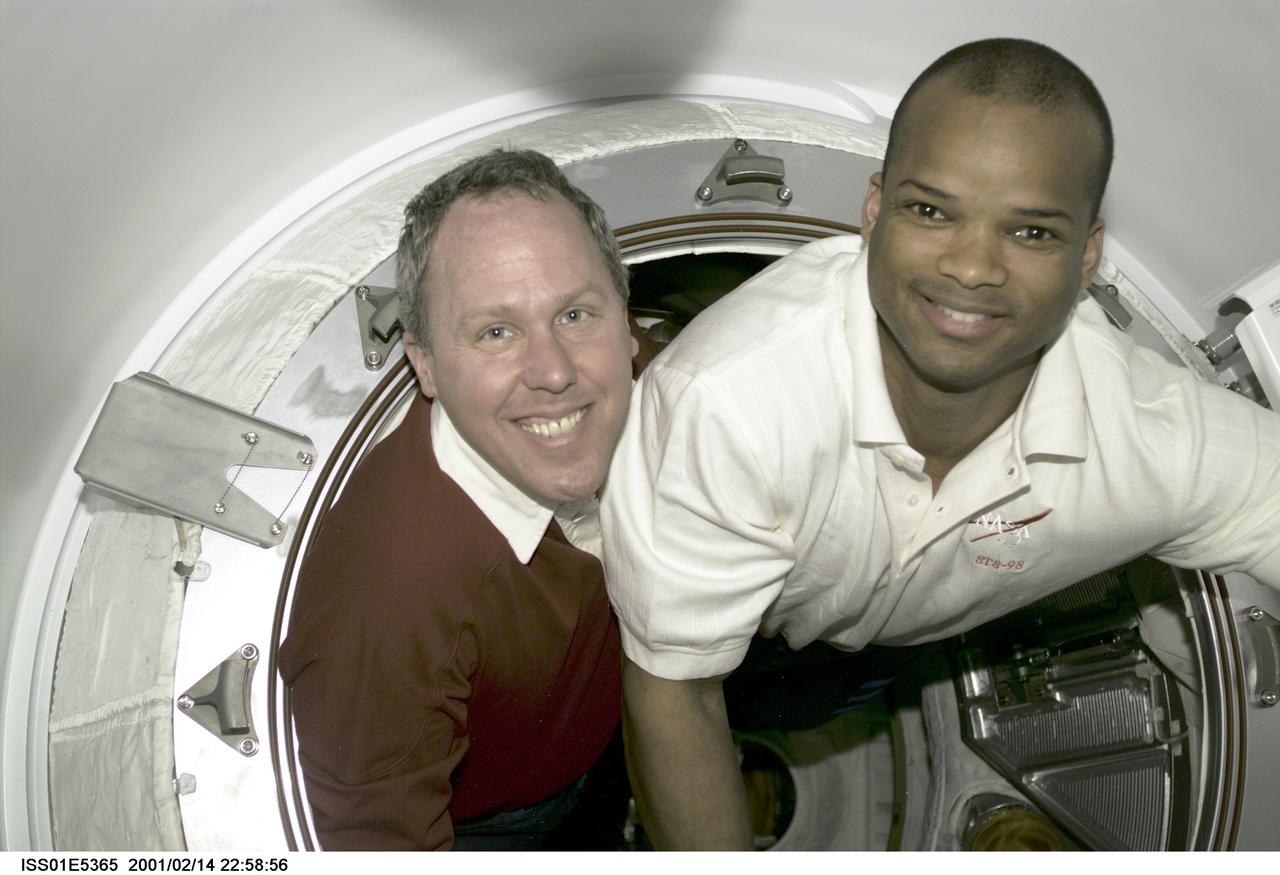
ISS01-E-5365 (14 February 2001) --- Astronauts Thomas D. Jones (left) and Robert L. Curbeam, STS-98 mission specialists who will accomplish three lengthy space walks during the STS-98/5a mission, share space in a small hatch during break time. The scene was recorded with a digital still camera.
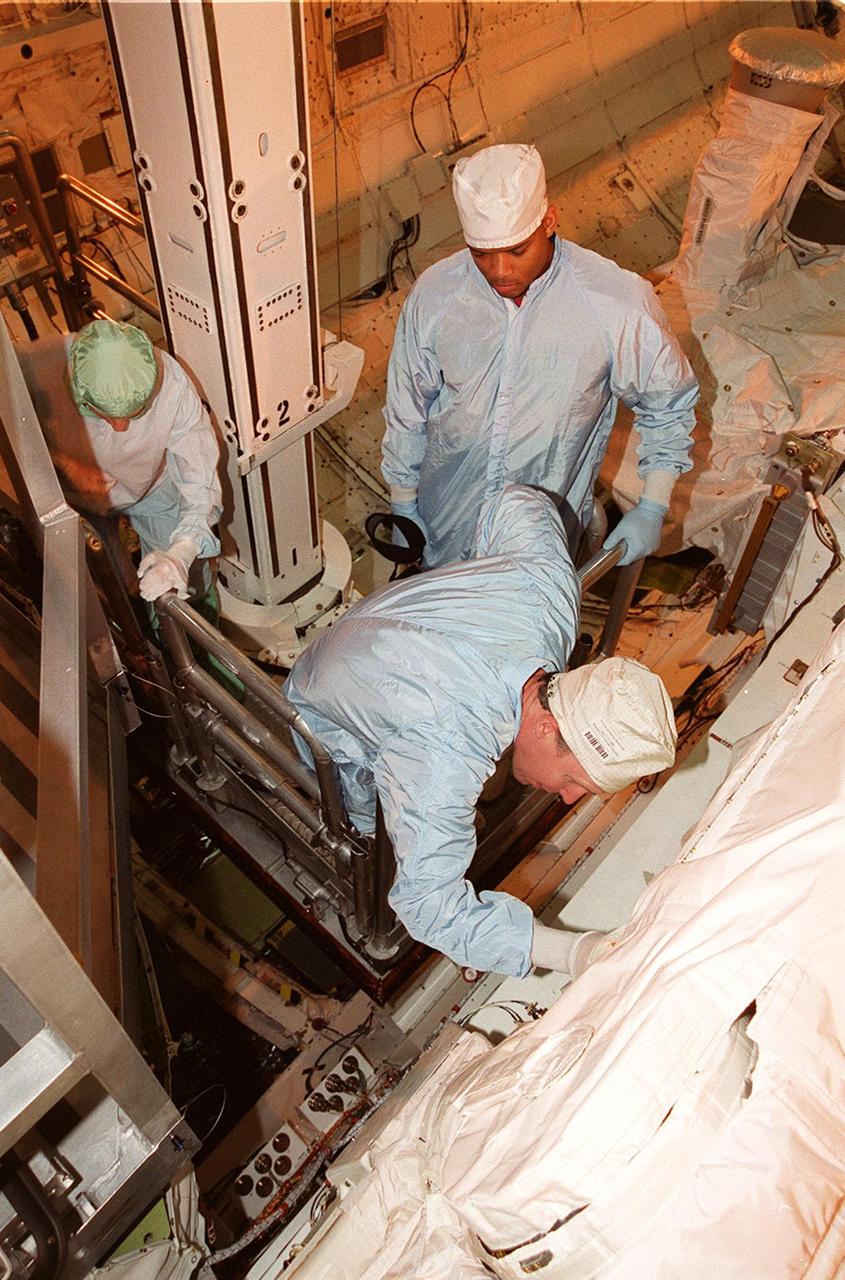
KENNEDY SPACE CENTER, FLA. -- Working on the Orbiter Docking System of orbiter Atlantis are Mission Specialists Tom Jones (leaning over) and Robert Curbeam. They and the rest of the crew are at KSC for Crew Equipment Interface Test activities. Launch on mission STS-98 is scheduled for Jan. 18, 2001. It will be transporting the U.S. Lab, Destiny, to the International Space Station with five system racks already installed inside of the module. After delivery of electronics in the lab, electrically powered attitude control for Control Moment Gyroscopes will be activated
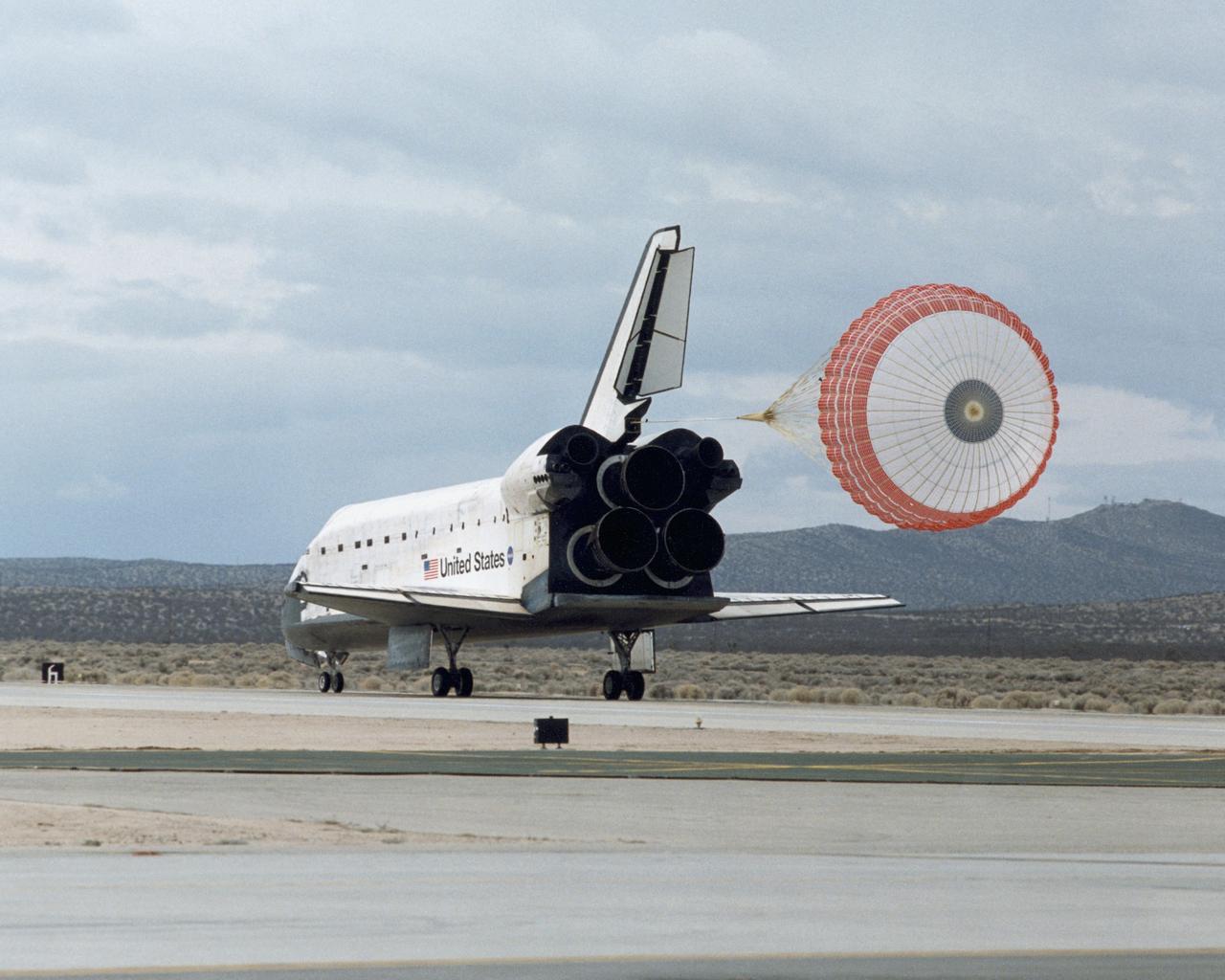
STS098-S-017 (20 Feb. 2001) --- A drag chute slows down the space shuttle Atlantis following its touchdown to mark mission completion at Edwards Air Force Base in the Mojave Desert of California. Onboard were astronauts Kenneth Cockrell, Mark Polansky, Robert Curbeam, Thomas Jones and Marsha Ivins. Atlantis touched down on Edward?s concrete runway at 2:33 p.m. (CST), Feb. 20, for a mission elapsed time of 12 days, 21 hours and 20 minutes. Photo credit: NASA
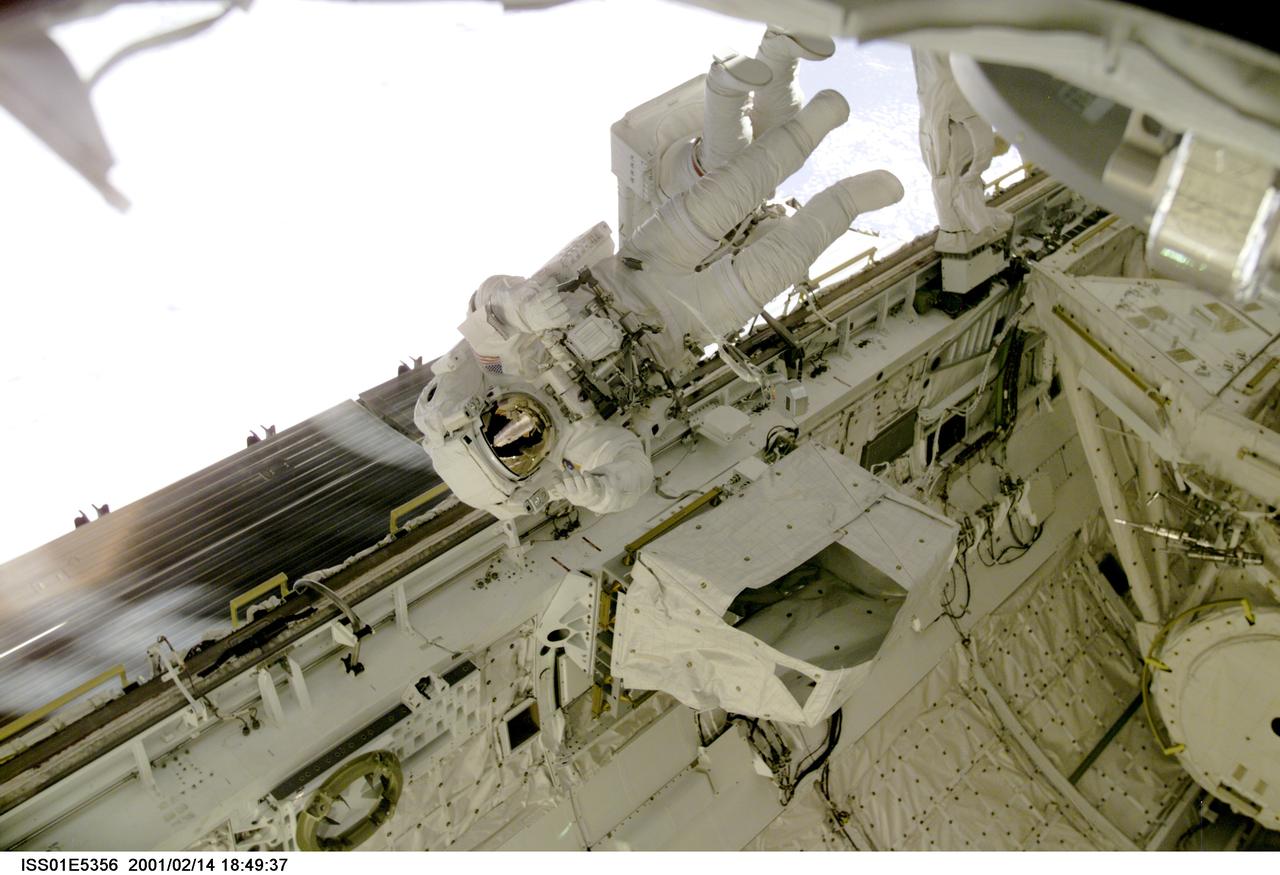
ISS01-E-5356 (14 February 2001) --- Astronaut Robert L. Curbeam, STS-98 mission specialist, floats above the longerons of the cargo bay on the Space Shuttle Atlantis during the final of three STS-98/5a space walks. Partially obscured behind Curbeam is astronaut Thomas D. Jones, his colleague and partner for all three walks. The scene was recorded with a digital still camera.
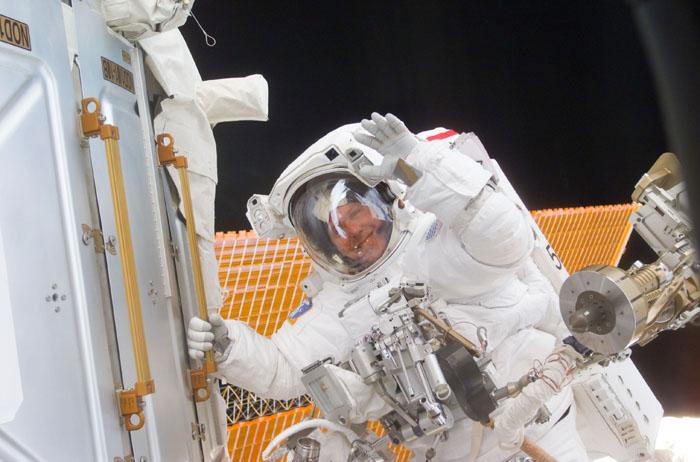
STS98-E-5195 (12 February 2001) --- Astronaut Thomas D. Jones, STS-98 mission specialist, waves at crew mates inside Atlantis' crew cabin while working on the International Space Station (ISS) during the second of three scheduled space walks involving himself and astronaut Robert L. Curbeam and assisted by their STS-98 astronauts aboard the Atlantis. The scene was recorded with a digital still camera.
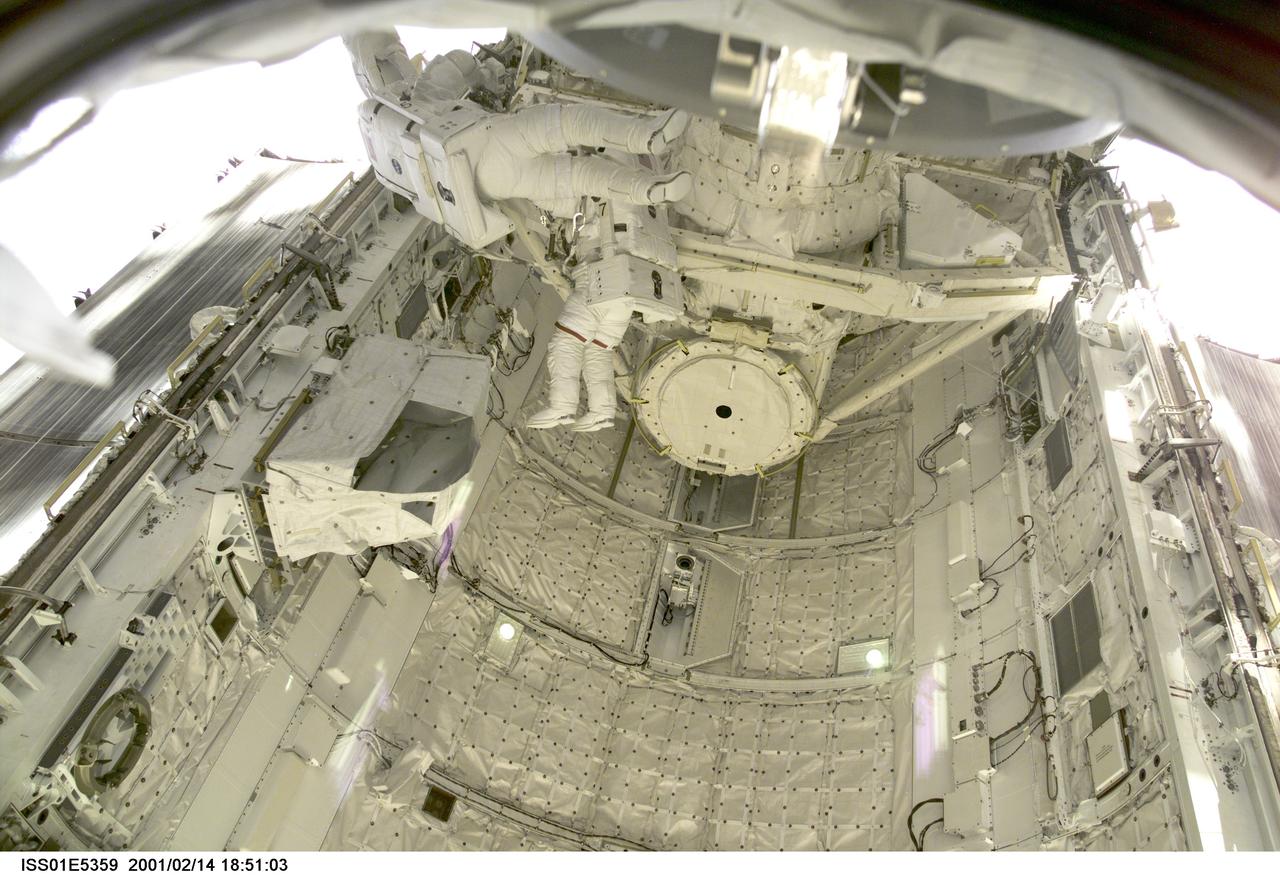
ISS01-E-5359 (14 February 2001) --- Astronauts Thomas D. Jones (red stripes on suit pants)and Robert L. Curbeam, STS-98 mission specialists, are pictured in the cargo bay of the Space Shuttle Atlantis during their third space walk, as photographed with a digital still camera from the International Space Station's new Destiny laboratory.
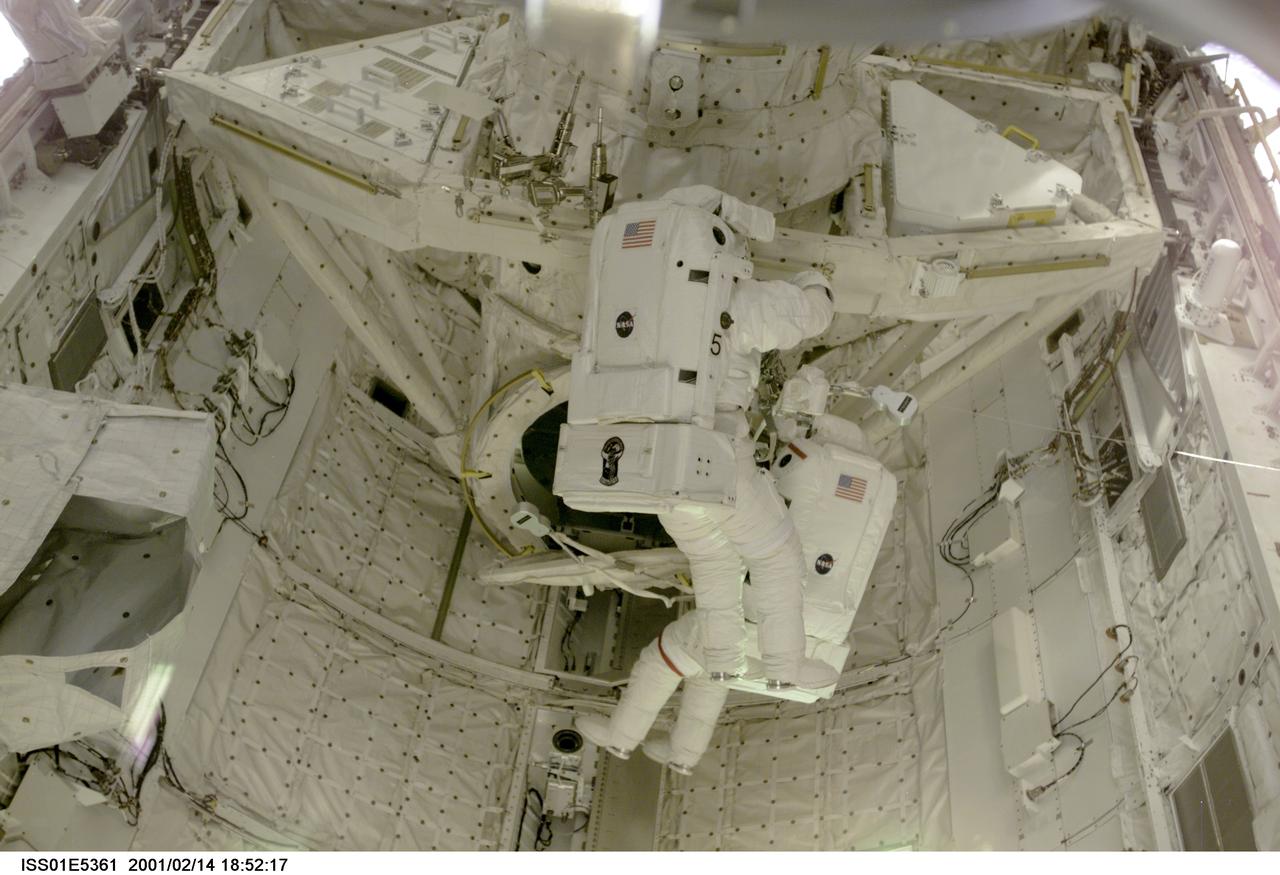
ISS01-E-5361 (14 February 2001) --- Astronauts Thomas D. Jones (red stripes on suit) and Robert L. Curbeam, STS-98 mission specialists, are pictured in the cargo bay of the Space Shuttle Atlantis during their third space walk, as photographed with a digital still camera from the International Space Station's new Destiny laboratory.
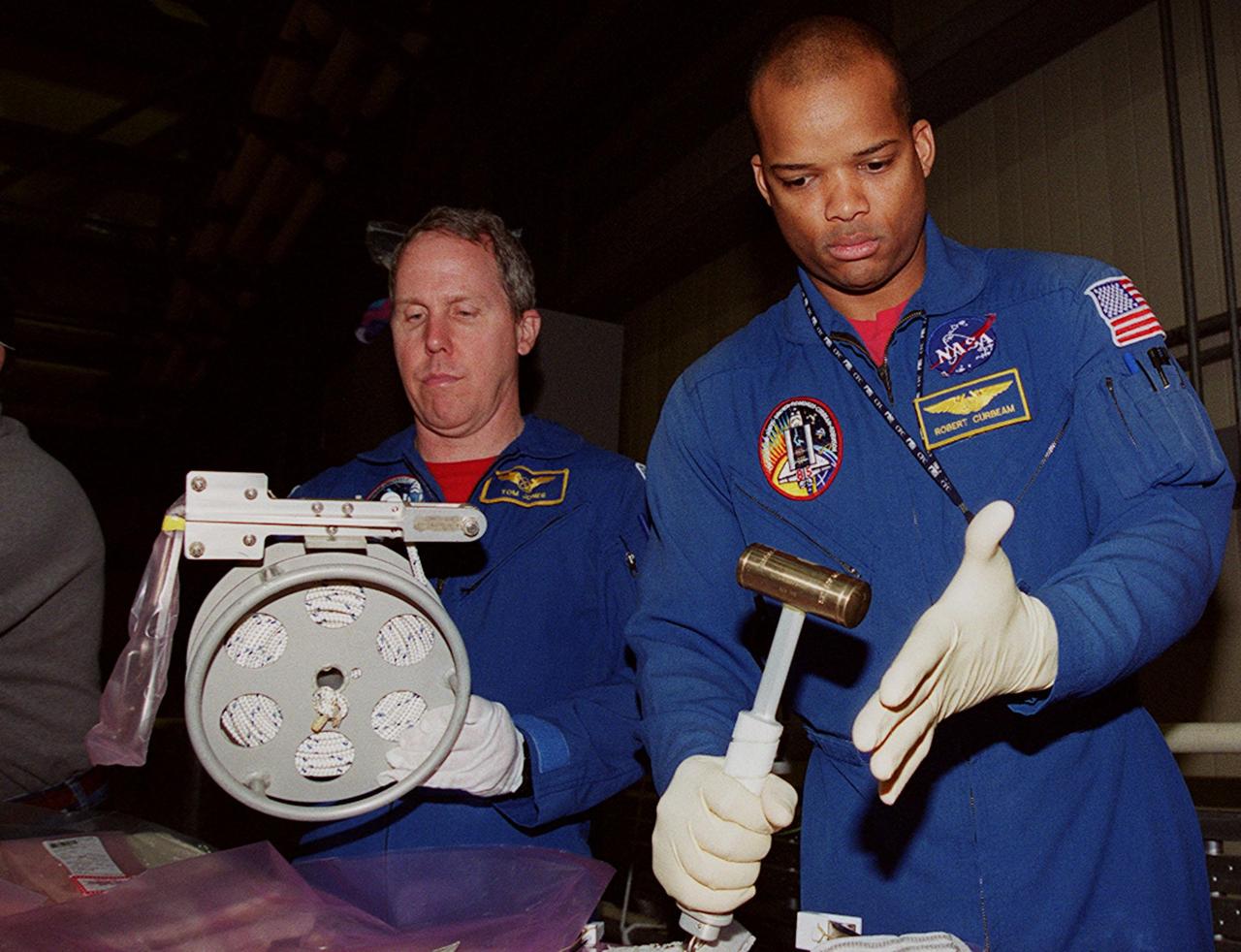
KENNEDY SPACE CENTER, FLA. -- In Orbiter Processing Facility bay 3, STS-98 Mission Specialists Tom Jones and Robert Curbeam test tools that will be used during extravehicular activities (EVA) on their mission. Scheduled for launch Jan. 18, 2001, STS-98 will be transporting the U.S. Lab, Destiny, to the International Space Station with five system racks already installed inside of the module. After delivery of electronics in the lab, electrically powered attitude control for Control Moment Gyroscopes will be activated
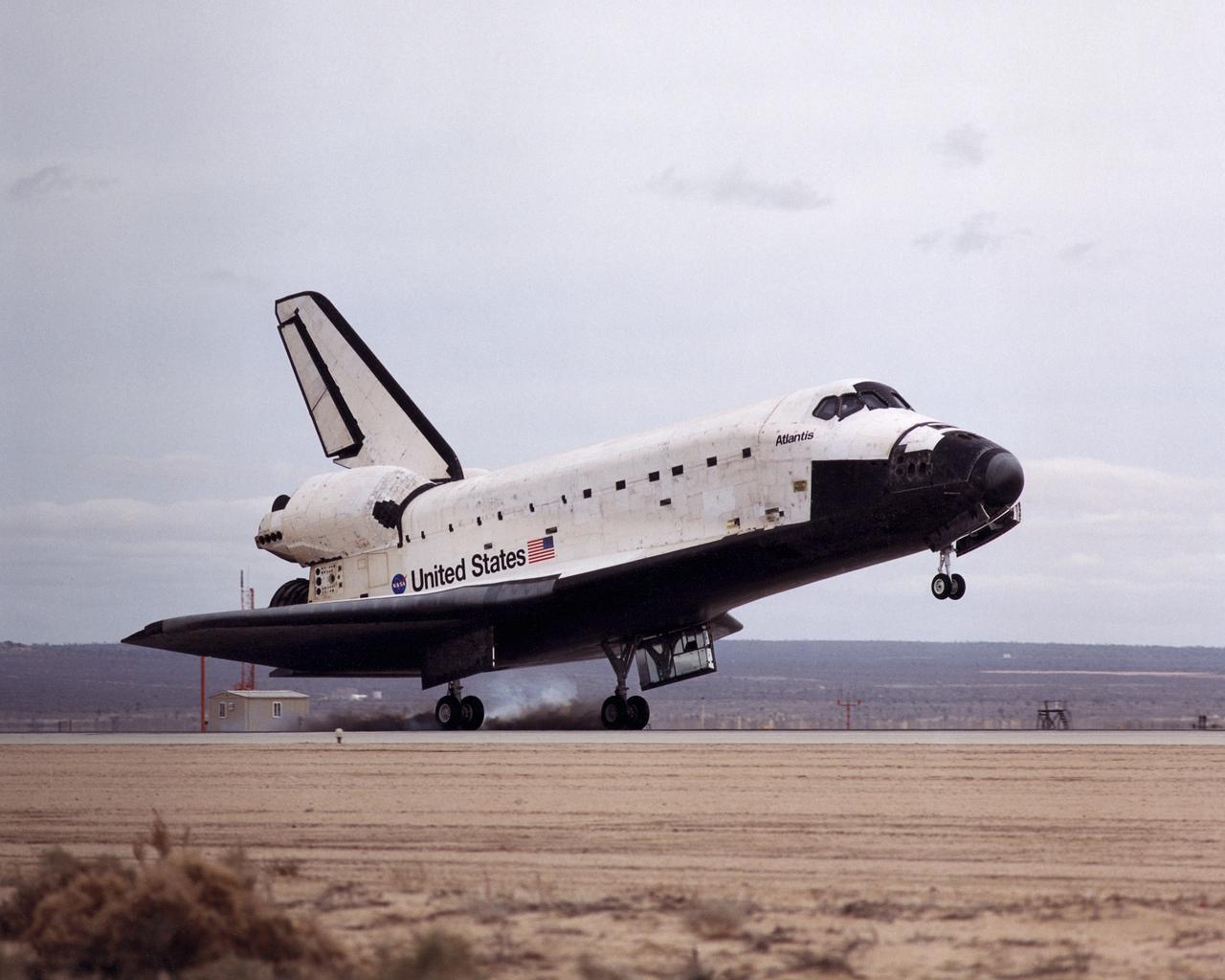
STS098-S-015 (20 Feb. 2001) --- The main landing gear on the space shuttle Atlantis touches down to mark mission completion at Edwards Air Force Base in the Mojave Desert of California.Onboard were astronauts Kenneth Cockrell, Mark Polansky, Robert Curbeam, Thomas Jones and Marsha Ivins. Atlantis touched down on Edward?s concrete runway at 2:33 p.m. (CST), Feb. 20, for a mission elapsed time of 12 days, 21 hours and 20 minutes. Photo credit: NASA
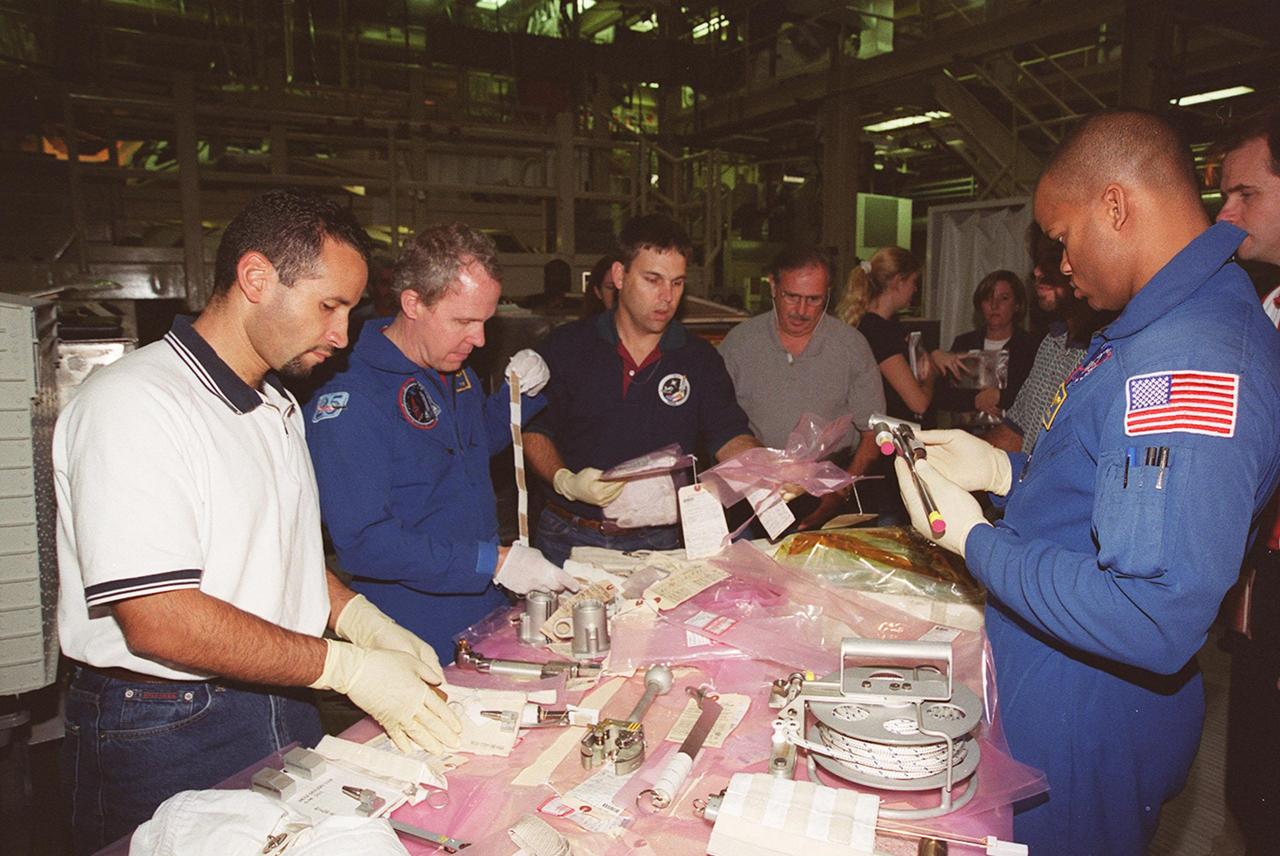
KENNEDY SPACE CENTER, FLA. -- In Orbiter Processing Facility bay 3, STS-98 Mission Specialists Tom Jones (second from left) and Robert Curbeam (right) test tools that will be used during extravehicular activities (EVA) on their mission. Scheduled for launch Jan. 18, 2001, STS-98 will be transporting the U.S. Lab, Destiny, to the International Space Station with five system racks already installed inside of the module. After delivery of electronics in the lab, electrically powered attitude control for Control Moment Gyroscopes will be activated
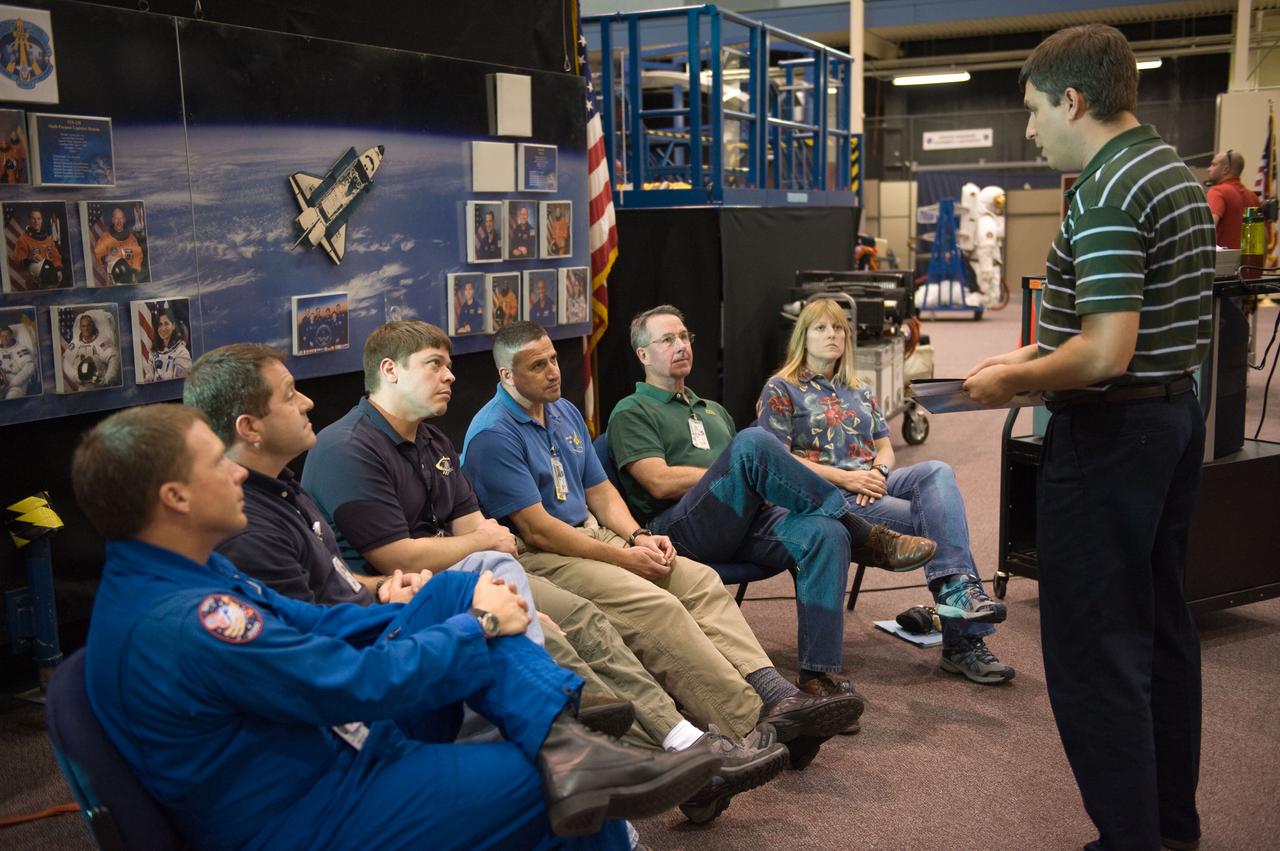
JSC2009-E-125122 (1 June 2009) --- Crew trainer Patrick Jones (right) briefs STS-130 crew members during a training session in the Space Vehicle Mock-up Facility at NASA?s Johnson Space Center. Pictured from the left are astronauts Terry Virts Jr., pilot; Nicholas Patrick and Robert Behnken, both mission specialists; George Zamka, commander; Stephen Robinson and Kathryn Hire, both mission specialists.
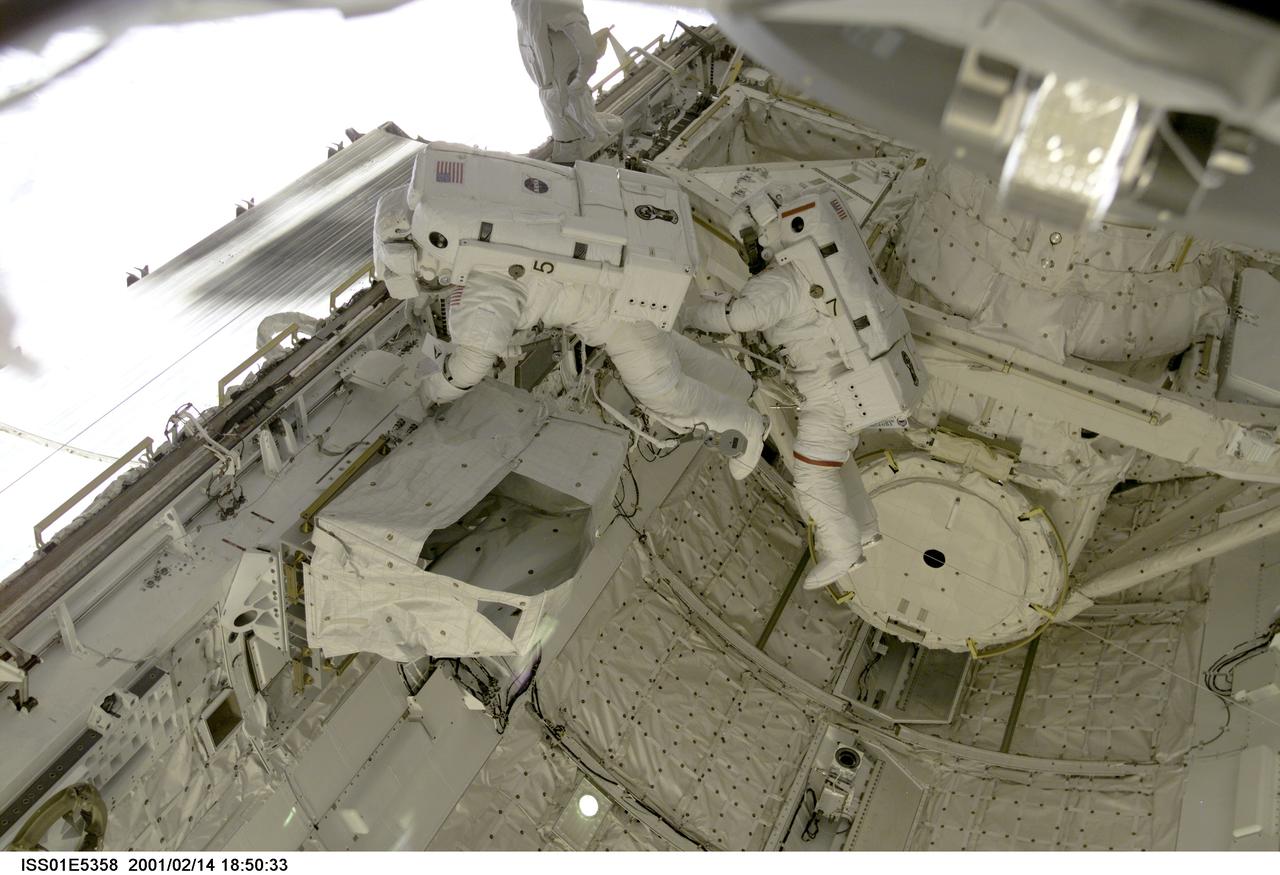
ISS01-E-5358 (14 February 2001) --- Astronauts Thomas D. Jones (red stripes on suit) and Robert L. Curbeam, STS-98 mission specialists, are pictured in the cargo bay of the Space Shuttle Atlantis during their third space walk, as photographed with a digital still camera from the International Space Station's new Destiny laboratory.
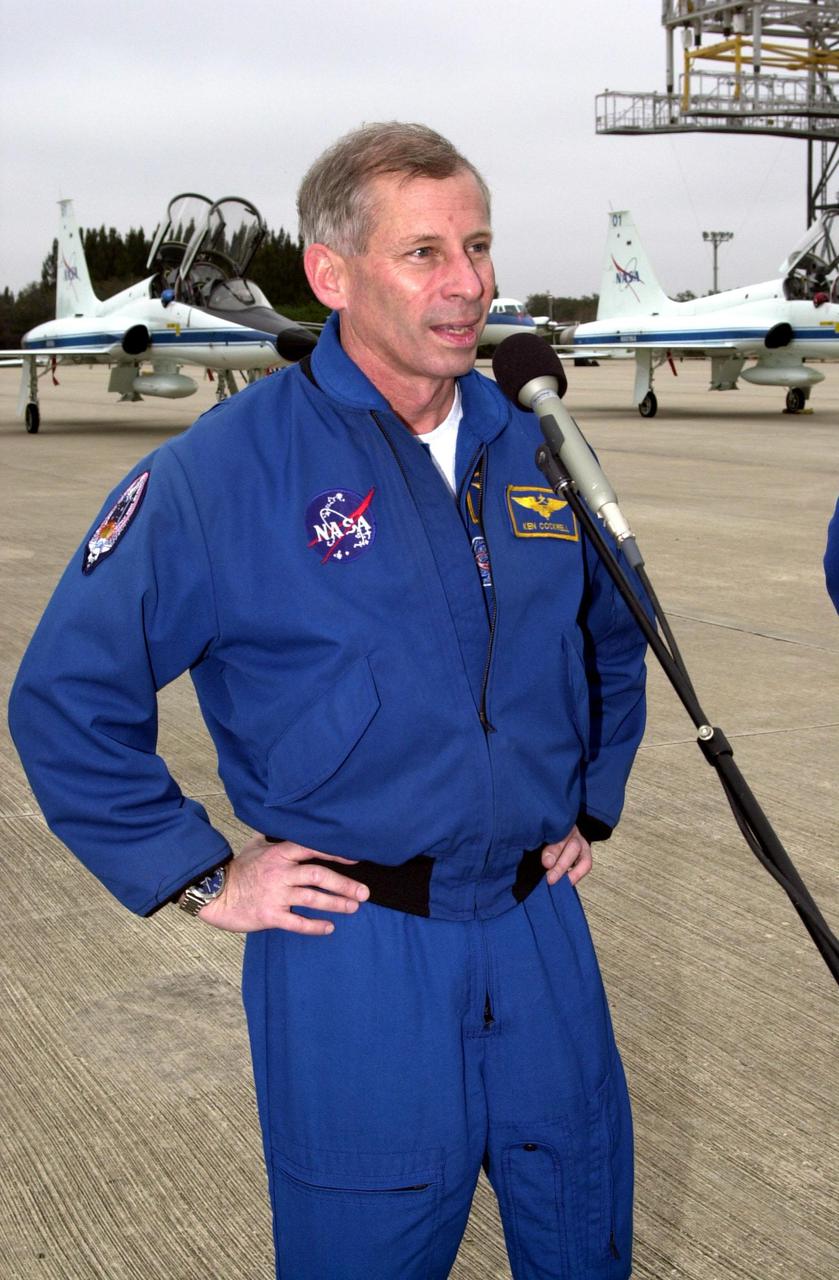
KENNEDY SPACE CENTER, FLA. -- STS-98 Mission Commander Kenneth Cockrell speaks to the media at the Shuttle Landing Facility after the crew's arrival Sunday to complete preparations for launch. The crew also includes Pilot Mark Polansky and Mission Specialists Thomas Jones, Marsha Ivins and Robert Curbeam.; STS-98 is the seventh construction flight to the International Space Station, carrying as payload the U.S. Lab Destiny, a key element in the construction of the ISS. Launch of STS-98 is scheduled for Feb. 7 at 6:11 p.m. EST
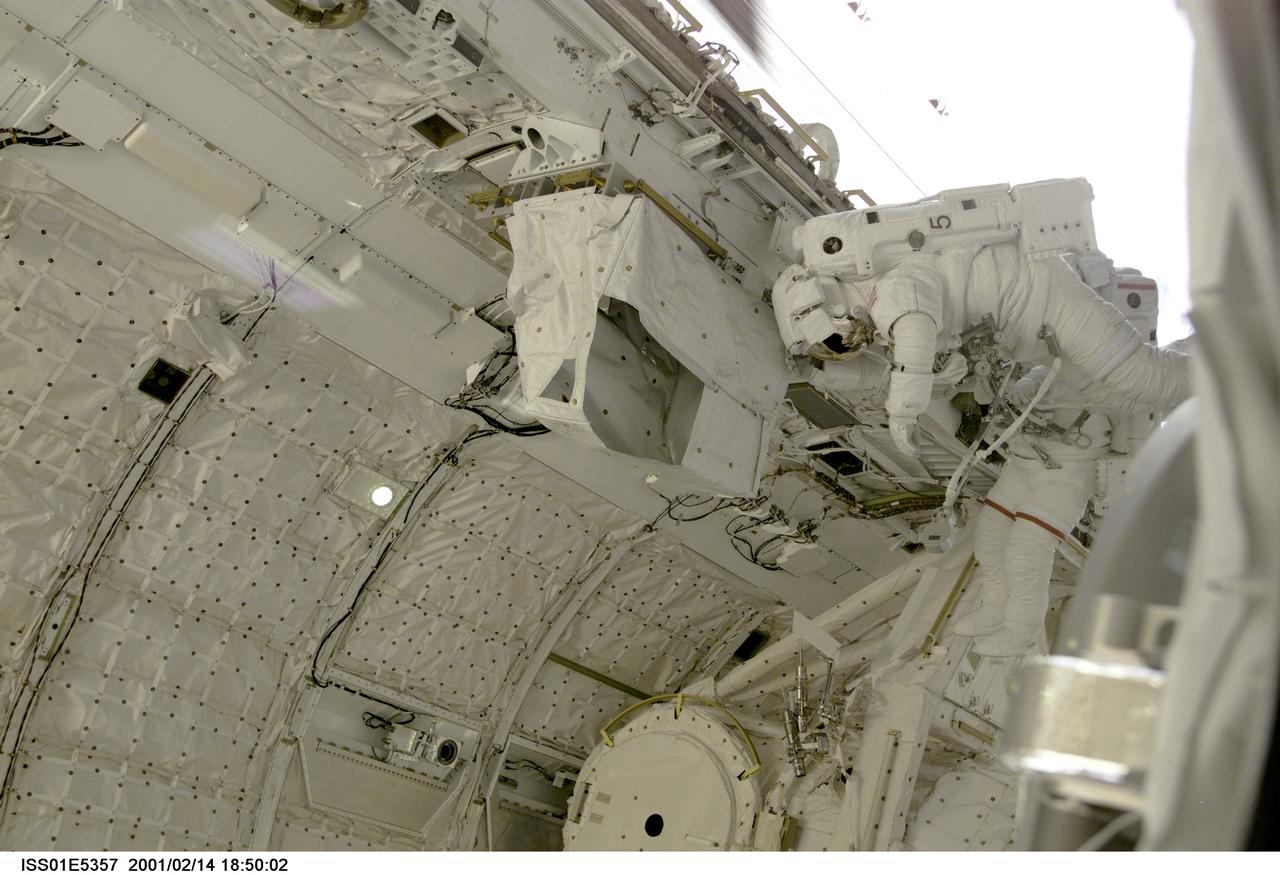
ISS01-E-5357 (14 February 2001) --- Astronauts Thomas D. Jones (red stripes on suit pants)and Robert L. Curbeam, STS-98 mission specialists, are pictured in the cargo bay of the Space Shuttle Atlantis during their third space walk, as photographed with a digital still camera from the International Space Station's new Destiny laboratory.
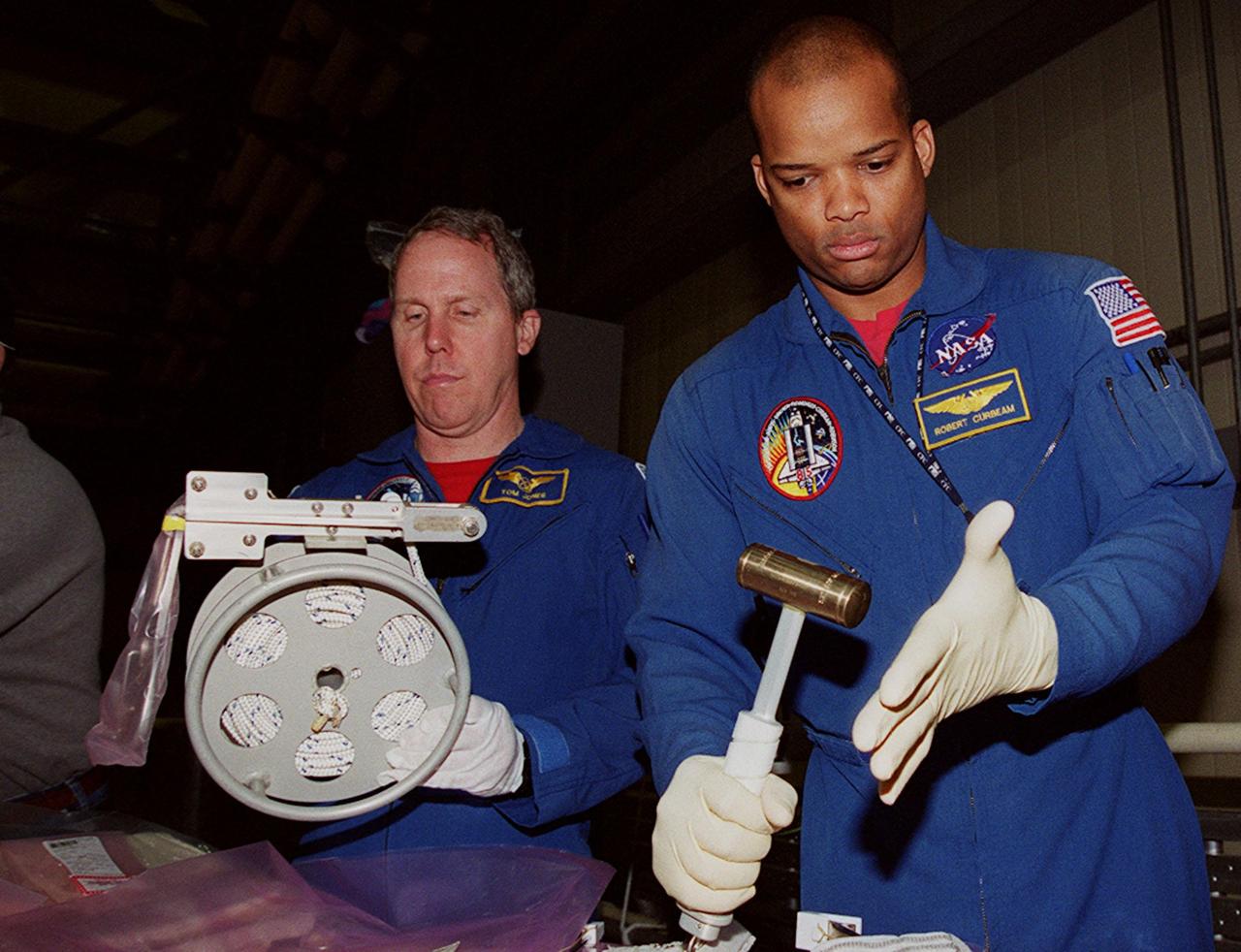
KENNEDY SPACE CENTER, FLA. -- In Orbiter Processing Facility bay 3, STS-98 Mission Specialists Tom Jones and Robert Curbeam test tools that will be used during extravehicular activities (EVA) on their mission. Scheduled for launch Jan. 18, 2001, STS-98 will be transporting the U.S. Lab, Destiny, to the International Space Station with five system racks already installed inside of the module. After delivery of electronics in the lab, electrically powered attitude control for Control Moment Gyroscopes will be activated
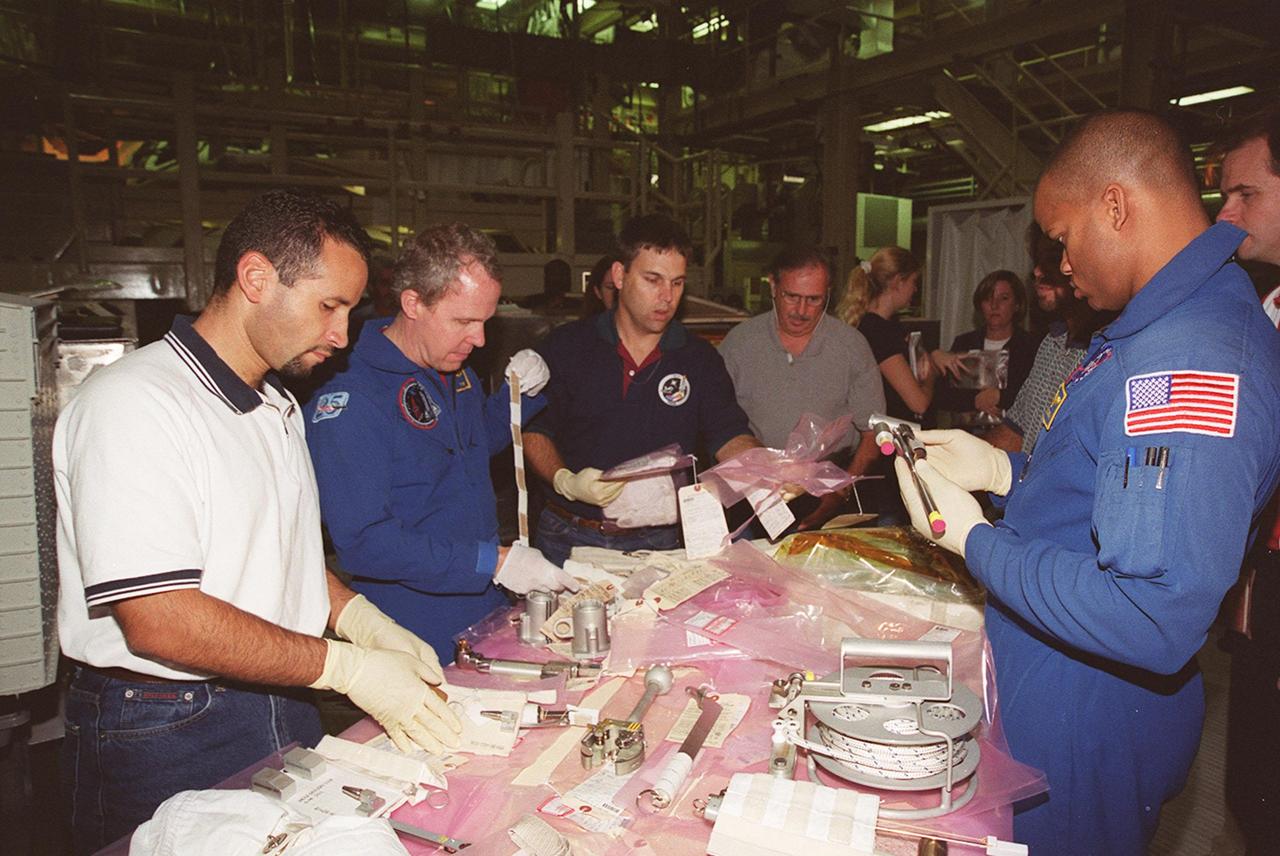
KENNEDY SPACE CENTER, FLA. -- In Orbiter Processing Facility bay 3, STS-98 Mission Specialists Tom Jones (second from left) and Robert Curbeam (right) test tools that will be used during extravehicular activities (EVA) on their mission. Scheduled for launch Jan. 18, 2001, STS-98 will be transporting the U.S. Lab, Destiny, to the International Space Station with five system racks already installed inside of the module. After delivery of electronics in the lab, electrically powered attitude control for Control Moment Gyroscopes will be activated
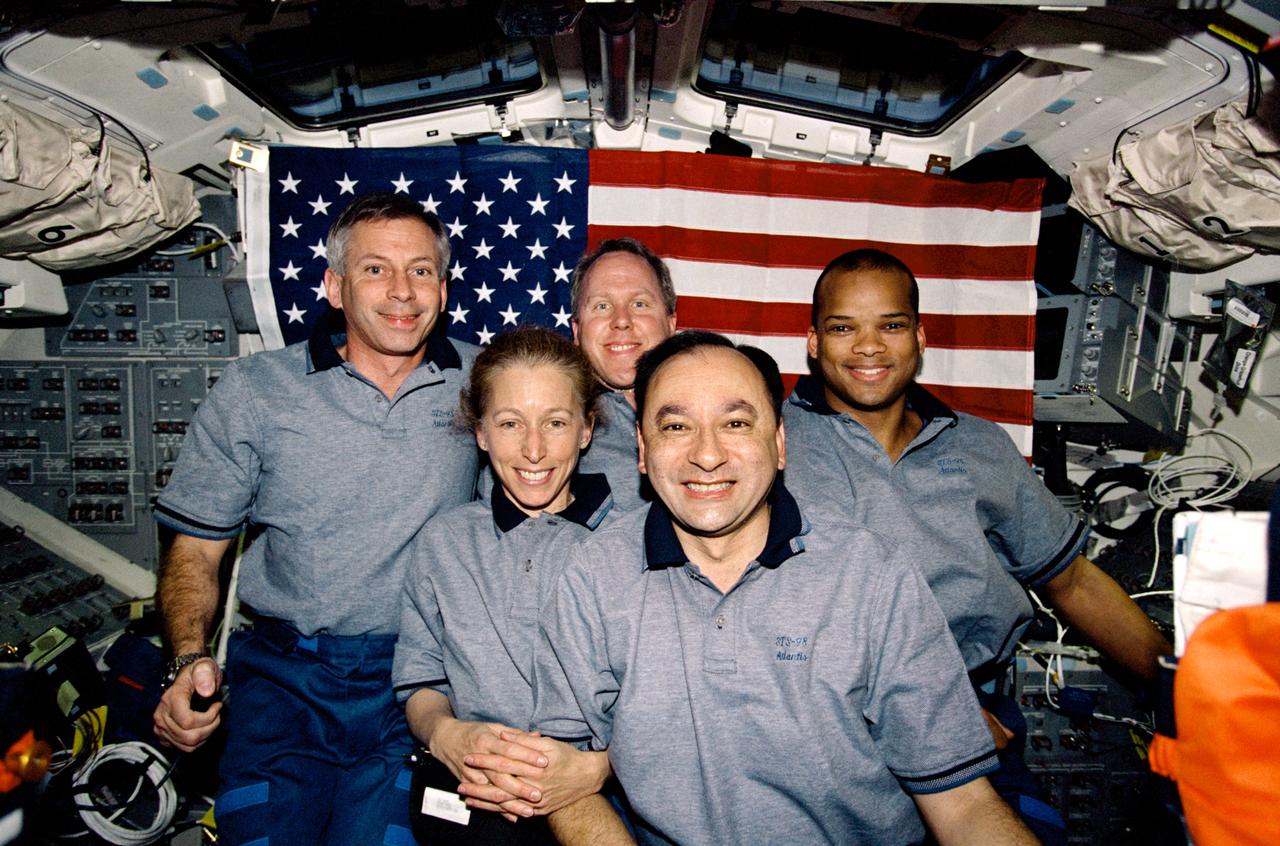
STS098-365-0034 (7-20 February 2001) --- The crew of the STS-98 mission poses for the traditional inflight portrait on the flight deck of the Space Shuttle Atlantis. From left are astronauts Kenneth D. Cockrell, mission commander; Marsha S. Ivins, mission specialist; Thomas D. Jones, mission specialist; Mark L. Polansky, pilot; and Robert L. Curbeam, mission specialist.
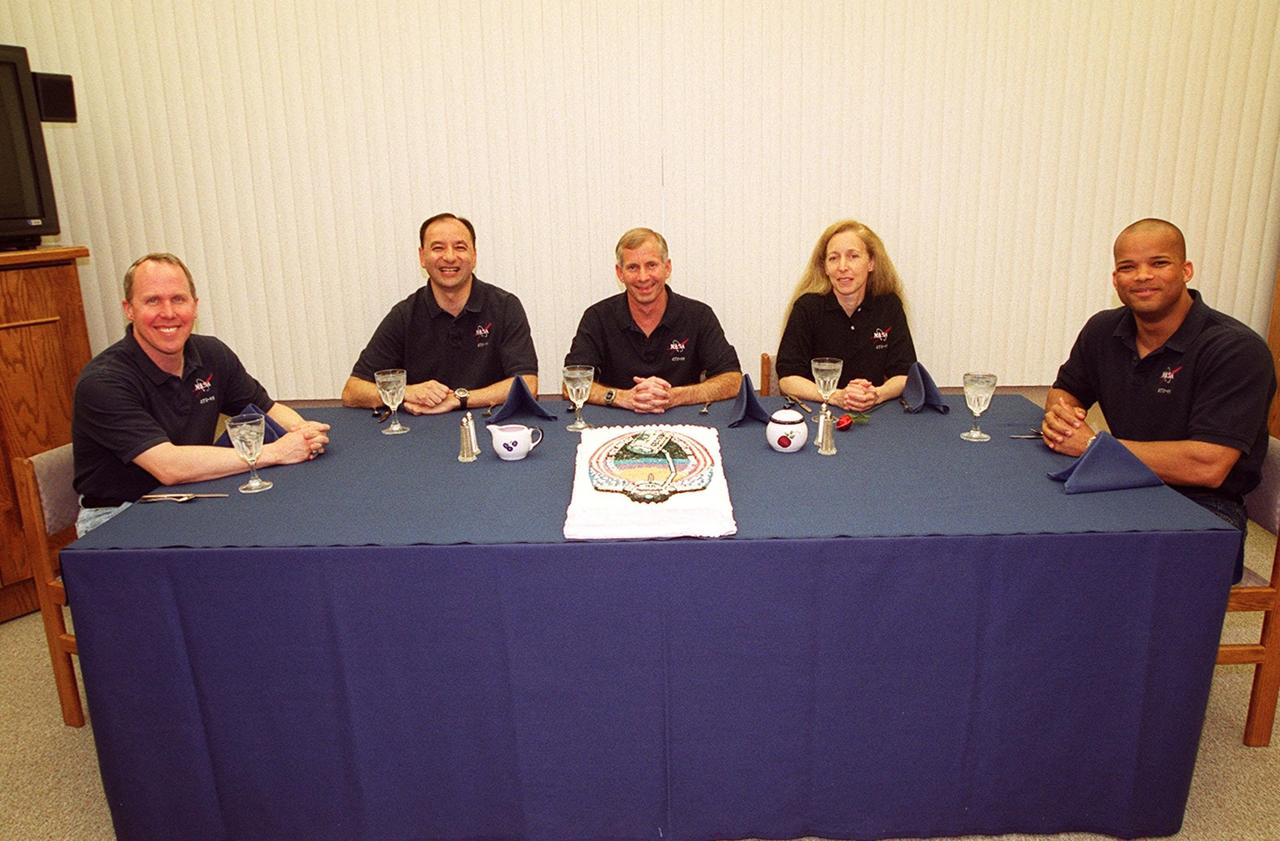
The STS-98 crew gathers around a table for a snack before getting ready for launch on Space Shuttle Atlantis. Seated left to right are Mission Specialist Thomas Jones, Pilot Mark Polansky, Commander Ken Cockrell and Mission Specialists Marsha Ivins and Robert Curbeam. STS-98 is the seventh construction flight to the International Space Station. Atlantis is carrying the U.S. Laboratory Destiny, a key module in the growth of the Space Station. Destiny will be attached to the Unity node on the Space Station using the Shuttle’s robotic arm. Three spacewalks, by Curbeam and Jones, are required to complete the planned construction work during the 11-day mission. Launch is targeted for 6:11 p.m. EST and the planned landing at KSC Feb. 18 about 1:39 p.m. This mission marks the seventh Shuttle flight to the Space Station, the 23rd flight of Atlantis and the 102nd flight overall in NASA’s Space Shuttle program
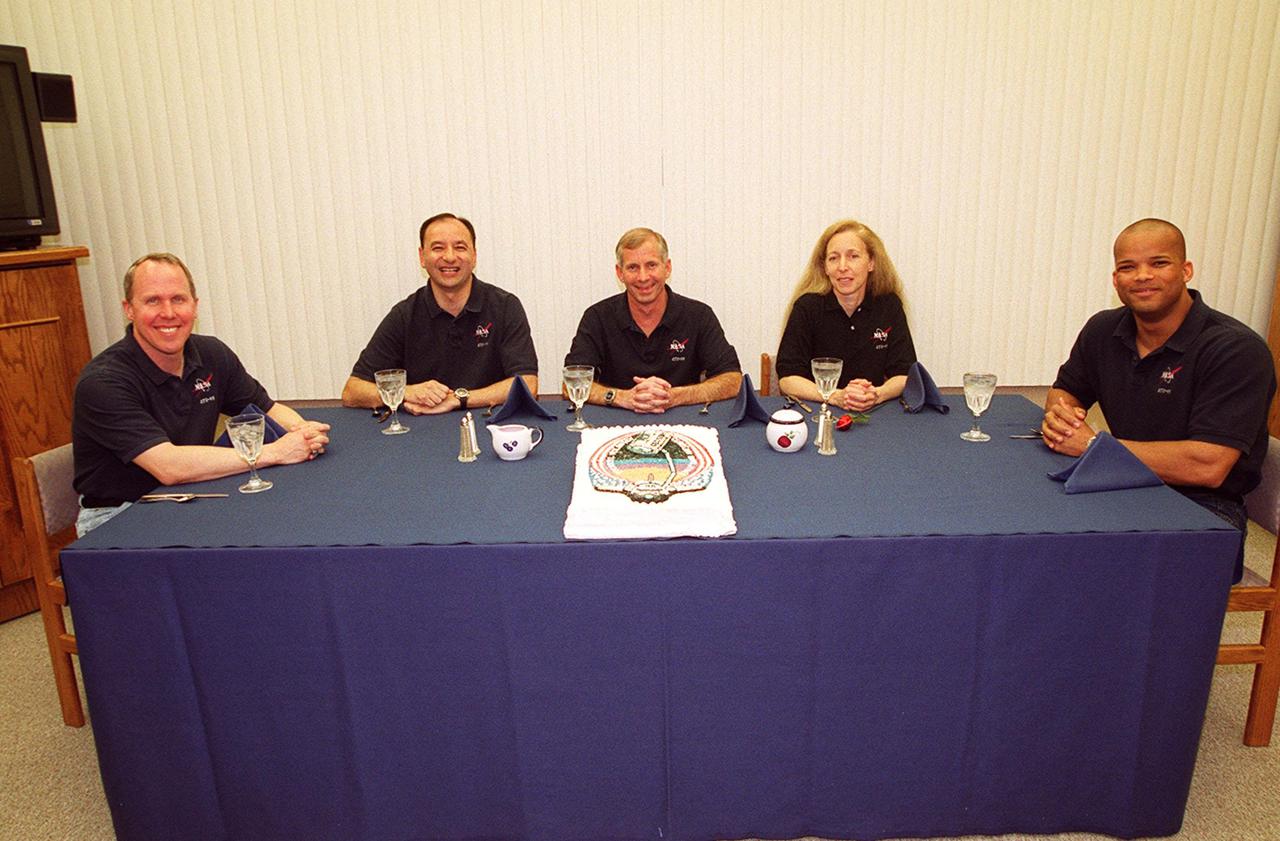
The STS-98 crew gathers around a table for a snack before getting ready for launch on Space Shuttle Atlantis. Seated left to right are Mission Specialist Thomas Jones, Pilot Mark Polansky, Commander Ken Cockrell and Mission Specialists Marsha Ivins and Robert Curbeam. STS-98 is the seventh construction flight to the International Space Station. Atlantis is carrying the U.S. Laboratory Destiny, a key module in the growth of the Space Station. Destiny will be attached to the Unity node on the Space Station using the Shuttle’s robotic arm. Three spacewalks, by Curbeam and Jones, are required to complete the planned construction work during the 11-day mission. Launch is targeted for 6:11 p.m. EST and the planned landing at KSC Feb. 18 about 1:39 p.m. This mission marks the seventh Shuttle flight to the Space Station, the 23rd flight of Atlantis and the 102nd flight overall in NASA’s Space Shuttle program
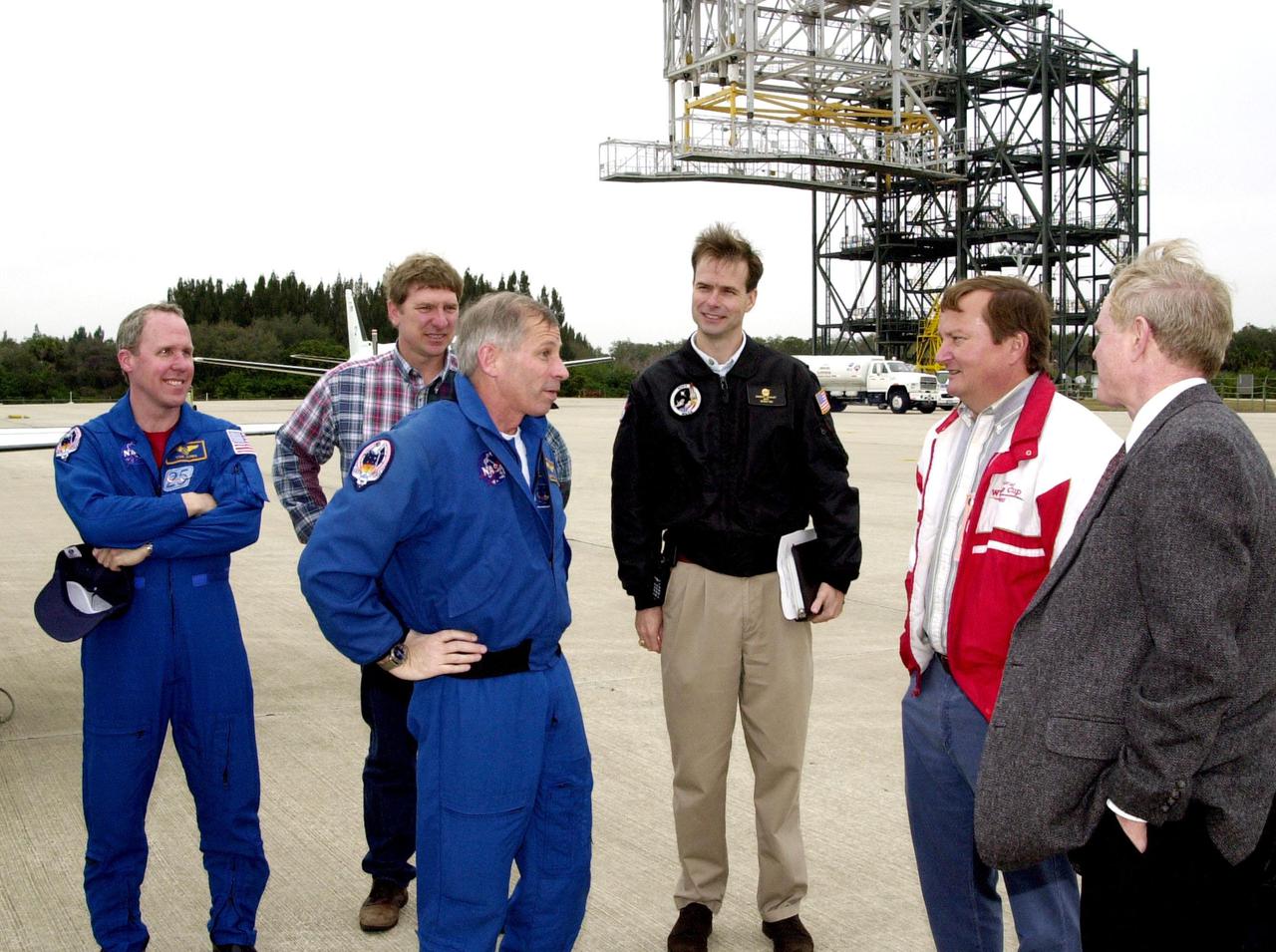
KENNEDY SPACE CENTER, FLA. -- STS-98 Mission Commander Kenneth Cockrell (center) talks with Launch Director Michael Leinbach (red and white jacket) and Center Director Roy Bridges (right) at the Shuttle Landing Facility after the crew's arrival Sunday to complete preparations for launch.; Behind him are, from left to right, Mission Specialist Thomas Jones; Tom Kwiatkowski, NASA, Johnson Space Center (JSC); and Robert Hanley, United Space Alliance, JSC.; The crew also includes Pilot Mark Polansky and Mission Specialists Marsha Ivins and Robert Curbeam.; STS-98 is the seventh construction flight to the International Space Station, carrying as payload the U.S. Lab Destiny, a key element in the construction of the ISS. Launch of STS-98 is scheduled for Feb. 7 at 6:11 p.m. EST
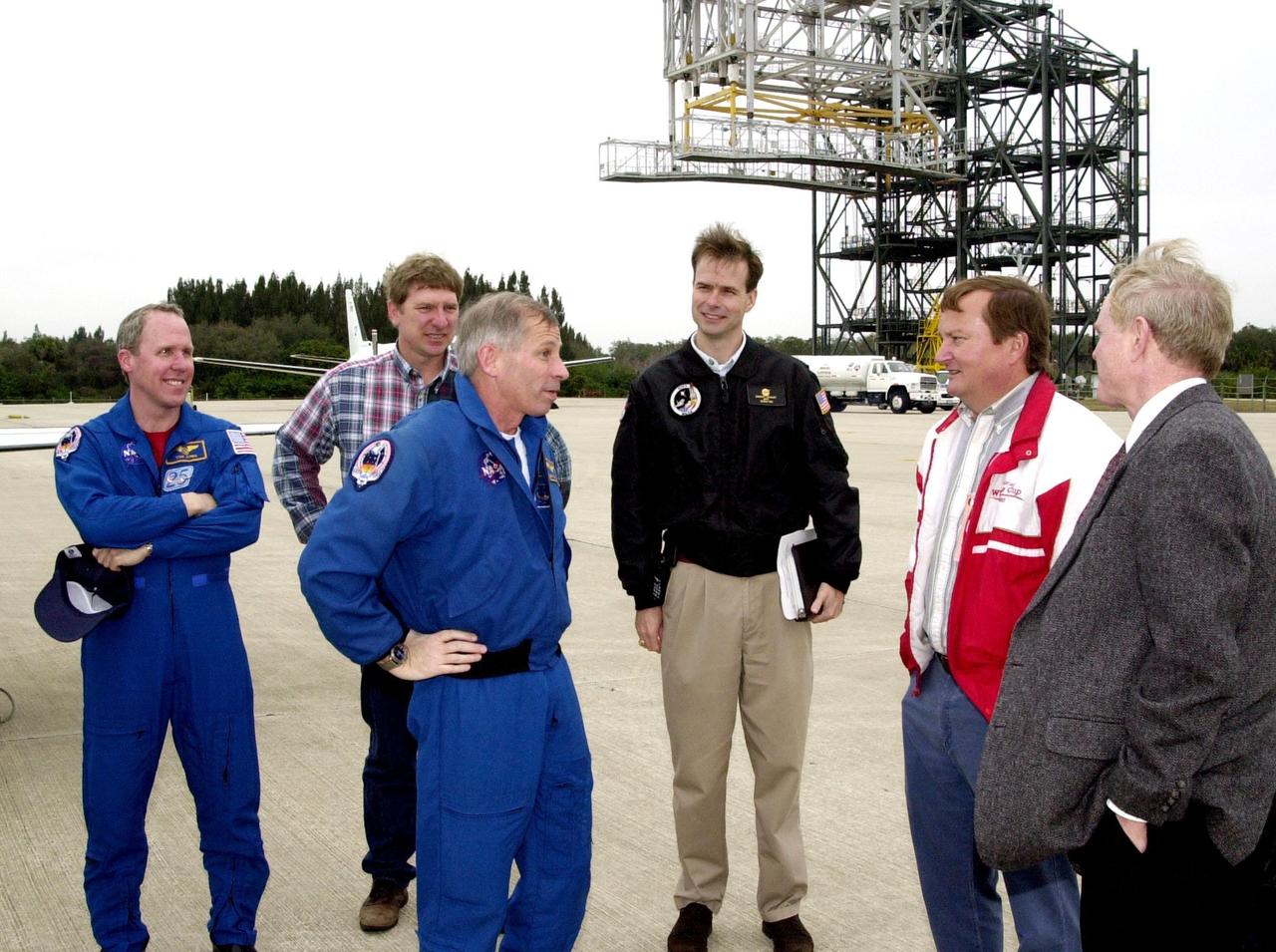
KENNEDY SPACE CENTER, FLA. -- STS-98 Mission Commander Kenneth Cockrell (center) talks with Launch Director Michael Leinbach (red and white jacket) and Center Director Roy Bridges (right) at the Shuttle Landing Facility after the crew's arrival Sunday to complete preparations for launch.; Behind him are, from left to right, Mission Specialist Thomas Jones; Tom Kwiatkowski, NASA, Johnson Space Center (JSC); and Robert Hanley, United Space Alliance, JSC.; The crew also includes Pilot Mark Polansky and Mission Specialists Marsha Ivins and Robert Curbeam.; STS-98 is the seventh construction flight to the International Space Station, carrying as payload the U.S. Lab Destiny, a key element in the construction of the ISS. Launch of STS-98 is scheduled for Feb. 7 at 6:11 p.m. EST
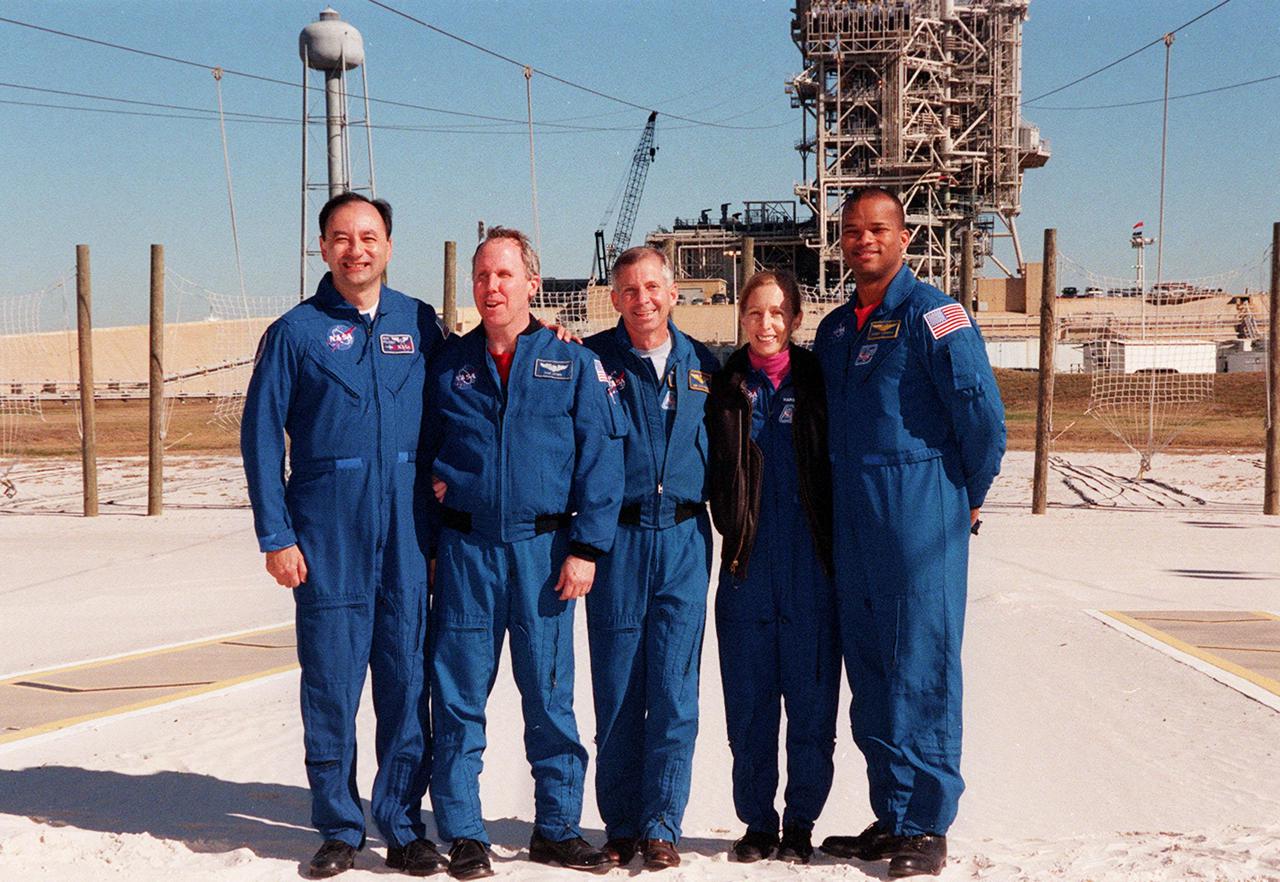
KENNEDY SPACE CENTER, FLA -- After a media briefing at Launch Pad 39A, the STS-98 crew poses in the slidewire basket landing zone. Standing, left to right, are Pilot Mark Polansky, Mission Specialist Thomas Jones, Commander Ken Cockrell and Mission Specialists Marsha Ivins and Robert Curbeam. All are at KSC to take part in Terminal Countdown Demonstration Test activities, which include emergency egress training and a simulated launch countdown. STS-98 is the seventh construction flight to the International Space Station, carrying as payload the U.S. Lab Destiny, a key element in the construction of the ISS. Launch of STS-98 is scheduled for Jan. 19 at 2:11 a.m
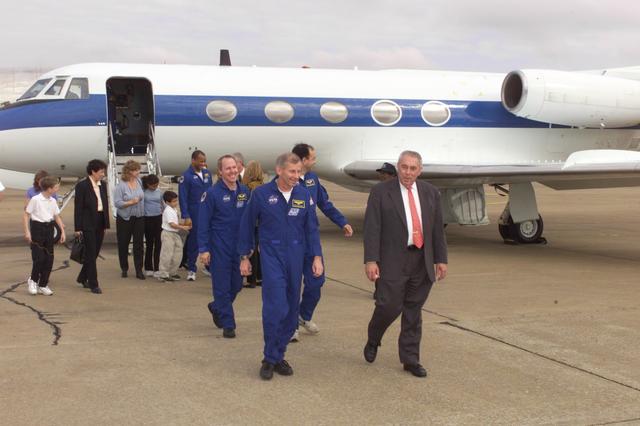
JSC2001-E-04805 (21 February 2001) --- JSC director George W.S. Abbey talks with the STS-98 crew members following the arrival of the Gulfstream Aircraft which transported the astronauts from their landing at Dryden Flight Research Center (DFRC) in Edwards, California. Pictured along side Mr. Abbey is astronaut Kenneth D. Cockrell, mission commander. Behind him (from the left distant background) are astronauts Robert L. Curbeam and Thomas D. Jones (both mission specialists) and Mark L. Polansky, pilot. Astronaut Marsha S. Ivins, mission specialist, is out of the frame.
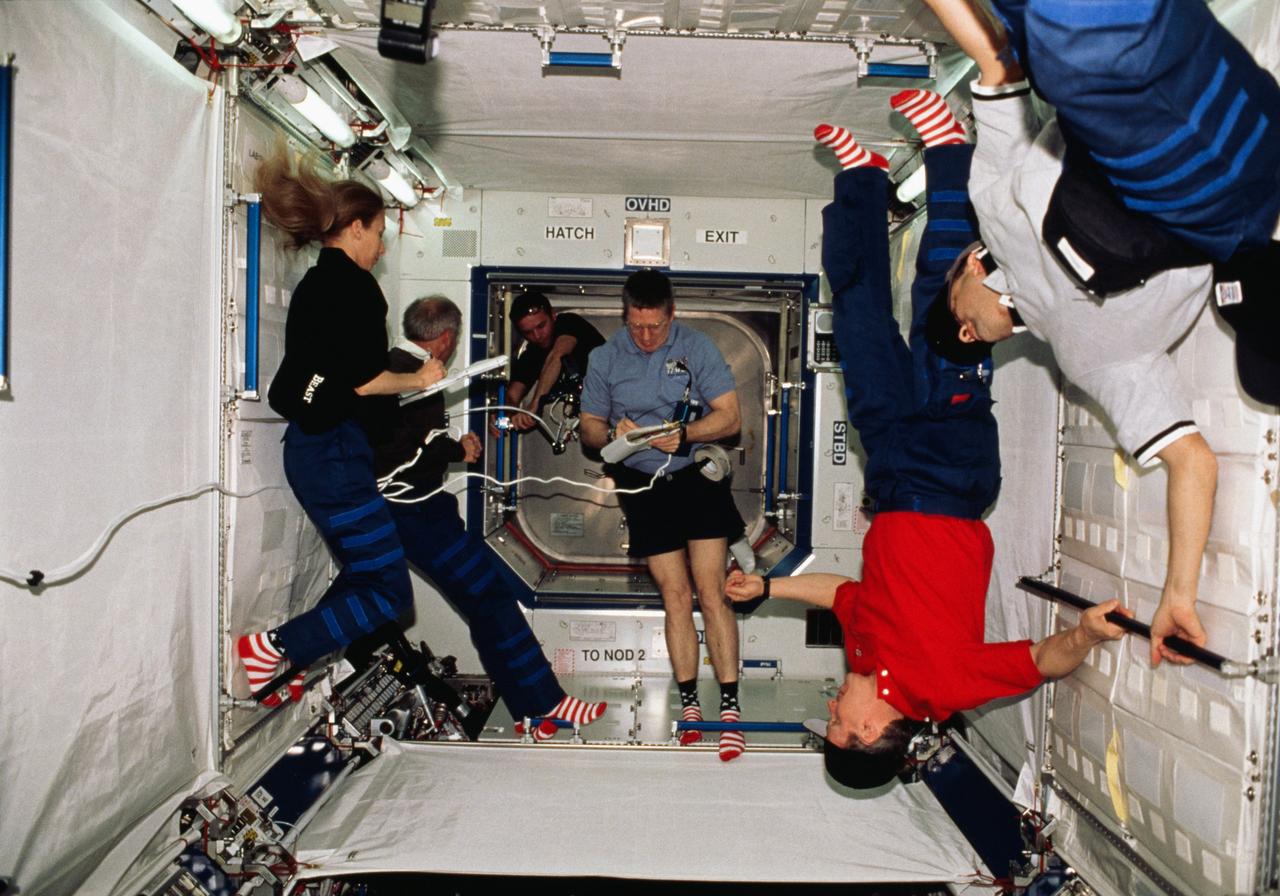
STS098-323-015 (7-20 February 2001) --- Astronauts and cosmonauts from the Expedition One and STS-98 crews are photographed in the newly-attached Destiny laboratory on the International Space Station (ISS). From the left are Marsha S. Ivins, mission specialist; Kenneth D. Cockrell, mission commander; Yuri P. Gidzenko, Expedition One Soyuz commander; William M. (Bill) Shepherd, Expedition One mission commander; Thomas D. Jones, mission specialist; and Mark L. Polansky, pilot. Out of view are Robert L. Curbeam, mission specialist, and Sergei K. Krikalev, Expedition One flight engineer. Gidzenko and Krikalev represent Rosaviakosmos.
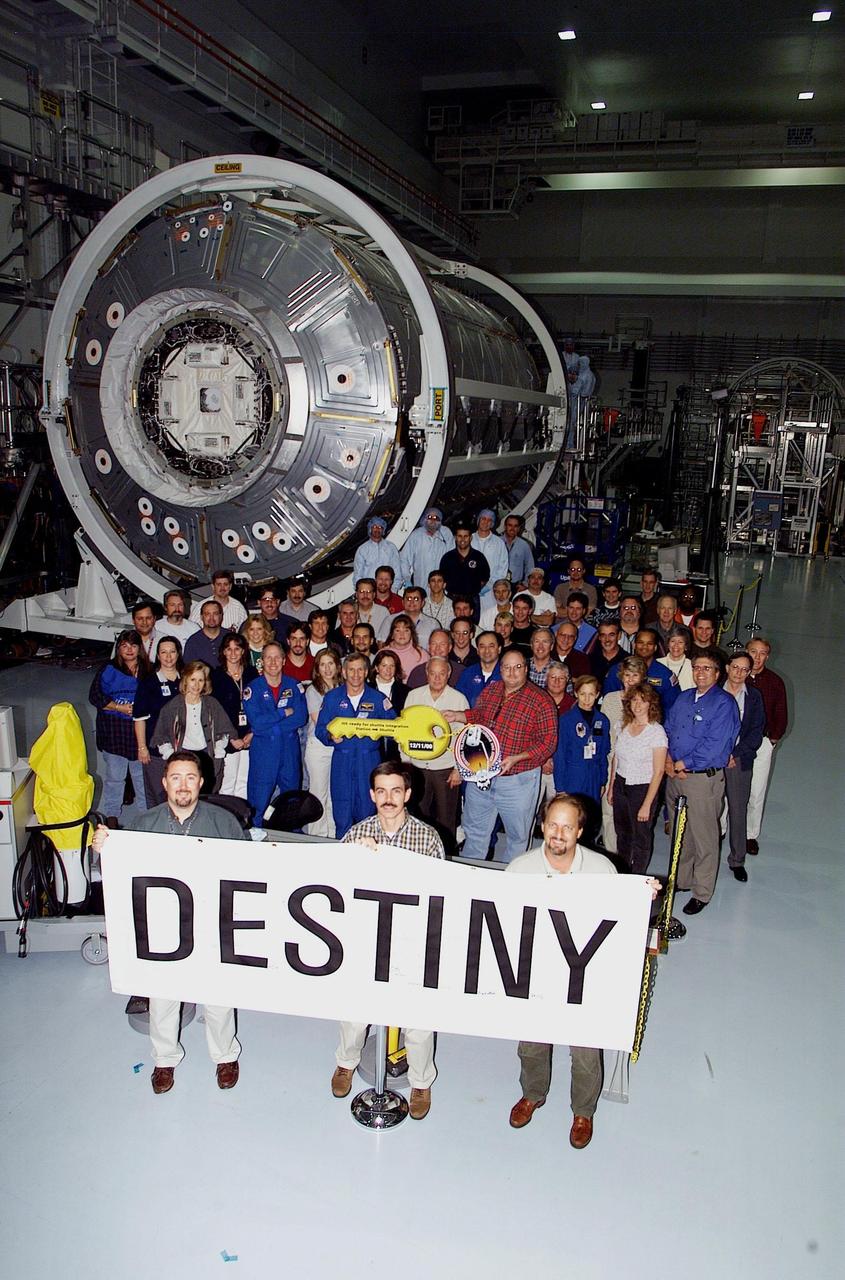
KENNEDY SPACE CENTER, FLA. -- In the Space Station Processing Facility, workers and the STS-98 crew gather for a ceremony that turns over the “key” for the U.S. Lab Destiny to NASA. Holding the key (left) is STS-98 Commander Ken Cockrell. To his left is Mission Specialist Thomas Jones; at right (in uniform) is Mission Specialist Marsha Ivins. Also in the group are Pilot Mark Polansky and Mission Specialist Robert Curbeam. . Launch of mission STS-98 on Space Shuttle Atlantis is scheduled for Jan. 18, 2001. The mission will carry the U.S. Lab Destiny to the International Space Station with five system racks and experiments already installed inside the module
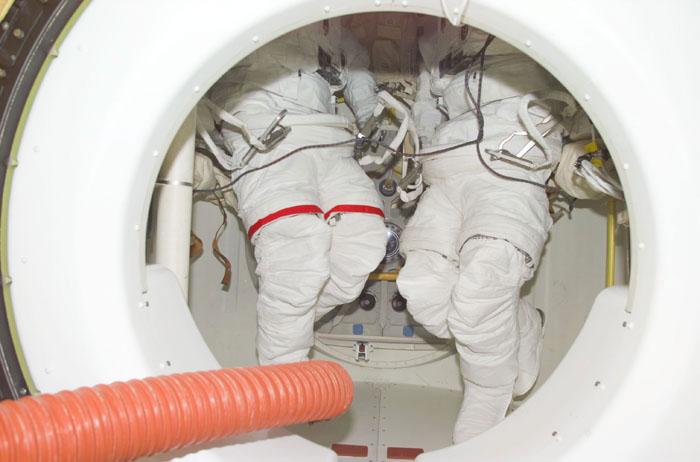
STS98-E-5012 (8 February 2001) --- The bottom portions of the extravehicular mobility units (EMU) for STS-98's two space walkers are seen in the airlock aboard the Space Shuttle Atlantis during early stages of the STS-98 mission. Astronaut Thomas D. Jones will be using the suit on the left, and astronaut Robert L. Curbeam will don the one on the right. The two mission specialists are scheduled for extravehicular activity (EVA) once the shuttle is docked with the International Space Station (ISS) later in the week. The scene was recorded with a digital still camera.
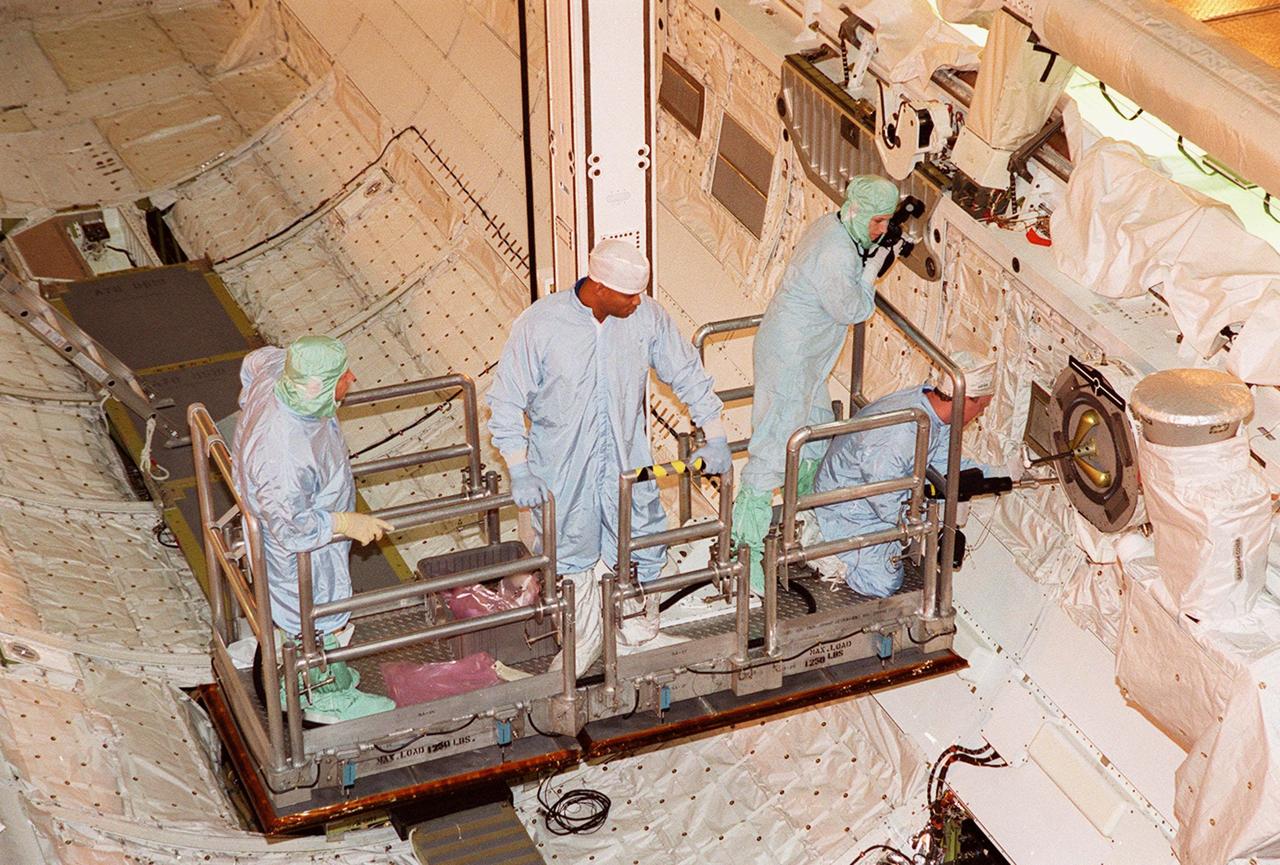
KENNEDY SPACE CENTER, FLA. -- Lowered into the payload bay of the orbiter Atlantis, some of the STS-98 crew look over part of the payload. At center is Mission Specialist Robert Curbeam; at right are Mission Specialists Marsha Ivins (standing) and Tom Jones (kneeling). They and the rest of the crew are at KSC for Crew Equipment Interface Test activities. Launch on mission STS-98 is scheduled for Jan. 18, 2001. It will be transporting the U.S. Lab, Destiny, to the International Space Station with five system racks already installed inside of the module. After delivery of electronics in the lab, electrically powered attitude control for Control Moment Gyroscopes will be activated
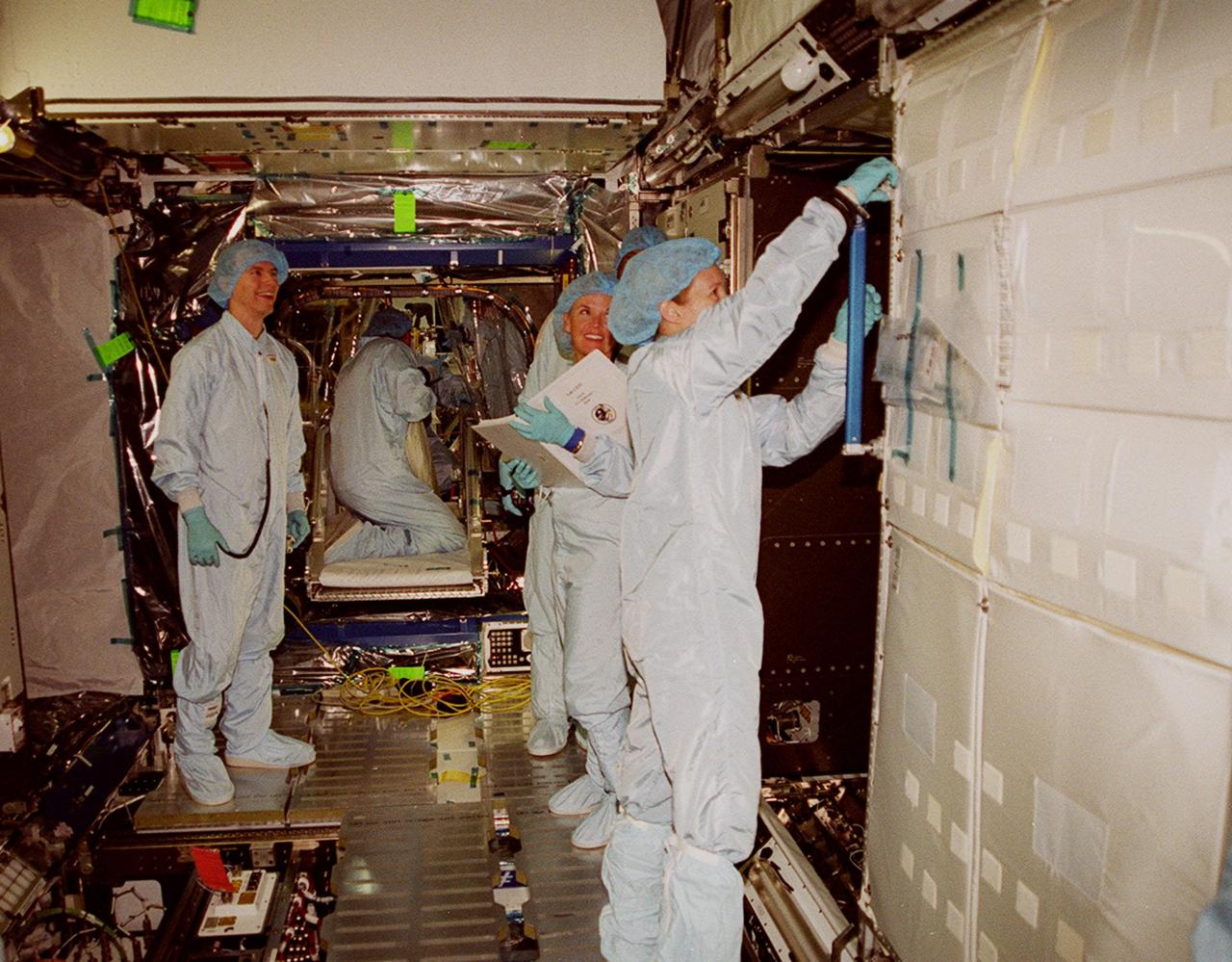
In the Space Station Processing Facility, STS-98 Mission Specialist Marsha Ivins maneuvers a part of the U.S. Lab, Destiny. The crew is checking out equipment inside the lab as part of Crew Equipment Interface Test activities, becoming familiar with equipment it will be handling during the mission. Others in the crew are Commander Ken Cockrell, Pilot Mark Polansky and Mission Specialists Robert Curbeam and Thomas Jones. The mission will be transporting the Lab to the International Space Station with five system racks already installed inside of the module. With delivery of electronics in the lab, electrically powered attitude control for Control Moment Gyroscopes will be activated. The STS-98 launch is scheduled for Jan. 18, 2001
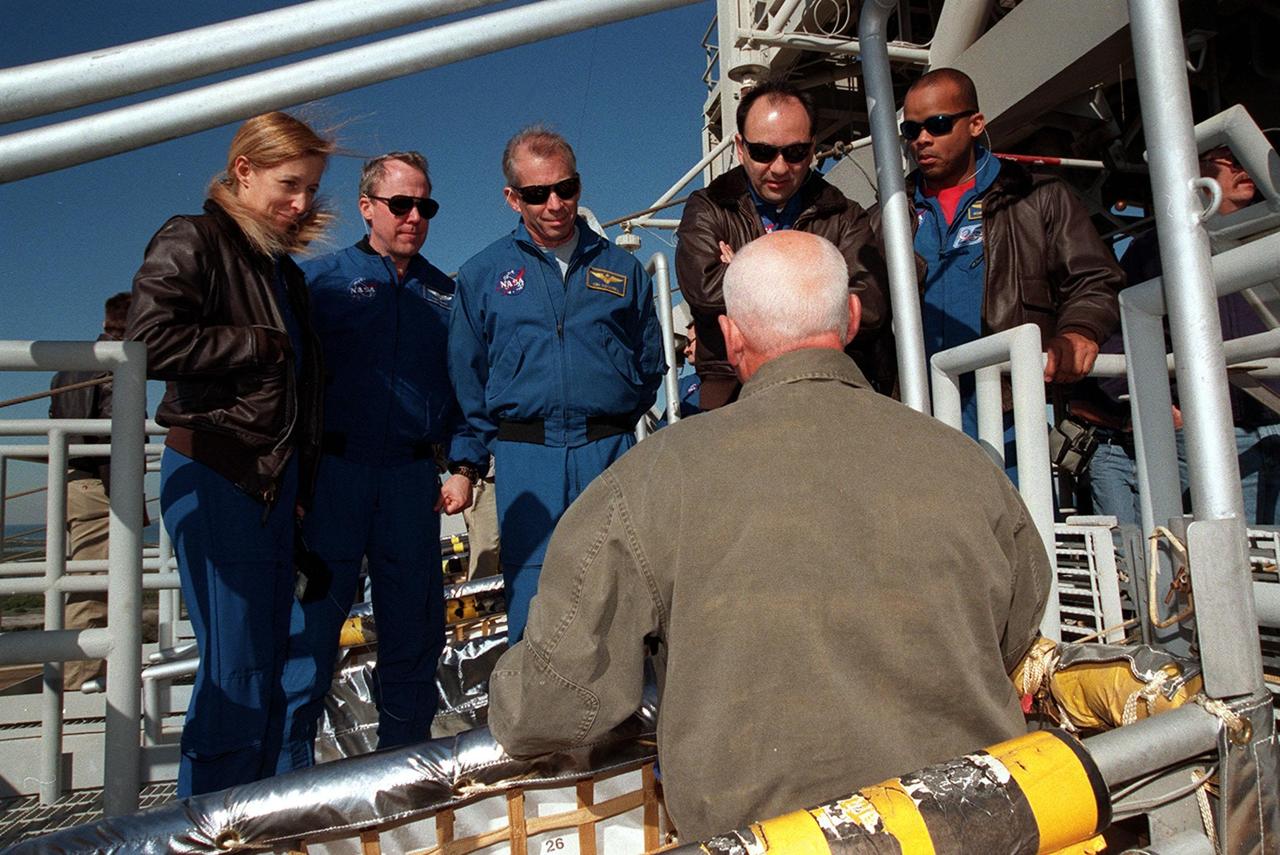
The STS-98 crew listens to instructions on use of the slidewire basket, part of emergency egress equipment from the launch pad. At the 195-foot level of the Fixed Service Structure are Mission Specialists Marsha Ivins and Thomas Jones, Commander Ken Cockrell, Pilot Mark Polansky and Mission Specialist Robert Curbeam. The crew is at KSC to take part in Terminal Countdown Demonstration Test activities, which include emergency egress training and a simulated launch countdown at the pad. STS-98 is the seventh construction flight to the International Space Station, carrying as payload the U.S. Lab Destiny, a key element in the construction of the ISS. Launch of STS-98 is scheduled for Jan. 19 at 2:11 a.m
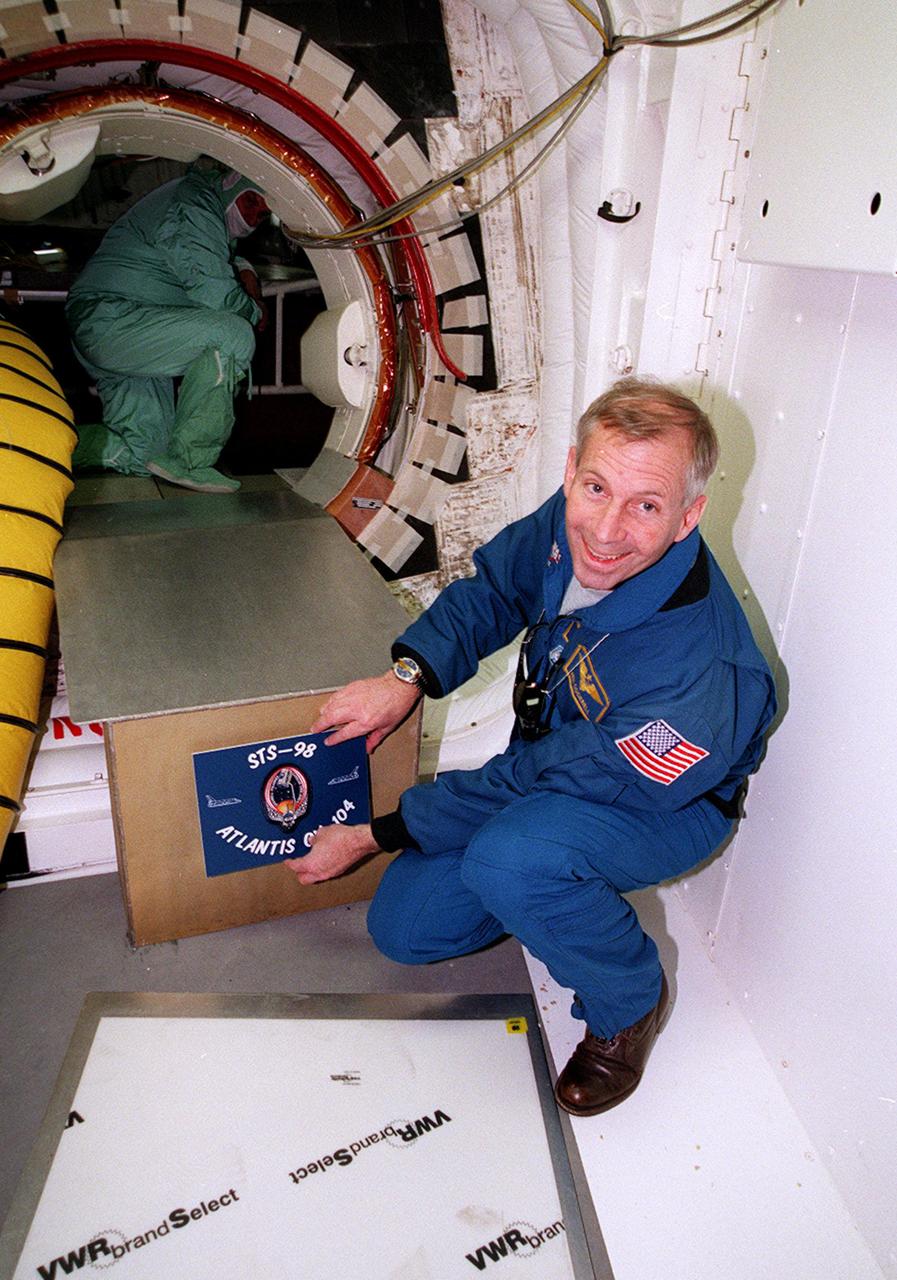
KENNEDY SPACE CENTER, FLA. -- STS-98 Commander Ken Cockrell places the mission patch on the entrance to the orbiter Atlantis. He and the rest of the crew Pilot Mark Polansky and Mission Specialists Thomas Jones, Marsha Ivins and Robert Curbeam are t KSC to take part in Terminal Countdown Demonstration Test activities, which include emergency egress training and a simulated launch countdown. STS-98 is the seventh construction flight to the International Space Station, carrying as payload the U.S. Lab Destiny, a key element in the construction of the ISS. Launch of STS-98 is scheduled for Jan. 19 at 2:11 a.m

STS-98 Mission Specialist Marsha Ivins waits in the White Room outside the entrance into Atlantis. The crew is at KSC to take part in Terminal Countdown Demonstration Test activities, which include emergency egress training and a simulated launch countdown. The other crew members are Pilot Mark Polansky, Mission Specialist Thomas Jones, Commander Ken Cockrell and Mission Specialist Robert Curbeam. STS-98 is the seventh construction flight to the International Space Station, carrying as payload the U.S. Lab Destiny, a key element in the construction of the ISS. Launch of STS-98 is scheduled for Jan. 19 at 2:11 a.m
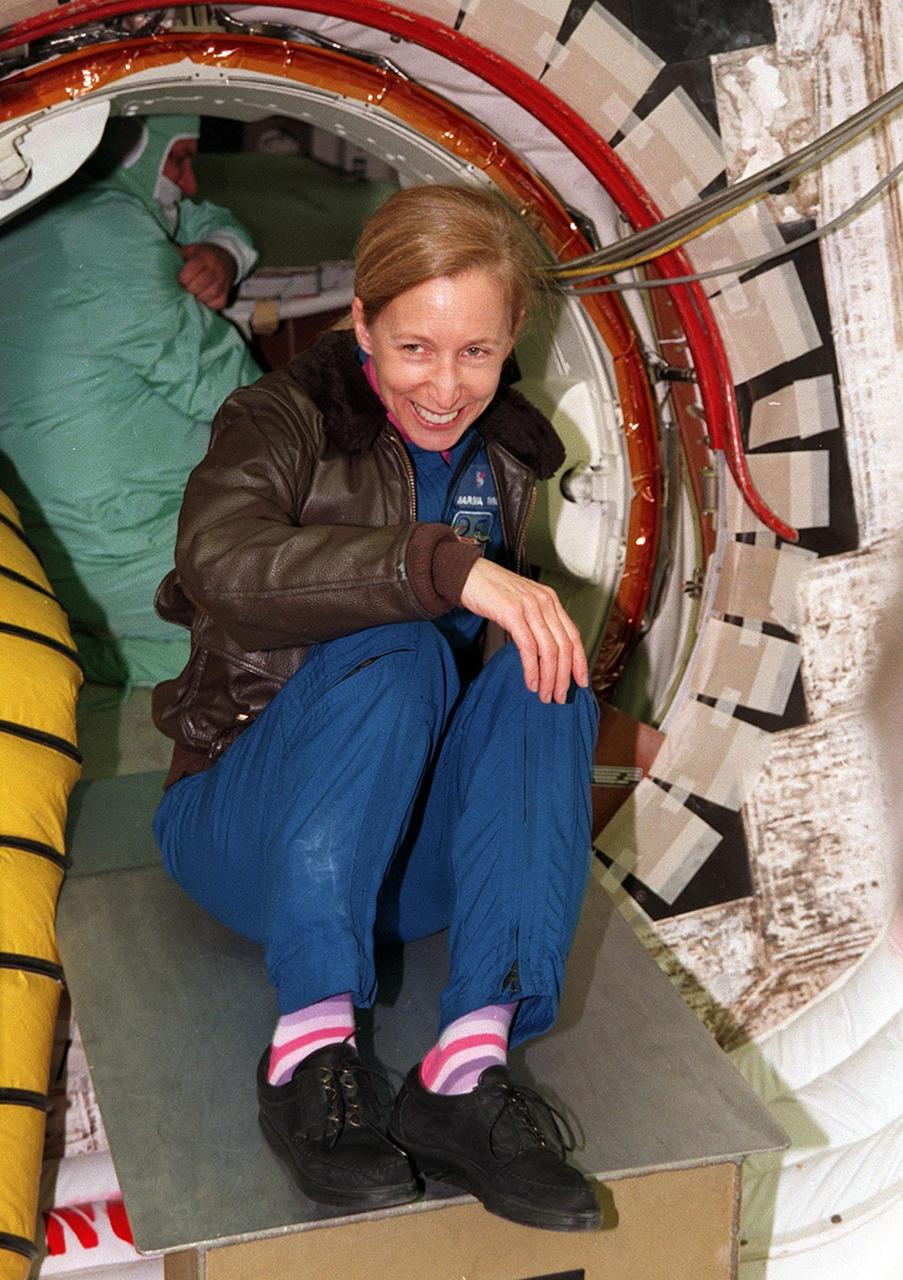
STS-98 Mission Specialist Marsha Ivins waits in the White Room outside the entrance into Atlantis. The crew is at KSC to take part in Terminal Countdown Demonstration Test activities, which include emergency egress training and a simulated launch countdown. The other crew members are Pilot Mark Polansky, Mission Specialist Thomas Jones, Commander Ken Cockrell and Mission Specialist Robert Curbeam. STS-98 is the seventh construction flight to the International Space Station, carrying as payload the U.S. Lab Destiny, a key element in the construction of the ISS. Launch of STS-98 is scheduled for Jan. 19 at 2:11 a.m
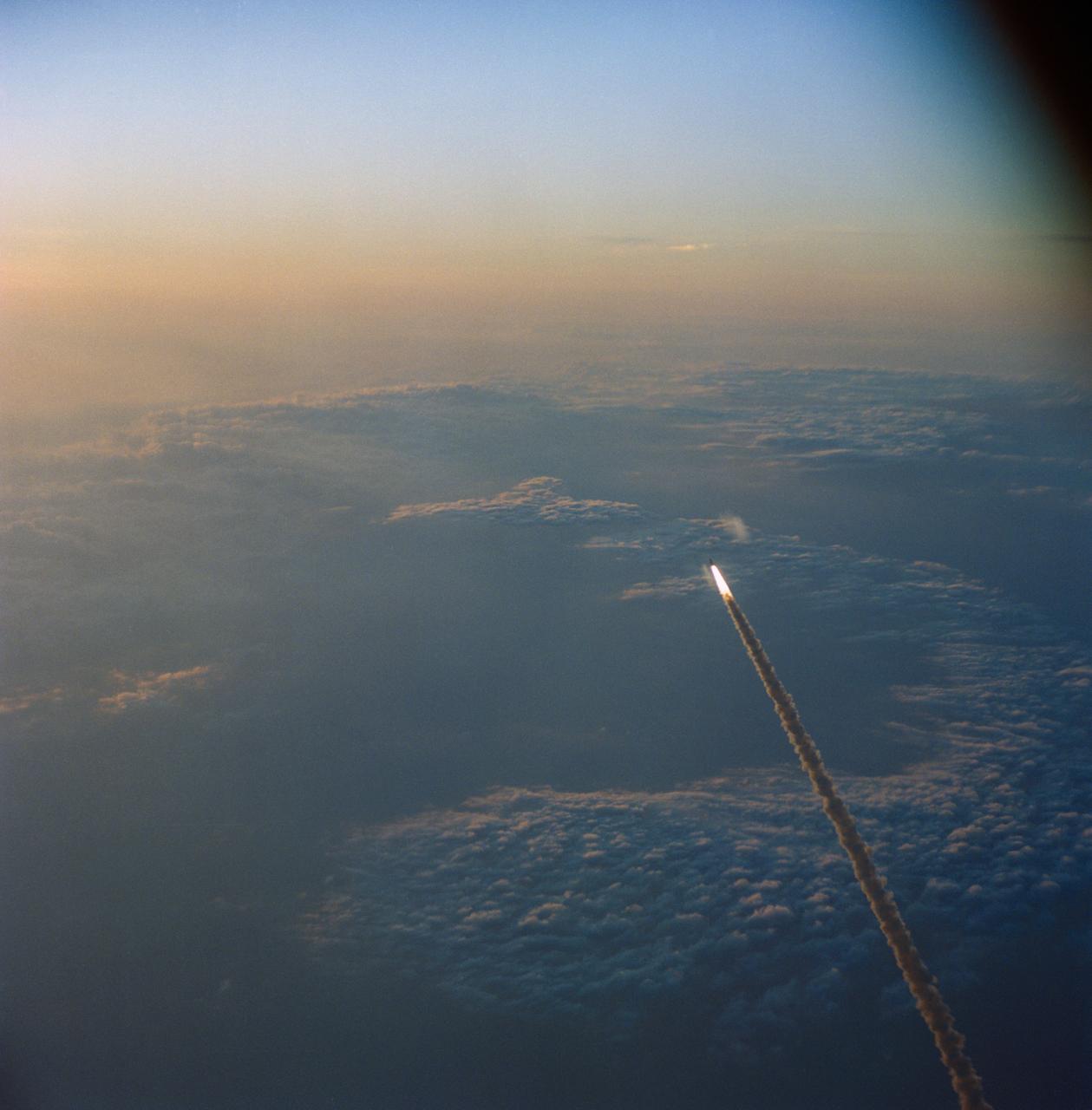
STS059-S-066 (9 April 1994) --- The liftoff of the Space Shuttle Endeavour is backdropped against clouds at the Kennedy Space Center (KSC) as six NASA astronauts head for a week and a half in Earth orbit. Liftoff occurred at 7:05 a.m. (EDT), April 9, 1994. The air-to-air view was photographed from the Shuttle Training Aircraft (STA) piloted by astronaut Robert L. Gibson. Onboard for the Space Radar Laboratory (SRL-1) mission were astronauts Sidney M. Gutierrez, Kevin P. Chilton, Jerome (Jay) Apt, Linda M. Godwin, Michael (Rich) Clifford and Thomas D. Jones.
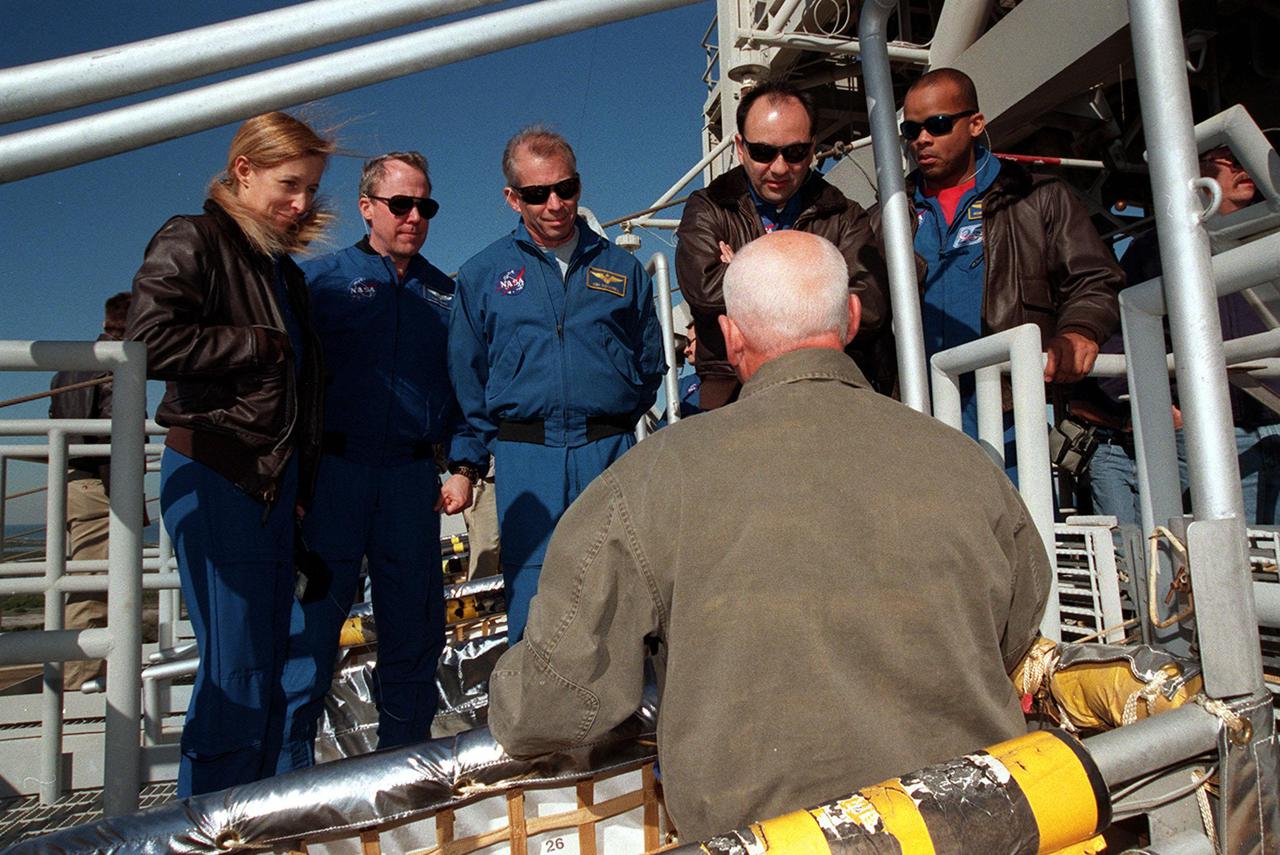
The STS-98 crew listens to instructions on use of the slidewire basket, part of emergency egress equipment from the launch pad. At the 195-foot level of the Fixed Service Structure are Mission Specialists Marsha Ivins and Thomas Jones, Commander Ken Cockrell, Pilot Mark Polansky and Mission Specialist Robert Curbeam. The crew is at KSC to take part in Terminal Countdown Demonstration Test activities, which include emergency egress training and a simulated launch countdown at the pad. STS-98 is the seventh construction flight to the International Space Station, carrying as payload the U.S. Lab Destiny, a key element in the construction of the ISS. Launch of STS-98 is scheduled for Jan. 19 at 2:11 a.m
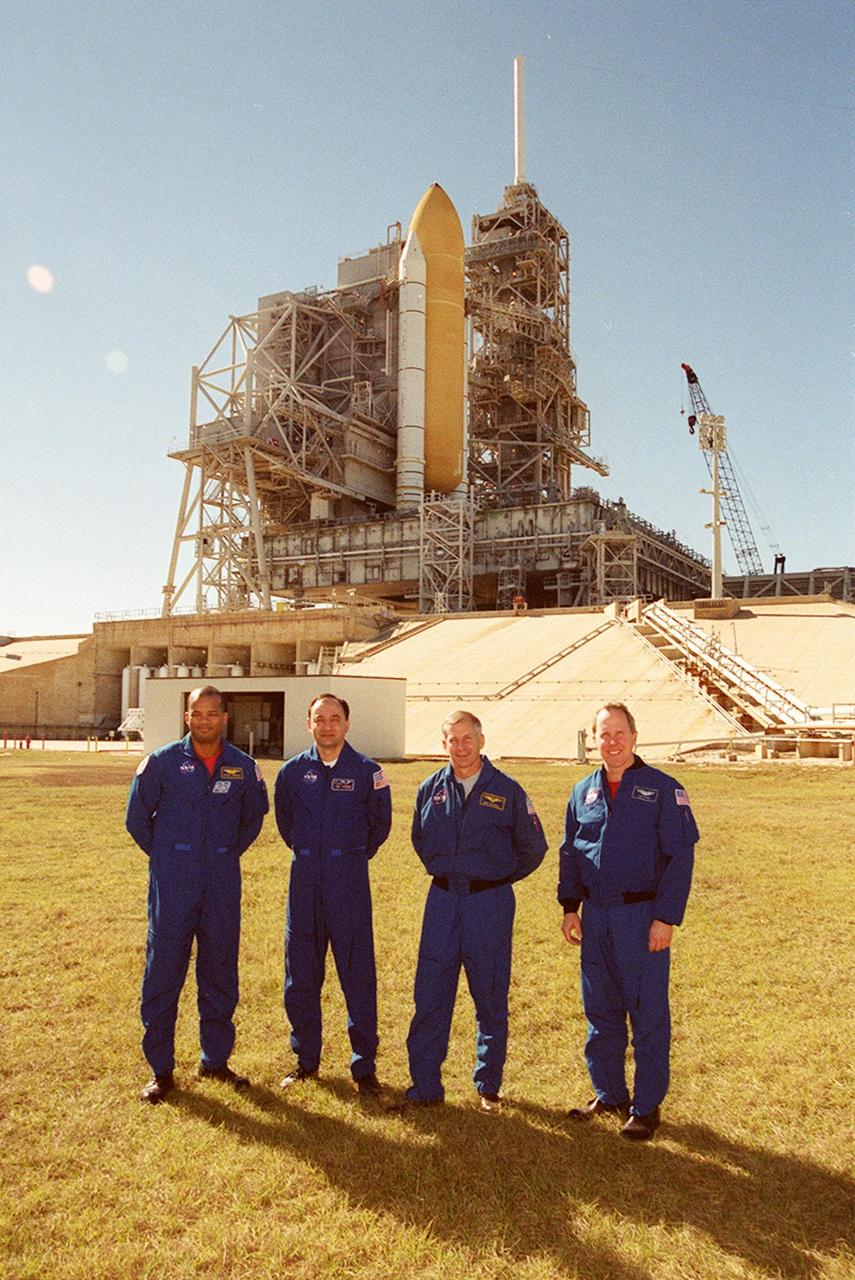
KENNEDY SPACE CENTER, FLA. -- Four members of the STS-98 crew pose for a photo at Launch Pad 39A. Standing, left to right, are Mission Specialist Robert Curbeam, Pilot Mark Polansky, Commander Ken Cockrell and Mission Specialist Thomas Jones. Not pictured is Mission Specialist Marsha Ivins. The crew is at KSC to take part in Terminal Countdown Demonstration Test activities, which include emergency egress training and a simulated launch countdown. STS-98 is the seventh construction flight to the International Space Station, carrying as payload the U.S. Lab Destiny, a key element in the construction of the ISS. Launch of STS-98 is scheduled for Jan. 19 at 2:11 a.m
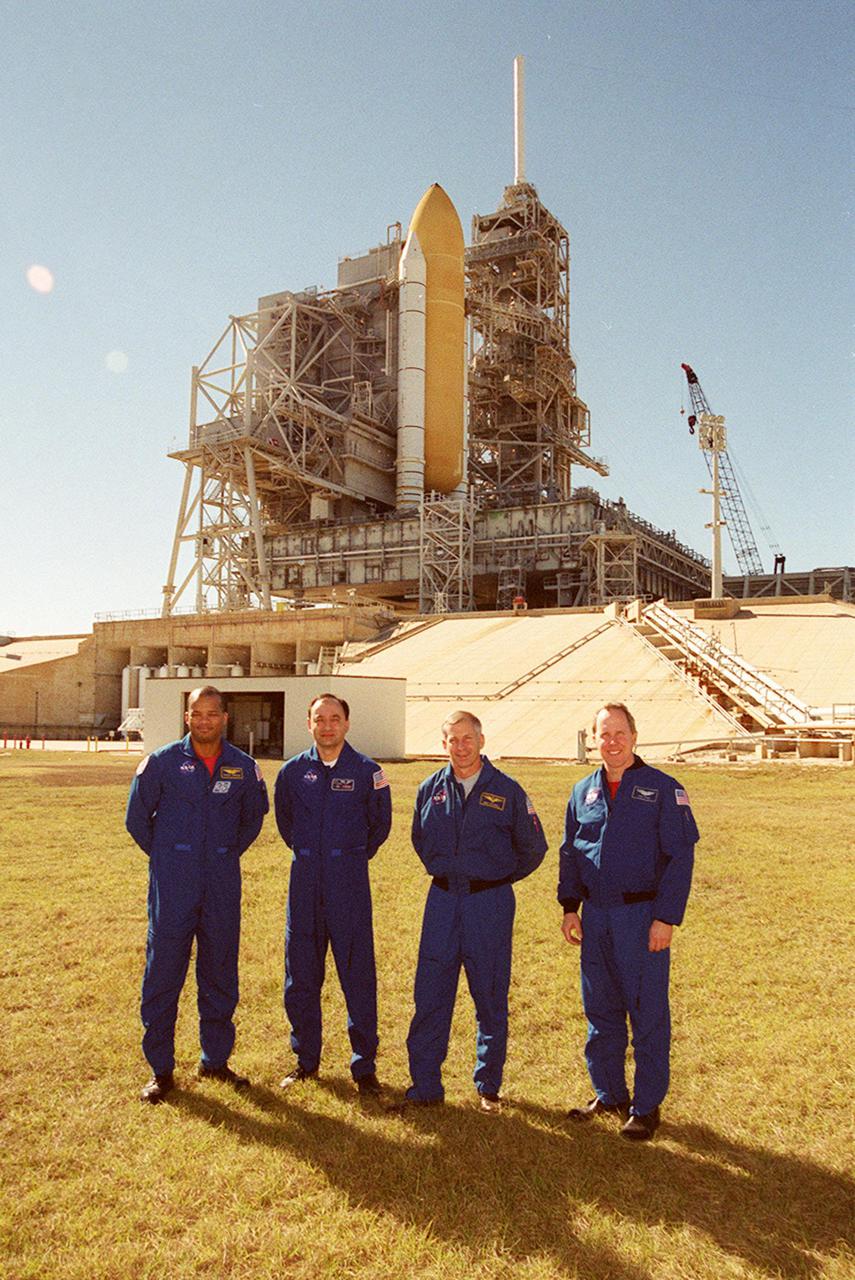
KENNEDY SPACE CENTER, FLA. -- Four members of the STS-98 crew pose for a photo at Launch Pad 39A. Standing, left to right, are Mission Specialist Robert Curbeam, Pilot Mark Polansky, Commander Ken Cockrell and Mission Specialist Thomas Jones. Not pictured is Mission Specialist Marsha Ivins. The crew is at KSC to take part in Terminal Countdown Demonstration Test activities, which include emergency egress training and a simulated launch countdown. STS-98 is the seventh construction flight to the International Space Station, carrying as payload the U.S. Lab Destiny, a key element in the construction of the ISS. Launch of STS-98 is scheduled for Jan. 19 at 2:11 a.m
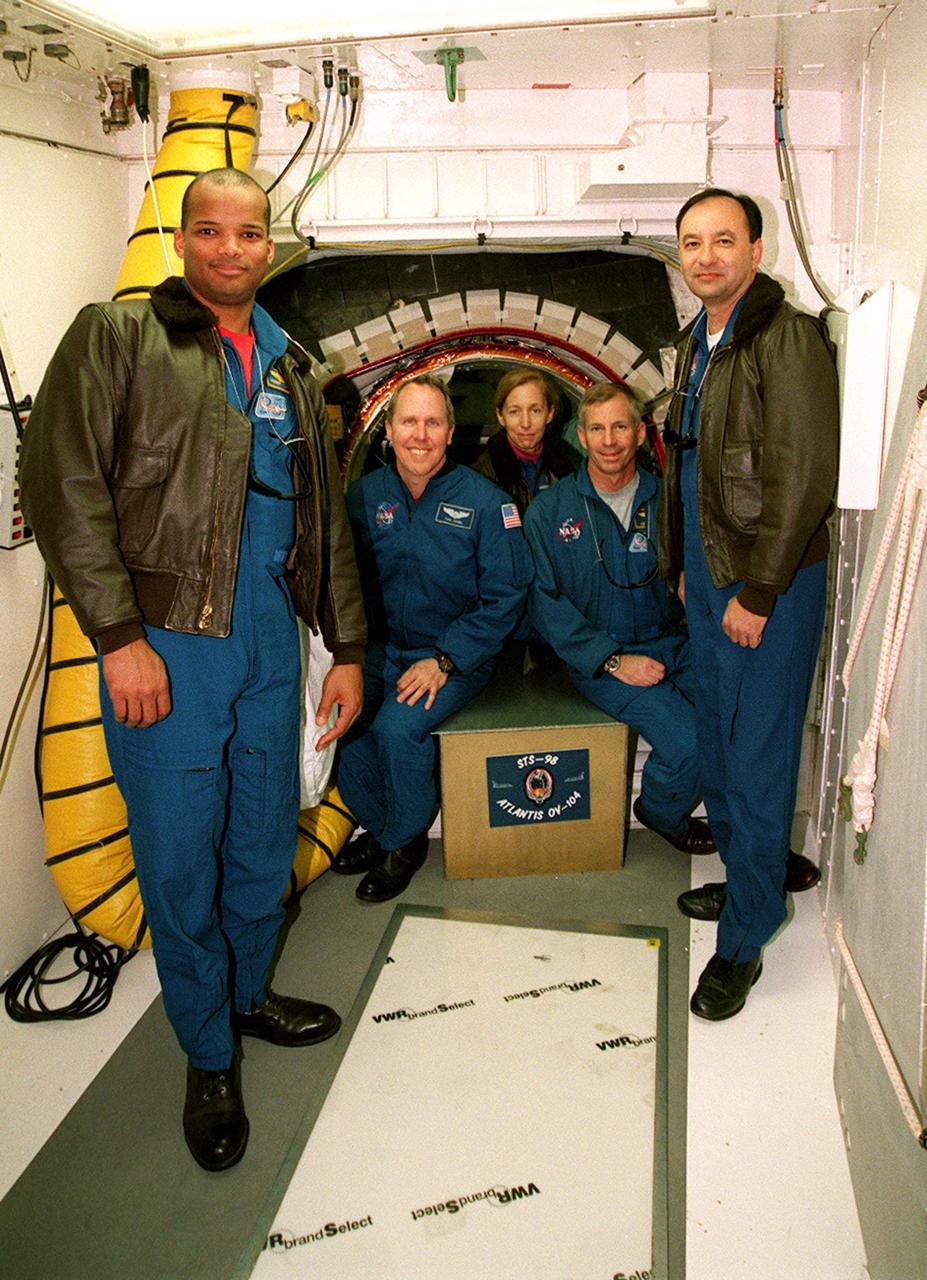
KENNEDY SPACE CENTER, FLA. -- Sitting in the entrance to the orbiter Atlantis are (left to right) STS-98 Mission Specialists Thomas Jones and Marsha Ivins and Commander Ken Cockrell. Below them is the mission patch just placed there by Cockrell. Standing at left is Mission Specialist Robert Curbeam and at right Pilot Mark Polansky. The crew is at KSC to take part in Terminal Countdown Demonstration Test activities, which include emergency egress training and a simulated launch countdown. STS-98 is the seventh construction flight to the International Space Station, carrying as payload the U.S. Lab Destiny, a key element in the construction of the ISS. Launch of STS-98 is scheduled for Jan. 19 at 2:11 a.m
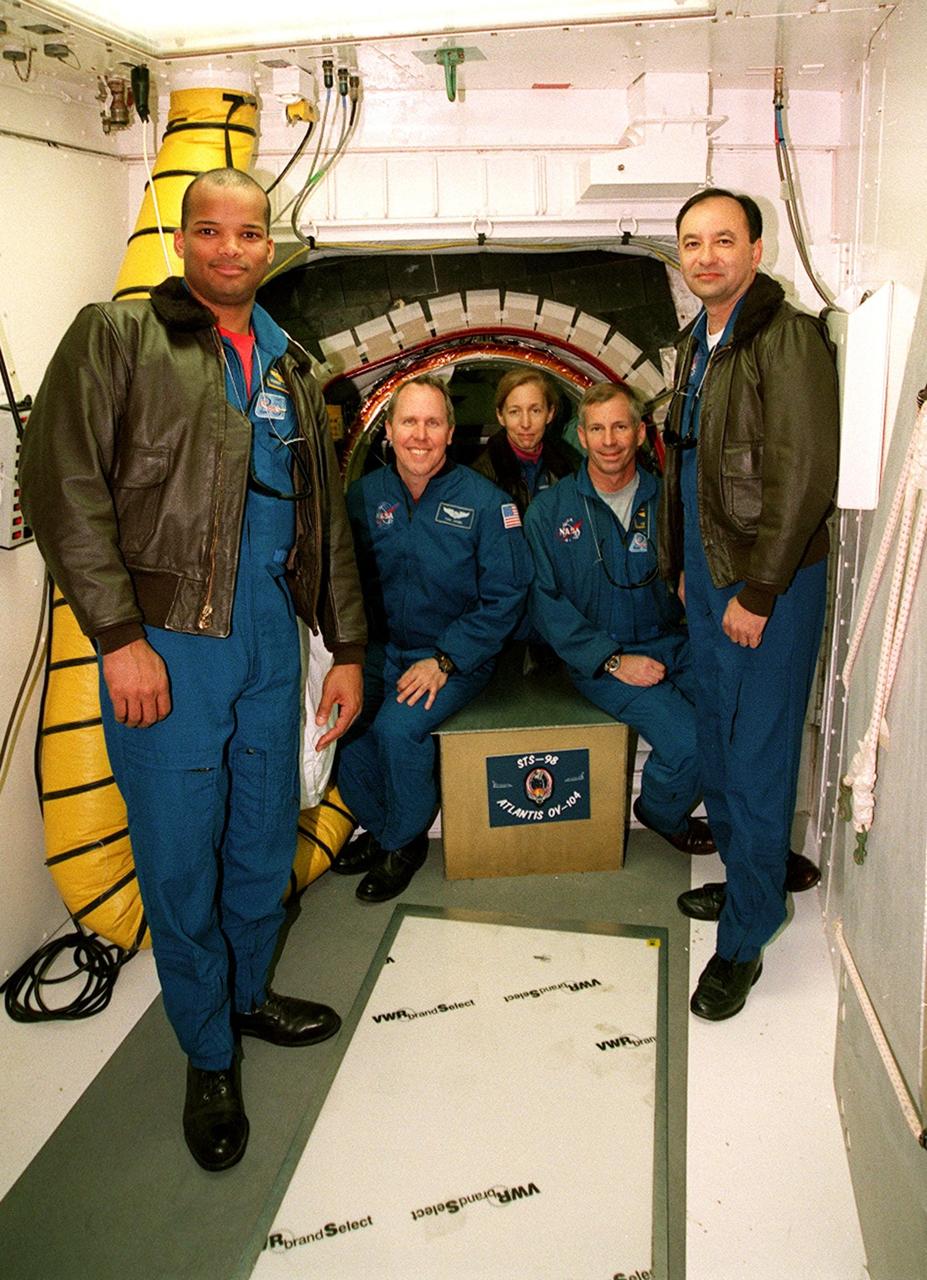
KENNEDY SPACE CENTER, FLA. -- Sitting in the entrance to the orbiter Atlantis are (left to right) STS-98 Mission Specialists Thomas Jones and Marsha Ivins and Commander Ken Cockrell. Below them is the mission patch just placed there by Cockrell. Standing at left is Mission Specialist Robert Curbeam and at right Pilot Mark Polansky. The crew is at KSC to take part in Terminal Countdown Demonstration Test activities, which include emergency egress training and a simulated launch countdown. STS-98 is the seventh construction flight to the International Space Station, carrying as payload the U.S. Lab Destiny, a key element in the construction of the ISS. Launch of STS-98 is scheduled for Jan. 19 at 2:11 a.m

STS-98 Mission Specialists Robert Curbeam, Marsha Ivins and Thomas Jones try out the three-person slidewire basket, part of the equipment used for emergency egress from the launch pad. The basket slides along a 1200-foot wire to the landing zone below and nearby bunker. The crew has been taking part in Terminal Countdown Demonstration Test activities, which include the simulated countdown and emergency egress training at the pad. STS-98 is the seventh construction flight to the International Space Station, carrying as payload the U.S. Lab Destiny, a key element in the construction of the ISS. Launch of STS-98 is scheduled for Jan. 19 at 2:11 a.m. EST
![KENNEDY SPACE CENTER, FLA. -- STS-98 Commander Ken Cockrell answers a question from the media during a briefing at Launch Pad 39A. Other crew members present are Pilot Mark Polansky, Mission Specialist Thomas Jones, [Cockrell], and Mission Specialists Marsha Ivins and Robert Curbeam. All are at KSC to take part in Terminal Countdown Demonstration Test activities, which include emergency egress training and a simulated launch countdown. STS-98 is the seventh construction flight to the International Space Station, carrying as payload the U.S. Lab Destiny, a key element in the construction of the ISS. Launch of STS-98 is scheduled for Jan. 19 at 2:11 a.m](https://images-assets.nasa.gov/image/01pp0044/01pp0044~medium.jpg)
KENNEDY SPACE CENTER, FLA. -- STS-98 Commander Ken Cockrell answers a question from the media during a briefing at Launch Pad 39A. Other crew members present are Pilot Mark Polansky, Mission Specialist Thomas Jones, [Cockrell], and Mission Specialists Marsha Ivins and Robert Curbeam. All are at KSC to take part in Terminal Countdown Demonstration Test activities, which include emergency egress training and a simulated launch countdown. STS-98 is the seventh construction flight to the International Space Station, carrying as payload the U.S. Lab Destiny, a key element in the construction of the ISS. Launch of STS-98 is scheduled for Jan. 19 at 2:11 a.m
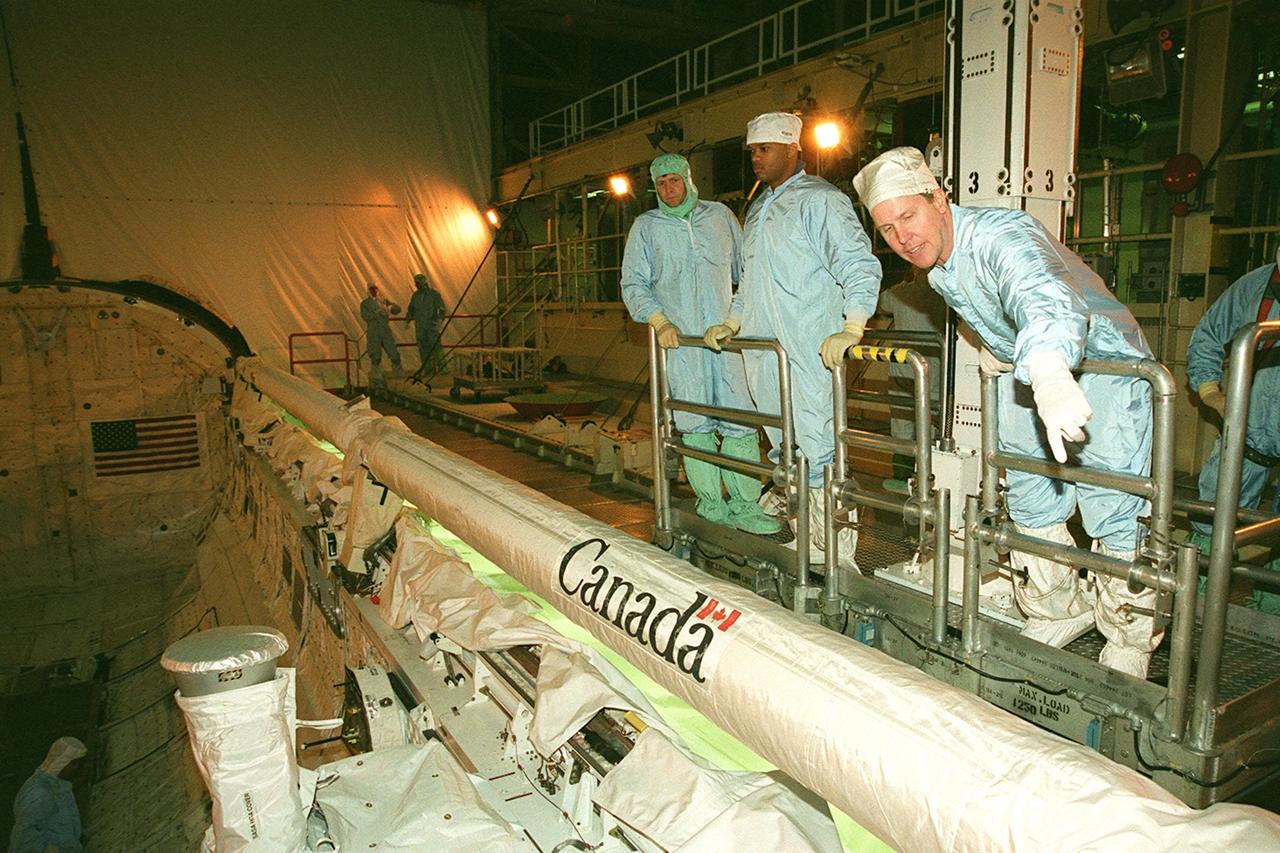
KENNEDY SPACE CENTER, FLA. -- Some of the STS-98 crew look over the Canadian robotic arm in the payload bay of orbiter Atlantis, which is undergoing testing in the Orbiter Processing Facility bay 3. At right, pointing, is Mission Specialist Tom Jones. Second from right is Mission Specialist Robert Curbeam. They and the rest of the crew are at KSC for Crew Equipment Interface Test activities. Launch on mission STS-98 is scheduled for Jan. 18, 2001. It will be transporting the U.S. Lab, Destiny, to the International Space Station with five system racks already installed inside of the module. After delivery of electronics in the lab, electrically powered attitude control for Control Moment Gyroscopes will be activated

KENNEDY SPACE CENTER, FLA. -- In the Space Station Processing Facility, workers and the STS-98 crew gather for a ceremony that turns over the “key” for the U.S. Lab Destiny to NASA. Holding the key (left) is STS-98 Commander Ken Cockrell. To his left is Mission Specialist Thomas Jones; at right (in uniform) is Mission Specialist Marsha Ivins. Also in the group are Pilot Mark Polansky and Mission Specialist Robert Curbeam. . Launch of mission STS-98 on Space Shuttle Atlantis is scheduled for Jan. 18, 2001. The mission will carry the U.S. Lab Destiny to the International Space Station with five system racks and experiments already installed inside the module
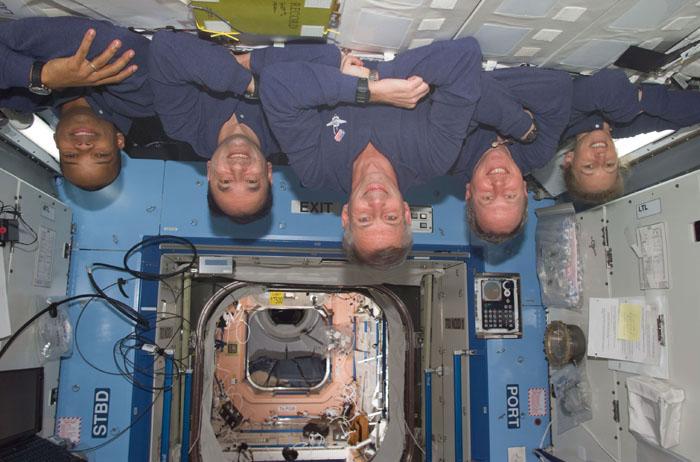
STS98-E-5284 (15 February 2001) --- These five astronauts take a break from Destiny laboratory installation work as they near an end to their several days' visit aboard the International Space Station (ISS). From the left are astronauts Robert L. Curbeam, Mark L. Polansky, Kenneth D. Cockrell, Thomas D. Jones and Marsha S. Ivins. Their posed position might be termed "upside down" on Earth, but in their weightless environment the arrangement makes for no one-gravity complications like blood rushing to the head, etc. The scene was recorded with a digital still camera.
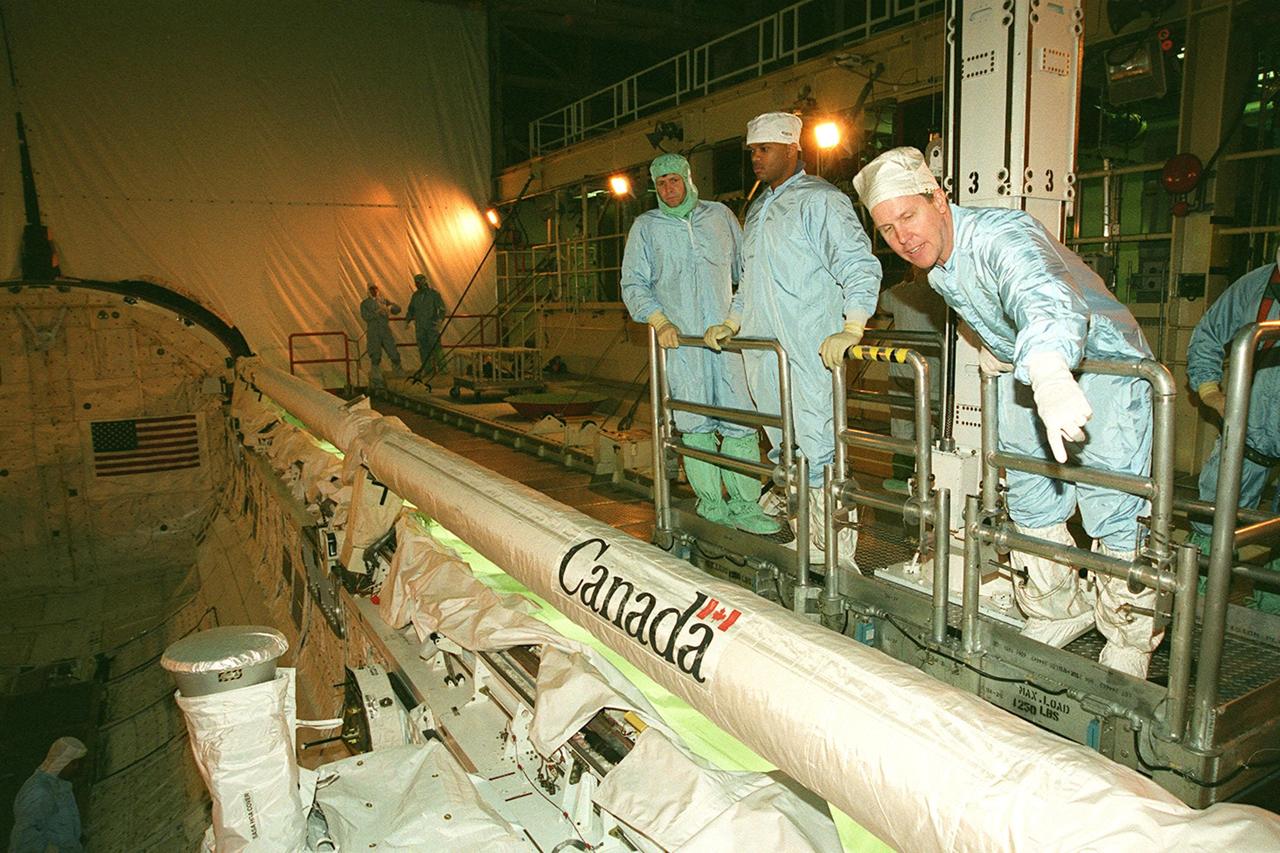
KENNEDY SPACE CENTER, FLA. -- Some of the STS-98 crew look over the Canadian robotic arm in the payload bay of orbiter Atlantis, which is undergoing testing in the Orbiter Processing Facility bay 3. At right, pointing, is Mission Specialist Tom Jones. Second from right is Mission Specialist Robert Curbeam. They and the rest of the crew are at KSC for Crew Equipment Interface Test activities. Launch on mission STS-98 is scheduled for Jan. 18, 2001. It will be transporting the U.S. Lab, Destiny, to the International Space Station with five system racks already installed inside of the module. After delivery of electronics in the lab, electrically powered attitude control for Control Moment Gyroscopes will be activated
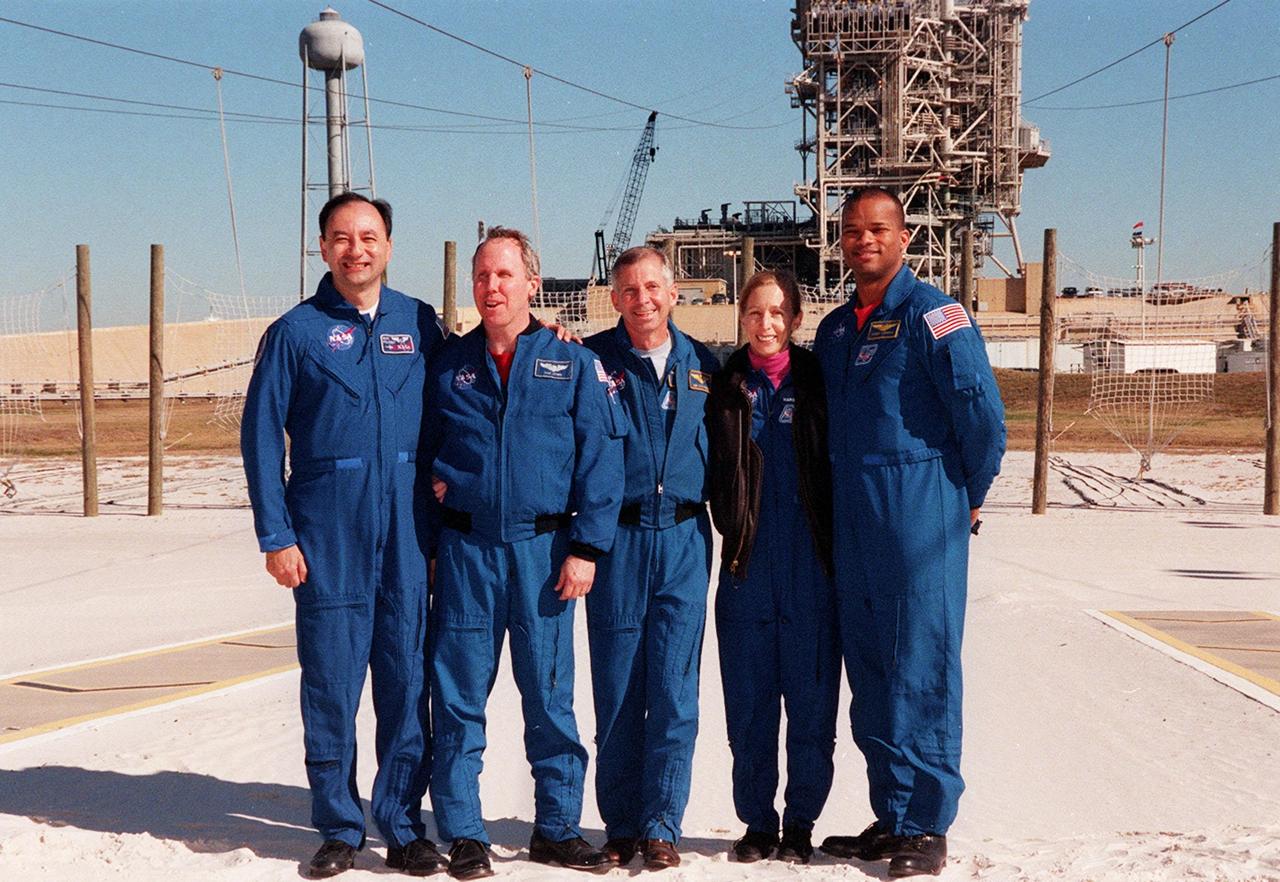
KENNEDY SPACE CENTER, FLA -- After a media briefing at Launch Pad 39A, the STS-98 crew poses in the slidewire basket landing zone. Standing, left to right, are Pilot Mark Polansky, Mission Specialist Thomas Jones, Commander Ken Cockrell and Mission Specialists Marsha Ivins and Robert Curbeam. All are at KSC to take part in Terminal Countdown Demonstration Test activities, which include emergency egress training and a simulated launch countdown. STS-98 is the seventh construction flight to the International Space Station, carrying as payload the U.S. Lab Destiny, a key element in the construction of the ISS. Launch of STS-98 is scheduled for Jan. 19 at 2:11 a.m
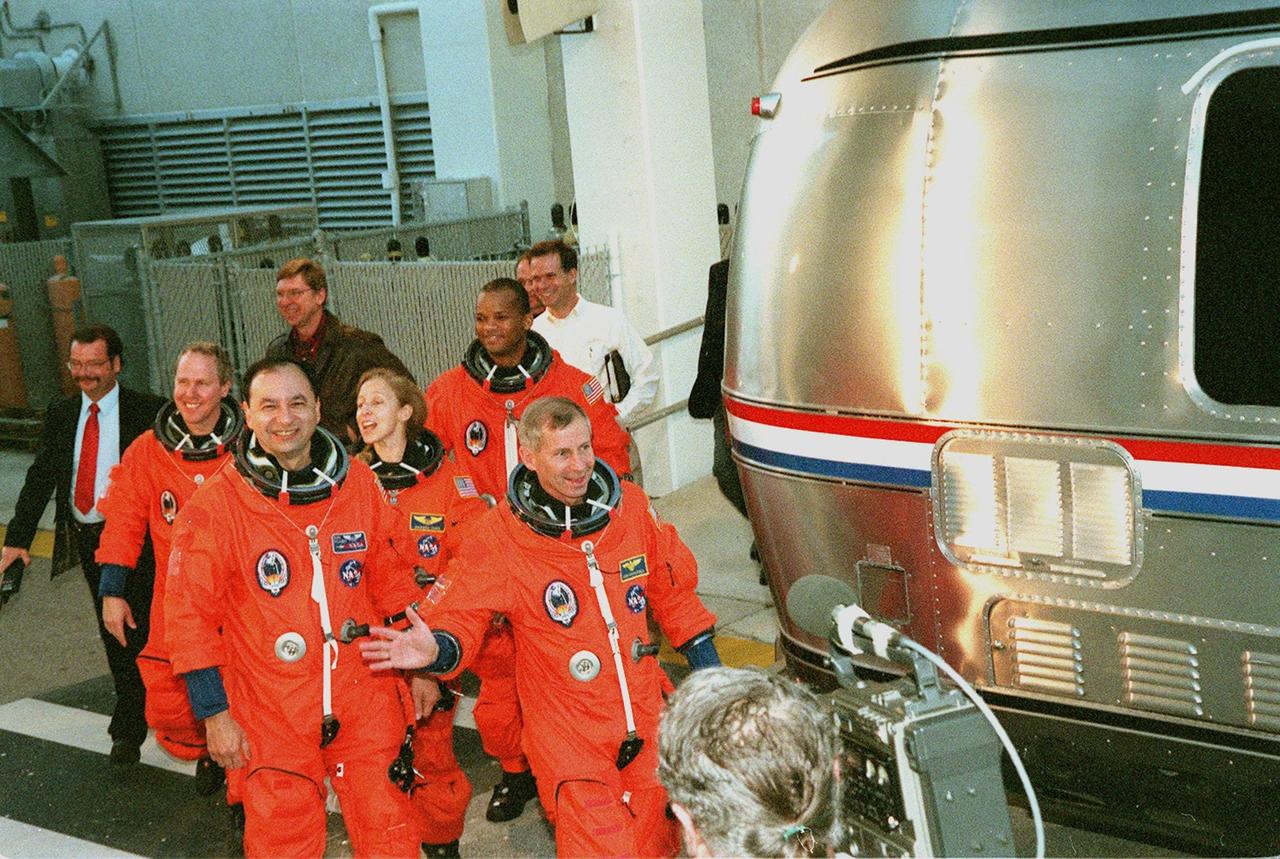
The STS-98 crew wave to onlookers as they walk out of the Operations and Checkout Building dressed for a simulated launch countdown at Launch Pad 39A. From left to right, they are Mission Specialist Thomas Jones, Pilot Mark Polansky, Mission Specialists Marsh Ivins and Robert Curbeam, being led by Commander Ken Cockrell. The crew is taking part in Terminal Countdown Demonstration Test activities, which include the countdown and emergency egress training at the pad. STS-98 is the seventh construction flight to the International Space Station, carrying as payload the U.S. Lab Destiny, a key element in the construction of the ISS. Launch of STS-98 is scheduled for Jan. 19 at 2:11 a.m. EST
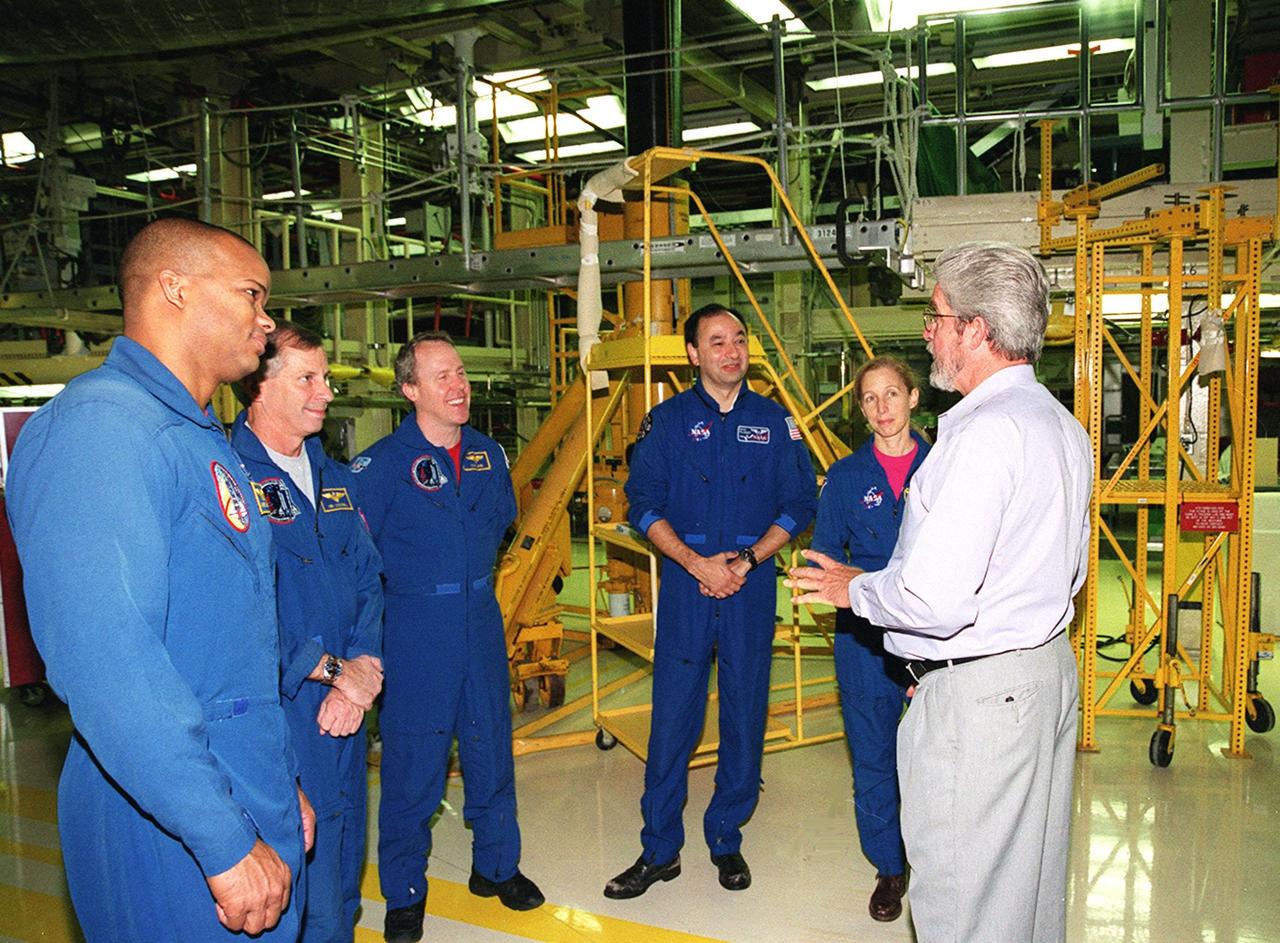
KENNEDY SPACE CENTER, FLA. -- In Orbiter Processing Facility bay 3, the STS-98 crew talks with United Space Alliance worker Larry Oshein (right). Standing left to right are Mission Specialist Robert Curbeam, Commander Ken Cockrell, Mission Specialist Tom Jones, and Mission Specialists Mark Polansky and Marsha Ivins. The crew is at KSC for Crew Equipment Interface Test activities. Launch on mission STS-98 is scheduled for Jan. 18, 2001. It will be transporting the U.S. Lab, Destiny, to the International Space Station with five system racks already installed inside of the module. After delivery of electronics in the lab, electrically powered attitude control for Control Moment Gyroscopes will be activated
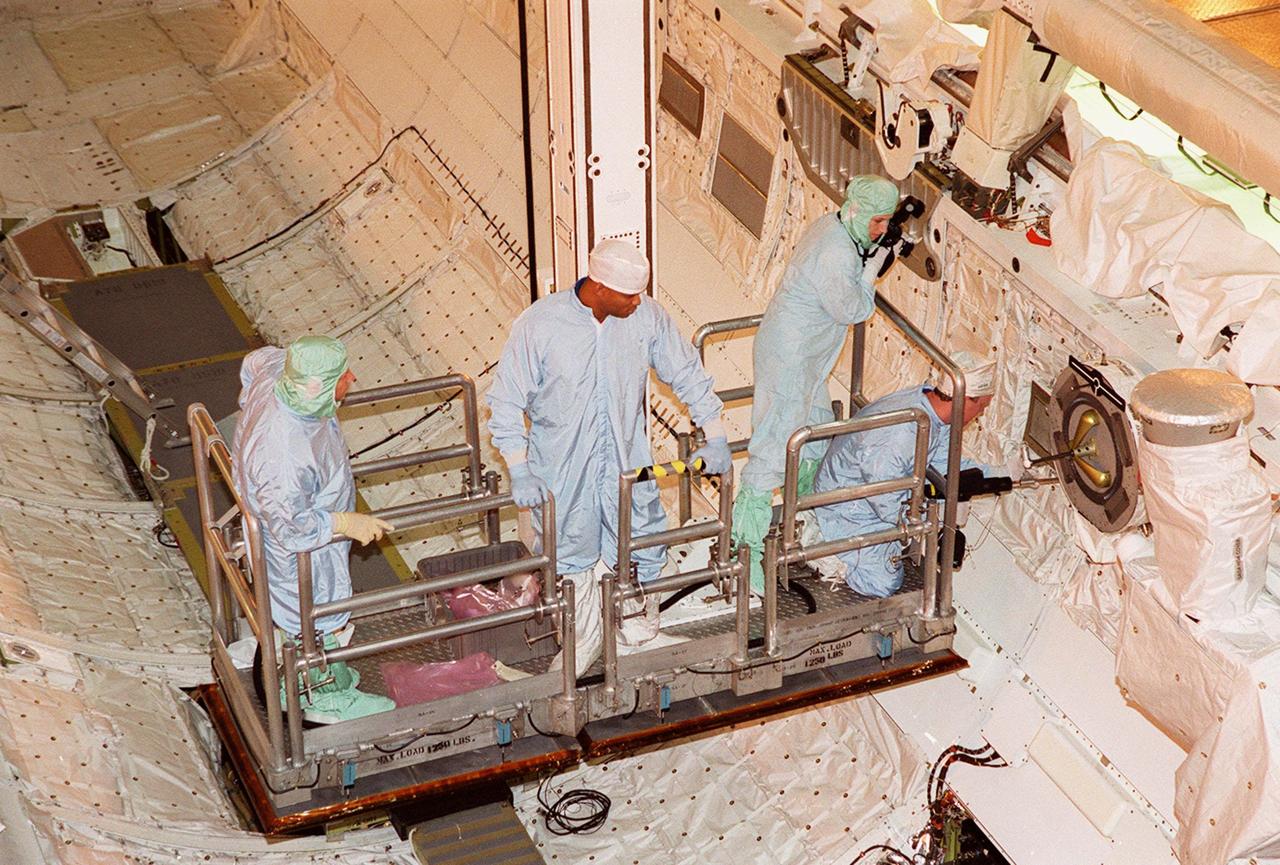
KENNEDY SPACE CENTER, FLA. -- Lowered into the payload bay of the orbiter Atlantis, some of the STS-98 crew look over part of the payload. At center is Mission Specialist Robert Curbeam; at right are Mission Specialists Marsha Ivins (standing) and Tom Jones (kneeling). They and the rest of the crew are at KSC for Crew Equipment Interface Test activities. Launch on mission STS-98 is scheduled for Jan. 18, 2001. It will be transporting the U.S. Lab, Destiny, to the International Space Station with five system racks already installed inside of the module. After delivery of electronics in the lab, electrically powered attitude control for Control Moment Gyroscopes will be activated
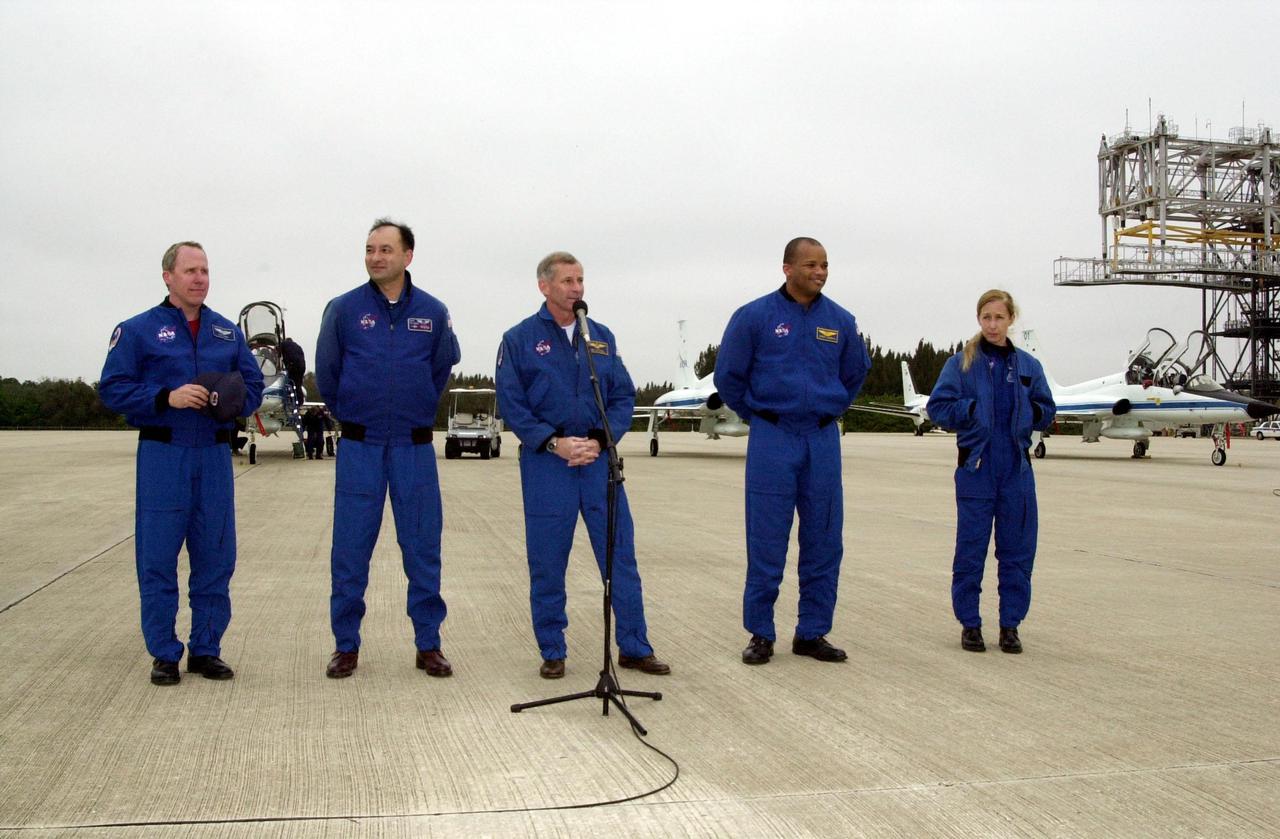
KENNEDY SPACE CENTER, FLA. -- STS-98 Mission Commander Kenneth Cockrell (center at microphone) speaks to the media at the Shuttle Landing Facility after the crew's arrival Sunday to complete preparations for launch.; The crew also includes, from left to right, Mission Specialist Thomas Jones, Pilot Mark Polansky and Mission Specialists Robert Curbeam and Marsha Ivins. STS-98 is the seventh construction flight to the International Space Station, carrying as payload the U.S. Lab Destiny, a key element in the construction of the ISS. Launch of STS-98 is scheduled for Feb. 7 at 6:11 p.m. EST
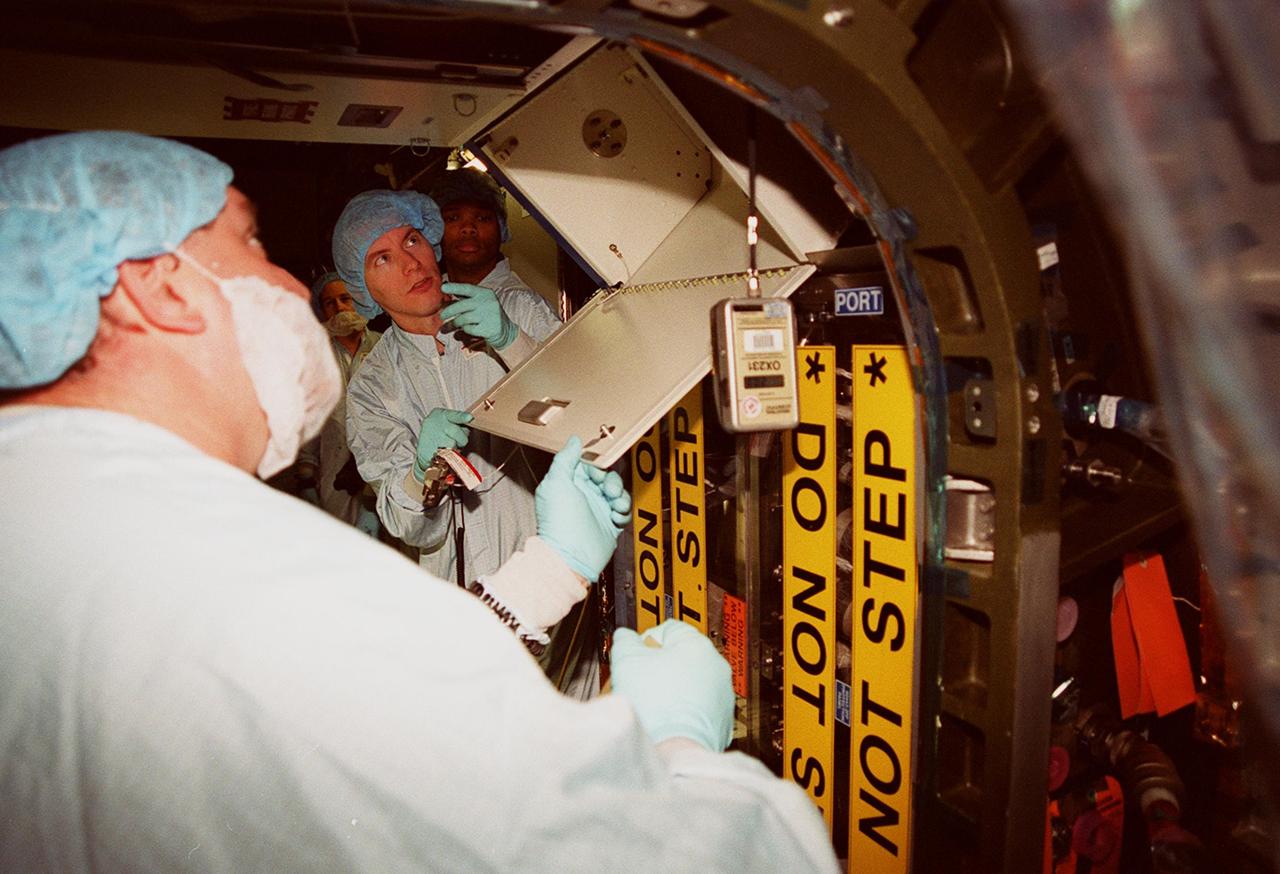
In the Space Station Processing Facility, members of the STS-98 crew check out components inside the U.S. Lab, Destiny, under the watchful eye of trainers. The crew comprises Commander Ken Cockrell, Pilot Mark Polansky and Mission Specialists Robert Curbeam, Thomas Jones and Marsha Ivins. They are taking part in Crew Equipment Interface Test activities, becoming familiar with equipment they will be handling during the mission. The mission will be transporting the Lab to the International Space Station with five system racks already installed inside of the module. With delivery of electronics in the lab, electrically powered attitude control for Control Moment Gyroscopes will be activated. The STS-98 launch is scheduled for Jan. 18, 2001
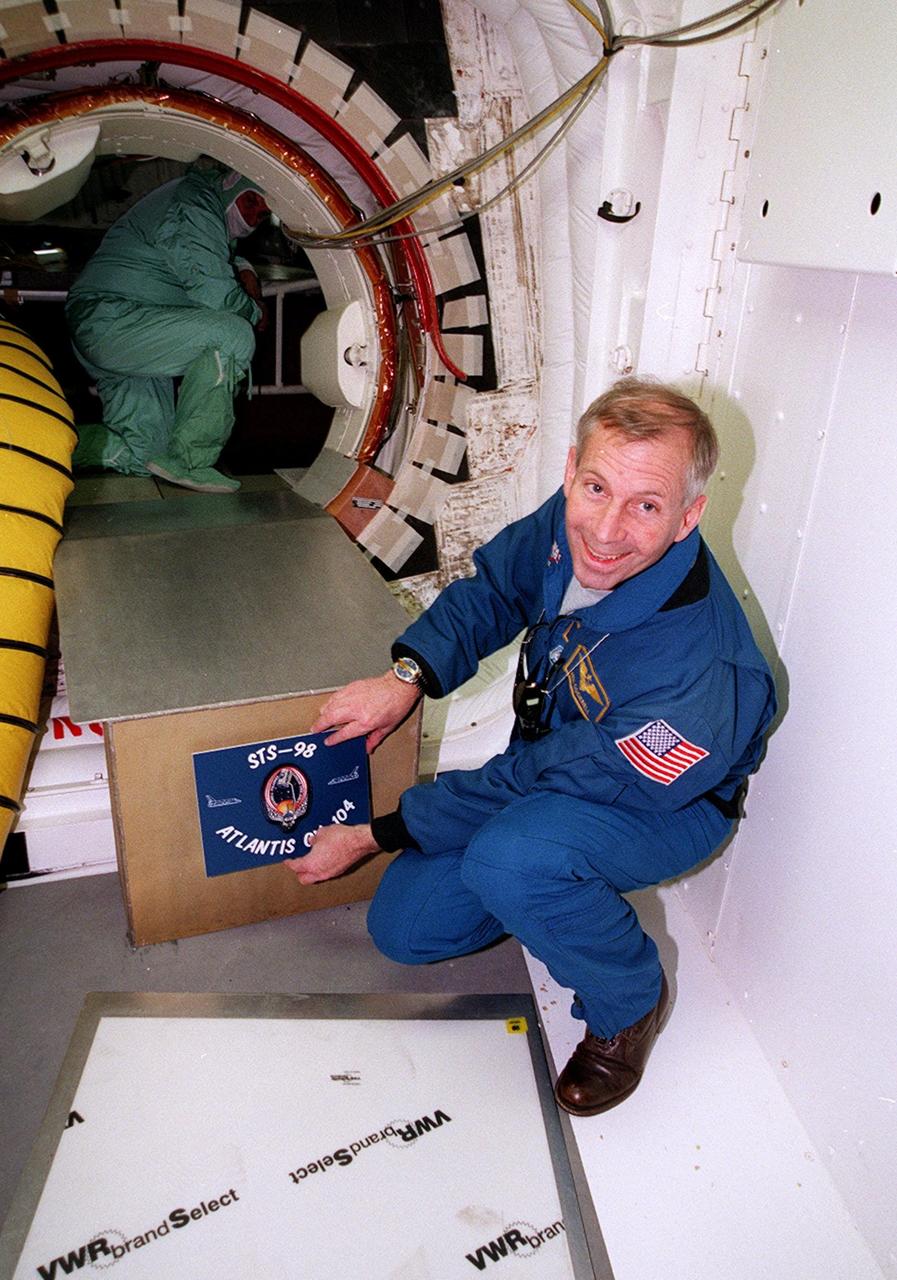
KENNEDY SPACE CENTER, FLA. -- STS-98 Commander Ken Cockrell places the mission patch on the entrance to the orbiter Atlantis. He and the rest of the crew Pilot Mark Polansky and Mission Specialists Thomas Jones, Marsha Ivins and Robert Curbeam are t KSC to take part in Terminal Countdown Demonstration Test activities, which include emergency egress training and a simulated launch countdown. STS-98 is the seventh construction flight to the International Space Station, carrying as payload the U.S. Lab Destiny, a key element in the construction of the ISS. Launch of STS-98 is scheduled for Jan. 19 at 2:11 a.m
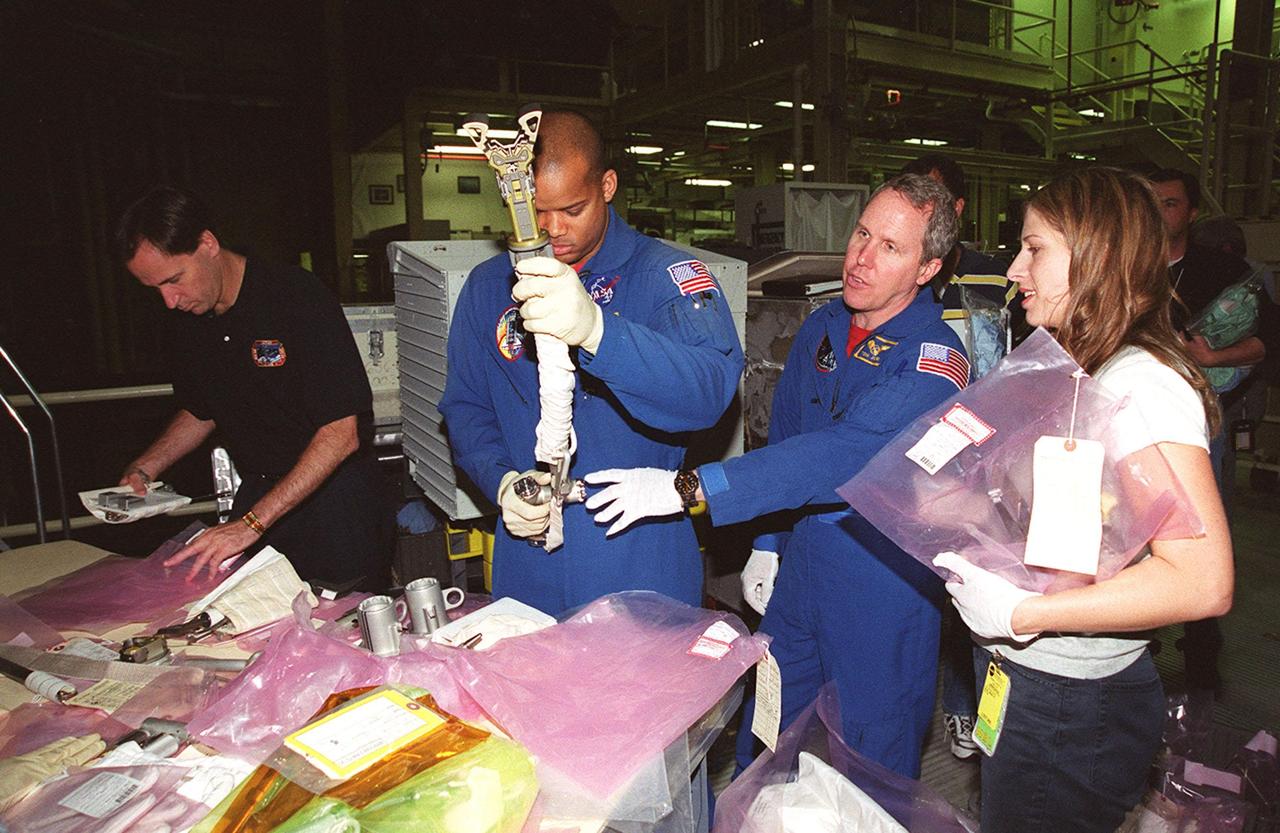
KENNEDY SPACE CENTER, FLA. -- In the Orbiter Processing Facility, STS-98 Mission Specialists Robert Curbeam (center left) and Tom Jones (center right) practice with tools that will be used on extravehicular activities on their mission. The STS-98 crew is at KSC for Crew Equipment Interface Test activities. Launch on mission STS-98 is scheduled for Jan. 18, 2001. It will be transporting the U.S. Lab, Destiny, to the International Space Station with five system racks already installed inside of the module. After delivery of electronics in the lab, electrically powered attitude control for Control Moment Gyroscopes will be activated
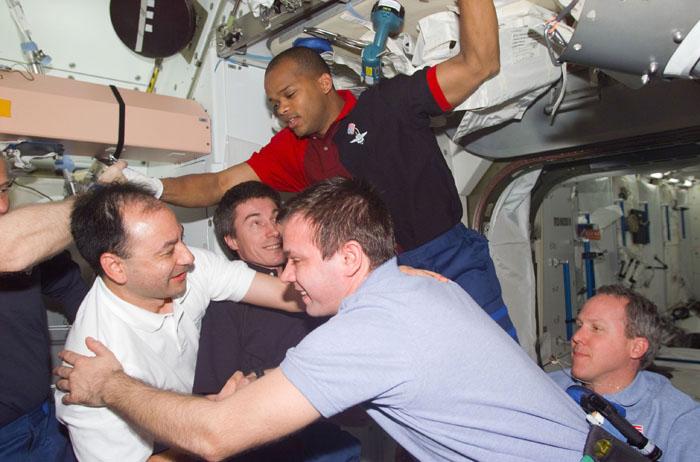
STS98-E-5297 (16 February 2001) --- Goodbyes are plentiful as five astronauts prepare to depart the International Space Station (ISS) and return to the Space Shuttle Atlantis. Cosmonauts Sergei K. Krikalev, Expedition One flight engineer; and Yuri P. Gidzenko, Soyuz commander for the station crew, appear in the center of the scene. They are surrounded by astronauts Mark L. Polansky, STS-98 pilot; and Robert L. Curbeam (top) and Thomas D. Jones, right, both shuttle mission specialists. The cosmonauts, along with astronaut William M. (Bill) Shepherd (out of frame), Expedition One commander, will stay aboard the outpost for several more weeks and return to Earth with the next shuttle visitors.
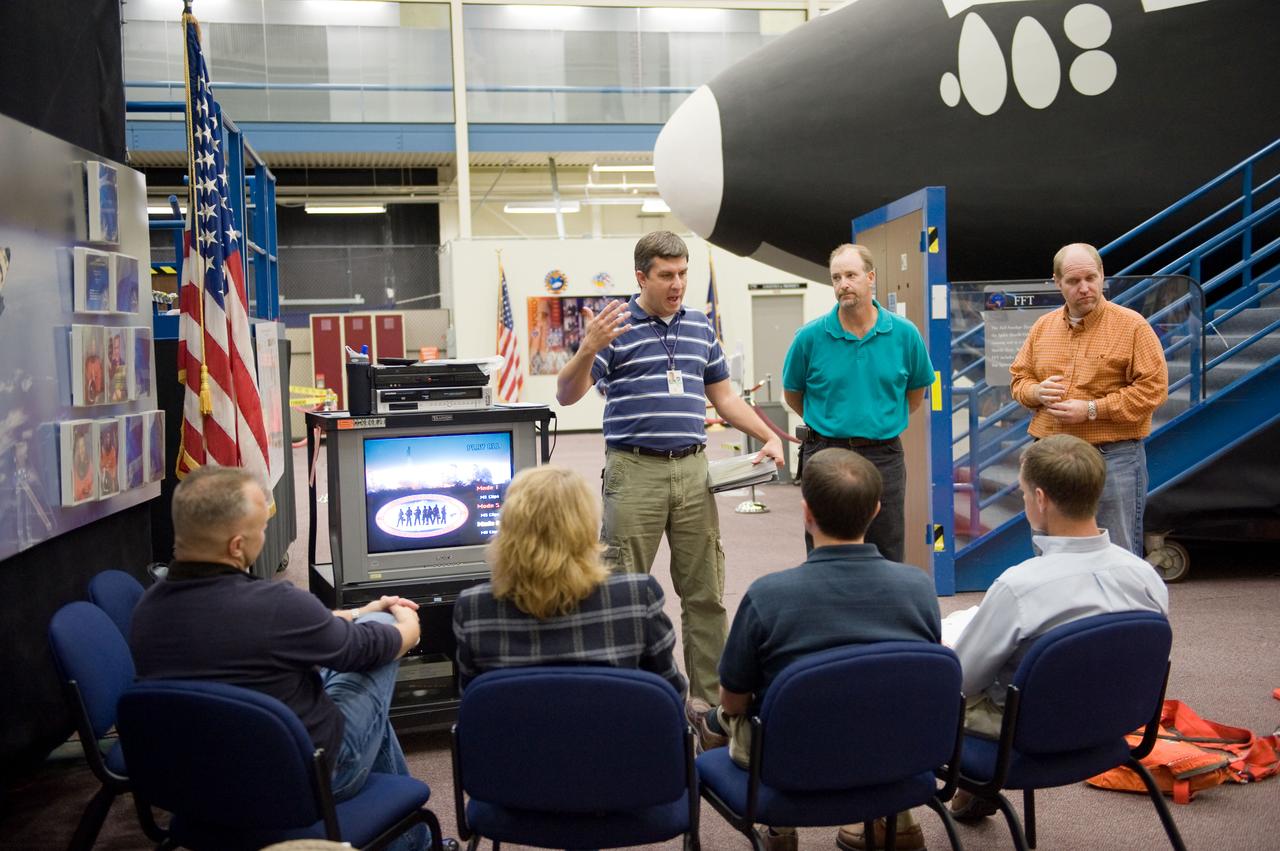
JSC2010-E-195512 (3 Dec. 2010) --- Crew instructors Patrick Jones (left), Robert (Rob) Tomaro and Bob Behrendsen brief STS-135 crew members during an emergency egress training session in the Space Vehicle Mock-up Facility at NASA's Johnson Space Center. Seated are NASA astronauts Chris Ferguson (right), commander; Doug Hurley (left), pilot; Sandy Magnus and Rex Walheim, both mission specialists. STS-135 is planned to be the final mission of the space shuttle program. Photo credit: NASA or National Aeronautics and Space Administration
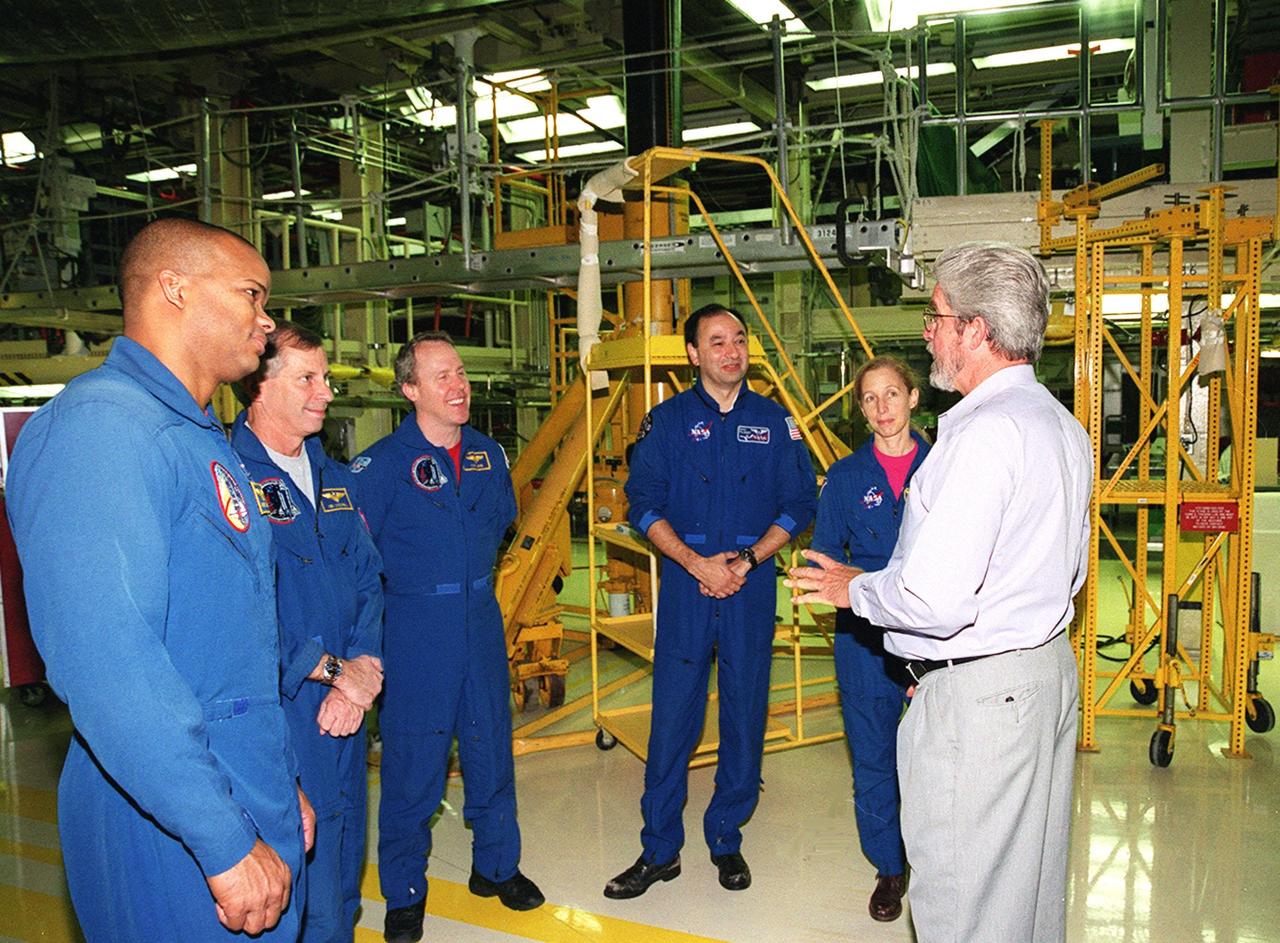
KENNEDY SPACE CENTER, FLA. -- In Orbiter Processing Facility bay 3, the STS-98 crew talks with United Space Alliance worker Larry Oshein (right). Standing left to right are Mission Specialist Robert Curbeam, Commander Ken Cockrell, Mission Specialist Tom Jones, and Mission Specialists Mark Polansky and Marsha Ivins. The crew is at KSC for Crew Equipment Interface Test activities. Launch on mission STS-98 is scheduled for Jan. 18, 2001. It will be transporting the U.S. Lab, Destiny, to the International Space Station with five system racks already installed inside of the module. After delivery of electronics in the lab, electrically powered attitude control for Control Moment Gyroscopes will be activated
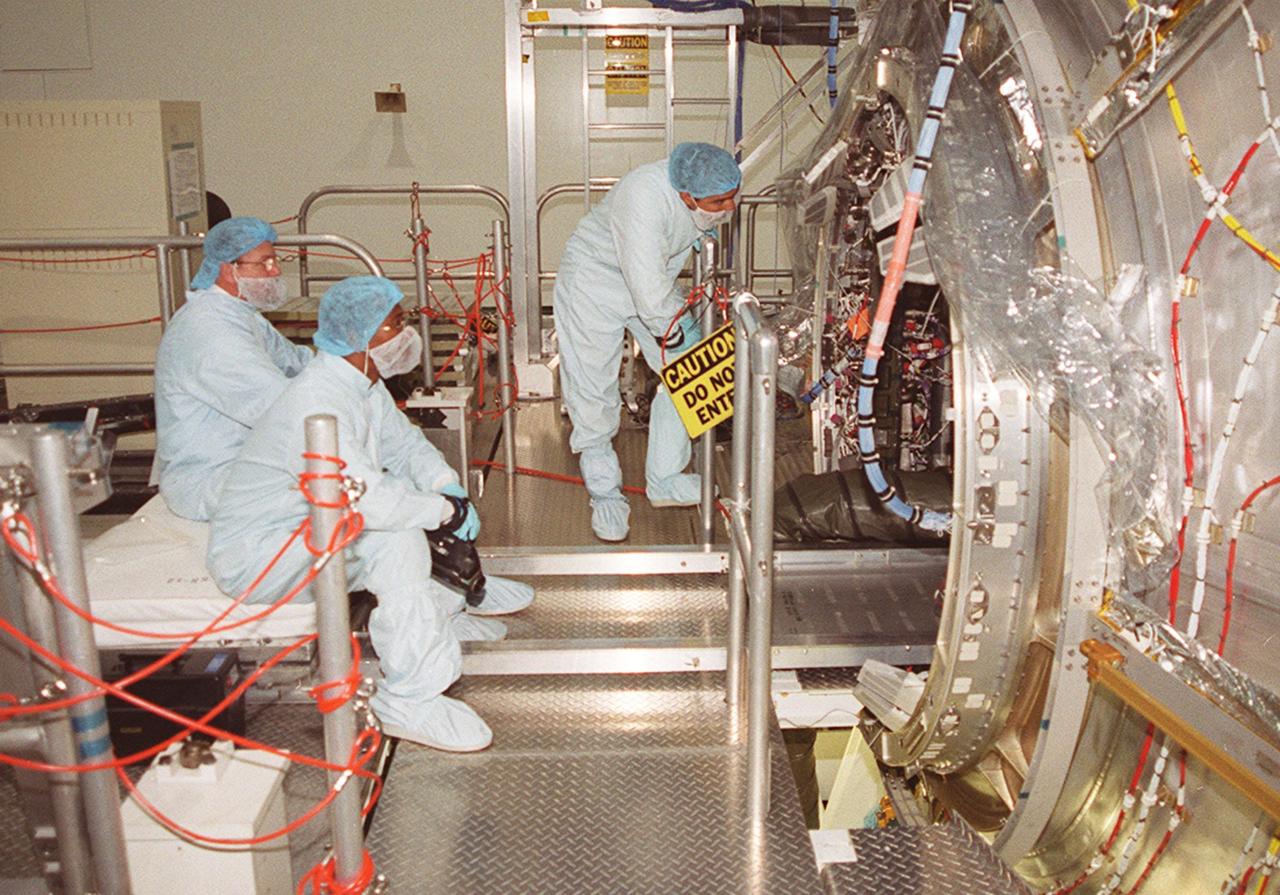
In the Space Station Processing Facility, workers at left watch while members of the STS-98 crew check out equipment inside the U.S. Lab, Destiny (at right). The crew comprises Commander Ken Cockrell, Pilot Mark Polansky and Mission Specialists Robert Curbeam, Thomas Jones and Marsha Ivins. They are taking part in Crew Equipment Interface Test activities, becoming familiar with equipment they will be handling during the mission. The mission will be transporting the Lab to the International Space Station with five system racks already installed inside of the module. With delivery of electronics in the lab, electrically powered attitude control for Control Moment Gyroscopes will be activated. The STS-98 launch is scheduled for Jan. 18, 2001
![KENNEDY SPACE CENTER, Fla. -- The STS-98 crew talks to the press at a briefing at Launch Pad 39A. With the microphone is Commander Ken Cockrell, who discusses the EVAs on the mission. The other crew members are (left to right) Pilot Mark Polansky, Mission Specialist Thomas Jones, [Cockrell], and Mission Specialists Marsha Ivins and Robert Curbeam. They are at KSC to take part in Terminal Countdown Demonstration Test activities, which also include a simulated launch countdown. STS-98 is the seventh construction flight to the International Space Station, carrying as payload the U.S. Lab Destiny, a key element in the construction of the ISS. Launch of STS-98 is scheduled for Jan. 19 at 2:11 a.m](https://images-assets.nasa.gov/image/KSC01padig014/KSC01padig014~medium.jpg)
KENNEDY SPACE CENTER, Fla. -- The STS-98 crew talks to the press at a briefing at Launch Pad 39A. With the microphone is Commander Ken Cockrell, who discusses the EVAs on the mission. The other crew members are (left to right) Pilot Mark Polansky, Mission Specialist Thomas Jones, [Cockrell], and Mission Specialists Marsha Ivins and Robert Curbeam. They are at KSC to take part in Terminal Countdown Demonstration Test activities, which also include a simulated launch countdown. STS-98 is the seventh construction flight to the International Space Station, carrying as payload the U.S. Lab Destiny, a key element in the construction of the ISS. Launch of STS-98 is scheduled for Jan. 19 at 2:11 a.m
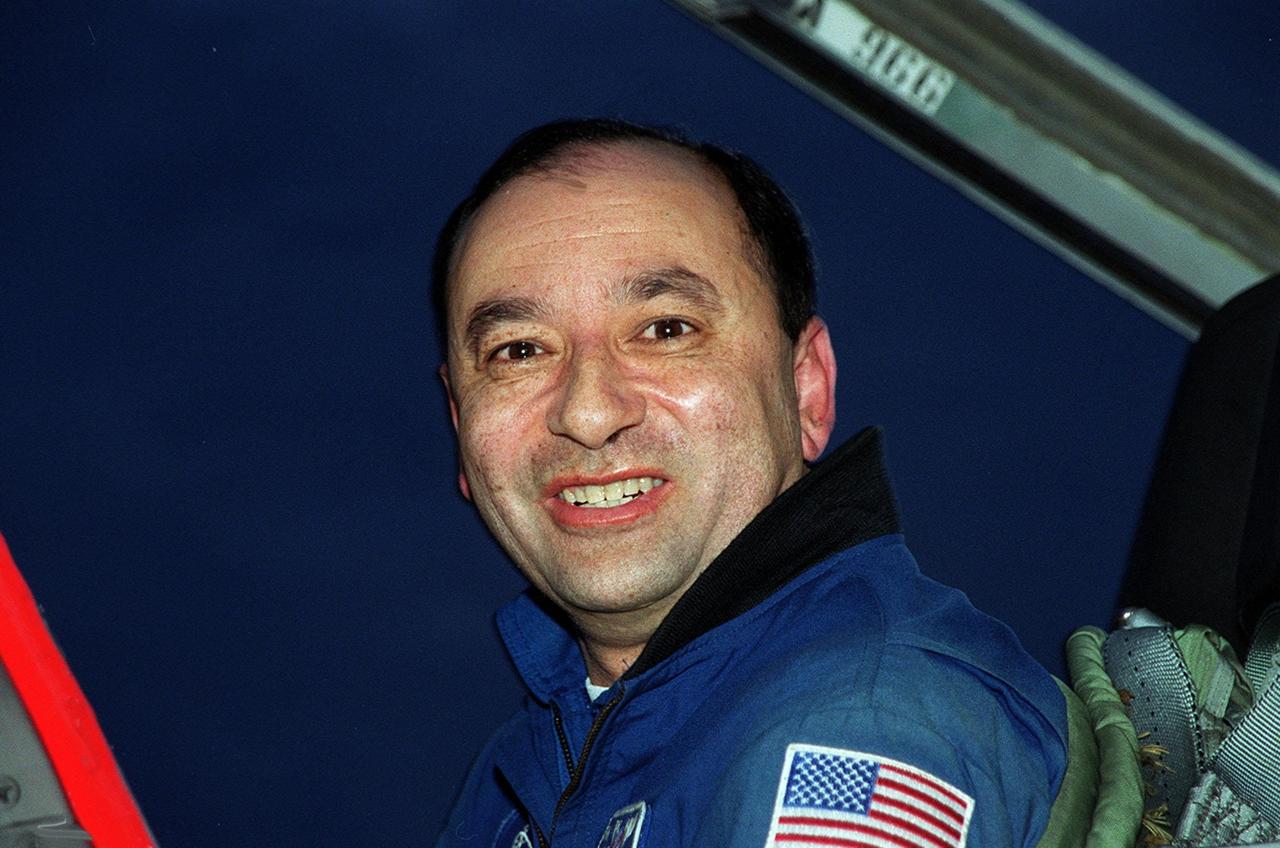
STS-98 Pilot Mark Polansky is pleased to arrive at KSC’s Shuttle Landing Facility for Terminal Countdown Test Activities. In preparation for the Jan. 19 launch, he and the rest of the crew Commander Ken Cockrell and Mission Specialists Robert Curbeam, Thomas Jones and Marsha Ivins will be training in emergency procedures from the pad, checking the payload and taking part in a simulated countdown. The payload for the mission is the U.S. Lab Destiny, a key element in the construction of the International Space Station. The lab has five system racks already installed inside the module. After delivery of electronics in the lab, electrically powered attitude control for Control Moment Gyroscopes will be activated. STS-98 is the seventh construction flight to the ISS.<br
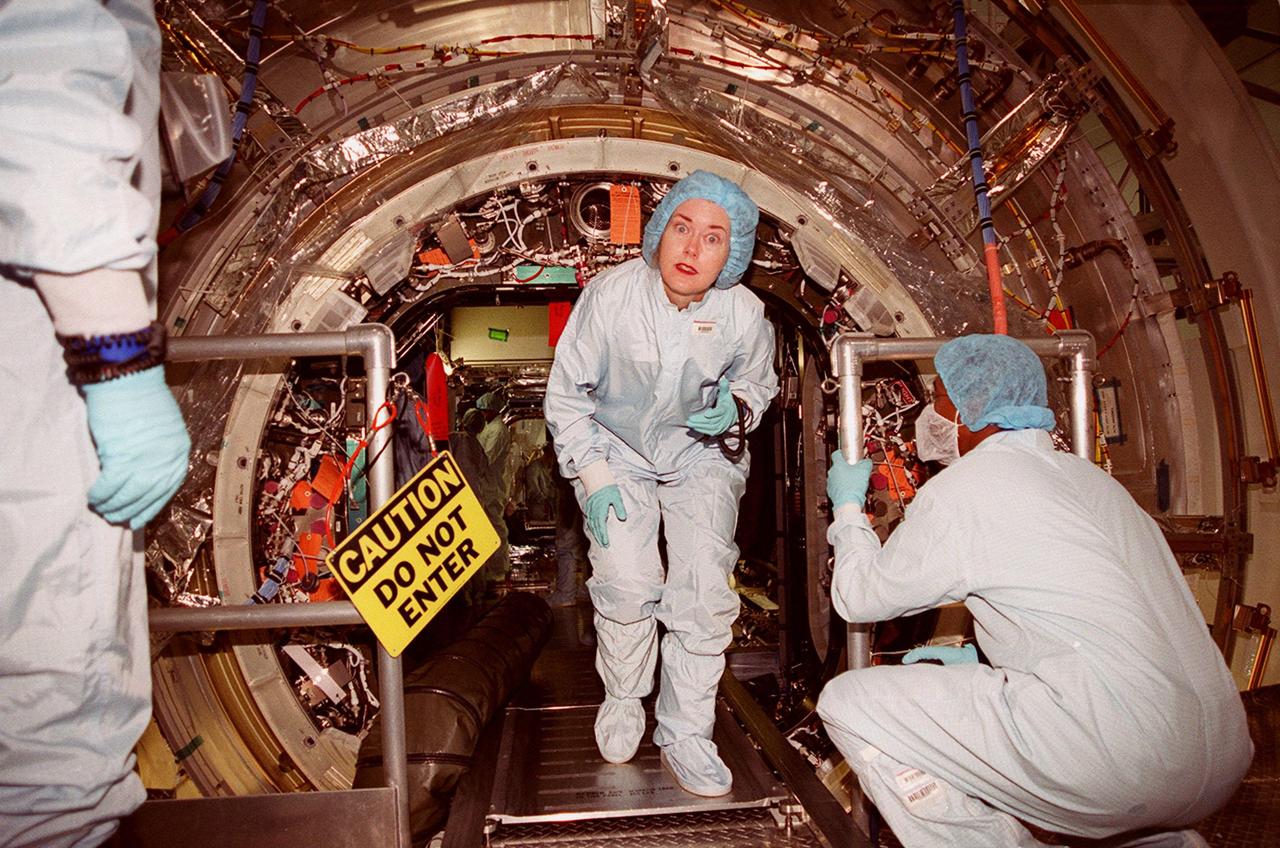
In the Space Station Processing Facility, a worker is surprised by the camera as she exits the U.S. Lab, Destiny. Inside the lab is the STS-98 crew, which is taking part in Crew Equipment Interface Test activities, becoming familiar with equipment it will be handling during the mission. The crew comprises Commander Ken Cockrell, Pilot Mark Polansky and Mission Specialists Robert Curbeam, Thomas Jones and Marsha Ivins. The mission will be transporting the Lab to the International Space Station with five system racks already installed inside of the module. With delivery of electronics in the lab, electrically powered attitude control for Control Moment Gyroscopes will be activated. The STS-98 launch is scheduled for Jan. 18, 2001
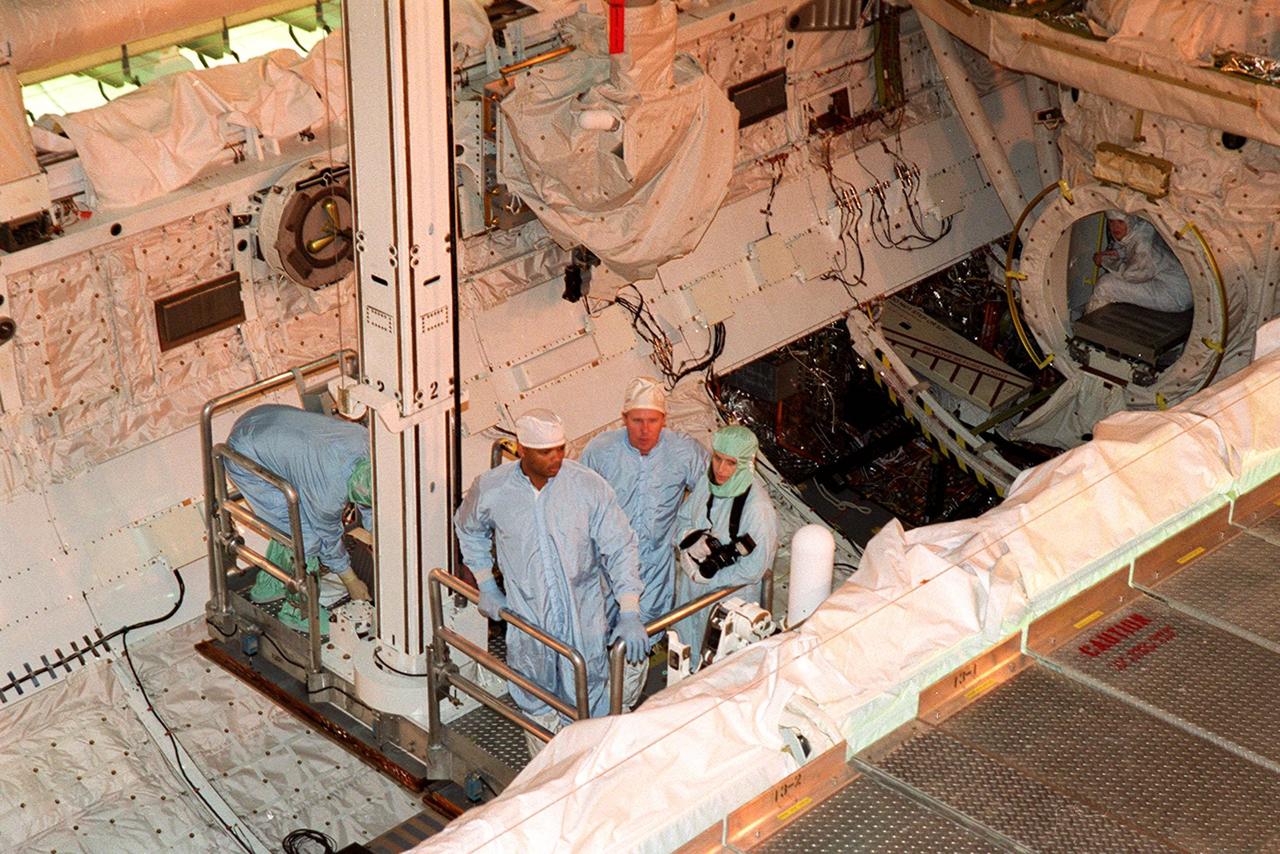
KENNEDY SPACE CENTER, FLA. -- Lowered into the payload bay of the orbiter Atlantis, some of the STS-98 crew (center of the photo) look over part of the payload. From left are Mission Specialists Robert Curbeam, Tom Jones and Marsha Ivins. They and the rest of the crew are at KSC for Crew Equipment Interface Test activities. Launch on mission STS-98 is scheduled for Jan. 18, 2001. It will be transporting the U.S. Lab, Destiny, to the International Space Station with five system racks already installed inside of the module. After delivery of electronics in the lab, electrically powered attitude control for Control Moment Gyroscopes will be activated

In the Space Station Processing Facility, STS-98 Mission Specialist Marsha Ivins wields a tool on part of the U.S. Lab, Destiny. The crew is checking out equipment inside the lab as part of Crew Equipment Interface Test activities, becoming familiar with equipment it will be handling during the mission. Others in the crew are Commander Ken Cockrell, Pilot Mark Polansky and Mission Specialists Robert Curbeam and Thomas Jones. The mission will be transporting the Lab to the International Space Station with five system racks already installed inside of the module. With delivery of electronics in the lab, electrically powered attitude control for Control Moment Gyroscopes will be activated. The STS-98 launch is scheduled for Jan. 18, 2001
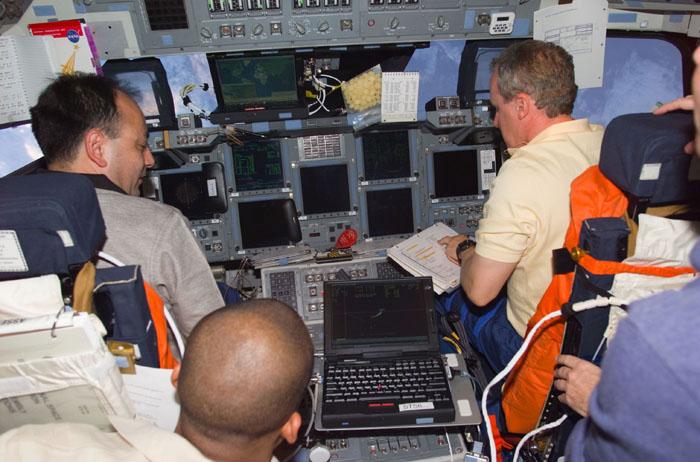
STS98-E-5030 (9 February 2001) --- Three members of the STS-98 crew prepare for rendezvous with the International Space Station (ISS). Astronaut Thomas D. Jones (right), mission specialist, temporarily mans the pilot's station on the flight deck of the Space Shuttle Atlantis. Astronaut Mark L. Polansky, left, sits at the commander's station for this maneuver. At lower left is Astronaut Robert L. Curbeam, mission specialist. Astronaut Kenneth D. Cockrell, mission commander, is just out of frame at right. The photograph was recorded with a digital still camera.
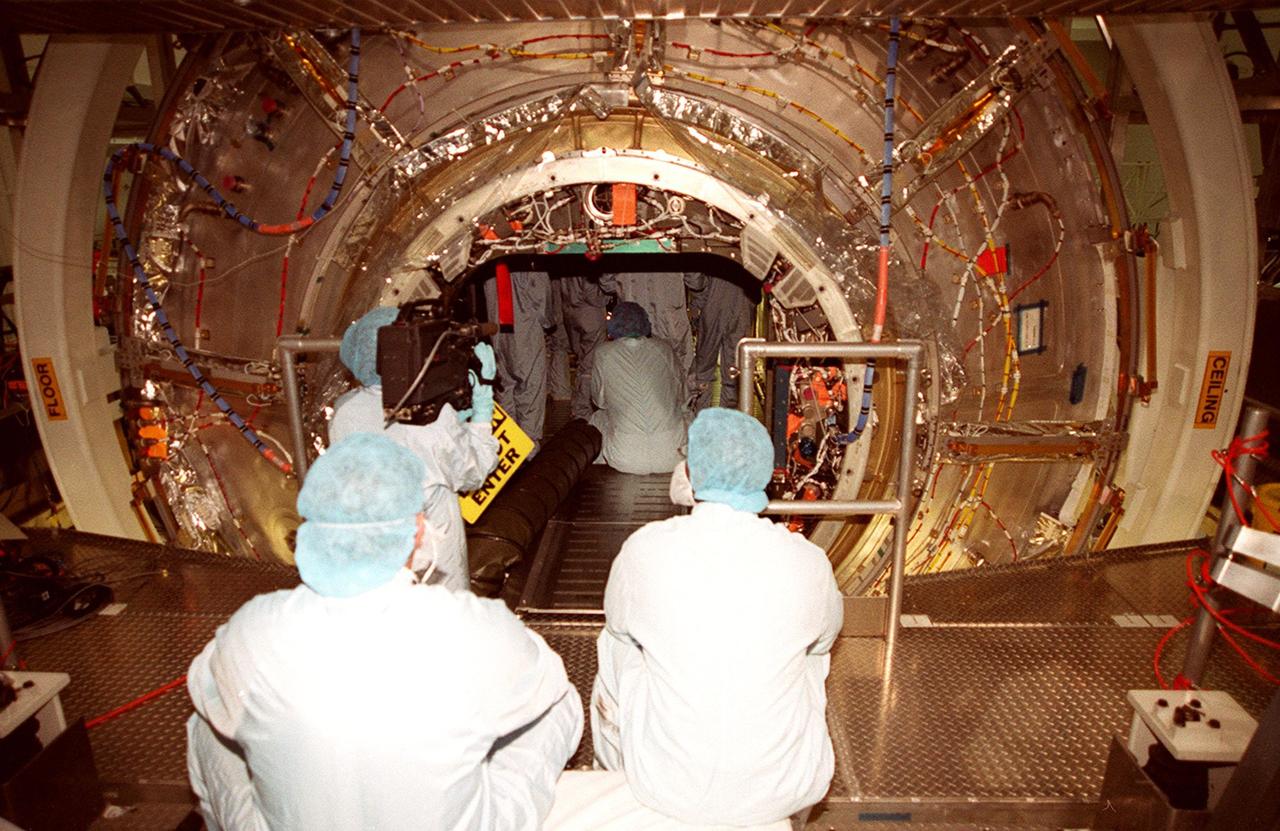
In the Space Station Processing Facility, workers in the foreground watch and wait while members of the STS-98 crew check out the U.S. Lab, Destiny in the background. The crew comprises Commander Ken Cockrell, Pilot Mark Polansky and Mission Specialists Robert Curbeam, Thomas Jones and Marsha Ivins. They are taking part in Crew Equipment Interface Test activities, becoming familiar with equipment they will be handling during the mission. The mission will be transporting the Lab to the International Space Station with five system racks already installed inside of the module. With delivery of electronics in the lab, electrically powered attitude control for Control Moment Gyroscopes will be activated. The STS-98 launch is scheduled for Jan. 18, 2001
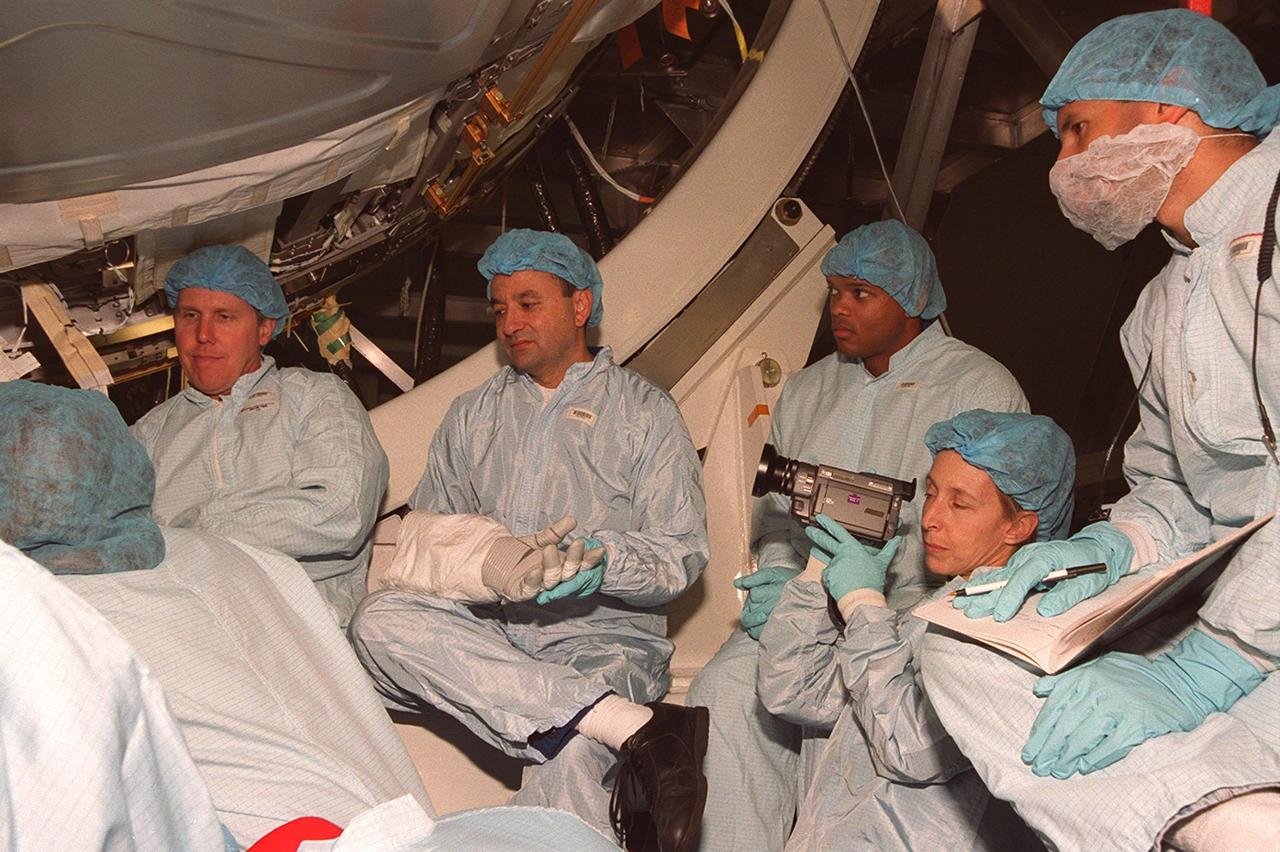
In the Space Station Processing Facility, members of the STS-98 crew, sitting in front of the U.S. Lab, Destiny, listen to a trainer during Crew Equipment Interface Test (CEIT) activities. Seen, left to right, are Mission Specialist Thomas Jones, Pilot Mark Polansky and Mission Specialists Robert Curbeam and Marsha Ivins (with camera). The CEIT allows a crew to become familiar with equipment they will be handling during the mission. With launch scheduled for Jan. 18, 2001, the STS-98 mission will be transporting the Lab to the International Space Station with five system racks already installed inside of the module. After delivery of electronics in the lab, electrically powered attitude control for Control Moment Gyroscopes will be activated
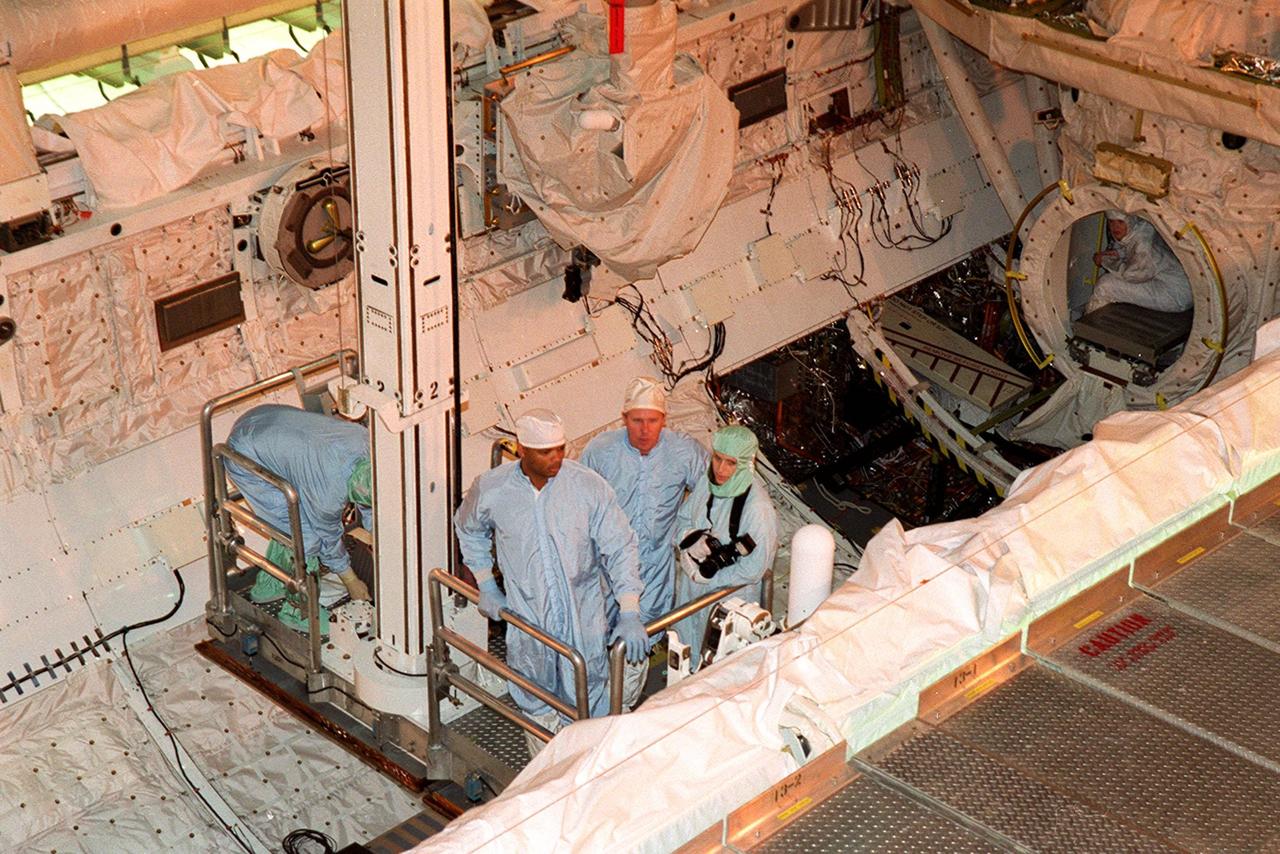
KENNEDY SPACE CENTER, FLA. -- Lowered into the payload bay of the orbiter Atlantis, some of the STS-98 crew (center of the photo) look over part of the payload. From left are Mission Specialists Robert Curbeam, Tom Jones and Marsha Ivins. They and the rest of the crew are at KSC for Crew Equipment Interface Test activities. Launch on mission STS-98 is scheduled for Jan. 18, 2001. It will be transporting the U.S. Lab, Destiny, to the International Space Station with five system racks already installed inside of the module. After delivery of electronics in the lab, electrically powered attitude control for Control Moment Gyroscopes will be activated
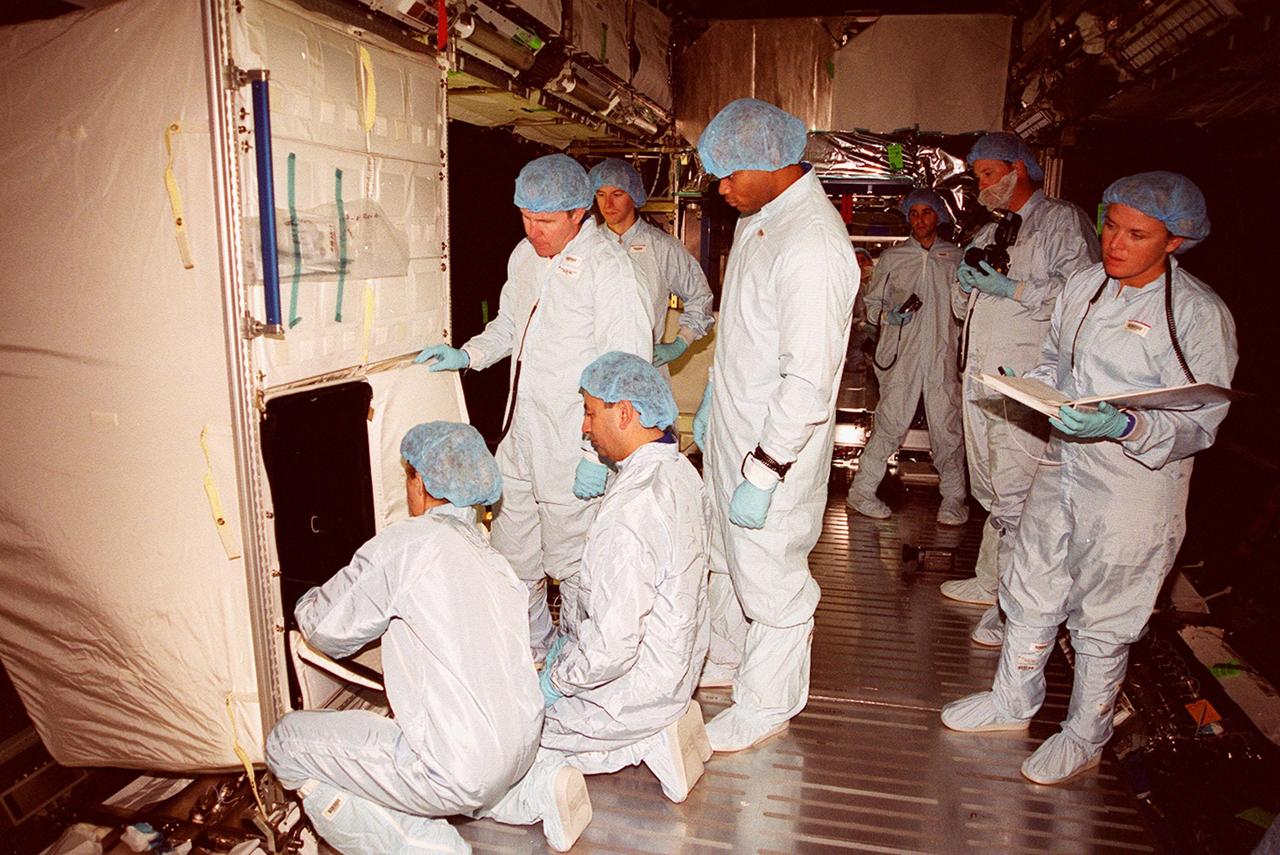
Inside the U.S. Lab, Destiny, members of the STS-98 crew work with technicians (in the background) to learn more about the equipment in the module. They are taking part in Crew Equipment Interface Test activities. At left, back to camera, is Mission Specialist Marsha Ivins. Standing are Mission Specialists Thomas Jones (left) and Robert Curbeam (right). Other crew members not seen are Commander Ken Cockrell and Pilot Mark Polansky. The mission will be transporting the Lab to the International Space Station with five system racks already installed inside of the module. With delivery of electronics in the lab, electrically powered attitude control for Control Moment Gyroscopes will be activated. The STS-98 launch is scheduled for Jan. 18, 2001
![KENNEDY SPACE CENTER, Fla. -- The STS-98 crew talks to the press at a briefing at Launch Pad 39A. With the microphone is Commander Ken Cockrell, who discusses the EVAs on the mission. The other crew members are (left to right) Pilot Mark Polansky, Mission Specialist Thomas Jones, [Cockrell], and Mission Specialists Marsha Ivins and Robert Curbeam. They are at KSC to take part in Terminal Countdown Demonstration Test activities, which also include a simulated launch countdown. STS-98 is the seventh construction flight to the International Space Station, carrying as payload the U.S. Lab Destiny, a key element in the construction of the ISS. Launch of STS-98 is scheduled for Jan. 19 at 2:11 a.m](https://images-assets.nasa.gov/image/01padig014/01padig014~medium.jpg)
KENNEDY SPACE CENTER, Fla. -- The STS-98 crew talks to the press at a briefing at Launch Pad 39A. With the microphone is Commander Ken Cockrell, who discusses the EVAs on the mission. The other crew members are (left to right) Pilot Mark Polansky, Mission Specialist Thomas Jones, [Cockrell], and Mission Specialists Marsha Ivins and Robert Curbeam. They are at KSC to take part in Terminal Countdown Demonstration Test activities, which also include a simulated launch countdown. STS-98 is the seventh construction flight to the International Space Station, carrying as payload the U.S. Lab Destiny, a key element in the construction of the ISS. Launch of STS-98 is scheduled for Jan. 19 at 2:11 a.m
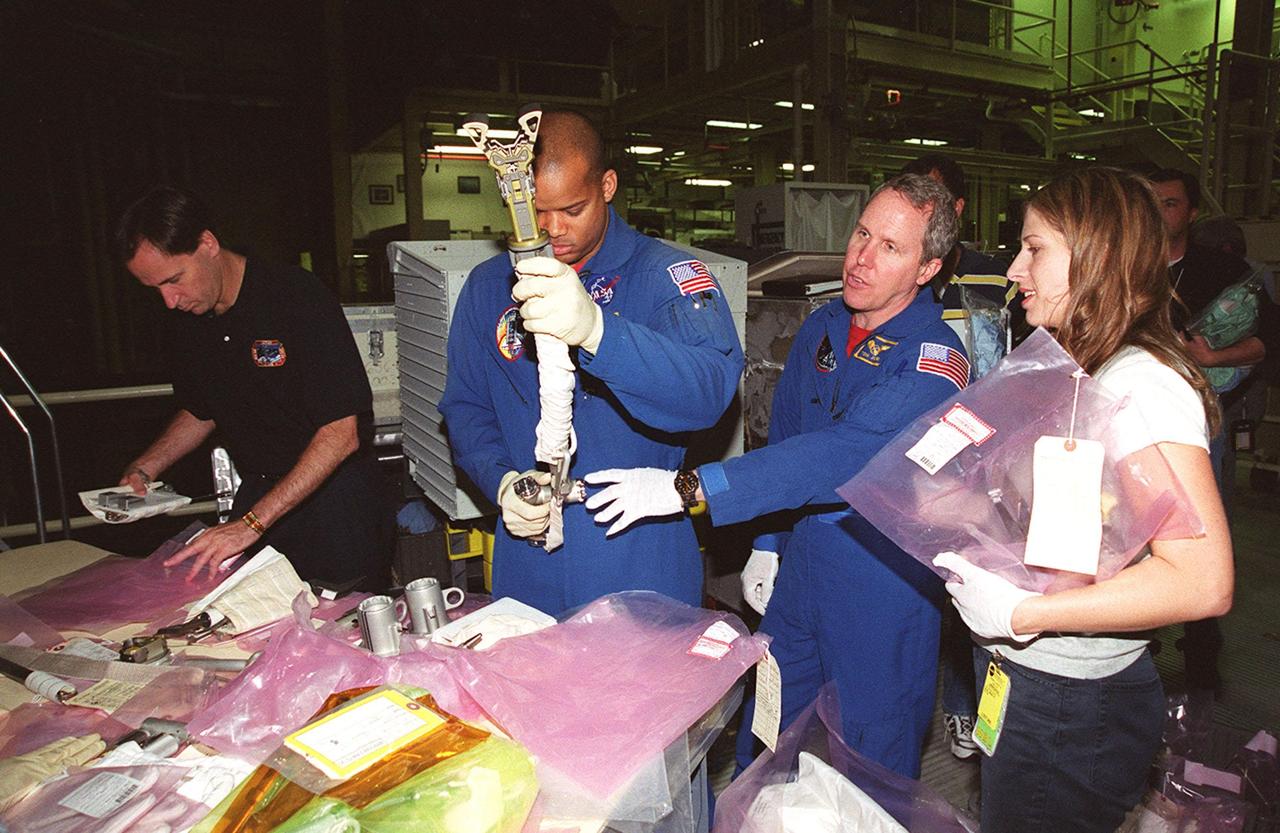
KENNEDY SPACE CENTER, FLA. -- In the Orbiter Processing Facility, STS-98 Mission Specialists Robert Curbeam (center left) and Tom Jones (center right) practice with tools that will be used on extravehicular activities on their mission. The STS-98 crew is at KSC for Crew Equipment Interface Test activities. Launch on mission STS-98 is scheduled for Jan. 18, 2001. It will be transporting the U.S. Lab, Destiny, to the International Space Station with five system racks already installed inside of the module. After delivery of electronics in the lab, electrically powered attitude control for Control Moment Gyroscopes will be activated
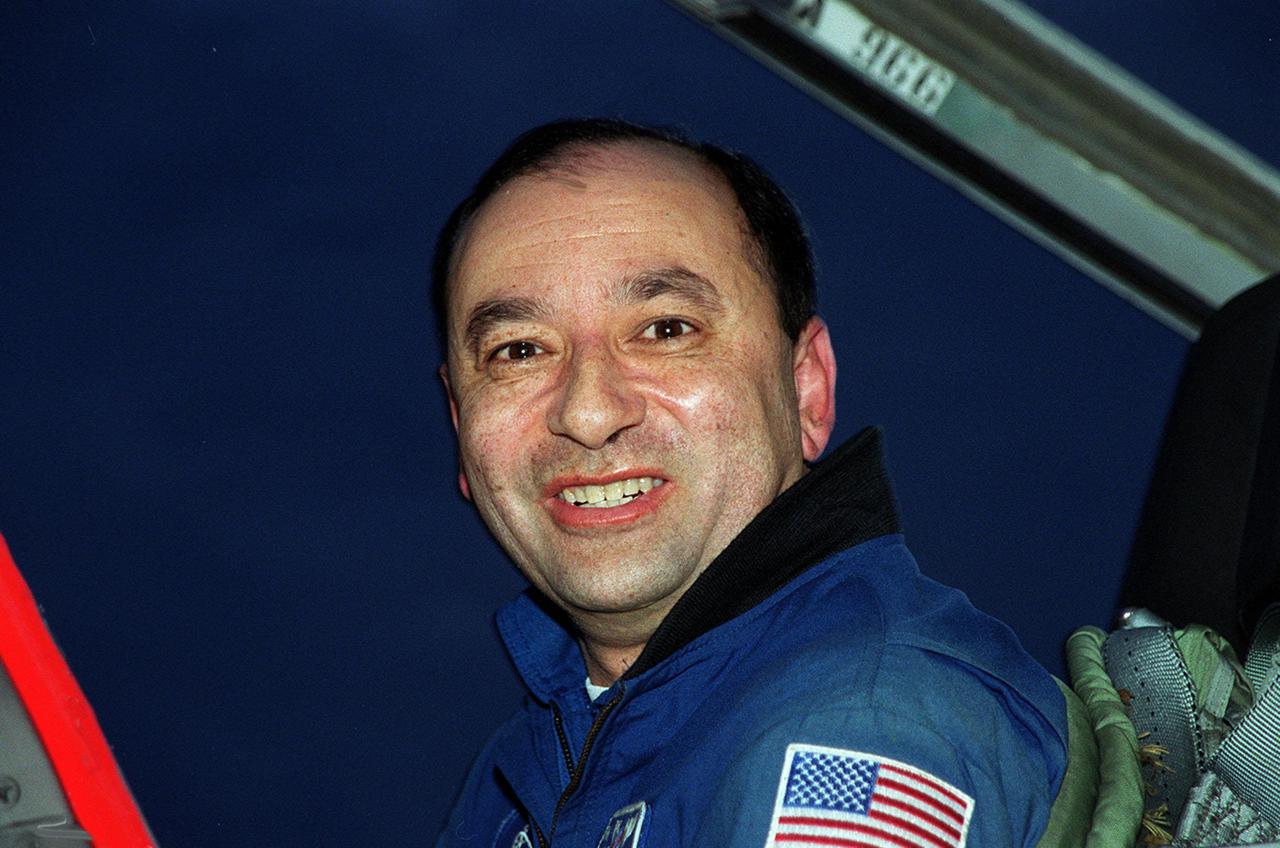
STS-98 Pilot Mark Polansky is pleased to arrive at KSC’s Shuttle Landing Facility for Terminal Countdown Test Activities. In preparation for the Jan. 19 launch, he and the rest of the crew Commander Ken Cockrell and Mission Specialists Robert Curbeam, Thomas Jones and Marsha Ivins will be training in emergency procedures from the pad, checking the payload and taking part in a simulated countdown. The payload for the mission is the U.S. Lab Destiny, a key element in the construction of the International Space Station. The lab has five system racks already installed inside the module. After delivery of electronics in the lab, electrically powered attitude control for Control Moment Gyroscopes will be activated. STS-98 is the seventh construction flight to the ISS.<br
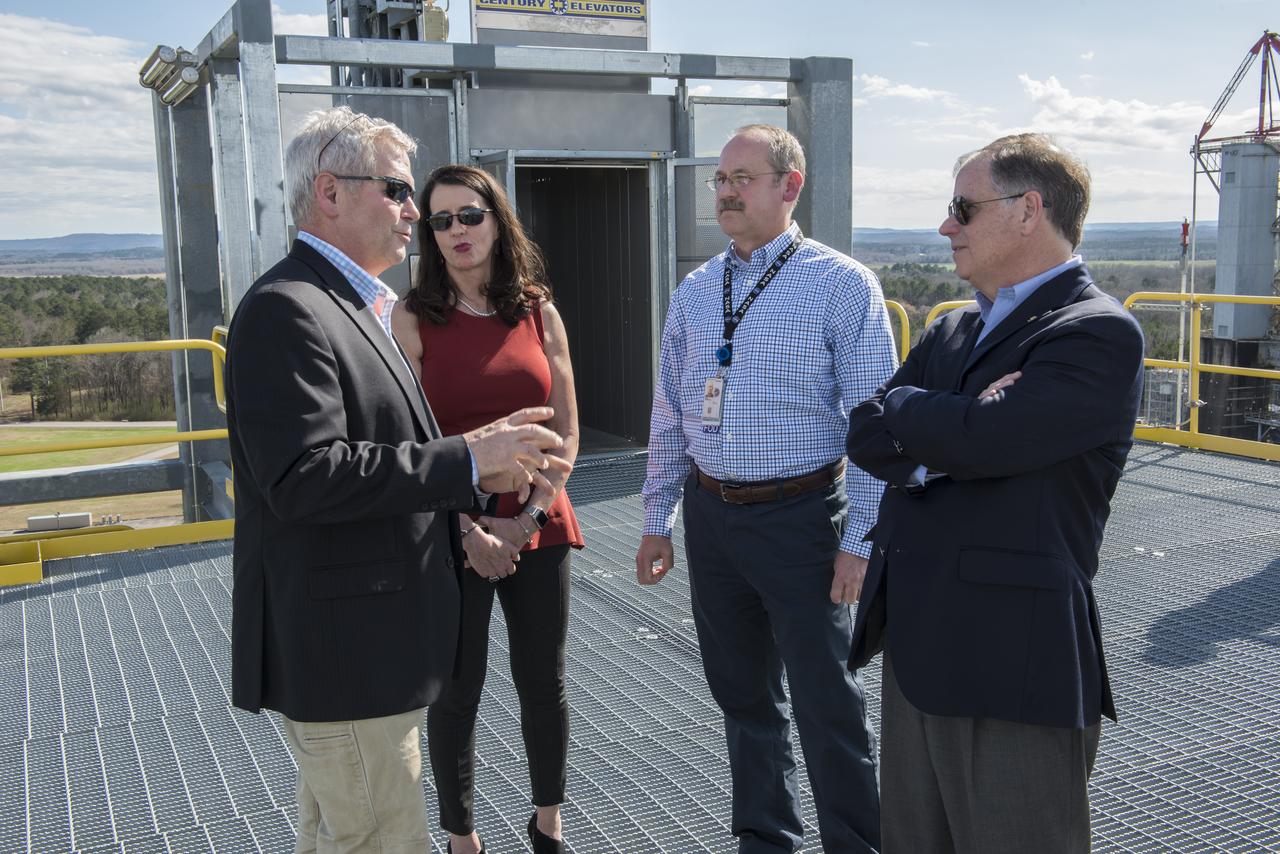
Senator Doug Jones (D-AL.) and wife, Louise, tour Marshall Space Flight facilities. Steve Doering, manager, Stages Element, Space Launch System (SLS) program at MSFC, along with Senator and Mrs. Jones, viewed the MSFC campus from the top of test stand 4693.