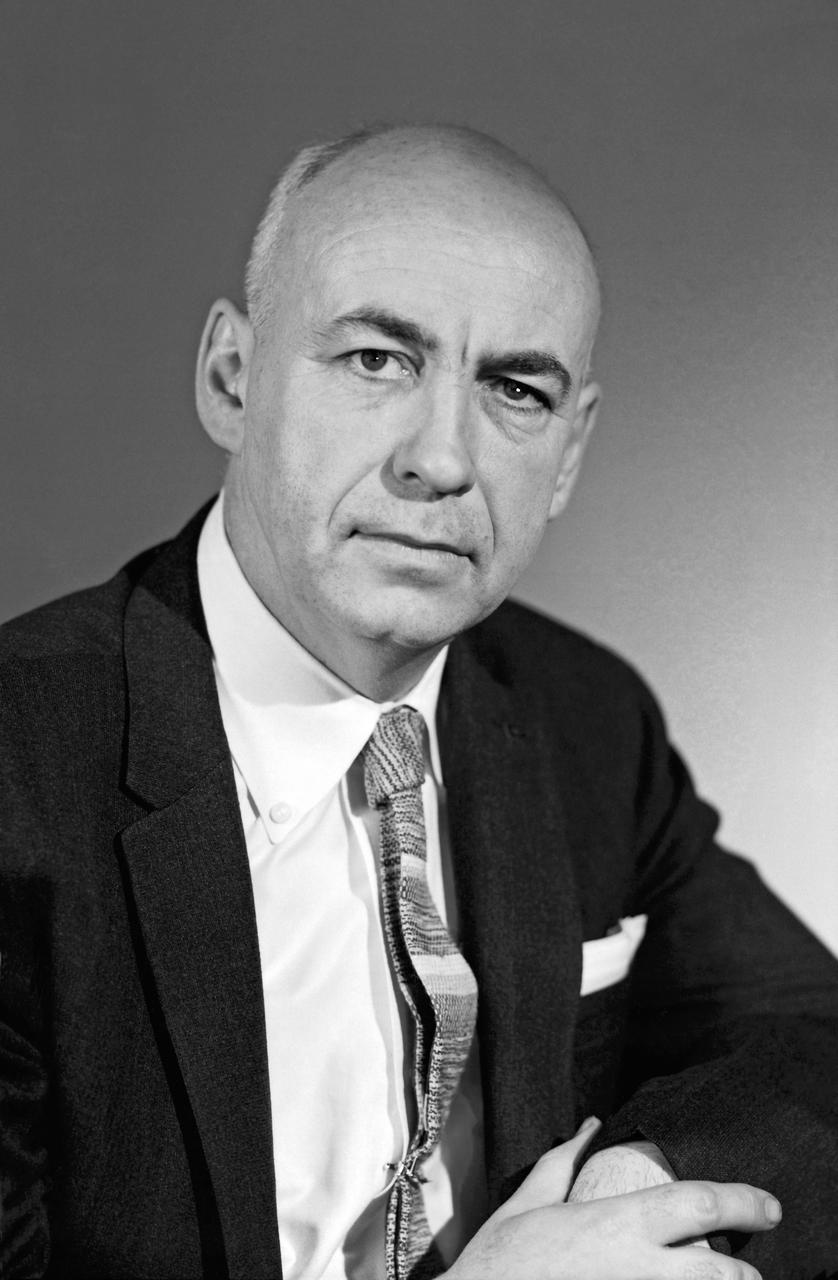
Portrait of Robert R. Gilruth. More than anyone else at Langley, began to push the idea that manned spaceflight was the next great challenge for aeronautic engineers. As head of NASA s Space Task Group, he was responsible for planning and carrying out Project Mercury, the country's first manned spaceflight program. Photograph published in Engineer in Charge: A History of the Langley Aeronautical Laboratory, 1917-1958 by James R. Hansen. Page 386.
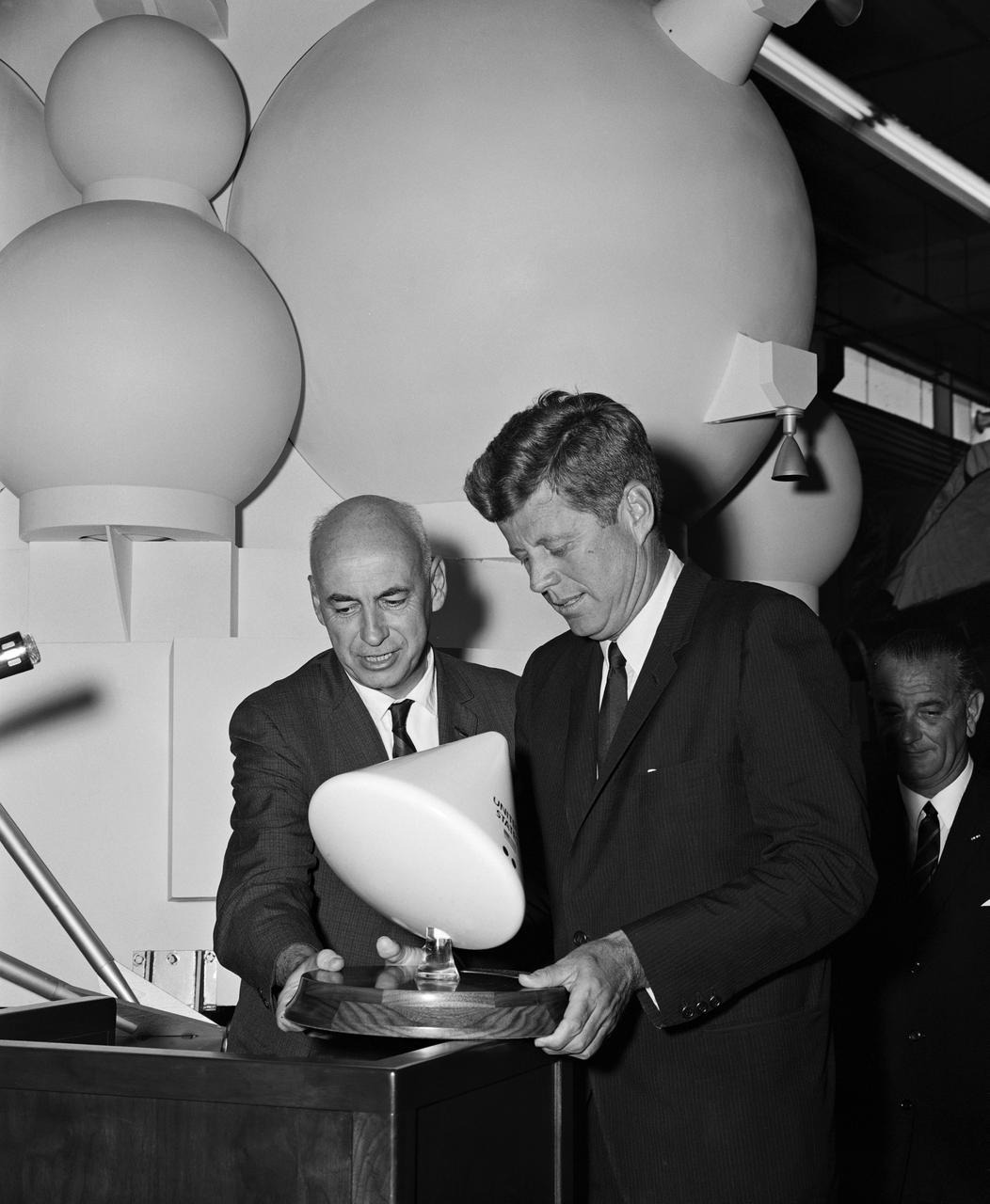
Dr. Robert R. Gilruth (left), director of what is now NASA’s Johnson Space Center, and President John F. Kennedy look at a small model of the Apollo Command Module on September 1, 1962.
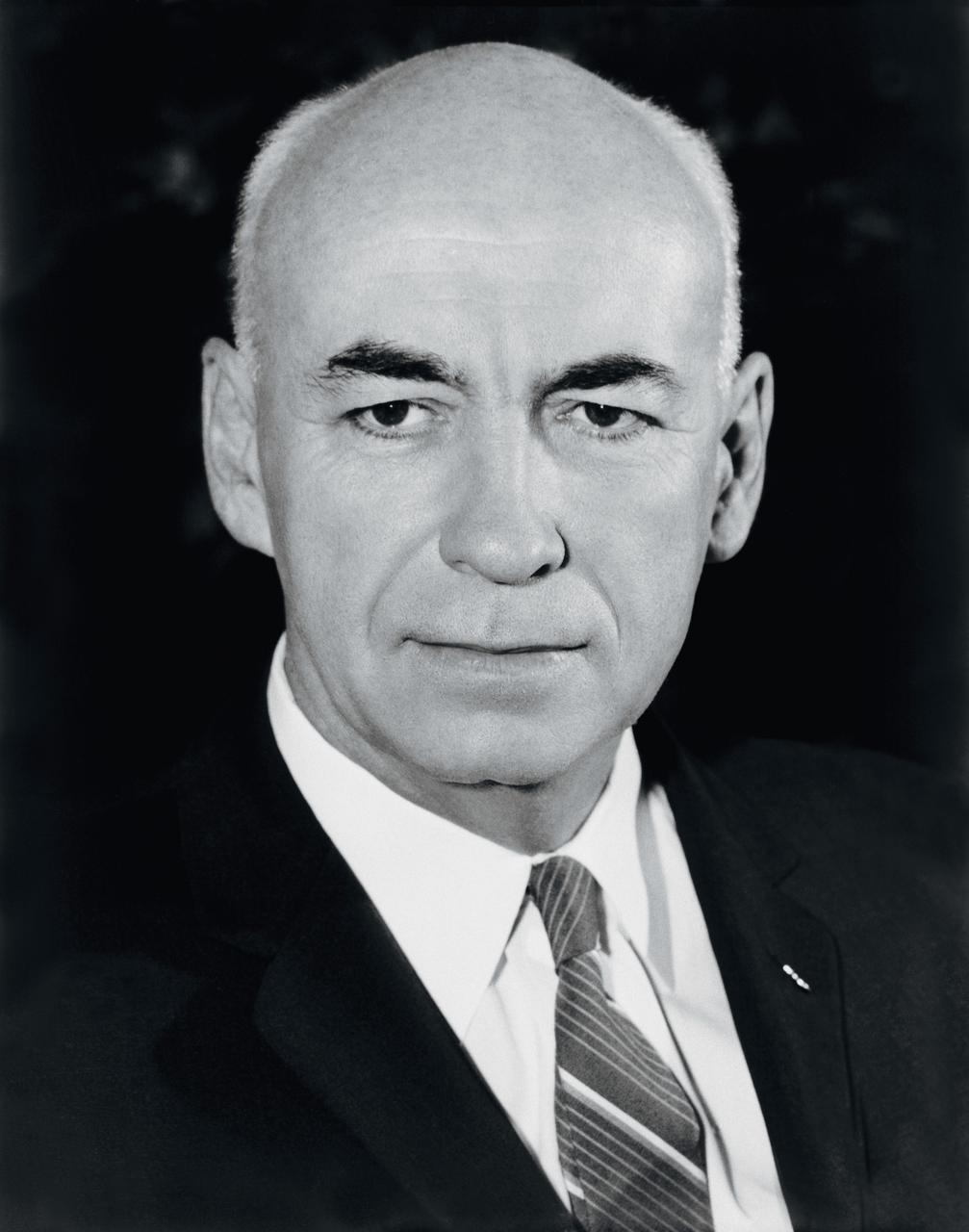
S65-45100 (Jan. 1965) --- Portrait of Dr. Robert R. Gilruth, Director of the Manned Spacecraft Center. Photo credit: NASA
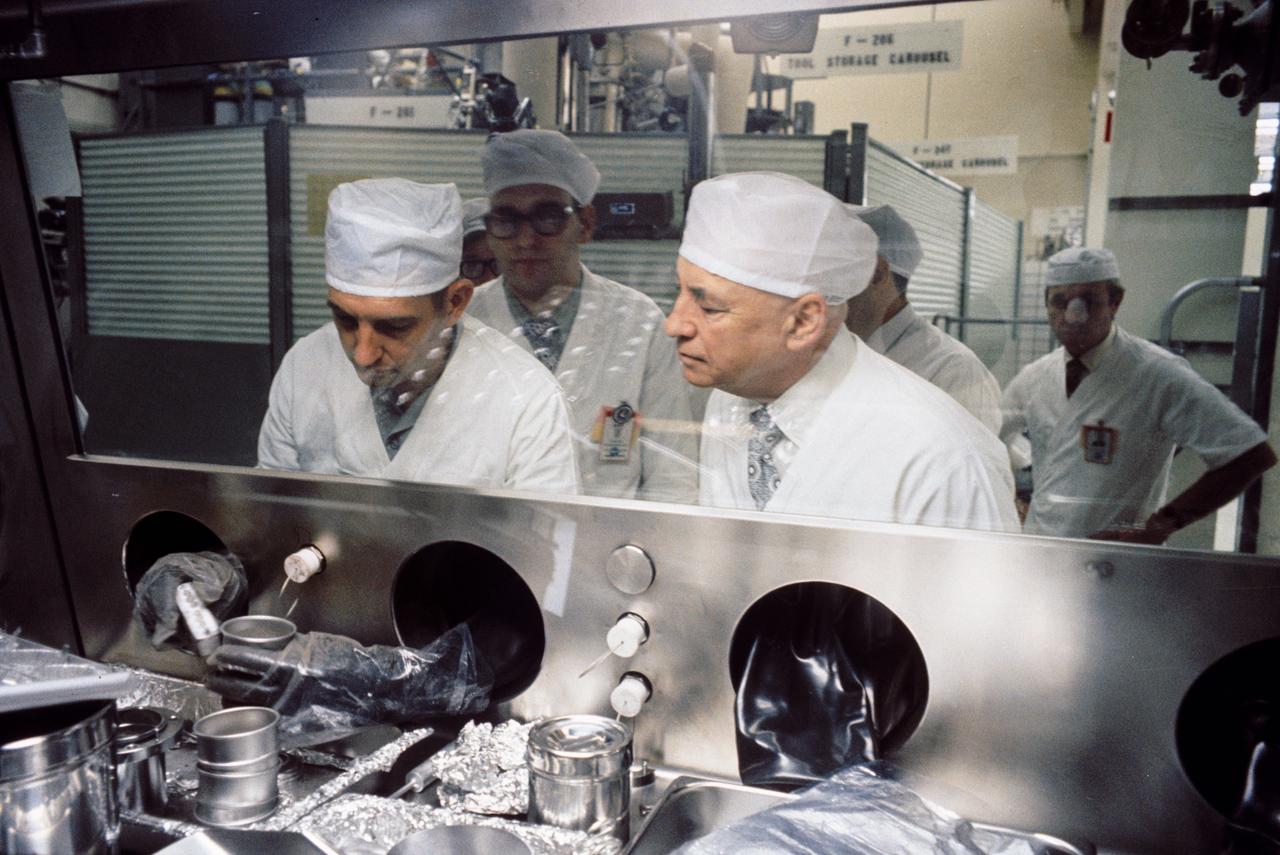
S73-34103 (1973) --- Wearing special germ-free clothing, Dr. Robert R. Gilruth, right, inspects lunar samples collected during the Apollo 17 mission, NASA's final Apollo flight.
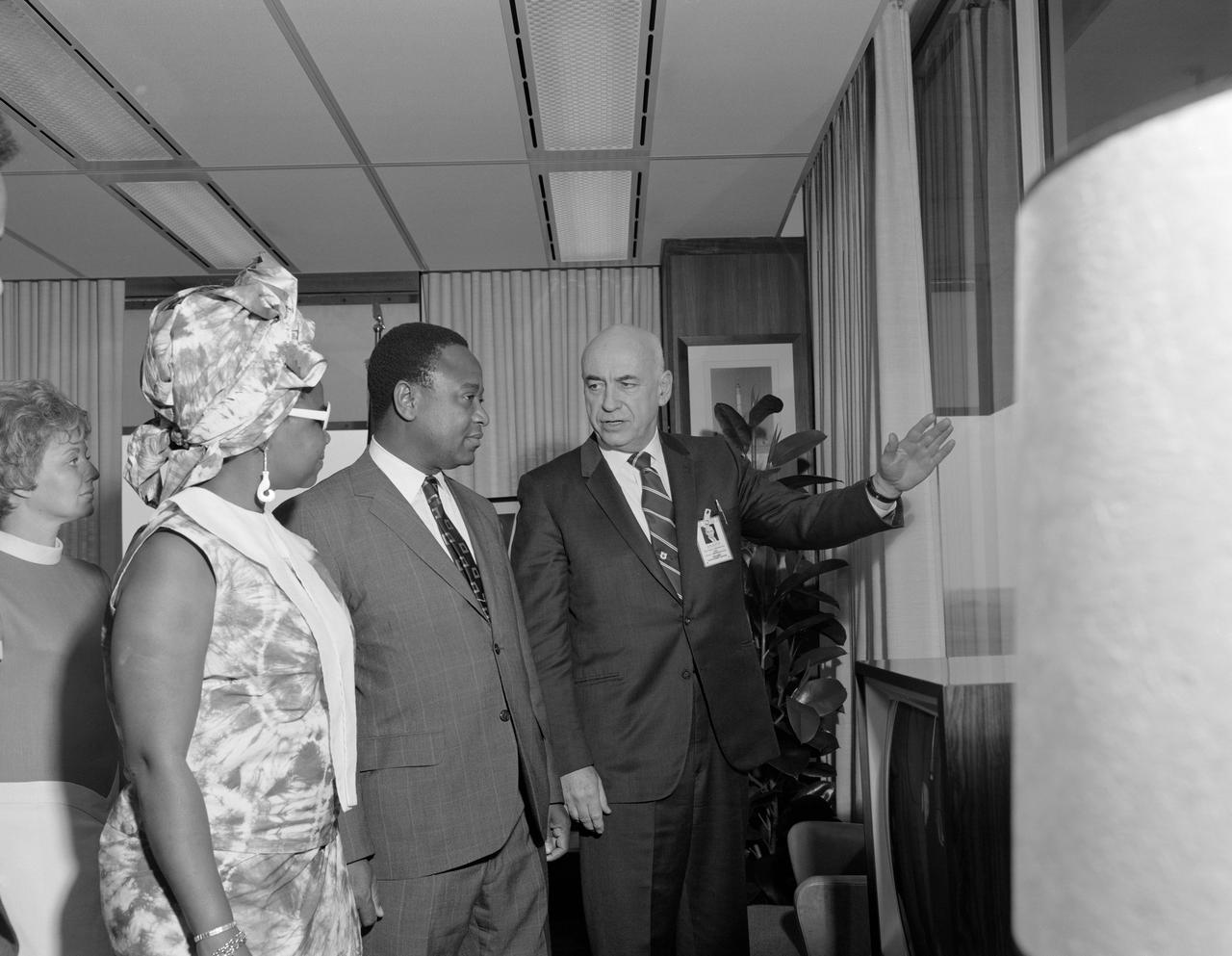
View of Ambassador Joe Iyalla, of Nigeria during his tour of MSC with Dr. Robert R. Gilruth,Center Director on the right. MSC, HOUSTON, TX
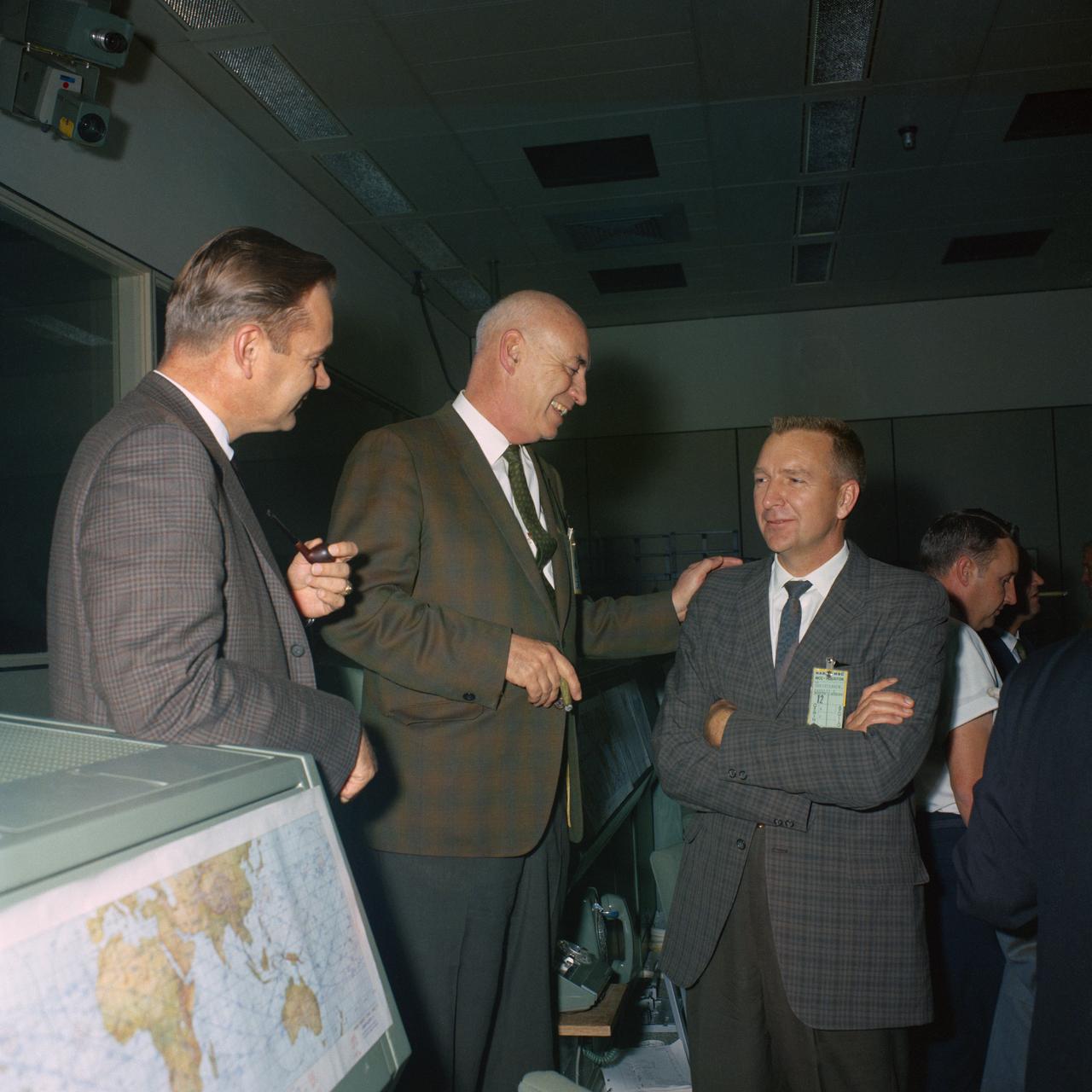
S66-64870 (15 Nov. 1966) --- Dr. Robert R. Gilruth (center) talks to other NASA officials in Mission Control Center near the end of the Gemini-12 mission. Photo credit: NASA
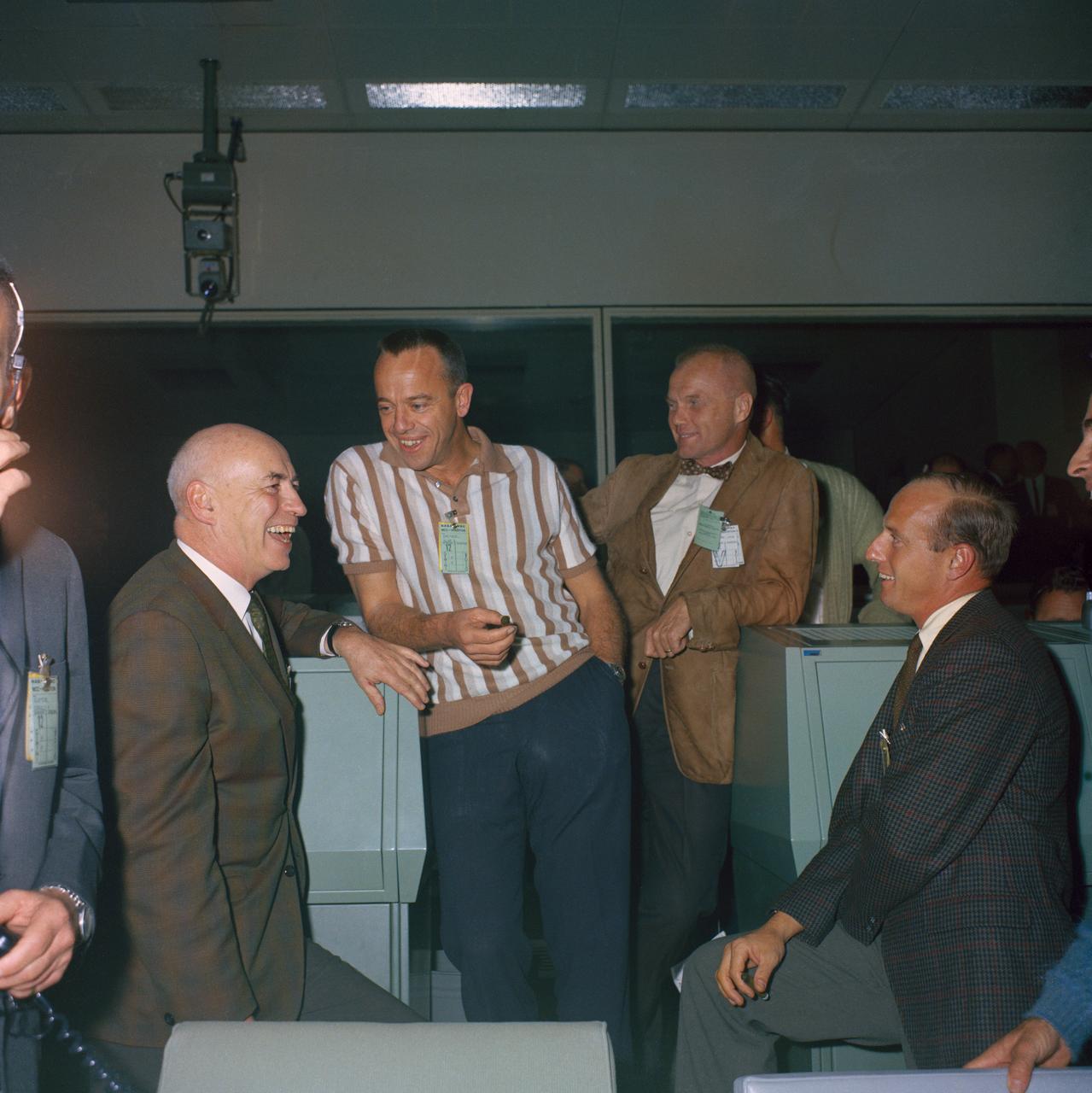
S66-64879 (15 Nov. 1966) --- Dr. Robert R. Gilruth (right), with astronauts, from the left, Charles Conrad Jr., John H. Glenn Jr. and Alan B. Shepard Jr. in Houston's Mission Control Center during the Gemini-12 mission. Photo credit: NASA
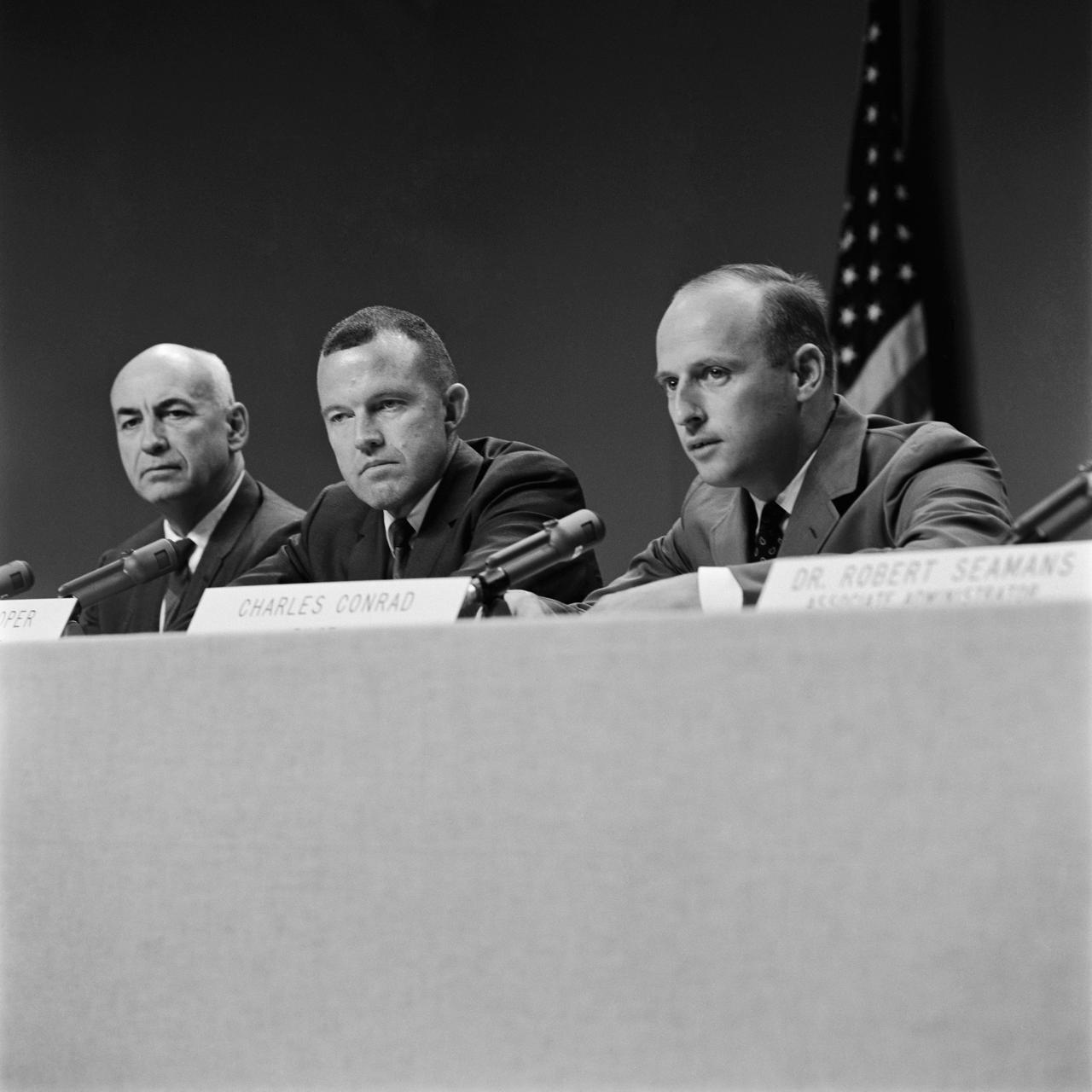
S65-45041 (9 Sept. 1965) --- Close-up of Gemini-5 astronauts during press conference. Pictured left to right are Dr. Robert R. Gilruth; along with astronauts L. Gordon Cooper Jr. and Charles Conrad Jr.
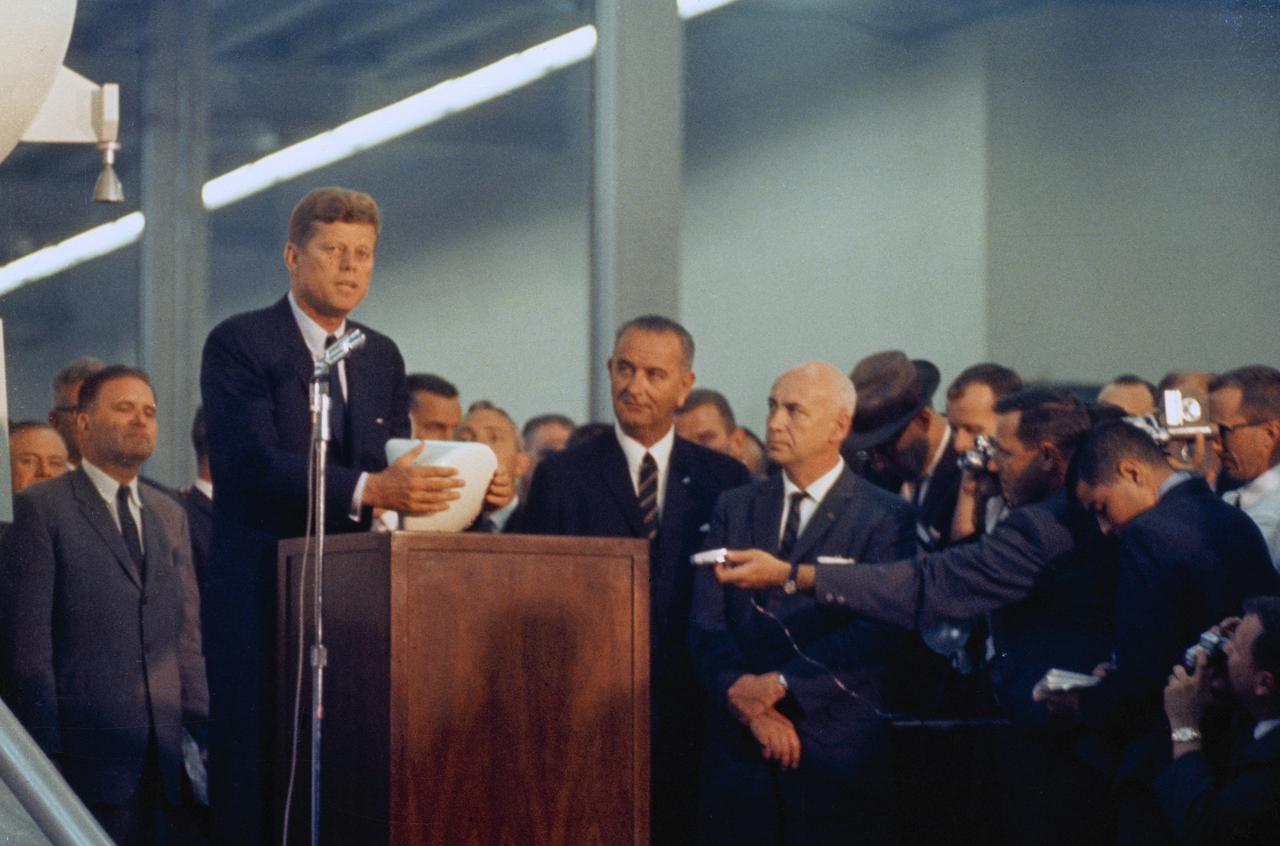
S62-05628 (November 1962) --- President John F. Kennedy speaks to a gathering of media and employees at Site 3 during a 1962 visit. Others seen are Vice-President Lyndon B. Johnson; Dr. Robert R. Gilruth; and James E. Webb, NASA Administrator.
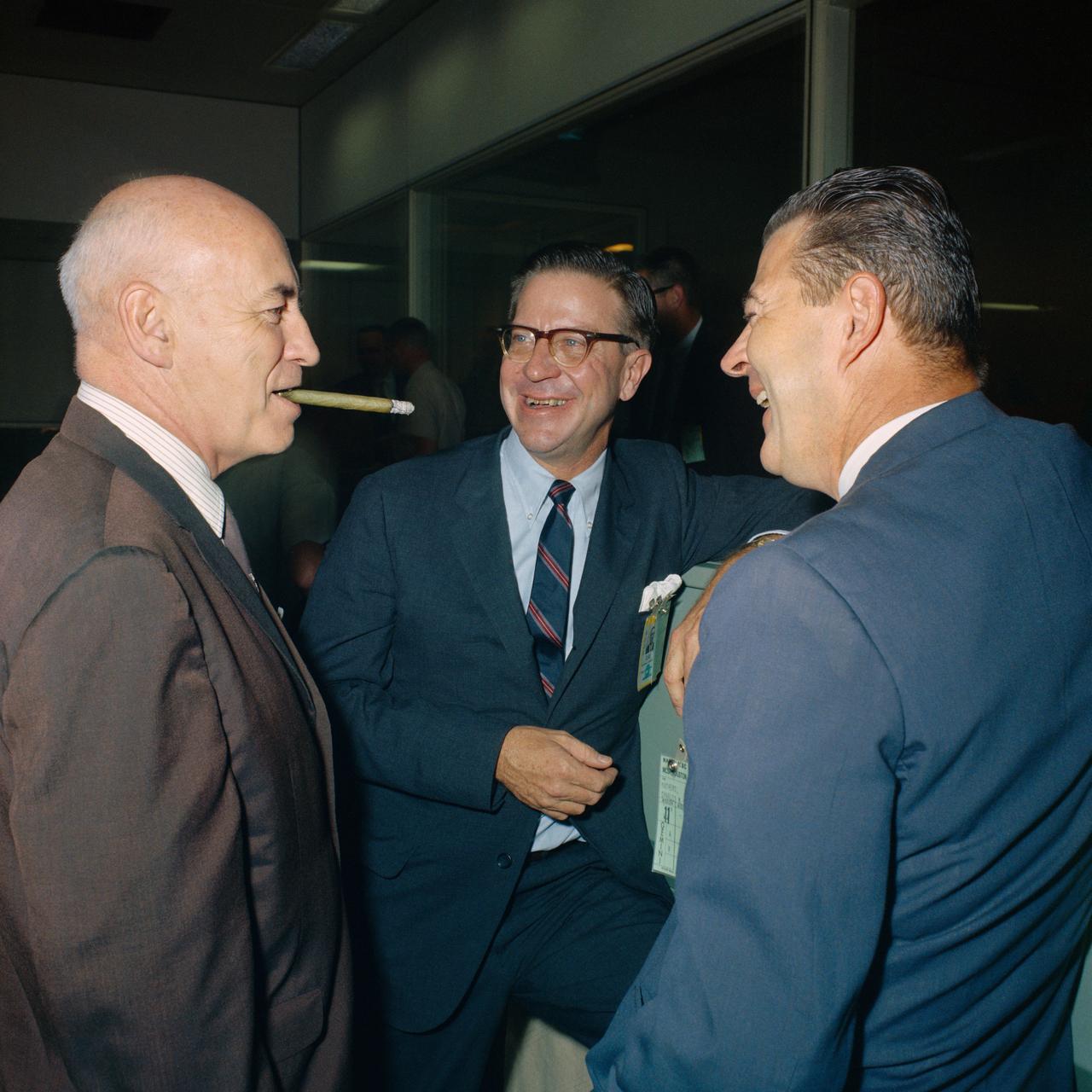
S66-52762 (15 Sept. 1966) --- Dr. Robert R. Gilruth (left) smokes a cigar in Houston's Mission Control Center to celebrate the successful splashdown of Gemini-11. Looking on are James C. Elms (center), MSC deputy director, and Charles W. Mathews, Gemini program manager. Photo credit: NASA
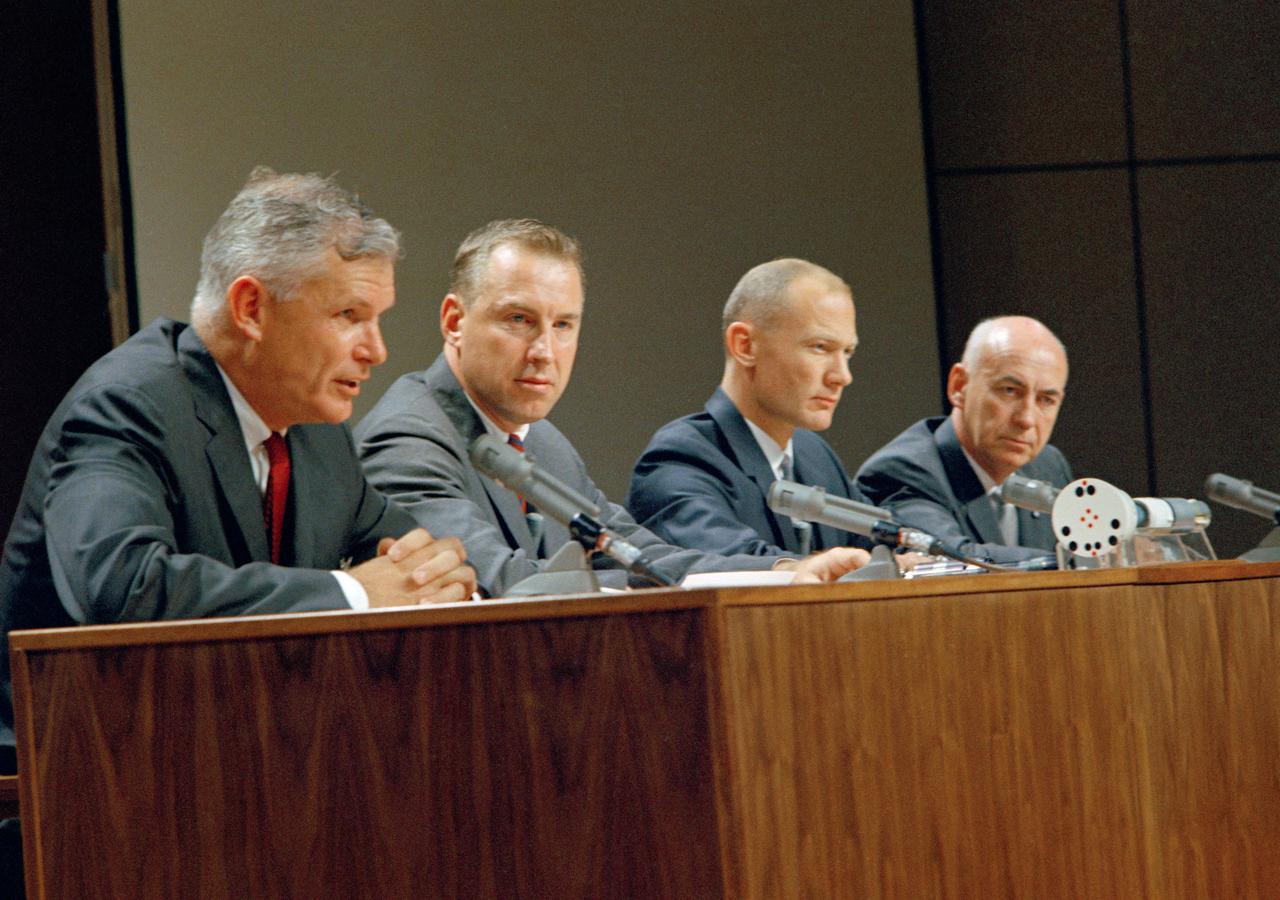
S66-65190 (23 Nov. 1966) --- Two key NASA officials and the Gemini-12 crew explain the Gemini-12 space mission to news media representatives at a postflight press conference in the MSC auditorium. Left to right, are Dr. Robert C. Seamans Jr., NASA Deputy Administrator; astronaut James A. Lovell Jr., command pilot; astronaut Edwin E. Aldrin Jr., pilot; and Dr. Robert R. Gilruth, MSC Director. Photo credit: NASA
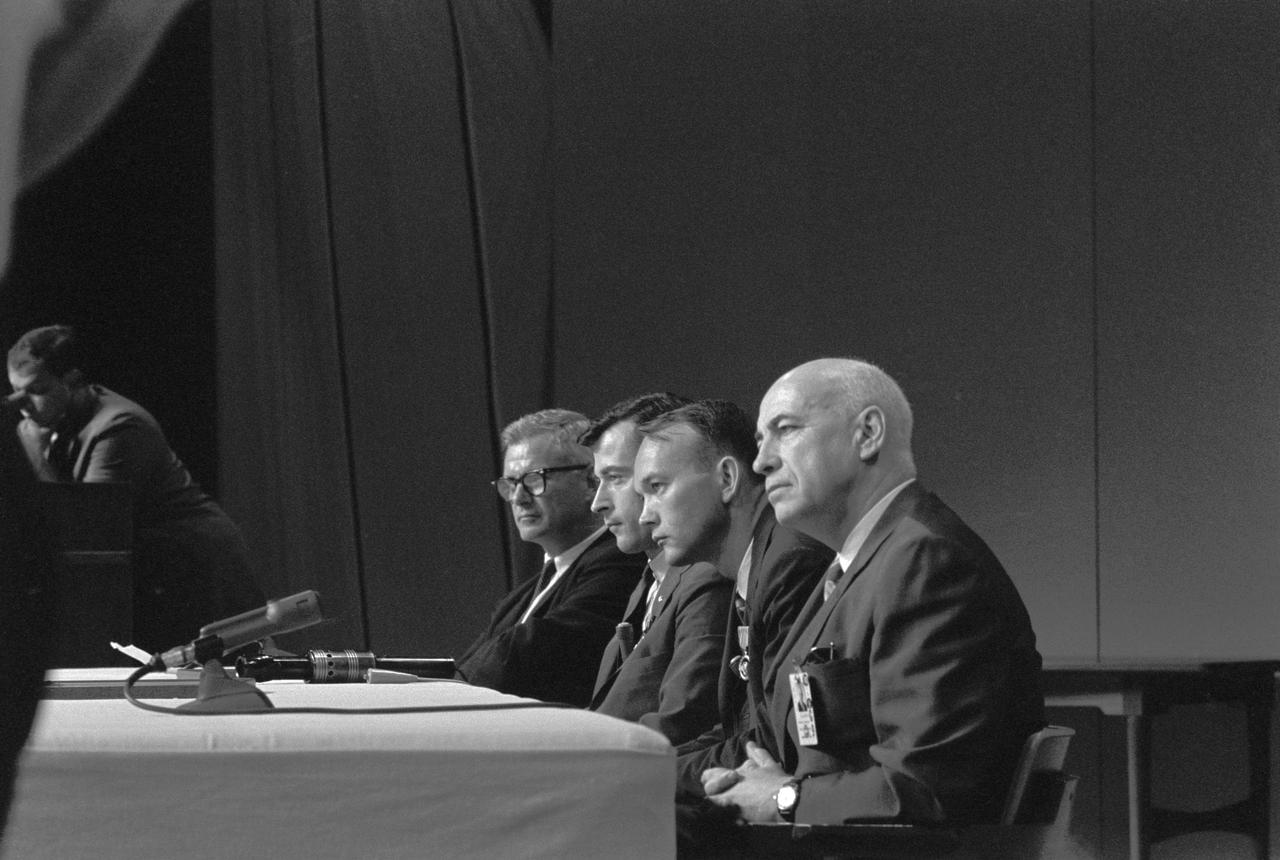
S66-39895 (1 Aug. 1966) --- Panel members of the Gemini-10 news conference held in the Building 1 auditorium were (from left) Dr. Robert C. Seamans Jr., NASA Deputy Administrator; astronaut John W. Young, Gemini-10 command pilot; astronaut Michael Collins, Gemini-10 pilot; and Dr. Robert R. Gilruth, MSC Director. Photo credit: NASA

S68-18733 (22 Jan. 1968) --- Dr. Robert R. Gilruth (right), MSC Director, sits with Dr. Christopher C. Kraft Jr., MSC director of flight operations, at his flight operations director console in the Mission Control Center, Building 30, during the Apollo 5 (LM-1/Saturn 204) unmanned space mission.
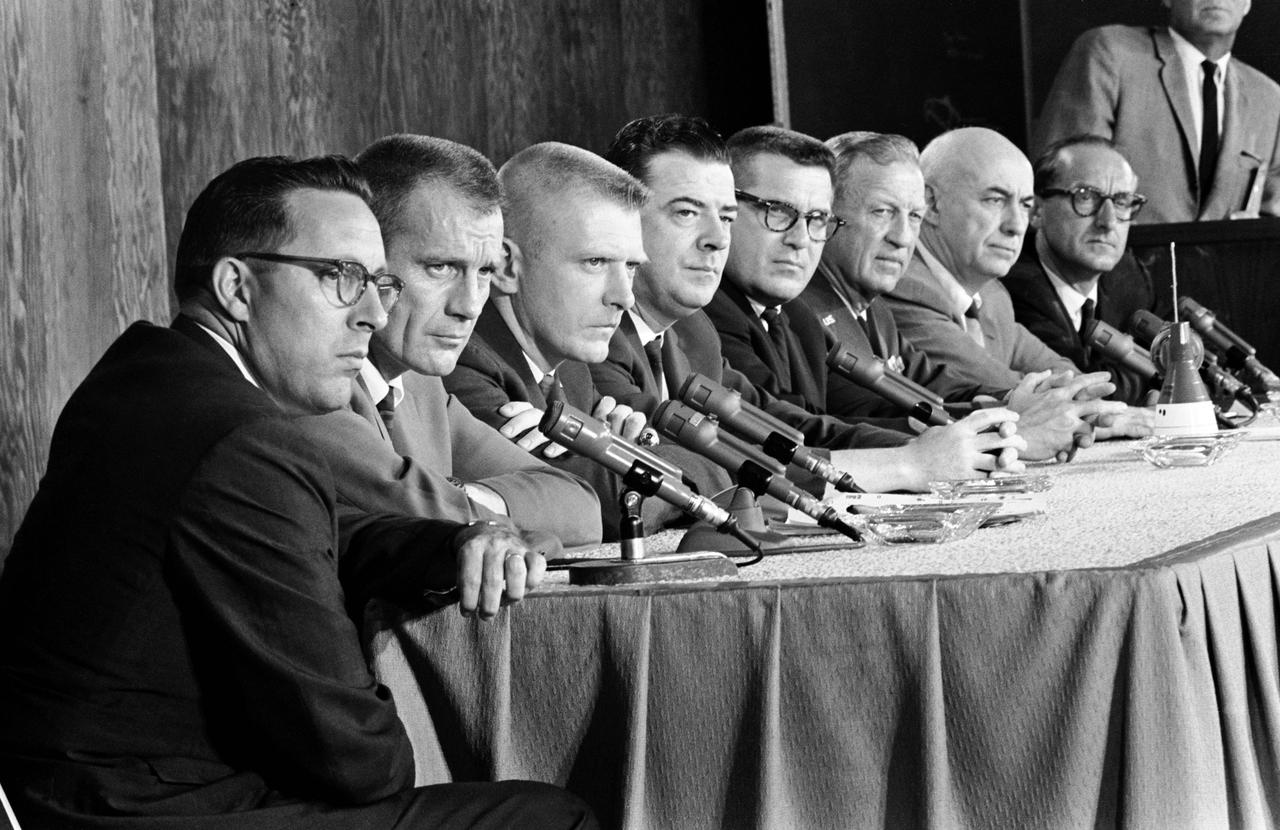
S66-32629 (1966) --- Left to right are Dr. Charles A. Berry, MSC Medical Director; Dr. Donald K. (Deke) Slayton, Director of Flight Crew Operations; Eugene F. Kranz, Flight Director; Charles W. Mathews, Gemini Program Manager, Manned Spacecraft Center; William C. Schneider, Gemini Mission Manager, NASA Headquarters; General Leighton Davis; Dr. Robert R. Gilruth, MSC Director; and Dr. George E. Mueller, Associate Administrator for Manned Space Flight, NASA Headquarters.
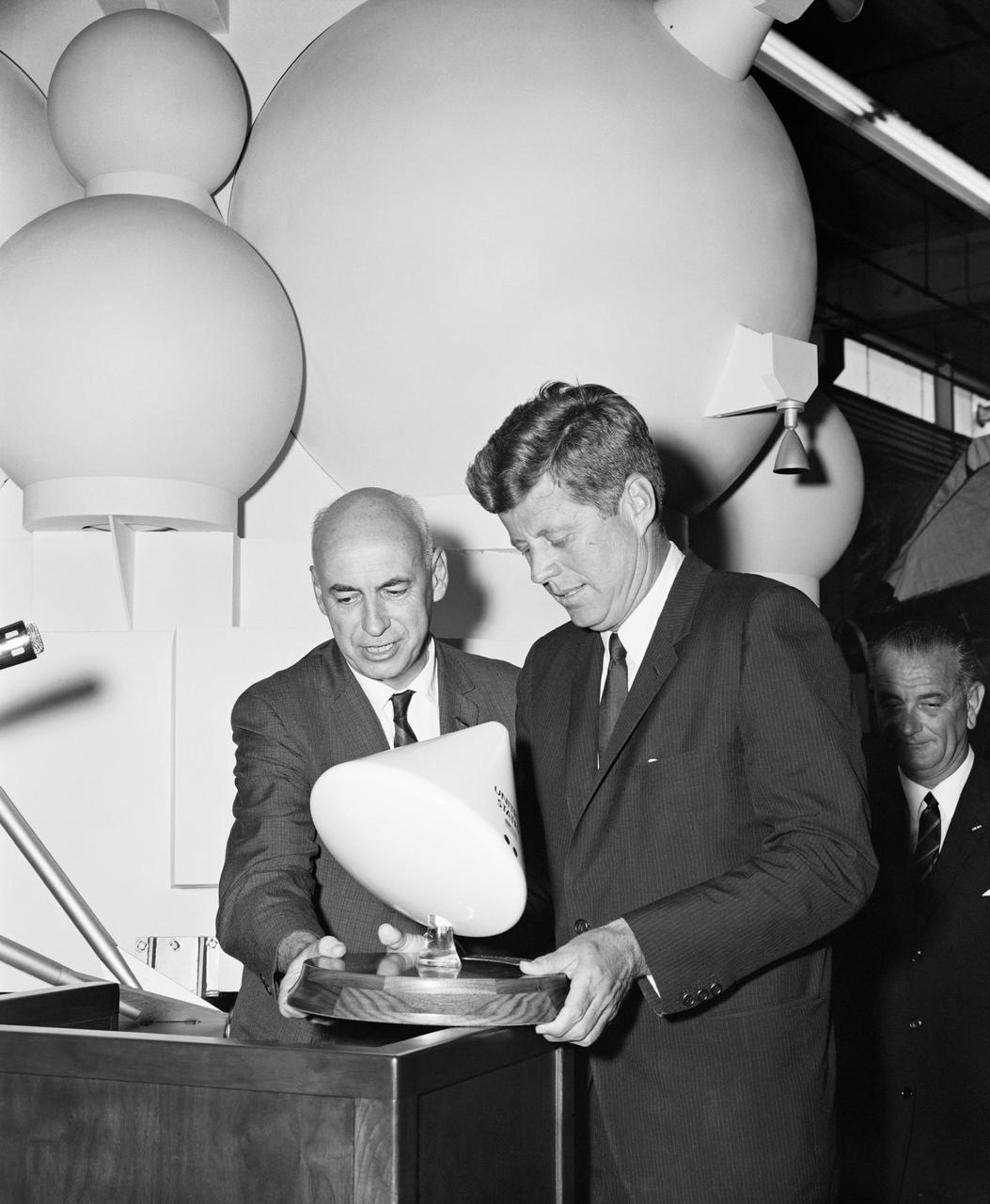
S62-03984 (12 September 1962) --- Dr. Robert R. Gilruth (left), MSC Director, presented President John F. Kennedy with this mounted model of the Apollo spacecraft at the end of the president's visit. Kennedy said, "We will take this back to the White House as a reminder of most extraordinary efforts being made by the men of NASA here and all across the country."
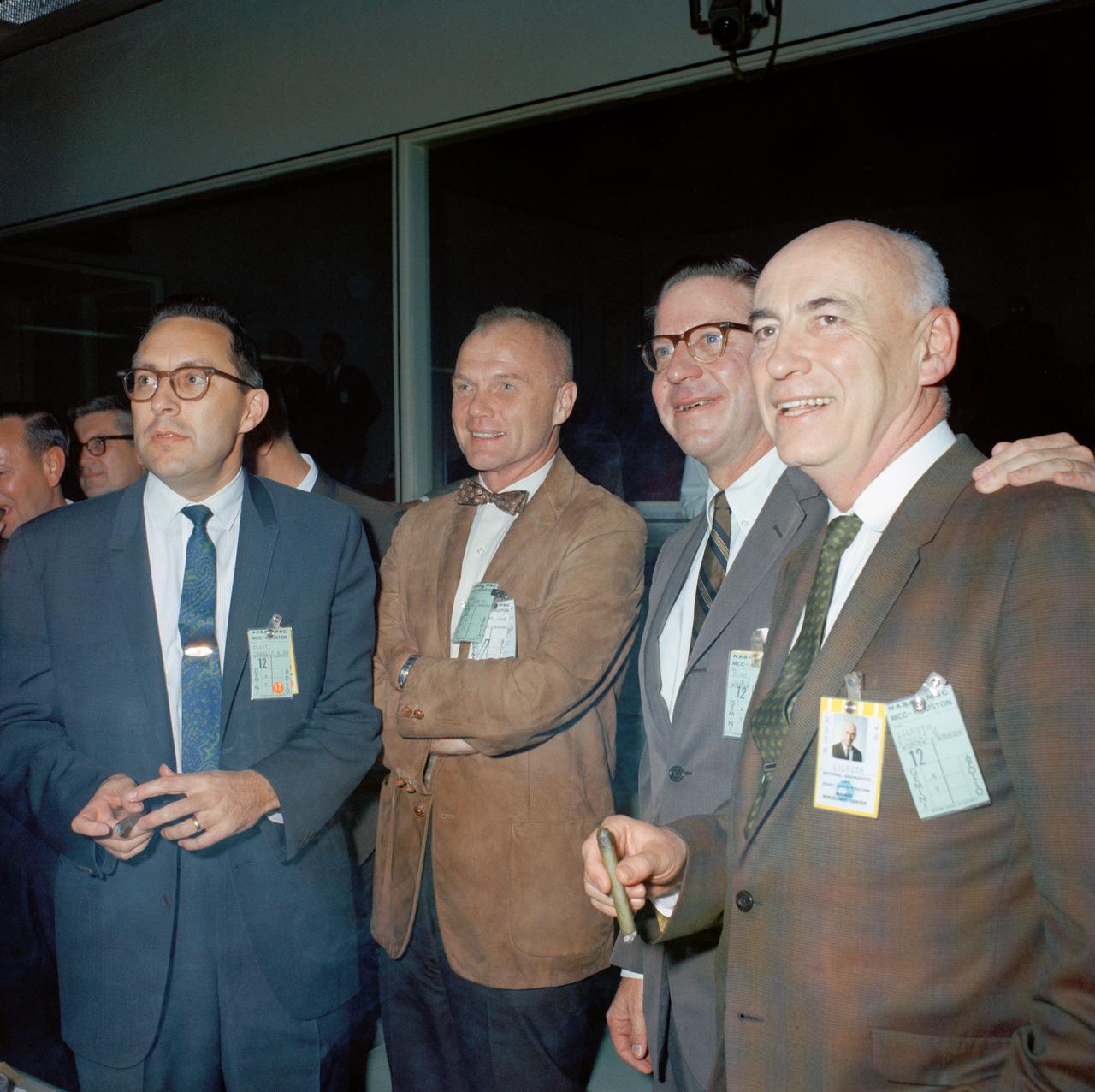
S66-64884 (15 Nov. 1966) --- Watching console activity in the Mission Control Center in Houston during the Gemini-12 splashdown (left to right), are Dr. Charles A. Berry, Director of Medical Research and Operations; astronaut John H. Glenn Jr.; James C. Elms, Director, NASA Electronics Research Center; and Dr. Robert R. Gilruth, Manned Spaceflight Center (MSC) Director. Photo credit: NASA
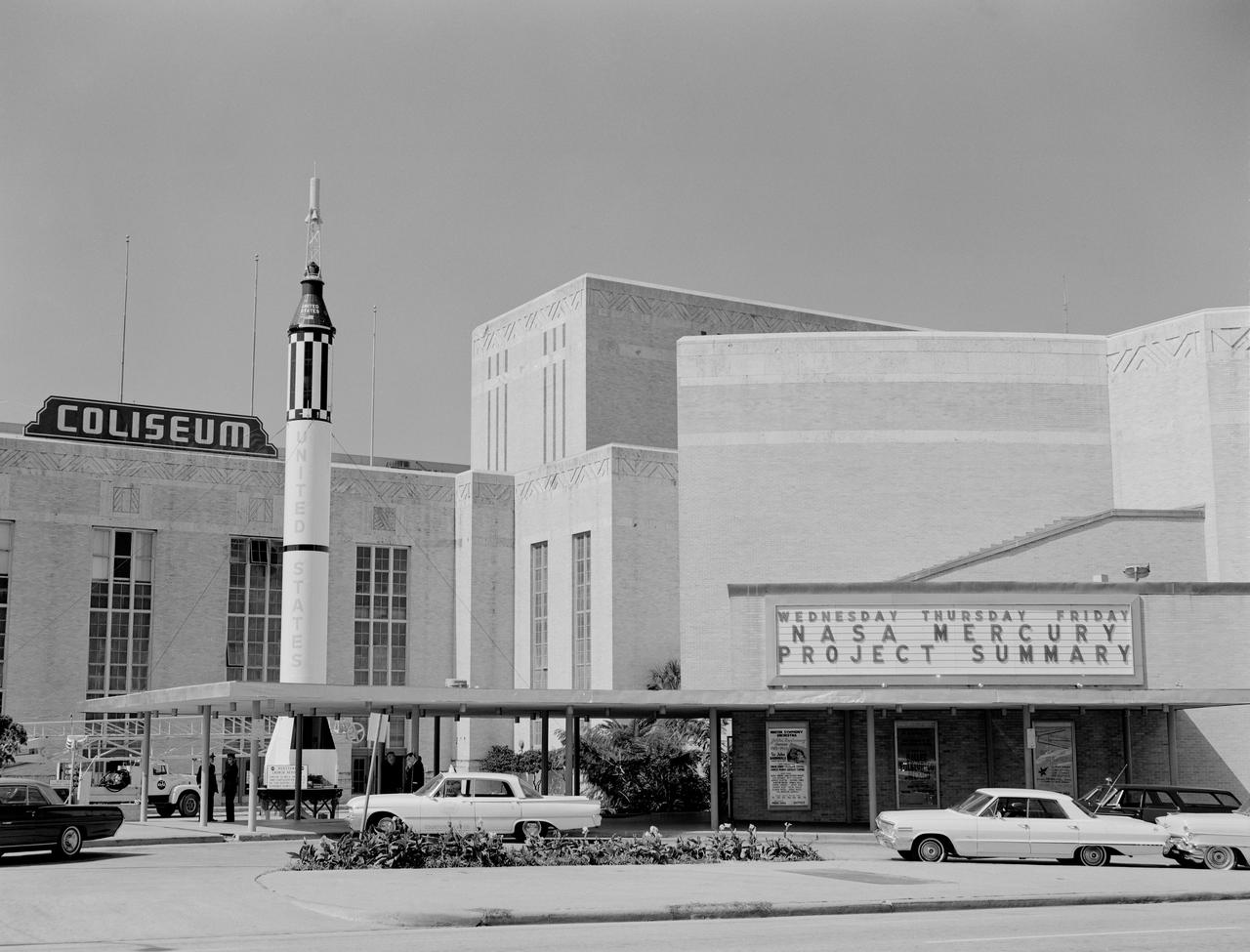
In October 1963, the Project Mercury Summary Conference was held in the Houston, TX, Coliseum. This series of 44 photos is documentation of that conference. A view of the Houston, TX, Coliseum, and parking area in front with a Mercury Redstone Rocket setup in the parking lot for display (S63-16451). A view of an Air Force Atlas Rocket, a Mercury Redstone Rocket, and a Mercury Spacecraft on a test booster on display in the front area of the Coliseum (S63-16452). A view an Air Force Atlas Rocket and a Mercury Redstone Rocket set up for display with the Houston City Hall in the background (S63- 16453). This view shows the Atlas Rocket, Mercury Redstone, and Mercury Test Rocket with the Houston, TX, Coliseum in the background (S63- 16454). A balcony view, from the audience right side, of the attendees looking at the stage (S63-16455). A view of the NASA Space Science Demonstration with equipment setup on a table, center stage and Space Science Specialist briefing the group as he pours Liquid Oxygen into a beaker (S63-16456). View of the audience from the balcony on the audience right showing the speakers lecturn on stage to the audience left (S63-16457). A view of attendees in the lobby. Bennet James, MSC Public Affairs Office is seen to the left of center (S63-16458). Another view of the attendees in the lobby (S63- 16459). In this view, Astronaut Neil Armstrong is seen writing as others look on (S63-16460). In this view of the attendees, Astronauts Buzz Aldrin and Walt Cunningham are seen in the center of the shot. The October Calendar of Events is visable in the background (S63-16461). Dr. Charles Berry is seen in this view to the right of center, seated in the audience (S63-16462). View of " Special Registration " and the five ladies working there (S63-16463). A view from behind the special registration table, of the attendees being registered (S63-16464). A view of a conference table with a panel seated. (R-L): Dr. Robert R. Gilruth, Hugh L. Dryden, Walter C. Williams, and an unidentified man (S63- 16465). A closeup of the panel at the table with Dr. Gilruth on the left (S63-16466). About the same shot as number S63-16462, Dr. Berry is seen in this shot as well (S63-16467). In this view the audio setup is seen. In the audience, (L-R): C. C. Kraft, Vernon E. (Buddy) Powell, Public Affairs Office (PAO); and, in the foreground mixing the audio is Art Tantillo; and, at the recorder is Doyle Hodges both of the audio people are contractors that work for PAO at MSC (S63-16468). In this view Maxime Faget is seen speaking at the lecturn (S63-16469). Unidentified person at the lecturn (S63-16470). In this view the motion picture cameras and personel are shown documenting the conference (S63-16471). A motion picture cameraman in the balcony is shown filming the audience during a break (S63- 16472). Family members enjoy an exhibit (S63-16473). A young person gets a boost to look in a Gemini Capsule on display (S63-16474). A young person looks at the Gemini Capsule on display (S63-16475). Dr. Robert R. Gilruth is seen at the conference table (S63-16476). Walt Williams is seen in this view at the conference table (S63-16477). Unidentified man sitting next to Walt Williams (S63-16478). (L-R): Seated at the conference table, Dr. Robert Gilruth, Hugh L. Dryden, and Walt Williams (S63- 16479). Group in lobby faces visable, (L-R): Walt Williams, unidentified person, Dr. Robert Gilruth, Congressman (S63-16480). Man in uniform at the lecturn (S63-16481). Astronaut Leroy Gordon Cooper at the lecturn (S63-16482). Astronaut Cooper at the lecturn with a picture on the screen with the title, " Astronaut Names for Spacecraft " (S63-16483). Dr. Gilruth at the lecturn (S63-16484). Walt Williams at the lecturn (S63-16485). Unidentified man at the lecturn (S63-16486). John H. Boynton addresses the Summary Conference (S63-16487). (L-R): Astronaut Leroy Gordon Cooper, Mrs. Cooper, Senator Cris Cole, and Mrs. Cole (S63- 16488). In this view in the lobby, Senator and Mrs. Cris Cole, with Astronaut Gordon Cooper standing near the heatshield, and Mrs. Cooper; next, on the right is a press photographer (S63-16489). (L-R): Astronaut L. Gordon Cooper and Mrs. Cooper, unidentified man, and Senator Walter Richter (S63-16490). (L-R): Eugene Horton, partially obscured, briefs a group on the Mercury Spacecraft, an unidentified person, Harold Ogden, a female senator, Senator Chris Cole, Mrs. Cole, an unidentified female, Senator Walter Richter, Jim Bower, and an unidentified female (S63-16491). In this view, Mrs. Jim Bates is seen in the center, and Senator Walter Richter to the right (S63- 16492). The next three (3) shots are 4X5 CN (S63-16493 - S63-16495). In this view a NASA Space Science Demonstration is seen (S63-16493). In this view a shot of the conference table is seen, and, (L-R): Dr. Robert R. Gilruth, Hugh L. Dryden, Mr. Walter Williams, and an unidentfied man (S63-16494 - S63-16495). HOUSTON, TX
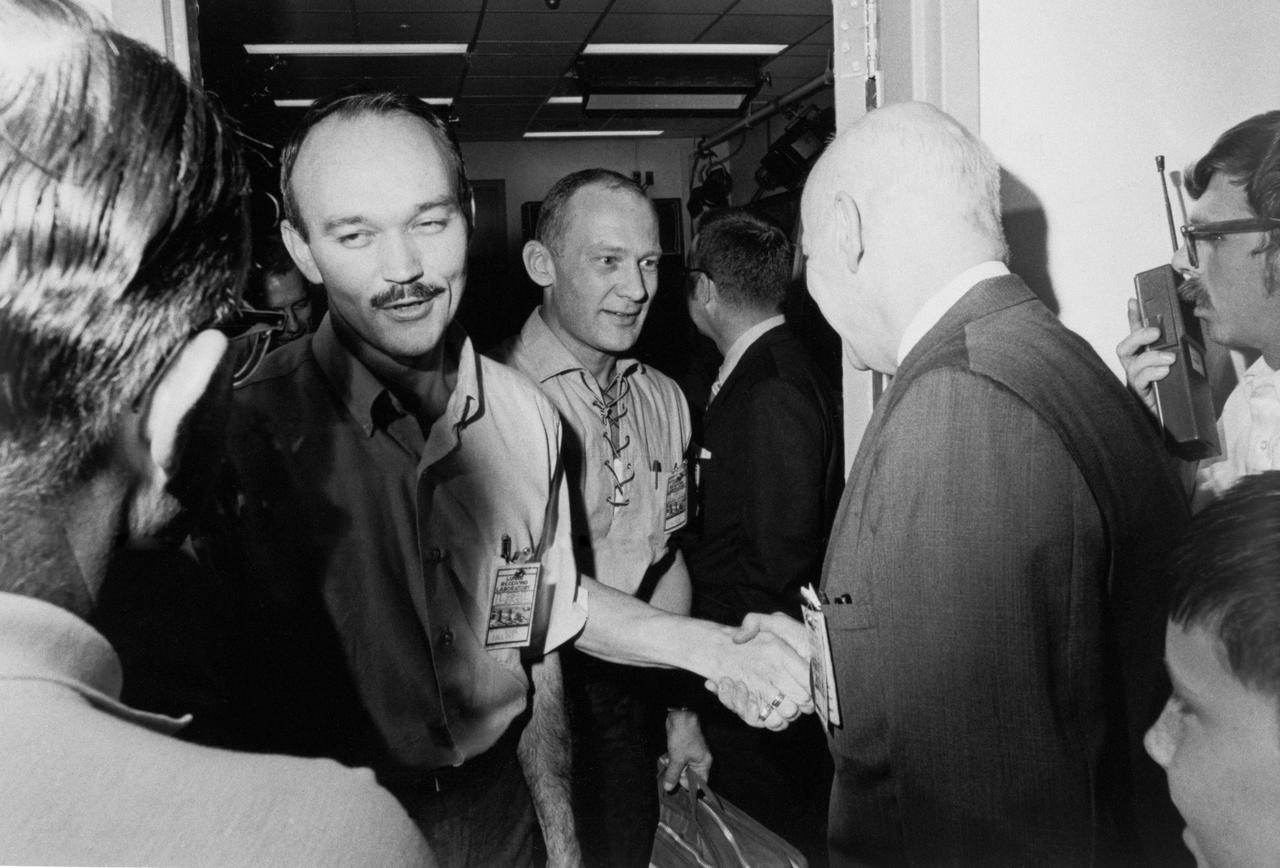
S69-41359 (10 Aug. 1969) --- Astronauts Michael Collins (left) and Edwin E. Aldrin Jr., are greeted by Dr. Robert R. Gilruth, director, Manned Spacecraft Center (MSC), and others upon their release from quarantine. The Apollo 11 crew left the Crew Reception Area (CRA) of the Lunar Receiving Laboratory (LRL) at 9 p.m., Aug. 10, 1969. While astronauts Neil A. Armstrong, commander, and Aldrin, lunar module pilot, descended in the Lunar Module (LM) "Eagle" to explore the Sea of Tranquility region of the moon, astronaut Collins, command module pilot, remained with the Command and Service Modules (CSM) "Columbia" in lunar orbit.
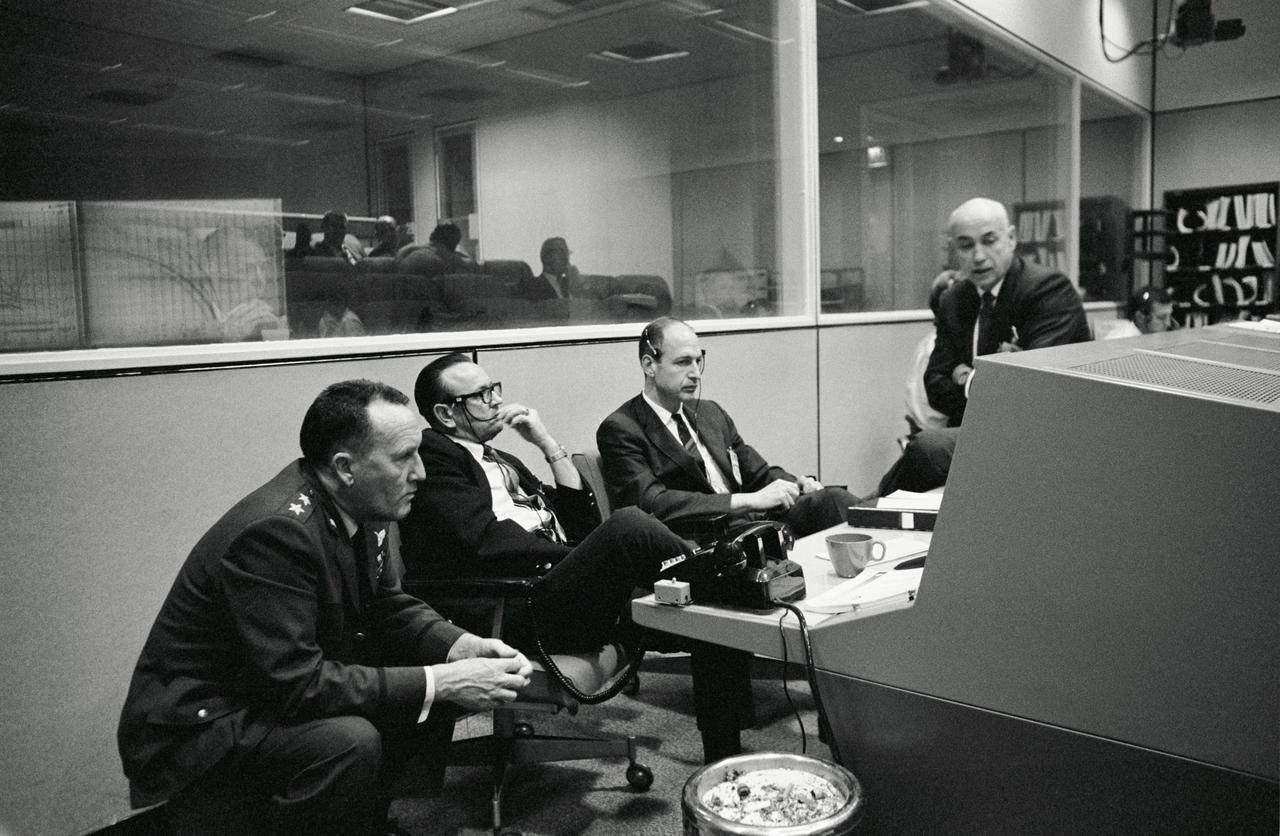
S68-20986 (4 April 1968) --- Scene at the flight operations director's console in the Mission Control Center, Building 30, during the Apollo 6 (Spacecraft 020/Saturn 520) unmanned space flight. Left to right, are Air Force Maj. Gen. Vincent G. Huston, DOD Manager, Manned Space Flight Operations, Andrews Air Force Base, Washington, D.C.; Dr. Christopher C. Kraft Jr., MSC director of flight operations; George M. Low, manager, MSC Apollo Spacecraft Program Office; and Dr. Robert R. Gilruth, MSC Director.
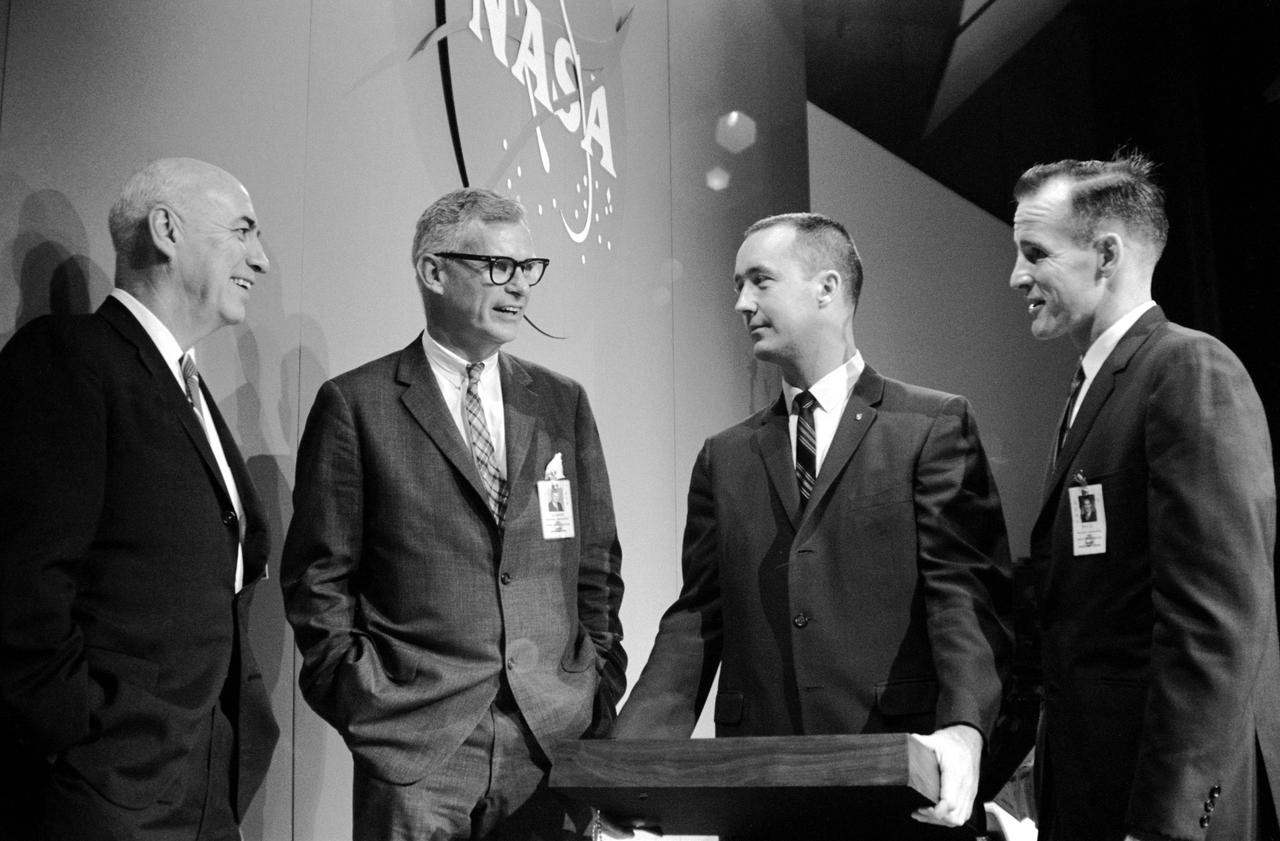
S65-33352 (11 June 1965) --- The Gemini-4 prime crew pose with two NASA officials after a press conference in the MSC auditorium. Left to right, are Dr. Robert R. Gilruth, MSC director; Dr. Robert C. Seamans Jr., associate administrator, National Aeronautics and Space Administration; astronaut James A. McDivitt, command pilot of the Gemini-4 flight; and astronaut Edward H. White II, pilot of the mission. The two astronauts had just returned to Houston following their debriefings at Cape Kennedy. The Gt-4 liftoff was at 10:16 a.m. (EST) on June 3, 1965. Time of splashdown ending the four-day, 62-revolution mission was at 12:12 p.m. on June 7, 1965.
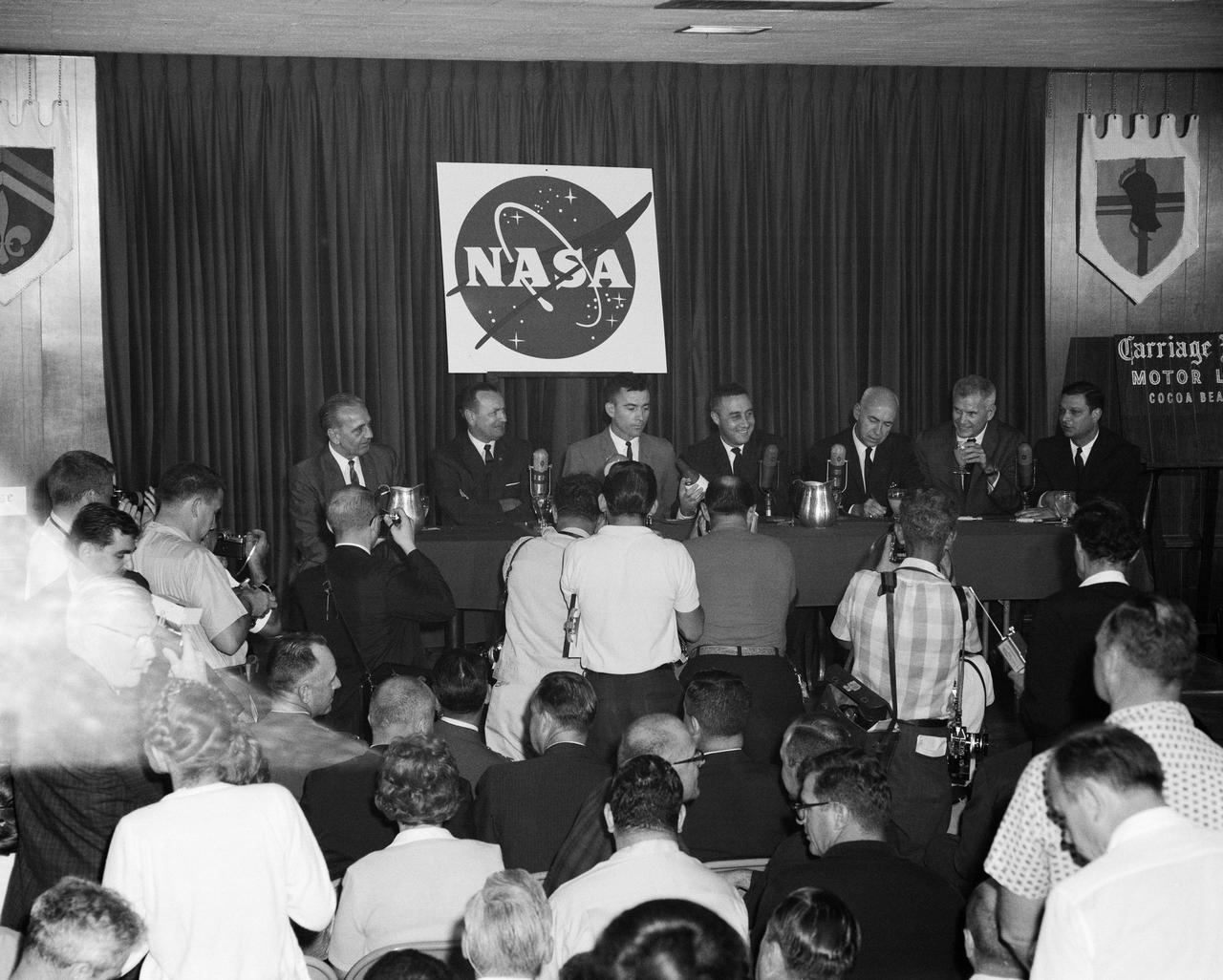
S65-20864 (25 March 1965) --- News conference held at the Carriage House press site the day after the successful Gemini-Titan 3 three-orbit mission. Being interviewed at the press table by news media are (left to right) Dr. Kurt H. Debus, director of Kennedy Space Center; Christopher C. Kraft Jr., MSC assistant director for Flight Operations; astronaut John W. Young, pilot of the GT-3 flight; astronaut Virgil I. Grissom, command pilot of the GT-3 mission; Dr. Robert R. Gilruth, MSC director; Dr. Robert C. Seamans, NASA associate administrator; and Julian Scheer, assistant administrator, Office Of Public Affairs, NASA.
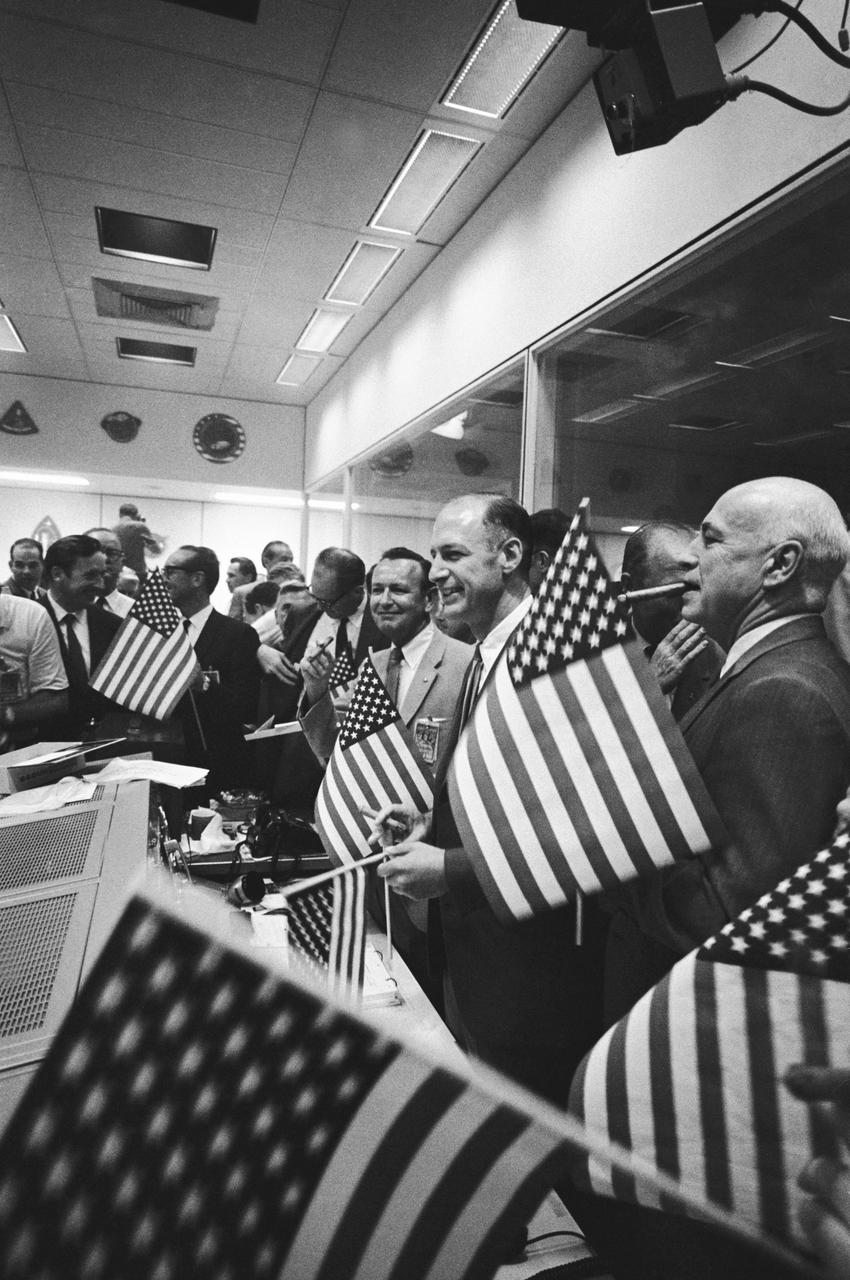
S69-40024 (24 July 1969) --- NASA and Manned Spacecraft Center (MSC) officials join in with the flight controllers, in the Mission Operations Control Room (MOCR) in the Mission Control Center (MCC), in celebrating the successful conclusion of the Apollo 11 lunar landing mission. Identifiable in the picture, starting in foreground, are Dr. Robert R. Gilruth, MSC Director; George M. Low, Manager, Apollo Spacecraft Program, MSC; Dr. Christopher C. Kraft Jr., MSC Director of Flight Operation; U.S. Air Force Lt. Gen. Samuel C. Phillips (with glasses, looking downward), Apollo Program Director, Office of Manned Space Flight, NASA Headquarters; and Dr. George E. Mueller (with glasses, looking toward left), Associate Administrator, Office of Manned Space Flight, NASA Headquarters. Former astronaut John H. Glenn Jr. is standing behind Mr. Low.
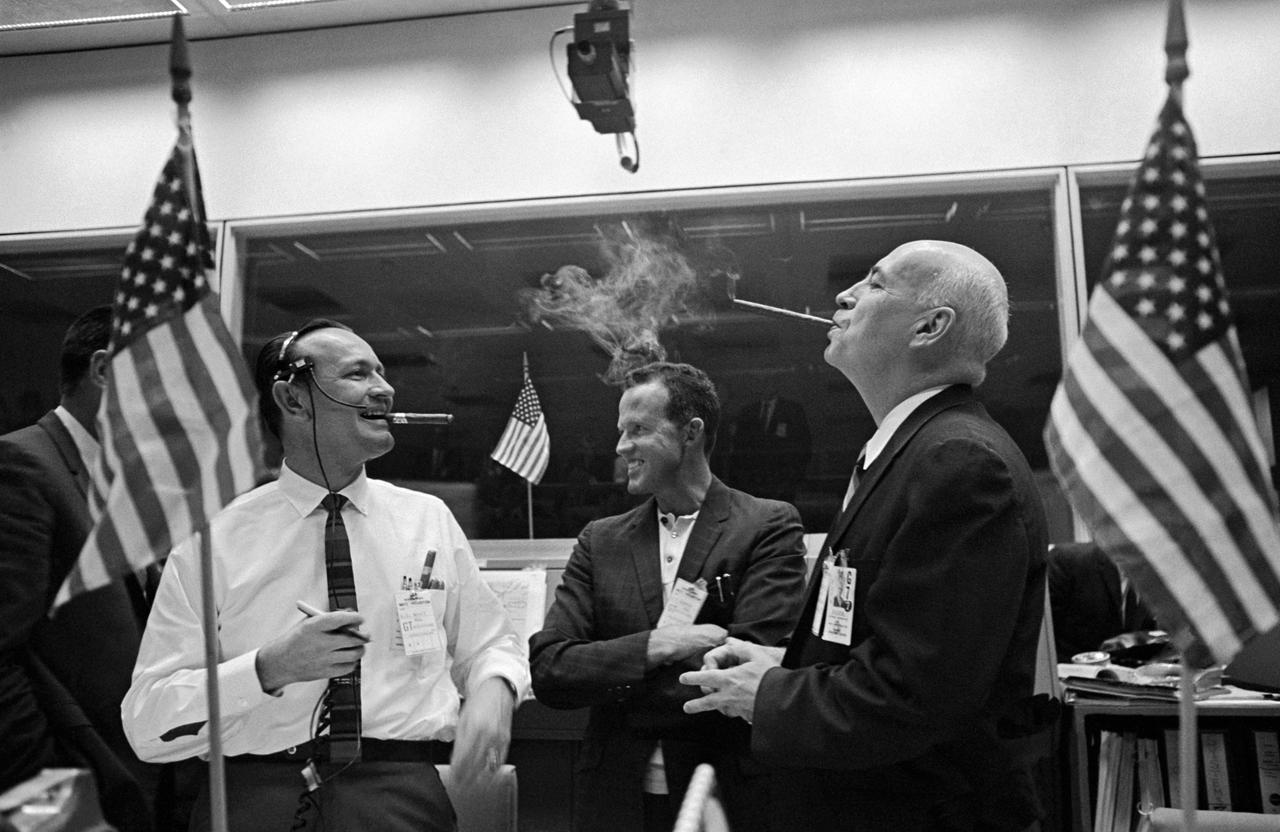
S65-62719 (15 Dec. 1965) --- Discussing the successful and historic rendezvous in space of the National Aeronautics and Space Administration?s Gemini-6 and 7 spacecrafts are, Christopher C. Kraft Jr. (left), red team flight director; astronaut L. Gordon Cooper Jr. (center); and Dr. Robert R. Gilruth, Manned Spacecraft Center director. Consoles in the Center were decorated with small American flags and the traditional cigars were lit to celebrate the rendezvous. Crew members of the two spacecraft are astronaut Walter M. Schirra Jr., command pilot, and Thomas P. Stafford, pilot, Gemini-6; and astronauts Frank Borman, command pilot, and James A. Lovell Jr., pilot, Gemini-7. Photo credit: NASA or National Aeronautics and Space Administration
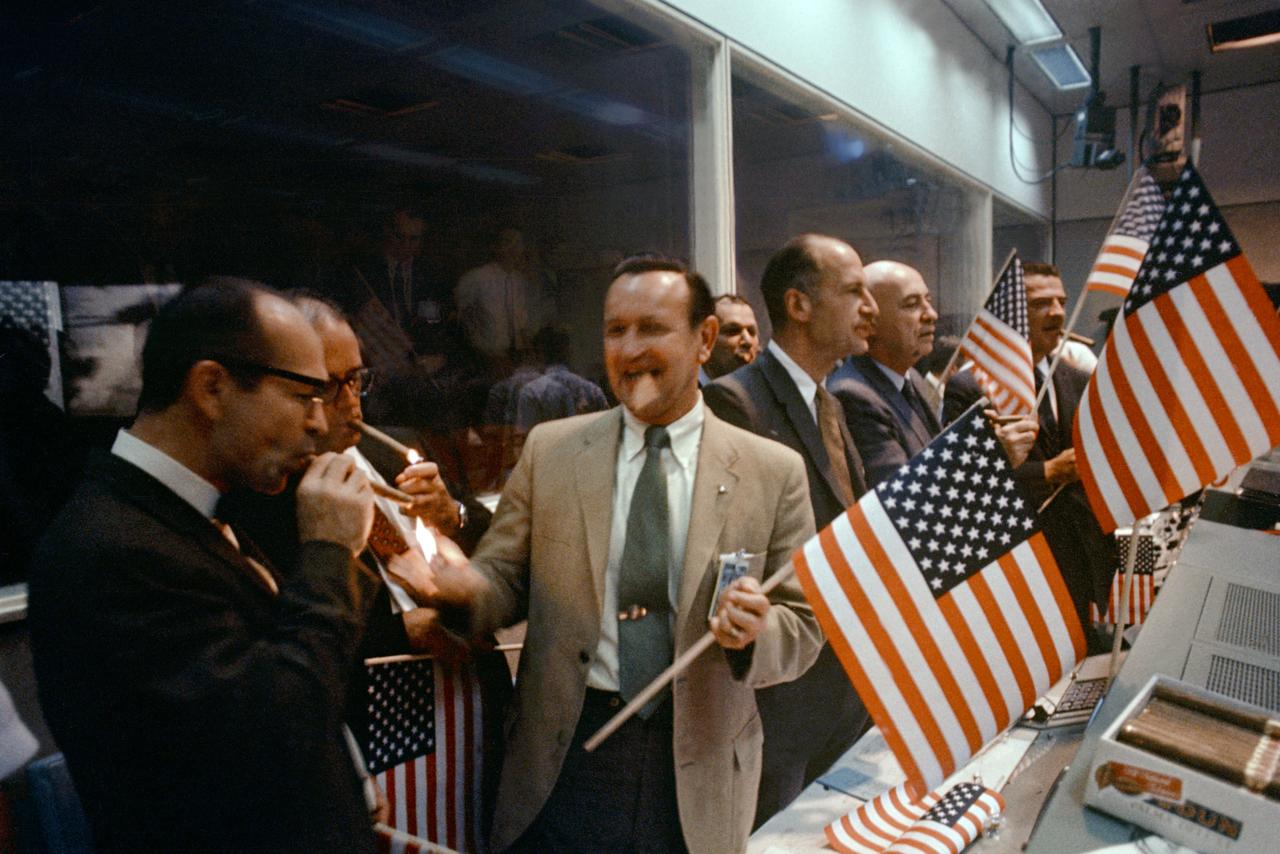
S69-40302 (24 July 1969) --- A group of NASA and Manned Spacecraft Center (MSC) officials join in with the flight controllers in the Mission Operations Control Room (MOCR) in the Mission Control Center (MCC), Building 30, in celebrating the successful conclusion of the Apollo 11 lunar landing mission. From left foreground are Dr. Maxime A. Faget, MSC Director of Engineering and Development; George S. Trimble, MSC Deputy Director; Dr. Christopher C. Kraft Jr., MSC Director of Flight Operations; Julian Scheer (in back), Assistant Administrator, Office of Public Affairs, NASA Headquarters; George M. Low, Manager, Apollo Spacecraft Program, MSC; Dr. Robert R. Gilruth, MSC Director; and Charles W. Mathews, Deputy Associate Administrator, Office of Manned Space Flight, NASA Headquarters.
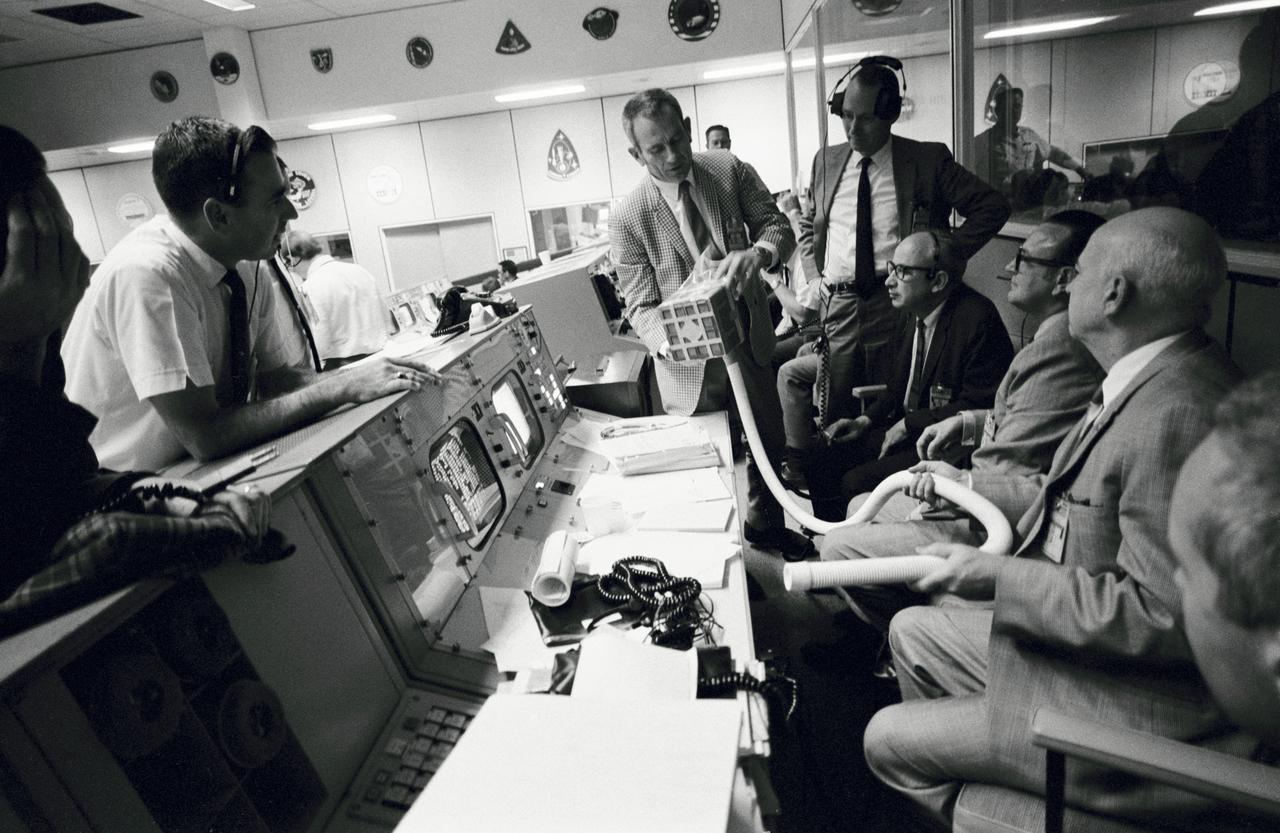
S70-35013 (15 April 1970) --- Prototype of the "mail box" constructed at the Manned Spacecraft Center (MSC) to remove carbon dioxide from the Apollo 13 Command Module (CM) is displayed in the Mission Control Center (MCC). The "mail box" was constructed when it became apparent CO2 was prevalent in the CM and the spacecraft's lithium hydroxide system was not removing it sufficiently. A space suit exhaust hose is connected to a lithium hydroxide canister to purge the cabin air. There are 16 such canisters in the CM and each will last approximately 12 hours. Looking at the "mail box" are (from the left): Milton L. Windler, shift 1 flight director; Dr. Donald K. (Deke) Slayton, director of flight crew operations, MSC; Howard W. Tindall, deputy director, flight operations, MSC; Sigurd A. Sjoberg, director, flight operations, MSC; Dr. Christopher C. Kraft, deputy director, MSC; and Dr. Robert R. Gilruth, director, MSC.
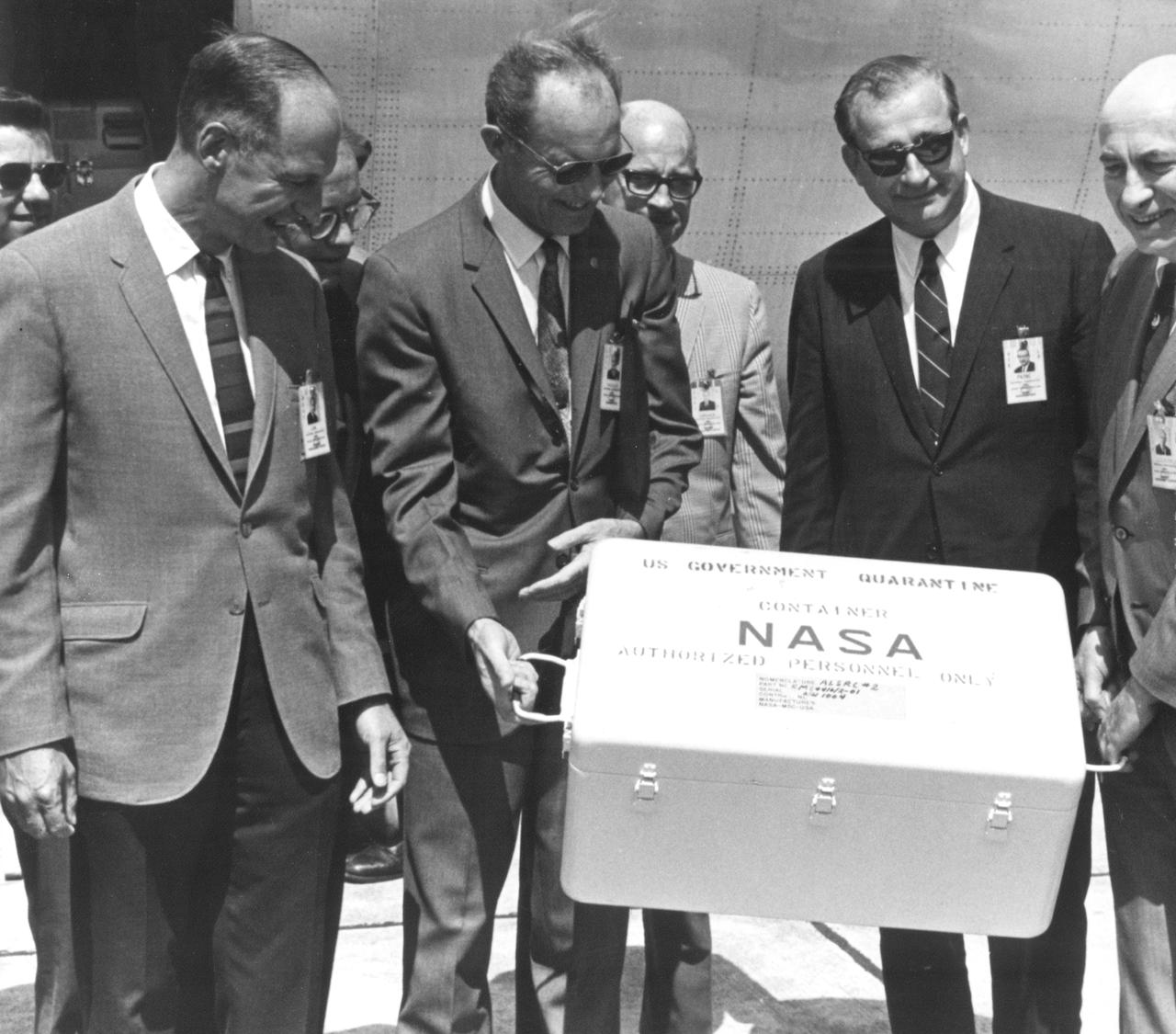
The Apollo 11 mission, the first manned lunar mission, launched from the Kennedy Space Center, Florida via the Marshall Space Flight Center (MSFC) developed Saturn V launch vehicle on July 16, 1969 and safely returned to Earth on July 24, 1969. Aboard the space craft were astronauts Neil A. Armstrong, commander; Michael Collins, Command Module (CM) pilot; and Edwin E. Aldrin Jr., Lunar Module (LM) pilot. The CM, piloted by Michael Collins remained in a parking orbit around the Moon while the LM, named “Eagle’’, carrying astronauts Neil Armstrong and Edwin Aldrin, landed on the Moon. During 2½ hours of surface exploration, the crew collected 47 pounds of lunar surface material for analysis back on Earth. This photograph was taken as the mission’s first loaded sample return container arrived at Ellington Air Force Base by air from the Pacific recovery area. The rock box was immediately taken to the Lunar Receiving Laboratory at the Manned Spacecraft Center (MSC) in Houston, Texas. Happily posing for the photograph with the rock container are (L-R) Richard S. Johnston (back), special assistant to the MSC Director; George M. Low, MSC Apollo Spacecraft Program manager; George S. Trimble (back), MSC Deputy Director; Lt. General Samuel C. Phillips, Apollo Program Director, Office of Manned Spaceflight at NASA headquarters; Eugene G. Edmonds, MSC Photographic Technology Laboratory; Dr. Thomas O. Paine, NASA Administrator; and Dr. Robert R. Gilruth, MSC Director.
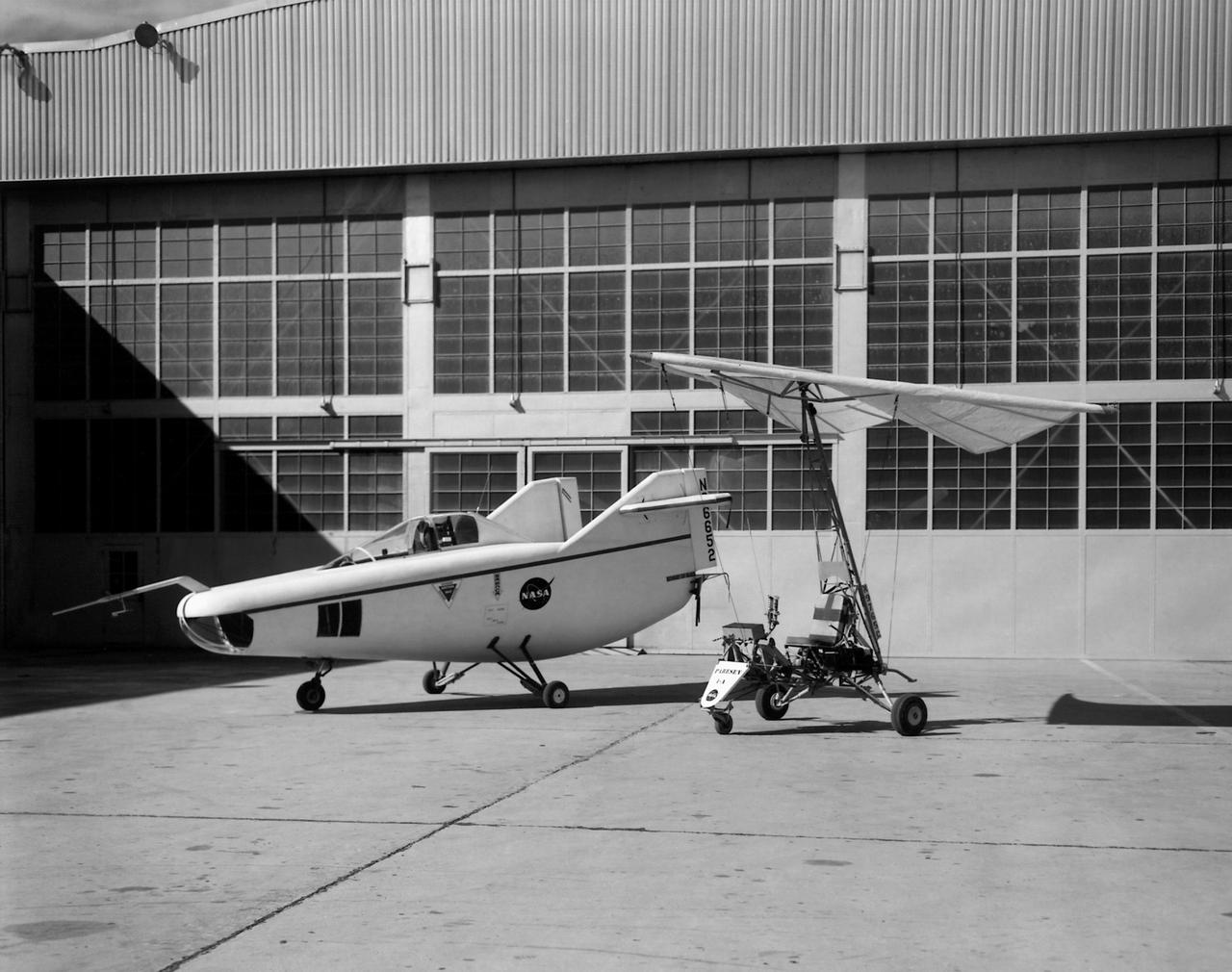
In this photo of the M2-F1 lifting body and the Paresev 1B on the ramp, the viewer sees two vehicles representing different approaches to building a research craft to simulate a spacecraft able to land on the ground instead of splashing down in the ocean as the Mercury capsules did. The M2-F1 was a lifting body, a shape able to re-enter from orbit and land. The Paresev (Paraglider Research Vehicle) used a Rogallo wing that could be (but never was) used to replace a conventional parachute for landing a capsule-type spacecraft, allowing it to make a controlled landing on the ground.