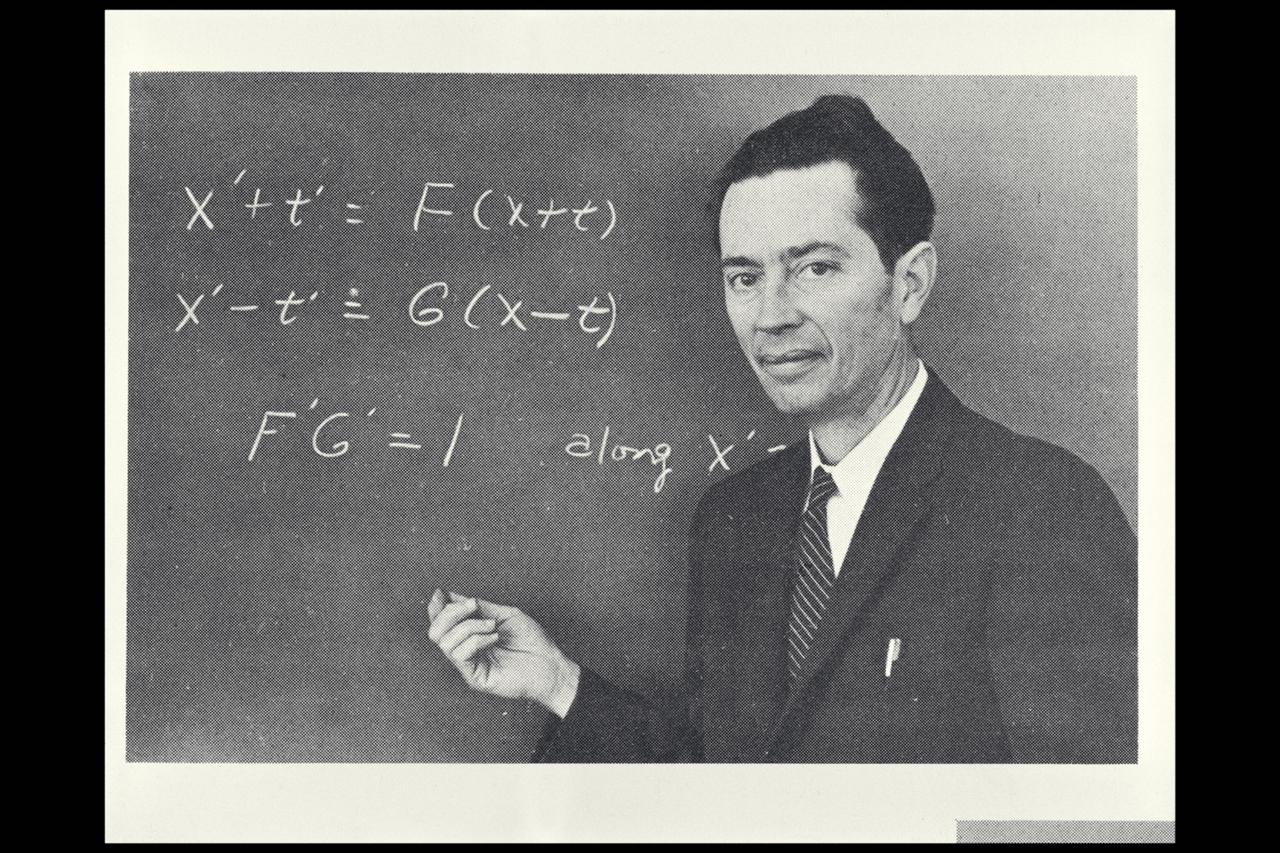
Robert T 'R.T.' Jones, theoretical aerodynamicist at blackboard
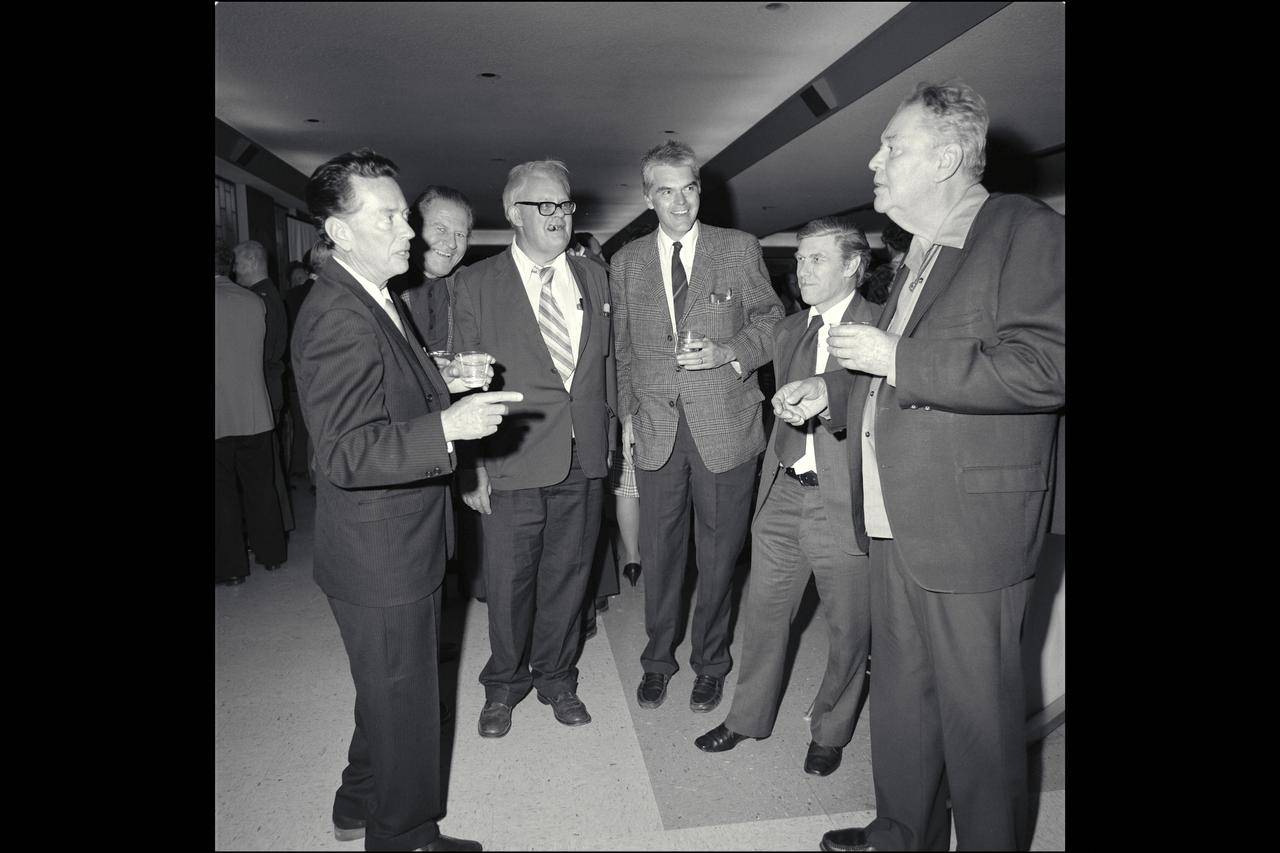
The Ames spirit of free and vigorous discussion; Left to right: R. T. Jones, Jack Nielsen, Hans Mark, Leonard Roberts and Harvey Allen during an award ceremony honoring R.T. Jones.
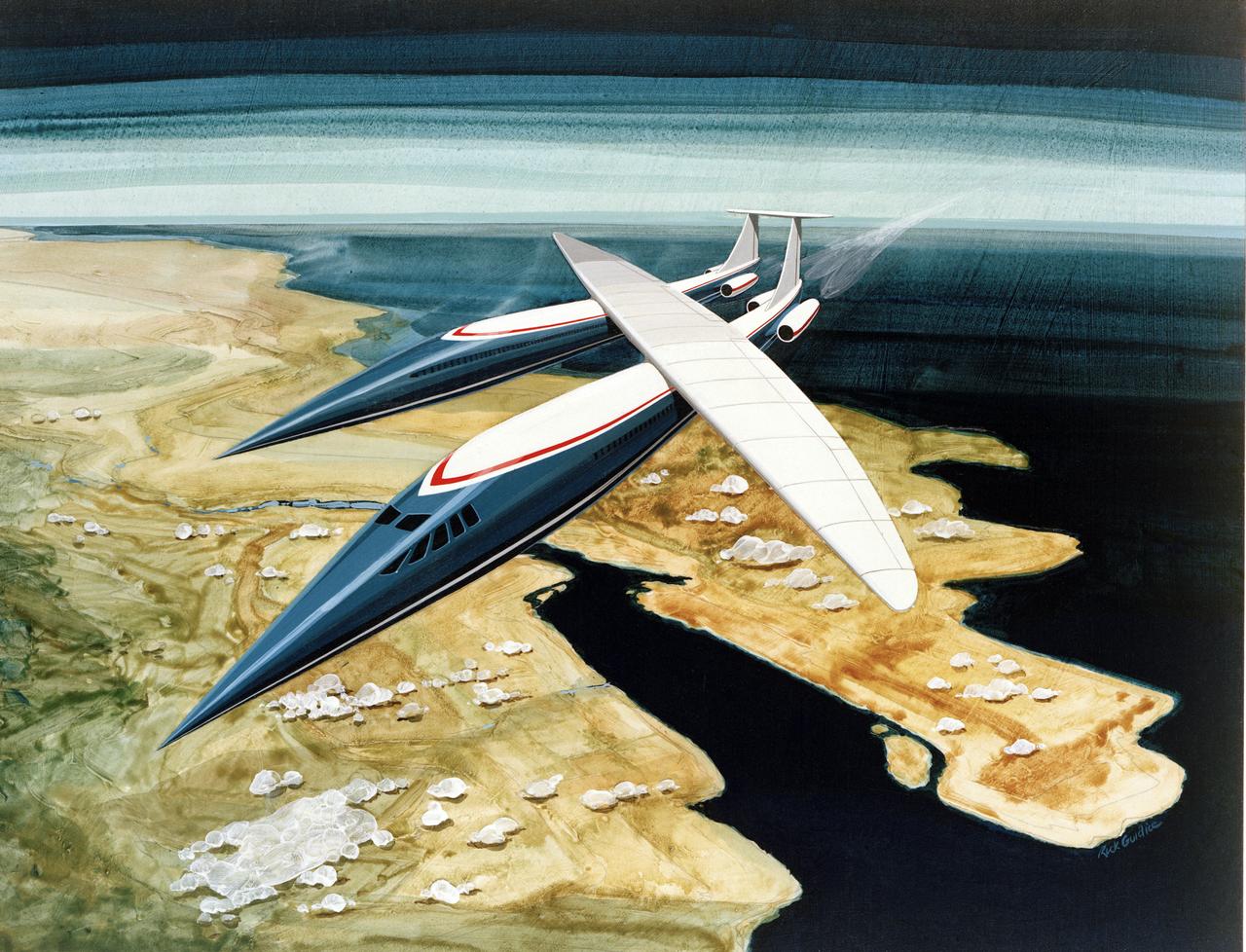
ARTWORK BY RICK GUIDICE OBLIQUE WING TRANSONIC TRANSPORT MODEL: DR ROBERT T JONES 2-BODY 'DOUBLE' FUSELAGE CONCEPT IN FLIGHT
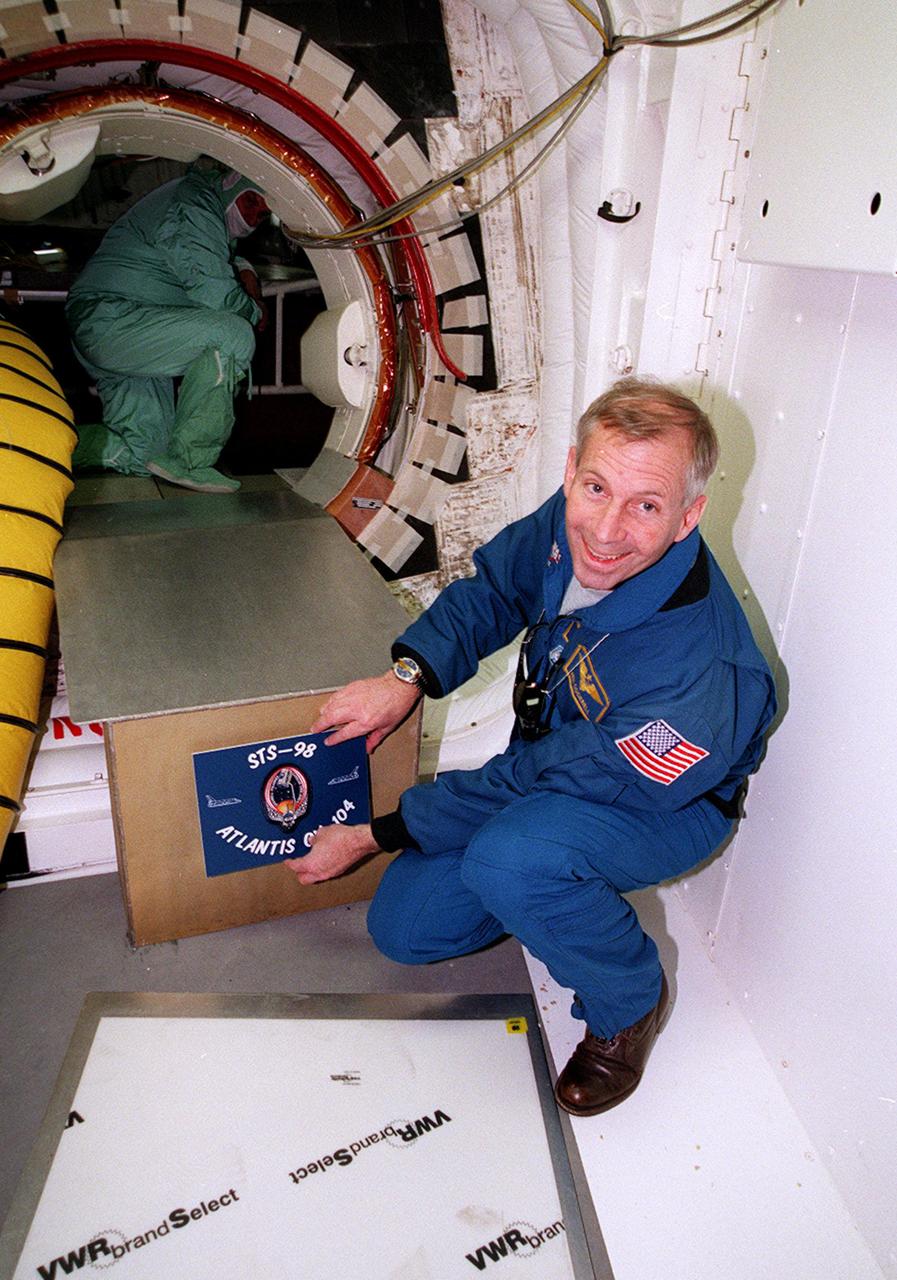
KENNEDY SPACE CENTER, FLA. -- STS-98 Commander Ken Cockrell places the mission patch on the entrance to the orbiter Atlantis. He and the rest of the crew Pilot Mark Polansky and Mission Specialists Thomas Jones, Marsha Ivins and Robert Curbeam are t KSC to take part in Terminal Countdown Demonstration Test activities, which include emergency egress training and a simulated launch countdown. STS-98 is the seventh construction flight to the International Space Station, carrying as payload the U.S. Lab Destiny, a key element in the construction of the ISS. Launch of STS-98 is scheduled for Jan. 19 at 2:11 a.m
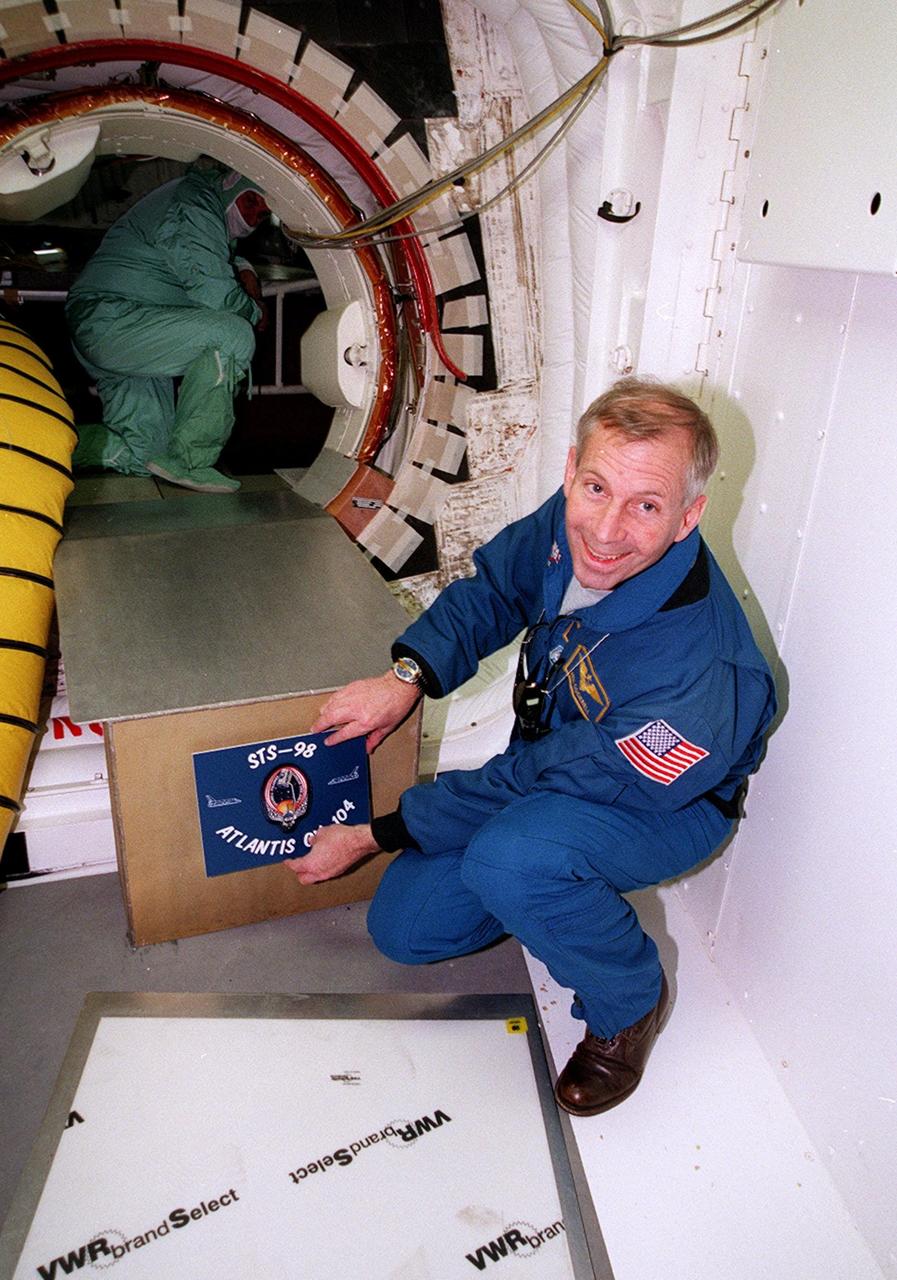
KENNEDY SPACE CENTER, FLA. -- STS-98 Commander Ken Cockrell places the mission patch on the entrance to the orbiter Atlantis. He and the rest of the crew Pilot Mark Polansky and Mission Specialists Thomas Jones, Marsha Ivins and Robert Curbeam are t KSC to take part in Terminal Countdown Demonstration Test activities, which include emergency egress training and a simulated launch countdown. STS-98 is the seventh construction flight to the International Space Station, carrying as payload the U.S. Lab Destiny, a key element in the construction of the ISS. Launch of STS-98 is scheduled for Jan. 19 at 2:11 a.m
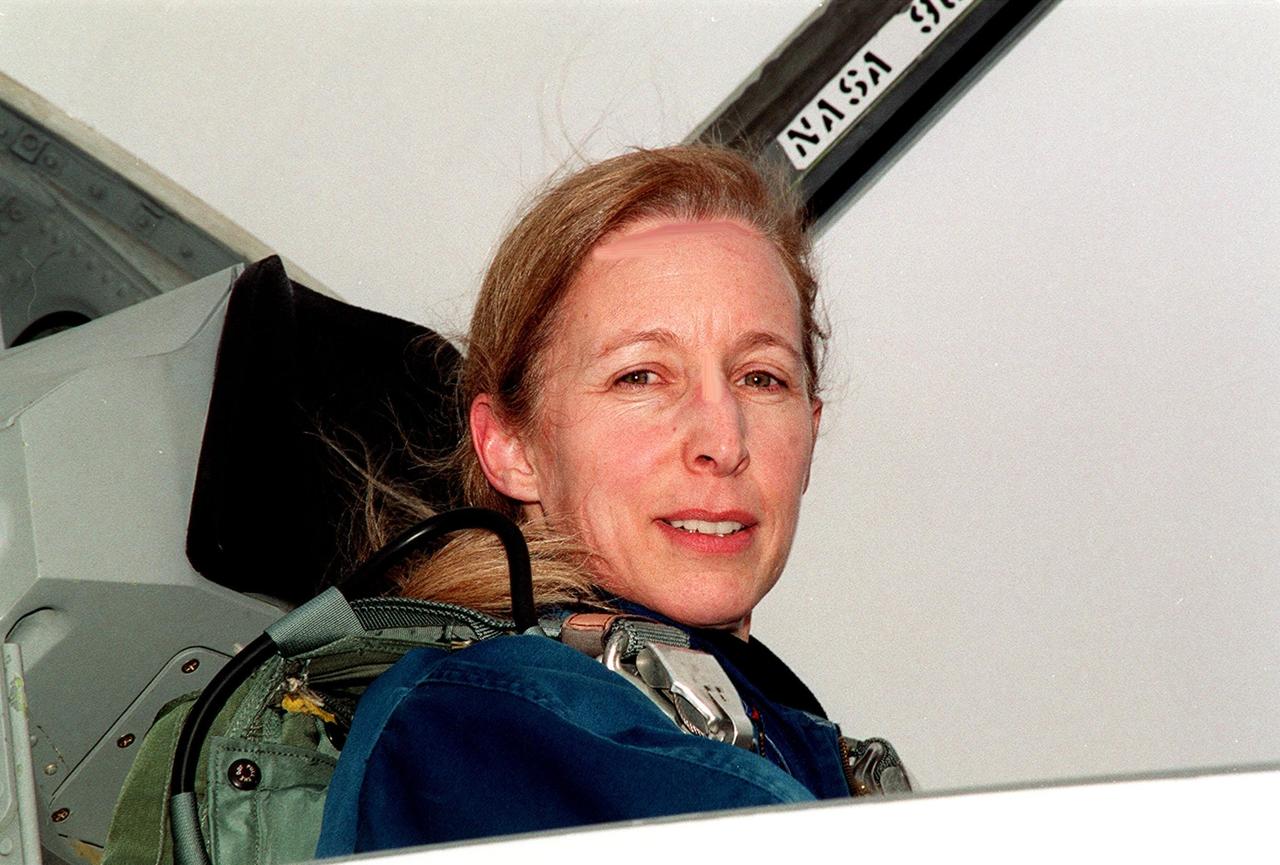
STS-98 Mission Specialist Marsha Ivins arrives at the Shuttle Landing Facility in a T-38 jet aircraft. She and other crew members Commander Ken Cockrell, Pilot Mark Polansky and Mission Specialists Robert Curbeam and Thomas Jones have returned to KSC to prepare for their launch to the International Space Station. The seventh construction flight to the Space Station, STS-98 will carry the U.S. Laboratory Destiny, a key module for space experiments. The 11-day mission includes three spacewalks to complete outside assembly and connection of electrical and plumbing lines between the laboratory, Station and a relocated Shuttle docking port. STS-98 is Ivins’ fifth space flight. Launch is targeted for Feb. 7 at 6:11 p.m. EST
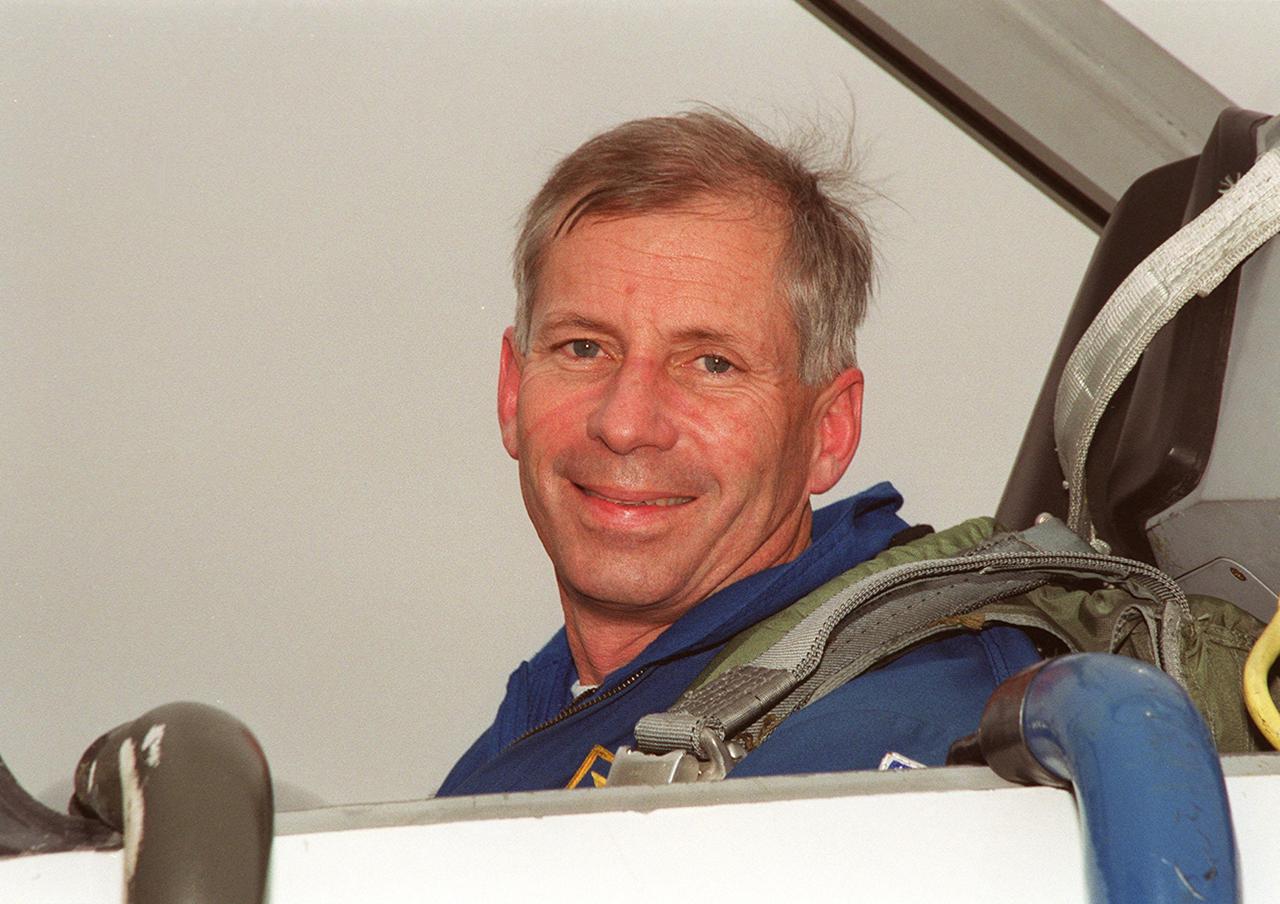
STS-98 Commander Ken Cockrell arrives at the Shuttle Landing Facility in a T-38 jet aircraft. He and other crew members Pilot Mark Polansky and Mission Specialists Robert Curbeam, Thomas Jones and Marsha Ivins have returned to KSC to prepare for their launch to the International Space Station. The seventh construction flight to the Space Station, STS-98 will carry the U.S. Laboratory Destiny, a key module for space experiments. The 11-day mission includes three spacewalks to complete outside assembly and connection of electrical and plumbing lines between the laboratory, Station and a relocated Shuttle docking port. STS-98 is Cockrell’s fourth space flight. Launch is targeted for Feb. 7 at 6:11 p.m. EST
STS-98 Mission Specialist Marsha Ivins arrives at the Shuttle Landing Facility in a T-38 jet aircraft. She and other crew members Commander Ken Cockrell, Pilot Mark Polansky and Mission Specialists Robert Curbeam and Thomas Jones have returned to KSC to prepare for their launch to the International Space Station. The seventh construction flight to the Space Station, STS-98 will carry the U.S. Laboratory Destiny, a key module for space experiments. The 11-day mission includes three spacewalks to complete outside assembly and connection of electrical and plumbing lines between the laboratory, Station and a relocated Shuttle docking port. STS-98 is Ivins’ fifth space flight. Launch is targeted for Feb. 7 at 6:11 p.m. EST
STS-98 Mission Specialist Marsha Ivins arrives at the Shuttle Landing Facility in a T-38 jet aircraft. She and other crew members Commander Ken Cockrell, Pilot Mark Polansky and Mission Specialists Robert Curbeam and Thomas Jones have returned to KSC to prepare for their launch to the International Space Station. The seventh construction flight to the Space Station, STS-98 will carry the U.S. Laboratory Destiny, a key module for space experiments. The 11-day mission includes three spacewalks to complete outside assembly and connection of electrical and plumbing lines between the laboratory, Station and a relocated Shuttle docking port. STS-98 is Ivins’ fifth space flight. Launch is targeted for Feb. 7 at 6:11 p.m. EST
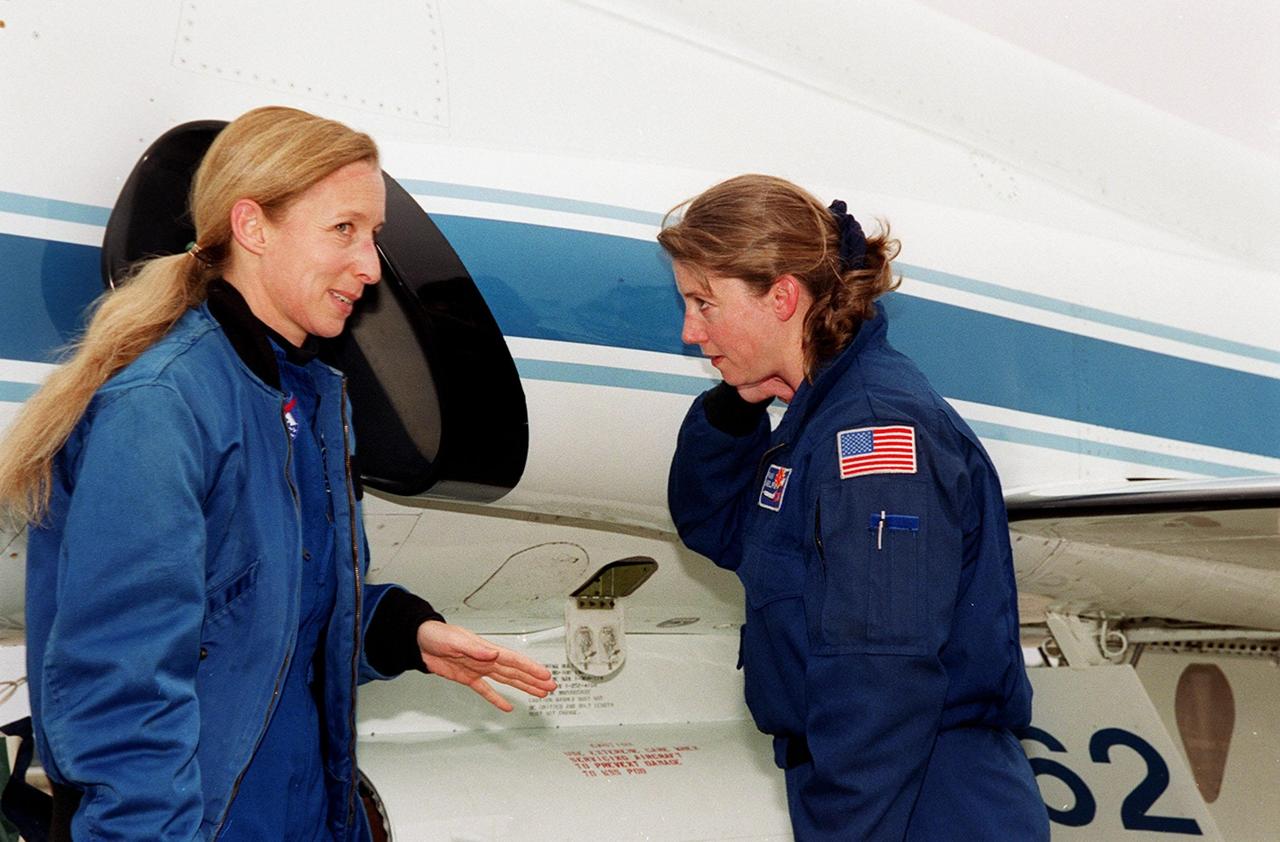
STS-98 Mission Specialist Marsha Ivins (left) speaks to astronaut Pam Melroy, who piloted the T-38 jet that brought Ivins to KSC. Ivins and other crew members Commander Ken Cockrell, Pilot Mark Polansky and Mission Specialists Robert Curbeam and Thomas Jones have returned to KSC to prepare for their launch to the International Space Station. The seventh construction flight to the Space Station, STS-98 will carry the U.S. Laboratory Destiny, a key module for space experiments. The 11-day mission includes three spacewalks to complete outside assembly and connection of electrical and plumbing lines between the laboratory, Station and a relocated Shuttle docking port. STS-98 is Ivins’ fifth space flight. Launch is targeted for Feb. 7 at 6:11 p.m. EST
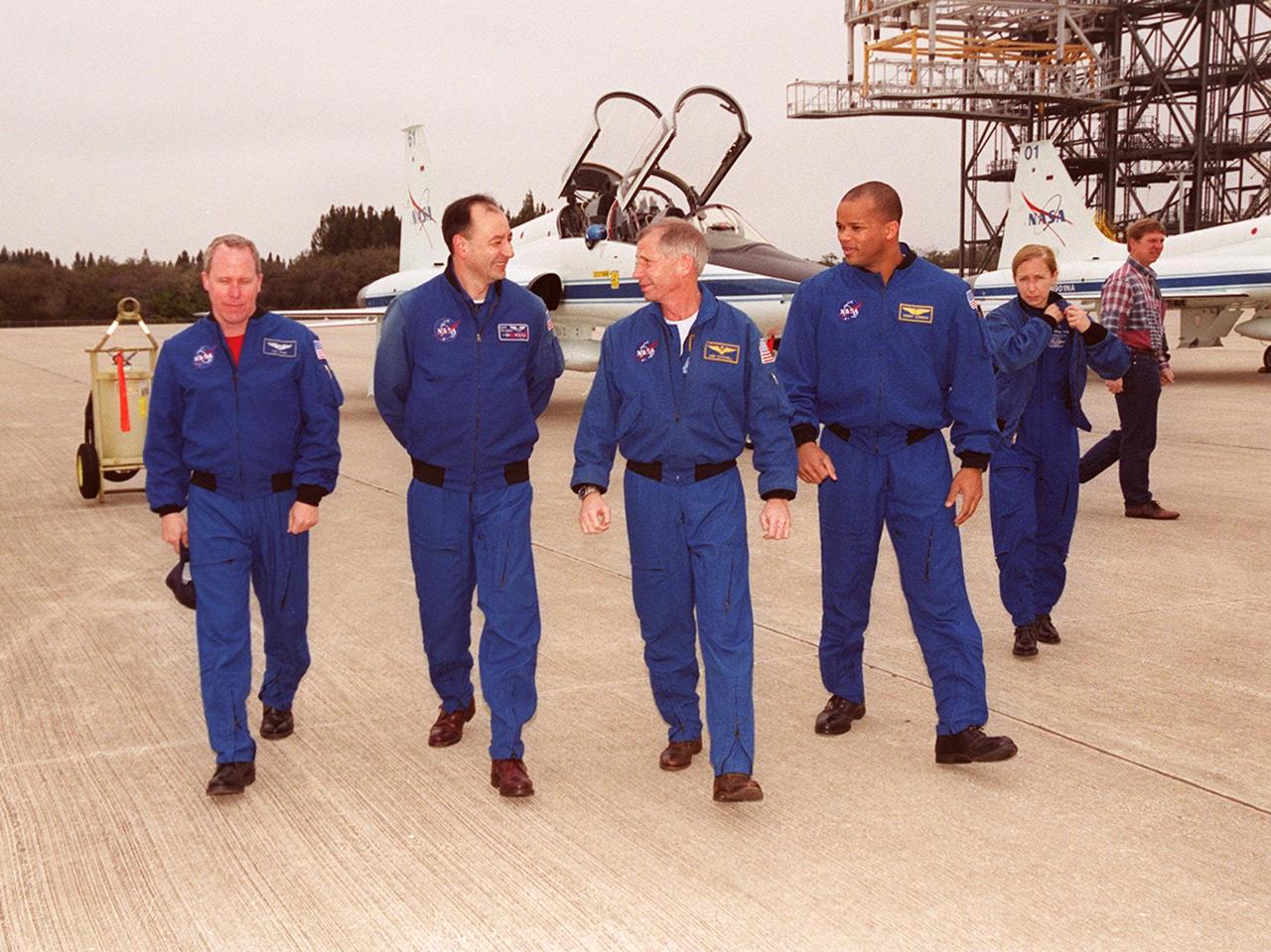
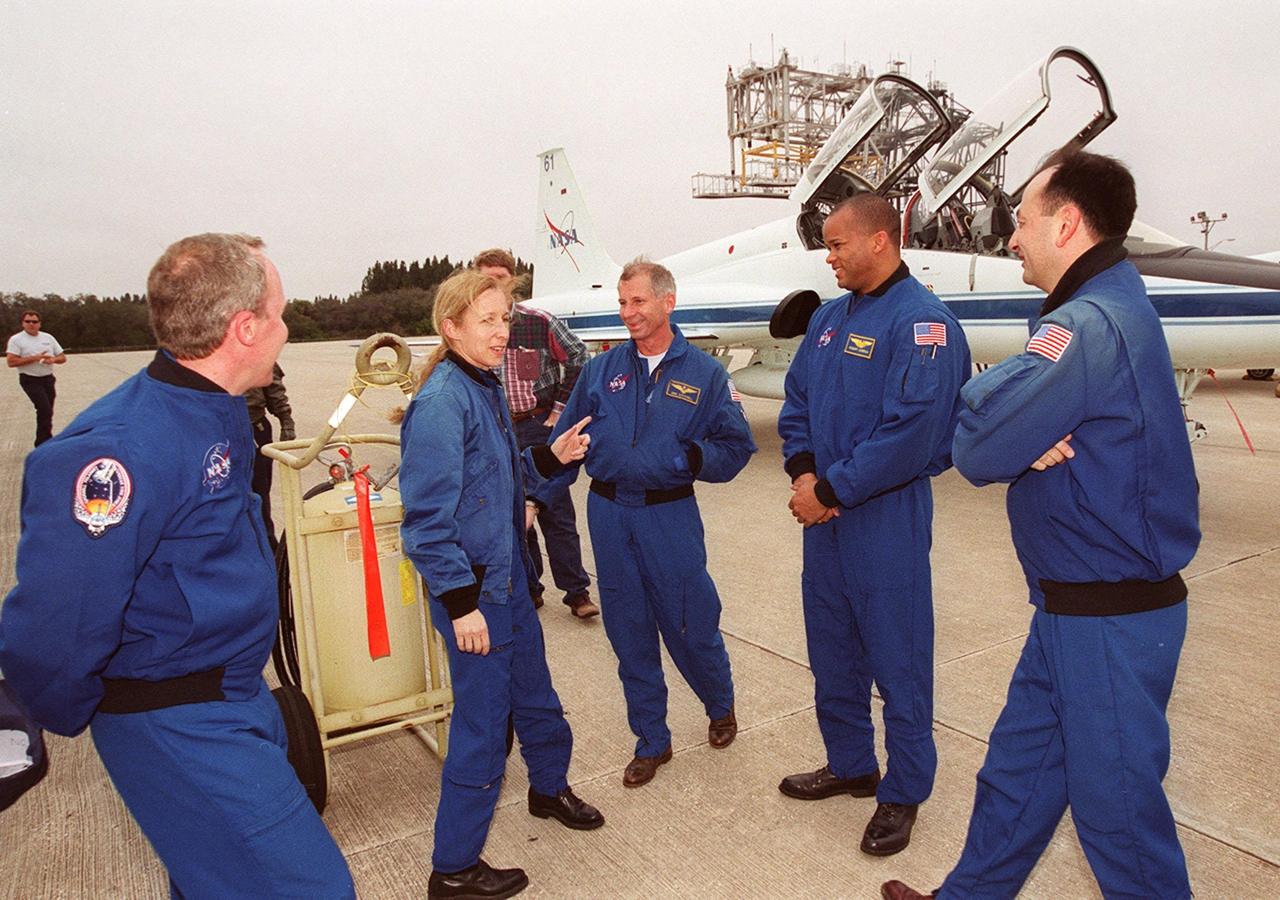
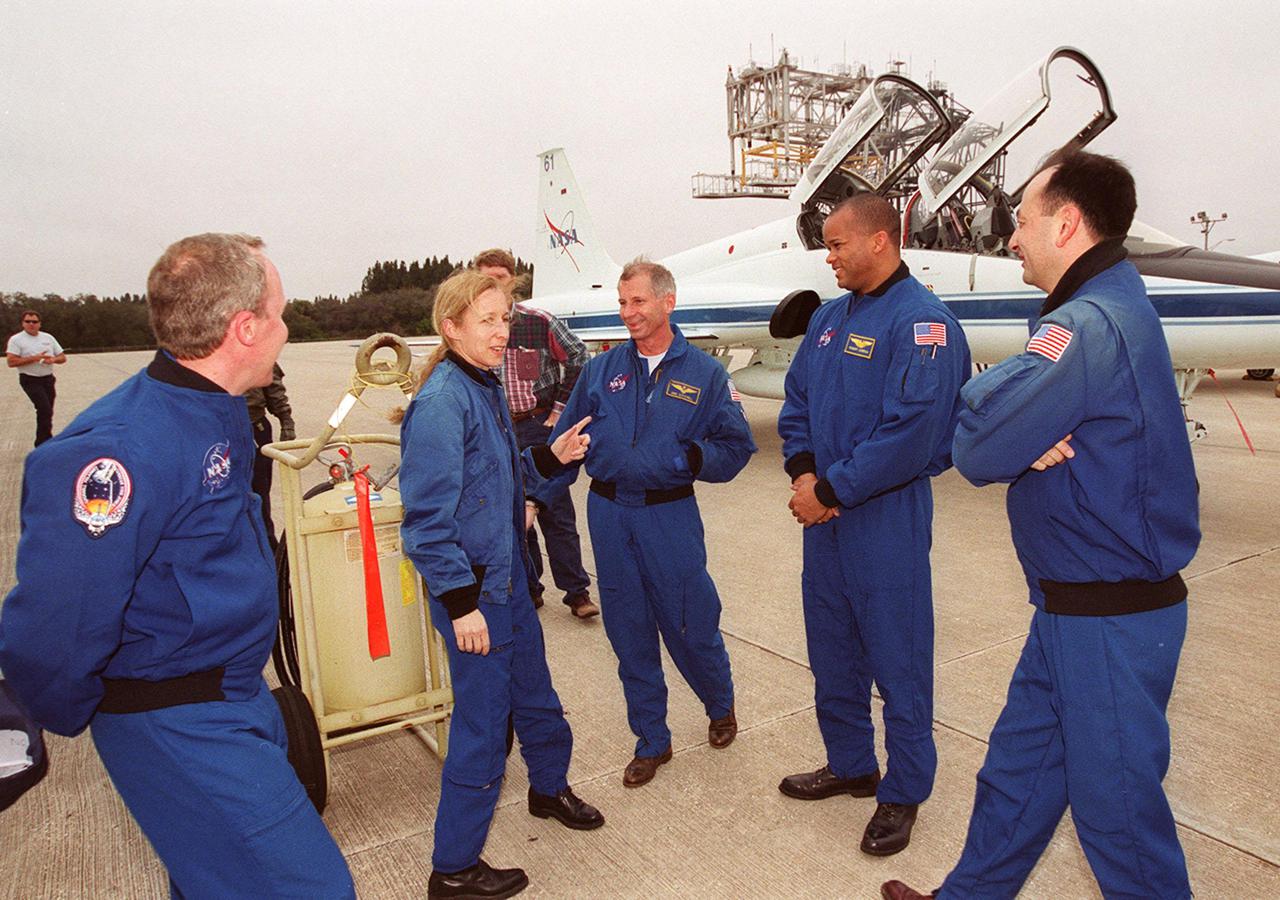
KENNEDY SPACE CENTER, FLA. -- The STS-98 crew crosses the parking apron at the KSC Shuttle Landing Facility after their arrival aboard the T-38 jets in the background. Getting ready to greet the media are, left to right, Mission Specialist Thomas Jones, Pilot Mark Polansky, Commander Ken Cockrell, and Mission Specialists Robert Curbeam and Marsha Ivins. The crew has returned to KSC to prepare for their launch to the International Space Station. The seventh construction flight to the Space Station, STS-98 will carry the U.S. Laboratory Destiny, a key module for space experiments. The 11-day mission includes three spacewalks to complete outside assembly and connection of electrical and plumbing lines between the laboratory, Station and a relocated Shuttle docking port. Launch is targeted for Feb. 7 at 6:11 p.m. EST
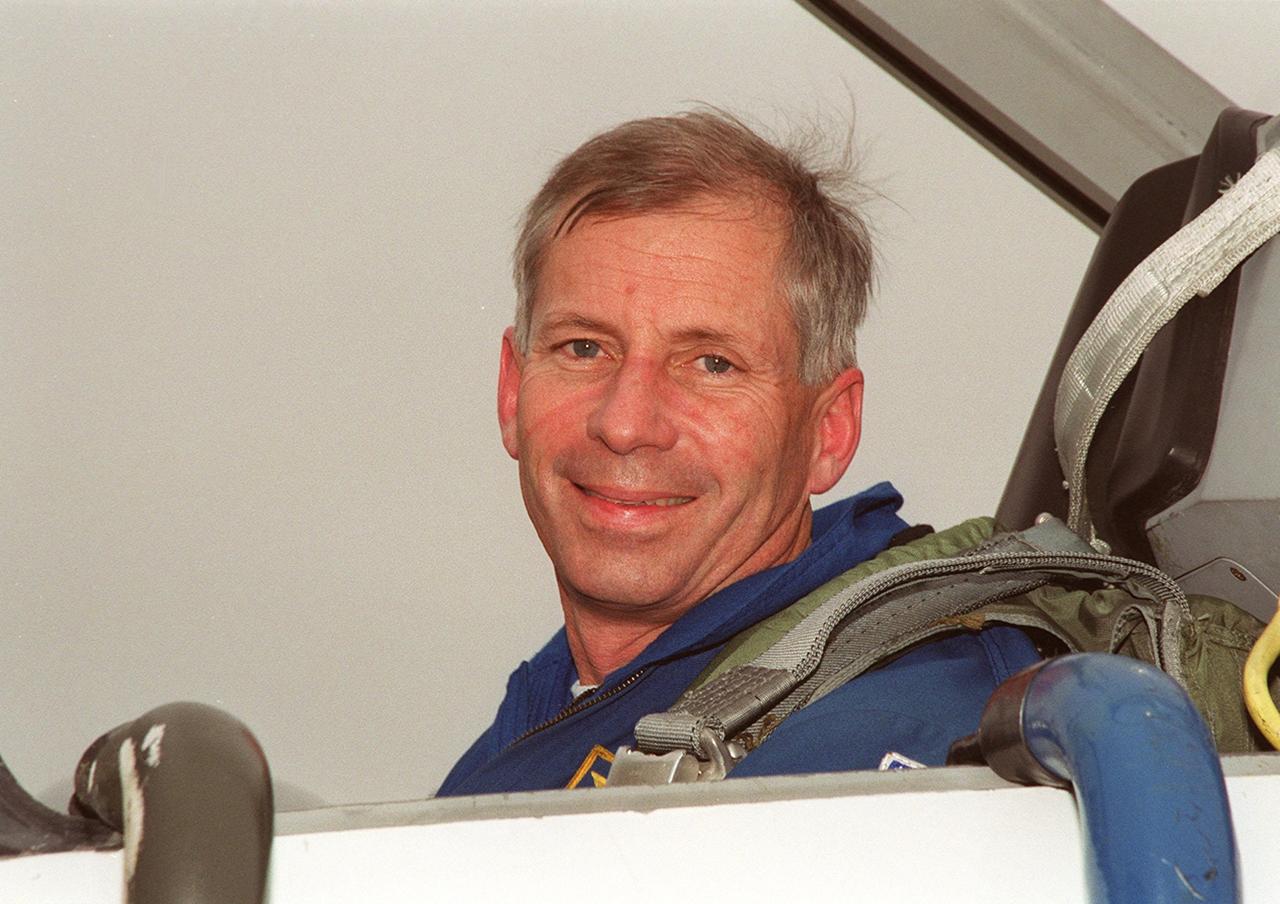
STS-98 Commander Ken Cockrell arrives at the Shuttle Landing Facility in a T-38 jet aircraft. He and other crew members Pilot Mark Polansky and Mission Specialists Robert Curbeam, Thomas Jones and Marsha Ivins have returned to KSC to prepare for their launch to the International Space Station. The seventh construction flight to the Space Station, STS-98 will carry the U.S. Laboratory Destiny, a key module for space experiments. The 11-day mission includes three spacewalks to complete outside assembly and connection of electrical and plumbing lines between the laboratory, Station and a relocated Shuttle docking port. STS-98 is Cockrell’s fourth space flight. Launch is targeted for Feb. 7 at 6:11 p.m. EST
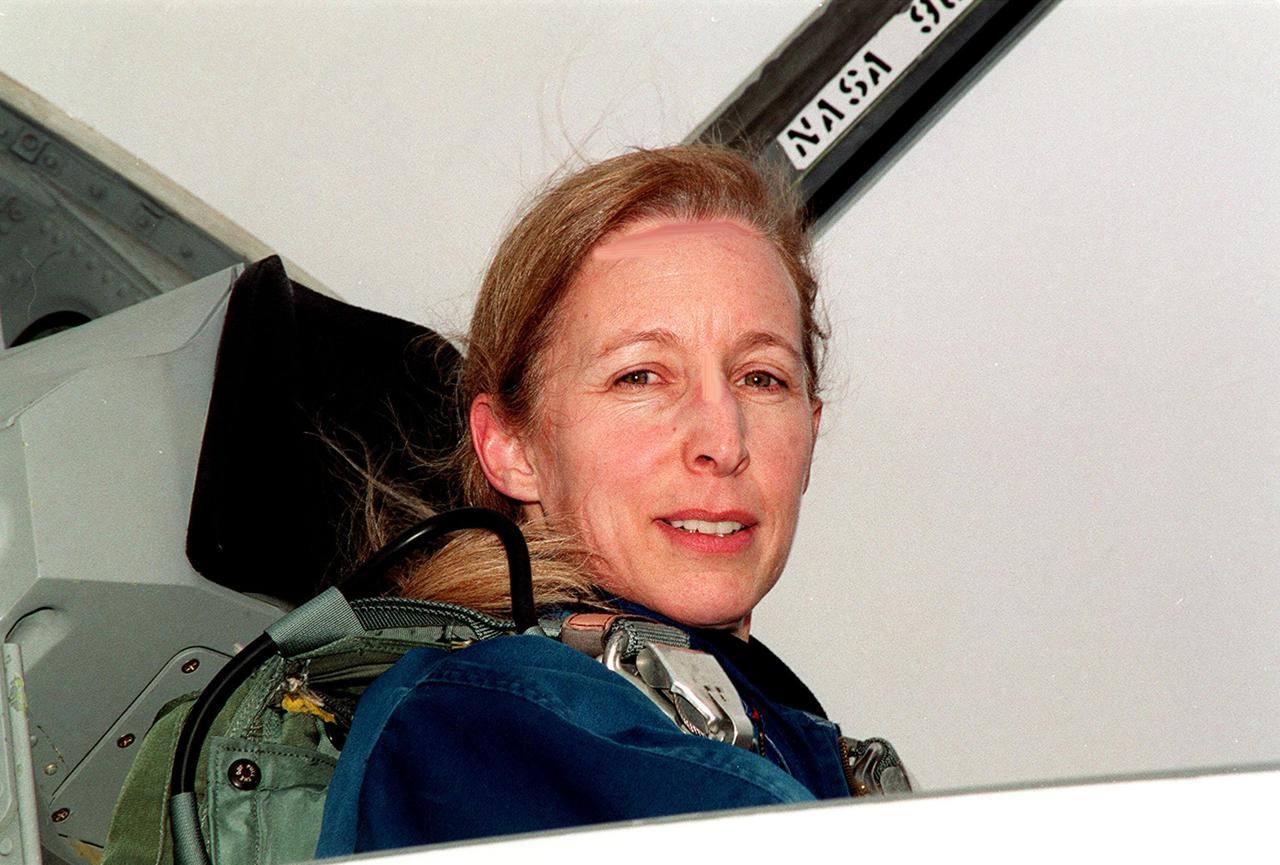
STS-98 Mission Specialist Marsha Ivins arrives at the Shuttle Landing Facility in a T-38 jet aircraft. She and other crew members Commander Ken Cockrell, Pilot Mark Polansky and Mission Specialists Robert Curbeam and Thomas Jones have returned to KSC to prepare for their launch to the International Space Station. The seventh construction flight to the Space Station, STS-98 will carry the U.S. Laboratory Destiny, a key module for space experiments. The 11-day mission includes three spacewalks to complete outside assembly and connection of electrical and plumbing lines between the laboratory, Station and a relocated Shuttle docking port. STS-98 is Ivins’ fifth space flight. Launch is targeted for Feb. 7 at 6:11 p.m. EST
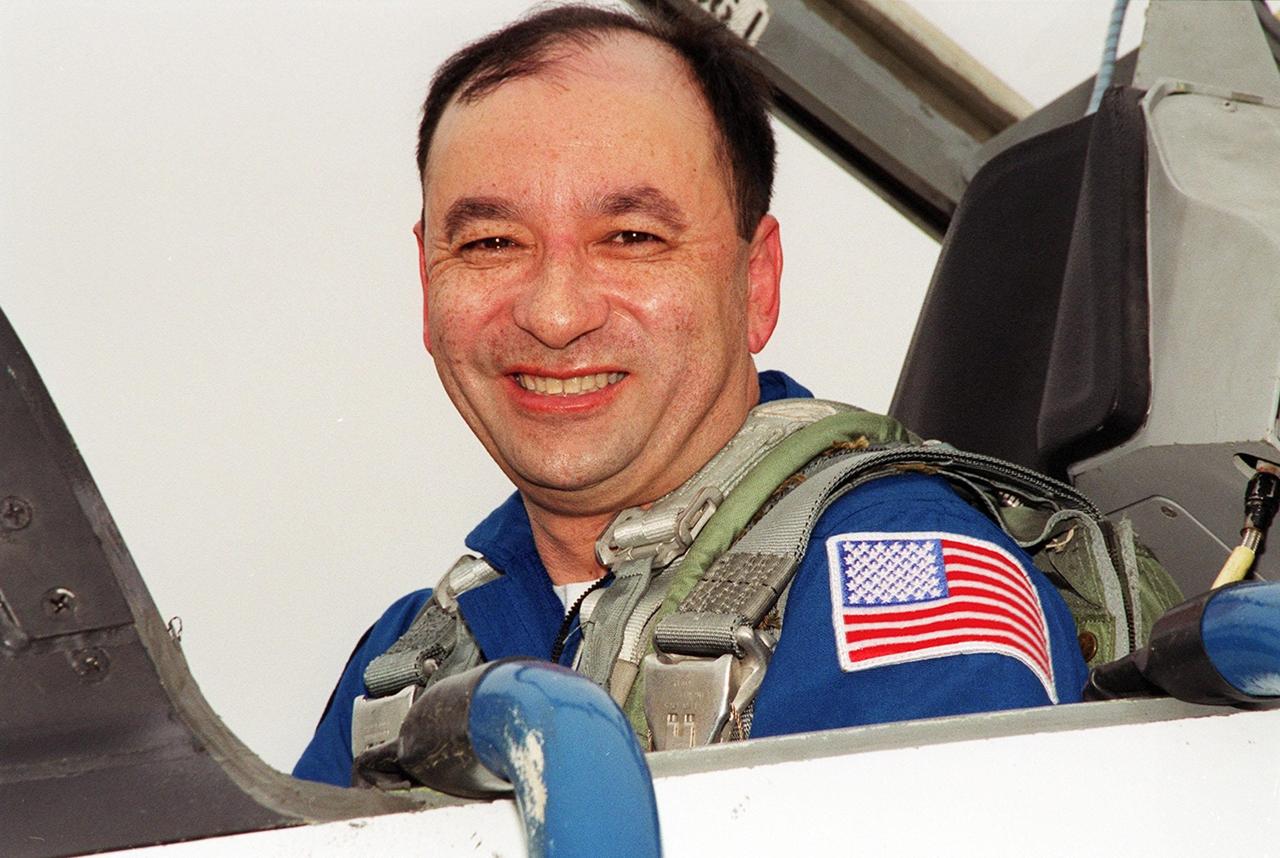
STS-98 Pilot Mark Polansky grins on his arrival at the Shuttle Landing Facility in a T-38 jet aircraft. He and other crew members Commander Ken Cockrell and Mission Specialists Robert Curbeam, Thomas Jones and Marsha Ivins have returned to KSC to prepare for their launch to the International Space Station. The seventh construction flight to the Space Station, STS-98 will carry the U.S. Laboratory Destiny, a key module for space experiments. The 11-day mission includes three spacewalks to complete outside assembly and connection of electrical and plumbing lines between the laboratory, Station and a relocated Shuttle docking port. STS-98 is Polansky’s first space flight. Launch is targeted for Feb. 7 at 6:11 p.m. EST
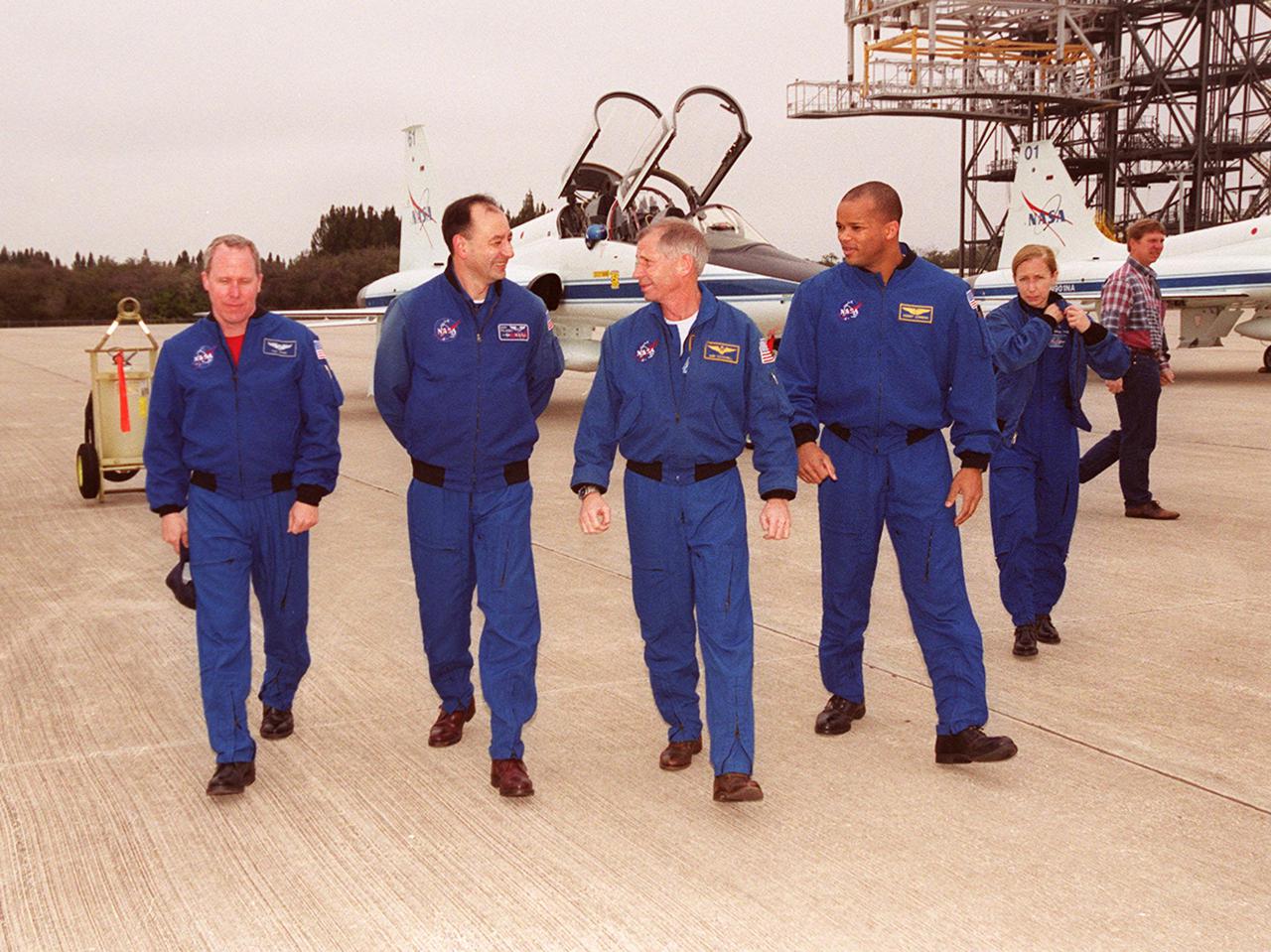
KENNEDY SPACE CENTER, FLA. -- The STS-98 crew crosses the parking apron at the KSC Shuttle Landing Facility after their arrival aboard the T-38 jets in the background. Getting ready to greet the media are, left to right, Mission Specialist Thomas Jones, Pilot Mark Polansky, Commander Ken Cockrell, and Mission Specialists Robert Curbeam and Marsha Ivins. The crew has returned to KSC to prepare for their launch to the International Space Station. The seventh construction flight to the Space Station, STS-98 will carry the U.S. Laboratory Destiny, a key module for space experiments. The 11-day mission includes three spacewalks to complete outside assembly and connection of electrical and plumbing lines between the laboratory, Station and a relocated Shuttle docking port. Launch is targeted for Feb. 7 at 6:11 p.m. EST
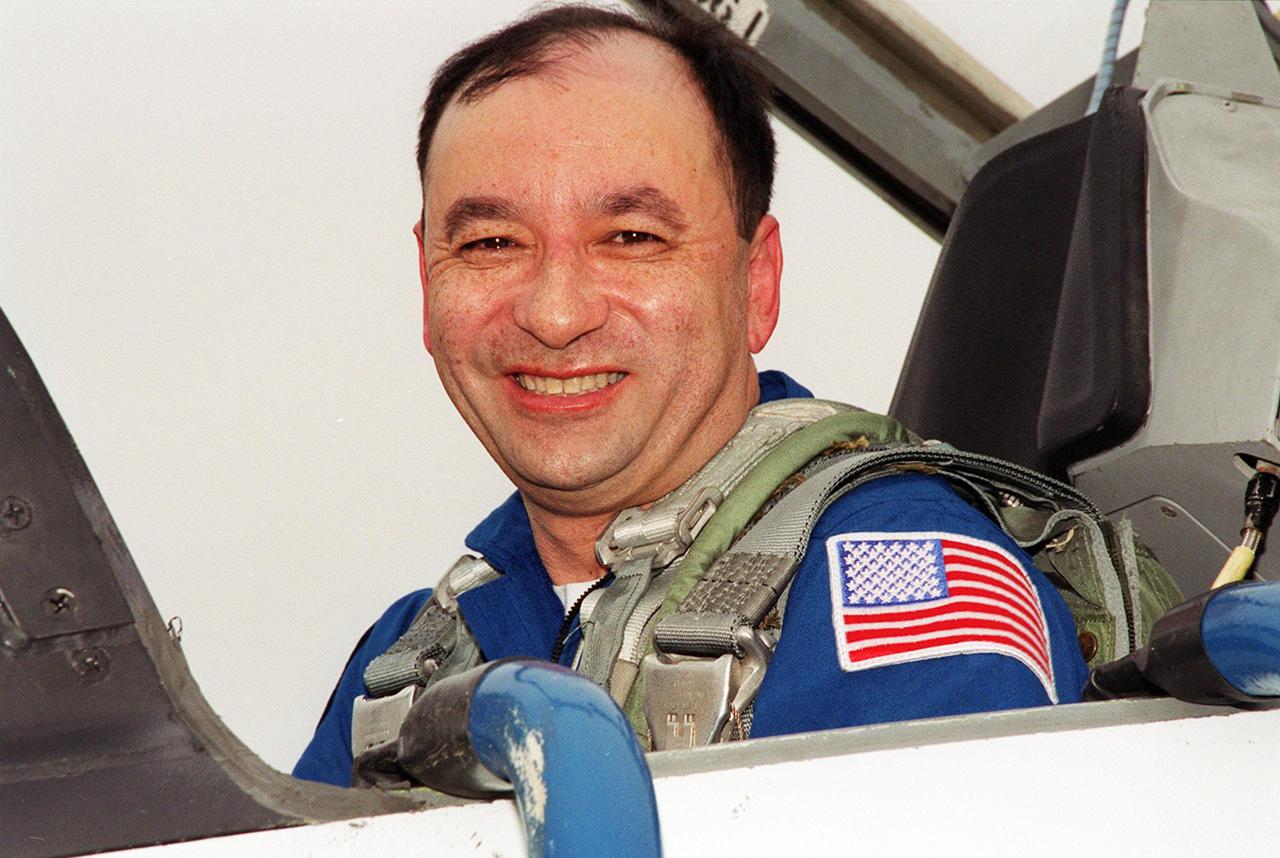
STS-98 Pilot Mark Polansky grins on his arrival at the Shuttle Landing Facility in a T-38 jet aircraft. He and other crew members Commander Ken Cockrell and Mission Specialists Robert Curbeam, Thomas Jones and Marsha Ivins have returned to KSC to prepare for their launch to the International Space Station. The seventh construction flight to the Space Station, STS-98 will carry the U.S. Laboratory Destiny, a key module for space experiments. The 11-day mission includes three spacewalks to complete outside assembly and connection of electrical and plumbing lines between the laboratory, Station and a relocated Shuttle docking port. STS-98 is Polansky’s first space flight. Launch is targeted for Feb. 7 at 6:11 p.m. EST
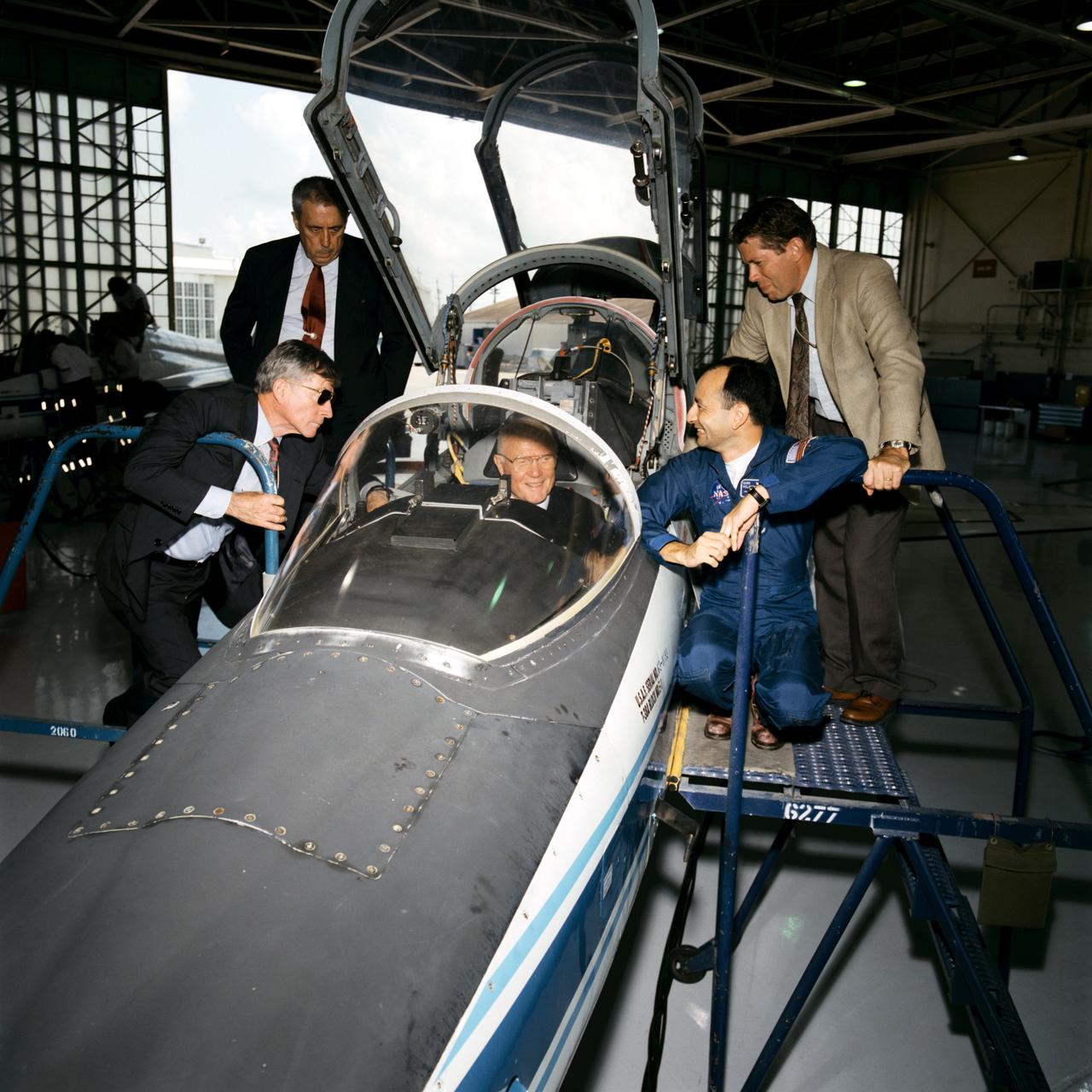
Senator John Glenn visit to Johnson Space Center (JSC). Views of Glenn sitting in cockpit of T-38 in Hangar 276 with John Young, George Abbey, David Leestma and Mark Polansky observing (11150). An engineer explains SPIFEX experiment hardware to Abby, Young and Glenn in Bldg 13 (11151, 11153). Glenn talks with astronaut Terrence T. Henricks and employees in Bldg 9C, Virtual reality lab (11152). Lunch in Bldg 17 Flight Crew support division with Dr. Ellen Baker, Robert "Hoot" Gibson and John Glenn (11154). Linda Godwin, Robert Cabana, Abbey, Young, Baker, Gibson and Glenn at lunch (11155). Astronaut Mark Lee shows Glenn and his aide how to use the virtural reality helmets (11156-7). Glenn shakes the hand of Franklin Chang-Diaz with his plasma rocket in the background in the Sonny Carter Training Facility (SCTF) (11158). Glenn in the Manipulator Development Facility (MDF) Remote Manipulator System (RMS) station mock-up in Bldg 9A with Abbey, Young and aide (11159, 11186). Glenn signs a book for Thomas D. Jones as Frederick Sturckow and Linda Godwin look on (11160). Glenn inside visual-vestibular trainer in Bldg 9B (11161). In conference room meeting with astronaut corps in Bldg 4S, Glenn shakes Robert Cabana's hand (11162). John Glenn and John Young pose for a group shot with Bldg 17 Food lab personnel (11163). Glenn thanks the food lab personnel (11164). Glenn visits Bldg 5 Fixed Base (FB) middeck simulator with astronauts Terrence Henricks and Mary Ellen Weber (11165). Glenn with Charles T. Bourland (11166). STS-70 crew Donald Thomas, Terrence Henricks, Mary Ellen Weber, Nancy Currie and Kevin Kregel with Glenn's advisor (11167). STS-70 crew Thomas, Henricks, Weber, Currie and Kregel with John Glenn (11175). Glenn with Thomas, Kregel, Weber, Henricks and trainer (11176-7). David J. Homan assists Glenn's aide with virtual reality goggles (11168) and Glenn (11174). John Young in Bldg 9C equilibrium trainer (11169). Glenn with Carl Walz in flight deck mock-up of MDF in Bldg 9NE (11170, 11187). Young, Abbey, aides, Glenn and Walz examine helium balloon in MDF (11171-2). Chang-Diaz shows Glenn's tour group the plasma rocket (11173). Glenn's presentation to astronaut corps (11178-81, 11184-5). Glenn is presented with framed picture of Sonny Carter Training Facility (SCTF) (11182) and framed picture of space station (11183).
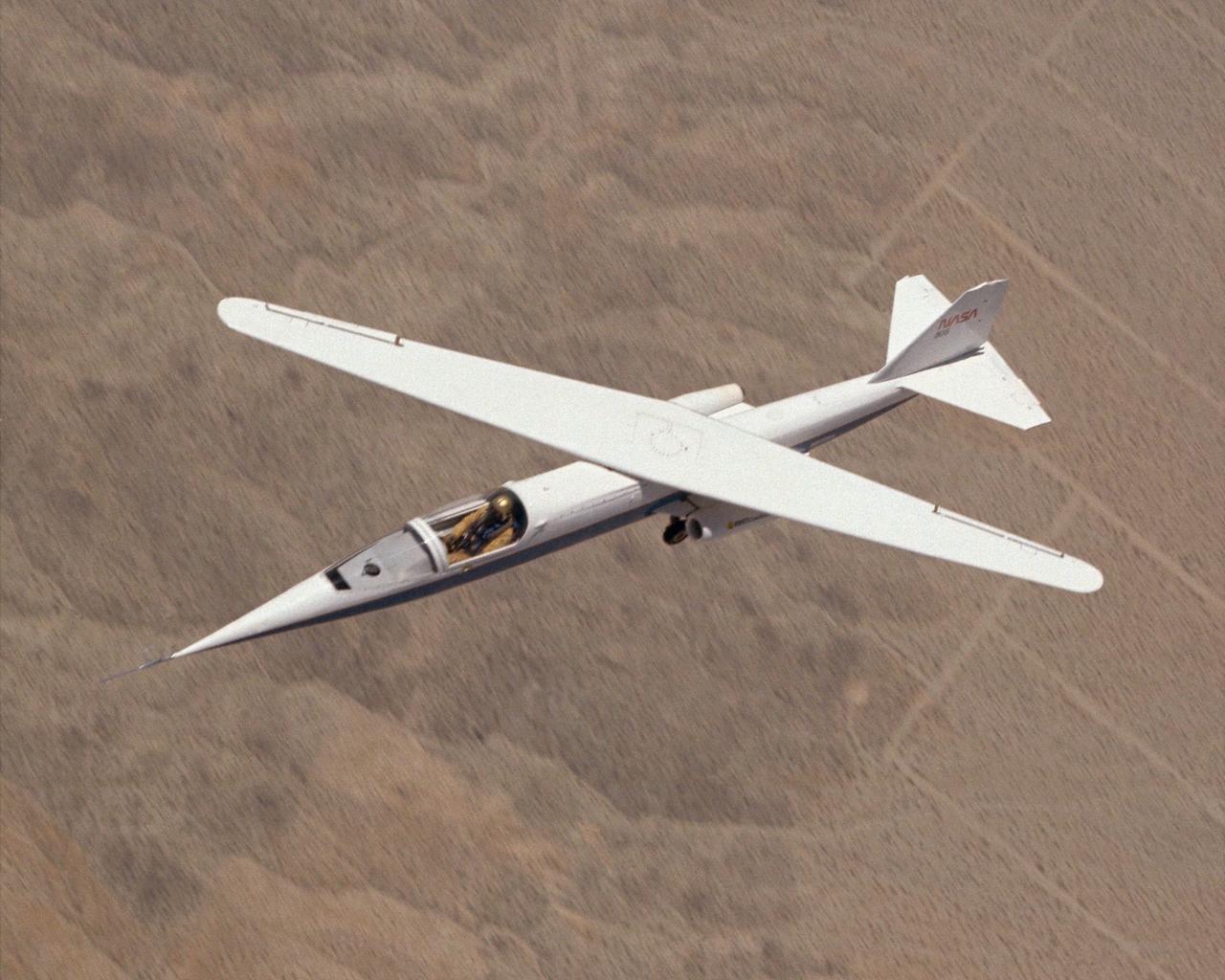
AD-1 in flight. Flight #30. The AD-1 aircraft in flight with its wing swept at 60 degrees, the maximum sweep angle.
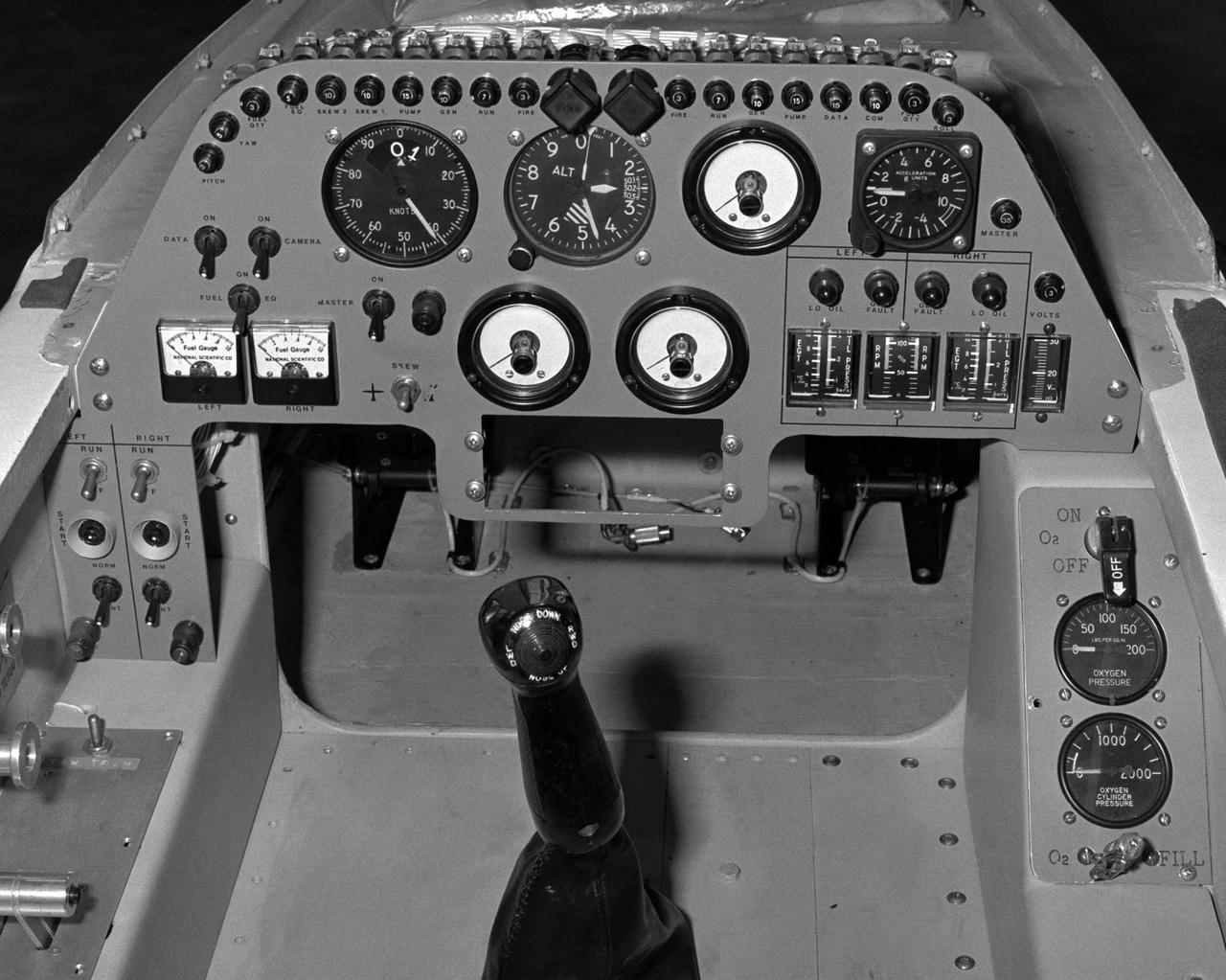
The cockpit and instrument panel of the AD-1 aircraft. Due to the small size of the AD-1, instrumentation was limited and the cockpit was cramped.
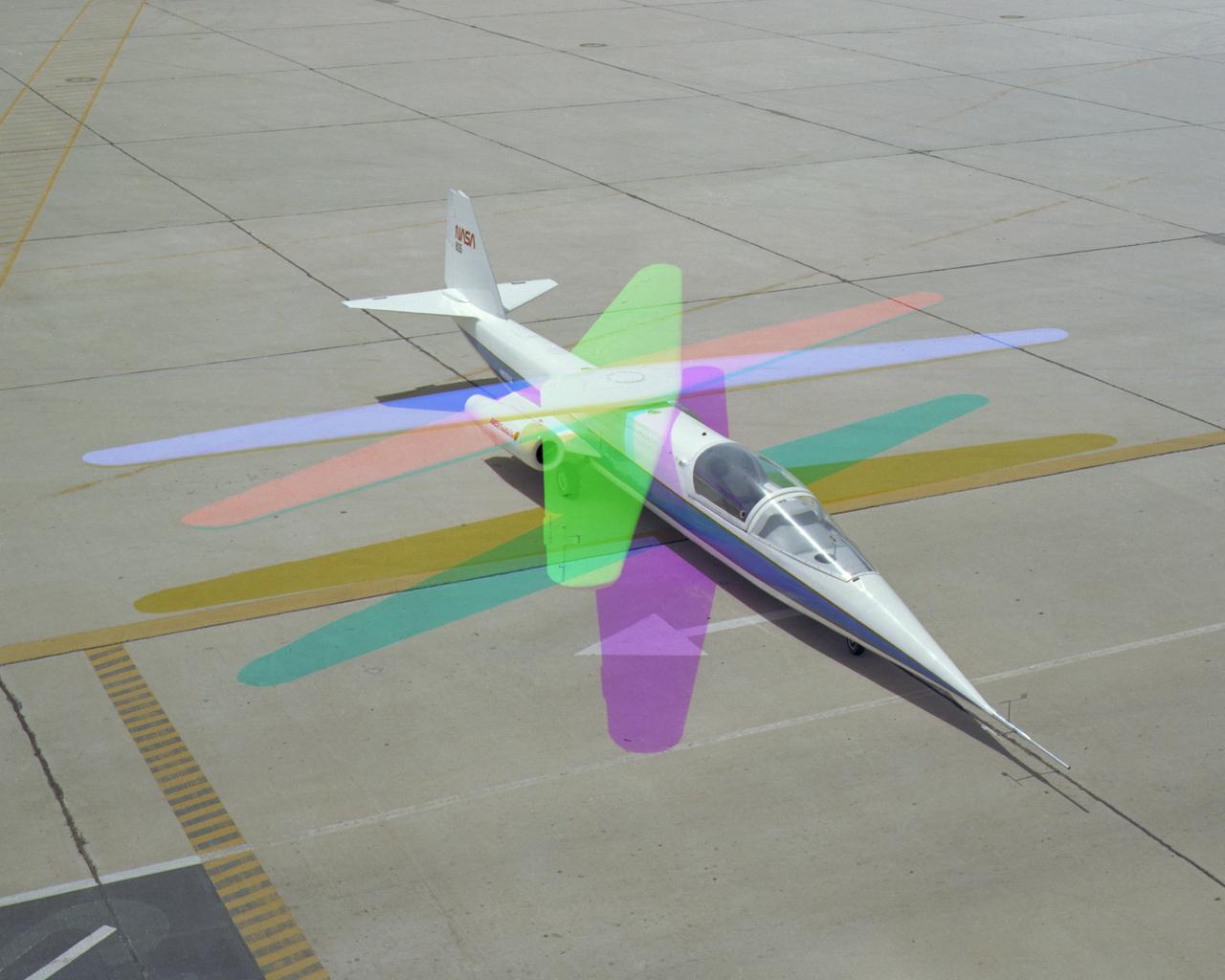
Multiple exposure image showing wing movement on AD-1.
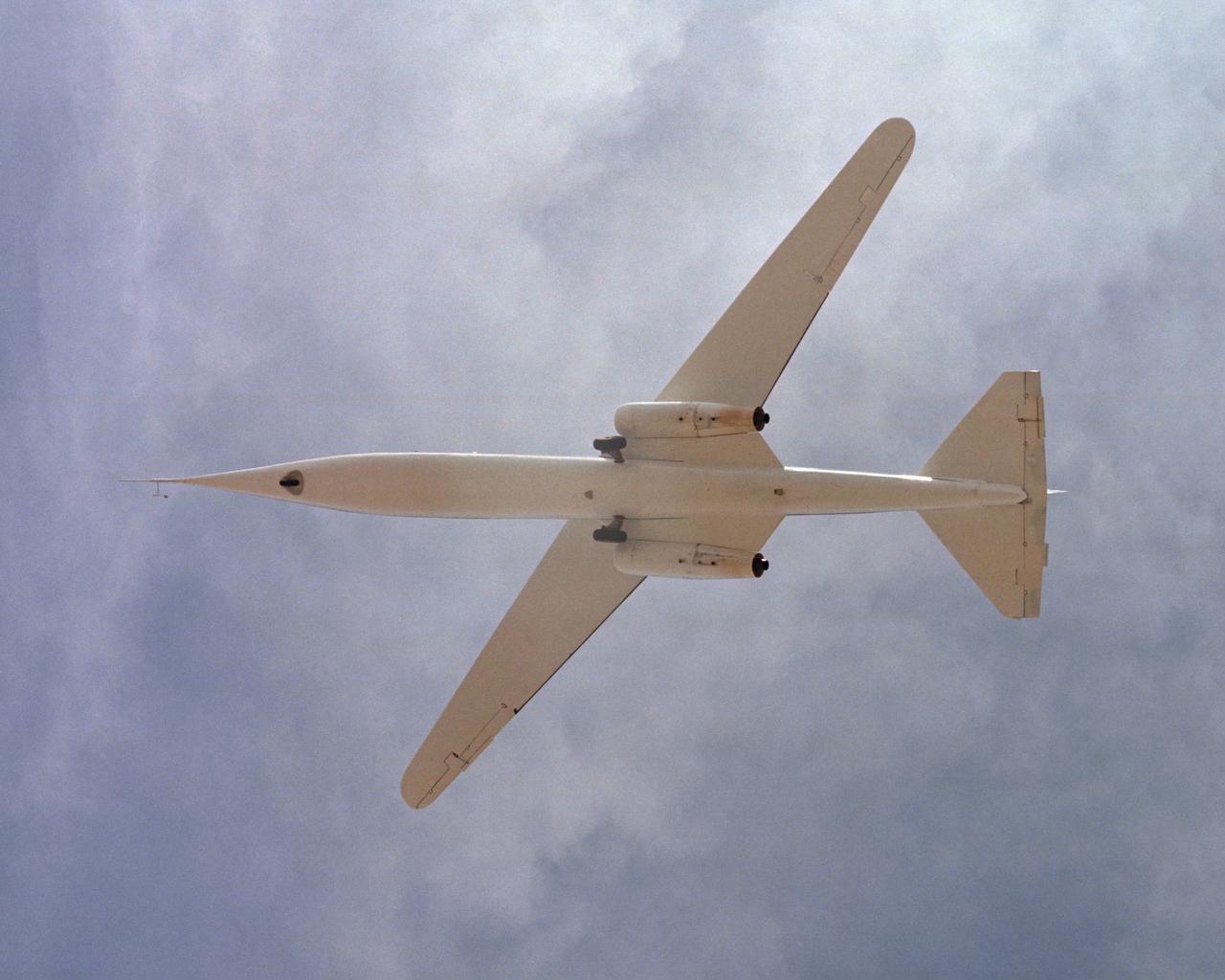
The AD-1 aircraft with its wing swept. Visible are the twin jet engines that powered the aircraft and the fixed landing gear.
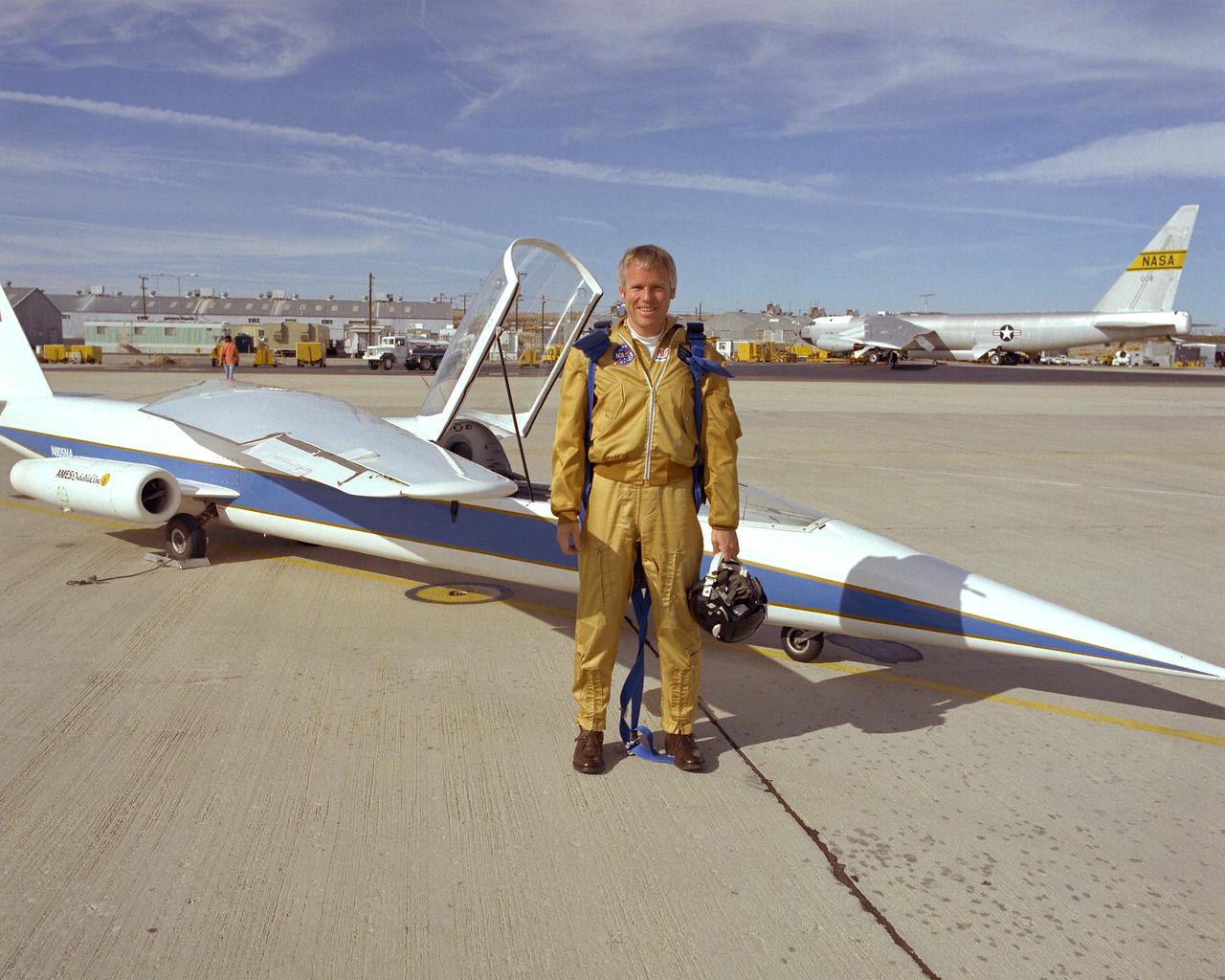
Research pilot Richard E. Gray, standing in front of the AD-1 Oblique Wing research aircraft.