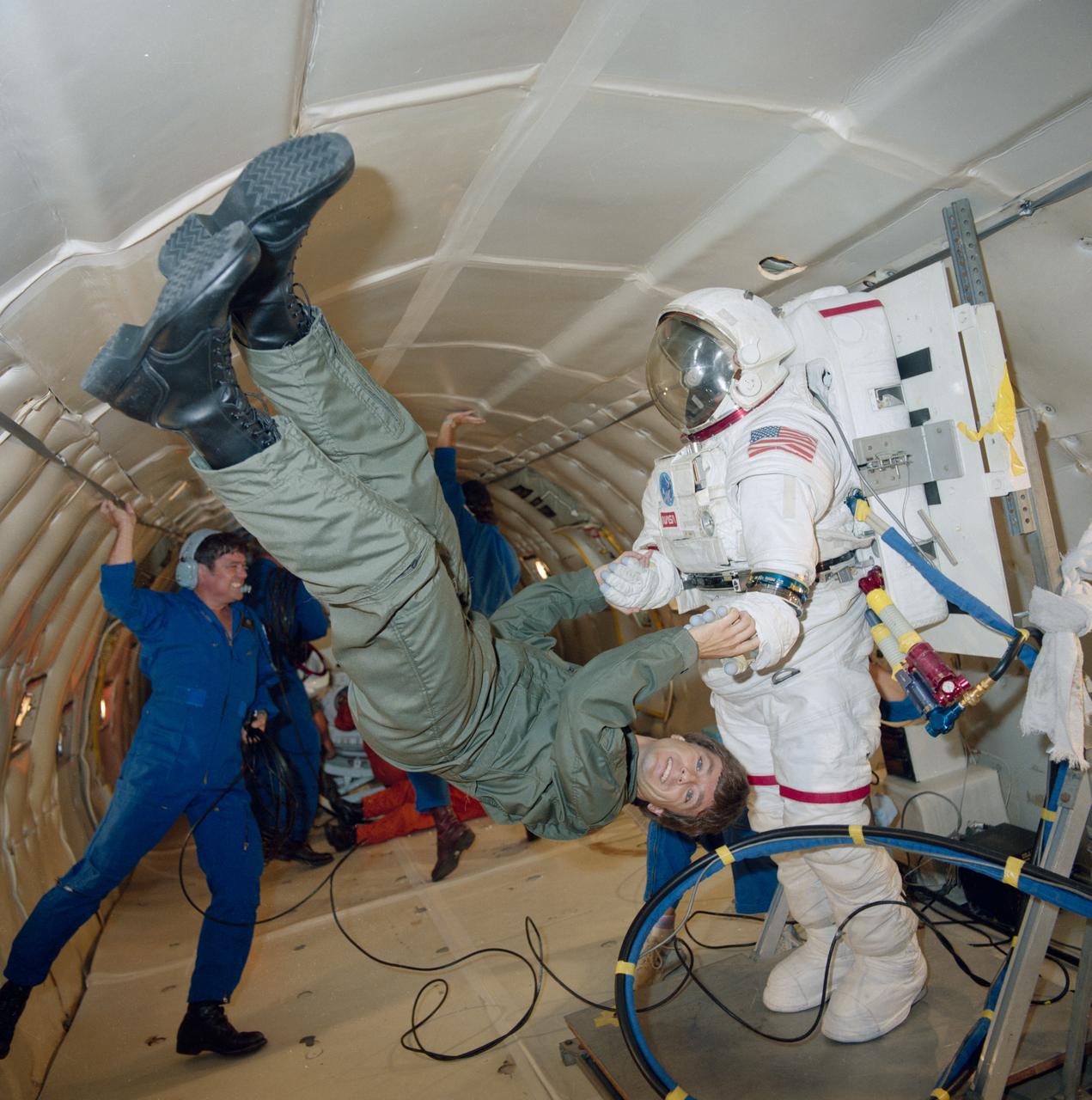
S84-37532 (18 July 1984) --? Robert B. Thirsk, backup payload specialist for 41-G appears to be shaking hands with an unoccupied extravehicular mobility unit (EMU) during a familiarization flight aboard NASA?s KC-135 aircraft. Thirsk, representing Canada?s National Research Council (NRC), serves as backup to Marc Garneau on the seven-member crew for Challenger?s October 1984 flight. This aircraft is used extensively for training and exposing Shuttle crewmembers to weightlessness as well as for evaluation of equipment and experiments scheduled for future flights.

JSC2002-E-23209 (7 June 2002) --- Flight director Richard E. (Rick) LaBrode, Jr. (right) and astronaut Robert (Bob) Thirsk, spacecraft communicator (CAPCOM) representing the Canadian Space Agency, monitor data at their consoles in the station flight control room (BFCR) in Houston’s Mission Control Center (MCC). At the time this photo was taken the Space Shuttle Endeavour was about to dock with the International Space Station (ISS) 240 miles over the South Pacific. The docking occurred at 11:25 a.m. (CDT) on June 7, 2002.
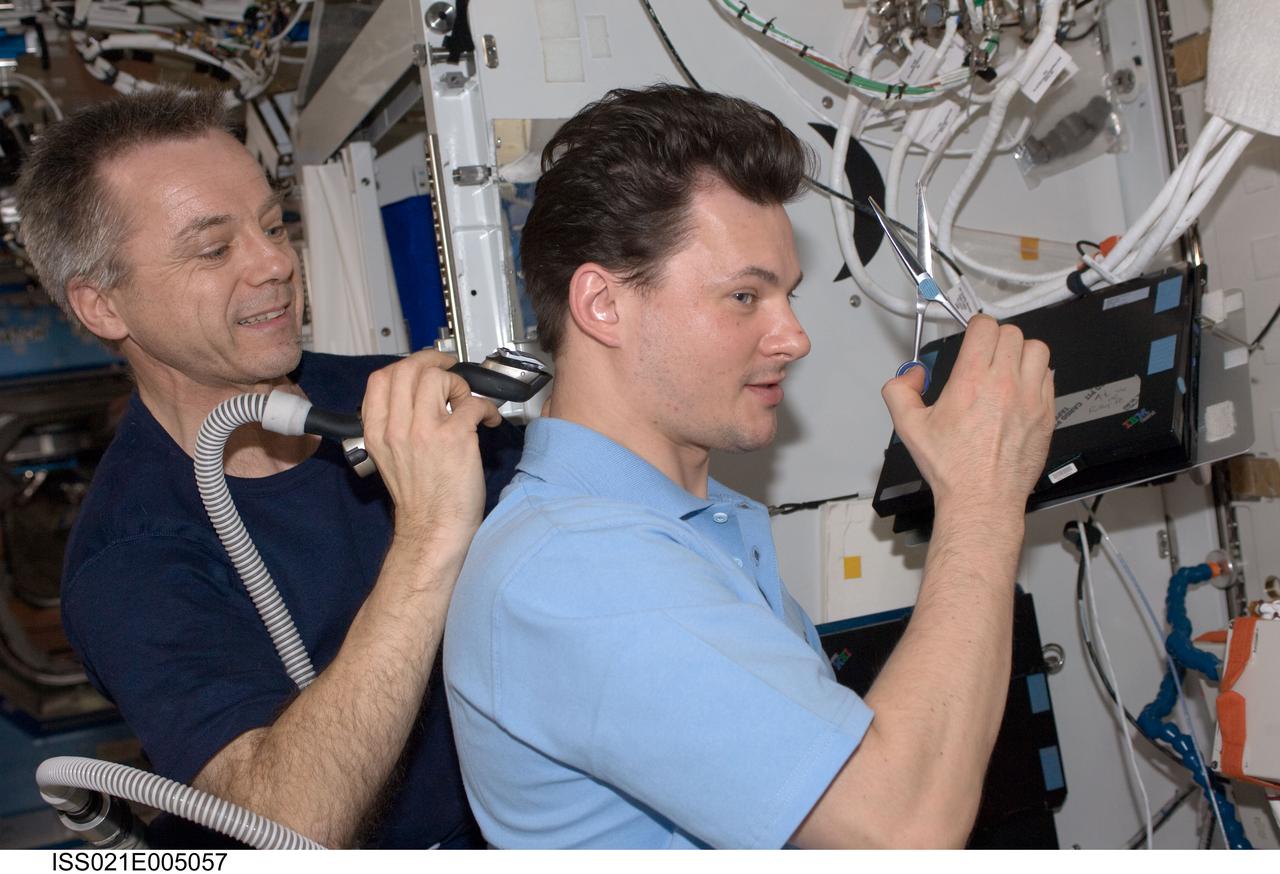
ISS021-E-005057 (11 Oct. 2009) --- Canadian Space Agency astronaut Robert Thirsk, Expedition 21 flight engineer, trims Russian cosmonaut Roman Romanenko's hair in the Destiny laboratory of the International Space Station. Thirsk used hair clippers fashioned with a vacuum device to garner freshly cut hair.
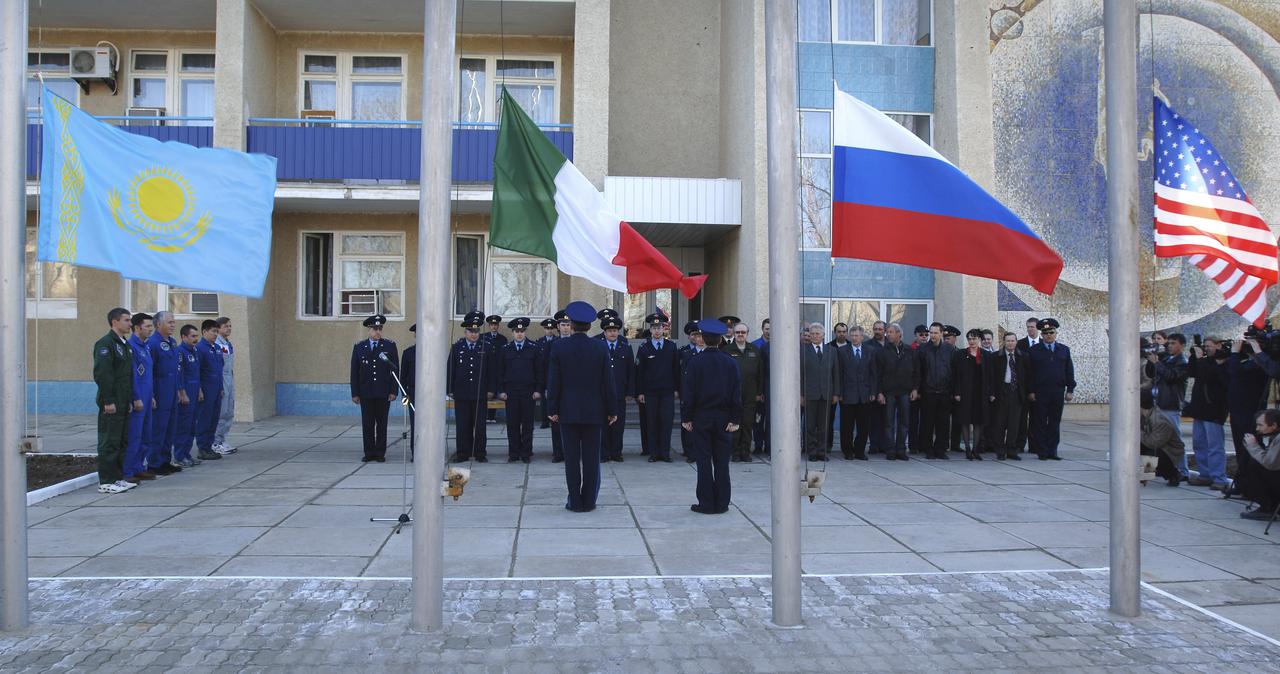
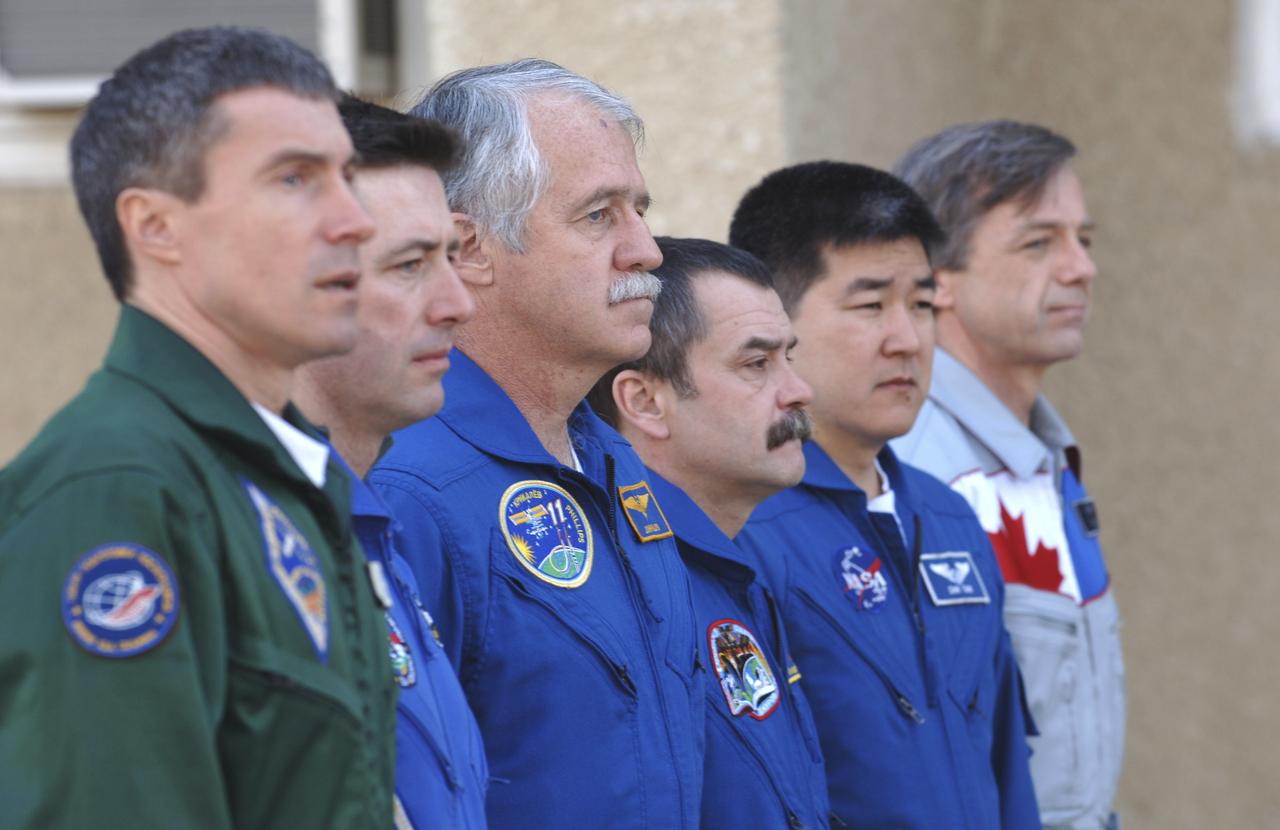
Expedition 11 Commander Sergei Krikalev, left, European Space Agency astronaut Roberto Vittori, of Italy, Flight Engineer John Phillips, third from left, along with their backups, Russian Commander Mikhail Tyurin, American Dan Tani and Robert Thirsk, of Canada, far right, participate in the traditional raising of their countries’ flags outside their crew quarters in Baikonur, Kazakhstan on Monday, April 11, 2005, during preparations for the April 15 launch on a Soyuz TMA-6 spacecraft to the International Space Station. Krikalev and Phillips will spend six months in space and greet the first Shuttle crew to fly in more than two years when it arrives at the station, while Vittori spends eight days on the station under a commercial contract between ESA and the Russian Federal Space Agency. Photo Credit: (NASA/Bill Ingalls)
Expedition 11 Commander Sergei Krikalev, left, European Space Agency astronaut Roberto Vittori, of Italy, Flight Engineer John Phillips, third from left, along with their backups, Russian Commander Mikhail Tyurin, American Dan Tani and Robert Thirsk, of Canada, far right, participate in the traditional raising of their countries’ flags outside their crew quarters in Baikonur, Kazakhstan on Monday, April 11, 2005, during preparations for the April 15 launch on a Soyuz TMA-6 spacecraft to the International Space Station. Krikalev and Phillips will spend six months in space and greet the first Shuttle crew to fly in more than two years when it arrives at the station, while Vittori spends eight days on the station under a commercial contract between ESA and the Russian Federal Space Agency. Photo Credit: (NASA/Bill Ingalls)
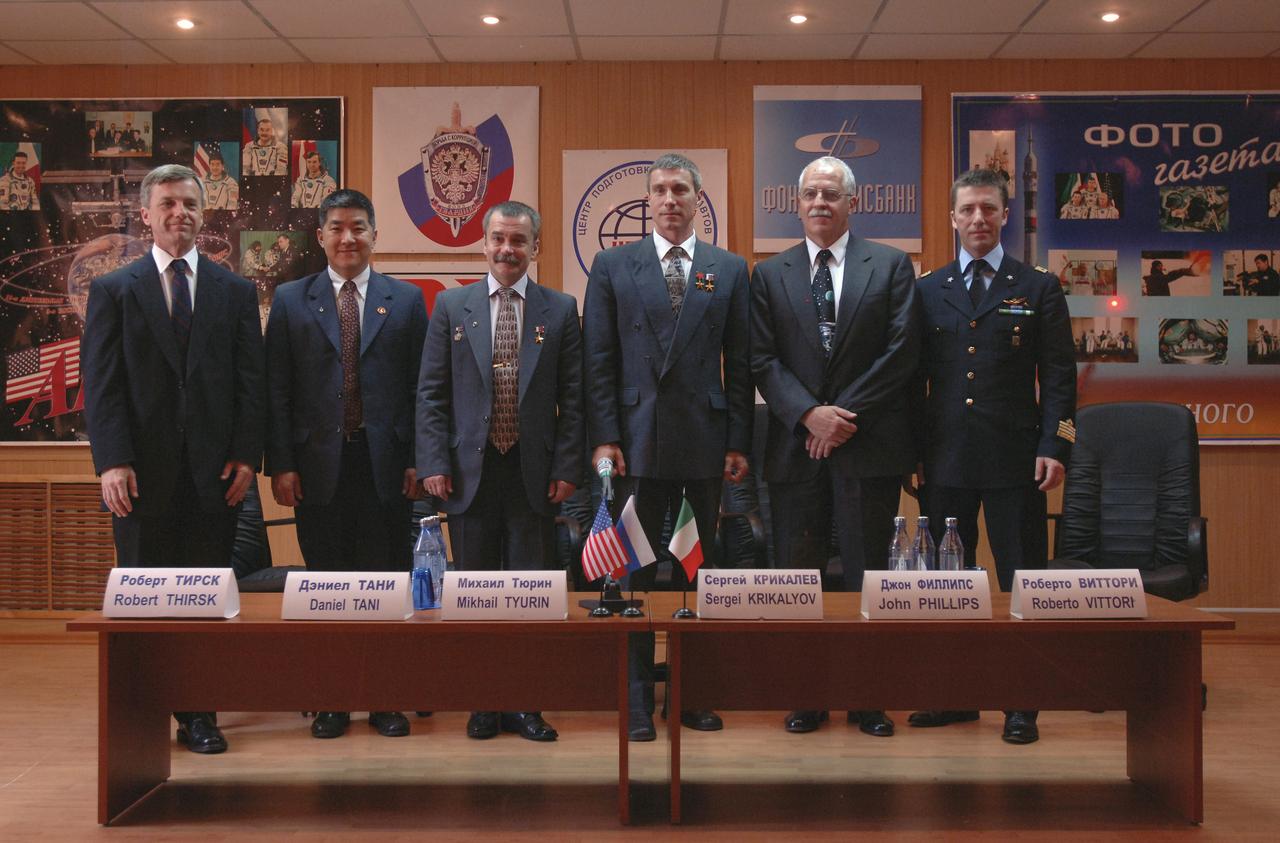
Expedition 11 backup crew Robert Thirsk of Canada, left, American Dan Tani, Russian Commander Mikhail Tyurin and prime Expedition 11 crew Commander Sergei Krikalev, fourth from left, Flight Engineer and NASA Science Officer John Phillips and European Space Agency Astronaut Roberto Vittori of Italy, right, talk to the press, Thursday, April 14, 2005, prior to the April 15 launch aboard the Soyuz TMA-6 spacecraft from the Baikonur Cosmodrome in Kazakhstan. Krikalev and Phillips will spend six months on the Station, replacing Expedition 10 Commander Leroy Chiao and Flight Engineer Salizhan Sharipov, while Vittori will spend eight days on the Station under a commerical contract between ESA and the Russian Federal Space Agency, returning to Earth with Chiao and Sharipov on April 25. Photo Credit: (NASA/Bill Ingalls)
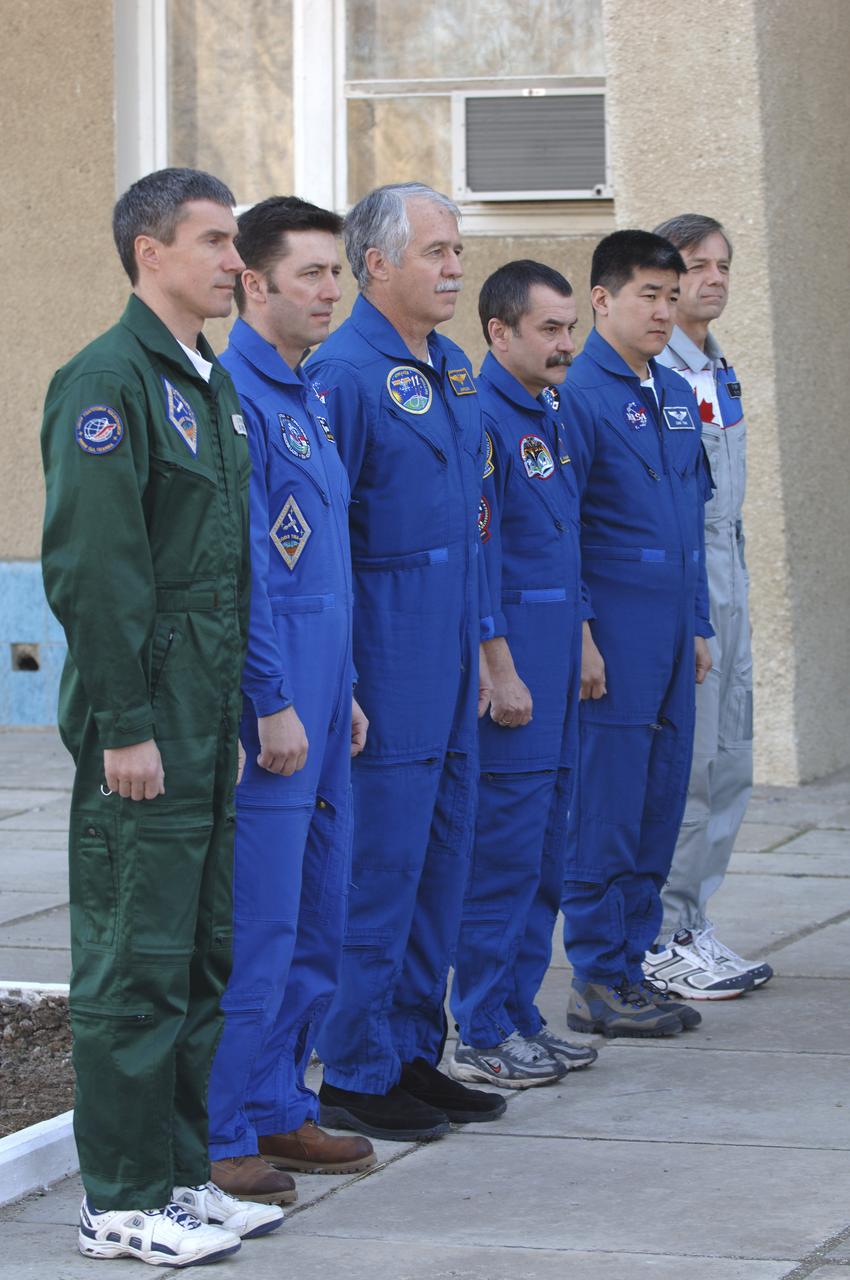
Expedition 11 Commander Sergei Krikalev, left, European Space Agency astronaut Roberto Vittori, of Italy, Flight Engineer John Phillips, third from left, along with their backups, Russian Commander Mikhail Tyurin, American Dan Tani and Robert Thirsk, of Canada, far right, participate in the traditional raising of their countries’ flags outside their crew quarters in Baikonur, Kazakhstan on Monday, April 11, 2005, during preparations for the April 15 launch on a Soyuz TMA-6 spacecraft to the International Space Station. Krikalev and Phillips will spend six months in space and greet the first Shuttle crew to fly in more than two years when it arrives at the station, while Vittori spends eight days on the station under a commercial contract between ESA and the Russian Federal Space Agency. Photo Credit: (NASA/Bill Ingalls)
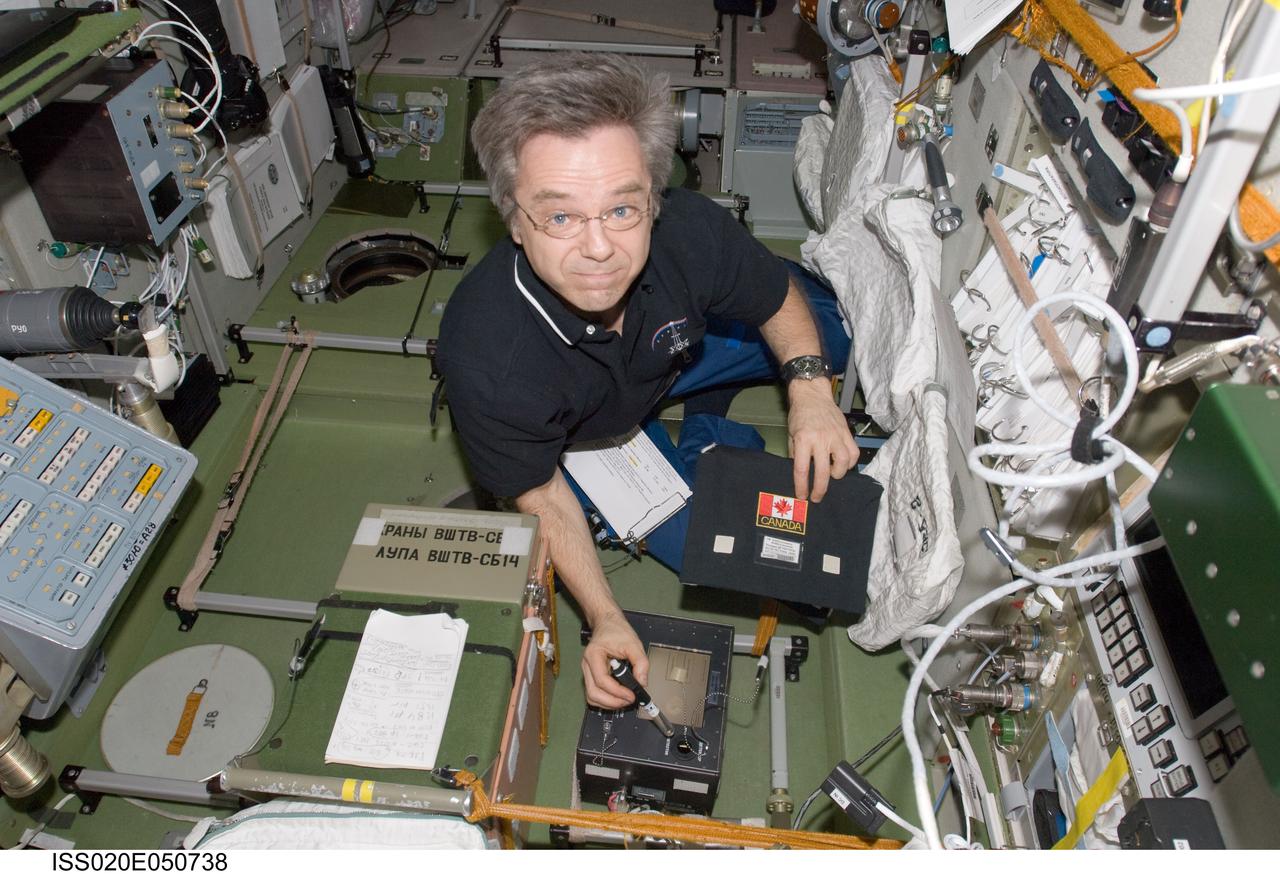
ISS020-E-050738 (10 Oct. 2009) --- Canadian Space Agency astronaut Robert Thirsk, Expedition 20/21 flight engineer, works in the Zvezda Service Module of the International Space Station.
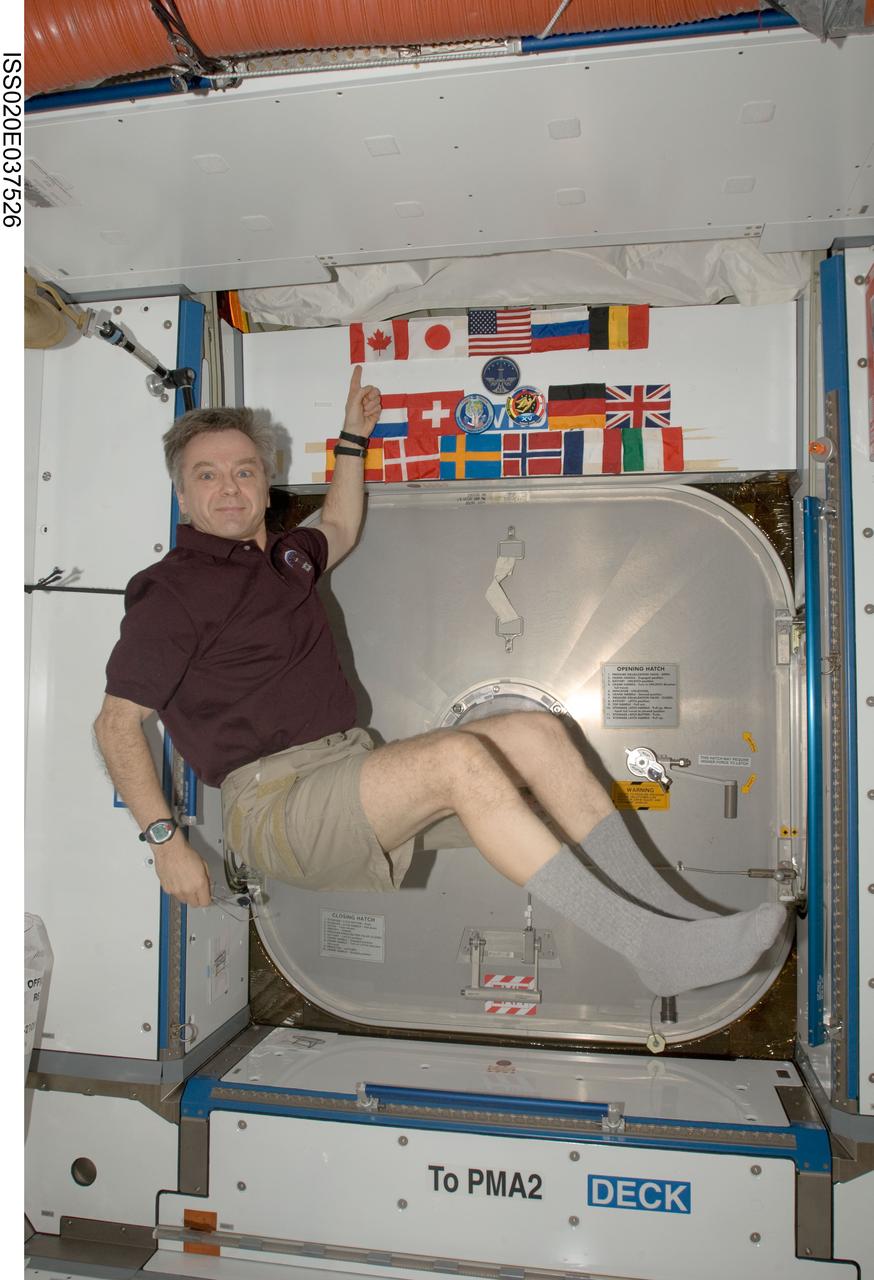
ISS020-E-037526 (15 Aug. 2009) --- Canadian Space Agency astronaut Robert Thirsk, Expedition 20 flight engineer, poses for a photo in the Harmony node of the International Space Station.
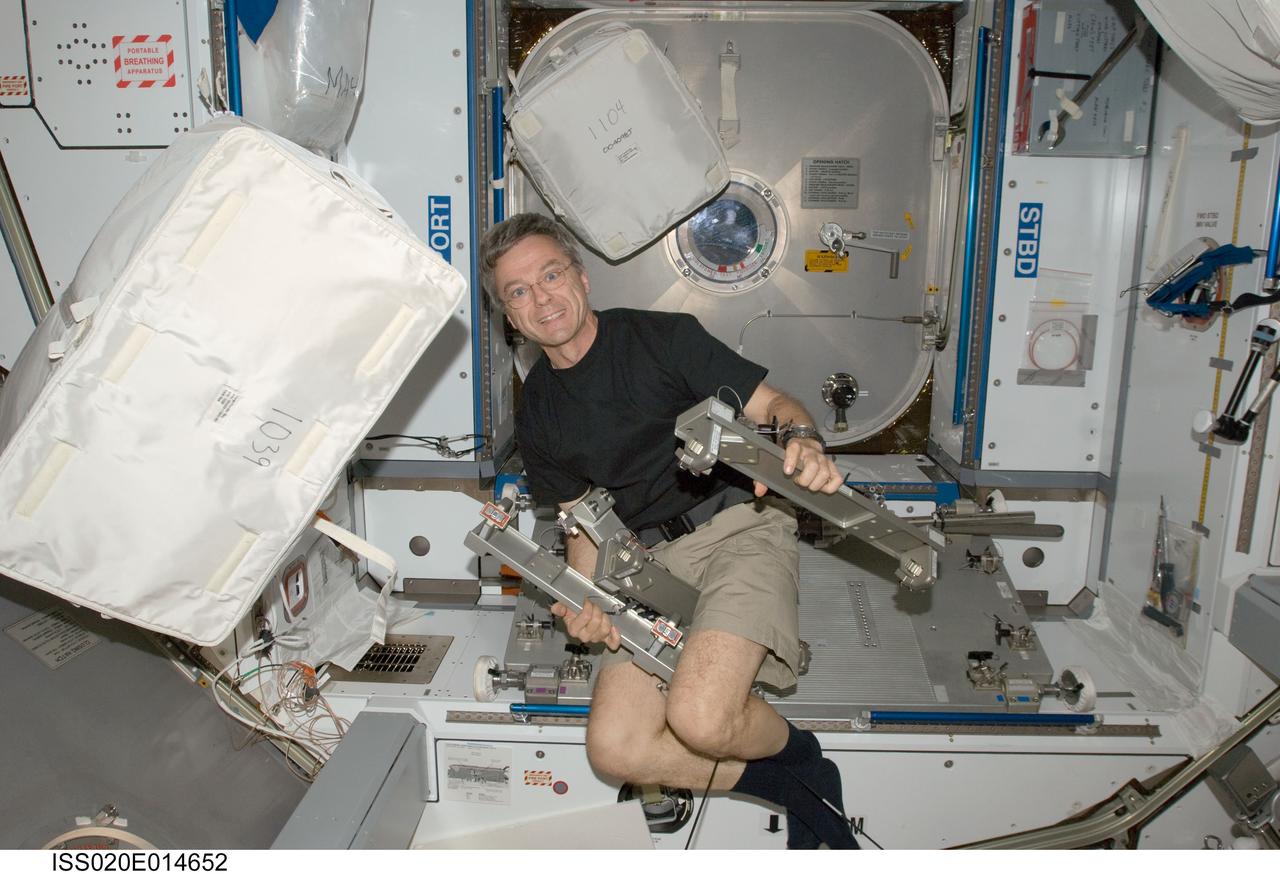
ISS020-E-014652 (26 June 2009) --- Canadian Space Agency astronaut Robert Thirsk, Expedition 20 flight engineer, installs the Interim Resistive Exercise Device (IRED) equipment in the Harmony node of the International Space Station.
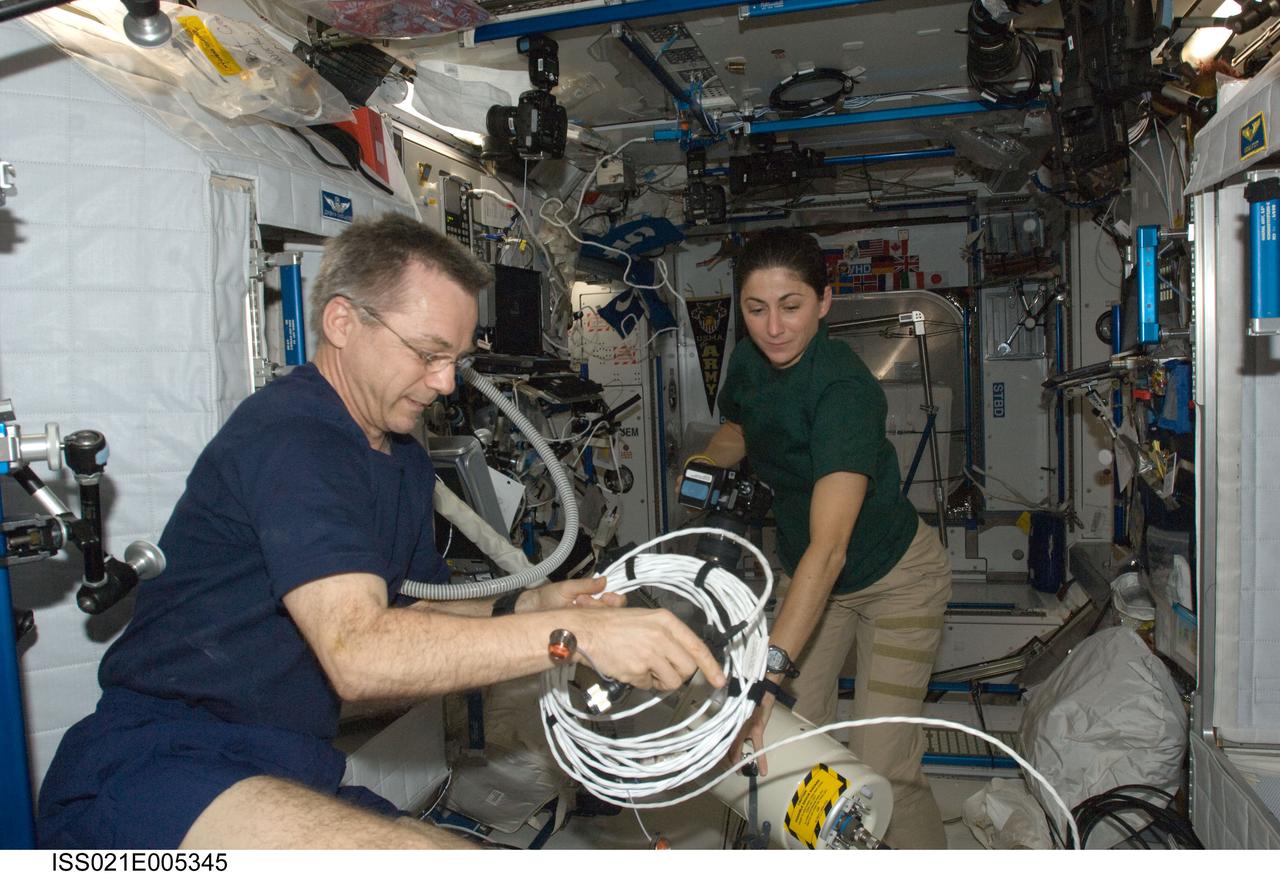
ISS021-E-005345 (11 Oct. 2009) --- Canadian Space Agency astronaut Robert Thirsk and NASA astronaut Nicole Stott, both Expedition 21 flight engineers, work in the Harmony node of the International Space Station.
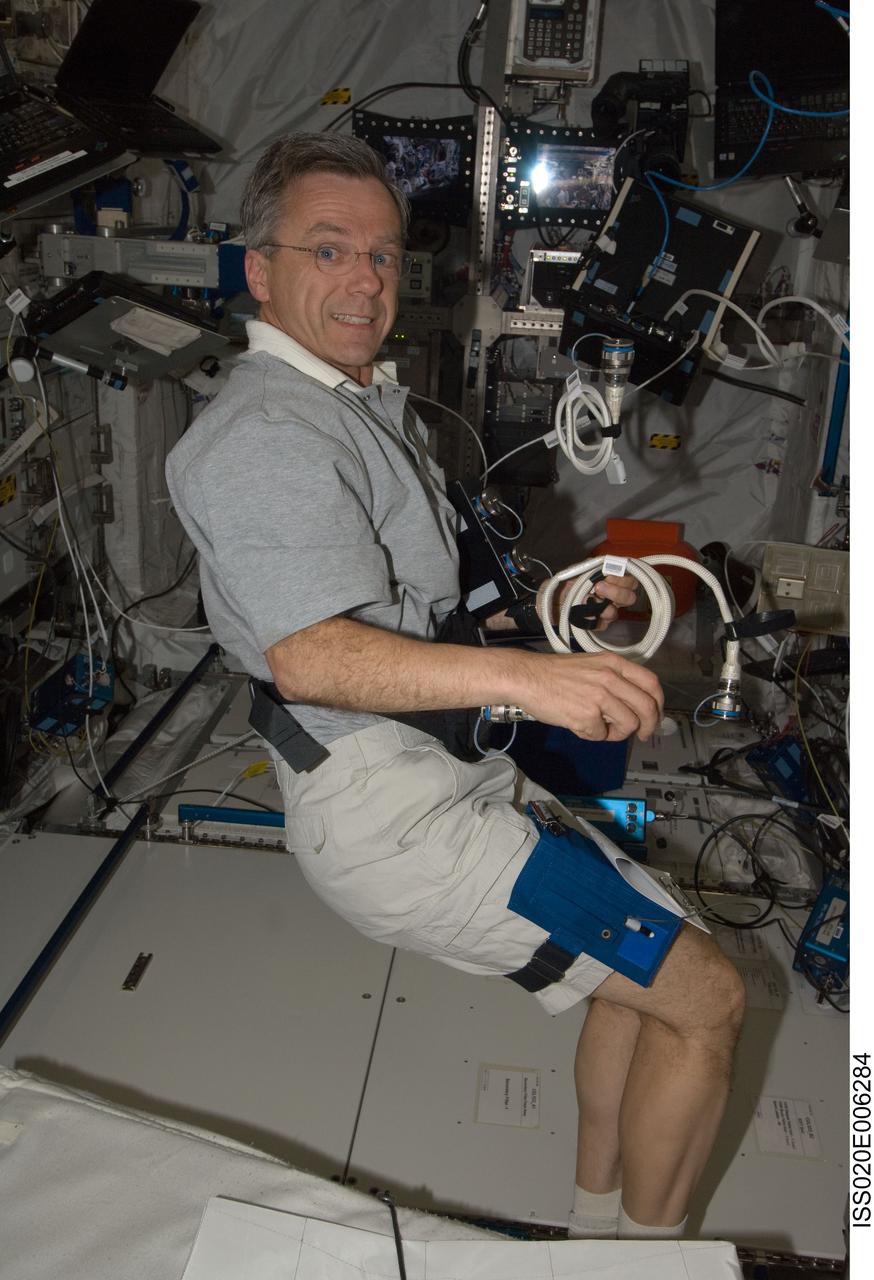
ISS020-E-006284 (3 June 2009) --- Canadian Space Agency astronaut Robert Thirsk, Expedition 20 flight engineer, works in the Columbus laboratory of the International Space Station.
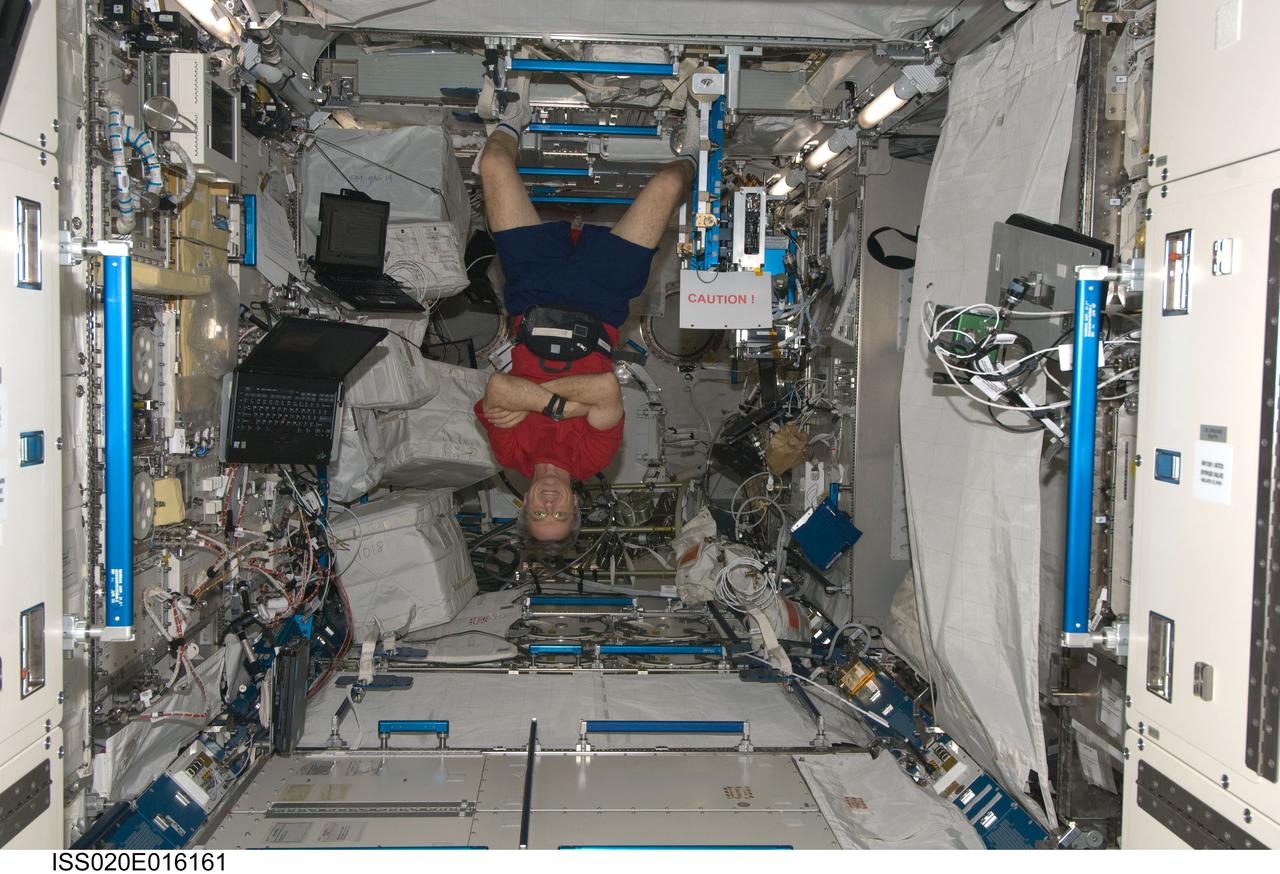
ISS020-E-016161 (30 June 2009) --- Canadian Space Agency astronaut Robert Thirsk, Expedition 20 flight engineer, poses for a photo in the Kibo laboratory of the International Space Station.
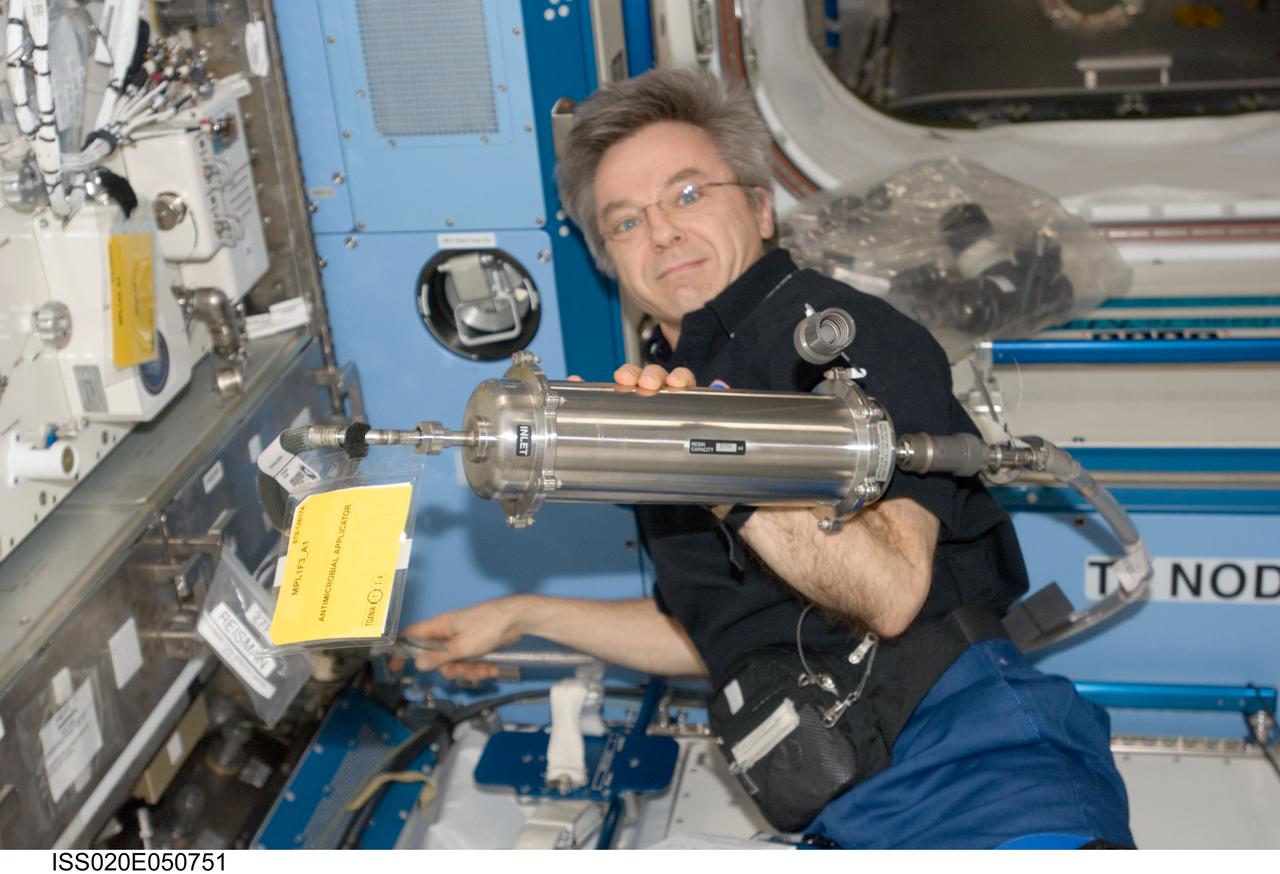
ISS020-E-050751 (10 Oct. 2009) --- Canadian Space Agency astronaut Robert Thirsk, Expedition 20/21 flight engineer, holds an Antimicrobial Applicator (AmiA) in the Kibo laboratory of the International Space Station.
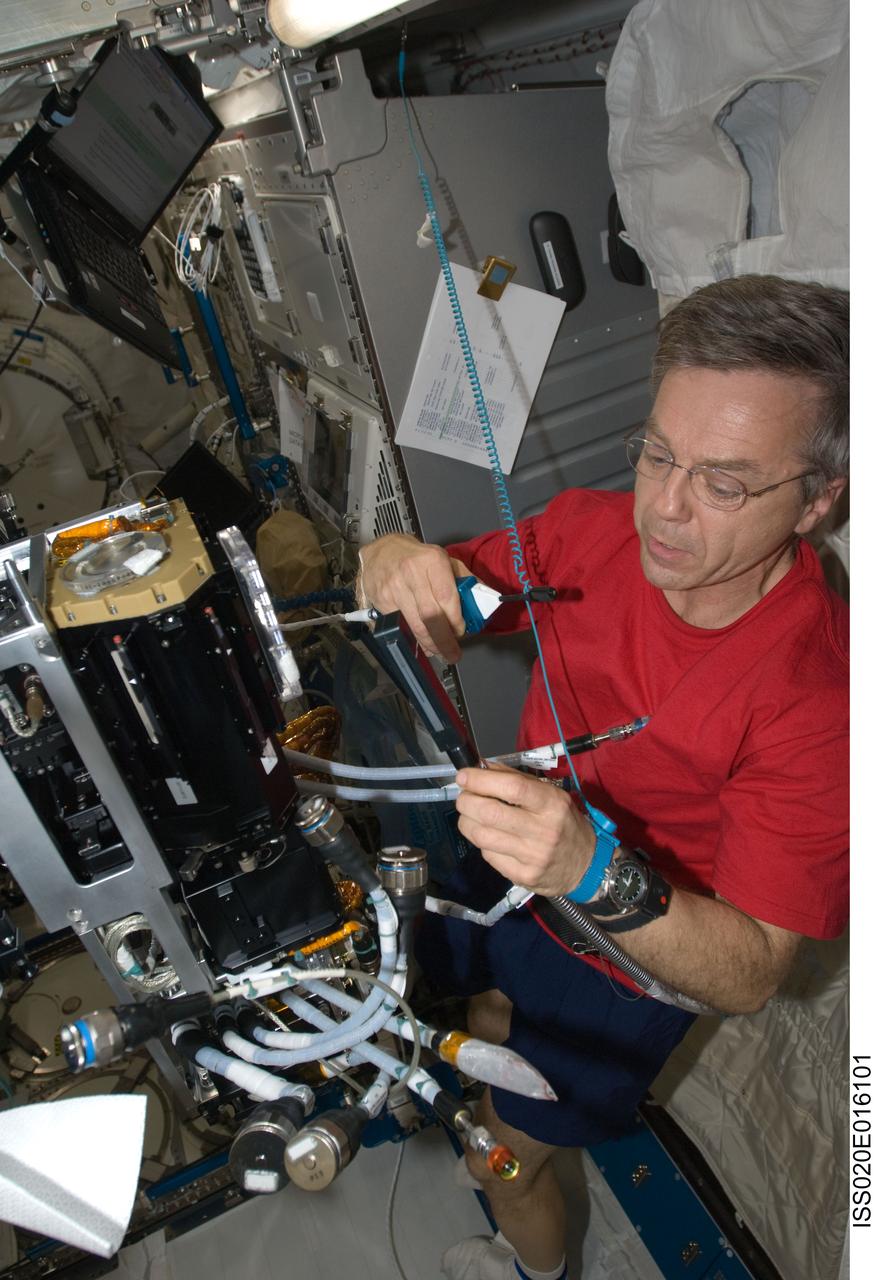
ISS020-E-016101 (1 July 2009) --- Canadian Space Agency astronaut Robert Thirsk, Expedition 20 flight engineer, works with hardware in the Kibo laboratory of the International Space Station.
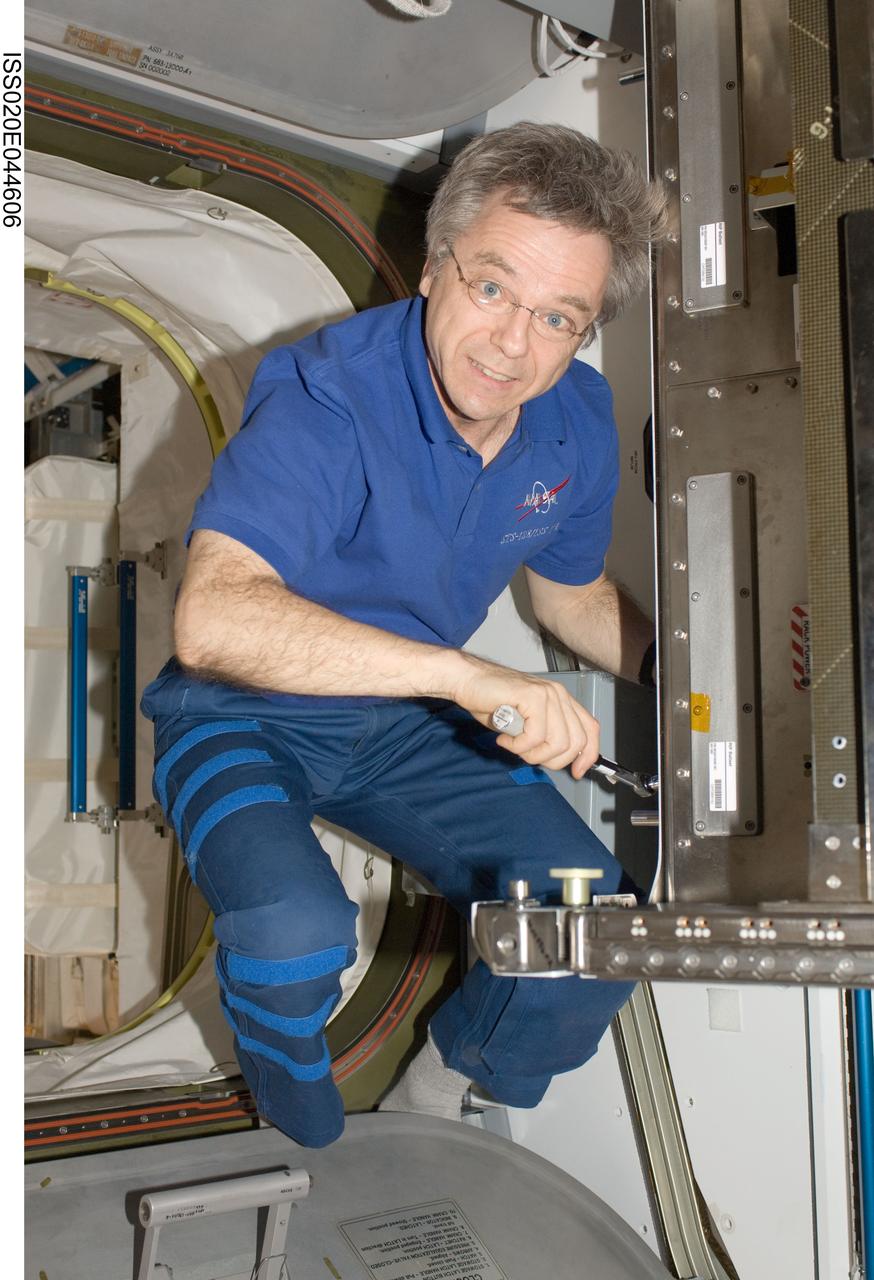
ISS020-E-044606 (30 Sept. 2009) --- Canadian Space Agency astronaut Robert Thirsk, Expedition 20 flight engineer, performs in-flight maintenance (IFM) in the Harmony node of the International Space Station.
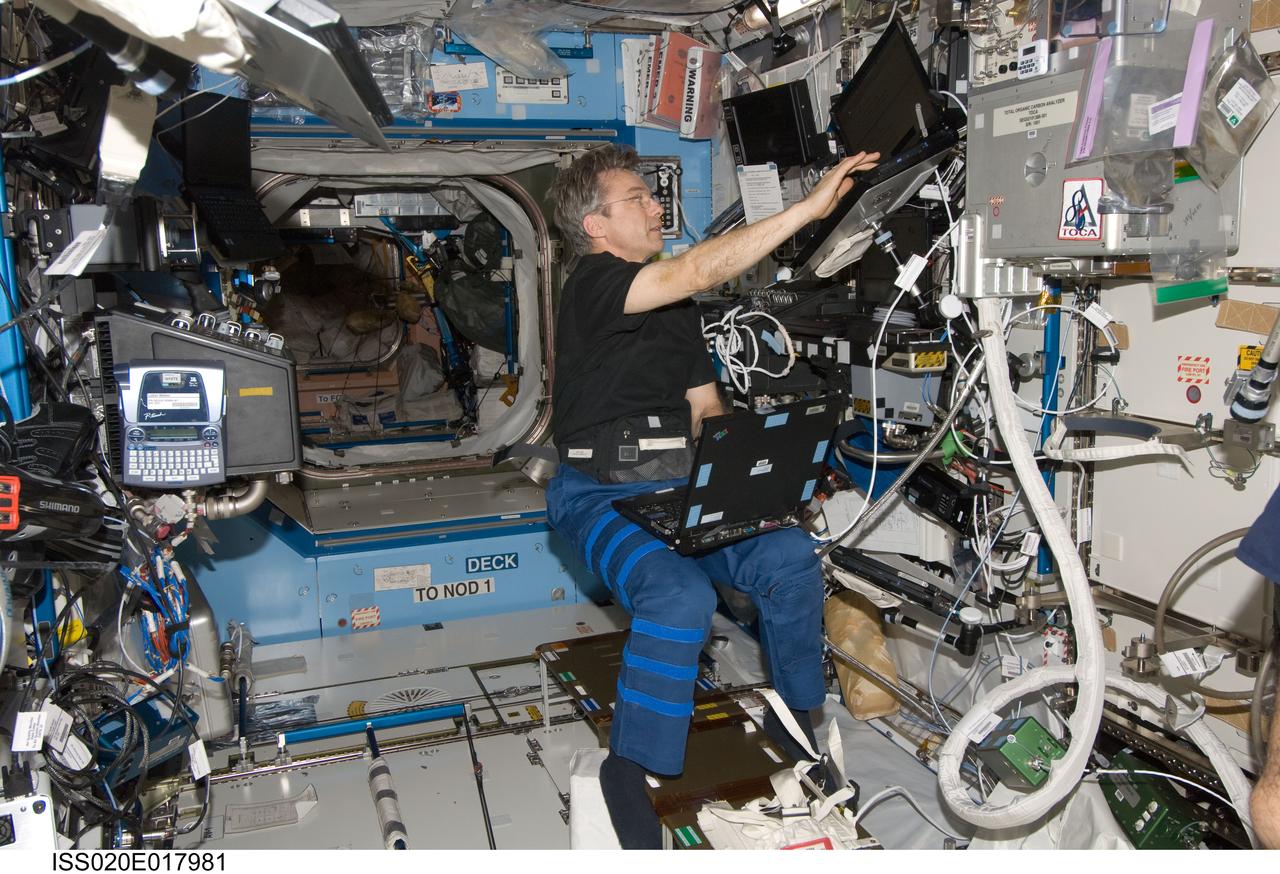
ISS020-E-017981 (9 July 2009) --- Canadian Space Agency astronaut Robert Thirsk, Expedition 20 flight engineer, enters data into computers in the Destiny laboratory of the International Space Station.
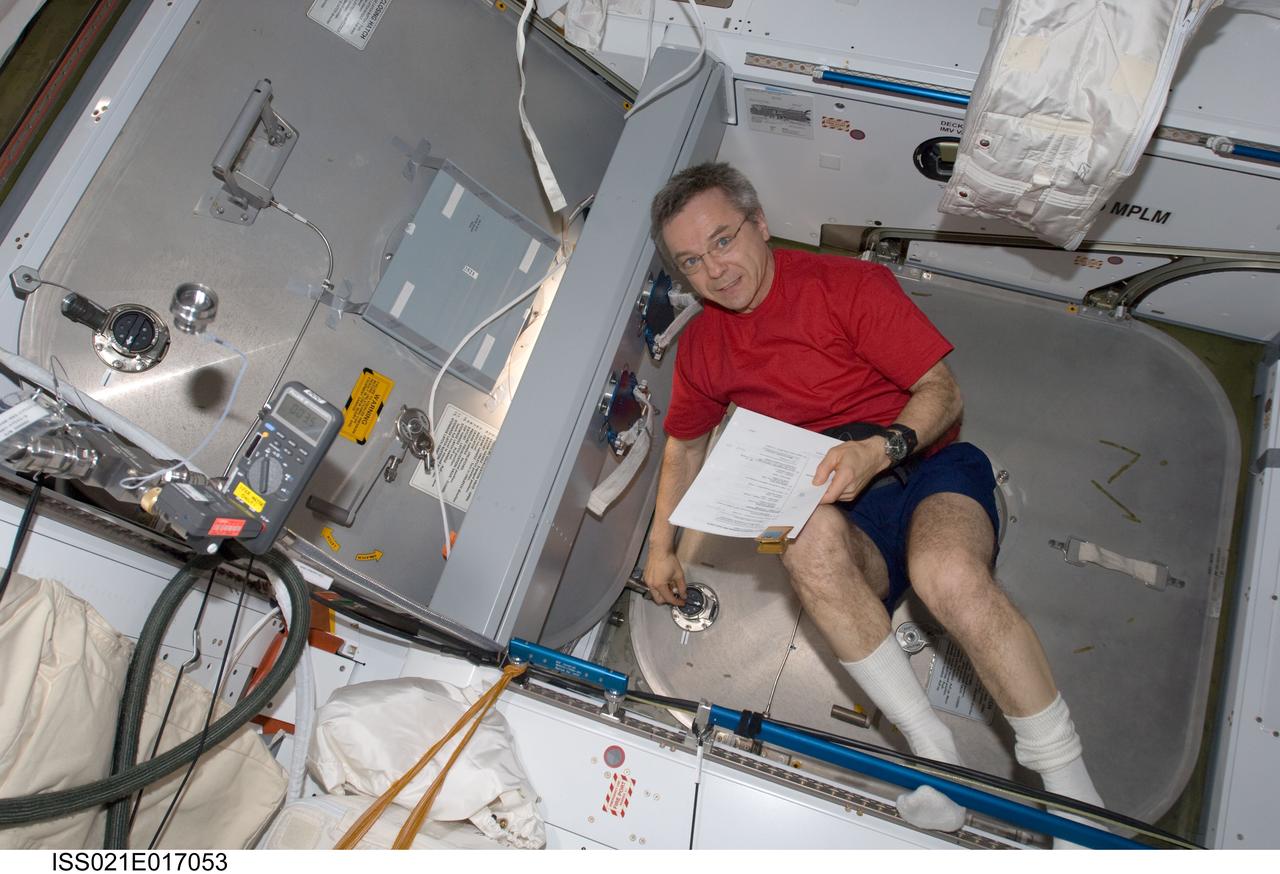
ISS021-E-017053 (30 Oct. 2009) --- Canadian Space Agency astronaut Robert Thirsk, Expedition 21 flight engineer, is pictured while working in the Harmony node of the International Space Station.
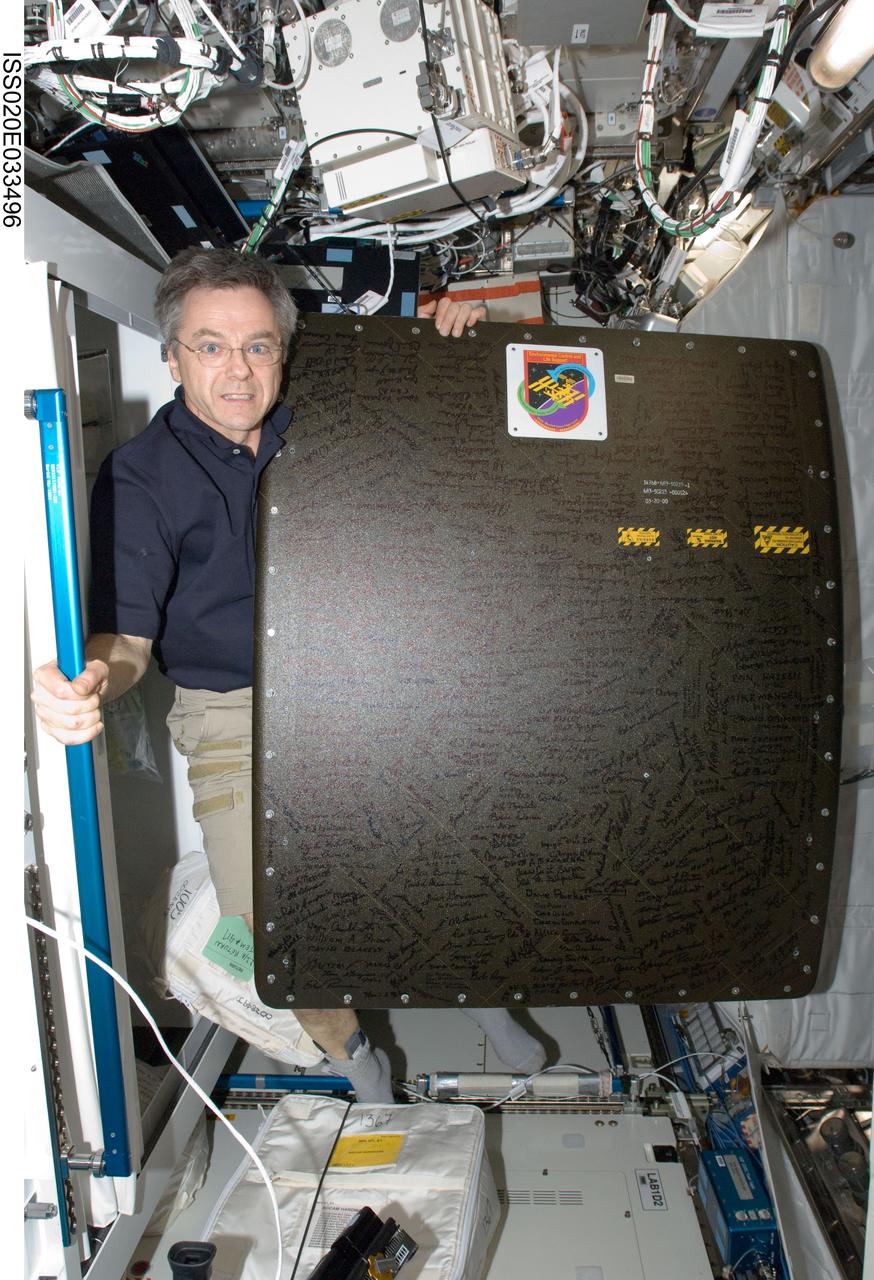
ISS020-E-033496 (21 Aug. 2009) --- Canadian Space Agency astronaut Robert Thirsk, Expedition 20 flight engineer, is pictured with the oxygen generator system (OGS) rack cover in the Destiny laboratory of the International Space Station.
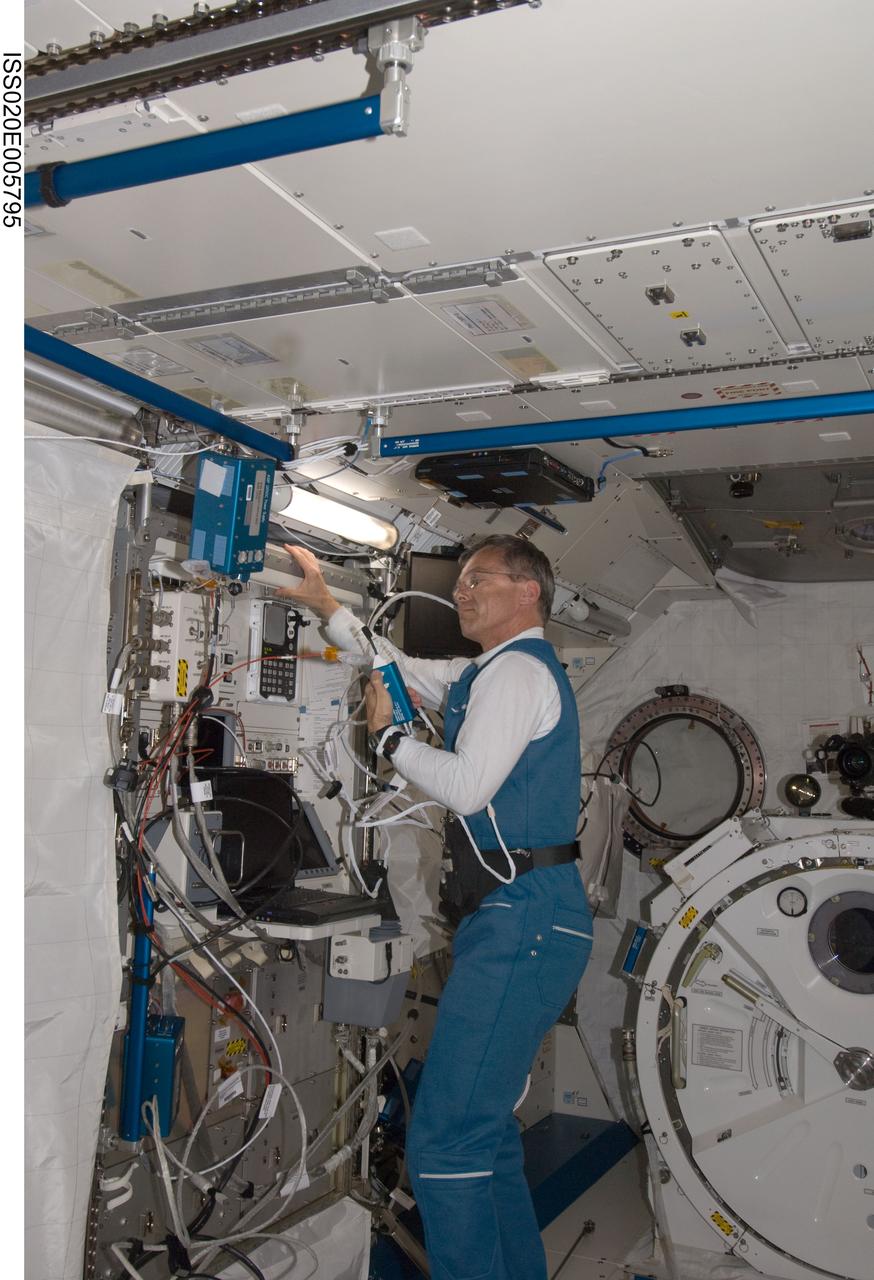
ISS020-E-005795 (30 May 2009) --- Canadian Space Agency astronaut Robert Thirsk, Expedition 20 flight engineer, works in the Kibo laboratory of the International Space Station.
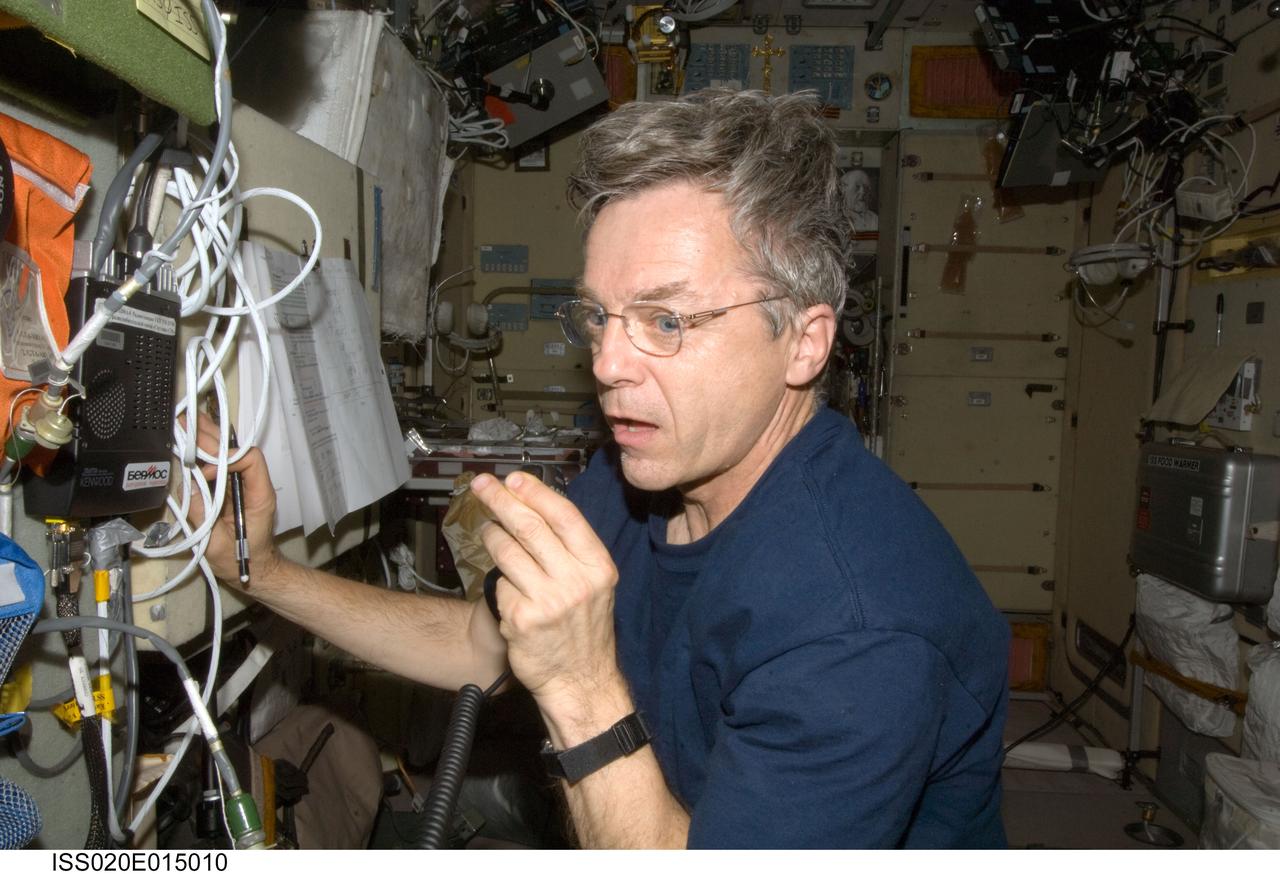
ISS020-E-015010 (28 June 2009) --- Canadian Space Agency astronaut Robert Thirsk, Expedition 20 flight engineer, uses a ham radio system in the Zvezda Service Module of the International Space Station.
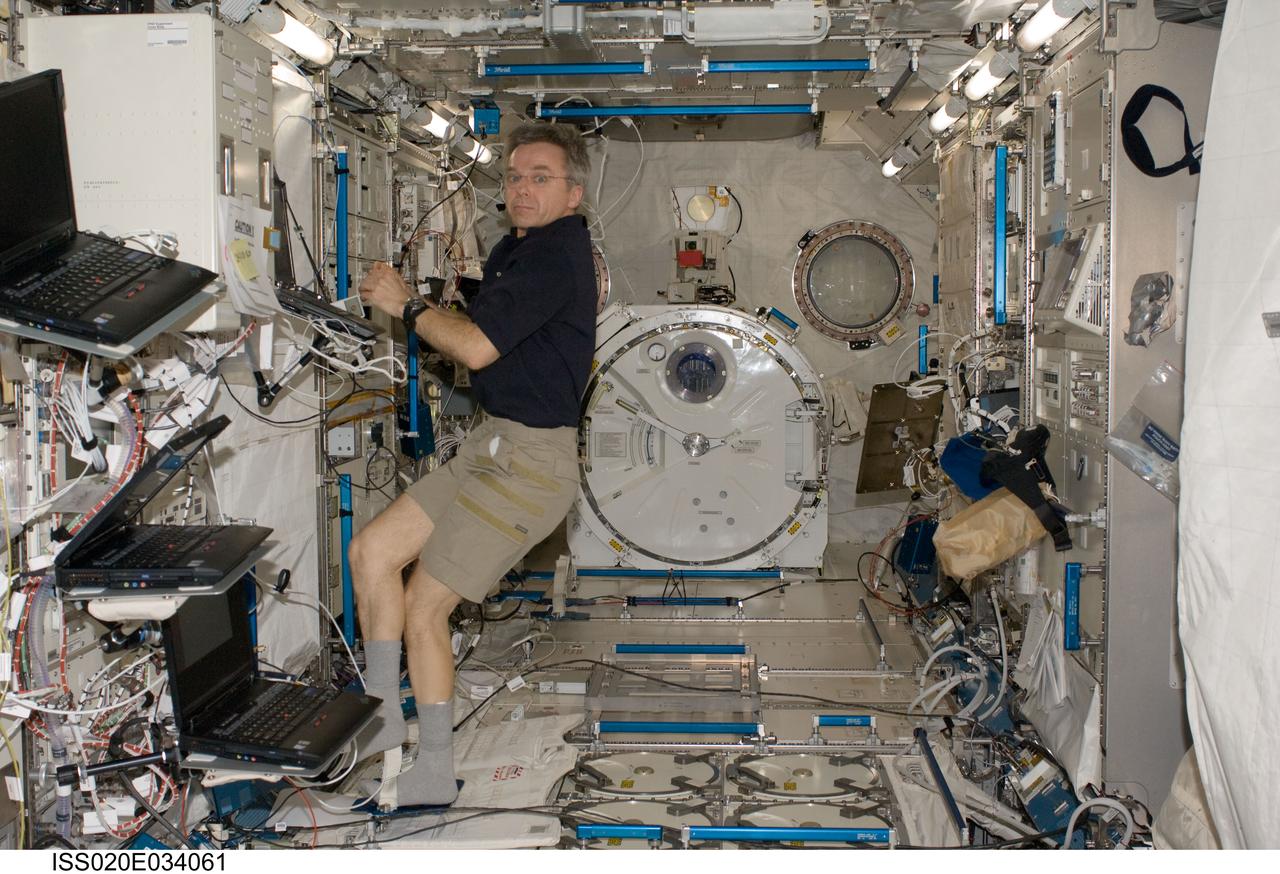
ISS020-E-034061 (25 Aug. 2009) --- Canadian Space Agency astronaut Robert Thirsk, Expedition 20 flight engineer, works in the Kibo laboratory of the International Space Station.
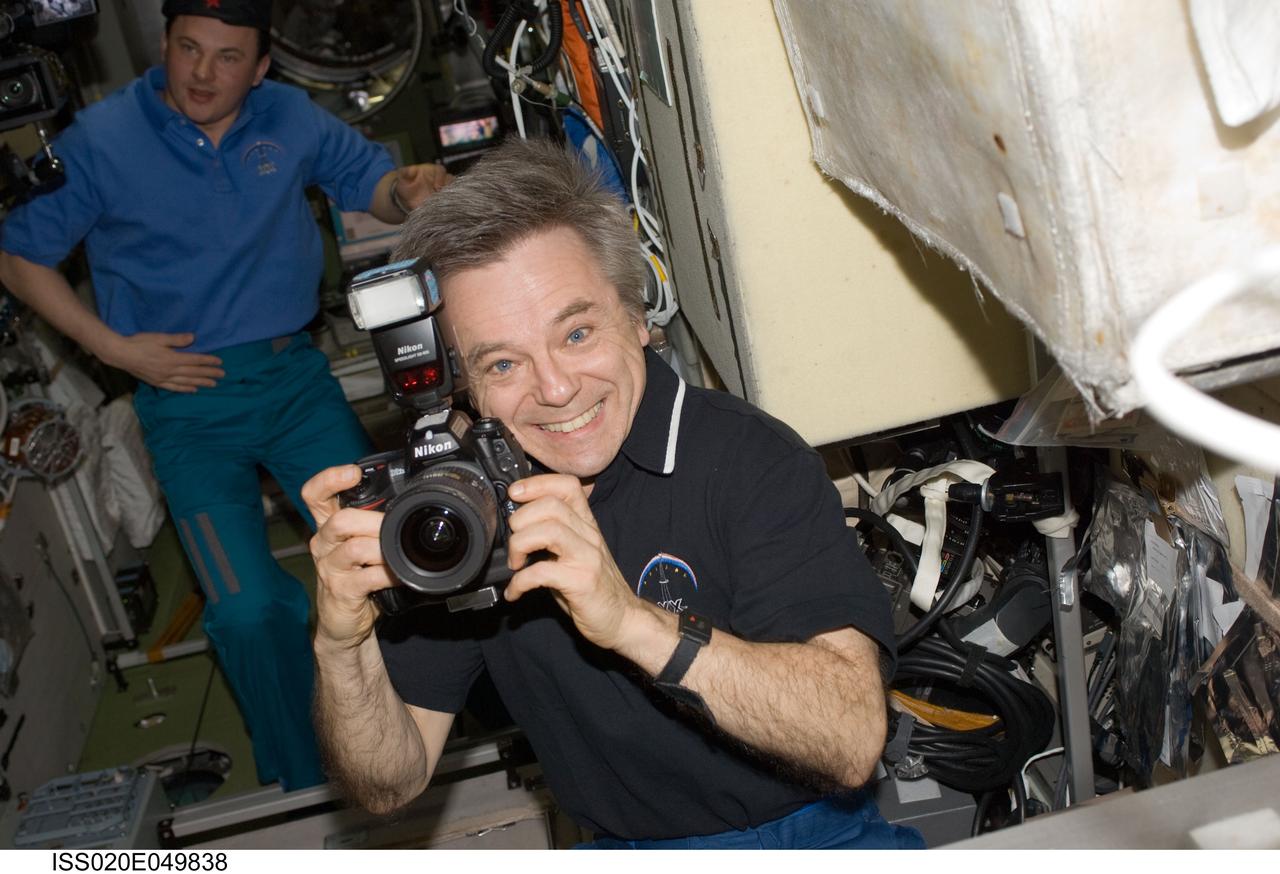
ISS020-E-049838 (2 Oct. 2009) --- Canadian Space Agency astronaut Robert Thirsk, Expedition 20/21 flight engineer, uses a still camera in the Zvezda Service Module of the International Space Station.
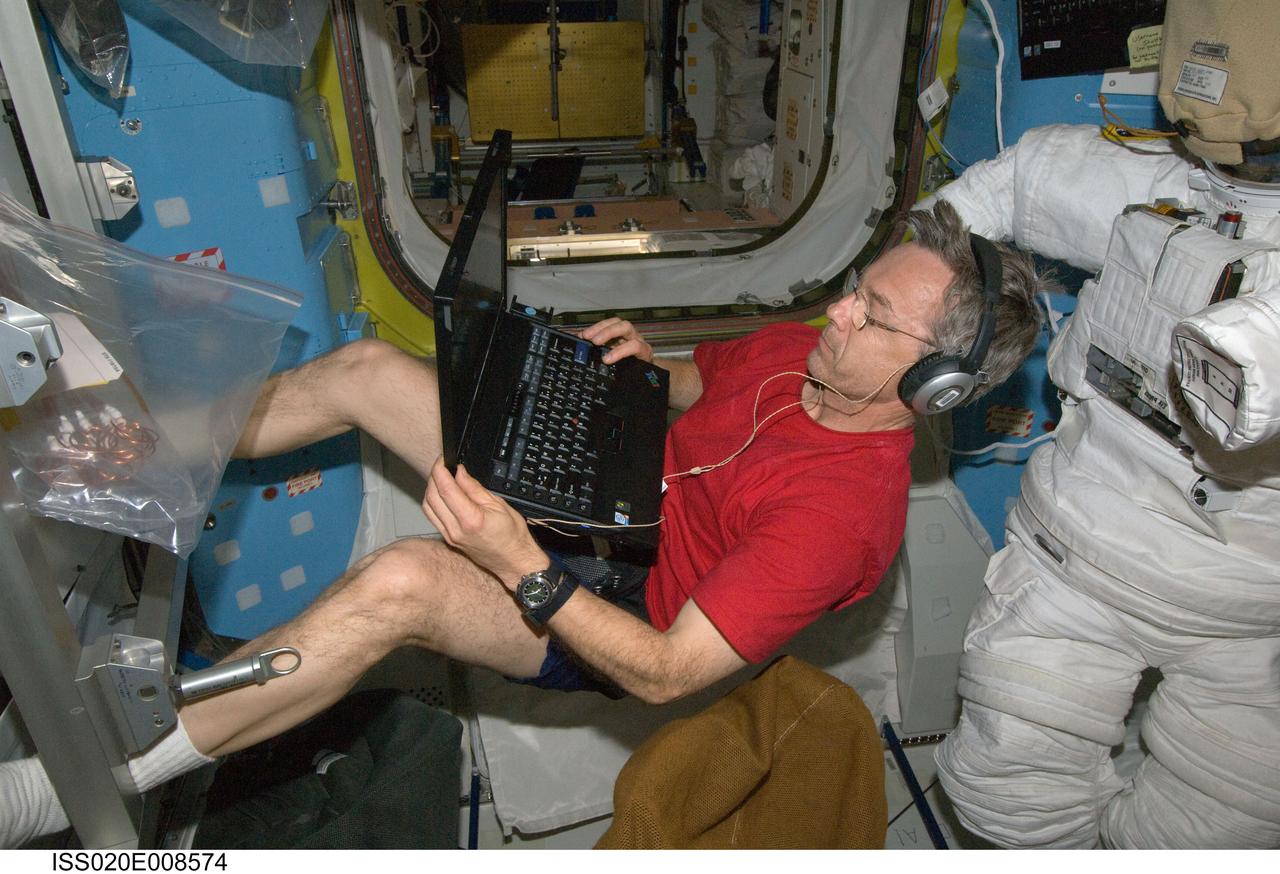
ISS020-E-008574 (11 June 2009) --- Canadian Space Agency astronaut Robert Thirsk, Expedition 20 flight engineer, uses a computer in the Quest airlock of the International Space Station.
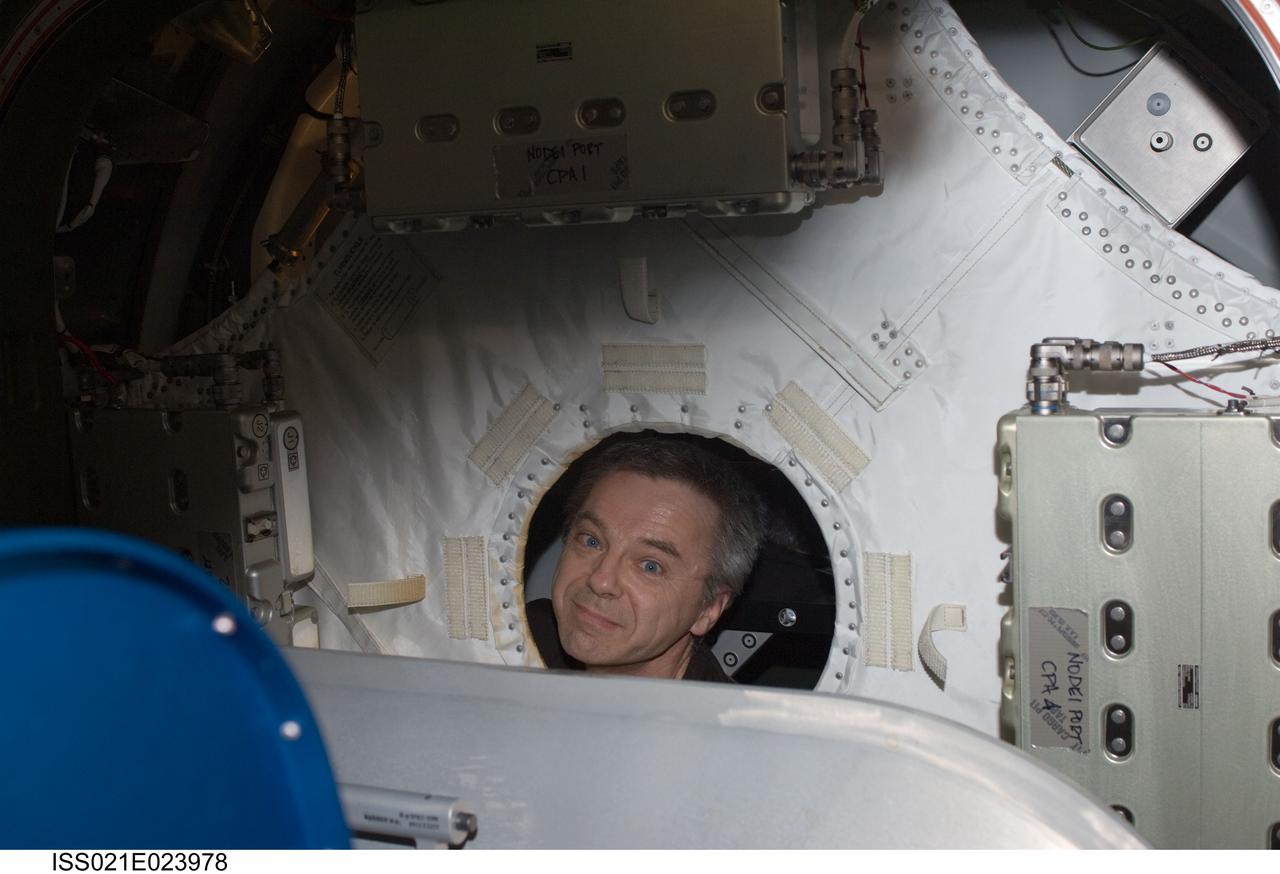
ISS021-E-023978 (4 Nov. 2009) --- Canadian Space Agency astronaut Robert Thirsk, Expedition 21 flight engineer, looks through an opening on a hatch cover in the Unity node of the International Space Station.
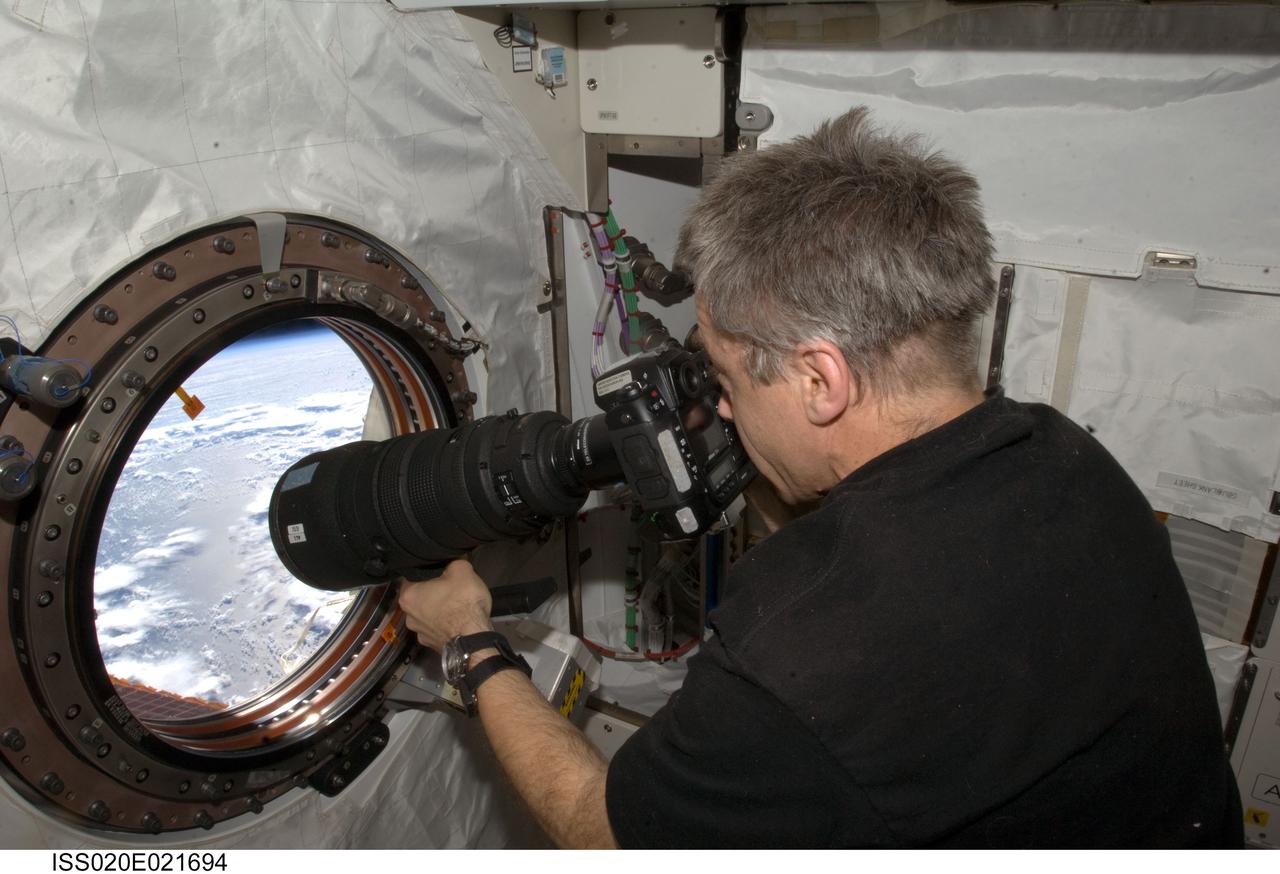
ISS020-E-021694 (17 July 2009) --- Canadian Space Agency astronaut Robert Thirsk, Expedition 20/21 flight engineer, takes pictures out the forward Kibo or JEM window on the International Space Station.
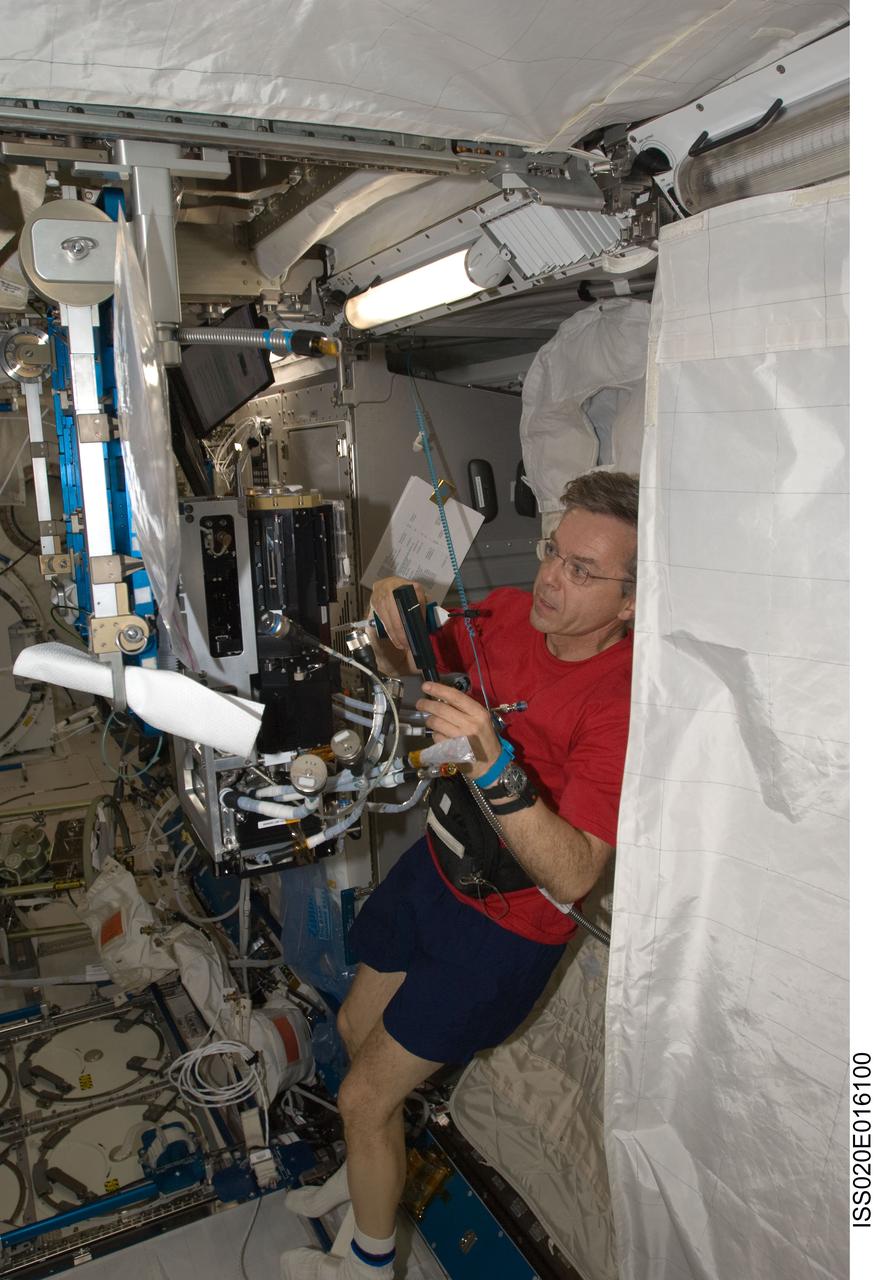
ISS020-E-016100 (1 July 2009) --- Canadian Space Agency astronaut Robert Thirsk, Expedition 20 flight engineer, works with hardware in the Kibo laboratory of the International Space Station.
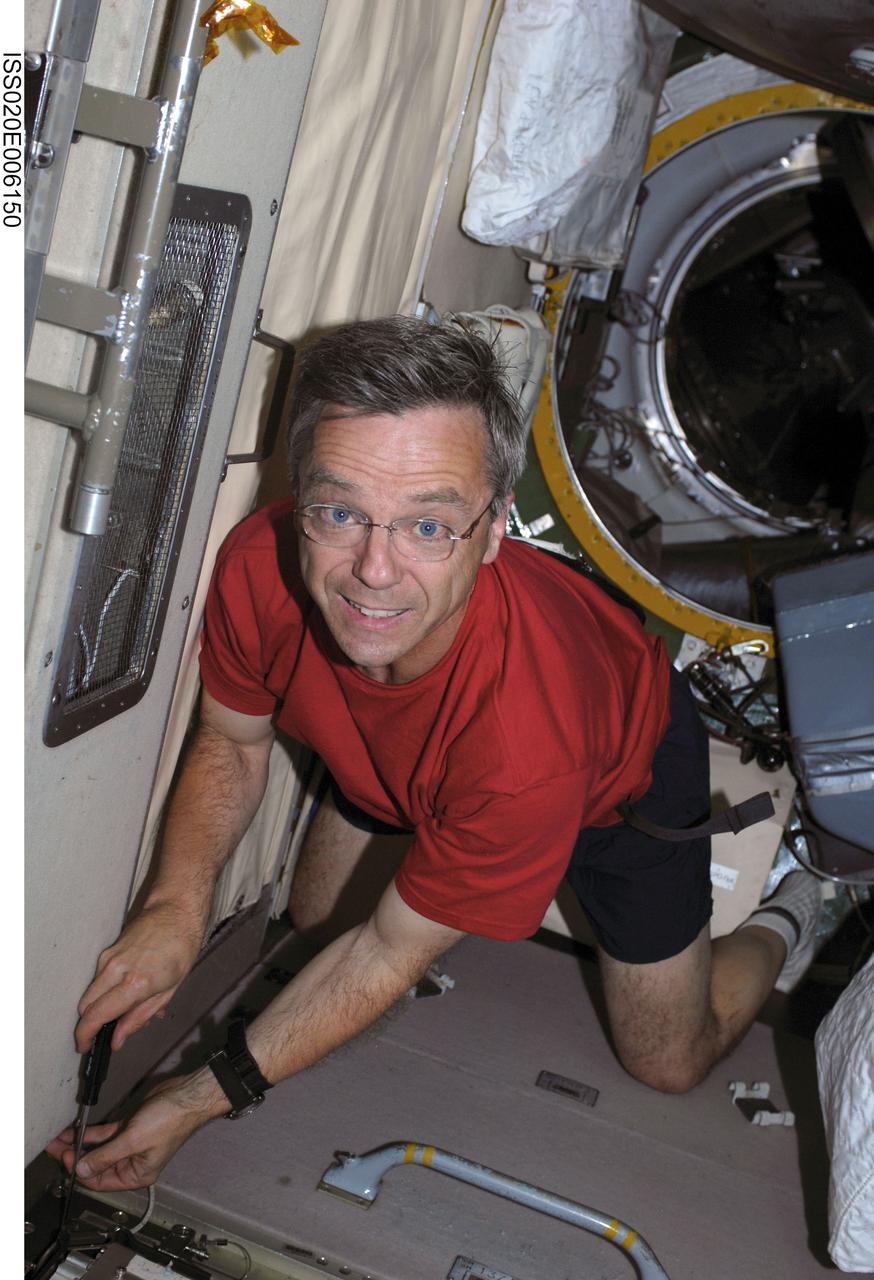
ISS020-E-006150 (3 June 2009) --- Canadian Space Agency astronaut Robert Thirsk, Expedition 20 flight engineer, performs in-flight maintenance in the Zvezda Service Module of the International Space Station.
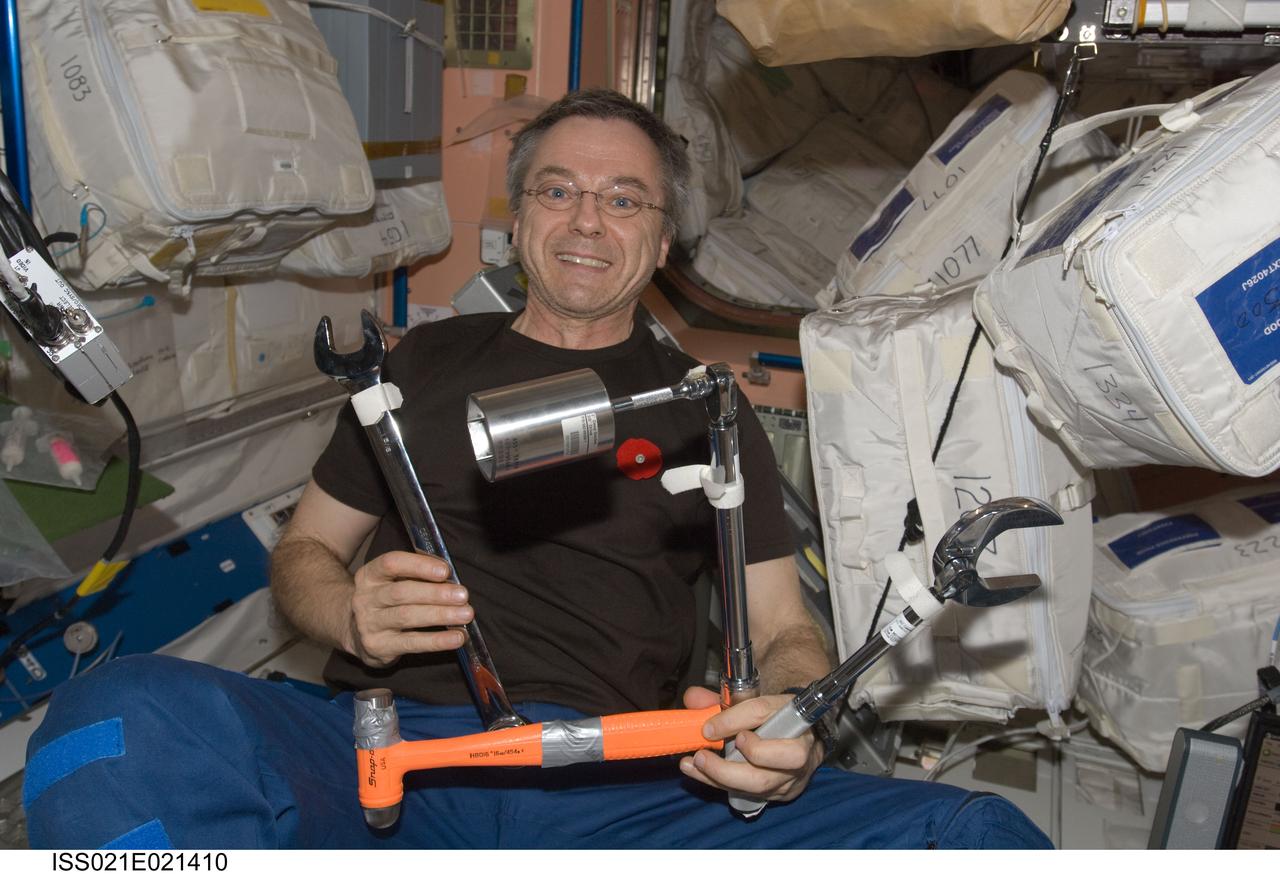
ISS021-E-021410 (3 Nov. 2009) --- Canadian Space Agency astronaut Robert Thirsk, Expedition 21 flight engineer, holds various tools in the Unity node of the International Space Station.
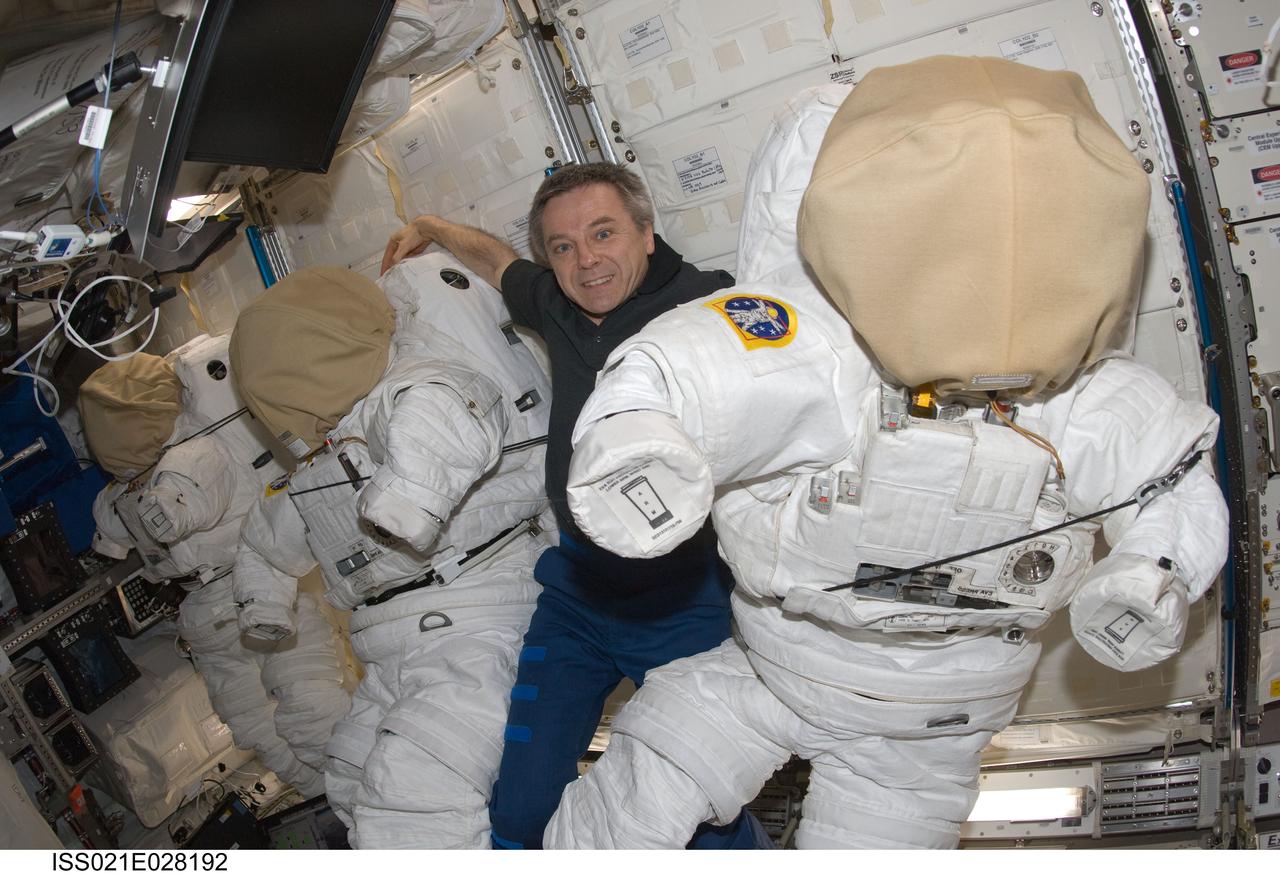
ISS021-E-028192 (17 Nov. 2009) --- Canadian Space Agency astronaut Robert Thirsk, Expedition 21 flight engineer, is pictured with three Extravehicular Mobility Unit (EMU) spacesuits in the Columbus laboratory of the International Space Station.
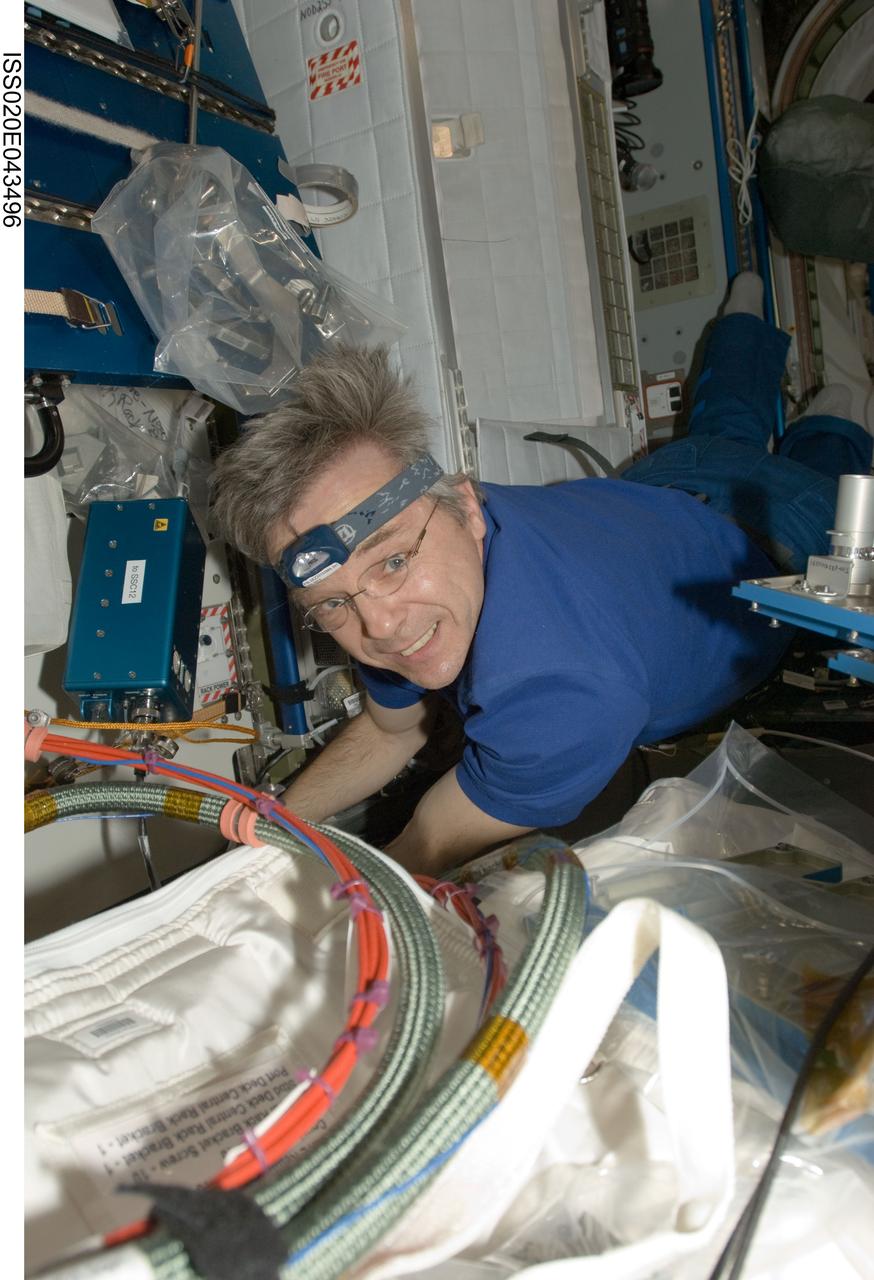
ISS020-E-043496 (29 Sept. 2009) --- Canadian Space Agency astronaut Robert Thirsk, Expedition 20 flight engineer, performs in-flight maintenance (IFM) in the Harmony node of the International Space Station.
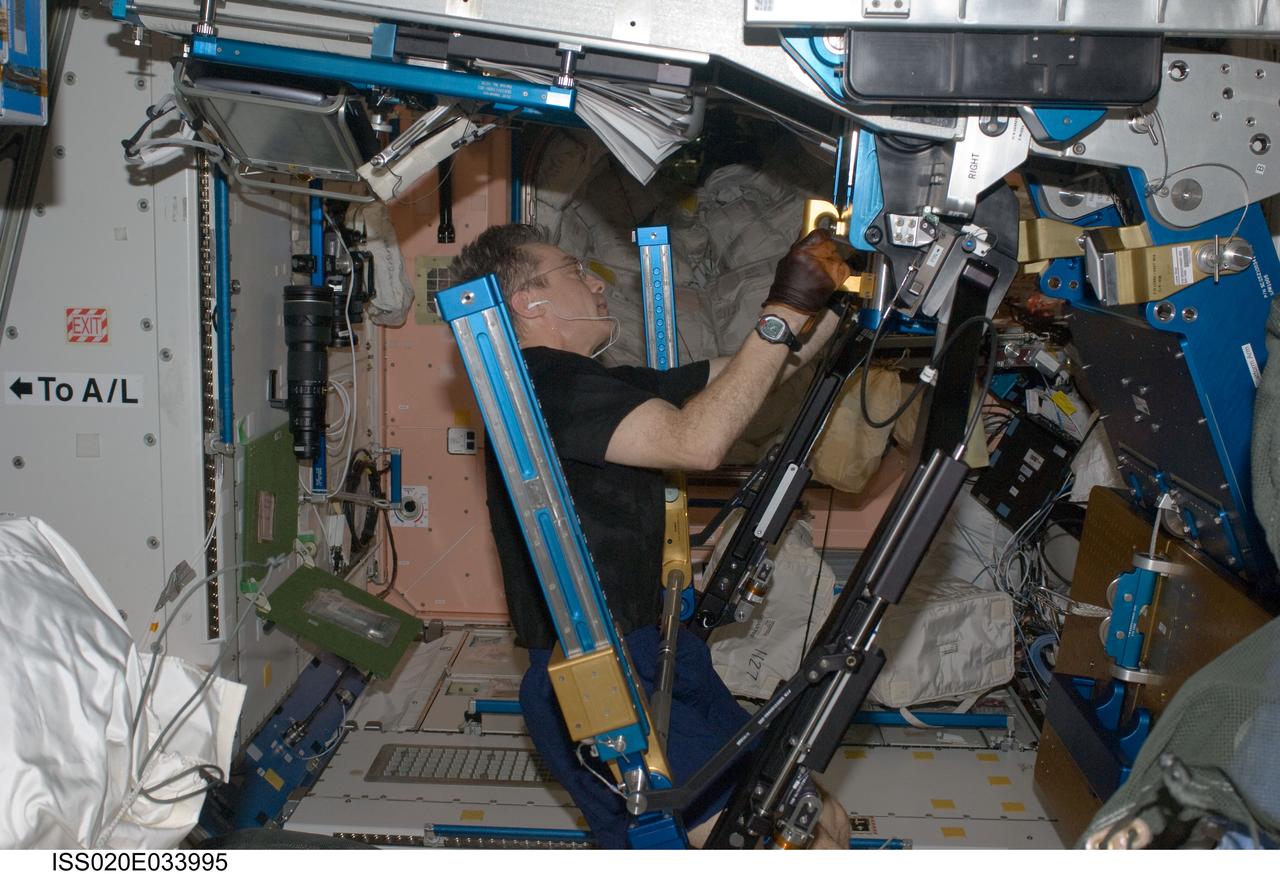
ISS020-E-033995 (24 Aug. 2009) --- Canadian Space Agency astronaut Robert Thirsk, Expedition 20 flight engineer, works with the advanced Resistive Exercise Device (aRED) in the Unity node of the International Space Station.
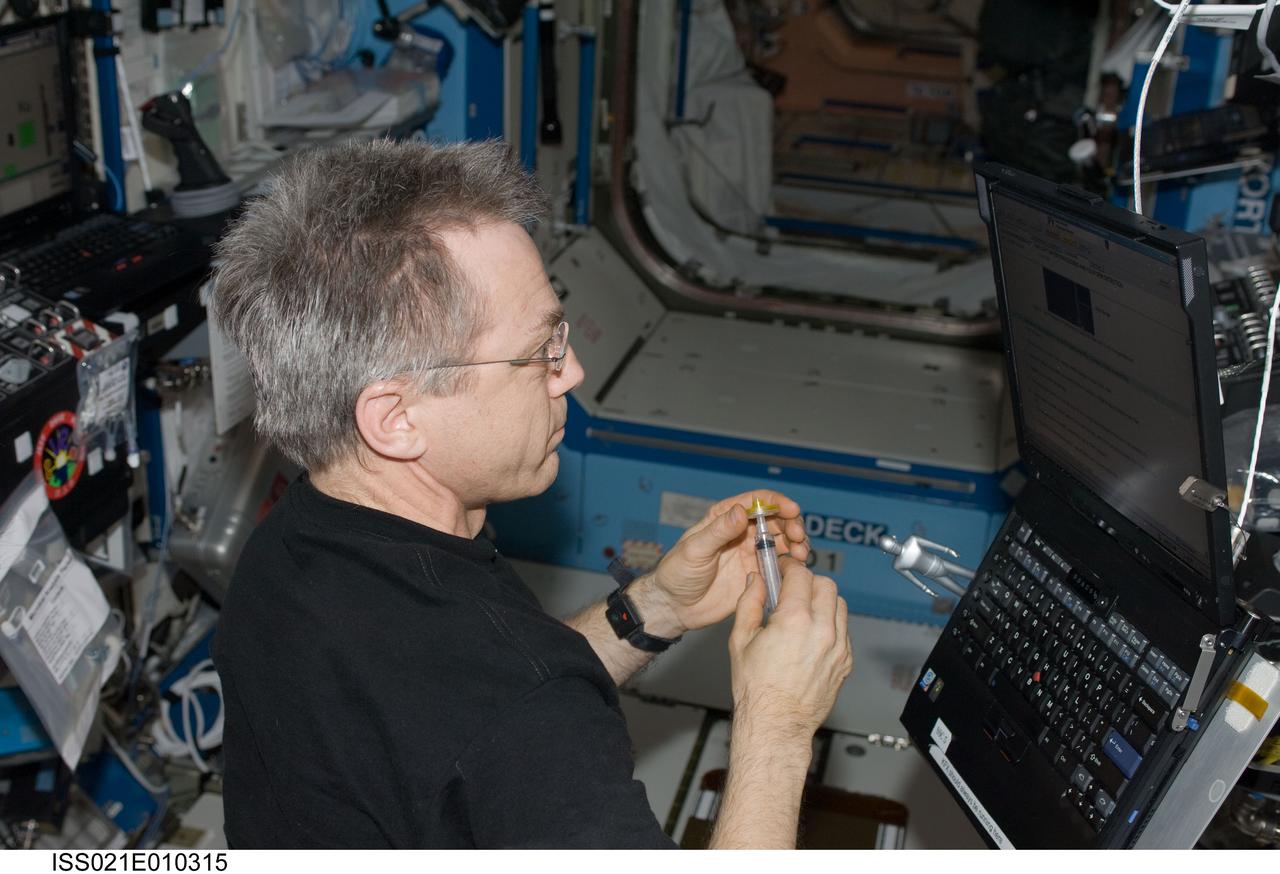
ISS021-E-010315 (20 Oct. 2009) --- Canadian Space Agency astronaut Robert Thirsk, Expedition 21 flight engineer, performs a Potable Water Dispenser (PWD) analysis in the Destiny laboratory of the International Space Station.
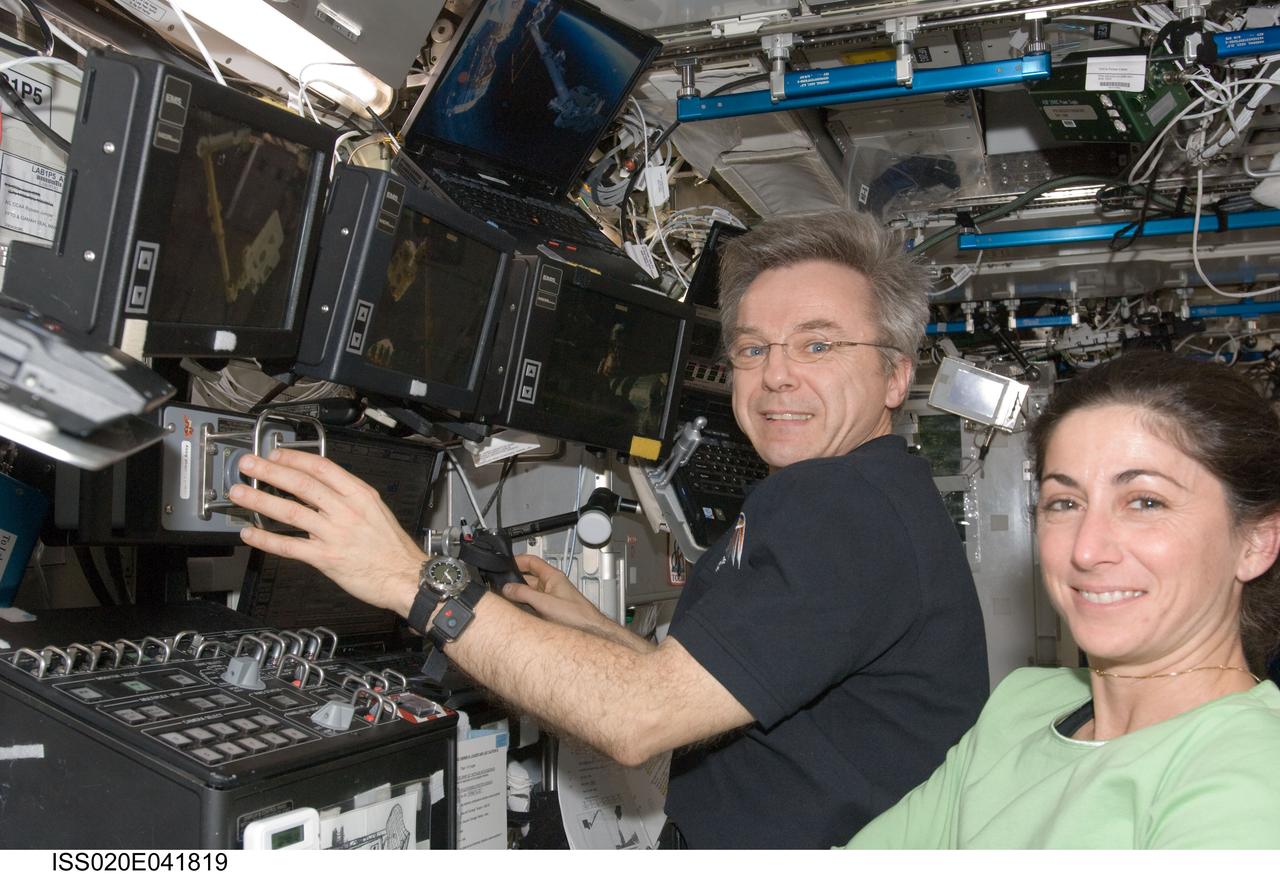
ISS020-E-041819 (23 Sept. 2009) --- Canadian Space Agency astronaut Robert Thirsk and NASA astronaut Nicole Stott, both Expedition 20 flight engineers, work the controls of the Canadarm2 in the Destiny laboratory of the International Space Station. Thirsk and Stott used the station?s robotic arm to release and extract the Exposed Pallet (EP) from the Unpressurized Logistics Carrier (ULC) to hand over to the JEM Robotic Manipulator System (JEM-RMS) and berth to the JEM Exposed Facility / Exposed Facility Unit 10 (JEF EFU10).
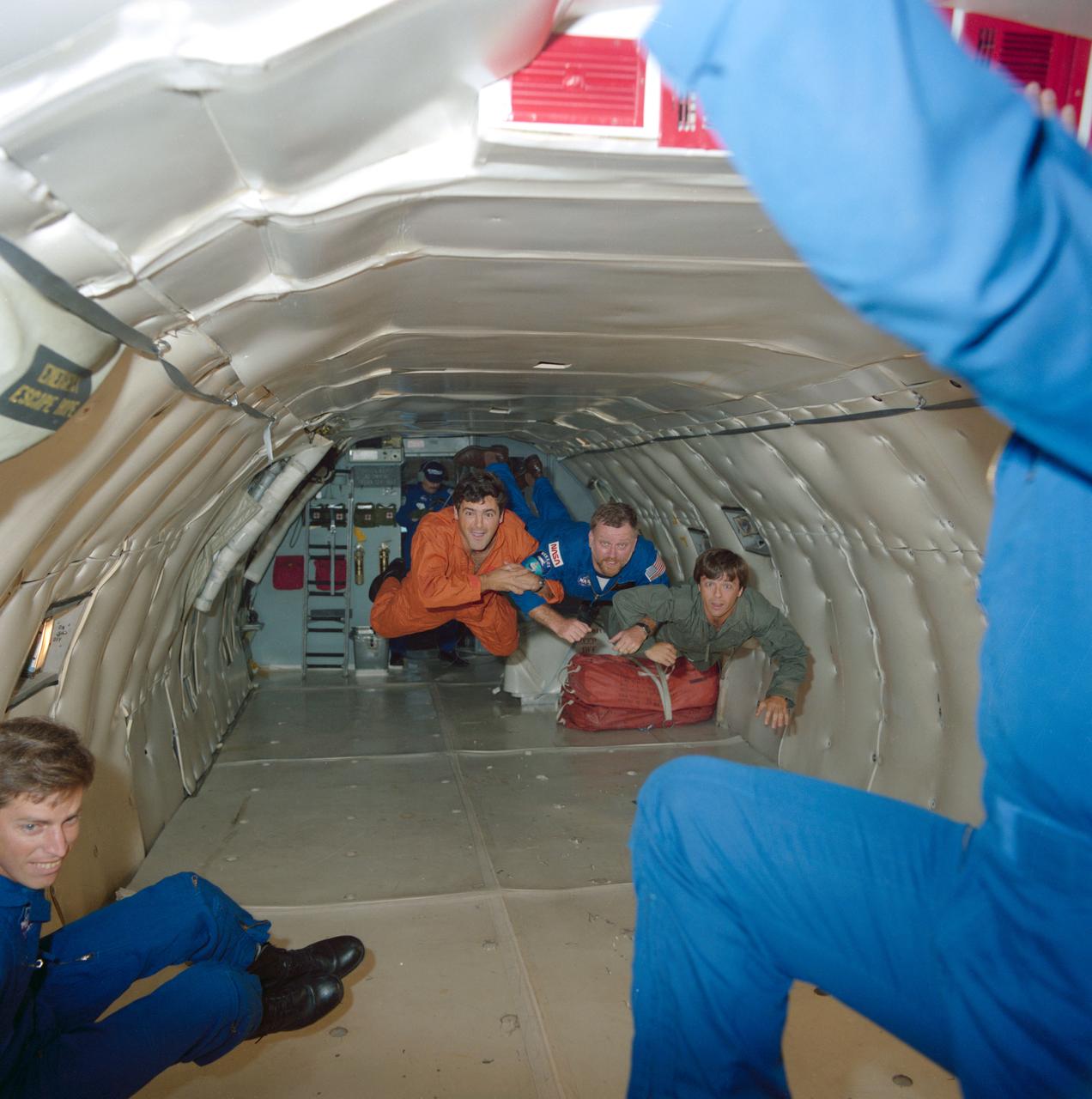
S84-40538 (24 Aug 1984) --- Two 41-G payload specialists and a backup for one of them appear to be at home in zero gravity in this scene photographed aboard a KC-135 "Zero gravity" aircraft flying one of its weightlessness opportunity parabolas. Paul D. Scully-Power, a civilian oceanographer with the U.S. Navey, is flanked by Marc Garneau (left) and Robert Thirsk, both representing the National Research Council of Canada. Thirsk is back up payload specialist for Garneau.
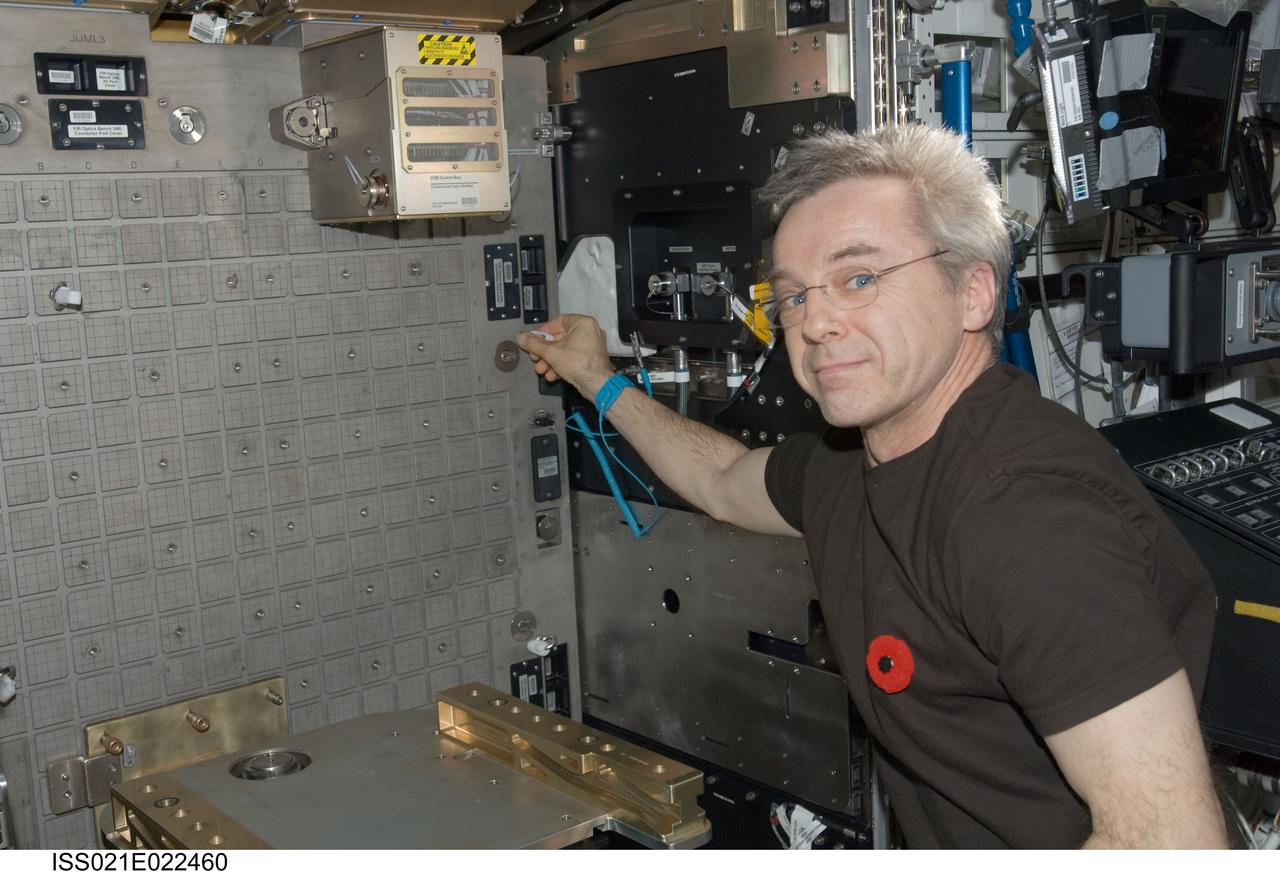
ISS021-E-022460 (9 Nov. 2009) --- Canadian Space Agency astronaut Robert Thirsk, Expedition 21 flight engineer, installs the Light Microscopy Module (LMM) Spindle Bracket Assembly in the Fluids Integrated Rack (FIR) in the Destiny laboratory of the International Space Station. NASA astronaut Nicole Stott (out of frame), flight engineer, assisted Thirsk.
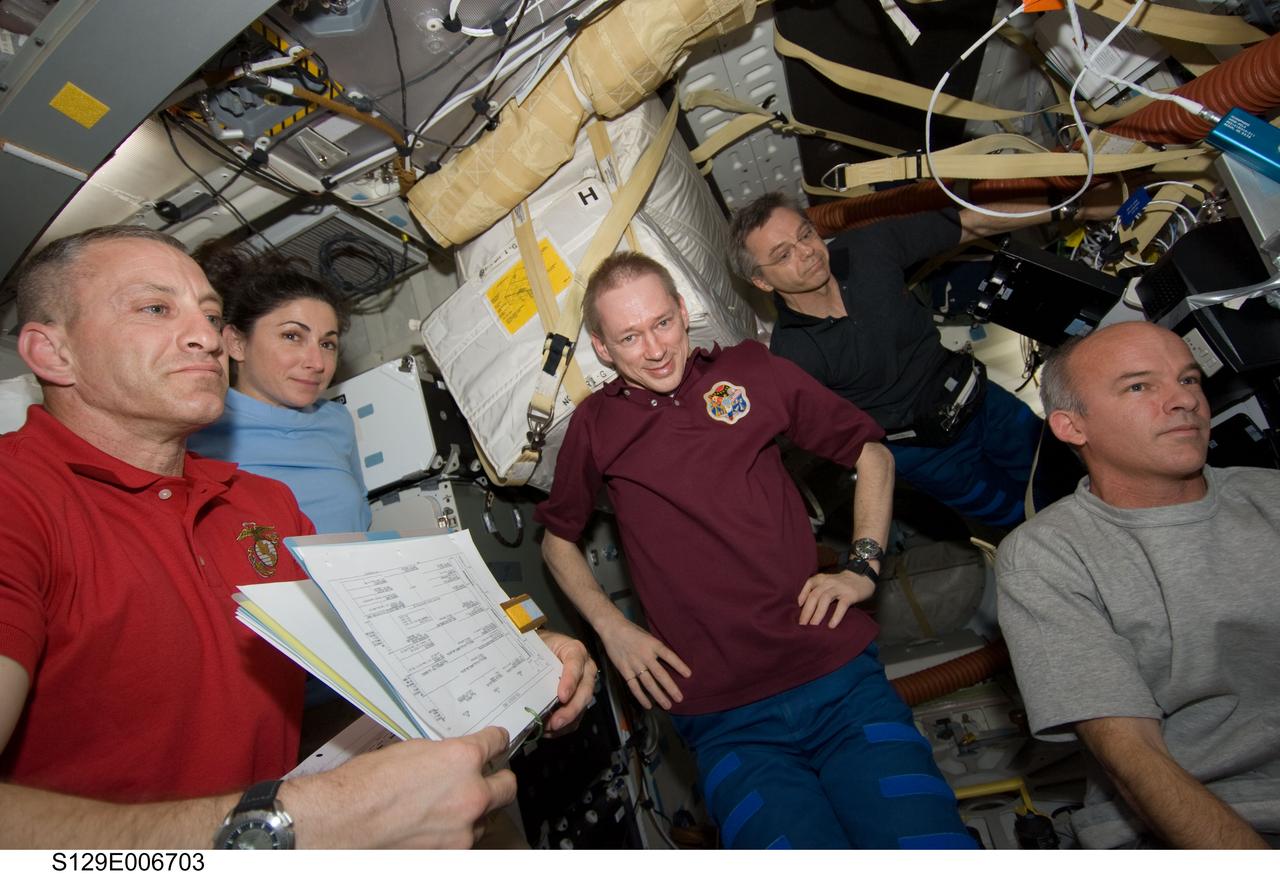
S129-E-006703 (18 Nov. 2009) --- On Atlantis? middeck, from left, astronauts Charles O. Hobaugh, Nicole Stott, Frank De Winne, Robert Thirsk and Jeff Williams discuss their schedule for flight day three activities. De Winne represents the European Space Agency and Thirsk, the Canadian Space Agency. They, along with Williams, are station crew members, while Hobaugh and Stott are members of the STS-129 crew.
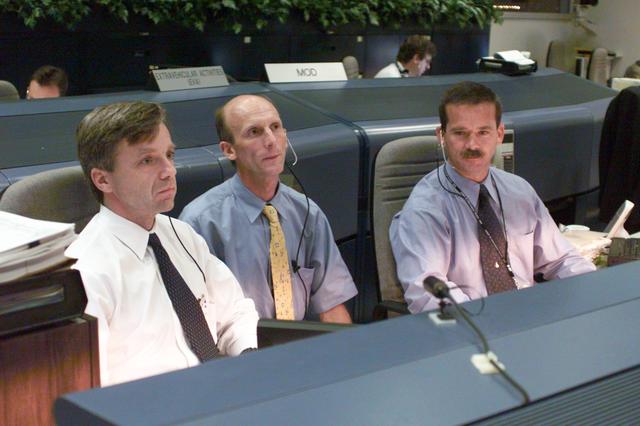
JSC2000-E-22725 (10 September 2000) --- The Spacecraft Communicator (CAPCOM) console in Houston's Mission Control Center (MCC) has an international flavor in this scene, photographed during the docking of the Space Shuttle Atlantis and the International Space Station (ISS). From the left are astronauts Robert B. Thirsk, Gerhard P.J. Thiele and Chris A. Hadfield. Thirsk and Hadfield represent the Canadian Space Agency (CSA), while Thiele is with the European Space Agency (ESA).
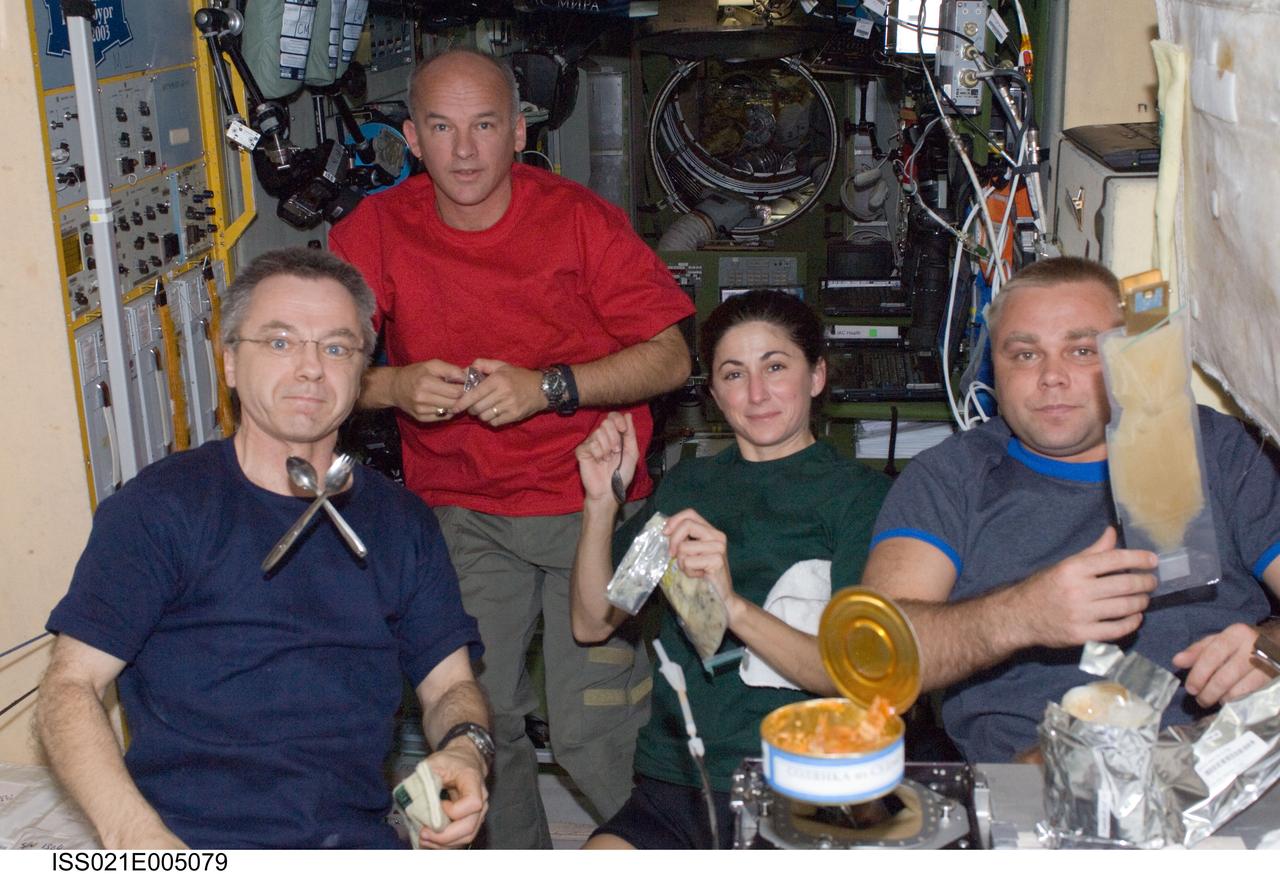
ISS021-E-005079 (12 Oct. 2009) --- Canadian Space Agency astronaut Robert Thirsk (left), NASA astronauts Jeffrey Williams and Nicole Stott; along with Russian cosmonaut Maxim Suraev, all Expedition 21 flight engineers, share a meal at the galley in the Zvezda Service Module of the International Space Station.
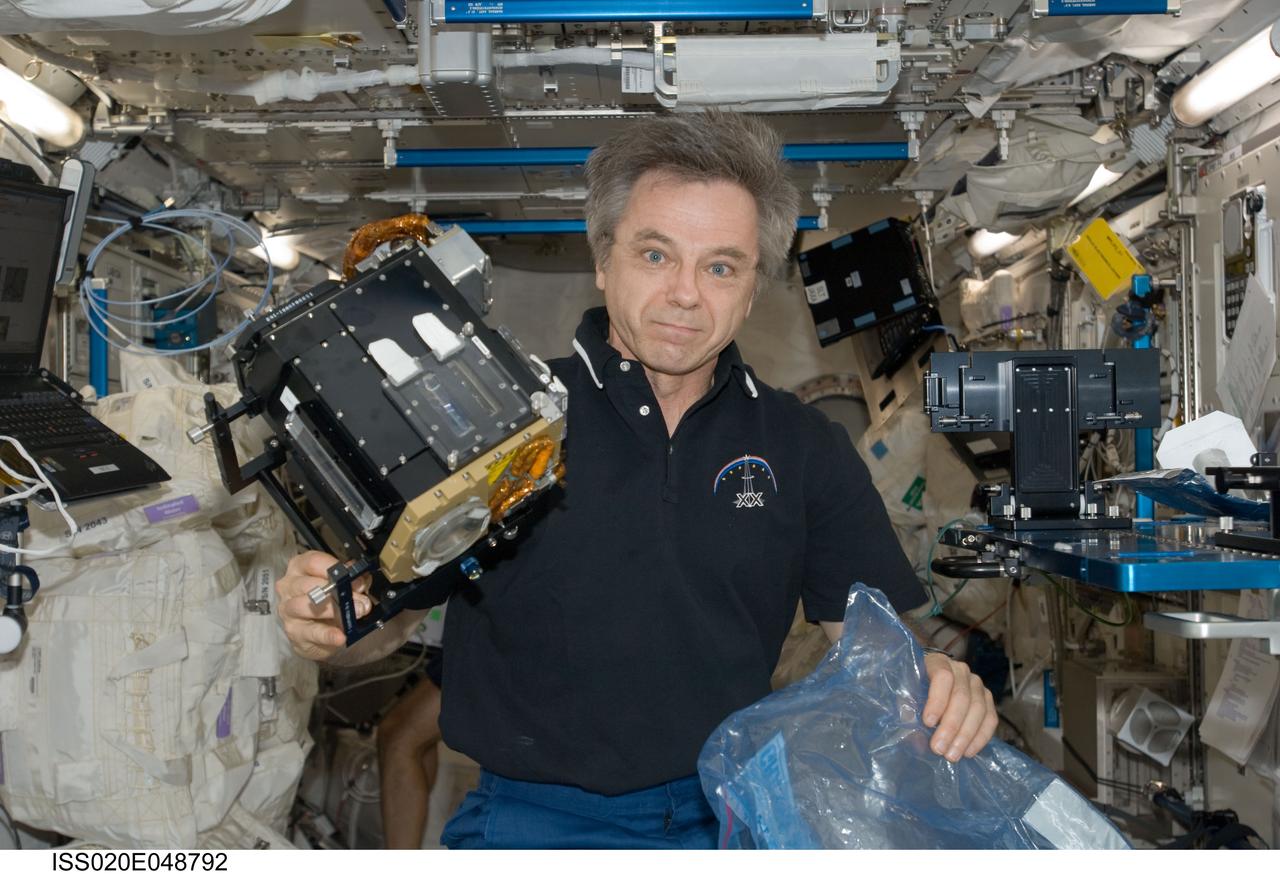
ISS020-E-048792 (7 Oct. 2009) --- Canadian Space Agency astronaut Robert Thirsk, Expedition 20/21 flight engineer, holds Fluid Physics Experiment Facility/Marangoni Surface (FPEF MS) Core hardware in the Kibo laboratory of the International Space Station.
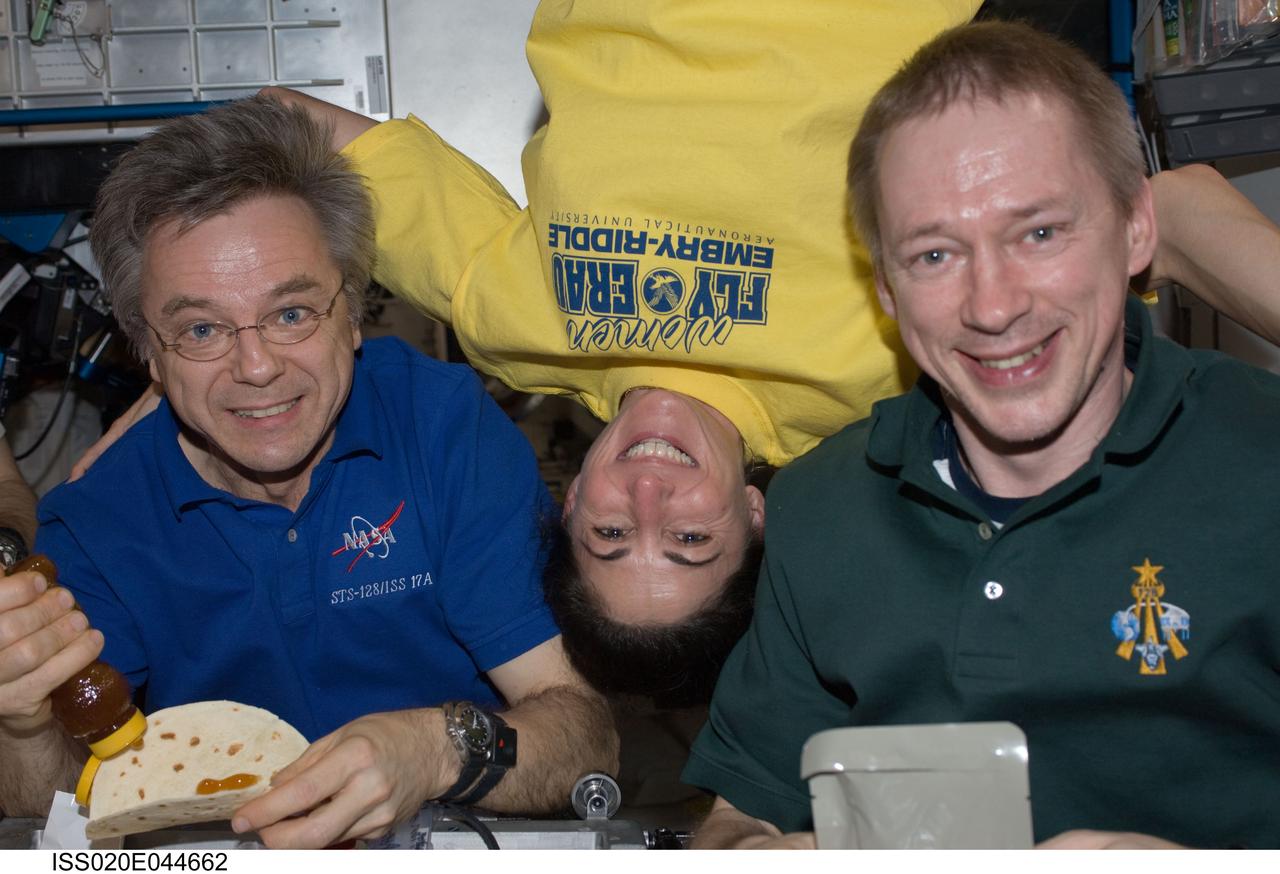
ISS020-E-044662 (1 Oct. 2009) --- Canadian Space Agency astronaut Robert Thirsk (left), NASA astronaut Nicole Stott and European Space Agency astronaut Frank De Winne, all Expedition 20 flight engineers, pose for a photo near the galley in the Unity node of the International Space Station.
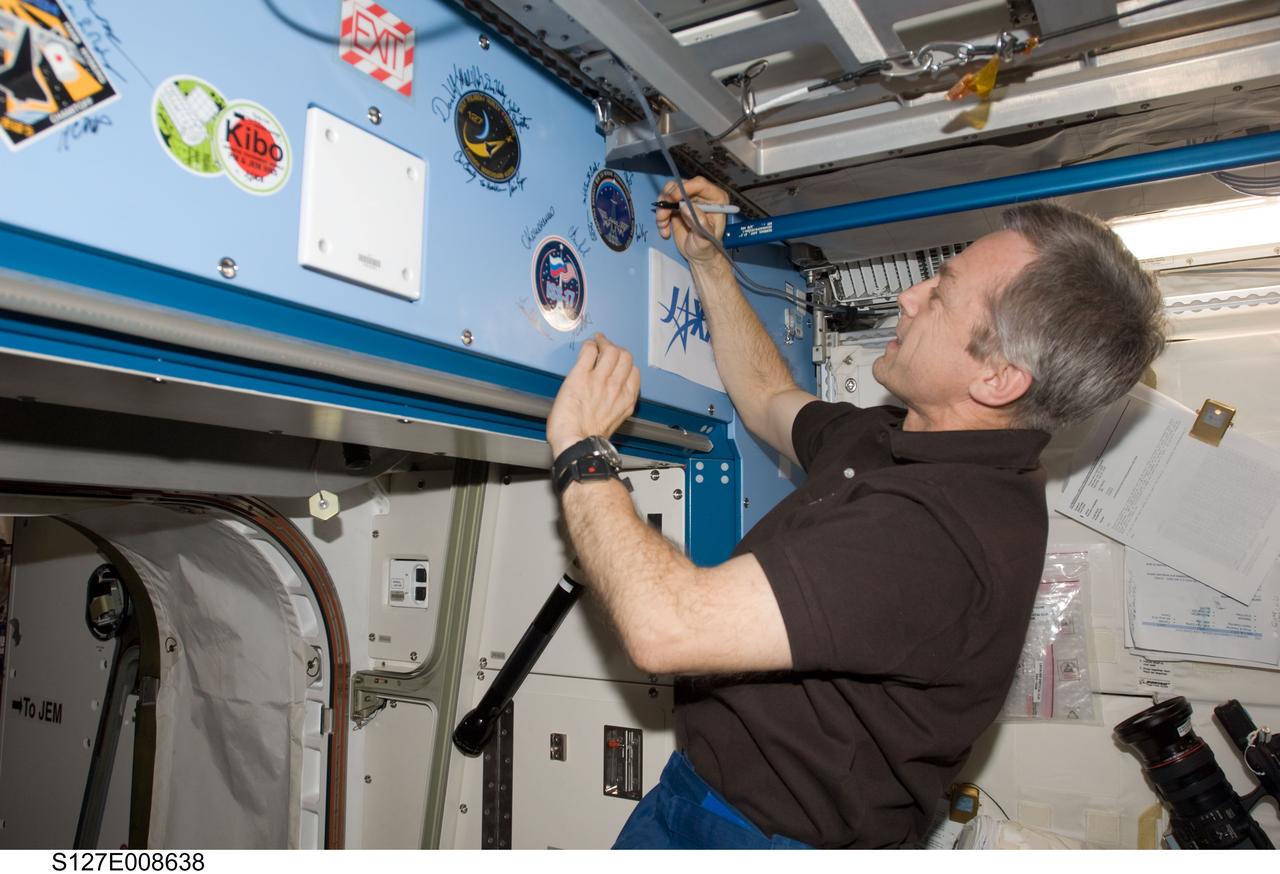
S127-E-008638 (25 July 2009) --- Flight day 11 activities for the joint shuttle-station crews included the traditional autographing of the station. Canadian Space Agency astronaut Robert Thirsk, Expedition 20 flight engineer, has the pen in this frame.
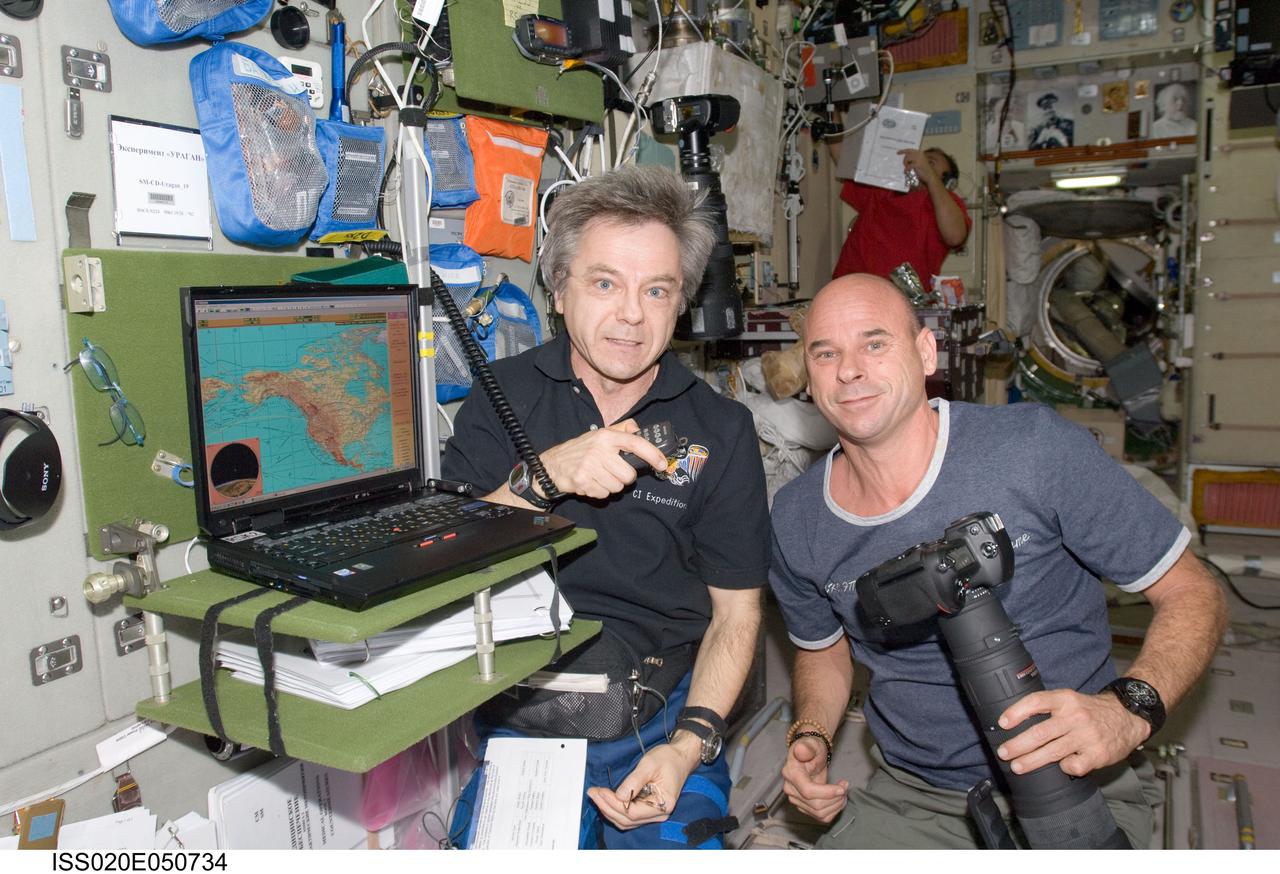
ISS020-E-050734 (9 Oct. 2009) --- Canadian Space Agency astronaut Robert Thirsk (left), Expedition 20/21 flight engineer; and spaceflight participant Guy Laliberte are pictured in the Zvezda Service Module of the International Space Station.
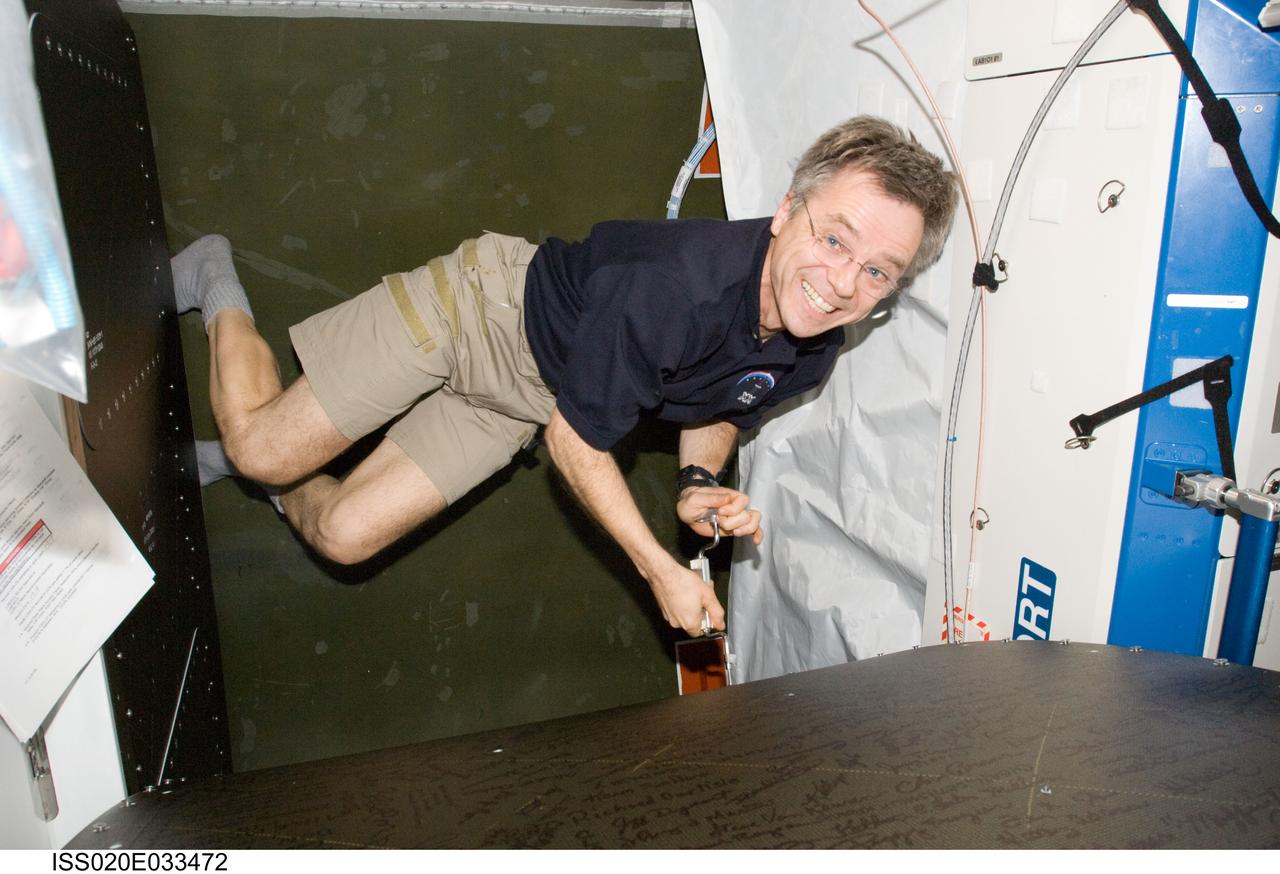
ISS020-E-033472 (21 Aug. 2009) --- Canadian Space Agency astronaut Robert Thirsk, Expedition 20 flight engineer, prepares to perform in-flight maintenance (IFM) on the oxygen generator system (OGS) rack in the Destiny laboratory of the International Space Station.
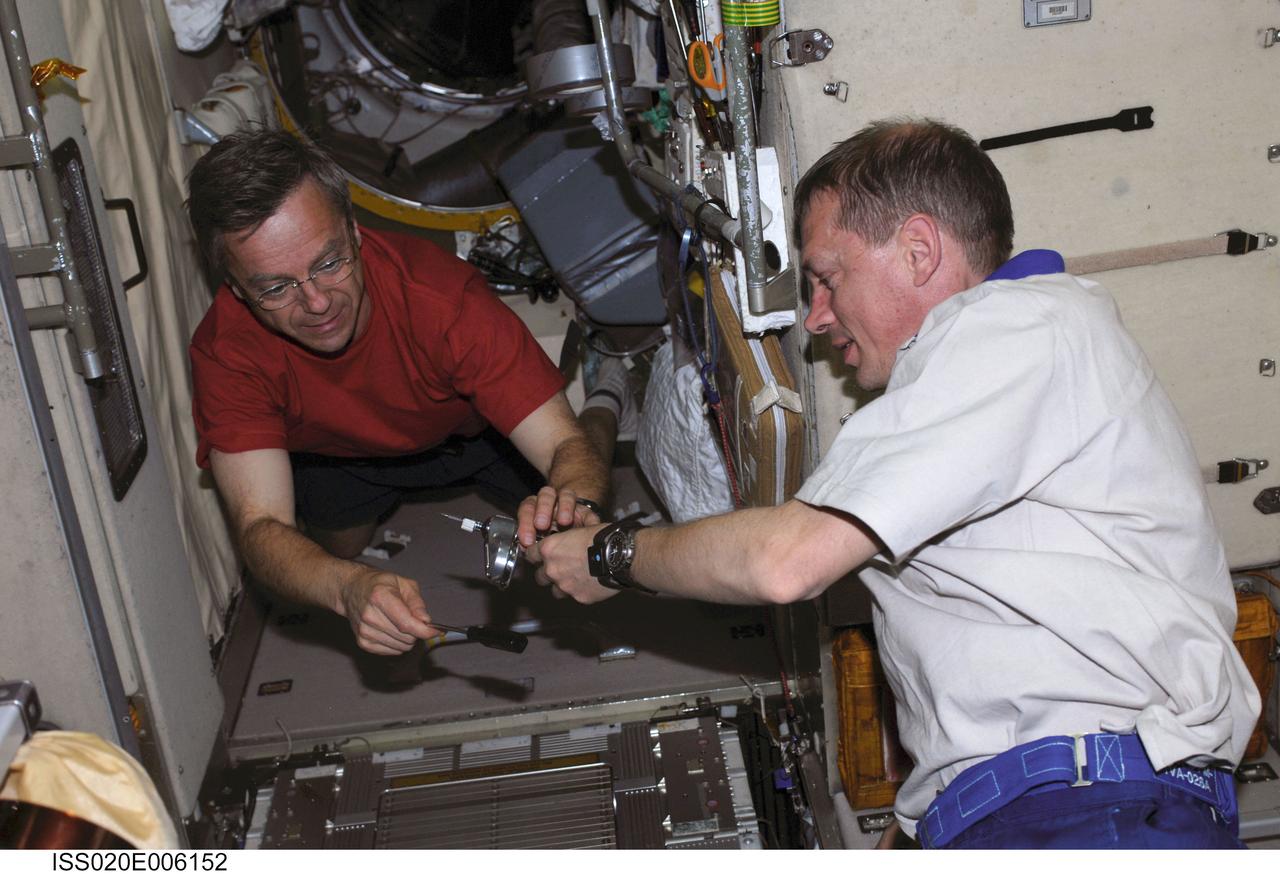
ISS020-E-006152 (3 June 2009) --- Canadian Space Agency astronaut Robert Thirsk (left) and European Space Agency astronaut Frank De Winne, both Expedition 20 flight engineers, perform in-flight maintenance on the Treadmill Vibration Isolation System (TVIS) in the Zvezda Service Module of the International Space Station.
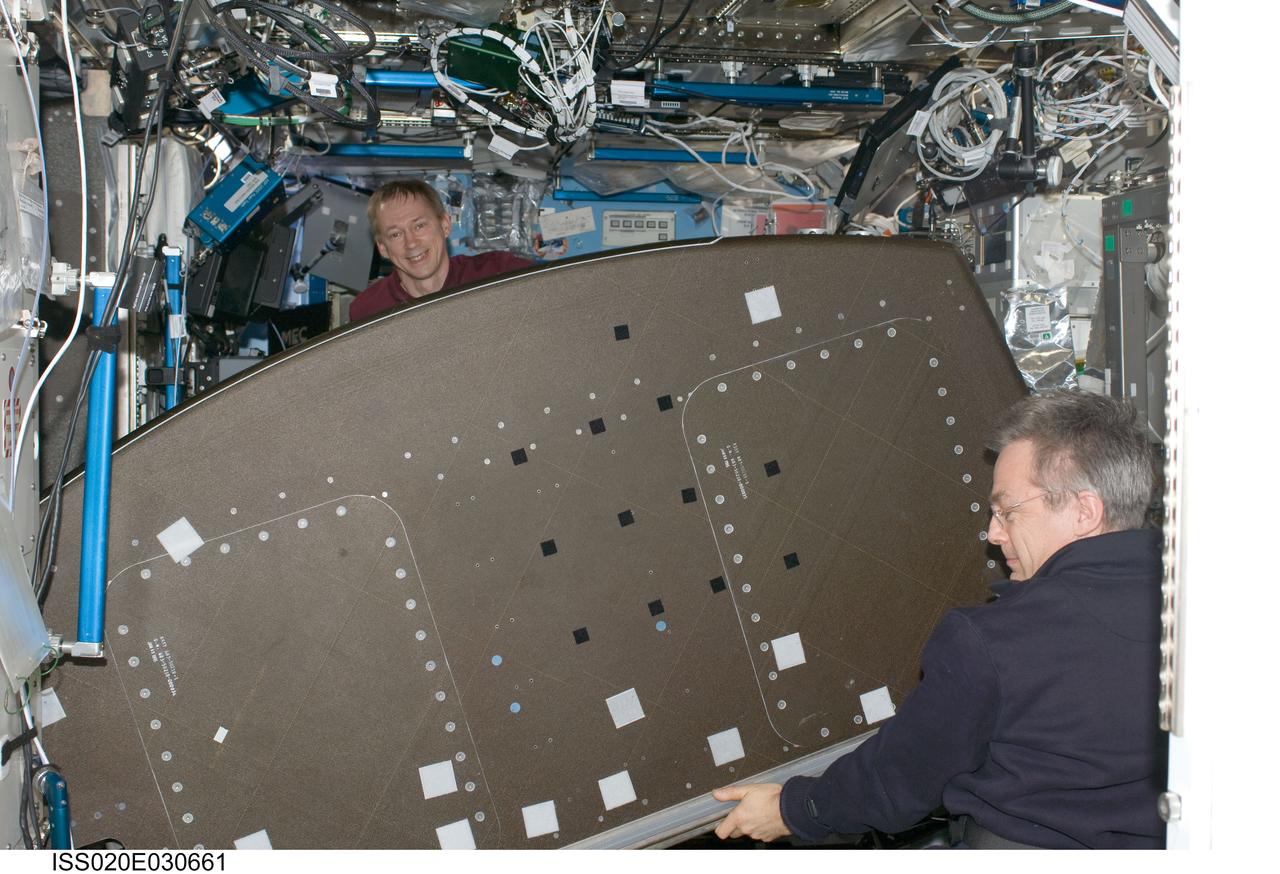
ISS020-E-030661 (13 Aug. 2009) --- Canadian Space Agency astronaut Robert Thirsk (right) and European Space Agency astronaut Frank De Winne, both Expedition 20 flight engineers, prepare to relocate the Crew Health Care System (CHeCS) rack in the Destiny laboratory to the Kibo laboratory of the International Space Station.
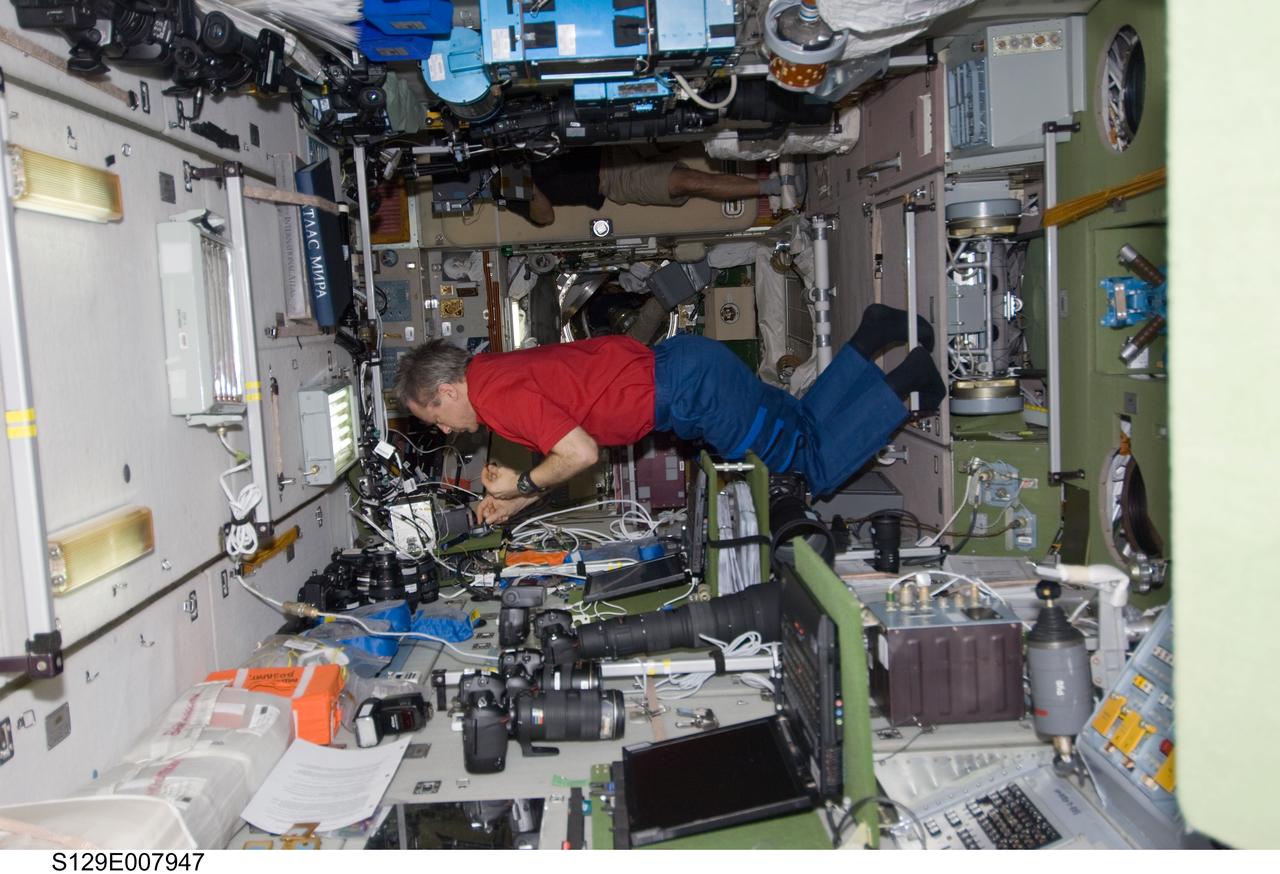
S129-E-007947 (23 Nov. 2009) --- Canadian Space Agency astronaut Robert Thirsk, Expedition 21 flight engineer, works in the Zvezda Service Module of the International Space Station while space shuttle Atlantis (STS-129) remains docked with the station.
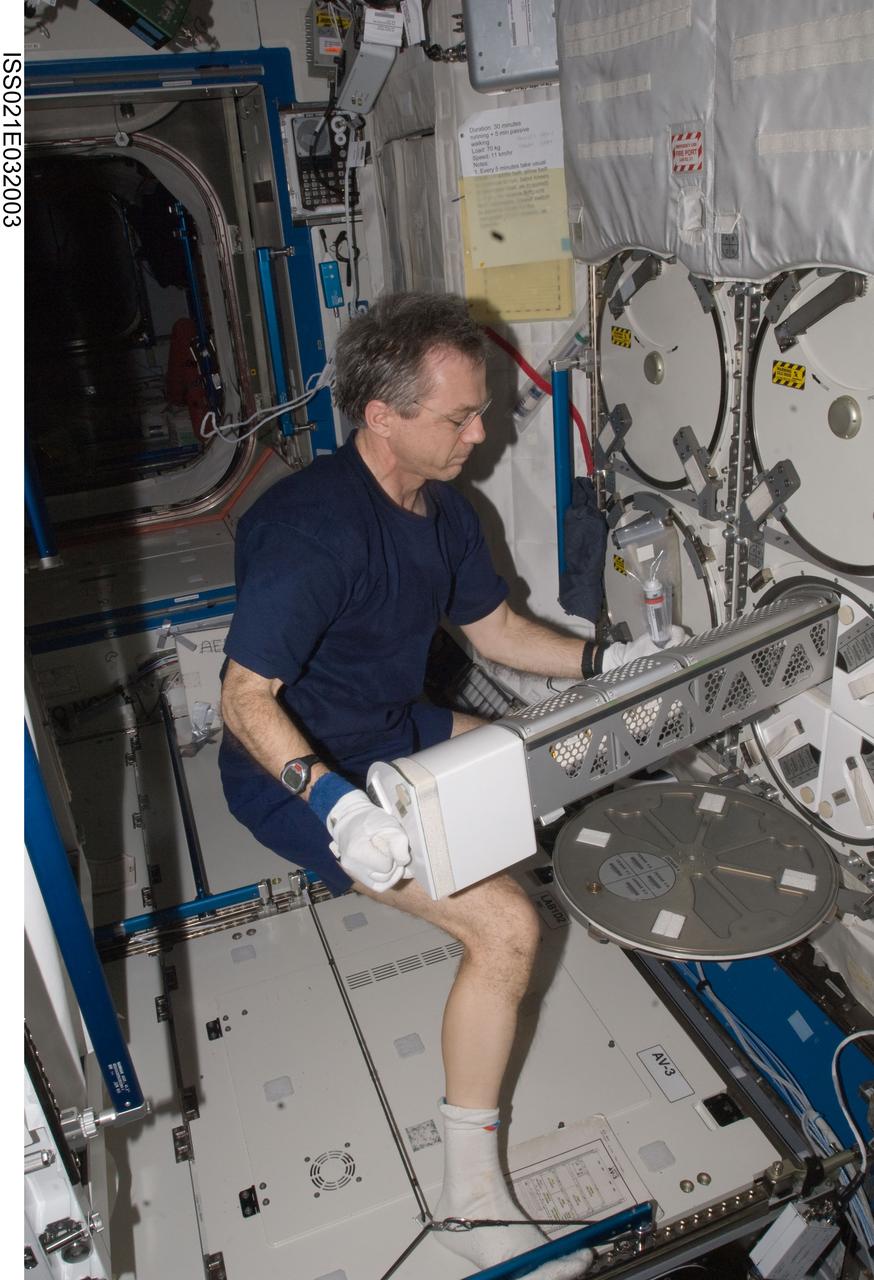
ISS021-E-032003 (22 Nov. 2009) --- Canadian Space Agency astronaut Robert Thirsk, Expedition 21 flight engineer, removes a dewar tray from the Minus Eighty Laboratory Freezer for ISS (MELFI) in the Destiny laboratory of the International Space Station while space shuttle Atlantis (STS-129) remains docked with the station.
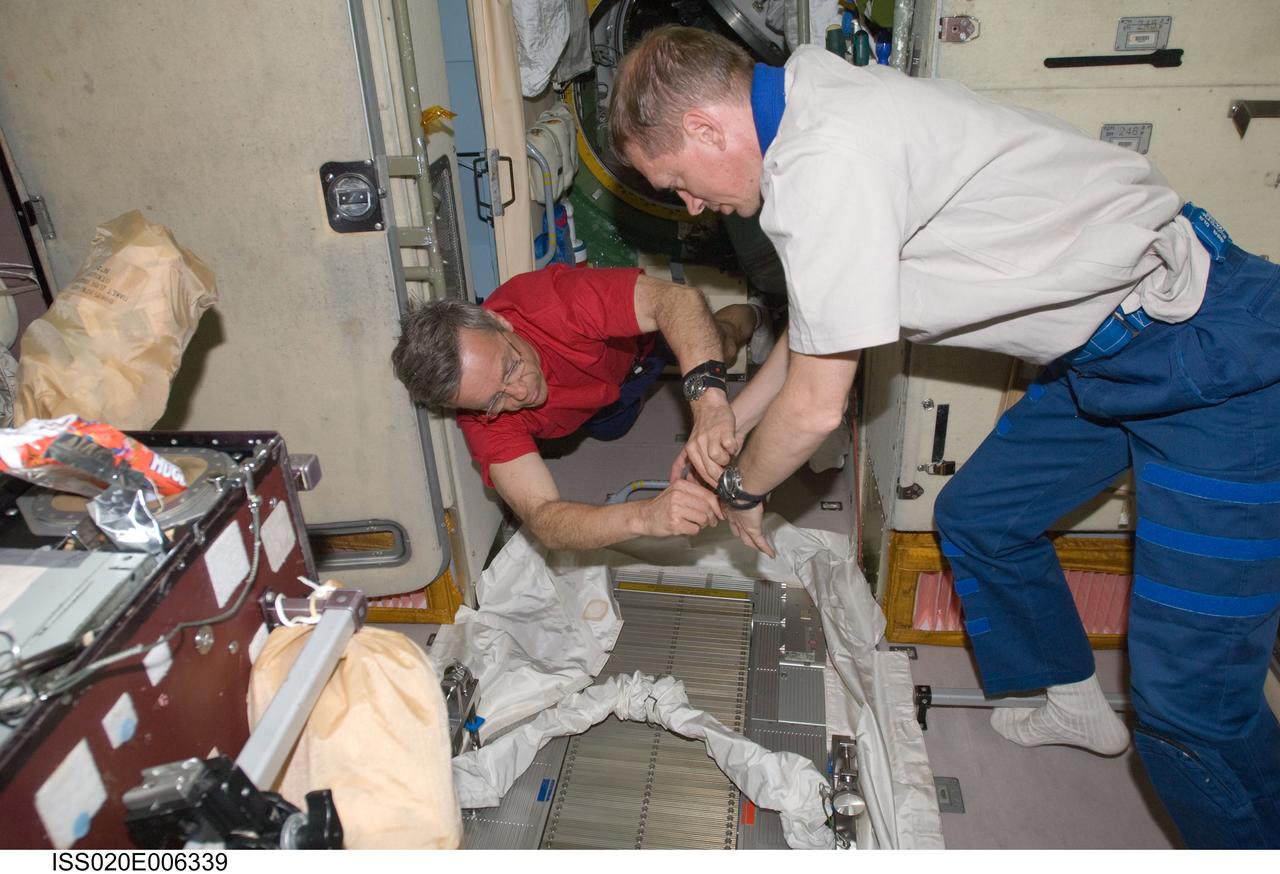
ISS020-E-006339 (3 June 2009) --- Canadian Space Agency astronaut Robert Thirsk (left) and European Space Agency astronaut Frank De Winne, both Expedition 20 flight engineers, perform in-flight maintenance on the Treadmill Vibration Isolation System (TVIS) in the Zvezda Service Module of the International Space Station.
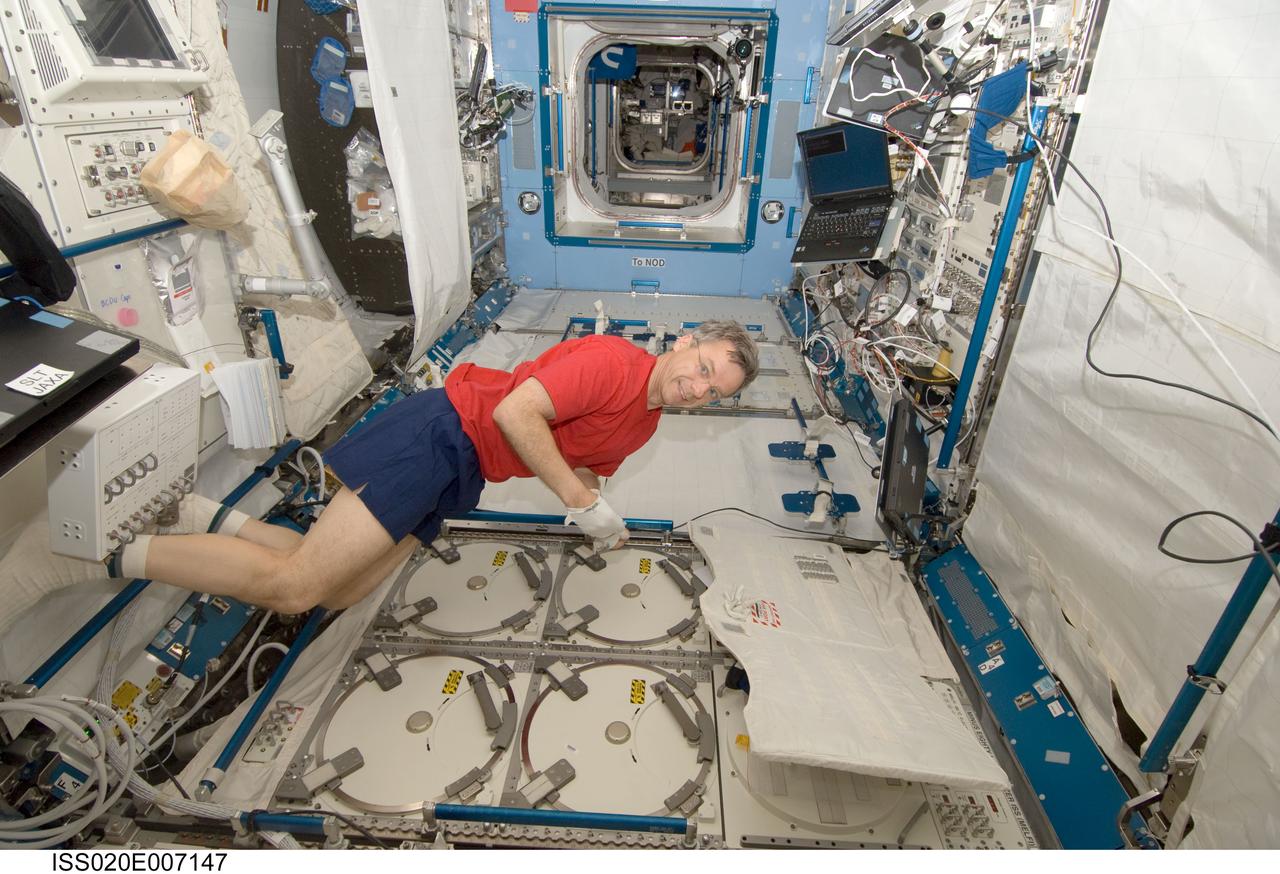
ISS020-E-007147 (6 June 2009) --- Canadian Space Agency astronaut Robert Thirsk, Expedition 20 flight engineer, performs an insertion of urine samples into the Minus Eighty Degree Laboratory Freezer for ISS (MELFI) as part of the Nutritional Status Assessment (NUTRITION) study in the Japanese Kibo laboratory of the International Space Station.
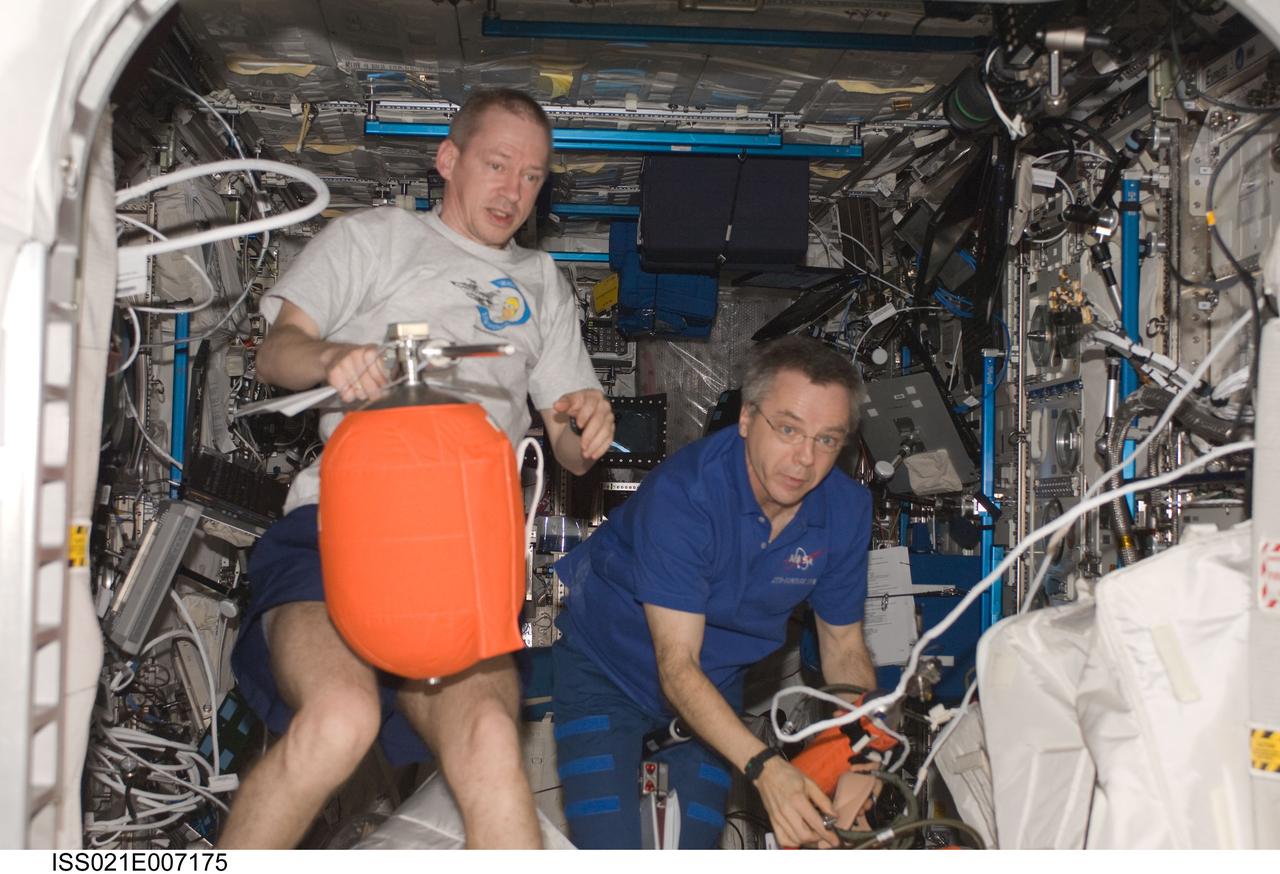
ISS021-E-007175 (15 Oct. 2009) --- European Space Agency astronaut Frank De Winne (left), Expedition 21 commander; and Canadian Space Agency astronaut Robert Thirsk, flight engineer, conduct an onboard training (OBT) fire drill in the Columbus laboratory of the International Space Station.
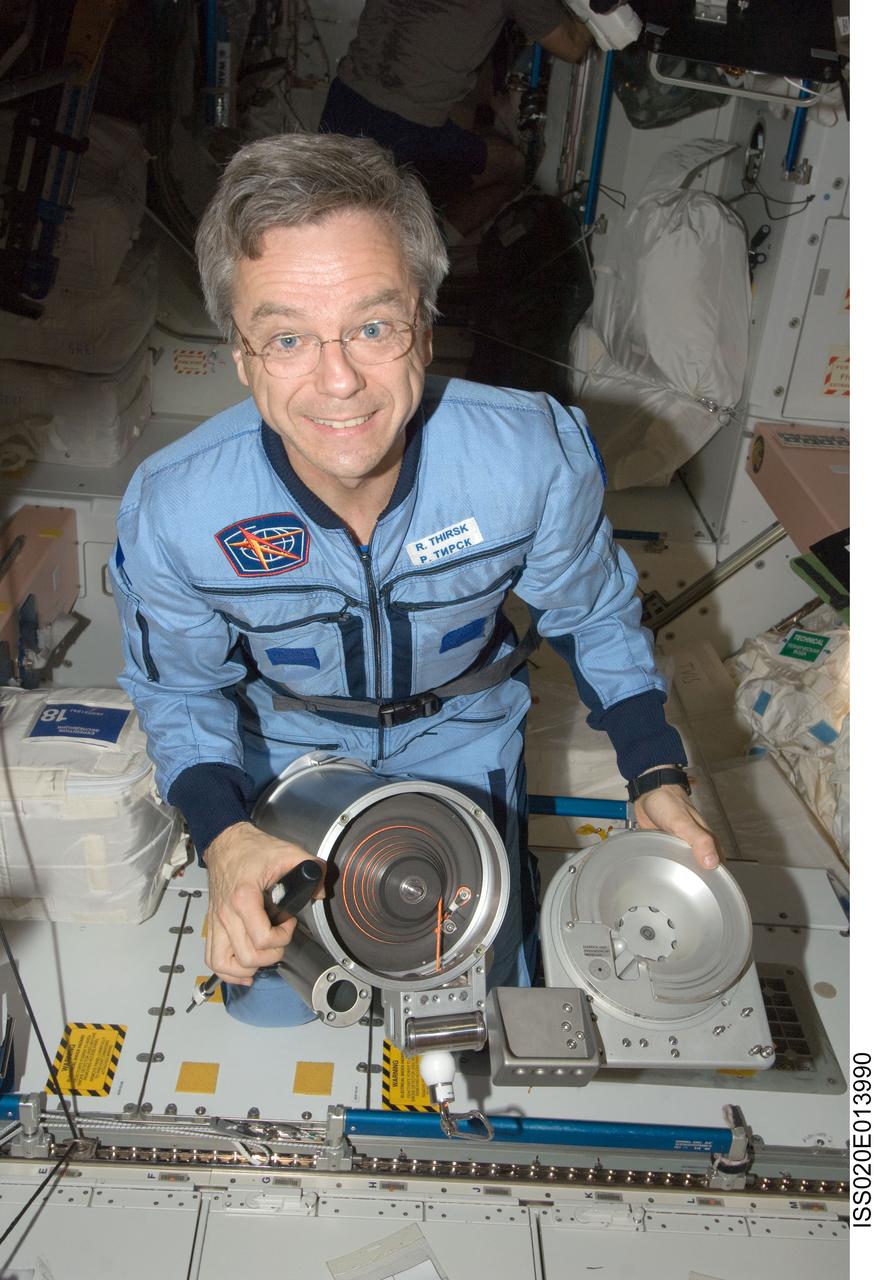
ISS020-E-013990 (23 June 2009) --- Canadian Space Agency astronaut Robert Thirsk, Expedition 20 flight engineer, performs in-flight maintenance on a cable cartridge for the advanced Resistive Exercise Device (aRED) in the Unity node of the International Space Station.
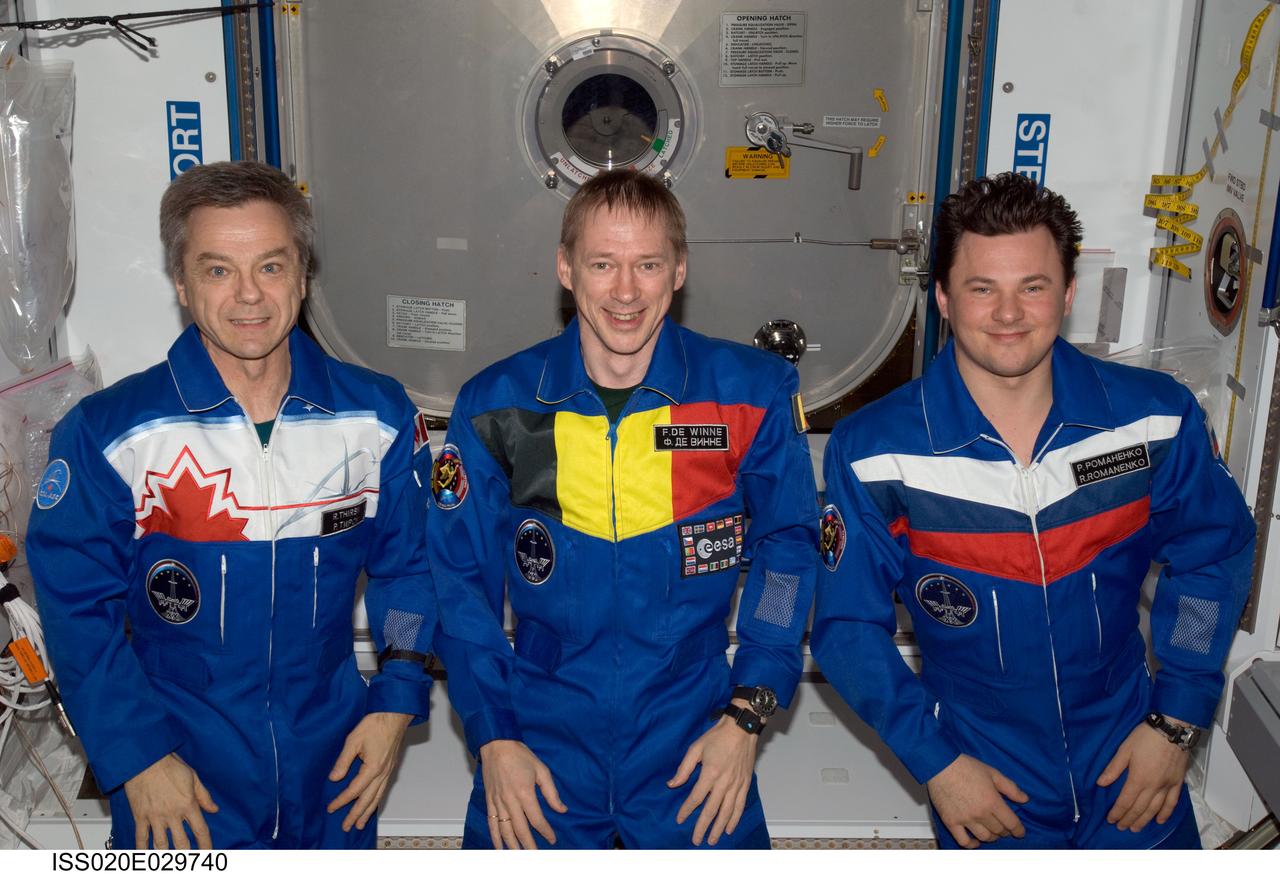
ISS020-E-029740 (10 Aug. 2009) --- Canadian Space Agency astronaut Robert Thirsk (left), European Space Agency astronaut Frank De Winne and cosmonaut Roman Romanenko, all Expedition 20 flight engineers, pose for an in-flight portrait in the Harmony node of the International Space Station.
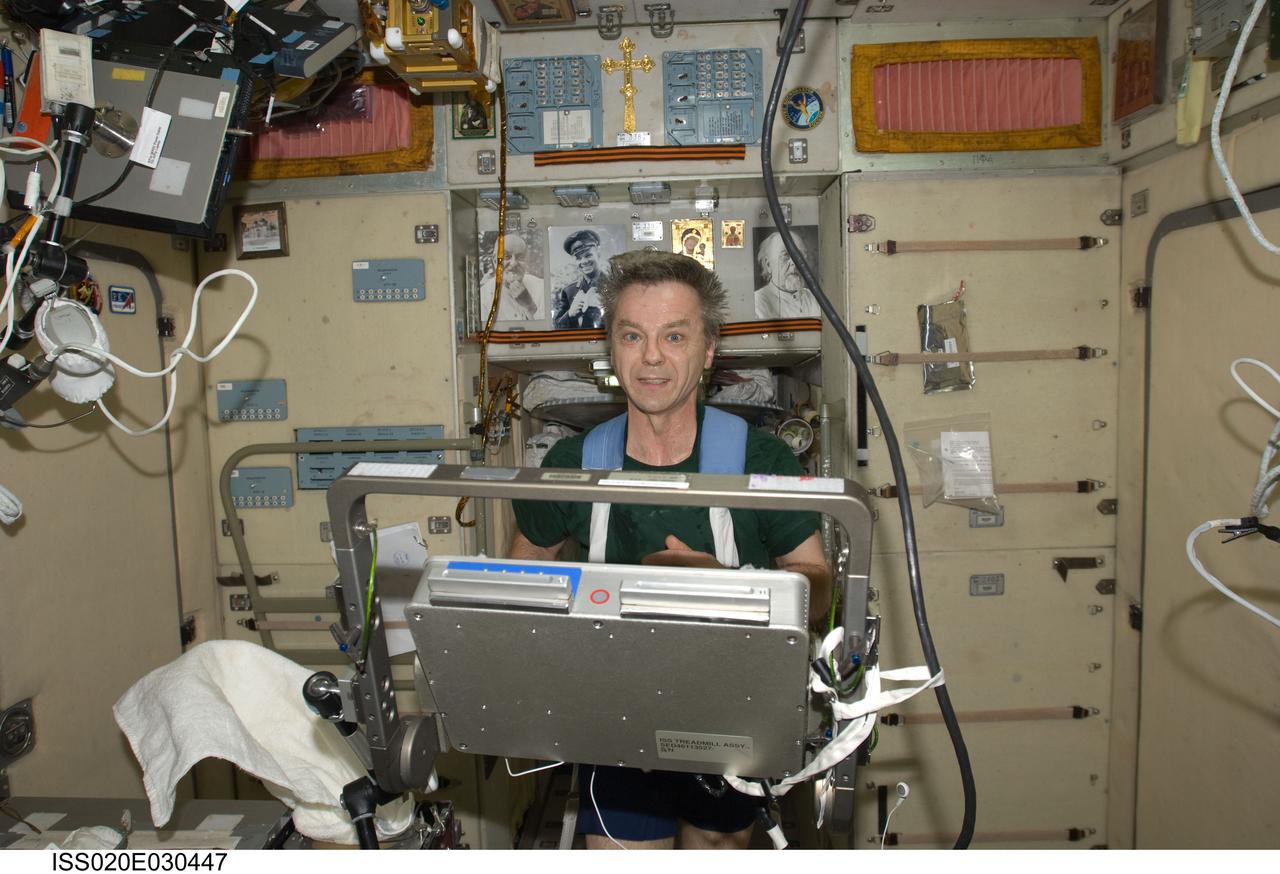
ISS020-E-030447 (13 Aug. 2009) --- Canadian Space Agency astronaut Robert Thirsk, Expedition 20 flight engineer, equipped with a bungee harness, exercises on the Treadmill Vibration Isolation System (TVIS) in the Zvezda Service Module of the International Space Station.
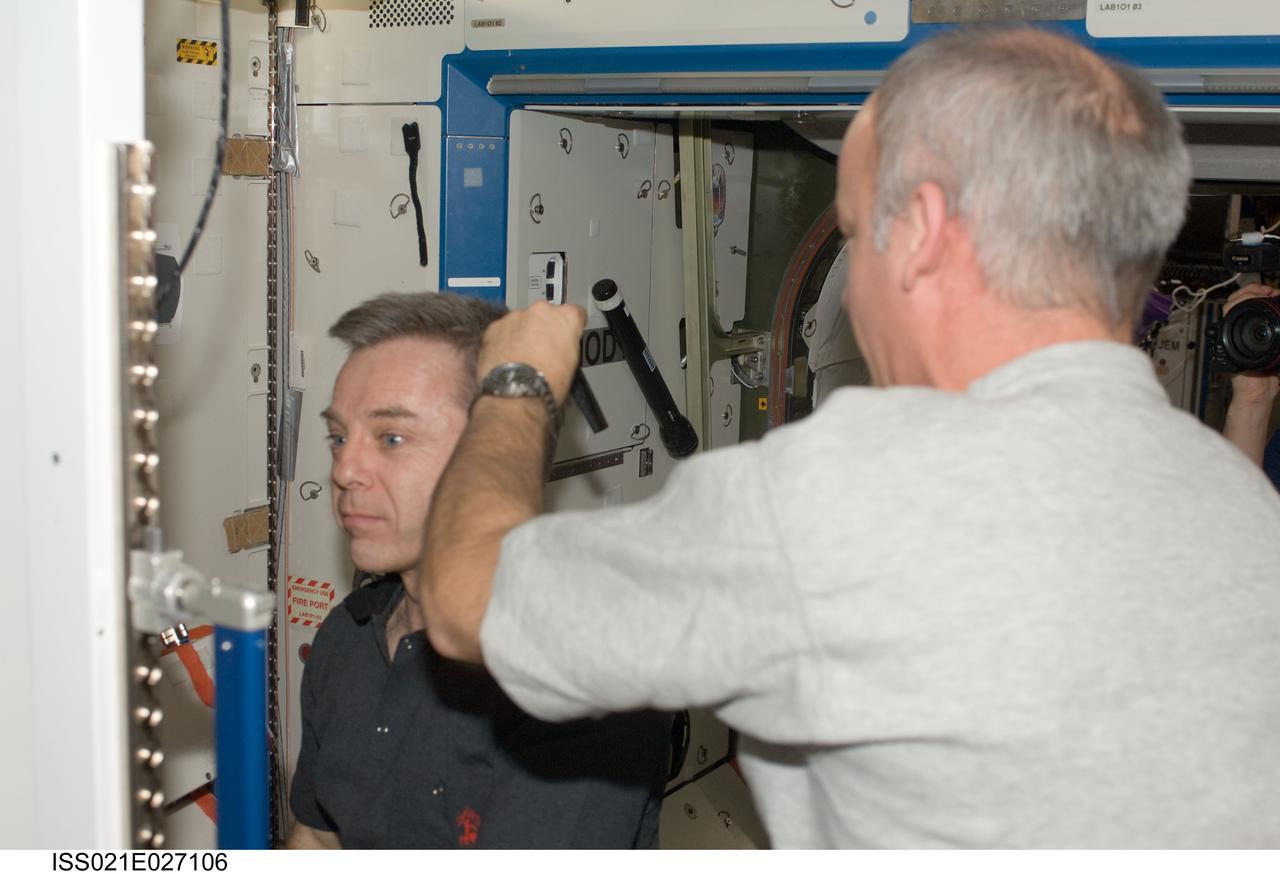
ISS021-E-027106 (15 Nov. 2009) --- NASA astronaut Jeffrey Williams, Expedition 21 flight engineer, trims Canadian Space Agency astronaut Robert Thirsk's hair in the Destiny laboratory of the International Space Station. Williams used hair clippers fashioned with a vacuum device to garner freshly cut hair.
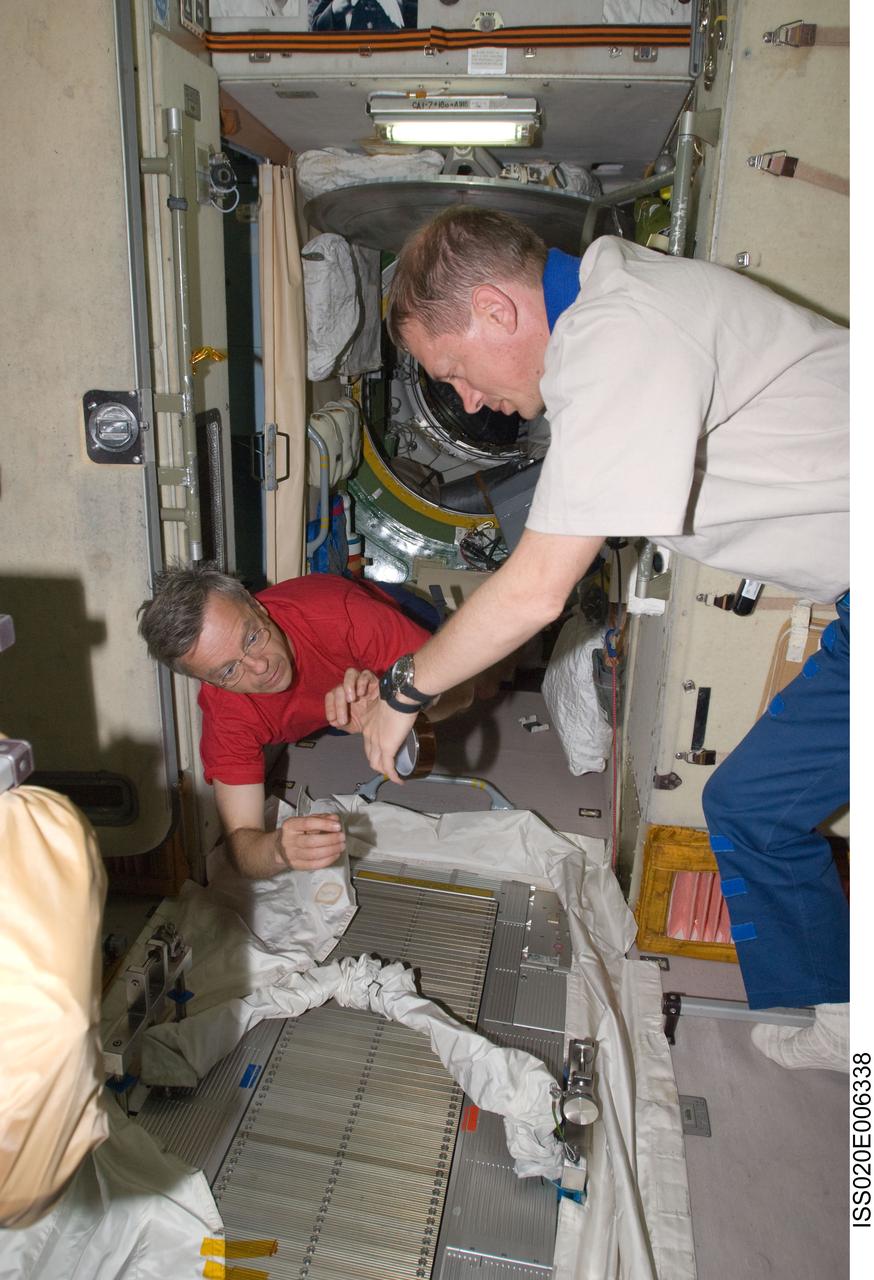
ISS020-E-006338 (3 June 2009) --- Canadian Space Agency astronaut Robert Thirsk (left) and European Space Agency astronaut Frank De Winne, both Expedition 20 flight engineers, perform in-flight maintenance on the Treadmill Vibration Isolation System (TVIS) in the Zvezda Service Module of the International Space Station.
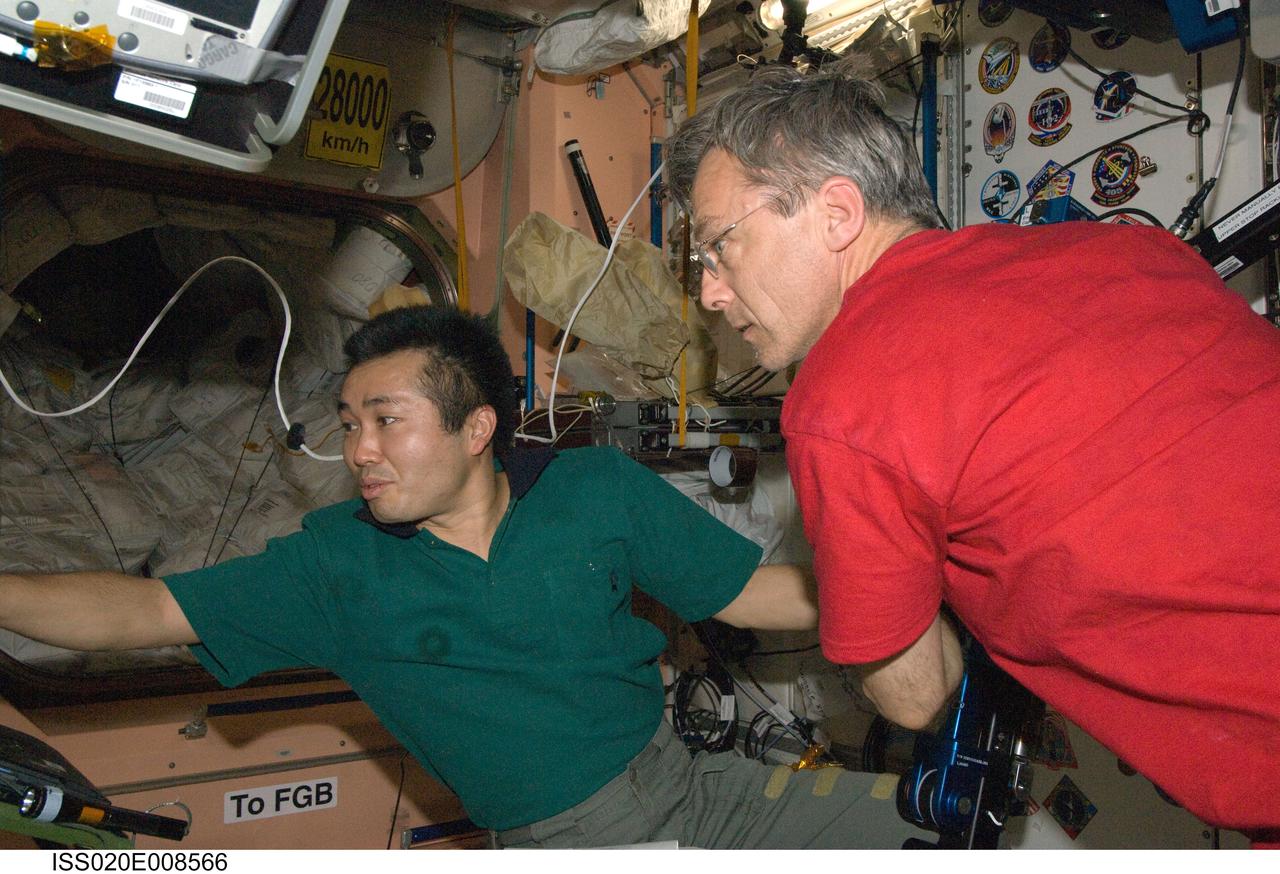
ISS020-E-008566 (11 June 2009) --- Japan Aerospace Exploration Agency (JAXA) astronaut Koichi Wakata (left) and Canadian Space Agency astronaut Robert Thirsk, both Expedition 20 flight engineers, are pictured in the Unity node of the International Space Station.
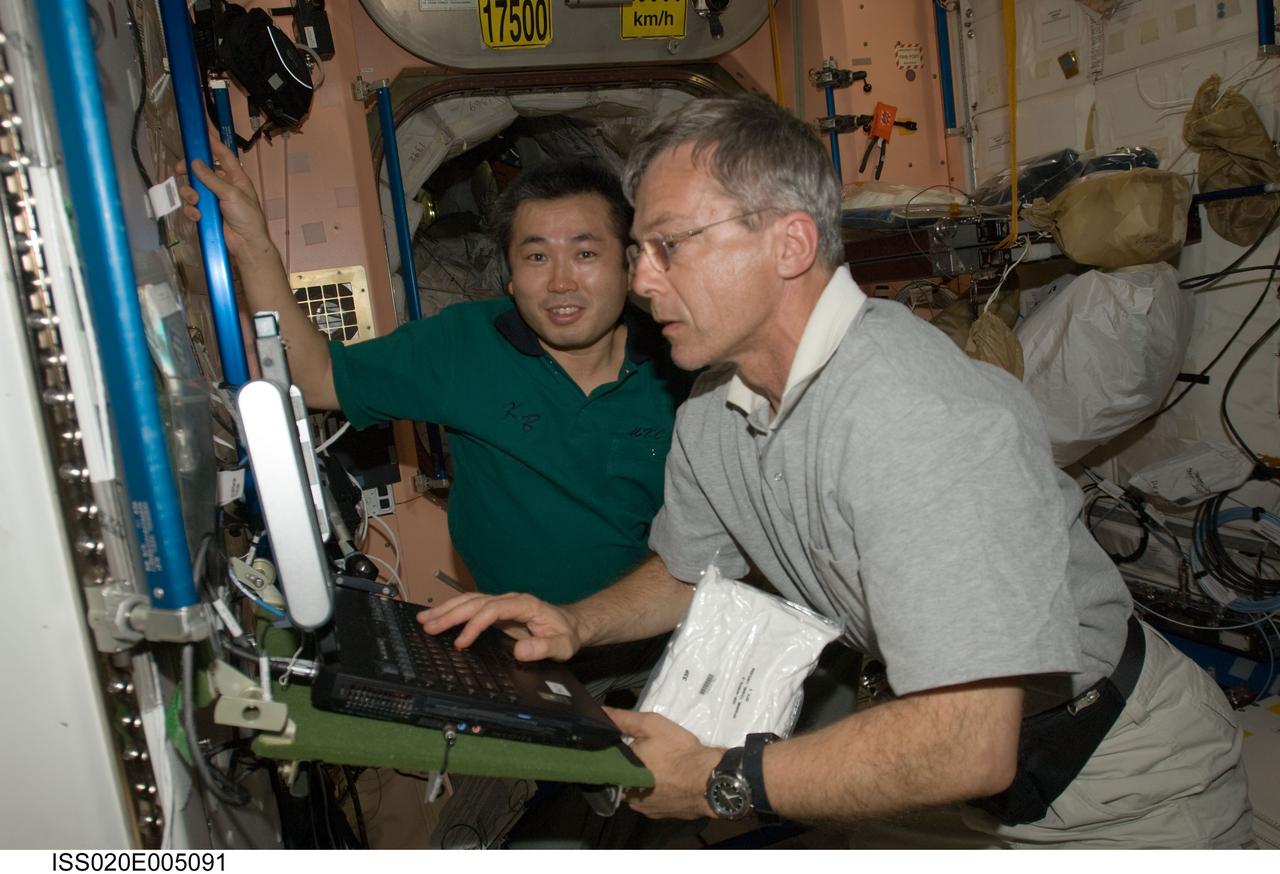
ISS020-E-005091 (30 May 2009) --- Canadian Space Agency astronaut Robert Thirsk (foreground) and Japan Aerospace Exploration Agency (JAXA) astronaut Koichi Wakata, both Expedition 20 flight engineers, work in the Unity node of the International Space Station.
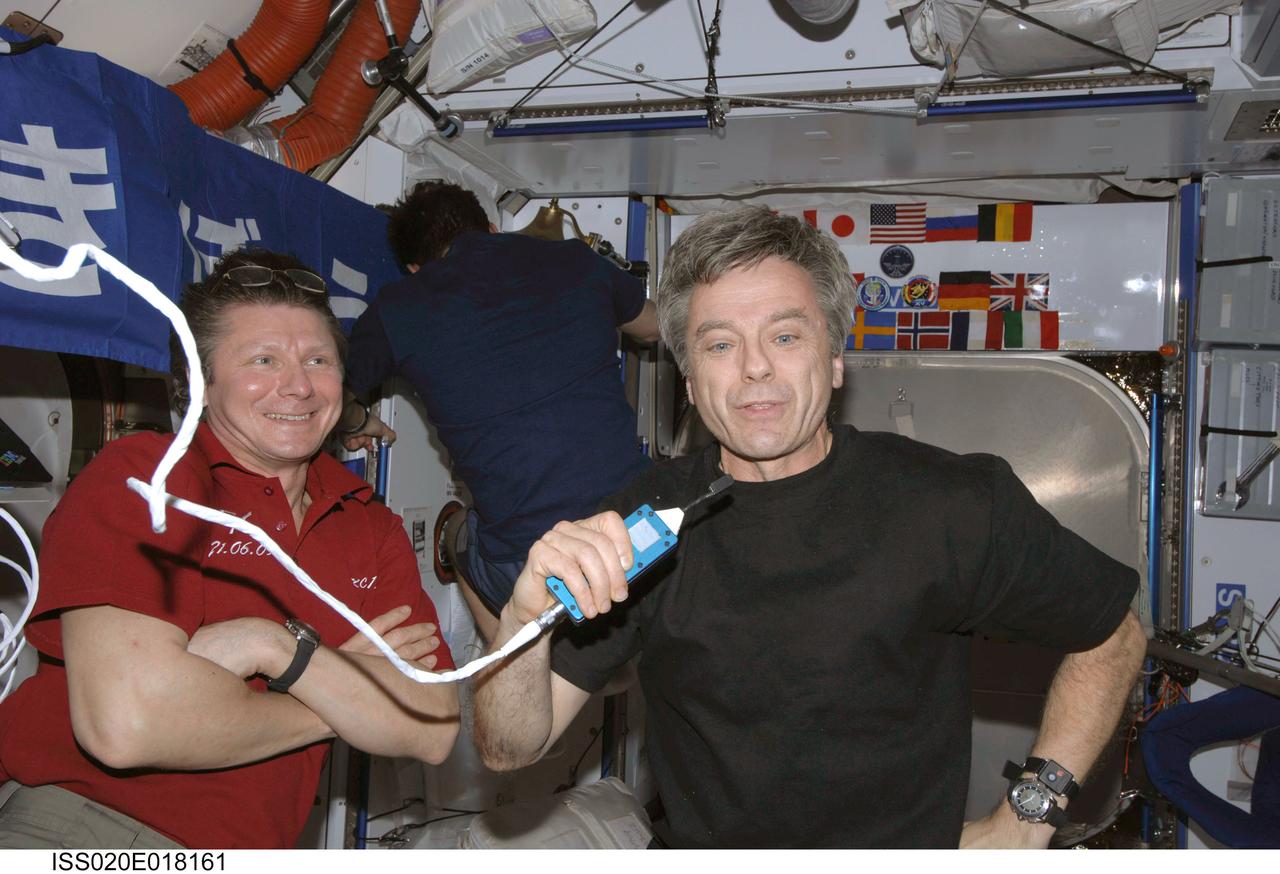
ISS020-E-018161 (10 July 2009) --- Canadian Space Agency astronaut Robert Thirsk, Expedition 20 flight engineer, uses a communication system in the Harmony node of the International Space Station. Also pictured are cosmonauts Gennady Padalka, commander, and Roman Romanenko (back to camera), flight engineer.
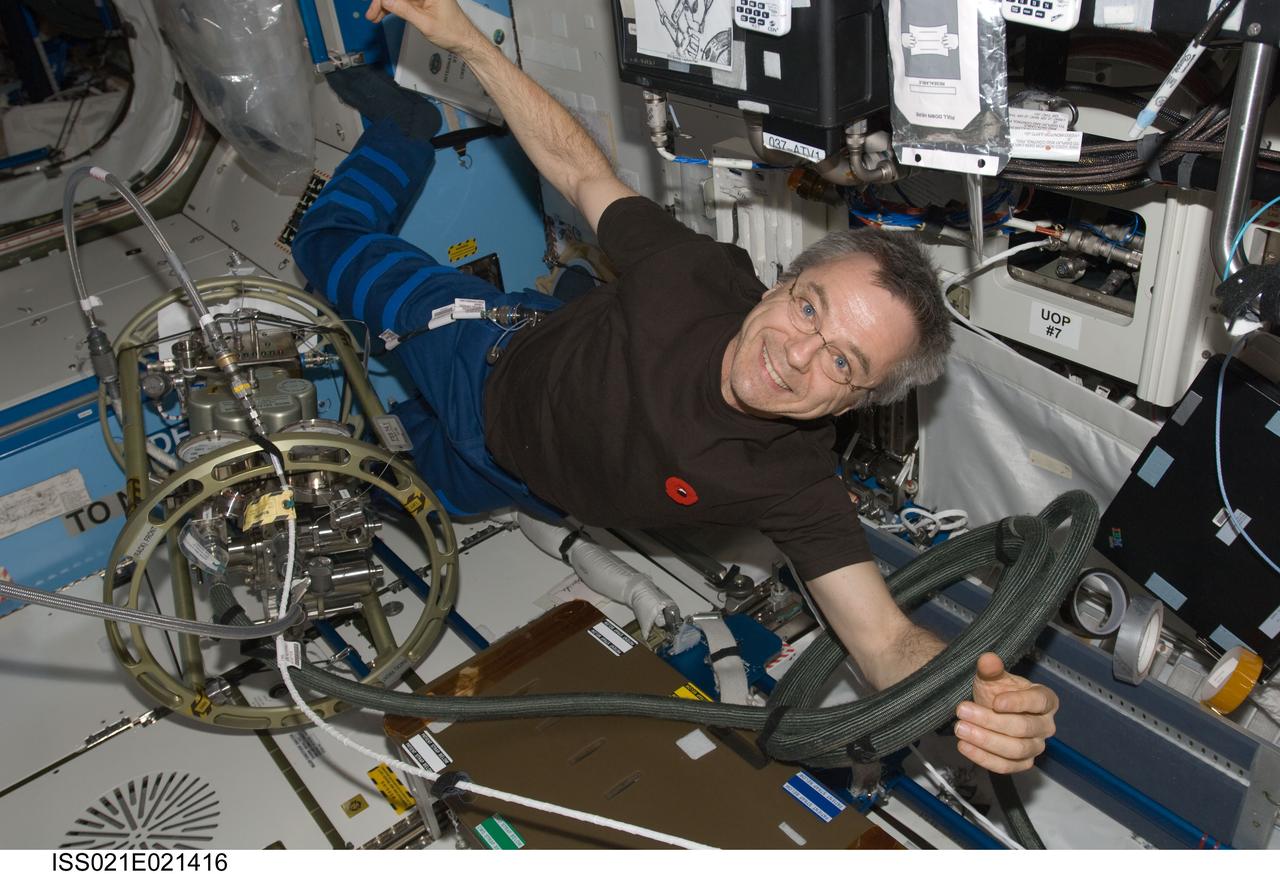
ISS021-E-021416 (5 Nov. 2009) --- Canadian Space Agency astronaut Robert Thirsk, Expedition 21 flight engineer, uses the Fluid Servicing System (FSS) to refill Internal Thermal Control System (ITCS) loops with fresh coolant in the Destiny laboratory of the International Space Station.
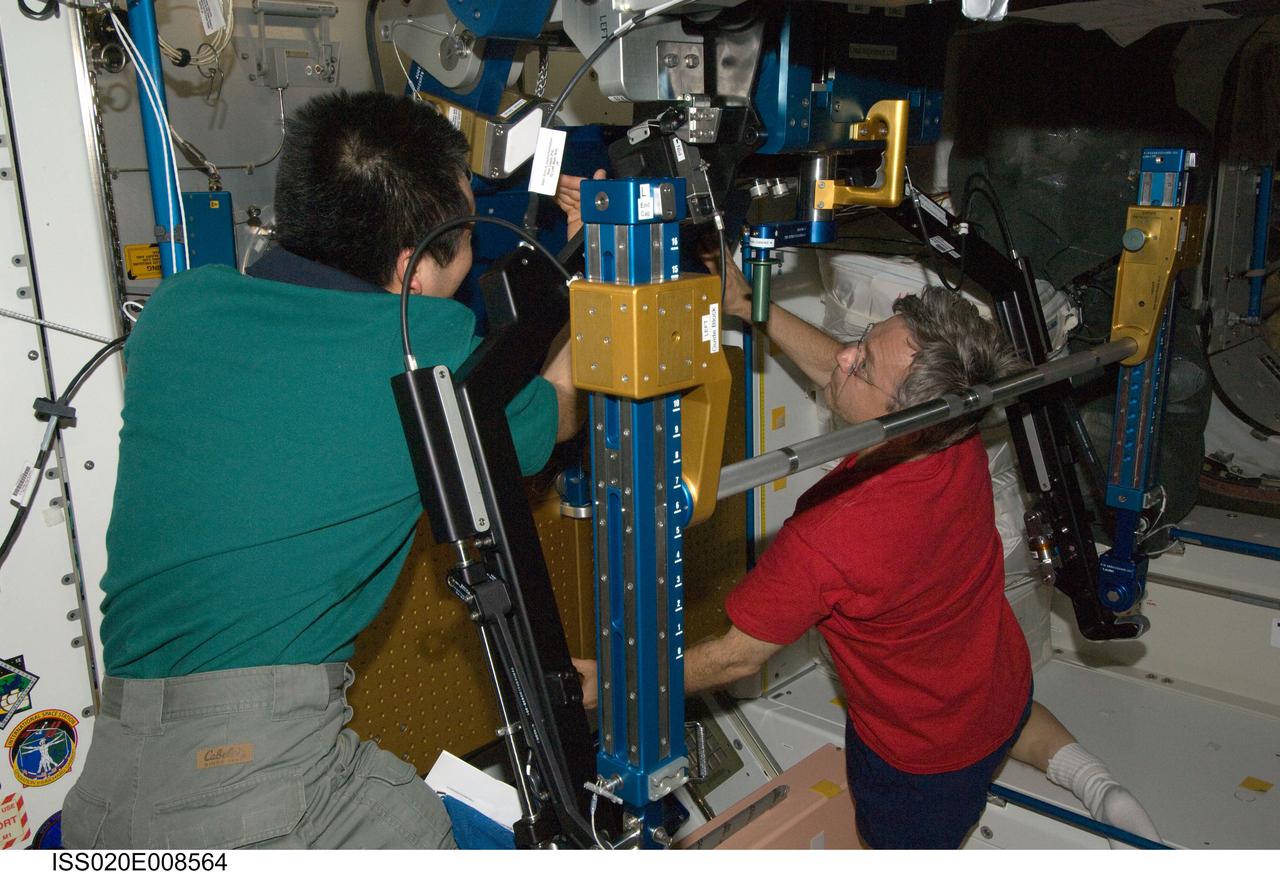
ISS020-E-008564 (11 June 2009) --- Japan Aerospace Exploration Agency (JAXA) astronaut Koichi Wakata (left) and Canadian Space Agency astronaut Robert Thirsk, both Expedition 20 flight engineers, work with the advanced Resistive Exercise Device (aRED) in the Unity node of the International Space Station.
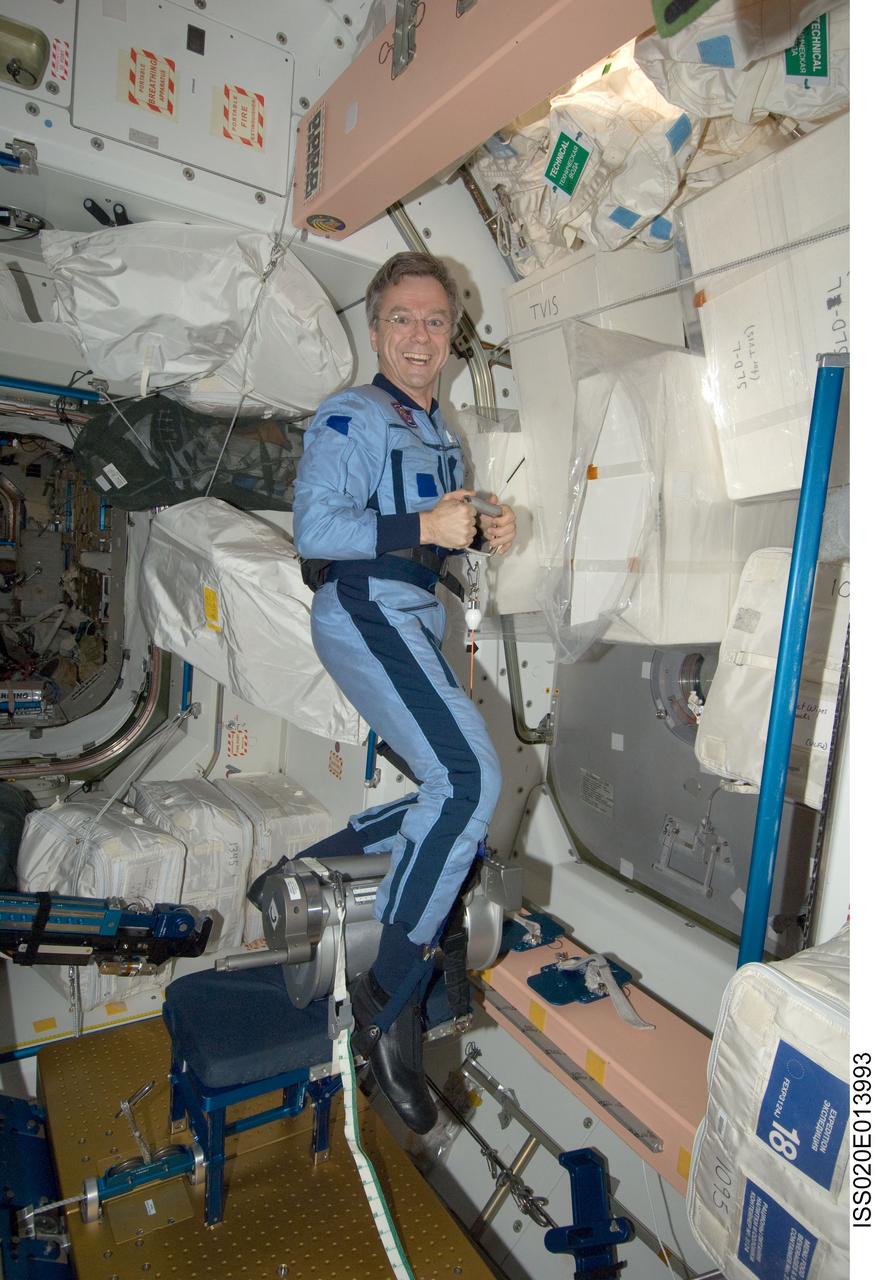
ISS020-E-013993 (23 June 2009) --- Canadian Space Agency astronaut Robert Thirsk, Expedition 20 flight engineer, performs in-flight maintenance on the advanced Resistive Exercise Device (aRED) in the Unity node of the International Space Station.
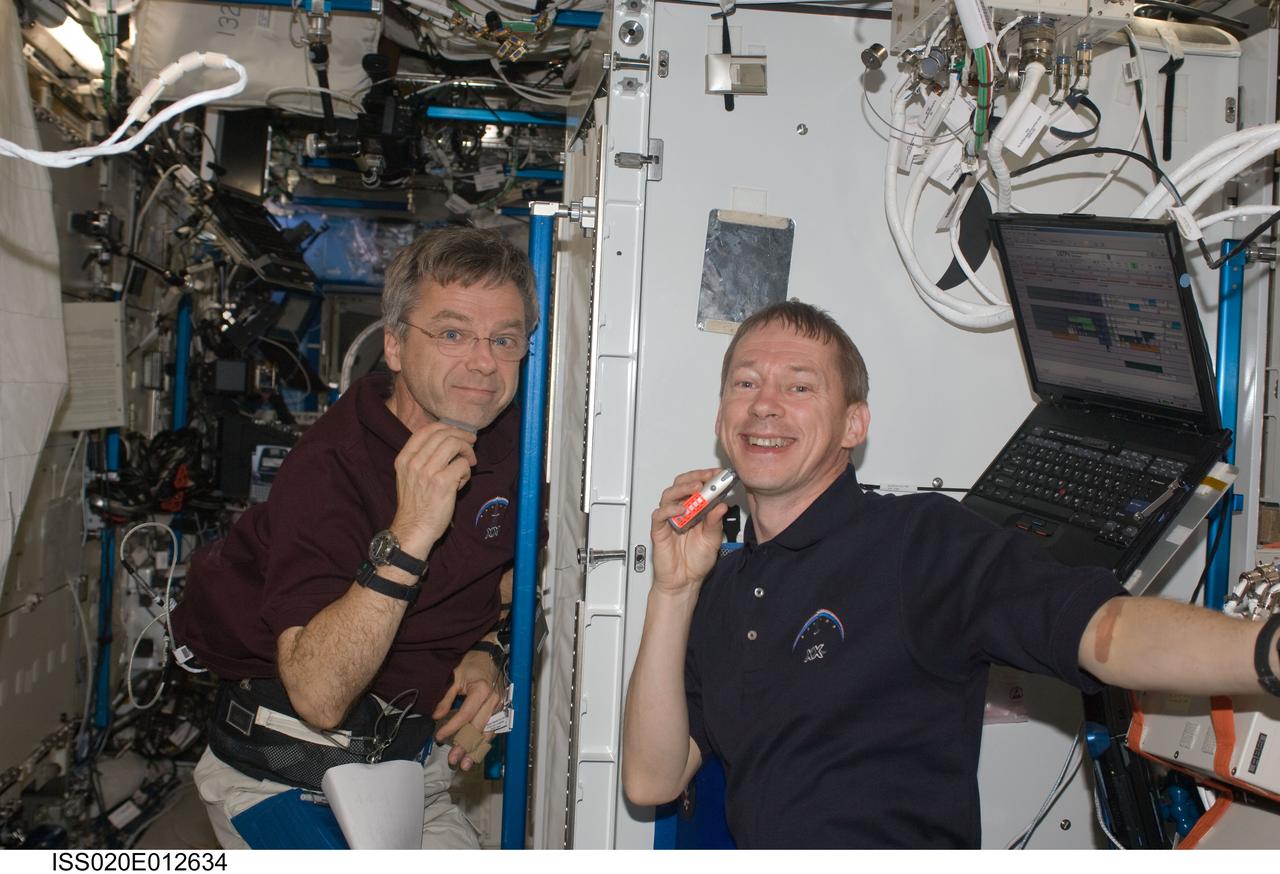
ISS020-E-012634 (19 June 2009) --- Canadian Space Agency astronaut Robert Thirsk (left) and European Space Agency astronaut Frank De Winne, both Expedition 20 flight engineers, shave with electric razors in the Destiny laboratory of the International Space Station.
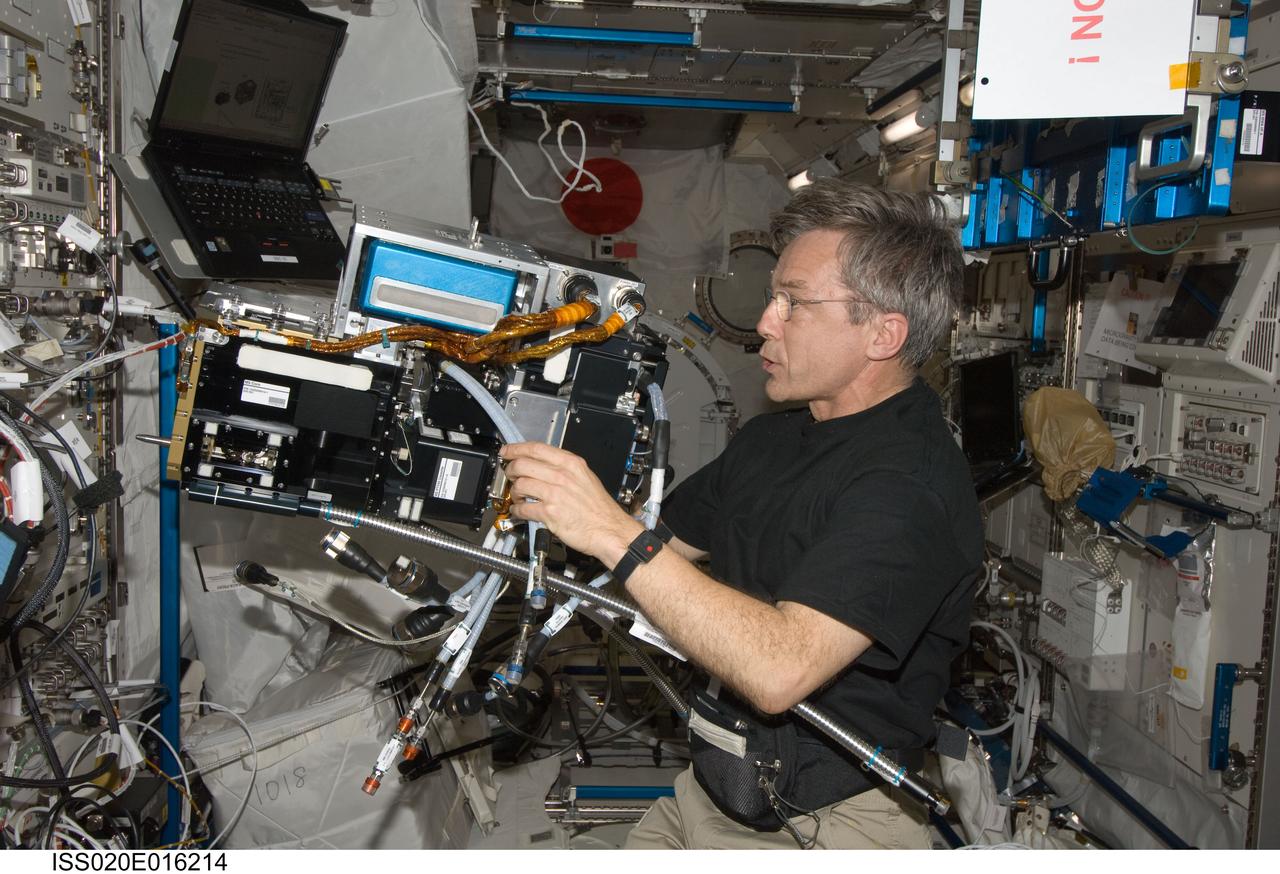
ISS020-E-016214 (1 July 2009) --- Canadian Space Agency astronaut Robert Thirsk, Expedition 20 flight engineer, prepares the Fluid Physics Experiment Facility (FPEF) for the planned Marangoni Surface experiment in the Kibo laboratory of the International Space Station.
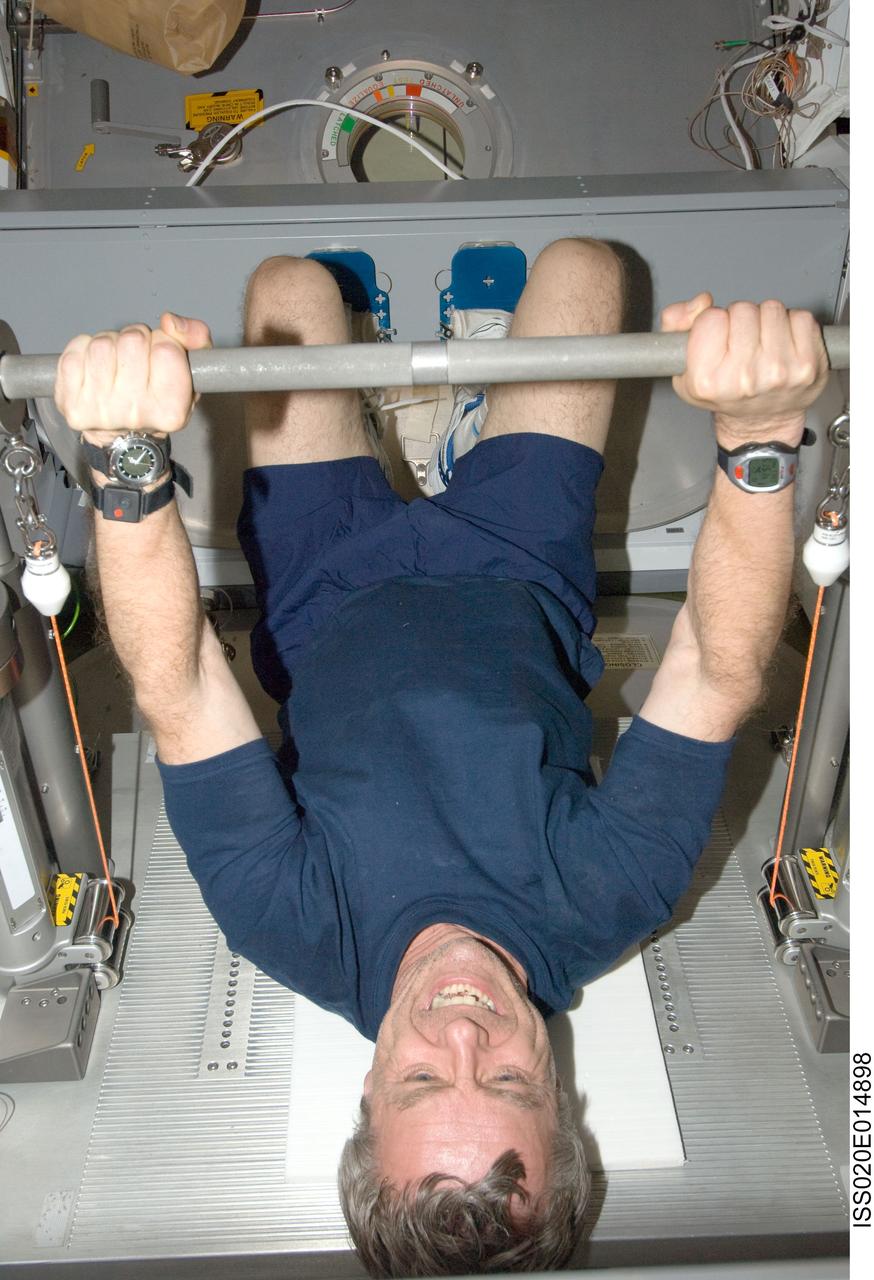
ISS020-E-014898 (27 June 2009) --- Canadian Space Agency astronaut Robert Thirsk, Expedition 20 flight engineer, exercises using the Interim Resistive Exercise Device (IRED) equipment in the Harmony node of the International Space Station.
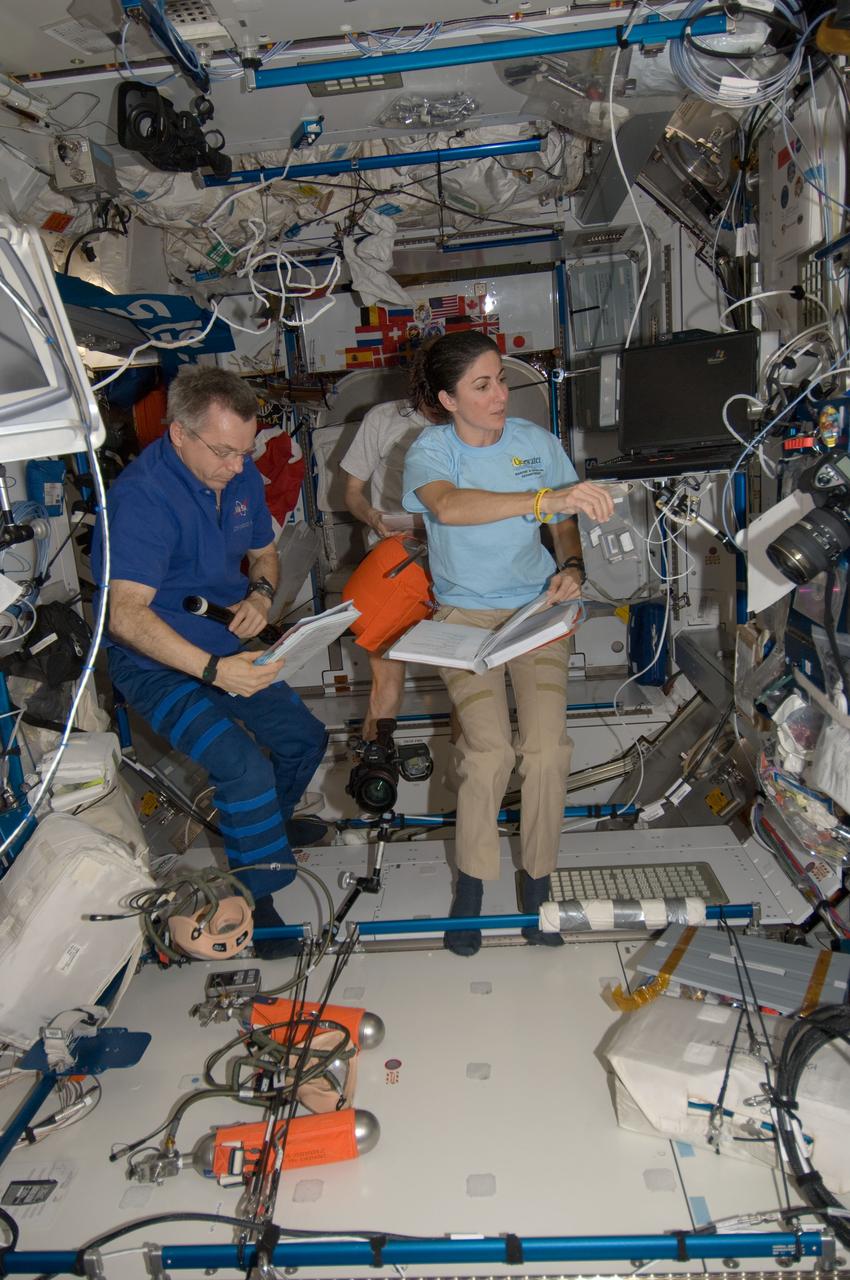
ISS021-E-007030 (15 Oct. 2009) --- Canadian Space Agency astronaut Robert Thirsk and NASA astronaut Nicole Stott, both Expedition 21 flight engineers; along with European Space Agency astronaut Frank De Winne (background), commander, work in the Harmony node of the International Space Station.
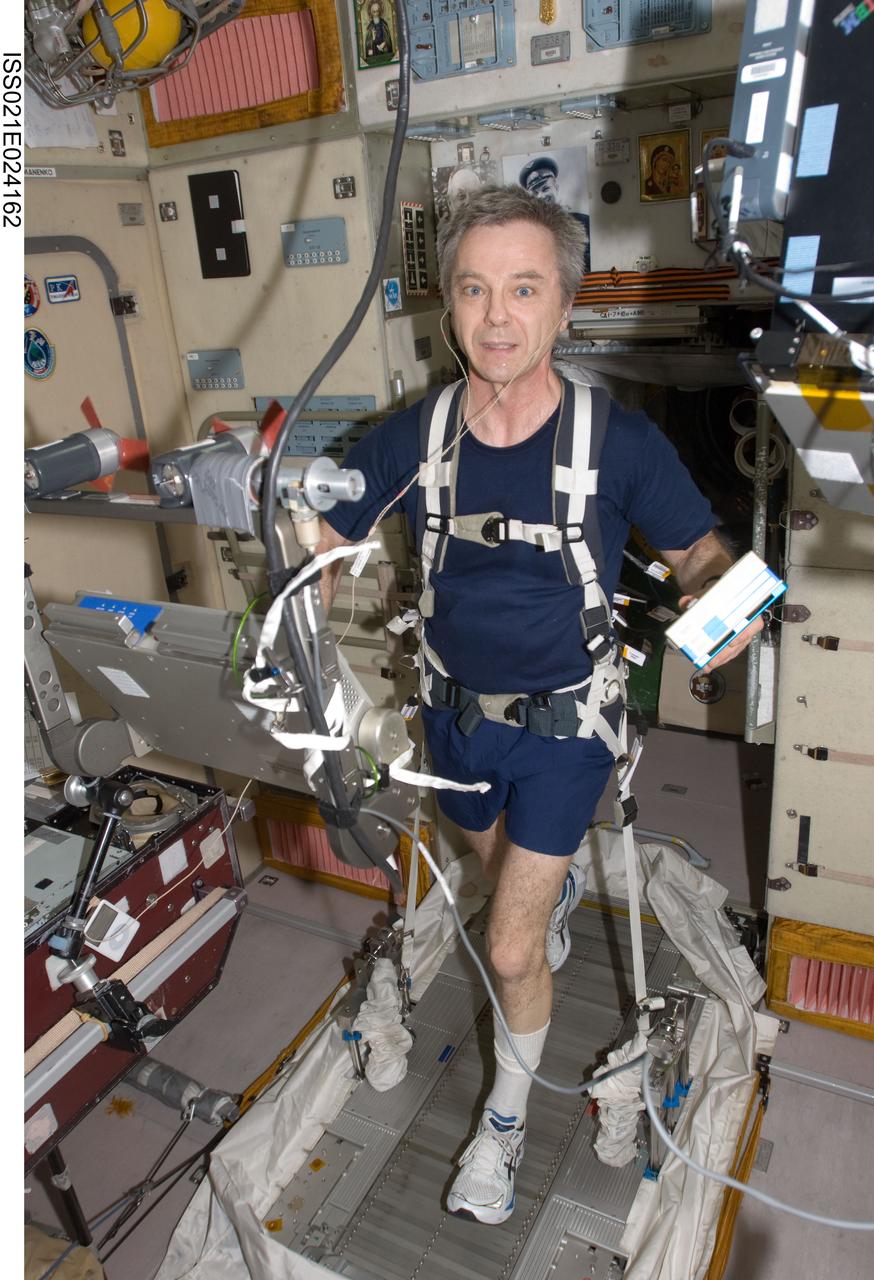
ISS021-E-024162 (11 Nov. 2009) --- Canadian Space Agency astronaut Robert Thirsk, Expedition 21 flight engineer, equipped with a bungee harness, exercises on the Treadmill Vibration Isolation System (TVIS) in the Zvezda Service Module of the International Space Station.
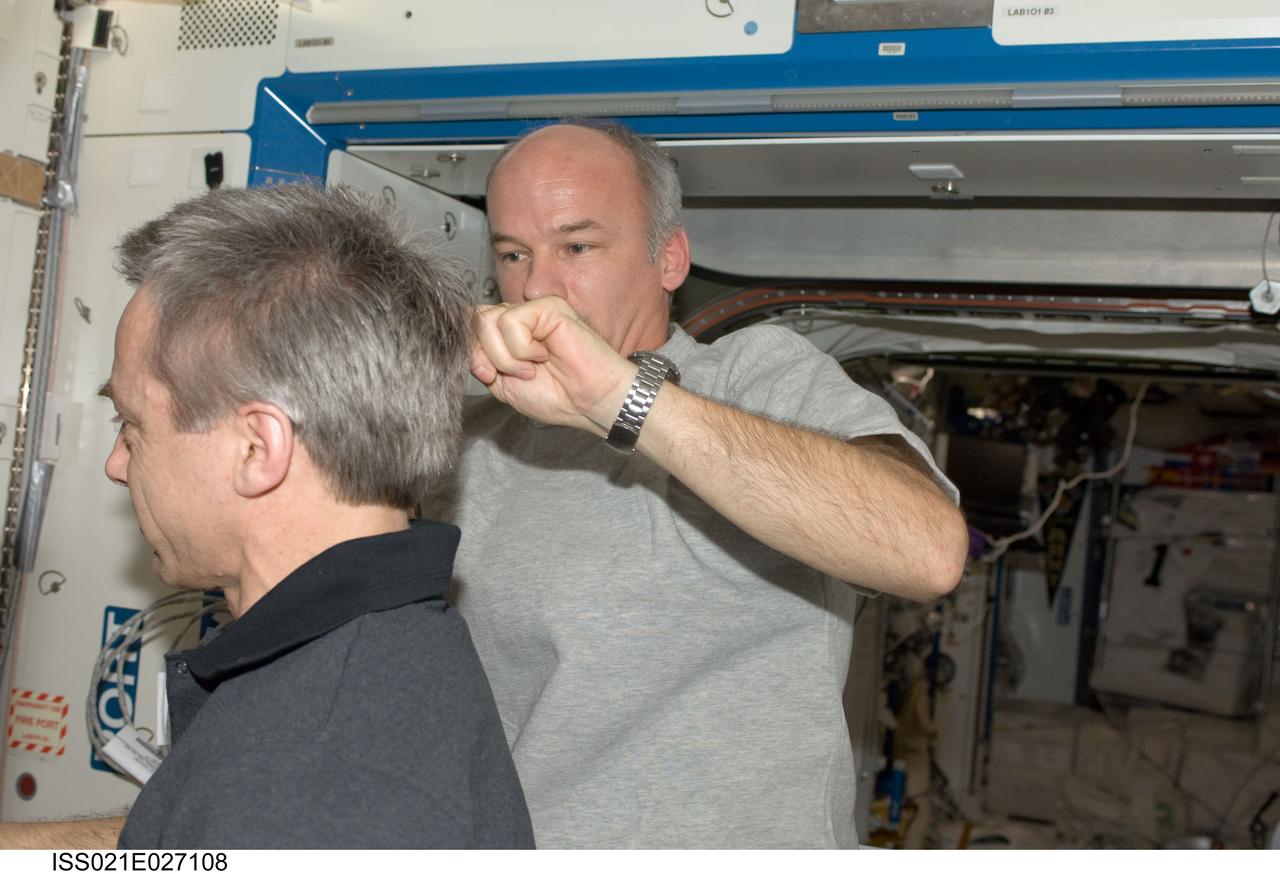
ISS021-E-027108 (15 Nov. 2009) --- NASA astronaut Jeffrey Williams, Expedition 21 flight engineer, trims Canadian Space Agency astronaut Robert Thirsk's hair in the Destiny laboratory of the International Space Station. Williams used hair clippers fashioned with a vacuum device to garner freshly cut hair.
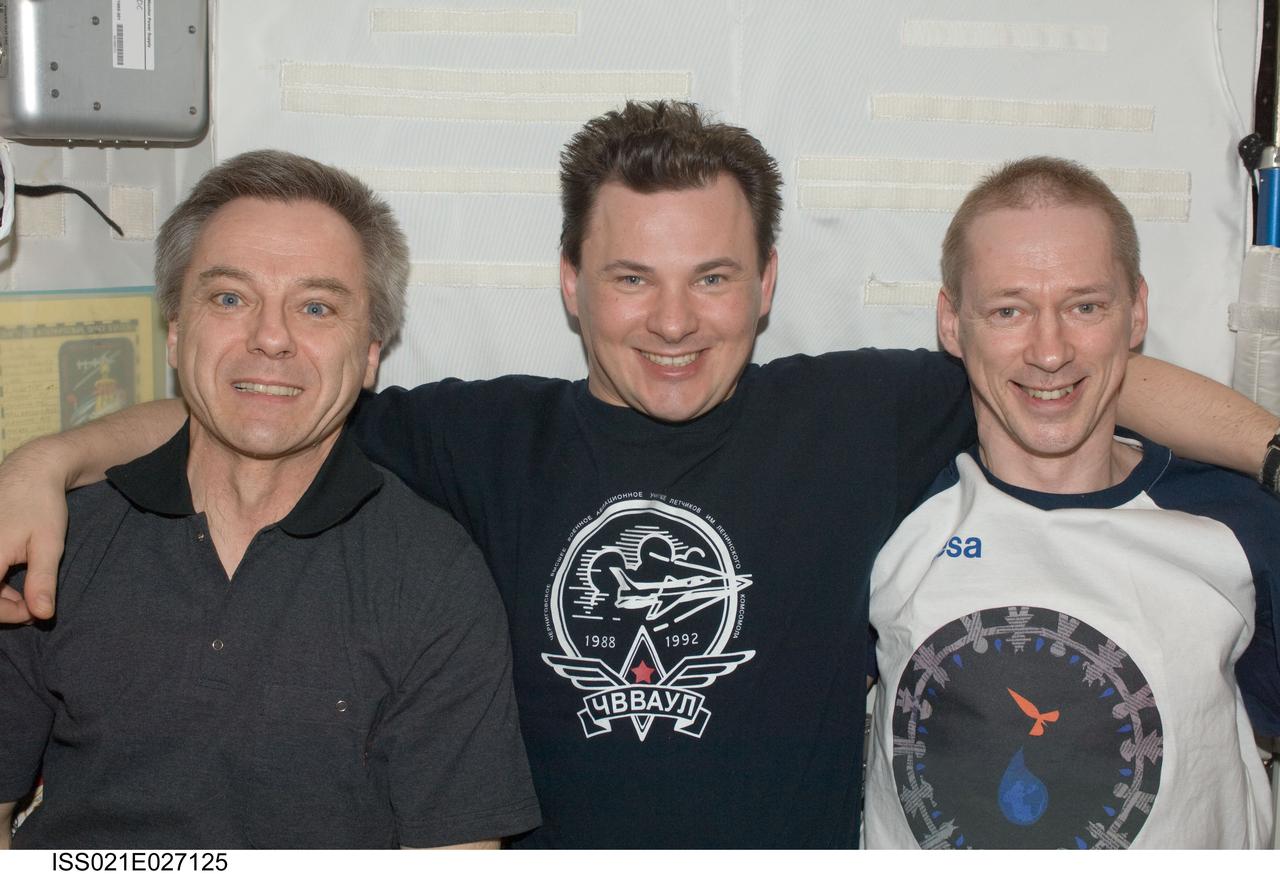
ISS021-E-027125 (15 Nov. 2009) --- European Space Agency astronaut Frank De Winne (right), Expedition 21 commander; along with Russian cosmonaut Roman Romanenko (center) and Canadian Space Agency astronaut Robert Thirsk, both flight engineers, pose for a photo on the International Space Station.
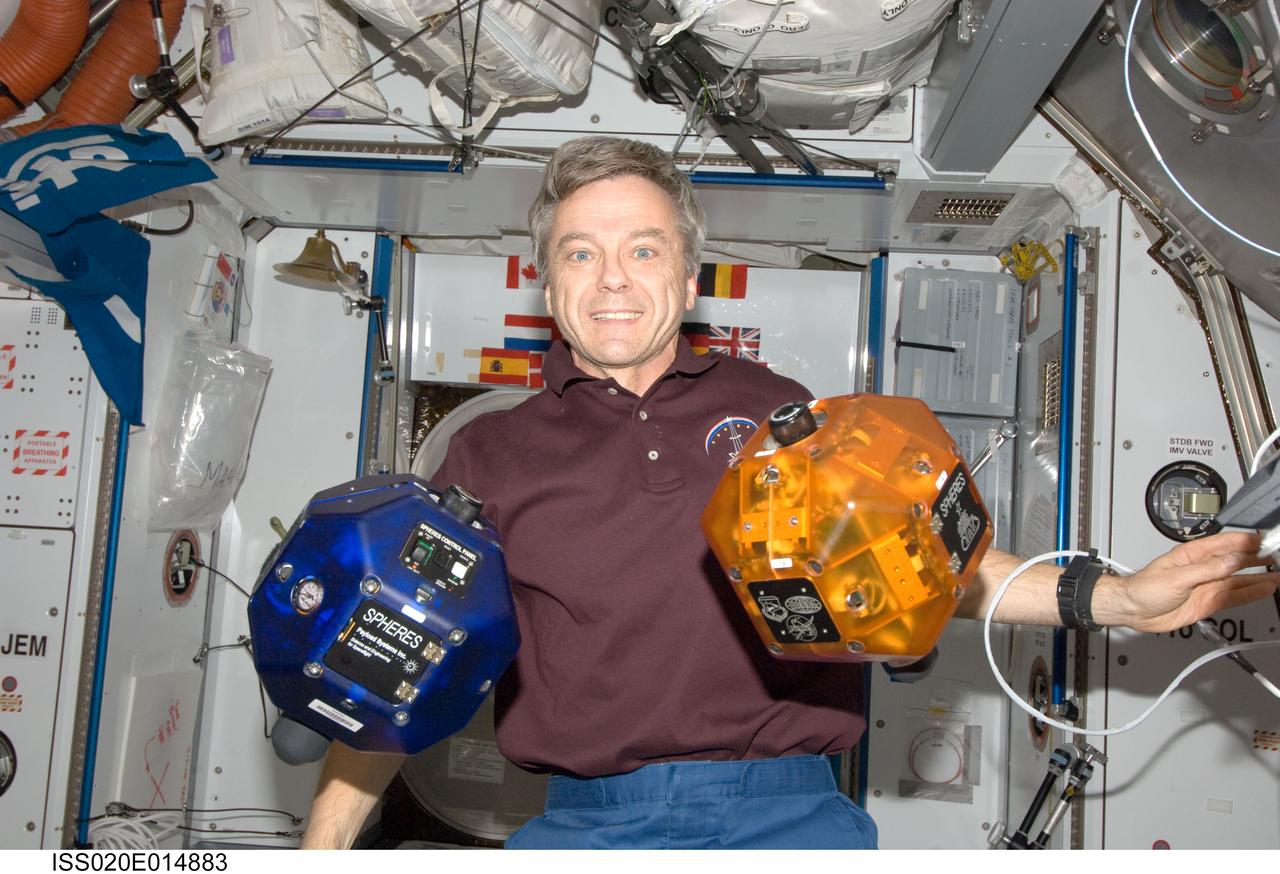
ISS020-E-014883 (26 June 2009) --- Canadian Space Agency astronaut Robert Thirsk, Expedition 20 flight engineer, is pictured near two Synchronized Position Hold, Engage, Reorient, Experimental Satellites (SPHERES) floating freely in the Harmony node of the International Space Station.
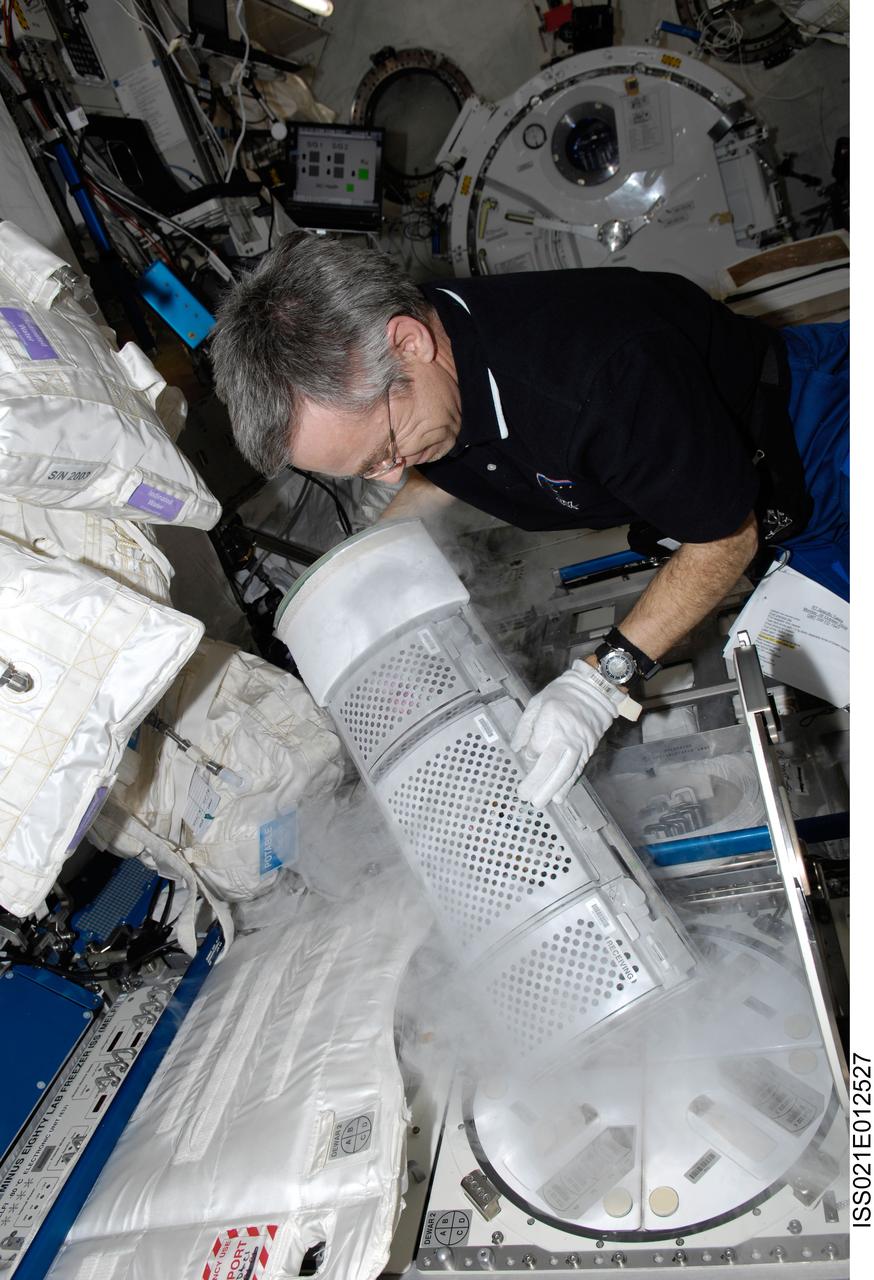
ISS021-E-012527 (26 Oct. 2009) --- Canadian Space Agency astronaut Robert Thirsk, Expedition 21 flight engineer, removes a dewar tray from the Minus Eighty Laboratory Freezer for ISS (MELFI) in order to insert biological samples into the trays in the Kibo laboratory of the International Space Station.
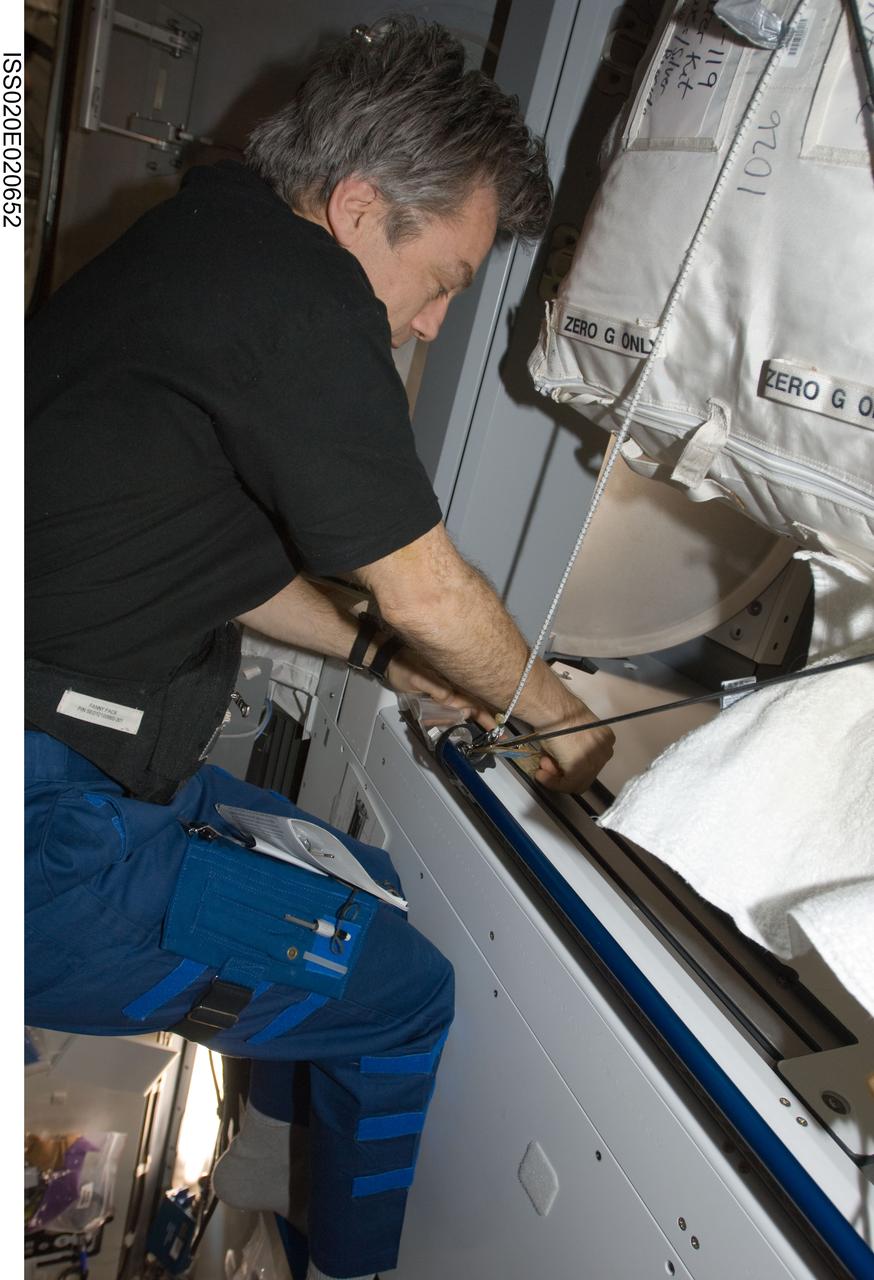
ISS020-E-020652 (15 July 2009) --- Canadian Space Agency astronaut Robert Thirsk, Expedition 20 flight engineer, uses the Surface Sample Kit (SSK) to collect microbiology samples from specific sampling locations in the Harmony node and other modules of the International Space Station.
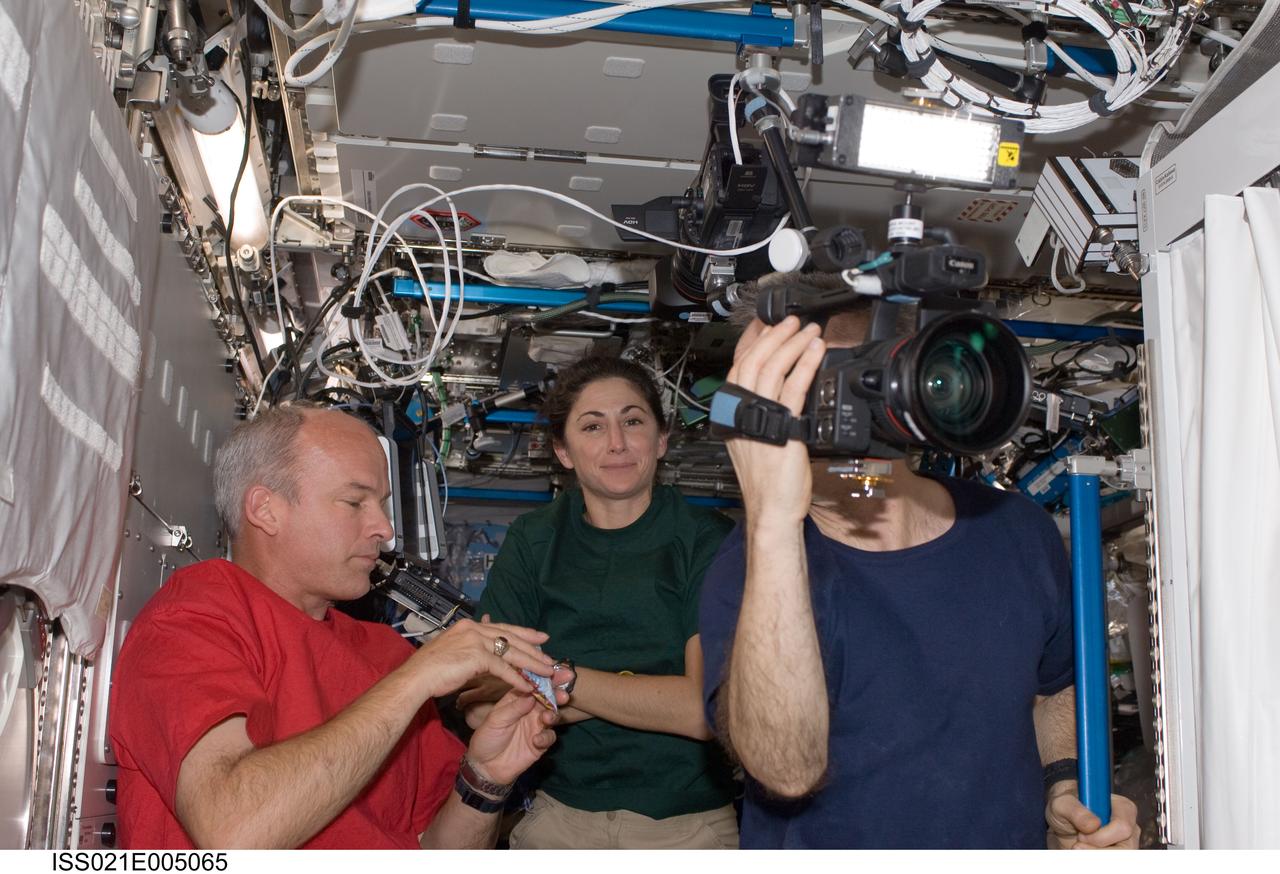
ISS021-E-005065 (11 Oct. 2009) --- Canadian Space Agency astronaut Robert Thirsk, Expedition 21 flight engineer, uses a High Definition Video (HDV) camera in the Destiny laboratory of the International Space Station. NASA astronauts Jeffrey Williams and Nicole Stott, both Expedition 21 flight engineers, are also pictured.
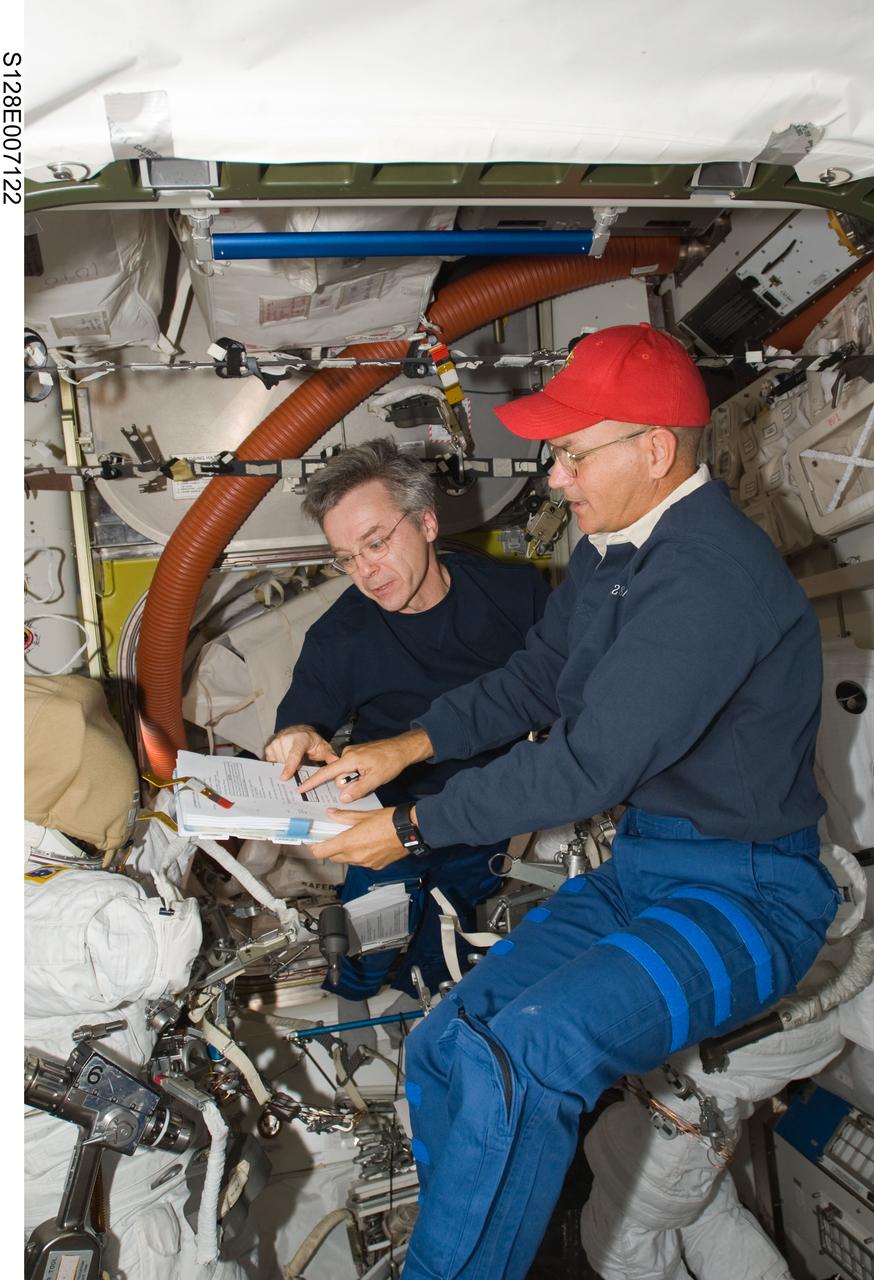
S128-E-007122 (31 Aug. 2009) --- NASA astronaut Rick Sturckow (right), STS-128 commander, and Canadian Space Agency astronaut Robert Thirsk, Expedition 20 flight engineer, look over a checklist in the Quest airlock of the International Space Station while Space Shuttle Discovery remains docked with the station.
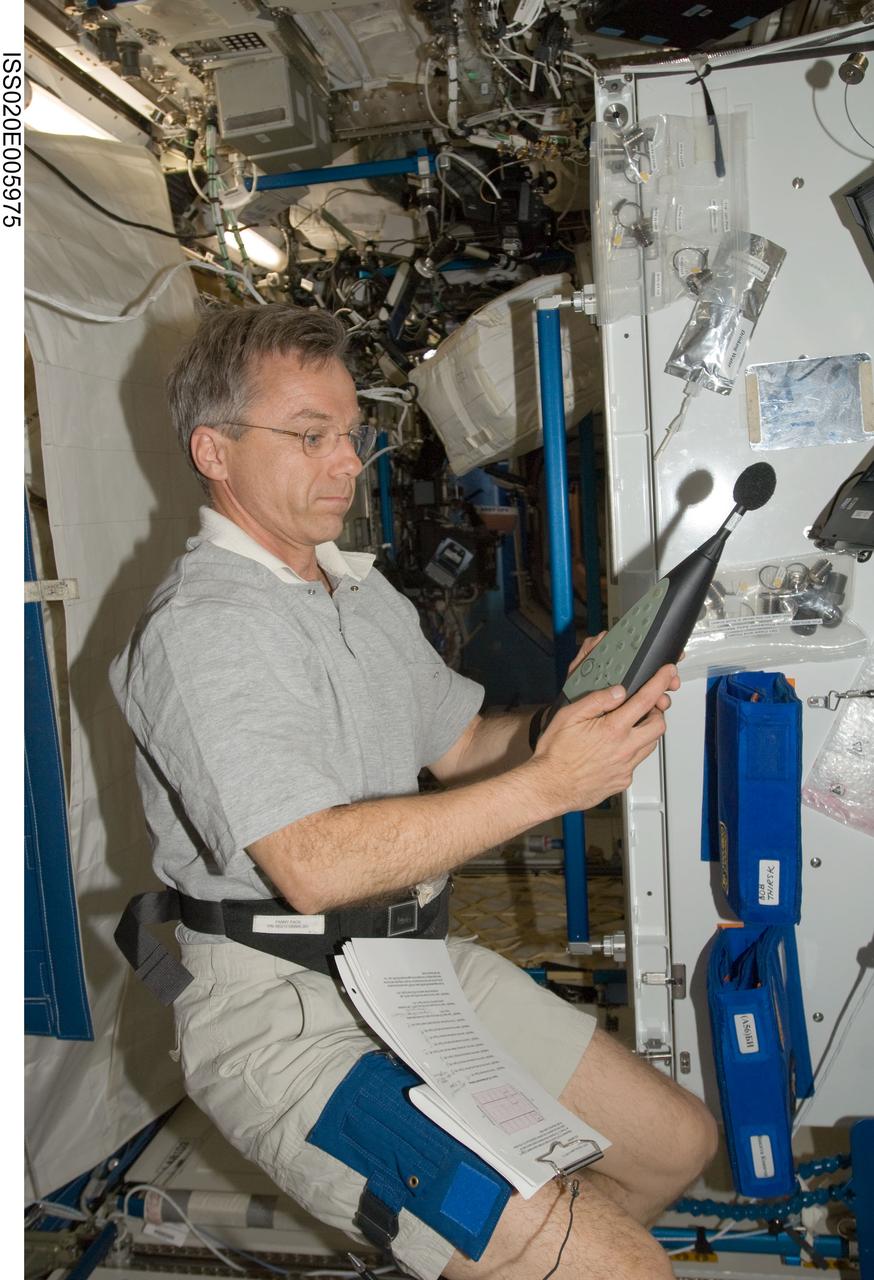
ISS020-E-005975 (2 June 2009) --- Canadian Space Agency astronaut Robert Thirsk, Expedition 20 flight engineer, works with a U.S. Sound Level Meter (SLM) for Setup and Acoustic Survey in the Destiny laboratory of the International Space Station.
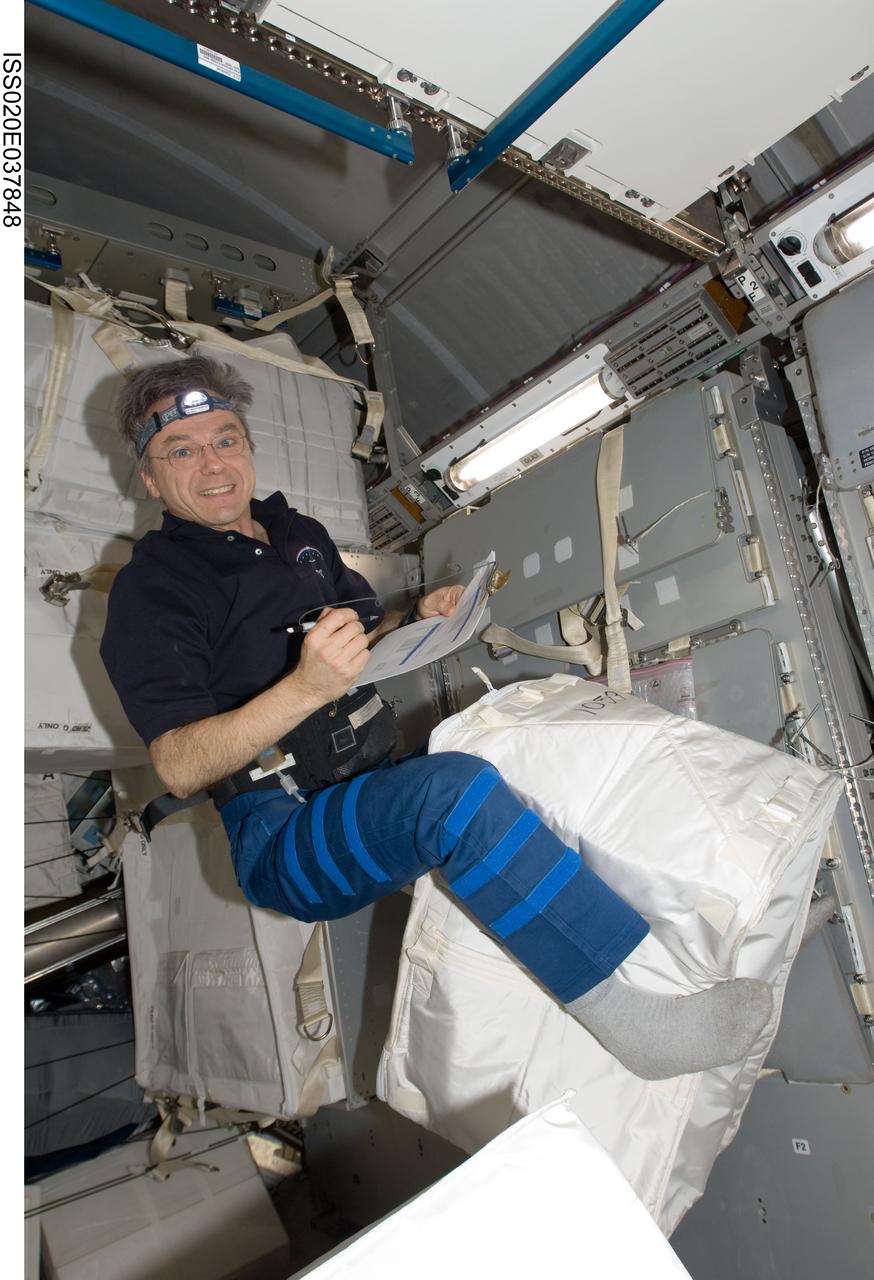
ISS020-E-037848 (2 Sept. 2009) --- Canadian Space Agency astronaut Robert Thirsk, Expedition 20 flight engineer, holds storage containers with his legs while floating freely in the Leonardo Multi-Purpose Logistics Module (MPLM) while Space Shuttle Discovery (STS-128) remains docked with the station.
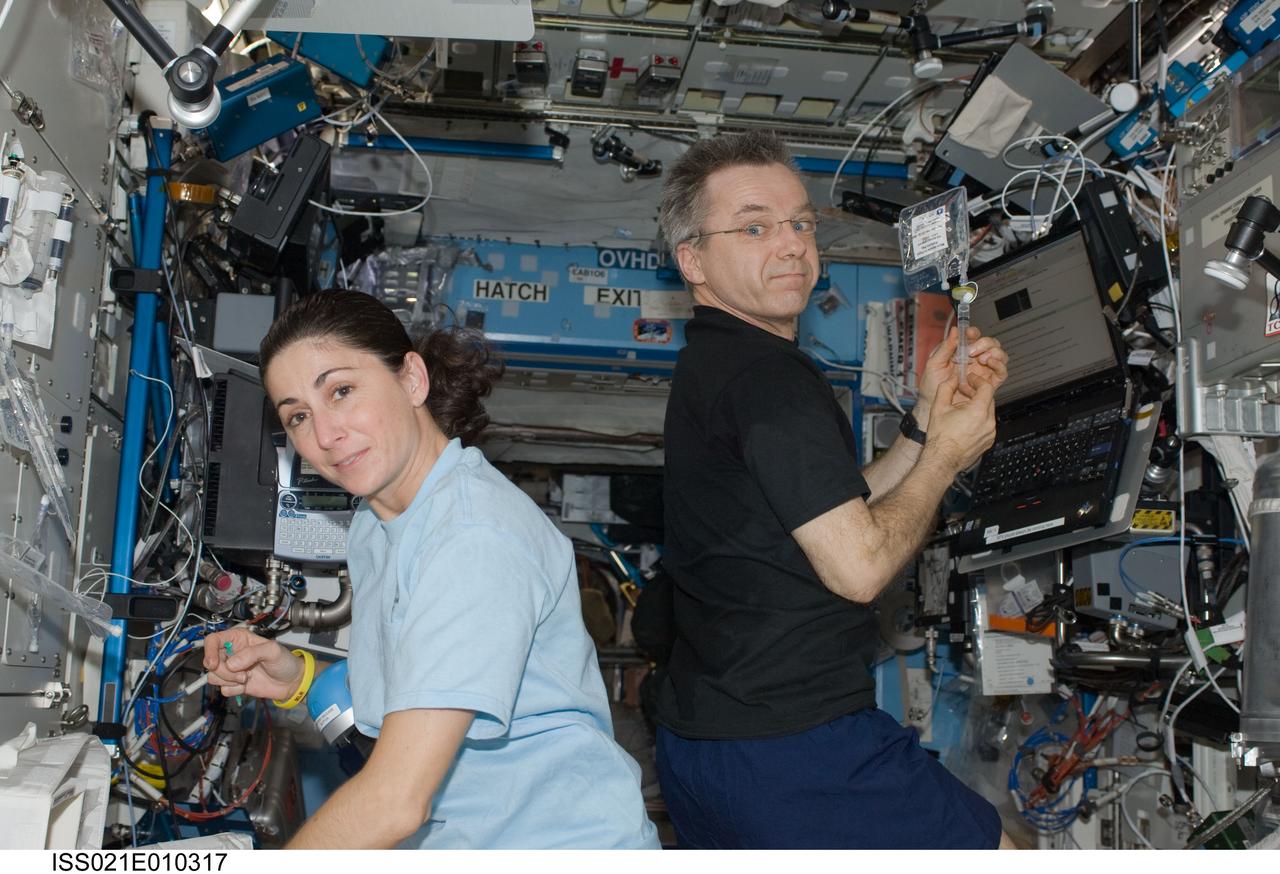
ISS021-E-010317 (20 Oct. 2009) --- NASA astronaut Nicole Stott and Canadian Space Agency astronaut Robert Thirsk, both Expedition 21 flight engineers, perform water analyses in the Destiny laboratory of the International Space Station.
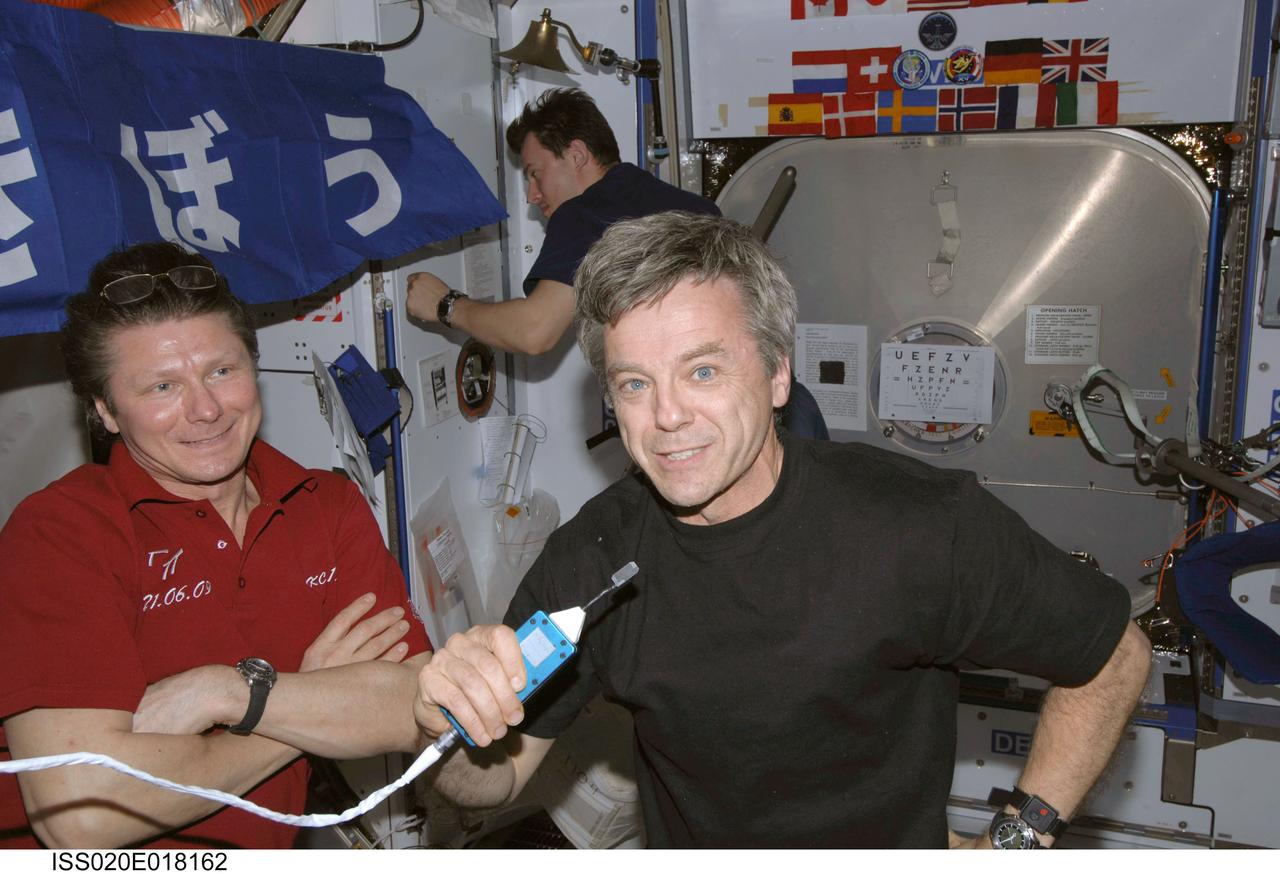
ISS020-E-018162 (10 July 2009) --- Canadian Space Agency astronaut Robert Thirsk, Expedition 20 flight engineer, uses a communication system in the Harmony node of the International Space Station. Also pictured are cosmonauts Gennady Padalka (left foreground), commander, and Roman Romanenko, flight engineer.
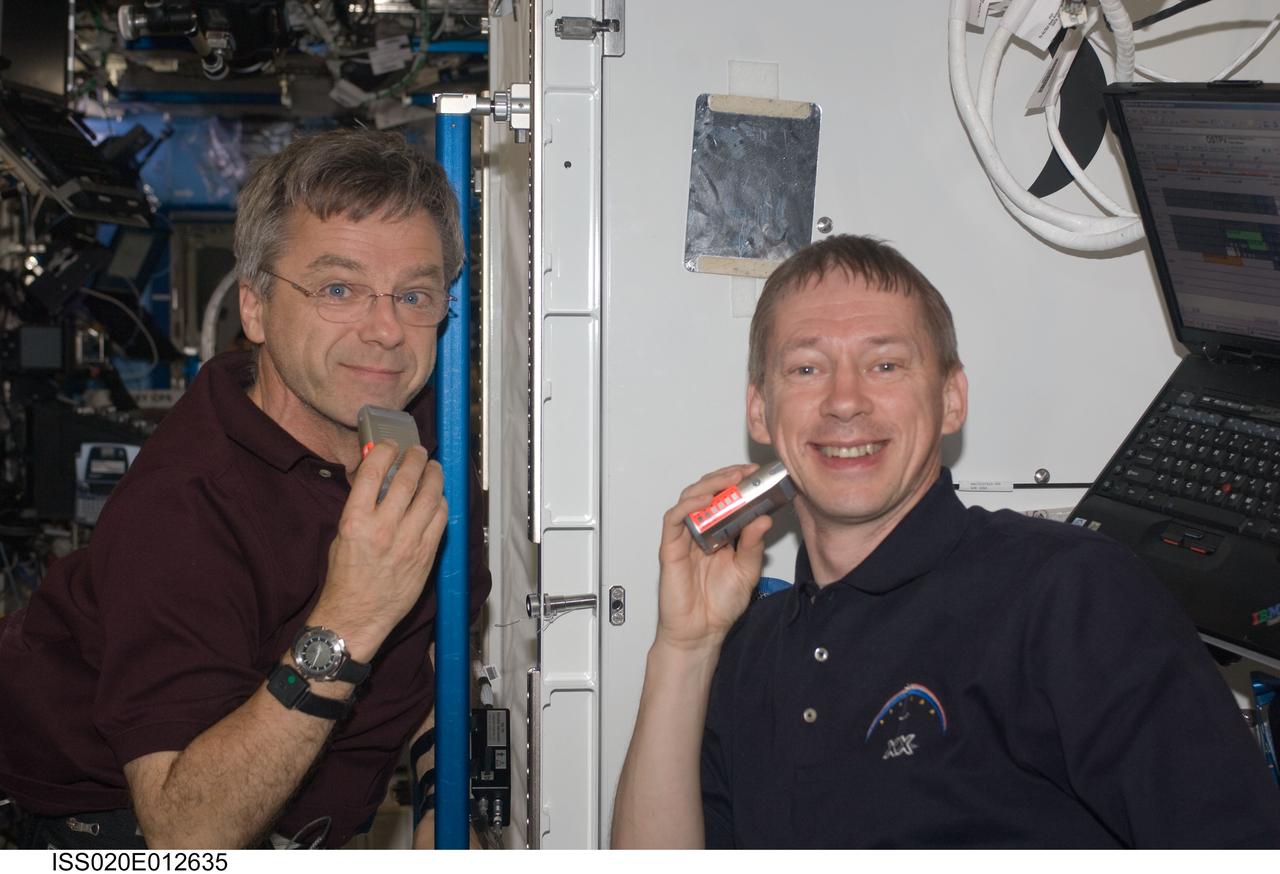
ISS020-E-012635 (19 June 2009) --- Canadian Space Agency astronaut Robert Thirsk (left) and European Space Agency astronaut Frank De Winne, both Expedition 20 flight engineers, shave with electric razors in the Destiny laboratory of the International Space Station.
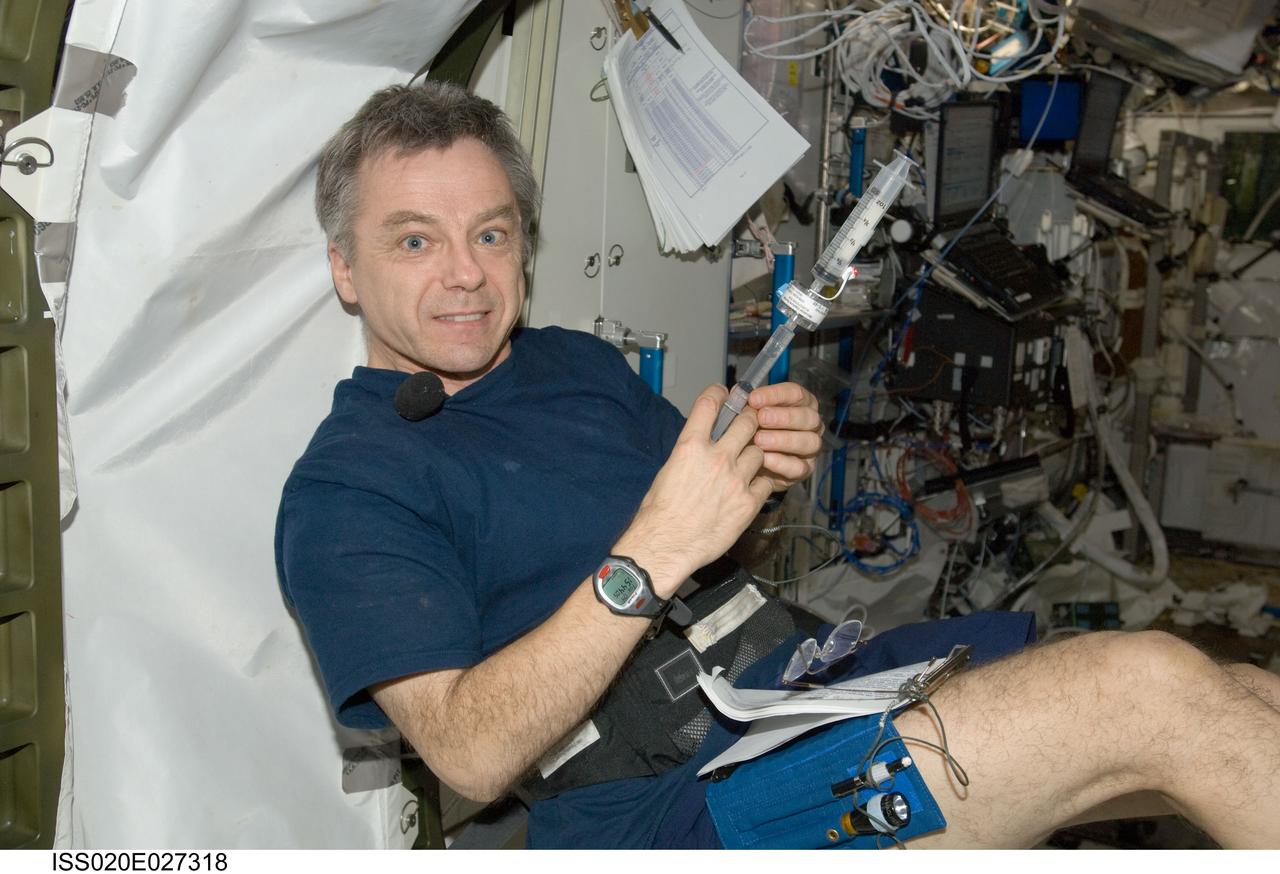
ISS020-E-027318 (4 Aug. 2009) --- Canadian Space Agency astronaut Robert Thirsk, Expedition 20 flight engineer, performs a subsequent in-flight analysis with a Water Microbiology Kit/Microbial Capture Devices (WMK MCD) for microbial traces in the Destiny laboratory of the International Space Station.
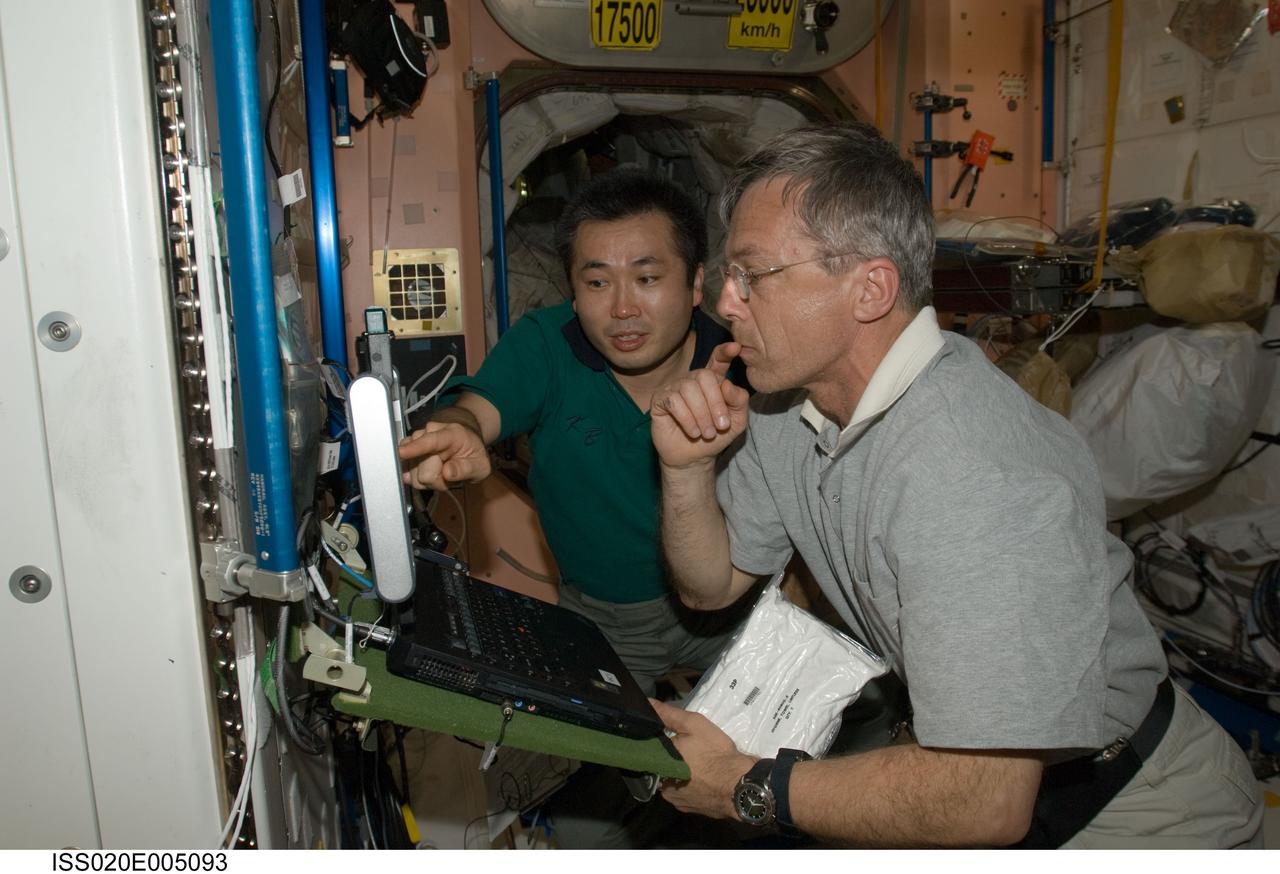
ISS020-E-005093 (30 May 2009) --- Canadian Space Agency astronaut Robert Thirsk (foreground) and Japan Aerospace Exploration Agency (JAXA) astronaut Koichi Wakata, both Expedition 20 flight engineers, work in the Unity node of the International Space Station.
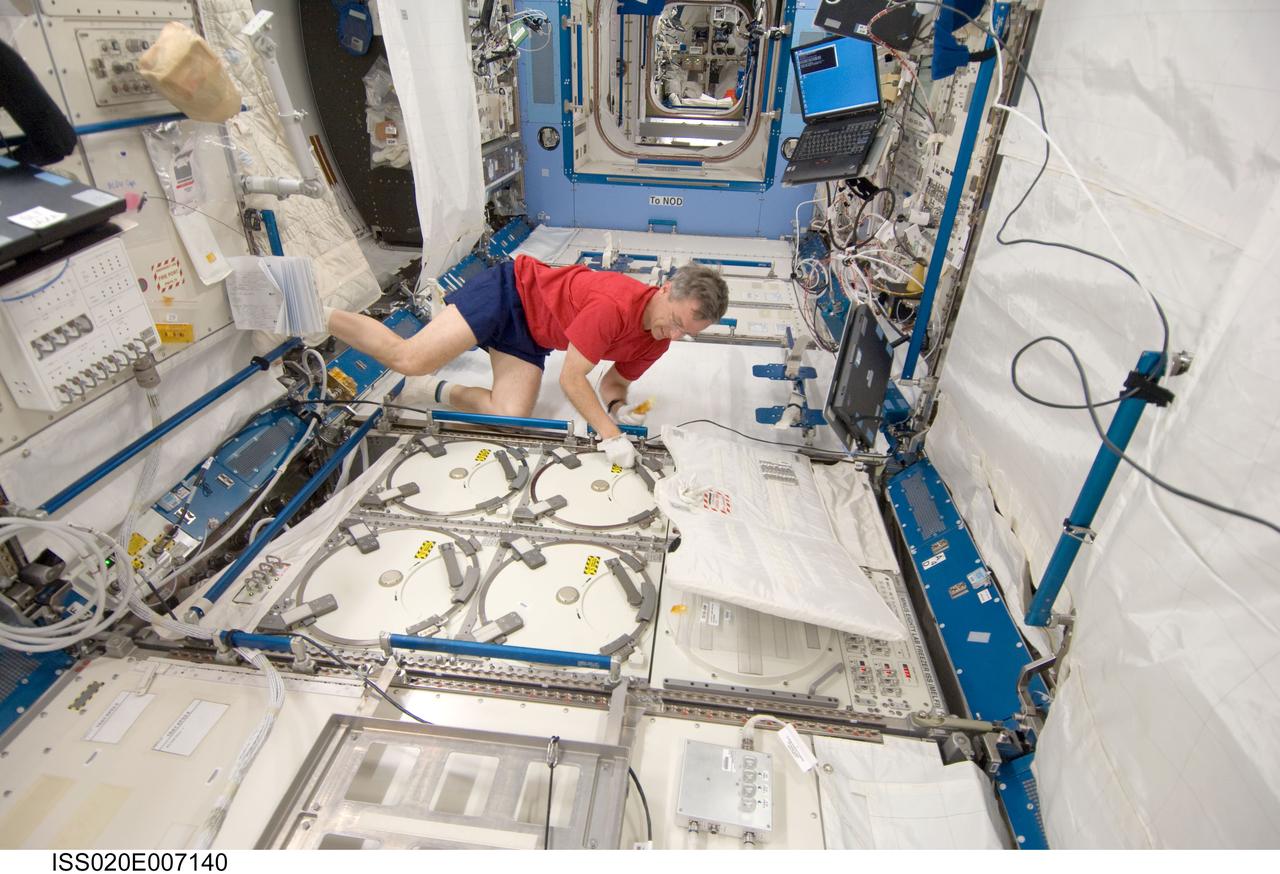
ISS020-E-007140 (6 June 2009) --- Canadian Space Agency astronaut Robert Thirsk, Expedition 20 flight engineer, performs an insertion of urine samples into the Minus Eighty Degree Laboratory Freezer for ISS (MELFI) as part of the Nutritional Status Assessment (NUTRITION) study in the Japanese Kibo laboratory of the International Space Station.
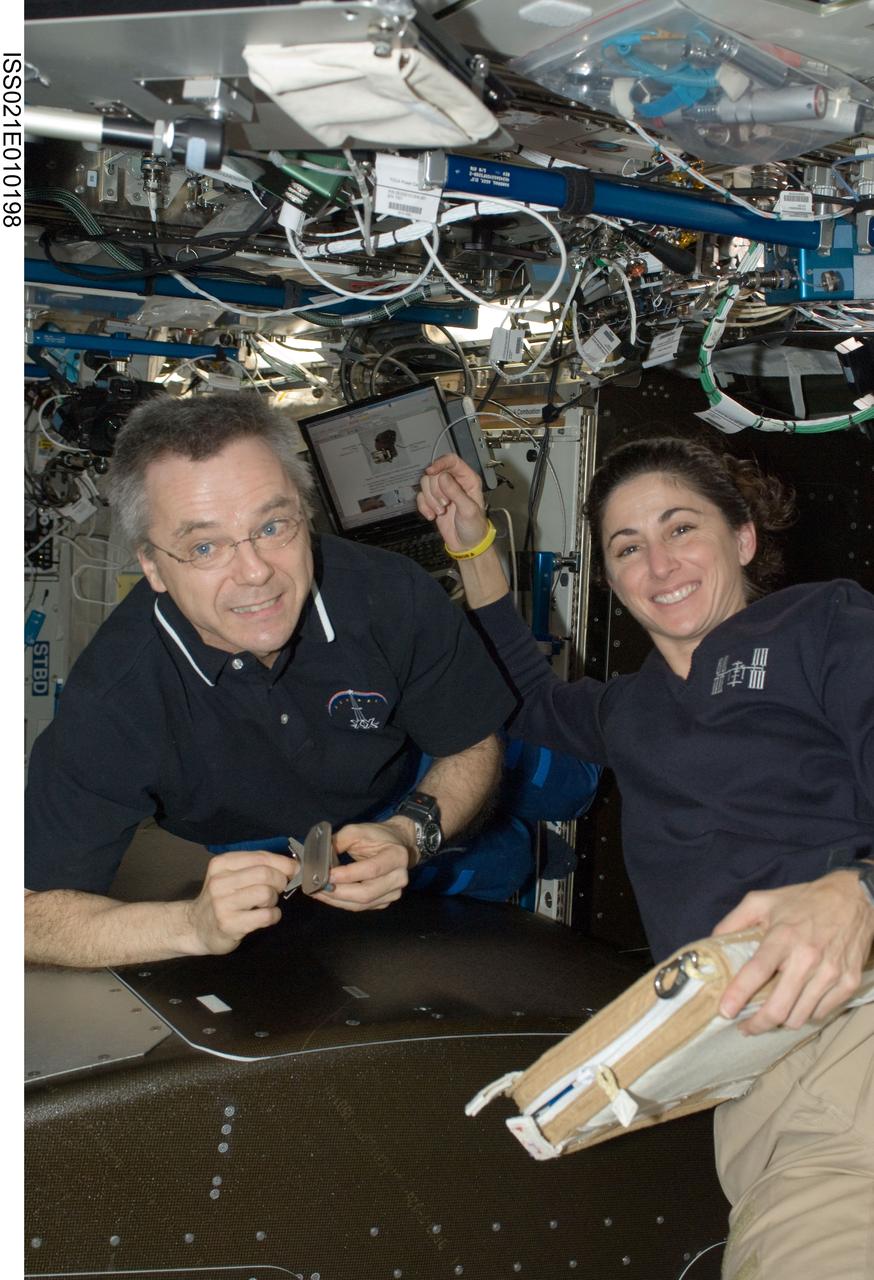
ISS021-E-010198 (19 Oct. 2009) --- Canadian Space Agency astronaut Robert Thirsk and NASA astronaut Nicole Stott, both Expedition 21 flight engineers, install the Active Rack Isolation System (ARIS) hardware on the Fluids Integrated Rack (FIR) in the Destiny laboratory of the International Space Station.
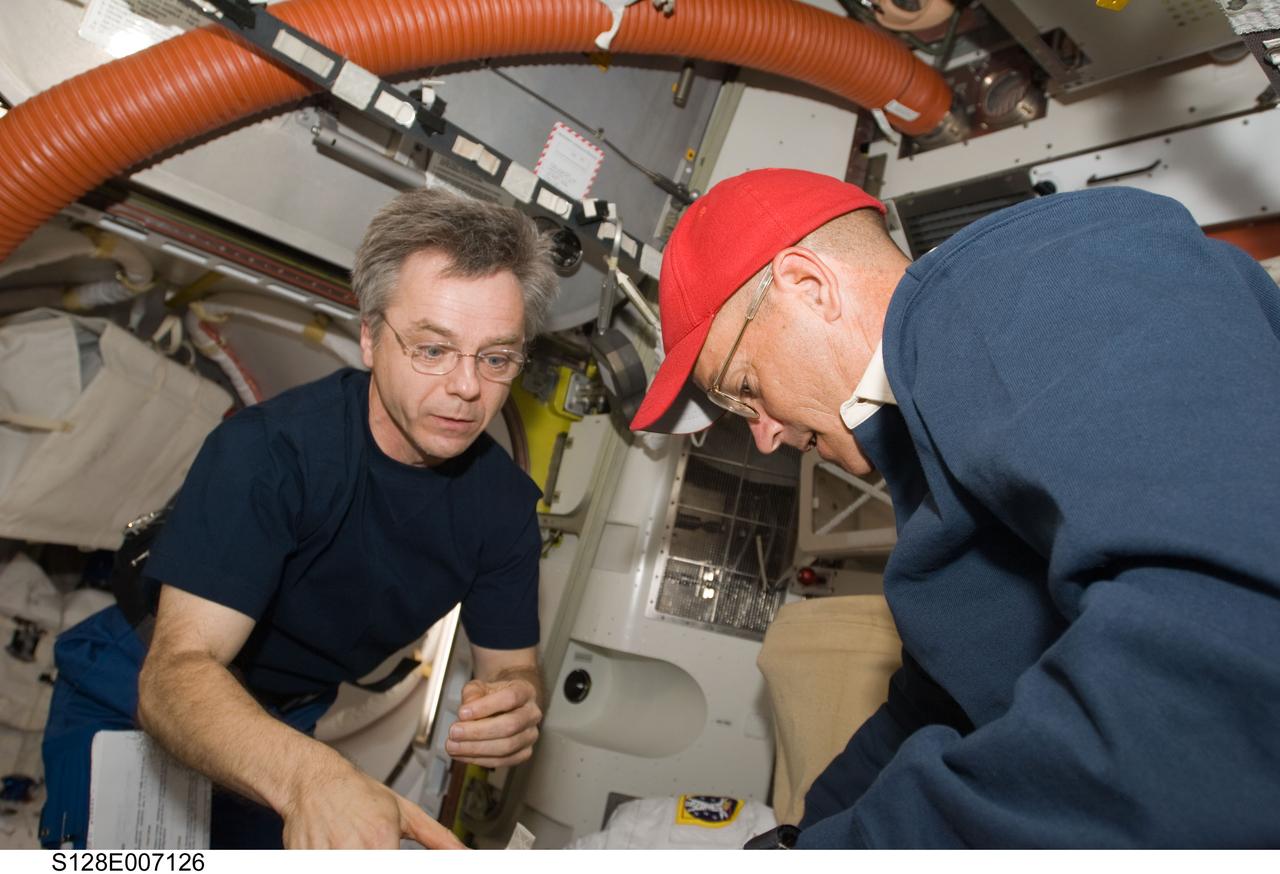
S128-E-007126 (31 Aug. 2009) --- NASA astronaut Rick Sturckow (right), STS-128 commander, and Canadian Space Agency astronaut Robert Thirsk, Expedition 20 flight engineer, work in the Quest airlock of the International Space Station while Space Shuttle Discovery remains docked with the station.
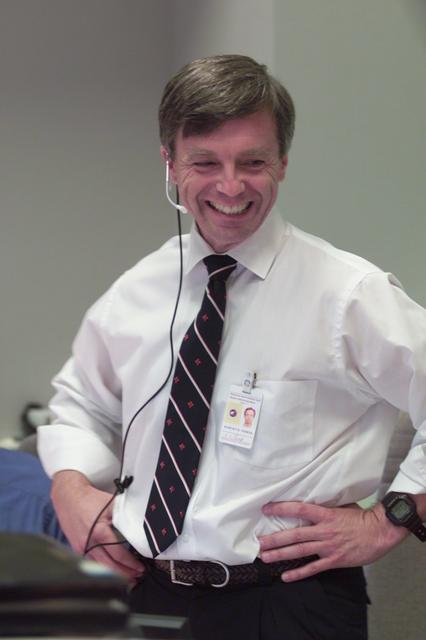
JSC2001-E-21573 (16 July 2001) --- Astronaut Robert B. Thirsk of the Canadian Space Agency (CSA), STS-104 spacecraft communicator (CAPCOM), finds a moment of levity while working at his console in Houston's Mission Control Center (MCC).
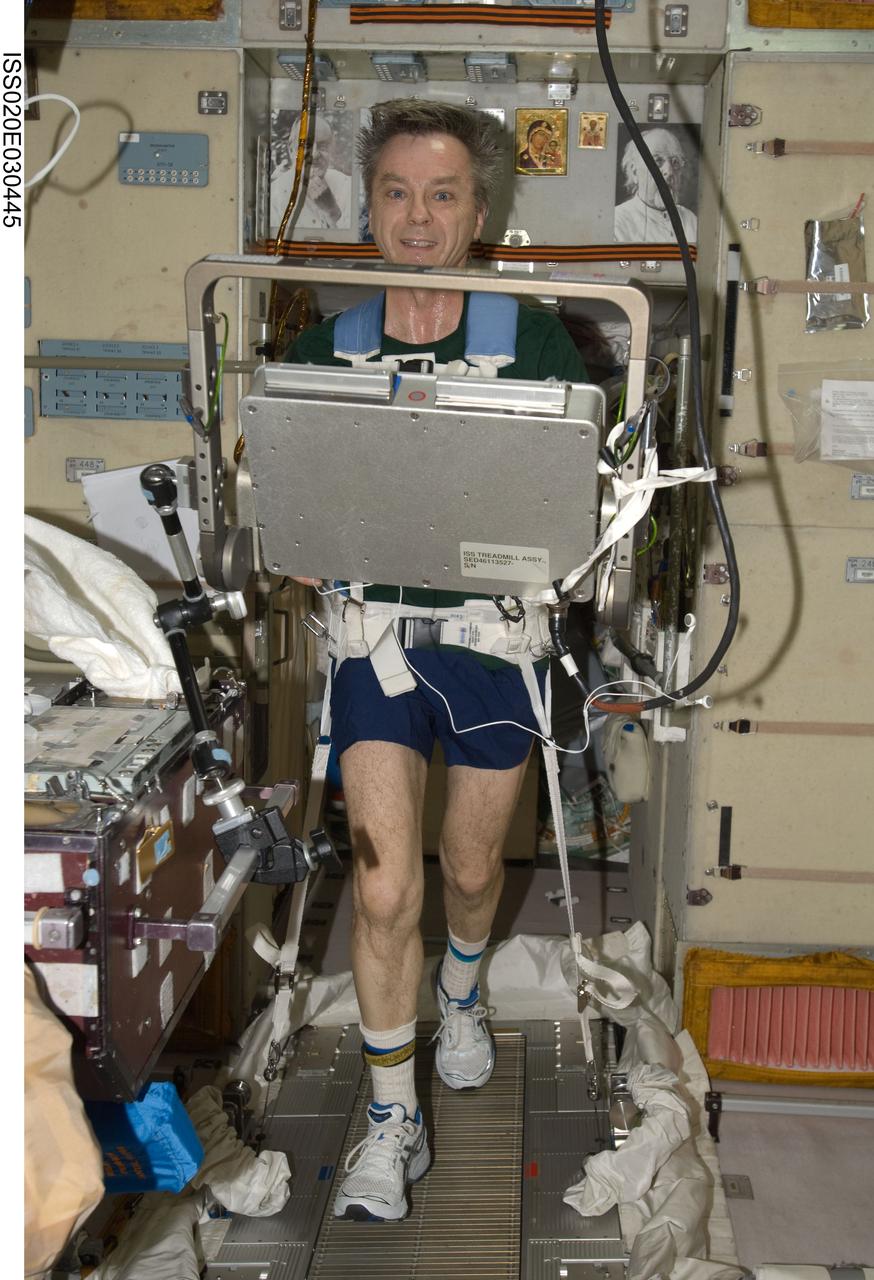
ISS020-E-030445 (13 Aug. 2009) --- Canadian Space Agency astronaut Robert Thirsk, Expedition 20 flight engineer, equipped with a bungee harness, exercises on the Treadmill Vibration Isolation System (TVIS) in the Zvezda Service Module of the International Space Station.
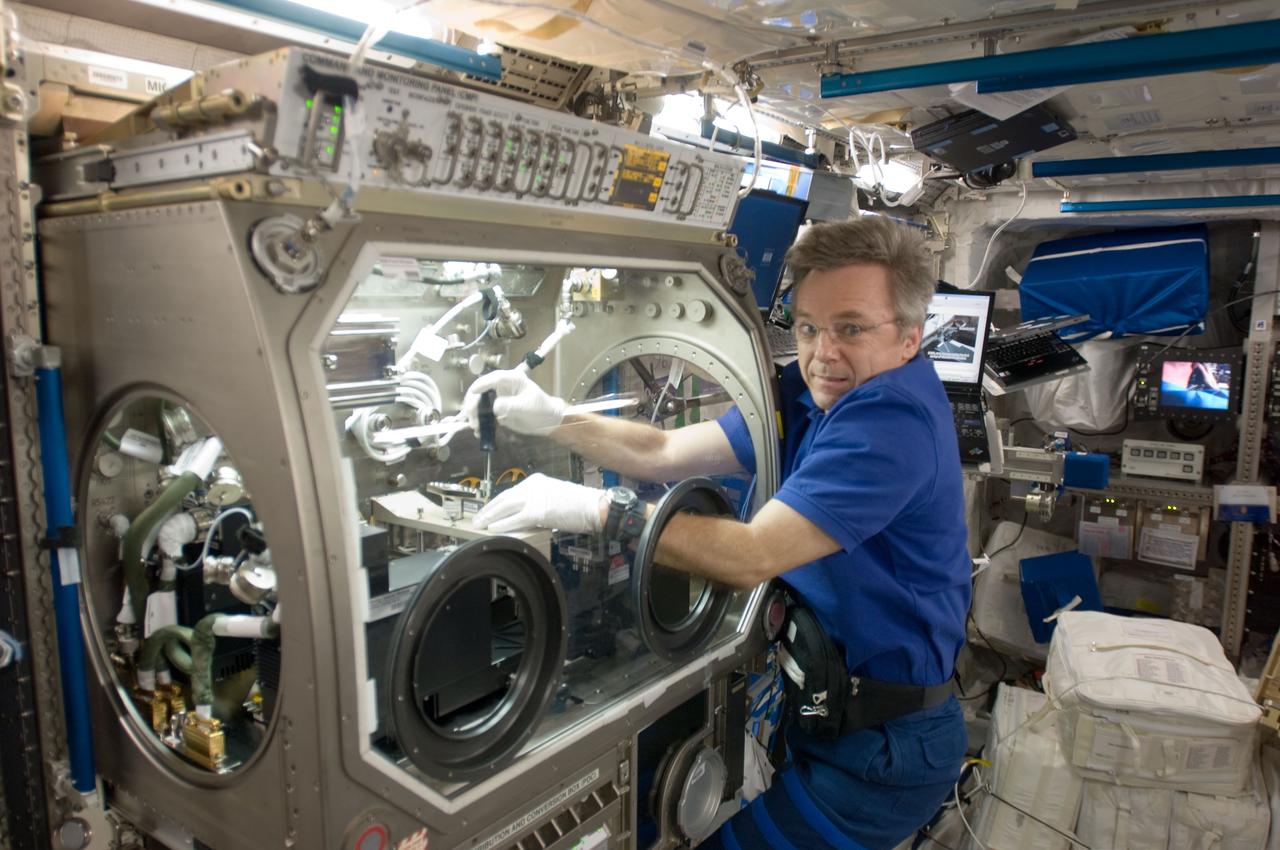
ISS020-E-041873 (23 Sept. 2009) --- Canadian Space Agency astronaut Robert Thirsk, Expedition 20 flight engineer, works with experiment hardware in the Microgravity Science Glovebox (MSG) located in the Columbus laboratory of the International Space Station.
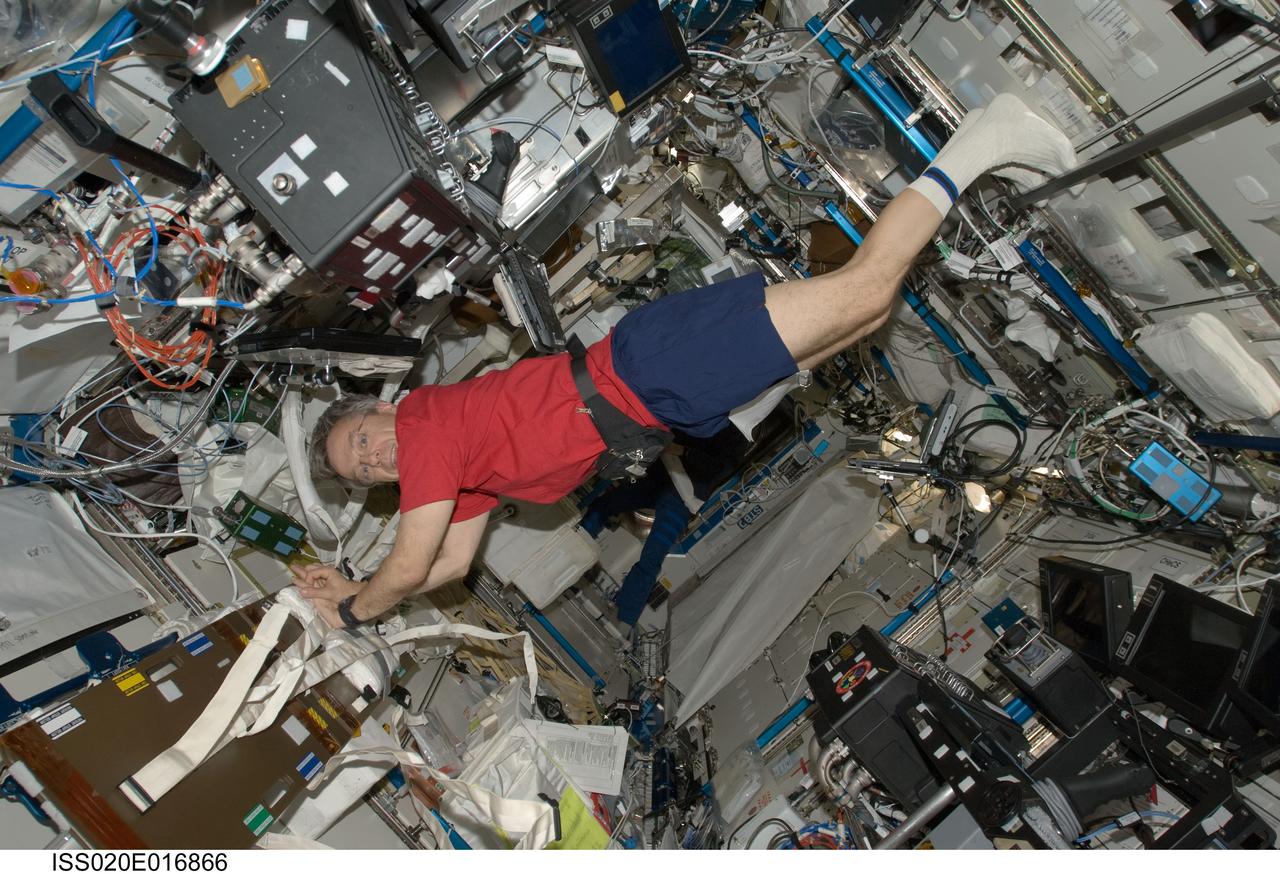
ISS020-E-016866 (2 July 2009) --- Canadian Space Agency astronaut Robert Thirsk, Expedition 20 flight engineer, participates in Crew Health Care Systems (CHeCS) medical emergency training in the Destiny laboratory of the International Space Station.
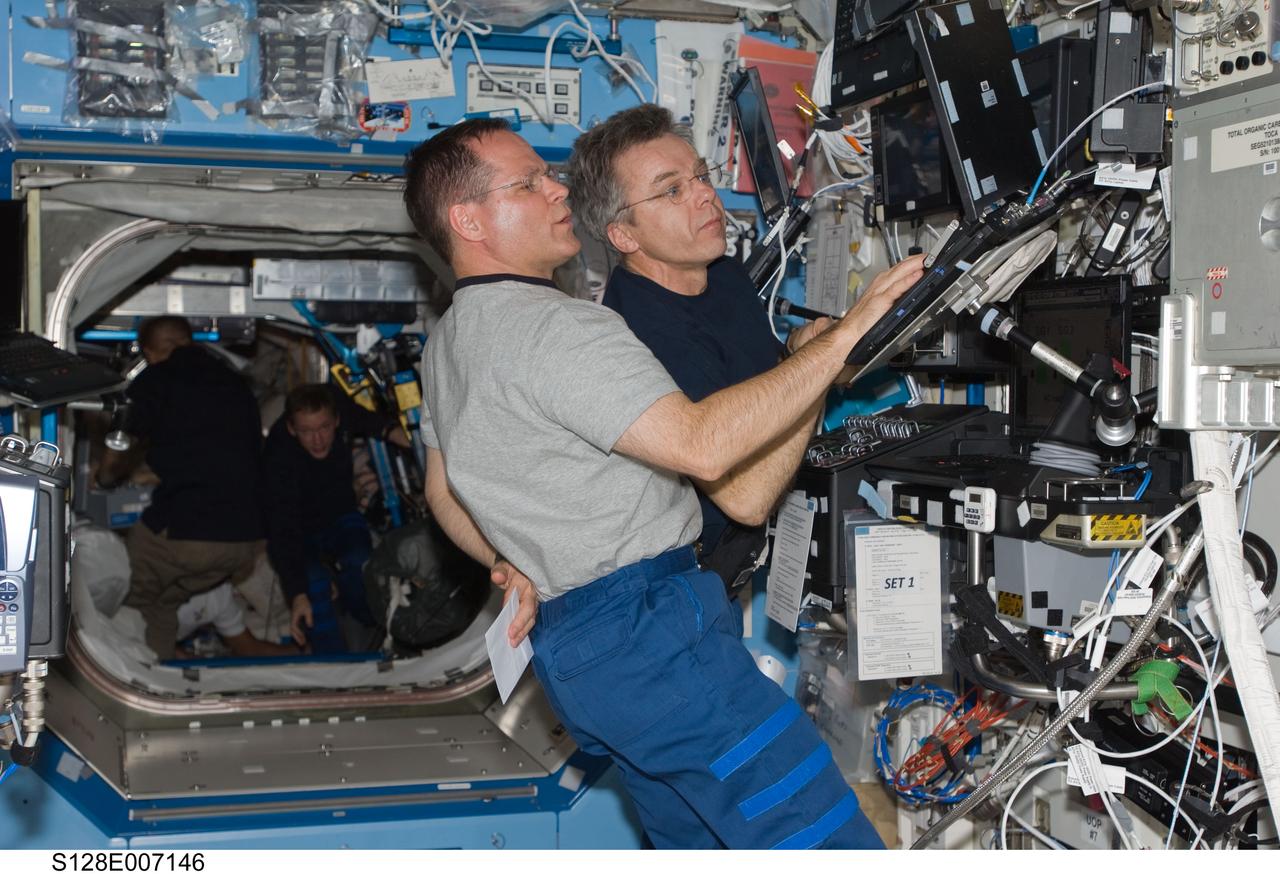
S128-E-007146 (31 Aug. 2009) --- NASA astronaut Kevin Ford (foreground), STS-128 pilot; and Canadian Space Agency astronaut Robert Thirsk, Expedition 20 flight engineer, work in the Destiny laboratory of the International Space Station while Space Shuttle Discovery remains docked with the station.
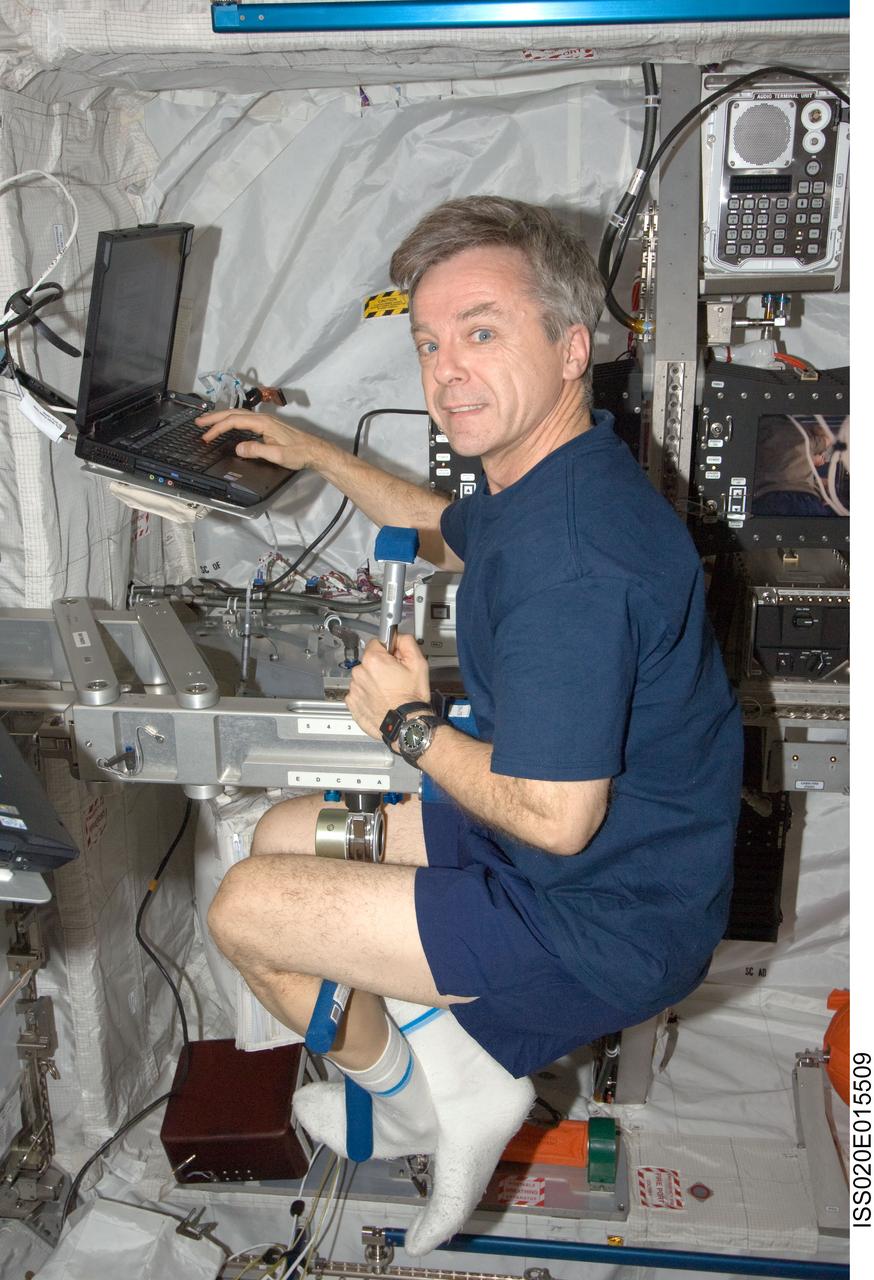
ISS020-E-015509 (29 June 2009) --- Canadian Space Agency astronaut Robert Thirsk, Expedition 20 flight engineer, works with the Space Linear Acceleration Mass Measurement Device (SLAMMD) in the Columbus laboratory of the International Space Station.
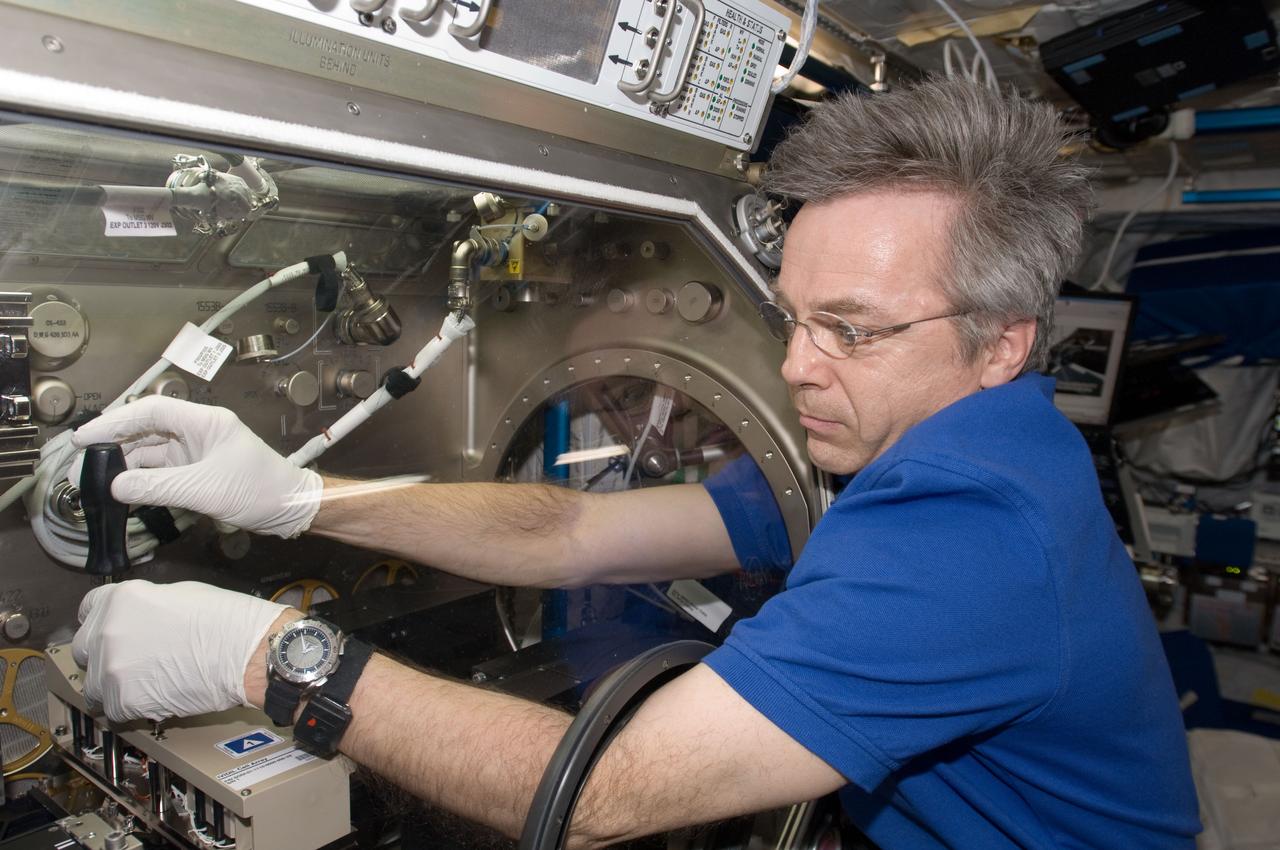
ISS020-E-041878 (23 Sept. 2009) --- Canadian Space Agency astronaut Robert Thirsk, Expedition 20 flight engineer, works with experiment hardware in the Microgravity Science Glovebox (MSG) located in the Columbus laboratory of the International Space Station.
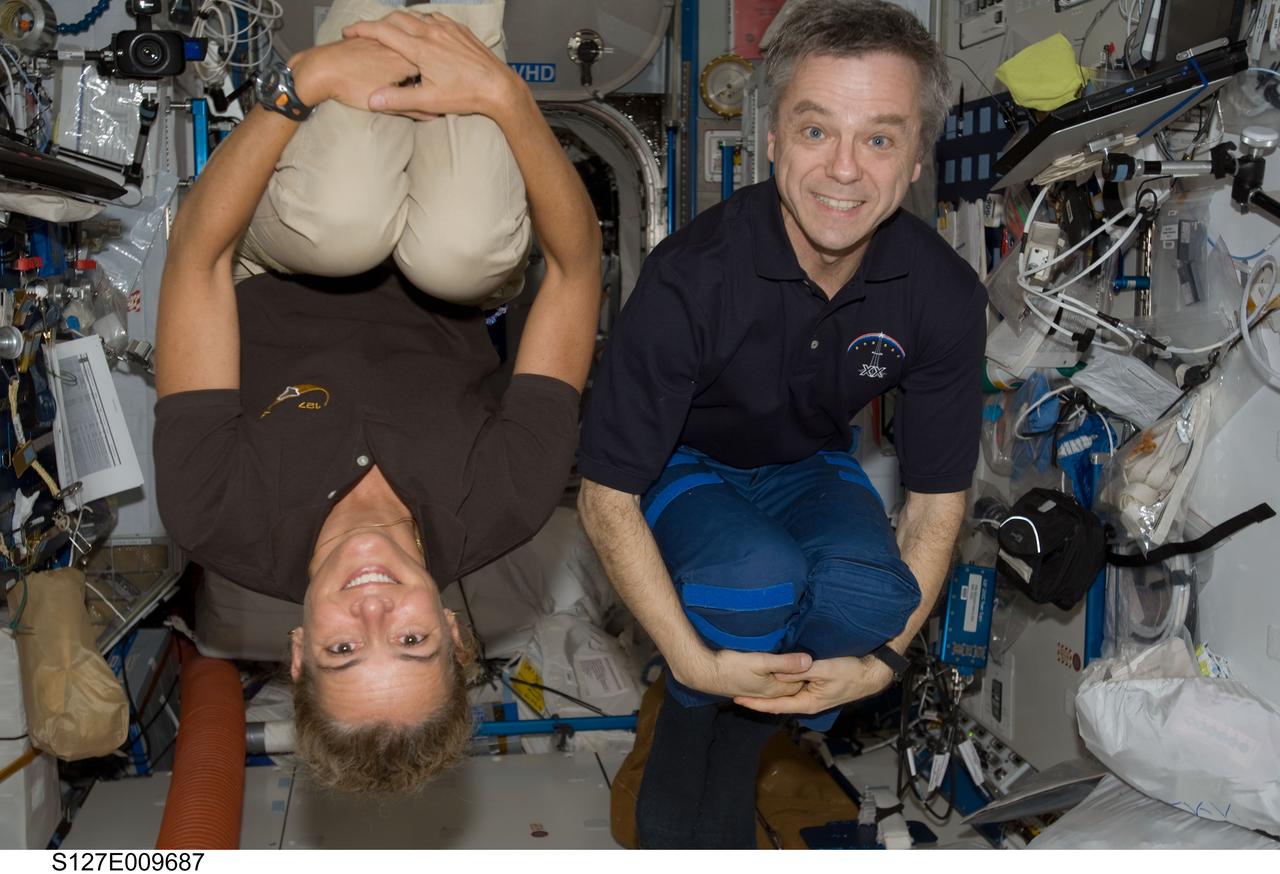
S127-E-009687 (28 July 2009) --- Canadian Space Agency astronauts Julie Payette, STS-127 mission specialist; and Robert Thirsk, Expedition 20 flight engineer, pose for a photo in the Destiny laboratory of the International Space Station while Space Shuttle Endeavour remains docked with the station.
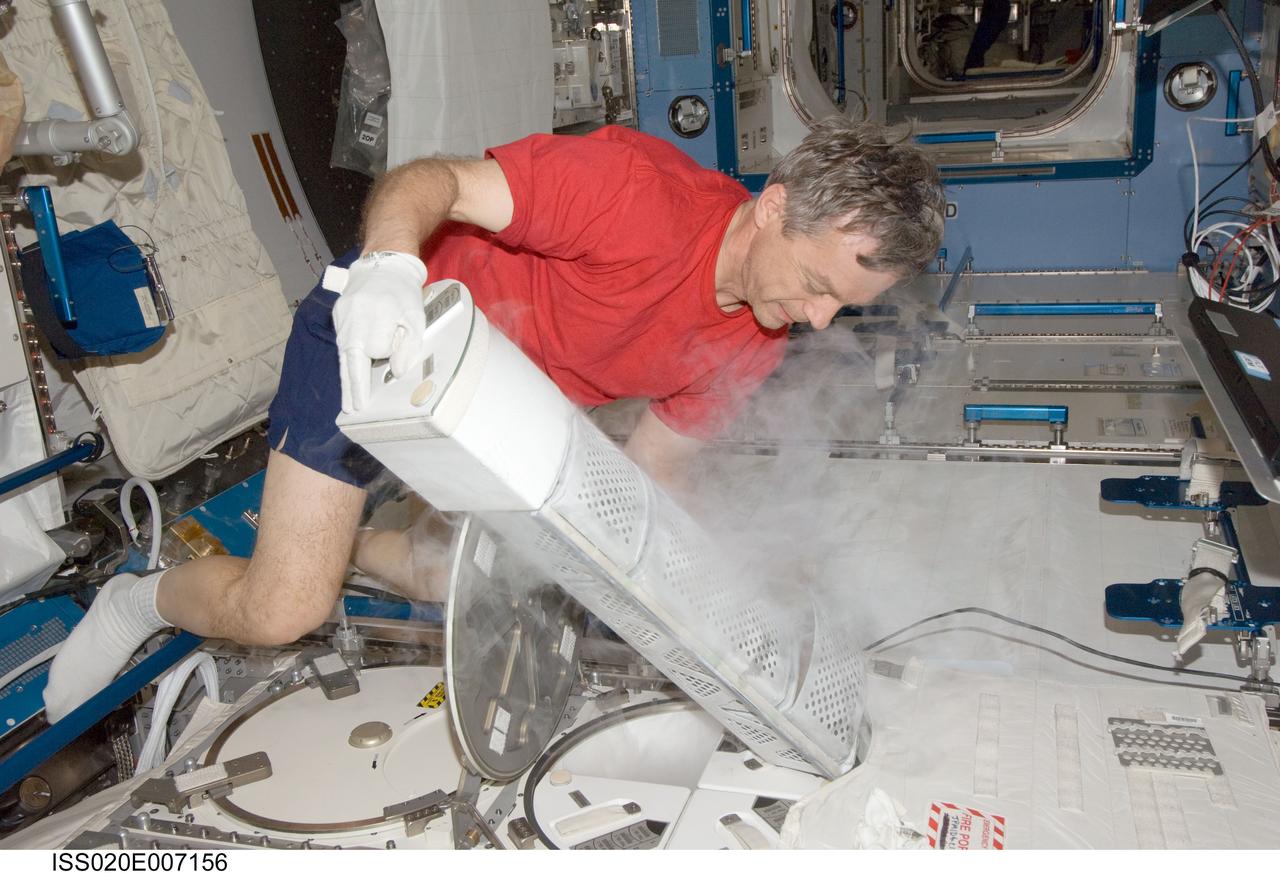
ISS020-E-007156 (7 June 2009) --- Canadian Space Agency astronaut Robert Thirsk, Expedition 20 flight engineer, performs an insertion of urine samples into the Minus Eighty Degree Laboratory Freezer for ISS (MELFI) as part of the Nutritional Status Assessment (NUTRITION) study in the Japanese Kibo laboratory of the International Space Station.
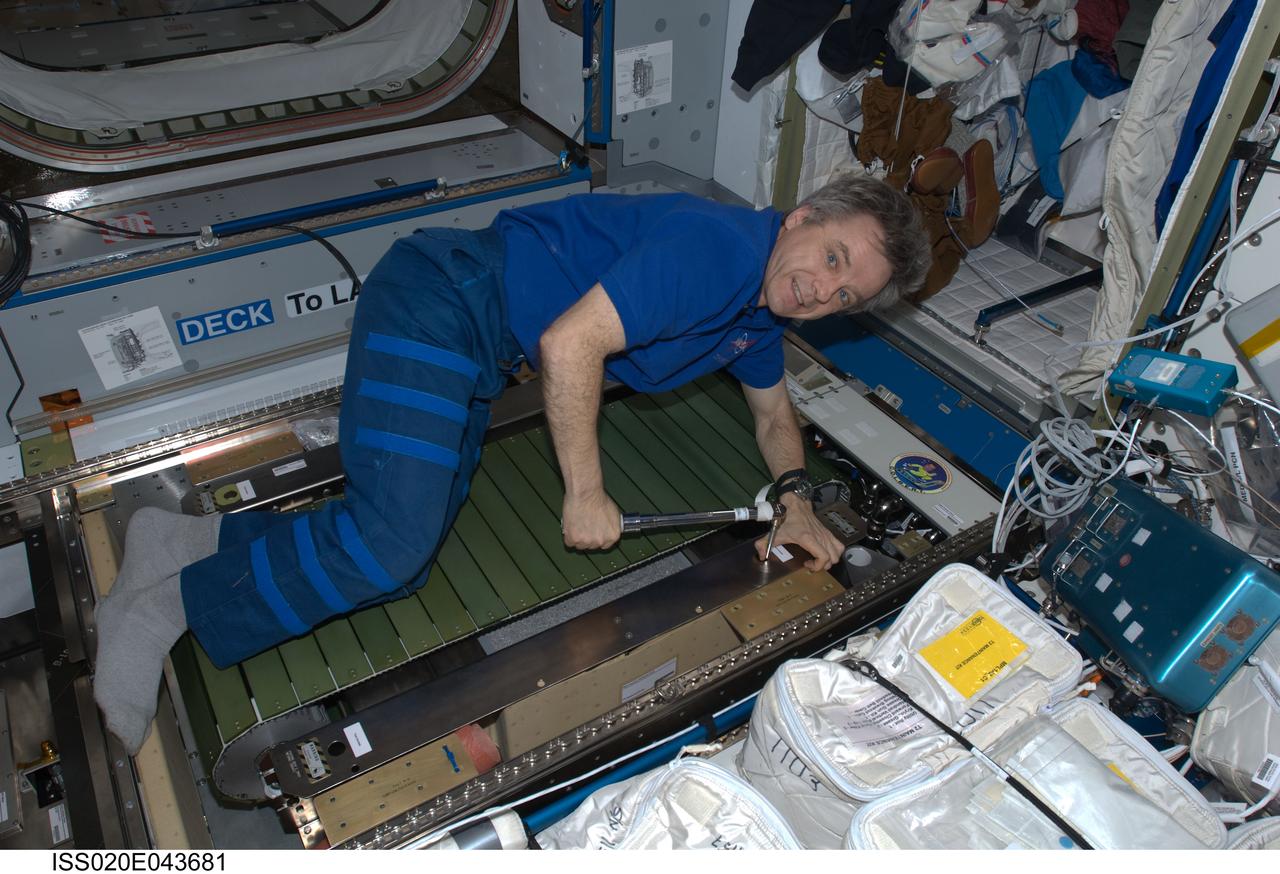
ISS020-E-043681 (30 Sept. 2009) --- Canadian Space Agency astronaut Robert Thirsk, Expedition 20 flight engineer, assembles and installs the Combined Operational Load Bearing External Resistance Treadmill (COLBERT) in its temporary place in the Harmony node of the International Space Station.
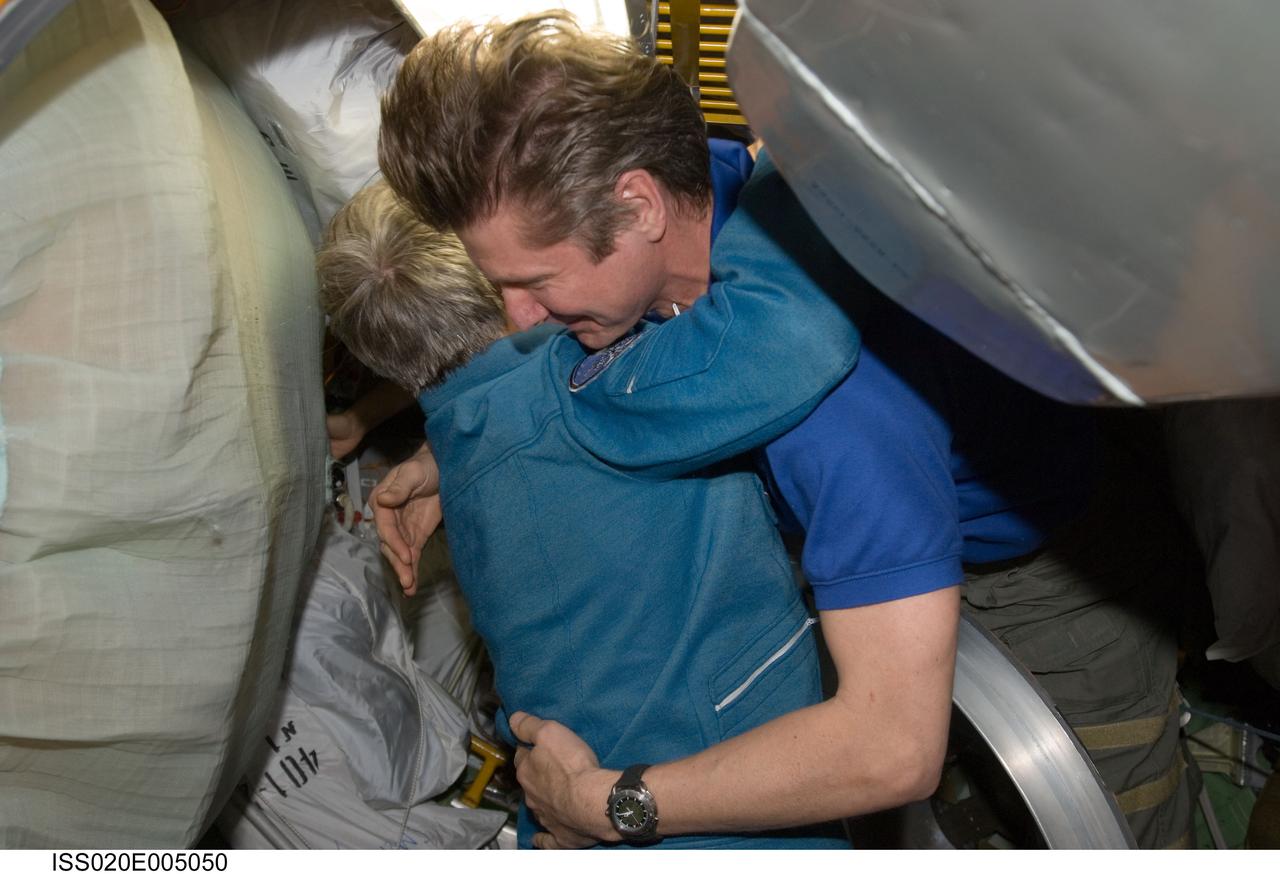
ISS020-E-005050 (29 May 2009) --- Cosmonaut Gennady Padalka (right), Expedition 19/20 commander, welcomes Canadian Space Agency astronaut Robert Thirsk, Expedition 20/21 flight engineer, after Thirsk arrived onboard a Soyuz TMA-15 spacecraft with European Space Agency astronaut Frank De Winne (out of frame) and cosmonaut Roman Romanenko (out of frame), both flight engineers. The crew launched from the Baikonur Cosmodrome in Kazakhstan at 5:34 a.m. (CDT), May 27, 2009, and arrived at the station at 7:34 a.m. (CDT) on May 29, beginning Expedition 20 and six-person crew operations.
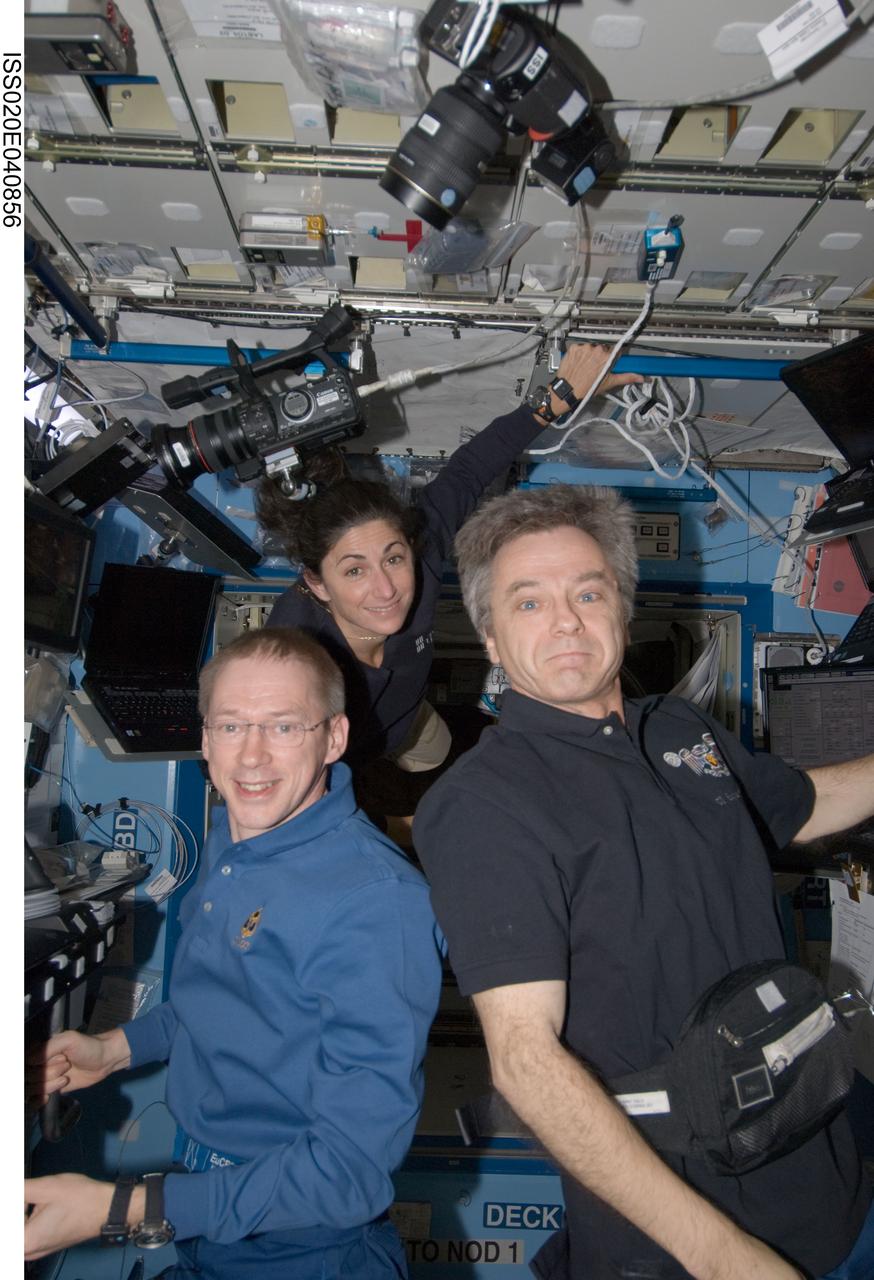
ISS020-E-040856 (17 Sept. 2009) --- NASA astronaut Nicole Stott, European Space Agency astronaut Frank De Winne (left) and Canadian Space Agency astronaut Robert Thirsk, all Expedition 20 flight engineers, take a moment for a photo in the Destiny laboratory of the International Space Station after completing the attachment of the unpiloted Japanese H-II Transfer Vehicle (HTV) to the station. Stott, De Winne and Thirsk used the station’s robotic arm to grab the cargo craft and attach it to the Earth-facing port of the Harmony node. The attachment was completed at 5:26 (CDT) on Sept. 17, 2009.
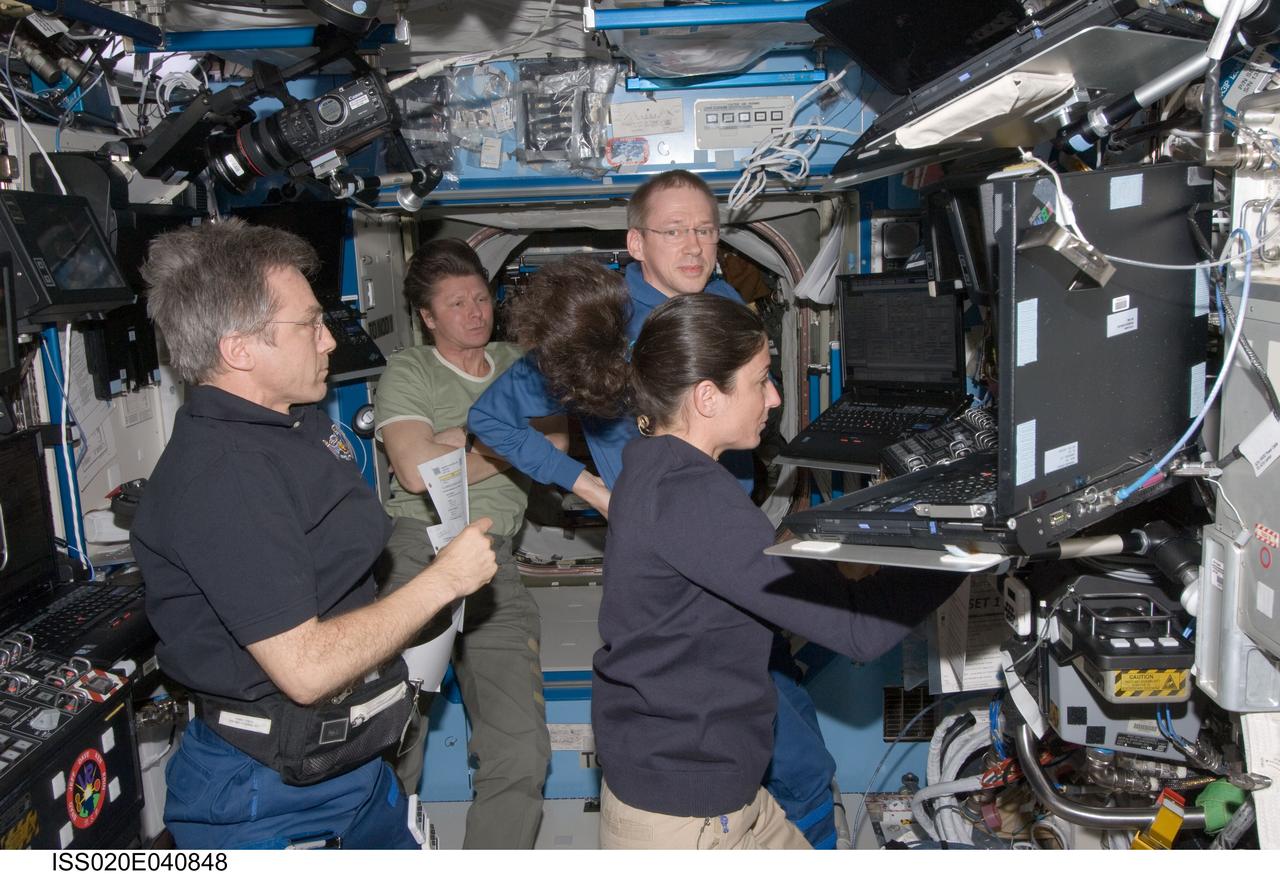
ISS020-E-040848 (17 Sept. 2009) --- At the Canadarm2 work station in the Destiny laboratory, NASA astronaut Nicole Stott, European Space Agency astronaut Frank De Winne (right background) and Canadian Space Agency astronaut Robert Thirsk (left foreground), all Expedition 20 flight engineers; along with Russian cosmonaut Gennady Padalka, commander, monitor the unpiloted Japanese H-II Transfer Vehicle (HTV) as it approaches the International Space Station. Once the HTV was in range, Stott, De Winne and Thirsk used the station’s robotic arm to grab the cargo craft and attach it to the Earth-facing port of the Harmony node. The attachment was completed at 5:26 (CDT) on Sept. 17, 2009.
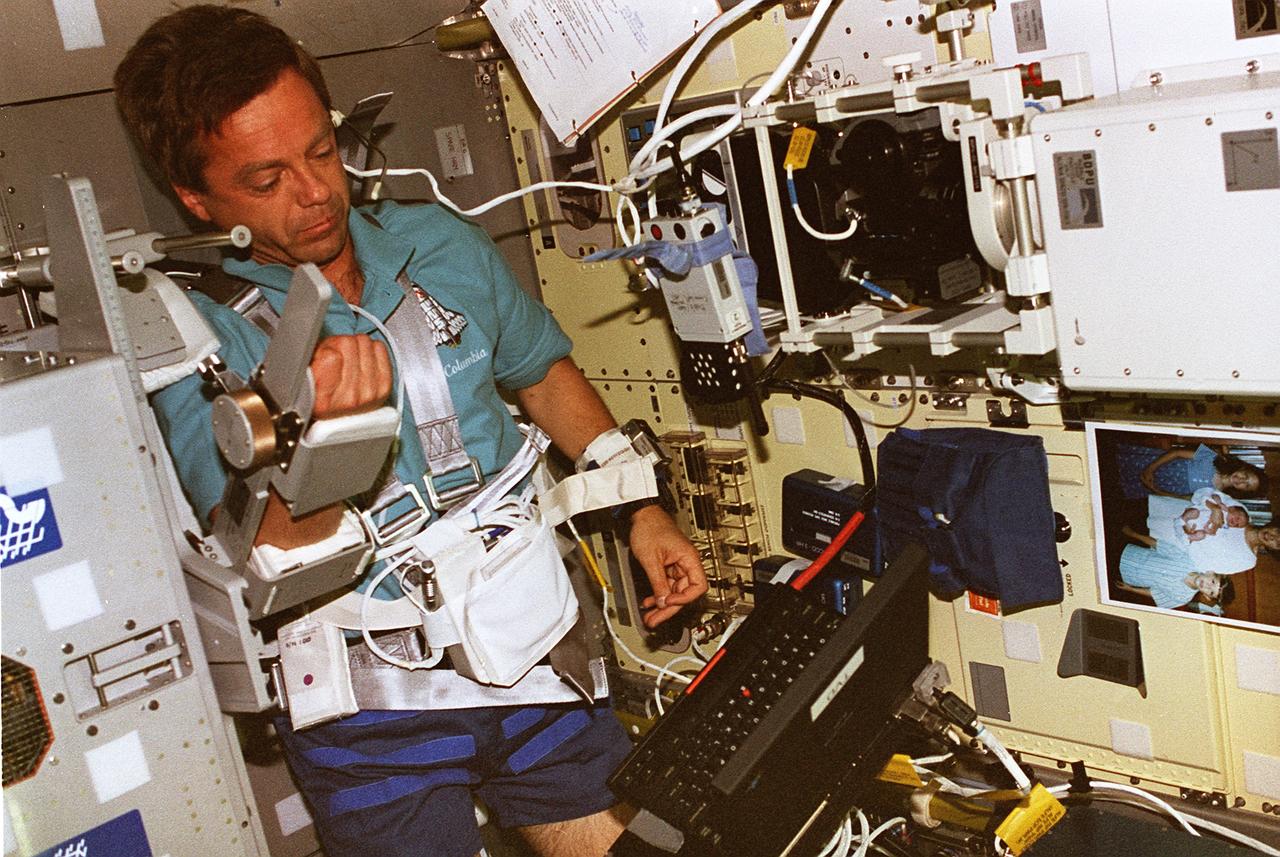
STS078-304-018 (20 June - 7 July 1996) --- Payload specialist Robert B. Thirsk, representing the Canadian Space Agency (CSA), performs a test on his arm using the Torque Velocity Dynamometer (TVD). Dr. Thirsk was measuring changes in muscle forces of the bicep and tricep in this particular view. The TVD hardware is also used to measure leg muscle forces and velocity at the ankle and elbow joints. Crew members for the mission performed all experiment protocols prior to flight to develop a baseline and will also perform post-flight tests to complete the analysis. Additionally, muscle biopsies were taken before the flight and will be conducted after the flight.
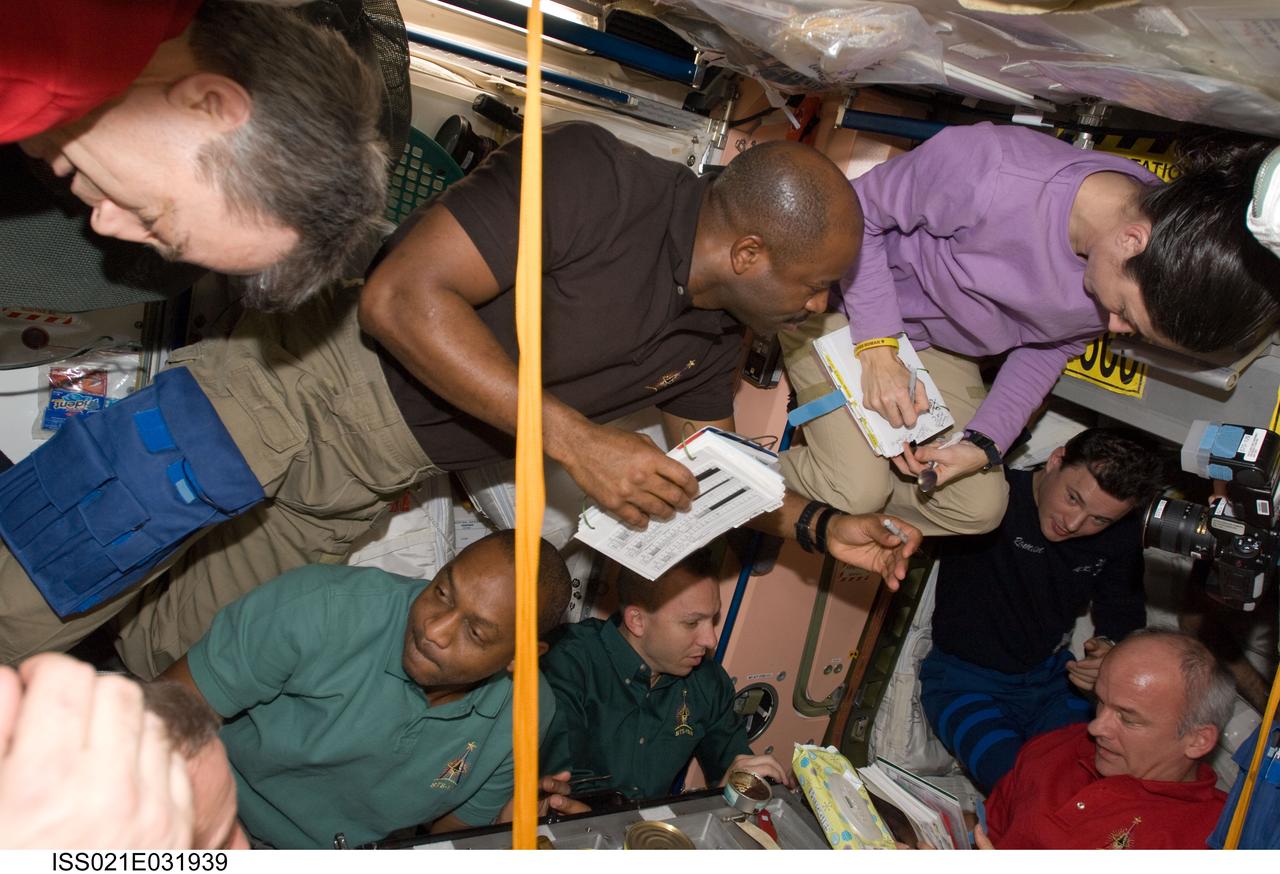
ISS021-E-031939 (23 Nov. 2009) --- Expedition 21 and STS-129 crew members gather for a meal at the galley in the Unity node of the International Space Station while space shuttle Atlantis remains docked with the station. Pictured are Leland Melvin, Robert L. Satcher Jr., Randy Bresnik and Nicole Stott, all STS-129 mission specialists; along with NASA astronaut Jeffrey Williams, Canadian Space Agency astronaut Robert Thirsk and Russian cosmonaut Roman Romanenko, all Expedition 21 flight engineers.
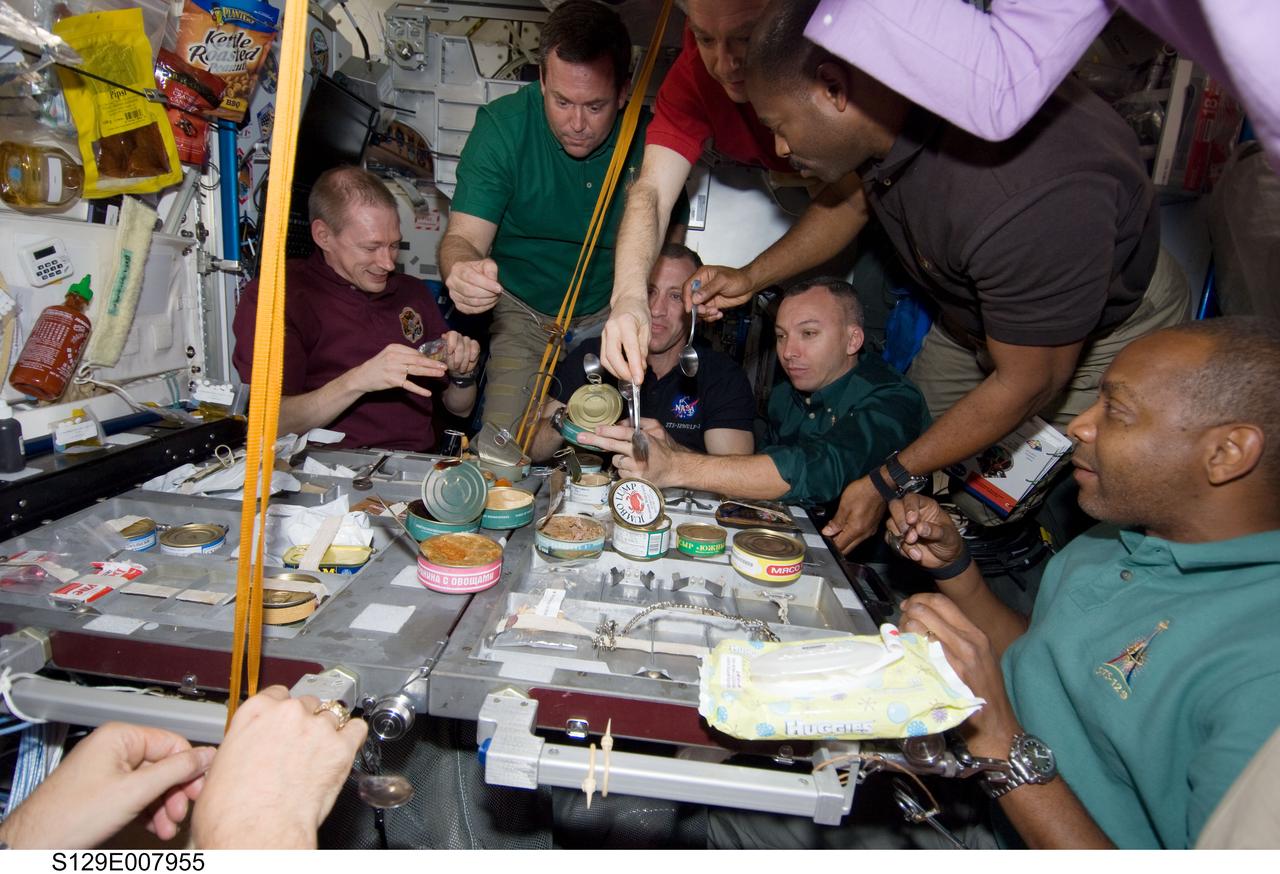
S129-E-007955 (23 Nov. 2009) --- Expedition 21 and STS-129 crew members gather for a meal at the galley in the Unity node of the International Space Station while space shuttle Atlantis remains docked with the station. Pictured are European Space Agency astronaut Frank De Winne, Expedition 21 commander; NASA astronauts Charles O. Hobaugh, STS-129 commander; Mike Foreman, Randy Bresnik, Leland Melvin and Robert L. Satcher Jr., all STS-129 mission specialists; along with Canadian Space Agency astronaut Robert Thirsk, Expedition 21 flight engineer.