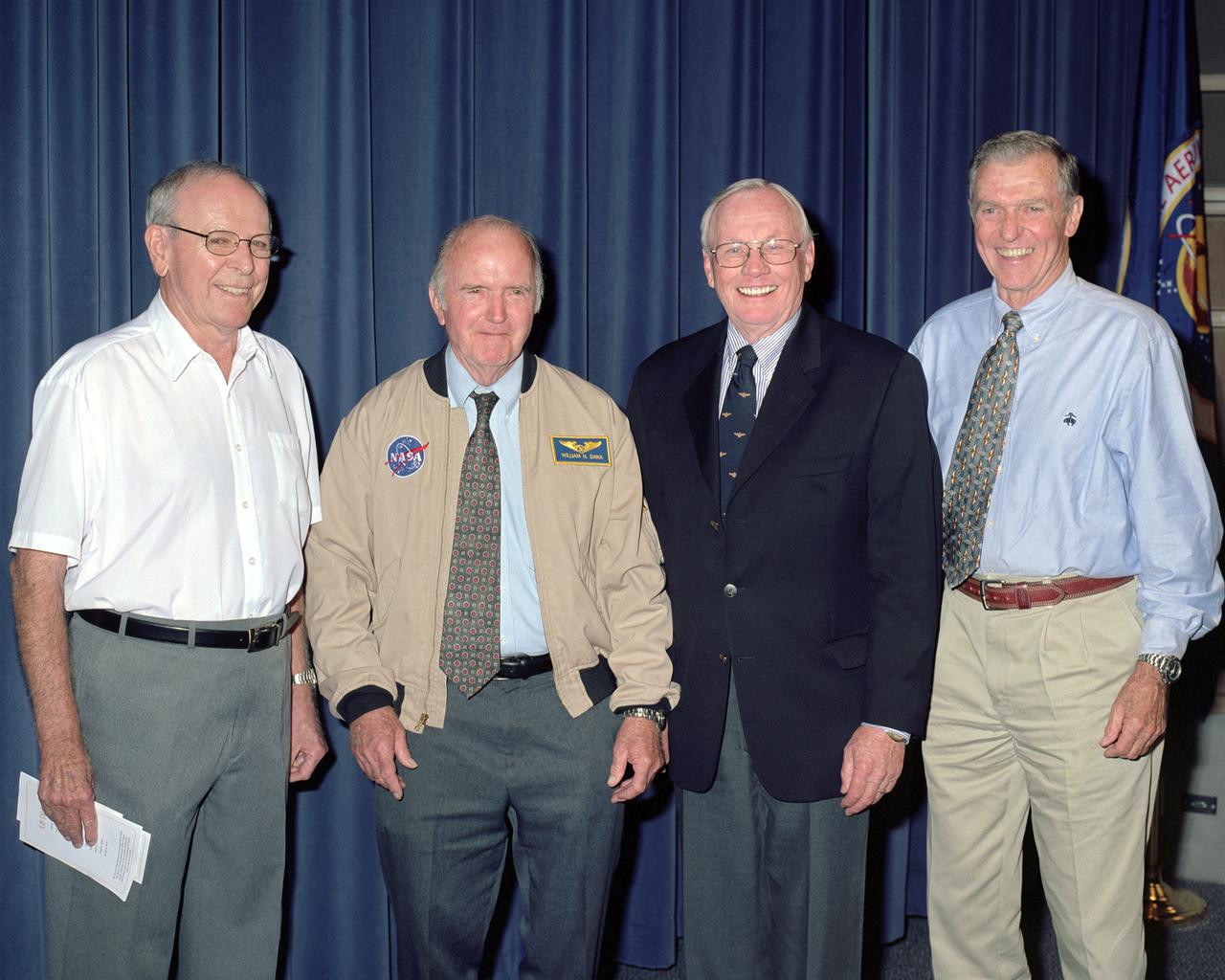
Four of the five surviving X-15 pilots were on hand when astronaut wings were presented to the three NASA pilots who flew the X-15 rocket plane into space in the 1960s, Bill Dana, Joe Walker (deceased) and Jack McKay (deceased). From left, Robert White, Dana, Neil Armstrong, Joe Engle.
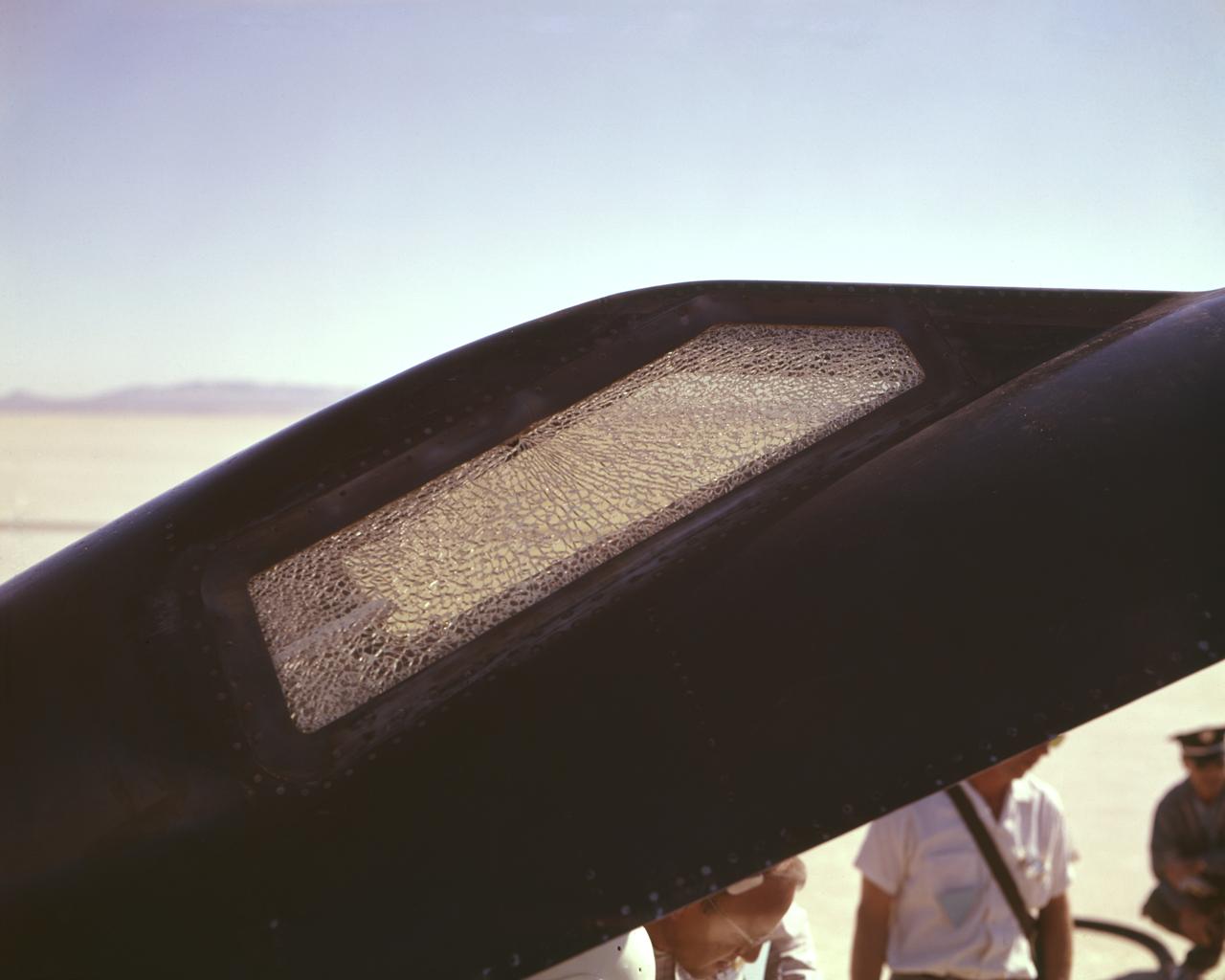
Cracked canopy glass on right side of X-15 #2 after flt. 2-21-37 on Nov. 9 1961. Robert White-pilot. First flight to mach 6.
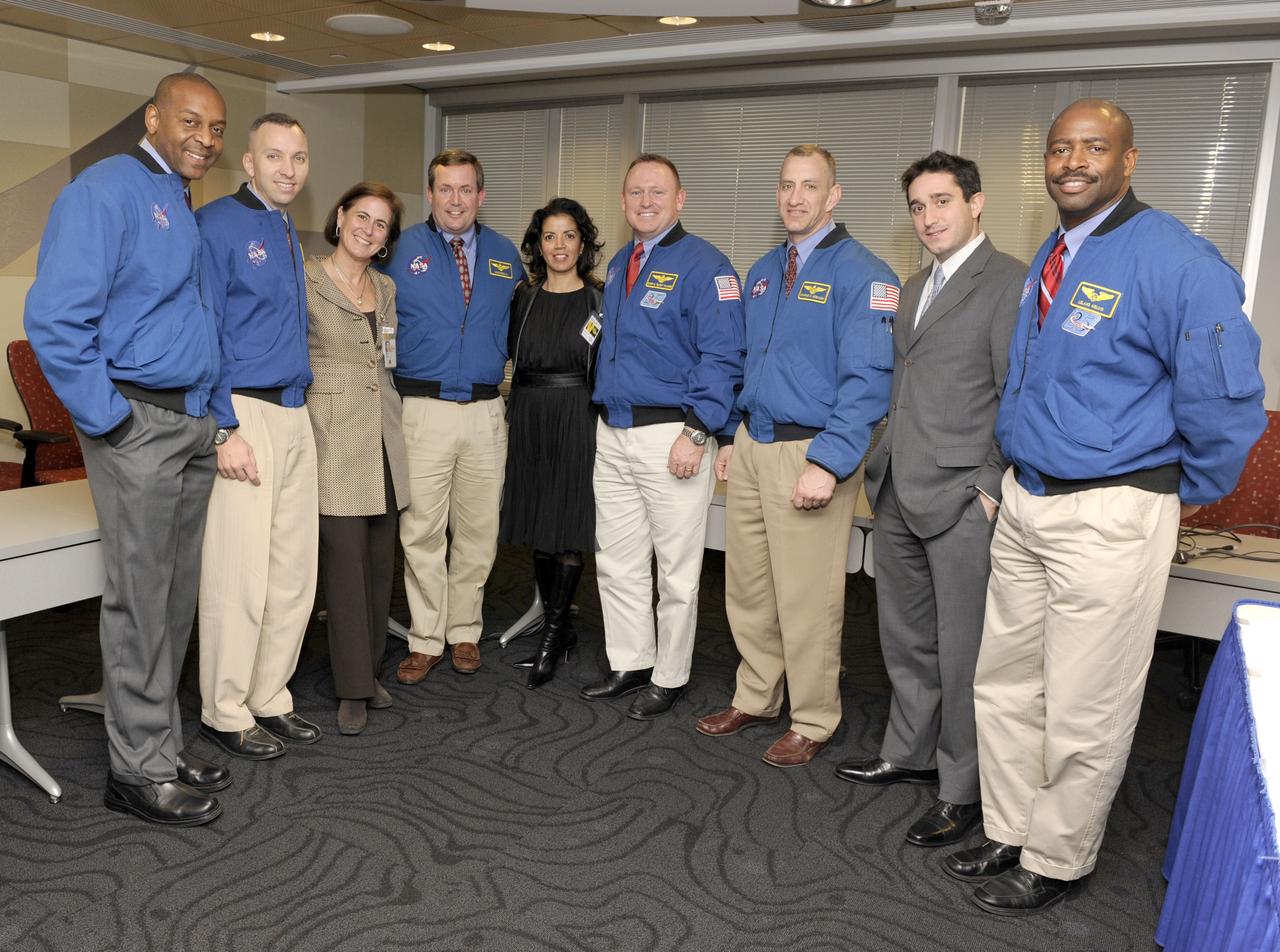
STS-129 crew members from left, Robert Satcher, Randy Bresnik, Mike Foreman, Barry Wilmore, Commander Charles Hobaugh and Leland Melvin pose with a group of White House Fellows at NASA Headquarters in Washington, Monday, Jan. 11, 2010. Photo Credit: (NASA/Paul E. Alers)
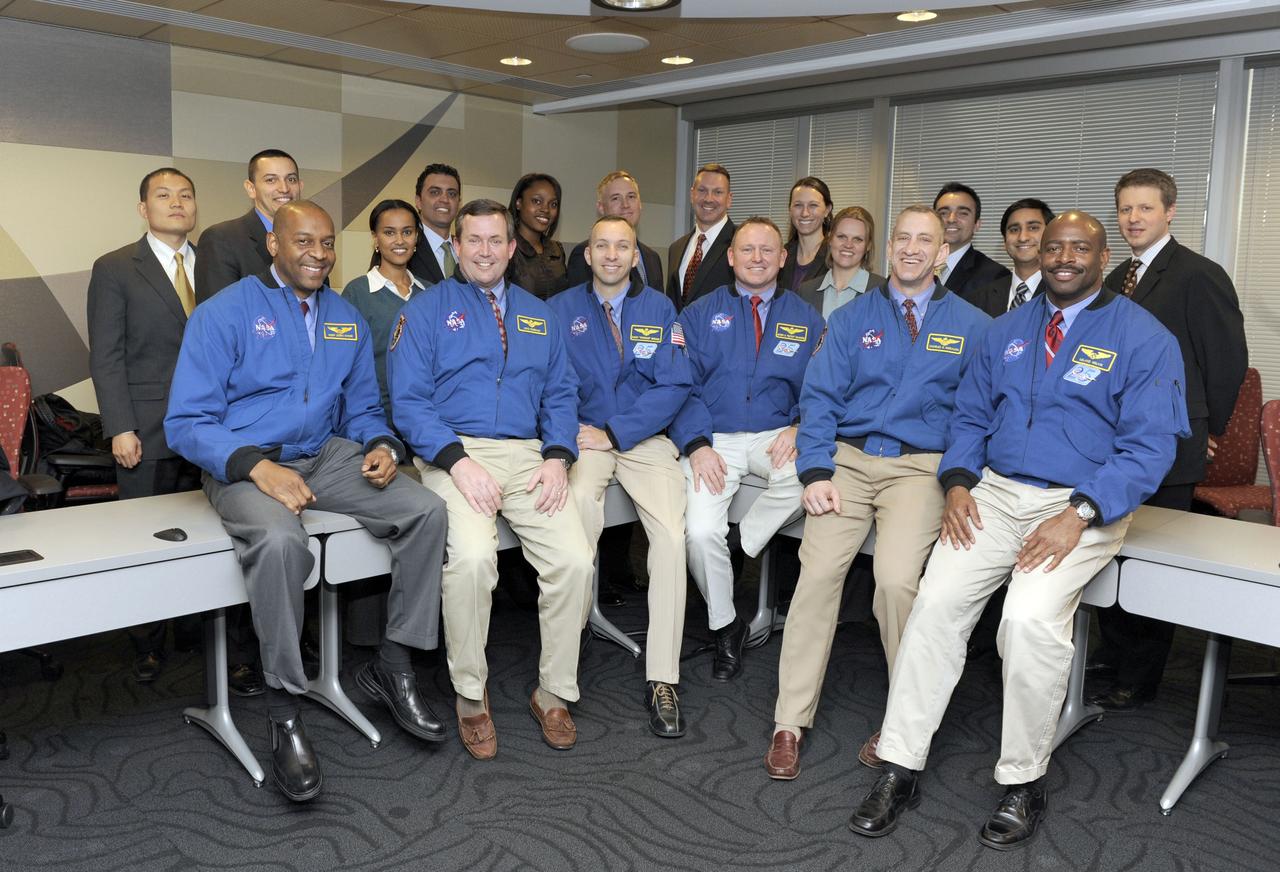
STS-129 crew members from left, Robert Satcher, Mike Foreman, Randy Bresnik, Barry Wilmore, Commander Charles Hobaugh and Leland Melvin pose with a group of White House Fellows at NASA Headquarters in Washington, Monday, Jan. 11, 2010. Photo Credit: (NASA/Paul E. Alers)
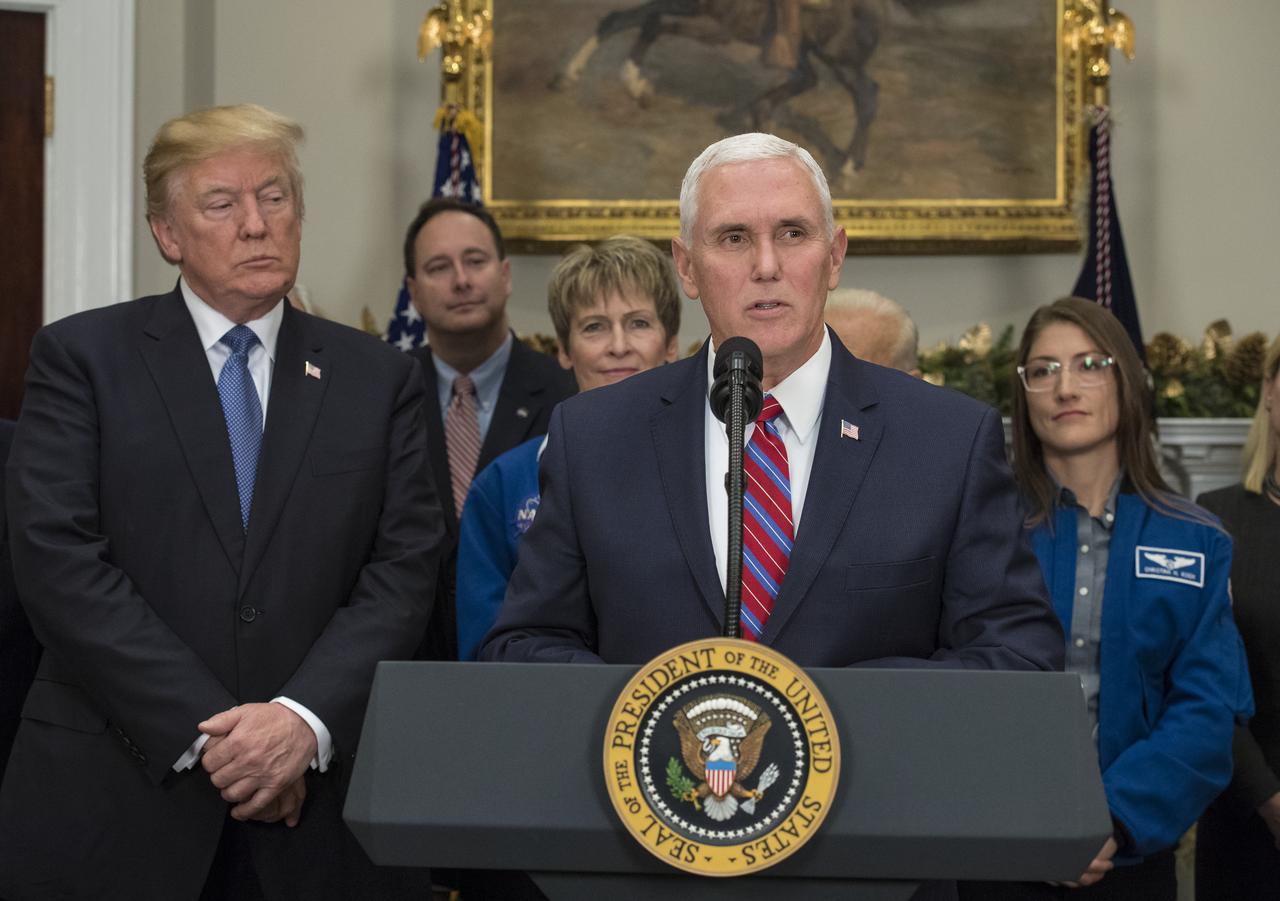
Vice President Mike Pence speaks before President Donald Trump signs Space Policy Directive - 1, directing NASA to return to the moon, alongside President Donald Trump. left, Acting NASA Administrator Robert Lightfoot, second left, NASA astronaut Peggy Whitson, third from left, NASA astronaut Christina Koch, right, and members of the Senate, Congress, and commercial space companies in the Roosevelt room of the White House in Washington, Monday, Dec. 11, 2017. Photo Credit: (NASA/Aubrey Gemignani)
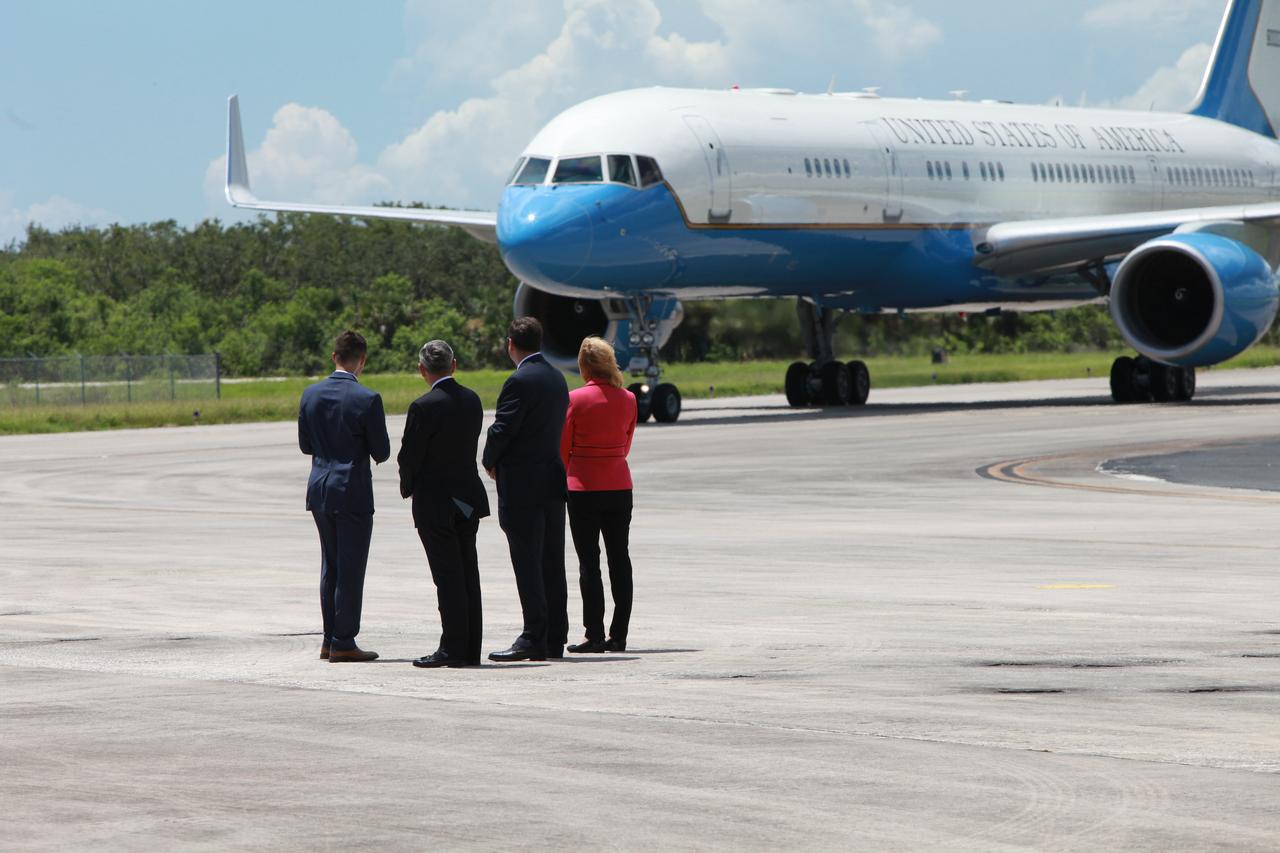
Accompanied by a White House staffer, left, NASA Kennedy Space Center Director Robert Cabana, Acting NASA Administrator Robert Lightfoot and Kennedy Space Center Deputy Director Janet Petro watch as Air Force Two, carrying Vice President Mike Pence, approaches on the Shuttle Landing Facility at NASA's Kennedy Space Center in Florida. During his visit to Kennedy, Pence spoke inside the iconic Vehicle Assembly Building, where he thanked employees for advancing American leadership in space.
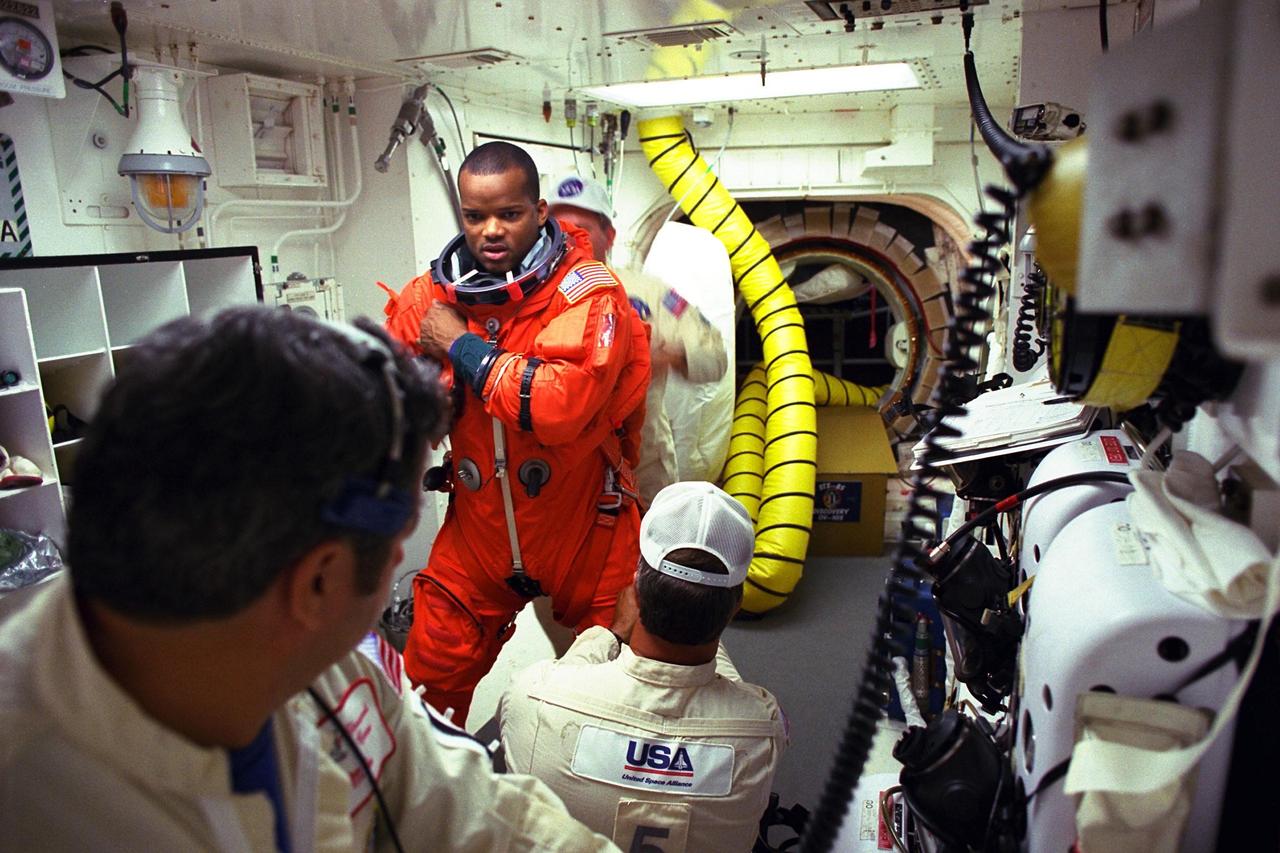
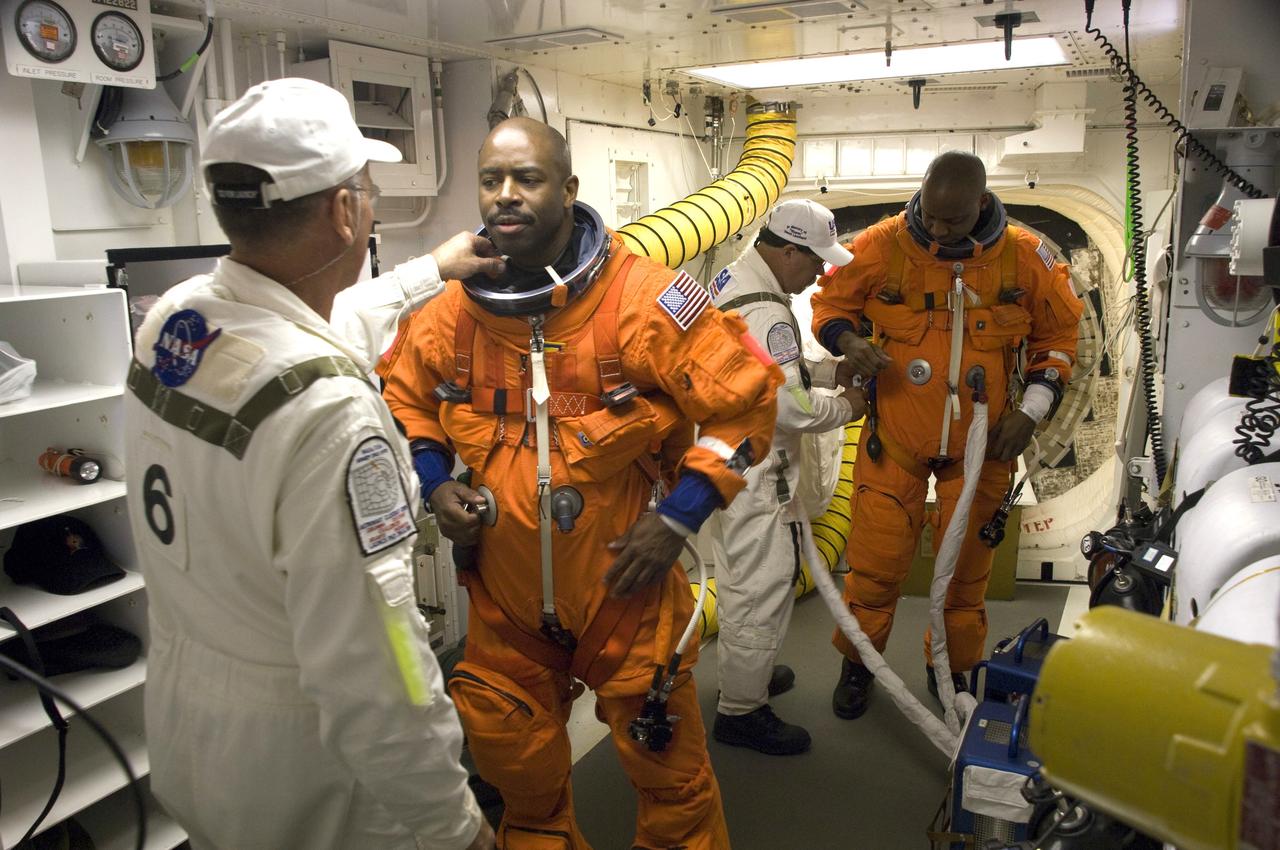
STS-85 Mission Specialist Robert L. Curbeam, Jr. is assisted with his ascent/reentry flight suit by white room closeout crew members Mike Mangione (left foreground) and Dave Law at Launch Pad 39A before he enters the crew cabin of the Space Shuttle orbiter Discovery
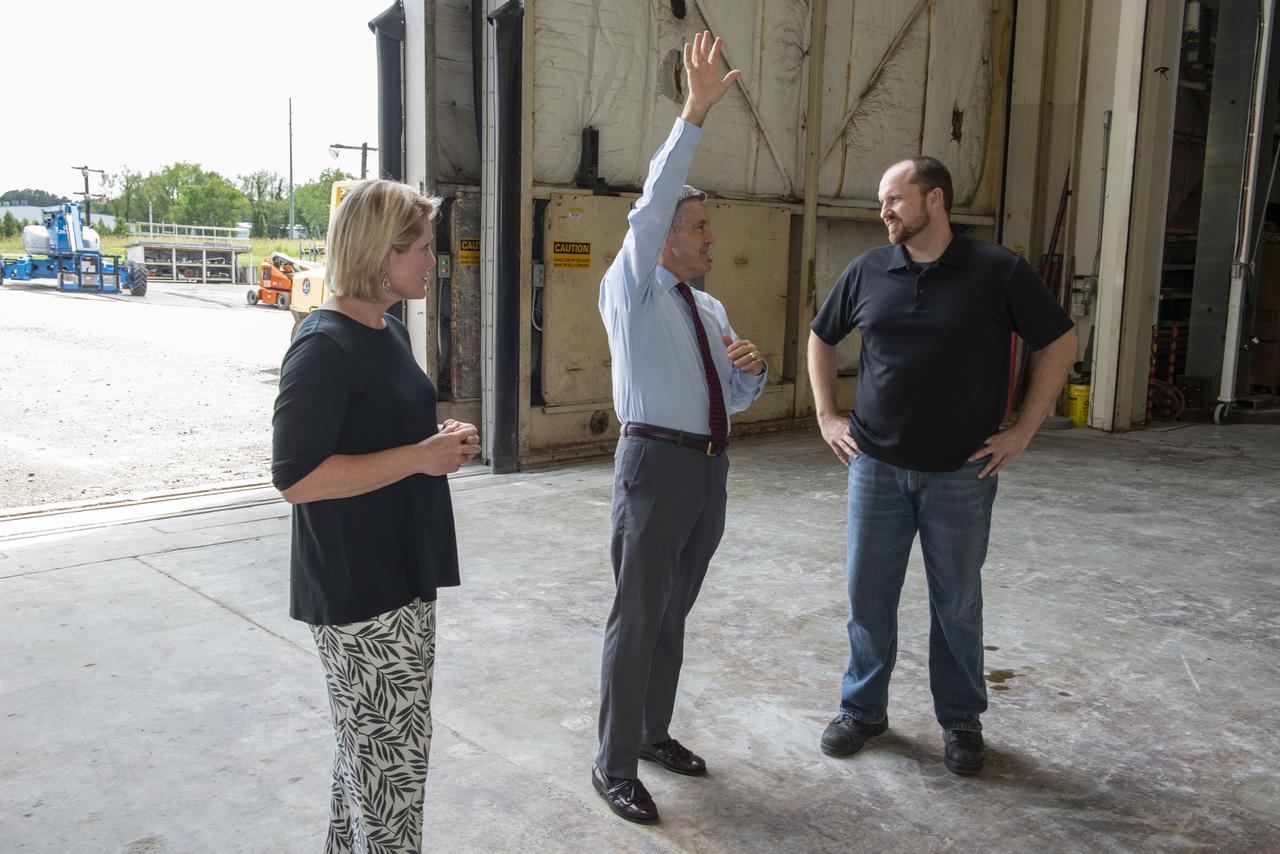
Kennedy Space Center Director Robert Cabana, center, receives an update on SLS hardware from Heather Haney, left, an engineer in the Space Launch System stages office, and Mark White, lead test engineer for the SLS core stage engine section, on July 16 in Marshall's Building 4619. Cabana, Haney and White are standing in front of a structural test version of the Intertank, the 212-foot-tall backbone of the SLS rocket. The structural test article is undergoing critical testing as engineers push, pull and bend the hardware with millions of pounds of force to ensure it can withstand the forces of launch and ascent.
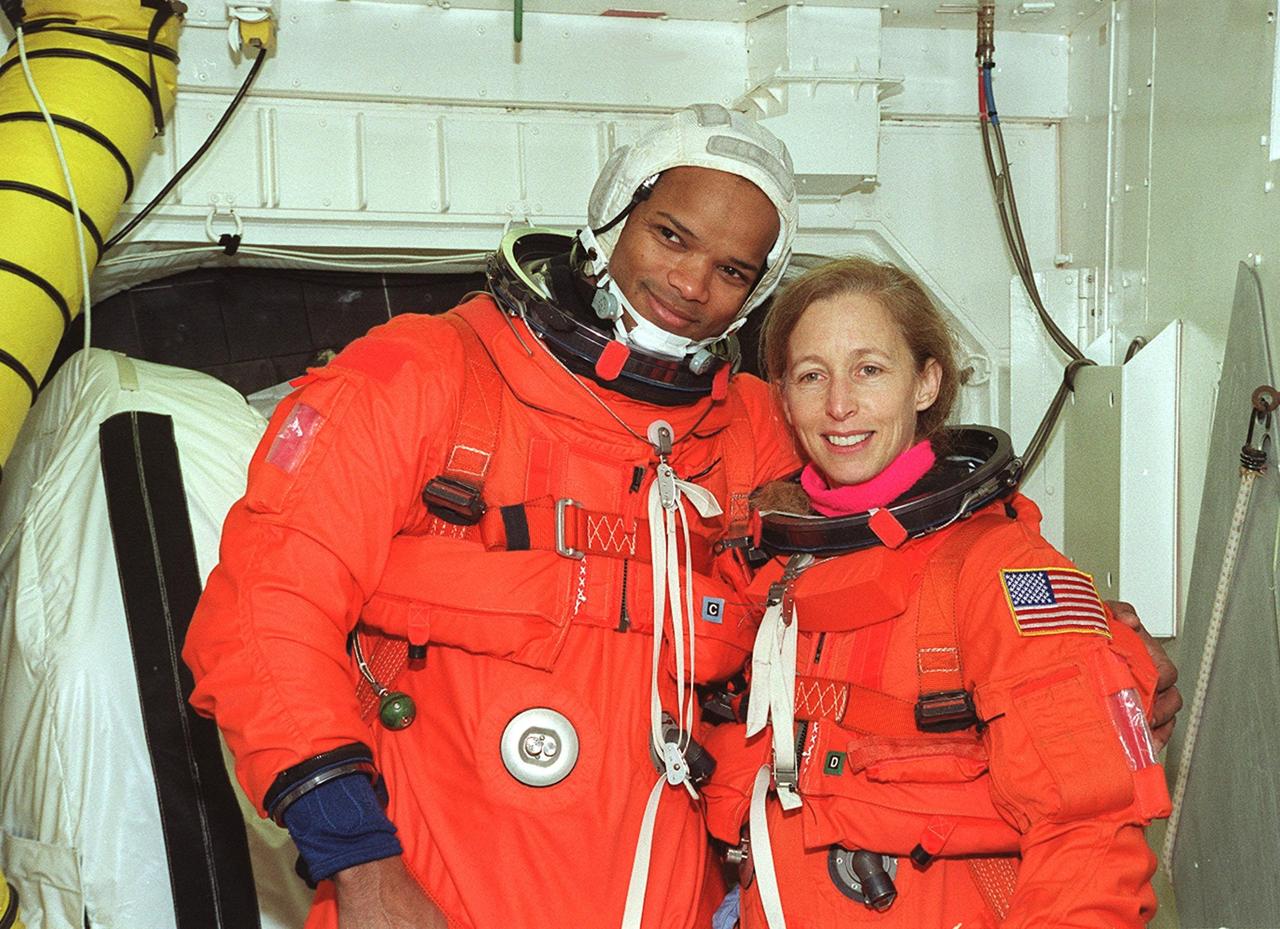
In the White Room, STS-98 Mission Specialists Robert Curbeam and Marsha Ivins pose for a photo before entering Atlantis for a simulated launch countdown. The White Room is an environmental chamber at the end of the orbiter access arm that mates with the orbiter to allow personnel to enter the orbiter’s crew compartment. The STS-98 crew is taking part in Terminal Countdown Demonstration Test activities, which also include emergency egress training at the pad. STS-98 is the seventh construction flight to the International Space Station, carrying as payload the U.S. Lab Destiny, a key element in the construction of the ISS. Launch of STS-98 is scheduled for Jan. 19 at 2:11 a.m. EST
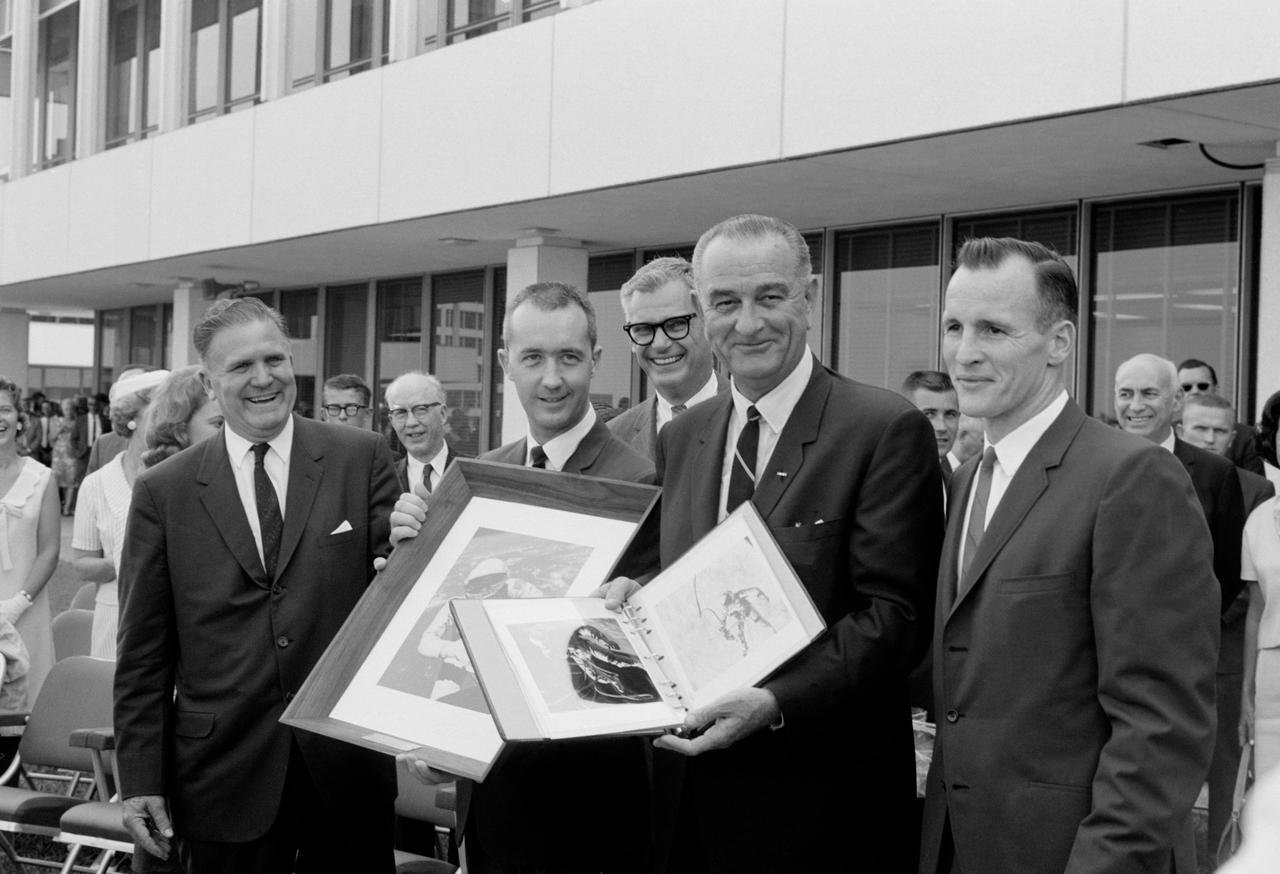
S65-33250 (11 June 1965) --- President Lyndon B. Johnson holds a Gemini-4 souvenir photo album which he was presented during his visit to the space center. Left to right, are James E. Webb, NASA administrator, Washington, D.C.; astronaut James A. McDivitt, command pilot of the Gemini-4 spaceflight; Dr. Robert C. Seamans Jr., NASA associate adminitrator; the President; and astronaut Edward H. White II, pilot of the Gemini-4 mission. McDivitt holds a framed picture of White's "spacewalk" which was also given the President.
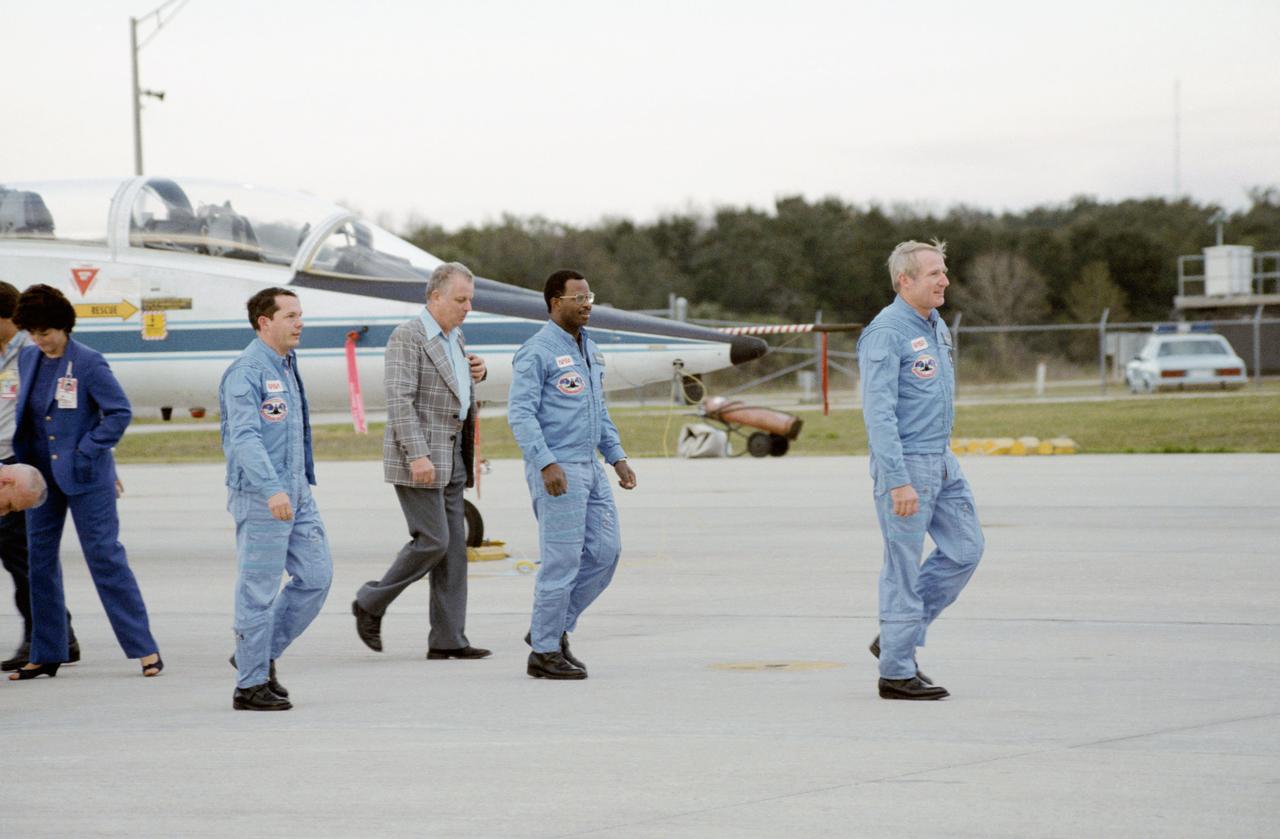
S84-26935 (31 Jan 1984) --- Three members of the STS 41-B astronaut crew arrive in Florida following a brief T-38 flight from Houston. Leading the crew from the flight line is Astronaut Vance D. Brand (right), crew commander. Following behind (in blue flight suits) are Astronauts Ronald E. McNair (center) and Robert L. Stewart (both mission specialists. They were met by Terry White (pictured), JSC public information industrial relations manager. Not pictured are Astronauts Robert L. Gibson, pilot; and Bruce McCandless II, mission specialist. Launch is scheduled for February 3, 1983.
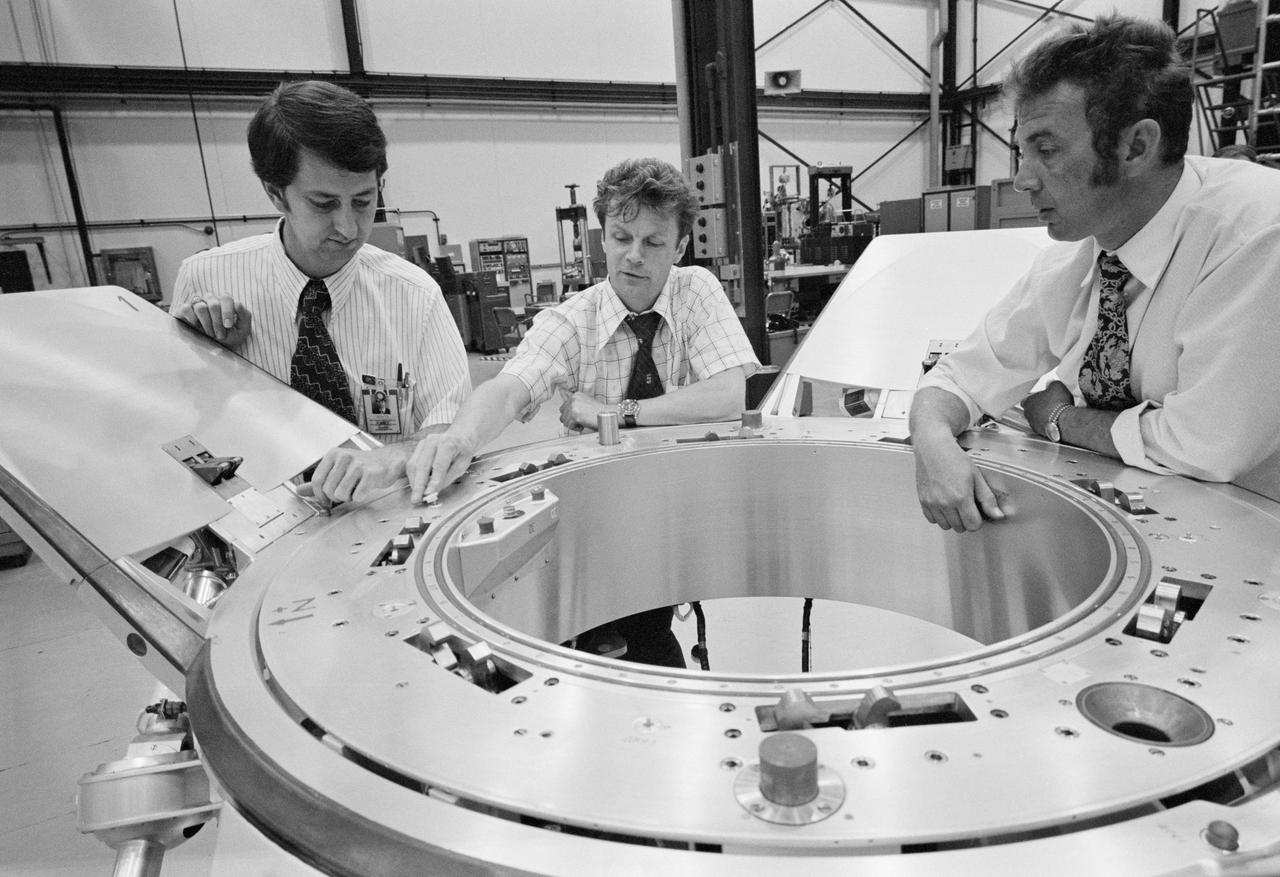
S74-24671 (10 July 1974) --- Three Apollo-Soyuz Test Project (ASTP) engineers look over a Soyuz spacecraft docking system prior to an ASTP docking mechanism fitness test conducted in Building 13 at the Johnson Space Center (JSC). They are (left to right) Robert White, Vladimir Syromyatnikov and Yevgeniy Bobrov. White is the American chairman of ASTP Working Group Number 3, and Syromyatnikov is his Soviet counterpart. This working group is concerned with ASTP docking problems and procedures. White is with JSC's Spacecraft Design Division. Syromyatnikov is senior researcher of the Soviet State Research Institute of Machine Building. Bobrov is a junior researcher with the Institute of Machine Building. The joint United States - USSR ASTP docking mission in Earth orbit is scheduled for the summer of 1975.
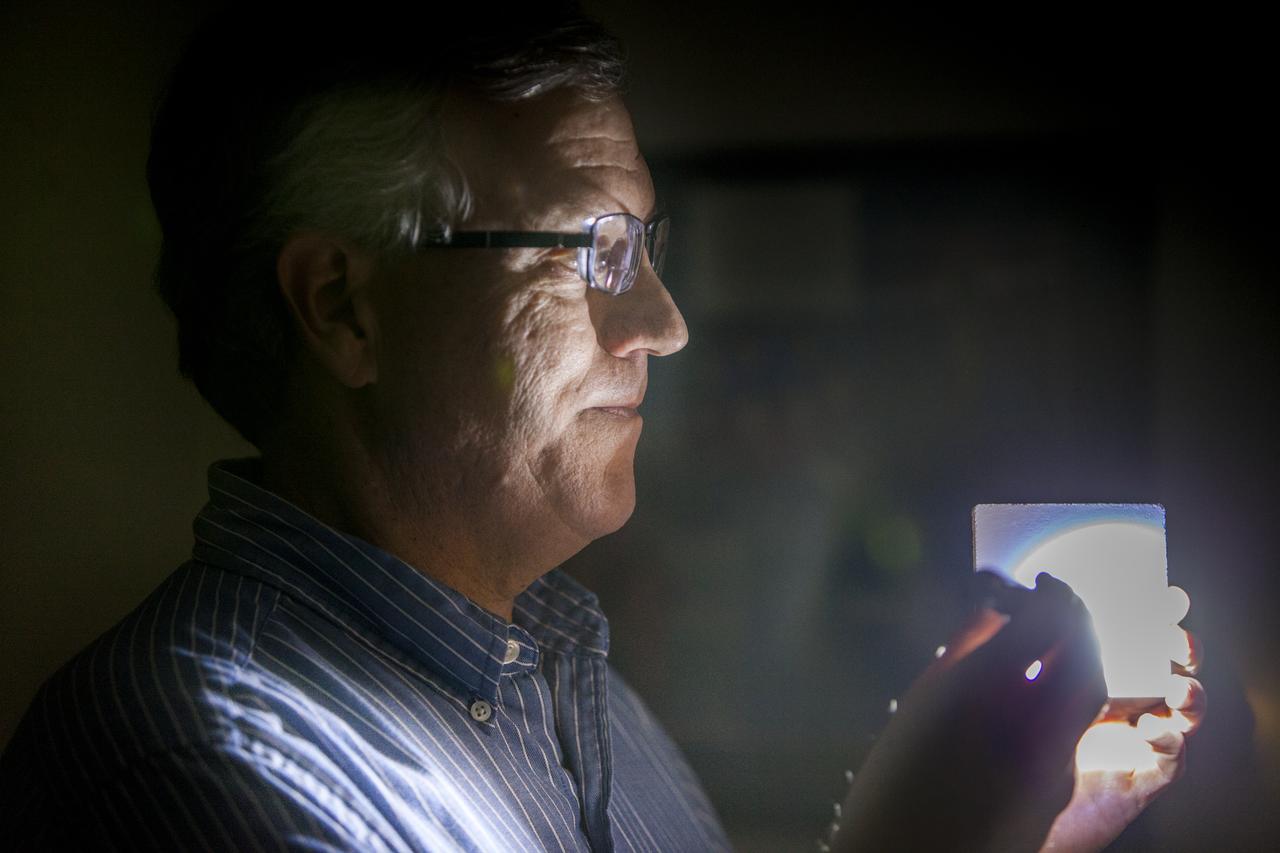
Robert Youngquist, Ph.D., tests a sample disk with a "Solar White" cryogenic selective surface coating with a flash light, demonstrating the coating’s reflective properties. The innovative coating is predicted to reflect more than 99.9 percent of the simulated solar infrared radiation. This technology could enable storing super-cold, or cryogenic, liquids and support systems that shield astronauts against radiation during the Journey to Mars.
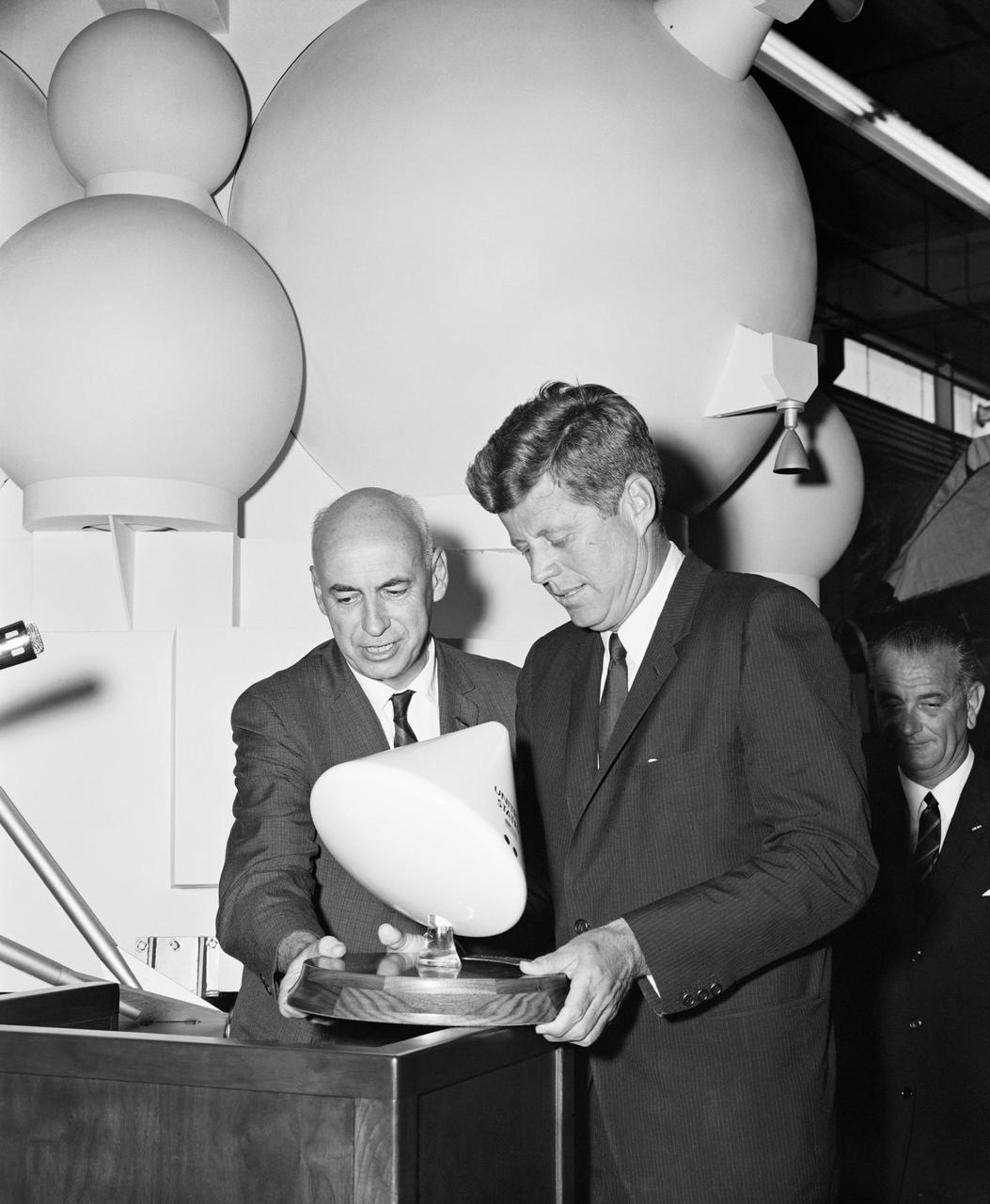
S62-03984 (12 September 1962) --- Dr. Robert R. Gilruth (left), MSC Director, presented President John F. Kennedy with this mounted model of the Apollo spacecraft at the end of the president's visit. Kennedy said, "We will take this back to the White House as a reminder of most extraordinary efforts being made by the men of NASA here and all across the country."
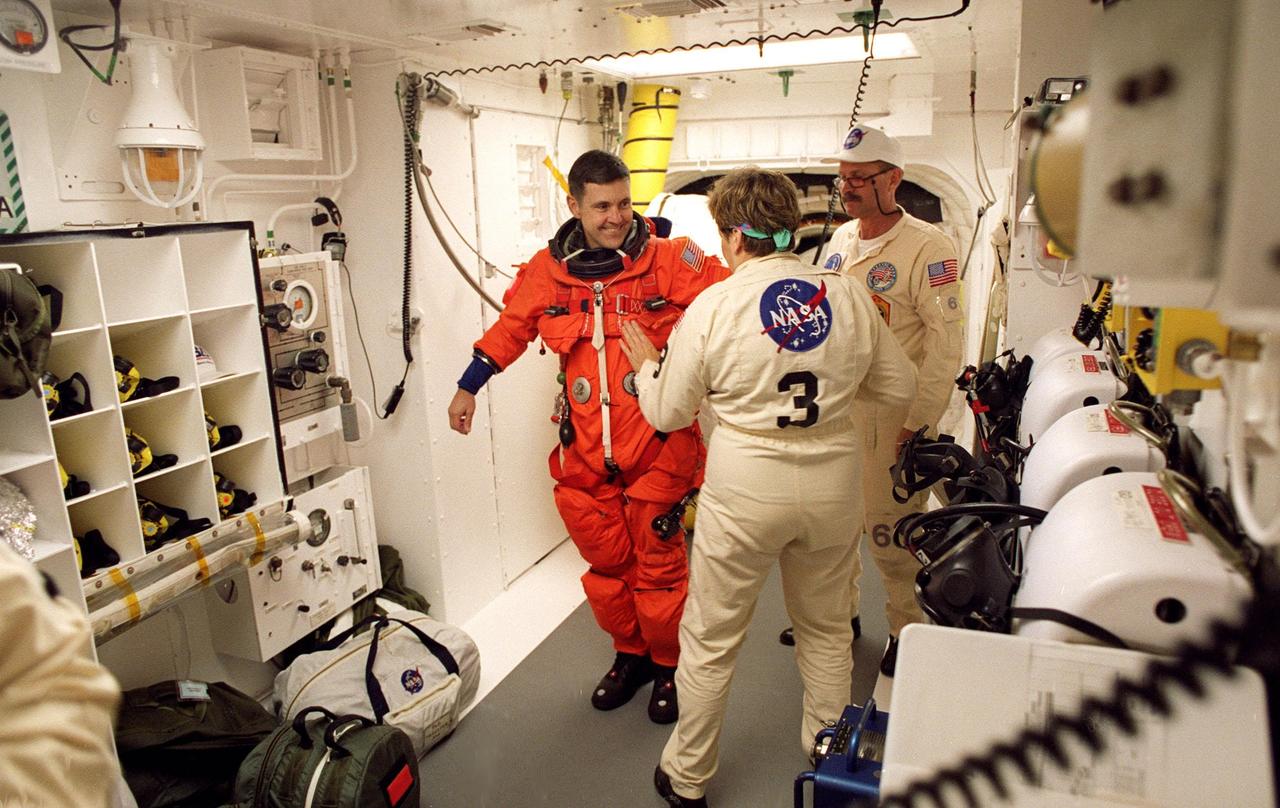
STS-88 Commander Robert D. Cabana is assisted with his ascent and re-entry flight suit in the white room at Launch Pad 39A before entering Space Shuttle Endeavour for launch. During the nearly 12-day mission, the six-member crew will mate the first two elements of the International Space Station the already-orbiting Zarya control module with the Unity connecting module carried by Endeavour. Cabana is making his fourth spaceflight
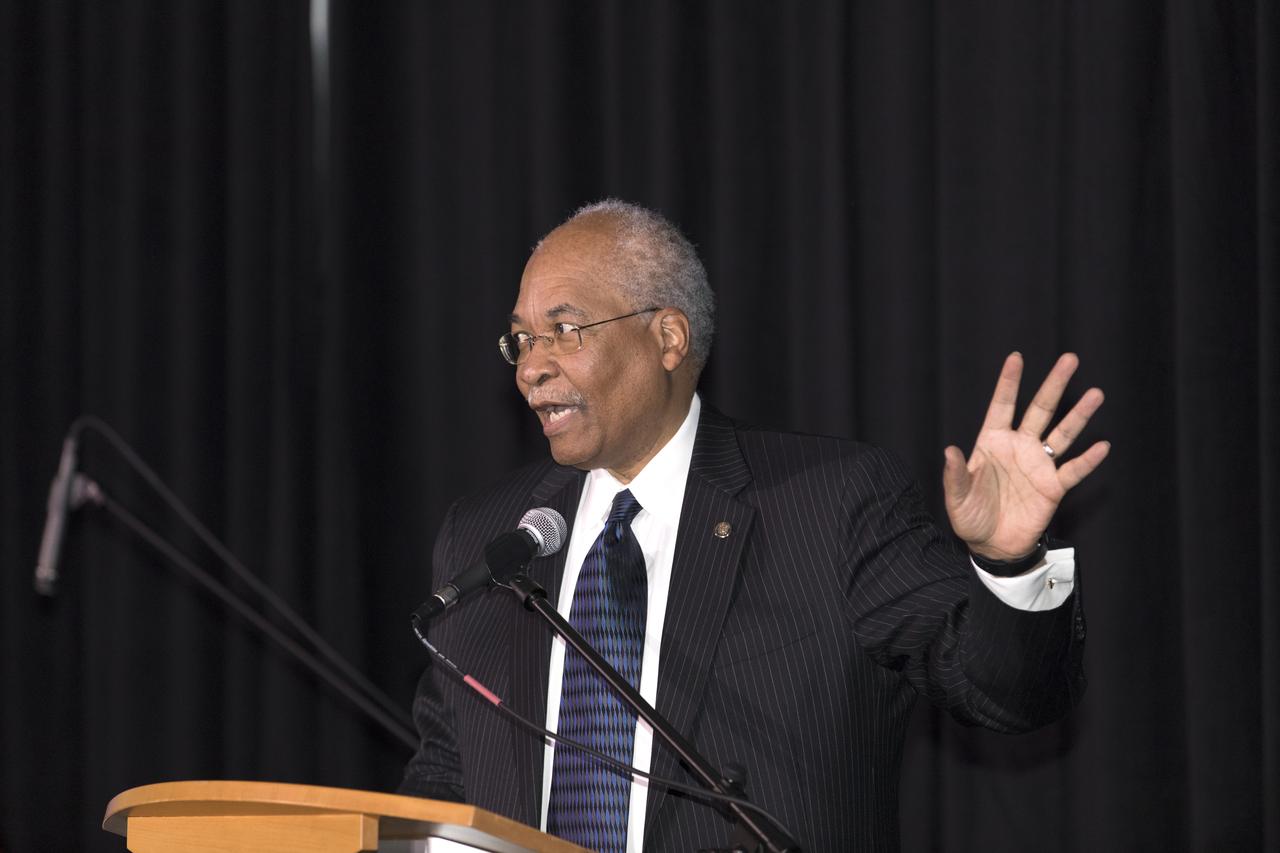
During an Astronauts Memorial Foundation tribute honoring U.S. Air Foce Maj. Robert Lawrence, physicist Herman White, Ph.D., of the Fermi National Accelerator Laboratory, speaks to guests during the ceremony. Selected in 1967 for the Manned Orbiting Laboratory Program, Lawrence was the first African-American astronaut. He lost his life in a training accident 50 years ago. The ceremony took place in the Center for Space Education at the Kennedy Space Center Visitor Complex.
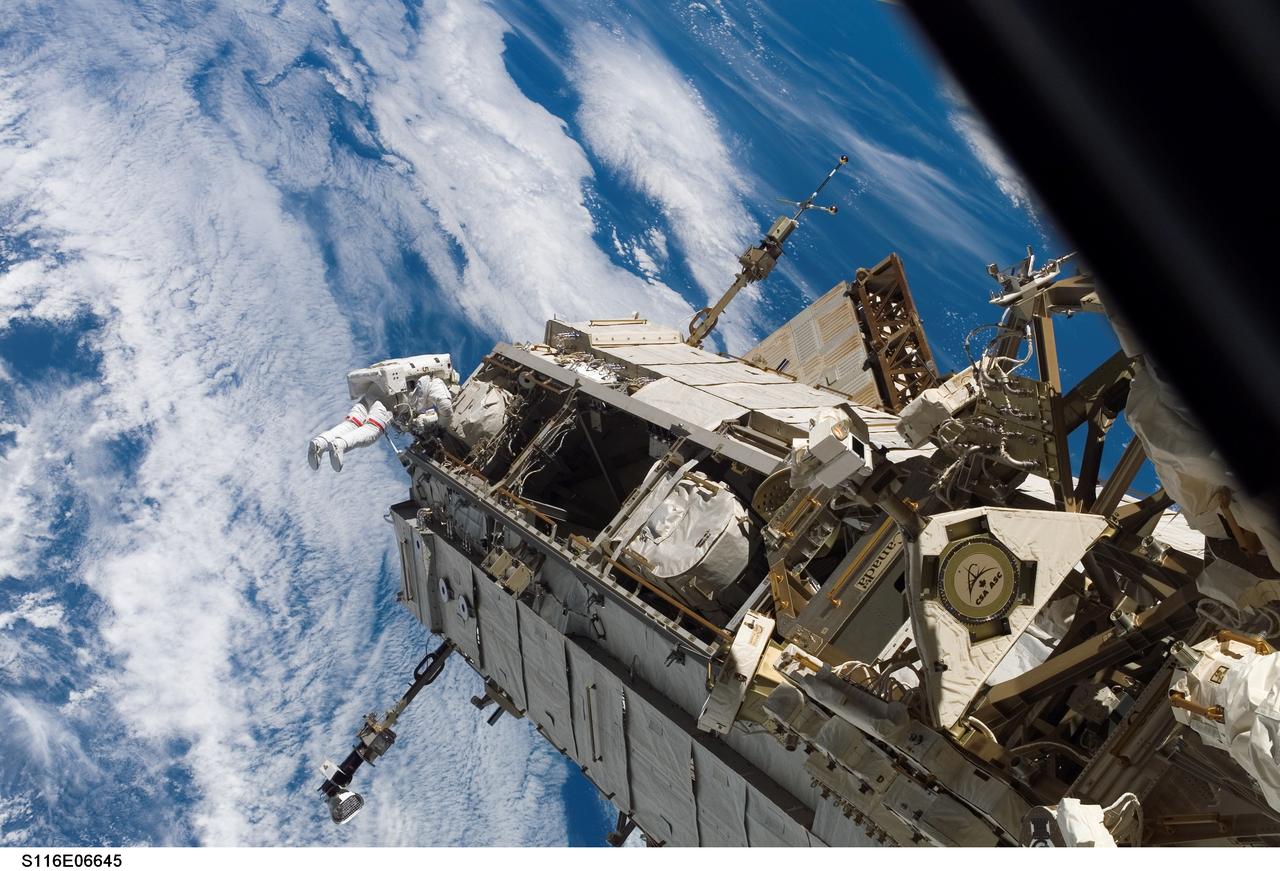
S116-E-06645 (16 Dec. 2006) --- Astronaut Robert L. Curbeam, Jr., STS-116 mission specialist, participates in the mission's third planned session of extravehicular activity (EVA) as construction resumes on the International Space Station. Astronaut Sunita L. Williams, (out of frame), STS-116 mission specialist, also participated in the 7-hour, 31-minute spacewalk. A blue and white Earth provides the backdrop for the scene.
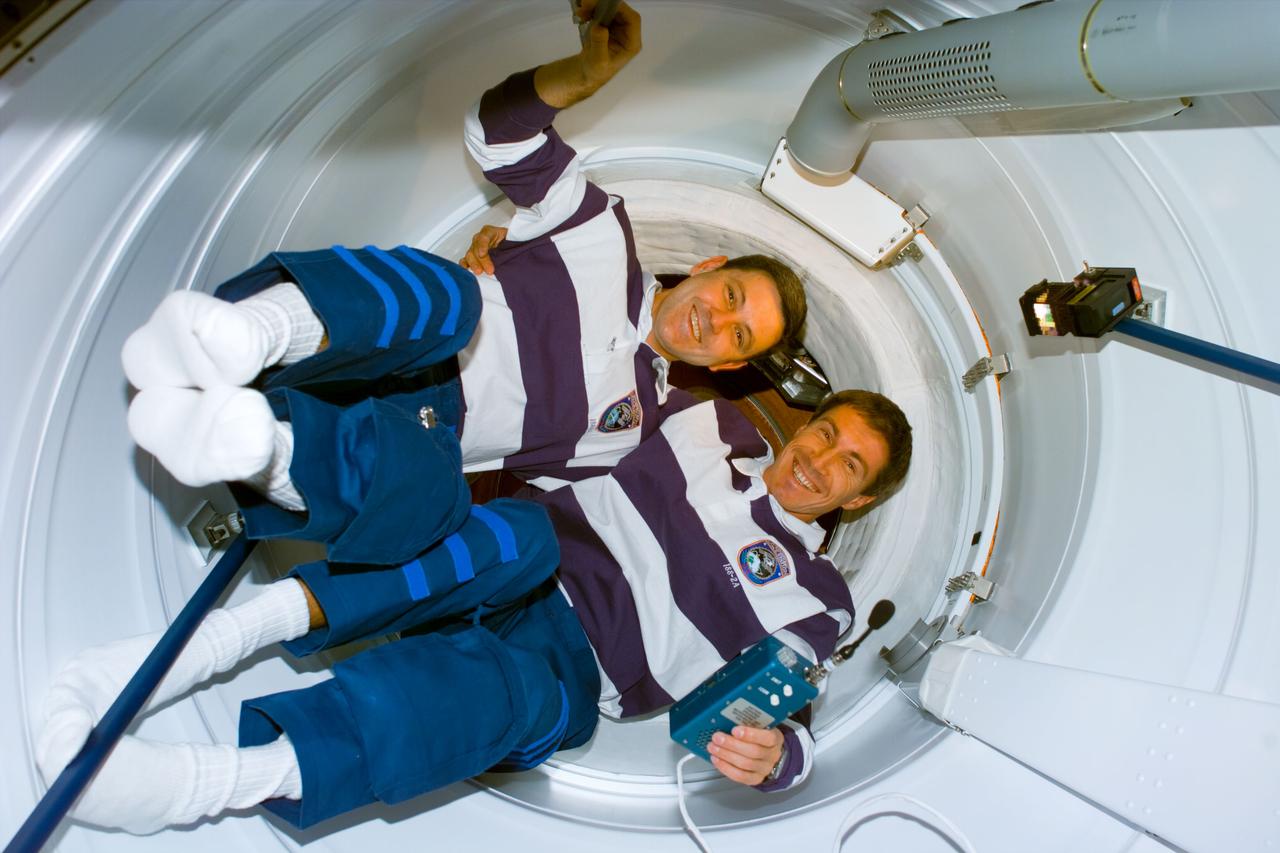
S88-E-5118 (12-10-98) --- The attire of Robert D. Cabana, left, and Sergei Krikalev stands out brightly against the whiteness of the pressurized mating adapter (PMA) connected to the Russian-built Zarya module. Cabana, mission commander, and the mission specialist representing the Russian Space Agency (RSA) were joined by crew mates on this day in installing needed equipment aboard Zarya and the U.S.-built Unity connecting module. The photo was taken with an electronic still camera (ESC) at 21:14:41 GMT, Dec. 10.
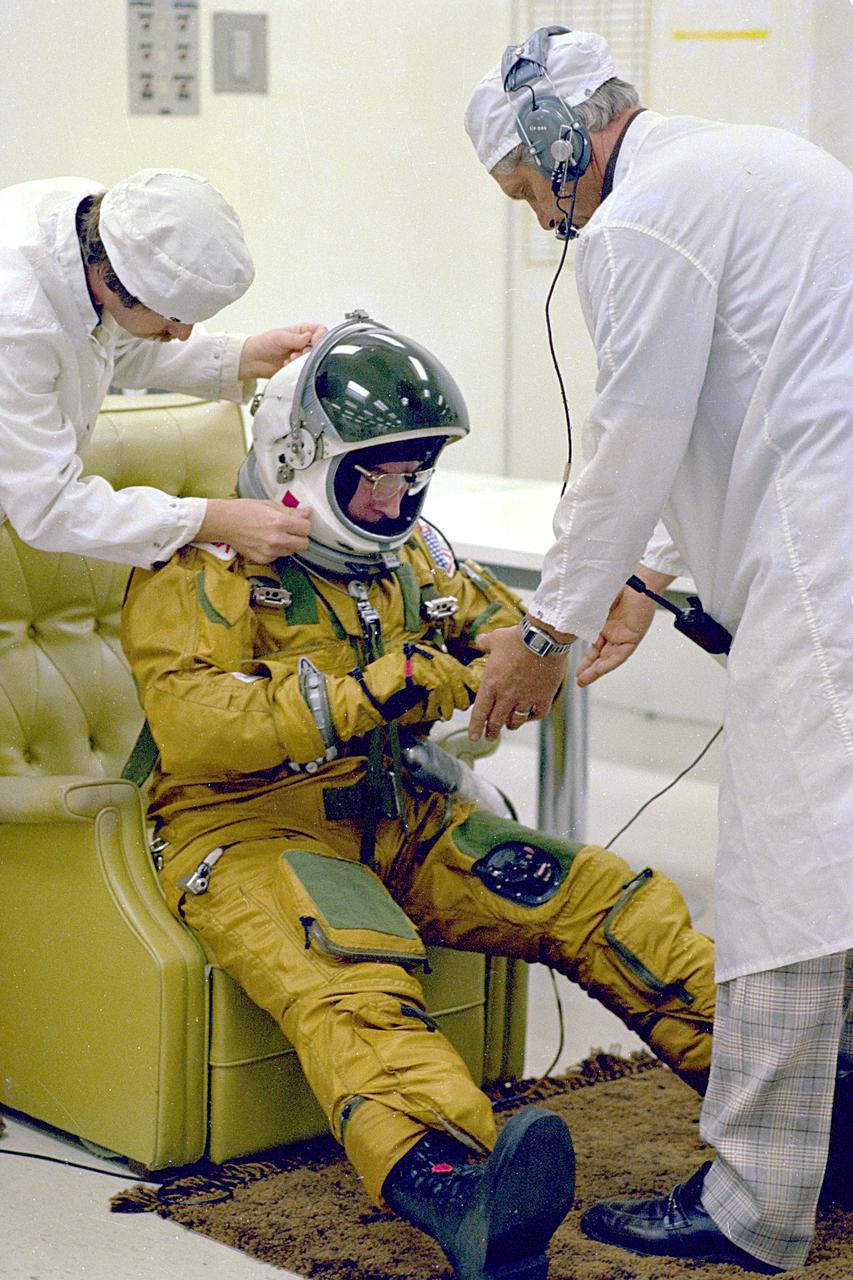
KENNEDY SPACE CENTER, FLA. - Astronaut John Young, in the 'white room' at Launch Pad 39A, suits up for the dry Countdown Demonstration Test, the last major simulated countdown and launch for spaceraft and crew before the launch of America's first Space Shuttle. Young, commander, and Robert Crippen, pilot, are scheduled as the total crew for the maiden flight of the pioneer reusable space transportation system (STS-1).
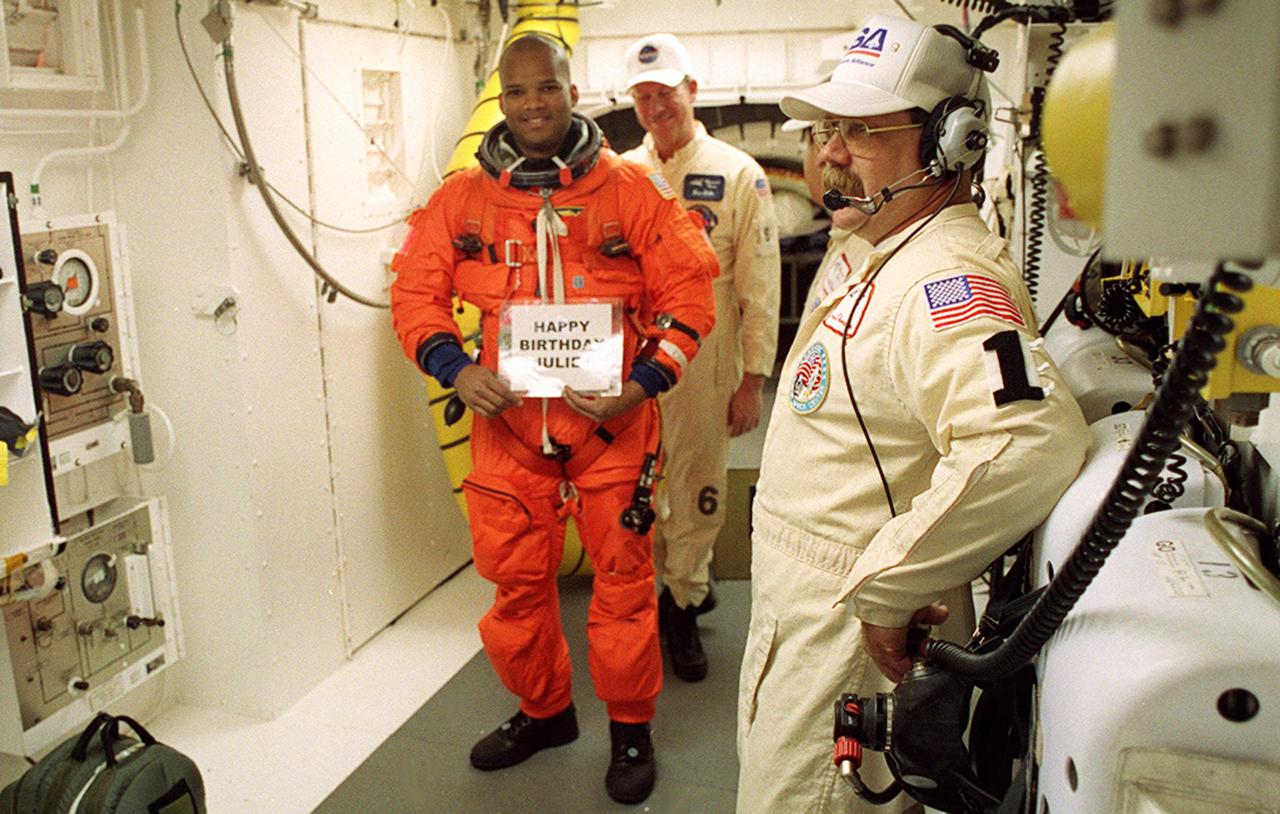
In the White Room with the closeout crew, STS-98 Mission Specialist Robert Curbeam sends a message to his wife before entering Space Shuttle Atlantis for launch. The White Room is an environmentally controlled room at the end of the Orbiter Access Arm. Atlantis is carrying the U.S. Laboratory Destiny, a key module in the growth of the Space Station. Destiny will be attached to the Unity node on the Space Station using the Shuttle’s robotic arm. Three spacewalks are required to complete the planned construction work during the 11-day mission. This mission marks the seventh Shuttle flight to the Space Station, the 23rd flight of Atlantis and the 102nd flight overall in NASA’s Space Shuttle program. The planned landing is at KSC Feb. 18 about 1 p.m

The closeout crew in the White Room pose with two of the STS-98 crew. Kneeling in front is United Space Alliance Mechanical Technician George Schramm. Standing, left to right, are USA Mechanical Technician Vinny Difranzo, Mission Specialist Robert Curbeam, NASA Quality Assurance Specialist Ken Strite, Mission Specialist Marsha Ivins, and USA Orbiter Vehicle Closeout Chief Travis Thompson. The White Room is an environmental chamber at the end of the orbiter access arm that mates with the orbiter to allow personnel to enter the orbiter’s crew compartment. The STS-98 crew is getting ready to enter Atlantis for a simulated launch countdown, part of Terminal Countdown Demonstration Test activities. STS-98 is the seventh construction flight to the International Space Station, carrying as payload the U.S. Lab Destiny, a key element in the construction of the ISS. Launch of STS-98 is scheduled for Jan. 19 at 2:11 a.m. EST
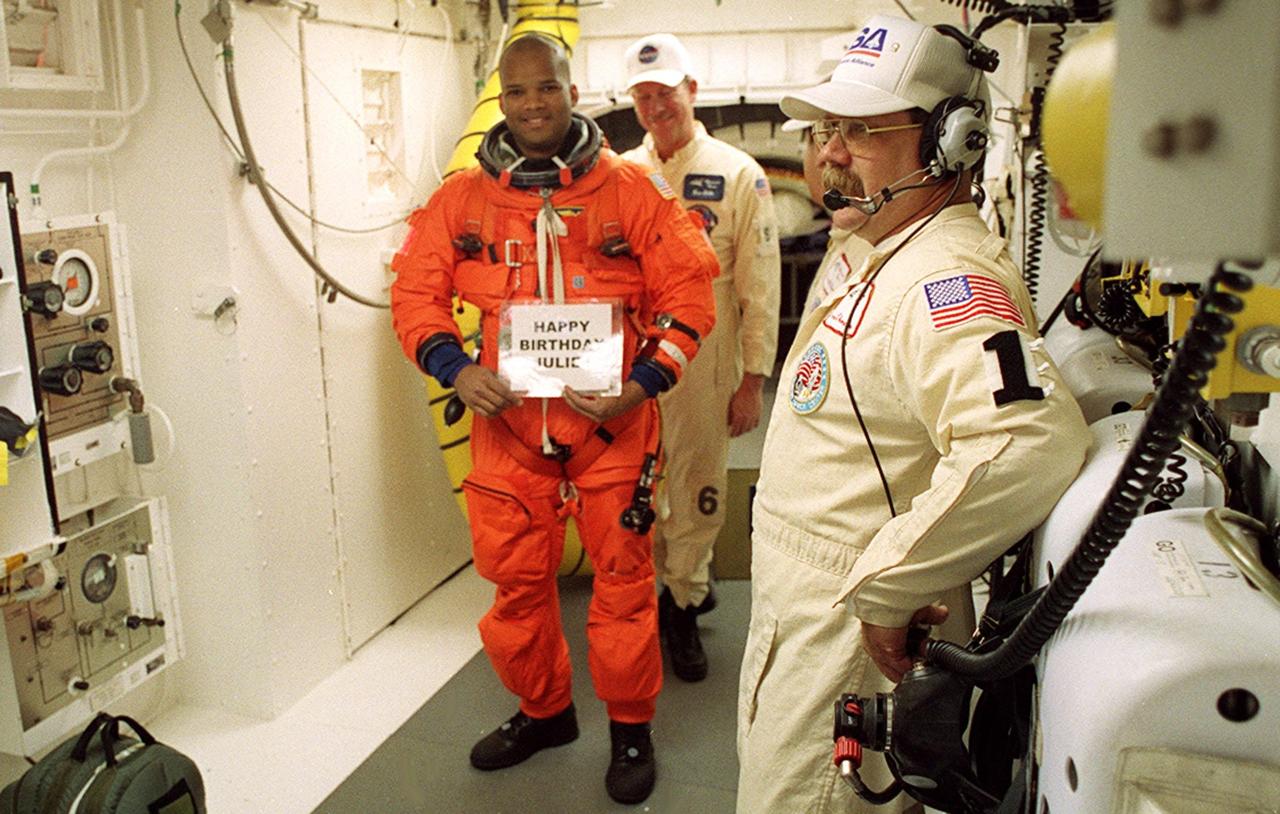
In the White Room with the closeout crew, STS-98 Mission Specialist Robert Curbeam sends a message to his wife before entering Space Shuttle Atlantis for launch. The White Room is an environmentally controlled room at the end of the Orbiter Access Arm. Atlantis is carrying the U.S. Laboratory Destiny, a key module in the growth of the Space Station. Destiny will be attached to the Unity node on the Space Station using the Shuttle’s robotic arm. Three spacewalks are required to complete the planned construction work during the 11-day mission. This mission marks the seventh Shuttle flight to the Space Station, the 23rd flight of Atlantis and the 102nd flight overall in NASA’s Space Shuttle program. The planned landing is at KSC Feb. 18 about 1 p.m
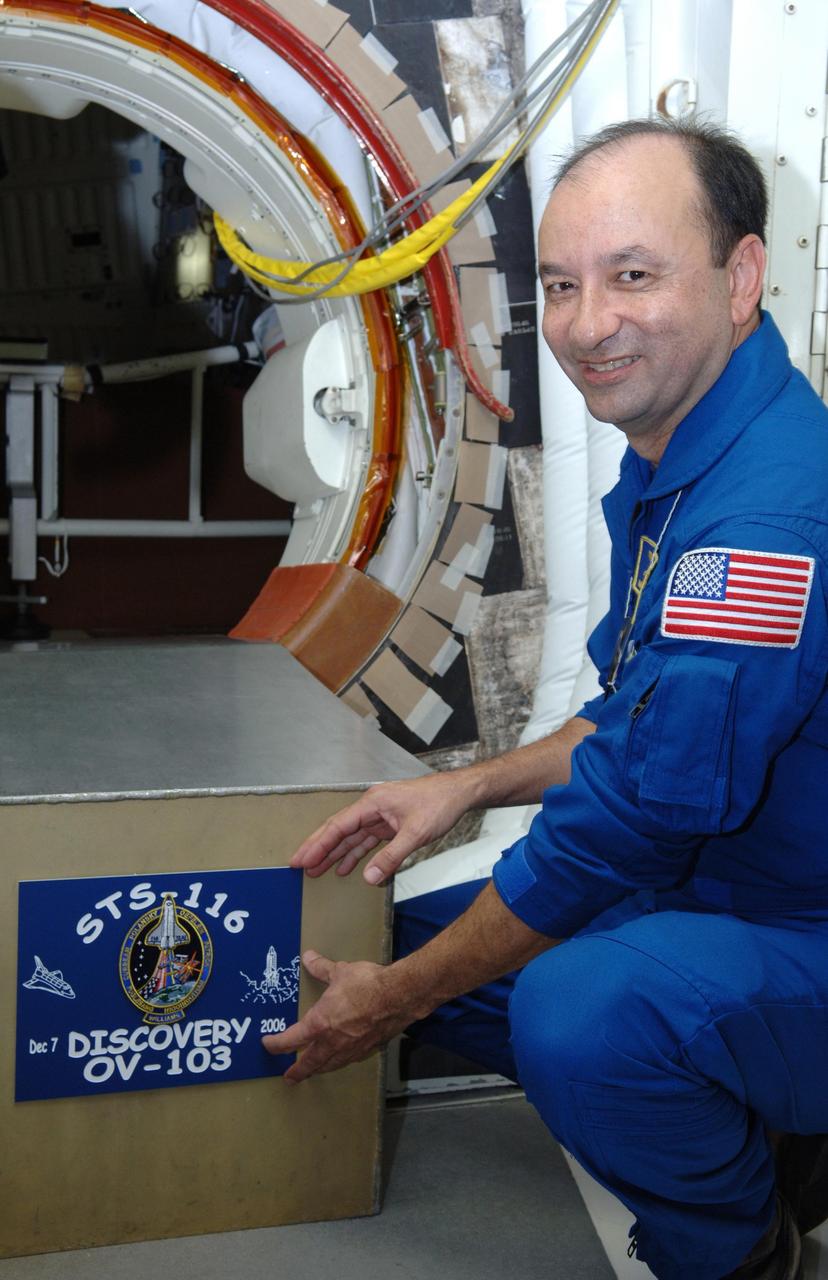
KENNEDY SPACE CENTER, FLA. -- In the White Room on Launch Pad 39B, STS-116 Commander Mark Polansky places the mission placard at the hatch opening. The White Room is the point of entry into Space Shuttle Discovery for the crew. Other crew members are Pilot William Oefelein and Mission Specialists Joan Higginbotham, Sunita Williams, Nicholas Patrick, Robert Curbeam and Christer Fuglesang, who represents the European Space Agency. The mission crew is at KSC for the TCDT, which includes a simulated launch countdown. The STS-116 mission is No. 20 to the International Space Station and construction flight 12A.1. The mission payload is the SPACEHAB module, the P5 integrated truss structure and other key components. Launch is scheduled for no earlier than Dec. 7. Photo credit: NASA/Kim Shiflett
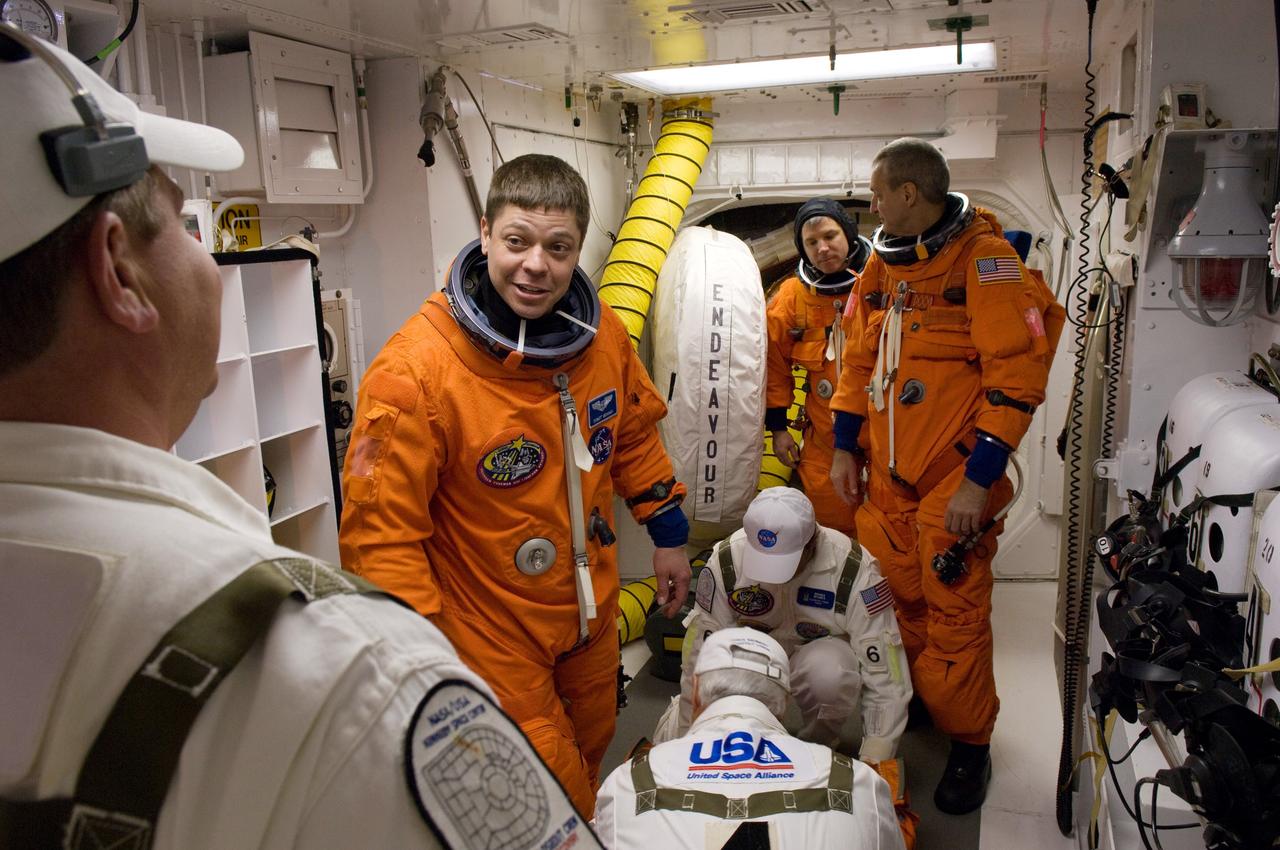
KENNEDY SPACE CENTER, FLA. -- On Launch Pad 39A at NASA's Kennedy Space Center, STS-123 crew members are getting help with their final flight suit fit check in the White Room before entering space shuttle Endeavour for launch. In the foreground is Mission Specialist Robert L. Behnken; in the background are Pilot Gregory H. Johnson (left) and Mission Specialist Rick Linnehan. The White Room provides access into the shuttle. Liftoff was on time at 2:28 a.m. EDT. The crew will make a record-breaking 16-day mission to the International Space Station and deliver the first section of the Japan Aerospace Exploration Agency's Kibo laboratory and the Canadian Space Agency's two-armed robotic system, Dextre. Photo credit: NASA/Scott Haun, Richard Prickett
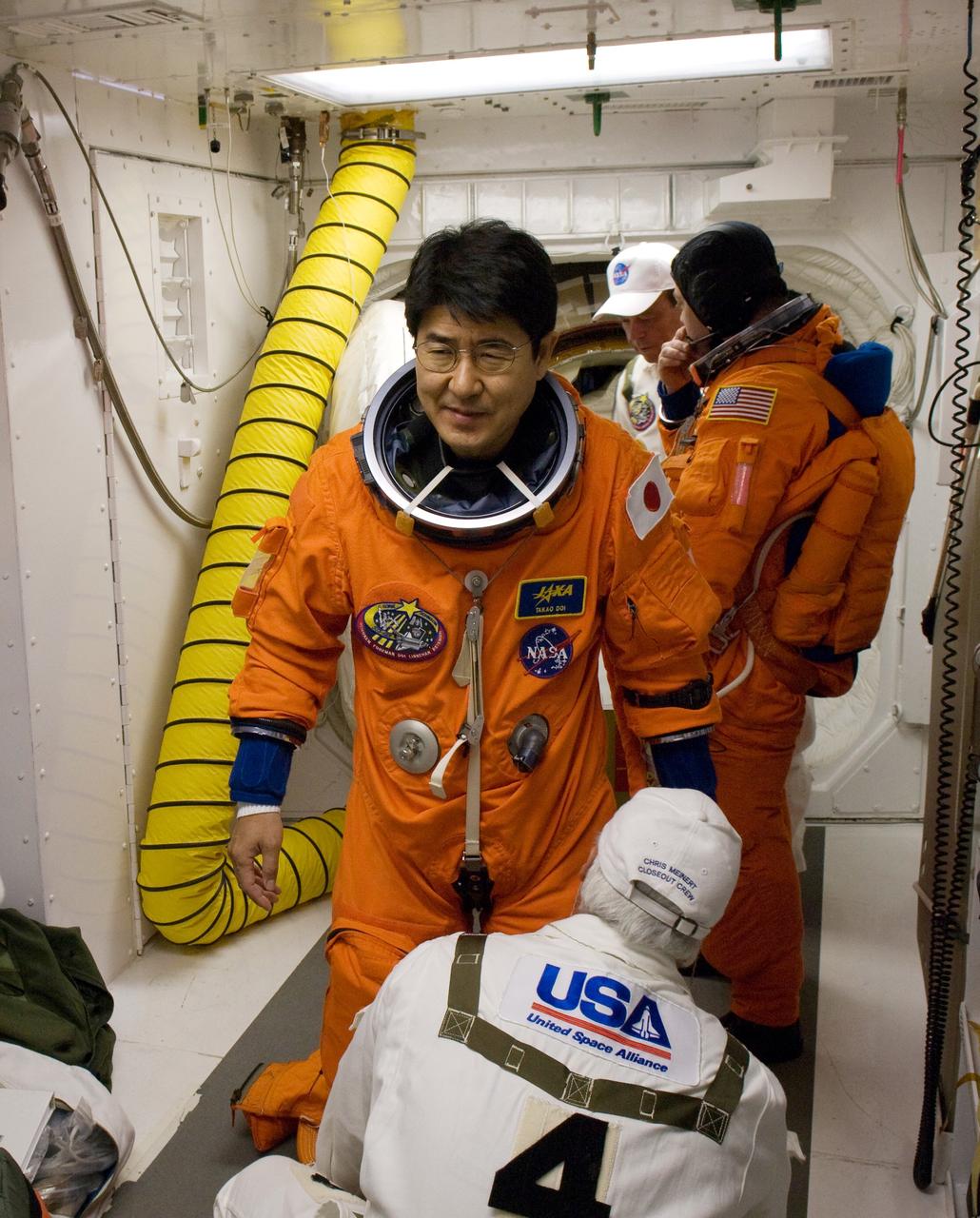
KENNEDY SPACE CENTER, FLA. -- On Launch Pad 39A at NASA's Kennedy Space Center, STS-123 Mission Specialist Takao Doi of the Japan Aerospace Exploration Agency is helped with the final flight suit fit check in the White Room before entering space shuttle Endeavour for launch. In the background is Mission Specialist Robert L. Behnken. The White Room provides access into the shuttle. Liftoff was on time at 2:28 a.m. EDT. The crew will make a record-breaking 16-day mission to the International Space Station and deliver the first section of the Japan Aerospace Exploration Agency's Kibo laboratory and the Canadian Space Agency's two-armed robotic system, Dextre. Photo credit: NASA/Scott Haun, Richard Prickett
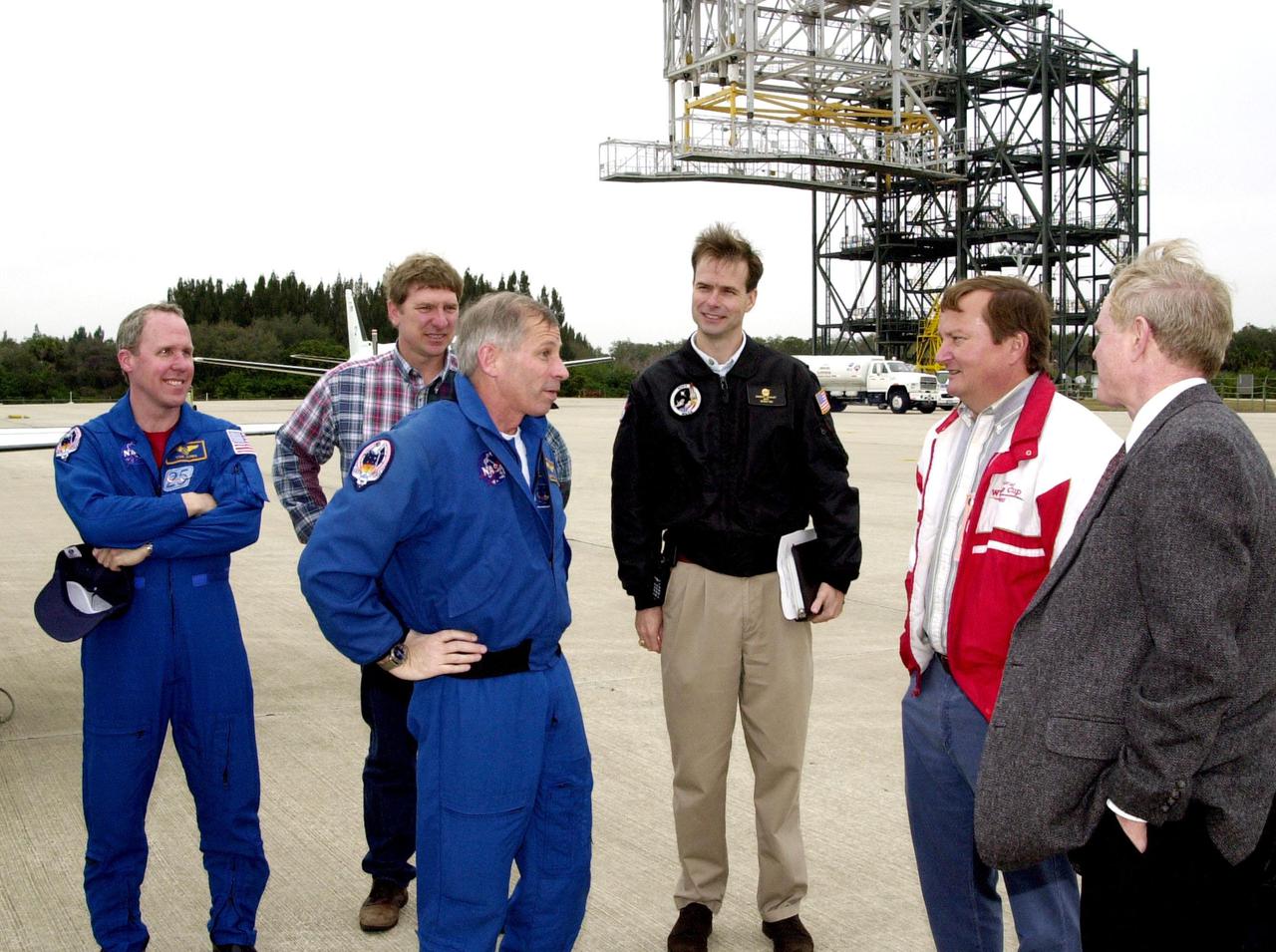
KENNEDY SPACE CENTER, FLA. -- STS-98 Mission Commander Kenneth Cockrell (center) talks with Launch Director Michael Leinbach (red and white jacket) and Center Director Roy Bridges (right) at the Shuttle Landing Facility after the crew's arrival Sunday to complete preparations for launch.; Behind him are, from left to right, Mission Specialist Thomas Jones; Tom Kwiatkowski, NASA, Johnson Space Center (JSC); and Robert Hanley, United Space Alliance, JSC.; The crew also includes Pilot Mark Polansky and Mission Specialists Marsha Ivins and Robert Curbeam.; STS-98 is the seventh construction flight to the International Space Station, carrying as payload the U.S. Lab Destiny, a key element in the construction of the ISS. Launch of STS-98 is scheduled for Feb. 7 at 6:11 p.m. EST
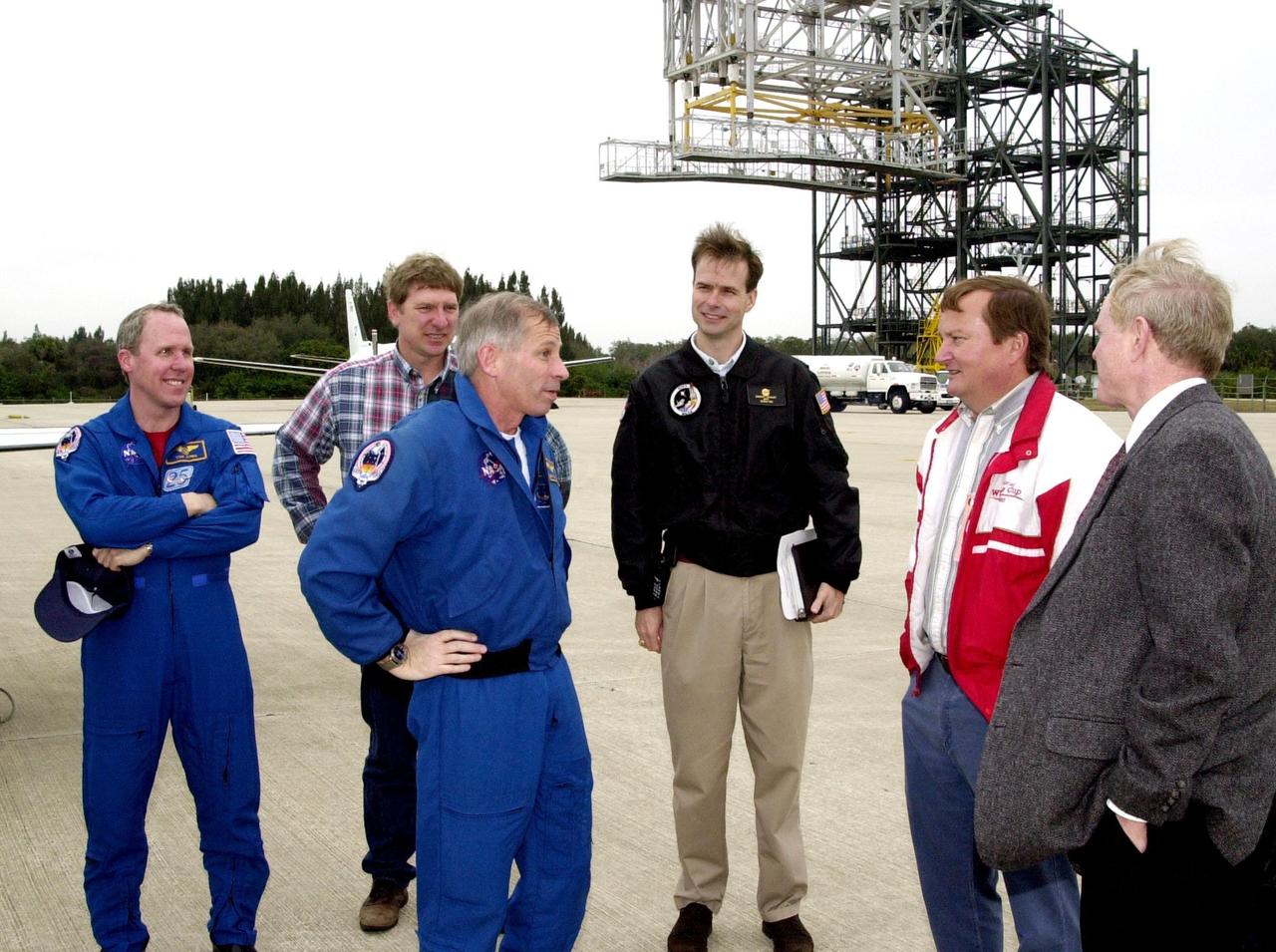
KENNEDY SPACE CENTER, FLA. -- STS-98 Mission Commander Kenneth Cockrell (center) talks with Launch Director Michael Leinbach (red and white jacket) and Center Director Roy Bridges (right) at the Shuttle Landing Facility after the crew's arrival Sunday to complete preparations for launch.; Behind him are, from left to right, Mission Specialist Thomas Jones; Tom Kwiatkowski, NASA, Johnson Space Center (JSC); and Robert Hanley, United Space Alliance, JSC.; The crew also includes Pilot Mark Polansky and Mission Specialists Marsha Ivins and Robert Curbeam.; STS-98 is the seventh construction flight to the International Space Station, carrying as payload the U.S. Lab Destiny, a key element in the construction of the ISS. Launch of STS-98 is scheduled for Feb. 7 at 6:11 p.m. EST
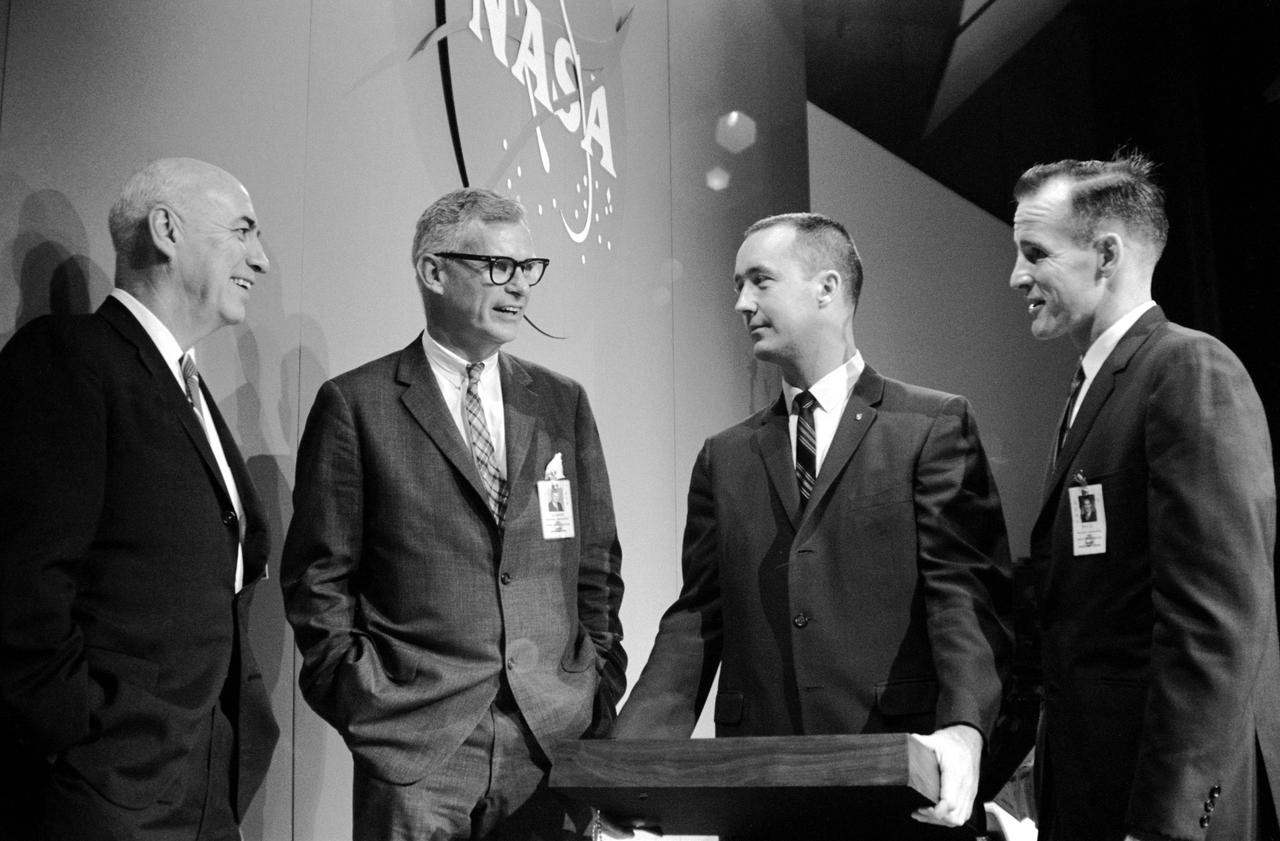
S65-33352 (11 June 1965) --- The Gemini-4 prime crew pose with two NASA officials after a press conference in the MSC auditorium. Left to right, are Dr. Robert R. Gilruth, MSC director; Dr. Robert C. Seamans Jr., associate administrator, National Aeronautics and Space Administration; astronaut James A. McDivitt, command pilot of the Gemini-4 flight; and astronaut Edward H. White II, pilot of the mission. The two astronauts had just returned to Houston following their debriefings at Cape Kennedy. The Gt-4 liftoff was at 10:16 a.m. (EST) on June 3, 1965. Time of splashdown ending the four-day, 62-revolution mission was at 12:12 p.m. on June 7, 1965.
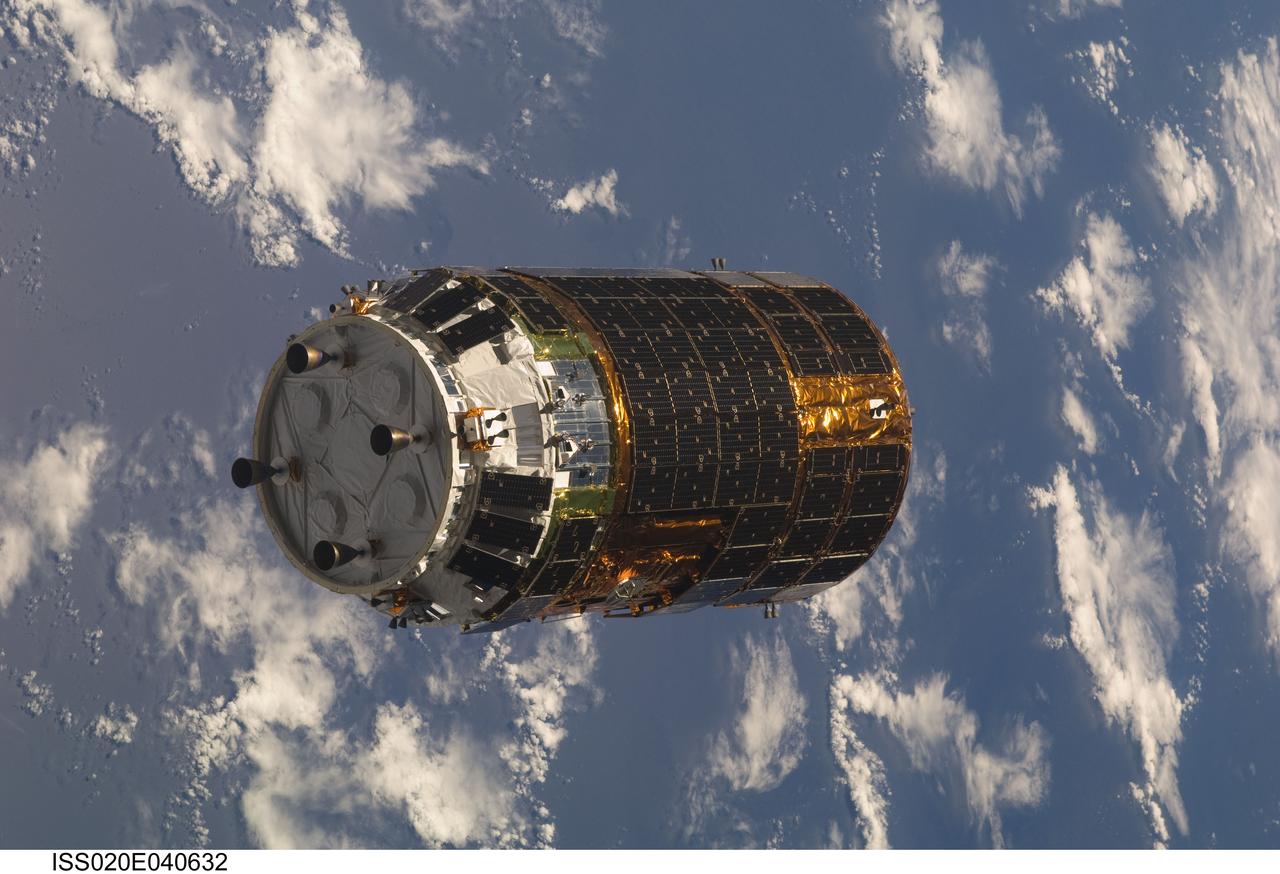
ISS020-E-040632 (17 Sept. 2009) --- Backdropped by a blue and white part of Earth, the unpiloted Japanese H-II Transfer Vehicle (HTV) approaches the International Space Station. Once the HTV was in range, NASA astronaut Nicole Stott, Canadian Space Agency astronaut Robert Thirsk and European Space Agency astronaut Frank De Winne, all Expedition 20 flight engineers, used the station’s robotic arm to grab the cargo craft and attach it to the Earth-facing port of the Harmony node. The attachment was completed at 5:26 (CDT) on Sept. 17, 2009.
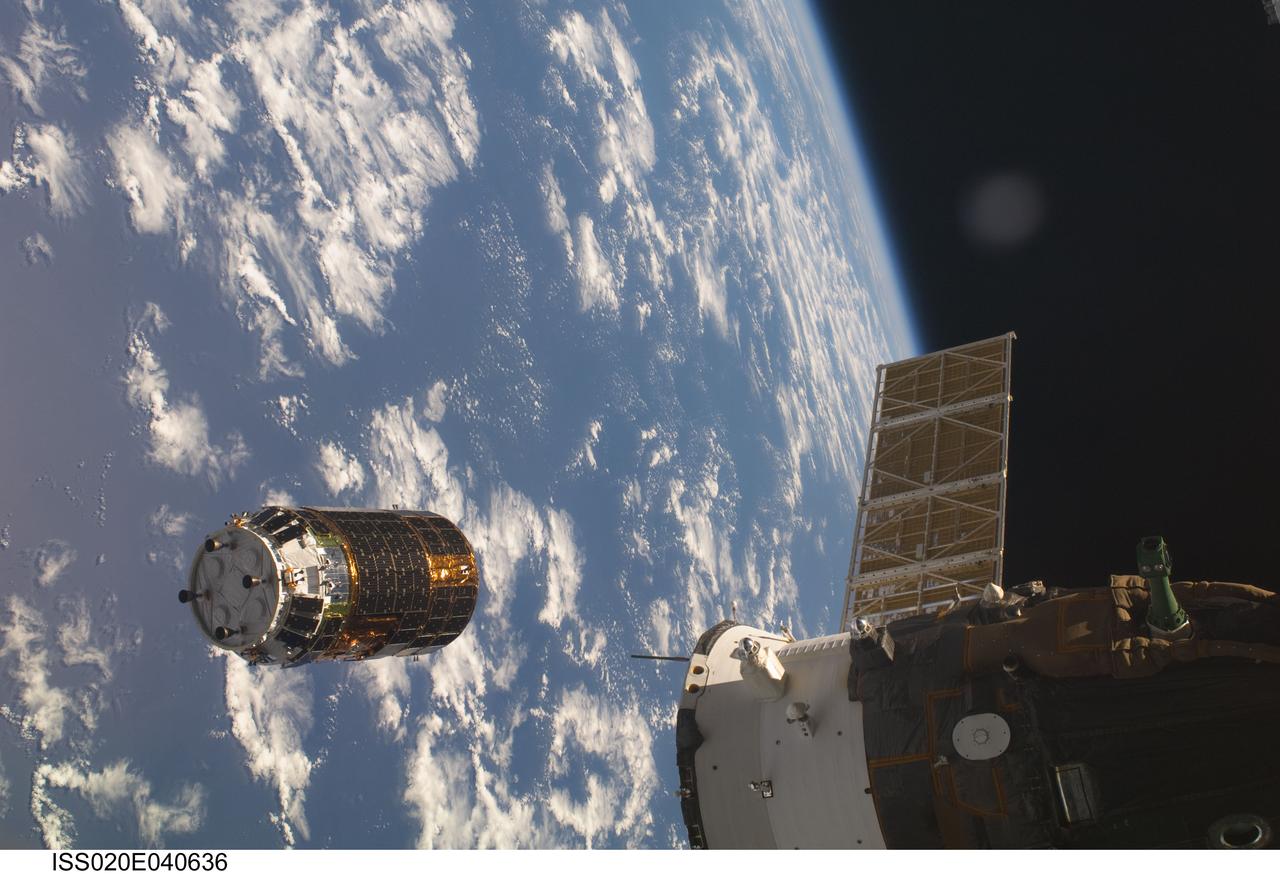
ISS020-E-040636 (17 Sept. 2009) --- Backdropped by a blue and white part of Earth and the blackness of space, the unpiloted Japanese H-II Transfer Vehicle (HTV) approaches the International Space Station. Once the HTV was in range, NASA astronaut Nicole Stott, Canadian Space Agency astronaut Robert Thirsk and European Space Agency astronaut Frank De Winne, all Expedition 20 flight engineers, used the station’s robotic arm to grab the cargo craft and attach it to the Earth-facing port of the Harmony node. The attachment was completed at 5:26 (CDT) on Sept. 17, 2009. A Russian spacecraft docked to the station is at bottom right.
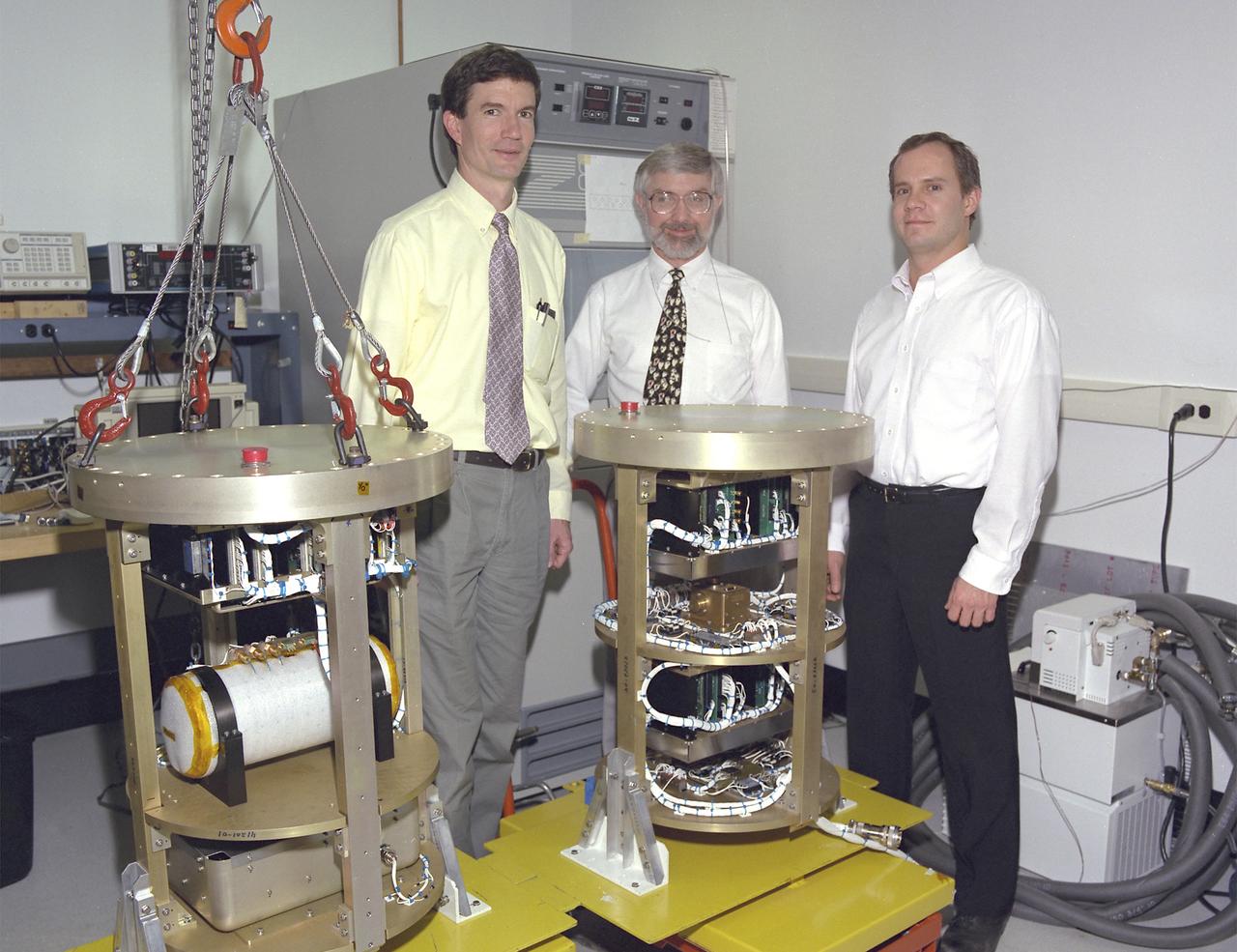
The Critical Viscosity of Xenon Experiment (CVX-2) on the STS-107 Research 1 mission in 2002 will measure the viscous behavior of xenon, a heavy inert gas used in flash lamps and ion rocket engines, at its critical point. The thermostat for CVX sits inside the white cylinder on a support structure (at left) that is placed inside a pressure canister. A similar canister (right) holds the electronics and control systems. The CVX-2 arrangement is identical. The principal investigator is Dr. Robert F. Berg (left) of the National Institutes of Standards and Technology, Gaithersburg, MD.

STS-98 Mission Specialist Marsha Ivins waits in the White Room outside the entrance into Atlantis. The crew is at KSC to take part in Terminal Countdown Demonstration Test activities, which include emergency egress training and a simulated launch countdown. The other crew members are Pilot Mark Polansky, Mission Specialist Thomas Jones, Commander Ken Cockrell and Mission Specialist Robert Curbeam. STS-98 is the seventh construction flight to the International Space Station, carrying as payload the U.S. Lab Destiny, a key element in the construction of the ISS. Launch of STS-98 is scheduled for Jan. 19 at 2:11 a.m
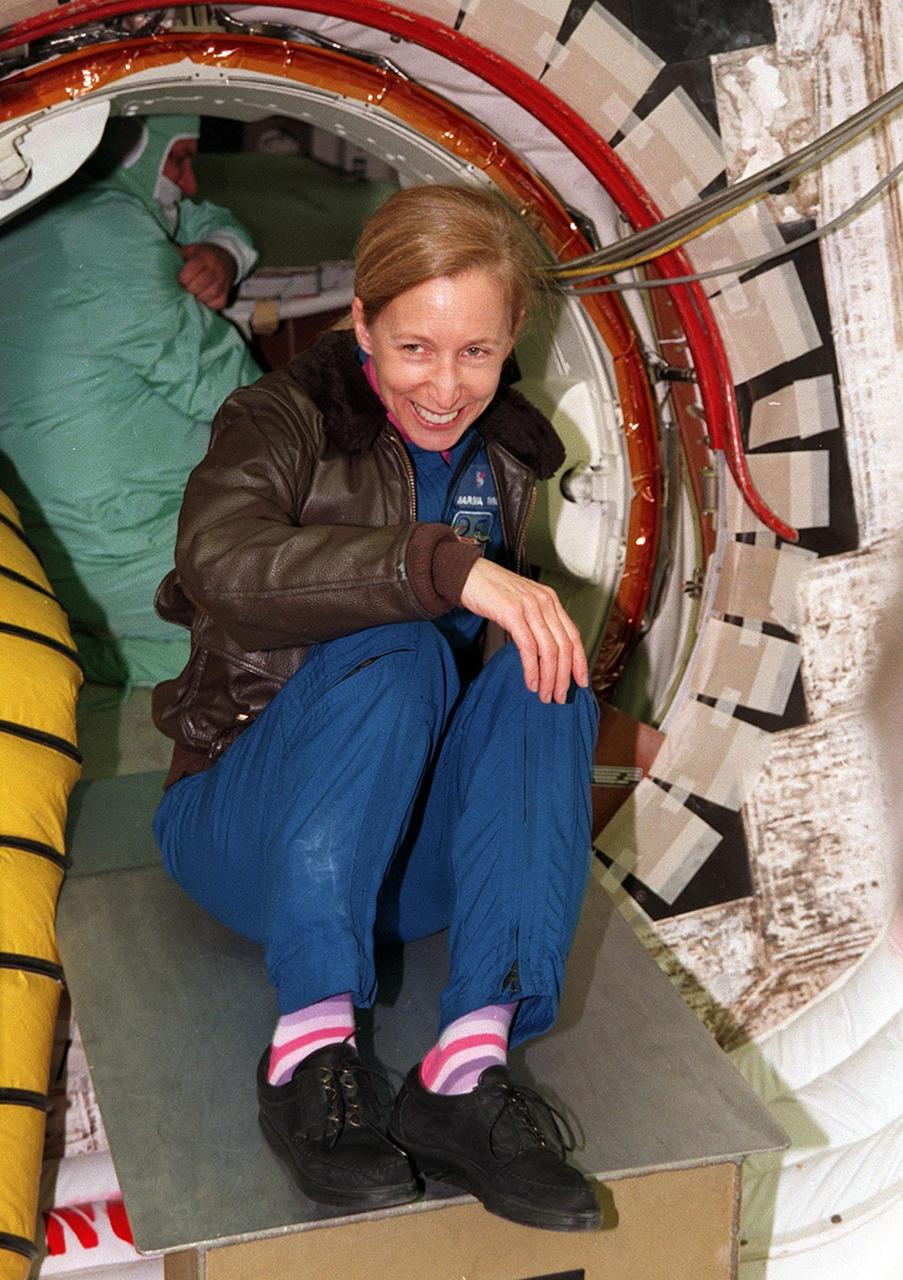
STS-98 Mission Specialist Marsha Ivins waits in the White Room outside the entrance into Atlantis. The crew is at KSC to take part in Terminal Countdown Demonstration Test activities, which include emergency egress training and a simulated launch countdown. The other crew members are Pilot Mark Polansky, Mission Specialist Thomas Jones, Commander Ken Cockrell and Mission Specialist Robert Curbeam. STS-98 is the seventh construction flight to the International Space Station, carrying as payload the U.S. Lab Destiny, a key element in the construction of the ISS. Launch of STS-98 is scheduled for Jan. 19 at 2:11 a.m
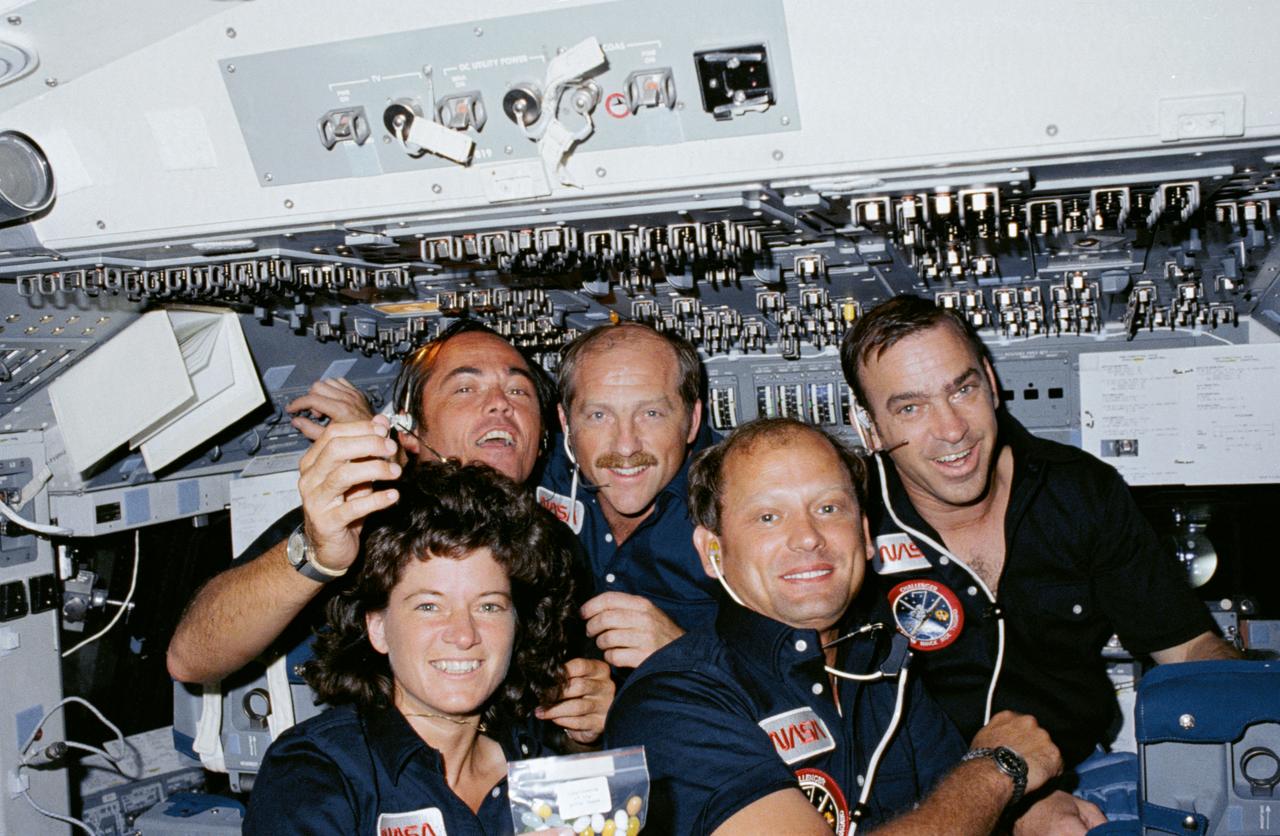
STS007-30-1574 / S83-35774 (21 June 1983) --- The five "passengers" onboard the Earth-orbiting Space Shuttle Challenger display some jelly beans discovered among their food supplies during their six-day mission. The label on the candy reads, "Compliments of the White House." In the rear are (left to right) astronauts Robert L. Crippen, crew commander, Frederick H. Hauck, pilot; and John M. Fabian, mission specialist. In front are Drs. Sally K. Ride and Norman E. Thagard, mission specialists. The scene was exposed by a pre-set 35mm camera.
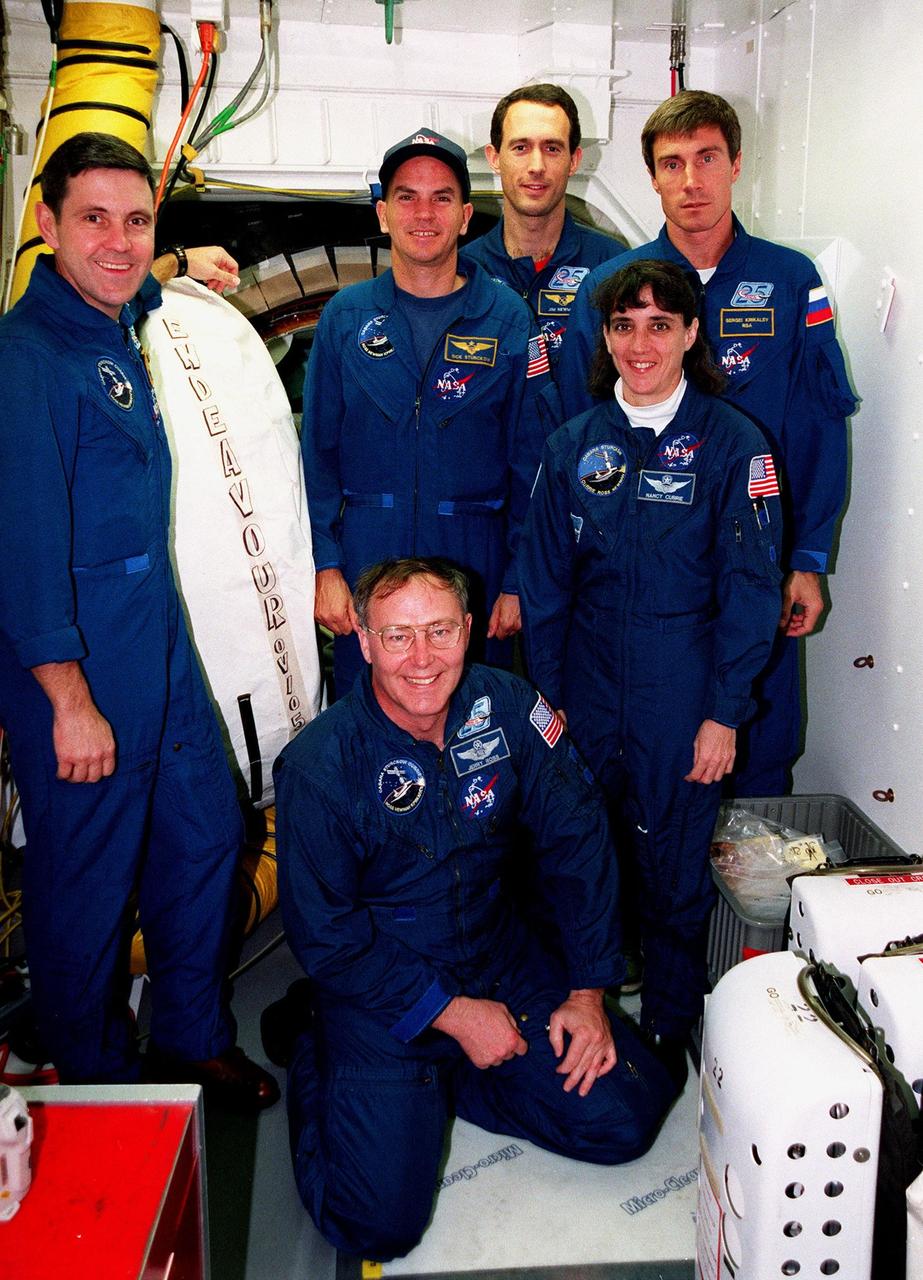
KENNEDY SPACE CENTER, Fla. -- STS-88 crew members pose for a photograph in the white room, an environmental chamber, on launch pad 39A. In the front row are (left) Mission Commander Robert D. Cabana, Mission Specialists Jerry L. Ross (kneeling) and Nancy J. Currie; in the back row are Pilot Frederick W. "Rick" Sturckow and Mission Specialists James H. Newman and Sergei Krikalev, a Russian cosmonaut. The crew are at KSC to participate in the Terminal Countdown Demonstration Test (TCDT), a dress rehearsal for launch. Mission STS-88 is targeted for launch on Dec. 3, 1998. It is the first U.S. flight for the assembly of the International Space Station and will carry the Unity connecting module
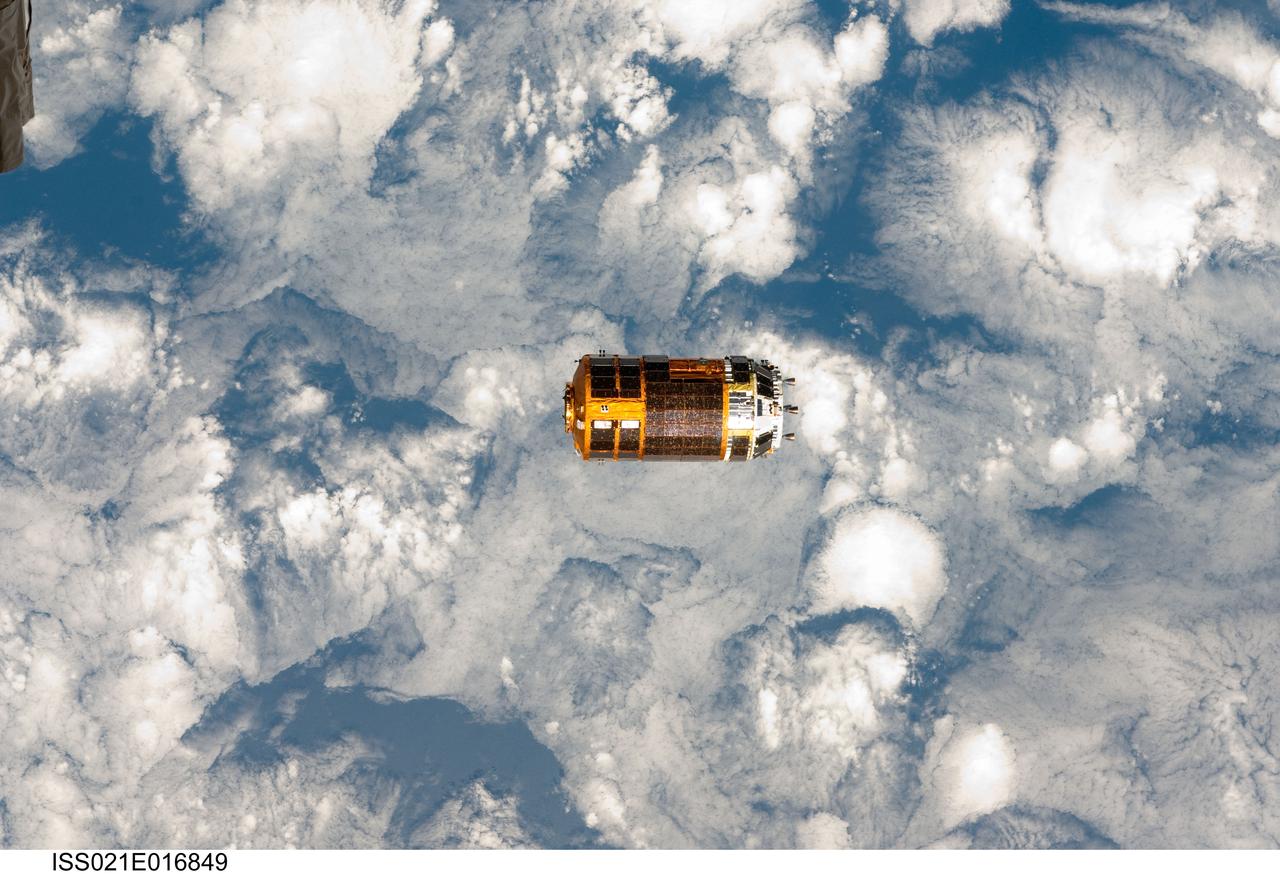
ISS021-E-016849 (30 Oct. 2009) --- Backdropped by a blue and white part of Earth, the unpiloted Japanese H-II Transfer Vehicle (HTV), filled with trash and unneeded items, departs from the International Space Station. European Space Agency astronaut Frank De Winne, Expedition 21 commander; NASA astronaut Nicole Stott and Canadian Space Agency astronaut Robert Thirsk, both flight engineers, used the station’s Canadarm2 robotic arm to grab the HTV cargo craft and unberth it from the Harmony node’s nadir port. The HTV was successfully unberthed at 10:18 a.m. (CDT) on Oct. 30, 2009, and released from the station’s Canadarm2 at 12:32 p.m.
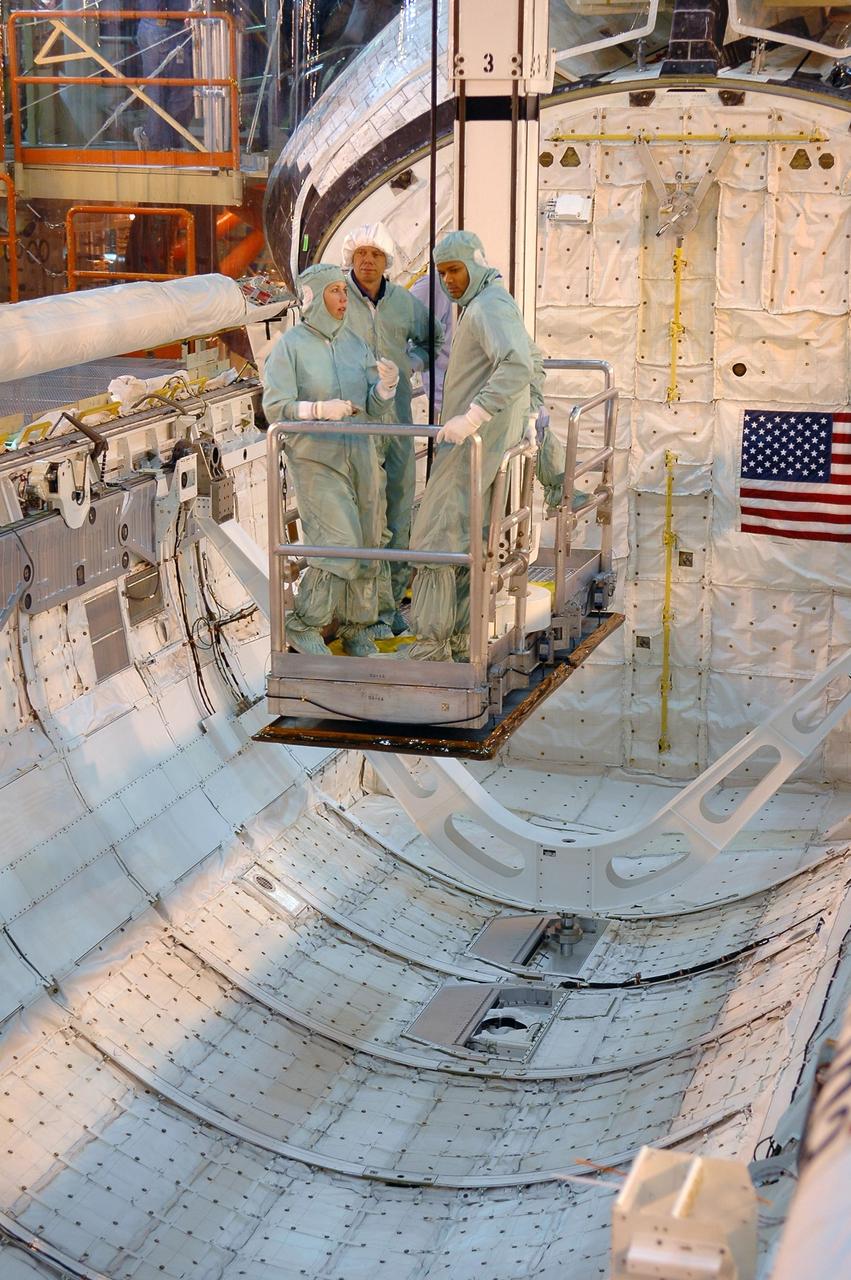
KENNEDY SPACE CENTER, FLA. - During a Crew Equipment Interface Test (CEIT) in the Orbiter Processing Facility, STS-116 crew members are lowered into Discovery’s payload bay for a closer look. In the white cap is Mission Specialist Christer Fugelsang; at right is Mission Specialist Robert Curbeam. Fugelsang represents the European Space Agency. A CEIT allows astronauts to become familiar with equipment and hardware they will use on the mission. STS-116 will be mission No. 20 to the International Space Station and construction flight 12A.1. The mission payload is the SPACEHAB module, the P5 integrated truss structure and other key components. Launch is scheduled for no earlier than Dec. 7. Photo credit: NASA/Kim Shiflett
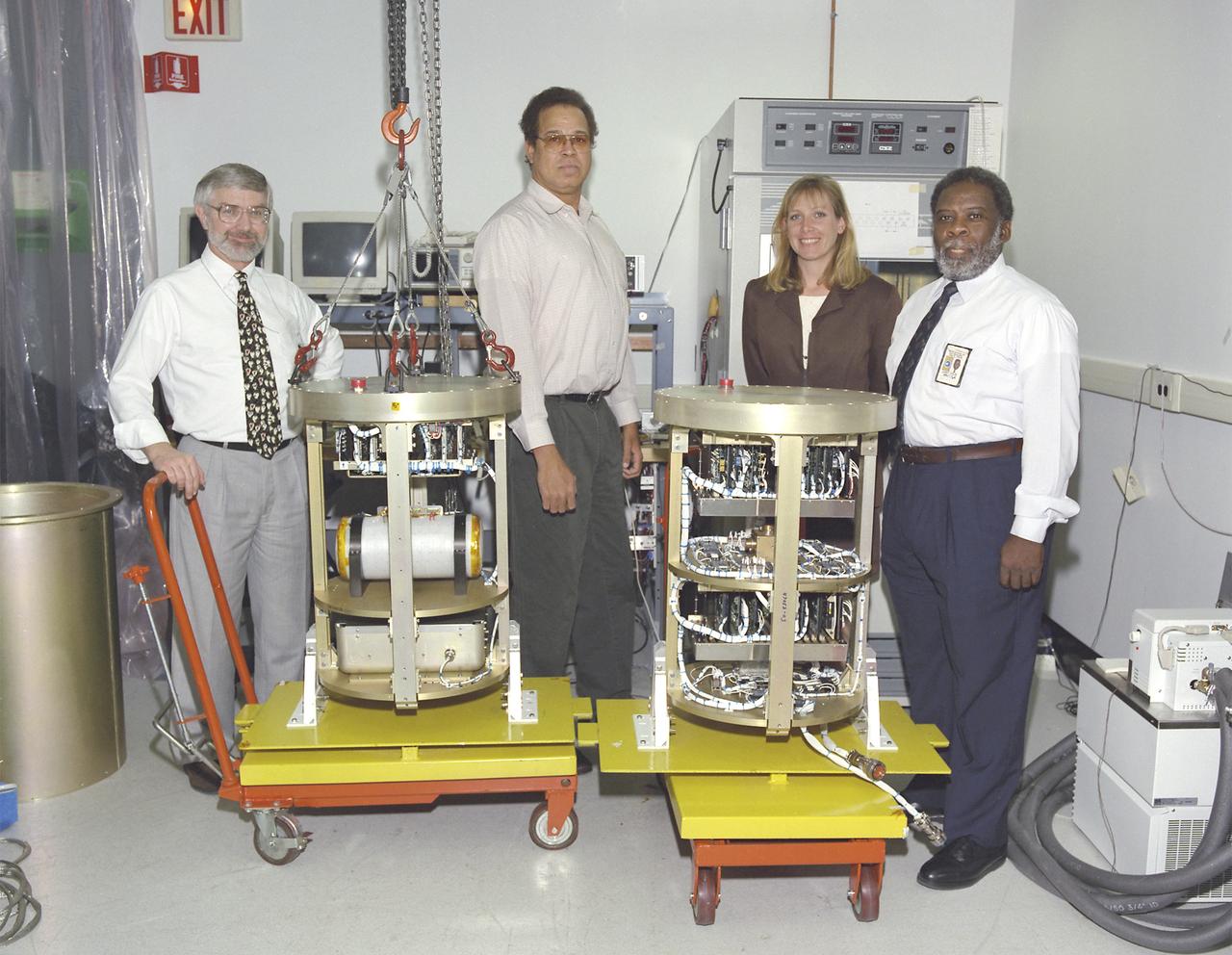
The Critical Viscosity of Xenon Experiment (CVX-2) on the STS-107 Research 1 mission in 2002 will measure the viscous behavior of xenon, a heavy inert gas used in flash lamps and ion rocket engines, at its critical point. The thermostat for CVX sits inside the white cylinder on a support structure (at left) that is placed inside a pressure canister. A similar canister (right) holds the electronics and control systems. The CVX-2 arrangement is identical. The principal investigator is Dr. Robert F. Berg (not shown) of the National Institutes of Standards and Technology, Gaithersburg, MD.
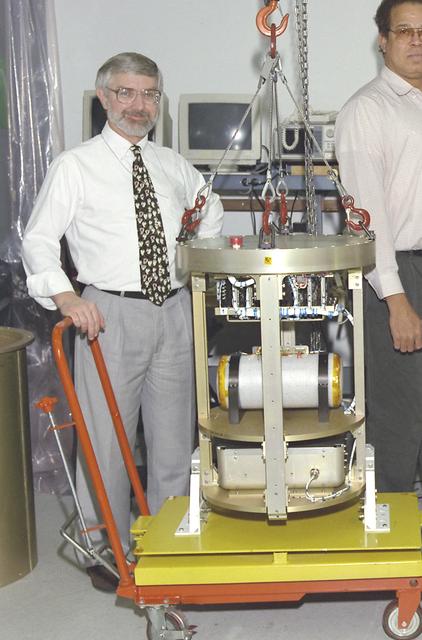
The Critical Viscosity of Xenon Experiment (CVX-2) on the STS-107 Research 1 mission in 2001 will measure the viscous behavior of xenon, a heavy inert gas used in flash lamps and ion rocket engines, at its critical point. The thermostat for CVX sits inside the white cylinder on a support structure that is placed inside a pressure canister. A similar canister holds the electronics and control systems. The CVX-2 arrangement is identical. The principal investigator is Dr. Robert F. Berg (not shown) of the National Institutes of Standards and Technology, Gaithersburg, MD. This is a detail view of MSFC 0100143.
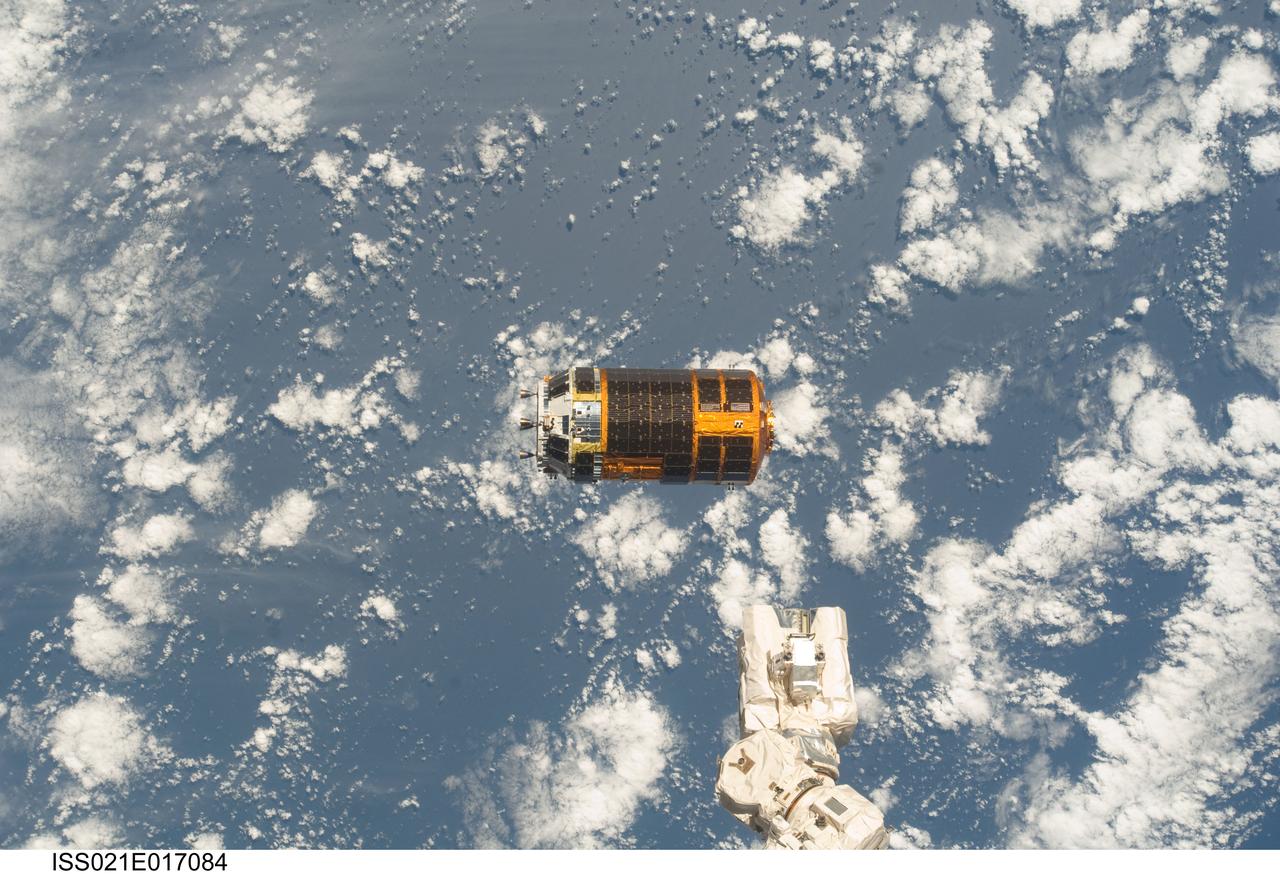
ISS021-E-017084 (30 Oct. 2009) --- Backdropped by a blue and white part of Earth, the unpiloted Japanese H-II Transfer Vehicle (HTV), filled with trash and unneeded items, departs from the International Space Station. European Space Agency astronaut Frank De Winne, Expedition 21 commander; NASA astronaut Nicole Stott and Canadian Space Agency astronaut Robert Thirsk, both flight engineers, used the station’s Canadarm2 robotic arm to grab the HTV cargo craft and unberth it from the Harmony node’s nadir port. The HTV was successfully unberthed at 10:18 a.m. (CDT) on Oct. 30, 2009, and released from the station’s Canadarm2 at 12:32 p.m.
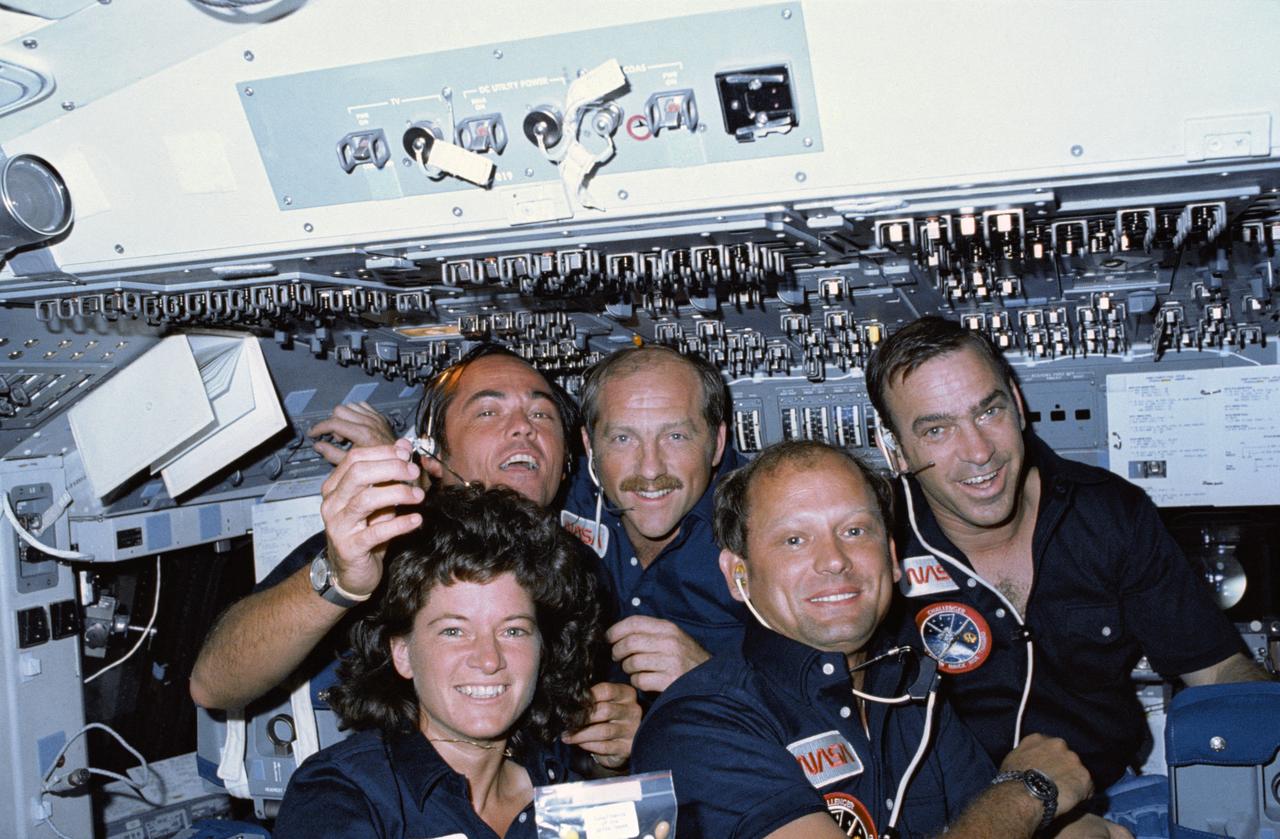
S83-35774 / STS007-30-1574 (21 June 1983) --- The five "passengers" onboard the Earth-orbiting Space Shuttle Challenger display some jelly beans discovered among their food supplies during their six-day mission. The label on the candy reads, "Compliments of the White House." In the rear are (left to right) astronauts Robert L. Crippen, crew commander, Frederick H. Hauck, pilot; and John M. Fabian, mission specialist. In front are Drs. Sally K. Ride and Norman E. Thagard, mission specialists. The scene was exposed by a pre-set 35mm camera.
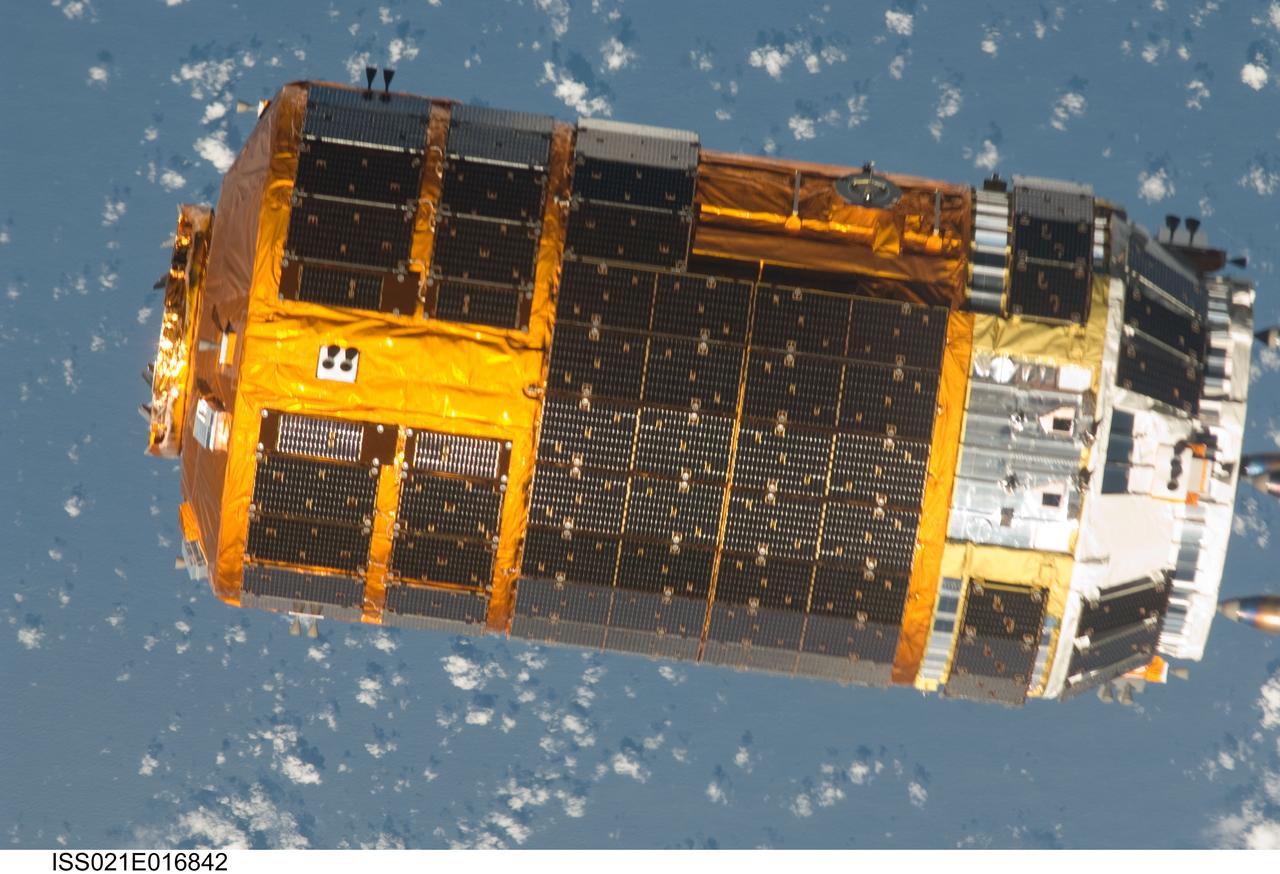
ISS021-E-016842 (30 Oct. 2009) --- Backdropped by a blue and white part of Earth, the unpiloted Japanese H-II Transfer Vehicle (HTV), filled with trash and unneeded items, departs from the International Space Station. European Space Agency astronaut Frank De Winne, Expedition 21 commander; NASA astronaut Nicole Stott and Canadian Space Agency astronaut Robert Thirsk, both flight engineers, used the station’s Canadarm2 robotic arm to grab the HTV cargo craft and unberth it from the Harmony node’s nadir port. The HTV was successfully unberthed at 10:18 a.m. (CDT) on Oct. 30, 2009, and released from the station’s Canadarm2 at 12:32 p.m.
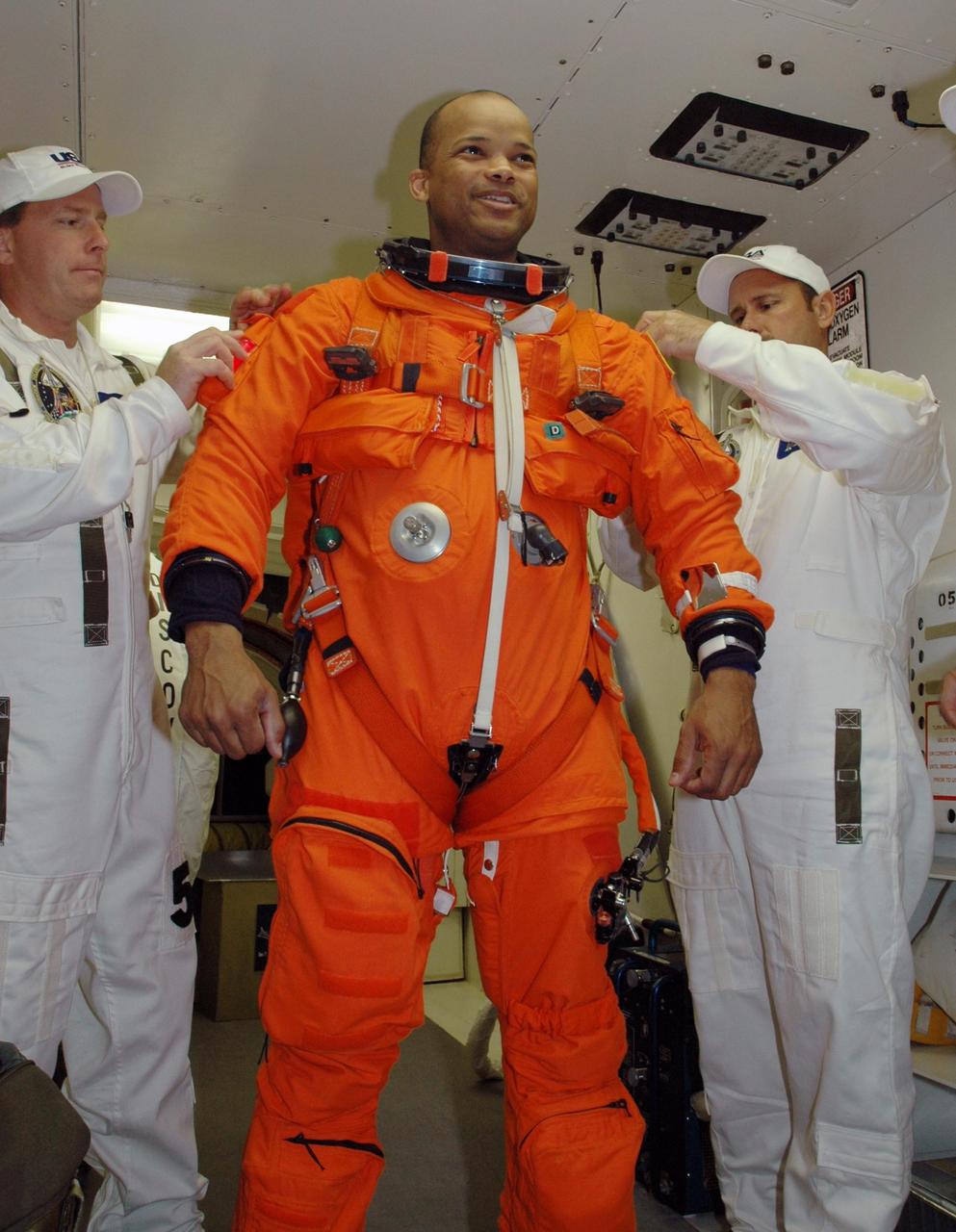
KENNEDY SPACE CENTER, FLA. -- In the white room on Launch Pad 39B, STS-116 Mission Specialist Robert Curbeam is helped with his gear before entering Space Shuttle Discovery. The mission crew is taking part in a simulated launch countdown, part of the terminal countdown demonstration test that includes prelaunch preparations. The STS-116 mission is No. 20 to the International Space Station and construction flight 12A.1. The mission payload is the SPACEHAB module, the P5 integrated truss structure and other key components. Launch is scheduled for no earlier than Dec. 7. Photo credit: NASA/Amanda Diller
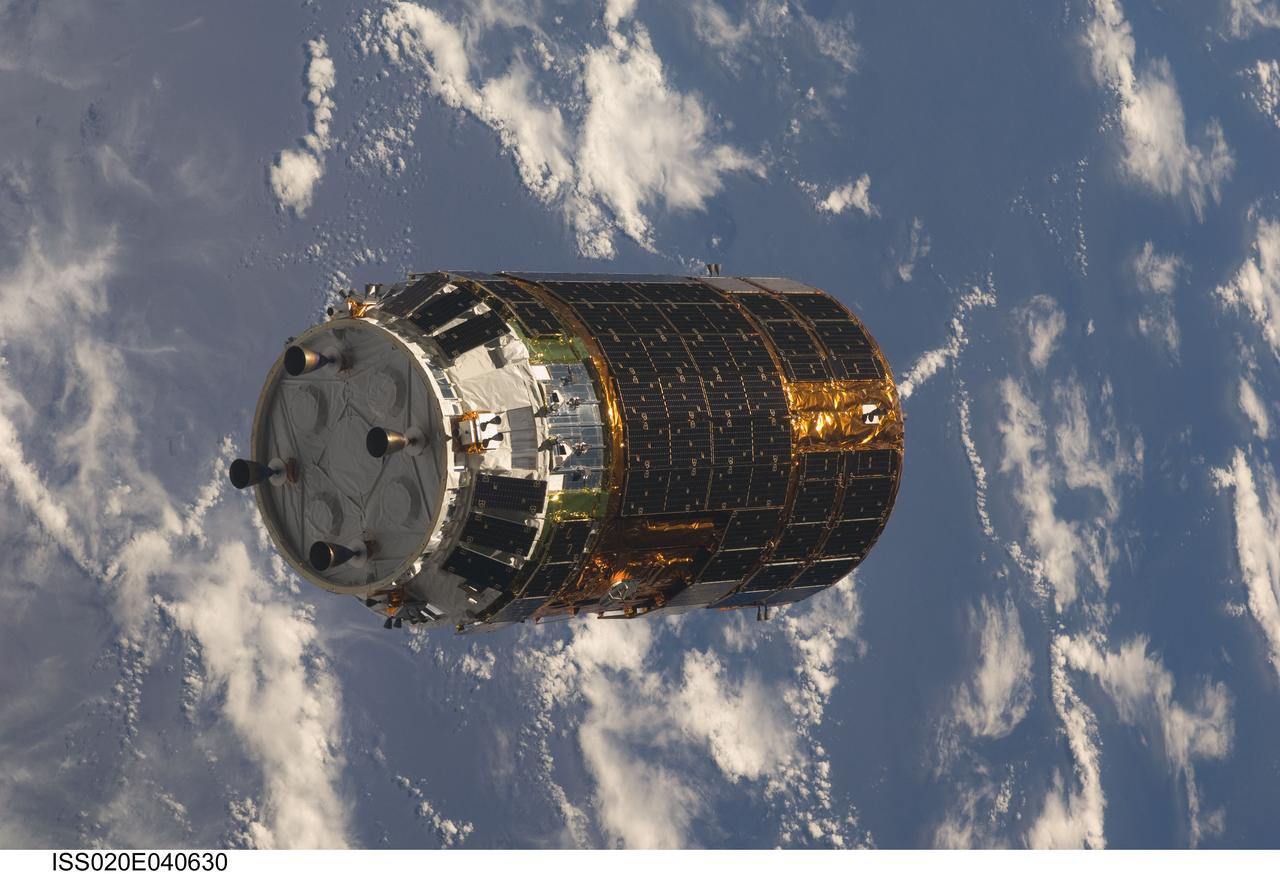
ISS020-E-040630 (17 Sept. 2009) --- Backdropped by a blue and white part of Earth, the unpiloted Japanese H-II Transfer Vehicle (HTV) approaches the International Space Station. Once the HTV was in range, NASA astronaut Nicole Stott, Canadian Space Agency astronaut Robert Thirsk and European Space Agency astronaut Frank De Winne, all Expedition 20 flight engineers, used the station’s robotic arm to grab the cargo craft and attach it to the Earth-facing port of the Harmony node. The attachment was completed at 5:26 (CDT) on Sept. 17, 2009.
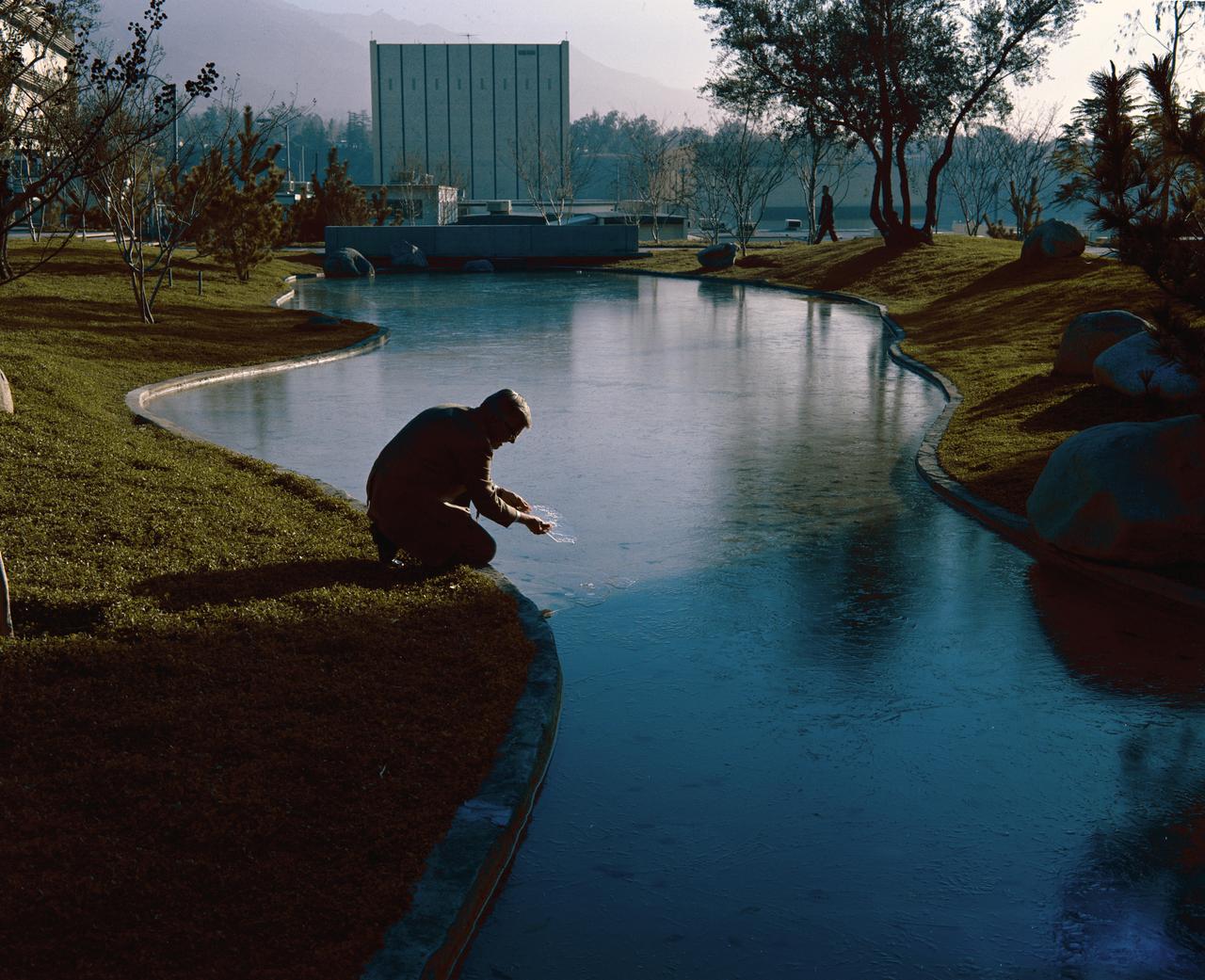
This archival image was released as part of a gallery comparing JPL's past and present, commemorating the 80th anniversary of NASA's Jet Propulsion Laboratory on Oct. 31, 2016. This photograph from 1971 shows the open-air gathering area at NASA's Jet Propulsion Laboratory known as "The Mall." It looks east towards the Applied Mechanics building (the blocky white building now numbered 157). The person in the foreground is Robert Steinbacher, the project scientist for the Mariner 9 mission to Mars. The concrete bridge crossing the ponds remains, even though the ponds have been removed. Many trees and another building, the Central Engineering Building (301), block the view to Building 157 now. http://photojournal.jpl.nasa.gov/catalog/PIA21125
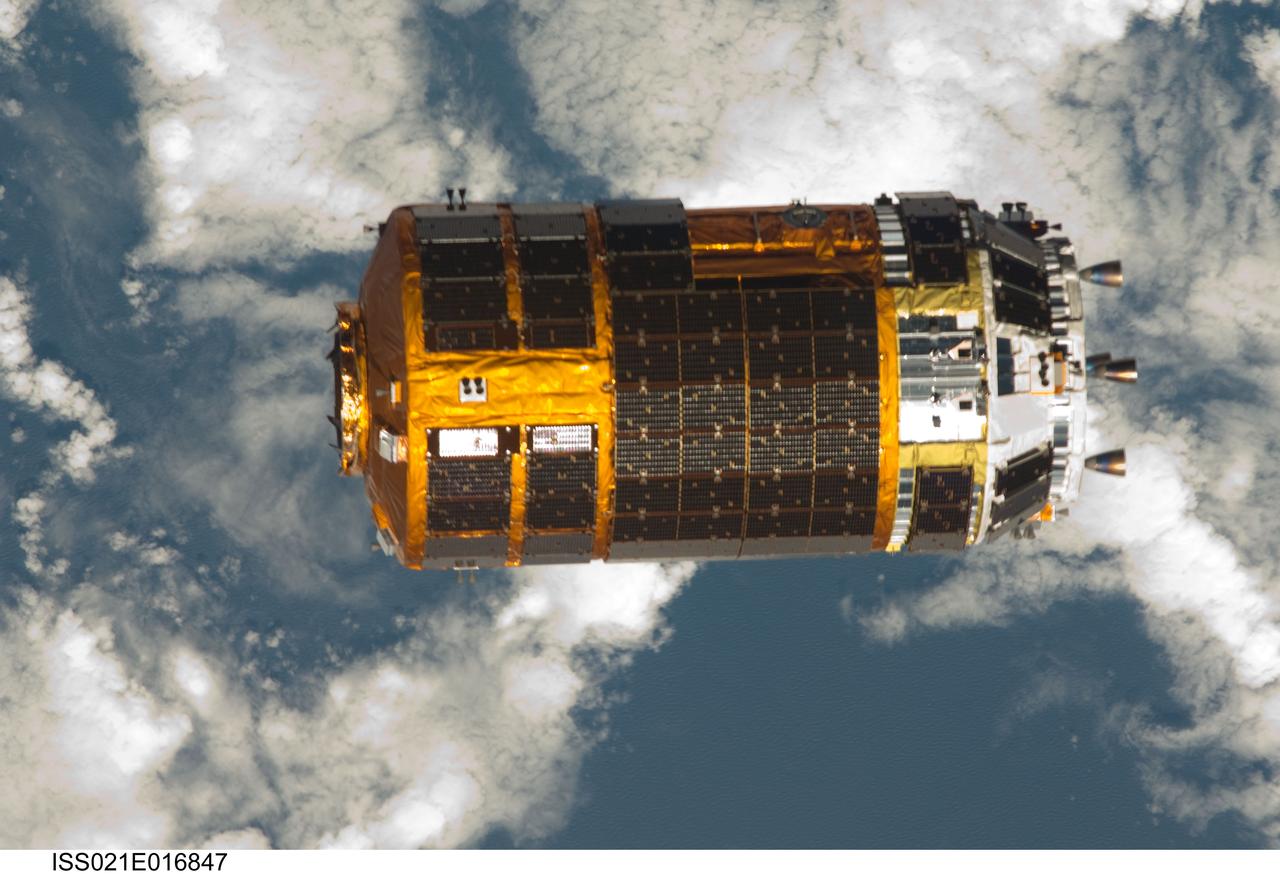
ISS021-E-016847 (30 Oct. 2009) --- Backdropped by a blue and white part of Earth, the unpiloted Japanese H-II Transfer Vehicle (HTV), filled with trash and unneeded items, departs from the International Space Station. European Space Agency astronaut Frank De Winne, Expedition 21 commander; NASA astronaut Nicole Stott and Canadian Space Agency astronaut Robert Thirsk, both flight engineers, used the station’s Canadarm2 robotic arm to grab the HTV cargo craft and unberth it from the Harmony node’s nadir port. The HTV was successfully unberthed at 10:18 a.m. (CDT) on Oct. 30, 2009, and released from the station’s Canadarm2 at 12:32 p.m.
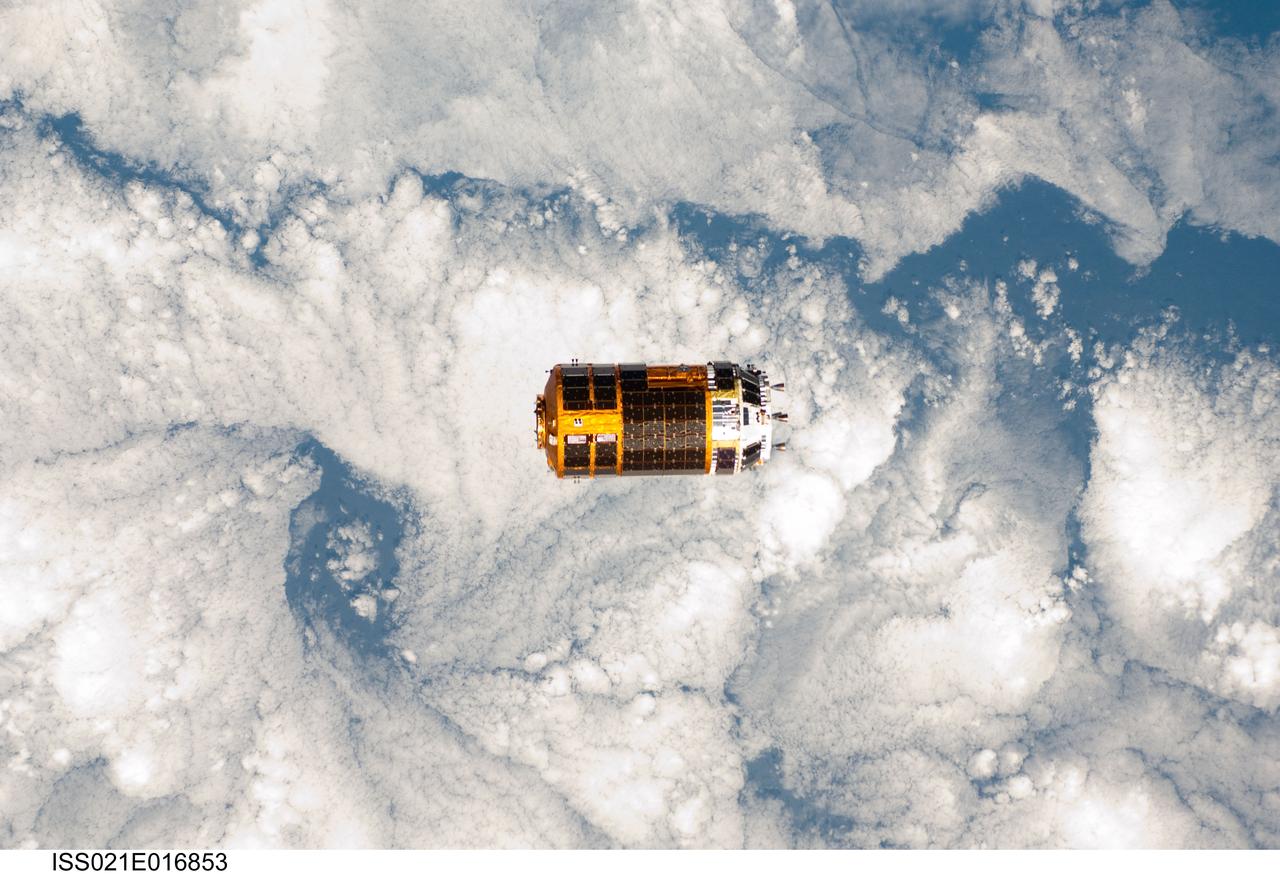
ISS021-E-016853 (30 Oct. 2009) --- Backdropped by a blue and white part of Earth, the unpiloted Japanese H-II Transfer Vehicle (HTV), filled with trash and unneeded items, departs from the International Space Station. European Space Agency astronaut Frank De Winne, Expedition 21 commander; NASA astronaut Nicole Stott and Canadian Space Agency astronaut Robert Thirsk, both flight engineers, used the station’s Canadarm2 robotic arm to grab the HTV cargo craft and unberth it from the Harmony node’s nadir port. The HTV was successfully unberthed at 10:18 a.m. (CDT) on Oct. 30, 2009, and released from the station’s Canadarm2 at 12:32 p.m.
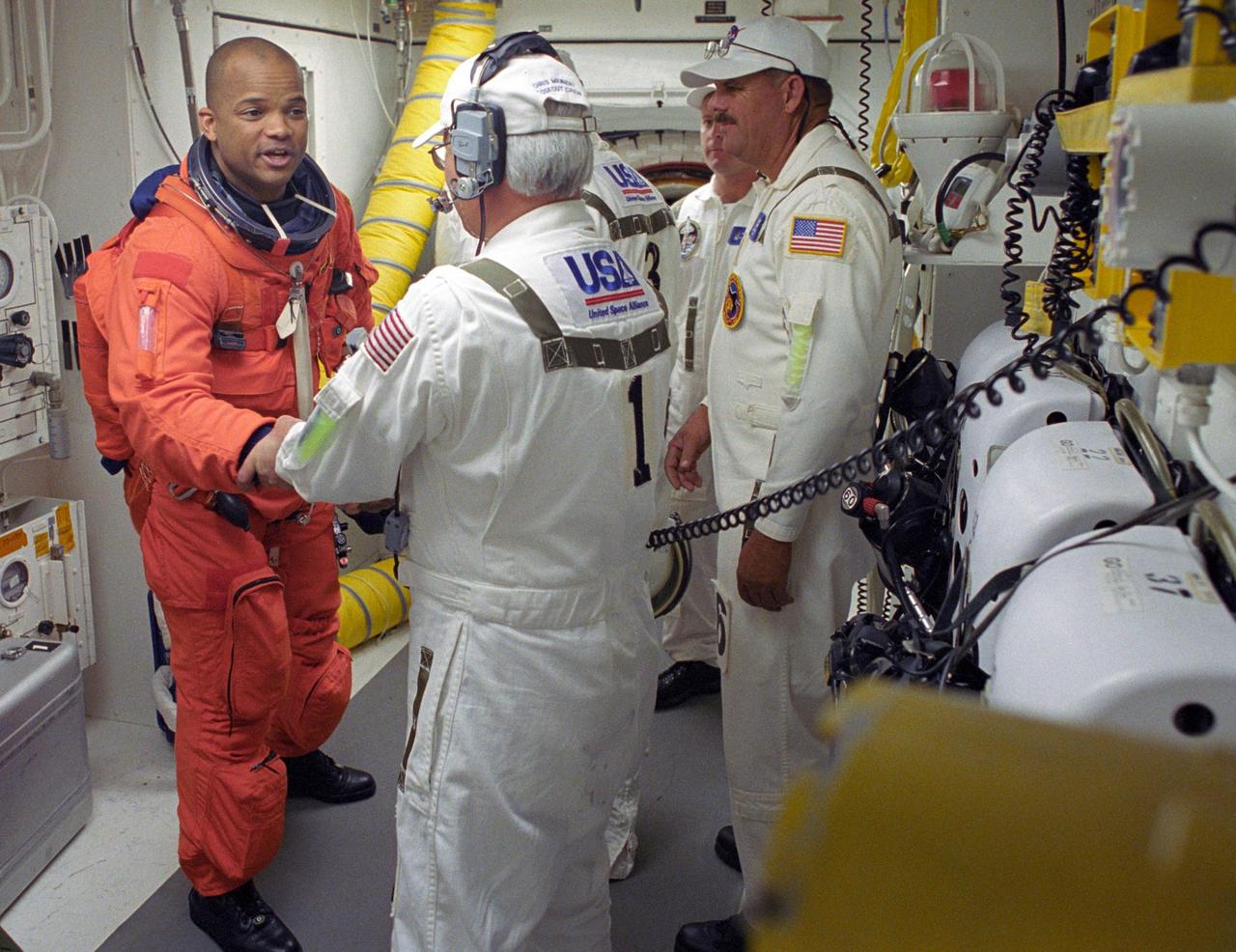
KENNEDY SPACE CENTER, FLA. -- STS-116 Mission Specialist Robert Curbeam thanks the closeout crew for their help in completing his suitup before climbing into Space Shuttle Discovery. The White Room is at the end of the orbiter access arm that extends from the fixed service structure and provides entry into the orbiter. The first launch attempt of STS-116 on Dec. 7 was postponed due a low cloud ceiling over Kennedy Space Center. This second launch attempt is scheduled for 8:47 p.m. This is Discovery's 33rd mission and the first night launch since 2002. The 20th shuttle mission to the International Space Station, STS-116 carries another truss segment, P5. It will serve as a spacer, mated to the P4 truss that was attached in September. After installing the P5, the crew will reconfigure and redistribute the power generated by two pairs of U.S. solar arrays. Landing is expected Dec. 21 at KSC. Photo credit: NASA/Tony Gray & Don Kight
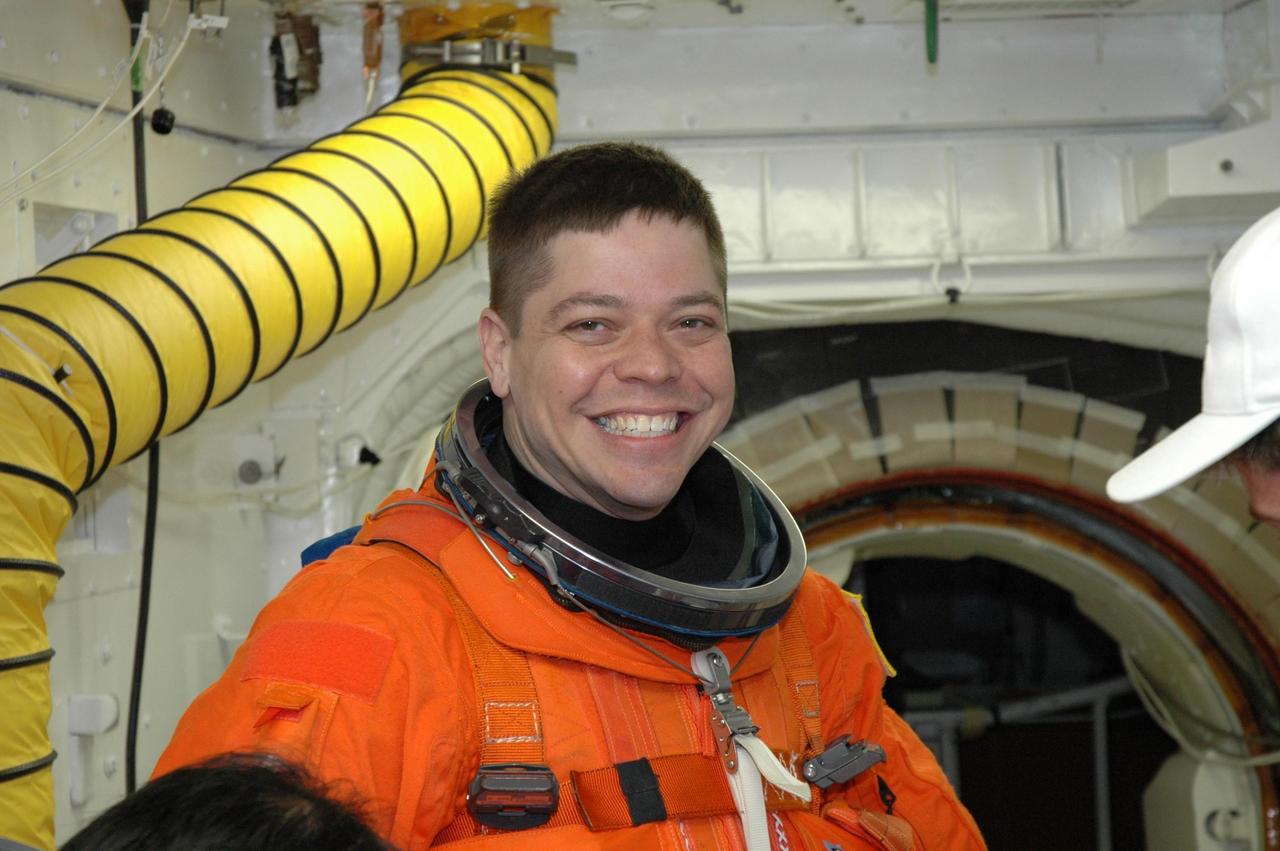
KENNEDY SPACE CENTER, FLA. -- In the White Room on NASA Kennedy Space Center's Launch Pad 39A, STS-123 Mission Specialist Robert L. Behnken is waiting for help with his launch and entry suit before entering space shuttle Endeavour. He and the other STS-123 crew members are getting ready for the simulated launch countdown, which is the culmination of the terminal countdown demonstration test, or TCDT. The TCDT provides astronauts and ground crews with an opportunity to participate in various countdown activities, including equipment familiarization and emergency egress training. Endeavour is targeted to launch at 2:28 a.m. EDT March 11 on the 16-day STS-123 mission to the International Space Station. Endeavour and its crew will deliver the first section of the Japan Aerospace Exploration Agency's Kibo laboratory and the Canadian Space Agency's two-armed robotic system, Dextre. Photo credit: NASA/Jim Grossmann
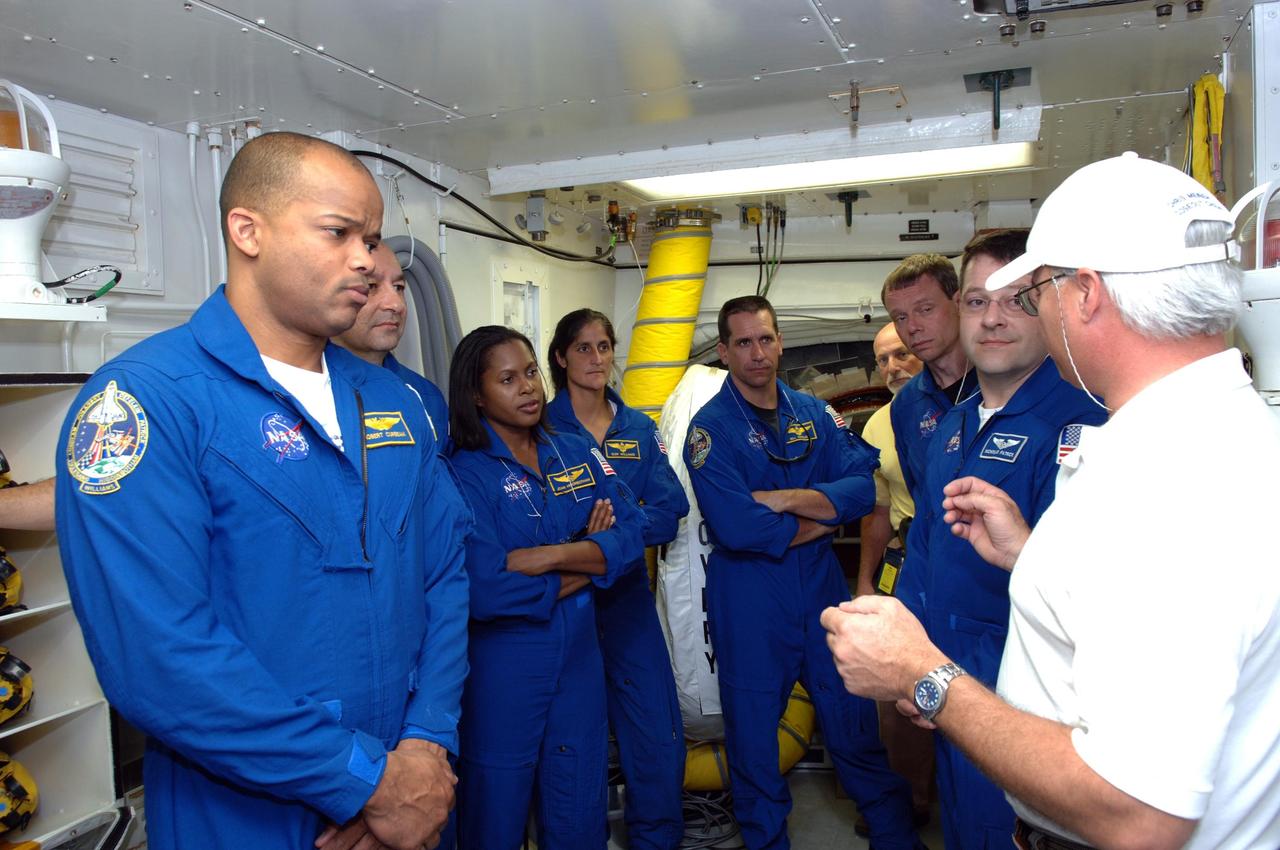
KENNEDY SPACE CENTER, FLA. -- In the White Room on Launch Pad 39B, the STS-116 crew members are told what to expect on launch day as they enter Space Shuttle Discovery from the area. From left are Mission Specialist Robert Curbeam, Commander Mark Polansky, Mission Specialists Joan Higginbotham and Sunita Williams, Pilot William Oefelein, and Mission Specialists Christer Fuglesang and Nicholas Patrick. Fuglesang represents the European Space Agency. The mission crew is at KSC for the TCDT, which includes a simulated launch countdown. The STS-116 mission is No. 20 to the International Space Station and construction flight 12A.1. The mission payload is the SPACEHAB module, the P5 integrated truss structure and other key components. Launch is scheduled for no earlier than Dec. 7. Photo credit: NASA/Kim Shiflett
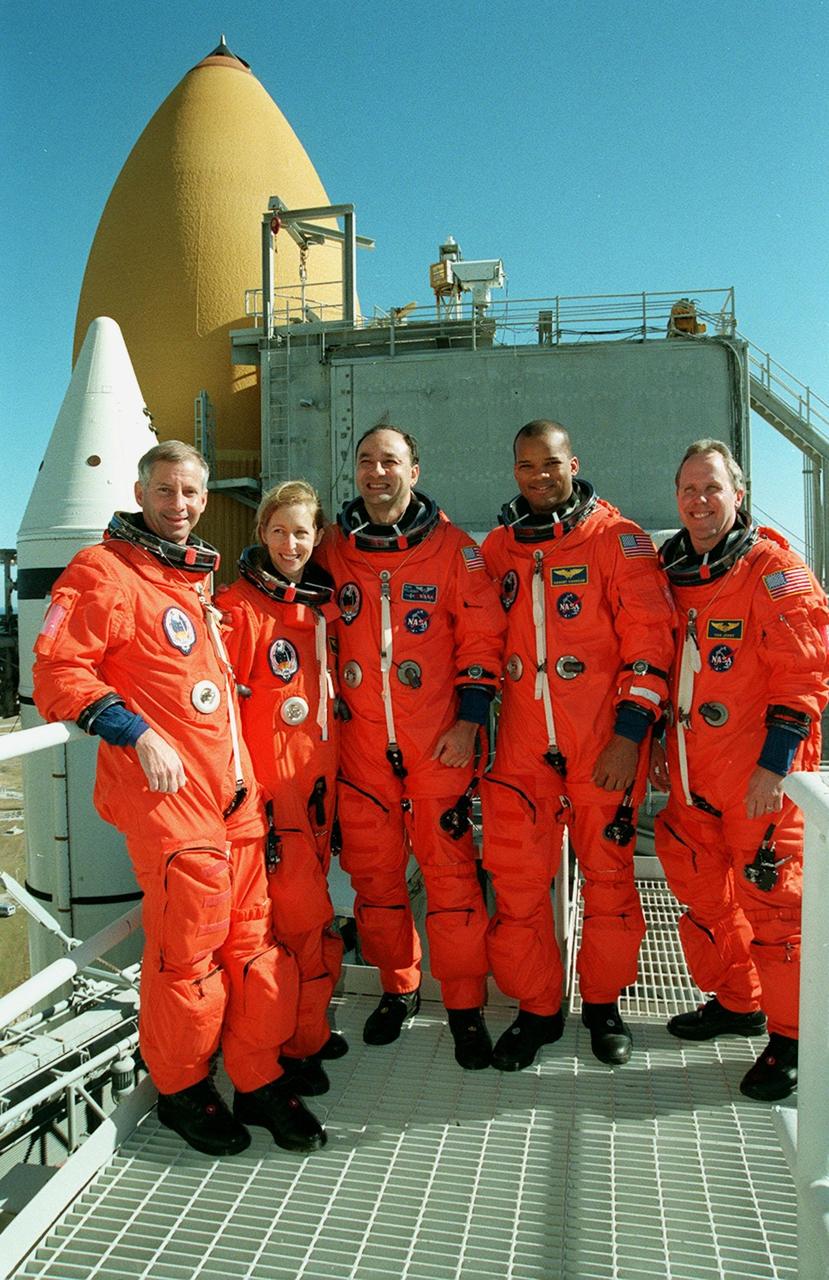
KENNEDY SPACE CENTER, FLA. -- The STS-98 crew poses for a group photo on the 215-foot level of the Fixed Service Structure at Launch Pad 39A. Dressed in their orange launch and entry suits are (left to right) Commander Ken Cockrell, Mission Specialist Marsha Ivins, Pilot Mark Polansky and Mission Specialists Robert Curbeam and Thomas Jones. Behind them can be seen the white nose cone of a solid rocket booster and the orange external tank on Space Shuttle Atlantis. The crew is taking part in emergency egress training and a simulated launch countdown as part of Terminal Countdown Demonstration Test activities. STS-98 is the seventh construction flight to the International Space Station, carrying as payload the U.S. Lab Destiny, a key element in the construction of the ISS. Launch of STS-98 is scheduled for Jan. 19 at 2:11 a.m. EST
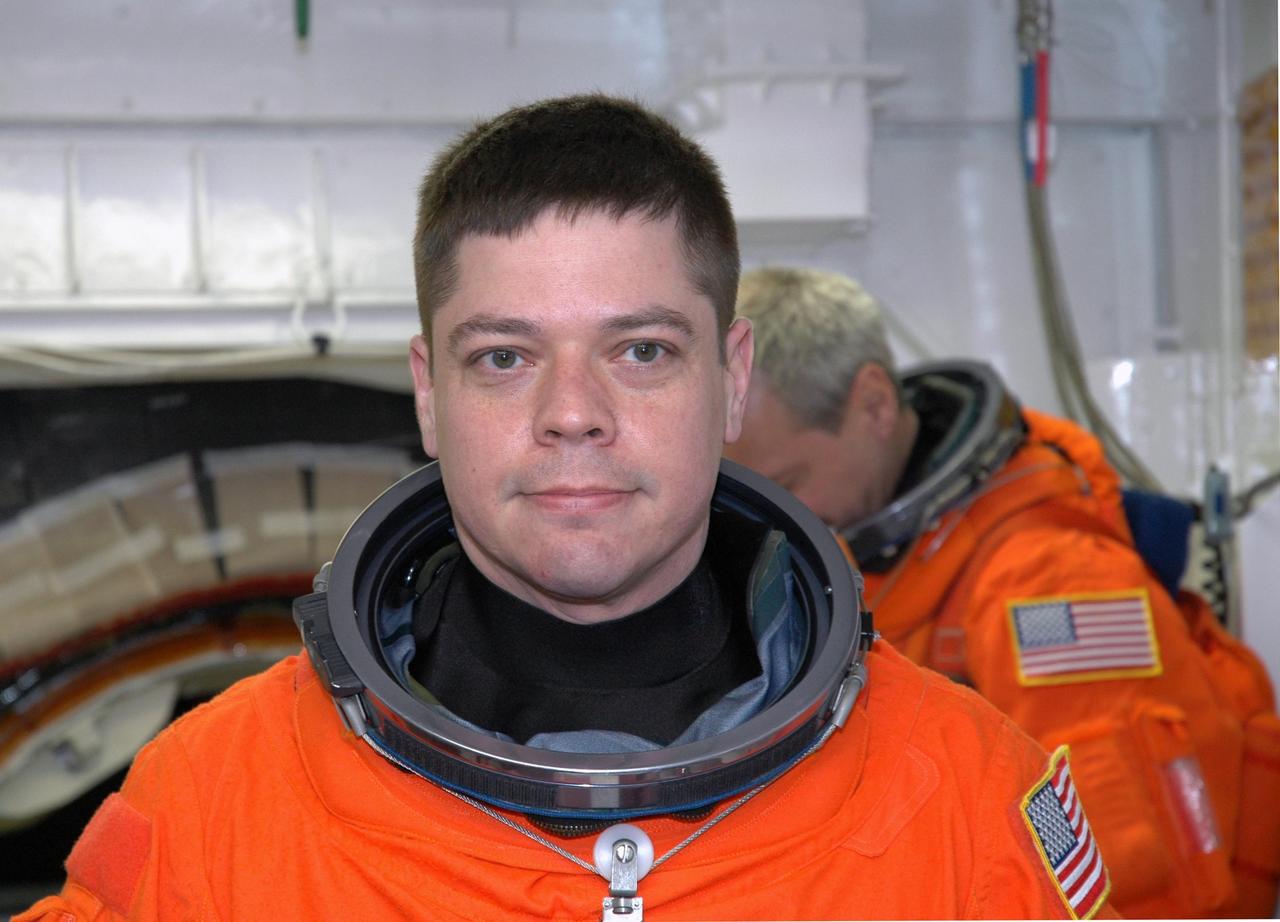
KENNEDY SPACE CENTER, FLA. -- In the White Room on NASA Kennedy Space Center's Launch Pad 39A, STS-123 Mission Specialist Robert L. Behnken is waiting for help with his launch and entry suit before entering space shuttle Endeavour. He and other crew members are getting ready for the simulated launch countdown, which is the culmination of the terminal countdown demonstration test, or TCDT. The TCDT provides astronauts and ground crews with an opportunity to participate in various countdown activities, including equipment familiarization and emergency egress training. Endeavour is targeted to launch at 2:28 a.m. EDT March 11 on the 16-day STS-123 mission to the International Space Station. Endeavour and its crew will deliver the first section of the Japan Aerospace Exploration Agency's Kibo laboratory and the Canadian Space Agency's two-armed robotic system, Dextre. Photo credit: NASA/Jim Grossmann
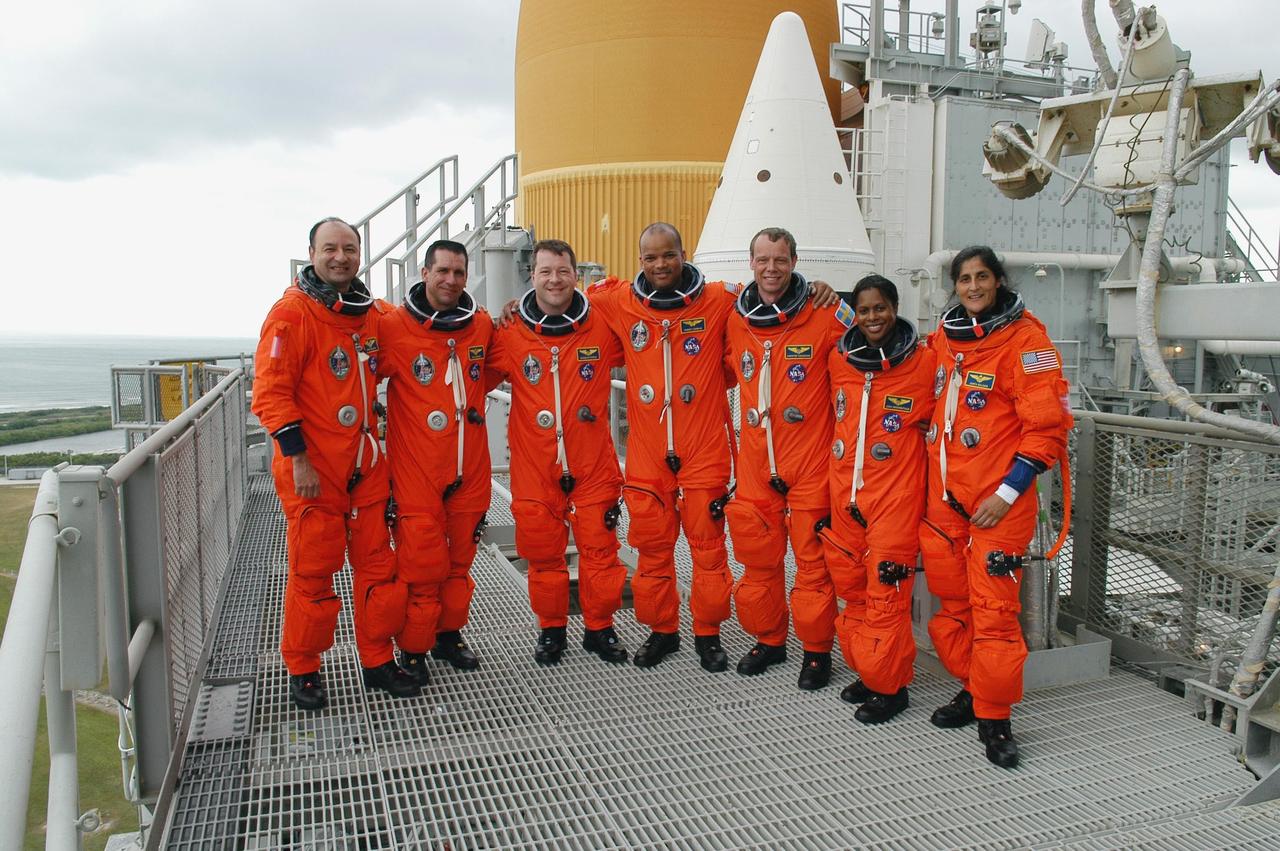
KENNEDY SPACE CENTER, FLA. -- On the 195-foot level of the fixed service structure on Launch Pad 39B, STS-116 crew members gather for a photo in front of the white solid rocket boosters and external tank of Space Shuttle Discovery. They have just completed a simulated launch countdown and emergency egress from the orbiter. From left are Commander Mark Polansky, Pilot William Oefelein and Mission Specialists Nicholas Patrick, Robert Curbeam, Christer Fuglesang, Joan Higginbotham and Sunita Williams. Fuglesang represents the European Space Agency. Williams is traveling to the International Space Station on Discovery and will remain behind as a flight engineer with the Expedition 14 crew. The STS-116 mission is No. 20 to the International Space Station and construction flight 12A.1. The mission payload is the SPACEHAB module, the P5 integrated truss structure and other key components. Launch is scheduled for no earlier than Dec. 7. Photo credit: NASA/Kim Shiflett
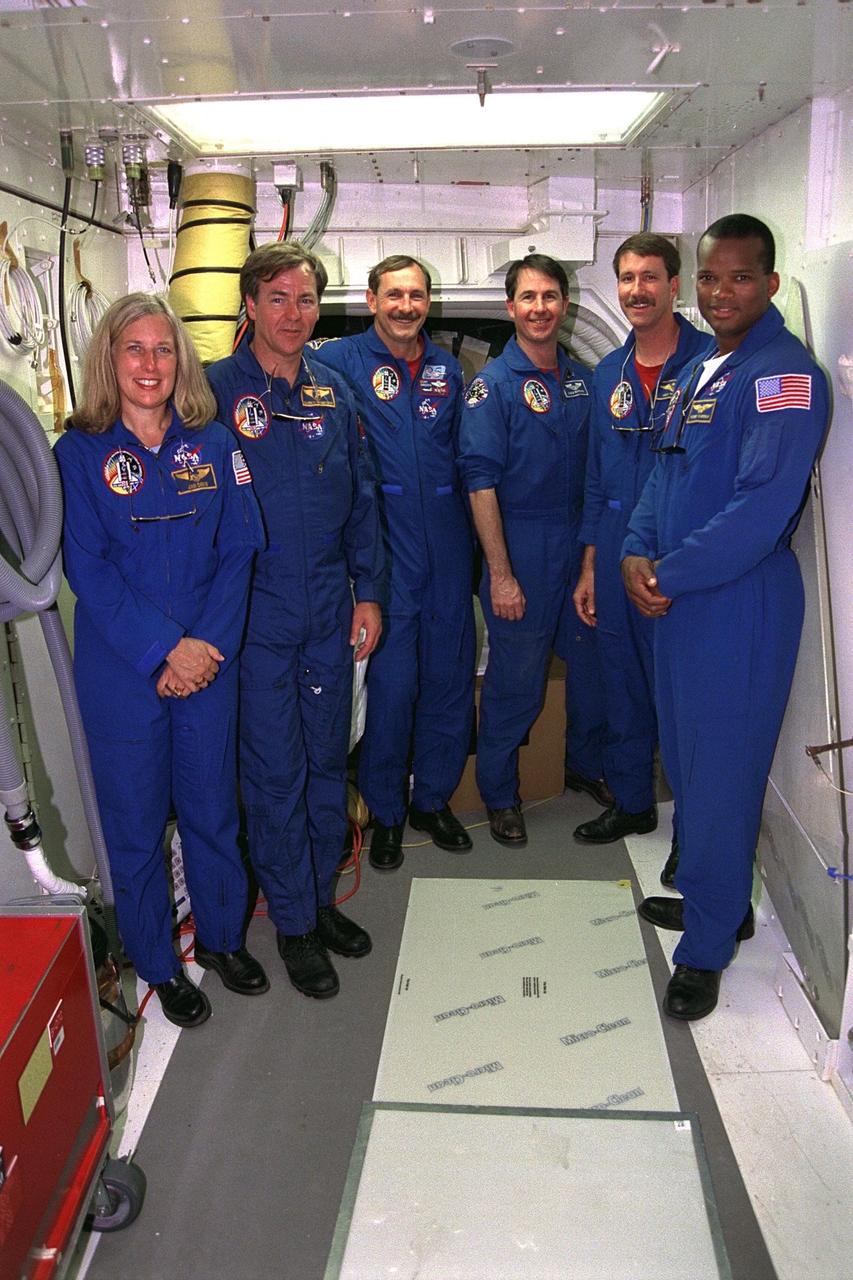
The STS-85 flight crew poses in the white room at Launch Pad 39A during a break in Terminal Countdown Demonstration Test (TCDT) activities for that mission. They are (from left): Payload Commander N. Jan Davis; Payload Specialist Bjarni V. Tryggvason; Commander Curtis L. Brown, Jr.; Mission Specialist Stephen K. Robinson; Pilot Kent V. Rominger; and Mission Specialist Robert L. Curbeam, Jr. The primary payload aboard the Space Shuttle orbiter Discovery is the Cryogenic Infrared Spectrometers and Telescopes for the Atmosphere-2 (CRISTA-SPAS-2). Other payloads on the 11-day mission include the Manipulator Flight Demonstration (MFD), and Technology Applications and Science-1 (TAS-1) and International Extreme Ultraviolet Hitchhiker-2 (IEH-2) experiments
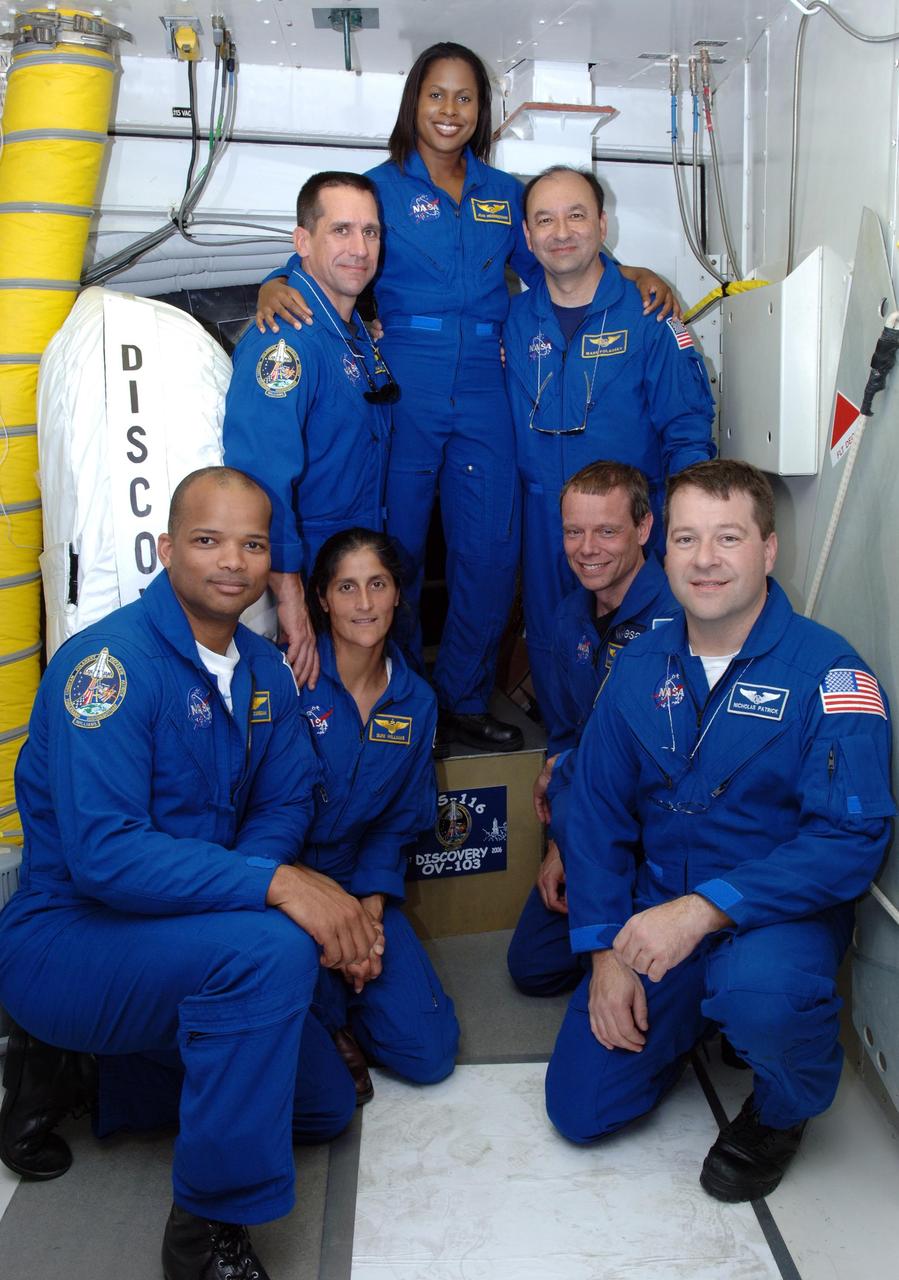
KENNEDY SPACE CENTER, FLA. -- The mission STS-116 crew poses in the White Room on Launch Pad 39B. Clockwise from left are Mission Specialists Robert Curbeam and Sunita Williams, Pilot William Oefelein, Mission Specialist Joan Higginbotham, Commander Mark Polansky, and Mission Specialists Christer Fuglesang and Nicholas Patrick. Fuglesang represents the European Space Agency. The mission crew is at KSC for the TCDT, which includes a simulated launch countdown. The STS-116 mission is No. 20 to the International Space Station and construction flight 12A.1. The mission payload is the SPACEHAB module, the P5 integrated truss structure and other key components. Launch is scheduled for no earlier than Dec. 7. Photo credit: NASA/Kim Shiflett
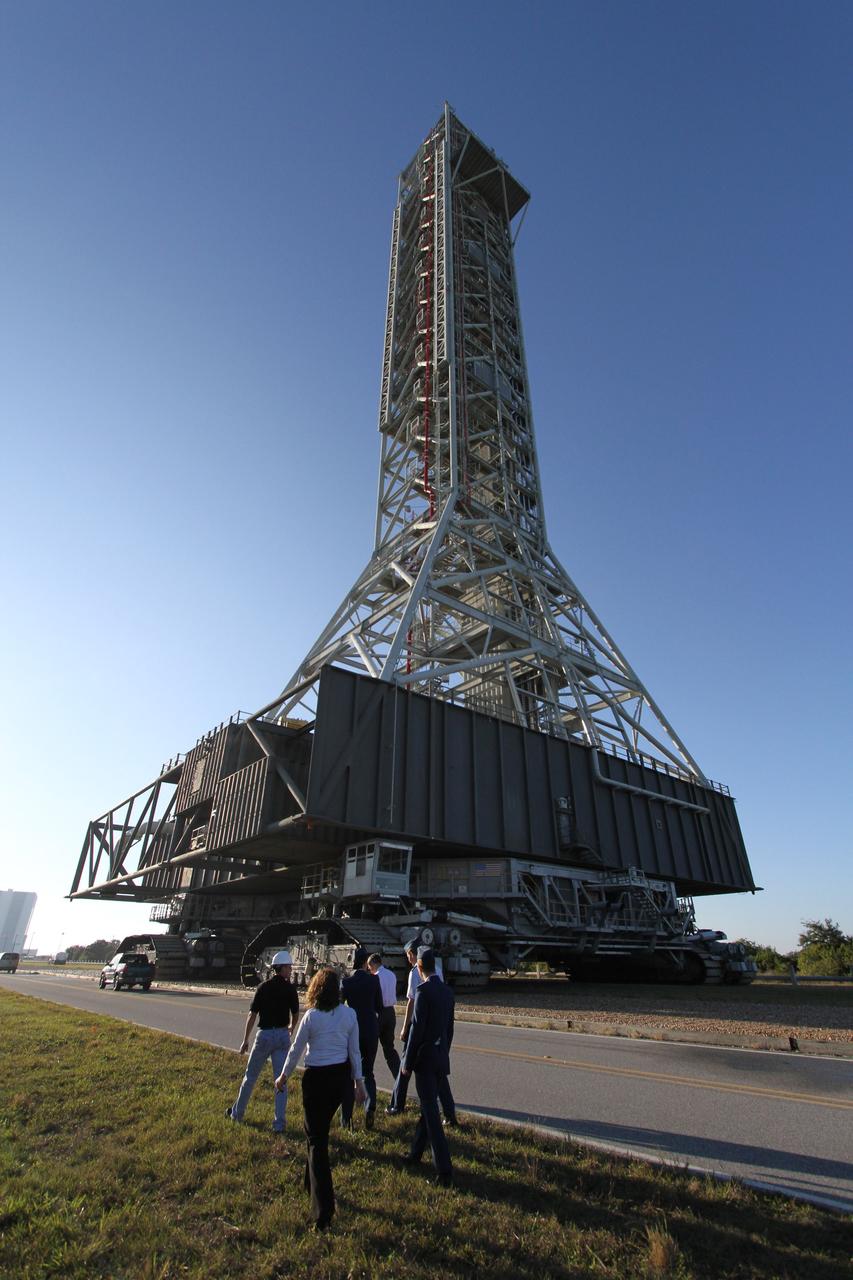
CAPE CANAVERAL, Fla. – Kennedy Space Center Director Robert Cabana (white shirt in front of group) and other support personnel accompany the mobile launcher, or ML, as it rolls from Launch Pad 39B to the park site near the Vehicle Assembly Building at NASA's Kennedy Space Center in Florida. Data on the ML collected from structural and functional engineering tests during its two-week stay on the pad will be used in the next phases of construction. The 355-foot-tall ML structure, which took about two years to construct, will be modified by NASA’s 21st Century Ground Systems Program to support NASA’s Space Launch System, the heavy-lift rocket that will launch astronauts into deep space on future exploration missions. For more information, visit http://www.nasa.gov/exploration/systems/sls. Photo credit: NASA/Cory Huston
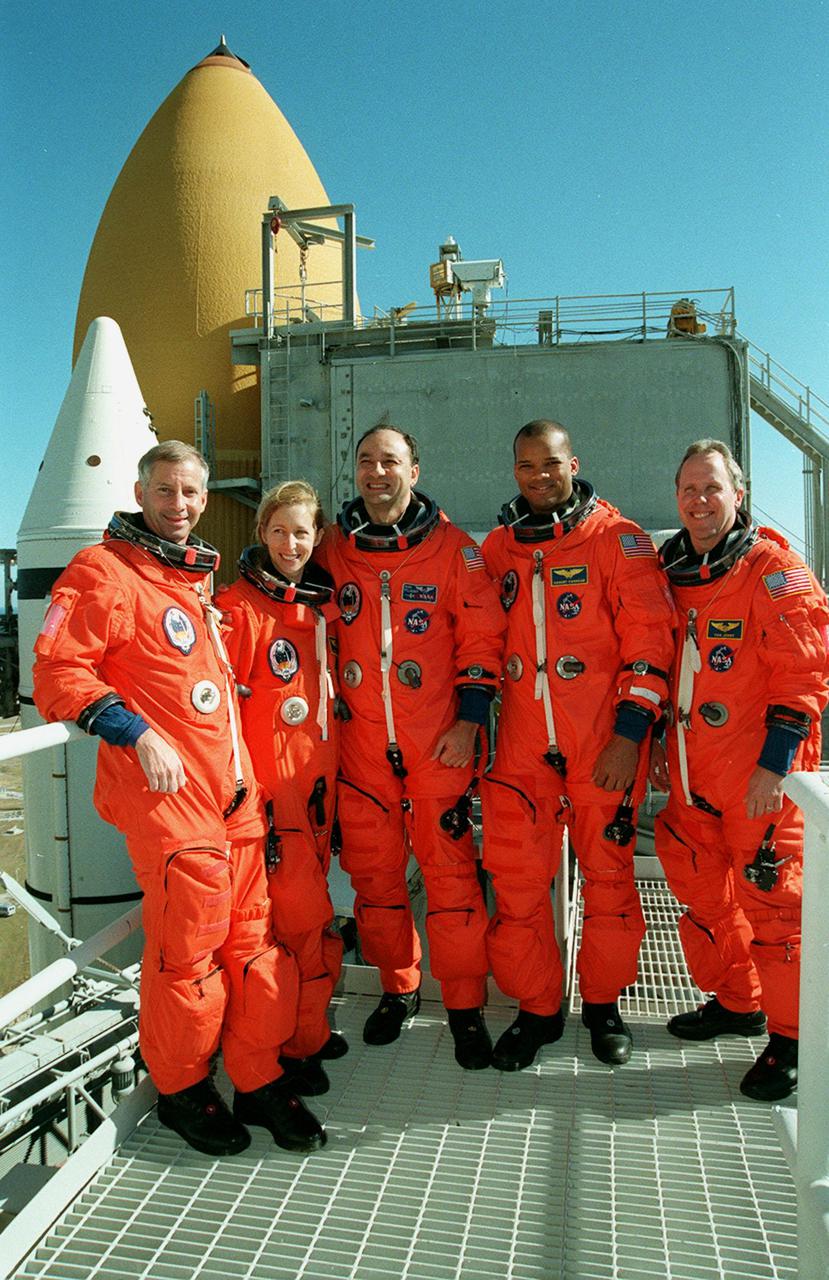
KENNEDY SPACE CENTER, FLA. -- The STS-98 crew poses for a group photo on the 215-foot level of the Fixed Service Structure at Launch Pad 39A. Dressed in their orange launch and entry suits are (left to right) Commander Ken Cockrell, Mission Specialist Marsha Ivins, Pilot Mark Polansky and Mission Specialists Robert Curbeam and Thomas Jones. Behind them can be seen the white nose cone of a solid rocket booster and the orange external tank on Space Shuttle Atlantis. The crew is taking part in emergency egress training and a simulated launch countdown as part of Terminal Countdown Demonstration Test activities. STS-98 is the seventh construction flight to the International Space Station, carrying as payload the U.S. Lab Destiny, a key element in the construction of the ISS. Launch of STS-98 is scheduled for Jan. 19 at 2:11 a.m. EST
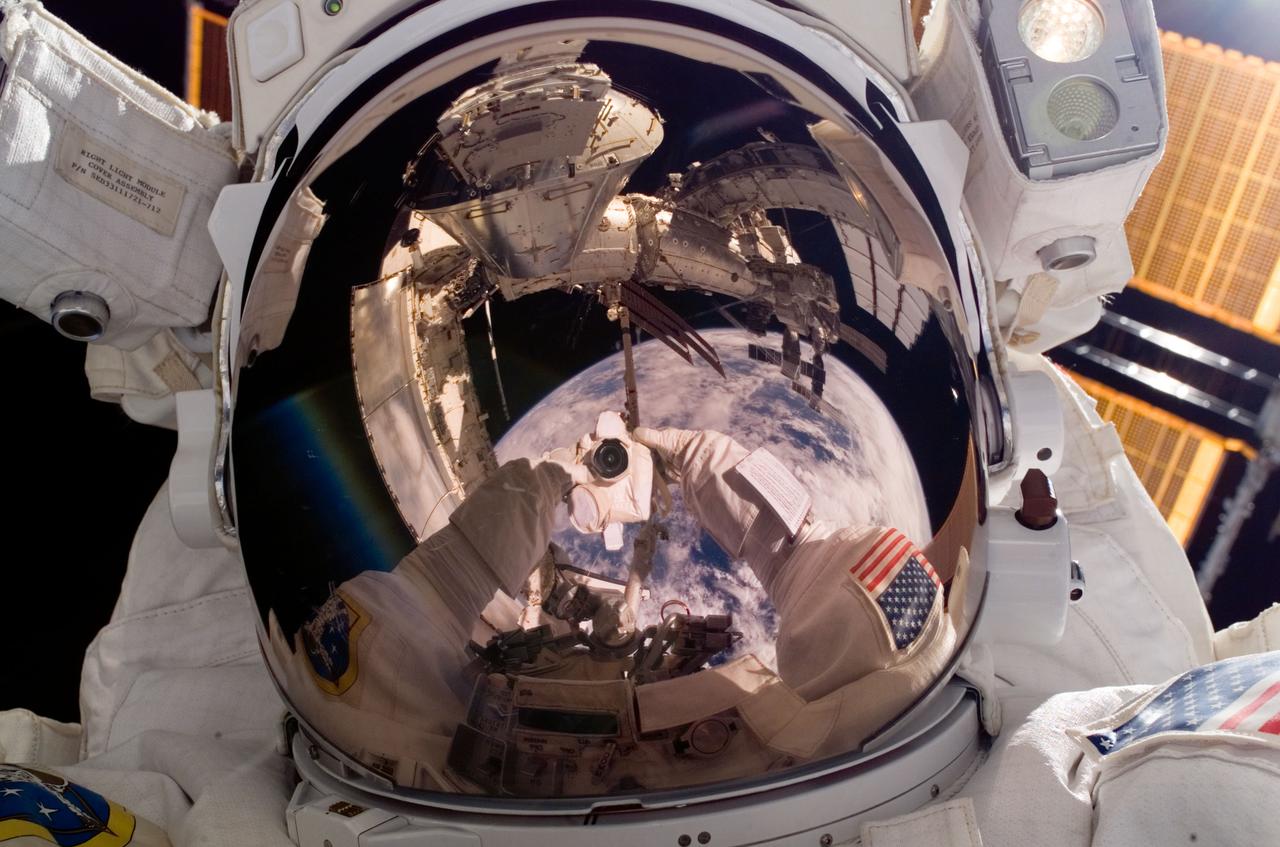
ISS016-E-033024 (17/18 March 2008) --- Astronaut Rick Linnehan, STS-123 mission specialist, uses a digital camera to expose a photo of his helmet visor during the mission's third scheduled session of extravehicular activity (EVA) as construction and maintenance continue on the International Space Station. Also visible in the reflections in the visor are various components of the station, the docked Space Shuttle Endeavour and a blue and white portion of Earth. During the 6-hour, 53-minute spacewalk, Linnehan and astronaut Robert L. Behnken (out of frame), mission specialist, installed a spare-parts platform and tool-handling assembly for Dextre, also known as the Special Purpose Dextrous Manipulator (SPDM). Among other tasks, they also checked out and calibrated Dextre's end effector and attached critical spare parts to an external stowage platform. The new robotic system is scheduled to be activated on a power and data grapple fixture located on the Destiny laboratory on flight day nine.
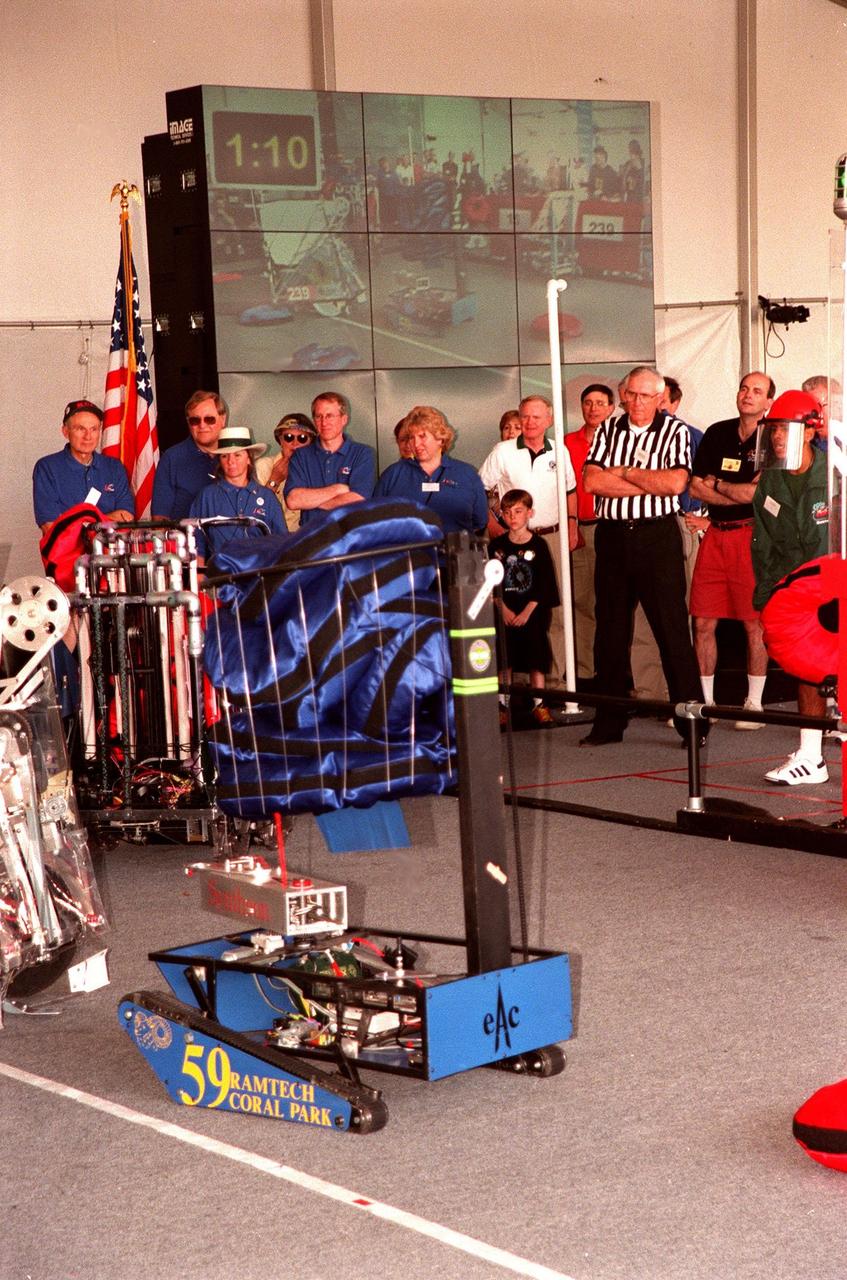
During the 1999 FIRST Southeastern Regional robotic competition held at KSC, a robot carrying its cache of pillow-like disks maneuvers to move around another at left. Powered by 12-volt batteries and operated by remote control, the robotic gladiators spend two minutes each trying to grab, claw and hoist the pillows onto their machines. Teams play defense by taking away competitors' pillows and generally harassing opposing machines. Behind the field are a group of judges, including KSC former KSC Director of Shuttle Processing Robert Sieck (left, in cap), and Center Director Roy Bridges (in white shirt). A giant screen TV in the background displays the action on the playing field. FIRST is a nonprofit organization, For Inspiration and Recognition of Science and Technology. The competition comprised 27 teams, pairing high school students with engineer mentors and corporations. The FIRST robotics competition is designed to provide students with a hands-on, inside look at engineering and other professional careers
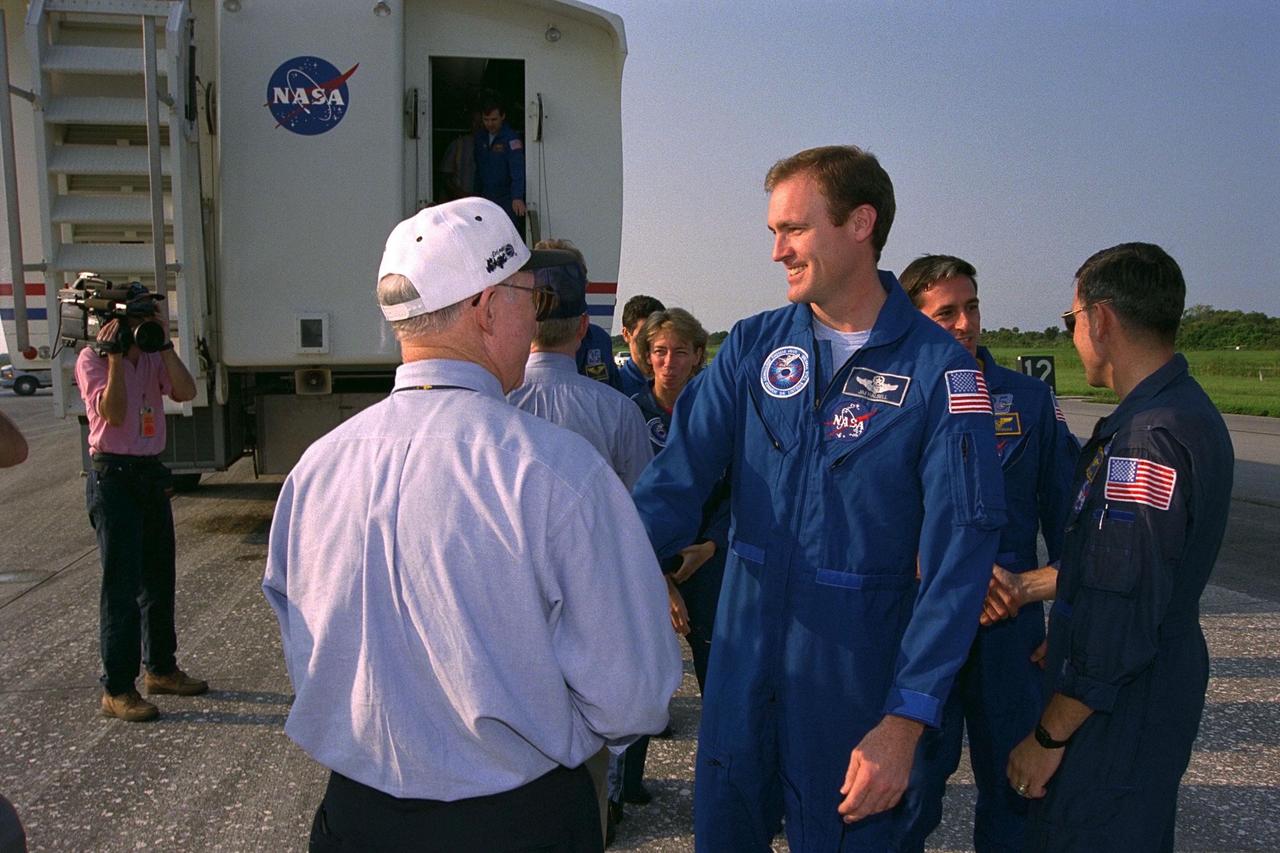
STS-94 Mission Commander James D. Halsell Jr. (center) shakes hands with KSC Shuttle Launch Director James F. Harrington (in white cap) after an end-of-mission landing on Runway 33 of KSC’s Shuttle Landing Facility July 17 to complete the Microgravity Science Laboratory-1 (MSL-1) mission. Main gear touchdown occurred at 6:46:34 a.m. EDT, July 17. At right, STS-88 Mission Commander and Shuttle Training Aircraft (STA) pilot Robert D. Cabana greets STS-94 Mission Specialist Donald A. Thomas. In the background, KSC Center Director Roy D. Bridges Jr. meets with other members of the STS-94 crew
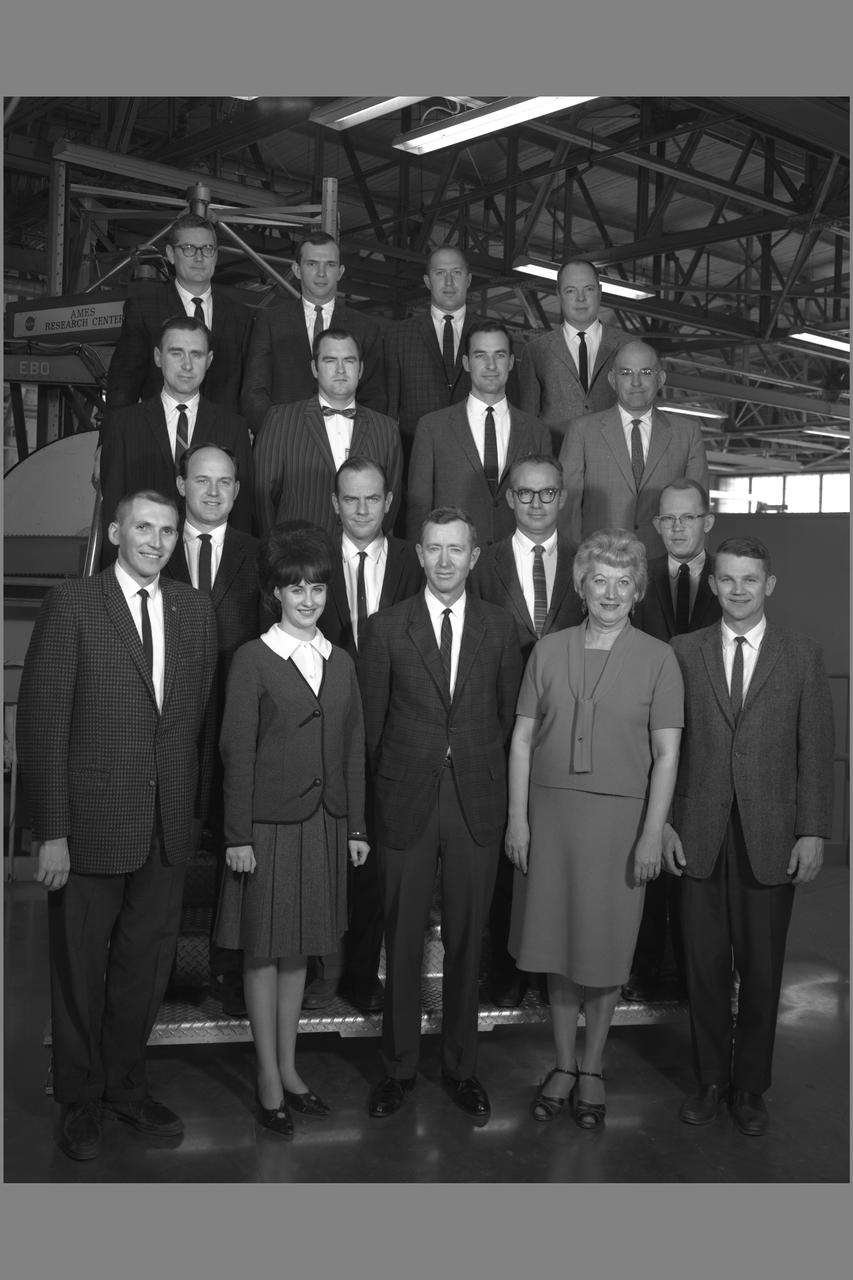
MANNED SPACECRAFT SIMULATION BRANCH PERSONNEL - Top row, L-R: Henry C. Lessing, Dallas G. Denery, Richard Acken, Robert E. Coate. Secon row, L-R: Frederick W. Boltz, Kenneth C. White, Gordon H. Hardy, Donald W. Smith. Third row, L-R: Rodney C. Wingrove, Bedford A. Lampkin, Armando E. Lopez, DeLamar W. Watson. Bottom row, L-R: Richard L. Kurkowski, Michele H. Hilliard, Brent Y. Creer, Grace M. Webster, Frederick G. Edwards. Note: Used in publication in Flight Research at Ames; 57 Years of Development and Validation of Aeronautical Technology NASA SP-1998-3300 fig 90
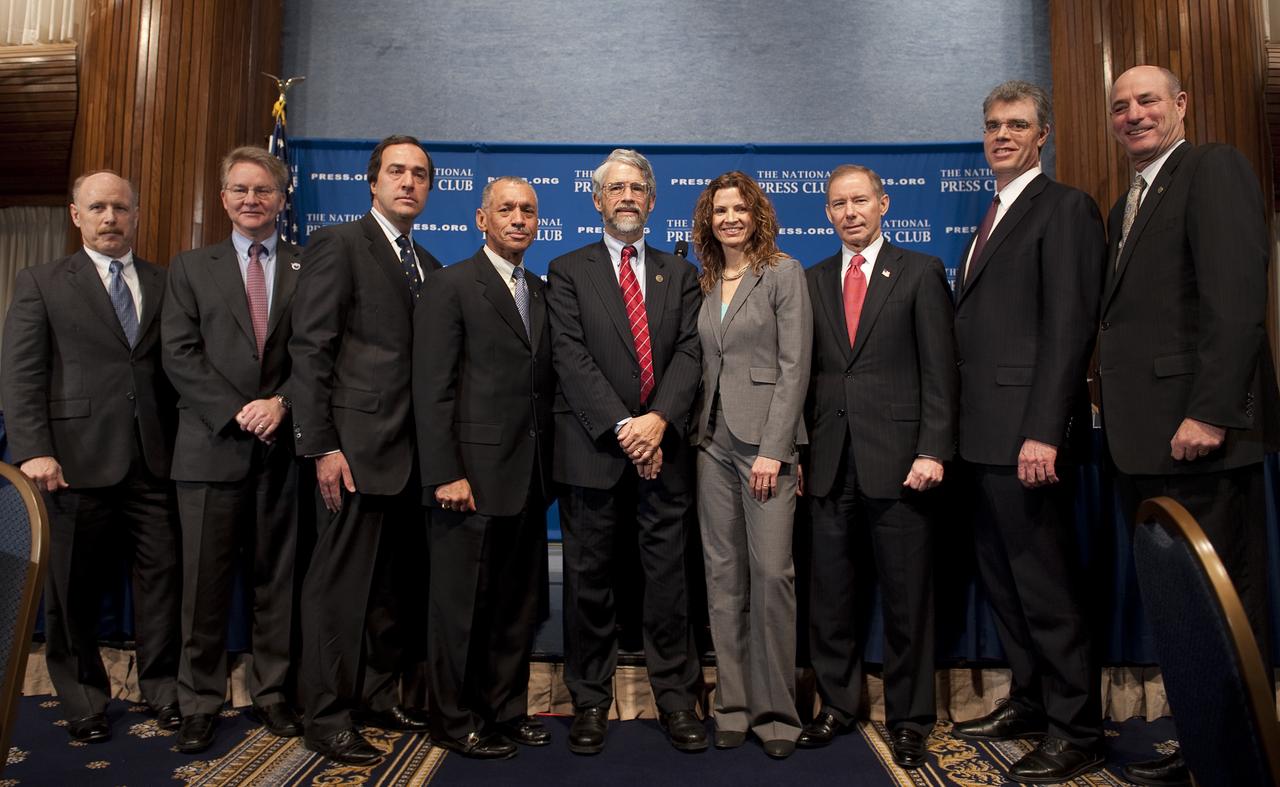
From left, Ken Bowersox, VP Astronaut Safety, SpaceX, David Thompson, CEO, Orbital Science Corporation, Mark Sirangelo, VP and Chair, SNC Space Systems Board, Sierra Nevada Corp., NASA Administrator Charles Bolden, Assistant to the President for Science and Technology and Director of the White House Office of Science and Technology Policy Dr. John P. Holdren, Jane Poynter, President and Chair, Paragon Space Development Corp., Brewster Shaw, VP and General Manager, NASA Systems, Boeing, Robert Millman of Blue Origin, and, Mike Gass, President and Chief Executive, United Launch Alliance, pose for a group photo during a press conference, Tuesday, Feb. 2, 2010, at the National Press Club in Washington, where it was announced that NASA has awarded $50 million through funded agreements to further the commercial sector's capability to support transport of crew to and from low Earth orbit. Photo Credit: (NASA/Bill Ingalls)

CAPE CANAVERAL, Fla. - Members of space shuttle Atlantis' STS-129 crew pose for a group portrait in the White Room at Launch Pad 39A at NASA's Kennedy Space Center in Florida. Kneeling from left are Mission Specialist Randy Bresnik and Commander Charles O. Hobaugh; standing from left are Mission Specialists Mike Foreman, Leland Melvin and Robert L. Satcher Jr.; and Pilot Barry E. Wilmore. The crew members of space shuttle Atlantis' STS-129 mission are at Kennedy for training related to their launch dress rehearsal, the Terminal Countdown Demonstration Test. Launch of Atlantis on its STS-129 mission to the International Space Station is targeted for Nov. 16. For information on the STS-129 mission objectives and crew, visit http://www.nasa.gov/mission_pages/shuttle/shuttlemissions/sts129/index.html. Photo credit: NASA/Jim Grossmann
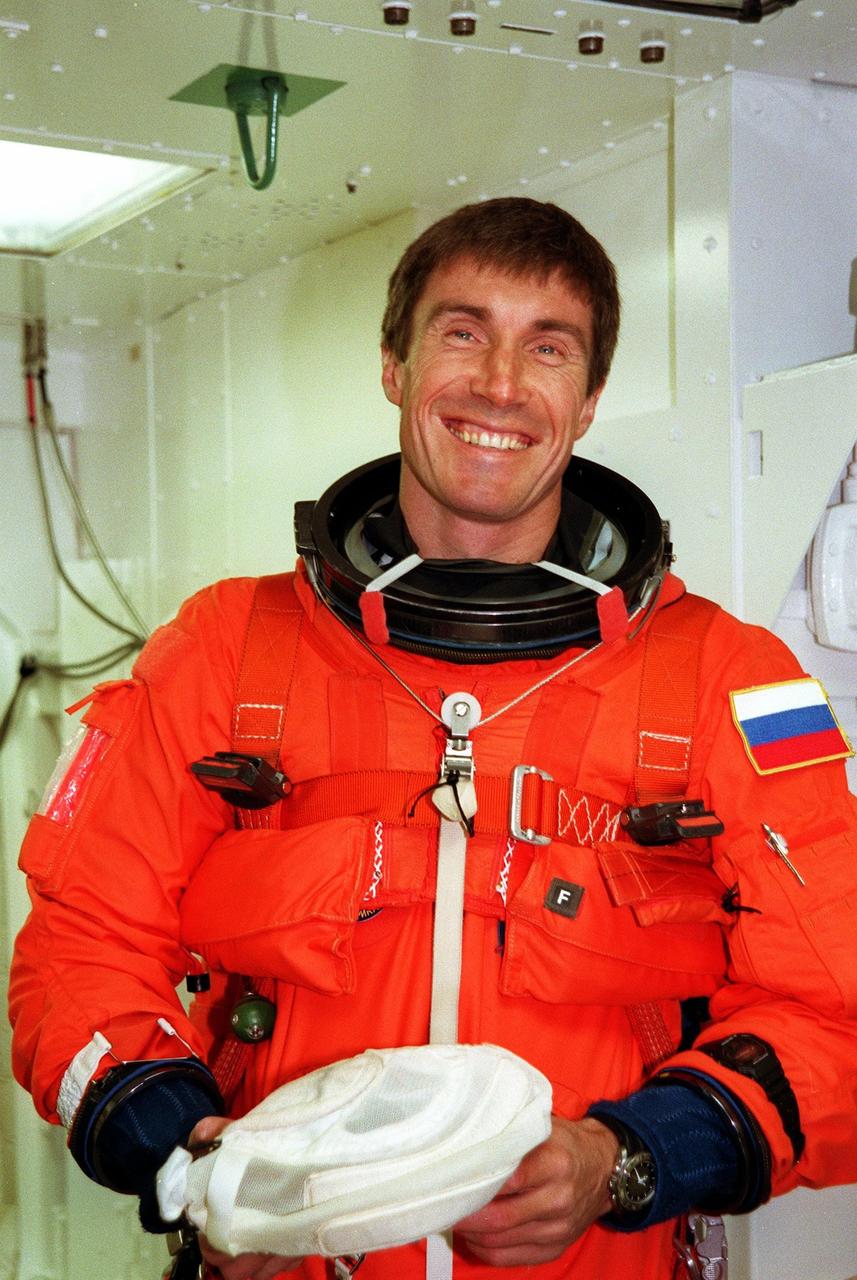
STS-88 Mission Specialist Sergei Konstantinovich Krikalev poses for a photograph in the white room on Launch Pad 39A while taking part in Terminal Countdown Demonstration Test (TCDT) activities. The TCDT provides the crew with simulated countdown exercises, emergency egress training, and opportunities to inspect their mission payloads in the orbiter's payload bay. This will be Krikalev's second space flight. Others in the STS-88 crew are Mission Commander Robert D. Cabana, Pilot Frederick W. "Rick" Sturckow, Mission Specialists Nancy J. Currie, Jerry L. Ross, and James H. Newman. Mission STS-88 is targeted for launch on Dec. 3, 1998. It is the first U.S. flight for the assembly of the International Space Station and will carry the Unity connecting module
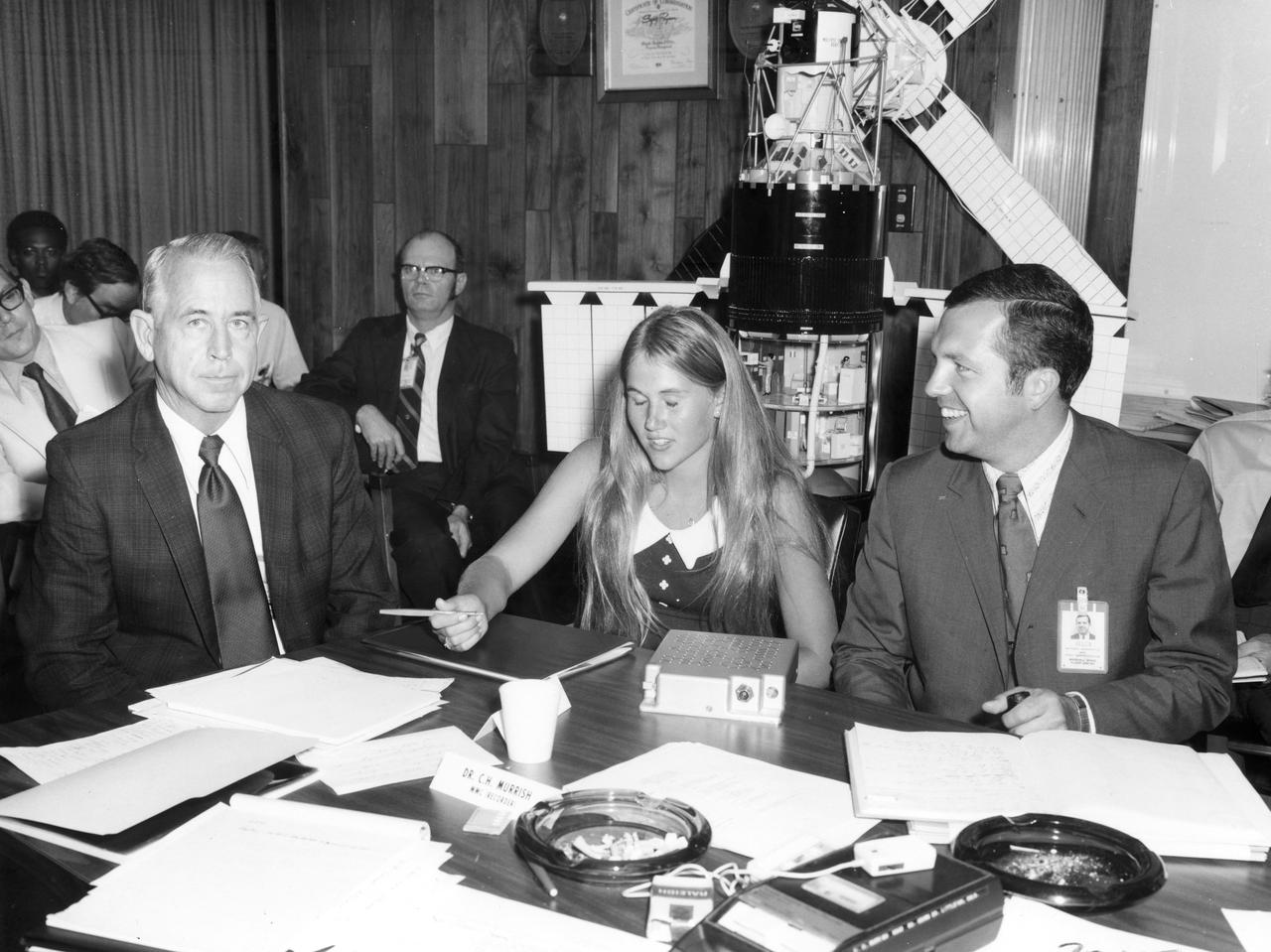
Kathy Jackson, high school student from Houston, Texas, discusses her experiment with Dr. Robert Allen (left) and her scintific advisor Arthur White, both of the Marshall Space Flight Center (MSFC). Miss Jackson’s experiment tested the motor sensory performance of an astronaut at various times during the Skylab flight to detect any degredation in his eye-hand coordination. She was one of the 25 winners of a contest in which some 3,500 high school students proposed experiments for the following year’s Skylab mission. Of the 25 students, 6 did not see their experiments conducted on Skylab because the experiments were not compatible with Skylab hardware and timelines. Of the 19 remaining, 11 experiments required the manufacture of equipment.
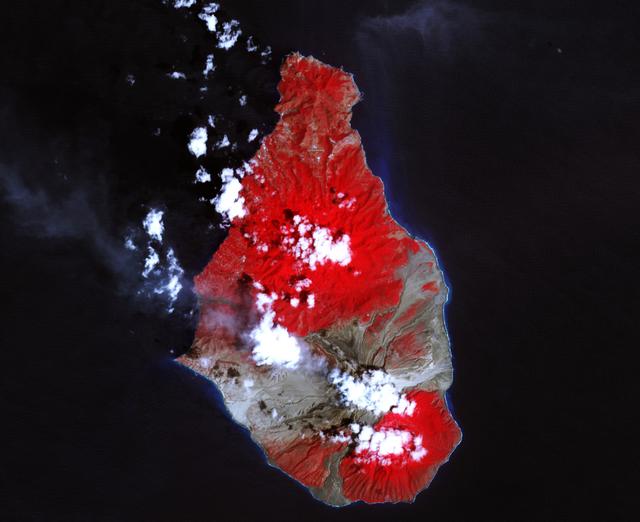
A massive eruption of Montserrat’s Soufrière Hills Volcano covered large portions of the island in debris. The eruption was triggered by a collapse of Soufrière Hills’ summit lava dome on February 11, 2010. Pyroclastic flows raced down the northern flank of the volcano, leveling trees and destroying buildings in the village of Harris, which was abandoned after Soufrière Hills became active in 1995. The Montserrat Volcano Observatory reported that some flows, about 15 meters (49 feet) thick, reached the sea at Trant’s Bay. These flows extended the island’s coastline up to 650 meters (2,100 feet). These false-color satellite images show the southern half of Montserrat before and after the dome collapse. The top image shows Montserrat on February 21, 2010, just 10 days after the event. For comparison, the bottom image shows the same area on March 17, 2007. Red areas are vegetated, clouds are white, blue/black areas are ocean water, and gray areas are covered by flow deposits. Fresh deposits tend to be lighter than older deposits. On February 21, the drainages leading down from Soufrière Hills, including the White River Valley, the Tar River Valley, and the Belham River Valley, were filled with fresh debris. According to the Montserrat Volcano Observatory, pyroclastic flows reached the sea through Aymers Ghaut on January 18, 2010, and flows entered the sea near Plymouth on February 5, 2010. NASA Earth Observatory image by Robert Simmon, using data from the NASA/GSFC/METI/ERSDAC/JAROS, and U.S./Japan ASTER Science Team. Caption by Robert Simmon. To read more go to: <a href="http://earthobservatory.nasa.gov/IOTD/view.php?id=42792" rel="nofollow">earthobservatory.nasa.gov/IOTD/view.php?id=42792</a> <b><a href="http://www.nasa.gov/centers/goddard/home/index.html" rel="nofollow">NASA Goddard Space Flight Center</a></b> is home to the nation's largest organization of combined scientists, engineers and technologists that build spacecraft, instruments and new technology to study the Earth, the sun, our solar system, and the universe. <b>Follow us on <a href="http://twitter.com/NASA_GoddardPix" rel="nofollow">Twitter</a></b> <b>Join us on <a href="http://www.facebook.com/pages/Greenbelt-MD/NASA-Goddard/395013845897?ref=tsd" rel="nofollow">Facebook</a><b> </b></b>
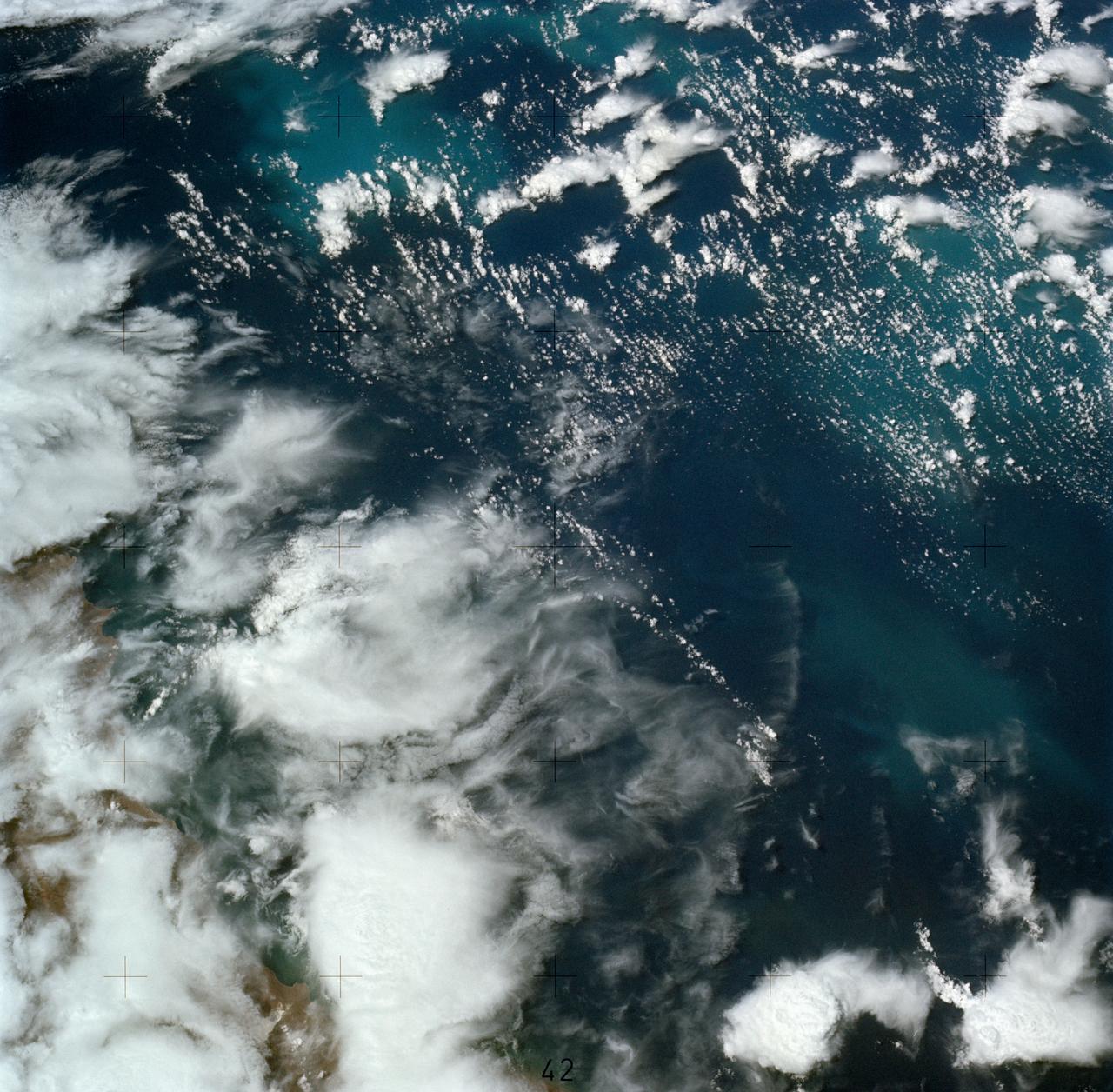
SL4-137-3608 (14 Dec. 1973) --- A view of cold water eddies in the Falkland Current off the South Atlantic coast of southern Argentina as seen from the Skylab space station in Earth orbit. This picture was taken by one of the Skylab 4 crewmen using a hand-held 70mm Hasselblad camera. This land area (left corner) extends south along the coast from Puerto Deseado (center left border) for about 50 miles. Within the ocean, several light blue areas are visible and represent the occurrence of plankton with the Falkland Current. Over the ocean, the cold water eddies are identified by the circular cloud-free areas within the cloud street pattern and bordered by cumulus cloud buildup (white). The cloud streets indicate the wind is from the southwest and do not form over eddies because energy form the atmosphere is absorbed by the cold ocean water. On the downwind side of the eddies, cumulus clouds tend to form as the cold moist air flows over the warmer water. Similar cloud and eddy features have been observed by the Skylab 4 crewmen in the Yucatan Current off Yucatan Peninsula and in some parts of the South Pacific. Studies are underway by Dr. George Maul, NOAA, and Dr. Robert Stevenson, ONR, to determine the significance of the cold water eddies to ocean dynamics. Photo credit: NASA
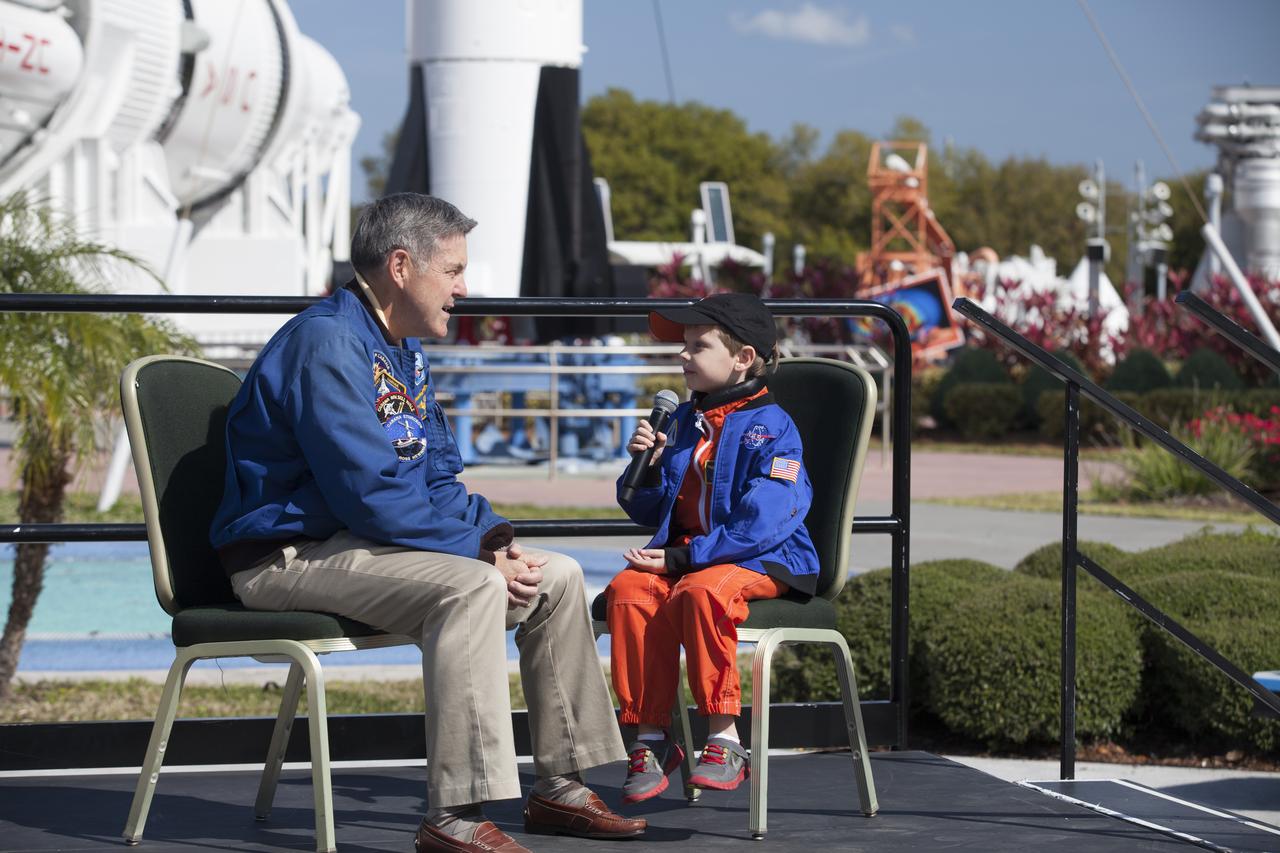
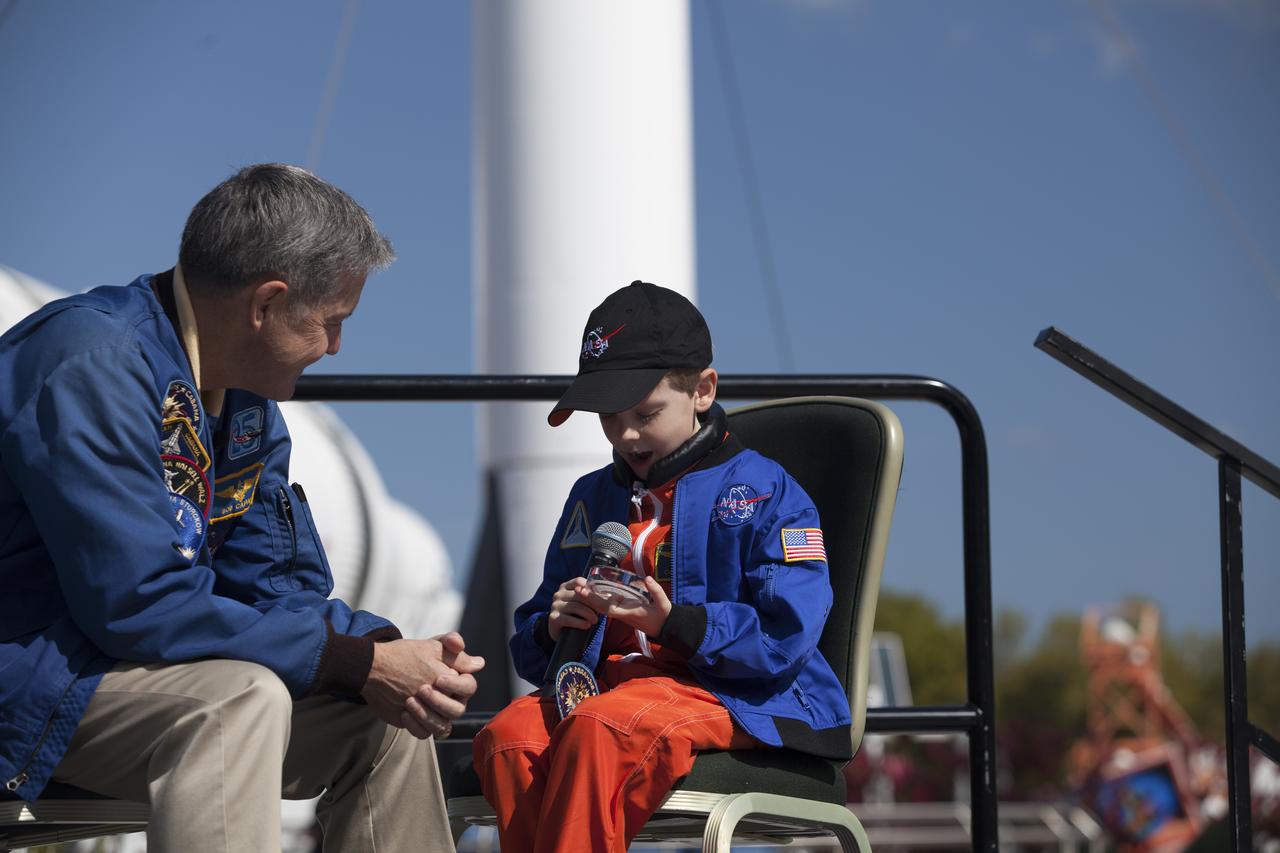
CAPE CANAVERAL, Fla. – Six-year-old Connor Johnson, right, discusses his interest in the space program with NASA Kennedy Space Center Director and former astronaut Robert Cabana during a ceremony in the Kennedy Space Center Visitor Complex' Rocket Garden. During the ceremony, Cabana will present Connor with mementos to inspire the youngster to continue the dream he has had since the age of three of becoming an astronaut. Connor, of Denver, Colo., gained national attention for having the "right stuff" when he launched an online petition on the White House website in December 2013 to save NASA’s funding from budget cuts. One of the mementos, a piece of space history, was a bolt used to hold the International Space Station's Unity module in place in space shuttle Endeavour's payload bay on the STS-88 mission, the first station assembly mission and Cabana's fourth and final spaceflight. Connor and his family were the guests of Delaware North Companies Parks & Resorts, the concessionaire managing the visitor complex. During his visit, Connor had the opportunity to meet with astronauts, see space vehicles and witness the Robot Rocket Rally underway in the complex' Rocket Garden over the weekend. To learn more about the educational activities available daily at the Kennedy Space Center Visitor Complex, visit http://www.kennedyspacecenter.com. Photo credit: NASA/Dan Casper
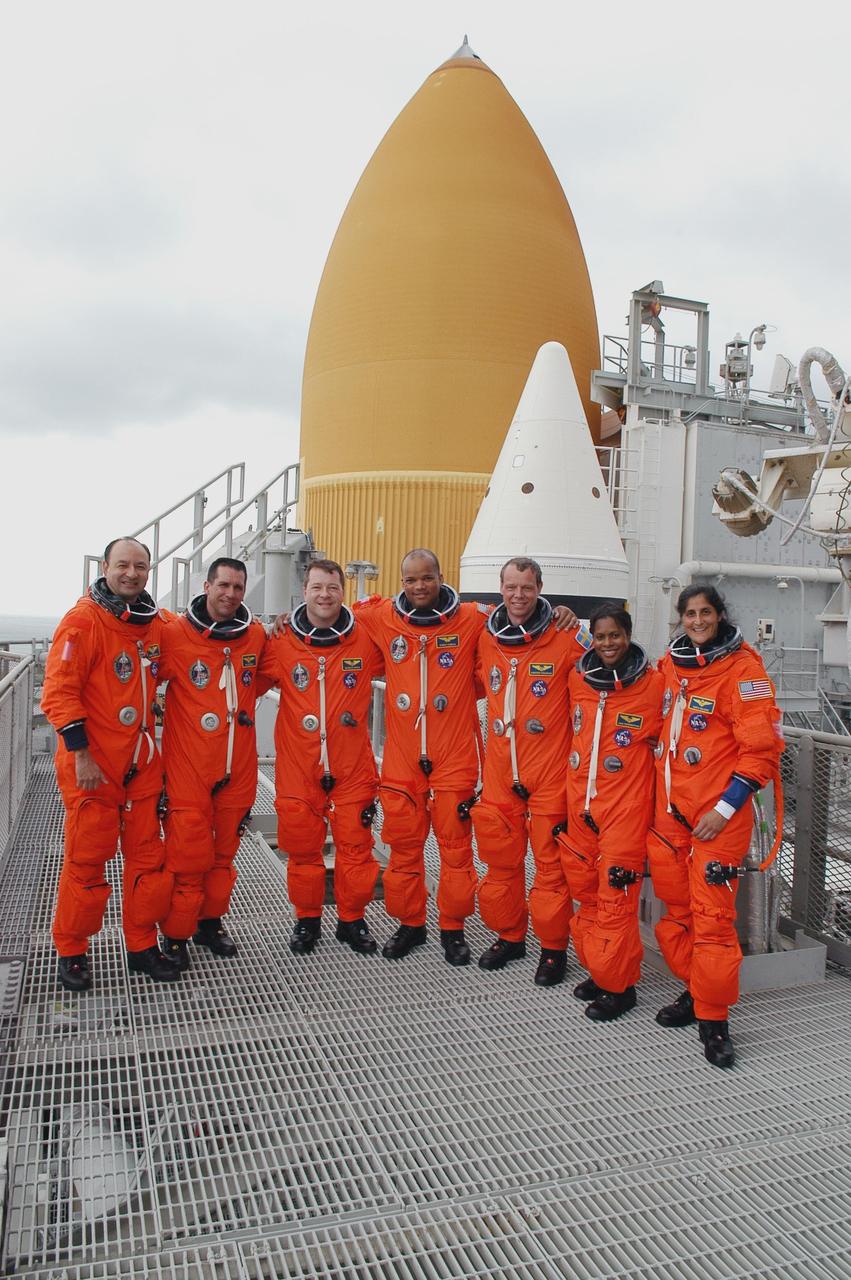
KENNEDY SPACE CENTER, FLA. -- On the 195-foot level of the fixed service structure on Launch Pad 39B, STS-116 crew members gather for a photo in front of the white solid rocket boosters and external tank of Space Shuttle Discovery. They have just completed a simulated launch countdown and emergency egress from the orbiter, part of the terminal countdown demonstration test. From left are Commander Mark Polansky, Pilot William Oefelein and Mission Specialists Nicholas Patrick, Robert Curbeam, Christer Fuglesang, Joan Higginbotham and Sunita Williams. Fuglesang represents the European Space Agency. Williams is traveling to the International Space Station on Discovery and will remain behind as a flight engineer with the Expedition 14 crew. The STS-116 mission is No. 20 to the International Space Station and construction flight 12A.1. The mission payload is the SPACEHAB module, the P5 integrated truss structure and other key components. Launch is scheduled for no earlier than Dec. 7. Photo credit: NASA/Kim Shiflett

KENNEDY SPACE CENTER, FLA. -- At NASA Kennedy Space Center's Launch Pad 39A, the crew for space shuttle Endeavour's STS-123 mission takes time out from training activities to pose for a group portrait inside the White Room. From left, top row, are Commander Dominic Gorie and Mission Specialist Mike Foreman, and bottom row, are Mission Specialists Garrett Reisman and Robert L. Behnken, Pilot Gregory H. Johnson, and Mission Specialists Takao Doi of the Japan Aerospace Exploration Agency and Rick Linnehan. The crew is at Kennedy for a full launch dress rehearsal, known as the terminal countdown demonstration test or TCDT. The terminal countdown demonstration test provides astronauts and ground crews with an opportunity to participate in various simulated countdown activities, including equipment familiarization and emergency training. Endeavour is targeted to launch March 11 at 2:28 a.m. EDT on a 16-day mission to the International Space Station. On the mission, Endeavour and its crew will deliver the first section of the Japan Aerospace Exploration Agency's Kibo laboratory and the Canadian Space Agency's two-armed robotic system, Dextre. Photo credit: NASA/Kim Shiflett
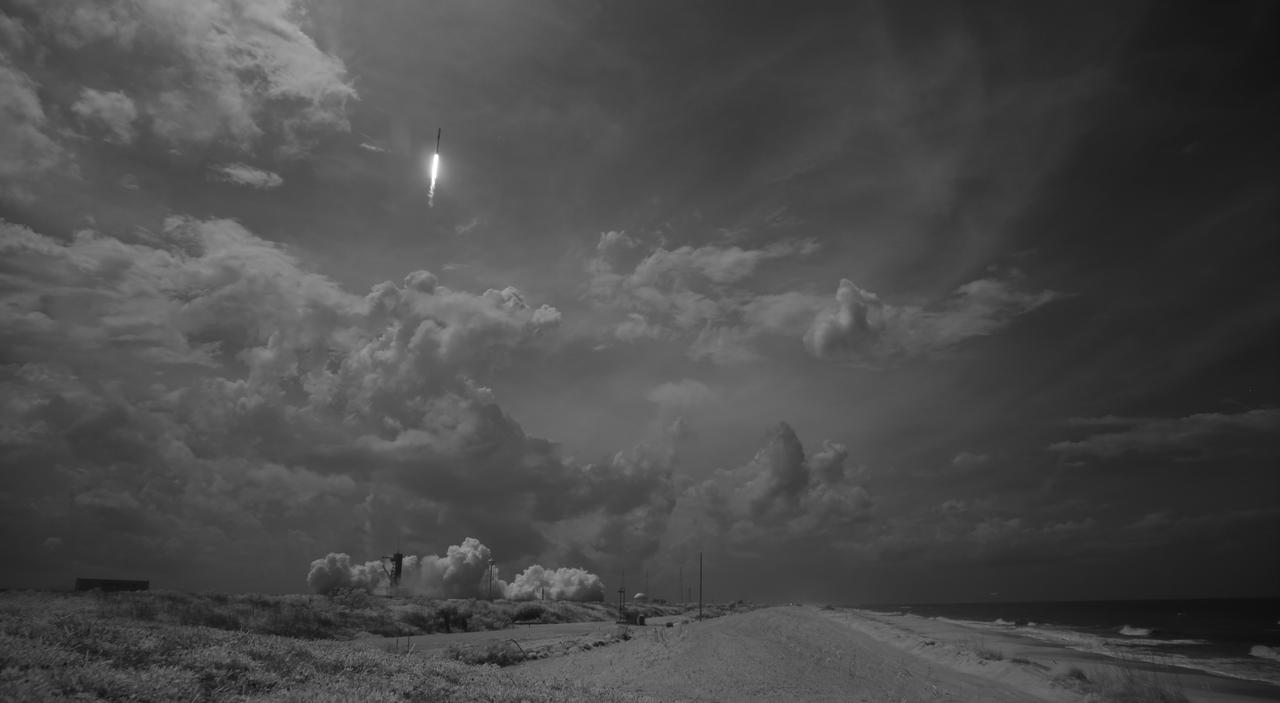
In this black and white infrared image, a SpaceX Falcon 9 rocket carrying the company's Crew Dragon spacecraft is launched on NASA’s SpaceX Demo-2 mission to the International Space Station with NASA astronauts Robert Behnken and Douglas Hurley onboard, Saturday, May 30, 2020, at NASA’s Kennedy Space Center in Florida. The Demo-2 mission is the first launch with astronauts of the SpaceX Crew Dragon spacecraft and Falcon 9 rocket to the International Space Station as part of the agency’s Commercial Crew Program. The test flight serves as an end-to-end demonstration of SpaceX’s crew transportation system. Behnken and Hurley launched at 3:22 p.m. EDT on Saturday, May 30, from Launch Complex 39A at the Kennedy Space Center. A new era of human spaceflight is set to begin as American astronauts once again launch on an American rocket from American soil to low-Earth orbit for the first time since the conclusion of the Space Shuttle Program in 2011. Photo Credit: (NASA/Joel Kowsky)
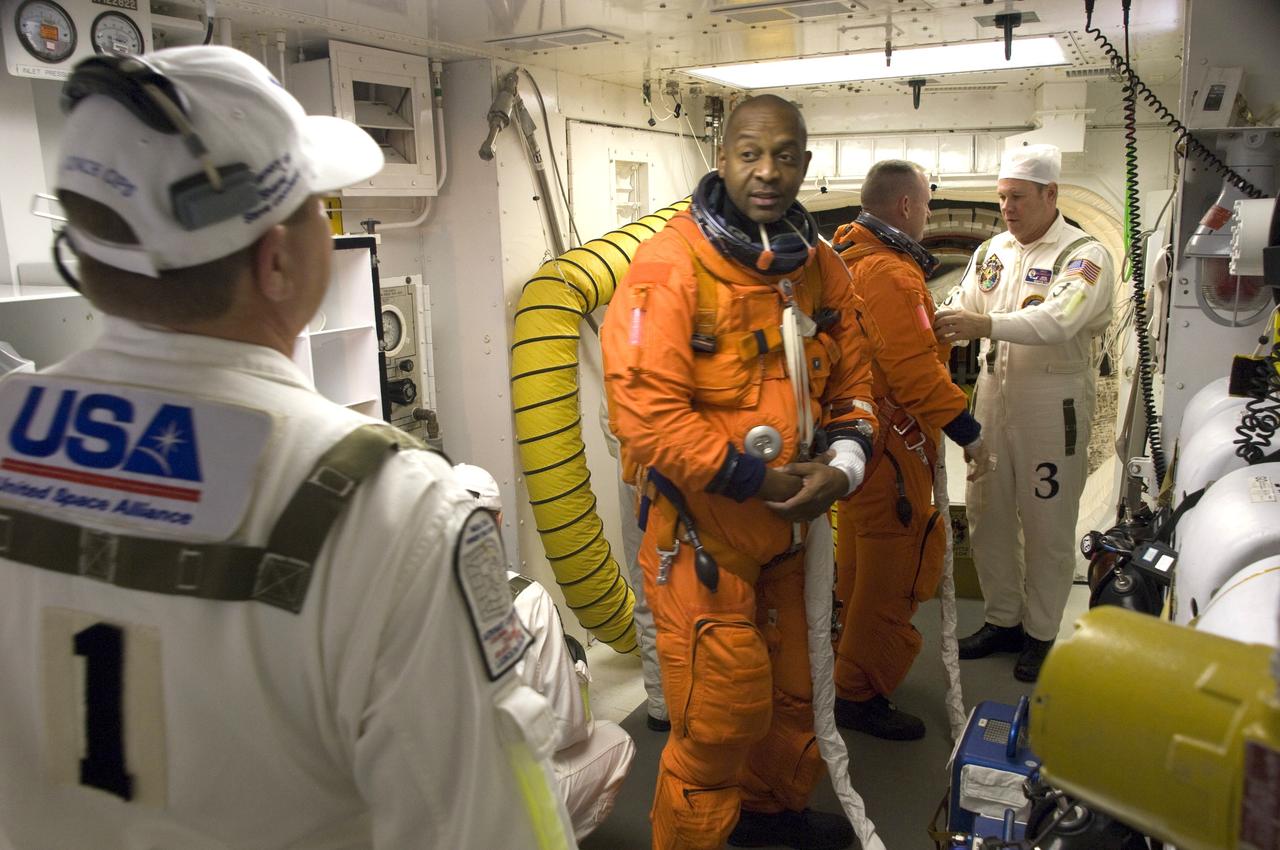
CAPE CANAVERAL, Fla. - At Launch Pad 39A at NASA's Kennedy Space Center in Florida, United Space Alliance suit technicians ensure the proper fit of the launch-and-entry suits of the STS-129 crew members. Mission Specialist Robert L. Satcher Jr. and Pilot Barry E. Wilmore, in the background, prepare to enter space shuttle Atlantis from the White Room. Liftoff is set for 2:28 p.m. EST Nov. 16. On STS-129, the crew will deliver two Express Logistics Carriers to the International Space Station, the largest of the shuttle's cargo carriers, containing 15 spare pieces of equipment including two gyroscopes, two nitrogen tank assemblies, two pump modules, an ammonia tank assembly and a spare latching end effector for the station's robotic arm. Atlantis will return to Earth a station crew member, Nicole Stott, who has spent more than two months aboard the orbiting laboratory. STS-129 is slated to be the final space shuttle Expedition crew rotation flight. For information on the STS-129 mission and crew, visit http://www.nasa.gov/mission_pages/shuttle/shuttlemissions/sts129/index.html. Photo credit: NASA/Sandra Joseph and Kevin O'Connell
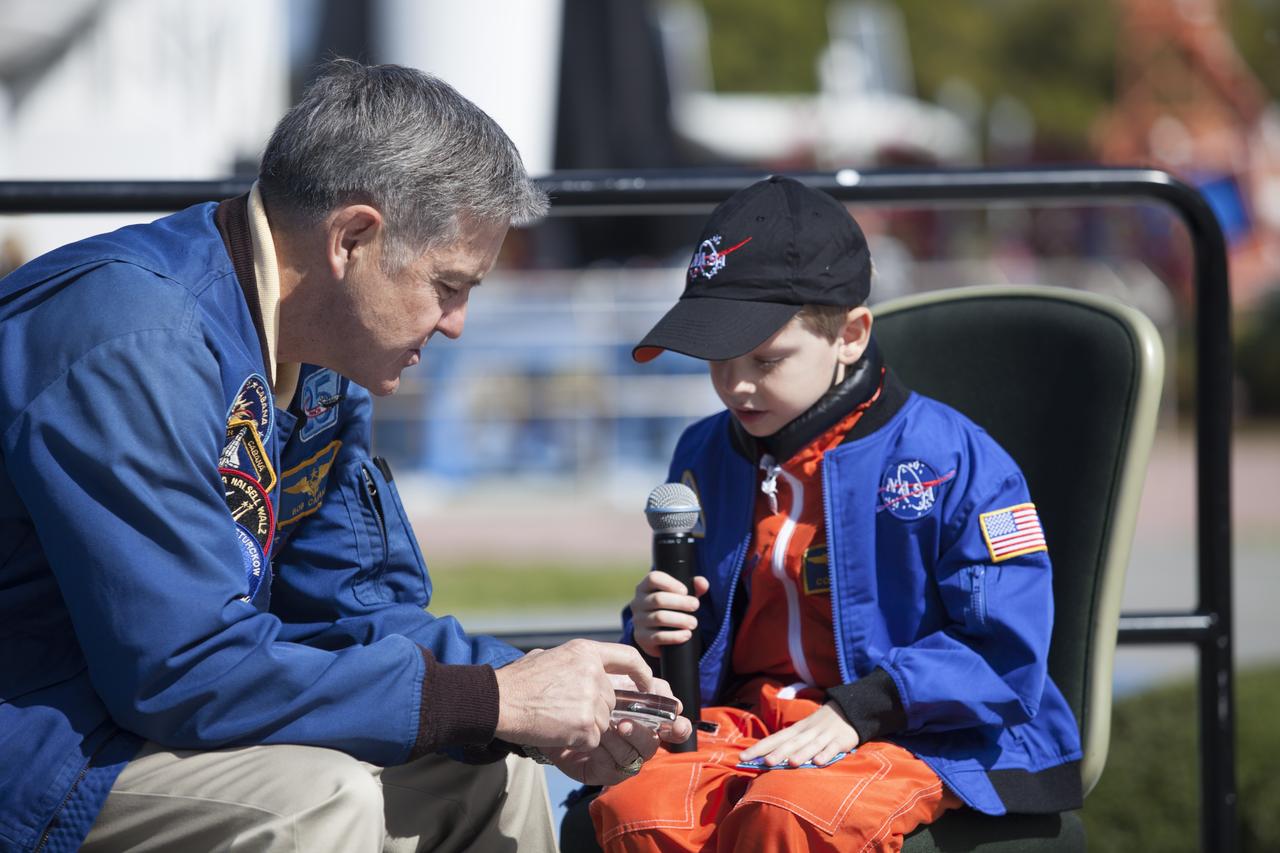
CAPE CANAVERAL, Fla. – NASA Kennedy Space Center Director and former astronaut Robert Cabana, left, presents a space-program memento to six-year-old Connor Johnson in the Kennedy Space Center Visitor Complex' Rocket Garden to inspire the youngster to continue the dream he has had since the age of three of becoming an astronaut. Connor, of Denver, Colo., gained national attention for having the "right stuff" when he launched an online petition on the White House website in December 2013 to save NASA’s funding from budget cuts. One of the mementos, a piece of space history, was a bolt used to hold the International Space Station's Unity module in place in space shuttle Endeavour's payload bay on the STS-88 mission, the first station assembly mission and Cabana's fourth and final spaceflight. Connor and his family were the guests of Delaware North Companies Parks & Resorts, the concessionaire managing the visitor complex. During his visit, Connor had the opportunity to meet with astronauts, see space vehicles and witness the Robot Rocket Rally underway in the complex' Rocket Garden over the weekend. To learn more about the educational activities available daily at the Kennedy Space Center Visitor Complex, visit http://www.kennedyspacecenter.com. Photo credit: NASA/Dan Casper
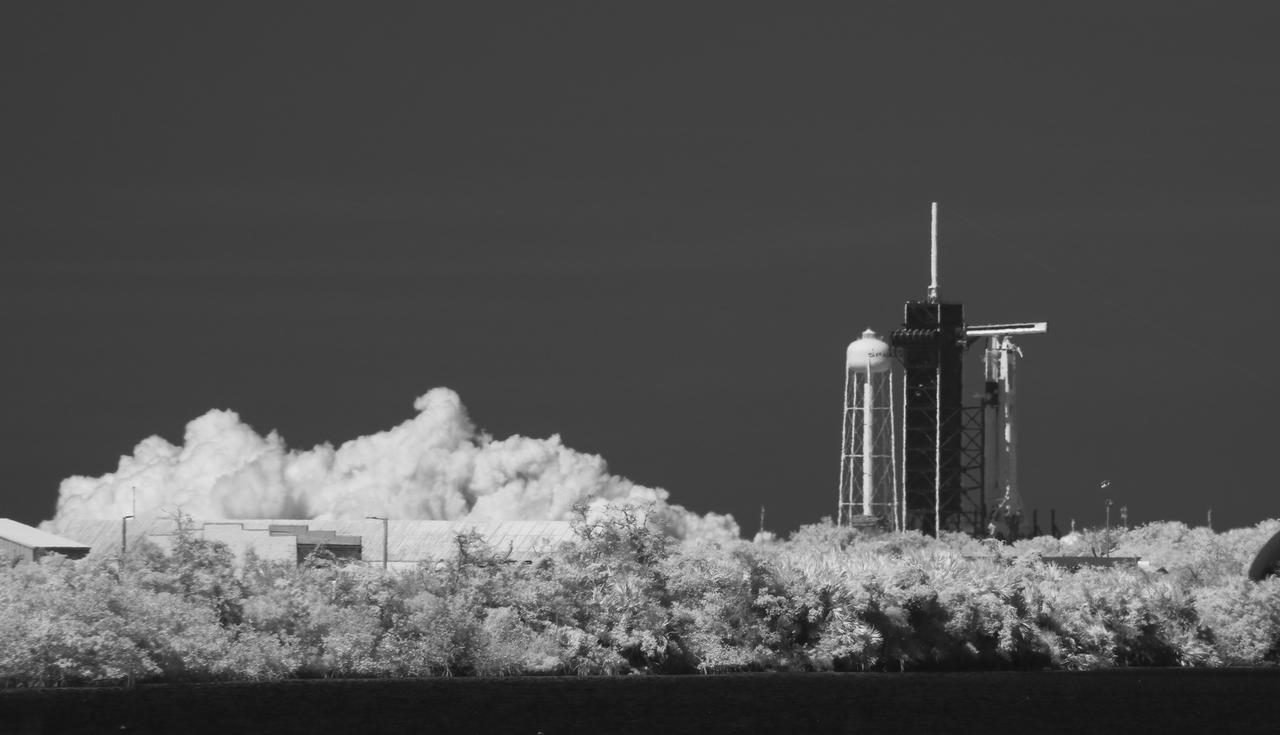
In this black and white infrared image, a SpaceX Falcon 9 rocket with the company's Crew Dragon spacecraft onboard is seen on the launch pad at Launch Complex 39A during a brief static fire test ahead of NASA’s SpaceX Demo-2 mission, Friday, May 22, 2020, at NASA’s Kennedy Space Center in Florida. NASA’s SpaceX Demo-2 mission is the first launch with astronauts of the SpaceX Crew Dragon spacecraft and Falcon 9 rocket to the International Space Station as part of the agency’s Commercial Crew Program. The test flight serves as an end-to-end demonstration of SpaceX’s crew transportation system. Robert Behnken and Douglas Hurley are scheduled to launch at 4:33 p.m. EDT on Wednesday, May 27, from Launch Complex 39A at the Kennedy Space Center. A new era of human spaceflight is set to begin as American astronauts once again launch on an American rocket from American soil to low-Earth orbit for the first time since the conclusion of the Space Shuttle Program in 2011. Photo Credit: (NASA/Joel Kowsky)

CAPE CANAVERAL, Fla. – Six-year-old Connor Johnson gives a big thumbs up following a ceremony in the Kennedy Space Center Visitor Complex' Rocket Garden in which NASA Kennedy Space Center Director and former astronaut Robert Cabana presented him with mementos to inspire the youngster to continue the dream he has had since the age of three of becoming an astronaut. From left are Connor's brother Liam, Cabana and Connor. Connor, of Denver, Colo., gained national attention for having the "right stuff" when he launched an online petition on the White House website in December 2013 to save NASA’s funding from budget cuts. One of the mementos, a piece of space history, was a bolt used to hold the International Space Station's Unity module in place in space shuttle Endeavour's payload bay on the STS-88 mission, the first station assembly mission and Cabana's fourth and final spaceflight. Connor and his family were the guests of Delaware North Companies Parks & Resorts, the concessionaire managing the visitor complex. During his visit, Connor had the opportunity to meet with astronauts, see space vehicles and witness the Robot Rocket Rally underway in the complex' Rocket Garden over the weekend. To learn more about the educational activities available daily at the Kennedy Space Center Visitor Complex, visit http://www.kennedyspacecenter.com. Photo credit: NASA/Dan Casper
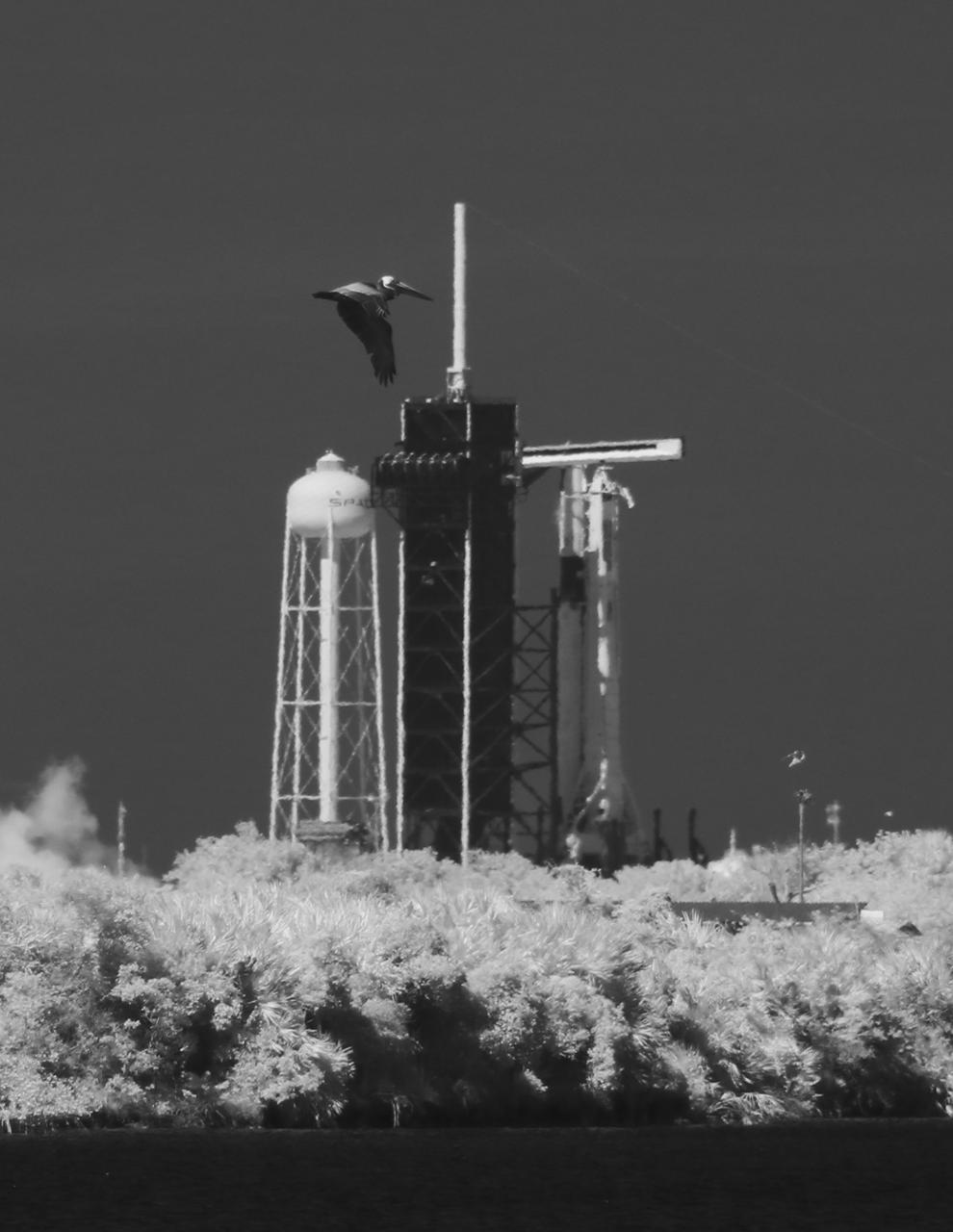
In this black and white infrared image, a SpaceX Falcon 9 rocket with the company's Crew Dragon spacecraft onboard is seen on the launch pad at Launch Complex 39A following a brief static fire test ahead of NASA’s SpaceX Demo-2 mission, Friday, May 22, 2020, at NASA’s Kennedy Space Center in Florida. NASA’s SpaceX Demo-2 mission is the first launch with astronauts of the SpaceX Crew Dragon spacecraft and Falcon 9 rocket to the International Space Station as part of the agency’s Commercial Crew Program. The test flight serves as an end-to-end demonstration of SpaceX’s crew transportation system. Robert Behnken and Douglas Hurley are scheduled to launch at 4:33 p.m. EDT on Wednesday, May 27, from Launch Complex 39A at the Kennedy Space Center. A new era of human spaceflight is set to begin as American astronauts once again launch on an American rocket from American soil to low-Earth orbit for the first time since the conclusion of the Space Shuttle Program in 2011. Photo Credit: (NASA/Joel Kowsky)
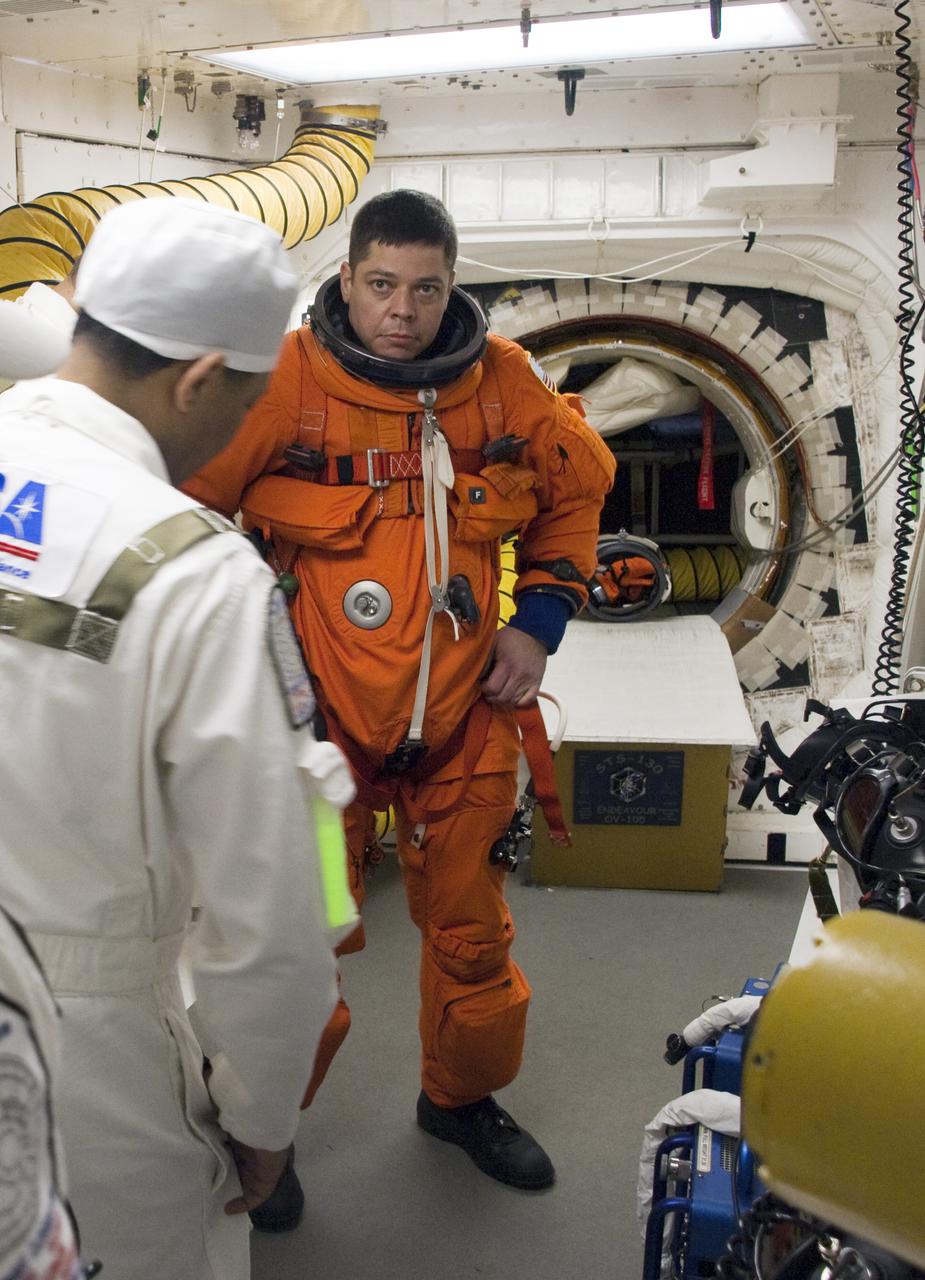
CAPE CANAVERAL, Fla. - In the White Room at Launch Pad 39A on NASA's Kennedy Space Center in Florida, a United Space Alliance suit technician ensures the proper fit of the launch-and-entry suit of STS-130 Mission Specialist Robert Behnken as he prepares to enter space shuttle Endeavour for launch. This is the second launch attempt for space shuttle Endeavour's STS-130 crew. The first attempt on Feb. 7 was scrubbed due to unfavorable weather. The primary payload for the STS-130 mission to the International Space Station is the Tranquility node, a pressurized module that will provide additional room for crew members and many of the station's life support and environmental control systems. Attached to one end of Tranquility is a cupola, a unique work area with six windows on its sides and one on top. The cupola resembles a circular bay window and will provide a vastly improved view of the station's exterior. The multi-directional view will allow the crew to monitor spacewalks and docking operations, as well as provide a spectacular view of Earth and other celestial objects. The module was built in Turin, Italy, by Thales Alenia Space for the European Space Agency. Endeavour's launch is set for Feb. 8 at 4:14 a.m. EST. For information on the STS-130 mission and crew, visit http:__www.nasa.gov_mission_pages_shuttle_shuttlemissions_sts130_index.html. Photo credit: NASA_Sandra Joseph and Kevin O'Connell
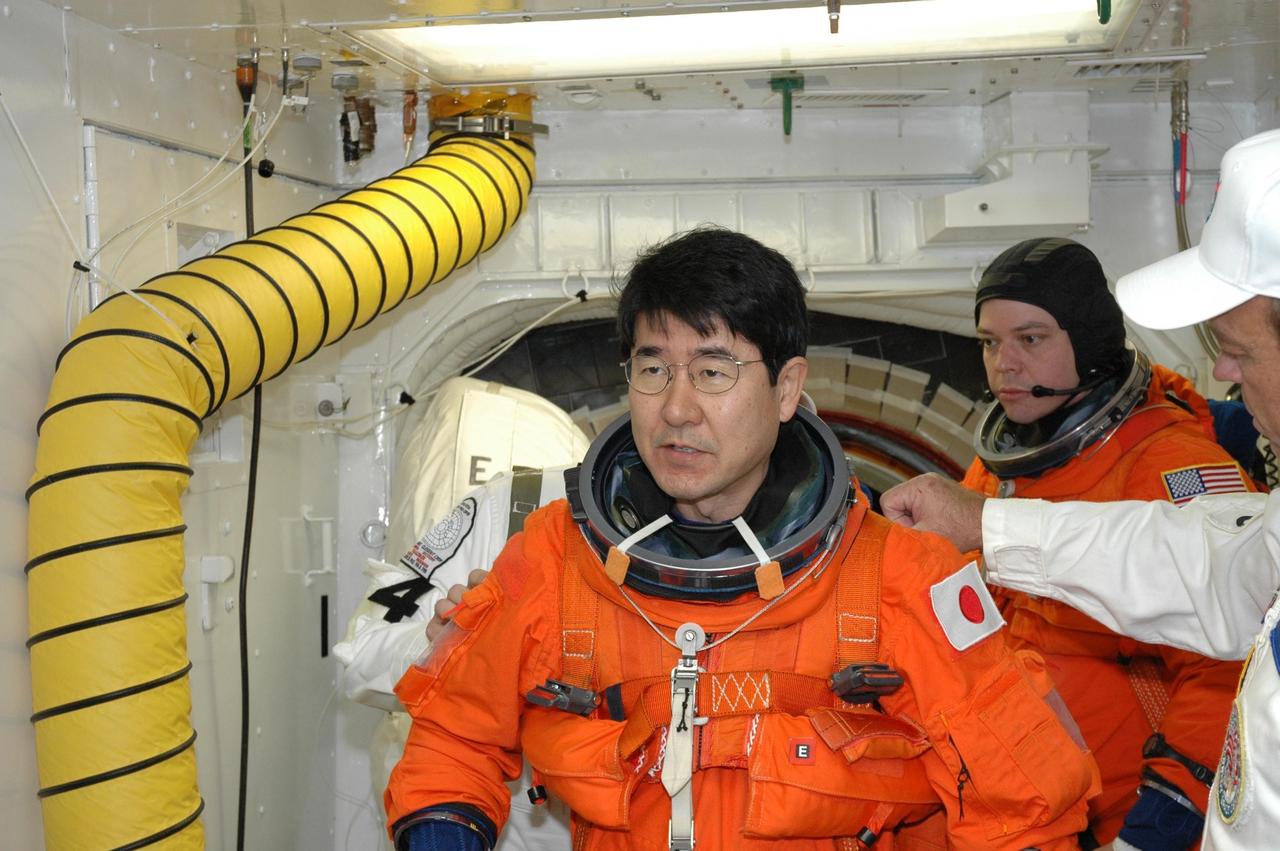
KENNEDY SPACE CENTER, FLA. -- In the White Room on NASA Kennedy Space Center's Launch Pad 39A, STS-123 Mission Specialist Takao Doi, who represents the Japan Aerospace Exploration Agency, gets help with his launch and entry suit before entering space shuttle Endeavour. Behind him is Mission Specialist Robert L. Behnken. Both are getting ready for the simulated launch countdown, which is the culmination of the terminal countdown demonstration test, or TCDT. The TCDT provides astronauts and ground crews with an opportunity to participate in various countdown activities, including equipment familiarization and emergency egress training. Endeavour is targeted to launch at 2:28 a.m. EDT March 11 on the 16-day STS-123 mission to the International Space Station. Endeavour and its crew will deliver the first section of the Japan Aerospace Exploration Agency's Kibo laboratory and the Canadian Space Agency's two-armed robotic system, Dextre. Photo credit: NASA/Jim Grossmann
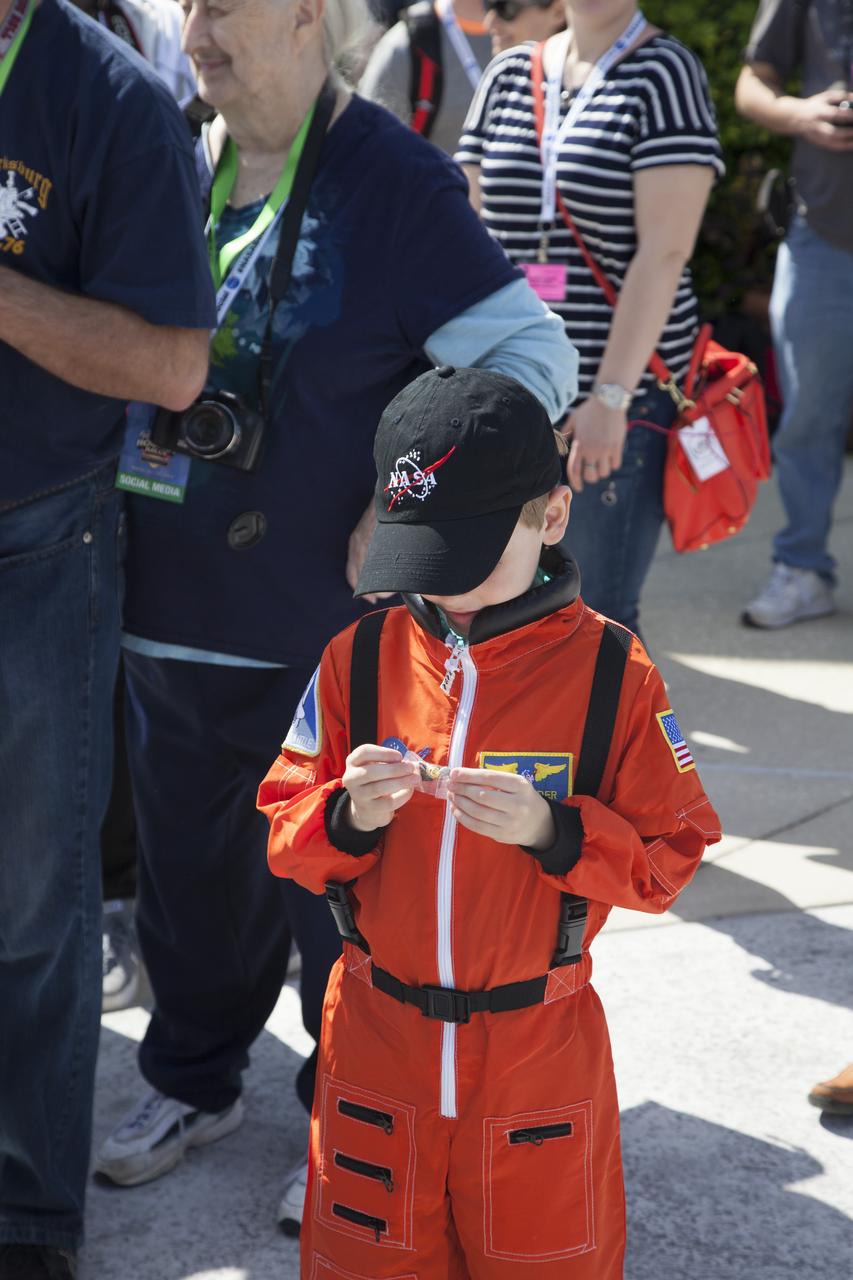
CAPE CANAVERAL, Fla. – Six-year-old Connor Johnson examines one of the space mementos presented to him by Kennedy Space Center Director and former astronaut Robert Cabana to inspire the youngster to continue the dream he has had since the age of three of becoming an astronaut, following a ceremony in the Kennedy Space Center Visitor Complex' Rocket Garden. Connor, of Denver, Colo., gained national attention for having the "right stuff" when he launched an online petition on the White House website in December 2013 to save NASA’s funding from budget cuts. One of the mementos, a piece of space history, was a bolt used to hold the International Space Station's Unity module in place in space shuttle Endeavour's payload bay on the STS-88 mission, the first station assembly mission and Cabana's fourth and final spaceflight. Connor and his family were the guests of Delaware North Companies Parks & Resorts, the concessionaire managing the visitor complex. During his visit, Connor had the opportunity to meet with astronauts, see space vehicles and witness the Robot Rocket Rally underway in the complex' Rocket Garden over the weekend. To learn more about the educational activities available daily at the Kennedy Space Center Visitor Complex, visit http://www.kennedyspacecenter.com. Photo credit: NASA/Dan Casper
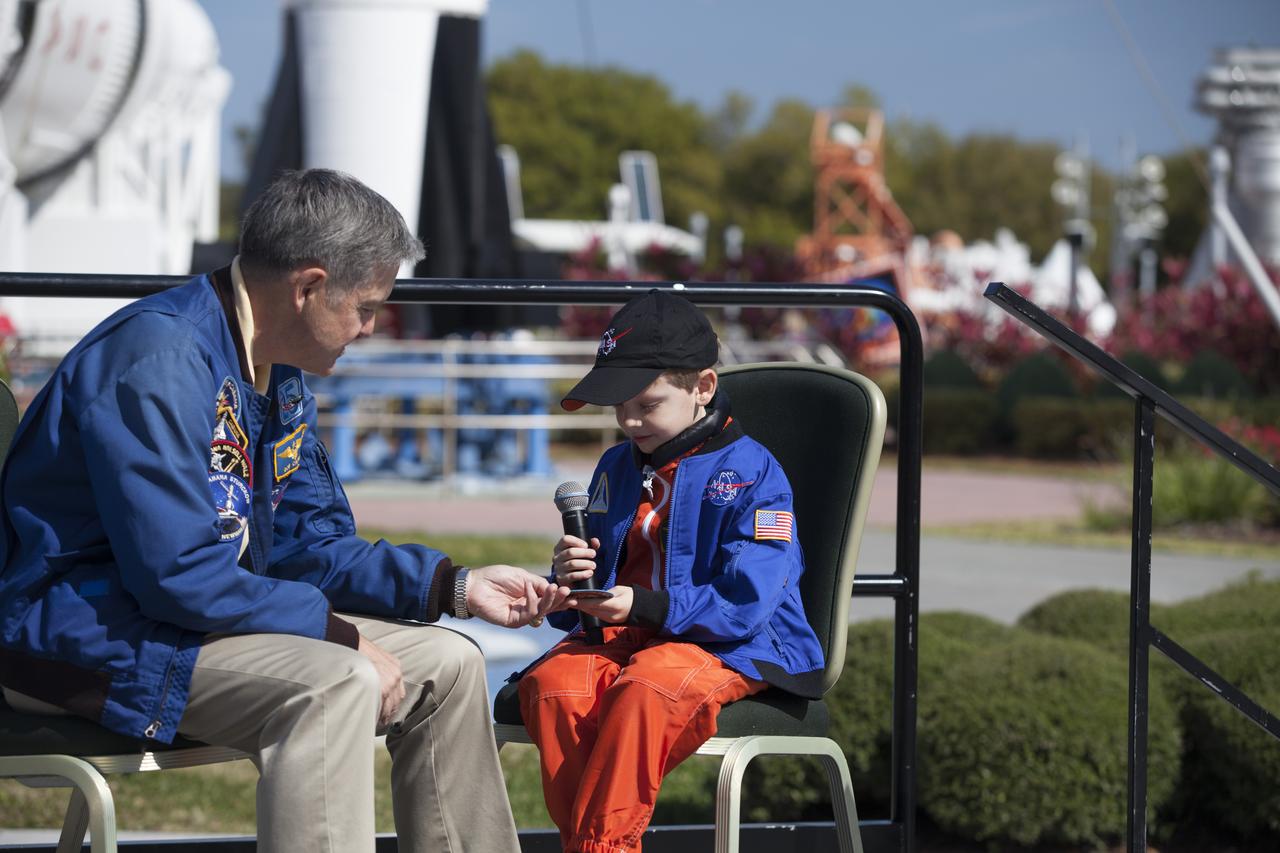
CAPE CANAVERAL, Fla. – NASA Kennedy Space Center Director and former astronaut Robert Cabana, left, presents a space patch and other mementos to six-year-old Connor Johnson at the Kennedy Space Center Visitor Complex' Rocket Garden to inspire the youngster to continue the dream he has had since the age of three of becoming an astronaut. Connor, of Denver, Colo., gained national attention for having the "right stuff" when he launched an online petition on the White House website in December 2013 to save NASA’s funding from budget cuts. One of the mementos, a piece of space history, was a bolt used to hold the International Space Station's Unity module in place in space shuttle Endeavour's payload bay on the STS-88 mission, the first station assembly mission and Cabana's fourth and final spaceflight. Connor and his family were the guests of Delaware North Companies Parks & Resorts, the concessionaire managing the visitor complex. During his visit, Connor had the opportunity to meet with astronauts, see space vehicles and witness the Robot Rocket Rally underway in the complex' Rocket Garden over the weekend. To learn more about the educational activities available daily at the Kennedy Space Center Visitor Complex, visit http://www.kennedyspacecenter.com. Photo credit: NASA/Dan Casper
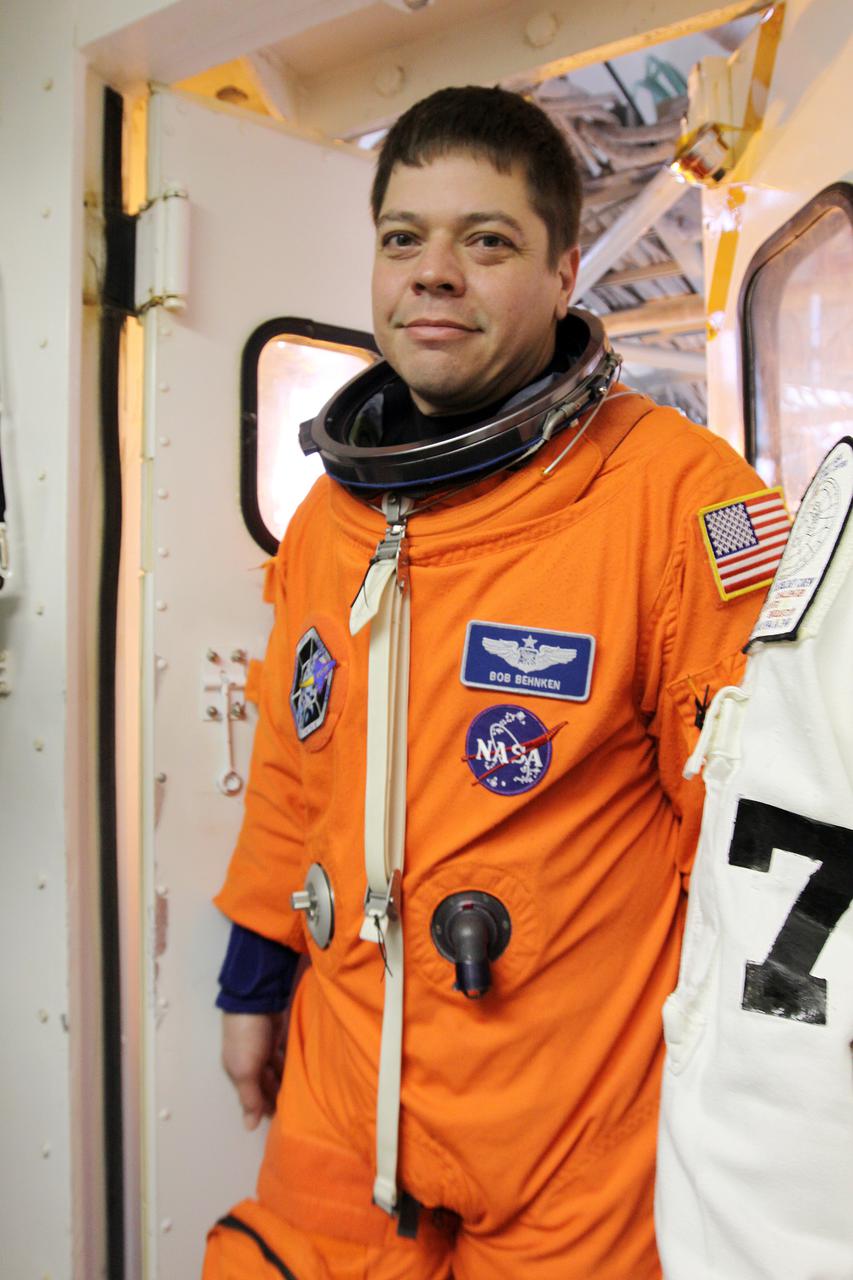
CAPE CANAVERAL, Fla. - STS-130 Mission Specialist Robert Behnken enters the White Room at Launch Pad 39A at NASA's Kennedy Space Center in Florida. The members of space shuttle Endeavour's STS-130 crew are participating in a dress rehearsal for their upcoming launch, known as the Terminal Countdown Demonstration Test. Behnken will be making his second spaceflight on STS-130. The primary payload for the STS-130 mission is the International Space Station's Tranquility node, a pressurized module that will provide room for many of the station's life support systems. Attached to one end of Tranquility is a cupola, a unique work area with six windows on its sides and one on top. The cupola resembles a circular bay window and will provide a vastly improved view of the station's exterior. The multi-directional view will allow the crew to monitor spacewalks and docking operations, as well as provide a spectacular view of Earth and other celestial objects. The module was built in Turin, Italy, by Thales Alenia Space for the European Space Agency. Launch of STS-130 is targeted for Feb. 7. For information on the STS-130 mission and crew, visit http:__www.nasa.gov_mission_pages_shuttle_shuttlemissions_sts130_index.html. Photo credit: NASA_Troy Cryder
CAPE CANAVERAL, Fla. – Six-year-old Connor Johnson, right, show his delight at being presented with space mementos to inspire the youngster to continue the dream he has had since the age of three of becoming an astronaut, by NASA Kennedy Space Center Director and former astronaut Robert Cabana in the Kennedy Space Center Visitor Complex' Rocket Garden. Connor, of Denver, Colo., gained national attention for having the "right stuff" when he launched an online petition on the White House website in December 2013 to save NASA’s funding from budget cuts. One of the mementos, a piece of space history, was a bolt used to hold the International Space Station's Unity module in place in space shuttle Endeavour's payload bay on the STS-88 mission, the first station assembly mission and Cabana's fourth and final spaceflight. Connor and his family were the guests of Delaware North Companies Parks & Resorts, the concessionaire managing the visitor complex. During his visit, Connor had the opportunity to meet with astronauts, see space vehicles and witness the Robot Rocket Rally underway in the complex' Rocket Garden over the weekend. To learn more about the educational activities available daily at the Kennedy Space Center Visitor Complex, visit http://www.kennedyspacecenter.com. Photo credit: NASA/Dan Casper
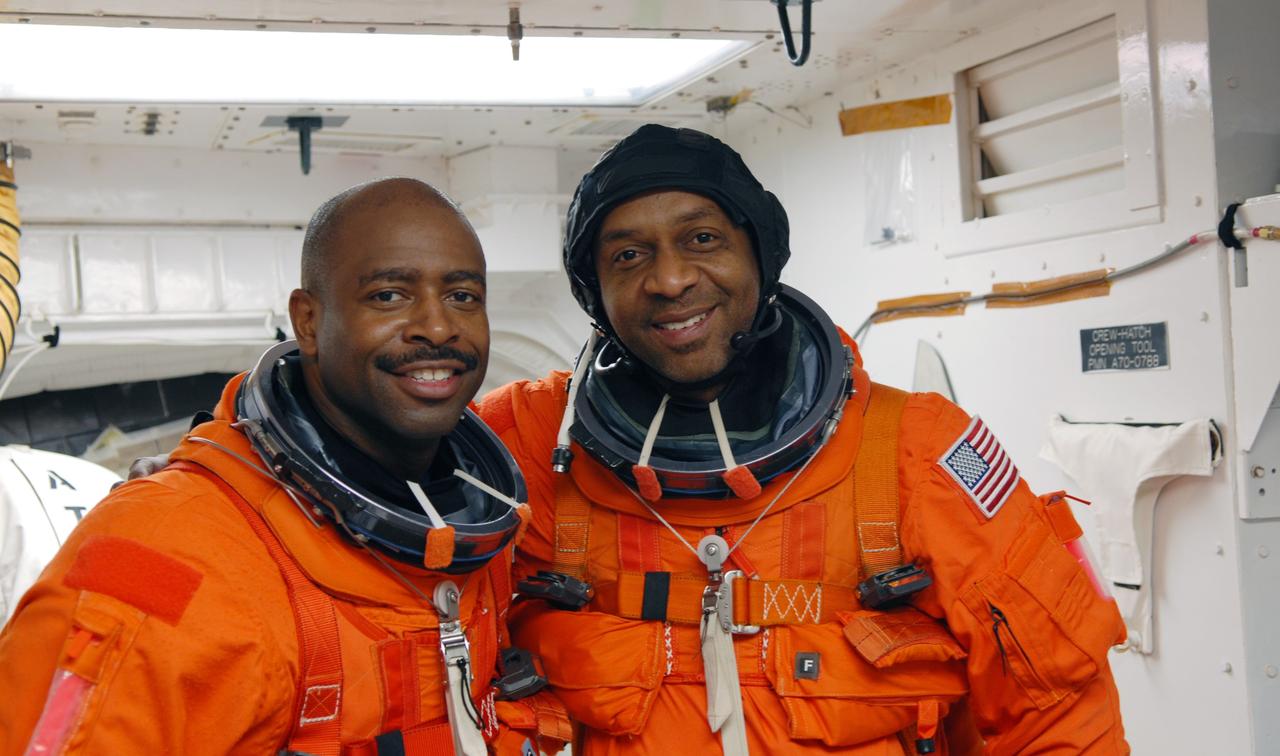
CAPE CANAVERAL, Fla. - On Launch Pad 39A at NASA's Kennedy Space Center in Florida, STS-129 Mission Specialists Leland Melvin, left, and Robert L. Satcher Jr. are preparing to enter space shuttle Atlantis with the help of the closeout crew in the White Room. The six astronauts for space shuttle Atlantis’ STS-129 mission are participating in their launch dress rehearsal, the Terminal Countdown Demonstration Test. Additional training associated with the test was done last month, but the simulated countdown was postponed because of a scheduling conflict with the launch of NASA’s Ares I-X test rocket. Launch of Atlantis on its STS-129 mission to the International Space Station is set for Nov. 16. On STS-129, the crew will deliver to the station two spare gyroscopes, two nitrogen tank assemblies, two pump modules, an ammonia tank assembly and a spare latching end effector for the station's robotic arm. For information on the STS-129 crew and mission objectives, visit http://www.nasa.gov/mission_pages/shuttle/shuttlemissions/sts129/index.html. Photo credit: NASA/Jim Grossmann
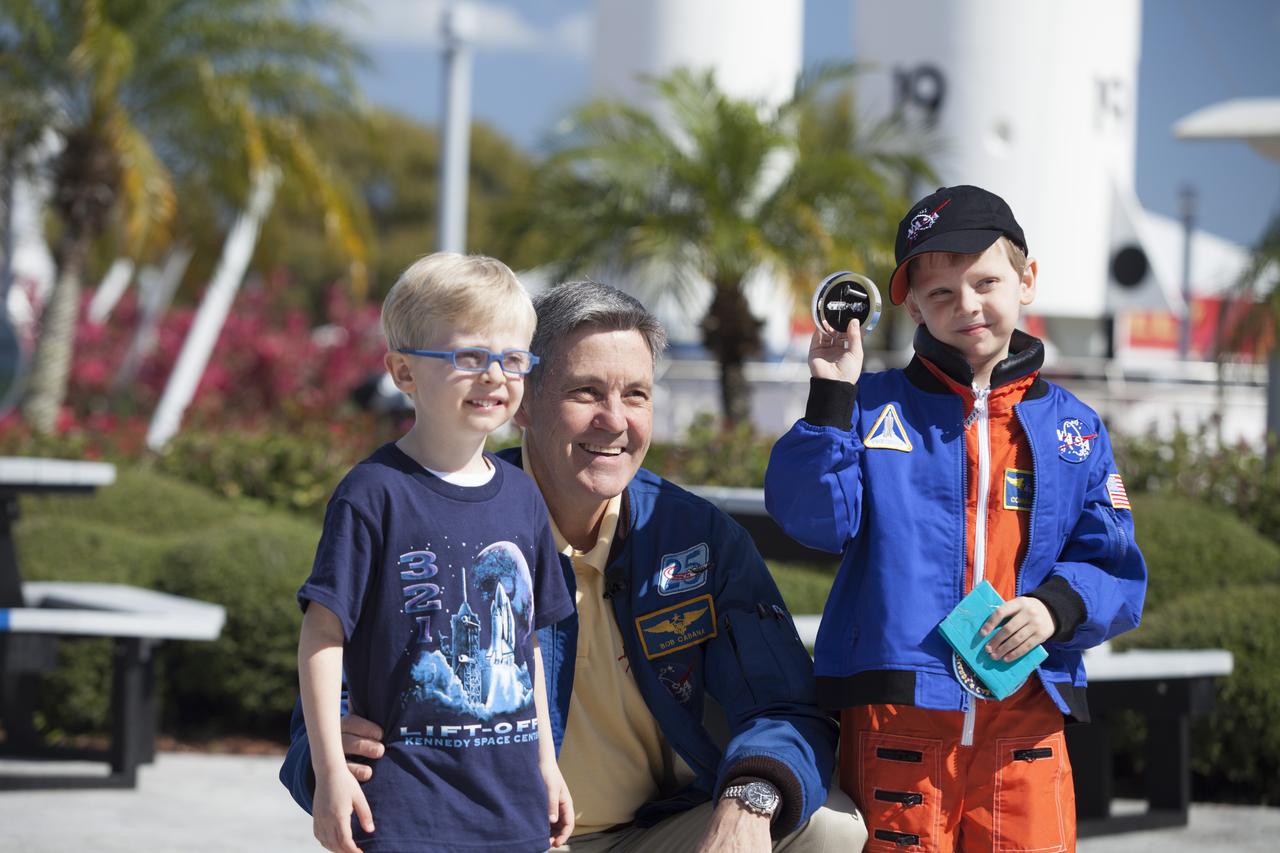
CAPE CANAVERAL, Fla. – Six-year-old Connor Johnson shows off space mementos presented to him by Kennedy Space Center Director and former astronaut Robert Cabana to inspire the youngster to continue the dream he has had since the age of three of becoming an astronaut, following a ceremony in the Kennedy Space Center Visitor Complex' Rocket Garden. From left are Connor's brother Liam, Cabana and Connor. Connor, of Denver, Colo., gained national attention for having the "right stuff" when he launched an online petition on the White House website in December 2013 to save NASA’s funding from budget cuts. One of the mementos, a piece of space history, was a bolt used to hold the International Space Station's Unity module in place in space shuttle Endeavour's payload bay on the STS-88 mission, the first station assembly mission and Cabana's fourth and final spaceflight. Connor and his family were the guests of Delaware North Companies Parks & Resorts, the concessionaire managing the visitor complex. During his visit, Connor had the opportunity to meet with astronauts, see space vehicles and witness the Robot Rocket Rally underway in the complex' Rocket Garden over the weekend. To learn more about the educational activities available daily at the Kennedy Space Center Visitor Complex, visit http://www.kennedyspacecenter.com. Photo credit: NASA/Dan Casper
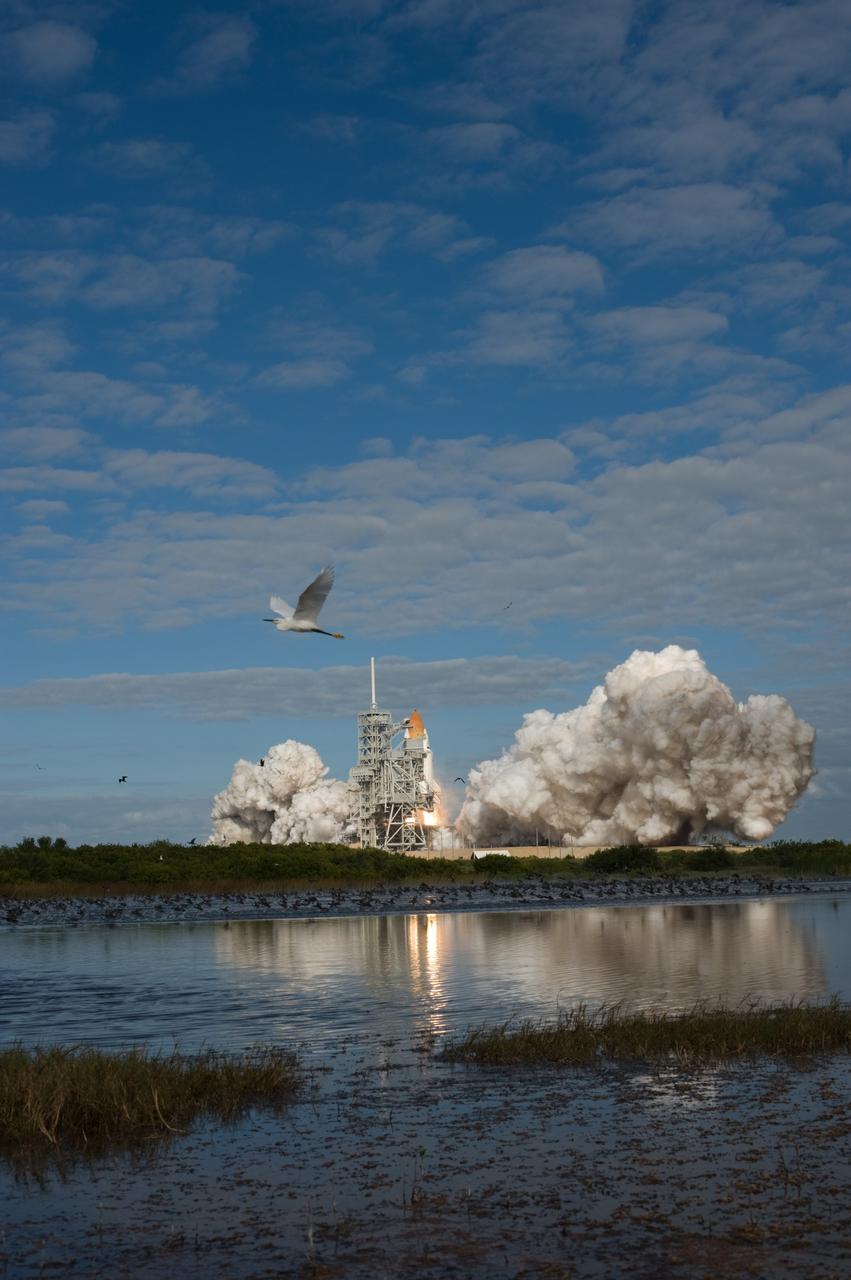
CAPE CANAVERAL, Fla. - Launch of space shuttle Atlantis from Pad 39A at NASA's Kennedy Space Center in Florida surprises a great white egret passing near the pad. Liftoff on its STS-129 mission came at 2:28 p.m. EST Nov. 16. Aboard are crew members Commander Charles O. Hobaugh; Pilot Barry E. Wilmore; and Mission Specialists Leland Melvin, Randy Bresnik, Mike Foreman and Robert L. Satcher Jr. On STS-129, the crew will deliver two ExPRESS Logistics Carriers to the International Space Station, the largest of the shuttle's cargo carriers, containing 15 spare pieces of equipment including two gyroscopes, two nitrogen tank assemblies, two pump modules, an ammonia tank assembly and a spare latching end effector for the station's robotic arm. Atlantis will return to Earth a station crew member, Nicole Stott, who has spent more than two months aboard the orbiting laboratory. STS-129 is slated to be the final space shuttle Expedition crew rotation flight. For information on the STS-129 mission and crew, visit http://www.nasa.gov/mission_pages/shuttle/shuttlemissions/sts129/index.html. Photo credit: NASA/Tom Farrar and Tony Gray
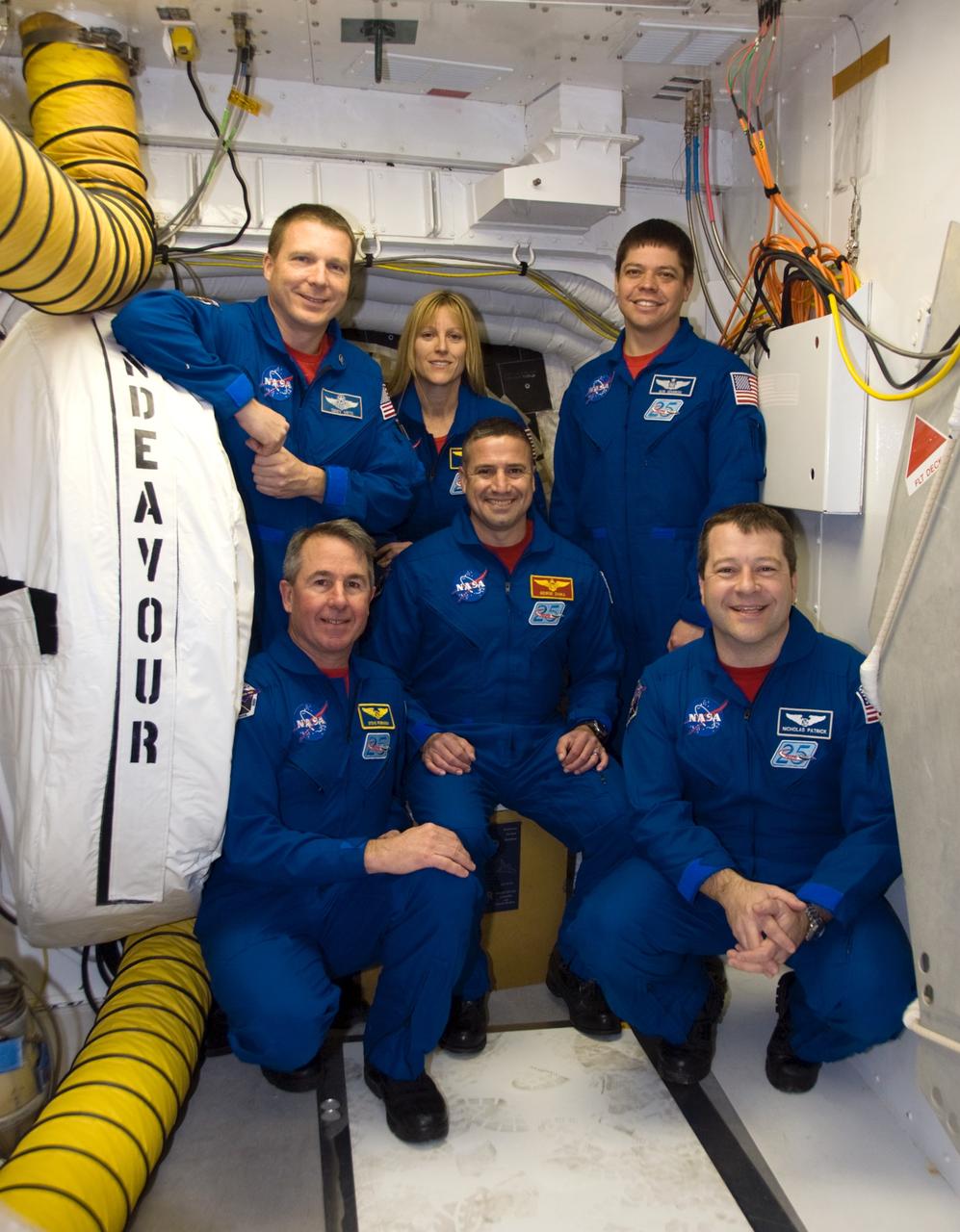
CAPE CANAVERAL, Fla. - At NASA's Kennedy Space Center in Florida, the crew members of space shuttle Endeavour's STS-130 mission take time out from their emergency exit training at Launch Pad 39A to pose for a group portrait in the White Room. Standing, from left, are Pilot Terry Virts and Mission Specialists Kathryn Hire and Robert Behnken. Kneeling, from left, are Mission Specialist Stephen Robinson, Commander George Zamka and Mission Specialist Nicholas Patrick. The crew members of space shuttle Endeavour's upcoming mission are at Kennedy for training related to their launch dress rehearsal, the Terminal Countdown Demonstration Test. The primary payload on STS-130 is the International Space Station's Node 3, Tranquility, a pressurized module that will provide room for many of the station's life support systems. Attached to one end of Tranquility is a cupola, a unique work area with six windows on its sides and one on top. Endeavour's launch is targeted for Feb. 7. For information on the STS-130 mission and crew, visit http://www.nasa.gov/mission_pages/shuttle/shuttlemissions/sts130/index.html. Photo credit: NASA/Kim Shiflett
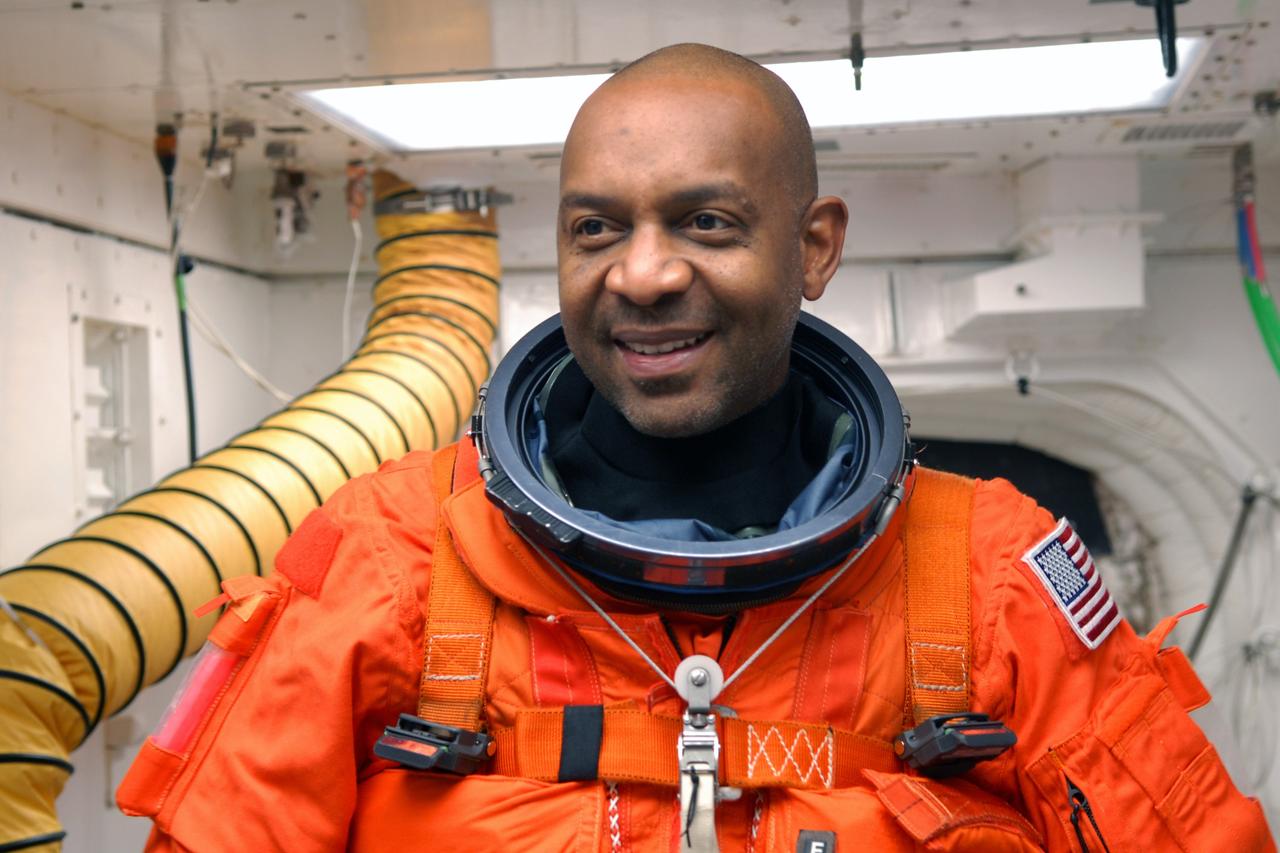
CAPE CANAVERAL, Fla. - On Launch Pad 39A at NASA's Kennedy Space Center in Florida, the closeout crew in the White Room help STS-129 Mission Specialist Robert L. Satcher Jr. complete his suit-up before entering space shuttle Atlantis. The six astronauts for space shuttle Atlantis’ STS-129 mission are participating in their launch dress rehearsal, the Terminal Countdown Demonstration Test. Additional training associated with the test was done last month, but the simulated countdown was postponed because of a scheduling conflict with the launch of NASA’s Ares I-X test rocket. Launch of Atlantis on its STS-129 mission to the International Space Station is set for Nov. 16. On STS-129, the crew will deliver to the station two spare gyroscopes, two nitrogen tank assemblies, two pump modules, an ammonia tank assembly and a spare latching end effector for the station's robotic arm. For information on the STS-129 crew and mission objectives, visit http://www.nasa.gov/mission_pages/shuttle/shuttlemissions/sts129/index.html. Photo credit: NASA/Jim Grossmann
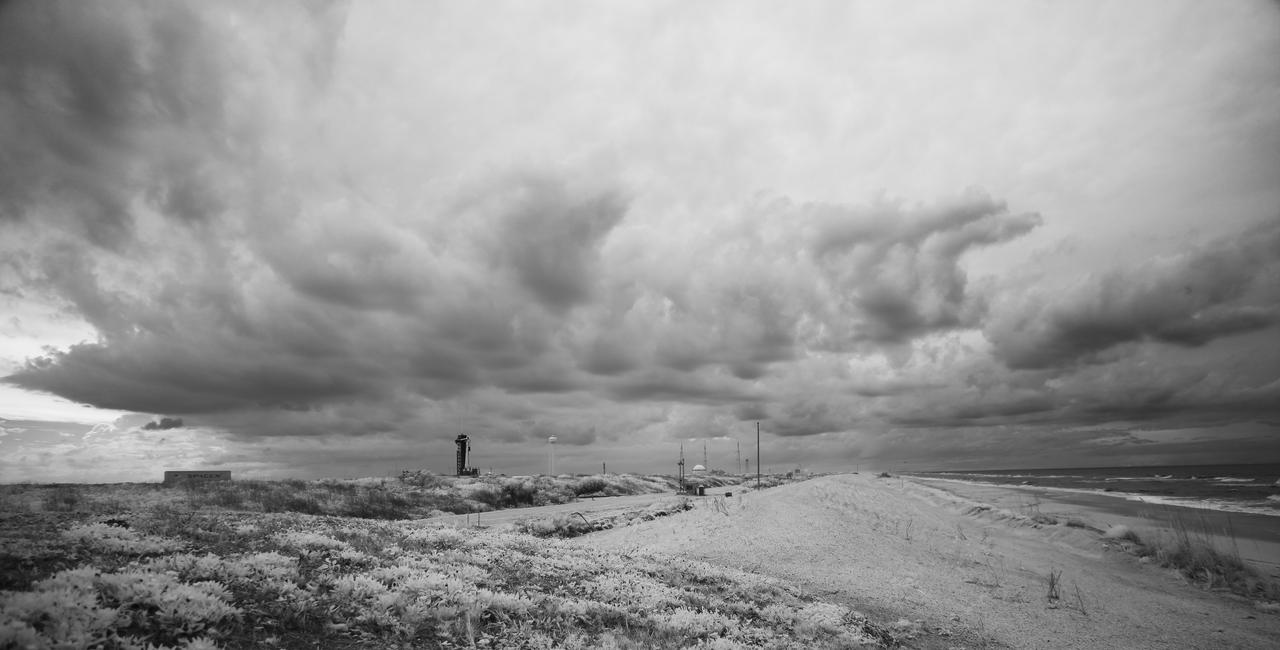
In this black and white infrared image, a SpaceX Falcon 9 rocket with the company's Crew Dragon spacecraft onboard is seen on the launch pad at Launch Complex 39A as preparations continue for the Demo-2 mission, Tuesday, May 26, 2020, at NASA’s Kennedy Space Center in Florida. NASA’s SpaceX Demo-2 mission is the first launch with astronauts of the SpaceX Crew Dragon spacecraft and Falcon 9 rocket to the International Space Station as part of the agency’s Commercial Crew Program. The test flight serves as an end-to-end demonstration of SpaceX’s crew transportation system. Robert Behnken and Douglas Hurley launched at 3:22 p.m. EDT on Saturday, May 30, from Launch Complex 39A at the Kennedy Space Center. A new era of human spaceflight is set to begin as American astronauts once again launch on an American rocket from American soil to low-Earth orbit for the first time since the conclusion of the Space Shuttle Program in 2011. Photo Credit: (NASA/Joel Kowsky)
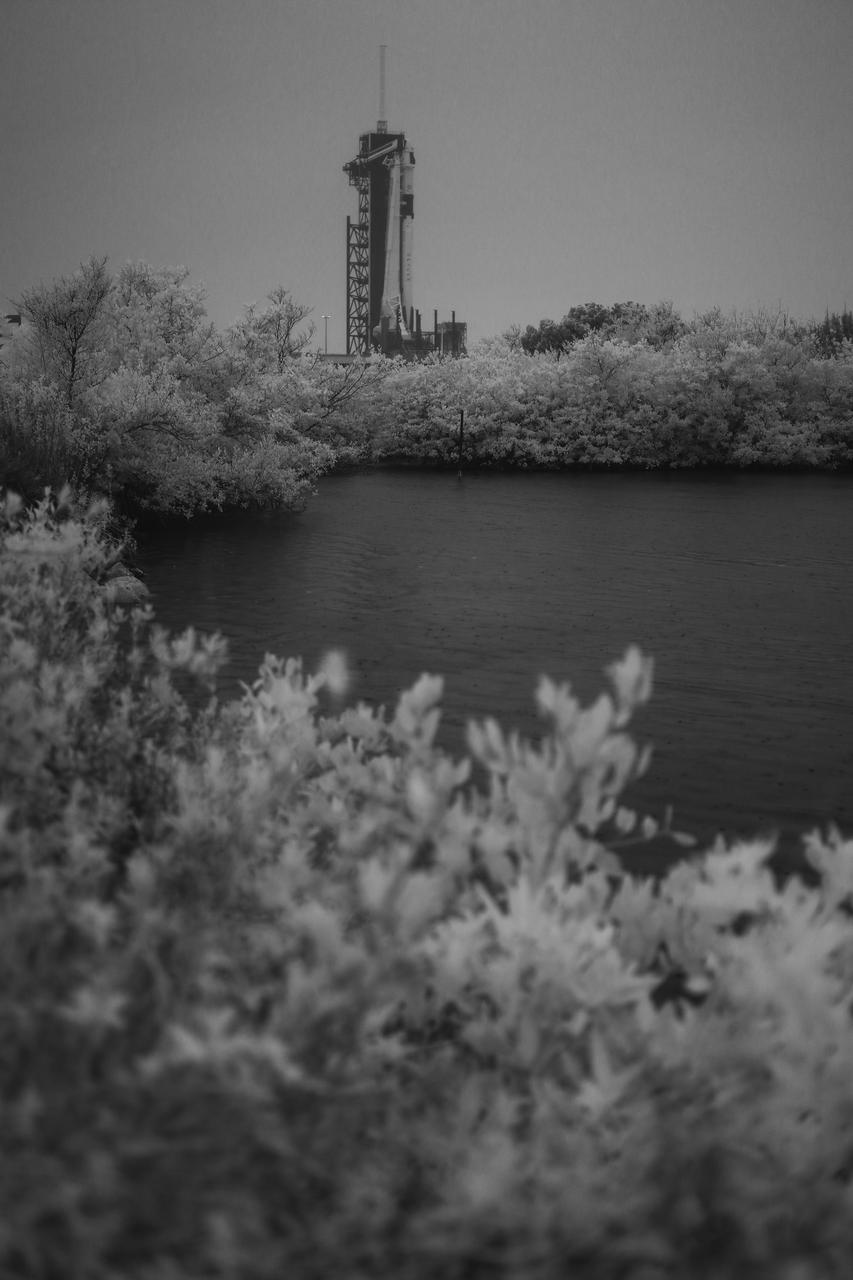
In this black and white infrared image, a SpaceX Falcon 9 rocket with the company's Crew Dragon spacecraft onboard is seen on the launch pad at Launch Complex 39A as preparations continue for the Demo-2 mission, Monday, May 25, 2020, at NASA’s Kennedy Space Center in Florida. NASA’s SpaceX Demo-2 mission is the first launch with astronauts of the SpaceX Crew Dragon spacecraft and Falcon 9 rocket to the International Space Station as part of the agency’s Commercial Crew Program. The test flight serves as an end-to-end demonstration of SpaceX’s crew transportation system. Robert Behnken and Douglas Hurley are scheduled to launch at 4:33 p.m. EDT on Wednesday, May 27, from Launch Complex 39A at the Kennedy Space Center. A new era of human spaceflight is set to begin as American astronauts once again launch on an American rocket from American soil to low-Earth orbit for the first time since the conclusion of the Space Shuttle Program in 2011. Photo Credit: (NASA/Joel Kowsky)
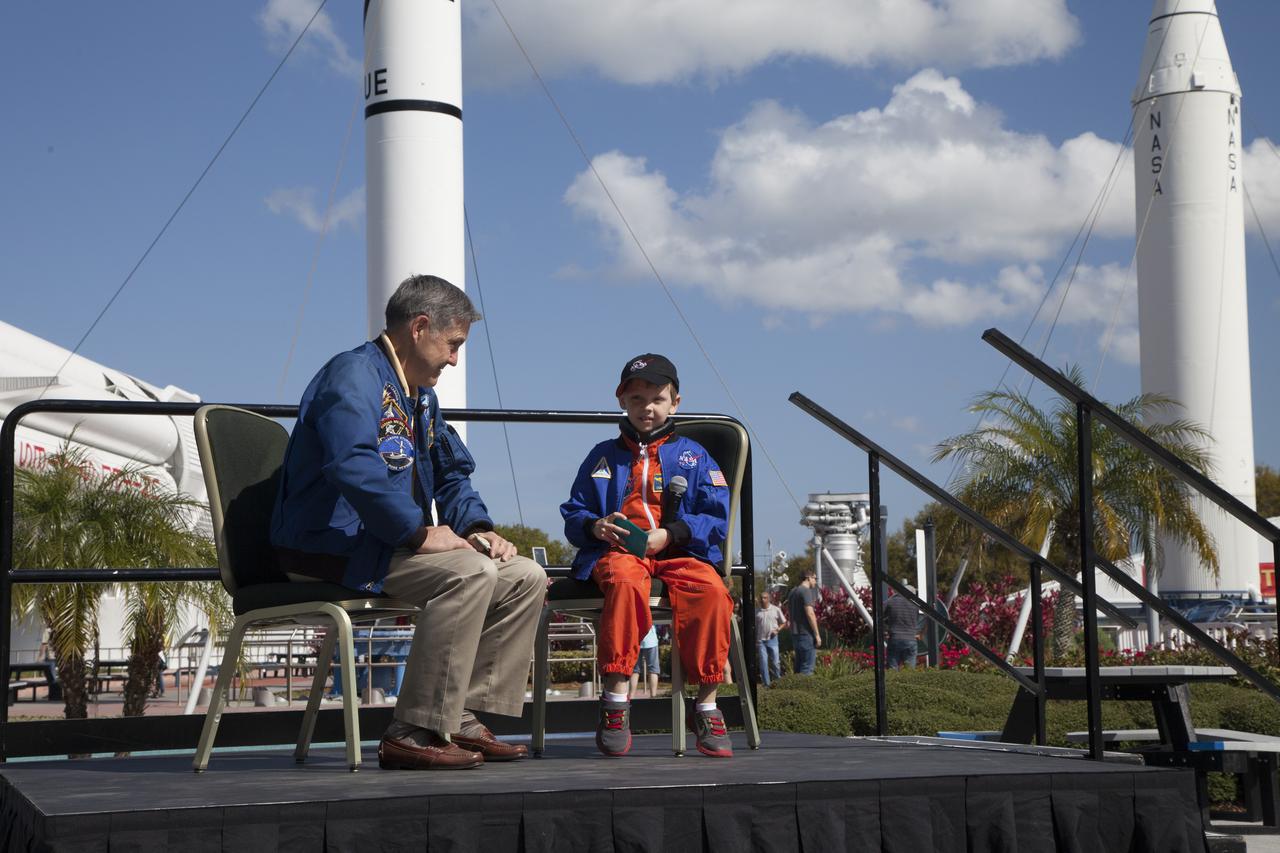
CAPE CANAVERAL, Fla. – NASA Kennedy Space Center Director and former astronaut Robert Cabana, left, discusses the future of the space program with six-year-old Connor Johnson during a ceremony in the Kennedy Space Center Visitor Complex' Rocket Garden. During the ceremony, Cabana will present Connor with mementos to inspire the youngster to continue the dream he has had since the age of three of becoming an astronaut. Connor, of Denver, Colo., gained national attention for having the "right stuff" when he launched an online petition on the White House website in December 2013 to save NASA’s funding from budget cuts. One of the mementos, a piece of space history, was a bolt used to hold the International Space Station's Unity module in place in space shuttle Endeavour's payload bay on the STS-88 mission, the first station assembly mission and Cabana's fourth and final spaceflight. Connor and his family were the guests of Delaware North Companies Parks & Resorts, the concessionaire managing the visitor complex. During his visit, Connor had the opportunity to meet with astronauts, see space vehicles and witness the Robot Rocket Rally underway in the complex' Rocket Garden over the weekend. To learn more about the educational activities available daily at the Kennedy Space Center Visitor Complex, visit http://www.kennedyspacecenter.com. Photo credit: NASA/Dan Casper
CAPE CANAVERAL, Fla. - At Launch Pad 39A at NASA's Kennedy Space Center in Florida, United Space Alliance suit technicians ensure the proper fit of the launch-and-entry suits of the STS-129 crew members. Mission Specialists Leland Melvin and Robert L. Satcher Jr., at right, prepare to enter space shuttle Atlantis from the White Room. Liftoff is set for 2:28 p.m. EST Nov. 16. On STS-129, the crew will deliver two Express Logistics Carriers to the International Space Station, the largest of the shuttle's cargo carriers, containing 15 spare pieces of equipment including two gyroscopes, two nitrogen tank assemblies, two pump modules, an ammonia tank assembly and a spare latching end effector for the station's robotic arm. Atlantis will return to Earth a station crew member, Nicole Stott, who has spent more than two months aboard the orbiting laboratory. STS-129 is slated to be the final space shuttle Expedition crew rotation flight. For information on the STS-129 mission and crew, visit http://www.nasa.gov/mission_pages/shuttle/shuttlemissions/sts129/index.html. Photo credit: NASA/Sandra Joseph and Kevin O'Connell

S72-49079 (8 Sept. 1972) --- This is the official emblem of the Apollo 17 lunar landing mission which will be flown by astronauts Eugene A. Cernan, Ronald E. Evans and Harrison H. Schmitt. The insignia is dominated by the image of Apollo, the Greek sun god. Suspended in space behind the head of Apollo is an American eagle of contemporary design, the red bars of the eagle's wing represent the bars in the United States flag; the three white stars symbolize the three astronaut crewmen. The background is deep blue space and within it are the moon, the planet Saturn and a spiral galaxy or nebula. The moon is partially overlaid by the eagle's wing suggesting that this is a celestial body that man has visited and in that sense conquered. The thrust of the eagle and the gaze of Apollo to the right and toward Saturn and the galaxy is meant to imply that man's goals in space will someday include the planets and perhaps the stars. The colors of the emblem are red, white and blue, the colors of our flag; with the addition of gold, to symbolize the golden age of space flight that will begin with this Apollo 17 lunar landing. The Apollo image used in this emblem was the famous Apollo of Belvedere sculpture now in the Vatican Gallery in Rome. This emblem was designed by artist Robert T. McCall in collaboration with the astronauts. This is the official Apollo 17 emblem, a property of the government of the United States. It has been authorized only for use by the astronauts. Its reproduction in any form other than in news, information and education media is not authorized without approval. Unauthorized use is subject to the provisions of Title 18, U.S. Code, Section 701.

SL3-83-166 (July-September 1973) --- A vertical view of the Washington D.C. and the Baltimore, Maryland area is seen in the Skylab 3 Earth Resources Experiments Package S190-B (five-inch Earth terrain camera) photograph taken from the Skylab space station in Earth orbit. The Chesapeake Bay is on the right (east) side of the picture. The Potomac River flows through the Washington area in the lower left (southwest) corner of the photograph. Several transportation routes and major highways stand out very distinctly. Especially conspicuous are the beltways around the cities, Interstate 95 between Baltimore and the nation?s capitol and Interstate 70N leading west from Baltimore. The tunnel and harbor facilities in Baltimore show clearly, also. Identifiable features in the Washington area include the Capitol Building, the Mall area, Robert F. Kennedy Stadium (white circle), the five bridges across the Potomac, Andrews Air Force Base (on east loop), and the smaller Anacostia River. The extent of the urbanization in this area is dramatically illustrated in this picture. The photograph has sufficient resolution that the housing patterns for individual suburban areas are clearly defined with the houses shown as pink gray, wooded areas as dark green and cleared areas light green. Chesapeake Bay circulation patterns are indicated by contrast of dark and light blue. Sediment plumes (red) are seen entering the bay north and east of Baltimore. The bay bridge stands out white against the blue water. The detailed information contained in this one photograph will be of direct use to several EREP investigator teams in land use analysis, sedimentation and circulation patterns in the bay, and resource surveys of Maryland. All EREP photography is available to the public through the Department of Interior?s Earth Resources Observations Systems Data Center, Sioux Falls, South Dakota, 57198. Photo credit: NASA

President Donald Trump, speaks before signing Space Policy Directive - 1, directing NASA to return to the moon, alongside Vice President Mike Pence, members of the Senate, Congress, NASA, and commercial space companies in the Roosevelt room of the White House in Washington, Monday, Dec. 11, 2017. Photo Credit: (NASA/Aubrey Gemignani)

After 14 years of drought, Lake Powell was at 42 percent of its capacity as of May 20, 2014. The low water levels are evident in these images, which were acquired by the Landsat 8 satellite on May 13, 2014. White bleached rock show where Lake Powell’s shore is when the reservoir is at capacity. It is normal for water levels to fluctuate in the reservoir depending on how much water flows in from snow and rain and how much flows out to meet needs. However, it has been dry in all but three of the past 14 years. At the beginning of 2000, Lake Powell was at 94 percent of capacity. By October 2013 (the beginning of the 2014 water year), water levels had dropped to a low of 50 percent capacity, according to the Bureau of Reclamation, the agency that manages the reservoir. The Earth Observatory’s World of Change shows this annual fluctuation and overall decline. With slightly above average snowpack in the basin that feeds the lake, water levels are expected to rebound to about 51 percent of capacity by October 2014, the end of the water year. While the drop in water levels are worrying for those who generate electricity or use the water for agriculture, the lower water levels may be a draw for recreation. Boaters coming to Lake Powell in the spring of 2014 will find beaches and rock formations that are usually underwater. Bullfrog Bay is the starting point for many boat rentals. The popularity of the spot is evident in the lower image: boats dot the surface of the water, just tiny white flecks at this scale. NASA Earth Observatory image by Robert Simmon, using Landsat data from the U.S. Geological Survey. Caption by Holli Riebeek. Instrument(s): Landsat 8 - OLI Read more: <a href="http://1.usa.gov/1hck6NX" rel="nofollow">1.usa.gov/1hck6NX</a> Credit: <b><a href="http://www.earthobservatory.nasa.gov/" rel="nofollow"> NASA Earth Observatory</a></b> <b><a href="http://www.nasa.gov/audience/formedia/features/MP_Photo_Guidelines.html" rel="nofollow">NASA image use policy.</a></b> <b><a href="http://www.nasa.gov/centers/goddard/home/index.html" rel="nofollow">NASA Goddard Space Flight Center</a></b> enables NASA’s mission through four scientific endeavors: Earth Science, Heliophysics, Solar System Exploration, and Astrophysics. Goddard plays a leading role in NASA’s accomplishments by contributing compelling scientific knowledge to advance the Agency’s mission. <b>Follow us on <a href="http://twitter.com/NASAGoddardPix" rel="nofollow">Twitter</a></b> <b>Like us on <a href="http://www.facebook.com/pages/Greenbelt-MD/NASA-Goddard/395013845897?ref=tsd" rel="nofollow">Facebook</a></b> <b>Find us on <a href="http://instagram.com/nasagoddard?vm=grid" rel="nofollow">Instagram</a></b>
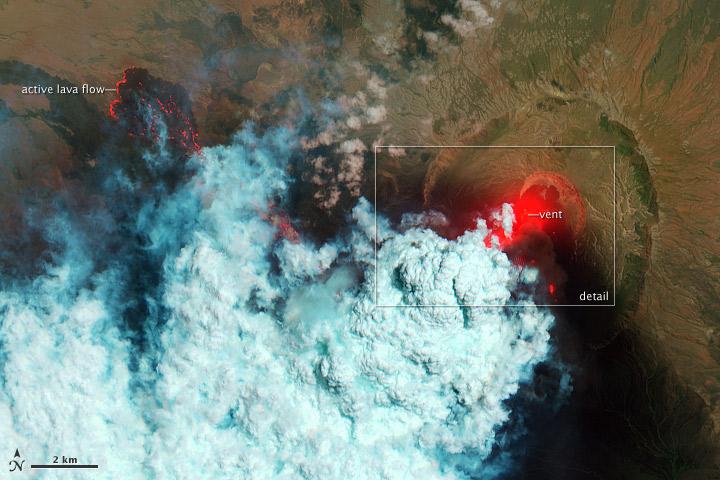
NASA image acquired June 24, 2011 Since it began erupting on June 12, 2011, emissions from Eritrea’s Nabro Volcano have drifted over much of East Africa and the Middle East. Ash has displaced residents living near the volcano and disrupted flights in the region. Despite the volcano’s widespread effects, little is known about the eruption. Nabro is located in an isolated region along the border between Eritrea and Ethiopia, and few English-language reports have been published. Satellite remote sensing is currently the only reliable way to monitor the ongoing eruption. This satellite image is among the first detailed pictures of the erupting vent and lava flows. They were acquired by the Advanced Land Imager (ALI) aboard the Earth Observing-1 (EO-1) satellite on June 24, 2011. The bright red portions of the false-color image (top) indicate hot surfaces. Hot volcanic ash glows above the vent, located in the center of Nabro’s caldera. To the west of the vent, portions of an active lava flow (particularly the front of the flow) are also hot. The speckled pattern on upstream portions of the flow are likely due to the cool, hardened crust splitting and exposing fluid lava as the flow advances. The bulbous blue-white cloud near the vent is likely composed largely of escaping water vapor that condensed as the plume rose and cooled. The whispy, cyan clouds above the lava flow are evidence of degassing from the lava. NASA Earth Observatory image by Robert Simmon, using EO-1 ALI data. Caption by Robert Simmon. Instrument: EO-1 - ALI To download the high res go here: <a href="http://earthobservatory.nasa.gov/IOTD/view.php?id=51216" rel="nofollow">earthobservatory.nasa.gov/IOTD/view.php?id=51216</a> <b><a href="http://www.nasa.gov/centers/goddard/home/index.html" rel="nofollow">NASA Goddard Space Flight Center</a></b> enables NASA’s mission through four scientific endeavors: Earth Science, Heliophysics, Solar System Exploration, and Astrophysics. Goddard plays a leading role in NASA’s accomplishments by contributing compelling scientific knowledge to advance the Agency’s mission. <b>Follow us on <a href="http://twitter.com/NASA_GoddardPix" rel="nofollow">Twitter</a></b> <b>Like us on <a href="http://www.facebook.com/pages/Greenbelt-MD/NASA-Goddard/395013845897?ref=tsd" rel="nofollow">Facebook</a></b> <b>Find us on <a href="http://web.stagram.com/n/nasagoddard/?vm=grid" rel="nofollow">Instagram</a></b>
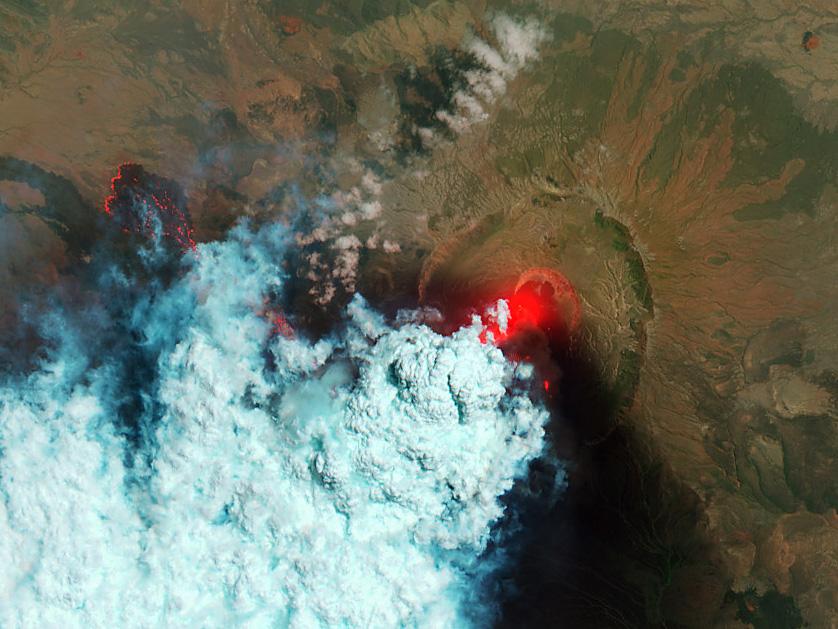
NASA image acquired June 24, 2011 Since it began erupting on June 12, 2011, emissions from Eritrea’s Nabro Volcano have drifted over much of East Africa and the Middle East. Ash has displaced residents living near the volcano and disrupted flights in the region. Despite the volcano’s widespread effects, little is known about the eruption. Nabro is located in an isolated region along the border between Eritrea and Ethiopia, and few English-language reports have been published. Satellite remote sensing is currently the only reliable way to monitor the ongoing eruption. This satellite image is among the first detailed pictures of the erupting vent and lava flows. They were acquired by the Advanced Land Imager (ALI) aboard the Earth Observing-1 (EO-1) satellite on June 24, 2011. The bright red portions of the false-color image (top) indicate hot surfaces. Hot volcanic ash glows above the vent, located in the center of Nabro’s caldera. To the west of the vent, portions of an active lava flow (particularly the front of the flow) are also hot. The speckled pattern on upstream portions of the flow are likely due to the cool, hardened crust splitting and exposing fluid lava as the flow advances. The bulbous blue-white cloud near the vent is likely composed largely of escaping water vapor that condensed as the plume rose and cooled. The whispy, cyan clouds above the lava flow are evidence of degassing from the lava. NASA Earth Observatory image by Robert Simmon, using EO-1 ALI data. Caption by Robert Simmon. Instrument: EO-1 - ALI To download the high res go here: <a href="http://earthobservatory.nasa.gov/IOTD/view.php?id=51216" rel="nofollow">earthobservatory.nasa.gov/IOTD/view.php?id=51216</a> <b><a href="http://www.nasa.gov/centers/goddard/home/index.html" rel="nofollow">NASA Goddard Space Flight Center</a></b> enables NASA’s mission through four scientific endeavors: Earth Science, Heliophysics, Solar System Exploration, and Astrophysics. Goddard plays a leading role in NASA’s accomplishments by contributing compelling scientific knowledge to advance the Agency’s mission. <b>Follow us on <a href="http://twitter.com/NASA_GoddardPix" rel="nofollow">Twitter</a></b> <b>Like us on <a href="http://www.facebook.com/pages/Greenbelt-MD/NASA-Goddard/395013845897?ref=tsd" rel="nofollow">Facebook</a></b> <b>Find us on <a href="http://web.stagram.com/n/nasagoddard/?vm=grid" rel="nofollow">Instagram</a></b>

NASA Image acquired March 24, 2010 To learn more and to download a high res version of this image go here: <a href="http://earthobservatory.nasa.gov/IOTD/view.php?id=43252" rel="nofollow">earthobservatory.nasa.gov/IOTD/view.php?id=43252</a> Iceland’s Eyjafjallajökull Volcano burst into life for the first time in 190 years on March 20, 2010. A 500-meter- (2,000-foot) long fissure opened in the Fimmvörduháls pass to the west of the ice-covered summit of Eyjafjallajökull. Lava fountains erupted fluid magma, which quickly built several hills of bubble-filled lava rocks (scoria) along the vent. A lava flow spread northeast, spilling into Hrunagil Gully. This natural-color satellite image shows lava fountains, lava flows, a volcanic plume, and steam from vaporized snow. The image was acquired on March 24, 2010, by the Advanced Land Imager (ALI) aboard NASA’s Earth Observing-1 (EO-1) satellite. The lava fountains are orange-red, barely visible at the 10-meter (33-foot) resolution of the satellite. The scoria cones surrounding the fissure are black, as is the lava flow extending to the northeast. White volcanic gases escape from the vent and erupting lava, while a steam plume rises where the hot lava meets snow. (The bright green color along the edge of the lava flow is an artifact of the sensor.) The eruption of Eyjafjallajökull was presaged by a series of earthquakes starting in early March. Over time, the earthquakes rose towards the surface, and land near the volcano rose at least 40 millimeters (2 inches)—both indications that magma was moving underneath the volcano. The eruption continued through at least March 26th, and may continue for several more months. Previous eruptions in the area have caused flooding due to the melting of glacial ice (a Jökulhlaup), but the current eruption is in an area covered by winter snow, not permanent ice. Although some past eruptions of Eyjafjallajökull were followed by larger, explosive eruptions at nearby Katla Volcano, there is currently no sign of activity at Katla. NASA image by Robert Simmon, using ALI data from the EO-1 team. Caption by Robert Simmon. Instrument: EO-1 - ALI <b><a href="http://www.nasa.gov/centers/goddard/home/index.html" rel="nofollow">NASA Goddard Space Flight Center</a></b> is home to the nation's largest organization of combined scientists, engineers and technologists that build spacecraft, instruments and new technology to study the Earth, the sun, our solar system, and the universe.
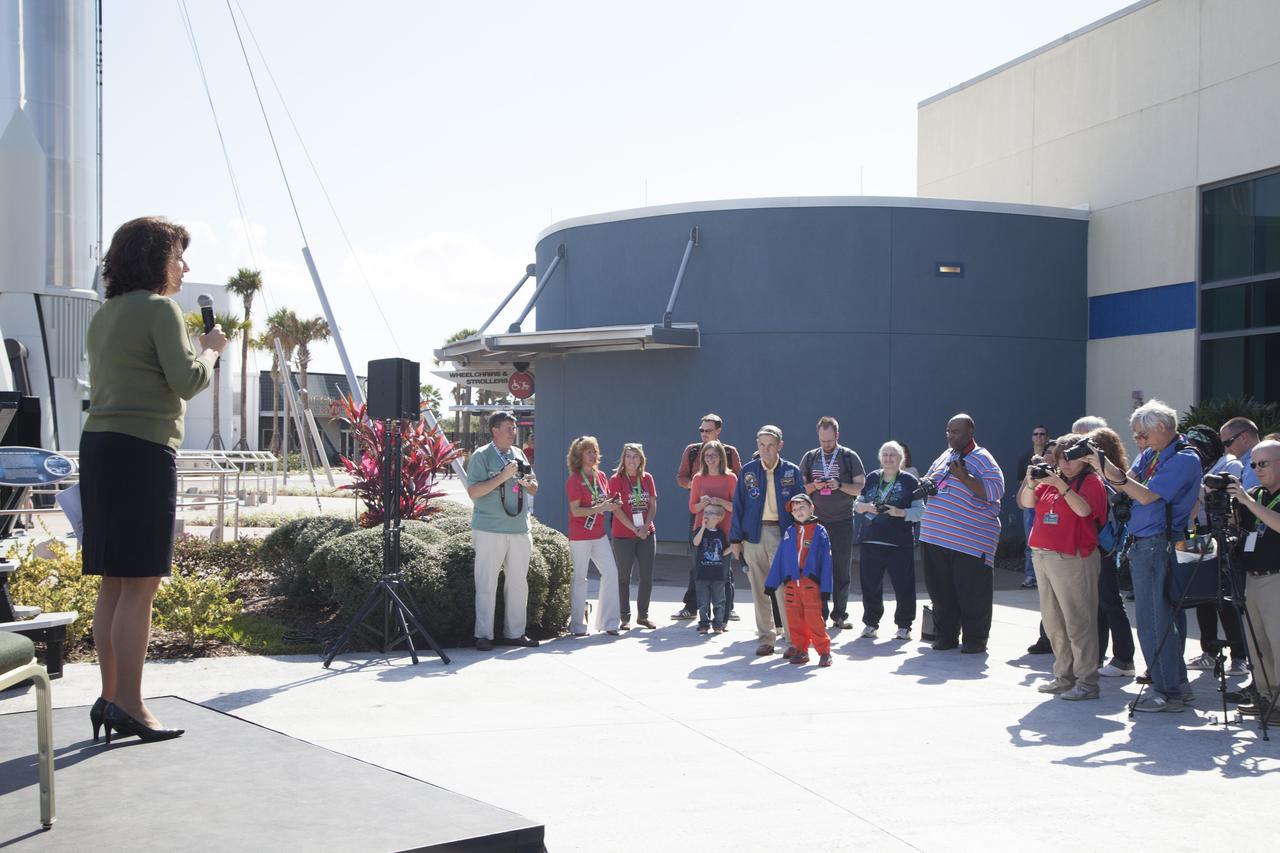
CAPE CANAVERAL, Fla. – Andrea Farmer, public relations manager for the Kennedy Space Center Visitor Complex concessionaire Delaware North Companies Parks & Resorts, welcomes representatives of the news and social media to the complex' Rocket Garden for a ceremony honoring six-year-old Connor Johnson. During the ceremony, Connor will be presented with space mementos by NASA Kennedy Space Center Director and former astronaut Robert Cabana to inspire the youngster to continue the dream he has had since the age of three of becoming an astronaut. Connor, of Denver, Colo., gained national attention for having the "right stuff" when he launched an online petition on the White House website in December 2013 to save NASA’s funding from budget cuts. One of the mementos, a piece of space history, was a bolt used to hold the International Space Station's Unity module in place in space shuttle Endeavour's payload bay on the STS-88 mission, the first station assembly mission and Cabana's fourth and final spaceflight. Connor and his family were the guests of Delaware North Companies Parks & Resorts, the concessionaire managing the visitor complex. During his visit, Connor had the opportunity to meet with astronauts, see space vehicles and witness the Robot Rocket Rally underway in the complex' Rocket Garden over the weekend. To learn more about the educational activities available daily at the Kennedy Space Center Visitor Complex, visit http://www.kennedyspacecenter.com. Photo credit: NASA/Dan Casper
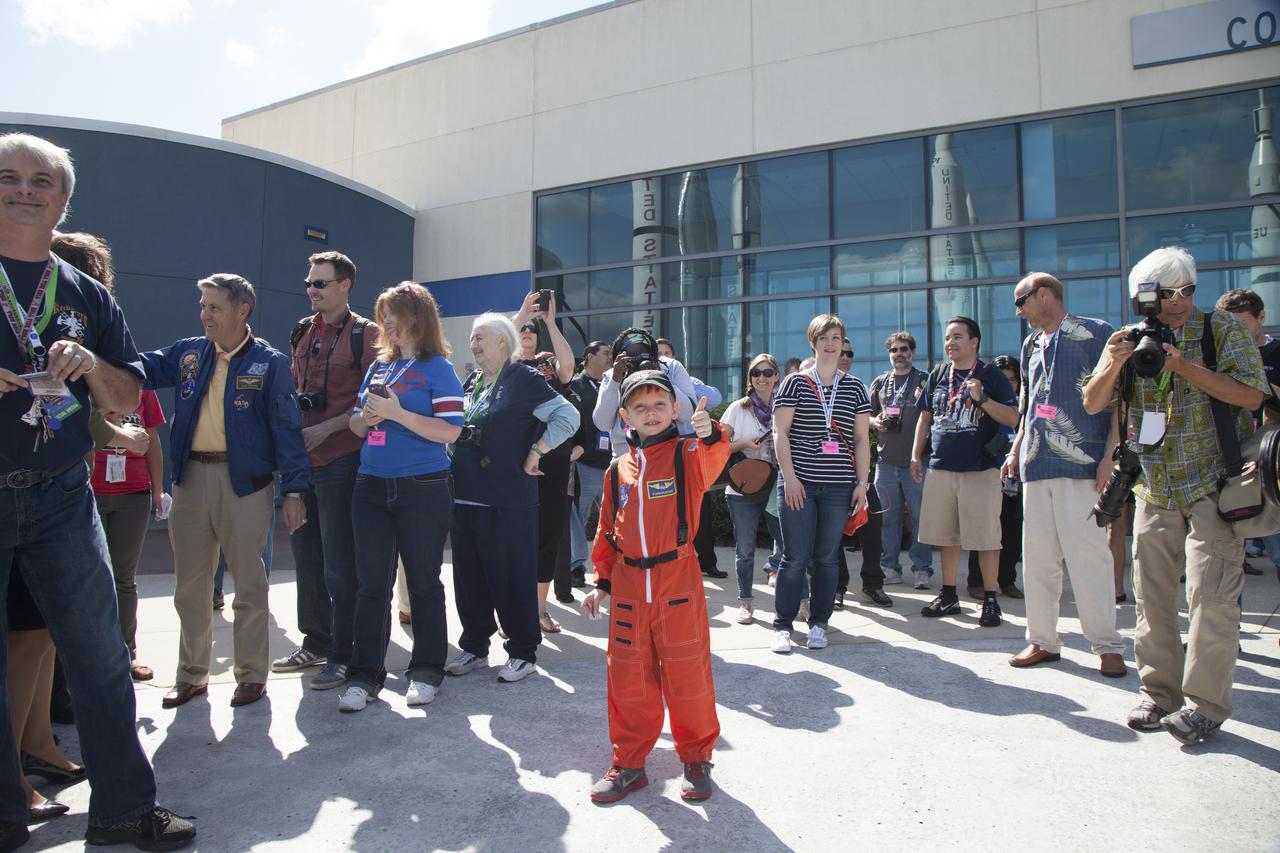
CAPE CANAVERAL, Fla. – Six-year-old Connor Johnson gives a big thumbs up following a ceremony in the Kennedy Space Center Visitor Complex' Rocket Garden during which NASA Kennedy Space Center Director and former astronaut Robert Cabana presented him with space mementos to inspire the youngster to continue the dream he has had since the age of three of becoming an astronaut. Behind Connor is Cabana, second from left, and representatives of news and social media who attended the event. Connor, of Denver, Colo., gained national attention for having the "right stuff" when he launched an online petition on the White House website in December 2013 to save NASA’s funding from budget cuts. One of the mementos, a piece of space history, was a bolt used to hold the International Space Station's Unity module in place in space shuttle Endeavour's payload bay on the STS-88 mission, the first station assembly mission and Cabana's fourth and final spaceflight. Connor and his family were the guests of Delaware North Companies Parks & Resorts, the concessionaire managing the visitor complex. During his visit, Connor had the opportunity to meet with astronauts, see space vehicles and witness the Robot Rocket Rally underway in the complex' Rocket Garden over the weekend. To learn more about the educational activities available daily at the Kennedy Space Center Visitor Complex, visit http://www.kennedyspacecenter.com. Photo credit: NASA/Dan Casper