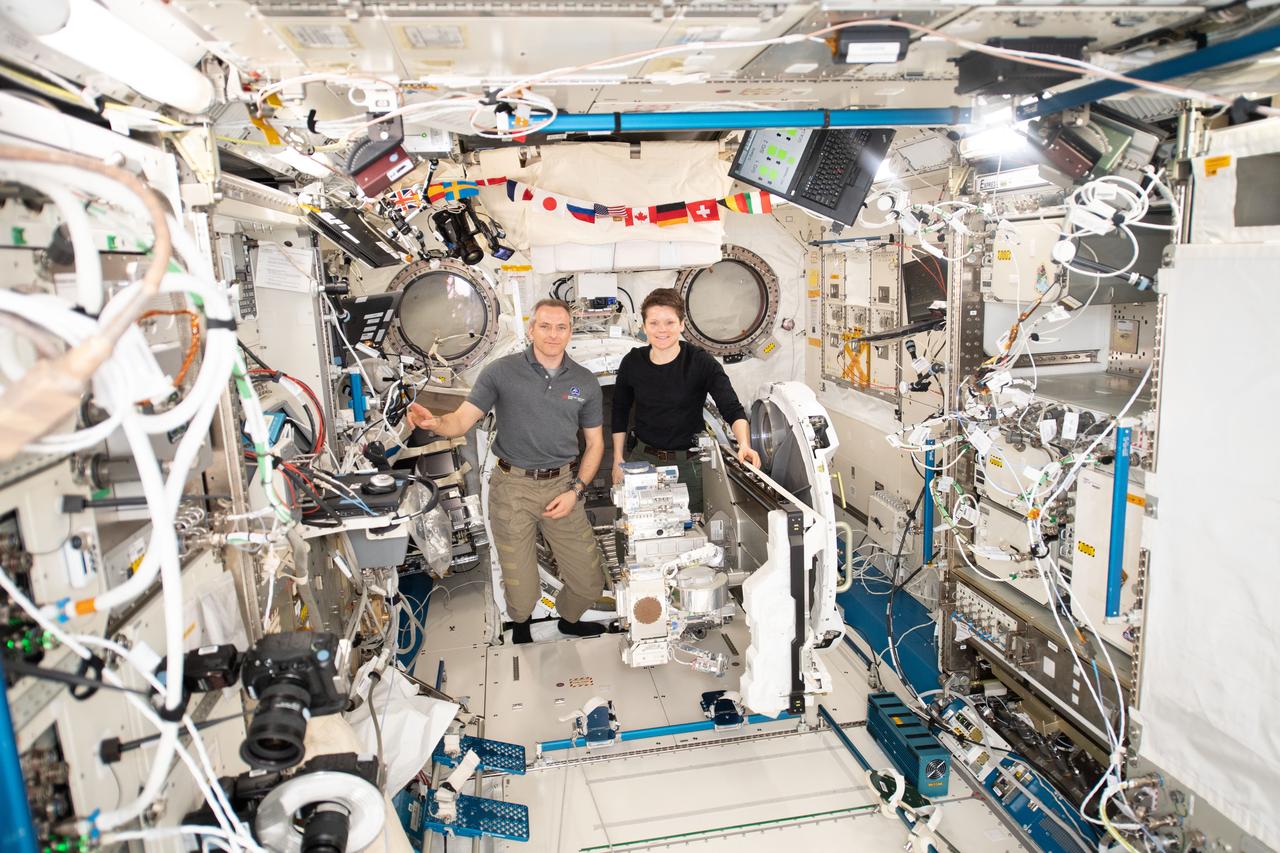
iss058e015664 (2/19/2019) --- NASA astronaut Anne McClain and Canadian Space Agency (CSA) astronaut David Saint-Jacques shown during the installation of the Robotics Refueling Mission (RRM)-3 on the JEM Airlock slide table in the KIBO module aboard the International Space Station (ISS). Robotic Refueling Mission 3 (RRM3) demonstrates the first transfer and long term storage of liquid methane, a cryogenic fluid, in microgravity. The ability to replenish and store cryogenic fluids, which can function as a fuel or coolant, can help enable long duration journeys to destinations like the Moon and Mars.
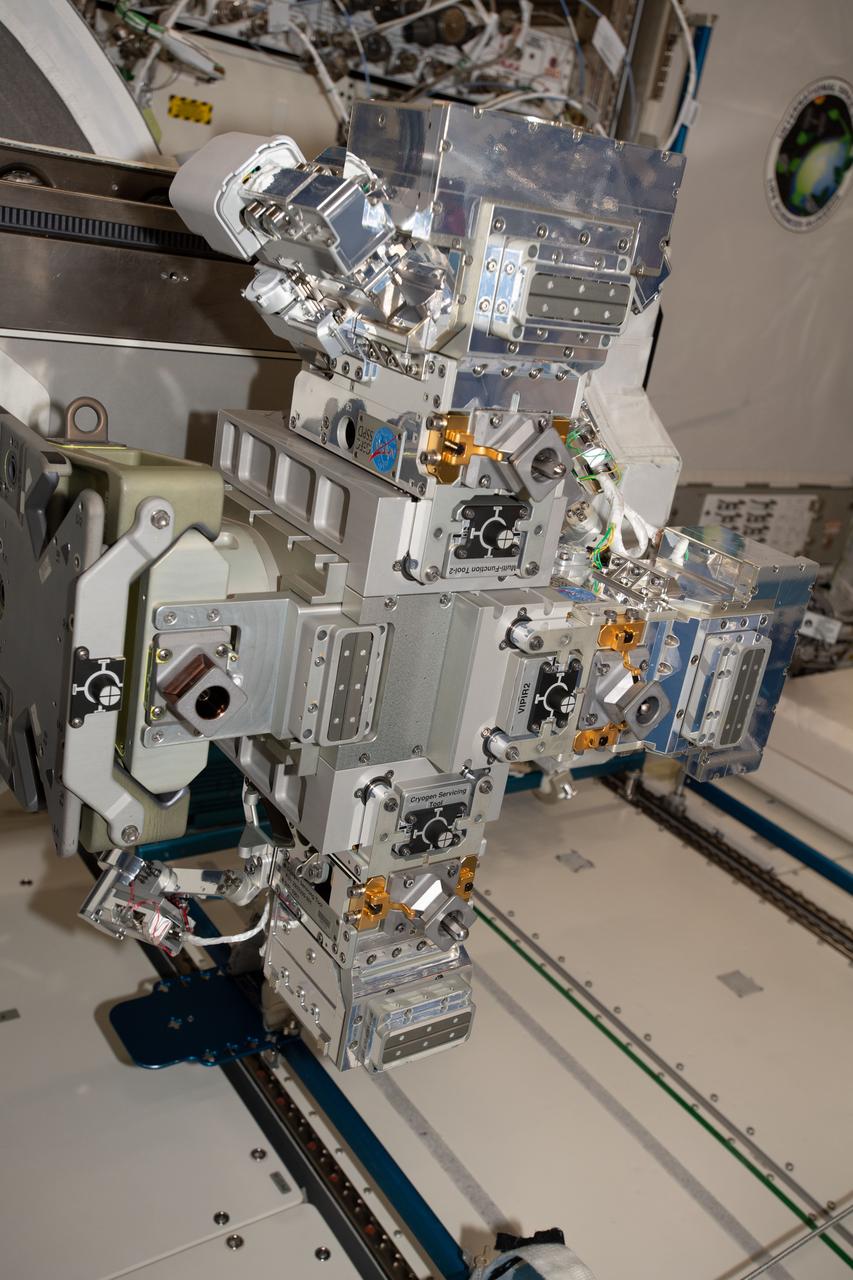
iss058e015157 (2/19/2019) --- Photo documentation of the Robotic Refueling Mission 3 (RRM3) hardware in the KIBO module aboard the International Space Station (ISS). Robotic Refueling Mission 3 (RRM3) demonstrates the first transfer and long term storage of liquid methane, a cryogenic fluid, in microgravity. The ability to replenish and store cryogenic fluids, which can function as a fuel or coolant, can help enable long duration journeys to destinations like the Moon and Mars.
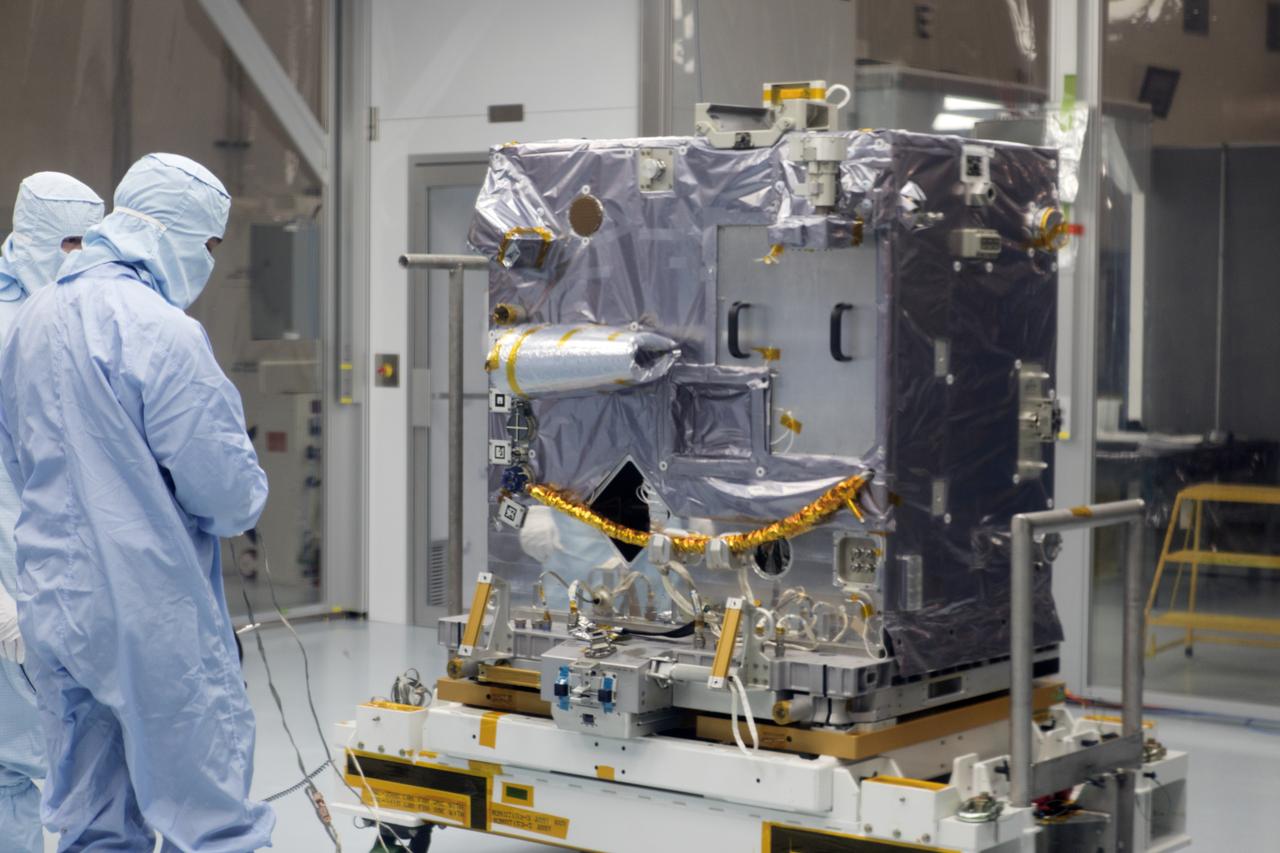
NASA’s Robotic Refueling Mission 3 arrived at Kennedy Space Center’s Space Station Processing Facility on May 8. The mission, which is scheduled to launch to the International Space Station later this year, will advance satellite servicing capabilities that will enable long duration, deep space exploration.
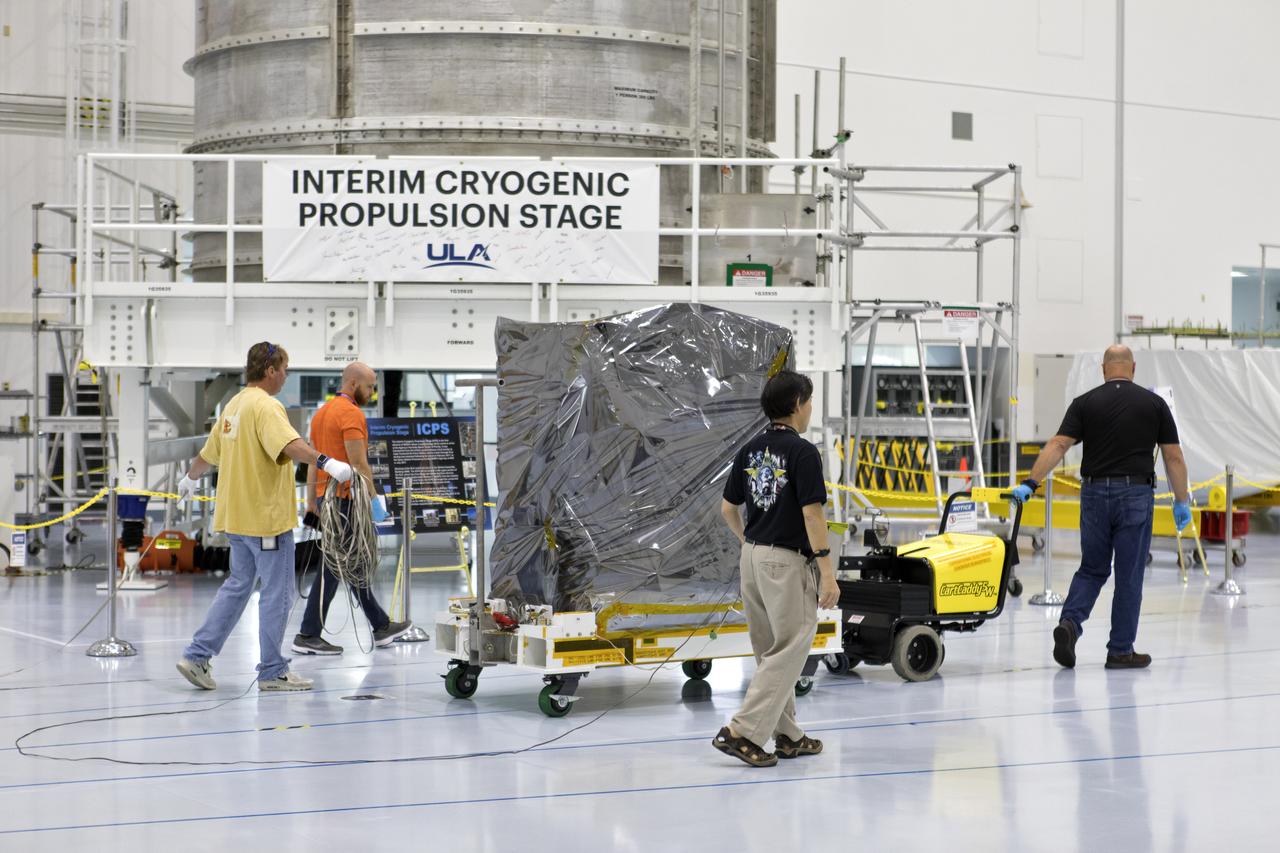
The technology to replenish crucial satellite supplies in space currently does not exist. NASA is looking to help change that with Robotic Refueling Mission 3 (RRM3). The fluid transfer module arrived at Kennedy Space Center on May 8, and is planned to launch to the International Space Station later this year.
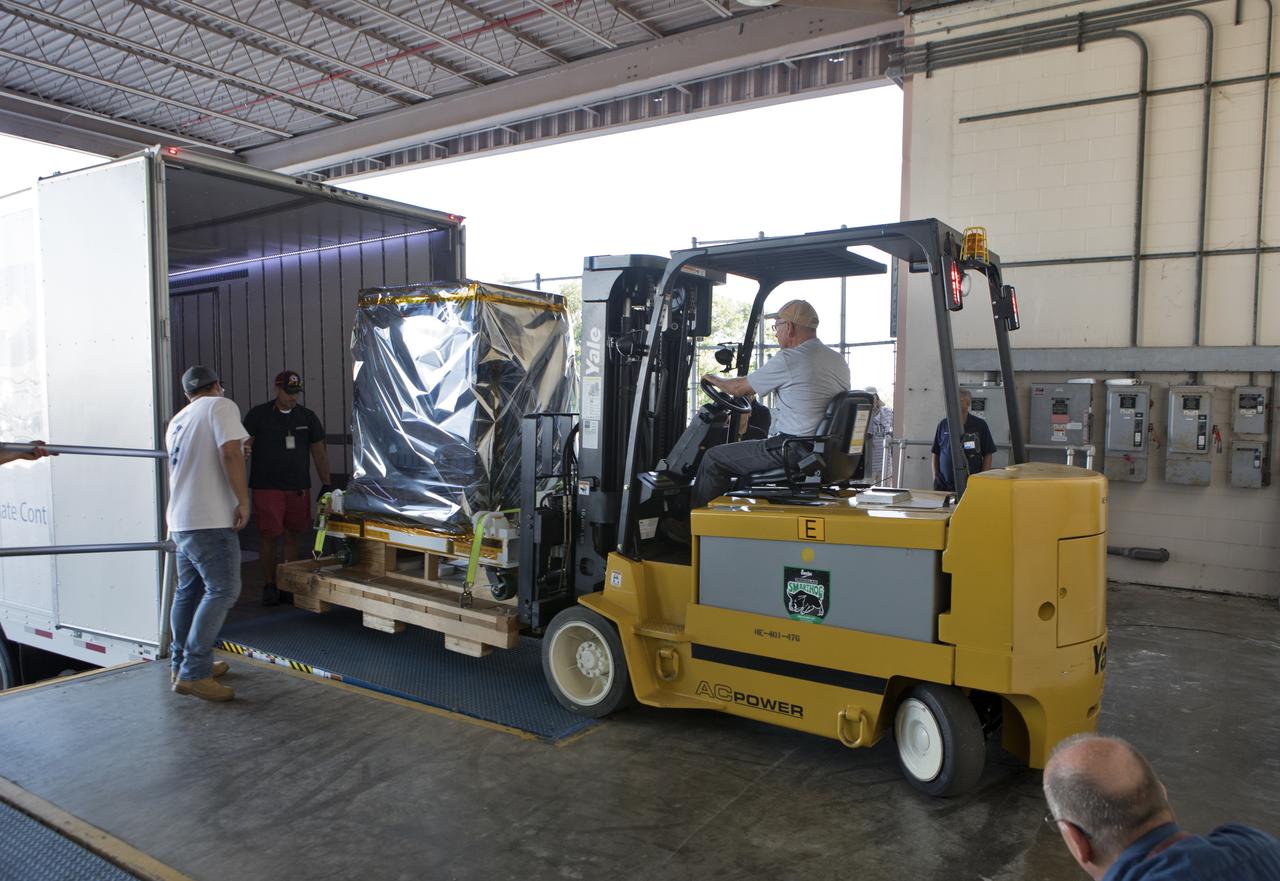
NASA’s Robotic Refueling Mission 3 (RRM3) arrived at Kennedy Space Center’s Space Station Processing Facility on May 8. The fluid transfer module will demonstrate innovative methods to store, transfer and freeze standard cryogenic fluid in space. RRM3 is scheduled to launch to the International Space Station later this year.
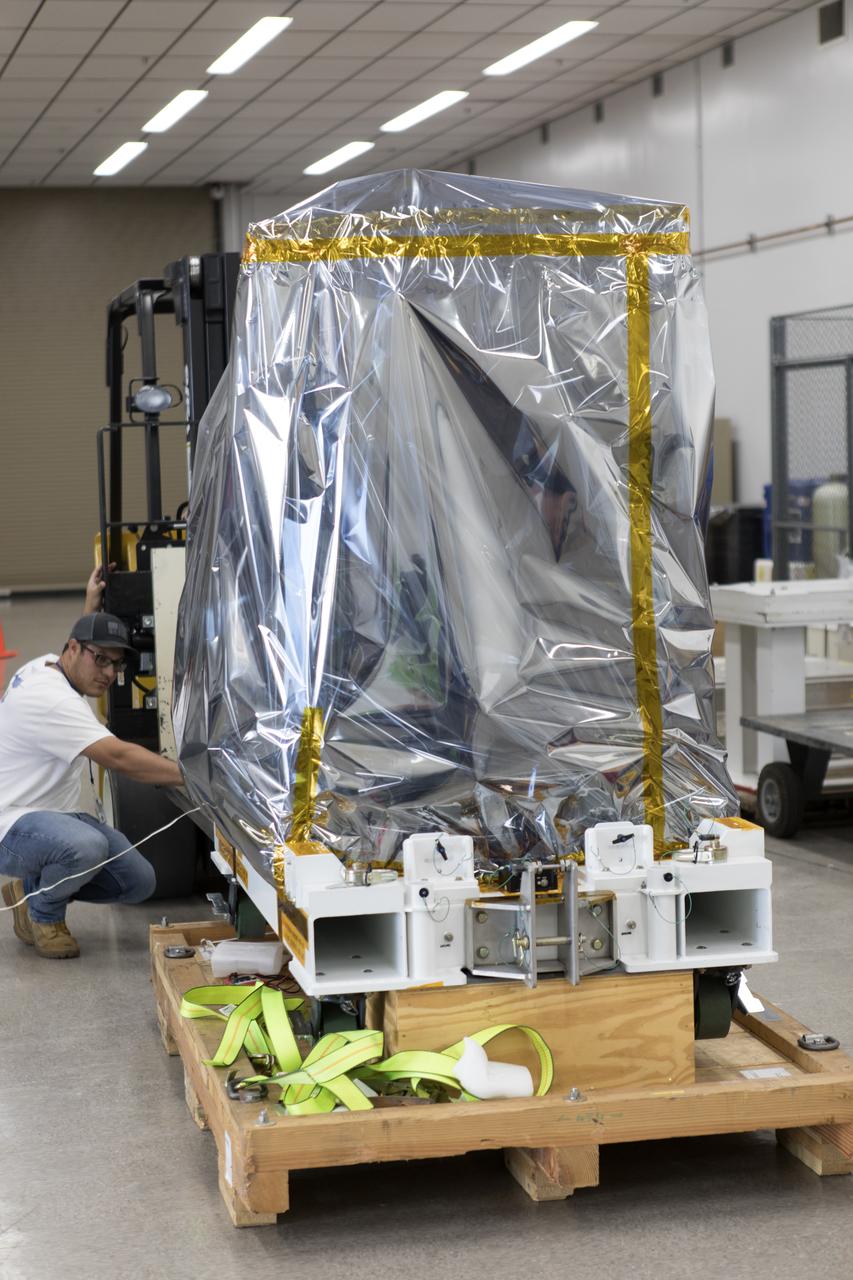
NASA’s Robotic Refueling Mission 3 (RRM3) builds on the first two phases of International Space Station (ISS) technology demonstrations that tested tools, technologies and techniques to refuel and repair satellites in orbit. RRM3, which arrived at Kennedy Space Center’s Space Station Processing Facility on May 8, is planned to launch to the ISS later this year.
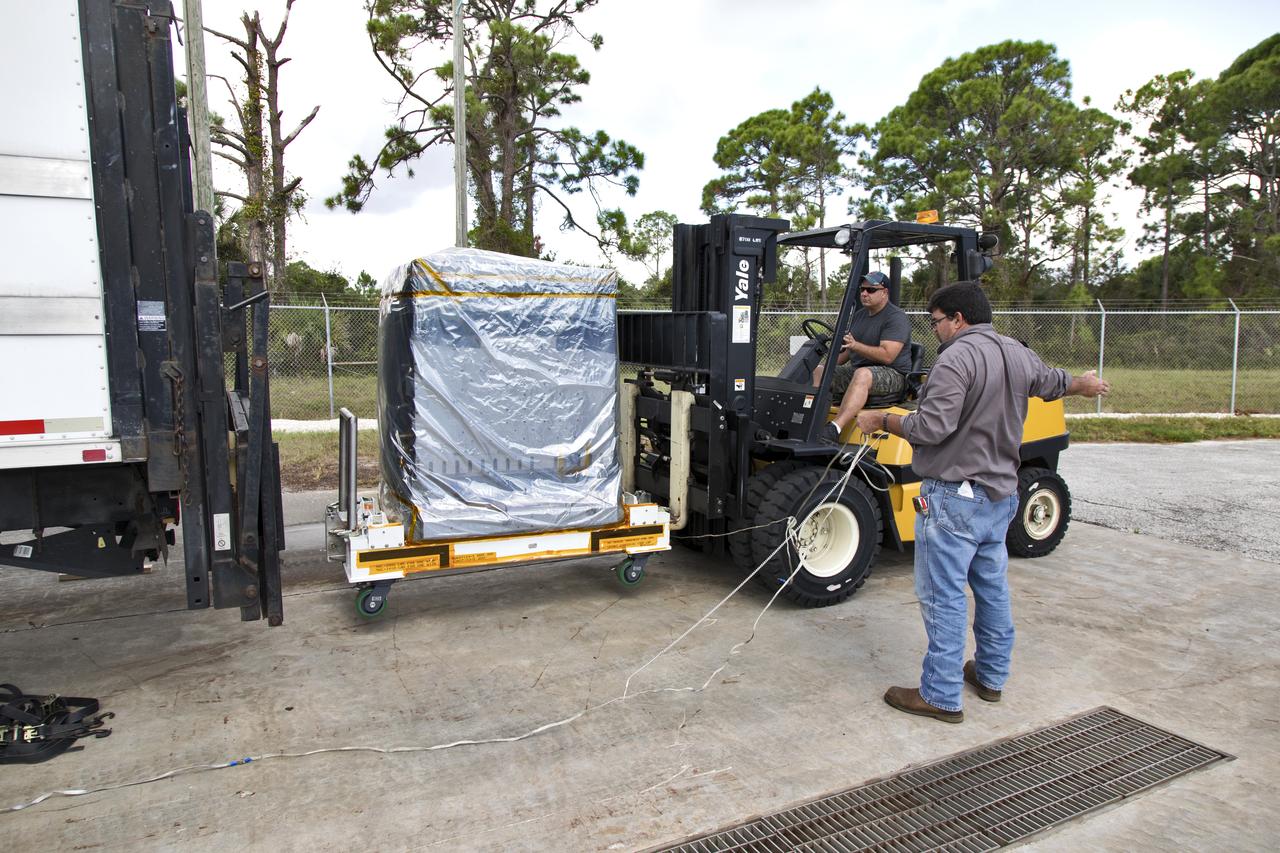
A worker uses a forklift to unload the Robotic Refueling Mission-3 (RRM3) payload from a truck at the Payload Hazardous Servicing Facility on Oct. 3, 2018, at NASA's Kennedy Space Center in Florida. The payload will be carried to the International Space Station on SpaceX's 16th Commercial Resupply Services mission. RRM3 demonstrates the transfer of xenon gas and liquid methane in microgravity, and advances technologies for storing and manipulating these cryogenic fuels robotically. RRM3 also supports development of technology for the Restore-L mission, a robotic spacecraft equipped to service satellites in-orbit.
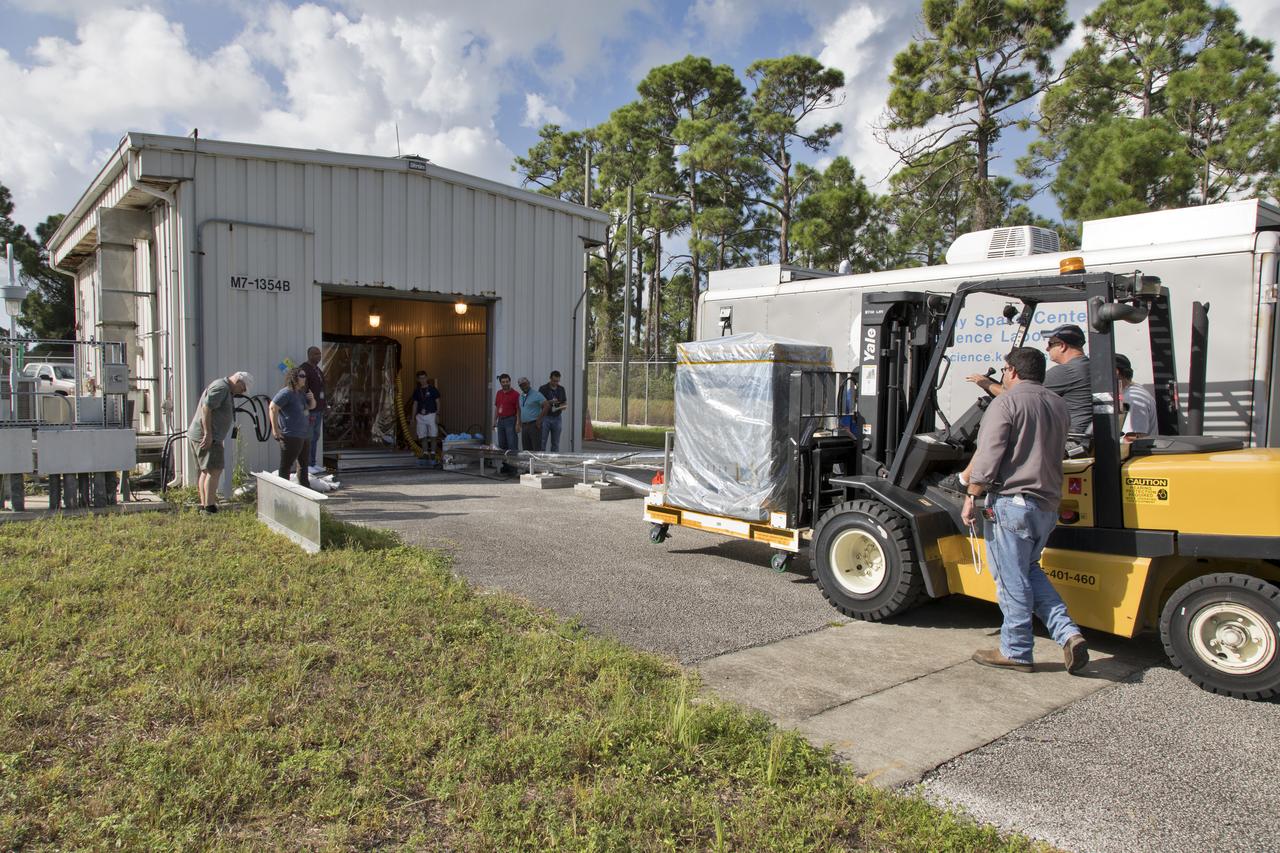
A worker uses a forklift to carry the Robotic Refueling Mission-3 (RRM3) payload to the entrance of the Payload Hazardous Servicing Facility on Oct. 3, 2018, at NASA's Kennedy Space Center in Florida. The payload will be carried to the International Space Station on SpaceX's 16th Commercial Resupply Services mission. RRM3 demonstrates the transfer of xenon gas and liquid methane in microgravity, and advances technologies for storing and manipulating these cryogenic fuels robotically. RRM3 also supports development of technology for the Restore-L mission, a robotic spacecraft equipped to service satellites in-orbit.
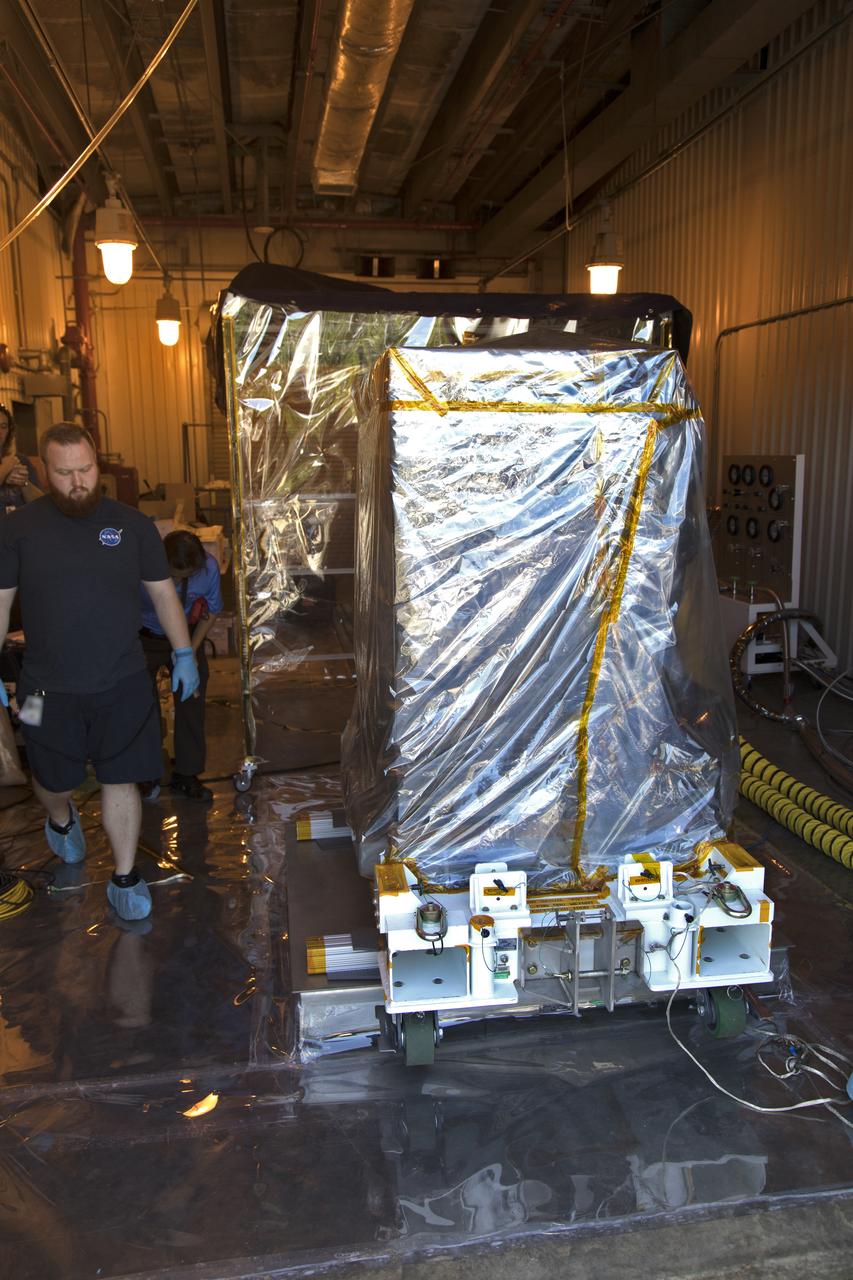
The Robotic Refueling Mission-3 (RRM3) payload is inside the Payload Hazardous Servicing Facility on Oct. 3, 2018, at NASA's Kennedy Space Center in Florida. The payload will be carried to the International Space Station on SpaceX's 16th Commercial Resupply Services mission. RRM3 demonstrates the transfer of xenon gas and liquid methane in microgravity, and advances technologies for storing and manipulating these cryogenic fuels robotically. RRM3 also supports development of technology for the Restore-L mission, a robotic spacecraft equipped to service satellites in-orbit.
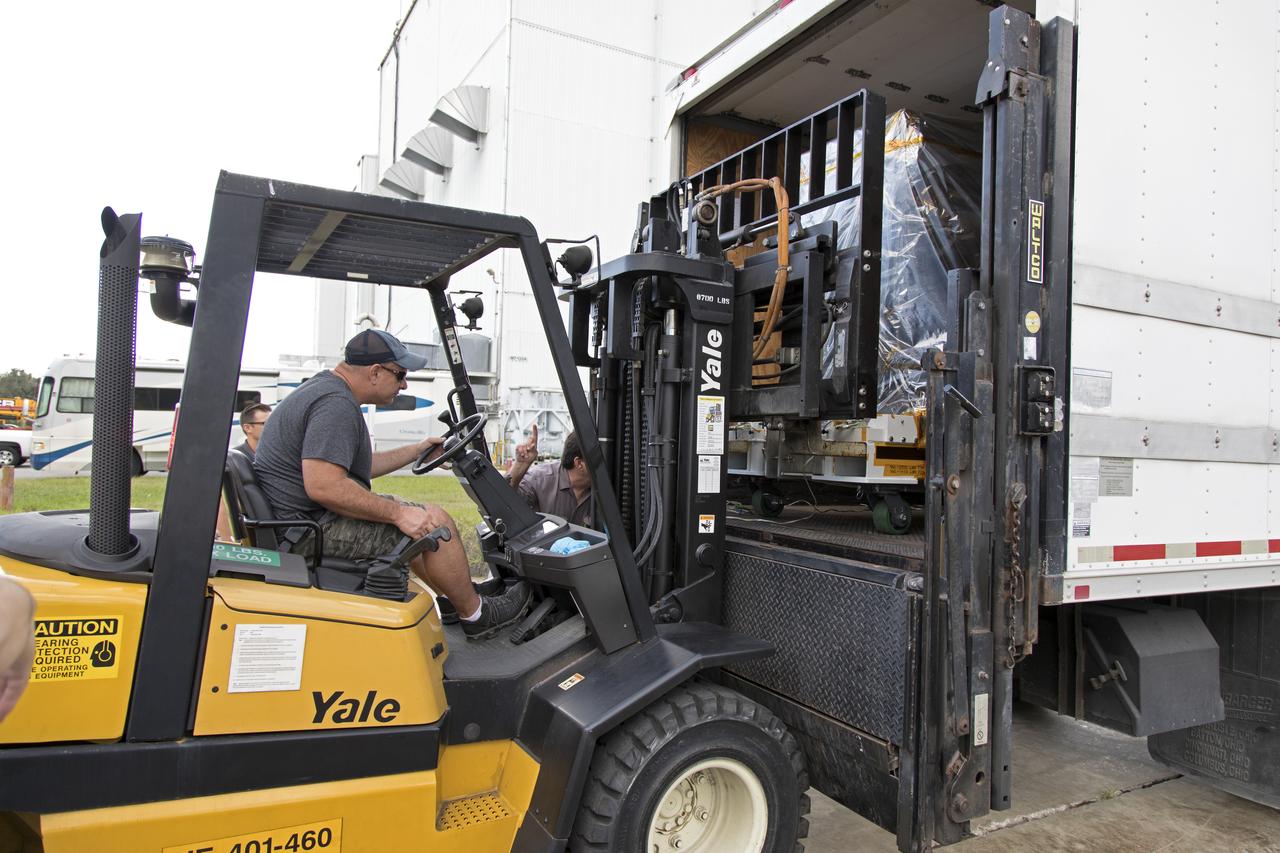
A worker uses a forklift to unload the Robotic Refueling Mission-3 (RRM3) payload from a truck at the Payload Hazardous Servicing Facility on Oct. 3, 2018, at NASA's Kennedy Space Center in Florida. The payload will be carried to the International Space Station on SpaceX's 16th Commercial Resupply Services mission. RRM3 demonstrates the transfer of xenon gas and liquid methane in microgravity, and advances technologies for storing and manipulating these cryogenic fuels robotically. RRM3 also supports development of technology for the Restore-L mission, a robotic spacecraft equipped to service satellites in-orbit.
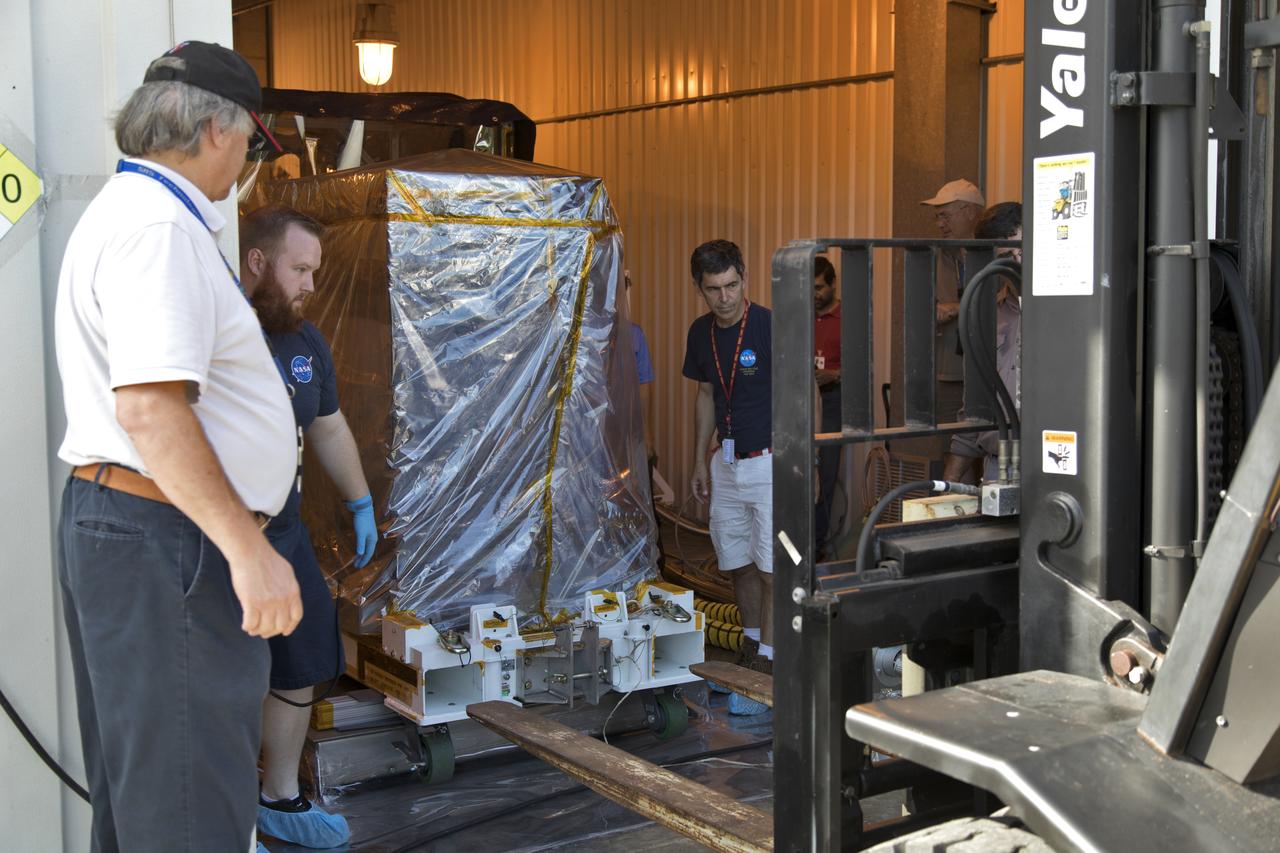
The Robotic Refueling Mission-3 (RRM3) payload is unloaded from a forklift inside the Payload Hazardous Servicing Facility on Oct. 3, 2018, at NASA's Kennedy Space Center in Florida. The payload will be carried to the International Space Station on SpaceX's 16th Commercial Resupply Services mission. RRM3 demonstrates the transfer of xenon gas and liquid methane in microgravity, and advances technologies for storing and manipulating these cryogenic fuels robotically. RRM3 also supports development of technology for the Restore-L mission, a robotic spacecraft equipped to service satellites in-orbit.
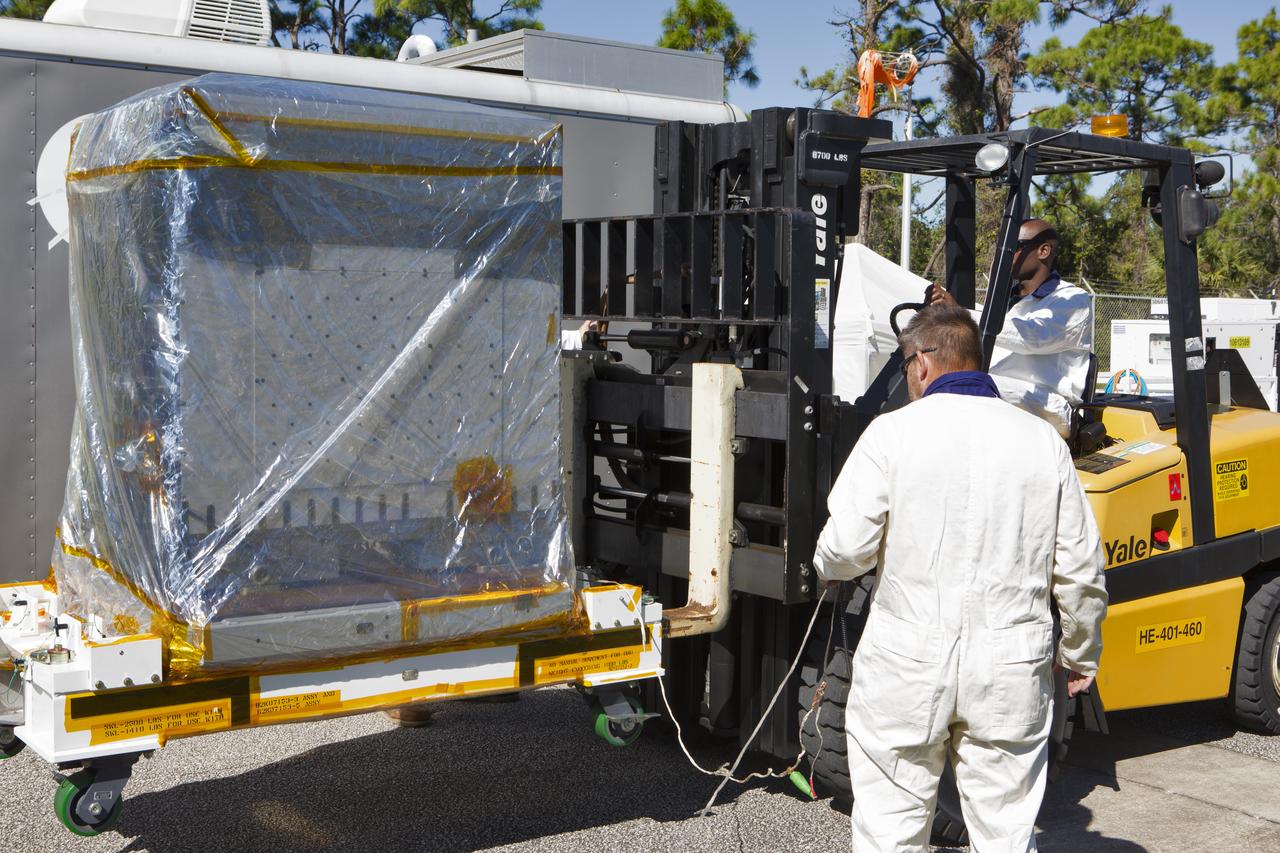
Workers prepare the Robotic Refueling Mission-3 (RRM3) payload for transport from the Fuel Transfer Building to the SpaceX facility on Oct. 30, 2018, at NASA's Kennedy Space Center in Florida. The payload will be carried to the International Space Station on SpaceX's 16th Commercial Resupply Services mission. RRM3 demonstrates the transfer of xenon gas and liquid methane in microgravity, and advances technologies for storing and manipulating these cryogenic fuels robotically. RRM3 also supports development of technology for the Restore-L mission, a robotic spacecraft equipped to service satellites in-orbit.
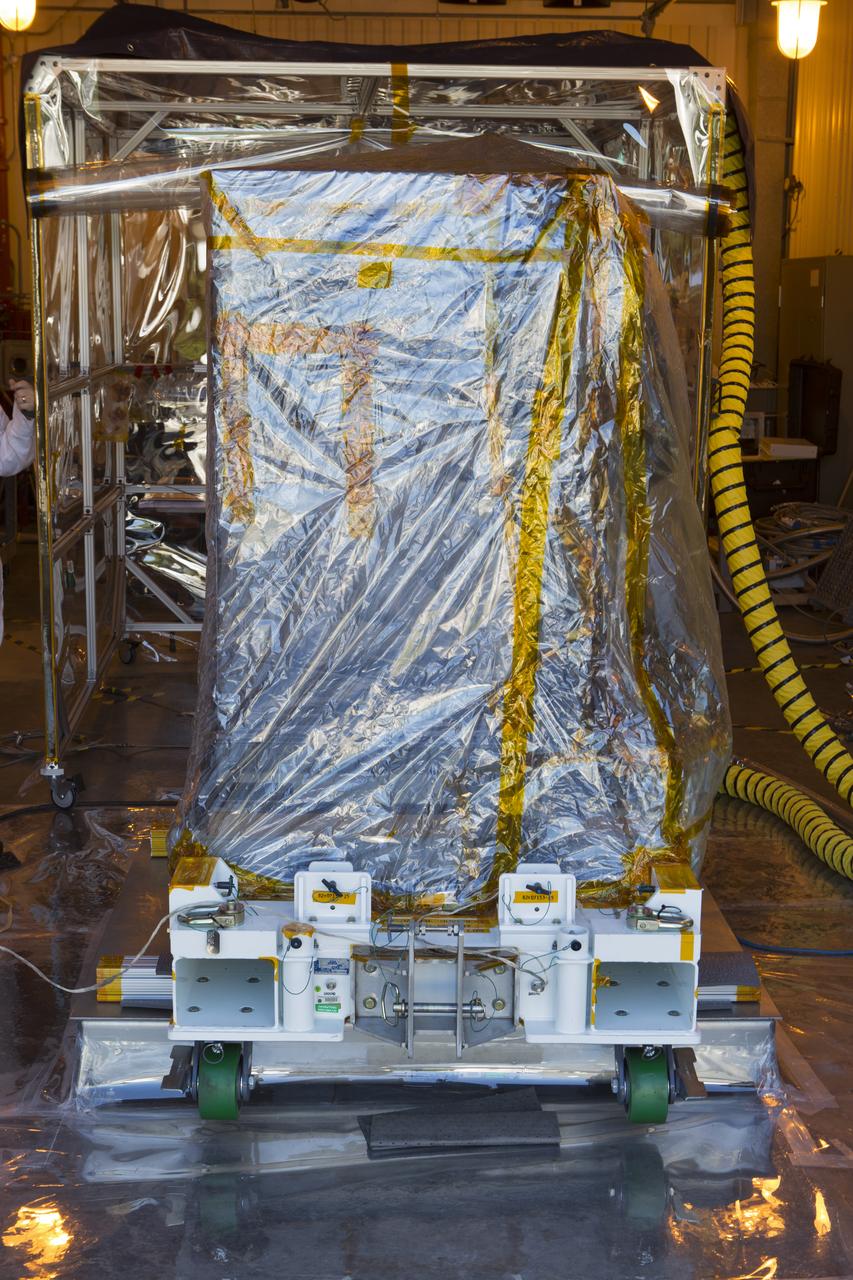
The Robotic Refueling Mission-3 (RRM3) payload is being prepared to be moved from the Fuel Transfer Building to the SpaceX facility on Oct. 30, 2018, at NASA's Kennedy Space Center in Florida. The payload will be carried to the International Space Station on SpaceX's 16th Commercial Resupply Services mission. RRM3 demonstrates the transfer of xenon gas and liquid methane in microgravity, and advances technologies for storing and manipulating these cryogenic fuels robotically. RRM3 also supports development of technology for the Restore-L mission, a robotic spacecraft equipped to service satellites in-orbit.
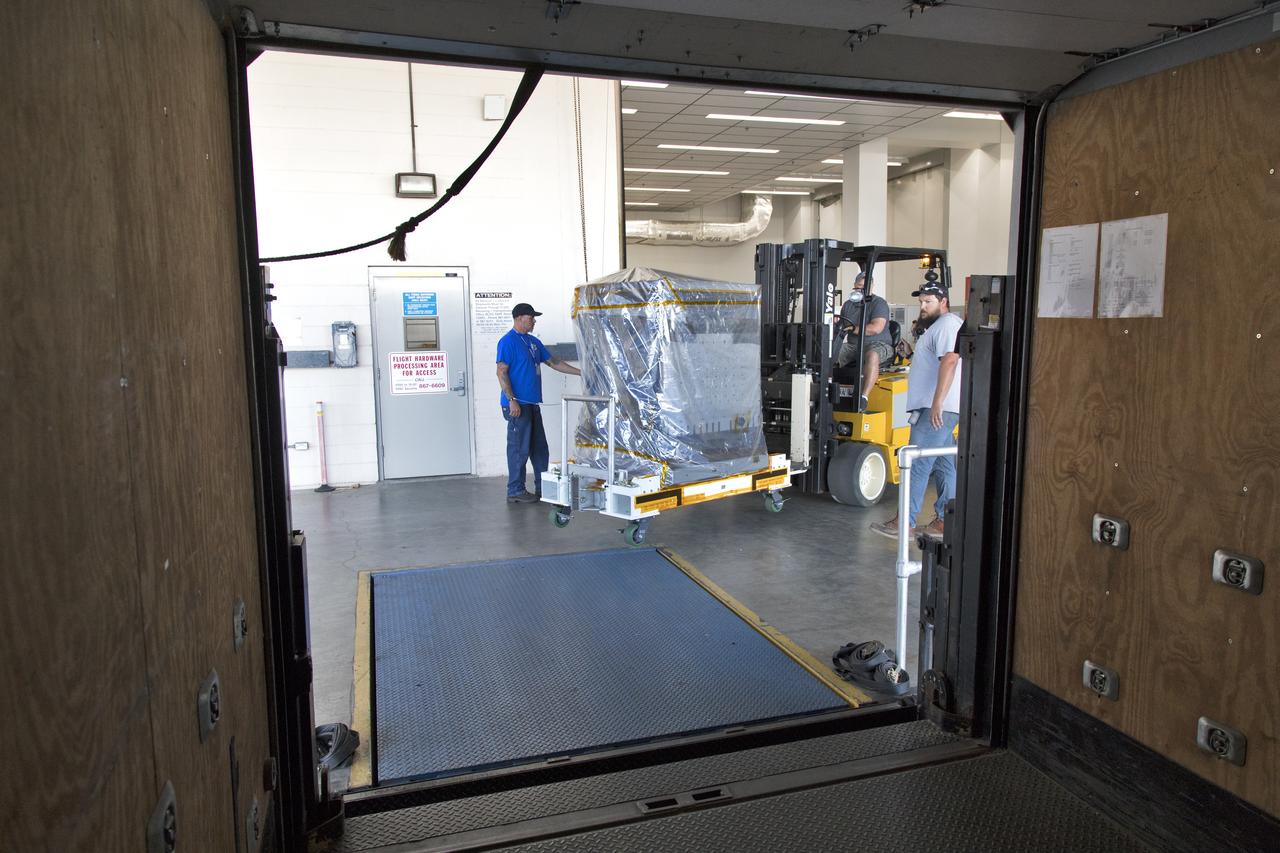
Workers prepare to transfer the Robotic Refueling Mission-3 (RRM3) payload from the Space Station Processing Facility high bay to the Payload Hazardous Servicing Facility on Oct. 3, 2018, at NASA's Kennedy Space Center in Florida. The payload will be carried to the International Space Station on SpaceX's 16th Commercial Resupply Services mission. RRM3 demonstrates the transfer of xenon gas and liquid methane in microgravity, and advances technologies for storing and manipulating these cryogenic fuels robotically. RRM3 also supports development of technology for the Restore-L mission, a robotic spacecraft equipped to service satellites in-orbit.
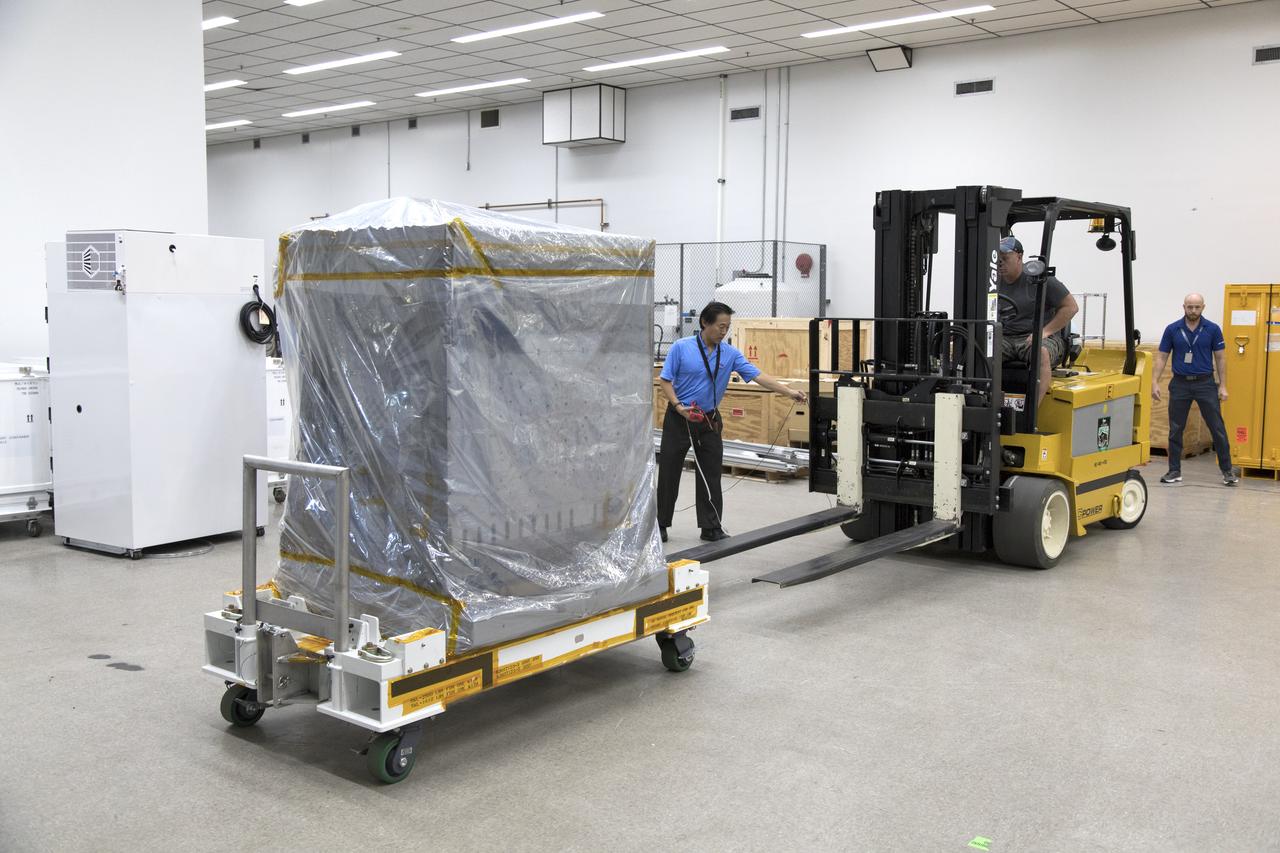
Workers prepare the Robotic Refueling Mission-3 (RRM3) payload to be transferred from the Space Station Processing Facility high bay to the Payload Hazardous Servicing Facility on Oct. 3, 2018, at NASA's Kennedy Space Center in Florida. The payload will be carried to the International Space Station on SpaceX's 16th Commercial Resupply Services mission. RRM3 demonstrates the transfer of xenon gas and liquid methane in microgravity, and advances technologies for storing and manipulating these cryogenic fuels robotically. RRM3 also supports development of technology for the Restore-L mission, a robotic spacecraft equipped to service satellites in-orbit.
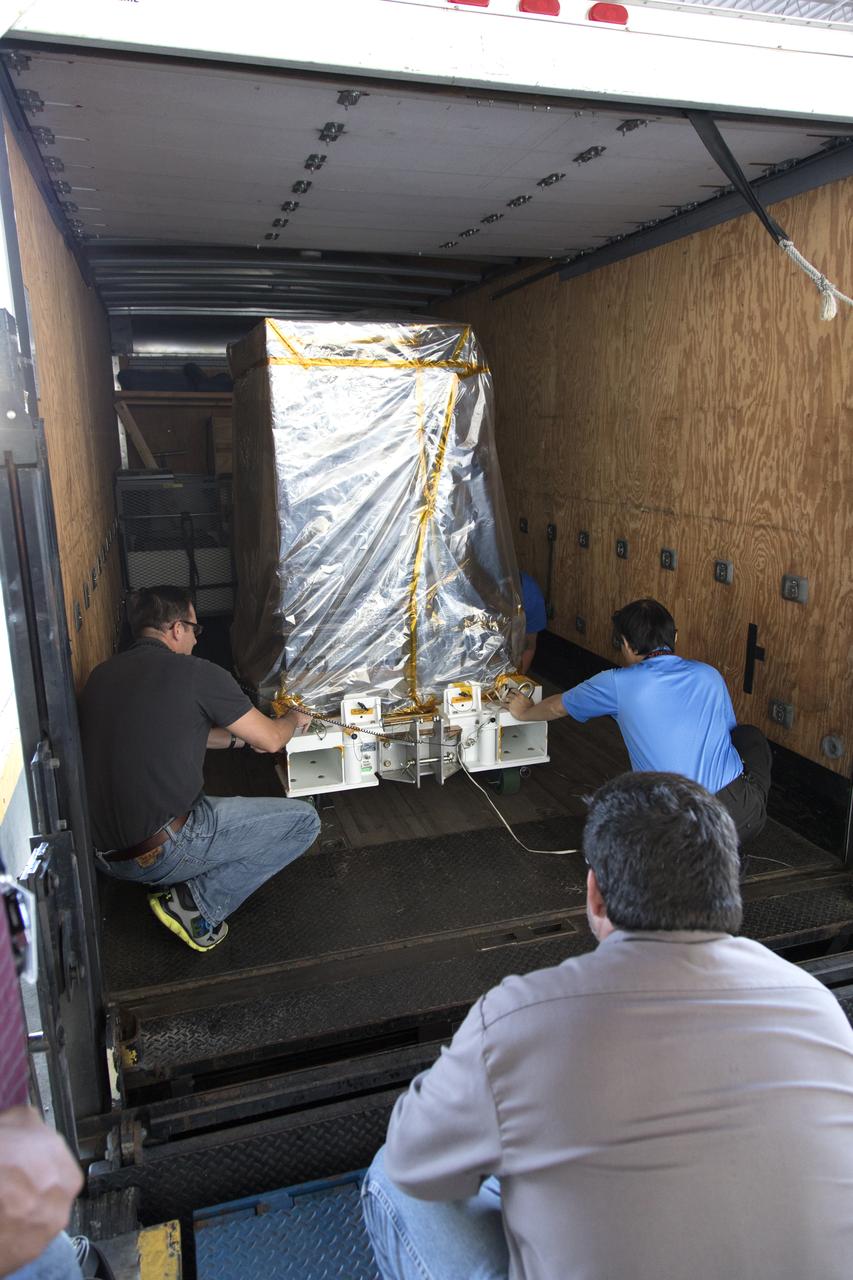
Workers load the Robotic Refueling Mission-3 (RRM3) payload onto a truck at the Space Station Processing Facility for transfer to the Payload Hazardous Servicing Facility on Oct. 3, 2018, at NASA's Kennedy Space Center in Florida. The payload will be carried to the International Space Station on SpaceX's 16th Commercial Resupply Services mission. RRM3 demonstrates the transfer of xenon gas and liquid methane in microgravity, and advances technologies for storing and manipulating these cryogenic fuels robotically. RRM3 also supports development of technology for the Restore-L mission, a robotic spacecraft equipped to service satellites in-orbit.
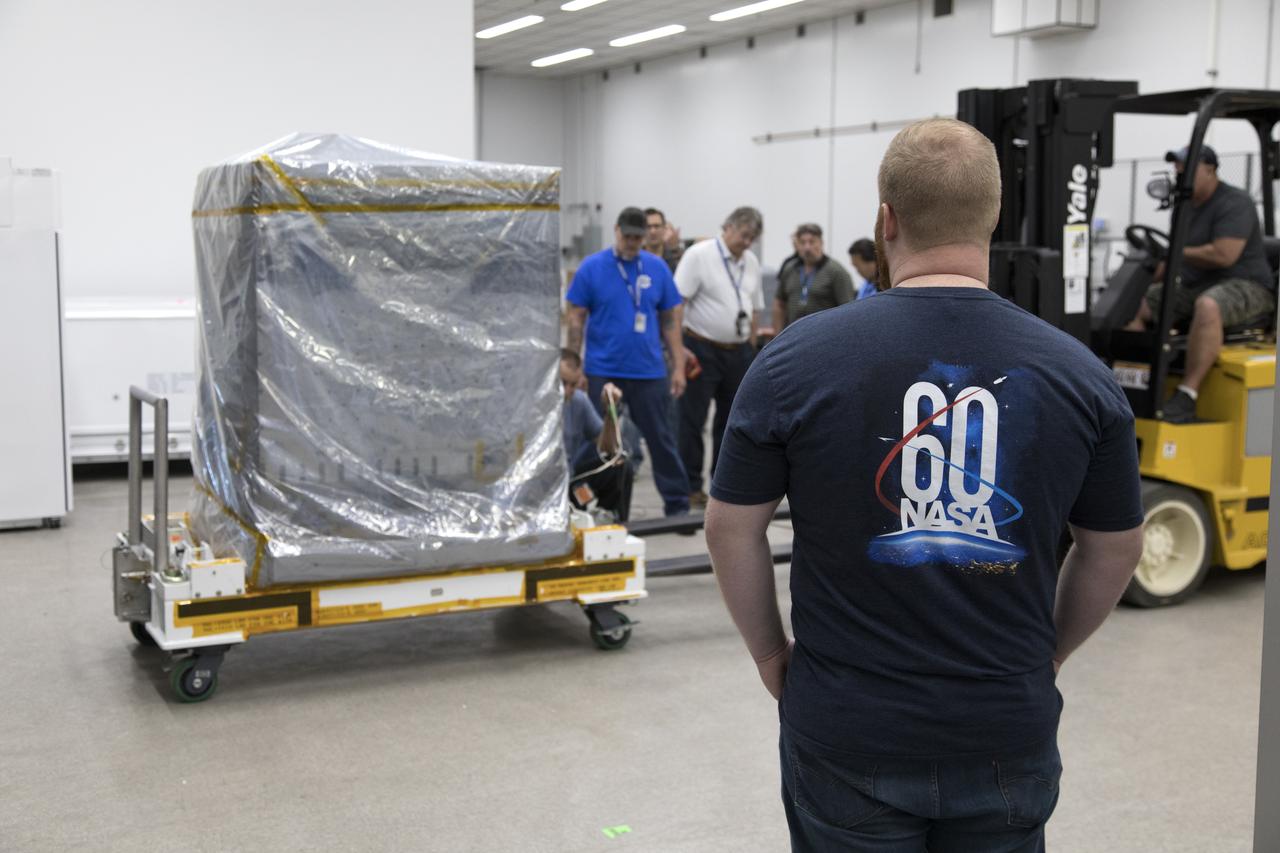
Workers prepare the Robotic Refueling Mission-3 (RRM3) payload to be transferred from the Space Station Processing Facility high bay to the Payload Hazardous Servicing Facility on Oct. 3, 2018, at NASA's Kennedy Space Center in Florida. The payload will be carried to the International Space Station on SpaceX's 16th Commercial Resupply Services mission. RRM3 demonstrates the transfer of xenon gas and liquid methane in microgravity, and advances technologies for storing and manipulating these cryogenic fuels robotically. RRM3 also supports development of technology for the Restore-L mission, a robotic spacecraft equipped to service satellites in-orbit.
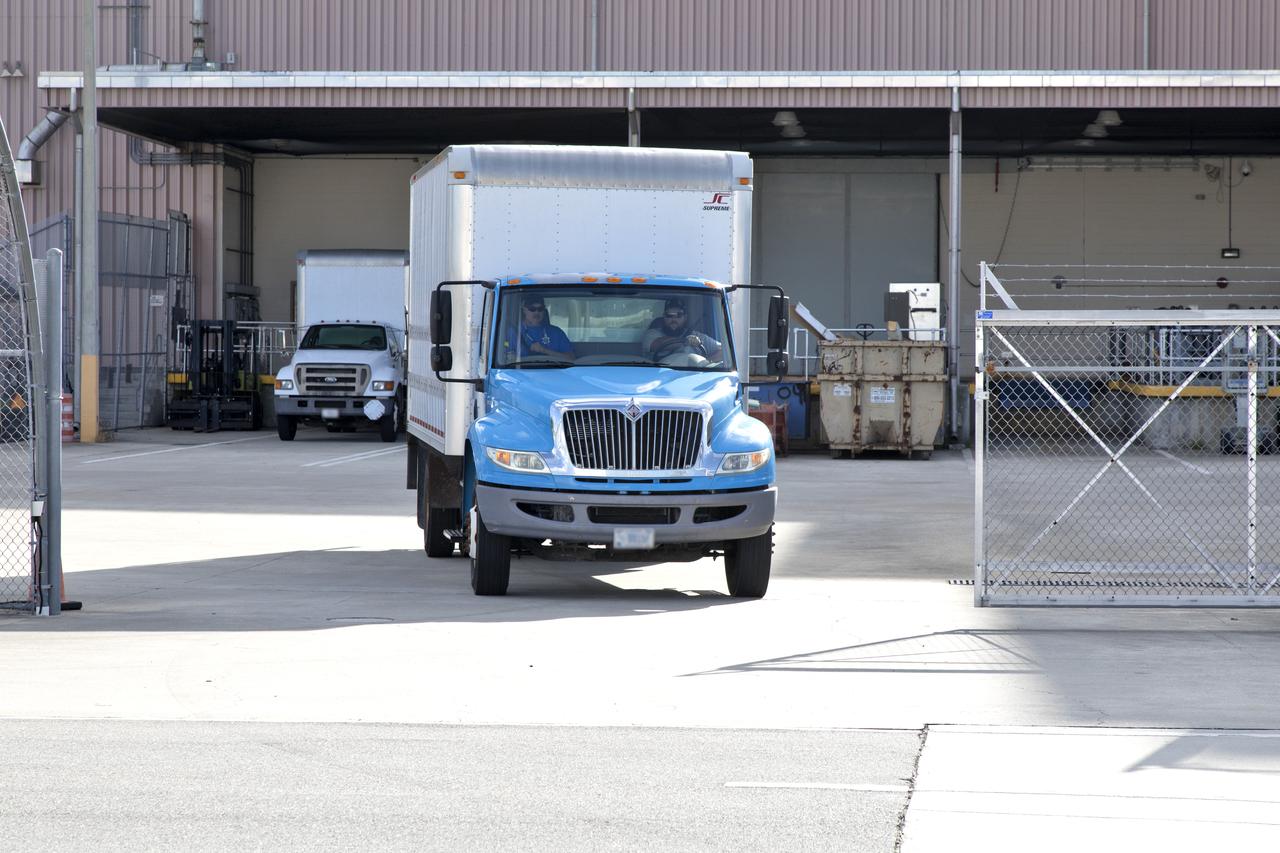
A truck carrying the Robotic Refueling Mission-3 (RRM3) payload departs from the Space Station Processing Facility on its way to the Payload Hazardous Servicing Facility on Oct. 3, 2018, at NASA's Kennedy Space Center in Florida. The payload will be carried to the International Space Station on SpaceX's 16th Commercial Resupply Services mission. RRM3 demonstrates the transfer of xenon gas and liquid methane in microgravity, and advances technologies for storing and manipulating these cryogenic fuels robotically. RRM3 also supports development of technology for the Restore-L mission, a robotic spacecraft equipped to service satellites in-orbit.
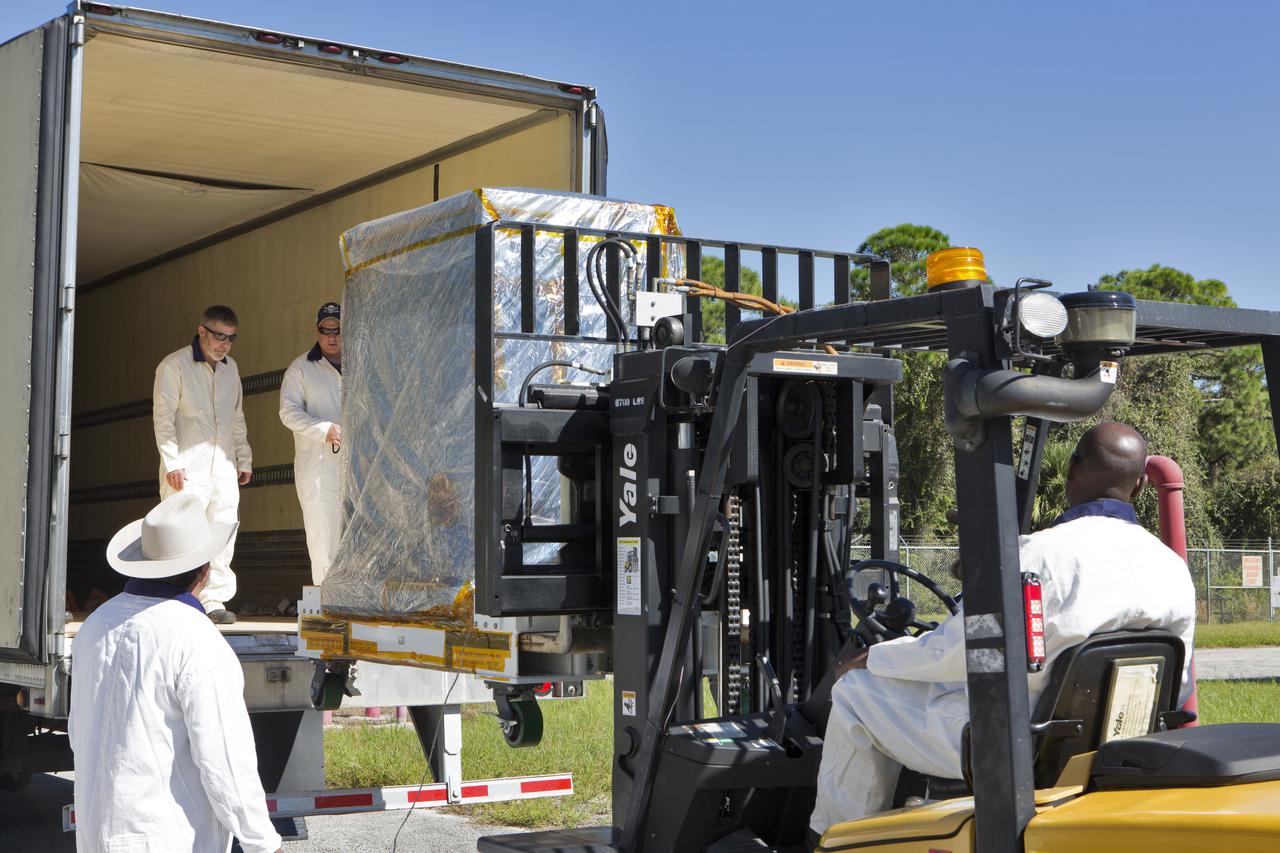
A forklift is used to load the Robotic Refueling Mission-3 (RRM3) payload onto a truck at the Fuel Transfer Building for transport to the SpaceX facility on Oct. 30, 2018, at NASA's Kennedy Space Center in Florida. The payload will be carried to the International Space Station on SpaceX's 16th Commercial Resupply Services mission. RRM3 demonstrates the transfer of xenon gas and liquid methane in microgravity, and advances technologies for storing and manipulating these cryogenic fuels robotically. RRM3 also supports development of technology for the Restore-L mission, a robotic spacecraft equipped to service satellites in-orbit.
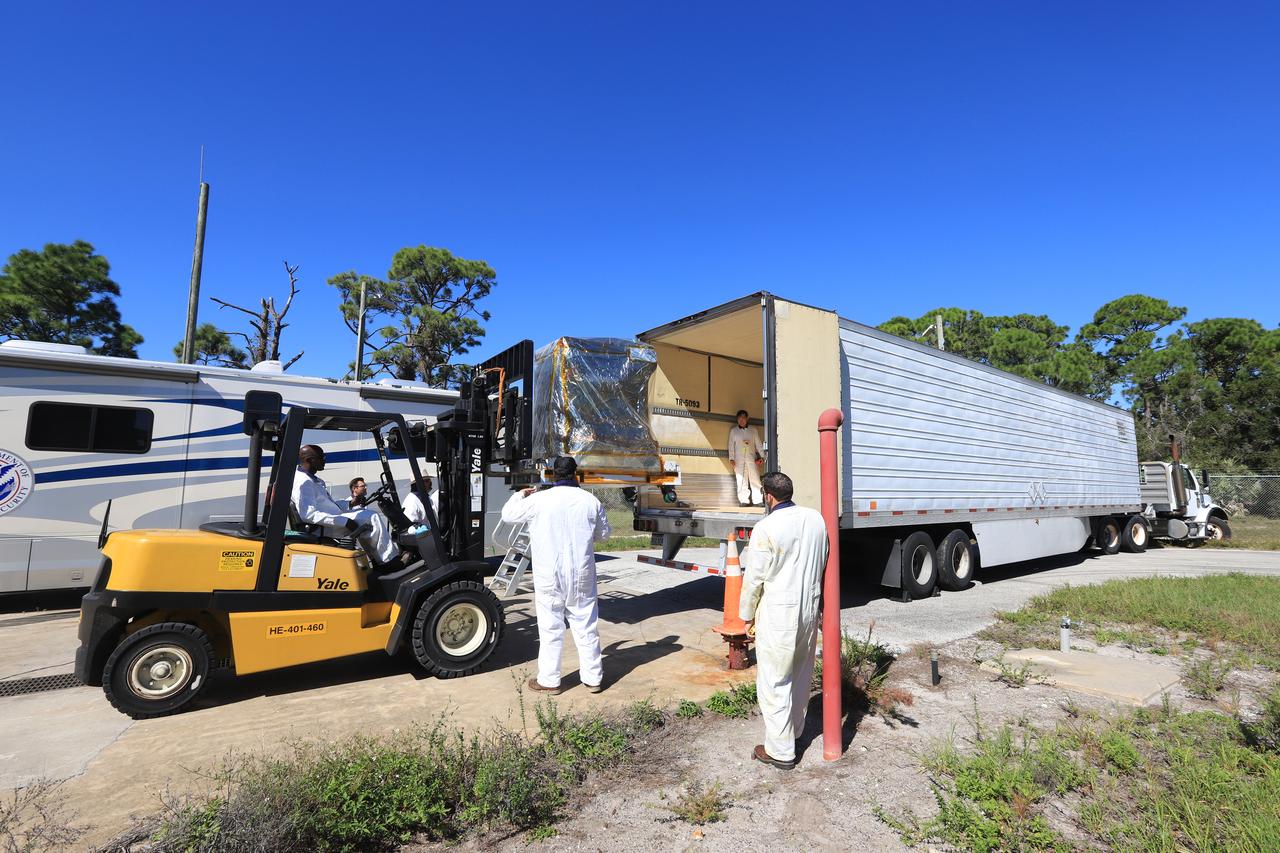
A forklift is used to load the Robotic Refueling Mission-3 (RRM3) payload onto a truck at the Fuel Transfer Building for transport to the SpaceX facility on Oct. 30, 2018, at NASA's Kennedy Space Center in Florida. The payload will be carried to the International Space Station on SpaceX's 16th Commercial Resupply Services mission. RRM3 demonstrates the transfer of xenon gas and liquid methane in microgravity, and advances technologies for storing and manipulating these cryogenic fuels robotically. RRM3 also supports development of technology for the Restore-L mission, a robotic spacecraft equipped to service satellites in-orbit.
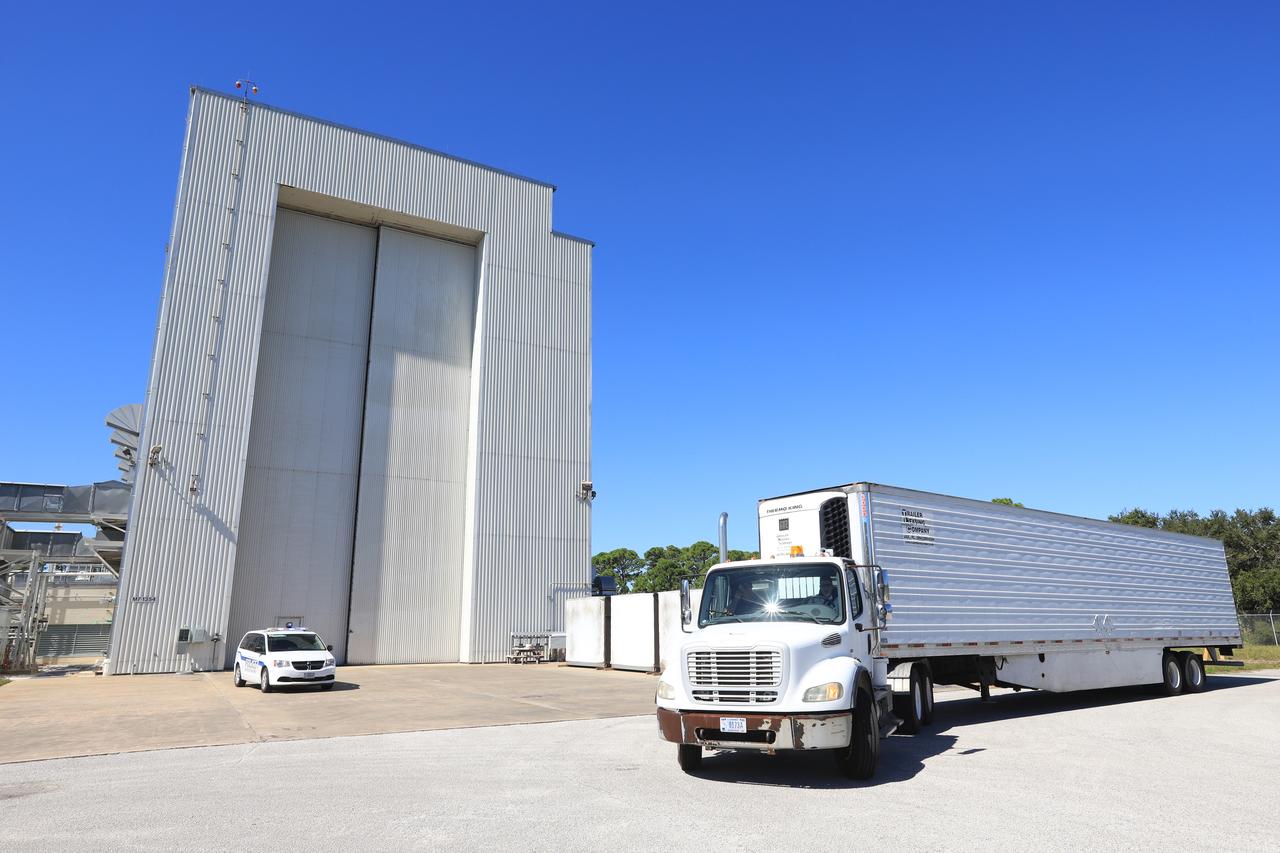
A truck containing the Robotic Refueling Mission-3 (RRM3) payload departs the Fuel Transfer Building near the Payload Hazardous Servicing Facility for transport to the SpaceX facility on Oct. 30, 2018, at NASA's Kennedy Space Center in Florida. The payload will be carried to the International Space Station on SpaceX's 16th Commercial Resupply Services mission. RRM3 demonstrates the transfer of xenon gas and liquid methane in microgravity, and advances technologies for storing and manipulating these cryogenic fuels robotically. RRM3 also supports development of technology for the Restore-L mission, a robotic spacecraft equipped to service satellites in-orbit.
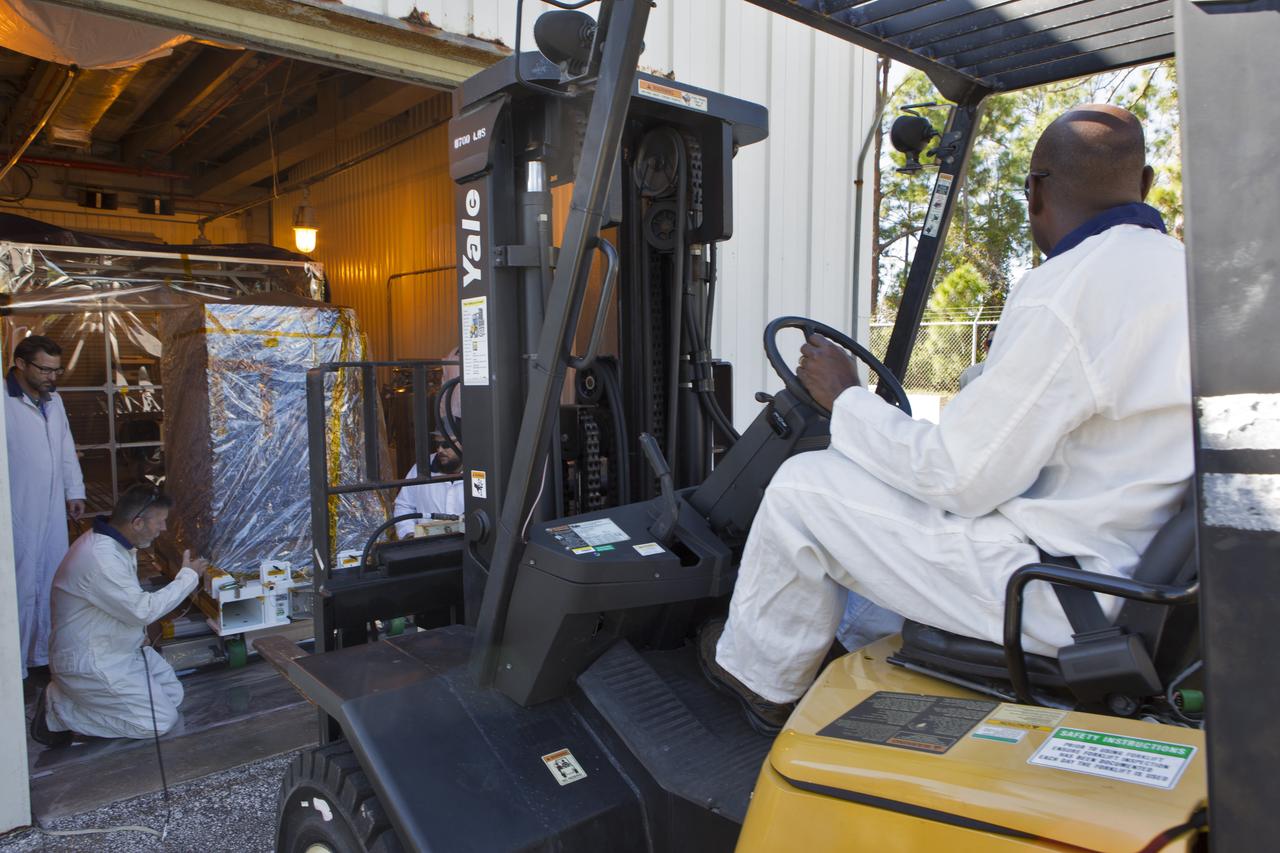
A forklift is being used to lift the Robotic Refueling Mission-3 (RRM3) payload out of the Fuel Transfer Building on Oct. 30, 2018, to be transported to the SpaceX facility at NASA's Kennedy Space Center in Florida. The payload will be carried to the International Space Station on SpaceX's 16th Commercial Resupply Services mission. RRM3 demonstrates the transfer of xenon gas and liquid methane in microgravity, and advances technologies for storing and manipulating these cryogenic fuels robotically. RRM3 also supports development of technology for the Restore-L mission, a robotic spacecraft equipped to service satellites in-orbit.
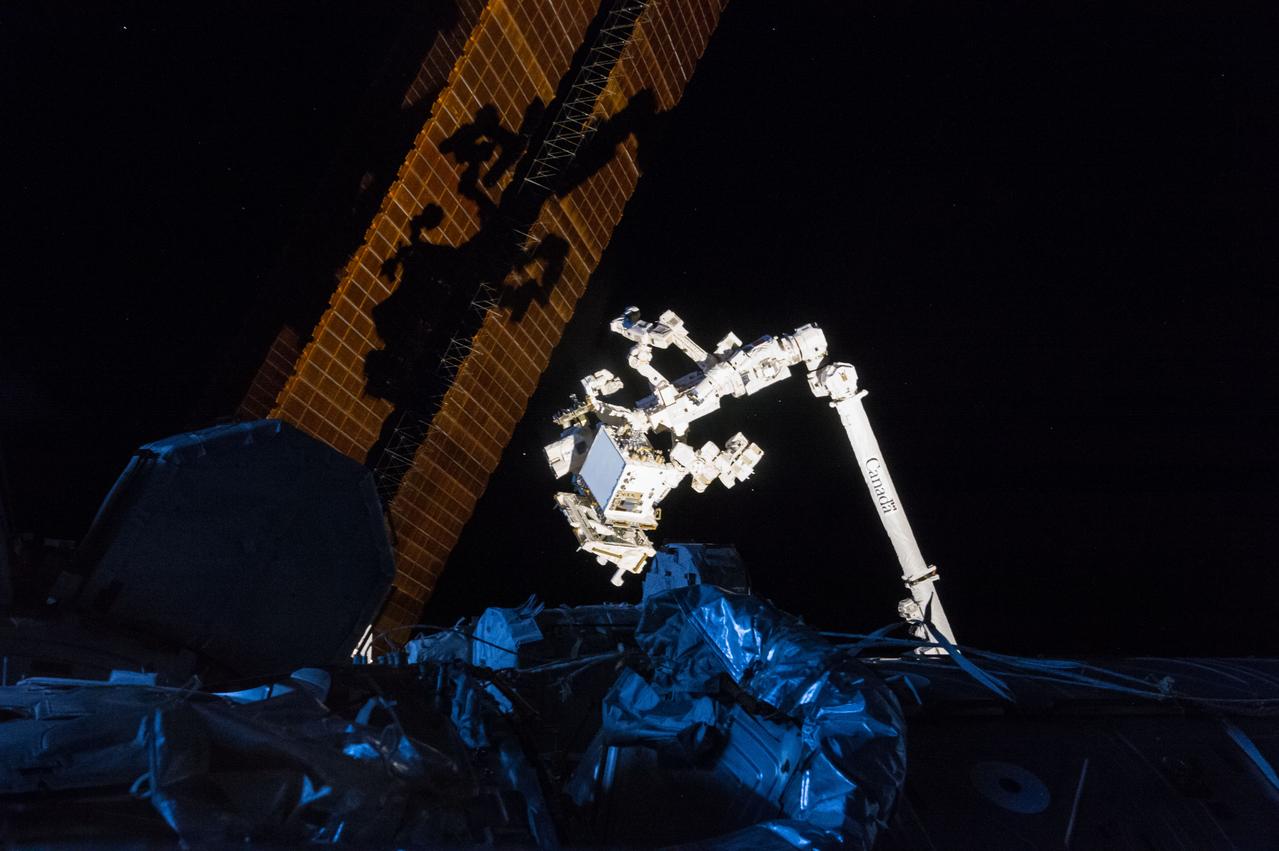
iss050e056301 (3/8/2017) --- A view of the Space Station Remote Manipulator System (SSRMS) during Robotic Refueling Mission-Phase 2 (RRM-P2) operations. NASA's Robotic Refueling Mission (RRM) is an external International Space Station (ISS) investigation that demonstrates and tests the tools, technologies and techniques needed to robotically refuel, repair, and upgrade satellites in space, especially satellites that were not designed to be serviced. A joint effort between NASA and the Canadian Space Agency (CSA), RRM is the first in-orbit attempt to test robotic refueling and servicing techniques for spacecraft not built with in-orbit servicing in mind.

Jill McGuire, project manager for the Robotic Refueling Mission 3, or RRM3, experiment, describes RRM3 hardware for members of the media in the Kennedy Space Center’s Press Site auditorium. The briefing focused on research planned for launch to the International Space Station. The scientific materials and supplies will be aboard a Dragon spacecraft scheduled for liftoff from Cape Canaveral Air Force Station's Space Launch Complex 40. The SpaceX Falcon 9 rocket will launch the company's 16th Commercial Resupply Services mission to the space station.
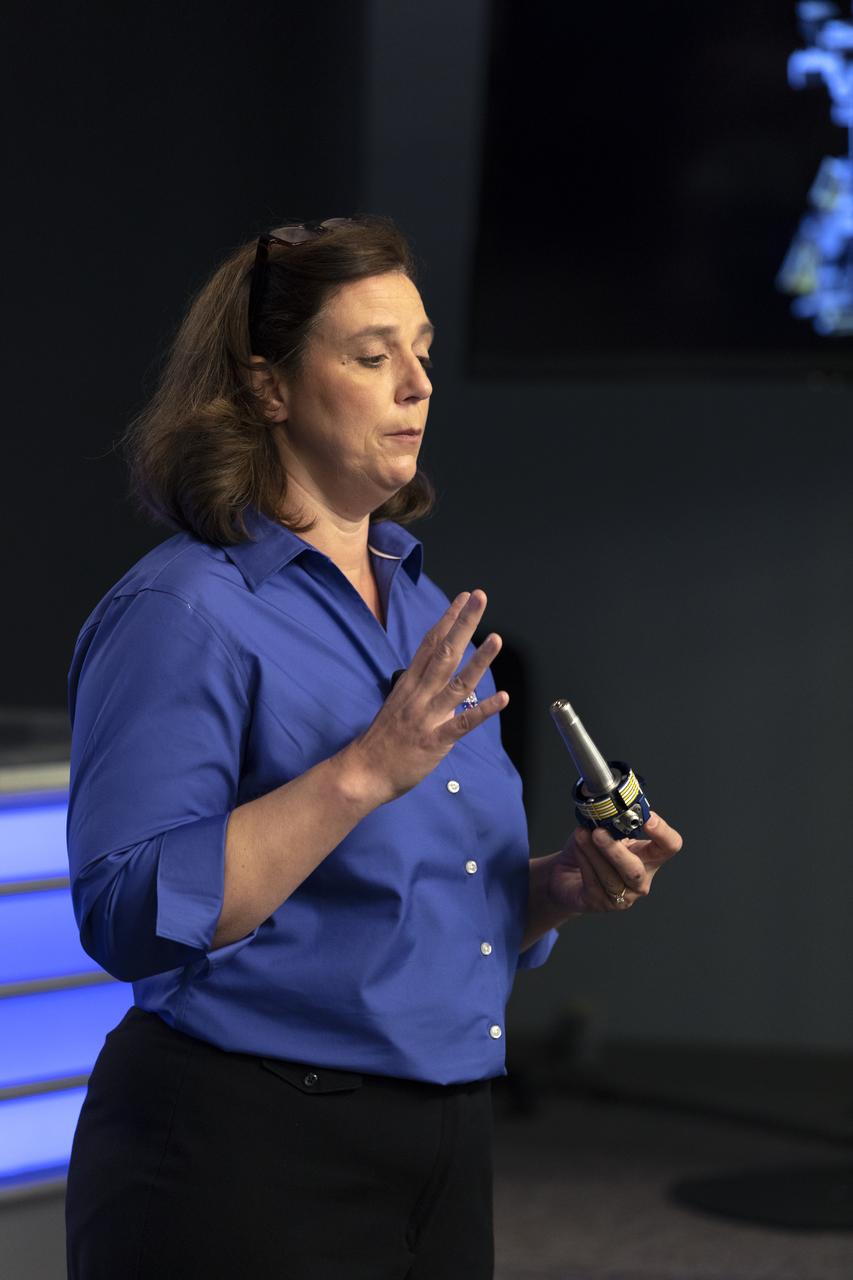
Jill McGuire, project manager for the Robotic Refueling Mission 3, or RRM3, experiment, describes RRM3 hardware for members of the media in the Kennedy Space Center’s Press Site auditorium. The briefing focused on research planned for launch to the International Space Station. The scientific materials and supplies will be aboard a Dragon spacecraft scheduled for liftoff from Cape Canaveral Air Force Station's Space Launch Complex 40. The SpaceX Falcon 9 rocket will launch the company's 16th Commercial Resupply Services mission to the space station.
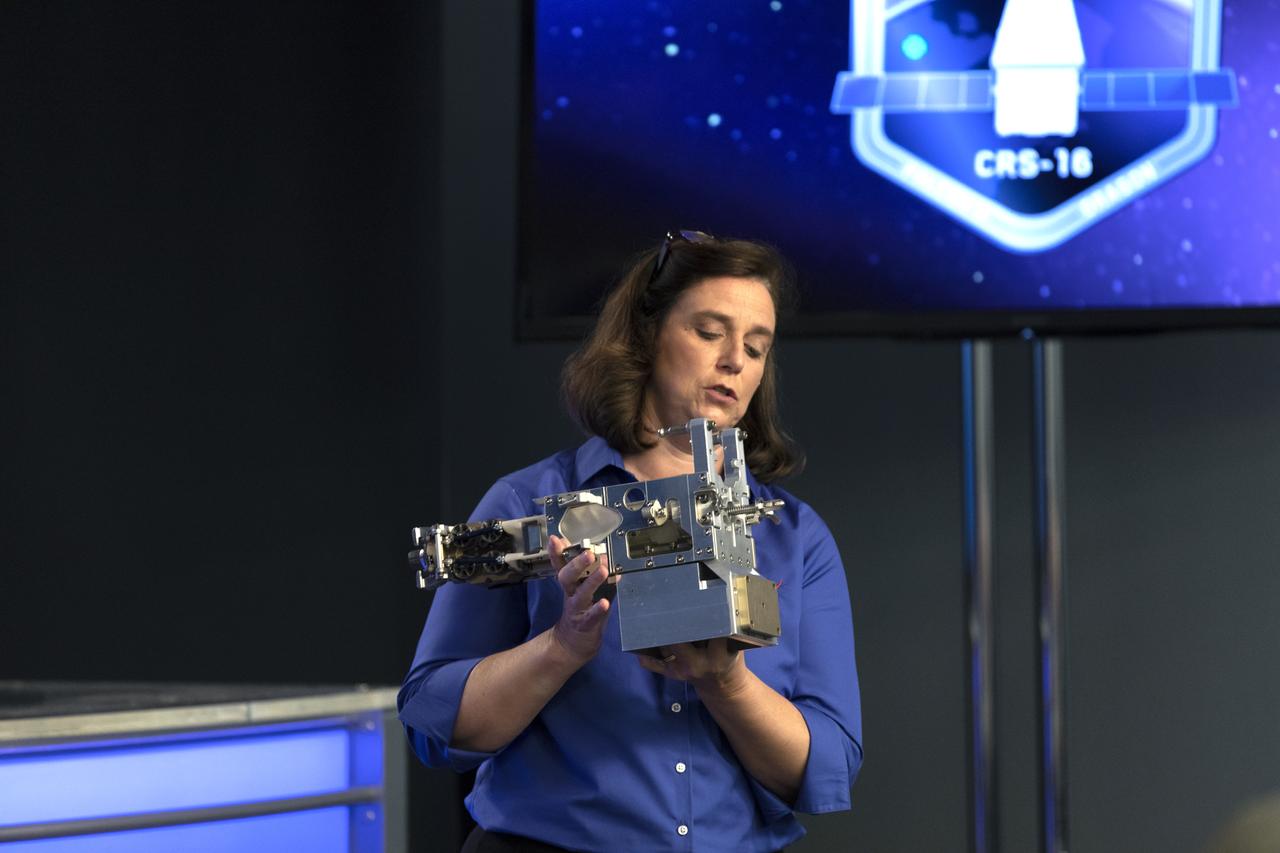
Jill McGuire, project manager for the Robotic Refueling Mission 3, or RRM3, experiment, describes RRM3 hardware for members of the media in the Kennedy Space Center’s Press Site auditorium. The briefing focused on research planned for launch to the International Space Station. The scientific materials and supplies will be aboard a Dragon spacecraft scheduled for liftoff from Cape Canaveral Air Force Station's Space Launch Complex 40. The SpaceX Falcon 9 rocket will launch the company's 16th Commercial Resupply Services mission to the space station.
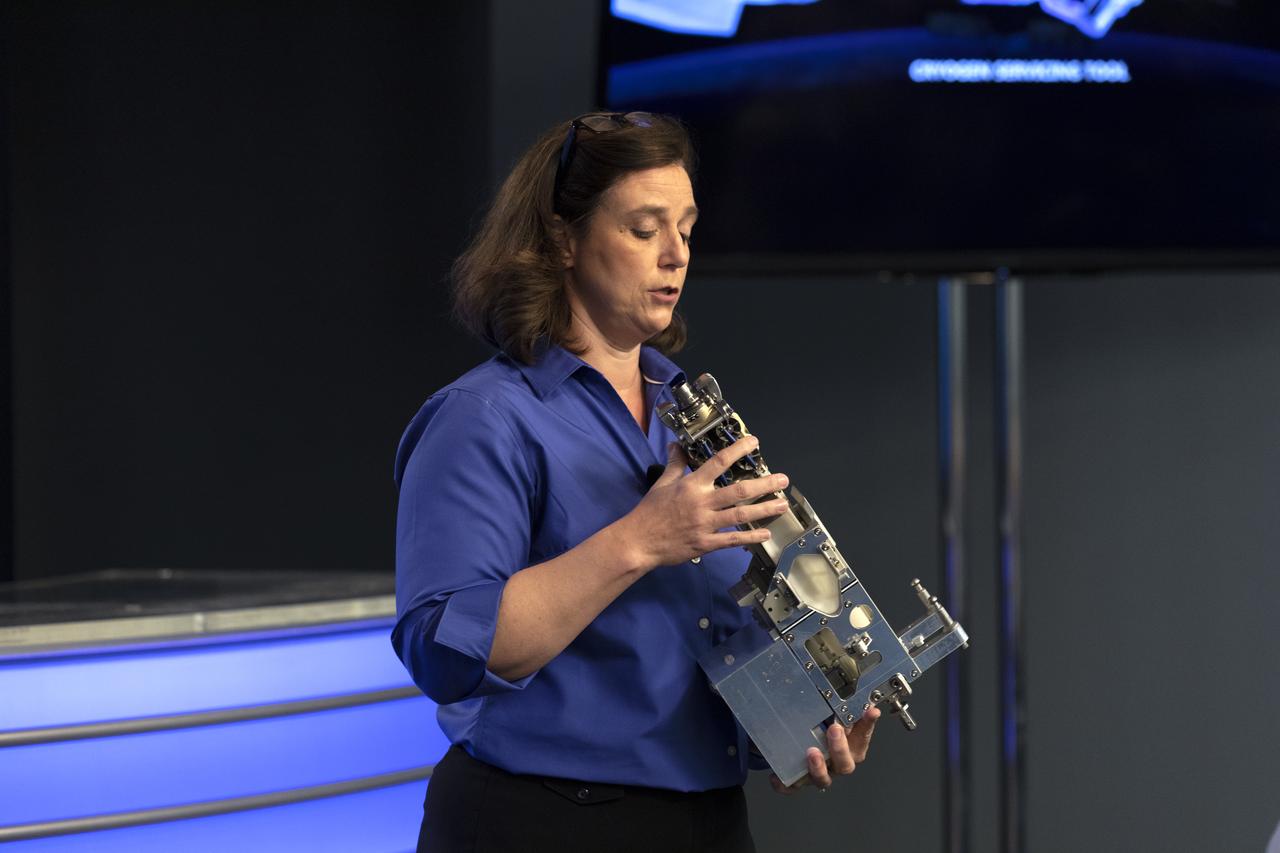
Jill McGuire, project manager for the Robotic Refueling Mission 3, or RRM3, experiment, describes RRM3 hardware for members of the media in the Kennedy Space Center’s Press Site auditorium. The briefing focused on research planned for launch to the International Space Station. The scientific materials and supplies will be aboard a Dragon spacecraft scheduled for liftoff from Cape Canaveral Air Force Station's Space Launch Complex 40. The SpaceX Falcon 9 rocket will launch the company's 16th Commercial Resupply Services mission to the space station.
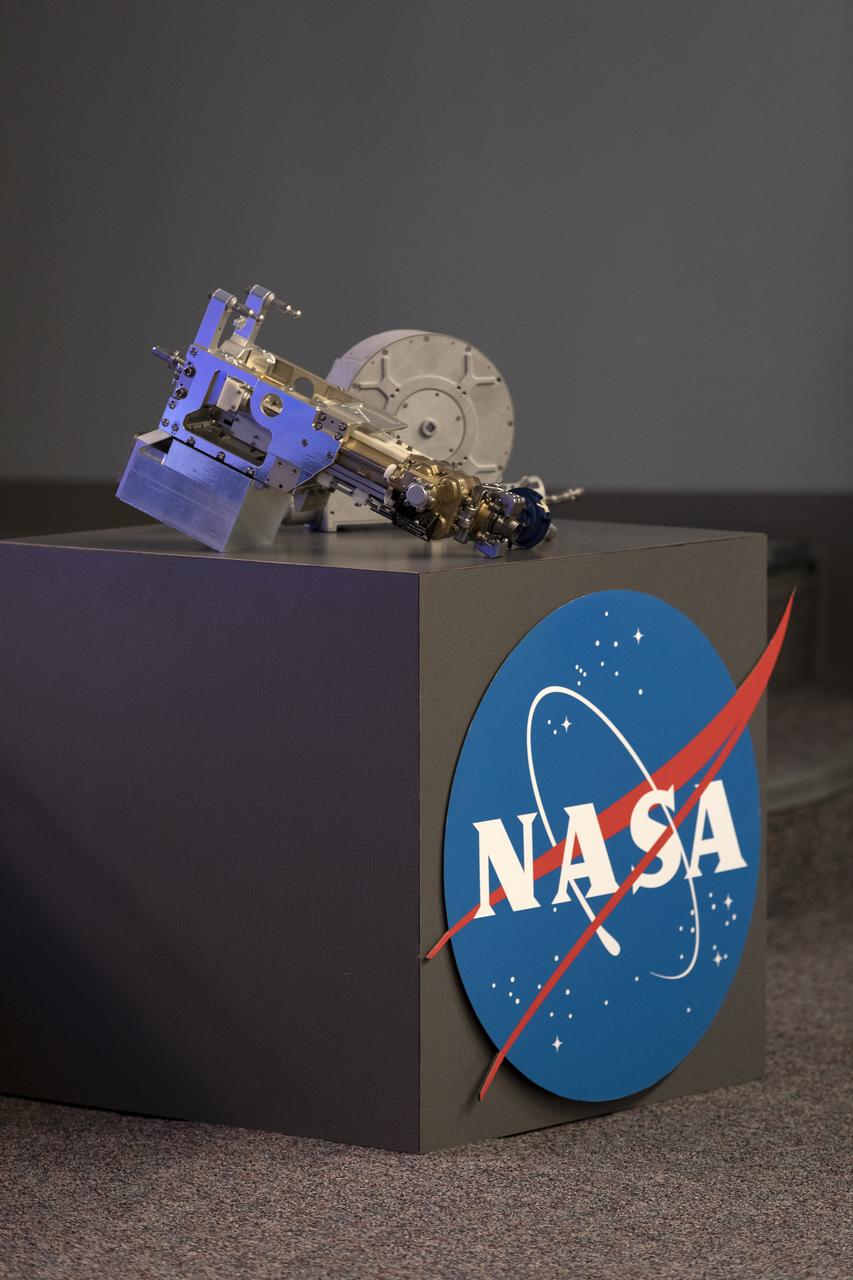
Hardware associated with the Robotic Refueling Mission 3, or RRM3, experiment, ws on display for members of the media in the Kennedy Space Center’s Press Site auditorium. The briefing focused on research planned for launch to the International Space Station. The scientific materials and supplies will be aboard a Dragon spacecraft scheduled for liftoff from Cape Canaveral Air Force Station's Space Launch Complex 40. The SpaceX Falcon 9 rocket will launch the company's 16th Commercial Resupply Services mission to the space station.
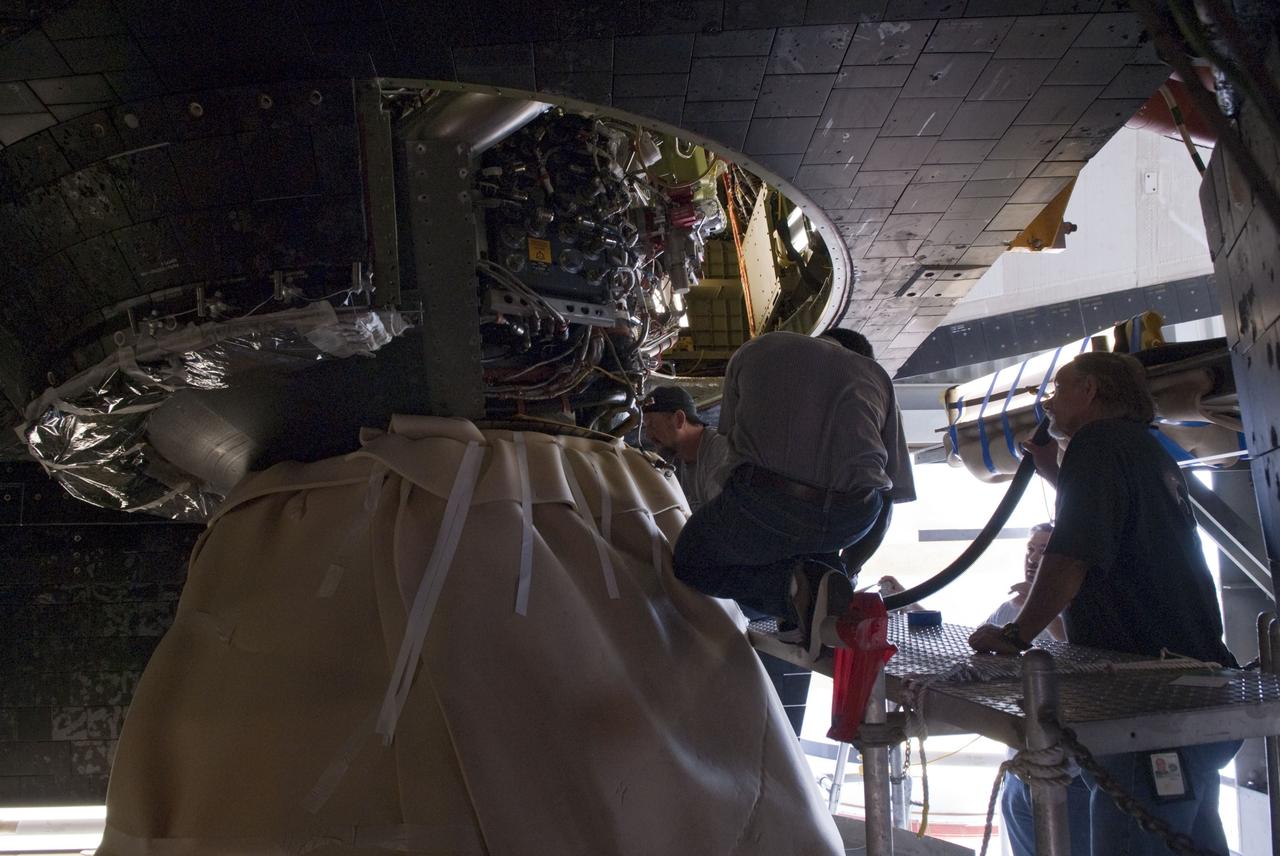
CAPE CANAVERAL, Fla. -- During a tanking test on June 15 at Launch Pad 39A at NASA's Kennedy Space Center in Florida, there was an apparent liquid hydrogen leak in the main fuel valve in Atlantis' space shuttle main engine No. 3. Technicians now are replacing the suspect valve and a leak check of the valve and associated systems will be conducted. The work is expected to take about a week, which still would support Atlantis' targeted July 8 launch date. STS-135 Commander Chris Ferguson, Pilot Doug Hurley and Mission Specialists Sandy Magnus and Rex Walheim are targeted to lift off on space shuttle Atlantis July 8, taking with them the MPLM packed with supplies, logistics and spare parts to the International Space Station. The STS-135 mission also will fly a system to investigate the potential for robotically refueling existing satellites and return a failed ammonia pump module to help NASA better understand the failure mechanism and improve pump designs for future systems. STS-135 will be the 33rd flight of Atlantis, the 37th shuttle mission to the space station, and the 135th and final mission of NASA's Space Shuttle Program. For more information visit, www.nasa.gov/mission_pages/shuttle/shuttlemissions/sts135/index.html. Photo credit: NASA/Jim Grossmann
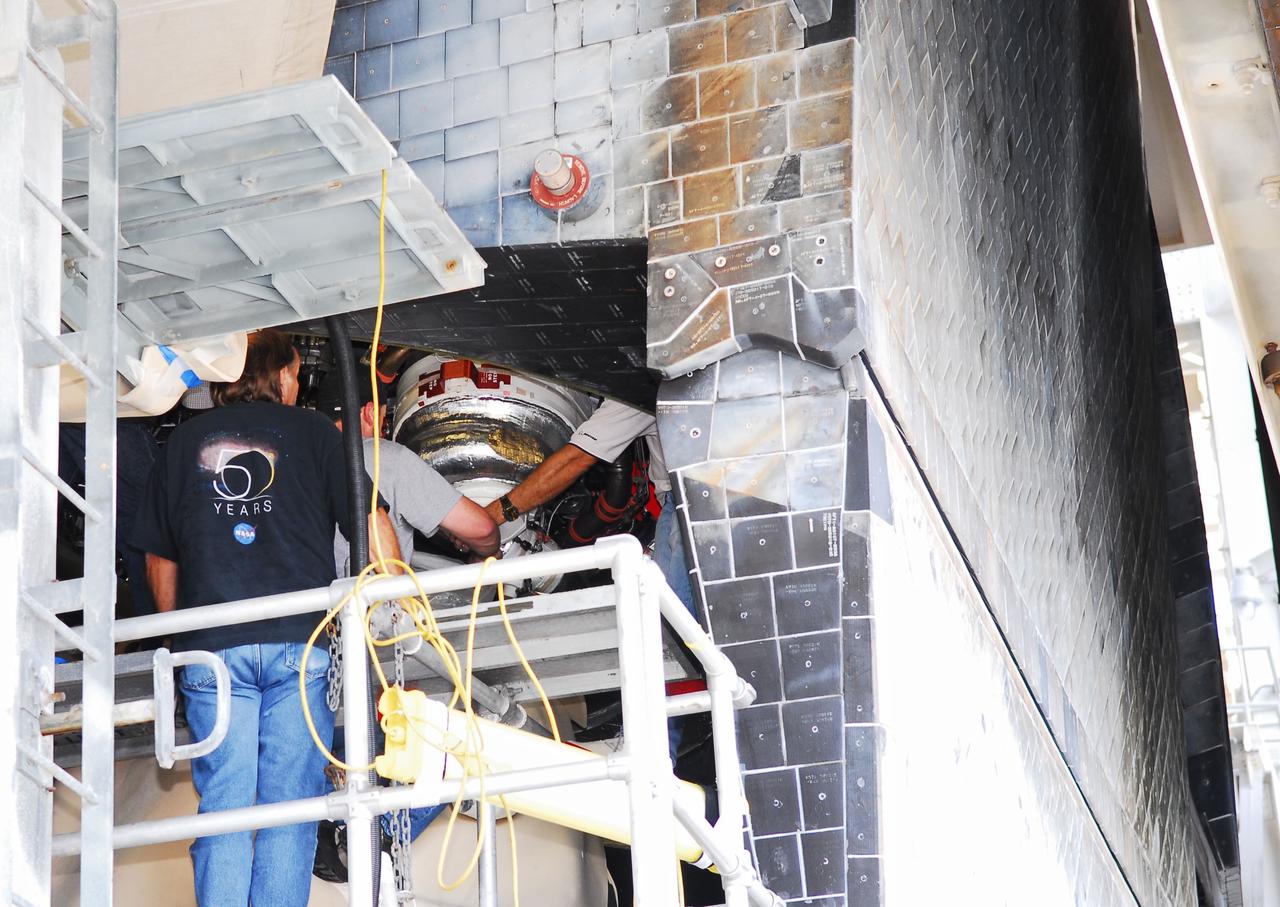
CAPE CANAVERAL, Fla. -- During a tanking test on June 15 at Launch Pad 39A at NASA's Kennedy Space Center in Florida, there was an apparent liquid hydrogen leak in the main fuel valve in Atlantis' space shuttle main engine No. 3. Technicians now are replacing the suspect valve and a leak check of the valve and associated systems will be conducted. The work is expected to take about a week, which still would support Atlantis' targeted July 8 launch date. STS-135 Commander Chris Ferguson, Pilot Doug Hurley and Mission Specialists Sandy Magnus and Rex Walheim are targeted to lift off on space shuttle Atlantis July 8, taking with them the MPLM packed with supplies, logistics and spare parts to the International Space Station. The STS-135 mission also will fly a system to investigate the potential for robotically refueling existing satellites and return a failed ammonia pump module to help NASA better understand the failure mechanism and improve pump designs for future systems. STS-135 will be the 33rd flight of Atlantis, the 37th shuttle mission to the space station, and the 135th and final mission of NASA's Space Shuttle Program. For more information visit, www.nasa.gov/mission_pages/shuttle/shuttlemissions/sts135/index.html. Photo credit: NASA/Jim Grossmann
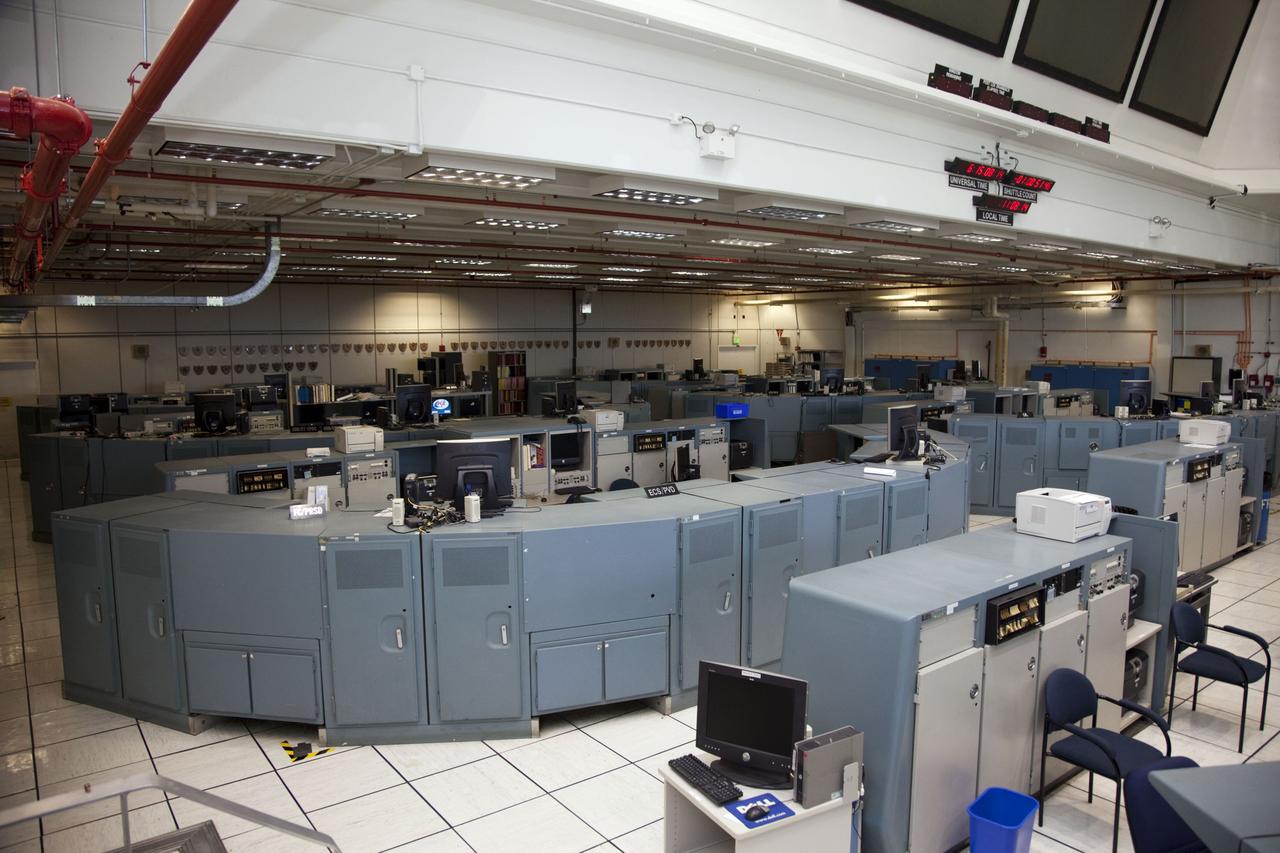
CAPE CANAVERAL, Fla. -- In the Launch Control Center at NASA's Kennedy Space Center in Florida, Firing Room 3 is serene as launch team members gather at their consoles in Firing Room 4 preparing for space shuttle Atlantis' STS-135 mission to the International Space Station. Atlantis and its crew of four are scheduled to lift off at 11:26 a.m. EDT on July 8 to deliver the Raffaello multi-purpose logistics module packed with supplies and spare parts to the station. The STS-135 mission also will fly a system to investigate the potential for robotically refueling existing satellites and return a failed ammonia pump module to help NASA better understand the failure mechanism and improve pump designs for future systems. STS-135 will be the 33rd flight of Atlantis, the 37th shuttle mission to the space station, and the 135th and final mission of NASA's Space Shuttle Program. For more information visit, www.nasa.gov/mission_pages/shuttle/shuttlemissions/sts135/index.html. Photo credit: NASA/Frankie Martin