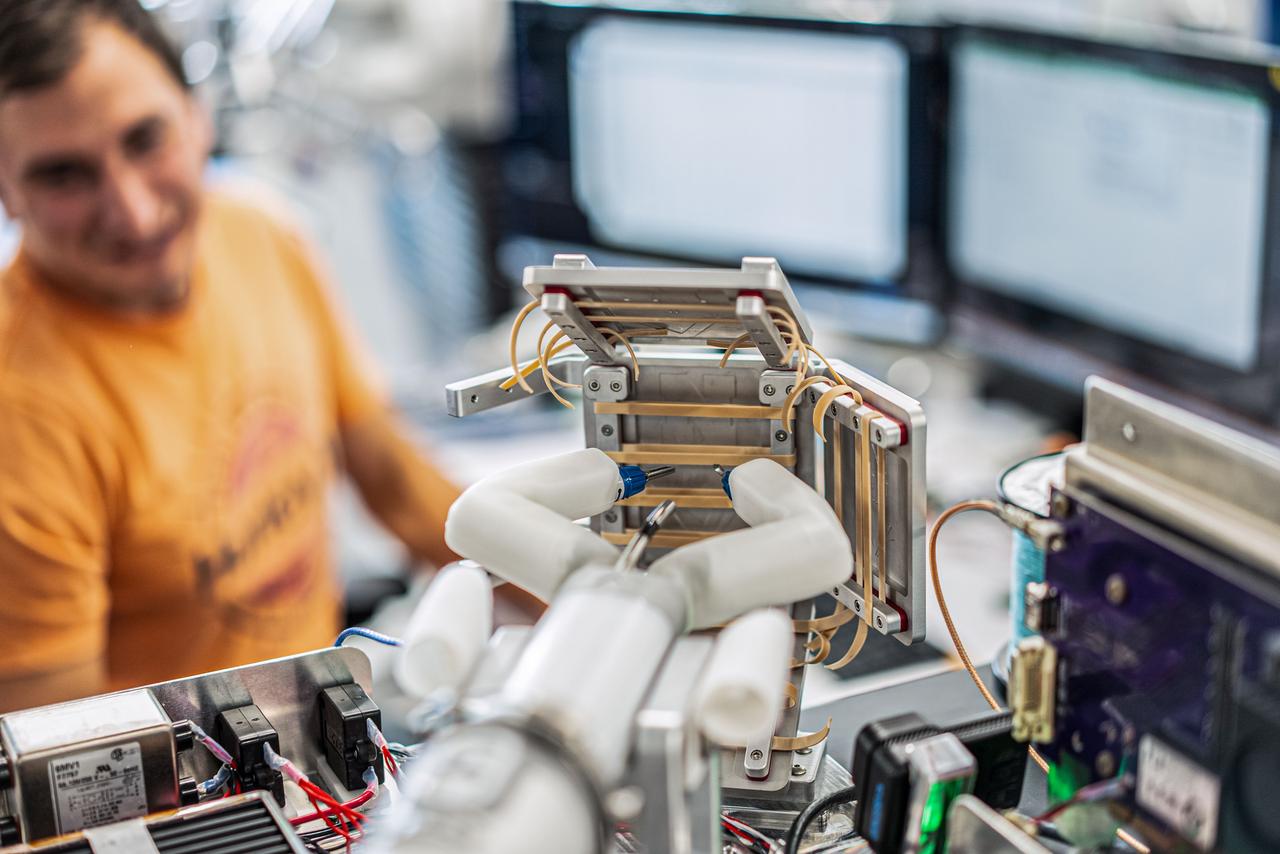
jsc2024e005977 (9/14/2023) --- MIRA, Virtual Incision’s miniaturized robotic assisted surgery system, is pictured in position to reach simulated surgical tissue. Robotic Surgery Tech Demo uses MIRA on the International Space Station to perform a set of pre-programmed movements. Image courtesy of Virtual Incision.
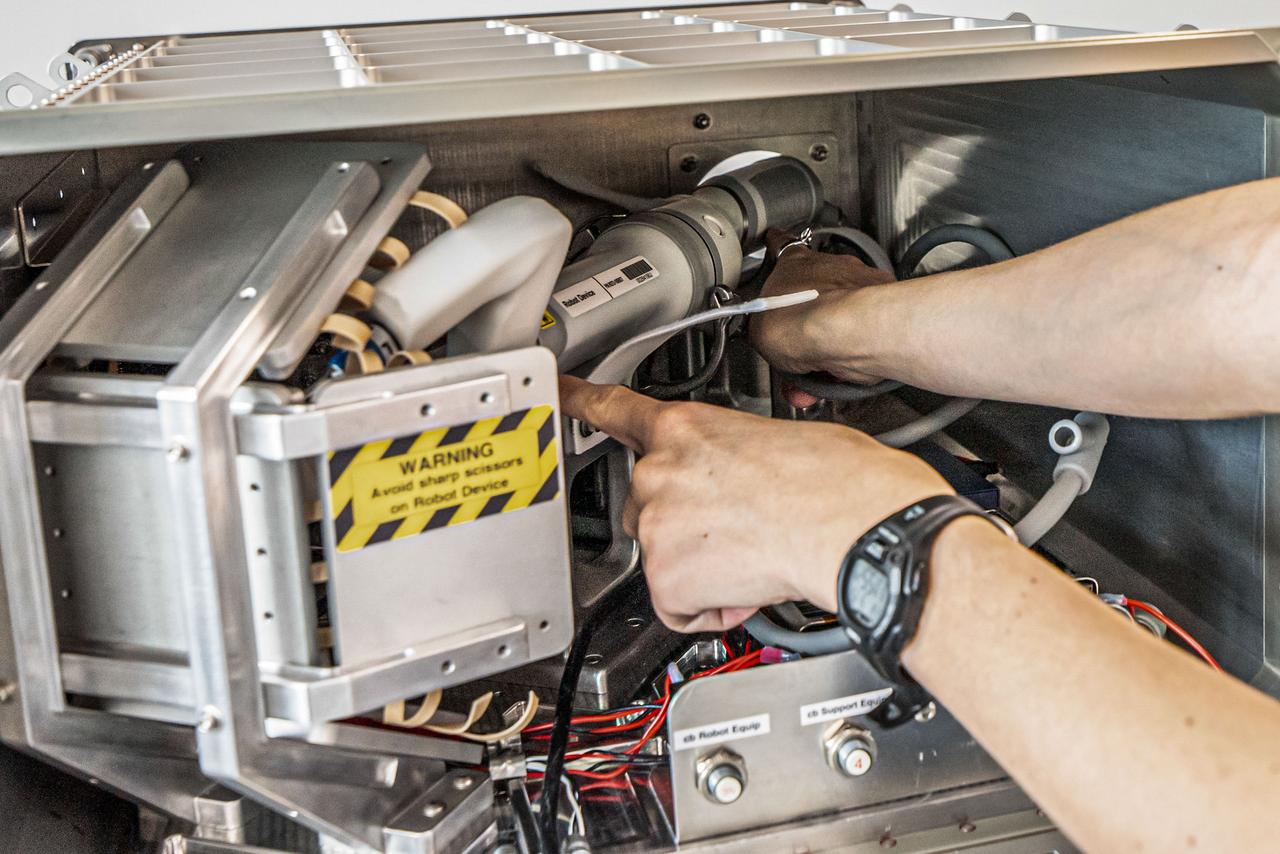
jsc2024e005981 (9/15/2023) --- The robotic surgery device is shown positioned inside the science locker, with the instrument arms and camera oriented toward the simulated surgical tissue on the experiment board. The unique small footprint makes it possible to transport the minibot anywhere, even to space. Robotic Surgery Tech Demo flies a special iteration of MIRA, Virtual Incision’s miniaturized robotic assisted surgery system. Image courtesy of Virtual Incision.
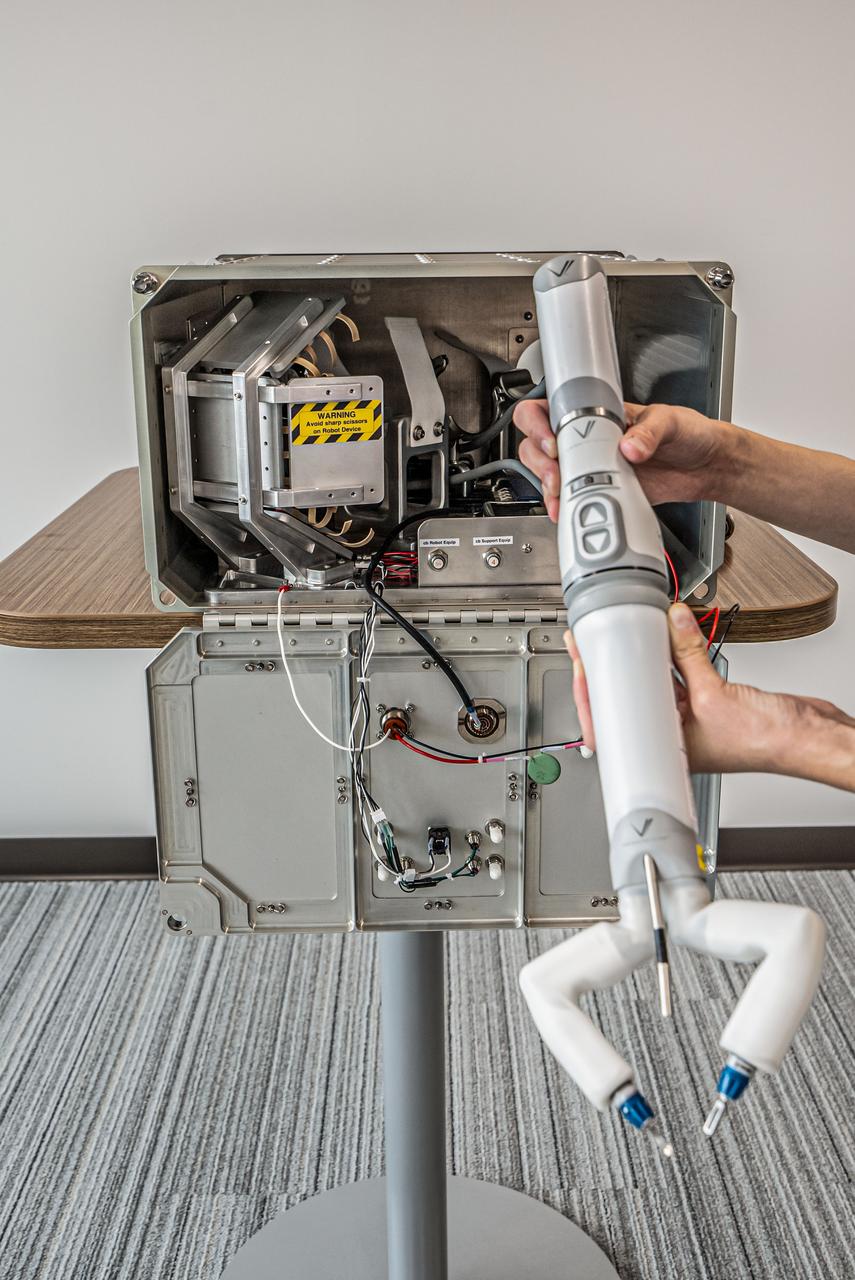
jsc2024e005980 (9/15/2023) --- The robotic surgery device is shown outside of the investigation locker. Robotic Surgery Tech Demo tests the performance of a small robot that can be remotely controlled from Earth to perform surgical procedures. Researchers plan to compare procedures in microgravity and on Earth to evaluate the effects of microgravity and time delays between space and ground. Image courtesy of Virtual Incision.
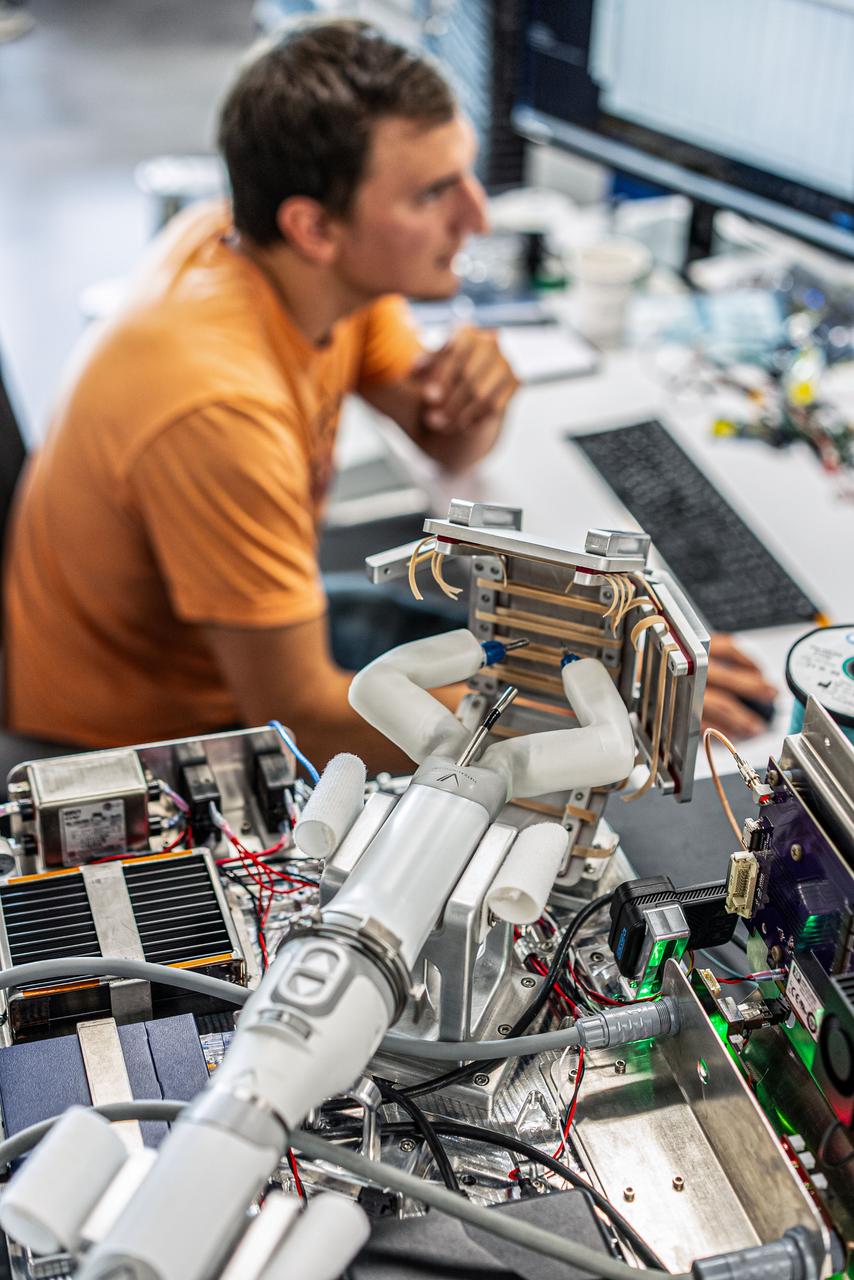
jsc2024e005978 ()9/14/2023) --- MIRA, Virtual Incision’s miniaturized robotic assisted surgery system, is pictured in position to reach simulated surgical tissue. The minibot is able to view the working area with an articulating camera. Robotic Surgery Tech Demo uses MIRA to evaluate human remote control and perform pre-programmed movements. Image courtesy of Virtual Incision.
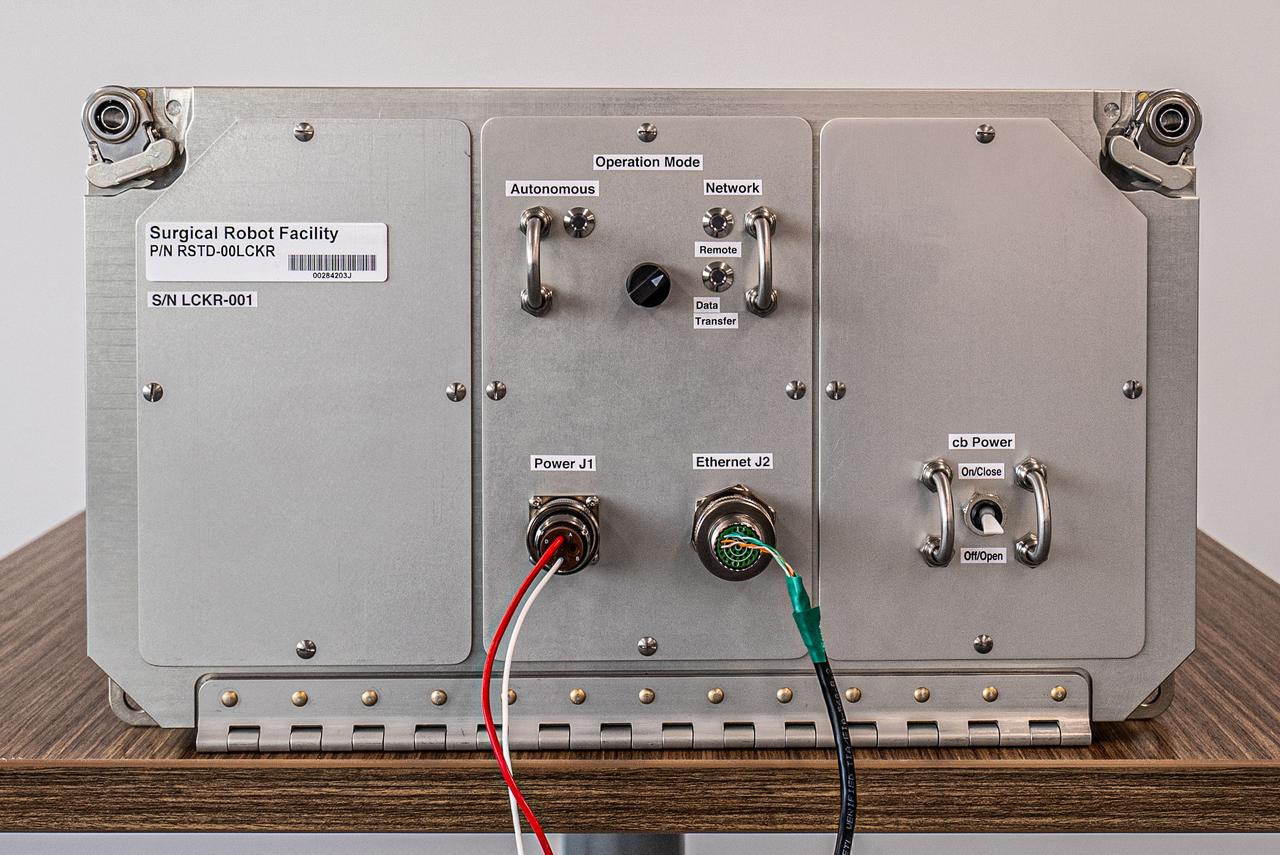
jsc2024e005979 (9/15/2023) --- The investigation locker for the Robotic Surgery Tech Demo investigation is shown on the ground. The locker was designed so that the astronauts can initiate "autonomous mode" and switch to "telesurgery mode." The miniaturized robotic surgeon is housed inside the microwave-sized locker and will be controlled via remote human control and pre-programmed movements. Image courtesy of Virtual Incision.
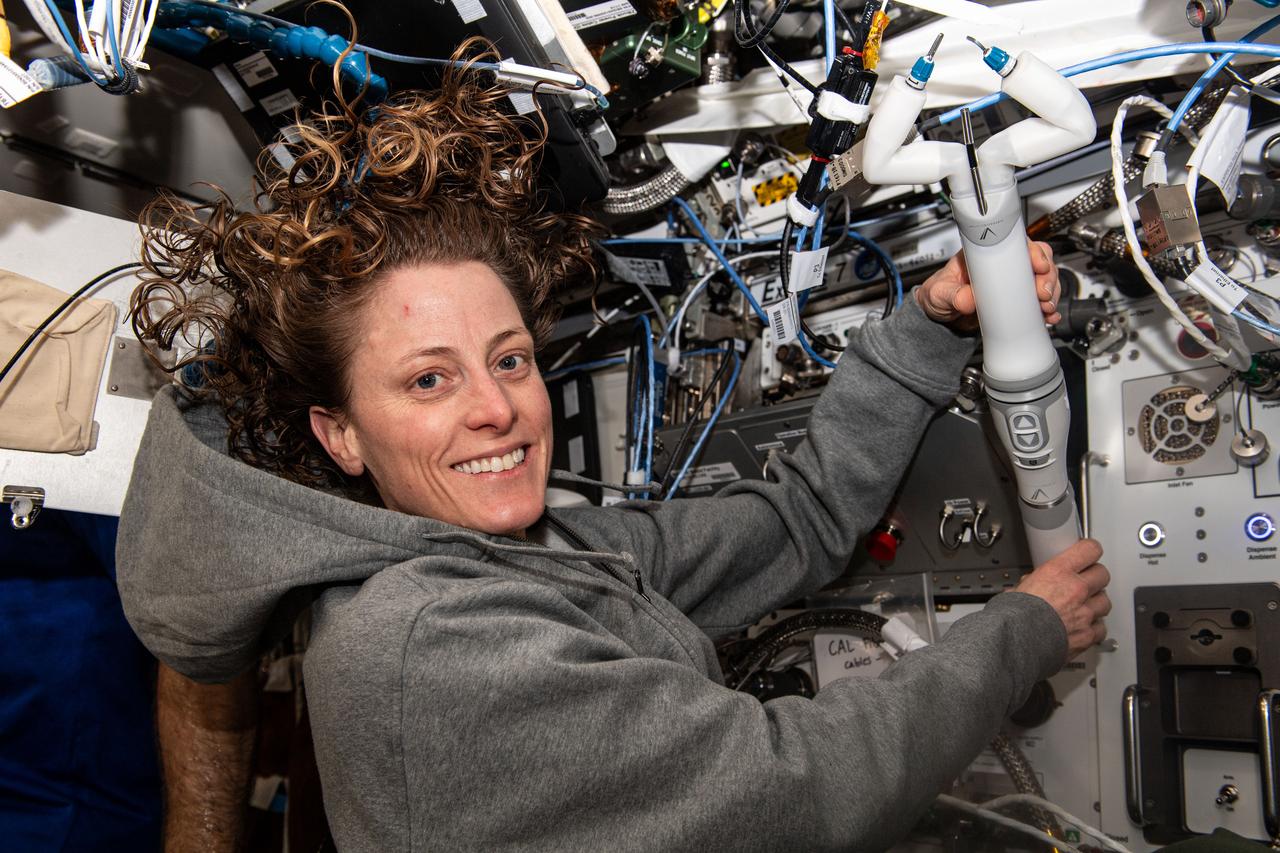
iss070e097708 (Feb. 21, 2024) -- NASA astronaut and Expedition 70 Flight Engineer Loral O’Hara shows off the miniaturized in vivo robotic assistant (MIRA), which is Virtual Incision’s miniaturized robotic assisted surgery system, which was used to conduct a robotic surgery technology demonstration aboard the International Space Station. The hardware tests techniques for performing robotic surgery in microgravity using a miniature surgical robot that can be remotely controlled or teleoperated from Earth.
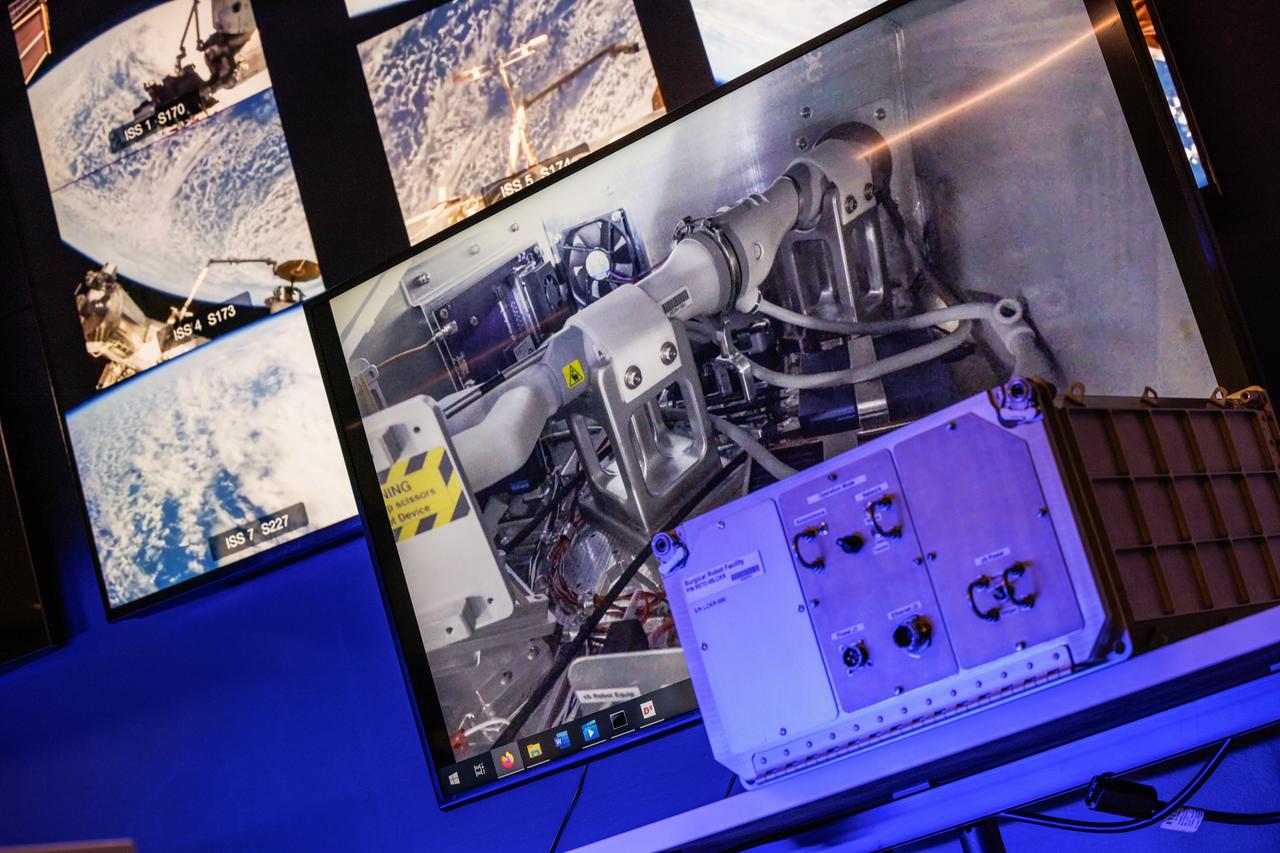
jsc2024e041211 (2/10/2024) --- Robotic Surgery Tech Demo tests techniques for performing robotic surgery in microgravity using a miniature surgical robot that can be remotely controlled or teleoperated from Earth. Several monitors at the Virtual Incision offices in Lincoln, Nebraska show views of the International Space Station during remote operations. Near the center, a larger monitor shows inside the box aboard the space station that houses the surgical robot. Results from this investigation could support the development of robotic systems to perform remote procedures. Miniaturization and the ability to remotely control robots may help to make surgery available anywhere and anytime. Image courtesy of the University of Nebraska-Lincoln.
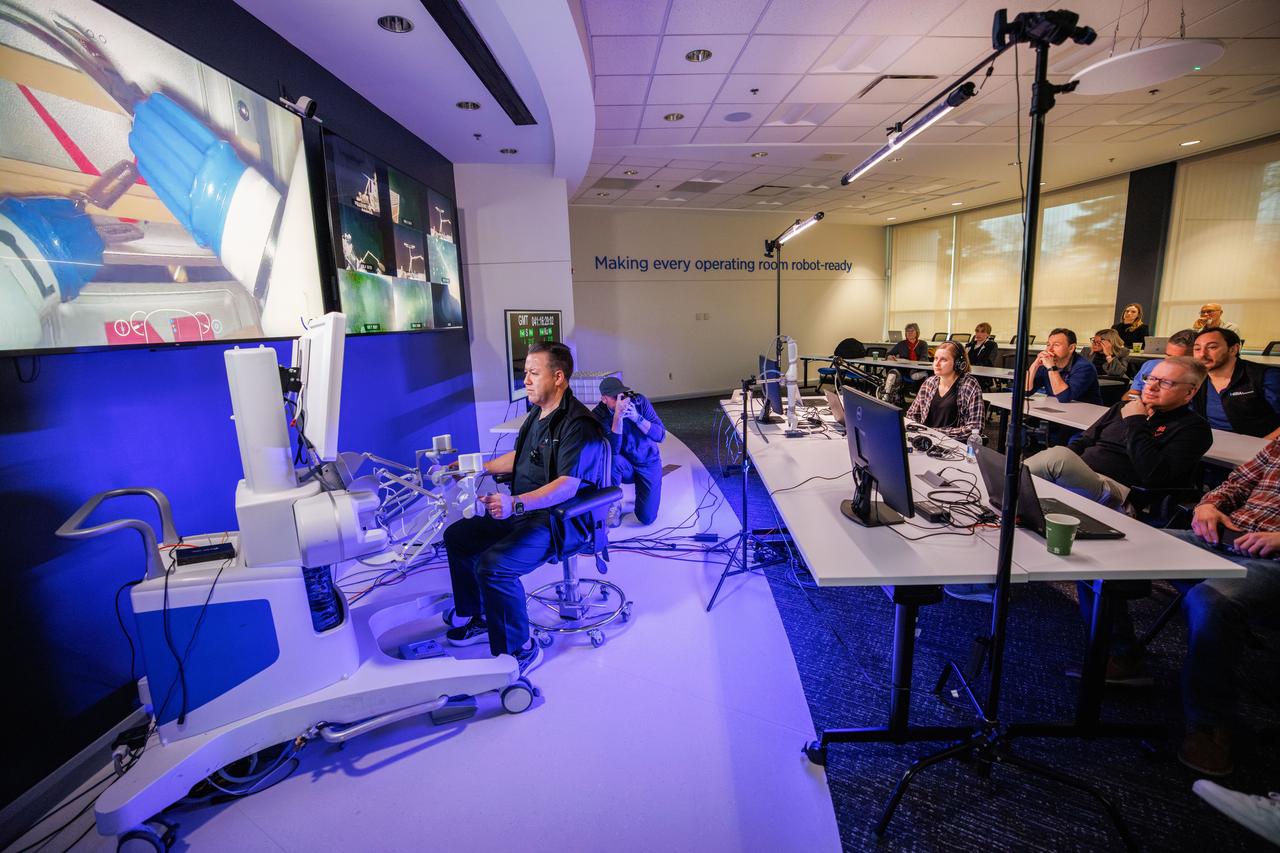
jsc2024e041213 (2/10/2024) --- Dr. Michael Jobst remotely operates a surgical robot aboard the International Space Station using controls at the Virtual Incision offices in Lincoln, Nebraska. Robotic Surgery Tech Demo tests techniques for performing robotic surgery in microgravity using a miniature surgical robot that can be remotely controlled or teleoperated from Earth. Results from this investigation could support the development of robotic systems to perform remote procedures. Miniaturization and the ability to remotely control robots may help to make surgery available anywhere and anytime. Image courtesy of the University of Nebraska-Lincoln.
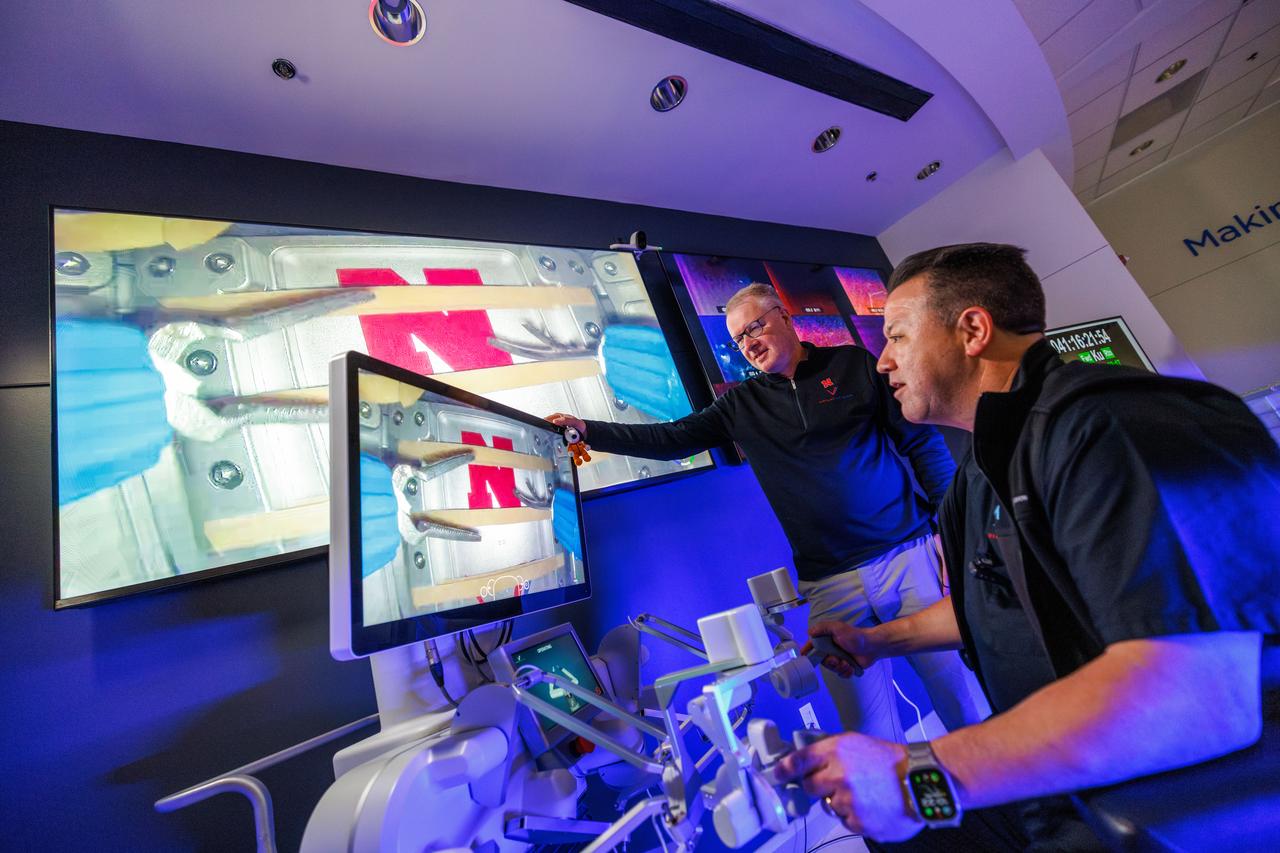
jsc2024e041212 (2/10/2024) --- Professor Shane Farritor (left) watches as Dr. Michael Jobst remotely operates a surgical robot aboard the International Space Station using controls at the Virtual Incision offices in Lincoln, Nebraska. Robotic Surgery Tech Demo tests techniques for performing robotic surgery in microgravity using a miniature surgical robot that can be remotely controlled or teleoperated from Earth. Results from this investigation could support the development of robotic systems to perform these procedures. Miniaturization and the ability to remotely control robots may help to make surgery available anywhere and anytime. Image courtesy of the University of Nebraska-Lincoln.
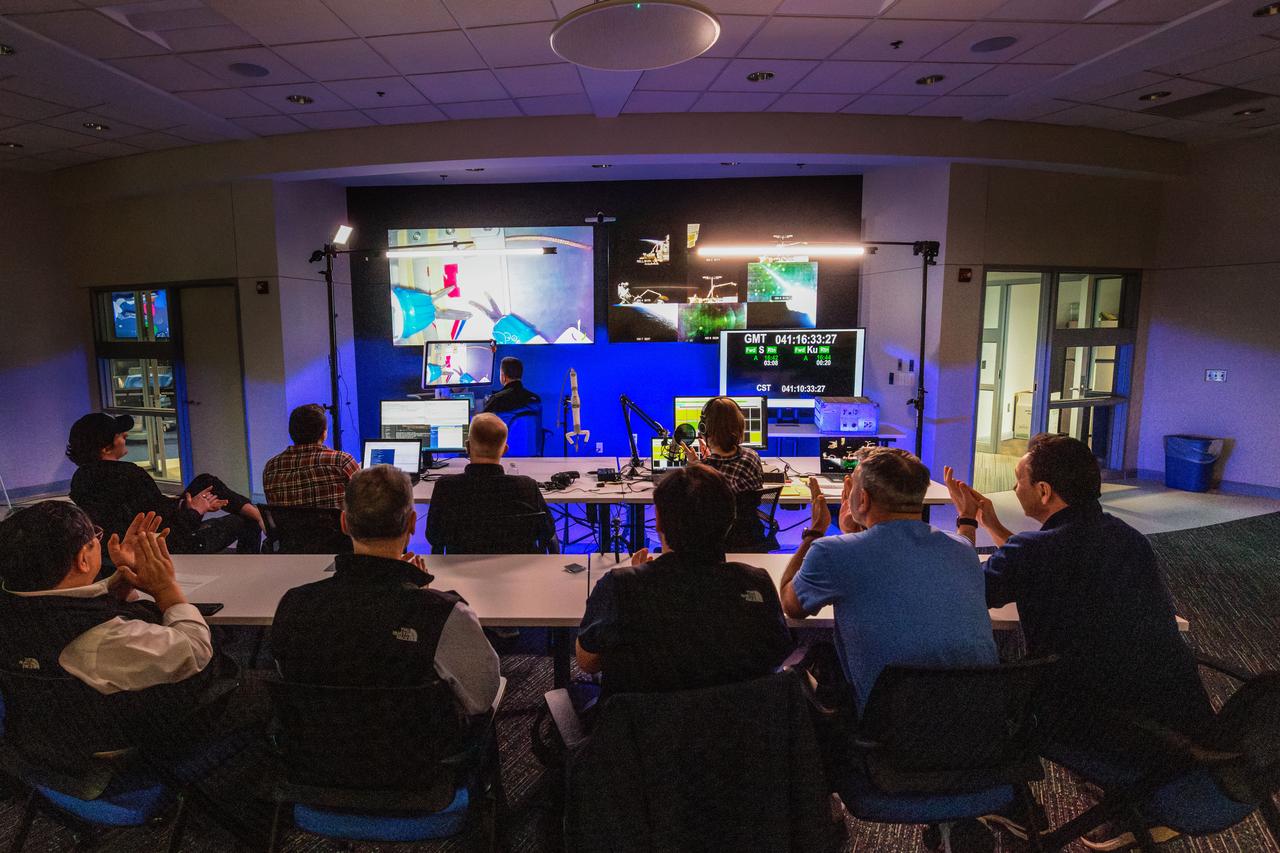
jsc2024e041214 (2/10/2024) --- Dr. Michael Jobst remotely operates a surgical robot aboard the International Space Station using controls at the Virtual Incision offices in Lincoln, Nebraska. Robotic Surgery Tech Demo tests techniques for performing robotic surgery in microgravity using a miniature surgical robot that can be remotely controlled or teleoperated from Earth. Results from this investigation could support the development of robotic systems to perform remote procedures. Miniaturization and the ability to remotely control robots may help to make surgery available anywhere and anytime. Image courtesy of the University of Nebraska-Lincoln.
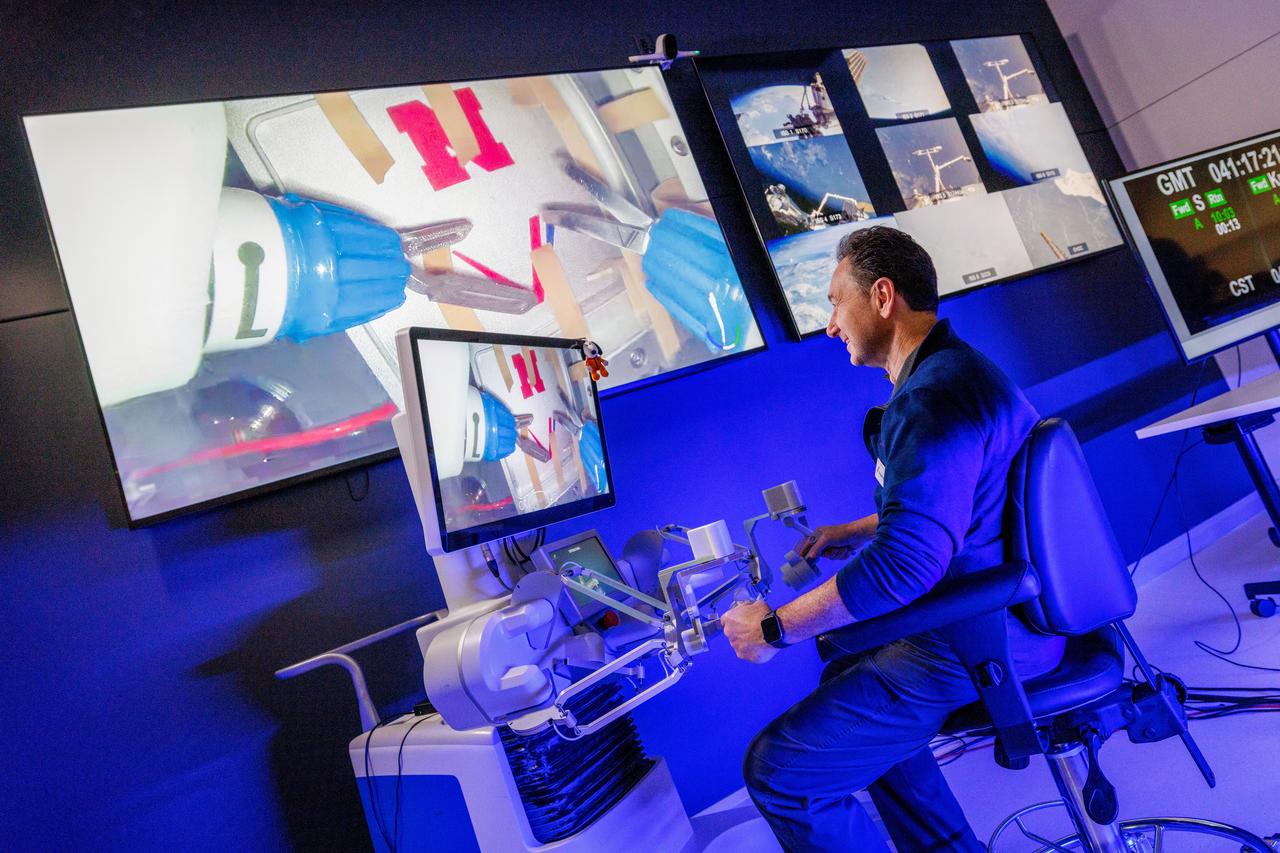
jsc2024e041215 (2/10/2024) --- Dr. Dmitry Oleynikov remotely operates a surgical robot aboard the International Space Station using controls at the Virtual Incision offices in Lincoln, Nebraska. Robotic Surgery Tech Demo tests techniques for performing a simulated surgical procedure in microgravity using a miniature surgical robot that can be remotely controlled or teleoperated from Earth. Results from this investigation could support the development of robotic systems to perform these procedures. Miniaturization and the ability to remotely control robots may help to make surgery available anywhere and anytime. Image courtesy of the University of Nebraska-Lincoln.