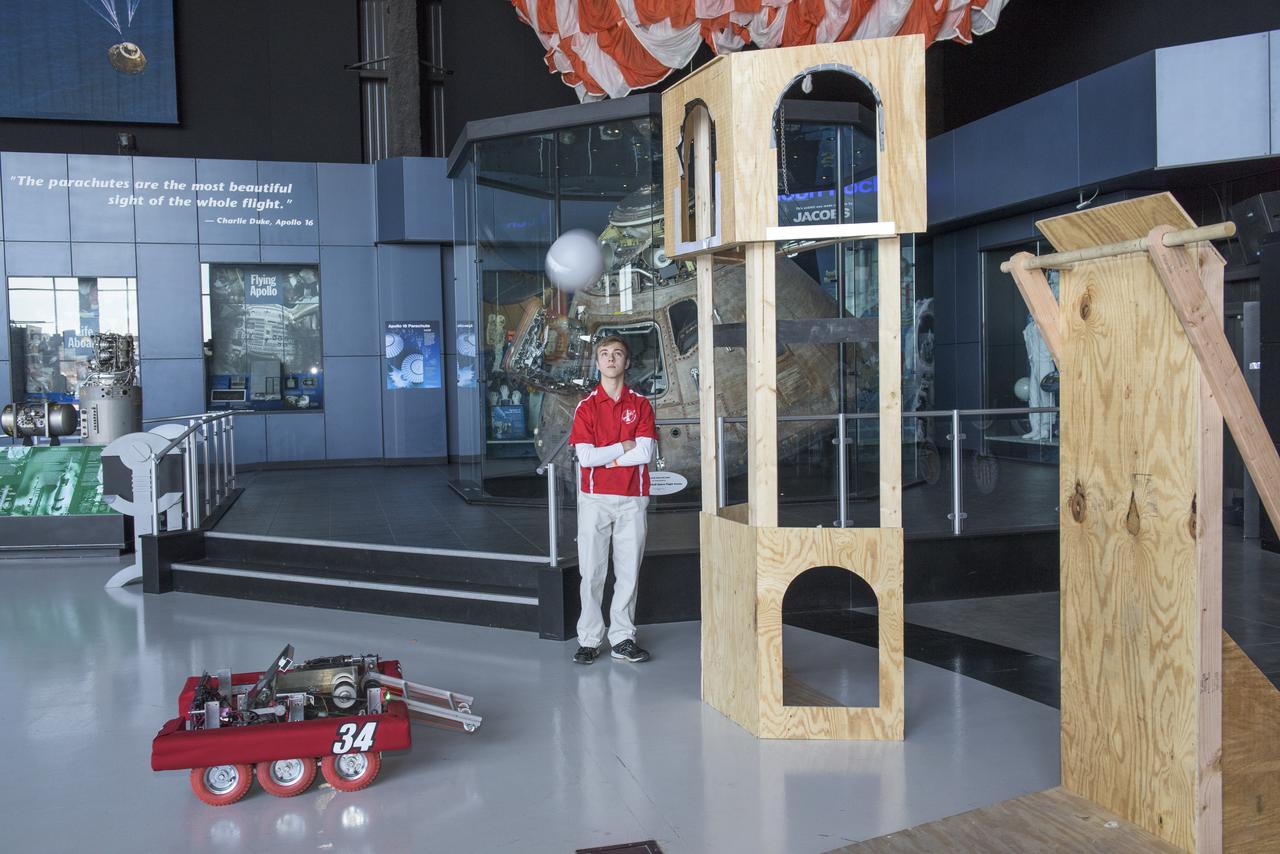
HIGH SCHOOL STUDENTS FROM NORTH ALABAMA GATHER AT THE U.S. SPACE AND ROCKET CENTER'S DAVIDSON CENTER FOR THE "ROBOTS TO ROCKET CITY" EVENT SHOWCASING THEIR INDIVIDUAL ROBOTS PRIOR TO LATER COMPETITIONS.
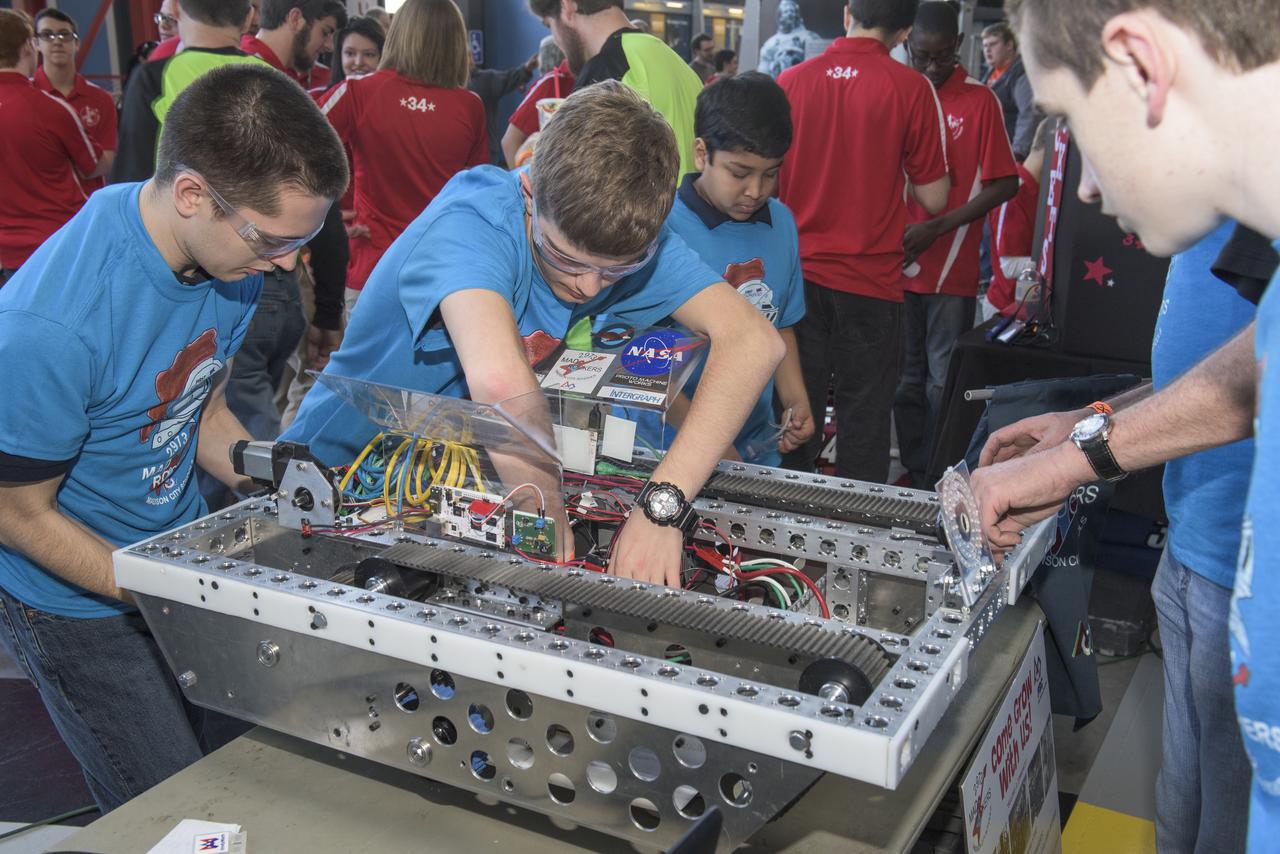
HIGH SCHOOL STUDENTS FROM NORTH ALABAMA GATHER AT THE U.S. SPACE AND ROCKET CENTER'S DAVIDSON CENTER FOR THE "ROBOTS TO ROCKET CITY" EVENT SHOWCASING THEIR INDIVIDUAL ROBOTS PRIOR TO LATER COMPETITIONS.
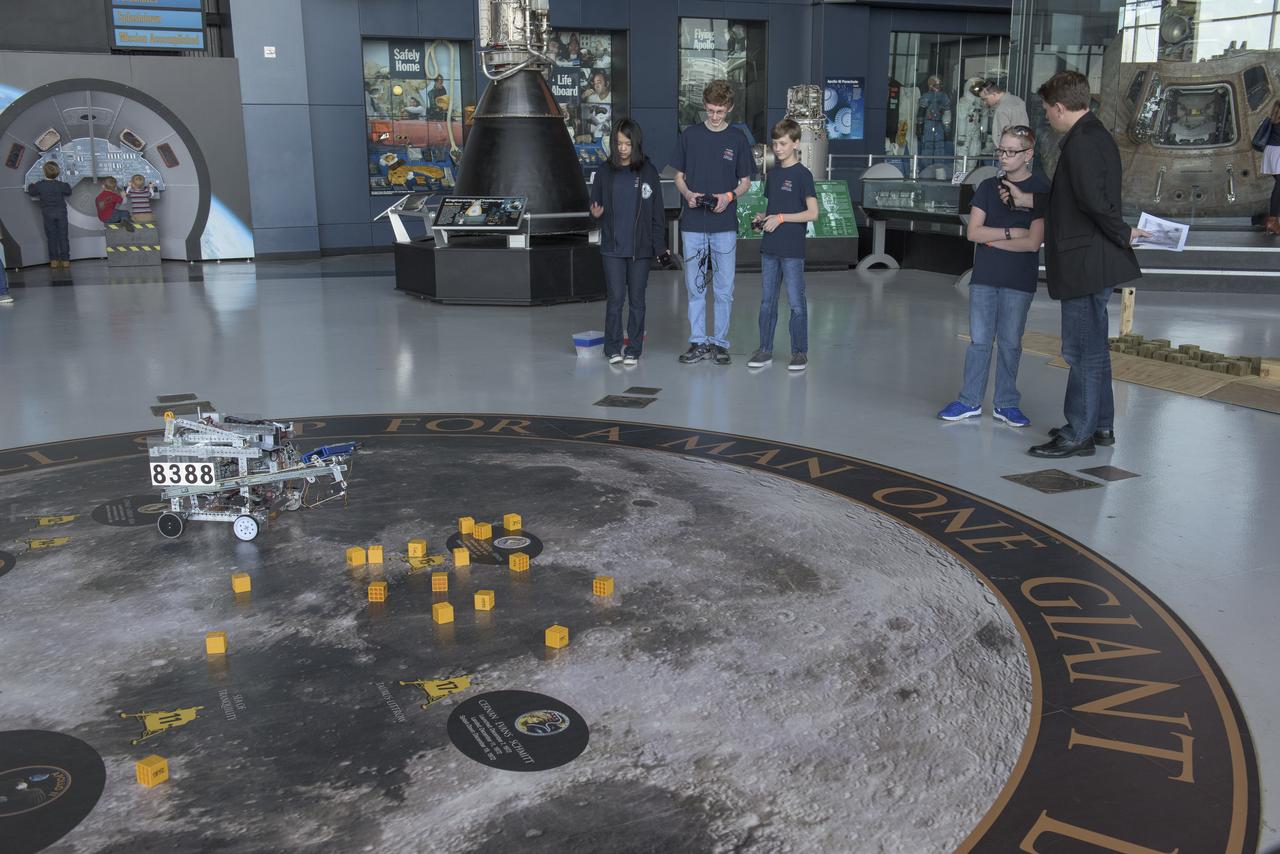
HIGH SCHOOL STUDENTS FROM NORTH ALABAMA GATHER AT THE U.S. SPACE AND ROCKET CENTER'S DAVIDSON CENTER FOR THE "ROBOTS TO ROCKET CITY" EVENT SHOWCASING THEIR INDIVIDUAL ROBOTS PRIOR TO LATER COMPETITIONS.
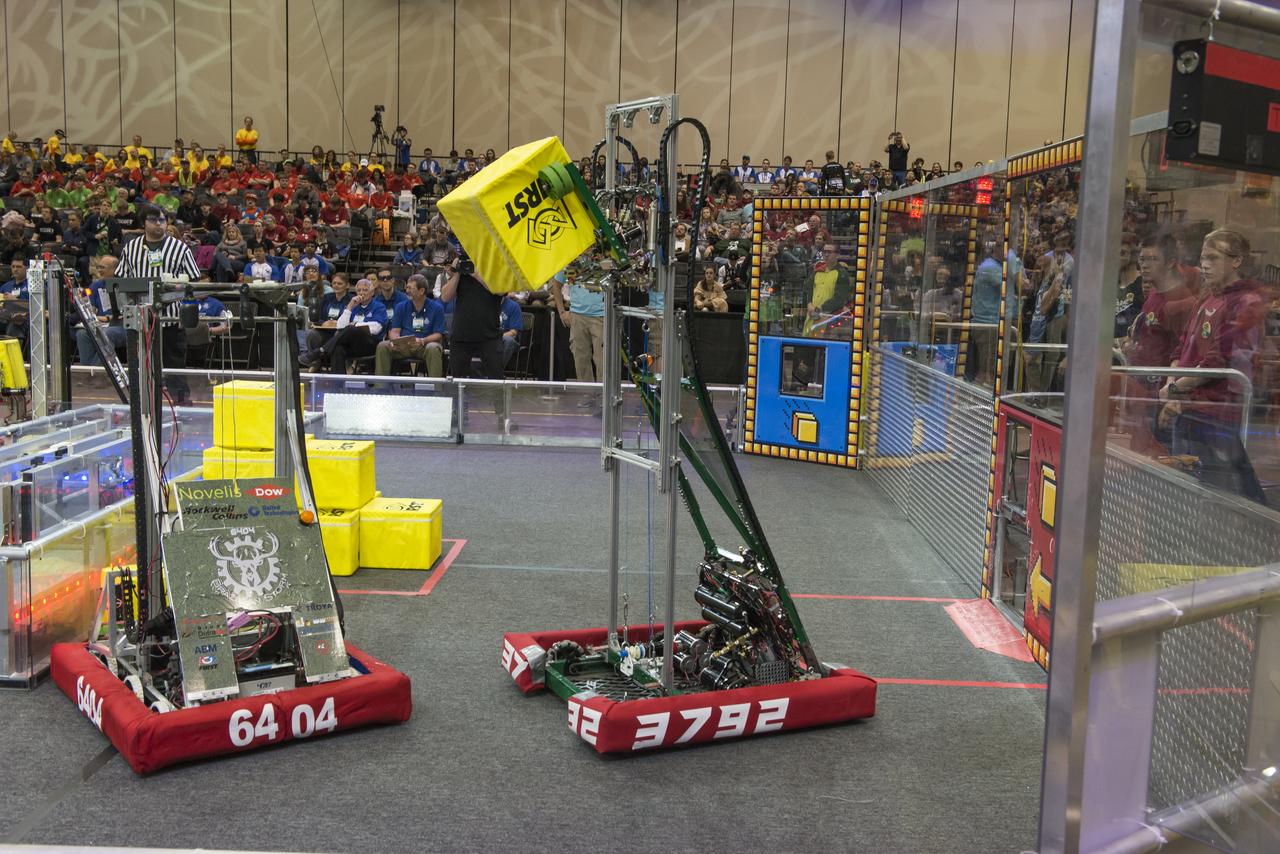
The First Robotics Rocket City Regional Competition was held at the Von Braun Civic Center in Huntsville, Alabama on March 16, 2018. High school robotics teams from throughout the U.S., as well as a team from Brazil, competed.
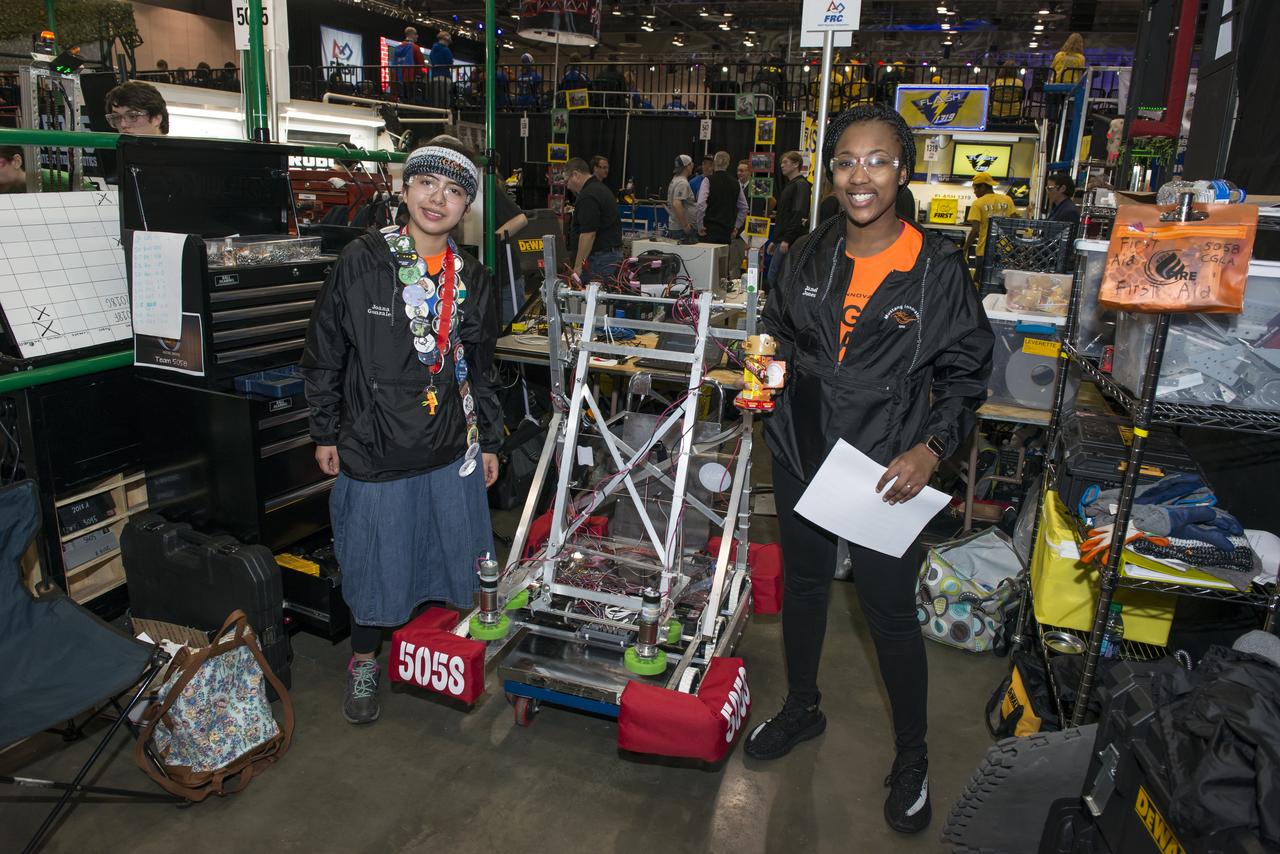
The First Robotics Rocket City Regional Competition was held at the Von Braun Civic Center in Huntsville, Alabama on March 16, 2018. High school robotics teams from throughout the U.S., as well as a team from Brazil, competed.
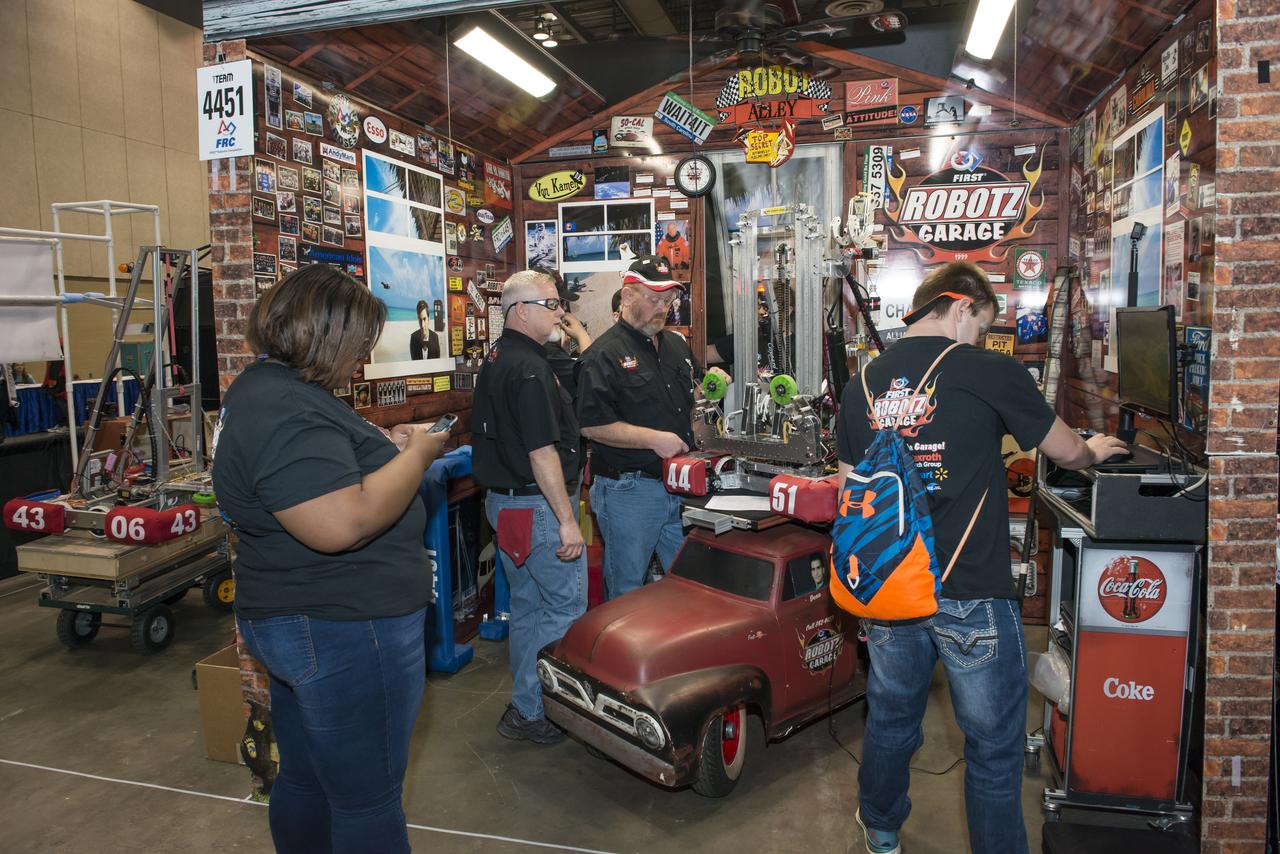
The First Robotics Rocket City Regional Competition was held at the Von Braun Civic Center in Huntsville, Alabama on March 16, 2018. High school robotics teams from throughout the U.S., as well as a team from Brazil, competed.
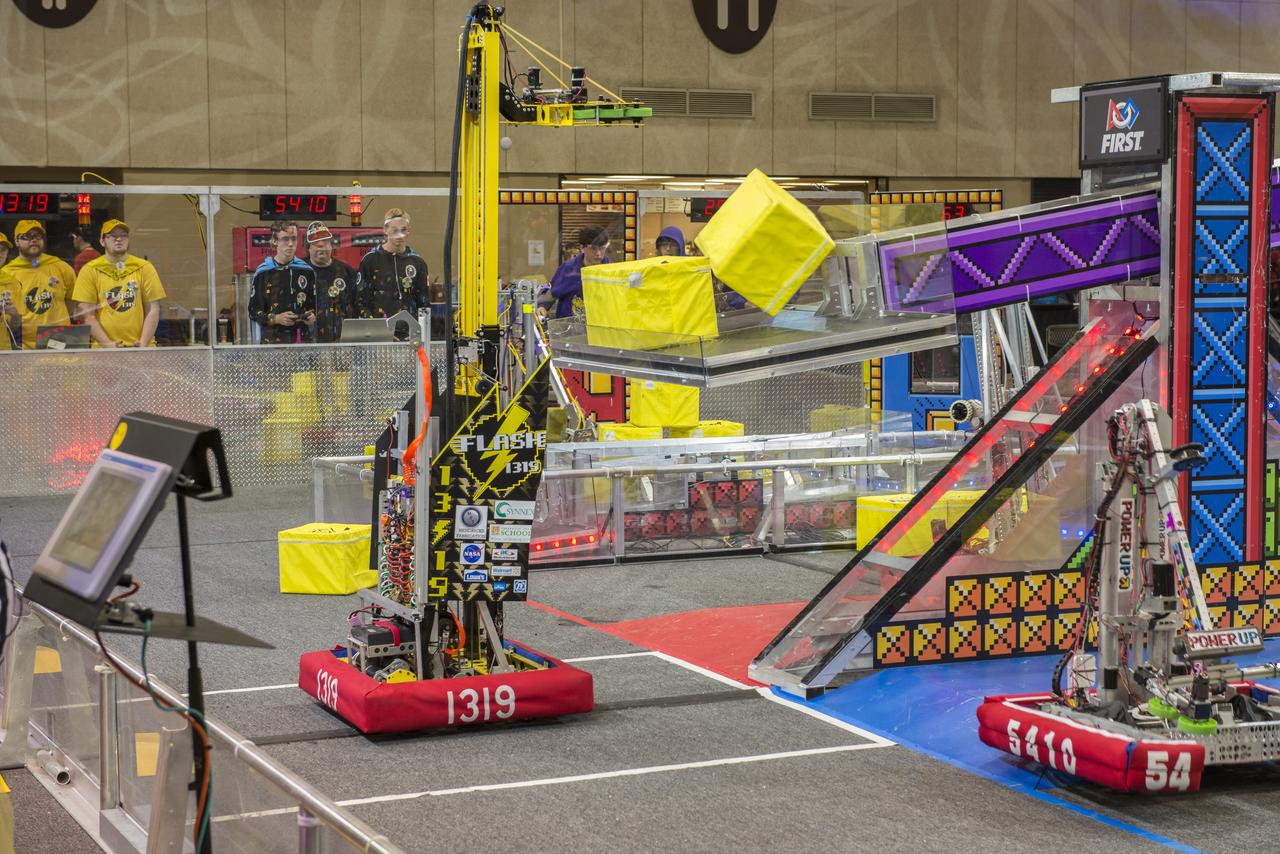
The First Robotics Rocket City Regional Competition was held at the Von Braun Civic Center in Huntsville, Alabama on March 16, 2018. High school robotics teams from throughout the U.S., as well as a team from Brazil, competed.
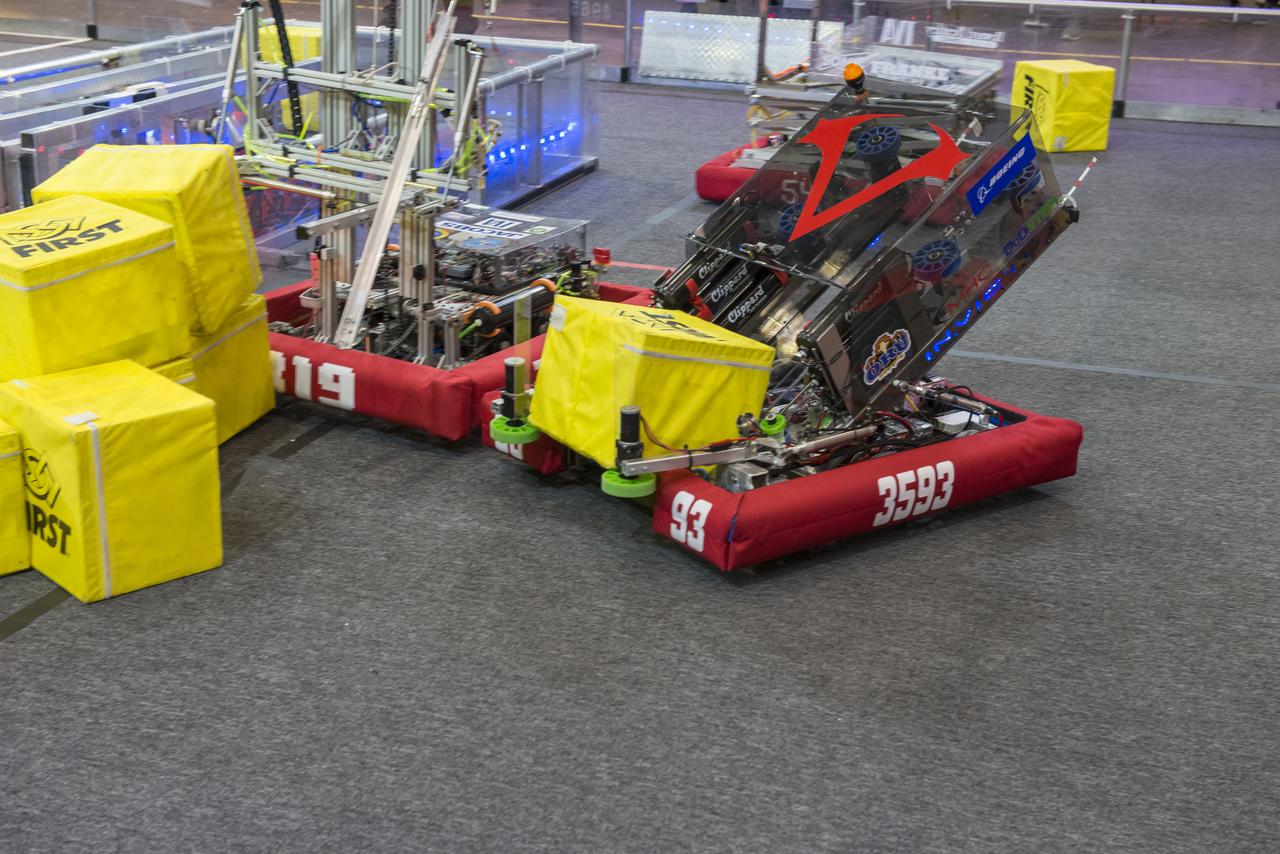
The First Robotics Rocket City Regional Competition was held at the Von Braun Civic Center in Huntsville, Alabama on March 16, 2018. High school robotics teams from throughout the U.S., as well as a team from Brazil, competed.
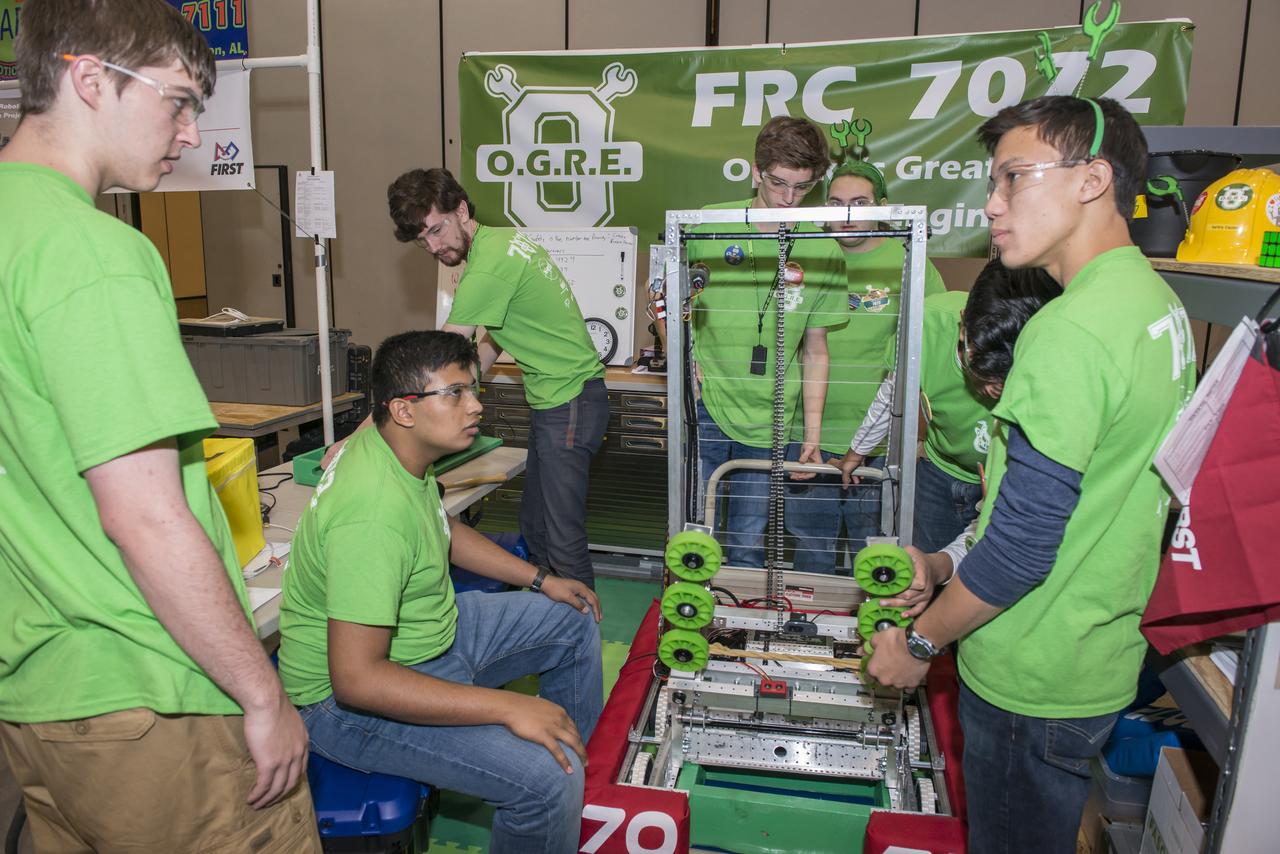
The First Robotics Rocket City Regional Competition was held at the Von Braun Civic Center in Huntsville, Alabama on March 16, 2018. High school robotics teams from throughout the U.S., as well as a team from Brazil, competed.
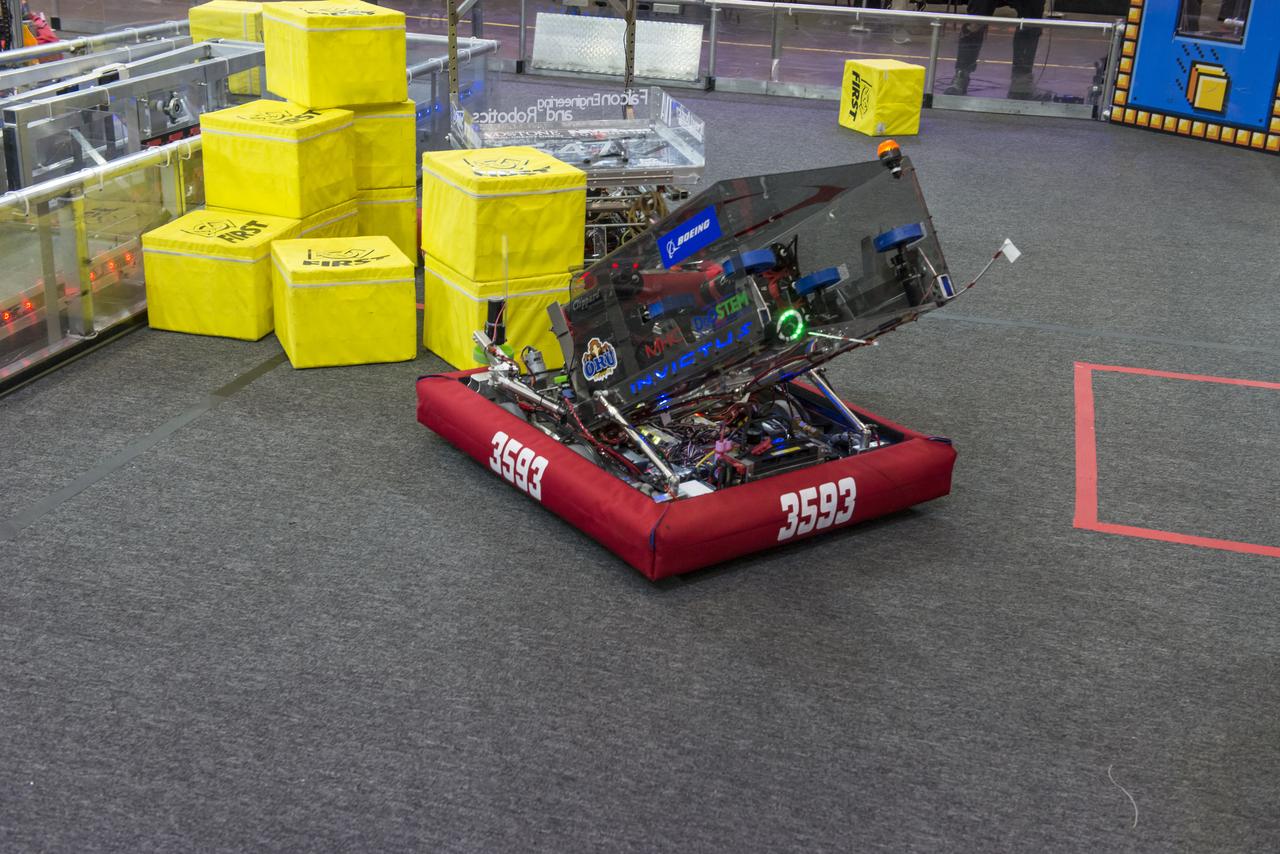
The First Robotics Rocket City Regional Competition was held at the Von Braun Civic Center in Huntsville, Alabama on March 16, 2018. High school robotics teams from throughout the U.S., as well as a team from Brazil, competed.

The First Robotics Rocket City Regional Competition was held at the Von Braun Civic Center in Huntsville, Alabama on March 16, 2018. High school robotics teams from throughout the U.S., as well as a team from Brazil, competed.
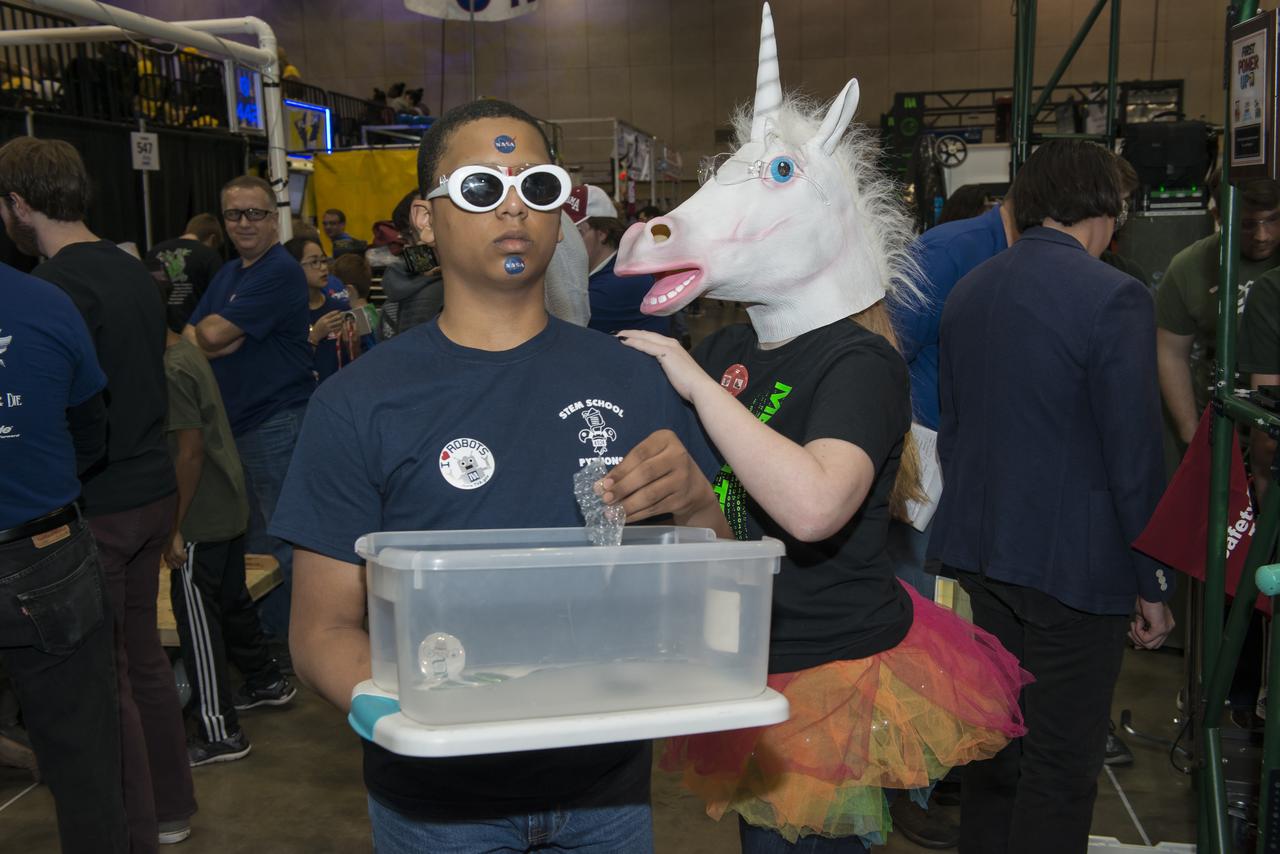
The First Robotics Rocket City Regional Competition was held at the Von Braun Civic Center in Huntsville, Alabama on March 16, 2018. High school robotics teams from throughout the U.S., as well as a team from Brazil, competed. Costumed students were the normal at this event and lent it much color.

The First Robotics Rocket City Regional Competition was held at the Von Braun Civic Center in Huntsville, Alabama on March 16, 2018. High school robotics teams from throughout the U.S., as well as a team from Brazil, competed. Pictured is the Brazilian team prior to competition
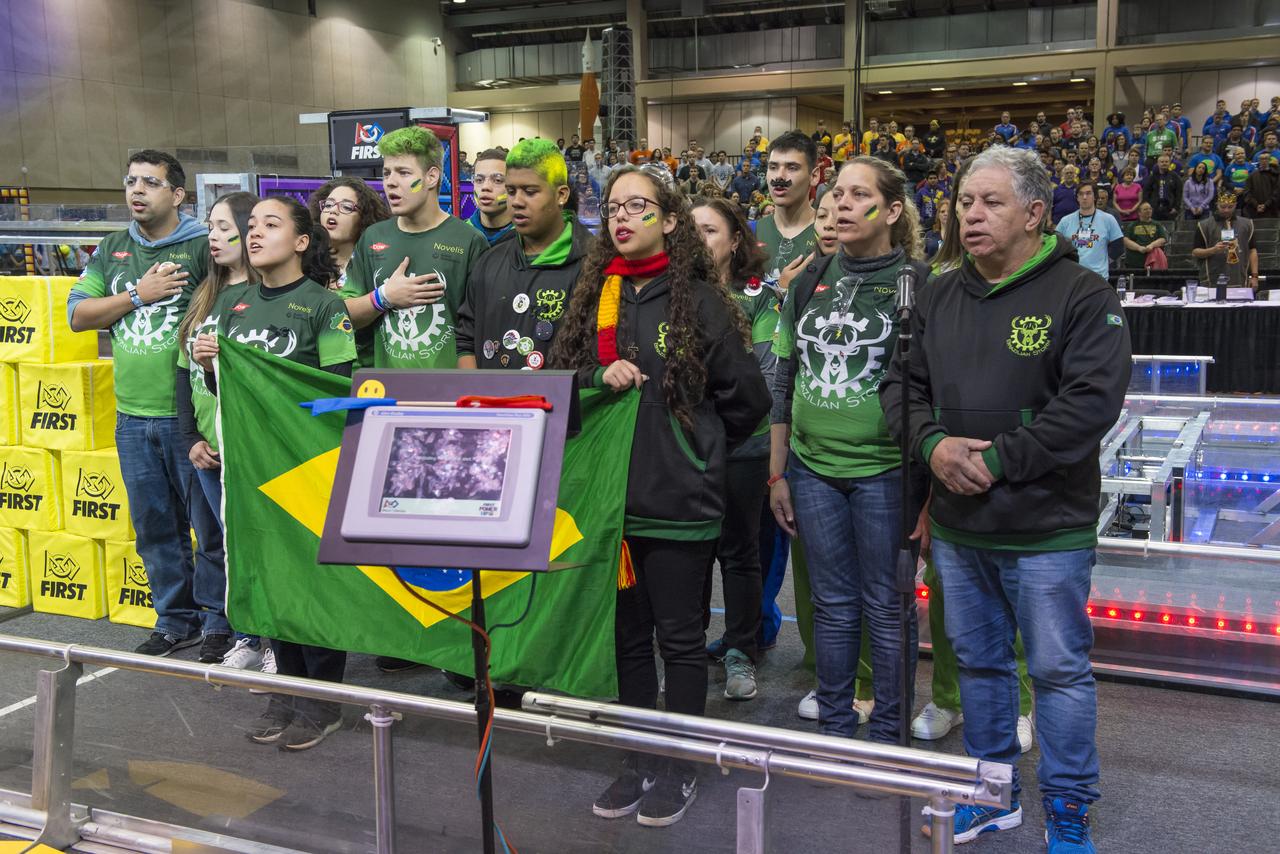
The First Robotics Rocket City Regional Competition was held at the Von Braun Civic Center in Huntsville, Alabama on March 16, 2018. High school robotics teams from throughout the U.S., as well as a team from Brazil, competed. The Brazilian team sings their national anthem.
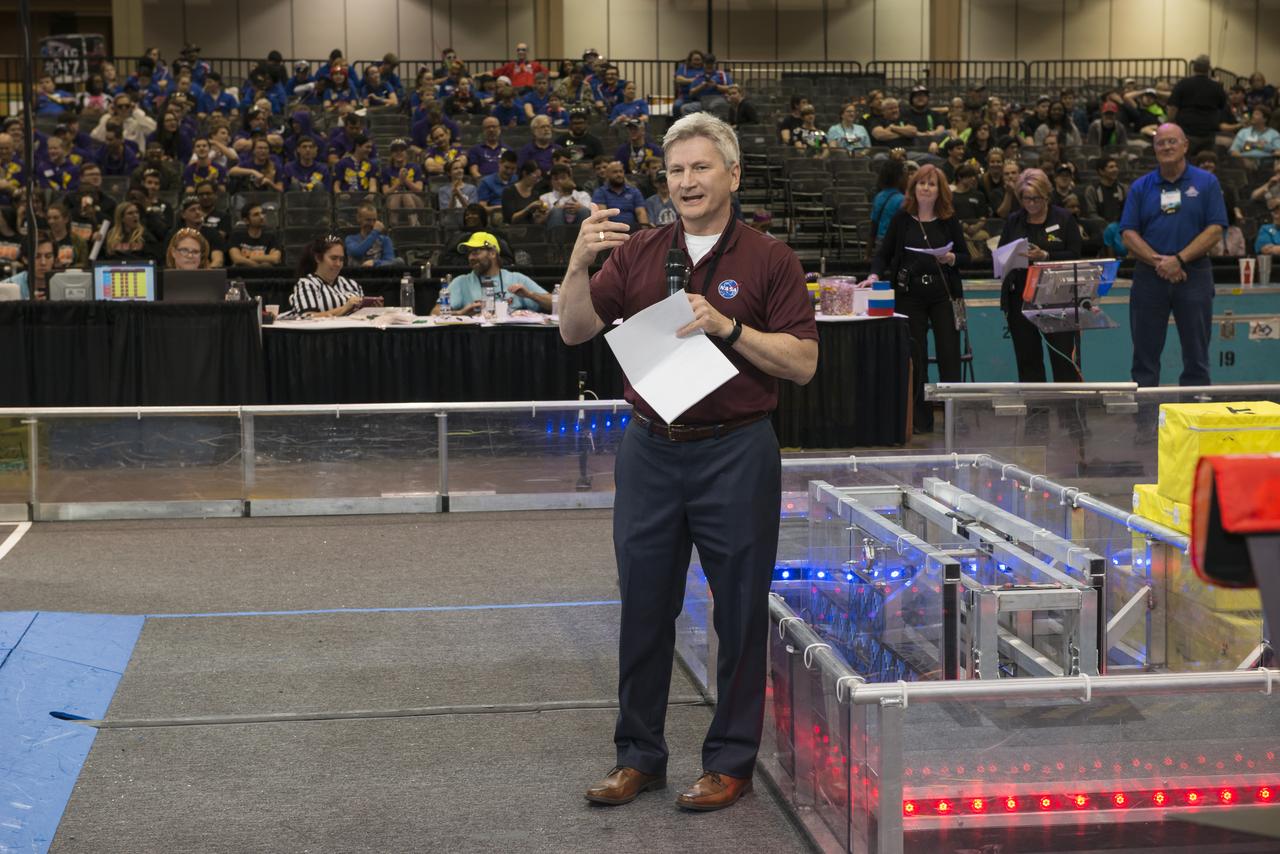
Johnny Stephenson, director of NASA Marshall Space Flight Center's Office of Strategic Analysis & Communications, addresses the crowd during the March 16 award ceremony following the first day of competition at the FIRST Robotics Rocket City Regional at the Von Braun Center in Huntsville. Ed Sparks, of the Morgan County Mech Tech team, received the award for Volunteer of the Year at the March 16 award ceremony. Mech Tech, comprised of students from five high schools in Morgan County, Alabama, also won the Industrial Design Award. The team was one of three regional finalists that will advance to the FIRST national championships April 18-21 in Houston. The other two regional finalists were Burning Magnetos of Fort Dorchester High School in North Charleston, South Carolina, and OGRE of Opelika High School in Opelika, Alabama. Mech Tech and Golden Hurricane from Columbia High School in Huntsville, were "house" teams sponsored by Marshall.
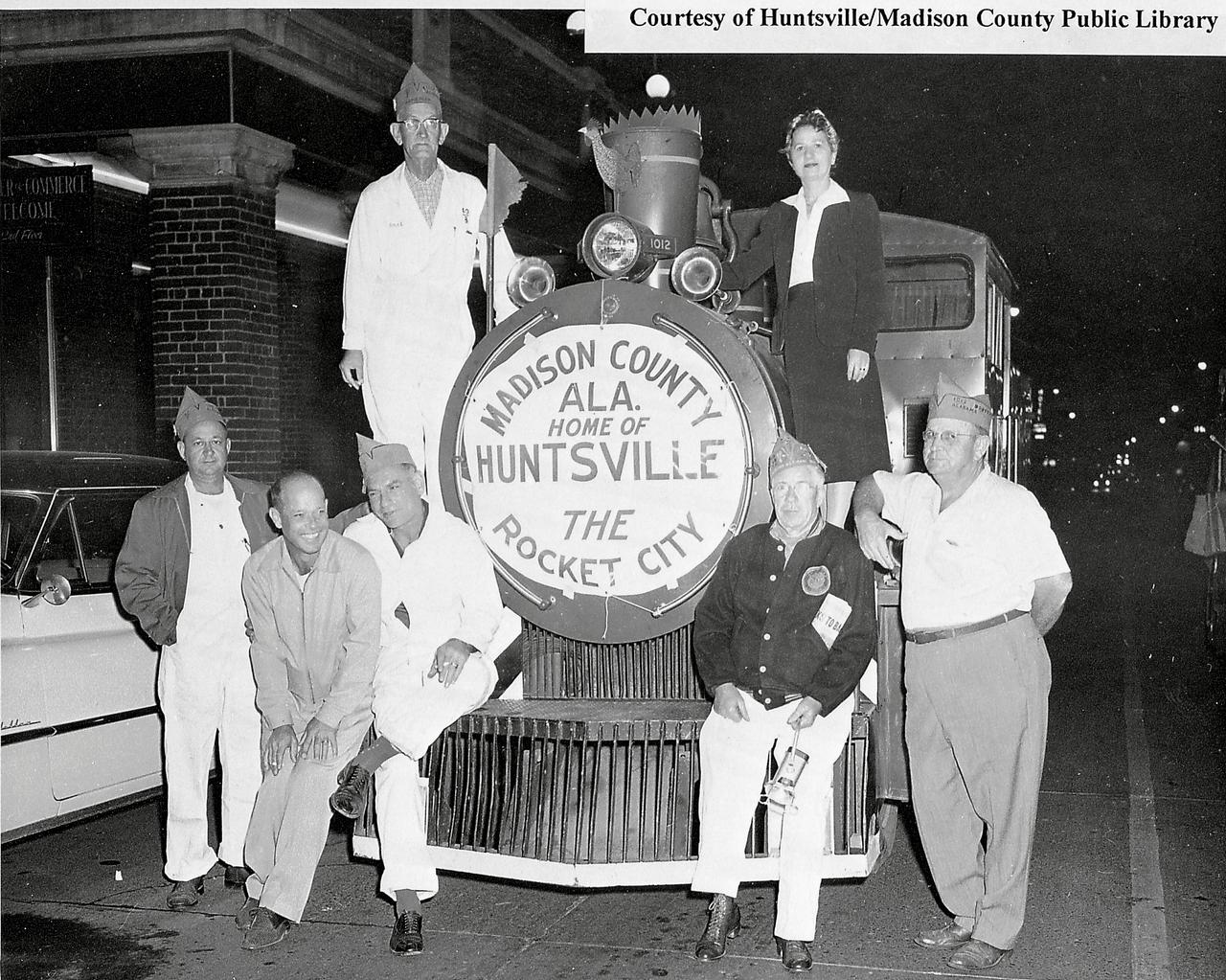
As the nations missile and rocket program began to expand in the 50's, Huntsville, Alabama was the home to Redstone Arsenal and the famous team of rocket experts led by Dr. Wernher Von Braun. Soon Huntsville was called the "Rocket City" as depicted in this photo believed to have been taken in the 1950's in Huntsville, Alabama. (Courtesy of Huntsville/Madison County Public Library)
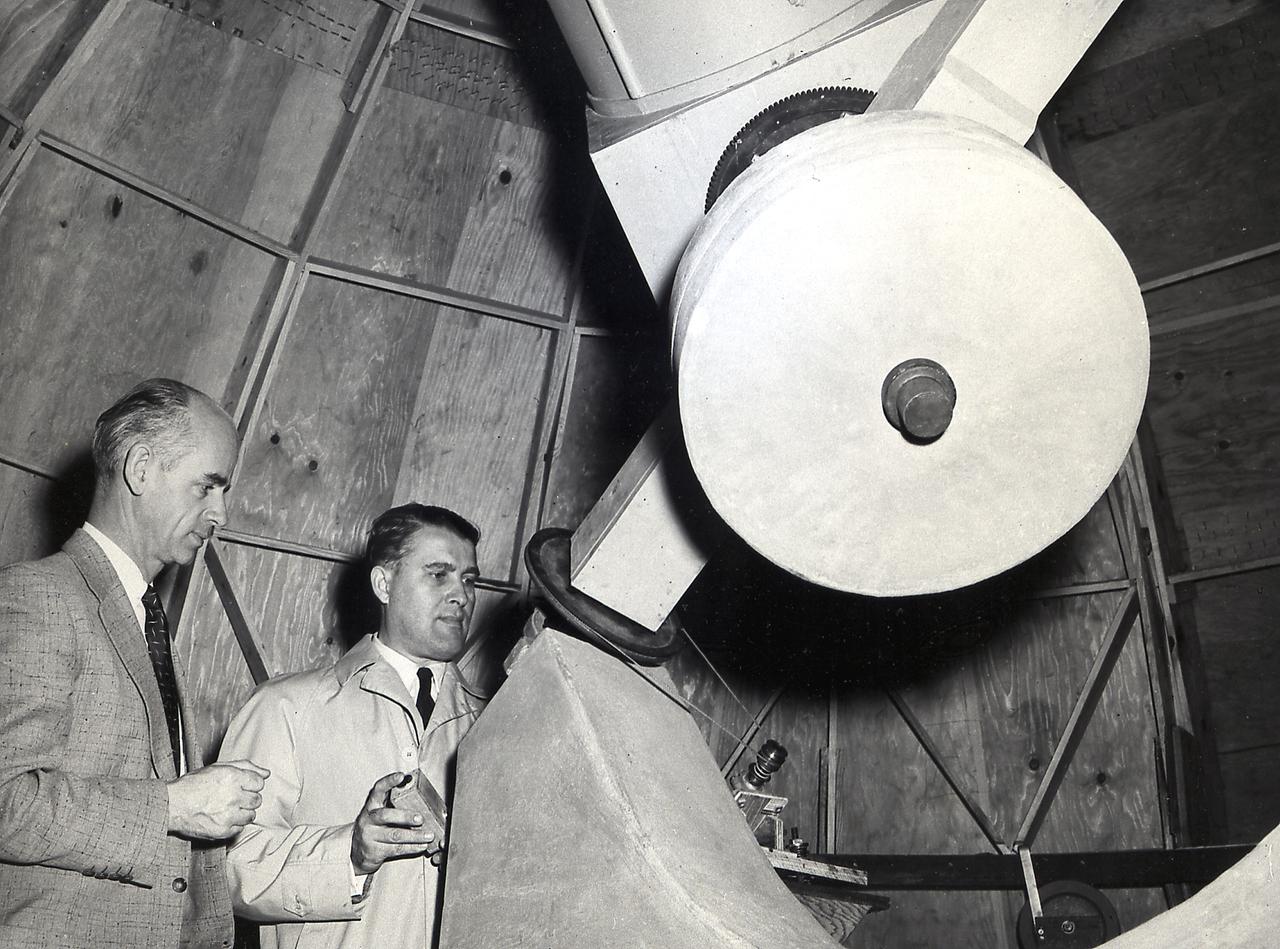
Dr. von Braun and Dr. Ernst Stuhlinger at the Observatory of the Rocket City Astronomical Association in 1956.

A supermoon rises over Huntsville, Alabama, home to NASA’s Marshall Space Flight Center, Aug. 19. Visible through Wednesday, Aug. 21, the full Moon is both a supermoon and a Blue Moon. Supermoons are the biggest and brightest full Moons of the year because the Moon is within 90% of its closest point to Earth. While not blue in color, the third full Moon in a season with four full Moons is called a “Blue Moon.” Huntsville is known as the “Rocket City” because of its proximity to NASA Marshall, which manages vital propulsion systems and hardware, launch vehicles, engineering technologies, and cutting-edge science for the agency.

A supermoon rises over Huntsville, Alabama, home to NASA’s Marshall Space Flight Center, Aug. 19. Visible through Wednesday, Aug. 21, the full Moon is both a supermoon and a Blue Moon. Supermoons are the biggest and brightest full Moons of the year because the Moon is within 90% of its closest point to Earth. While not blue in color, the third full Moon in a season with four full Moons is called a “Blue Moon.” Huntsville is known as the “Rocket City” because of its proximity to NASA Marshall, which manages vital propulsion systems and hardware, launch vehicles, engineering technologies, and cutting-edge science for the agency.

A supermoon rises over Huntsville, Alabama, home to NASA’s Marshall Space Flight Center, Aug. 19. Visible through Wednesday, Aug. 21, the full Moon is both a supermoon and a Blue Moon. Supermoons are the biggest and brightest full Moons of the year because the Moon is within 90% of its closest point to Earth. While not blue in color, the third full Moon in a season with four full Moons is called a “Blue Moon.” Huntsville is known as the “Rocket City” because of its proximity to NASA Marshall, which manages vital propulsion systems and hardware, launch vehicles, engineering technologies, and cutting-edge science for the agency.

An inflatable scale model of the SLS rocket is seen on Pier 86 during the Intrepid Space & Science Festival, Saturday, Aug. 5, 2017 held at the Intrepid Sea, Air & Space Museum in New York City. The week-long festival featured talks, films and cutting-edge displays showcasing NASA technology. Photo Credit: (NASA/Bill Ingalls)
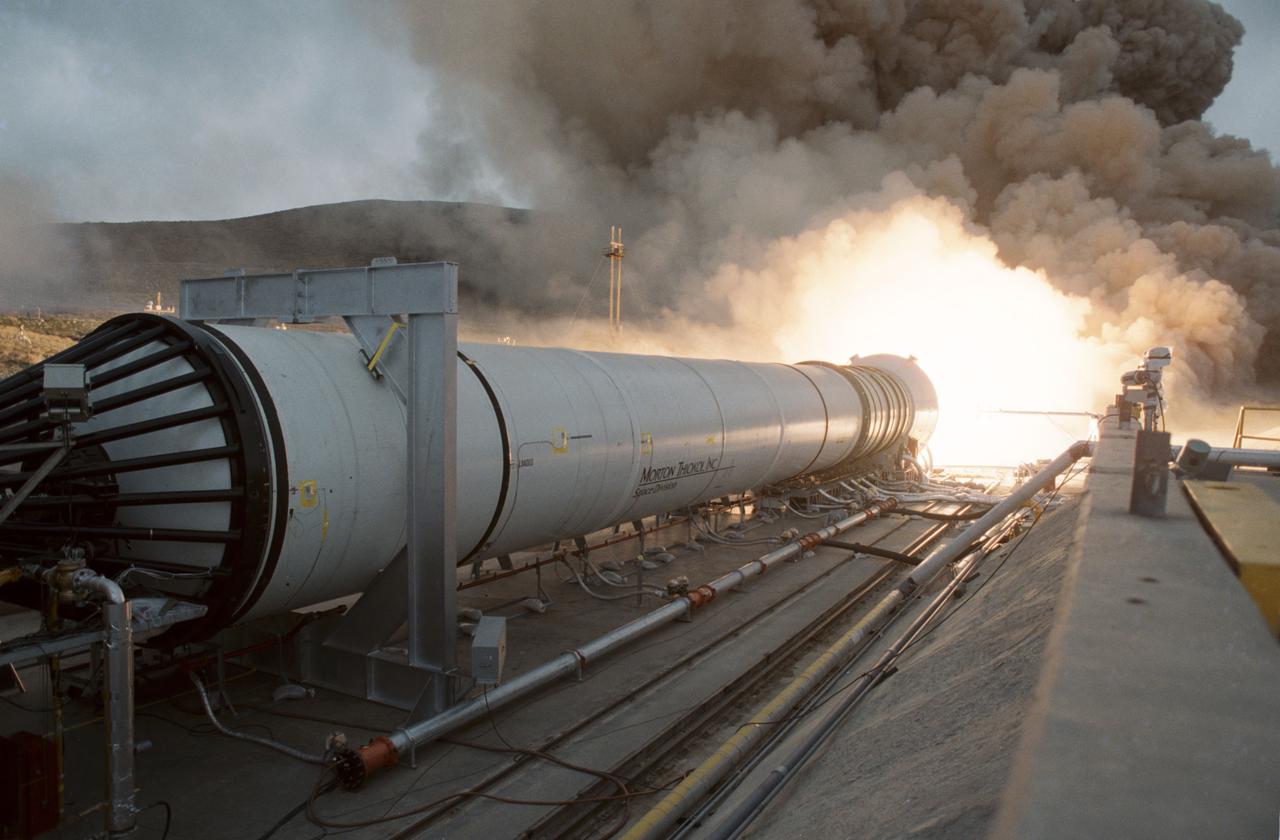
Solid Rocket Qualification Motor Firing at the Morton Thiokol facility at Brigham City, Utah on 20 April 1988.
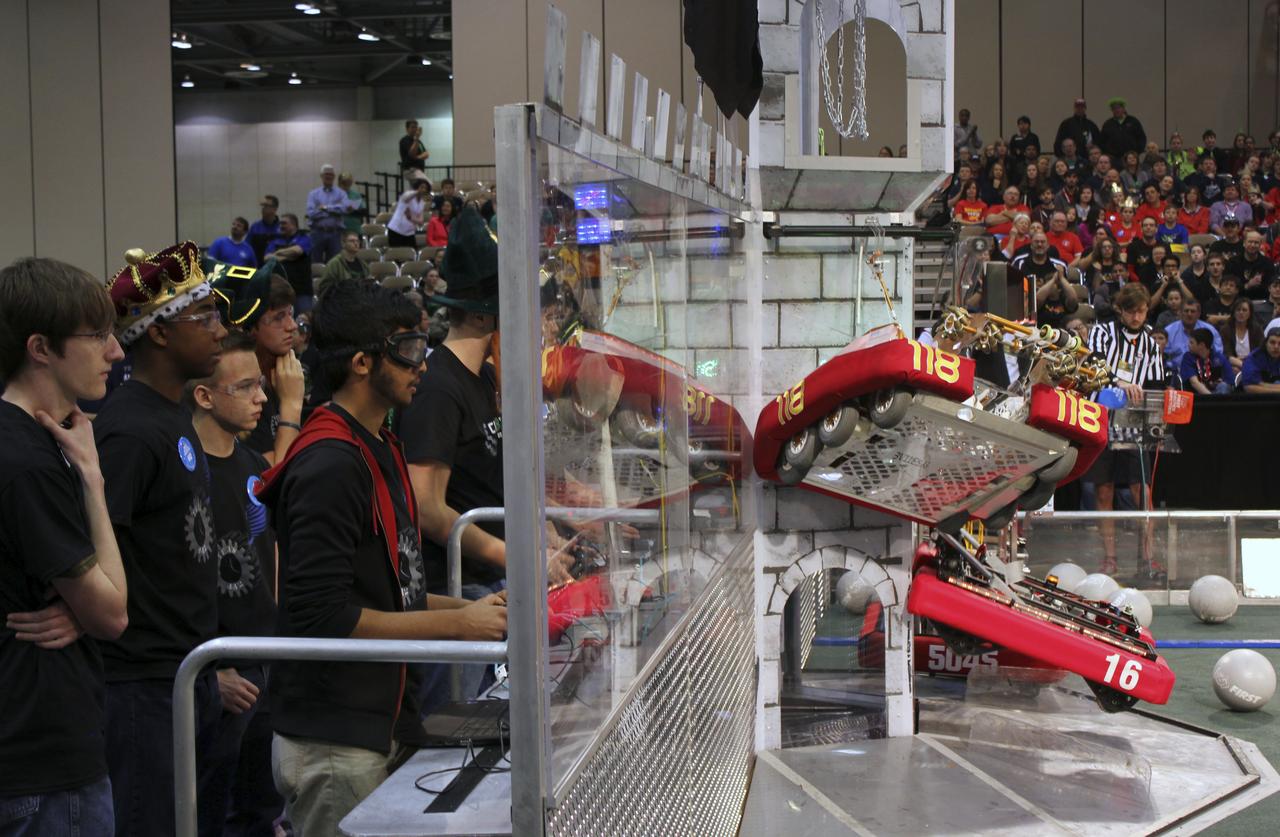
THE REDSTONE ROBOTICS OF HUNTSVILLE’S LEE AND NEW CENTURY TECH DEMO HIGH SCHOOLS WORK DURING THE “ROCKET CITY REGIONAL” FIRST ROBOTICS COMPETITION AT THE VON BRAUN CENTER IN 2016.
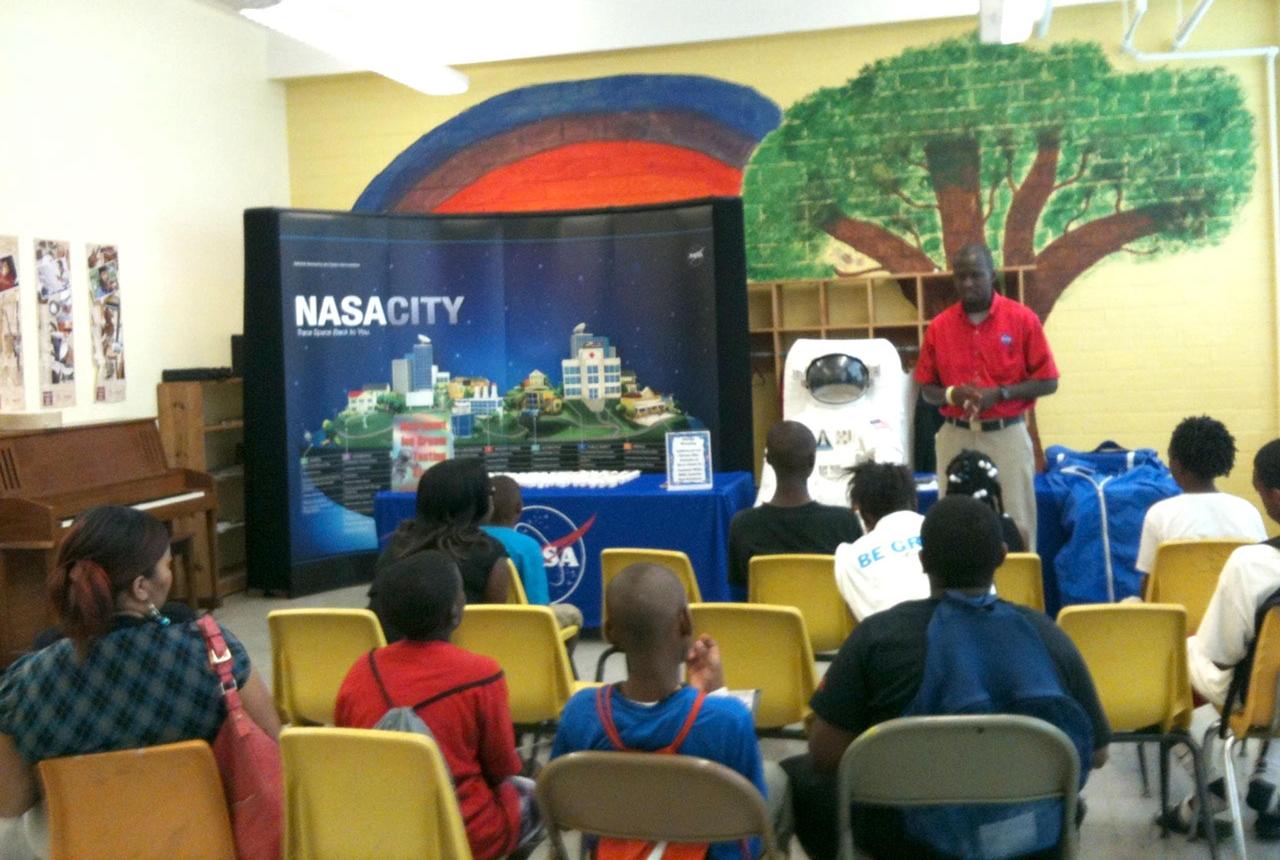
A Stennis Space Center employee talks to young people gathered for a NASA outreach activity at the Boys and Girls Club in Yazoo City, Miss., on June 5, 2012. The Stennis Office of External Affairs hosted outreach activities during a farmers' market in Canton on June 2 prior to visiting Yazoo City. In each instance, visitors were able to collect information about NASA, rocket engine testing and other work at Stennis.
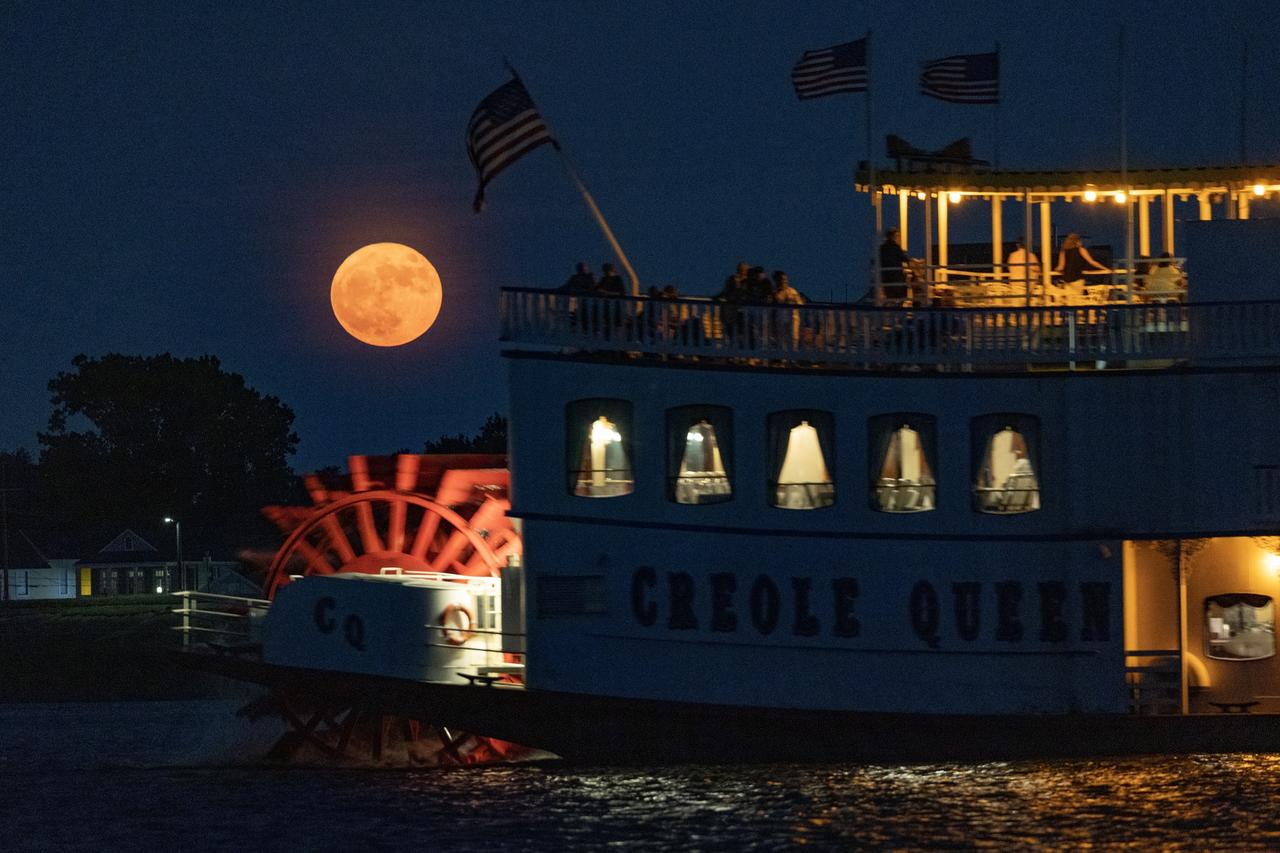
A supermoon rises over the Mississippi River and the Crescent City Aug. 1. The early August full Moon is the second largest in Earth’s skies for 2023. Later in August, a full Moon will appear in the skies for a second time. New Orleans is home to NASA’s Michoud Assembly Facility, where stages for NASA’s SLS (Space Launch System) rocket and structures for Orion spacecraft are produced for the Artemis missions.
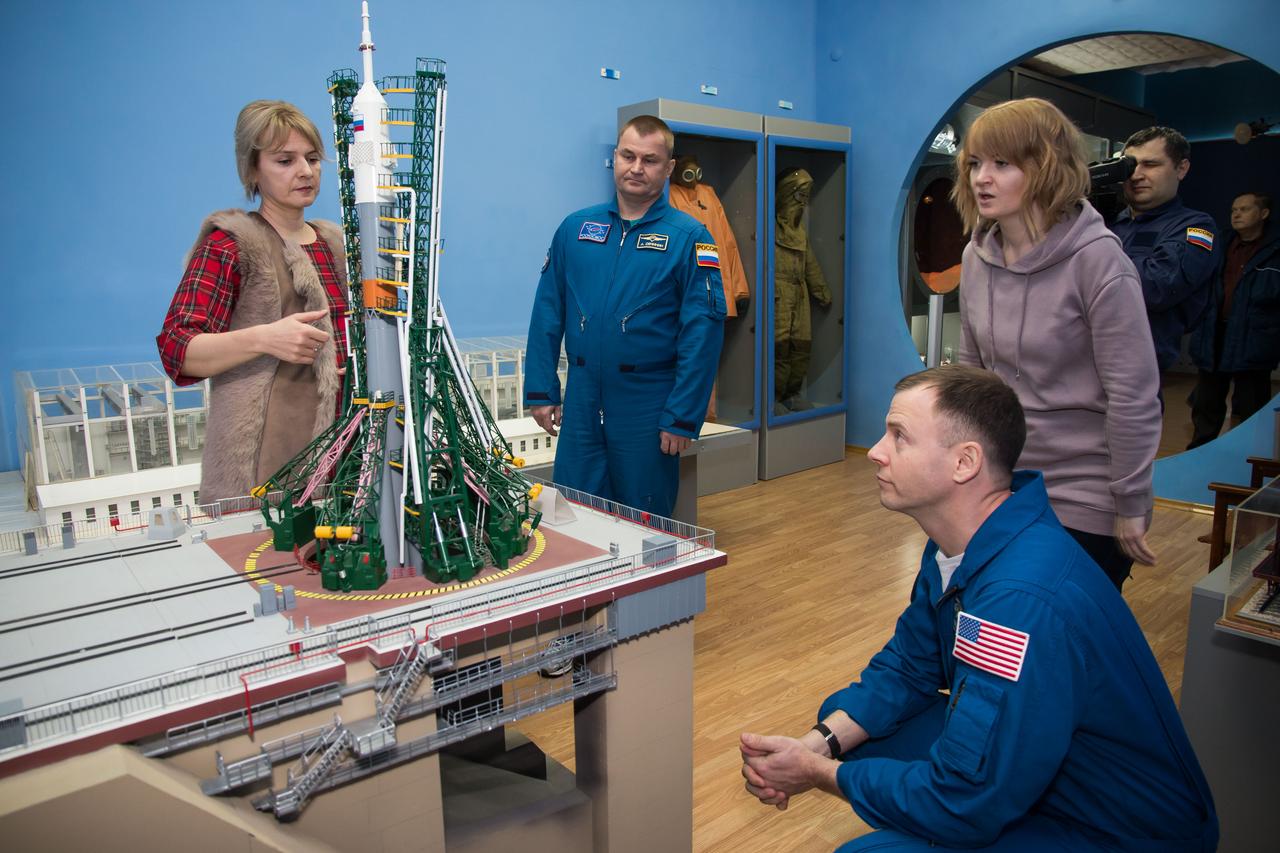
In the city of Baikonur, Kazakhstan, Expedition 55 backup crewmembers Alexey Ovchinin of Roscosmos (second from left) and Nick Hague of NASA (crouching) receive a briefing on the elements of a Soyuz rocket model March 6 during a traditional tour of the cit
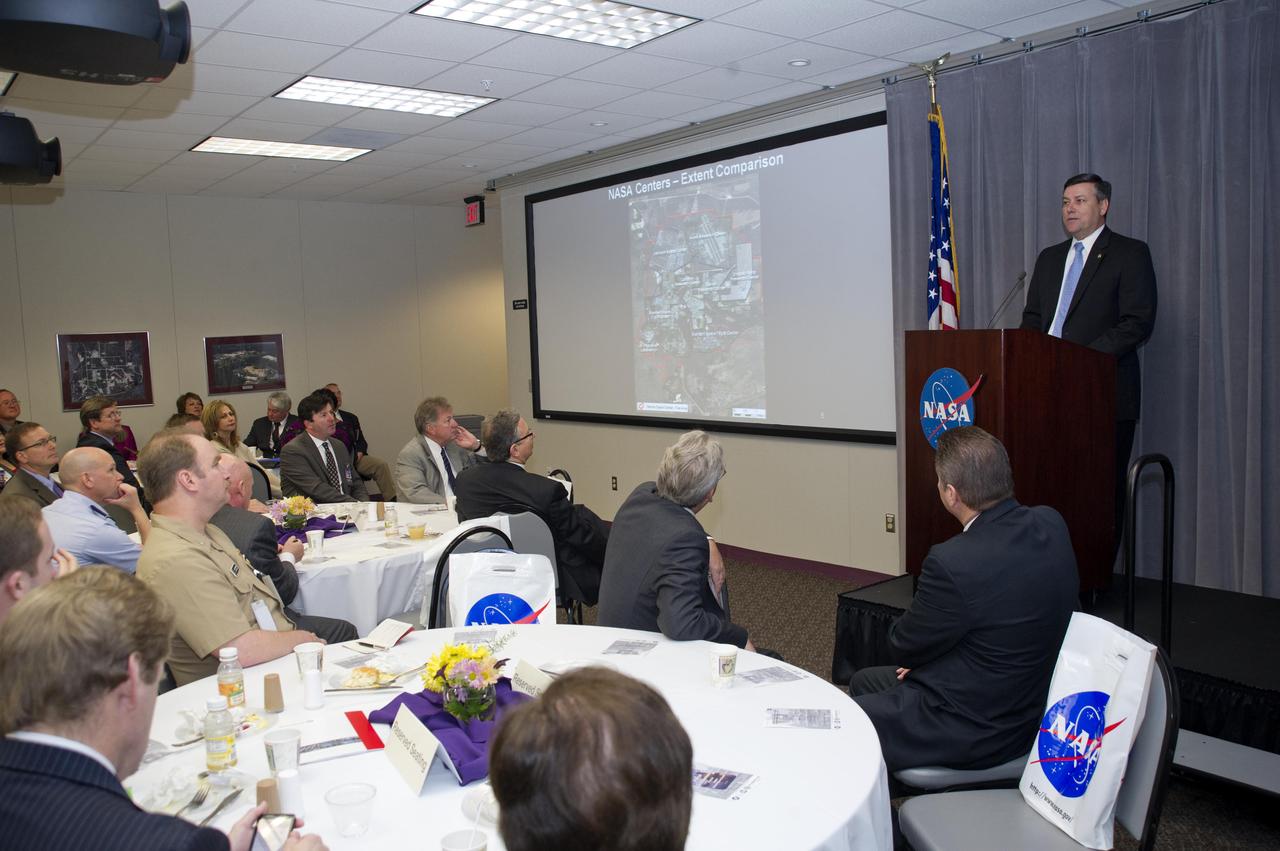
Stennis Space Center Director Patrick Scheuermann addresses community leaders and area officials during a March 1, 2012, event. More than 100 people attended the gathering, which featured reports about rocket engine testing and other work under way at the federal city facility.
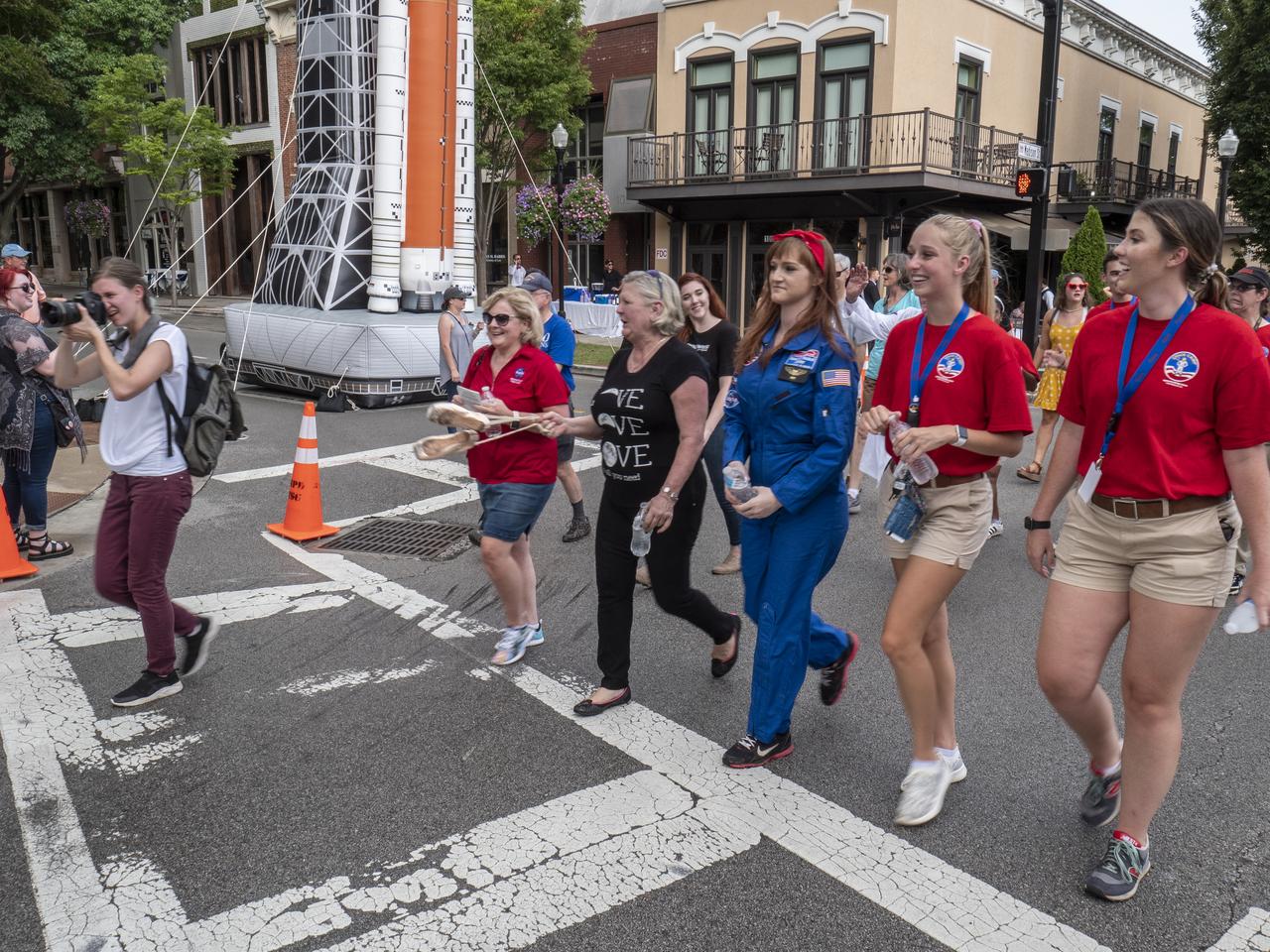
The City of Huntsville hosted a celebration of the Apollo 11 Moon landing with a street party on the downtown square with exhibits from the Marshall Space Flight Center and contributing contractors. The event was kicked off with remarks from Huntsville Mayor Tommy Battle, Marshall Space Flight Center's Director Jody Singer, and U.S. Space and Rocket Center's Director Deborah Barnhart with the Polaris replica of the Lunar Moon Buggy in the foreground. MSFC Director Jody Singer and U.S. Space and Rocket Center Director Deborah Barnhart lead the parade into the Huntsville Square.
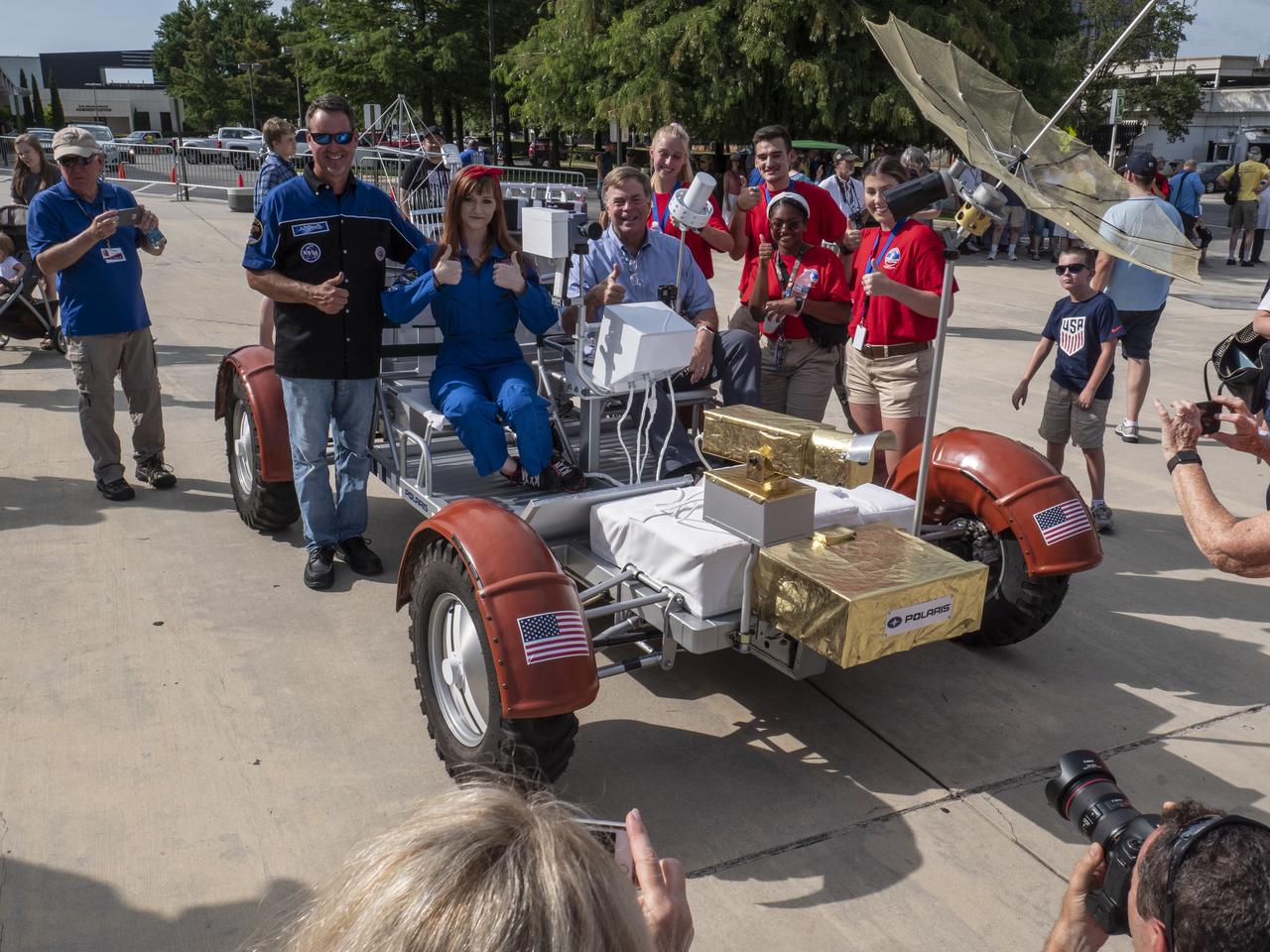
The City of Huntsville hosted a celebration of the Apollo 11 Moon landing with a street party on the downtown square with exhibits from the Marshall Space Flight Center and contributing contractors. The event was kicked off with remarks from Huntsville Mayor Tommy Battle, Marshall Space Flight Center's Director Jody Singer, and U.S. Space and Rocket Center's Director Deborah Barnhart with the Polaris replica of the Lunar Moon Buggy in the foreground. Huntsville Mayor Tommy Battle with the Polaris representative and representatives from the U.S. Space and Rocket Center
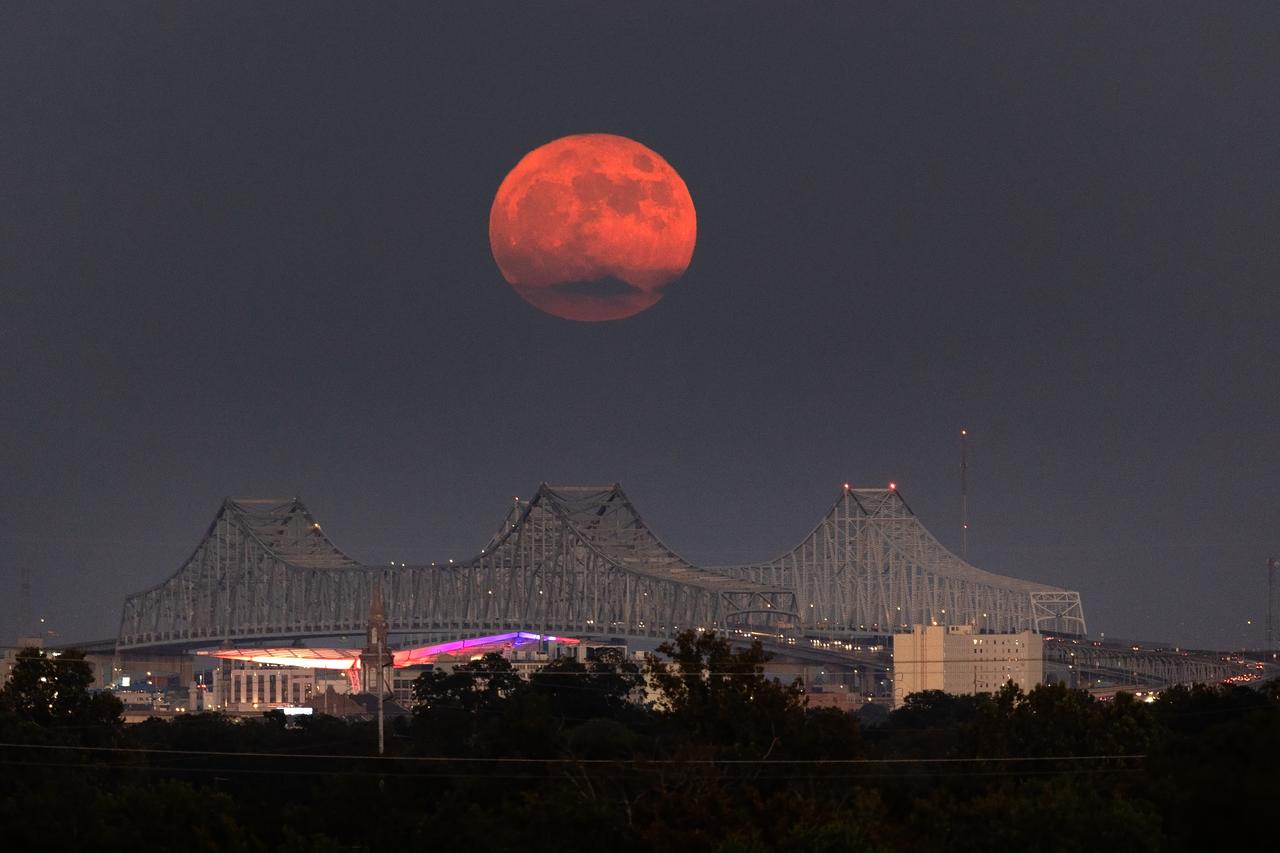
A Super Blue Moon rises above the Mississippi River and the Crescent City Connection Bridge in New Orleans, Aug. 30. The full moon is “super” because it’s slightly closer to Earth and “blue” because it’s the second full moon in a month. About 25% of all full moons are supermoons, but only 3% of full moons are blue moons. The next super blue moons will occur in a pair in January and March 2037. New Orleans is home to NASA’s Michoud Assembly Facility, where stages for NASA’s SLS (Space Launch System) rocket and structures for Orion spacecraft are produced for the Artemis missions.

The City of Huntsville hosted a celebration of the Apollo 11 Moon landing with a street party on the downtown square with exhibits from the Marshall Space Flight Center and contributing contractors. The event was kicked off with remarks from Huntsville Mayor Tommy Battle, Marshall Space Flight Center's Director Jody Singer, and U.S. Space and Rocket Center's Director Deborah Barnhart with the Polaris replica of the Lunar Moon Buggy in the foreground.
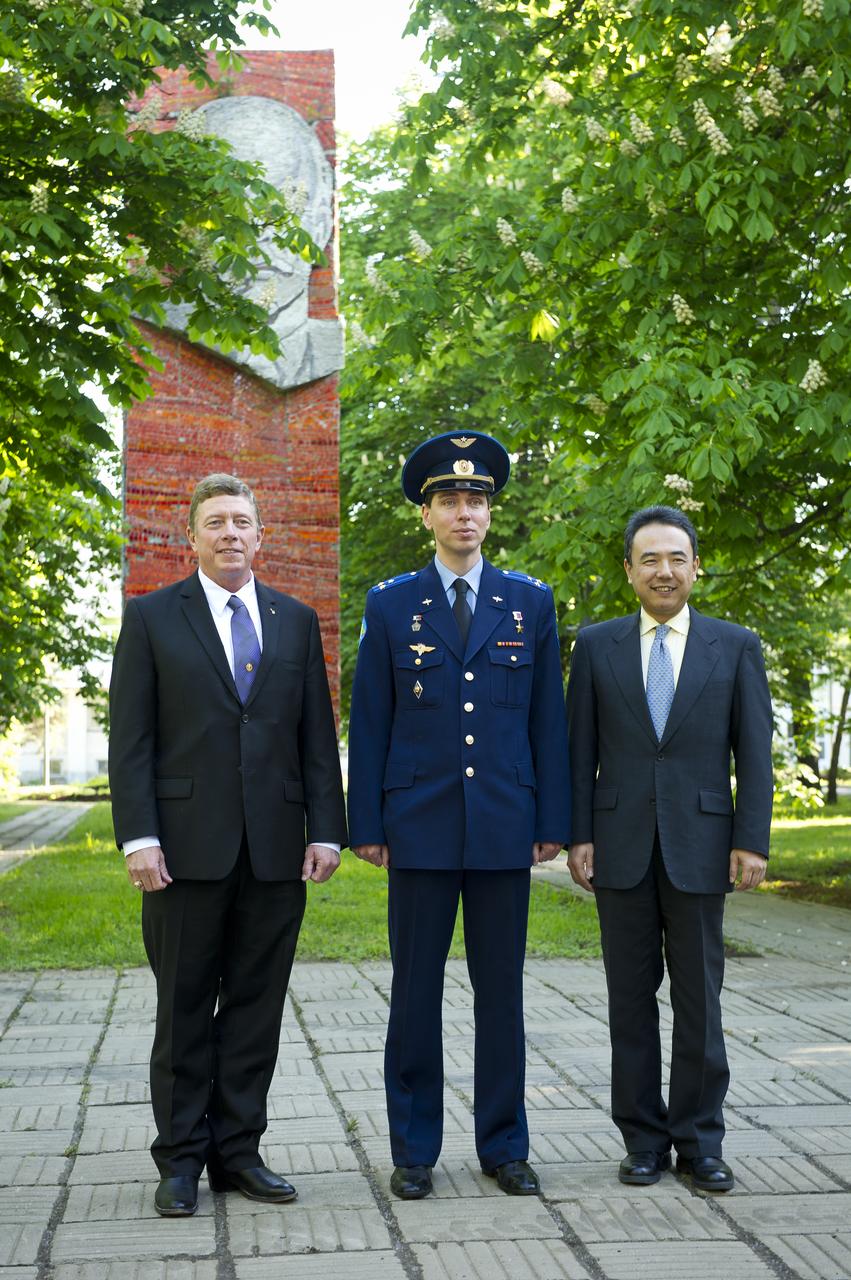
Expedition 28 crew members, Flight Engineer Mike Fossum, left, Soyuz commander Sergei Volkov, center, and Flight Engineer Satoshi Furukawa, pose for a photograph on the grounds of the Gagarin Cosmonaut Training Center, Wednesday, May 25, 2011 in Star City, Russia. The crew later departed for Baikonur, Kazakhstan in preparation for their June launch onboard a Soyuz rocket. Photo Credit: (NASA/Bill Ingalls)
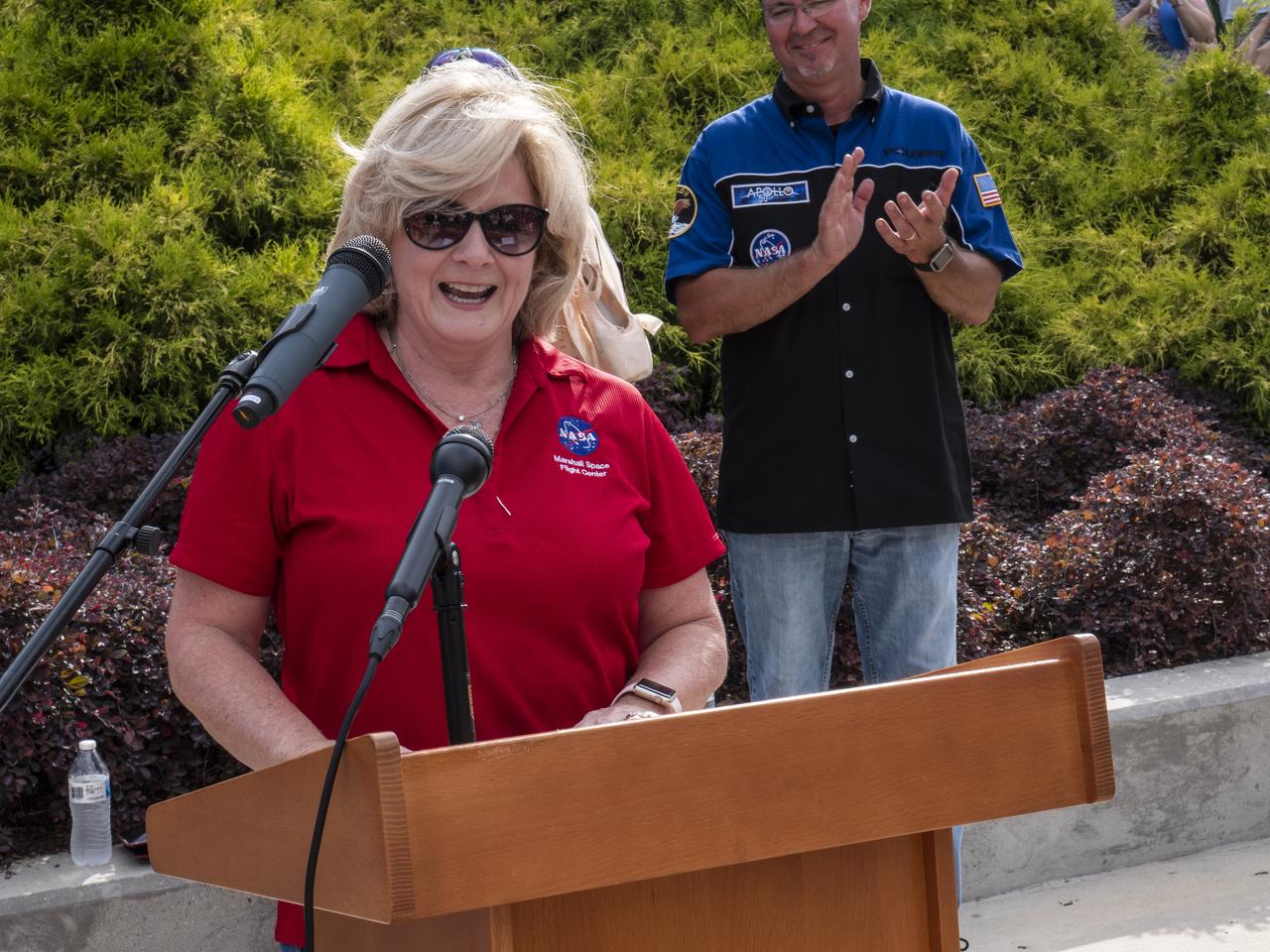
The City of Huntsville hosted a celebration of the Apollo 11 Moon landing with a street party on the downtown square with exhibits from the Marshall Space Flight Center and contributing contractors. The event was kicked off with remarks from Huntsville Mayor Tommy Battle, Marshall Space Flight Center's Director Jody Singer, and U.S. Space and Rocket Center's Director Deborah Barnhart with the Polaris replica of the Lunar Moon Buggy in the foreground. Marshall Center Director Jody Singer addresses the crowd.
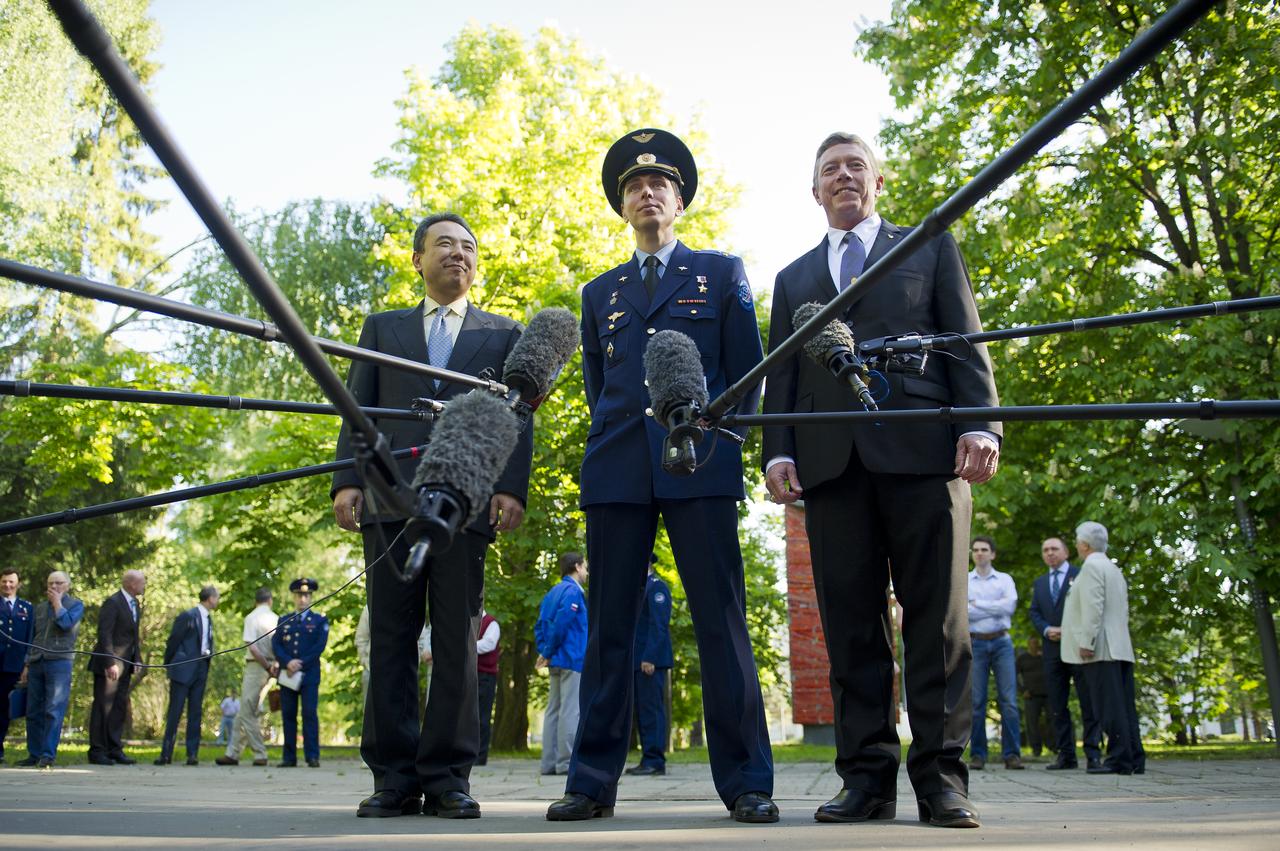
Expedition 28 crew members, Flight Engineer Satoshi Furukawa, left, Soyuz commander Sergei Volkov, center, and Flight Engineer Mike Fossum, answer reporters questions during a crew departure press conference held on the grounds of the Gagarin Cosmonaut Training Center, Wednesday, May 25, 2011 in Star City, Russia. The crew later departed for Baikonur, Kazakhstan in preparation for their June launch onboard a Soyuz rocket. Photo Credit: (NASA/Bill Ingalls)
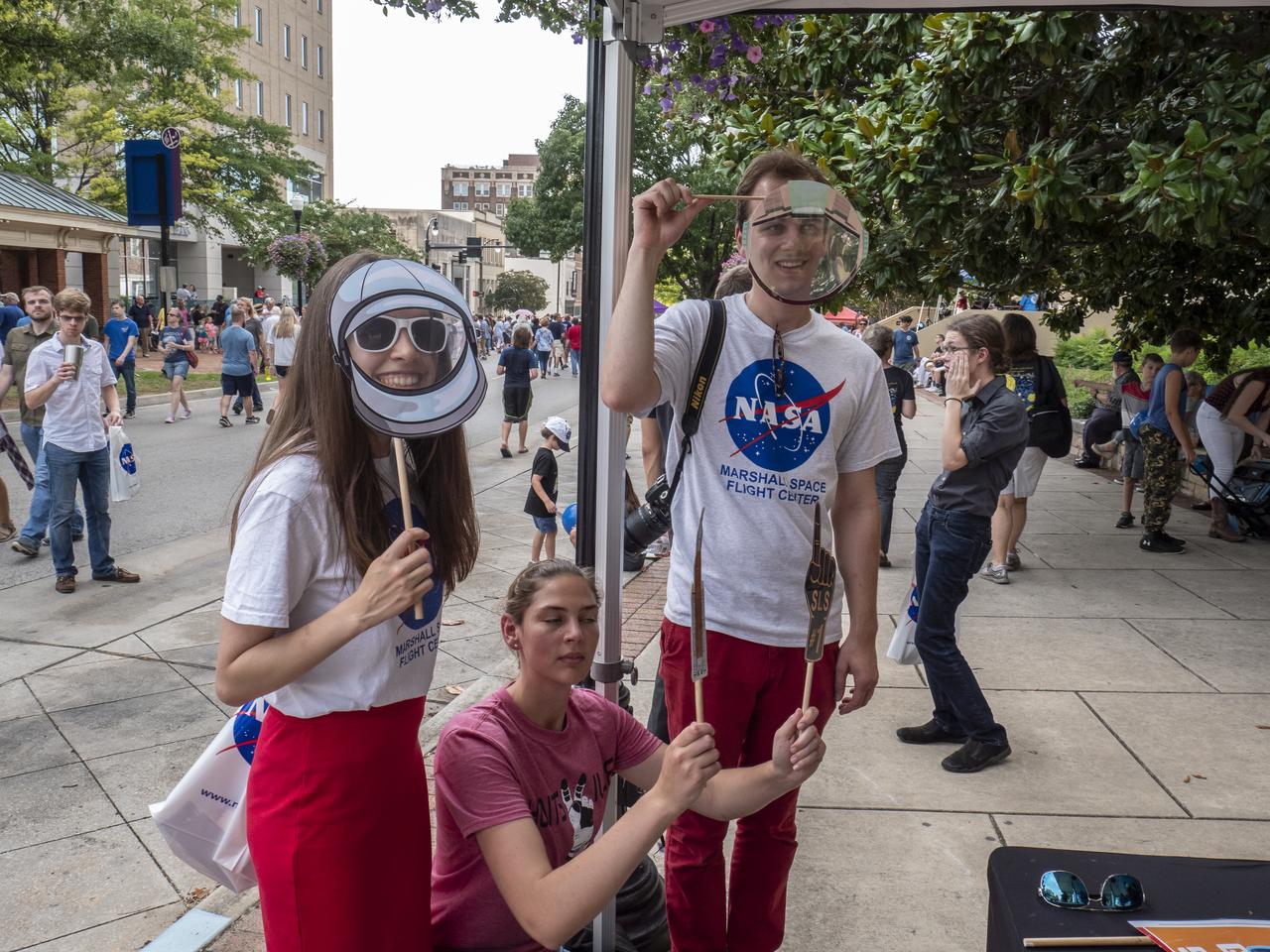
The City of Huntsville hosted a celebration of the Apollo 11 Moon landing with a street party on the downtown square with exhibits from the Marshall Space Flight Center and contributing contractors. The event was kicked off with remarks from Huntsville Mayor Tommy Battle, Marshall Space Flight Center's Director Jody Singer, and U.S. Space and Rocket Center's Director Deborah Barnhart with the Polaris replica of the Lunar Moon Buggy in the foreground.
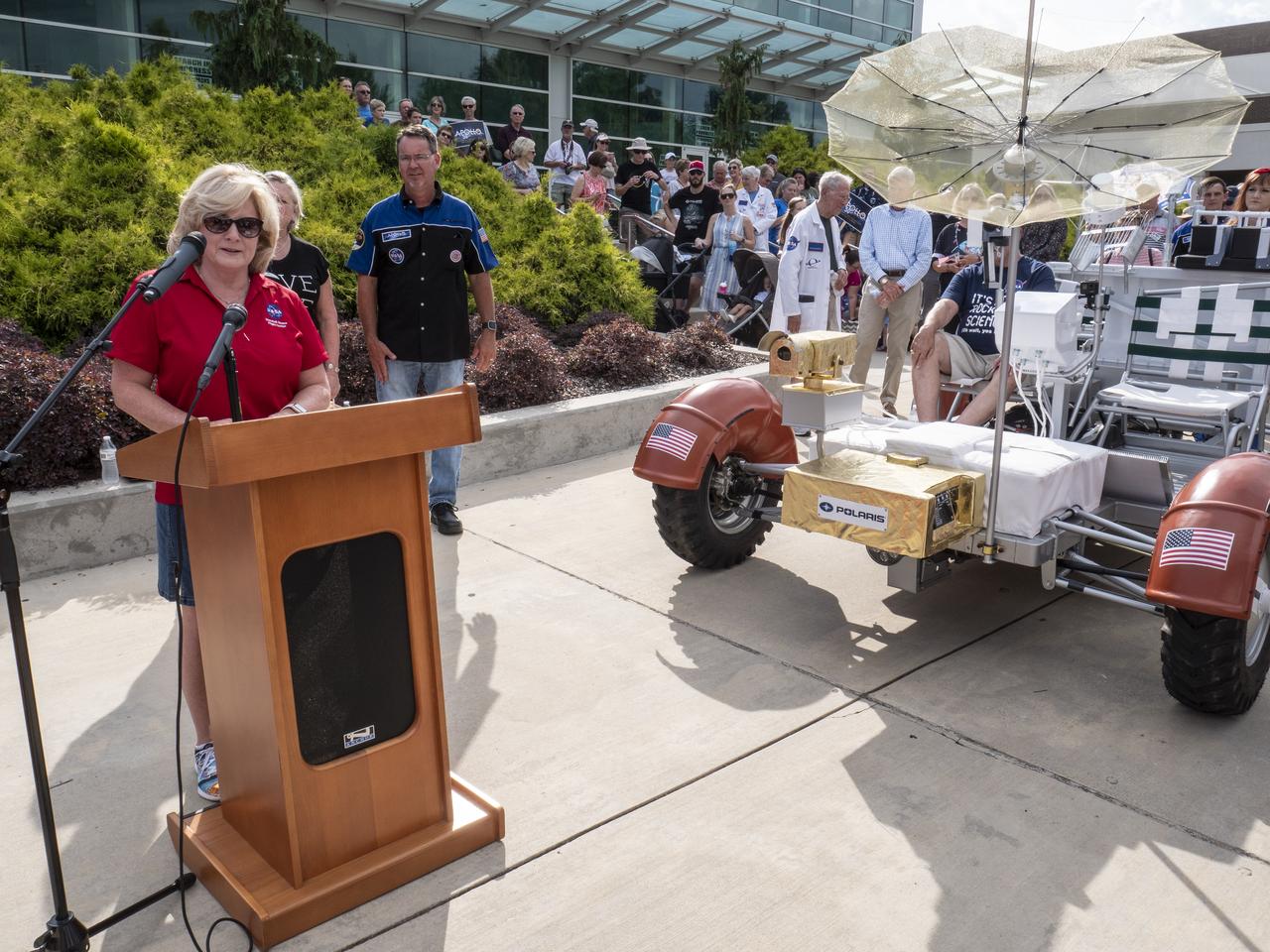
The City of Huntsville hosted a celebration of the Apollo 11 Moon landing with a street party on the downtown square with exhibits from the Marshall Space Flight Center and contributing contractors. The event was kicked off with remarks from Huntsville Mayor Tommy Battle, Marshall Space Flight Center's Director Jody Singer, and U.S. Space and Rocket Center's Director Deborah Barnhart with the Polaris replica of the Lunar Moon Buggy in the foreground. Marshall Center Director Jody Singer addresses the crowd.
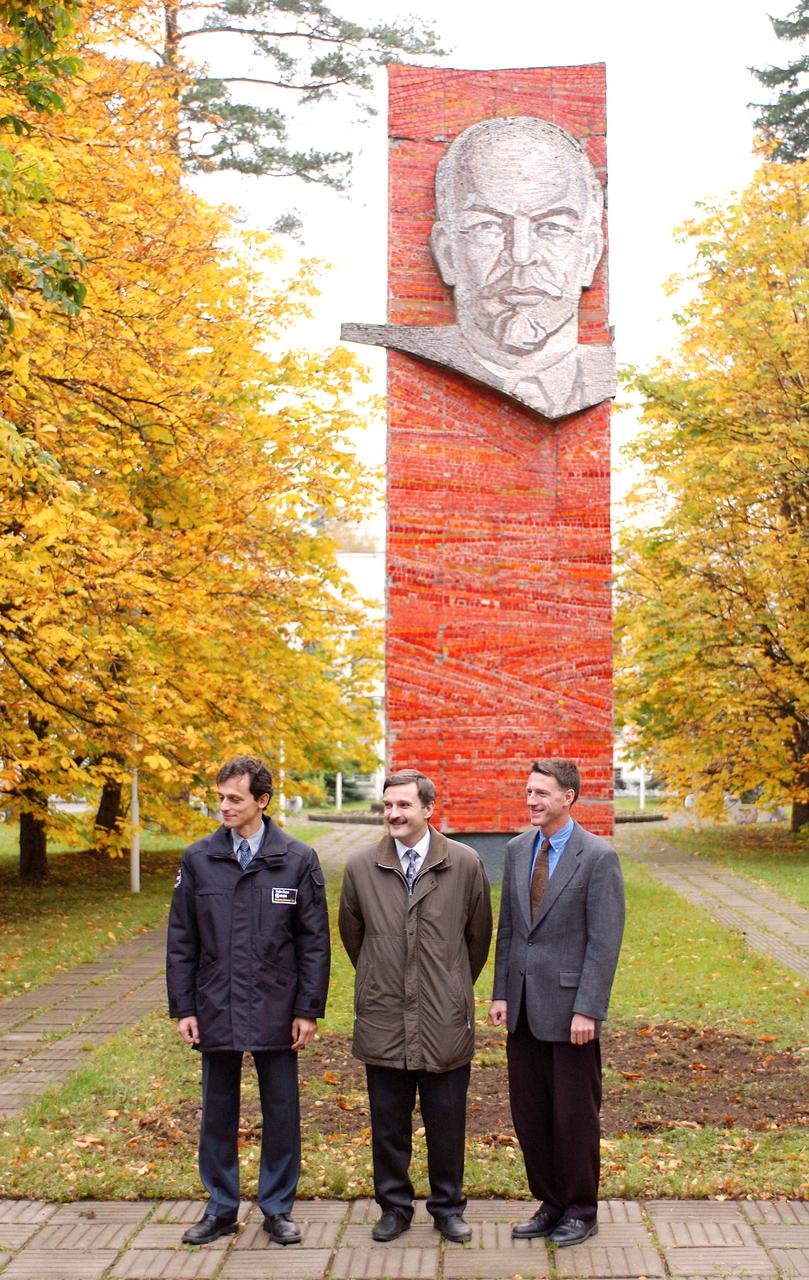
October 12, 2003, Star City, Russia. Expedition 8 Commander Michael Foale (right) and Expedition 8 Soyuz Commander and Flight Engineer Alexander Kaleri (center) are joined by European Space Agency Astronaut Pedro Duque of Spain at the Gagarin Cosmonaut Training Center outside Moscow to pose for pictures prior to their departure for the Baikonur Cosmodrome in Kazakhstan for the October 18th launch on a Soyuz rocket to the International Space Station. Photo Credit: "NASA/Bill Ingalls"
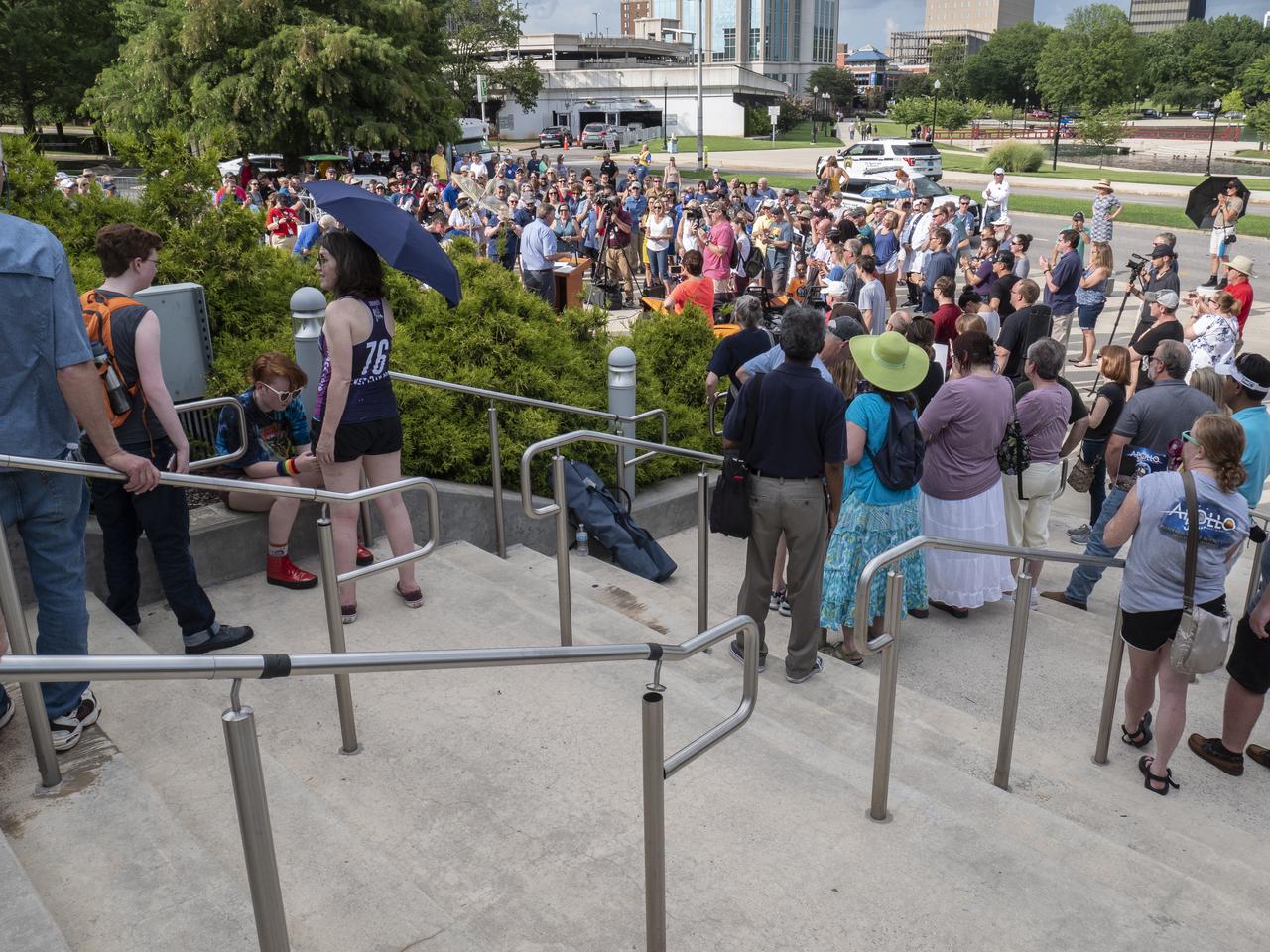
The City of Huntsville hosted a celebration of the Apollo 11 Moon landing with a street party on the downtown square with exhibits from the Marshall Space Flight Center and contributing contractors. The event was kicked off with remarks from Huntsville Mayor Tommy Battle, Marshall Space Flight Center's Director Jody Singer, and U.S. Space and Rocket Center's Director Deborah Barnhart with the Polaris replica of the Lunar Moon Buggy in the foreground.
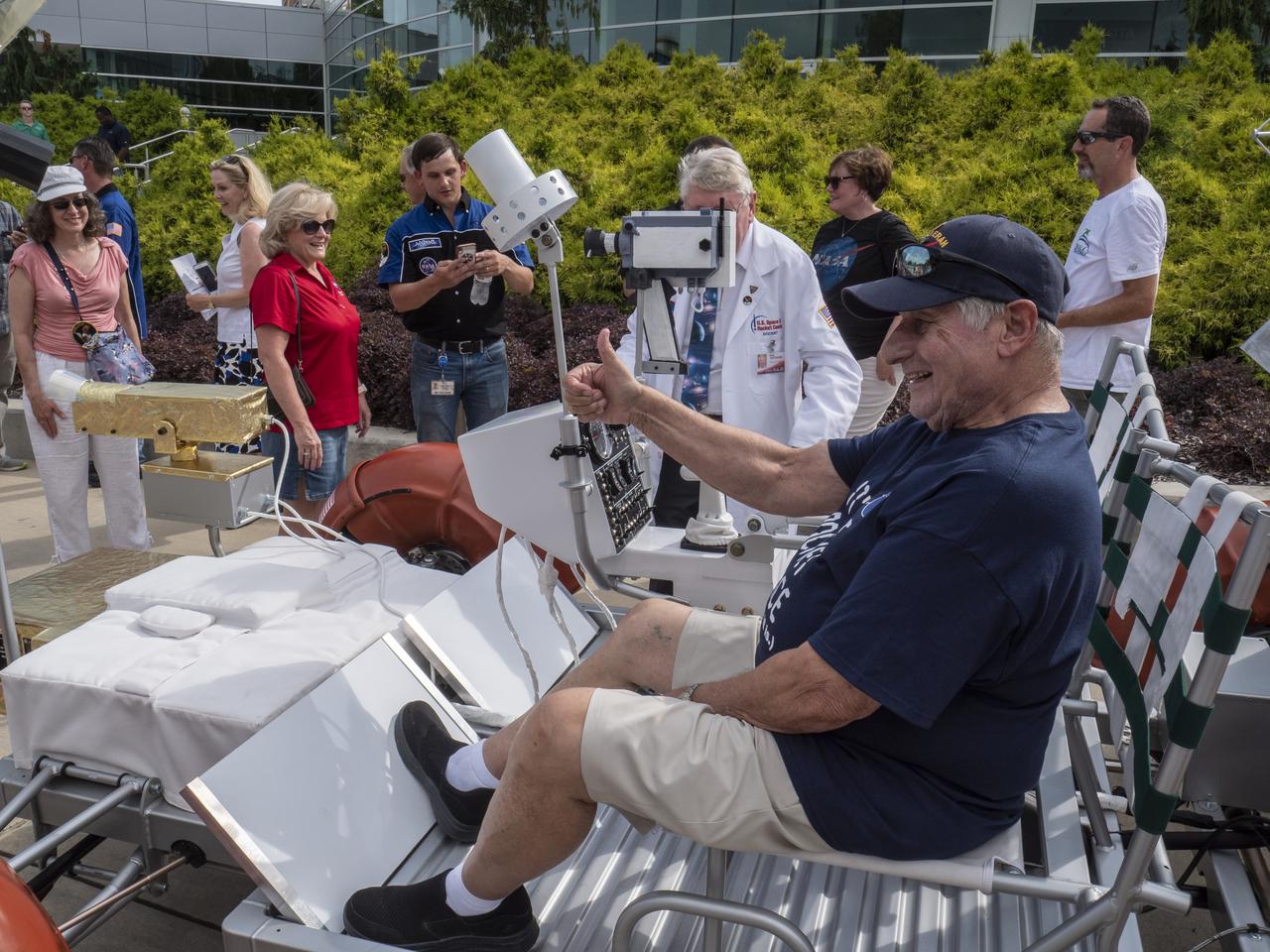
The City of Huntsville hosted a celebration of the Apollo 11 Moon landing with a street party on the downtown square with exhibits from the Marshall Space Flight Center and contributing contractors. The event was kicked off with remarks from Huntsville Mayor Tommy Battle, Marshall Space Flight Center's Director Jody Singer, and U.S. Space and Rocket Center's Director Deborah Barnhart with the Polaris replica of the Lunar Moon Buggy in the foreground. Retired NASA engineer Sonny Morea sits in the Polaris Lunar Rover Replica
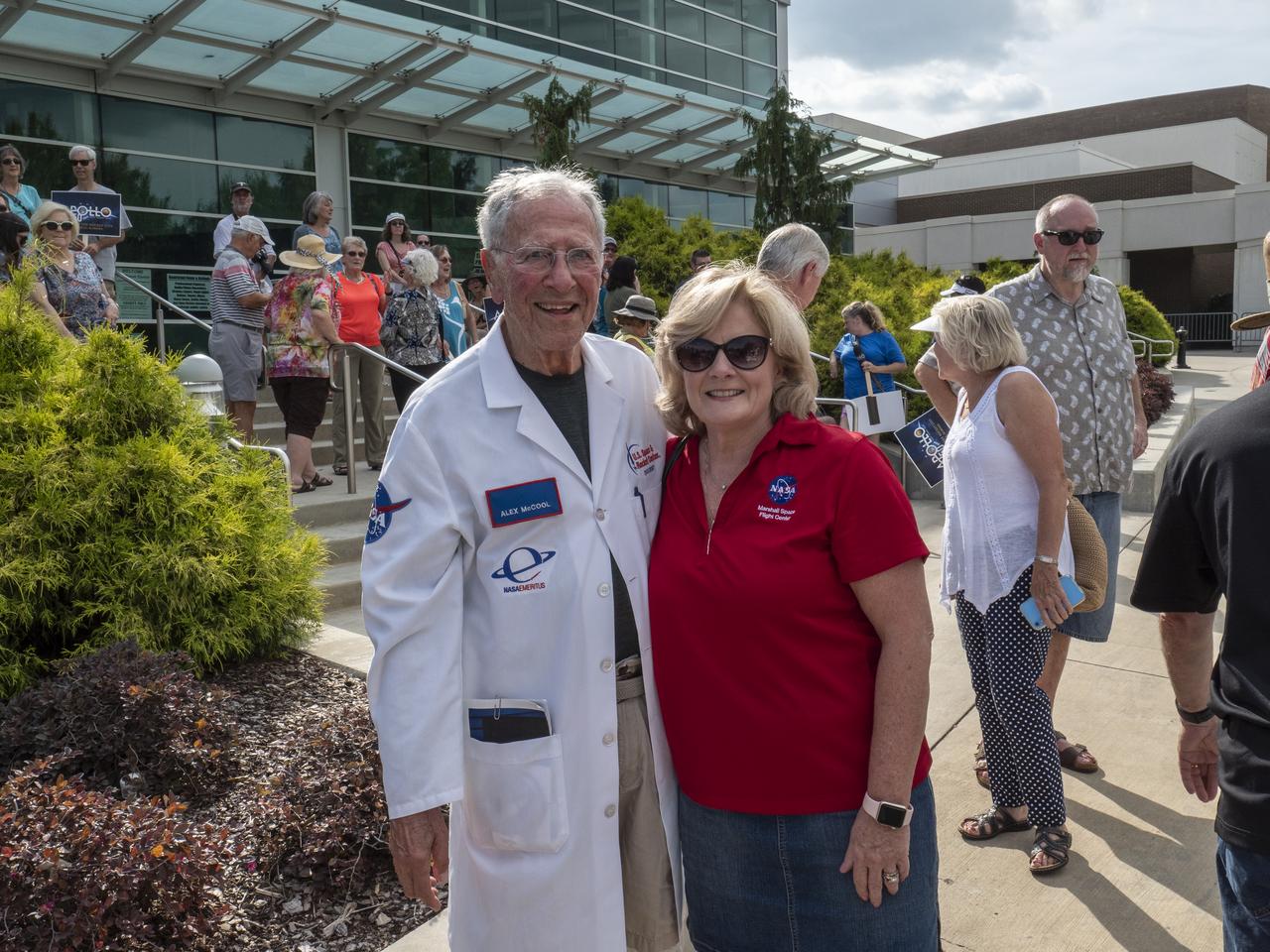
The City of Huntsville hosted a celebration of the Apollo 11 Moon landing with a street party on the downtown square with exhibits from the Marshall Space Flight Center and contributing contractors. The event was kicked off with remarks from Huntsville Mayor Tommy Battle, Marshall Space Flight Center's Director Jody Singer, and U.S. Space and Rocket Center's Director Deborah Barnhart with the Polaris replica of the Lunar Moon Buggy in the foreground. Marshall Center Director Jody Singer with retired engineer Alex McCool.
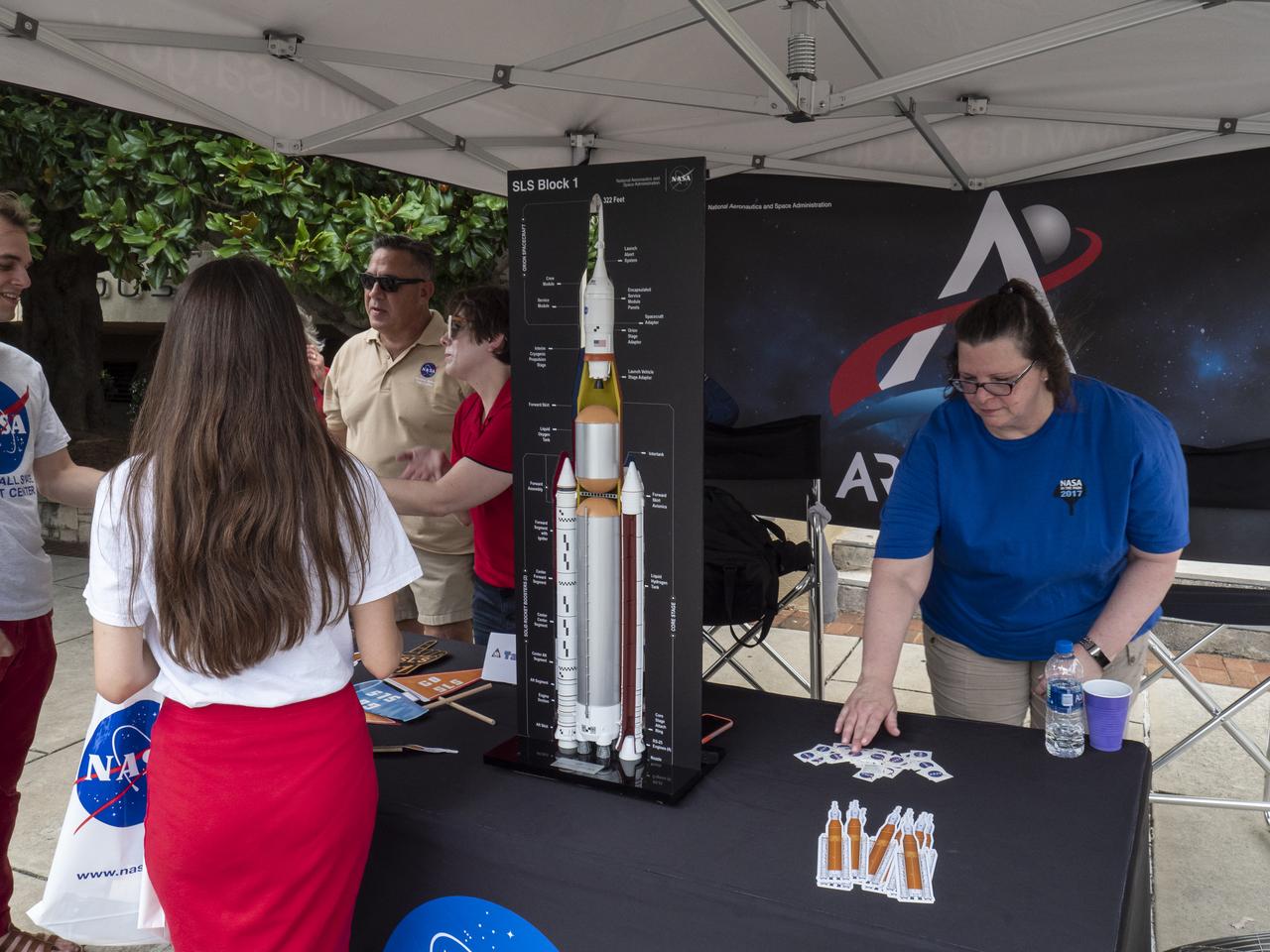
The City of Huntsville hosted a celebration of the Apollo 11 Moon landing with a street party on the downtown square with exhibits from the Marshall Space Flight Center and contributing contractors. The event was kicked off with remarks from Huntsville Mayor Tommy Battle, Marshall Space Flight Center's Director Jody Singer, and U.S. Space and Rocket Center's Director Deborah Barnhart with the Polaris replica of the Lunar Moon Buggy in the foreground.
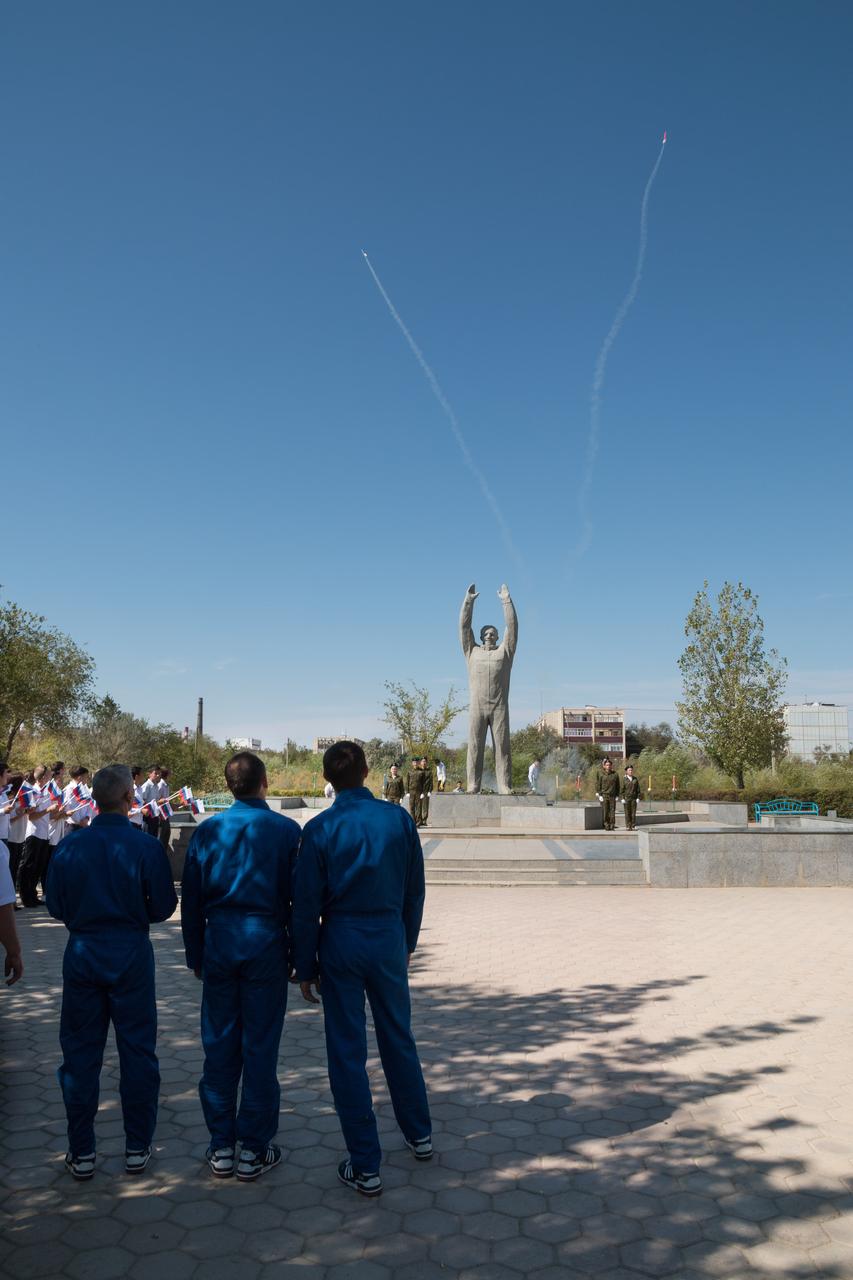
The Expedition 49 backup crewmembers watch an amateur rocket demonstration Sept. 10 by a statue of Yuri Gagarin, the first human to fly in space, during a tour of the city of Baikonur, Kazakhstan. They are serving as backups to Shane Kimbrough of NASA and Sergey Ryzhikov and Andrey Borisenko of Roscosmos, who will launch on Sept. 24, Kazakh time from the Baikonur Cosmodrome in Kazakhstan on the Soyuz MS-02 vehicle for a five-month mission on the International Space Station. NASA/Victor Zelentsov
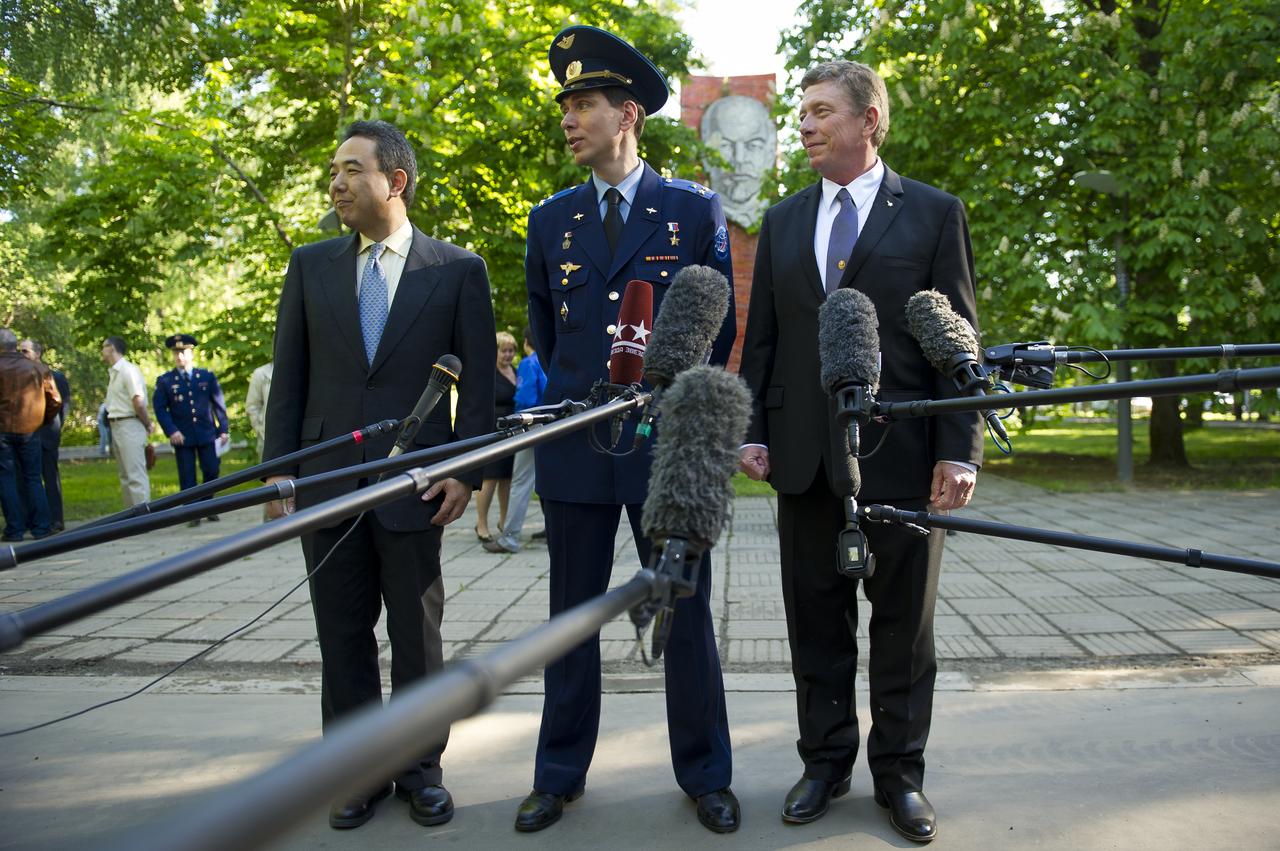
Expedition 28 crew members, Flight Engineer Satoshi Furukawa, left, Soyuz commander Sergei Volkov, center, and Flight Engineer Mike Fossum, answer reporters questions during a crew departure press conference held on the grounds of the Gagarin Cosmonaut Training Center, Wednesday, May 25, 2011 in Star City, Russia. The crew later departed for Baikonur, Kazakhstan in preparation for their June launch onboard a Soyuz rocket. Photo Credit: (NASA/Bill Ingalls)
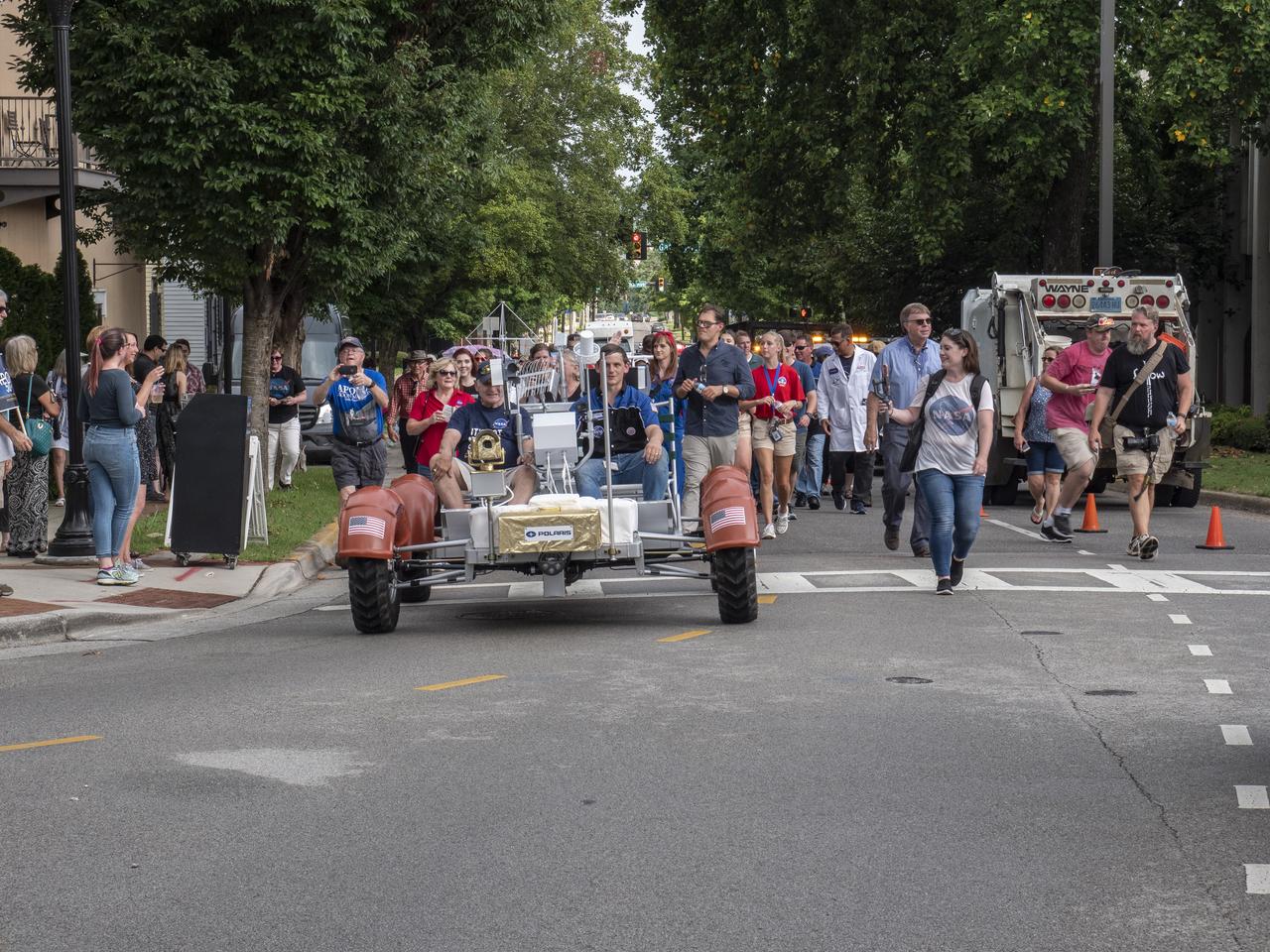
The City of Huntsville hosted a celebration of the Apollo 11 Moon landing with a street party on the downtown square with exhibits from the Marshall Space Flight Center and contributing contractors. The event was kicked off with remarks from Huntsville Mayor Tommy Battle, Marshall Space Flight Center's Director Jody Singer, and U.S. Space and Rocket Center's Director Deborah Barnhart with the Polaris replica of the Lunar Moon Buggy in the foreground. The Polaris Lunar Rover replica leads the parade into the Huntsville Square
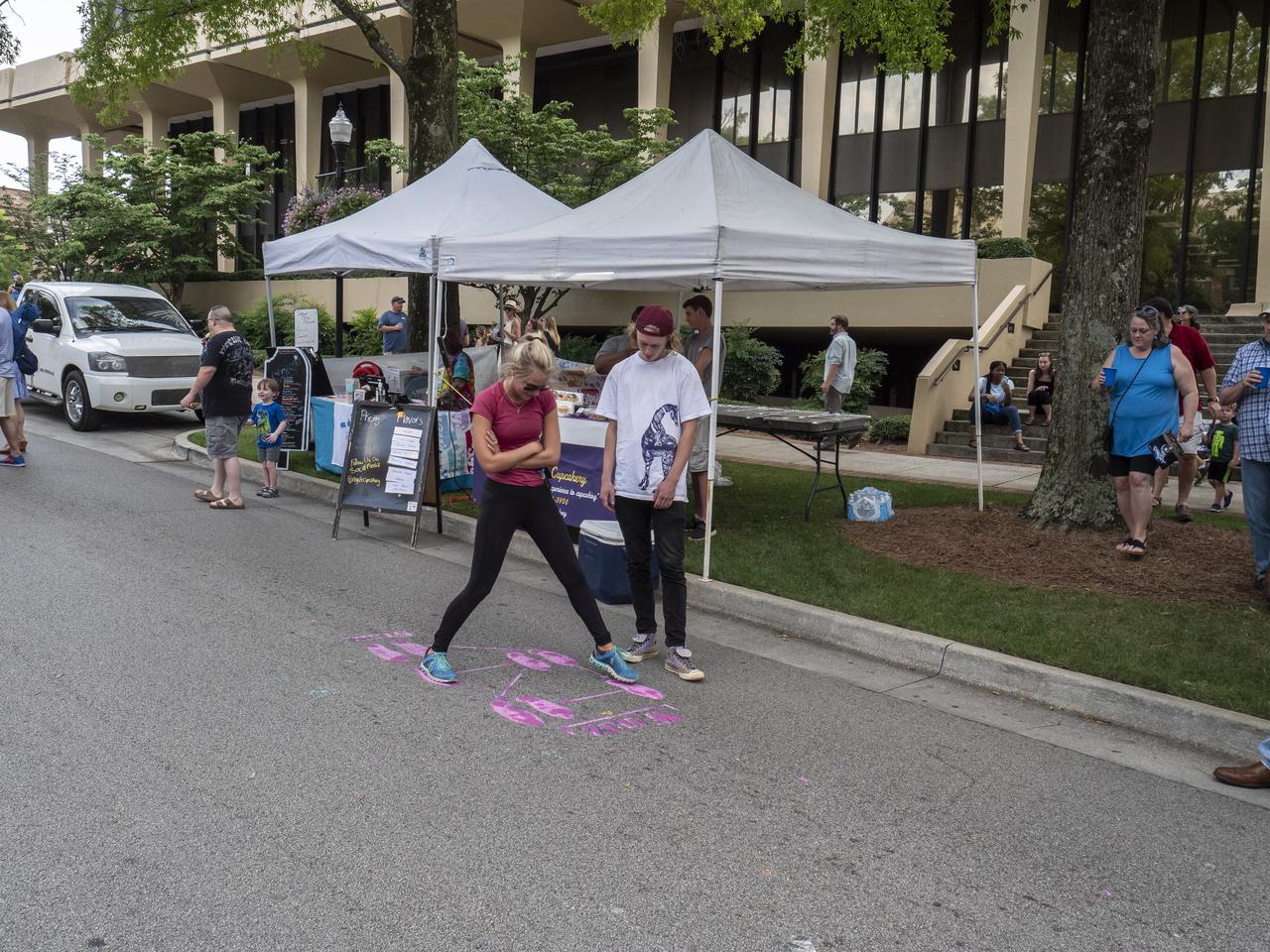
The City of Huntsville hosted a celebration of the Apollo 11 Moon landing with a street party on the downtown square with exhibits from the Marshall Space Flight Center and contributing contractors. The event was kicked off with remarks from Huntsville Mayor Tommy Battle, Marshall Space Flight Center's Director Jody Singer, and U.S. Space and Rocket Center's Director Deborah Barnhart with the Polaris replica of the Lunar Moon Buggy in the foreground.
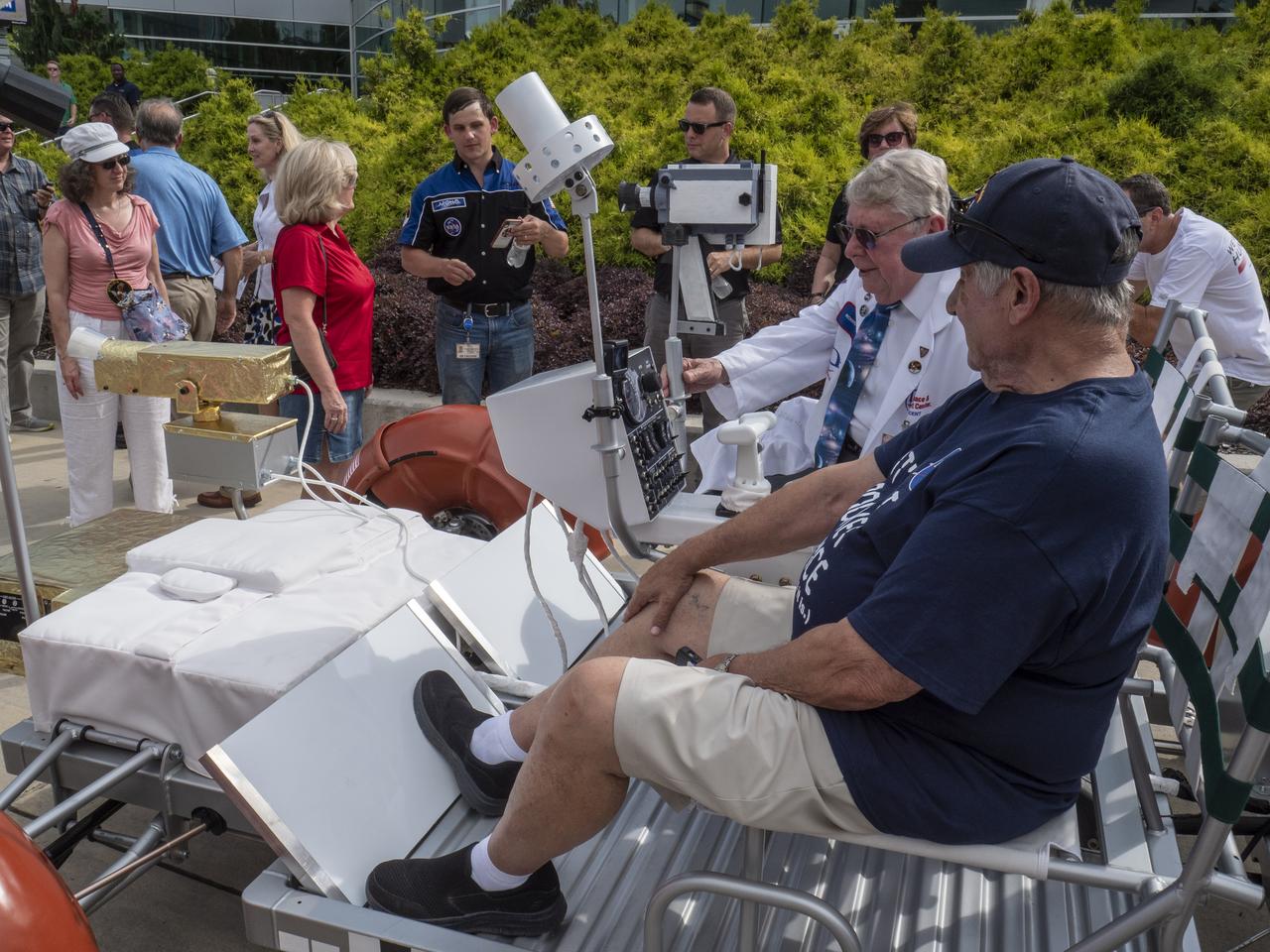
The City of Huntsville hosted a celebration of the Apollo 11 Moon landing with a street party on the downtown square with exhibits from the Marshall Space Flight Center and contributing contractors. The event was kicked off with remarks from Huntsville Mayor Tommy Battle, Marshall Space Flight Center's Director Jody Singer, and U.S. Space and Rocket Center's Director Deborah Barnhart with the Polaris replica of the Lunar Moon Buggy in the foreground. Retired engineers Sonny Morea and Richard Hoover sit in the Polaris Lunar Rover replica.
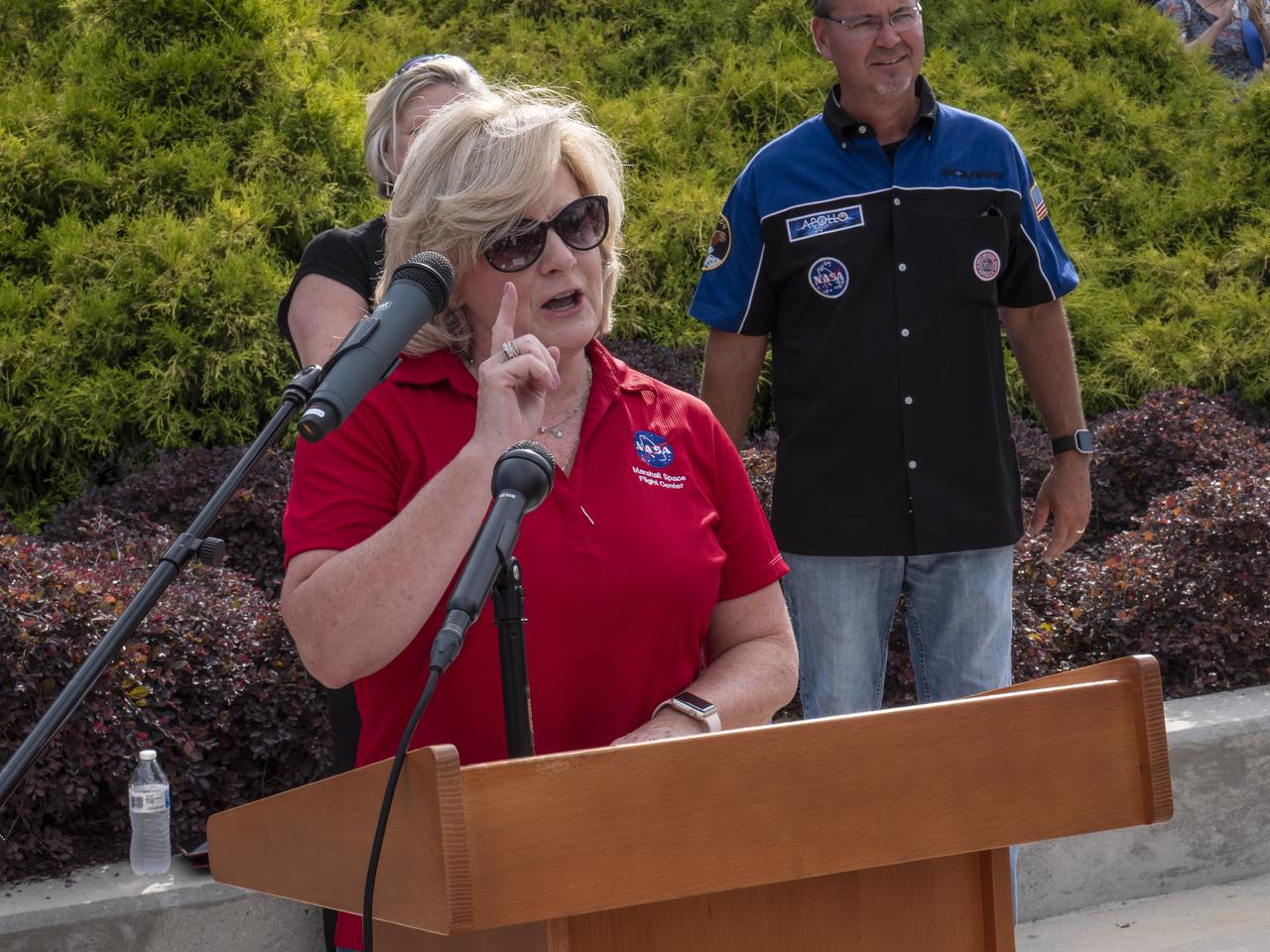
The City of Huntsville hosted a celebration of the Apollo 11 Moon landing with a street party on the downtown square with exhibits from the Marshall Space Flight Center and contributing contractors. The event was kicked off with remarks from Huntsville Mayor Tommy Battle, Marshall Space Flight Center's Director Jody Singer, and U.S. Space and Rocket Center's Director Deborah Barnhart with the Polaris replica of the Lunar Moon Buggy in the foreground. Marshall Center Director Jody Singer addresses the crowd.
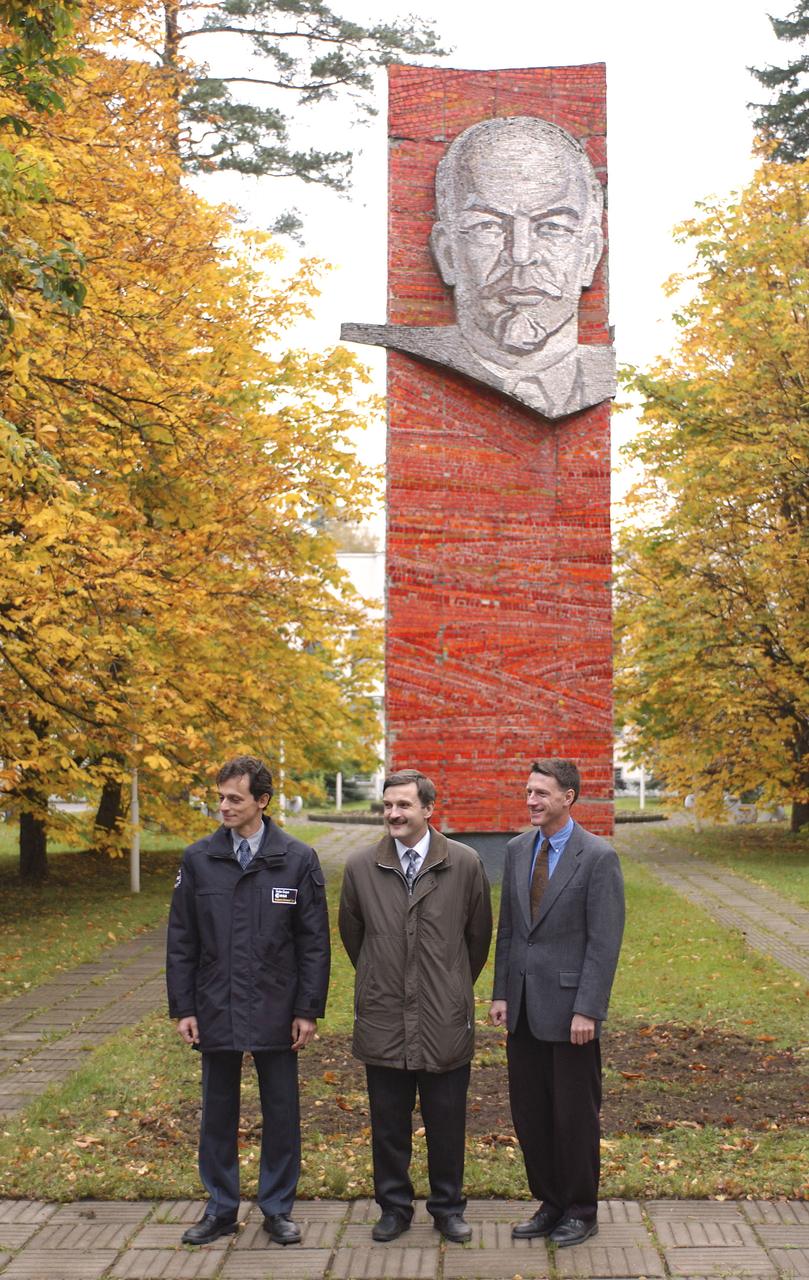
Expedition 8 Commander Michael Foale, right, along with Expedition 8 Soyuz Commander and Flight Engineer Alexander Kaleri, center, are joined by European Space Agency astronaut Pedro Duque of Spain at the Gagarin Cosmonaut Training Center in Star City, Russia outside Moscow, Sunday, Oct. 12, 2003, before departing for the Baikonur Cosmodrome in Kazakhstan for their launch on a Soyuz rocket to the International Space Station scheduled for Oct. 18. Photo Credit (NASA/Bill Ingalls)
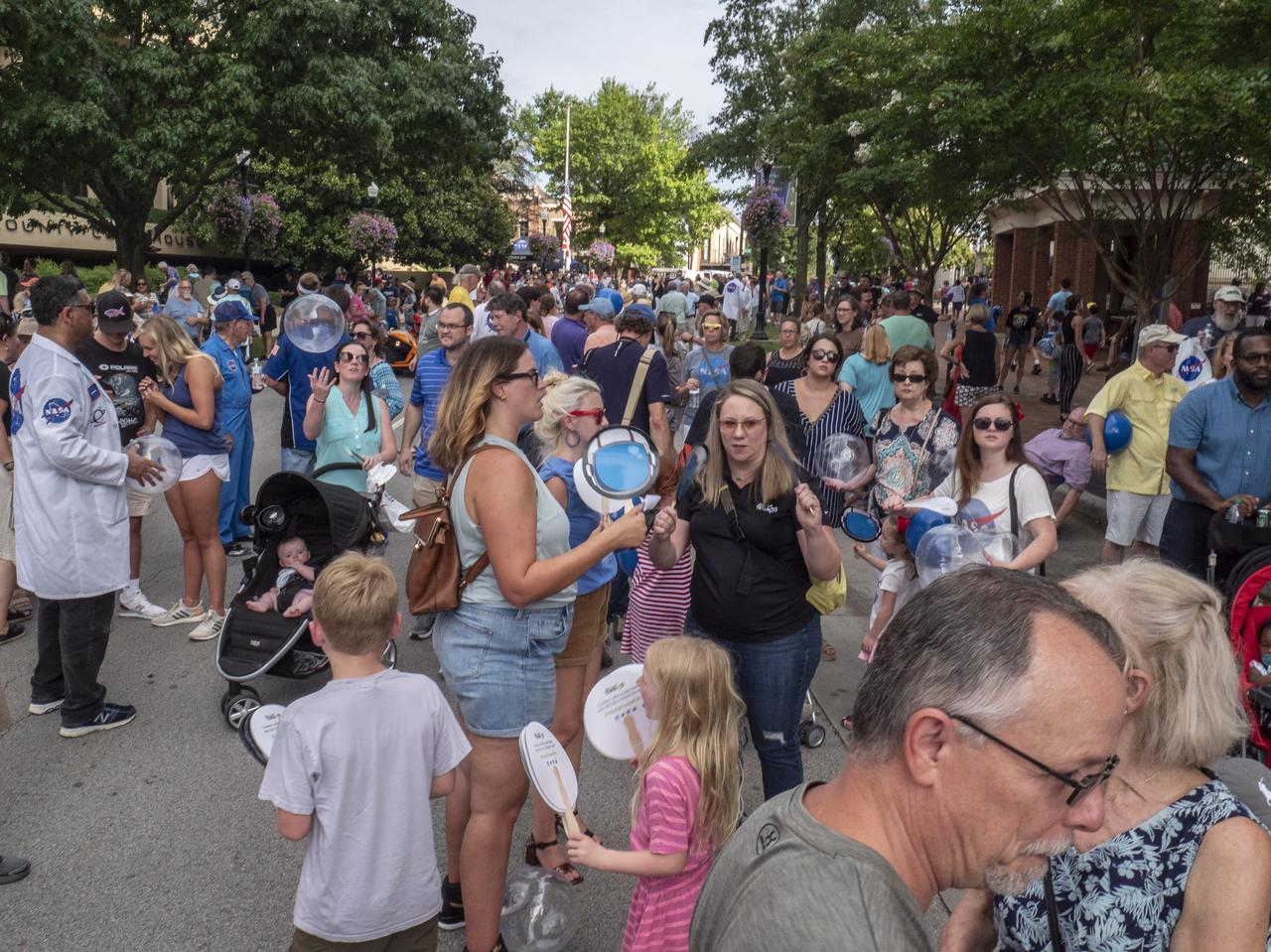
The City of Huntsville hosted a celebration of the Apollo 11 Moon landing with a street party on the downtown square with exhibits from the Marshall Space Flight Center and contributing contractors. The event was kicked off with remarks from Huntsville Mayor Tommy Battle, Marshall Space Flight Center's Director Jody Singer, and U.S. Space and Rocket Center's Director Deborah Barnhart with the Polaris replica of the Lunar Moon Buggy in the foreground.
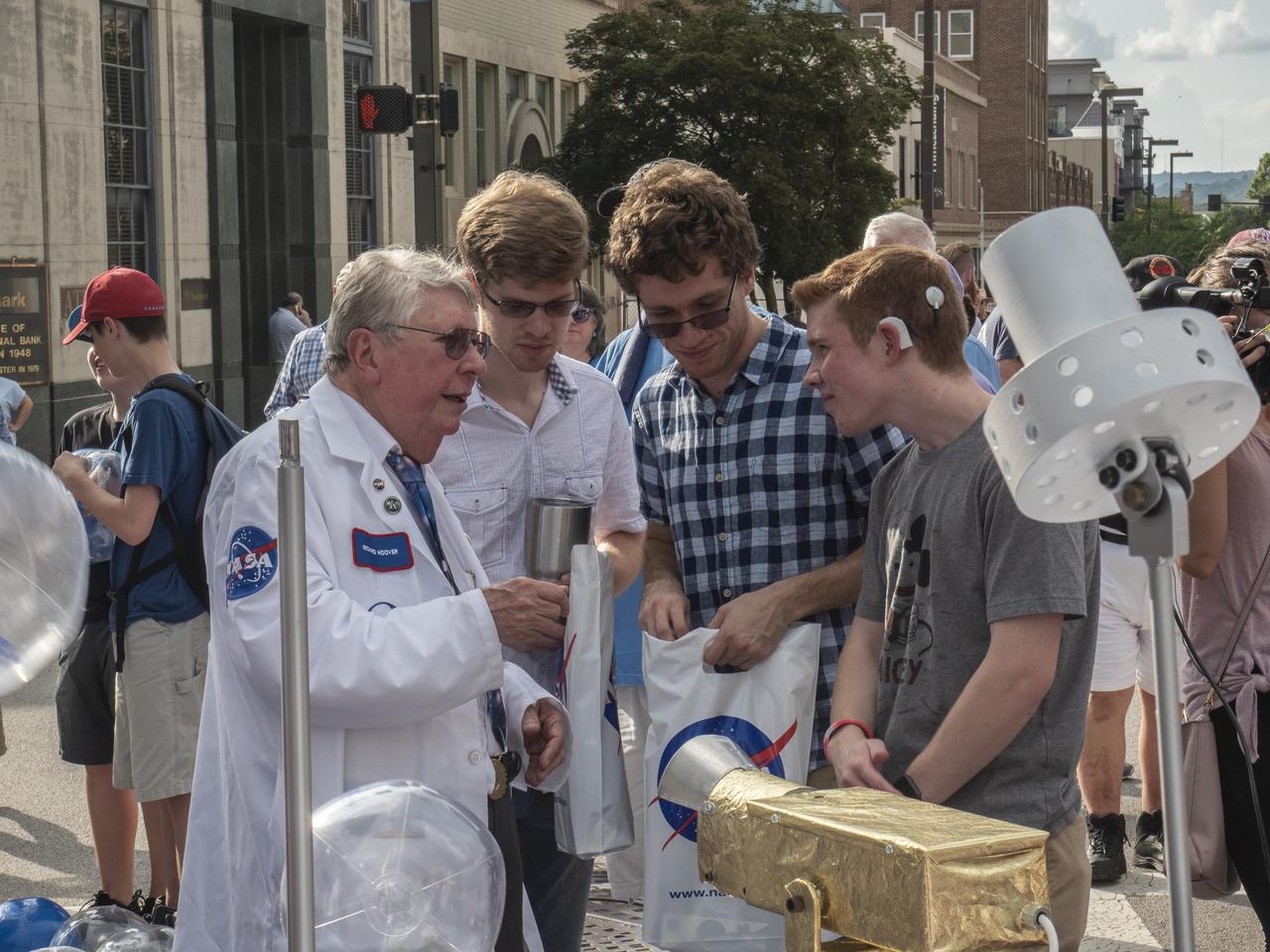
The City of Huntsville hosted a celebration of the Apollo 11 Moon landing with a street party on the downtown square with exhibits from the Marshall Space Flight Center and contributing contractors. The event was kicked off with remarks from Huntsville Mayor Tommy Battle, Marshall Space Flight Center's Director Jody Singer, and U.S. Space and Rocket Center's Director Deborah Barnhart with the Polaris replica of the Lunar Moon Buggy in the foreground. Retired NASA engineer Richard Hoover chats with attendees
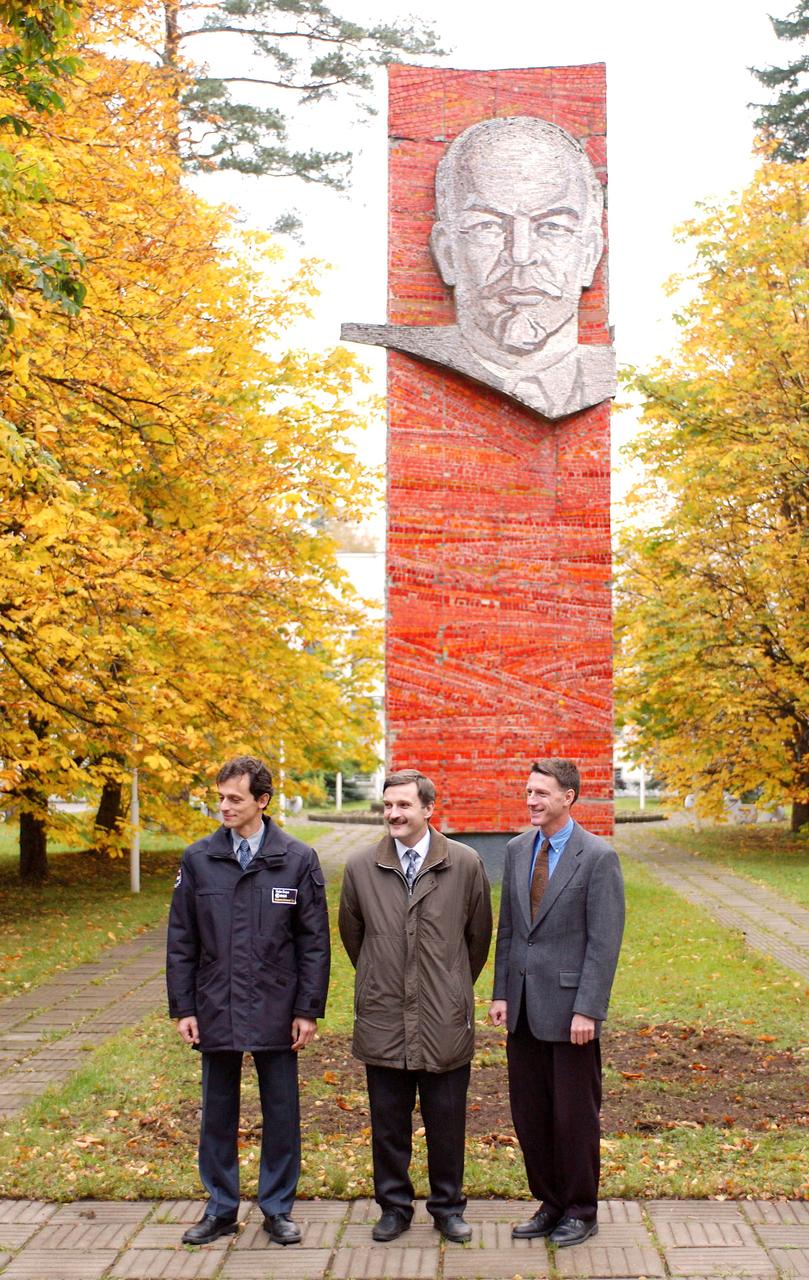
Star City, Russia - Expedition 8 Commander Michael Foale (right) and Expedition 8 Soyuz Commander and Flight Engineer Alexander Kaleri (center) are joined by European Space Agency Astronaut Pedro Duque of Spain at the Gagarin Cosmonaut Training Center outside Moscow to pose for pictures prior to their departure for the Baikonur Cosmodrome in Kazakhstan for the October 18th launch on a Soyuz rocket to the International Space Station. Photo Credit: "NASA/Bill Ingalls"
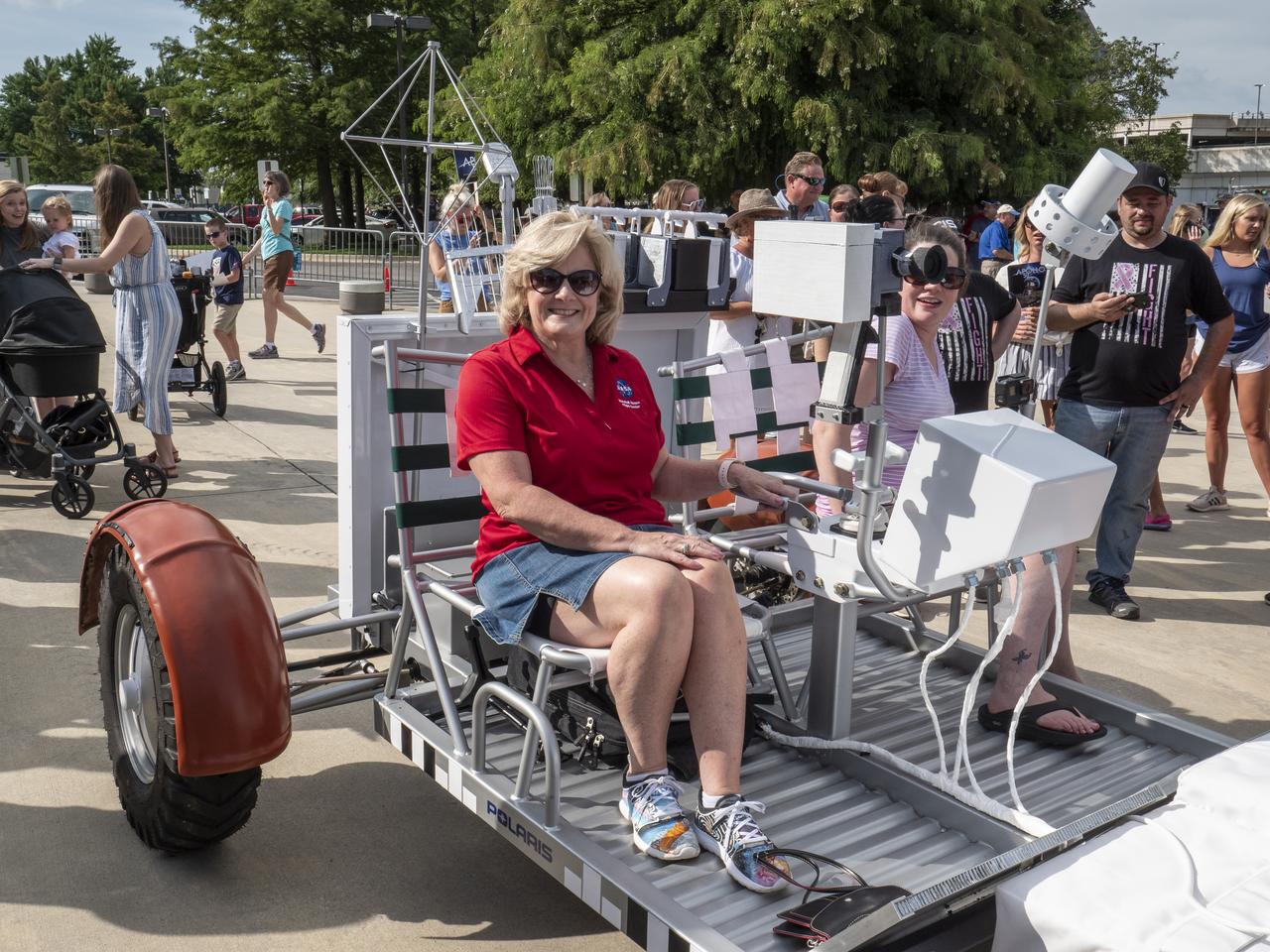
The City of Huntsville hosted a celebration of the Apollo 11 Moon landing with a street party on the downtown square with exhibits from the Marshall Space Flight Center and contributing contractors. The event was kicked off with remarks from Huntsville Mayor Tommy Battle, Marshall Space Flight Center's Director Jody Singer, and U.S. Space and Rocket Center's Director Deborah Barnhart with the Polaris replica of the Lunar Moon Buggy in the foreground. Marshall Center Director Jody Singer sits in the Polaris Lunar Rover replica.
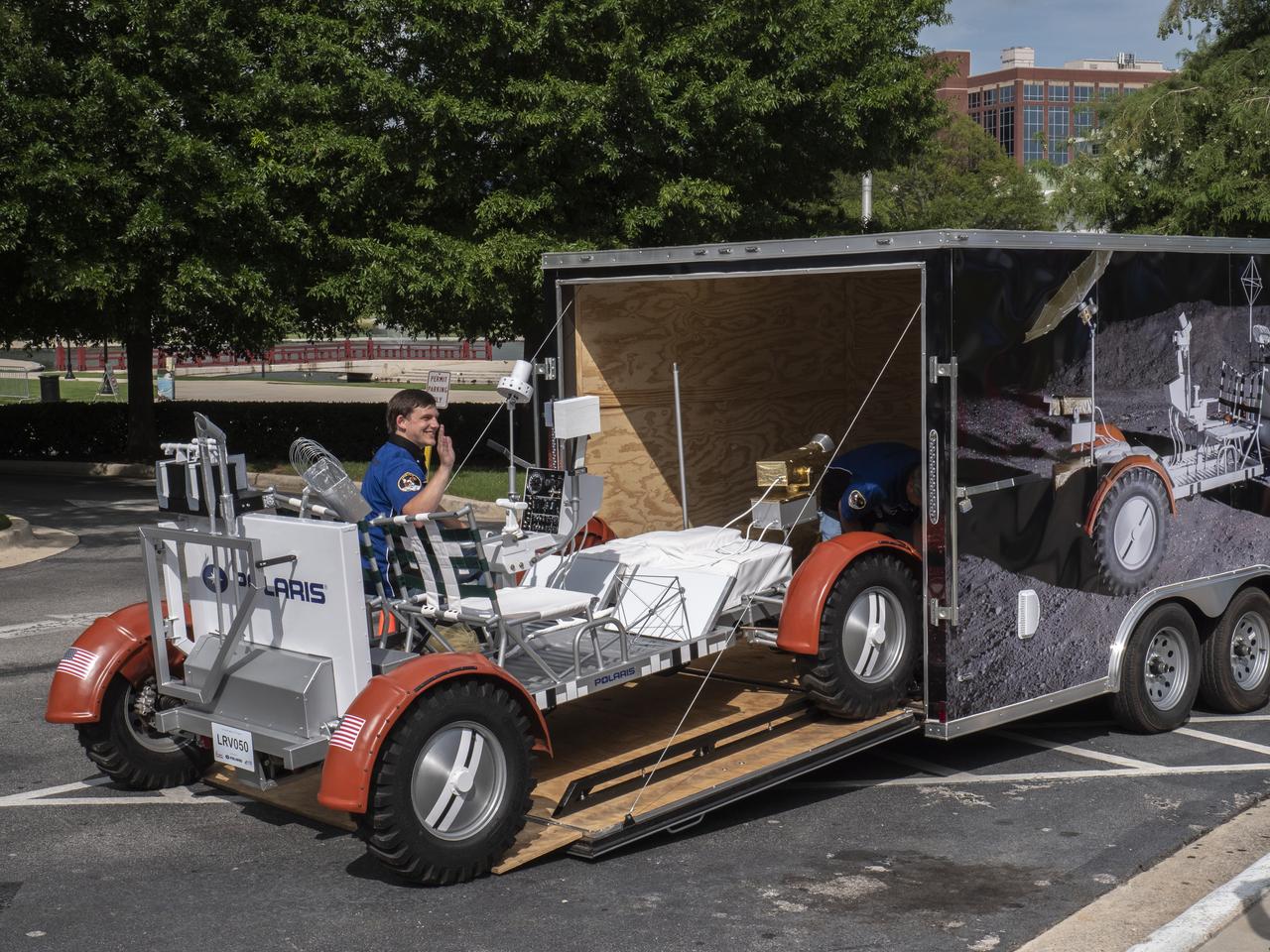
The City of Huntsville hosted a celebration of the Apollo 11 Moon landing with a street party on the downtown square with exhibits from the Marshall Space Flight Center and contributing contractors. The event was kicked off with remarks from Huntsville Mayor Tommy Battle, Marshall Space Flight Center's Director Jody Singer, and U.S. Space and Rocket Center's Director Deborah Barnhart with the Polaris replica of the Lunar Moon Buggy in the foreground. The Polaris Lunar Rover replica is being driven out of its trailer.

John C. Stennis Space Center is celebrating its 50th anniversary in 2011. NASA announced plans to build a rocket engine test facility in Hancock County, Miss., on Oct. 25, 1961. A new anniversary logo highlights the theme of the anniversary year - celebrating Stennis as a unique federal city and its five decades of powering America's space dreams. Stennis is home to more than 30 federal, state, academic and private organizations and several technology-based companies. In addition to testing Apollo Program rocket stages that carried humans to the moon, Stennis tested every main engine used in more than 130 space shuttle flights.
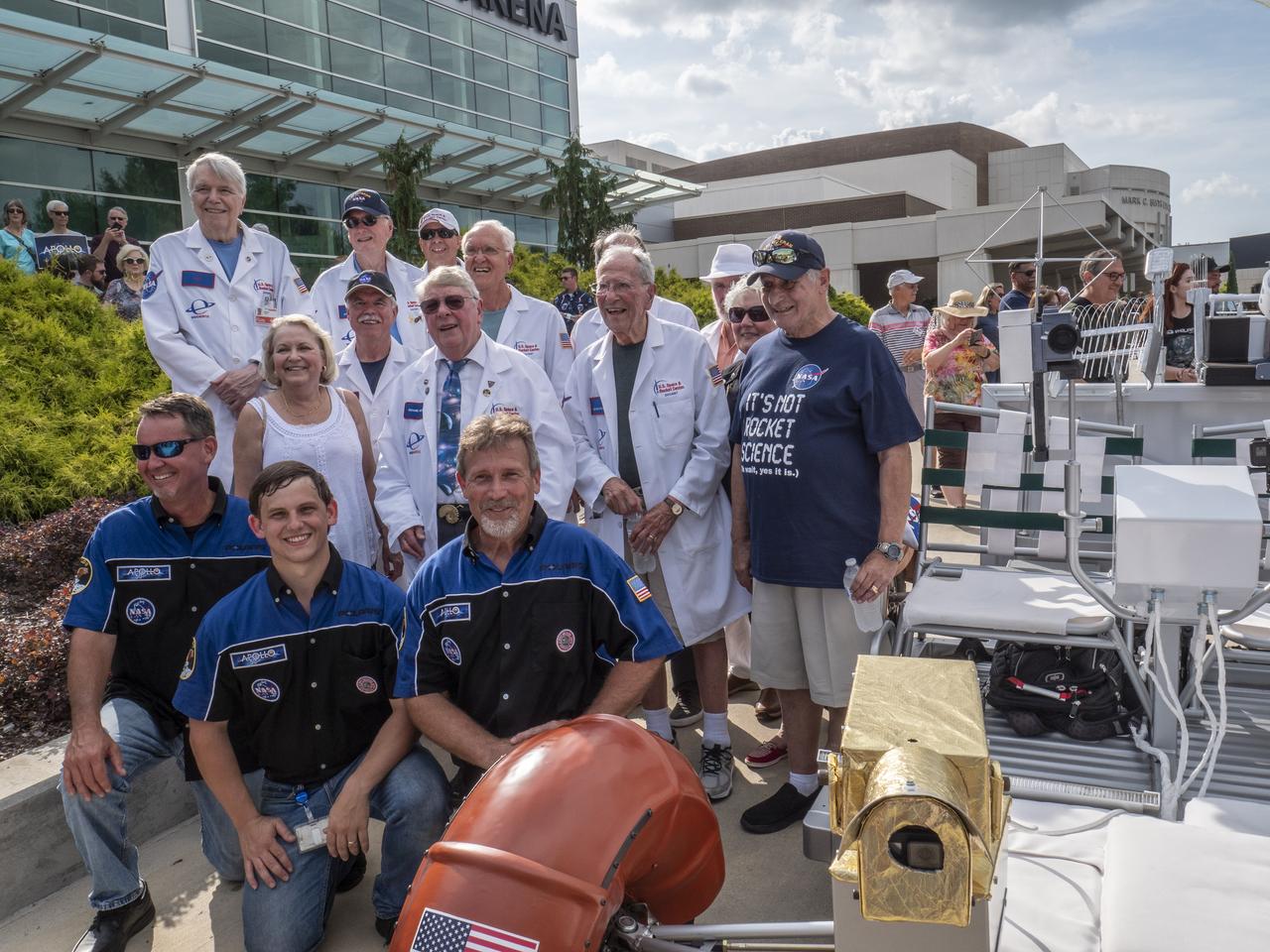
The City of Huntsville hosted a celebration of the Apollo 11 Moon landing with a street party on the downtown square with exhibits from the Marshall Space Flight Center and contributing contractors. The event was kicked off with remarks from Huntsville Mayor Tommy Battle, Marshall Space Flight Center's Director Jody Singer, and U.S. Space and Rocket Center's Director Deborah Barnhart with the Polaris replica of the Lunar Moon Buggy in the foreground. The Polaris Lunar Rover development team poses with retired NASA personnel who also volunteer as docents at the U.S. Space and Rocket Center.

KENNEDY SPACE CENTER, FLA. -- A train carrying space shuttle reusable solid rocket motor segments from the ATK Launch Systems manufacturing site in Brigham City,Utah, to NASA’s Kennedy Space Center in Florida was derailed May 2. At the site of the train mishap involving eight NASA solid rocket booster segment cars, a handling fixture has been attached to a box car being used as a spacer between the segment cars so that it can be removed from the rails. The solid rocket booster cars can be seen behind it. The train was traveling over the Meridian & Bigbee railroad near Pennington, Ala., at the time of the mishap.. The hardware was intended for use on shuttle Discovery's STS-120 mission in October and shuttle Atlantis's STS-122 mission in December. These segments are interchangeable, and ATK Launch Systems has replacement units that could be used for the shuttle flights, if necessary.
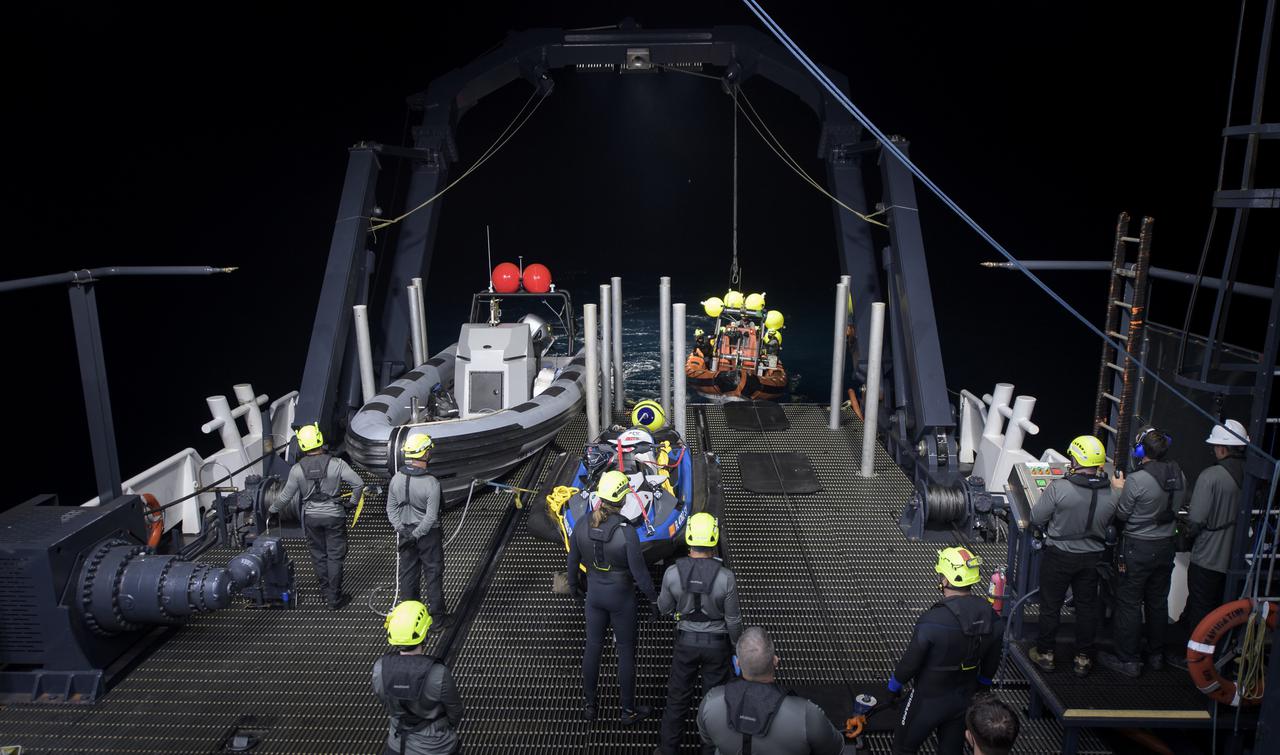
NASA and SpaceX support teams onboard the SpaceX GO Navigator recovery ship prepare for the landing of the SpaceX Crew Dragon Resilience spacecraft with NASA astronauts Mike Hopkins, Shannon Walker, and Victor Glover, and Japan Aerospace Exploration Agency (JAXA) astronaut Soichi Noguchi aboard in the Gulf of Mexico off the coast of Panama City, Florida, Saturday, May 1, 2021. NASA’s SpaceX Crew-1 mission is the first crew rotation flight of the SpaceX Crew Dragon spacecraft and Falcon 9 rocket with astronauts to the International Space Station as part of the agency’s Commercial Crew Program. Photo Credit: (NASA/Bill Ingalls)

SpaceX support teams deploy in fast boats off the SpaceX GO Navigator recovery ship as they prepare for the landing of the SpaceX Crew Dragon Resilience spacecraft with NASA astronauts Mike Hopkins, Shannon Walker, and Victor Glover, and Japan Aerospace Exploration Agency (JAXA) astronaut Soichi Noguchi aboard in the Gulf of Mexico off the coast of Panama City, Florida, Sunday, May 2, 2021. NASA’s SpaceX Crew-1 mission is the first crew rotation flight of the SpaceX Crew Dragon spacecraft and Falcon 9 rocket with astronauts to the International Space Station as part of the agency’s Commercial Crew Program. Photo Credit: (NASA/Bill Ingalls)
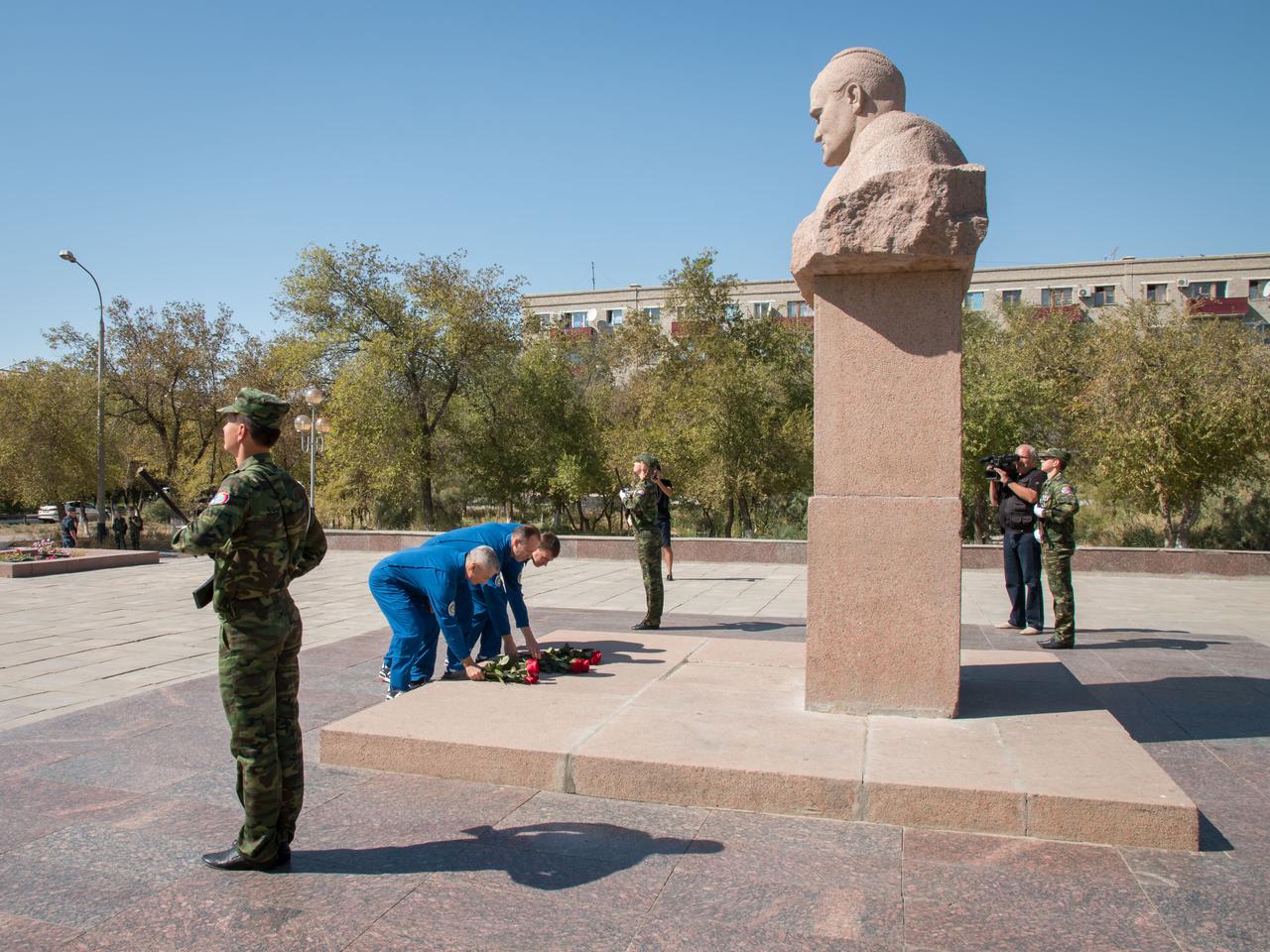
The Expedition 49 backup crewmembers lay flowers at the statue of Soviet rocket Great Designer Sergey Korolev during a tour of the city of Baikonur, Kazakhstan Sept. 10. From left to right in their flight suits are Mark Vande Hei of NASA and Alexander Misurkin and Nikolai Tikhonov of Roscosmos. They are serving as backups to Shane Kimbrough of NASA and Sergey Ryzhikov and Andrey Borisenko of Roscosmos, who will launch on Sept. 24, Kazakh time from the Baikonur Cosmodrome in Kazakhstan on the Soyuz MS-02 vehicle for a five-month mission on the International Space Station. NASA/Victor Zelentsov
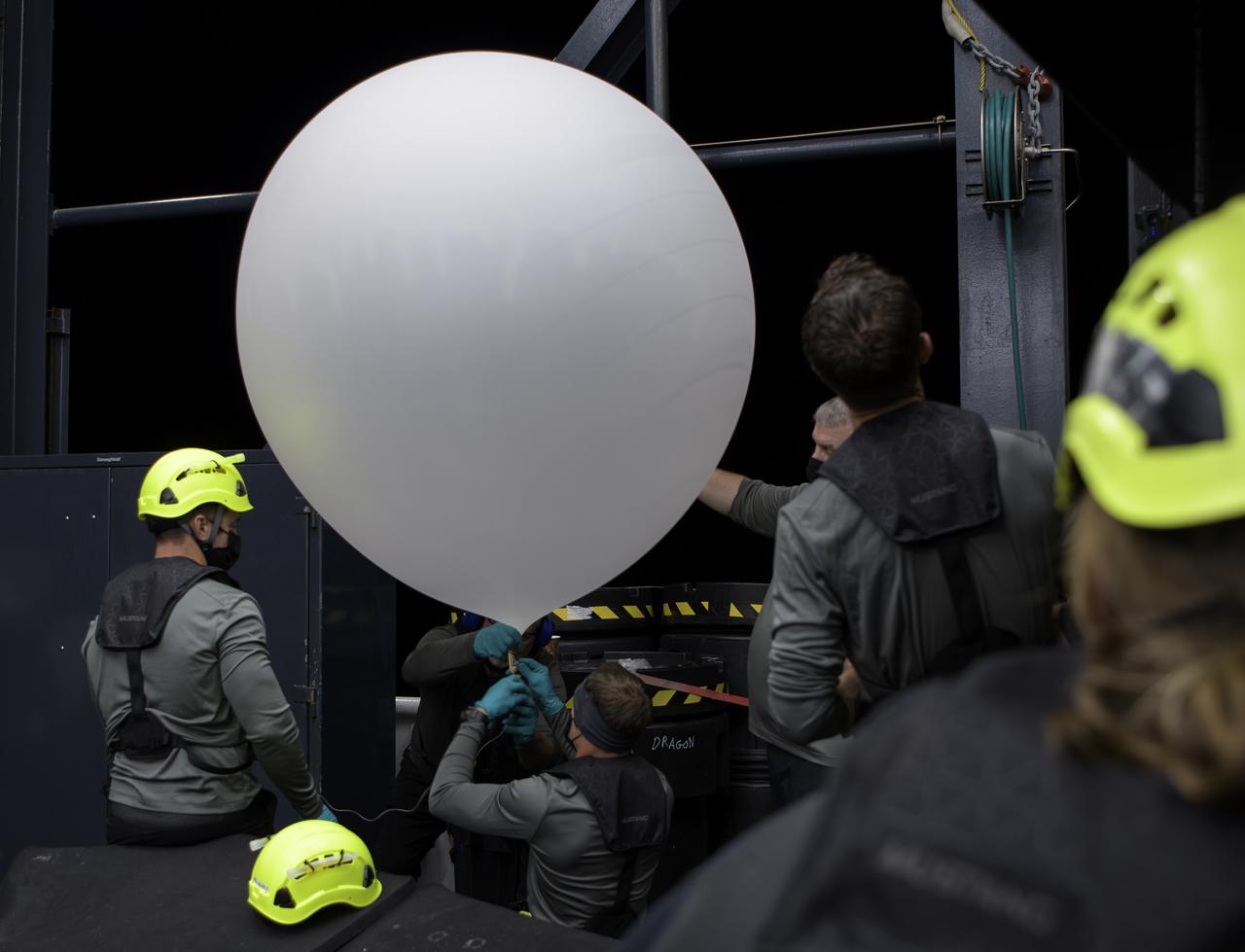
SpaceX support teams onboard the SpaceX GO Navigator recovery ship prepare to launch a weather balloon ahead of the landing of the SpaceX Crew Dragon Resilience spacecraft with NASA astronauts Mike Hopkins, Shannon Walker, and Victor Glover, and Japan Aerospace Exploration Agency (JAXA) astronaut Soichi Noguchi aboard in the Gulf of Mexico off the coast of Panama City, Florida, Saturday, May 1, 2021. NASA’s SpaceX Crew-1 mission is the first crew rotation flight of the SpaceX Crew Dragon spacecraft and Falcon 9 rocket with astronauts to the International Space Station as part of the agency’s Commercial Crew Program. Photo Credit: (NASA/Bill Ingalls)
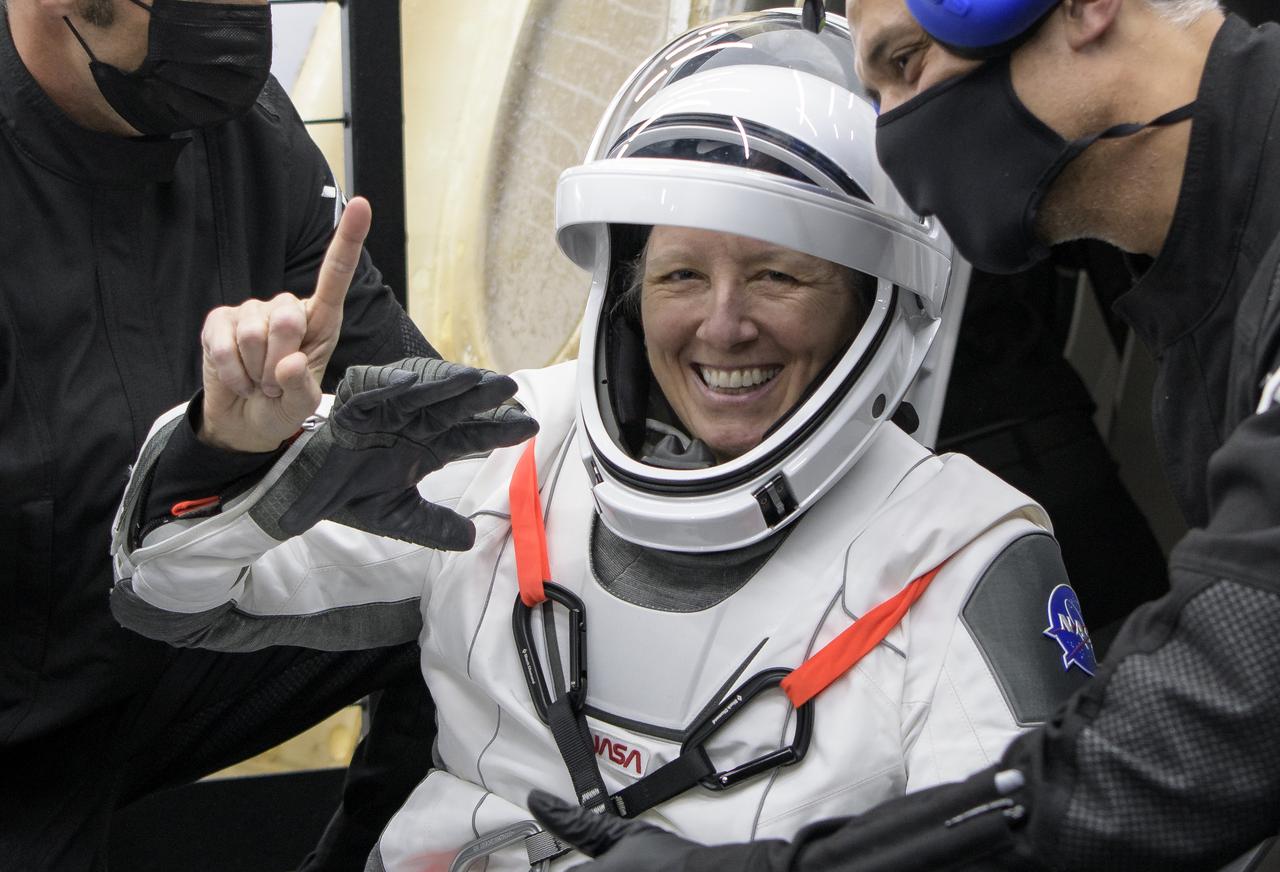
NASA astronaut Shannon Walker is helped out of the SpaceX Crew Dragon Resilience spacecraft onboard the SpaceX GO Navigator recovery ship after she, NASA astronauts Mike Hopkins, Victor Glover, and Japan Aerospace Exploration Agency (JAXA) astronaut Soichi Noguchi, landed in the Gulf of Mexico off the coast of Panama City, Florida, Sunday, May 2, 2021. NASA’s SpaceX Crew-1 mission was the first crew rotation flight of the SpaceX Crew Dragon spacecraft and Falcon 9 rocket with astronauts to the International Space Station as part of the agency’s Commercial Crew Program. Photo Credit: (NASA/Bill Ingalls)
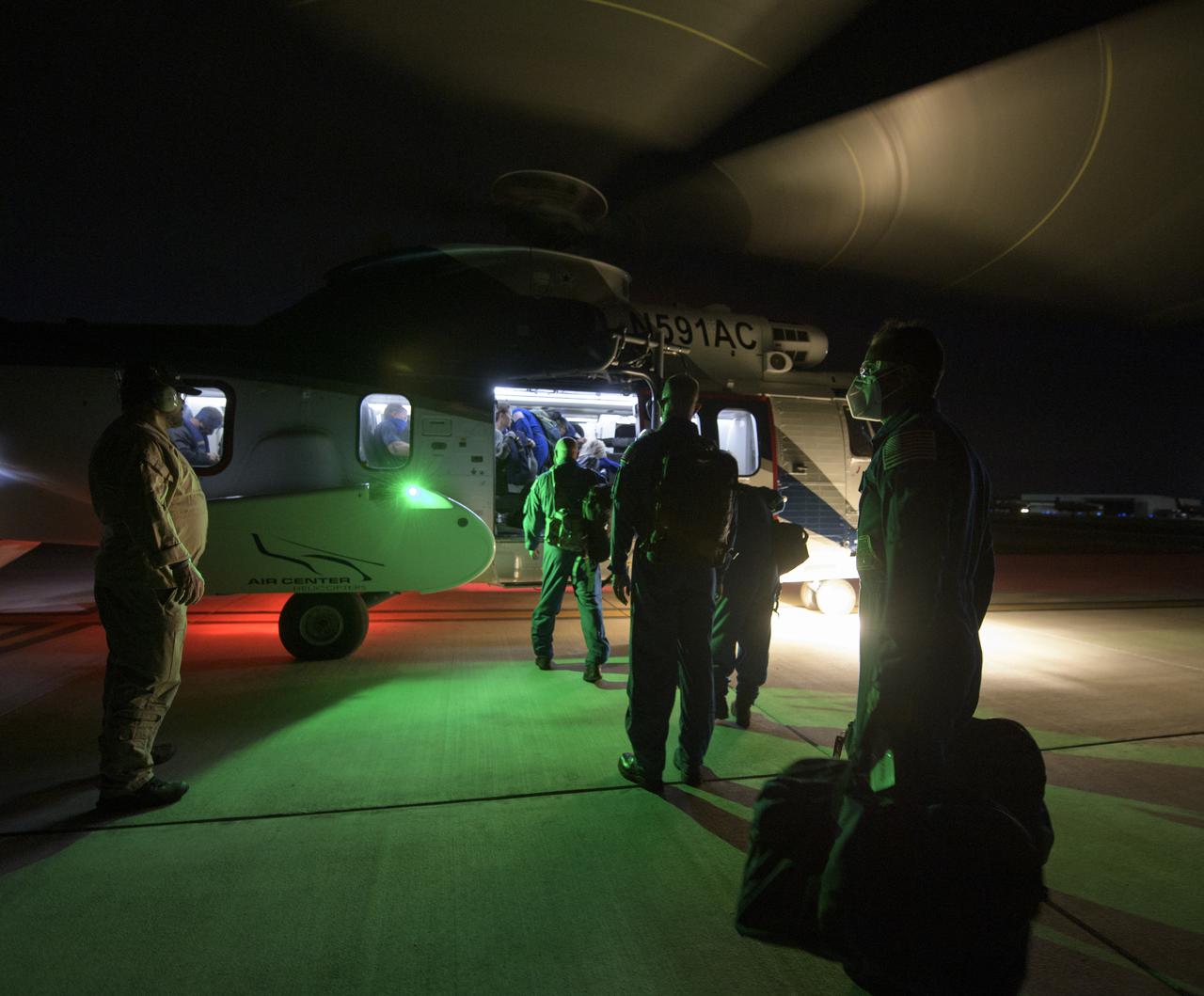
NASA and SpaceX support teams depart from Pensacola, Florida via helicopter to the SpaceX GO Navigator recovery ship to prepare for the landing of the SpaceX Crew Dragon Resilience spacecraft with NASA astronauts Mike Hopkins, Shannon Walker, and Victor Glover, and Japan Aerospace Exploration Agency (JAXA) astronaut Soichi Noguchi aboard in the Gulf of Mexico off the coast of Panama City, Florida, Saturday, May 1, 2021. NASA’s SpaceX Crew-1 mission is the first crew rotation flight of the SpaceX Crew Dragon spacecraft and Falcon 9 rocket with astronauts to the International Space Station as part of the agency’s Commercial Crew Program. Photo Credit: (NASA/Bill Ingalls)
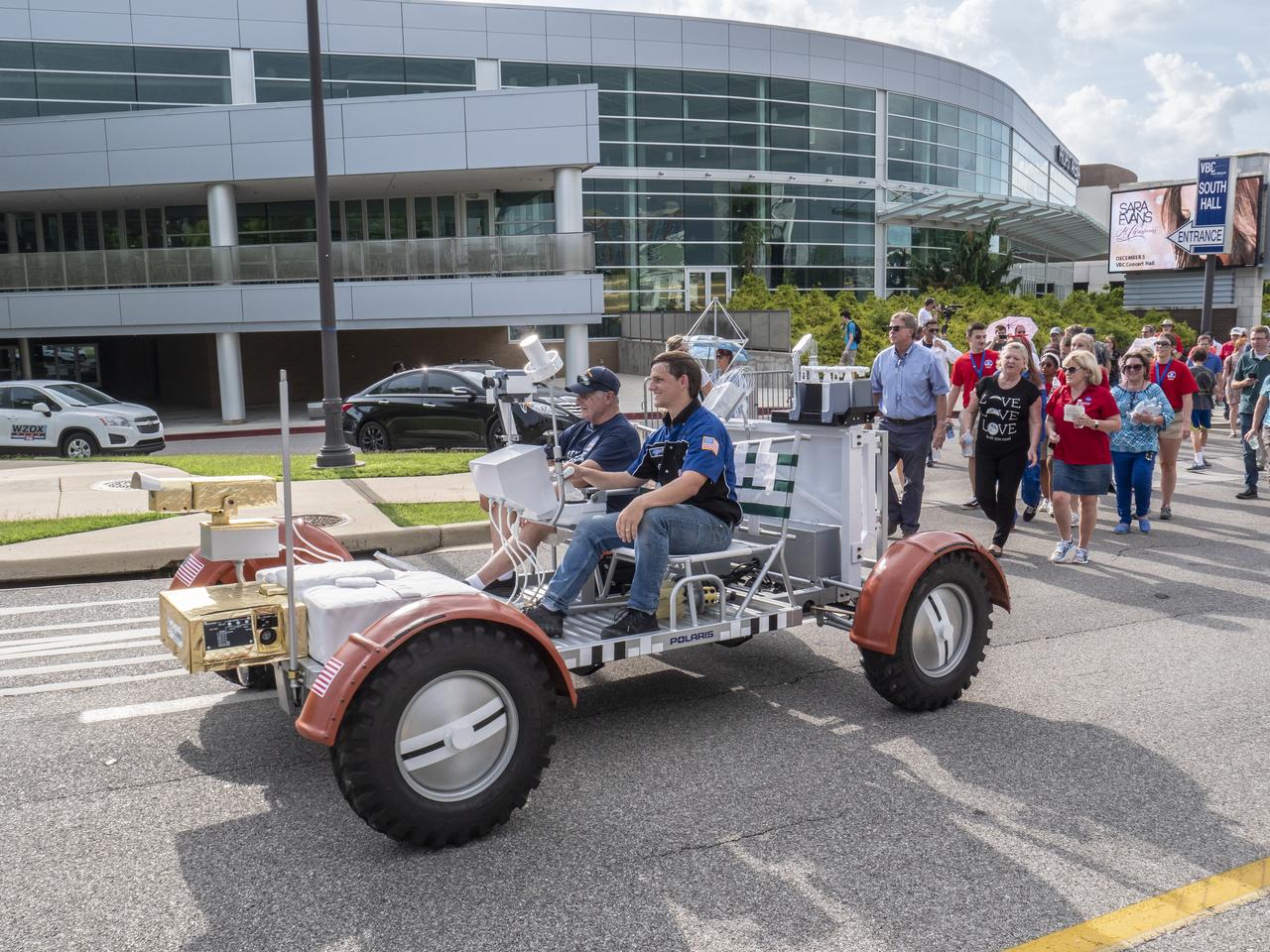
The City of Huntsville hosted a celebration of the Apollo 11 Moon landing with a street party on the downtown square with exhibits from the Marshall Space Flight Center and contributing contractors. The event was kicked off with remarks from Huntsville Mayor Tommy Battle, Marshall Space Flight Center's Director Jody Singer, and U.S. Space and Rocket Center's Director Deborah Barnhart with the Polaris replica of the Lunar Moon Buggy in the foreground. The Lunar Rover replica, followed by MSFC Director Jody Singer, USSRC Director Deborah Barnhart, and May Tommy Battle lead the parade to the Huntsville square.
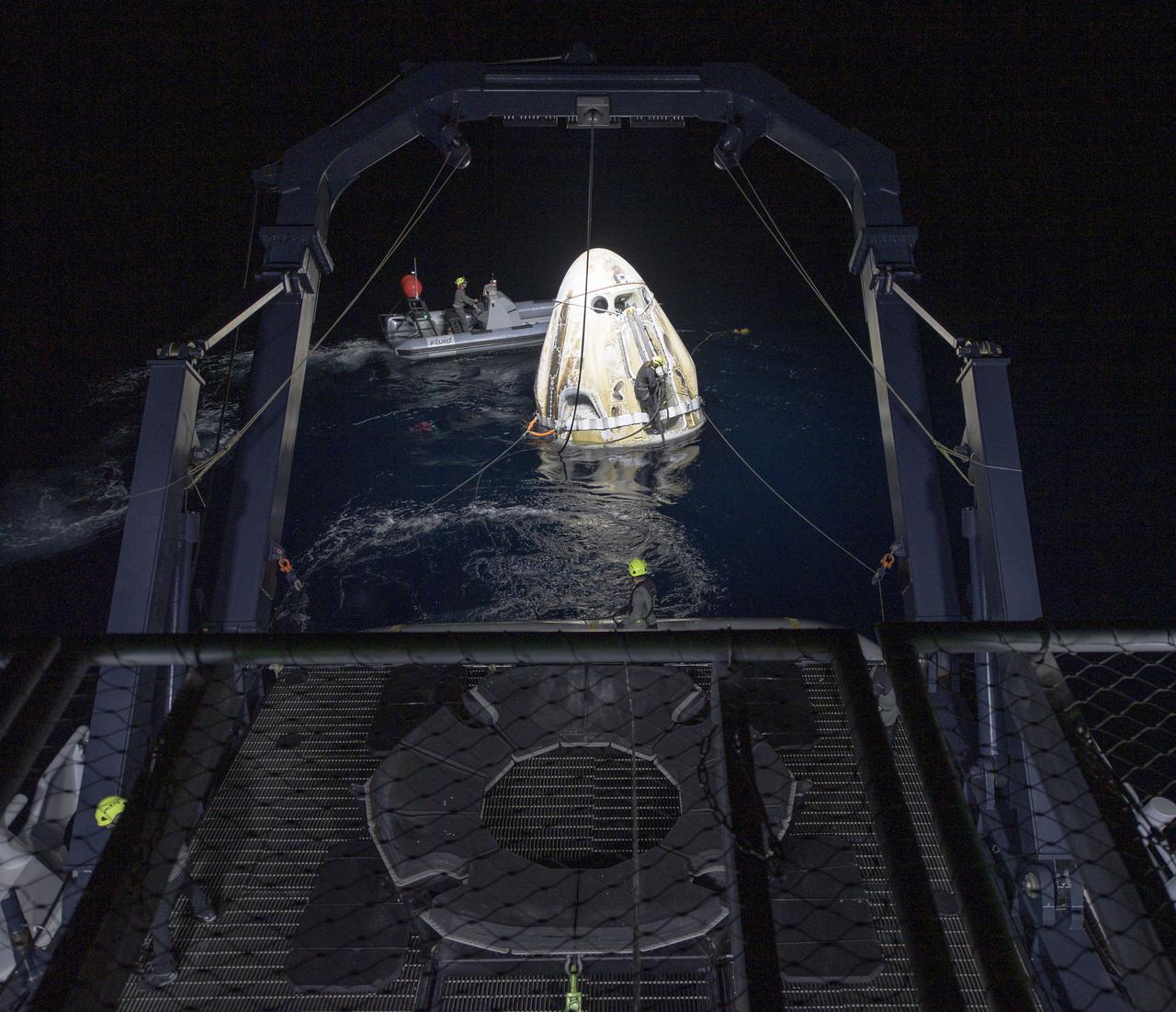
Support teams work around the SpaceX Crew Dragon Resilience spacecraft shortly after it landed with NASA astronauts Mike Hopkins, Shannon Walker, and Victor Glover, and Japan Aerospace Exploration Agency (JAXA) astronaut Soichi Noguchi aboard in the Gulf of Mexico off the coast of Panama City, Florida, Sunday, May 2, 2021. NASA’s SpaceX Crew-1 mission was the first crew rotation flight of the SpaceX Crew Dragon spacecraft and Falcon 9 rocket with astronauts to the International Space Station as part of the agency’s Commercial Crew Program. Photo Credit: (NASA/Bill Ingalls)
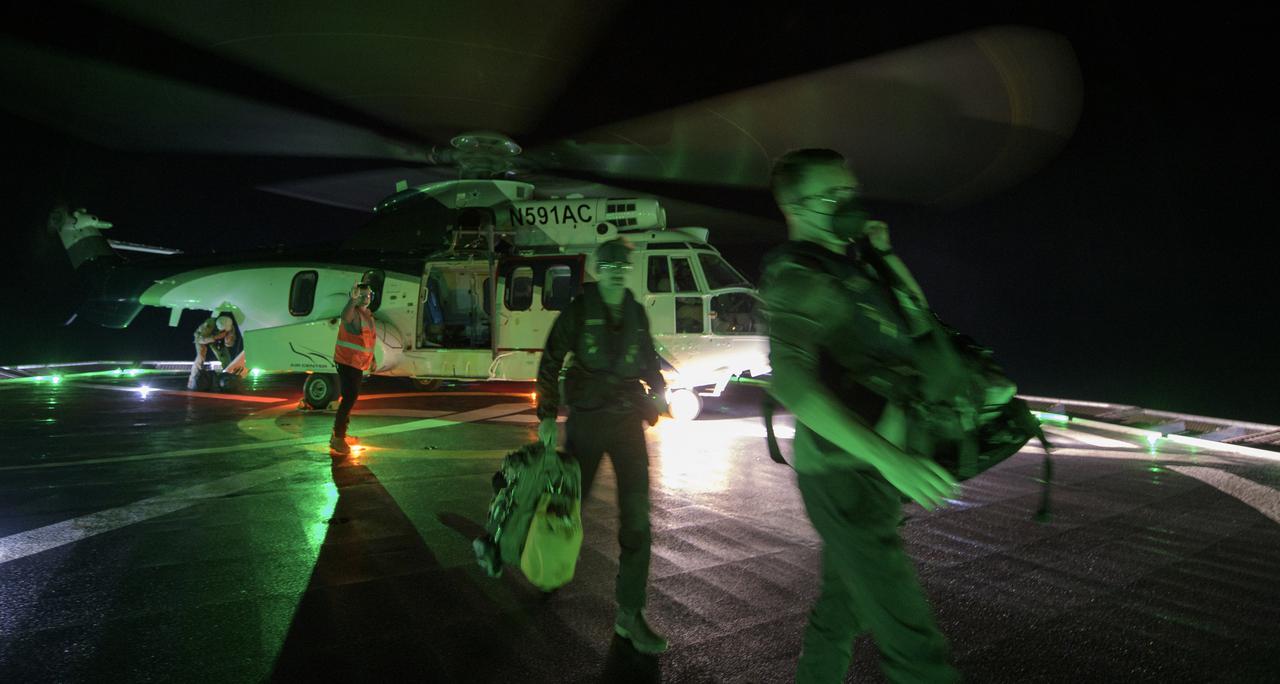
NASA and SpaceX support teams arrive via helicopter to the SpaceX GO Navigator recovery ship in order to prepare for the landing of the SpaceX Crew Dragon Resilience spacecraft with NASA astronauts Mike Hopkins, Shannon Walker, and Victor Glover, and Japan Aerospace Exploration Agency (JAXA) astronaut Soichi Noguchi aboard in the Gulf of Mexico off the coast of Panama City, Florida, Saturday, May 1, 2021. NASA’s SpaceX Crew-1 mission is the first crew rotation flight of the SpaceX Crew Dragon spacecraft and Falcon 9 rocket with astronauts to the International Space Station as part of the agency’s Commercial Crew Program. Photo Credit: (NASA/Bill Ingalls)
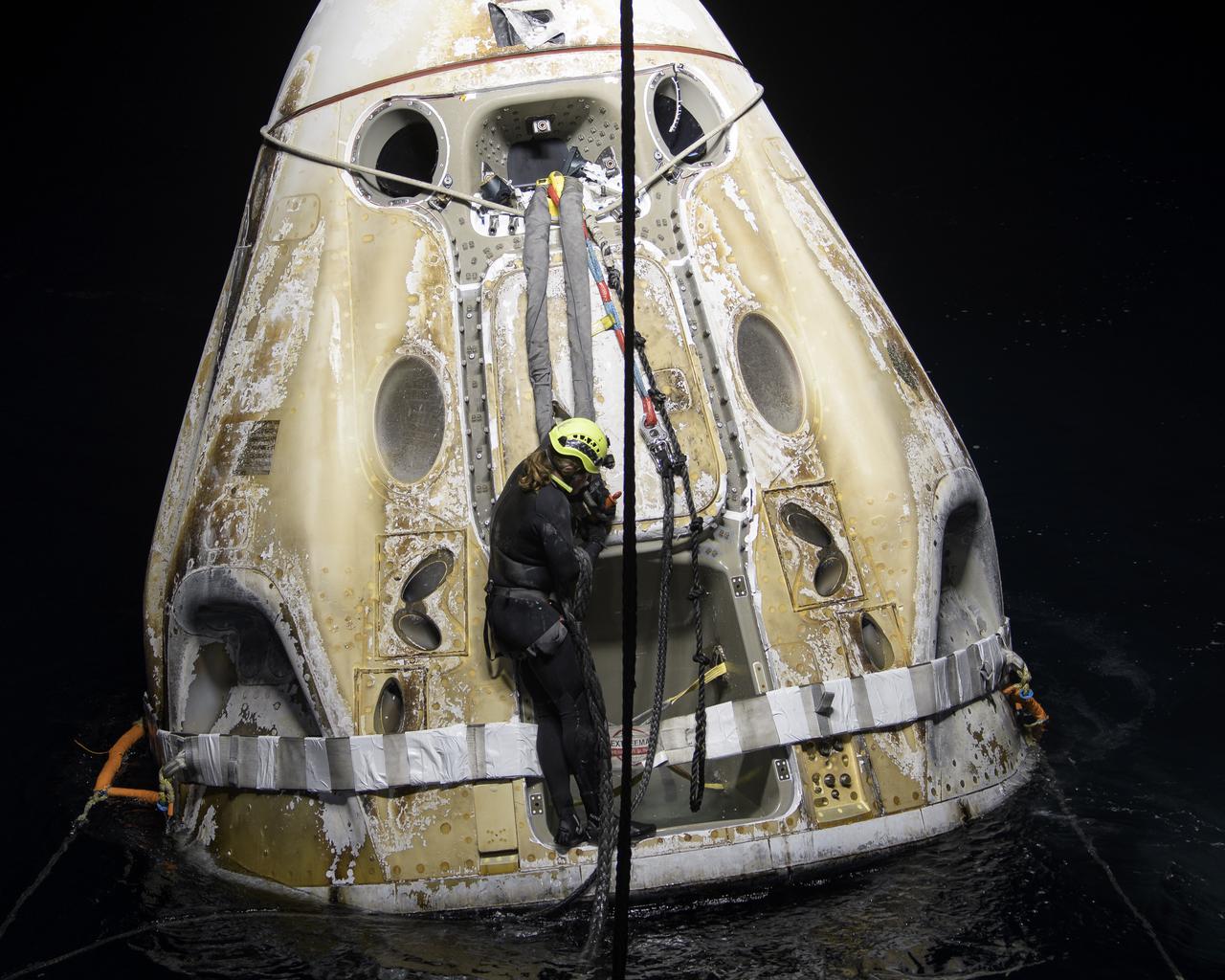
Support teams work around the SpaceX Crew Dragon Resilience spacecraft shortly after it landed with NASA astronauts Mike Hopkins, Shannon Walker, and Victor Glover, and Japan Aerospace Exploration Agency (JAXA) astronaut Soichi Noguchi aboard in the Gulf of Mexico off the coast of Panama City, Florida, Sunday, May 2, 2021. NASA’s SpaceX Crew-1 mission was the first crew rotation flight of the SpaceX Crew Dragon spacecraft and Falcon 9 rocket with astronauts to the International Space Station as part of the agency’s Commercial Crew Program. Photo Credit: (NASA/Bill Ingalls)
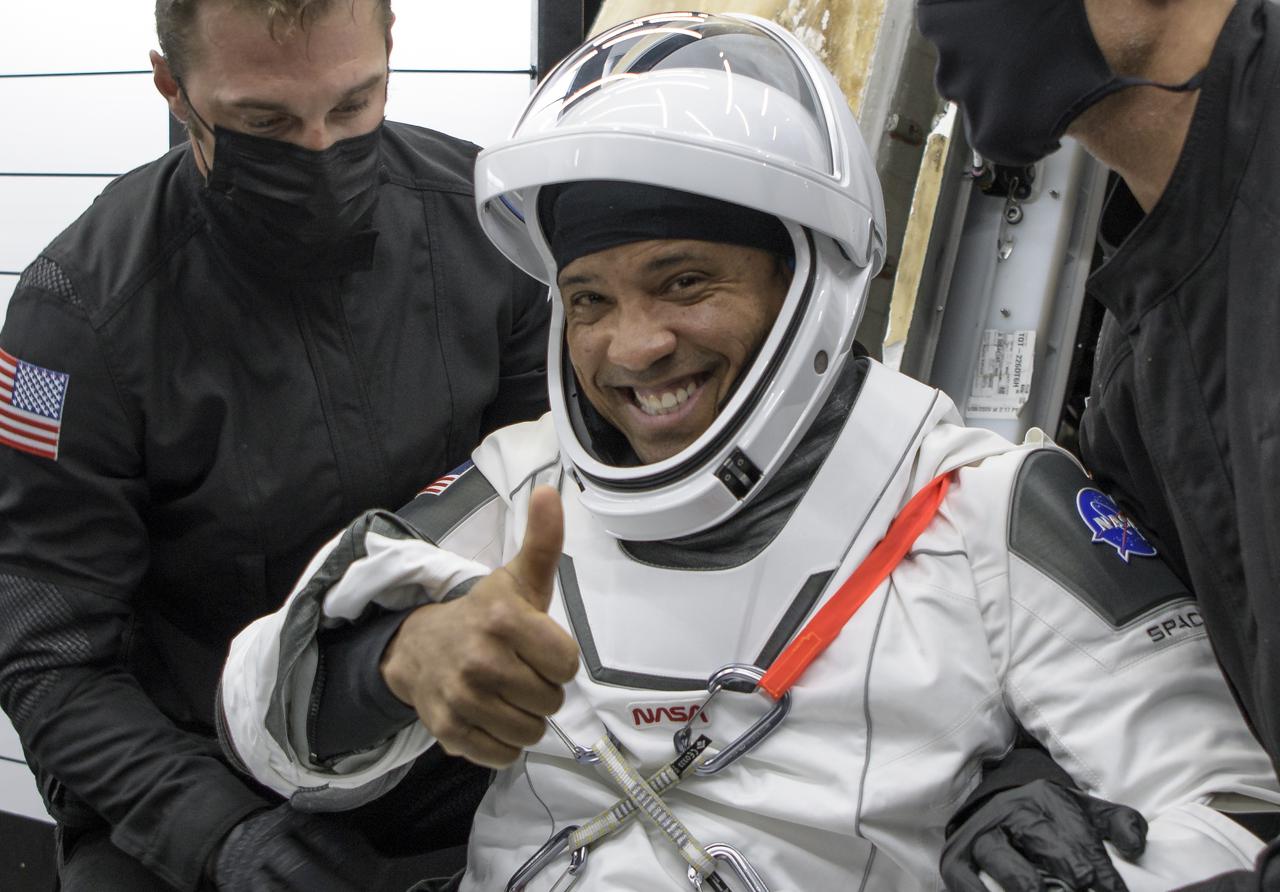
NASA astronaut Victor Glover is helped out of the SpaceX Crew Dragon Resilience spacecraft onboard the SpaceX GO Navigator recovery ship after he, NASA astronauts Mike Hopkins, Shannon Walker, and Japan Aerospace Exploration Agency (JAXA) astronaut Soichi Noguchi, landed in the Gulf of Mexico off the coast of Panama City, Florida, Sunday, May 2, 2021. NASA’s SpaceX Crew-1 mission was the first crew rotation flight of the SpaceX Crew Dragon spacecraft and Falcon 9 rocket with astronauts to the International Space Station as part of the agency’s Commercial Crew Program. Photo Credit: (NASA/Bill Ingalls)
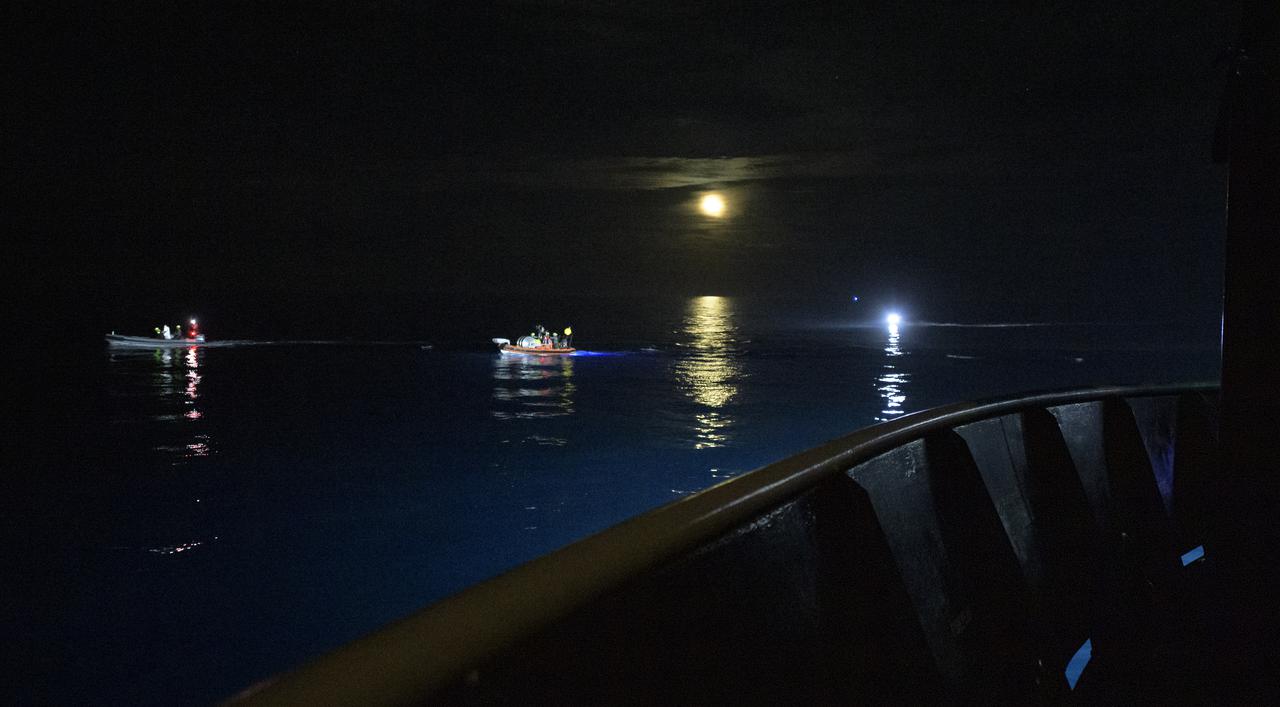
SpaceX support teams deploy in fast boats off the SpaceX GO Navigator recovery ship as they prepare for the landing of the SpaceX Crew Dragon Resilience spacecraft with NASA astronauts Mike Hopkins, Shannon Walker, and Victor Glover, and Japan Aerospace Exploration Agency (JAXA) astronaut Soichi Noguchi aboard in the Gulf of Mexico off the coast of Panama City, Florida, Sunday, May 2, 2021. NASA’s SpaceX Crew-1 mission is the first crew rotation flight of the SpaceX Crew Dragon spacecraft and Falcon 9 rocket with astronauts to the International Space Station as part of the agency’s Commercial Crew Program. Photo Credit: (NASA/Bill Ingalls)
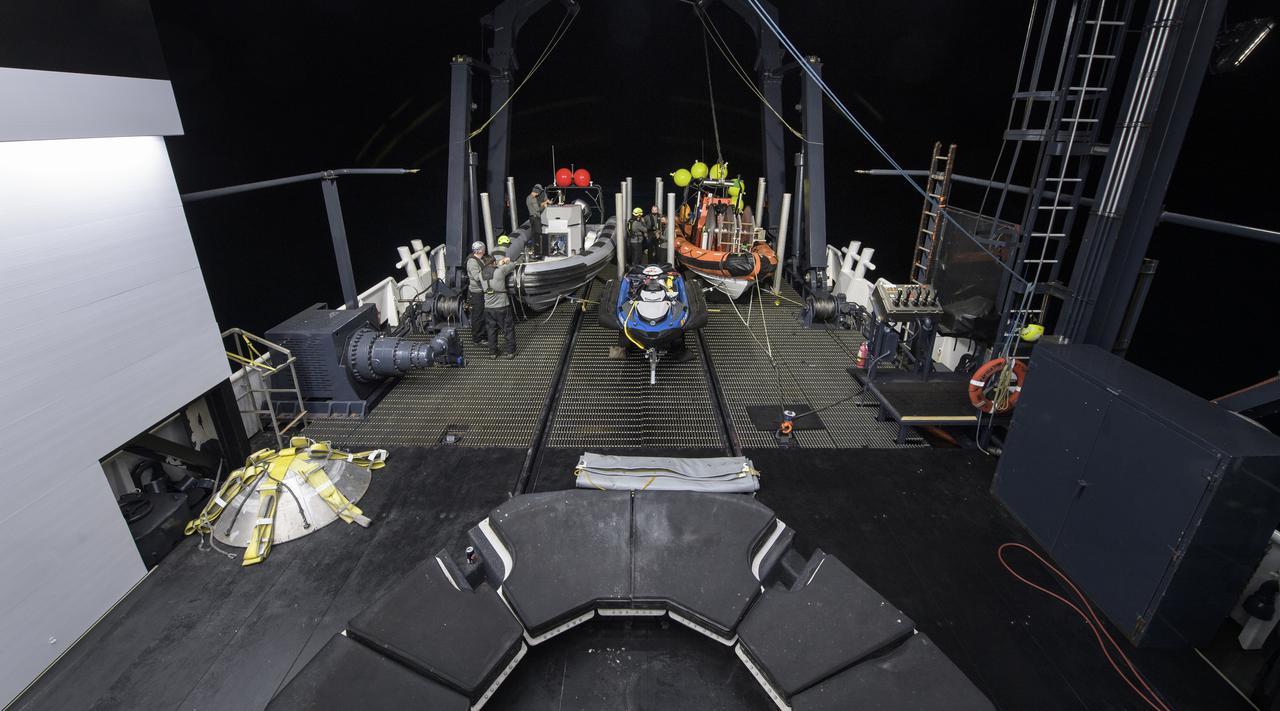
NASA and SpaceX support teams onboard the SpaceX GO Navigator recovery ship prepare for the landing of the SpaceX Crew Dragon Resilience spacecraft with NASA astronauts Mike Hopkins, Shannon Walker, and Victor Glover, and Japan Aerospace Exploration Agency (JAXA) astronaut Soichi Noguchi aboard in the Gulf of Mexico off the coast of Panama City, Florida, Saturday, May 1, 2021. NASA’s SpaceX Crew-1 mission is the first crew rotation flight of the SpaceX Crew Dragon spacecraft and Falcon 9 rocket with astronauts to the International Space Station as part of the agency’s Commercial Crew Program. Photo Credit: (NASA/Bill Ingalls)
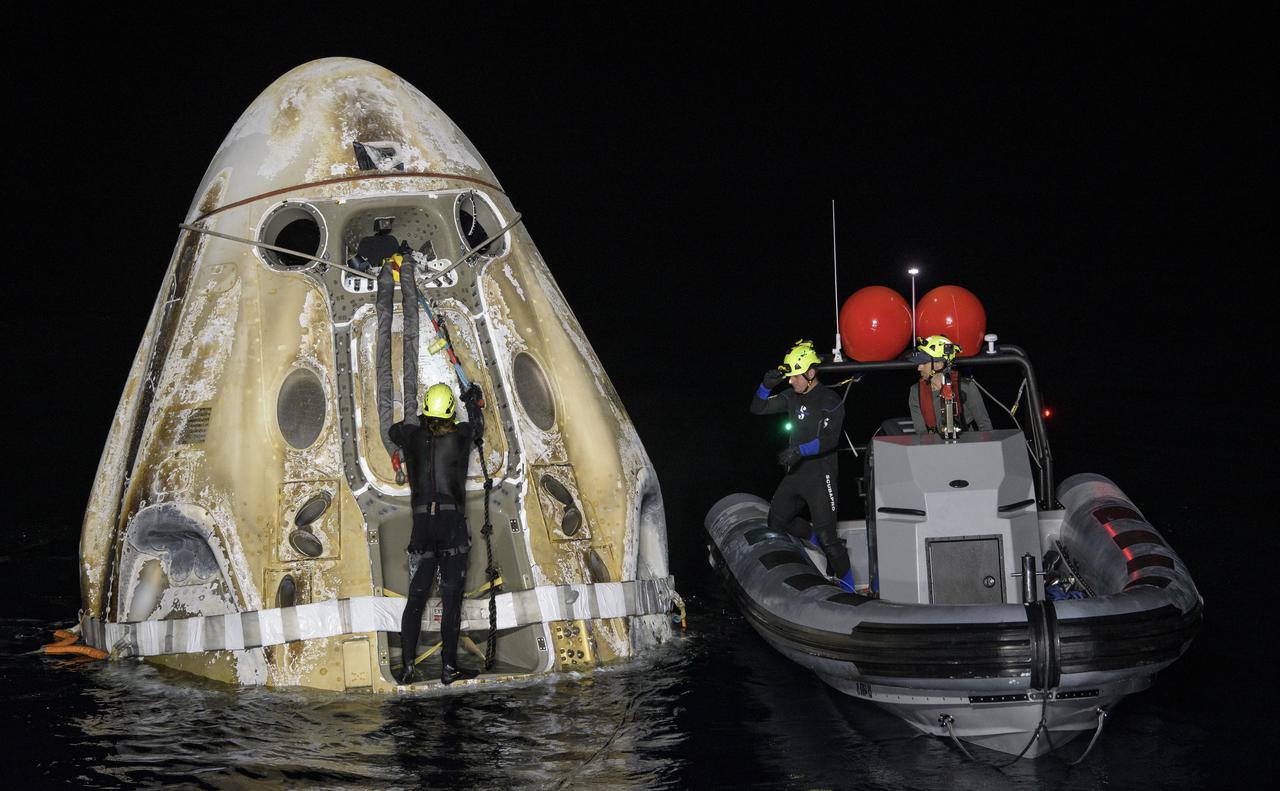
Support teams work around the SpaceX Crew Dragon Resilience spacecraft shortly after it landed with NASA astronauts Mike Hopkins, Shannon Walker, and Victor Glover, and Japan Aerospace Exploration Agency (JAXA) astronaut Soichi Noguchi aboard in the Gulf of Mexico off the coast of Panama City, Florida, Sunday, May 2, 2021. NASA’s SpaceX Crew-1 mission was the first crew rotation flight of the SpaceX Crew Dragon spacecraft and Falcon 9 rocket with astronauts to the International Space Station as part of the agency’s Commercial Crew Program. Photo Credit: (NASA/Bill Ingalls)
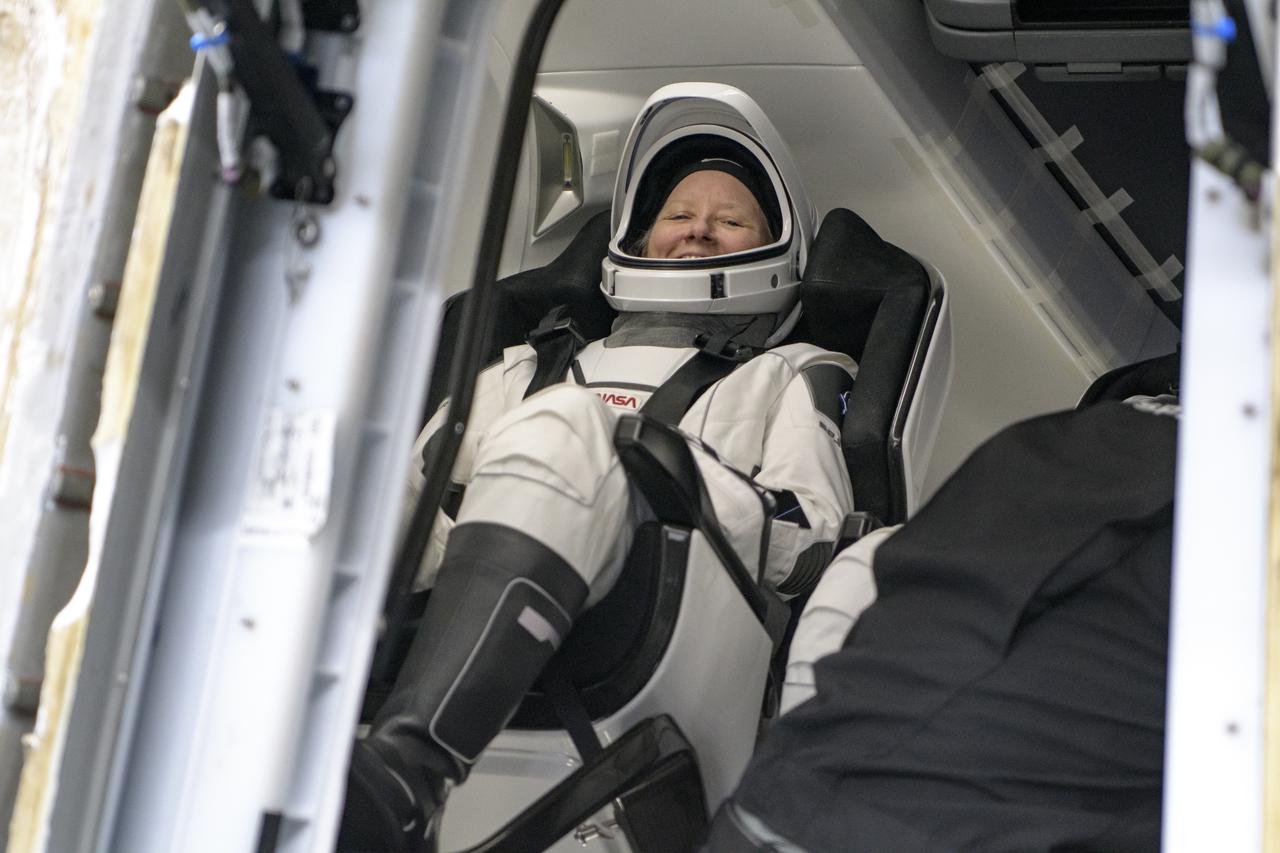
NASA astronaut Shannon Walker smiles prior to being helped out of the SpaceX Crew Dragon Resilience spacecraft onboard the SpaceX GO Navigator recovery ship after she, NASA astronauts Mike Hopkins, Victor Glover, and Japan Aerospace Exploration Agency (JAXA) astronaut Soichi Noguchi, landed in the Gulf of Mexico off the coast of Panama City, Florida, Sunday, May 2, 2021. NASA’s SpaceX Crew-1 mission was the first crew rotation flight of the SpaceX Crew Dragon spacecraft and Falcon 9 rocket with astronauts to the International Space Station as part of the agency’s Commercial Crew Program. Photo Credit: (NASA/Bill Ingalls)
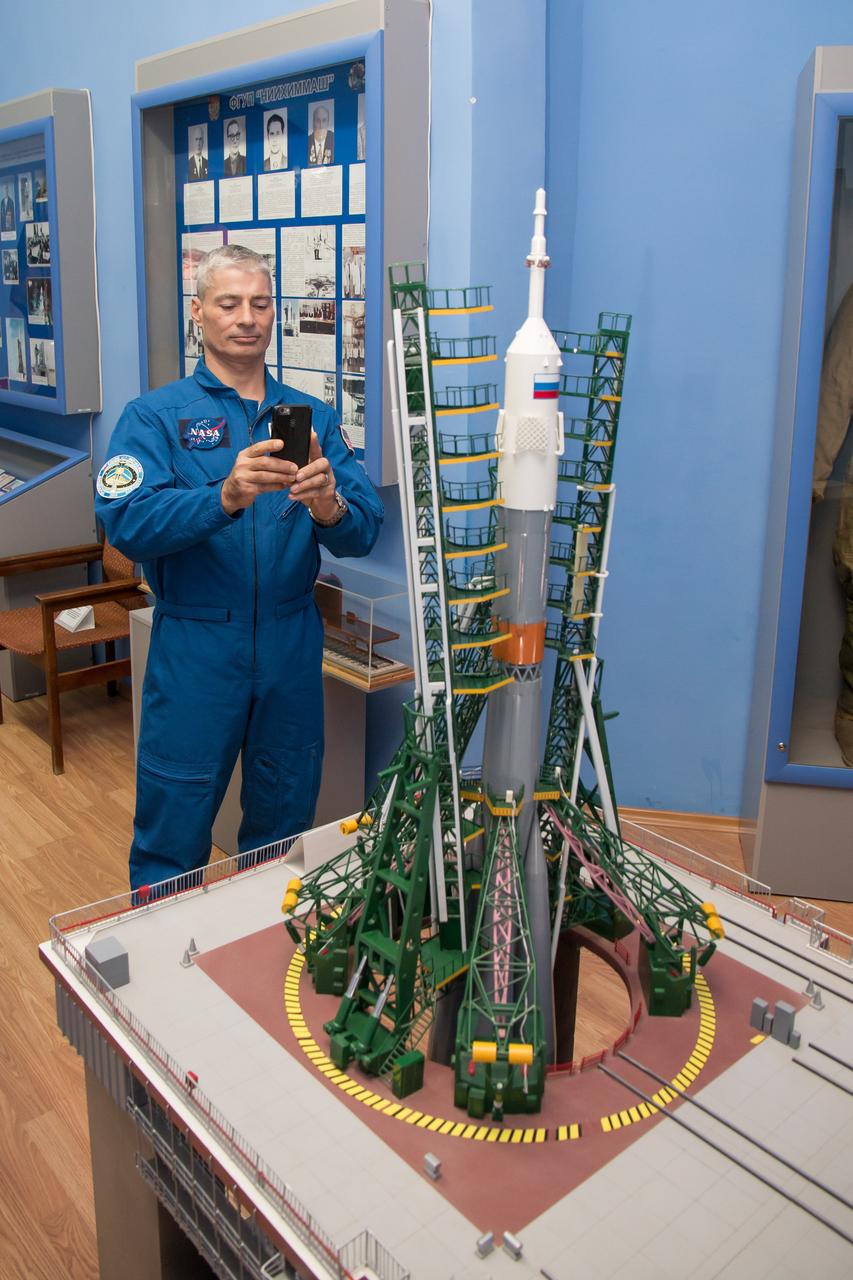
Expedition 49 backup crewmember Mark Vande Hei of NASA takes a photo of a model of a Soyuz rocket on its launch pad in a local museum Sept. 10 during a tour of the city of Baikonur, Kazakhstan. Vande Hei and two Russian cosmonauts from Roscosmos are serving as backups to Shane Kimbrough of NASA and Sergey Ryzhikov and Andrey Borisenko of Roscosmos, who will launch on Sept. 24, Kazakh time from the Baikonur Cosmodrome in Kazakhstan on the Soyuz MS-02 vehicle for a five-month mission on the International Space Station. NASA/Victor Zelentsov
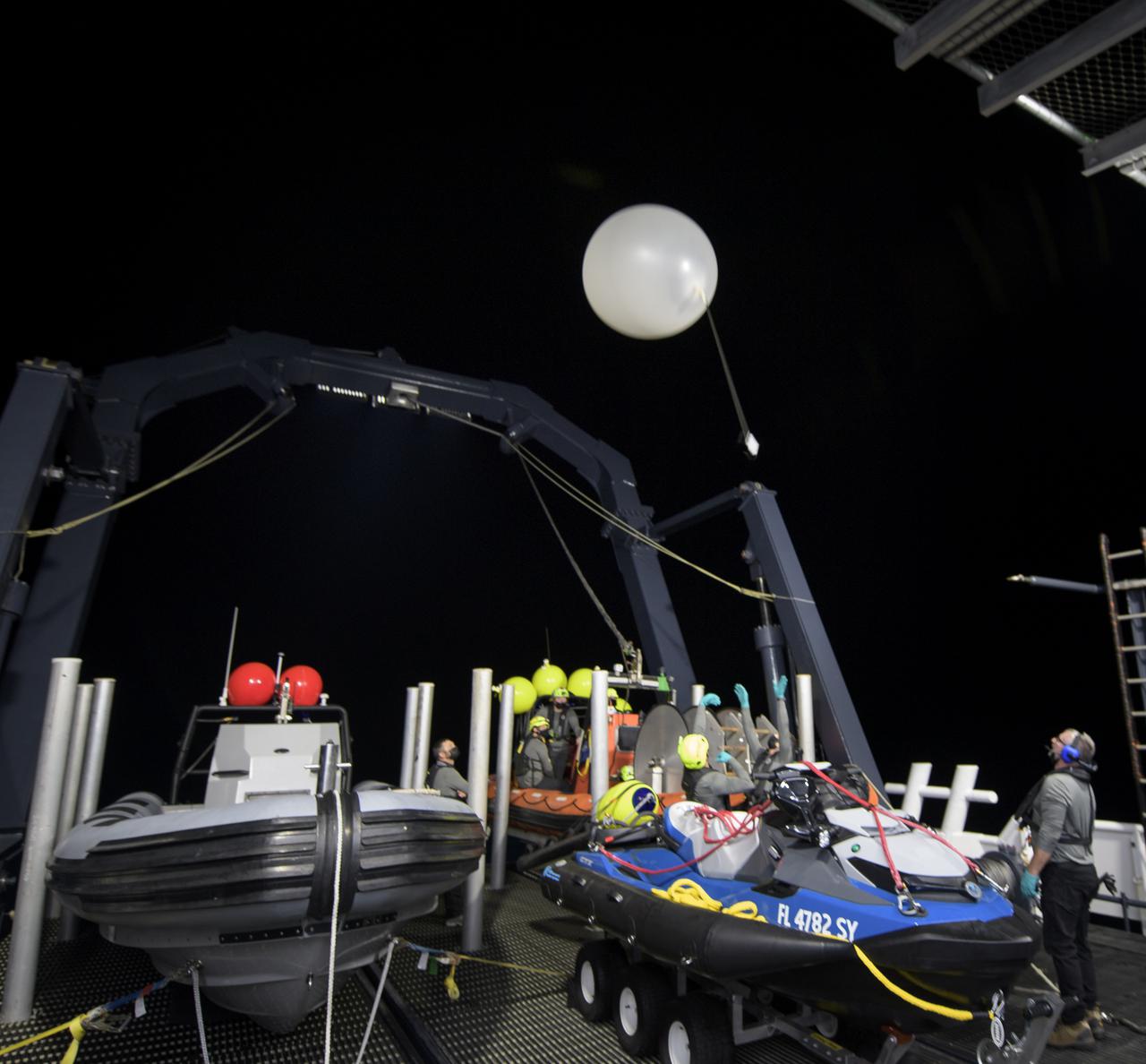
SpaceX support teams onboard the SpaceX GO Navigator recovery launch a weather balloon ahead of the landing of the SpaceX Crew Dragon Resilience spacecraft with NASA astronauts Mike Hopkins, Shannon Walker, and Victor Glover, and Japan Aerospace Exploration Agency (JAXA) astronaut Soichi Noguchi aboard in the Gulf of Mexico off the coast of Panama City, Florida, Saturday, May 1, 2021. NASA’s SpaceX Crew-1 mission is the first crew rotation flight of the SpaceX Crew Dragon spacecraft and Falcon 9 rocket with astronauts to the International Space Station as part of the agency’s Commercial Crew Program. Photo Credit: (NASA/Bill Ingalls)
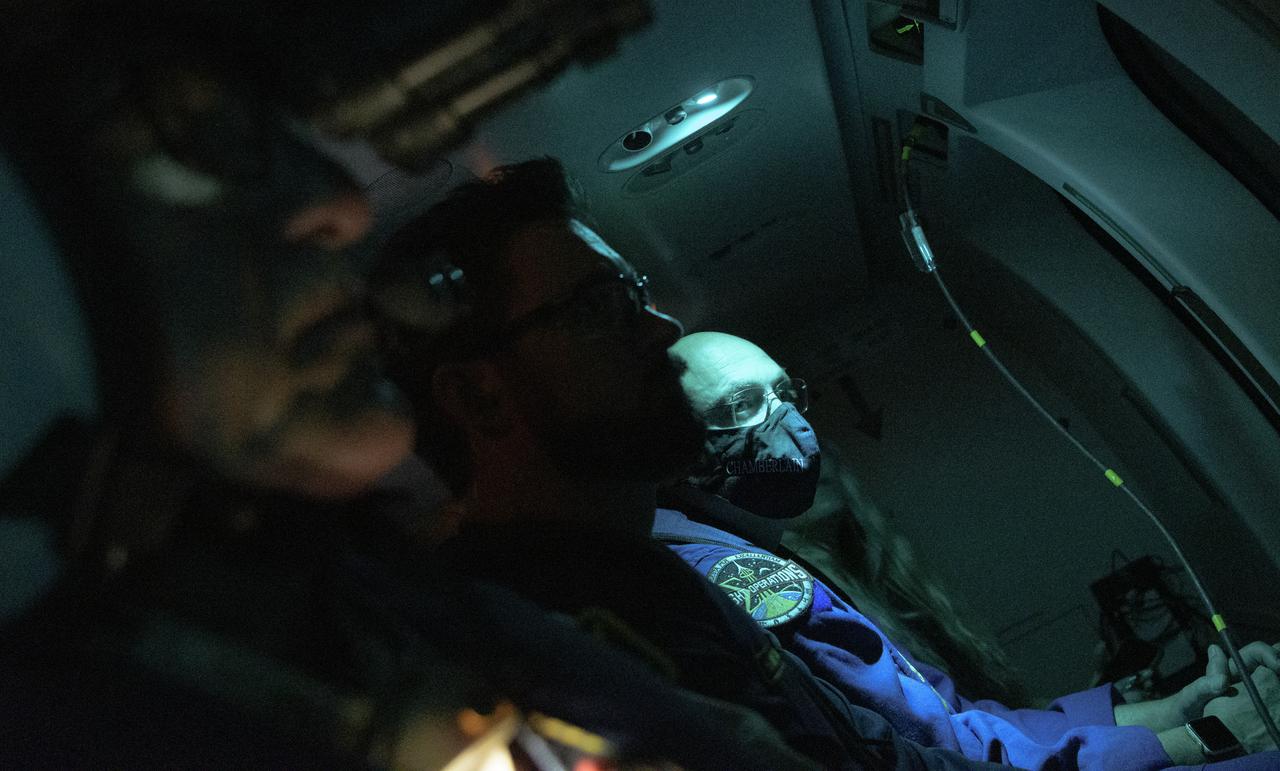
NASA Flight Surgeon Blake Chamberlain and other NASA and SpaceX support teams helicopter out to the SpaceX GO Navigator recovery ship to prepare for the landing of the SpaceX Crew Dragon Resilience spacecraft with NASA astronauts Mike Hopkins, Shannon Walker, and Victor Glover, and Japan Aerospace Exploration Agency (JAXA) astronaut Soichi Noguchi aboard in the Gulf of Mexico off the coast of Panama City, Florida, Saturday, May 1, 2021. NASA’s SpaceX Crew-1 mission is the first crew rotation flight of the SpaceX Crew Dragon spacecraft and Falcon 9 rocket with astronauts to the International Space Station as part of the agency’s Commercial Crew Program. Photo Credit: (NASA/Bill Ingalls)
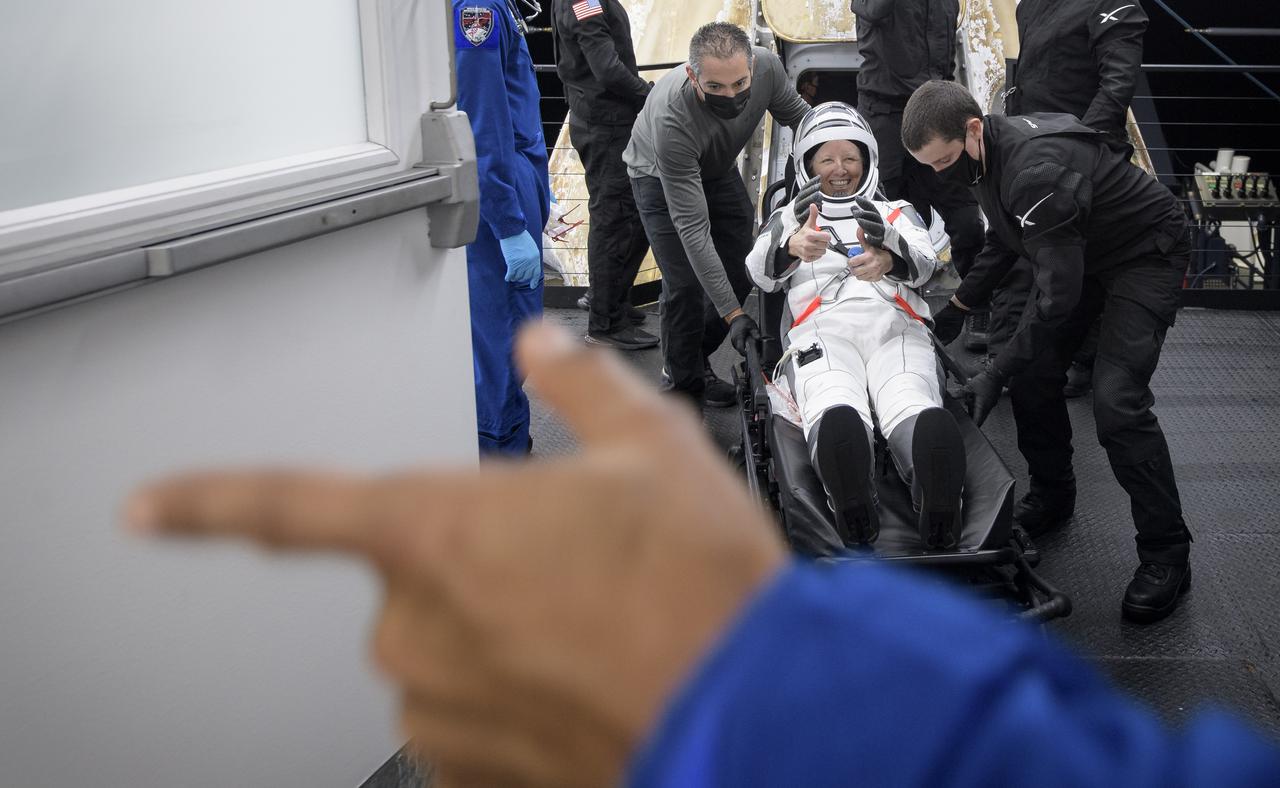
NASA astronaut Shannon Walker smiles and gives a thumbs up after being helped out of the SpaceX Crew Dragon Resilience spacecraft onboard the SpaceX GO Navigator recovery ship after she, NASA astronauts Mike Hopkins, Victor Glover, and Japan Aerospace Exploration Agency (JAXA) astronaut Soichi Noguchi, landed in the Gulf of Mexico off the coast of Panama City, Florida, Sunday, May 2, 2021. NASA’s SpaceX Crew-1 mission was the first crew rotation flight of the SpaceX Crew Dragon spacecraft and Falcon 9 rocket with astronauts to the International Space Station as part of the agency’s Commercial Crew Program. Photo Credit: (NASA/Bill Ingalls)
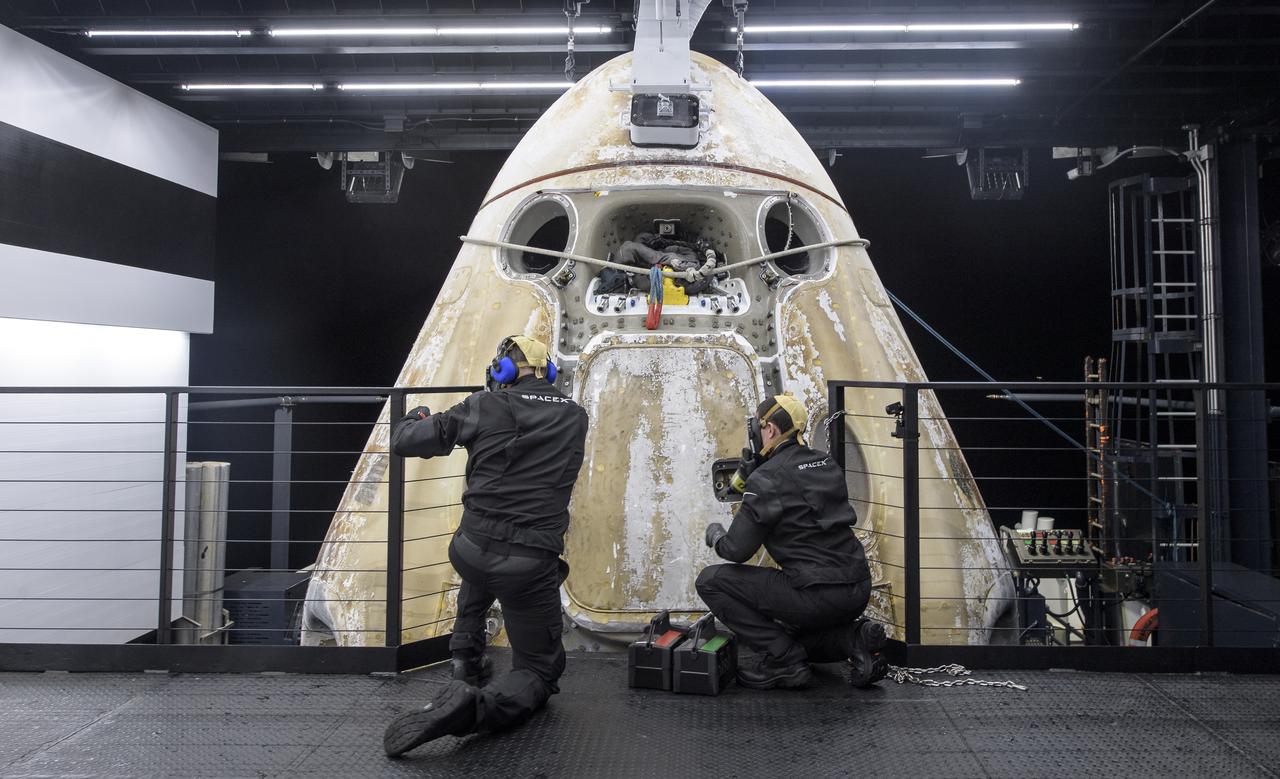
Support teams work around the SpaceX Crew Dragon Resilience spacecraft shortly after it landed with NASA astronauts Mike Hopkins, Shannon Walker, and Victor Glover, and Japan Aerospace Exploration Agency (JAXA) astronaut Soichi Noguchi aboard in the Gulf of Mexico off the coast of Panama City, Florida, Sunday, May 2, 2021. NASA’s SpaceX Crew-1 mission was the first crew rotation flight of the SpaceX Crew Dragon spacecraft and Falcon 9 rocket with astronauts to the International Space Station as part of the agency’s Commercial Crew Program. Photo Credit: (NASA/Bill Ingalls)
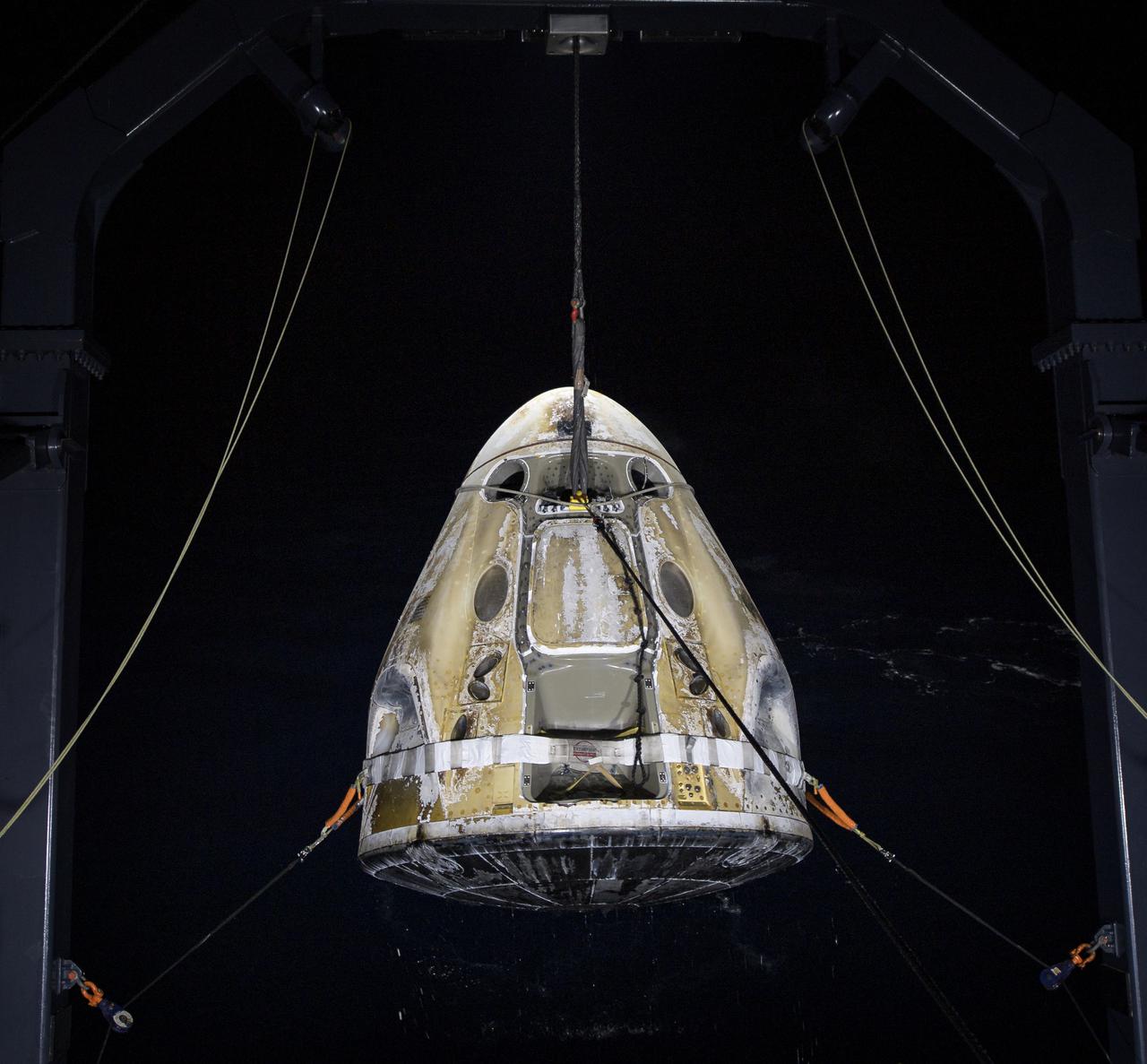
The SpaceX Crew Dragon Resilience spacecraft is lifted onto the GO Navigator recovery ship after it landed with NASA astronauts Mike Hopkins, Shannon Walker, and Victor Glover, and Japan Aerospace Exploration Agency (JAXA) astronaut Soichi Noguchi aboard in the Gulf of Mexico off the coast of Panama City, Florida, Sunday, May 2, 2021. NASA’s SpaceX Crew-1 mission was the first crew rotation flight of the SpaceX Crew Dragon spacecraft and Falcon 9 rocket with astronauts to the International Space Station as part of the agency’s Commercial Crew Program. Photo Credit: (NASA/Bill Ingalls)
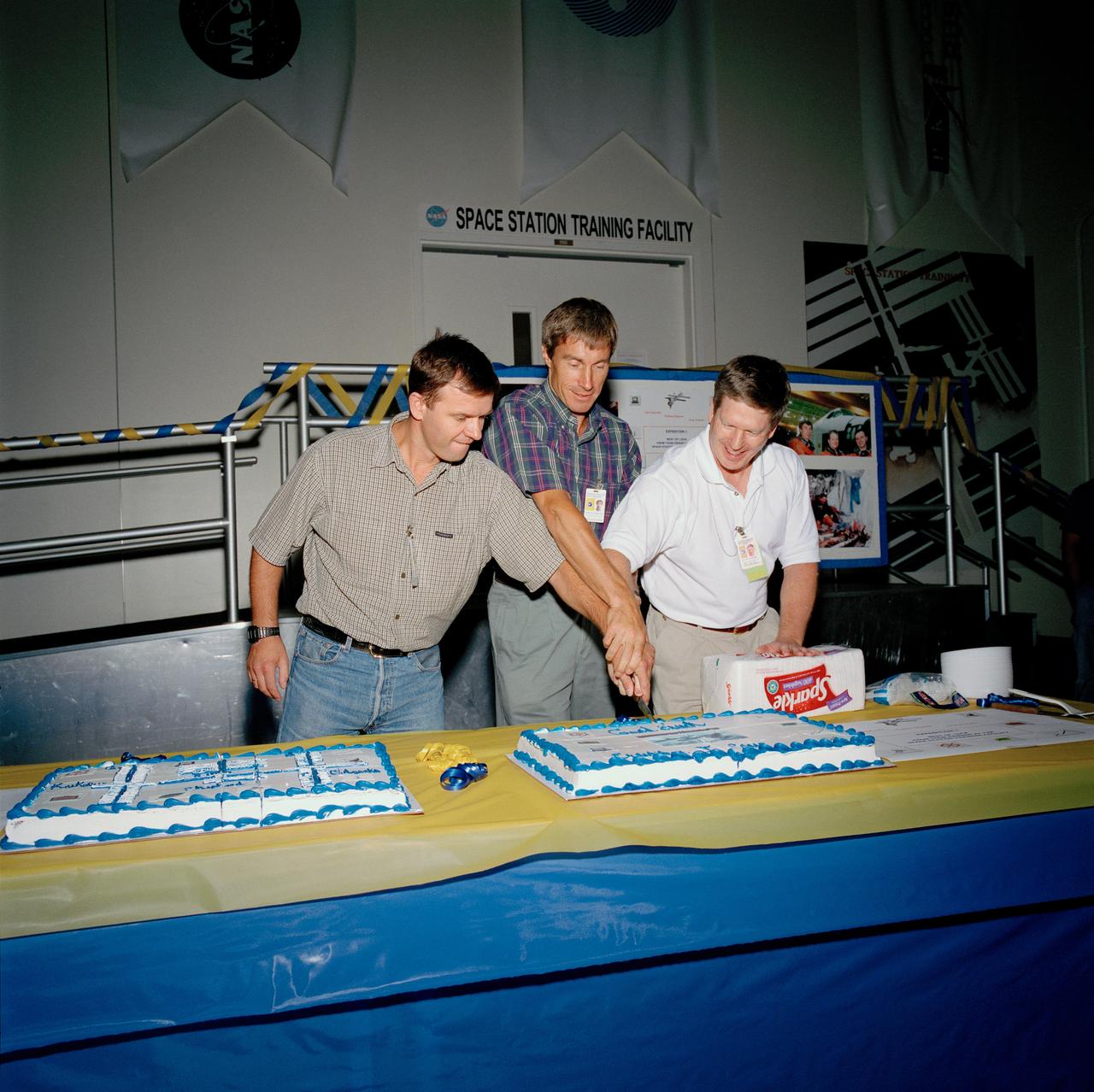
JSC2000-05569 (August 2000) --- Symbolizing the completion of its preflight training in the United States, the Expedition One crew is treated to a celebratory cake from the training team in the Mission Simulation and Training Facility at the Johnson Space Center (JSC). The international crew, from the left, Russian cosmonauts Yuri P. Gidzenko and Sergei K. Krikalev, along with U.S. astronaut William M. Shepherd, departed August 10 for Star City, Russia, where they will continue to train until their scheduled October 30 launch aboard a Russian Soyuz rocket. They will be the first long-duration residents of the station.
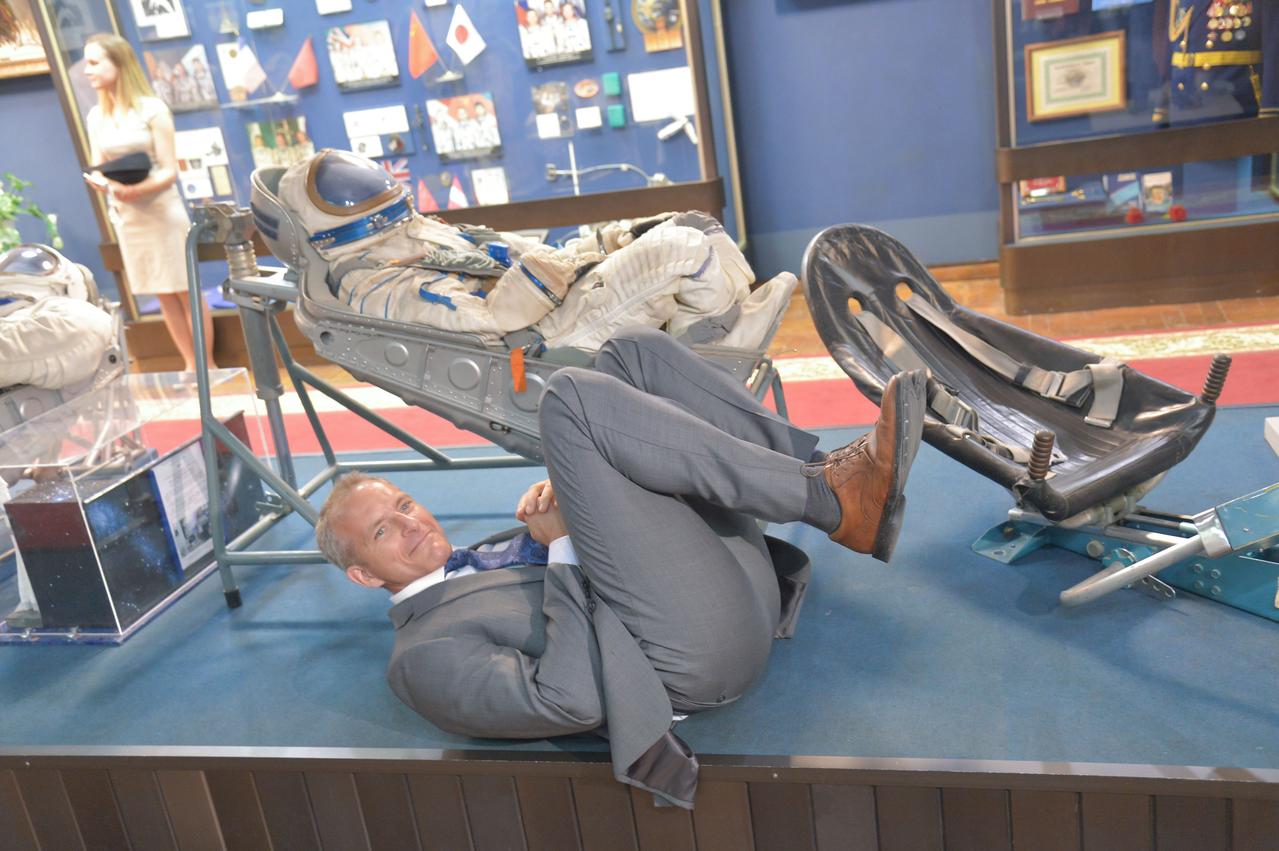
jsc2018e048500 - In the Gagarin Museum at the Gagarin Cosmonaut Training Center in Star City, Russia May 14, Expedition 56 backup crewmember David Saint-Jacques of the Canadian Space Agency mimics the position he will be in when he launches aboard a Soyuz rocket later this year during pre-launch activities. Saint-Jacques is serving as a backup to prime crewmembers Serena Aunon-Chancellor of NASA, Alexander Gerst of the European Space Agency and Sergey Prokopyev of Roscosmos, who will launch June 6 from the Baikonur Cosmodrome in Kazakhstan on the Soyuz MS-09 spacecraft for a six month mission on the International Space Station...NASA/Elizabeth Weissinger.
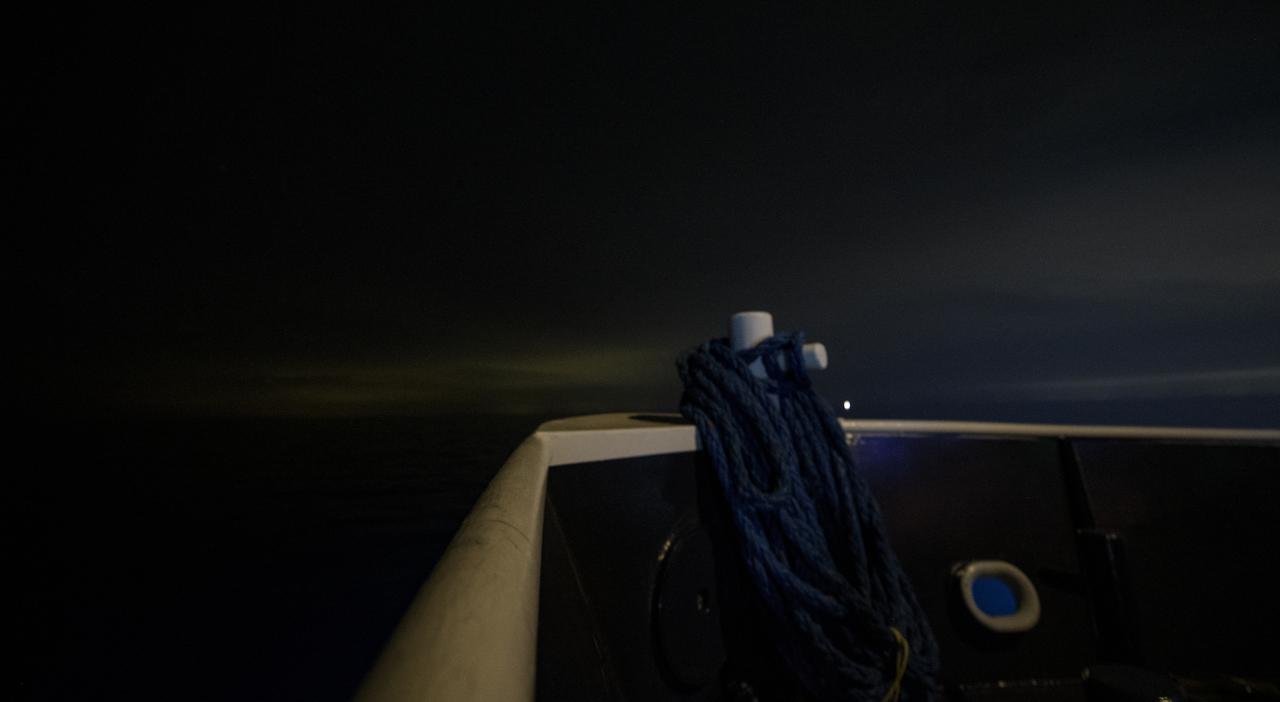
The night sky off the bow of the SpaceX GO Navigator recovery ship is seen in this one second exposure photograph as NASA and SpaceX support teams prepare for the landing of the SpaceX Crew Dragon Resilience spacecraft with NASA astronauts Mike Hopkins, Shannon Walker, and Victor Glover, and Japan Aerospace Exploration Agency (JAXA) astronaut Soichi Noguchi aboard in the Gulf of Mexico off the coast of Panama City, Florida, Saturday, May 1, 2021. NASA’s SpaceX Crew-1 mission is the first crew rotation flight of the SpaceX Crew Dragon spacecraft and Falcon 9 rocket with astronauts to the International Space Station as part of the agency’s Commercial Crew Program. Photo Credit: (NASA/Bill Ingalls)
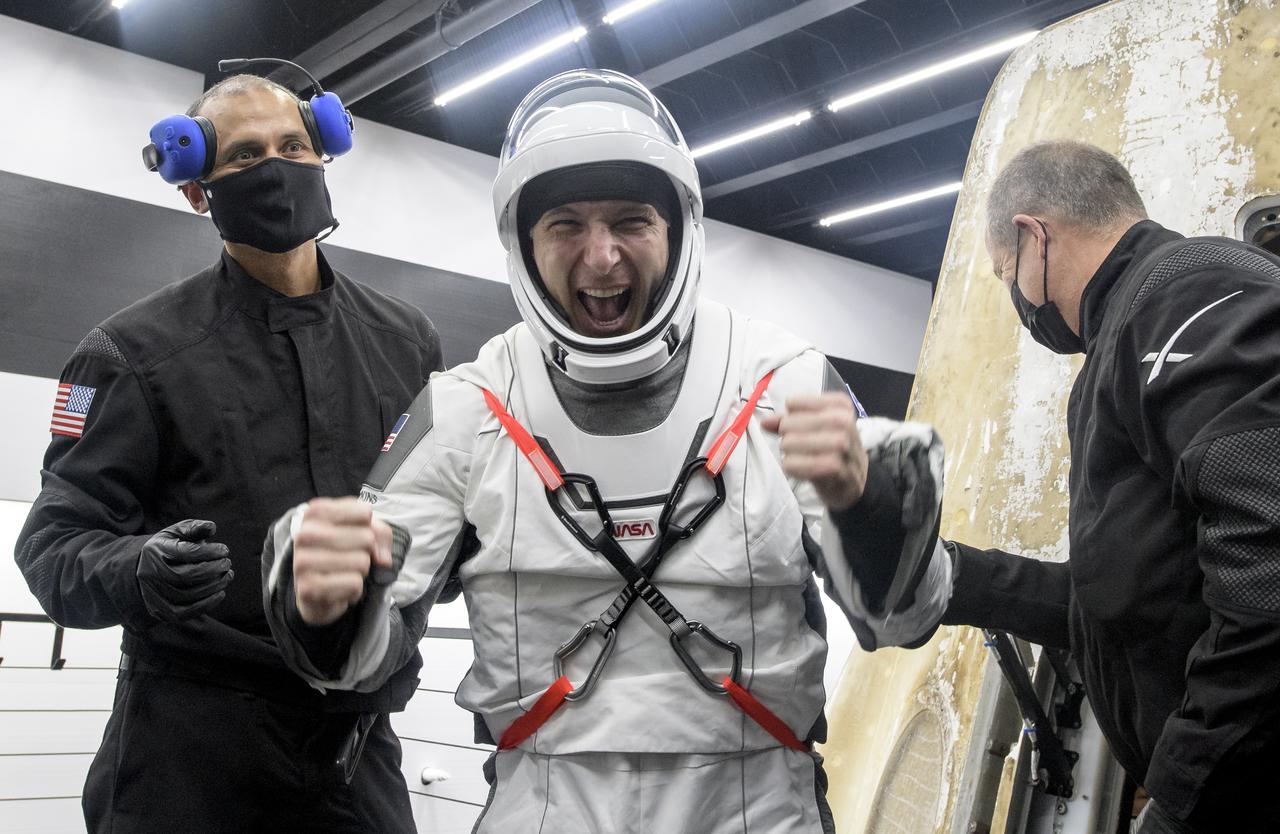
NASA astronaut Mike Hopkins is helped out of the SpaceX Crew Dragon Resilience spacecraft onboard the SpaceX GO Navigator recovery ship after he, NASA astronauts Shannon Walker, Victor Glover and Japan Aerospace Exploration Agency (JAXA) astronaut Soichi Noguchi, landed in the Gulf of Mexico off the coast of Panama City, Florida, Sunday, May 2, 2021. NASA’s SpaceX Crew-1 mission was the first crew rotation flight of the SpaceX Crew Dragon spacecraft and Falcon 9 rocket with astronauts to the International Space Station as part of the agency’s Commercial Crew Program. Photo Credit: (NASA/Bill Ingalls)
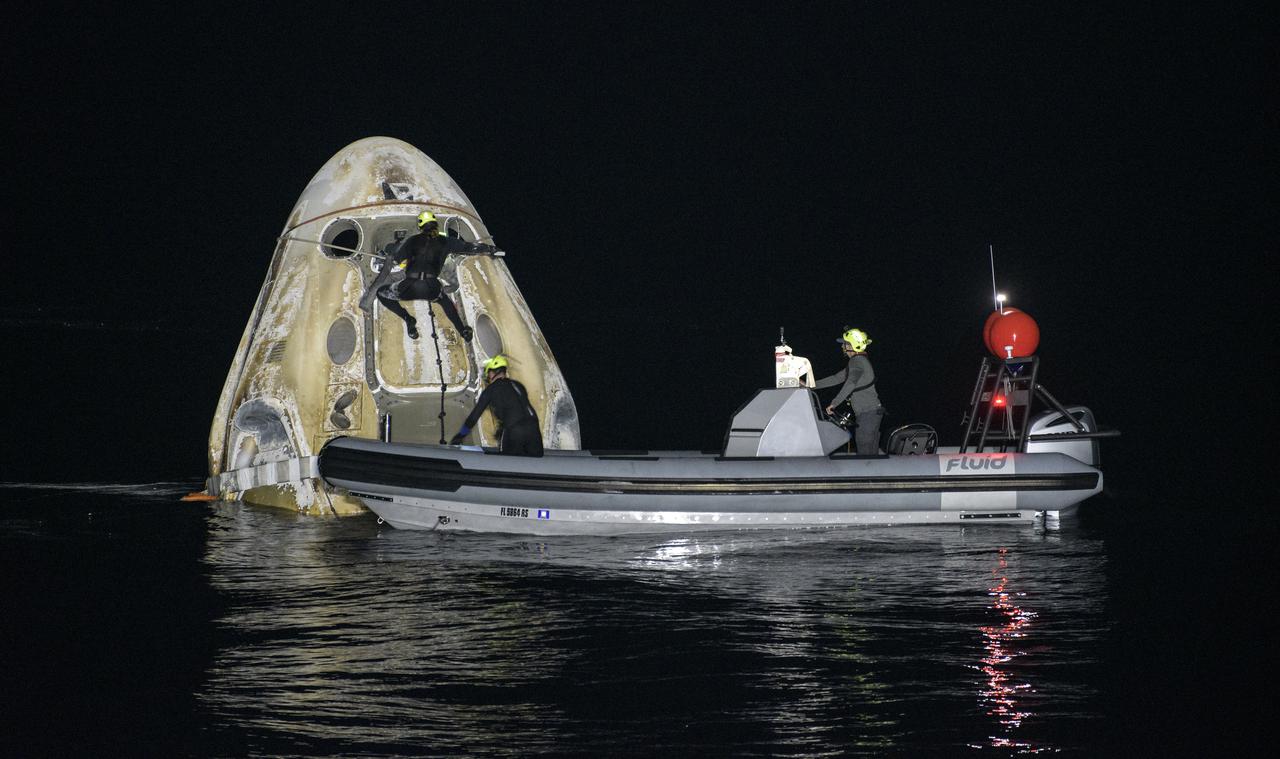
Support teams work around the SpaceX Crew Dragon Resilience spacecraft shortly after it landed with NASA astronauts Mike Hopkins, Shannon Walker, and Victor Glover, and Japan Aerospace Exploration Agency (JAXA) astronaut Soichi Noguchi aboard in the Gulf of Mexico off the coast of Panama City, Florida, Sunday, May 2, 2021. NASA’s SpaceX Crew-1 mission was the first crew rotation flight of the SpaceX Crew Dragon spacecraft and Falcon 9 rocket with astronauts to the International Space Station as part of the agency’s Commercial Crew Program. Photo Credit: (NASA/Bill Ingalls)
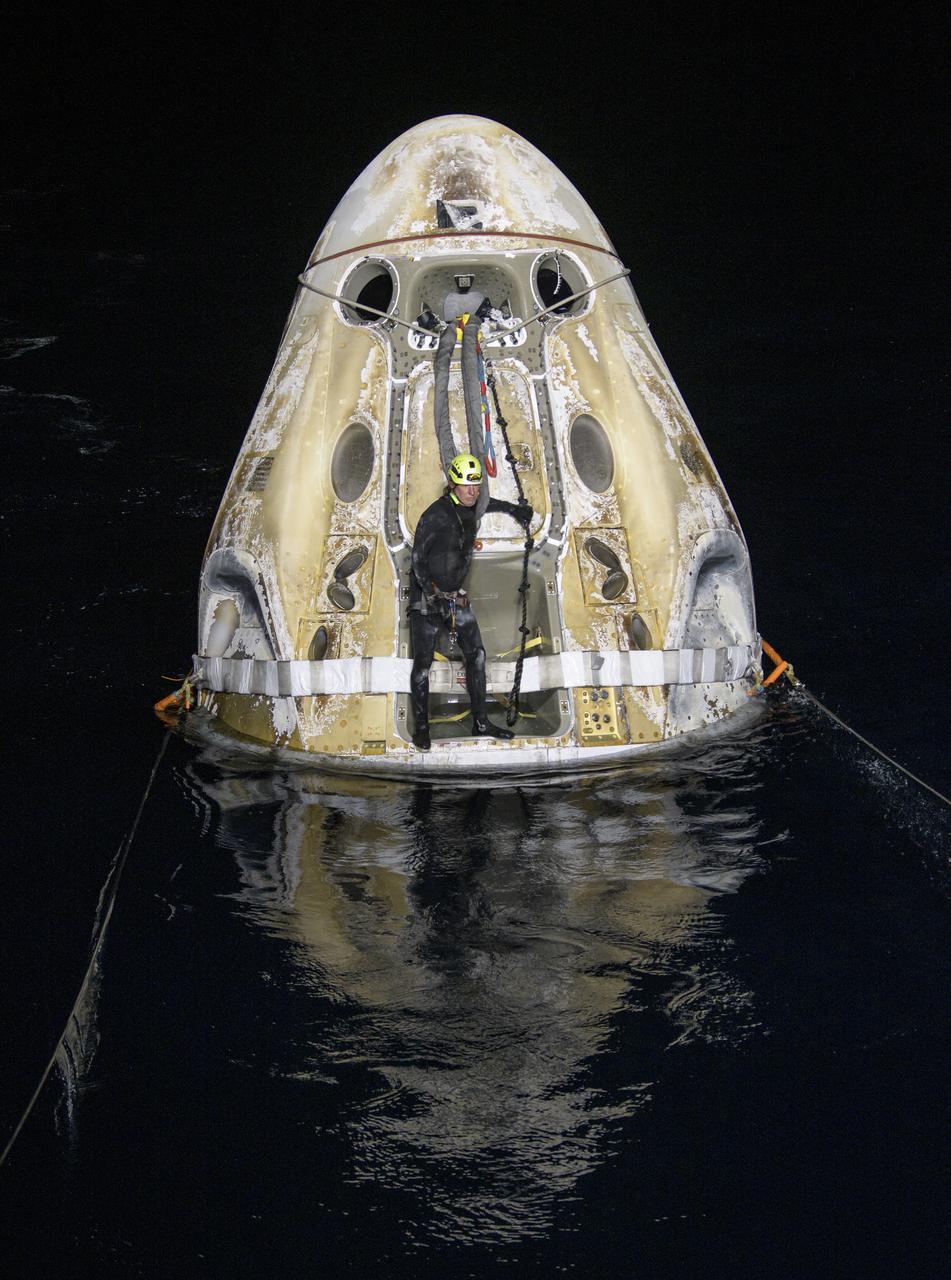
Support teams work around the SpaceX Crew Dragon Resilience spacecraft shortly after it landed with NASA astronauts Mike Hopkins, Shannon Walker, and Victor Glover, and Japan Aerospace Exploration Agency (JAXA) astronaut Soichi Noguchi aboard in the Gulf of Mexico off the coast of Panama City, Florida, Sunday, May 2, 2021. NASA’s SpaceX Crew-1 mission was the first crew rotation flight of the SpaceX Crew Dragon spacecraft and Falcon 9 rocket with astronauts to the International Space Station as part of the agency’s Commercial Crew Program. Photo Credit: (NASA/Bill Ingalls)
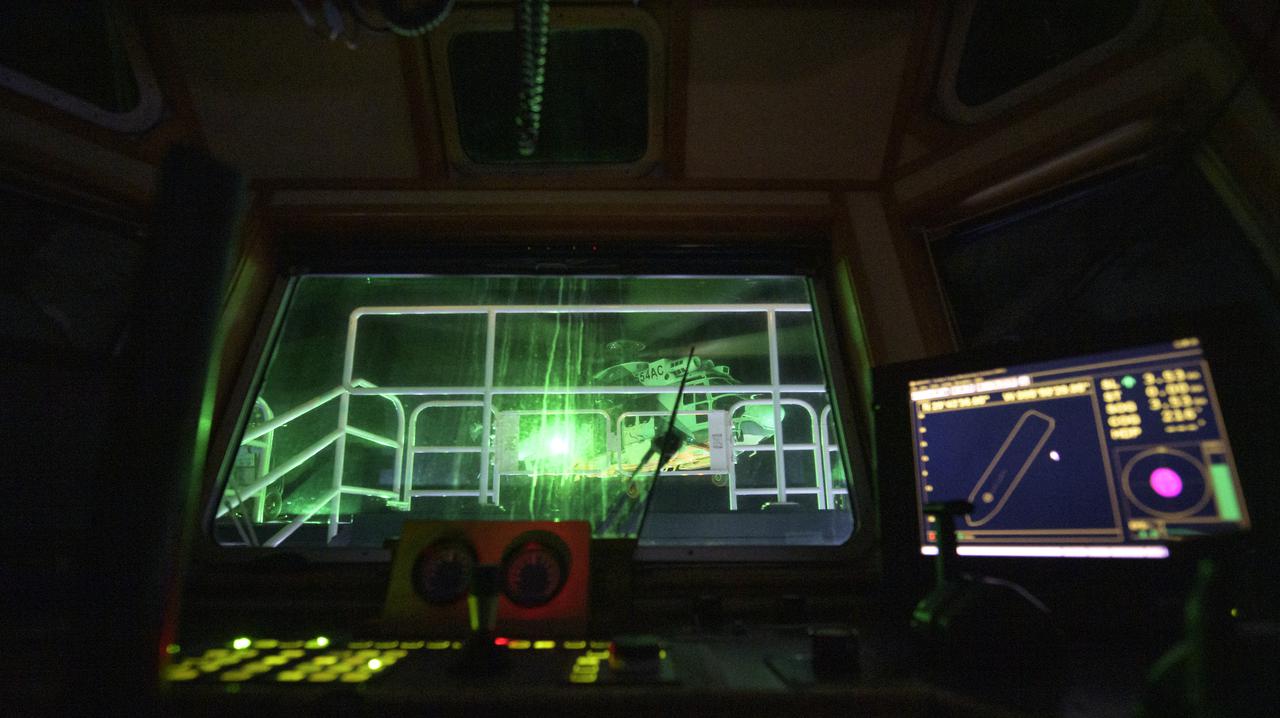
NASA and SpaceX support teams arrive via helicopter to the SpaceX GO Navigator recovery ship in order to prepare for the landing of the SpaceX Crew Dragon Resilience spacecraft with NASA astronauts Mike Hopkins, Shannon Walker, and Victor Glover, and Japan Aerospace Exploration Agency (JAXA) astronaut Soichi Noguchi aboard in the Gulf of Mexico off the coast of Panama City, Florida, Saturday, May 1, 2021. NASA’s SpaceX Crew-1 mission is the first crew rotation flight of the SpaceX Crew Dragon spacecraft and Falcon 9 rocket with astronauts to the International Space Station as part of the agency’s Commercial Crew Program. Photo Credit: (NASA/Bill Ingalls)
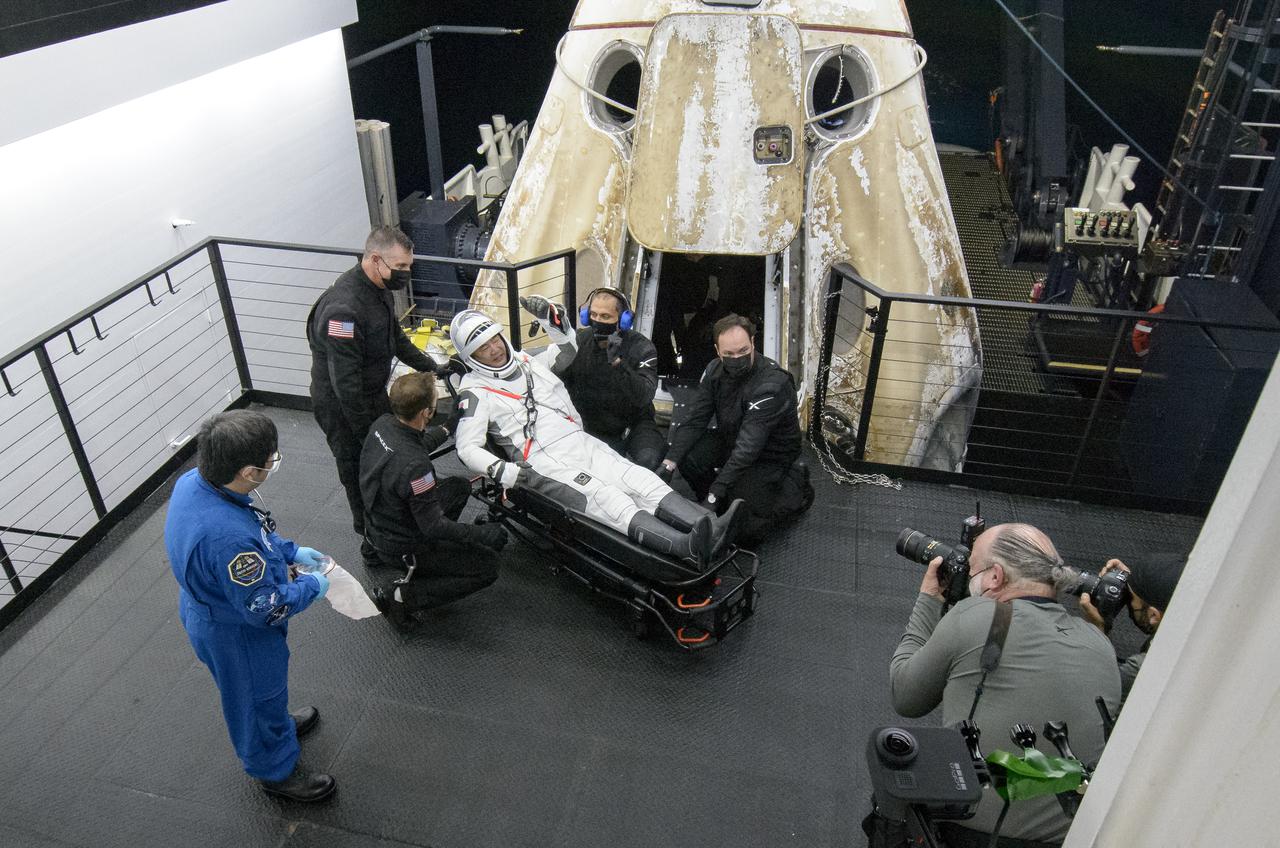
Japan Aerospace Exploration Agency (JAXA) astronaut Soichi Noguchi gives a thumbs up after he is helped out of the SpaceX Crew Dragon Resilience spacecraft onboard the SpaceX GO Navigator recovery ship after he, NASA astronauts Mike Hopkins, Shannon Walker and Victor Glover, landed in the Gulf of Mexico off the coast of Panama City, Florida, Sunday, May 2, 2021. NASA’s SpaceX Crew-1 mission was the first crew rotation flight of the SpaceX Crew Dragon spacecraft and Falcon 9 rocket with astronauts to the International Space Station as part of the agency’s Commercial Crew Program. Photo Credit: (NASA/Bill Ingalls)
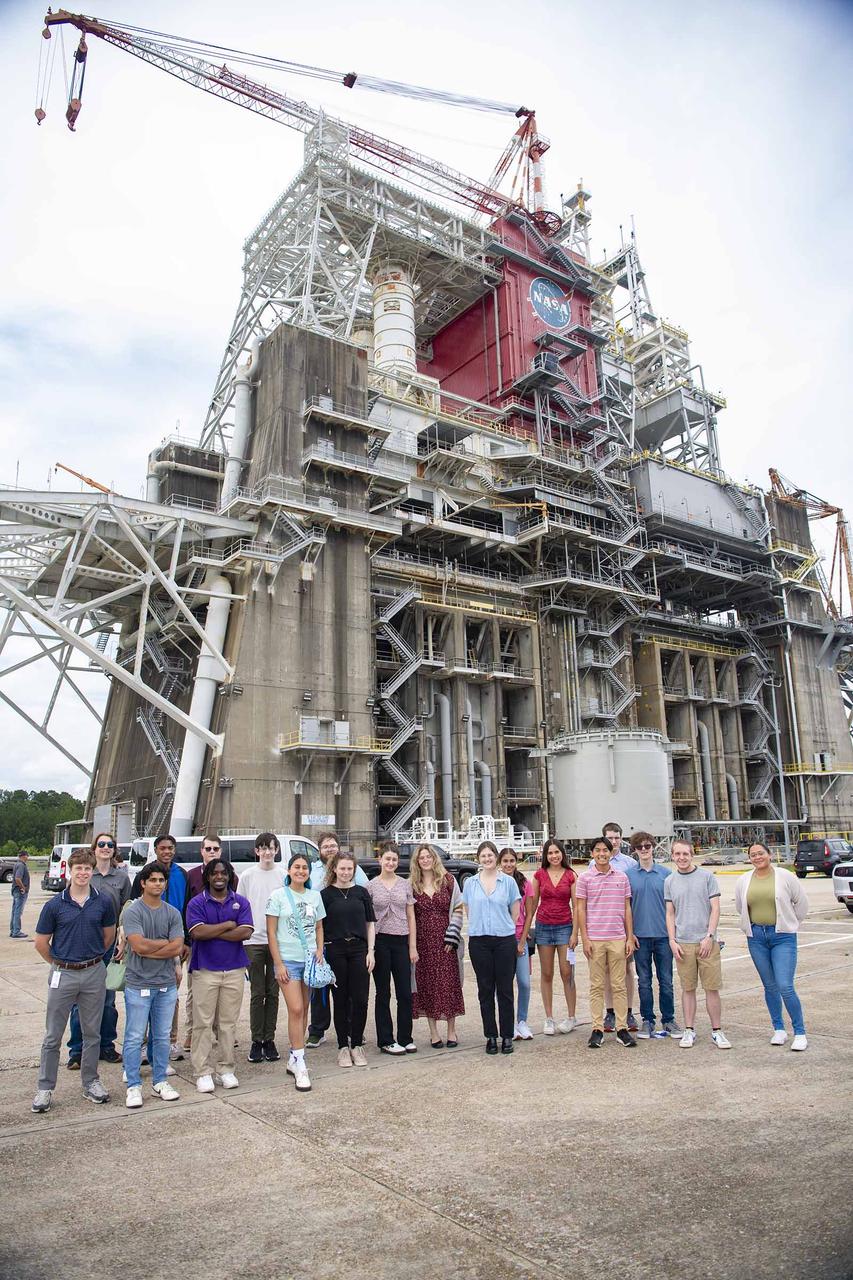
Summer interns with the U.S. Naval Research Laboratory stand in front of the Thad Cochran Test Stand (B-1/B-2) on July 10. NASA Stennis crews are preparing the B-2 side of the stand for future testing of NASA’s exploration upper stage. The more powerful second stage is expected to fly on NASA’s SLS (Space Launch System) rocket for Artemis IV. The Naval Research Laboratory interns visited the stand during an afternoon tour of NASA Stennis. The Naval Research Laboratory is a tenant of the NASA Stennis federal city, where it provides advanced scientific capabilities required to bolster the nation’s position of global naval leadership.
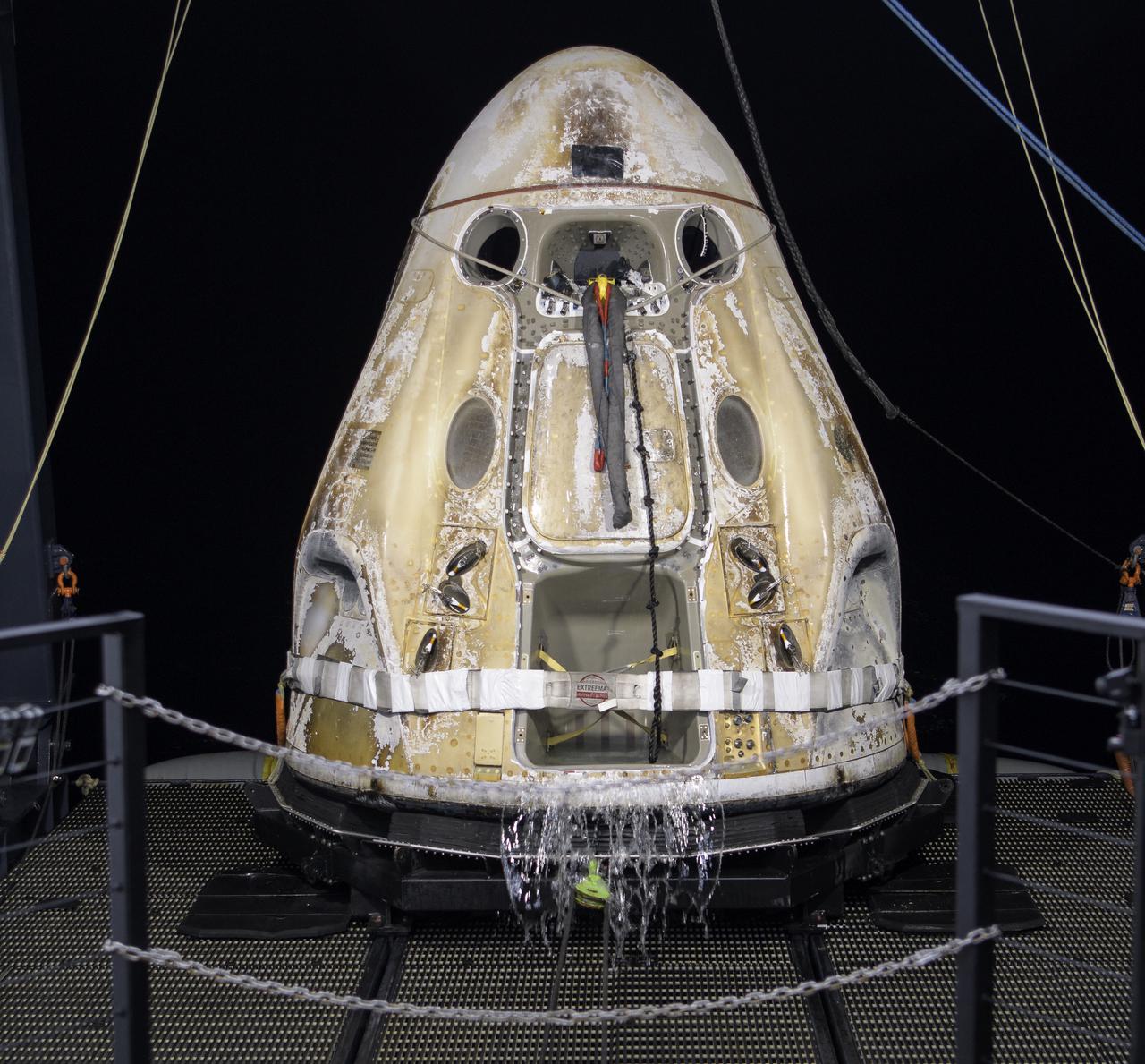
The SpaceX Crew Dragon Resilience spacecraft is lifted onto the GO Navigator recovery ship after it landed with NASA astronauts Mike Hopkins, Shannon Walker, and Victor Glover, and Japan Aerospace Exploration Agency (JAXA) astronaut Soichi Noguchi aboard in the Gulf of Mexico off the coast of Panama City, Florida, Sunday, May 2, 2021. NASA’s SpaceX Crew-1 mission was the first crew rotation flight of the SpaceX Crew Dragon spacecraft and Falcon 9 rocket with astronauts to the International Space Station as part of the agency’s Commercial Crew Program. Photo Credit: (NASA/Bill Ingalls)
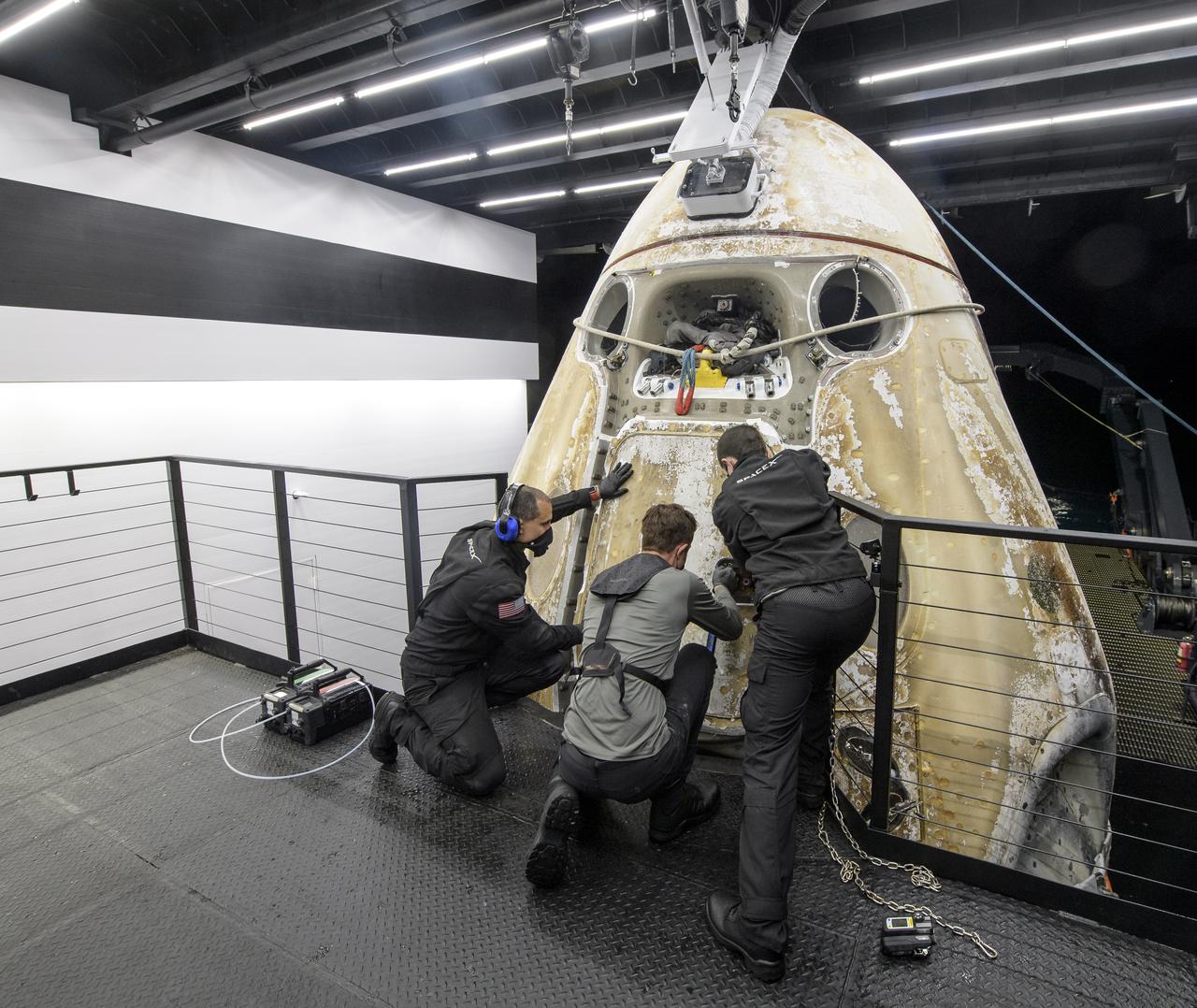
Support teams work around the SpaceX Crew Dragon Resilience spacecraft shortly after it landed with NASA astronauts Mike Hopkins, Shannon Walker, and Victor Glover, and Japan Aerospace Exploration Agency (JAXA) astronaut Soichi Noguchi aboard in the Gulf of Mexico off the coast of Panama City, Florida, Sunday, May 2, 2021. NASA’s SpaceX Crew-1 mission was the first crew rotation flight of the SpaceX Crew Dragon spacecraft and Falcon 9 rocket with astronauts to the International Space Station as part of the agency’s Commercial Crew Program. Photo Credit: (NASA/Bill Ingalls)
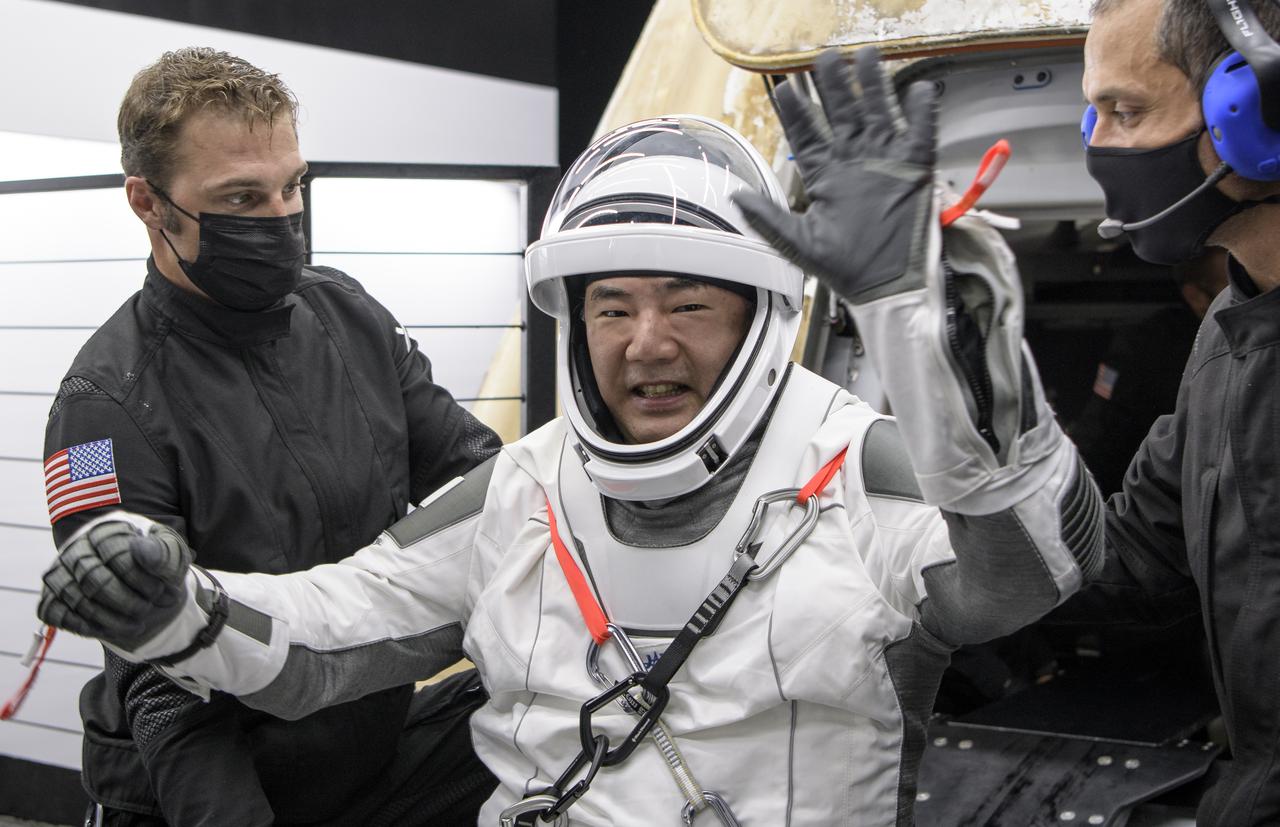
Japan Aerospace Exploration Agency (JAXA) astronaut Soichi Noguchi is helped out of the SpaceX Crew Dragon Resilience spacecraft onboard the SpaceX GO Navigator recovery ship after he, NASA astronauts Mike Hopkins, Shannon Walker, and Victor Glover, landed in the Gulf of Mexico off the coast of Panama City, Florida, Sunday, May 2, 2021. NASA’s SpaceX Crew-1 mission was the first crew rotation flight of the SpaceX Crew Dragon spacecraft and Falcon 9 rocket with astronauts to the International Space Station as part of the agency’s Commercial Crew Program. Photo Credit: (NASA/Bill Ingalls)
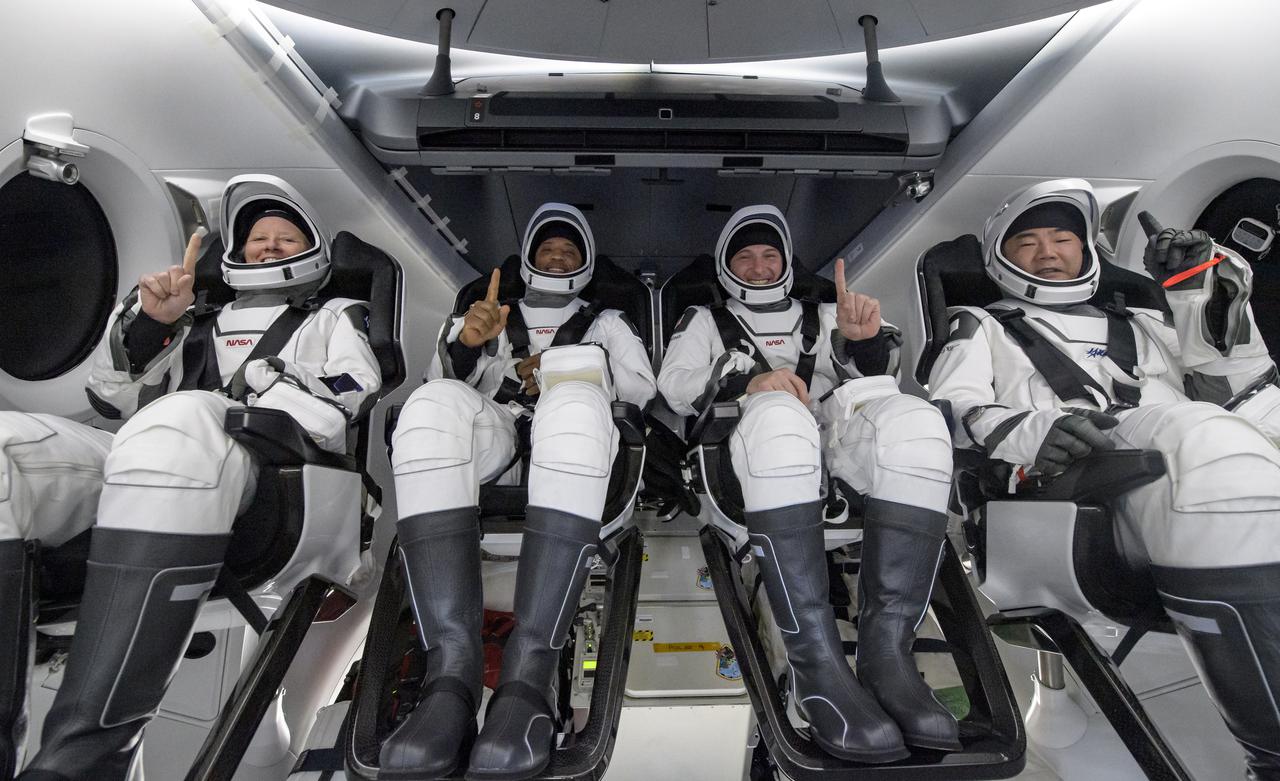
NASA astronauts Shannon Walker, left, Victor Glover, Mike Hopkins, and Japan Aerospace Exploration Agency (JAXA) astronaut Soichi Noguchi, right are seen inside the SpaceX Crew Dragon Resilience spacecraft onboard the SpaceX GO Navigator recovery ship shortly after having landed in the Gulf of Mexico off the coast of Panama City, Florida, Sunday, May 2, 2021. NASA’s SpaceX Crew-1 mission was the first crew rotation flight of the SpaceX Crew Dragon spacecraft and Falcon 9 rocket with astronauts to the International Space Station as part of the agency’s Commercial Crew Program. Photo Credit: (NASA/Bill Ingalls)
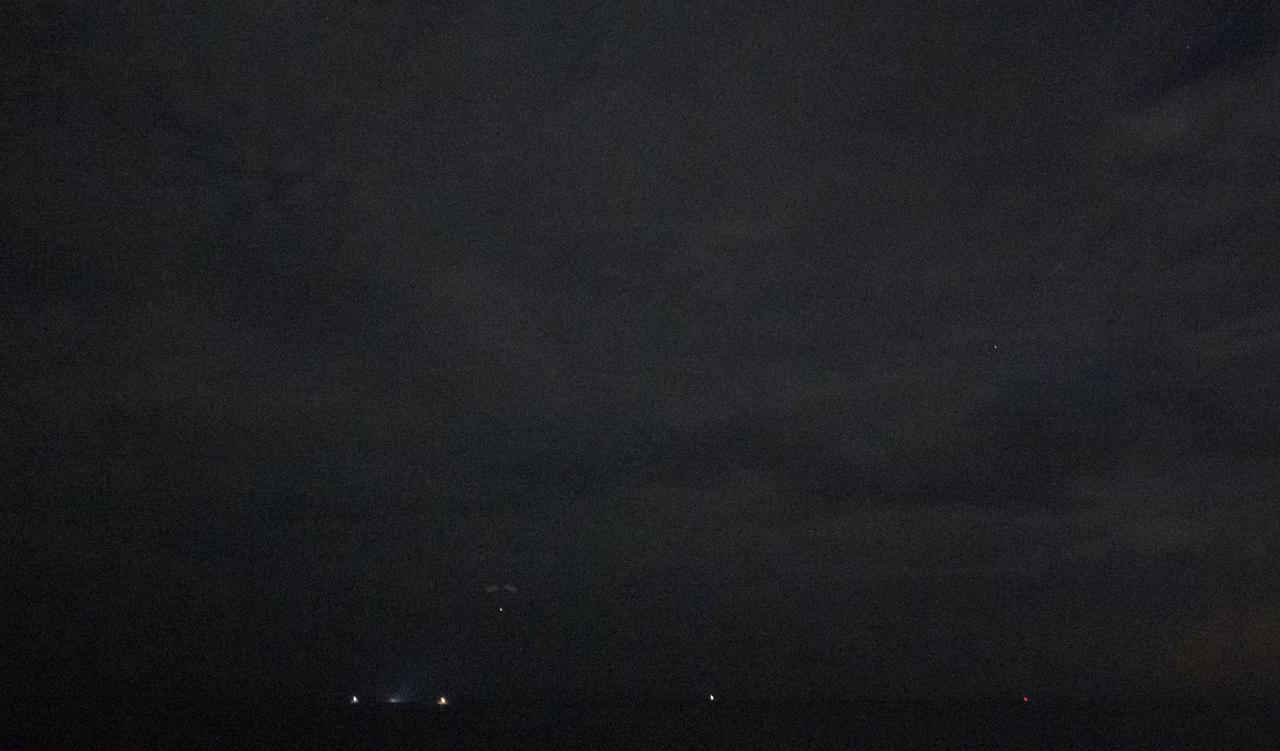
The SpaceX Crew Dragon Resilience spacecraft is seen in the distance as it lands with NASA astronauts Mike Hopkins, Shannon Walker, and Victor Glover, and Japan Aerospace Exploration Agency (JAXA) astronaut Soichi Noguchi aboard in the Gulf of Mexico off the coast of Panama City, Florida, Sunday, May 2, 2021. NASA’s SpaceX Crew-1 mission was the first crew rotation flight of the SpaceX Crew Dragon spacecraft and Falcon 9 rocket with astronauts to the International Space Station as part of the agency’s Commercial Crew Program. Note - this image noise is a result of using a very high sensitivity setting in the camera in a very dark situation. Photo Credit: (NASA/Bill Ingalls)
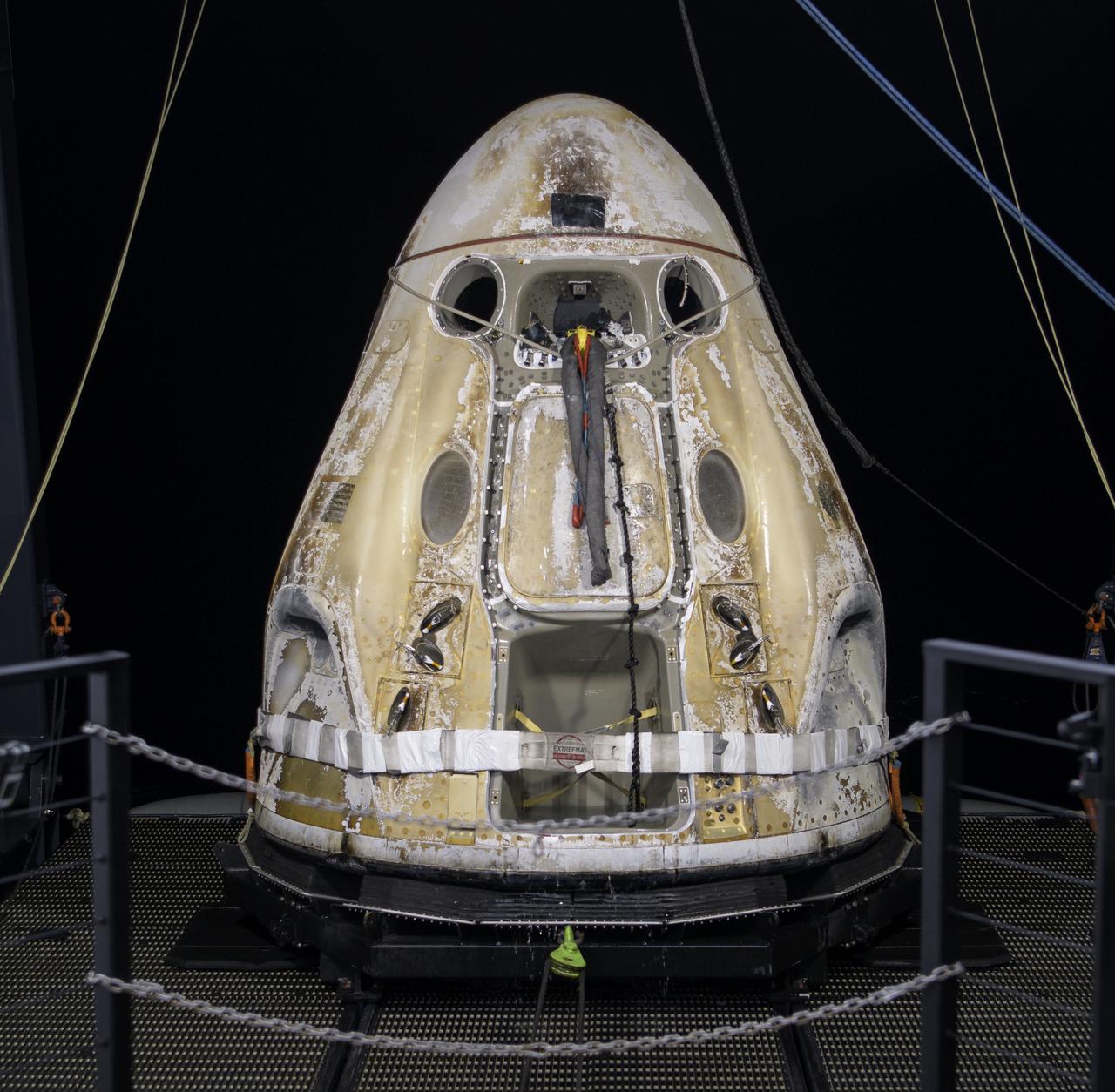
The SpaceX Crew Dragon Resilience spacecraft is lifted onto the GO Navigator recovery ship after it landed with NASA astronauts Mike Hopkins, Shannon Walker, and Victor Glover, and Japan Aerospace Exploration Agency (JAXA) astronaut Soichi Noguchi aboard in the Gulf of Mexico off the coast of Panama City, Florida, Sunday, May 2, 2021. NASA’s SpaceX Crew-1 mission was the first crew rotation flight of the SpaceX Crew Dragon spacecraft and Falcon 9 rocket with astronauts to the International Space Station as part of the agency’s Commercial Crew Program. Photo Credit: (NASA/Bill Ingalls)
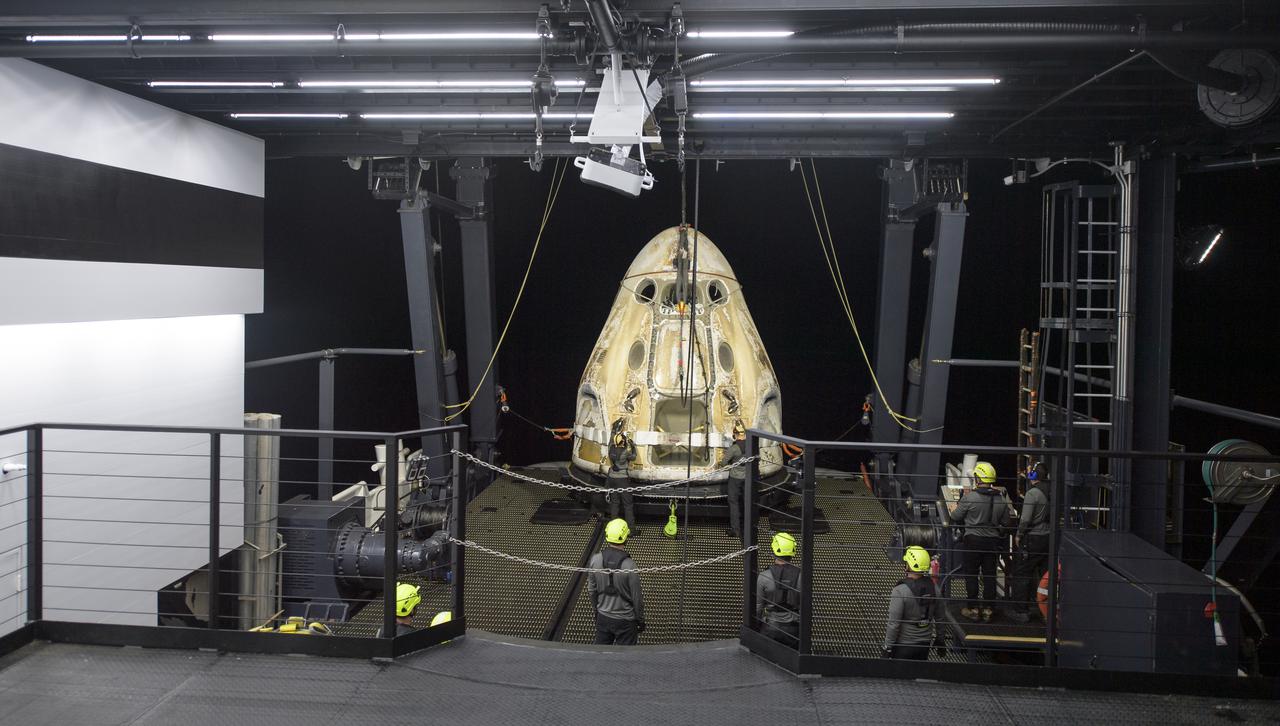
Support teams work around the SpaceX Crew Dragon Resilience spacecraft shortly after it landed with NASA astronauts Mike Hopkins, Shannon Walker, and Victor Glover, and Japan Aerospace Exploration Agency (JAXA) astronaut Soichi Noguchi aboard in the Gulf of Mexico off the coast of Panama City, Florida, Sunday, May 2, 2021. NASA’s SpaceX Crew-1 mission was the first crew rotation flight of the SpaceX Crew Dragon spacecraft and Falcon 9 rocket with astronauts to the International Space Station as part of the agency’s Commercial Crew Program. Photo Credit: (NASA/Bill Ingalls)
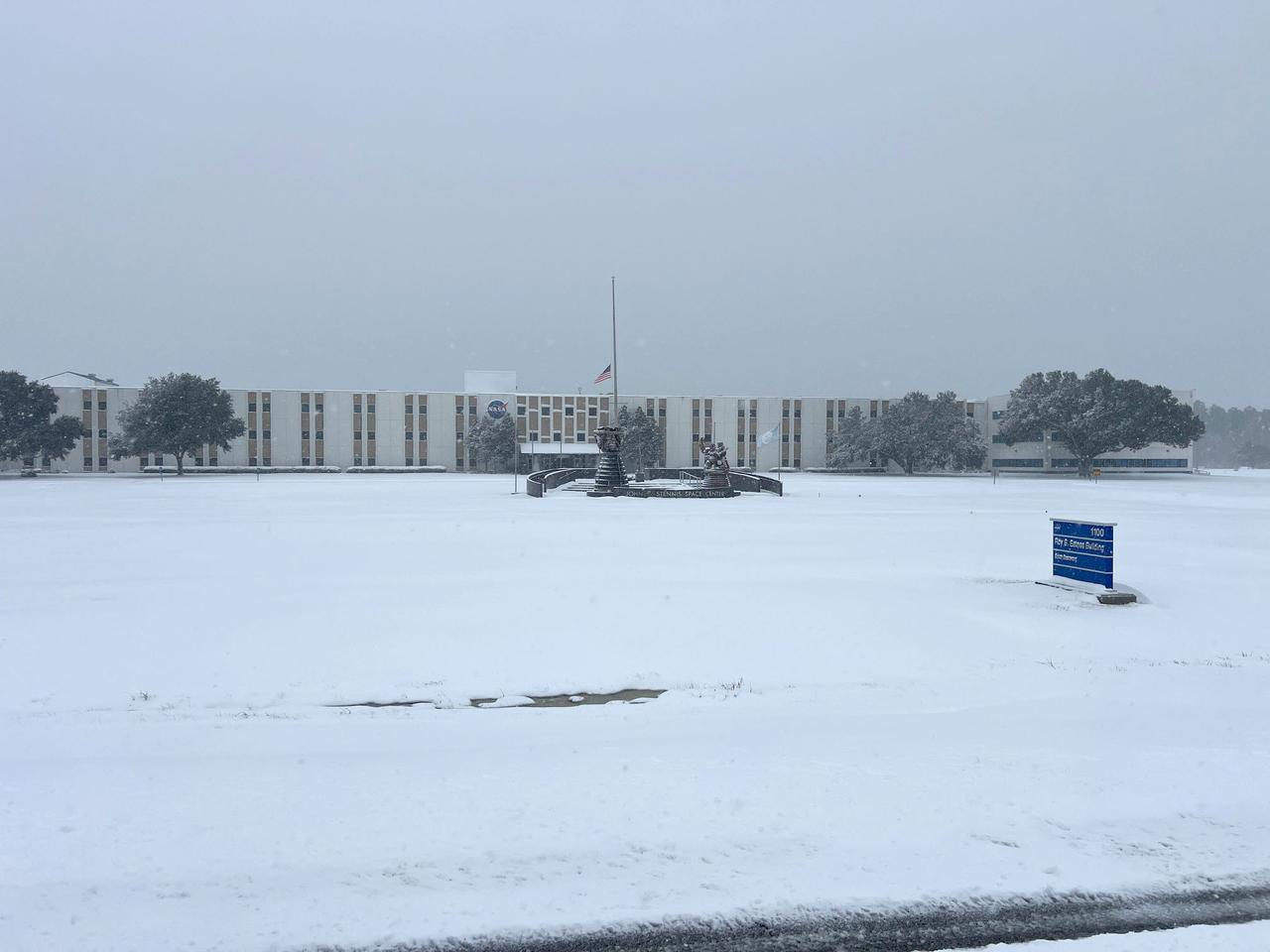
NASA’s Stennis Space Center near Bay St. Louis, Mississippi, is often associated with hot fires coming from the center’s long history of hot fire testing engines and stages that have helped power the nation’s space dreams since the first humans stepped foot on the Moon. However, NASA Stennis turned into a Winter Wonderland Jan. 21 when America’s largest rocket propulsion test site received a historic amount of snow across the unique federal city. Hancock County, where NASA Stennis is located, received five to seven inches of snow, according to the National Weather Service. It marked the most snow the county has received in 61 years. The December 31, 1963, snowfall holds the record at 10 inches of snow for Bay St. Louis, Mississippi.
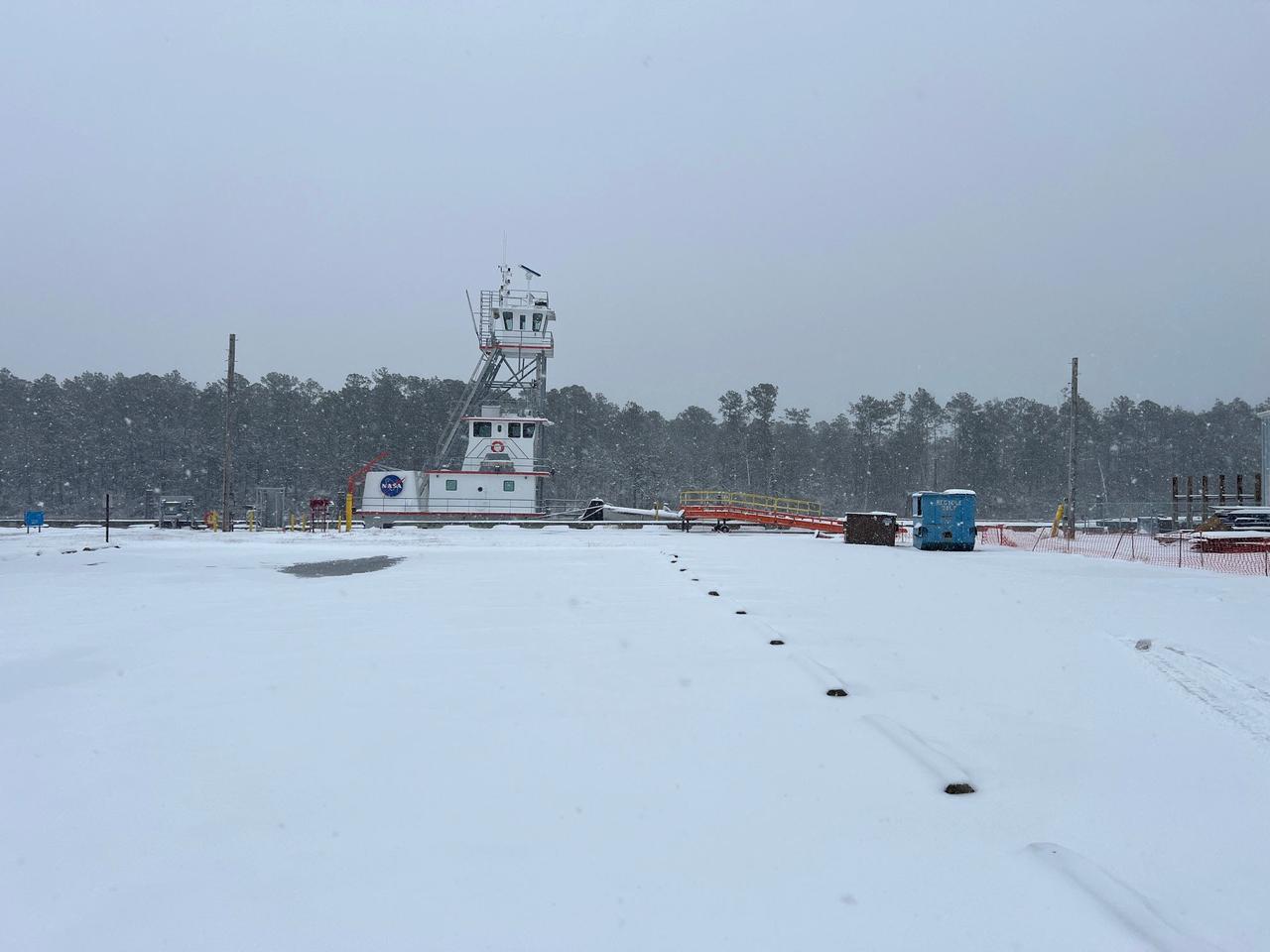
NASA’s Stennis Space Center near Bay St. Louis, Mississippi, is often associated with hot fires coming from the center’s long history of hot fire testing engines and stages that have helped power the nation’s space dreams since the first humans stepped foot on the Moon. However, NASA Stennis turned into a Winter Wonderland Jan. 21 when America’s largest rocket propulsion test site received a historic amount of snow across the unique federal city. Hancock County, where NASA Stennis is located, received five to seven inches of snow, according to the National Weather Service. It marked the most snow the county has received in 61 years. The December 31, 1963, snowfall holds the record at 10 inches of snow for Bay St. Louis, Mississippi.

NASA’s Stennis Space Center near Bay St. Louis, Mississippi, is often associated with hot fires coming from the center’s long history of hot fire testing engines and stages that have helped power the nation’s space dreams since the first humans stepped foot on the Moon. However, NASA Stennis turned into a Winter Wonderland Jan. 21 when America’s largest rocket propulsion test site received a historic amount of snow across the unique federal city. Hancock County, where NASA Stennis is located, received five to seven inches of snow, according to the National Weather Service. It marked the most snow the county has received in 61 years. The December 31, 1963, snowfall holds the record at 10 inches of snow for Bay St. Louis, Mississippi.
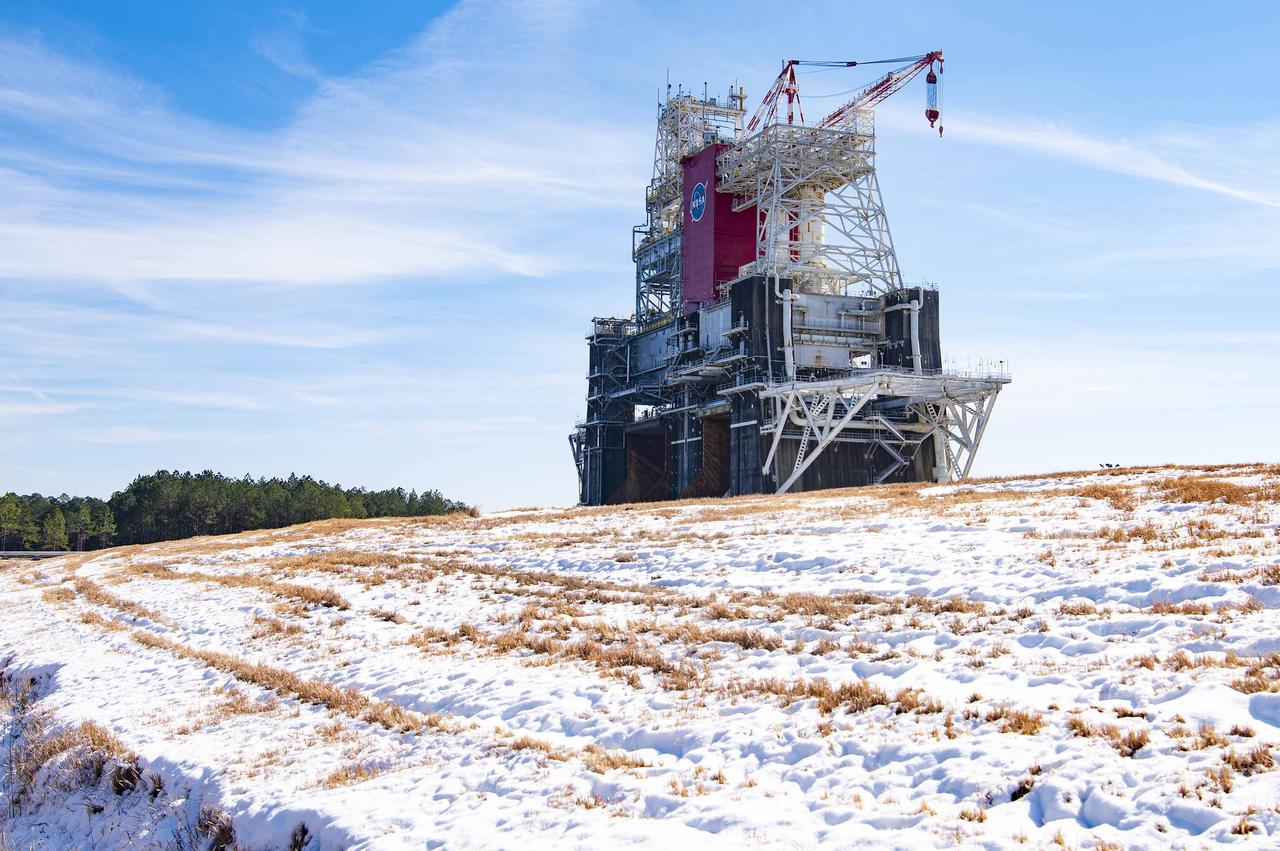
NASA’s Stennis Space Center near Bay St. Louis, Mississippi, is often associated with hot fires coming from the center’s long history of hot fire testing engines and stages that have helped power the nation’s space dreams since the first humans stepped foot on the Moon. However, NASA Stennis turned into a Winter Wonderland Jan. 21 when America’s largest rocket propulsion test site received a historic amount of snow across the unique federal city. Hancock County, where NASA Stennis is located, received five to seven inches of snow, according to the National Weather Service. It marked the most snow the county has received in 61 years. The December 31, 1963, snowfall holds the record at 10 inches of snow for Bay St. Louis, Mississippi.
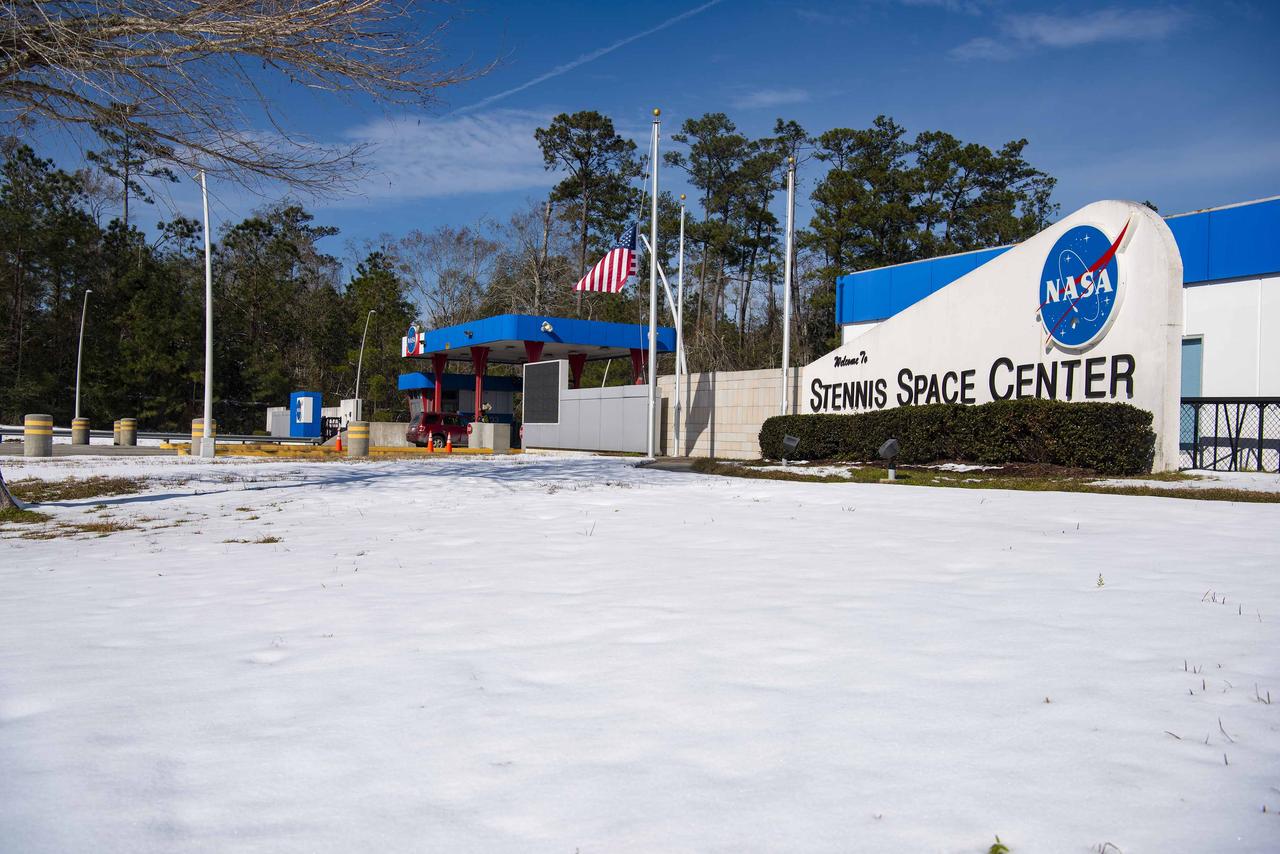
NASA’s Stennis Space Center near Bay St. Louis, Mississippi, is often associated with hot fires coming from the center’s long history of hot fire testing engines and stages that have helped power the nation’s space dreams since the first humans stepped foot on the Moon. However, NASA Stennis turned into a Winter Wonderland Jan. 21 when America’s largest rocket propulsion test site received a historic amount of snow across the unique federal city. Hancock County, where NASA Stennis is located, received five to seven inches of snow, according to the National Weather Service. It marked the most snow the county has received in 61 years. The December 31, 1963, snowfall holds the record at 10 inches of snow for Bay St. Louis, Mississippi.

NASA’s Stennis Space Center near Bay St. Louis, Mississippi, is often associated with hot fires coming from the center’s long history of hot fire testing engines and stages that have helped power the nation’s space dreams since the first humans stepped foot on the Moon. However, NASA Stennis turned into a Winter Wonderland Jan. 21 when America’s largest rocket propulsion test site received a historic amount of snow across the unique federal city. Hancock County, where NASA Stennis is located, received five to seven inches of snow, according to the National Weather Service. It marked the most snow the county has received in 61 years. The December 31, 1963, snowfall holds the record at 10 inches of snow for Bay St. Louis, Mississippi.
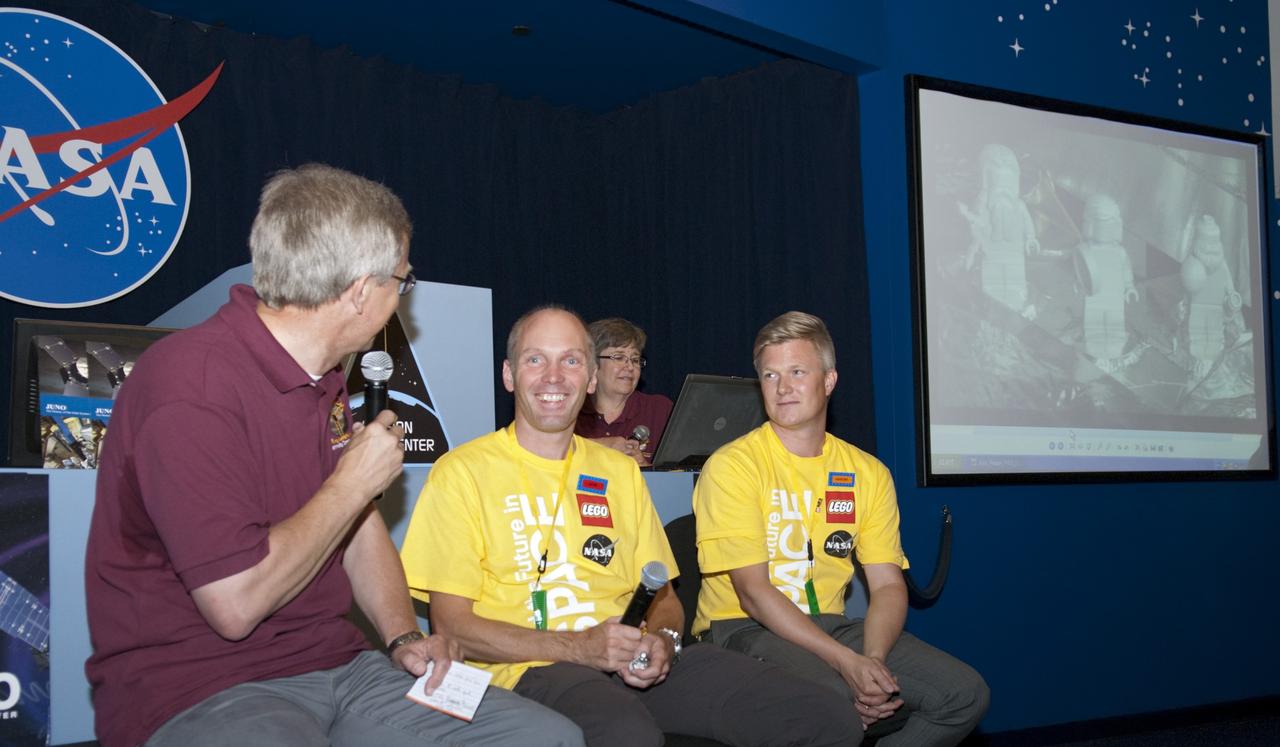
CAPE CANAVERAL, Fla. -- From left, Dr. Steve Lee, with the Denver Museum of Nature and Science; Ulrik Solberg Lund, a LEGO minifigure designer; and Karsten Juel Bunch, a LEGO City senior designer, participate in an educational webcast in the Mission Status Center at the Kennedy Space Center Visitor Complex in Florida. On hand to ask questions of the guests were students, teachers, and mentors of the Goldstone Apple Valley Radio Telescope (GAVRT) project who were invited to Kennedy to watch the launch of NASA's Juno spacecraft atop a United Launch Alliance Atlas V rocket. GAVRT is a partnership between NASA, the Jet Propulsion Laboratory (JPL), and The Lewis Center for Educational Research (LCER) in Apple Valley, Calif. It allows students to control a 34-meter radio telescope that, until recently, was part of NASA’s Deep Space Network, and to interact with scientists outside the classroom setting. Photo credit: NASA/Glenn Benson