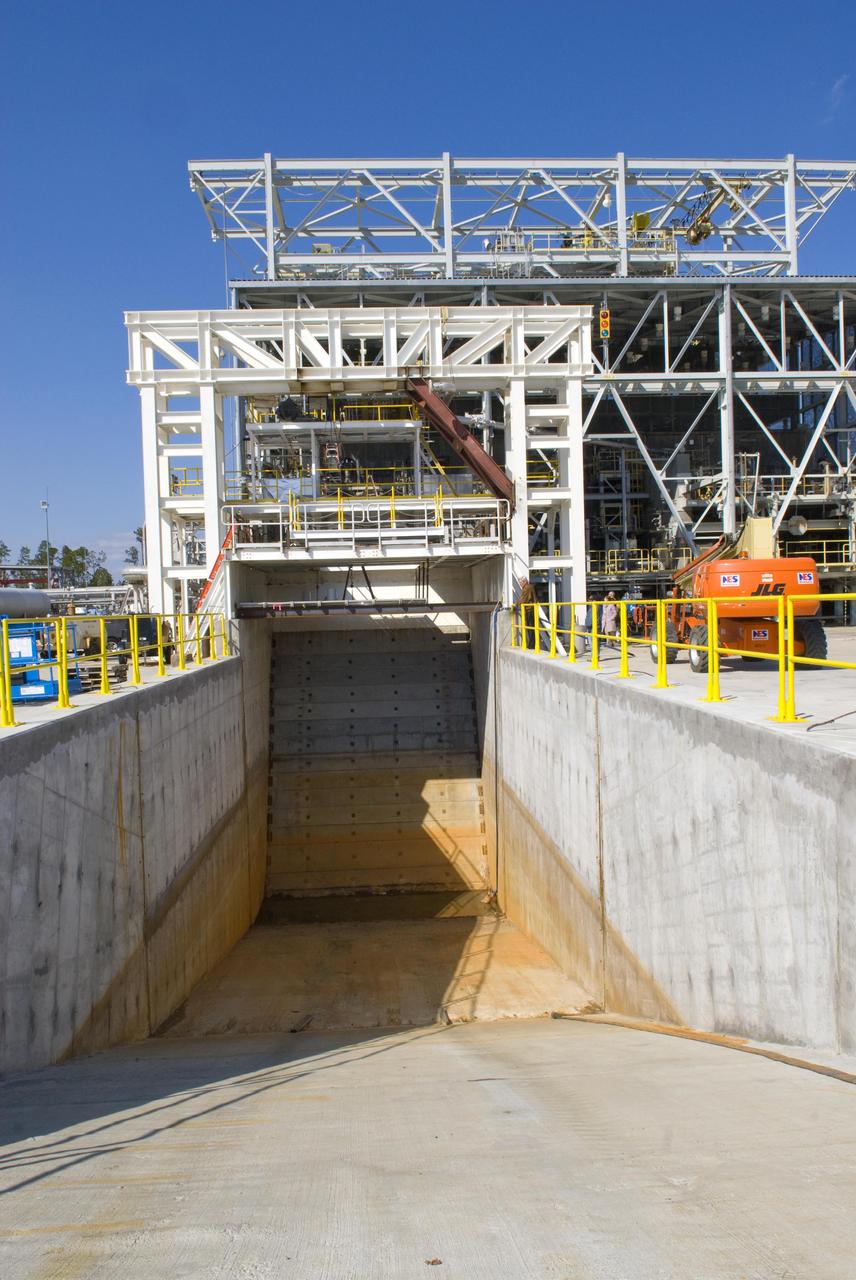
Operators at NASA's John C. Stennis Space Center are completing modifications to the E-1 Test Stand to begin testing Aerojet AJ26 rocket engines in early summer of 2010. Modifications include construction of a 27-foot-deep flame deflector trench. The AJ26 rocket engines will be used to power Orbital Sciences Corp.'s Taurus II space vehicles to provide commercial cargo transportation missions to the International Space Station for NASA. Stennis has partnered with Orbital to test all engines for the transport missions.
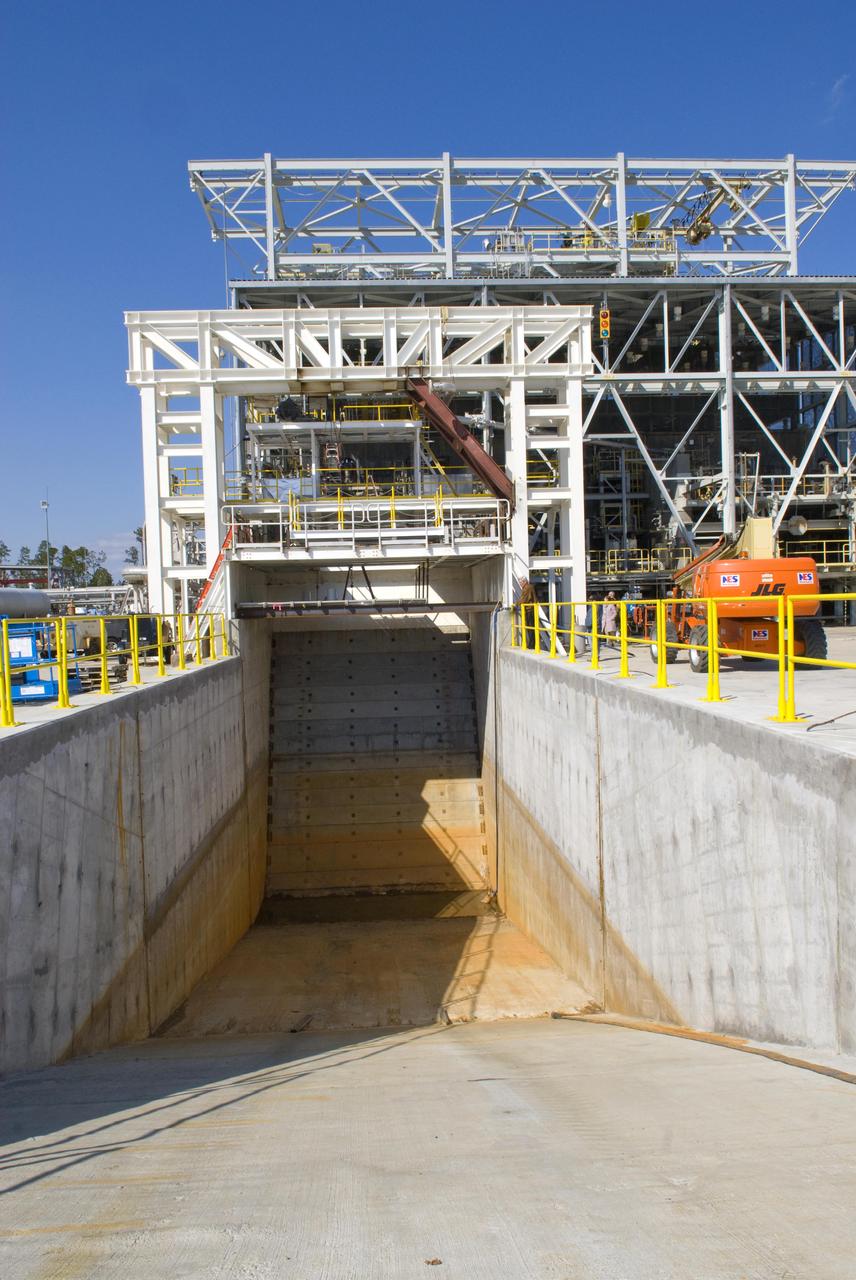
Operators at NASA's John C. Stennis Space Center are completing modifications to the E-1 Test Stand to begin testing Aerojet AJ26 rocket engines in early summer of 2010. Modifications include construction of a 27-foot-deep flame deflector trench. The AJ26 rocket engines will be used to power Orbital Sciences Corp.'s Taurus II space vehicles to provide commercial cargo transportation missions to the International Space Station for NASA. Stennis has partnered with Orbital to test all engines for the transport missions.
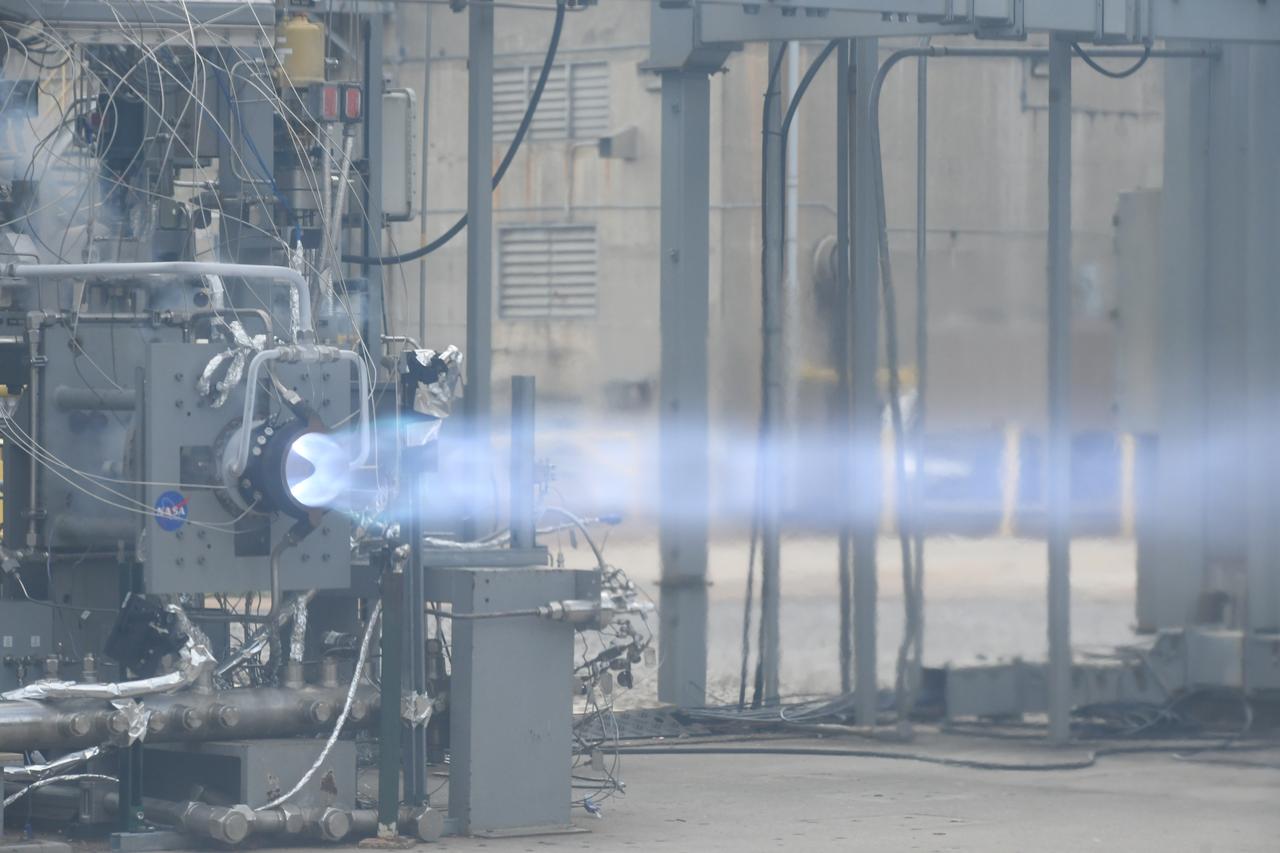
Engineers at NASA’s Marshall Space Flight Center in Huntsville, Alabama, conduct a successful, 251-second hot fire test of a full-scale Rotating Detonation Rocket Engine combustor in fall 2023, achieving more than 5,800 pounds of thrust.
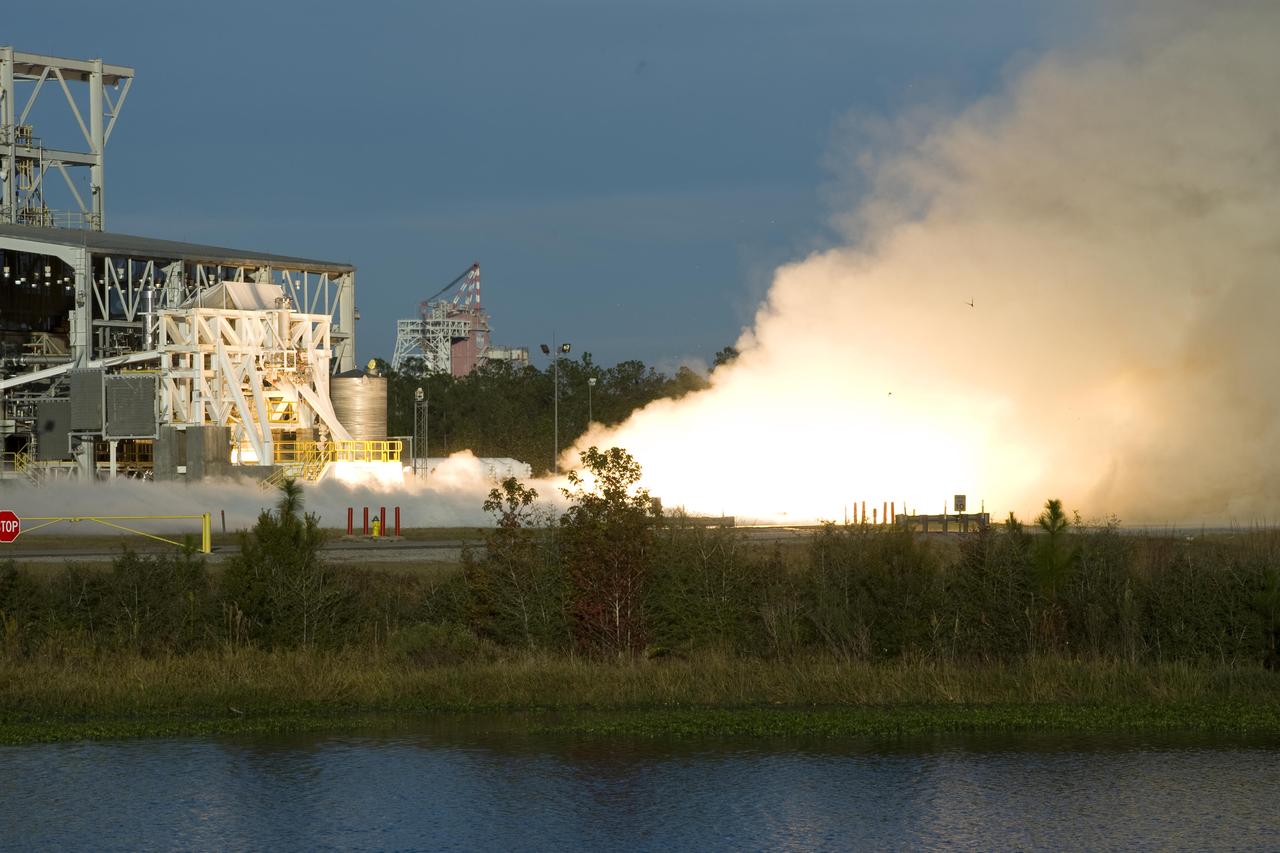
Fire and steam signal a successful test firing of Orbital Sciences Corporation's Aerojet AJ26 rocket engine at John C. Stennis Space Center. AJ26 engines will be used to power Orbital's Taurus II space vehicle on commercial cargo flights to the International Space Station. On Nov. 10, operators at Stennis' E-1 Test Stand conducted a 10-second test fire of the engine, the first of a series of three verification tests. Orbital has partnered with NASA to provide eight missions to the ISS by 2015.
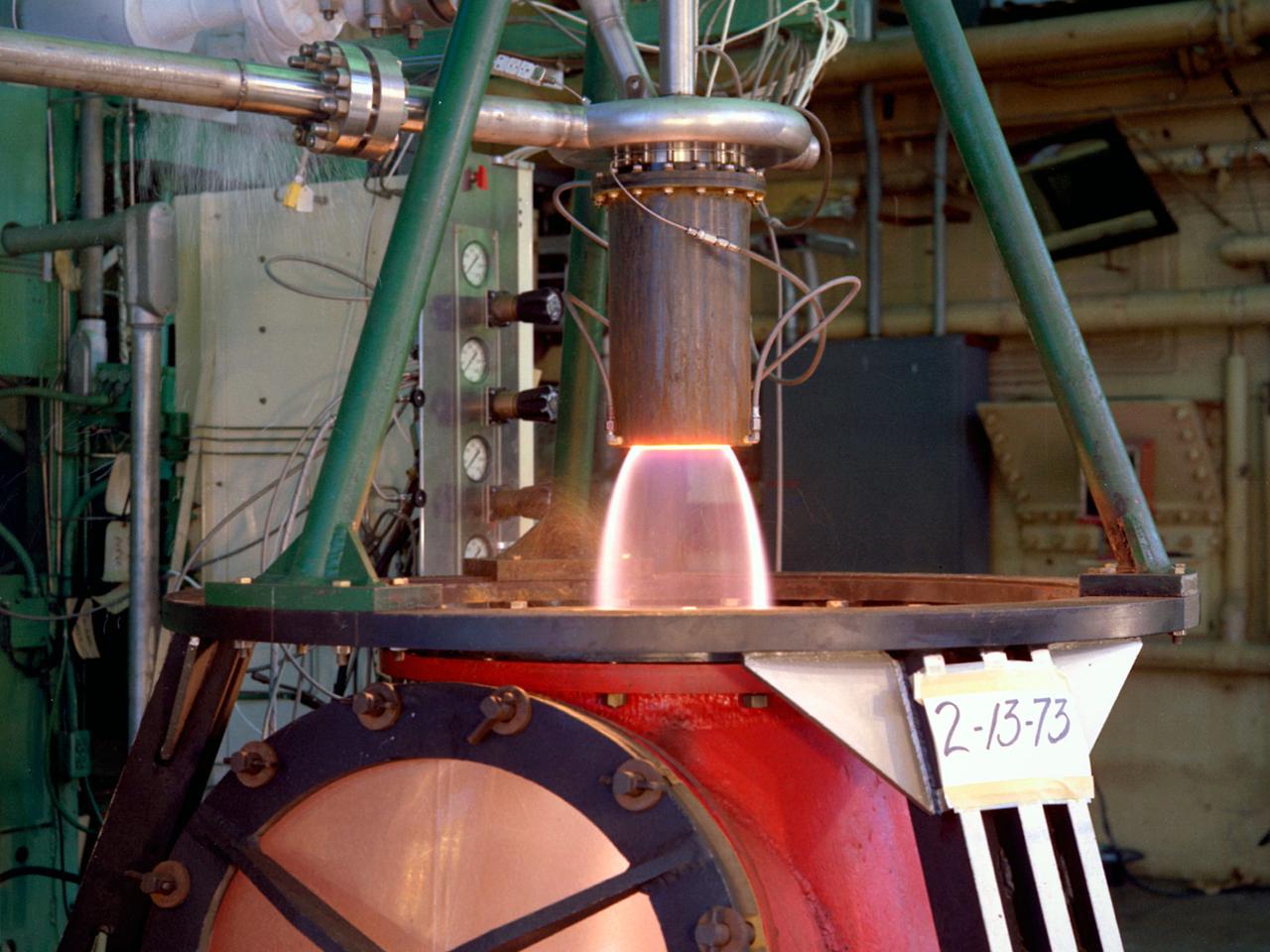
The thrust stand in the Rocket Engine Test Facility at the National Aeronautics and Space Administration (NASA) Lewis Research Center in Cleveland, Ohio. The Rocket Engine Test Facility was constructed in the mid-1950s to expand upon the smaller test cells built a decade before at the Rocket Laboratory. The $2.5-million Rocket Engine Test Facility could test larger hydrogen-fluorine and hydrogen-oxygen rocket thrust chambers with thrust levels up to 20,000 pounds. Test Stand A, seen in this photograph, was designed to fire vertically mounted rocket engines downward. The exhaust passed through an exhaust gas scrubber and muffler before being vented into the atmosphere. Lewis researchers in the early 1970s used the Rocket Engine Test Facility to perform basic research that could be utilized by designers of the Space Shuttle Main Engines. A new electronic ignition system and timer were installed at the facility for these tests. Lewis researchers demonstrated the benefits of ceramic thermal coatings for the engine’s thrust chamber and determined the optimal composite material for the coatings. They compared the thermal-coated thrust chamber to traditional unlined high-temperature thrust chambers. There were more than 17,000 different configurations tested on this stand between 1973 and 1976. The Rocket Engine Test Facility was later designated a National Historic Landmark for its role in the development of liquid hydrogen as a propellant.
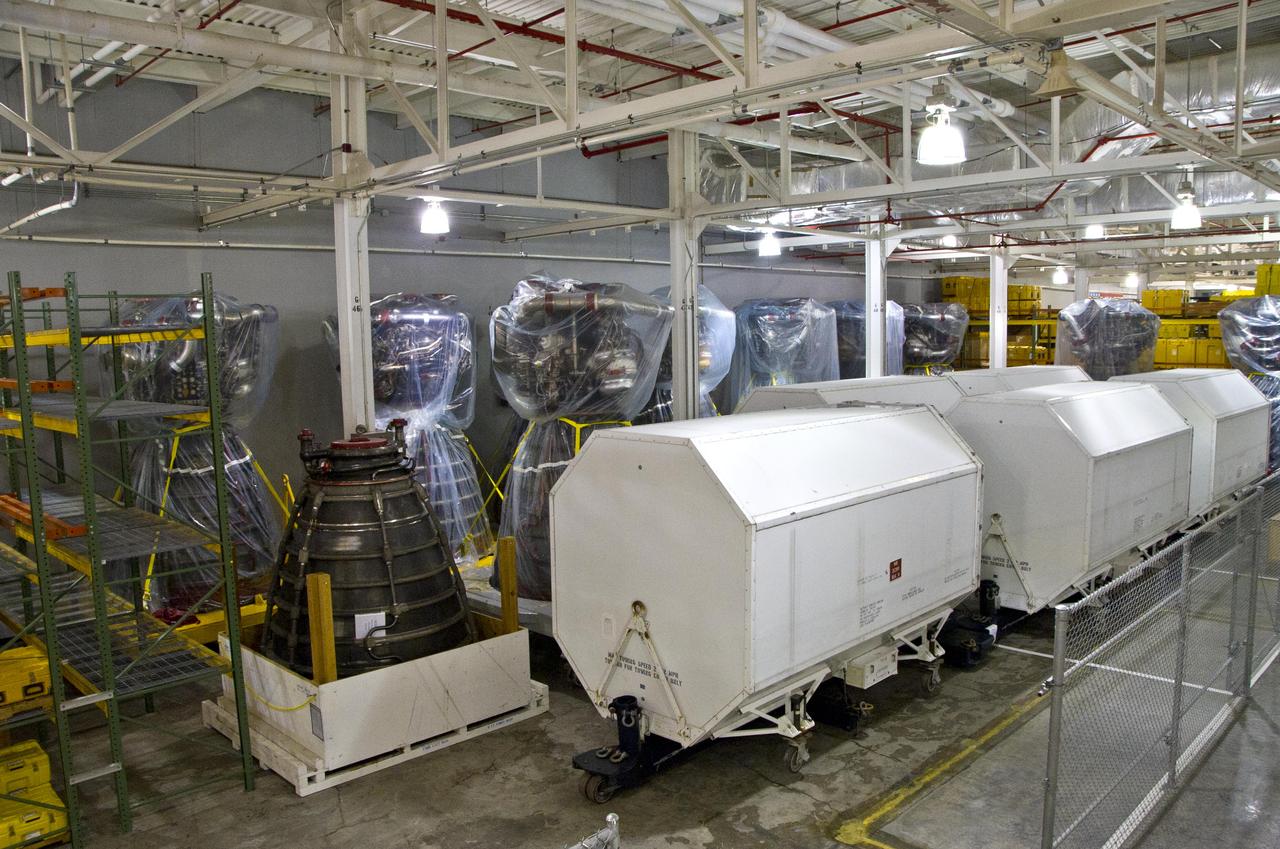
The last of 15 RS-25 rocket engines arrived at Stennis Space Center from Kennedy Space Center in Flordia , on April 10, 2012. The engines will be stored at Stennis until testing begins for the engines to be used on NASA's new Space Launch System.
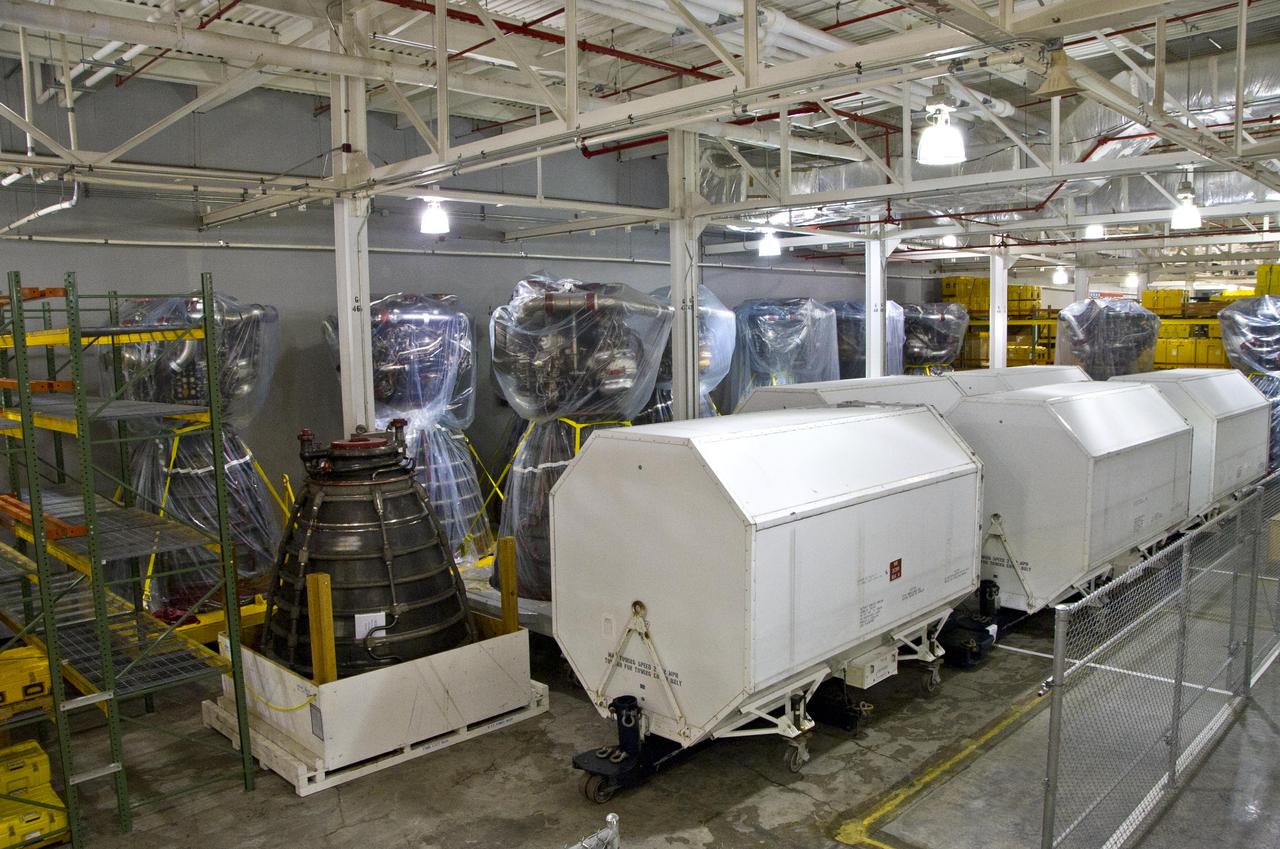
The last of 15 RS-25 rocket engines arrived at Stennis Space Center from Kennedy Space Center in Flordia , on April 10, 2012. The engines will be stored at Stennis until testing begins for the engines to be used on NASA's new Space Launch System.
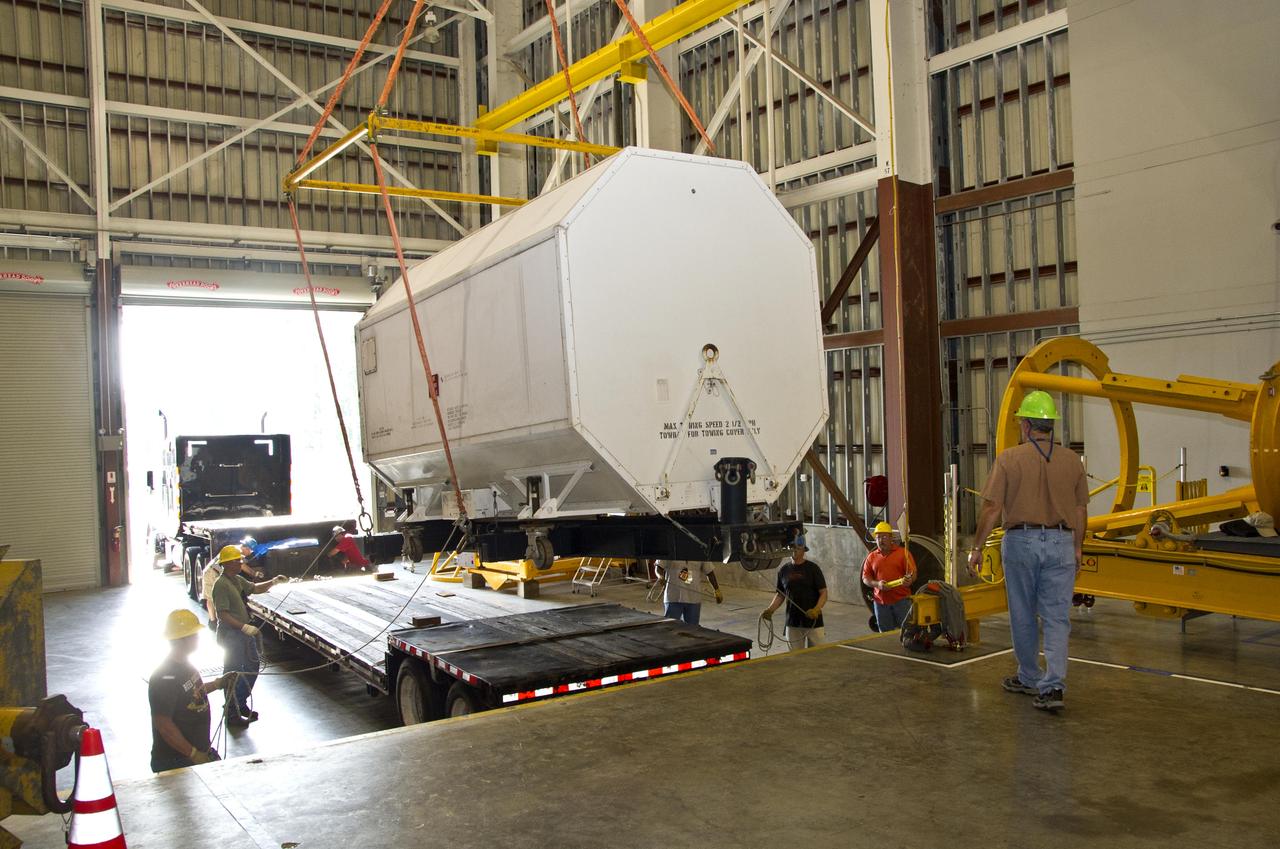
RS-25 series rocket engine No. 2059 is unloaded and positioned at Stennis Space Center on April 10, 2012, for future testing and use on NASA's new Space Launch System. The engine was the last of 15 RS-25 engines to be delivered from NASA's Kennedy Space Center in Florida to Stennis, where all will be stored until testing begins.
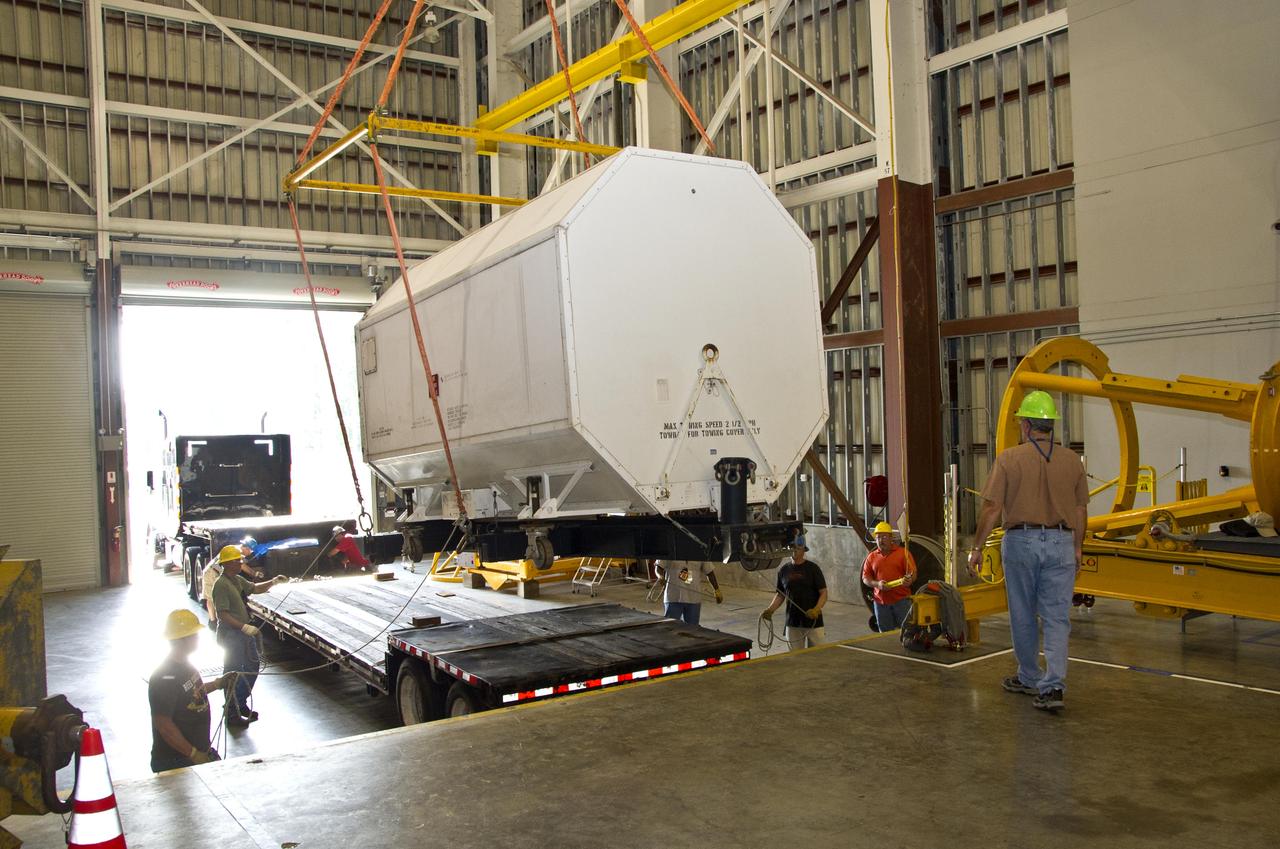
RS-25 series rocket engine No. 2059 is unloaded and positioned at Stennis Space Center on April 10, 2012, for future testing and use on NASA's new Space Launch System. The engine was the last of 15 RS-25 engines to be delivered from NASA's Kennedy Space Center in Florida to Stennis, where all will be stored until testing begins.
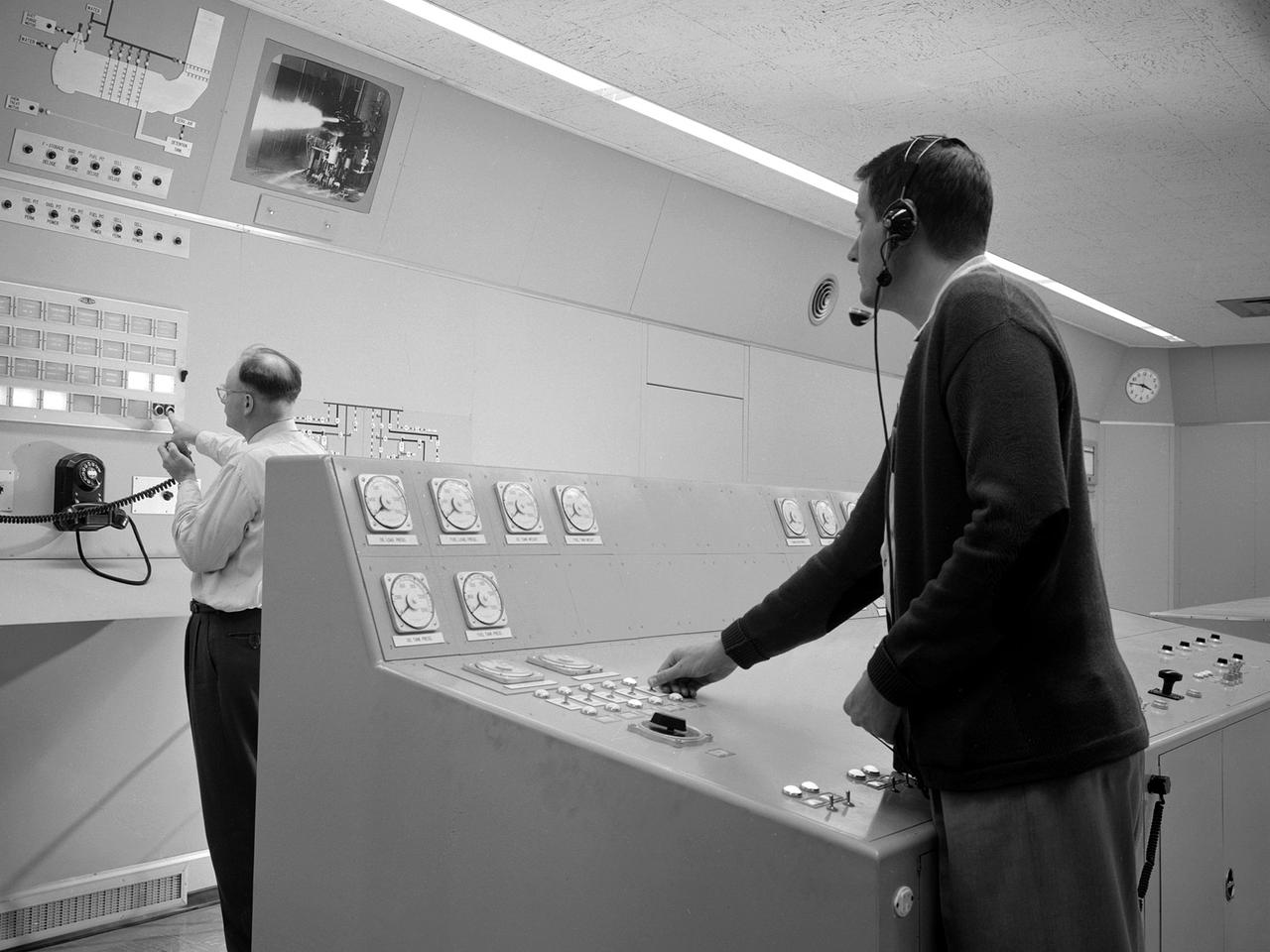
Test engineers monitor an engine firing from the control room of the Rocket Engine Test Facility at the National Advisory Committee for Aeronautics (NACA) Lewis Flight Propulsion Laboratory. The Rocket Engine Test Facility, built in the early 1950s, had a rocket stand designed to evaluate high-energy propellants and rocket engine designs. The facility was used to study numerous different types of rocket engines including the Pratt and Whitney RL-10 engine for the Centaur rocket and Rocketdyne’s F-1 and J-2 engines for the Saturn rockets. The Rocket Engine Test Facility was built in a ravine at the far end of the laboratory because of its use of the dangerous propellants such as liquid hydrogen and liquid fluorine. The control room was located in a building 1,600 feet north of the test stand to protect the engineers running the tests. The main control and instrument consoles were centrally located in the control room and surrounded by boards controlling and monitoring the major valves, pumps, motors, and actuators. A camera system at the test stand allowed the operators to view the tests, but the researchers were reliant on data recording equipment, sensors, and other devices to provide test data. The facility’s control room was upgraded several times over the years. Programmable logic controllers replaced the electro-mechanical control devices. The new controllers were programed to operate the valves and actuators controlling the fuel, oxidant, and ignition sequence according to a predetermined time schedule.
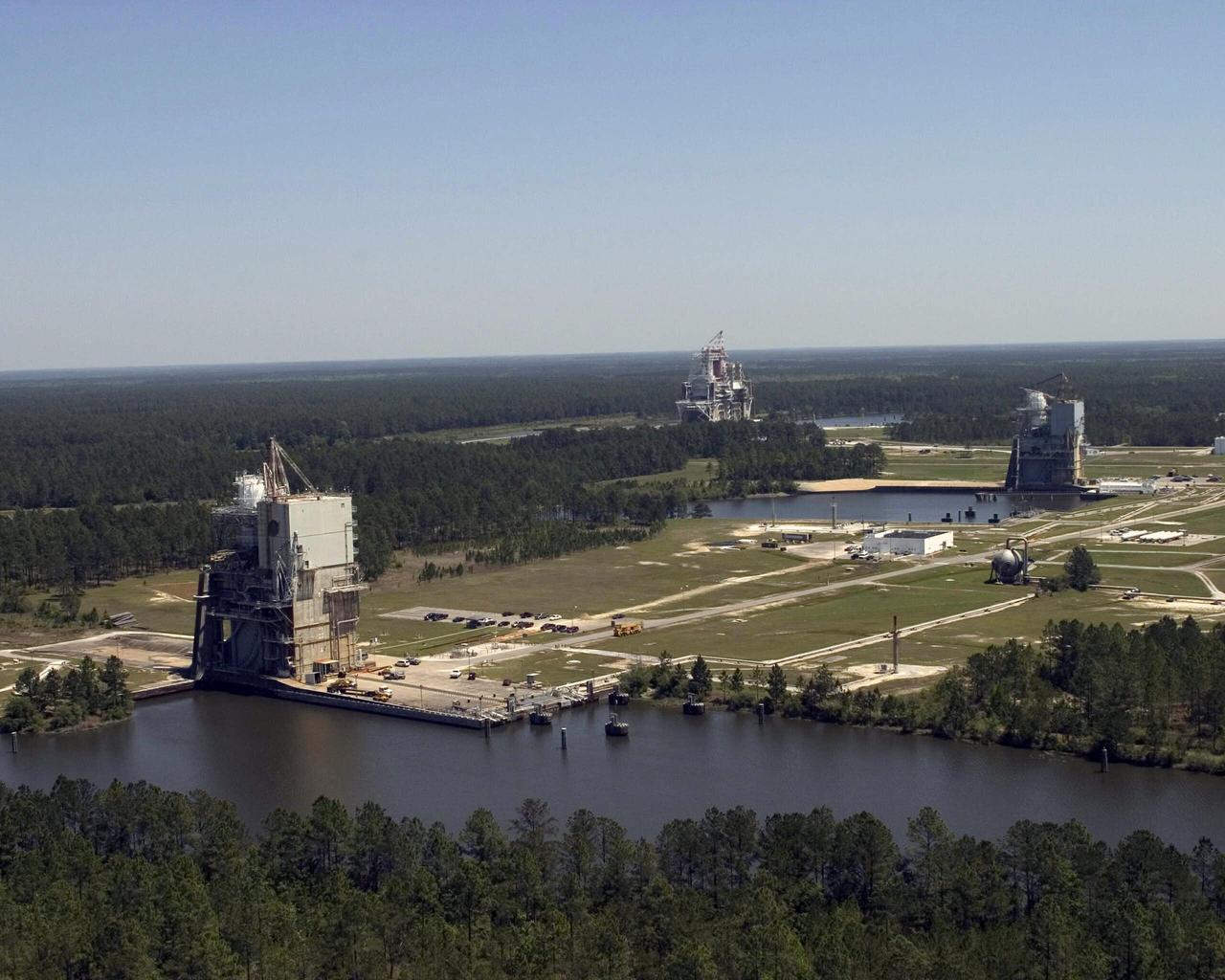
SSC's A-1, A-2 and B test stands were built in the early 1960s to test the first and second stages of the Apollo Saturn V rocket that safely transported Americans to the moon. The A-1 Stand (foreground) will soon test the J-2X engines that will power the rockets to take Americans back to the moon.
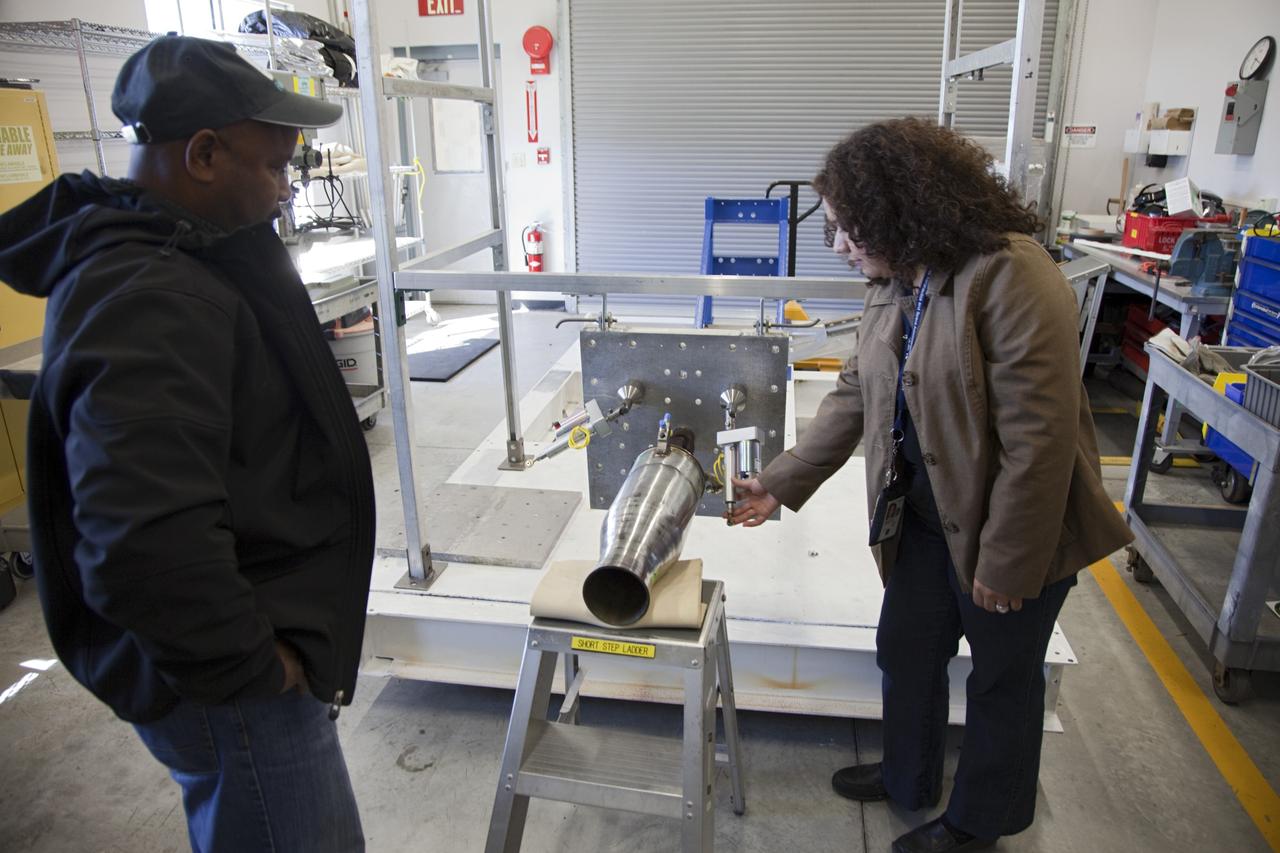
CAPE CANAVERAL, Fla. -- At the Neo Liquid Propellant Testbed inside a facility near Kennedy Space Center’s Shuttle Landing Facility in Florida, engineers and Rocket University project leads Kyle Dixon, left, and Evelyn Orozco-Smith check the buildup of the Neo test fixture and an Injector 71 engine that uses super-cooled propellants. NASA engineers are working on the design and assembly of the Neo Liquid Propellant Testbed as part of the Engineering Directorate’s Rocket University training program. Photo credit: NASA/Frankie Martin
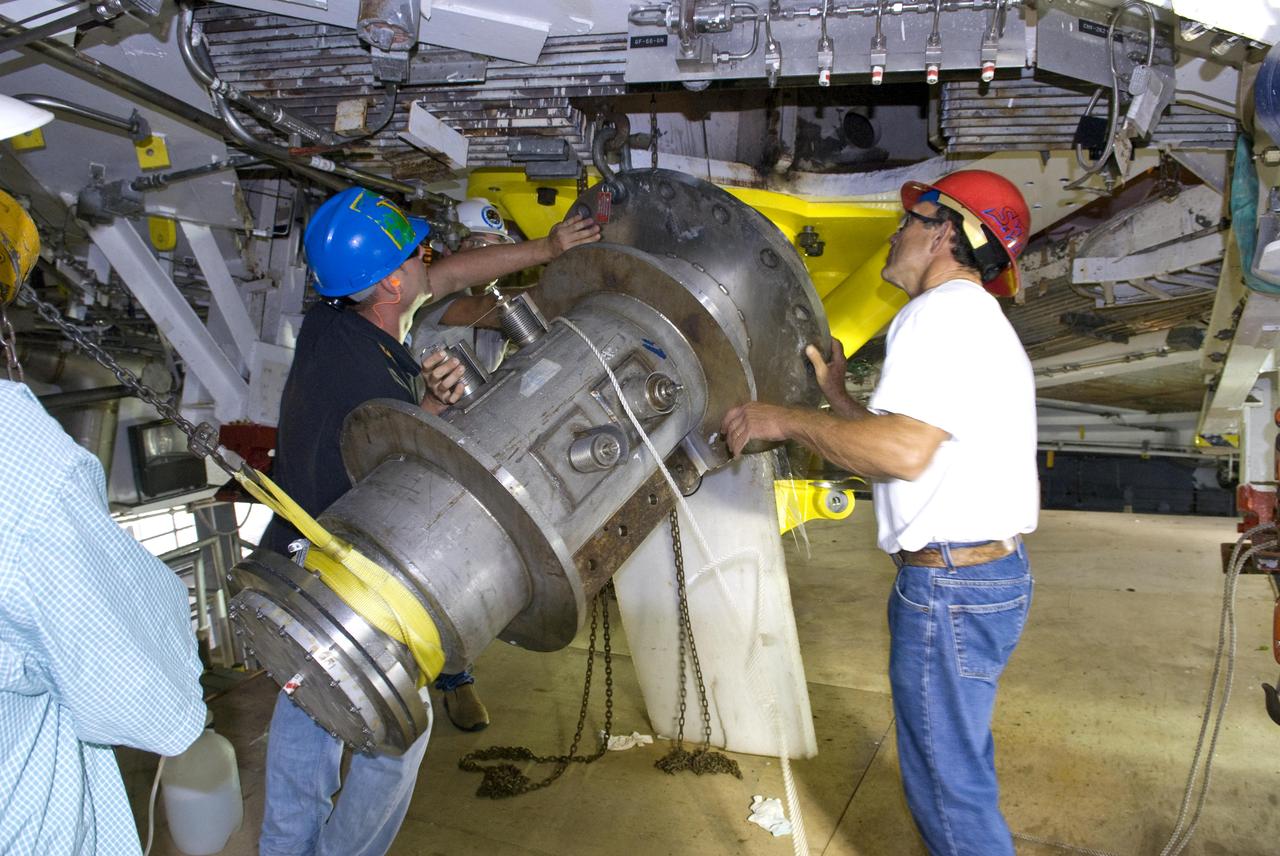
John C. Stennis Space Center employees remove space shuttle main engine run ducts from the A-2 Test Stand engine deck Oct. 25, 2010. Testing of space shuttle main engines concluded in July 2009. Stennis is preparing the A-2 Test Stand for testing the next-generation J-2X rocket engine being developed. Testing of the new engine is scheduled to begin in 2011.
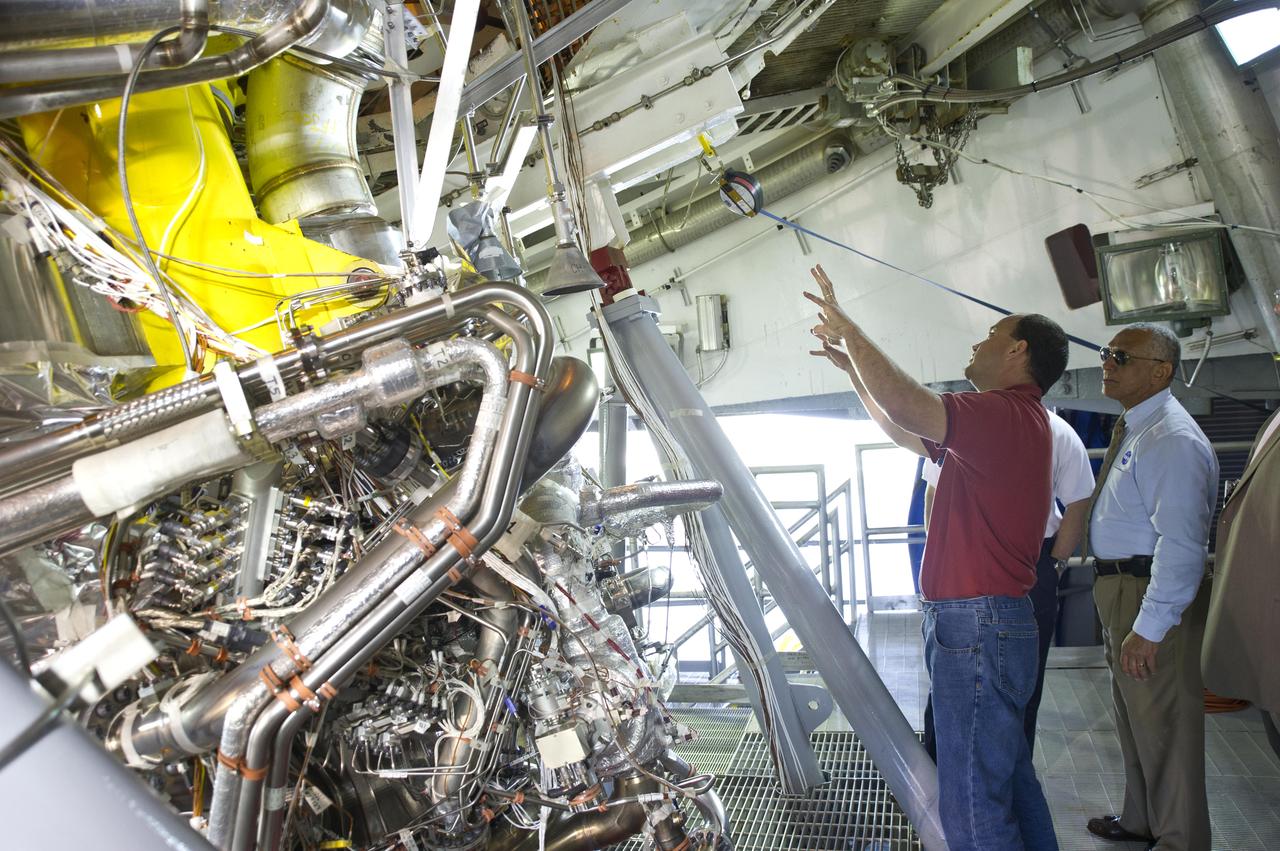
NASA Administrator Charles Bolden (r) takes an up-close look at the first development J-2X rocket engine on the A-2 Test Stand at Stennis Space Center during an April 20, 2012, visit. Pictured with Bolden is A-2 Test Stand Director Skip Roberts. The J-2X engine i s being developed for NASA by Pratt & Whitney Rocketdyne.
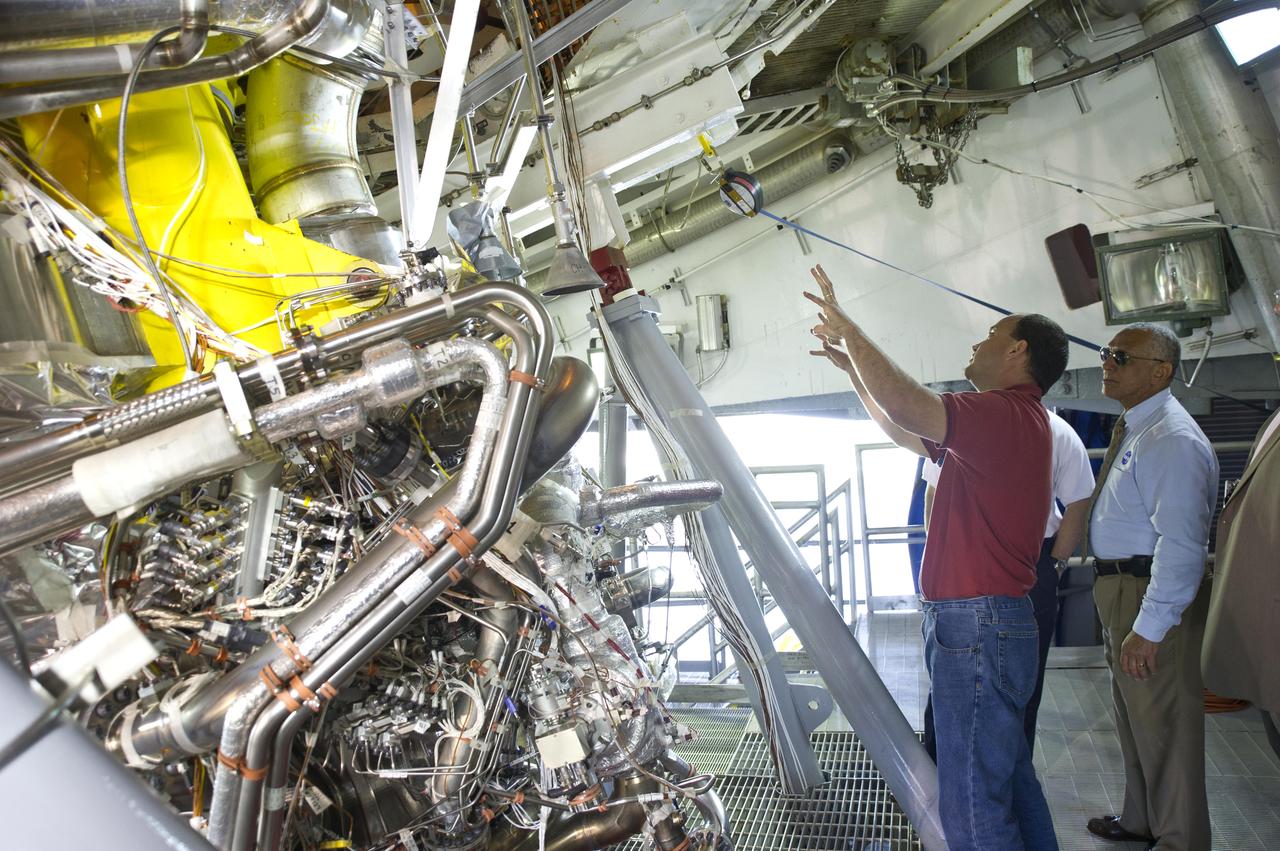
NASA Administrator Charles Bolden (r) takes an up-close look at the first development J-2X rocket engine on the A-2 Test Stand at Stennis Space Center during an April 20, 2012, visit. Pictured with Bolden is A-2 Test Stand Director Skip Roberts. The J-2X engine is being developed for NASA by Pratt & Whitney Rocketdyne.
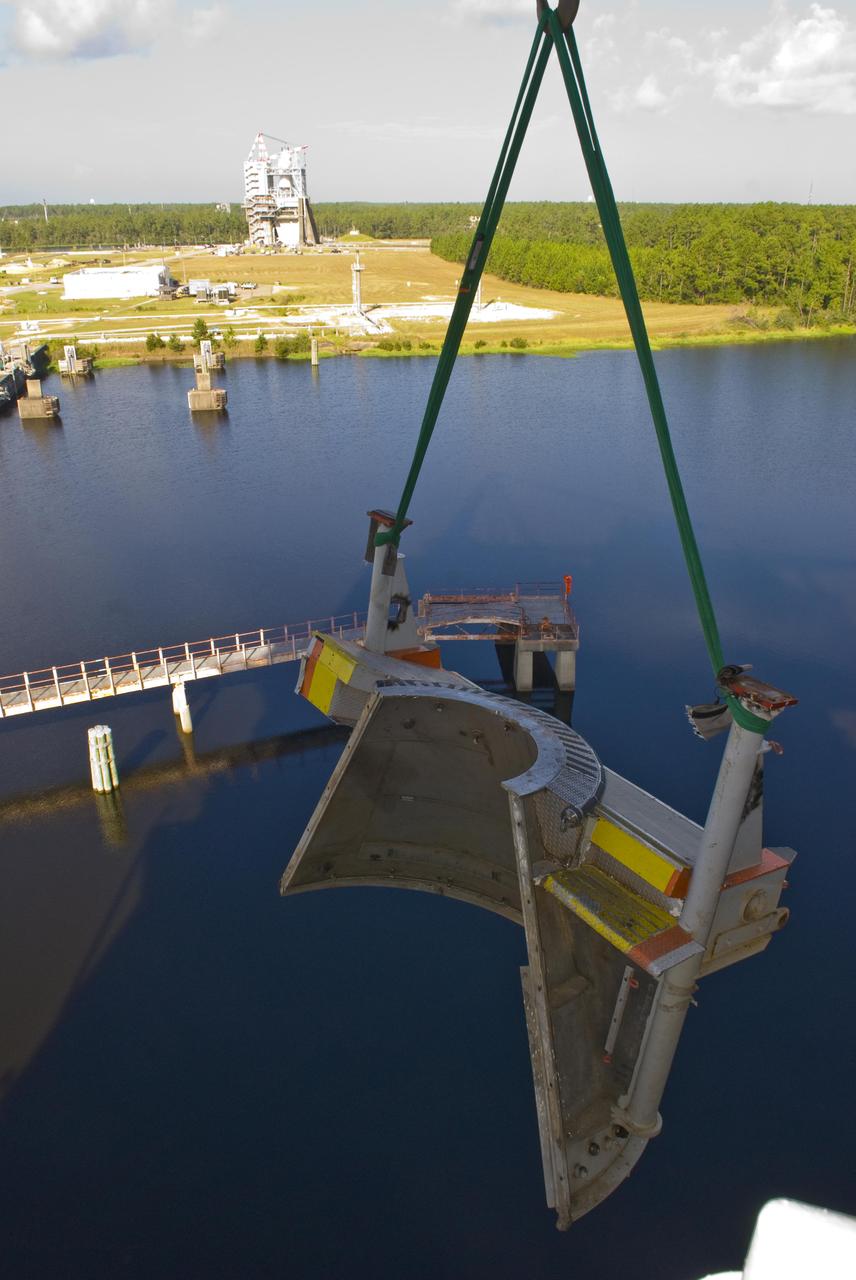
John C. Stennis Space Center employees remove one-half of the A-2 Test Stand clamshell used for testing space shuttle main engines. Space shuttle main engine testing concluded July 2009; the A-2 stand now is being prepared for testing the next-generation J-2X rocket engine in development. Testing of the J-2X engine is scheduled to begin in 2011.
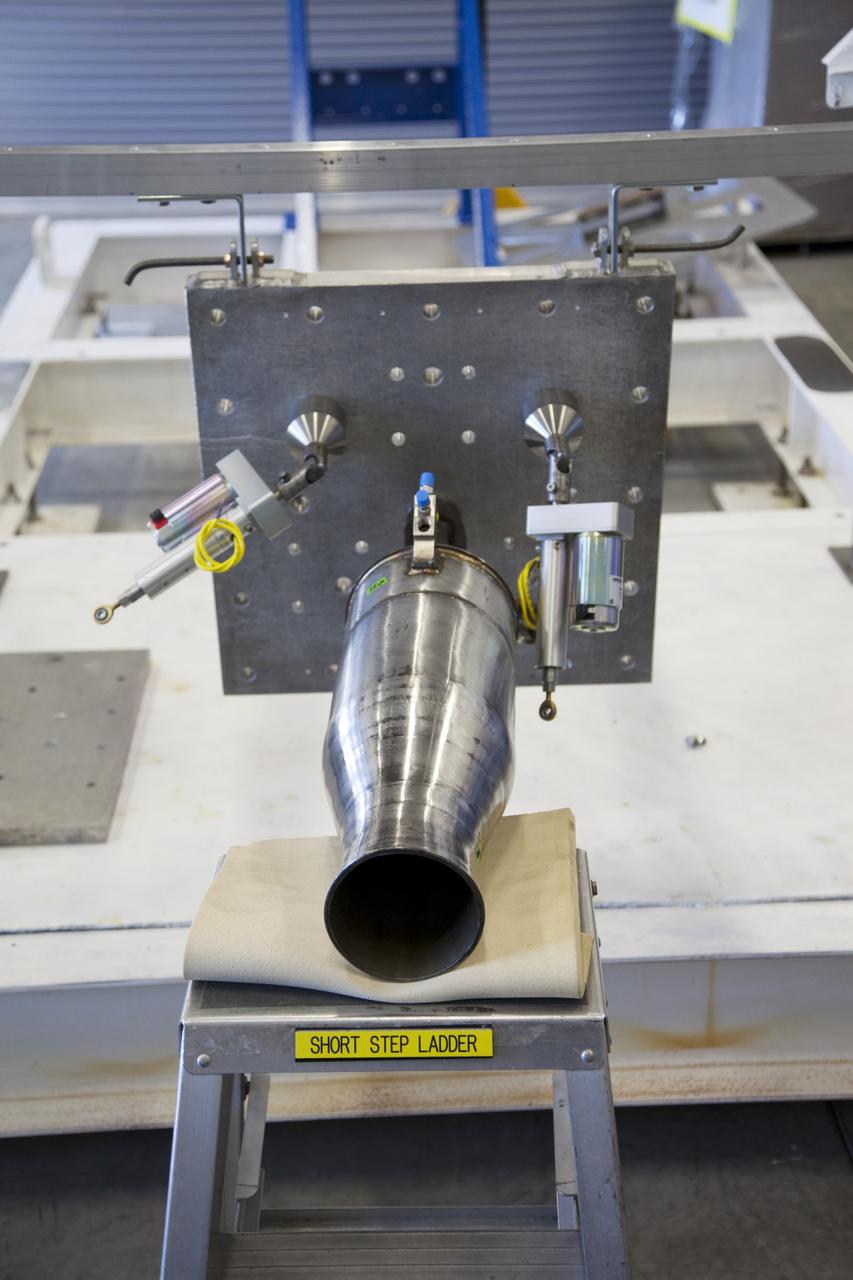
CAPE CANAVERAL, Fla. -- At the Neo Liquid Propellant Testbed inside a facility near Kennedy Space Center’s Shuttle Landing Facility in Florida, engineers are working on the buildup of the Neo test fixture and an Injector 71 engine that uses super-cooled propellants. NASA engineers are working on the design and assembly of the Neo Liquid Propellant Testbed as part of the Engineering Directorate’s Rocket University training program. Photo credit: NASA/Frankie Martin
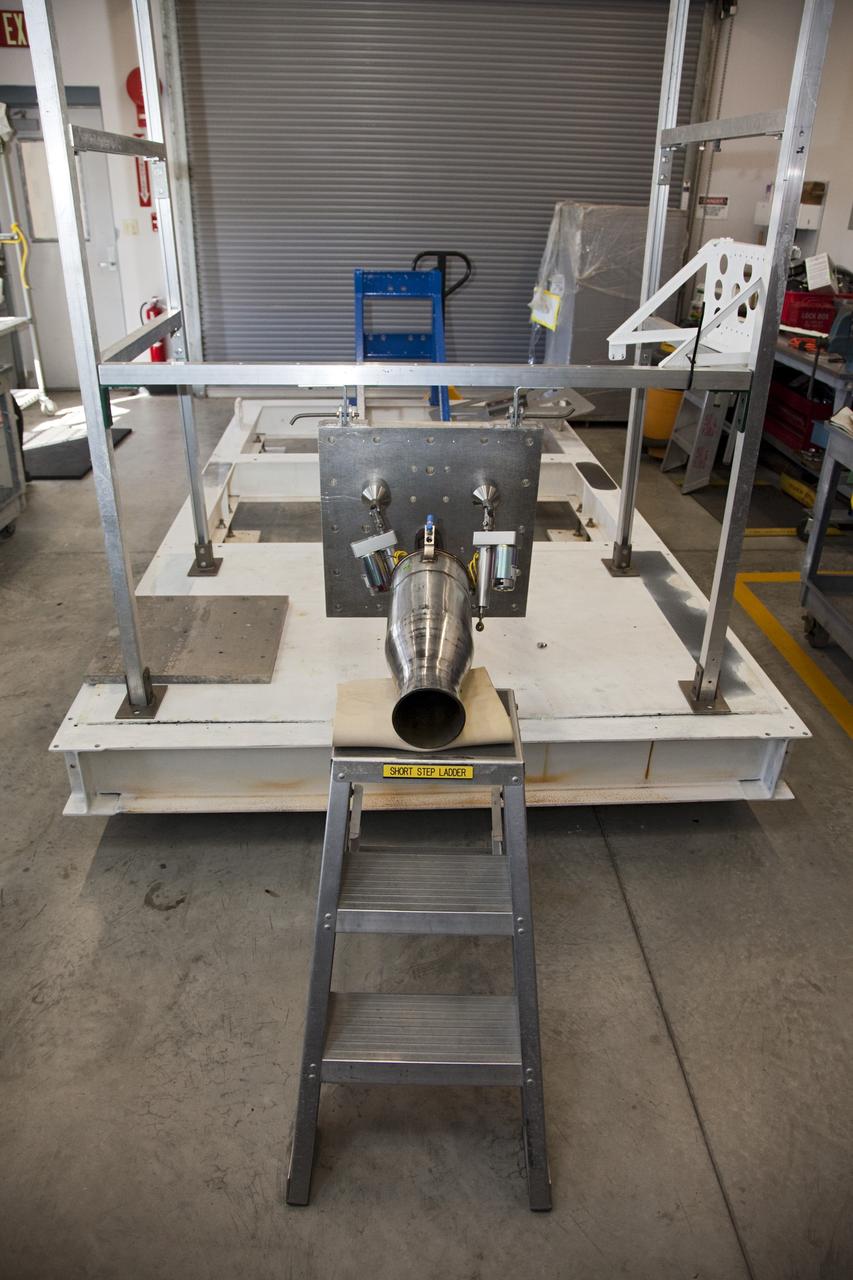
CAPE CANAVERAL, Fla. -- At the Neo Liquid Propellant Testbed inside a facility near Kennedy Space Center’s Shuttle Landing Facility in Florida, engineers are working on the buildup of the Neo test fixture and an Injector 71 engine that uses super-cooled propellants. NASA engineers are working on the design and assembly of the Neo Liquid Propellant Testbed as part of the Engineering Directorate’s Rocket University training program. Photo credit: NASA/Frankie Martin
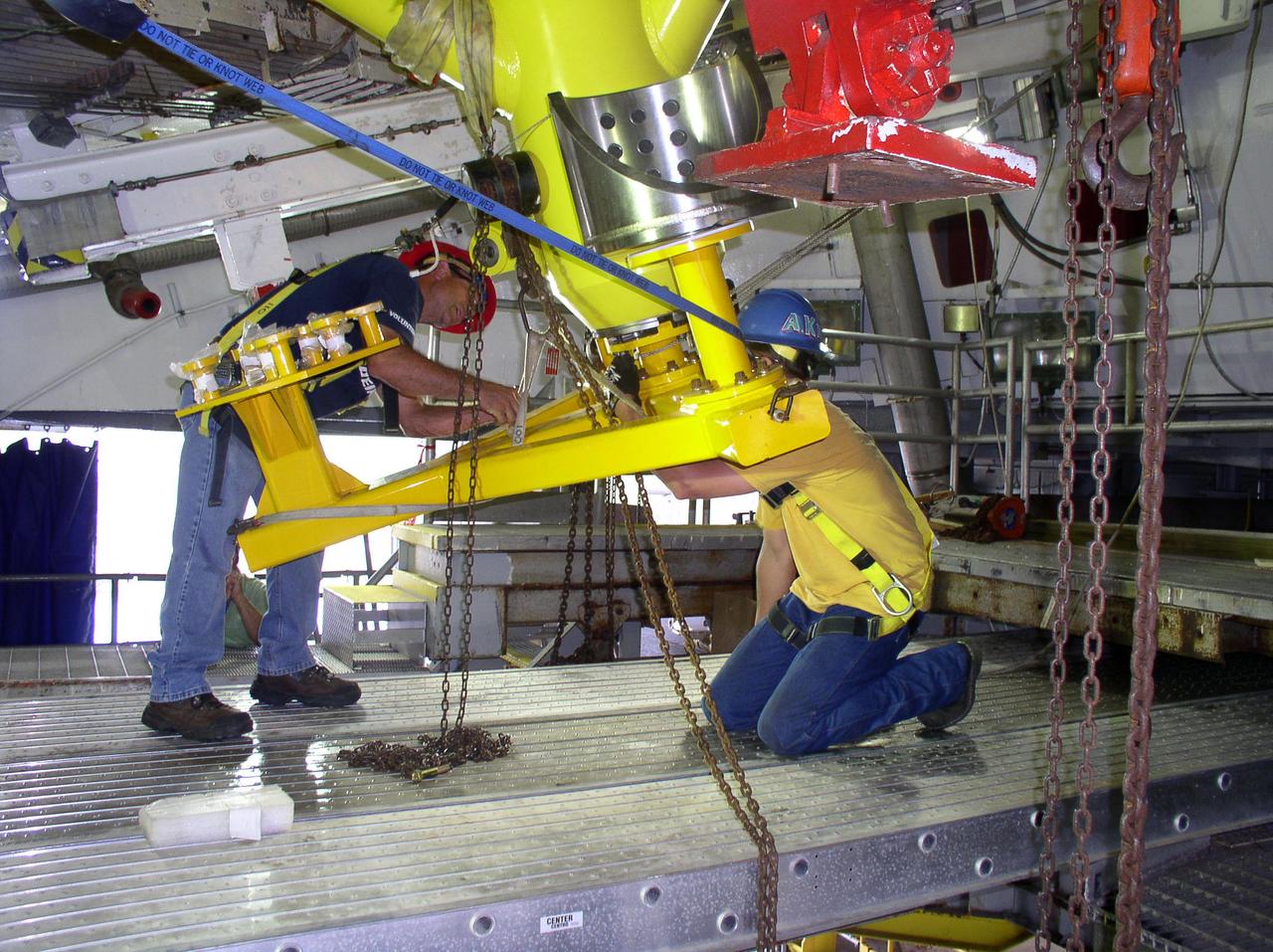
John C. Stennis Space Center employees install a new master interface tool on the A-2 Test Stand on Oct. 27, 2010. Until July 2009, the stand had been used for testing space shuttle main engines. With that test series complete, employees are preparing the stand for testing the next-generation J-2X rocket engine being developed. Testing of the new engine is scheduled to begin in 2011.
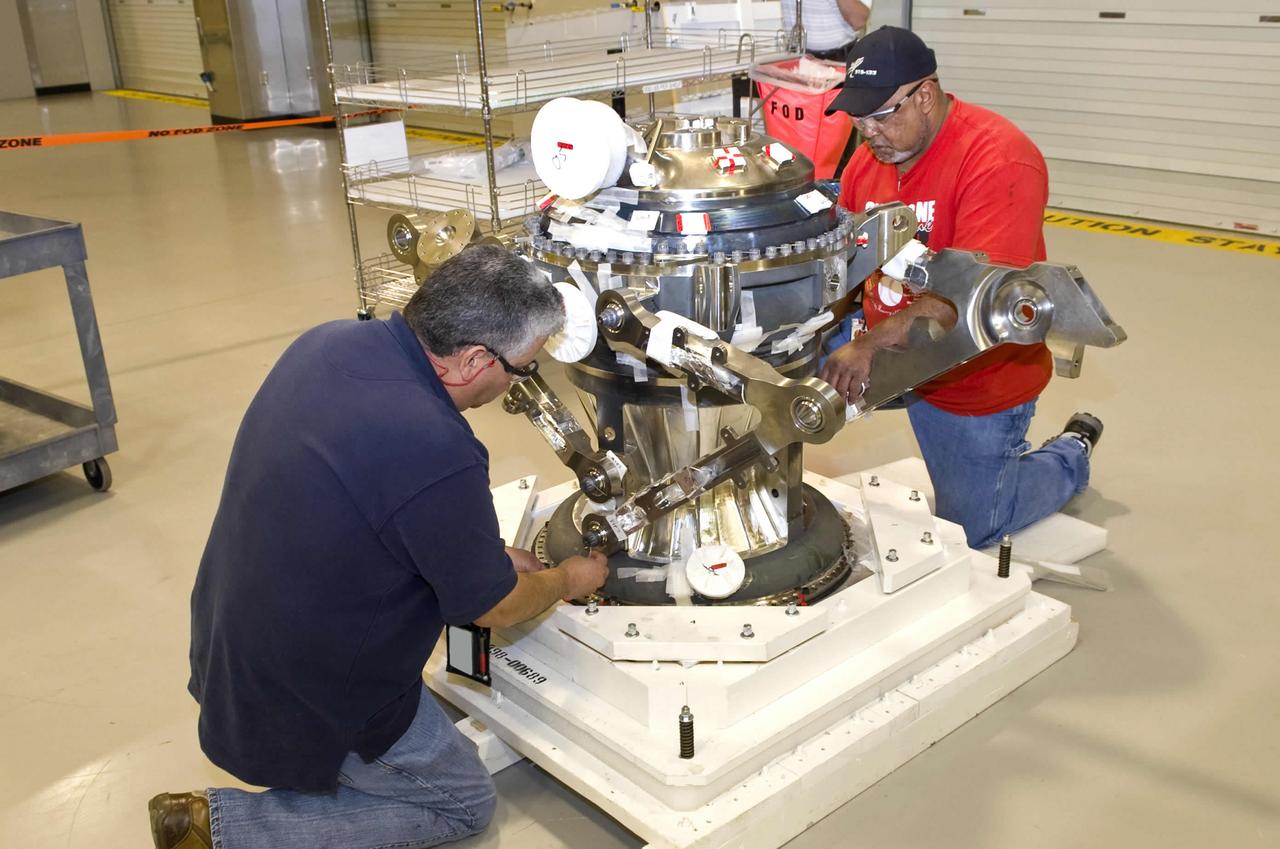
Pratt & Whitney Rocketdyne employees Carlos Alfaro (l) and Oliver Swanier work on the main combustion element of the J-2X rocket engine at their John C. Stennis Space Center facility. Assembly of the J-2X rocket engine to be tested at the site is under way, with completion and delivery to the A-2 Test Stand set for June. The J-2X is being developed as a next-generation engine that can carry humans into deep space. Stennis Space Center is preparing a trio of stands to test the new engine.
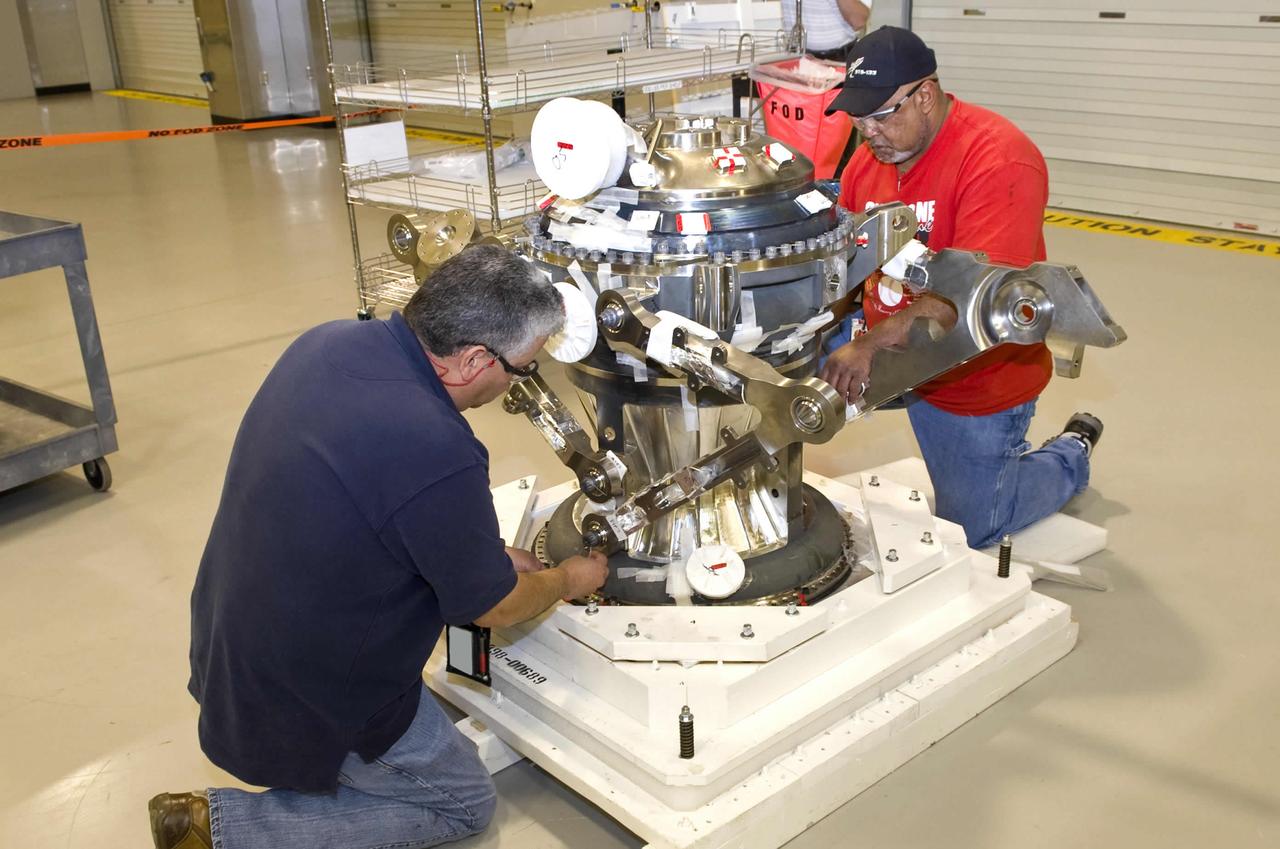
Pratt & Whitney Rocketdyne employees Carlos Alfaro (l) and Oliver Swanier work on the main combustion element of the J-2X rocket engine at their John C. Stennis Space Center facility. Assembly of the J-2X rocket engine to be tested at the site is under way, with completion and delivery to the A-2 Test Stand set for June. The J-2X is being developed as a next-generation engine that can carry humans into deep space. Stennis Space Center is preparing a trio of stands to test the new engine.
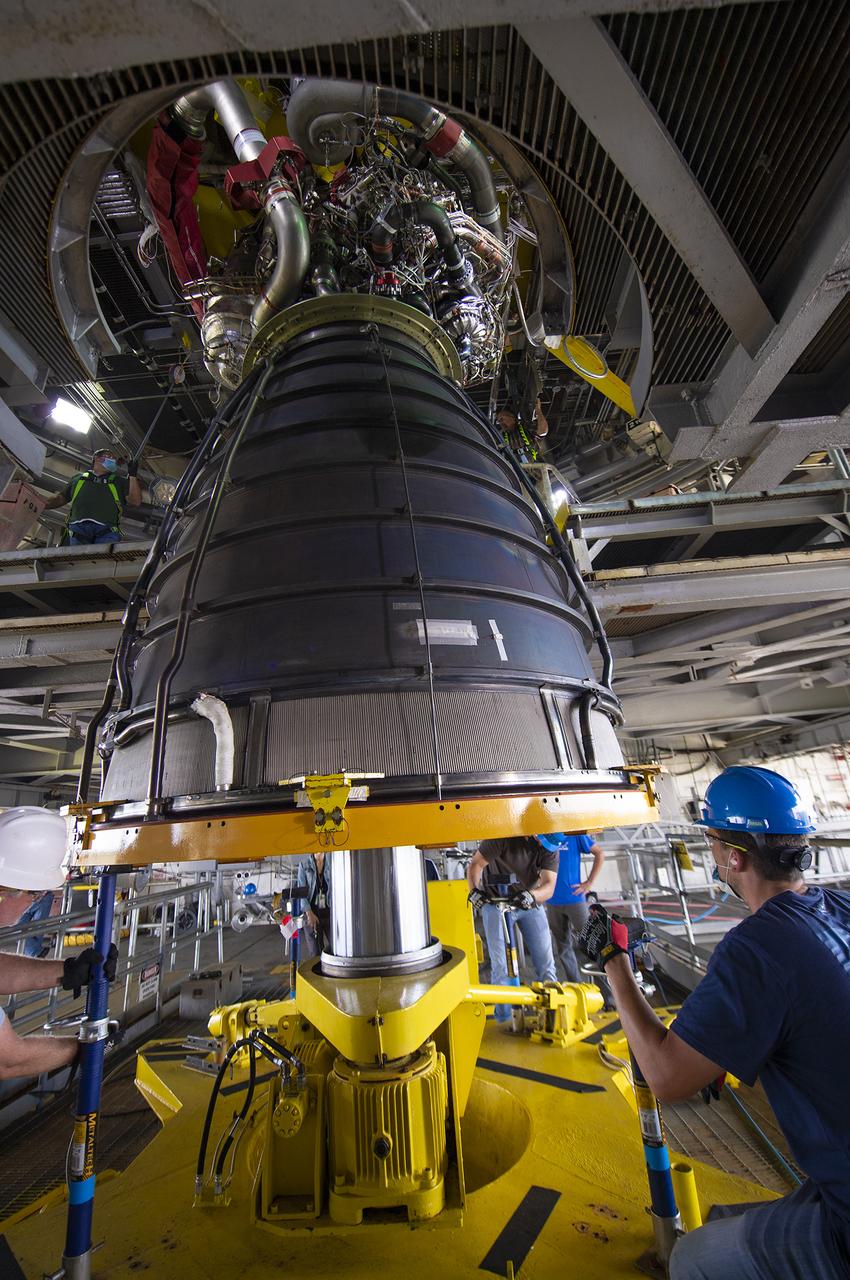
Crews at NASA’s Stennis Space Center remove an RS-25 rocket engine from the A-1 test stand on Nov. 1, 2021, following a series of successful tests.
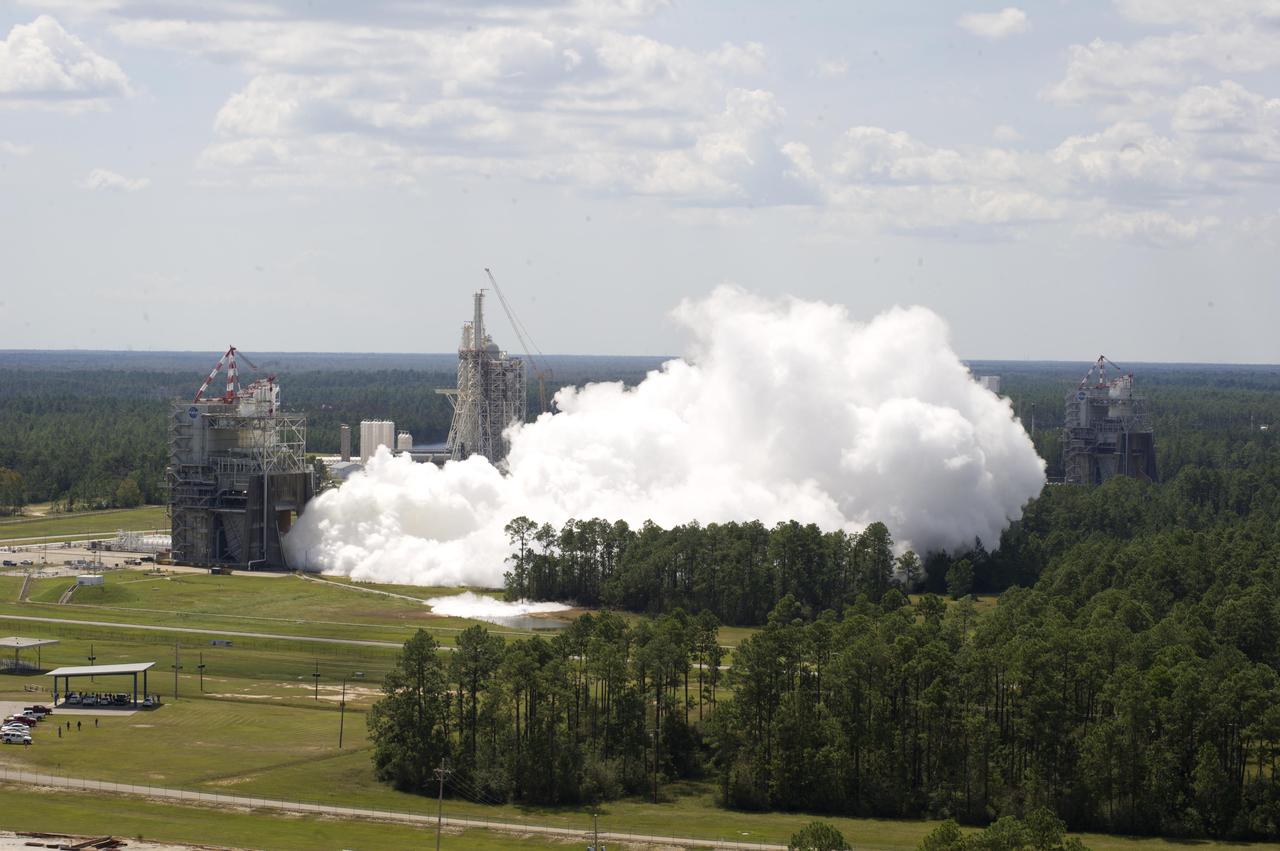
NASA engineers continued to collect test performance data on the new J-2X rocket engine at Stennis Space Center with a 250-second test Sept. 14. The test on the A-2 Test Stand was the 19th in a series of firings to gather critical data for continued development of the engine. The J-2X is being developed by Pratt and Whitney Rocketdyne for NASA's Marshall Space Flight Center in Huntsville, Ala. It is the first liquid oxygen and liquid hydrogen rocket engine rated to carry humans into space to be developed in 40 years.
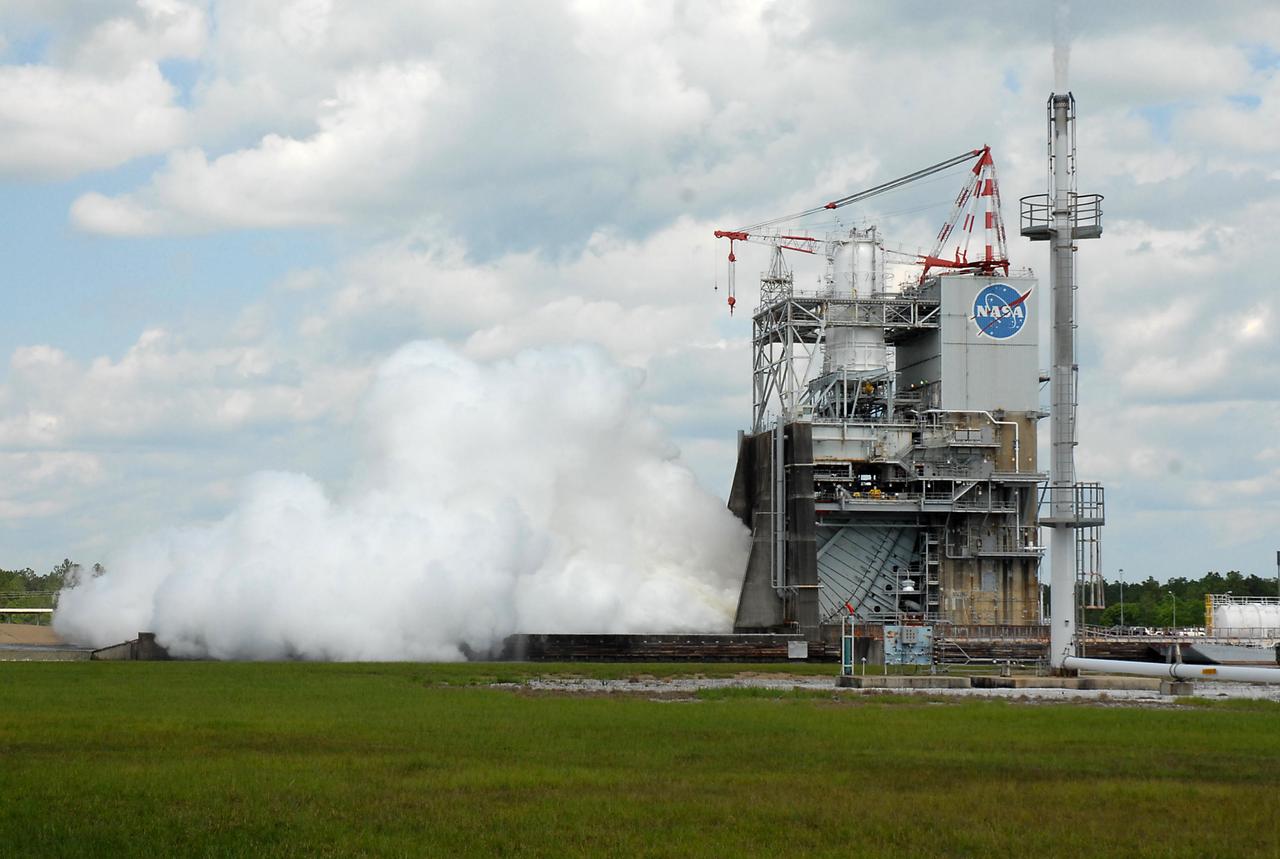
NASA engineers at Stennis Space Center conducted a 260-second test of the next-generation J-2X rocket engine June 13, 2012. As in a previous test, NASA engineers fired the engine at both secondary and primary modes to collect performance data.
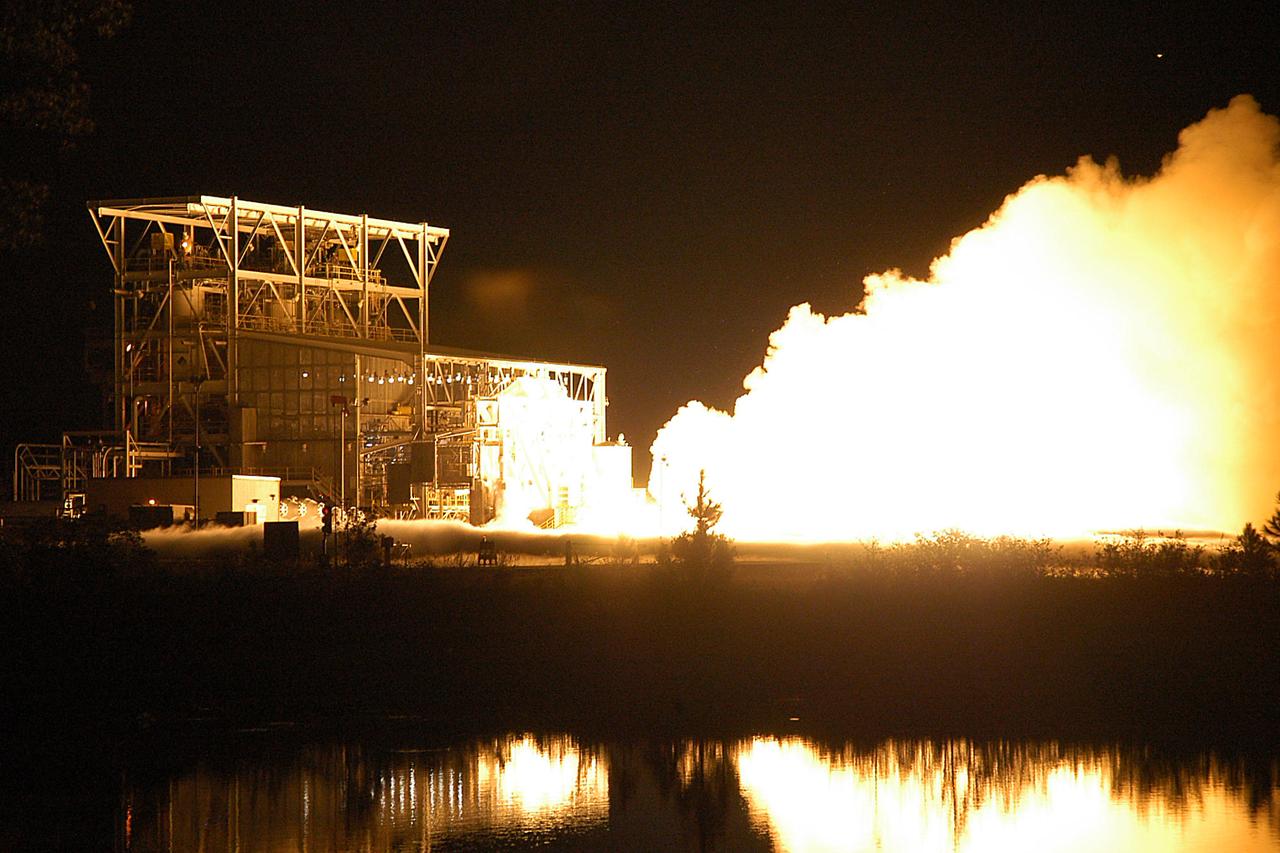
A team of engineers at Stennis Space Center conducted a test firing of an Aerojet AJ26 flight engine Nov. 17, providing continued support to Orbital Sciences Corporation as it prepares to launch commercial cargo missions to the International Space Station. AJ26 engines will power Orbital's Taurus II rocket on the missions.
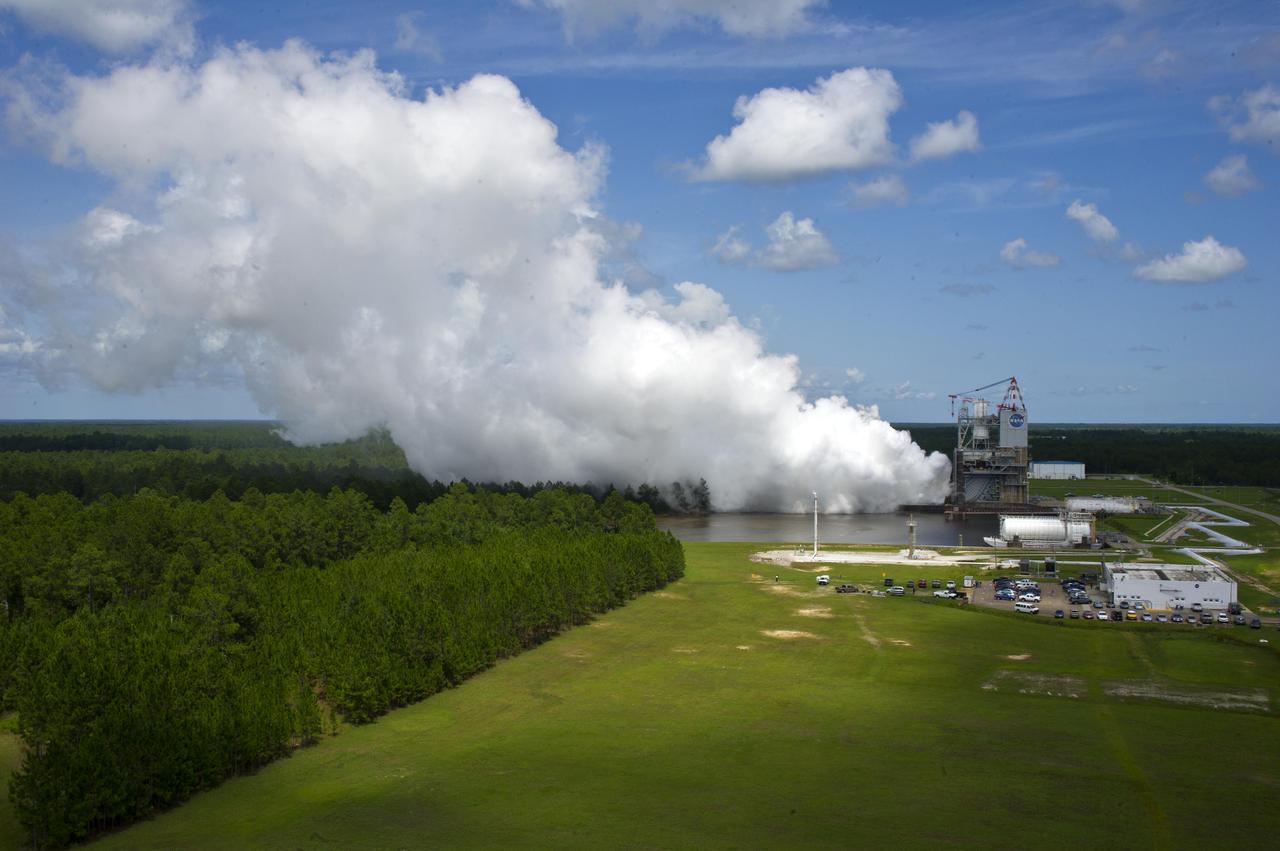
NASA's test of the J-2X rocket engine on the A-2 Test Stand at Stennis Space Center on July 13 was picture perfect in more ways than one. Not only did the test provide a breathtaking view from atop the nearby A-1 Test Stand, and with the center's B-1/B-2 Test Stand in the background, but it achieved its target of 550 seconds. The test continued a series of firings to gather critical data for engine development.
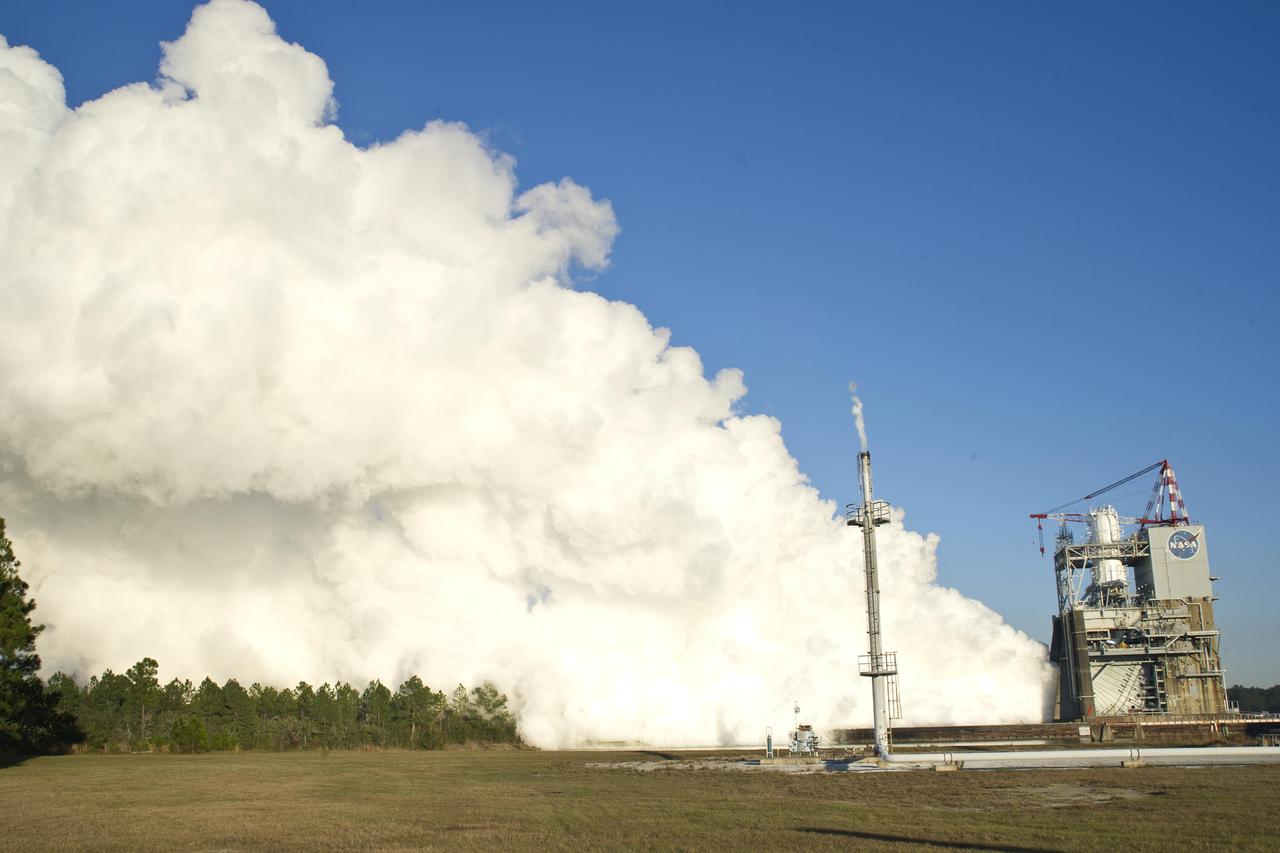
NASA conducted a key stability test firing of the J-2X rocket engine on the A-2 Test Stand at Stennis Space Center on Dec. 1, marking another step forward in development of the upper-stage engine that will carry humans deeper into space than ever before. The J-2X will provide upper-stage power for NASA's new Space Launch System.
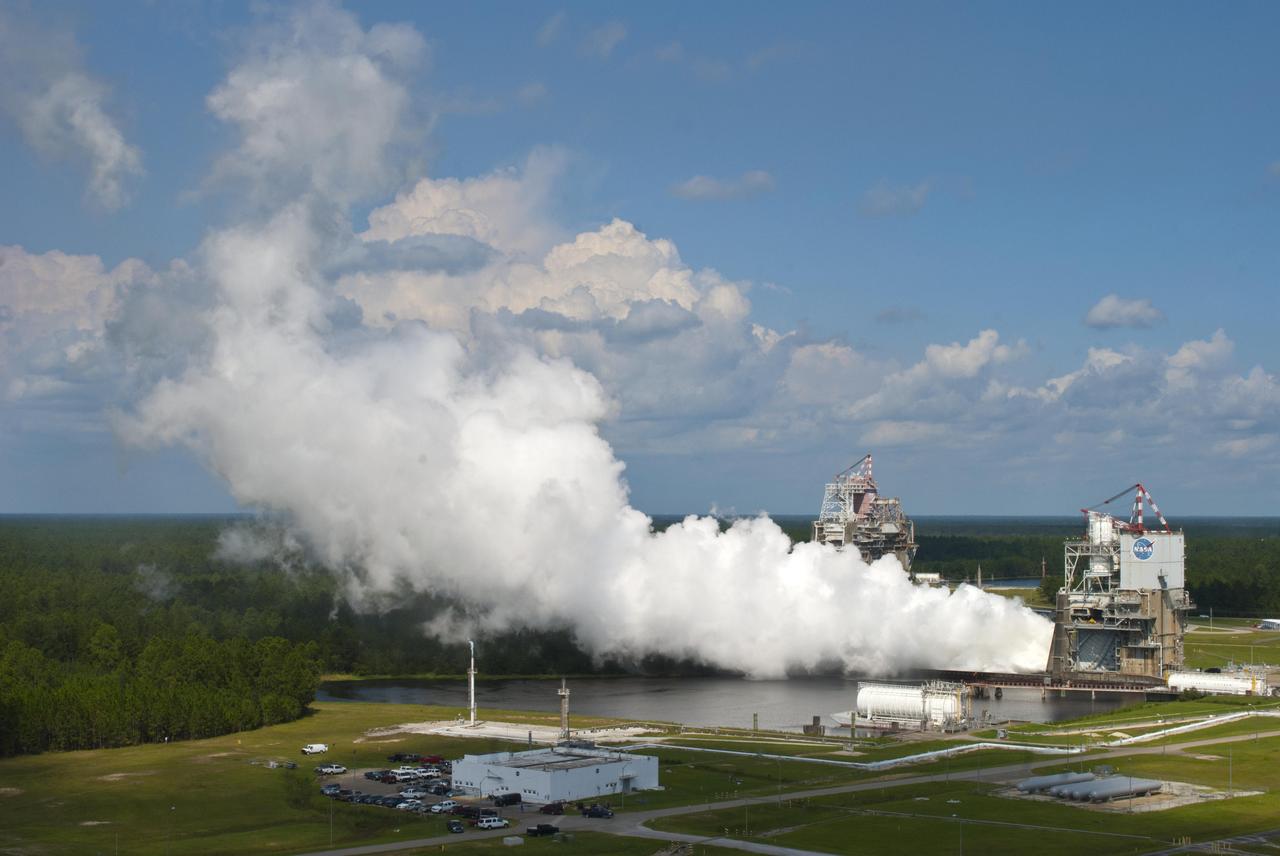
NASA engineers continued testing the next-generation J-2X rocket engine at Stennis Space Center with a 250-second test on Sept. 7. The test was the first conducted after the arrival of Hurricane Isaac forced closure of the Stennis facility for three days in late August. The est was conducted on the A-2 Test Stand at Stennis. The facility's B-1/B-2 Test Stand can be seen in the left background.
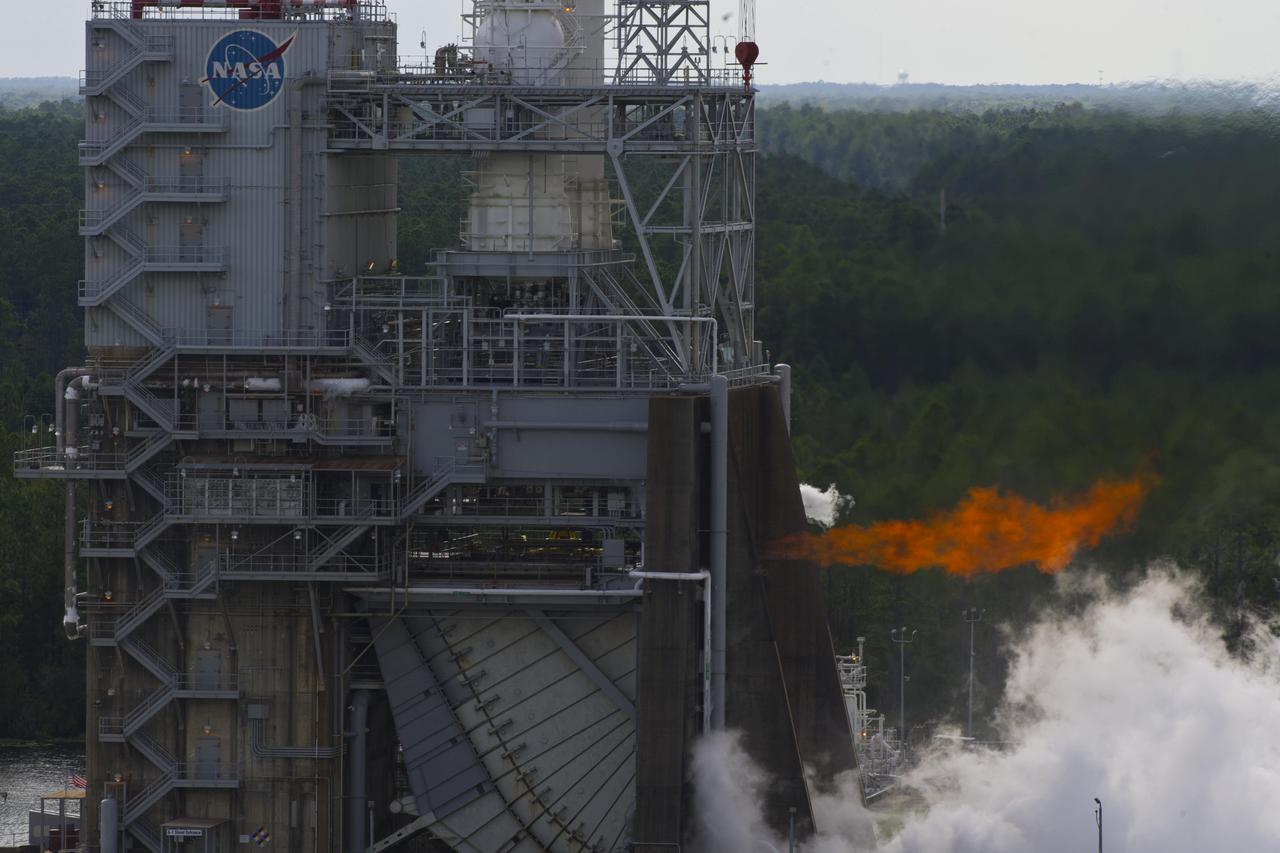
NASA conducted a long-duration test of the J-2X powerpack, 1,261 seconds total, on the A-1 Test Stand at Stennis Space Center on Aug. 16, marking another step in development of the next-generation rocket engine. The powerpack is a system of components on the top portion of the J-2X engine, including the gas generator, oxygen and fuel turbopumps, and related ducts and valves.
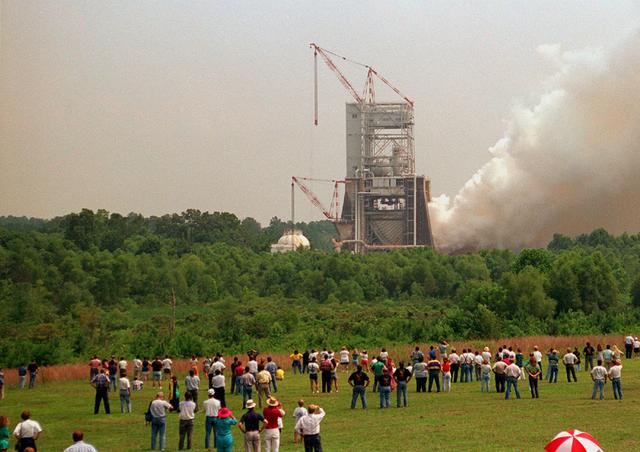
On the 25th Anniversary of the Apollo-11 space launch, Marshall celebrated with a test firing of the Space Shuttle Main Engine at the Technology Test Bed (SSME-TTB). This drew a large crowd who stood in the fields around the test site and watched as plumes of white smoke verified ignition.
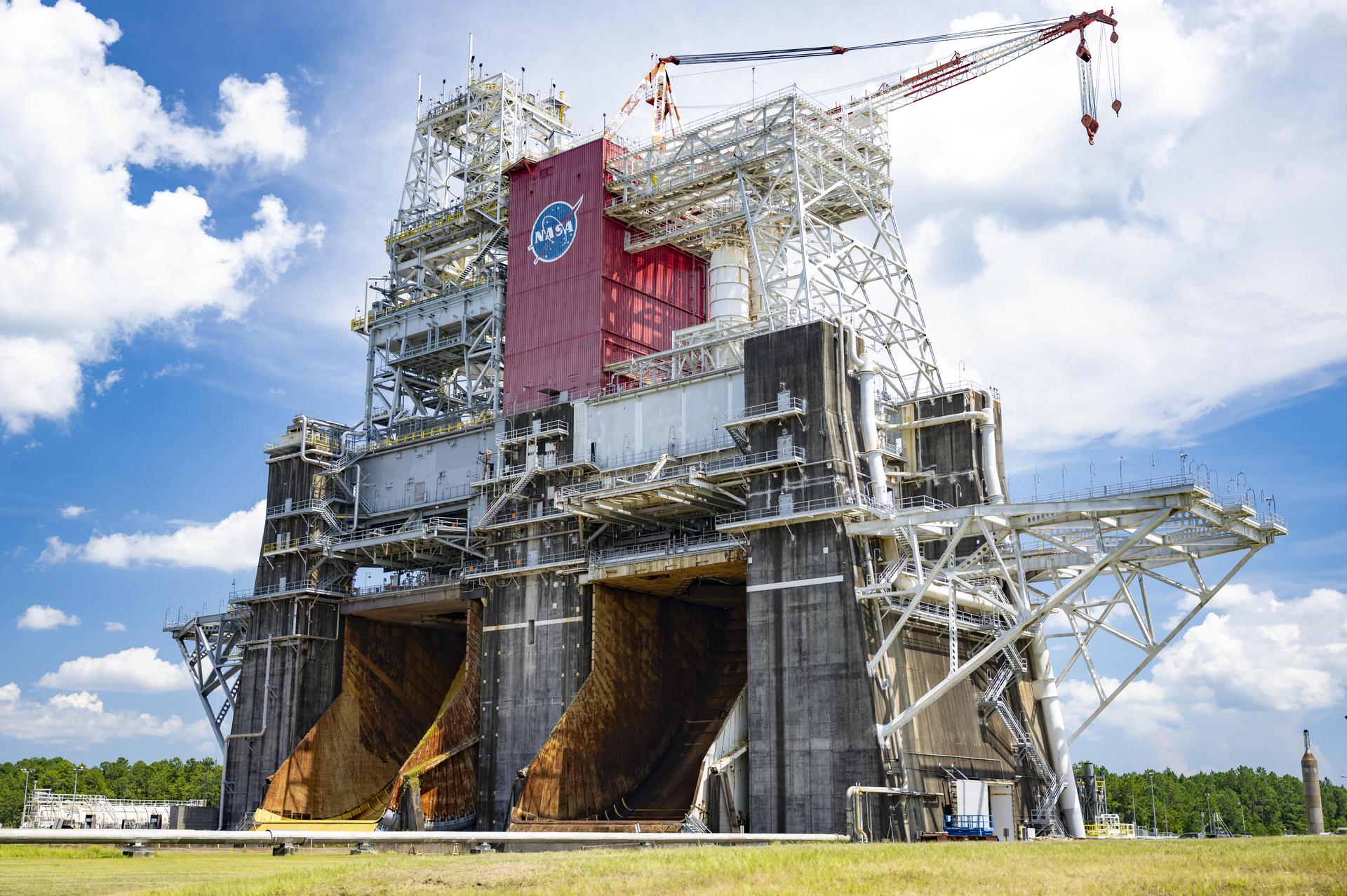
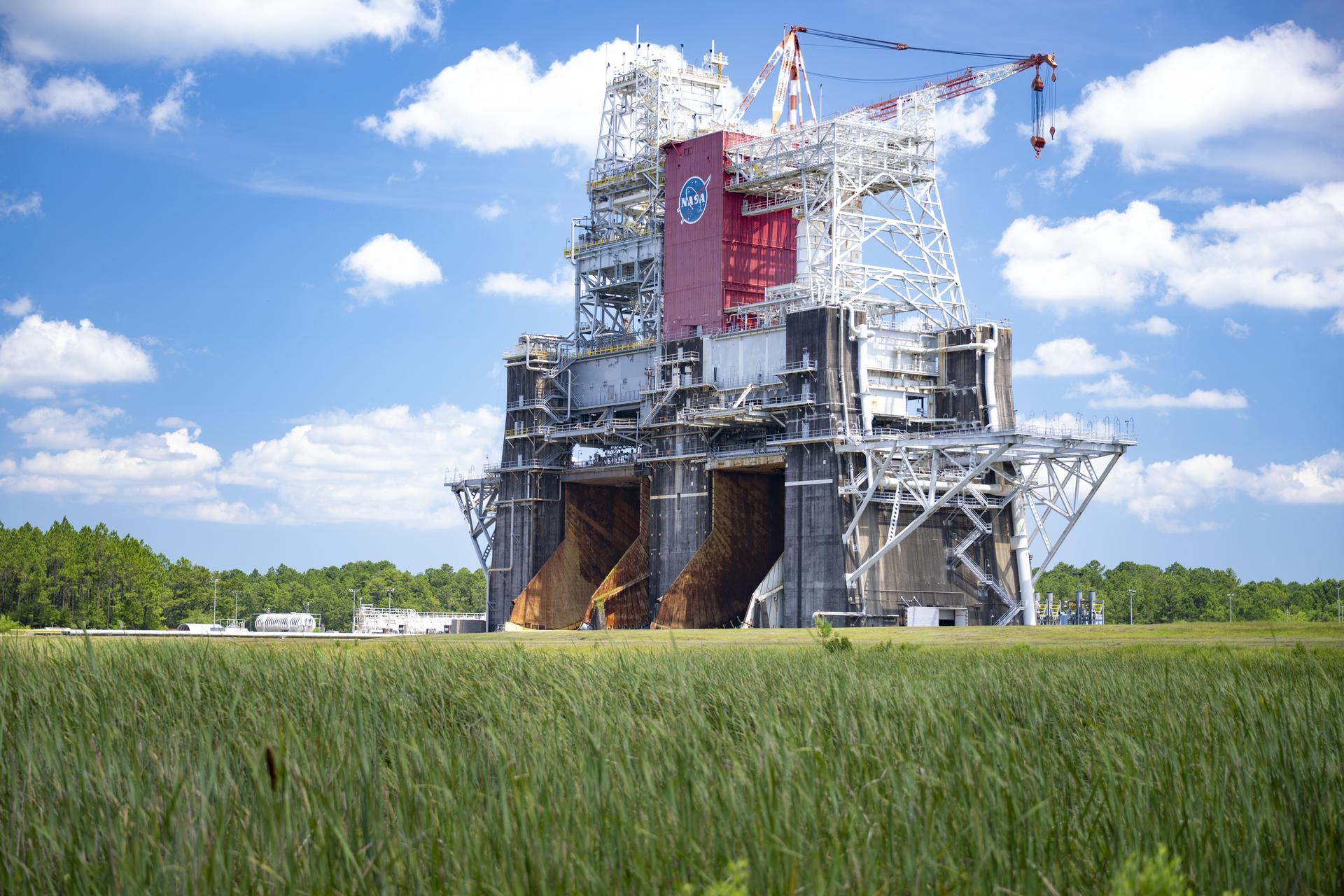
An image shows the Thad Cochran Test Stand (B-1/B-2) at NASA’s Stennis Space Center near Bay St. Louis, Mississippi, on July 7. The test stand features dual, vertical firing positions built in the 1960s to test Saturn V rocket stages that carried humans to the Moon during the Apollo program. The B 1 position, right, is equipped for single engine tests, while the B 2 position is designed to test full rocket stages.
An image shows the Thad Cochran Test Stand (B-1/B-2) at NASA’s Stennis Space Center near Bay St. Louis, Mississippi, on July 7. The test stand features dual, vertical firing positions built in the 1960s to test Saturn V rocket stages that carried humans to the Moon during the Apollo program. The B 1 position, right, is equipped for single engine tests, while the B 2 position is designed to test full rocket stages.
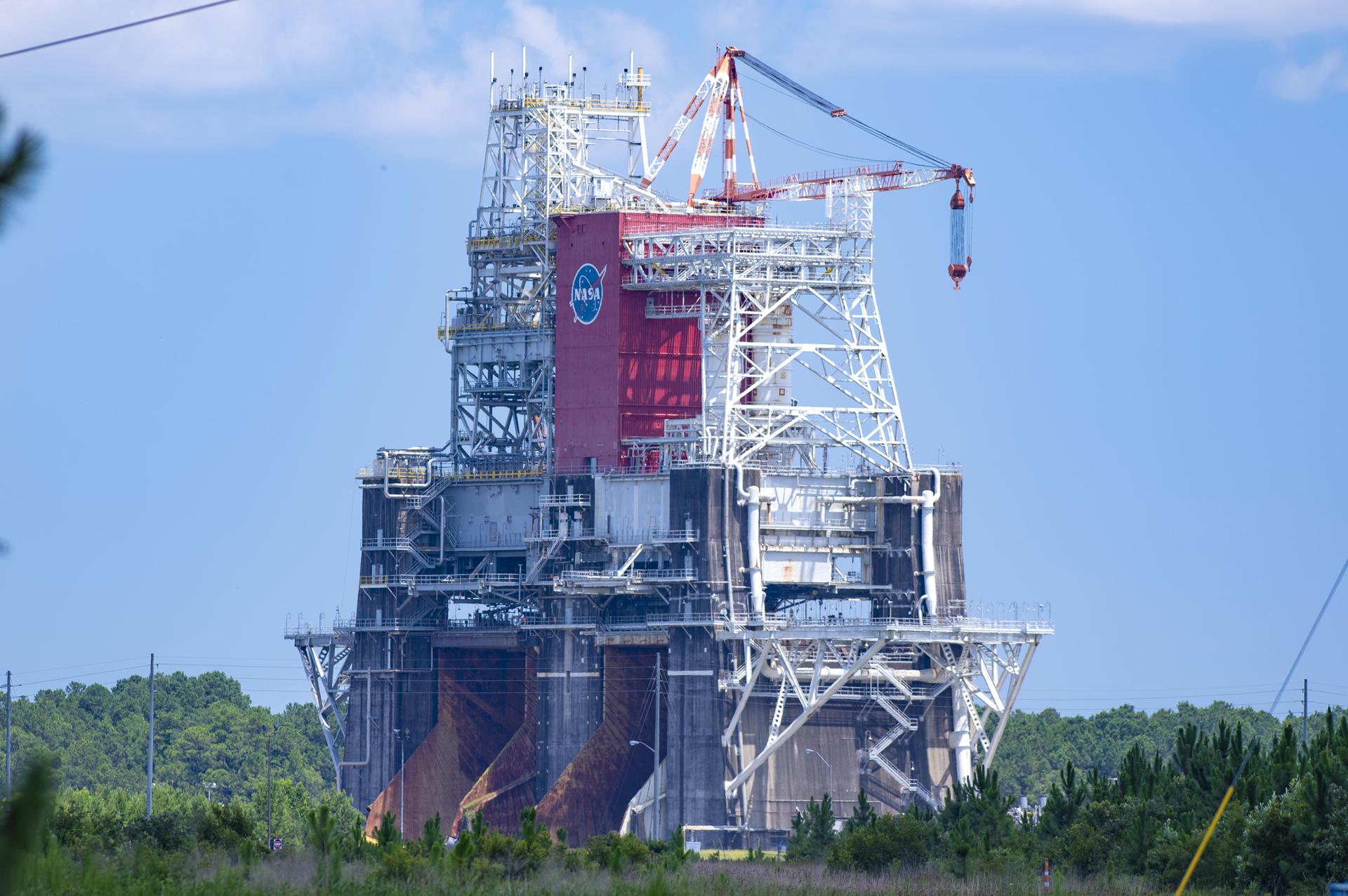
An image shows the Thad Cochran Test Stand (B-1/B-2) at NASA’s Stennis Space Center near Bay St. Louis, Mississippi, on July 7. The test stand features dual, vertical firing positions built in the 1960s to test Saturn V rocket stages that carried humans to the Moon during the Apollo program. The B 1 position, right, is equipped for single engine tests, while the B 2 position is designed to test full rocket stages.
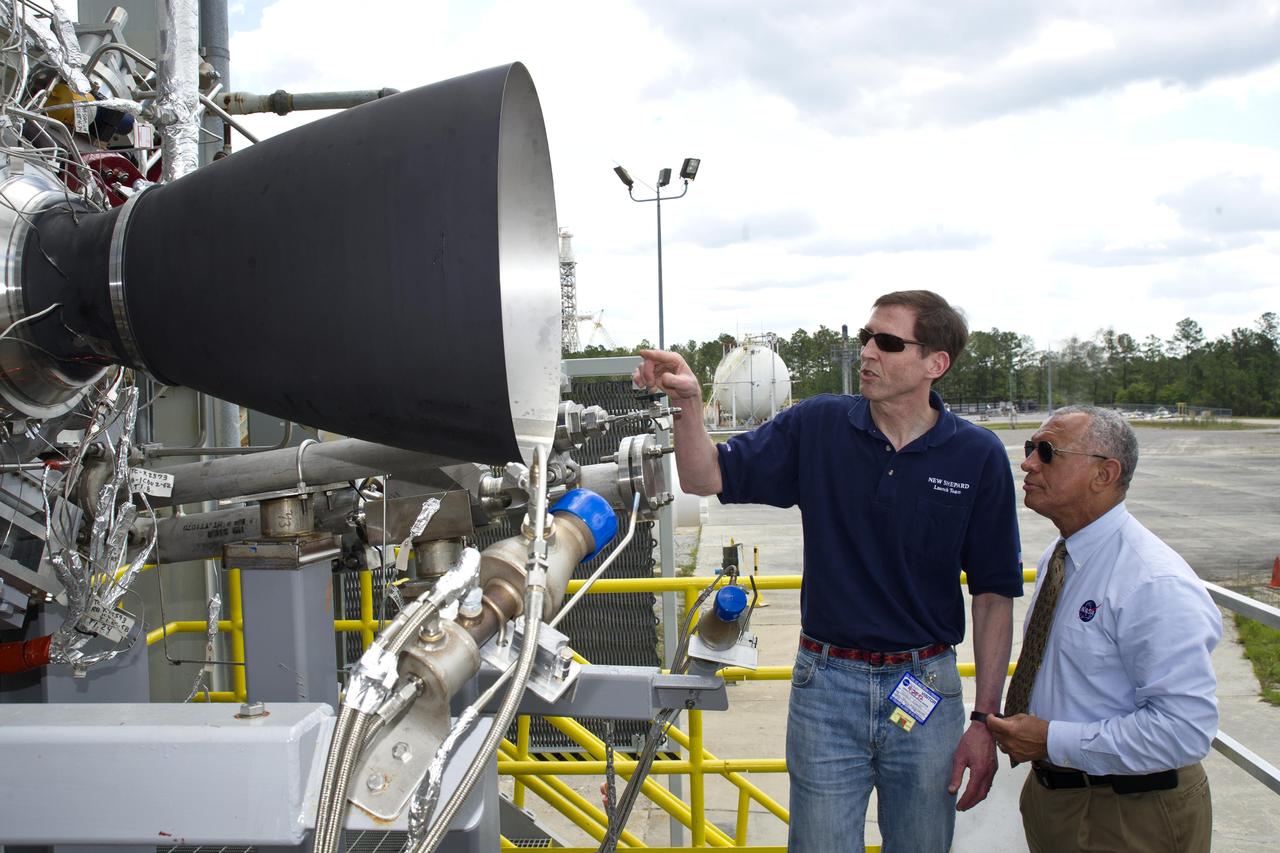
NASA Administrator Charles Bolden (r) discusses the upcoming testing of Blue Origin's BE-3 engine thrust chamber assembly with Steve Knowles, Blue Origin project manager, at the E-1 Test Stand during an April 20, 2012, visit to Stennis Space Center. Blue Origin is one of NASA's partners developing innovative systems to reach low-Earth orbit.
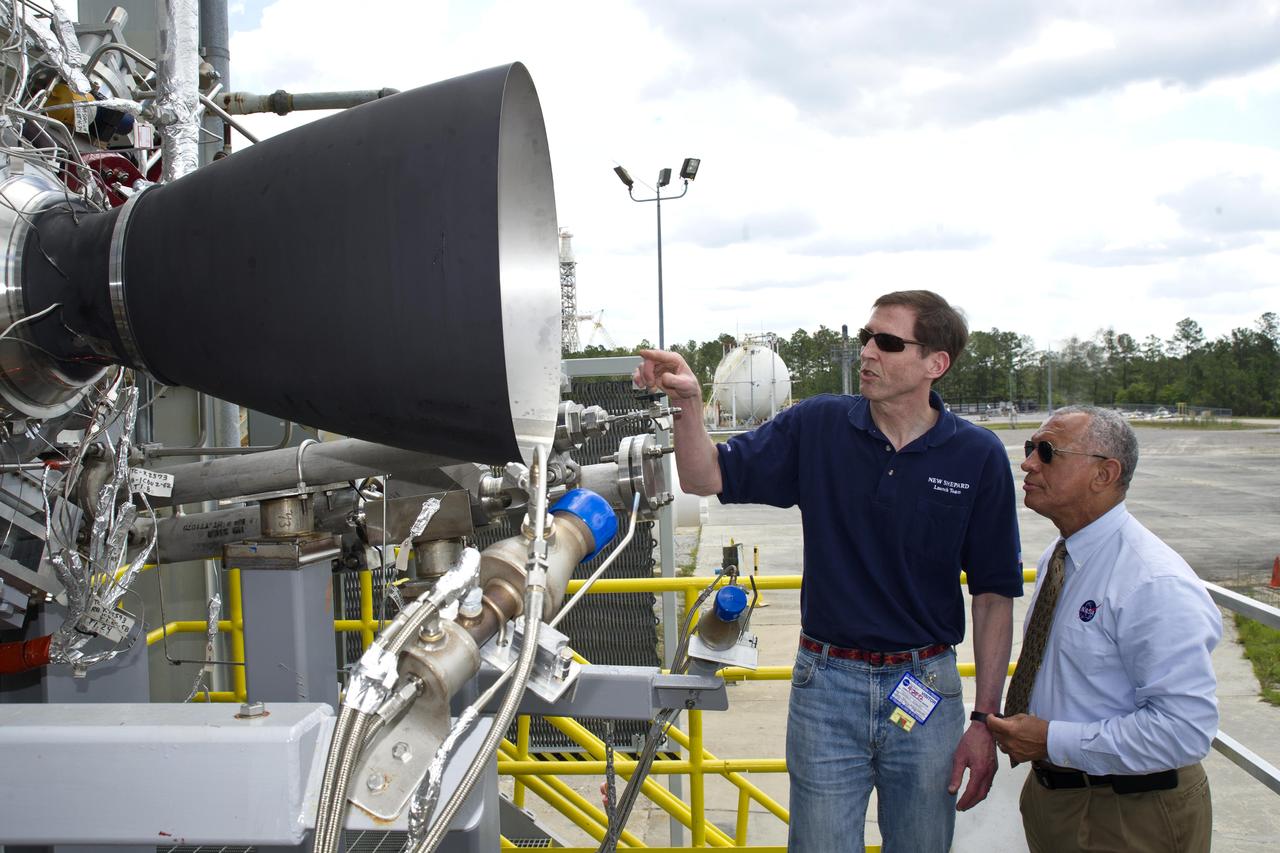
NASA Administrator Charles Bolden (r) discusses the upcoming testing of Blue Origin's BE-3 engine thrust chamber assembly with Steve Knowles, Blue Origin project manager, at the E-1 Test Stand during an April 20, 2012, visit to Stennis Space Center. Blue Origin is one of NASA's partners developing innovative systems to reach low-Earth orbit.
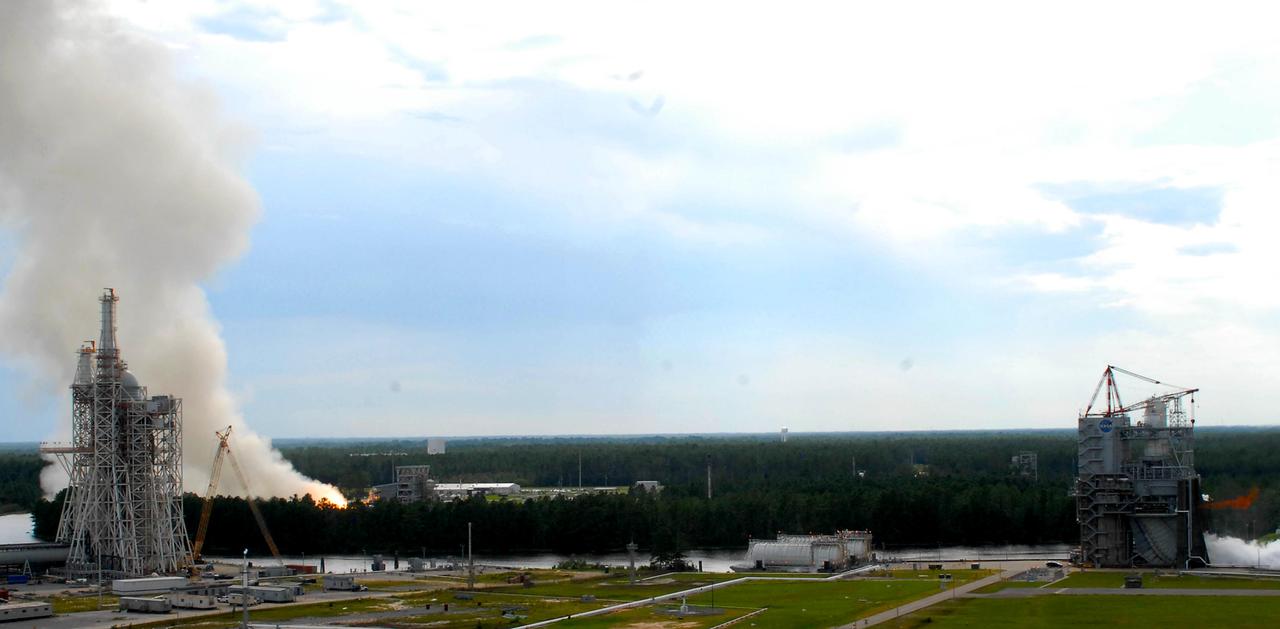
Two large-engine tests were conducted simultaneously for the first time at Stennis Space Center on Aug. 16. A plume on the left indicates a test on the facility's E-1 Test Stand. On the right, a finger of fire indicates a test under way on the A-1 Test Stand. In another first, both tests were conducted by female engineers. The image was taken from atop the facility's A-2 Test Stand, offering a panoramic view that includes the new A-3 Test Stand under construction to the left.
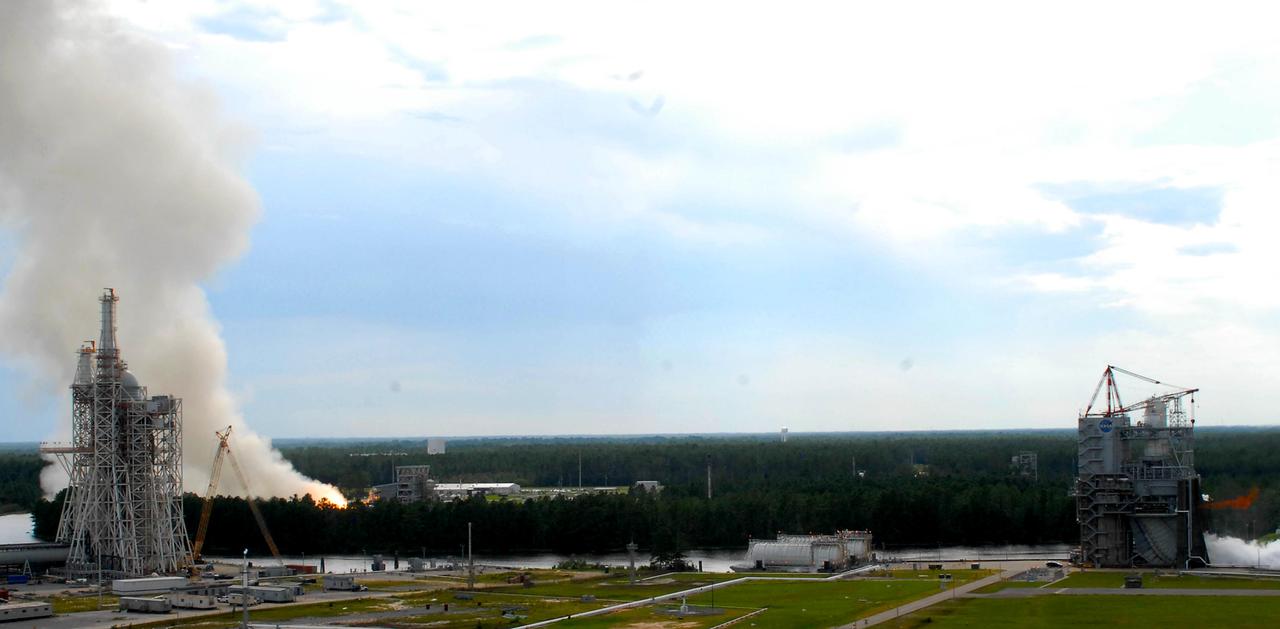
Two large-engine tests were conducted simultaneously for the first time at Stennis Space Center on Aug. 16. A plume on the left indicates a test on the facility's E-1 Test Stand. On the right, a finger of fire indicates a test under way on the A-1 Test Stand. In another first, both tests were conducted by female engineers. The image was taken from atop the facility's A-2 Test Stand, offering a panoramic view that includes the new A-3 Test Stand under construction to the left.
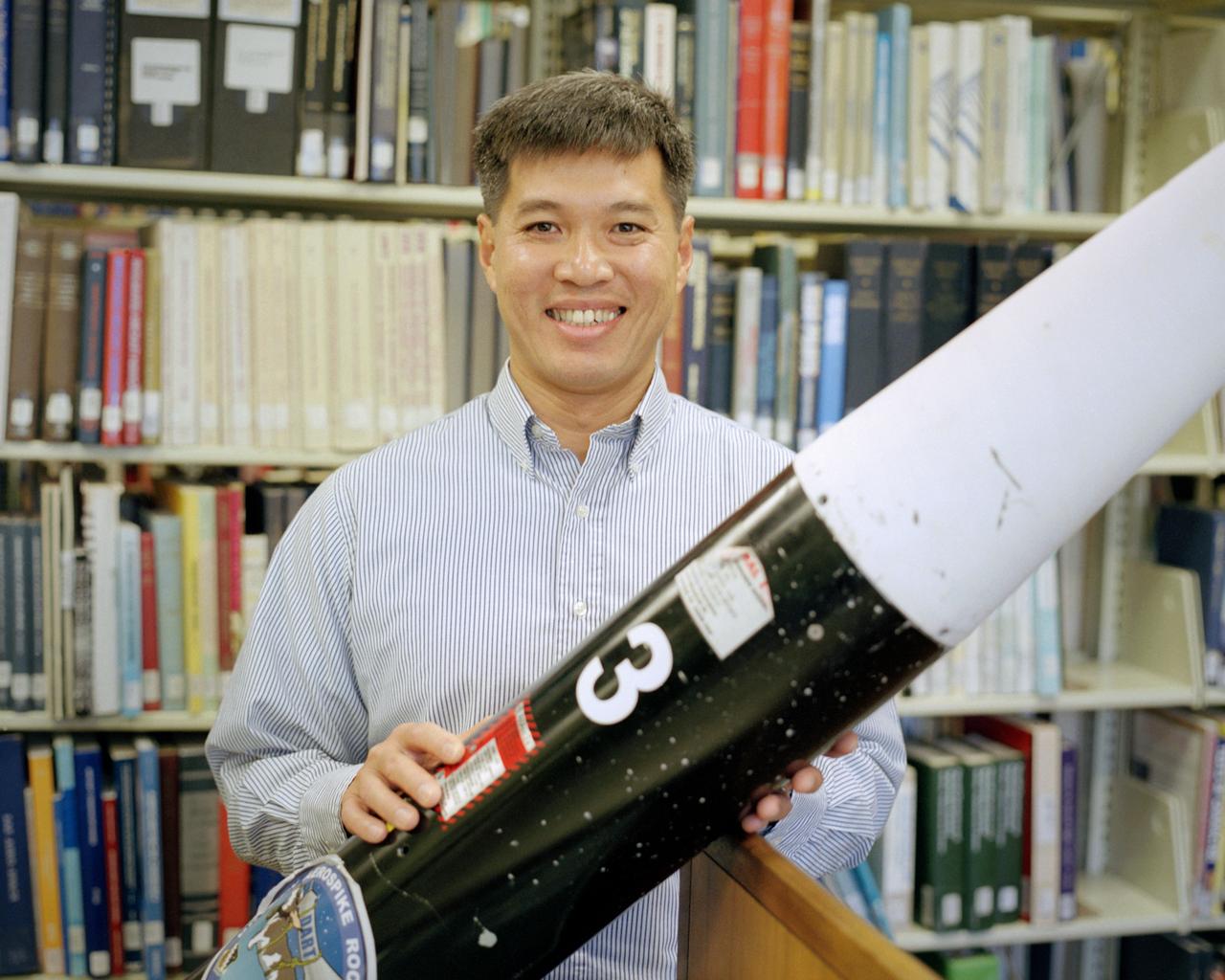
Trong Bui, NASA Dryden's principal investigator for the aerospike rocket tests, holds the first of two 10-ft. long rockets that were flown at speeds up to Mach 1.5, the first known supersonic tests of rockets with aerospike nozzles. The goals of the flight research project were to obtain aerospike rocket nozzle performance data in flight and to investigate the effects of transonic flow and transient flight conditions on aerospike nozzle performance.

Photo shows how the Space Launch Sysetm (SLS) rocket liquid oxygen tank failed during a structural qualification test at NASA’s Marshall Space Flight Center in Huntsville, Alabama. The photos show both the water flowing from the tank as it ruptured and the resultant tear left in the tank when it buckled during the test. Engineers pushed the liquid oxygen structural test article to the limits on purpose. The tank is a test article that is identical to tanks that are part of the SLS core stage that will produce 2 million pounds of thrust to help launch the rocket on the Artemis missions to the Moon. During the test, hydraulic cylinders were then calibrated and positioned along the tank to apply millions of pounds of crippling force from all sides while engineers measured and recorded the effects of the launch and flight forces. For the test, water used to simulate the liquid oxygen flows out of the tank after it ruptures. The structural test campaign was conducted on the rocket to ensure the SLS rocket’s structure can endure the rigors of launch and safely send astronauts to the Moon on the Artemis missions. For more information: https://www.nasa.gov/exploration/systems/sls/nasa-completes-artemis-sls-structural-testing-campaign.html

Photo shows how the Space Launch Sysetm (SLS) rocket liquid oxygen tank failed during a structural qualification test at NASA’s Marshall Space Flight Center in Huntsville, Alabama. The photos show both the water flowing from the tank as it ruptured and the resultant tear left in the tank when it buckled during the test. Engineers pushed the liquid oxygen structural test article to the limits on purpose. The tank is a test article that is identical to tanks that are part of the SLS core stage that will produce 2 million pounds of thrust to help launch the rocket on the Artemis missions to the Moon. During the test, hydraulic cylinders were then calibrated and positioned along the tank to apply millions of pounds of crippling force from all sides while engineers measured and recorded the effects of the launch and flight forces. For the test, water used to simulate the liquid oxygen flows out of the tank after it ruptures. The structural test campaign was conducted on the rocket to ensure the SLS rocket’s structure can endure the rigors of launch and safely send astronauts to the Moon on the Artemis missions. For more information: https://www.nasa.gov/exploration/systems/sls/nasa-completes-artemis-sls-structural-testing-campaign.html

Photo shows how the Space Launch Sysetm (SLS) rocket liquid oxygen tank failed during a structural qualification test at NASA’s Marshall Space Flight Center in Huntsville, Alabama. The photos show both the water flowing from the tank as it ruptured and the resultant tear left in the tank when it buckled during the test. Engineers pushed the liquid oxygen structural test article to the limits on purpose. The tank is a test article that is identical to tanks that are part of the SLS core stage that will produce 2 million pounds of thrust to help launch the rocket on the Artemis missions to the Moon. During the test, hydraulic cylinders were then calibrated and positioned along the tank to apply millions of pounds of crippling force from all sides while engineers measured and recorded the effects of the launch and flight forces. For the test, water used to simulate the liquid oxygen flows out of the tank after it ruptures. The structural test campaign was conducted on the rocket to ensure the SLS rocket’s structure can endure the rigors of launch and safely send astronauts to the Moon on the Artemis missions. For more information: https://www.nasa.gov/exploration/systems/sls/nasa-completes-artemis-sls-structural-testing-campaign.html

Photo shows how the Space Launch Sysetm (SLS) rocket liquid oxygen tank failed during a structural qualification test at NASA’s Marshall Space Flight Center in Huntsville, Alabama. The photos show both the water flowing from the tank as it ruptured and the resultant tear left in the tank when it buckled during the test. Engineers pushed the liquid oxygen structural test article to the limits on purpose. The tank is a test article that is identical to tanks that are part of the SLS core stage that will produce 2 million pounds of thrust to help launch the rocket on the Artemis missions to the Moon. During the test, hydraulic cylinders were then calibrated and positioned along the tank to apply millions of pounds of crippling force from all sides while engineers measured and recorded the effects of the launch and flight forces. For the test, water used to simulate the liquid oxygen flows out of the tank after it ruptures. The structural test campaign was conducted on the rocket to ensure the SLS rocket’s structure can endure the rigors of launch and safely send astronauts to the Moon on the Artemis missions. For more information: https://www.nasa.gov/exploration/systems/sls/nasa-completes-artemis-sls-structural-testing-campaign.html
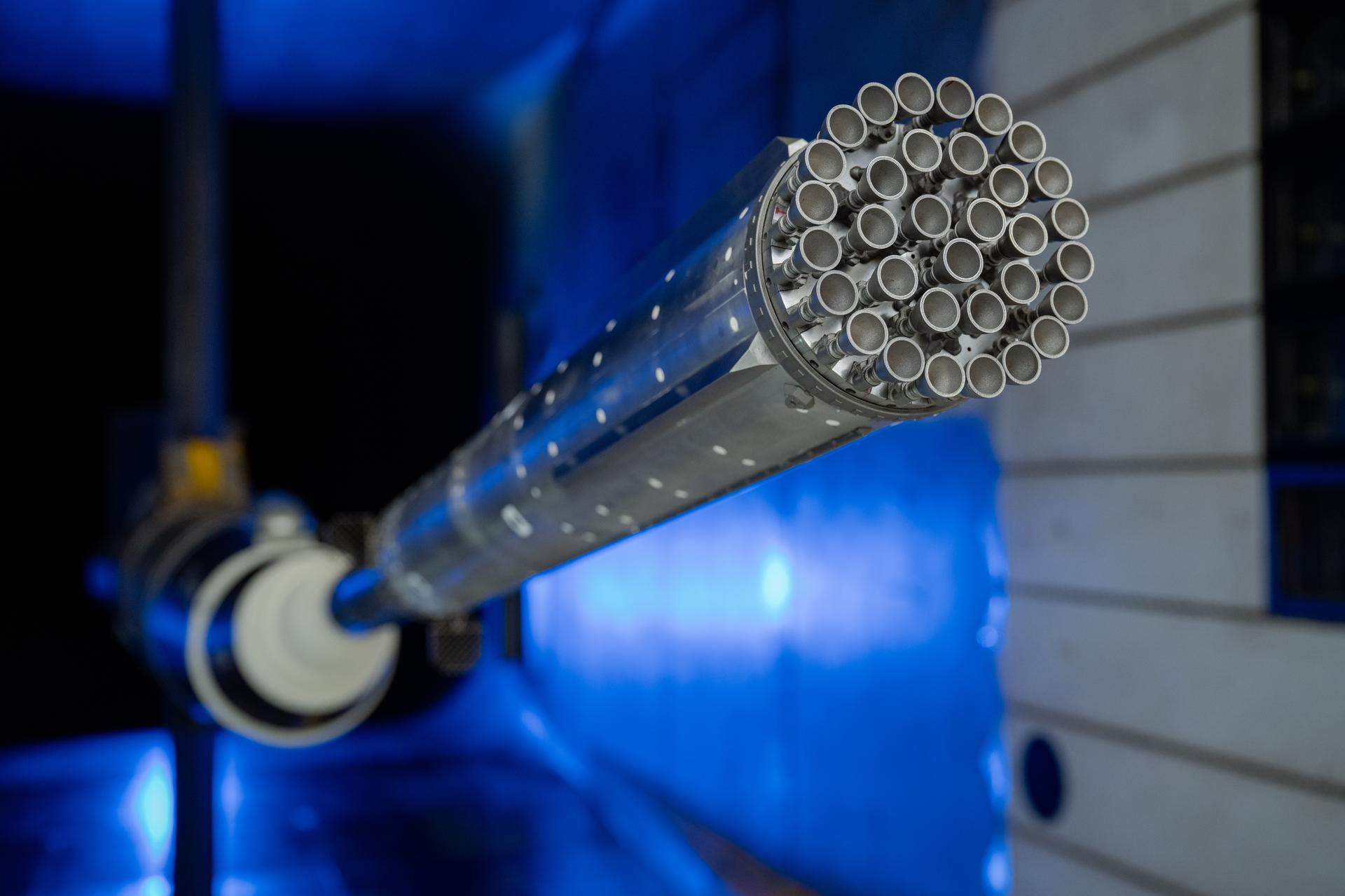
These photos show how engineers with conducted testing on a 1.2% scale model of SpaceX’s Super Heavy Version 3 rocket booster at NASA’s Ames Research Center in California’s Silicon Valley. The tests focused on better understanding the extreme aerodynamic forces the rocket can experience during re-entry and builds on a previous test series completed at NASA Ames in 2024. NASA is working with SpaceX to develop the company’s Starship Human Landing System (HLS) to safely carry astronauts from lunar orbit to the Moon’s surface and back. The upgraded Super Heavy rocket booster is part of SpaceX’s Starship launch system.
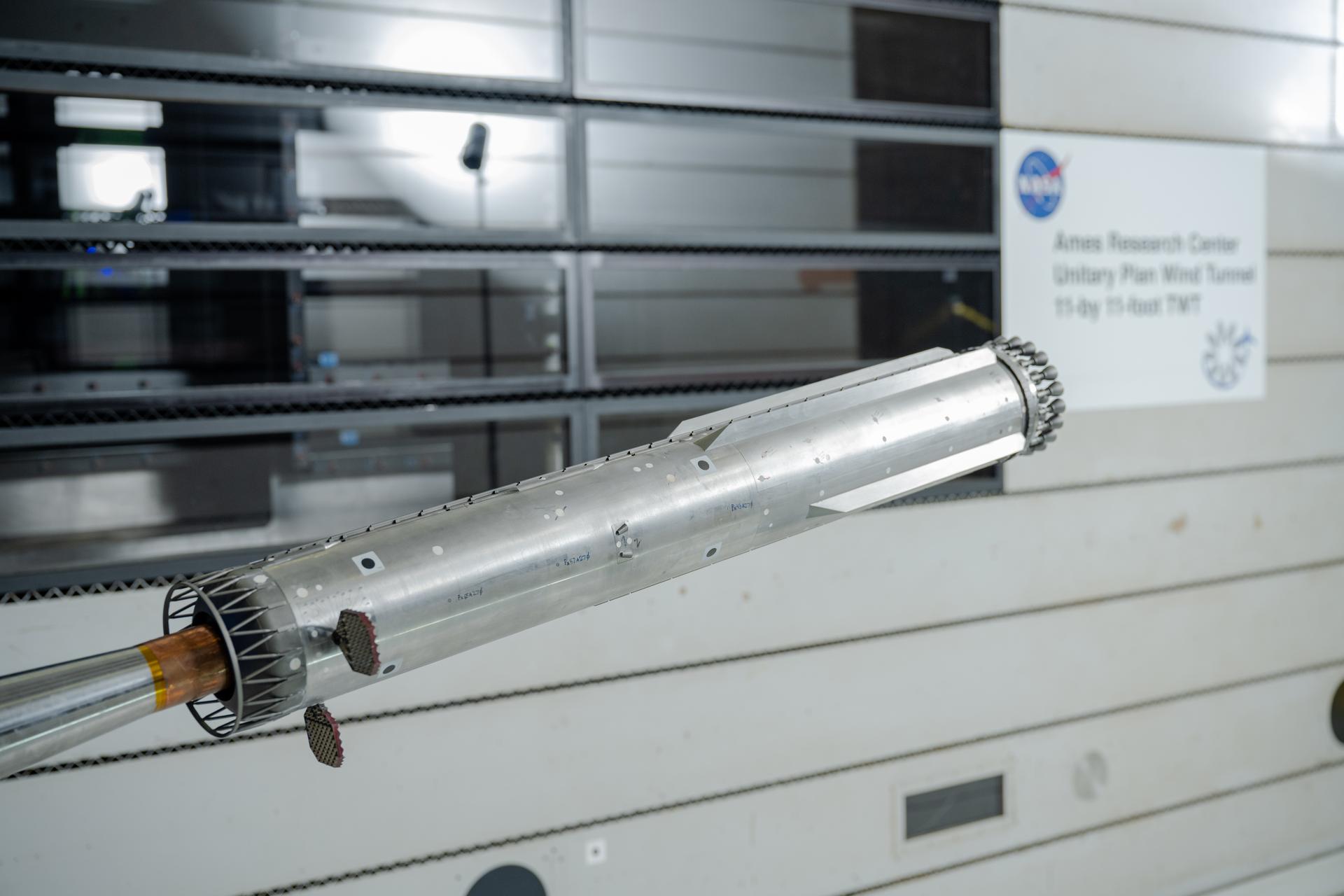
These photos show how engineers with conducted testing on a 1.2% scale model of SpaceX’s Super Heavy Version 3 rocket booster at NASA’s Ames Research Center in California’s Silicon Valley. The tests focused on better understanding the extreme aerodynamic forces the rocket can experience during re-entry and builds on a previous test series completed at NASA Ames in 2024. NASA is working with SpaceX to develop the company’s Starship Human Landing System (HLS) to safely carry astronauts from lunar orbit to the Moon’s surface and back. The upgraded Super Heavy rocket booster is part of SpaceX’s Starship launch system.
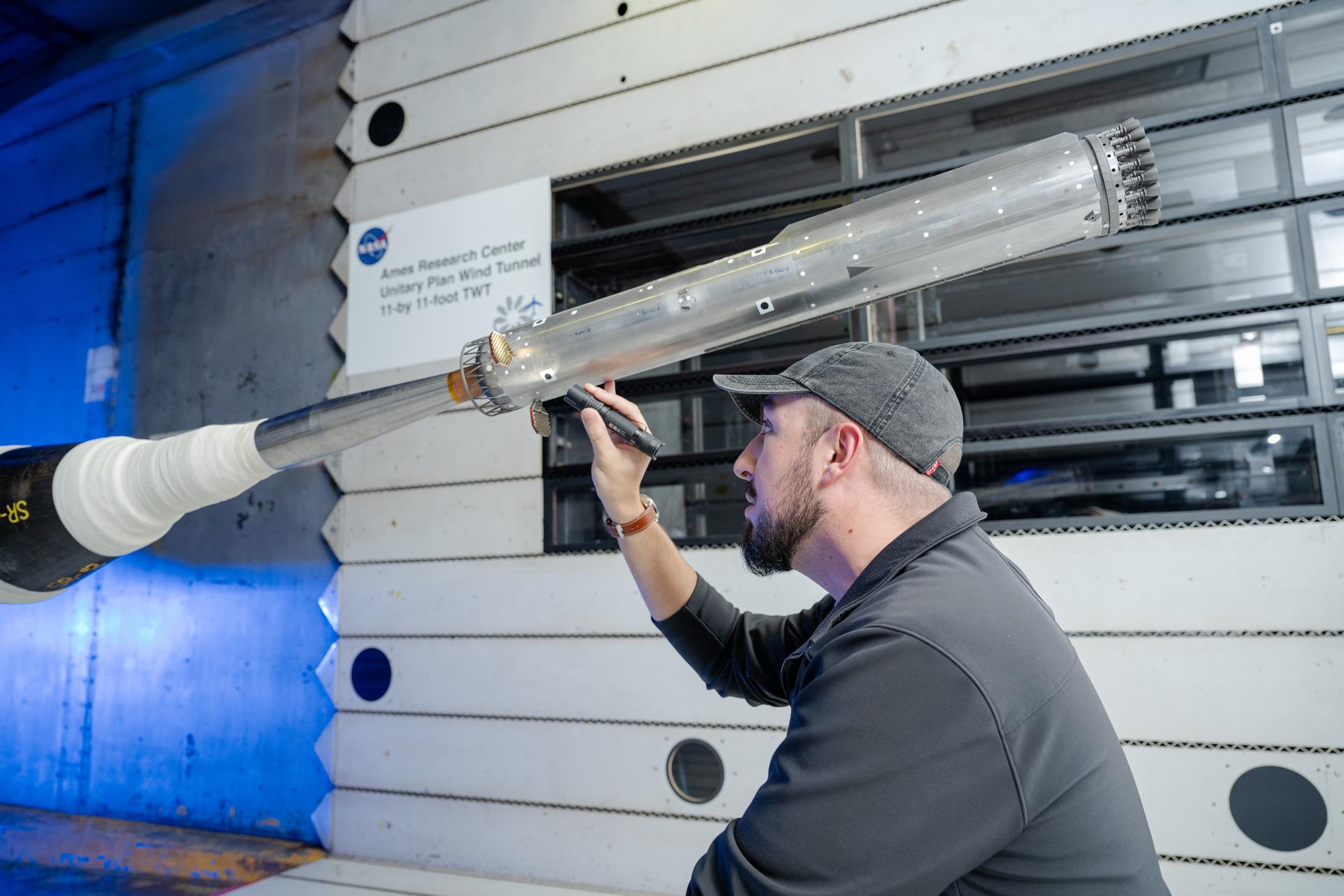
These photos show how engineers with conducted testing on a 1.2% scale model of SpaceX’s Super Heavy Version 3 rocket booster at NASA’s Ames Research Center in California’s Silicon Valley. The tests focused on better understanding the extreme aerodynamic forces the rocket can experience during re-entry and builds on a previous test series completed at NASA Ames in 2024. NASA is working with SpaceX to develop the company’s Starship Human Landing System (HLS) to safely carry astronauts from lunar orbit to the Moon’s surface and back. The upgraded Super Heavy rocket booster is part of SpaceX’s Starship launch system.
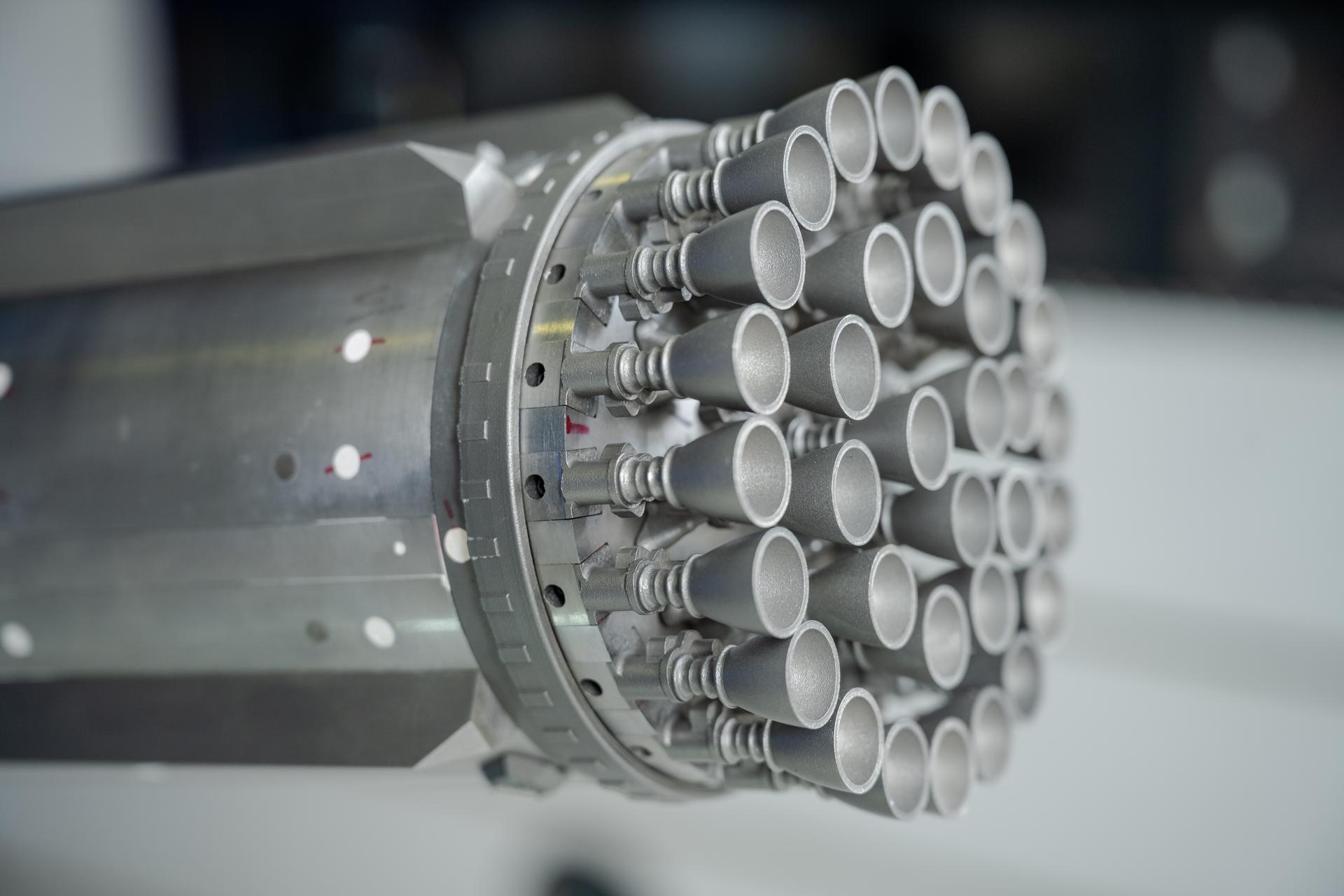
These photos show how engineers with conducted testing on a 1.2% scale model of SpaceX’s Super Heavy Version 3 rocket booster at NASA’s Ames Research Center in California’s Silicon Valley. The tests focused on better understanding the extreme aerodynamic forces the rocket can experience during re-entry and builds on a previous test series completed at NASA Ames in 2024. NASA is working with SpaceX to develop the company’s Starship Human Landing System (HLS) to safely carry astronauts from lunar orbit to the Moon’s surface and back. The upgraded Super Heavy rocket booster is part of SpaceX’s Starship launch system.
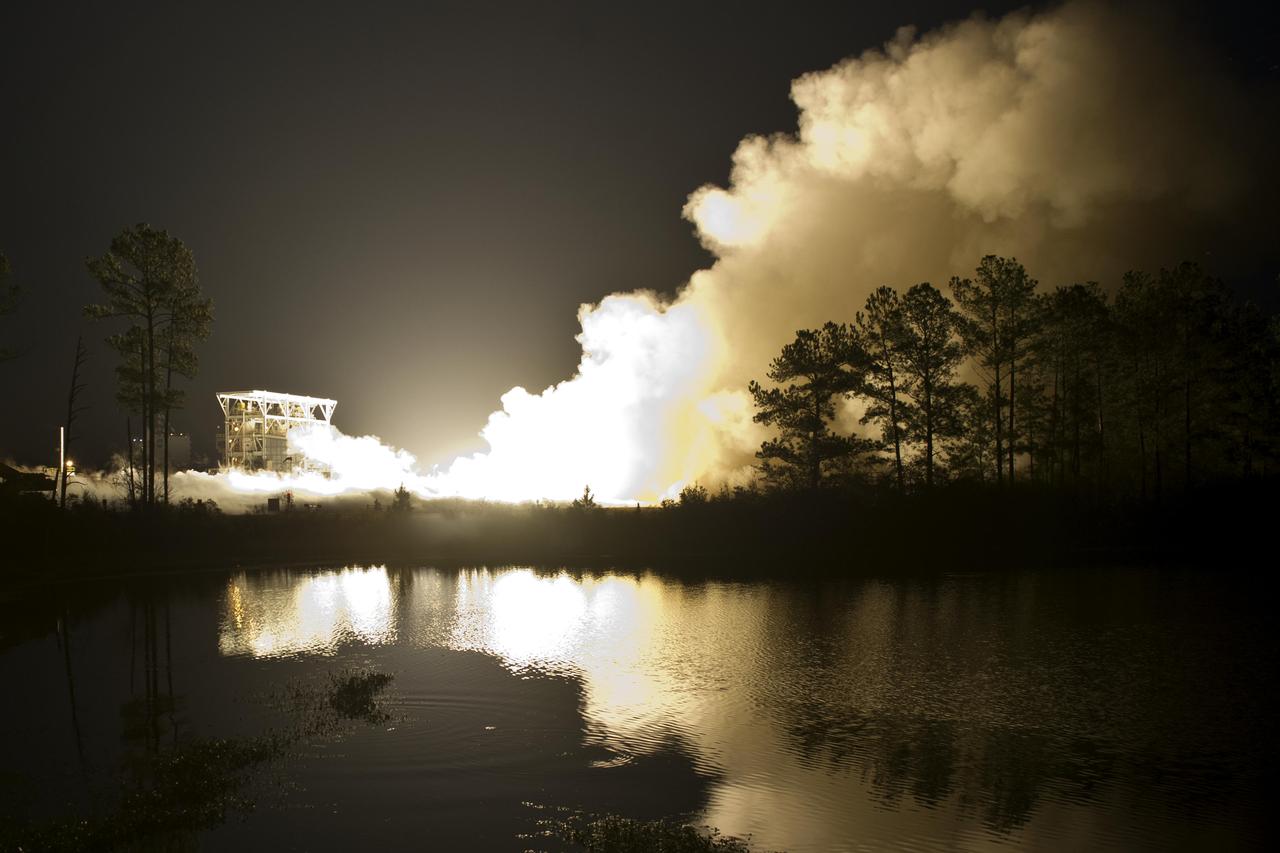
Stennis Space Center test-fired Aerojet AJ26 flight engine No. 8 on Dec. 15, continuing a commercial partnership with Orbital Services Corporation. Orbital has partnered with NASA to provide commercial cargo flights to the International Space Station. The AJ26 engines tested at Stennis will power the company's Taurus II space launch vehicle on the flights.
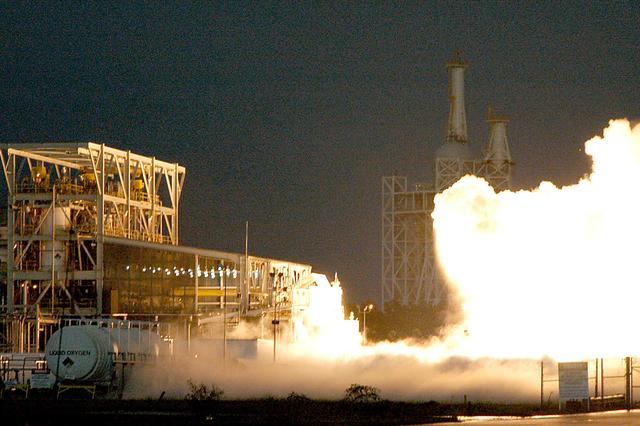
NASA conducted a Sept. 28 test of an Aerojet AJ26 flight engine that will power the first stage of Orbital Sciences Corporation's Taurus II space launch vehicle, continuing progress in a key commercial space transport partnership. Orbital is scheduled to begin commercial cargo flights to the International Space Station in 2012.
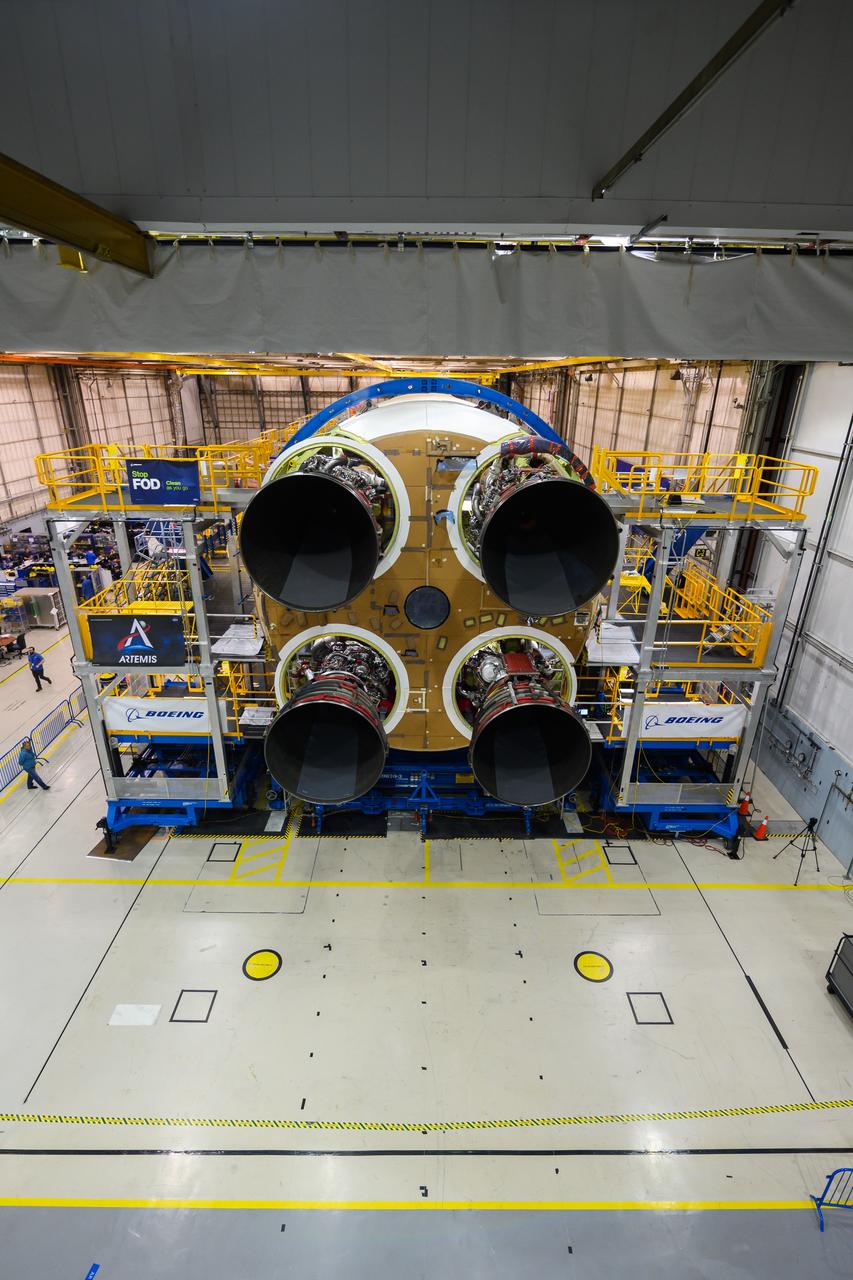
This photo shows all four RS-25 engines attached to the core stage for NASA’s Space Launch System rocket for the agency’s Artemis I mission to the Moon. To complete assembly of the rocket stage, engineers and technicians at NASA’s Michoud Assembly Facility in New Orleans are now integrating the propulsion and electrical systems within the structure. The completed core stage with all four RS-25 engines attached is the largest rocket stage NASA has built since the Saturn V stages for the Apollo Program that first sent Americans to the Moon. The stage, which includes two propellant tanks, provides more than 2 million pounds of thrust to send Artemis I to the Moon. Engineers and technicians attached the fourth RS-25 engine to the rocket stage Nov. 6 just one day after structurally mating the third engine. The first two RS-25 engines were structurally mated to the stage in October. After assembly is complete, crews will conduct an integrated functional test of flight computers, avionics and electrical systems that run throughout the 212-foot-tall core stage in preparation for its completion later this year. This testing is the first time all the flight avionics systems will be tested together to ensure the systems communicate with each other and will perform properly to control the rocket’s flight. Integration of the RS-25 engines to the recently completed core stage structure is a collaborative, multistep process for NASA and its partners Boeing, the core stage lead contractor, and Aerojet Rocketdyne, the RS-25 engines lead contractor. Offering more payload mass, volume capability and energy to speed missions through space, the SLS rocket, along with NASA’s Gateway in lunar orbit and Orion, is part of NASA’s backbone for deep space exploration and the Artemis lunar program. No other rocket is capable of carrying astronauts in Orion around the Moon in a single mission.
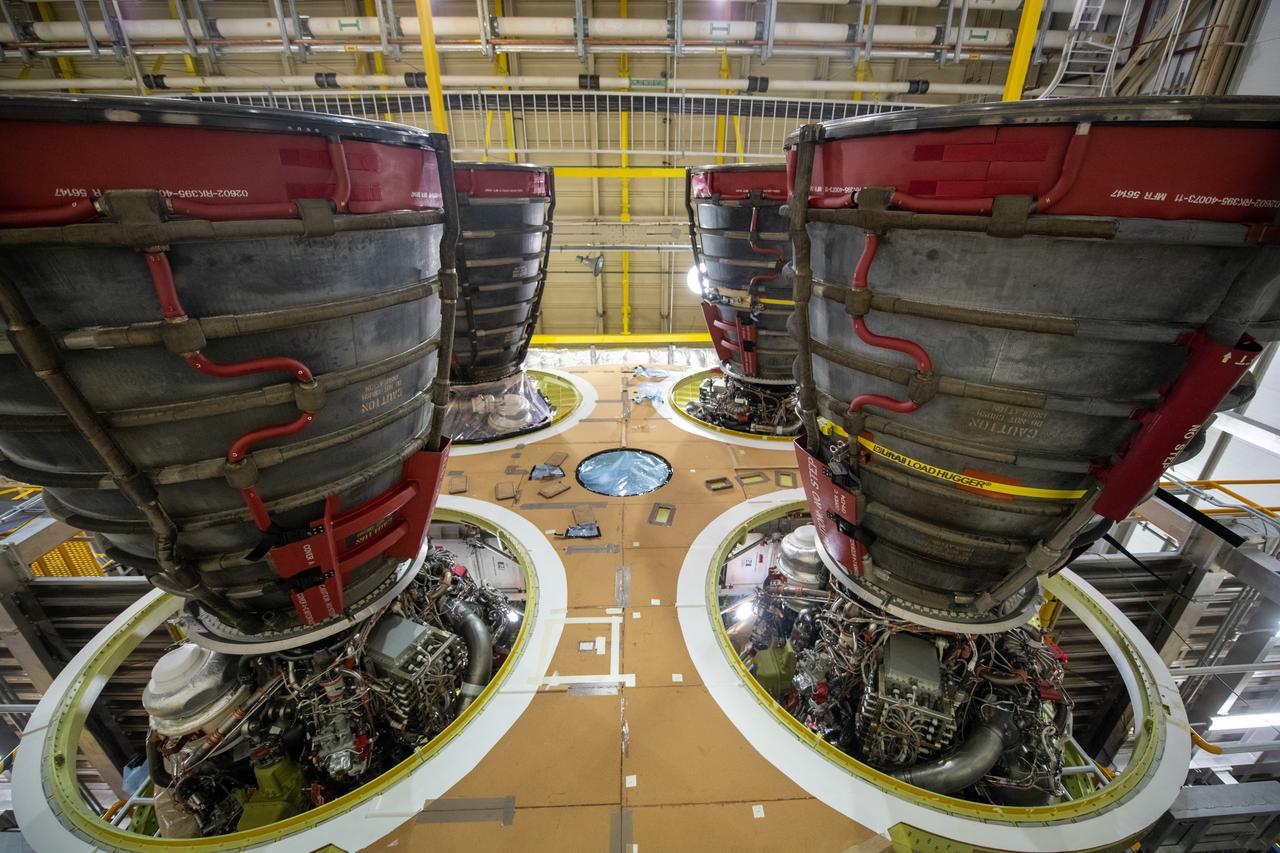
This photo shows all four RS-25 engines attached to the core stage for NASA’s Space Launch System rocket for the agency’s Artemis I mission to the Moon. To complete assembly of the rocket stage, engineers and technicians at NASA’s Michoud Assembly Facility in New Orleans are now integrating the propulsion and electrical systems within the structure. The completed core stage with all four RS-25 engines attached is the largest rocket stage NASA has built since the Saturn V stages for the Apollo Program that first sent Americans to the Moon. The stage, which includes two propellant tanks, provides more than 2 million pounds of thrust to send Artemis I to the Moon. Engineers and technicians attached the fourth RS-25 engine to the rocket stage Nov. 6 just one day after structurally mating the third engine. The first two RS-25 engines were structurally mated to the stage in October. After assembly is complete, crews will conduct an integrated functional test of flight computers, avionics and electrical systems that run throughout the 212-foot-tall core stage in preparation for its completion later this year. This testing is the first time all the flight avionics systems will be tested together to ensure the systems communicate with each other and will perform properly to control the rocket’s flight. Integration of the RS-25 engines to the recently completed core stage structure is a collaborative, multistep process for NASA and its partners Boeing, the core stage lead contractor, and Aerojet Rocketdyne, the RS-25 engines lead contractor. Offering more payload mass, volume capability and energy to speed missions through space, the SLS rocket, along with NASA’s Gateway in lunar orbit and Orion, is part of NASA’s backbone for deep space exploration and the Artemis lunar program. No other rocket is capable of carrying astronauts in Orion around the Moon in a single mission.
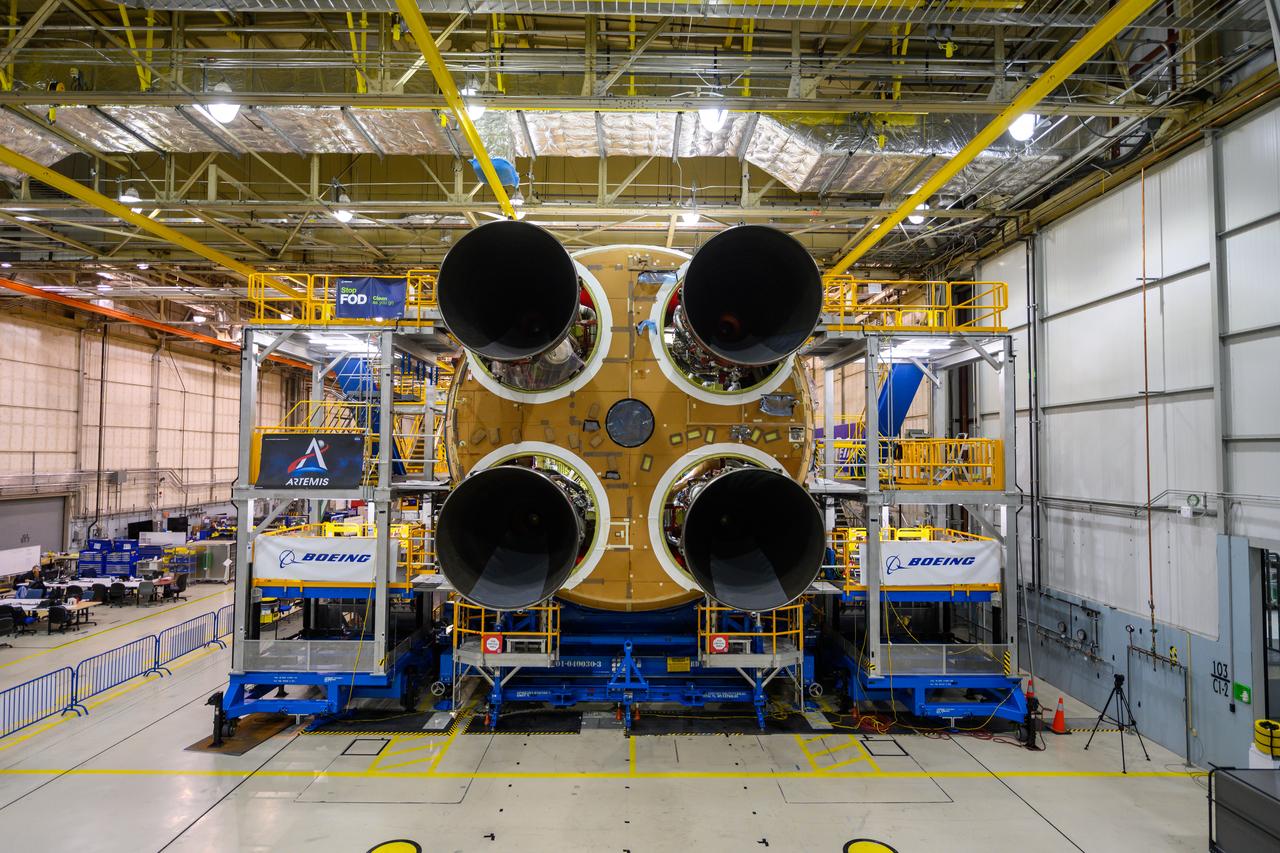
This photo shows all four RS-25 engines attached to the core stage for NASA’s Space Launch System rocket for the agency’s Artemis I mission to the Moon. To complete assembly of the rocket stage, engineers and technicians at NASA’s Michoud Assembly Facility in New Orleans are now integrating the propulsion and electrical systems within the structure. The completed core stage with all four RS-25 engines attached is the largest rocket stage NASA has built since the Saturn V stages for the Apollo Program that first sent Americans to the Moon. The stage, which includes two propellant tanks, provides more than 2 million pounds of thrust to send Artemis I to the Moon. Engineers and technicians attached the fourth RS-25 engine to the rocket stage Nov. 6 just one day after structurally mating the third engine. The first two RS-25 engines were structurally mated to the stage in October. After assembly is complete, crews will conduct an integrated functional test of flight computers, avionics and electrical systems that run throughout the 212-foot-tall core stage in preparation for its completion later this year. This testing is the first time all the flight avionics systems will be tested together to ensure the systems communicate with each other and will perform properly to control the rocket’s flight. Integration of the RS-25 engines to the recently completed core stage structure is a collaborative, multistep process for NASA and its partners Boeing, the core stage lead contractor, and Aerojet Rocketdyne, the RS-25 engines lead contractor. Offering more payload mass, volume capability and energy to speed missions through space, the SLS rocket, along with NASA’s Gateway in lunar orbit and Orion, is part of NASA’s backbone for deep space exploration and the Artemis lunar program. No other rocket is capable of carrying astronauts in Orion around the Moon in a single mission.
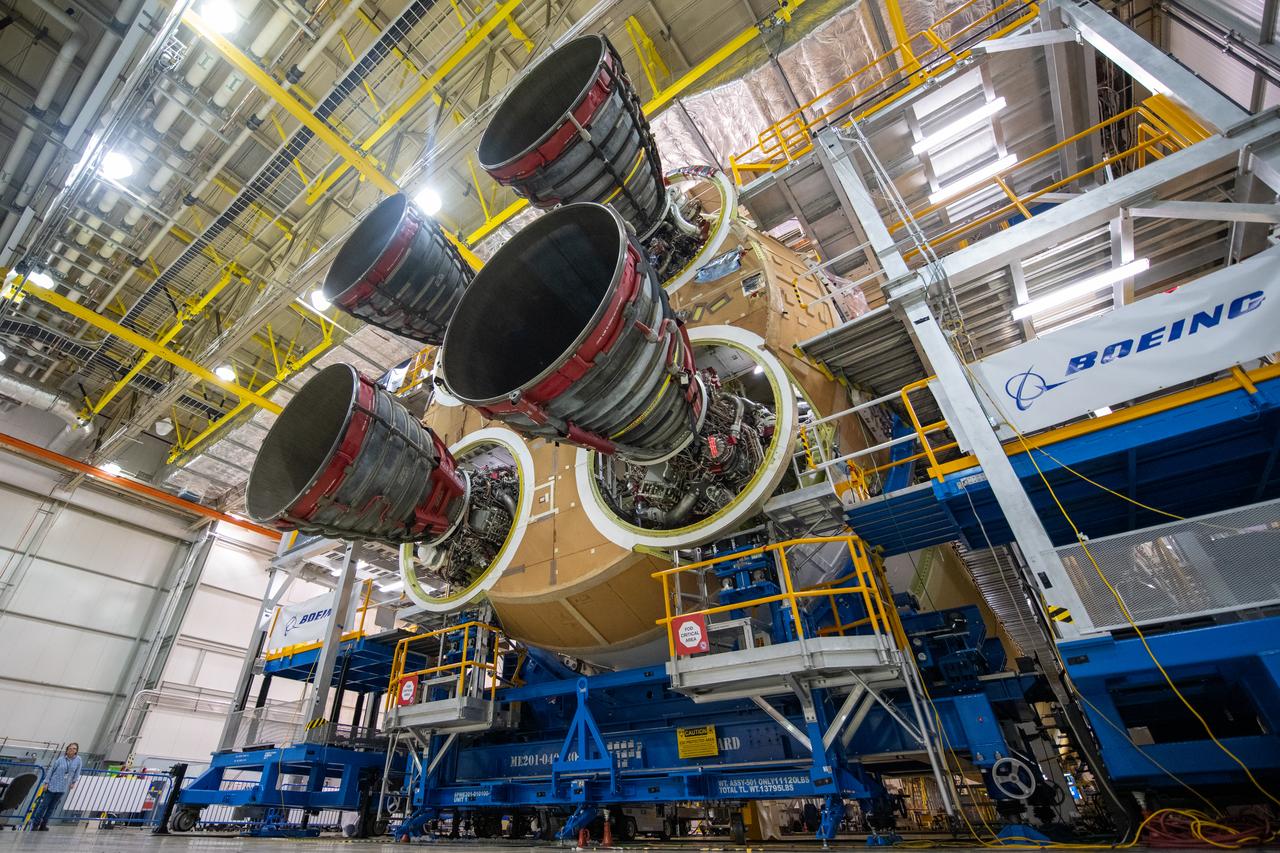
This photo shows all four RS-25 engines attached to the core stage for NASA’s Space Launch System rocket for the agency’s Artemis I mission to the Moon. To complete assembly of the rocket stage, engineers and technicians at NASA’s Michoud Assembly Facility in New Orleans are now integrating the propulsion and electrical systems within the structure. The completed core stage with all four RS-25 engines attached is the largest rocket stage NASA has built since the Saturn V stages for the Apollo Program that first sent Americans to the Moon. The stage, which includes two propellant tanks, provides more than 2 million pounds of thrust to send Artemis I to the Moon. Engineers and technicians attached the fourth RS-25 engine to the rocket stage Nov. 6 just one day after structurally mating the third engine. The first two RS-25 engines were structurally mated to the stage in October. After assembly is complete, crews will conduct an integrated functional test of flight computers, avionics and electrical systems that run throughout the 212-foot-tall core stage in preparation for its completion later this year. This testing is the first time all the flight avionics systems will be tested together to ensure the systems communicate with each other and will perform properly to control the rocket’s flight. Integration of the RS-25 engines to the recently completed core stage structure is a collaborative, multistep process for NASA and its partners Boeing, the core stage lead contractor, and Aerojet Rocketdyne, the RS-25 engines lead contractor. Offering more payload mass, volume capability and energy to speed missions through space, the SLS rocket, along with NASA’s Gateway in lunar orbit and Orion, is part of NASA’s backbone for deep space exploration and the Artemis lunar program. No other rocket is capable of carrying astronauts in Orion around the Moon in a single mission.
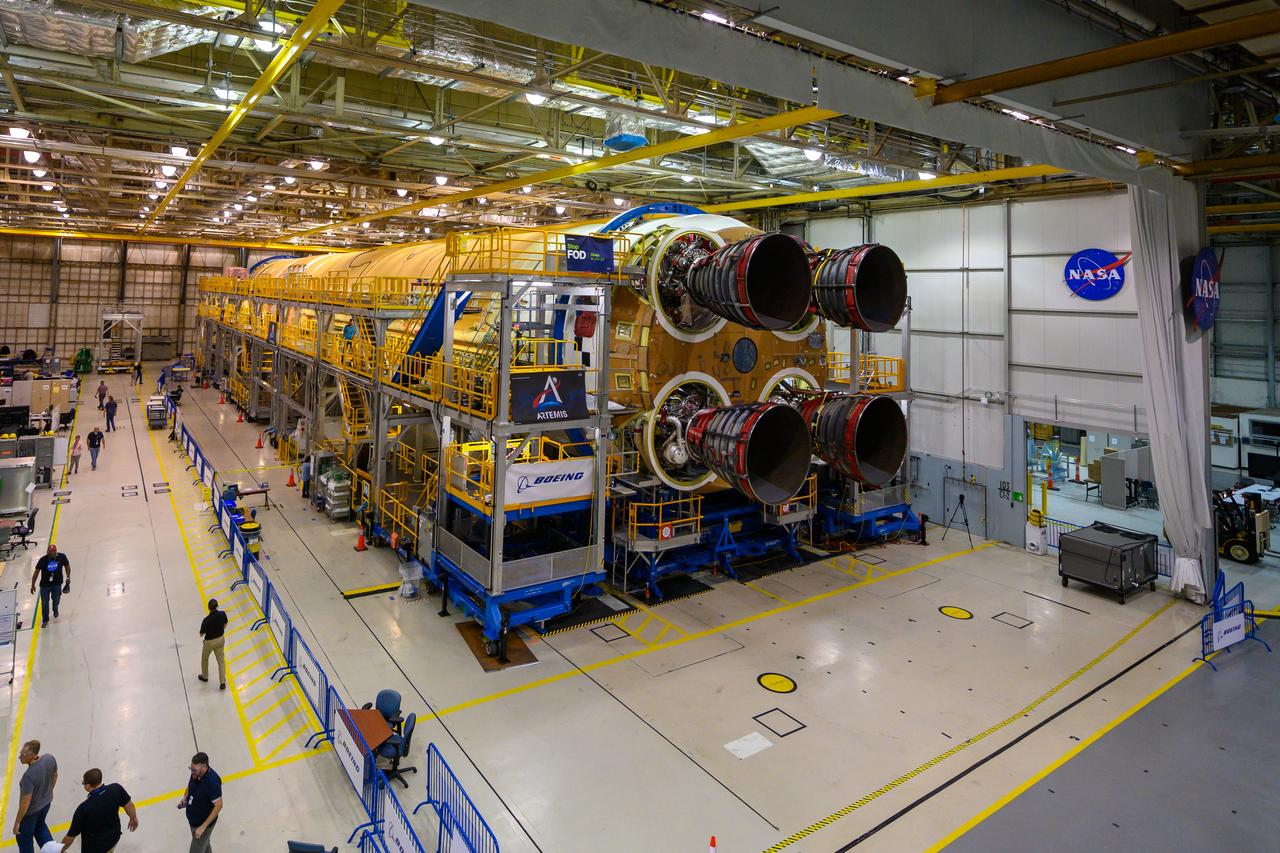
This photo shows all four RS-25 engines attached to the core stage for NASA’s Space Launch System rocket for the agency’s Artemis I mission to the Moon. To complete assembly of the rocket stage, engineers and technicians at NASA’s Michoud Assembly Facility in New Orleans are now integrating the propulsion and electrical systems within the structure. The completed core stage with all four RS-25 engines attached is the largest rocket stage NASA has built since the Saturn V stages for the Apollo Program that first sent Americans to the Moon. The stage, which includes two propellant tanks, provides more than 2 million pounds of thrust to send Artemis I to the Moon. Engineers and technicians attached the fourth RS-25 engine to the rocket stage Nov. 6 just one day after structurally mating the third engine. The first two RS-25 engines were structurally mated to the stage in October. After assembly is complete, crews will conduct an integrated functional test of flight computers, avionics and electrical systems that run throughout the 212-foot-tall core stage in preparation for its completion later this year. This testing is the first time all the flight avionics systems will be tested together to ensure the systems communicate with each other and will perform properly to control the rocket’s flight. Integration of the RS-25 engines to the recently completed core stage structure is a collaborative, multistep process for NASA and its partners Boeing, the core stage lead contractor, and Aerojet Rocketdyne, the RS-25 engines lead contractor. Offering more payload mass, volume capability and energy to speed missions through space, the SLS rocket, along with NASA’s Gateway in lunar orbit and Orion, is part of NASA’s backbone for deep space exploration and the Artemis lunar program. No other rocket is capable of carrying astronauts in Orion around the Moon in a single mission.
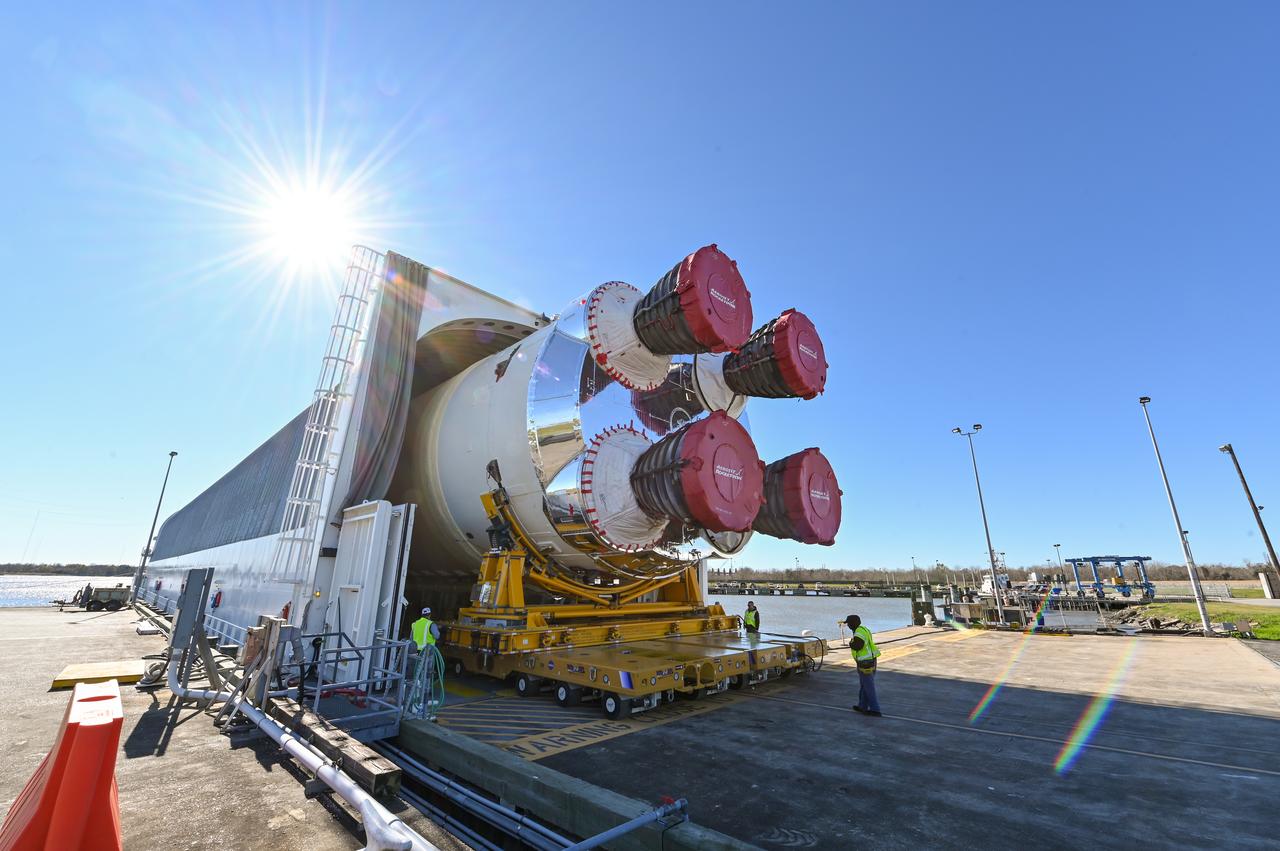
These images show how teams rolled out, or moved, the completed core stage for NASA’s Space Launch System rocket from NASA’s Michoud Assembly Facility in New Orleans. Crews moved the flight hardware for the first Artemis mission to NASA’s Pegasus barge on Jan. 8 in preparation for the core stage Green Run test series at NASA’s Stennis Space Center near Bay St. Louis, Mississippi. Pegasus, which was modified to ferry SLS rocket hardware, will transport the core stage from Michoud to Stennis for the comprehensive core stage Green Run test series. Once at Stennis, the Artemis rocket stage will be loaded into the B-2 Test Stand for the core stage Green Run test series. The comprehensive test campaign will progressively bring the entire core stage, including its avionics and engines, to life for the first time to verify the stage is fit for flight ahead of the launch of Artemis I. Assembly and integration of the core stage and its four RS-25 engines has been a collaborative, multistep process for NASA and its partners Boeing, the core stage lead contractor, and Aerojet Rocketdyne, the RS-25 engines lead contractor. Together with four RS-25 engines, the rocket’s massive 212-foot-tall core stage — the largest stage NASA has ever built — and its twin solid rocket boosters will produce 8.8 million pounds of thrust to send NASA’s Orion spacecraft, astronauts and supplies beyond Earth’s orbit to the Moon and, ultimately, Mars. Offering more payload mass, volume capability and energy to speed missions through space, the SLS rocket, along with NASA’s Gateway in lunar orbit and Orion, is part of NASA’s backbone for deep space exploration and the Artemis lunar program.
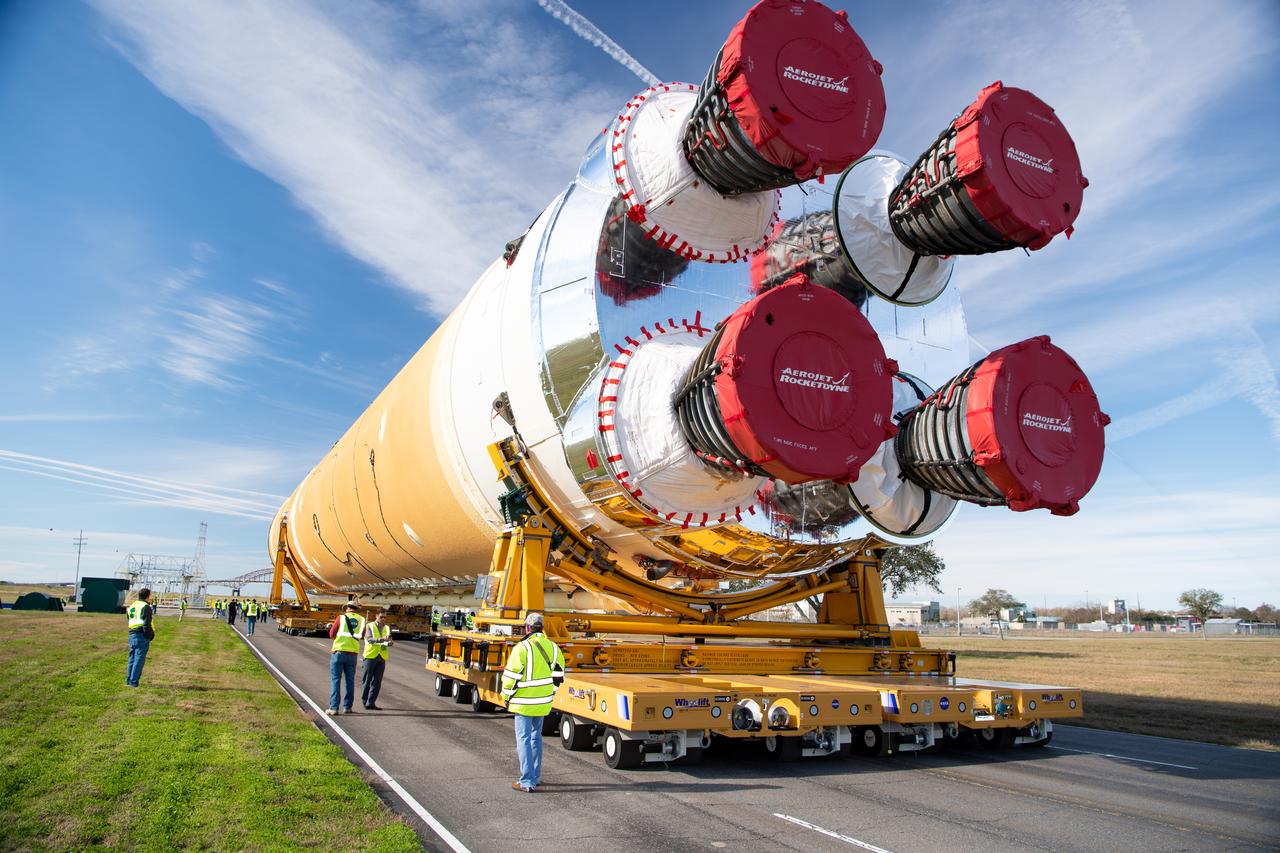
These images show how teams rolled out, or moved, the completed core stage for NASA’s Space Launch System rocket from NASA’s Michoud Assembly Facility in New Orleans. Crews moved the flight hardware for the first Artemis mission to NASA’s Pegasus barge on Jan. 8 in preparation for the core stage Green Run test series at NASA’s Stennis Space Center near Bay St. Louis, Mississippi. Pegasus, which was modified to ferry SLS rocket hardware, will transport the core stage from Michoud to Stennis for the comprehensive core stage Green Run test series. Once at Stennis, the Artemis rocket stage will be loaded into the B-2 Test Stand for the core stage Green Run test series. The comprehensive test campaign will progressively bring the entire core stage, including its avionics and engines, to life for the first time to verify the stage is fit for flight ahead of the launch of Artemis I. Assembly and integration of the core stage and its four RS-25 engines has been a collaborative, multistep process for NASA and its partners Boeing, the core stage lead contractor, and Aerojet Rocketdyne, the RS-25 engines lead contractor. Together with four RS-25 engines, the rocket’s massive 212-foot-tall core stage — the largest stage NASA has ever built — and its twin solid rocket boosters will produce 8.8 million pounds of thrust to send NASA’s Orion spacecraft, astronauts and supplies beyond Earth’s orbit to the Moon and, ultimately, Mars. Offering more payload mass, volume capability and energy to speed missions through space, the SLS rocket, along with NASA’s Gateway in lunar orbit and Orion, is part of NASA’s backbone for deep space exploration and the Artemis lunar program.
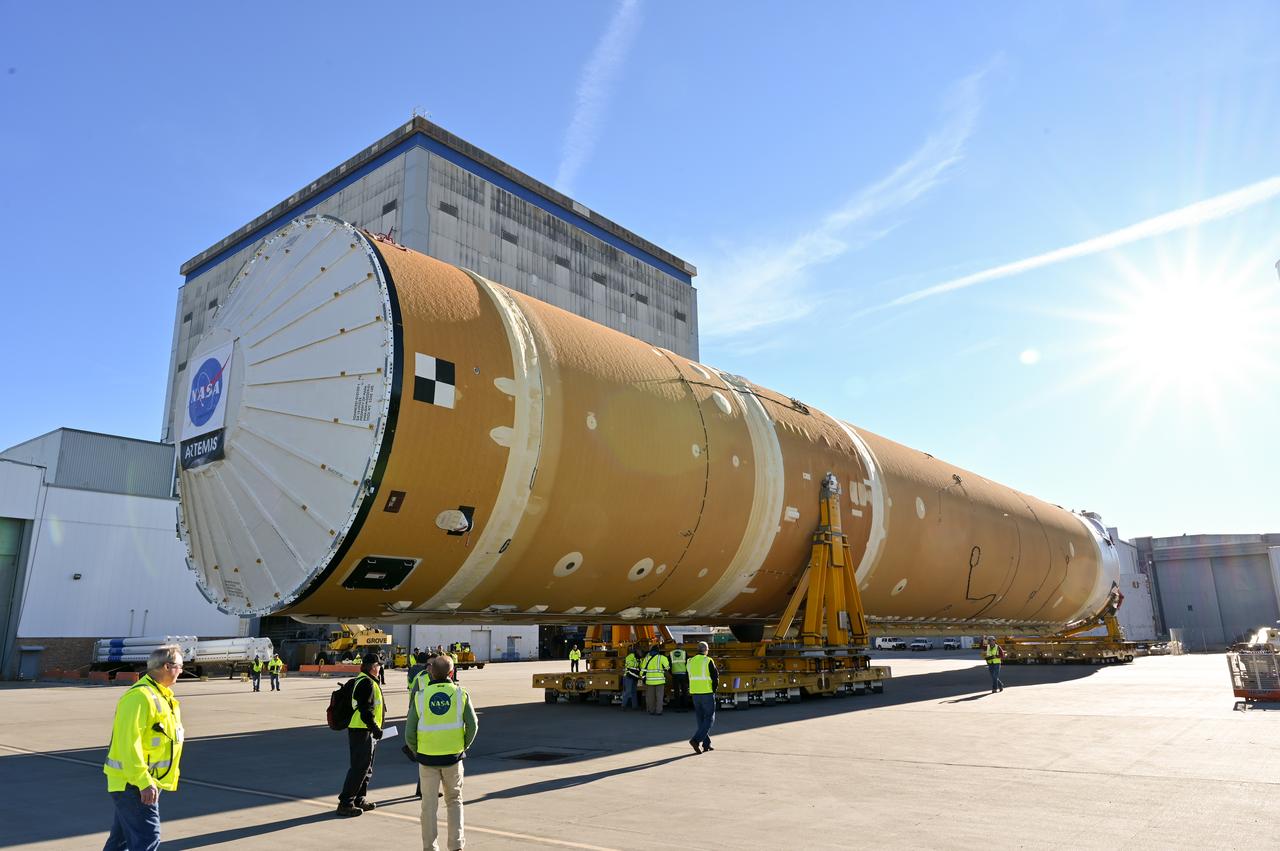
These images/video show how teams rolled out, or moved, the completed core stage for NASA’s Space Launch System rocket from NASA’s Michoud Assembly Facility in New Orleans. Crews moved the flight hardware for the first Artemis mission to NASA’s Pegasus barge on Jan. 8 in preparation for the core stage Green Run test series at NASA’s Stennis Space Center near Bay St. Louis, Mississippi. Pegasus, which was modified to ferry SLS rocket hardware, will transport the core stage from Michoud to Stennis for the comprehensive core stage Green Run test series. Once at Stennis, the Artemis rocket stage will be loaded into the B-2 Test Stand for the core stage Green Run test series. The comprehensive test campaign will progressively bring the entire core stage, including its avionics and engines, to life for the first time to verify the stage is fit for flight ahead of the launch of Artemis I. Assembly and integration of the core stage and its four RS-25 engines has been a collaborative, multistep process for NASA and its partners Boeing, the core stage lead contractor, and Aerojet Rocketdyne, the RS-25 engines lead contractor. Together with four RS-25 engines, the rocket’s massive 212-foot-tall core stage — the largest stage NASA has ever built — and its twin solid rocket boosters will produce 8.8 million pounds of thrust to send NASA’s Orion spacecraft, astronauts and supplies beyond Earth’s orbit to the Moon and, ultimately, Mars. Offering more payload mass, volume capability and energy to speed missions through space, the SLS rocket, along with NASA’s Gateway in lunar orbit and Orion, is part of NASA’s backbone for deep space exploration and the Artemis lunar program.
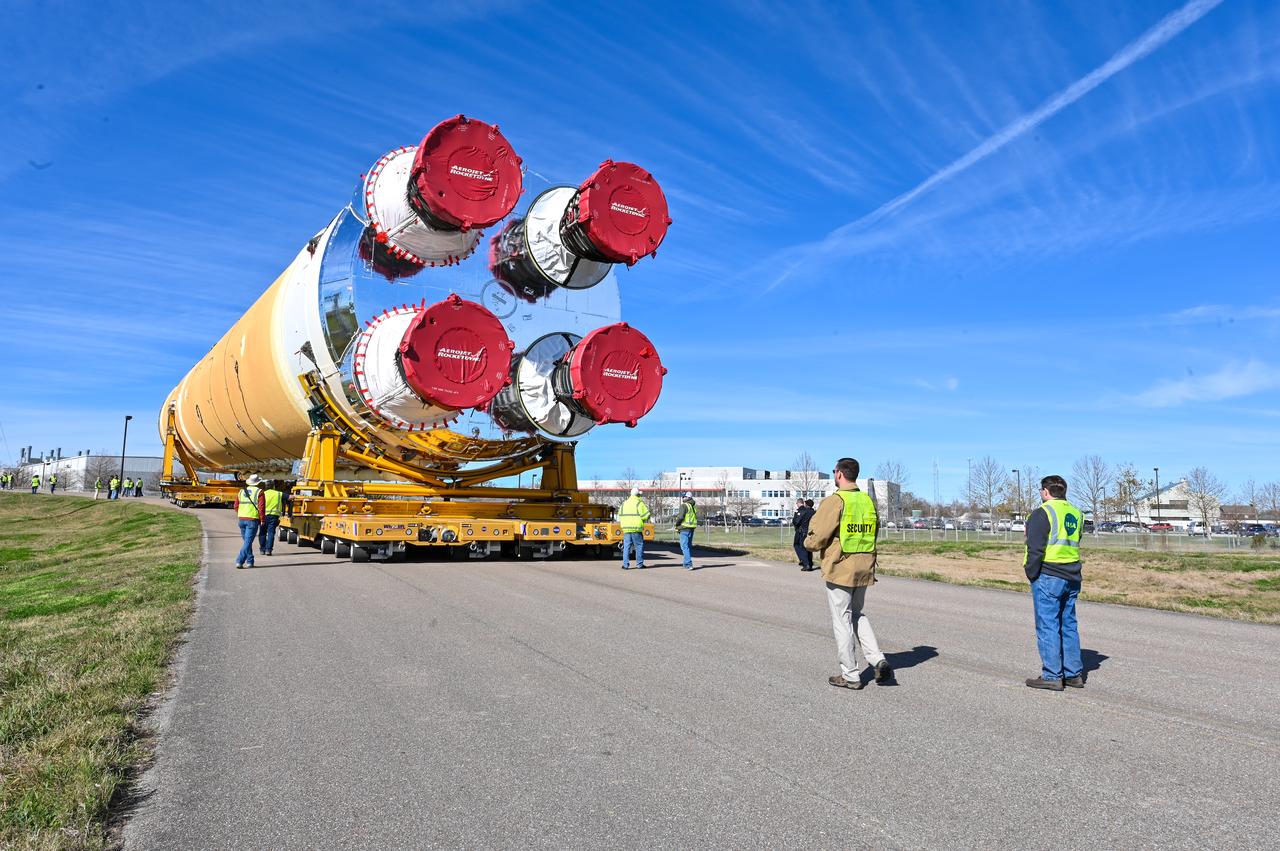
These images/video show how teams rolled out, or moved, the completed core stage for NASA’s Space Launch System rocket from NASA’s Michoud Assembly Facility in New Orleans. Crews moved the flight hardware for the first Artemis mission to NASA’s Pegasus barge on Jan. 8 in preparation for the core stage Green Run test series at NASA’s Stennis Space Center near Bay St. Louis, Mississippi. Pegasus, which was modified to ferry SLS rocket hardware, will transport the core stage from Michoud to Stennis for the comprehensive core stage Green Run test series. Once at Stennis, the Artemis rocket stage will be loaded into the B-2 Test Stand for the core stage Green Run test series. The comprehensive test campaign will progressively bring the entire core stage, including its avionics and engines, to life for the first time to verify the stage is fit for flight ahead of the launch of Artemis I. Assembly and integration of the core stage and its four RS-25 engines has been a collaborative, multistep process for NASA and its partners Boeing, the core stage lead contractor, and Aerojet Rocketdyne, the RS-25 engines lead contractor. Together with four RS-25 engines, the rocket’s massive 212-foot-tall core stage — the largest stage NASA has ever built — and its twin solid rocket boosters will produce 8.8 million pounds of thrust to send NASA’s Orion spacecraft, astronauts and supplies beyond Earth’s orbit to the Moon and, ultimately, Mars. Offering more payload mass, volume capability and energy to speed missions through space, the SLS rocket, along with NASA’s Gateway in lunar orbit and Orion, is part of NASA’s backbone for deep space exploration and the Artemis lunar program.
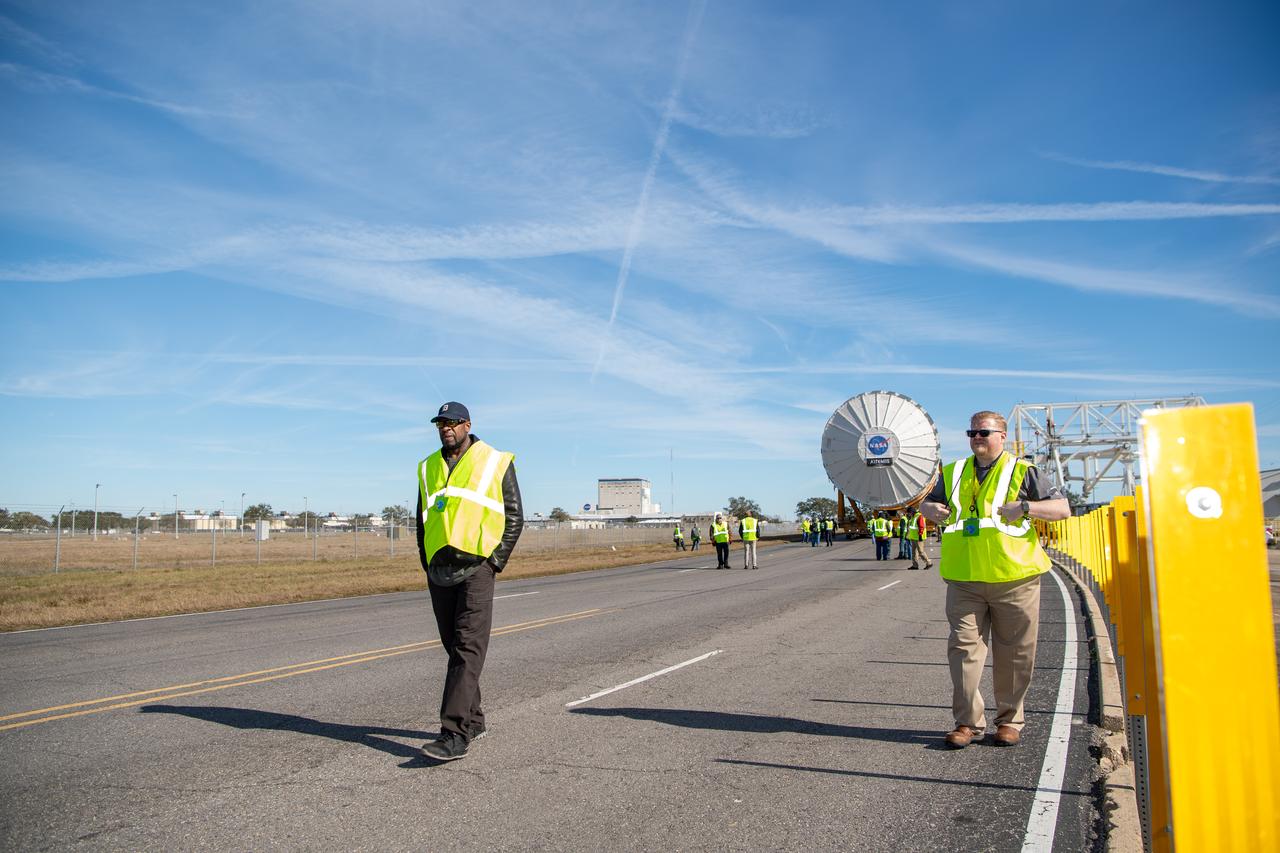
These images show how teams rolled out, or moved, the completed core stage for NASA’s Space Launch System rocket from NASA’s Michoud Assembly Facility in New Orleans. Crews moved the flight hardware for the first Artemis mission to NASA’s Pegasus barge on Jan. 8 in preparation for the core stage Green Run test series at NASA’s Stennis Space Center near Bay St. Louis, Mississippi. Pegasus, which was modified to ferry SLS rocket hardware, will transport the core stage from Michoud to Stennis for the comprehensive core stage Green Run test series. Once at Stennis, the Artemis rocket stage will be loaded into the B-2 Test Stand for the core stage Green Run test series. The comprehensive test campaign will progressively bring the entire core stage, including its avionics and engines, to life for the first time to verify the stage is fit for flight ahead of the launch of Artemis I. Assembly and integration of the core stage and its four RS-25 engines has been a collaborative, multistep process for NASA and its partners Boeing, the core stage lead contractor, and Aerojet Rocketdyne, the RS-25 engines lead contractor. Together with four RS-25 engines, the rocket’s massive 212-foot-tall core stage — the largest stage NASA has ever built — and its twin solid rocket boosters will produce 8.8 million pounds of thrust to send NASA’s Orion spacecraft, astronauts and supplies beyond Earth’s orbit to the Moon and, ultimately, Mars. Offering more payload mass, volume capability and energy to speed missions through space, the SLS rocket, along with NASA’s Gateway in lunar orbit and Orion, is part of NASA’s backbone for deep space exploration and the Artemis lunar program.
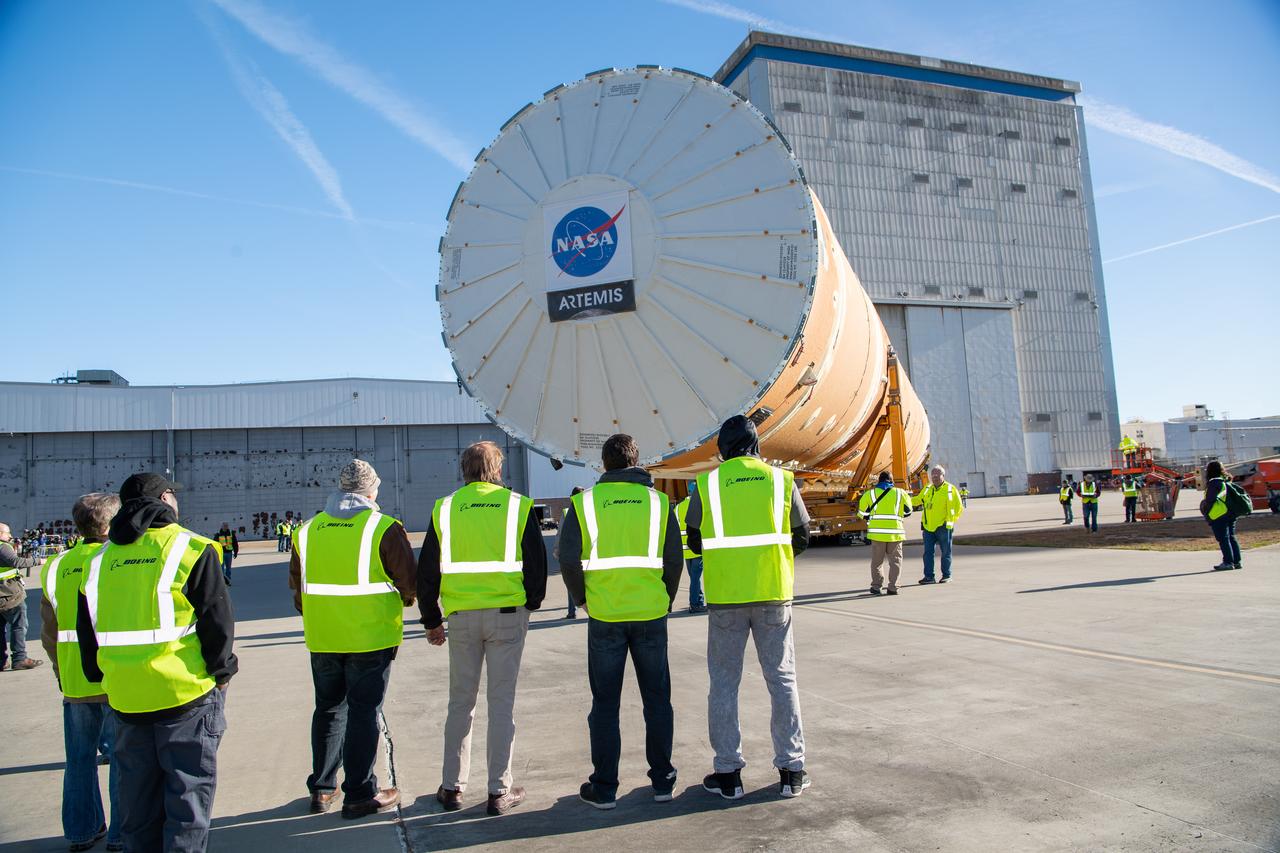
These images/video show how teams rolled out, or moved, the completed core stage for NASA’s Space Launch System rocket from NASA’s Michoud Assembly Facility in New Orleans. Crews moved the flight hardware for the first Artemis mission to NASA’s Pegasus barge on Jan. 8 in preparation for the core stage Green Run test series at NASA’s Stennis Space Center near Bay St. Louis, Mississippi. Pegasus, which was modified to ferry SLS rocket hardware, will transport the core stage from Michoud to Stennis for the comprehensive core stage Green Run test series. Once at Stennis, the Artemis rocket stage will be loaded into the B-2 Test Stand for the core stage Green Run test series. The comprehensive test campaign will progressively bring the entire core stage, including its avionics and engines, to life for the first time to verify the stage is fit for flight ahead of the launch of Artemis I. Assembly and integration of the core stage and its four RS-25 engines has been a collaborative, multistep process for NASA and its partners Boeing, the core stage lead contractor, and Aerojet Rocketdyne, the RS-25 engines lead contractor. Together with four RS-25 engines, the rocket’s massive 212-foot-tall core stage — the largest stage NASA has ever built — and its twin solid rocket boosters will produce 8.8 million pounds of thrust to send NASA’s Orion spacecraft, astronauts and supplies beyond Earth’s orbit to the Moon and, ultimately, Mars. Offering more payload mass, volume capability and energy to speed missions through space, the SLS rocket, along with NASA’s Gateway in lunar orbit and Orion, is part of NASA’s backbone for deep space exploration and the Artemis lunar program.
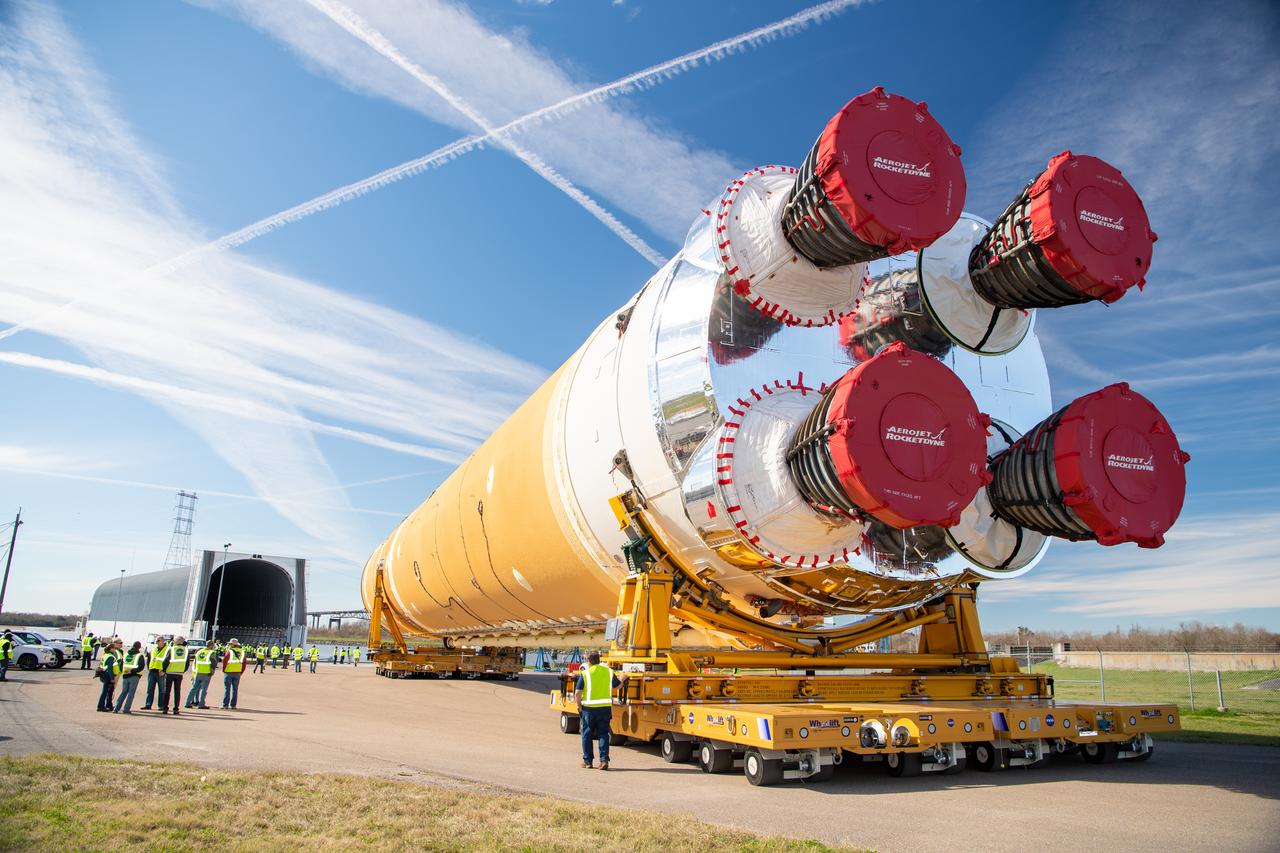
These images show how teams rolled out, or moved, the completed core stage for NASA’s Space Launch System rocket from NASA’s Michoud Assembly Facility in New Orleans. Crews moved the flight hardware for the first Artemis mission to NASA’s Pegasus barge on Jan. 8 in preparation for the core stage Green Run test series at NASA’s Stennis Space Center near Bay St. Louis, Mississippi. Pegasus, which was modified to ferry SLS rocket hardware, will transport the core stage from Michoud to Stennis for the comprehensive core stage Green Run test series. Once at Stennis, the Artemis rocket stage will be loaded into the B-2 Test Stand for the core stage Green Run test series. The comprehensive test campaign will progressively bring the entire core stage, including its avionics and engines, to life for the first time to verify the stage is fit for flight ahead of the launch of Artemis I. Assembly and integration of the core stage and its four RS-25 engines has been a collaborative, multistep process for NASA and its partners Boeing, the core stage lead contractor, and Aerojet Rocketdyne, the RS-25 engines lead contractor. Together with four RS-25 engines, the rocket’s massive 212-foot-tall core stage — the largest stage NASA has ever built — and its twin solid rocket boosters will produce 8.8 million pounds of thrust to send NASA’s Orion spacecraft, astronauts and supplies beyond Earth’s orbit to the Moon and, ultimately, Mars. Offering more payload mass, volume capability and energy to speed missions through space, the SLS rocket, along with NASA’s Gateway in lunar orbit and Orion, is part of NASA’s backbone for deep space exploration and the Artemis lunar program.
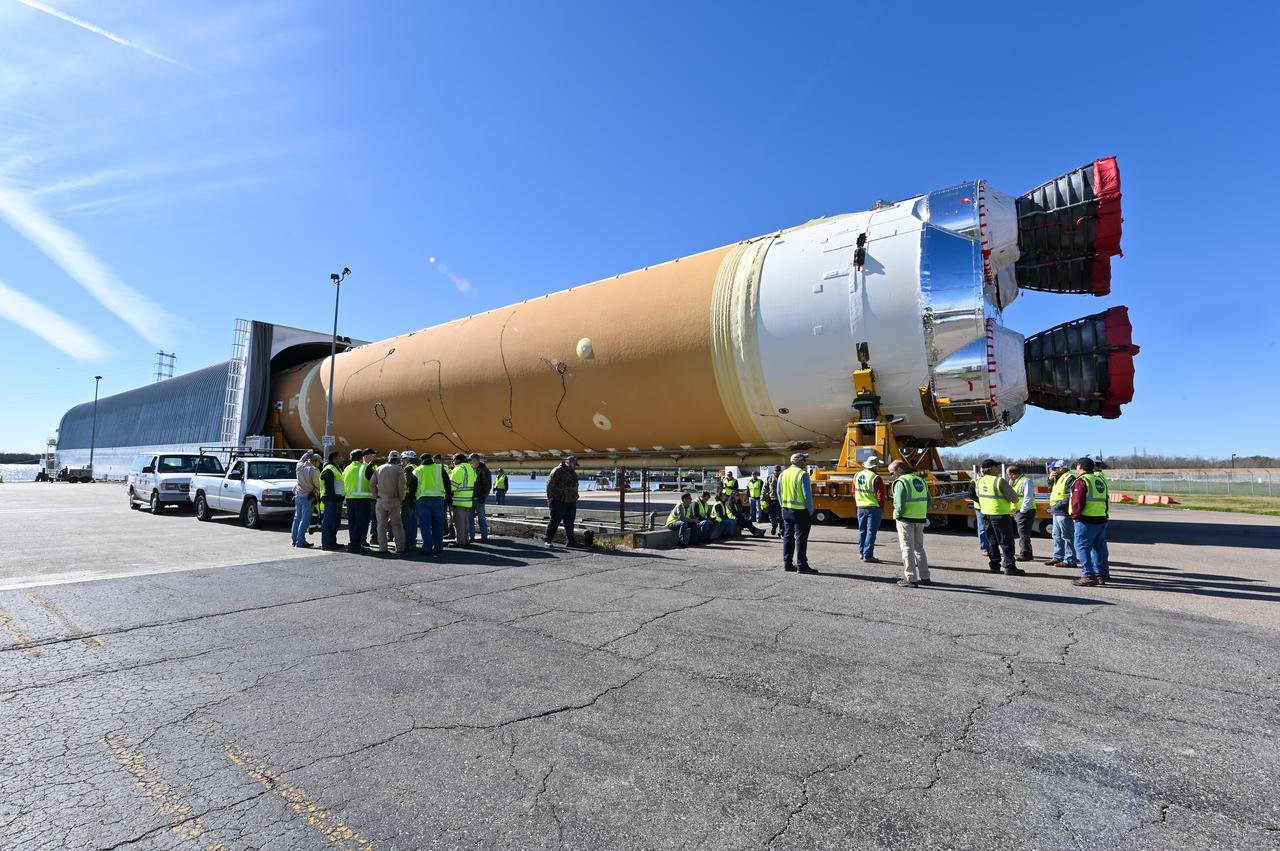
These images show how teams rolled out, or moved, the completed core stage for NASA’s Space Launch System rocket from NASA’s Michoud Assembly Facility in New Orleans. Crews moved the flight hardware for the first Artemis mission to NASA’s Pegasus barge on Jan. 8 in preparation for the core stage Green Run test series at NASA’s Stennis Space Center near Bay St. Louis, Mississippi. Pegasus, which was modified to ferry SLS rocket hardware, will transport the core stage from Michoud to Stennis for the comprehensive core stage Green Run test series. Once at Stennis, the Artemis rocket stage will be loaded into the B-2 Test Stand for the core stage Green Run test series. The comprehensive test campaign will progressively bring the entire core stage, including its avionics and engines, to life for the first time to verify the stage is fit for flight ahead of the launch of Artemis I. Assembly and integration of the core stage and its four RS-25 engines has been a collaborative, multistep process for NASA and its partners Boeing, the core stage lead contractor, and Aerojet Rocketdyne, the RS-25 engines lead contractor. Together with four RS-25 engines, the rocket’s massive 212-foot-tall core stage — the largest stage NASA has ever built — and its twin solid rocket boosters will produce 8.8 million pounds of thrust to send NASA’s Orion spacecraft, astronauts and supplies beyond Earth’s orbit to the Moon and, ultimately, Mars. Offering more payload mass, volume capability and energy to speed missions through space, the SLS rocket, along with NASA’s Gateway in lunar orbit and Orion, is part of NASA’s backbone for deep space exploration and the Artemis lunar program.
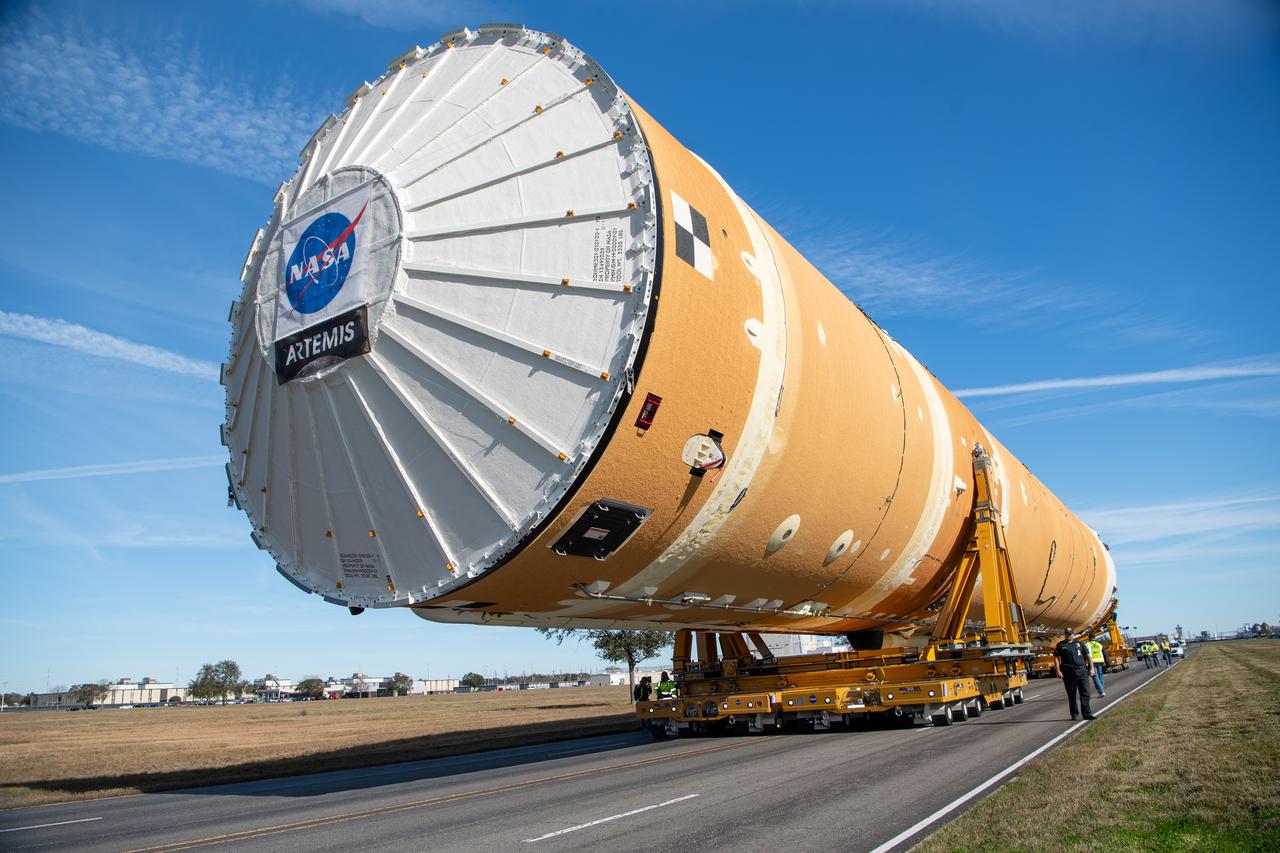
These images show how teams rolled out, or moved, the completed core stage for NASA’s Space Launch System rocket from NASA’s Michoud Assembly Facility in New Orleans. Crews moved the flight hardware for the first Artemis mission to NASA’s Pegasus barge on Jan. 8 in preparation for the core stage Green Run test series at NASA’s Stennis Space Center near Bay St. Louis, Mississippi. Pegasus, which was modified to ferry SLS rocket hardware, will transport the core stage from Michoud to Stennis for the comprehensive core stage Green Run test series. Once at Stennis, the Artemis rocket stage will be loaded into the B-2 Test Stand for the core stage Green Run test series. The comprehensive test campaign will progressively bring the entire core stage, including its avionics and engines, to life for the first time to verify the stage is fit for flight ahead of the launch of Artemis I. Assembly and integration of the core stage and its four RS-25 engines has been a collaborative, multistep process for NASA and its partners Boeing, the core stage lead contractor, and Aerojet Rocketdyne, the RS-25 engines lead contractor. Together with four RS-25 engines, the rocket’s massive 212-foot-tall core stage — the largest stage NASA has ever built — and its twin solid rocket boosters will produce 8.8 million pounds of thrust to send NASA’s Orion spacecraft, astronauts and supplies beyond Earth’s orbit to the Moon and, ultimately, Mars. Offering more payload mass, volume capability and energy to speed missions through space, the SLS rocket, along with NASA’s Gateway in lunar orbit and Orion, is part of NASA’s backbone for deep space exploration and the Artemis lunar program.
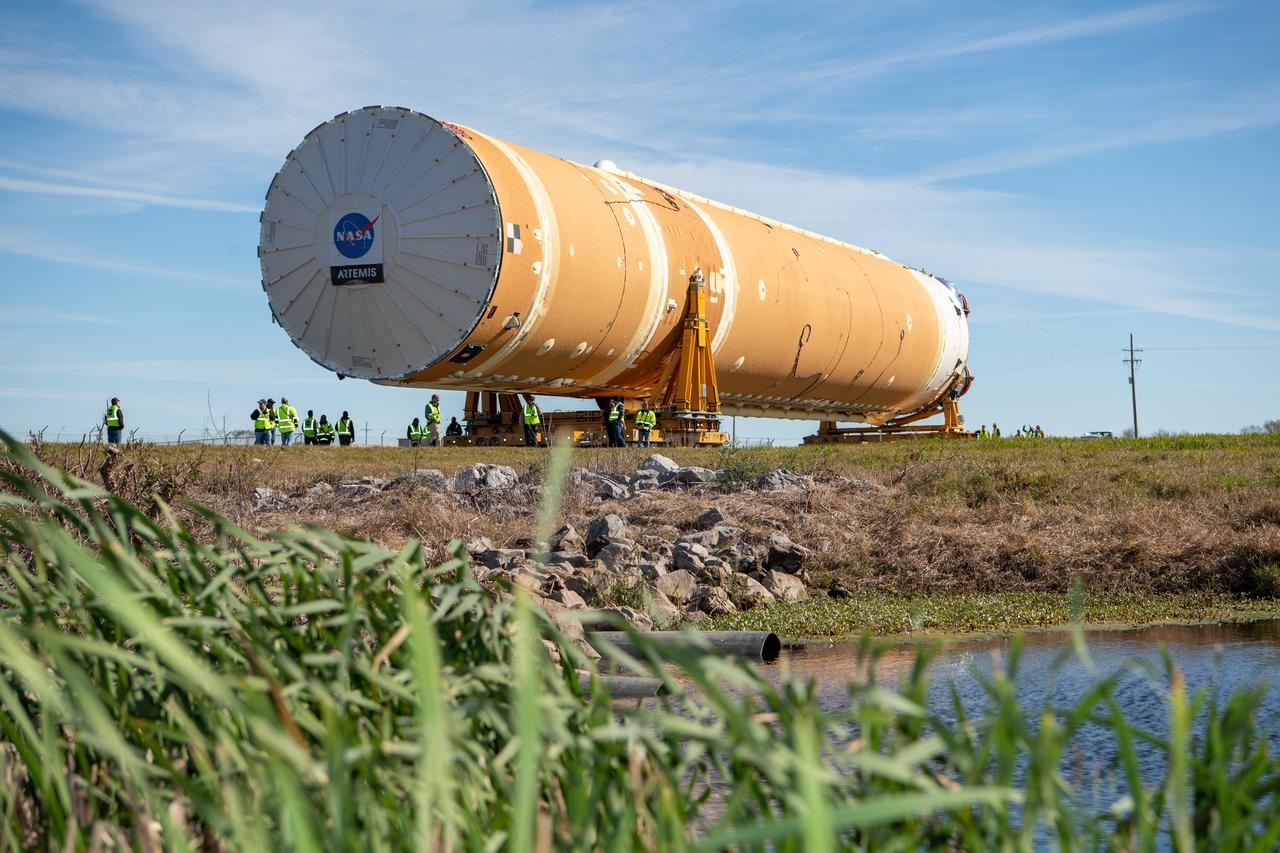
These images show how teams rolled out, or moved, the completed core stage for NASA’s Space Launch System rocket from NASA’s Michoud Assembly Facility in New Orleans. Crews moved the flight hardware for the first Artemis mission to NASA’s Pegasus barge on Jan. 8 in preparation for the core stage Green Run test series at NASA’s Stennis Space Center near Bay St. Louis, Mississippi. Pegasus, which was modified to ferry SLS rocket hardware, will transport the core stage from Michoud to Stennis for the comprehensive core stage Green Run test series. Once at Stennis, the Artemis rocket stage will be loaded into the B-2 Test Stand for the core stage Green Run test series. The comprehensive test campaign will progressively bring the entire core stage, including its avionics and engines, to life for the first time to verify the stage is fit for flight ahead of the launch of Artemis I. Assembly and integration of the core stage and its four RS-25 engines has been a collaborative, multistep process for NASA and its partners Boeing, the core stage lead contractor, and Aerojet Rocketdyne, the RS-25 engines lead contractor. Together with four RS-25 engines, the rocket’s massive 212-foot-tall core stage — the largest stage NASA has ever built — and its twin solid rocket boosters will produce 8.8 million pounds of thrust to send NASA’s Orion spacecraft, astronauts and supplies beyond Earth’s orbit to the Moon and, ultimately, Mars. Offering more payload mass, volume capability and energy to speed missions through space, the SLS rocket, along with NASA’s Gateway in lunar orbit and Orion, is part of NASA’s backbone for deep space exploration and the Artemis lunar program.
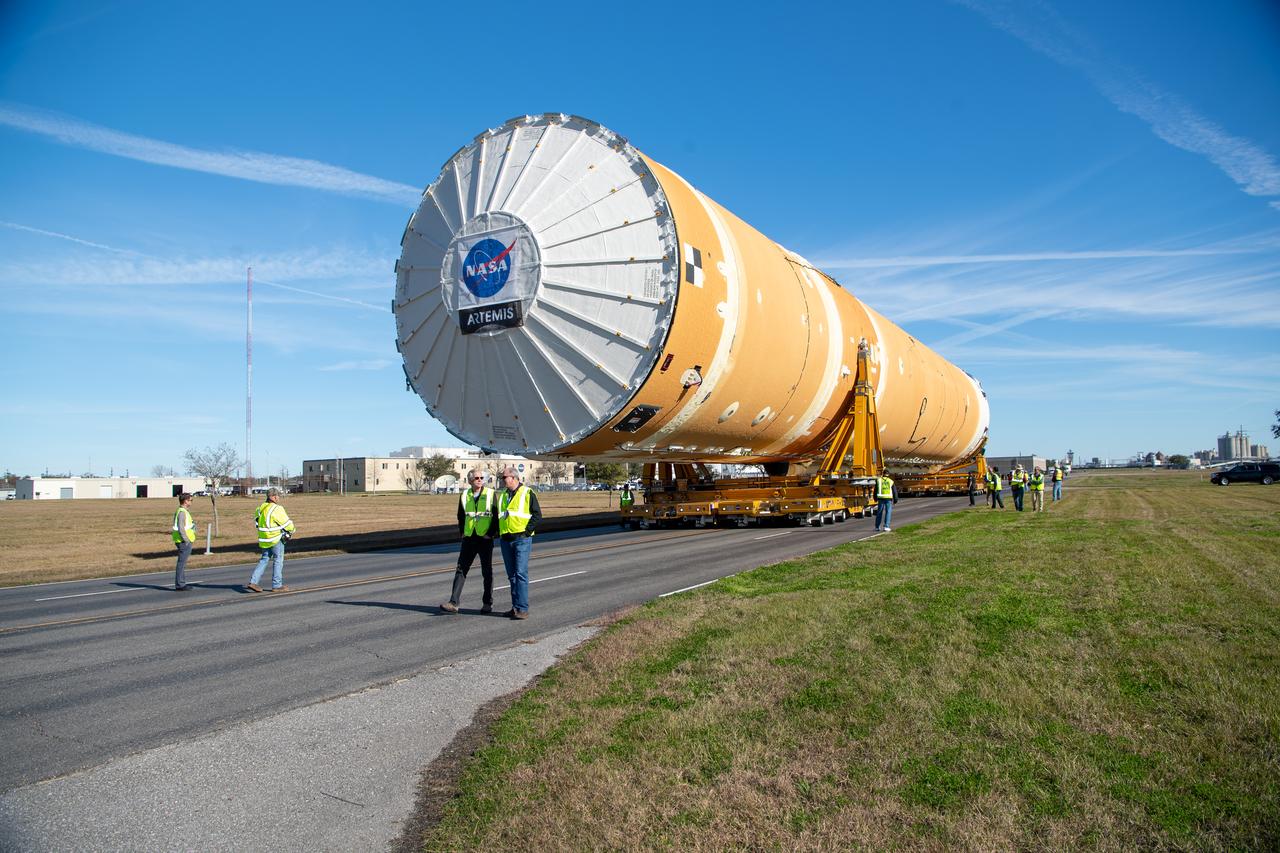
These images show how teams rolled out, or moved, the completed core stage for NASA’s Space Launch System rocket from NASA’s Michoud Assembly Facility in New Orleans. Crews moved the flight hardware for the first Artemis mission to NASA’s Pegasus barge on Jan. 8 in preparation for the core stage Green Run test series at NASA’s Stennis Space Center near Bay St. Louis, Mississippi. Pegasus, which was modified to ferry SLS rocket hardware, will transport the core stage from Michoud to Stennis for the comprehensive core stage Green Run test series. Once at Stennis, the Artemis rocket stage will be loaded into the B-2 Test Stand for the core stage Green Run test series. The comprehensive test campaign will progressively bring the entire core stage, including its avionics and engines, to life for the first time to verify the stage is fit for flight ahead of the launch of Artemis I. Assembly and integration of the core stage and its four RS-25 engines has been a collaborative, multistep process for NASA and its partners Boeing, the core stage lead contractor, and Aerojet Rocketdyne, the RS-25 engines lead contractor. Together with four RS-25 engines, the rocket’s massive 212-foot-tall core stage — the largest stage NASA has ever built — and its twin solid rocket boosters will produce 8.8 million pounds of thrust to send NASA’s Orion spacecraft, astronauts and supplies beyond Earth’s orbit to the Moon and, ultimately, Mars. Offering more payload mass, volume capability and energy to speed missions through space, the SLS rocket, along with NASA’s Gateway in lunar orbit and Orion, is part of NASA’s backbone for deep space exploration and the Artemis lunar program.
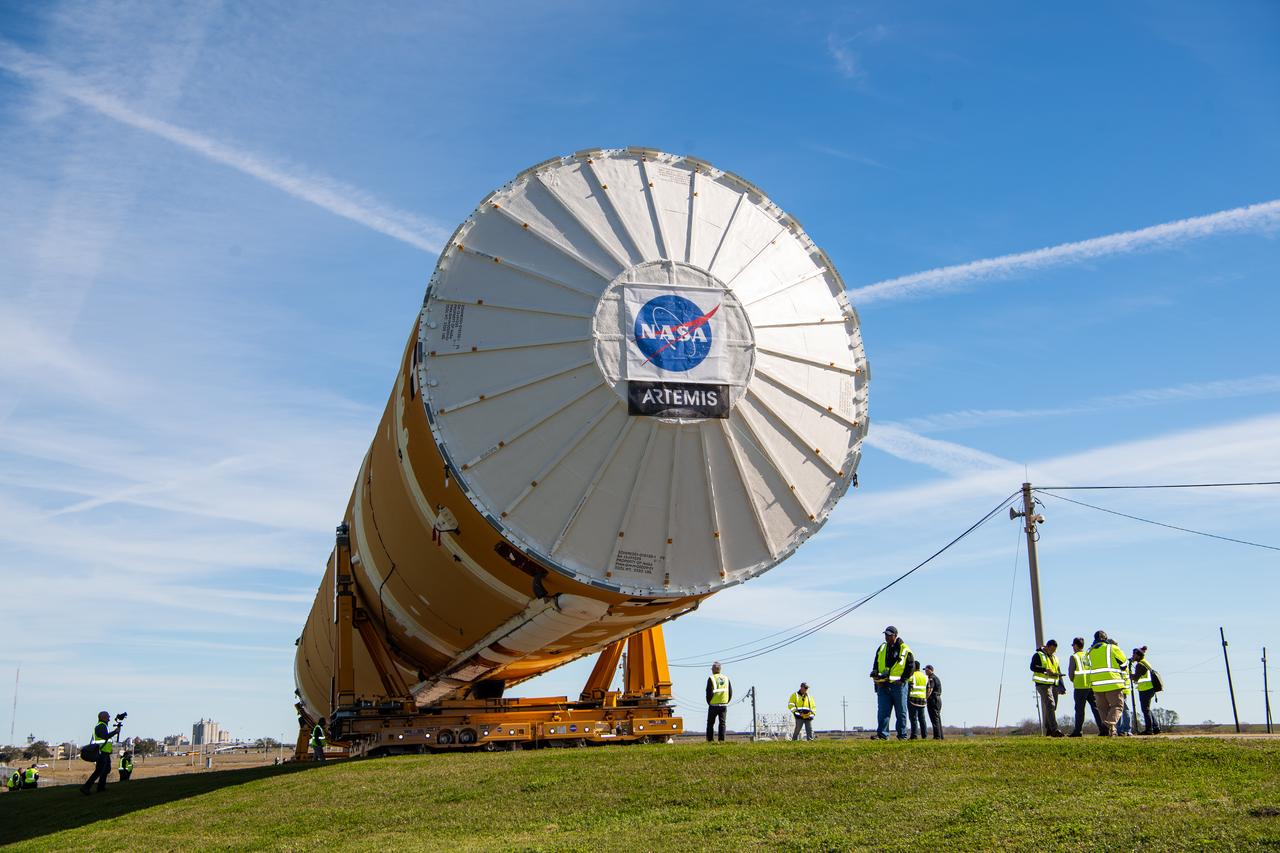
These images show how teams rolled out, or moved, the completed core stage for NASA’s Space Launch System rocket from NASA’s Michoud Assembly Facility in New Orleans. Crews moved the flight hardware for the first Artemis mission to NASA’s Pegasus barge on Jan. 8 in preparation for the core stage Green Run test series at NASA’s Stennis Space Center near Bay St. Louis, Mississippi. Pegasus, which was modified to ferry SLS rocket hardware, will transport the core stage from Michoud to Stennis for the comprehensive core stage Green Run test series. Once at Stennis, the Artemis rocket stage will be loaded into the B-2 Test Stand for the core stage Green Run test series. The comprehensive test campaign will progressively bring the entire core stage, including its avionics and engines, to life for the first time to verify the stage is fit for flight ahead of the launch of Artemis I. Assembly and integration of the core stage and its four RS-25 engines has been a collaborative, multistep process for NASA and its partners Boeing, the core stage lead contractor, and Aerojet Rocketdyne, the RS-25 engines lead contractor. Together with four RS-25 engines, the rocket’s massive 212-foot-tall core stage — the largest stage NASA has ever built — and its twin solid rocket boosters will produce 8.8 million pounds of thrust to send NASA’s Orion spacecraft, astronauts and supplies beyond Earth’s orbit to the Moon and, ultimately, Mars. Offering more payload mass, volume capability and energy to speed missions through space, the SLS rocket, along with NASA’s Gateway in lunar orbit and Orion, is part of NASA’s backbone for deep space exploration and the Artemis lunar program.
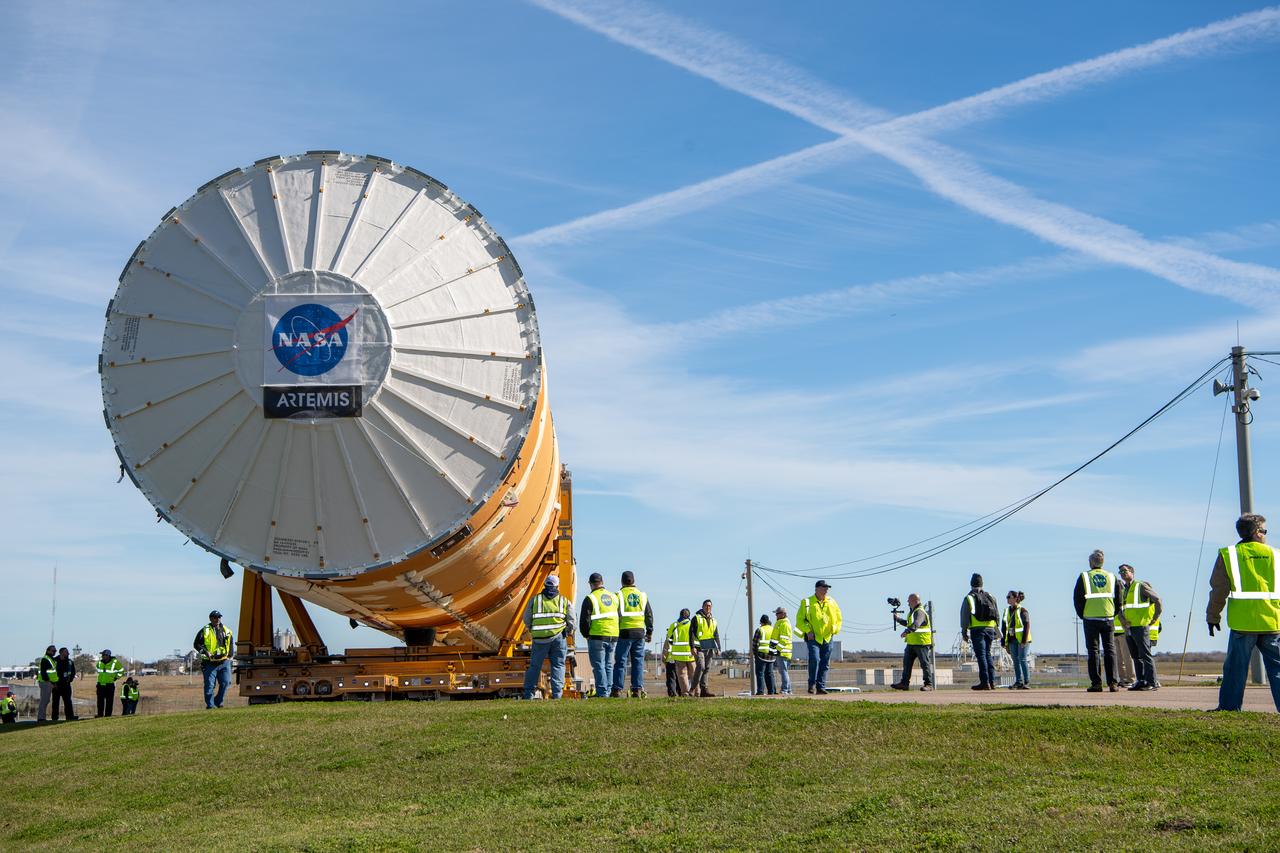
These images show how teams rolled out, or moved, the completed core stage for NASA’s Space Launch System rocket from NASA’s Michoud Assembly Facility in New Orleans. Crews moved the flight hardware for the first Artemis mission to NASA’s Pegasus barge on Jan. 8 in preparation for the core stage Green Run test series at NASA’s Stennis Space Center near Bay St. Louis, Mississippi. Pegasus, which was modified to ferry SLS rocket hardware, will transport the core stage from Michoud to Stennis for the comprehensive core stage Green Run test series. Once at Stennis, the Artemis rocket stage will be loaded into the B-2 Test Stand for the core stage Green Run test series. The comprehensive test campaign will progressively bring the entire core stage, including its avionics and engines, to life for the first time to verify the stage is fit for flight ahead of the launch of Artemis I. Assembly and integration of the core stage and its four RS-25 engines has been a collaborative, multistep process for NASA and its partners Boeing, the core stage lead contractor, and Aerojet Rocketdyne, the RS-25 engines lead contractor. Together with four RS-25 engines, the rocket’s massive 212-foot-tall core stage — the largest stage NASA has ever built — and its twin solid rocket boosters will produce 8.8 million pounds of thrust to send NASA’s Orion spacecraft, astronauts and supplies beyond Earth’s orbit to the Moon and, ultimately, Mars. Offering more payload mass, volume capability and energy to speed missions through space, the SLS rocket, along with NASA’s Gateway in lunar orbit and Orion, is part of NASA’s backbone for deep space exploration and the Artemis lunar program.
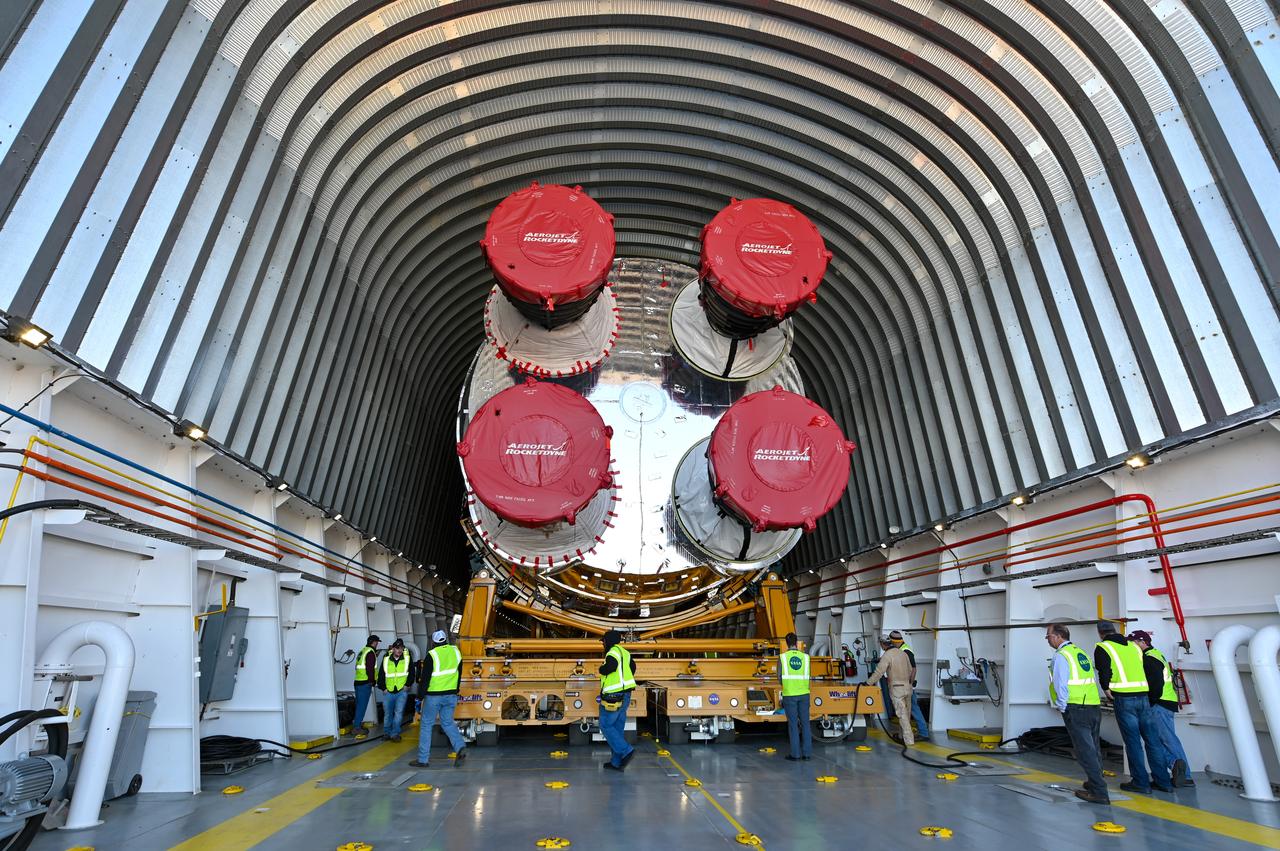
These images show how teams rolled out, or moved, the completed core stage for NASA’s Space Launch System rocket from NASA’s Michoud Assembly Facility in New Orleans. Crews moved the flight hardware for the first Artemis mission to NASA’s Pegasus barge on Jan. 8 in preparation for the core stage Green Run test series at NASA’s Stennis Space Center near Bay St. Louis, Mississippi. Pegasus, which was modified to ferry SLS rocket hardware, will transport the core stage from Michoud to Stennis for the comprehensive core stage Green Run test series. Once at Stennis, the Artemis rocket stage will be loaded into the B-2 Test Stand for the core stage Green Run test series. The comprehensive test campaign will progressively bring the entire core stage, including its avionics and engines, to life for the first time to verify the stage is fit for flight ahead of the launch of Artemis I. Assembly and integration of the core stage and its four RS-25 engines has been a collaborative, multistep process for NASA and its partners Boeing, the core stage lead contractor, and Aerojet Rocketdyne, the RS-25 engines lead contractor. Together with four RS-25 engines, the rocket’s massive 212-foot-tall core stage — the largest stage NASA has ever built — and its twin solid rocket boosters will produce 8.8 million pounds of thrust to send NASA’s Orion spacecraft, astronauts and supplies beyond Earth’s orbit to the Moon and, ultimately, Mars. Offering more payload mass, volume capability and energy to speed missions through space, the SLS rocket, along with NASA’s Gateway in lunar orbit and Orion, is part of NASA’s backbone for deep space exploration and the Artemis lunar program.
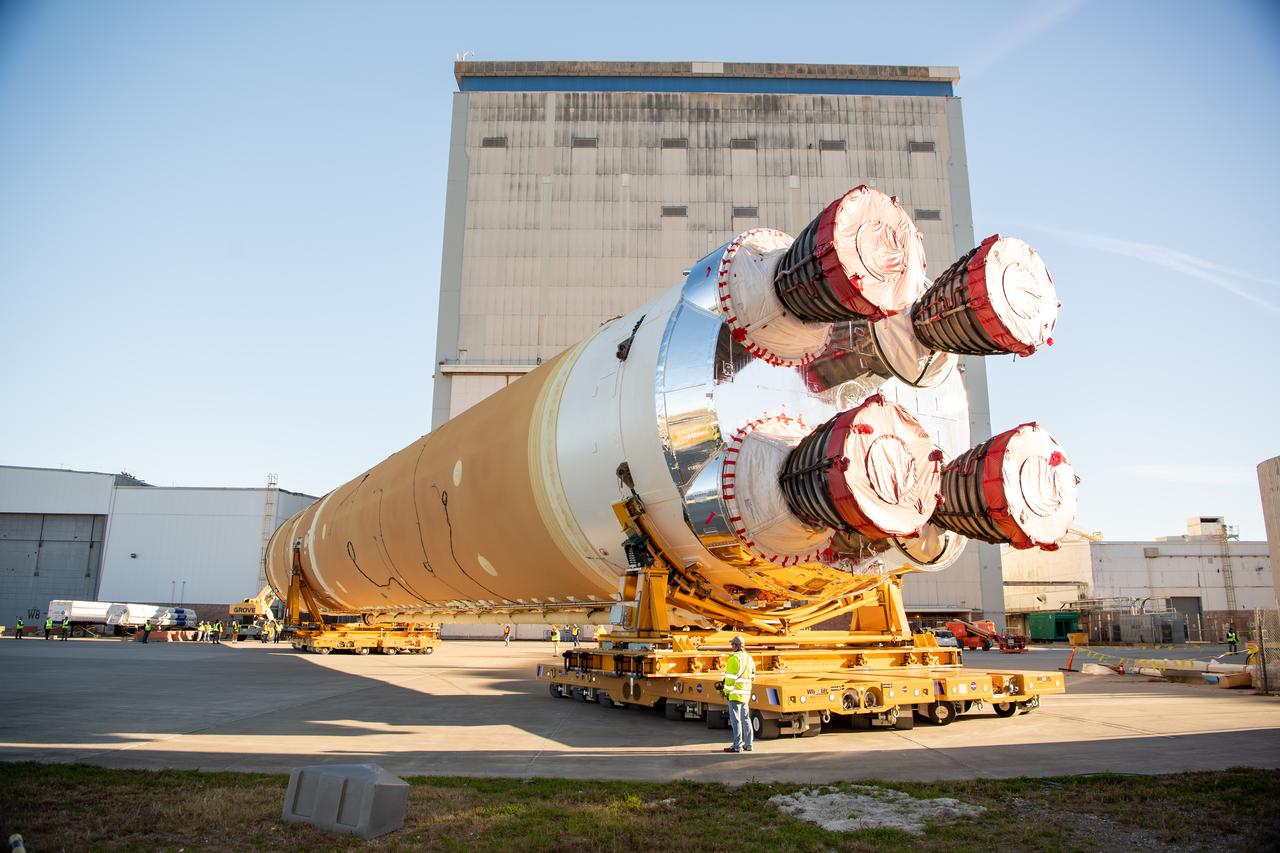
These images show how teams rolled out, or moved, the completed core stage for NASA’s Space Launch System rocket from NASA’s Michoud Assembly Facility in New Orleans. Crews moved the flight hardware for the first Artemis mission to NASA’s Pegasus barge on Jan. 8 in preparation for the core stage Green Run test series at NASA’s Stennis Space Center near Bay St. Louis, Mississippi. Pegasus, which was modified to ferry SLS rocket hardware, will transport the core stage from Michoud to Stennis for the comprehensive core stage Green Run test series. Once at Stennis, the Artemis rocket stage will be loaded into the B-2 Test Stand for the core stage Green Run test series. The comprehensive test campaign will progressively bring the entire core stage, including its avionics and engines, to life for the first time to verify the stage is fit for flight ahead of the launch of Artemis I. Assembly and integration of the core stage and its four RS-25 engines has been a collaborative, multistep process for NASA and its partners Boeing, the core stage lead contractor, and Aerojet Rocketdyne, the RS-25 engines lead contractor. Together with four RS-25 engines, the rocket’s massive 212-foot-tall core stage — the largest stage NASA has ever built — and its twin solid rocket boosters will produce 8.8 million pounds of thrust to send NASA’s Orion spacecraft, astronauts and supplies beyond Earth’s orbit to the Moon and, ultimately, Mars. Offering more payload mass, volume capability and energy to speed missions through space, the SLS rocket, along with NASA’s Gateway in lunar orbit and Orion, is part of NASA’s backbone for deep space exploration and the Artemis lunar program.
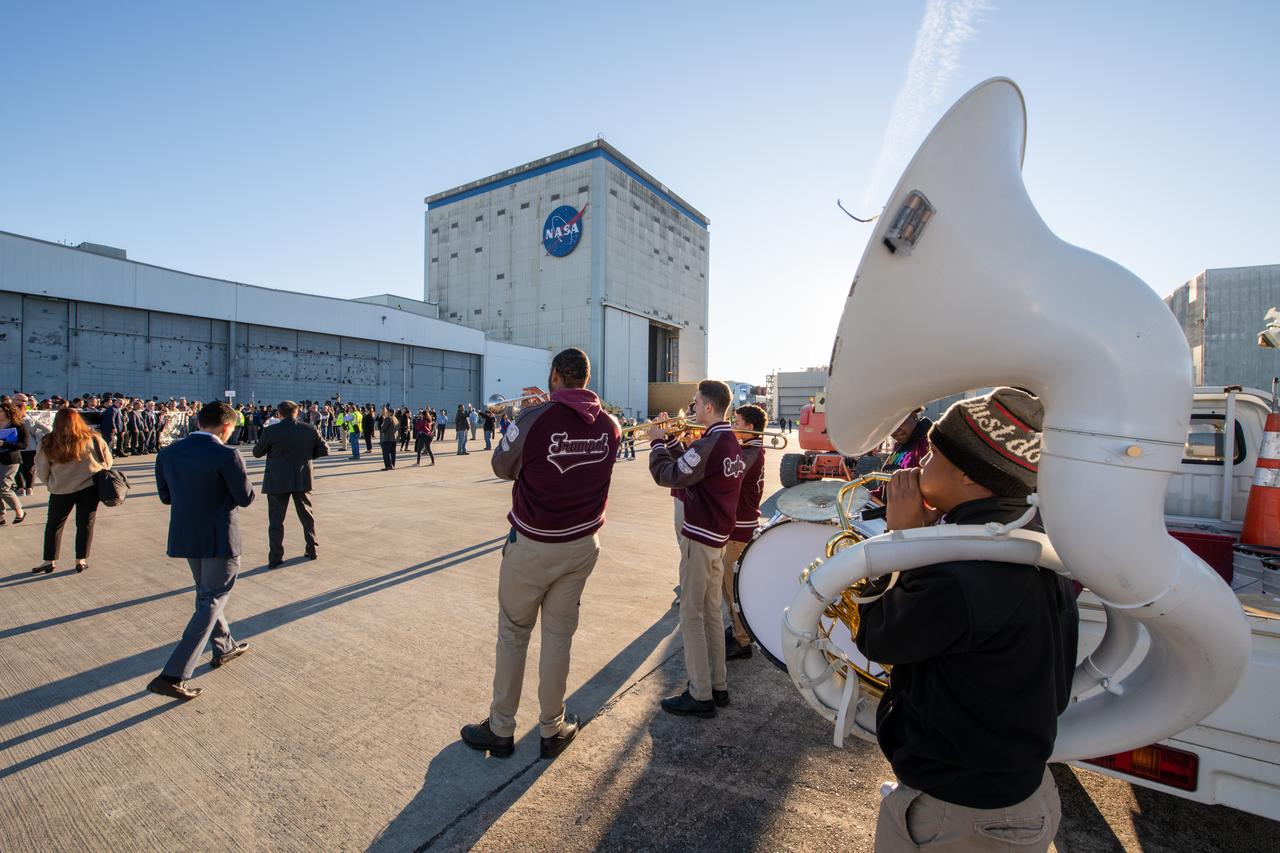
These images/video show how teams rolled out, or moved, the completed core stage for NASA’s Space Launch System rocket from NASA’s Michoud Assembly Facility in New Orleans. Crews moved the flight hardware for the first Artemis mission to NASA’s Pegasus barge on Jan. 8 in preparation for the core stage Green Run test series at NASA’s Stennis Space Center near Bay St. Louis, Mississippi. Pegasus, which was modified to ferry SLS rocket hardware, will transport the core stage from Michoud to Stennis for the comprehensive core stage Green Run test series. Once at Stennis, the Artemis rocket stage will be loaded into the B-2 Test Stand for the core stage Green Run test series. The comprehensive test campaign will progressively bring the entire core stage, including its avionics and engines, to life for the first time to verify the stage is fit for flight ahead of the launch of Artemis I. Assembly and integration of the core stage and its four RS-25 engines has been a collaborative, multistep process for NASA and its partners Boeing, the core stage lead contractor, and Aerojet Rocketdyne, the RS-25 engines lead contractor. Together with four RS-25 engines, the rocket’s massive 212-foot-tall core stage — the largest stage NASA has ever built — and its twin solid rocket boosters will produce 8.8 million pounds of thrust to send NASA’s Orion spacecraft, astronauts and supplies beyond Earth’s orbit to the Moon and, ultimately, Mars. Offering more payload mass, volume capability and energy to speed missions through space, the SLS rocket, along with NASA’s Gateway in lunar orbit and Orion, is part of NASA’s backbone for deep space exploration and the Artemis lunar program.
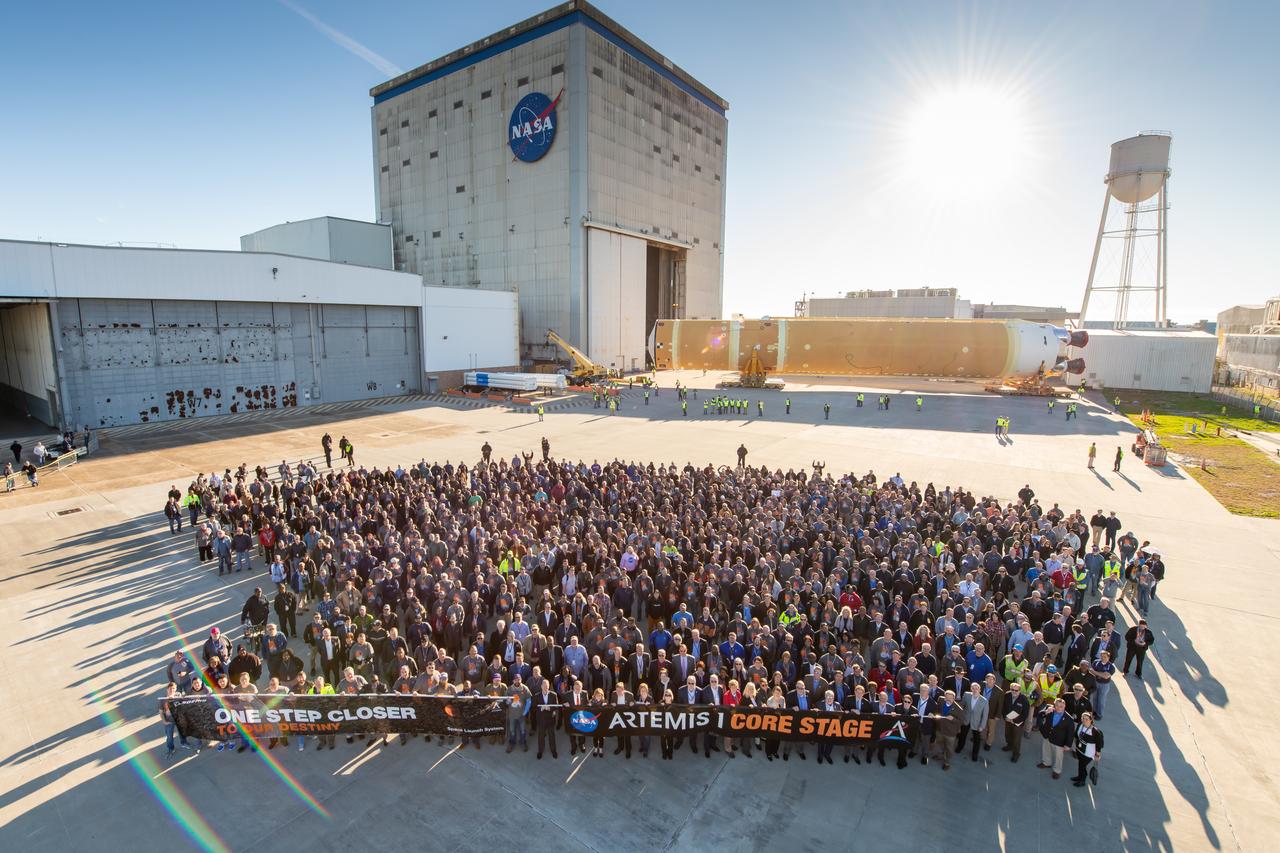
These images/video show how teams rolled out, or moved, the completed core stage for NASA’s Space Launch System rocket from NASA’s Michoud Assembly Facility in New Orleans. Crews moved the flight hardware for the first Artemis mission to NASA’s Pegasus barge on Jan. 8 in preparation for the core stage Green Run test series at NASA’s Stennis Space Center near Bay St. Louis, Mississippi. Pegasus, which was modified to ferry SLS rocket hardware, will transport the core stage from Michoud to Stennis for the comprehensive core stage Green Run test series. Once at Stennis, the Artemis rocket stage will be loaded into the B-2 Test Stand for the core stage Green Run test series. The comprehensive test campaign will progressively bring the entire core stage, including its avionics and engines, to life for the first time to verify the stage is fit for flight ahead of the launch of Artemis I. Assembly and integration of the core stage and its four RS-25 engines has been a collaborative, multistep process for NASA and its partners Boeing, the core stage lead contractor, and Aerojet Rocketdyne, the RS-25 engines lead contractor. Together with four RS-25 engines, the rocket’s massive 212-foot-tall core stage — the largest stage NASA has ever built — and its twin solid rocket boosters will produce 8.8 million pounds of thrust to send NASA’s Orion spacecraft, astronauts and supplies beyond Earth’s orbit to the Moon and, ultimately, Mars. Offering more payload mass, volume capability and energy to speed missions through space, the SLS rocket, along with NASA’s Gateway in lunar orbit and Orion, is part of NASA’s backbone for deep space exploration and the Artemis lunar program.
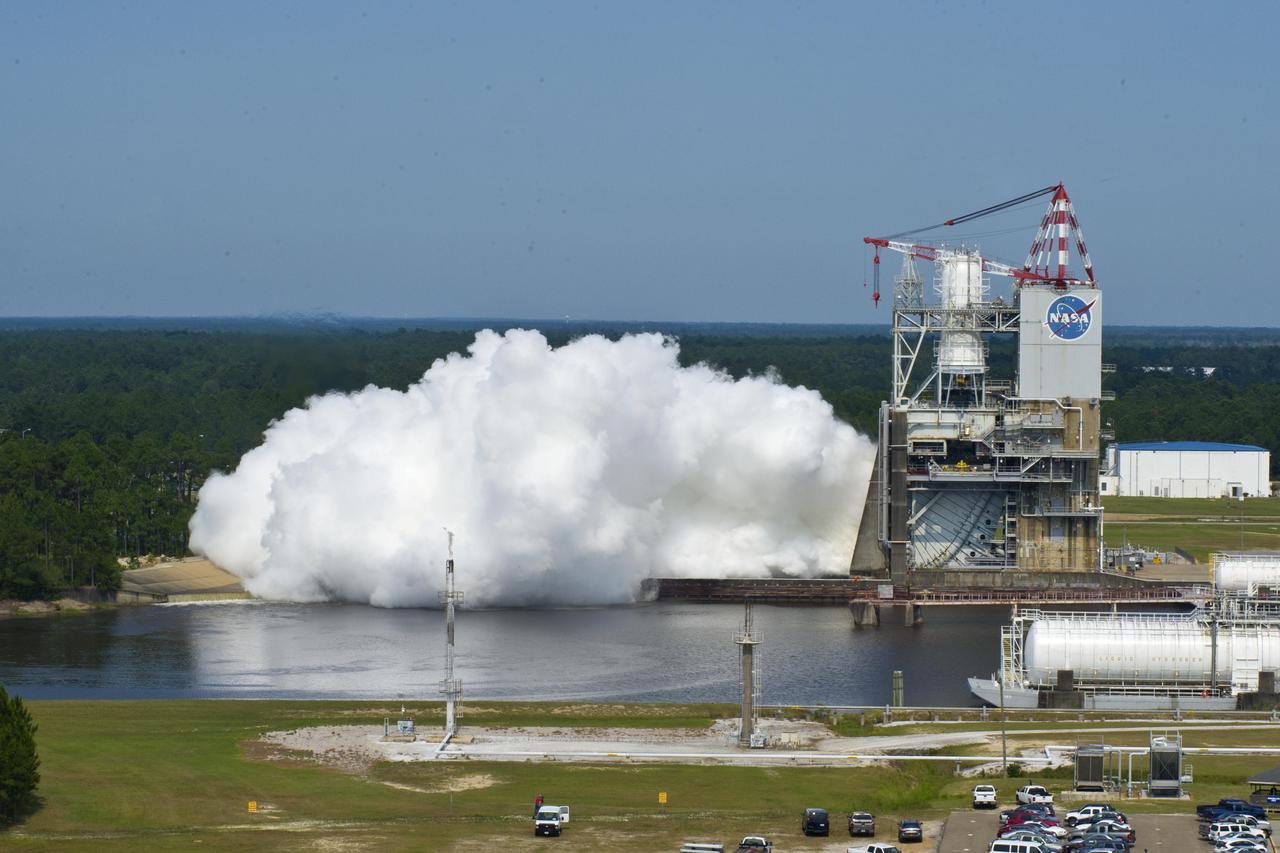
On May 25, 2012, NASA recorded another first during a 40-second test of the next-generation J-2X engine on the A-2 Test Stand at Stennis Space Center. Test conductors fired the J-2X in both the secondary and primary modes of operation. Previous tests were run in one mode only; combining the two allowed operators to collect critical data on engine performance.
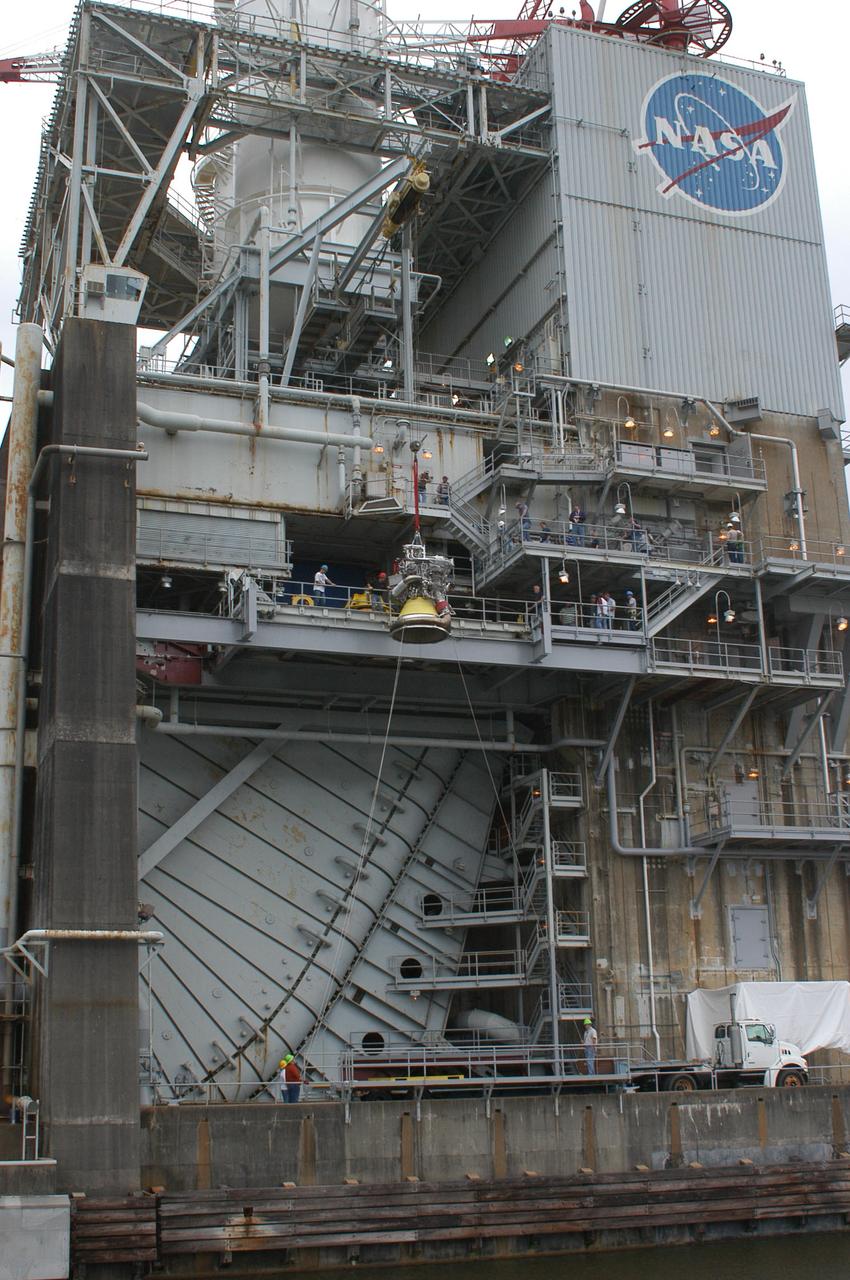
J-2X engine No. 10001 is returned March 8, 2012, to the A-2 Test Stand at Stennis Space Center for its second round of tests. The developmental engine underwent an initial series of tests last year. The J-2X engine is being built for NASA by Pratt & Whitney Rocketdyne.
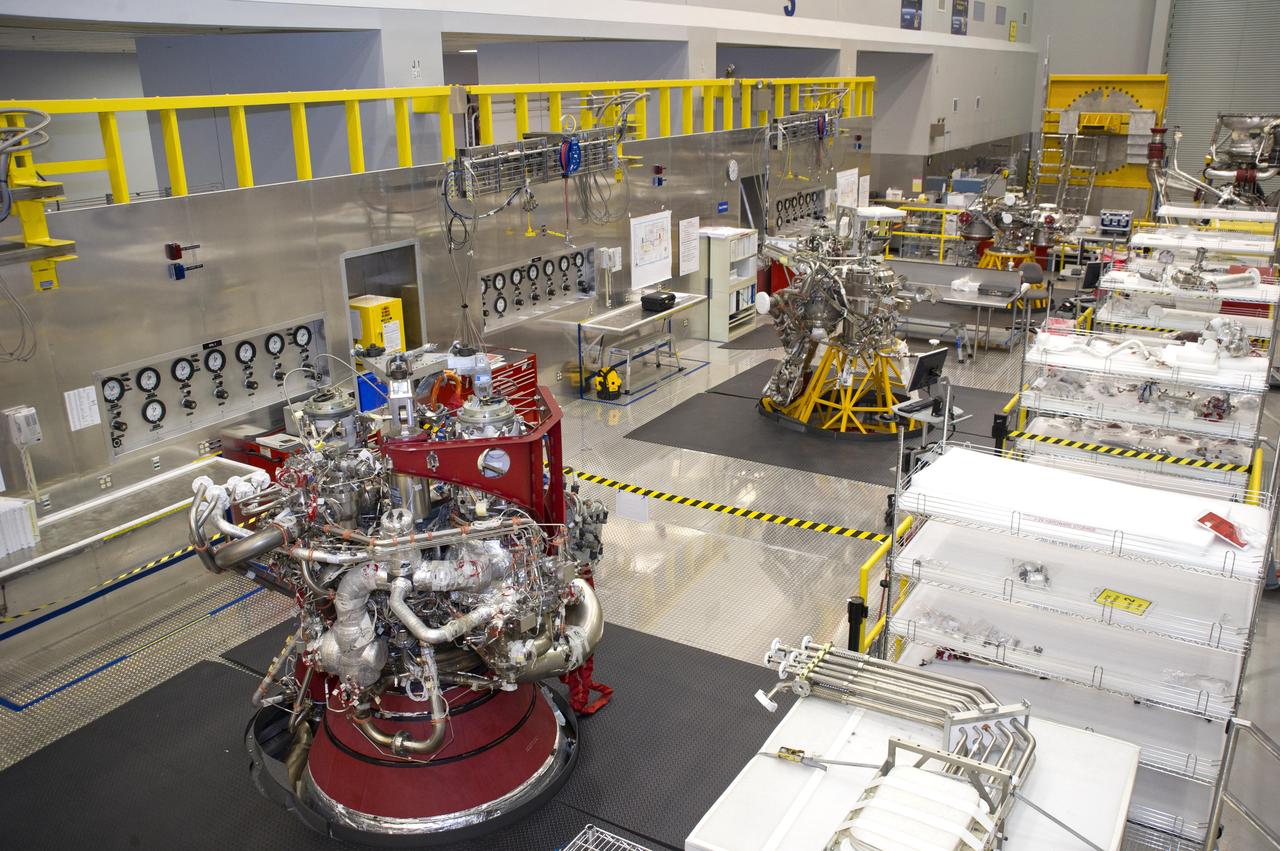
Two J-2X engines and a powerpack, developed for NASA by Pratt and Whitney Rocketdyne, sit side-by-side Oct. 11 at Stennis Space Center as work continues on the Space Launch System. Engine 10001 (far left) has been removed from the A-2 Test Stand after being hot-fire tested 21 times, for a total of 2,697 seconds. The engine is now undergoing a series of post-test inspections. A J-2X powerpack (center) has been removed from the A-1 Test Stand to receive additional instrumentation. So far, the powerpack been hot-fire tested 10 times, for a total of 4,162 seconds. Meanwhile, assembly on the second J-2X engine, known as Engine 10002 and located to the far right, has begun in earnest, with engine completion scheduled for this November. Engine 10002 is about 15 percent complete.
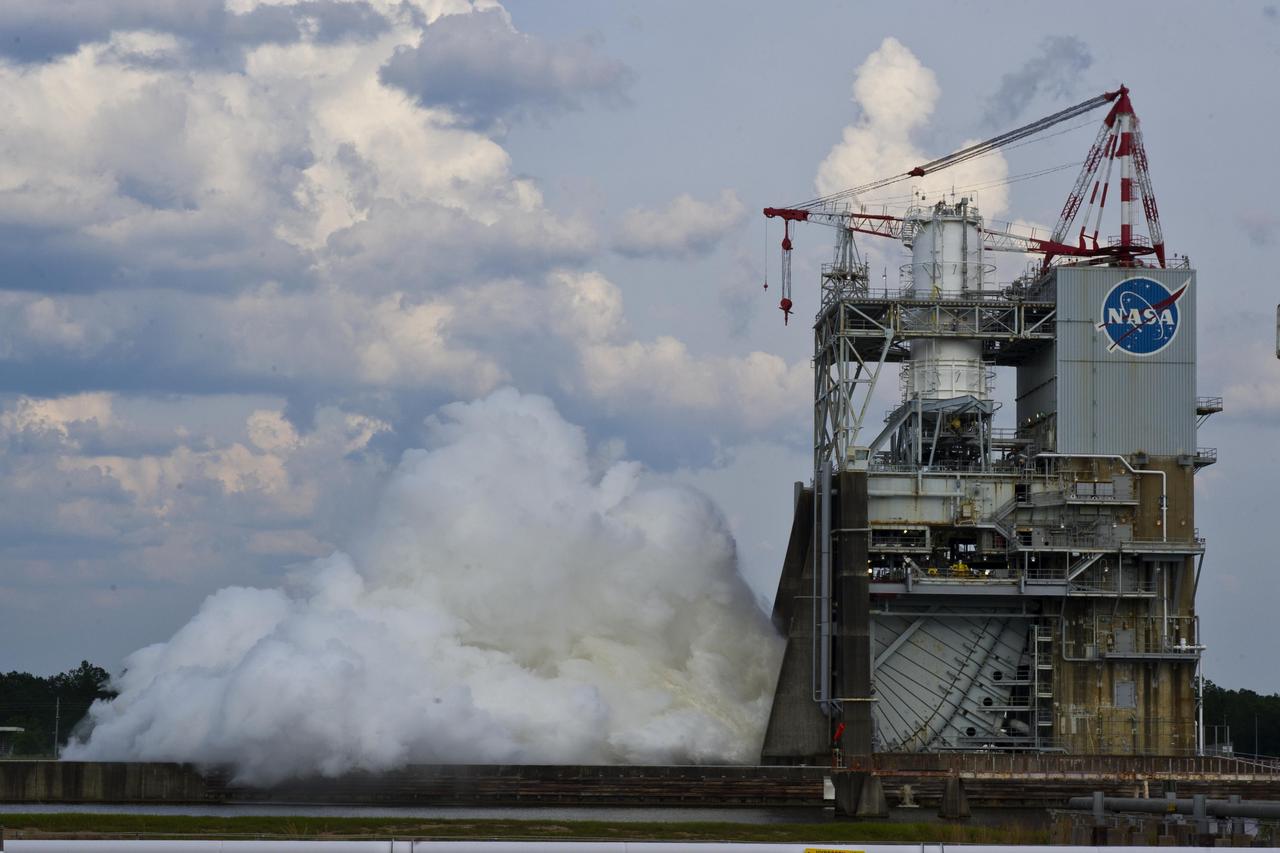
On May 16, 2012, engineers at Stennis Space Center conducted a test of the next-generation J-2X engine that will help power NASA's new Space Launch System, moving NASA even closer to a return to deep space.
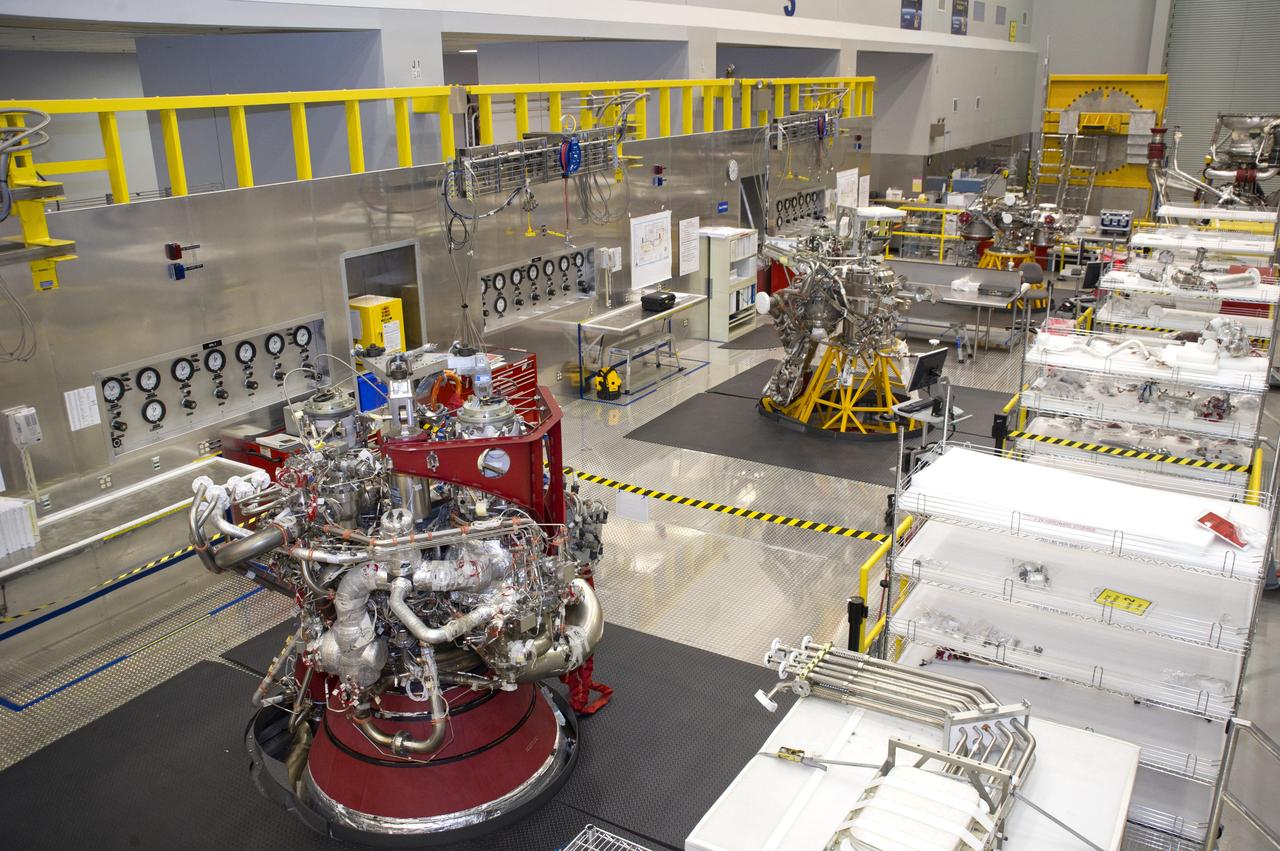
Two J-2X engines and a powerpack, developed for NASA by Pratt and Whitney Rocketdyne, sit side-by-side Oct. 11 at Stennis Space Center as work continues on the Space Launch System. Engine 10001 (far left) has been removed from the A-2 Test Stand after being hot-fire tested 21 times, for a total of 2,697 seconds. The engine is now undergoing a series of post-test inspections. A J-2X powerpack (center) has been removed from the A-1 Test Stand to receive additional instrumentation. So far, the powerpack been hot-fire tested 10 times, for a total of 4,162 seconds. Meanwhile, assembly on the second J-2X engine, known as Engine 10002 and located to the far right, has begun in earnest, with engine completion scheduled for this November. Engine 10002 is about 15 percent complete.
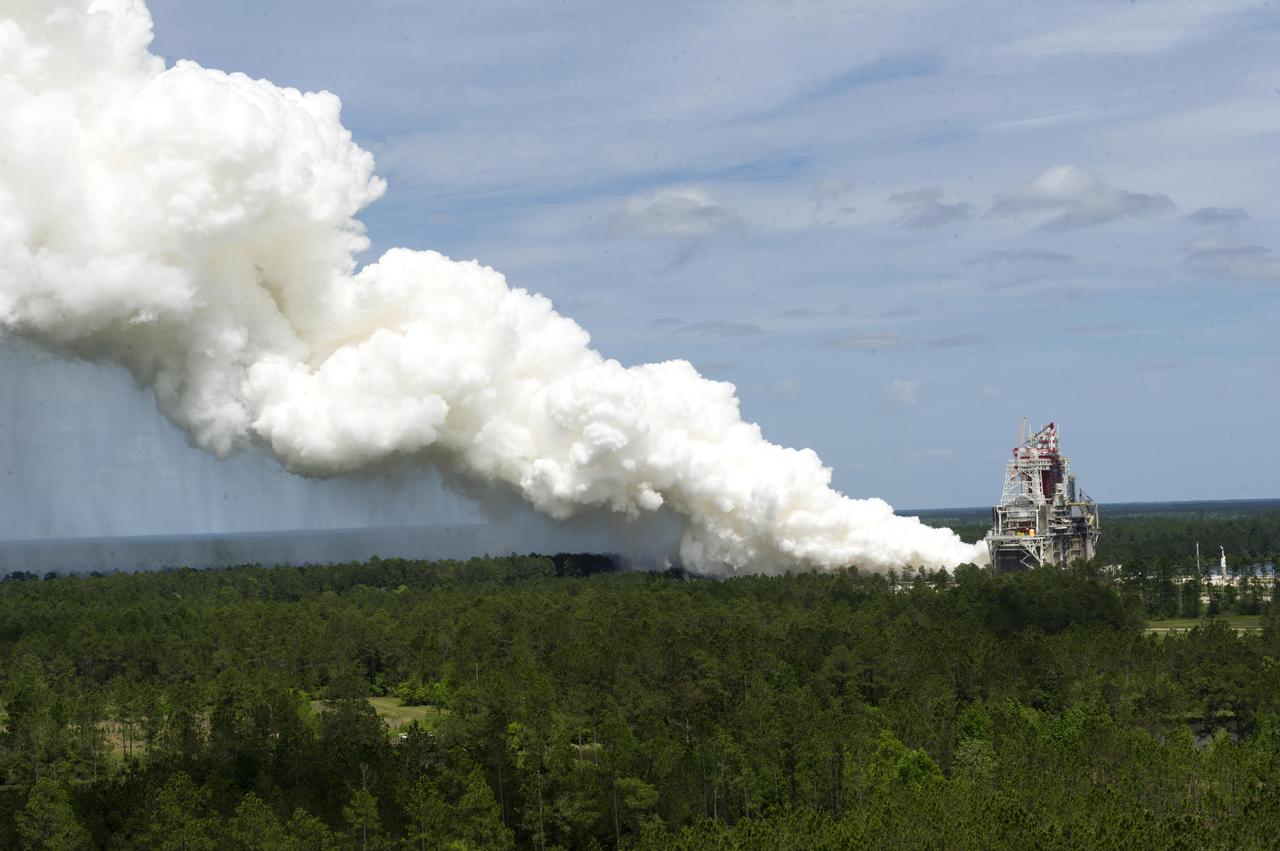
What better way to mark 50 years of rocket engine testing than with a rocket engine test? Stennis Space Center employees enjoyed a chance to view an RS-68 engine test at the B-1 Test Stand on April 19, almost 50 years to the day that the first test was conducted at the south Mississippi site in 1966. The test viewing was part of a weeklong celebration of the 50th year of rocket engine testing at Stennis. The first test at the site occurred April 23, 1966, with a 15-second firing of a Saturn V second stage prototype (S-II-C) on the A-2 Test Stand. The center subsequently tested Apollo rocket stages that carried humans to the moon and every main engine used to power 135 space shuttle missions. It currently tests engines for NASA’s new Space Launch System vehicle.
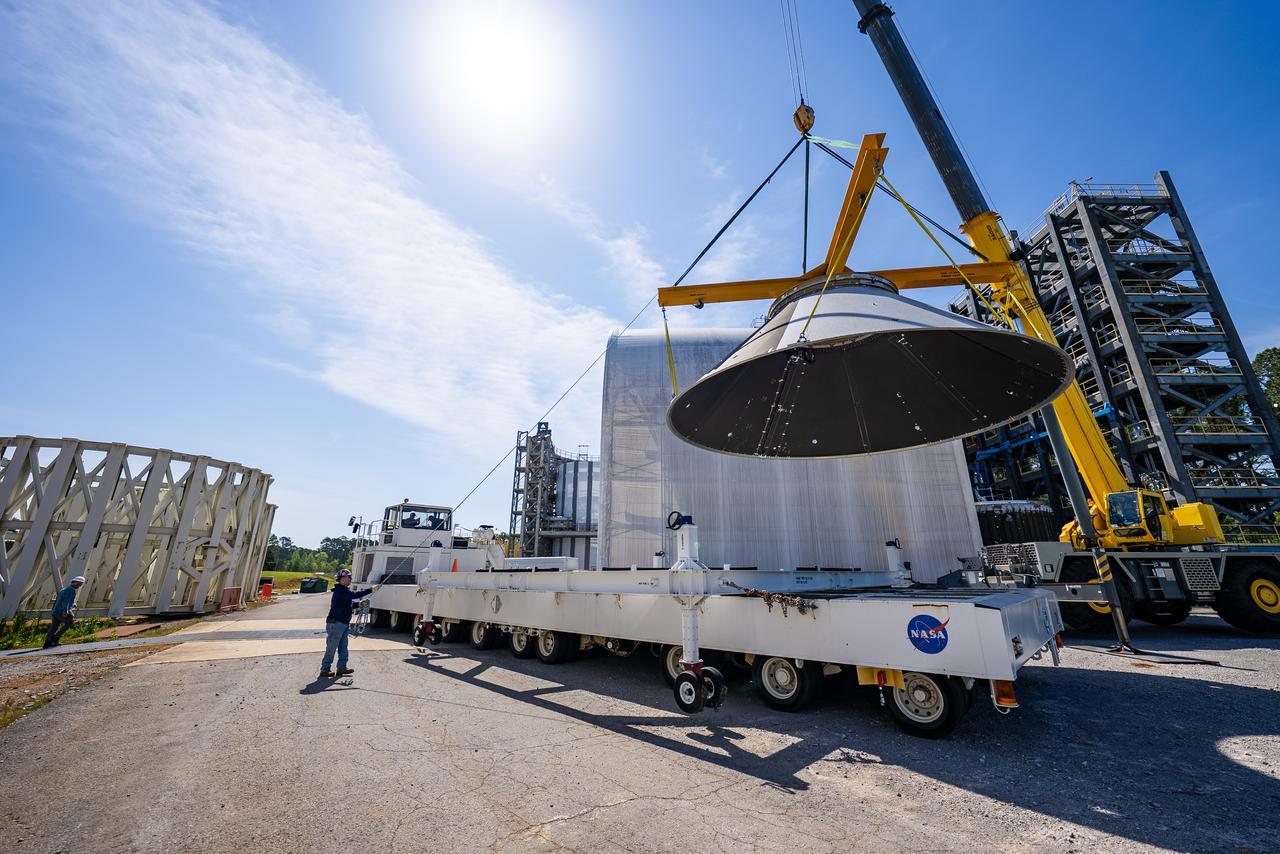
Technicians at NASA’s Marshall Space Flight Center in Huntsville, Alabama, are seen in these images taken April 17, 2025, moving the payload adapter test article from Building 4697 to Building 4705 for storage. This move marks the end of structural testing for the test article. Next, engineers will complete the qualification article and conduct additional for further testing before building the final flight hardware. Manufactured at Marshall, the test article underwent extensive and rigorous testing to validate the design before engineers finalized the configuration for the flight article. The newly completed composite payload adapter is an evolution from the Orion stage adapter to be used in the upgraded Block 1B configuration of the SLS (Space Launch System) rocket, debuting with Artemis IV.
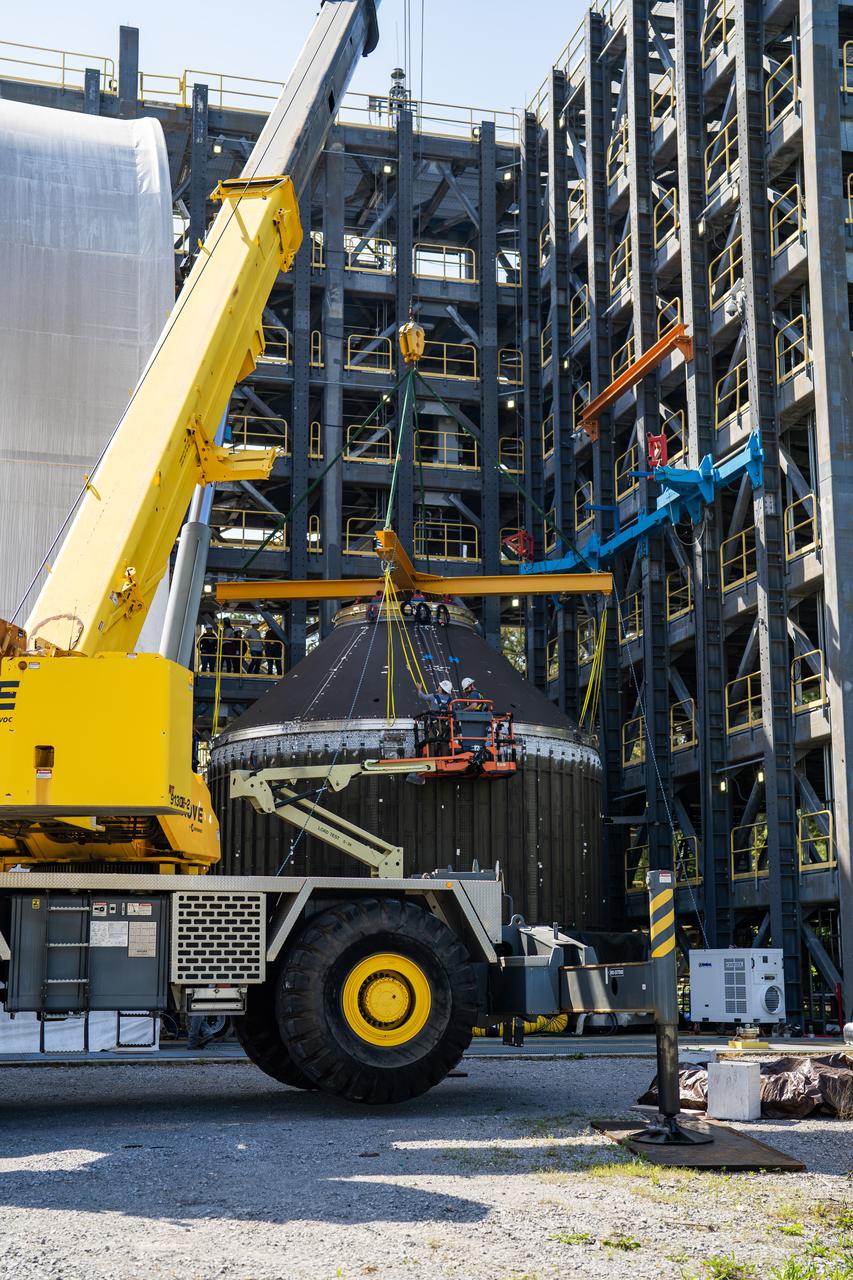
Technicians at NASA’s Marshall Space Flight Center in Huntsville, Alabama, are seen in these images taken April 17, 2025, moving the payload adapter test article from Building 4697 to Building 4705 for storage. This move marks the end of structural testing for the test article. Next, engineers will complete the qualification article and conduct additional for further testing before building the final flight hardware. Manufactured at Marshall, the test article underwent extensive and rigorous testing to validate the design before engineers finalized the configuration for the flight article. The newly completed composite payload adapter is an evolution from the Orion stage adapter to be used in the upgraded Block 1B configuration of the SLS (Space Launch System) rocket, debuting with Artemis IV.
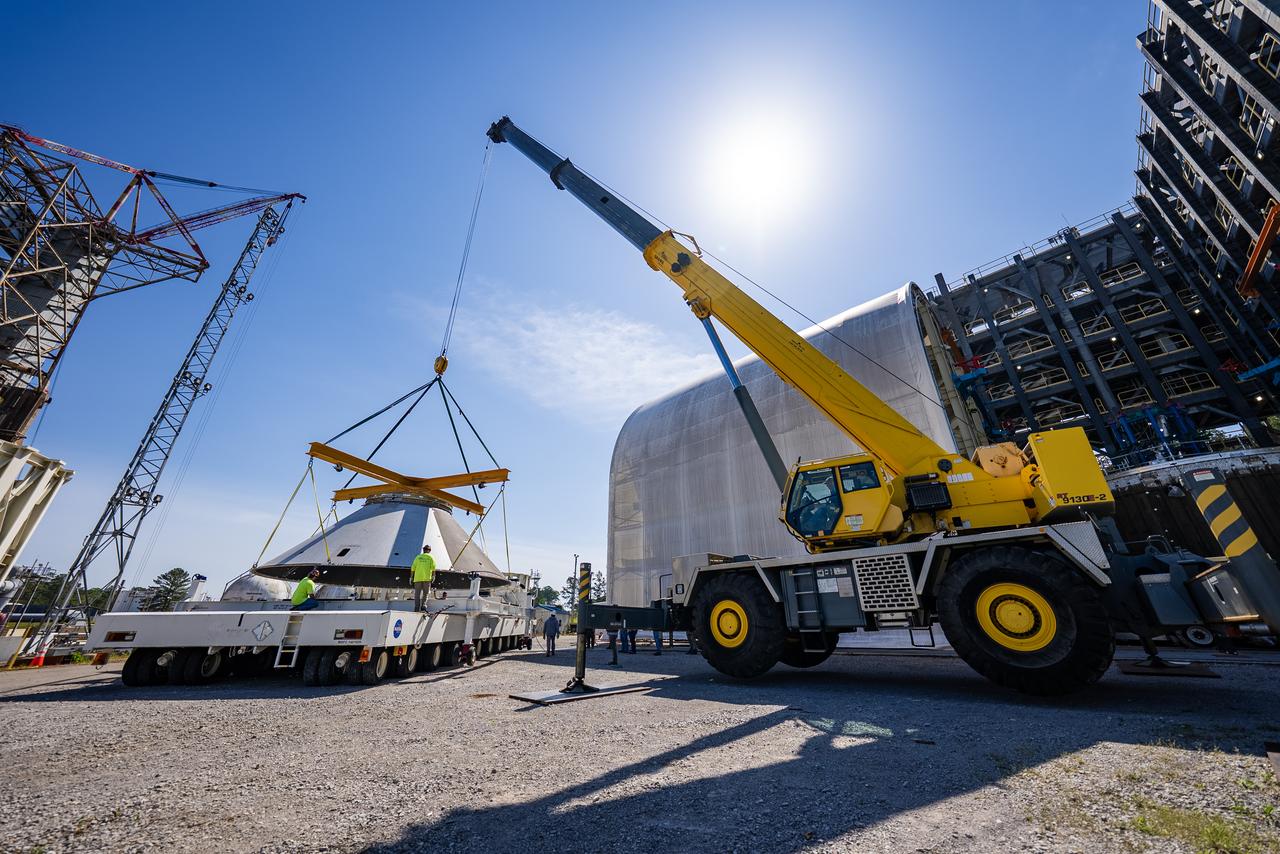
Technicians at NASA’s Marshall Space Flight Center in Huntsville, Alabama, are seen in these images taken April 17, 2025, moving the payload adapter test article from Building 4697 to Building 4705 for storage. This move marks the end of structural testing for the test article. Next, engineers will complete the qualification article and conduct additional for further testing before building the final flight hardware. Manufactured at Marshall, the test article underwent extensive and rigorous testing to validate the design before engineers finalized the configuration for the flight article. The newly completed composite payload adapter is an evolution from the Orion stage adapter to be used in the upgraded Block 1B configuration of the SLS (Space Launch System) rocket, debuting with Artemis IV.

Technicians at NASA’s Marshall Space Flight Center in Huntsville, Alabama, are seen in these images taken April 17, 2025, moving the payload adapter test article from Building 4697 to Building 4705 for storage. This move marks the end of structural testing for the test article. Next, engineers will complete the qualification article and conduct additional for further testing before building the final flight hardware. Manufactured at Marshall, the test article underwent extensive and rigorous testing to validate the design before engineers finalized the configuration for the flight article. The newly completed composite payload adapter is an evolution from the Orion stage adapter to be used in the upgraded Block 1B configuration of the SLS (Space Launch System) rocket, debuting with Artemis IV.
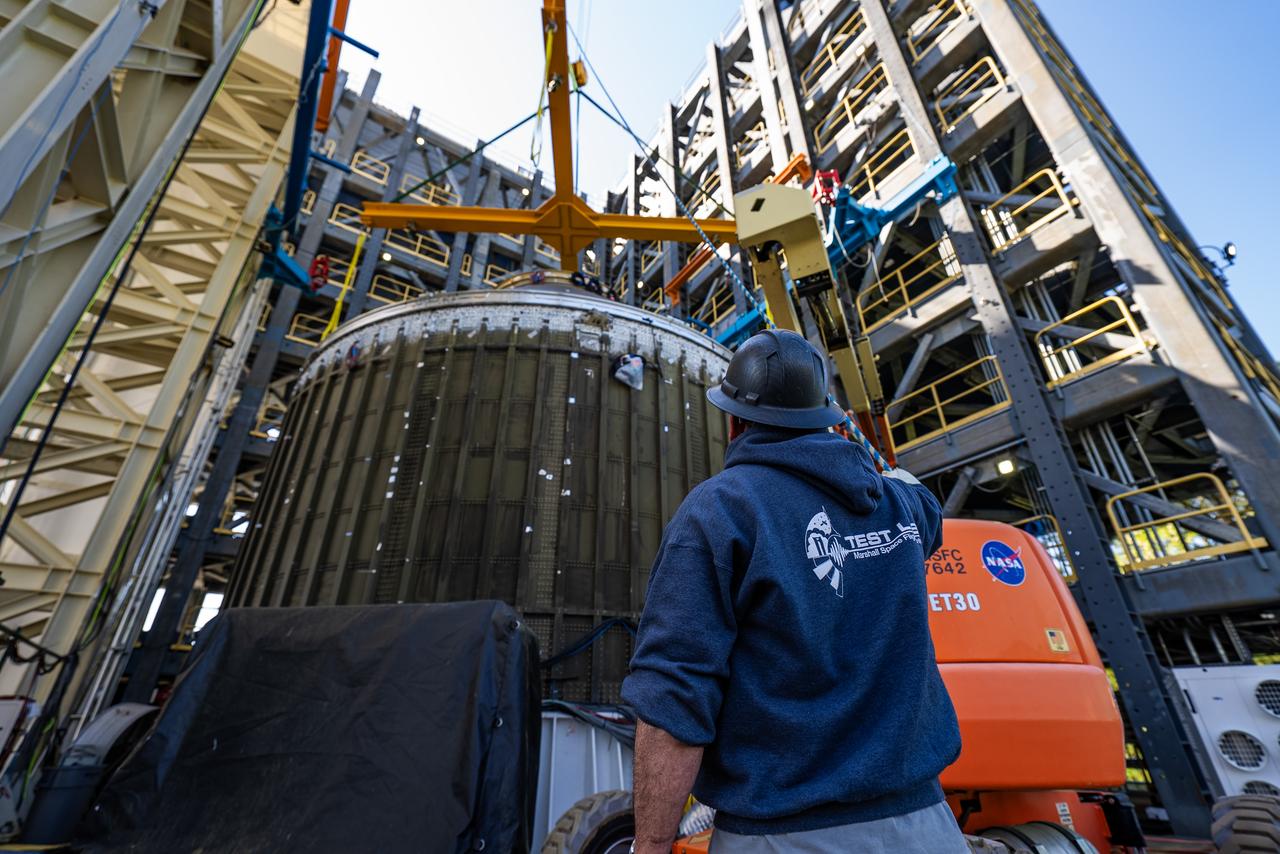
Technicians at NASA’s Marshall Space Flight Center in Huntsville, Alabama, are seen in these images taken April 17, 2025, moving the payload adapter test article from Building 4697 to Building 4705 for storage. This move marks the end of structural testing for the test article. Next, engineers will complete the qualification article and conduct additional for further testing before building the final flight hardware. Manufactured at Marshall, the test article underwent extensive and rigorous testing to validate the design before engineers finalized the configuration for the flight article. The newly completed composite payload adapter is an evolution from the Orion stage adapter to be used in the upgraded Block 1B configuration of the SLS (Space Launch System) rocket, debuting with Artemis IV.
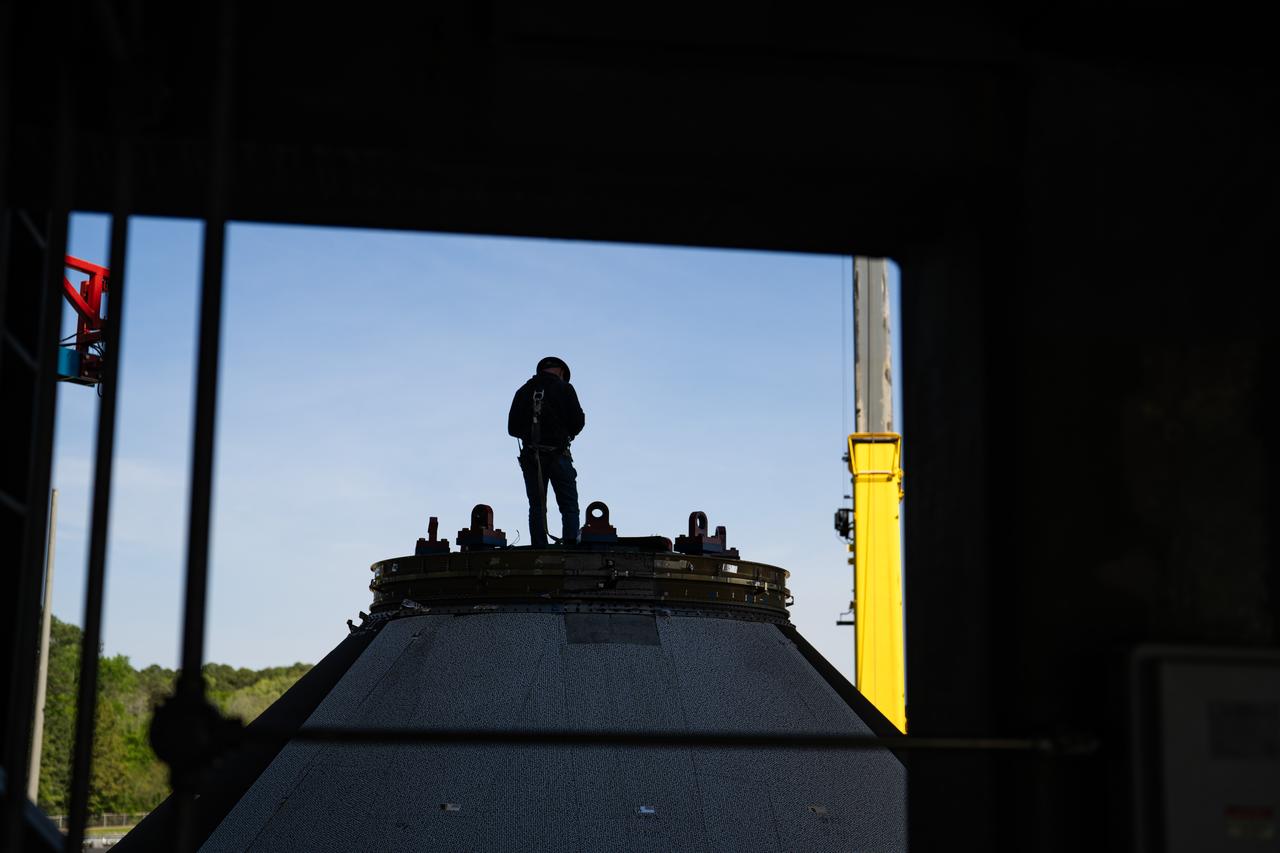
Technicians at NASA’s Marshall Space Flight Center in Huntsville, Alabama, are seen in these images taken April 17, 2025, moving the payload adapter test article from Building 4697 to Building 4705 for storage. This move marks the end of structural testing for the test article. Next, engineers will complete the qualification article and conduct additional for further testing before building the final flight hardware. Manufactured at Marshall, the test article underwent extensive and rigorous testing to validate the design before engineers finalized the configuration for the flight article. The newly completed composite payload adapter is an evolution from the Orion stage adapter to be used in the upgraded Block 1B configuration of the SLS (Space Launch System) rocket, debuting with Artemis IV.
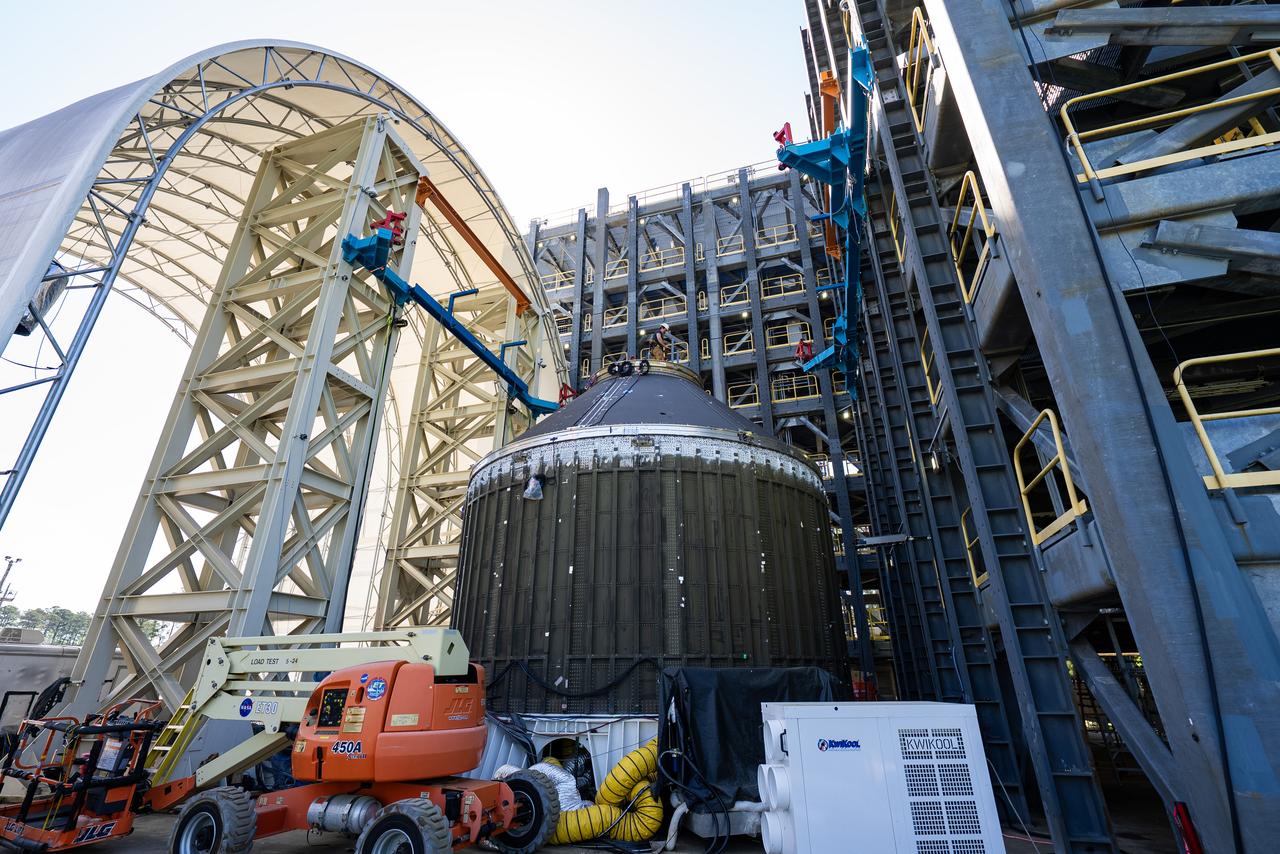
Technicians at NASA’s Marshall Space Flight Center in Huntsville, Alabama, are seen in these images taken April 17, 2025, moving the payload adapter test article from Building 4697 to Building 4705 for storage. This move marks the end of structural testing for the test article. Next, engineers will complete the qualification article and conduct additional for further testing before building the final flight hardware. Manufactured at Marshall, the test article underwent extensive and rigorous testing to validate the design before engineers finalized the configuration for the flight article. The newly completed composite payload adapter is an evolution from the Orion stage adapter to be used in the upgraded Block 1B configuration of the SLS (Space Launch System) rocket, debuting with Artemis IV.
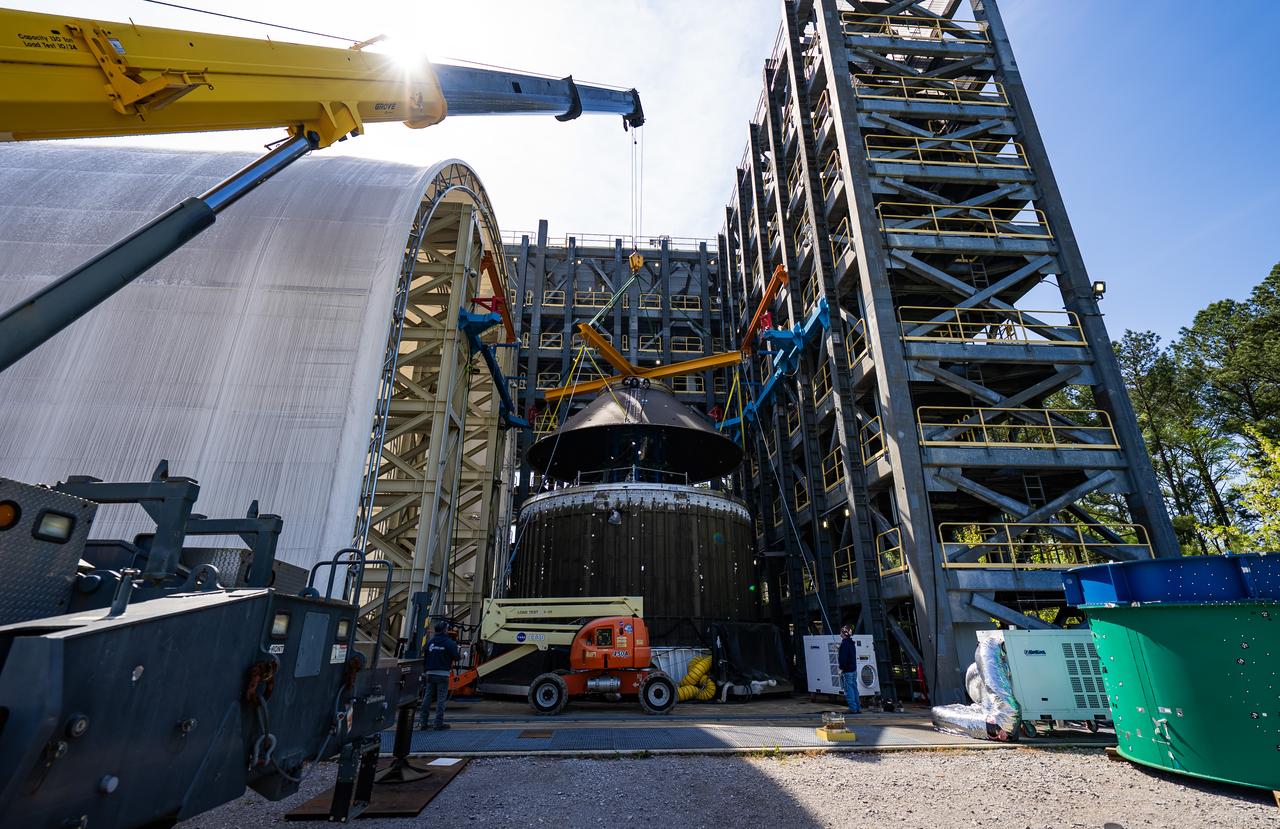
Technicians at NASA’s Marshall Space Flight Center in Huntsville, Alabama, are seen in these images taken April 17, 2025, moving the payload adapter test article from Building 4697 to Building 4705 for storage. This move marks the end of structural testing for the test article. Next, engineers will complete the qualification article and conduct additional for further testing before building the final flight hardware. Manufactured at Marshall, the test article underwent extensive and rigorous testing to validate the design before engineers finalized the configuration for the flight article. The newly completed composite payload adapter is an evolution from the Orion stage adapter to be used in the upgraded Block 1B configuration of the SLS (Space Launch System) rocket, debuting with Artemis IV.
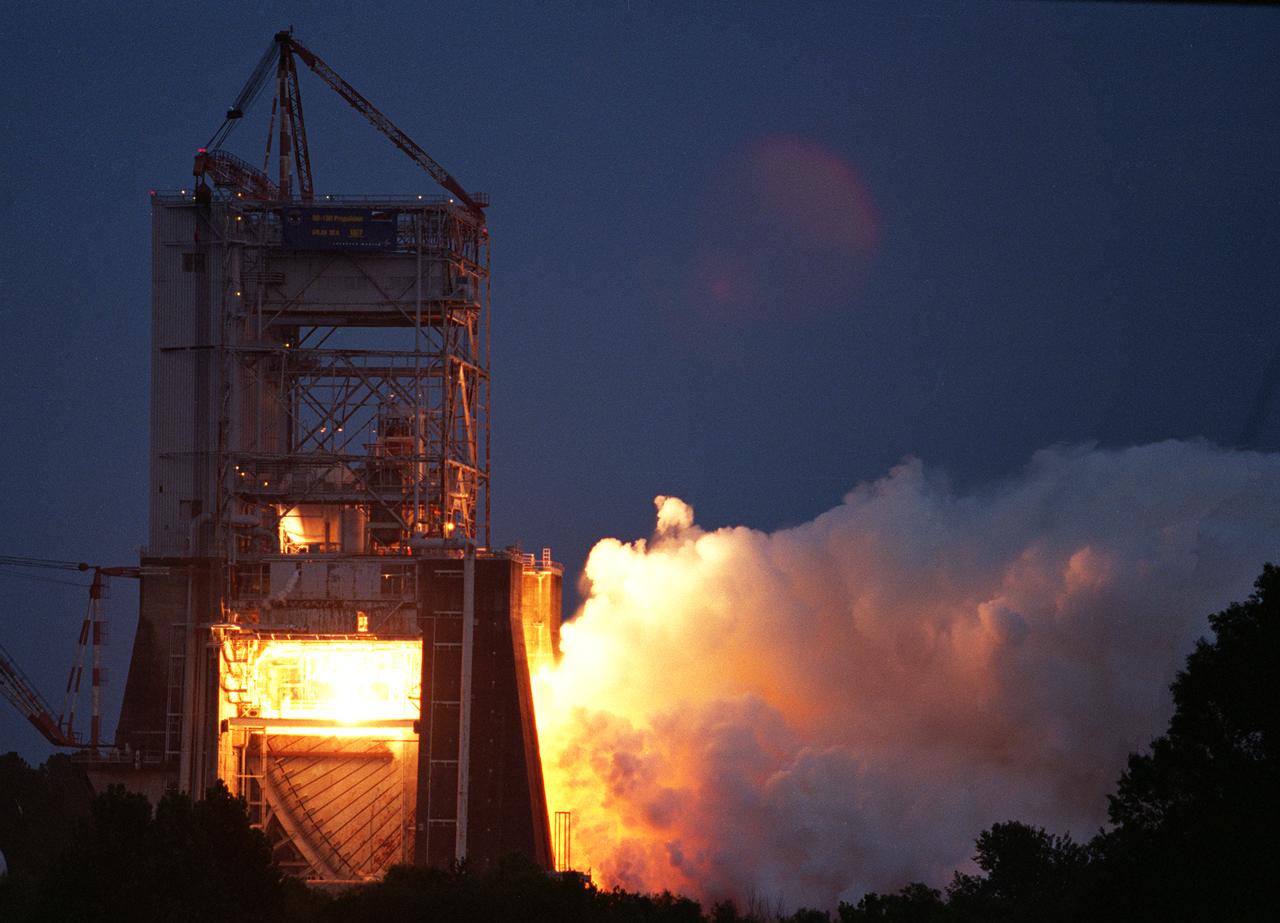
NASA engineers successfully tested a Russian-built rocket engine on November 4, 1998 at the Marshall Space Flight Center (MSFC) Advanced Engine Test Facility, which had been used for testing the Saturn V F-1 engines and Space Shuttle Main engines. The MSFC was under a Space Act Agreement with Lockheed Martin Astronautics of Denver to provide a series of test firings of the Atlas III propulsion system configured with the Russian-designed RD-180 engine. The tests were designed to measure the performance of the Atlas III propulsion system, which included avionics and propellant tanks and lines, and how these components interacted with the RD-180 engine. The RD-180 is powered by kerosene and liquid oxygen, the same fuel mix used in Saturn rockets. The RD-180, the most powerful rocket engine tested at the MSFC since Saturn rocket tests in the 1960s, generated 860,000 pounds of thrust.
A 15-second test of a Saturn V rocket stage on the A-2 Test Stand at Stennis Space Center ushered in the Space Age for south Mississippi. Fifty years later, Stennis has grown into the nation’s largest rocket engine test site, continuing to test rocket engines and stages that power the nation’s space program.
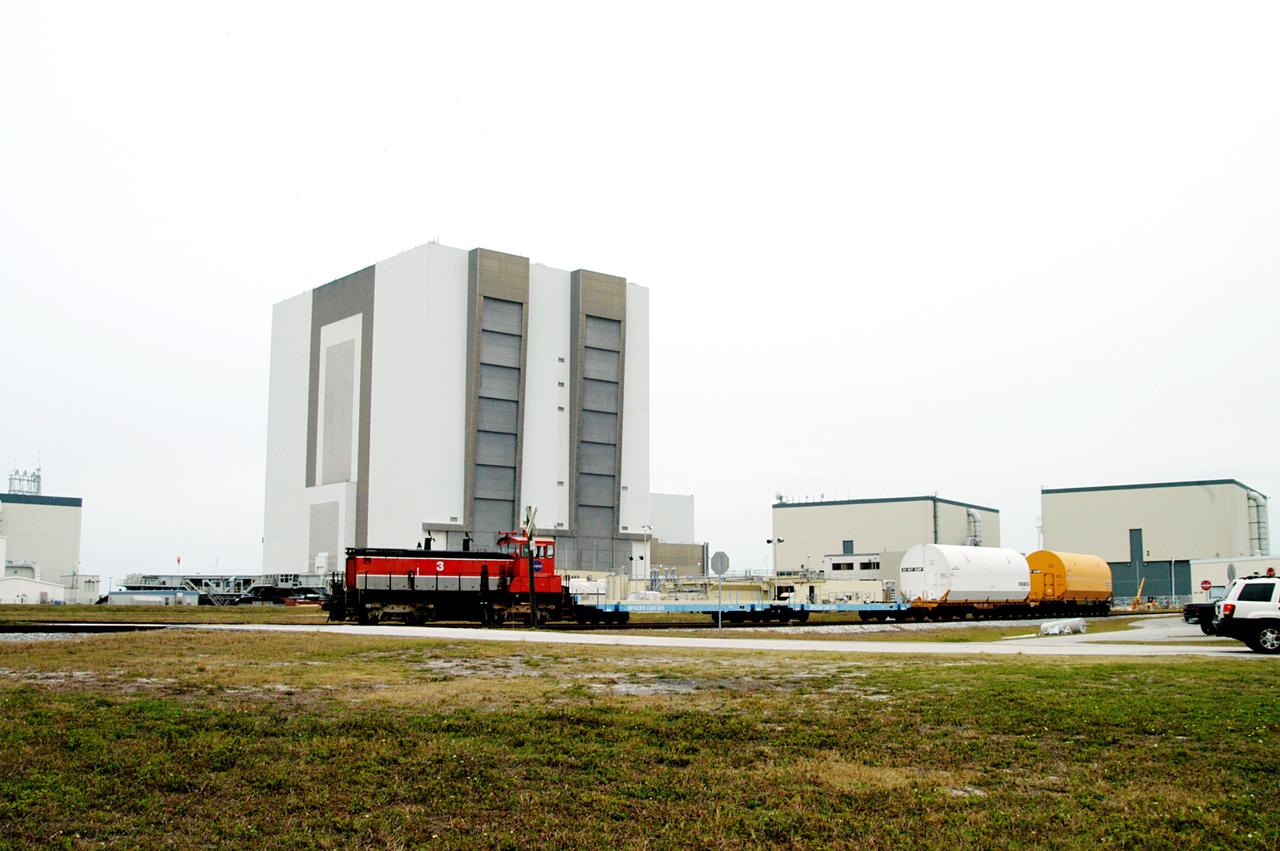
KENNEDY SPACE CENTER, FLA. - Moving past the 525-foot-high Vehicle Assembly Building, the red NASA engine pulls several containers enclosing segments of a solid rocket booster being returned to Utah for testing. The segments were part of the STS-114 stack. It is the first time actual flight segments that had been stacked for flight in the VAB are being returned for testing. They will undergo firing, which will enable inspectors to check the viability of the solid and verify the life expectancy for stacked segments.
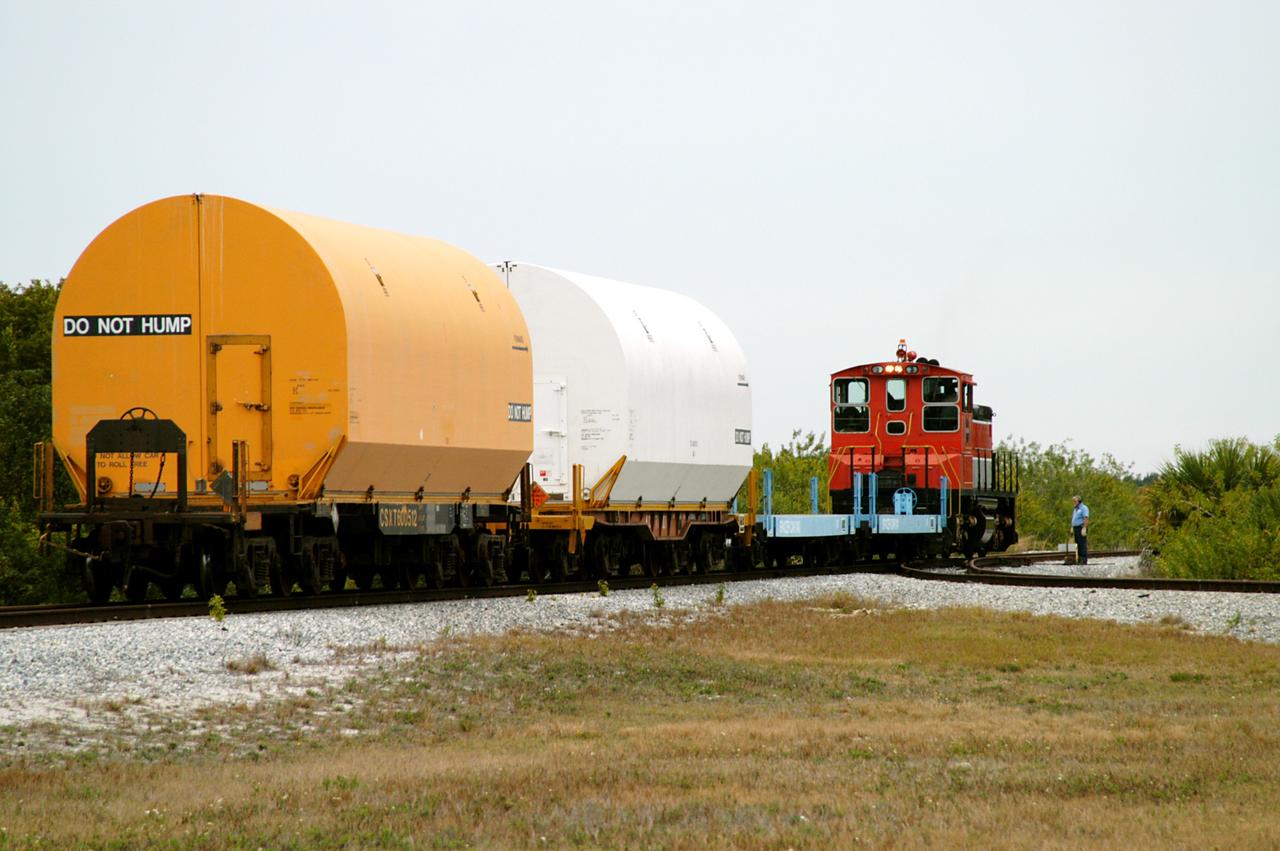
KENNEDY SPACE CENTER, FLA. - The red NASA engine hauls its cargo toward Titusville, Fla. The containers enclose segments of a solid rocket booster being returned to Utah for testing. The segments were part of the STS-114 stack. It is the first time actual flight segments that had been stacked for flight in the VAB are being returned for testing. They will undergo firing, which will enable inspectors to check the viability of the solid and verify the life expectancy for stacked segments.
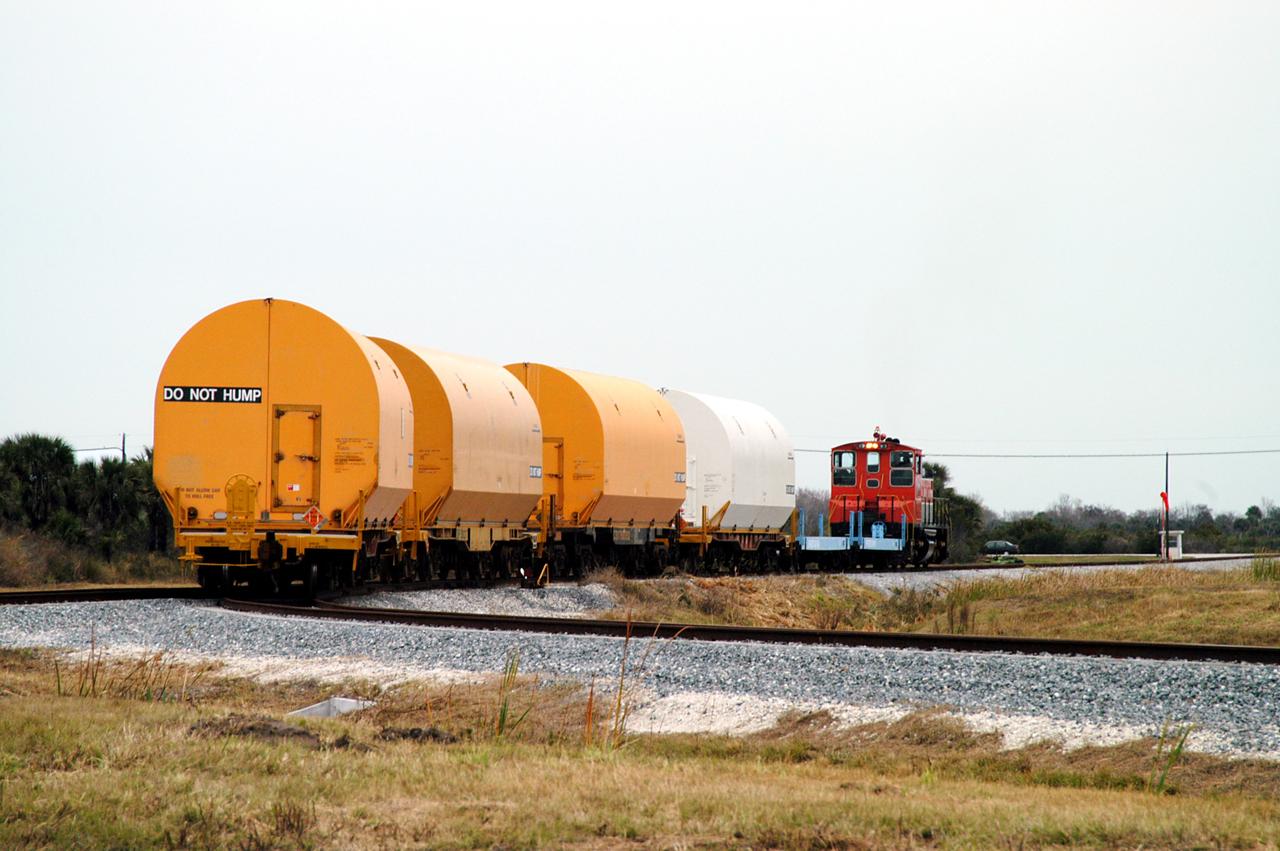
KENNEDY SPACE CENTER, FLA. - The red NASA engine hauls its cargo toward Titusville, Fla. The containers enclose segments of a solid rocket booster being returned to Utah for testing. The segments were part of the STS-114 stack. It is the first time actual flight segments that had been stacked for flight in the VAB are being returned for testing. They will undergo firing, which will enable inspectors to check the viability of the solid and verify the life expectancy for stacked segments.
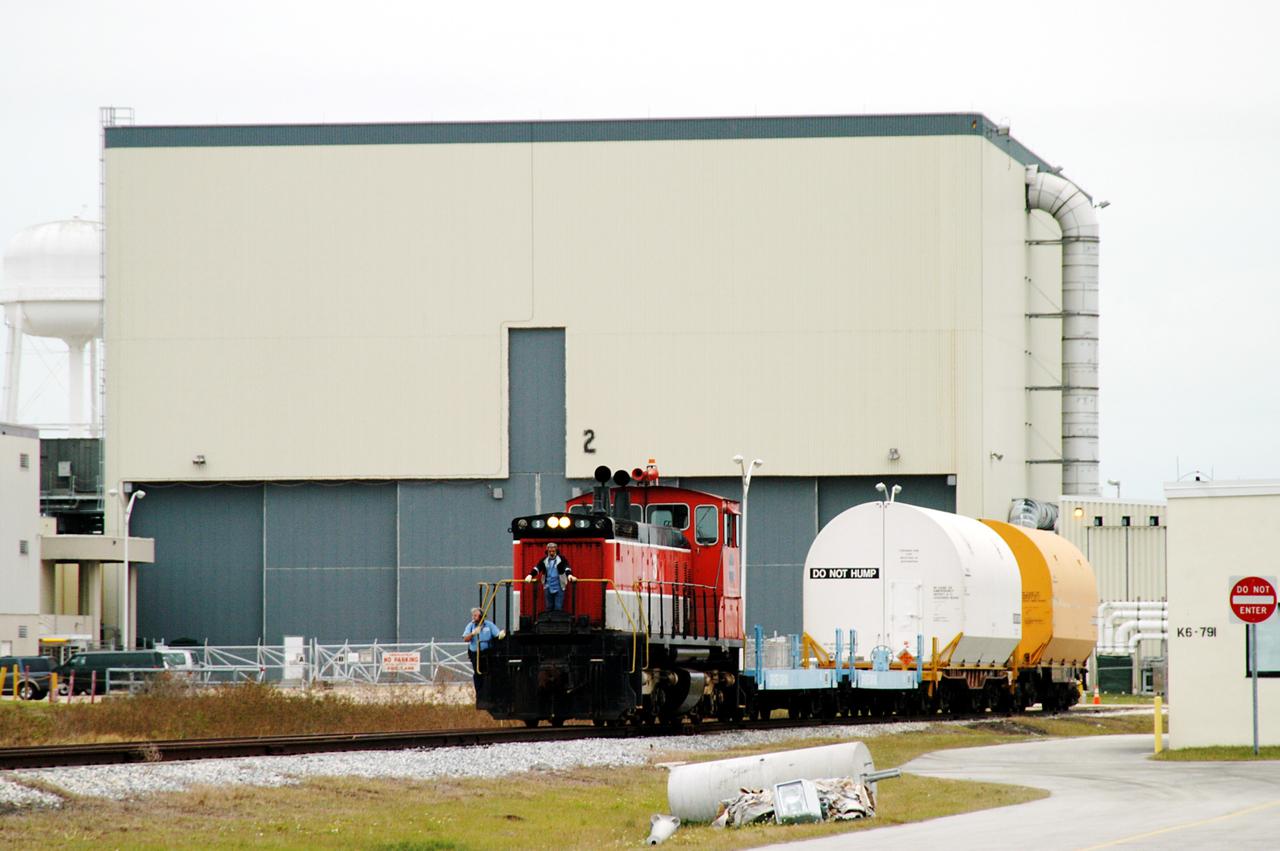
KENNEDY SPACE CENTER, FLA. - The red NASA engine backs up with its cargo of containers in order to change tracks. The containers enclose segments of a solid rocket booster being returned to Utah for testing. The segments were part of the STS-114 stack. It is the first time actual flight segments that had been stacked for flight in the VAB are being returned for testing. They will undergo firing, which will enable inspectors to check the viability of the solid and verify the life expectancy for stacked segments.
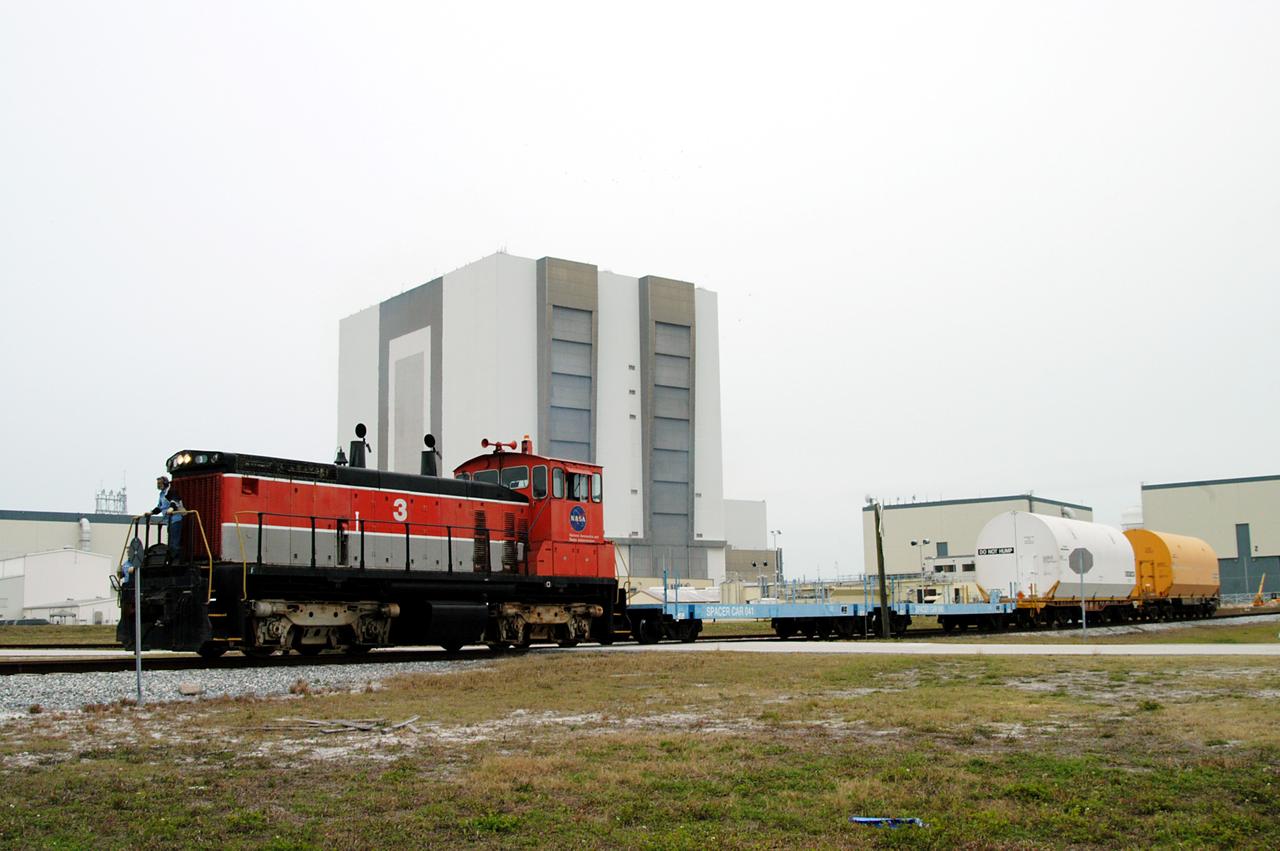
KENNEDY SPACE CENTER, FLA. - The red NASA engine moves forward past the Vehicle Assembly Building with its cargo of containers enclosing segments of a solid rocket booster being returned to Utah for testing. The segments were part of the STS-114 stack. It is the first time actual flight segments that had been stacked for flight in the VAB are being returned for testing. They will undergo firing, which will enable inspectors to check the viability of the solid and verify the life expectancy for stacked segments.
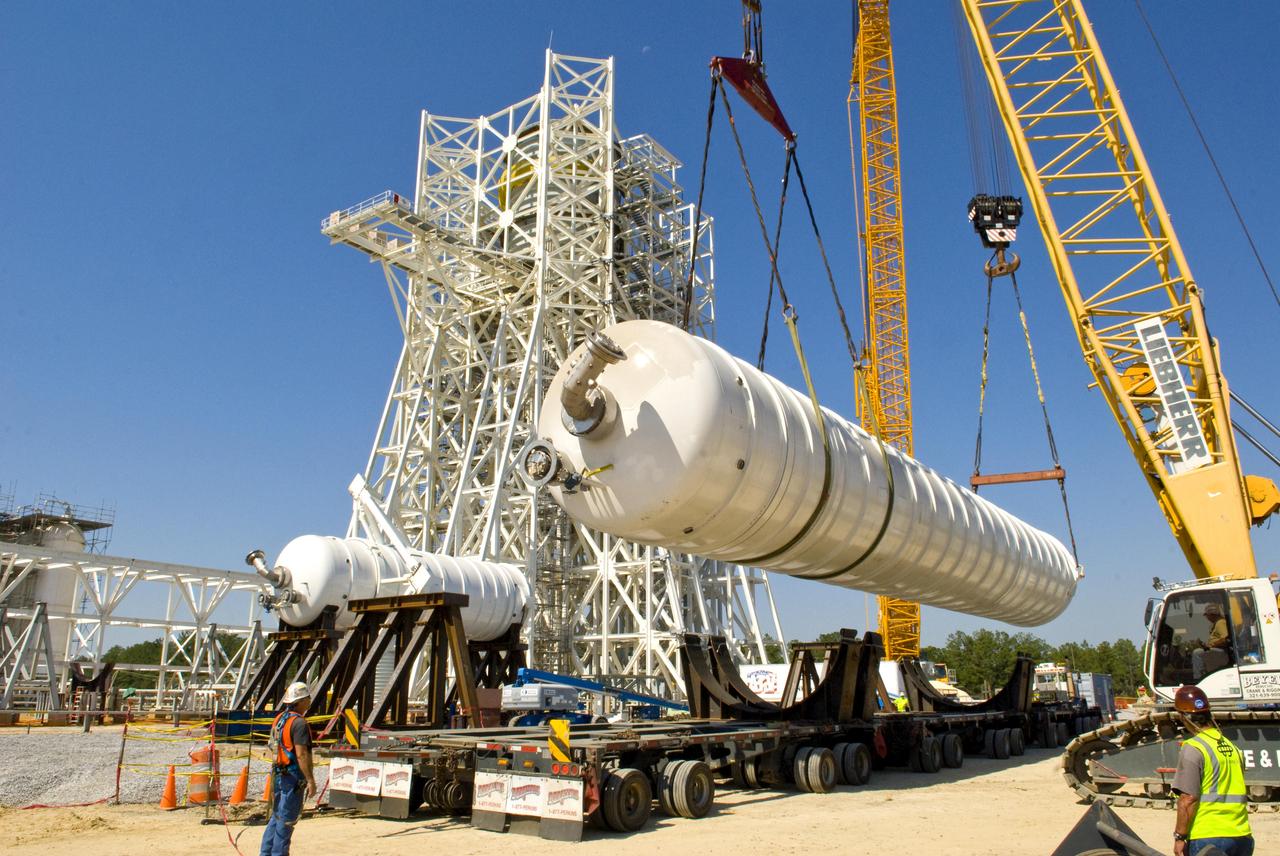
An 80,000-gallon liquid hydrogen tank is placed at the A-3 Test Stand construction site on Sept. 24, 2010. The tank will provide propellant for tests of next-generation rocket engines at the stand. It will be placed upright on top of the stand, helping to increase the overall height to 300 feet. Once completed, the A-3 Test Stand will enable operators to test rocket engines at simulated altitudes of up to 100,000 feet. The A-3 stand is the first large rocket engine test structure to be built at Stennis Space Center since the 1960s.
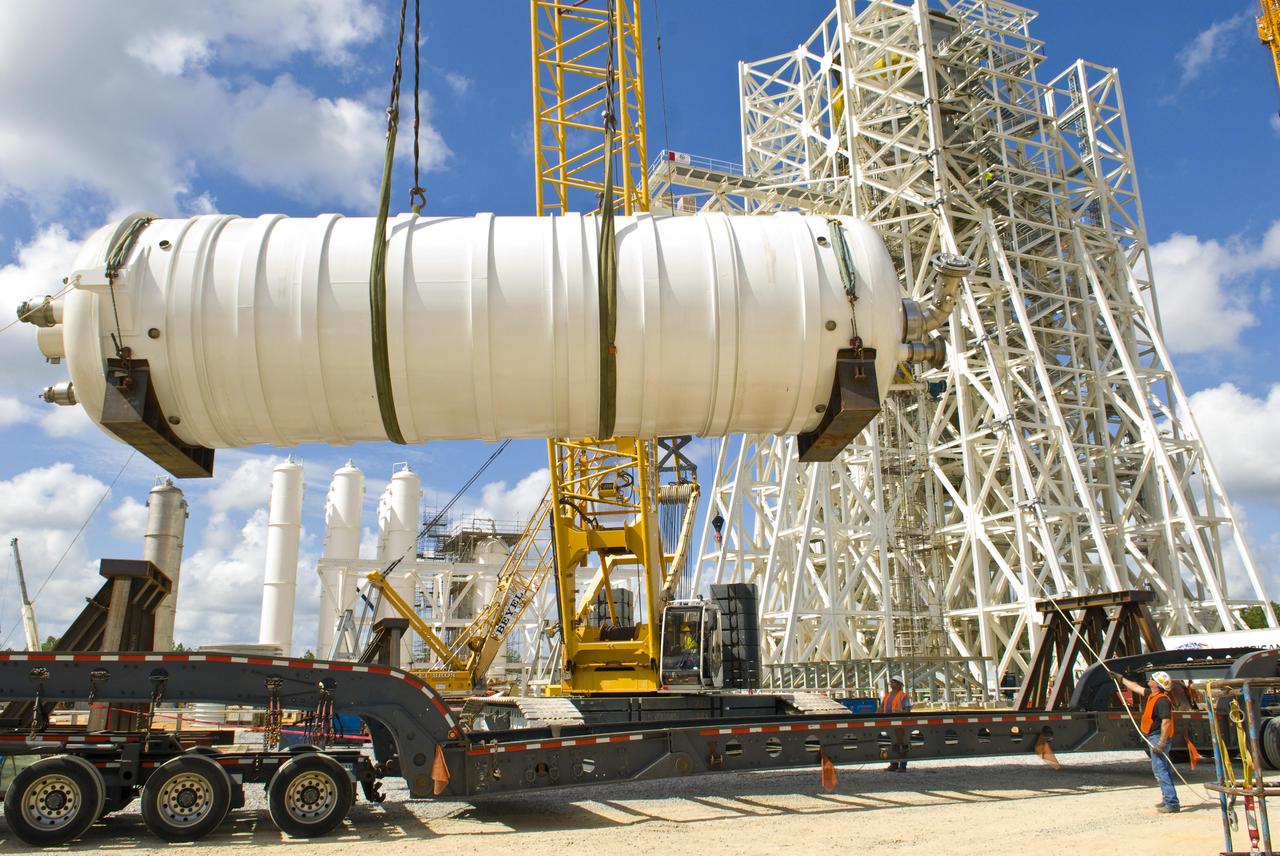
A 35,000-gallon liquid oxygen tank is placed at the A-3 Test Stand construction site on Sept. 24, 2010. The tank will provide propellant for tests of next-generation rocket engines at the stand. It will be placed upright on top of the stand, helping to increase the overall height to 300 feet. Once completed, the A-3 Test Stand will enable operators to test rocket engines at simulated altitudes of up to 100,000 feet. The A-3 stand is the first large rocket engine test structure to be built at Stennis Space Center since the 1960s.
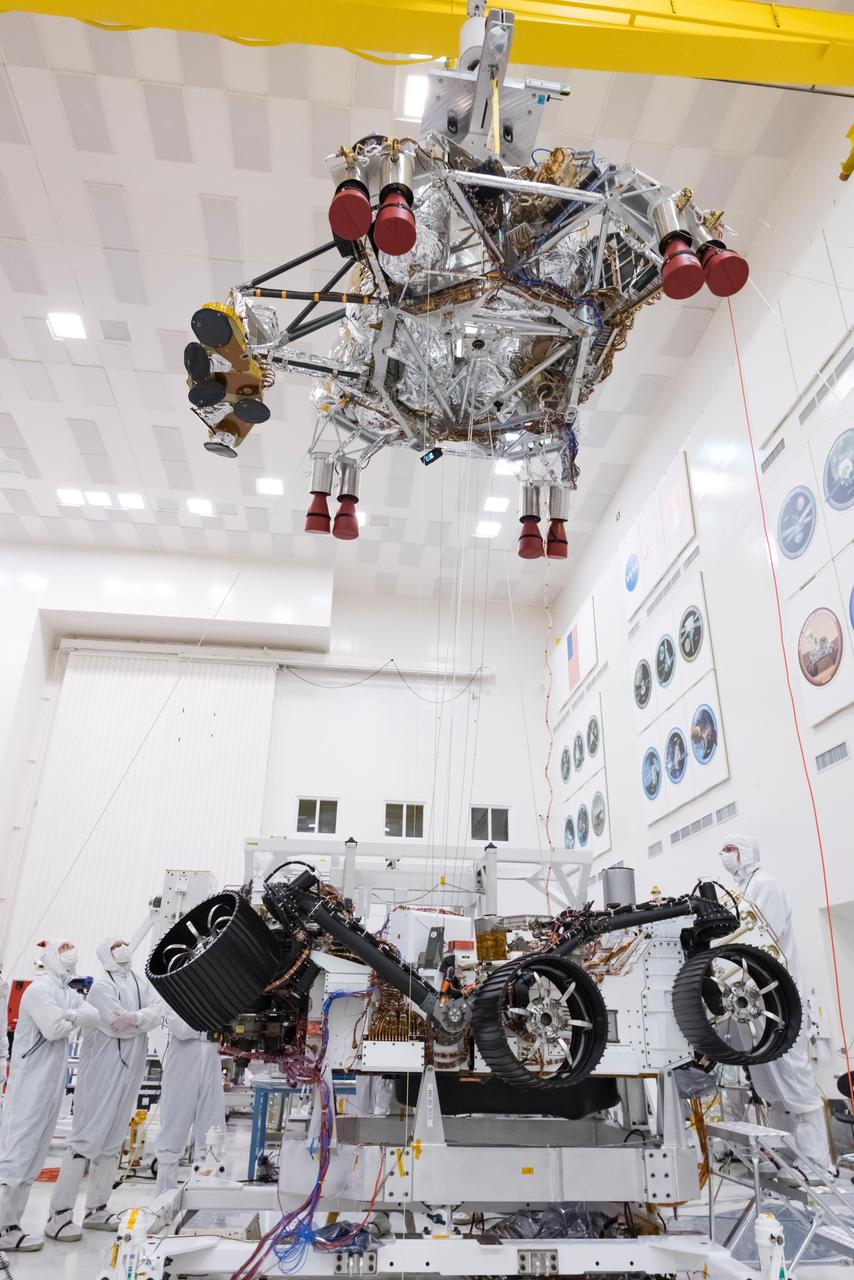
In this picture from Sept. 28, 2019, engineers and technicians working on the Mars 2020 spacecraft at NASA's Jet Propulsion Laboratory in Pasadena, California, look on as a crane lifts the rocket-powered descent stage away from the rover after a test. https://photojournal.jpl.nasa.gov/catalog/PIA23466
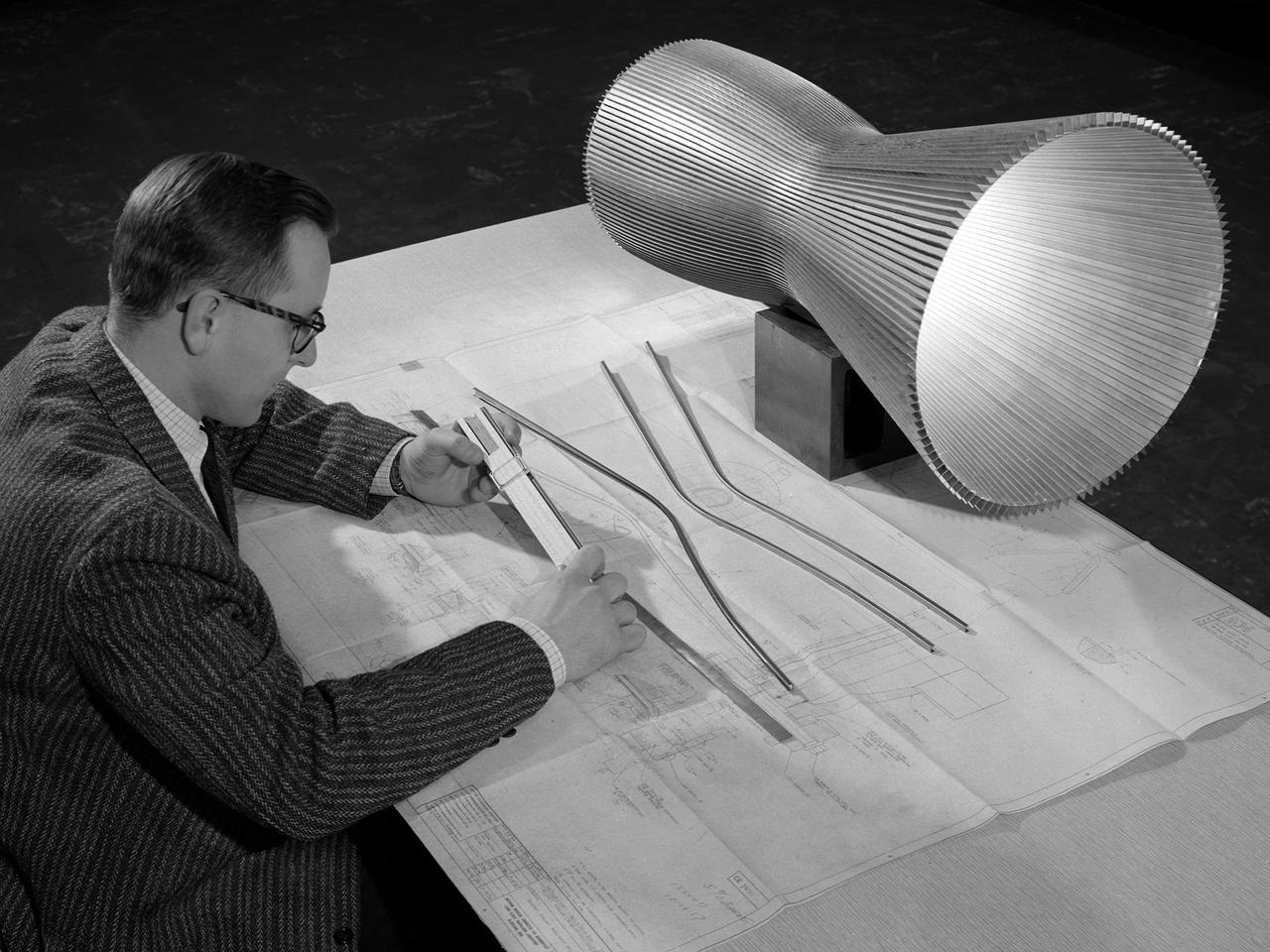
An engineer at the National Aeronautics and Space Administration (NASA) Lewis Research Center examines a drawing showing the assembly and details of a 20,000-pound thrust regeneratively cooled rocket engine. The engine was being designed for testing in Lewis’ new Rocket Engine Test Facility, which began operating in the fall of 1957. The facility was the largest high-energy test facility in the country that was capable of handling liquid hydrogen and other liquid chemical fuels. The facility’s use of subscale engines up to 20,000 pounds of thrust permitted a cost-effective method of testing engines under various conditions. The Rocket Engine Test Facility was critical to the development of the technology that led to the use of hydrogen as a rocket fuel and the development of lightweight, regeneratively-cooled, hydrogen-fueled rocket engines. Regeneratively-cooled engines use the cryogenic liquid hydrogen as both the propellant and the coolant to prevent the engine from burning up. The fuel was fed through rows of narrow tubes that surrounded the combustion chamber and nozzle before being ignited inside the combustion chamber. The tubes are visible in the liner sitting on the desk. At the time, Pratt and Whitney was designing a 20,000-pound thrust liquid-hydrogen rocket engine, the RL-10. Two RL-10s would be used to power the Centaur second-stage rocket in the 1960s. The successful development of the Centaur rocket and the upper stages of the Saturn V were largely credited to the work carried out Lewis.
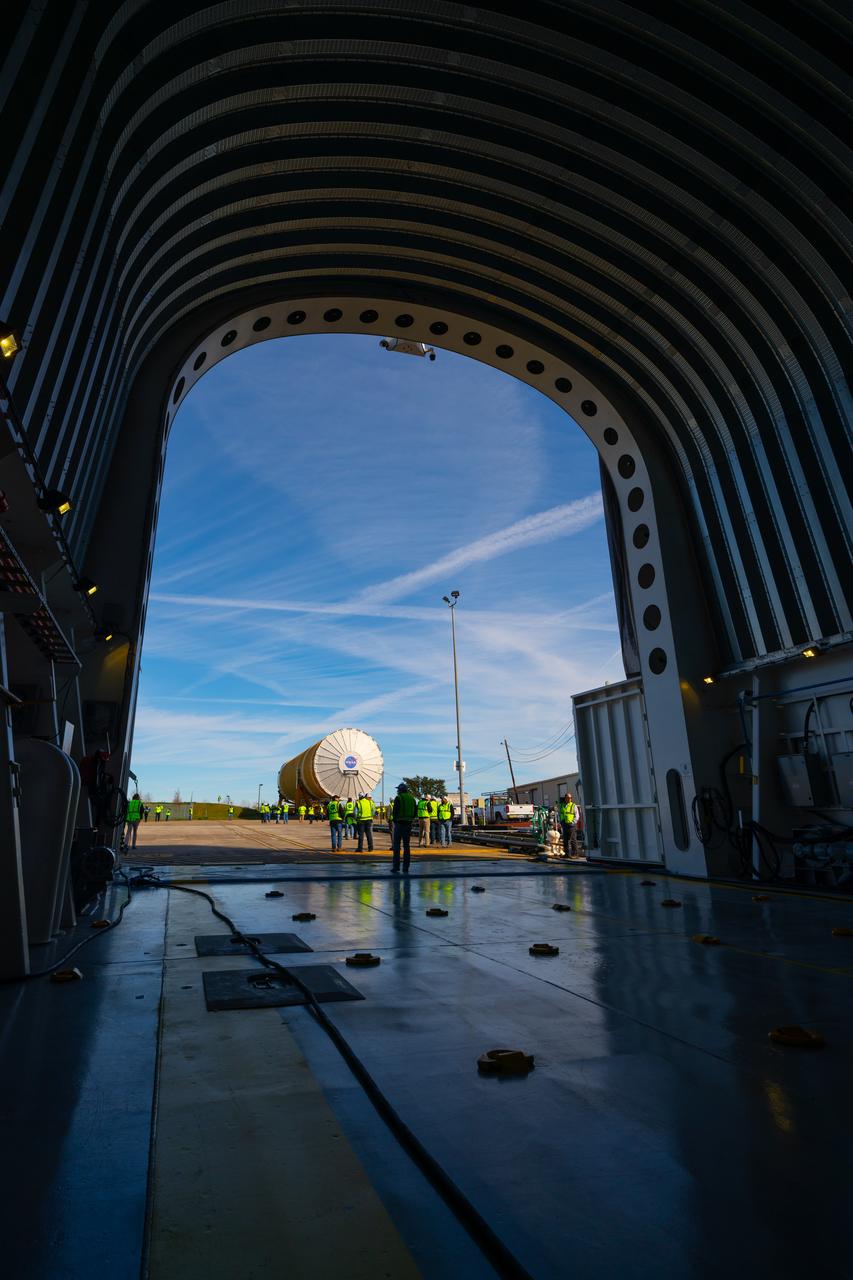
These images show how teams rolled out, or moved, the completed core stage for NASA’s Space Launch System rocket from NASA’s Michoud Assembly Facility in New Orleans. Crews moved the flight hardware for the first Artemis mission to NASA’s Pegasus barge on Jan. 8 in preparation for the core stage Green Run test series at NASA’s Stennis Space Center near Bay St. Louis, Mississippi. Pegasus, which was modified to ferry SLS rocket hardware, will transport the core stage from Michoud to Stennis for the comprehensive core stage Green Run test series. Once at Stennis, the Artemis rocket stage will be loaded into the B-2 Test Stand for the core stage Green Run test series. The comprehensive test campaign will progressively bring the entire core stage, including its avionics and engines, to life for the first time to verify the stage is fit for flight ahead of the launch of Artemis I. Assembly and integration of the core stage and its four RS-25 engines has been a collaborative, multistep process for NASA and its partners Boeing, the core stage lead contractor, and Aerojet Rocketdyne, the RS-25 engines lead contractor. Together with four RS-25 engines, the rocket’s massive 212-foot-tall core stage — the largest stage NASA has ever built — and its twin solid rocket boosters will produce 8.8 million pounds of thrust to send NASA’s Orion spacecraft, astronauts and supplies beyond Earth’s orbit to the Moon and, ultimately, Mars. Offering more payload mass, volume capability and energy to speed missions through space, the SLS rocket, along with NASA’s Gateway in lunar orbit and Orion, is part of NASA’s backbone for deep space exploration and the Artemis lunar program.

These images show how the team rolled out the completed core stage for NASA’s Space Launch System rocket from NASA’s Michoud Assembly Facility in New Orleans. Crews moved the flight hardware for the first Artemis mission to NASA’s Pegasus barge on Jan. 8 in preparation for the core stage Green Run test series at NASA’s Stennis Space Center near Bay St. Louis, Mississippi. Pegasus, which was modified to ferry SLS rocket hardware, will transport the core stage from Michoud to Stennis for the comprehensive core stage Green Run test series. Once at Stennis, the Artemis rocket stage will be loaded into the B-2 Test Stand for the core stage Green Run test series. The comprehensive test campaign will progressively bring the entire core stage, including its avionics and engines, to life for the first time to verify the stage is fit for flight ahead of the launch of Artemis I. Assembly and integration of the core stage and its four RS-25 engines has been a collaborative, multistep process for NASA and its partners Boeing, the core stage lead contractor, and Aerojet Rocketdyne, the RS-25 engines lead contractor. Together with four RS-25 engines, the rocket’s massive 212-foot-tall core stage — the largest stage NASA has ever built — and its twin solid rocket boosters will produce 8.8 million pounds of thrust to send NASA’s Orion spacecraft, astronauts and supplies beyond Earth’s orbit to the Moon and, ultimately, Mars. Offering more payload mass, volume capability and energy to speed missions through space, the SLS rocket, along with NASA’s Gateway in lunar orbit and Orion, is part of NASA’s backbone for deep space exploration and the Artemis lunar program.

These images show how the team rolled out the completed core stage for NASA’s Space Launch System rocket from NASA’s Michoud Assembly Facility in New Orleans. Crews moved the flight hardware for the first Artemis mission to NASA’s Pegasus barge on Jan. 8 in preparation for the core stage Green Run test series at NASA’s Stennis Space Center near Bay St. Louis, Mississippi. Pegasus, which was modified to ferry SLS rocket hardware, will transport the core stage from Michoud to Stennis for the comprehensive core stage Green Run test series. Once at Stennis, the Artemis rocket stage will be loaded into the B-2 Test Stand for the core stage Green Run test series. The comprehensive test campaign will progressively bring the entire core stage, including its avionics and engines, to life for the first time to verify the stage is fit for flight ahead of the launch of Artemis I. Assembly and integration of the core stage and its four RS-25 engines has been a collaborative, multistep process for NASA and its partners Boeing, the core stage lead contractor, and Aerojet Rocketdyne, the RS-25 engines lead contractor. Together with four RS-25 engines, the rocket’s massive 212-foot-tall core stage — the largest stage NASA has ever built — and its twin solid rocket boosters will produce 8.8 million pounds of thrust to send NASA’s Orion spacecraft, astronauts and supplies beyond Earth’s orbit to the Moon and, ultimately, Mars. Offering more payload mass, volume capability and energy to speed missions through space, the SLS rocket, along with NASA’s Gateway in lunar orbit and Orion, is part of NASA’s backbone for deep space exploration and the Artemis lunar program.

These images show how the team rolled out the completed core stage for NASA’s Space Launch System rocket from NASA’s Michoud Assembly Facility in New Orleans. Crews moved the flight hardware for the first Artemis mission to NASA’s Pegasus barge on Jan. 8 in preparation for the core stage Green Run test series at NASA’s Stennis Space Center near Bay St. Louis, Mississippi. Pegasus, which was modified to ferry SLS rocket hardware, will transport the core stage from Michoud to Stennis for the comprehensive core stage Green Run test series. Once at Stennis, the Artemis rocket stage will be loaded into the B-2 Test Stand for the core stage Green Run test series. The comprehensive test campaign will progressively bring the entire core stage, including its avionics and engines, to life for the first time to verify the stage is fit for flight ahead of the launch of Artemis I. Assembly and integration of the core stage and its four RS-25 engines has been a collaborative, multistep process for NASA and its partners Boeing, the core stage lead contractor, and Aerojet Rocketdyne, the RS-25 engines lead contractor. Together with four RS-25 engines, the rocket’s massive 212-foot-tall core stage — the largest stage NASA has ever built — and its twin solid rocket boosters will produce 8.8 million pounds of thrust to send NASA’s Orion spacecraft, astronauts and supplies beyond Earth’s orbit to the Moon and, ultimately, Mars. Offering more payload mass, volume capability and energy to speed missions through space, the SLS rocket, along with NASA’s Gateway in lunar orbit and Orion, is part of NASA’s backbone for deep space exploration and the Artemis lunar program.

These images show how the team rolled out the completed core stage for NASA’s Space Launch System rocket from NASA’s Michoud Assembly Facility in New Orleans. Crews moved the flight hardware for the first Artemis mission to NASA’s Pegasus barge on Jan. 8 in preparation for the core stage Green Run test series at NASA’s Stennis Space Center near Bay St. Louis, Mississippi. Pegasus, which was modified to ferry SLS rocket hardware, will transport the core stage from Michoud to Stennis for the comprehensive core stage Green Run test series. Once at Stennis, the Artemis rocket stage will be loaded into the B-2 Test Stand for the core stage Green Run test series. The comprehensive test campaign will progressively bring the entire core stage, including its avionics and engines, to life for the first time to verify the stage is fit for flight ahead of the launch of Artemis I. Assembly and integration of the core stage and its four RS-25 engines has been a collaborative, multistep process for NASA and its partners Boeing, the core stage lead contractor, and Aerojet Rocketdyne, the RS-25 engines lead contractor. Together with four RS-25 engines, the rocket’s massive 212-foot-tall core stage — the largest stage NASA has ever built — and its twin solid rocket boosters will produce 8.8 million pounds of thrust to send NASA’s Orion spacecraft, astronauts and supplies beyond Earth’s orbit to the Moon and, ultimately, Mars. Offering more payload mass, volume capability and energy to speed missions through space, the SLS rocket, along with NASA’s Gateway in lunar orbit and Orion, is part of NASA’s backbone for deep space exploration and the Artemis lunar program.