
Students from 23 states display their rockets and talk about what they did to make them fly at the NASA Student Launch Rocket Fair on Friday, April 6. Over 800 students traveled to Huntsville, Alabama, to participate in a week of activities as part of NASA Student Launch.
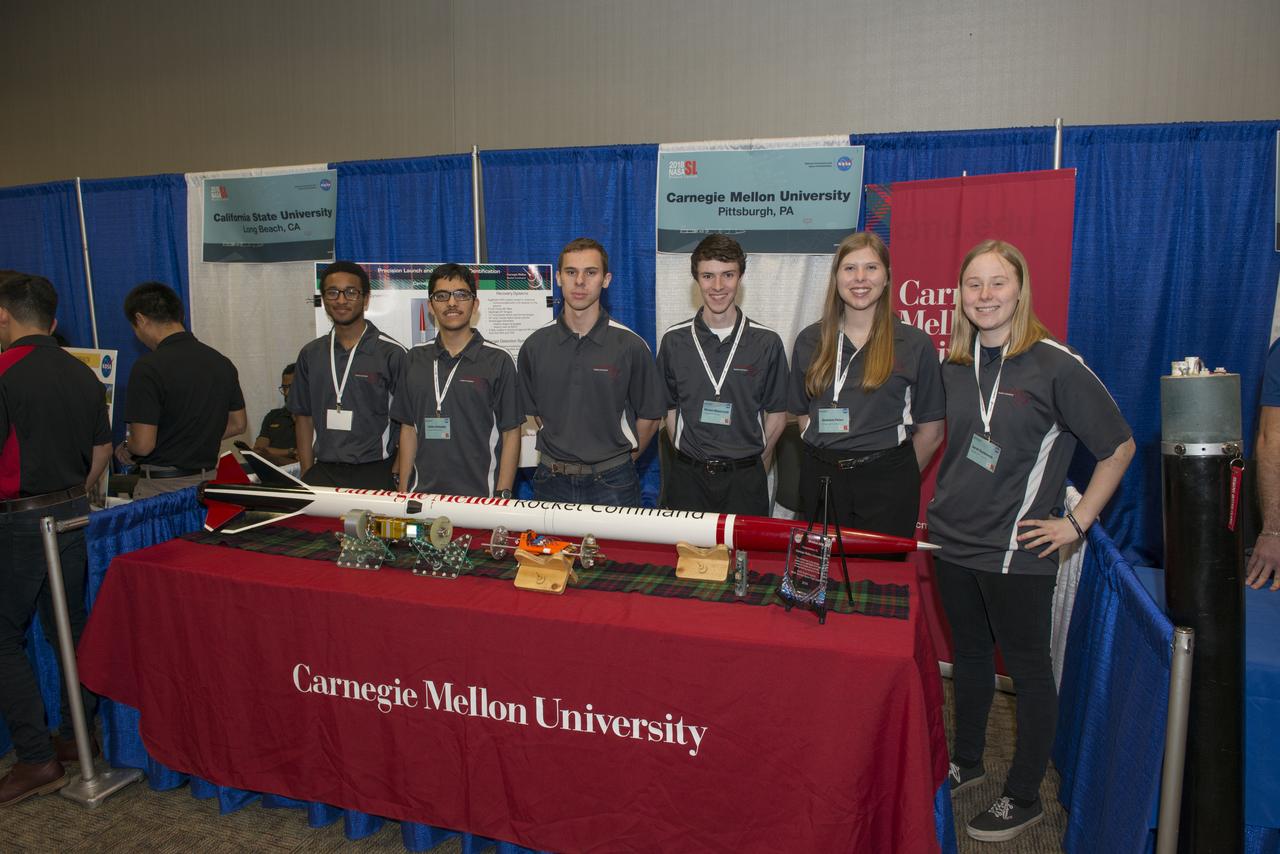
Students from 23 states display their rockets and talk about what they did to make them fly at the NASA Student Launch Rocket Fair on Friday, April 6. Over 800 students traveled to Huntsville, Alabama, to participate in a week of activities as part of NASA Student Launch.
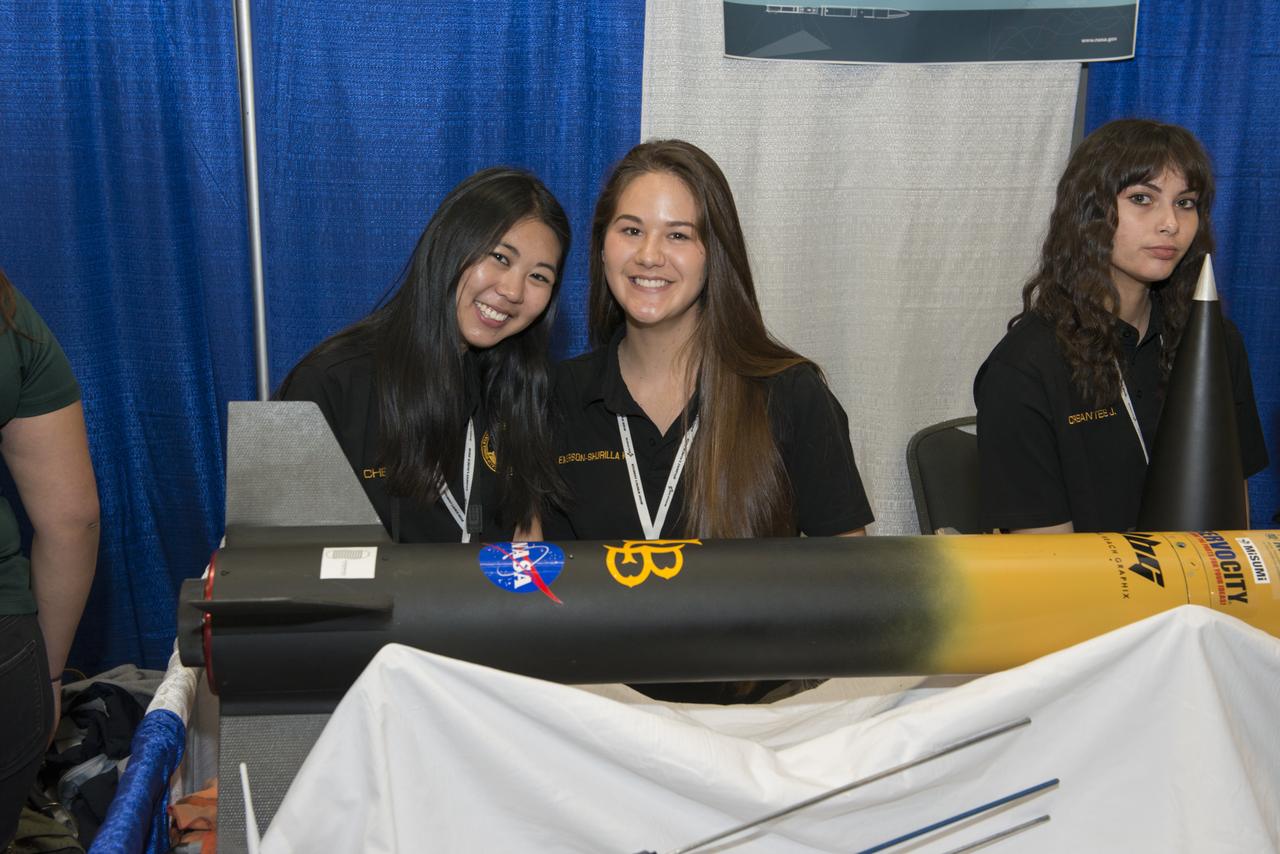
Students from 23 states display their rockets and talk about what they did to make them fly at the NASA Student Launch Rocket Fair on Friday, April 6. Over 800 students traveled to Huntsville, Alabama, to participate in a week of activities as part of NASA Student Launch.

Students from 23 states display their rockets and talk about what they did to make them fly at the NASA Student Launch Rocket Fair on Friday, April 6. Over 800 students traveled to Huntsville, Alabama, to participate in a week of activities as part of NASA Student Launch.

Students from 23 states display their rockets and talk about what they did to make them fly at the NASA Student Launch Rocket Fair on Friday, April 6. Over 800 students traveled to Huntsville, Alabama, to participate in a week of activities as part of NASA Student Launch.

Students from 23 states display their rockets and talk about what they did to make them fly at the NASA Student Launch Rocket Fair on Friday, April 6. Over 800 students traveled to Huntsville, Alabama, to participate in a week of activities as part of NASA Student Launch.
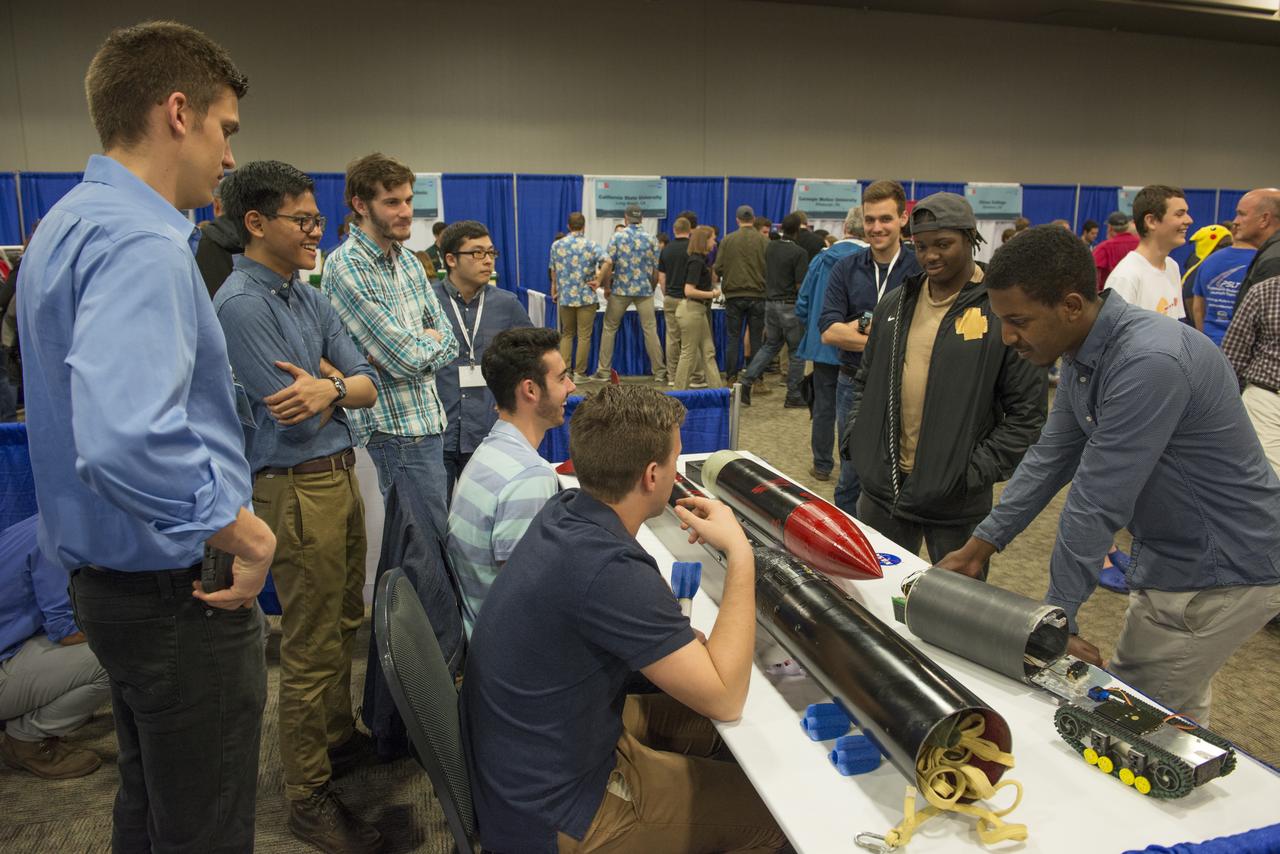
Students from 23 states display their rockets and talk about what they did to make them fly at the NASA Student Launch Rocket Fair on Friday, April 6. Over 800 students traveled to Huntsville, Alabama, to participate in a week of activities as part of NASA Student Launch.

Students from 23 states display their rockets and talk about what they did to make them fly at the NASA Student Launch Rocket Fair on Friday, April 6. Over 800 students traveled to Huntsville, Alabama, to participate in a week of activities as part of NASA Student Launch.
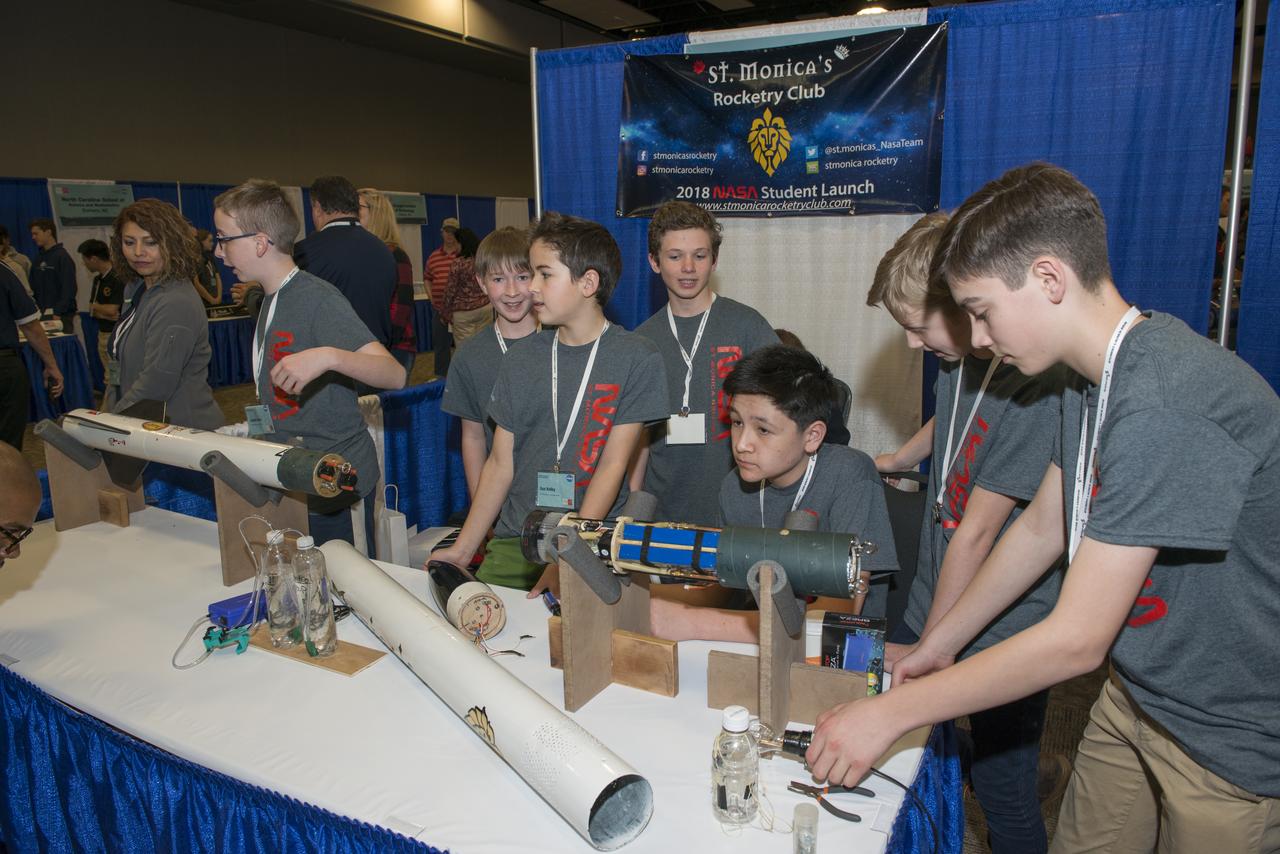
Students from 23 states display their rockets and talk about what they did to make them fly at the NASA Student Launch Rocket Fair on Friday, April 6. Over 800 students traveled to Huntsville, Alabama, to participate in a week of activities as part of NASA Student Launch.
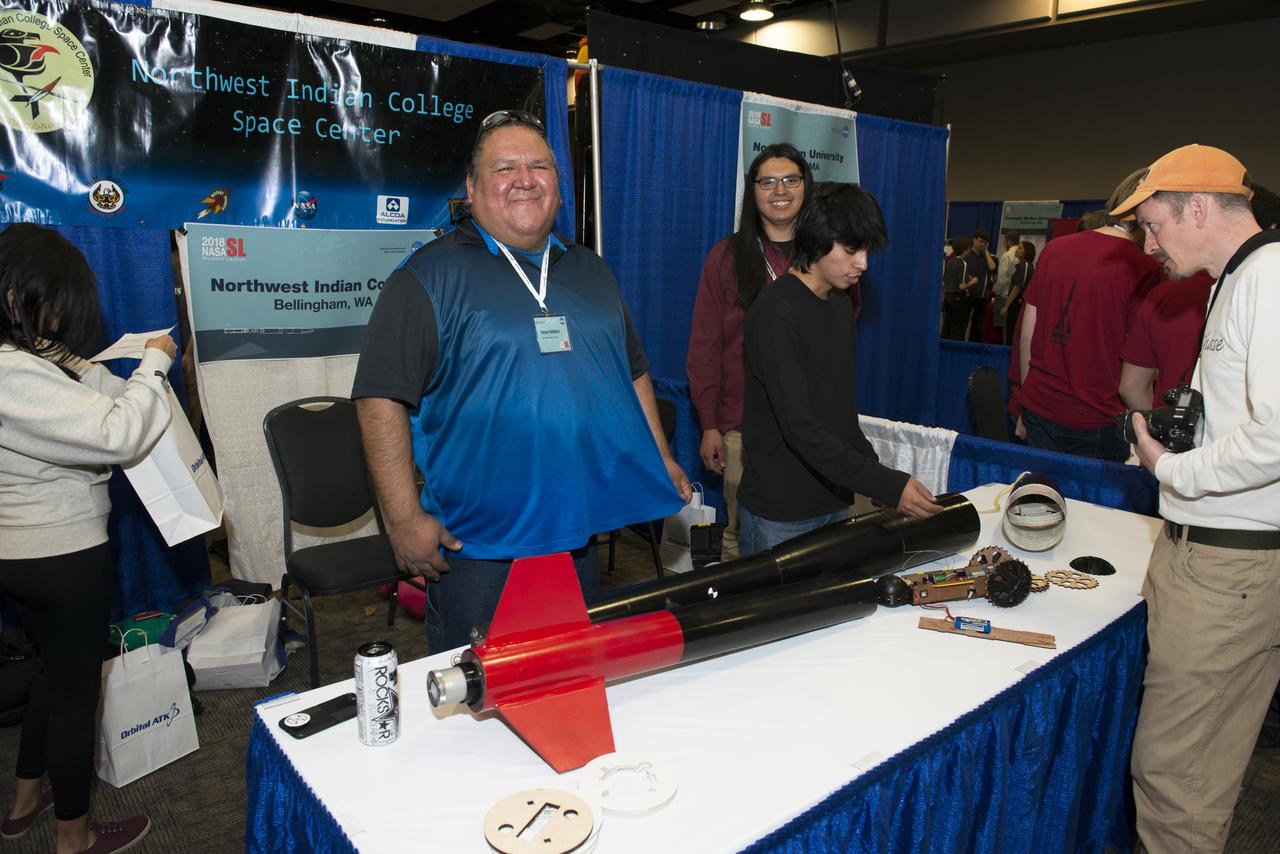
Students from 23 states display their rockets and talk about what they did to make them fly at the NASA Student Launch Rocket Fair on Friday, April 6. Over 800 students traveled to Huntsville, Alabama, to participate in a week of activities as part of NASA Student Launch.

Students from 23 states display their rockets and talk about what they did to make them fly at the NASA Student Launch Rocket Fair on Friday, April 6. Over 800 students traveled to Huntsville, Alabama, to participate in a week of activities as part of NASA Student Launch.
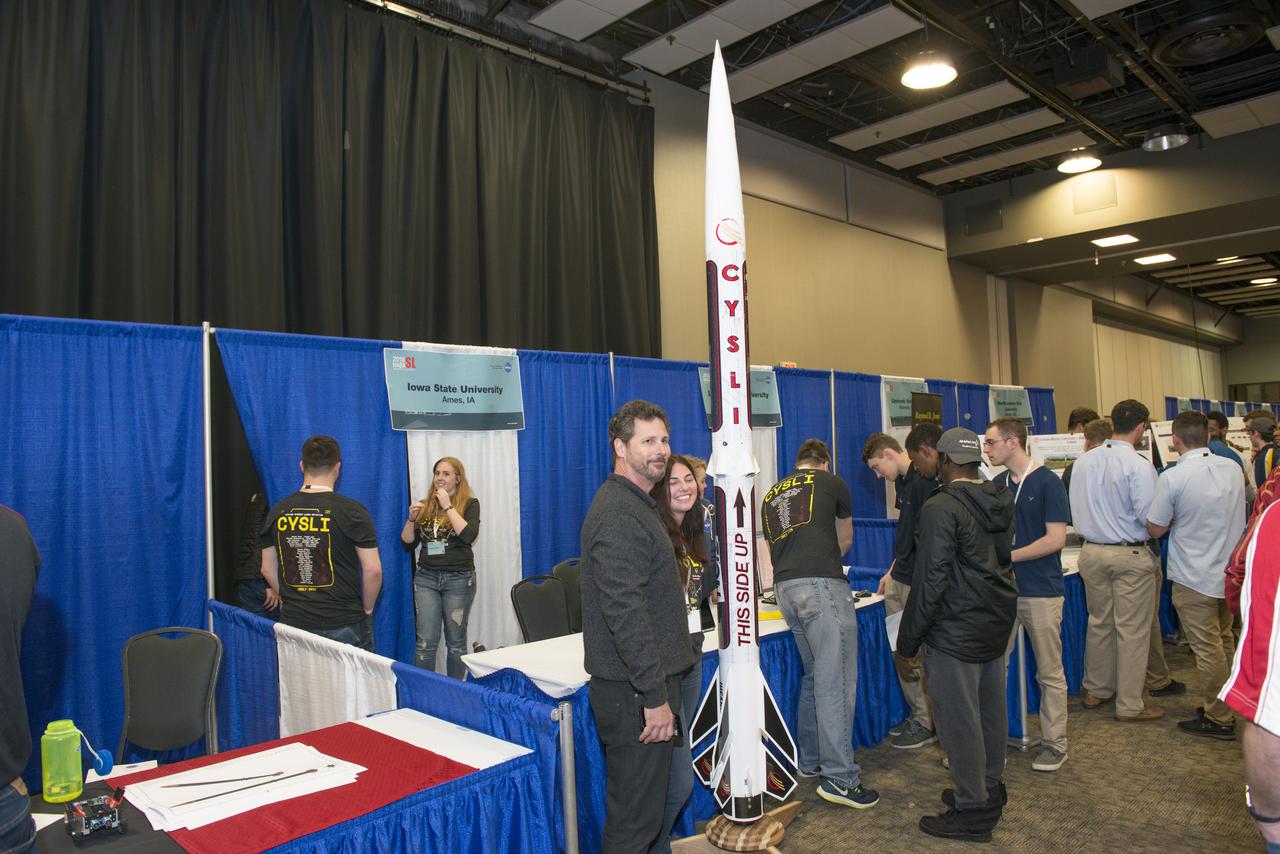
Students from 23 states display their rockets and talk about what they did to make them fly at the NASA Student Launch Rocket Fair on Friday, April 6. Over 800 students traveled to Huntsville, Alabama, to participate in a week of activities as part of NASA Student Launch.
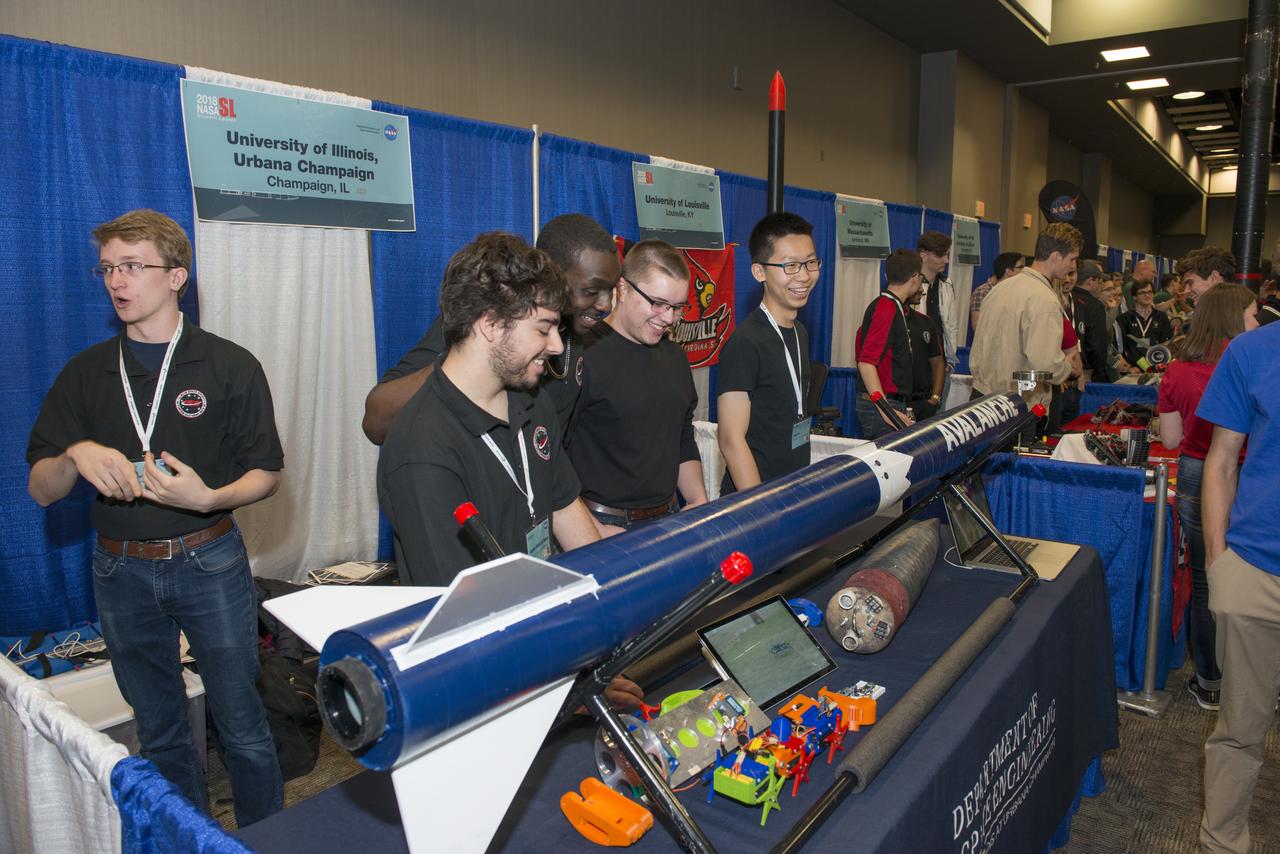
Students from 23 states display their rockets and talk about what they did to make them fly at the NASA Student Launch Rocket Fair on Friday, April 6. Over 800 students traveled to Huntsville, Alabama, to participate in a week of activities as part of NASA Student Launch.
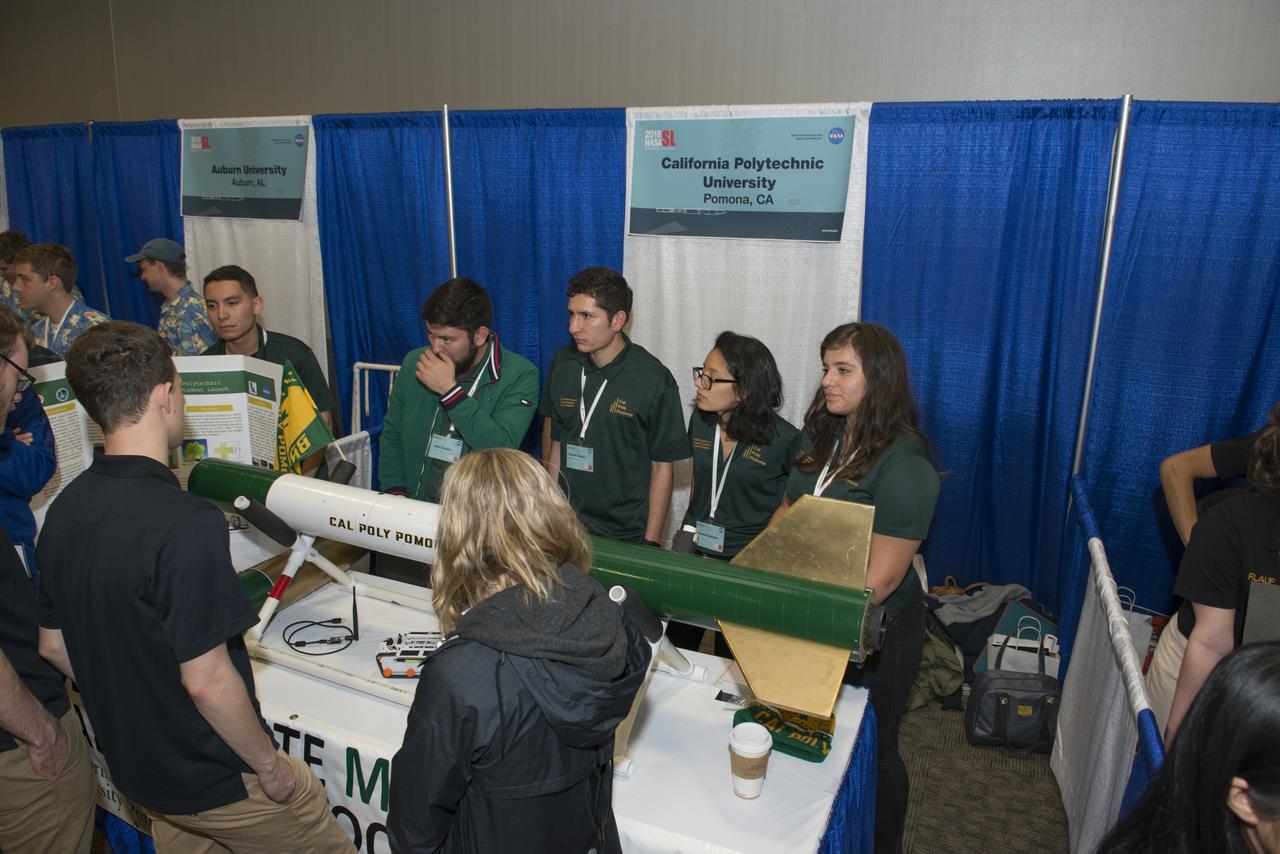
Students from 23 states display their rockets and talk about what they did to make them fly at the NASA Student Launch Rocket Fair on Friday, April 6. Over 800 students traveled to Huntsville, Alabama, to participate in a week of activities as part of NASA Student Launch.
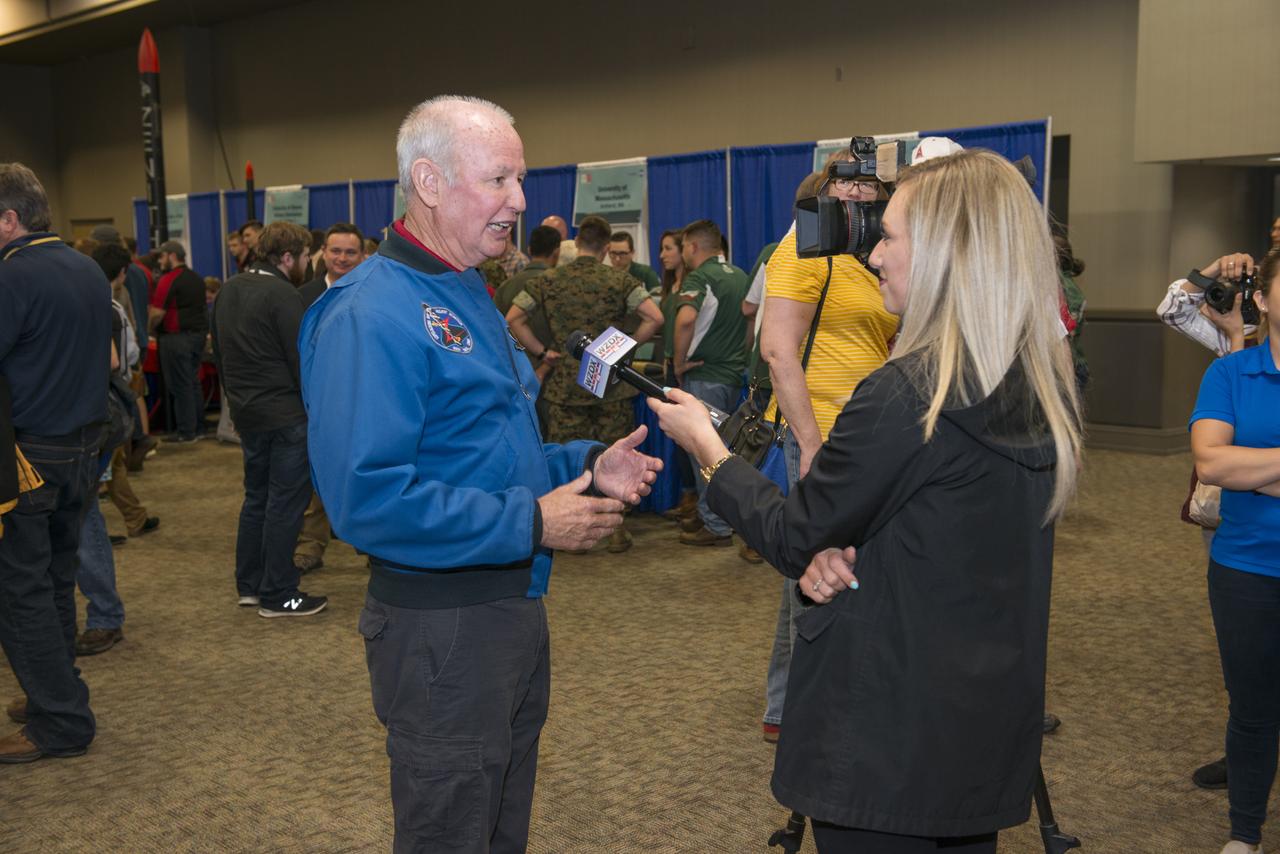
Students from 23 states display their rockets and talk about what they did to make them fly at the NASA Student Launch Rocket Fair on Friday, April 6. Over 800 students traveled to Huntsville, Alabama, to participate in a week of activities as part of NASA Student Launch. Retired Astronaut Brian Duffy speaks with local media.
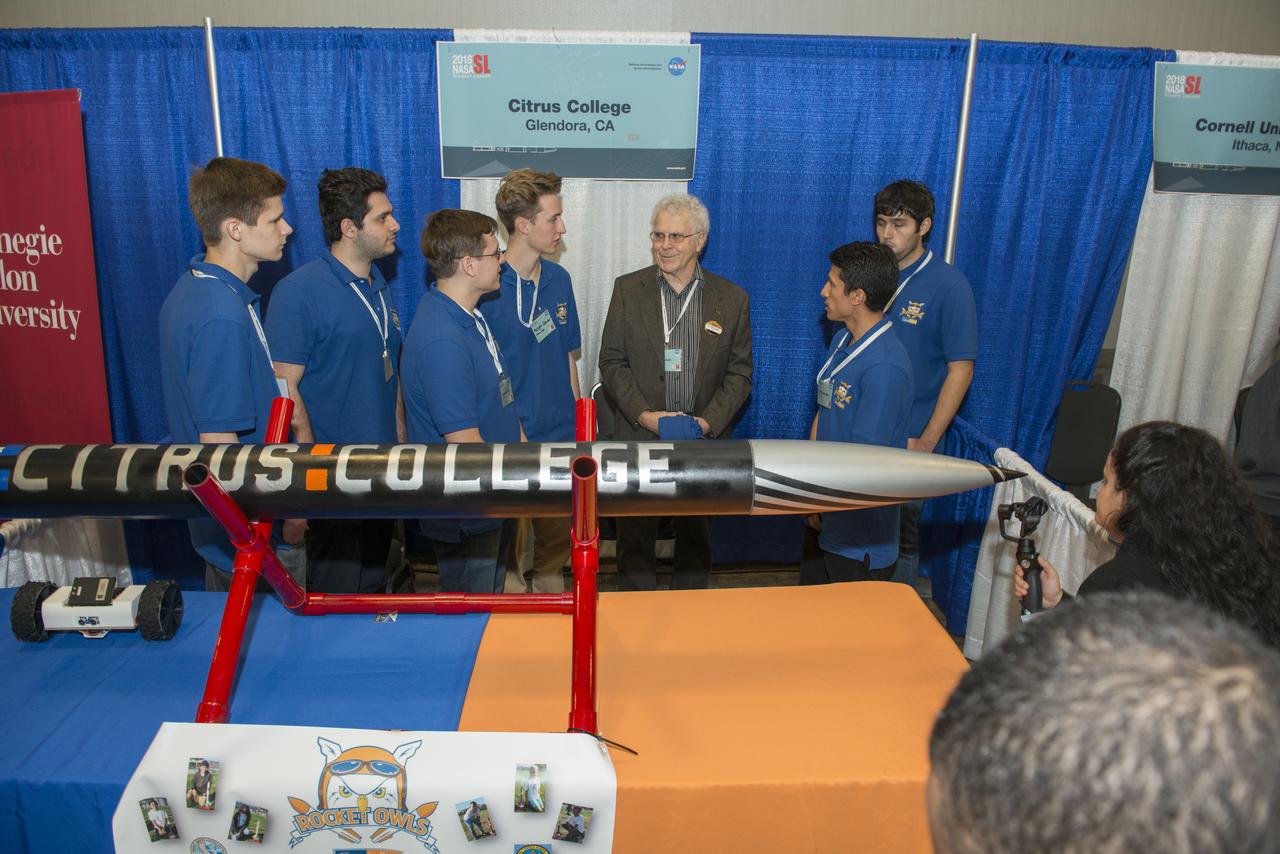
Students from 23 states display their rockets and talk about what they did to make them fly at the NASA Student Launch Rocket Fair on Friday, April 6. Over 800 students traveled to Huntsville, Alabama, to participate in a week of activities as part of NASA Student Launch. Retired NASA engineer and author Homer Hickam meets with the team from Citrus College.
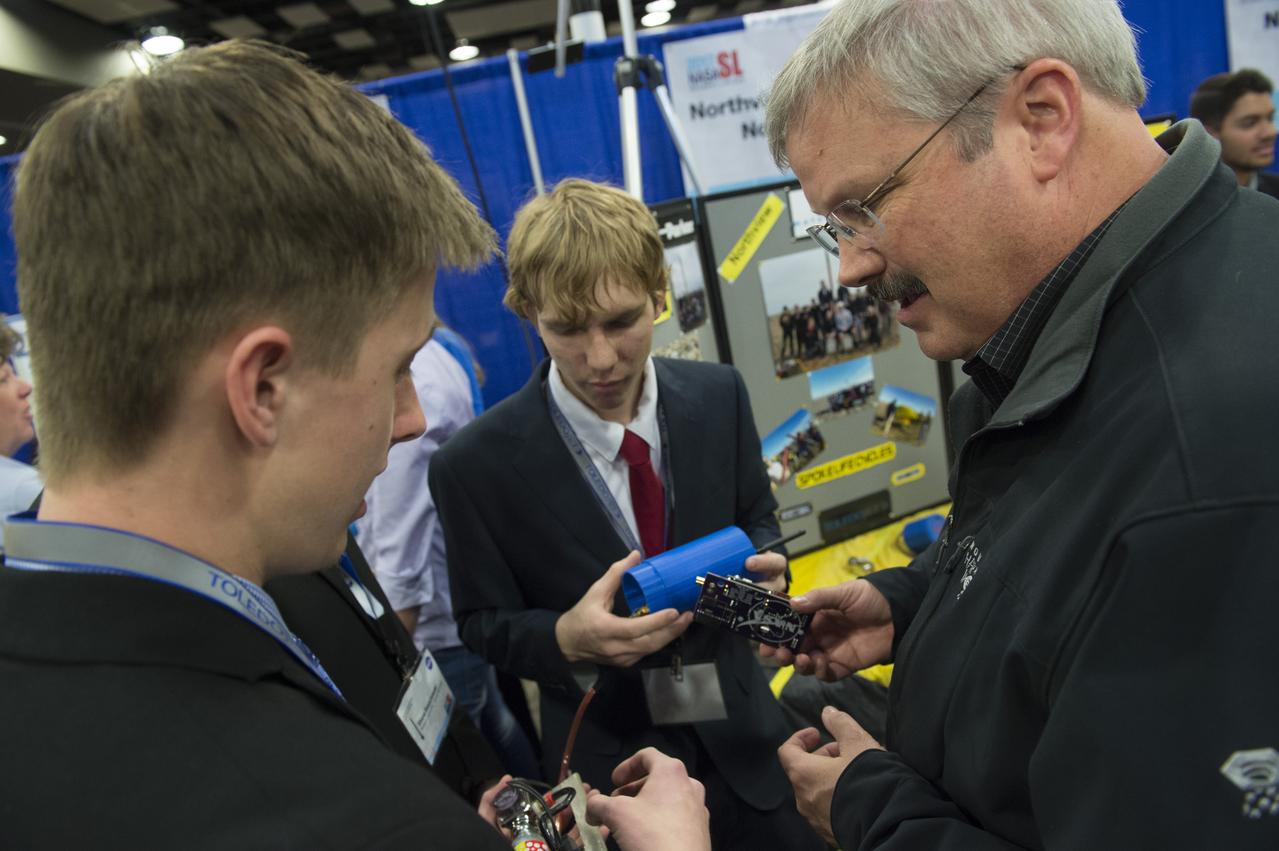
Student launch Initiative Rocket Fair participants display their rockets prior to launch day at the Von Braun Center in Huntsville, Alabama.
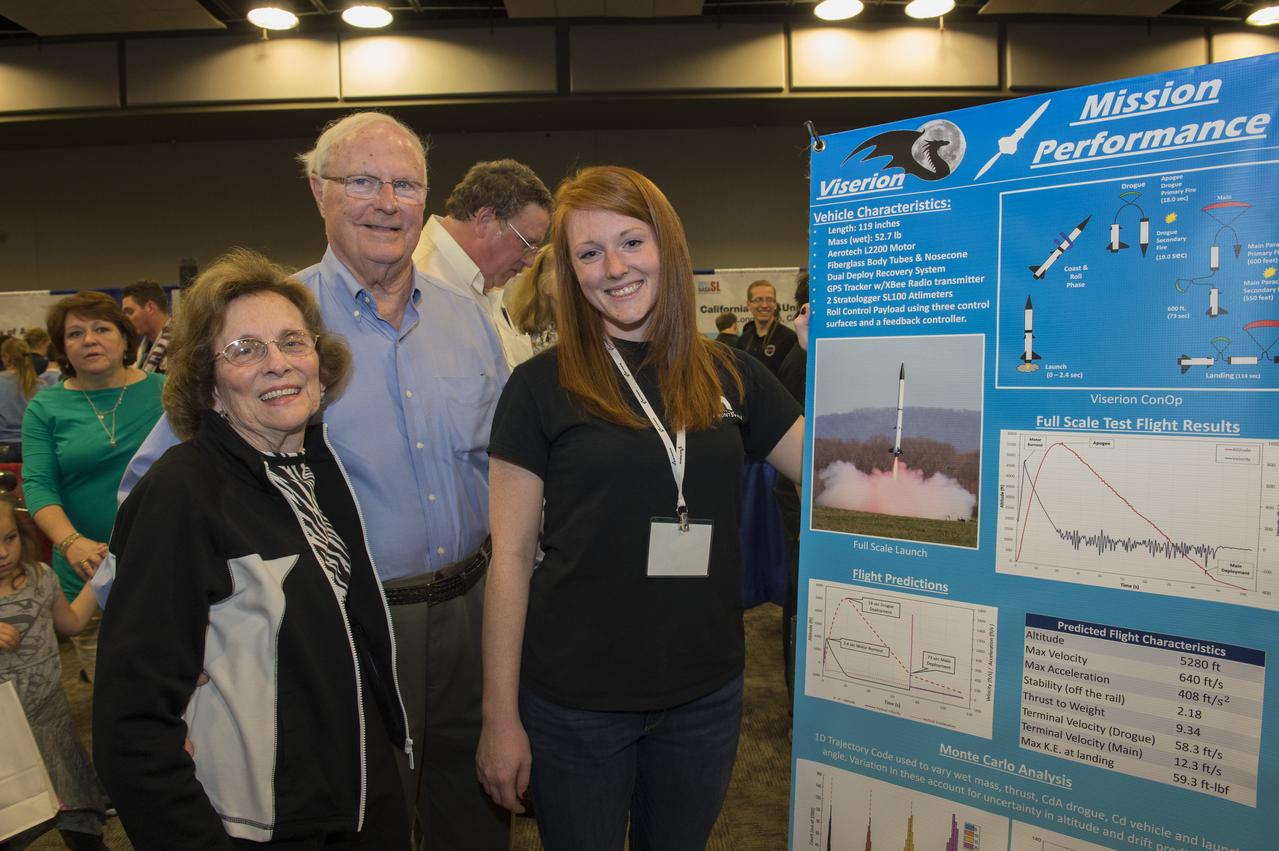
Student launch Initiative Rocket Fair participants display their rockets prior to launch day at the Von Braun Center in Huntsville, Alabama.
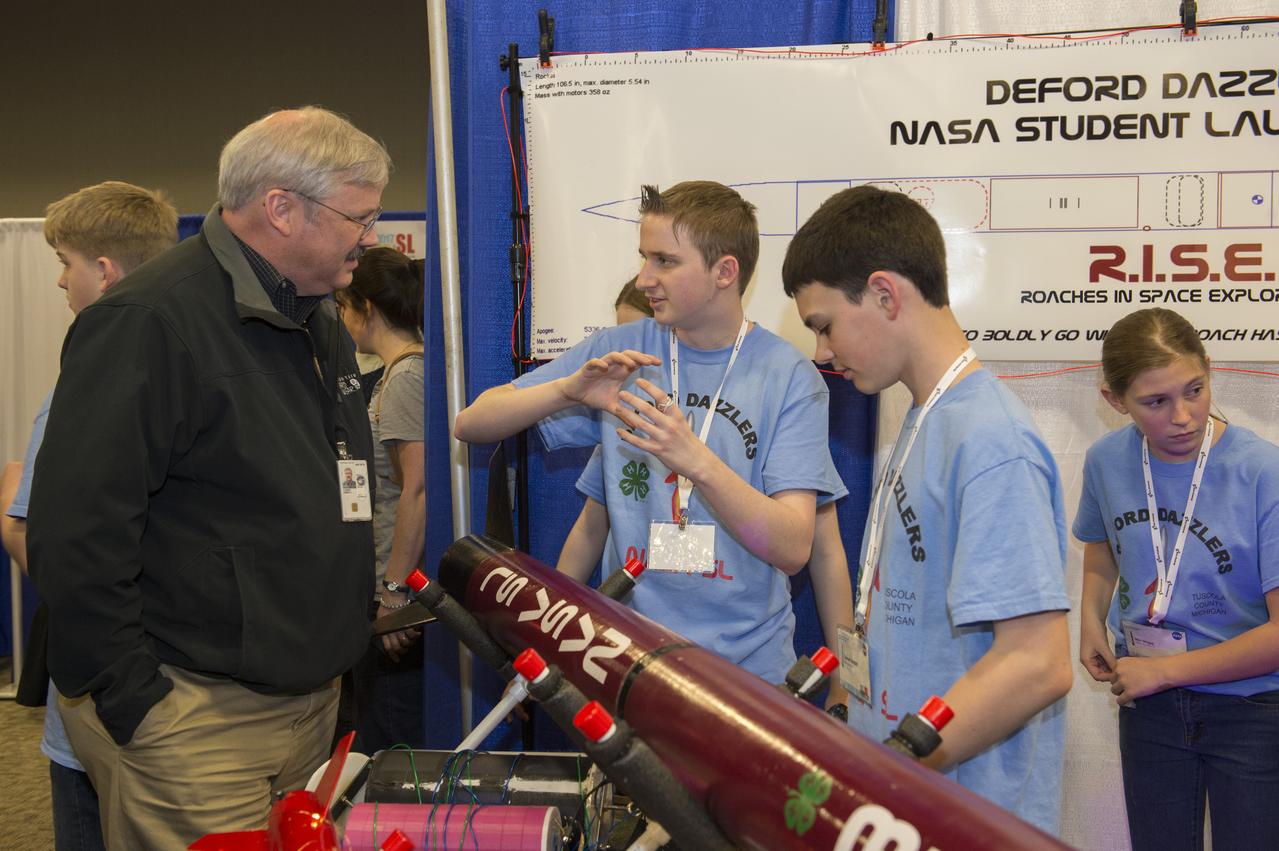
Student launch Initiative Rocket Fair participants display their rockets prior to launch day at the Von Braun Center in Huntsville, Alabama.
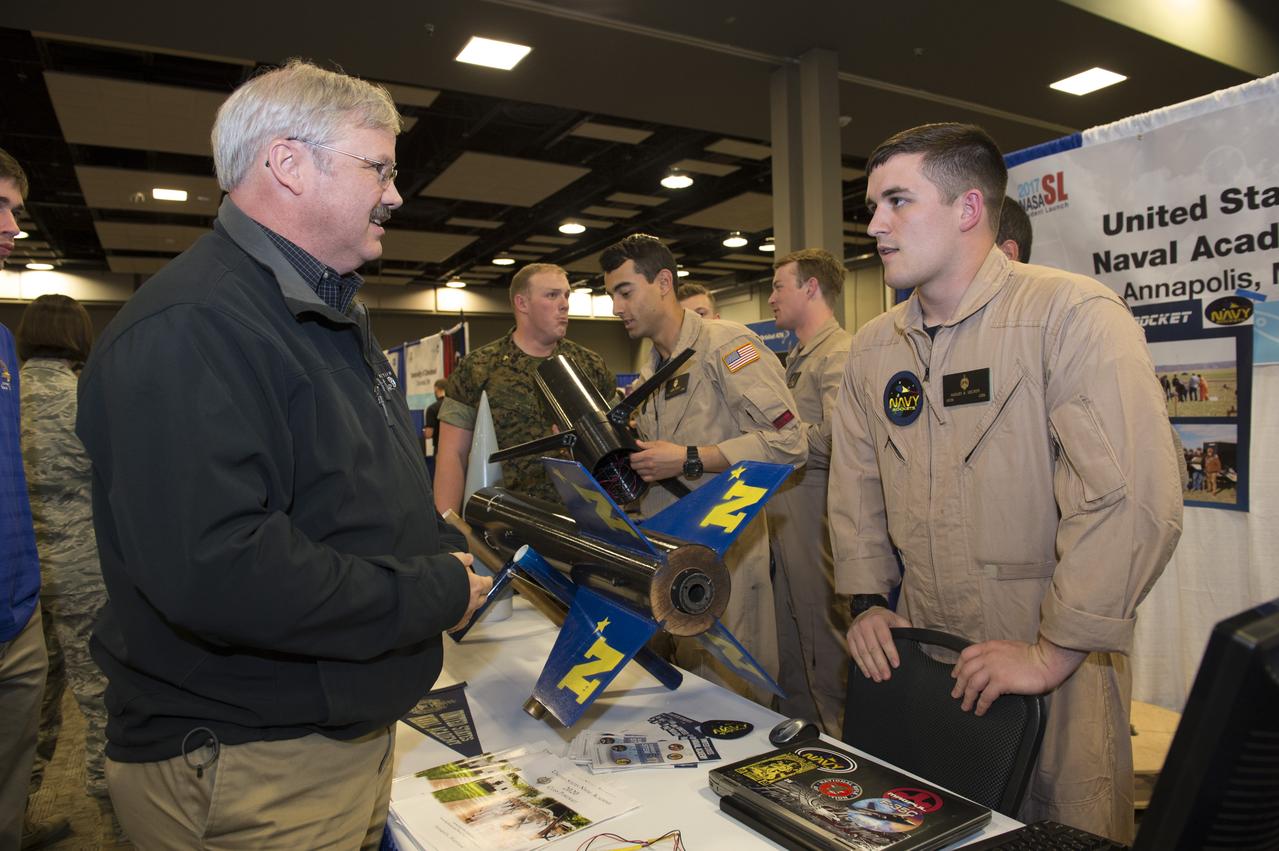
Student launch Initiative Rocket Fair participants display their rockets prior to launch day at the Von Braun Center in Huntsville, Alabama.
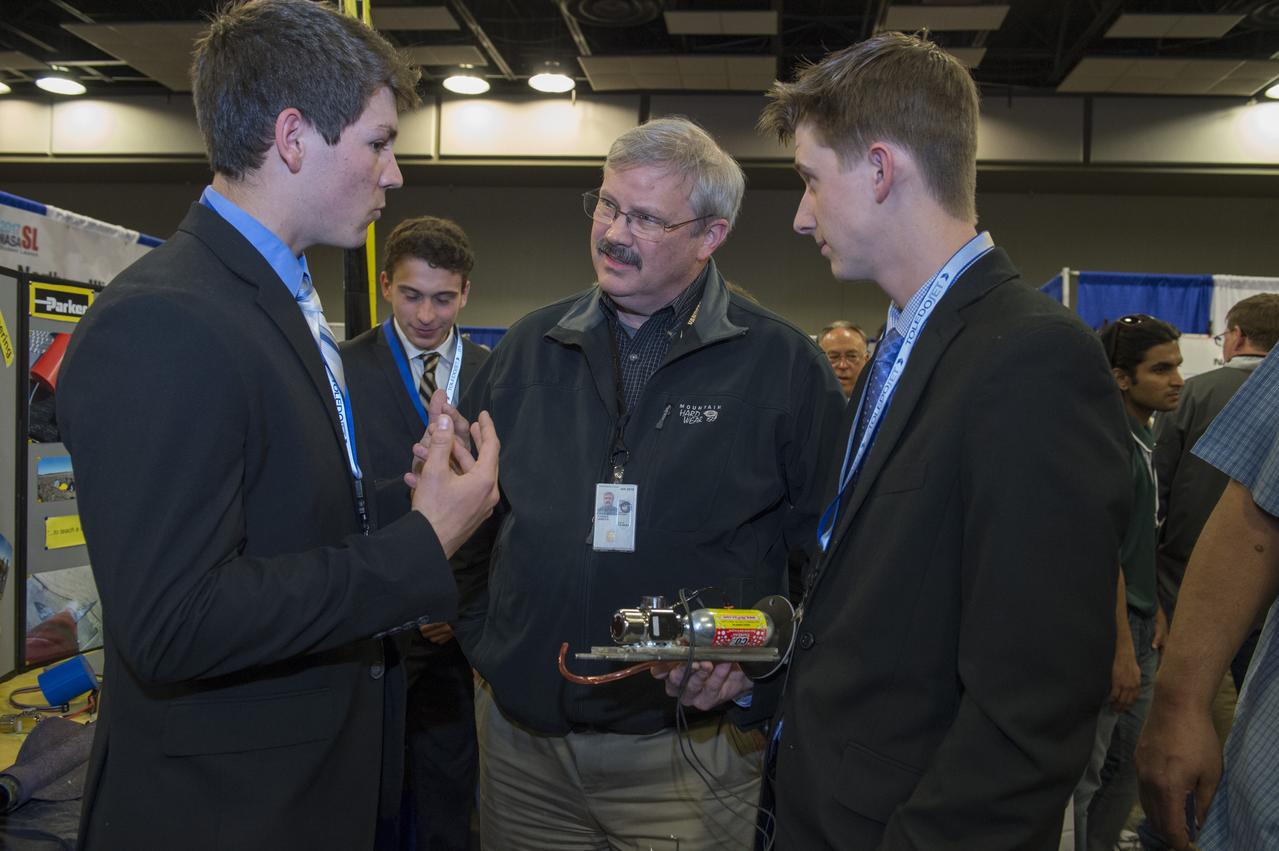
Student launch Initiative Rocket Fair participants display their rockets prior to launch day at the Von Braun Center in Huntsville, Alabama.
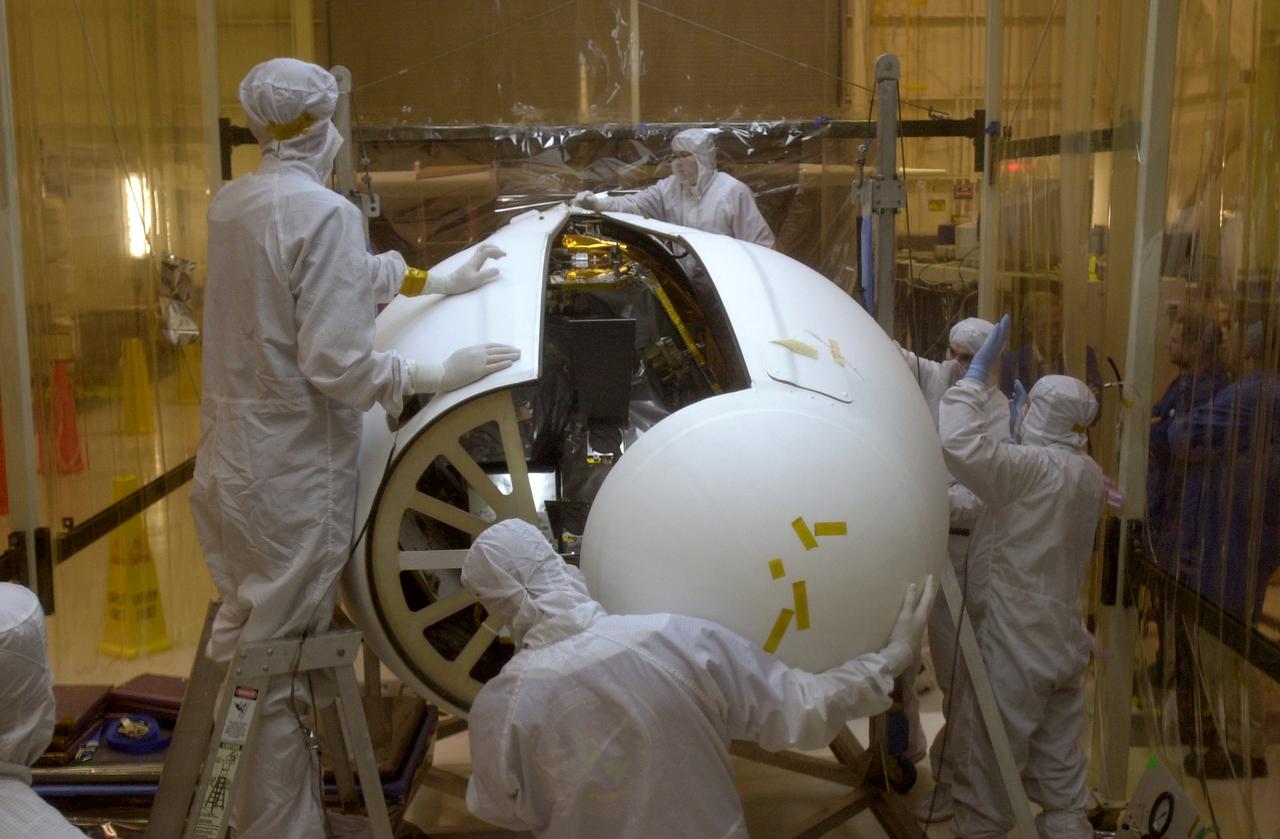
At Vandenberg Air Force Base in California, under the protective clean tent, technicians move the second half of the fairing into place around the AIM spacecraft. The fairing is a molded structure that fits around the spacecraft and forms an aerodynamically smooth nose cone, protecting the spacecraft during launch. Launch will be from a Pegasus XL rocket, carried and released by Orbital Sciences L-1011 jet aircraft. AIM, which stands for Aeronomy of Ice in the Mesosphere, is being prepared for integrated testing and a flight simulation. The AIM spacecraft will fly three instruments designed to study polar mesospheric clouds located at the edge of space, 50 miles above the Earth's surface in the coldest part of the planet's atmosphere. The mission's primary goal is to explain why these clouds form and what has caused them to become brighter and more numerous and appear at lower latitudes in recent years. AIM's results will provide the basis for the study of long-term variability in the mesospheric climate and its relationship to global climate change. Launch is scheduled for April 25.
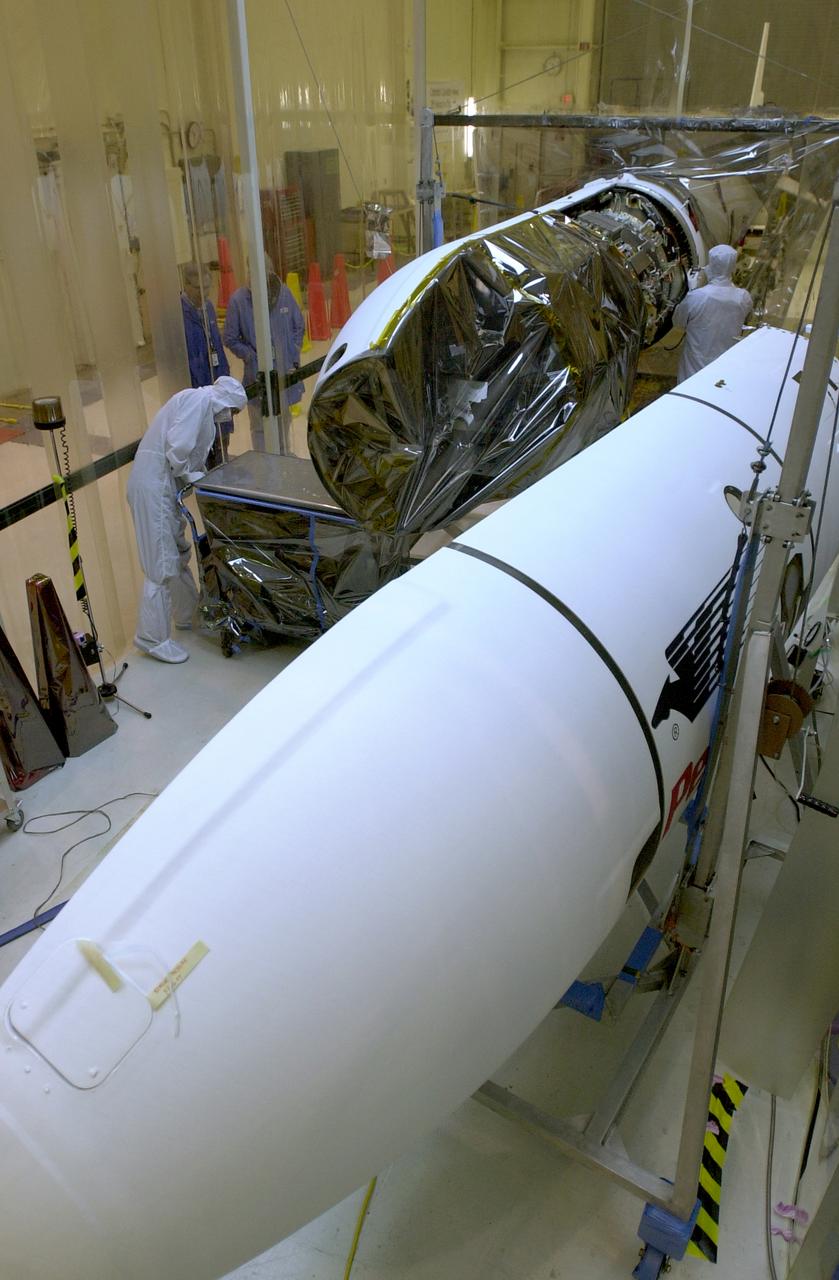
At Vandenberg Air Force Base in California, under the protective clean tent, technicians begin installing the fairing around the AIM spacecraft. The fairing is a molded structure that fits around the spacecraft and forms an aerodynamically smooth nose cone, protecting the spacecraft during launch. Launch will be from a Pegasus XL rocket, carried and released by Orbital Sciences L-1011 jet aircraft. AIM, which stands for Aeronomy of Ice in the Mesosphere, is being prepared for integrated testing and a flight simulation. The AIM spacecraft will fly three instruments designed to study polar mesospheric clouds located at the edge of space, 50 miles above the Earth's surface in the coldest part of the planet's atmosphere. The mission's primary goal is to explain why these clouds form and what has caused them to become brighter and more numerous and appear at lower latitudes in recent years. AIM's results will provide the basis for the study of long-term variability in the mesospheric climate and its relationship to global climate change. Launch is scheduled for April 25.
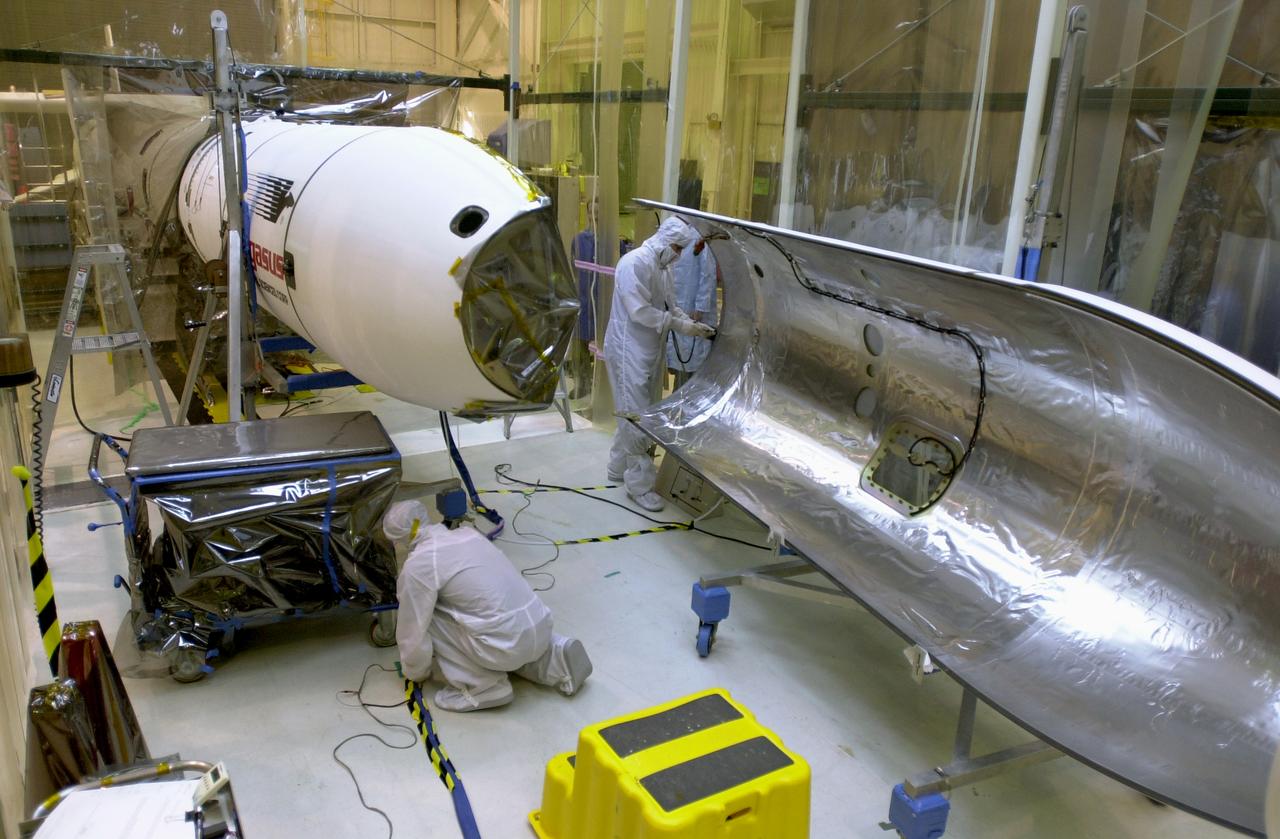
At Vandenberg Air Force Base in California, under the protective clean tent, technicians work on the second half of the fairing to be installed around the AIM spacecraft. The fairing is a molded structure that fits around the spacecraft and forms an aerodynamically smooth nose cone, protecting the spacecraft during launch. Launch will be from a Pegasus XL rocket, carried and released by Orbital Sciences L-1011 jet aircraft. AIM, which stands for Aeronomy of Ice in the Mesosphere, is being prepared for integrated testing and a flight simulation. The AIM spacecraft will fly three instruments designed to study polar mesospheric clouds located at the edge of space, 50 miles above the Earth's surface in the coldest part of the planet's atmosphere. The mission's primary goal is to explain why these clouds form and what has caused them to become brighter and more numerous and appear at lower latitudes in recent years. AIM's results will provide the basis for the study of long-term variability in the mesospheric climate and its relationship to global climate change. Launch is scheduled for April 25.
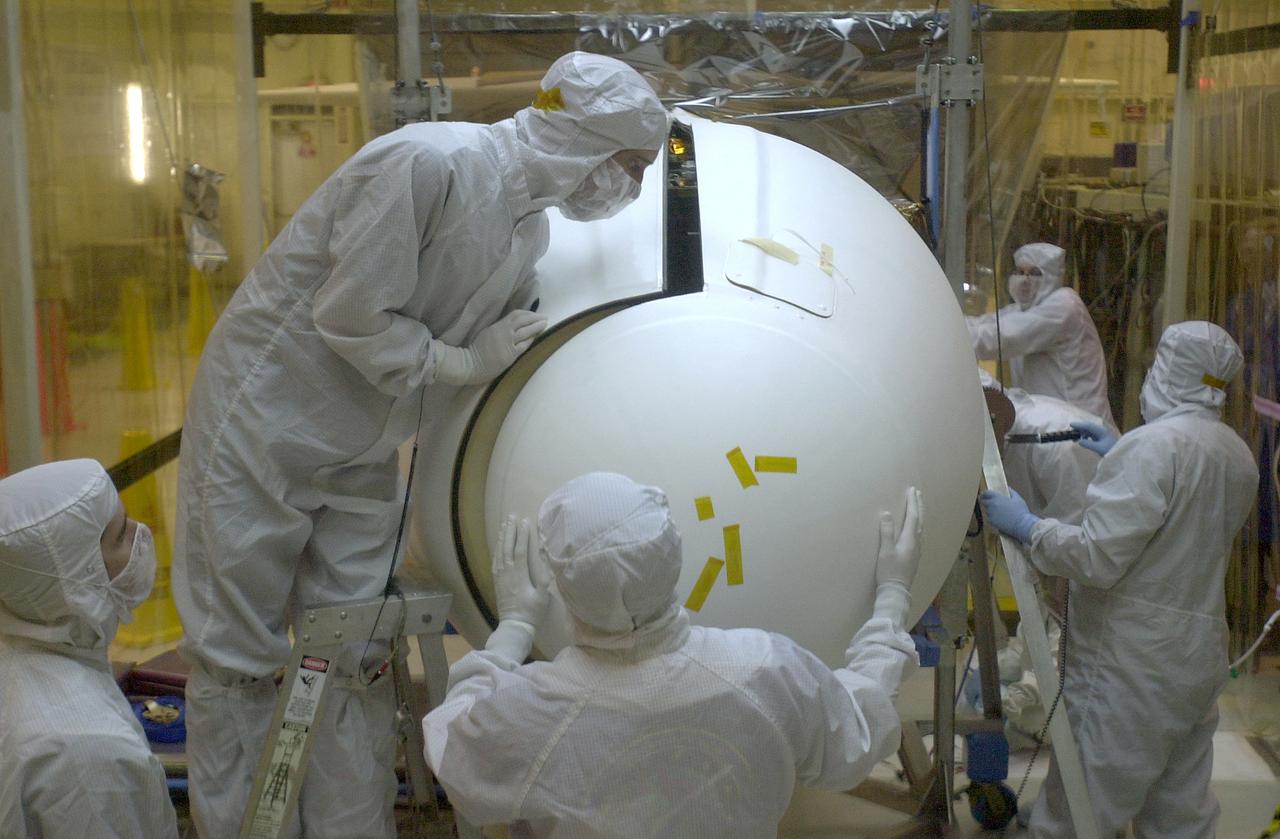
At Vandenberg Air Force Base in California, under the protective clean tent, technicians maneuver the second half of the fairing into place around the AIM spacecraft. The fairing is a molded structure that fits around the spacecraft and forms an aerodynamically smooth nose cone, protecting the spacecraft during launch. Launch will be from a Pegasus XL rocket, carried and released by Orbital Sciences L-1011 jet aircraft. AIM, which stands for Aeronomy of Ice in the Mesosphere, is being prepared for integrated testing and a flight simulation. The AIM spacecraft will fly three instruments designed to study polar mesospheric clouds located at the edge of space, 50 miles above the Earth's surface in the coldest part of the planet's atmosphere. The mission's primary goal is to explain why these clouds form and what has caused them to become brighter and more numerous and appear at lower latitudes in recent years. AIM's results will provide the basis for the study of long-term variability in the mesospheric climate and its relationship to global climate change. Launch is scheduled for April 25.
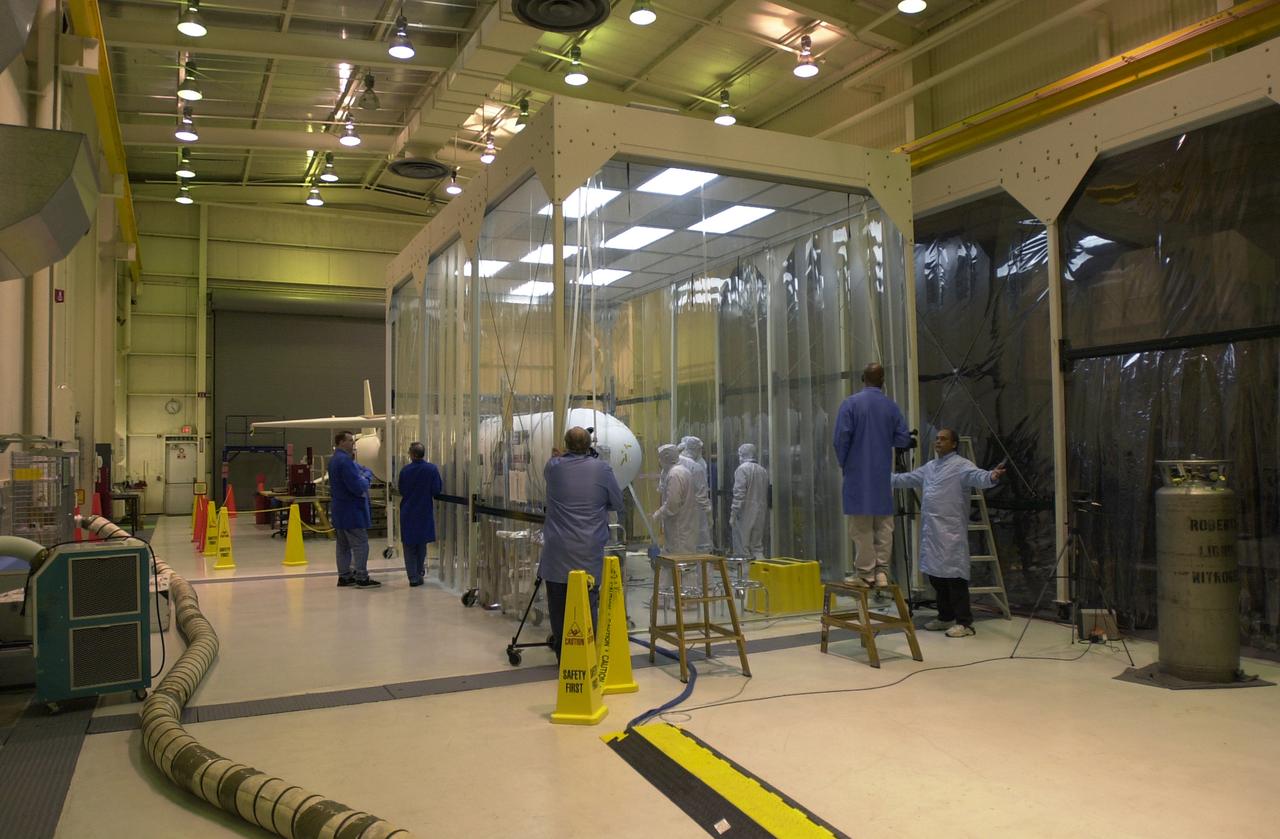
At Vandenberg Air Force Base in California, under the protective clean tent, technicians examine the installation of the fairing around the AIM spacecraft. The fairing is a molded structure that fits around the spacecraft and forms an aerodynamically smooth nose cone, protecting the spacecraft during launch. Launch will be from a Pegasus XL rocket, carried and released by Orbital Sciences L-1011 jet aircraft. AIM, which stands for Aeronomy of Ice in the Mesosphere, is being prepared for integrated testing and a flight simulation. The AIM spacecraft will fly three instruments designed to study polar mesospheric clouds located at the edge of space, 50 miles above the Earth's surface in the coldest part of the planet's atmosphere. The mission's primary goal is to explain why these clouds form and what has caused them to become brighter and more numerous and appear at lower latitudes in recent years. AIM's results will provide the basis for the study of long-term variability in the mesospheric climate and its relationship to global climate change. Launch is scheduled for April 25.
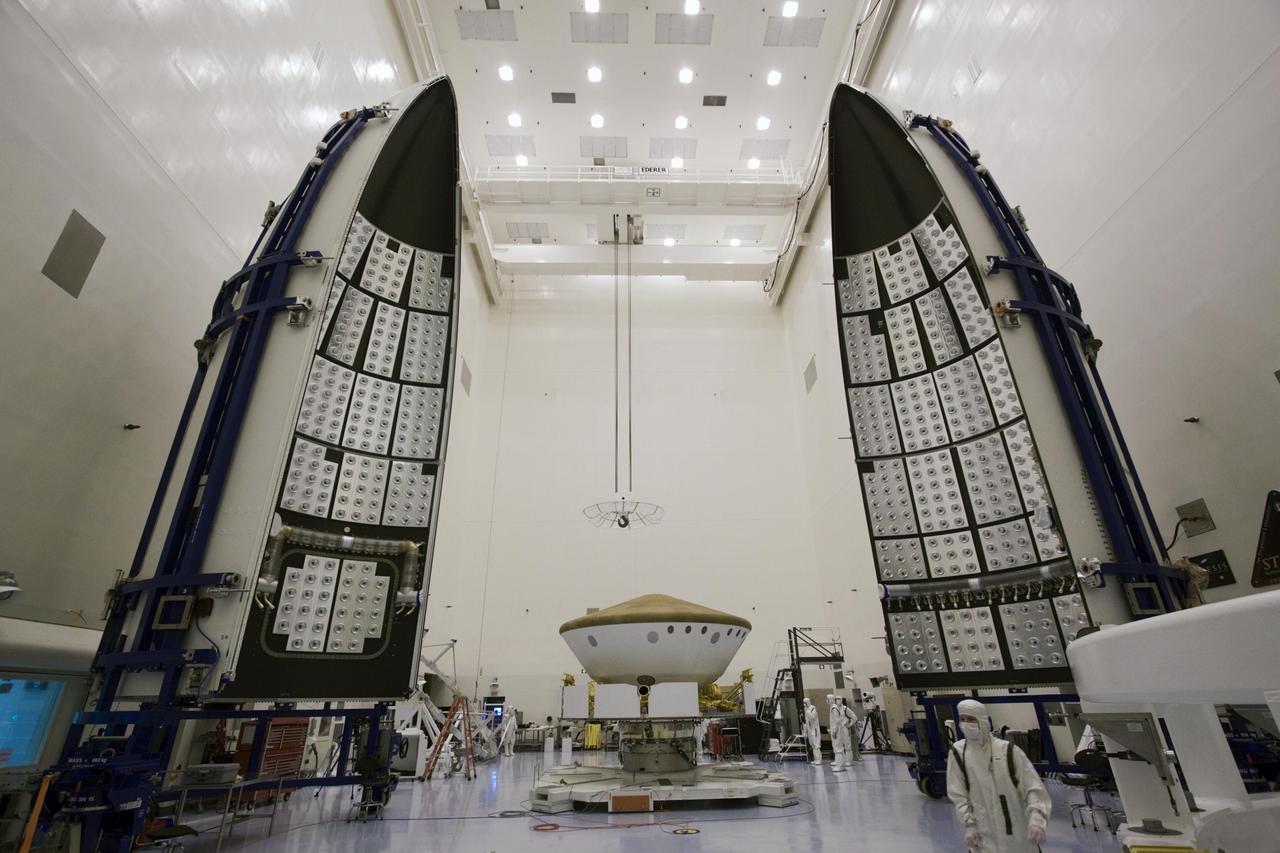
Preparations are under way to enclose NASA Mars Science Laboratory in an Atlas V rocket payload fairing. The fairing protects the spacecraft from the impact of aerodynamic pressure and heating during ascent.
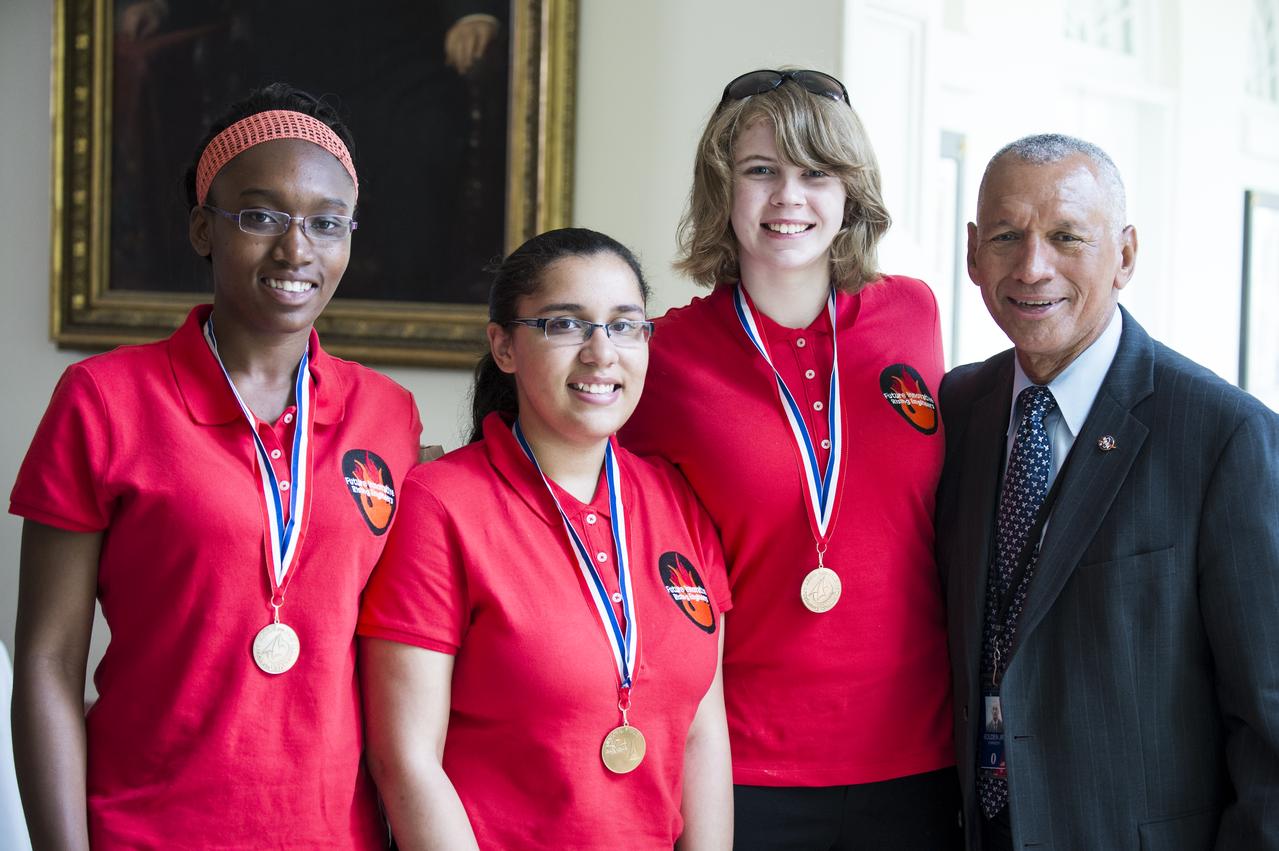
NASA Administrator Charles Bolden poses with an all-girl engineering team that participated in the White House Science Fair. "Team Rocket Power" was one of 100 teams that qualified for last year’s Team America Rocketry Challenge (TARC). Nia'mani Robinson, 15, Jasmyn Logan, 15, and Rebecca Chapin-Ridgely, 17, gave up their weekends and free time after school to build and test their bright purple rocket, which is designed to launch to an altitude of about 750 ft, and then return a “payload” (an egg) to the ground safely. The fourth White House Science Fair was held at the White House on May 27, 2014 and included 100 students from more than 30 different states who competed in science, technology, engineering, and math (STEM) competitions. (Photo Credit: NASA/Aubrey Gemignani)
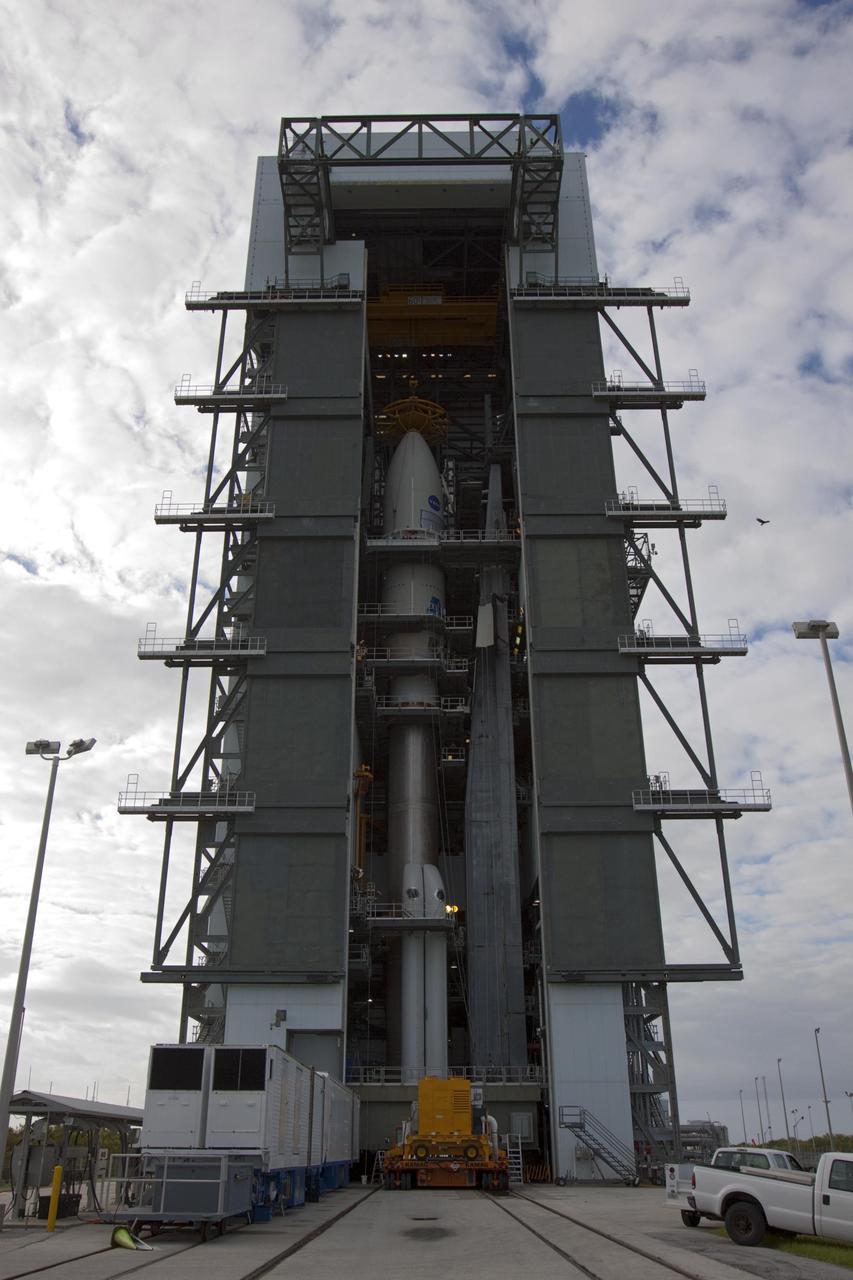
In the Vertical Integration Facility at Space Launch Complex 41, the payload fairing containing NASA Mars Science Laboratory spacecraft was attached to its Atlas V rocket on Nov. 3, 2011.
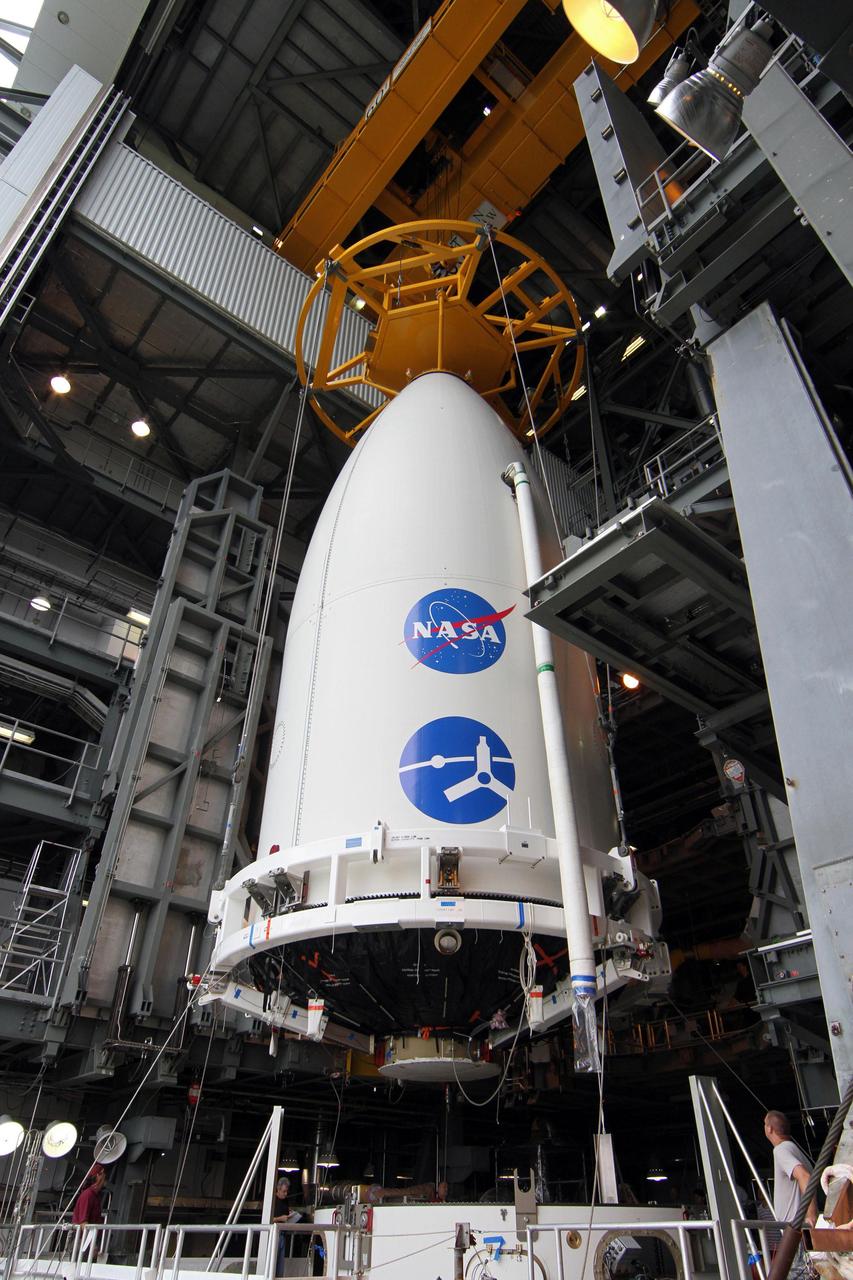
At Space Launch Complex 41, the Juno spacecraft, enclosed in an Atlas payload fairing, was transferred into the Vertical Integration Facility where it was positioned on top of the Atlas rocket stacked inside.
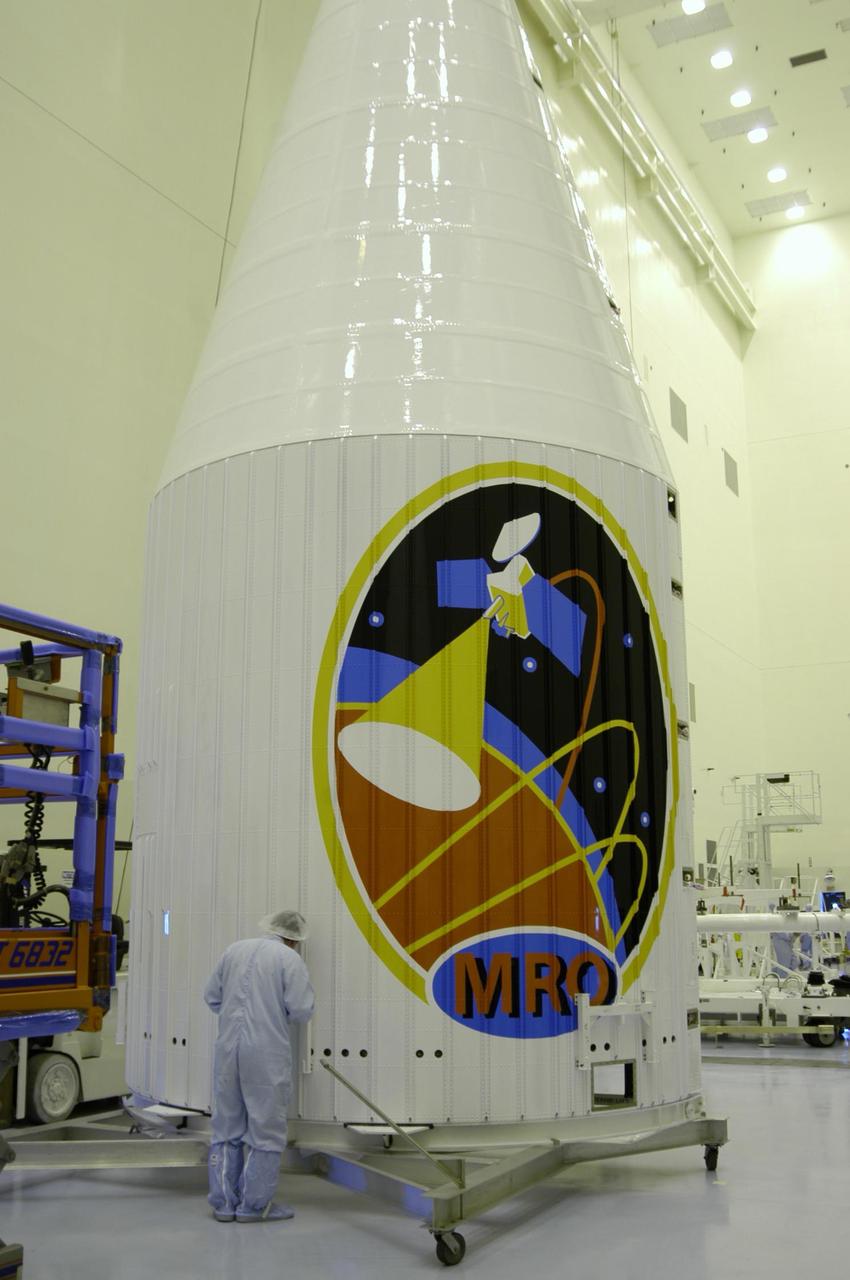
This image features the protective fairing that encapsulated NASA Mars Reconnaissance Orbiter atop an Atlas V rocket. The lively logo celebrates the intense science mission ahead of the orbiter.
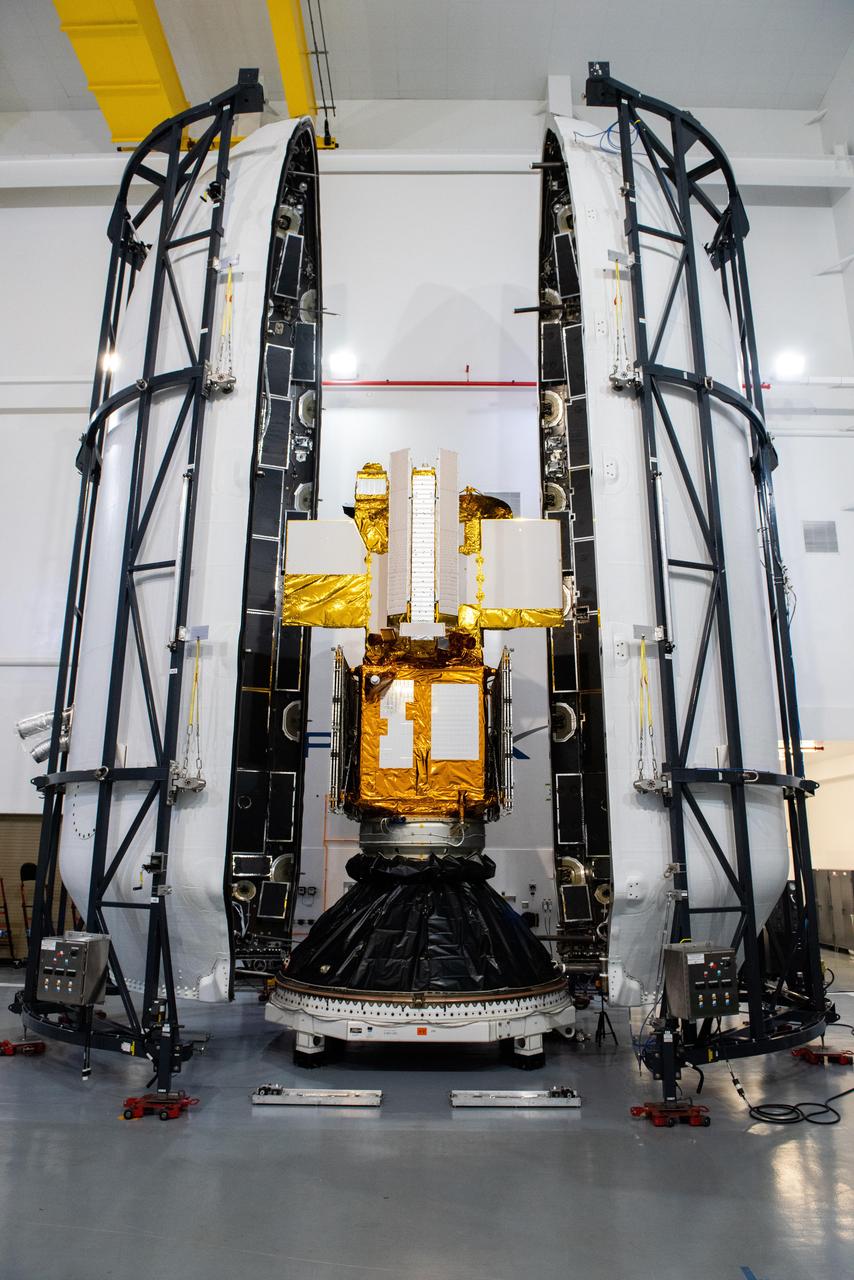
Technicians encapsulated the SWOT satellite, or the Surface Water and Ocean Topography mission, in its payload fairing on Dec. 8, 2022, in preparation for launch. At the SpaceX processing facility at Vandenberg Space Force Base in California, technicians completed the operation and will soon mate the fairing to the top of a Falcon 9 rocket. The fairing protects the satellite from aerodynamic pressure and heating during ascent. After the rocket escapes Earth's atmosphere, the fairing separates into two halves, which are jettisoned back to Earth. Once in orbit, SWOT will measure the height of water in freshwater bodies and the ocean on more than 90% of Earth's surface. This information will provide insights into how the ocean influences climate change; how a warming world affects lakes, rivers, and reservoirs; and how communities can better prepare for disasters, such as floods. SWOT is a collaborative effort by NASA and France's Centre National d'Études Spatiales (CNES) with contributions from the Canadian Space Agency (CSA) and UK Space Agency. Launch is targeted for Dec. 15, 2022, at 3:46 a.m. PST from Space Launch Complex 4E at Vandenberg Space Force Base. https://photojournal.jpl.nasa.gov/catalog/PIA25627
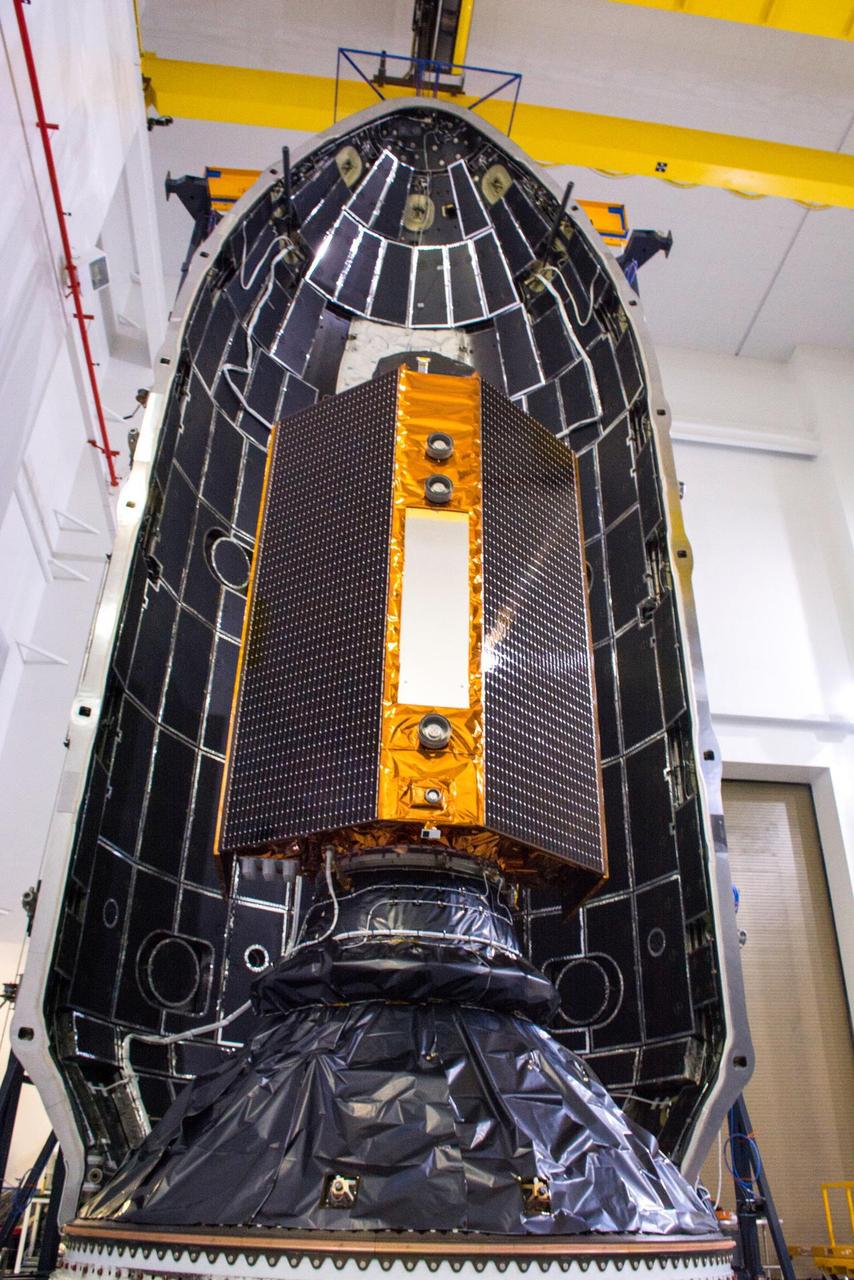
The Sentinel-6 Michael Freilich satellite is encapsulated in a protective nosecone, or payload fairing, in the SpaceX Payload Processing Facility at Vandenberg Air Force Base in California. The fairing will sit atop a SpaceX Falcon 9 rocket during the late-November 2020 launch that will place the satellite in Earth orbit. Sentinel-6 Michael Freilich is one of two identical satellites that are a part of the Sentinel-6/Jason-CS (Continuity of Service) mission, a U.S.-European collaboration. The mission is part of Copernicus, the European Union's Earth observation program managed by the European Commission. Continuing the legacy of the Jason series missions, Sentinel-6/Jason-CS will extend the records of sea level into their fourth decade, collecting accurate measurements of sea surface height for more than 90% of the world's oceans, and providing crucial information for operational oceanography, marine meteorology, and climate studies. Sentinel-6 Michael Freilich's twin, Sentinel-6B, is scheduled to launch in 2025. https://photojournal.jpl.nasa.gov/catalog/PIA24133
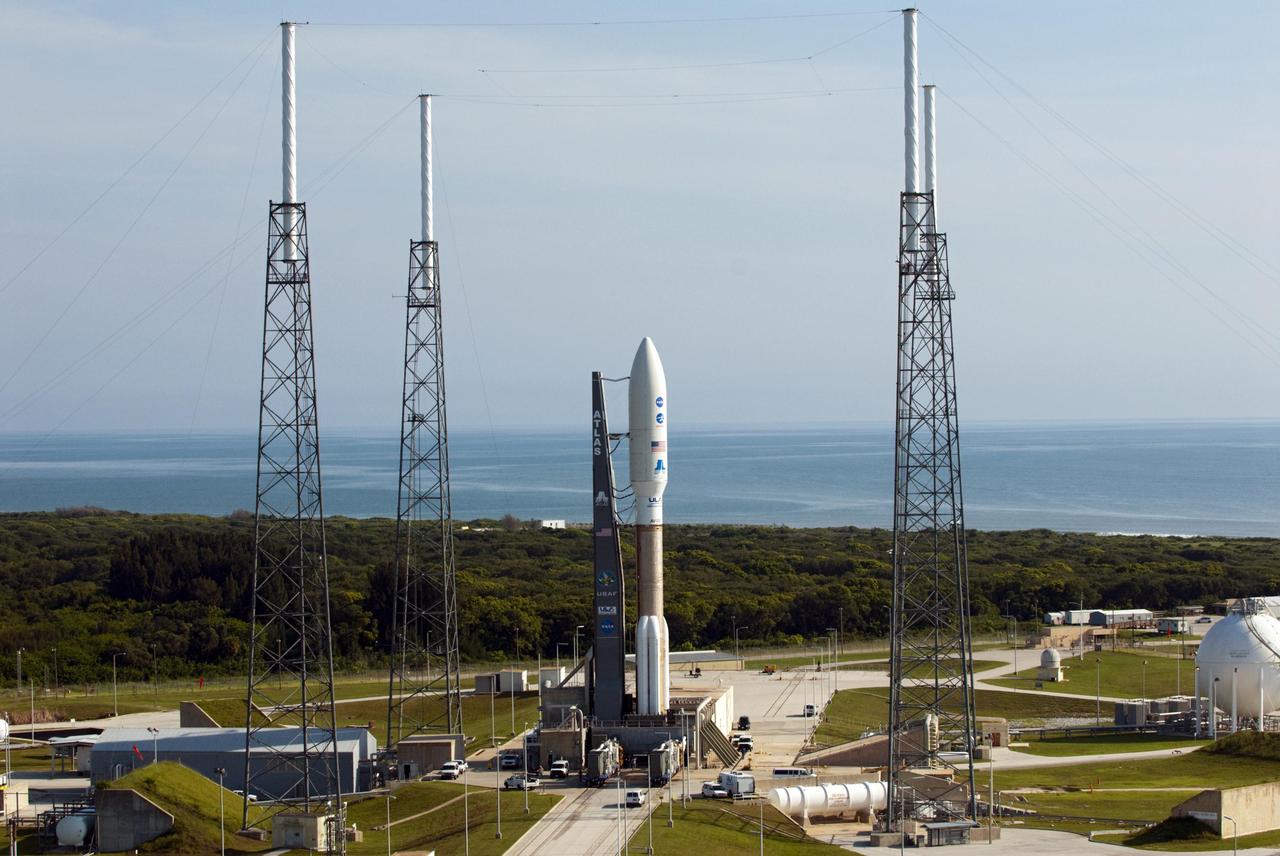
NASA Juno spacecraft awaits launch from inside the payload fairing atop a United Launch Alliance Atlas V-551 launch vehicle. Juno and its rocket are at Space Launch Complex 41 on Cape Canaveral Air Force Station in Florida.
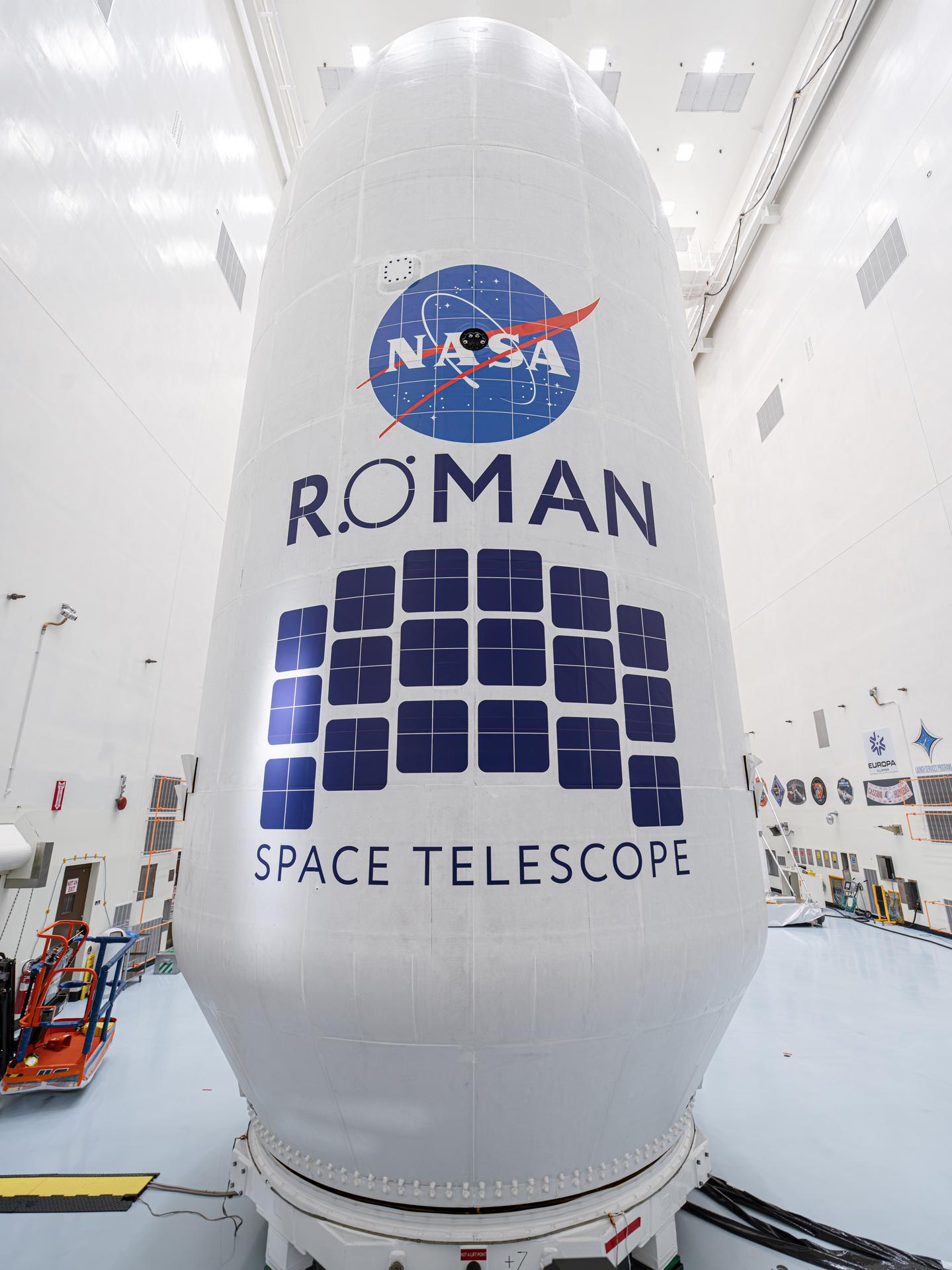
Teams inside the Payload Hazardous Servicing Facility at NASA’s Kennedy Space Center in Florida encapsulate the agency’s Nancy Grace Roman Space Telescope within the payload fairing on Friday, Aug. 21, 2026, ahead of mating to a SpaceX Falcon Heavy rocket. Encapsulation shields the spacecraft during rollout, ascent, and the early phases of flight. Roman will investigate dark energy and dark matter, conduct a statistical census of planetary systems, and enable a broad range of additional astrophysics research. Liftoff from Launch Complex 39A at Kennedy is targeted for no earlier than Sunday, Aug. 30, 2026.
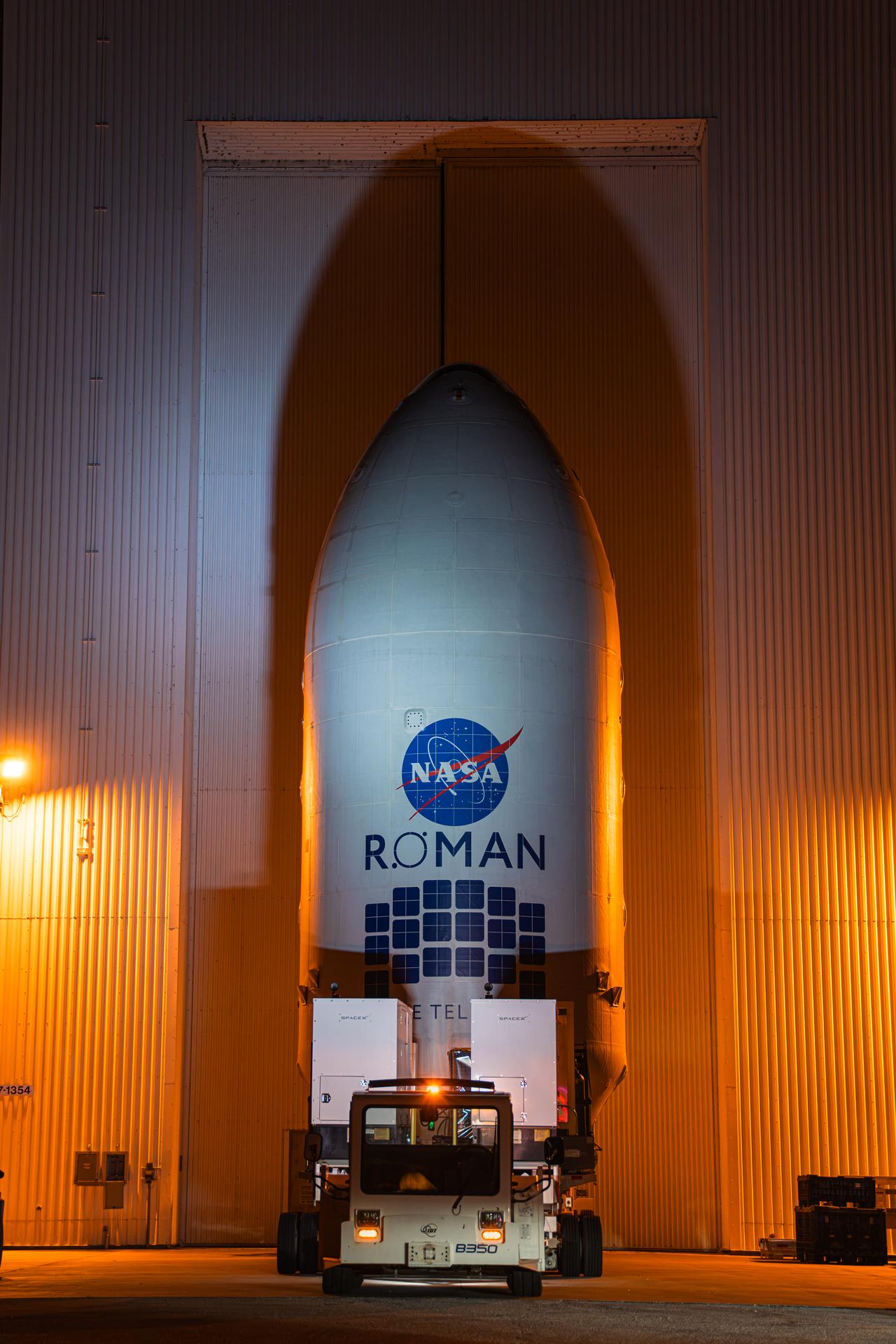
Teams inside the Payload Hazardous Servicing Facility at NASA’s Kennedy Space Center in Florida encapsulate the agency’s Nancy Grace Roman Space Telescope within the payload fairing on Friday, Aug. 21, 2026, ahead of mating to a SpaceX Falcon Heavy rocket. Encapsulation shields the spacecraft during rollout, ascent, and the early phases of flight. Roman will investigate dark energy and dark matter, conduct a statistical census of planetary systems, and enable a broad range of additional astrophysics research. Liftoff from Launch Complex 39A at Kennedy is targeted for no earlier than Sunday, Aug. 30, 2026.
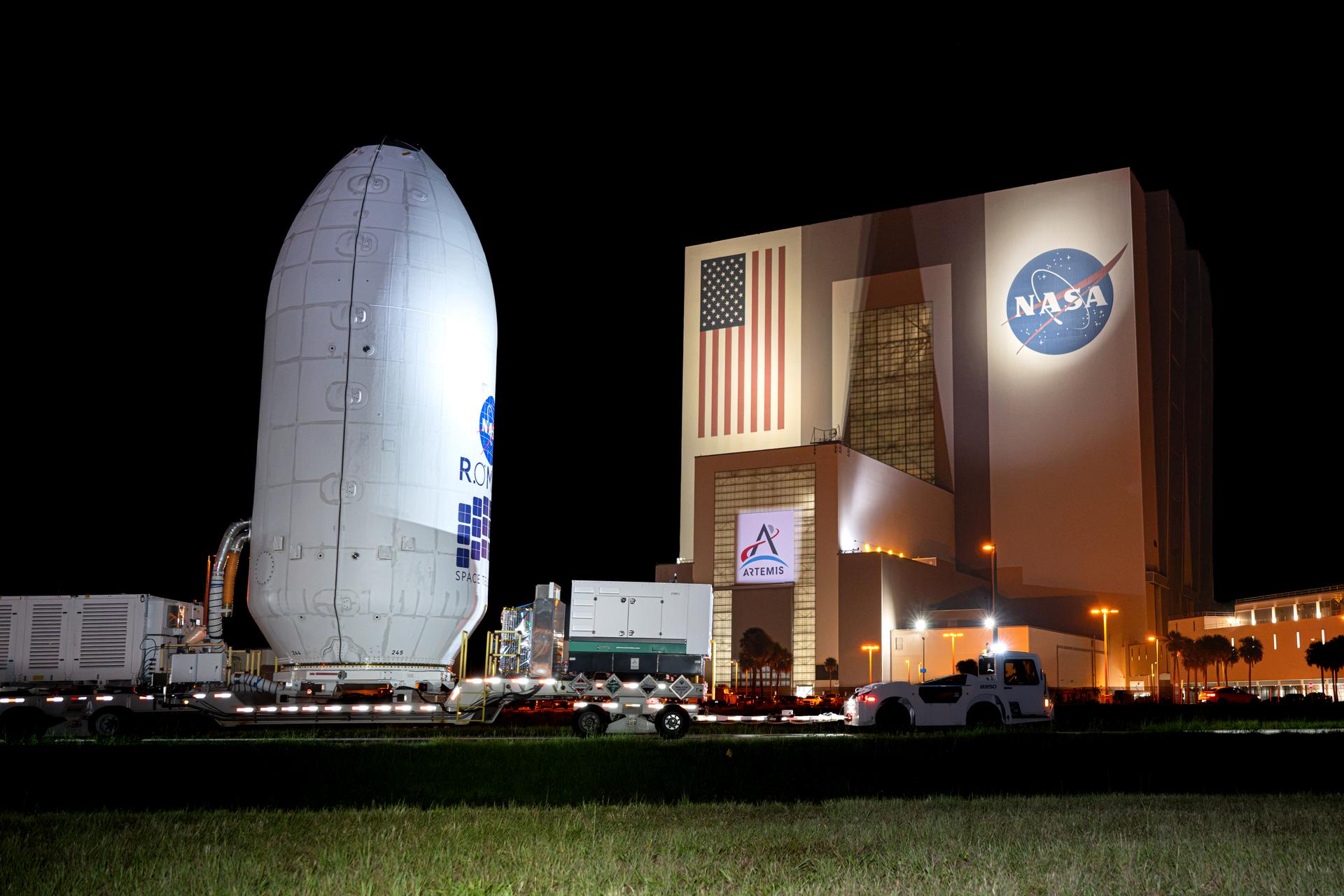
NASA’s Nancy Grace Roman Space Telescope, encapsulated in its payload fairing, travels from the Payload Hazardous Servicing Facility to the SpaceX hangar at Launch Complex 39A at NASA’s Kennedy Space Center on Tuesday, Aug. 25, 2026, ahead of mating to a SpaceX Falcon Heavy rocket. Roman’s science instruments are designed to help researchers understand dark energy, the mysterious force accelerating the universe’s expansion. The observatory also will map how galaxies form, cluster, and evolve by tracing the influence of dark matter. Liftoff from NASA Kennedy is targeted no earlier than Sunday, Aug. 30, 2026.
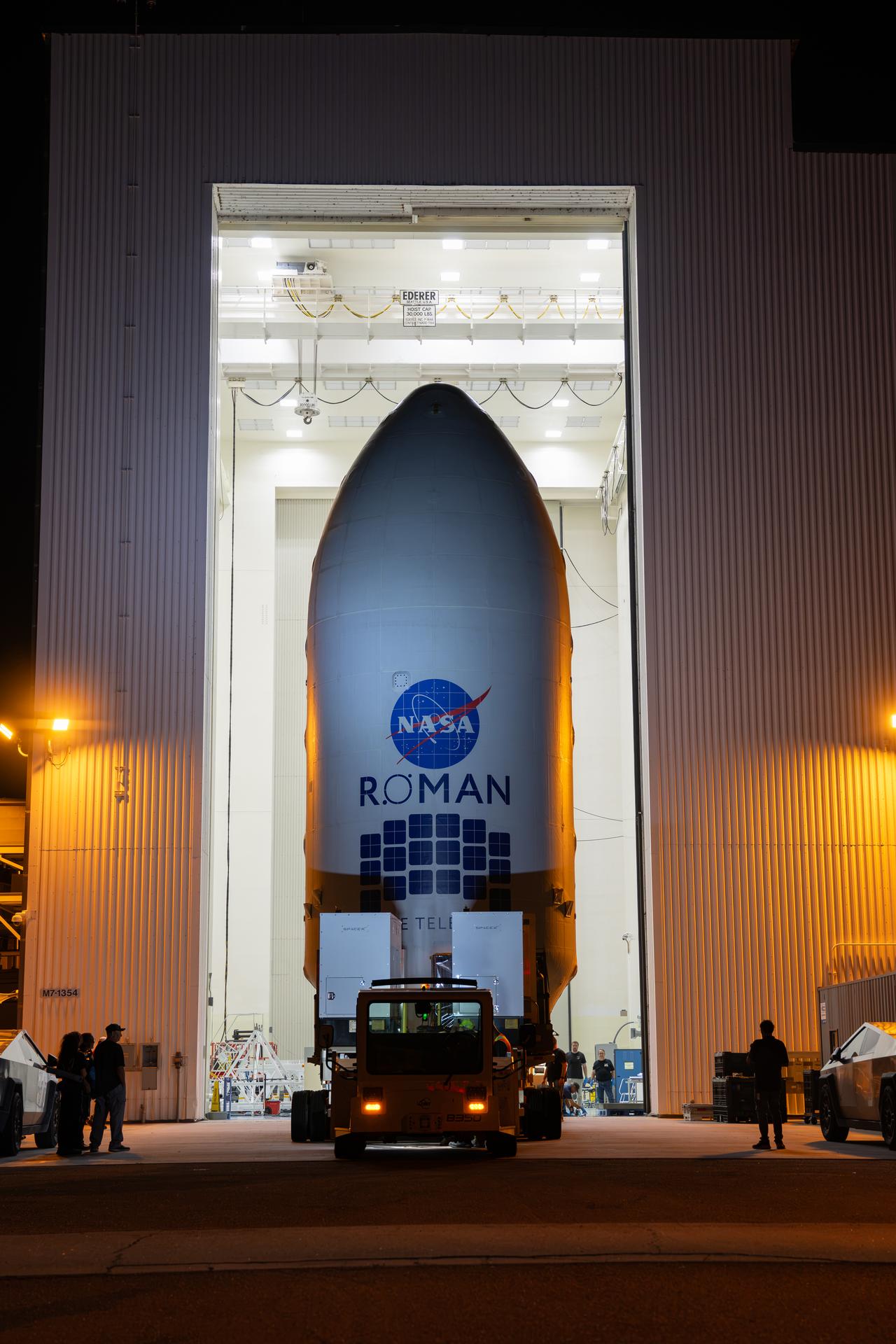
Teams inside the Payload Hazardous Servicing Facility at NASA’s Kennedy Space Center in Florida encapsulate the agency’s Nancy Grace Roman Space Telescope within the payload fairing on Friday, Aug. 21, 2026, ahead of mating to a SpaceX Falcon Heavy rocket. Encapsulation shields the spacecraft during rollout, ascent, and the early phases of flight. Roman will investigate dark energy and dark matter, conduct a statistical census of planetary systems, and enable a broad range of additional astrophysics research. Liftoff from Launch Complex 39A at Kennedy is targeted for no earlier than Sunday, Aug. 30, 2026.
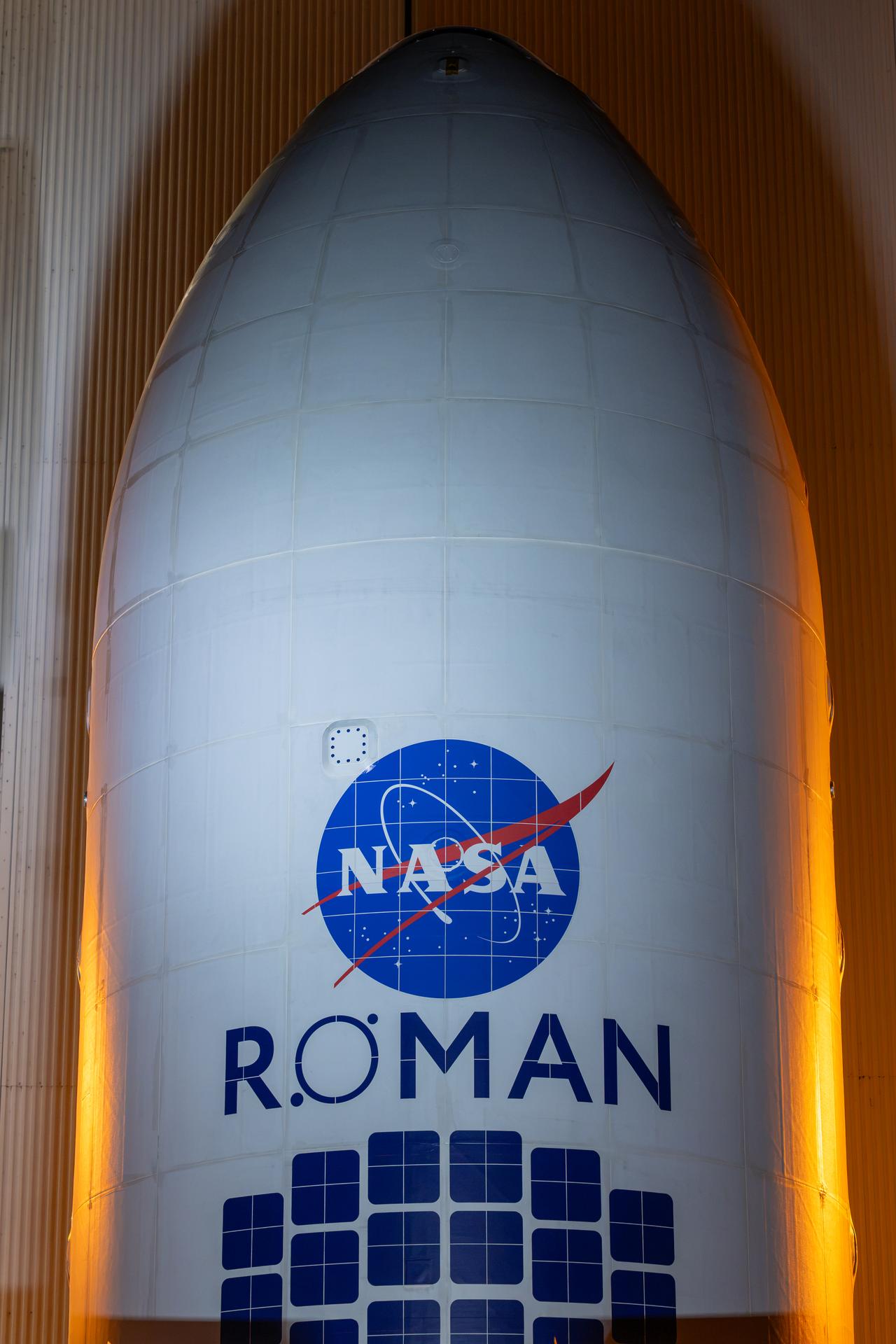
Teams inside the Payload Hazardous Servicing Facility at NASA’s Kennedy Space Center in Florida encapsulate the agency’s Nancy Grace Roman Space Telescope within the payload fairing on Friday, Aug. 21, 2026, ahead of mating to a SpaceX Falcon Heavy rocket. Encapsulation shields the spacecraft during rollout, ascent, and the early phases of flight. Roman will investigate dark energy and dark matter, conduct a statistical census of planetary systems, and enable a broad range of additional astrophysics research. Liftoff from Launch Complex 39A at Kennedy is targeted for no earlier than Sunday, Aug. 30, 2026.
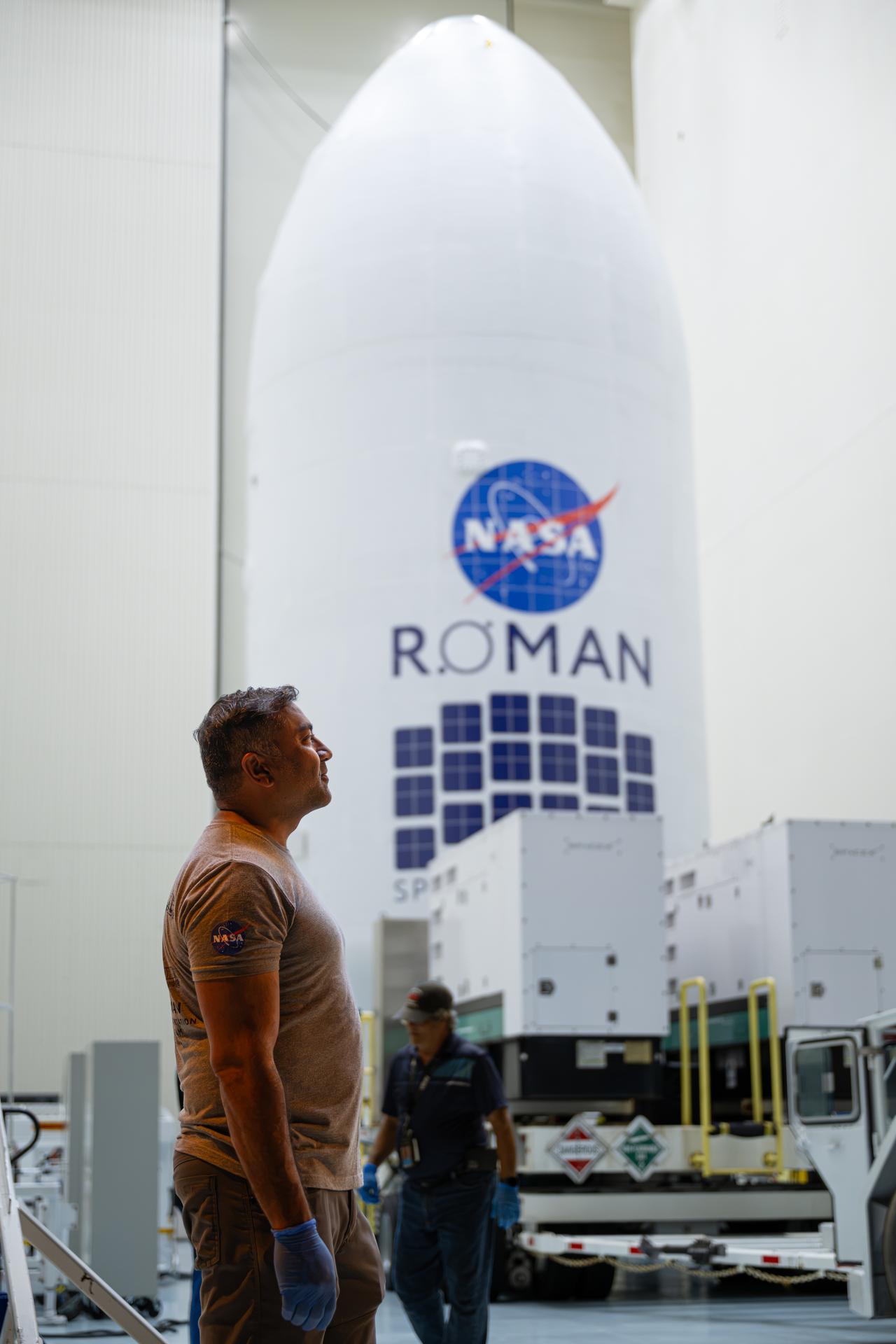
Teams inside the Payload Hazardous Servicing Facility at NASA’s Kennedy Space Center in Florida encapsulate the agency’s Nancy Grace Roman Space Telescope within the payload fairing on Friday, Aug. 21, 2026, ahead of mating to a SpaceX Falcon Heavy rocket. Encapsulation shields the spacecraft during rollout, ascent, and the early phases of flight. Roman will investigate dark energy and dark matter, conduct a statistical census of planetary systems, and enable a broad range of additional astrophysics research. Liftoff from Launch Complex 39A at Kennedy is targeted for no earlier than Sunday, Aug. 30, 2026.
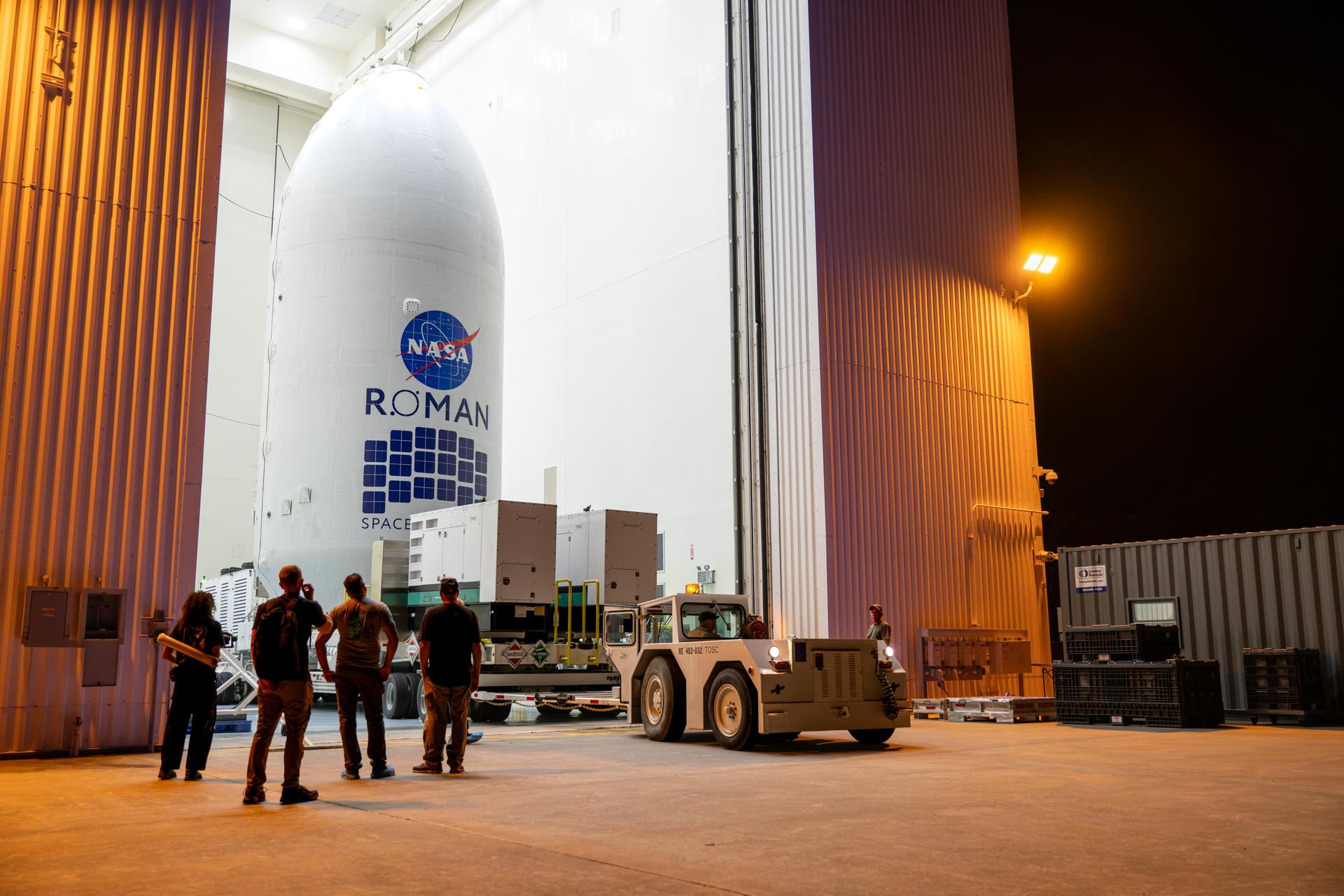
Teams inside the Payload Hazardous Servicing Facility at NASA’s Kennedy Space Center in Florida encapsulate the agency’s Nancy Grace Roman Space Telescope within the payload fairing on Friday, Aug. 21, 2026, ahead of mating to a SpaceX Falcon Heavy rocket. Encapsulation shields the spacecraft during rollout, ascent, and the early phases of flight. Roman will investigate dark energy and dark matter, conduct a statistical census of planetary systems, and enable a broad range of additional astrophysics research. Liftoff from Launch Complex 39A at Kennedy is targeted for no earlier than Sunday, Aug. 30, 2026.
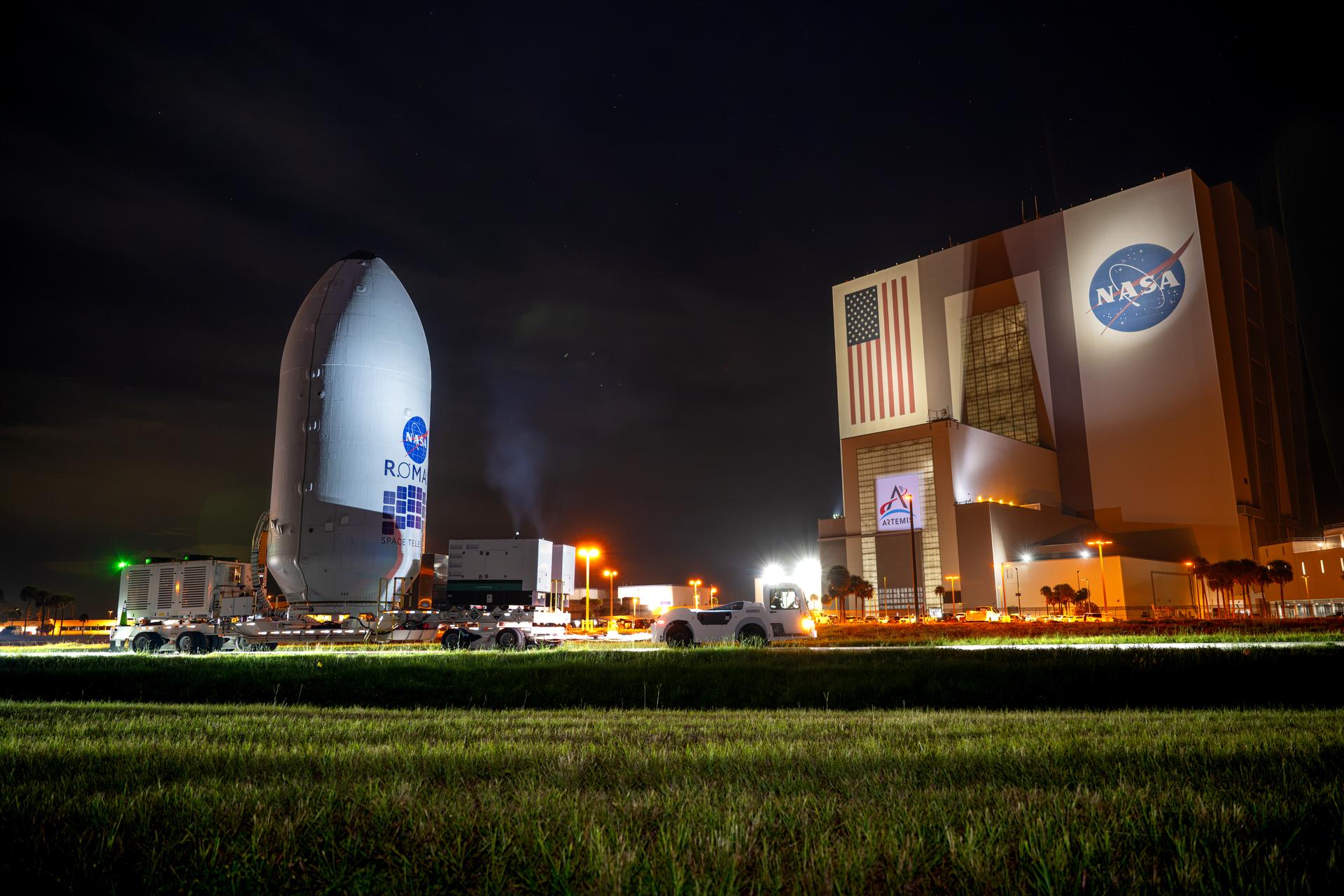
NASA’s Nancy Grace Roman Space Telescope, encapsulated in its payload fairing, travels from the Payload Hazardous Servicing Facility to the SpaceX hangar at Launch Complex 39A at NASA’s Kennedy Space Center on Tuesday, Aug. 25, 2026, ahead of mating to a SpaceX Falcon Heavy rocket. Roman’s science instruments are designed to help researchers understand dark energy, the mysterious force accelerating the universe’s expansion. The observatory also will map how galaxies form, cluster, and evolve by tracing the influence of dark matter. Liftoff from NASA Kennedy is targeted no earlier than Sunday, Aug. 30, 2026.
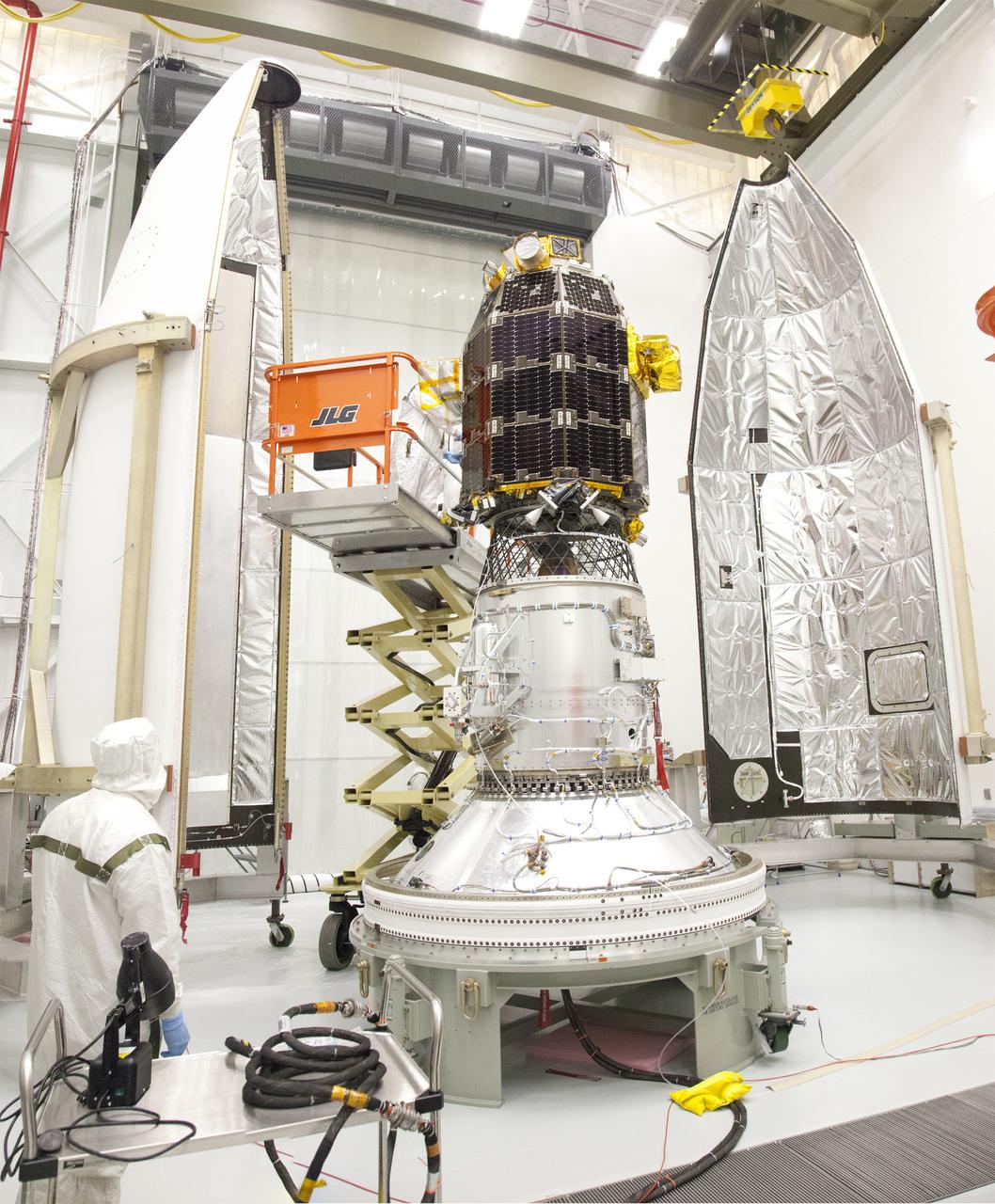
Engineers at NASA's Wallops Flight Facility in Virginia prepare to encapsulate the LADEE spacecraft into the fairing of the Minotaur V launch vehicle nose-cone. Credit: NASA/Wallops/Terry Zaperach ----- What is LADEE? The Lunar Atmosphere and Dust Environment Explorer (LADEE) is designed to study the Moon's thin exosphere and the lunar dust environment. An "exosphere" is an atmosphere that is so thin and tenuous that molecules don't collide with each other. Studying the Moon's exosphere will help scientists understand other planetary bodies with exospheres too, like Mercury and some of Jupiter's bigger moons. The orbiter will determine the density, composition and temporal and spatial variability of the Moon's exosphere to help us understand where the species in the exosphere come from and the role of the solar wind, lunar surface and interior, and meteoric infall as sources. The mission will also examine the density and temporal and spatial variability of dust particles that may get lofted into the atmosphere. The mission also will test several new technologies, including a modular spacecraft bus that may reduce the cost of future deep space missions and demonstrate two-way high rate laser communication for the first time from the Moon. LADEE now is ready to launch when the window opens on Sept. 6, 2013. Read more: <a href="http://www.nasa.gov/ladee" rel="nofollow">www.nasa.gov/ladee</a> <b><a href="http://www.nasa.gov/audience/formedia/features/MP_Photo_Guidelines.html" rel="nofollow">NASA image use policy.</a></b> <b><a href="http://www.nasa.gov/centers/goddard/home/index.html" rel="nofollow">NASA Goddard Space Flight Center</a></b> enables NASA’s mission through four scientific endeavors: Earth Science, Heliophysics, Solar System Exploration, and Astrophysics. Goddard plays a leading role in NASA’s accomplishments by contributing compelling scientific knowledge to advance the Agency’s mission. <b>Follow us on <a href="http://twitter.com/NASA_GoddardPix" rel="nofollow">Twitter</a></b> <b>Like us on <a href="http://www.facebook.com/pages/Greenbelt-MD/NASA-Goddard/395013845897?ref=tsd" rel="nofollow">Facebook</a></b> <b>Find us on <a href="http://instagram.com/nasagoddard?vm=grid" rel="nofollow">Instagram</a></b>
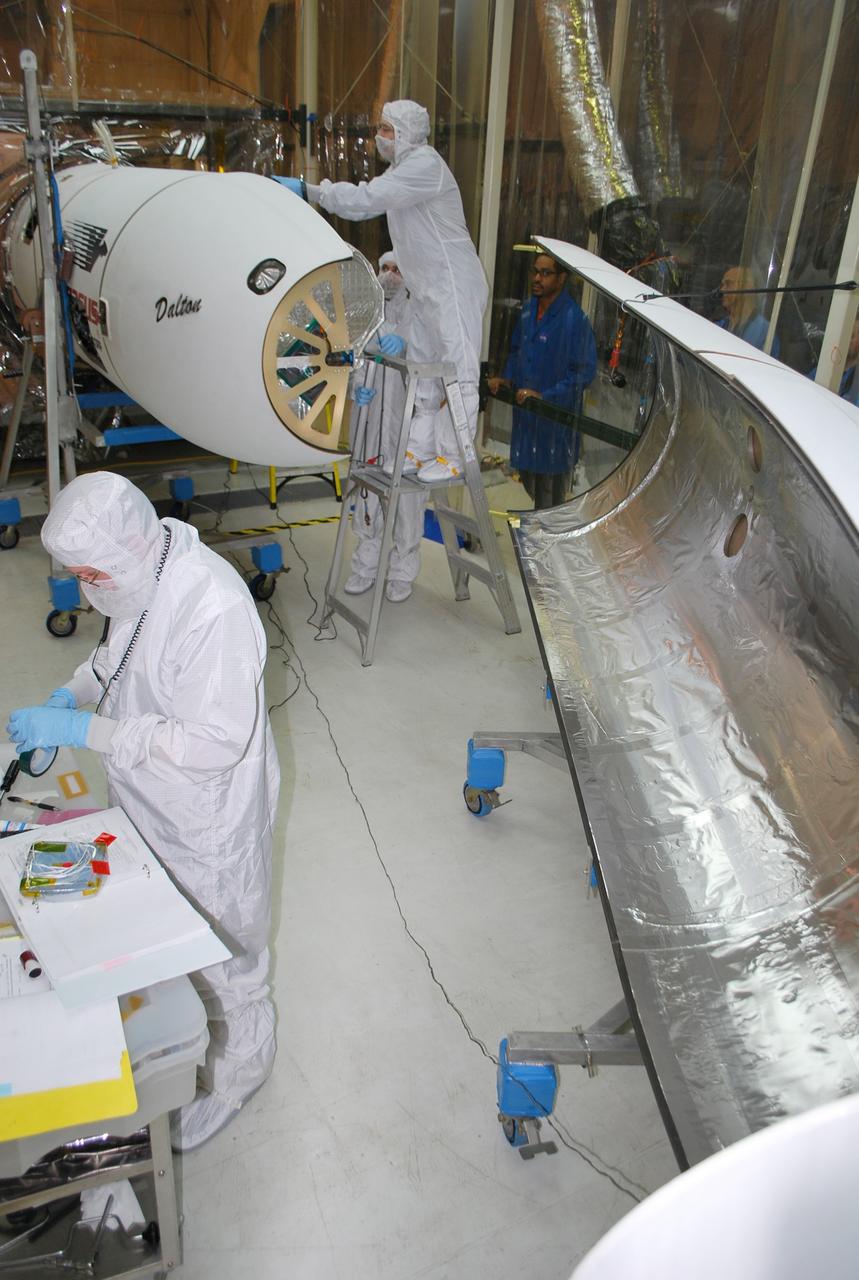
VANDENBERG AFB, Calif. – Technicians install one half of the payload fairing over the NuSTAR spacecraft as they continue to process the spacecraft and its Pegasus rocket for launch. The second half of the fairing stands ready for installation. NuSTAR stands for Nuclear Spectroscopic Telescope Array. Photo credit: NASA/Randy Beaudoin
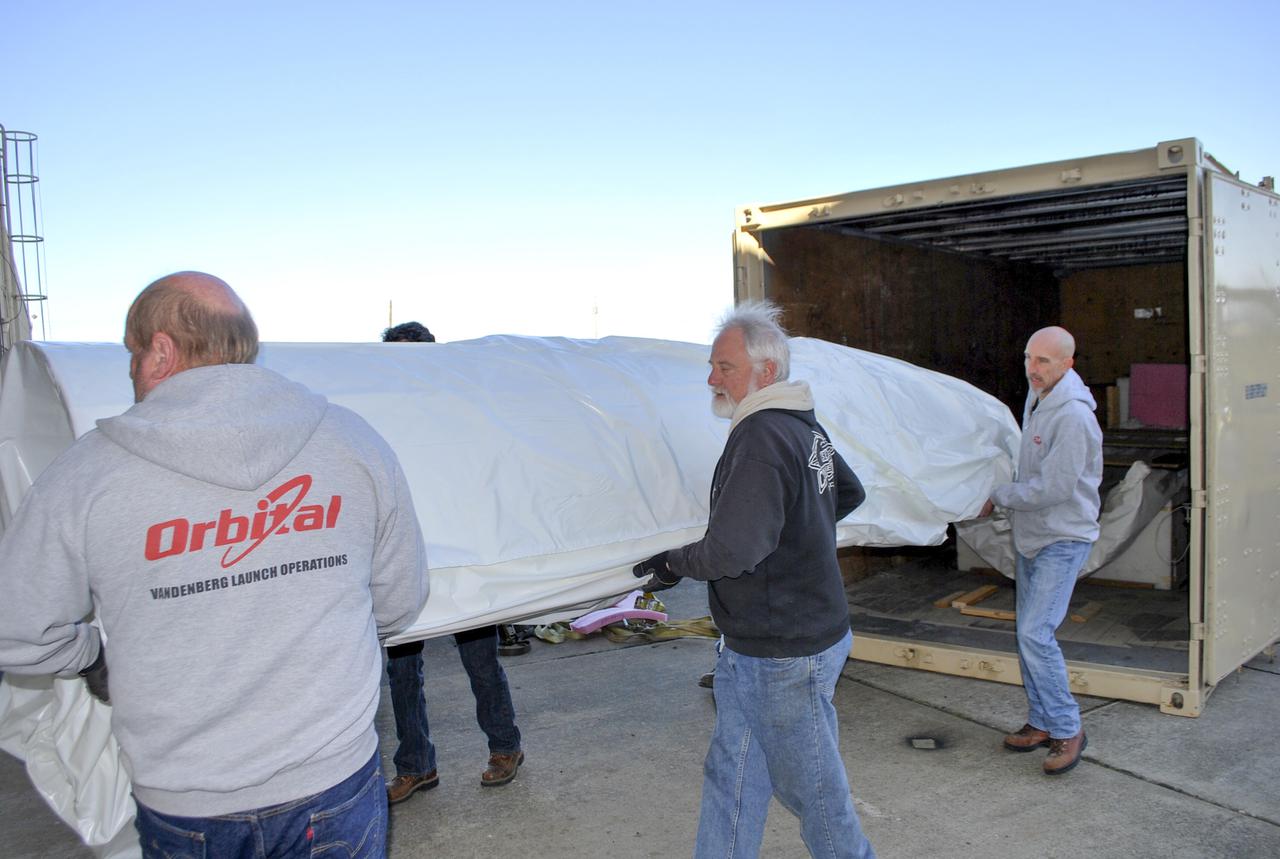
VANDENBERG AFB, Calif. – Workers carry half of a payload fairing into a hangar at Vandenberg Air Force Base in California where it will be processed and used for NASA's IRIS mission. The fairing will be fitted to the nose of an Orbital Sciences Pegasus rocket and will protect the IRIS spacecraft from atmospheric heating and stress during launch. Photo credit: VAFB_Randy Beaudoin
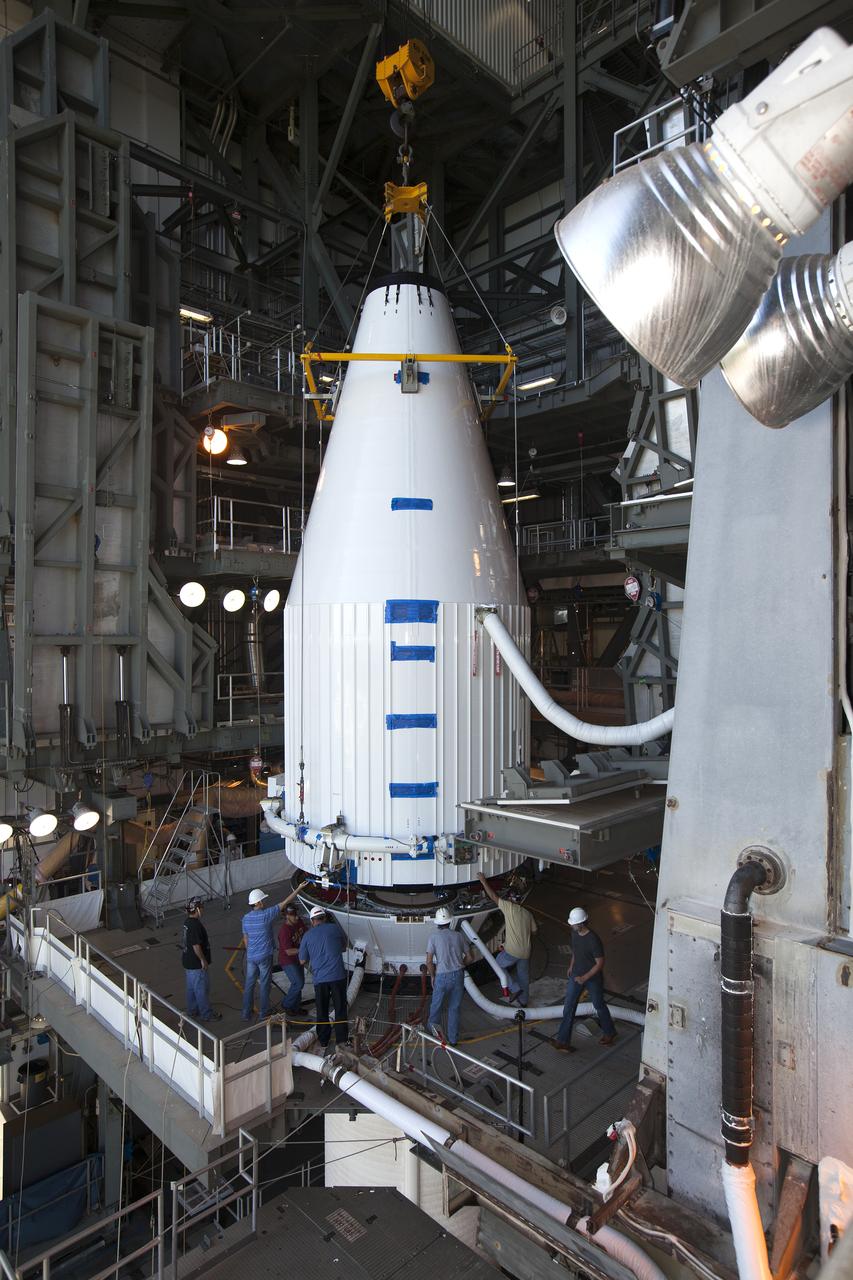
The OSIRIS-REx spacecraft, enclosed in a payload fairing, is positioned atop a United Launch Alliance Atlas V rocket at Space Launch Complex 41 at Cape Canaveral Air Force Station. The rocket that is to lift OSIRIS-REx into space was stacked at SLC-41 so the spacecraft and fairing could be hoisted and bolted to the rocket promptly. The spacecraft will be sent to rendezvous with, survey and take a sample from an asteroid called Bennu.
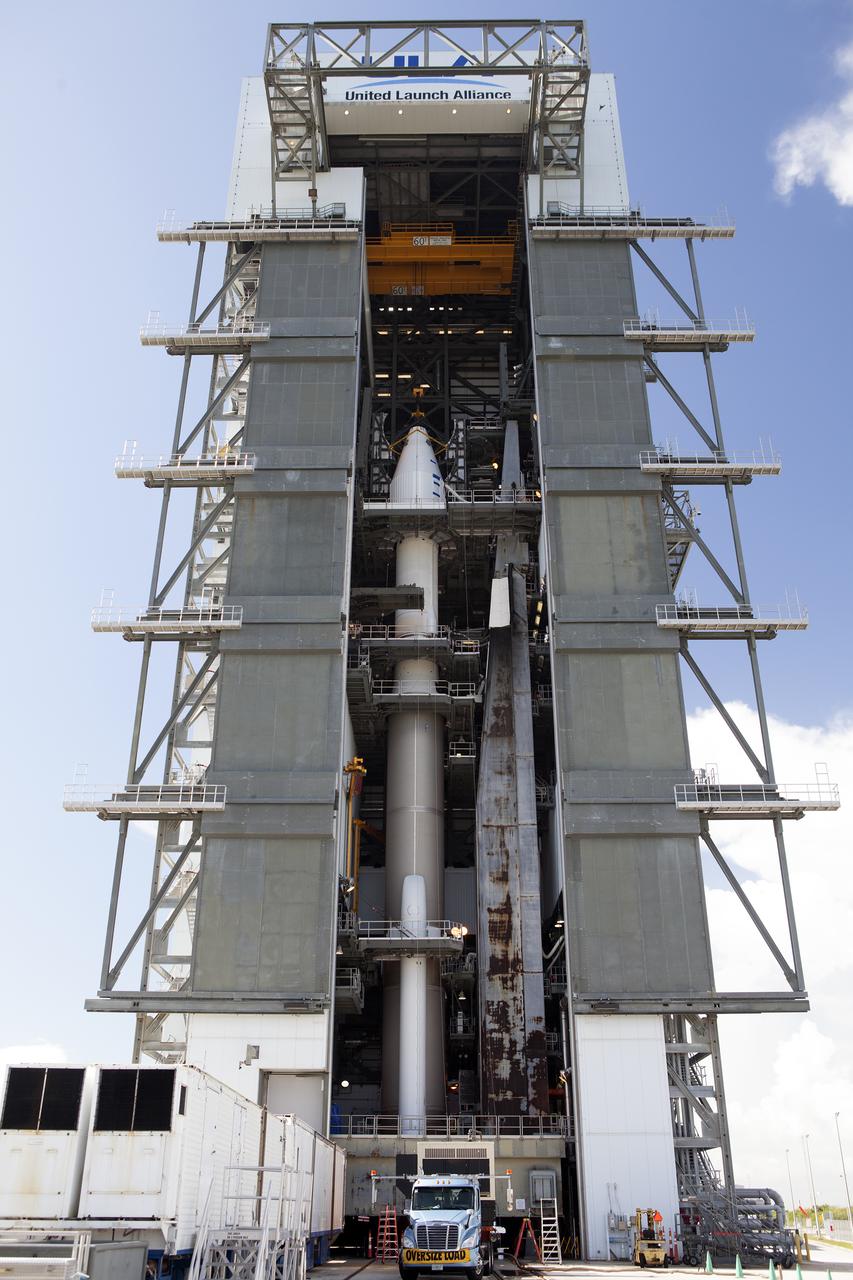
The OSIRIS-REx spacecraft, enclosed in a payload fairing, is positioned atop a United Launch Alliance Atlas V rocket at Space Launch Complex 41 at Cape Canaveral Air Force Station. The rocket that is to lift OSIRIS-REx into space was stacked at SLC-41 so the spacecraft and fairing could be hoisted and bolted to the rocket promptly. The spacecraft will be sent to rendezvous with, survey and take a sample from an asteroid called Bennu.
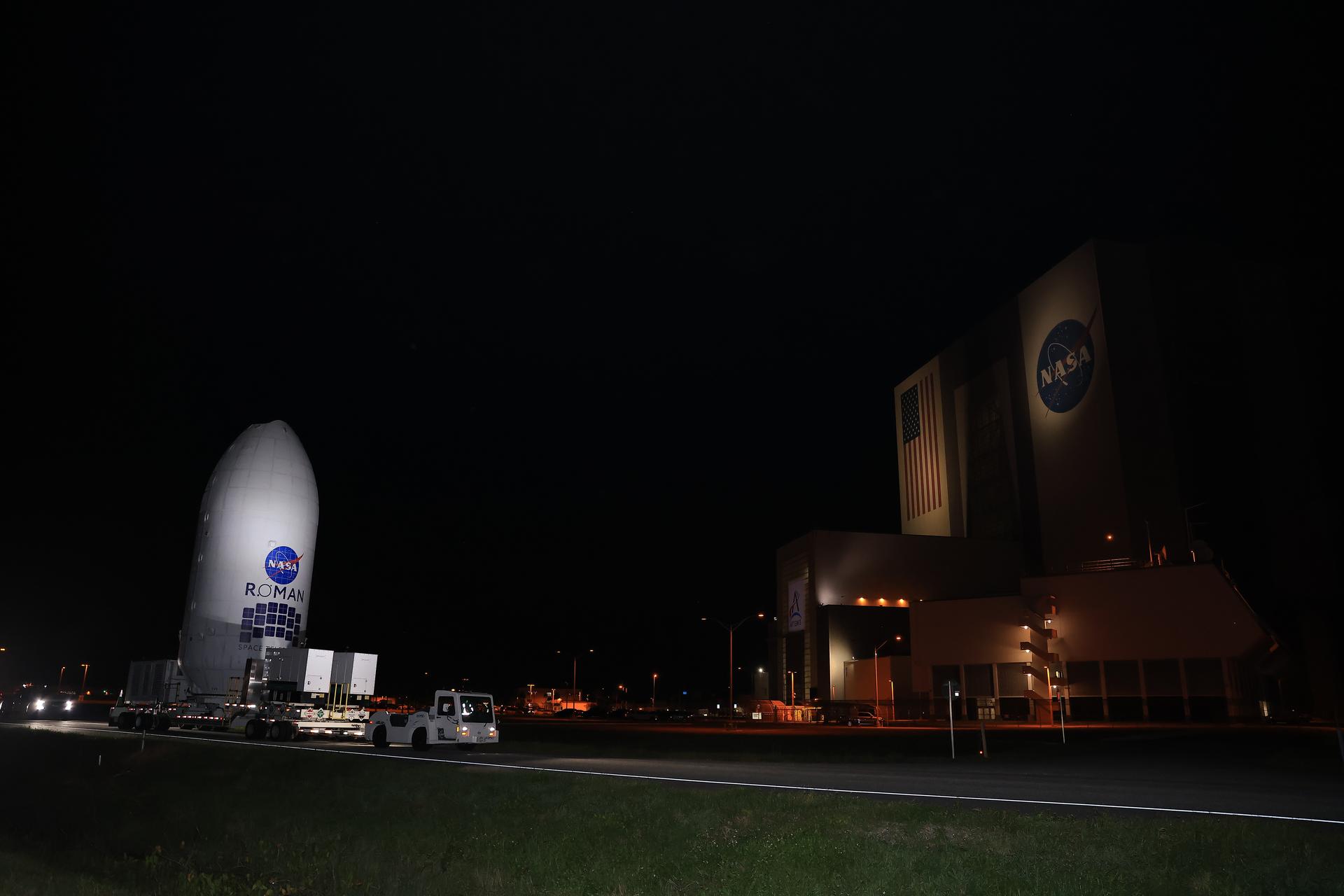
NASA’s Nancy Grace Roman Space Telescope, encapsulated in its payload fairing, travels from the Payload Hazardous Servicing Facility to the SpaceX hangar at Launch Complex 39A at NASA’s Kennedy Space Center on Tuesday, Aug. 25, 2026, ahead of mating to a SpaceX Falcon Heavy rocket. Roman’s science instruments are designed to help researchers understand dark energy, the mysterious force accelerating the universe’s expansion. The observatory also will map how galaxies form, cluster, and evolve by tracing the influence of dark matter. Liftoff from NASA Kennedy is targeted no earlier than Sunday, Aug. 30, 2026.
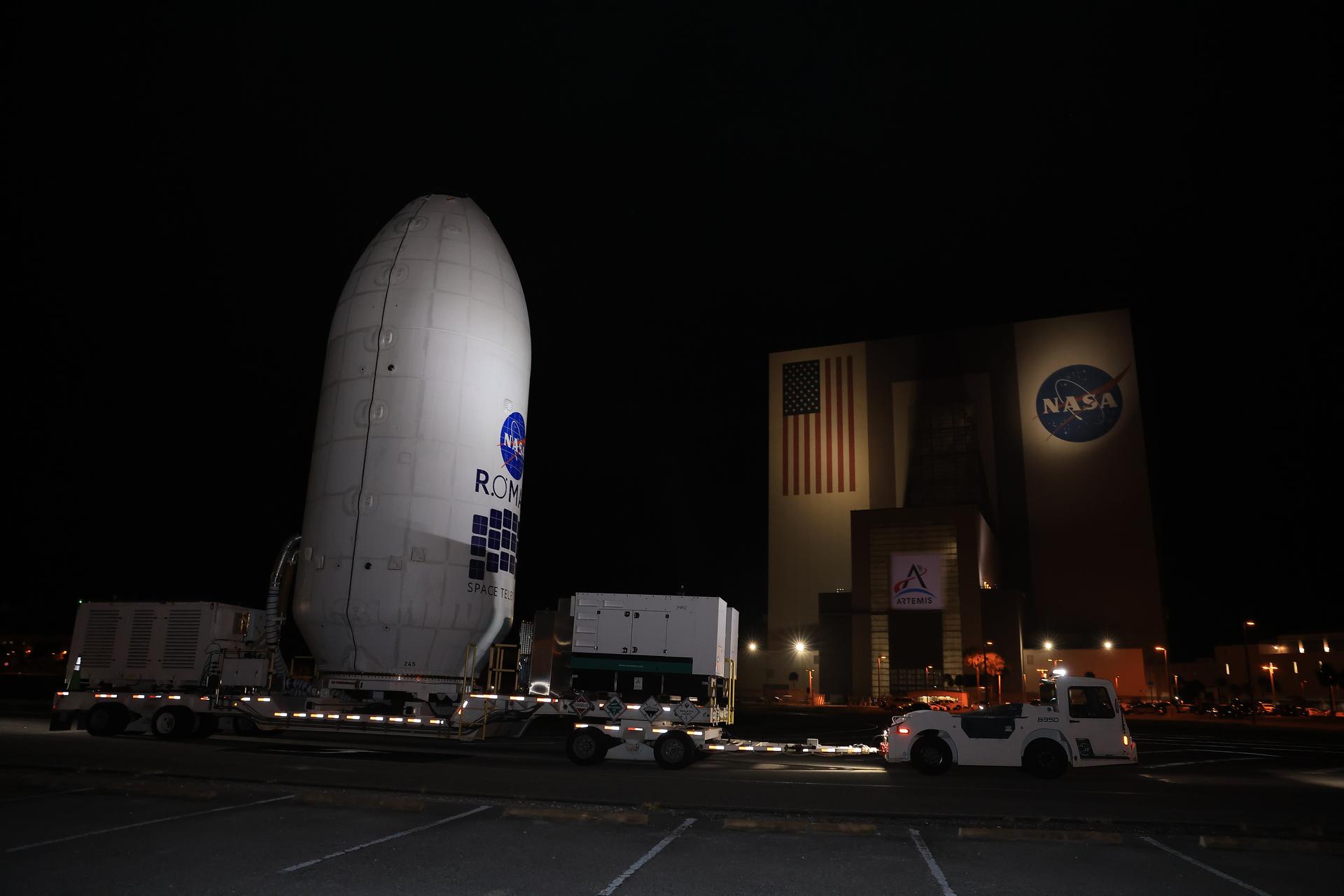
NASA’s Nancy Grace Roman Space Telescope, encapsulated in its payload fairing, travels from the Payload Hazardous Servicing Facility to the SpaceX hangar at Launch Complex 39A at NASA’s Kennedy Space Center on Tuesday, Aug. 25, 2026, ahead of mating to a SpaceX Falcon Heavy rocket. Roman’s science instruments are designed to help researchers understand dark energy, the mysterious force accelerating the universe’s expansion. The observatory also will map how galaxies form, cluster, and evolve by tracing the influence of dark matter. Liftoff from NASA Kennedy is targeted no earlier than Sunday, Aug. 30, 2026.
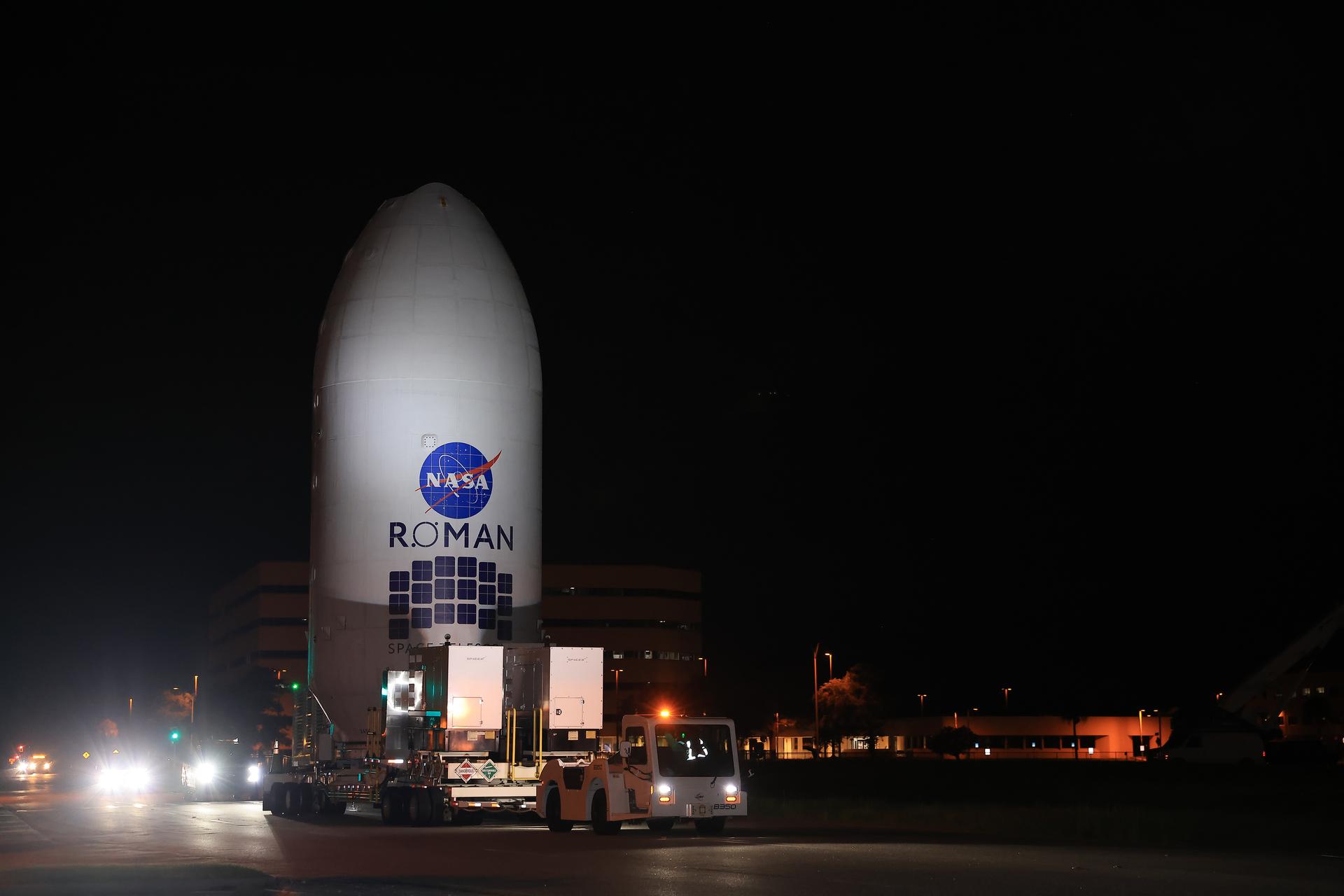
NASA’s Nancy Grace Roman Space Telescope, encapsulated in its payload fairing, travels from the Payload Hazardous Servicing Facility to the SpaceX hangar at Launch Complex 39A at NASA’s Kennedy Space Center on Tuesday, Aug. 25, 2026, ahead of mating to a SpaceX Falcon Heavy rocket. Roman’s science instruments are designed to help researchers understand dark energy, the mysterious force accelerating the universe’s expansion. The observatory also will map how galaxies form, cluster, and evolve by tracing the influence of dark matter. Liftoff from NASA Kennedy is targeted no earlier than Sunday, Aug. 30, 2026.
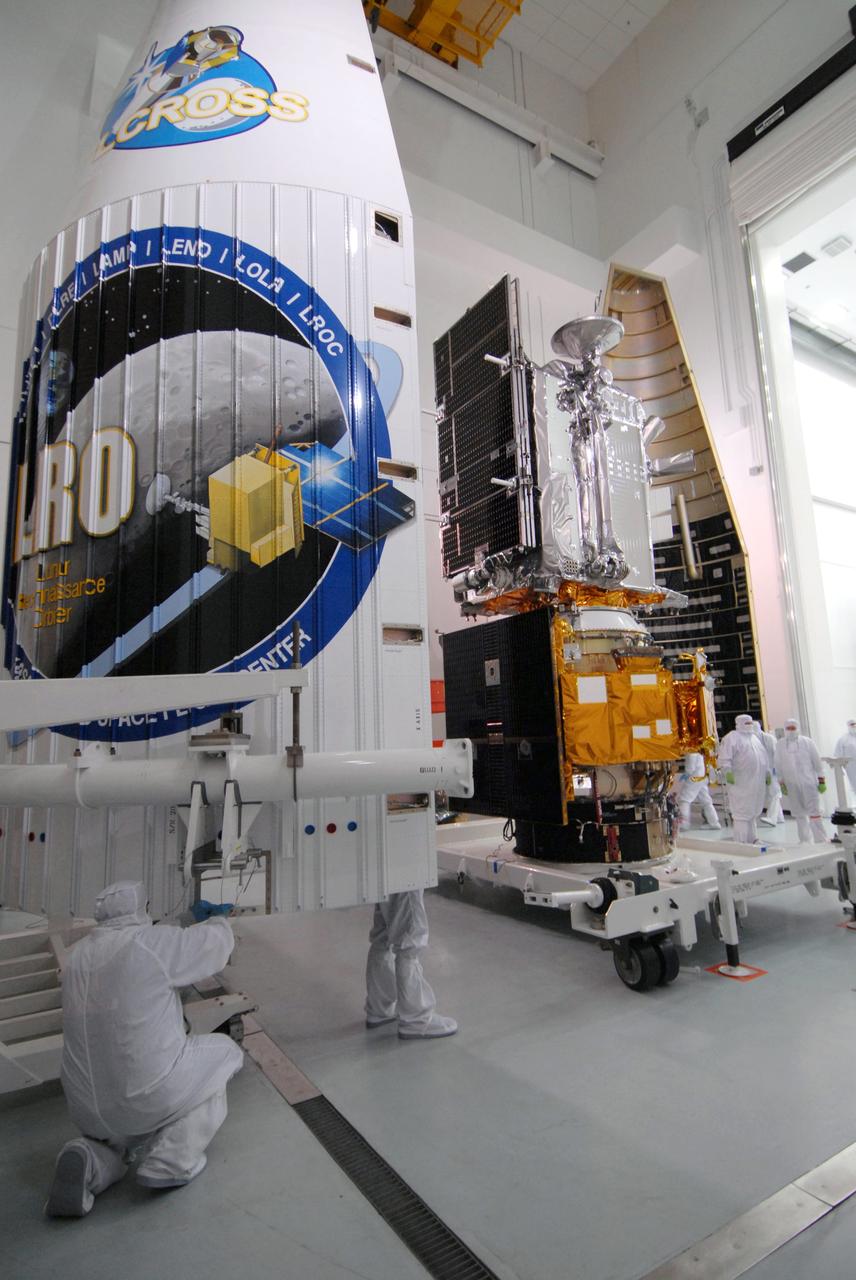
CAPE CANAVERAL, Fla. – At Astrotech Space Operations Facility in Titusville, Fla., NASA's Lunar Reconnaissance Orbiter, or LRO, and NASA's Lunar Crater Observation and Sensing Satellite, known as LCROSS,wait for fairing installation. The fairing halves are on left and right of the spacecraft. The fairing is a molded structure that fits flush with the outside surface of the rocket and forms an aerodynamically smooth nose cone, protecting the spacecraft during launch and ascent. The LRO includes five instruments: DIVINER, LAMP, LEND, LOLA and LROC. They will be launched aboard an Atlas V/Centaur rocket no earlier than June 17 from Launch Complex-41 on Cape Canaveral Air Force Station in Florida. Photo credit: NASA/Jack Pfaller
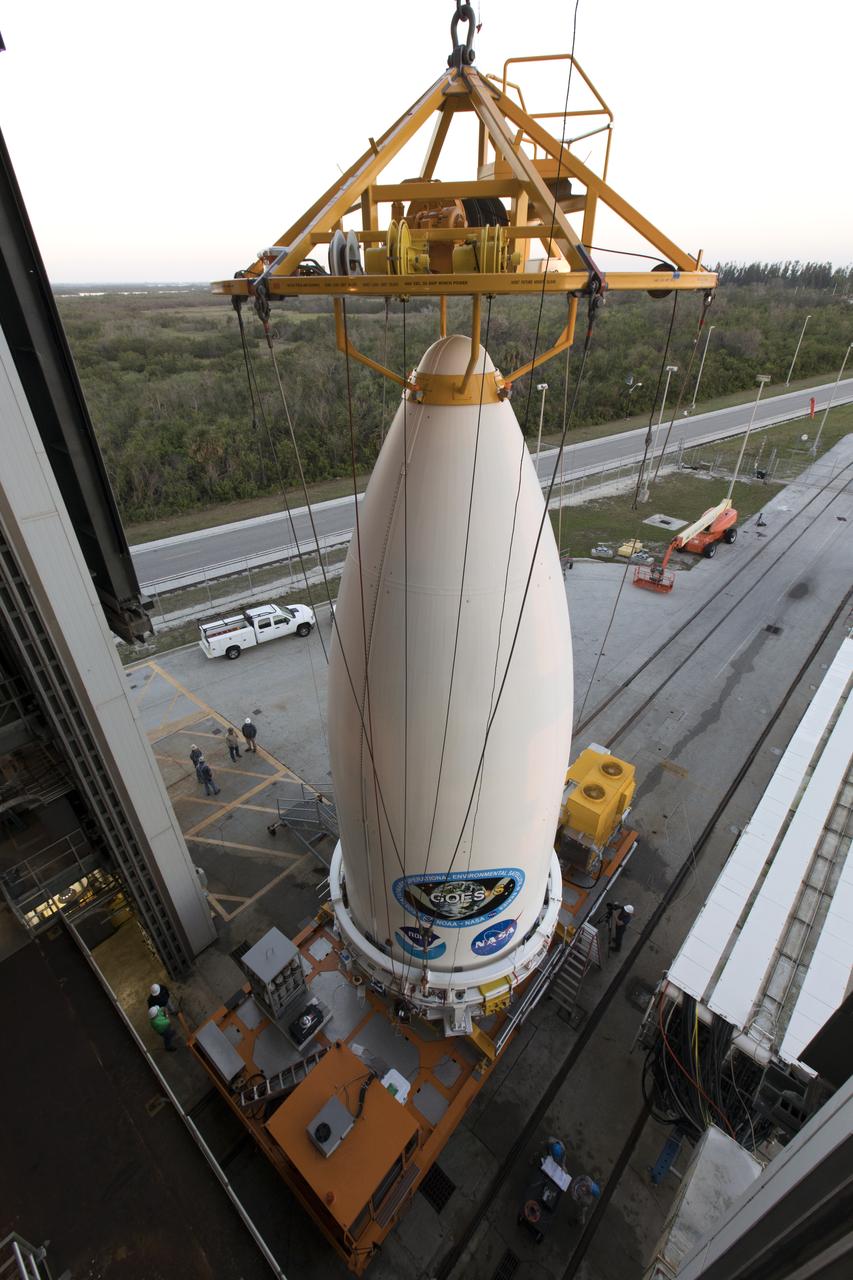
A view from above shows a crane attached to the payload fairing containing NOAA's Geostationary Operational Environmental Satellite-S (GOES-S). The fairing will be lifted and moved into the Vertical Integration Facility at Space Launch Complex 41 at Cape Canaveral Air Force Station in Florida. The fairing will be lifted and mated to the ULA Atlas V rocket. GOES-S is the second in a series of four advanced geostationary weather satellites. The satellite is slated to launch aboard the ULA Atlas V on March 1.
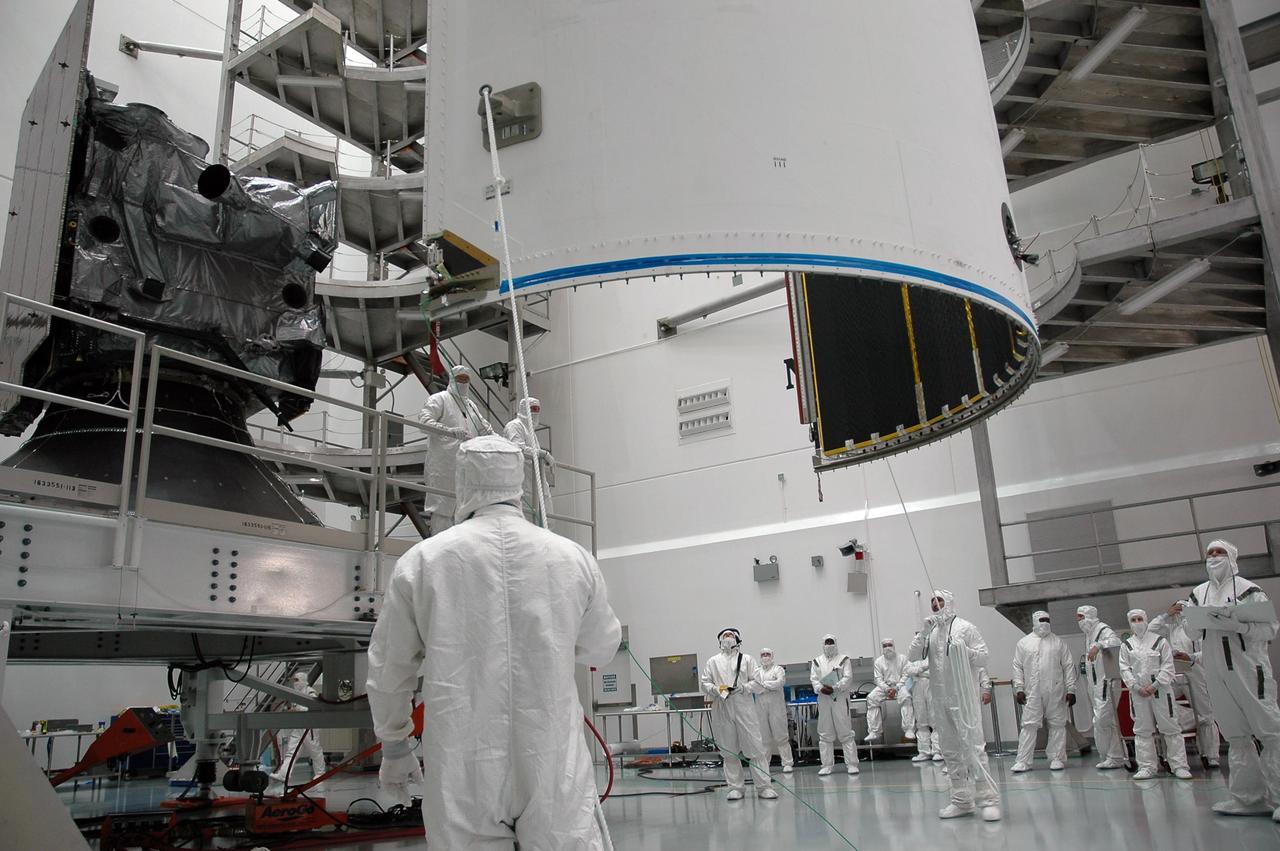
KENNEDY SPACE CENTER, FLA. - In the high bay at Astrotech Space Operations in Titusville, Fla., workers help guide the first half of the fairing toward the GOES-N spacecraft. The fairing will be used to encapsulate, or enclose, the GOES-N satellite for launch. The fairing protects the spacecraft during launch and flight through the atmosphere. Once out of the atmosphere, the fairing is jettisoned. GOES-N is the latest in a series of Geostationary Operational Environmental Satellites for NOAA and NASA providing continuous monitoring necessary for intensive data analysis. GOES-N will be launched May 18 on a Boeing Delta IV rocket from Cape Canaveral Air Force Station in Florida. Photo credit: NASA/Jack Pfaller
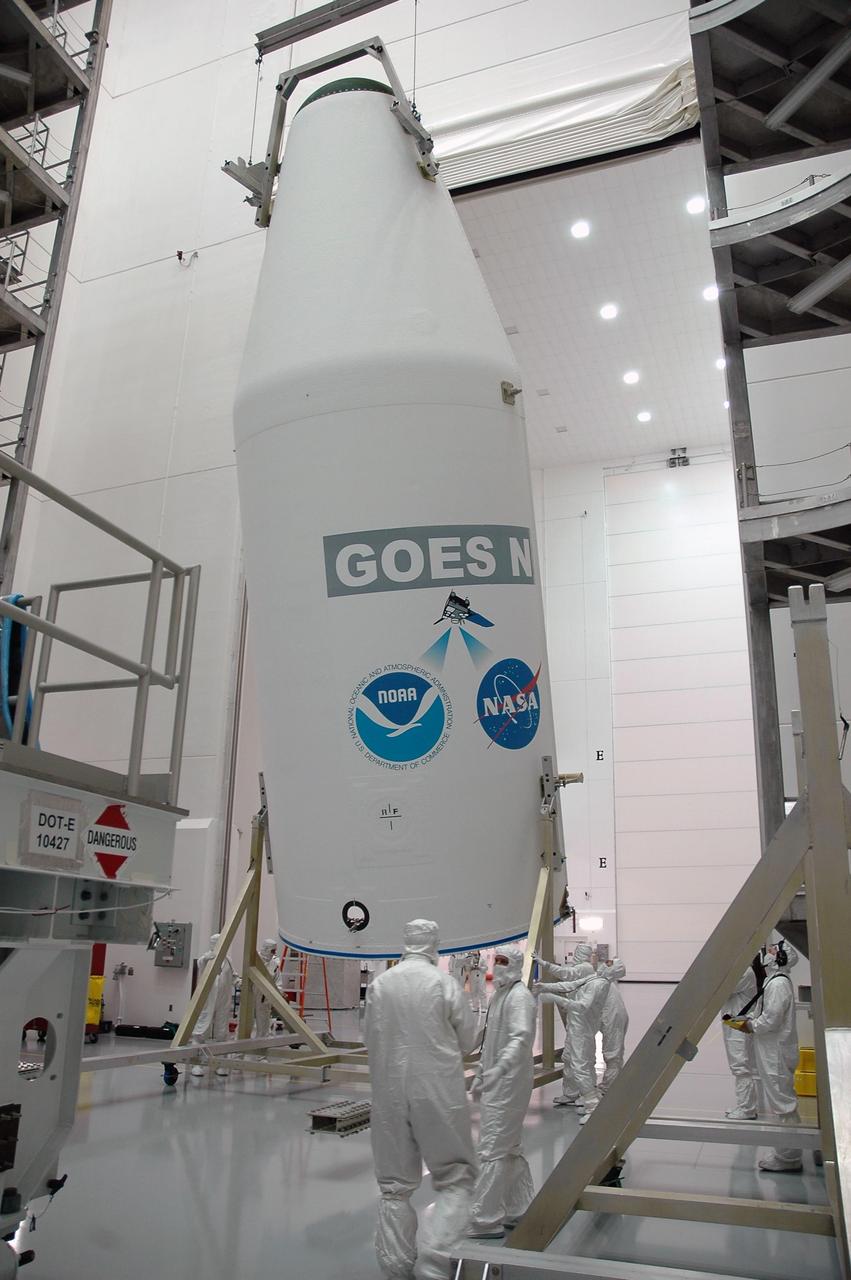
KENNEDY SPACE CENTER, FLA. - At Astrotech Space Operations in Titusville, Fla., the first half of the fairing for the GOES-N spacecraft is raised nearly upright. The fairing will be used to encapsulate, or enclose, the GOES-N satellite for launch. The fairing protects the spacecraft during launch and flight through the atmosphere. Once out of the atmosphere, the fairing is jettisoned. GOES-N is the latest in a series of Geostationary Operational Environmental Satellites for NOAA and NASA providing continuous monitoring necessary for intensive data analysis. GOES-N will be launched May 18 on a Boeing Delta IV rocket from Cape Canaveral Air Force Station in Florida. Photo credit: NASA/Jack Pfaller
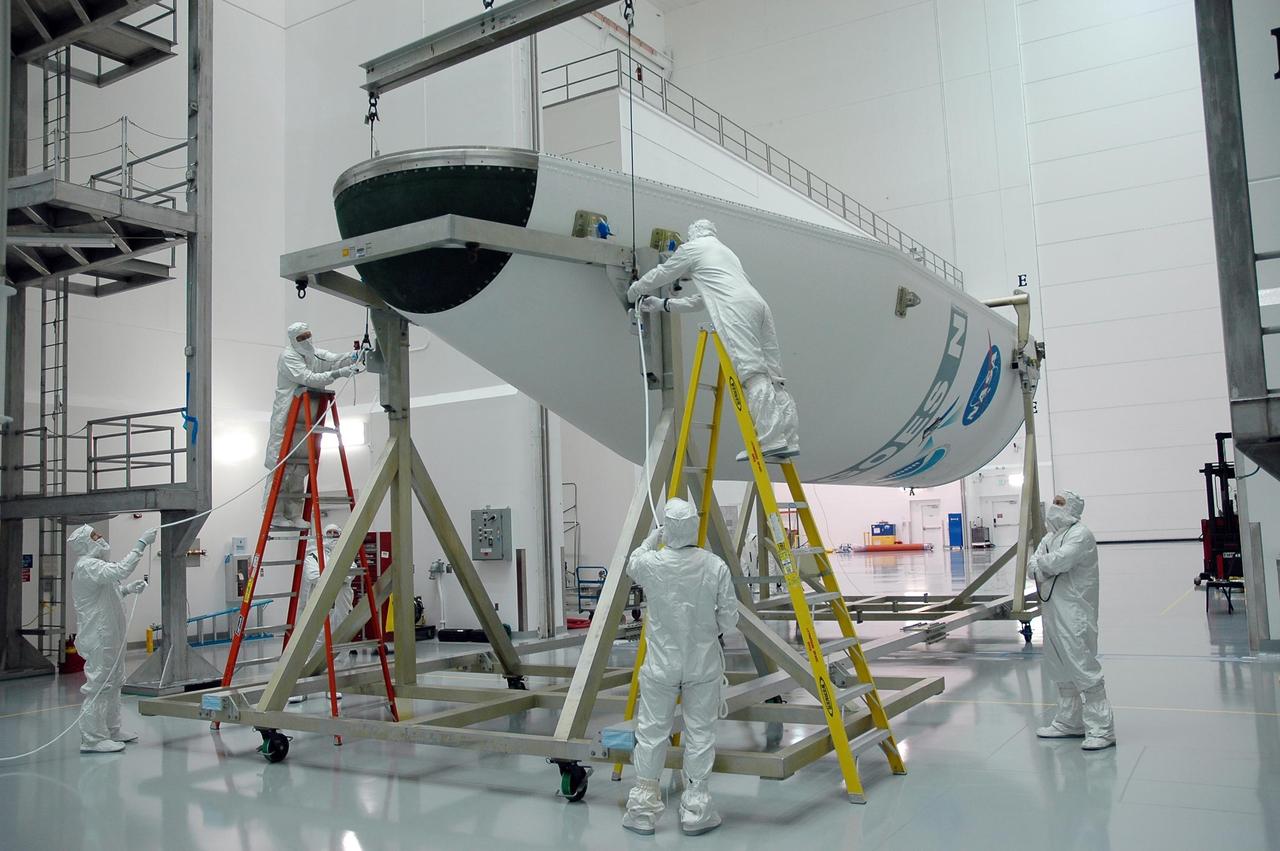
KENNEDY SPACE CENTER, FLA. - At Astrotech Space Operations in Titusville, Fla., workers attach a crane to one of the fairing halves in order to raise it to vertical. The fairing, which is installed around the spacecraft, will be used to encapsulate the GOES-N satellite for launch. The fairing protects the spacecraft during launch and flight through the atmosphere. Once out of the atmosphere, the fairing is jettisoned. GOES-N is the latest in a series of Geostationary Operational Environmental Satellites for NOAA and NASA providing continuous monitoring necessary for intensive data analysis. GOES-N will be launched May 18 on a Boeing Delta IV rocket from Cape Canaveral Air Force Station in Florida. Photo credit: NASA/Jack Pfaller
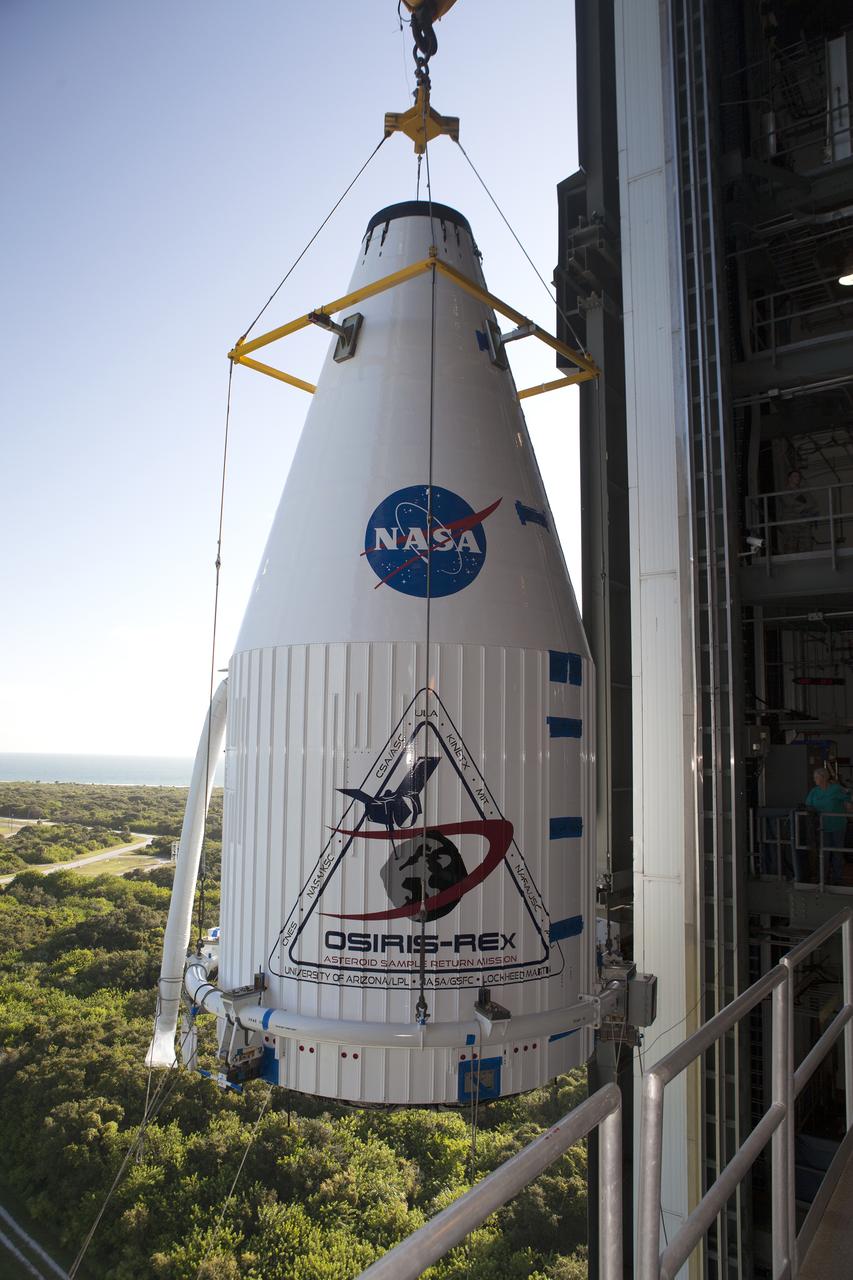
The OSIRIS-REx spacecraft, enclosed in a payload fairing, is lifted at Space Launch Complex 41 at Cape Canaveral Air Force Station. The United Launch Alliance Atlas V rocket that is to lift OSIRIS-REx into space was stacked at SLC-41 so the spacecraft and fairing could be hoisted and bolted to the rocket promptly. The spacecraft will be sent to rendezvous with, survey and take a sample from an asteroid called Bennu.
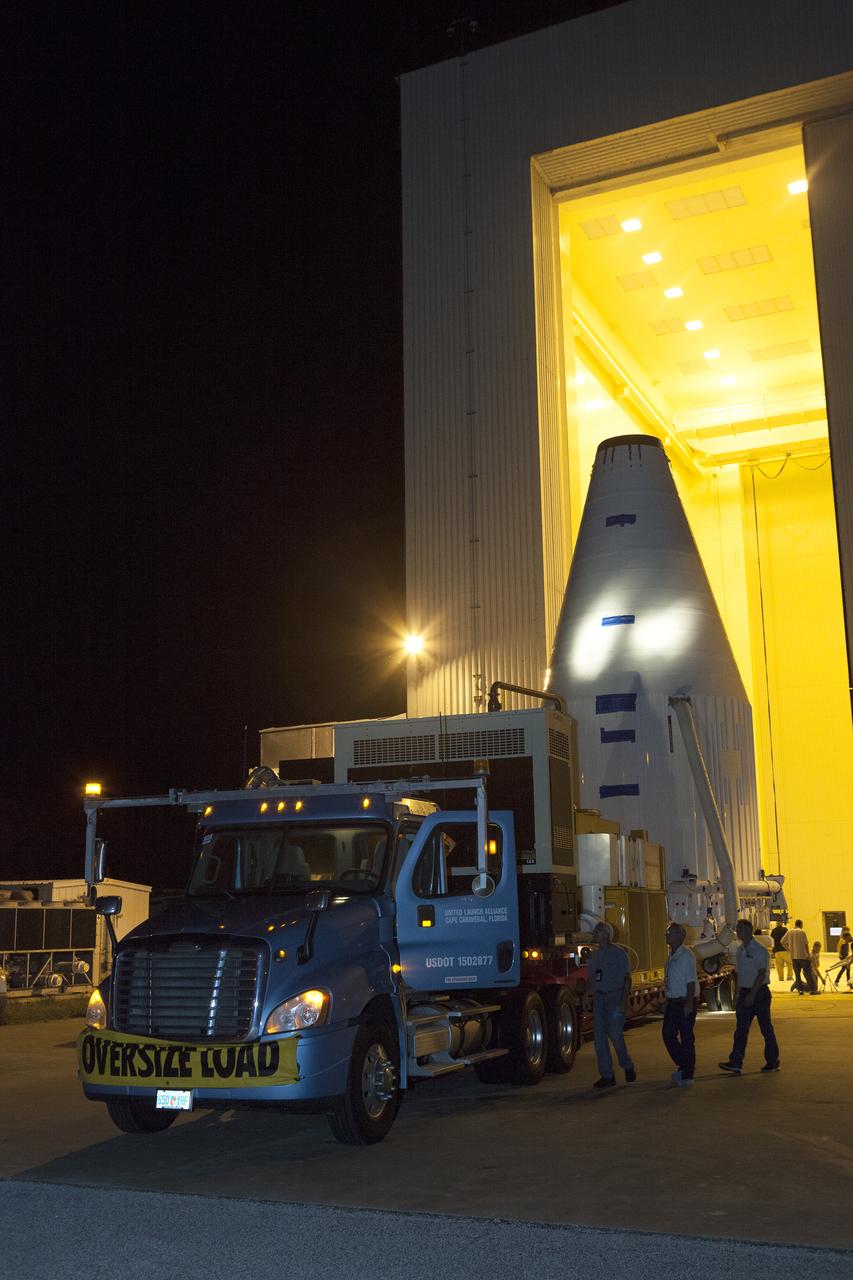
The OSIRIS-REx spacecraft, enclosed in a payload fairing, is towed from the Payload Hazardous Servicing Facility at NASA's Kennedy Space Center to begin the trip to Space Launch Complex 41 at the adjacent Cape Canaveral Air Force Station. The United Launch Alliance Atlas V rocket that is to lift OSIRIS-REx into space was stacked at SLC-41 so the spacecraft and fairing could be hoisted and bolted to the rocket promptly. The spacecraft will be sent to rendezvous with, survey and take a sample from an asteroid called Bennu.
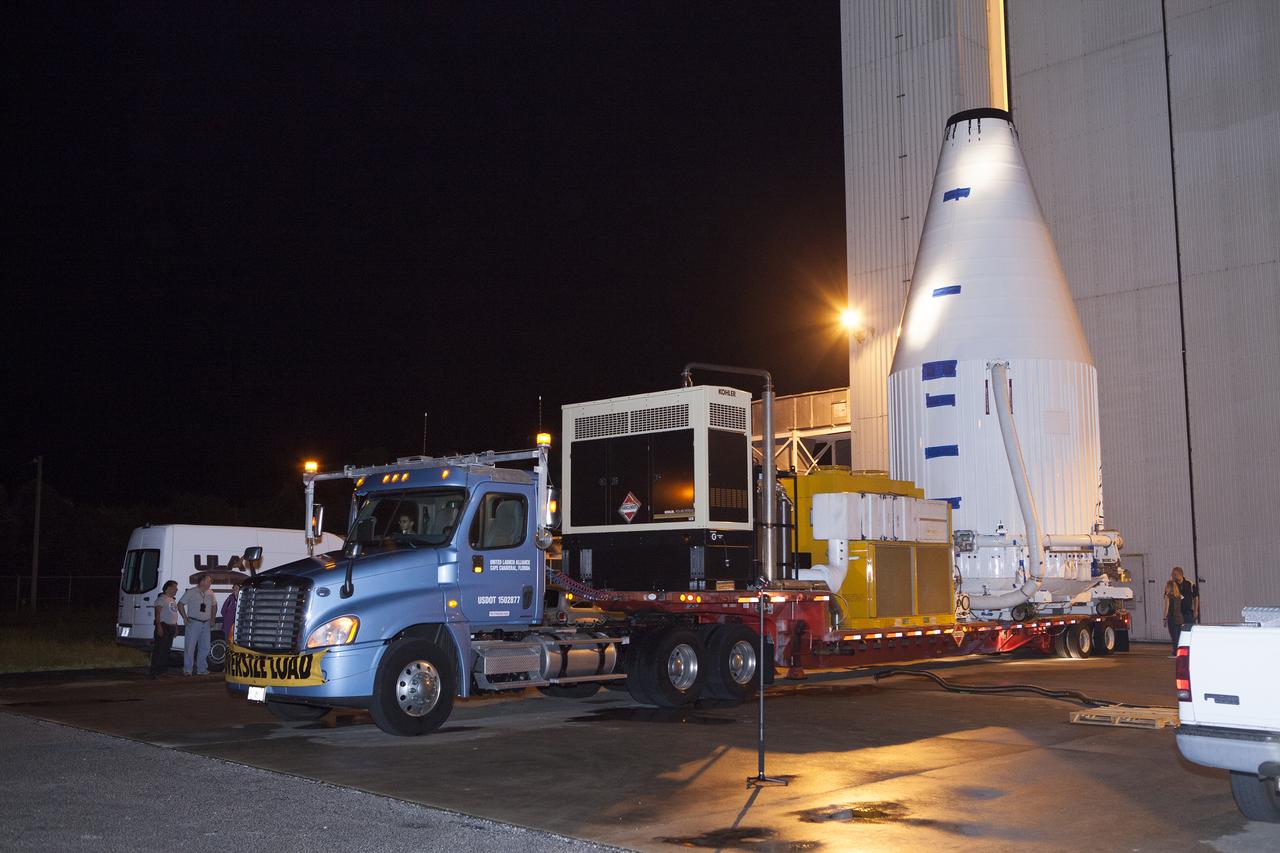
The OSIRIS-REx spacecraft, enclosed in a payload fairing, is towed from the Payload Hazardous Servicing Facility at NASA's Kennedy Space Center to begin the trip to Space Launch Complex 41 at the adjacent Cape Canaveral Air Force Station. The United Launch Alliance Atlas V rocket that is to lift OSIRIS-REx into space was stacked at SLC-41 so the spacecraft and fairing could be hoisted and bolted to the rocket promptly. The spacecraft will be sent to rendezvous with, survey and take a sample from an asteroid called Bennu.
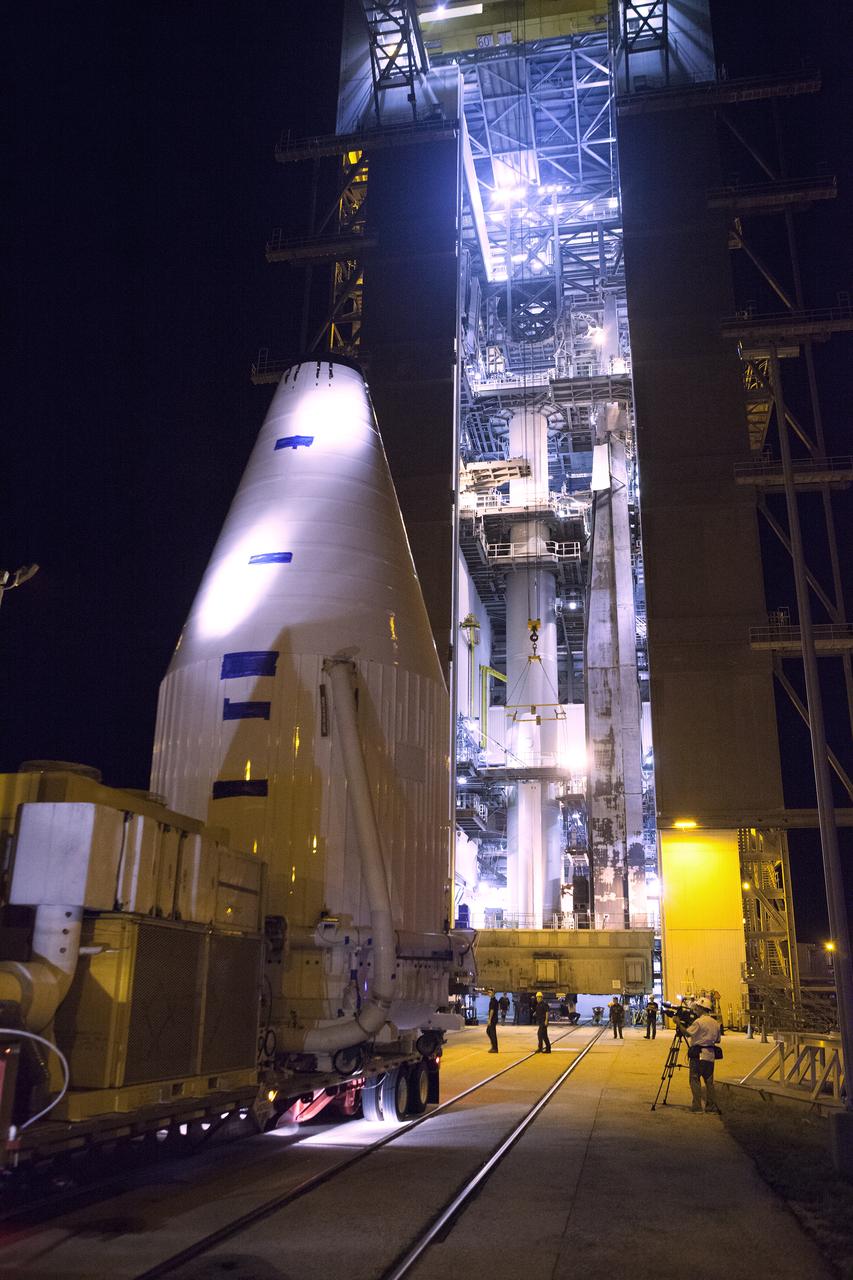
The OSIRIS-REx spacecraft, enclosed in a payload fairing, arrives at Space Launch Complex 41 at Cape Canaveral Air Force Station. The United Launch Alliance Atlas V rocket that is to lift OSIRIS-REx into space was stacked at SLC-41 so the spacecraft and fairing could be hoisted and bolted to the rocket promptly. The spacecraft will be sent to rendezvous with, survey and take a sample from an asteroid called Bennu.
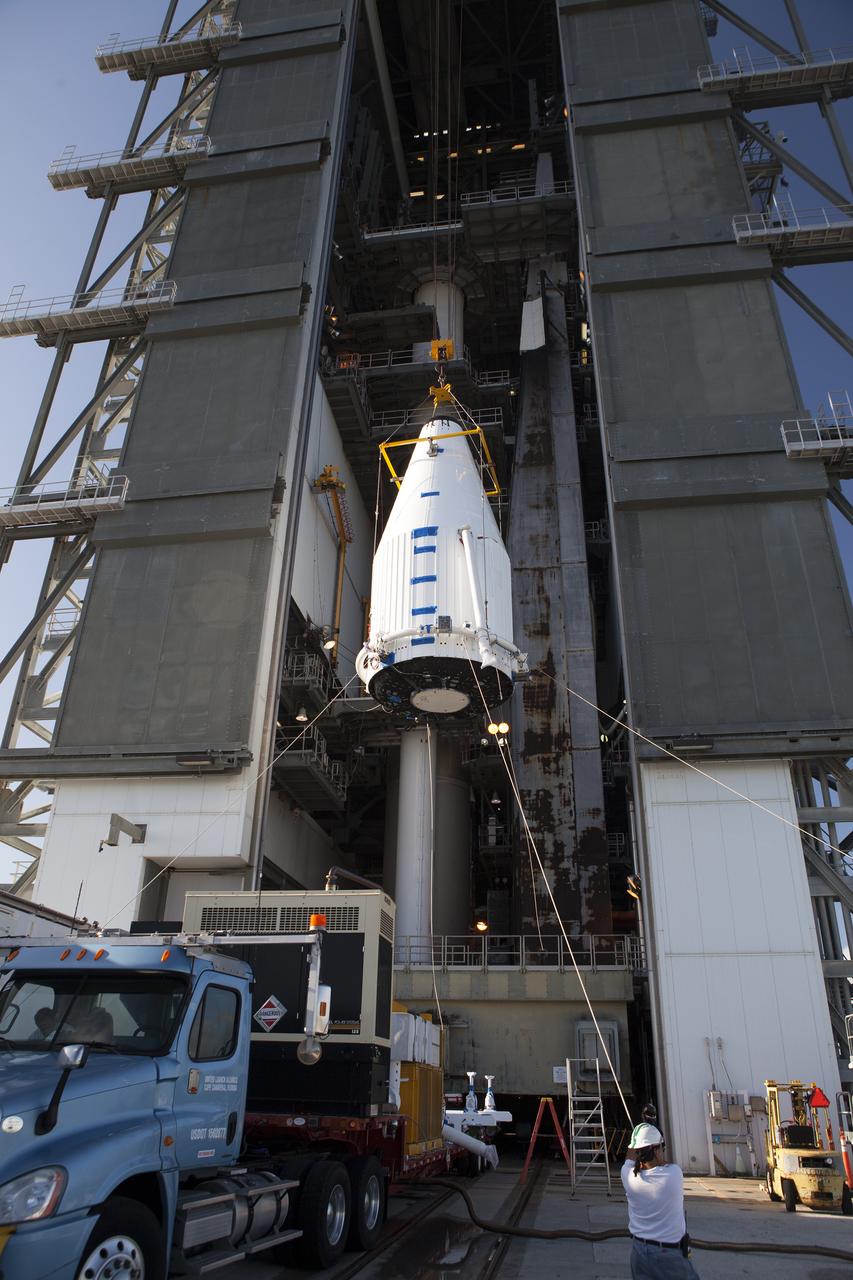
The OSIRIS-REx spacecraft, enclosed in a payload fairing, is lifted at Space Launch Complex 41 at Cape Canaveral Air Force Station. The United Launch Alliance Atlas V rocket that is to lift OSIRIS-REx into space was stacked at SLC-41 so the spacecraft and fairing could be hoisted and bolted to the rocket promptly. The spacecraft will be sent to rendezvous with, survey and take a sample from an asteroid called Bennu.
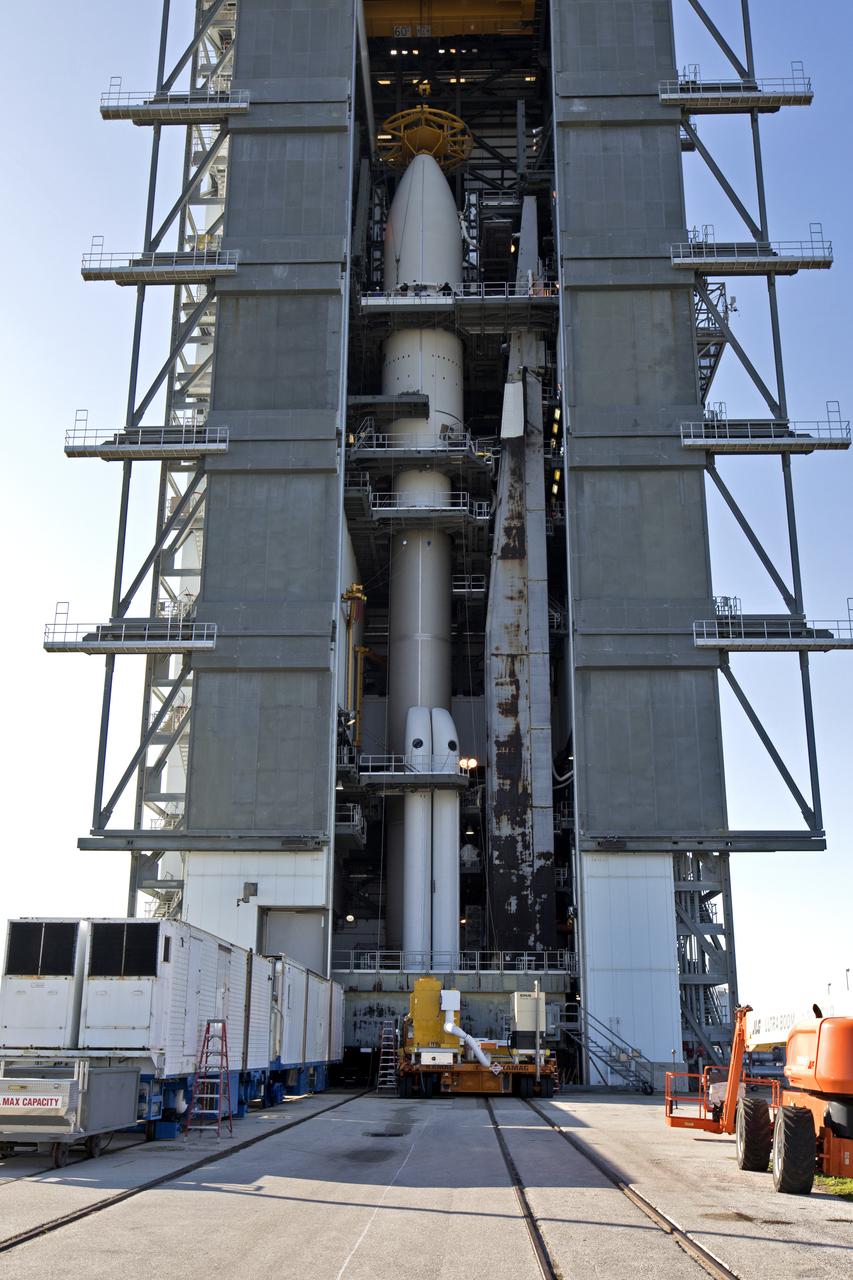
The payload fairing containing NOAA's Geostationary Operational Environmental Satellite-S (GOES-S) is lowered by crane onto the United Launch Alliance (ULA) Atlas V rocket in the ULA Vertical Integration Facility at Space Launch Complex 41 at Cape Canaveral Air Force Station in Florida. The fairing will be secured to the rocket in preparation for launch. GOES-S is the second in a series of four advanced geostationary weather satellites. The satellite is slated to launch aboard the ULA Atlas V on March 1.
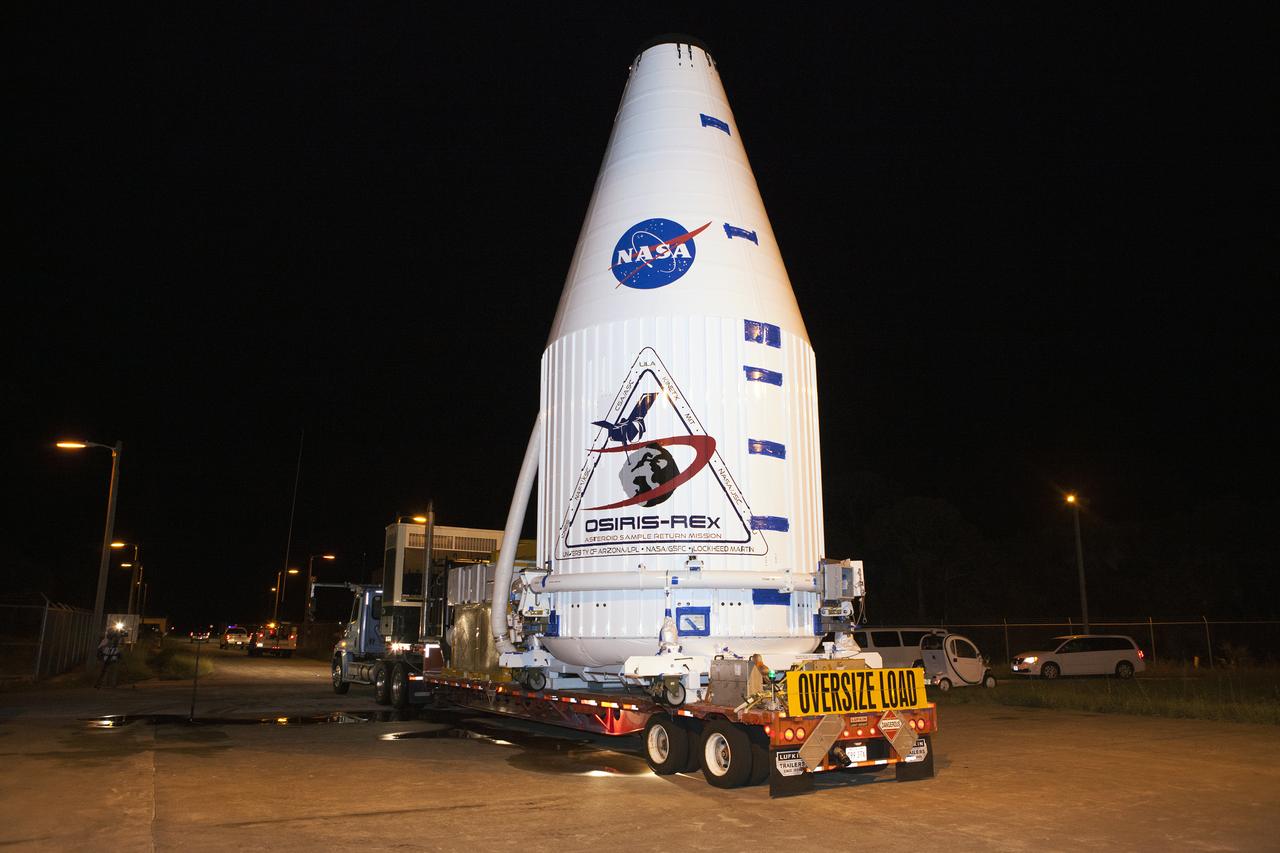
The OSIRIS-REx spacecraft, enclosed in a payload fairing, is towed from the Payload Hazardous Servicing Facility at NASA's Kennedy Space Center to begin the trip to Space Launch Complex 41 at the adjacent Cape Canaveral Air Force Station. The United Launch Alliance Atlas V rocket that is to lift OSIRIS-REx into space was stacked at SLC-41 so the spacecraft and fairing could be hoisted and bolted to the rocket promptly. The spacecraft will be sent to rendezvous with, survey and take a sample from an asteroid called Bennu.
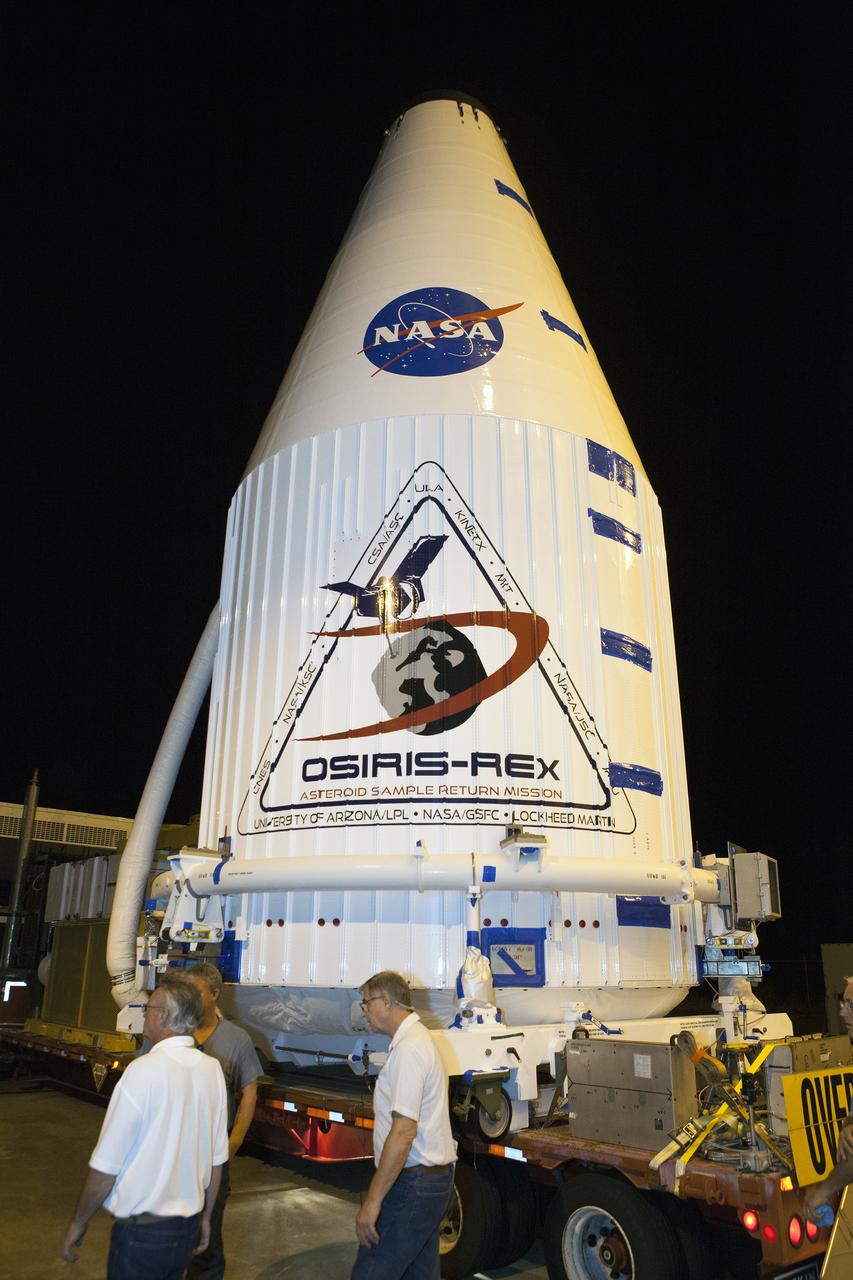
The OSIRIS-REx spacecraft, enclosed in a payload fairing, is towed from the Payload Hazardous Servicing Facility at NASA's Kennedy Space Center to begin the trip to Space Launch Complex 41 at the adjacent Cape Canaveral Air Force Station. The United Launch Alliance Atlas V rocket that is to lift OSIRIS-REx into space was stacked at SLC-41 so the spacecraft and fairing could be hoisted and bolted to the rocket promptly. The spacecraft will be sent to rendezvous with, survey and take a sample from an asteroid called Bennu.

The OSIRIS-REx spacecraft, enclosed in a payload fairing, is positioned for lifting at Space Launch Complex 41 at Cape Canaveral Air Force Station. The United Launch Alliance Atlas V rocket that is to lift OSIRIS-REx into space was stacked at SLC-41 so the spacecraft and fairing could be hoisted and bolted to the rocket promptly. The spacecraft will be sent to rendezvous with, survey and take a sample from an asteroid called Bennu.
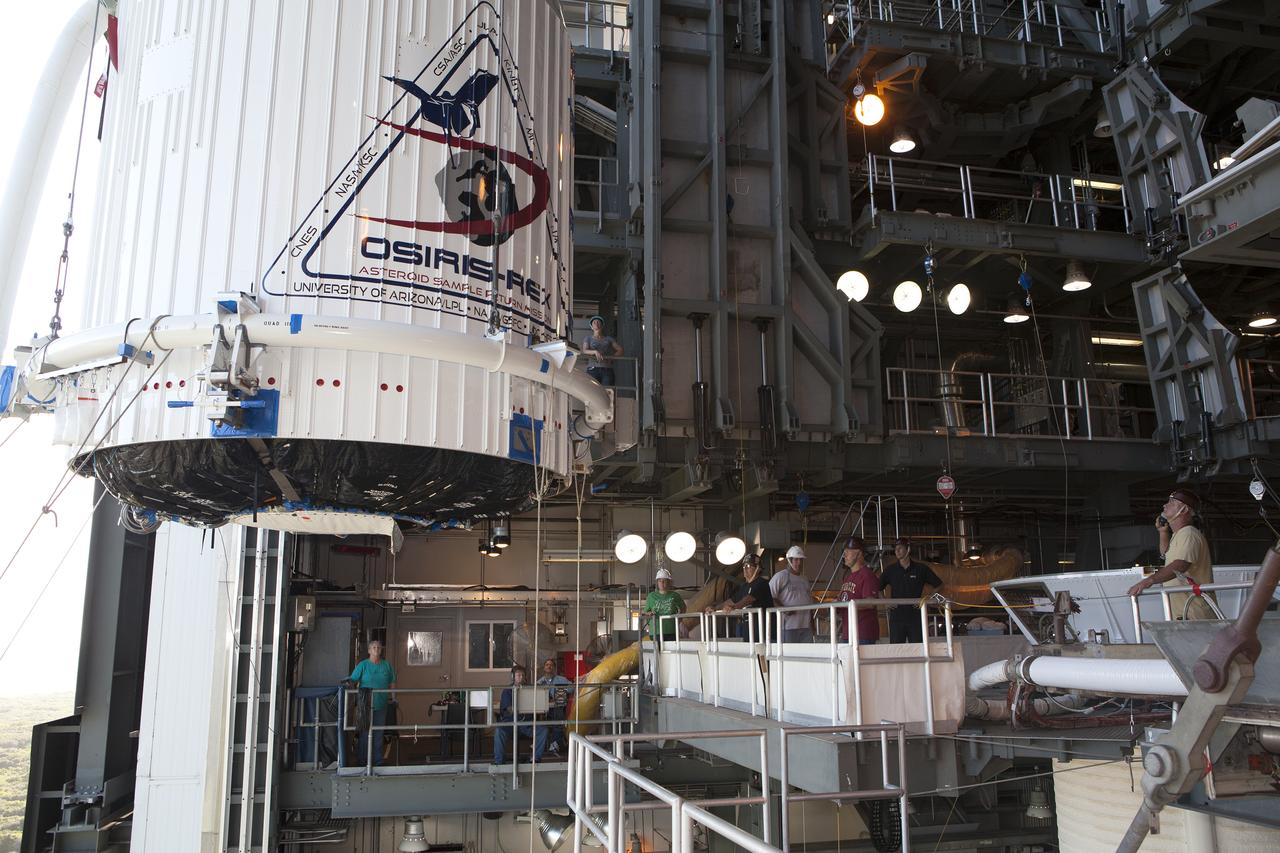
The OSIRIS-REx spacecraft, enclosed in a payload fairing, is lifted at Space Launch Complex 41 at Cape Canaveral Air Force Station. The United Launch Alliance Atlas V rocket that is to lift OSIRIS-REx into space was stacked at SLC-41 so the spacecraft and fairing could be hoisted and bolted to the rocket promptly. The spacecraft will be sent to rendezvous with, survey and take a sample from an asteroid called Bennu.
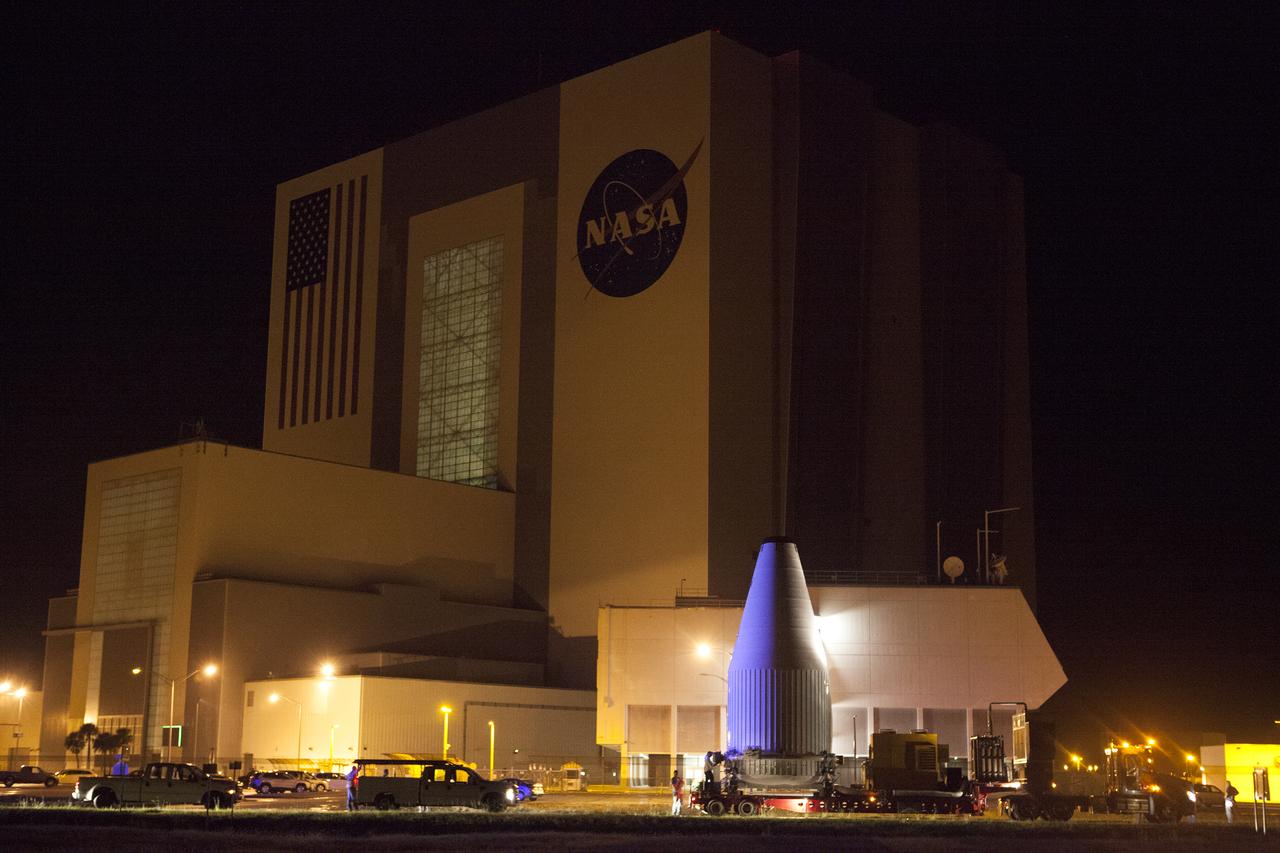
The OSIRIS-REx spacecraft, enclosed in a payload fairing, is towed past the Vehicle Assembly Building at NASA's Kennedy Space Center on its way to Space Launch Complex 41 at the adjacent Cape Canaveral Air Force Station. The United Launch Alliance Atlas V rocket that is to lift OSIRIS-REx into space was stacked at SLC-41 so the spacecraft and fairing could be hoisted and bolted to the rocket promptly. The spacecraft will be sent to rendezvous with, survey and take a sample from an asteroid called Bennu.
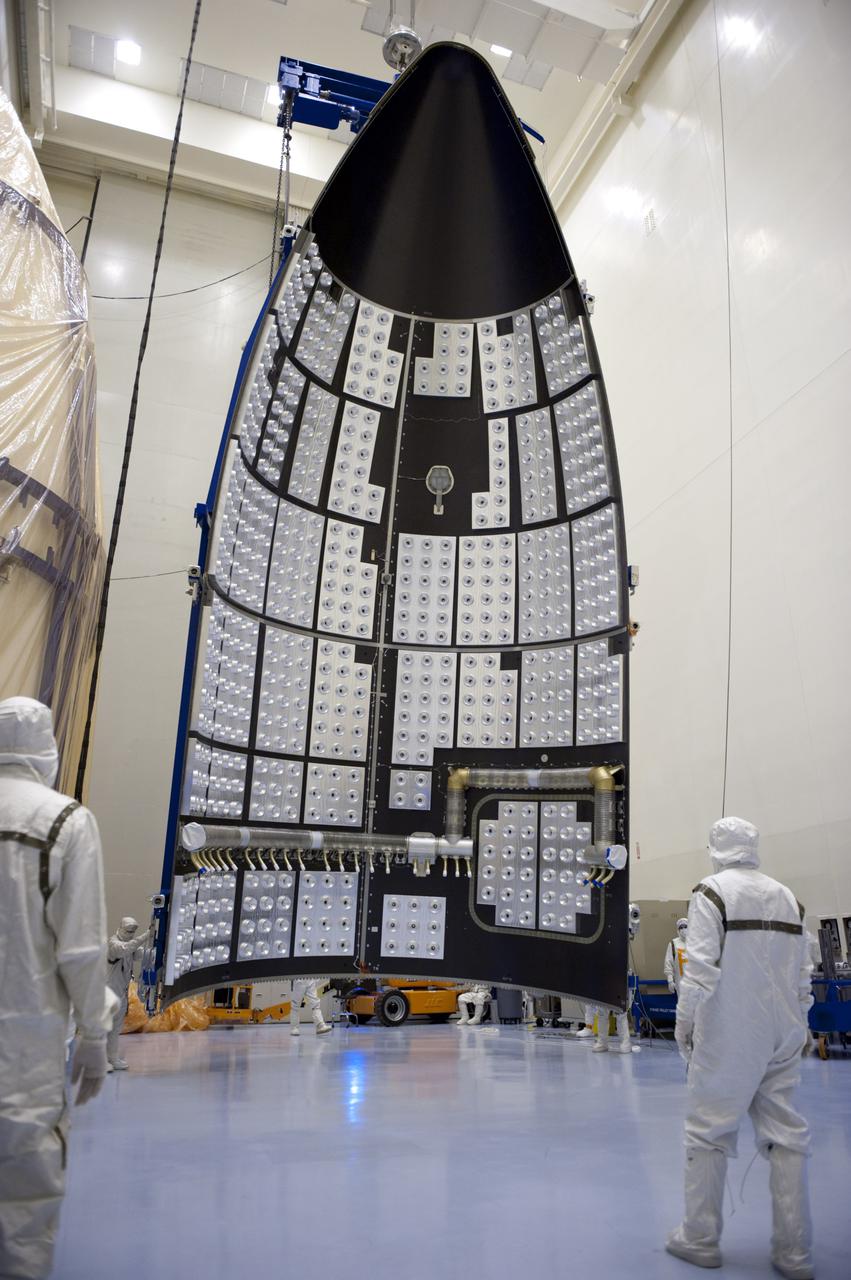
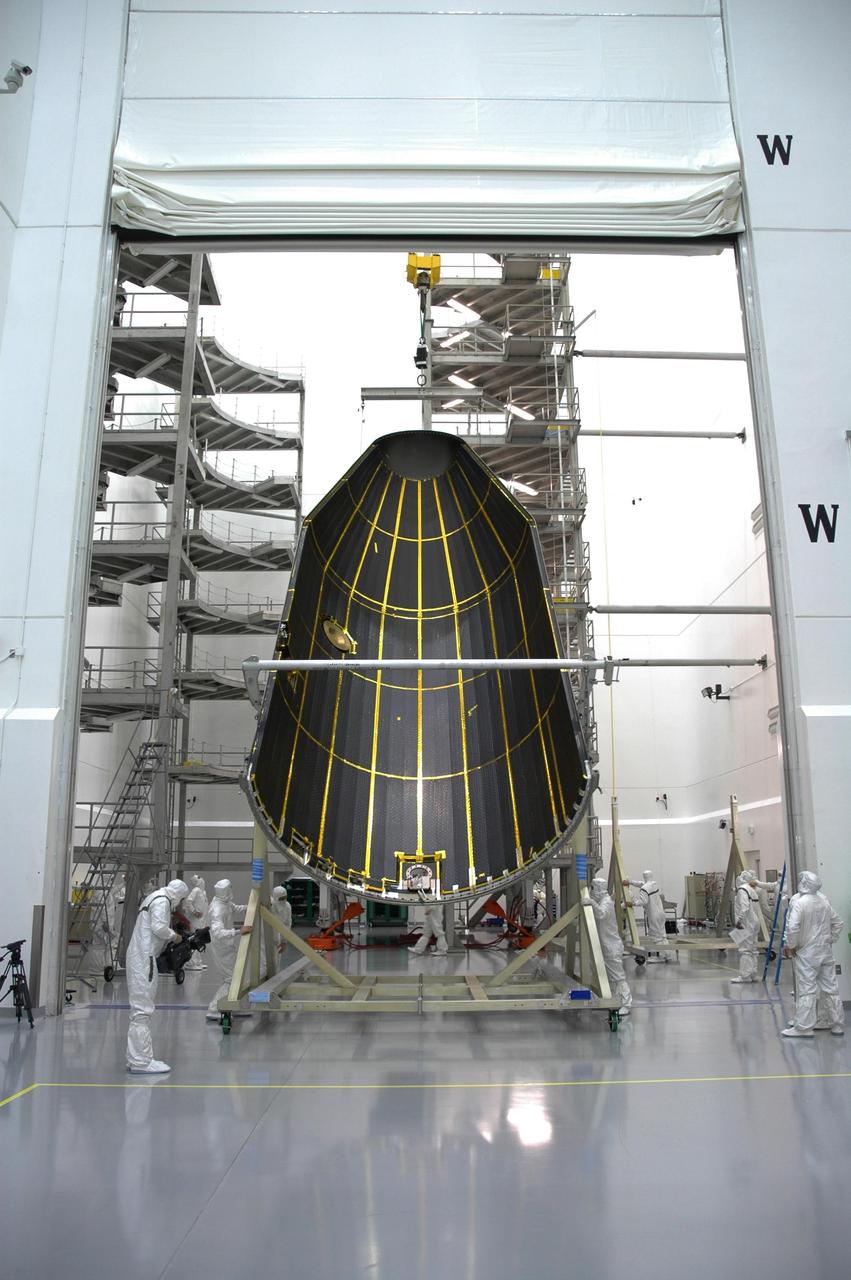
CAPE CANAVERAL, Fla. -- In the Payload Hazardous Servicing Facility at NASA's Kennedy Space Center in Florida, a section of the Atlas V payload fairing for NASA's Mars Science Laboratory (MSL) mission hangs vertically from the ceiling. The fairing has been uncovered, revealing the fairing acoustic protection (FAP) system lining its interior. The FAP protects the payload by dampening the sound created by the rocket during liftoff. Next, the fairing will be cleaned to meet NASA's planetary protection requirements. The fairing will protect the spacecraft from the impact of aerodynamic pressure and heating during ascent. Although jettisoned once the spacecraft is outside the Earth's atmosphere, the fairing must be cleaned to the same exacting standards as the laboratory to avoid the possibility of contaminating it. MSL's components include a compact car-sized rover, Curiosity, which has 10 science instruments designed to search for evidence on whether Mars has had environments favorable to microbial life, including the chemical ingredients for life. The unique rover will use a laser to look inside rocks and release its gasses so that the rover’s spectrometer can analyze and send the data back to Earth. Launch of MSL aboard a United Launch Alliance Atlas V rocket is planned for Nov. 25 from Space Launch Complex 41 on Cape Canaveral Air Force Station. For more information, visit http:__www.nasa.gov_msl. Photo credit: NASA_Kim Shiflett
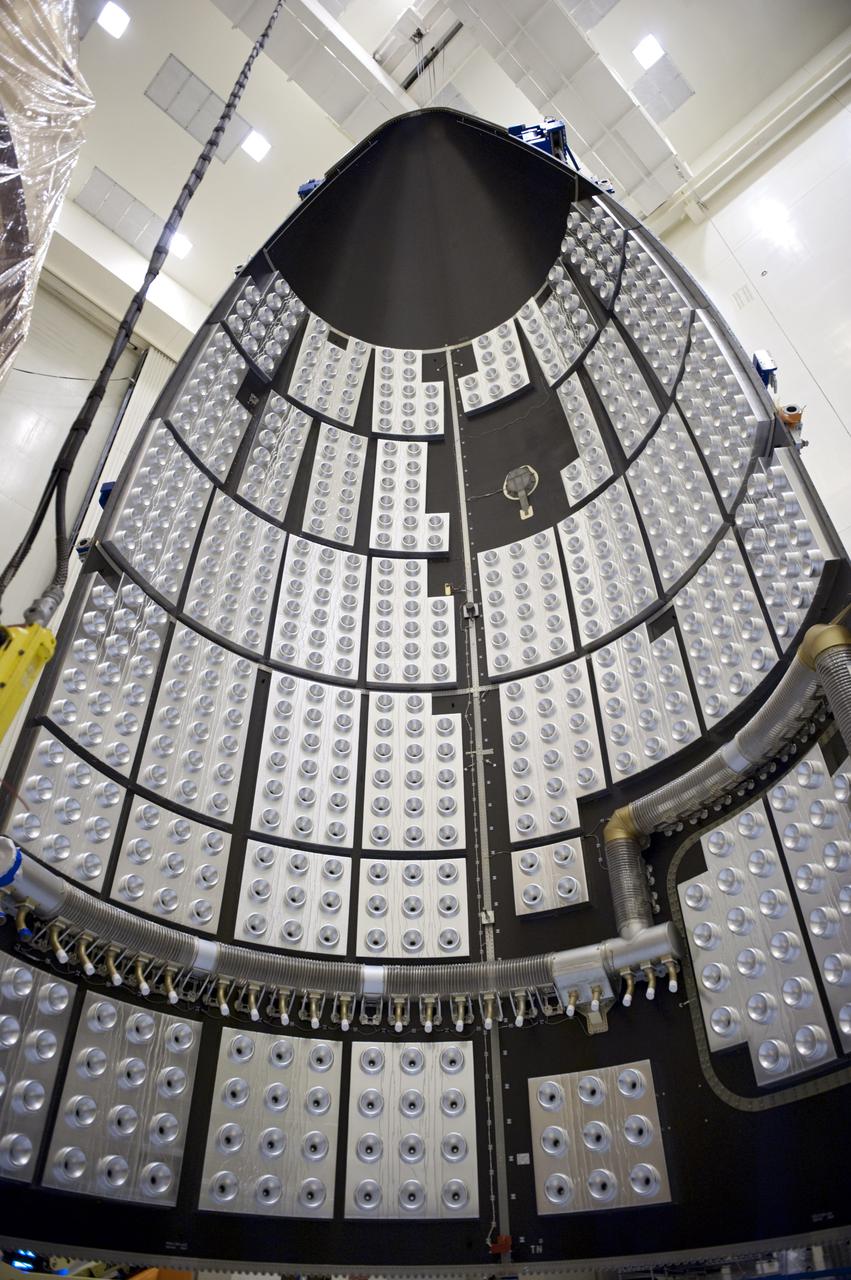
CAPE CANAVERAL, Fla. -- In the Payload Hazardous Servicing Facility at NASA's Kennedy Space Center in Florida, half of the Atlas V payload fairing for NASA's Mars Science Laboratory (MSL) mission hangs vertically from the ceiling. The interior of the fairing is lined with the fairing acoustic protection (FAP) system which protects the payload by dampening the sound created by the rocket during liftoff. As a precaution, the fairing next will be cleaned to meet NASA's planetary protection requirements. The fairing will protect the spacecraft from the impact of aerodynamic pressure and heating during ascent. Although jettisoned once the spacecraft is outside the Earth's atmosphere, the fairing must be cleaned to the same exacting standards as the laboratory to avoid the possibility of contaminating it. MSL's components include a compact car-sized rover, Curiosity, which has 10 science instruments designed to search for evidence on whether Mars has had environments favorable to microbial life, including the chemical ingredients for life. The unique rover will use a laser to look inside rocks and release its gasses so that the rover’s spectrometer can analyze and send the data back to Earth. Launch of MSL aboard a United Launch Alliance Atlas V rocket is planned for Nov. 25 from Space Launch Complex 41 on Cape Canaveral Air Force Station. For more information, visit http:__www.nasa.gov_msl. Photo credit: NASA_Kim Shiflett
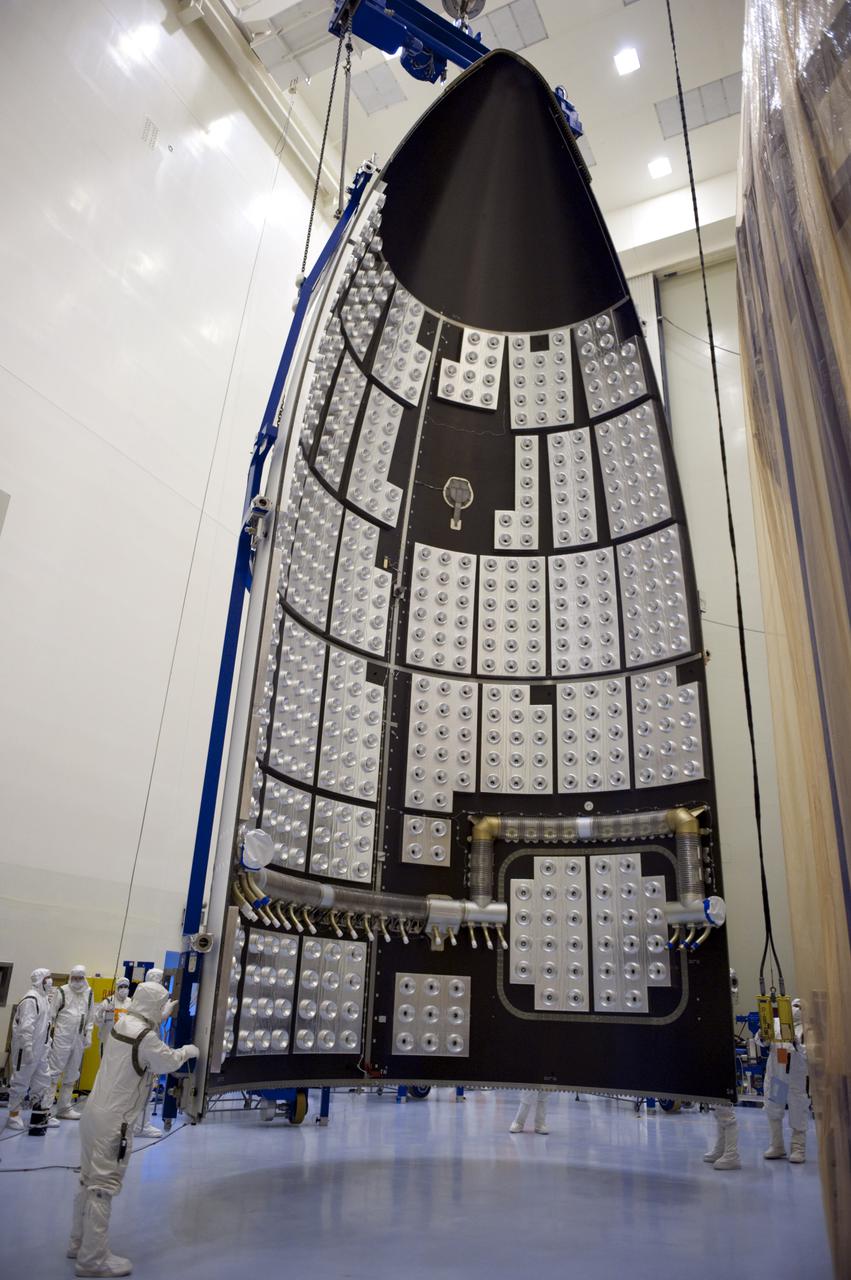
CAPE CANAVERAL, Fla. -- In the Payload Hazardous Servicing Facility at NASA's Kennedy Space Center in Florida, United Launch Alliance technicians steady half of the Atlas V payload fairing for NASA's Mars Science Laboratory (MSL) mission as it hangs vertically from the ceiling. The interior of the fairing is lined with the fairing acoustic protection (FAP) system which protects the payload by dampening the sound created by the rocket during liftoff. As a precaution, the fairing next will be cleaned to meet NASA's planetary protection requirements. The fairing will protect the spacecraft from the impact of aerodynamic pressure and heating during ascent. Although jettisoned once the spacecraft is outside the Earth's atmosphere, the fairing must be cleaned to the same exacting standards as the laboratory to avoid the possibility of contaminating it. MSL's components include a compact car-sized rover, Curiosity, which has 10 science instruments designed to search for evidence on whether Mars has had environments favorable to microbial life, including the chemical ingredients for life. The unique rover will use a laser to look inside rocks and release its gasses so that the rover’s spectrometer can analyze and send the data back to Earth. Launch of MSL aboard a United Launch Alliance Atlas V rocket is planned for Nov. 25 from Space Launch Complex 41 on Cape Canaveral Air Force Station. For more information, visit http:__www.nasa.gov_msl. Photo credit: NASA_Kim Shiflett
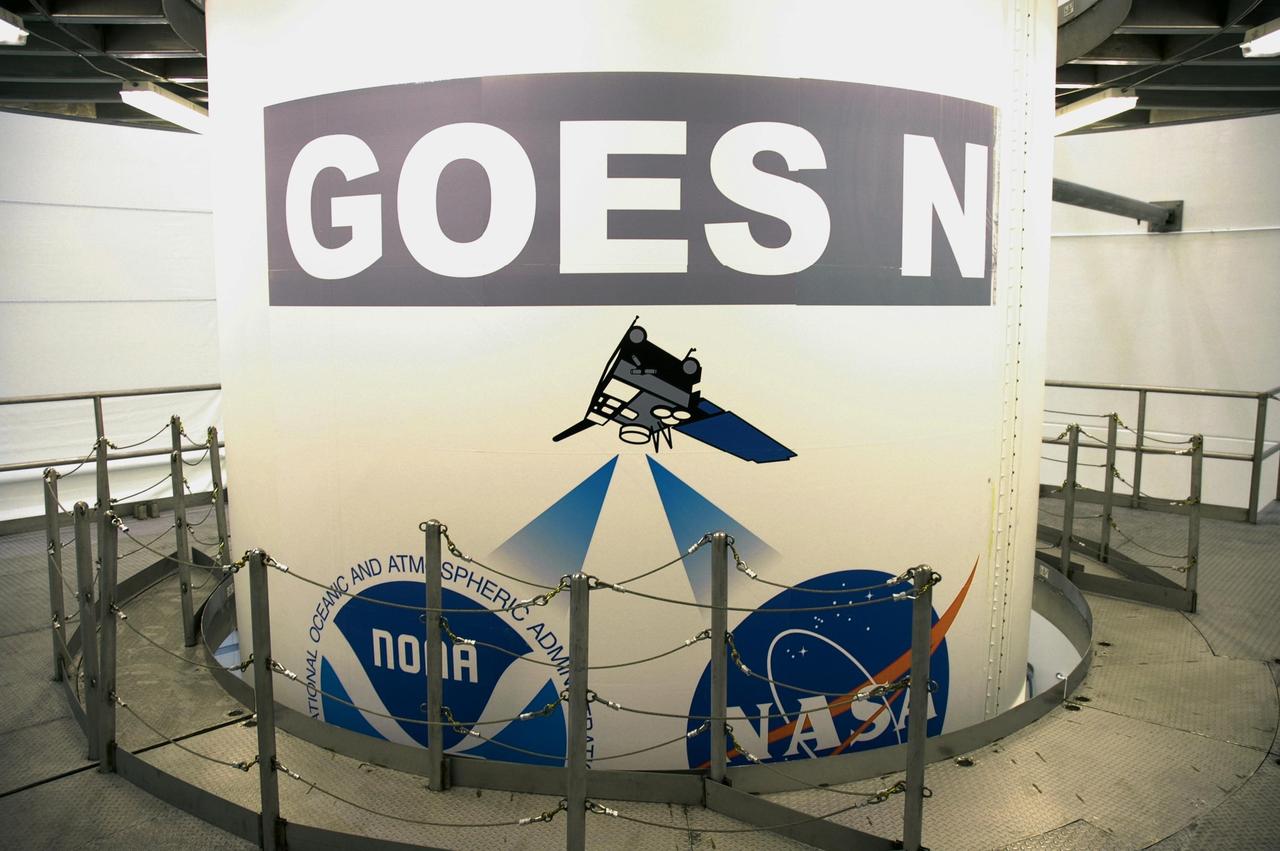
KENNEDY SPACE CENTER, FLA. - At Astrotech Space Operations payload processing facility in Titusville, Fla., the GOES-N spacecraft, secured inside a payload fairing, is surrounded by a work stand. Workers will use the stand to begin detaching the fairing from around the spacecraft. The fairing protects the spacecraft during launch and flight through the atmosphere. Once out of the atmosphere, the fairing is jettisoned. Removing the fairing will allow workers access to the spacecraft. GOES-N was demated from its Boeing Delta IV launch vehicle when the launch was postponed in August 2005 due to technical issues. Due to the extended length of time the spacecraft had been atop the Delta IV rocket without launching, the weather satellite was returned to Astrotech for some precautionary retesting and state of health checks. GOES-N is the latest in a series of Geostationary Operational Environmental Satellites for NOAA and NASA providing continuous monitoring necessary for intensive data analysis. Photo credit: NASA/Jim Grossmann
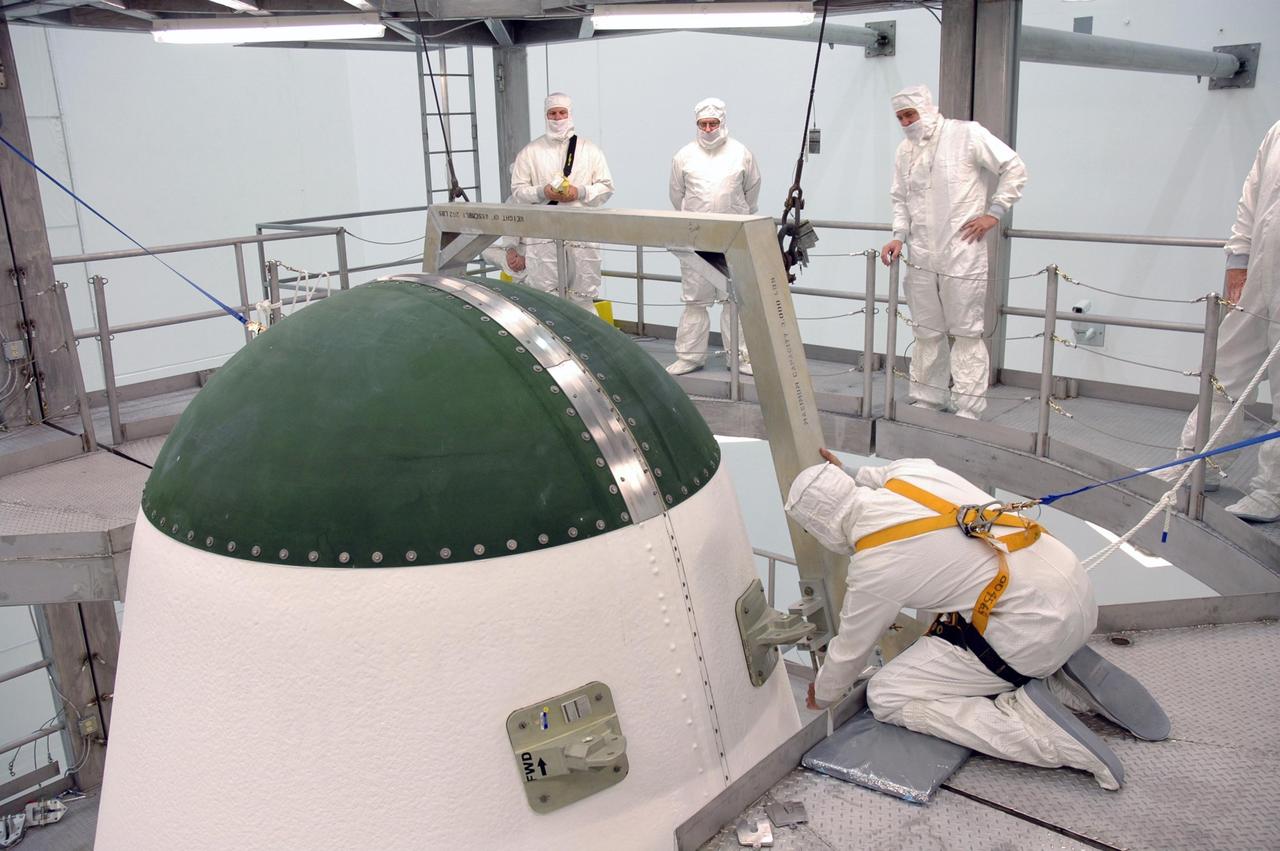
KENNEDY SPACE CENTER, FLA. - At Astrotech Space Operations payload processing facility in Titusville, Fla., workers begin detaching the fairing from around the GOES-N spacecraft. Workers will use the stand to begin detaching the fairing from around the spacecraft. The fairing protects the spacecraft during launch and flight through the atmosphere. Once out of the atmosphere, the fairing is jettisoned. Removing the fairing will allow workers access to the spacecraft. GOES-N was demated from its Boeing Delta IV launch vehicle when the launch was postponed in August 2005 due to technical issues. Due to the extended length of time the spacecraft had been atop the Delta IV rocket without launching, the weather satellite was returned to Astrotech for some precautionary retesting and state of health checks. GOES-N is the latest in a series of Geostationary Operational Environmental Satellites for NOAA and NASA providing continuous monitoring necessary for intensive data analysis. Photo credit: NASA/Jim Grossmann
KENNEDY SPACE CENTER, FLA. - At Astrotech Space Operations payload processing facility in Titusville, Fla., one of the fairing halves removed from around the GOES-N spacecraft is being lowered onto a horizontal stand. Removing the fairing will allow workers access to the spacecraft. Workers are using the stand to detach the fairing from around the spacecraft. Workers will use the stand to begin detaching the fairing from around the spacecraft. The fairing protects the spacecraft during launch and flight through the atmosphere. Once out of the atmosphere, the fairing is jettisoned. Removing the fairing will allow workers access to the spacecraft. GOES-N was demated from its Boeing Delta IV launch vehicle when the launch was postponed in August 2005 due to technical issues. Due to the extended length of time the spacecraft had been atop the Delta IV rocket without launching, the weather satellite was returned to Astrotech for some precautionary retesting and state of health checks. GOES-N is the latest in a series of Geostationary Operational Environmental Satellites for NOAA and NASA providing continuous monitoring necessary for intensive data analysis. Photo credit: NASA/Jim Grossmann
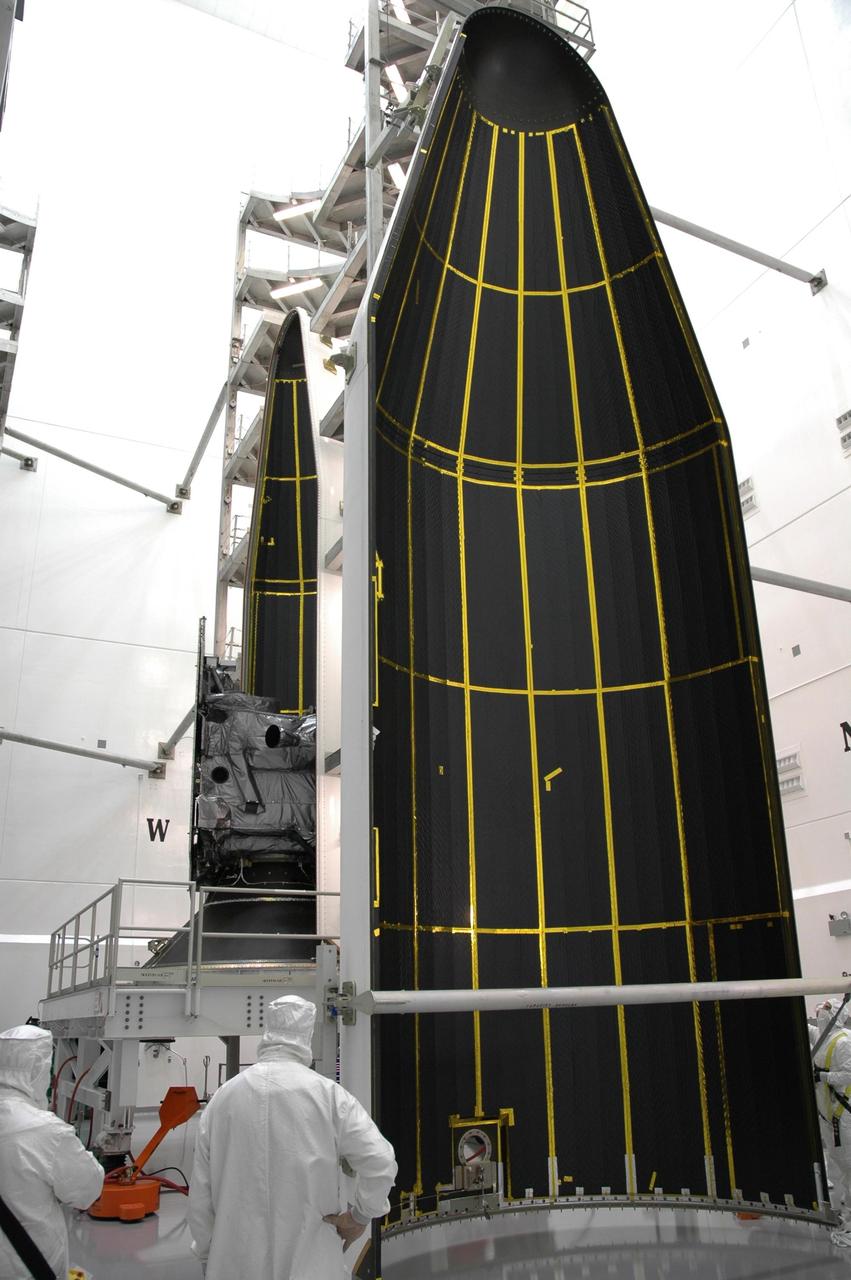
KENNEDY SPACE CENTER, FLA. - At Astrotech Space Operations payload processing facility in Titusville, Fla., the first half of the fairing (right) is moved away from the GOES-N spacecraft after being detached. The spacecraft and second half of the fairing are seen behind it. Workers are using the stand to detach the fairing from around the spacecraft. Workers will use the stand to begin detaching the fairing from around the spacecraft. The fairing protects the spacecraft during launch and flight through the atmosphere. Once out of the atmosphere, the fairing is jettisoned. Removing the fairing will allow workers access to the spacecraft. GOES-N was demated from its Boeing Delta IV launch vehicle when the launch was postponed in August 2005 due to technical issues. Due to the extended length of time the spacecraft had been atop the Delta IV rocket without launching, the weather satellite was returned to Astrotech for some precautionary retesting and state of health checks. GOES-N is the latest in a series of Geostationary Operational Environmental Satellites for NOAA and NASA providing continuous monitoring necessary for intensive data analysis. Photo credit: NASA/Jim Grossmann
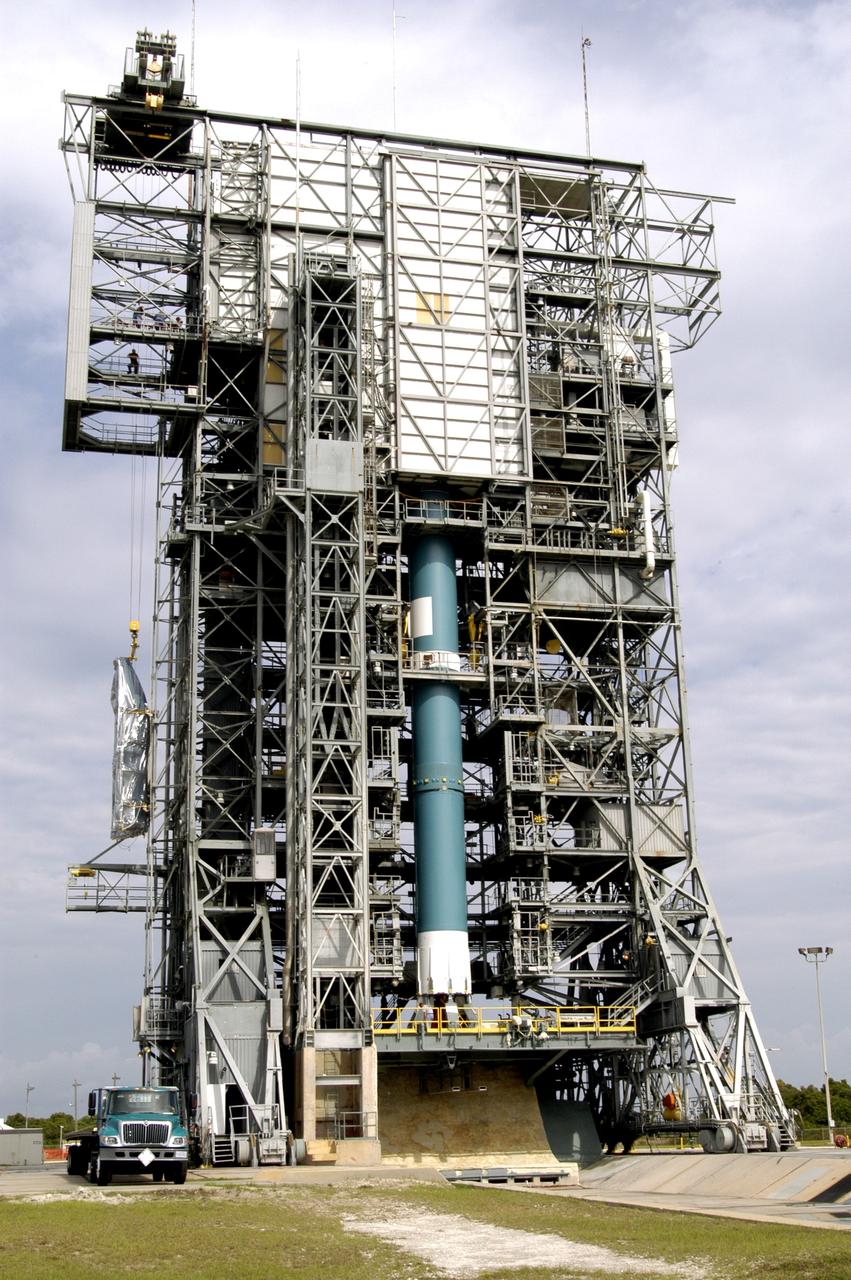
KENNEDY SPACE CENTER, FLA. - At Launch Complex 17-A, Cape Canaveral Air Force Station, the second half of the fairing for the Mars Exploration Rover 2 (MER-2/MER-A) is lifted up the outside of the launch tower. Visible on another side is the Delta II rocket that will carry the payload into space. The fairing will be installed around the payload for protection during launch. The MER Mission consists of two identical rovers designed to cover roughly 110 yards each Martian day over various terrain. Each rover will carry five scientific instruments that will allow it to search for evidence of liquid water that may have been present in the planet's past. Identical to each other, the rovers will land at different regions of Mars. Launch date for MER-A is scheduled for June 5.
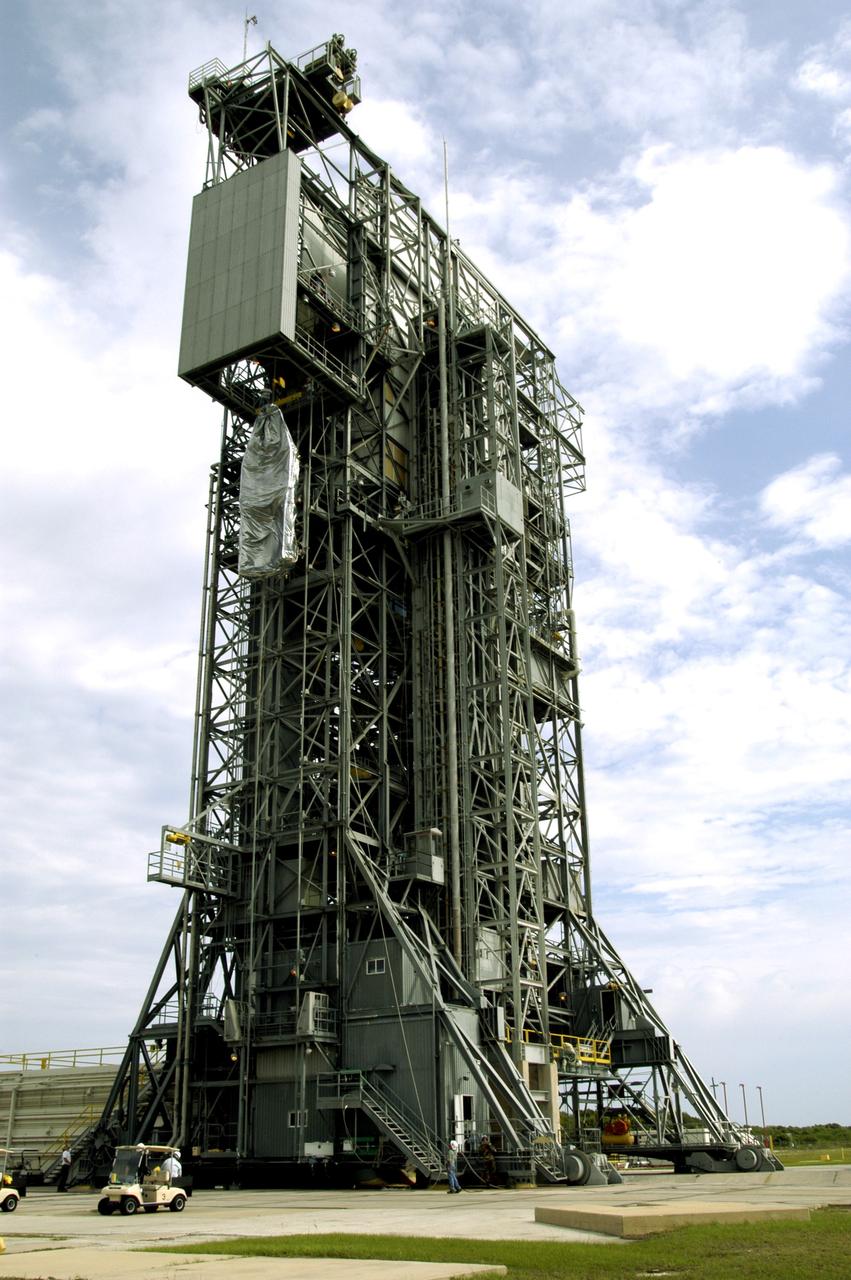
KENNEDY SPACE CENTER, FLA. - At Launch Complex 17-A, Cape Canaveral Air Force Station, the second half of the fairing for the Mars Exploration Rover 2 (MER-2/MER-A) nears the top of the launch tower. The fairing will be installed around the payload for protection during launch on a Delta II rocket. The MER Mission consists of two identical rovers designed to cover roughly 110 yards each Martian day over various terrain. Each rover will carry five scientific instruments that will allow it to search for evidence of liquid water that may have been present in the planet's past. Identical to each other, the rovers will land at different regions of Mars. Launch date for MER-A is scheduled for June 5.
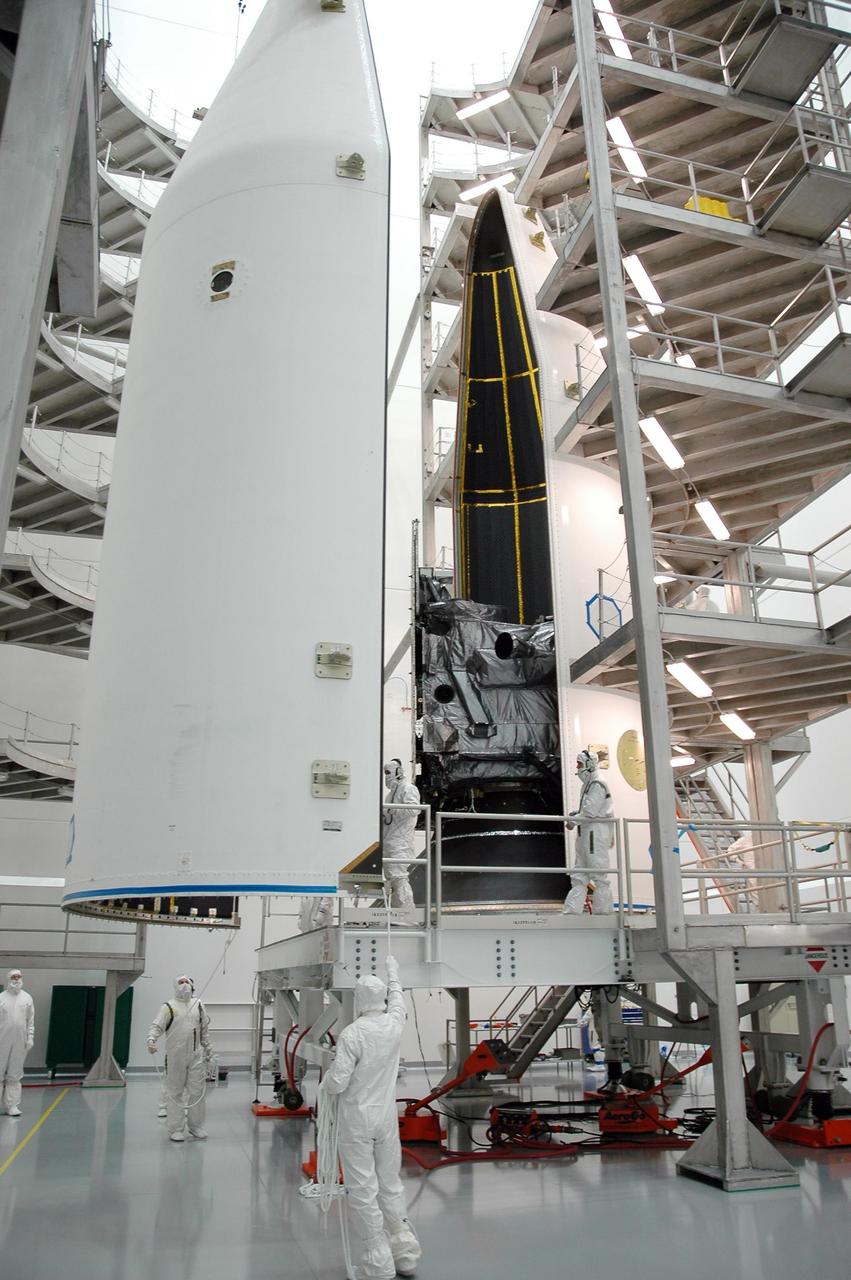
KENNEDY SPACE CENTER, FLA. - In the high bay at Astrotech Space Operations in Titusville, Fla., workers help guide the second half of the fairing toward the GOES-N spacecraft. When both halves are in place, they will encapsulate, or enclose, the GOES-N satellite for launch. The fairing protects the spacecraft during launch and flight through the atmosphere. Once out of the atmosphere, the fairing is jettisoned. GOES-N is the latest in a series of Geostationary Operational Environmental Satellites for NOAA and NASA providing continuous monitoring necessary for intensive data analysis. GOES-N will be launched May 18 on a Boeing Delta IV rocket from Cape Canaveral Air Force Station in Florida. Photo credit: NASA/Jack Pfaller
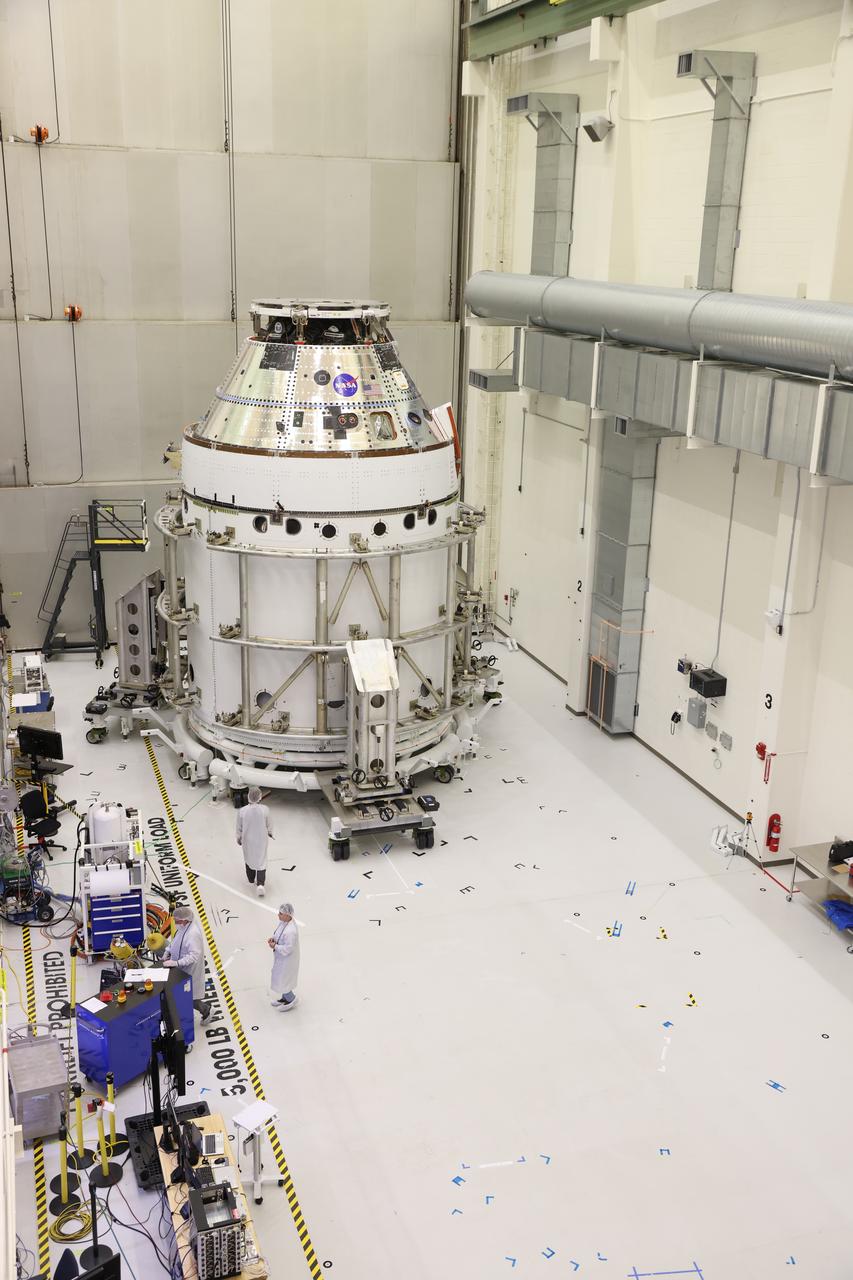
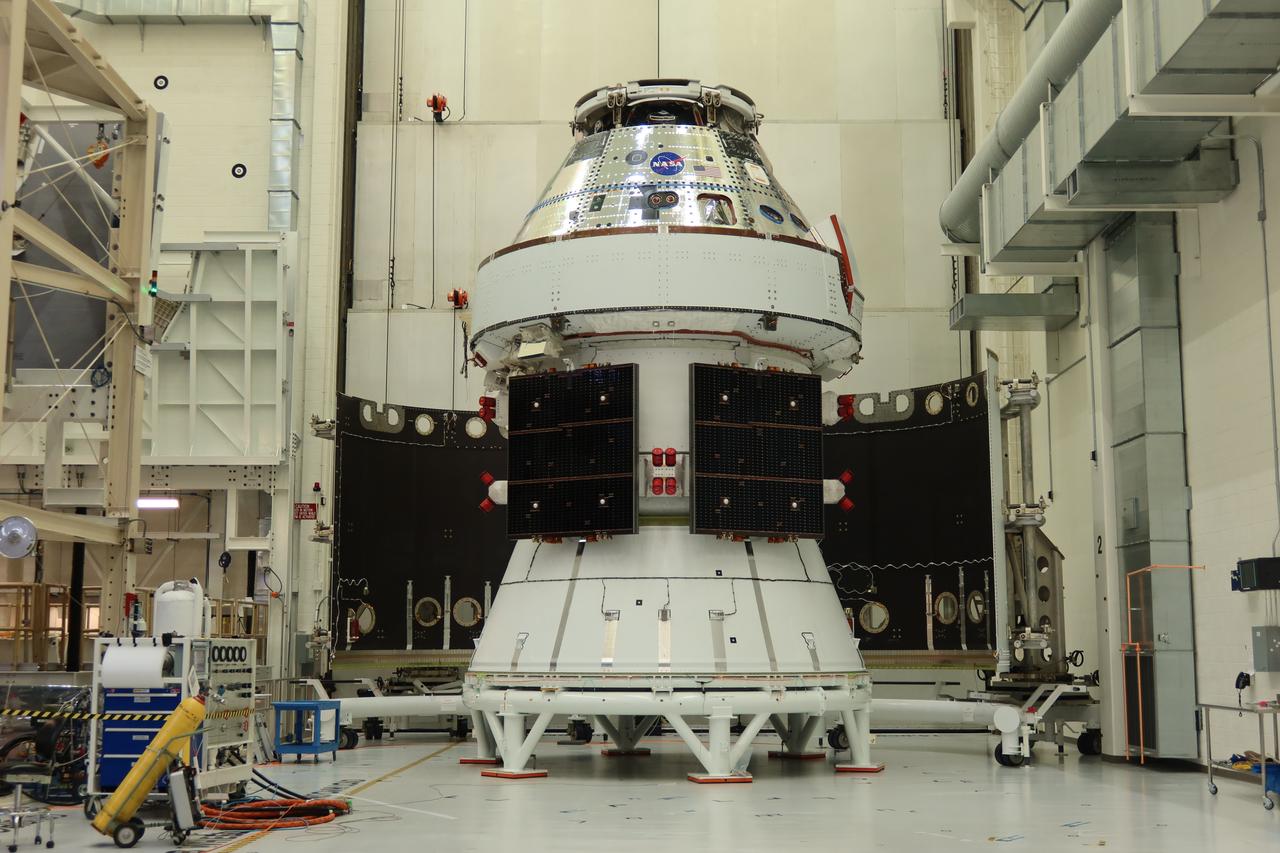
The Artemis II Orion spacecraft sits in the transfer aisle in the Neil A. Armstrong Operations and Checkout Building at NASA’s Kennedy Space Center in Florida following successful installation of three spacecraft adapter jettison fairings on Wednesday, March 19, 2025. The fairings encapsulate the service module and protect the solar array wings, shielding them from the heat, wind, and acoustics of launch and ascent, as well as help redistribute the load between Orion and the massive thrust of the SLS (Space Launch System) rocket during liftoff and ascent. Once the spacecraft is above the atmosphere, the three fairing panels will separate from the service module reducing the mass of the spacecraft.
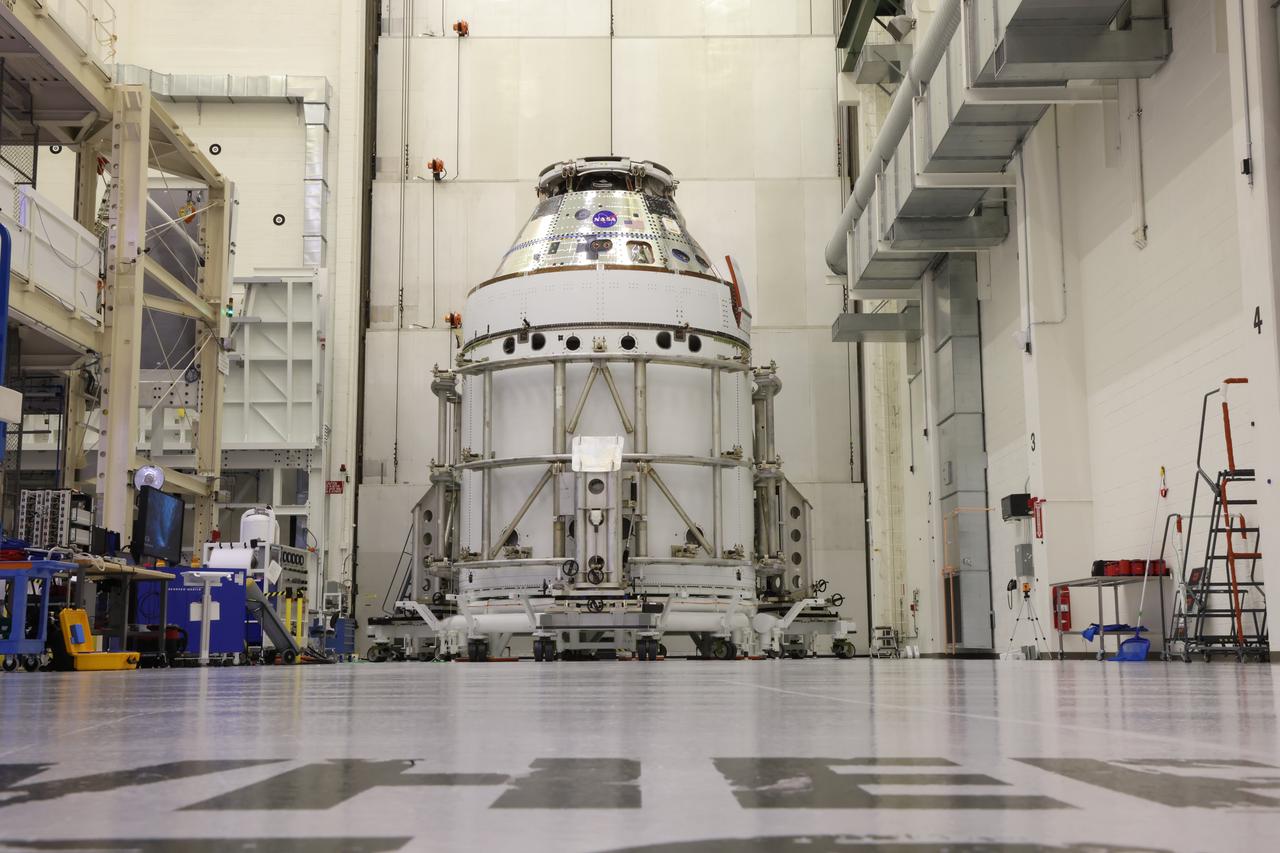
The Artemis II Orion spacecraft sits in the transfer aisle in the Neil A. Armstrong Operations and Checkout Building at NASA’s Kennedy Space Center in Florida following successful installation of three spacecraft adapter jettison fairings on Wednesday, March 19, 2025. The fairings encapsulate the service module and protect the solar array wings, shielding them from the heat, wind, and acoustics of launch and ascent, as well as help redistribute the load between Orion and the massive thrust of the SLS (Space Launch System) rocket during liftoff and ascent. Once the spacecraft is above the atmosphere, the three fairing panels will separate from the service module reducing the mass of the spacecraft.
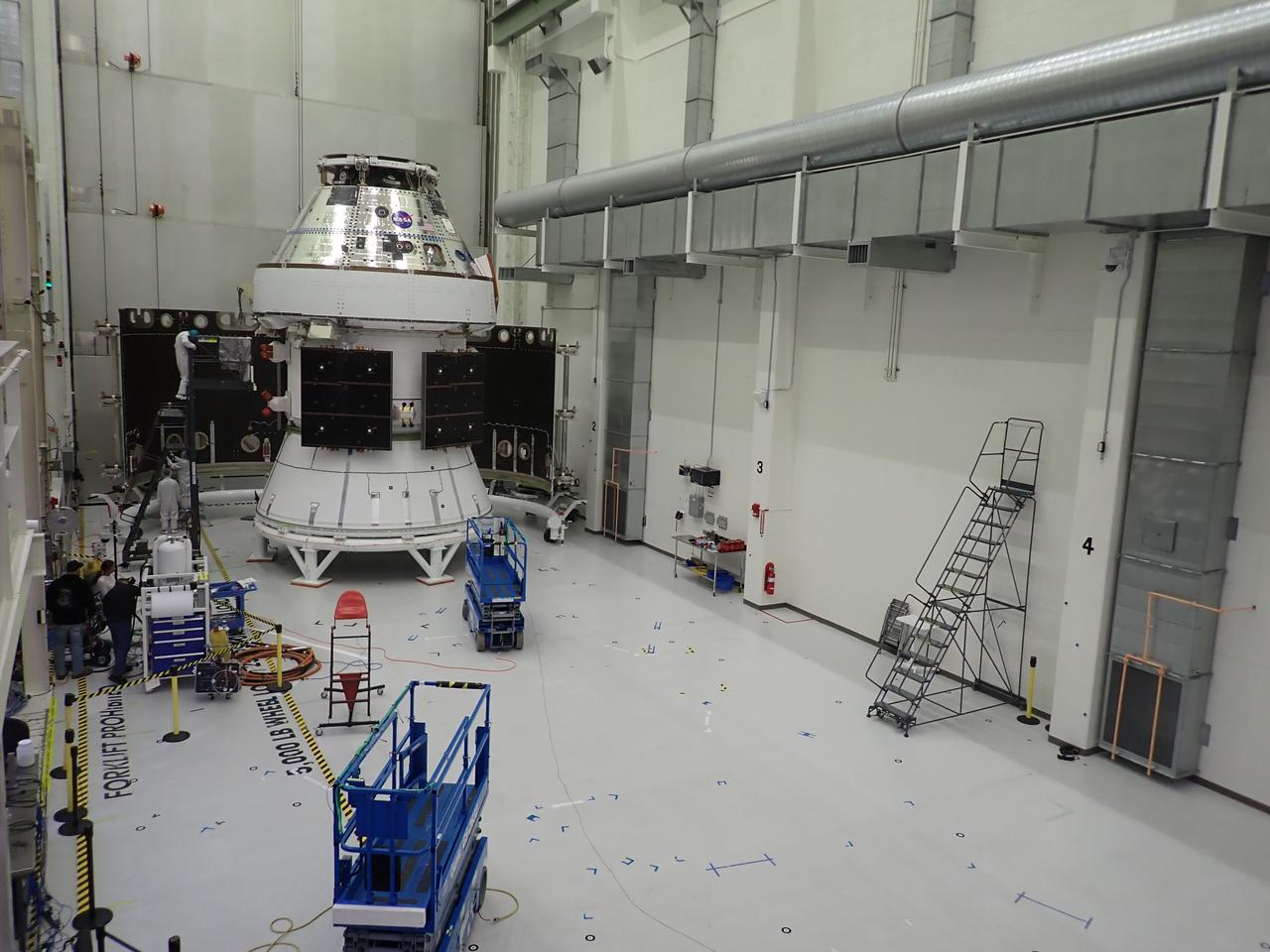
Technicians with Lockheed Martin prepare the Artemis II Orion spacecraft for the installation of three spacecraft adapter jettison fairings inside the Neil A. Armstrong Operations and Checkout Building at NASA’s Kennedy Space Center in Florida in on Tuesday, March 11, 2025. The fairings encapsulate the service module and protect the solar array wings, shielding them from the heat, wind, and acoustics of launch and ascent, plus help redistribute the load between Orion and the massive thrust of the SLS (Space Launch System) rocket during liftoff and ascent. Once the spacecraft is above the atmosphere, the three fairing panels will separate from the service module reducing the mass of the spacecraft.
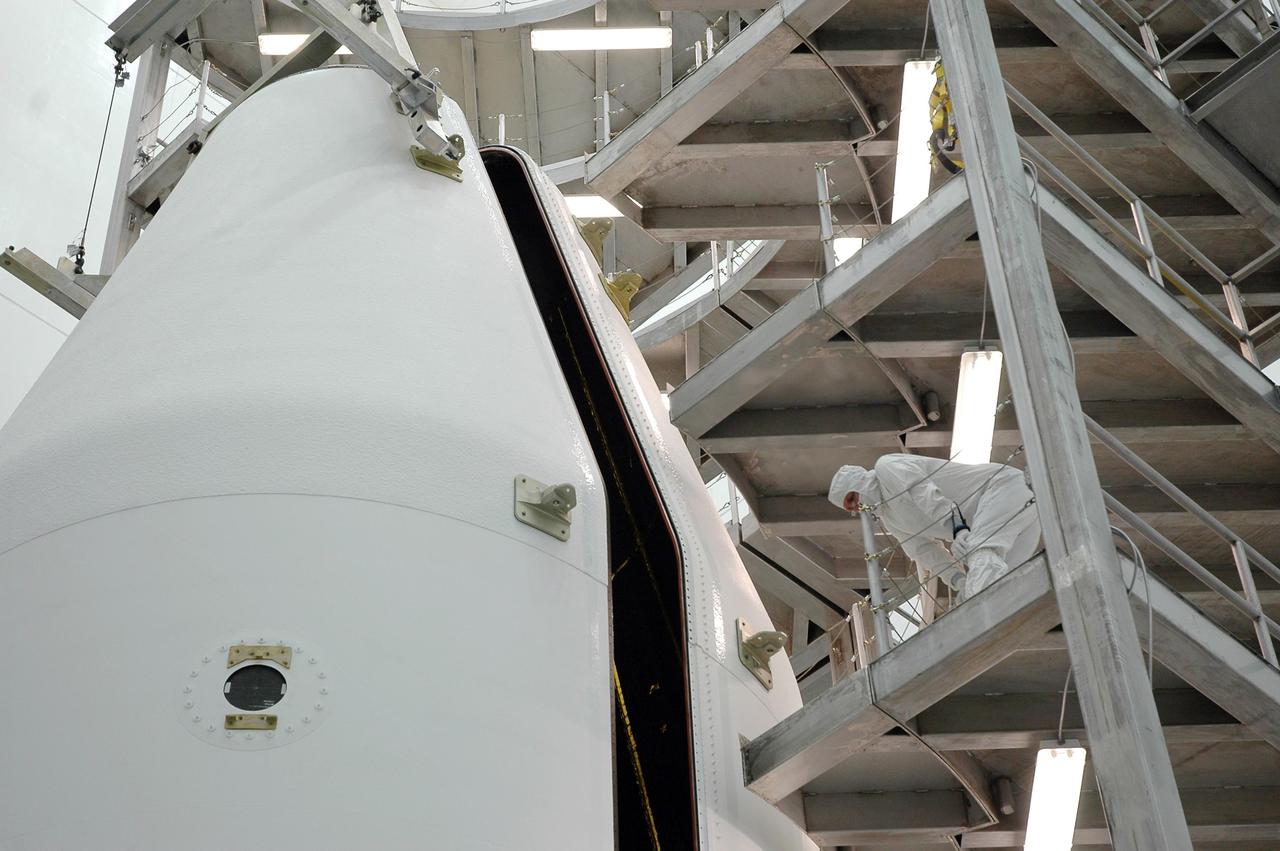
KENNEDY SPACE CENTER, FLA. - From a vantage point high on a work platform in the high bay at Astrotech Space Operations in Titusville, Fla., a worker checks the progress of the movement of the fairing halves as they enclose the GOES-N satellite. The fairing protects the spacecraft during launch and flight through the atmosphere. Once out of the atmosphere, the fairing is jettisoned. GOES-N is the latest in a series of Geostationary Operational Environmental Satellites for NOAA and NASA providing continuous monitoring necessary for intensive data analysis. GOES-N will be launched May 18 on a Boeing Delta IV rocket from Cape Canaveral Air Force Station in Florida. Photo credit: NASA/Jack Pfaller
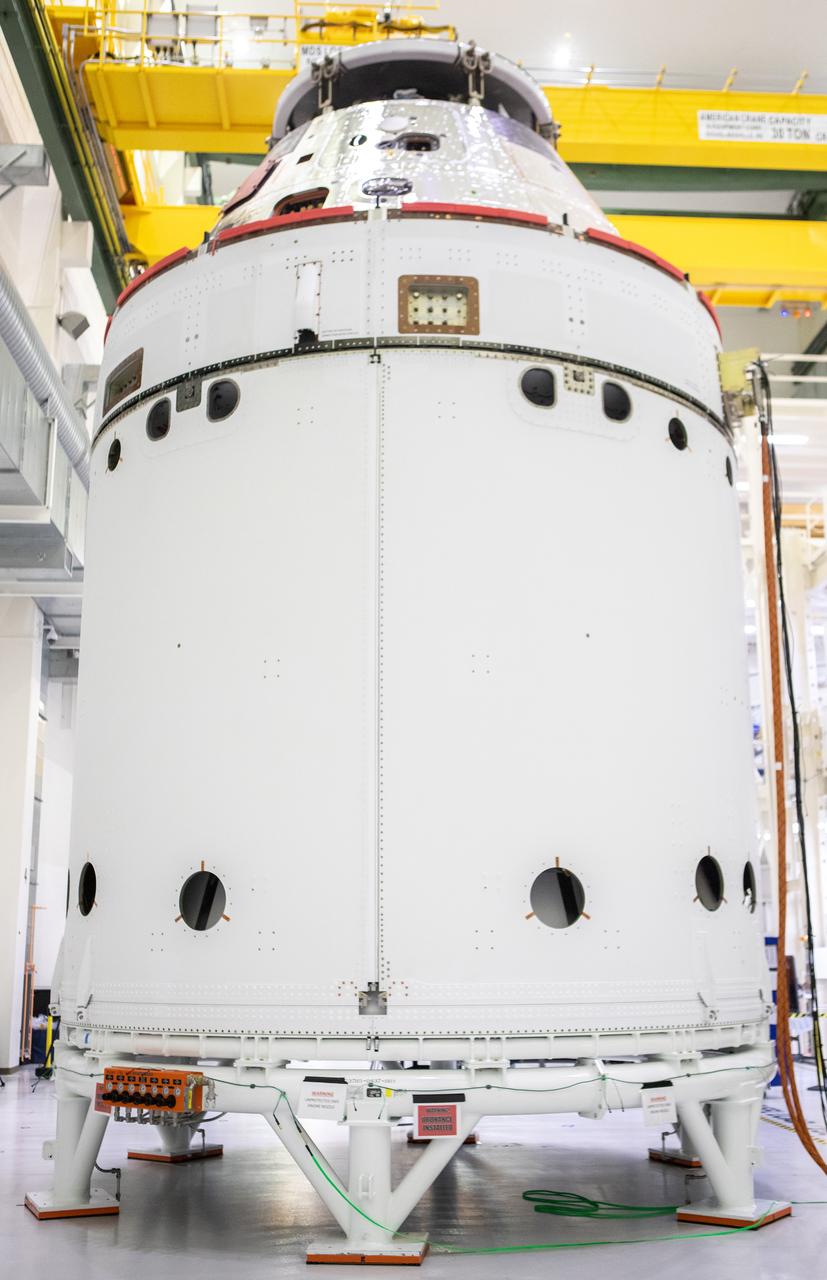
The spacecraft adapter jettison fairing panels are secured onto Orion’s European Service Module (ESM) on Oct. 27, 2020, inside the Neil Armstrong Operations and Checkout Building (O&C) at NASA’s Kennedy Space Center in Florida. The three panels were inspected and moved into place for installation by technicians with Lockheed Martin. Recently, teams from across the globe installed the four solar array wings, which are housed inside the protective covering of the fairings. The fairing panels will encapsulate the ESM to protect it from harsh environments such as heat, wind, and acoustics as the spacecraft is propelled out of Earth’s atmosphere atop the Space Launch System rocket during NASA’s Artemis I mission.
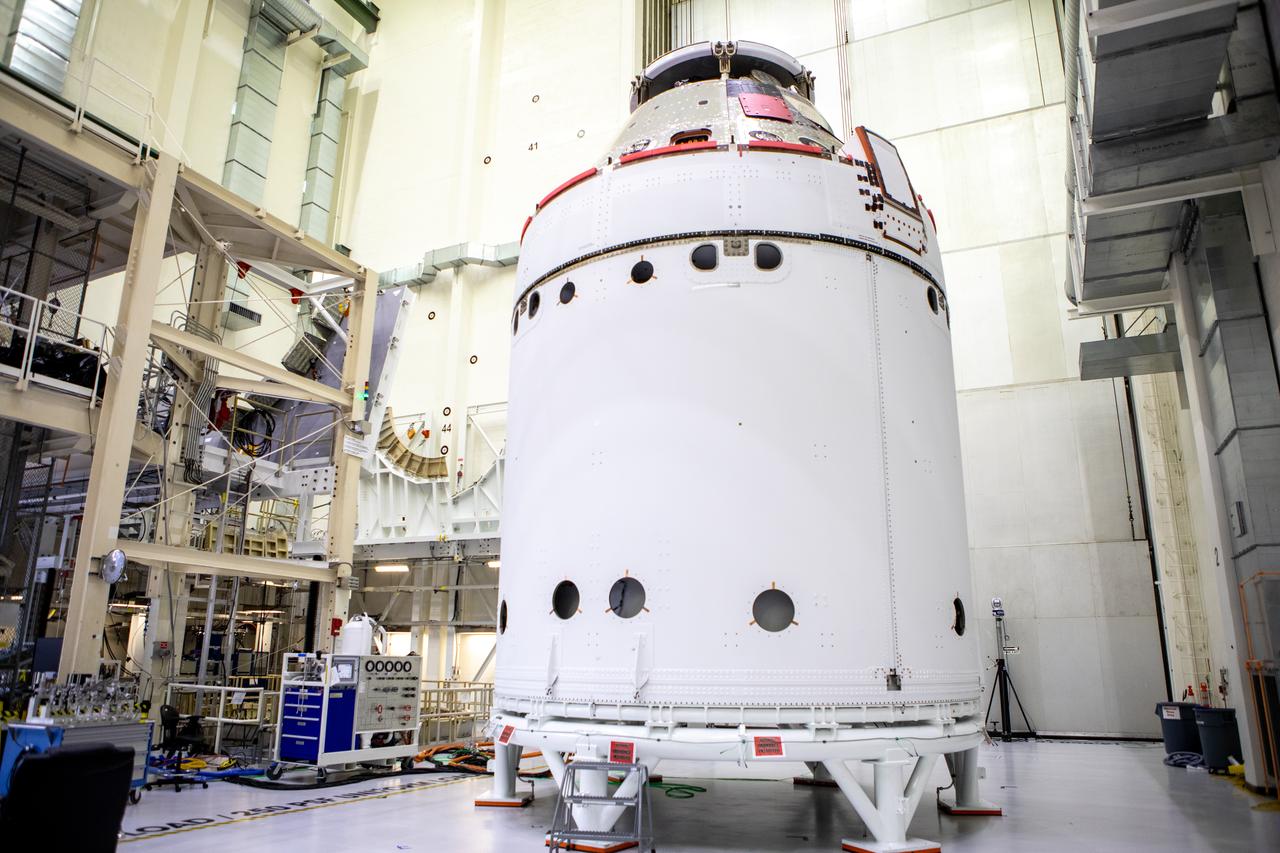
The spacecraft adapter jettison fairing panels are secured onto Orion’s European Service Module (ESM) on Oct. 27, 2020, inside the Neil Armstrong Operations and Checkout Building (O&C) at NASA’s Kennedy Space Center in Florida. The three panels were inspected and moved into place for installation by technicians with Lockheed Martin. Recently, teams from across the globe installed the four solar array wings, which are housed inside the protective covering of the fairings. The fairing panels will encapsulate the ESM to protect it from harsh environments such as heat, wind, and acoustics as the spacecraft is propelled out of Earth’s atmosphere atop the Space Launch System rocket during NASA’s Artemis I mission.
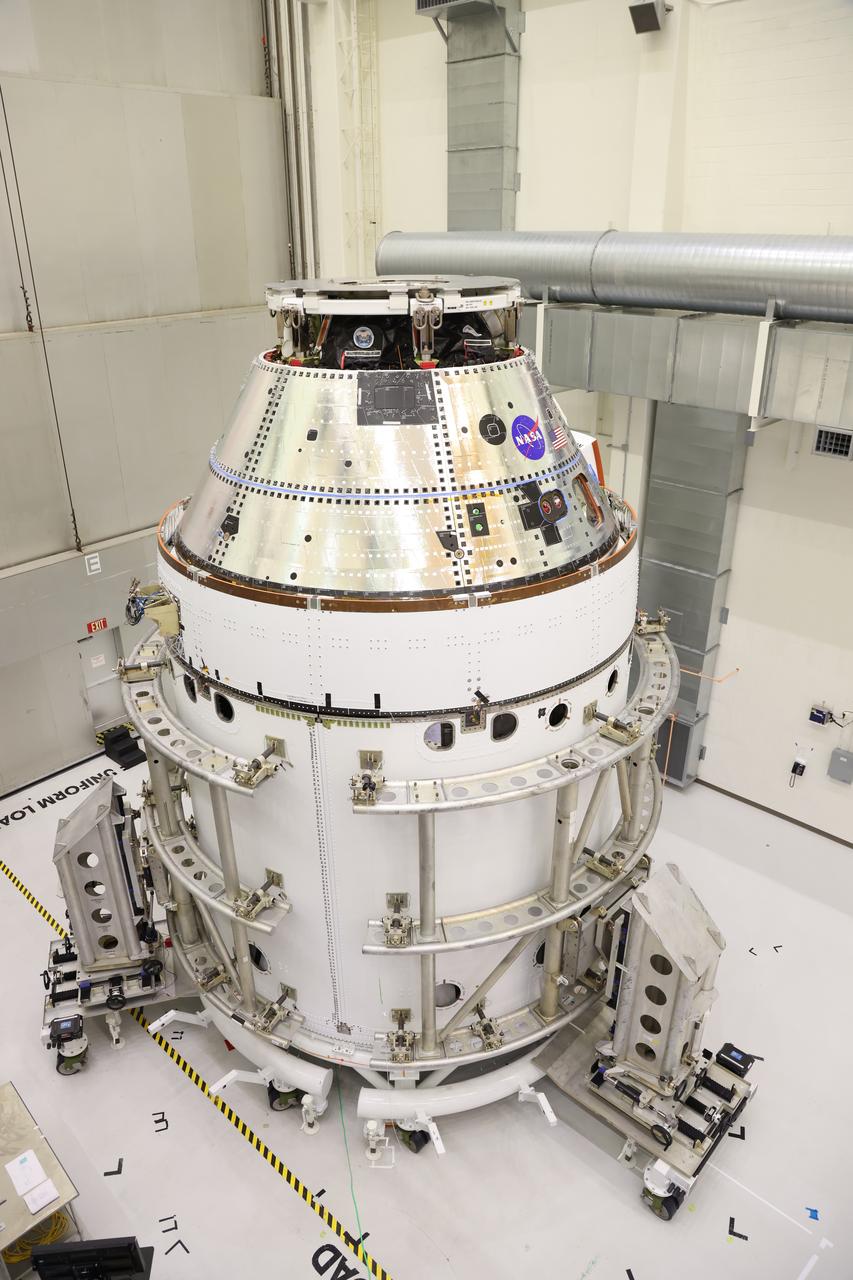
The Artemis II Orion spacecraft sits in the transfer aisle in the Neil A. Armstrong Operations and Checkout Building at NASA’s Kennedy Space Center in Florida following successful installation of three spacecraft adapter jettison fairings on Wednesday, March 19, 2025. The fairings encapsulate the service module and protect the solar array wings, shielding them from the heat, wind, and acoustics of launch and ascent, as well as help redistribute the load between Orion and the massive thrust of the SLS (Space Launch System) rocket during liftoff and ascent. Once the spacecraft is above the atmosphere, the three fairing panels will separate from the service module reducing the mass of the spacecraft.

KENNEDY SPACE CENTER, FLA. - In the high bay at Astrotech Space Operations in Titusville, Fla., the first half of the fairing is moved into place around the GOES-N spacecraft. When both halves are in place, they will encapsulate, or enclose, the GOES-N satellite for launch. The fairing protects the spacecraft during launch and flight through the atmosphere. Once out of the atmosphere, the fairing is jettisoned. GOES-N is the latest in a series of Geostationary Operational Environmental Satellites for NOAA and NASA providing continuous monitoring necessary for intensive data analysis. GOES-N will be launched May 18 on a Boeing Delta IV rocket from Cape Canaveral Air Force Station in Florida. Photo credit: NASA/Jack Pfaller
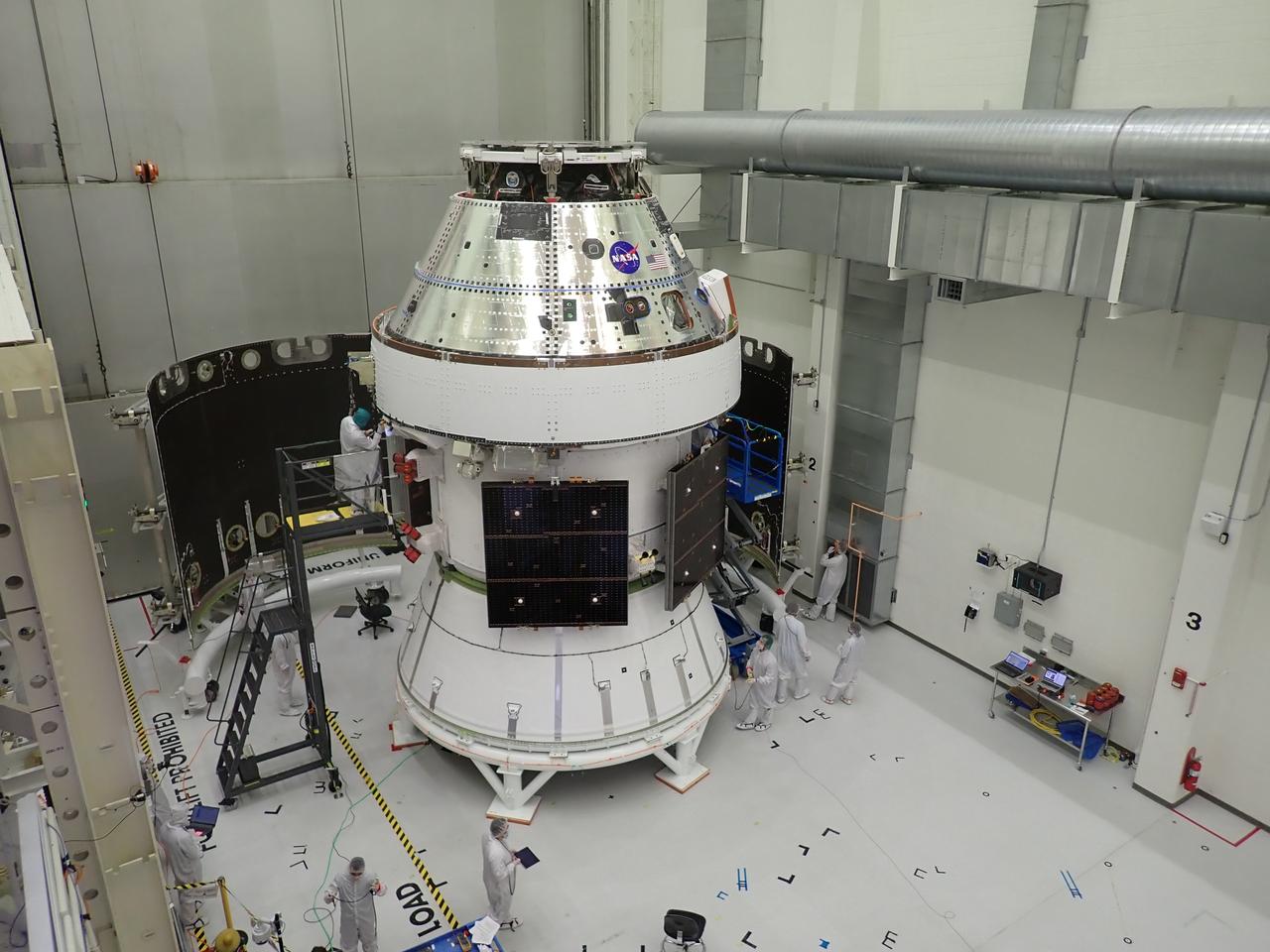
The Artemis II Orion spacecraft sits in the transfer aisle in the Neil A. Armstrong Operations and Checkout Building at NASA’s Kennedy Space Center in Florida in preparation for the installation of three spacecraft adapter jettison fairings on Tuesday, March 11, 2025. The fairings encapsulate the service module and protect the solar array wings, shielding them from the heat, wind, and acoustics of launch and ascent, plus help redistribute the load between Orion and the massive thrust of the SLS (Space Launch System) rocket during liftoff and ascent. Once the spacecraft is above the atmosphere, the three fairing panels will separate from the service module reducing the mass of the spacecraft.
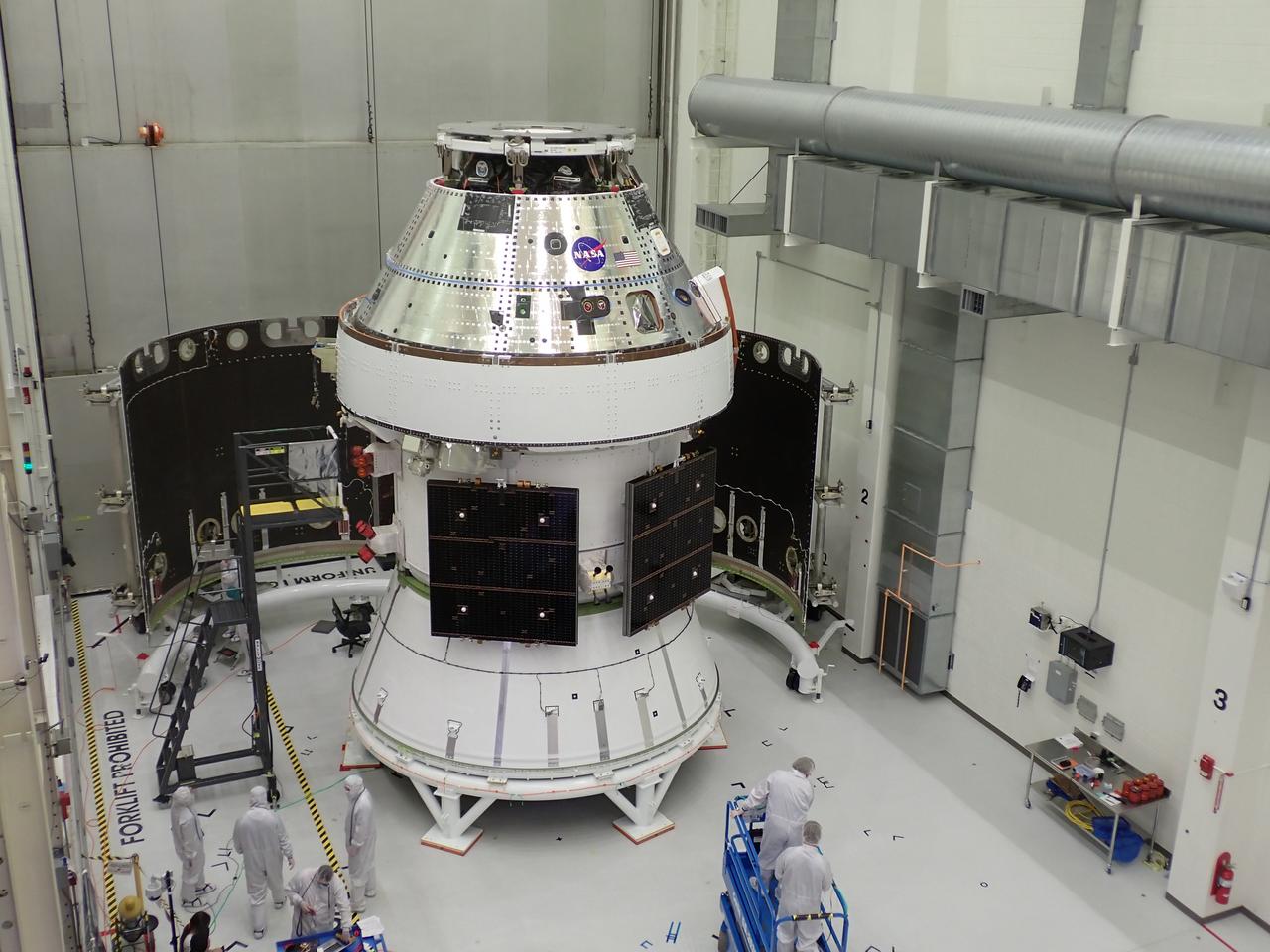
Technicians with Lockheed Martin prepare the Artemis II Orion spacecraft for the installation of three spacecraft adapter jettison fairings inside the Neil A. Armstrong Operations and Checkout Building at NASA’s Kennedy Space Center in Florida in on Tuesday, March 11, 2025. The fairings encapsulate the service module and protect the solar array wings, shielding them from the heat, wind, and acoustics of launch and ascent, plus help redistribute the load between Orion and the massive thrust of the SLS (Space Launch System) rocket during liftoff and ascent. Once the spacecraft is above the atmosphere, the three fairing panels will separate from the service module reducing the mass of the spacecraft.
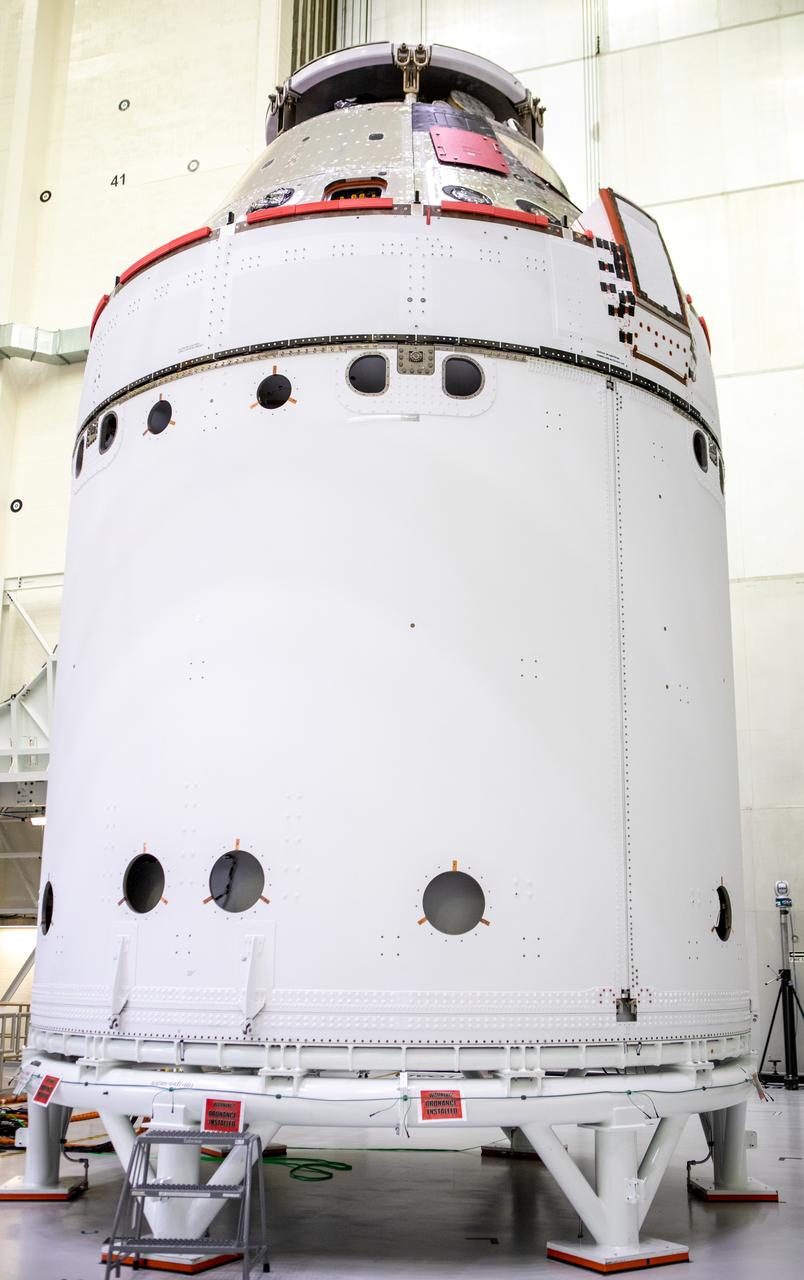
The spacecraft adapter jettison fairing panels are secured onto Orion’s European Service Module (ESM) on Oct. 27, 2020, inside the Neil Armstrong Operations and Checkout Building (O&C) at NASA’s Kennedy Space Center in Florida. The three panels were inspected and moved into place for installation by technicians with Lockheed Martin. Recently, teams from across the globe installed the four solar array wings, which are housed inside the protective covering of the fairings. The fairing panels will encapsulate the ESM to protect it from harsh environments such as heat, wind, and acoustics as the spacecraft is propelled out of Earth’s atmosphere atop the Space Launch System rocket during NASA’s Artemis I mission.
Technicians with Lockheed Martin prepare the Artemis II Orion spacecraft for the installation of three spacecraft adapter jettison fairings inside the Neil A. Armstrong Operations and Checkout Building at NASA’s Kennedy Space Center in Florida in on Tuesday, March 11, 2025. The fairings encapsulate the service module and protect the solar array wings, shielding them from the heat, wind, and acoustics of launch and ascent, plus help redistribute the load between Orion and the massive thrust of the SLS (Space Launch System) rocket during liftoff and ascent. Once the spacecraft is above the atmosphere, the three fairing panels will separate from the service module reducing the mass of the spacecraft.
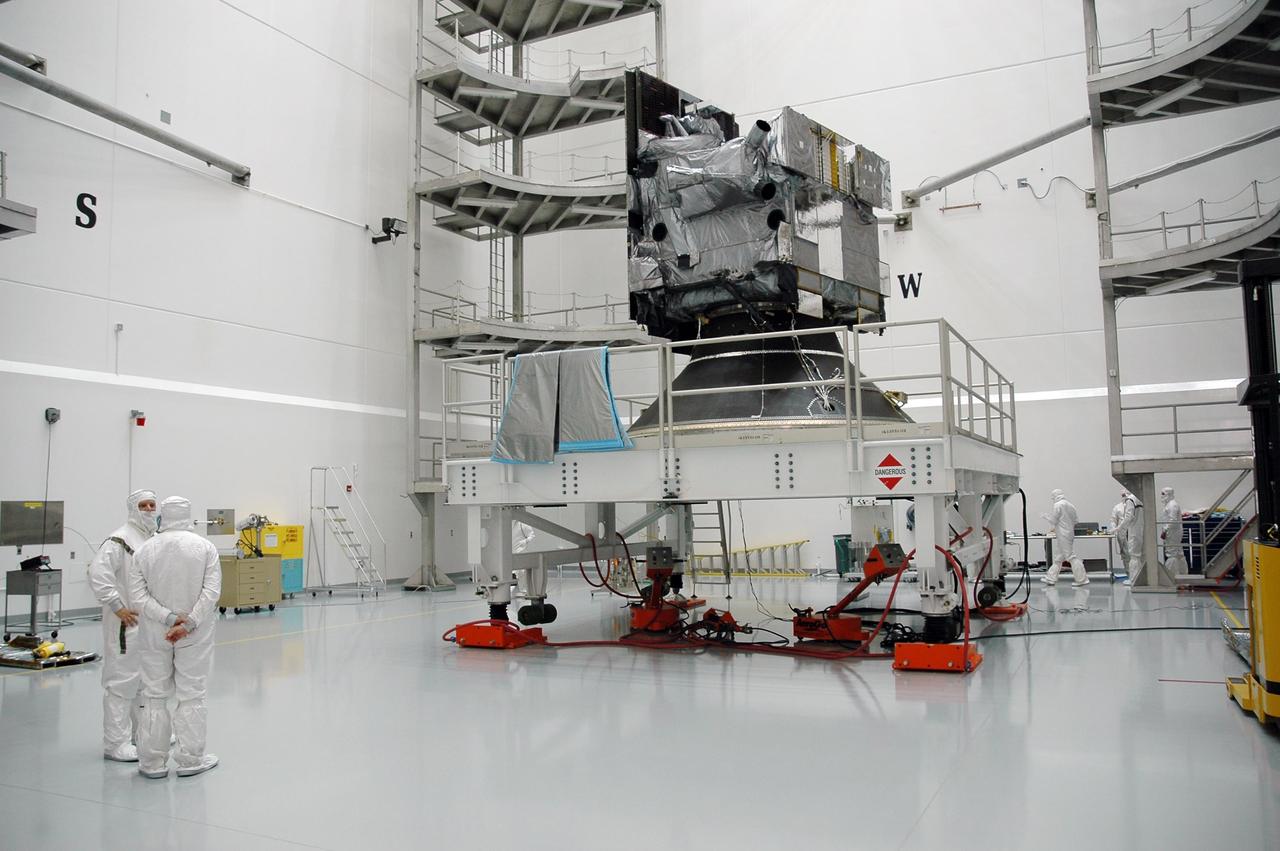
KENNEDY SPACE CENTER, FLA. - At Astrotech Space Operations in Titusville, Fla., the GOES-N satellite is ready for encapsulation in the fairing. The fairing protects the spacecraft during launch and flight through the atmosphere. Once out of the atmosphere, the fairing is jettisoned. GOES-N is the latest in a series of Geostationary Operational Environmental Satellites for NOAA and NASA providing continuous monitoring necessary for intensive data analysis. GOES-N will be launched May 18 on a Boeing Delta IV rocket from Cape Canaveral Air Force Station in Florida. Photo credit: NASA/Jack Pfaller
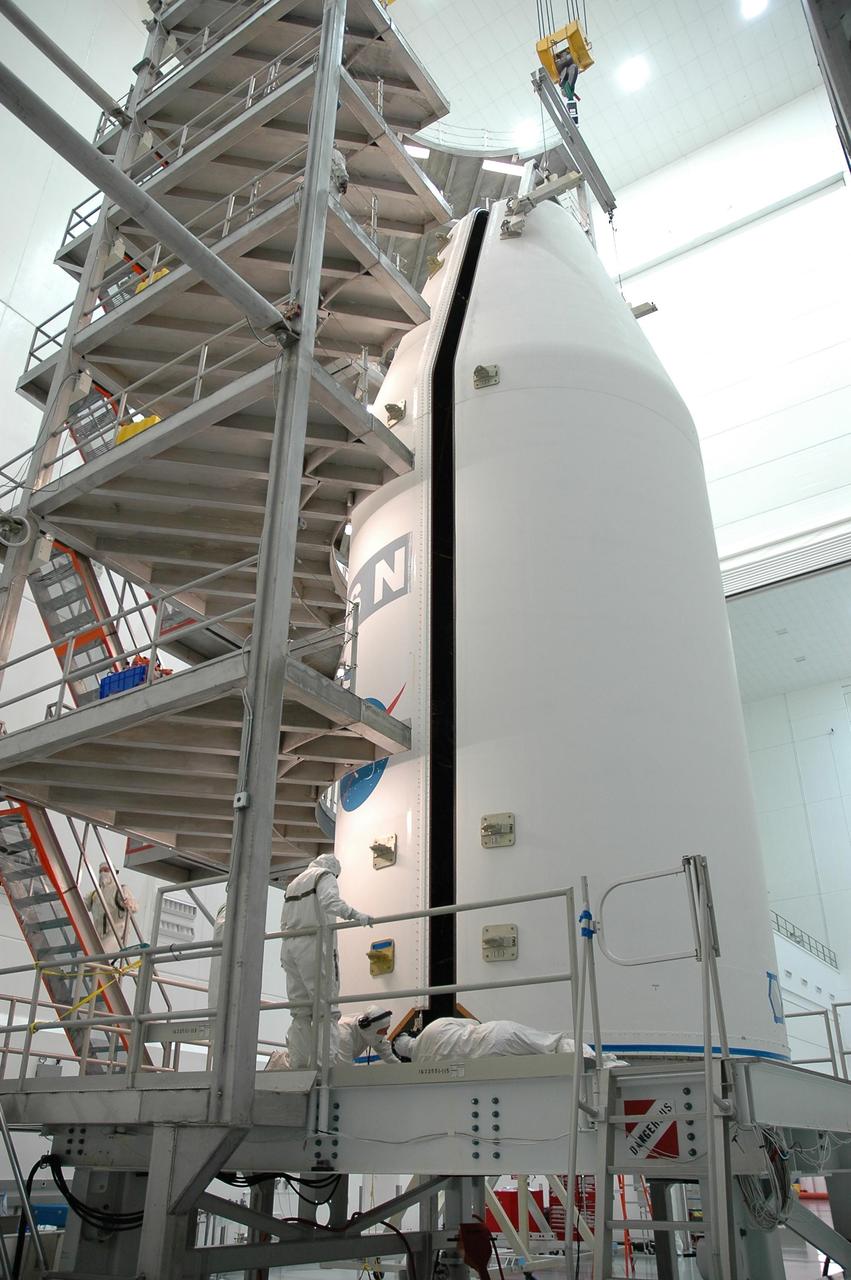
KENNEDY SPACE CENTER, FLA. - In the high bay at Astrotech Space Operations in Titusville, Fla., workers check the bottom of the fairing halves as they close around the GOES-N satellite. The fairing protects the spacecraft during launch and flight through the atmosphere. Once out of the atmosphere, the fairing is jettisoned. GOES-N is the latest in a series of Geostationary Operational Environmental Satellites for NOAA and NASA providing continuous monitoring necessary for intensive data analysis. GOES-N will be launched May 18 on a Boeing Delta IV rocket from Cape Canaveral Air Force Station in Florida. Photo credit: NASA/Jack Pfaller
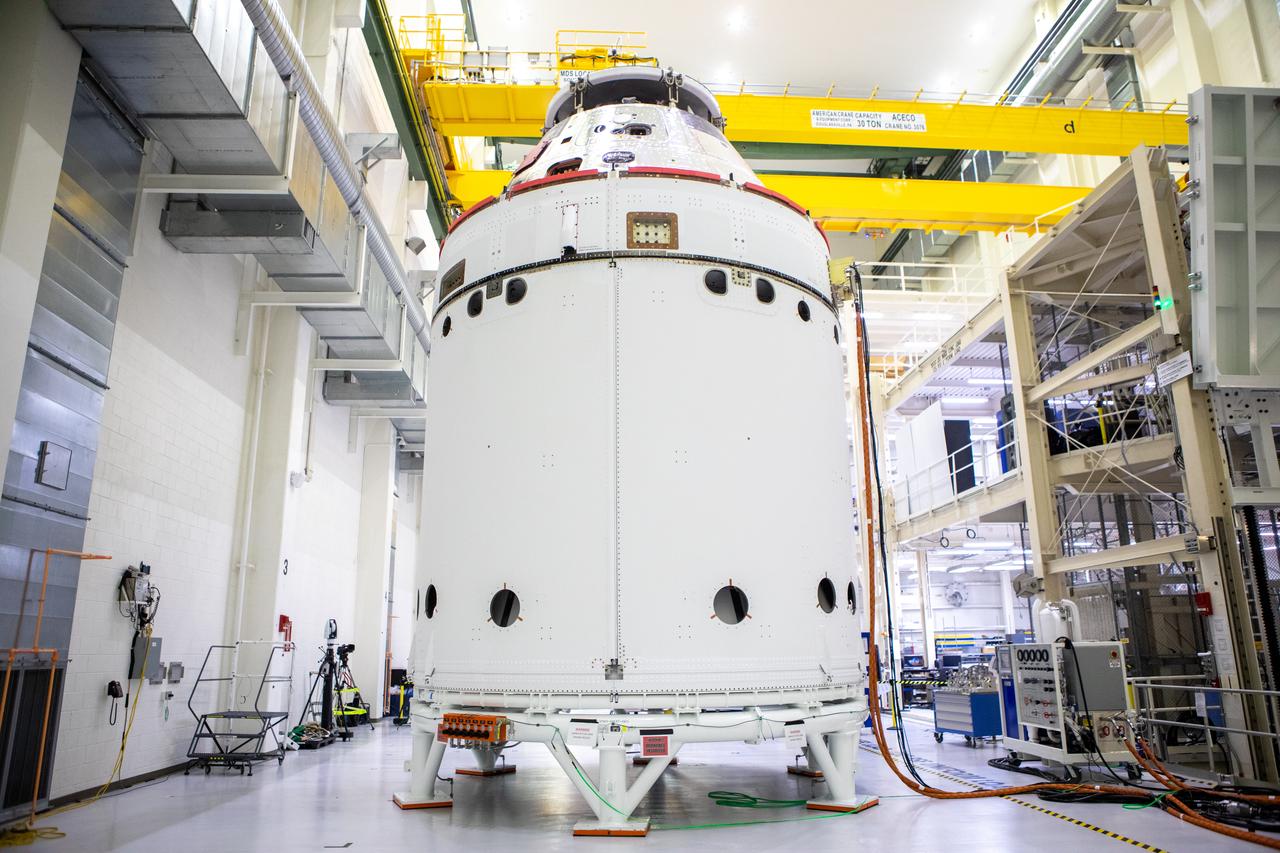
The spacecraft adapter jettison fairing panels are secured onto Orion’s European Service Module (ESM) on Oct. 27, 2020, inside the Neil Armstrong Operations and Checkout Building (O&C) at NASA’s Kennedy Space Center in Florida. The three panels were inspected and moved into place for installation by technicians with Lockheed Martin. Recently, teams from across the globe installed the four solar array wings, which are housed inside the protective covering of the fairings. The fairing panels will encapsulate the ESM to protect it from harsh environments such as heat, wind, and acoustics as the spacecraft is propelled out of Earth’s atmosphere atop the Space Launch System rocket during NASA’s Artemis I mission.
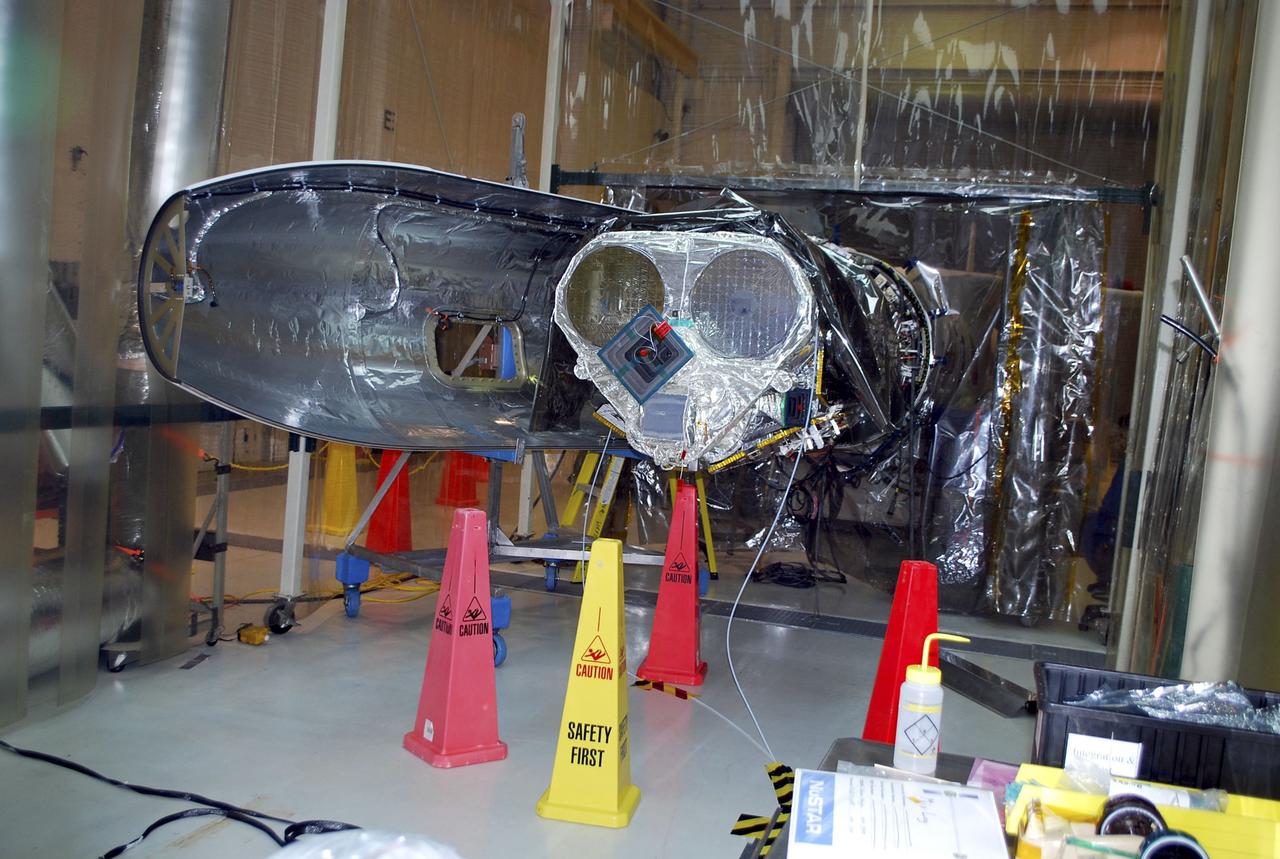
VANDENBERG AIR FORCE BASE, Calif. -- NASA's Nuclear Spectroscopic Telescope Array NuSTAR spacecraft is wrapped in its protective cover and half of its payload fairing is behind it in processing facility 1555 at Vandenberg Air Force Base in California. Technicians are performing fairing closeout work in preparation for fairing installation around the spacecraft, which is scheduled to begin March 2. The cover protecting NuSTAR's delicate instruments will be removed prior to the fairing installation. The fairing will protect the spacecraft from the heat and aerodynamic pressure generated during ascent to orbit aboard an Orbital Sciences Pegasus XL rocket. After processing of the rocket and spacecraft are complete, they will be flown on Orbital's L-1011 carrier aircraft from Vandenberg to the Ronald Reagan Ballistic Missile Defense Test Site on the Pacific Ocean’s Kwajalein Atoll for launch. The high-energy X-ray telescope will conduct a census of black holes, map radioactive material in young supernovae remnants, and study the origins of cosmic rays and the extreme physics around collapsed stars. For more information, visit http://www.nasa.gov/nustar. Photo credit: NASA/Randy Beaudoin, VAFB

CAPE CANAVERAL, Fla. -- In the Payload Hazardous Servicing Facility at NASA's Kennedy Space Center in Florida, the fairing acoustic protection (FAP) system lines the inside of the Atlas V payload fairing for NASA's Mars Science Laboratory (MSL) mission. This half of the fairing has been uncovered during preparations to clean it to meet NASA's planetary protection requirements. The FAP protects the payload by dampening the sound created by the rocket during liftoff. The fairing will protect the spacecraft from the impact of aerodynamic pressure and heating during ascent. Although jettisoned once the spacecraft is outside the Earth's atmosphere, the fairing must be cleaned to the same exacting standards as the laboratory to avoid the possibility of contaminating it. MSL's components include a compact car-sized rover, Curiosity, which has 10 science instruments designed to search for evidence on whether Mars has had environments favorable to microbial life, including the chemical ingredients for life. The unique rover will use a laser to look inside rocks and release its gasses so that the rover’s spectrometer can analyze and send the data back to Earth. Launch of MSL aboard a United Launch Alliance Atlas V rocket is planned for Nov. 25 from Space Launch Complex 41 on Cape Canaveral Air Force Station. For more information, visit http://www.nasa.gov/msl. Photo credit: NASA/Kim Shiflett
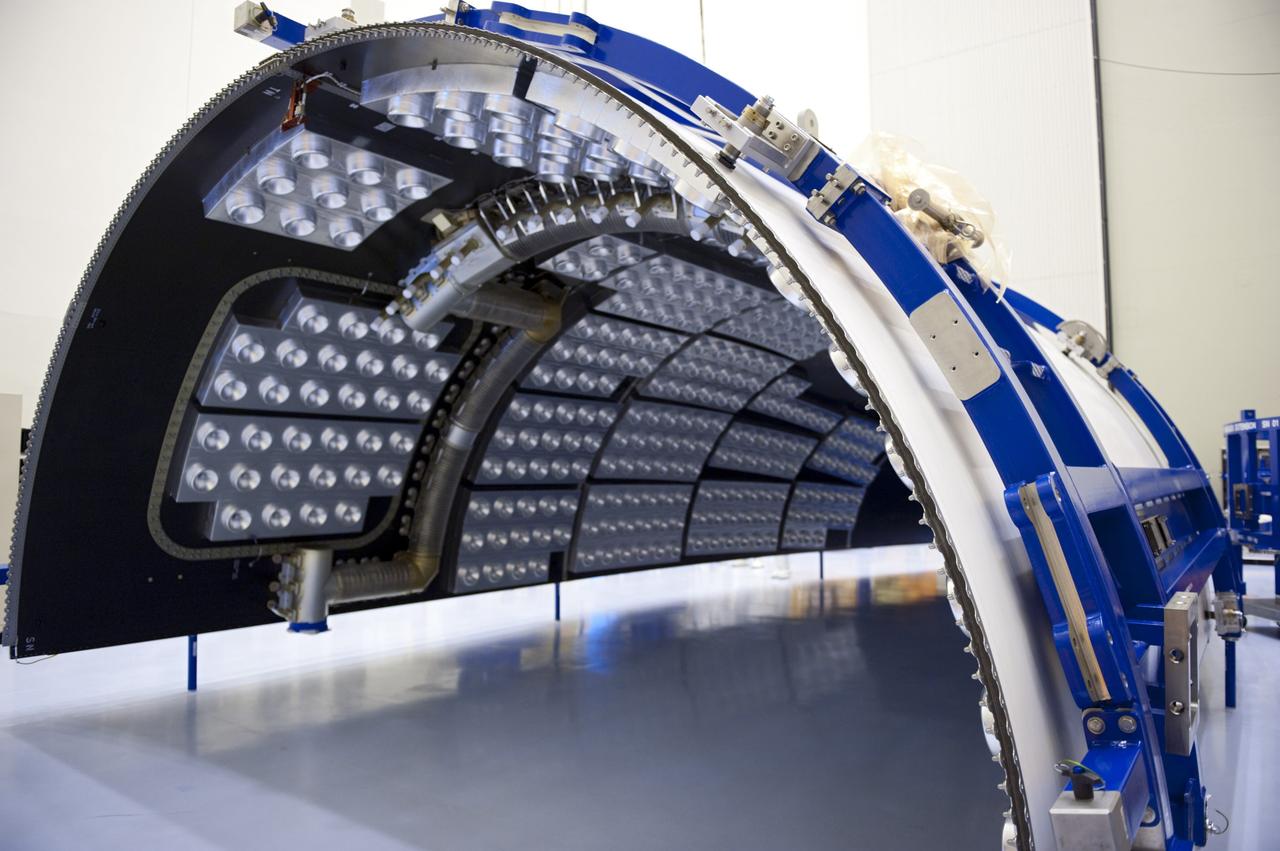
CAPE CANAVERAL, Fla. -- In the Payload Hazardous Servicing Facility at NASA's Kennedy Space Center in Florida, the fairing acoustic protection (FAP) system lining the inside of the Atlas V payload fairing for NASA's Mars Science Laboratory (MSL) mission is visible after the fairing is uncovered during preparations to clean it to meet NASA's planetary protection requirements. The FAP protects the payload by dampening the sound created by the rocket during liftoff. The fairing will protect the spacecraft from the impact of aerodynamic pressure and heating during ascent. Although jettisoned once the spacecraft is outside the Earth's atmosphere, the fairing must be cleaned to the same exacting standards as the laboratory to avoid the possibility of contaminating it. MSL's components include a compact car-sized rover, Curiosity, which has 10 science instruments designed to search for evidence on whether Mars has had environments favorable to microbial life, including the chemical ingredients for life. The unique rover will use a laser to look inside rocks and release its gasses so that the rover’s spectrometer can analyze and send the data back to Earth. Launch of MSL aboard a United Launch Alliance Atlas V rocket is planned for Nov. 25 from Space Launch Complex 41 on Cape Canaveral Air Force Station. For more information, visit http://www.nasa.gov/msl. Photo credit: NASA/Kim Shiflett
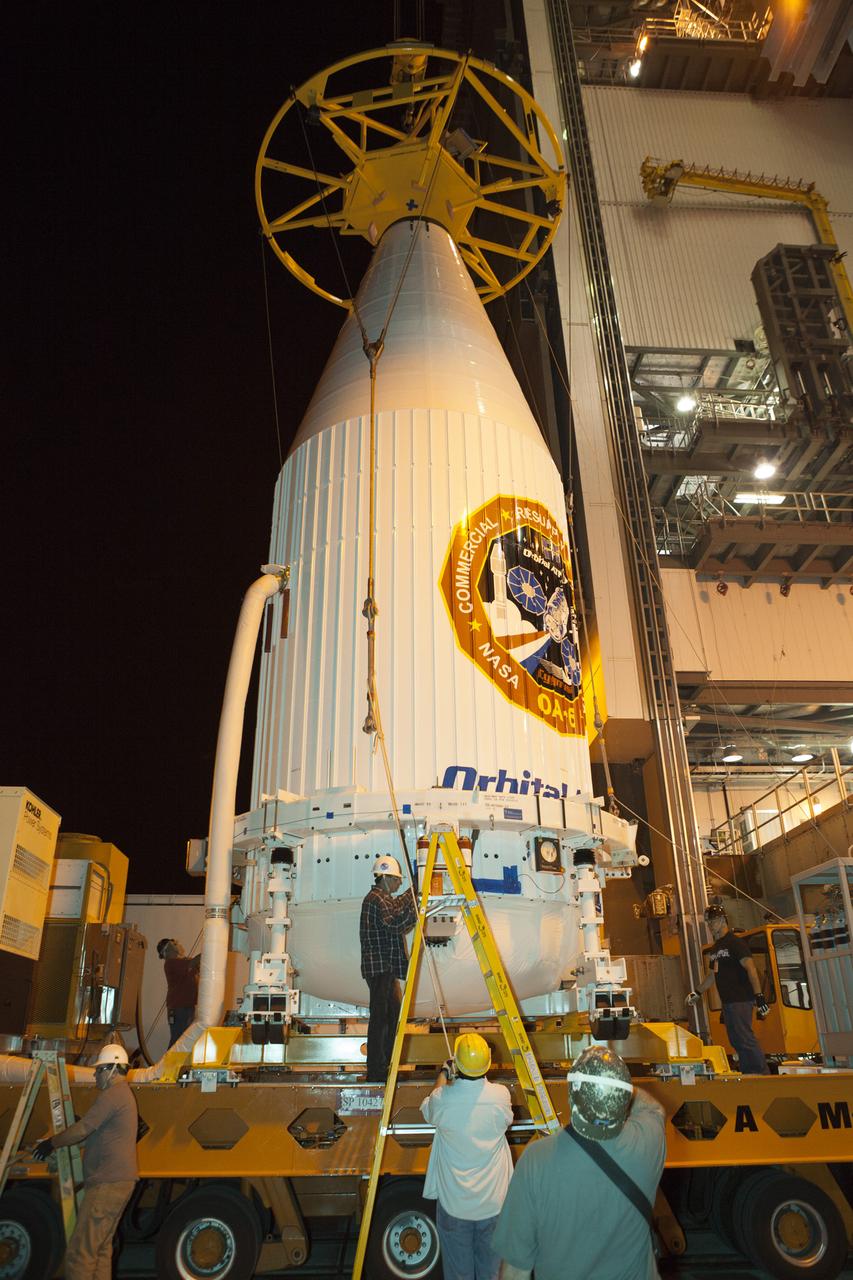
Encapsulated inside its payload fairing, the Cygnus spacecraft for the upcoming Orbital ATK Commercial Resupply Services-6 is prepared for lifting to be mated atop a United Launch Alliance Atlas V rocket.
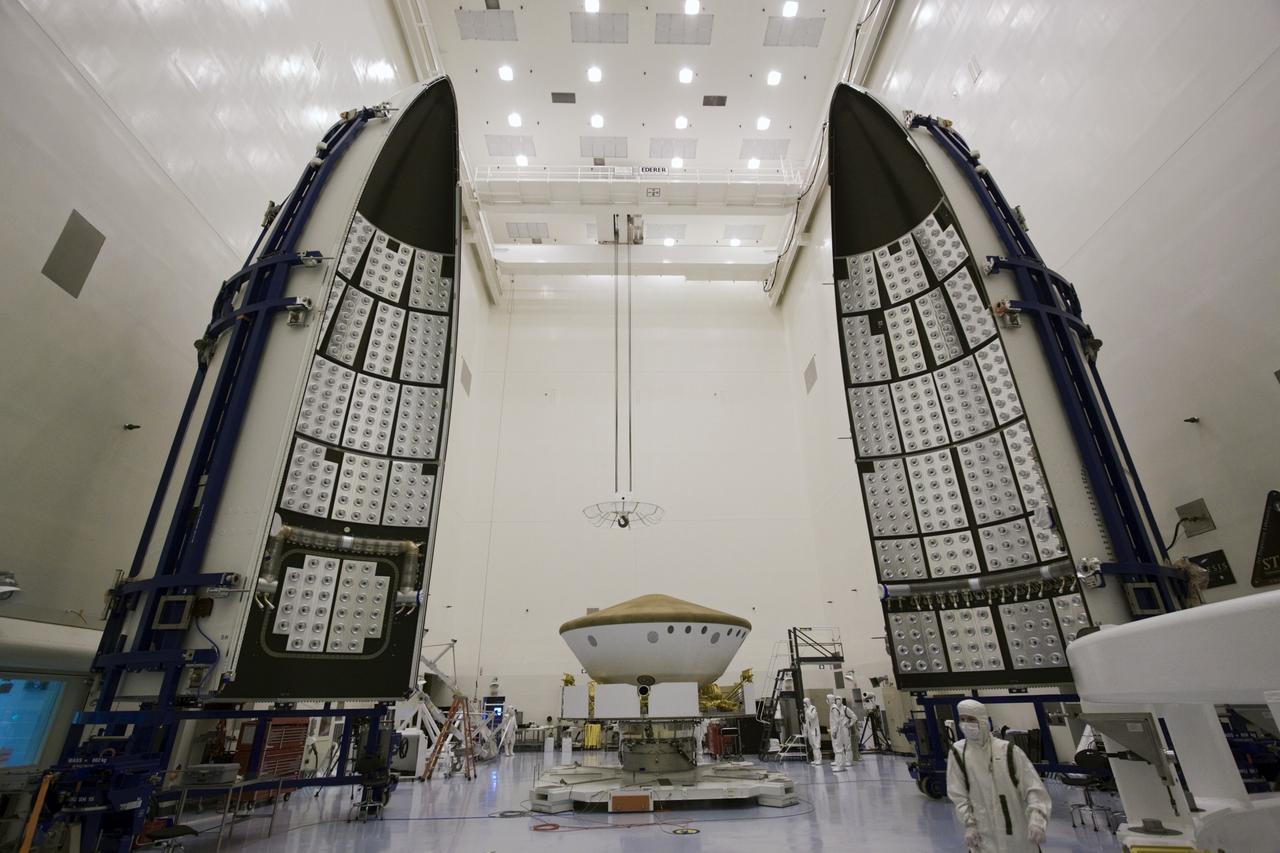
CAPE CANAVERAL, Fla. -- In the Payload Hazardous Servicing Facility at NASA's Kennedy Space Center in Florida, preparations are under way to enclose NASA's Mars Science Laboratory (MSL) in an Atlas V rocket payload fairing. The blocks on the interior of the fairing are components of the fairing acoustic protection (FAP) system, designed to protect the payload by dampening the sound created by the rocket during liftoff. The fairing will protect the spacecraft from the impact of aerodynamic pressure and heating during ascent. MSL's components include a compact car-sized rover, Curiosity, which has 10 science instruments designed to search for evidence on whether Mars has had environments favorable to microbial life, including the chemical ingredients for life. The unique rover will use a laser to look inside rocks and release its gasses so that the rover’s spectrometer can analyze and send the data back to Earth. Launch of MSL aboard a United Launch Alliance Atlas V rocket is planned for Nov. 25 from Space Launch Complex-41 on Cape Canaveral Air Force Station. For more information, visit http://www.nasa.gov/msl. Photo credit: NASA/Jim Grossmann
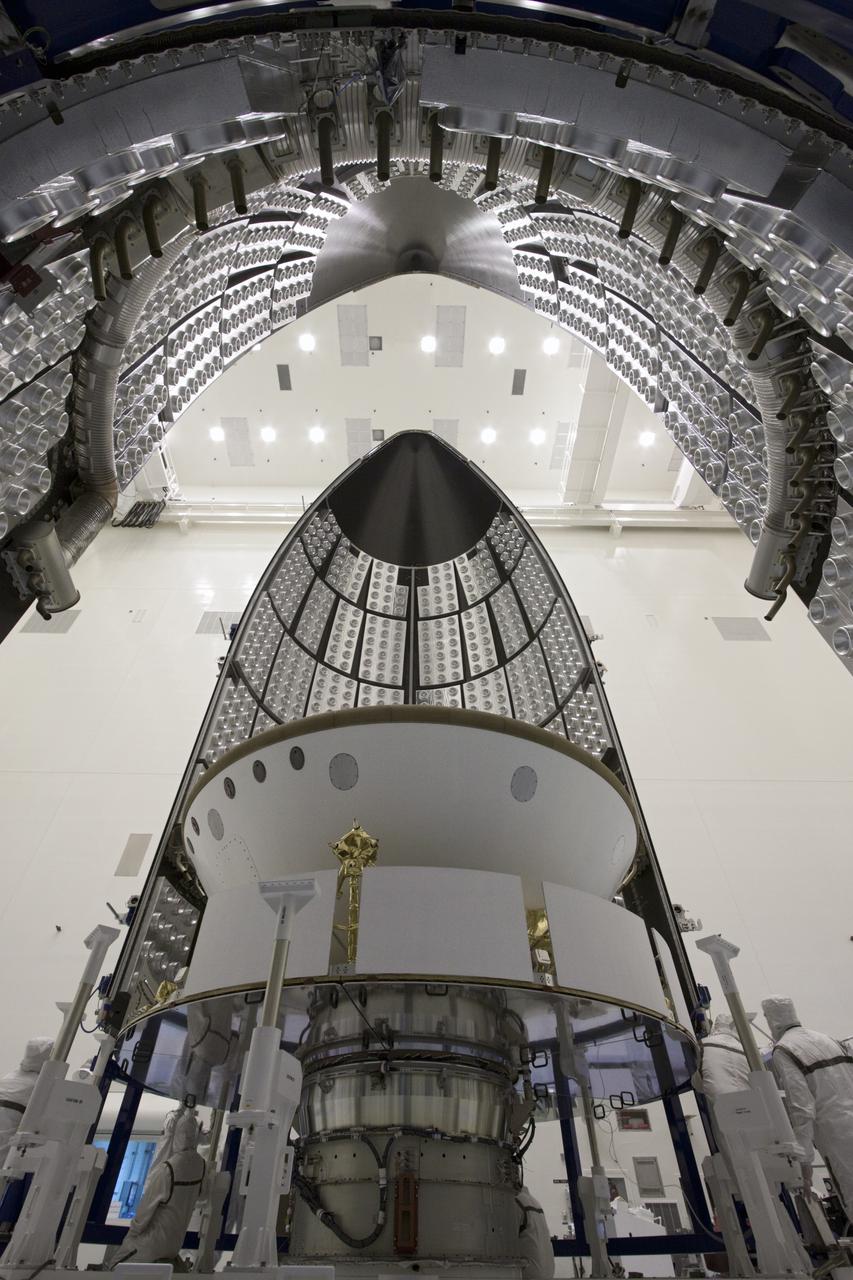
CAPE CANAVERAL, Fla. -- In the Payload Hazardous Servicing Facility at NASA's Kennedy Space Center in Florida, sections of an Atlas V rocket payload fairing engulf NASA's Mars Science Laboratory (MSL) as they close in around it. The blocks on the interior of the fairing are components of the fairing acoustic protection (FAP) system, designed to protect the payload by dampening the sound created by the rocket during liftoff. The fairing will protect the spacecraft from the impact of aerodynamic pressure and heating during ascent. MSL's components include a compact car-sized rover, Curiosity, which has 10 science instruments designed to search for evidence on whether Mars has had environments favorable to microbial life, including the chemical ingredients for life. The unique rover will use a laser to look inside rocks and release its gasses so that the rover’s spectrometer can analyze and send the data back to Earth. Launch of MSL aboard a United Launch Alliance Atlas V rocket is planned for Nov. 25 from Space Launch Complex-41 on Cape Canaveral Air Force Station. For more information, visit http://www.nasa.gov/msl. Photo credit: NASA/Jim Grossmann

CAPE CANAVERAL, Fla. -- In the Payload Hazardous Servicing Facility at NASA's Kennedy Space Center in Florida, NASA's Mars Science Laboratory (MSL) is ready to be enclosed in the Atlas V rocket payload fairing in the background. The blocks on the interior of the fairing are components of the fairing acoustic protection (FAP) system, designed to protect the payload by dampening the sound created by the rocket during liftoff. The fairing will protect the spacecraft from the impact of aerodynamic pressure and heating during ascent. MSL's components include a compact car-sized rover, Curiosity, which has 10 science instruments designed to search for evidence on whether Mars has had environments favorable to microbial life, including the chemical ingredients for life. The unique rover will use a laser to look inside rocks and release its gasses so that the rover’s spectrometer can analyze and send the data back to Earth. Launch of MSL aboard a United Launch Alliance Atlas V rocket is planned for Nov. 25 from Space Launch Complex-41 on Cape Canaveral Air Force Station. For more information, visit http://www.nasa.gov/msl. Photo credit: NASA/Jim Grossmann
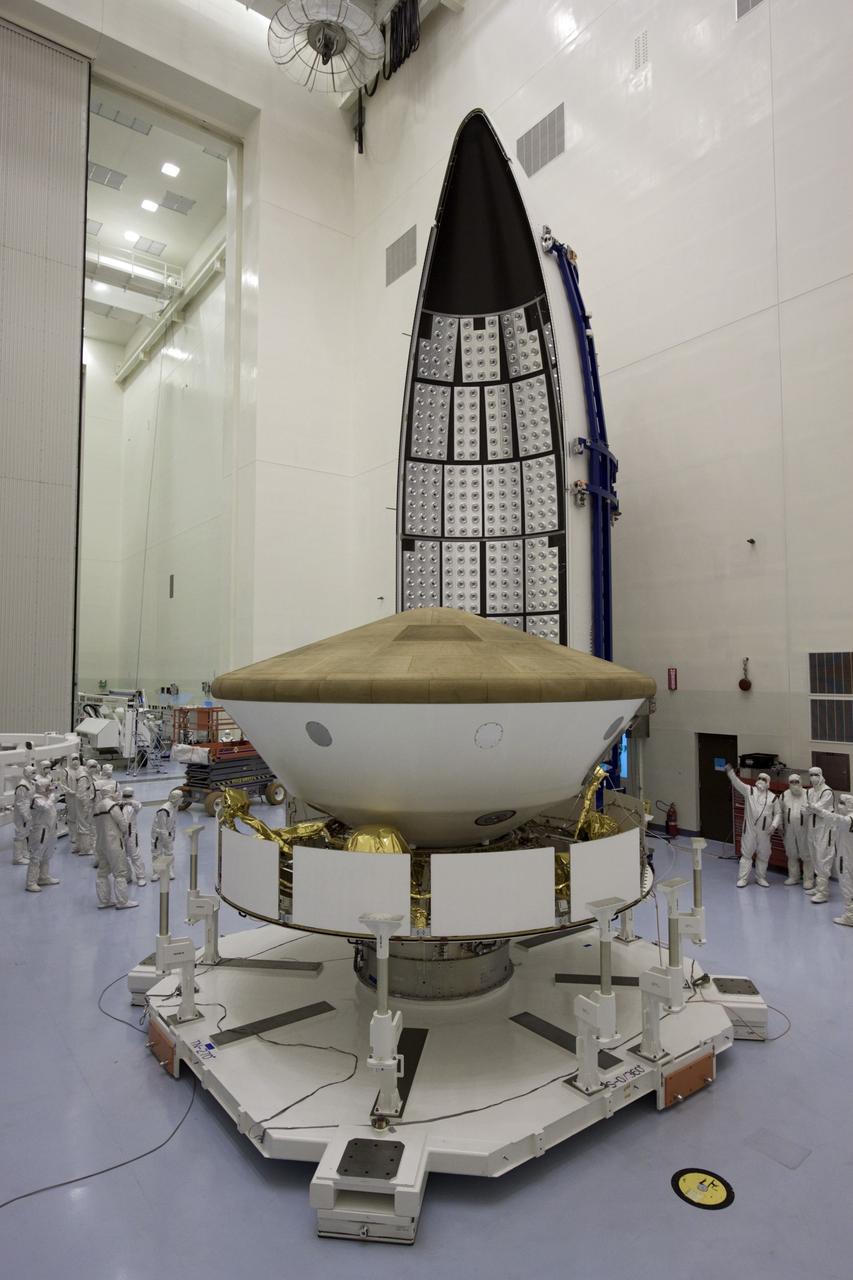
CAPE CANAVERAL, Fla. -- In the Payload Hazardous Servicing Facility at NASA's Kennedy Space Center in Florida, spacecraft technicians prepare to enclose NASA's Mars Science Laboratory (MSL) in an Atlas V rocket payload fairing. The blocks on the interior of the fairing are components of the fairing acoustic protection (FAP) system, designed to protect the payload by dampening the sound created by the rocket during liftoff. The fairing will protect the spacecraft from the impact of aerodynamic pressure and heating during ascent. MSL's components include a compact car-sized rover, Curiosity, which has 10 science instruments designed to search for evidence on whether Mars has had environments favorable to microbial life, including the chemical ingredients for life. The unique rover will use a laser to look inside rocks and release its gasses so that the rover’s spectrometer can analyze and send the data back to Earth. Launch of MSL aboard a United Launch Alliance Atlas V rocket is planned for Nov. 25 from Space Launch Complex-41 on Cape Canaveral Air Force Station. For more information, visit http://www.nasa.gov/msl. Photo credit: NASA/Jim Grossmann
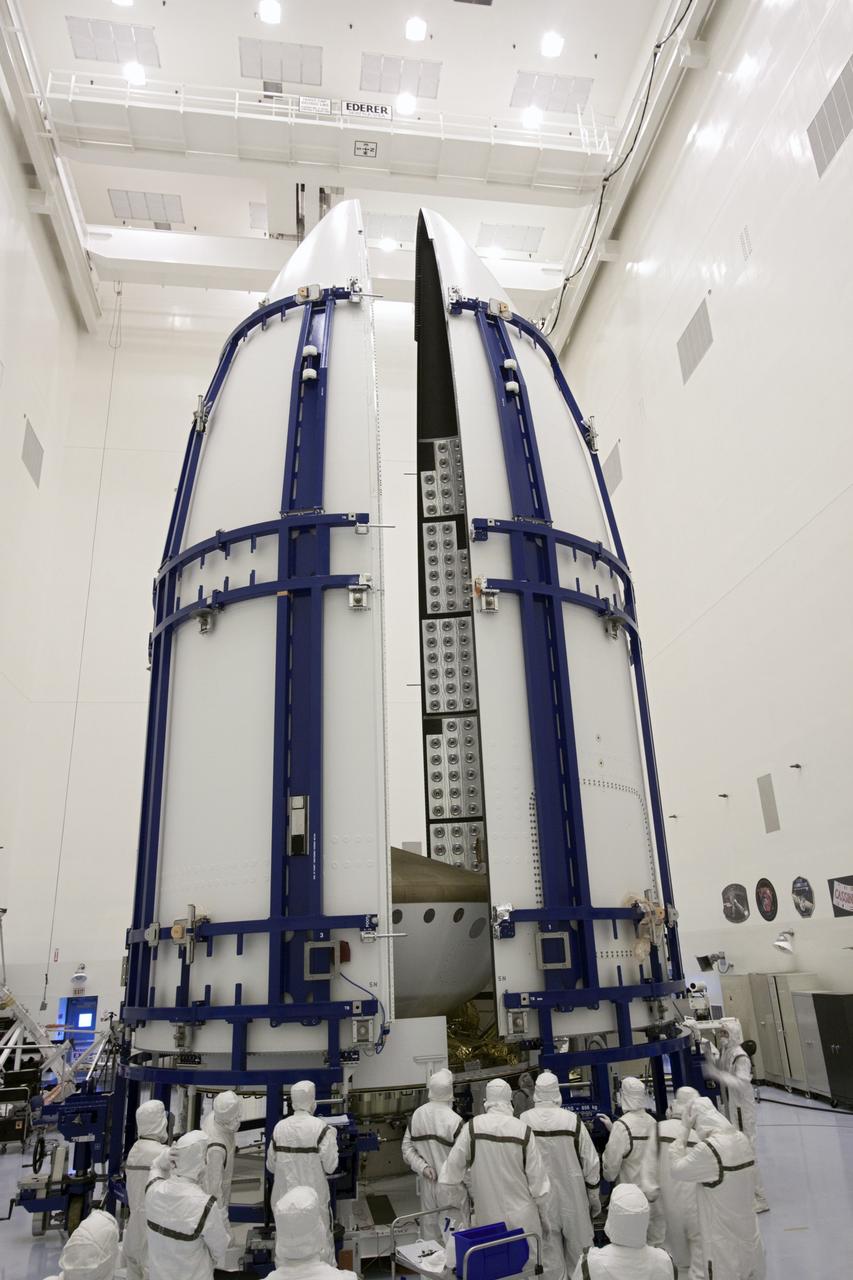
CAPE CANAVERAL, Fla. -- In the Payload Hazardous Servicing Facility at NASA's Kennedy Space Center in Florida, sections of an Atlas V rocket payload fairing obscure NASA's Mars Science Laboratory (MSL) from view as they close in around it. The blocks on the interior of the fairing are components of the fairing acoustic protection (FAP) system, designed to protect the payload by dampening the sound created by the rocket during liftoff. The fairing will protect the spacecraft from the impact of aerodynamic pressure and heating during ascent. MSL's components include a compact car-sized rover, Curiosity, which has 10 science instruments designed to search for evidence on whether Mars has had environments favorable to microbial life, including the chemical ingredients for life. The unique rover will use a laser to look inside rocks and release its gasses so that the rover’s spectrometer can analyze and send the data back to Earth. Launch of MSL aboard a United Launch Alliance Atlas V rocket is planned for Nov. 25 from Space Launch Complex-41 on Cape Canaveral Air Force Station. For more information, visit http://www.nasa.gov/msl. Photo credit: NASA/Jim Grossmann