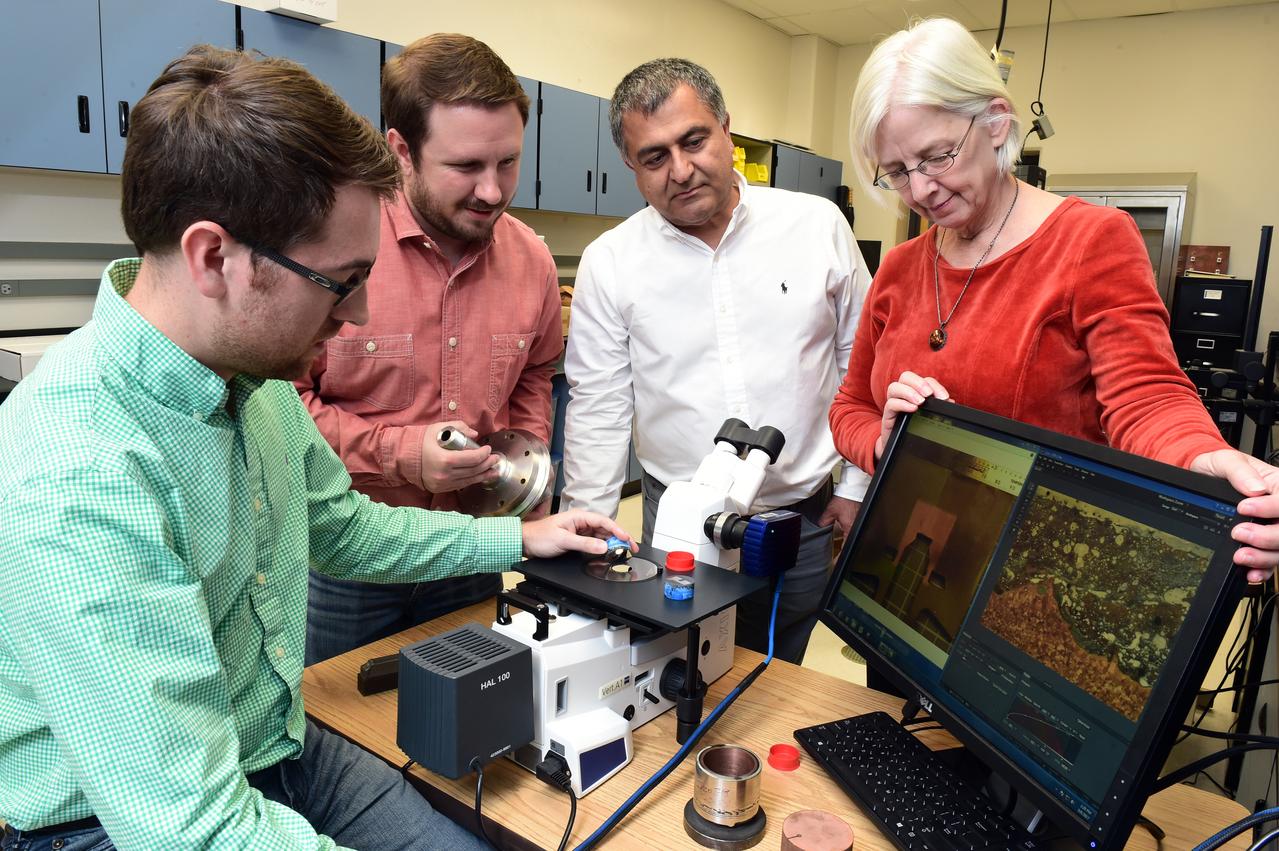
Majid Babai along with Dr. Judy Schneider, and graduate students Chris Hill and Ryan Anderson examine a cross section of the prototype rocket engine igniter created by an innovative bi-metallic 3-D printing advanced manufacturing process under a microscope.
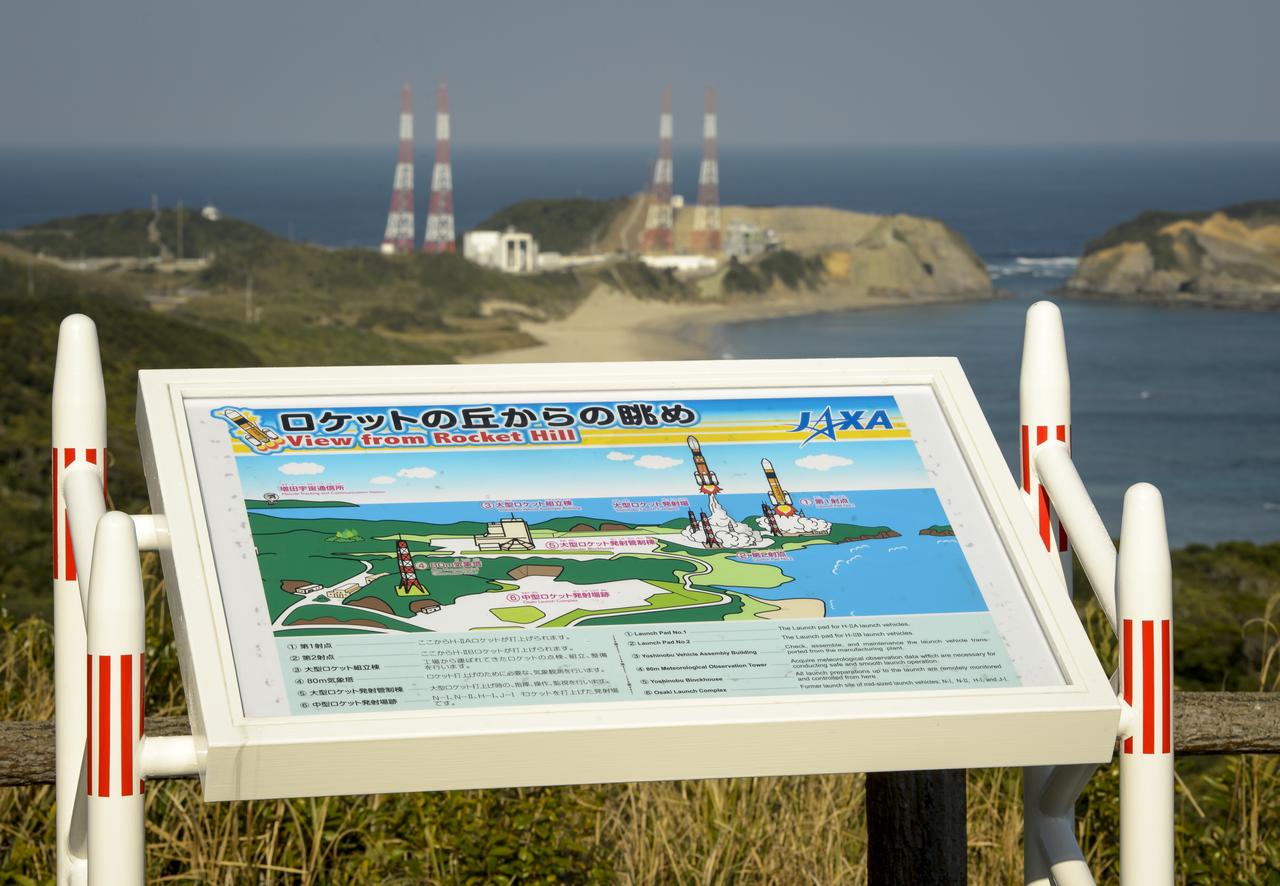
A sign at an overlook, named Rocket Hill, helps viewers identify the various facilities of the Tanegashima Space Center (TNSC), including launch pad 1 that will be used Feb. 28, 2014 for the launch of an H-IIA rocket carrying the Global Precipitation Measurement (GPM) Core Observatory, Friday, Feb. 21, 2014, Tanegashima Island, Japan. The NASA-Japan Aerospace Exploration Agency (JAXA) GPM spacecraft will collect information that unifies data from an international network of existing and future satellites to map global rainfall and snowfall every three hours. Photo Credit: (NASA/Bill Ingalls)

On Dec. 19, 2018, Bill Hill, deputy associate administrator for Exploration Systems Development at NASA Headquarters in Washington, speaks during a groundbreaking ceremony for a new liquid hydrogen tank for Launch Complex 39B at the agency's Kennedy Space Center. The storage facility will hold 1.25 million gallons of the propellant for NASA's Space Launch System rocket designed to boost the agency's Orion spacecraft, sending humans to distant destinations such as the Moon and Mars.
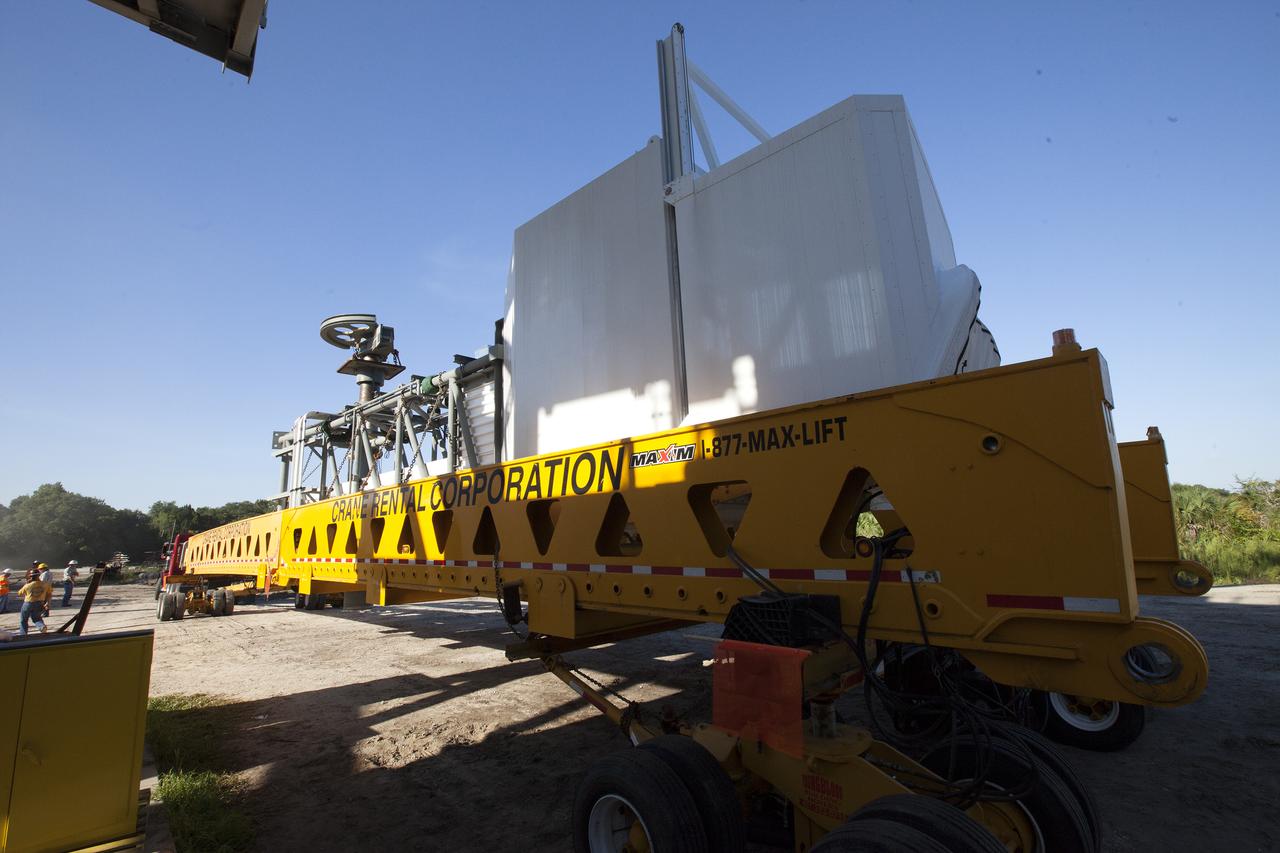
A heavy-lift transport truck, carrying the Crew Access Arm for Space Launch Complex 41, departs from Oak Hill, Florida, and heads to NASA’s Kennedy Space Center in Florida. The arm will be installed on the Complex 41 Crew Access Tower at Cape Canaveral Air Force Station. It will be used as a bridge by astronauts to board Boeing's CST-100 Starliner spacecraft as it stands on the launch pad atop a United Launch Alliance Atlas V rocket.
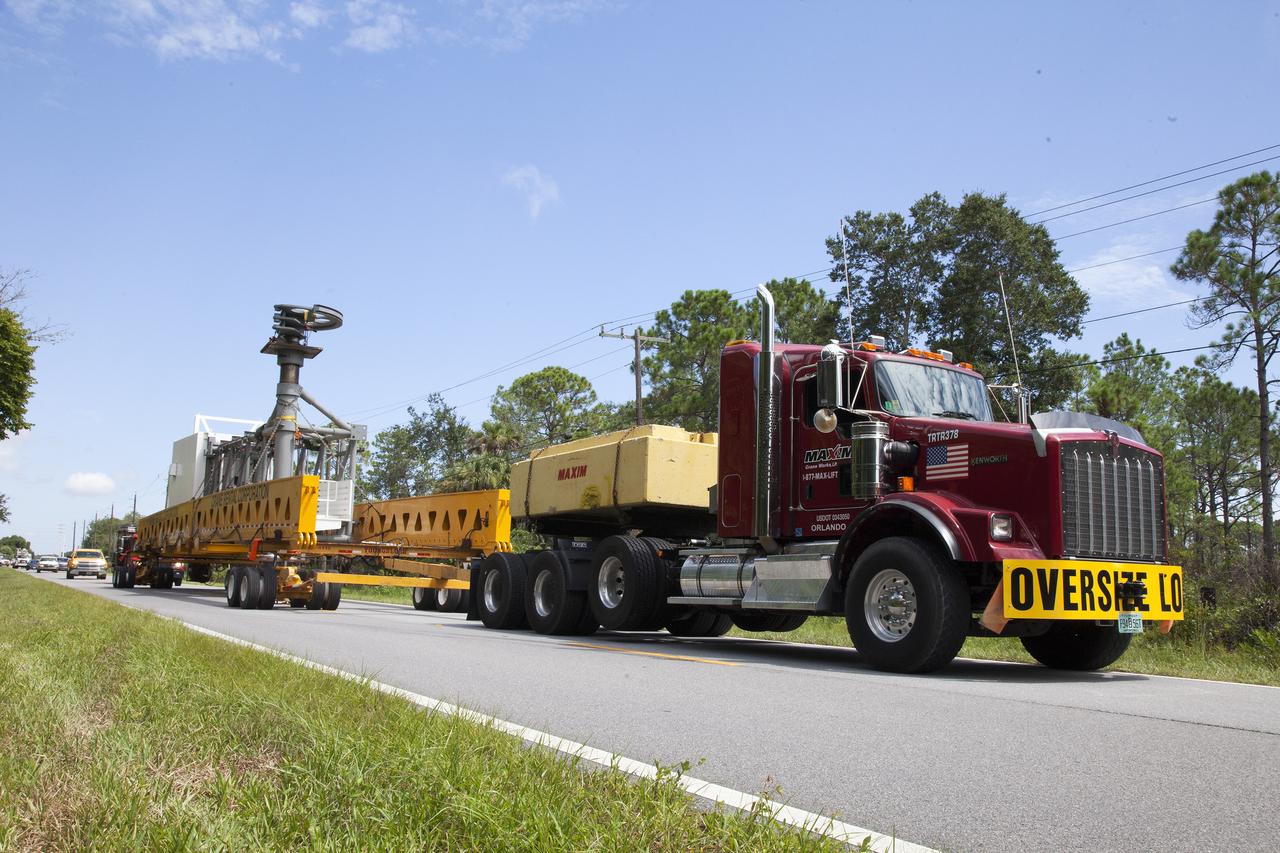
A heavy-lift transport truck, carrying the Crew Access Arm for Space Launch Complex 41, departs from Oak Hill, Florida, and heads to NASA’s Kennedy Space Center in Florida. The arm will be installed on the Complex 41 Crew Access Tower at Cape Canaveral Air Force Station. It will be used as a bridge by astronauts to board Boeing's CST-100 Starliner spacecraft as it stands on the launch pad atop a United Launch Alliance Atlas V rocket.
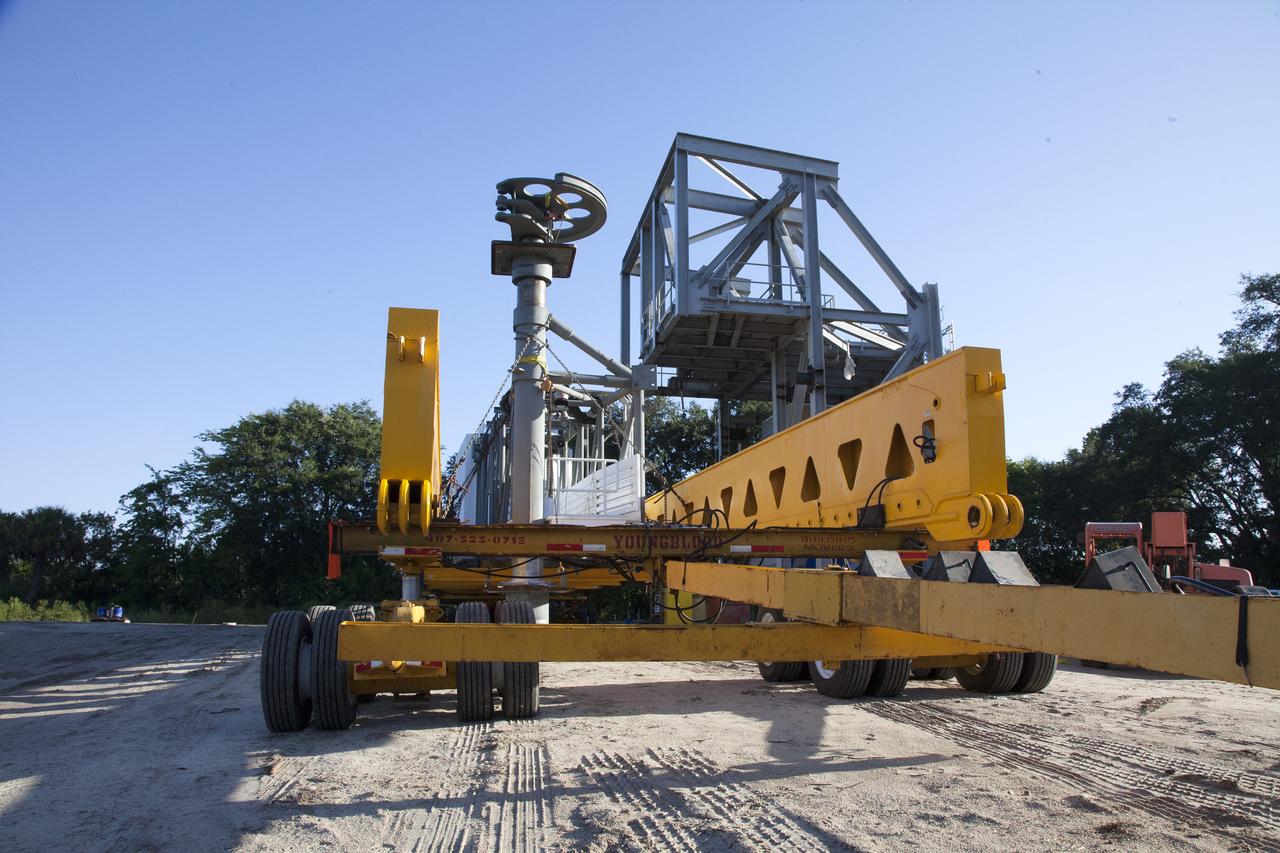
A heavy-lift transport truck, carrying the Crew Access Arm for Space Launch Complex 41, departs from Oak Hill, Florida, and heads to NASA’s Kennedy Space Center in Florida. The arm will be installed on the Complex 41 Crew Access Tower at Cape Canaveral Air Force Station. It will be used as a bridge by astronauts to board Boeing's CST-100 Starliner spacecraft as it stands on the launch pad atop a United Launch Alliance Atlas V rocket.
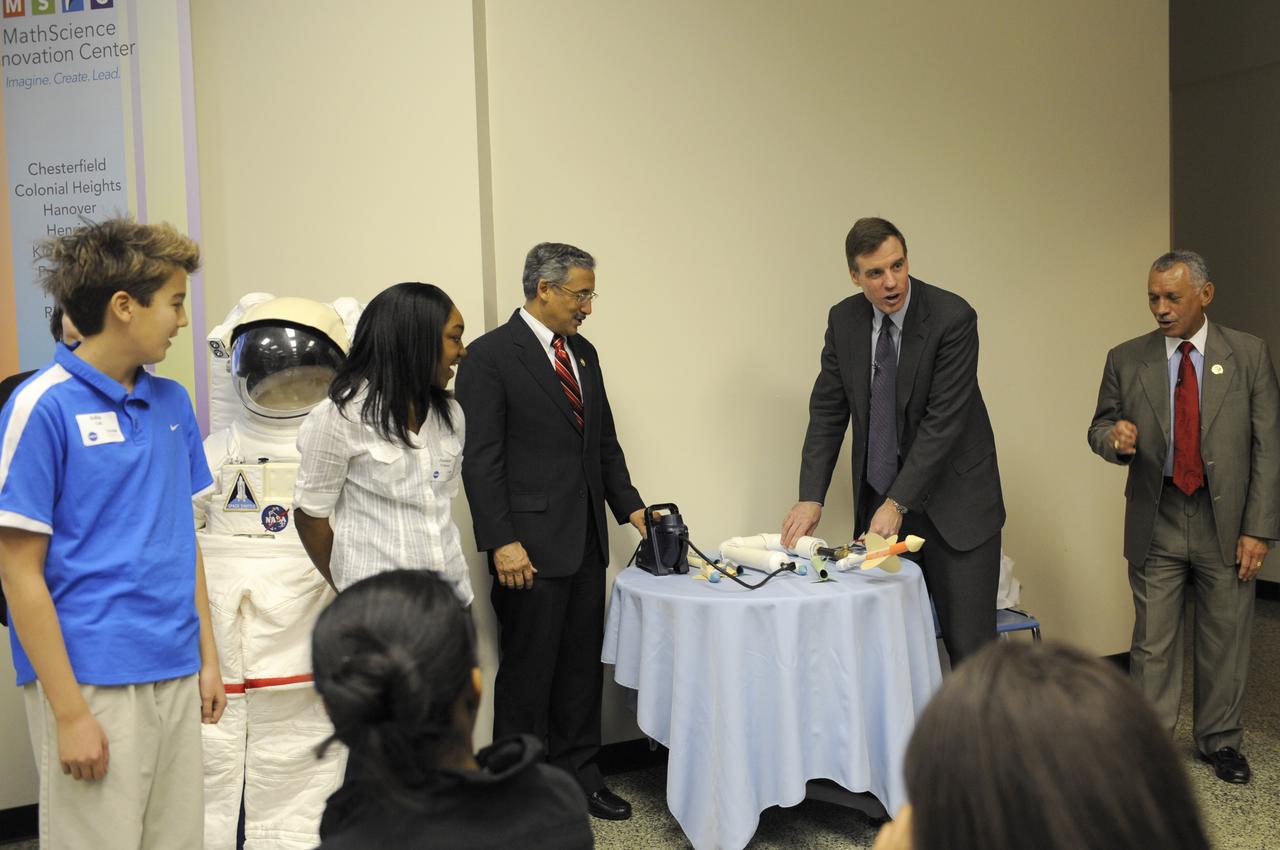
NASA Administrator Charles Bolden, right, counts down along with others as U.S. Sen. Mark Warner, D-Va., readies to launch a paper rocket as U.S. Rep. Bobby Scott, D-Va., third right, looks on, Friday, Jan. 28, 2011, at the MathScience Innovation Center in Richmond, Va. Earlier, Bolden, spoke to students from Albert Hill Middle School where he highlighted the importance of science, technology, engineering and math, or STEM, as he shared his life experiences with the students. (Photo Credit:NASA/Paul E. Alers)
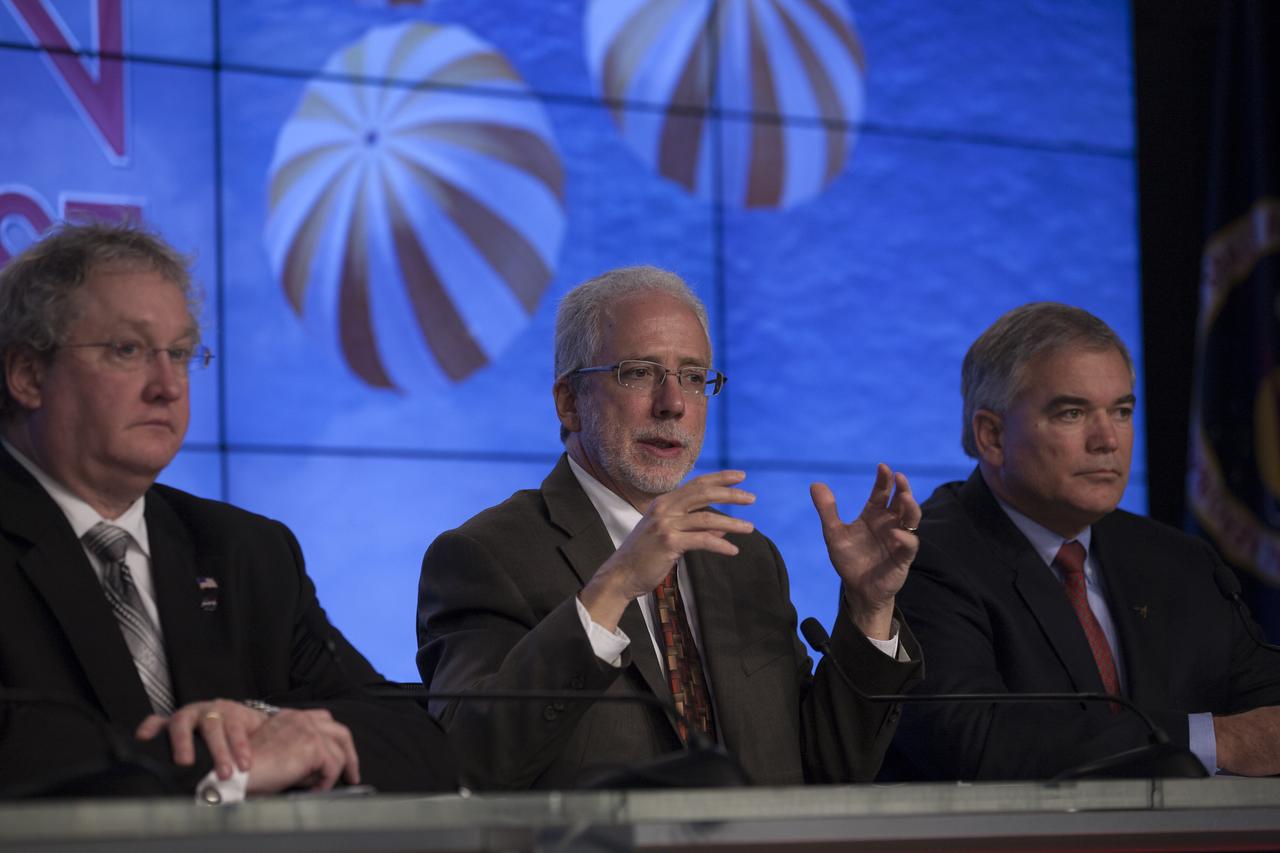
In the Kennedy Space Center’s Press Site auditorium, members of the news media are briefed on the upcoming Orion flight test by Mark Geyer, NASA Orion Program manager. Also participating in the news conference are Bill Hill, NASA deputy associate administrator for Exploration Systems Development, left, and Bryan Austin, Lockheed Martin mission manager. Orion is the exploration spacecraft designed to carry astronauts to destinations not yet explored by humans, including an asteroid and Mars. It will have emergency abort capability, sustain the crew during space travel and provide safe re-entry from deep space return velocities. The first unpiloted flight test of Orion is scheduled to launch Dec. 4, 2014 atop a United Launch Alliance Delta IV Heavy rocket, and in 2018 on NASA’s Space Launch System rocket.
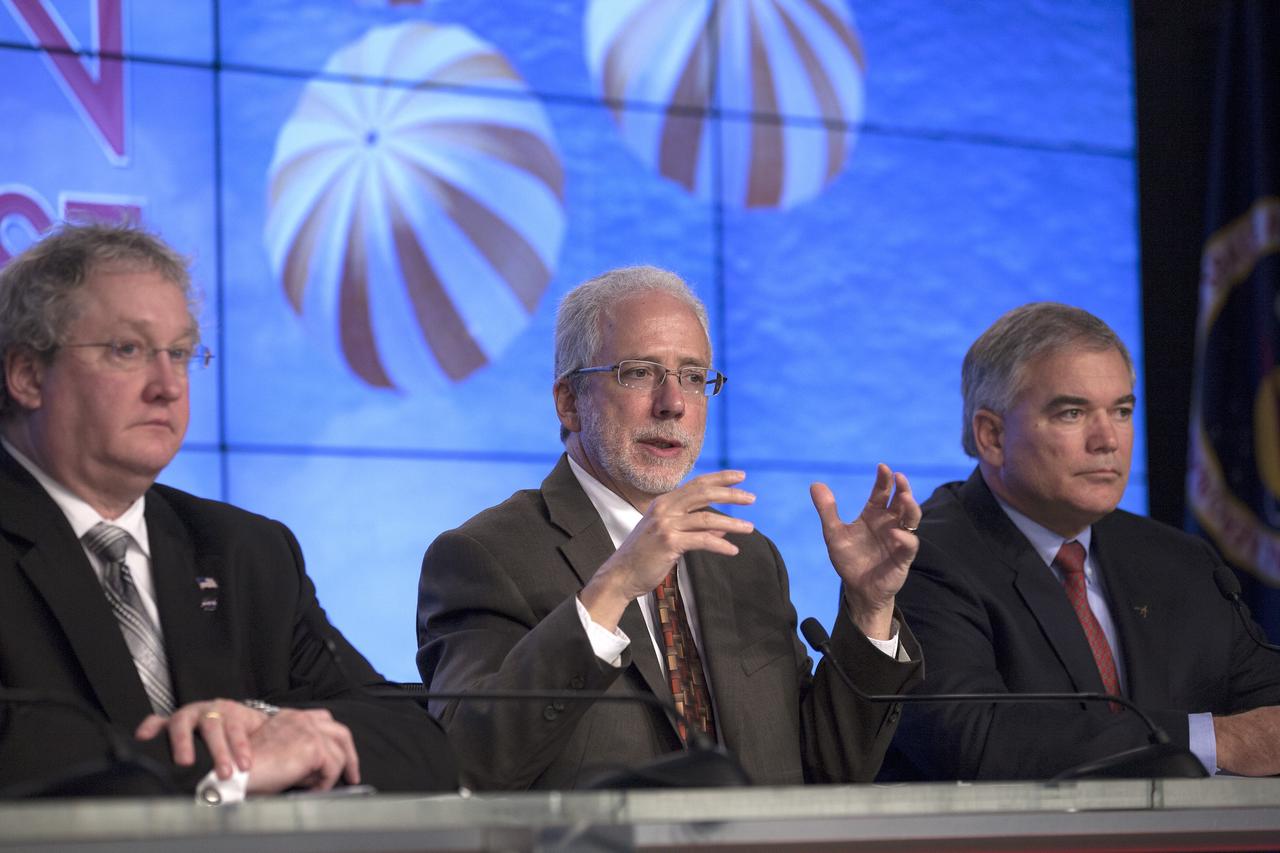
CAPE CANAVERAL, Fla. – In the Kennedy Space Center’s Press Site auditorium, members of the news media are briefed on the upcoming Orion flight test by Mark Geyer, NASA Orion Program manager. Also participating in the news conference are Bill Hill, NASA deputy associate administrator for Exploration Systems Development, left, and Bryan Austin, Lockheed Martin mission manager. Orion is the exploration spacecraft designed to carry astronauts to destinations not yet explored by humans, including an asteroid and Mars. It will have emergency abort capability, sustain the crew during space travel and provide safe re-entry from deep space return velocities. The first unpiloted flight test of Orion is scheduled to launch Dec. 4, 2014 atop a United Launch Alliance Delta IV Heavy rocket, and in 2018 on NASA’s Space Launch System rocket. For more information, visit www.nasa.gov/orion Photo credit: NASA/Kim Shiflett
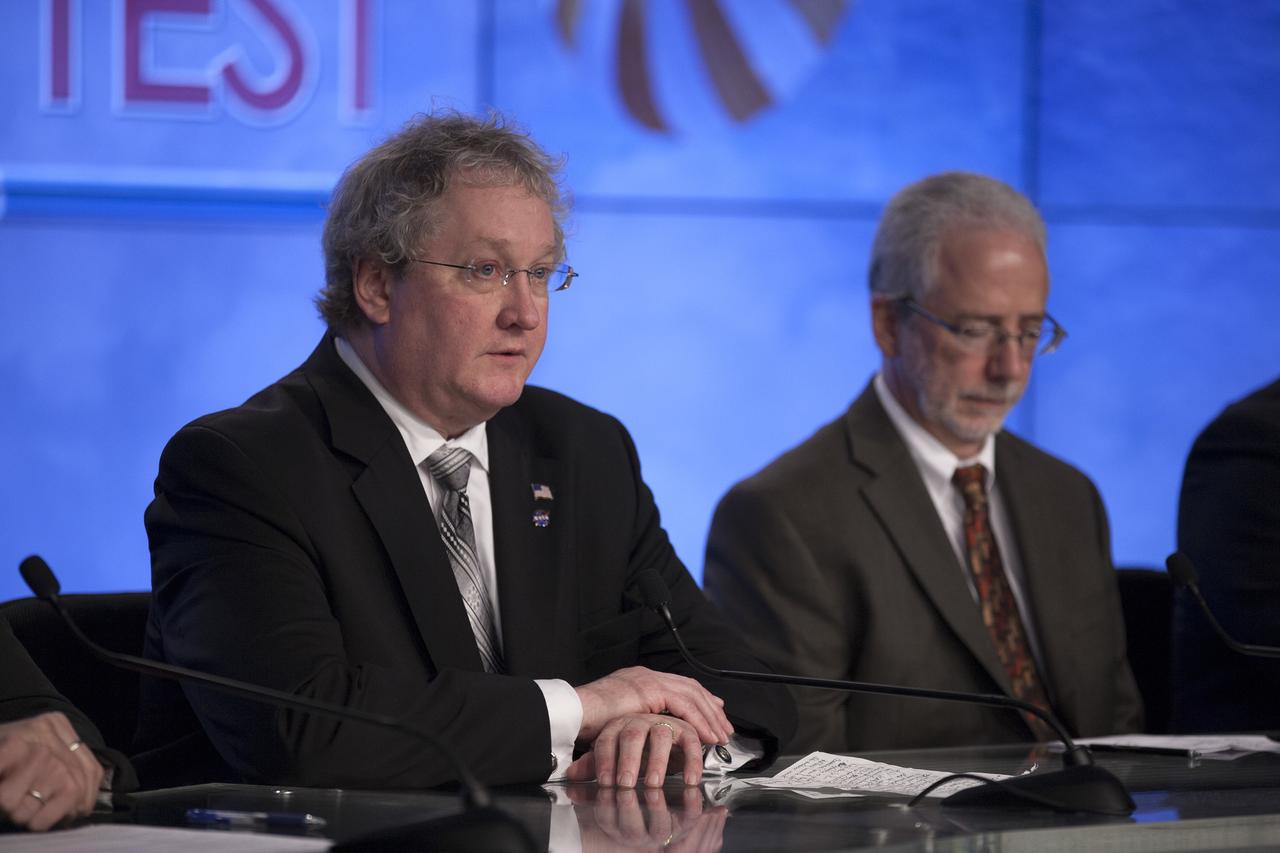
CAPE CANAVERAL, Fla. – In the Kennedy Space Center’s Press Site auditorium, members of the news media are briefed on the upcoming Orion flight test by Bill Hill, NASA deputy associate administrator for Exploration Systems Development. Mark Geyer, NASA Orion Program manager, is on the right. Orion is the exploration spacecraft designed to carry astronauts to destinations not yet explored by humans, including an asteroid and Mars. It will have emergency abort capability, sustain the crew during space travel and provide safe re-entry from deep space return velocities. The first unpiloted flight test of Orion is scheduled to launch Dec. 4, 2014 atop a United Launch Alliance Delta IV Heavy rocket, and in 2018 on NASA’s Space Launch System rocket. For more information, visit www.nasa.gov/orion Photo credit: NASA/Kim Shiflett
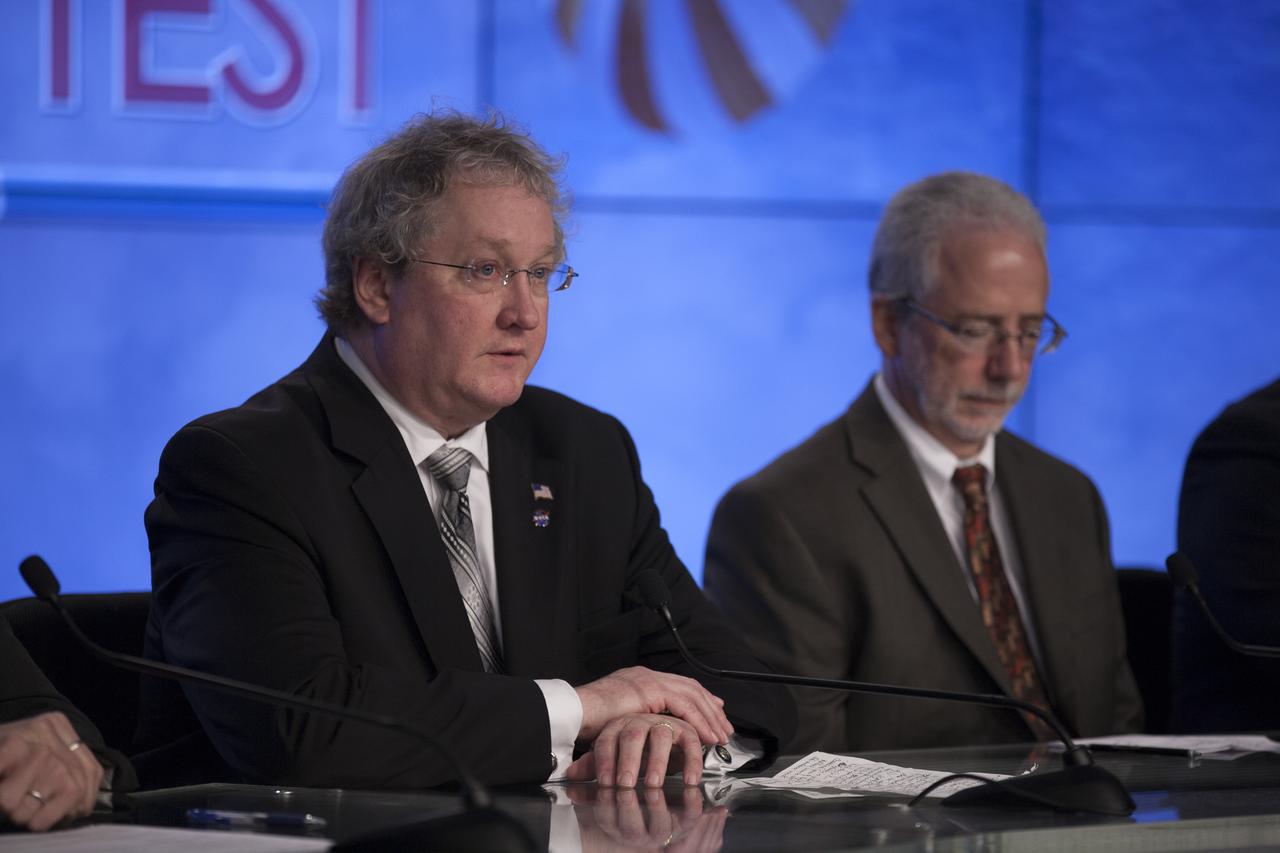
In the Kennedy Space Center’s Press Site auditorium, members of the news media are briefed on the upcoming Orion flight test by Bill Hill, NASA deputy associate administrator for Exploration Systems Development. Mark Geyer, NASA Orion Program manager, is on the right. Orion is the exploration spacecraft designed to carry astronauts to destinations not yet explored by humans, including an asteroid and Mars. It will have emergency abort capability, sustain the crew during space travel and provide safe re-entry from deep space return velocities. The first unpiloted flight test of Orion is scheduled to launch Dec. 4, 2014 atop a United Launch Alliance Delta IV Heavy rocket, and in 2018 on NASA’s Space Launch System rocket.
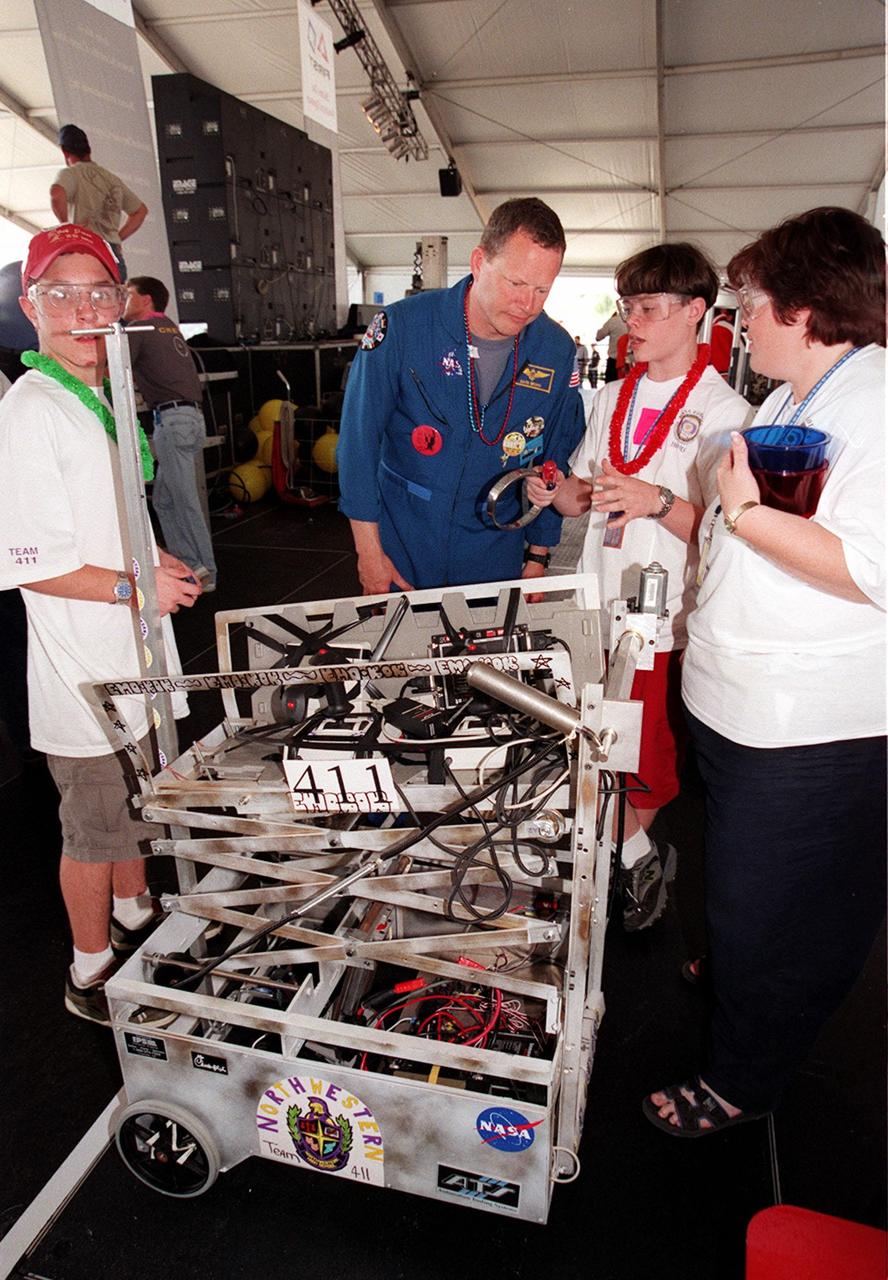
Astronaut David Brown looks over the robot named "L'il Max" with members of the team The Bot Kickers! from Northwestern High School, Rock Hill, S.C. Students from all over the country are at the KSC Visitor Complex for the FIRST (For Inspiration and Recognition of Science and Technology) Southeast Regional competition being held March 9-11 in the Rocket Garden. Teams of high school students are testing the limits of their imagination using robots they have designed, with the support of business and engineering professionals and corporate sponsors, to compete in a technological battle against other schools' robots. Of the 30 high school teams competing, 16 are Florida teams co-sponsored by NASA and KSC contractors. Local high schools participating are Astronaut, Bayside, Cocoa Beach, Eau Gallie, Melbourne, Melbourne Central Catholic, Palm Bay, Rockledge, Satellite, and Titusville
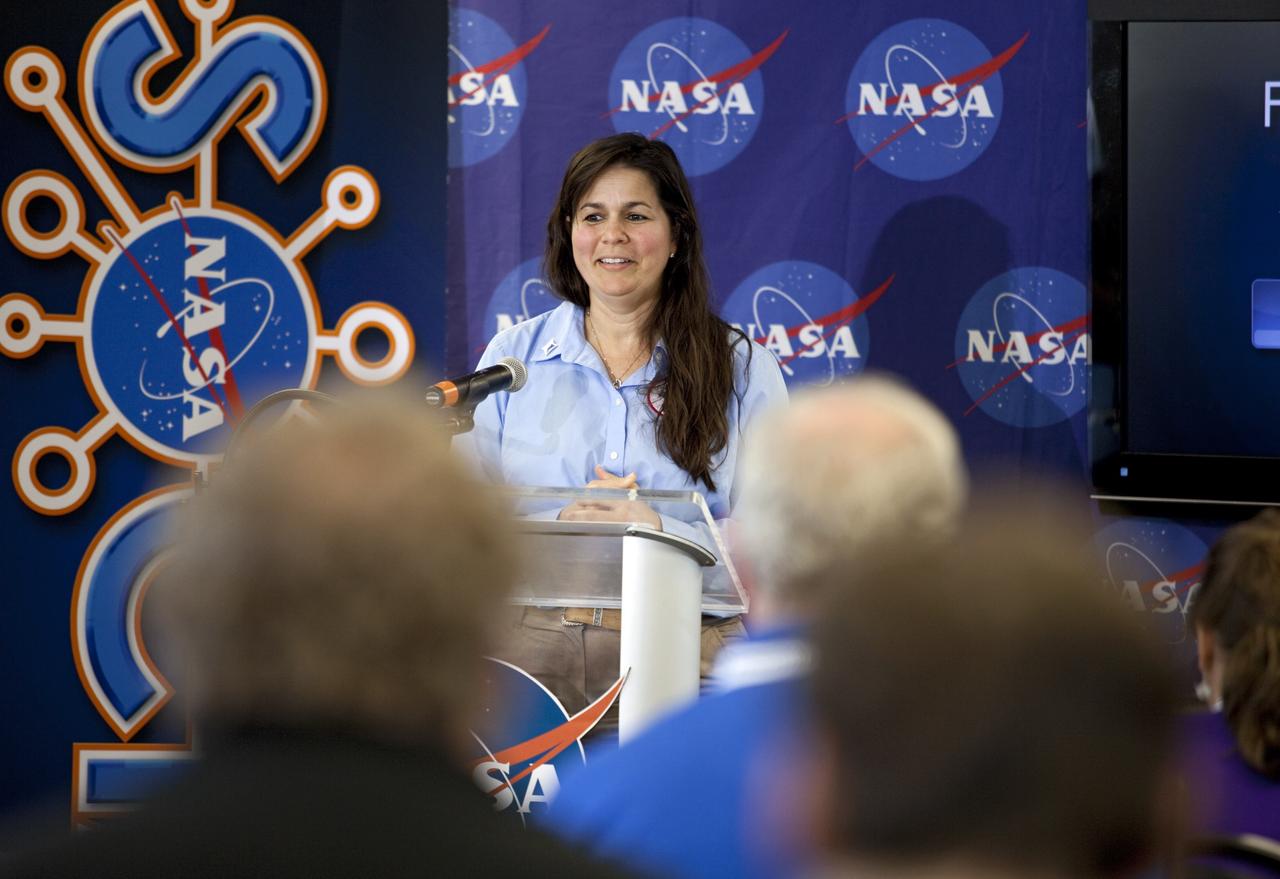
CAPE CANAVERAL, Fla. – At NASA's Kennedy Space Center in Florida, Aly Mendoza-Hill, NASA Launch Services Program mission manager, talks to agency social media followers during the second day of NASA Social activities revolving around NASA's Radiation Belt Storm Probes, or RBSP, mission. The probes are set to launch aboard a United Launch Alliance, or ULA, Atlas V rocket from nearby Cape Canaveral Air Force Station. About 40 followers were selected to participate in RBSP's prelaunch and launch activities. The RBSP mission will help us understand the sun’s influence on Earth and near-Earth space by studying the Earth’s radiation belts on various scales of space and time. RBSP will begin its mission of exploration of Earth’s Van Allen radiation belts and the extremes of space weather. For more information, visit http://www.nasa.gov/rbsp. Photo credit: NASA/Frankie Martin
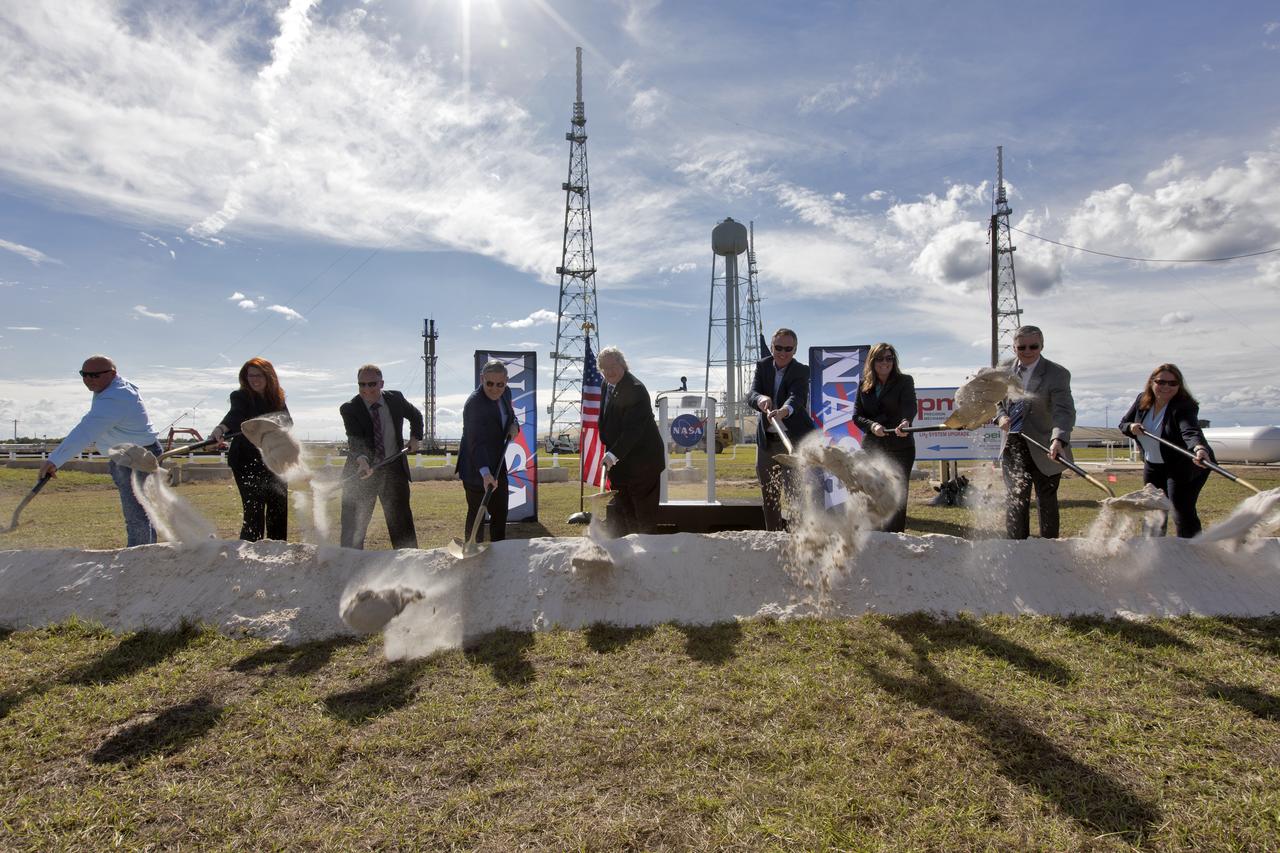
On Dec. 19, 2018, at NASA Kennedy Space Center's Launch Complex 39B, agency and contractor managers break ground for a new liquid hydrogen tank. Participating, from the left, are Todd Gray, president of Precision Mechanical, prime contractor for the project; Charlie Blackwell-Thompson, launch director; Shawn Quinn, director of Engineering; Bob Cabana, center director; Bill Hill, deputy associate administrator for Exploration Systems Development at NASA Headquarters in Washington; Mike Bolger, program manager for Exploration Ground Systems (EGS); Jennifer Kunz, deputy program manager for EGS, Andy Allen, general manager for Jacobs, NASA's Test and Operations Support Contractor; and Regina Spellman, launch pad senior project manager in EGS. The storage facility will hold 1.25 million gallons of the propellant for NASA's Space Launch System rocket designed to boost the agency's Orion spacecraft, sending humans to distant destinations such as the Moon and Mars.
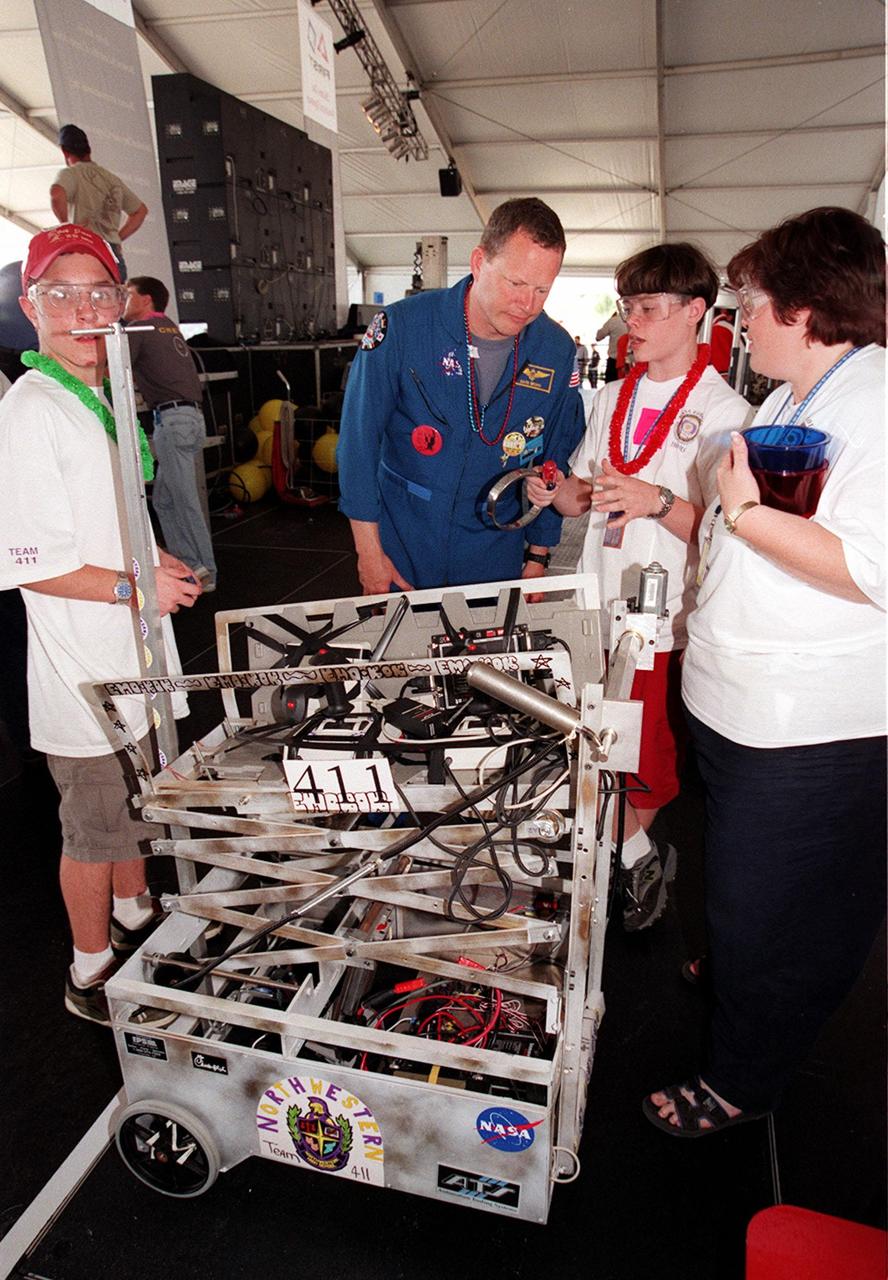
Astronaut David Brown looks over the robot named "L'il Max" with members of the team The Bot Kickers! from Northwestern High School, Rock Hill, S.C. Students from all over the country are at the KSC Visitor Complex for the FIRST (For Inspiration and Recognition of Science and Technology) Southeast Regional competition being held March 9-11 in the Rocket Garden. Teams of high school students are testing the limits of their imagination using robots they have designed, with the support of business and engineering professionals and corporate sponsors, to compete in a technological battle against other schools' robots. Of the 30 high school teams competing, 16 are Florida teams co-sponsored by NASA and KSC contractors. Local high schools participating are Astronaut, Bayside, Cocoa Beach, Eau Gallie, Melbourne, Melbourne Central Catholic, Palm Bay, Rockledge, Satellite, and Titusville
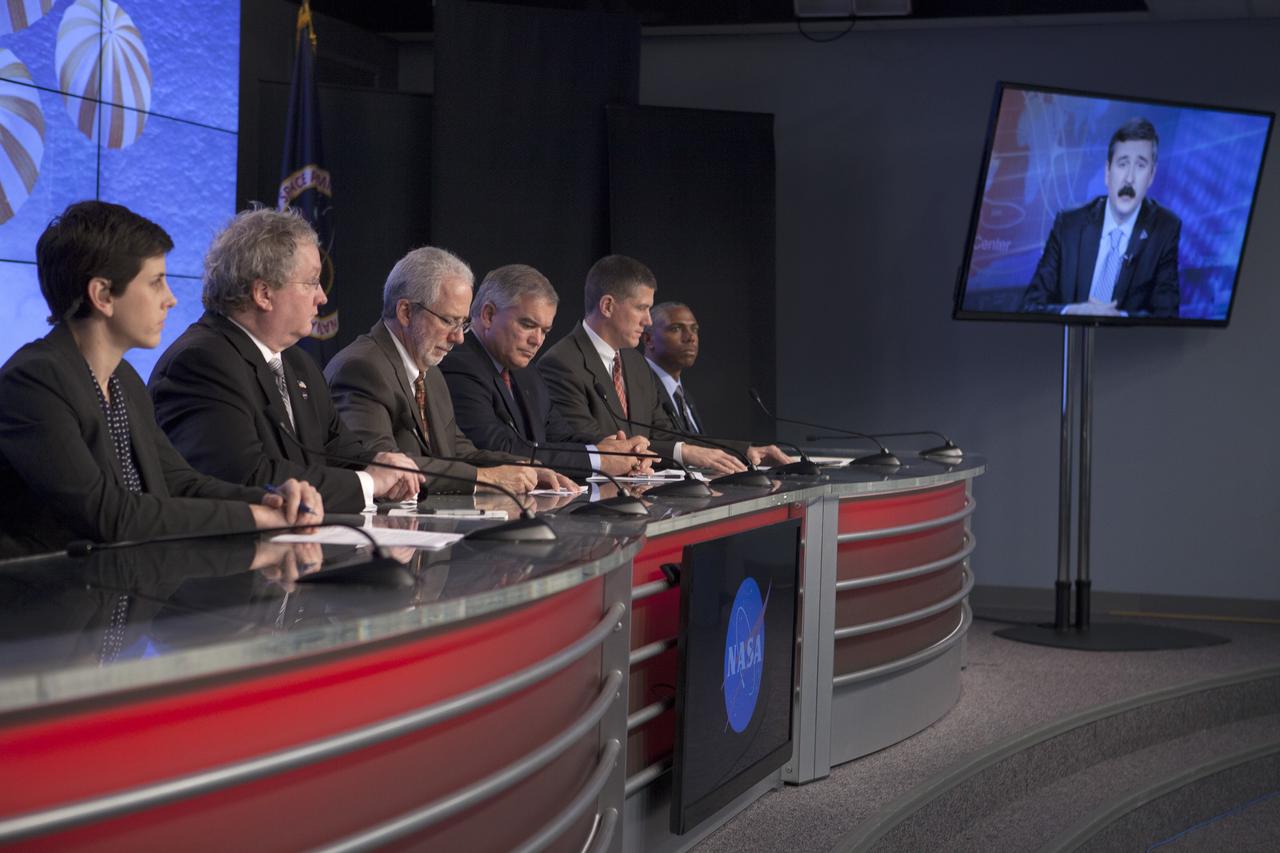
CAPE CANAVERAL, Fla. – In the Kennedy Space Center’s Press Site auditorium, members of the news media are briefed on the upcoming Orion flight test. From left are: Rachel Kraft, NASA Public Affairs, Bill Hill, NASA deputy associate administrator for Exploration Systems Development, Mark Geyer, NASA Orion Program manager, Bryan Austin, Lockheed Martin mission manager, Jeremy Graeber, Operations Integration Branch of Ground Systems Development and Operations at Kennedy, and Ron Fortson, United Launch Alliance director of Mission Management. Mike Sarafin, NASA's lead flight director, participated by video from the Johnson Space Center. Orion is the exploration spacecraft designed to carry astronauts to destinations not yet explored by humans, including an asteroid and Mars. It will have emergency abort capability, sustain the crew during space travel and provide safe re-entry from deep space return velocities. The first unpiloted flight test of Orion is scheduled to launch Dec. 4, 2014 atop a United Launch Alliance Delta IV Heavy rocket, and in 2018 on NASA’s Space Launch System rocket. For more information, visit www.nasa.gov/orion Photo credit: NASA/Kim Shiflett
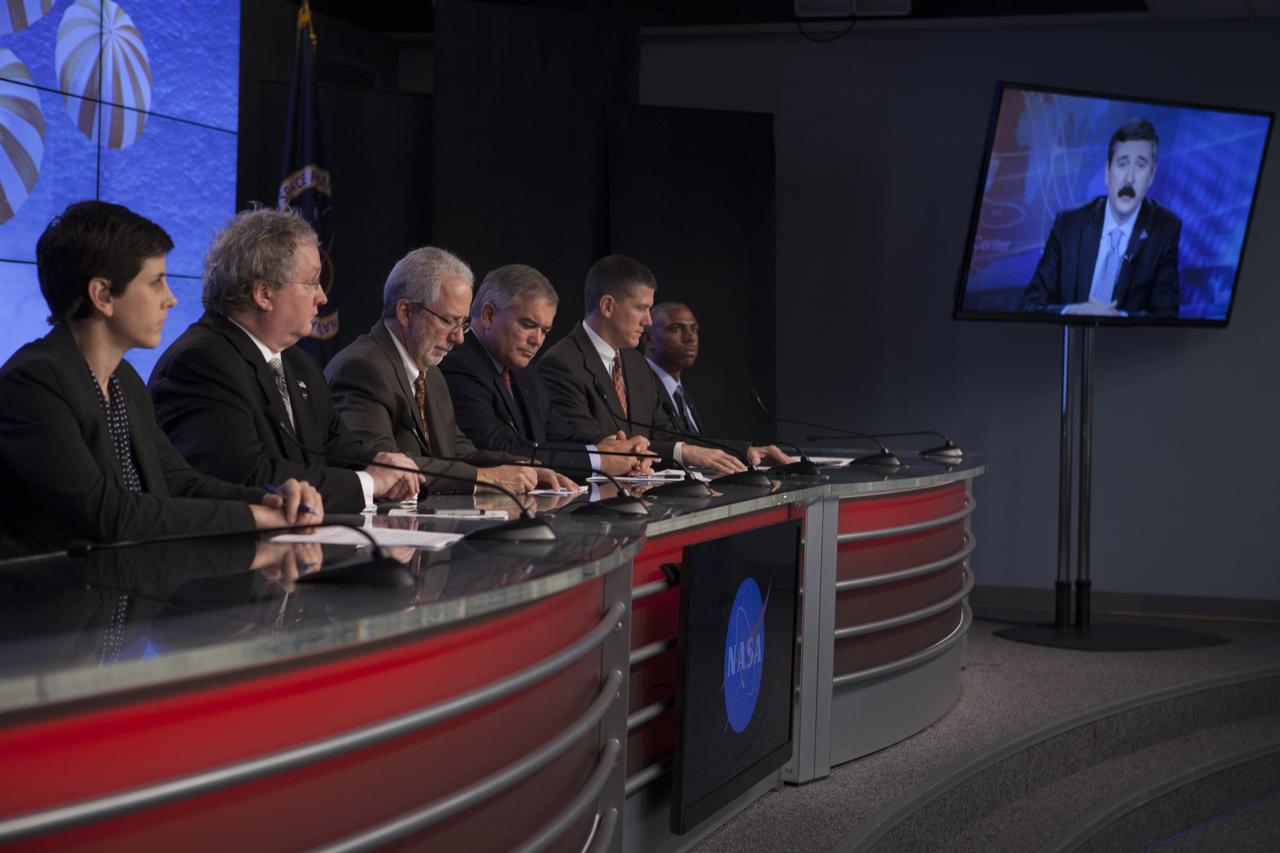
In the Kennedy Space Center’s Press Site auditorium, members of the news media are briefed on the upcoming Orion flight test. From left are: Rachel Kraft, NASA Public Affairs, Bill Hill, NASA deputy associate administrator for Exploration Systems Development, Mark Geyer, NASA Orion Program manager, Bryan Austin, Lockheed Martin mission manager, Jeremy Graeber, Operations Integration Branch of Ground Systems Development and Operations at Kennedy, and Ron Fortson, United Launch Alliance director of Mission Management. Mike Sarafin, NASA's lead flight director, participated by video from the Johnson Space Center. Orion is the exploration spacecraft designed to carry astronauts to destinations not yet explored by humans, including an asteroid and Mars. It will have emergency abort capability, sustain the crew during space travel and provide safe re-entry from deep space return velocities. The first unpiloted flight test of Orion is scheduled to launch Dec. 4, 2014 atop a United Launch Alliance Delta IV Heavy rocket, and in 2018 on NASA’s Space Launch System rocket.
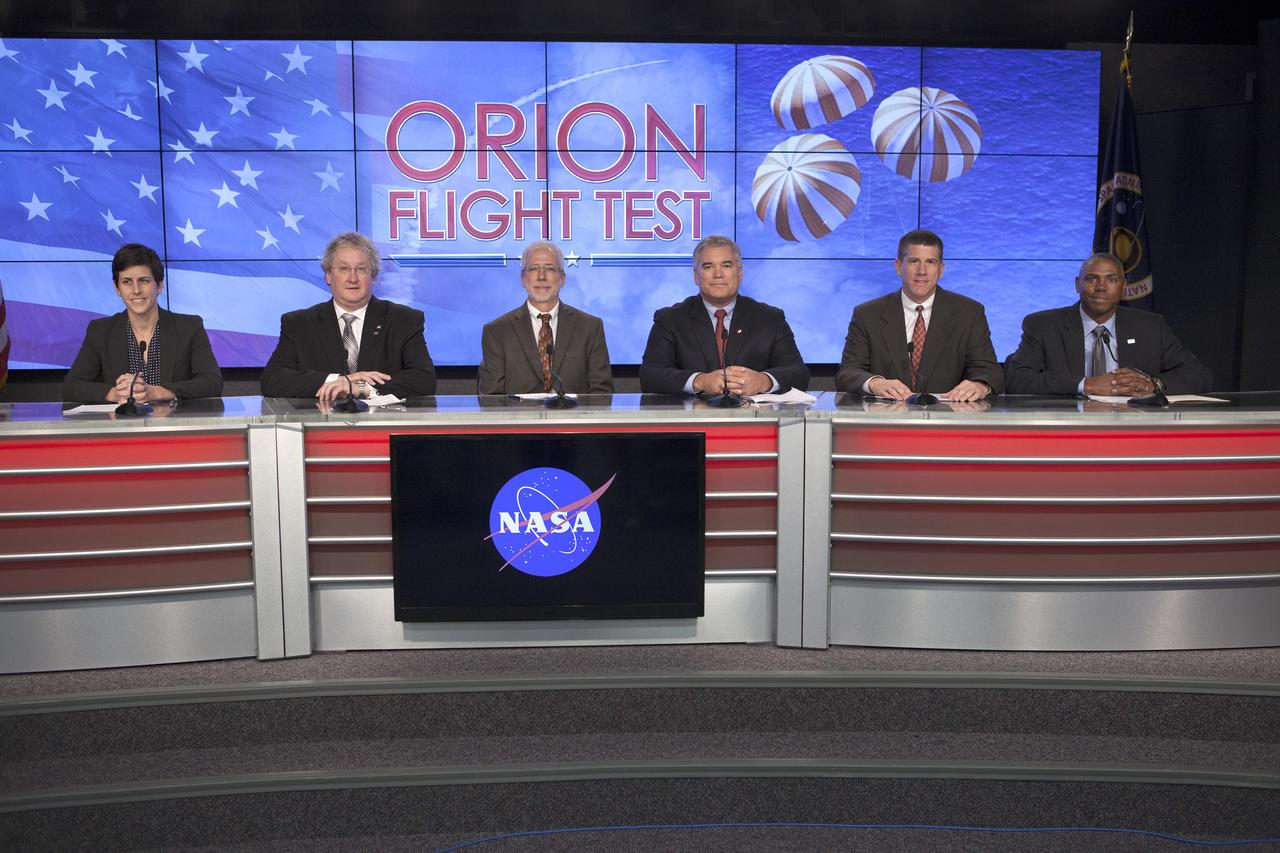
CAPE CANAVERAL, Fla. – In the Kennedy Space Center’s Press Site auditorium, members of the news media are briefed on the upcoming Orion flight test. From left are: Rachel Kraft, NASA Public Affairs, Bill Hill, NASA deputy associate administrator for Exploration Systems Development, Mark Geyer, NASA Orion Program manager, Bryan Austin, Lockheed Martin mission manager, Jeremy Graeber, Operations Integration Branch of Ground Systems Development and Operations at Kennedy, and Ron Fortson, United Launch Alliance director of Mission Management. Mike Sarafin, NASA's lead flight director, participated by video from the Johnson Space Center. Orion is the exploration spacecraft designed to carry astronauts to destinations not yet explored by humans, including an asteroid and Mars. It will have emergency abort capability, sustain the crew during space travel and provide safe re-entry from deep space return velocities. The first unpiloted flight test of Orion is scheduled to launch Dec. 4, 2014 atop a United Launch Alliance Delta IV Heavy rocket, and in 2018 on NASA’s Space Launch System rocket. For more information, visit www.nasa.gov/orion Photo credit: NASA/Kim Shiflett
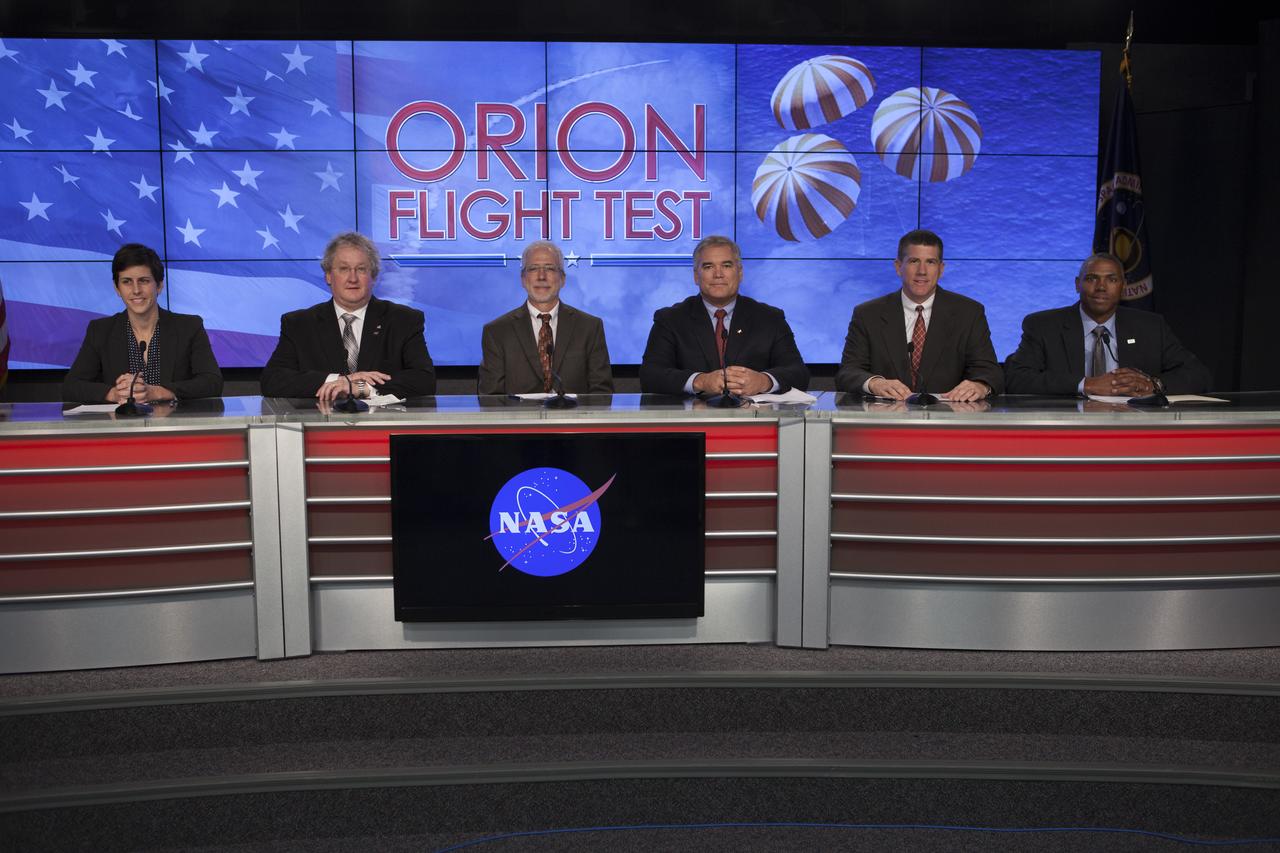
In the Kennedy Space Center’s Press Site auditorium, members of the news media are briefed on the upcoming Orion flight test. From left are: Rachel Kraft, NASA Public Affairs, Bill Hill, NASA deputy associate administrator for Exploration Systems Development, Mark Geyer, NASA Orion Program manager, Bryan Austin, Lockheed Martin mission manager, Jeremy Graeber, Operations Integration Branch of Ground Systems Development and Operations at Kennedy, and Ron Fortson, United Launch Alliance director of Mission Management. Mike Sarafin, NASA's lead flight director, participated by video from the Johnson Space Center. Orion is the exploration spacecraft designed to carry astronauts to destinations not yet explored by humans, including an asteroid and Mars. It will have emergency abort capability, sustain the crew during space travel and provide safe re-entry from deep space return velocities. The first unpiloted flight test of Orion is scheduled to launch Dec. 4, 2014 atop a United Launch Alliance Delta IV Heavy rocket, and in 2018 on NASA’s Space Launch System rocket.
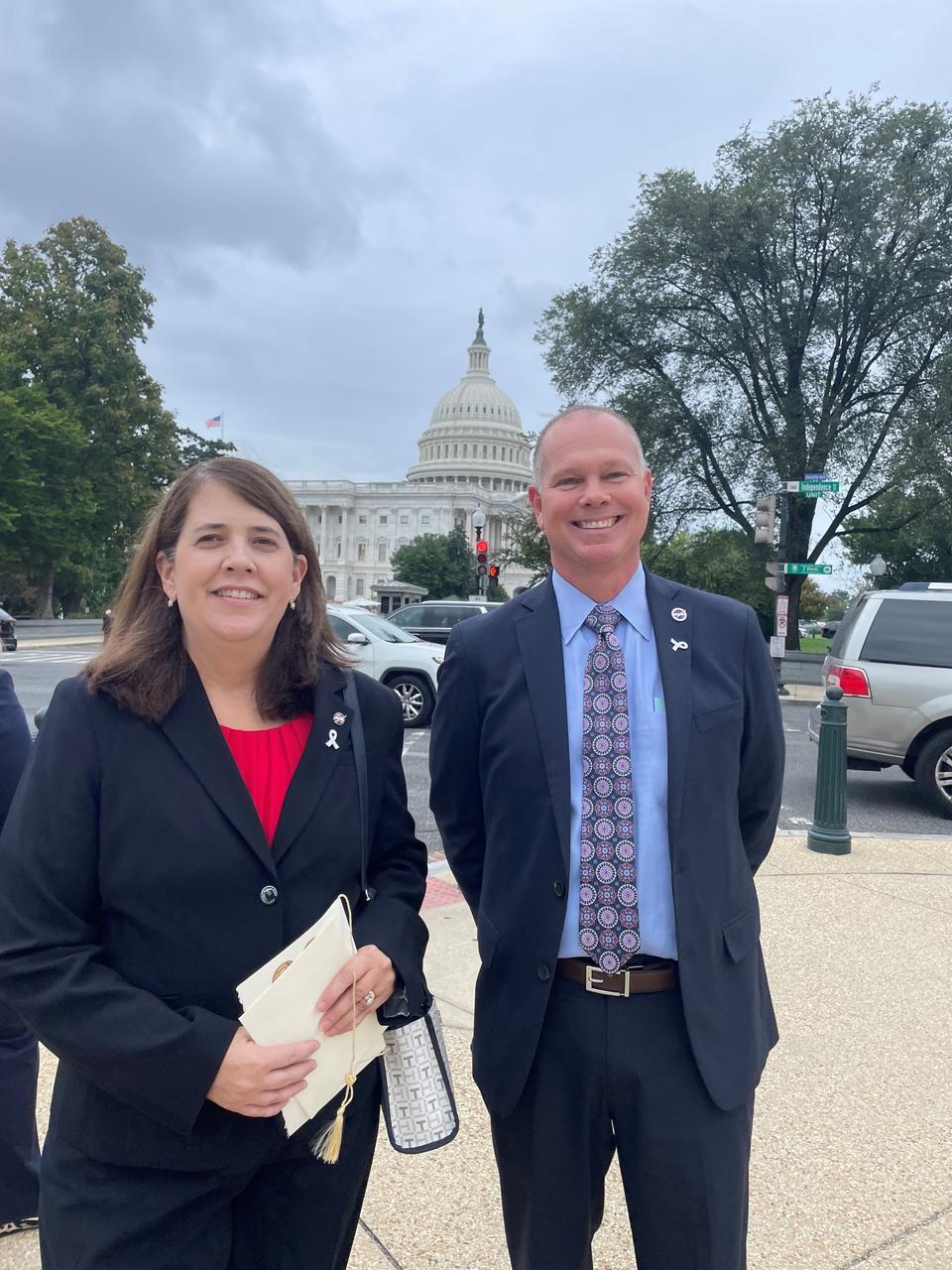
NASA Stennis Deputy Director Christine Powell, left, and NASA Stennis Director John Bailey stand near the United States Capitol during a visit to Washington, D.C. on Sept. 18. It marked the first visit to Capitol Hill for the leaders from NASA’s Stennis Space Center near Bay St. Louis, Mississippi, since being named to their current roles. Following conversations with Mississippi and Louisiana congressional representatives and staffers, Bailey and Powell attended the Hidden Figures Congressional Gold Medal ceremony. The awards recognized the women who contributed to the U.S. space race, including the NASA mathematicians who helped land the first astronauts on the Moon under the agency’s Apollo Program. NASA Stennis, established in the 1960s, tested first and second stages of the Saturn V rocket for Apollo missions to the Moon. The south Mississippi NASA center continues supporting the NASA mission by testing engines and stages to help power the agency’s Artemis campaign to return astronauts to the Moon and beyond.