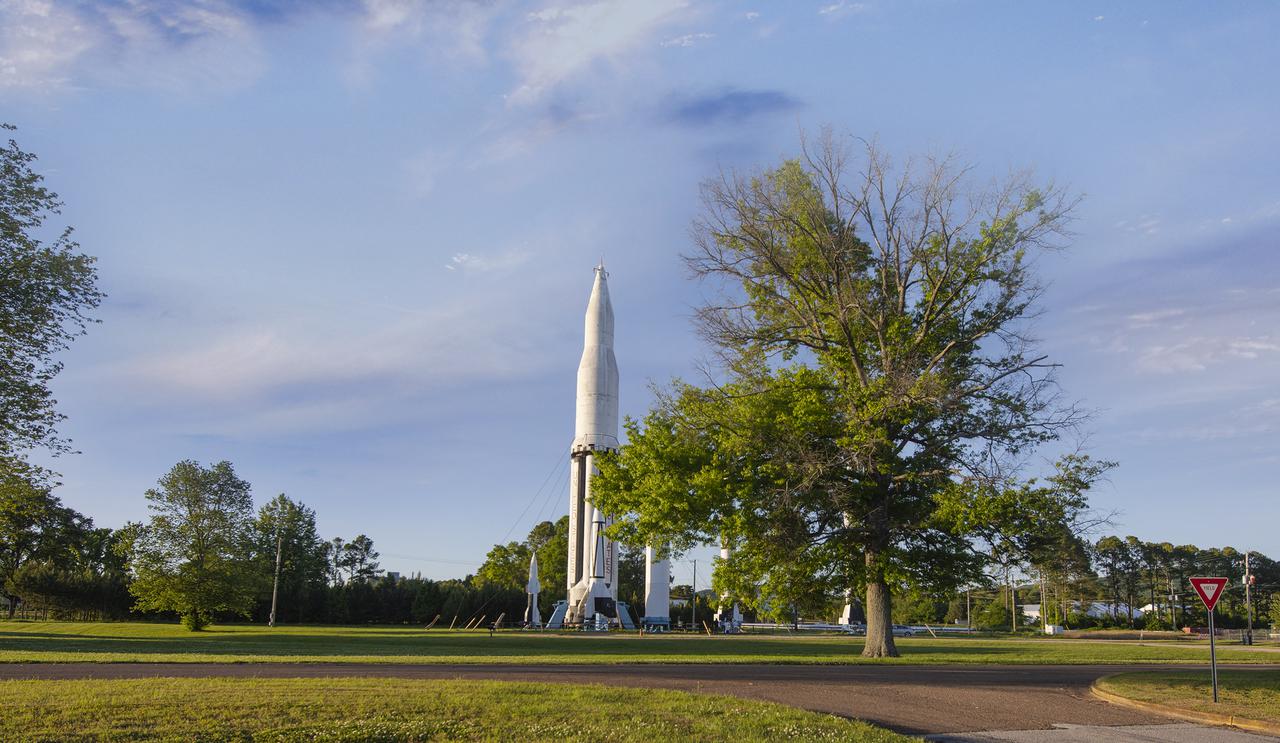
Marshall Space Flight Center’s Rocket Park, located on Redstone Arsenal, stands as a living testament to the spirit of cooperation that continues between the U.S. Army and NASA.
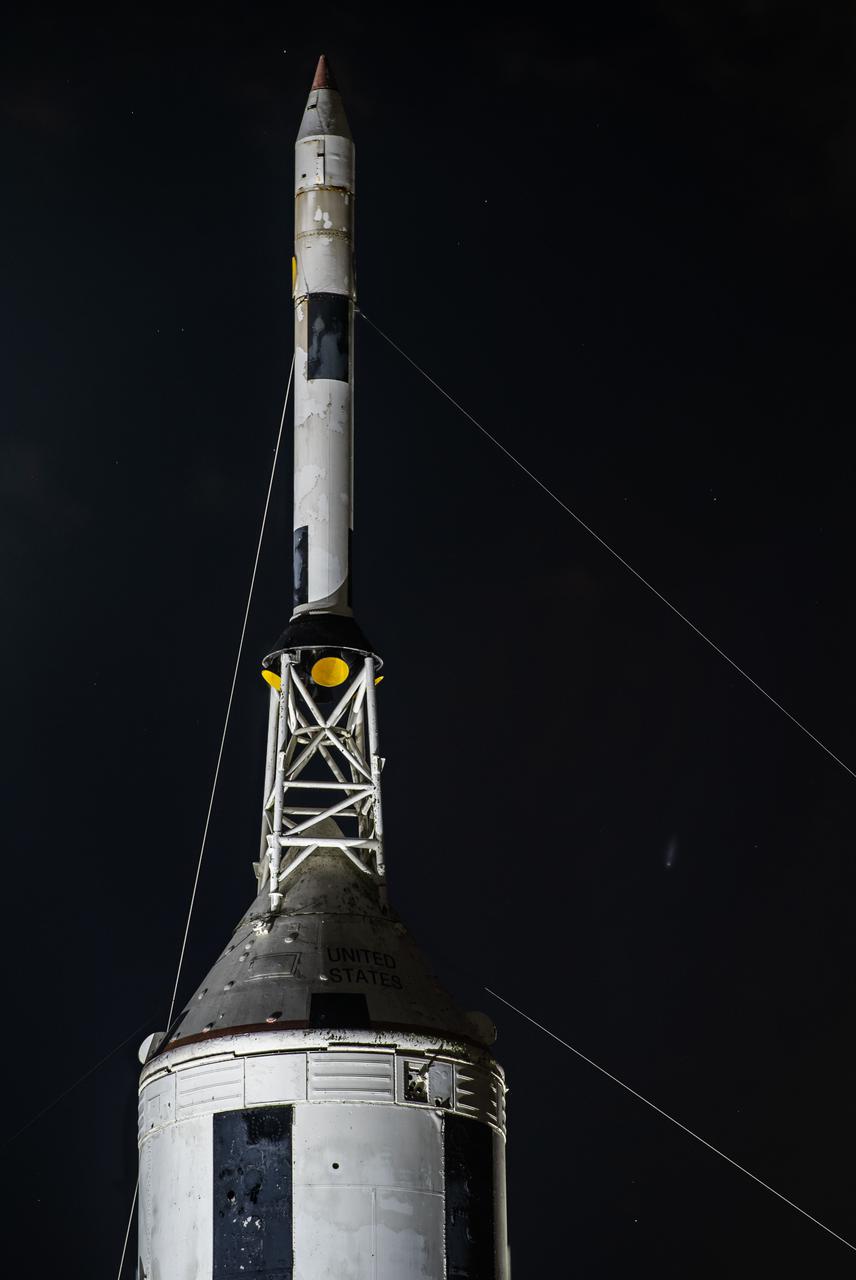
Comet NEOWISE passing over the Little Joe II rocket at NASA Johnson Space Center’s Rocket Park on July 22nd, 2020.
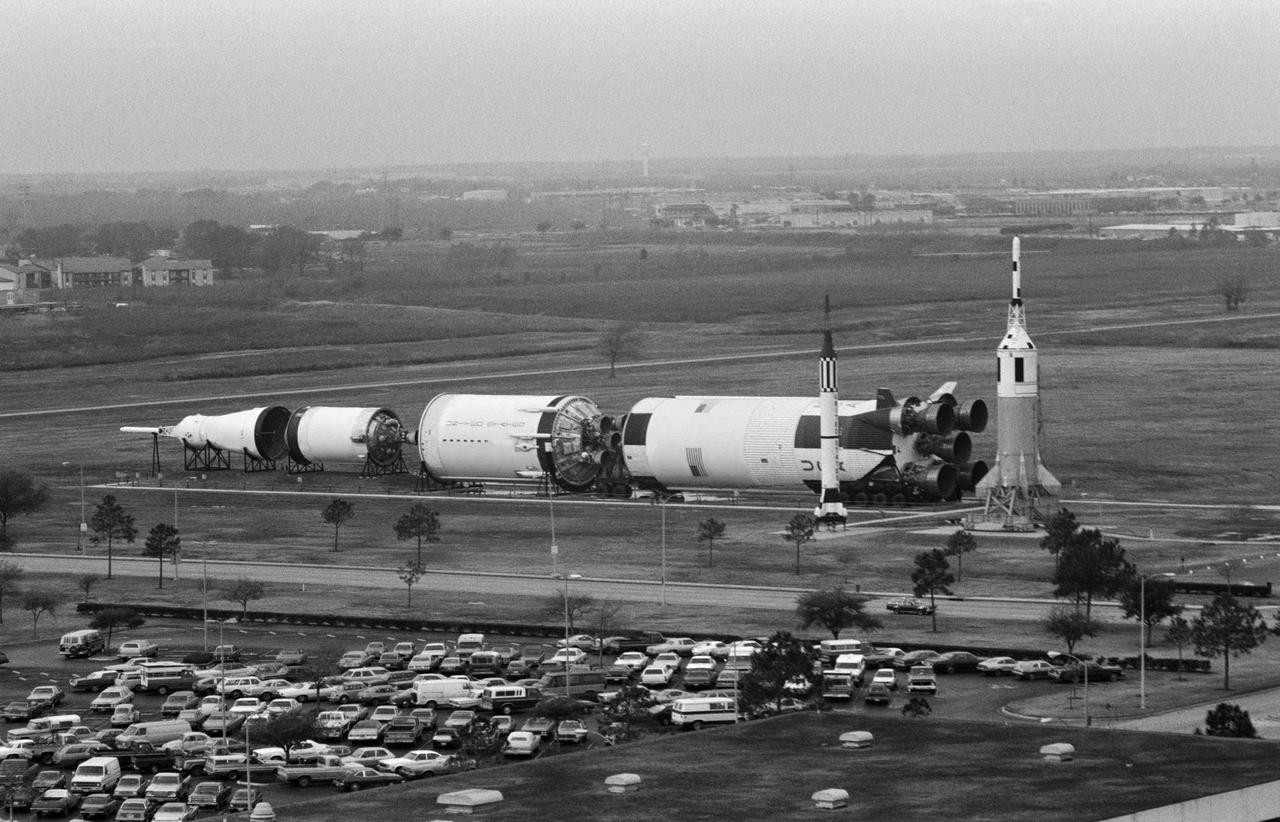
Overall view at JSC lookin west from atop of Bldg. 1 showing rockets, parking lot and all threee stages of Saturn V. first stage of Saturn V exhibit in "Rocket Park" on west side of center little joe and mercury models are seen 1. JSC- Aerials
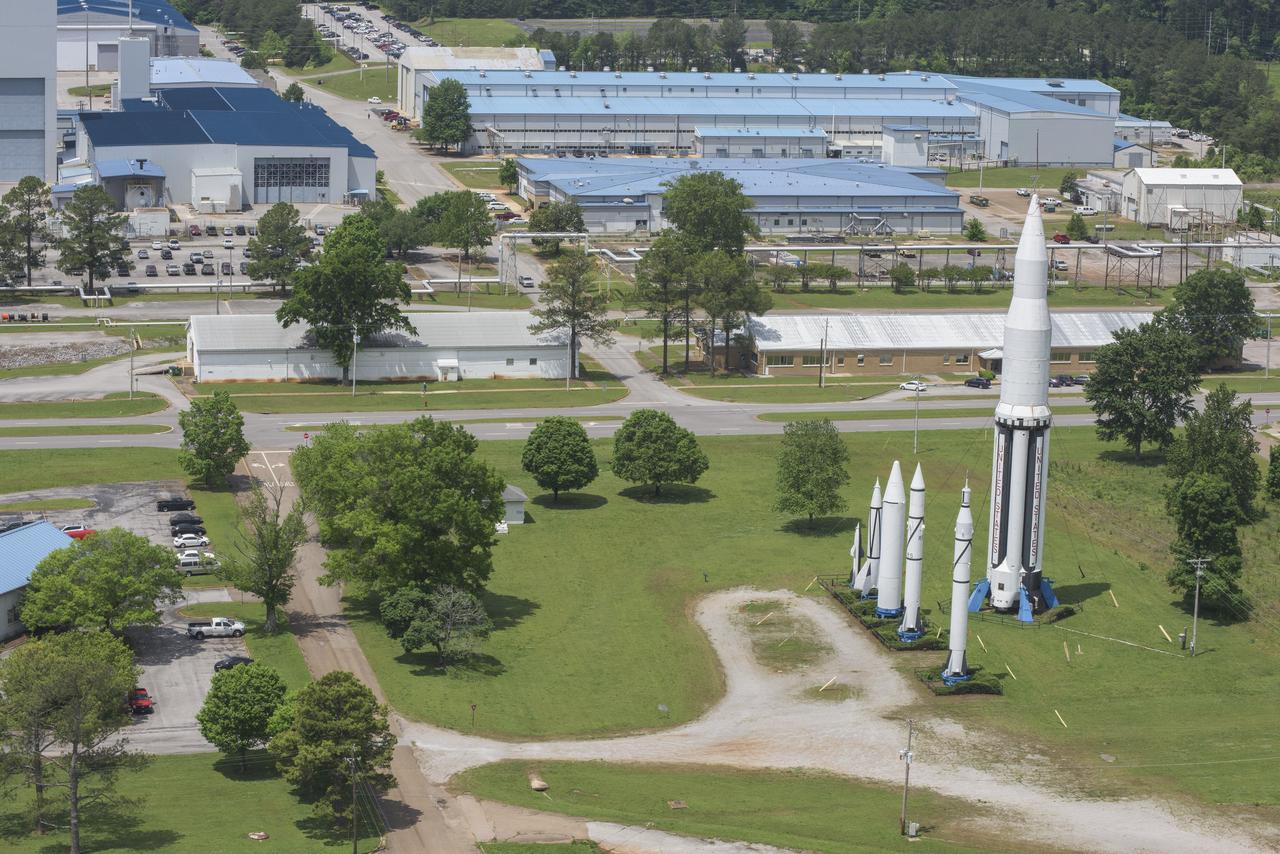
AERIAL PHOTOGRAPHS OF MSFC-ROCKET PARK
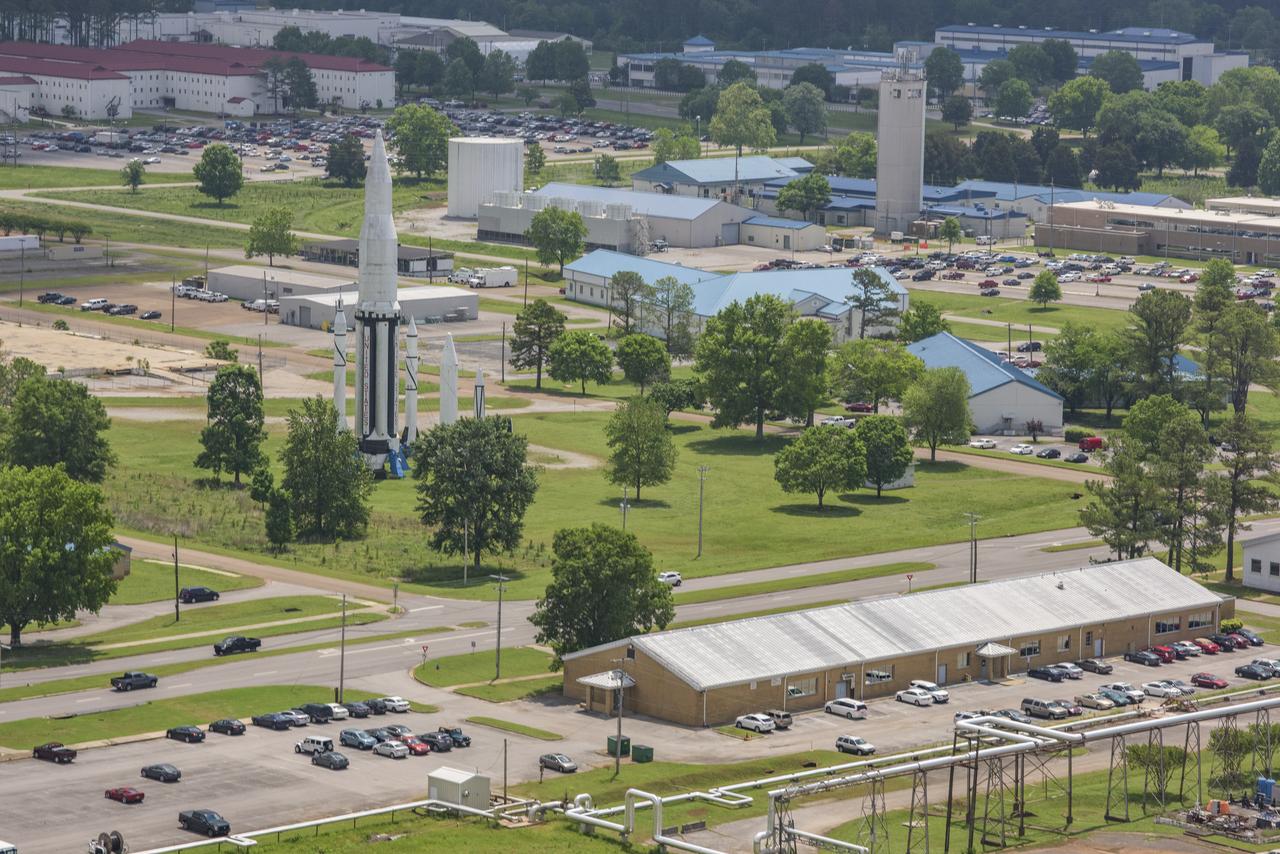
AERIAL PHOTOGRAPHS OF MSFC-ROCKET PARK
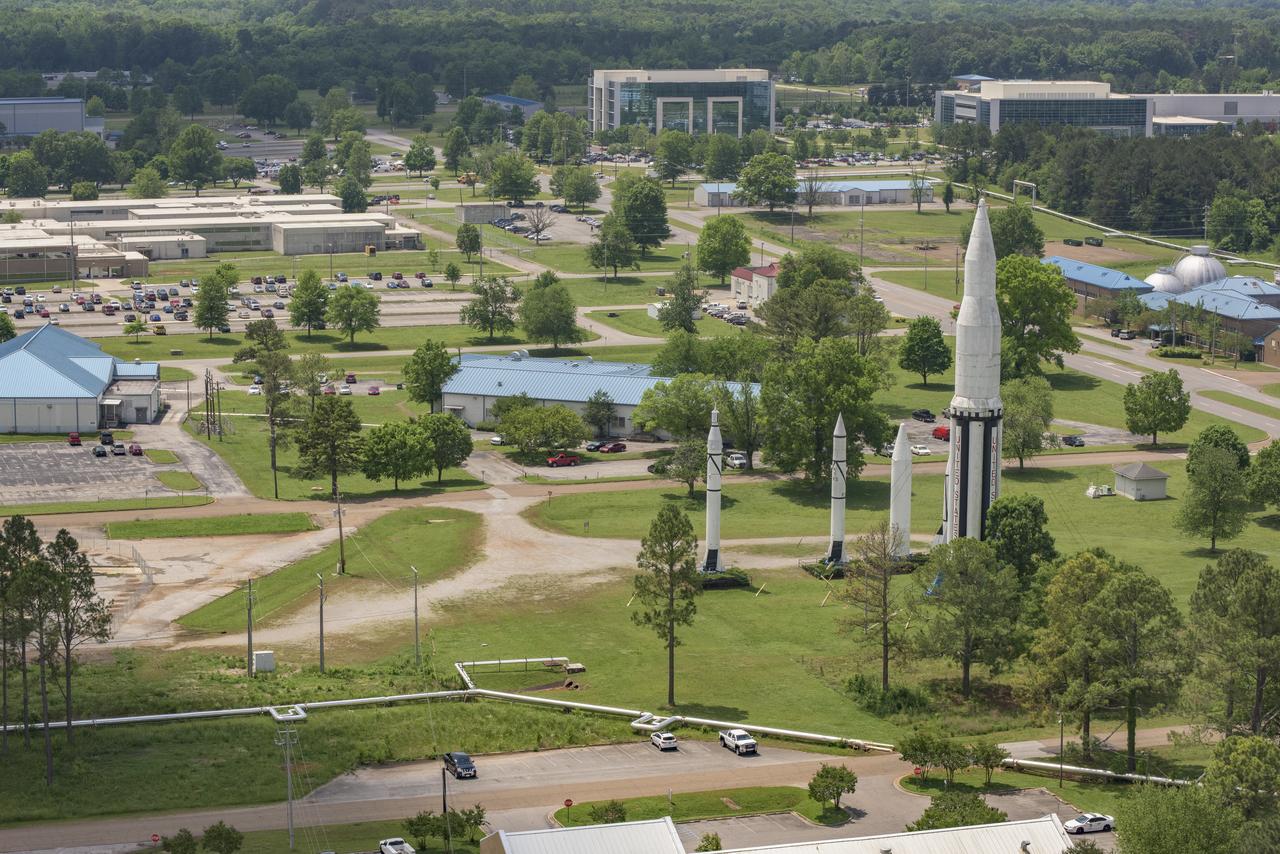
AERIAL PHOTOGRAPHS OF MSFC-ROCKET PARK
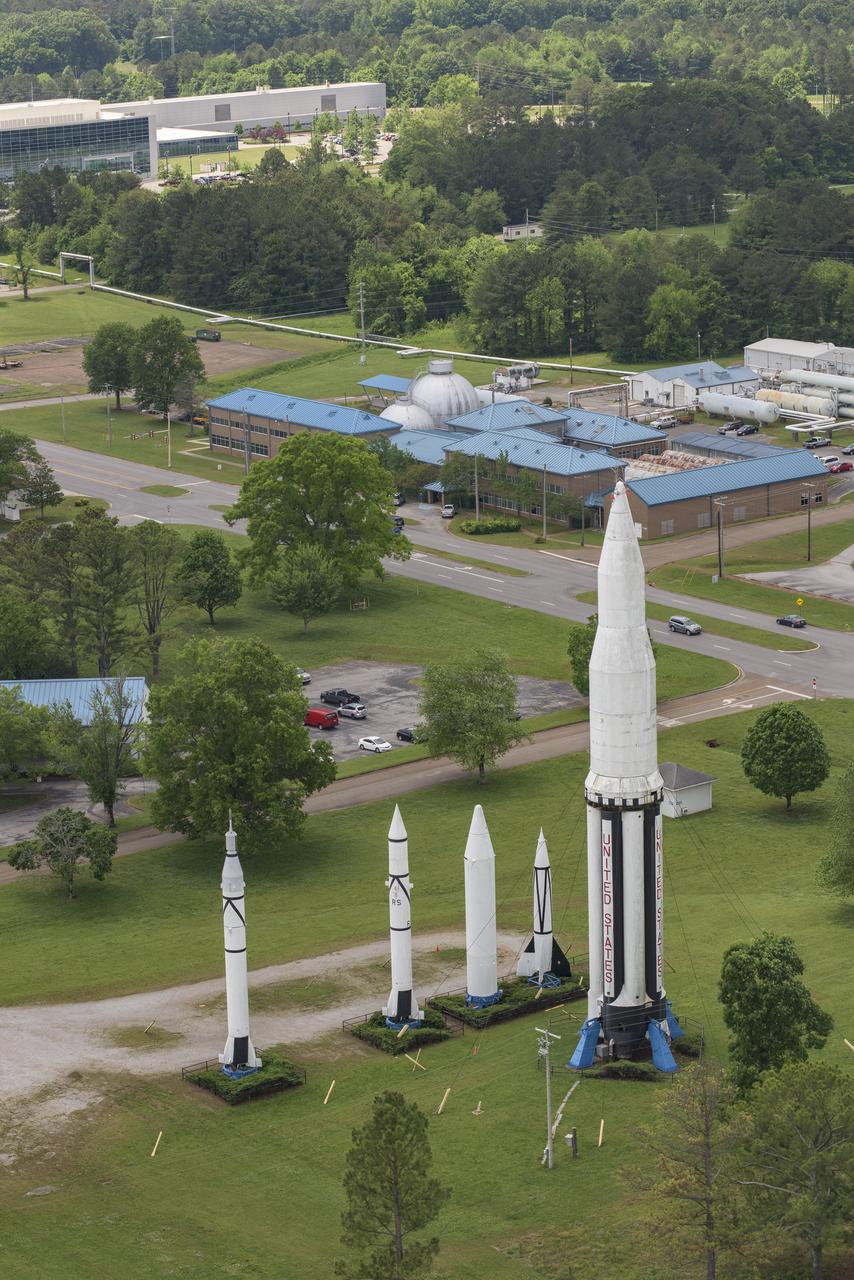
AERIAL PHOTOGRAPHS OF MSFC-ROCKET PARK
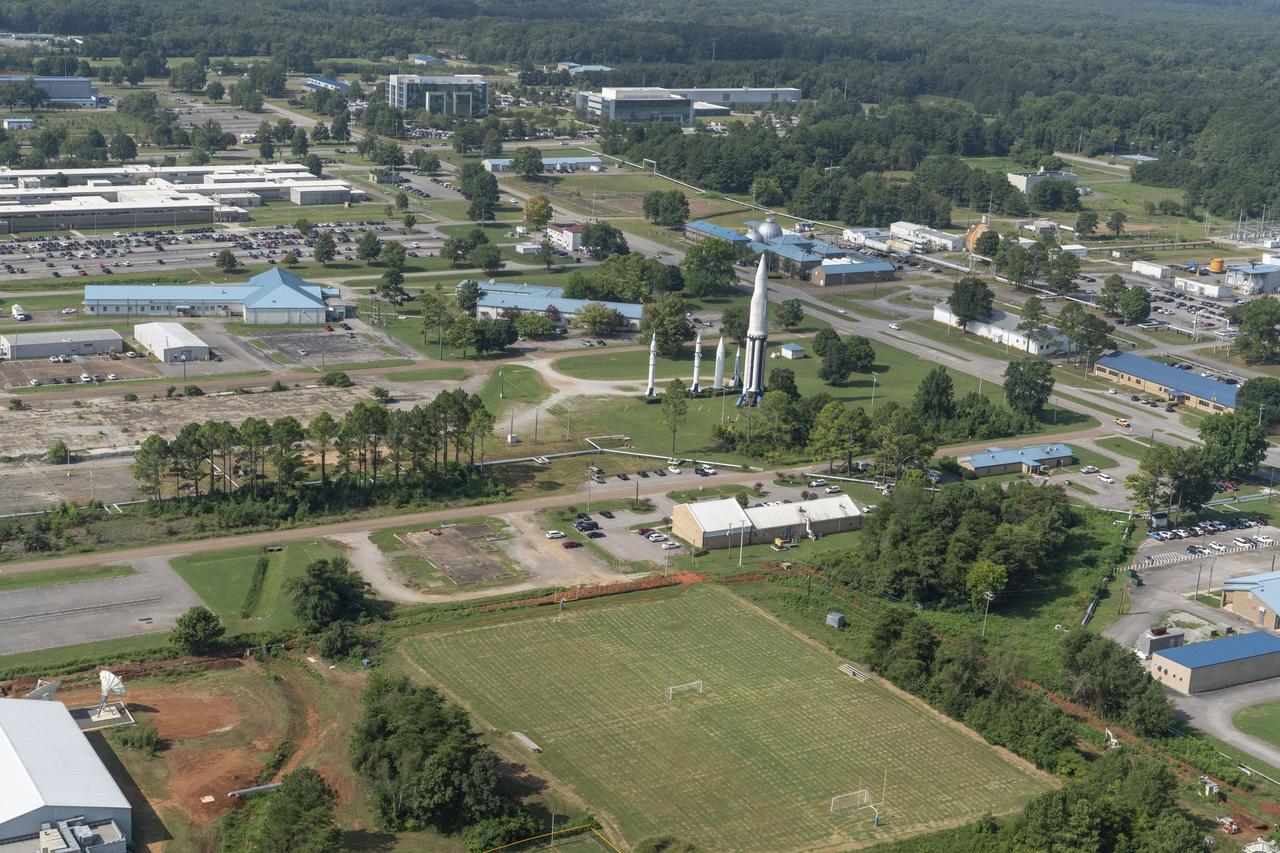
Aerial photograph of various MSFC buildings and the Rocket Park
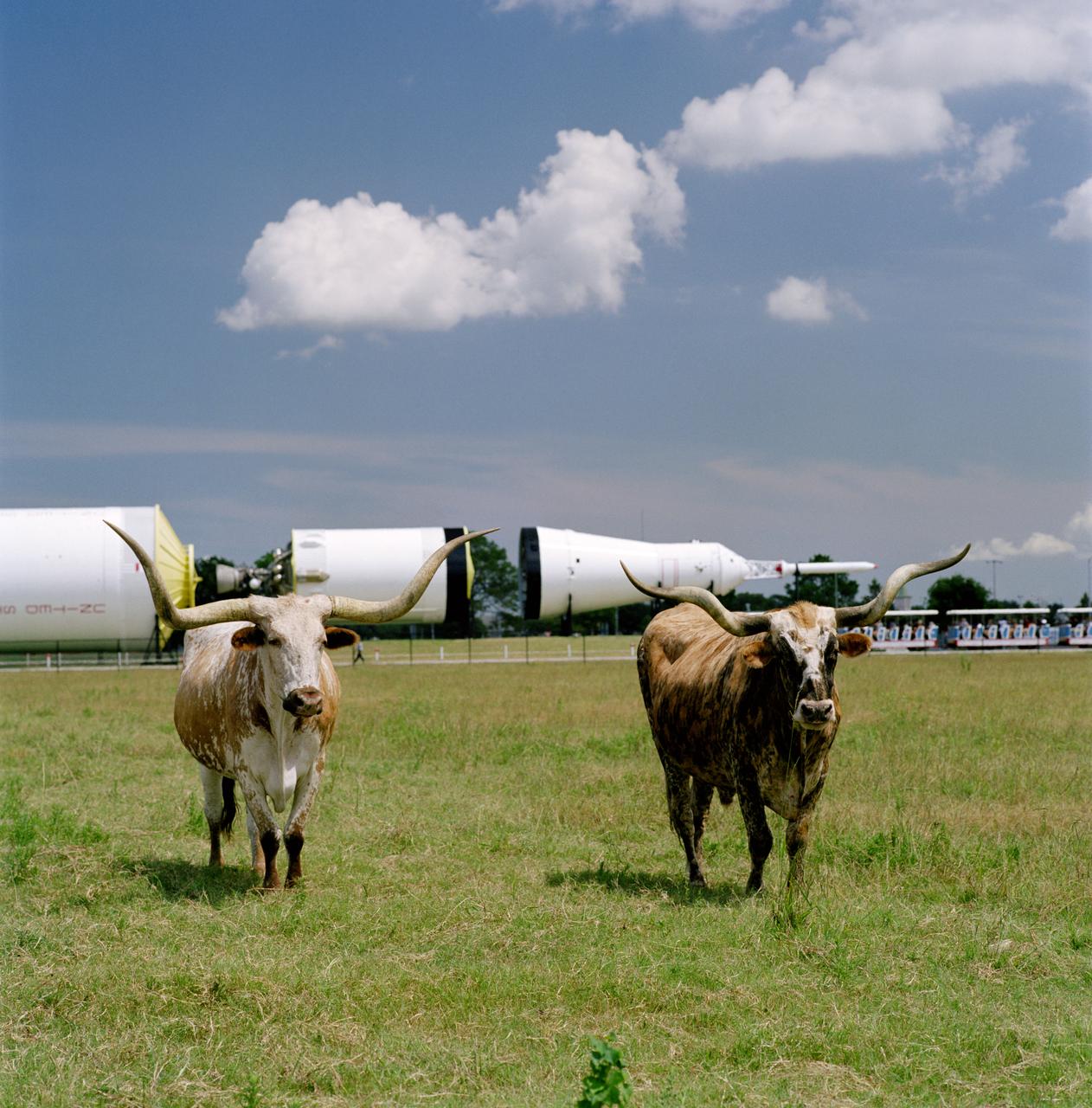
Photographic documentation showing longhorn cattle which belong to the Longhorn Project in front of the Saturn V in JSC's Rocket Park.
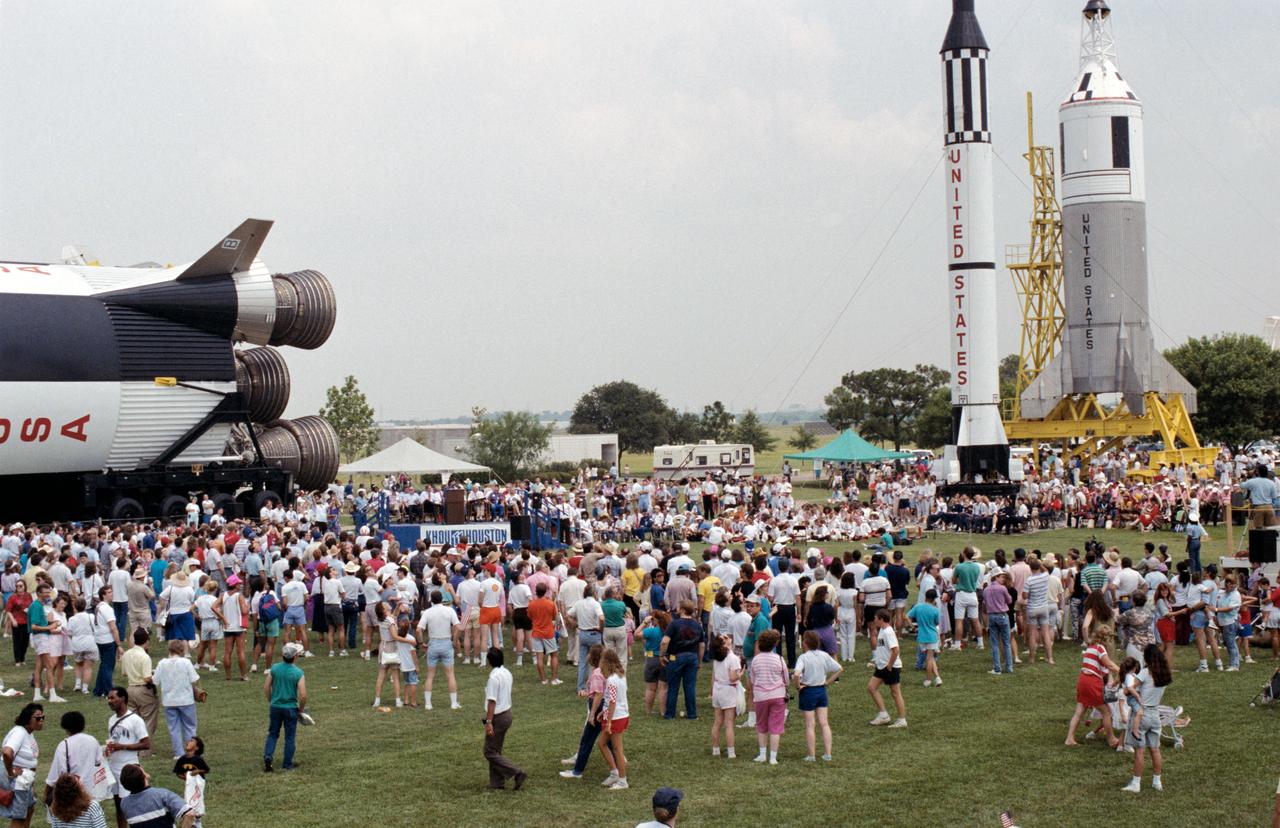
View of crowd at Rocket Park during Apollo 11 Anniversary festivities.
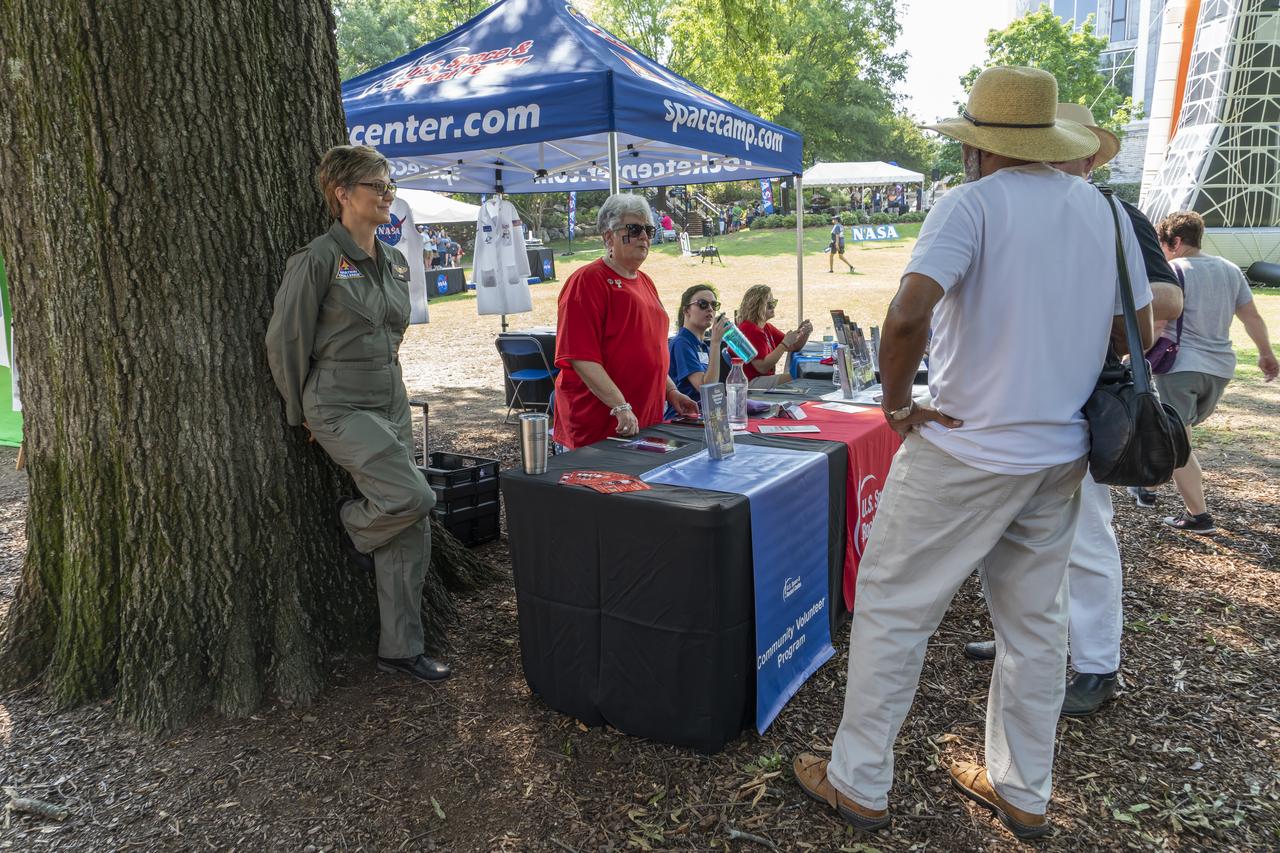
NASA's Marshall Space Flight Center showcased it's various projects for the public in Huntsville, Alabama's Big Spring Park. Exhibits were displayed by all of the various directorates of the Center with employee volunteers explaining all aspects of their projects. Adding to the festivities was the attendance of retired NASA astronaut Robert "Hoot" Gibson. U.S. Space and Rocket Center volunteers greet visitors to NASA in the Park.

NASA's Marshall Space Flight Center showcased it's various projects for the public in Huntsville, Alabama's Big Spring Park. Exhibits were displayed by all of the various directorates of the Center with employee volunteers explaining all aspects of their projects. Adding to the festivities was the attendance of retired NASA astronaut Robert "Hoot" Gibson. Northrup Grumman employees fire a tethered miniature rocket at NASA Day in the Park.
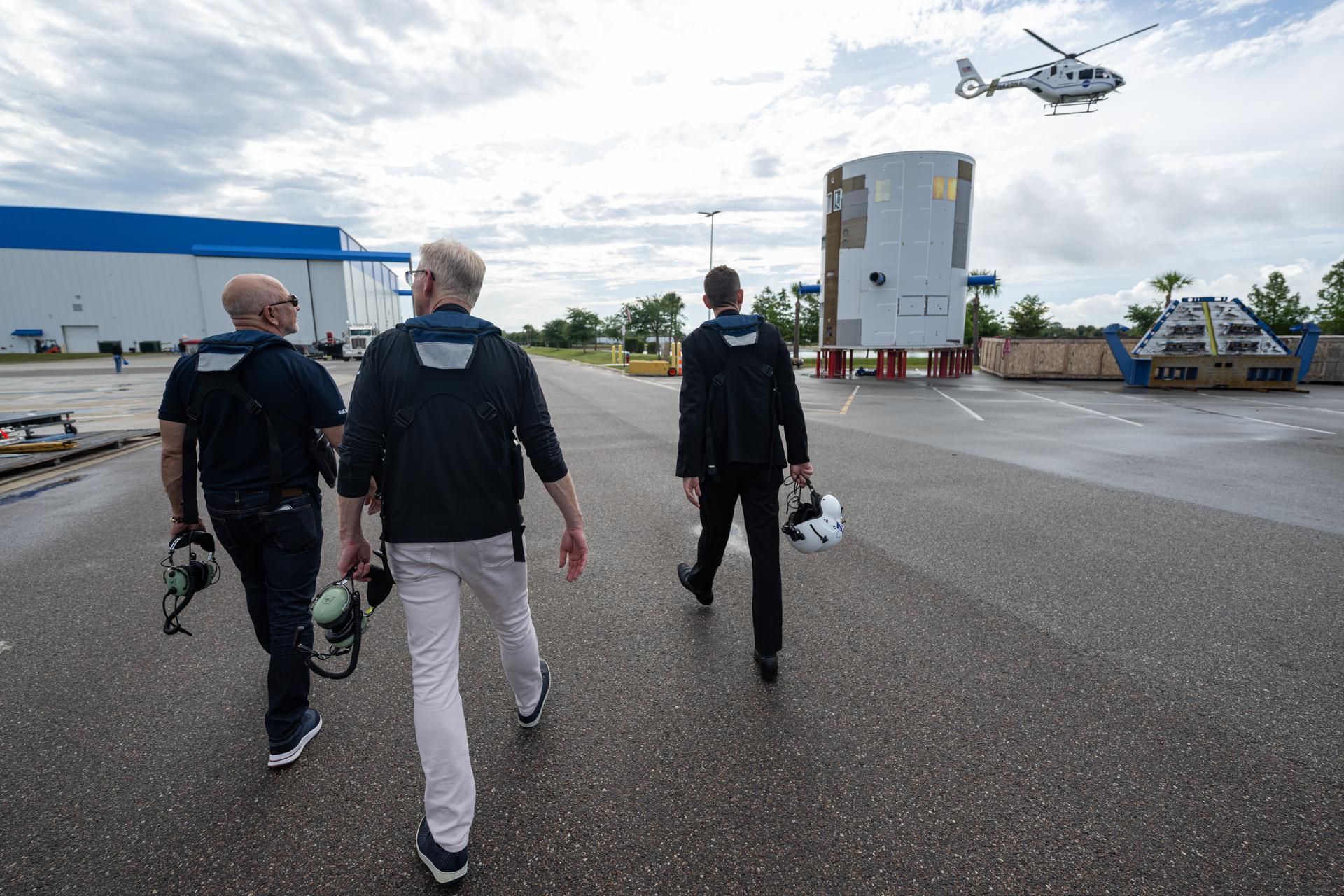
NASA Administrator Jared Isaacman, right; Jeff Bezos, founder, Blue Origin, left; and Dave Limp, chief executive officer, Blue Origin, center, are seen ahead of a helicopter flight, Friday, May 29, 2026, at Blue Origin’s Rocket Park in Merritt Island, Fla. The flight surveyed nearby Launch Complex 36 at Cape Canaveral Space Force Station following a New Glenn hotfire test anomaly on May 28. Photo Credit: (NASA/John Kraus)

NASA Administrator Jared Isaacman, right, participates in an employee all-hands meeting alongside Dave Limp, chief executive officer, Blue Origin, left, and Jeff Bezos, founder, Blue Origin, center, Friday, May 29, 2026, at Blue Origin’s Rocket Park in Merritt Island, Fla. Photo Credit: (NASA/John Kraus)
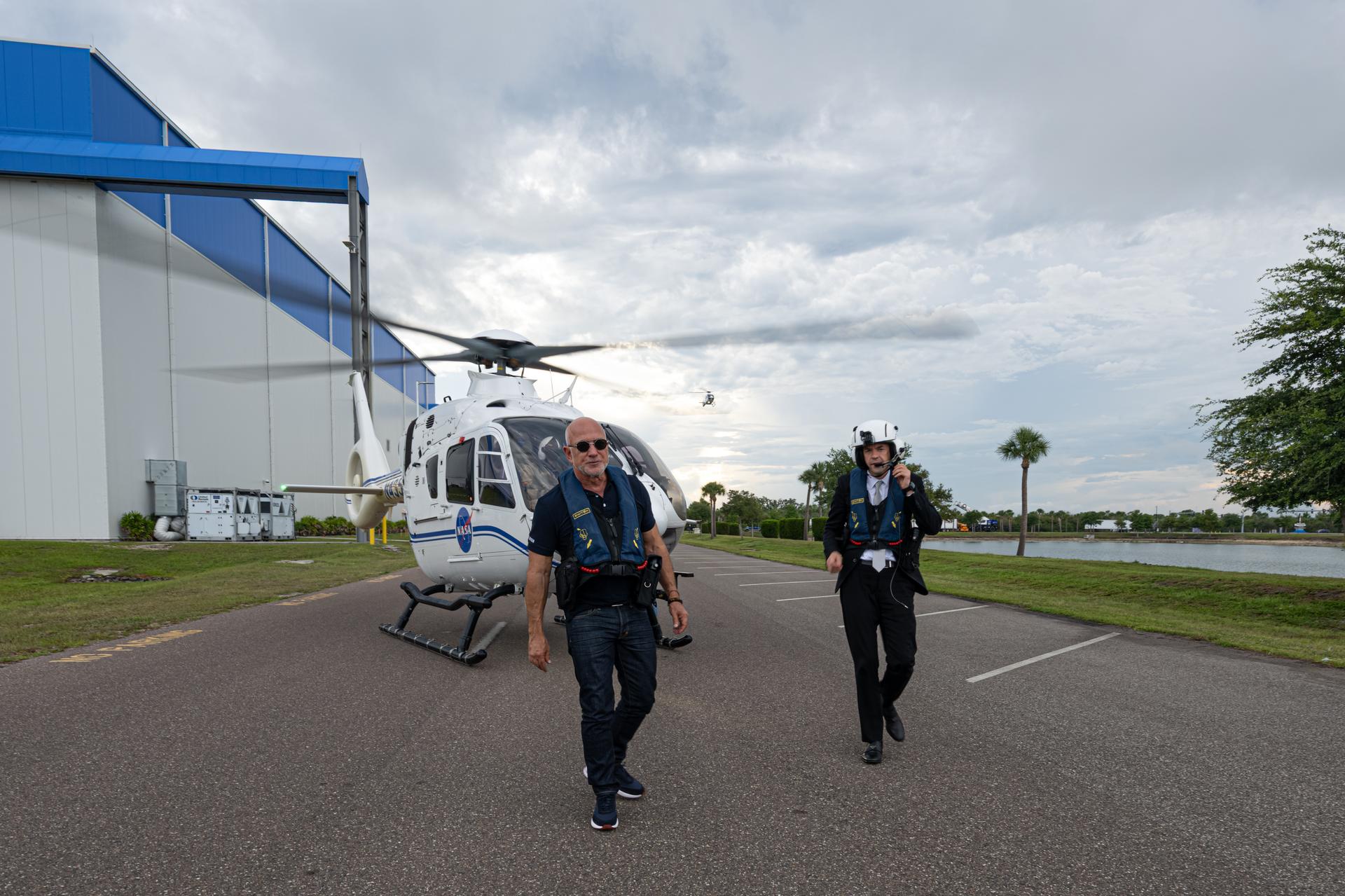
NASA Administrator Jared Isaacman, right, and Jeff Bezos, founder, Blue Origin, left, are seen following a helicopter flight, Friday, May 29, 2026, at Blue Origin’s Rocket Park in Merritt Island, Fla. The flight surveyed nearby Launch Complex 36 at Cape Canaveral Space Force Station following a New Glenn hotfire test anomaly on May 28. Photo Credit: (NASA/John Kraus)

NASA Administrator Jared Isaacman, right, participates in an employee all-hands meeting alongside Dave Limp, chief executive officer, Blue Origin, left, and Jeff Bezos, founder, Blue Origin, center, Friday, May 29, 2026, at Blue Origin’s Rocket Park in Merritt Island, Fla. Photo Credit: (NASA/John Kraus)
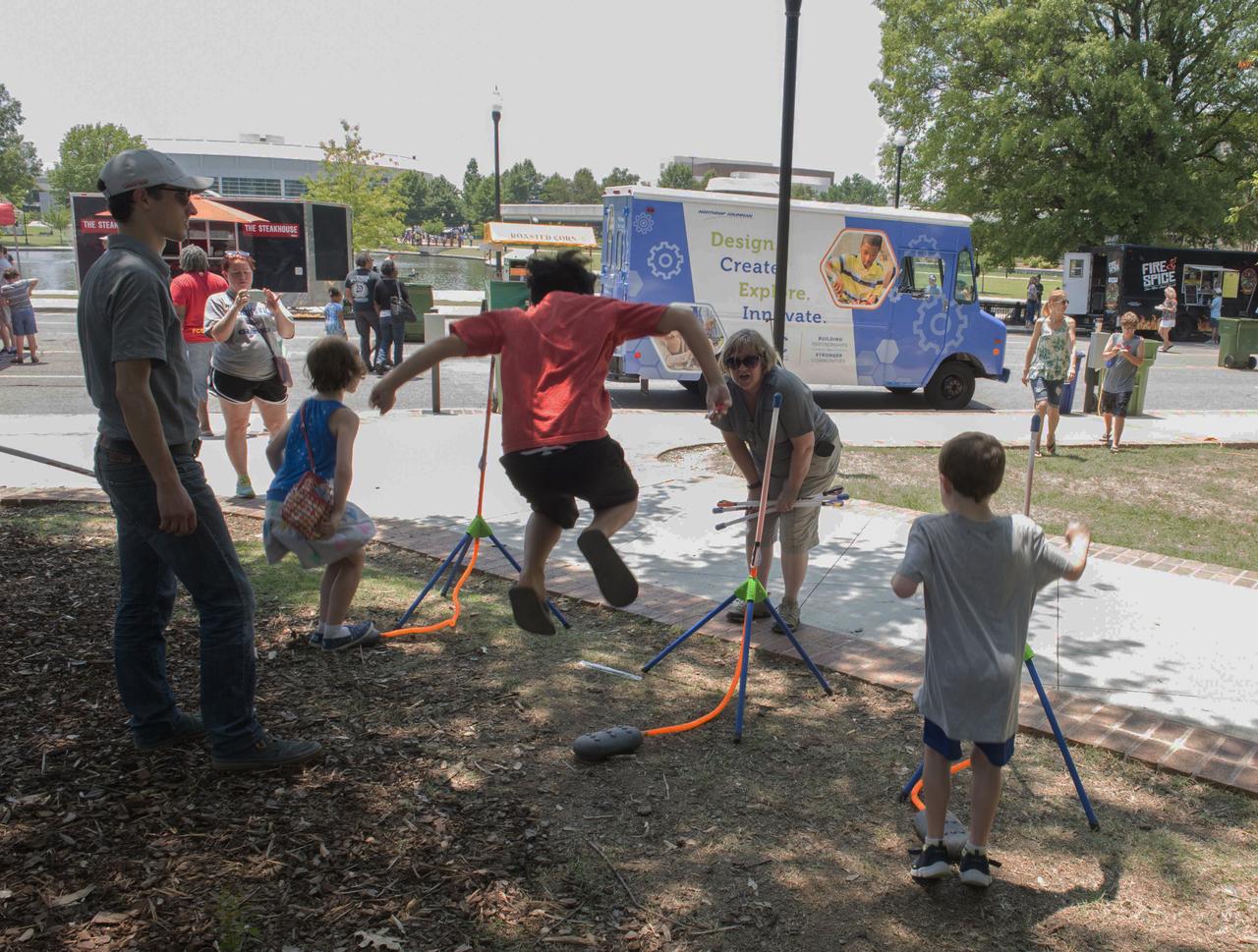
NASA in the Park on June 16 in Huntsville featured more than 60 exhibits and demonstrations by NASA experts, as well as performances by Marshall musicians, educational opportunities, games and hands-on activities for all ages. Youthful energy is exhibited in the foot rocket demonstration.
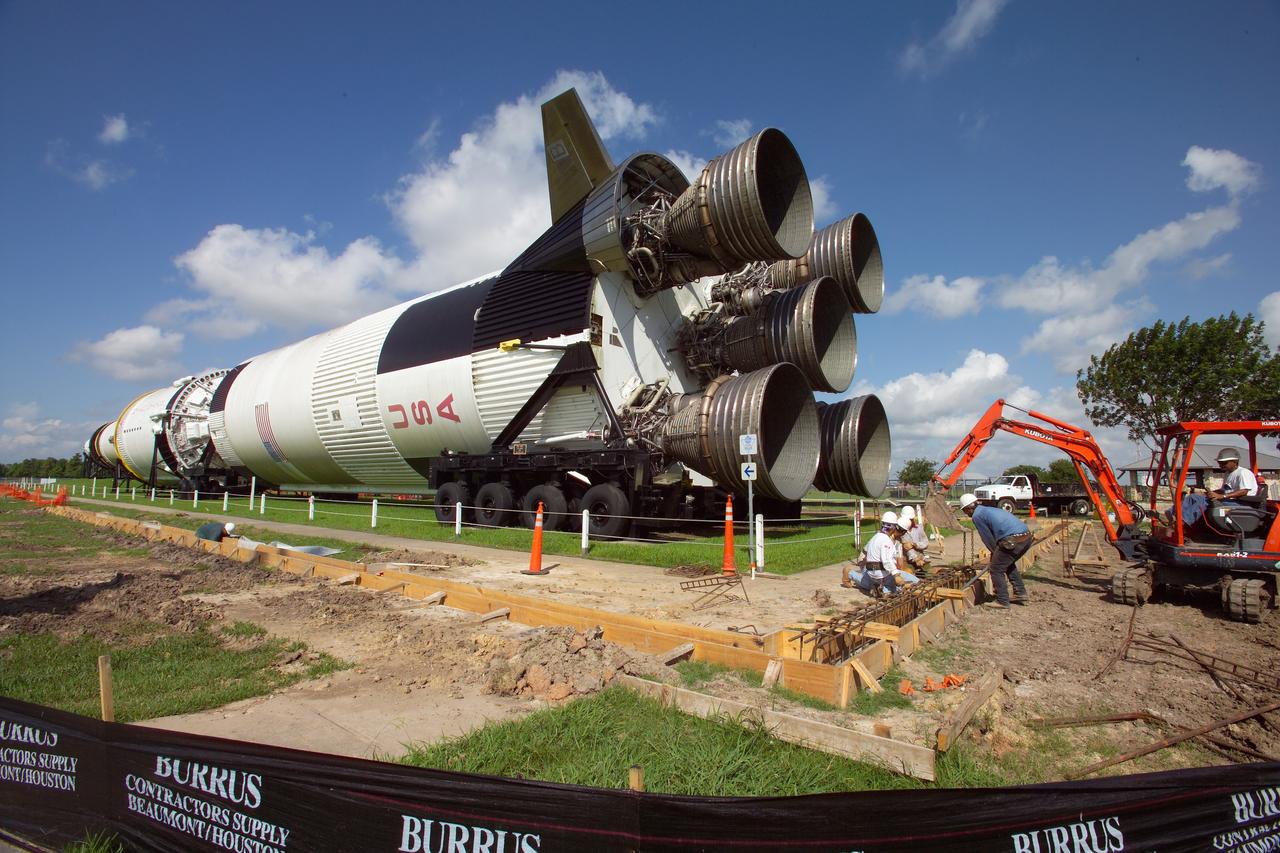
With a Smithsonian Grant,the Saturn V rocket is being restored. Developing rocket park is part of the plan as well. Views of the park being built and the rocket being prepped for clean up.
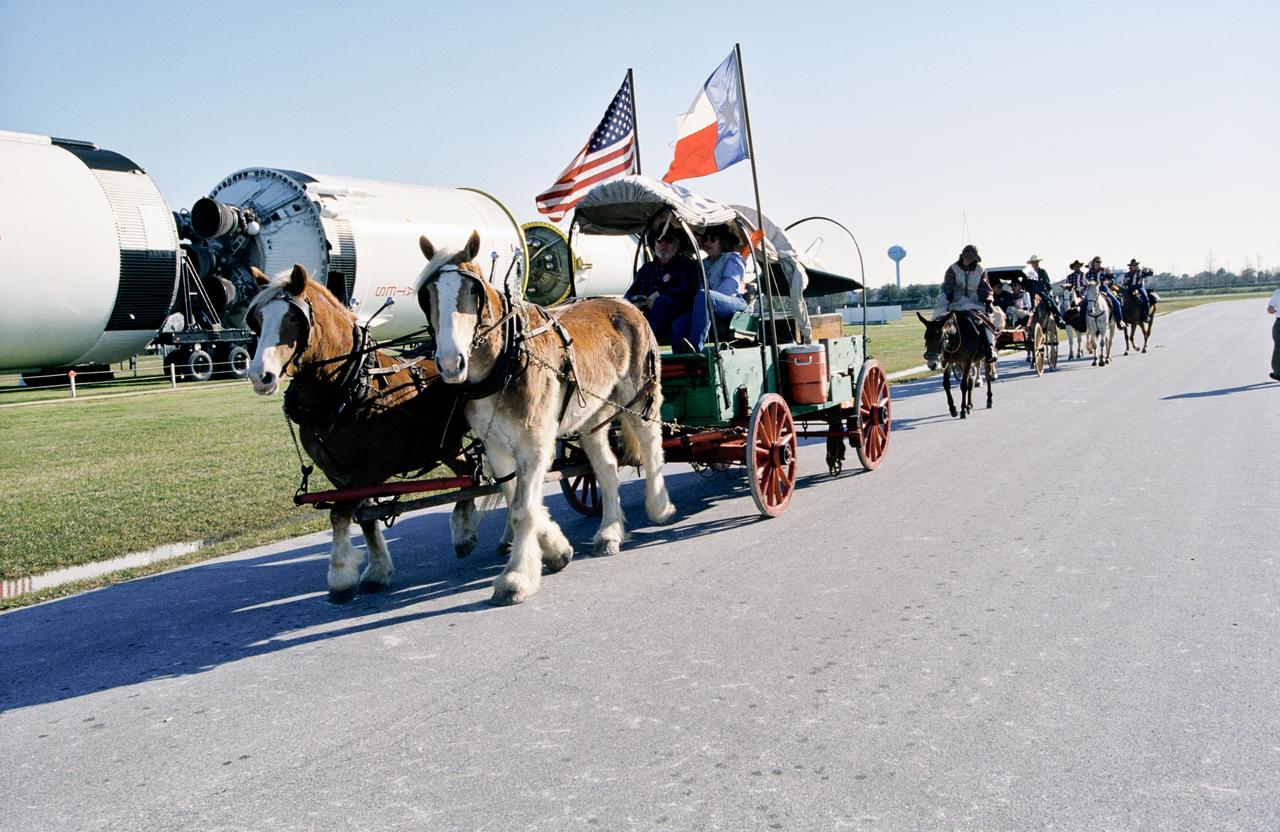
Photographic documentation showing a Cowboy Parade at JSC, part of Rodeo Houston events. Photo taken at Rocket Park with Saturn V rocket exhibit in the background.
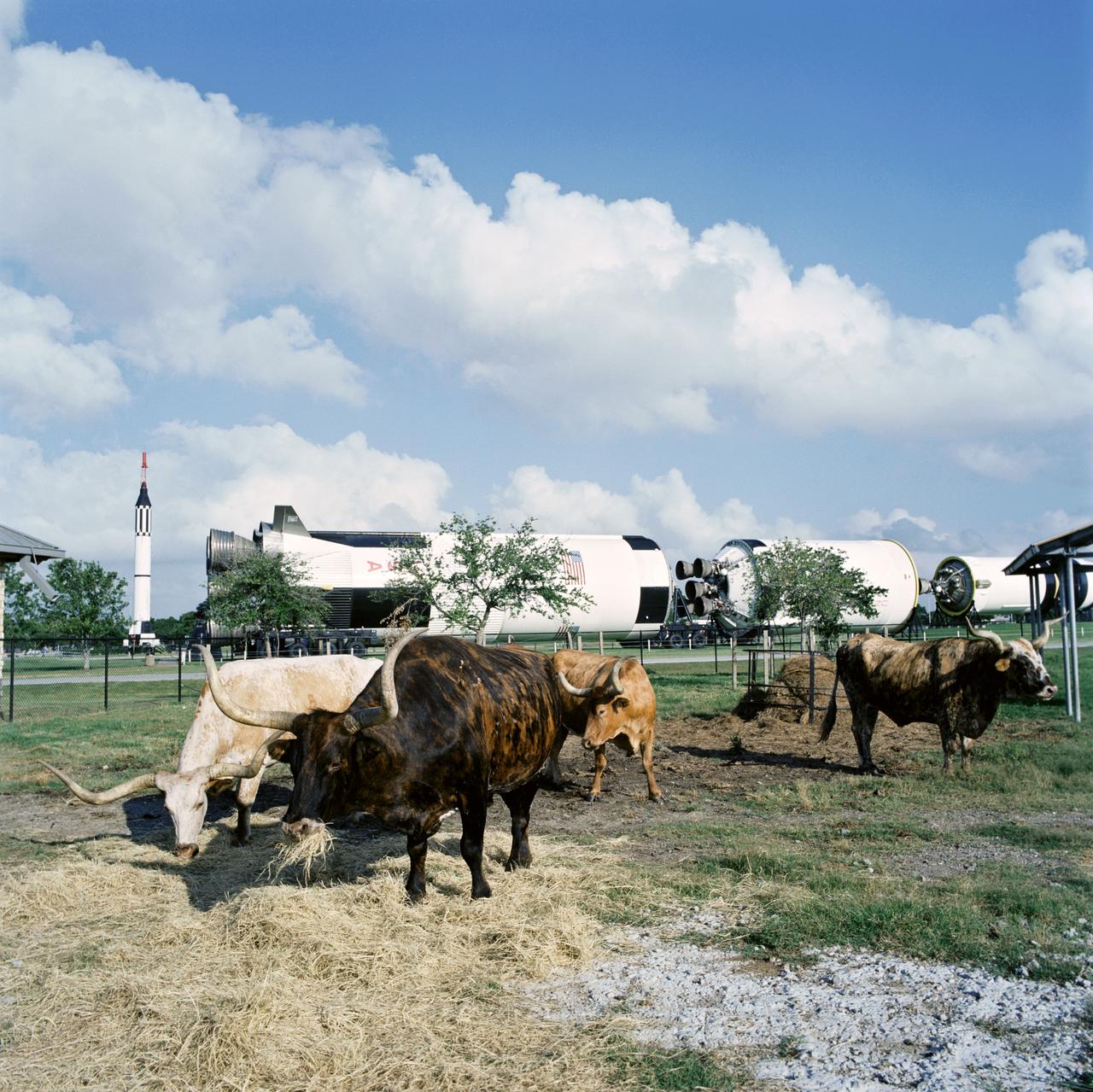
Photographic documentation taken during the opening ceremonies for the Longhorn Project pavilion at JSC. Longhorn cattle graze, with Rocket Park in the background.
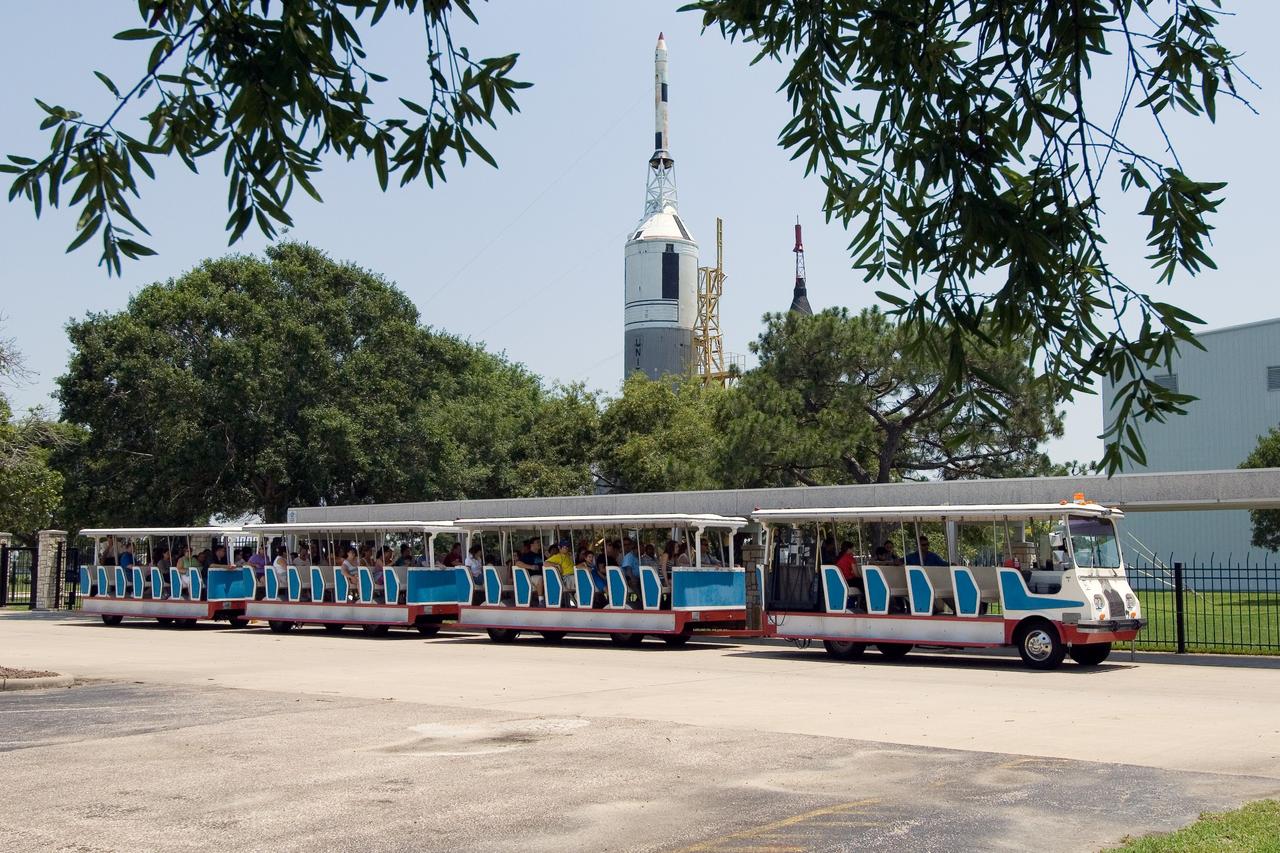
View of a Space Center Houston tram driving past JSCs Rocket Park. Photo was taken for a Space News Roundup article.
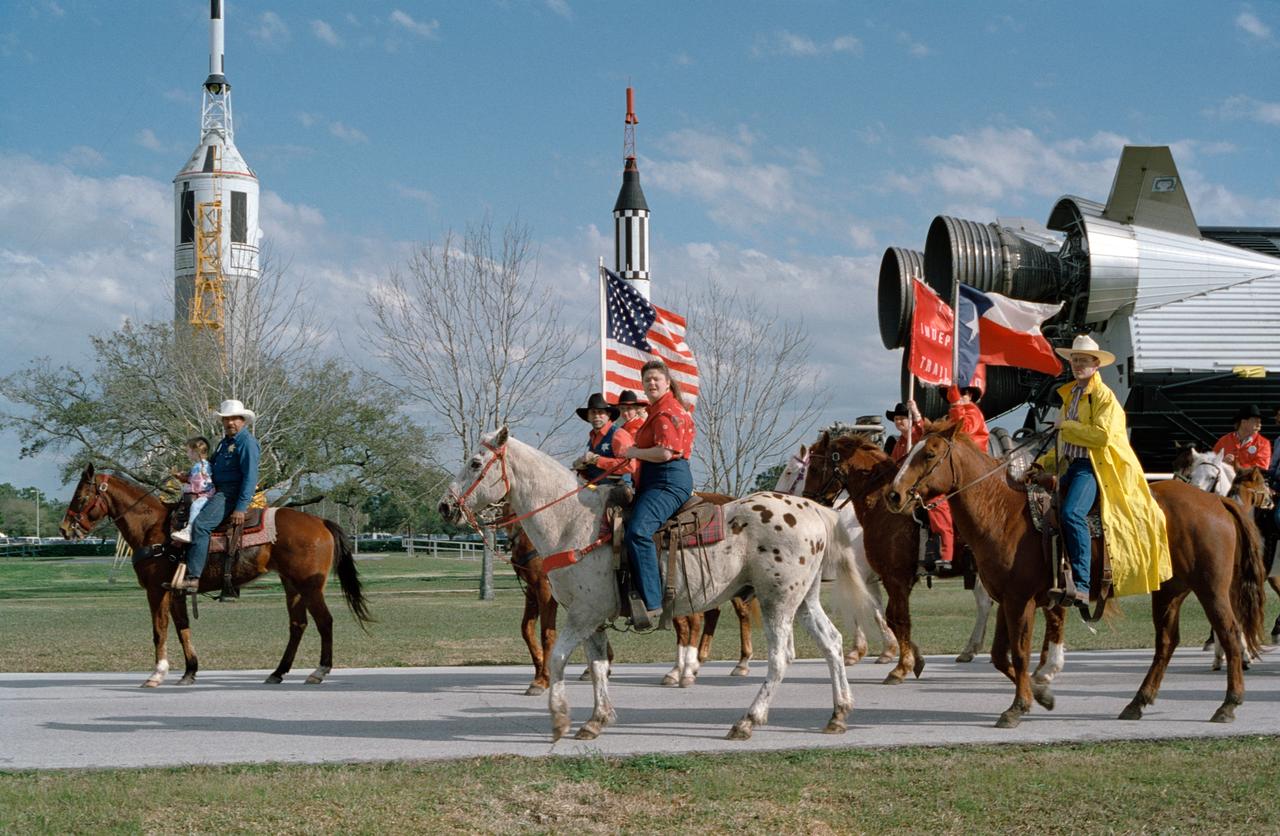
Rose Gardner of the JSC Travel Office, center, rides with the Independence Trail Riders as they enter JSC at Rocket Park.
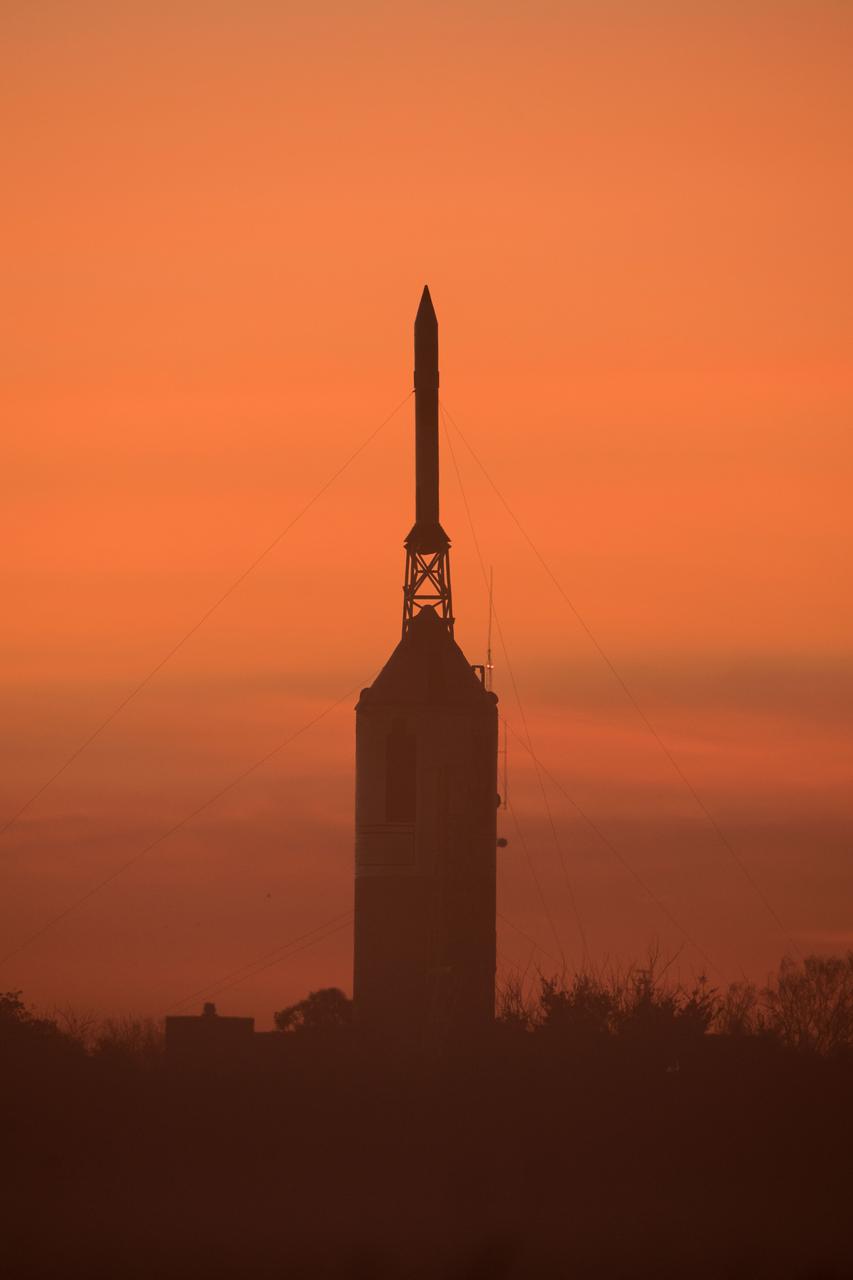
jsc2018e003242 (Jan. 1, 2018) --- Johnson Space Center's Rocket Park is pictured at sunrise. Credit: NASA/Josh Valcarcel

JSC2012-E-063489 (5 June 2012) --- The June 5, 2012 transit of Venus, the small dot in upper right of the disk, was captured by a Johnson Space Center photographer in Rocket Park. A Mercury-Redstone vehicle on display in the park is seen at left. Photo credit: NASA
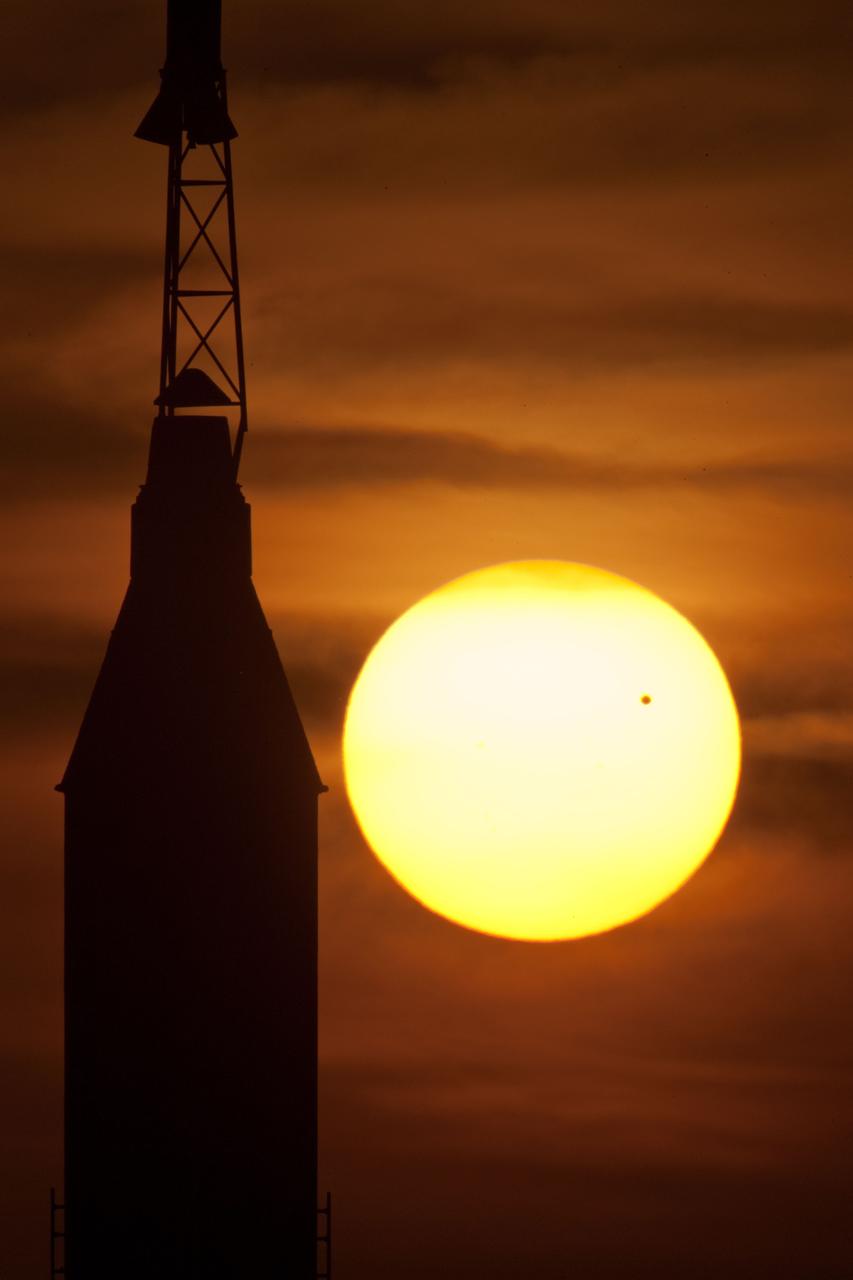
JSC2012-E-063490 (5 June 2012) --- The June 5, 2012 transit of Venus, the small dot to the right of center, was captured by a Johnson Space Center photographer in Rocket Park. A Mercury-Redstone vehicle on display in the park is seen at left. Photo credit: NASA
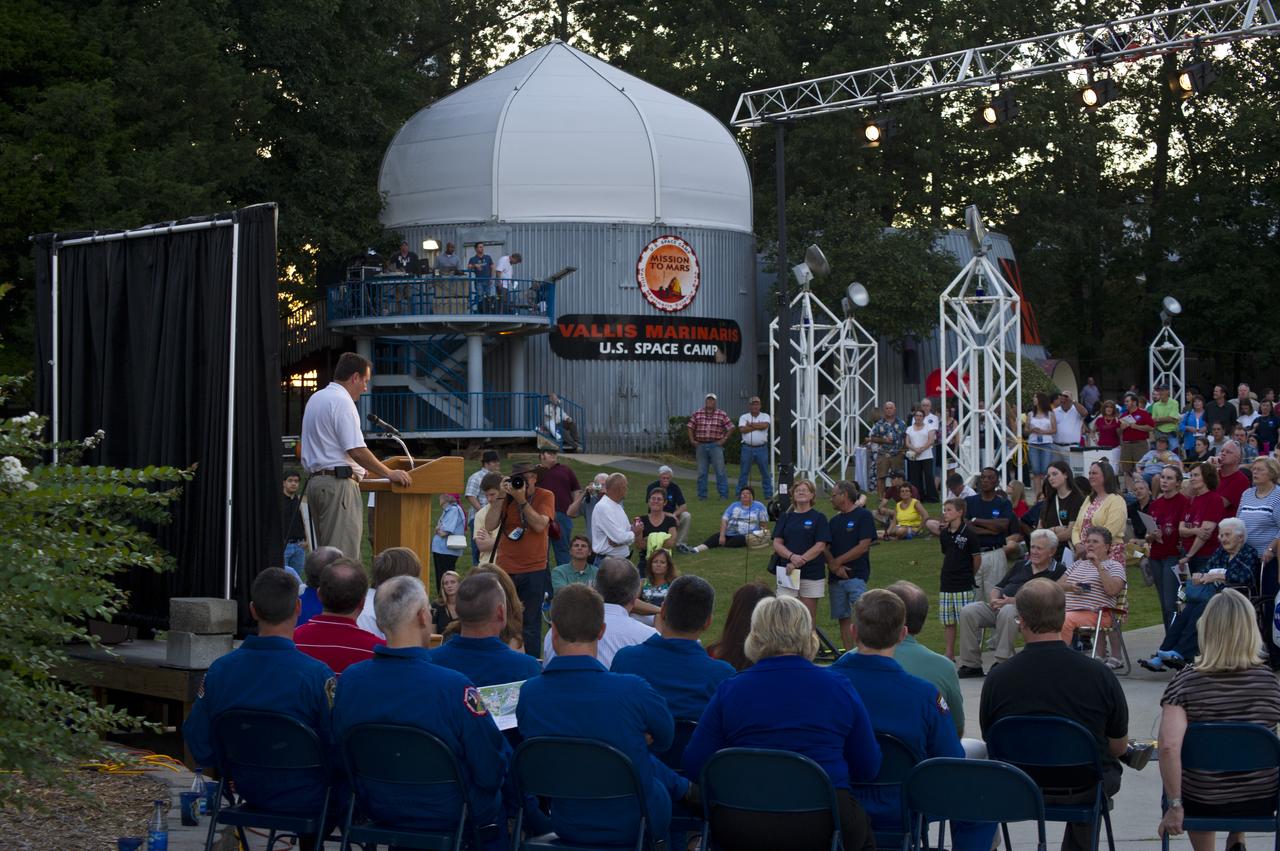
MARSHALL SPACE FLIGHT CENTER DIRECTOR ROBERT LIGHTFOOT ADDRESSES A PACKED CROWD DURING THE SHUTTLE CEREMONY IN SHUTTLE PARK AT THE U.S. SPACE & ROCKET CENTER.
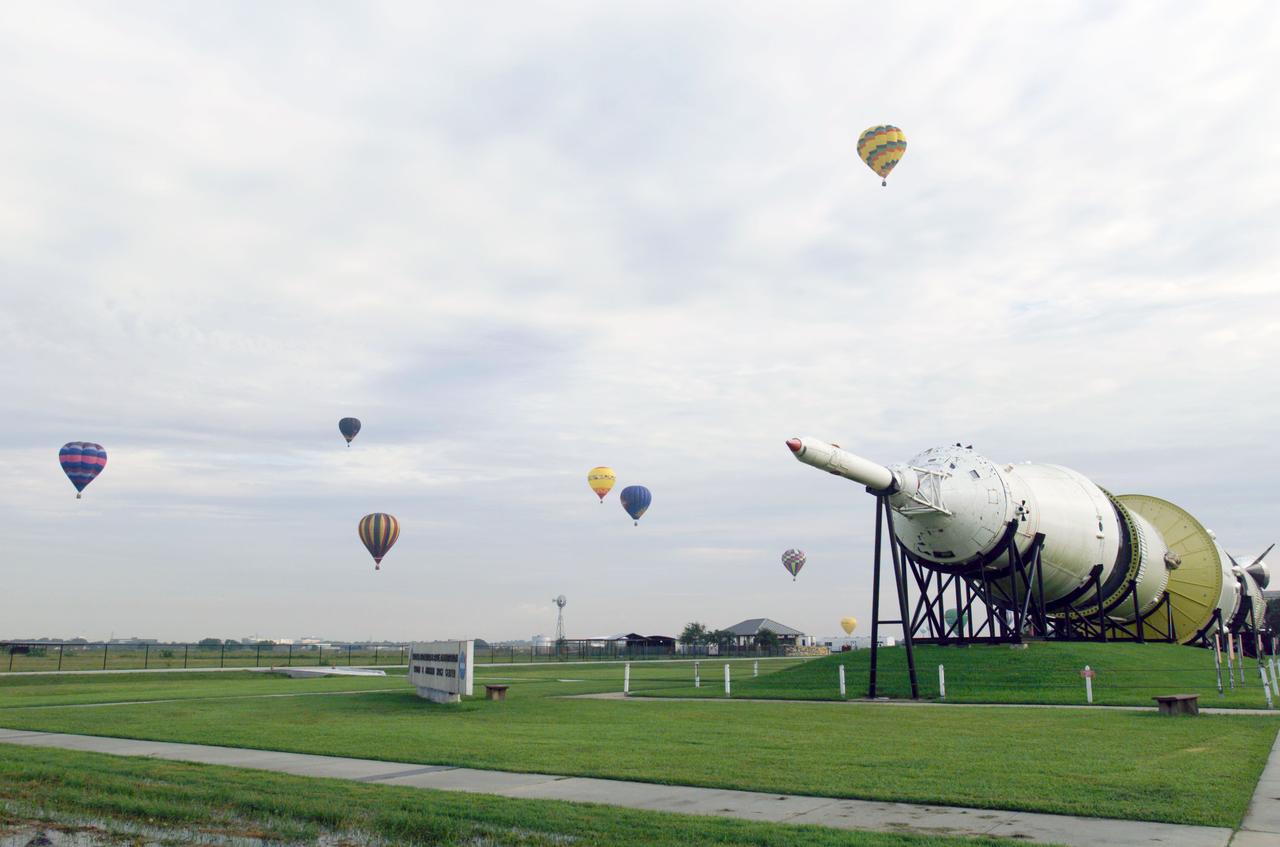
Photographic documentation of the 2003 Ballunar Liftoff Festival Activities on the grounds of the Johnson Space Center on August 22,23 and 24th. Views include: Views of Rocket Park with balloons lifting off in the background .
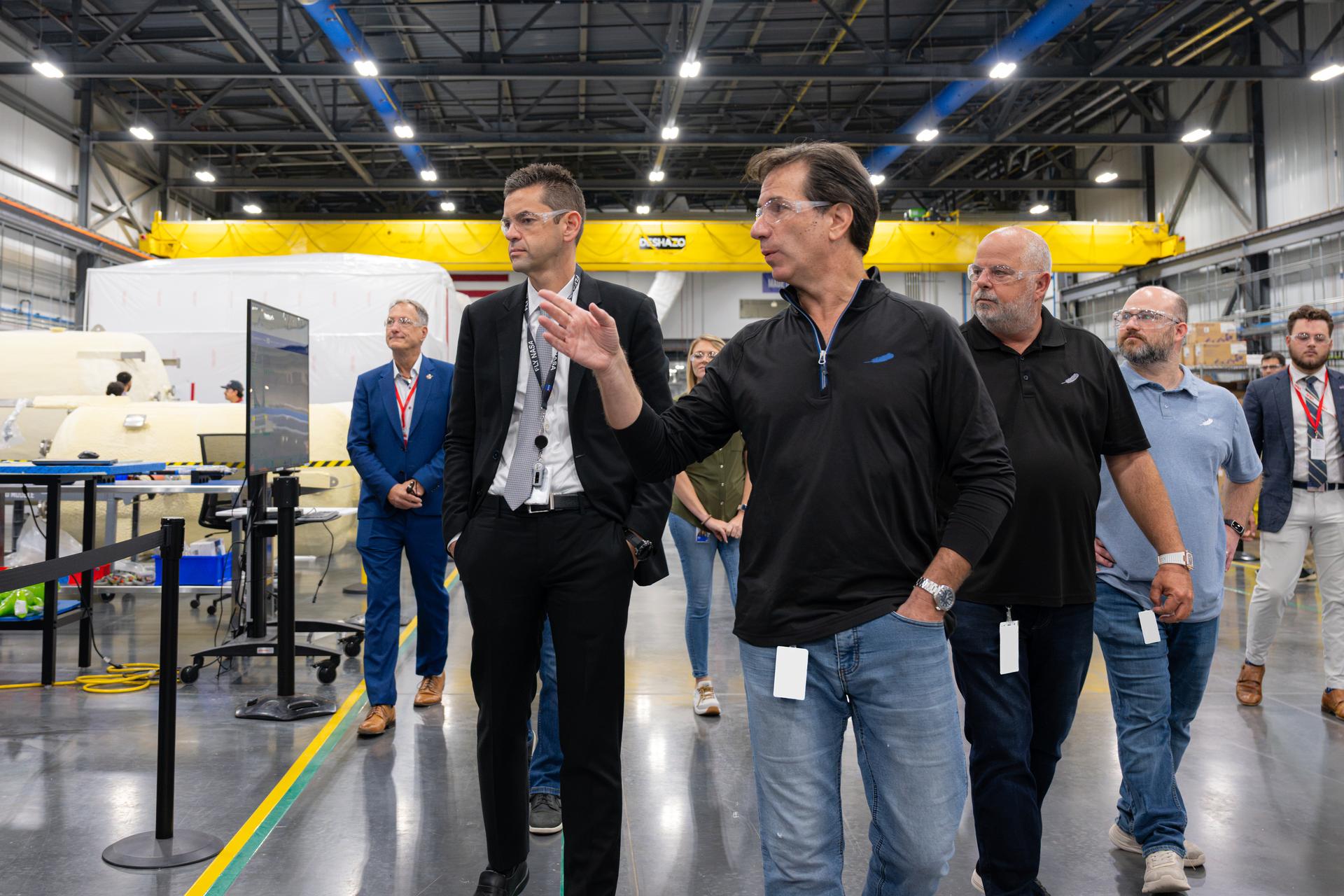
NASA Administrator Jared Isaacman tours Blue Origin's Lunar Plant 1, Friday, Aug. 14, 2026, at the company’s Rocket Park facility in Merritt Island, Fla. Photo Credit: (NASA/John Kraus)
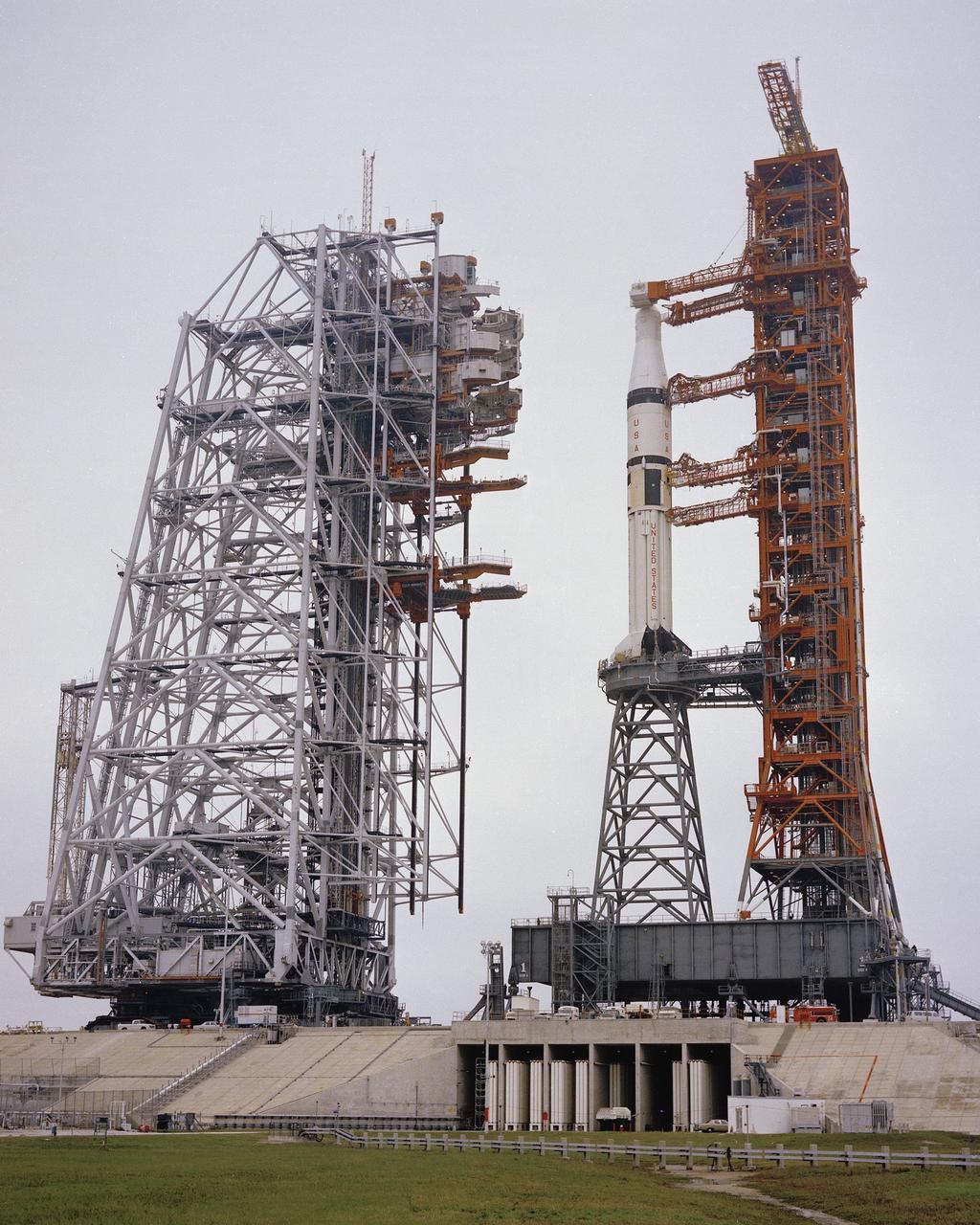
CAPE KENNEDY, Fla. -- At the Kennedy Space Center in Florida, the mobile service structure moves from its park site into position at Launch Complex 39B and surround the Skylab 2 rocket. Photo Credit: NASA
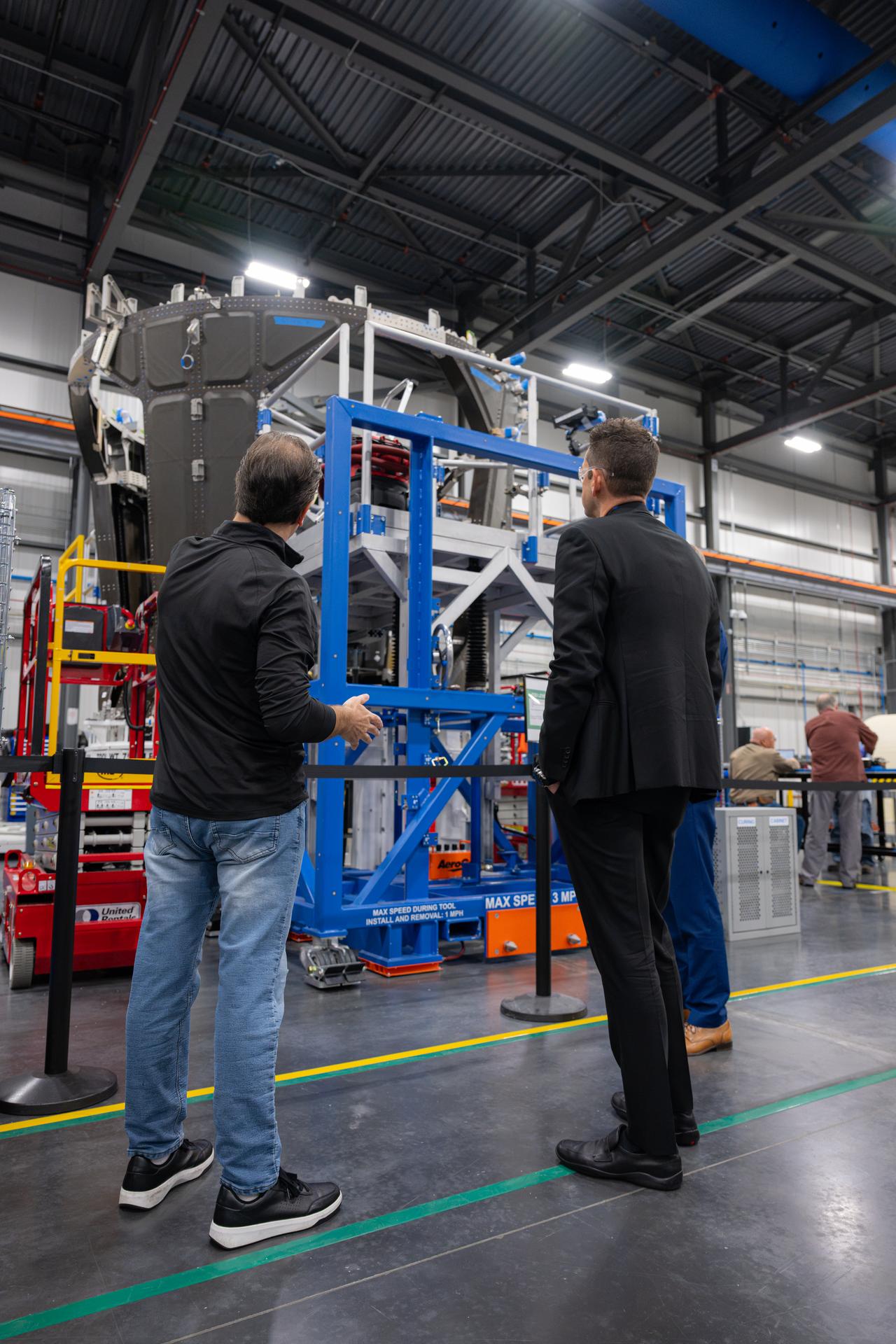
NASA Administrator Jared Isaacman tours Blue Origin's Lunar Plant 1, Friday, Aug. 14, 2026, at the company’s Rocket Park facility in Merritt Island, Fla. Photo Credit: (NASA/John Kraus)
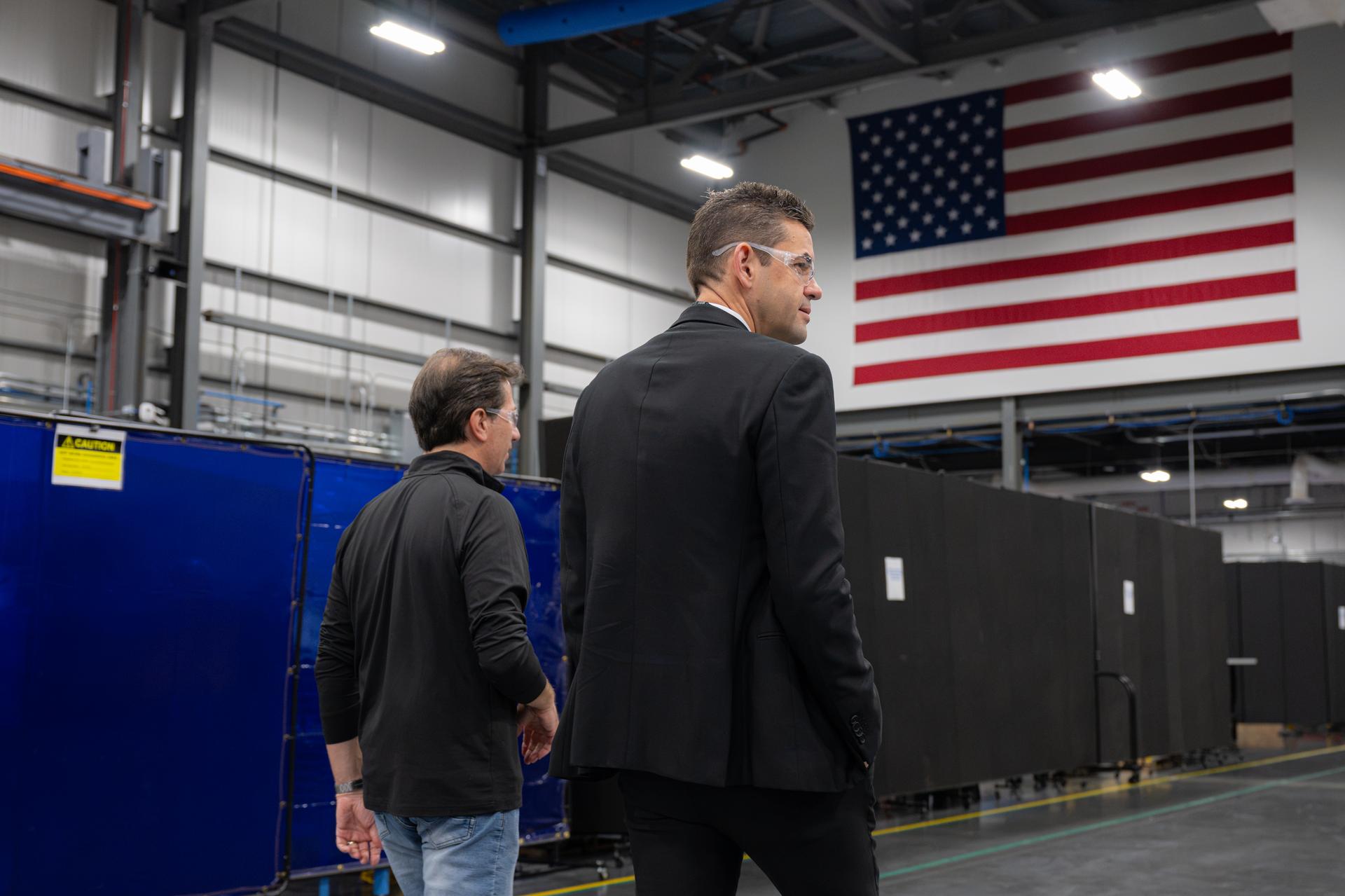
NASA Administrator Jared Isaacman tours Blue Origin's Lunar Plant 1, Friday, Aug. 14, 2026, at the company’s Rocket Park facility in Merritt Island, Fla. Photo Credit: (NASA/John Kraus)
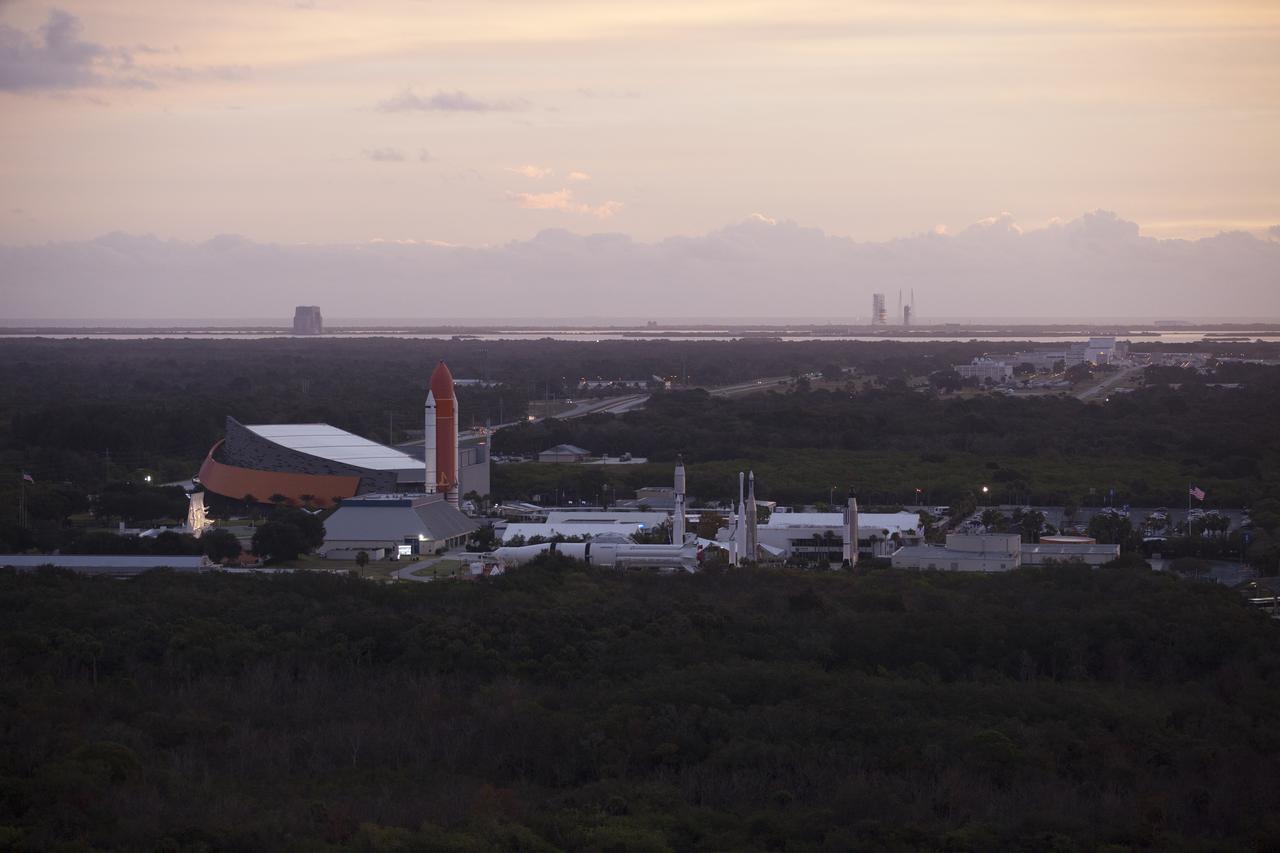
This helicopter view of the Kennedy Space Center Visitor Complex shows the thousands of vehicles parked where guests gather to see the launch of the Orion Flight Test. The liftoff was postponed because of an issue related to fill and drain valves on the Delta IV Heavy rocket that teams could not troubleshoot by the time the launch window expired.
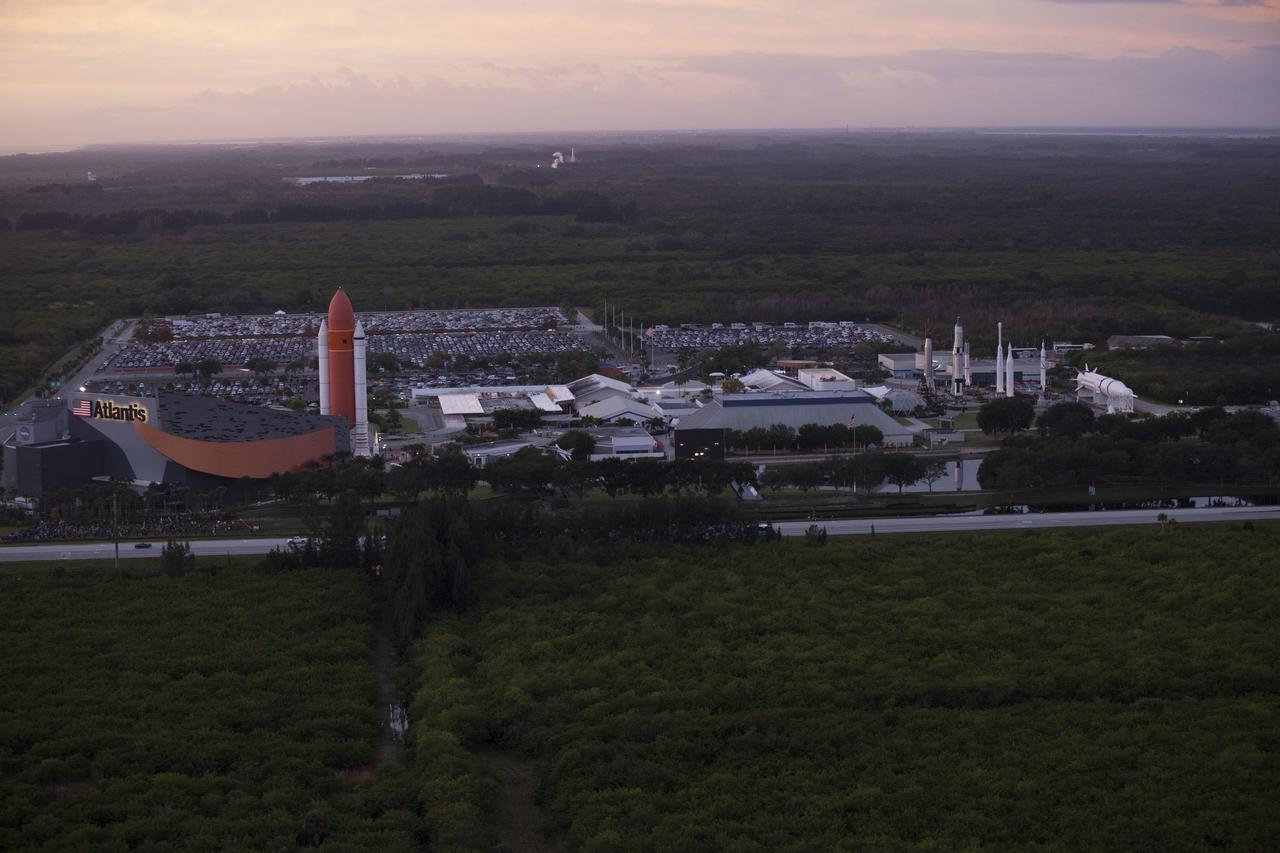
This helicopter view of the Kennedy Space Center Visitor Complex shows the thousands of vehicles parked where guests gather to see the launch of the Orion Flight Test. The liftoff was postponed because of an issue related to fill and drain valves on the Delta IV Heavy rocket that teams could not troubleshoot by the time the launch window expired.
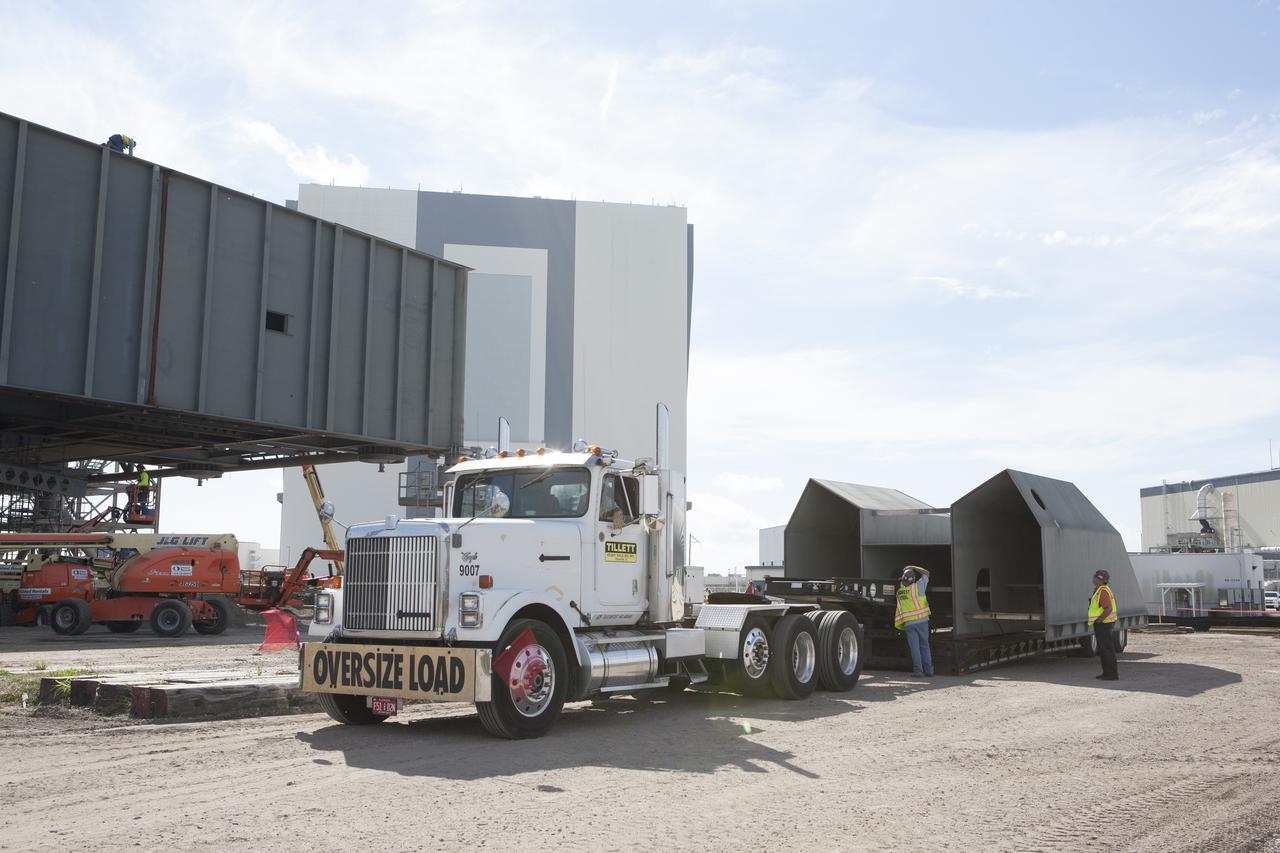
Modifications continue on the Mobile Launcher, or ML, at the Mobile Launcher Park Site at NASA’s Kennedy Space Center in Florida. The haunch, a structure that will support the launch vehicle on the ML, arrives by flatbed truck at the park site. The ML is being modified and strengthened to accommodate the weight, size and thrust at launch of NASA's Space Launch System, or SLS, and Orion spacecraft. In 2013, the agency awarded a contract to J.P. Donovan Construction Inc. of Rockledge, Fla., to modify the ML, which is one of the key elements of ground support equipment that is being upgraded by the Ground Systems Development and Operations Program at Kennedy. The existing 24-foot exhaust hole is being enlarged and strengthened for the larger, heavier SLS rocket. The ML will carry the SLS rocket and Orion spacecraft to Launch Pad 39B for its first uncrewed mission, Exploration Mission-1, in 2018.
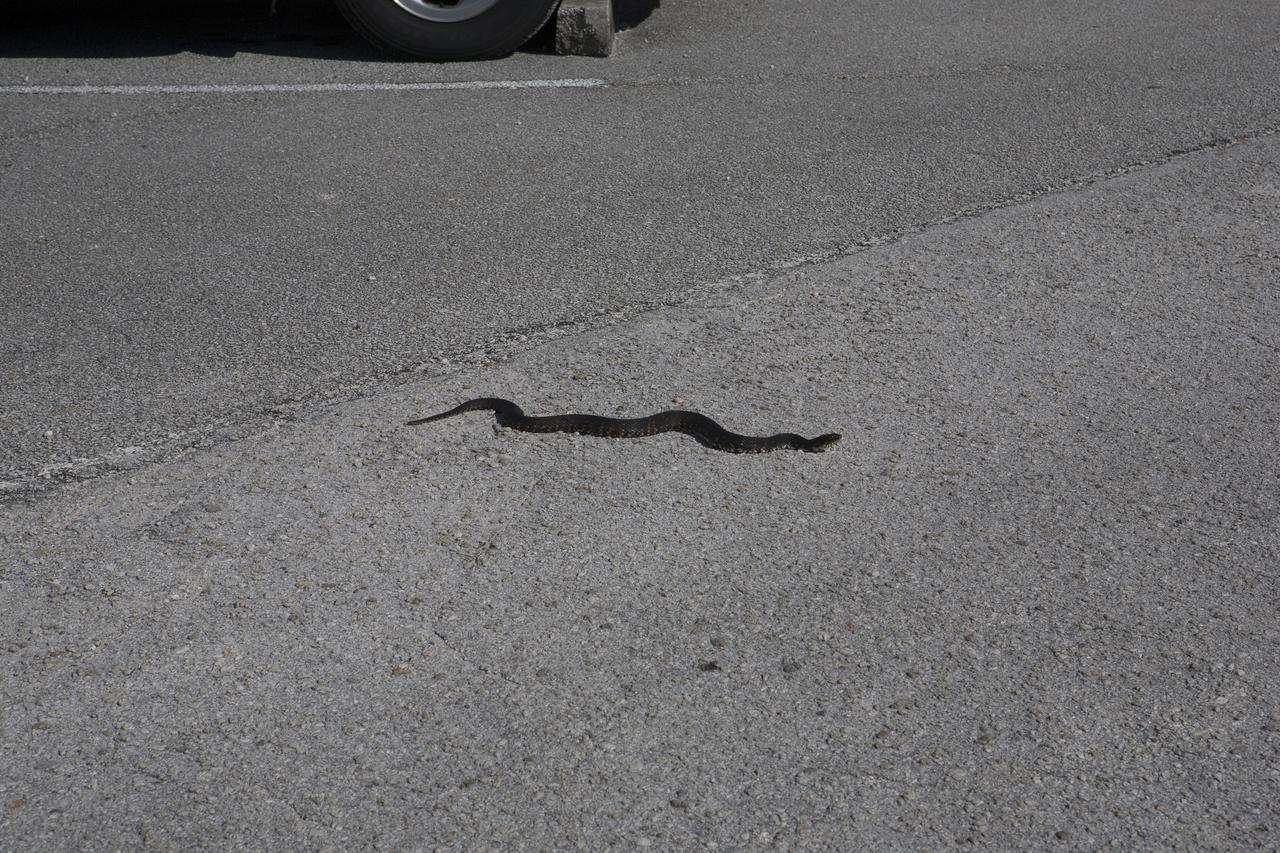
A water moccasin snake travels across the gravel surface near the Mobile Launcher, or ML, at the Mobile Launcher Park Site at NASA’s Kennedy Space Center in Florida. Nearby, the haunch, a structure that will support the launch vehicle on the ML, arrives by flatbed truck at the park site. The ML is being modified and strengthened to accommodate the weight, size and thrust at launch of NASA's Space Launch System, or SLS, and Orion spacecraft. In 2013, the agency awarded a contract to J.P. Donovan Construction Inc. of Rockledge, Fla., to modify the ML, which is one of the key elements of ground support equipment that is being upgraded by the Ground Systems Development and Operations Program at Kennedy. The existing 24-foot exhaust hole is being enlarged and strengthened for the larger, heavier SLS rocket. The ML will carry the SLS rocket and Orion spacecraft to Launch Pad 39B for its first uncrewed mission, Exploration Mission-1, in 2018.
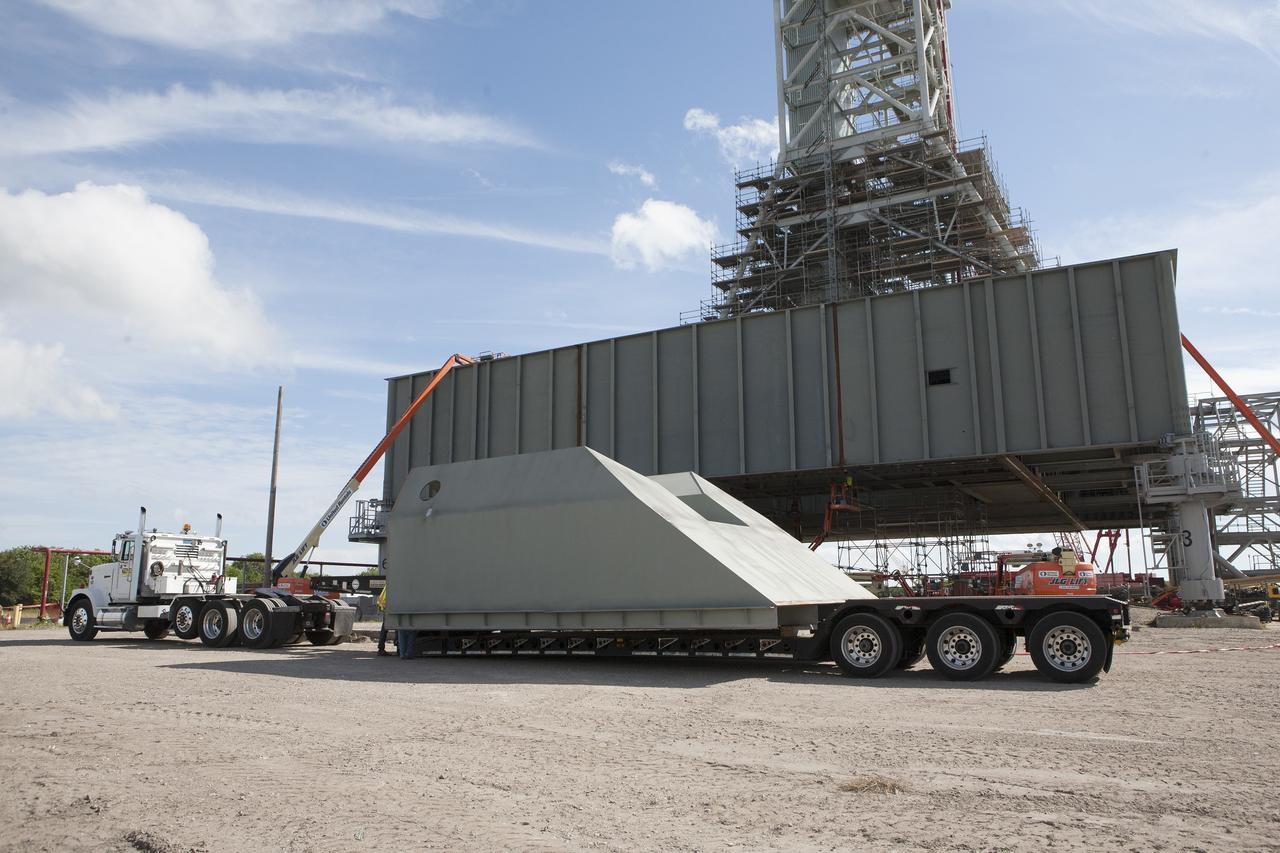
CAPE CANAVERAL, Fla. -- Modifications continue on the Mobile Launcher, or ML, at the Mobile Launcher Park Site at NASA’s Kennedy Space Center in Florida. The haunch, a structure that will support the launch vehicle on the ML, arrives by flatbed truck at the park site. The ML is being modified and strengthened to accommodate the weight, size and thrust at launch of NASA's Space Launch System, or SLS, and Orion spacecraft. In 2013, the agency awarded a contract to J.P. Donovan Construction Inc. of Rockledge, Fla., to modify the ML, which is one of the key elements of ground support equipment that is being upgraded by the Ground Systems Development and Operations Program at Kennedy. The existing 24-foot exhaust hole is being enlarged and strengthened for the larger, heavier SLS rocket. The ML will carry the SLS rocket and Orion spacecraft to Launch Pad 39B for its first uncrewed mission, Exploration Mission-1, in 2018. Photo credit: NASA/Kim Shiflett
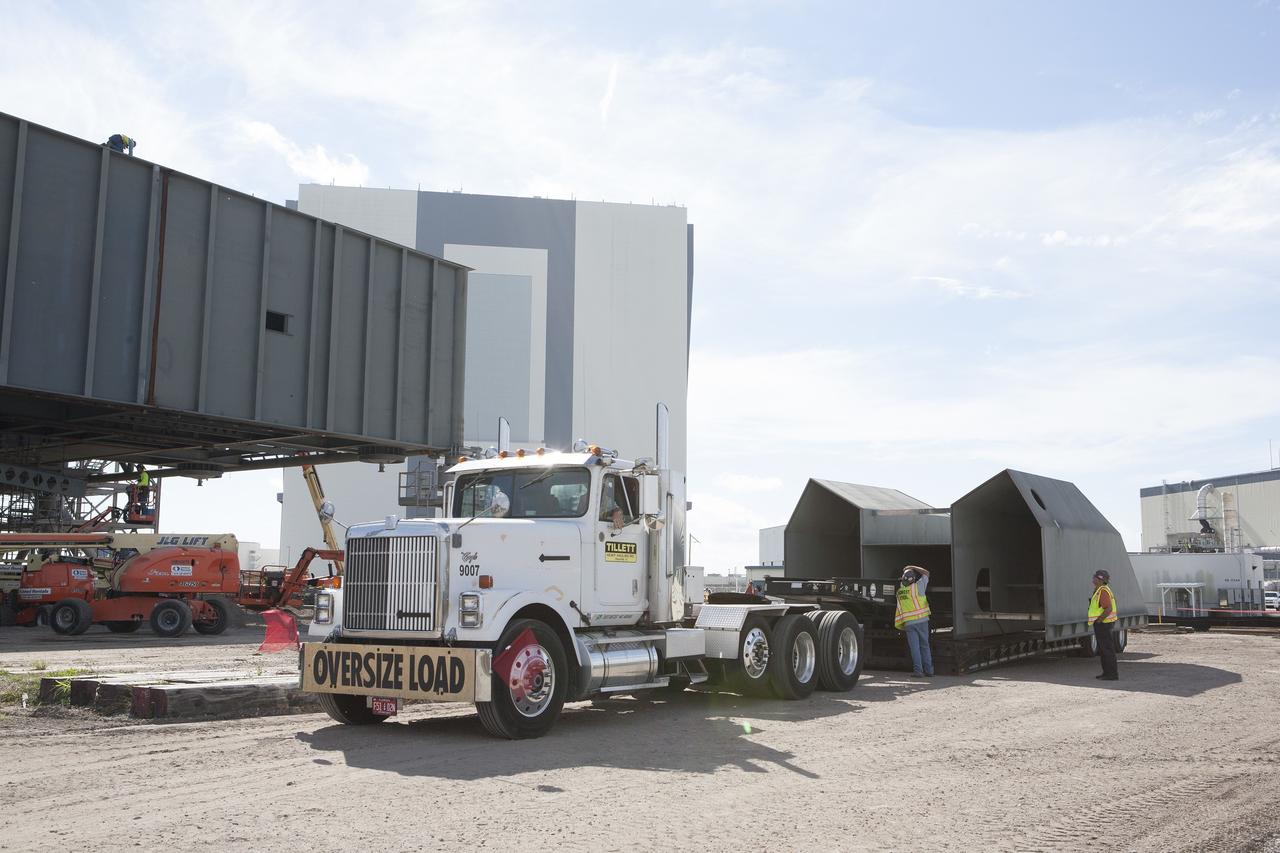
CAPE CANAVERAL, Fla. -- Modifications continue on the Mobile Launcher, or ML, at the Mobile Launcher Park Site at NASA’s Kennedy Space Center in Florida. The haunch, a structure that will support the launch vehicle on the ML, arrives by flatbed truck at the park site. The ML is being modified and strengthened to accommodate the weight, size and thrust at launch of NASA's Space Launch System, or SLS, and Orion spacecraft. In 2013, the agency awarded a contract to J.P. Donovan Construction Inc. of Rockledge, Fla., to modify the ML, which is one of the key elements of ground support equipment that is being upgraded by the Ground Systems Development and Operations Program at Kennedy. The existing 24-foot exhaust hole is being enlarged and strengthened for the larger, heavier SLS rocket. The ML will carry the SLS rocket and Orion spacecraft to Launch Pad 39B for its first uncrewed mission, Exploration Mission-1, in 2018. Photo credit: NASA/Kim Shiflett
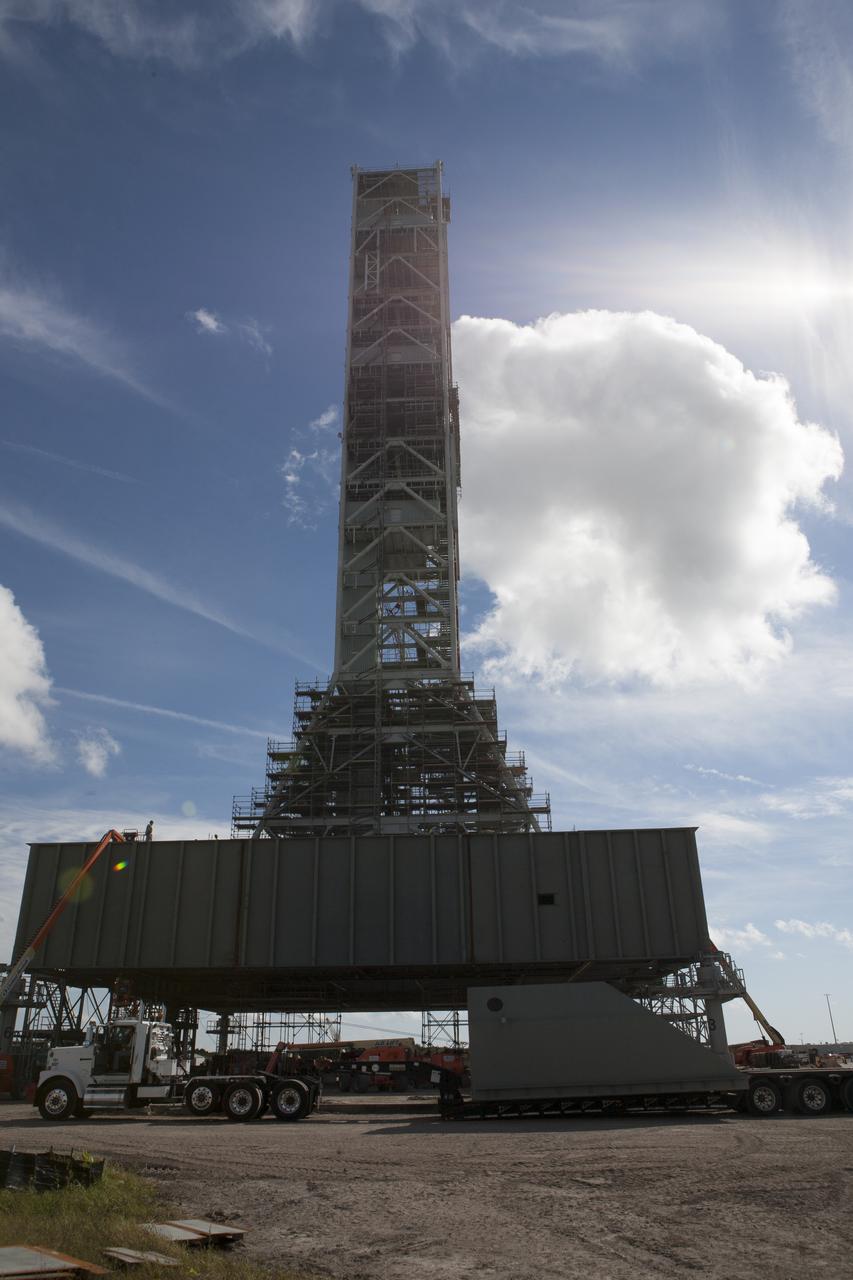
Modifications continue on the Mobile Launcher, or ML, at the Mobile Launcher Park Site at NASA’s Kennedy Space Center in Florida. The haunch, a structure that will support the launch vehicle on the ML, arrives by flatbed truck at the park site. The ML is being modified and strengthened to accommodate the weight, size and thrust at launch of NASA's Space Launch System, or SLS, and Orion spacecraft. In 2013, the agency awarded a contract to J.P. Donovan Construction Inc. of Rockledge, Fla., to modify the ML, which is one of the key elements of ground support equipment that is being upgraded by the Ground Systems Development and Operations Program at Kennedy. The existing 24-foot exhaust hole is being enlarged and strengthened for the larger, heavier SLS rocket. The ML will carry the SLS rocket and Orion spacecraft to Launch Pad 39B for its first uncrewed mission, Exploration Mission-1, in 2018.
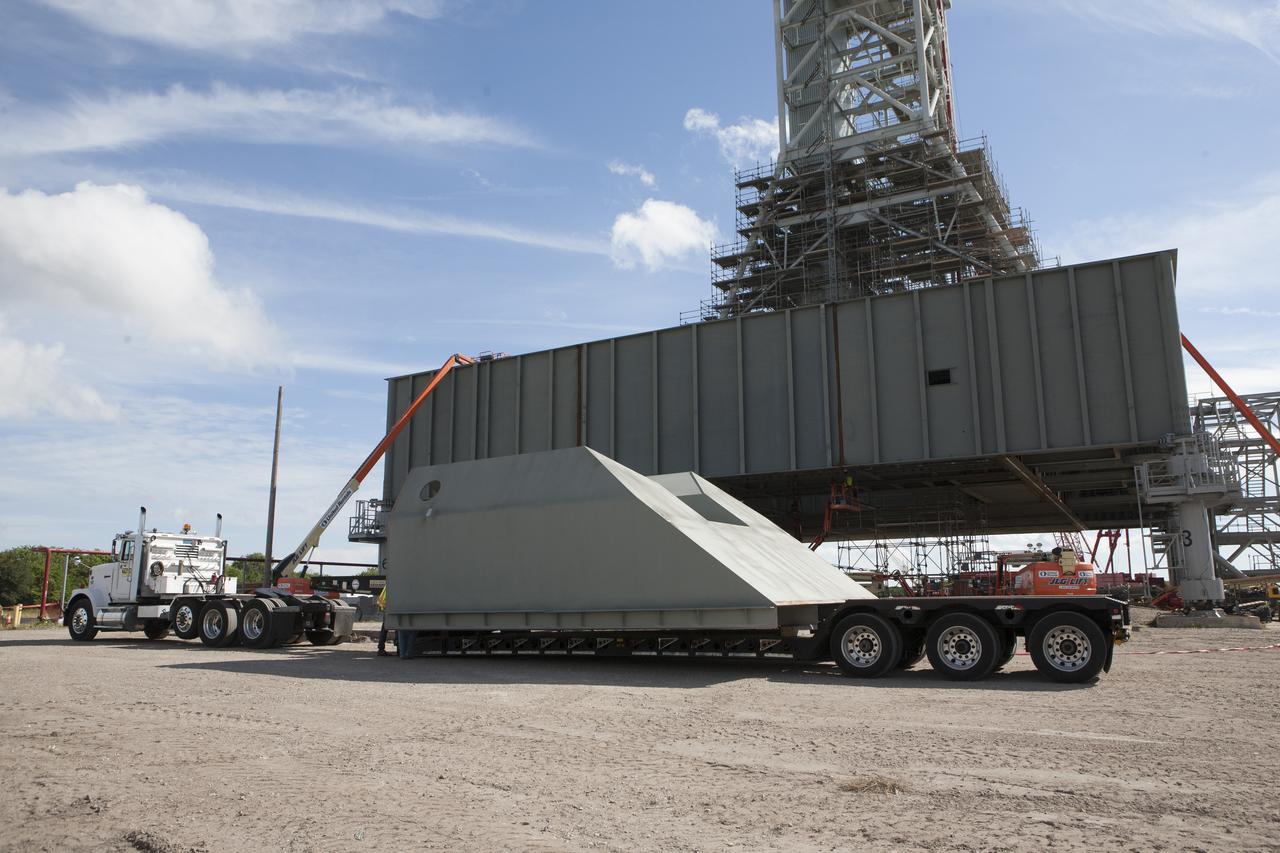
Modifications continue on the Mobile Launcher, or ML, at the Mobile Launcher Park Site at NASA’s Kennedy Space Center in Florida. The haunch, a structure that will support the launch vehicle on the ML, arrives by flatbed truck at the park site. The ML is being modified and strengthened to accommodate the weight, size and thrust at launch of NASA's Space Launch System, or SLS, and Orion spacecraft. In 2013, the agency awarded a contract to J.P. Donovan Construction Inc. of Rockledge, Fla., to modify the ML, which is one of the key elements of ground support equipment that is being upgraded by the Ground Systems Development and Operations Program at Kennedy. The existing 24-foot exhaust hole is being enlarged and strengthened for the larger, heavier SLS rocket. The ML will carry the SLS rocket and Orion spacecraft to Launch Pad 39B for its first uncrewed mission, Exploration Mission-1, in 2018.
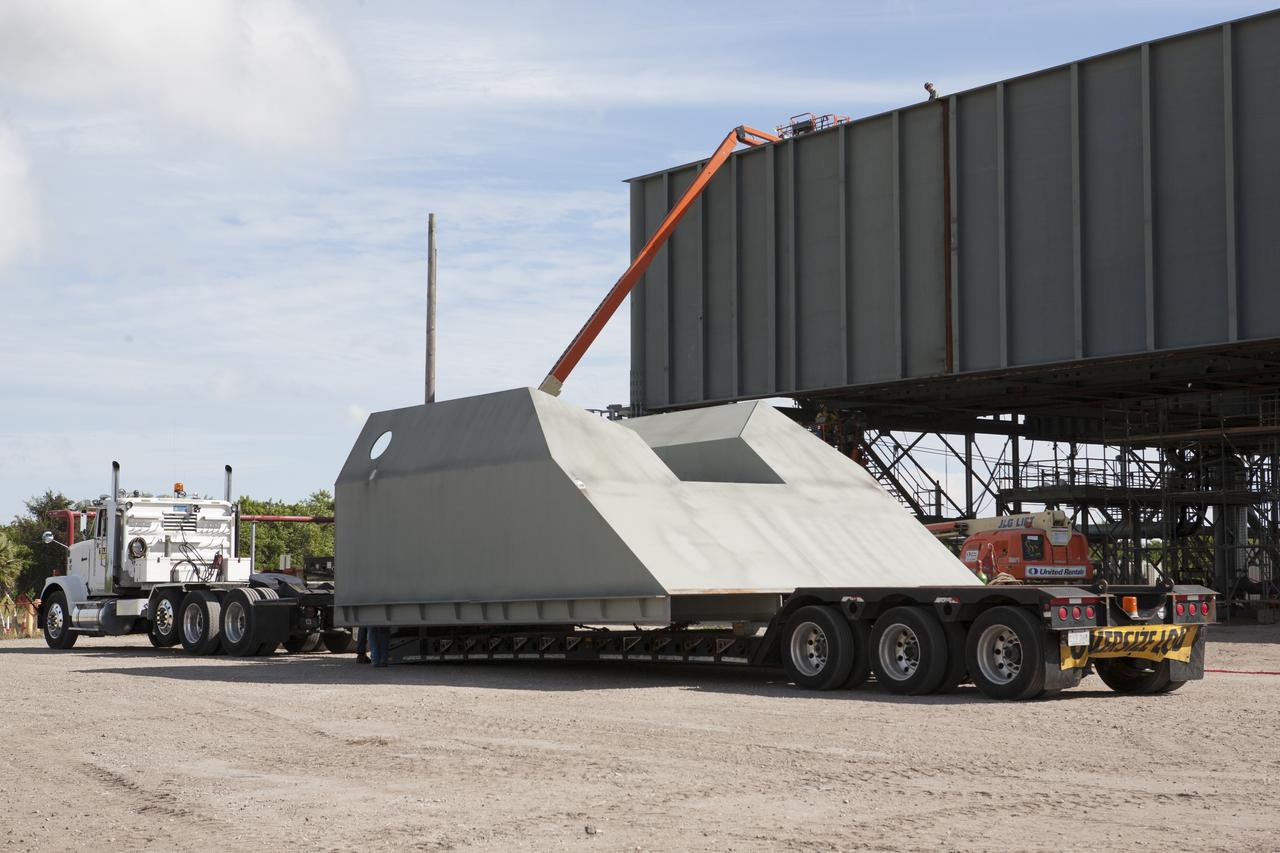
Modifications continue on the Mobile Launcher, or ML, at the Mobile Launcher Park Site at NASA’s Kennedy Space Center in Florida. The haunch, a structure that will support the launch vehicle on the ML, arrives by flatbed truck at the park site. The ML is being modified and strengthened to accommodate the weight, size and thrust at launch of NASA's Space Launch System, or SLS, and Orion spacecraft. In 2013, the agency awarded a contract to J.P. Donovan Construction Inc. of Rockledge, Fla., to modify the ML, which is one of the key elements of ground support equipment that is being upgraded by the Ground Systems Development and Operations Program at Kennedy. The existing 24-foot exhaust hole is being enlarged and strengthened for the larger, heavier SLS rocket. The ML will carry the SLS rocket and Orion spacecraft to Launch Pad 39B for its first uncrewed mission, Exploration Mission-1, in 2018.
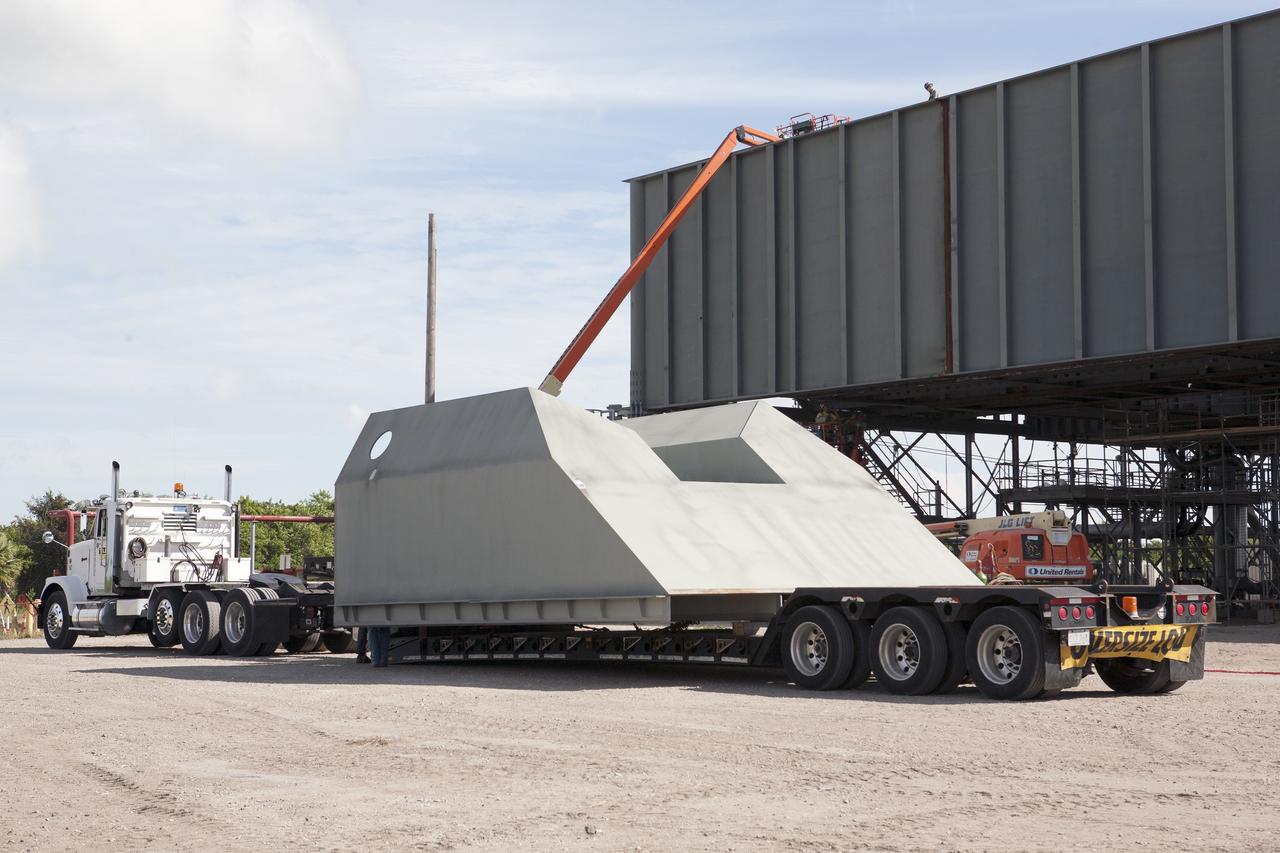
CAPE CANAVERAL, Fla. -- Modifications continue on the Mobile Launcher, or ML, at the Mobile Launcher Park Site at NASA’s Kennedy Space Center in Florida. The haunch, a structure that will support the launch vehicle on the ML, arrives by flatbed truck at the park site. The ML is being modified and strengthened to accommodate the weight, size and thrust at launch of NASA's Space Launch System, or SLS, and Orion spacecraft. In 2013, the agency awarded a contract to J.P. Donovan Construction Inc. of Rockledge, Fla., to modify the ML, which is one of the key elements of ground support equipment that is being upgraded by the Ground Systems Development and Operations Program at Kennedy. The existing 24-foot exhaust hole is being enlarged and strengthened for the larger, heavier SLS rocket. The ML will carry the SLS rocket and Orion spacecraft to Launch Pad 39B for its first uncrewed mission, Exploration Mission-1, in 2018. Photo credit: NASA/Kim Shiflett
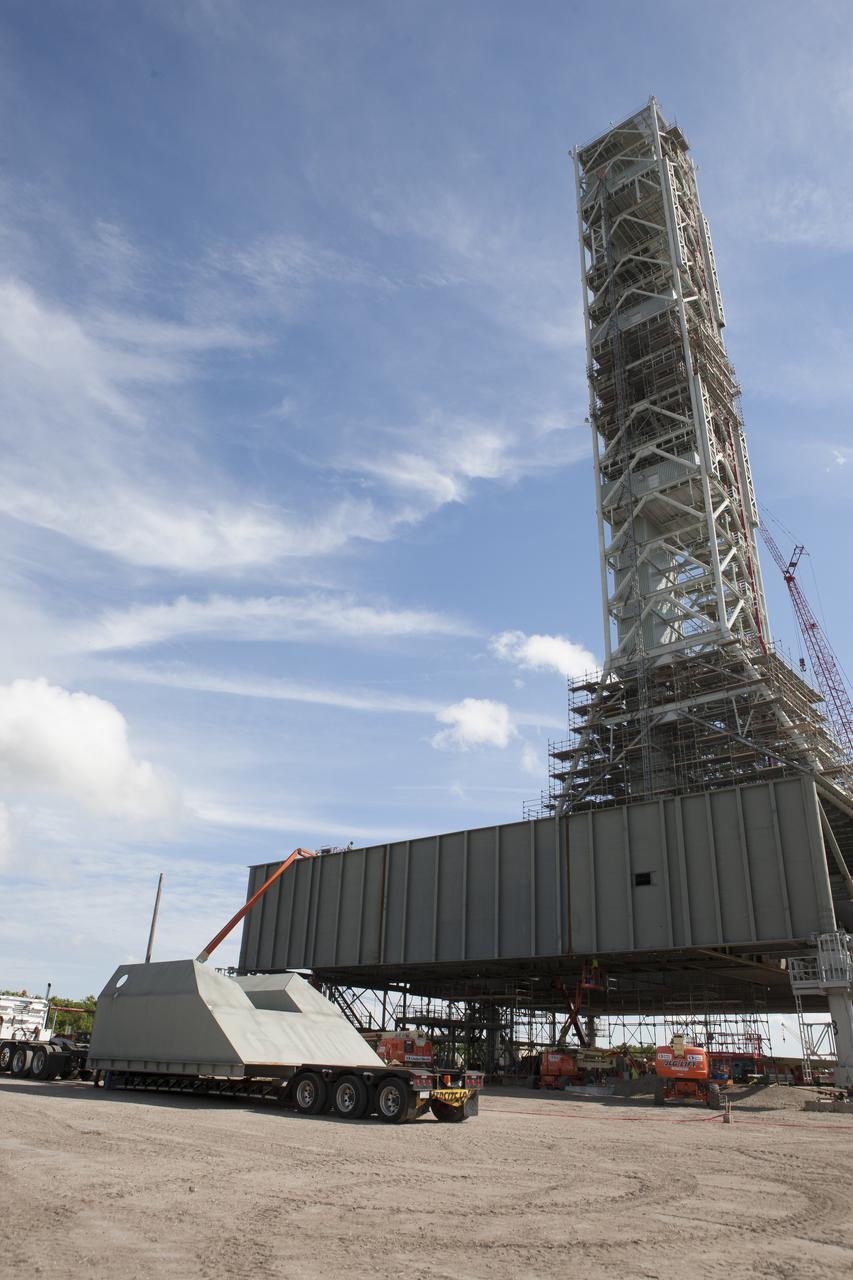
Modifications continue on the Mobile Launcher, or ML, at the Mobile Launcher Park Site at NASA’s Kennedy Space Center in Florida. The haunch, a structure that will support the launch vehicle on the ML, arrives by flatbed truck at the park site. The ML is being modified and strengthened to accommodate the weight, size and thrust at launch of NASA's Space Launch System, or SLS, and Orion spacecraft. In 2013, the agency awarded a contract to J.P. Donovan Construction Inc. of Rockledge, Fla., to modify the ML, which is one of the key elements of ground support equipment that is being upgraded by the Ground Systems Development and Operations Program at Kennedy. The existing 24-foot exhaust hole is being enlarged and strengthened for the larger, heavier SLS rocket. The ML will carry the SLS rocket and Orion spacecraft to Launch Pad 39B for its first uncrewed mission, Exploration Mission-1, in 2018.
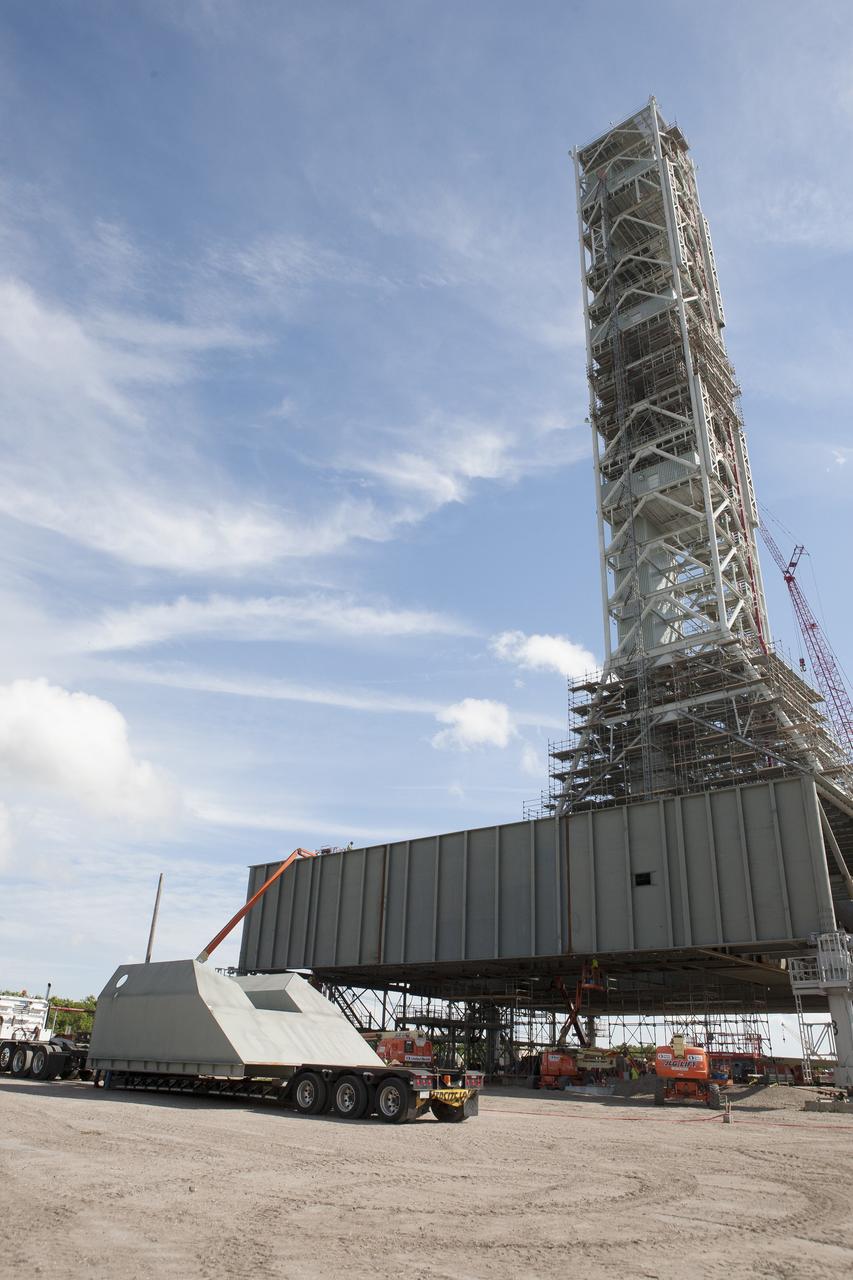
CAPE CANAVERAL, Fla. -- Modifications continue on the Mobile Launcher, or ML, at the Mobile Launcher Park Site at NASA’s Kennedy Space Center in Florida. The haunch, a structure that will support the launch vehicle on the ML, arrives by flatbed truck at the park site. The ML is being modified and strengthened to accommodate the weight, size and thrust at launch of NASA's Space Launch System, or SLS, and Orion spacecraft. In 2013, the agency awarded a contract to J.P. Donovan Construction Inc. of Rockledge, Fla., to modify the ML, which is one of the key elements of ground support equipment that is being upgraded by the Ground Systems Development and Operations Program at Kennedy. The existing 24-foot exhaust hole is being enlarged and strengthened for the larger, heavier SLS rocket. The ML will carry the SLS rocket and Orion spacecraft to Launch Pad 39B for its first uncrewed mission, Exploration Mission-1, in 2018. Photo credit: NASA/Kim Shiflett
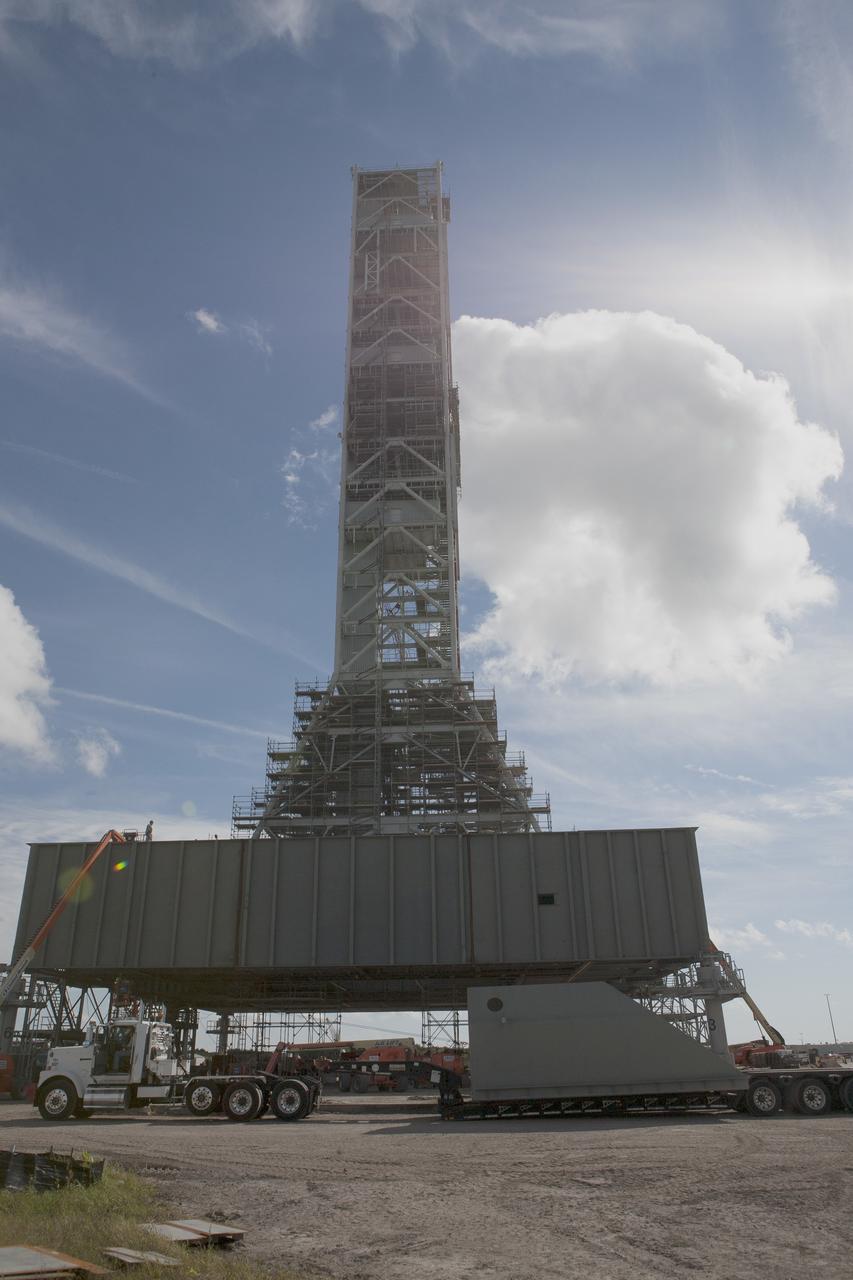
CAPE CANAVERAL, Fla. -- Modifications continue on the Mobile Launcher, or ML, at the Mobile Launcher Park Site at NASA’s Kennedy Space Center in Florida. The haunch, a structure that will support the launch vehicle on the ML, arrives by flatbed truck at the park site. The ML is being modified and strengthened to accommodate the weight, size and thrust at launch of NASA's Space Launch System, or SLS, and Orion spacecraft. In 2013, the agency awarded a contract to J.P. Donovan Construction Inc. of Rockledge, Fla., to modify the ML, which is one of the key elements of ground support equipment that is being upgraded by the Ground Systems Development and Operations Program at Kennedy. The existing 24-foot exhaust hole is being enlarged and strengthened for the larger, heavier SLS rocket. The ML will carry the SLS rocket and Orion spacecraft to Launch Pad 39B for its first uncrewed mission, Exploration Mission-1, in 2018. Photo credit: NASA/Kim Shiflett
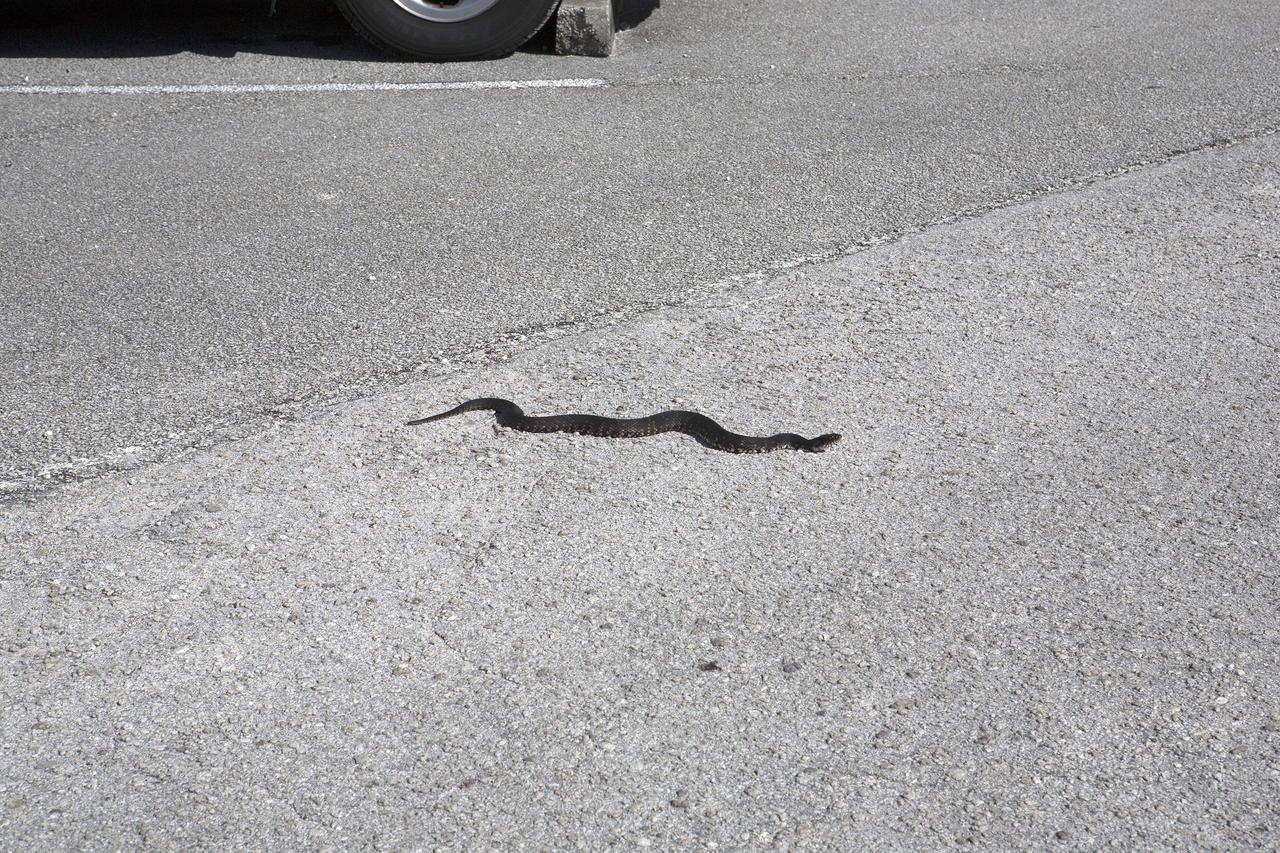
CAPE CANAVERAL, Fla. -- A water moccasin snake travels across the gravel surface near the Mobile Launcher, or ML, at the Mobile Launcher Park Site at NASA’s Kennedy Space Center in Florida. Nearby, the haunch, a structure that will support the launch vehicle on the ML, arrives by flatbed truck at the park site. The ML is being modified and strengthened to accommodate the weight, size and thrust at launch of NASA's Space Launch System, or SLS, and Orion spacecraft. In 2013, the agency awarded a contract to J.P. Donovan Construction Inc. of Rockledge, Fla., to modify the ML, which is one of the key elements of ground support equipment that is being upgraded by the Ground Systems Development and Operations Program at Kennedy. The existing 24-foot exhaust hole is being enlarged and strengthened for the larger, heavier SLS rocket. The ML will carry the SLS rocket and Orion spacecraft to Launch Pad 39B for its first uncrewed mission, Exploration Mission-1, in 2018. Photo credit: NASA/Kim Shiflett
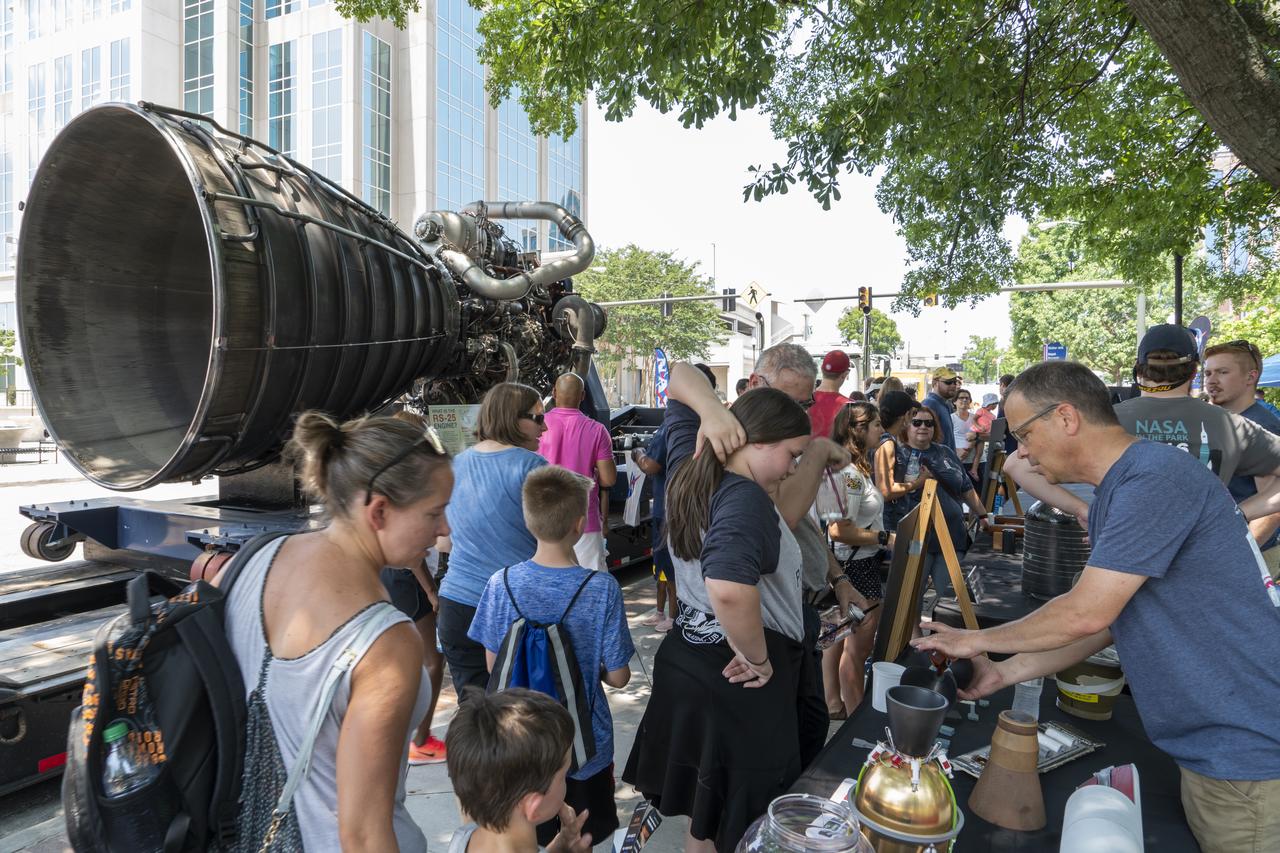
NASA's Marshall Space Flight Center showcased it's various projects for the public in Huntsville, Alabama's Big Spring Park. Exhibits were displayed by all of the various directorates of the Center with employee volunteers explaining all aspects of their projects. Adding to the festivities was the attendance of retired NASA astronaut Robert "Hoot" Gibson. With a RS-25 engine in the background, NASA employees and volunteers demonstrate NASA technology at NASA in the Park.
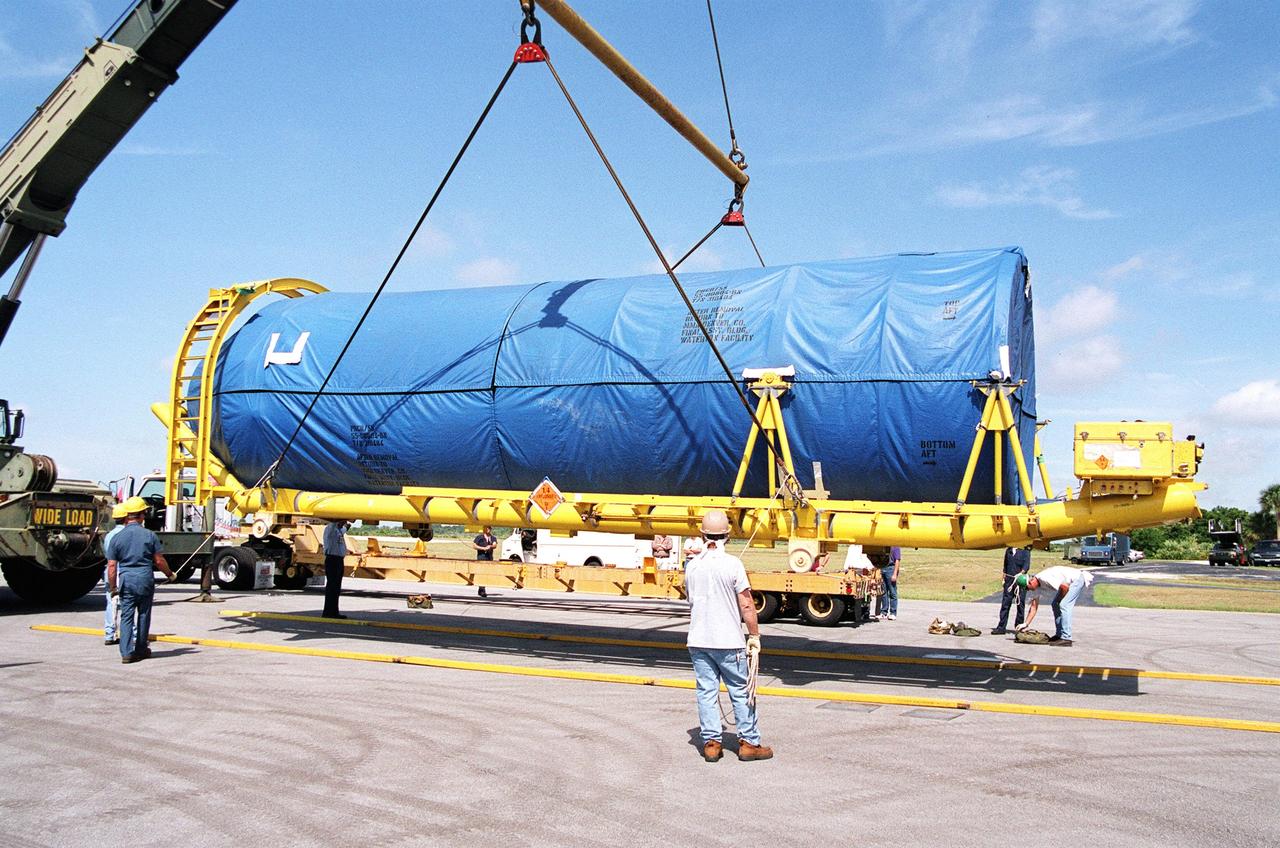
Workers supervise the off-loading of segments of a Lockheed Martin Atlas II rocket at the Skid Strip at Cape Canaveral Air Force Station.; The rocket will be used to launch the Geostationary Operational Environmental Satellite-M (GOES-M), the latest in the current series of advanced geostationary weather satellites in service.; GOES-M is being prepared for launch at the Astrotech Space Operations facility located in the Spaceport Florida Industrial Park in Titusville, Fla. The launch is scheduled for July 15 from Pad 36-A, Cape Canaveral Air Force Station
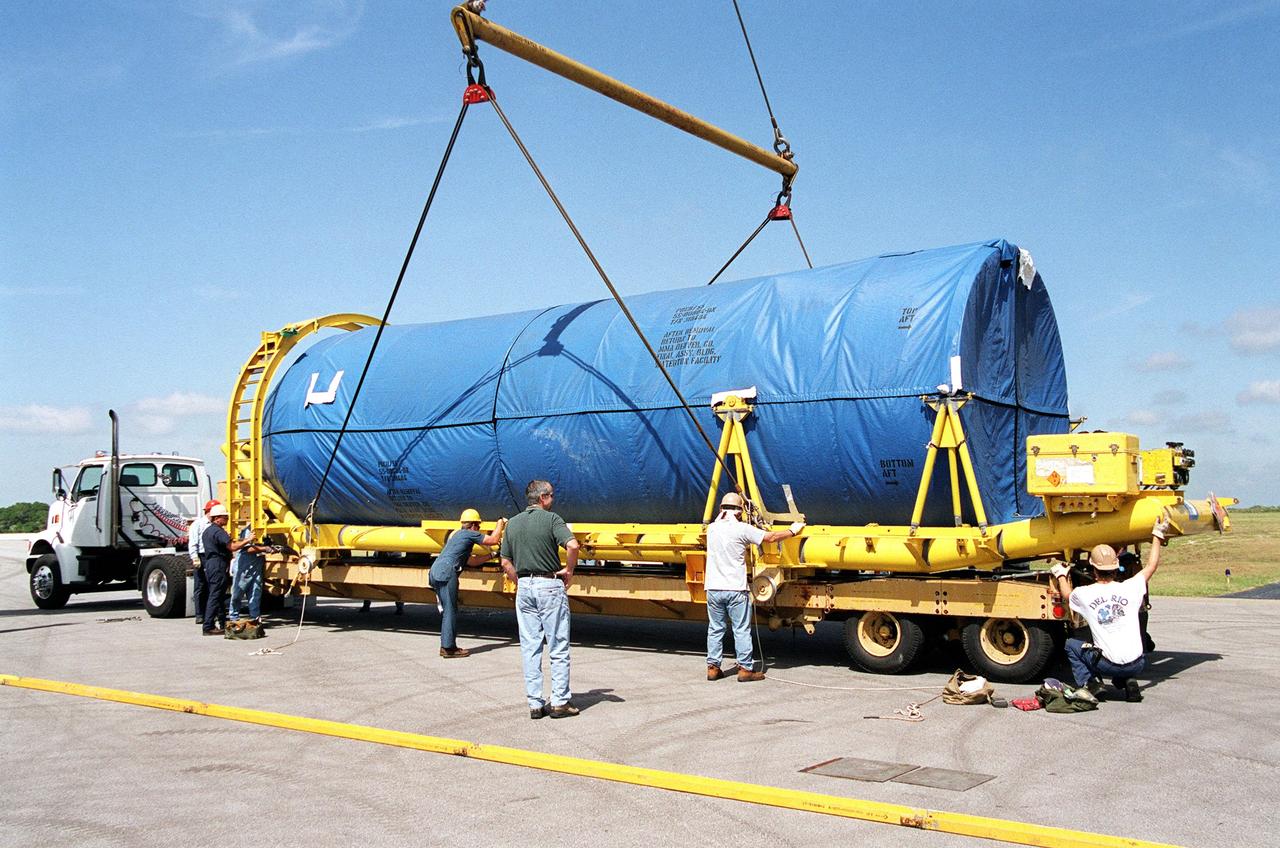
Workers supervise the off-loading of segments of a Lockheed Martin Atlas II rocket at the Skid Strip at Cape Canaveral Air Force Station.; The rocket will be used to launch the Geostationary Operational Environmental Satellite-M (GOES-M), the latest in the current series of advanced geostationary weather satellites in service.; GOES-M is being prepared for launch at the Astrotech Space Operations facility located in the Spaceport Florida Industrial Park in Titusville, Fla. The launch is scheduled for July 15 from Pad 36-A, Cape Canaveral Air Force Station
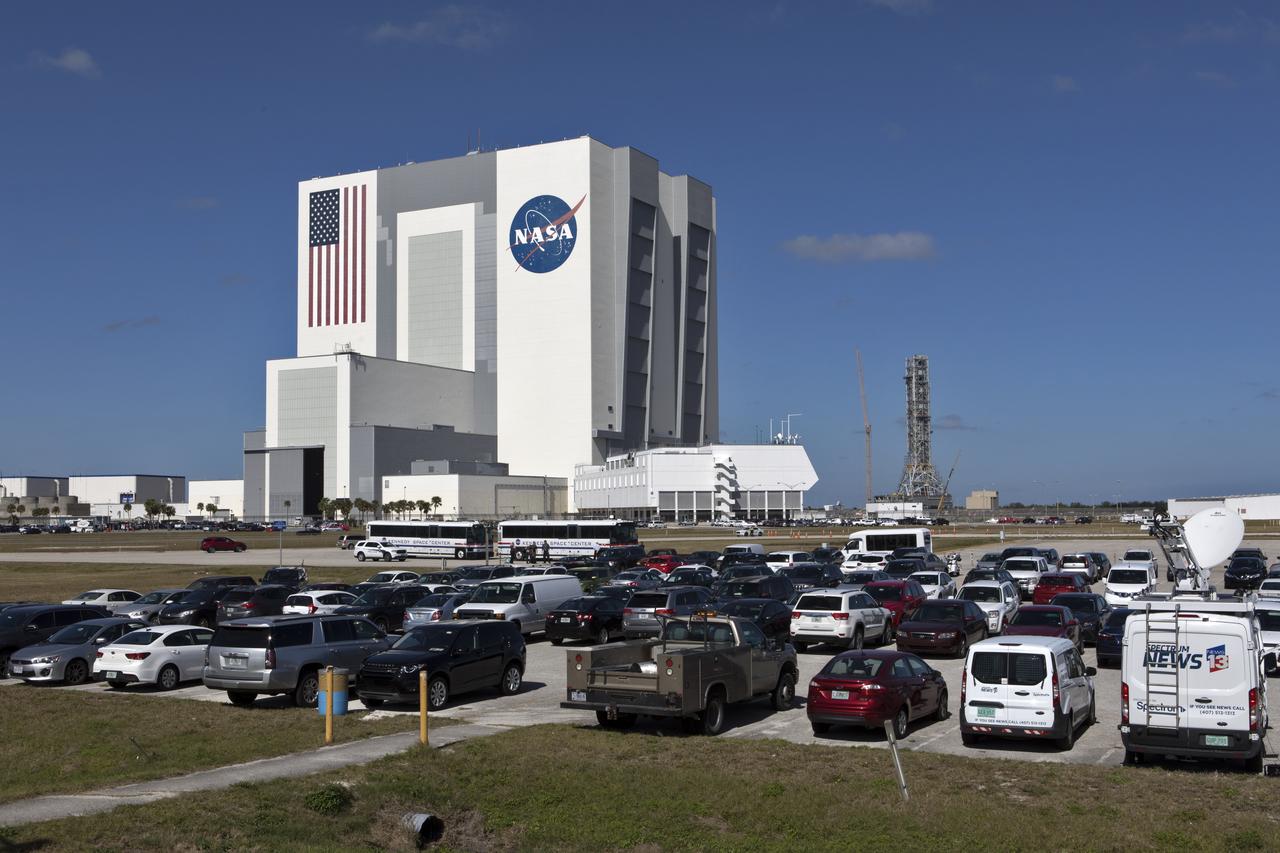
The parking area at the NASA News Center is filled with media vehicles and guest buses in anticipation of the liftoff of the SpaceX Falcon Heavy rocket from Launch Complex 39A at Kennedy Space Center in Florida. The demonstration flight will be a significant milestone for the world's premier multi-user spaceport. In 2014, NASA signed a property agreement with SpaceX for the use and operation of the center's pad 39A, where the company has launched Falcon 9 rockets and is preparing for the first Falcon Heavy. NASA also has Space Act Agreements in place with partners, such as SpaceX, to provide services needed to process and launch rockets and spacecraft.
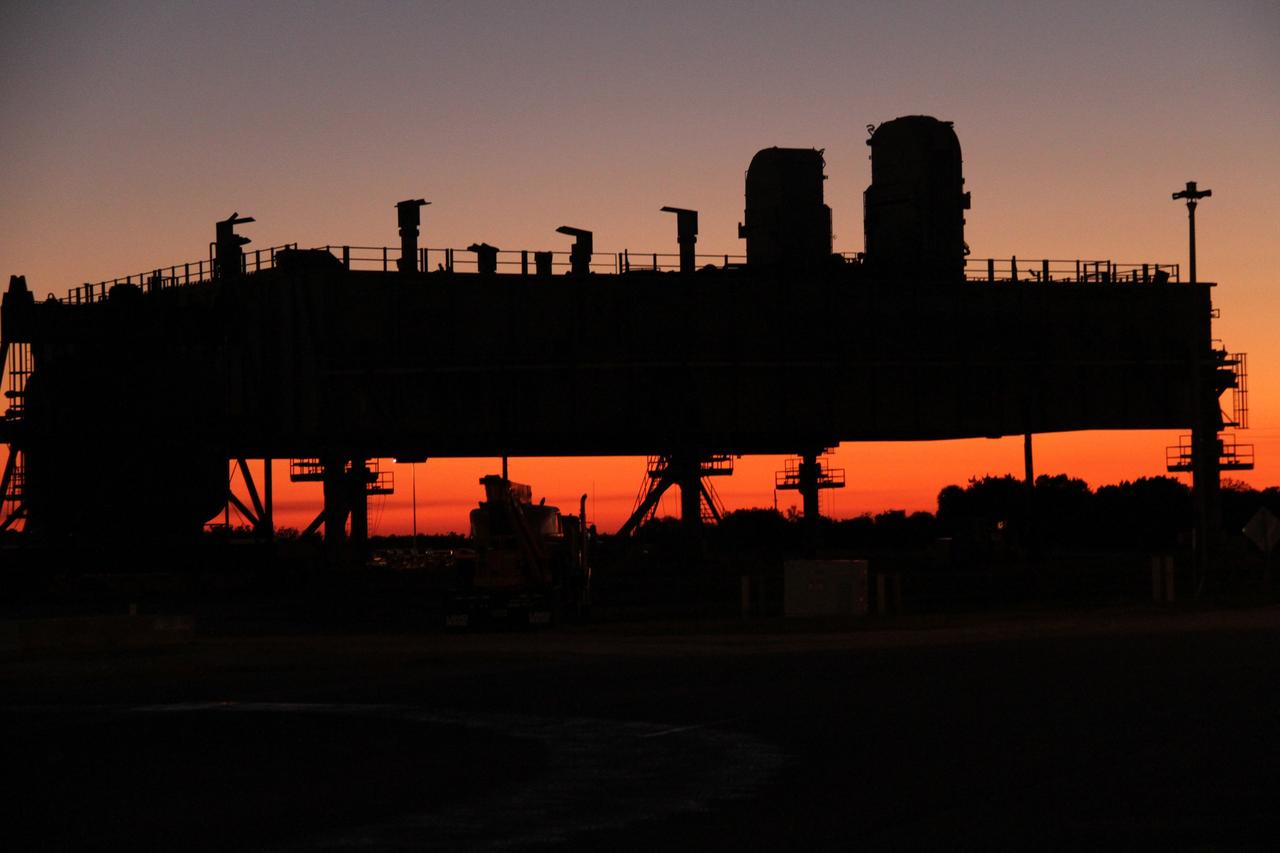
CAPE CANAVERAL, Fla. – A mobile launcher platform at the park site outside the Vehicle Assembly Building (VAB) at NASA's Kennedy Space Center in Florida awaits the arrival of the mobile launcher, or ML, as night falls. The ML is nearing the end of its 4.2-mile trek from Launch Pad 39B to the park site. Data on the ML collected from structural and functional engineering tests during its two-week stay on the pad will be used in the next phases of construction. The 355-foot-tall ML structure, which took about two years to construct, will be modified by NASA’s 21st Century Ground Systems Program to support NASA’s Space Launch System, the heavy-lift rocket that will launch astronauts into deep space on future exploration missions. For more information, visit http://www.nasa.gov/exploration/systems/sls. Photo credit: NASA/Cory Huston
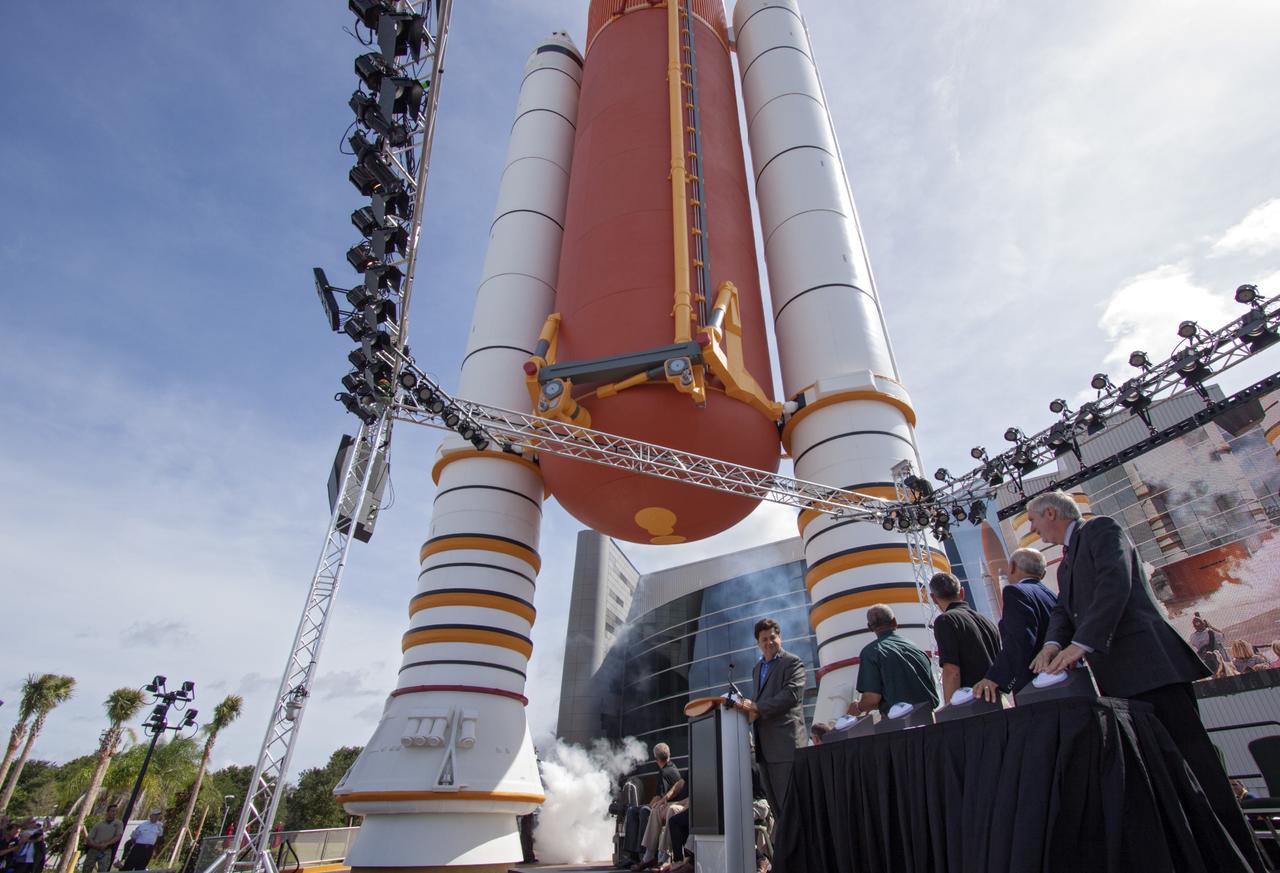
CAPE CANAVERAL, Fla. -- At the Kennedy Space Center Visitor Complex in Florida, CNN correspondent John Zarrella counted down for the ceremonial opening of the new "Space Shuttle Atlantis" facility. Smoke bellows near a full-scale set of space shuttle twin solid rocket boosters and external fuel tank at the entrance to the exhibit building. Looking on after pressing buttons to mark the opening the new exhibit, are, from the left, Charlie Bolden, NASA administrator, Bob Cabana, Kennedy director, Rick Abramson, Delaware North Parks and Resorts president, and Bill Moore, Delaware North Parks and Resorts chief operating officer. The new $100 million facility includes interactive exhibits that tell the story of the 30-year Space Shuttle Program and highlight the future of space exploration. The "Space Shuttle Atlantis" exhibit formally opened to the public on June 29, 2013.Photo credit: NASA/Jim Grossmann
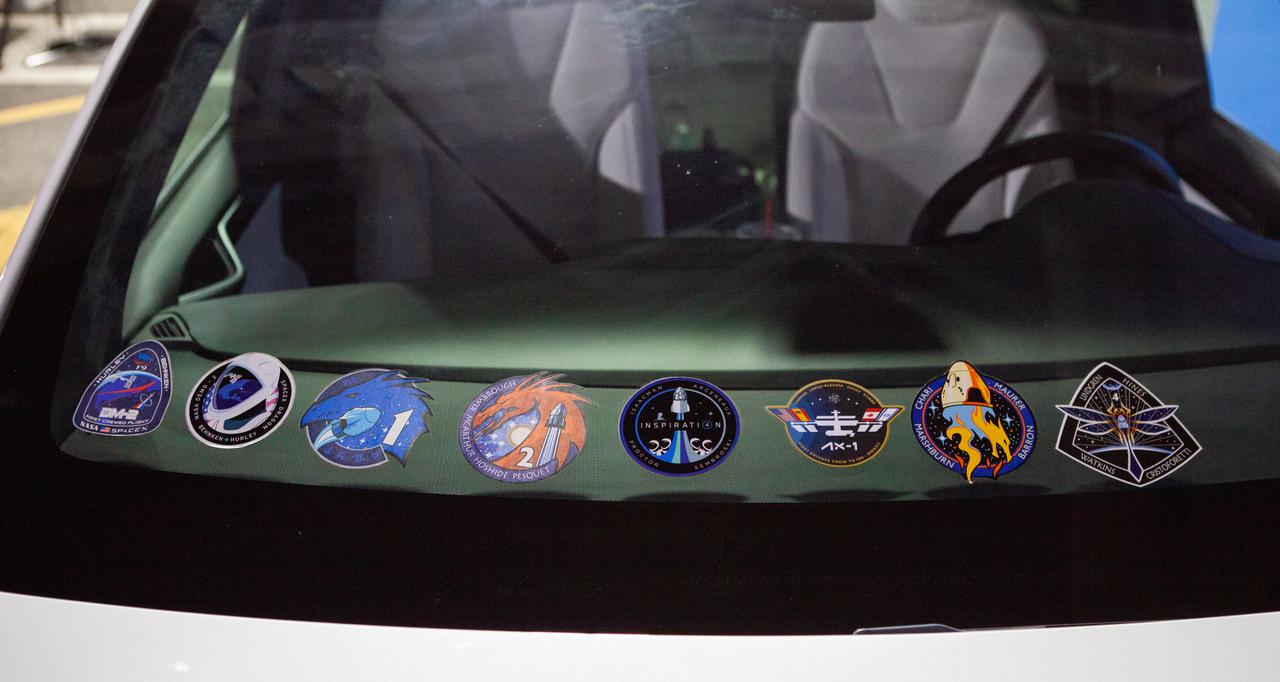
A customized Tesla Model X vehicle is parked outside the Neil A. Armstrong Operations and Checkout Building at NASA’s Kennedy Space Center in Florida on April 27, 2022. Crew-4 astronauts Kjell Lindgren, Bob Hines, Jessica Watkins, and Samantha Cristoforetti will make their way to the vehicles, which will transport them to Launch Complex 39A. Liftoff aboard SpaceX’s Crew Dragon, powered by the company’s Falcon 9 rocket, is scheduled for today at 3:52 a.m. EDT from Pad 39A at Kennedy.
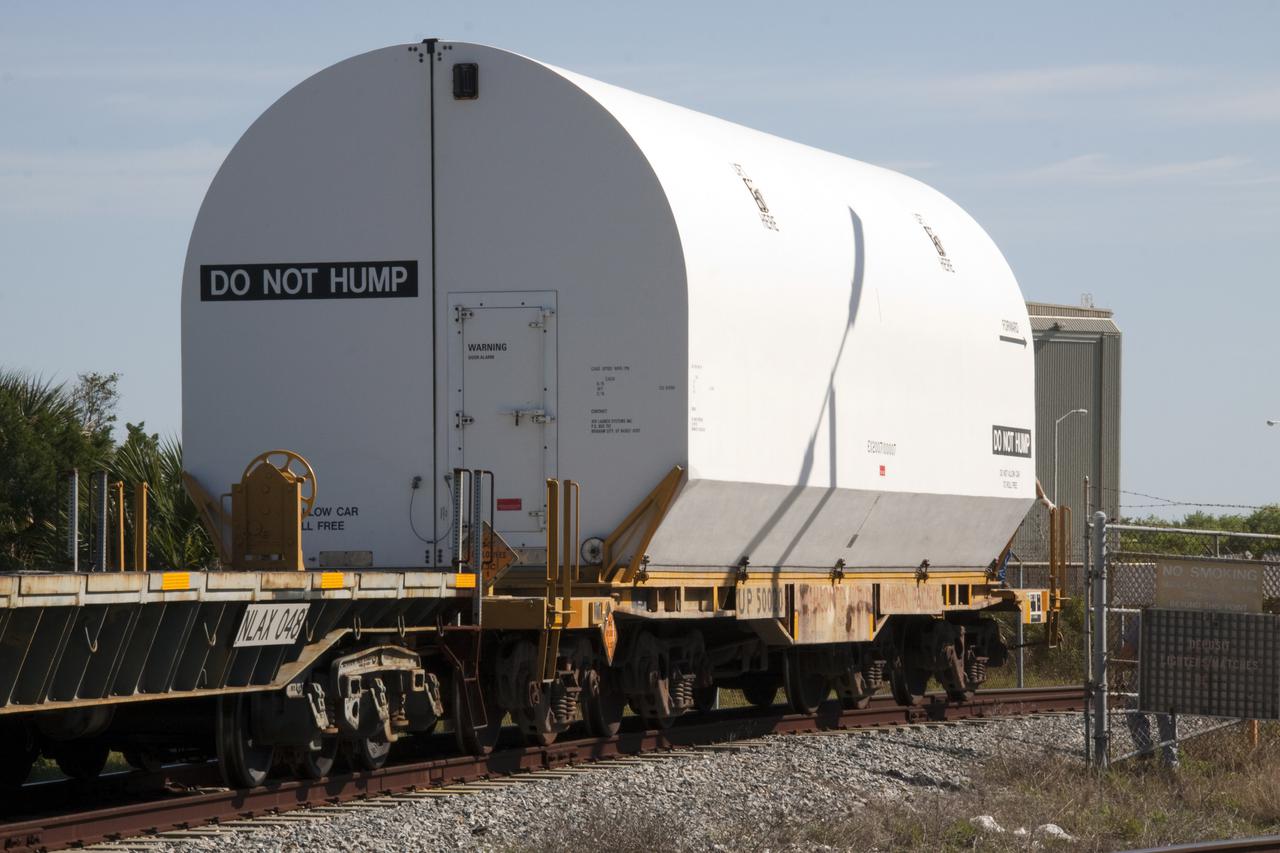
CAPE CANAVERAL, Fla. – Secured inside a railway car, a nozzle exit cone for a solid rocket booster that will be used on space shuttle Discovery's STS-133 mission is moved from Suspect Siding, a parking area, to the Rotation, Processing and Surge Facility at NASA's Kennedy Space Center in Florida. The boosters are manufactured by Alliant Techsystems Inc., or ATK. EGandG_URS runs Kennedy's railway system for NASA. Photo credit: NASA_Troy Cryder
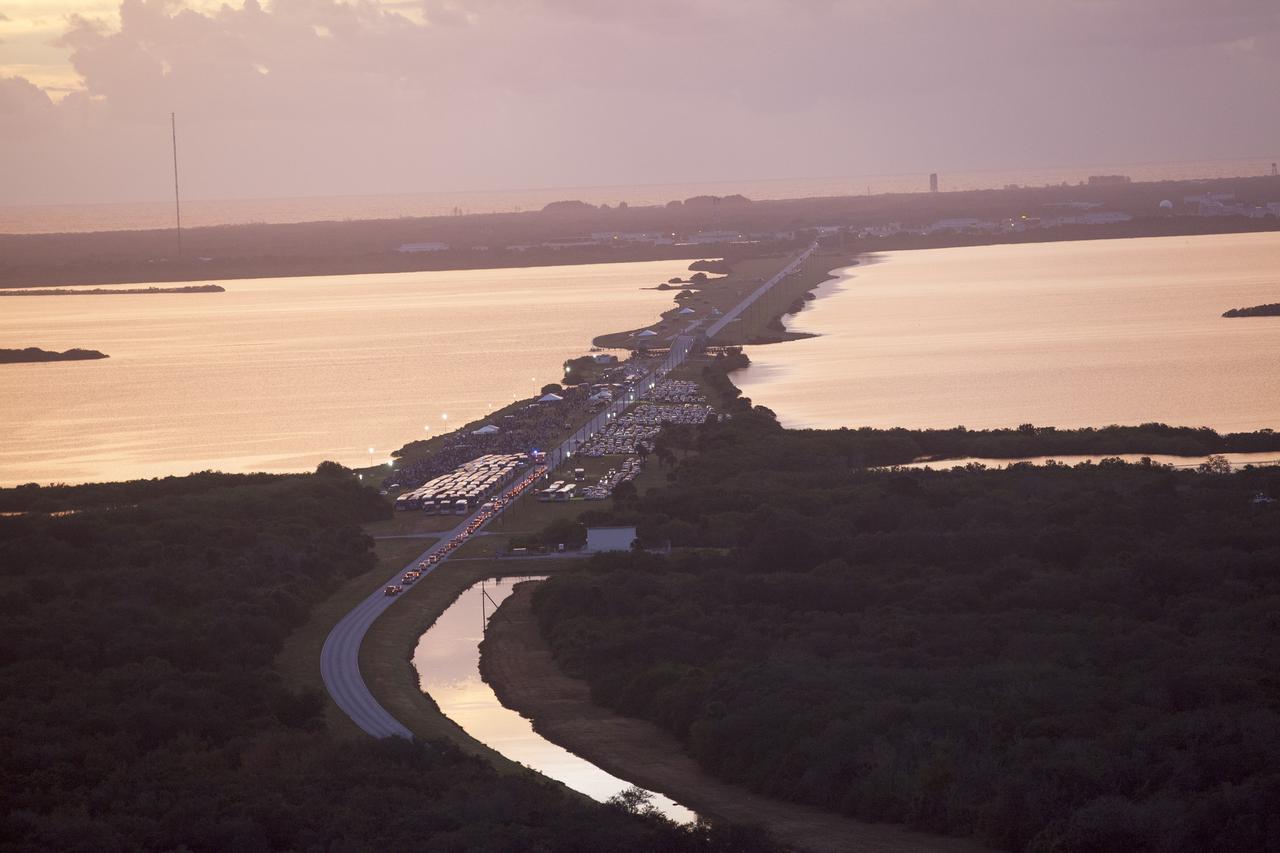
CAPE CANAVERAL, Fla. – This helicopter view of the NASA Causeway connecting NASA's Kennedy Space Center with Cape Canaveral Air Force Staton shows the thousands of vehicles parked where guests gather to see the launch of the Orion Flight Test. The liftoff was postponed because of an issue related to fill and drain valves on the Delta IV Heavy rocket that teams could not troubleshoot by the time the launch window expired. For more information, visit www.nasa.gov/orion Photo credit: NASA/Kim Shiflett
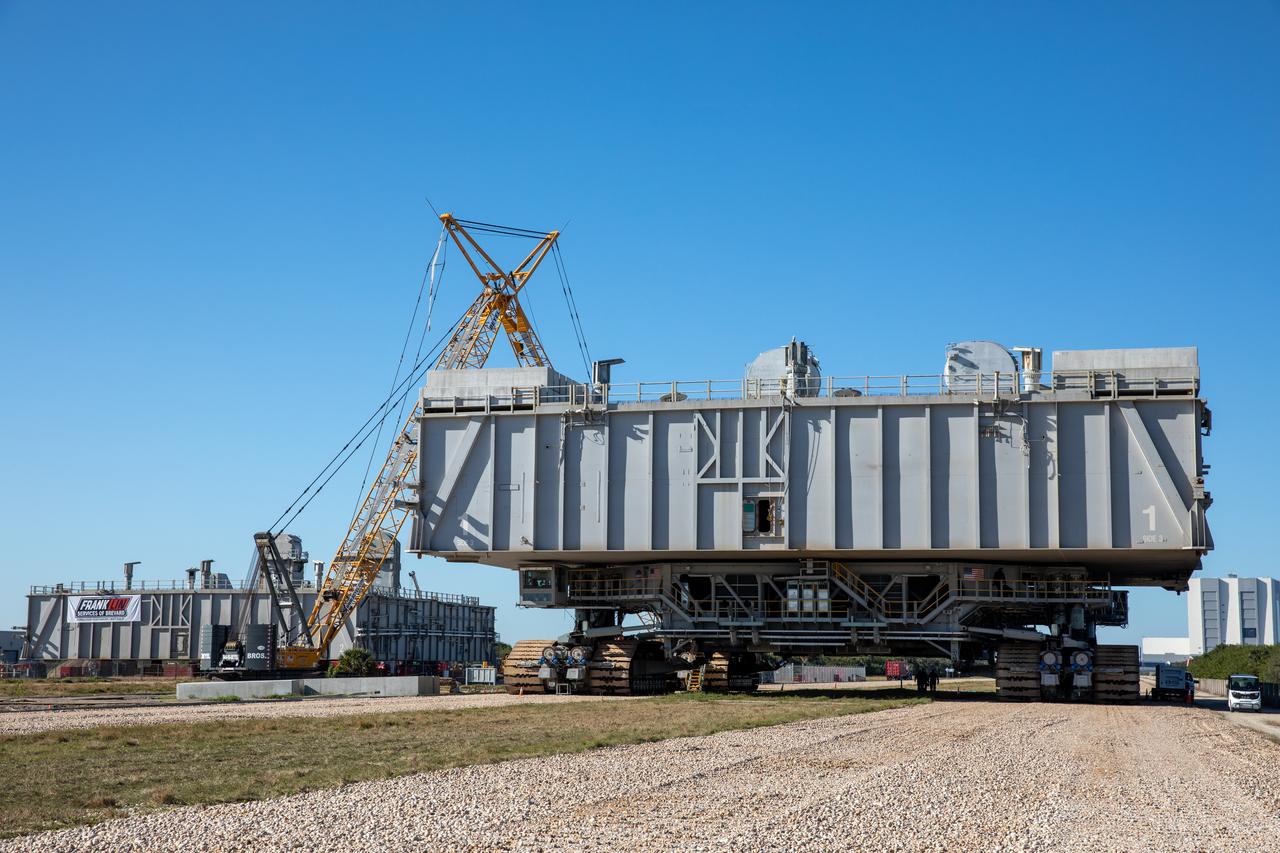
The two mobile launcher platforms (MLPs) are seen at the MSS park site at NASA’s Kennedy Space Center in Florida on Jan. 4, 2021. One MLP is undergoing crawlerway conditioning – a several month-long project to ensure the path the rocket takes from the VAB to the launch pad is strong enough to support the weight for the upcoming Artemis I launch. The other MLP used during the shuttle program is in the process of being demolished.
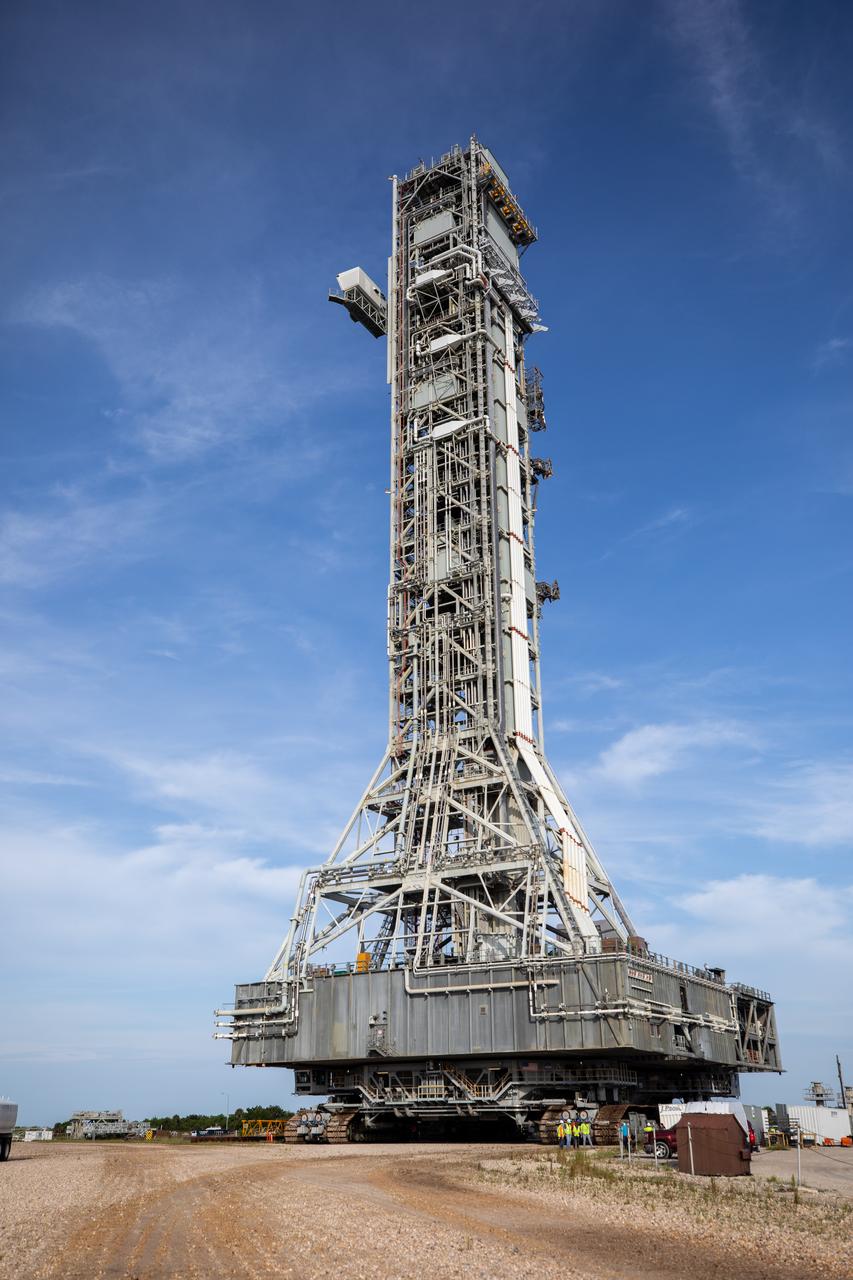
The mobile launcher, carried by the crawler-transporter 2, rolls out from its park site location to Launch Pad 39B at NASA’s Kennedy Space Center in Florida on Aug. 16, 2023. While at the pad, it will undergo testing for the agency’s Artemis II mission. Under Artemis, the mobile launcher will transport NASA’s Space Launch System rocket and Orion spacecraft to pad 39B for liftoff.
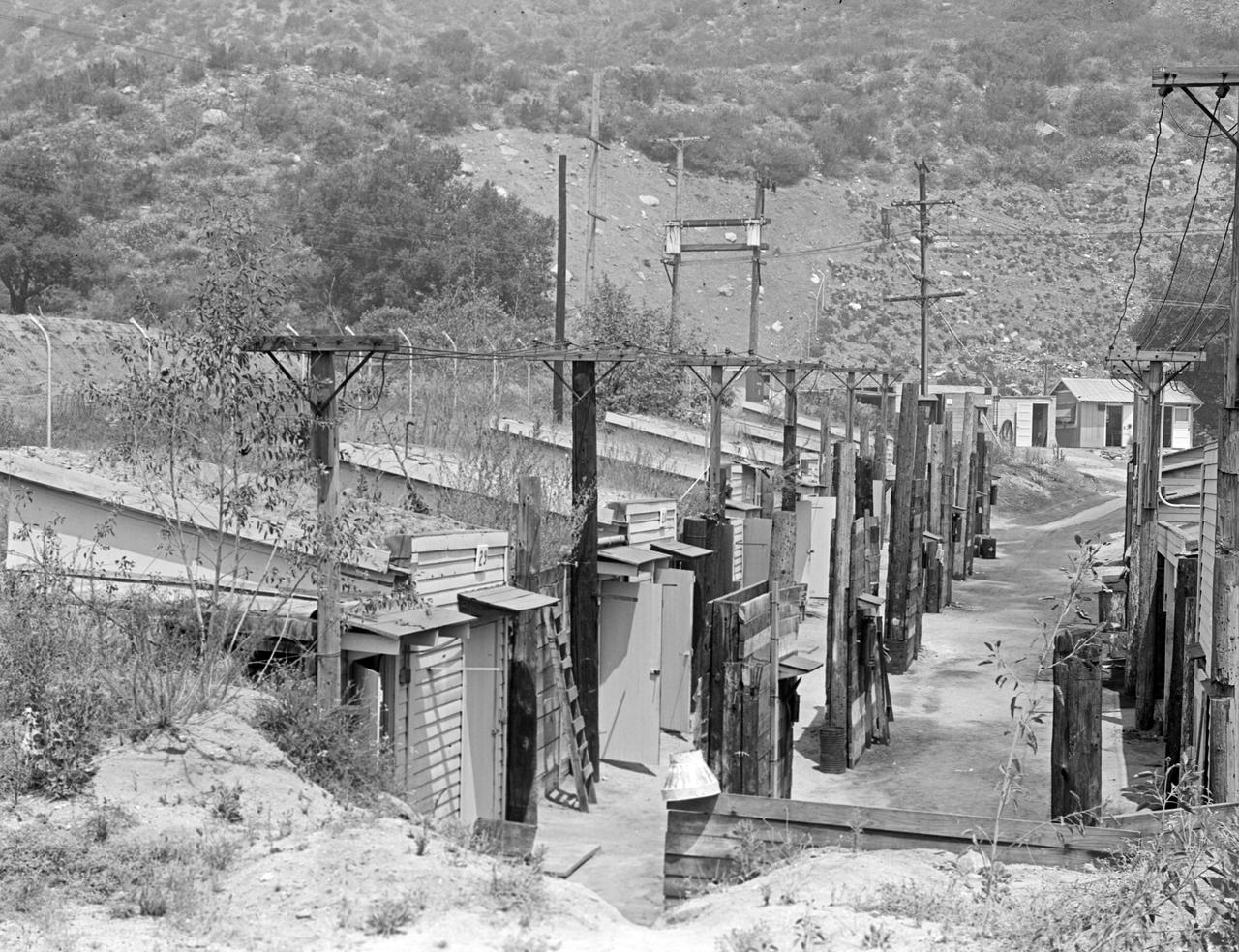
This archival image was released as part of a gallery comparing JPL's past and present, commemorating the 80th anniversary of NASA's Jet Propulsion Laboratory on Oct. 31, 2016. At the northeast end of the Jet Propulsion Laboratory, there was a row of rocket test pits and storage buildings that housed explosives. This was near the Arroyo Seco, a dry canyon wash at the base of the San Gabriel Mountains. The picture was taken in August 1944. Today, this area is a small parking lot behind the Fabrication Shop (Building 103). http://photojournal.jpl.nasa.gov/catalog/PIA21119
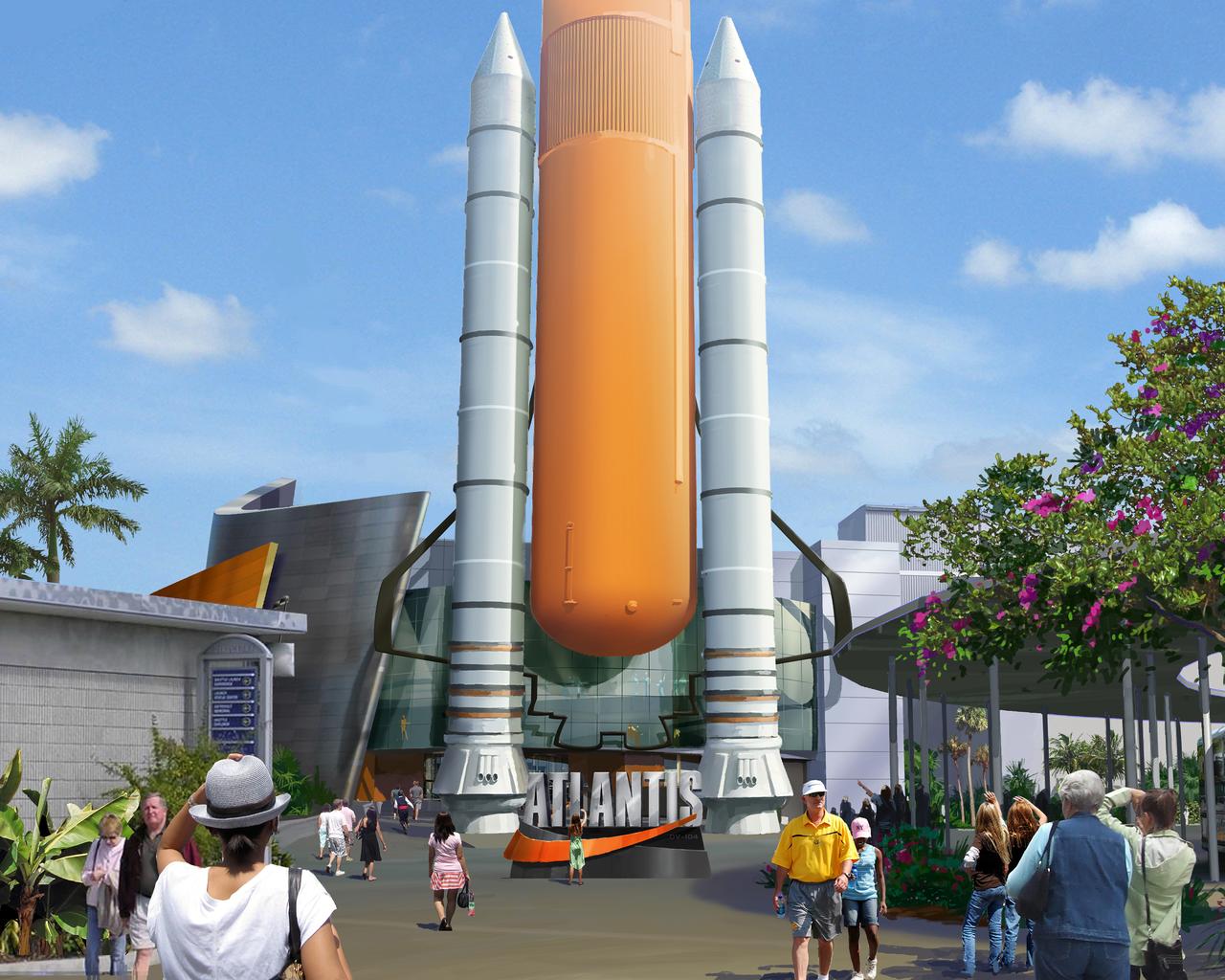
CAPE CANAVERAL, Fla. -- A full scale external tank and twin solid rocket booster replicas will stand at the Atlantis exhibit entrance at the Kennedy Space Center Visitor Complex, preparing to launch guests deep into the 30-year history of the Space Shuttle Program. A groundbreaking ceremony for the future home of Atlantis was held Jan. 18. For more information on this and other exhibits at the visitor complex, go to http://www.kennedyspacecenter.com. Artist rendering courtesy of PGAV Destinations for Delaware North Parks & Resorts
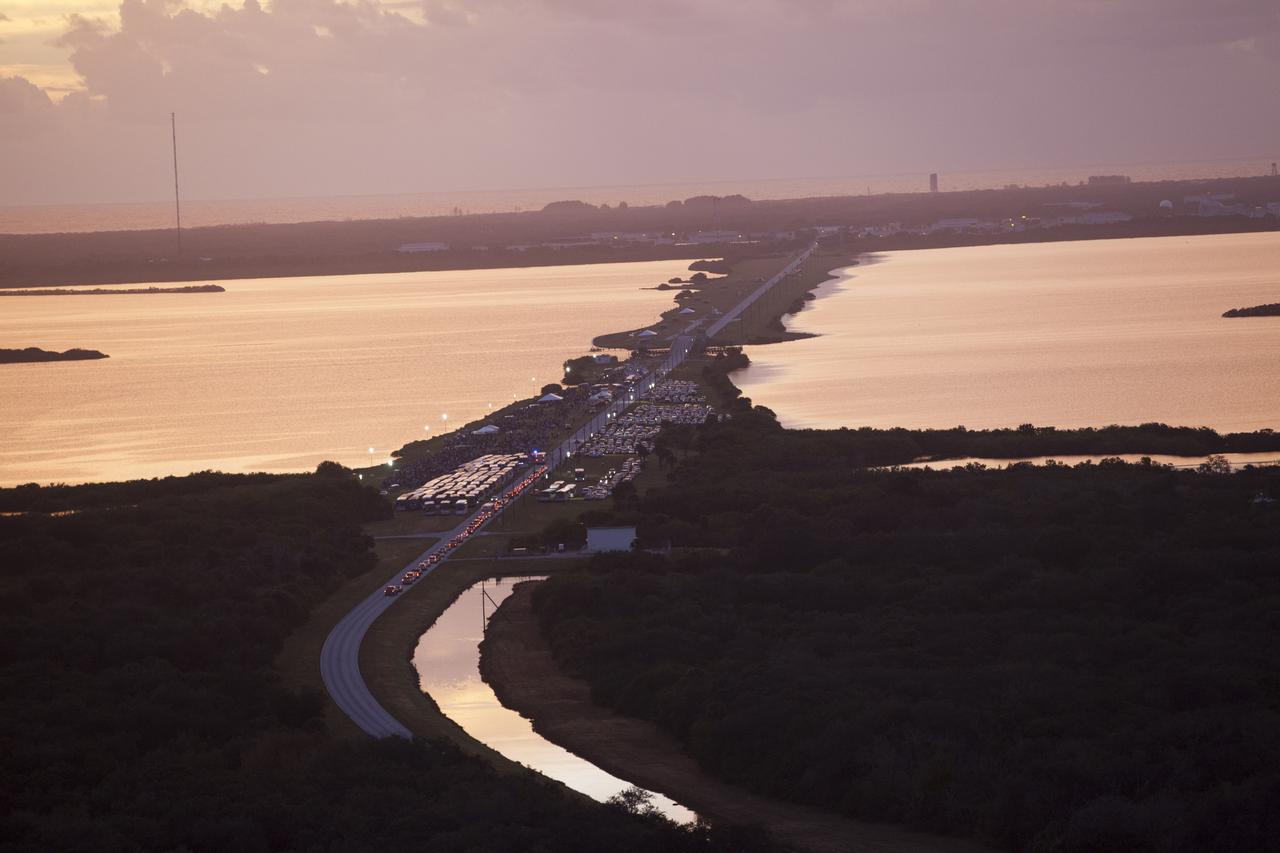
This helicopter view of the NASA Causeway connecting NASA's Kennedy Space Center with Cape Canaveral Air Force Staton shows the thousands of vehicles parked where guests gather to see the launch of the Orion Flight Test. The liftoff was postponed because of an issue related to fill and drain valves on the Delta IV Heavy rocket that teams could not troubleshoot by the time the launch window expired.
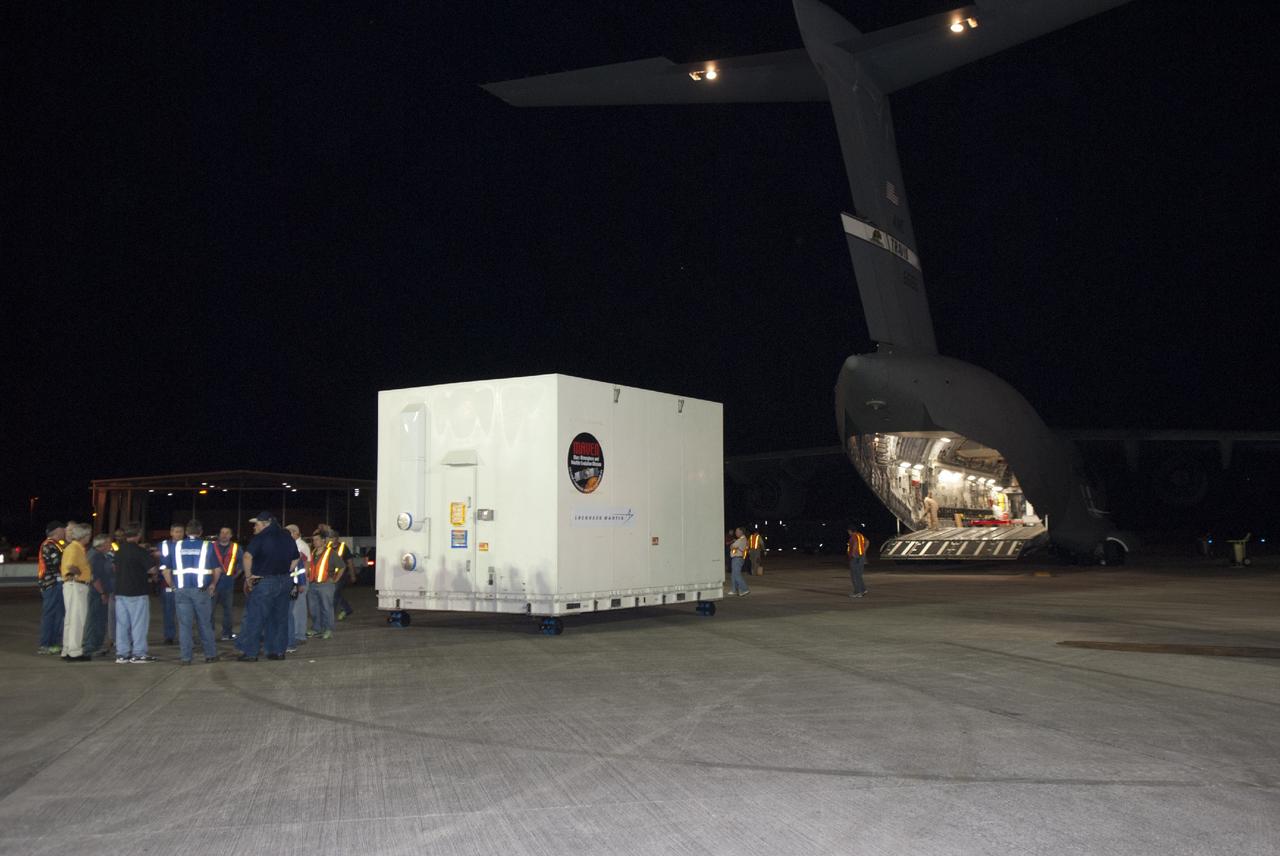
CAPE CANAVERAL, Fla. – At NASA's Kennedy Space Center in Florida, the MAVEN spacecraft, still in its shipping container, rests on the parking apron at the Shuttle Landing Facility following offload from a C-17 aircraft. The aircraft delivered MAVEN for processing ahead of a launch later this year on a United Launch Alliance Atlas V rocket. MAVEN, short for Mars Atmosphere and Volatile Evolution, will orbit Mars to study the Red Planet's upper atmosphere in unprecedented detail. Photo credit: NASA/Tim Jacobs
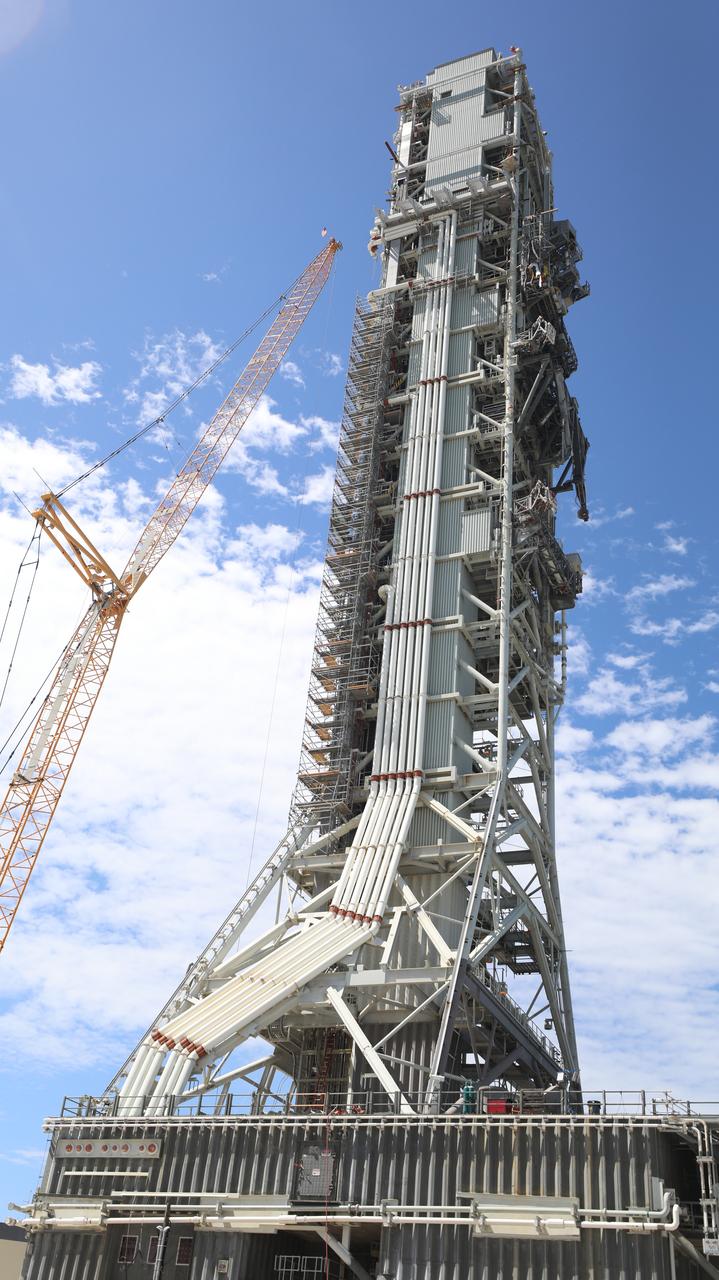
Teams with Exploration Ground Systems at NASA’s Kennedy Space Center in Florida make upgrades and repairs on mobile launcher 1 at its park site location on July 20, 2023, ahead of the first critical ground testing for Artemis II. Under Artemis, the mobile launcher will transport NASA’s Space Launch System rocket and Orion spacecraft to Kennedy’s Launch Complex 39B for liftoff. Artemis II will be the first Artemis mission flying crew aboard Orion.
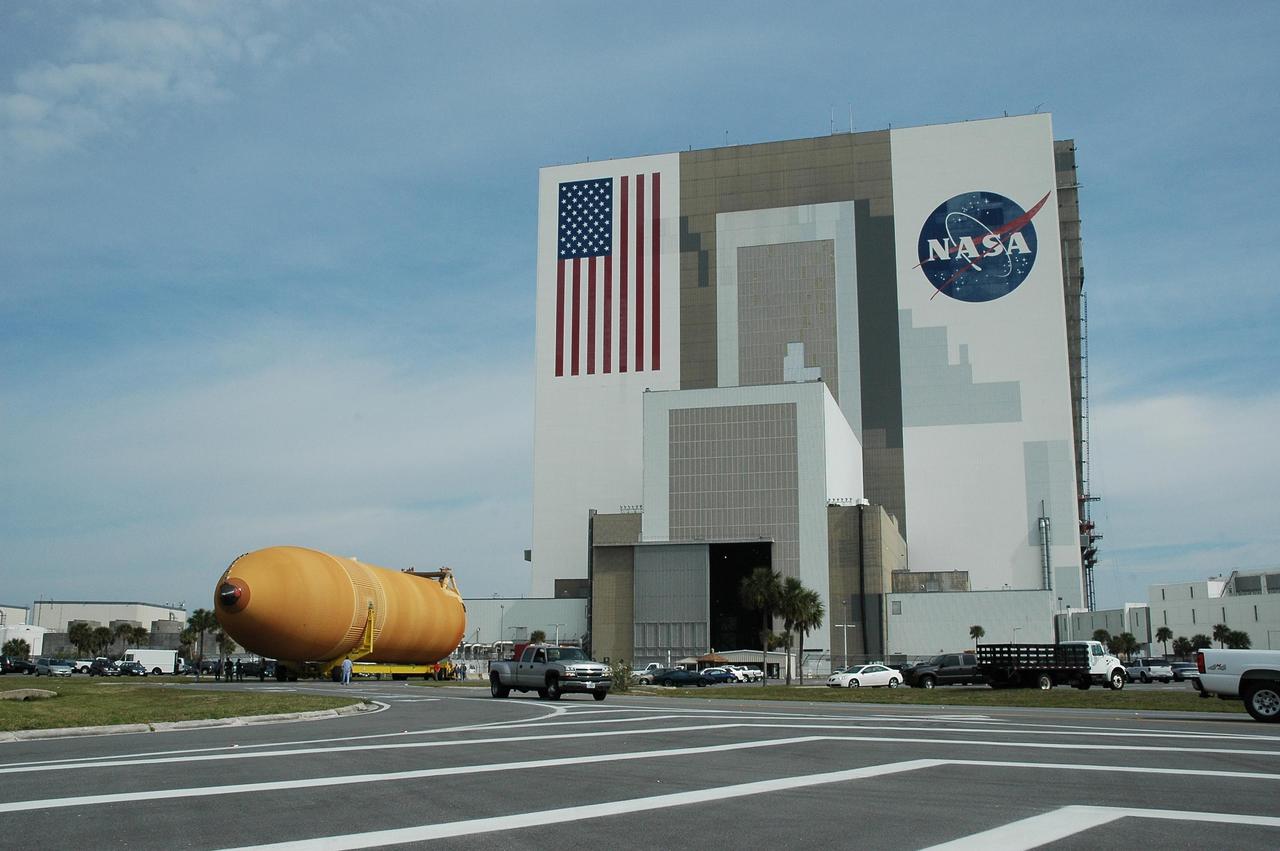
KENNEDY SPACE CENTER, FLA. -- External tank No. 117 leaves the parking area at NASA's Vehicle Assembly Building. It is heading for the barge waiting at the Turn Basin in the Launch Complex 39 Area. The tank is being shipped to NASA’s Michoud Assembly Facility in Louisiana for modifications. The barge will be moved to Port Canaveral where one of NASA’s solid rocket booster retrieval ships will take it and tow it around the Florida peninsula to Michoud. Photo credit: NASA/Jack Pfaller
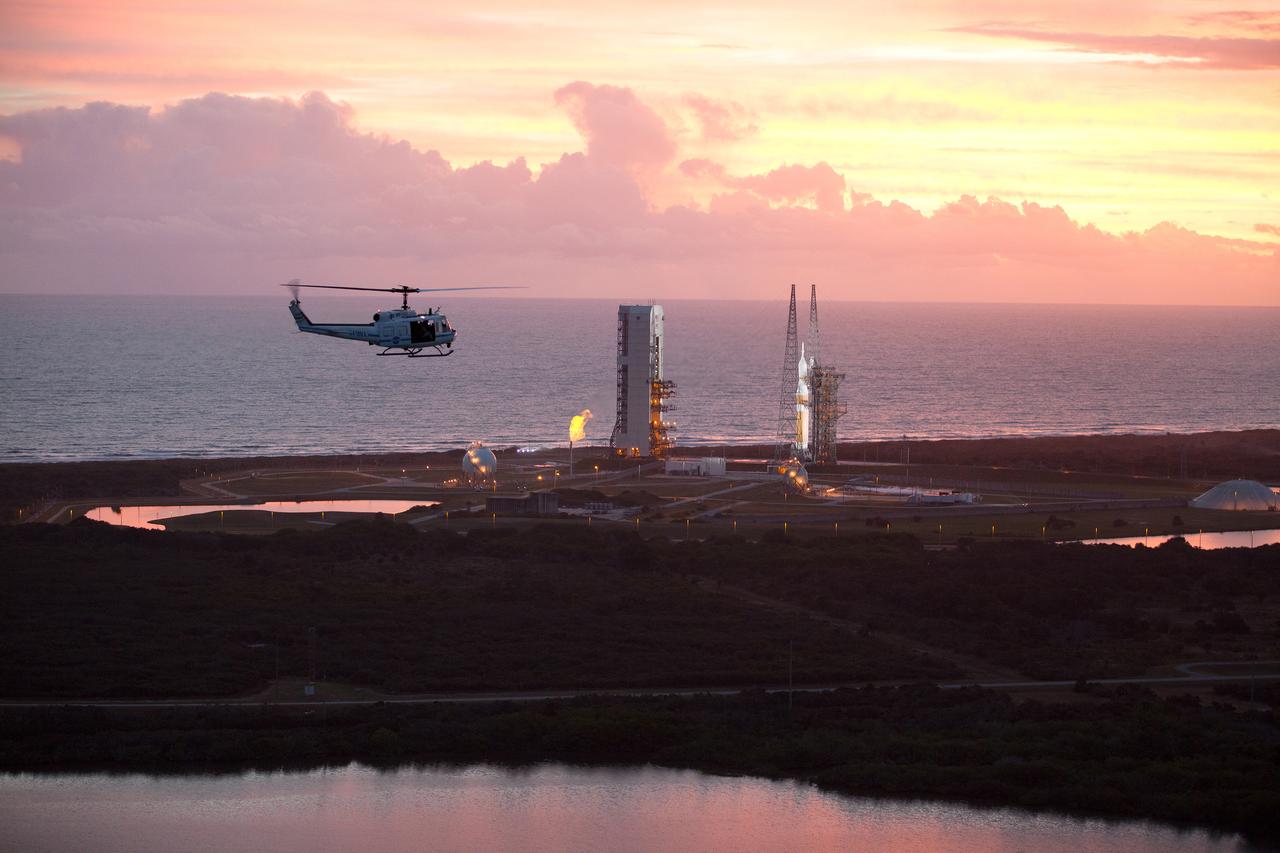
This helicopter view of the NASA Causeway connecting NASA's Kennedy Space Center with Cape Canaveral Air Force Staton shows the thousands of vehicles parked where guests gather to see the launch of the Orion Exploration Flight Test-1 (EFT-1) on Dec. 4, 2014. The liftoff was postponed because of an issue related to fill and drain valves on the Delta IV Heavy rocket that teams could not troubleshoot by the time the launch window expired. Part of Batch image transfer from Flickr.
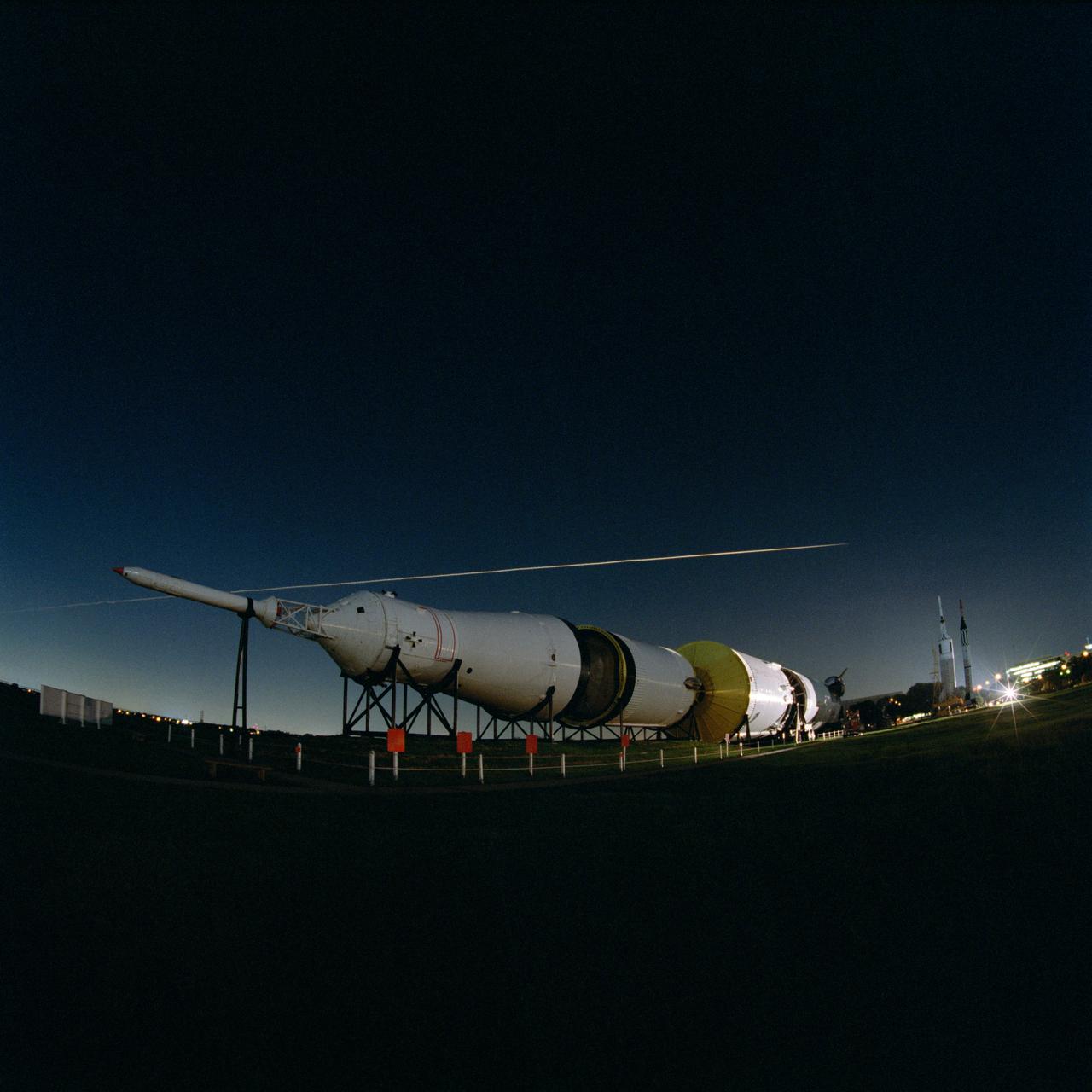
S99-08357 (27 July 1999) --- The fly-over of Space Shuttle Columbia's STS-93 re-entry is seen above the Johnson Space Center's Rocket Park. The Saturn V is below the streak that was left by Columbia re-entering the atmosphere. The image was captured with a Hasselblad 503cx medium format camera with a 30mm Hasselblad lens using an 8-second exposure and an aperture setting of f/8. The film was Kodak PMZ 1000 color negative film. The photographer was Mark Sowa of the NASA Johnson Space Center's photography group.

Teams with Exploration Ground Systems at NASA’s Kennedy Space Center in Florida make upgrades and repairs on mobile launcher 1 at its park site location on July 20, 2023, ahead of the first critical ground testing for Artemis II. Under Artemis, the mobile launcher will transport NASA’s Space Launch System rocket and Orion spacecraft to Kennedy’s Launch Complex 39B for liftoff. Artemis II will be the first Artemis mission flying crew aboard Orion.
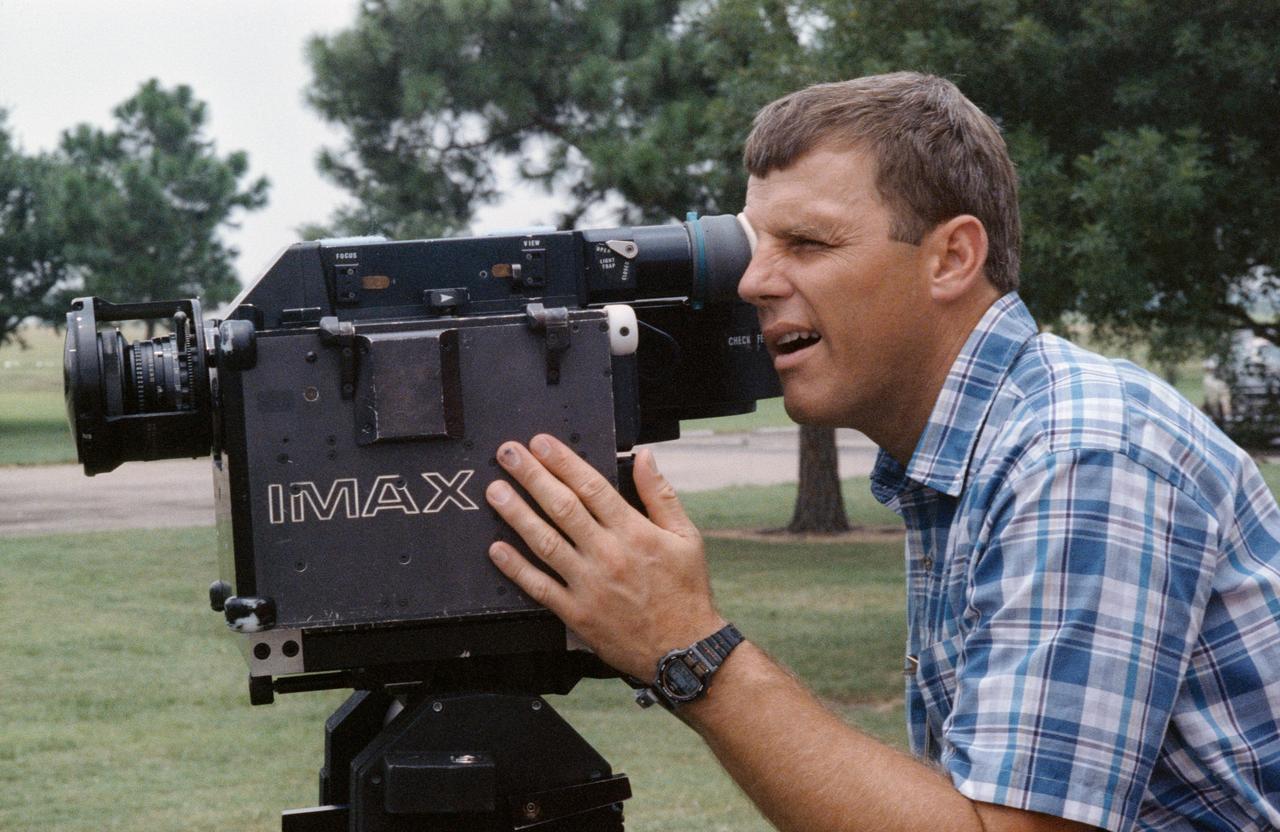
S91-42999 (20 July 1991) --- Astronaut Stephen S. Oswald, STS-42 pilot, uses the IMAX camera system (ICS) during training session held at Johnson Space Center?s (JSC) Manned Space Flight Exhibit Complex Bldg 90 (Rocket Park). Oswald squints as he looks through the ICS eyepiece.
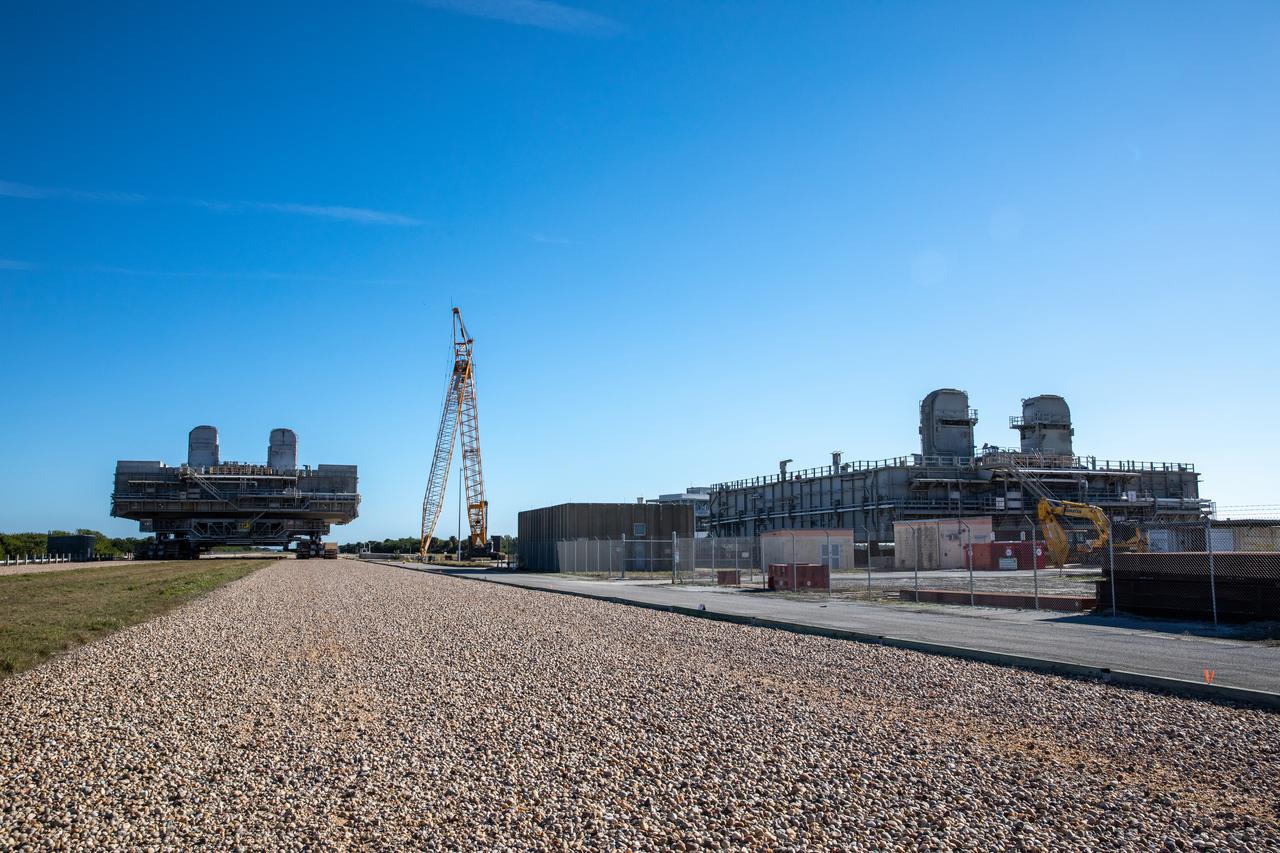
The two mobile launcher platforms (MLPs) are seen at the MSS park site at NASA’s Kennedy Space Center in Florida on Jan. 4, 2021. One MLP is undergoing crawlerway conditioning – a several month-long project to ensure the path the rocket takes from the VAB to the launch pad is strong enough to support the weight for the upcoming Artemis I launch. The other MLP used during the shuttle program is in the process of being demolished.
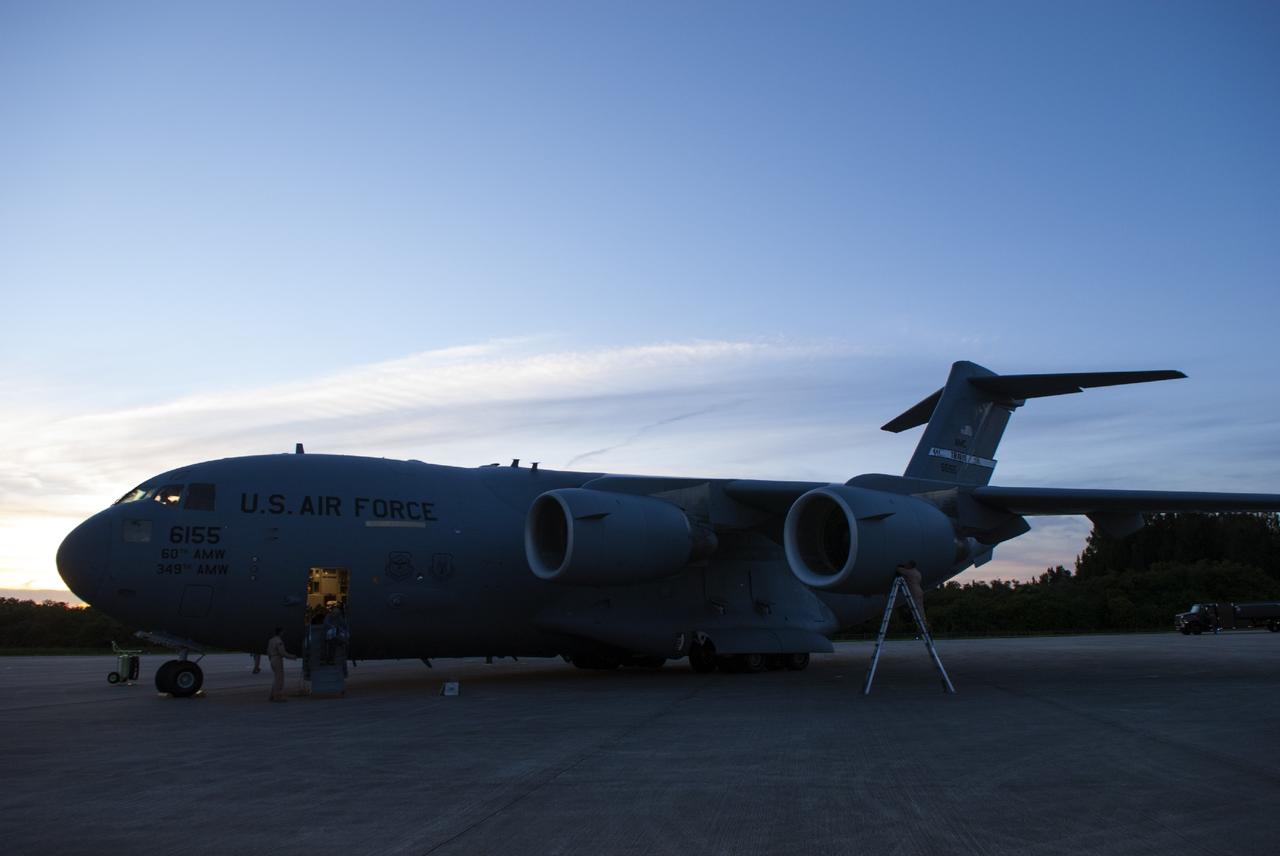
CAPE CANAVERAL, Fla. – A C-17 aircraft arrives on the Shuttle Landing Facility parking apron at NASA's Kennedy Space Center in Florida. The aircraft is delivering the MAVEN spacecraft for processing ahead of a launch later this year on a United Launch Alliance Atlas V rocket. MAVEN, short for Mars Atmosphere and Volatile Evolution, will orbit Mars to study the Red Planet's upper atmosphere in unprecedented detail. Photo credit: NASA/Tim Jacobs
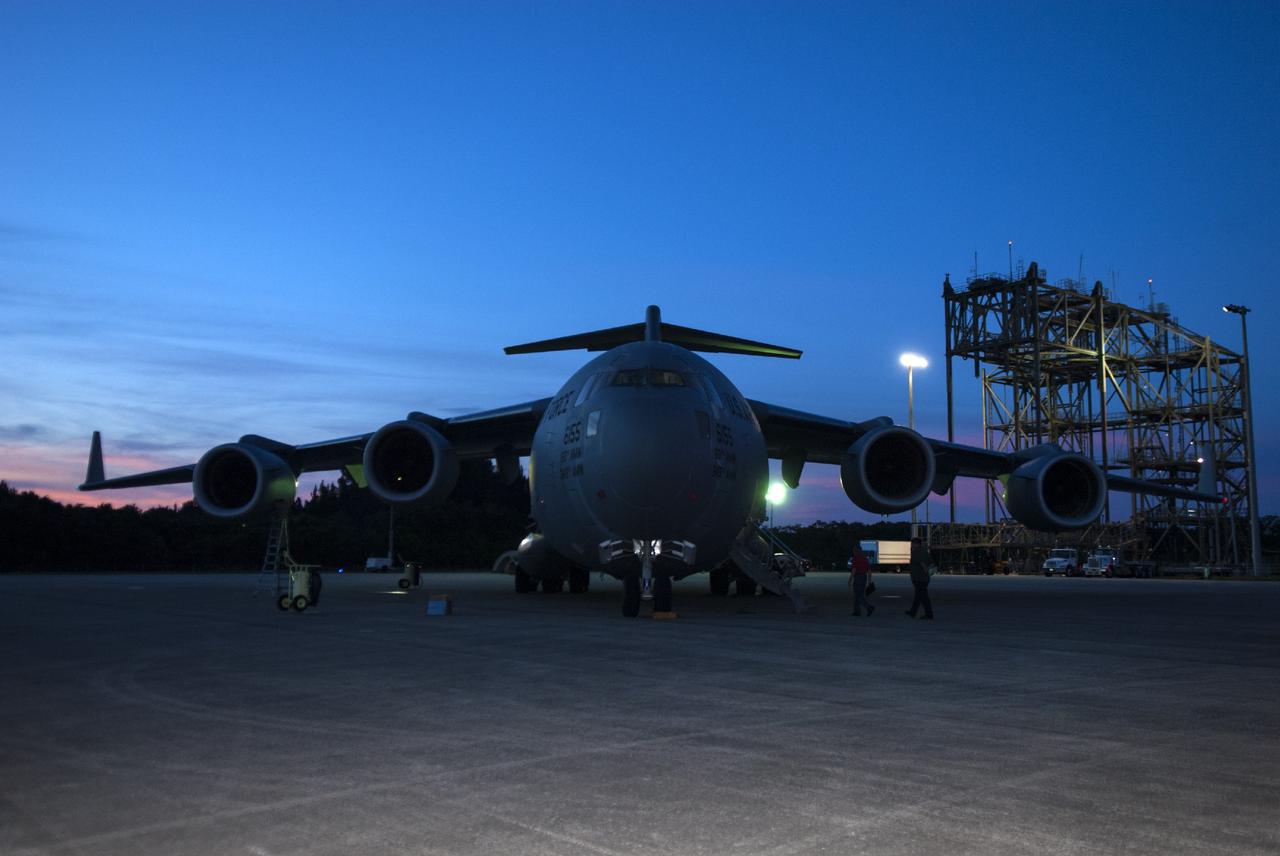
CAPE CANAVERAL, Fla. – A C-17 aircraft carrying the MAVEN spacecraft stops on the Shuttle Landing Facility parking apron at NASA's Kennedy Space Center in Florida. The aircraft is delivering MAVEN for processing ahead of a launch later this year on a United Launch Alliance Atlas V rocket. MAVEN, short for Mars Atmosphere and Volatile Evolution, will orbit Mars to study the Red Planet's upper atmosphere in unprecedented detail. Photo credit: NASA/Tim Jacobs
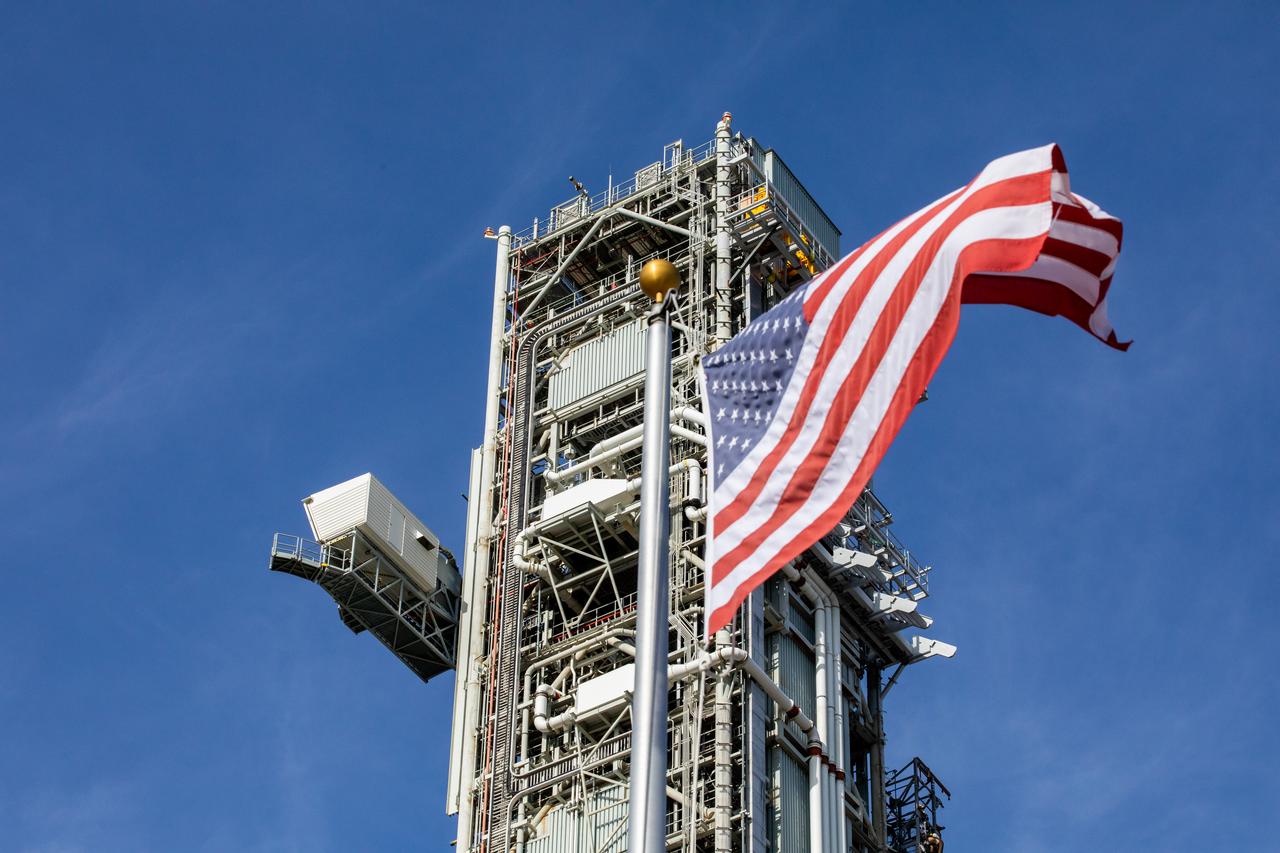
The mobile launcher, carried by the crawler-transporter 2, rolls out from its park site location to Launch Pad 39B at NASA’s Kennedy Space Center in Florida on Aug. 16, 2023. While at the pad, it will undergo testing for the agency’s Artemis II mission. Under Artemis, the mobile launcher will transport NASA’s Space Launch System rocket and Orion spacecraft to pad 39B for liftoff.
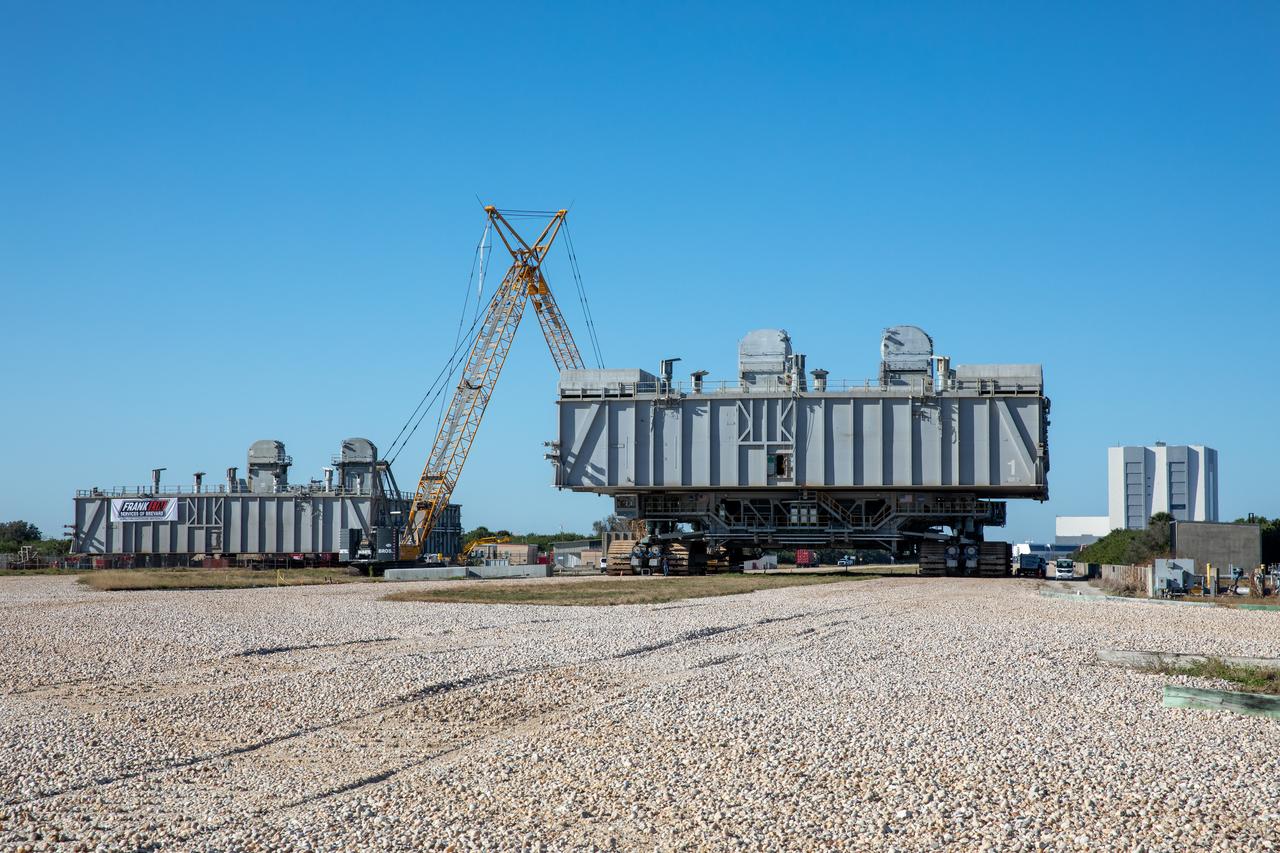
The two mobile launcher platforms (MLPs) are seen at the MSS park site at NASA’s Kennedy Space Center in Florida on Jan. 4, 2021. One MLP is undergoing crawlerway conditioning – a several month-long project to ensure the path the rocket takes from the VAB to the launch pad is strong enough to support the weight for the upcoming Artemis I launch. The other MLP used during the shuttle program is in the process of being demolished.
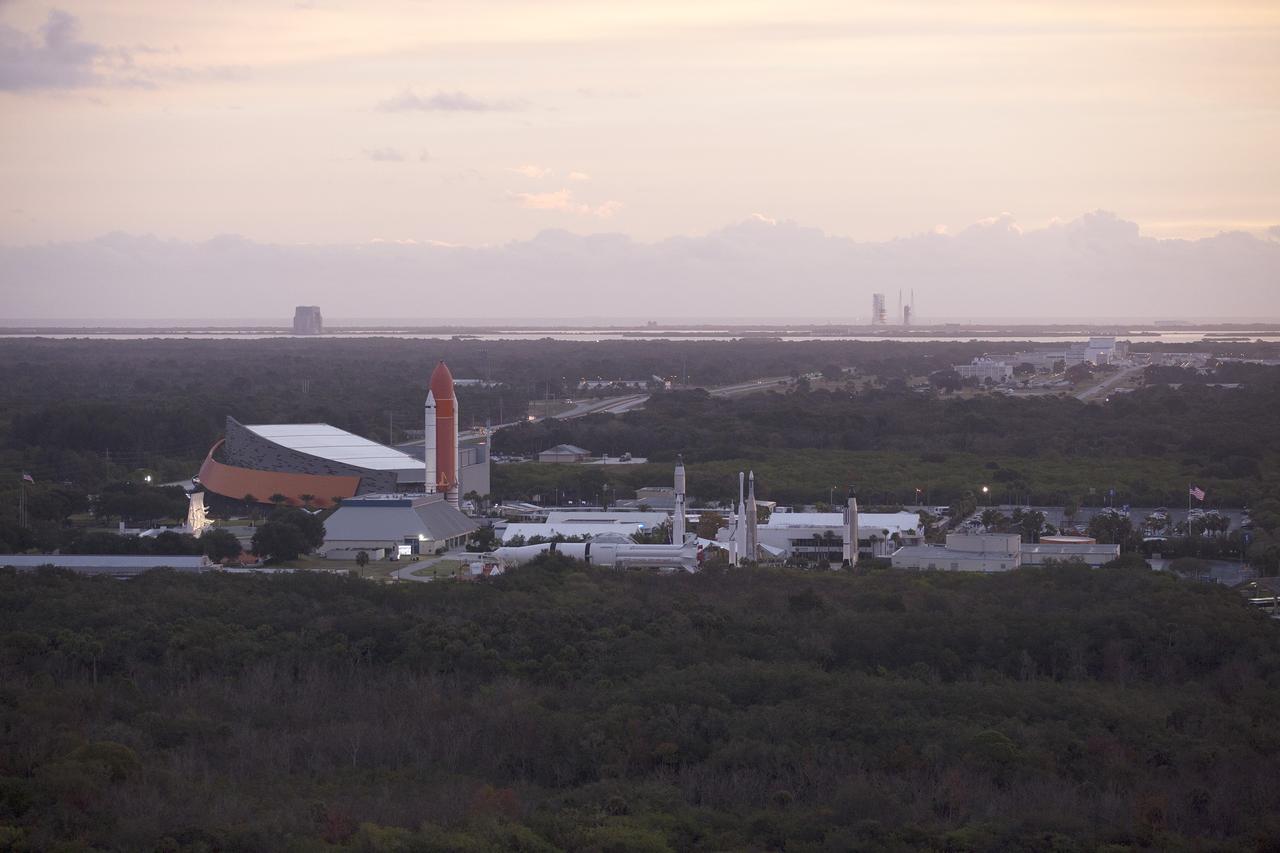
CAPE CANAVERAL, Fla. – This helicopter view of the Kennedy Space Center Visitor Complex shows the thousands of vehicles parked where guests gather to see the launch of the Orion Flight Test. The liftoff was postponed because of an issue related to fill and drain valves on the Delta IV Heavy rocket that teams could not troubleshoot by the time the launch window expired. For more information, visit www.nasa.gov/orion Photo credit: NASA/Kim Shiflett
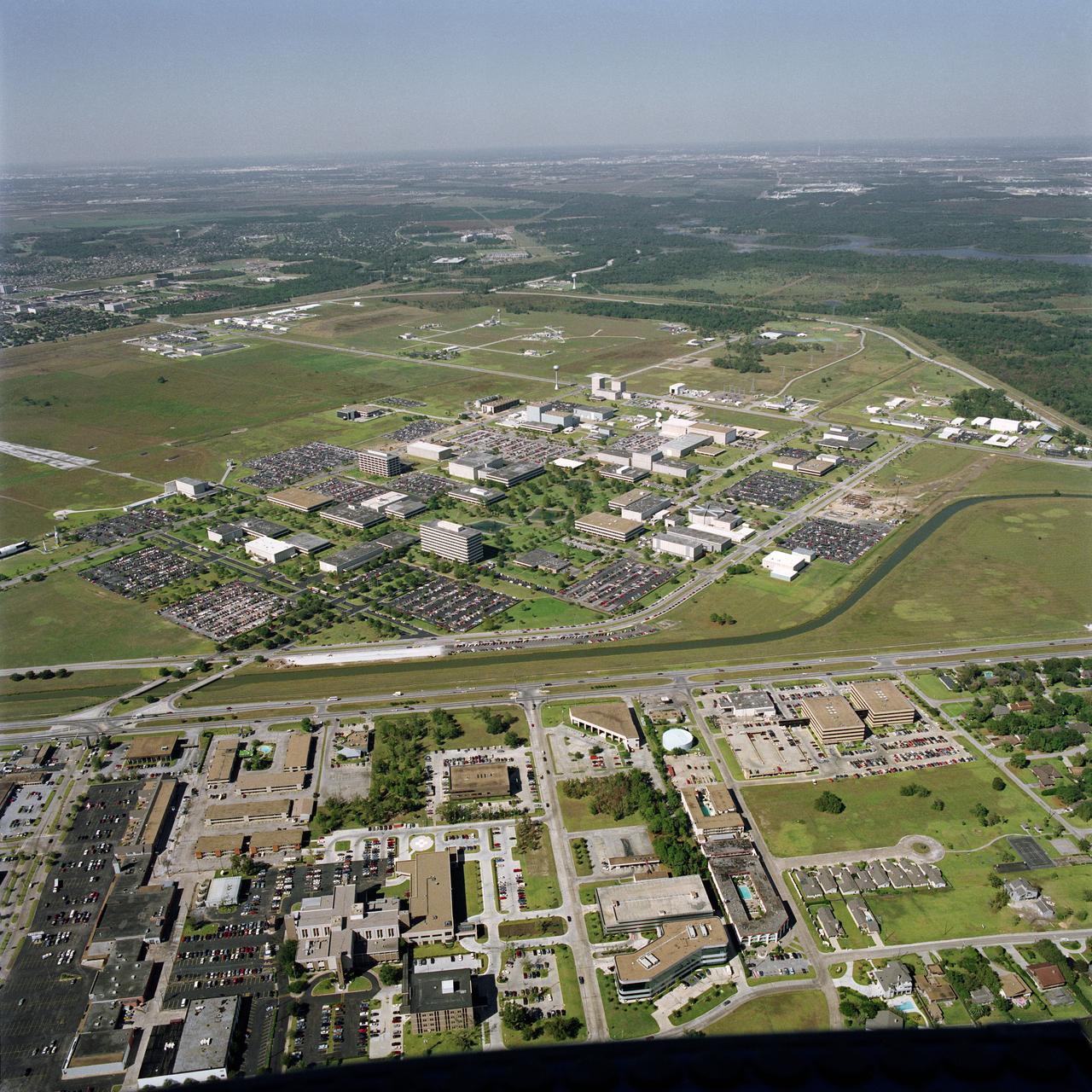
S90-47653 (7 Sept. 1990) --- This aerial photograph of NASA's Johnson Space Center includes the entire 1625-acre site with the exception of a few security-associated facilities and part of the Manned Space Flight Exhibit Complex (AKA "Rocket Park"). The bottom half of the image includes many business and residential edifices as well as a hospital and other medical facilities in the Nassau Bay community. Photo credit: NASA
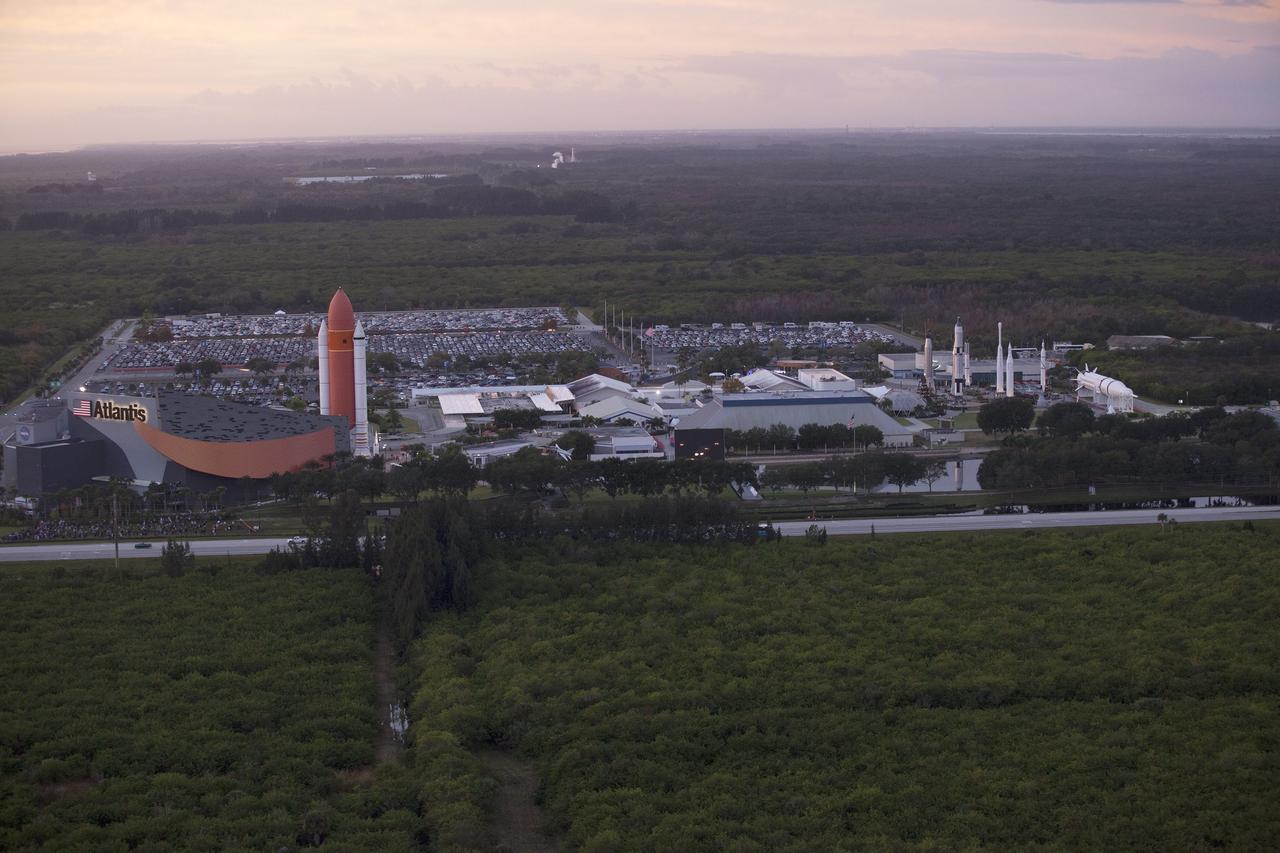
CAPE CANAVERAL, Fla. – This helicopter view of the Kennedy Space Center Visitor Complex shows the thousands of vehicles parked where guests gather to see the launch of the Orion Flight Test. The liftoff was postponed because of an issue related to fill and drain valves on the Delta IV Heavy rocket that teams could not troubleshoot by the time the launch window expired. For more information, visit www.nasa.gov/orion Photo credit: NASA/Kim Shiflett
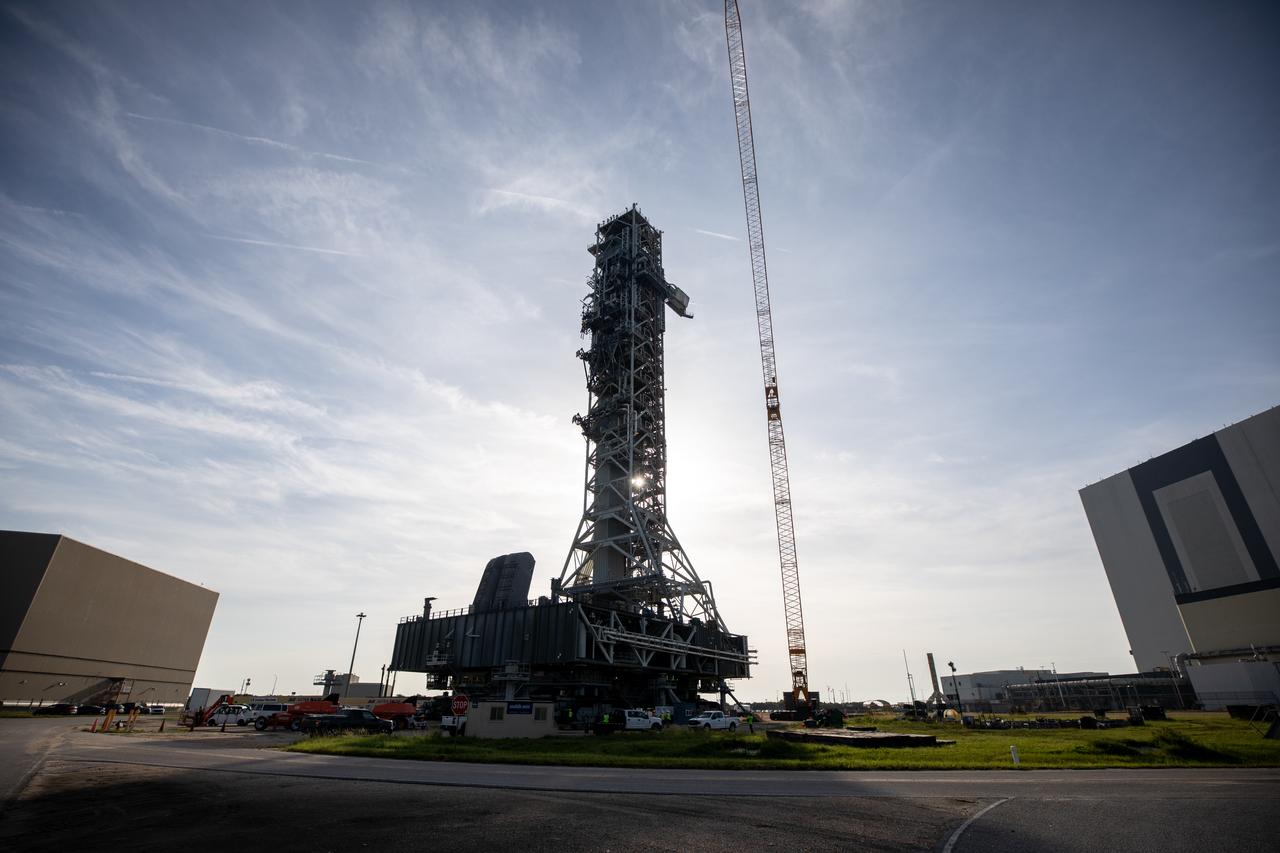
The mobile launcher, carried by the crawler-transporter 2, rolls out from its park site location to Launch Pad 39B at NASA’s Kennedy Space Center in Florida on Aug. 16, 2023. While at the pad, it will undergo testing for the agency’s Artemis II mission. Under Artemis, the mobile launcher will transport NASA’s Space Launch System rocket and Orion spacecraft to pad 39B for liftoff.
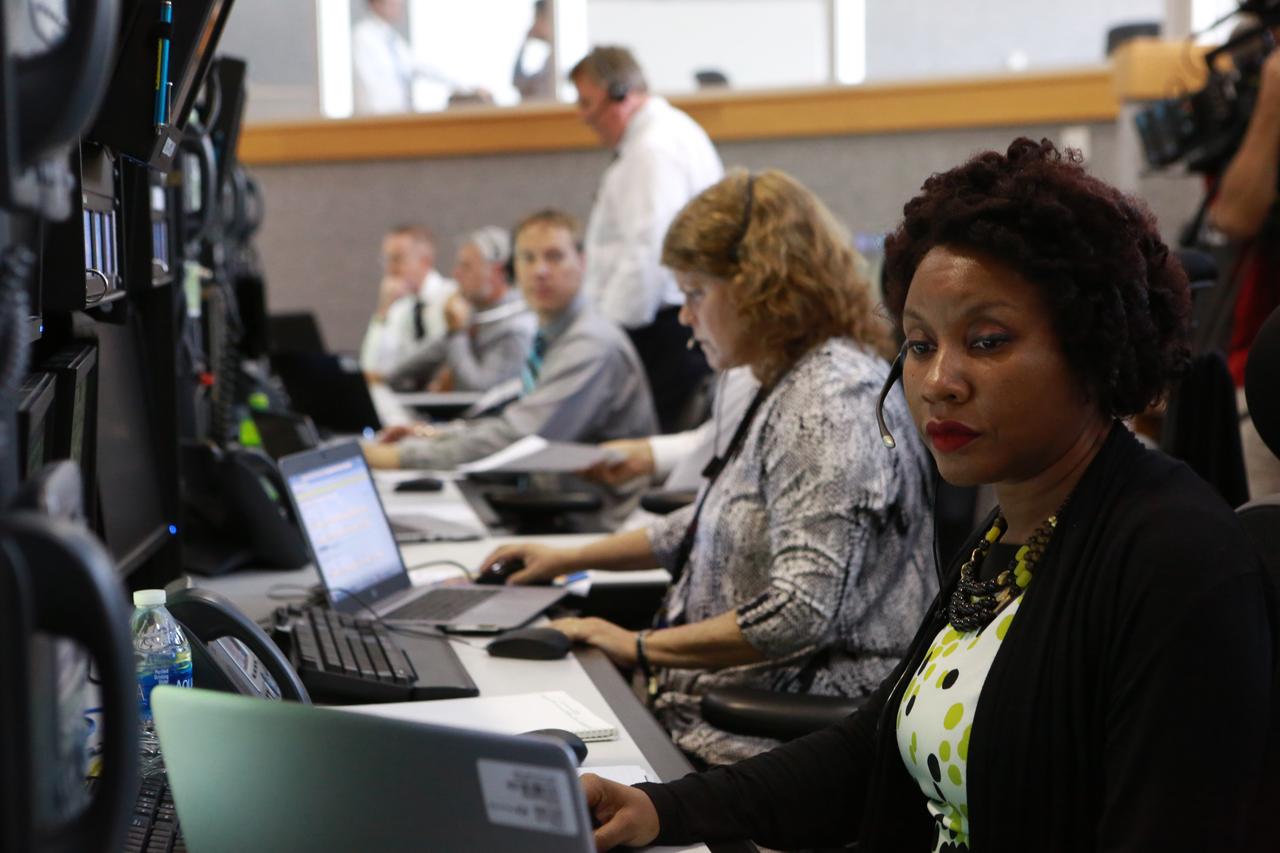
Space Launch System Test Conductors Roberta Wyrick, left, and Tracy Parks, both with Jacobs, NASA's Test and Operations Support Contractor, monitor operations from their consoles in Firing Room 1 at the Kennedy Space Center's Launch Control Center during a countdown simulation for Exploration Mission 1. It was the agency's first simulation of a portion of the countdown for the first launch of a Space Launch System rocket and Orion spacecraft that will eventually take astronauts beyond low-Earth orbit to destinations such as the Moon and Mars.
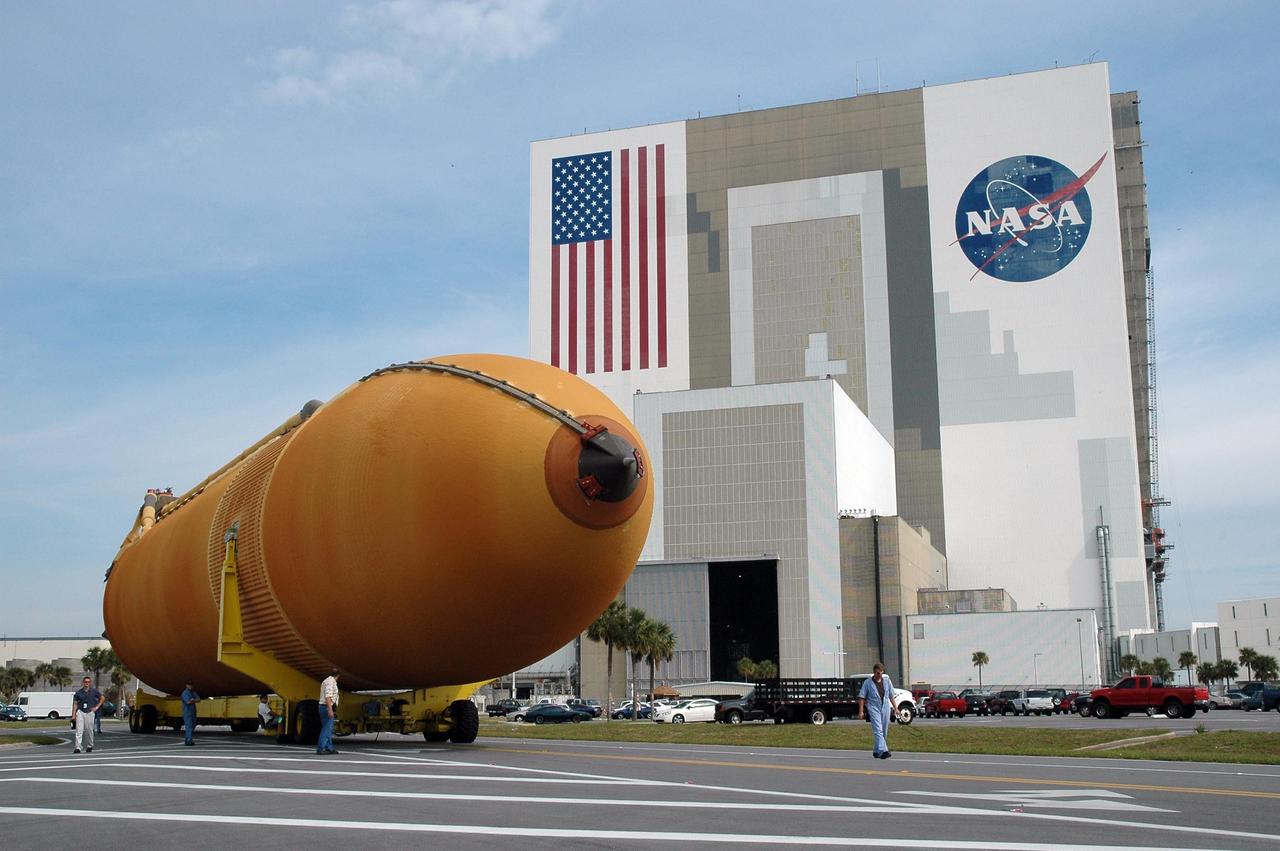
KENNEDY SPACE CENTER, FLA. -- External tank No. 117 makes the turn from the parking area at NASA's Vehicle Assembly Building. It is heading for the barge waiting at the Turn Basin in the Launch Complex 39 Area. The tank is being shipped to NASA’s Michoud Assembly Facility in Louisiana for modifications. The barge will be moved to Port Canaveral where one of NASA’s solid rocket booster retrieval ships will take it and tow it around the Florida peninsula to Michoud. Photo credit: NASA/Jack Pfaller
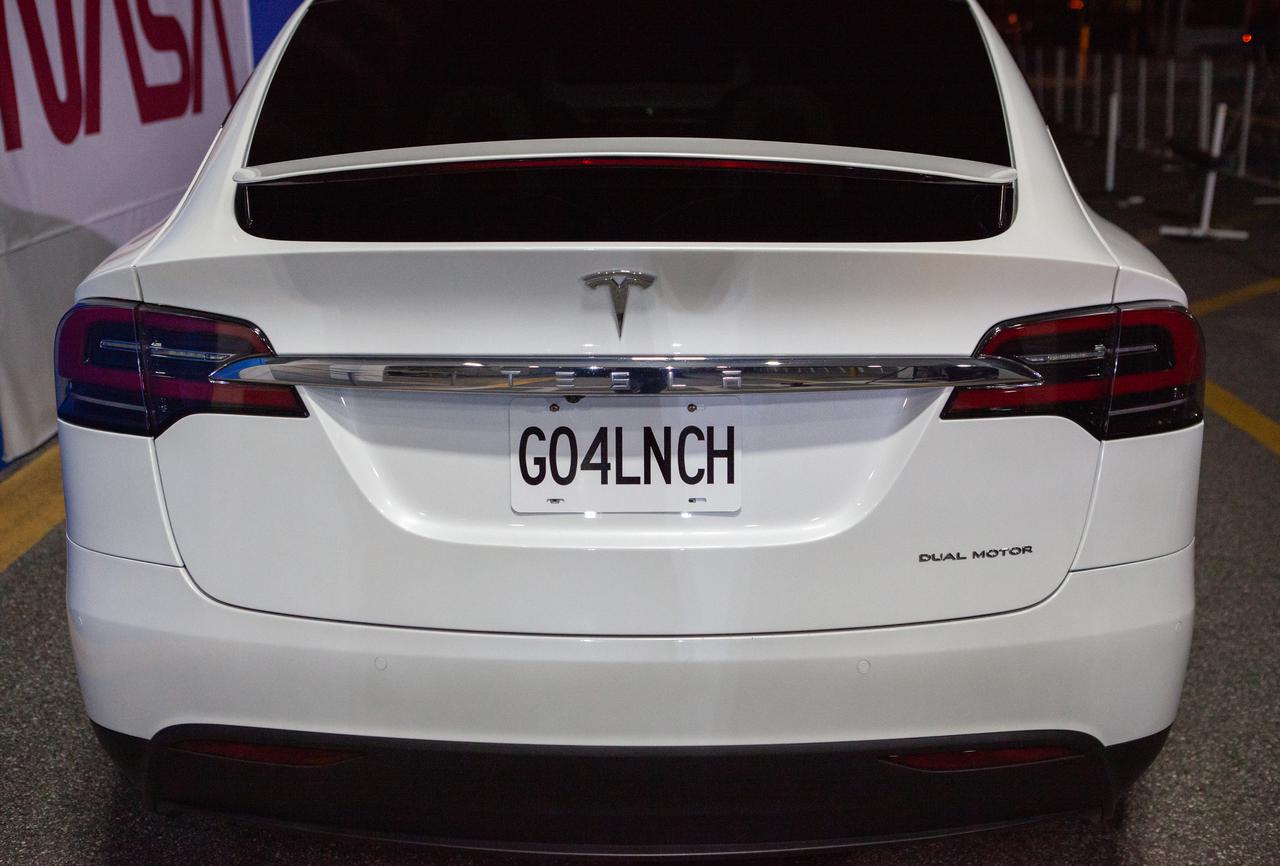
A customized Tesla Model X vehicle is parked outside the Neil A. Armstrong Operations and Checkout Building at NASA’s Kennedy Space Center in Florida on April 27, 2022. Crew-4 astronauts Kjell Lindgren, Bob Hines, Jessica Watkins, and Samantha Cristoforetti will make their way to the vehicles, which will transport them to Launch Complex 39A. Liftoff aboard SpaceX’s Crew Dragon, powered by the company’s Falcon 9 rocket, is scheduled for today at 3:52 a.m. EDT from Pad 39A at Kennedy.
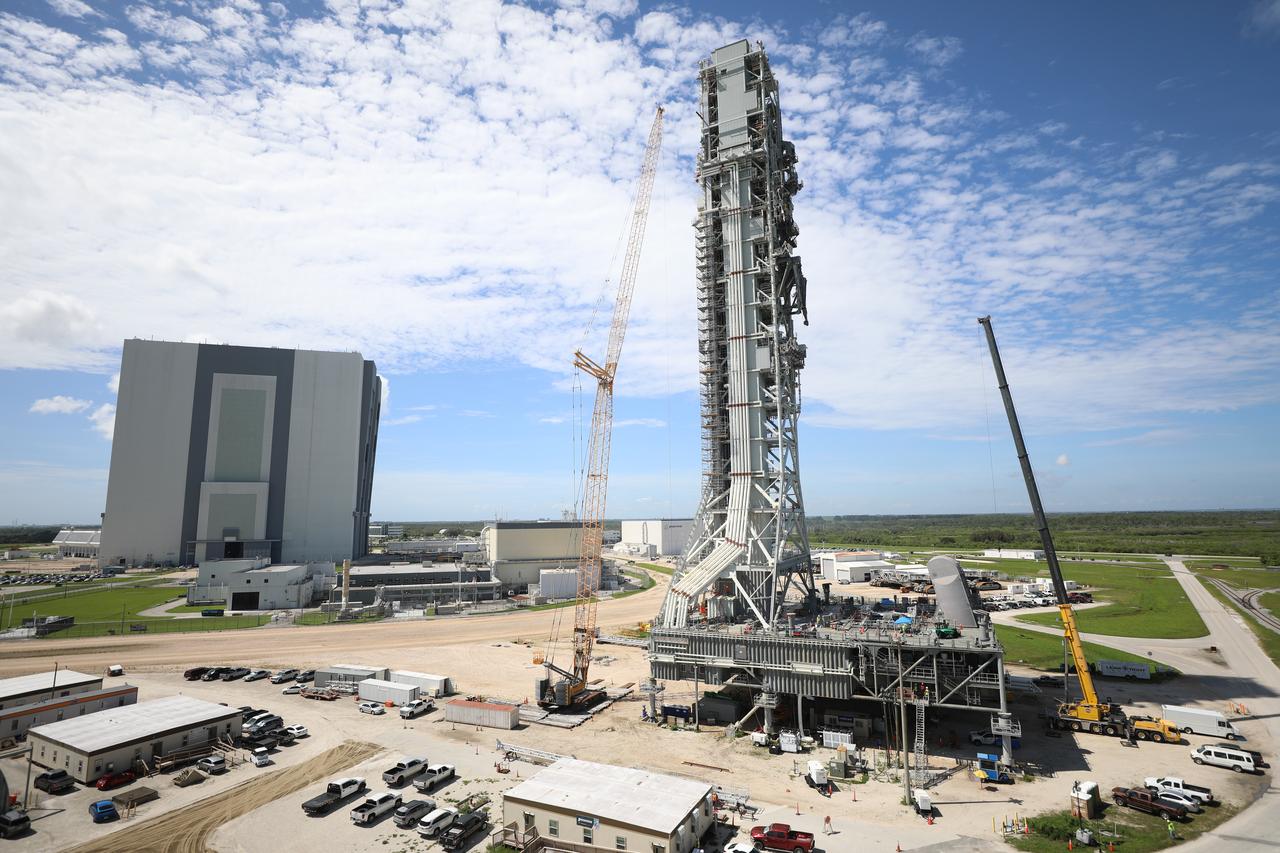
With the iconic Vehicle Assembly Building at NASA’s Kennedy Space Center in Florida nearby, teams with Exploration Ground Systems make upgrades and repairs on mobile launcher 1 at its park site location on July 20, 2023, ahead of the first critical ground testing for Artemis II. Under Artemis, the mobile launcher will transport NASA’s Space Launch System rocket and Orion spacecraft to Kennedy’s Launch Complex 39B for liftoff. Artemis II will be the first Artemis mission flying crew aboard Orion.
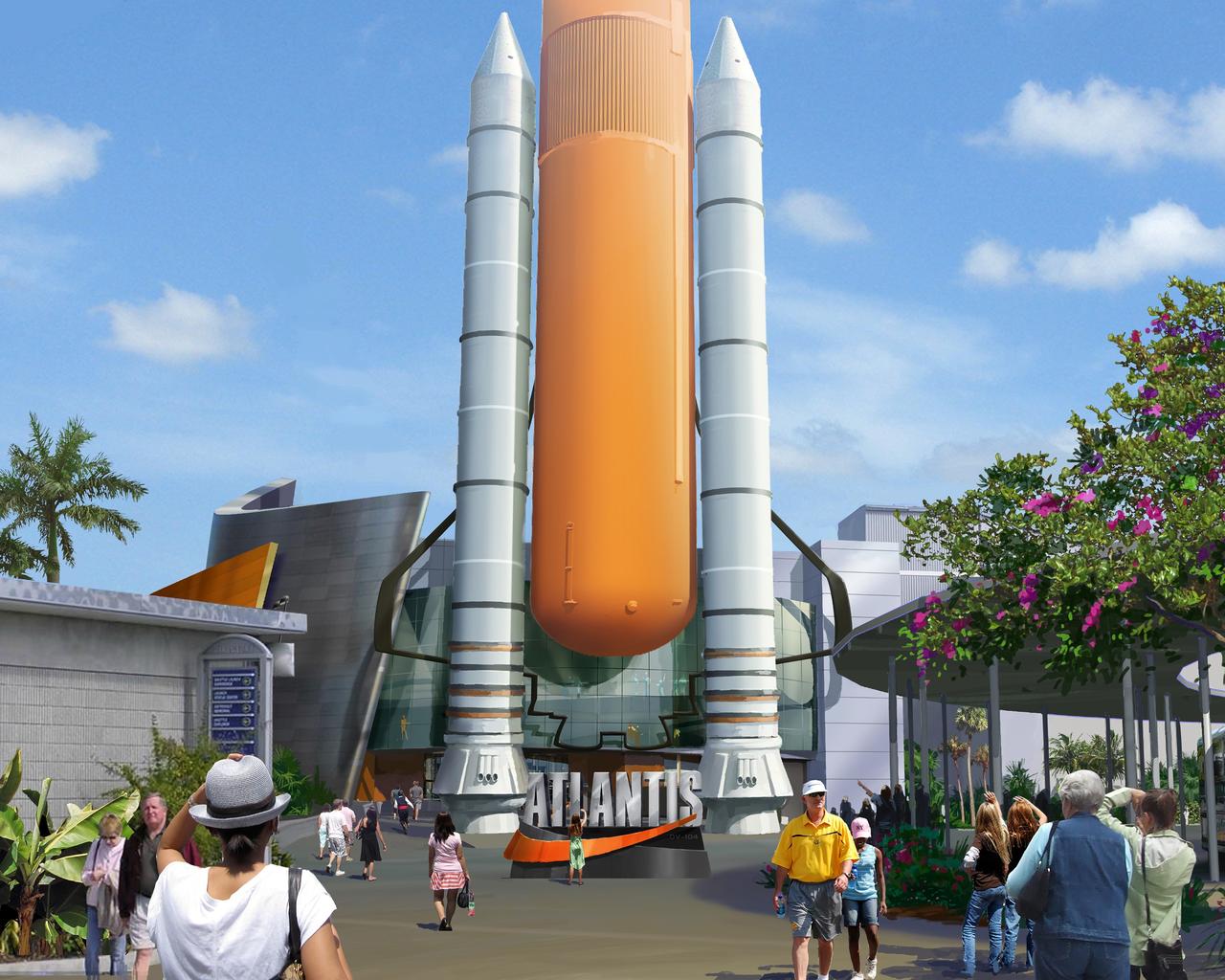
CAPE CANAVERAL, Fla. -- A full scale external tank and twin solid rocket booster replicas will stand at the Atlantis exhibit entrance at the Kennedy Space Center Visitor Complex, preparing to launch guests deep into the 30-year history of the Space Shuttle Program. A groundbreaking ceremony for the future home of Atlantis was held Jan. 18. For more information on this and other exhibits at the visitor complex, go to http://www.kennedyspacecenter.com. Artist rendering courtesy of PGAV Destinations for Delaware North Parks & Resorts
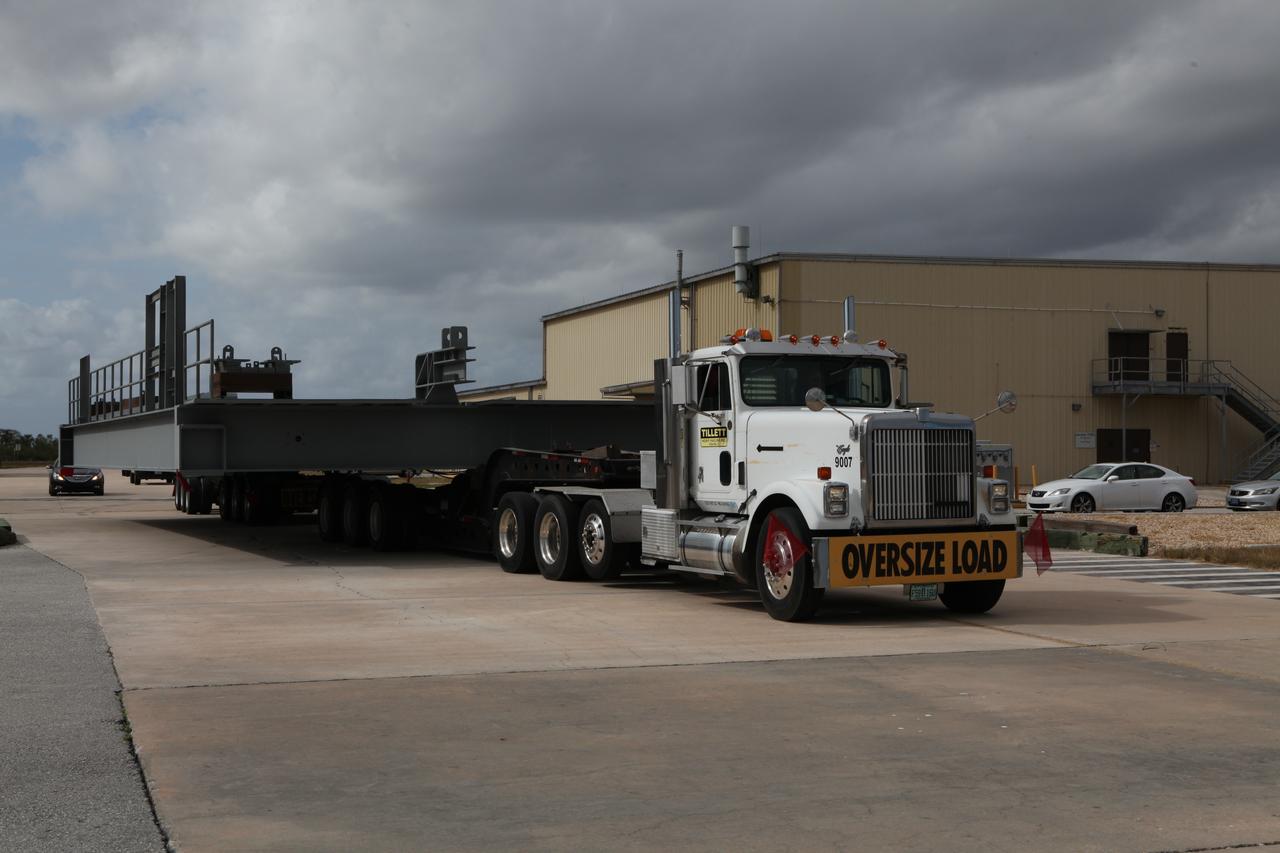
A heavy load transport truck from Tillett Heavy Hauling in Titusville, Florida, arrives at NASA’s Kennedy Space Center in Florida, carrying the first half of the A-level work platforms, A south, for the agency’s Space Launch System (SLS) rocket. The A-level platforms are the topmost platforms for High Bay 3 in the Vehicle Assembly Building (VAB). The platform will be delivered to the VAB staging area in the west parking lot. The Ground Systems Development and Operations Program is overseeing upgrades and modifications to High Bay 3 to support processing of the SLS and Orion spacecraft. A total of 10 levels of new platforms, 20 platform halves altogether, will surround the SLS rocket and Orion spacecraft and provide access for testing and processing.
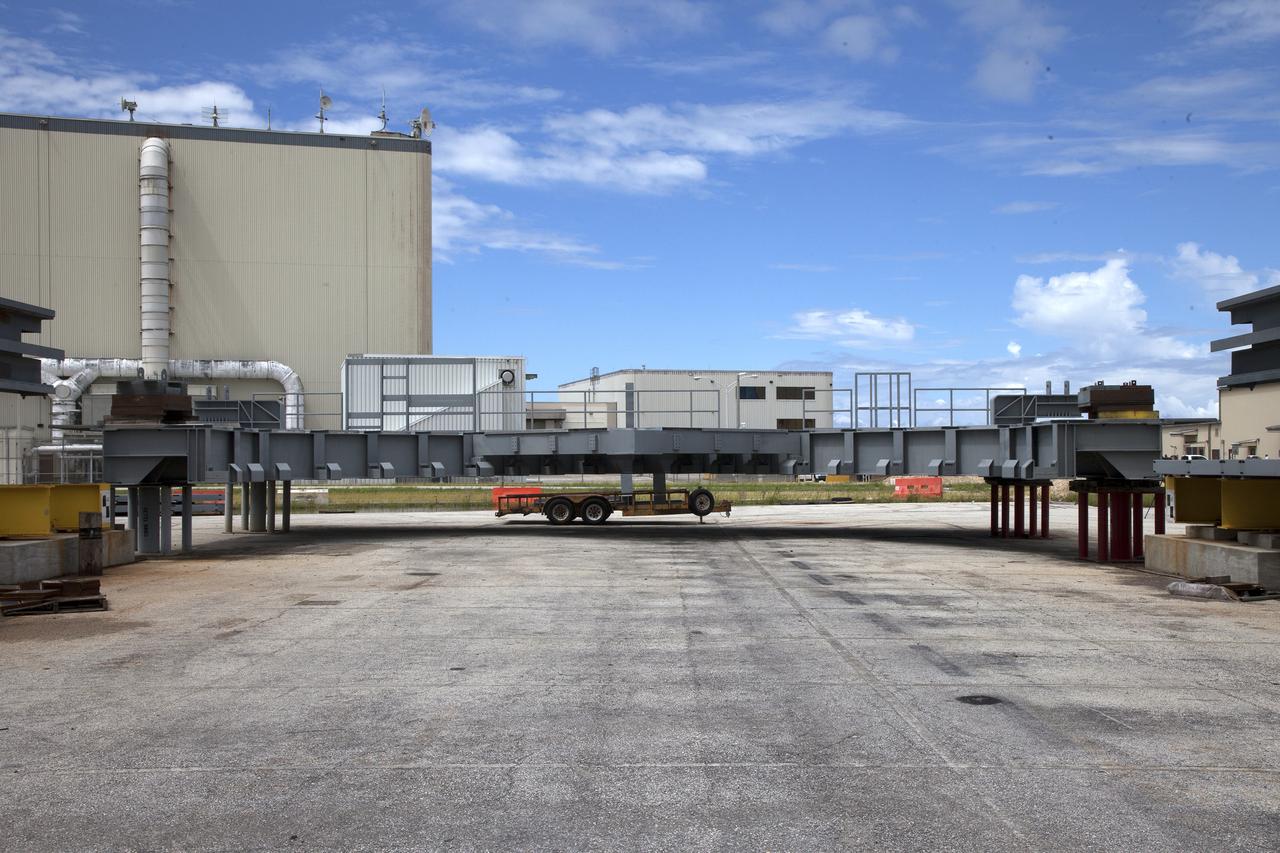
A section of the second half of the C-level platforms, C North, for NASA’s Space Launch System (SLS) rocket, arrives at the agency’s Kennedy Space Center in Florida. The platform was offloaded from a heavy lift transport truck and secured in a staging area in the west parking lot of the Vehicle Assembly Building (VAB). The Ground Systems Development and Operations Program is overseeing upgrades and modifications to VAB High Bay 3 to support processing of the SLS and Orion spacecraft. A total of 10 levels of new platforms, 20 platform halves altogether, will surround the SLS rocket and Orion spacecraft and provide access for testing and processing.
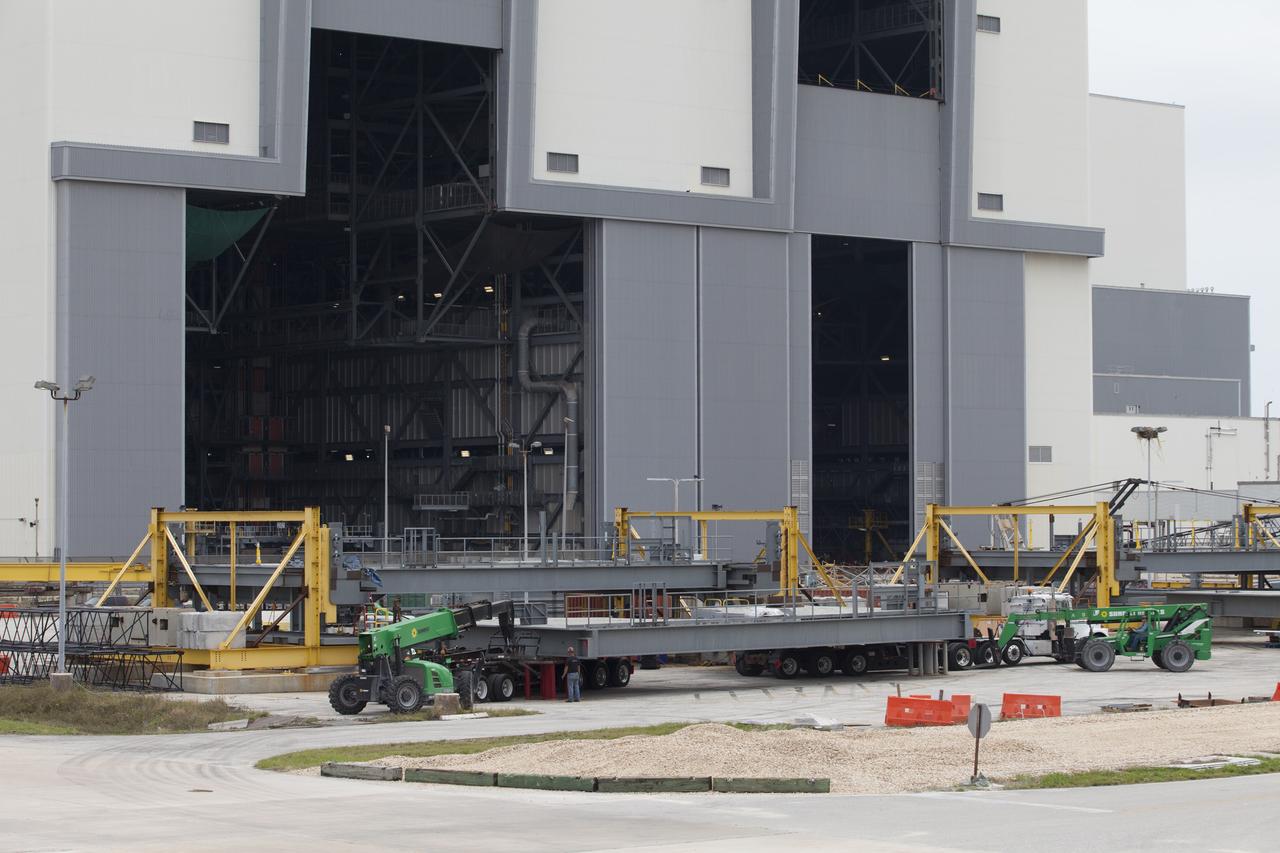
A heavy load transport truck arrives at the Vehicle Assembly Building (VAB) at NASA’s Kennedy Space Center in Florida, carrying the second half of the F-level work platforms for the agency’s Space Launch System (SLS) rocket. The platform will be delivered to the VAB staging area in the west parking lot. The Ground Systems Development and Operations Program is overseeing upgrades and modifications to VAB High Bay 3 to support processing of the SLS and Orion spacecraft. A total of 10 levels of new platforms, 20 platform halves altogether, will surround the SLS rocket and Orion spacecraft and provide access for testing and processing. Delivery of this platform brings the total to 10 platforms, or half of the work platforms delivered to Kennedy.
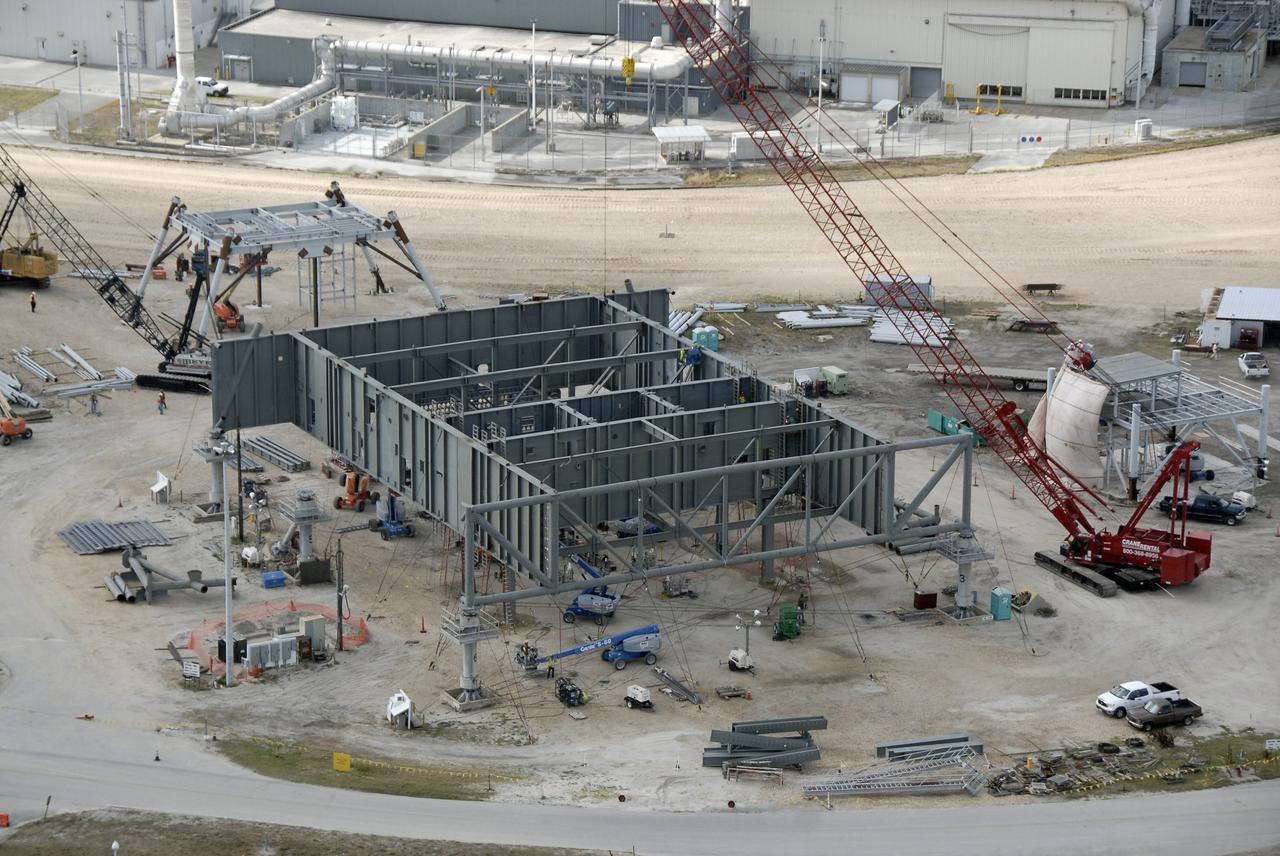
CAPE CANAVERAL, Fla. – In the mobile launcher parking area behind the Vehicle Assembly Building at NASA's Kennedy Space Center in Florida, the new mobile launcher, or ML, for the Ares rockets is under construction. The ML will be the base to launch the Orion crew exploration vehicle and the cargo vehicle. The base is being made lighter than space shuttle mobile launcher platforms so the crawler-transporter can pick up the added load of the 345-foot tower and taller rocket. When the structural portion of the new mobile launcher is complete, umbilicals, access arms, communications equipment and command/control equipment will be installed. Photo credit: NASA/Kim Shiflett
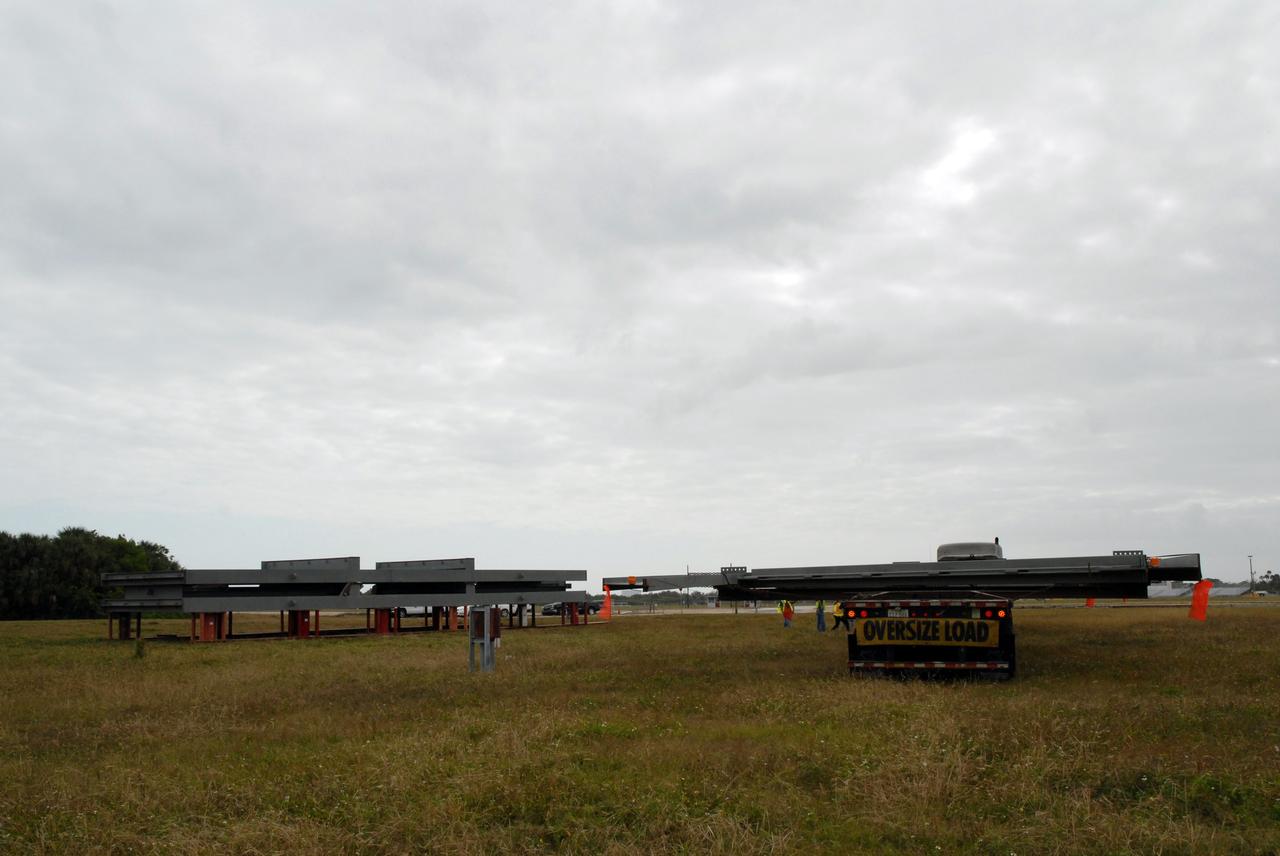
CAPE CANAVERAL, Fla. -- At NASA's Kennedy Space Center in Florida, the Mobile Launcher truss, T4, has been offloaded from its truck on grounds near the mobile launcher parking area. The new mobile launcher will be the base for the Ares rockets to launch the Orion crew exploration vehicle and the cargo vehicle. The base is being made lighter than space shuttle mobile launcher platforms so the crawler-transporter can pick up the added load of the 345-foot tower and taller rocket. When the structural portion of the new mobile launcher is complete, umbilicals, access arms, communications equipment and command/control equipment will be installed. Photo credit: NASA/Jack Pfaller
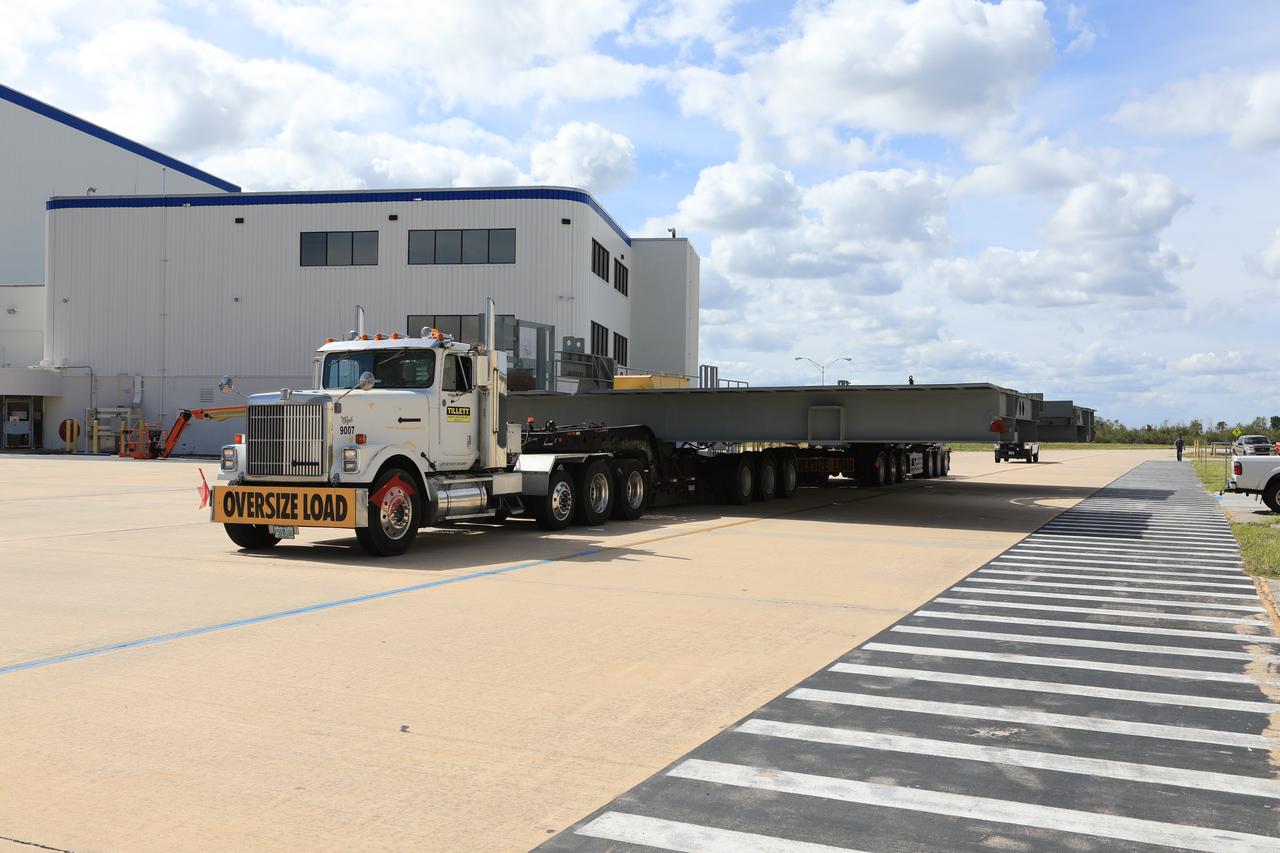
A heavy load transport truck from Tillett Heavy Hauling in Titusville, Florida, arrives at NASA’s Kennedy Space Center in Florida, carrying the second half of the B-level work platforms, B north, for the agency’s Space Launch System (SLS) rocket. The platform will be delivered to the Vehicle Assembly Building (VAB) staging area in the west parking lot. The Ground Systems Development and Operations Program is overseeing upgrades and modifications to VAB High Bay 3 to support processing of the SLS and Orion spacecraft. A total of 10 levels of new platforms, 20 platform halves altogether, will surround the SLS rocket and Orion spacecraft and provide access for testing and processing.
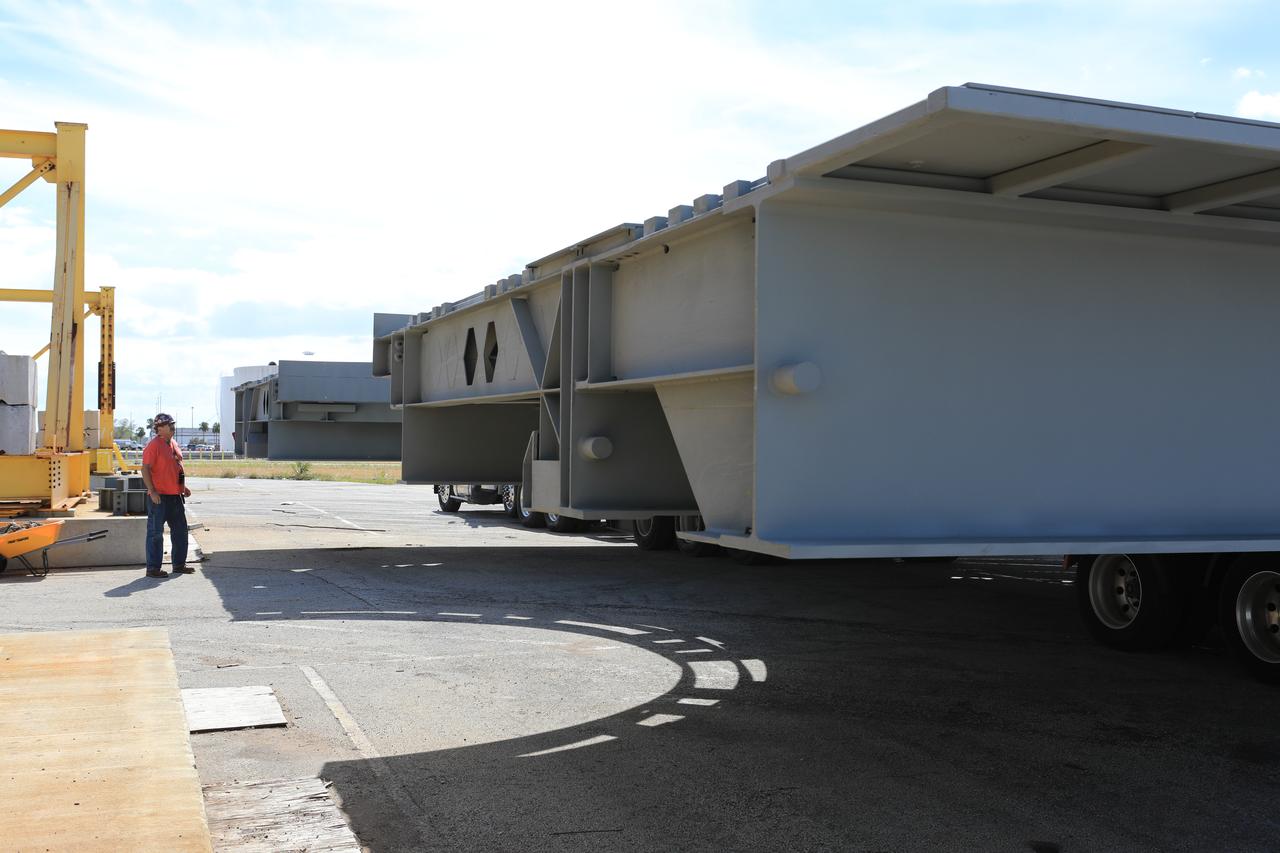
A heavy load transport truck from Tillett Heavy Hauling in Titusville, Florida, arrives at the Vehicle Assembly Building (VAB) at NASA’s Kennedy Space Center in Florida, carrying the second half of the B-level work platforms, B north, for the agency’s Space Launch System (SLS) rocket. The platform will be offloaded in the VAB staging area in the west parking lot. The Ground Systems Development and Operations Program is overseeing upgrades and modifications to VAB High Bay 3 to support processing of the SLS and Orion spacecraft. A total of 10 levels of new platforms, 20 platform halves altogether, will surround the SLS rocket and Orion spacecraft and provide access for testing and processing.
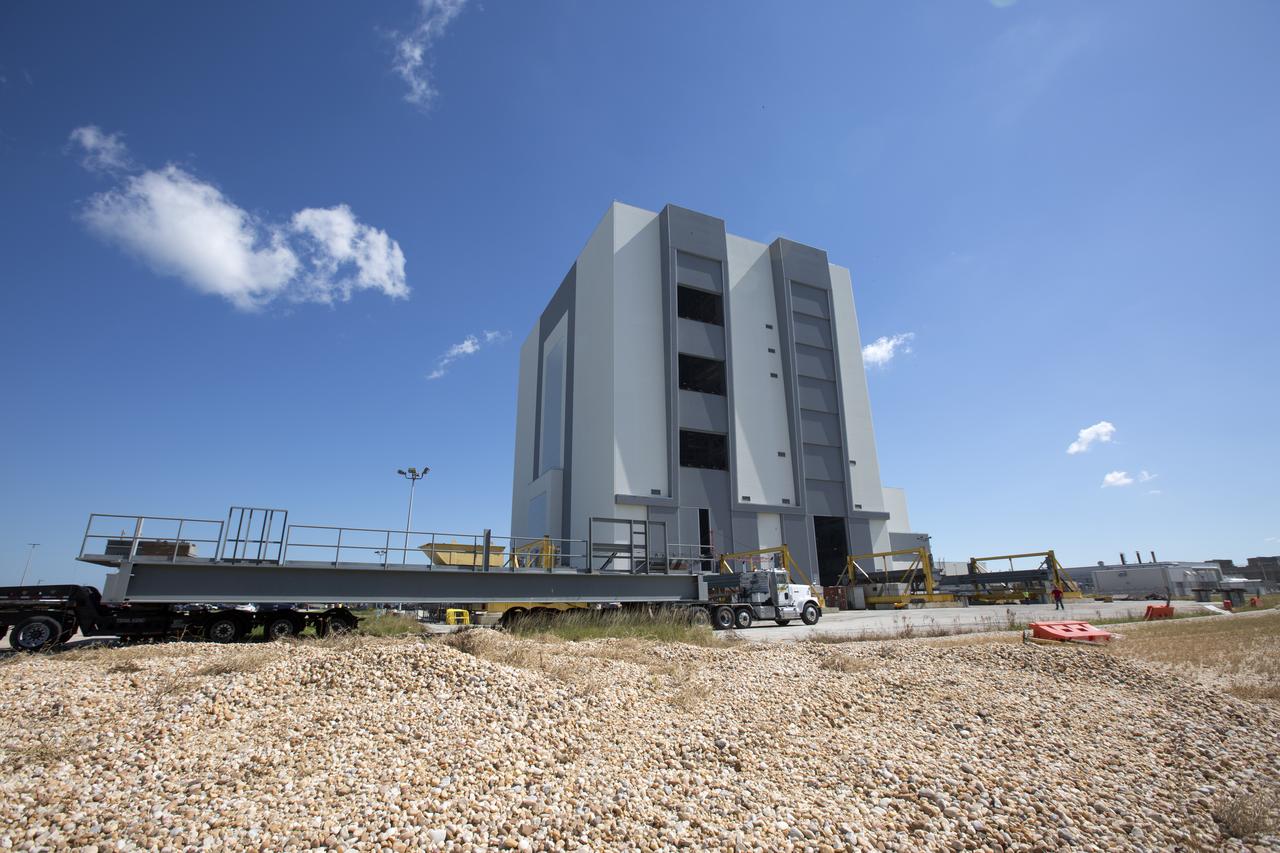
A heavy load transport truck from Tillett Heavy Hauling in Titusville, Florida, arrives at the Vehicle Assembly Building (VAB) at NASA’s Kennedy Space Center in Florida, carrying the first half of the B-level work platforms, B South, for the agency’s Space Launch System (SLS) rocket. The platform will be offloaded in the VAB staging area in the west parking lot. The Ground Systems Development and Operations Program is overseeing upgrades and modifications to VAB High Bay 3 to support processing of the SLS and Orion spacecraft. A total of 10 levels of new platforms, 20 platform halves altogether, will surround the SLS rocket and Orion spacecraft and provide access for testing and processing.
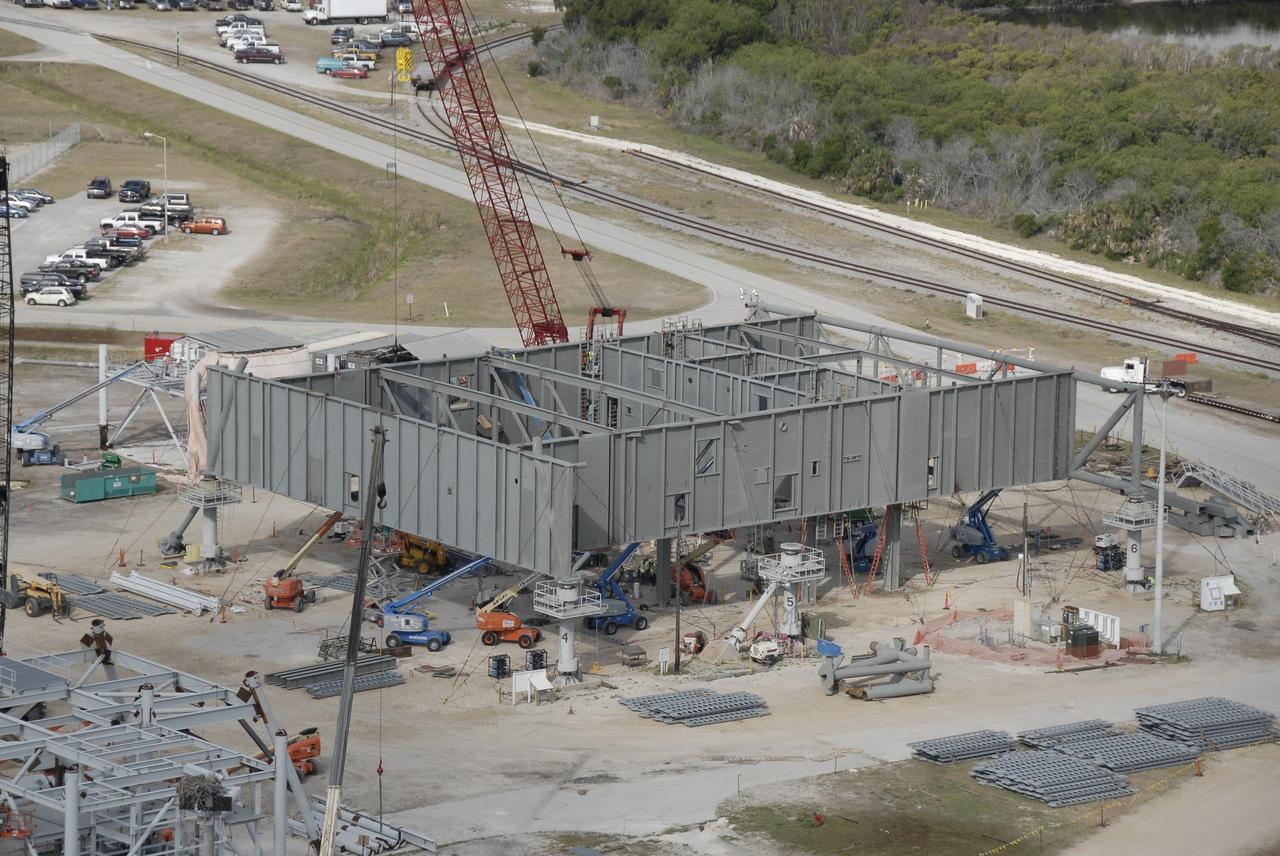
CAPE CANAVERAL, Fla. – In the mobile launcher parking area behind the Vehicle Assembly Building, at NASA's Kennedy Space Center in Florida, the new mobile launcher, or ML, for the Ares rockets is under construction. The ML will be the base to launch the Orion crew exploration vehicle and the cargo vehicle. The base is being made lighter than space shuttle mobile launcher platforms so the crawler-transporter can pick up the added load of the 345-foot tower and taller rocket. When the structural portion of the new mobile launcher is complete, umbilicals, access arms, communications equipment and command/control equipment will be installed. Photo credit: NASA/Kim Shiflett
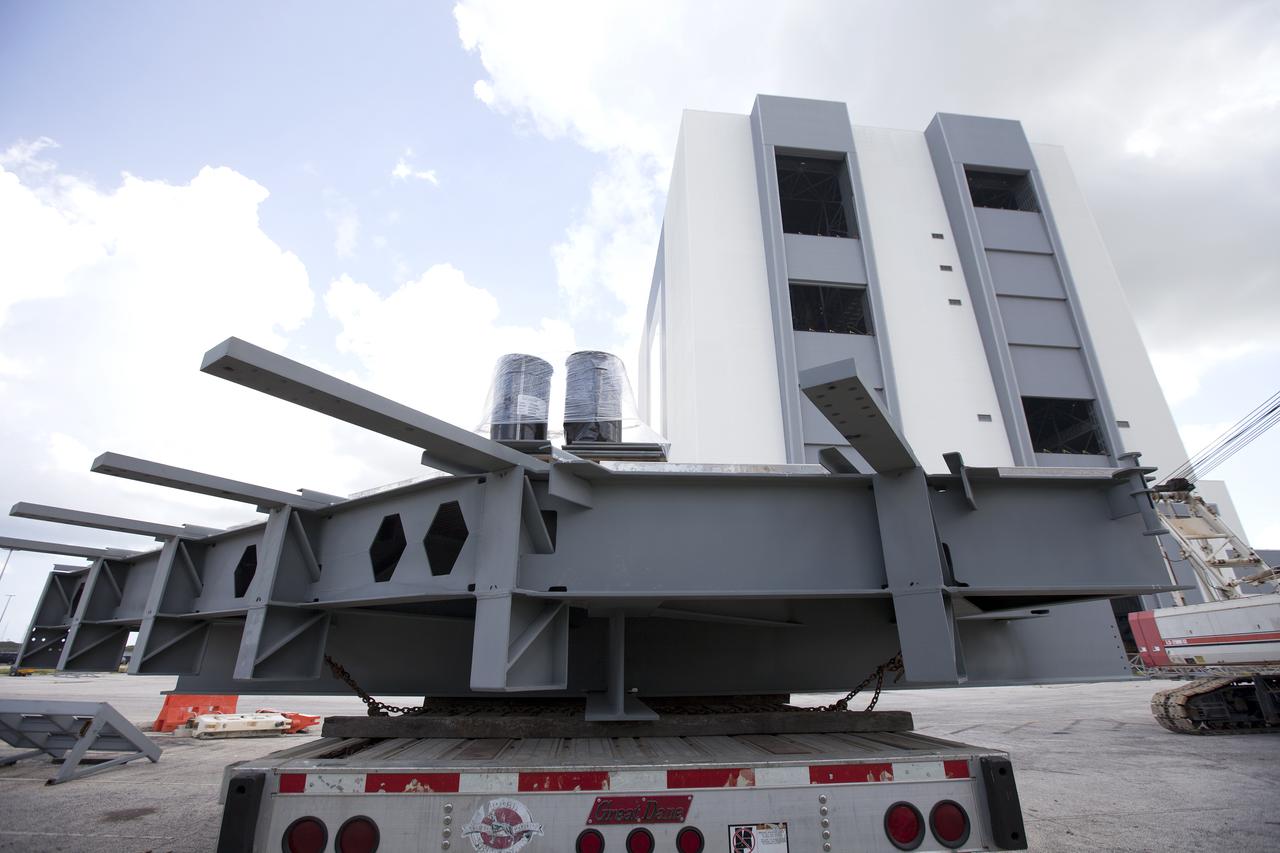
A heavy load transport truck from Tillett Heavy Hauling in Titusville, Florida, arrives at the Vehicle Assembly Building (VAB) at NASA’s Kennedy Space Center in Florida, carrying the second section of the first half of the C-level work platforms, C South, for the agency’s Space Launch System (SLS) rocket. The platform will be offloaded in the VAB staging area in the west parking lot. The Ground Systems Development and Operations Program is overseeing upgrades and modifications to VAB High Bay 3 to support processing of the SLS and Orion spacecraft. A total of 10 levels of new platforms, 20 platform halves altogether, will surround the SLS rocket and Orion spacecraft and provide access for testing and processing.

A heavy load transport truck from Tillett Heavy Hauling in Titusville, Florida, arrives at the Vehicle Assembly Building (VAB) at NASA’s Kennedy Space Center in Florida, carrying the second section of the first half of the C-level work platforms, C South, for the agency’s Space Launch System (SLS) rocket. The platform will be offloaded in the VAB staging area in the west parking lot. The Ground Systems Development and Operations Program is overseeing upgrades and modifications to VAB High Bay 3 to support processing of the SLS and Orion spacecraft. A total of 10 levels of new platforms, 20 platform halves altogether, will surround the SLS rocket and Orion spacecraft and provide access for testing and processing.
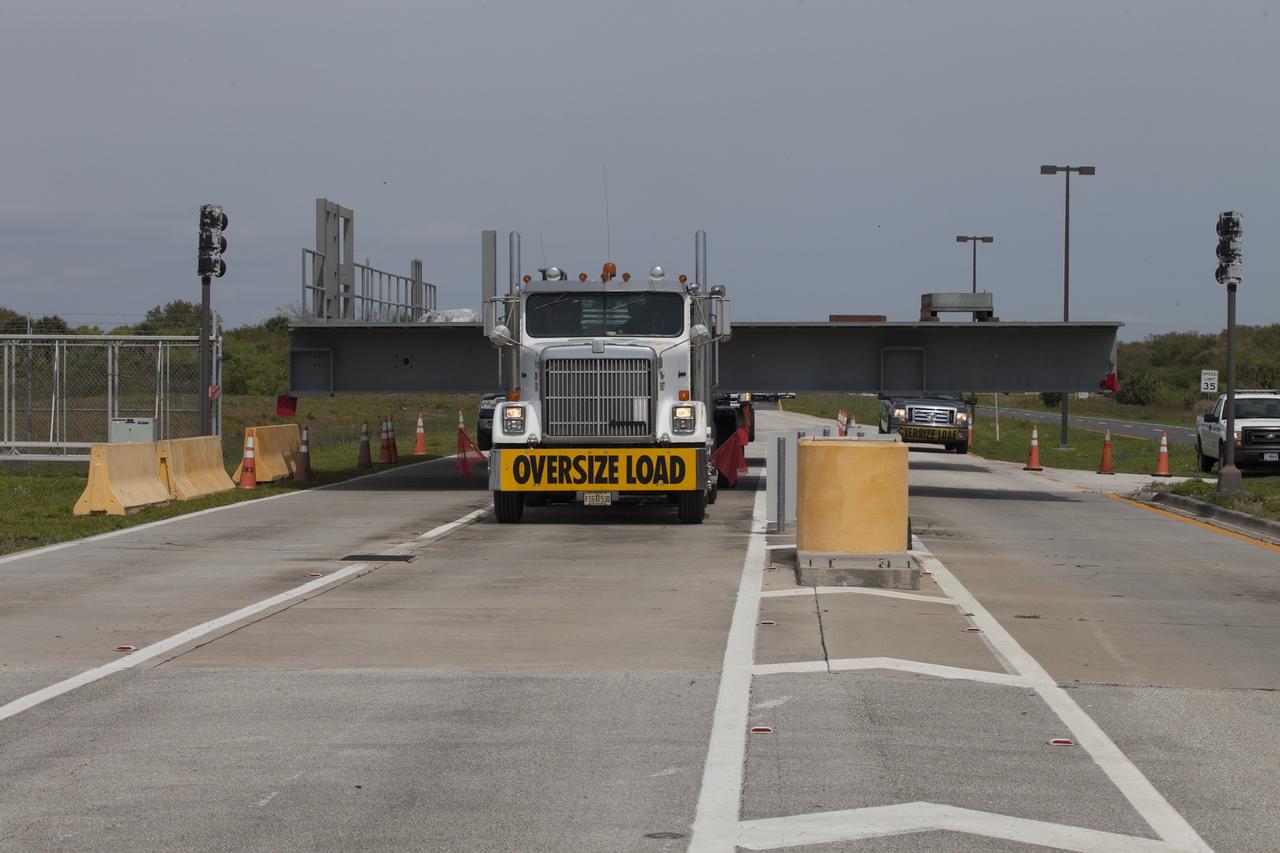
A heavy load transport truck arrives at the north entrance gate at NASA’s Kennedy Space Center in Florida, carrying the second half of the F-level work platforms for the agency’s Space Launch System (SLS) rocket. The platform will be delivered to the Vehicle Assembly Building (VAB) staging area in the west parking lot. The Ground Systems Development and Operations Program is overseeing upgrades and modifications to VAB High Bay 3 to support processing of the SLS and Orion spacecraft. A total of 10 levels of new platforms, 20 platform halves altogether, will surround the SLS rocket and Orion spacecraft and provide access for testing and processing. Delivery of this platform brings the total to 10 platforms, or half of the work platforms delivered to Kennedy.
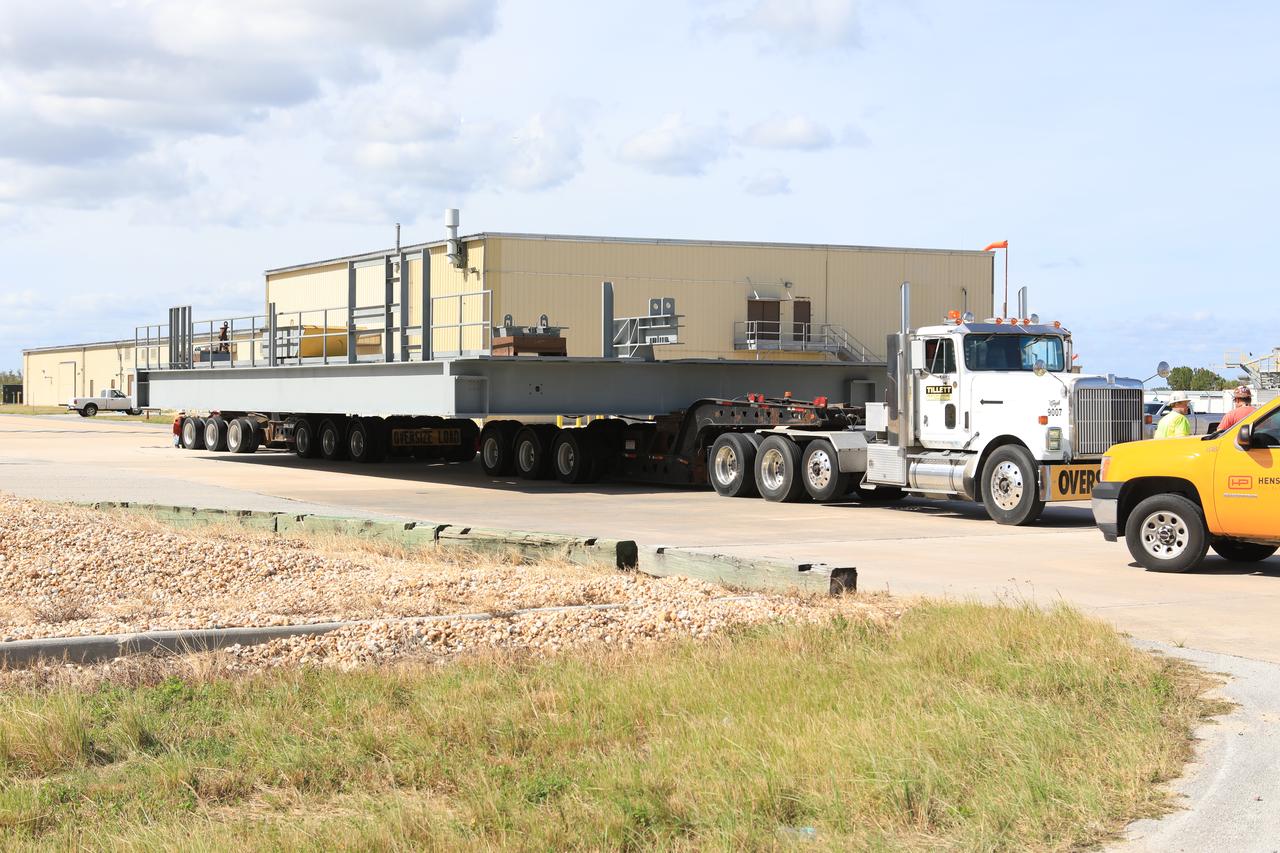
A heavy load transport truck from Tillett Heavy Hauling in Titusville, Florida, arrives at NASA's Kennedy Space Center in Florida, carrying the second half of the B-level work platforms, B north, for the agency’s Space Launch System (SLS) rocket. The platform will be delivered to the Vehicle Assembly Building where it will be offloaded in a staging area in the west parking lot. The Ground Systems Development and Operations Program is overseeing upgrades and modifications to VAB High Bay 3 to support processing of the SLS and Orion spacecraft. A total of 10 levels of new platforms, 20 platform halves altogether, will surround the SLS rocket and Orion spacecraft and provide access for testing and processing.
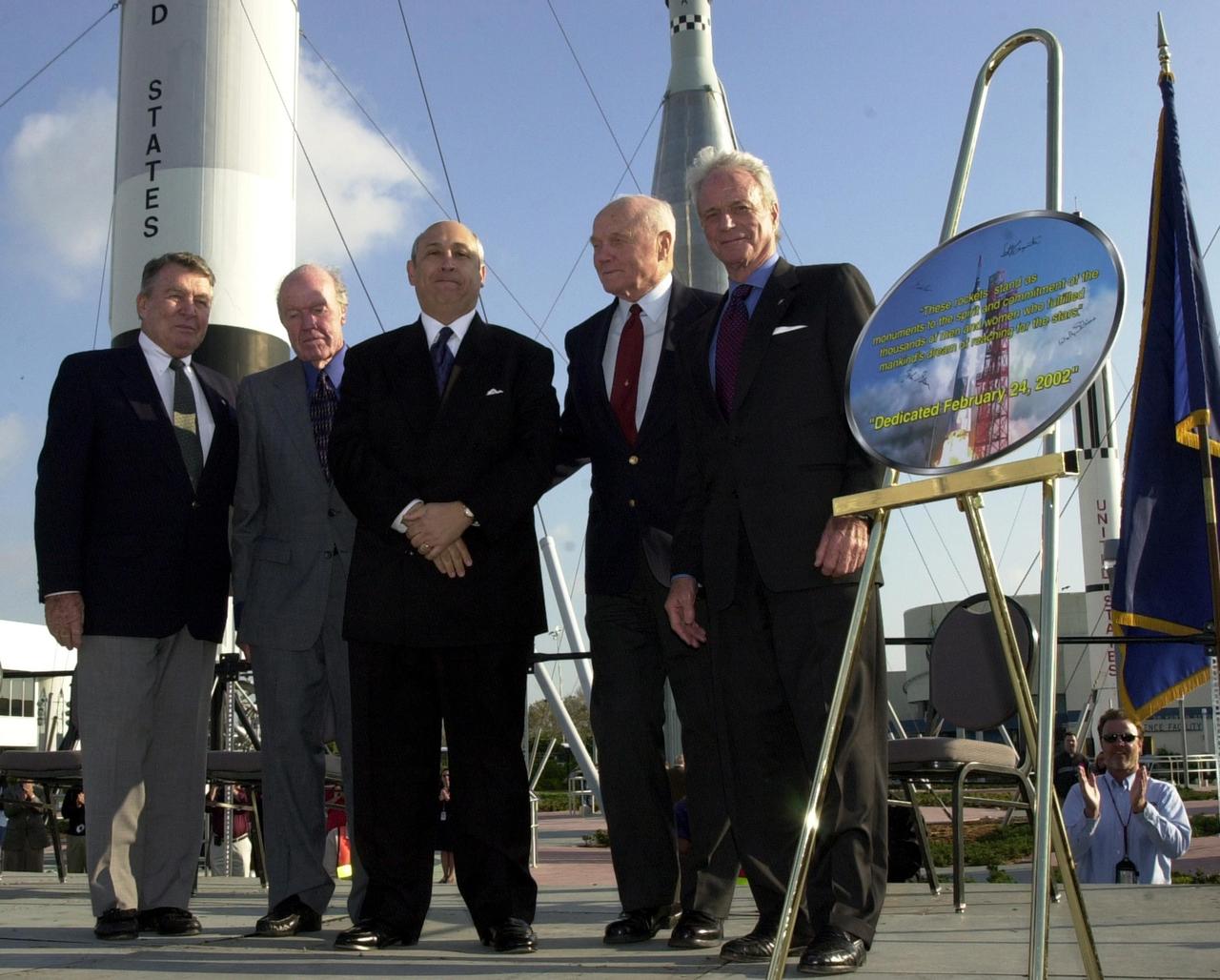
KENNEDY SPACE CENTER, FLA. -- Four space pioneers gather on stage with Rick Abramson, president of Delaware North Parks Services of Spaceport, Inc., during opening ceremonies for the 40th anniversary celebration of American spaceflight. The former astronauts had just signed a commemorative painting of the first Mercury rocket launch to send John Glenn Jr. orbiting the Earth. From left are Wally Schirra, Gordon Cooper, Abramson, Glenn and Scott Carpenter. The site is the Rocket Garden in the KSC Visitor Complex. The event was capped with a dinner held at the KSC Apollo/Saturn V Center
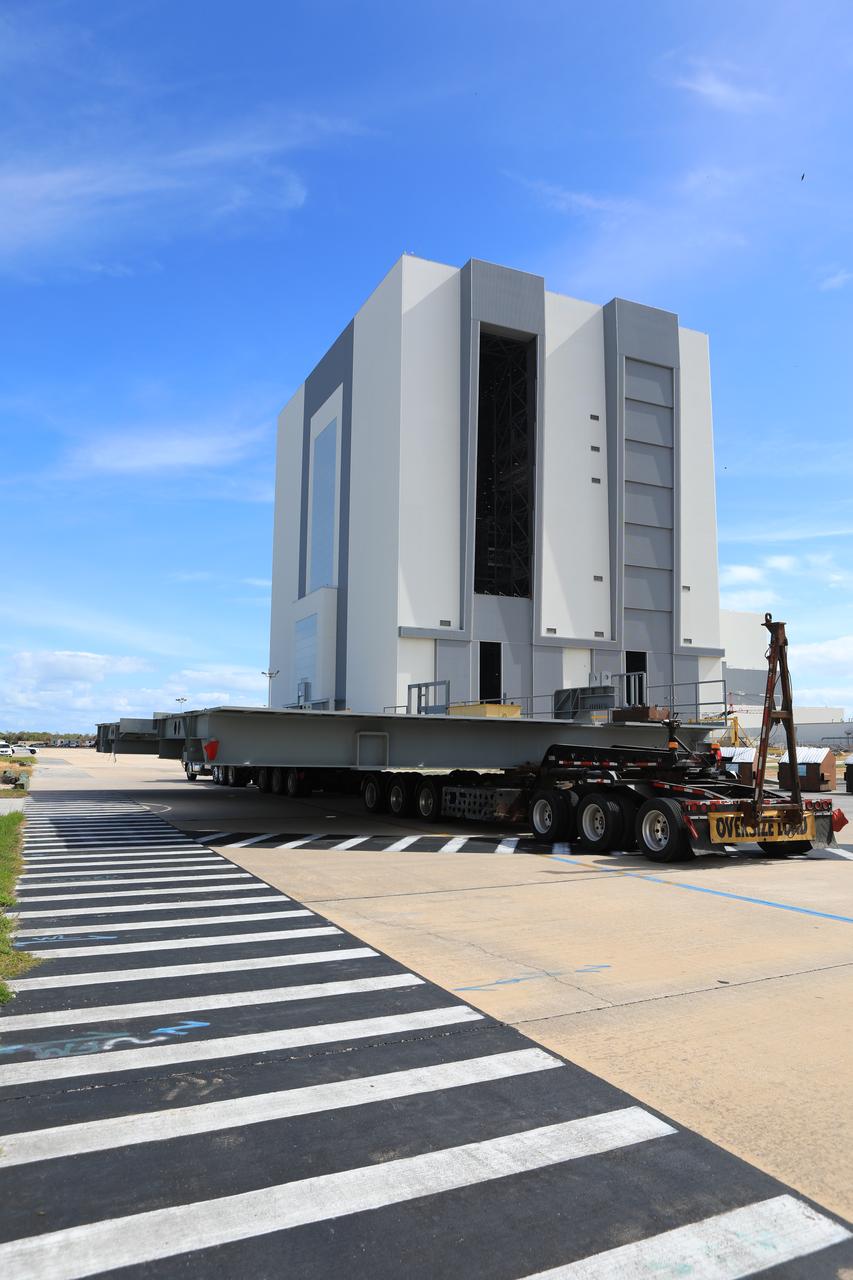
A heavy load transport truck from Tillett Heavy Hauling in Titusville, Florida, arrives at the Vehicle Assembly Building (VAB) at NASA’s Kennedy Space Center in Florida, carrying the second half of the B-level work platforms, B north, for the agency’s Space Launch System (SLS) rocket. The platform will be delivered to the VAB staging area in the west parking lot. The Ground Systems Development and Operations Program is overseeing upgrades and modifications to VAB High Bay 3 to support processing of the SLS and Orion spacecraft. A total of 10 levels of new platforms, 20 platform halves altogether, will surround the SLS rocket and Orion spacecraft and provide access for testing and processing.
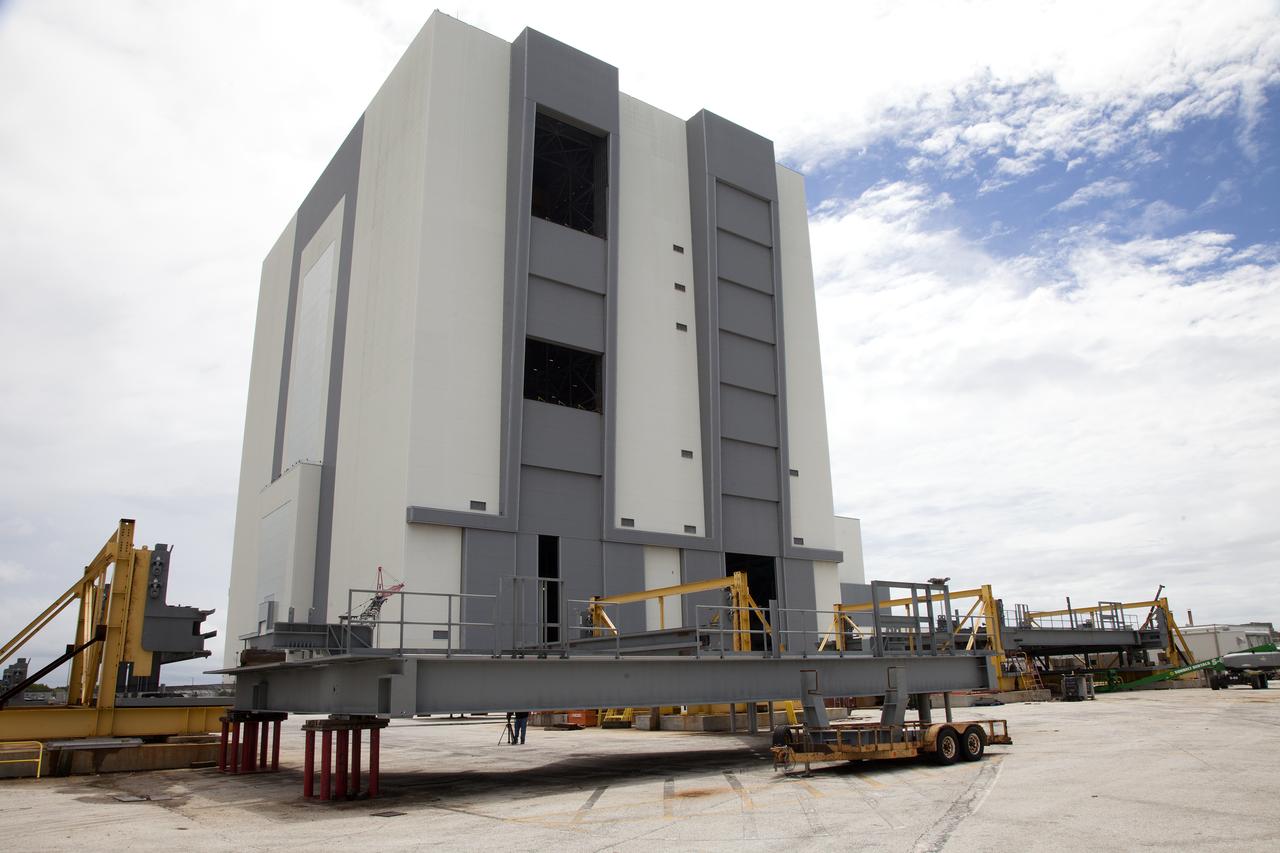
A section of the second half of the C-level platforms, C North, for NASA’s Space Launch System (SLS) rocket, arrives at the agency’s Kennedy Space Center in Florida. The platform was offloaded from a heavy lift transport truck and secured in a staging area in the west parking lot of the Vehicle Assembly Building (VAB). The Ground Systems Development and Operations Program is overseeing upgrades and modifications to VAB High Bay 3 to support processing of the SLS and Orion spacecraft. A total of 10 levels of new platforms, 20 platform halves altogether, will surround the SLS rocket and Orion spacecraft and provide access for testing and processing.
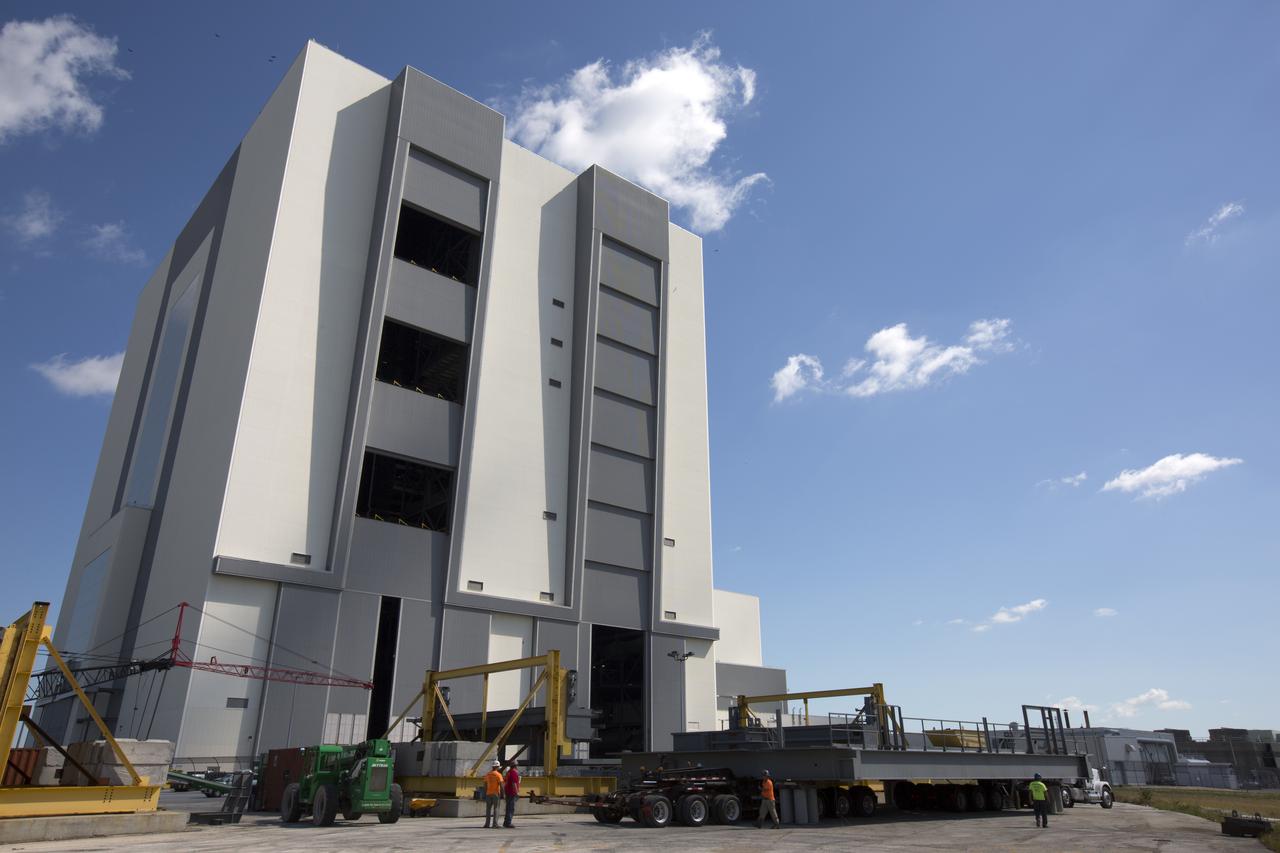
A heavy load transport truck from Tillett Heavy Hauling in Titusville, Florida, arrives at the Vehicle Assembly Building (VAB) at NASA’s Kennedy Space Center in Florida, carrying the first half of the B-level work platforms, B South, for the agency’s Space Launch System (SLS) rocket. The platform will be offloaded in the VAB staging area in the west parking lot. The Ground Systems Development and Operations Program is overseeing upgrades and modifications to VAB High Bay 3 to support processing of the SLS and Orion spacecraft. A total of 10 levels of new platforms, 20 platform halves altogether, will surround the SLS rocket and Orion spacecraft and provide access for testing and processing.
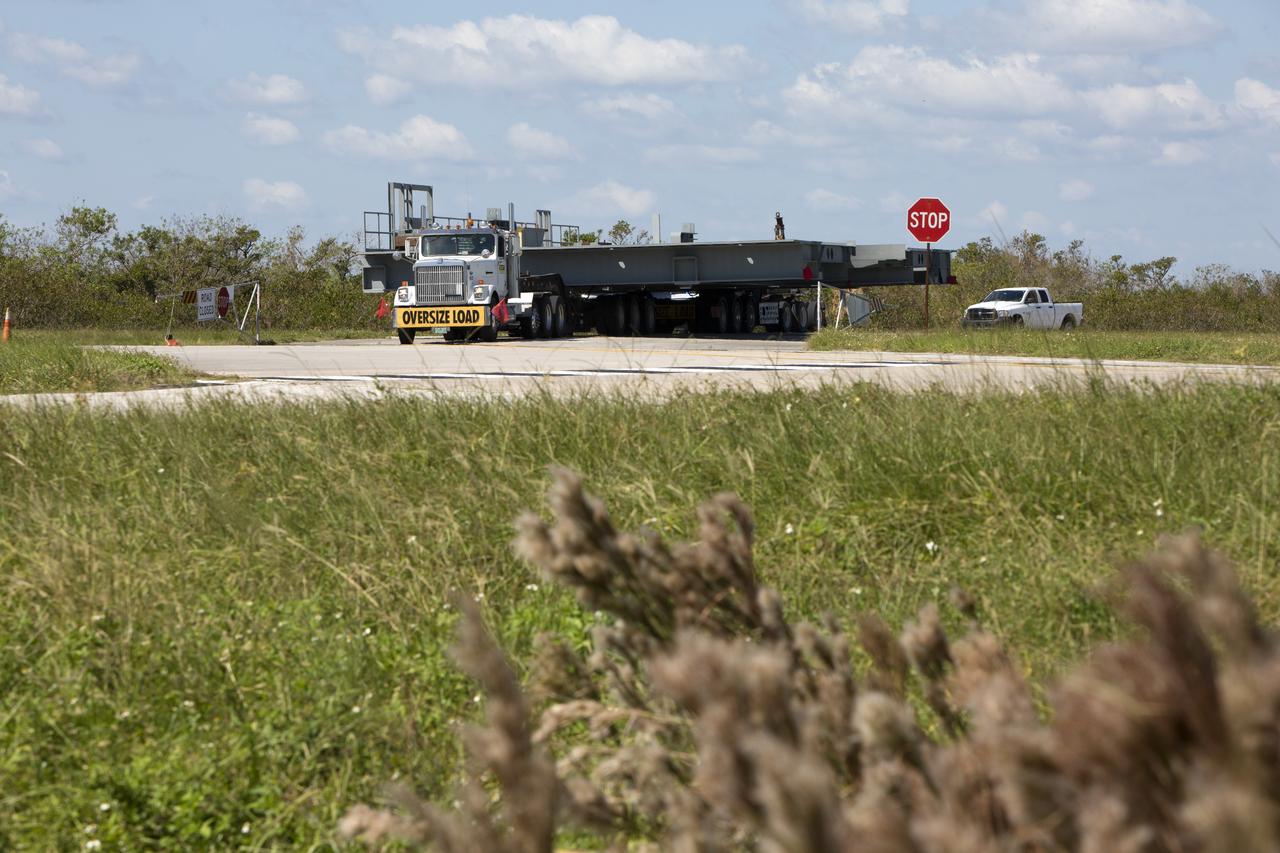
A heavy load transport truck from Tillett Heavy Hauling in Titusville, Florida, arrives at NASA’s Kennedy Space Center in Florida, carrying the first half of the B-level work platforms, B south, for the agency’s Space Launch System (SLS) rocket. The platform will be delivered to the Vehicle Assembly Building (VAB) staging area in the west parking lot. The Ground Systems Development and Operations Program is overseeing upgrades and modifications to VAB High Bay 3 to support processing of the SLS and Orion spacecraft. A total of 10 levels of new platforms, 20 platform halves altogether, will surround the SLS rocket and Orion spacecraft and provide access for testing and processing.
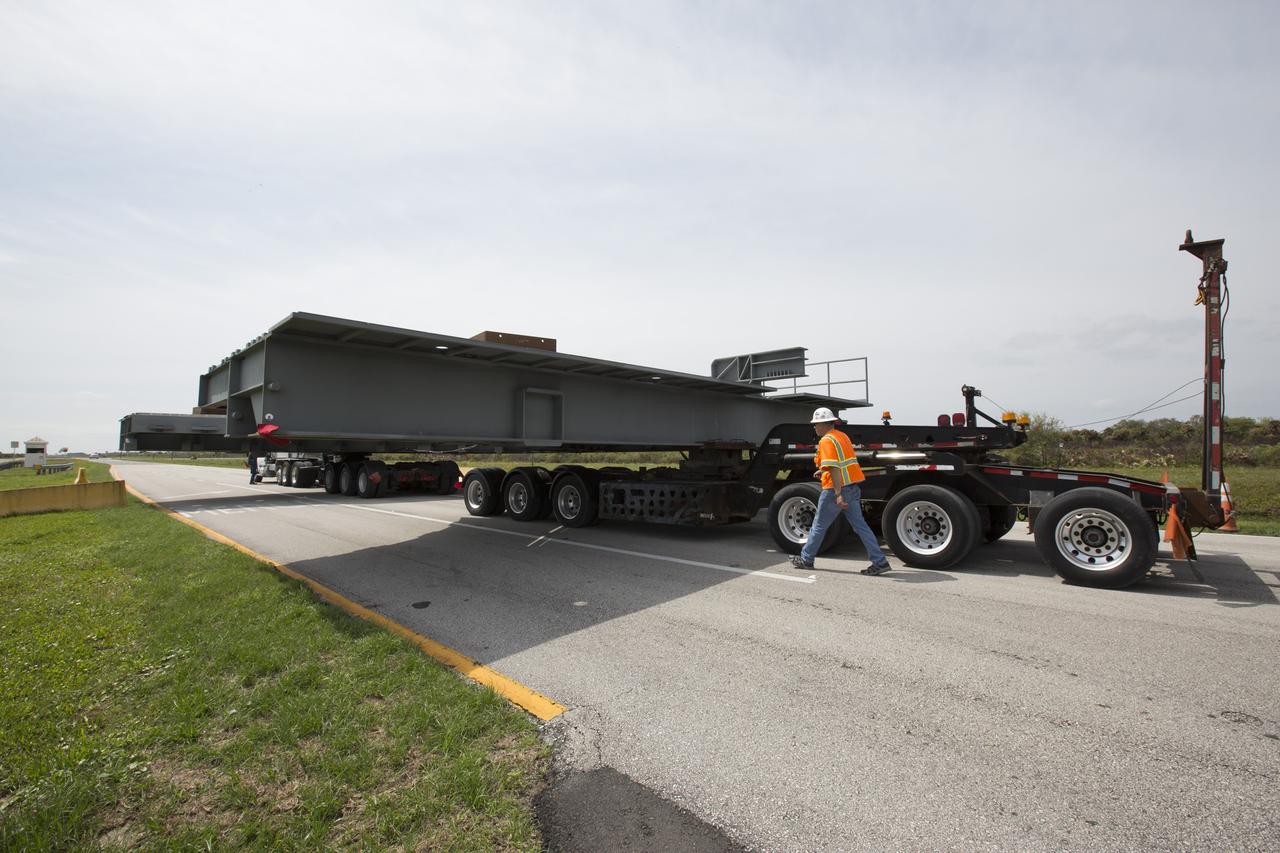
A heavy load transport truck proceeds along the road to the Vehicle Assembly Building (VAB) at NASA’s Kennedy Space Center in Florida, carrying the second half of the F-level work platforms for the agency’s Space Launch System (SLS) rocket. The platform will be delivered to the VAB staging area in the west parking lot. The Ground Systems Development and Operations Program is overseeing upgrades and modifications to VAB High Bay 3 to support processing of the SLS and Orion spacecraft. A total of 10 levels of new platforms, 20 platform halves altogether, will surround the SLS rocket and Orion spacecraft and provide access for testing and processing. Delivery of this platform brings the total to 10 platforms, or half of the work platforms delivered to Kennedy.
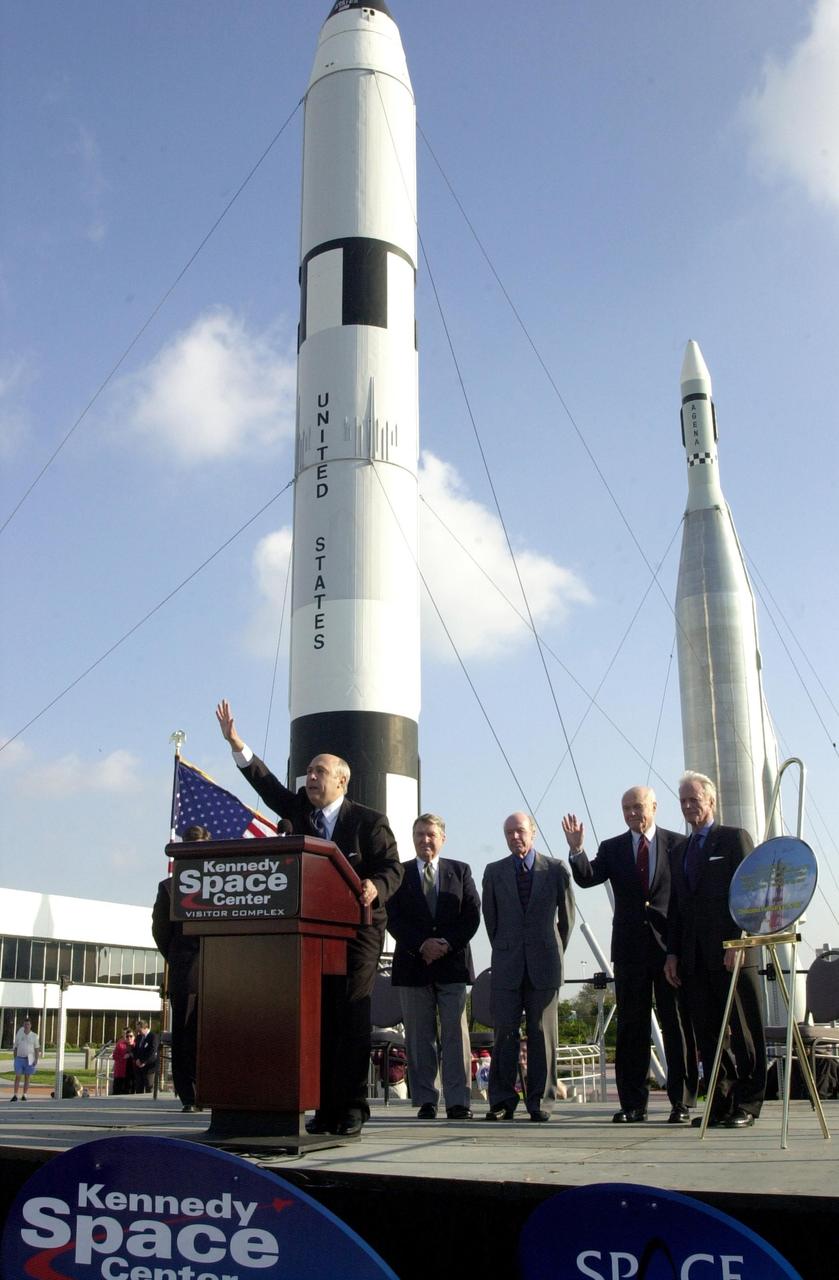
KENNEDY SPACE CENTER, FLA. -- During opening ceremonies for the 40th anniversary celebration of American spaceflight, Rick Abramson, president of Delaware North Parks Services of Spaceport, Inc., waves to the spectators. Behind him are four of the space pioneers being honored: (from left) Wally Schirra, Gordon Cooper, John Glenn Jr. and Scott Carpenter. Next to Carpenter stands a commemorative painting of a Mercury rocket launch that the four signed. The ceremonies were held in the KSC Visitor Complex Rocket Garden. The event was capped with a dinner held at the KSC Apollo/Saturn V Center