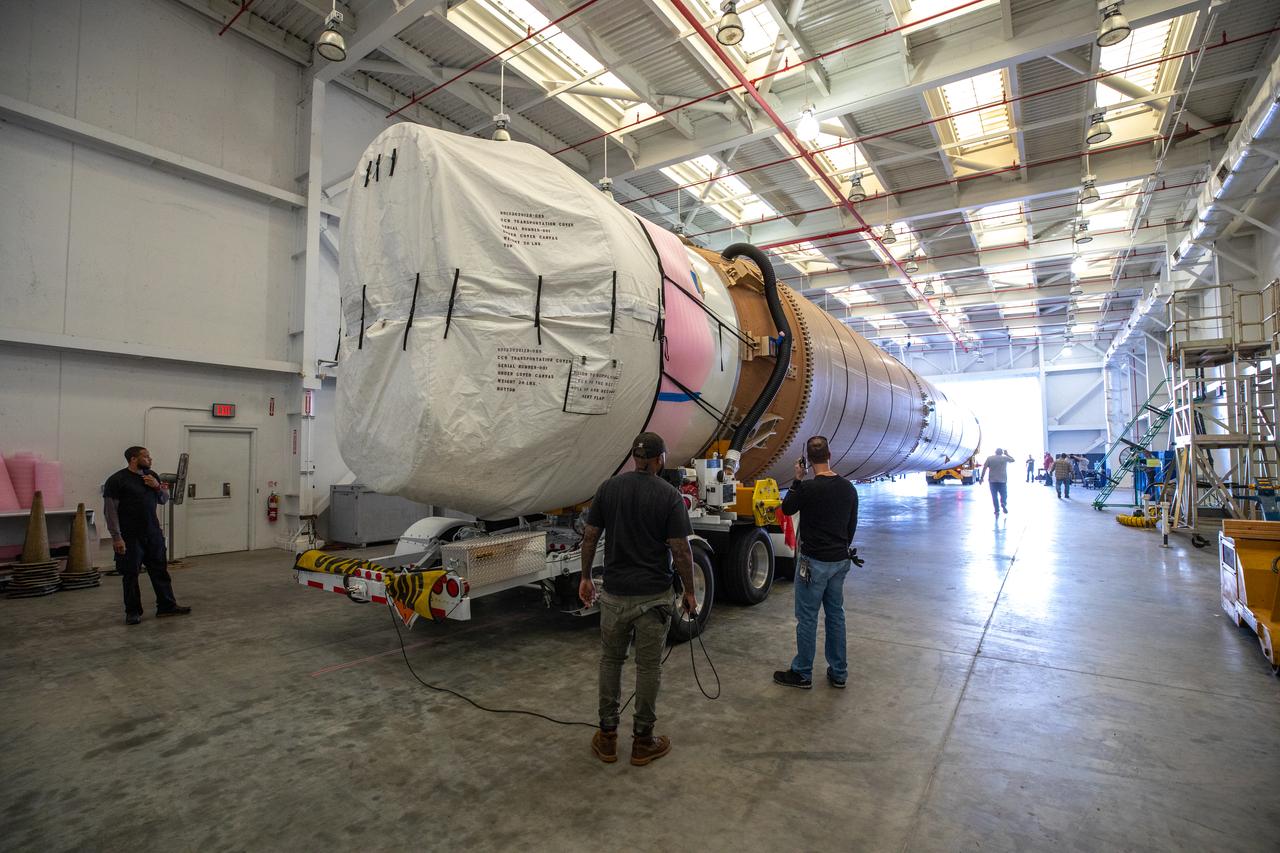
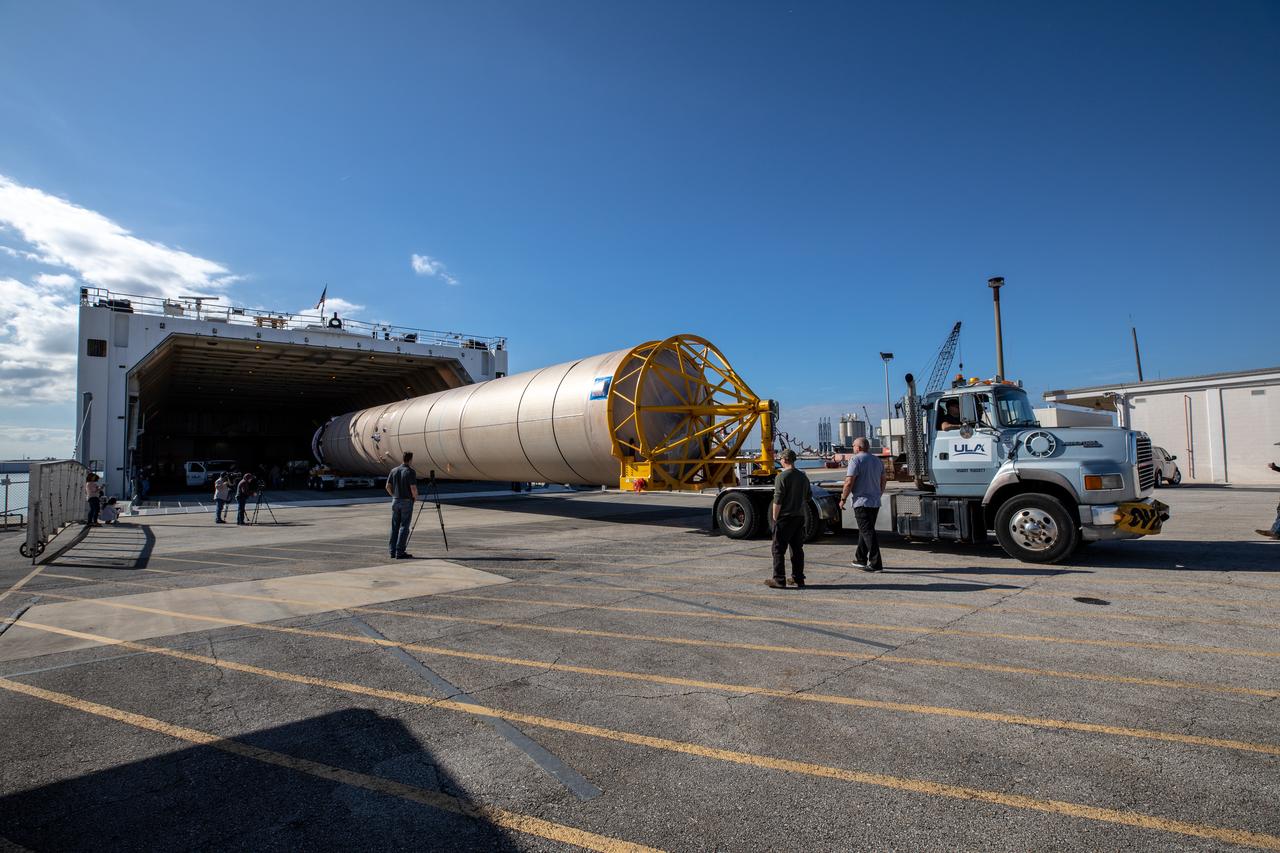
The United Launch Alliance Atlas V booster that will launch the Solar Orbiter spacecraft is delivered by truck to the Atlas Spaceflight Operations Center at Florida’s Cape Canaveral Air Force Station on Nov. 21, 2019. The company’s Rocketship vessel carried the booster from its manufacturing facility in Decatur, Alabama, to Port Canaveral. Solar Orbiter is a European Space Agency mission with strong NASA participation. The mission aims to study the Sun, its outer atmosphere and solar winds. The spacecraft will provide the first images of the Sun’s poles. NASA’s Launch Services Program based at Kennedy is managing the launch. Liftoff is scheduled for Feb. 5, 2020, from Launch Complex 41 at Cape Canaveral Air Force Station aboard the ULA Atlas V rocket.
The United Launch Alliance Centaur upper stage that will help launch the Solar Orbiter spacecraft is removed from the company’s Rocketship vessel upon its arrival at Florida’s Port Canaveral on Nov. 21, 2019. Also onboard is the Atlas V rocket’s first-stage booster. Once offloaded, the booster was transported to the Atlas Spaceflight Operations Center and the Centaur was transported to a separate facility, both at nearby Cape Canaveral Air Force Station. Solar Orbiter is a European Space Agency mission with strong NASA participation. The mission aims to study the Sun, its outer atmosphere and solar winds. The spacecraft will provide the first images of the Sun’s poles. NASA’s Launch Services Program based at Kennedy is managing the launch. Liftoff is scheduled for Feb. 5, 2020, from Launch Complex 41 at Cape Canaveral Air Force Station aboard the ULA Atlas V rocket.
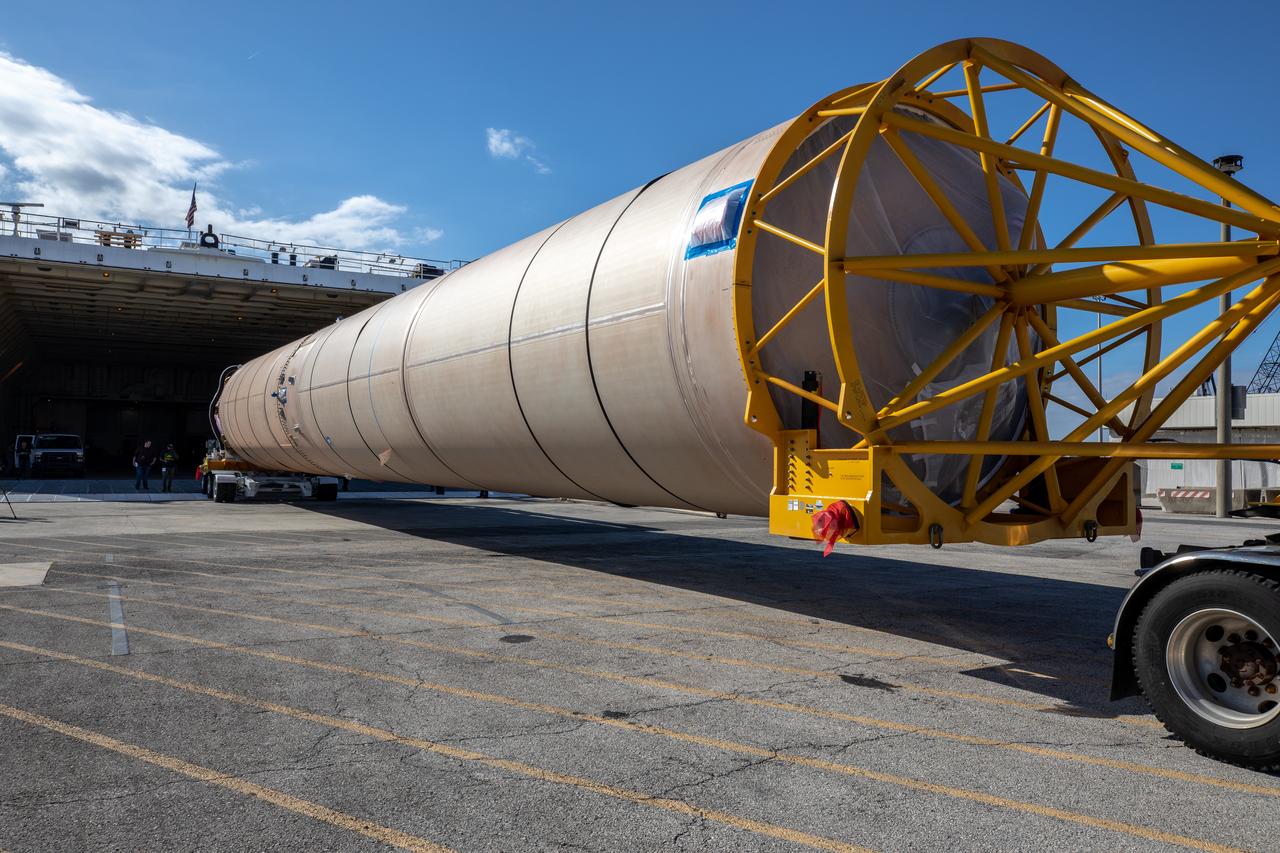
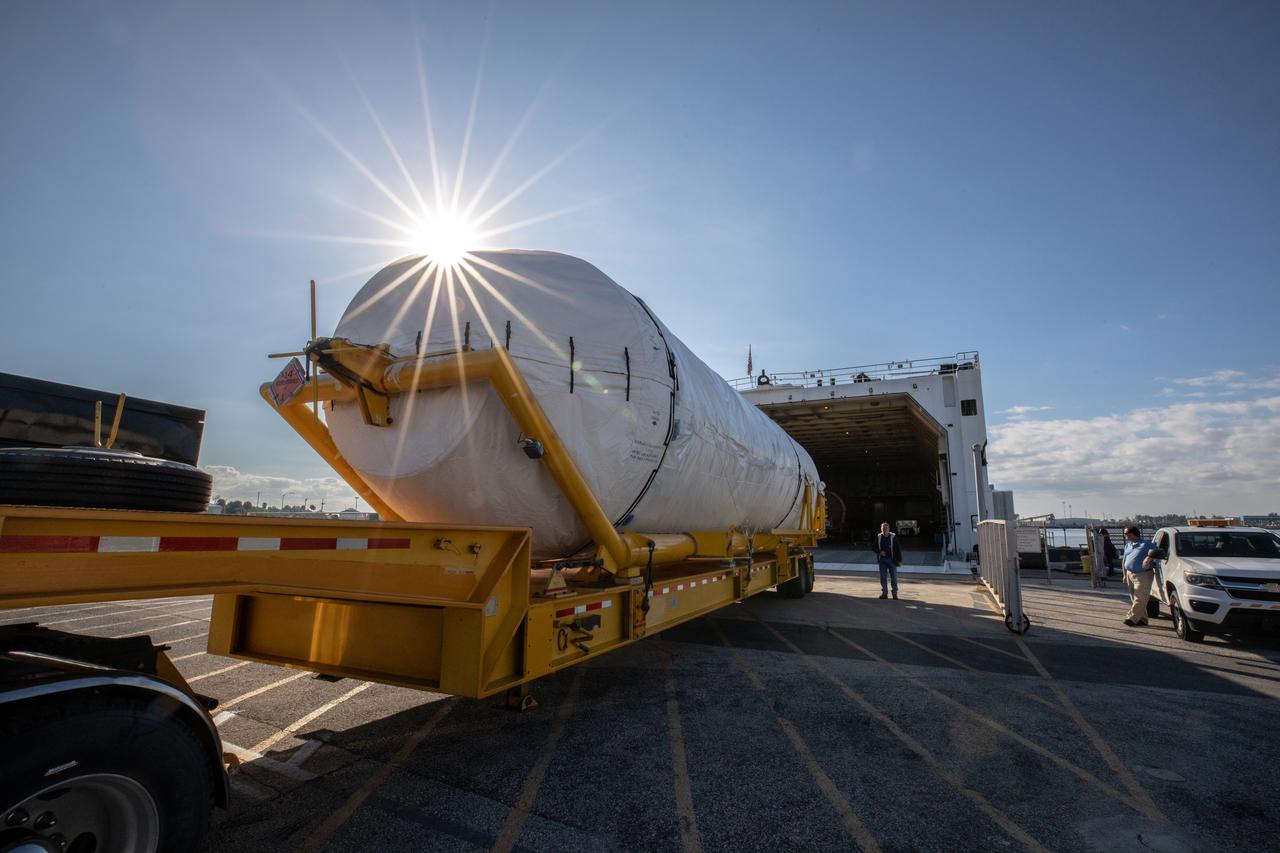
The United Launch Alliance Atlas V booster that will launch the Solar Orbiter spacecraft is removed from the company’s Rocketship vessel upon its arrival at Florida’s Port Canaveral on Nov. 21, 2019. Once offloaded, the booster was transported to the Atlas Spaceflight Operations Center at nearby Cape Canaveral Air Force Station. Solar Orbiter is a European Space Agency mission with strong NASA participation. The mission aims to study the Sun, its outer atmosphere and solar winds. The spacecraft will provide the first images of the Sun’s poles. NASA’s Launch Services Program based at Kennedy is managing the launch. Liftoff is scheduled for Feb. 5, 2020, from Launch Complex 41 at Cape Canaveral Air Force Station aboard the ULA Atlas V rocket.
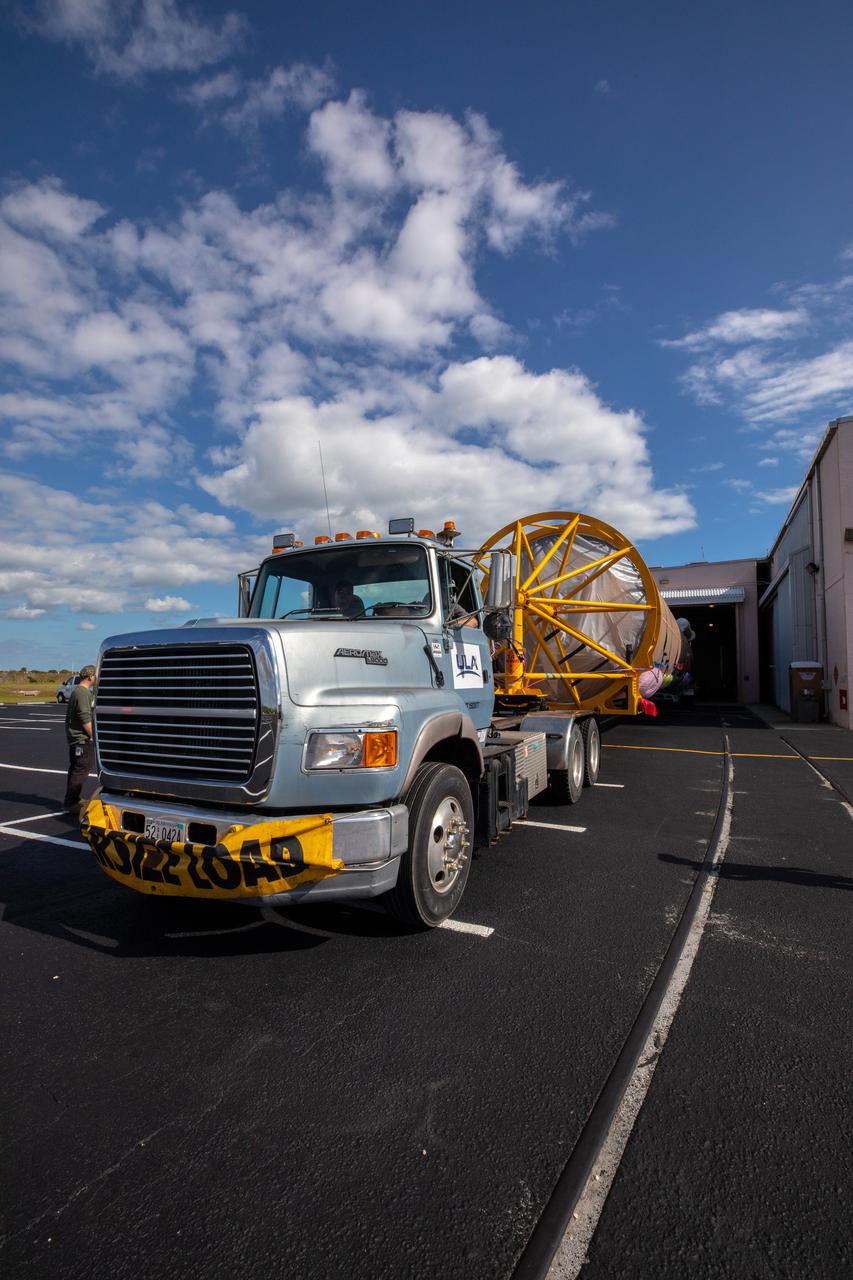
The United Launch Alliance Atlas V booster that will launch the Solar Orbiter spacecraft is delivered by truck to the Atlas Spaceflight Operations Center at Florida’s Cape Canaveral Air Force Station on Nov. 21, 2019. The company’s Rocketship vessel carried the booster from its manufacturing facility in Decatur, Alabama, to Port Canaveral. Solar Orbiter is a European Space Agency mission with strong NASA participation. The mission aims to study the Sun, its outer atmosphere and solar winds. The spacecraft will provide the first images of the Sun’s poles. NASA’s Launch Services Program based at Kennedy is managing the launch. Liftoff is scheduled for Feb. 5, 2020, from Launch Complex 41 at Cape Canaveral Air Force Station aboard the ULA Atlas V rocket.
The United Launch Alliance Atlas V booster that will launch the Solar Orbiter spacecraft is removed from the company’s Rocketship vessel upon its arrival at Florida’s Port Canaveral on Nov. 21, 2019. Once offloaded, the booster was transported to the Atlas Spaceflight Operations Center at nearby Cape Canaveral Air Force Station. Solar Orbiter is a European Space Agency mission with strong NASA participation. The mission aims to study the Sun, its outer atmosphere and solar winds. The spacecraft will provide the first images of the Sun’s poles. NASA’s Launch Services Program based at Kennedy is managing the launch. Liftoff is scheduled for Feb. 5, 2020, from Launch Complex 41 at Cape Canaveral Air Force Station aboard the ULA Atlas V rocket.
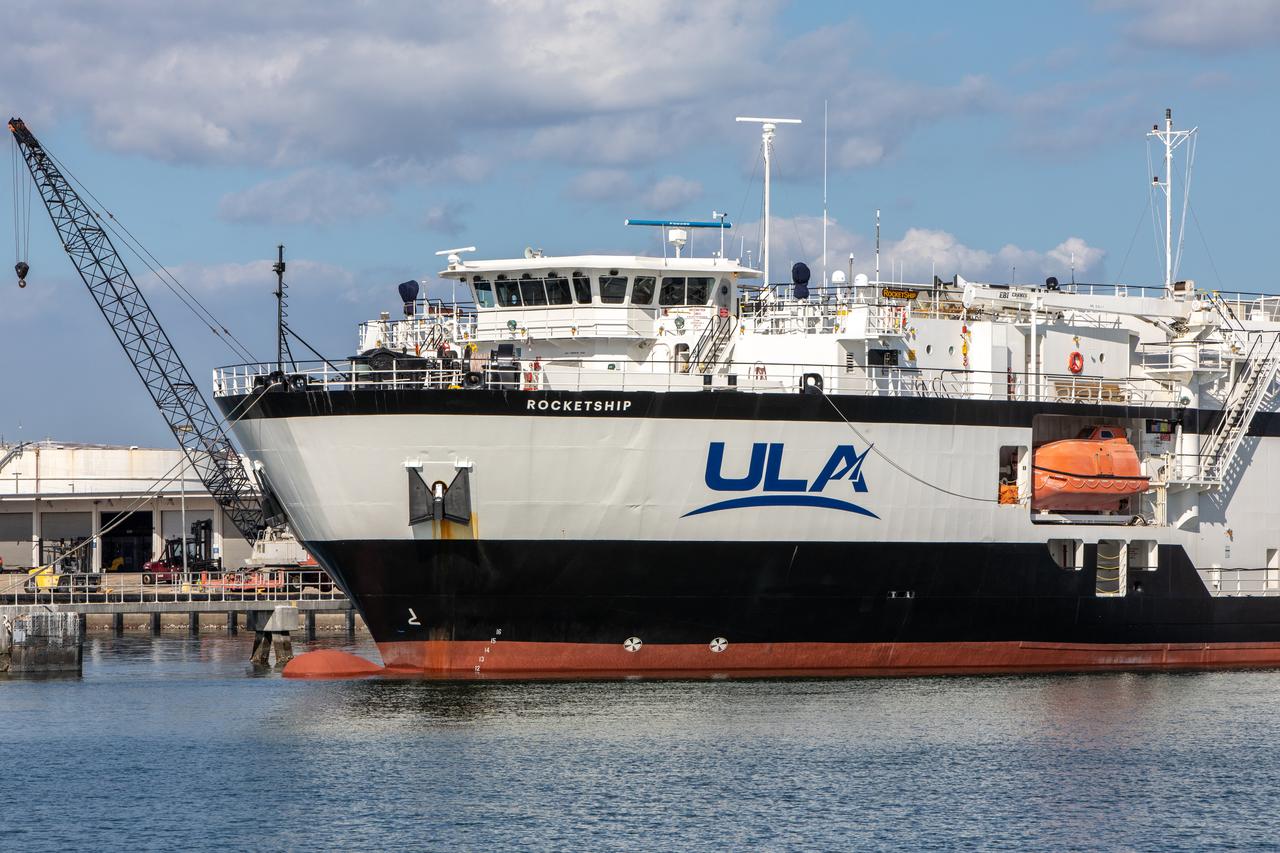
The United Launch Alliance cargo vessel, Rocketship, is docked at Florida’s Port Canaveral on Nov. 21, 2019, after arriving with the Atlas V booster and Centaur upper stage that will launch the Solar Orbiter spacecraft. Once offloaded, the booster was transported to the Atlas Spaceflight Operations Center and the Centaur was transported to a separate facility, both at nearby Cape Canaveral Air Force Station. Solar Orbiter is a European Space Agency mission with strong NASA participation. The mission aims to study the Sun, its outer atmosphere and solar winds. The spacecraft will provide the first images of the Sun’s poles. NASA’s Launch Services Program based at Kennedy is managing the launch. Liftoff is scheduled for Feb. 5, 2020, from Cape Canaveral Air Force Station aboard the ULA Atlas V rocket.
The United Launch Alliance Atlas V booster that will launch the Solar Orbiter spacecraft is delivered by truck to the Atlas Spaceflight Operations Center at Florida’s Cape Canaveral Air Force Station on Nov. 21, 2019. The company’s Rocketship vessel carried the booster from its manufacturing facility in Decatur, Alabama, to Port Canaveral. Solar Orbiter is a European Space Agency mission with strong NASA participation. The mission aims to study the Sun, its outer atmosphere and solar winds. The spacecraft will provide the first images of the Sun’s poles. NASA’s Launch Services Program based at Kennedy is managing the launch. Liftoff is scheduled for Feb. 5, 2020, from Launch Complex 41 at Cape Canaveral Air Force Station aboard the ULA Atlas V rocket.
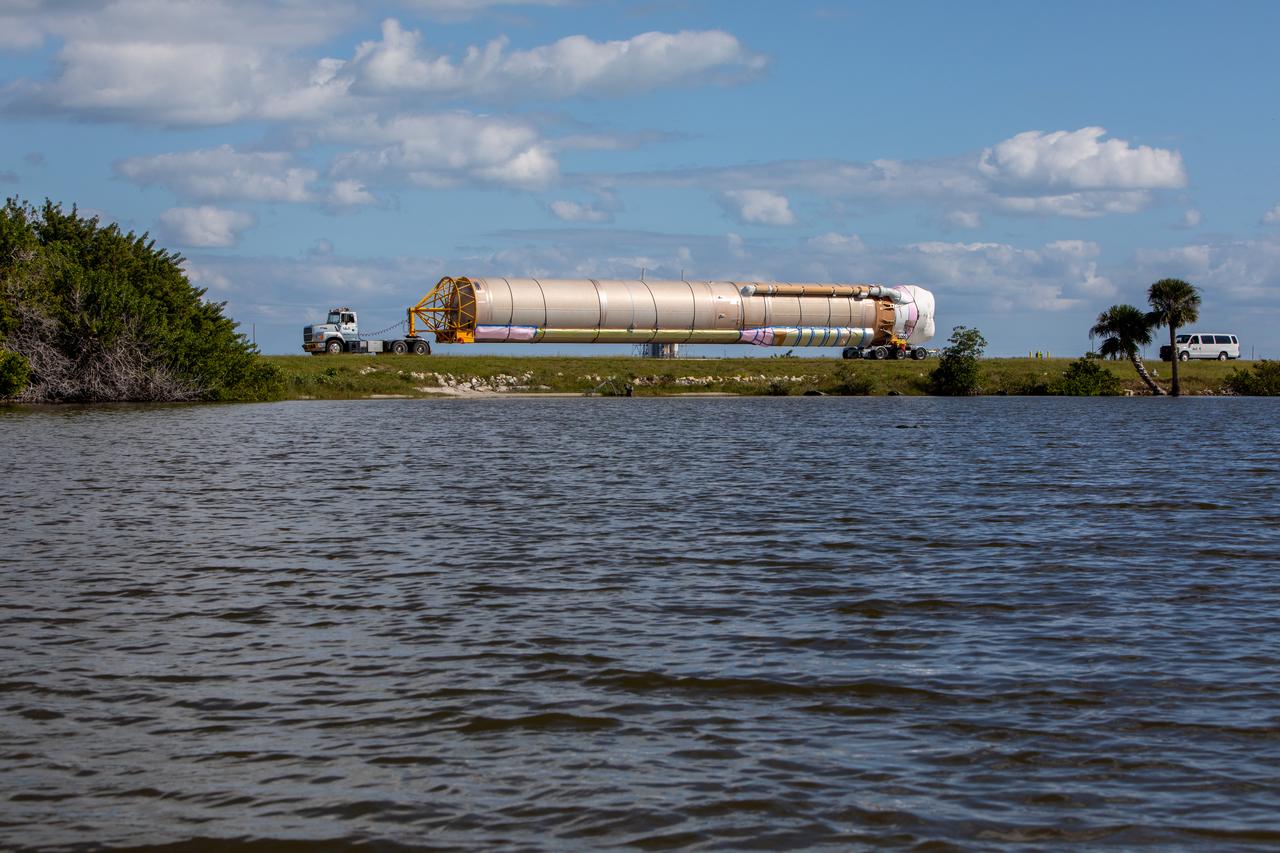
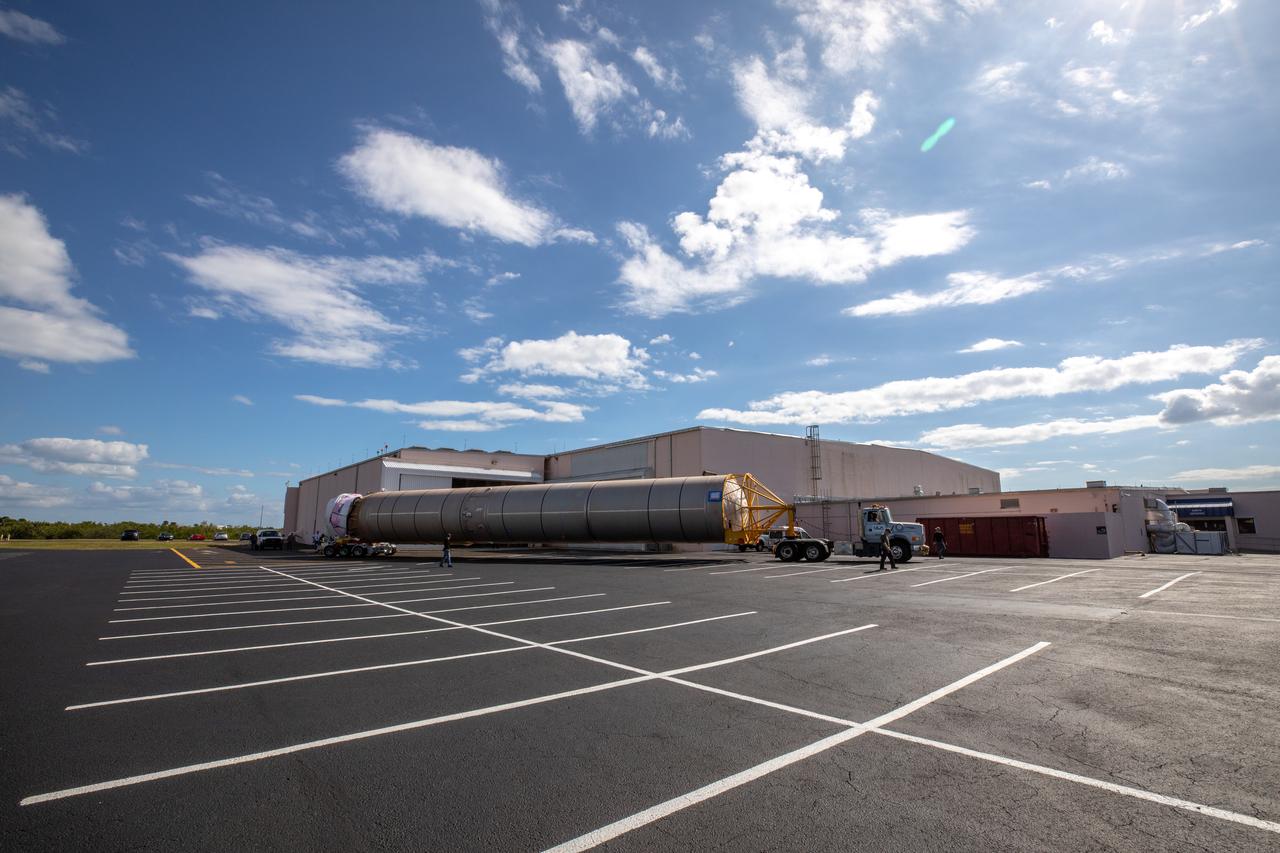
The United Launch Alliance Atlas V booster that will launch the Solar Orbiter spacecraft is transported by truck from Port Canaveral to the Atlas Spaceflight Operations Center at Florida’s Cape Canaveral Air Force Station on Nov. 21, 2019. The company’s Rocketship vessel carried the booster from its manufacturing facility in Decatur, Alabama, to the port. Solar Orbiter is a European Space Agency mission with strong NASA participation. The mission aims to study the Sun, its outer atmosphere and solar winds. The spacecraft will provide the first images of the Sun’s poles. NASA’s Launch Services Program based at Kennedy is managing the launch. Liftoff is scheduled for Feb. 5, 2020, from Launch Complex 41 at Cape Canaveral Air Force Station aboard the ULA Atlas V rocket.
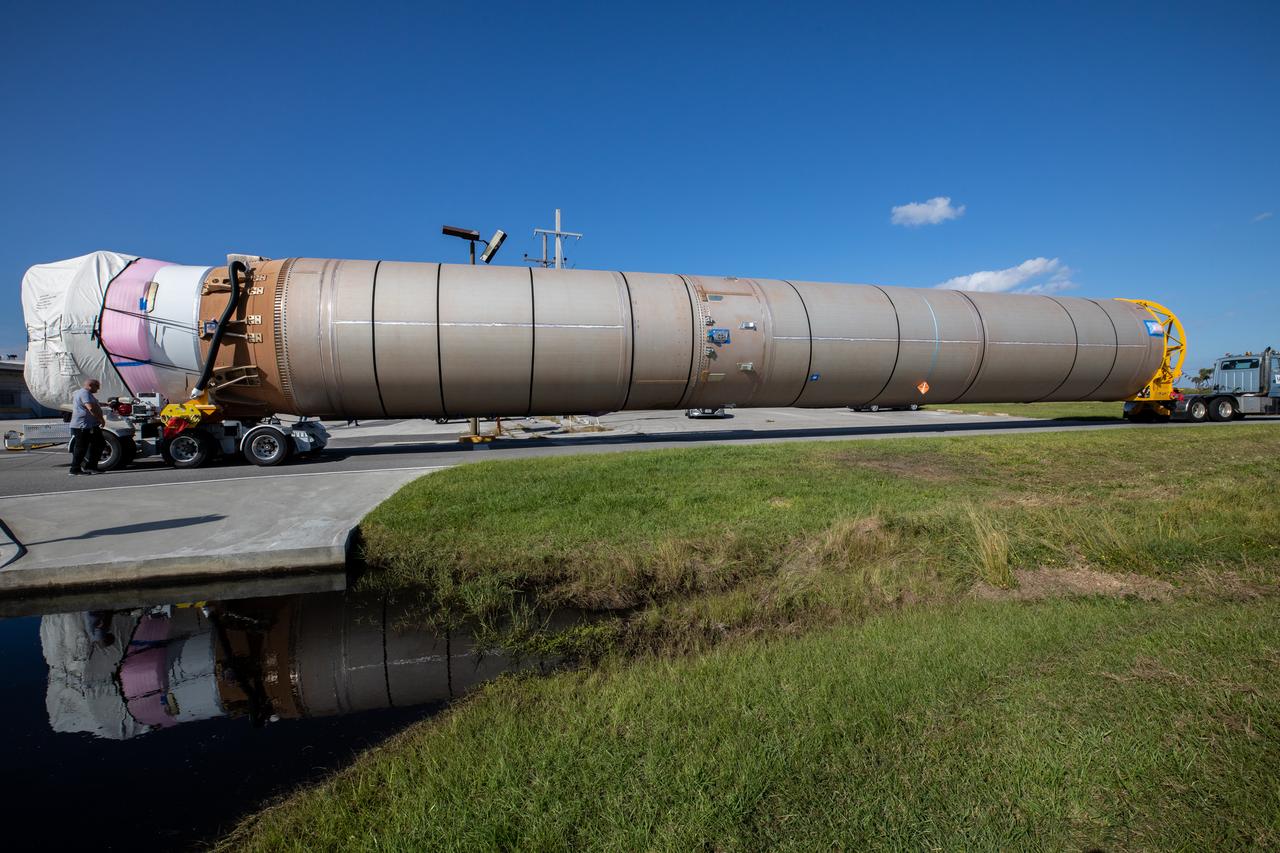
The United Launch Alliance Atlas V booster that will launch the Solar Orbiter spacecraft is transported by truck from Port Canaveral to the Atlas Spaceflight Operations Center at Florida’s Cape Canaveral Air Force Station on Nov. 21, 2019. The company’s Rocketship vessel carried the booster from its manufacturing facility in Decatur, Alabama, to the port. Solar Orbiter is a European Space Agency mission with strong NASA participation. The mission aims to study the Sun, its outer atmosphere and solar winds. The spacecraft will provide the first images of the Sun’s poles. NASA’s Launch Services Program based at Kennedy is managing the launch. Liftoff is scheduled for Feb. 5, 2020, from Launch Complex 41 at Cape Canaveral Air Force Station aboard the ULA Atlas V rocket.
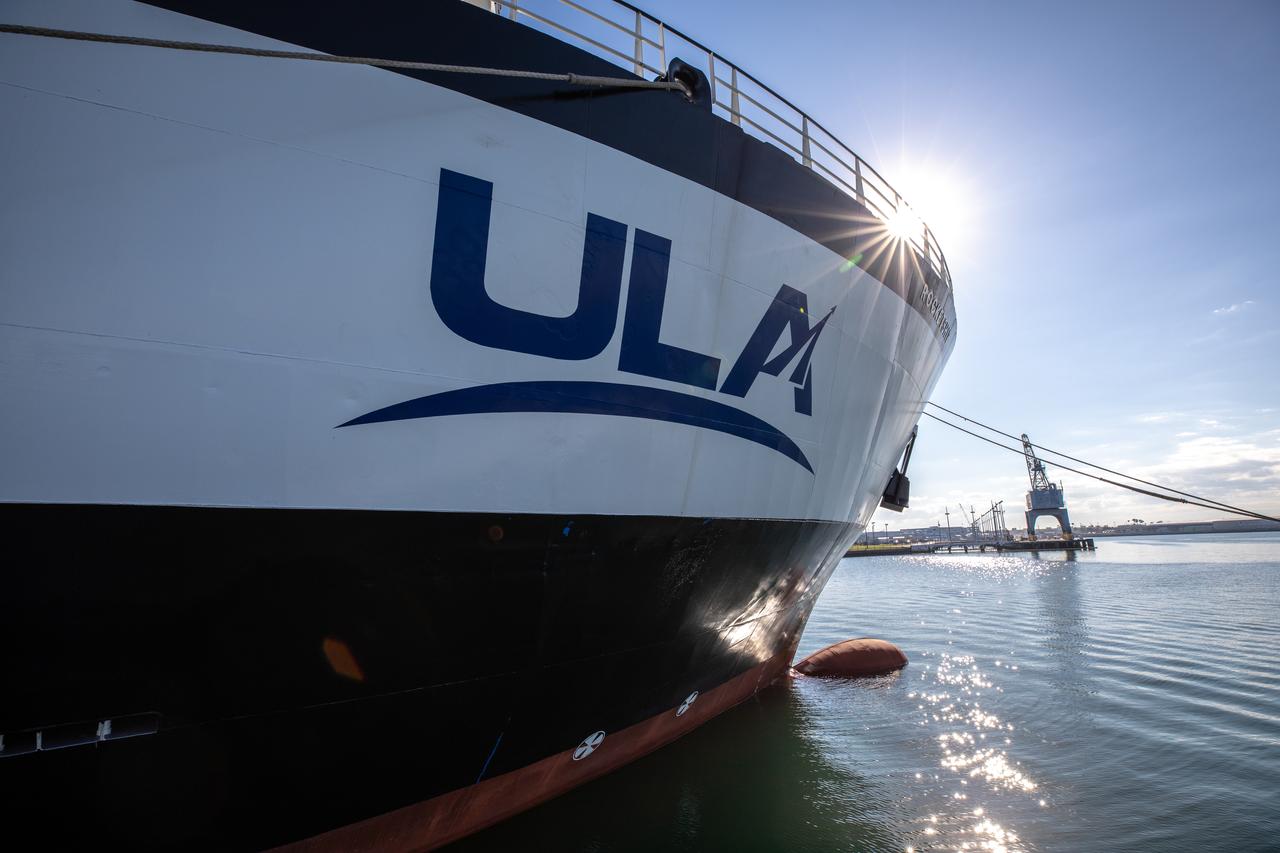
The United Launch Alliance cargo vessel, Rocketship, is docked at Florida’s Port Canaveral on Nov. 21, 2019, after arriving with the Atlas V booster and Centaur upper stage that will launch the Solar Orbiter spacecraft. Once offloaded, the booster was transported to the Atlas Spaceflight Operations Center and the Centaur was transported to a separate facility, both at nearby Cape Canaveral Air Force Station. Solar Orbiter is a European Space Agency mission with strong NASA participation. The mission aims to study the Sun, its outer atmosphere and solar winds. The spacecraft will provide the first images of the Sun’s poles. NASA’s Launch Services Program based at Kennedy is managing the launch. Liftoff is scheduled for Feb. 5, 2020, from Cape Canaveral Air Force Station aboard the ULA Atlas V rocket.
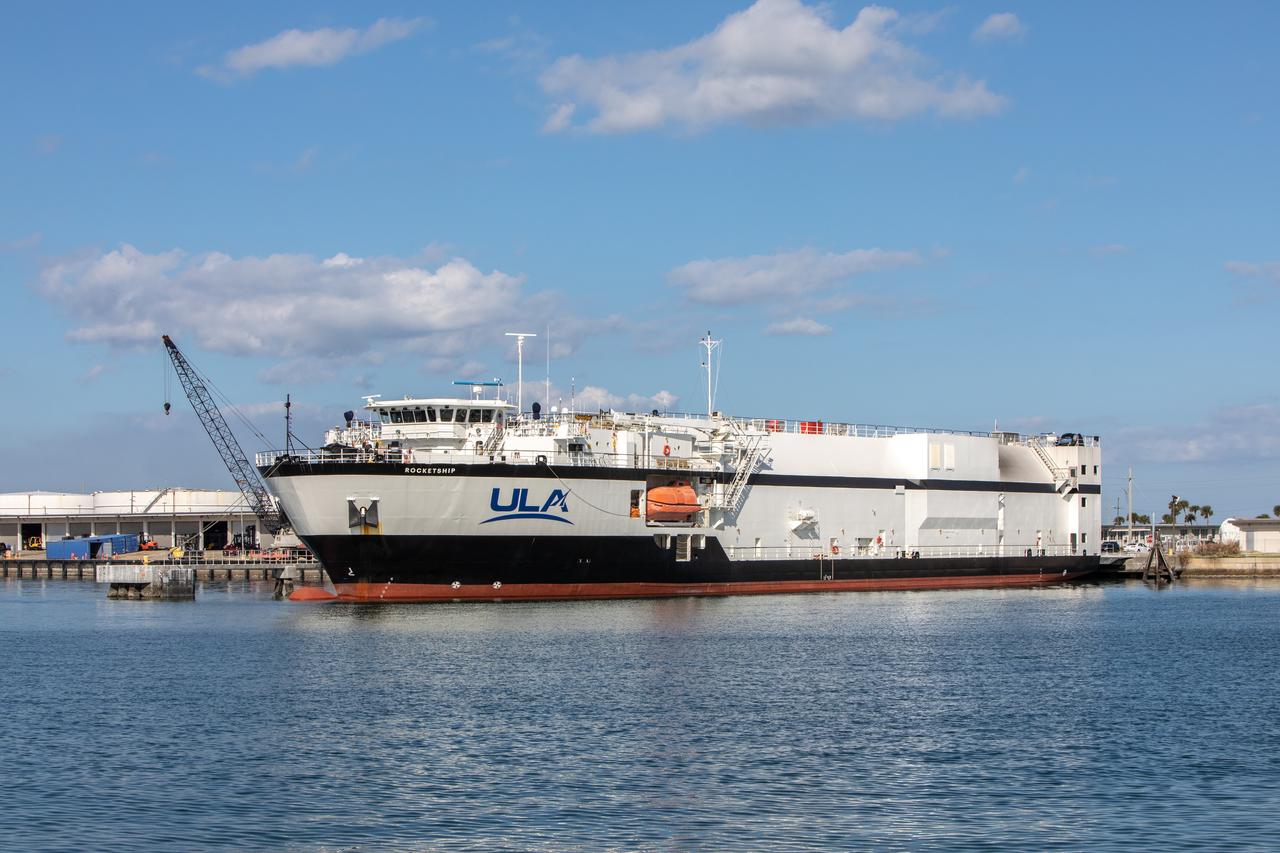
The United Launch Alliance cargo vessel, Rocketship, is docked at Florida’s Port Canaveral on Nov. 21, 2019, after arriving with the Atlas V booster and Centaur upper stage that will launch the Solar Orbiter spacecraft. Once offloaded, the booster was transported to the Atlas Spaceflight Operations Center and the Centaur was transported to a separate facility, both at nearby Cape Canaveral Air Force Station. Solar Orbiter is a European Space Agency mission with strong NASA participation. The mission aims to study the Sun, its outer atmosphere and solar winds. The spacecraft will provide the first images of the Sun’s poles. NASA’s Launch Services Program based at Kennedy is managing the launch. Liftoff is scheduled for Feb. 5, 2020, from Cape Canaveral Air Force Station aboard the ULA Atlas V rocket.
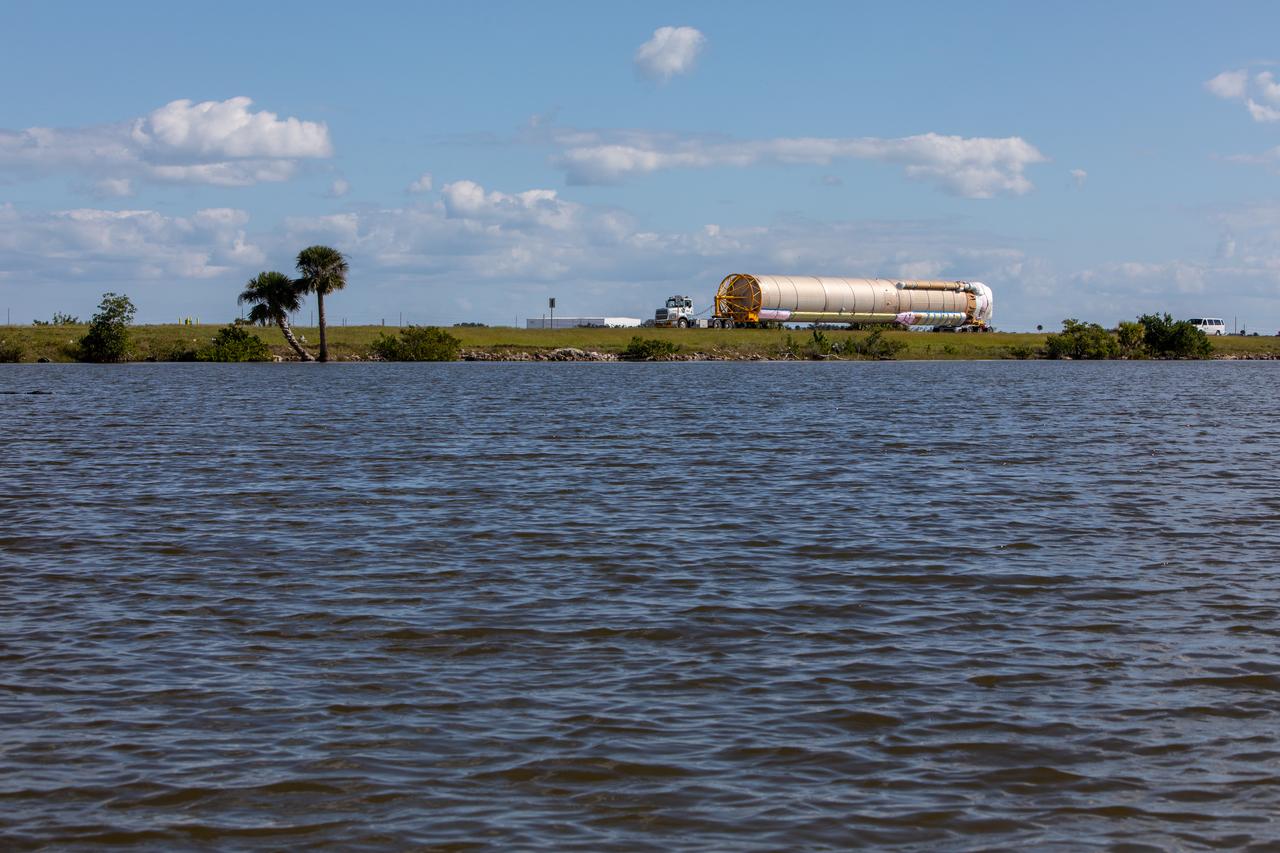
The United Launch Alliance Atlas V booster that will launch the Solar Orbiter spacecraft is transported by truck from Port Canaveral to the Atlas Spaceflight Operations Center at Florida’s Cape Canaveral Air Force Station on Nov. 21, 2019. The company’s Rocketship vessel carried the booster from its manufacturing facility in Decatur, Alabama, to the port. Solar Orbiter is a European Space Agency mission with strong NASA participation. The mission aims to study the Sun, its outer atmosphere and solar winds. The spacecraft will provide the first images of the Sun’s poles. NASA’s Launch Services Program based at Kennedy is managing the launch. Liftoff is scheduled for Feb. 5, 2020, from Launch Complex 41 at Cape Canaveral Air Force Station aboard the ULA Atlas V rocket.
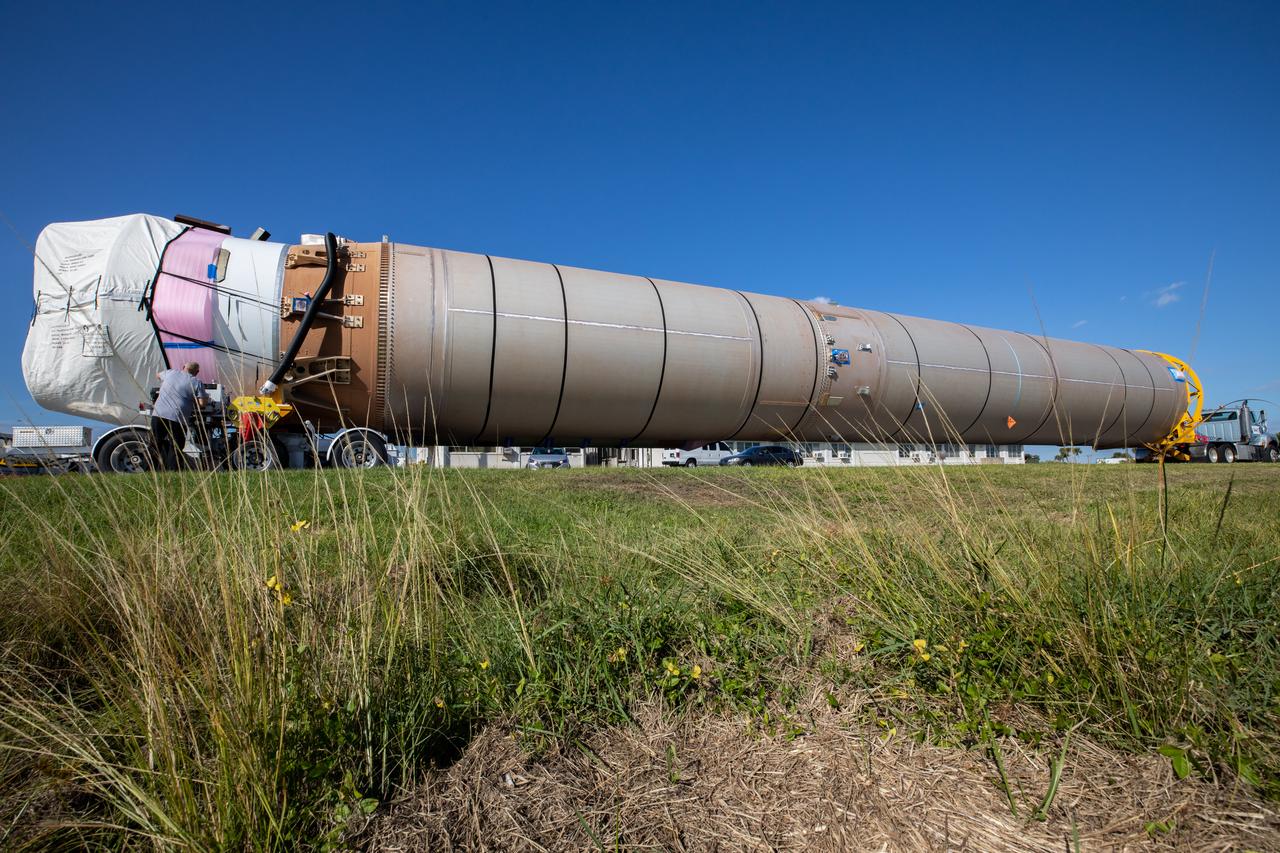
The United Launch Alliance Atlas V booster that will launch the Solar Orbiter spacecraft is transported by truck from Port Canaveral to the Atlas Spaceflight Operations Center at Florida’s Cape Canaveral Air Force Station on Nov. 21, 2019. The company’s Rocketship vessel carried the booster from its manufacturing facility in Decatur, Alabama, to the port. Solar Orbiter is a European Space Agency mission with strong NASA participation. The mission aims to study the Sun, its outer atmosphere and solar winds. The spacecraft will provide the first images of the Sun’s poles. NASA’s Launch Services Program based at Kennedy is managing the launch. Liftoff is scheduled for Feb. 5, 2020, from Launch Complex 41 at Cape Canaveral Air Force Station aboard the ULA Atlas V rocket.
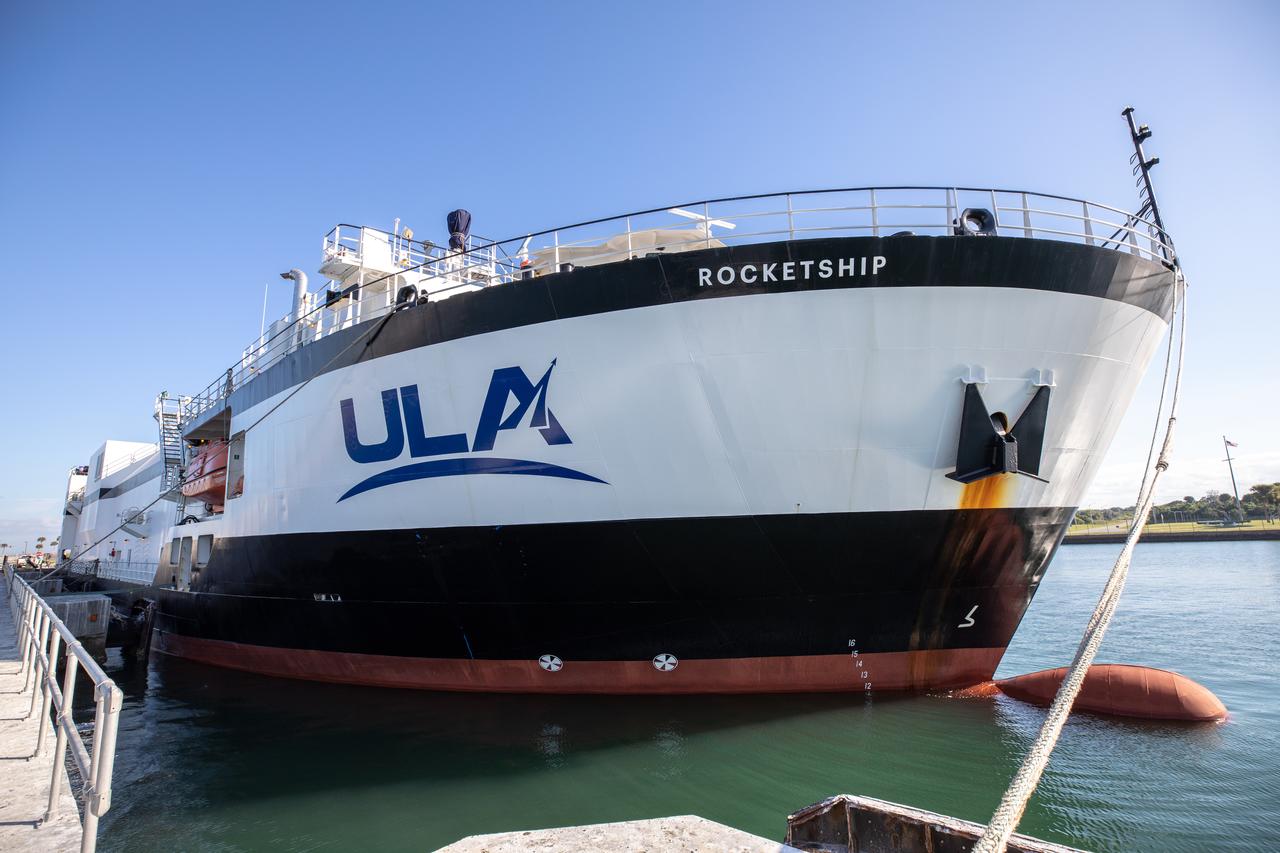
The United Launch Alliance cargo vessel, Rocketship, is docked at Florida’s Port Canaveral on Nov. 21, 2019, after arriving with the Atlas V booster and Centaur upper stage that will launch the Solar Orbiter spacecraft. Once offloaded, the booster was transported to the Atlas Spaceflight Operations Center and the Centaur was transported to a separate facility, both at nearby Cape Canaveral Air Force Station. Solar Orbiter is a European Space Agency mission with strong NASA participation. The mission aims to study the Sun, its outer atmosphere and solar winds. The spacecraft will provide the first images of the Sun’s poles. NASA’s Launch Services Program based at Kennedy is managing the launch. Liftoff is scheduled for Feb. 5, 2020, from Cape Canaveral Air Force Station aboard the ULA Atlas V rocket.
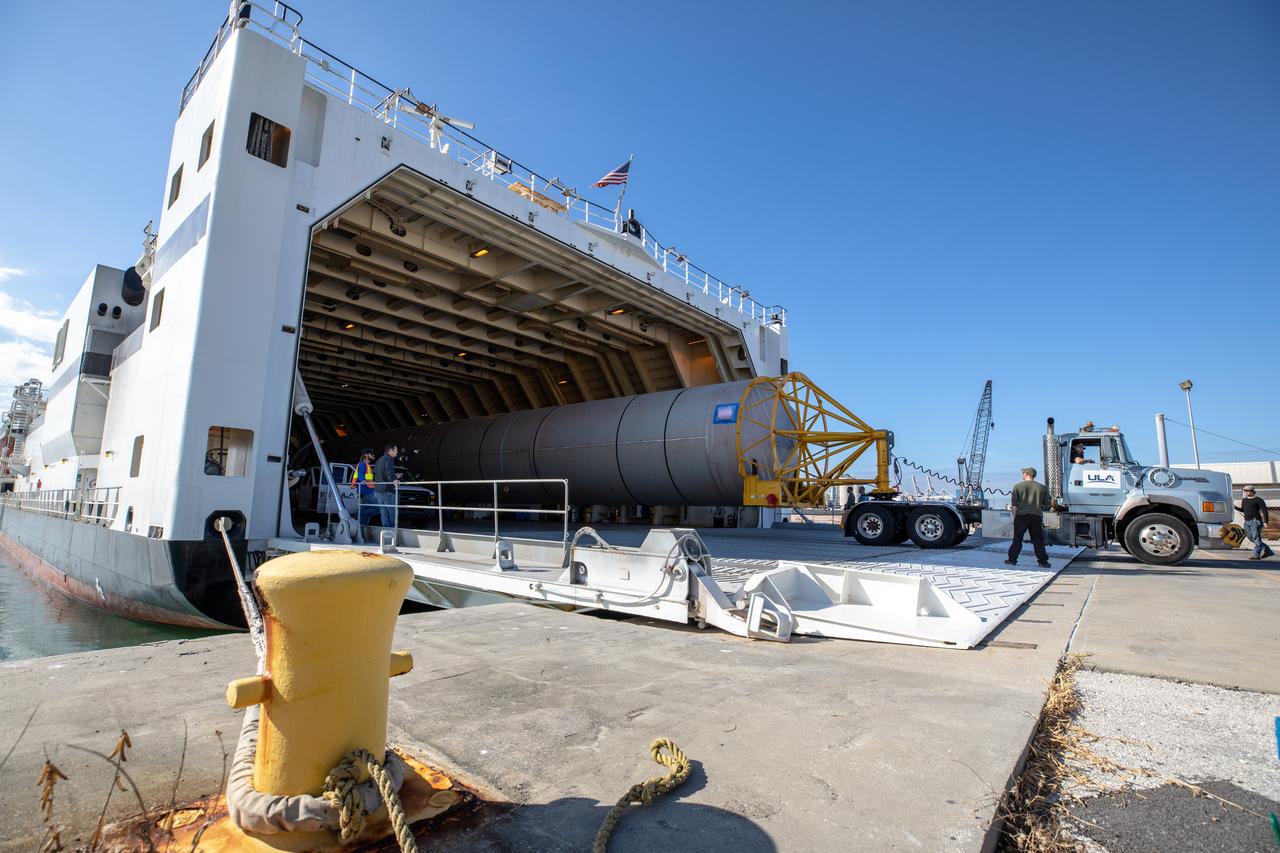
The United Launch Alliance Atlas V booster that will launch the Solar Orbiter spacecraft is removed from the company’s Rocketship vessel upon its arrival at Florida’s Port Canaveral on Nov. 21, 2019. Once offloaded, the booster was transported to the Atlas Spaceflight Operations Center at nearby Cape Canaveral Air Force Station. Solar Orbiter is a European Space Agency mission with strong NASA participation. The mission aims to study the Sun, its outer atmosphere and solar winds. The spacecraft will provide the first images of the Sun’s poles. NASA’s Launch Services Program based at Kennedy is managing the launch. Liftoff is scheduled for Feb. 5, 2020, from Launch Complex 41 at Cape Canaveral Air Force Station aboard the ULA Atlas V rocket.
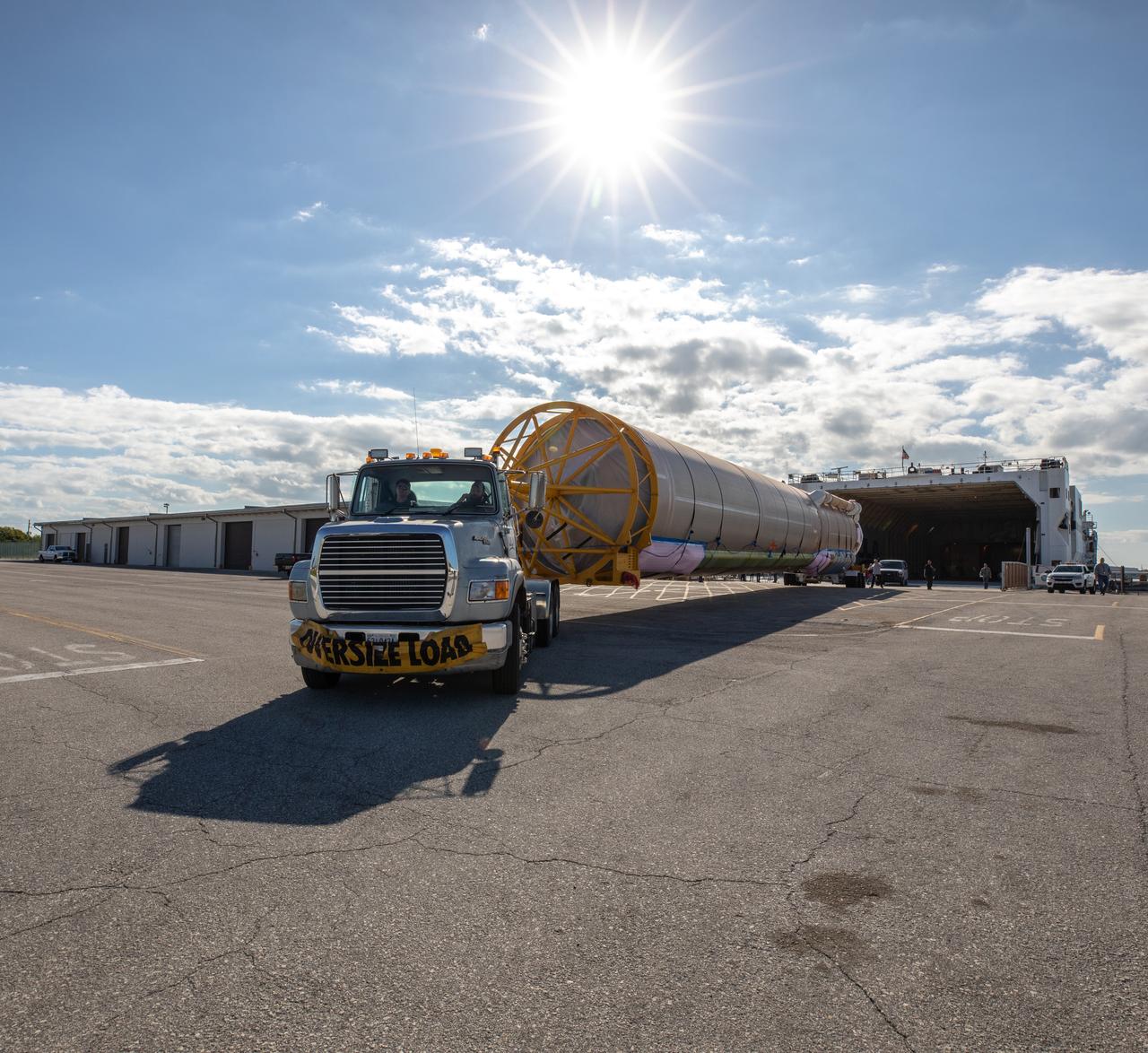
The United Launch Alliance Atlas V booster that will launch the Solar Orbiter spacecraft is removed from the company’s Rocketship vessel upon its arrival at Florida’s Port Canaveral on Nov. 21, 2019. Once offloaded, the booster was transported to the Atlas Spaceflight Operations Center at nearby Cape Canaveral Air Force Station. Solar Orbiter is a European Space Agency mission with strong NASA participation. The mission aims to study the Sun, its outer atmosphere and solar winds. The spacecraft will provide the first images of the Sun’s poles. NASA’s Launch Services Program based at Kennedy is managing the launch. Liftoff is scheduled for Feb. 5, 2020, from Launch Complex 41 at Cape Canaveral Air Force Station aboard the ULA Atlas V rocket.
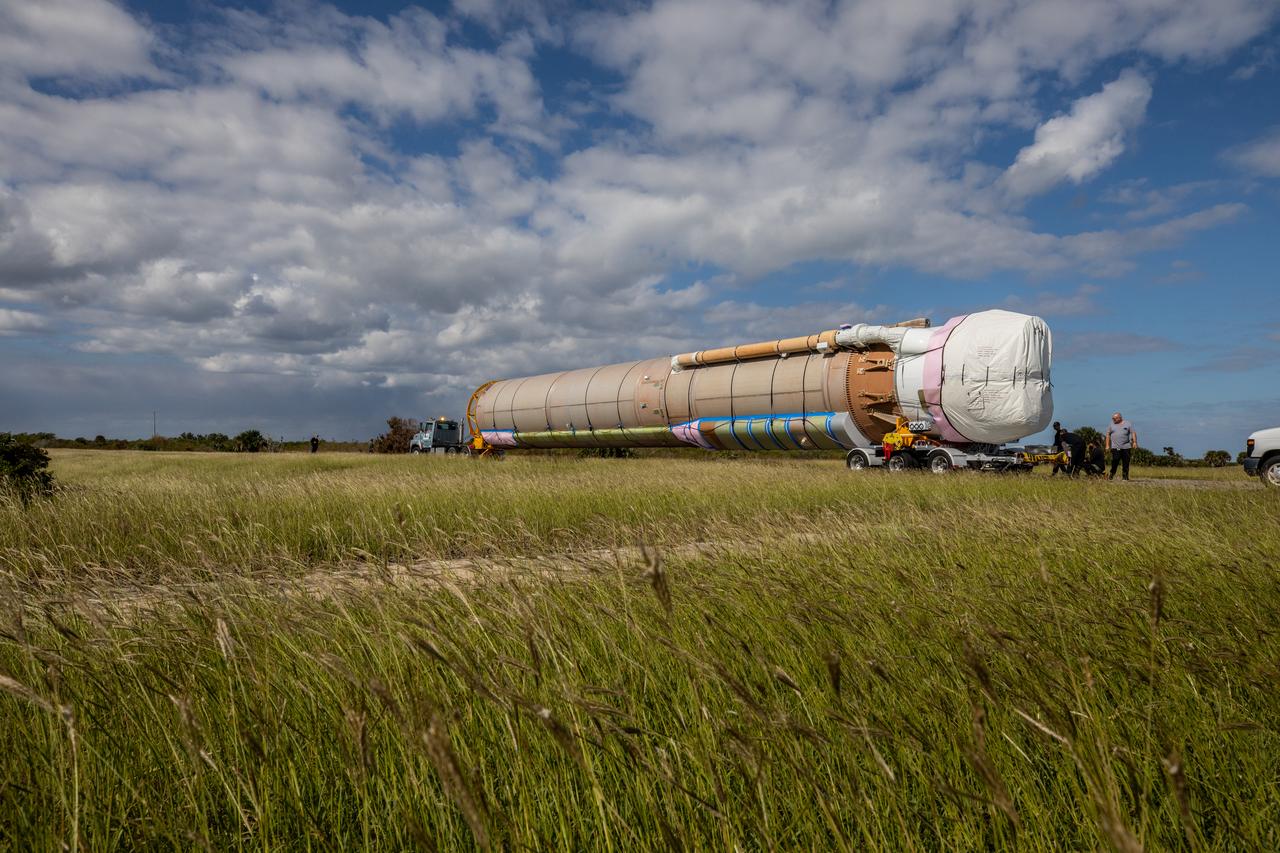
The United Launch Alliance Atlas V booster that will launch the Solar Orbiter spacecraft is transported by truck from Port Canaveral to the Atlas Spaceflight Operations Center at Florida’s Cape Canaveral Air Force Station on Nov. 21, 2019. The company’s Rocketship vessel carried the booster from its manufacturing facility in Decatur, Alabama, to the port. Solar Orbiter is a European Space Agency mission with strong NASA participation. The mission aims to study the Sun, its outer atmosphere and solar winds. The spacecraft will provide the first images of the Sun’s poles. NASA’s Launch Services Program based at Kennedy is managing the launch. Liftoff is scheduled for Feb. 5, 2020, from Launch Complex 41 at Cape Canaveral Air Force Station aboard the ULA Atlas V rocket.
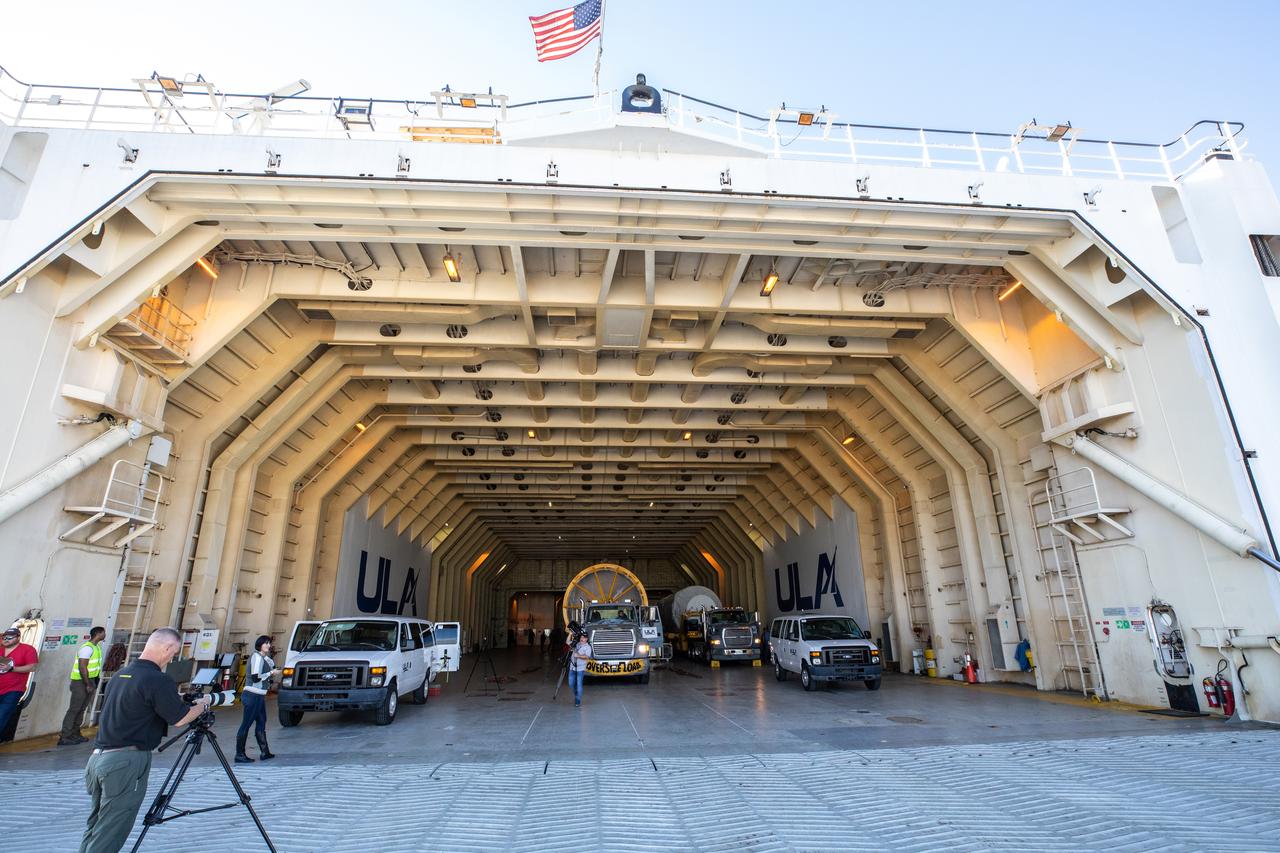
The United Launch Alliance cargo vessel, Rocketship, is opened at Florida’s Port Canaveral on Nov. 21, 2019, carrying the Atlas V booster and Centaur upper stage that will launch the Solar Orbiter spacecraft. Once offloaded, the booster was transported to the Atlas Spaceflight Operations Center and the Centaur was transported to a separate facility, both at nearby Cape Canaveral Air Force Station. Solar Orbiter is a European Space Agency mission with strong NASA participation. The mission aims to study the Sun, its outer atmosphere and solar winds. The spacecraft will provide the first images of the Sun’s poles. NASA’s Launch Services Program based at Kennedy is managing the launch. Liftoff is scheduled for Feb. 5, 2020, from Cape Canaveral Air Force Station aboard the ULA Atlas V rocket.
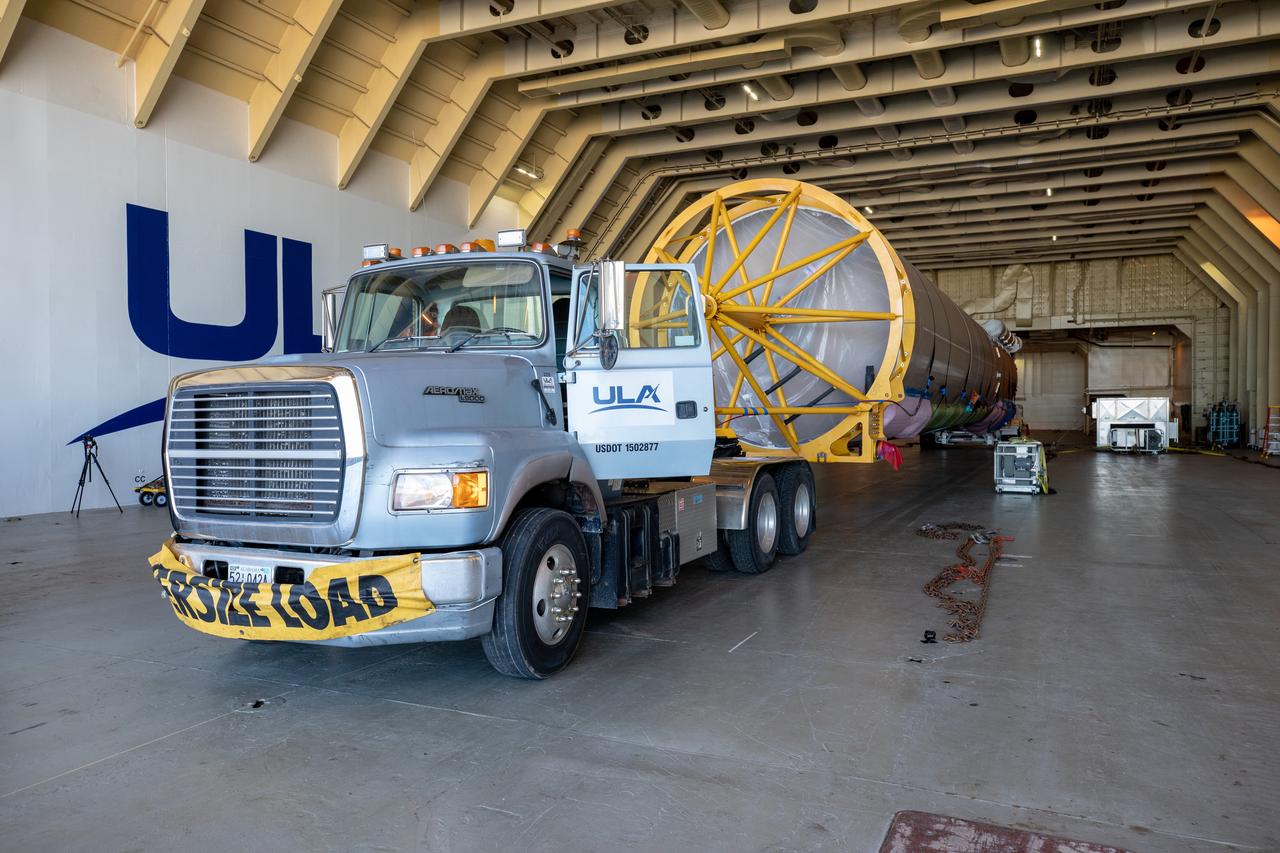
The United Launch Alliance Atlas V booster that will launch the Solar Orbiter spacecraft is removed from the company’s Rocketship vessel upon its arrival at Florida’s Port Canaveral on Nov. 21, 2019. Once offloaded, the booster was transported to the Atlas Spaceflight Operations Center at nearby Cape Canaveral Air Force Station. Solar Orbiter is a European Space Agency mission with strong NASA participation. The mission aims to study the Sun, its outer atmosphere and solar winds. The spacecraft will provide the first images of the Sun’s poles. NASA’s Launch Services Program based at Kennedy is managing the launch. Liftoff is scheduled for Feb. 5, 2020, from Launch Complex 41 at Cape Canaveral Air Force Station aboard the ULA Atlas V rocket.
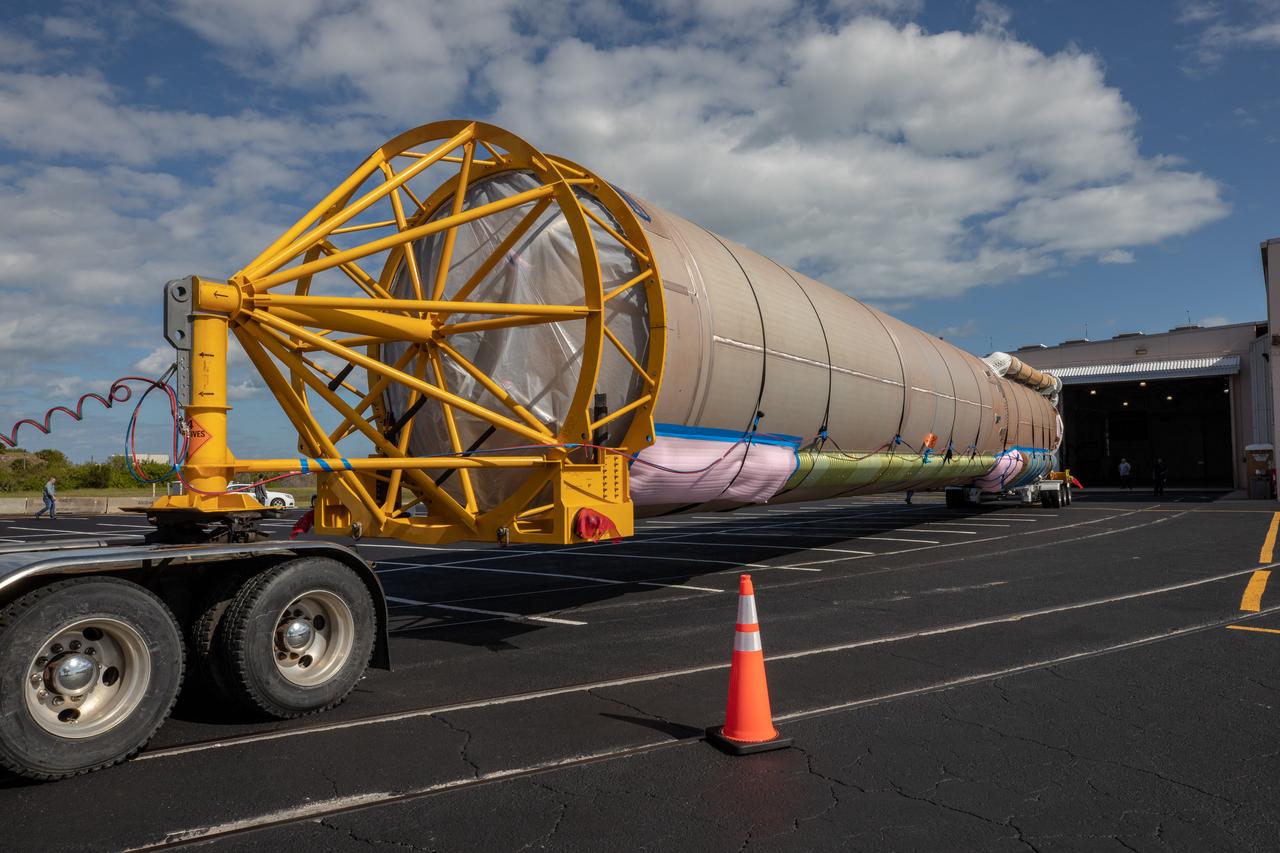
The United Launch Alliance Atlas V booster that will launch the Solar Orbiter spacecraft is delivered by truck to the Atlas Spaceflight Operations Center at Florida’s Cape Canaveral Air Force Station on Nov. 21, 2019. The company’s Rocketship vessel carried the booster from its manufacturing facility in Decatur, Alabama, to Port Canaveral. Solar Orbiter is a European Space Agency mission with strong NASA participation. The mission aims to study the Sun, its outer atmosphere and solar winds. The spacecraft will provide the first images of the Sun’s poles. NASA’s Launch Services Program based at Kennedy is managing the launch. Liftoff is scheduled for Feb. 5, 2020, from Launch Complex 41 at Cape Canaveral Air Force Station aboard the ULA Atlas V rocket.
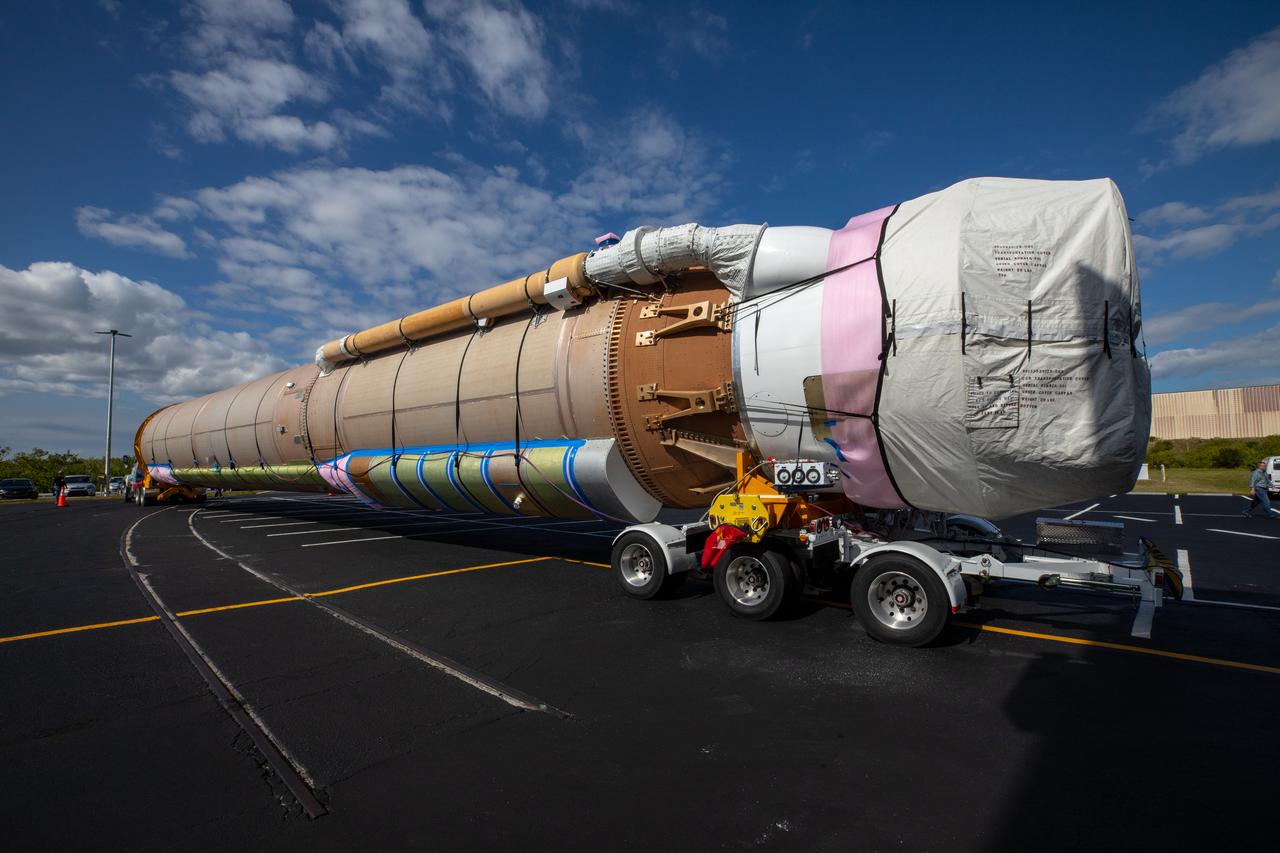
The United Launch Alliance Atlas V booster that will launch the Solar Orbiter spacecraft is delivered by truck to the Atlas Spaceflight Operations Center at Florida’s Cape Canaveral Air Force Station on Nov. 21, 2019. The company’s Rocketship vessel carried the booster from its manufacturing facility in Decatur, Alabama, to Port Canaveral. Solar Orbiter is a European Space Agency mission with strong NASA participation. The mission aims to study the Sun, its outer atmosphere and solar winds. The spacecraft will provide the first images of the Sun’s poles. NASA’s Launch Services Program based at Kennedy is managing the launch. Liftoff is scheduled for Feb. 5, 2020, from Launch Complex 41 at Cape Canaveral Air Force Station aboard the ULA Atlas V rocket.
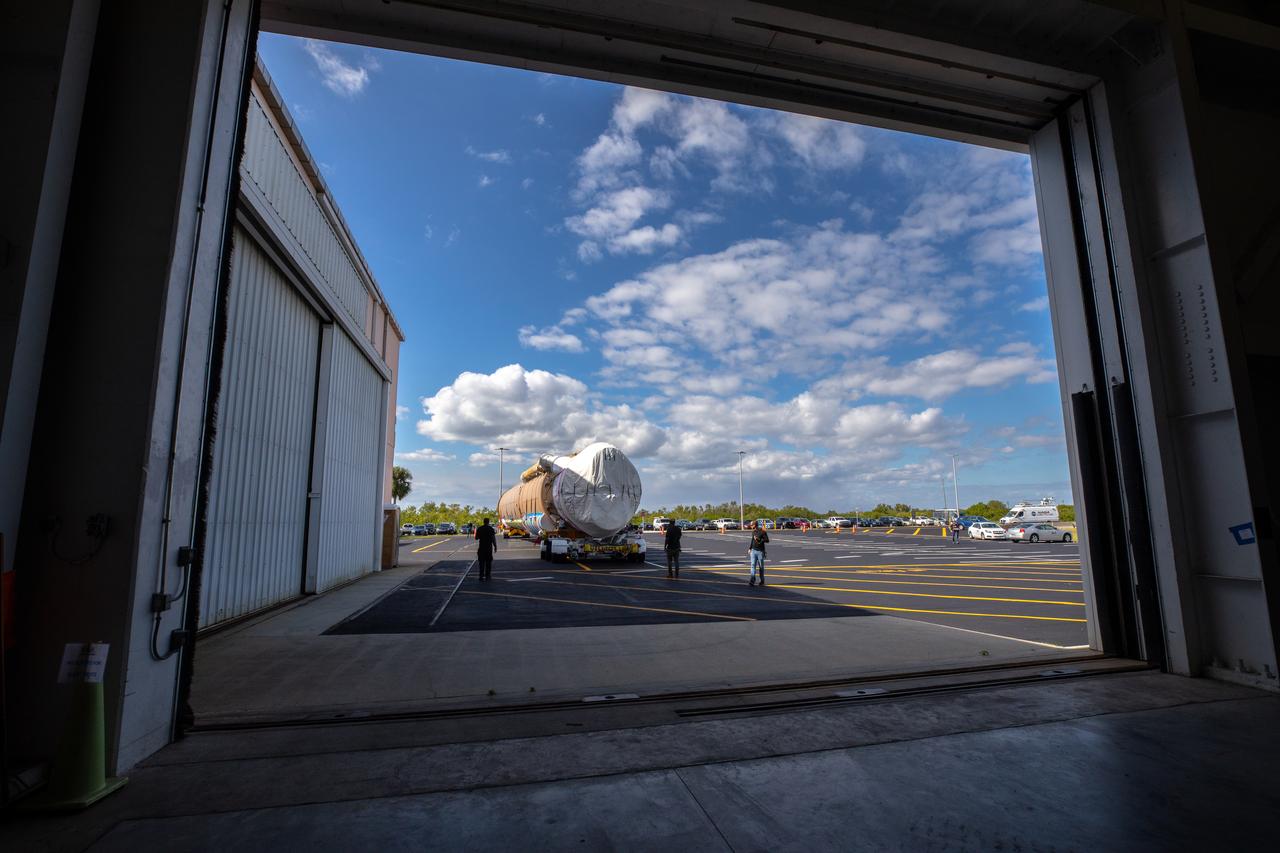
The United Launch Alliance Atlas V booster that will launch the Solar Orbiter spacecraft is delivered by truck to the Atlas Spaceflight Operations Center at Florida’s Cape Canaveral Air Force Station on Nov. 21, 2019. The company’s Rocketship vessel carried the booster from its manufacturing facility in Decatur, Alabama, to Port Canaveral. Solar Orbiter is a European Space Agency mission with strong NASA participation. The mission aims to study the Sun, its outer atmosphere and solar winds. The spacecraft will provide the first images of the Sun’s poles. NASA’s Launch Services Program based at Kennedy is managing the launch. Liftoff is scheduled for Feb. 5, 2020, from Launch Complex 41 at Cape Canaveral Air Force Station aboard the ULA Atlas V rocket.
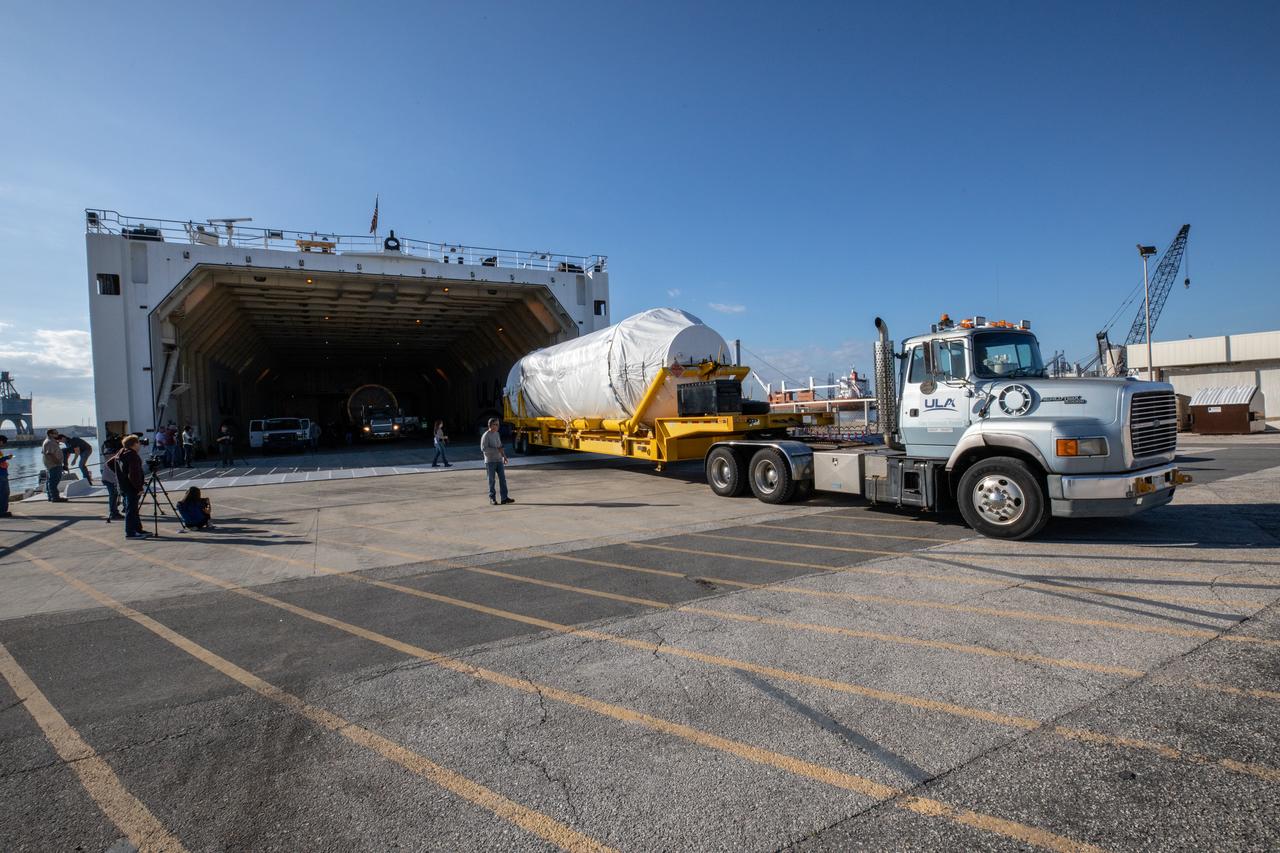
The United Launch Alliance Centaur upper stage that will help launch the Solar Orbiter spacecraft is removed from the company’s Rocketship vessel upon its arrival at Florida’s Port Canaveral on Nov. 21, 2019. Also onboard is the Atlas V rocket’s first-stage booster. Once offloaded, the booster was transported to the Atlas Spaceflight Operations Center and the Centaur was transported to a separate facility, both at nearby Cape Canaveral Air Force Station. Solar Orbiter is a European Space Agency mission with strong NASA participation. The mission aims to study the Sun, its outer atmosphere and solar winds. The spacecraft will provide the first images of the Sun’s poles. NASA’s Launch Services Program based at Kennedy is managing the launch. Liftoff is scheduled for Feb. 5, 2020, from Launch Complex 41 at Cape Canaveral Air Force Station aboard the ULA Atlas V rocket.
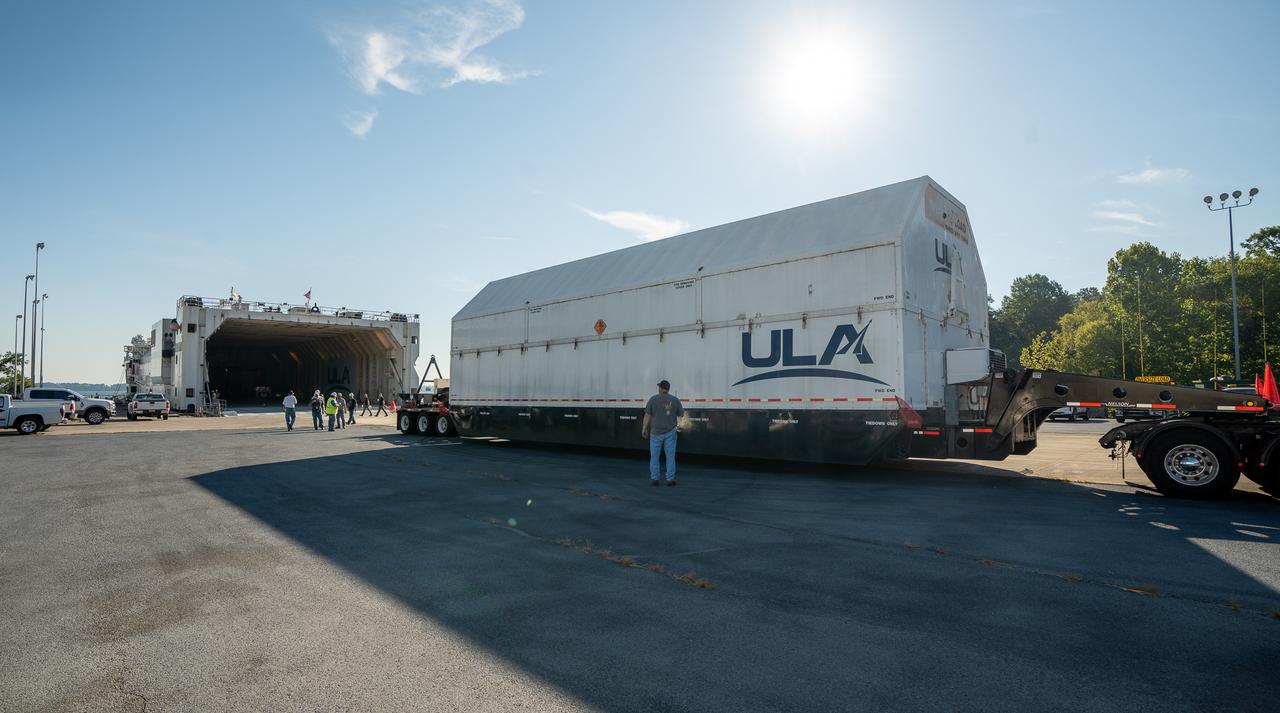
These images and videos show how crews in Alabama prepared the ICPS (interim cryogenic propulsion stage) for NASA’s SLS (Space Launch System) rocket for shipment to Florida between July 29-31. The ICPS in the photos and videos will help power NASA’s Artemis III mission to the Moon. The SLS upper stage is manufactured by United Launch Alliance at its facility in Decatur. Its RL10 engine is produced by Aerojet Rocketdyne, the SLS engines lead contractor, in West Palm Beach, Florida. ULA is working with Boeing, the SLS core stage and exploration upper stage lead contractor, to develop ICPS. ULA’s R/S RocketShip is transporting the flight hardware to its sister facility in Florida near NASA’s Kennedy Space Center for final checkouts. The ICPS for Artemis III is the last of its kind as SLS transitions to its next, more powerful Block 1B configuration with an upgraded upper stage beginning with Artemis IV. NASA is working to land the first woman and first person of color on the Moon under Artemis. SLS is part of NASA’s backbone for deep space exploration, along with Orion and the Gateway in orbit around the Moon. SLS is the only rocket that can send Orion, astronauts, and supplies to the Moon in a single mission.
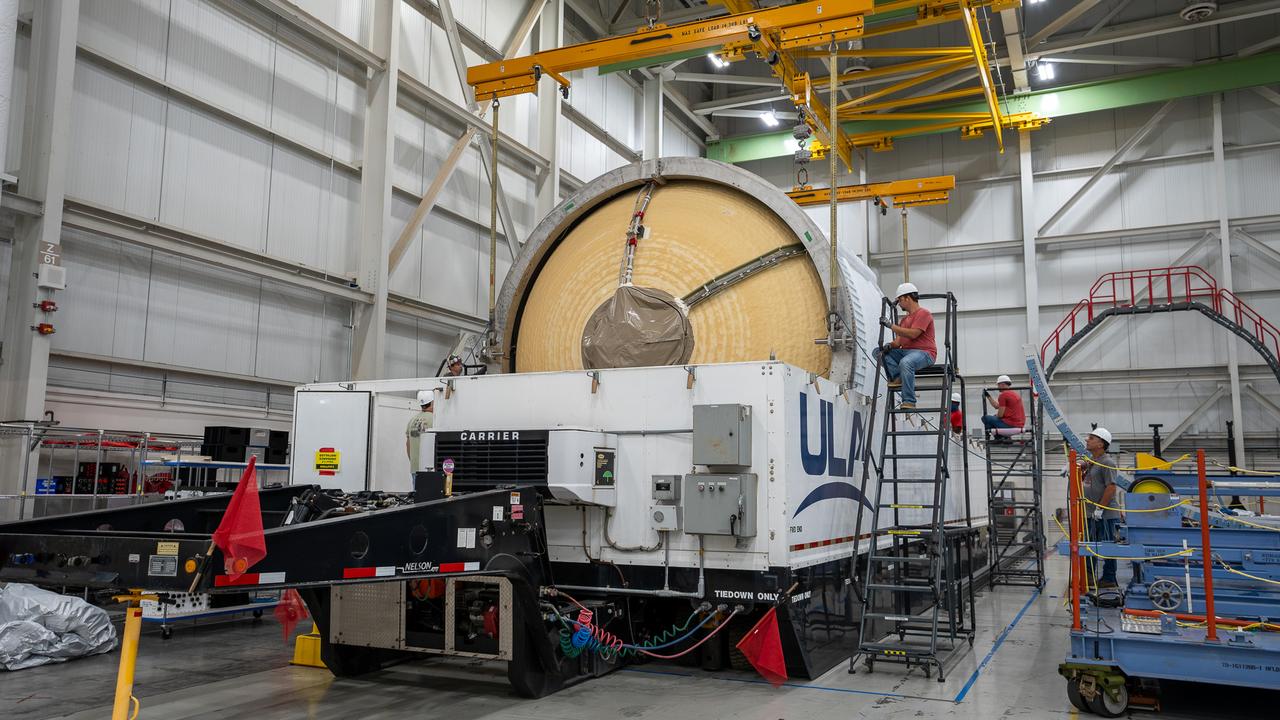
These images and videos show how crews in Alabama prepared the ICPS (interim cryogenic propulsion stage) for NASA’s SLS (Space Launch System) rocket for shipment to Florida between July 29-31. The ICPS in the photos and videos will help power NASA’s Artemis III mission to the Moon. The SLS upper stage is manufactured by United Launch Alliance at its facility in Decatur. Its RL10 engine is produced by Aerojet Rocketdyne, the SLS engines lead contractor, in West Palm Beach, Florida. ULA is working with Boeing, the SLS core stage and exploration upper stage lead contractor, to develop ICPS. ULA’s R/S RocketShip is transporting the flight hardware to its sister facility in Florida near NASA’s Kennedy Space Center for final checkouts. The ICPS for Artemis III is the last of its kind as SLS transitions to its next, more powerful Block 1B configuration with an upgraded upper stage beginning with Artemis IV. NASA is working to land the first woman and first person of color on the Moon under Artemis. SLS is part of NASA’s backbone for deep space exploration, along with Orion and the Gateway in orbit around the Moon. SLS is the only rocket that can send Orion, astronauts, and supplies to the Moon in a single mission.

These images and videos show how crews in Alabama prepared the ICPS (interim cryogenic propulsion stage) for NASA’s SLS (Space Launch System) rocket for shipment to Florida between July 29-31. The ICPS in the photos and videos will help power NASA’s Artemis III mission to the Moon. The SLS upper stage is manufactured by United Launch Alliance at its facility in Decatur. Its RL10 engine is produced by Aerojet Rocketdyne, the SLS engines lead contractor, in West Palm Beach, Florida. ULA is working with Boeing, the SLS core stage and exploration upper stage lead contractor, to develop ICPS. ULA’s R/S RocketShip is transporting the flight hardware to its sister facility in Florida near NASA’s Kennedy Space Center for final checkouts. The ICPS for Artemis III is the last of its kind as SLS transitions to its next, more powerful Block 1B configuration with an upgraded upper stage beginning with Artemis IV. NASA is working to land the first woman and first person of color on the Moon under Artemis. SLS is part of NASA’s backbone for deep space exploration, along with Orion and the Gateway in orbit around the Moon. SLS is the only rocket that can send Orion, astronauts, and supplies to the Moon in a single mission.
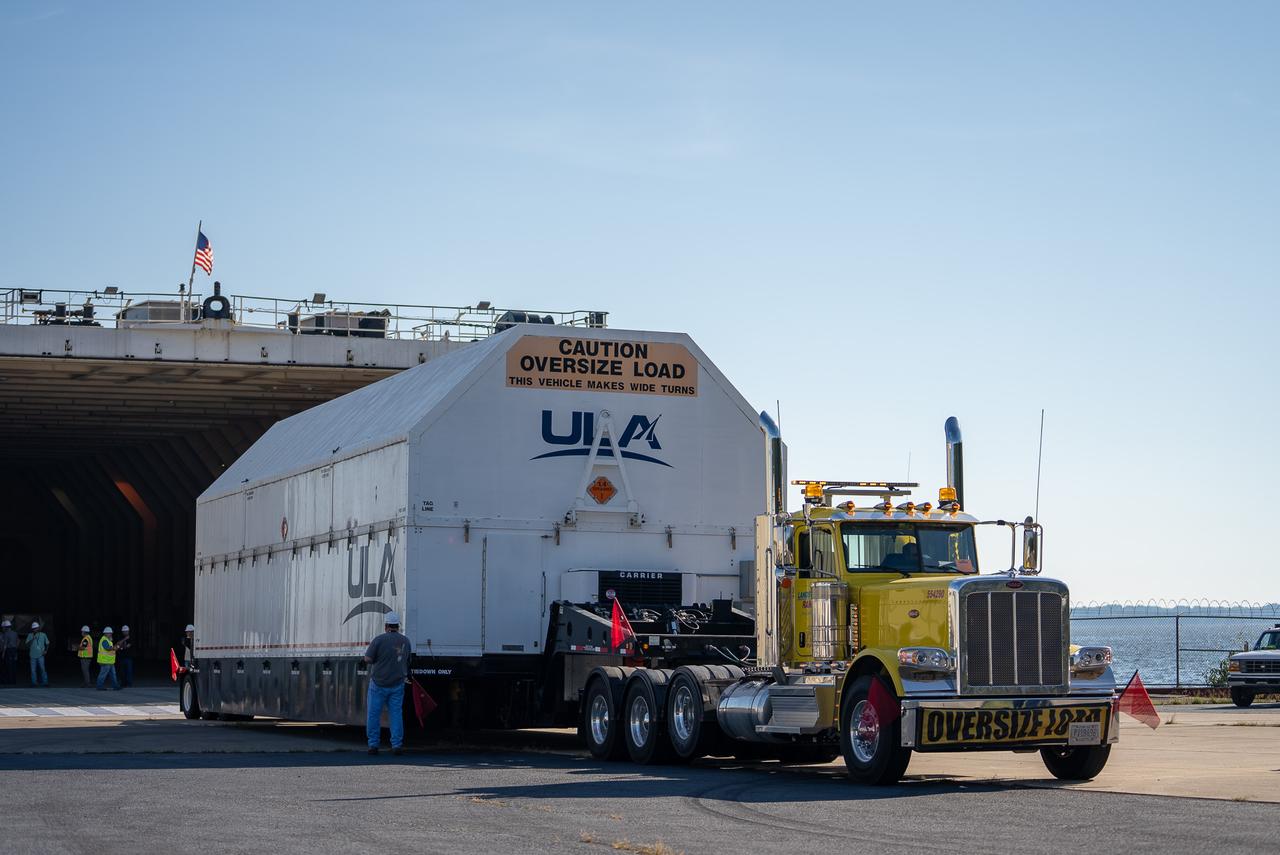
These images and videos show how crews in Alabama prepared the ICPS (interim cryogenic propulsion stage) for NASA’s SLS (Space Launch System) rocket for shipment to Florida between July 29-31. The ICPS in the photos and videos will help power NASA’s Artemis III mission to the Moon. The SLS upper stage is manufactured by United Launch Alliance at its facility in Decatur. Its RL10 engine is produced by Aerojet Rocketdyne, the SLS engines lead contractor, in West Palm Beach, Florida. ULA is working with Boeing, the SLS core stage and exploration upper stage lead contractor, to develop ICPS. ULA’s R/S RocketShip is transporting the flight hardware to its sister facility in Florida near NASA’s Kennedy Space Center for final checkouts. The ICPS for Artemis III is the last of its kind as SLS transitions to its next, more powerful Block 1B configuration with an upgraded upper stage beginning with Artemis IV. NASA is working to land the first woman and first person of color on the Moon under Artemis. SLS is part of NASA’s backbone for deep space exploration, along with Orion and the Gateway in orbit around the Moon. SLS is the only rocket that can send Orion, astronauts, and supplies to the Moon in a single mission.
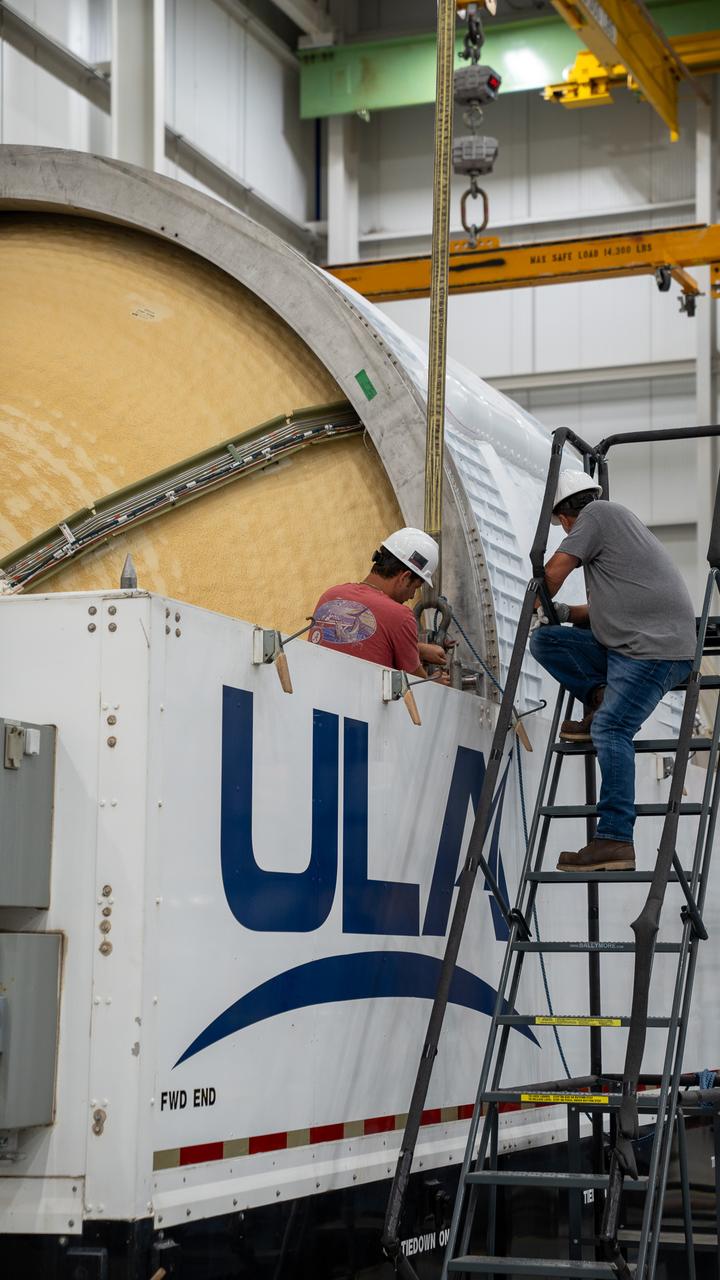
These images and videos show how crews in Alabama prepared the ICPS (interim cryogenic propulsion stage) for NASA’s SLS (Space Launch System) rocket for shipment to Florida between July 29-31. The ICPS in the photos and videos will help power NASA’s Artemis III mission to the Moon. The SLS upper stage is manufactured by United Launch Alliance at its facility in Decatur. Its RL10 engine is produced by Aerojet Rocketdyne, the SLS engines lead contractor, in West Palm Beach, Florida. ULA is working with Boeing, the SLS core stage and exploration upper stage lead contractor, to develop ICPS. ULA’s R/S RocketShip is transporting the flight hardware to its sister facility in Florida near NASA’s Kennedy Space Center for final checkouts. The ICPS for Artemis III is the last of its kind as SLS transitions to its next, more powerful Block 1B configuration with an upgraded upper stage beginning with Artemis IV. NASA is working to land the first woman and first person of color on the Moon under Artemis. SLS is part of NASA’s backbone for deep space exploration, along with Orion and the Gateway in orbit around the Moon. SLS is the only rocket that can send Orion, astronauts, and supplies to the Moon in a single mission.
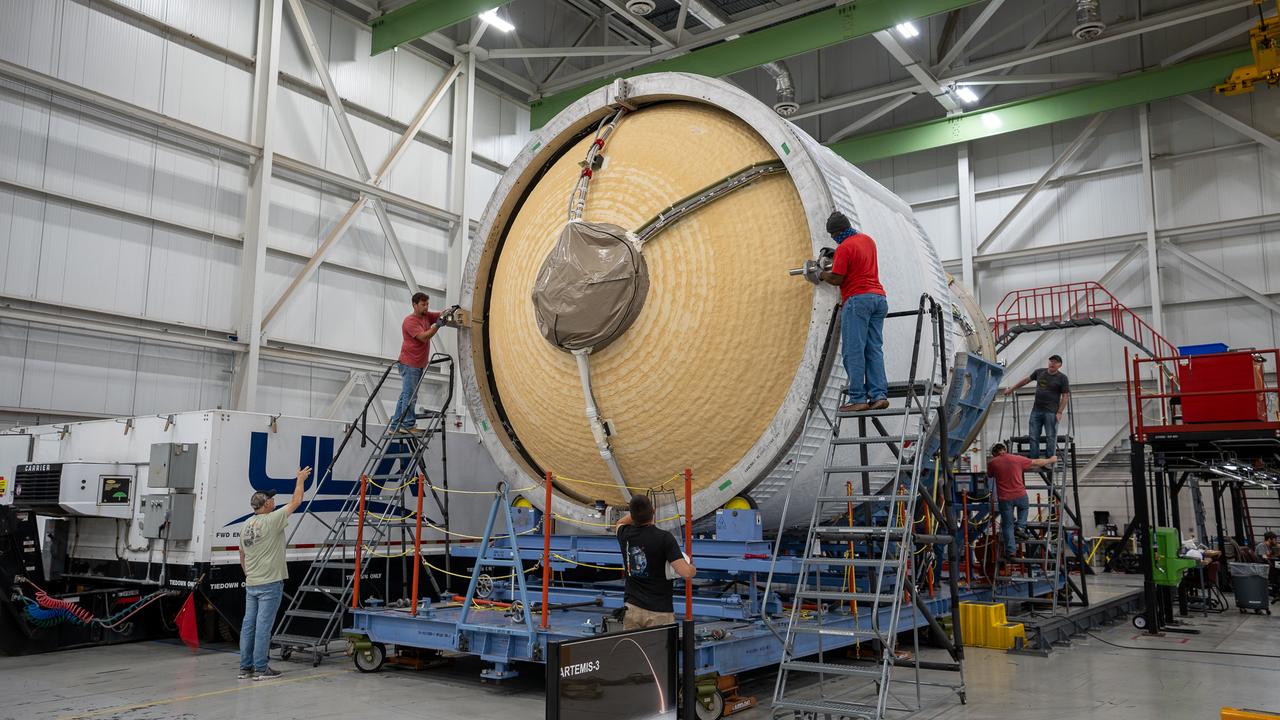
These images and videos show how crews in Alabama prepared the ICPS (interim cryogenic propulsion stage) for NASA’s SLS (Space Launch System) rocket for shipment to Florida between July 29-31. The ICPS in the photos and videos will help power NASA’s Artemis III mission to the Moon. The SLS upper stage is manufactured by United Launch Alliance at its facility in Decatur. Its RL10 engine is produced by Aerojet Rocketdyne, the SLS engines lead contractor, in West Palm Beach, Florida. ULA is working with Boeing, the SLS core stage and exploration upper stage lead contractor, to develop ICPS. ULA’s R/S RocketShip is transporting the flight hardware to its sister facility in Florida near NASA’s Kennedy Space Center for final checkouts. The ICPS for Artemis III is the last of its kind as SLS transitions to its next, more powerful Block 1B configuration with an upgraded upper stage beginning with Artemis IV. NASA is working to land the first woman and first person of color on the Moon under Artemis. SLS is part of NASA’s backbone for deep space exploration, along with Orion and the Gateway in orbit around the Moon. SLS is the only rocket that can send Orion, astronauts, and supplies to the Moon in a single mission.
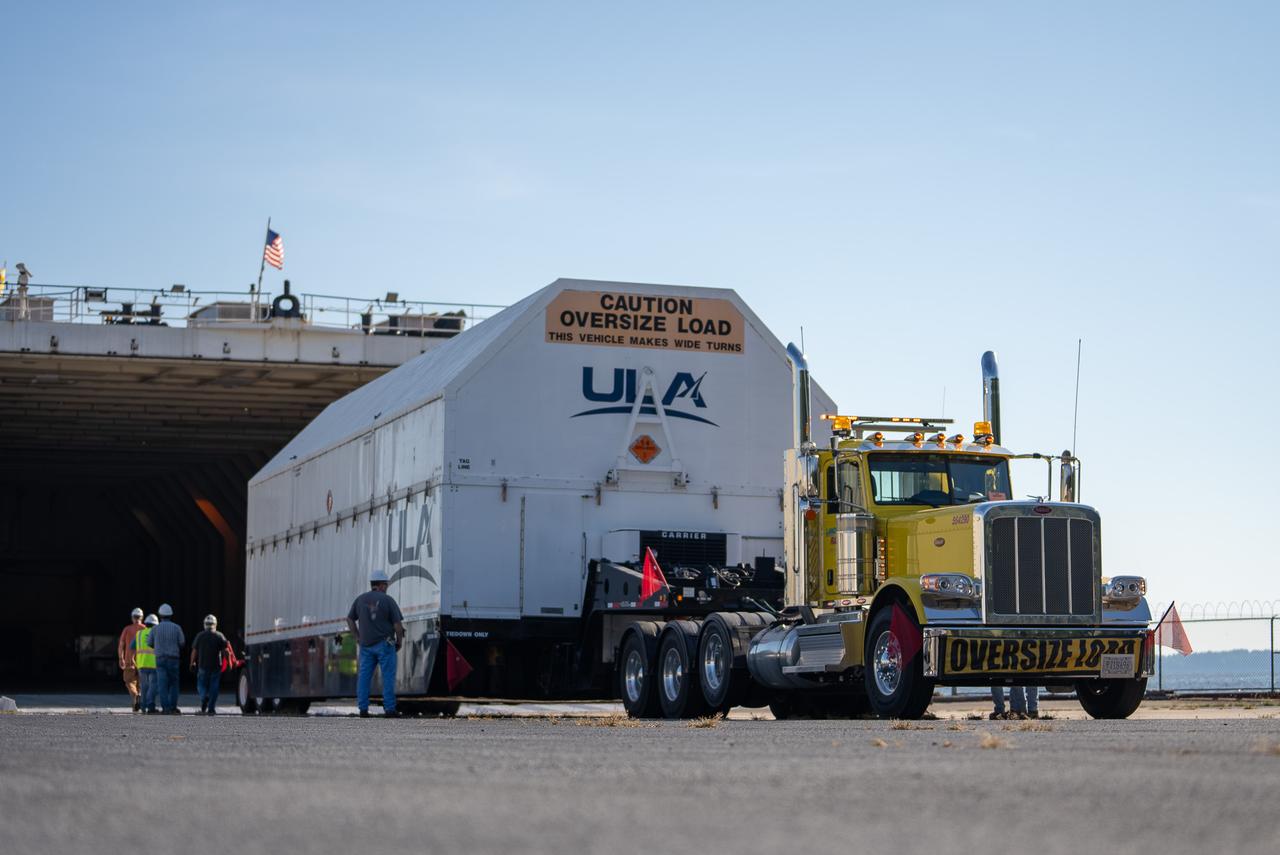
These images and videos show how crews in Alabama prepared the ICPS (interim cryogenic propulsion stage) for NASA’s SLS (Space Launch System) rocket for shipment to Florida between July 29-31. The ICPS in the photos and videos will help power NASA’s Artemis III mission to the Moon. The SLS upper stage is manufactured by United Launch Alliance at its facility in Decatur. Its RL10 engine is produced by Aerojet Rocketdyne, the SLS engines lead contractor, in West Palm Beach, Florida. ULA is working with Boeing, the SLS core stage and exploration upper stage lead contractor, to develop ICPS. ULA’s R/S RocketShip is transporting the flight hardware to its sister facility in Florida near NASA’s Kennedy Space Center for final checkouts. The ICPS for Artemis III is the last of its kind as SLS transitions to its next, more powerful Block 1B configuration with an upgraded upper stage beginning with Artemis IV. NASA is working to land the first woman and first person of color on the Moon under Artemis. SLS is part of NASA’s backbone for deep space exploration, along with Orion and the Gateway in orbit around the Moon. SLS is the only rocket that can send Orion, astronauts, and supplies to the Moon in a single mission.
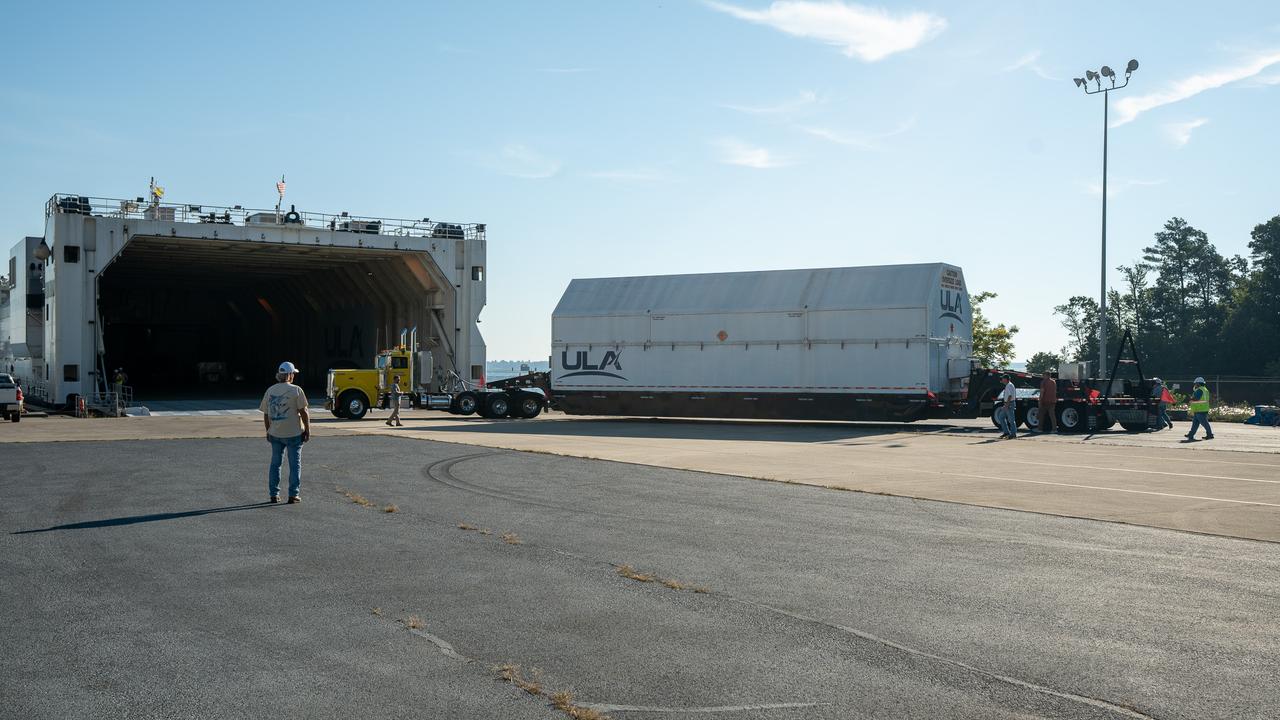
These images and videos show how crews in Alabama prepared the ICPS (interim cryogenic propulsion stage) for NASA’s SLS (Space Launch System) rocket for shipment to Florida between July 29-31. The ICPS in the photos and videos will help power NASA’s Artemis III mission to the Moon. The SLS upper stage is manufactured by United Launch Alliance at its facility in Decatur. Its RL10 engine is produced by Aerojet Rocketdyne, the SLS engines lead contractor, in West Palm Beach, Florida. ULA is working with Boeing, the SLS core stage and exploration upper stage lead contractor, to develop ICPS. ULA’s R/S RocketShip is transporting the flight hardware to its sister facility in Florida near NASA’s Kennedy Space Center for final checkouts. The ICPS for Artemis III is the last of its kind as SLS transitions to its next, more powerful Block 1B configuration with an upgraded upper stage beginning with Artemis IV. NASA is working to land the first woman and first person of color on the Moon under Artemis. SLS is part of NASA’s backbone for deep space exploration, along with Orion and the Gateway in orbit around the Moon. SLS is the only rocket that can send Orion, astronauts, and supplies to the Moon in a single mission.
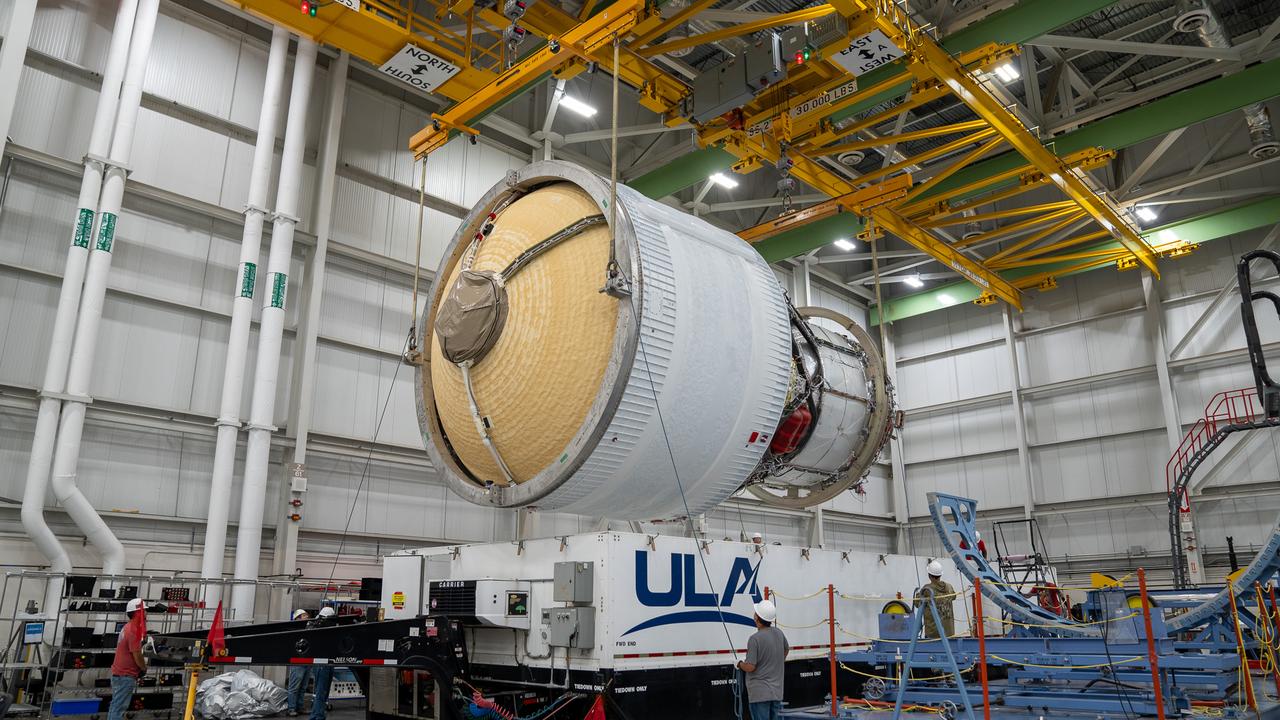
These images and videos show how crews in Alabama prepared the ICPS (interim cryogenic propulsion stage) for NASA’s SLS (Space Launch System) rocket for shipment to Florida between July 29-31. The ICPS in the photos and videos will help power NASA’s Artemis III mission to the Moon. The SLS upper stage is manufactured by United Launch Alliance at its facility in Decatur. Its RL10 engine is produced by Aerojet Rocketdyne, the SLS engines lead contractor, in West Palm Beach, Florida. ULA is working with Boeing, the SLS core stage and exploration upper stage lead contractor, to develop ICPS. ULA’s R/S RocketShip is transporting the flight hardware to its sister facility in Florida near NASA’s Kennedy Space Center for final checkouts. The ICPS for Artemis III is the last of its kind as SLS transitions to its next, more powerful Block 1B configuration with an upgraded upper stage beginning with Artemis IV. NASA is working to land the first woman and first person of color on the Moon under Artemis. SLS is part of NASA’s backbone for deep space exploration, along with Orion and the Gateway in orbit around the Moon. SLS is the only rocket that can send Orion, astronauts, and supplies to the Moon in a single mission.
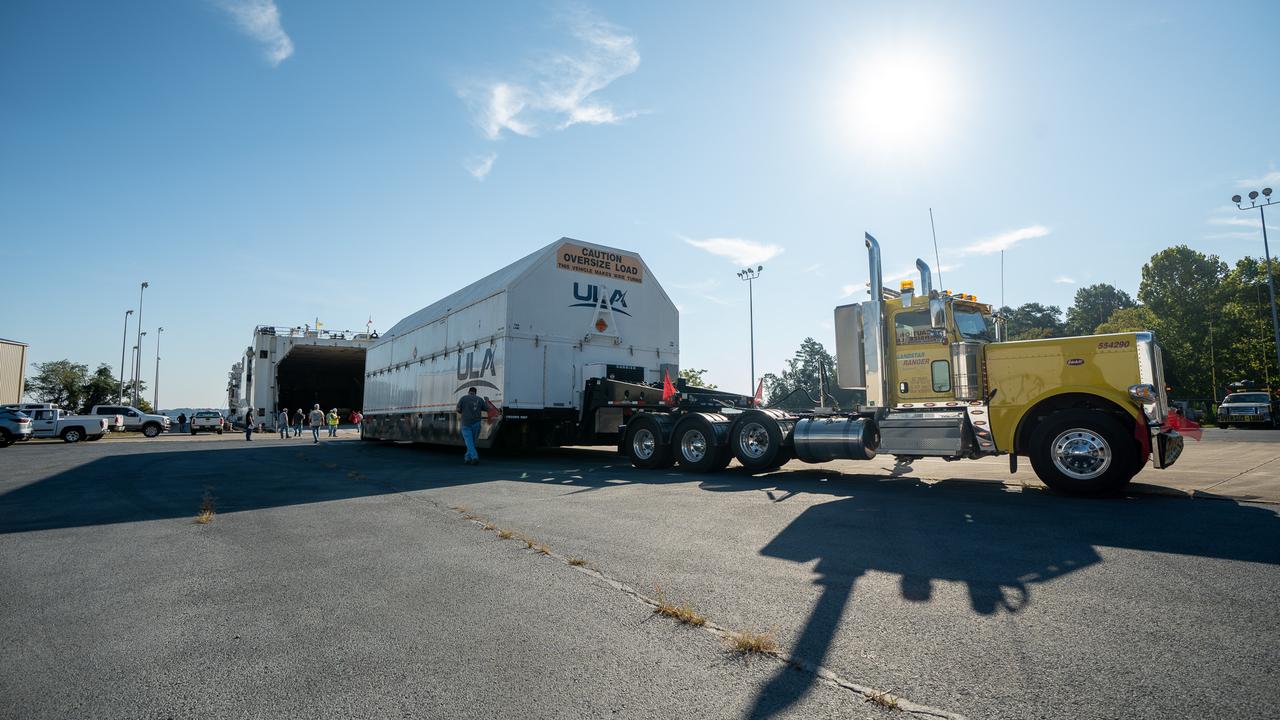
These images and videos show how crews in Alabama prepared the ICPS (interim cryogenic propulsion stage) for NASA’s SLS (Space Launch System) rocket for shipment to Florida between July 29-31. The ICPS in the photos and videos will help power NASA’s Artemis III mission to the Moon. The SLS upper stage is manufactured by United Launch Alliance at its facility in Decatur. Its RL10 engine is produced by Aerojet Rocketdyne, the SLS engines lead contractor, in West Palm Beach, Florida. ULA is working with Boeing, the SLS core stage and exploration upper stage lead contractor, to develop ICPS. ULA’s R/S RocketShip is transporting the flight hardware to its sister facility in Florida near NASA’s Kennedy Space Center for final checkouts. The ICPS for Artemis III is the last of its kind as SLS transitions to its next, more powerful Block 1B configuration with an upgraded upper stage beginning with Artemis IV. NASA is working to land the first woman and first person of color on the Moon under Artemis. SLS is part of NASA’s backbone for deep space exploration, along with Orion and the Gateway in orbit around the Moon. SLS is the only rocket that can send Orion, astronauts, and supplies to the Moon in a single mission.

CAPE CANAVERAL, Fla. -- This is a printable version of the NASA Kennedy Space Center 2012 holiday poster. It depicts Santa Claus riding a spacecraft from NASA's Commercial Crew Program as he delivers toys all over the world for the holidays, including Astro Socks, Cosmic Soda and Magnetic boots that have been International Space Station certified. Santa also holds a model rocket for delivery and is steering his rocketship toward a stop at the space station during his deliveries. Lifting off from NASA's Kennedy Space Center in Florida, Santa is taking advantage of technologies developed at Kennedy in the Ground Systems Operations and Development Program and the Launch Services Program. The same advancements that are propelling Santa through space will be used for NASA's next generation of deep space missions: the Space Launch System rocket and Orion spacecraft. The NASA insignia appears in the upper right corner. For a black-and-white coloring sheet version, go to http://go.nasa.gov/V3KLEc. For more information, visit www.nasa.gov/kennedy.Poster designed by Kennedy Space Center Graphics Department. Credit: NASA