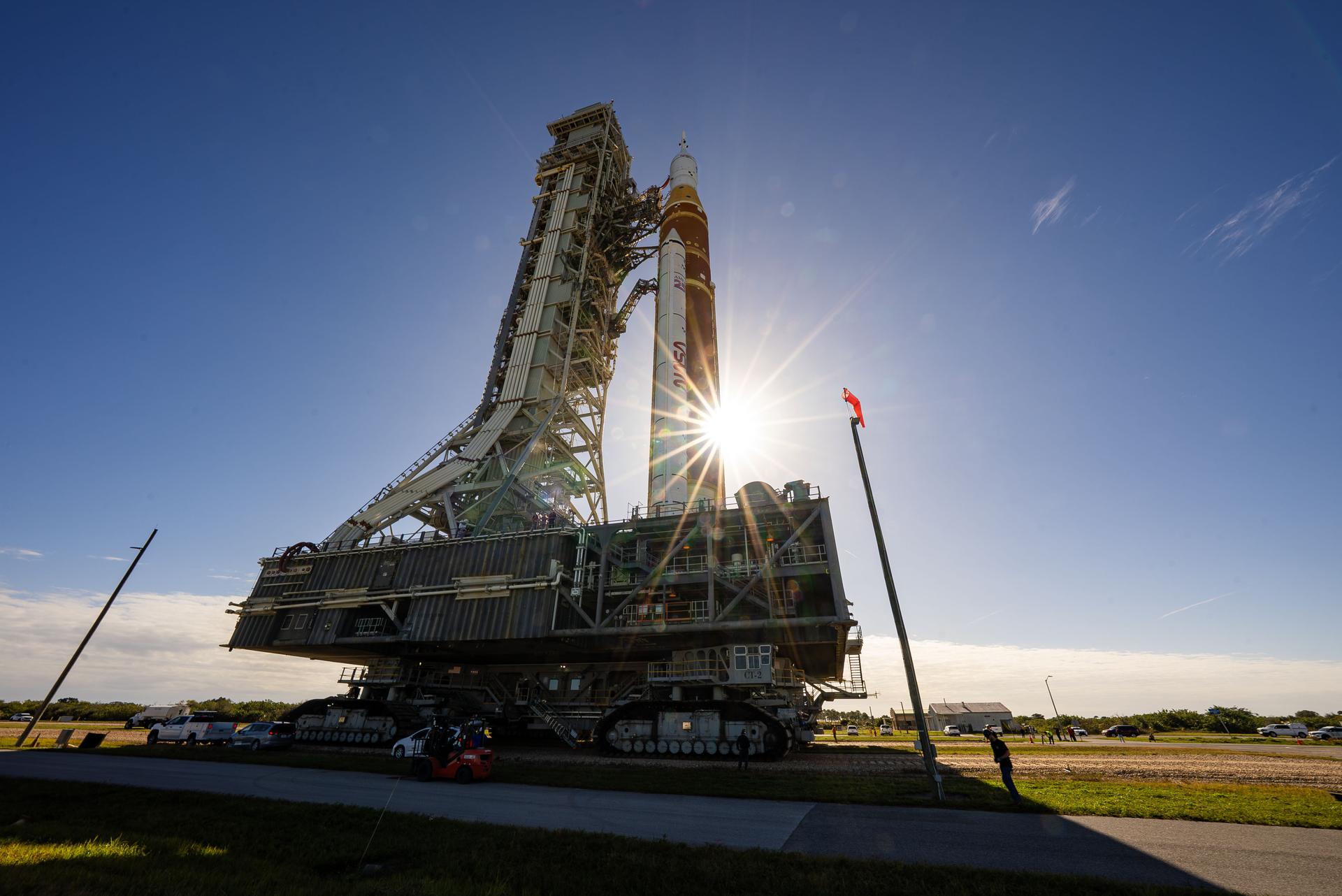
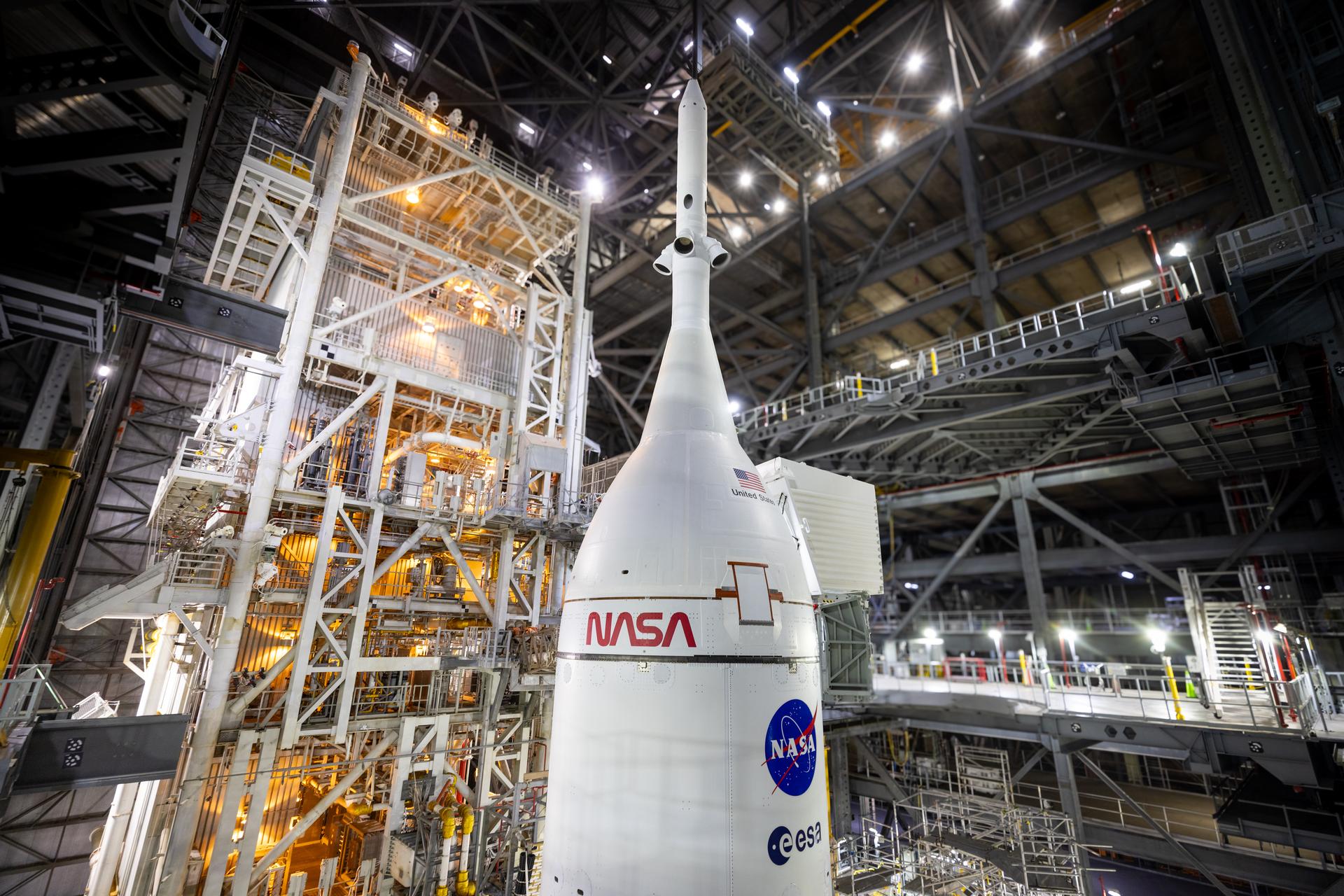
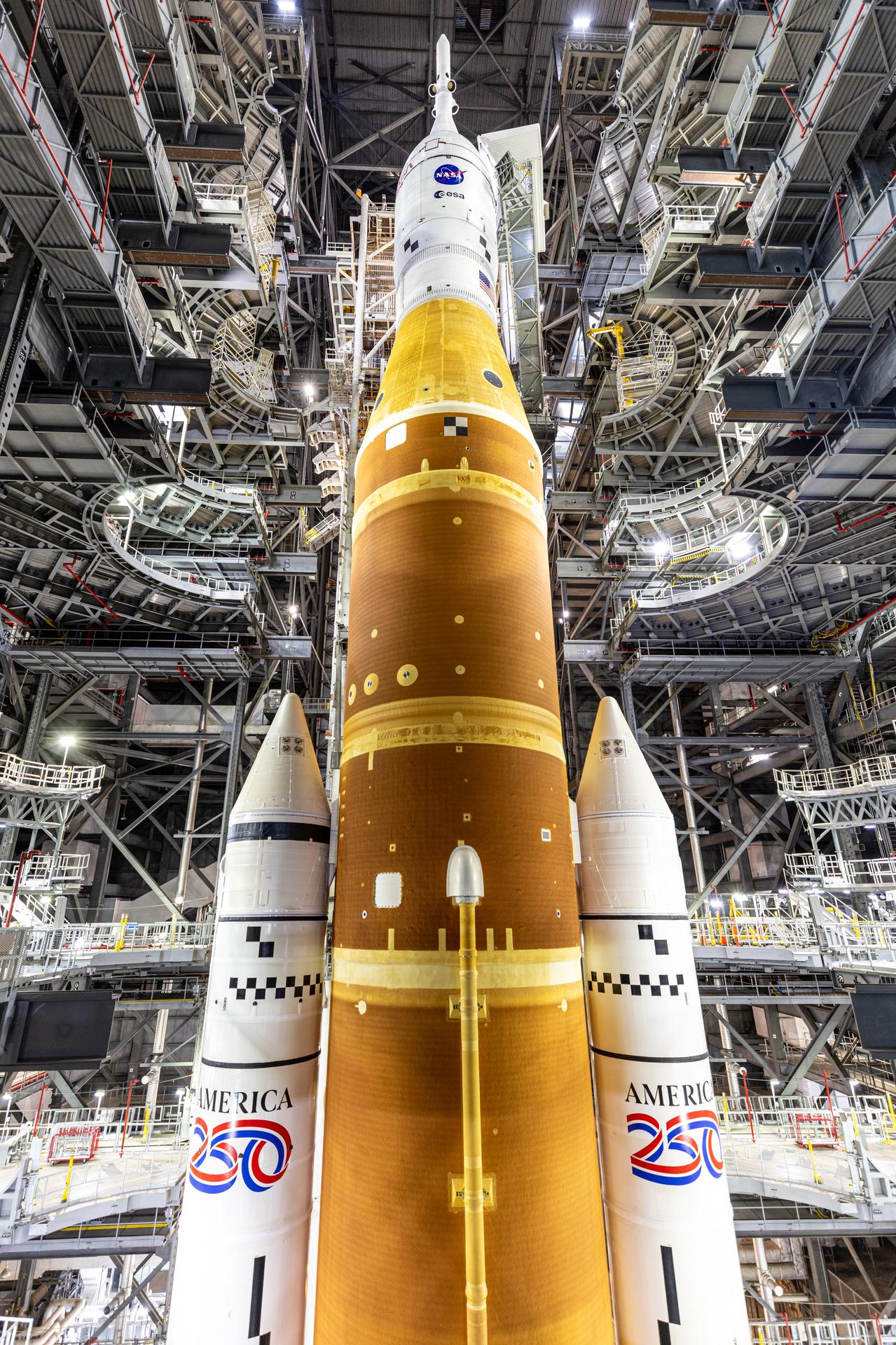
This image shows NASA’s SLS (Space Launch System) and Orion spacecraft rolling out of the Vehicle Assembly Building at NASA’s Kennedy Space Center. NASA's massive Crawler-Transporter, upgraded for the Artemis program, carries the powerful SLS rocket and Orion spacecraft on the Mobile Launcher from the Vehicle Assembly Building to Launch Pad 39B at Kennedy Space Center in preparation for the Artemis II mission.
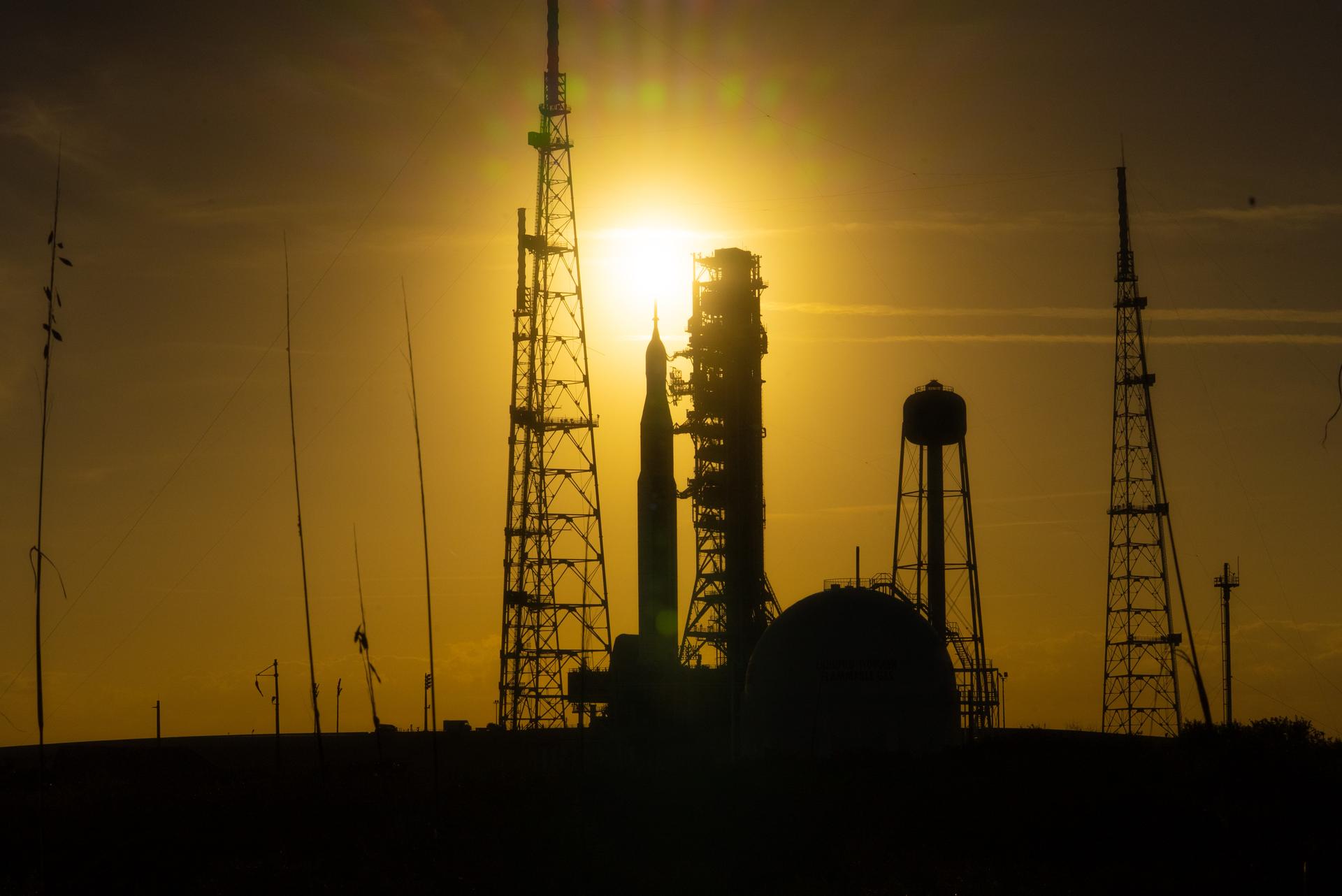
This image shows NASA’s SLS (Space Launch System) and Orion spacecraft rolling out of the Vehicle Assembly Building at NASA’s Kennedy Space Center. NASA's massive Crawler-Transporter, upgraded for the Artemis program, carries the powerful SLS rocket and Orion spacecraft on the Mobile Launcher from the Vehicle Assembly Building to Launch Pad 39B at Kennedy Space Center in preparation for the Artemis II mission.
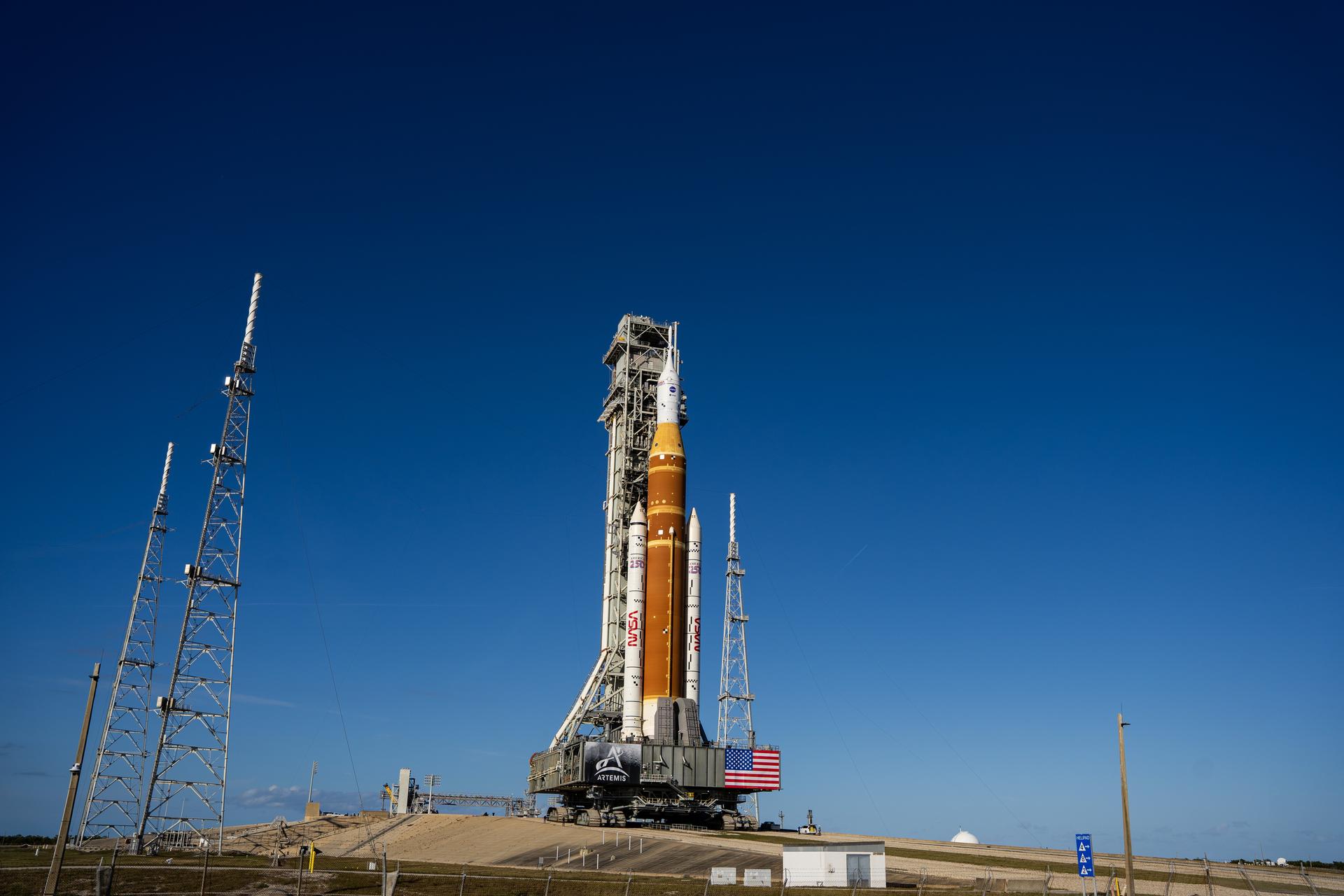
This image shows NASA’s SLS (Space Launch System) and Orion spacecraft rolling out of the Vehicle Assembly Building at NASA’s Kennedy Space Center. NASA's massive Crawler-Transporter, upgraded for the Artemis program, carries the powerful SLS rocket and Orion spacecraft on the Mobile Launcher from the Vehicle Assembly Building to Launch Pad 39B at Kennedy Space Center in preparation for the Artemis II mission.
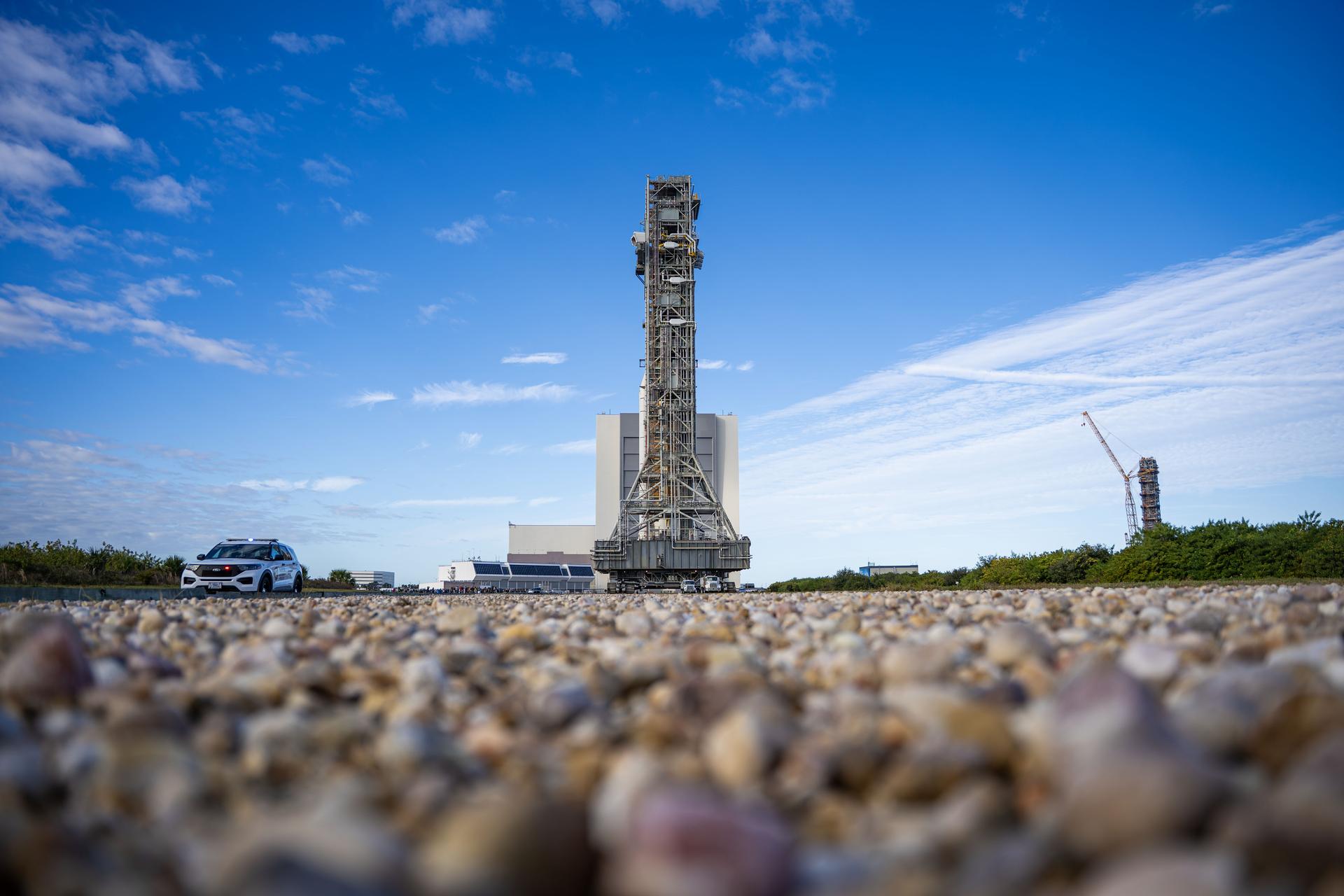
This image shows NASA’s SLS (Space Launch System) and Orion spacecraft rolling out of the Vehicle Assembly Building at NASA’s Kennedy Space Center. NASA's massive Crawler-Transporter, upgraded for the Artemis program, carries the powerful SLS rocket and Orion spacecraft on the Mobile Launcher from the Vehicle Assembly Building to Launch Pad 39B at Kennedy Space Center in preparation for the Artemis II mission.
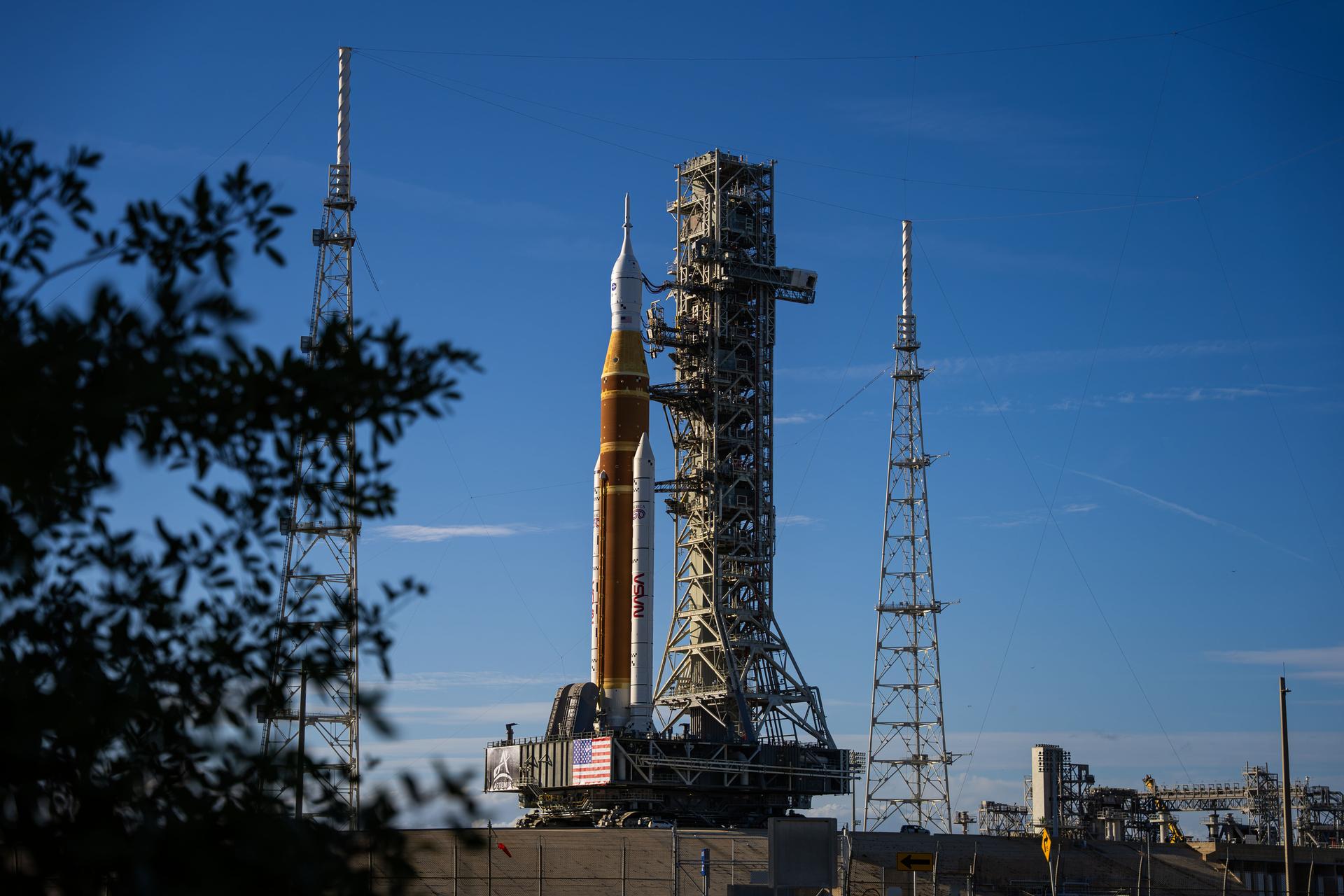
This image shows NASA’s SLS (Space Launch System) and Orion spacecraft rolling out of the Vehicle Assembly Building at NASA’s Kennedy Space Center. NASA's massive Crawler-Transporter, upgraded for the Artemis program, carries the powerful SLS rocket and Orion spacecraft on the Mobile Launcher from the Vehicle Assembly Building to Launch Pad 39B at Kennedy Space Center in preparation for the Artemis II mission.
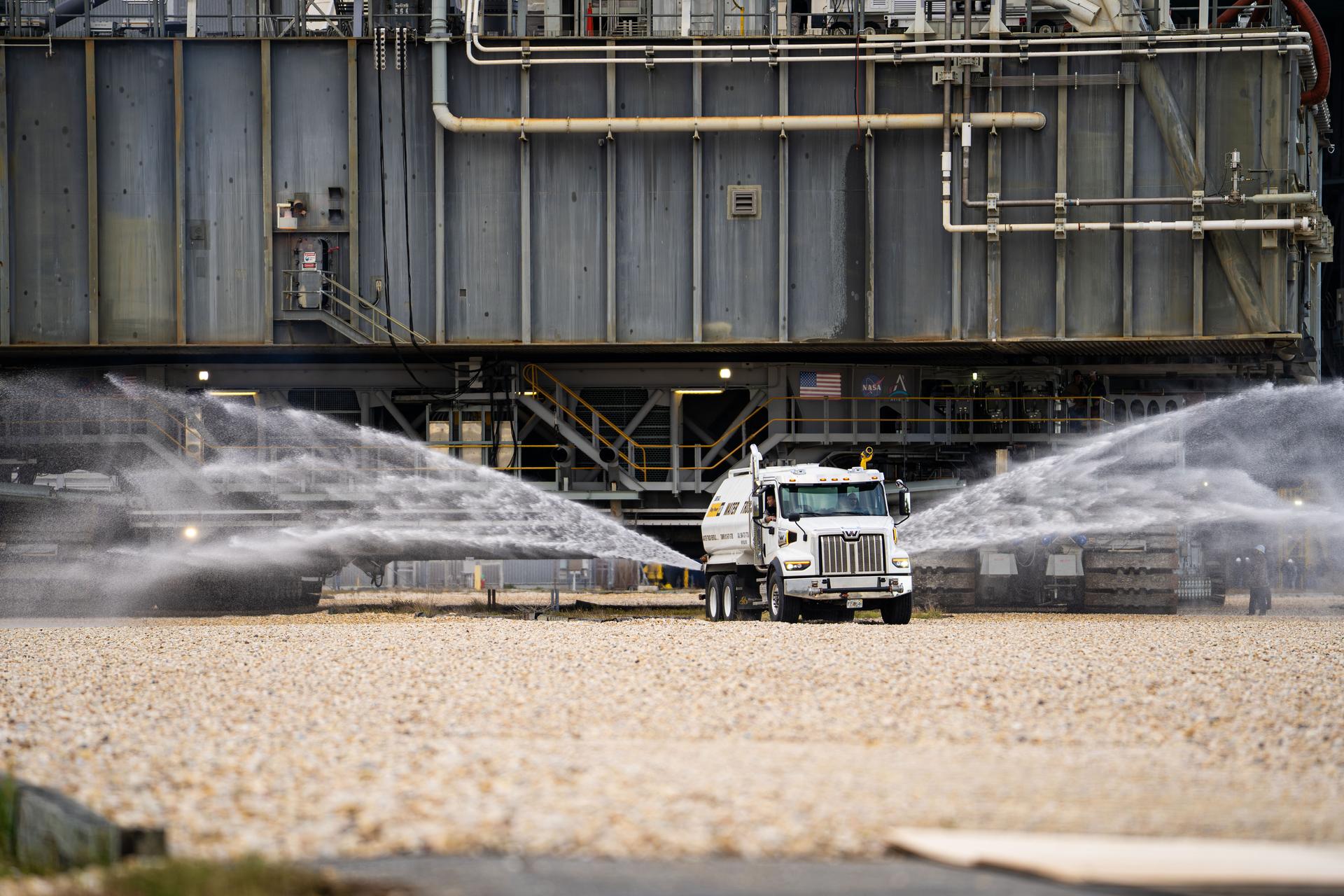
This image shows NASA’s SLS (Space Launch System) and Orion spacecraft rolling out of the Vehicle Assembly Building at NASA’s Kennedy Space Center. NASA's massive Crawler-Transporter, upgraded for the Artemis program, carries the powerful SLS rocket and Orion spacecraft on the Mobile Launcher from the Vehicle Assembly Building to Launch Pad 39B at Kennedy Space Center in preparation for the Artemis II mission.
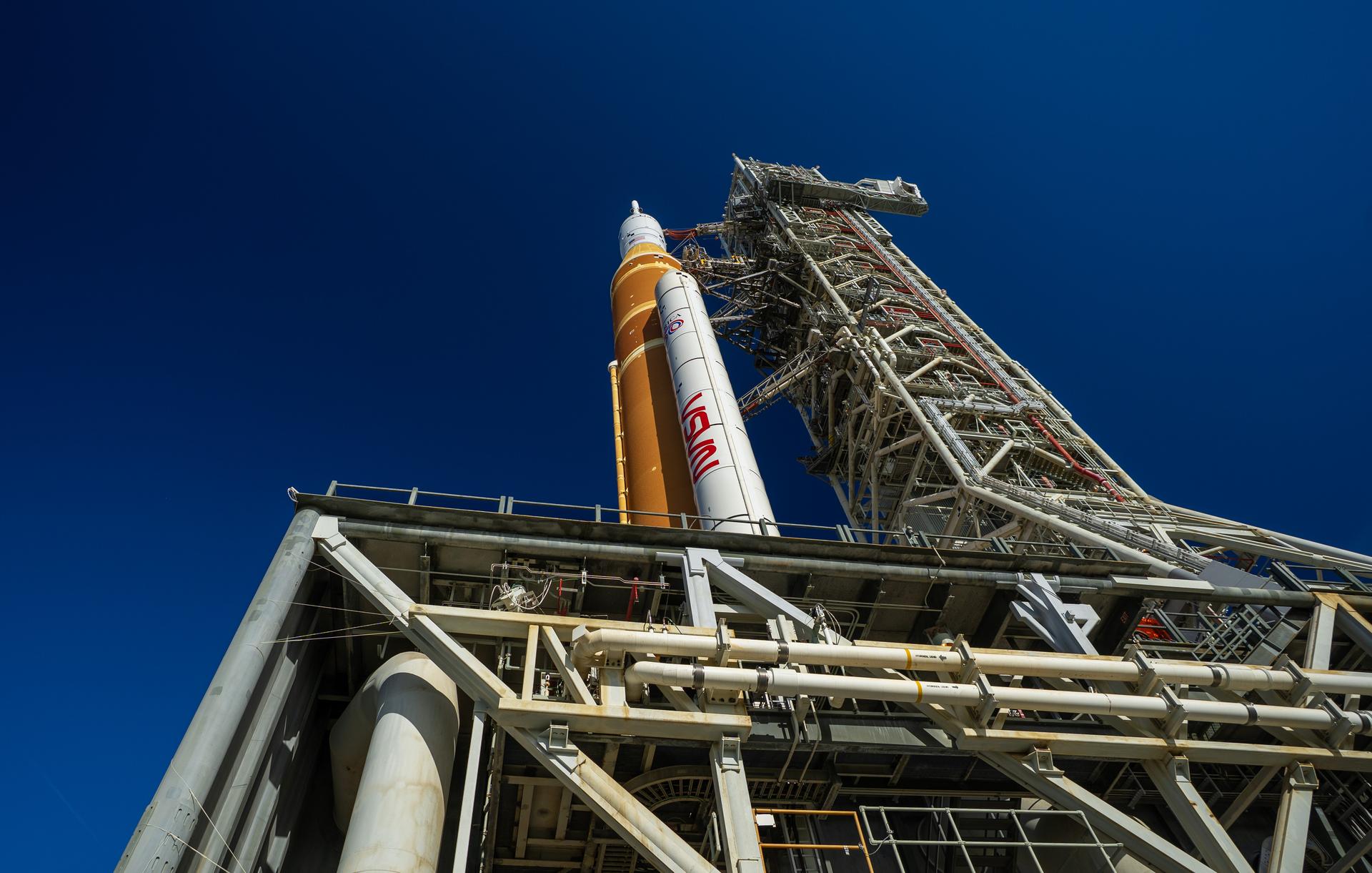
This image shows NASA’s SLS (Space Launch System) and Orion spacecraft rolling out of the Vehicle Assembly Building at NASA’s Kennedy Space Center. NASA's massive Crawler-Transporter, upgraded for the Artemis program, carries the powerful SLS rocket and Orion spacecraft on the Mobile Launcher from the Vehicle Assembly Building to Launch Pad 39B at Kennedy Space Center in preparation for the Artemis II mission.
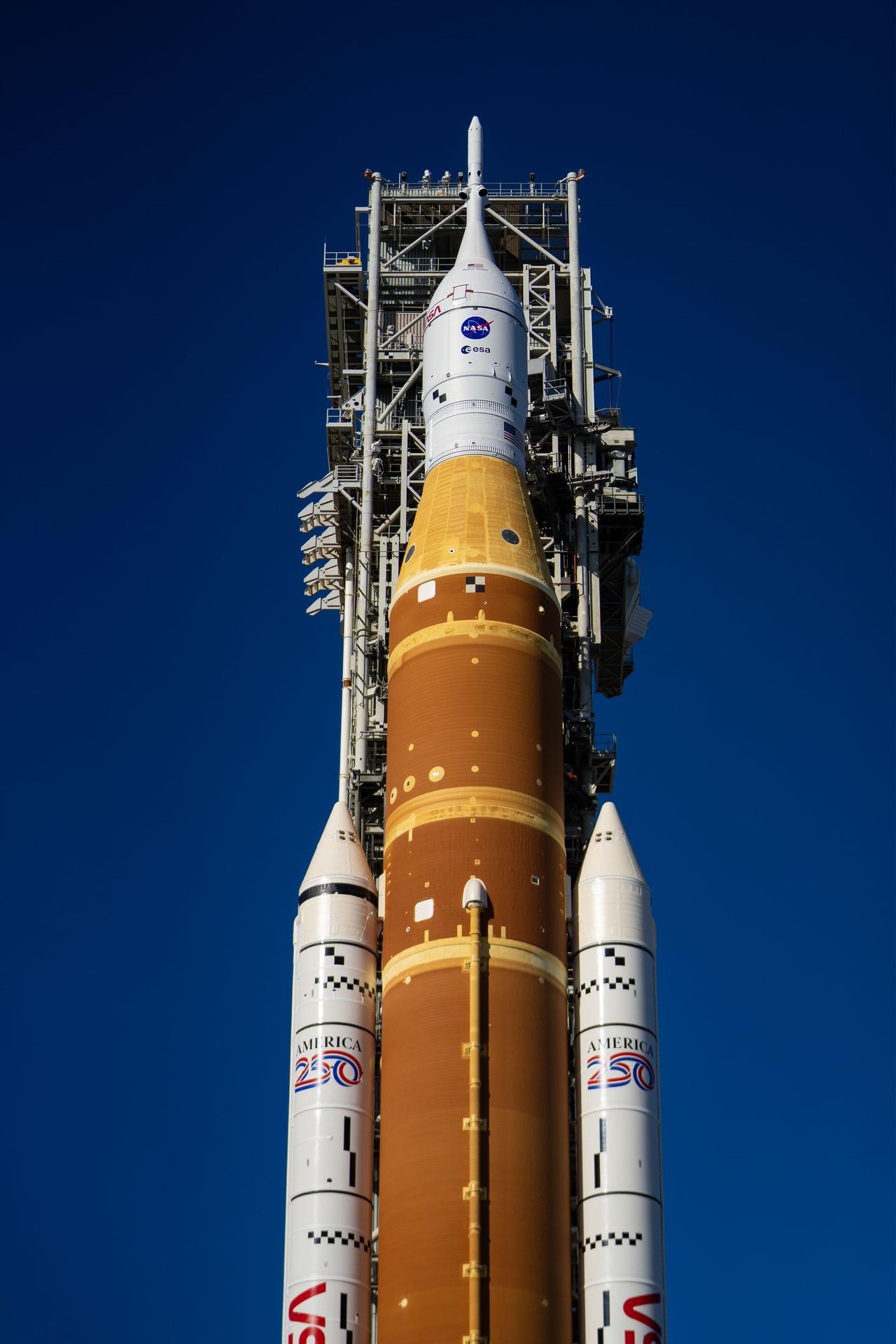
This image shows NASA’s SLS (Space Launch System) and Orion spacecraft rolling out of the Vehicle Assembly Building at NASA’s Kennedy Space Center. NASA's massive Crawler-Transporter, upgraded for the Artemis program, carries the powerful SLS rocket and Orion spacecraft on the Mobile Launcher from the Vehicle Assembly Building to Launch Pad 39B at Kennedy Space Center in preparation for the Artemis II mission.
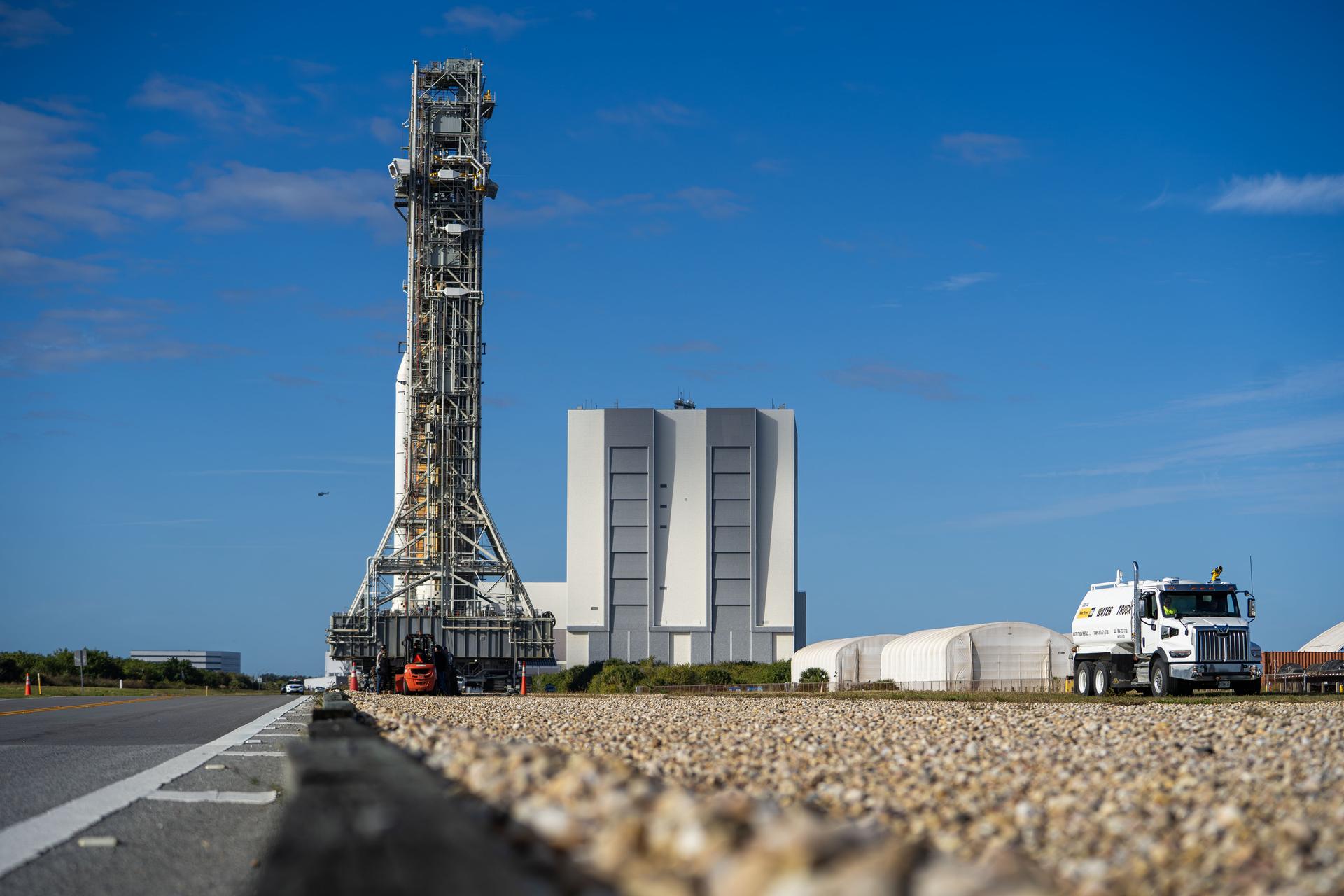
This image shows NASA’s SLS (Space Launch System) and Orion spacecraft rolling out of the Vehicle Assembly Building at NASA’s Kennedy Space Center. NASA's massive Crawler-Transporter, upgraded for the Artemis program, carries the powerful SLS rocket and Orion spacecraft on the Mobile Launcher from the Vehicle Assembly Building to Launch Pad 39B at Kennedy Space Center in preparation for the Artemis II mission.
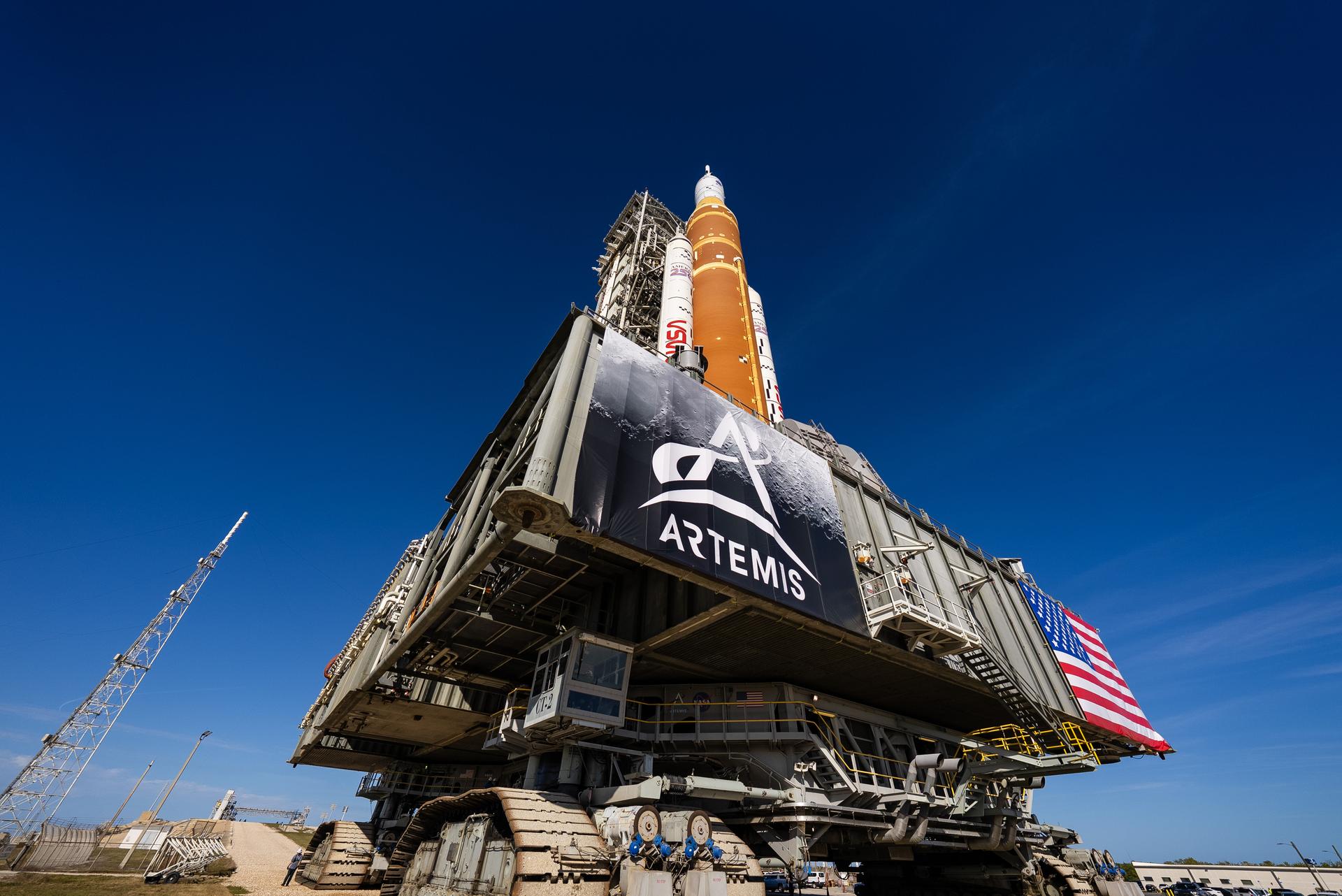
This image shows NASA’s SLS (Space Launch System) and Orion spacecraft rolling out of the Vehicle Assembly Building at NASA’s Kennedy Space Center. NASA's massive Crawler-Transporter, upgraded for the Artemis program, carries the powerful SLS rocket and Orion spacecraft on the Mobile Launcher from the Vehicle Assembly Building to Launch Pad 39B at Kennedy Space Center in preparation for the Artemis II mission.
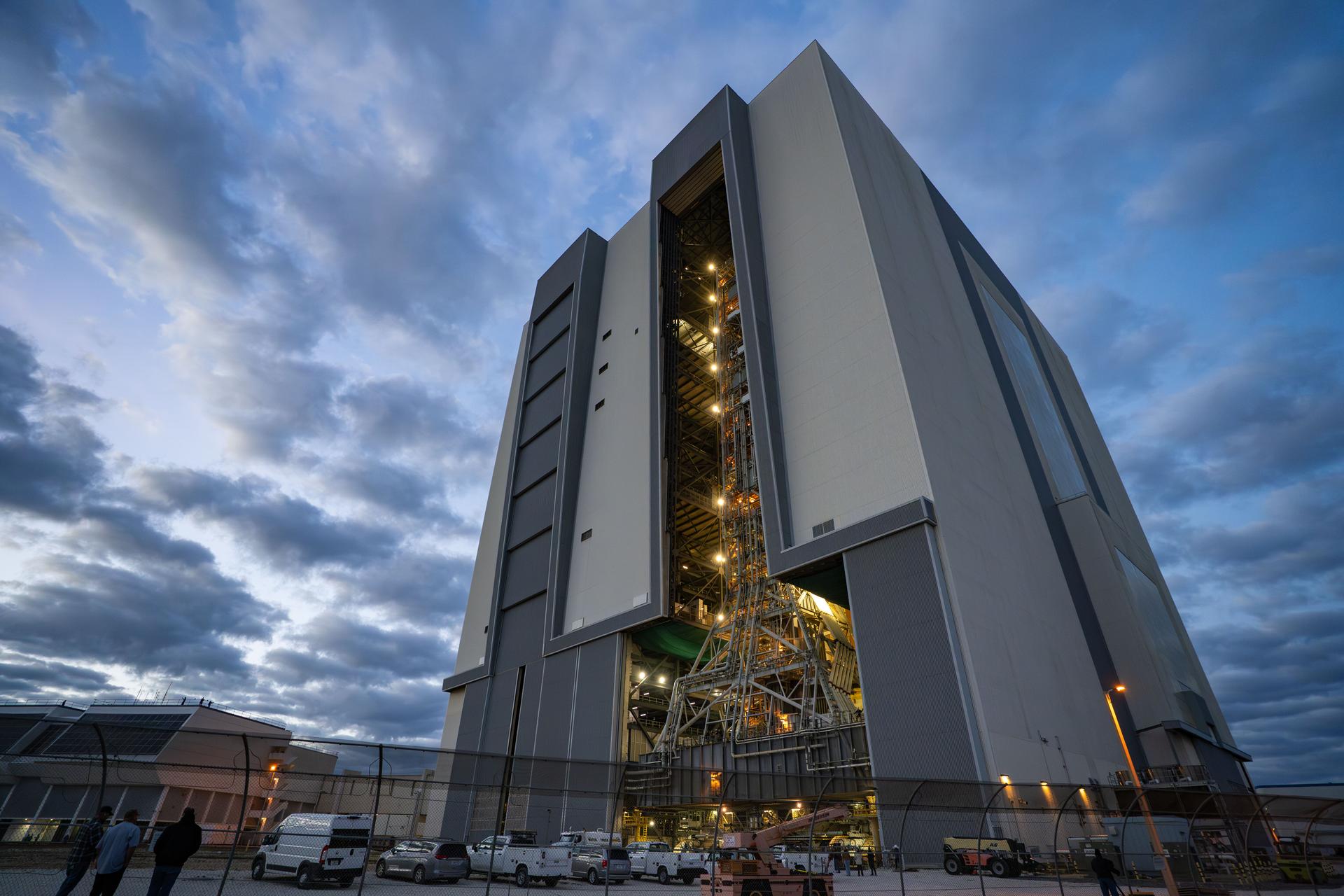
This image shows NASA’s SLS (Space Launch System) and Orion spacecraft rolling out of the Vehicle Assembly Building at NASA’s Kennedy Space Center. NASA's massive Crawler-Transporter, upgraded for the Artemis program, carries the powerful SLS rocket and Orion spacecraft on the Mobile Launcher from the Vehicle Assembly Building to Launch Pad 39B at Kennedy Space Center in preparation for the Artemis II mission.
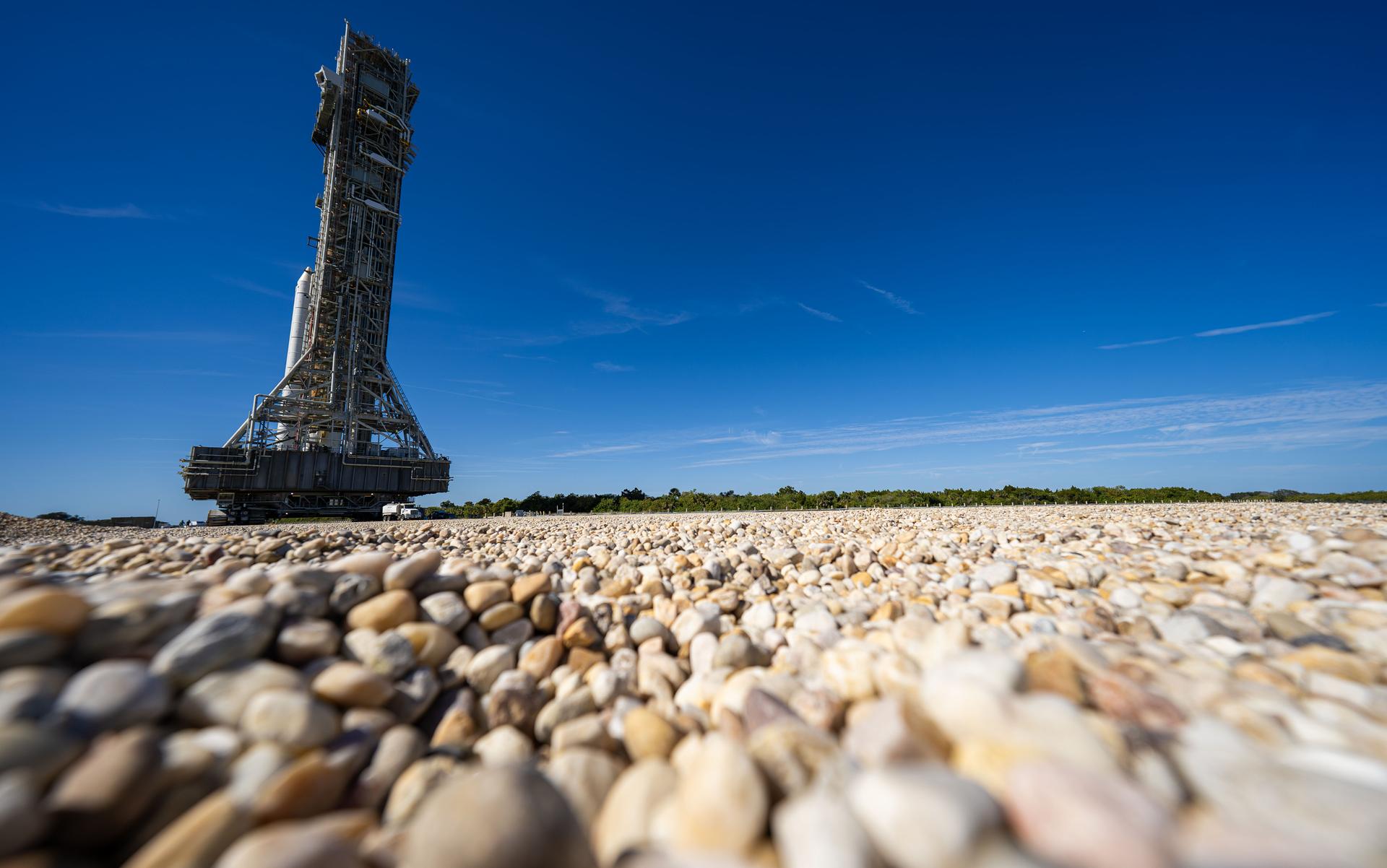
This image shows NASA’s SLS (Space Launch System) and Orion spacecraft rolling out of the Vehicle Assembly Building at NASA’s Kennedy Space Center. NASA's massive Crawler-Transporter, upgraded for the Artemis program, carries the powerful SLS rocket and Orion spacecraft on the Mobile Launcher from the Vehicle Assembly Building to Launch Pad 39B at Kennedy Space Center in preparation for the Artemis II mission.
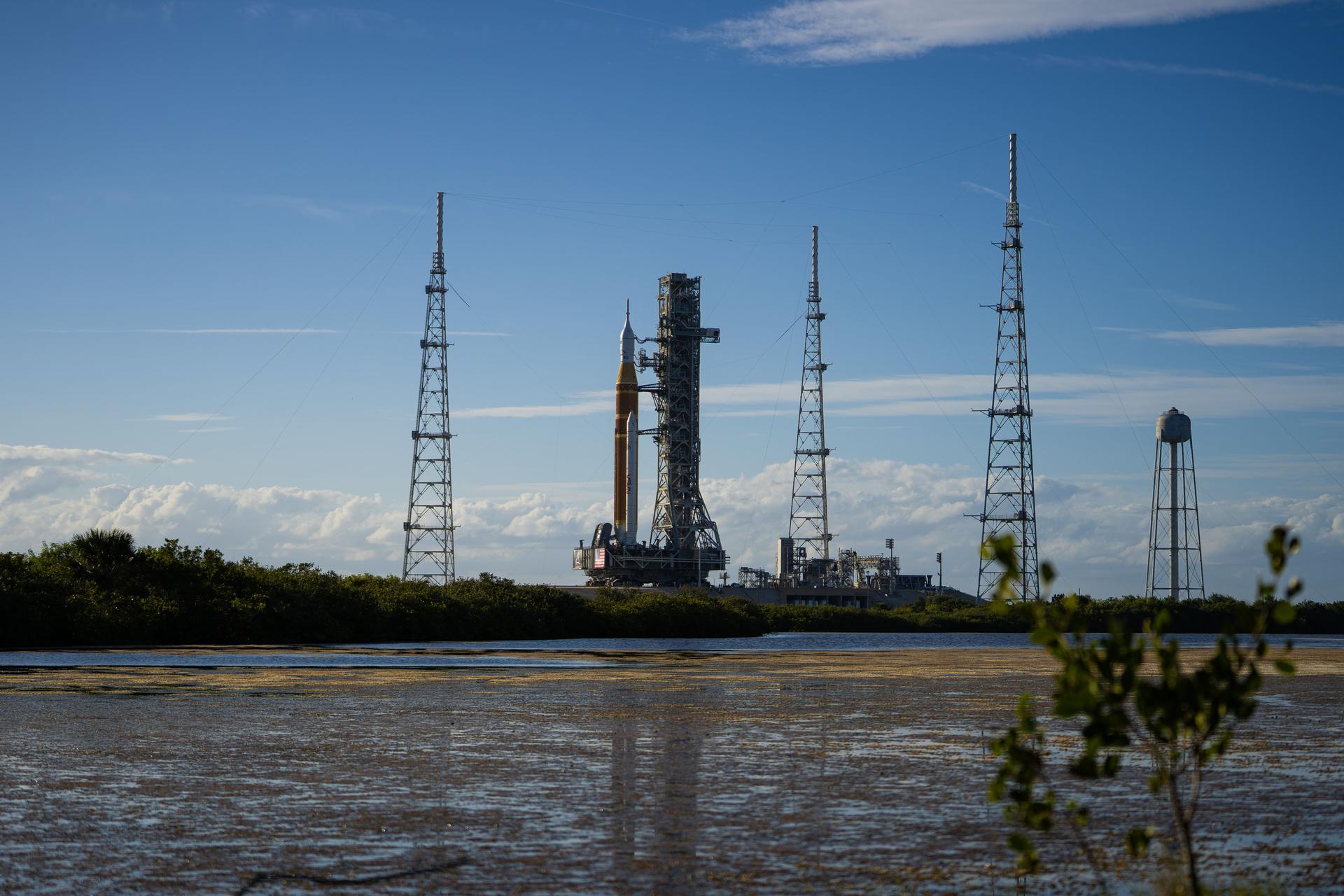
This image shows NASA’s SLS (Space Launch System) and Orion spacecraft rolling out of the Vehicle Assembly Building at NASA’s Kennedy Space Center. NASA's massive Crawler-Transporter, upgraded for the Artemis program, carries the powerful SLS rocket and Orion spacecraft on the Mobile Launcher from the Vehicle Assembly Building to Launch Pad 39B at Kennedy Space Center in preparation for the Artemis II mission.
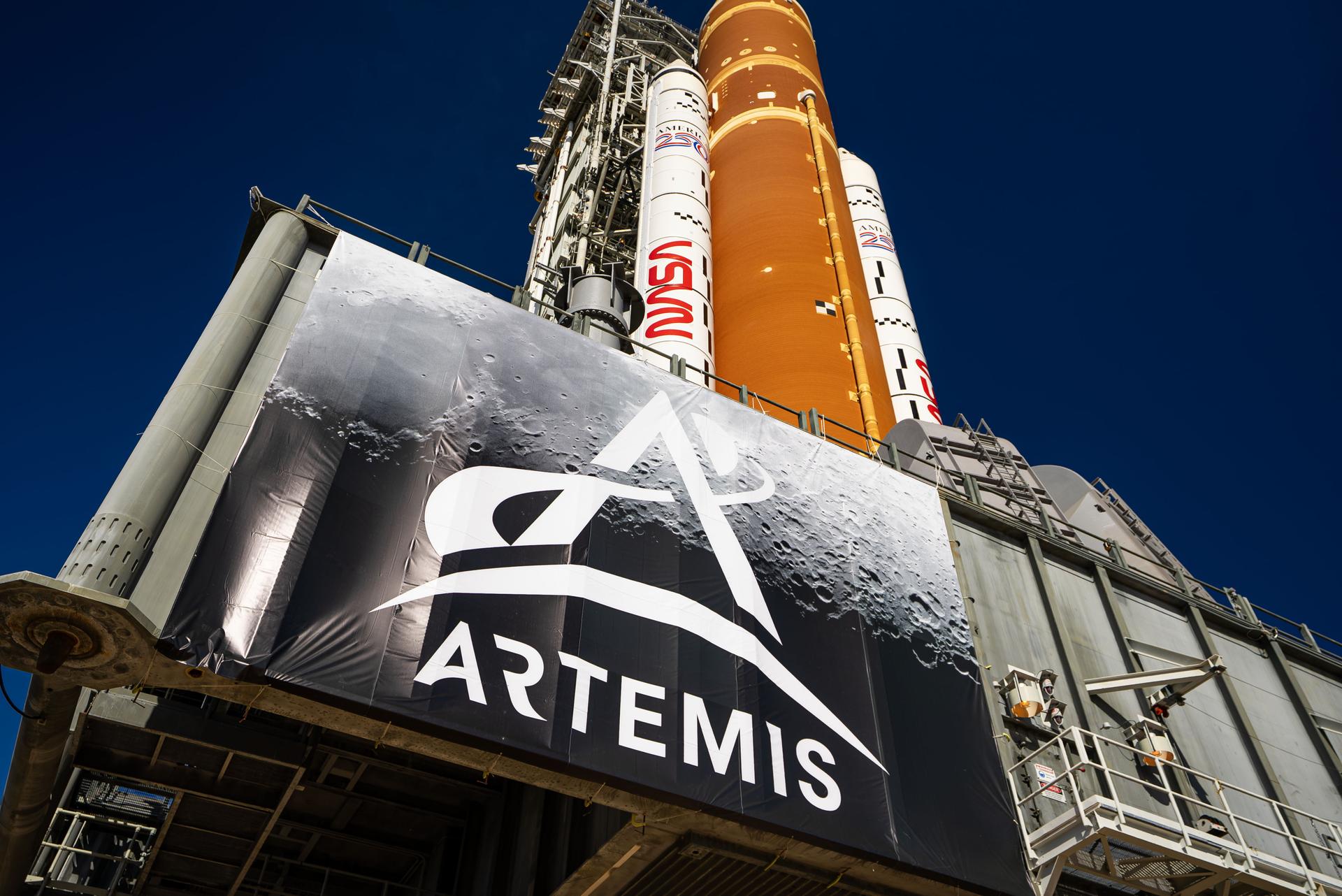
This image shows NASA’s SLS (Space Launch System) and Orion spacecraft rolling out of the Vehicle Assembly Building at NASA’s Kennedy Space Center. NASA's massive Crawler-Transporter, upgraded for the Artemis program, carries the powerful SLS rocket and Orion spacecraft on the Mobile Launcher from the Vehicle Assembly Building to Launch Pad 39B at Kennedy Space Center in preparation for the Artemis II mission.
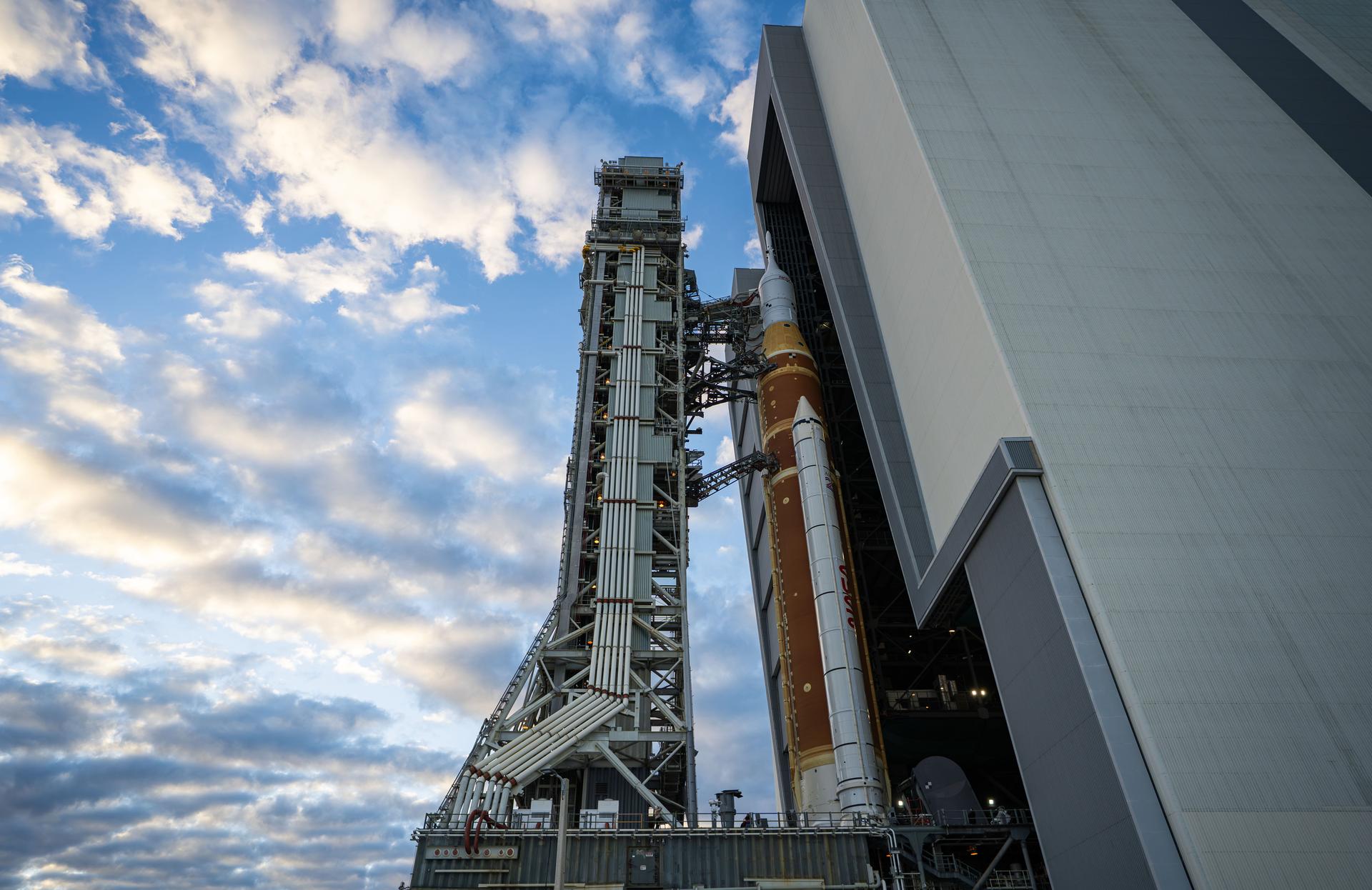
This image shows NASA’s SLS (Space Launch System) and Orion spacecraft rolling out of the Vehicle Assembly Building at NASA’s Kennedy Space Center. NASA's massive Crawler-Transporter, upgraded for the Artemis program, carries the powerful SLS rocket and Orion spacecraft on the Mobile Launcher from the Vehicle Assembly Building to Launch Pad 39B at Kennedy Space Center in preparation for the Artemis II mission.
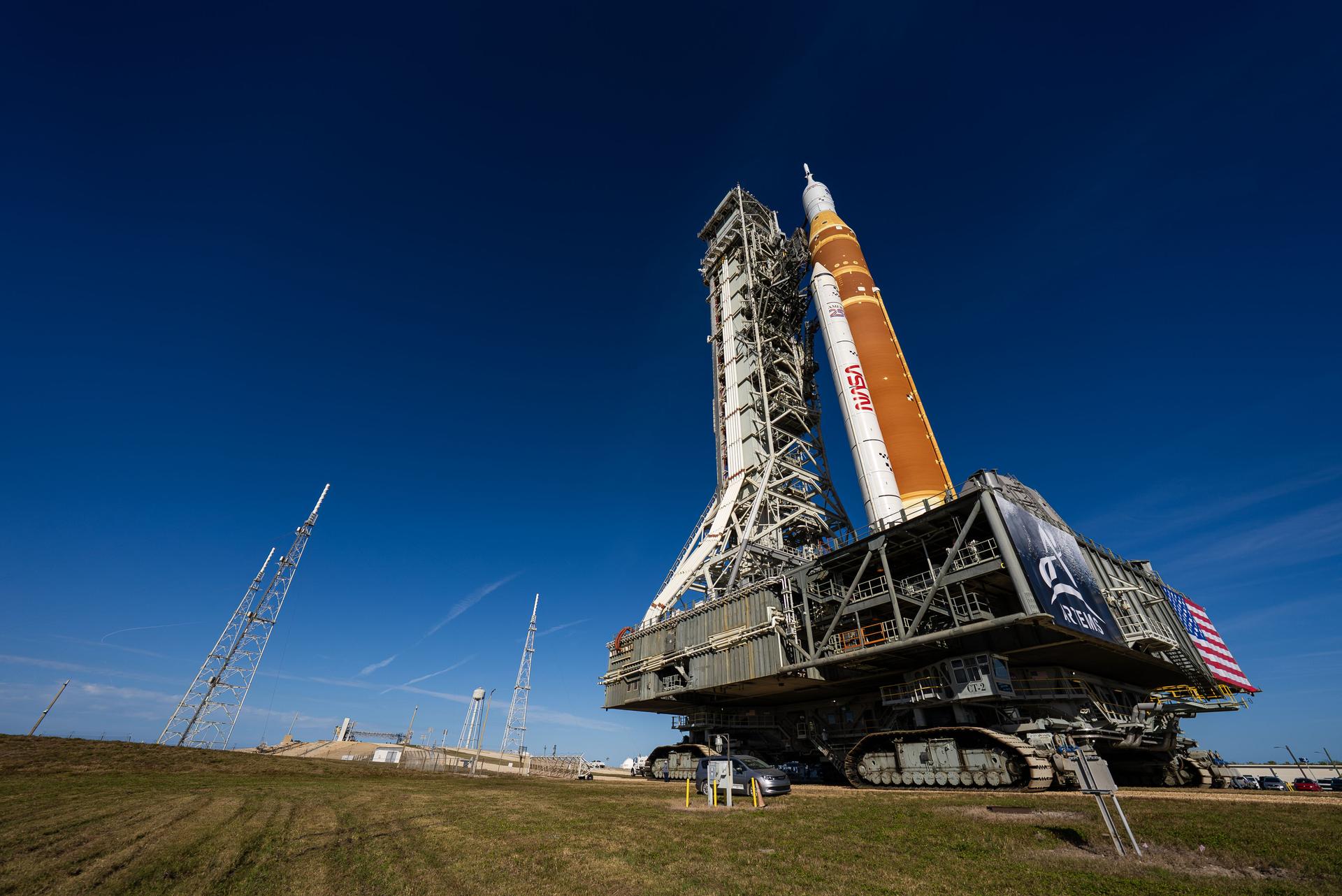
This image shows NASA’s SLS (Space Launch System) and Orion spacecraft rolling out of the Vehicle Assembly Building at NASA’s Kennedy Space Center. NASA's massive Crawler-Transporter, upgraded for the Artemis program, carries the powerful SLS rocket and Orion spacecraft on the Mobile Launcher from the Vehicle Assembly Building to Launch Pad 39B at Kennedy Space Center in preparation for the Artemis II mission.
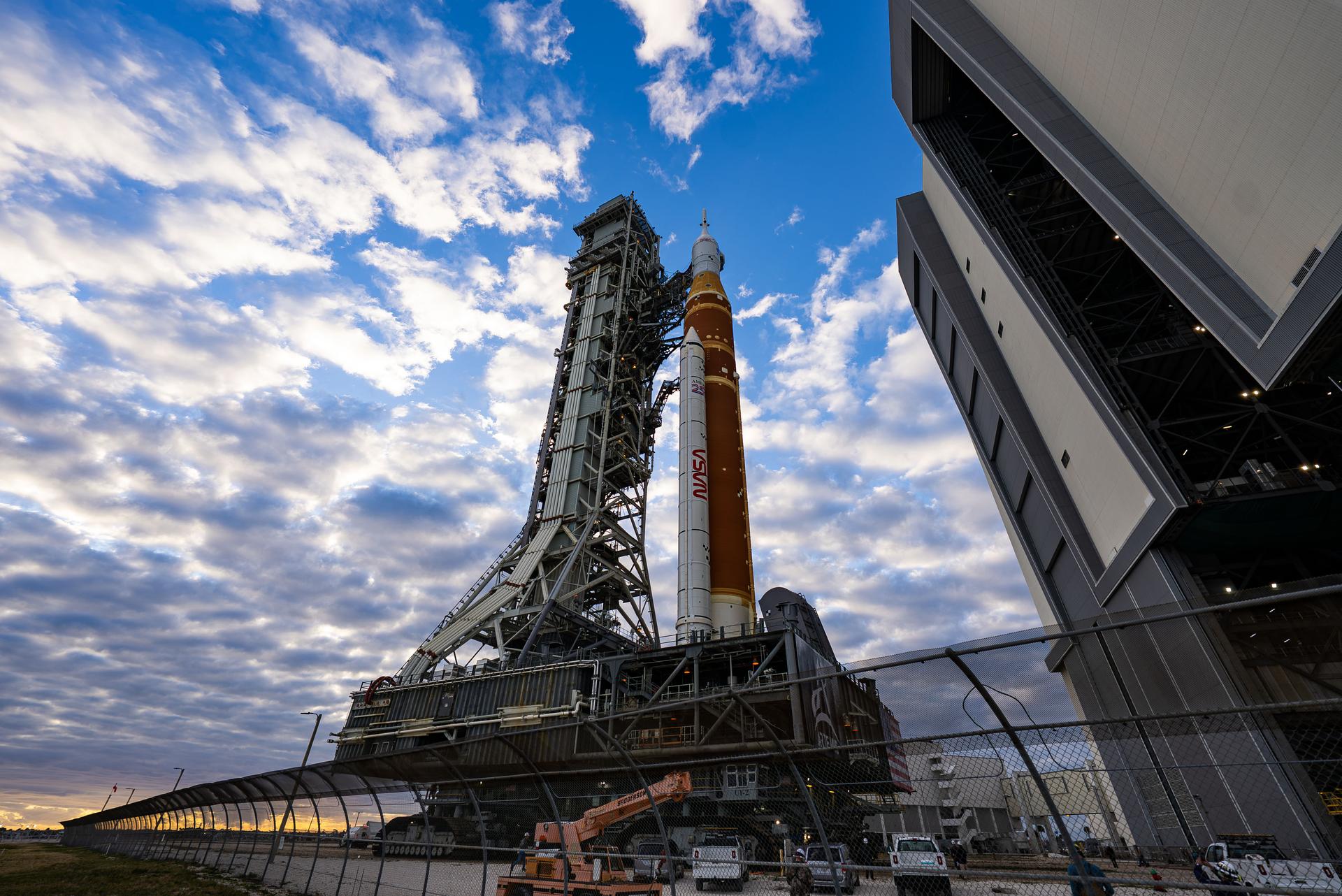
This image shows NASA’s SLS (Space Launch System) and Orion spacecraft rolling out of the Vehicle Assembly Building at NASA’s Kennedy Space Center. NASA's massive Crawler-Transporter, upgraded for the Artemis program, carries the powerful SLS rocket and Orion spacecraft on the Mobile Launcher from the Vehicle Assembly Building to Launch Pad 39B at Kennedy Space Center in preparation for the Artemis II mission.
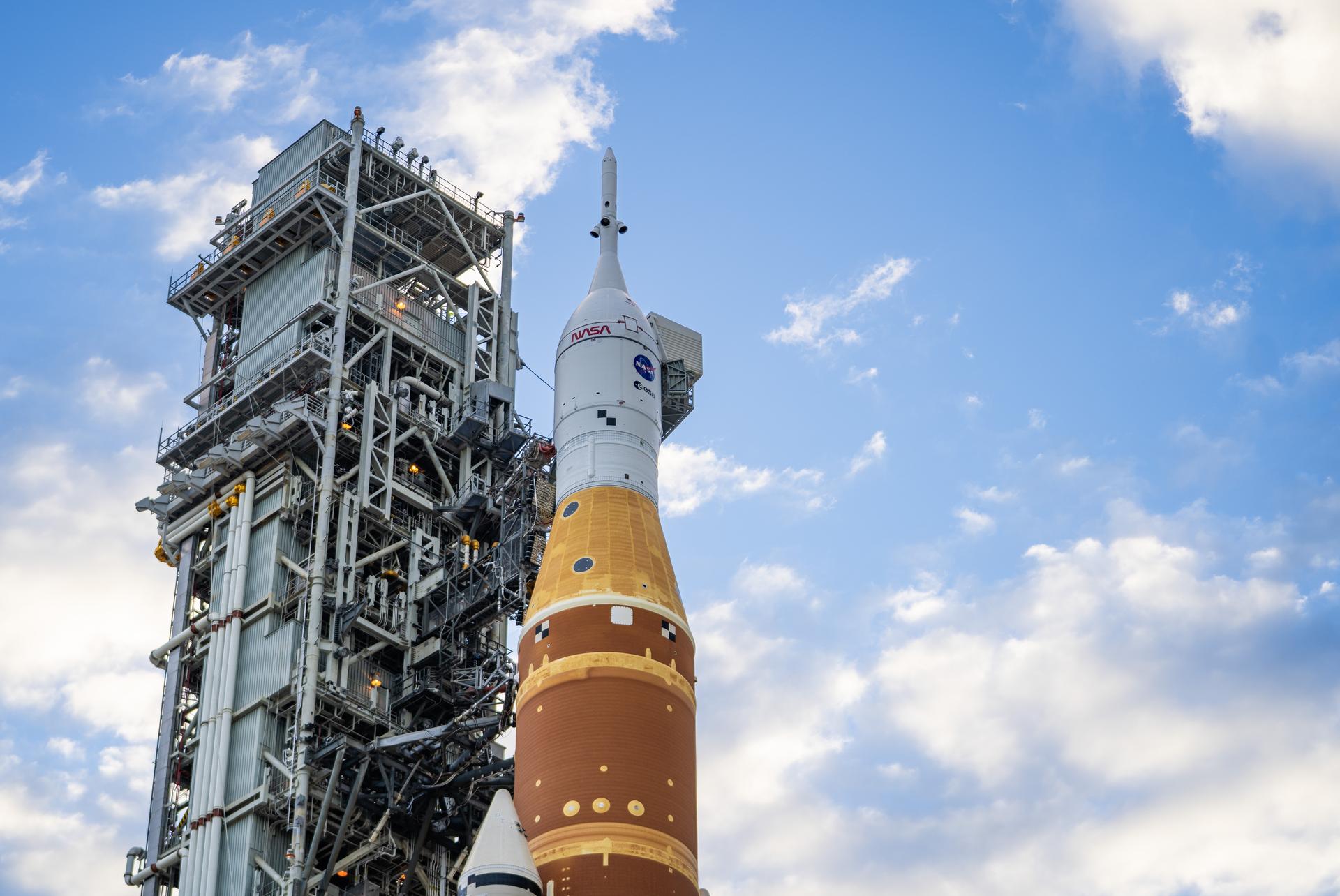
This image shows NASA’s SLS (Space Launch System) and Orion spacecraft rolling out of the Vehicle Assembly Building at NASA’s Kennedy Space Center. NASA's massive Crawler-Transporter, upgraded for the Artemis program, carries the powerful SLS rocket and Orion spacecraft on the Mobile Launcher from the Vehicle Assembly Building to Launch Pad 39B at Kennedy Space Center in preparation for the Artemis II mission.
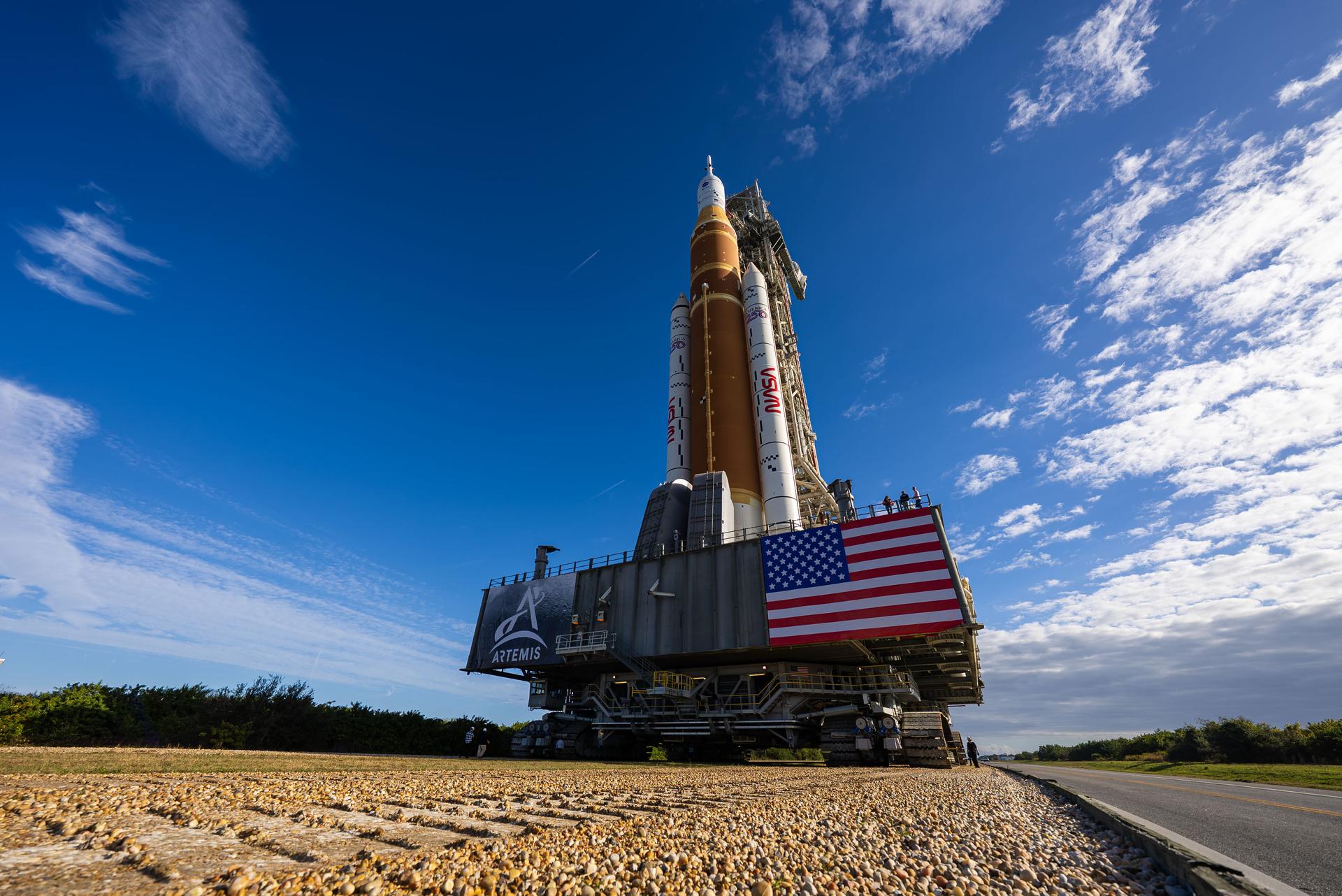
This image shows NASA’s SLS (Space Launch System) and Orion spacecraft rolling out of the Vehicle Assembly Building at NASA’s Kennedy Space Center. NASA's massive Crawler-Transporter, upgraded for the Artemis program, carries the powerful SLS rocket and Orion spacecraft on the Mobile Launcher from the Vehicle Assembly Building to Launch Pad 39B at Kennedy Space Center in preparation for the Artemis II mission.
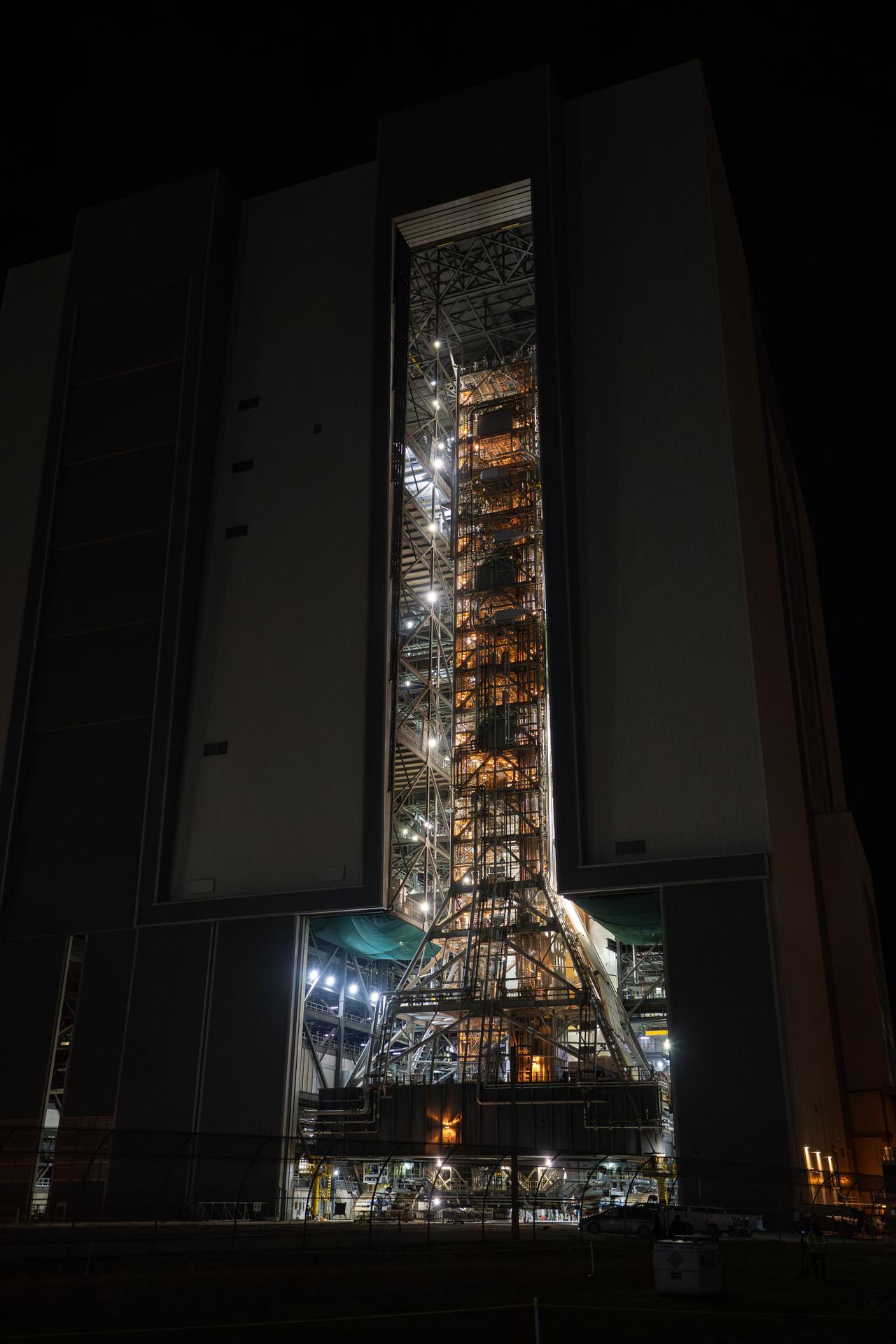
This image shows NASA’s SLS (Space Launch System) and Orion spacecraft rolling out of the Vehicle Assembly Building at NASA’s Kennedy Space Center. NASA's massive Crawler-Transporter, upgraded for the Artemis program, carries the powerful SLS rocket and Orion spacecraft on the Mobile Launcher from the Vehicle Assembly Building to Launch Pad 39B at Kennedy Space Center in preparation for the Artemis II mission.
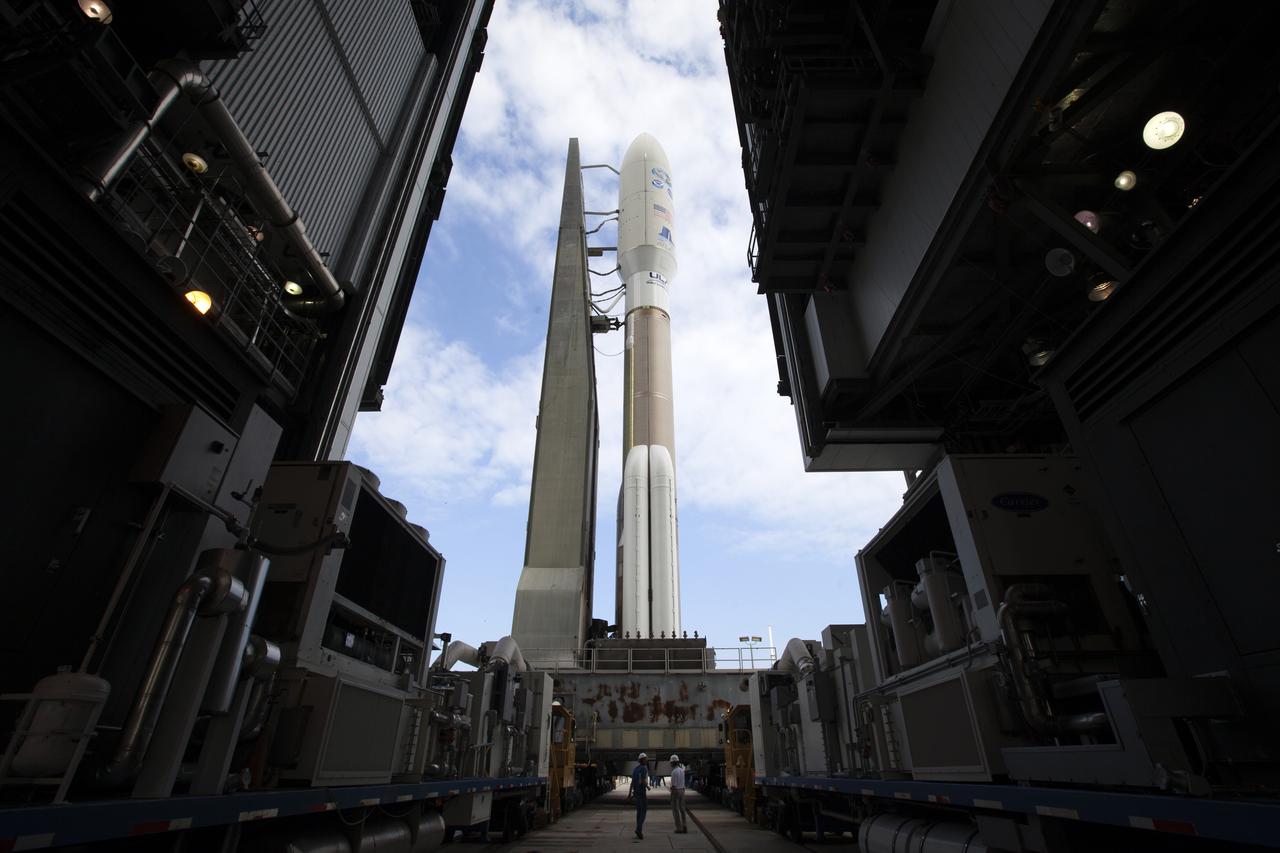
With blue sky in the background, a United Launch Alliance Atlas V rocket begins its rollout from the Vehicle Integration Facility to Space Launch Complex 41 at Cape Canaveral Air Force Station in Florida. The launch vehicle will send the Geostationary Operational Environmental Satellite (GOES-R) to a geostationary position over the U.S. GOES-R is the first satellite in a series of next-generation NOAA GOES satellites.
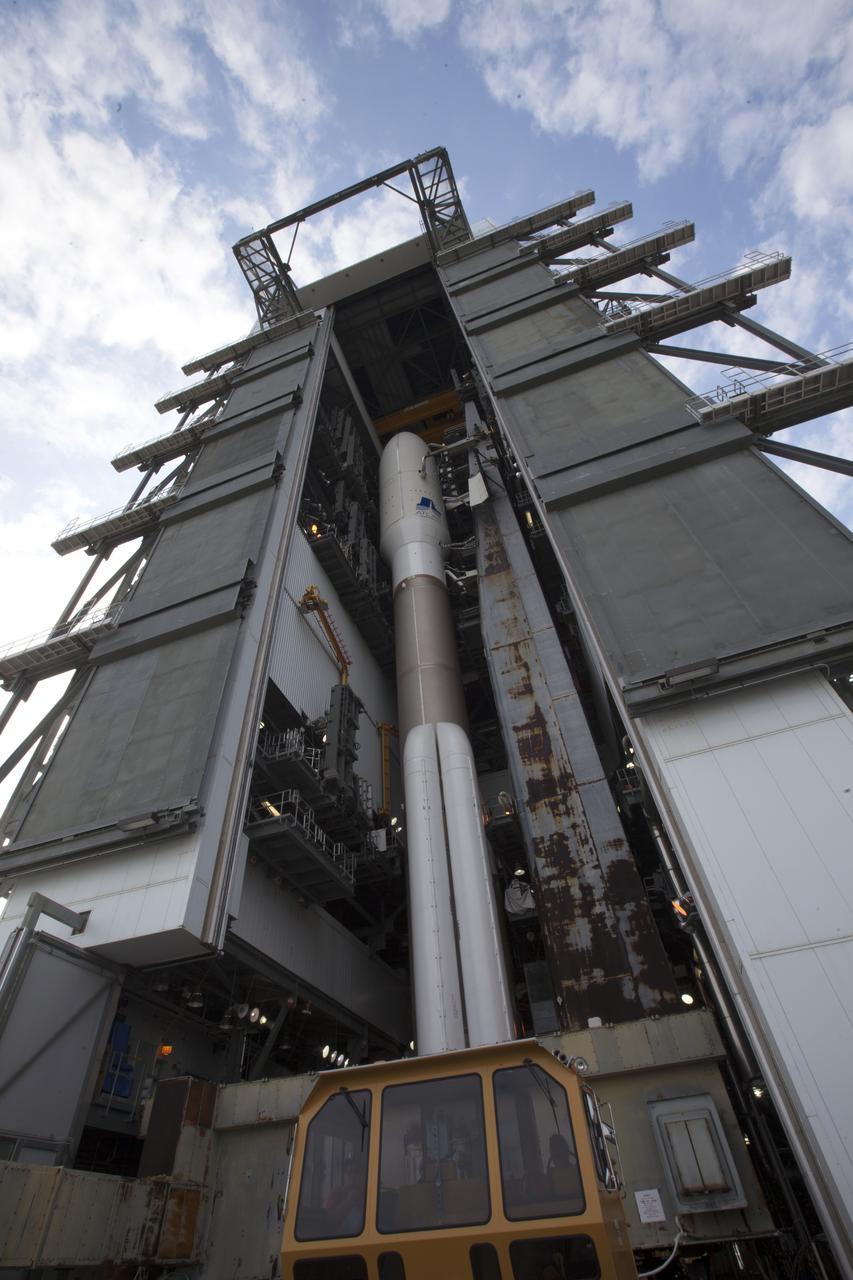
A United Launch Alliance Atlas V rocket begins its rollout from the Vehicle Integration Facility to Space Launch Complex 41 at Cape Canaveral Air Force Station in Florida. The launch vehicle will send the Geostationary Operational Environmental Satellite (GOES-R) to a geostationary position over the U.S. GOES-R is the first satellite in a series of next-generation NOAA GOES satellites.
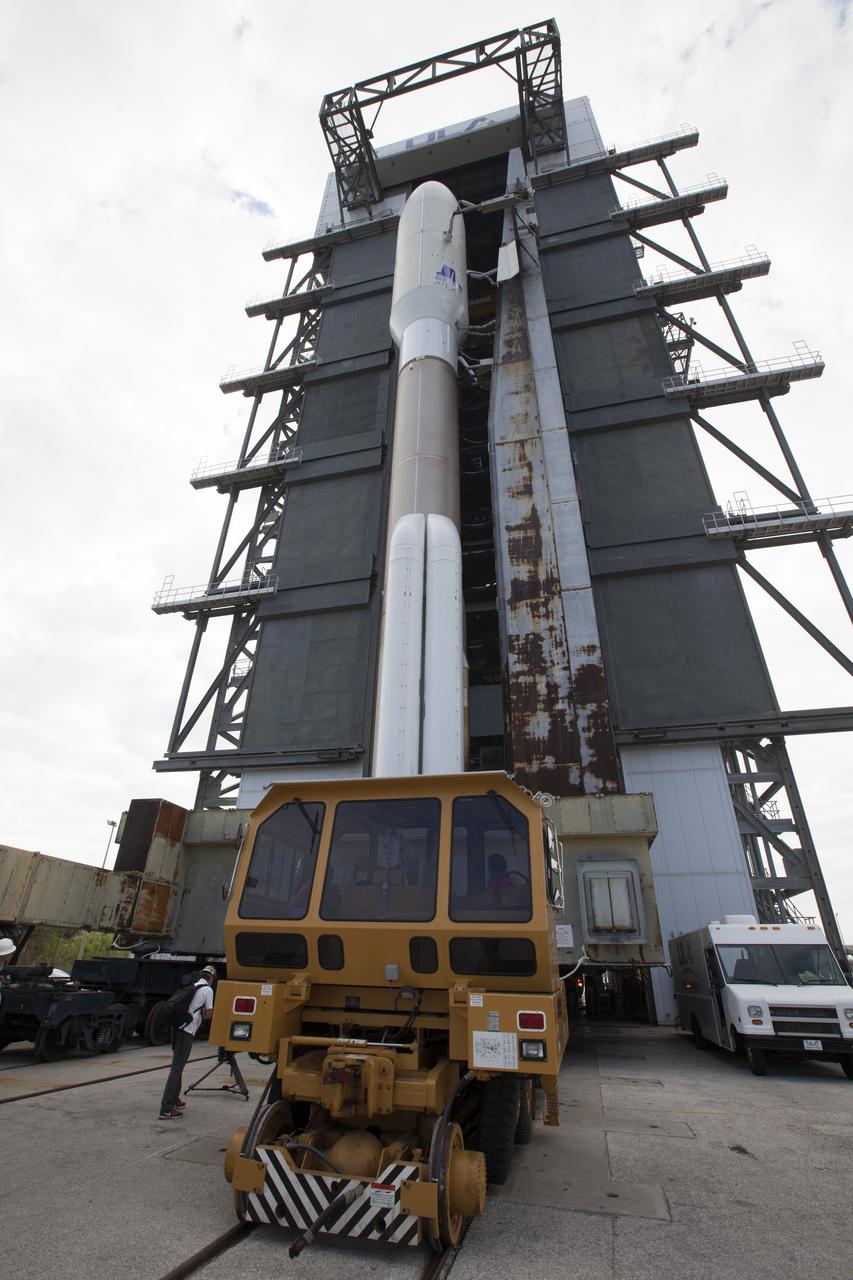
A United Launch Alliance Atlas V rocket begins its rollout from the Vehicle Integration Facility to Space Launch Complex 41 at Cape Canaveral Air Force Station in Florida. The launch vehicle will send the Geostationary Operational Environmental Satellite (GOES-R) to a geostationary position over the U.S. GOES-R is the first satellite in a series of next-generation NOAA GOES satellites.
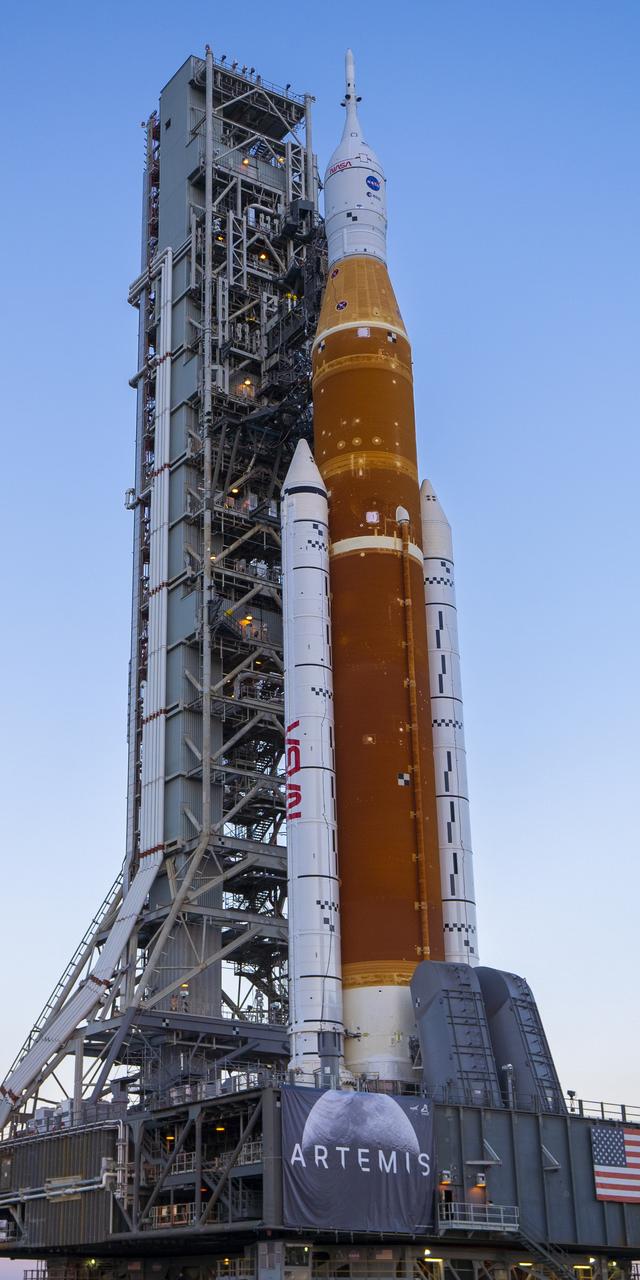
Space Launch System (SLS) rocket and Orion Spacecraft rollout at Kennedy Space Center
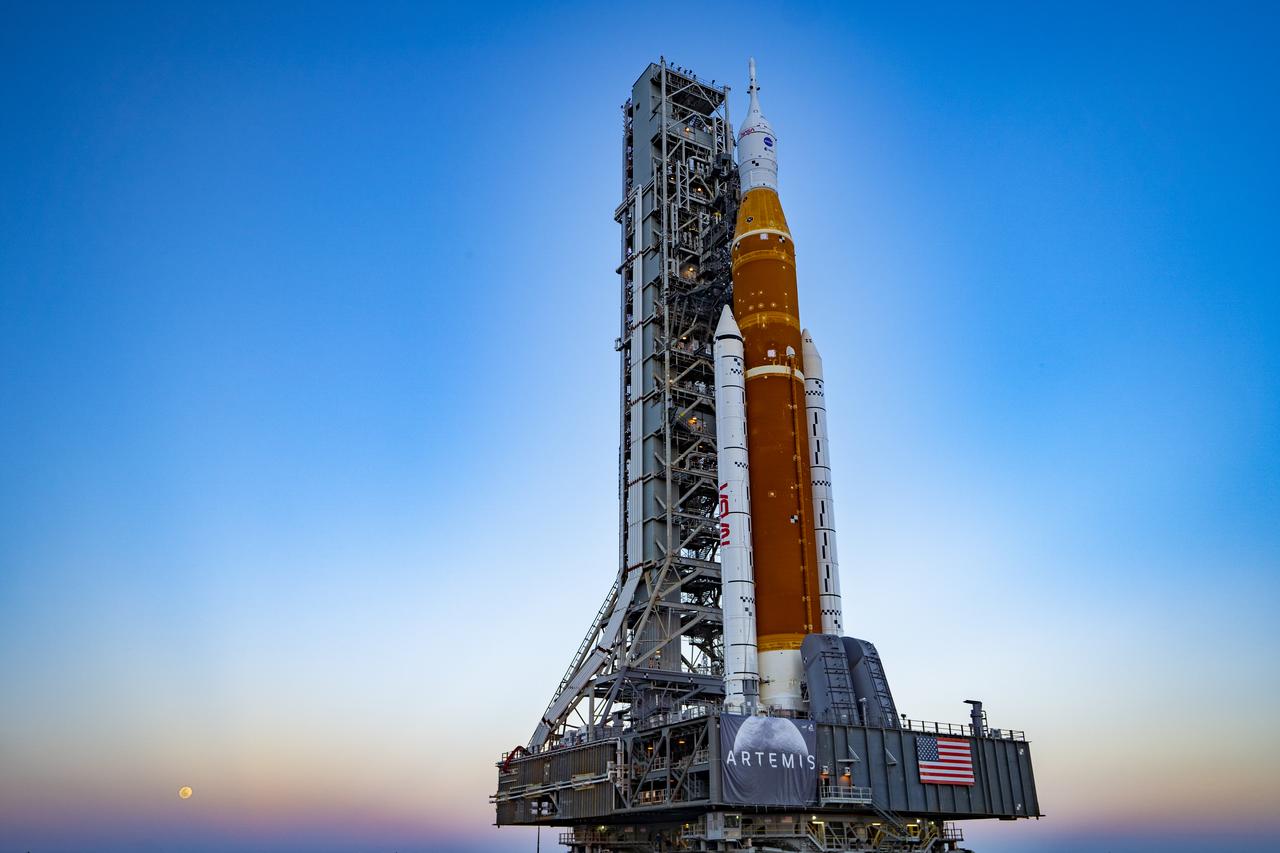
Space Launch System (SLS) rocket and Orion Spacecraft rollout at Kennedy Space Center
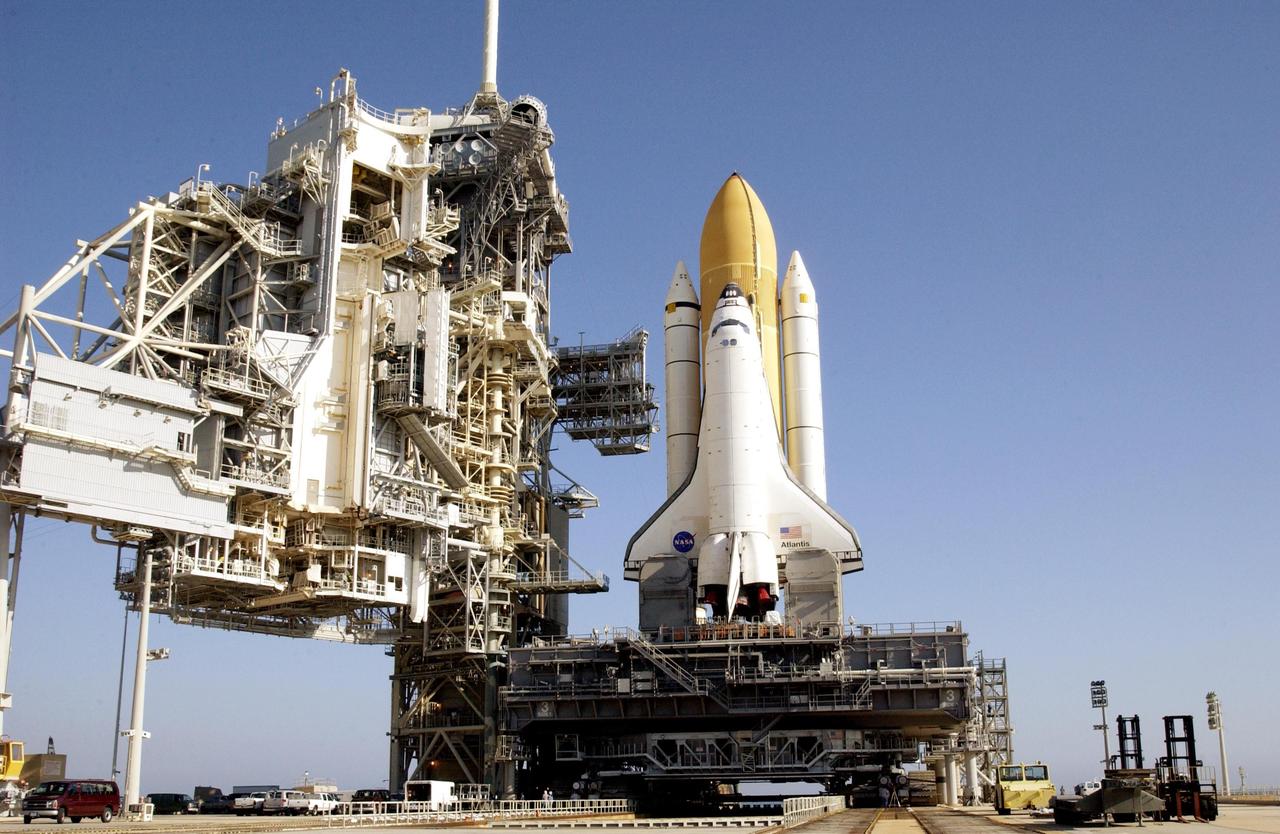
KENNEDY SPACE CENTER, FLA. -- After an early morning rollout, Space Shuttle Atlantis sits on the launch pad. The Rotating Service Structure is wide open (at left). After being stacked with its solid rocket boosters and external tank, Atlantis began its rollout to Launch Pad 39B at 2:27 a.m. EDT in preparation for launch to the International Space Station. The Shuttle arrived at the Pad and was hard down at 9:38 a.m. Launch is scheduled no earlier than Oct. 2 for mission STS-112, the 15th assembly flight to the International Space Station. Atlantis will carry the S1 Integrated Truss Structure, which will be attached to the central truss segment, the S0 truss, during the mission.
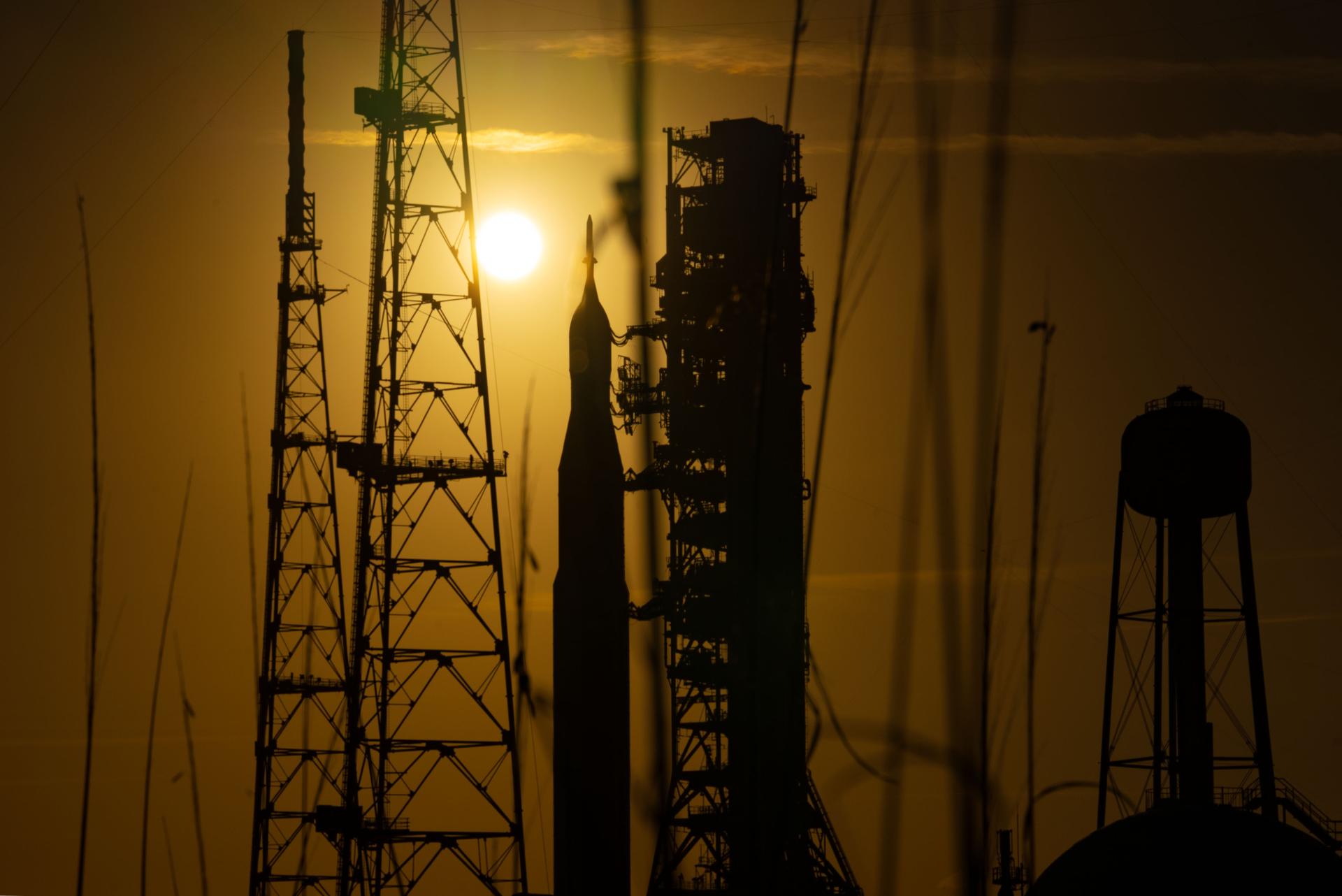
This image shows NASA’s SLS (Space Launch System) and Orion spacecraft rolling out of the Vehicle Assembly Building at NASA’s Kennedy Space Center. NASA's massive Crawler-Transporter, upgraded for the Artemis program, carries the powerful SLS rocket and Orion spacecraft on the Mobile Launcher from the Vehicle Assembly Building to Launch Pad 39B at Kennedy Space Center in preparation for the Artemis II mission.
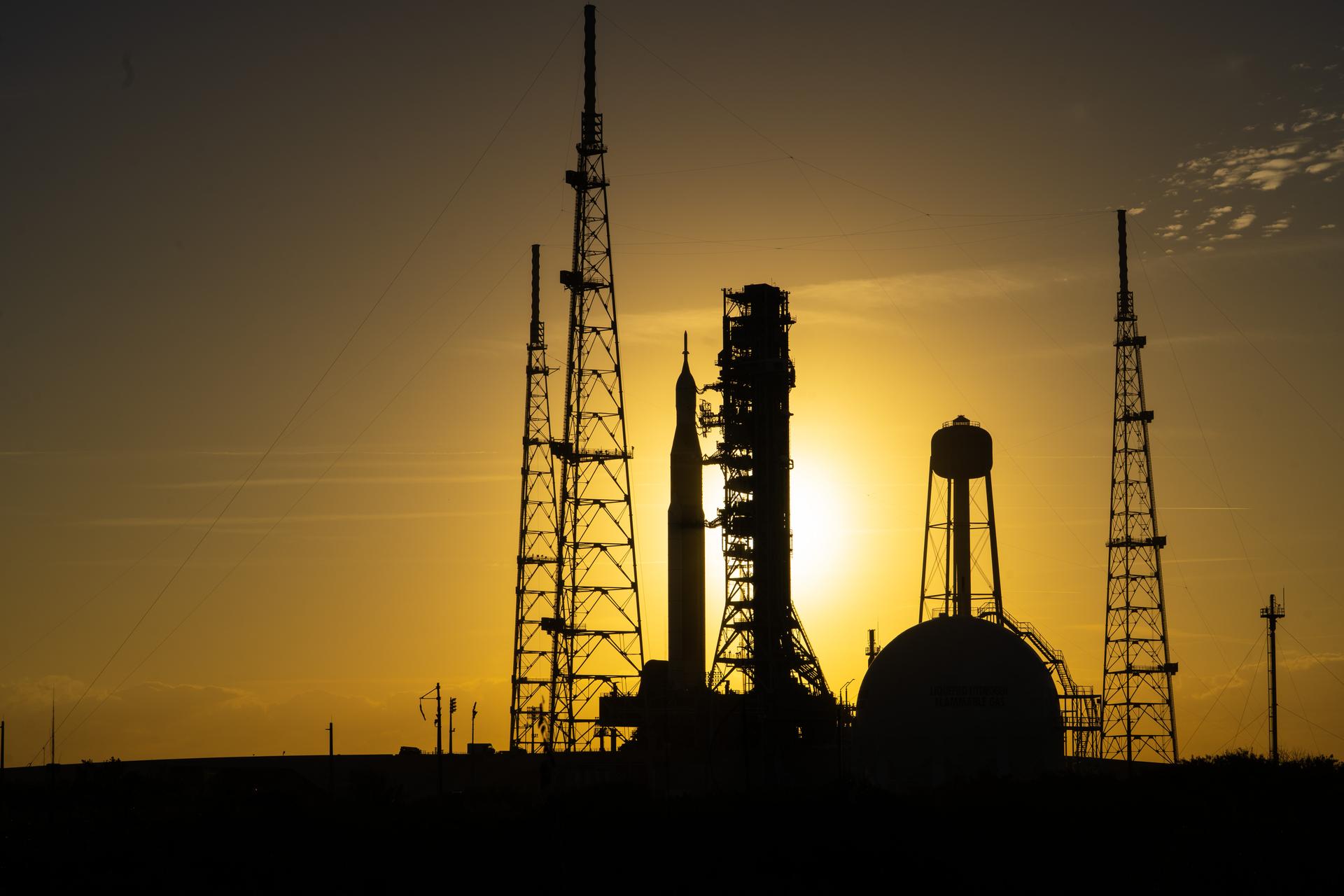
This image shows NASA’s SLS (Space Launch System) and Orion spacecraft rolling out of the Vehicle Assembly Building at NASA’s Kennedy Space Center. NASA's massive Crawler-Transporter, upgraded for the Artemis program, carries the powerful SLS rocket and Orion spacecraft on the Mobile Launcher from the Vehicle Assembly Building to Launch Pad 39B at Kennedy Space Center in preparation for the Artemis II mission.
Stills, broll, imagery coverage of rollout
Stills, broll, imagery coverage of rollout
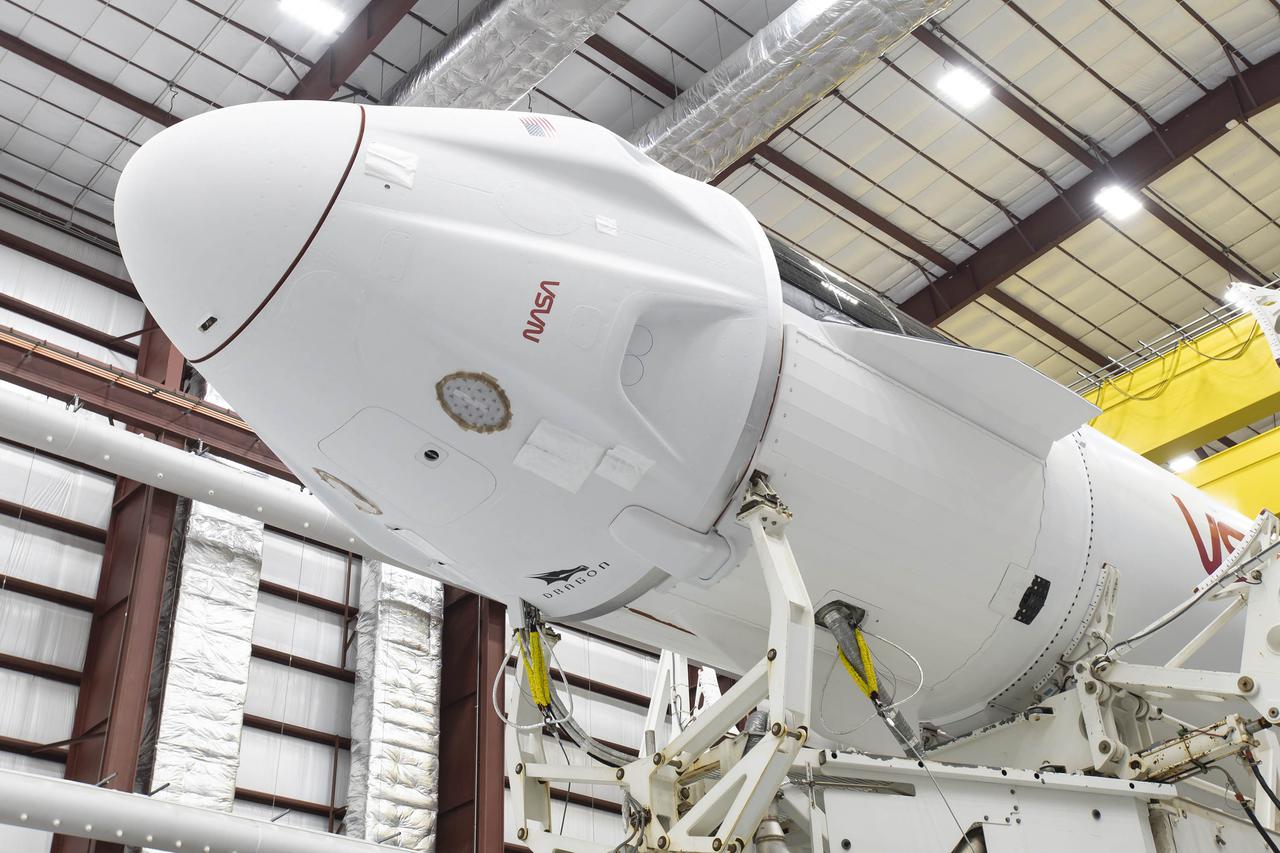
Inside the SpaceX horizontal processing facility at NASA’s Kennedy Space Center in Florida, the SpaceX Falcon 9 rocket with Crew Dragon attached are ready for rollout to Launch Complex 39A on Oct. 27, 2021 for NASA’s SpaceX Crew-3 mission. NASA astronauts Raja Chari, Tom Marshburn and Kayla Barron, along with Matthias Maurer, European Space Agency astronaut, will launch aboard the Crew Dragon on the Falcon 9 rocket on Oct. 31. Launch is targeted for 2:21 a.m. from Pad 39A. Crew-3 is the third crew rotation flight for the agency’s Commercial Crew Program, and the first flight of a new Crew Dragon spacecraft.
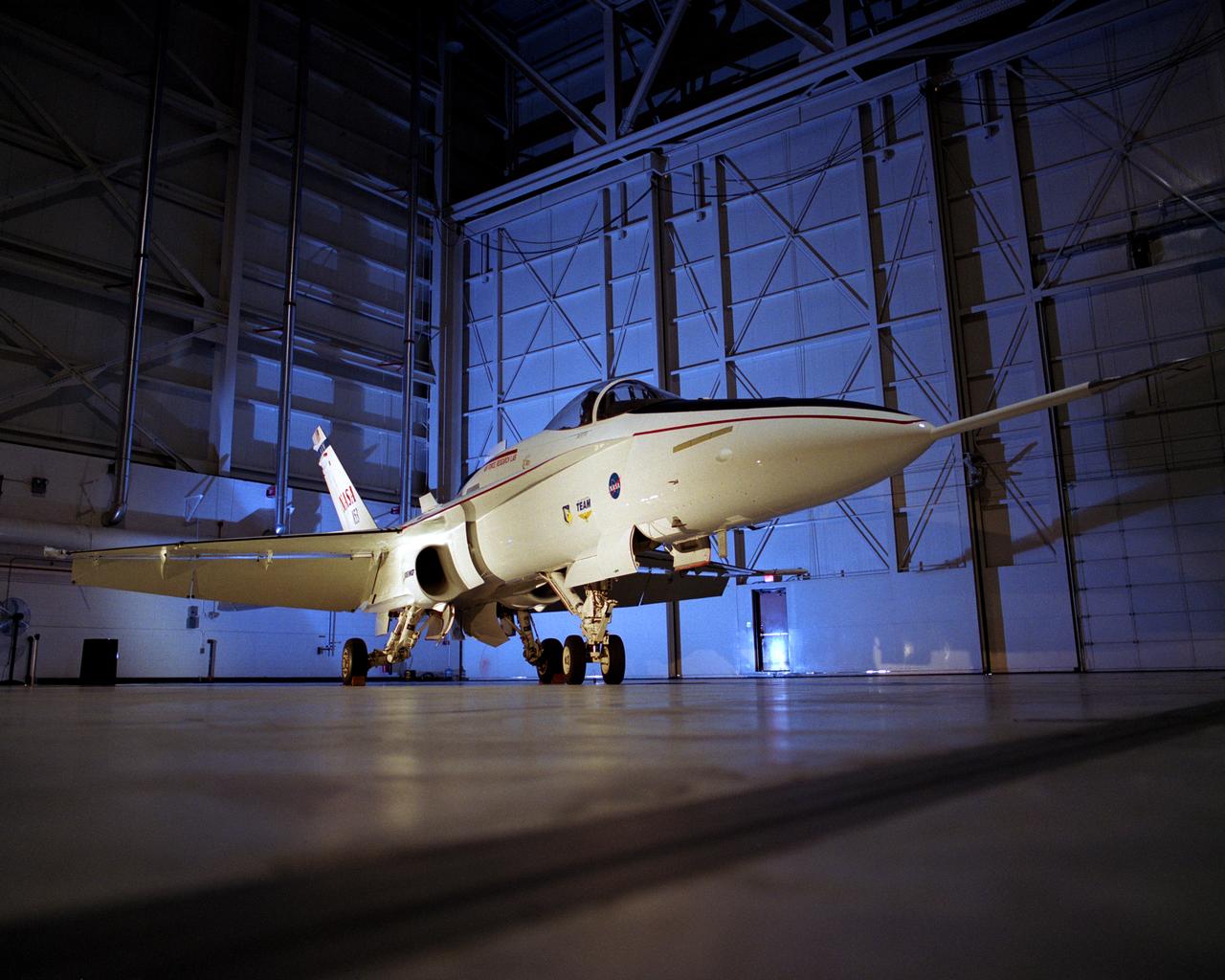
A modified F/A-18 in a distinctive red, white and blue paint scheme was showcased during formal rollout ceremonies for the Active Aeroelastic Wing flight research program.
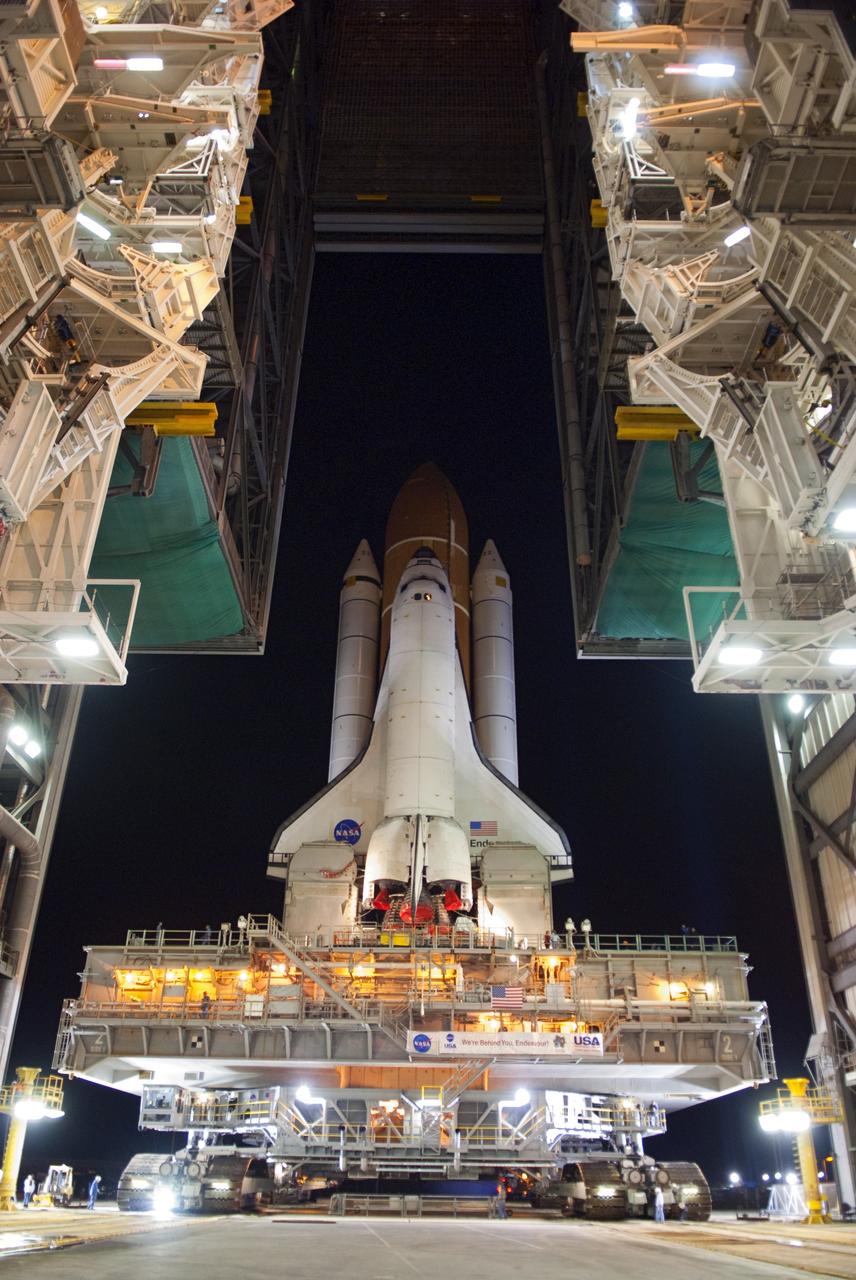
CAPE CANAVERAL, Fla. -- Space shuttle Endeavour begins its slow move from High Bay 3 in the Vehicle Assembly Building to Launch Pad 39A at NASA's Kennedy Space Center in Florida at 7:56 p.m. EST. The 3.4-mile trek, known as "rollout," will take about seven hours to complete. This is the final scheduled rollout for Endeavour, which is attached to its external fuel tank and solid rocket boosters atop a crawler-transporter. Endeavour and its six STS-134 crew members will deliver the Express Logistics Carrier-3, Alpha Magnetic Spectrometer-2 (AMS), a high-pressure gas tank, additional spare parts for the Dextre robotic helper and micrometeoroid debris shields to the International Space Station on the shuttle's final spaceflight. Launch is targeted for April 19 at 7:48 p.m. EDT. For more information visit, www.nasa.gov/mission_pages/shuttle/shuttlemissions/sts134/index.html. Photo credit: NASA/Jim Grossmann
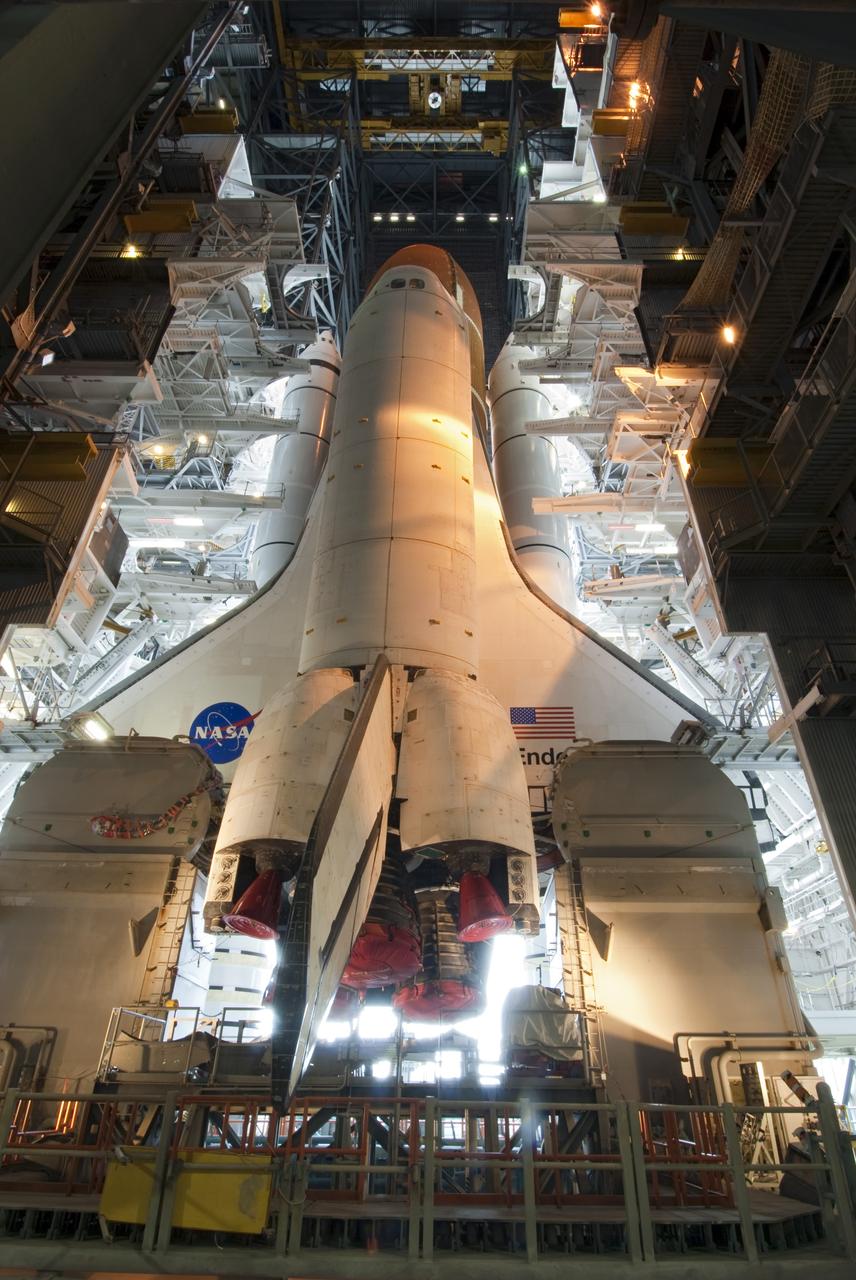
CAPE CANAVERAL, Fla. -- Space shuttle Endeavour is ready for its slow move from High Bay 3 in the Vehicle Assembly Building to Launch Pad 39A at NASA's Kennedy Space Center in Florida. The 3.4-mile trek, known as "rollout," will take about seven hours to complete. This is the final scheduled rollout for Endeavour, which is attached to its external fuel tank and solid rocket boosters atop a crawler-transporter. Endeavour and its six STS-134 crew members will deliver the Express Logistics Carrier-3, Alpha Magnetic Spectrometer-2 (AMS), a high-pressure gas tank, additional spare parts for the Dextre robotic helper and micrometeoroid debris shields to the International Space Station on the shuttle's final spaceflight. Launch is targeted for April 19 at 7:48 p.m. EDT. For more information visit, www.nasa.gov/mission_pages/shuttle/shuttlemissions/sts134/index.html. Photo credit: NASA/Jim Grossmann
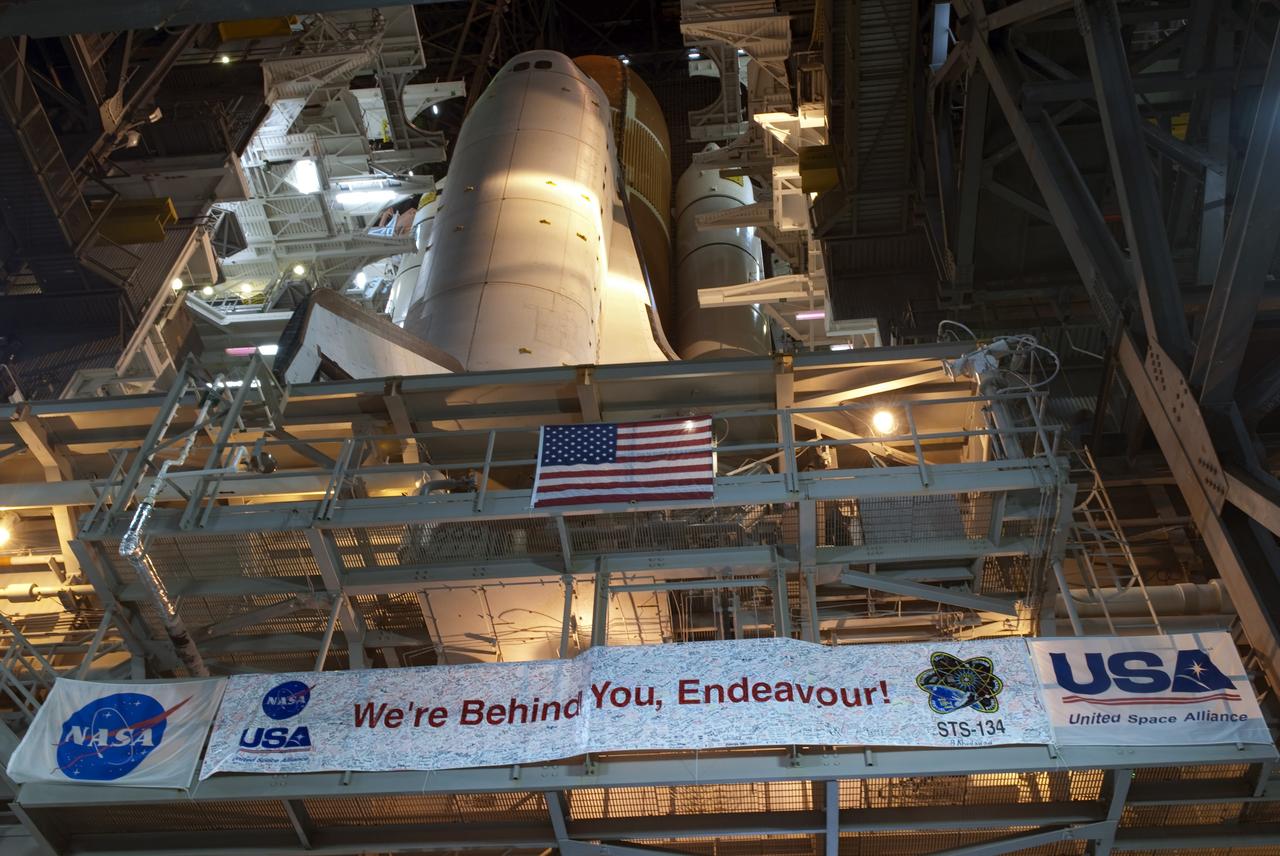
CAPE CANAVERAL, Fla. -- Space shuttle Endeavour begins its slow move from High Bay 3 in the Vehicle Assembly Building to Launch Pad 39A at NASA's Kennedy Space Center in Florida at 7:56 p.m. EST. The 3.4-mile trek, known as "rollout," will take about seven hours to complete. This is the final scheduled rollout for Endeavour, which is attached to its external fuel tank and solid rocket boosters atop a crawler-transporter. Endeavour and its six STS-134 crew members will deliver the Express Logistics Carrier-3, Alpha Magnetic Spectrometer-2 (AMS), a high-pressure gas tank, additional spare parts for the Dextre robotic helper and micrometeoroid debris shields to the International Space Station on the shuttle's final spaceflight. Launch is targeted for April 19 at 7:48 p.m. EDT. For more information visit, www.nasa.gov/mission_pages/shuttle/shuttlemissions/sts134/index.html. Photo credit: NASA/Jim Grossmann
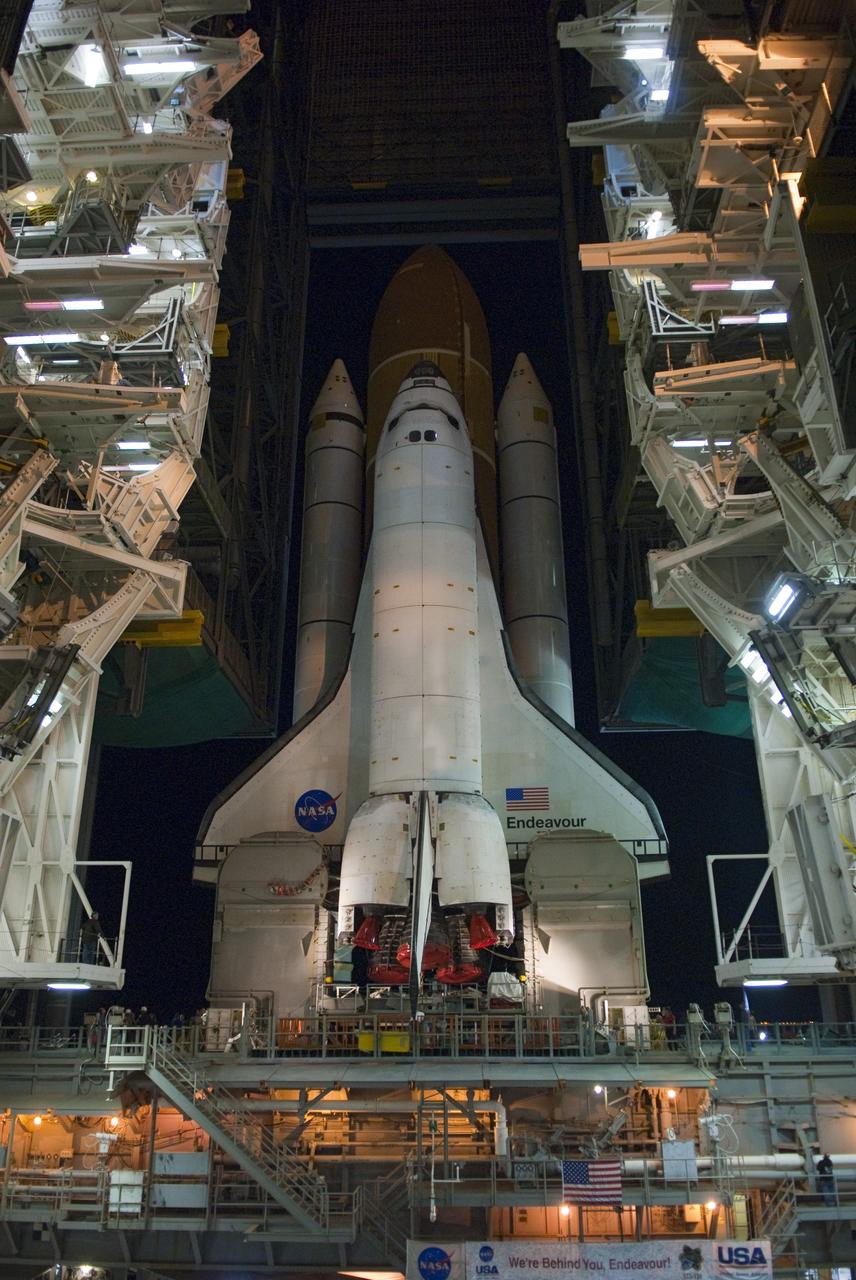
CAPE CANAVERAL, Fla. -- Space shuttle Endeavour begins its slow move from High Bay 3 in the Vehicle Assembly Building to Launch Pad 39A at NASA's Kennedy Space Center in Florida at 7:56 p.m. EST. The 3.4-mile trek, known as "rollout," will take about seven hours to complete. This is the final scheduled rollout for Endeavour, which is attached to its external fuel tank and solid rocket boosters atop a crawler-transporter. Endeavour and its six STS-134 crew members will deliver the Express Logistics Carrier-3, Alpha Magnetic Spectrometer-2 (AMS), a high-pressure gas tank, additional spare parts for the Dextre robotic helper and micrometeoroid debris shields to the International Space Station on the shuttle's final spaceflight. Launch is targeted for April 19 at 7:48 p.m. EDT. For more information visit, www.nasa.gov/mission_pages/shuttle/shuttlemissions/sts134/index.html. Photo credit: NASA/Jim Grossmann
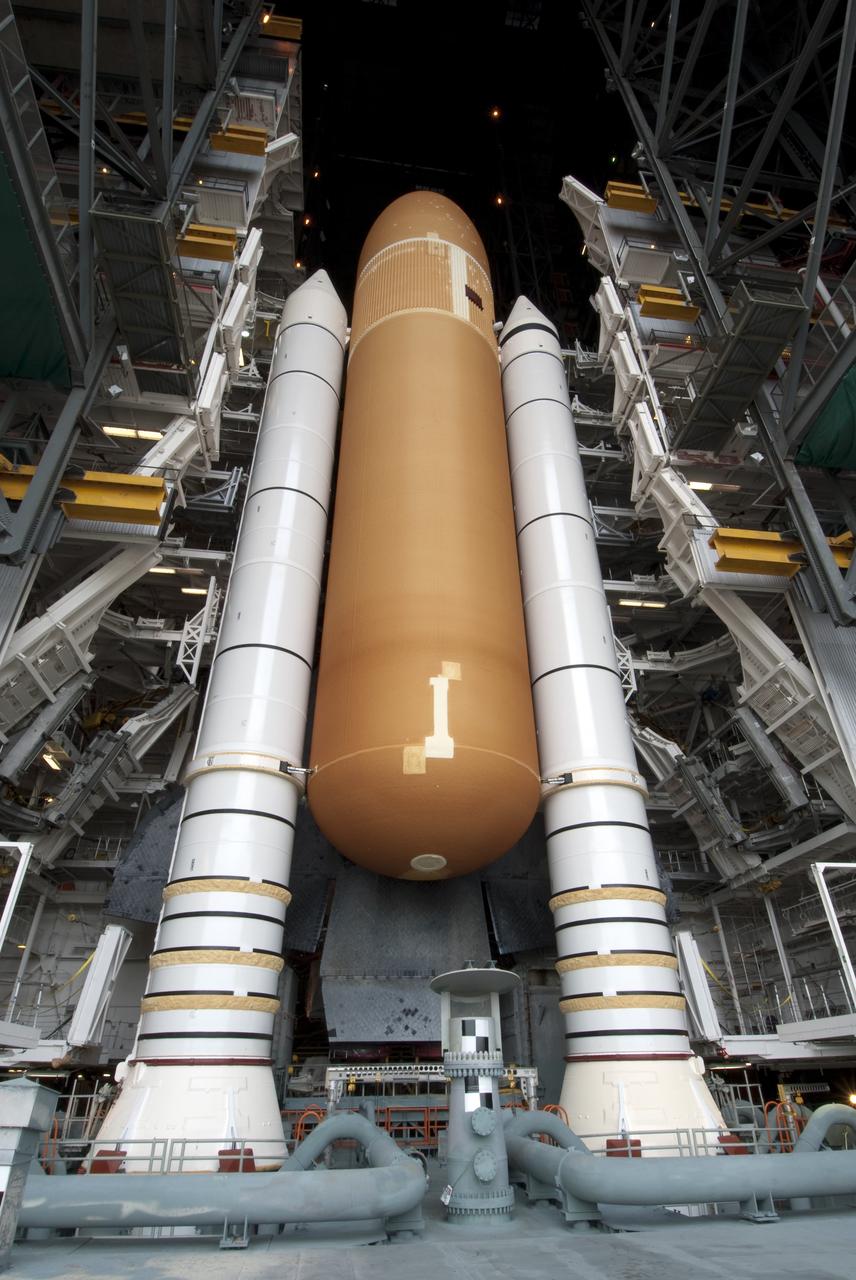
CAPE CANAVERAL, Fla. -- Space shuttle Endeavour, attached to its external fuel tank and solid rocket boosters atop a crawler-transporter, is ready for its slow move from High Bay 3 in the Vehicle Assembly Building to Launch Pad 39A at NASA's Kennedy Space Center in Florida. The 3.4-mile trek, known as "rollout," will take about seven hours to complete. This is the final scheduled rollout for Endeavour. Endeavour and its six STS-134 crew members will deliver the Express Logistics Carrier-3, Alpha Magnetic Spectrometer-2 (AMS), a high-pressure gas tank, additional spare parts for the Dextre robotic helper and micrometeoroid debris shields to the International Space Station on the shuttle's final spaceflight. Launch is targeted for April 19 at 7:48 p.m. EDT. For more information visit, www.nasa.gov/mission_pages/shuttle/shuttlemissions/sts134/index.html. Photo credit: NASA/Jim Grossmann
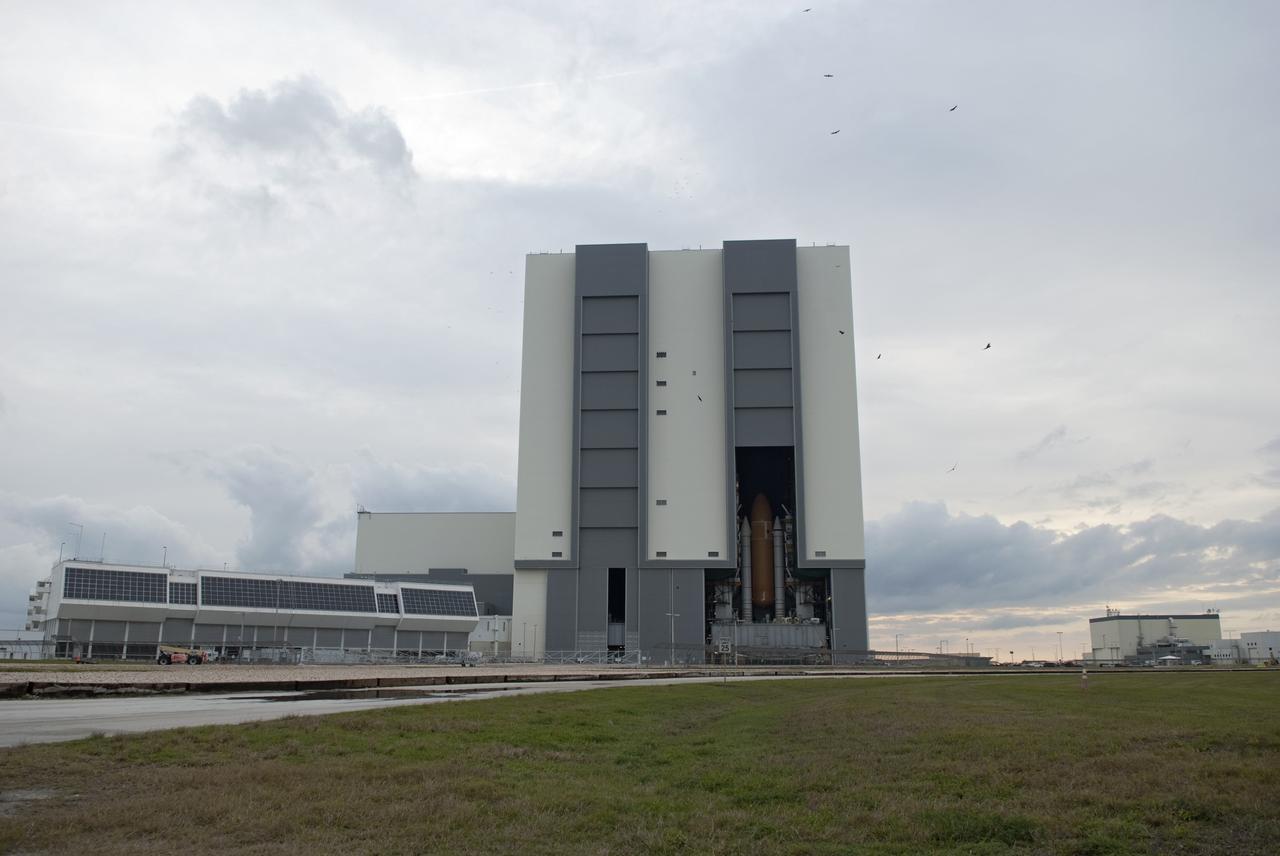
CAPE CANAVERAL, Fla. -- Space shuttle Endeavour, attached to its external fuel tank and solid rocket boosters atop a crawler-transporter, is ready for its slow move from High Bay 3 in the Vehicle Assembly Building to Launch Pad 39A at NASA's Kennedy Space Center in Florida. The 3.4-mile trek, known as "rollout," will take about seven hours to complete. This is the final scheduled rollout for Endeavour. Endeavour and its six STS-134 crew members will deliver the Express Logistics Carrier-3, Alpha Magnetic Spectrometer-2 (AMS), a high-pressure gas tank, additional spare parts for the Dextre robotic helper and micrometeoroid debris shields to the International Space Station on the shuttle's final spaceflight. Launch is targeted for April 19 at 7:48 p.m. EDT. For more information visit, www.nasa.gov/mission_pages/shuttle/shuttlemissions/sts134/index.html. Photo credit: NASA/Jim Grossmann
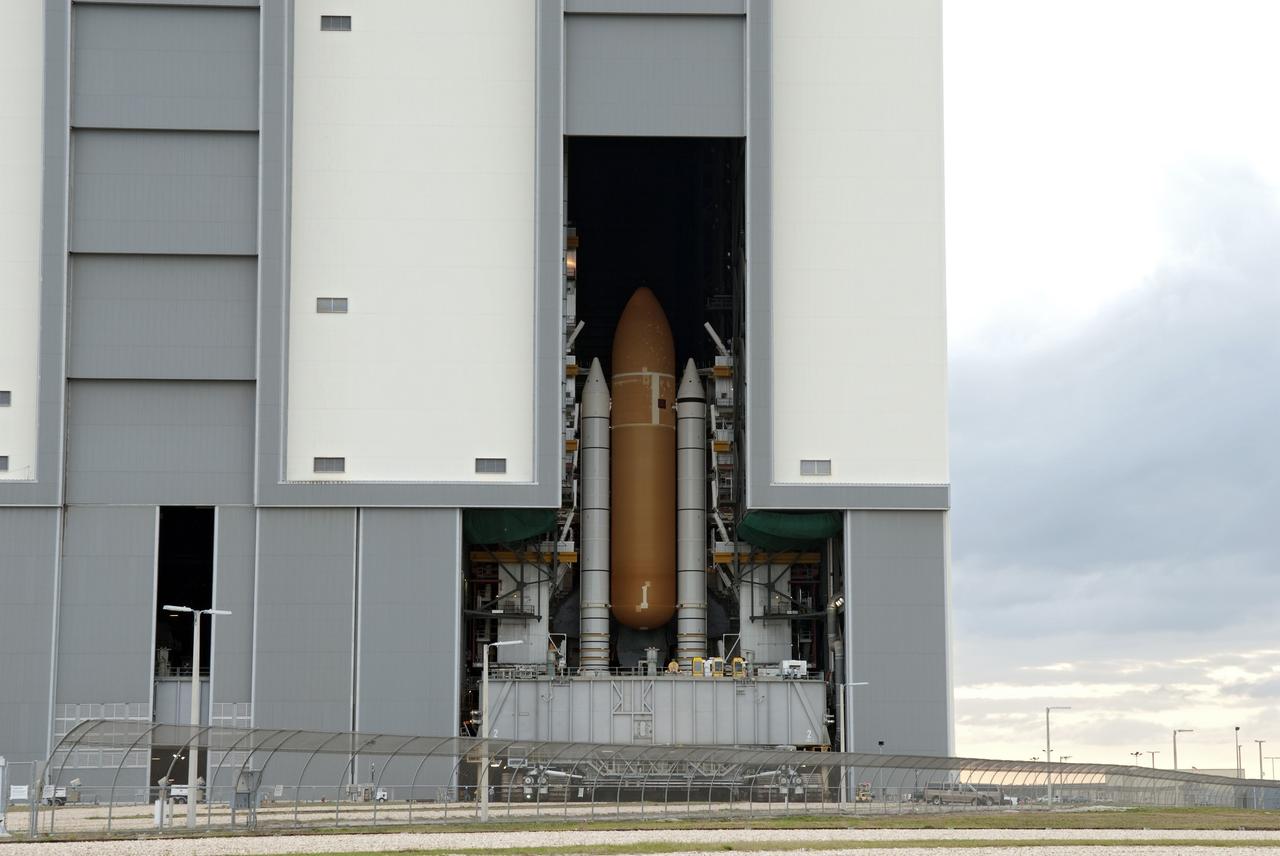
CAPE CANAVERAL, Fla. -- Space shuttle Endeavour, attached to its external fuel tank and solid rocket boosters atop a crawler-transporter, is ready for its slow move from High Bay 3 in the Vehicle Assembly Building to Launch Pad 39A at NASA's Kennedy Space Center in Florida. The 3.4-mile trek, known as "rollout," will take about seven hours to complete. This is the final scheduled rollout for Endeavour. Endeavour and its six STS-134 crew members will deliver the Express Logistics Carrier-3, Alpha Magnetic Spectrometer-2 (AMS), a high-pressure gas tank, additional spare parts for the Dextre robotic helper and micrometeoroid debris shields to the International Space Station on the shuttle's final spaceflight. Launch is targeted for April 19 at 7:48 p.m. EDT. For more information visit, www.nasa.gov/mission_pages/shuttle/shuttlemissions/sts134/index.html. Photo credit: NASA/Jim Grossmann
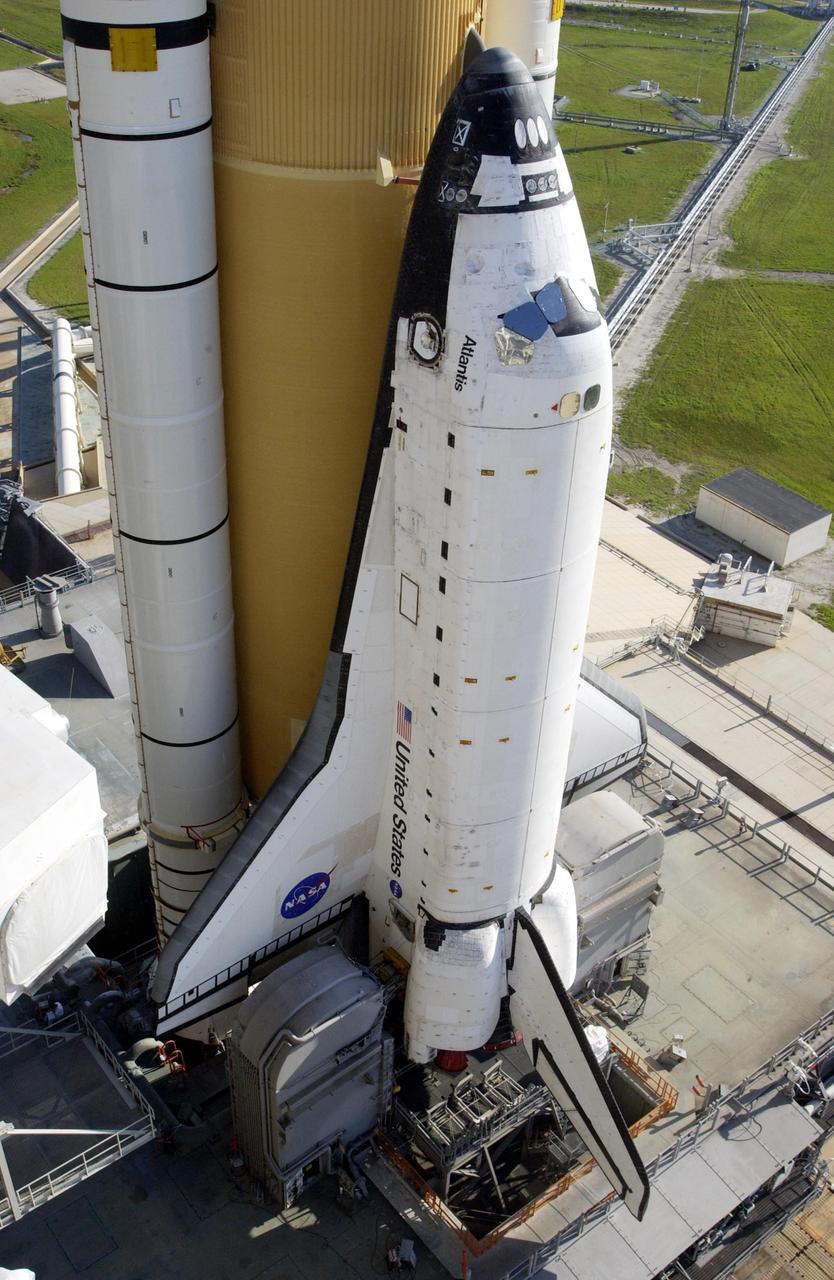
KENNEDY SPACE CENTER, FLA. -- After an early morning rollout, Space Shuttle Atlantis sits on the launch pad. Visible near the tail are the tail service masts that support the fluid, gas and electrical requirements of the orbiter's liquid oxygen and liquid hydrogen aft T-0 umbilicals. After being stacked with its solid rocket boosters and external tank, Atlantis began its rollout to Launch Pad 39B at 2:27 a.m. EDT in preparation for launch to the International Space Station. The Shuttle arrived at the Pad and was hard down at 9:38 a.m. Launch is scheduled no earlier than Oct. 2 for mission STS-112, the 15th assembly flight to the International Space Station. Atlantis will carry the S1 Integrated Truss Structure, which will be attached to the central truss segment, the S0 truss, during the mission.
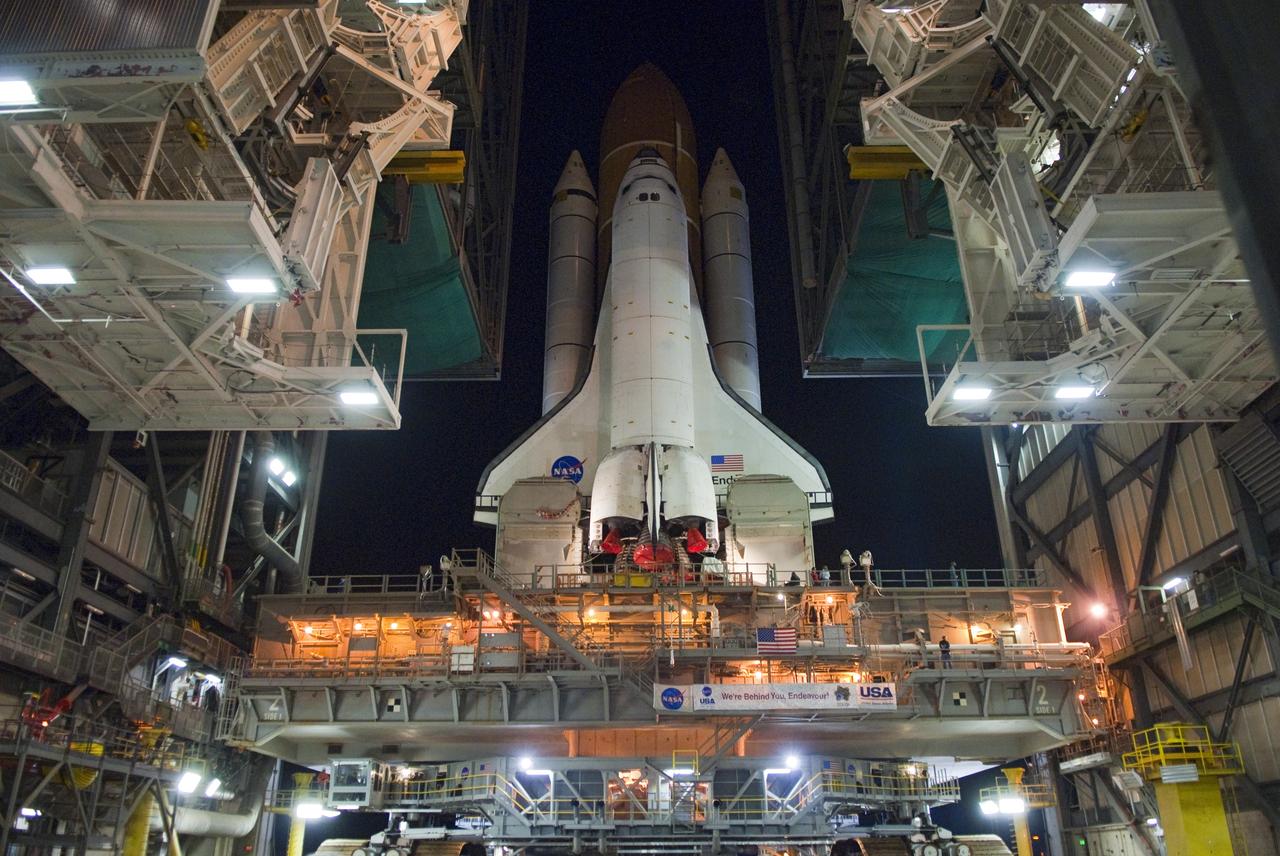
CAPE CANAVERAL, Fla. -- Space shuttle Endeavour begins its slow move from High Bay 3 in the Vehicle Assembly Building to Launch Pad 39A at NASA's Kennedy Space Center in Florida at 7:56 p.m. EST. The 3.4-mile trek, known as "rollout," will take about seven hours to complete. This is the final scheduled rollout for Endeavour, which is attached to its external fuel tank and solid rocket boosters atop a crawler-transporter. Endeavour and its six STS-134 crew members will deliver the Express Logistics Carrier-3, Alpha Magnetic Spectrometer-2 (AMS), a high-pressure gas tank, additional spare parts for the Dextre robotic helper and micrometeoroid debris shields to the International Space Station on the shuttle's final spaceflight. Launch is targeted for April 19 at 7:48 p.m. EDT. For more information visit, www.nasa.gov/mission_pages/shuttle/shuttlemissions/sts134/index.html. Photo credit: NASA/Jim Grossmann
![Jody Singer, director of NASA's Marshall Space Flight Center, speaks to team members March 11 following the FY2020 proposed budget rollout event with NASA Administrator Jim Bridenstine. Singer congratulated the Marshall team for all its hard work on managing and contributing to delivery of the nation's next great rocket, the Space Launch System; communications and science operations oversight for the International Space Station; astrophysics and heliophysics achievements helping to rewrite our understanding of our Sun, the solar system and the cosmos beyond; and more. "We've seen a lot of first-time-in-history [milestones]," Singer said, lauding the center's history of expertise and successful partnerships with industry, academia and government. "We are always looking for creative solutions to serve and do right for the country. We're strong, and we lead the way."](https://images-assets.nasa.gov/image/MSFC-201900090/MSFC-201900090~medium.jpg)
Jody Singer, director of NASA's Marshall Space Flight Center, speaks to team members March 11 following the FY2020 proposed budget rollout event with NASA Administrator Jim Bridenstine. Singer congratulated the Marshall team for all its hard work on managing and contributing to delivery of the nation's next great rocket, the Space Launch System; communications and science operations oversight for the International Space Station; astrophysics and heliophysics achievements helping to rewrite our understanding of our Sun, the solar system and the cosmos beyond; and more. "We've seen a lot of first-time-in-history [milestones]," Singer said, lauding the center's history of expertise and successful partnerships with industry, academia and government. "We are always looking for creative solutions to serve and do right for the country. We're strong, and we lead the way."
![Jody Singer, director of NASA's Marshall Space Flight Center, speaks to team members March 11 following the FY2020 proposed budget rollout event with NASA Administrator Jim Bridenstine. Singer congratulated the Marshall team for all its hard work on managing and contributing to delivery of the nation's next great rocket, the Space Launch System; communications and science operations oversight for the International Space Station; astrophysics and heliophysics achievements helping to rewrite our understanding of our Sun, the solar system and the cosmos beyond; and more. "We've seen a lot of first-time-in-history [milestones]," Singer said, lauding the center's history of expertise and successful partnerships with industry, academia and government. "We are always looking for creative solutions to serve and do right for the country. We're strong, and we lead the way."](https://images-assets.nasa.gov/image/MSFC-201900088/MSFC-201900088~medium.jpg)
Jody Singer, director of NASA's Marshall Space Flight Center, speaks to team members March 11 following the FY2020 proposed budget rollout event with NASA Administrator Jim Bridenstine. Singer congratulated the Marshall team for all its hard work on managing and contributing to delivery of the nation's next great rocket, the Space Launch System; communications and science operations oversight for the International Space Station; astrophysics and heliophysics achievements helping to rewrite our understanding of our Sun, the solar system and the cosmos beyond; and more. "We've seen a lot of first-time-in-history [milestones]," Singer said, lauding the center's history of expertise and successful partnerships with industry, academia and government. "We are always looking for creative solutions to serve and do right for the country. We're strong, and we lead the way."
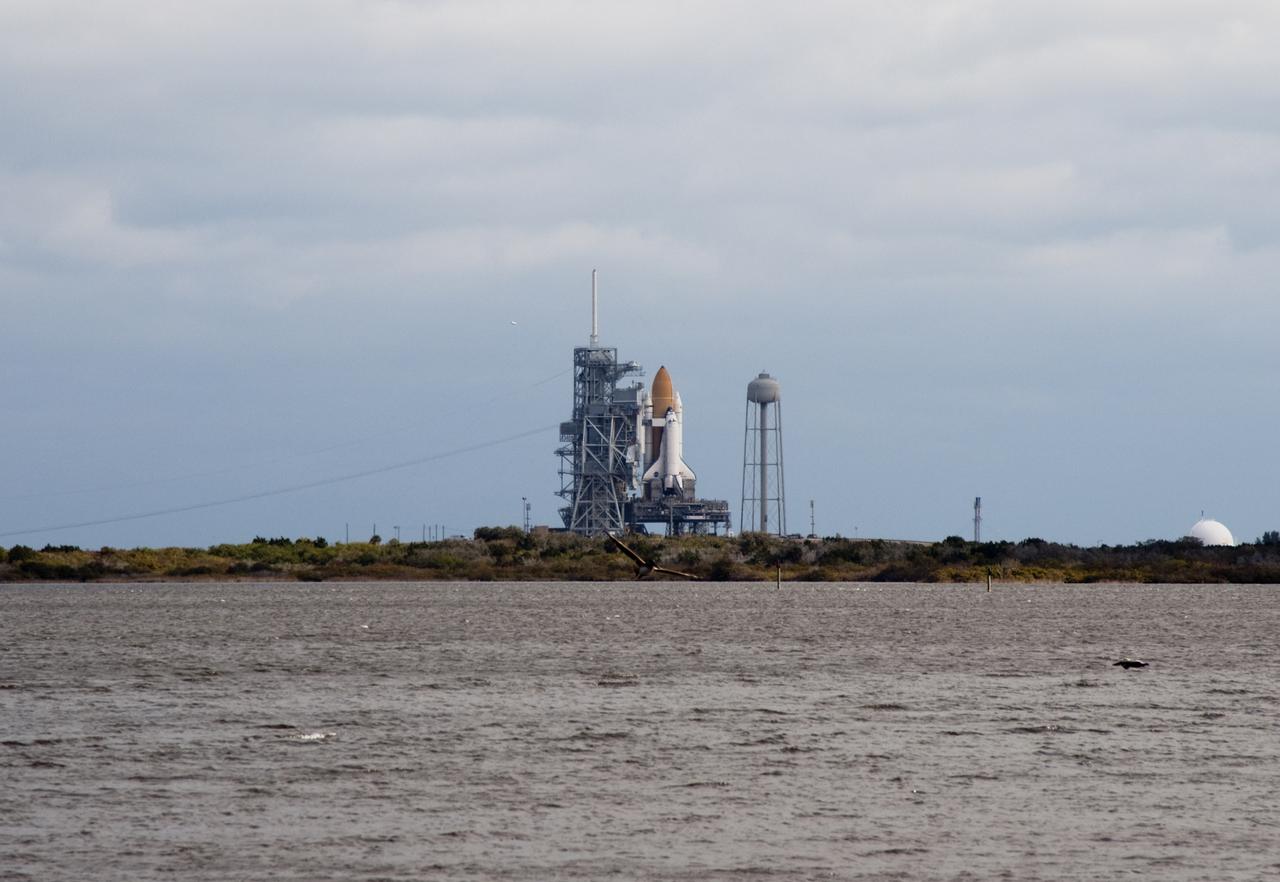
CAPE CANAVERAL, Fla. – Technology and nature coexist at NASA's Kennedy Space Center in Florida as this view of space shuttle Discovery's arrival at Launch Pad 39A illustrates. Discovery's first motion on its 3.4-mile trip from the Vehicle Assembly Building was at 11:58 p.m. EST March 2. The shuttle was secured on the pad at 6:48 a.m. March 3. Rollout is a significant milestone in launch processing activities. The seven-member STS-131 crew will deliver the multi-purpose logistics module Leonardo, filled with resupply stowage platforms and racks, to the International Space Station aboard Discovery. Targeted for launch on April 5, STS-131 will be the 33rd shuttle mission to the station and the 131st shuttle mission overall. For information on the STS-131 mission and crew, visit http:__www.nasa.gov_mission_pages_shuttle_shuttlemissions_sts131_index.html. Photo credit: NASA_Jim Grossmann
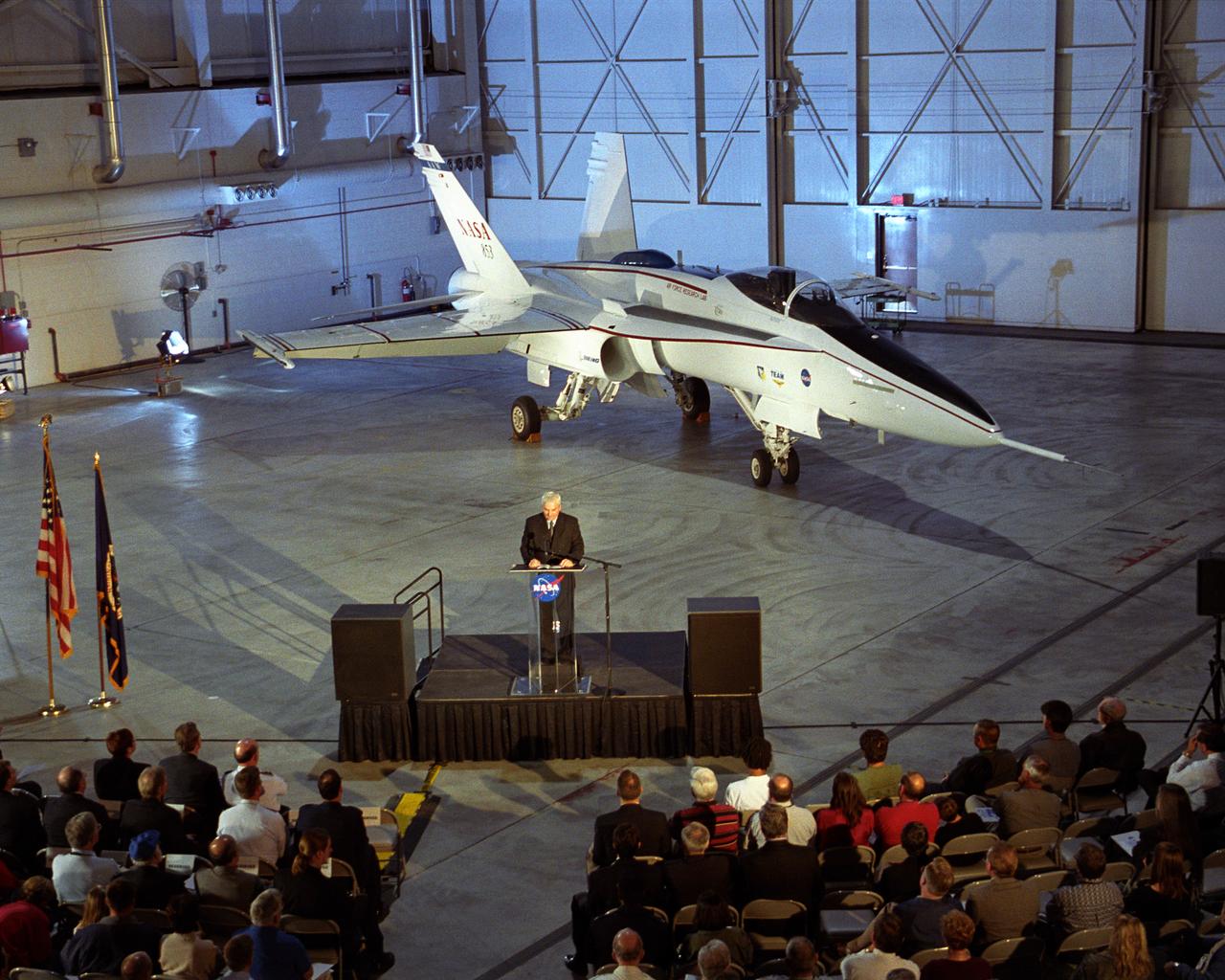
With the modified F/A-18 showcased behind him, Kevin Petersen, director of NASA Dryden Flight Research Center, addressed the audience attending the rollout ceremonies for the Active Aeroelastic Wing flight research project.
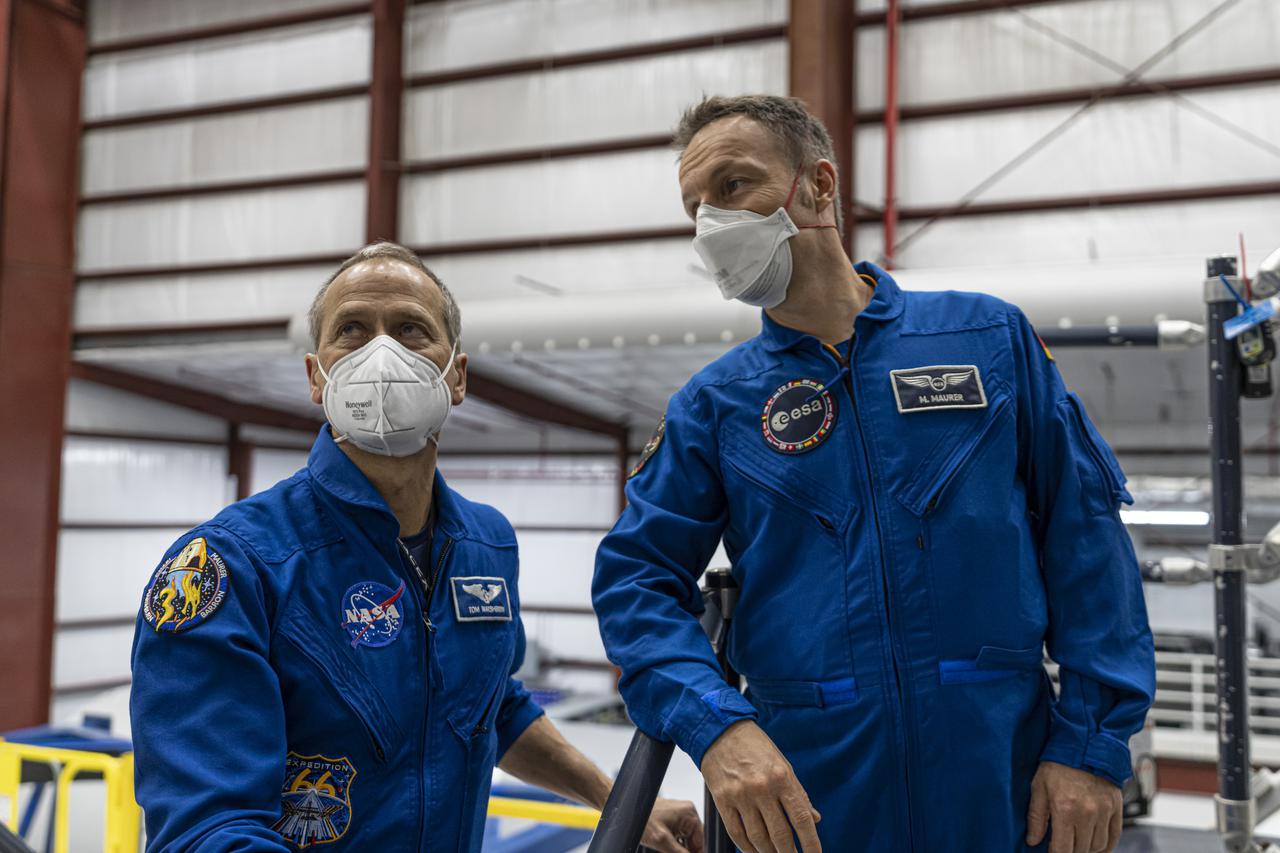
SpaceX Crew-3 NASA astronaut Tom Marshburn, left, and Matthias Maurer, an astronaut with the European Space Agency, are inside the SpaceX horizontal processing facility near Launch Complex 39A at Kennedy Space Center in Florida on Oct. 26, 2021. The astronauts are viewing the Falcon 9 rocket with Crew Dragon before rollout to the launch pad, which occurred on Oct. 27. The four-person crew will launch aboard the Crew Dragon atop the Falcon 9 on Oct. 31 to the International Space Station. Launch is targeted for 2:21 a.m. EDT from Pad 39A. Crew-3 is the third crew rotation flight to the space station for NASA’s Commercial Crew Program, and the first flight of a new Crew Dragon spacecraft.
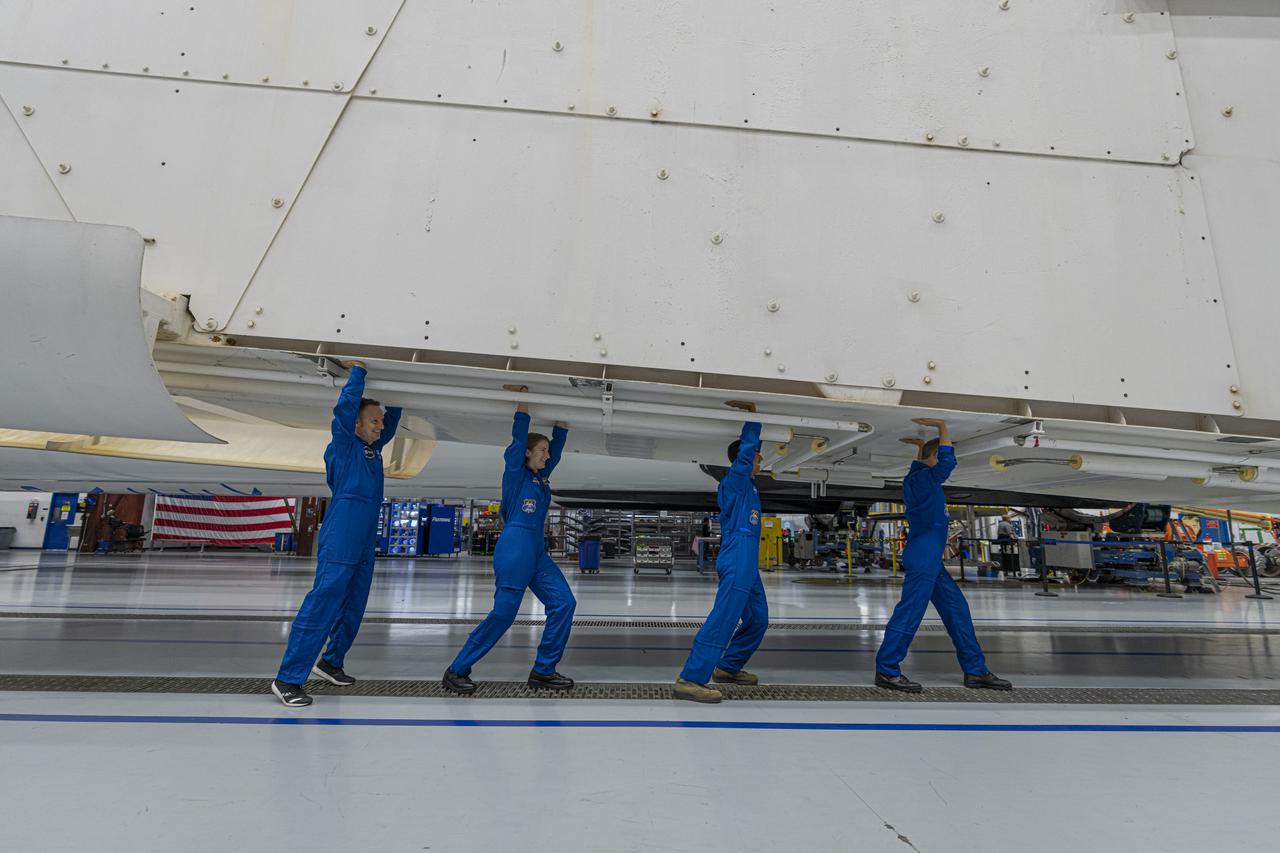
NASA’s SpaceX Crew-3 astronauts are inside the SpaceX horizontal processing facility near Launch Complex 39A at Kennedy Space Center in Florida on Oct. 26, 2021. In this view, they simulate holding up the Falcon 9 rocket on its transporter before rollout to Launch Complex 39A, which occurred on Oct. 27. From left are Matthias Maurer, with the European Space Agency, and NASA astronauts Kayla Barron, Raja Chari, and Tom Marshburn. The four-person crew will launch aboard the Crew Dragon atop the Falcon 9 on Oct. 31 to the International Space Station. Launch is targeted for 2:21 a.m. EDT from Pad 39A. Crew-3 is the third crew rotation flight to the space station for NASA’s Commercial Crew Program, and the first flight of a new Crew Dragon spacecraft.
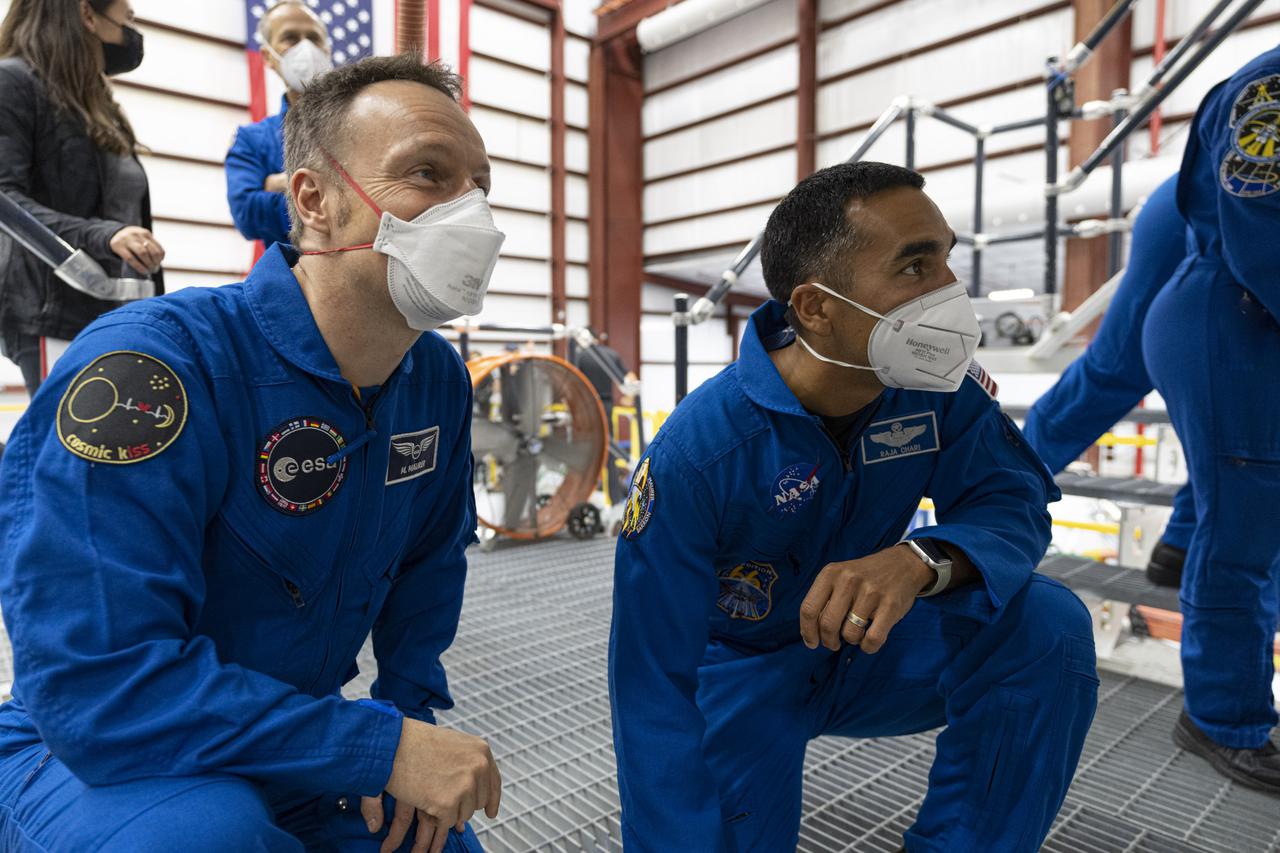
SpaceX Crew-3 astronaut Matthias Maurer, left, with the European Space Agency, and NASA astronaut Raja Chari, Crew-3 commander, are inside the SpaceX horizontal processing facility near Launch Complex 39A at Kennedy Space Center in Florida on Oct. 26, 2021. The astronauts are viewing the Falcon 9 rocket with Crew Dragon before rollout to the launch pad, which occurred on Oct. 27. The four-person crew will launch aboard the Crew Dragon atop the Falcon 9 on Oct. 31 to the International Space Station. Launch is targeted for 2:21 a.m. EDT from Pad 39A. Crew-3 is the third crew rotation flight to the space station for NASA’s Commercial Crew Program, and the first flight of a new Crew Dragon spacecraft.
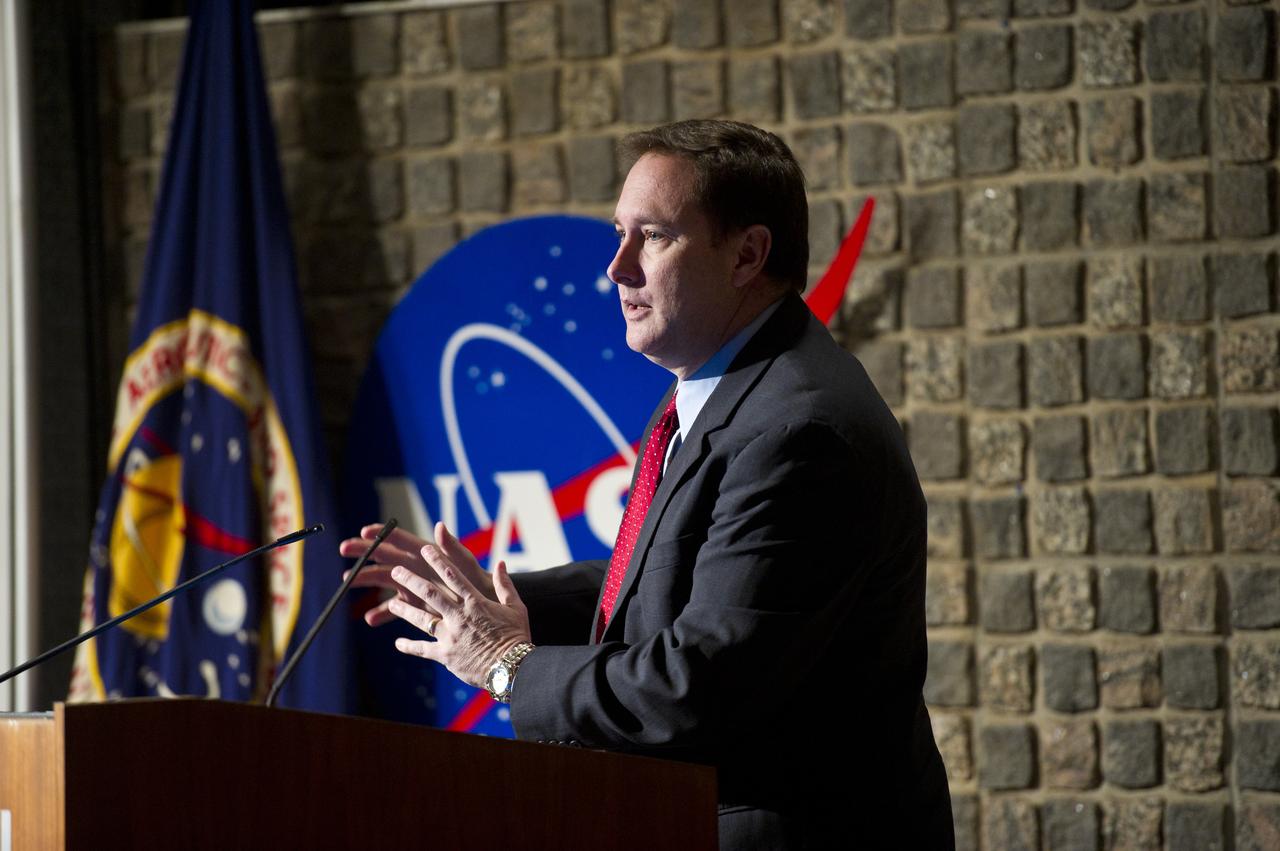
MARSHALL SPACE FLIGHT CENTER DIRECTOR ROBERT LIGHTFOOT ADDRESSES TEAM MEMBERS FEB. 14, FOLLOWING THE ROLLOUT OF NASA’S PROPOSED FISCAL YEAR 2012 BUDGET. LIGHTFOOT TOLD MEMBERS OF THE HUNTSVILLE-AREA AT A SUBSEQUENT PRESS CONFERENCE THAT THE PROPOSAL “HITS ON OUR CAPABILITIES, ON WHAT WE DO WELL AT MARSHALL. THIS IS GOOD NEWS FOR US.” HE HELD AN ALL-HANDS MEETING FEB. 15 TO DISCUSS WHAT THE BUDGET MEANS FOR MARSHALL AND TO ANSWER QUESTIONS FROM THE WORKFORCE.
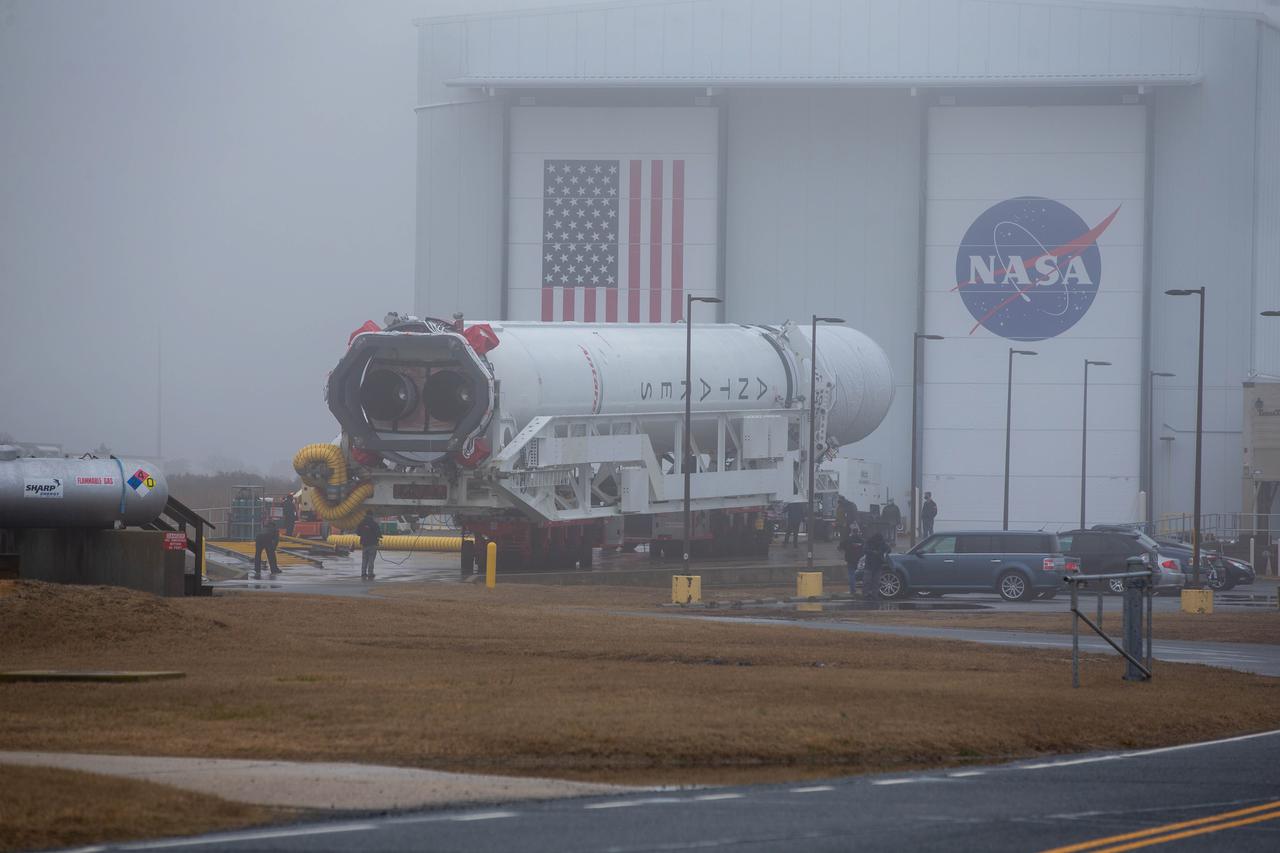
A Northrop Grumman Antares rocket carrying a Cygnus resupply spacecraft is seen as it is rolled out of the Horizontal Integration Facility on its way to the Mid-Atlantic Regional Spaceport’s Pad-0A, Tuesday, Feb. 16, 2021, at NASA's Wallops Flight Facility in Virginia. Northrop Grumman’s 15th contracted cargo resupply mission with NASA to the International Space Station will deliver about 8,000 pounds of science and research, crew supplies and vehicle hardware to the orbital laboratory and its crew. The CRS-15 Cygnus spacecraft is named after NASA mathematician, Katherine Johnson, a Black woman who time and again broke through barriers of gender and race. The launch is scheduled for 12:36 p.m. EST, Feb. 20, 2021. Photo Credit: (NASA/Patrick Black)
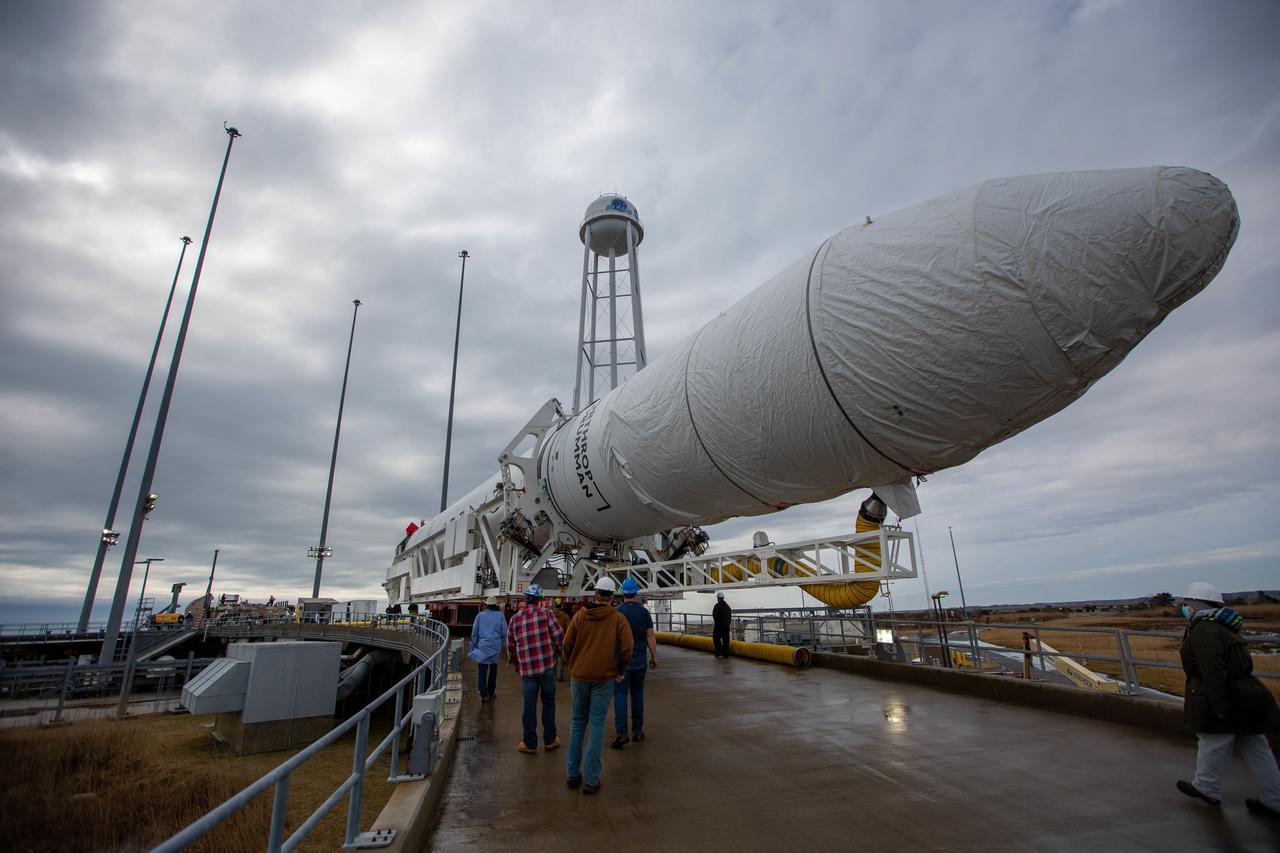
A Northrop Grumman Antares rocket carrying a Cygnus resupply spacecraft arrives at the Mid-Atlantic Regional Spaceport’s Pad-0A, Tuesday, Feb. 16, 2021, at NASA's Wallops Flight Facility in Virginia. Northrop Grumman’s 15th contracted cargo resupply mission with NASA to the International Space Station will deliver about 8,000 pounds of science and research, crew supplies and vehicle hardware to the orbital laboratory and its crew. The CRS-15 Cygnus spacecraft is named after NASA mathematician, Katherine Johnson, a Black woman who time and again broke through barriers of gender and race. The launch is scheduled for 12:36 p.m. EST, Feb. 20, 2021. Photo Credit: (NASA/Patrick Black)
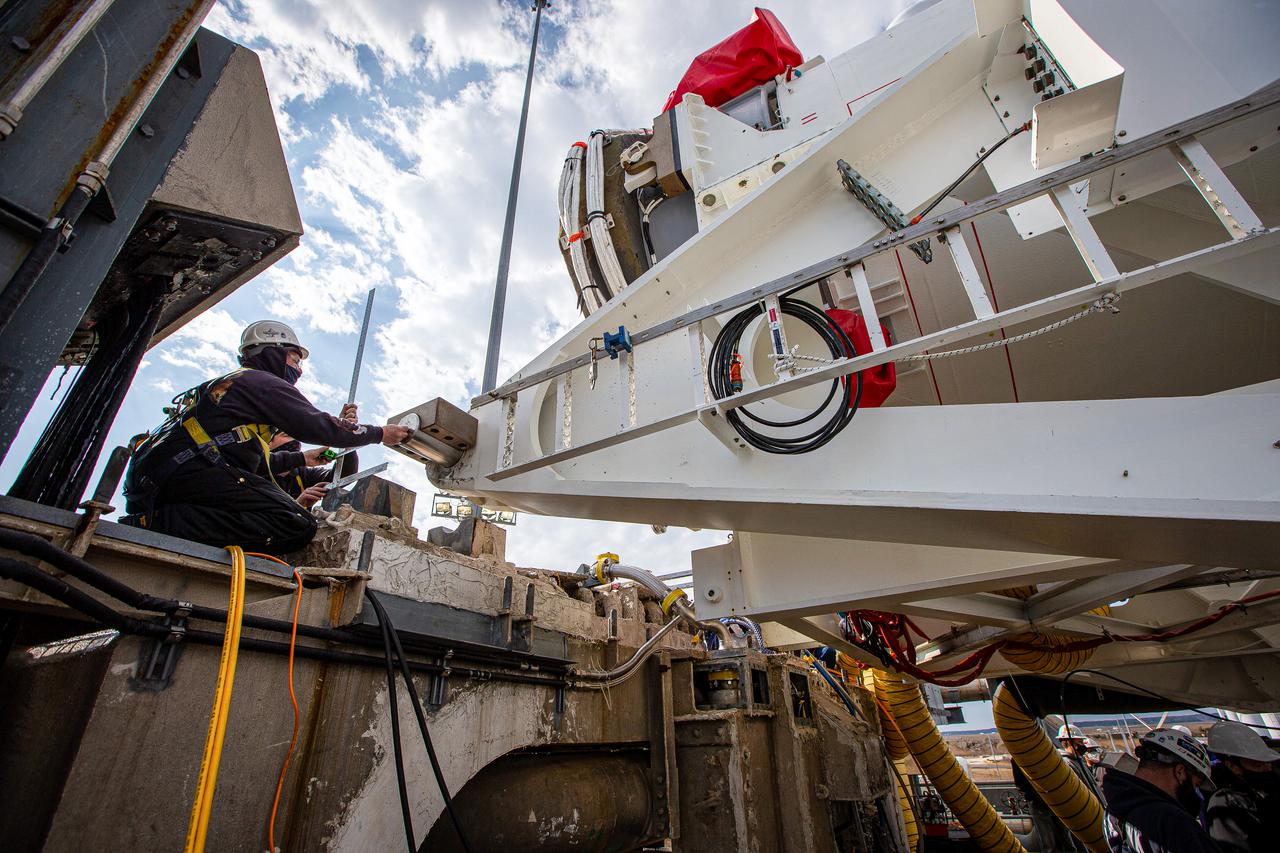
Personnel prepare to mate the Transporter-Erector-Launcher, also called the TEL, carrying a Northrop Grumman Antares rocket to the launch mount on the Mid-Atlantic Regional Spaceport’s Pad 0A at NASA’s Wallops Flight Facility in Virginia. The Antares arrived at the launch pad on Tuesday, Feb. 16, in preparation for launch at 12:36 p.m. EST, Feb. 20, 2021. The launch will be Northrop Grumman’s 15th contracted cargo resupply mission with NASA to the International Space Station, carrying about 8,000 pounds of science and research, crew supplies and vehicle hardware to the orbital laboratory and its crew. Antares is carrying the company’s CRS-15 Cygnus cargo spacecraft named after NASA mathematician, Katherine Johnson, a Black woman who time and again broke through barriers of gender and race. Photo Credit: (NASA/Patrick Black)
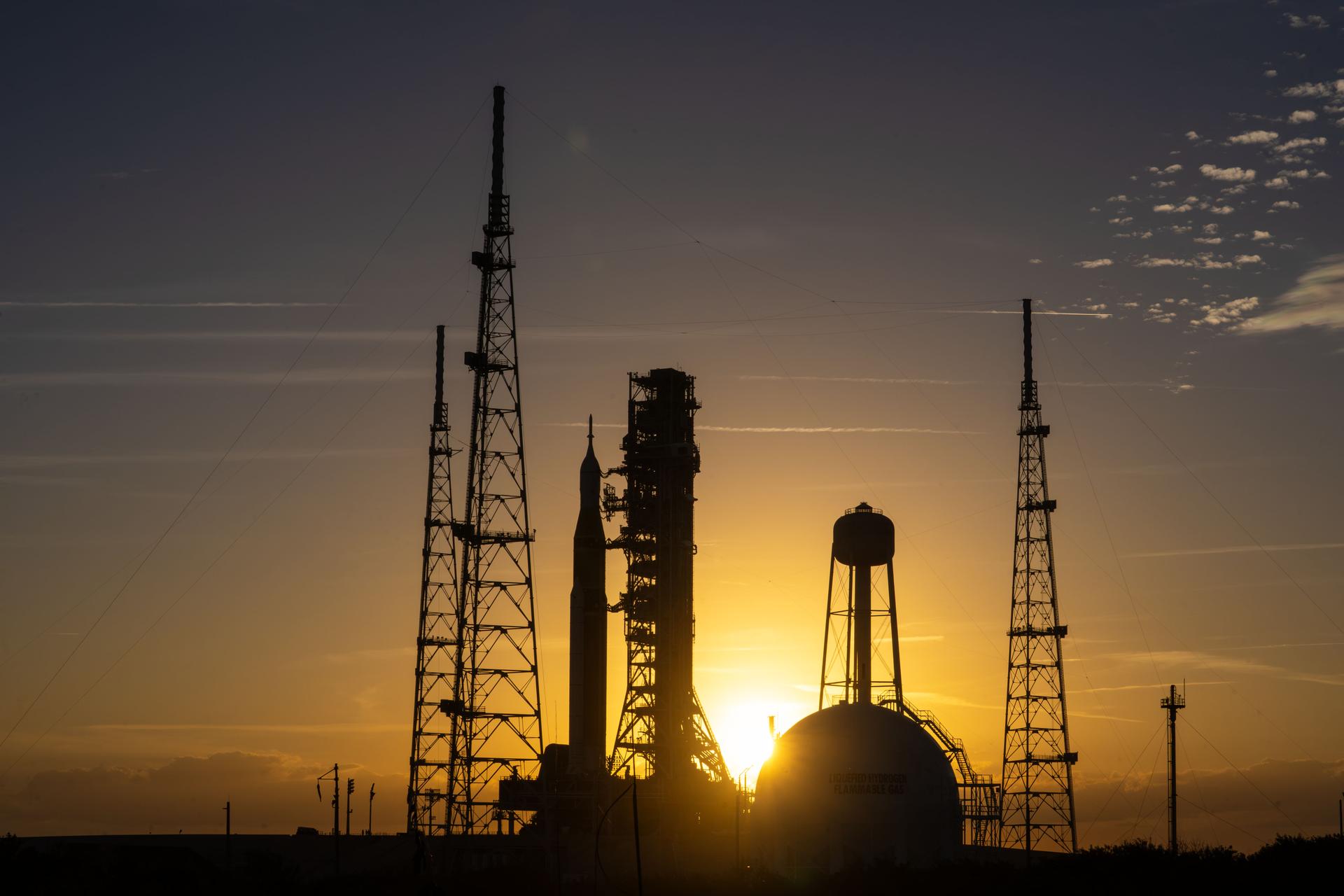
These images and video show NASA’s SLS (Space Launch System) and Orion spacecraft rolling out of the Vehicle Assembly Building at NASA’s Kennedy Space Center. NASA's massive Crawler-Transporter, upgraded for the Artemis program, carries the powerful SLS rocket and Orion spacecraft on the Mobile Launcher from the Vehicle Assembly Building to Launch Pad 39B at Kennedy Space Center in preparation for the Artemis II mission.
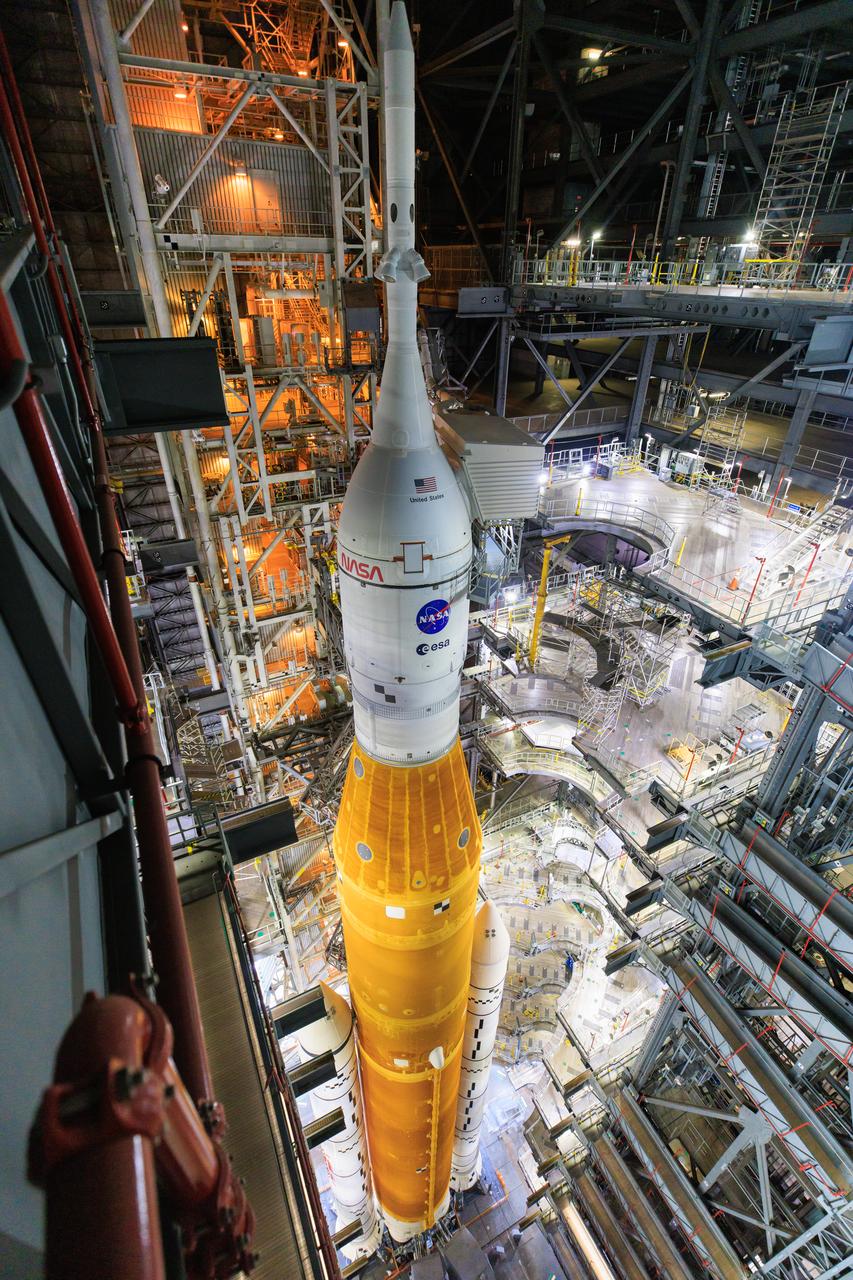
NASA’s Space Launch System and Orion spacecraft atop the mobile launcher are in view in High Bay 3 of the Vehicle Assembly Building (VAB) at the agency’s Kennedy Space Center in Florida on Tuesday, Aug. 16, 2022. All of the work platforms have been retracted in preparation for rollout to Launch Complex 39B ahead of launch of Artemis I. The crawler-transporter, driven by engineers, is under the Artemis I stack atop the mobile launcher and will carry it 4.2 miles via the crawlerway that connects the VAB to the launch pad. The agency’s Artemis I flight test is scheduled to liftoff on Monday, Aug. 29. The first in a series of increasingly complex missions, Artemis I will provide a foundation for human deep space exploration and demonstrate our commitment and capability to extend human presence to the Moon and beyond. The primary goal of Artemis I is to thoroughly test the integrated systems before crewed missions by launching Orion atop the SLS rocket, operating the spacecraft in a deep space environment, testing Orion’s heat shield, and recovering the crew module after reentry, descent, and splashdown.
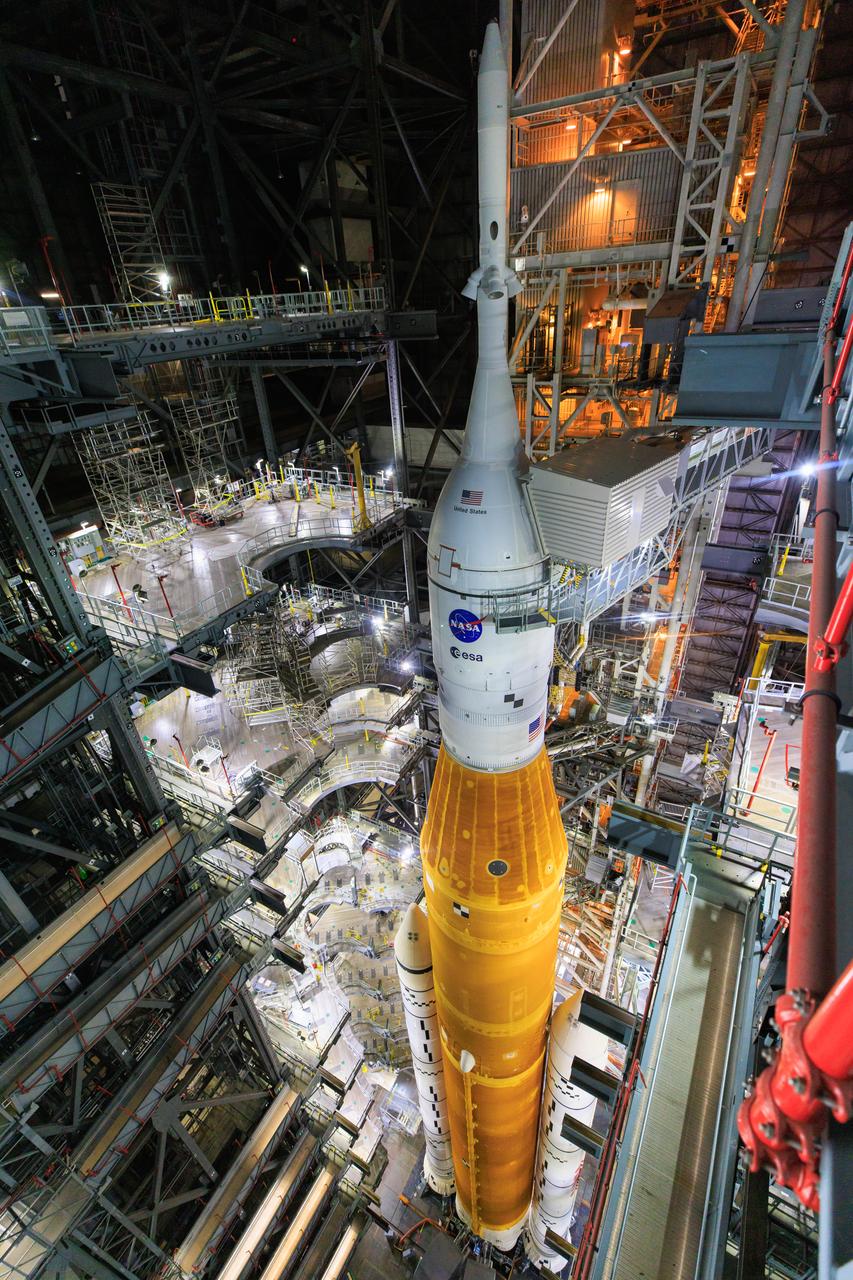
NASA’s Space Launch System and Orion spacecraft atop the mobile launcher are in view in High Bay 3 of the Vehicle Assembly Building (VAB) at the agency’s Kennedy Space Center in Florida on Tuesday, Aug. 16, 2022. All of the work platforms have been retracted in preparation for rollout to Launch Complex 39B ahead of launch of Artemis I. The crawler-transporter, driven by engineers, is under the Artemis I stack atop the mobile launcher and will carry it 4.2 miles via the crawlerway that connects the VAB to the launch pad. The agency’s Artemis I flight test is scheduled to liftoff on Monday, Aug. 29. The first in a series of increasingly complex missions, Artemis I will provide a foundation for human deep space exploration and demonstrate our commitment and capability to extend human presence to the Moon and beyond. The primary goal of Artemis I is to thoroughly test the integrated systems before crewed missions by launching Orion atop the SLS rocket, operating the spacecraft in a deep space environment, testing Orion’s heat shield, and recovering the crew module after reentry, descent, and splashdown.
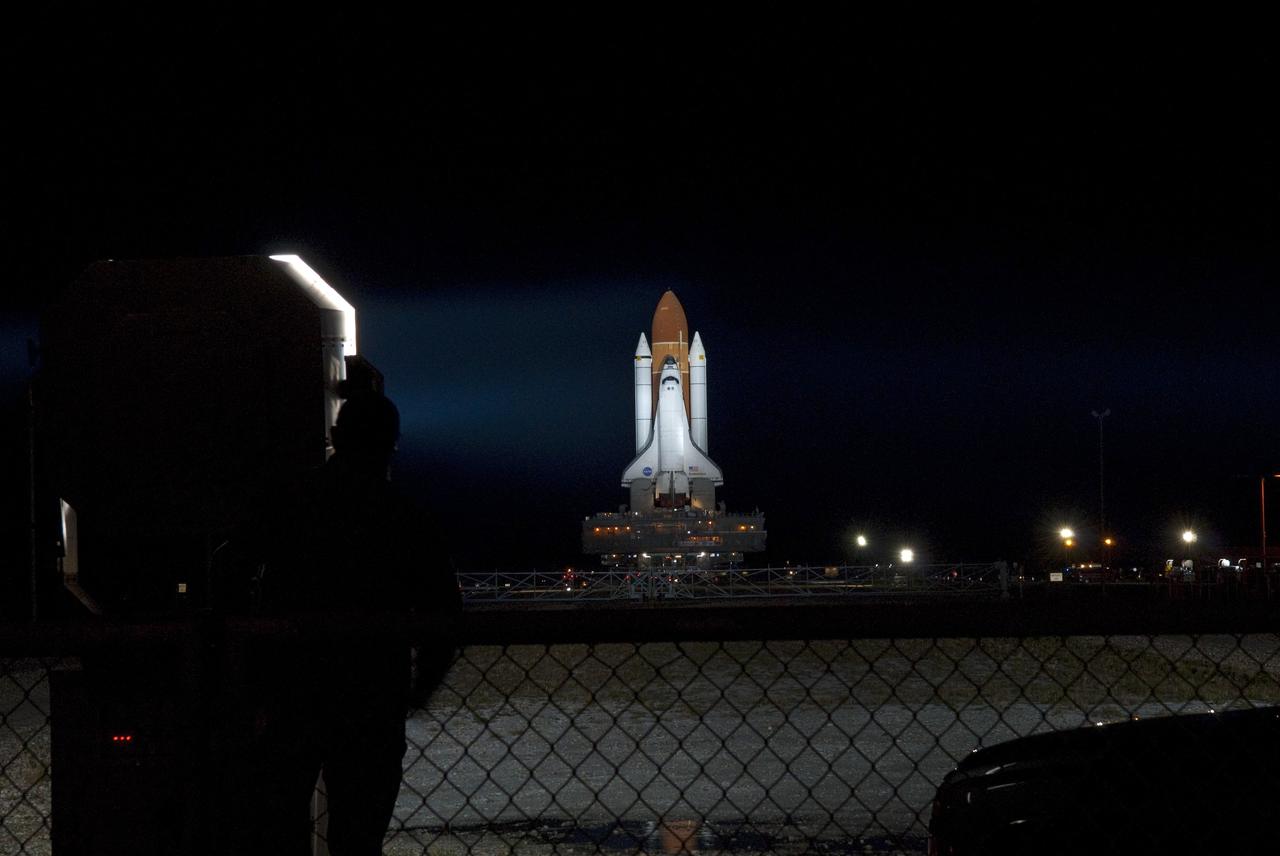
CAPE CANAVERAL, Fla. -- Bathed in xenon lights, space shuttle Endeavour, attached to its external fuel tank and solid rocket boosters, is on a nighttime journey from the Vehicle Assembly Building to Launch Pad 39A at NASA's Kennedy Space Center in Florida. The 3.4-mile trek, known as "rollout," began at 7:56 p.m. EST and will take about seven hours to complete. This is the final scheduled rollout for Endeavour, which is attached to its external fuel tank and solid rocket boosters atop a crawler-transporter. Endeavour and its six STS-134 crew members will deliver the Express Logistics Carrier-3, Alpha Magnetic Spectrometer-2 (AMS), a high-pressure gas tank, additional spare parts for the Dextre robotic helper and micrometeoroid debris shields to the International Space Station on the shuttle's final spaceflight. Launch is targeted for April 19 at 7:48 p.m. EDT. For more information visit, www.nasa.gov/mission_pages/shuttle/shuttlemissions/sts134/index.html. Photo credit: NASA/Jim Grossmann
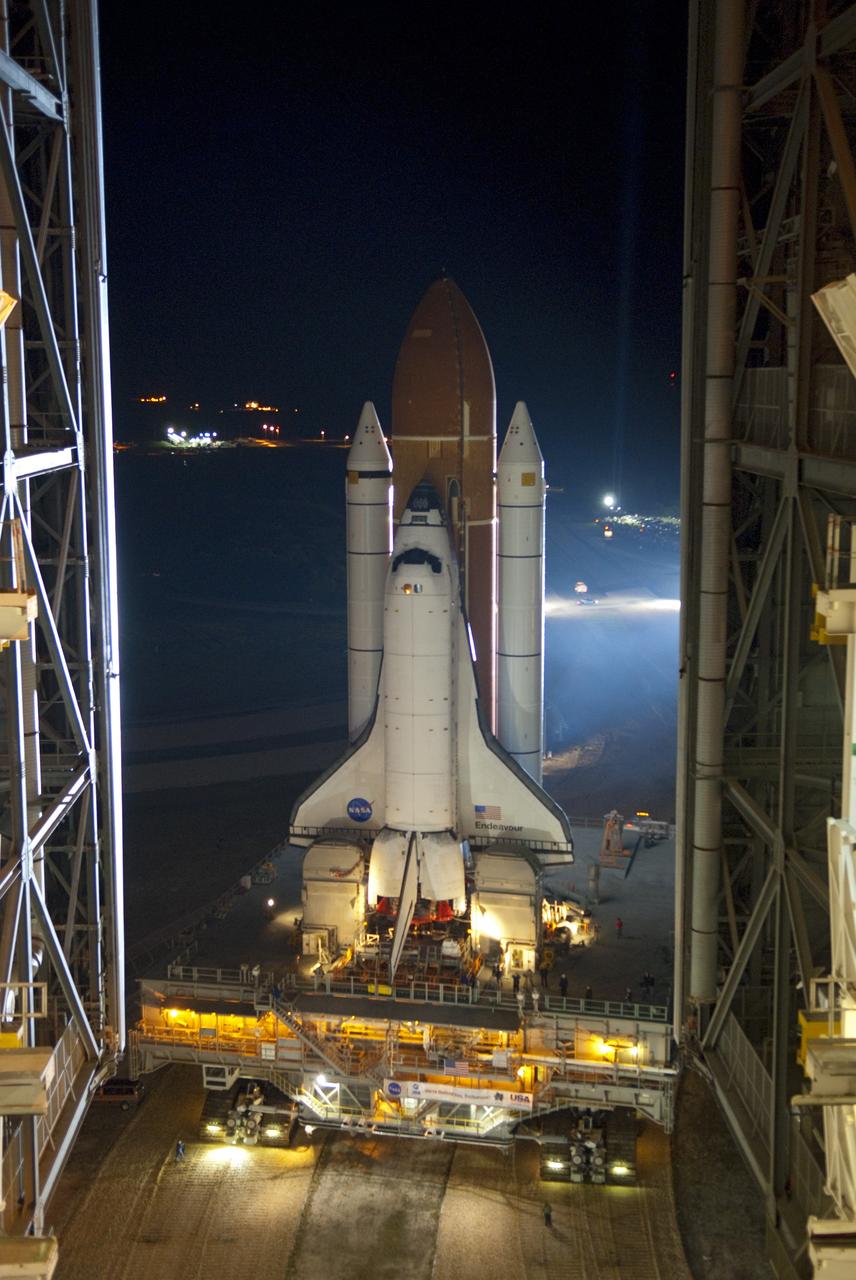
CAPE CANAVERAL, Fla. -- Bathed in xenon lights, space shuttle Endeavour, attached to its external fuel tank and solid rocket boosters, rolls out of the Vehicle Assembly Building on a nighttime journey to Launch Pad 39A at NASA's Kennedy Space Center in Florida. The 3.4-mile trek, known as "rollout," began at 7:56 p.m. EST and will take about seven hours to complete. This is the final scheduled rollout for Endeavour, which is attached to its external fuel tank and solid rocket boosters atop a crawler-transporter. Endeavour and its six STS-134 crew members will deliver the Express Logistics Carrier-3, Alpha Magnetic Spectrometer-2 (AMS), a high-pressure gas tank, additional spare parts for the Dextre robotic helper and micrometeoroid debris shields to the International Space Station on the shuttle's final spaceflight. Launch is targeted for April 19 at 7:48 p.m. EDT. For more information visit, www.nasa.gov/mission_pages/shuttle/shuttlemissions/sts134/index.html. Photo credit: NASA/Jim Grossmann
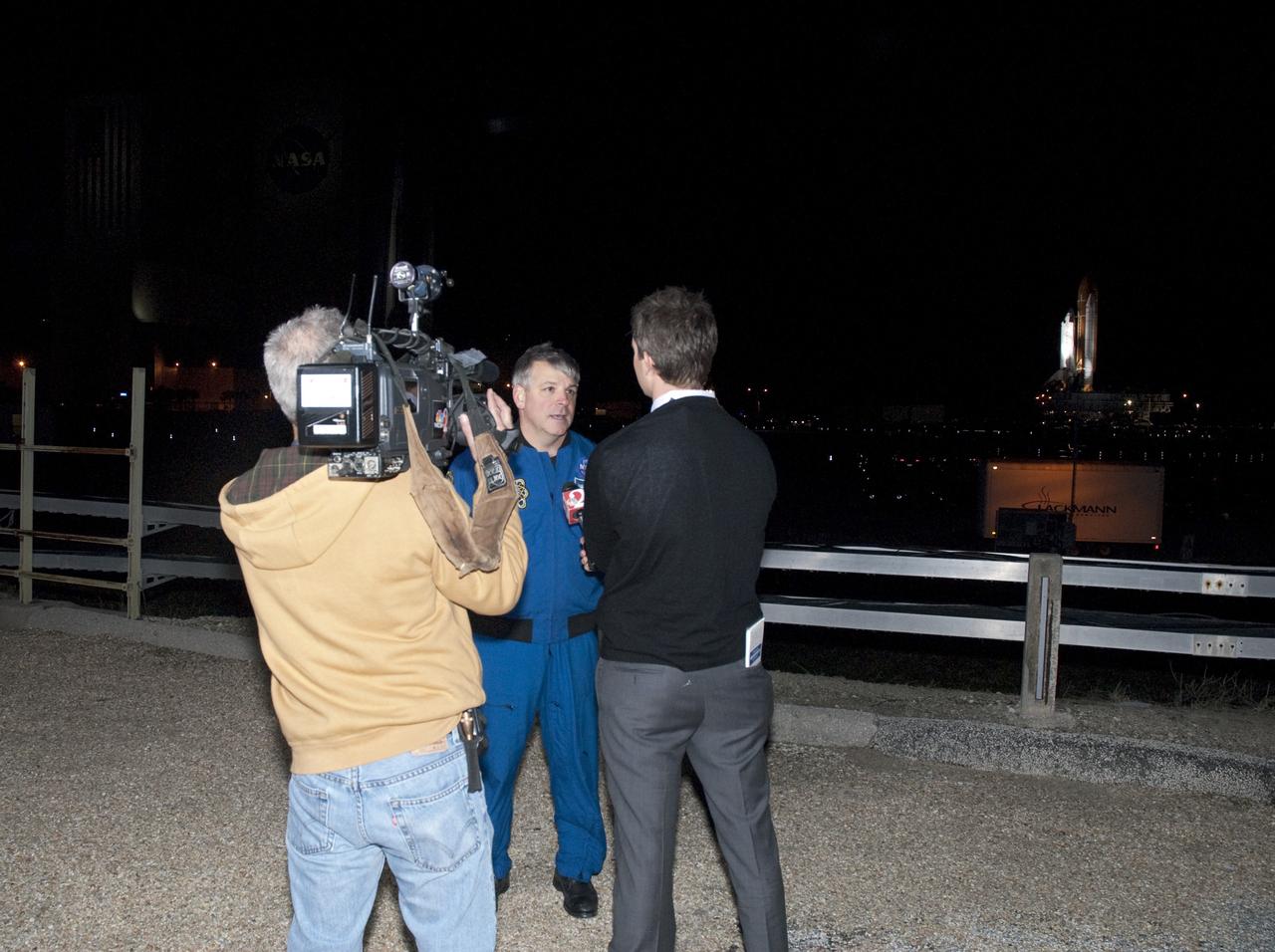
CAPE CANAVERAL, Fla. -- STS-134 Pilot Greg H. Johnson talks to media as the space shuttle that will take Johnson and his crewmates to the International Space Station slowly rolls past. Endeavour began its move from High Bay 3 in the Vehicle Assembly Building to Launch Pad 39A at NASA's Kennedy Space Center in Florida at 7:56 p.m. EST. The 3.4-mile trek, known as "rollout," will take about seven hours to complete. This is the final scheduled rollout for Endeavour, which is attached to its external fuel tank and solid rocket boosters atop a crawler-transporter. STS-134 crew members will deliver the Express Logistics Carrier-3, Alpha Magnetic Spectrometer-2 (AMS), a high-pressure gas tank, additional spare parts for the Dextre robotic helper and micrometeoroid debris shields to the orbiting outpost on the shuttle's final spaceflight. Launch is targeted for April 19 at 7:48 p.m. EDT. For more information visit, www.nasa.gov/mission_pages/shuttle/shuttlemissions/sts134/index.html. Photo credit: NASA/Debbie Odom
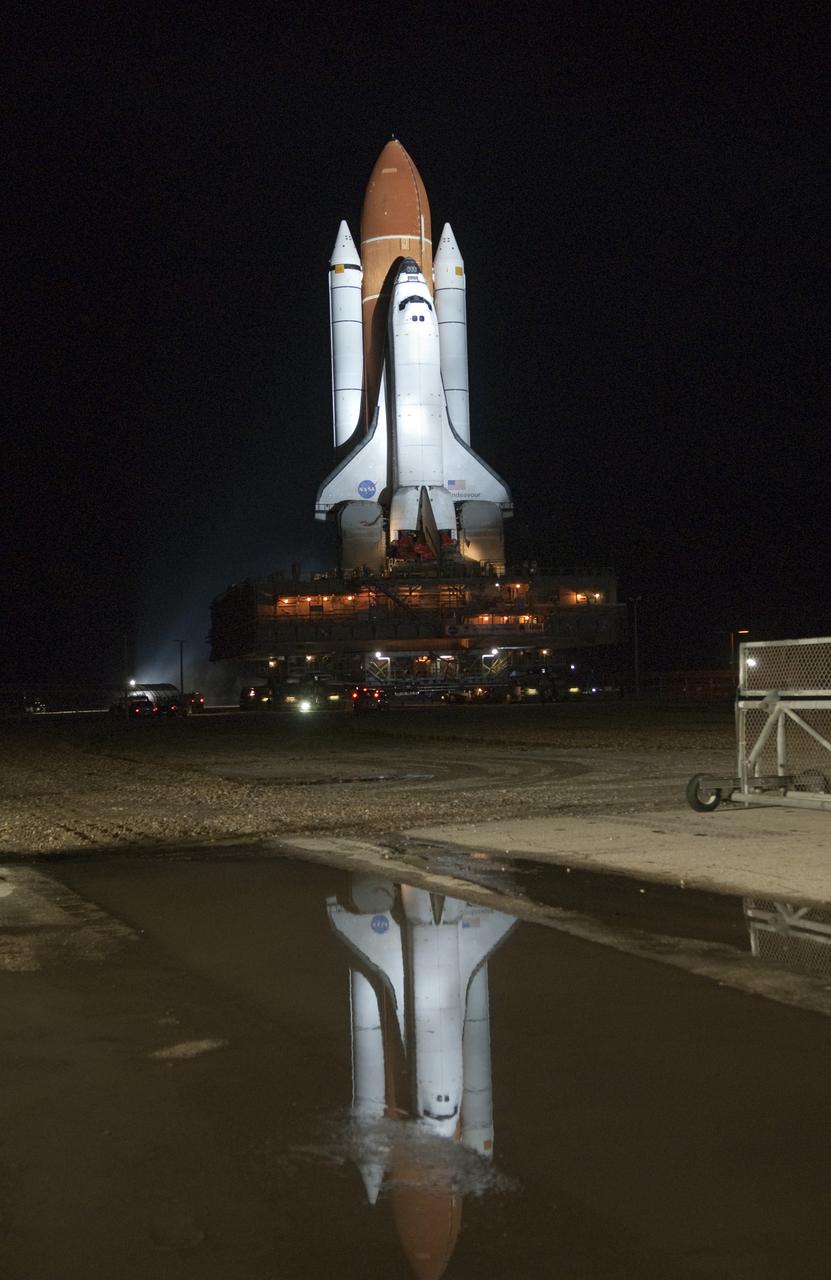
CAPE CANAVERAL, Fla. -- Bathed in xenon lights, space shuttle Endeavour, attached to its external fuel tank and solid rocket boosters, is on a nighttime journey from the Vehicle Assembly Building to Launch Pad 39A at NASA's Kennedy Space Center in Florida. The 3.4-mile trek, known as "rollout," began at 7:56 p.m. EST and will take about seven hours to complete. This is the final scheduled rollout for Endeavour, which is attached to its external fuel tank and solid rocket boosters atop a crawler-transporter. Endeavour and its six STS-134 crew members will deliver the Express Logistics Carrier-3, Alpha Magnetic Spectrometer-2 (AMS), a high-pressure gas tank, additional spare parts for the Dextre robotic helper and micrometeoroid debris shields to the International Space Station on the shuttle's final spaceflight. Launch is targeted for April 19 at 7:48 p.m. EDT. For more information visit, www.nasa.gov/mission_pages/shuttle/shuttlemissions/sts134/index.html. Photo credit: NASA/Jim Grossmann
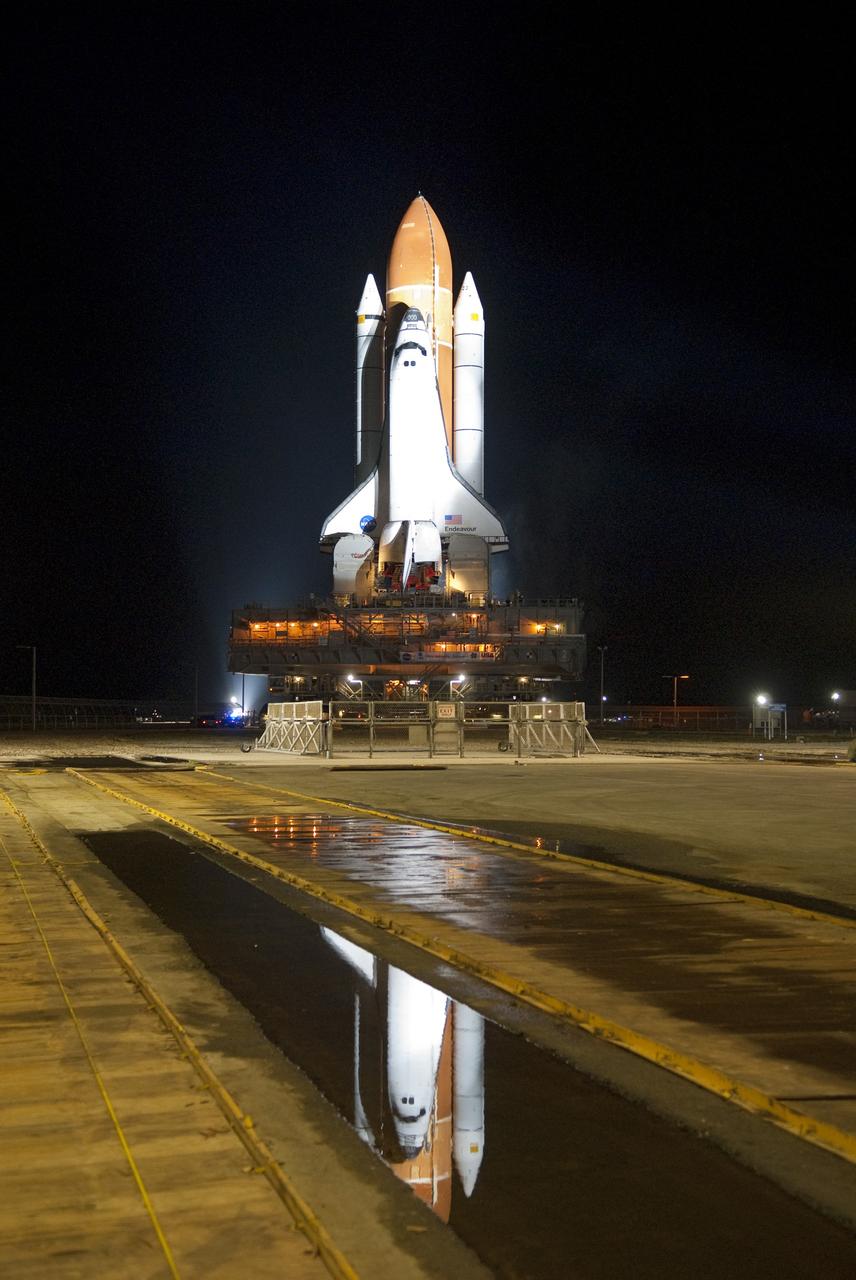
CAPE CANAVERAL, Fla. -- Bathed in xenon lights, space shuttle Endeavour, attached to its external fuel tank and solid rocket boosters, is on a nighttime journey from the Vehicle Assembly Building to Launch Pad 39A at NASA's Kennedy Space Center in Florida. The 3.4-mile trek, known as "rollout," began at 7:56 p.m. EST and will take about seven hours to complete. This is the final scheduled rollout for Endeavour, which is attached to its external fuel tank and solid rocket boosters atop a crawler-transporter. Endeavour and its six STS-134 crew members will deliver the Express Logistics Carrier-3, Alpha Magnetic Spectrometer-2 (AMS), a high-pressure gas tank, additional spare parts for the Dextre robotic helper and micrometeoroid debris shields to the International Space Station on the shuttle's final spaceflight. Launch is targeted for April 19 at 7:48 p.m. EDT. For more information visit, www.nasa.gov/mission_pages/shuttle/shuttlemissions/sts134/index.html. Photo credit: NASA/Jim Grossmann
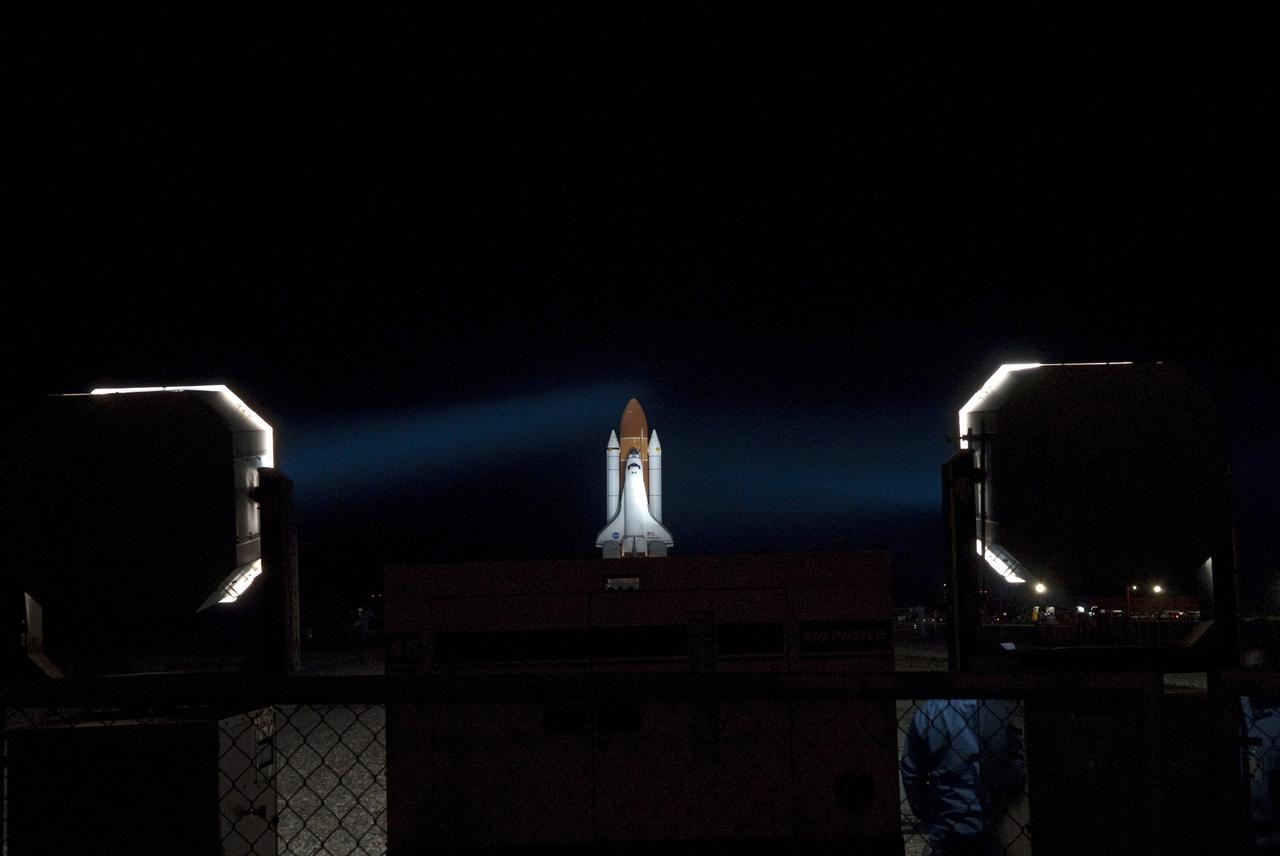
CAPE CANAVERAL, Fla. -- Bathed in xenon lights, space shuttle Endeavour, attached to its external fuel tank and solid rocket boosters, is on a nighttime journey from the Vehicle Assembly Building to Launch Pad 39A at NASA's Kennedy Space Center in Florida. The 3.4-mile trek, known as "rollout," began at 7:56 p.m. EST and will take about seven hours to complete. This is the final scheduled rollout for Endeavour, which is attached to its external fuel tank and solid rocket boosters atop a crawler-transporter. Endeavour and its six STS-134 crew members will deliver the Express Logistics Carrier-3, Alpha Magnetic Spectrometer-2 (AMS), a high-pressure gas tank, additional spare parts for the Dextre robotic helper and micrometeoroid debris shields to the International Space Station on the shuttle's final spaceflight. Launch is targeted for April 19 at 7:48 p.m. EDT. For more information visit, www.nasa.gov/mission_pages/shuttle/shuttlemissions/sts134/index.html. Photo credit: NASA/Jim Grossmann
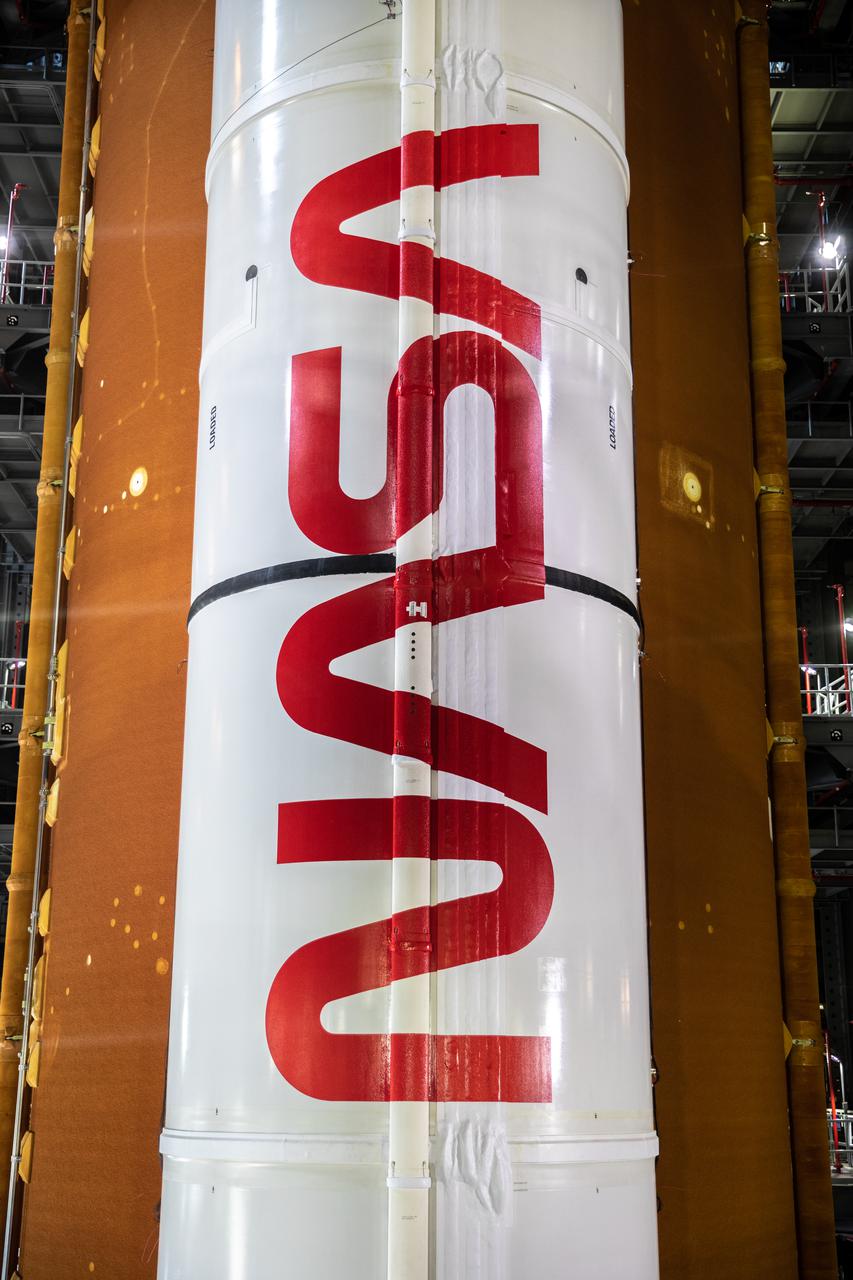
Inside High Bay 3 of the Vehicle Assembly Building at NASA’s Kennedy Space Center in Florida, application of the NASA worm logo is complete on the first of two solid rocket boosters for the Artemis I Space Launch System on March 14, 2022. The SLS and Orion spacecraft are stacked in the high bay and ready for rollout to Launch Complex 39B for a wet dress rehearsal. Artemis I will be the first integrated test of the SLS and Orion spacecraft. In later missions, NASA will land the first woman and the first person of color on the surface of the Moon, paving the way for a long-term lunar presence and serving as a steppingstone on the way to Mars.
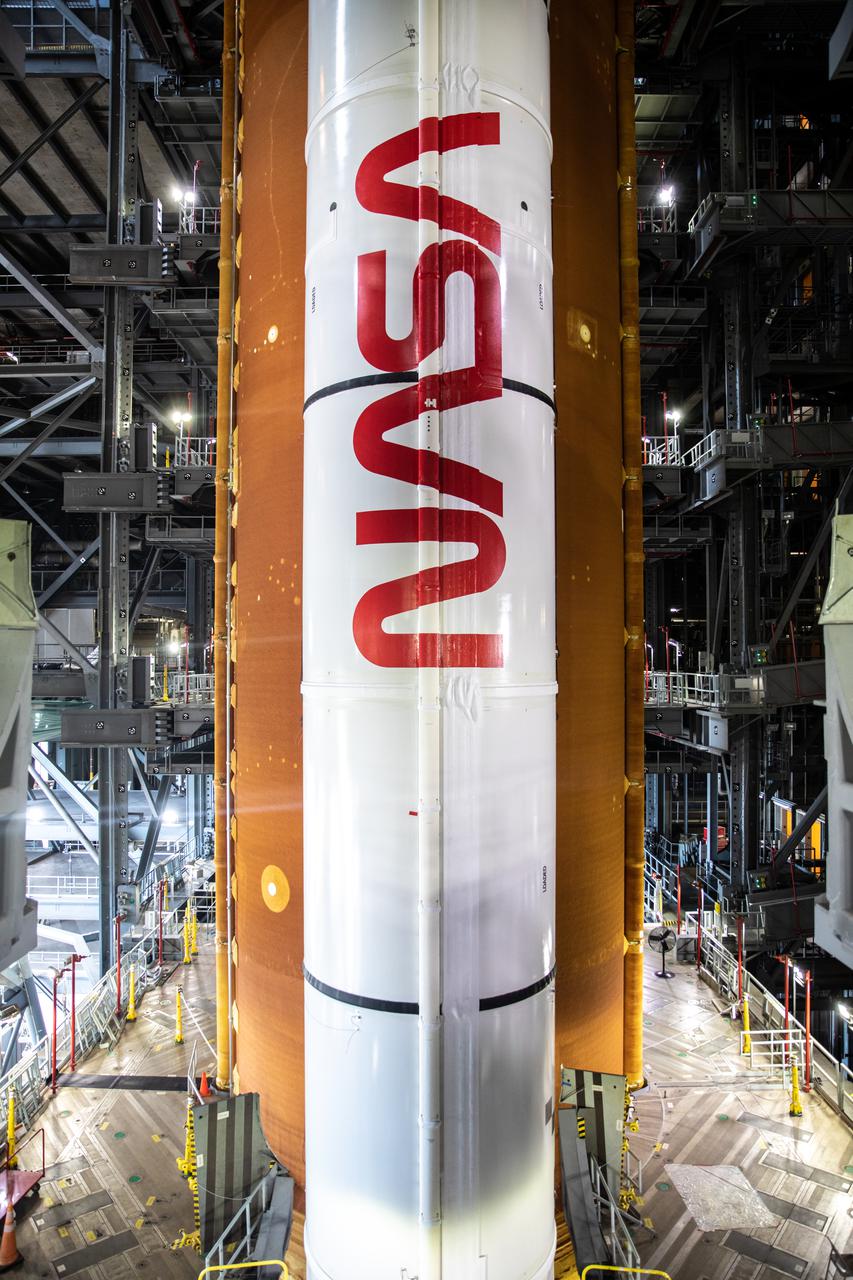
Inside High Bay 3 of the Vehicle Assembly Building at NASA’s Kennedy Space Center in Florida, application of the NASA worm logo is complete on the second of two solid rocket boosters for the Artemis I Space Launch System on March 14, 2022. The SLS and Orion spacecraft are stacked in the high bay and ready for rollout to Launch Complex 39B for a wet dress rehearsal. Artemis I will be the first integrated test of the SLS and Orion spacecraft. In later missions, NASA will land the first woman and the first person of color on the surface of the Moon, paving the way for a long-term lunar presence and serving as a steppingstone on the way to Mars.
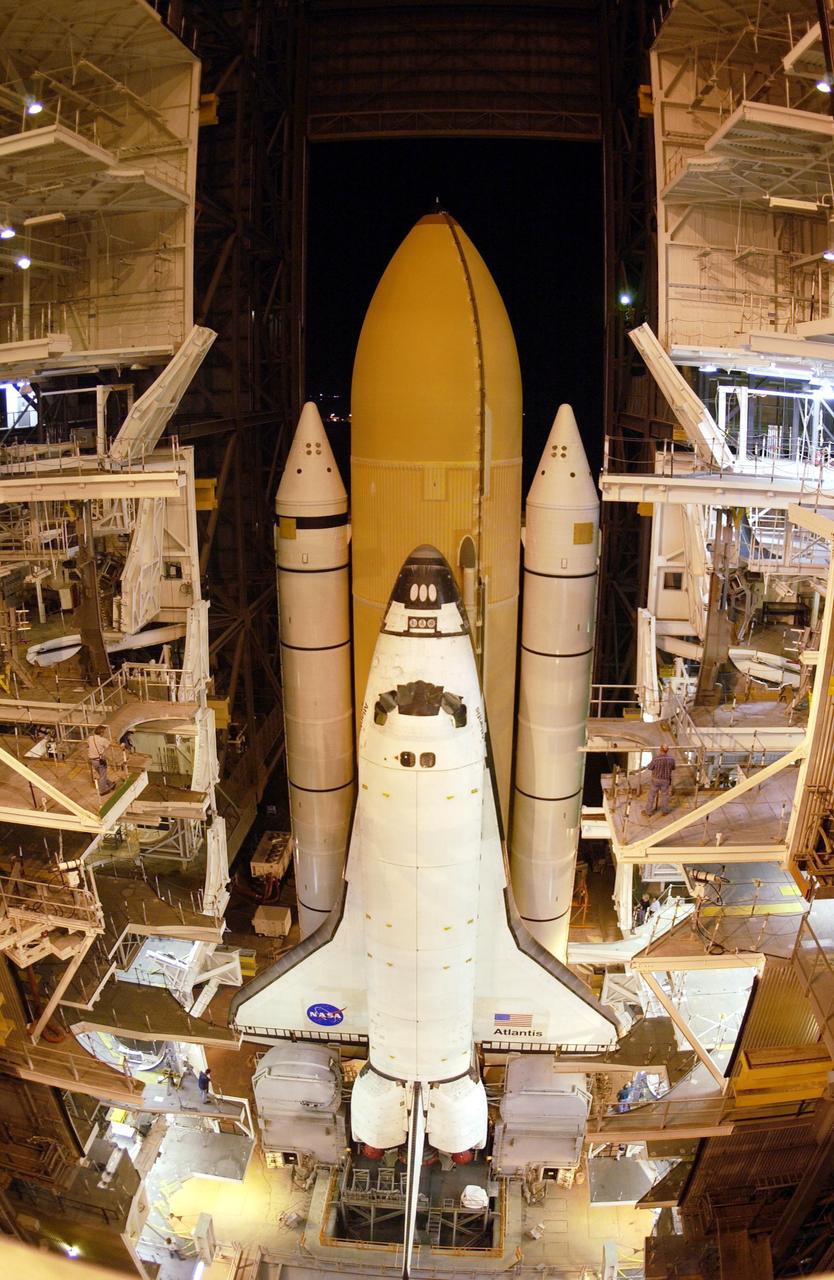
KENNEDY SPACE CENTER, FLA. -- In the early morning hours, Space Shuttle Atlantis, with its solid rocket boosters and orange external tank, sits atop the Mobile Launcher Platform ready to roll to the launch pad. Atlantis began its rollout to Launch Pad 39B at 2:27 a.m. EDT in preparation for launch to the International Space Station. The Shuttle arrived at the Pad and was hard down at 9:38 a.m. Launch is scheduled no earlier than Oct. 2 for mission STS-112, the 15th assembly flight to the International Space Station. Atlantis will carry the S1 Integrated Truss Structure, which will be attached to the central truss segment, the S0 truss, during the mission.
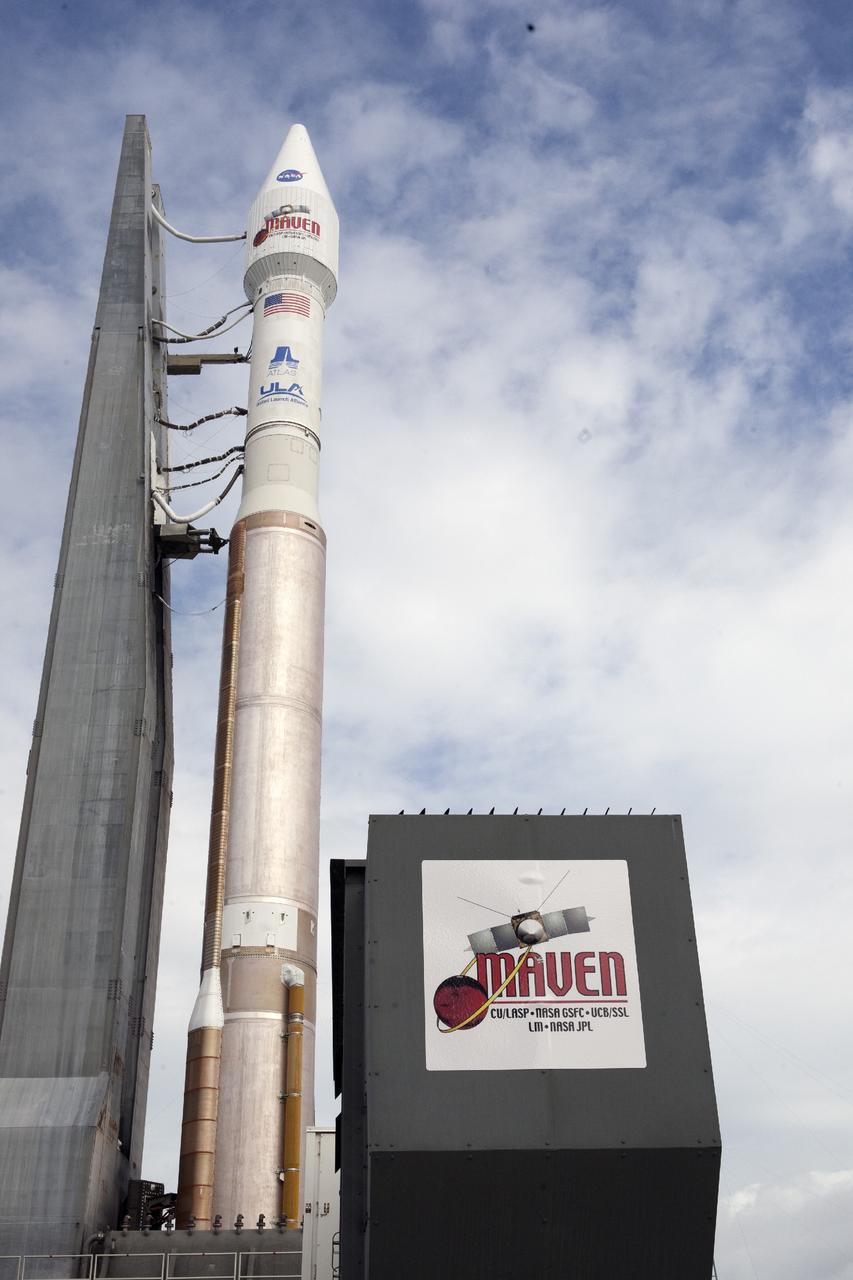
CAPE CANAVERAL, Fla. -- The United Launch Alliance Atlas V rocket carrying NASA’s Mars Atmosphere and Volatile EvolutioN, or MAVEN, spacecraft is transported along the roadway from the Vertical Integration Facility to the pad at Space Launch Complex 41 on Cape Canaveral Air Force Station in Florida. Rollout began on schedule with first motion at 9:57 a.m. Launch is scheduled for Nov. 18 during a window that extends from 1:28 to 3:28 p.m. Once positioned in orbit above the Red Planet, MAVEN will study its upper atmosphere in unprecedented detail. For more information, visit: http://www.nasa.gov/mission_pages/maven/main/index.html. Photo credit: NASA/Kim Shiflett
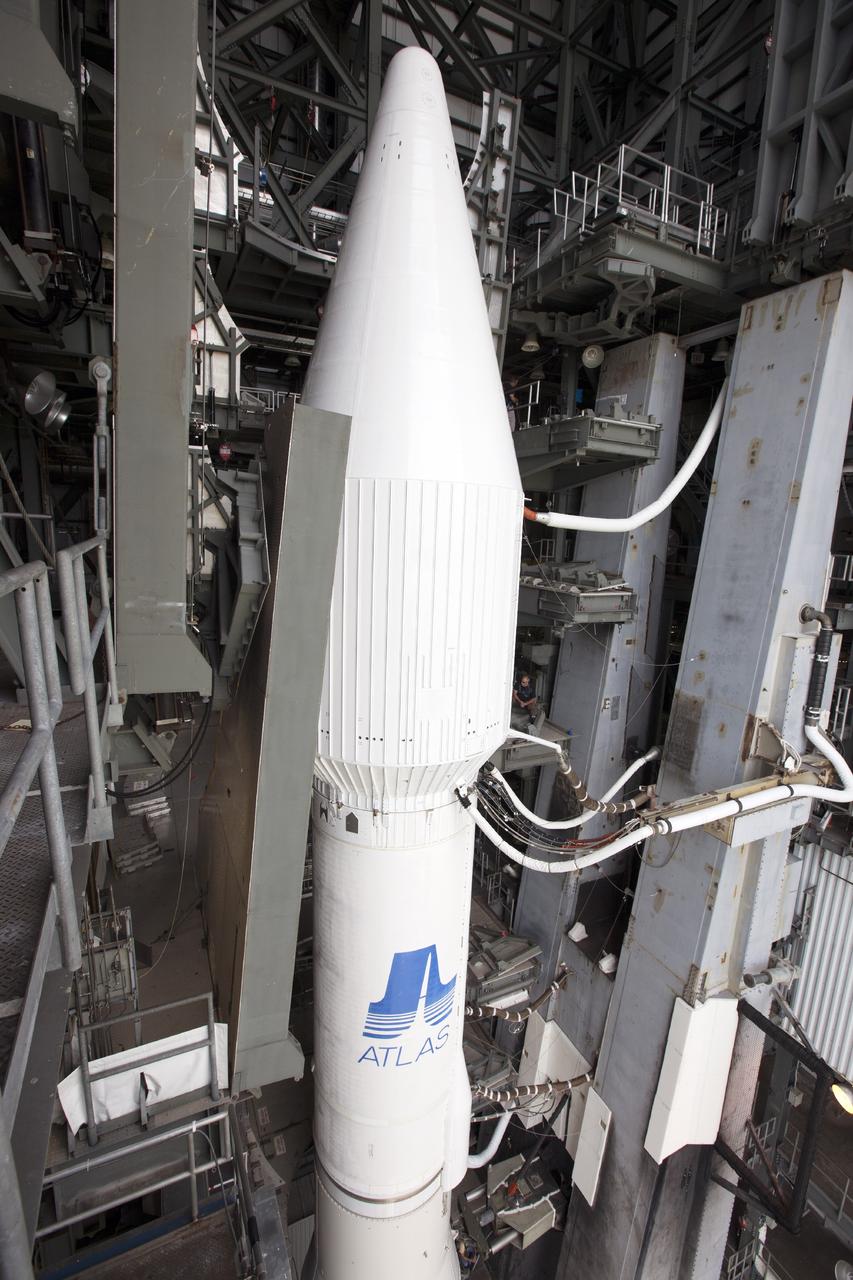
CAPE CANAVERAL, Fla. -- At Cape Canaveral Air Force Station in Florida, preparations are underway to roll NASA’s Mars Atmosphere and Volatile EvolutioN, or MAVEN, spacecraft secured atop a United Launch Alliance Atlas V rocket from the Vertical Integration Facility to Space Launch Complex 41. Rollout is scheduled to start at 10 a.m. Launch is scheduled for Nov. 18 during a window that extends from 1:28 to 3:28 p.m. Once positioned in orbit above the Red Planet, MAVEN will study its upper atmosphere in unprecedented detail. For more information, visit: http://www.nasa.gov/mission_pages/maven/main/index.html. Photo credit: NASA/Kim Shiflett
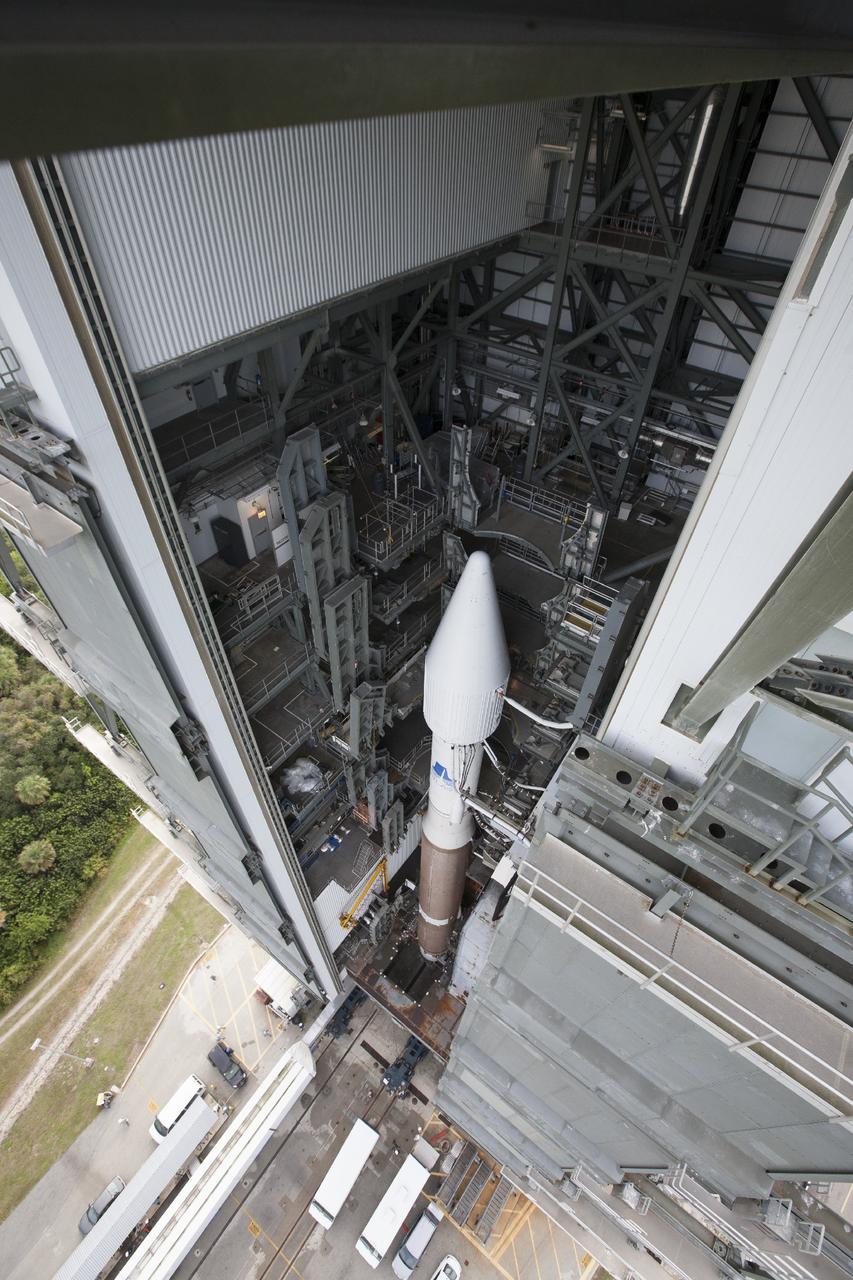
CAPE CANAVERAL, Fla. -- At Cape Canaveral Air Force Station in Florida, preparations are underway to roll the United Launch Alliance Atlas V rocket carrying NASA’s Mars Atmosphere and Volatile EvolutioN, or MAVEN, spacecraft from the Vertical Integration Facility to Space Launch Complex 41. Rollout is scheduled to start at 10 a.m. Launch is scheduled for Nov. 18 during a window that extends from 1:28 to 3:28 p.m. Once positioned in orbit above the Red Planet, MAVEN will study its upper atmosphere in unprecedented detail. For more information, visit: http://www.nasa.gov/mission_pages/maven/main/index.html. Photo credit: NASA/Kim Shiflett
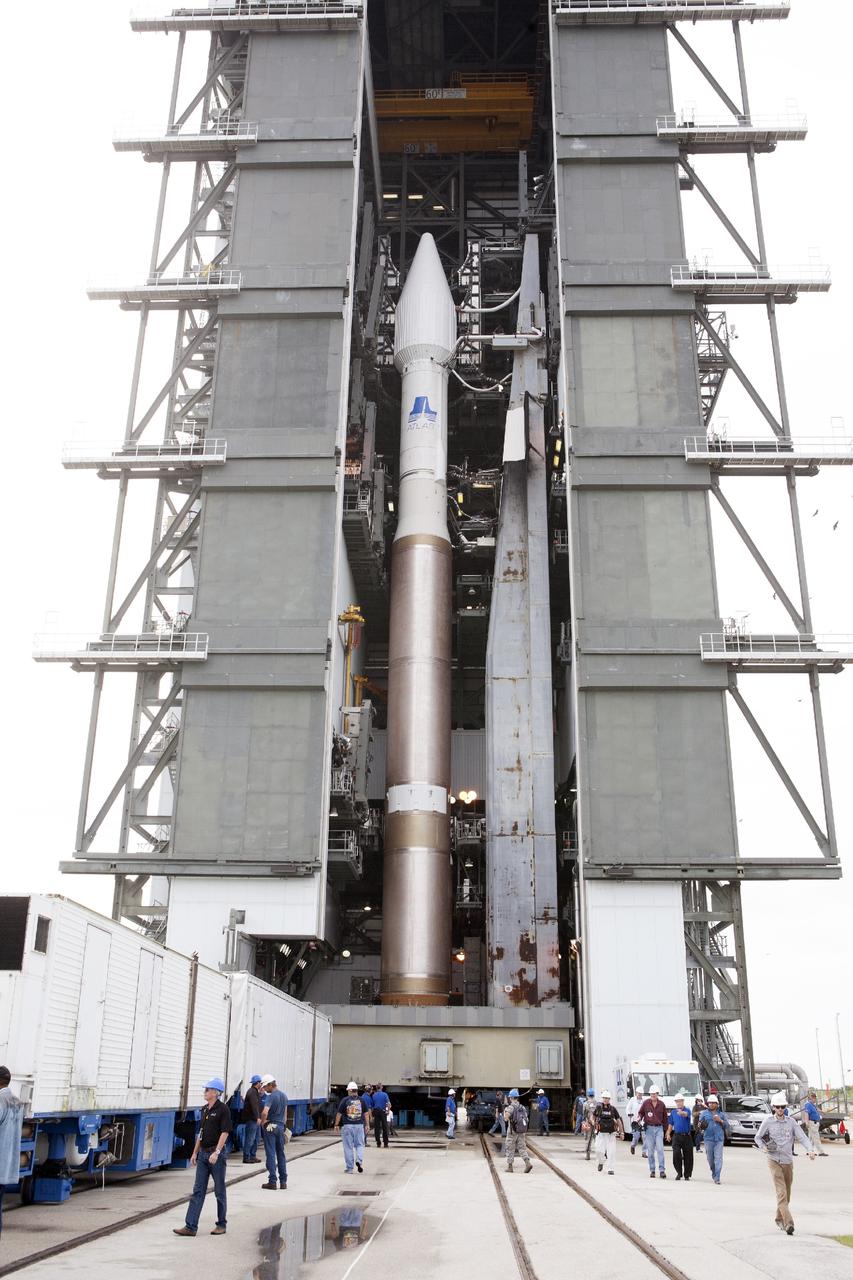
CAPE CANAVERAL, Fla. -- The United Launch Alliance Atlas V rocket carrying NASA’s Mars Atmosphere and Volatile EvolutioN, or MAVEN, spacecraft begins its move from the Vertical Integration Facility to Space Launch Complex 41 on Cape Canaveral Air Force Station in Florida. Rollout began on schedule with first motion at 9:57 a.m. Launch is scheduled for Nov. 18 during a window that extends from 1:28 to 3:28 p.m. Once positioned in orbit above the Red Planet, MAVEN will study its upper atmosphere in unprecedented detail. For more information, visit: http://www.nasa.gov/mission_pages/maven/main/index.html. Photo credit: NASA/Kim Shiflett
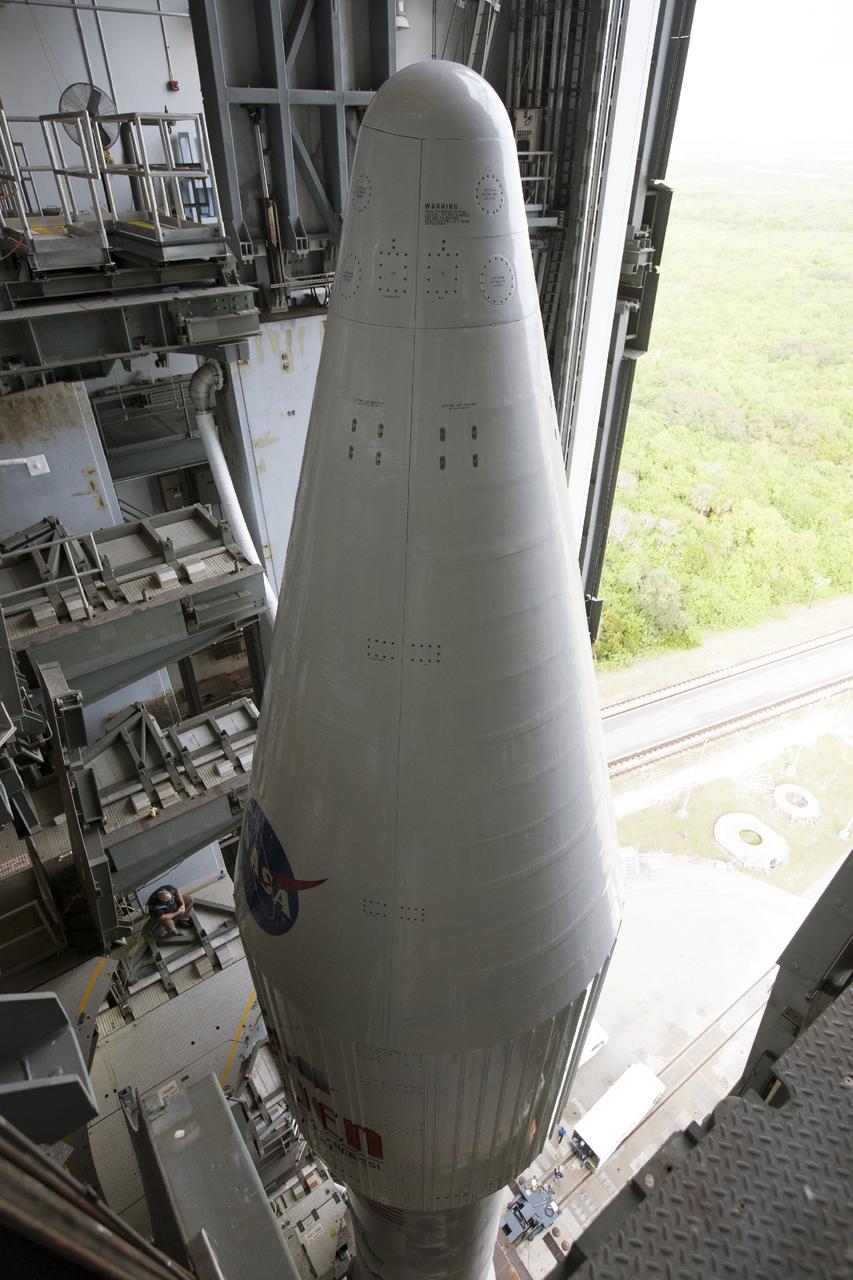
CAPE CANAVERAL, Fla. -- At Cape Canaveral Air Force Station in Florida, preparations are underway to roll NASA’s Mars Atmosphere and Volatile EvolutioN, or MAVEN, spacecraft secured atop a United Launch Alliance Atlas V rocket from the Vertical Integration Facility to Space Launch Complex 41. Rollout is scheduled to start at 10 a.m. Launch is scheduled for Nov. 18 during a window that extends from 1:28 to 3:28 p.m. Once positioned in orbit above the Red Planet, MAVEN will study its upper atmosphere in unprecedented detail. For more information, visit: http://www.nasa.gov/mission_pages/maven/main/index.html. Photo credit: NASA/Kim Shiflett
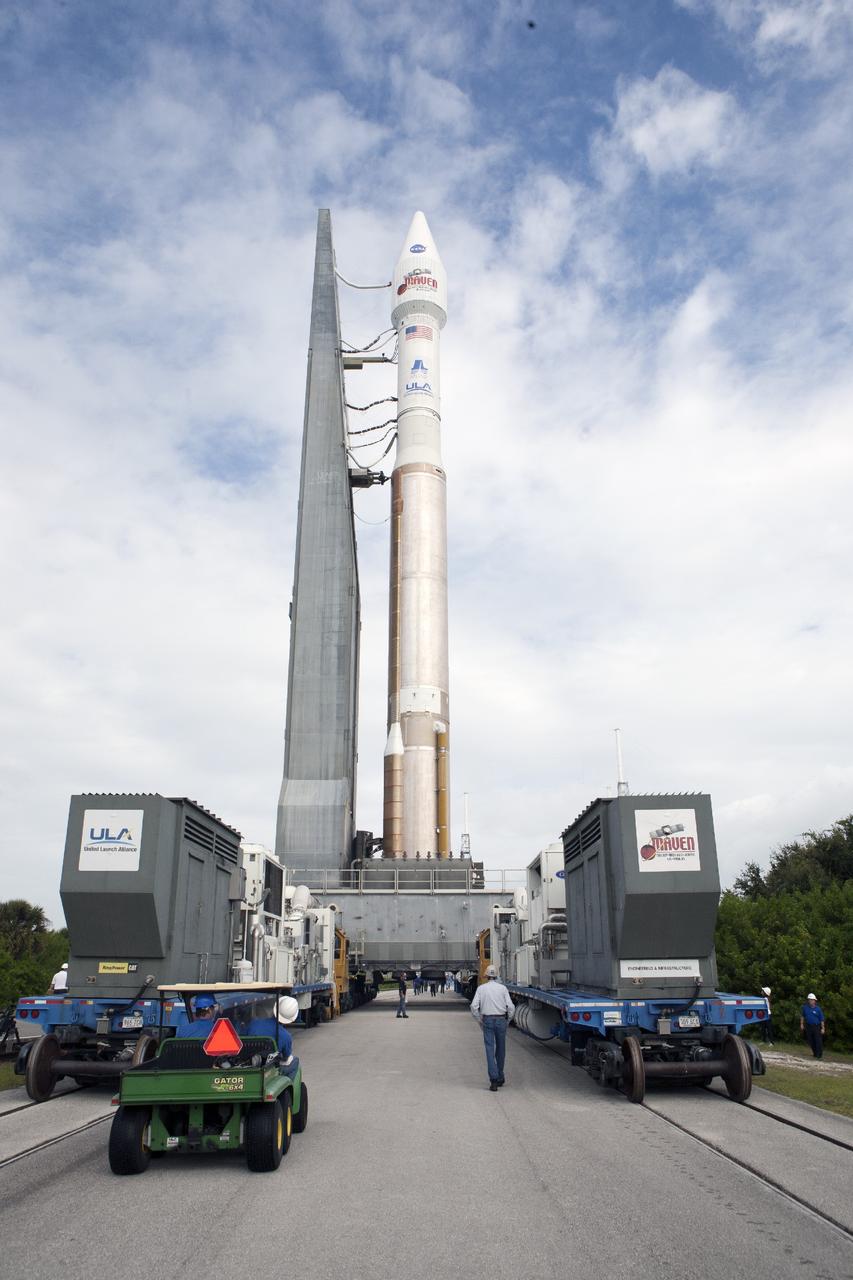
CAPE CANAVERAL, Fla. -- The United Launch Alliance Atlas V rocket carrying NASA’s Mars Atmosphere and Volatile EvolutioN, or MAVEN, spacecraft moves along the roadway from the Vertical Integration Facility to the pad at Space Launch Complex 41 on Cape Canaveral Air Force Station in Florida. Rollout began on schedule with first motion at 9:57 a.m. Launch is scheduled for Nov. 18 during a window that extends from 1:28 to 3:28 p.m. Once positioned in orbit above the Red Planet, MAVEN will study its upper atmosphere in unprecedented detail. For more information, visit: http://www.nasa.gov/mission_pages/maven/main/index.html. Photo credit: NASA/Kim Shiflett
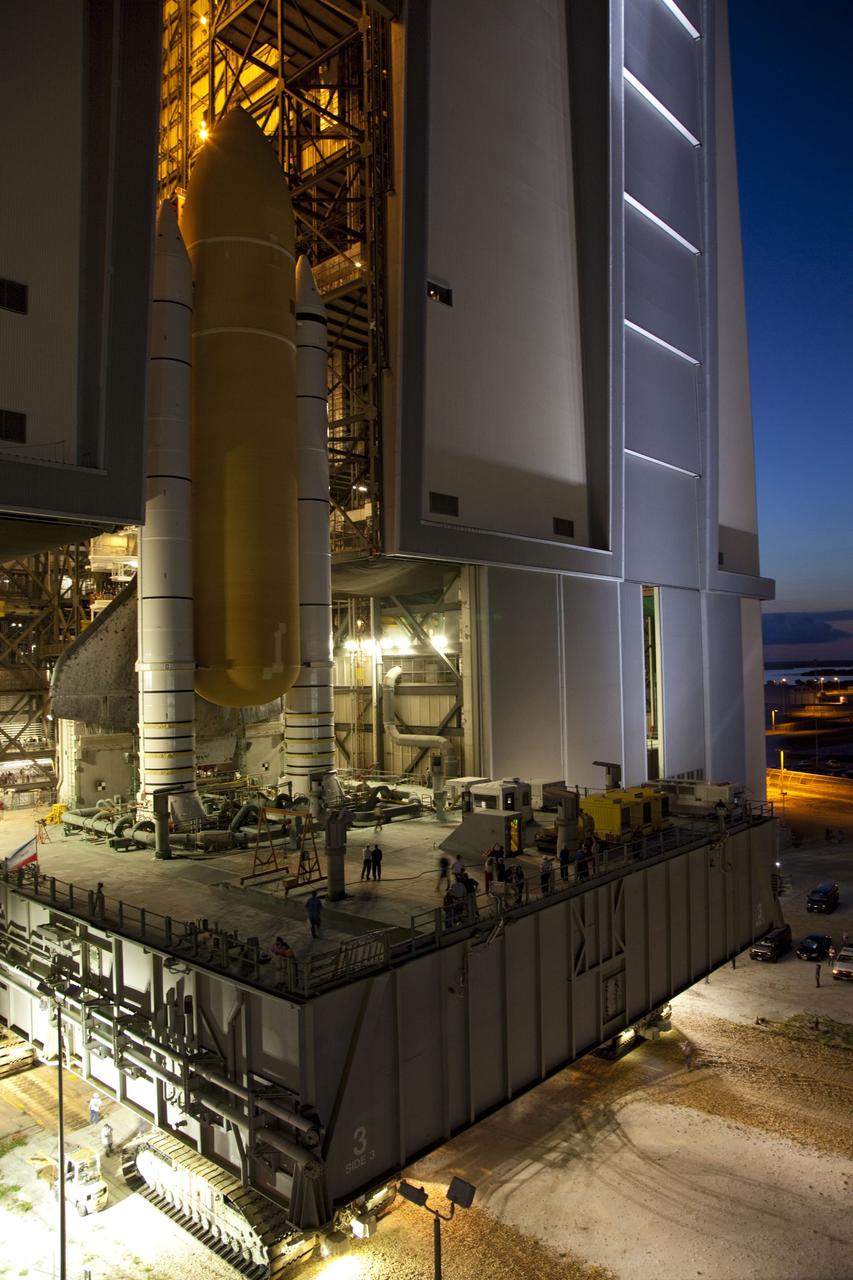
CAPE CANAVERAL, Fla. -- Space shuttle Atlantis, attached to its external fuel tank and solid rocket boosters atop a mobile launcher platform, slowly inches out of the Vehicle Assembly Building for the final time. "Rollout," to Launch Pad 39A at NASA's Kennedy Space Center in Florida began at 8:42 p.m. EDT. It will take the crawler-transporter about six hours to carry the shuttle stack to its seaside launch pad. The milestone move, known as "rollout," paves the way for the launch of the STS-135 mission to the International Space Station, targeted for July 8. STS-135 will be the 33rd flight of Atlantis, the 37th shuttle mission to the space station, and the 135th and final mission of NASA's Space Shuttle Program. For more information visit: www.nasa.gov/mission_pages/shuttle/shuttlemissions/sts135/index.html. Photo credit: NASA/Terry Zaperach
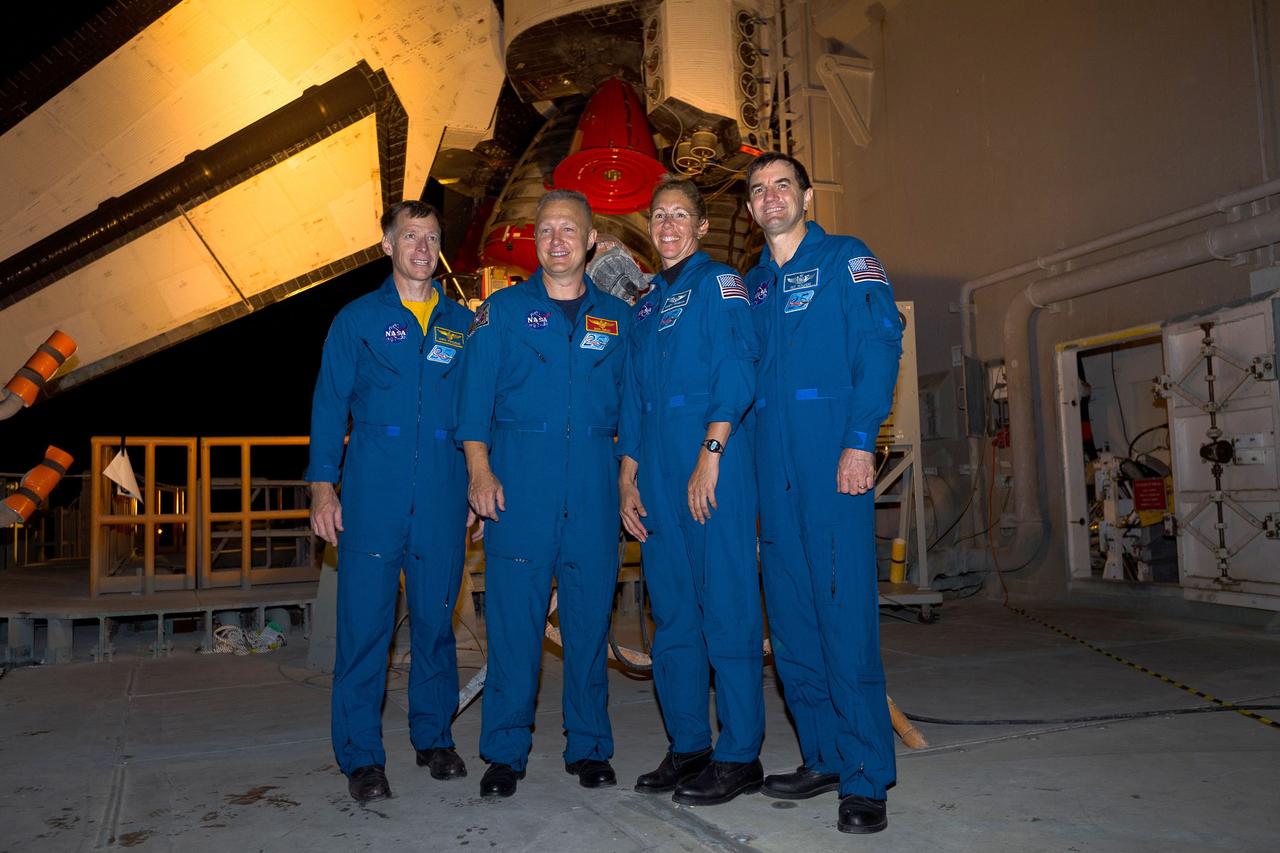
CAPE CANAVERAL, Fla. -- Accompanying space shuttle Atlantis on its "rollout" to Launch Pad 39A at NASA's Kennedy Space Center in Florida are from left, STS-135 Commander Chris Ferguson, Pilot Doug Hurley, Mission Specialists Sandy Magnus and Rex Walheim. It will take the crawler-transporter about six hours to carry the shuttle stack to its seaside launch pad. The milestone move, known as "rollout," paves the way for the launch of the STS-135 mission to the International Space Station, targeted for July 8. STS-135 will be the 33rd flight of Atlantis, the 37th shuttle mission to the space station, and the 135th and final mission of NASA's Space Shuttle Program. For more information visit: www.nasa.gov/mission_pages/shuttle/shuttlemissions/sts135/index.html. Photo credit: Courtesy of Scott Andrews/Canon
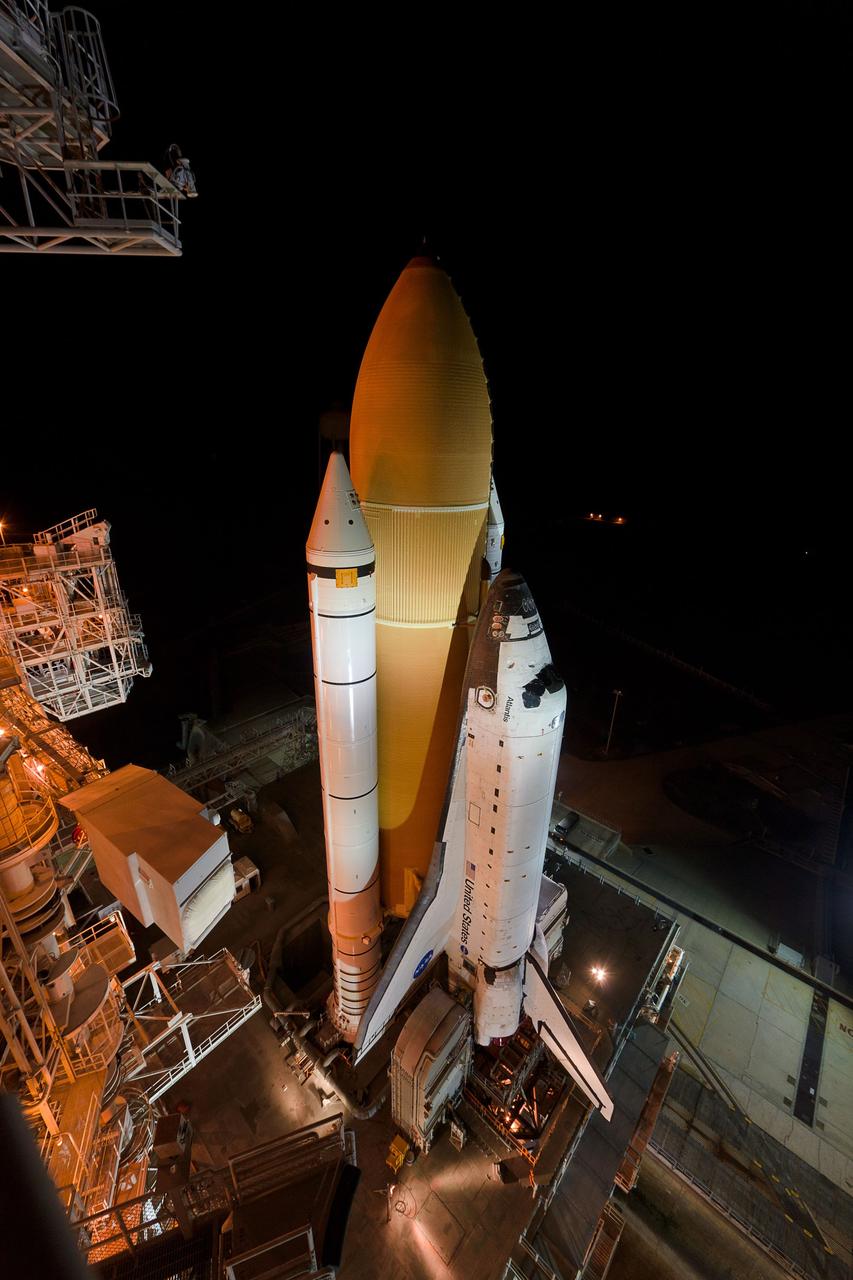
CAPE CANAVERAL, Fla. -- Space shuttle Atlantis made its historic final journey, or "rollout," to Launch Pad 39A after its 3.4 mile trek from NASA Kennedy Space Center's Vehicle Assembly Building. Atlantis was secured or "hard down," at its seaside launch pad at 3:29 a.m. EDT on Wednesday, June 1. The milestone move, known as "rollout," paves the way for the launch of the STS-135 mission to the International Space Station, targeted for July 8. STS-135 will be the 33rd flight of Atlantis, the 37th shuttle mission to the space station, and the 135th and final mission of NASA's Space Shuttle Program. For more information visit: www.nasa.gov/mission_pages/shuttle/shuttlemissions/sts135/index.html. Photo credit: Courtesy of Scott Andrews/Canon
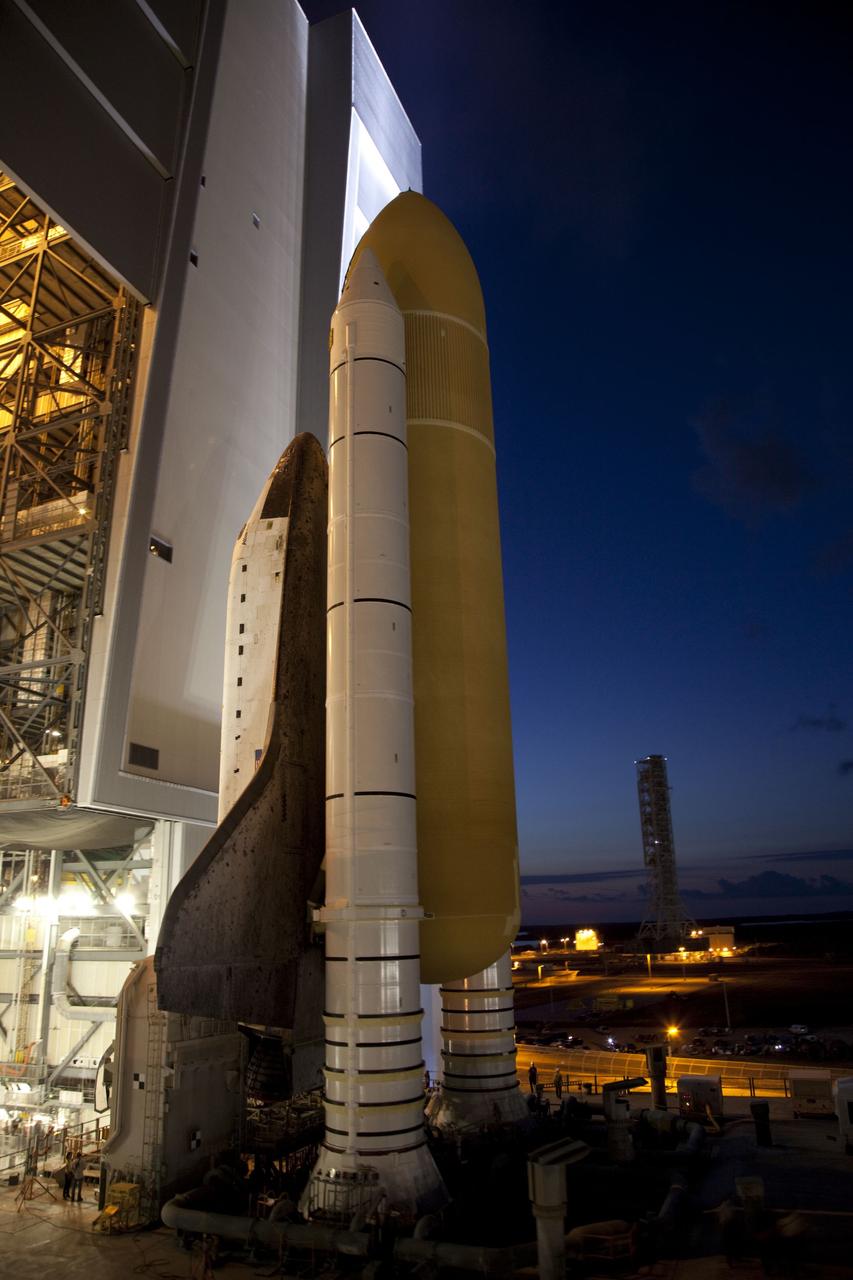
CAPE CANAVERAL, Fla. -- Space shuttle Atlantis, attached to its external fuel tank and solid rocket boosters atop a mobile launcher platform, slowly inches out of the Vehicle Assembly Building for the final time. "Rollout," to Launch Pad 39A at NASA's Kennedy Space Center in Florida began at 8:42 p.m. EDT. It will take the crawler-transporter about six hours to carry the shuttle stack to its seaside launch pad. The milestone move, known as "rollout," paves the way for the launch of the STS-135 mission to the International Space Station, targeted for July 8. STS-135 will be the 33rd flight of Atlantis, the 37th shuttle mission to the space station, and the 135th and final mission of NASA's Space Shuttle Program. For more information visit: www.nasa.gov/mission_pages/shuttle/shuttlemissions/sts135/index.html. Photo credit: NASA/Terry Zaperach
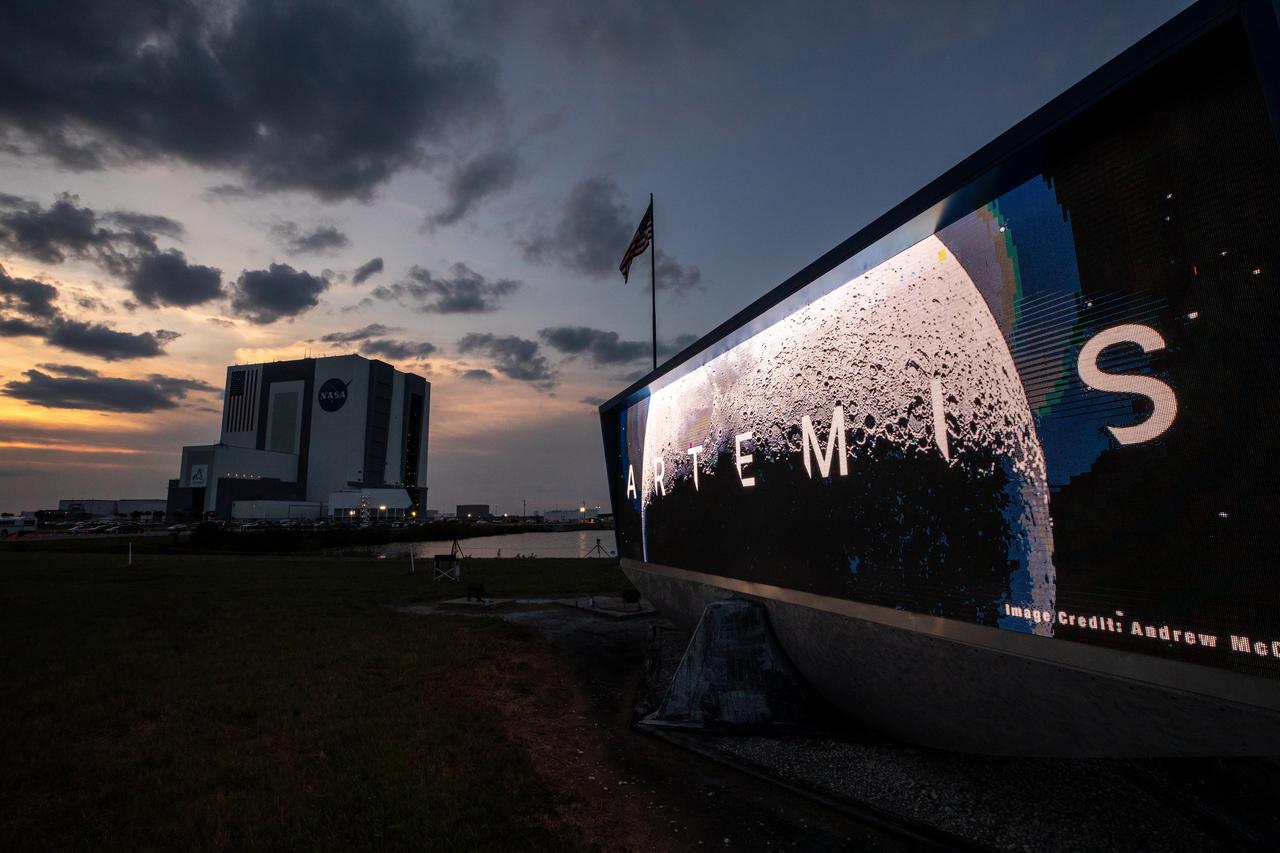
During rollout operations for NASA’s Artemis I Moon rocket, the iconic Vehicle Assembly Building is visible in the background behind the countdown clock at Kennedy Space Center in Florida, Tuesday, Aug. 16, 2022. As part of the agency’s Artemis I flight test, the fully stacked and integrated Space Launch System (SLS) rocket with the Orion spacecraft is scheduled to liftoff on Monday, Aug. 29. The first in a series of increasingly complex missions, Artemis I will provide a foundation for human deep space exploration and demonstrate our commitment and capability to extend human presence to the Moon and beyond. The primary goal of Artemis I is to thoroughly test the integrated systems before crewed missions by launching Orion atop the SLS rocket, operating the spacecraft in a deep space environment, testing Orion’s heat shield, and recovering the crew module after reentry, descent, and splashdown.
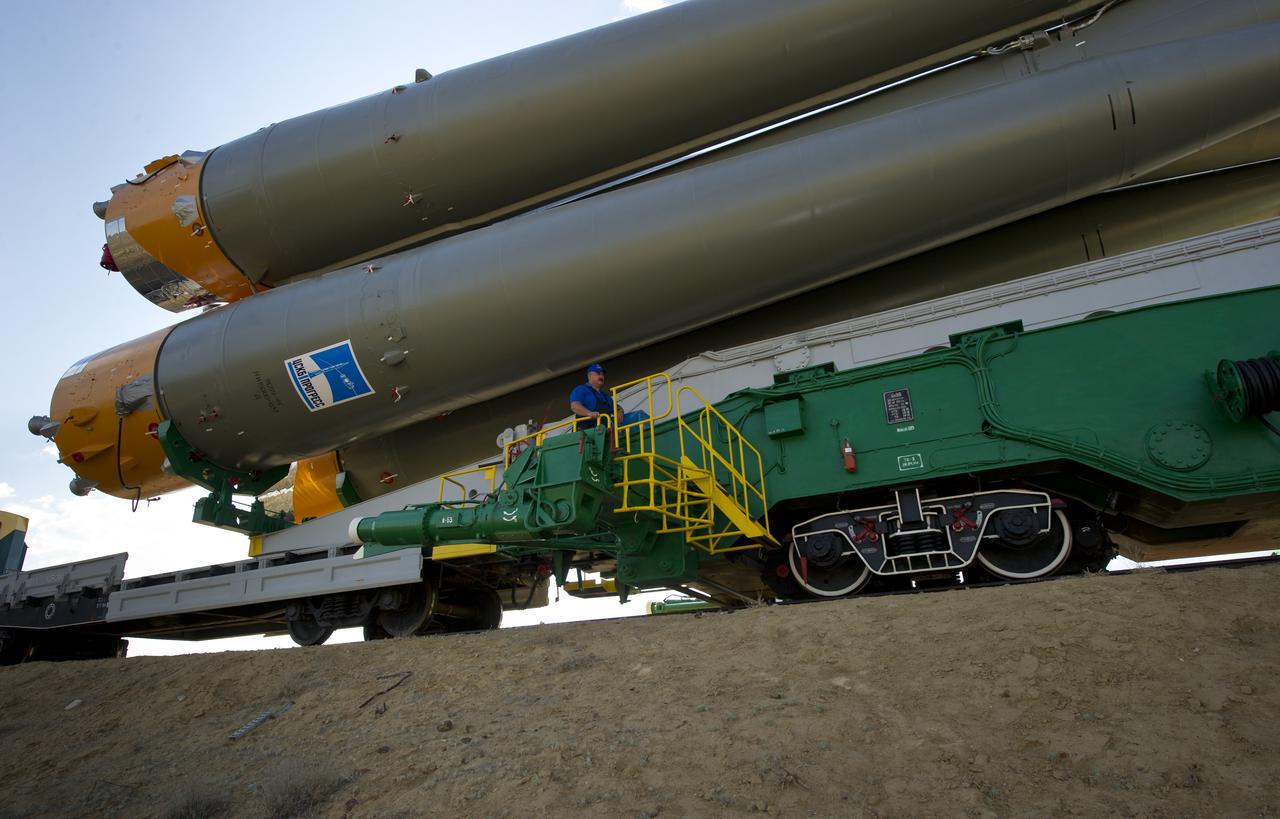
The liquid fuel boosters of the first stage of the Soyuz TMA-02 spacecraft are pictured here during the rollout of the rocket on Sunday, June 5, 2011 at the Baikonur Cosmodrome in Kazakhstan. Photo Credit: (NASA/Carla Cioffi)
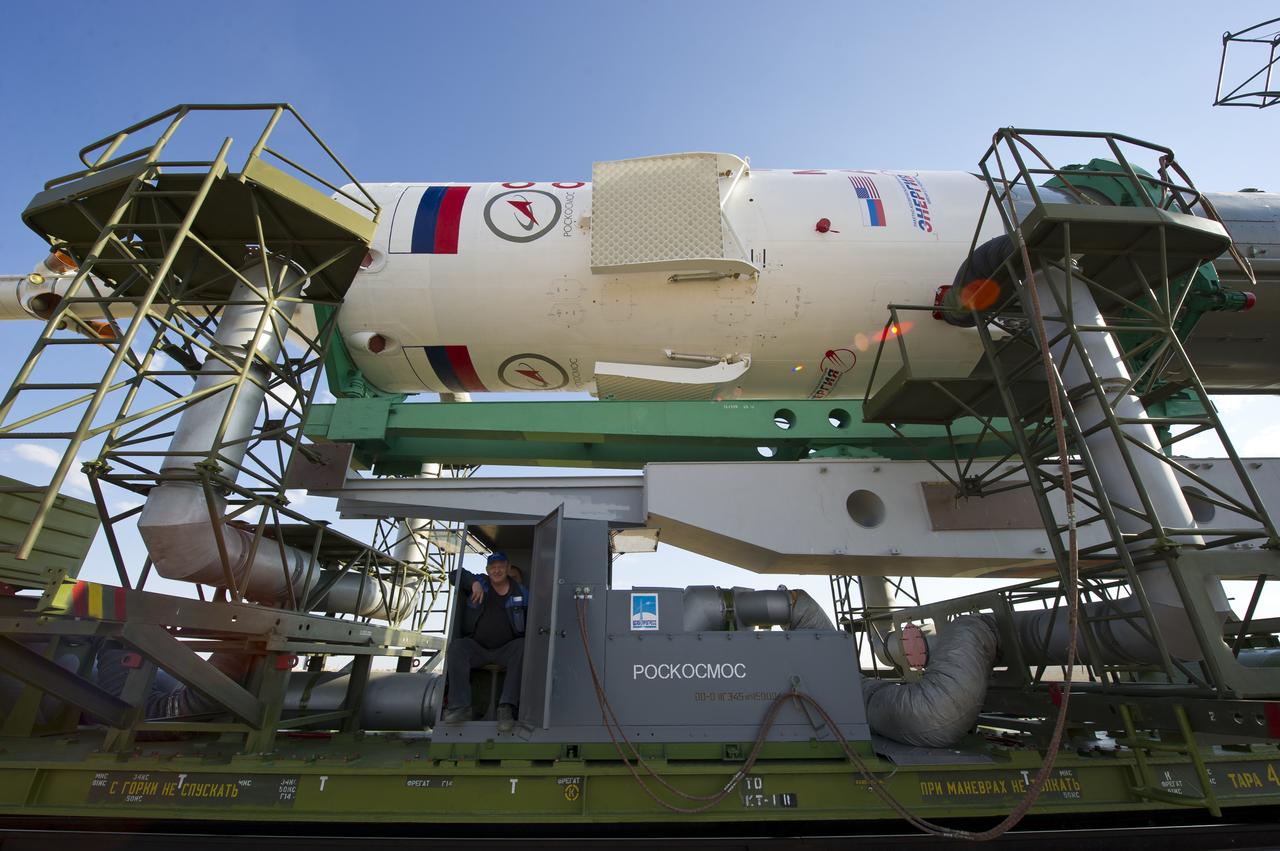
The upper stage of the Soyuz TMA-02M rocket in which the crew capsule is located is pictured here during the rollout of the rocket on Sunday, June 5, 2011 at the Baikonur Cosmodrome in Kazakhstan. Photo Credit: (NASA/Carla Cioffi)
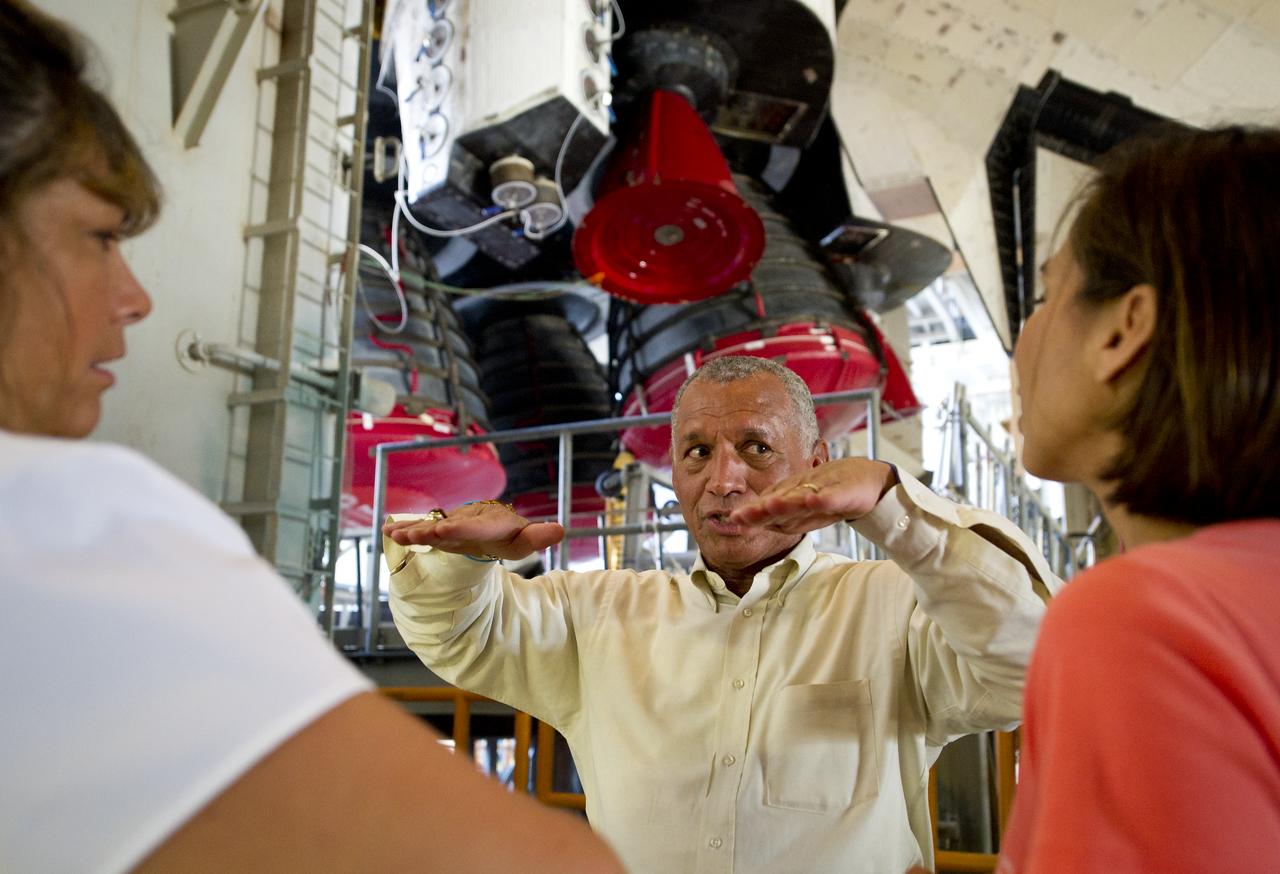
NASA Administrator Charles Bolden talks with other NASA management atop of the Mobile Launcher Platform (MLP) just prior to rollout of the Space Shuttle Atlantis (STS-135) from High Bay 3 in the Vehicle Assembly Building to Launch Pad 39a for its final flight, Tuesday evening, May 31, 2011, at Kennedy Space Center in Cape Canaveral, Fla. The 3.4-mile trek, known as "rollout," will take about seven hours to complete. Atlantis will carry the Raffaello multipurpose logistics module to deliver supplies, logistics and spare parts to the International Space Station. The launch of STS-135 is targeted for July 8. Photo Credit: (NASA/Bill Ingalls)
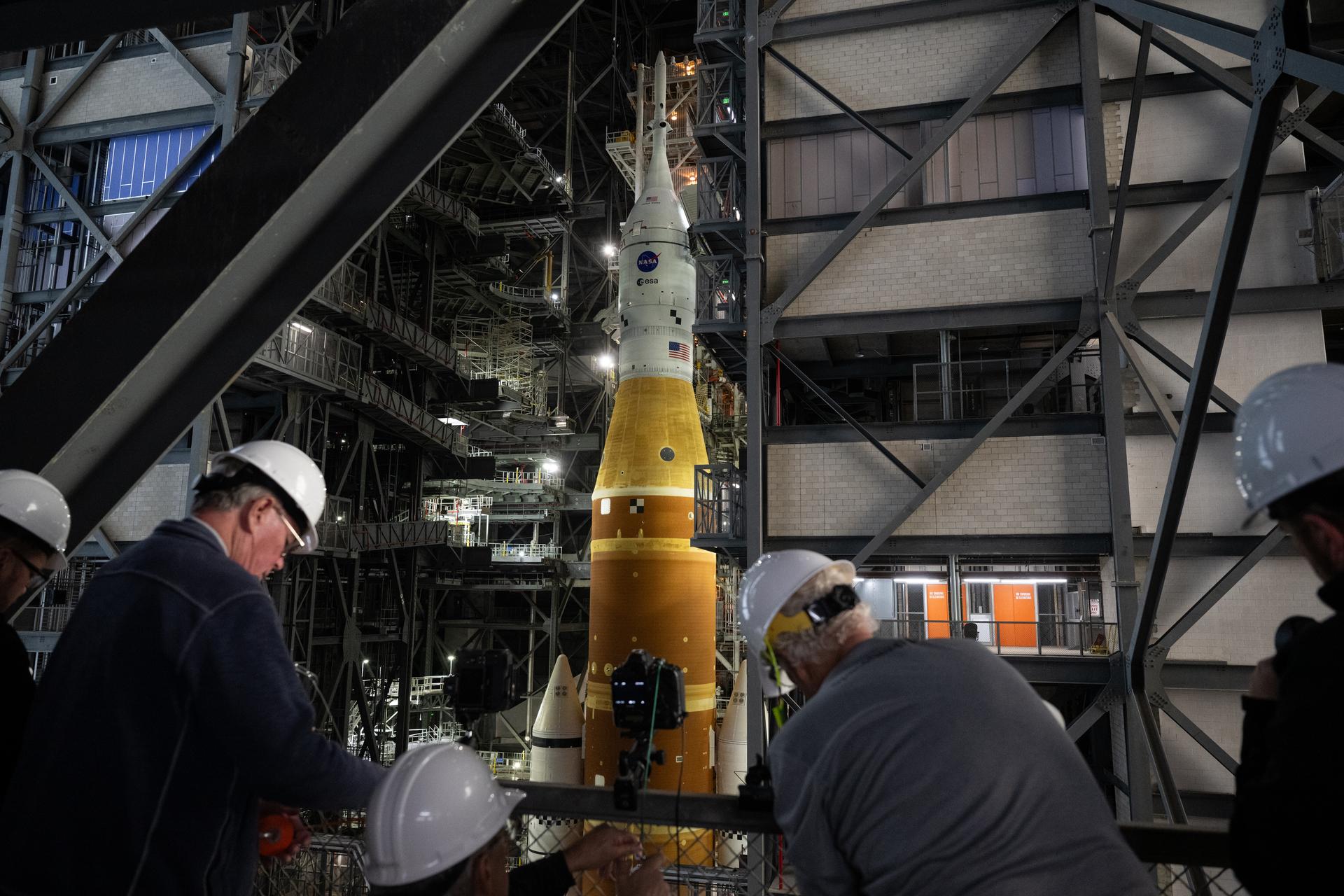
Members of the media are seen as they setup remote cameras to photograph the rollout of NASA’s Artemis II SLS (Space Launch System) rocket and Orion spacecraft inside the Vehicle Assembly building as preparations continue for rollout to Launch Pad 39B, Friday, Jan. 16, 2026, at NASA’s Kennedy Space Center in Florida. NASA’s Artemis II flight test will take Commander Reid Wiseman, Pilot Victor Glover, and Mission Specialist Christina Koch from NASA, and Mission Specialist Jeremy Hansen from the CSA (Canadian Space Agency), around the Moon and back to Earth no later than April 2026. Photo Credit: (NASA/Joel Kowsky)
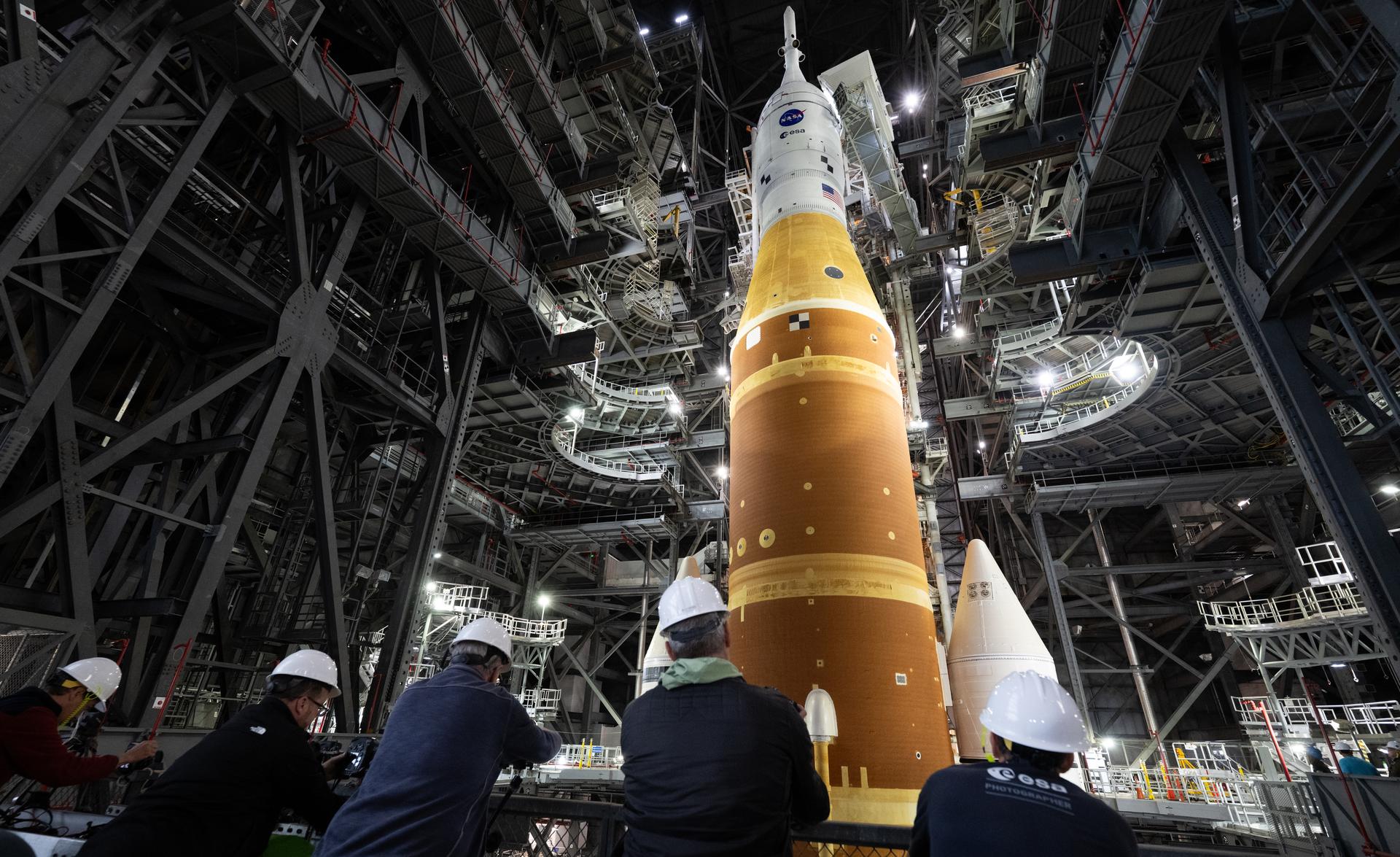
Members of the media are seen as they setup remote cameras to photograph the rollout of NASA’s Artemis II SLS (Space Launch System) rocket and Orion spacecraft inside the Vehicle Assembly building as preparations continue for rollout to Launch Pad 39B, Friday, Jan. 16, 2026, at NASA’s Kennedy Space Center in Florida. NASA’s Artemis II flight test will take Commander Reid Wiseman, Pilot Victor Glover, and Mission Specialist Christina Koch from NASA, and Mission Specialist Jeremy Hansen from the CSA (Canadian Space Agency), around the Moon and back to Earth no later than April 2026. Photo Credit: (NASA/Joel Kowsky)
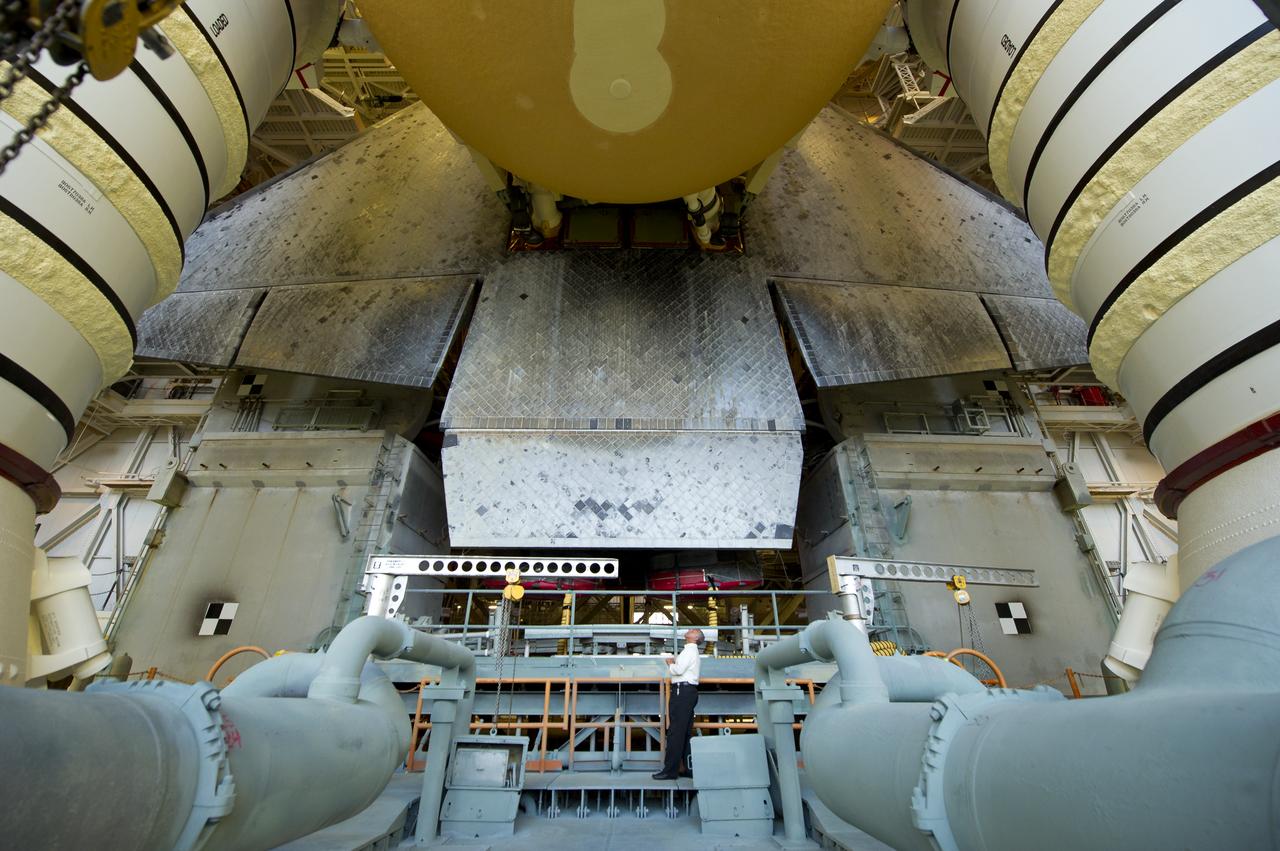
NASA Administrator Charles Bolden looks at the space shuttle Atlantis atop of the Mobile Launch Platform (MLP) just prior to rollout of Atlantis (STS-135) from High Bay 3 in the Vehicle Assembly Building to Launch Pad 39a for its final flight, Tuesday evening, May 31, 2011, at Kennedy Space Center in Cape Canaveral, Fla. The 3.4-mile trek, known as "rollout," will take about seven hours to complete. Atlantis will carry the Raffaello multipurpose logistics module to deliver supplies, logistics and spare parts to the International Space Station. The launch of STS-135 is targeted for July 8. Photo Credit: (NASA/Bill Ingalls)
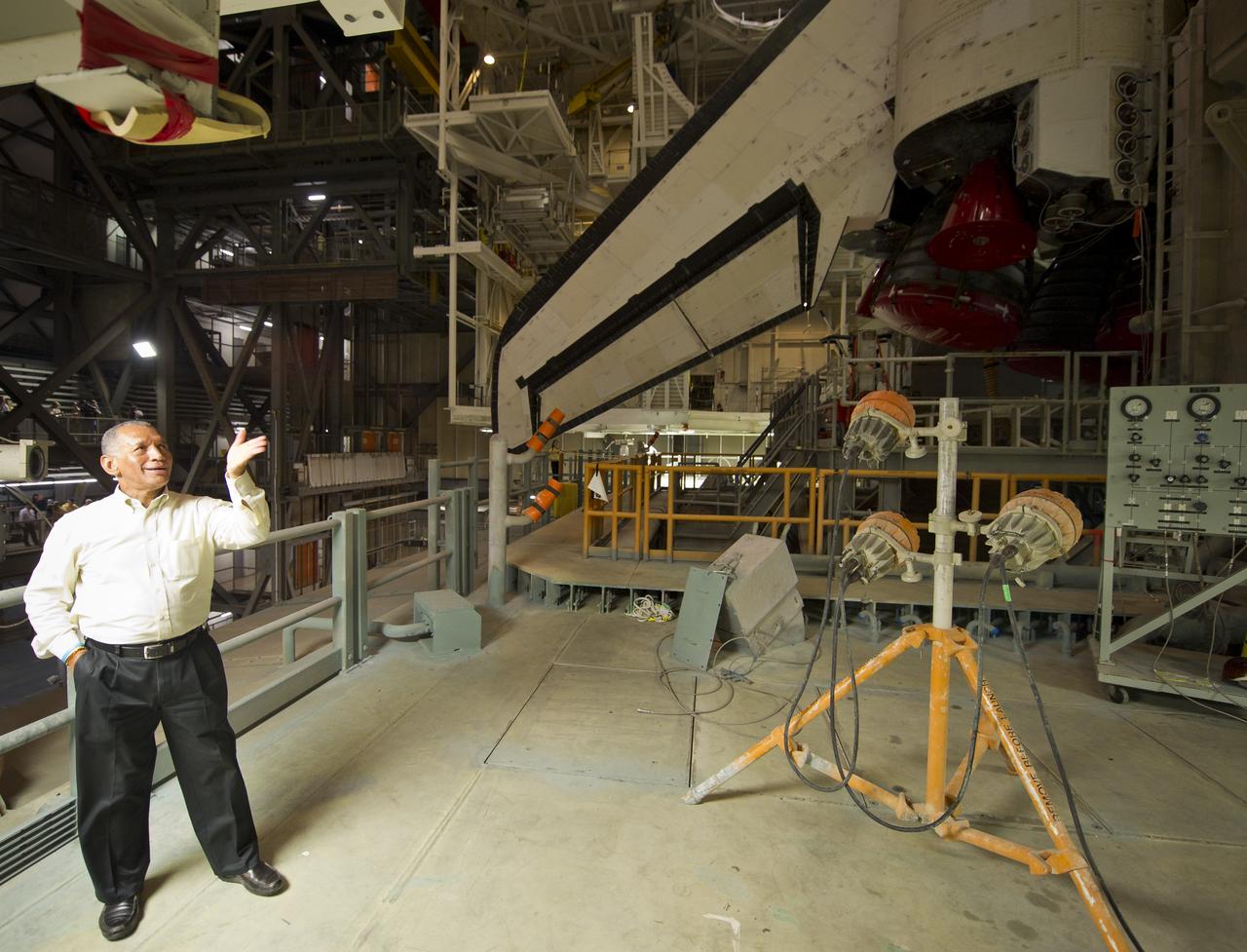
NASA Administrator Charles Bolden looks at the space shuttle Atlantis atop of the Mobile Launch Platform (MLP) just prior to rollout of Atlantis (STS-135) from High Bay 3 in the Vehicle Assembly Building to Launch Pad 39a for its final flight, Tuesday evening, May 31, 2011, at Kennedy Space Center in Cape Canaveral, Fla. The 3.4-mile trek, known as "rollout," will take about seven hours to complete. Atlantis will carry the Raffaello multipurpose logistics module to deliver supplies, logistics and spare parts to the International Space Station. The launch of STS-135 is targeted for July 8. Photo Credit: (NASA/Bill Ingalls)

Crowds of people are seen watching the rollout of the space shuttle Atlantis in this image made atop of the Mobile Launcher Platform (MLP) that is carrying Atlantis from High Bay 3 in the Vehicle Assembly Building to Launch Pad 39a for its final flight, Tuesday evening, May 31, 2011, at Kennedy Space Center in Cape Canaveral, Fla. The 3.4-mile trek, known as "rollout," will take about seven hours to complete. Atlantis will carry the Raffaello multipurpose logistics module to deliver supplies, logistics and spare parts to the International Space Station. The launch of STS-135 is targeted for July 8. Photo Credit: (NASA/Bill Ingalls)
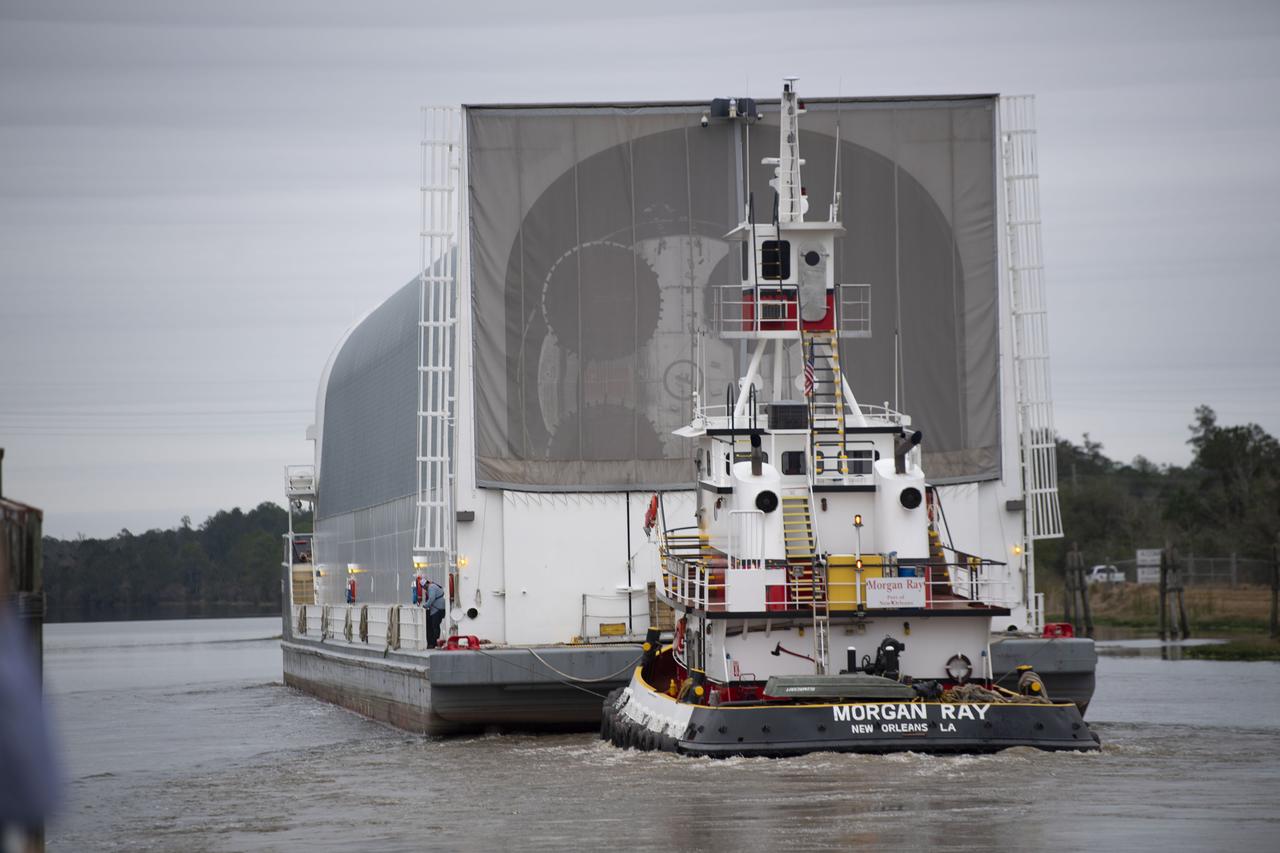
The first flight core stage for NASA’s new Space Launch System rocket arrived at Stennis Space Center on Jan. 12 for a series of tests prior to its maiden Artemis I flight. The core stage was transported from Michoud Assembly Facility in New Orleans to the B-2 Test Stand dock at Stennis aboard NASA’s Pegasus barge. Soon after arrival, the stage was rolled off of Pegasus onto the B-2 Test Stand tarmac. After the stage is lifted and installed on the B-2 stand, it will undergo a series of “Green Run” systems test that represent the first integrated testing of its sophisticated systems.
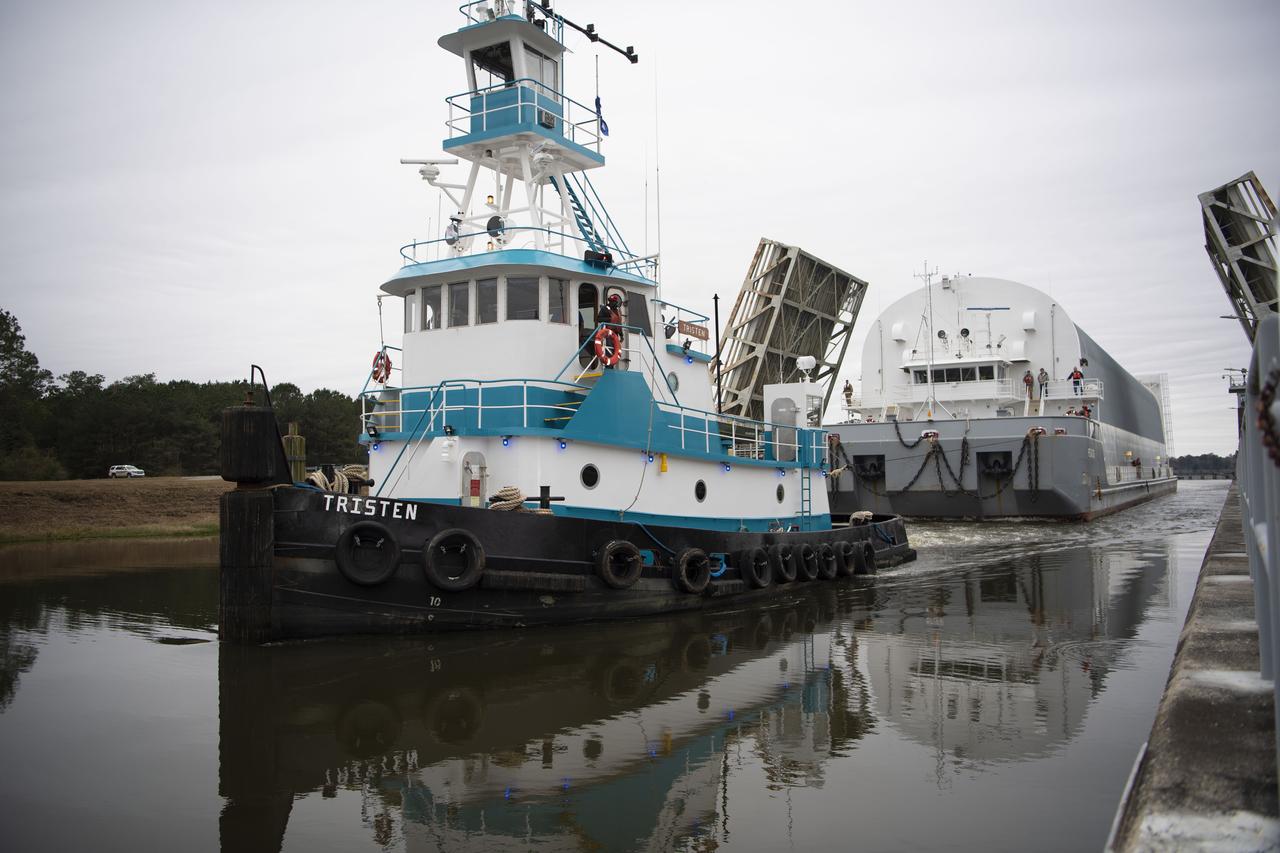
The first flight core stage for NASA’s new Space Launch System rocket arrived at Stennis Space Center on Jan. 12 for a series of tests prior to its maiden Artemis I flight. The core stage was transported from Michoud Assembly Facility in New Orleans to the B-2 Test Stand dock at Stennis aboard NASA’s Pegasus barge. Soon after arrival, the stage was rolled off of Pegasus onto the B-2 Test Stand tarmac. After the stage is lifted and installed on the B-2 stand, it will undergo a series of “Green Run” systems test that represent the first integrated testing of its sophisticated systems.
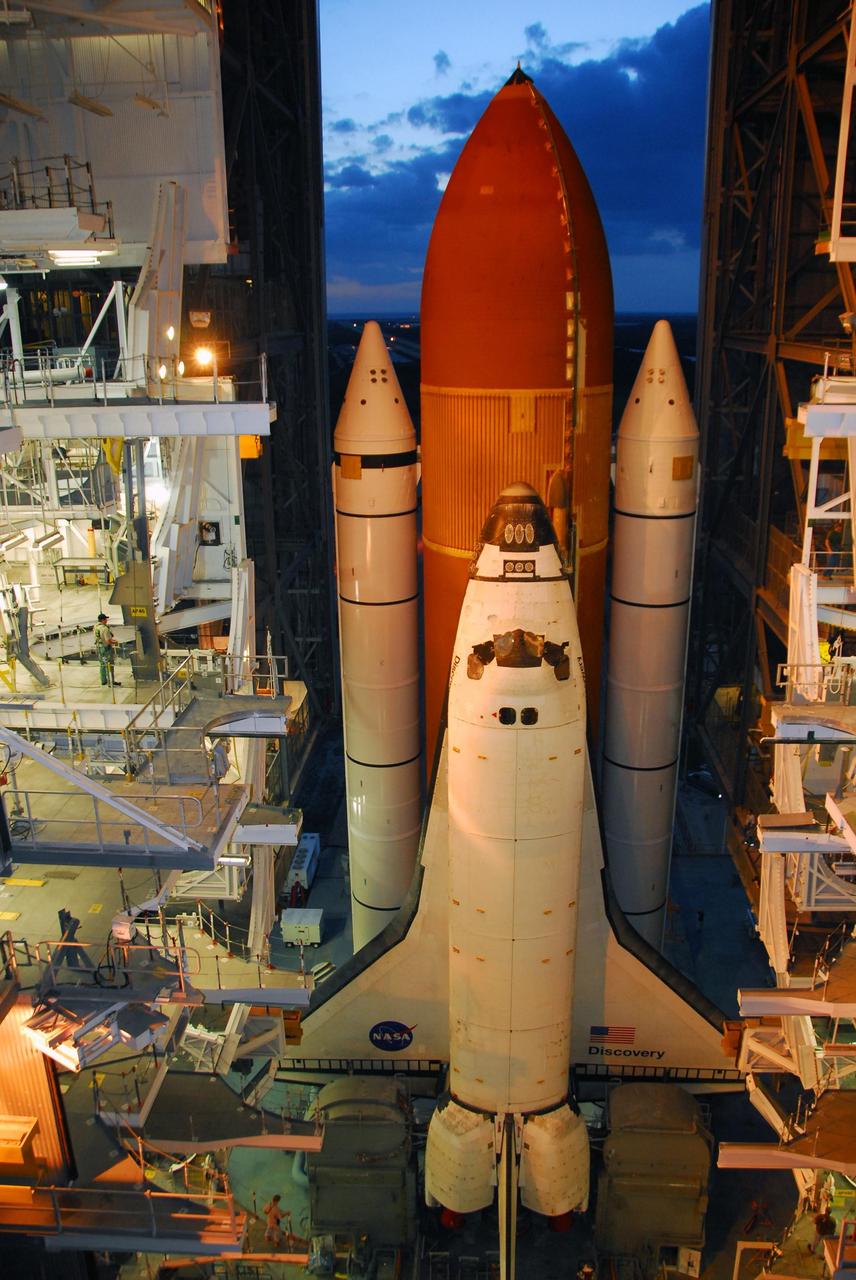
KENNEDY SPACE CENTER, FLA. -- Space Shuttle Discovery begins moving through the doors of the Vehicle Assembly Building toward Launch Pad 39A. First motion out of the VAB was at 6:47 a.m. EDT. Rollout is a milestone for Discovery's launch to the International Space Station on mission STS-120, targeted for Oct. 23. The crew will be delivering and installing the Italian-built U.S. Node 2, named Harmony. The pressurized module will act as an internal connecting port and passageway to additional international science labs and cargo spacecraft. In addition to increasing the living and working space inside the station, it also will serve as a work platform outside for the station's robotic arm. Photo credit: NASA/George Shelton
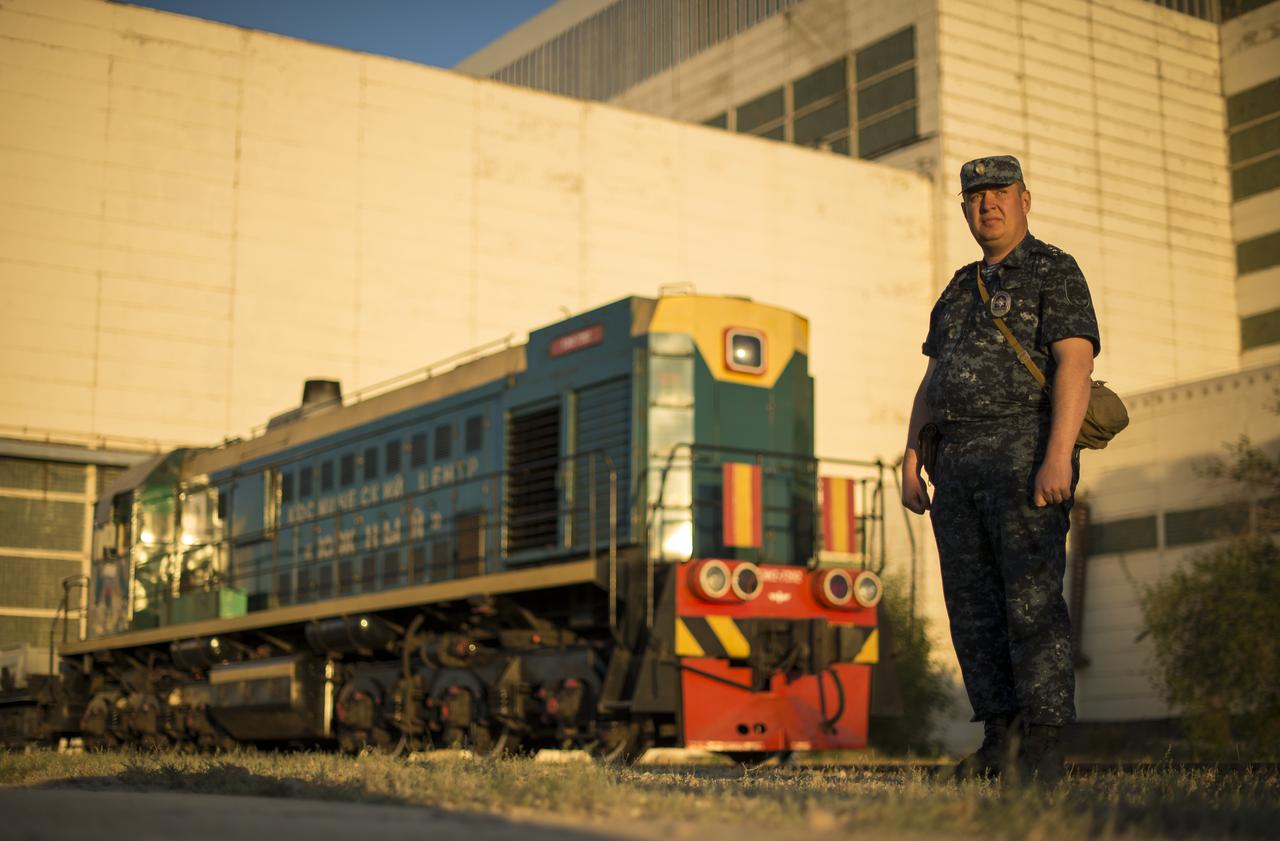
A policeman stands by and awaits the rollout of the Soyuz TMA-09M spacecraft by train to the Baikonur Cosmodrome launch pad, Sunday, May 26, 2013, in Kazakhstan. The launch of the Soyuz rocket to the International Space Station (ISS) with Expedition 36/37 Soyuz Commander Fyodor Yurchikhin of the Russian Federal Space Agency (Roscosmos), Flight Engineers; Luca Parmitano of the European Space Agency, and Karen Nyberg of NASA, is scheduled for Wednesday May 29, Kazakh time. Yurchikhin, Nyberg, and, Parmitano, will remain aboard the station until mid-November. Photo credit: (NASA/Bill Ingalls)
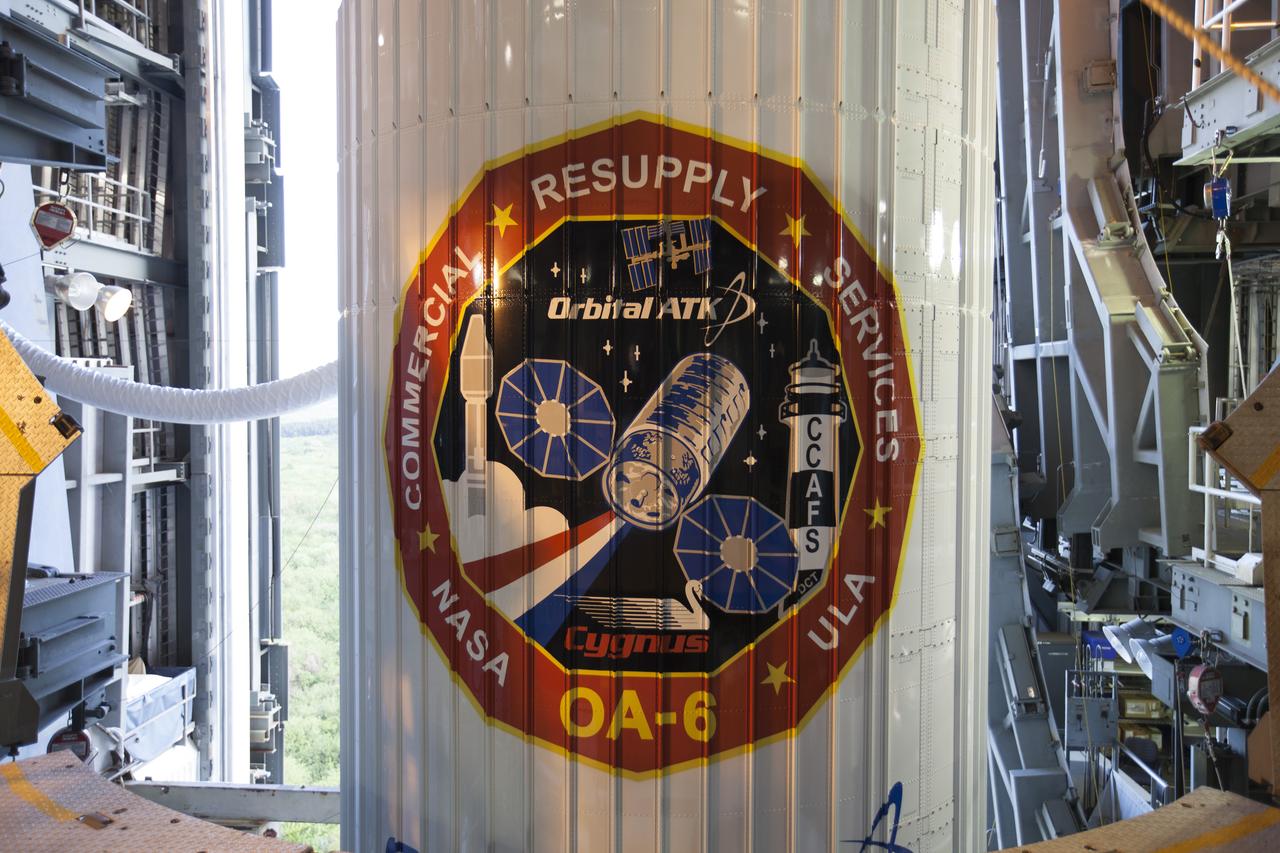
The mission logo for the Orbital ATK CRS-6 mission is visible on the payload fairing encapsulating a Cygnus spacecraft as it is prepared for its move from the Vertical Integration Facility at Cape Canaveral Air Force Station's Space Launch Complex 41. Mounted atop a United Launch Alliance Atlas V rocket, the vehicle will be moved to the launch pad. The Cygnus spacecraft will boost a resupply mission delving science payloads to the International Space Station.
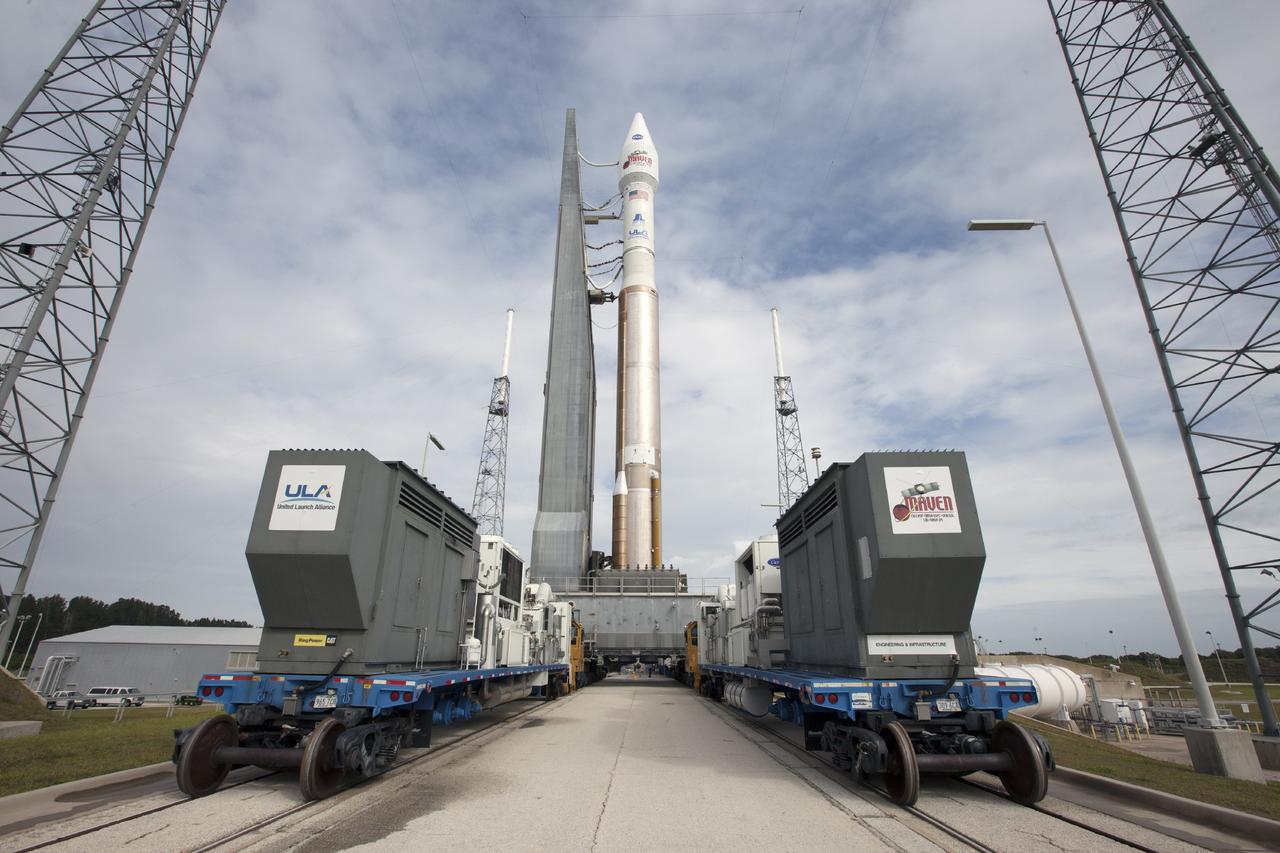
CAPE CANAVERAL, Fla. -- The United Launch Alliance Atlas V rocket carrying NASA’s Mars Atmosphere and Volatile EvolutioN, or MAVEN, spacecraft arrives at the pad at Space Launch Complex 41 on Cape Canaveral Air Force Station in Florida after a 20-minute journey from the Vertical Integration Facility. Rollout began on schedule with first motion at 9:57 a.m. Launch is scheduled for Nov. 18 during a window that extends from 1:28 to 3:28 p.m. Once positioned in orbit above the Red Planet, MAVEN will study its upper atmosphere in unprecedented detail. For more information, visit: http://www.nasa.gov/mission_pages/maven/main/index.html. Photo credit: NASA/Kim Shiflett
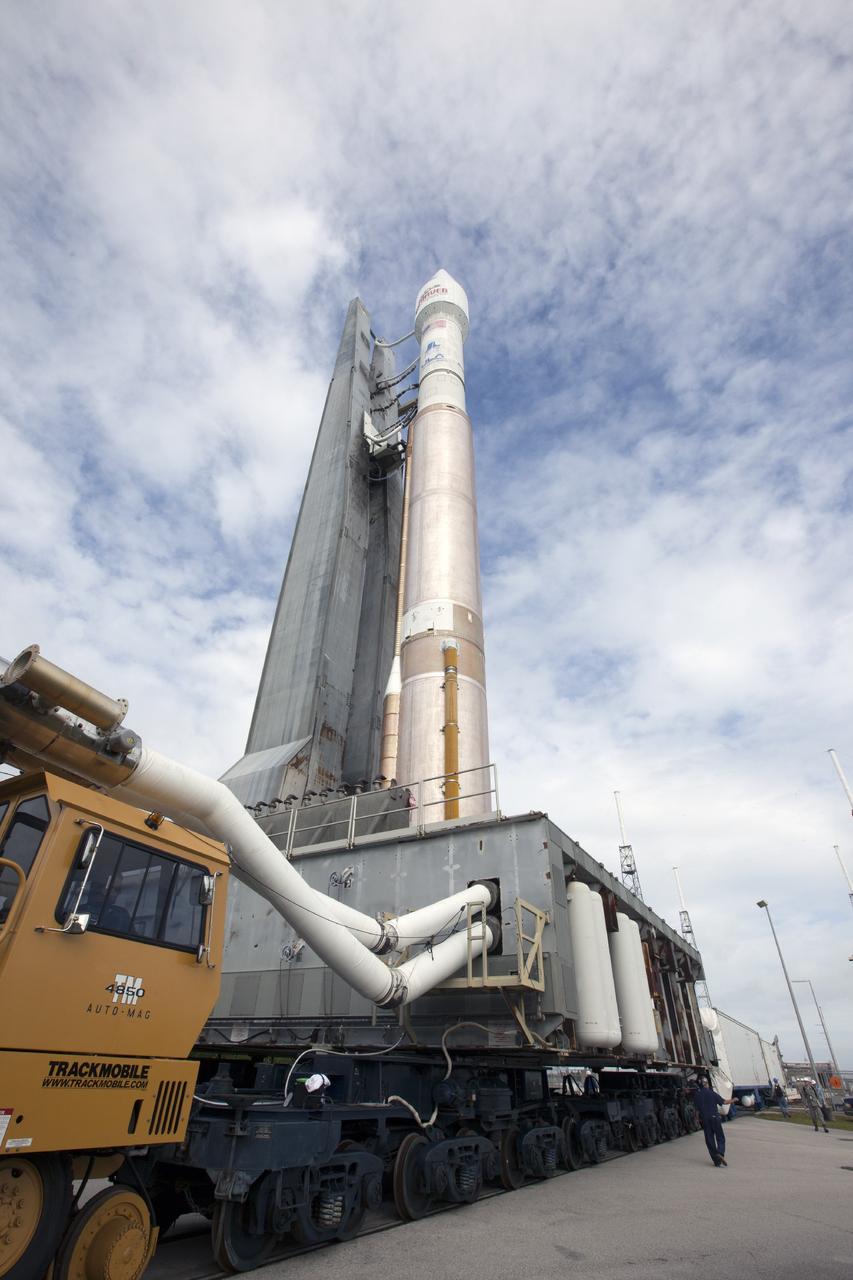
CAPE CANAVERAL, Fla. -- The United Launch Alliance Atlas V rocket carrying NASA’s Mars Atmosphere and Volatile EvolutioN, or MAVEN, spacecraft towers above the transporter moving it from the Vertical Integration Facility to the pad at Space Launch Complex 41 on Cape Canaveral Air Force Station in Florida. Rollout began on schedule with first motion at 9:57 a.m. Launch is scheduled for Nov. 18 during a window that extends from 1:28 to 3:28 p.m. Once positioned in orbit above the Red Planet, MAVEN will study its upper atmosphere in unprecedented detail. For more information, visit: http://www.nasa.gov/mission_pages/maven/main/index.html. Photo credit: NASA/Kim Shiflett
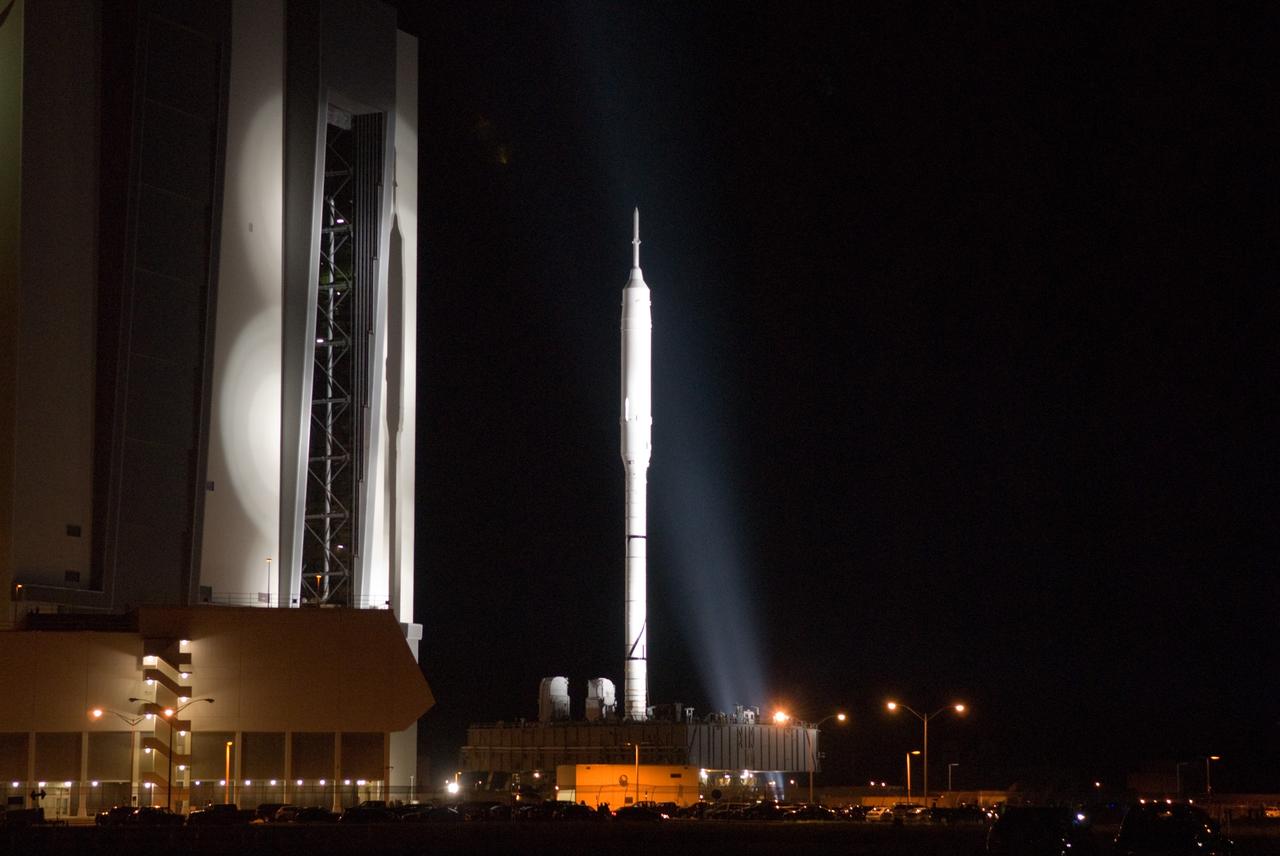
CAPE CANAVERAL, Fla. – Standing tall, the Ares I-X rocket rides atop the crawler-transporter as it moves beyond the Vehicle Assembly Building at NASA's Kennedy Space Center in Florida. Its slow trek to Launch Pad 39B, known as "rollout," began at 1:39 a.m. EDT. The transfer of the pad from the Space Shuttle Program to the Constellation Program took place May 31. Modifications made to the pad include the removal of shuttle unique subsystems, such as the orbiter access arm and a section of the gaseous oxygen vent arm, along with the installation of three 600-foot lightning towers, access platforms, environmental control systems and a vehicle stabilization system. Part of the Constellation Program, the Ares I-X is the test vehicle for the Ares I. The Ares I-X flight test is targeted for Oct. 27. For information on the Ares I-X vehicle and flight test, visit http://www.nasa.gov/aresIX. Photo credit: NASA/Jim Grossmann
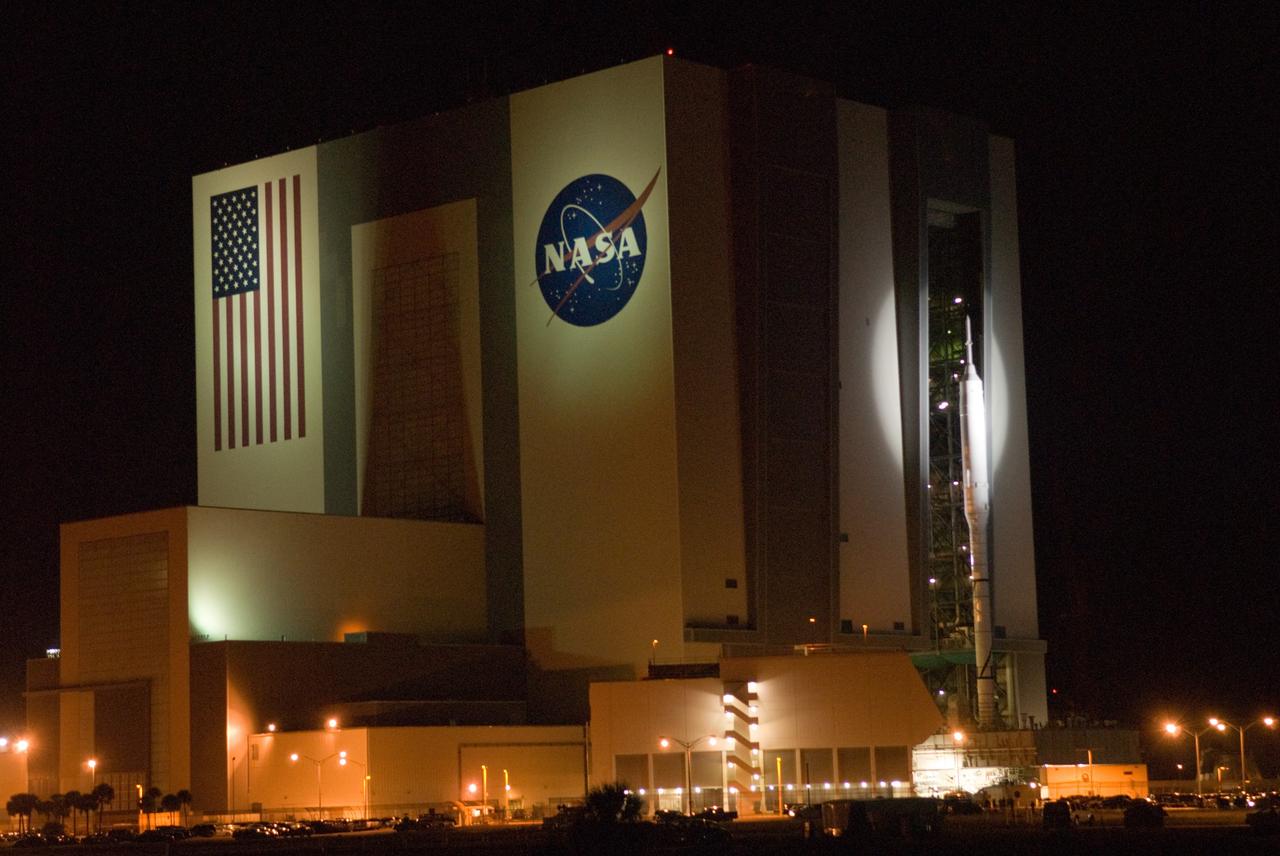
CAPE CANAVERAL, Fla. – Spotlighted against the Vehicle Assembly Building at NASA's Kennedy Space Center in Florida, the 327-foot-tall Ares I-X rocket begins its slow trek to Launch Pad 39B. The move, known as "rollout," began at 1:39 a.m. EDT. The transfer of the pad from the Space Shuttle Program to the Constellation Program took place May 31. Modifications made to the pad include the removal of shuttle unique subsystems, such as the orbiter access arm and a section of the gaseous oxygen vent arm, along with the installation of three 600-foot lightning towers, access platforms, environmental control systems and a vehicle stabilization system. Part of the Constellation Program, the Ares I-X is the test vehicle for the Ares I. The Ares I-X flight test is targeted for Oct. 27. For information on the Ares I-X vehicle and flight test, visit http://www.nasa.gov/aresIX. Photo credit: NASA/Jim Grossmann
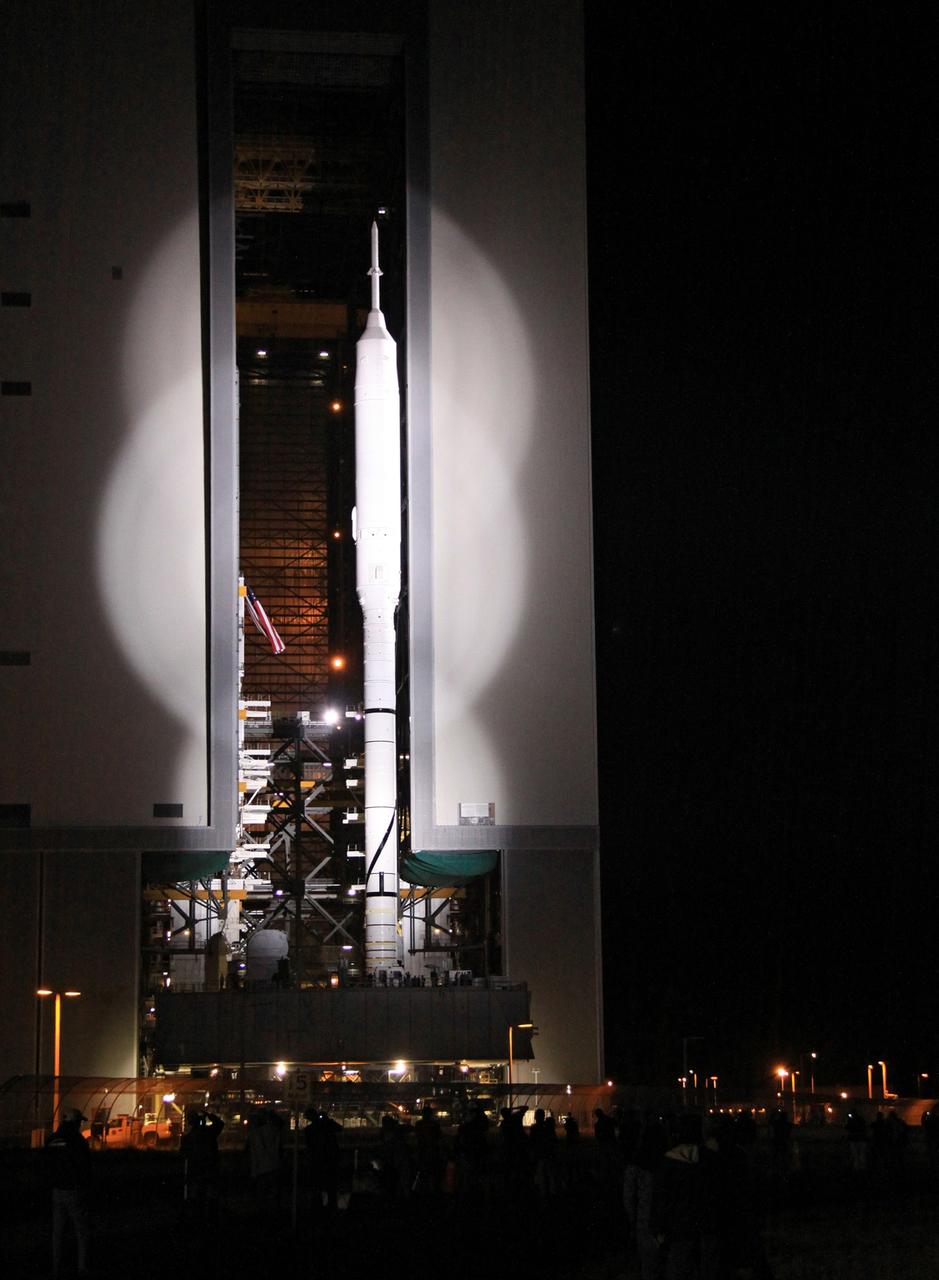
CAPE CANAVERAL, Fla. – Spotlighted in brilliant white, the 327-foot-tall Ares I-X rocket emerges from the Vehicle Assembly Building at NASA's Kennedy Space Center in Florida. The move to the launch pad, known as "rollout," began at 1:39 a.m. EDT. The transfer of the pad from the Space Shuttle Program to the Constellation Program took place May 31. Modifications made to the pad include the removal of shuttle unique subsystems, such as the orbiter access arm and a section of the gaseous oxygen vent arm, along with the installation of three 600-foot lightning towers, access platforms, environmental control systems and a vehicle stabilization system. Part of the Constellation Program, the Ares I-X is the test vehicle for the Ares I. The Ares I-X flight test is targeted for Oct. 27. For information on the Ares I-X vehicle and flight test, visit http://www.nasa.gov/aresIX. Photo credit: NASA/Jack Pfaller
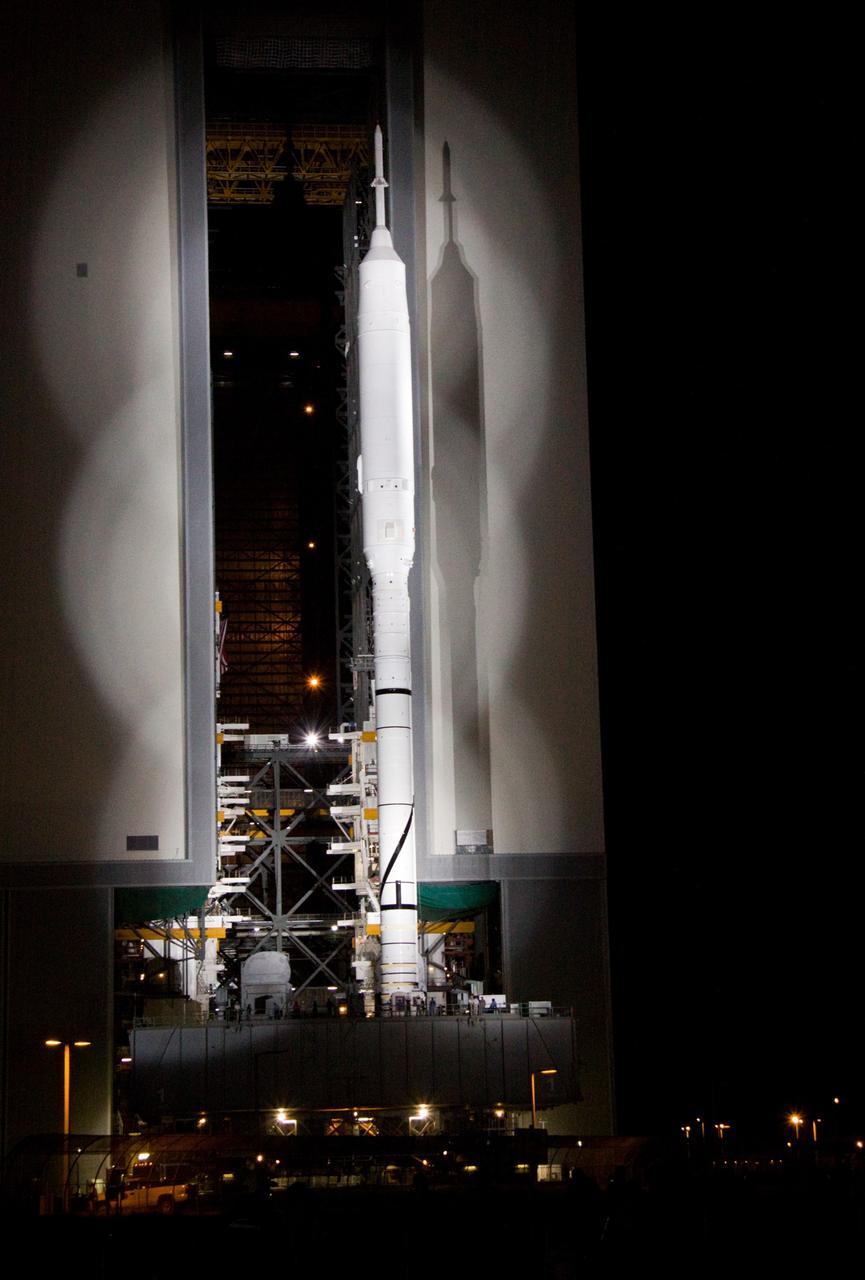
CAPE CANAVERAL, Fla. – The 327-foot-tall Ares I-X rocket clears the door of the Vehicle Assembly Building at NASA's Kennedy Space Center in Florida, on its way to Launch Pad 39B. The move to the launch pad, known as "rollout," began at 1:39 a.m. EDT. The transfer of the pad from the Space Shuttle Program to the Constellation Program took place May 31. Modifications made to the pad include the removal of shuttle unique subsystems, such as the orbiter access arm and a section of the gaseous oxygen vent arm, along with the installation of three 600-foot lightning towers, access platforms, environmental control systems and a vehicle stabilization system. Part of the Constellation Program, the Ares I-X is the test vehicle for the Ares I. The Ares I-X flight test is targeted for Oct. 27. For information on the Ares I-X vehicle and flight test, visit http://www.nasa.gov/aresIX. Photo credit: NASA/Jack Pfaller
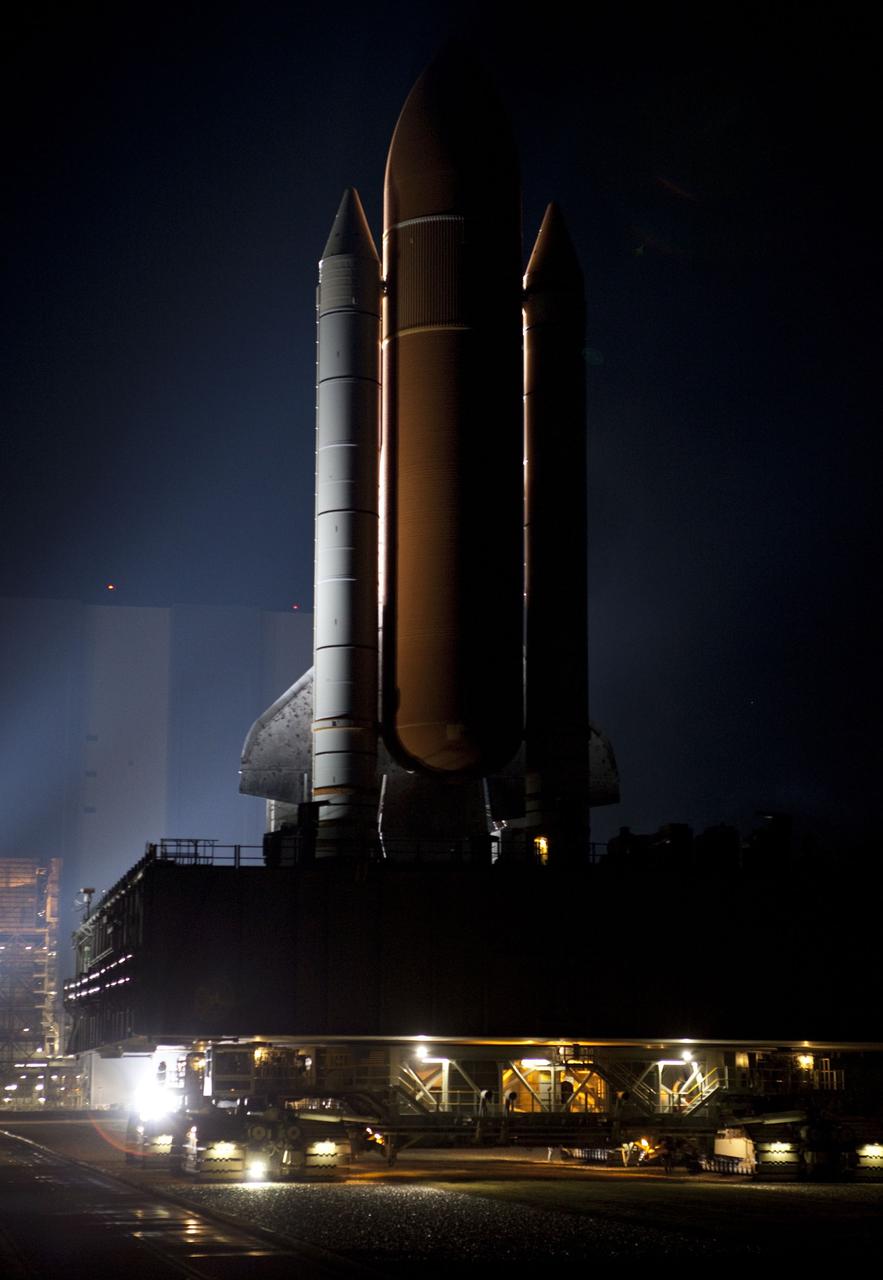
CAPE CANAVERAL, Fla. -- Xenon lights illuminate space shuttle Discovery as it makes its nighttime trek, known as "rollout," from the Vehicle Assembly Building to Launch Pad 39A at NASA's Kennedy Space Center in Florida. It will take the shuttle, attached to its external fuel tank, twin solid rocket boosters and mobile launcher platform, about seven hours to complete the move. This is the second time Discovery has rolled out to the pad for the STS-133 mission, and comes after a thorough check and modifications to the shuttle's external tank. Targeted to liftoff Feb. 24, Discovery will take the Permanent Multipurpose Module (PMM) packed with supplies and critical spare parts, as well as Robonaut 2 (R2) to the International Space Station. For more information on STS-133, visit www.nasa.gov/mission_pages/shuttle/shuttlemissions/sts133/. Photo credit: NASA/Frank Michaux
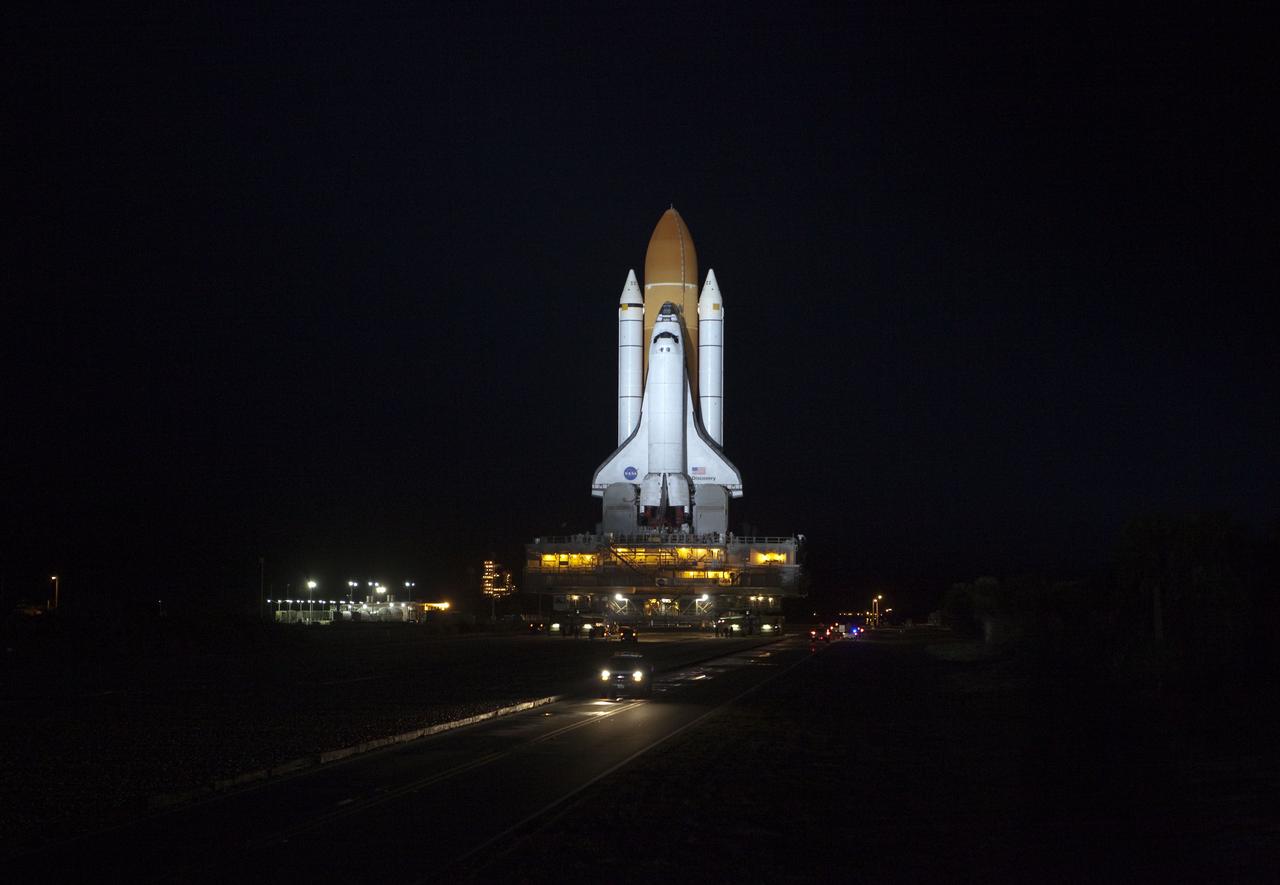
CAPE CANAVERAL, Fla. -- Xenon lights illuminate space shuttle Discovery as it makes its nighttime trek, known as "rollout," from the Vehicle Assembly Building to Launch Pad 39A at NASA's Kennedy Space Center in Florida. It will take the shuttle, attached to its external fuel tank, twin solid rocket boosters and mobile launcher platform, about seven hours to complete the move. This is the second time Discovery has rolled out to the pad for the STS-133 mission, and comes after a thorough check and modifications to the shuttle's external tank. Targeted to liftoff Feb. 24, Discovery will take the Permanent Multipurpose Module (PMM) packed with supplies and critical spare parts, as well as Robonaut 2 (R2) to the International Space Station. For more information on STS-133, visit www.nasa.gov/mission_pages/shuttle/shuttlemissions/sts133/. Photo credit: NASA/Frank Michaux
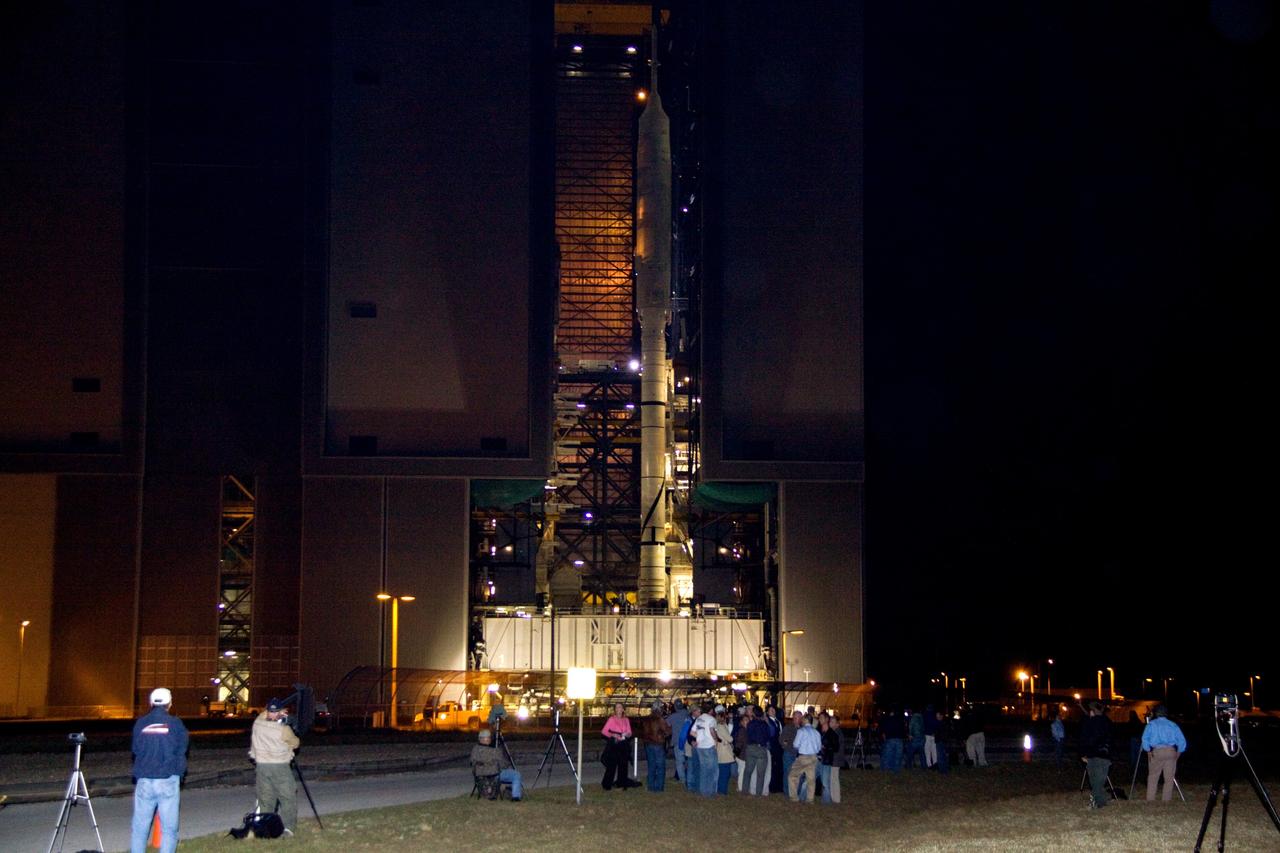
CAPE CANAVERAL, Fla. – Outside the massive Vehicle Assembly Building at NASA's Kennedy Space Center in Florida, members of the news media (foreground) wait in the dark for the rollout of the Ares I-X to begin. The rocket will travel the 4.2 miles to Launch Pad 39B atop the crawler-transporter. The transfer of the pad from the Space Shuttle Program to the Constellation Program took place May 31. Modifications made to the pad include the removal of shuttle unique subsystems, such as the orbiter access arm and a section of the gaseous oxygen vent arm, along with the installation of three 600-foot lightning towers, access platforms, environmental control systems and a vehicle stabilization system. Part of the Constellation Program, the Ares I-X is the test vehicle for the Ares I. The Ares I-X flight test is targeted for Oct. 27. For information on the Ares I-X vehicle and flight test, visit http://www.nasa.gov/aresIX. Photo credit: NASA/Jack Pfaller
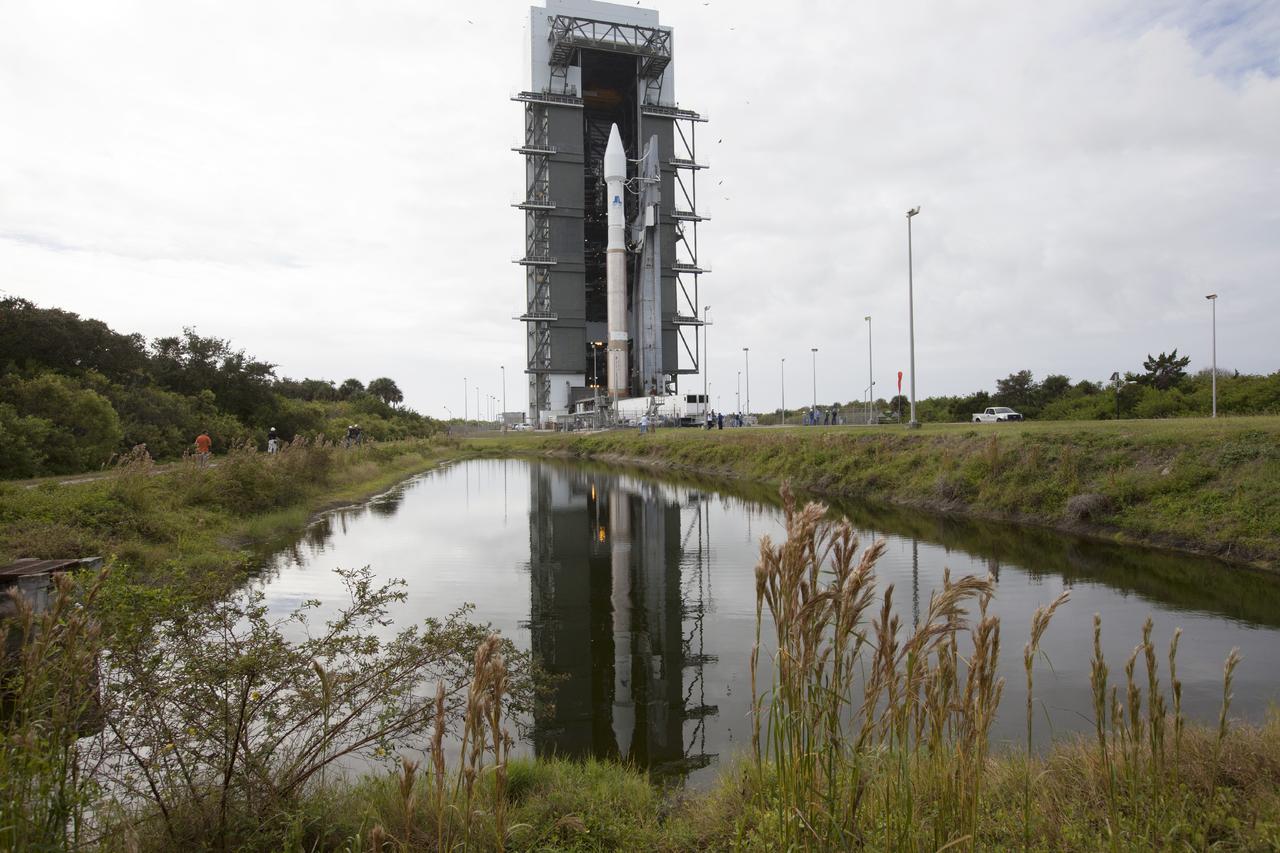
CAPE CANAVERAL, Fla. -- The United Launch Alliance Atlas V rocket carrying NASA’s Mars Atmosphere and Volatile EvolutioN, or MAVEN, spacecraft is reflected in the water beside the roadway as it rolls from the Vertical Integration Facility to Space Launch Complex 41 on Cape Canaveral Air Force Station in Florida. Rollout began on schedule with first motion at 9:57 a.m. Launch is scheduled for Nov. 18 during a window that extends from 1:28 to 3:28 p.m. Once positioned in orbit above the Red Planet, MAVEN will study its upper atmosphere in unprecedented detail. For more information, visit: http://www.nasa.gov/mission_pages/maven/main/index.html. Photo credit: NASA/Kim Shiflett
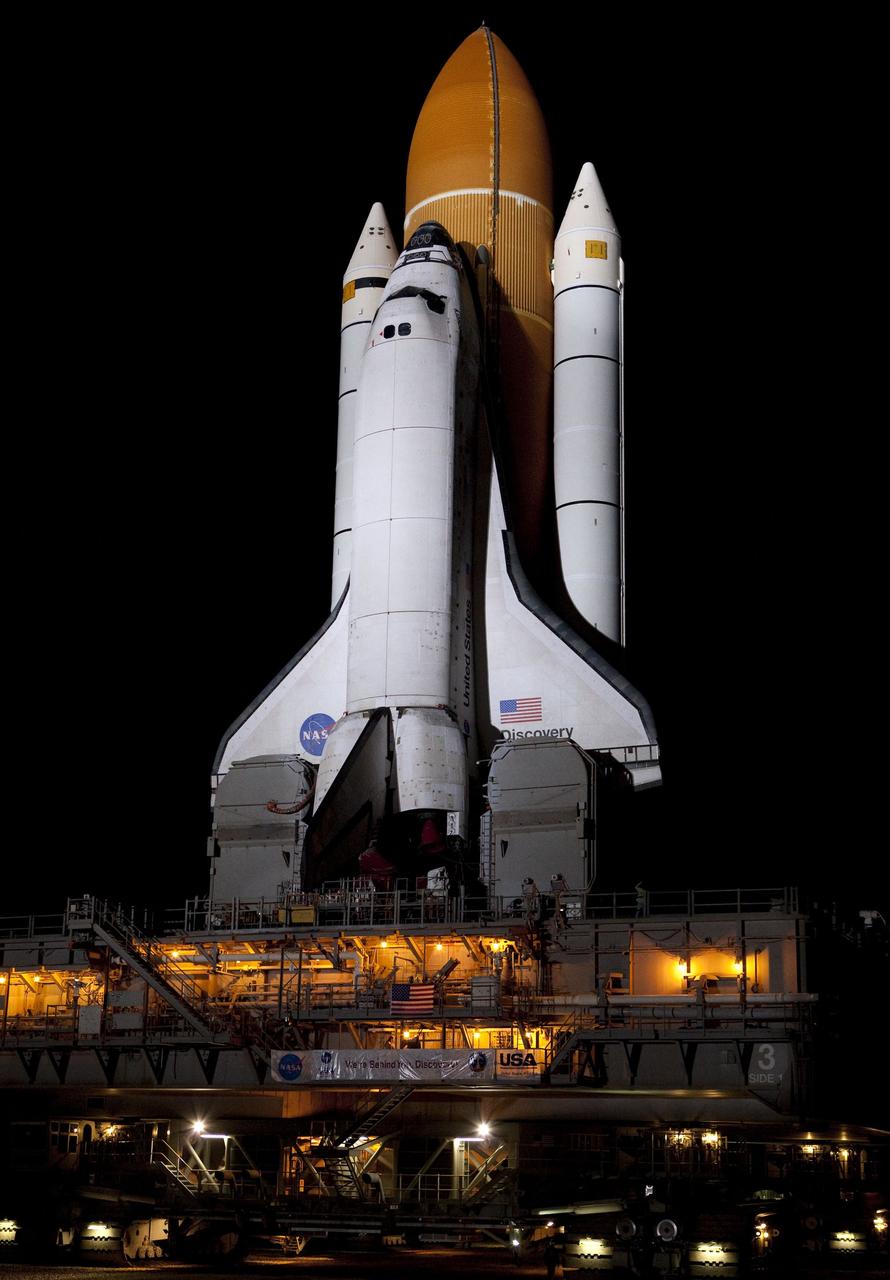
CAPE CANAVERAL, Fla. -- Xenon lights illuminate space shuttle Discovery as it makes its nighttime trek, known as "rollout," from the Vehicle Assembly Building to Launch Pad 39A at NASA's Kennedy Space Center in Florida. It will take the shuttle, attached to its external fuel tank, twin solid rocket boosters and mobile launcher platform, about seven hours to complete the move. This is the second time Discovery has rolled out to the pad for the STS-133 mission, and comes after a thorough check and modifications to the shuttle's external tank. Targeted to liftoff Feb. 24, Discovery will take the Permanent Multipurpose Module (PMM) packed with supplies and critical spare parts, as well as Robonaut 2 (R2) to the International Space Station. For more information on STS-133, visit www.nasa.gov/mission_pages/shuttle/shuttlemissions/sts133/. Photo credit: NASA/Frank Michaux
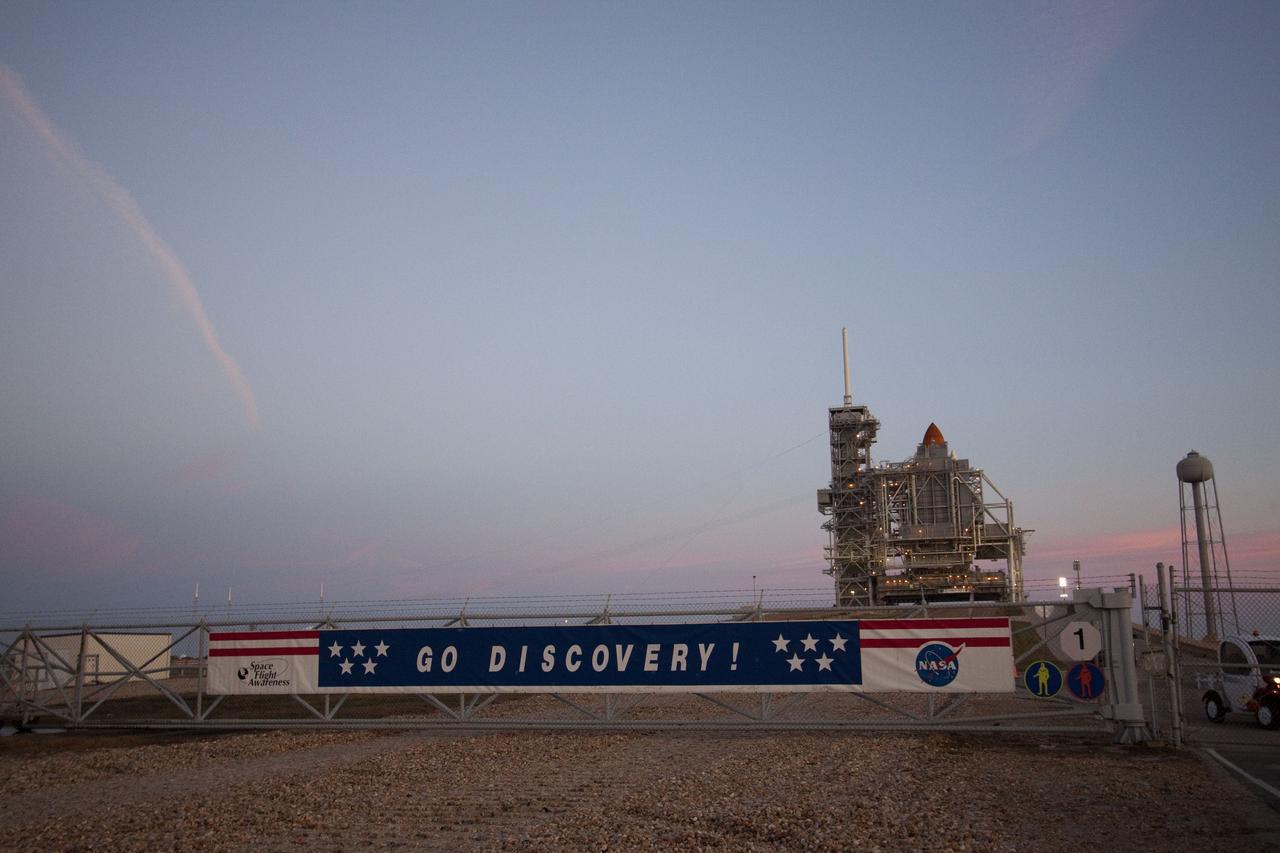
CAPE CANAVERAL, Fla. -- As dawn breaks over the Atlantic Ocean near Launch Pad 39A at NASA's Kennedy Space Center in Florida, a banner proclaims the sentiments of the work force at Kennedy Space Center following the rollout of space shuttle Discovery to the pad. First motion on its 3.4-mile trip from the Vehicle Assembly Building was at 7:58 p.m. EST Jan. 31, and was secured or "hard down" on the pad a little before 3 a.m. Feb. 1. Discovery's next launch opportunity to the International Space Station on the STS-133 mission is targeted for Feb. 24. For more information on STS-133, visit www.nasa.gov/mission_pages/shuttle/shuttlemissions/sts133/. Photo credit: NASA/Jack Pfaller