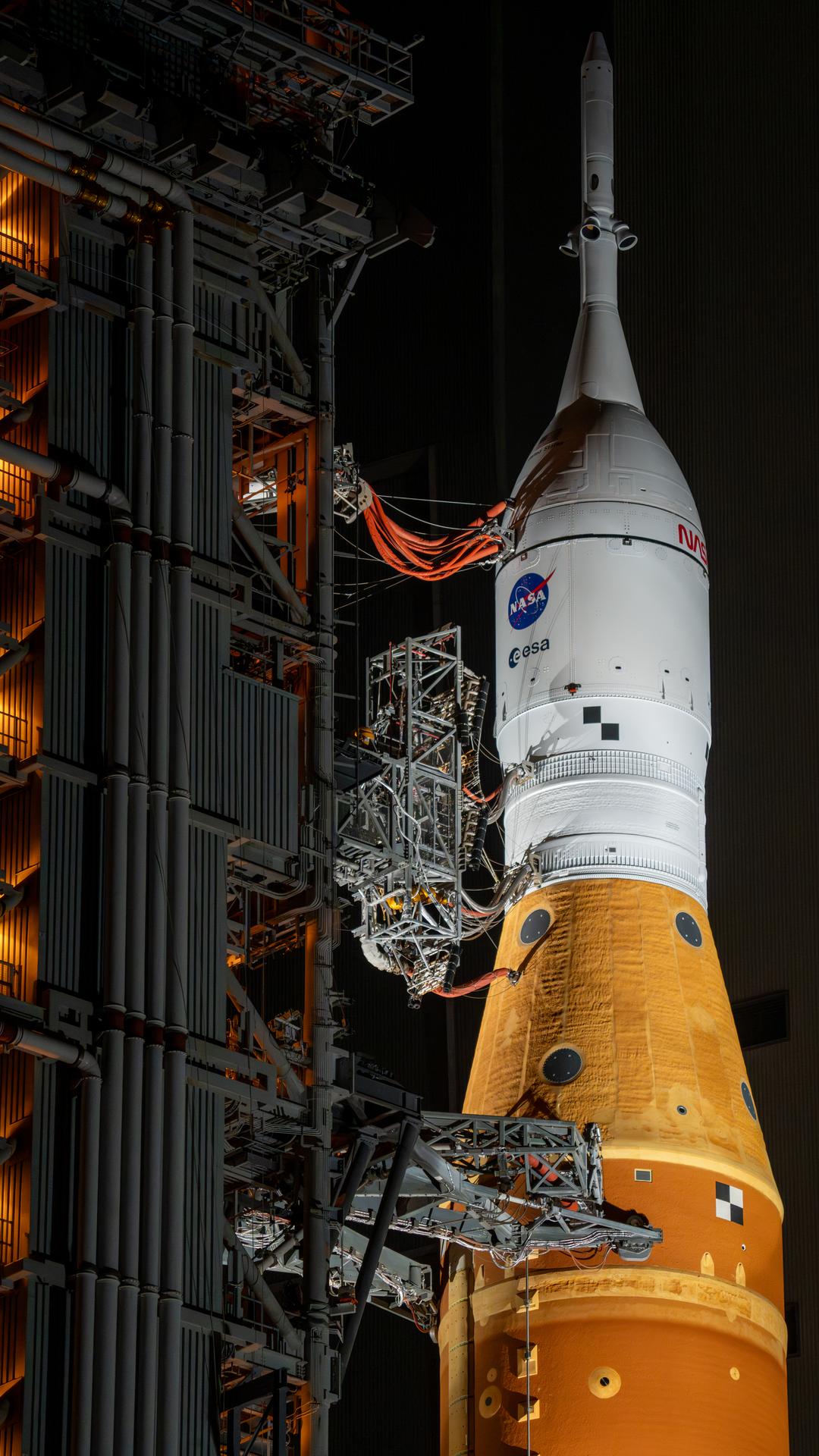
Space Launch System (SLS) rocket and Orion Spacecraft rollout at Kennedy Space Center
The Space Launch System (SLS) rocket and Orion Spacecraft roll out of the Vehicle Assembly Building (VAB) to Launch Pad 39B at NASA's Kennedy Space Center in Florida for the first time on March 17, 2022.
Space Launch System (SLS) rocket and Orion Spacecraft rollout at Kennedy Space Center
The Space Launch System (SLS) rocket and Orion Spacecraft roll out of the Vehicle Assembly Building (VAB) to Launch Pad 39B at NASA's Kennedy Space Center in Florida for the first time on March 17, 2022.
Space Launch System (SLS) rocket and Orion Spacecraft rollout at Kennedy Space Center
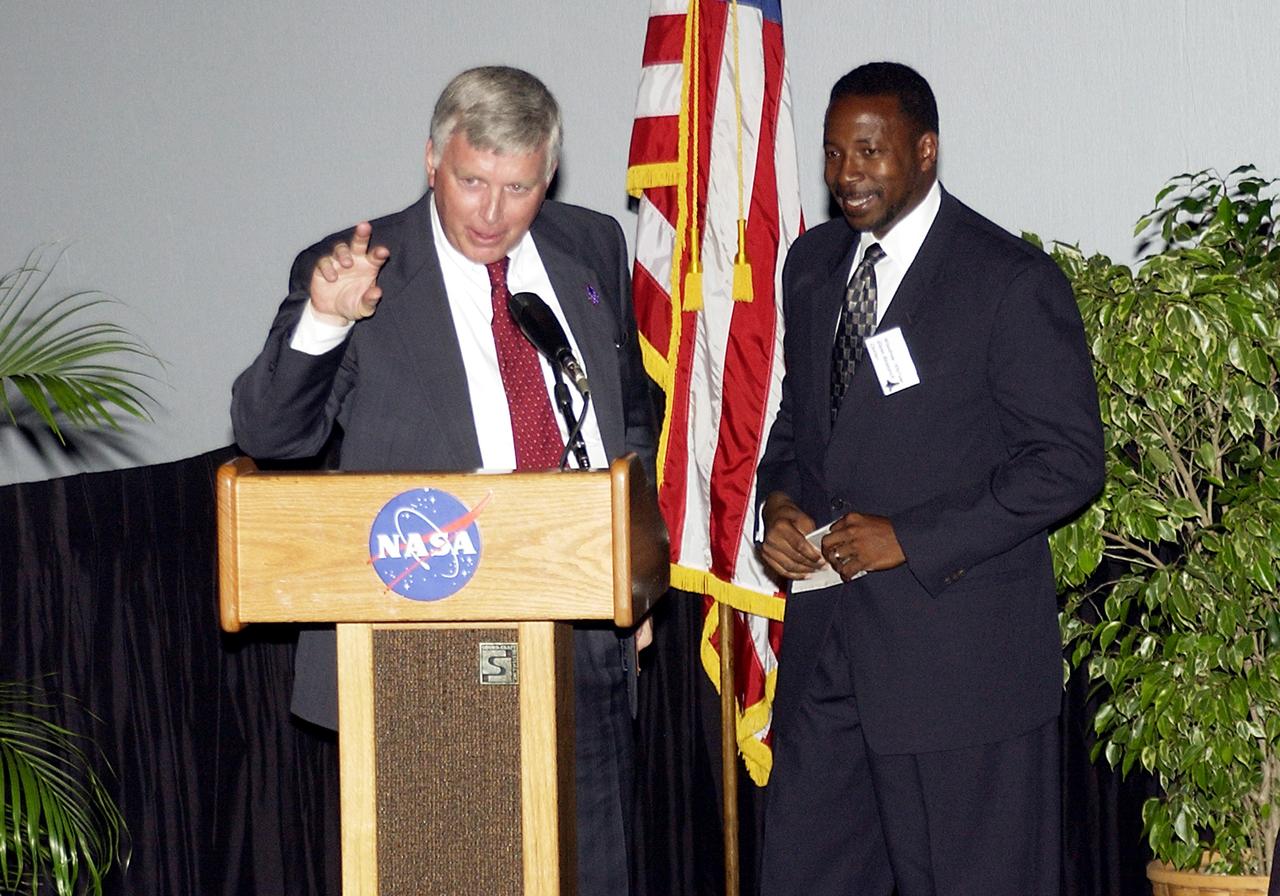
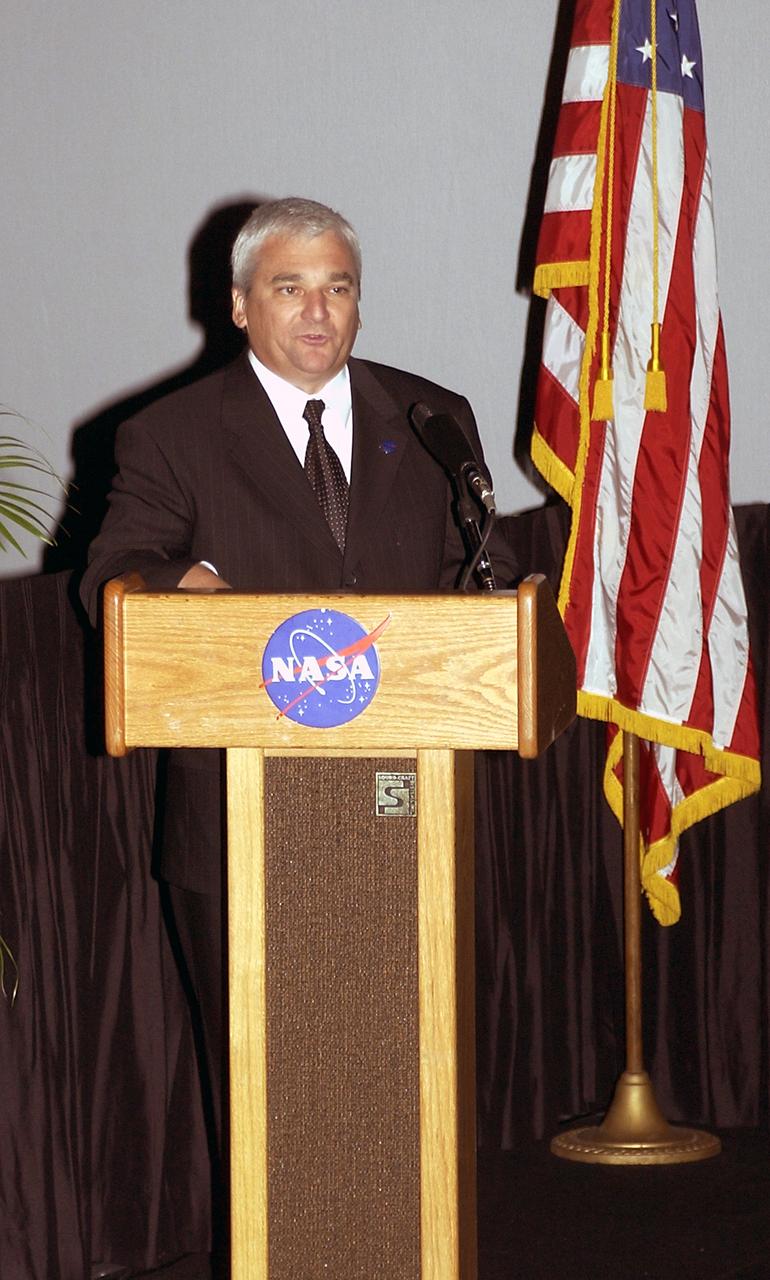
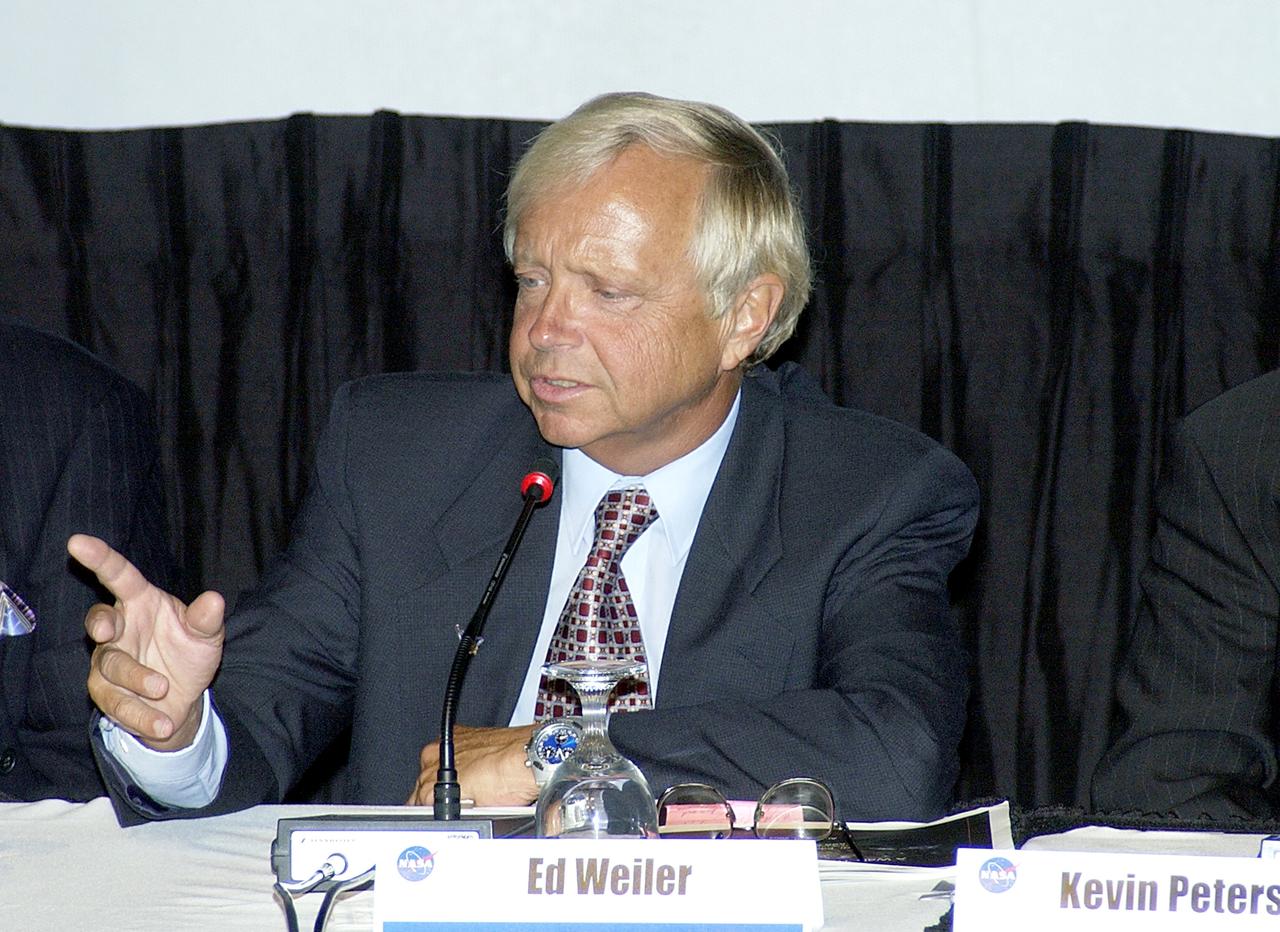
KENNEDY SPACE CENTER, FLA.  -  KSC Director Jim Kennedy (left) and incoming KSC Deputy Director Woodrow Whitlow talk about One NASA during the rollout of the Agency initiative at KSC.  They were joined at the IMAX Theater® by other NASA leaders James Jennings,  NASA’s associate deputy administrator for institutions and asset management; Ed Weiler, associate administrator for Space Science; Kevin Peterson, Dryden Flight Research Center director; and implementation team lead Johnny Stevenson to explain how their respective centers contribute to One NASA.  Glenn Research Center Director Dr. Julian Earls gave a motivational speech during the luncheon held at the Visitor Complex Debus Conference Center.
KENNEDY SPACE CENTER, FLA. - KSC Director Jim Kennedy (left) and incoming KSC Deputy Director Woodrow Whitlow talk about One NASA during the rollout of the Agency initiative at KSC. They were joined at the IMAX Theater® by other NASA leaders James Jennings, NASA’s associate deputy administrator for institutions and asset management; Ed Weiler, associate administrator for Space Science; Kevin Peterson, Dryden Flight Research Center director; and implementation team lead Johnny Stevenson to explain how their respective centers contribute to One NASA. Glenn Research Center Director Dr. Julian Earls gave a motivational speech during the luncheon held at the Visitor Complex Debus Conference Center.
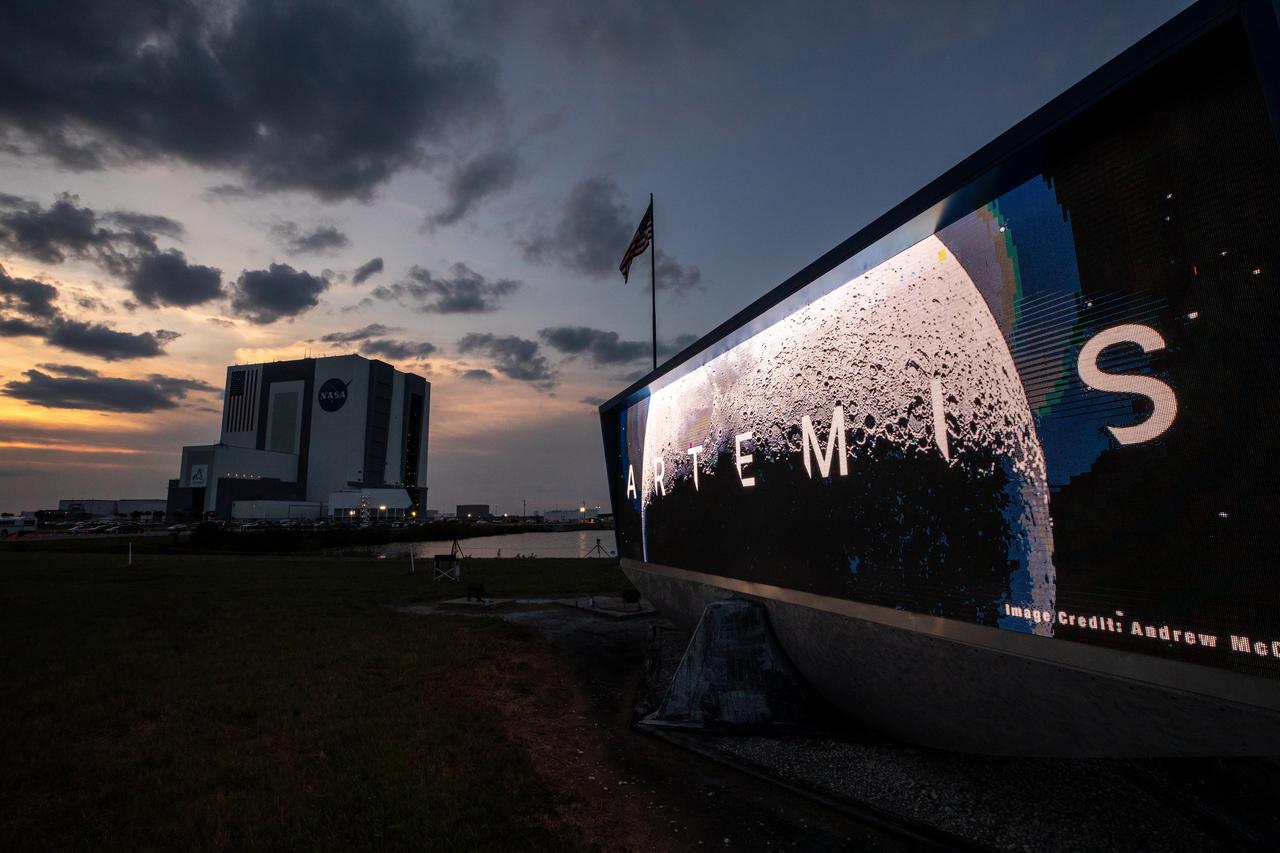
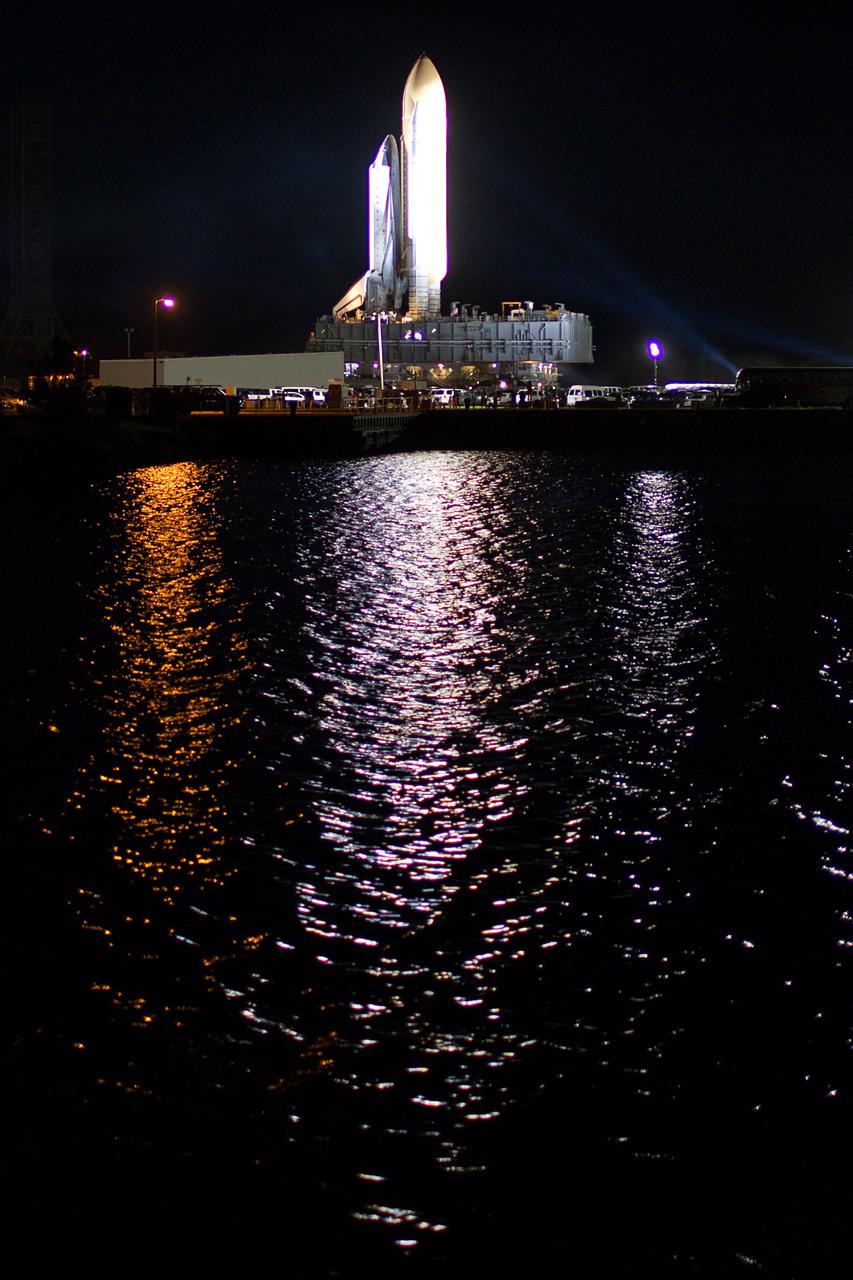
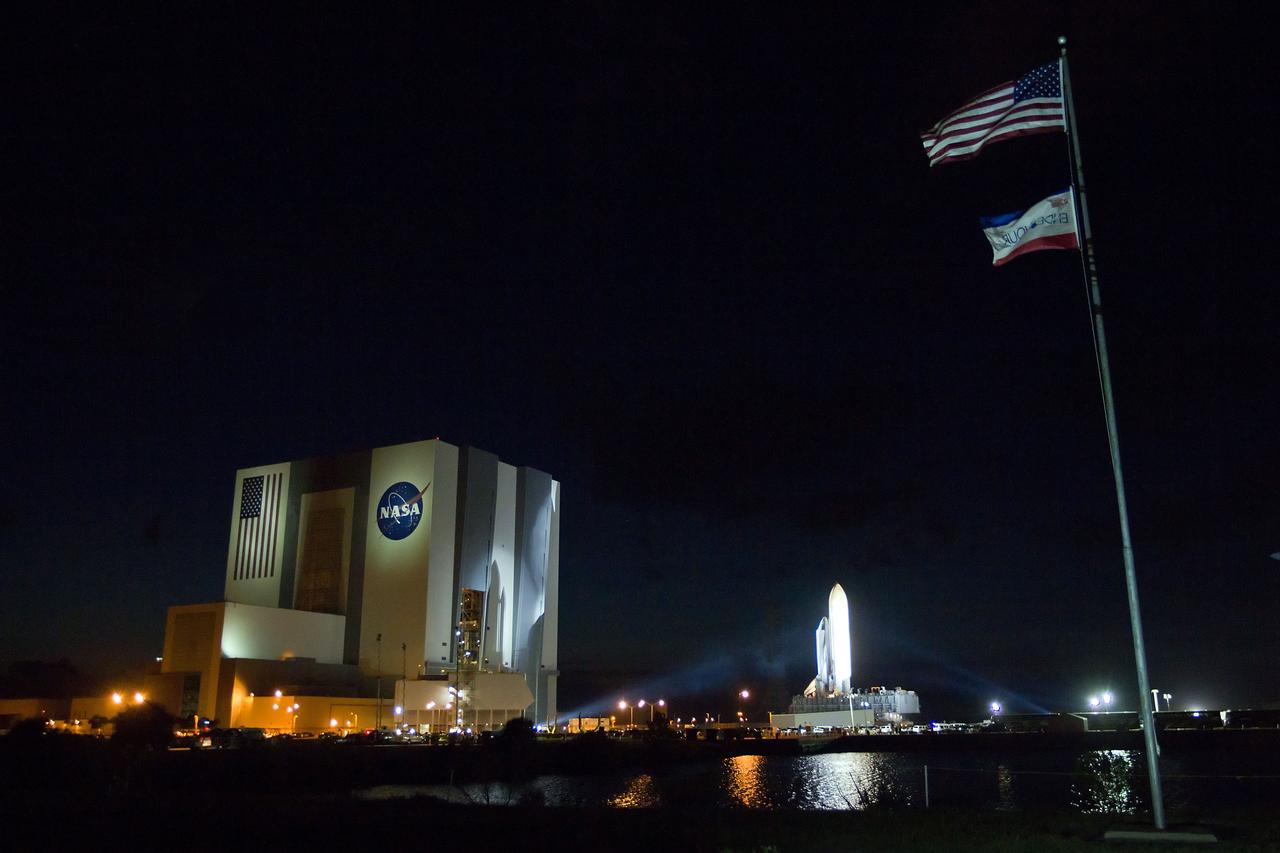
During rollout operations for NASA’s Artemis I Moon rocket, the iconic Vehicle Assembly Building is visible in the background behind the countdown clock at Kennedy Space Center in Florida, Tuesday, Aug. 16, 2022. As part of the agency’s Artemis I flight test, the fully stacked and integrated Space Launch System (SLS) rocket with the Orion spacecraft is scheduled to liftoff on Monday, Aug. 29. The first in a series of increasingly complex missions, Artemis I will provide a foundation for human deep space exploration and demonstrate our commitment and capability to extend human presence to the Moon and beyond. The primary goal of Artemis I is to thoroughly test the integrated systems before crewed missions by launching Orion atop the SLS rocket, operating the spacecraft in a deep space environment, testing Orion’s heat shield, and recovering the crew module after reentry, descent, and splashdown.
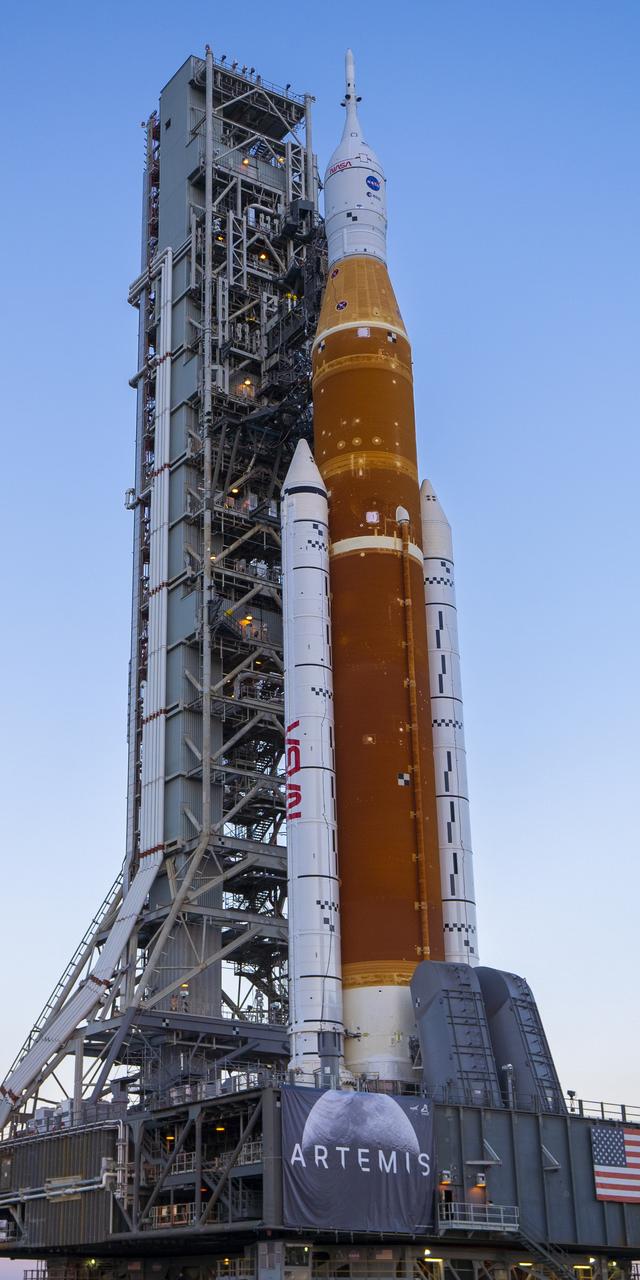
Artemis I Launch Rollout
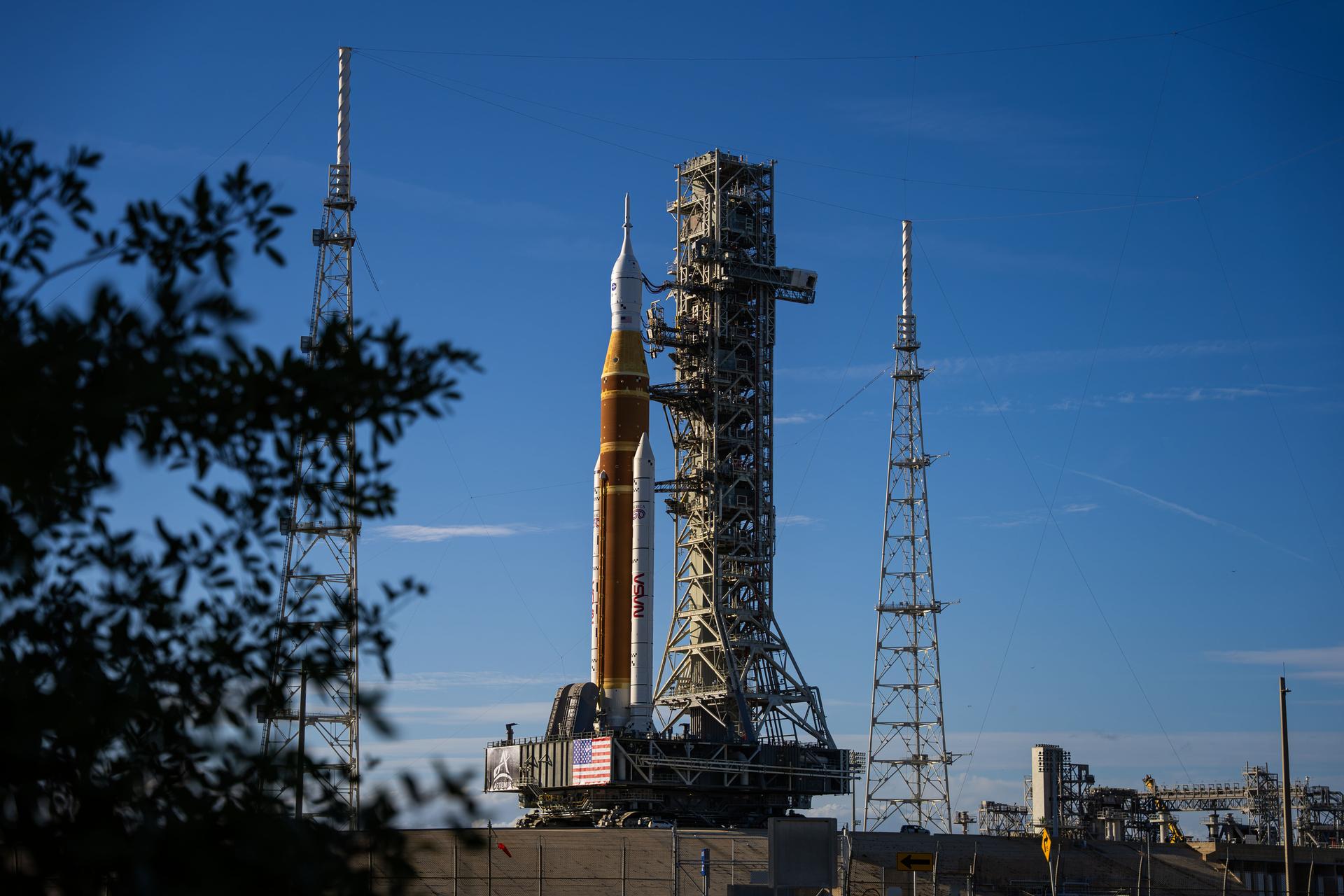
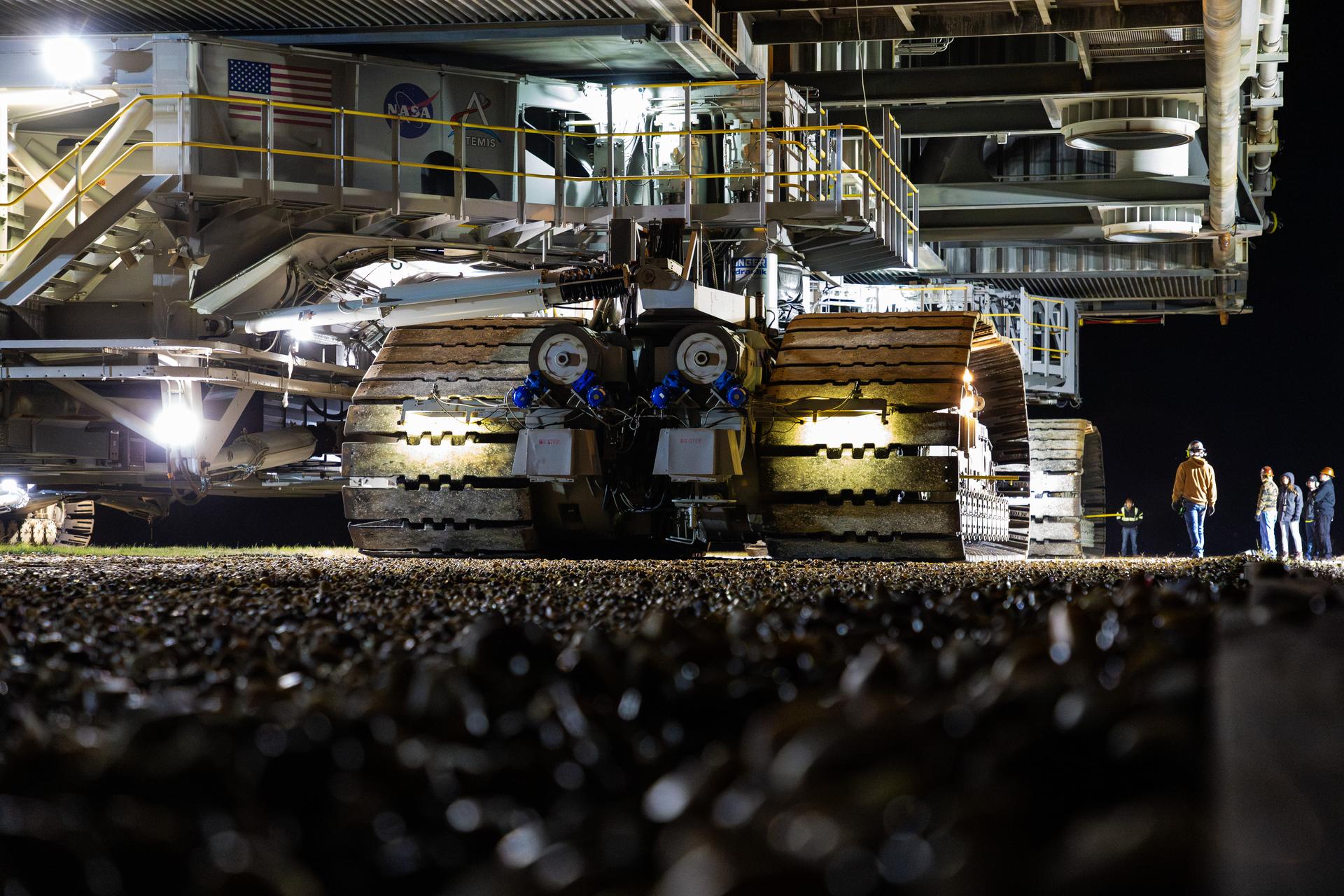
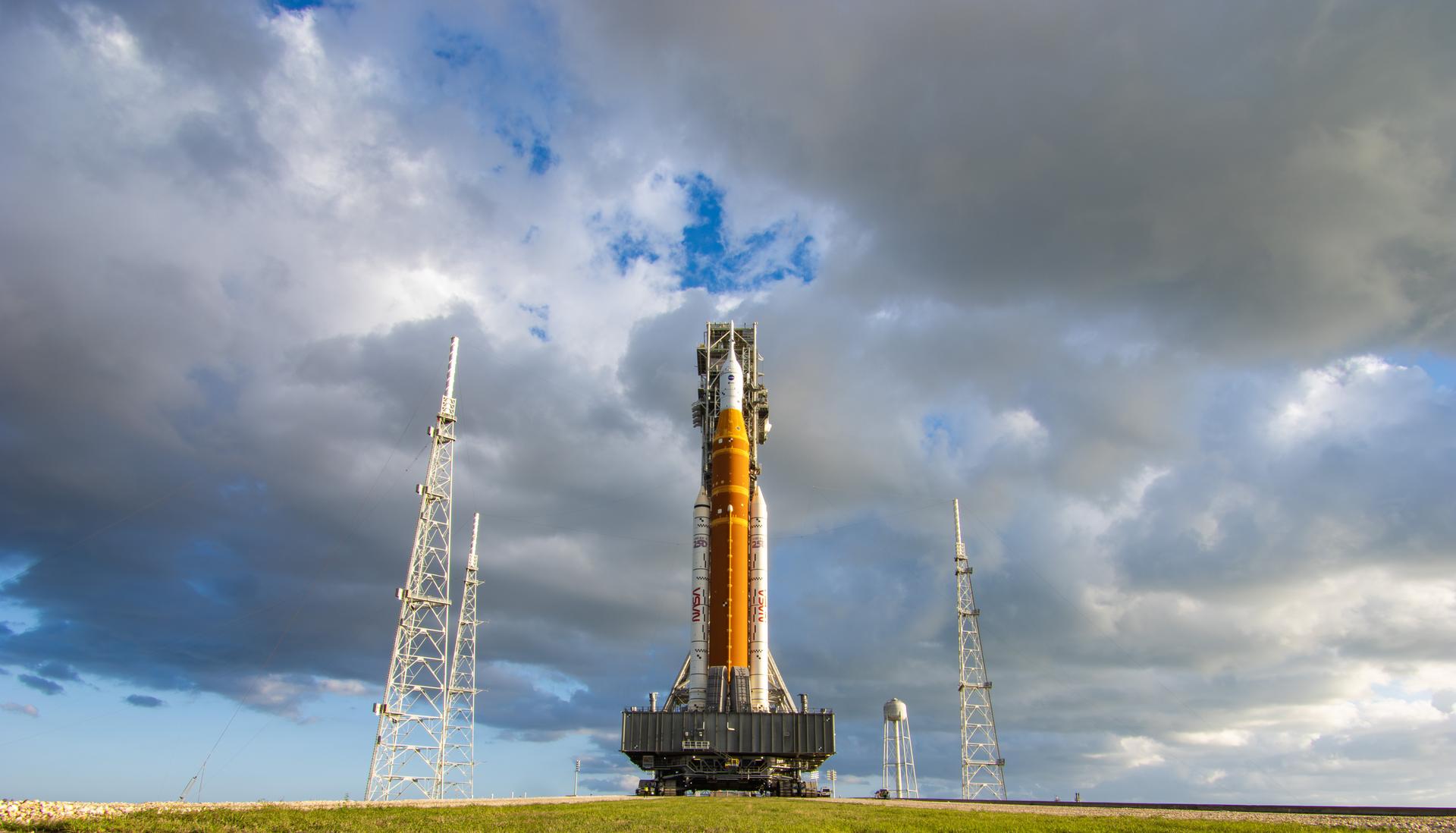
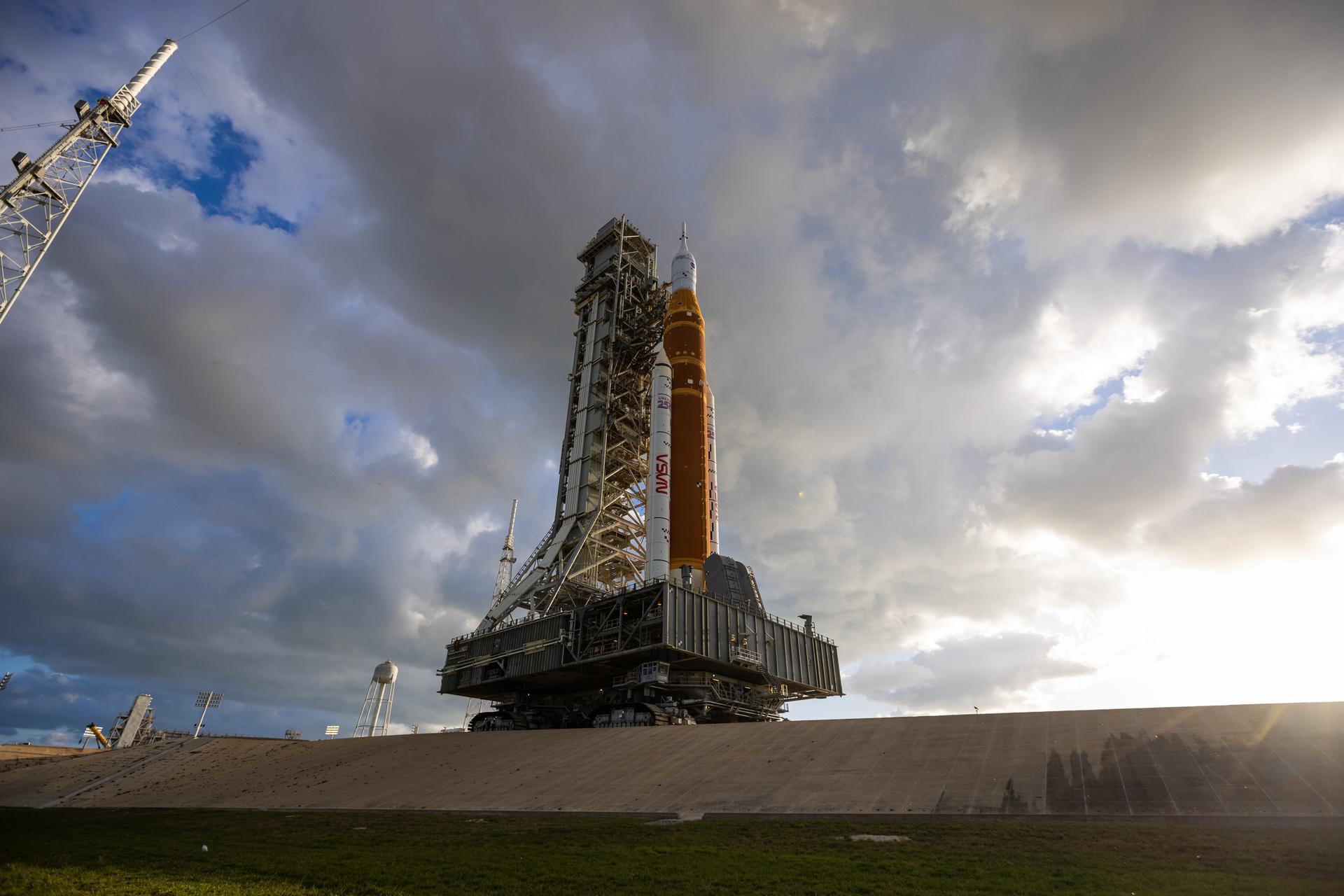
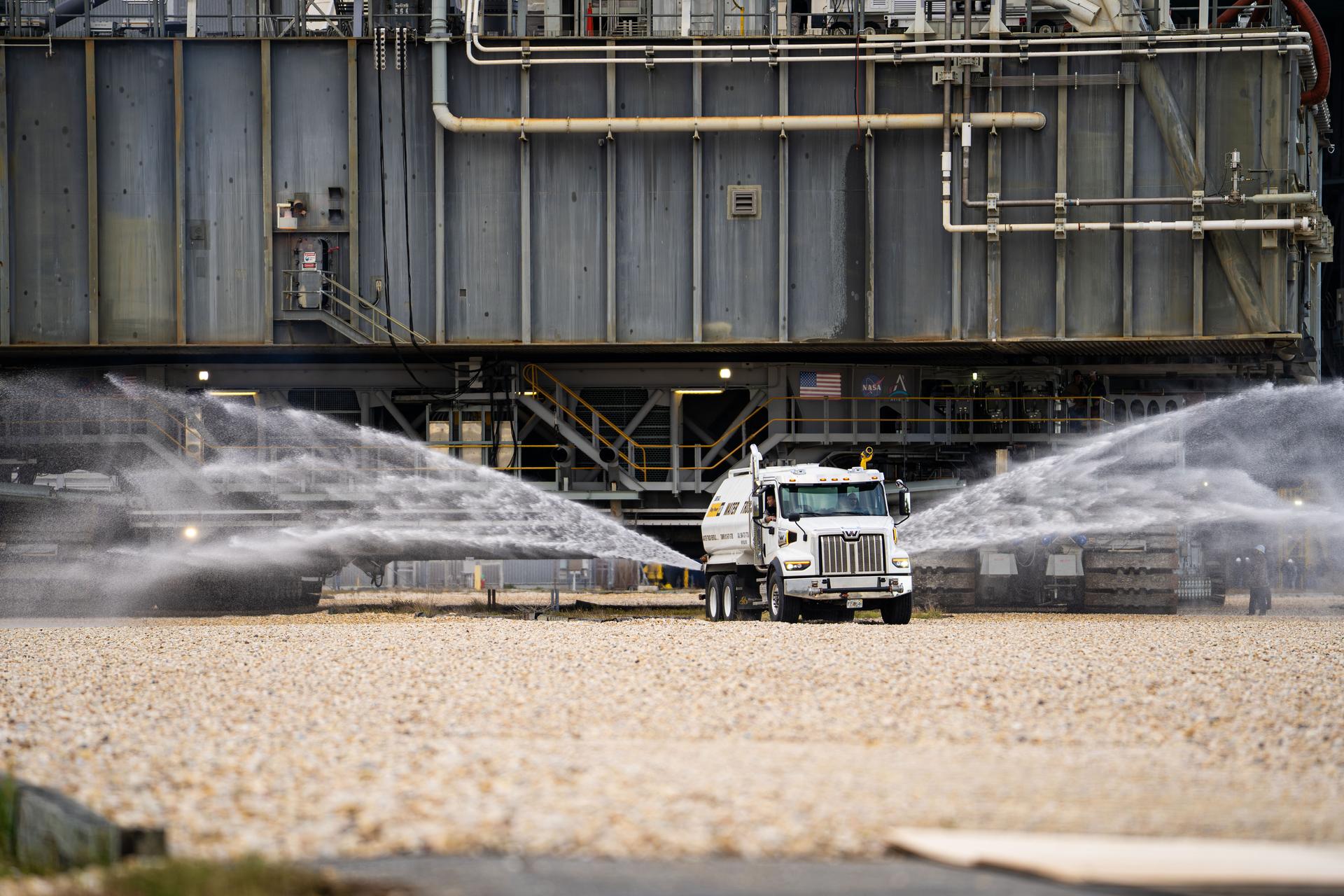
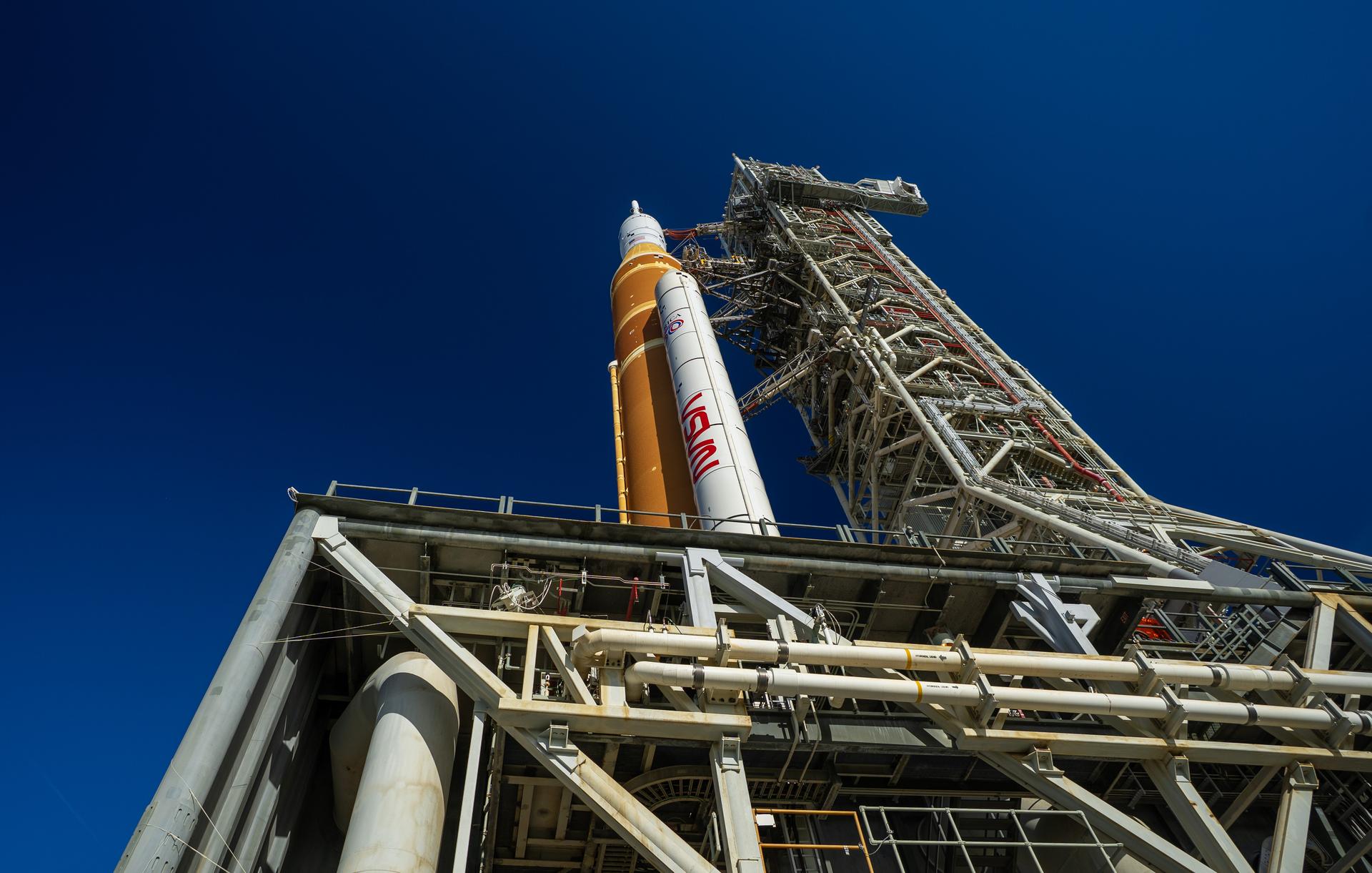
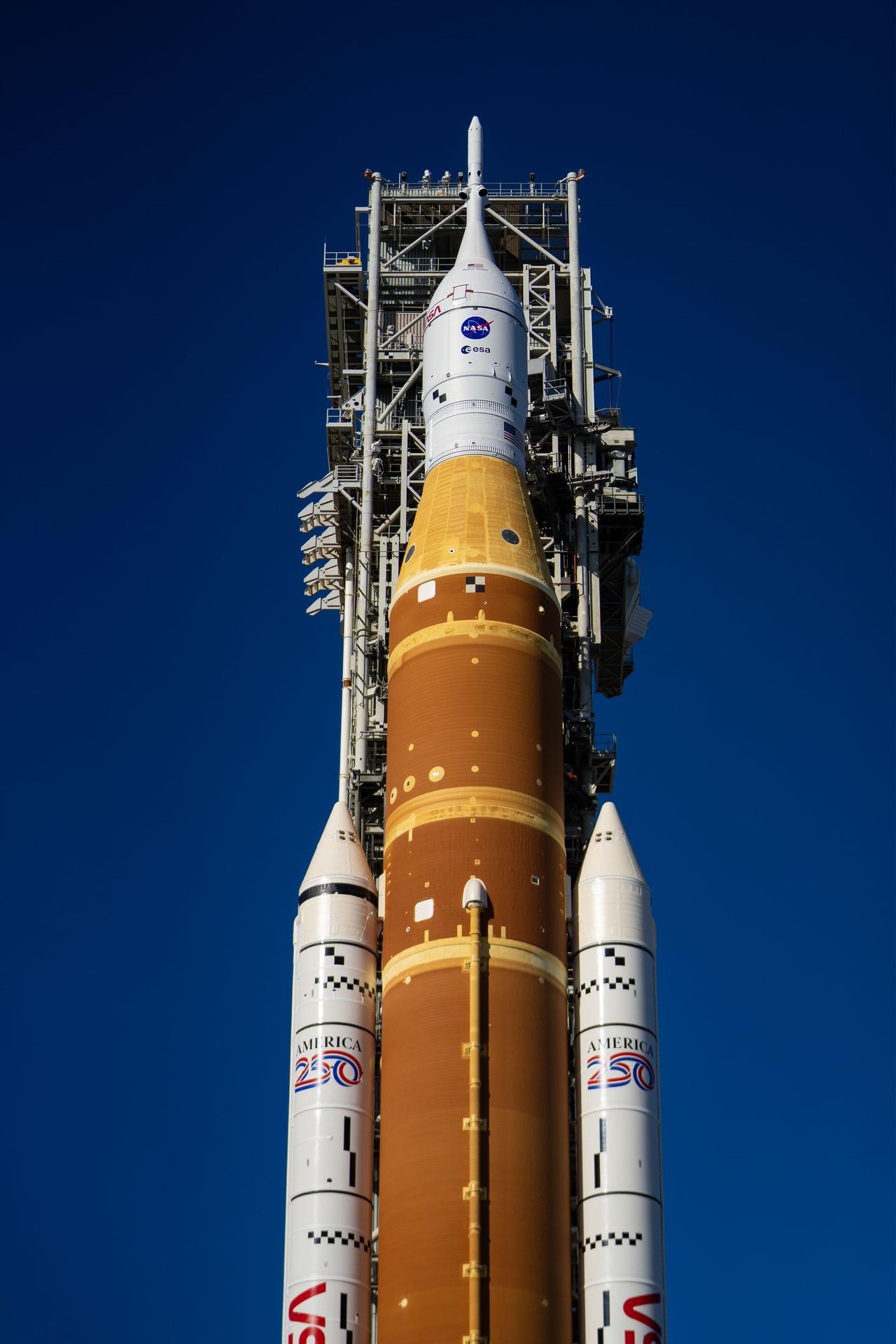
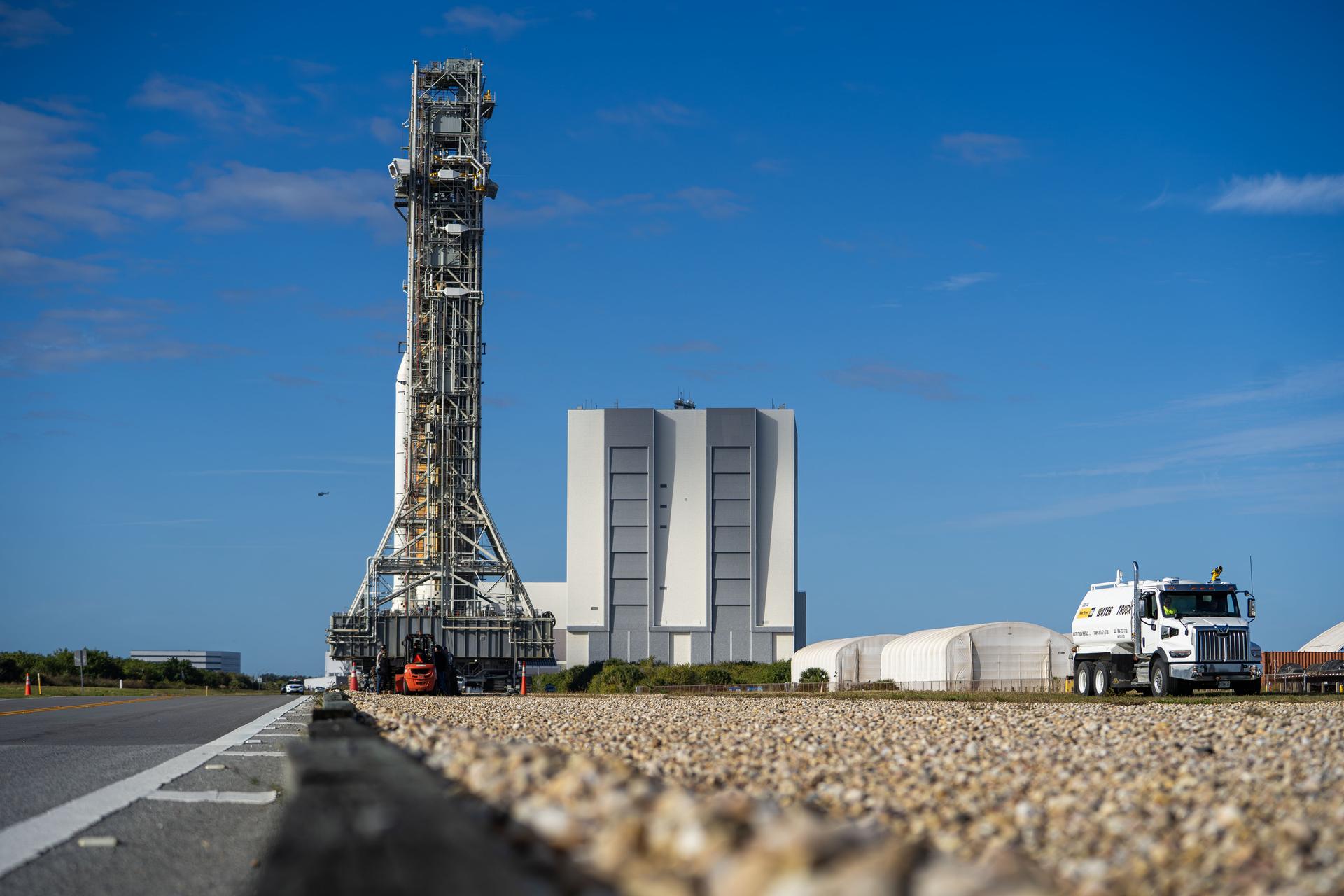
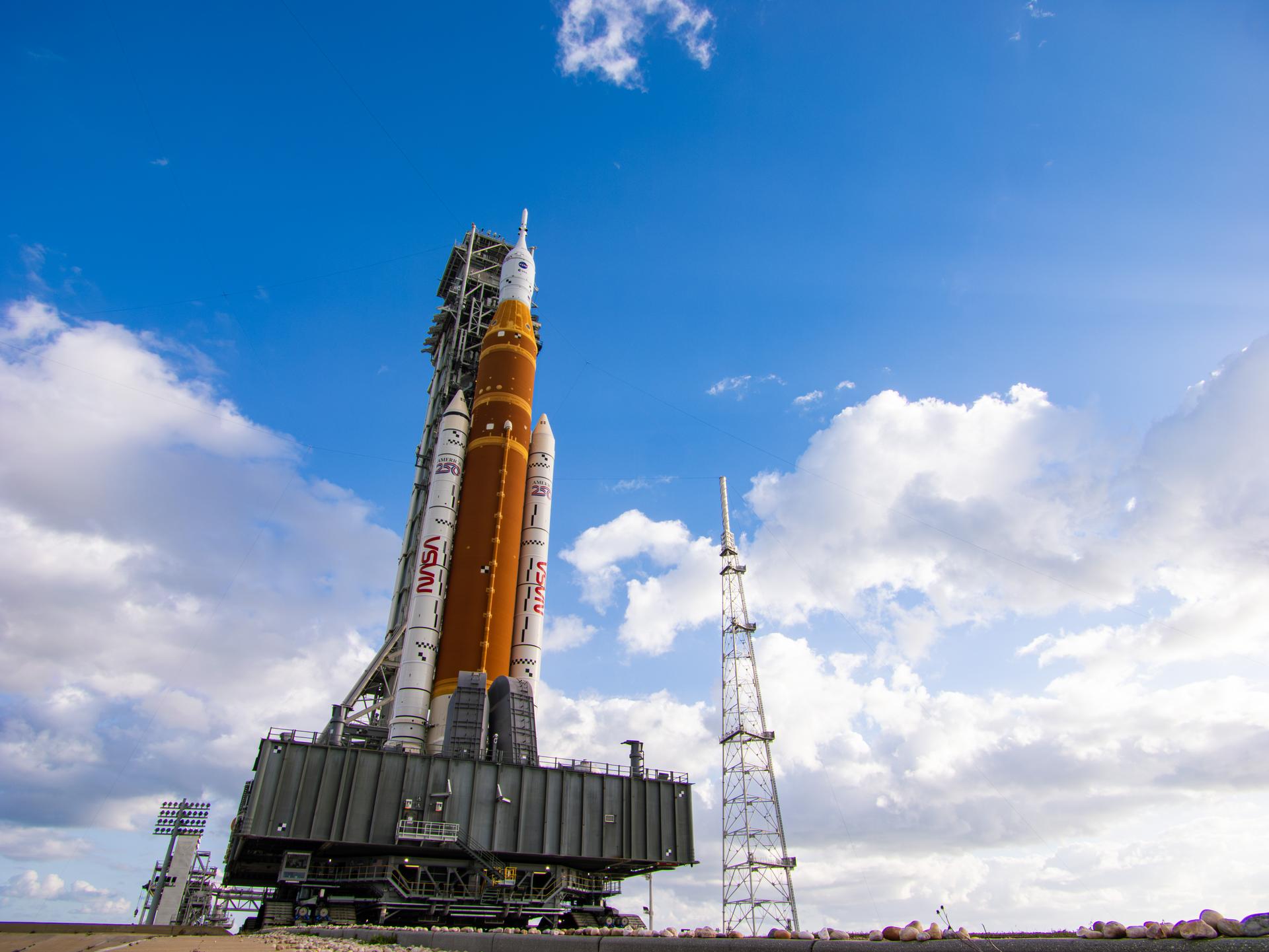
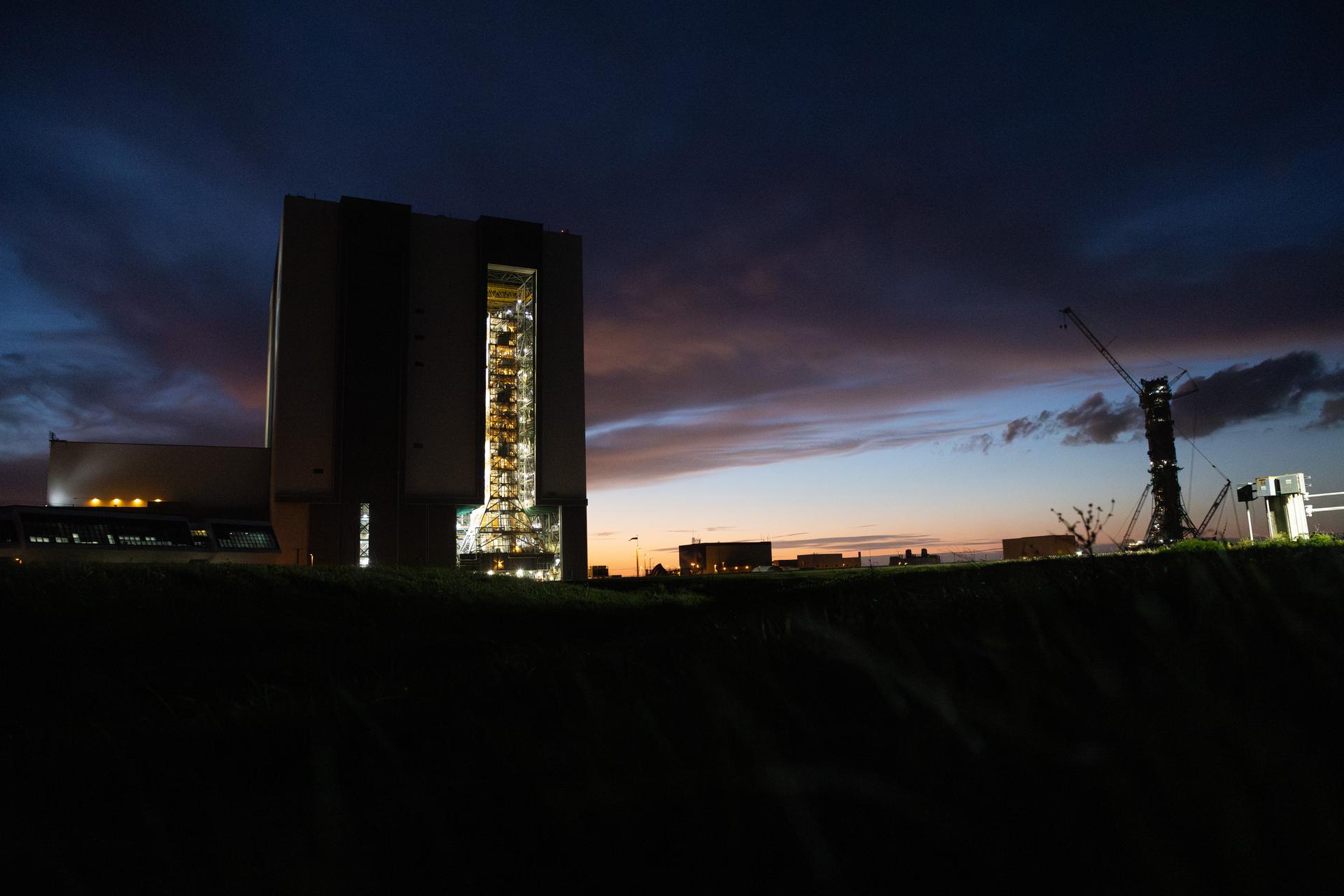
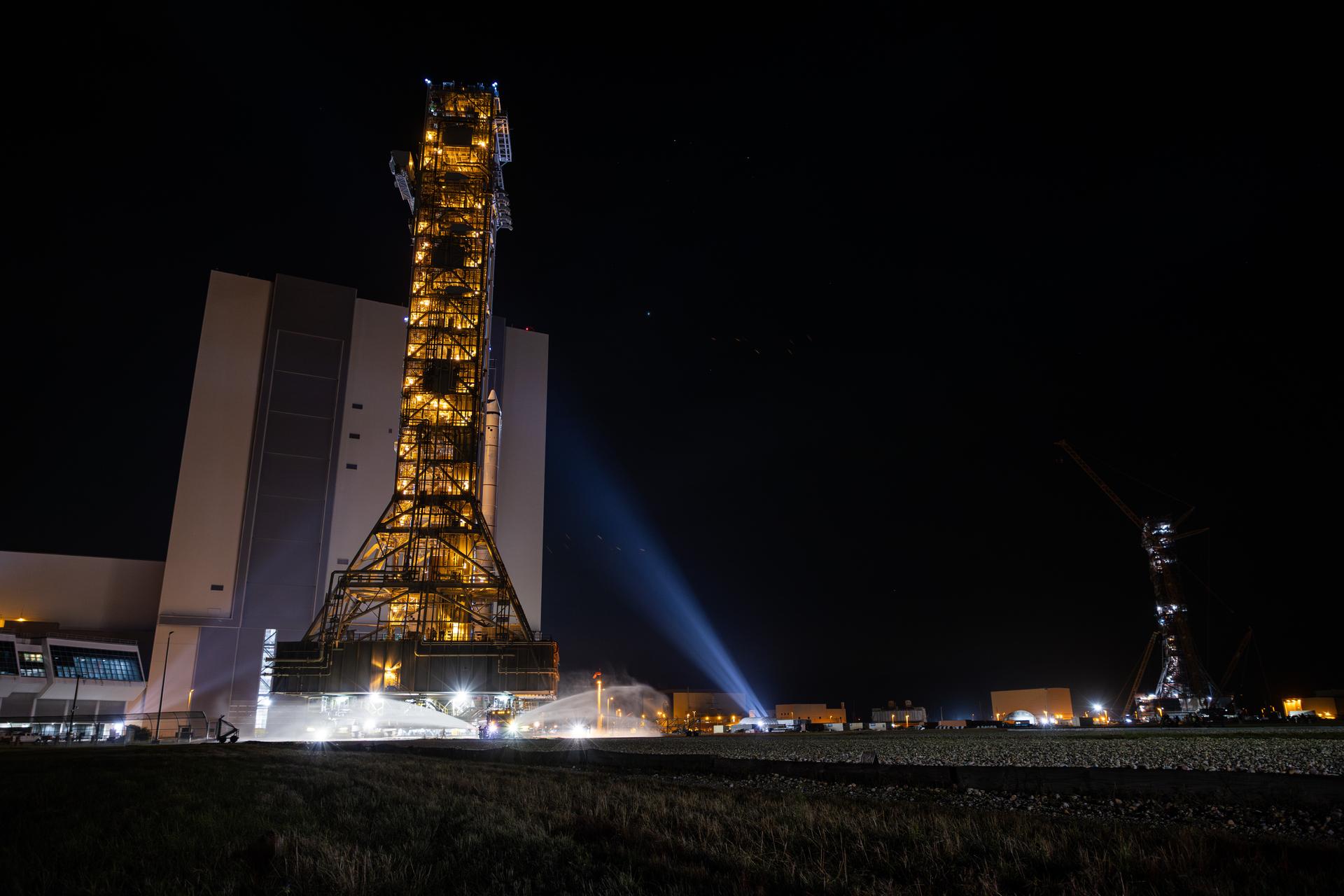
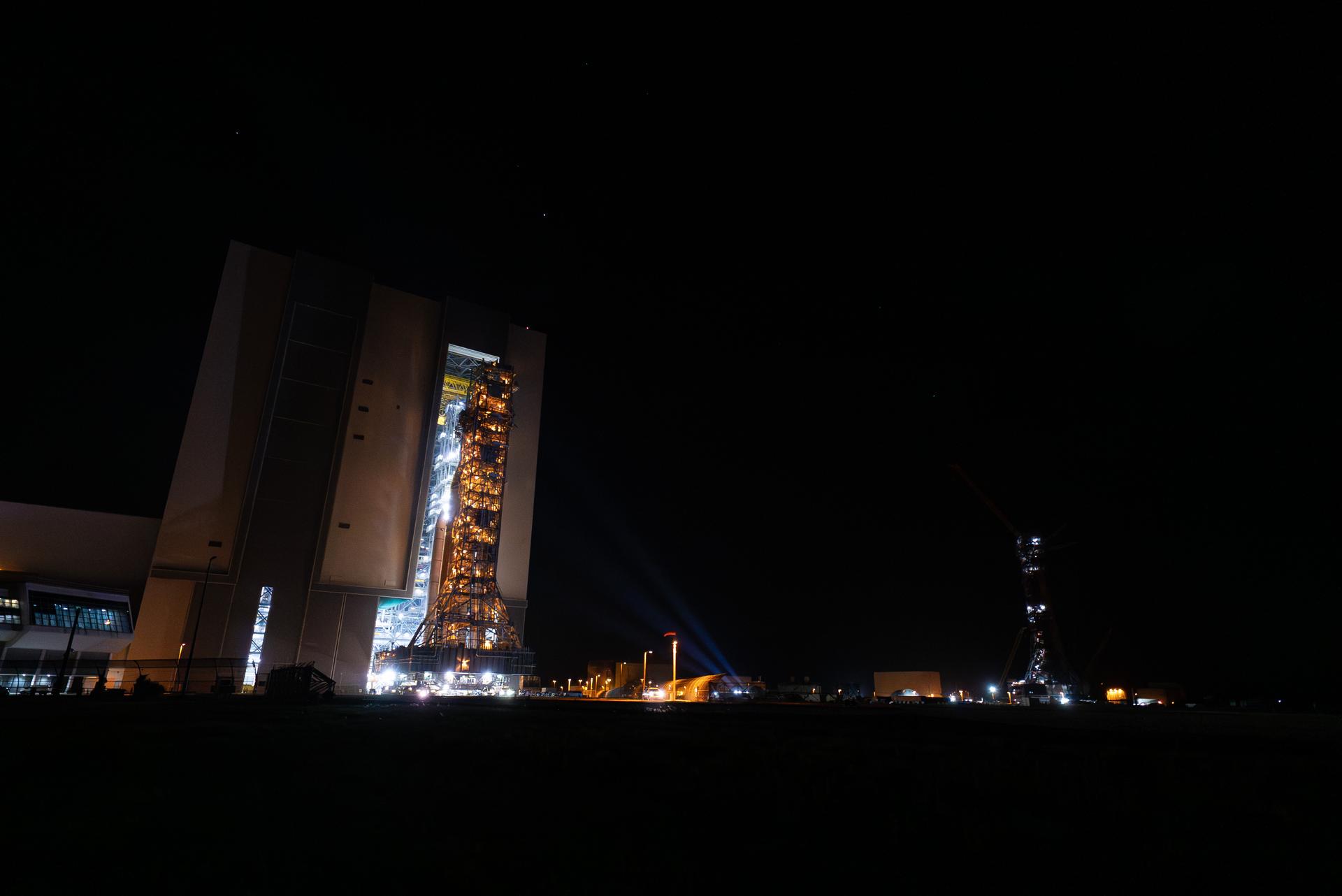
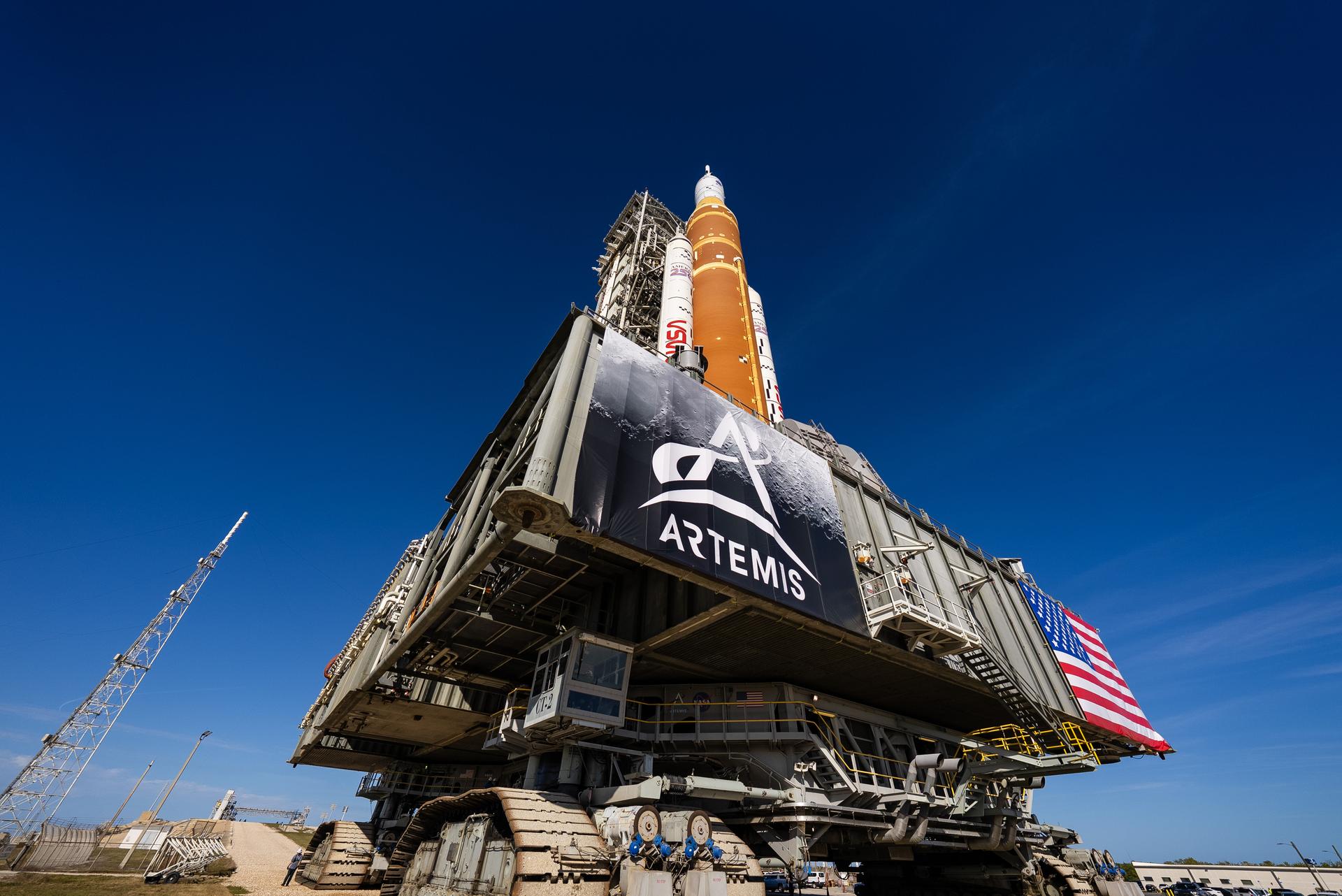
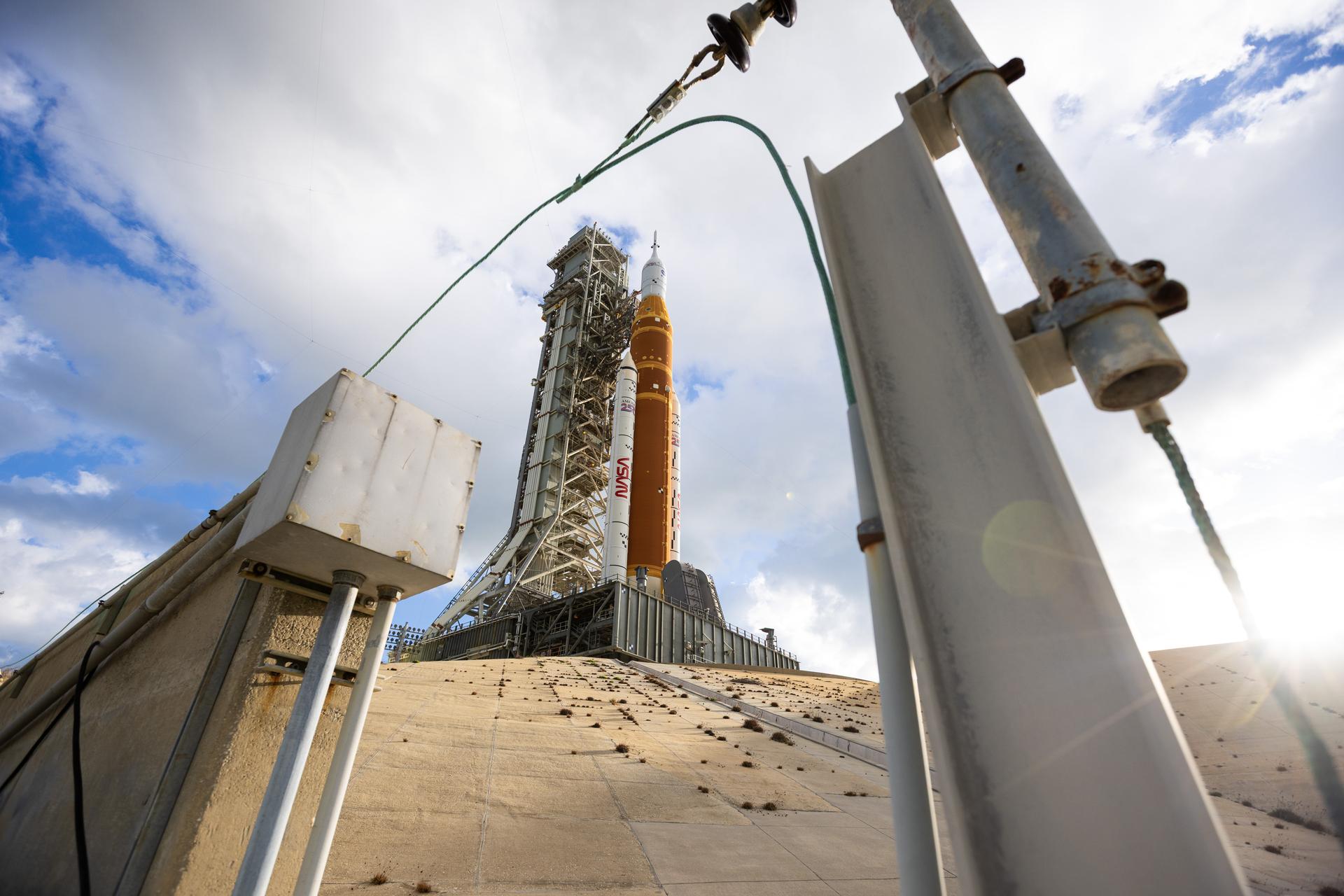
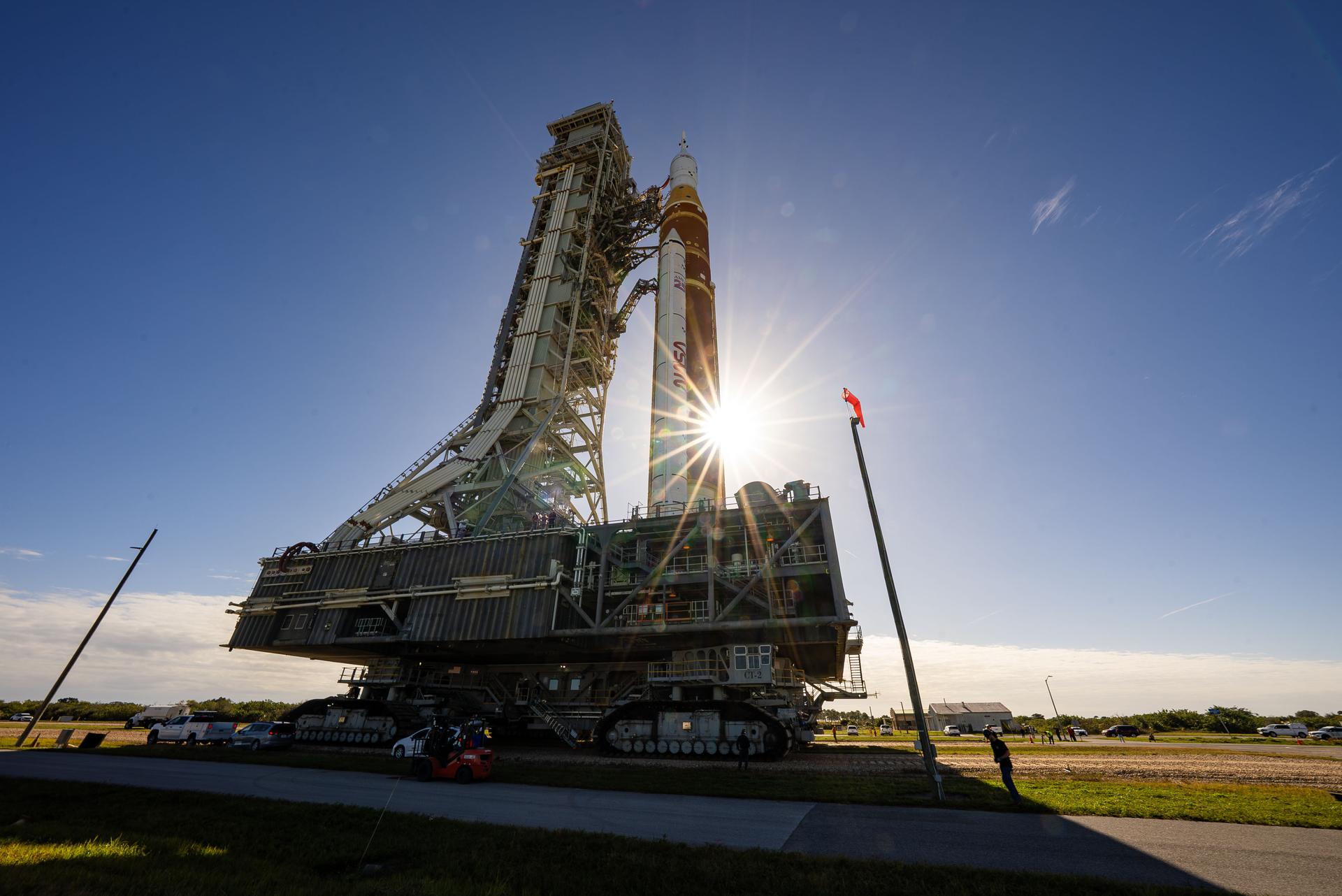
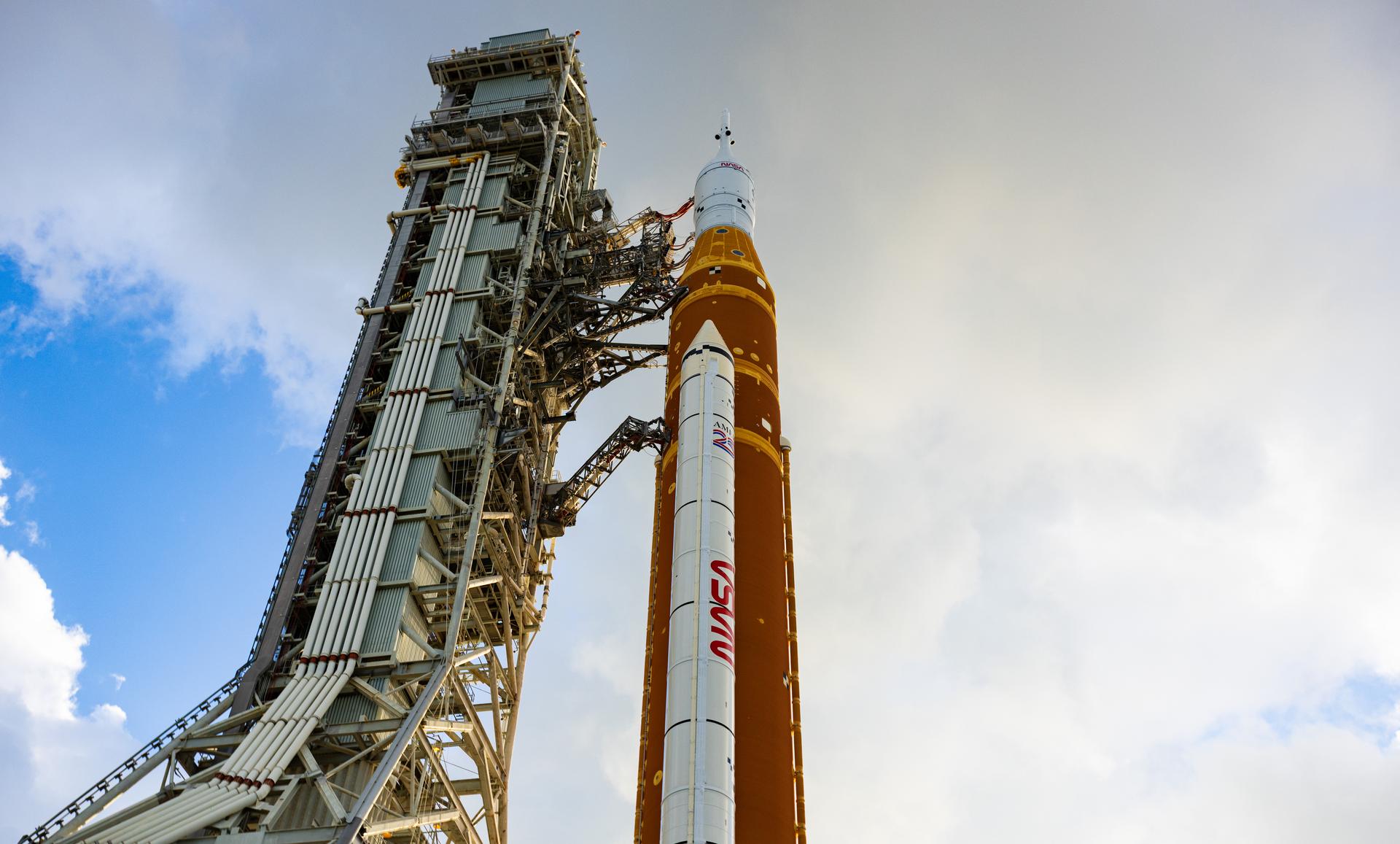
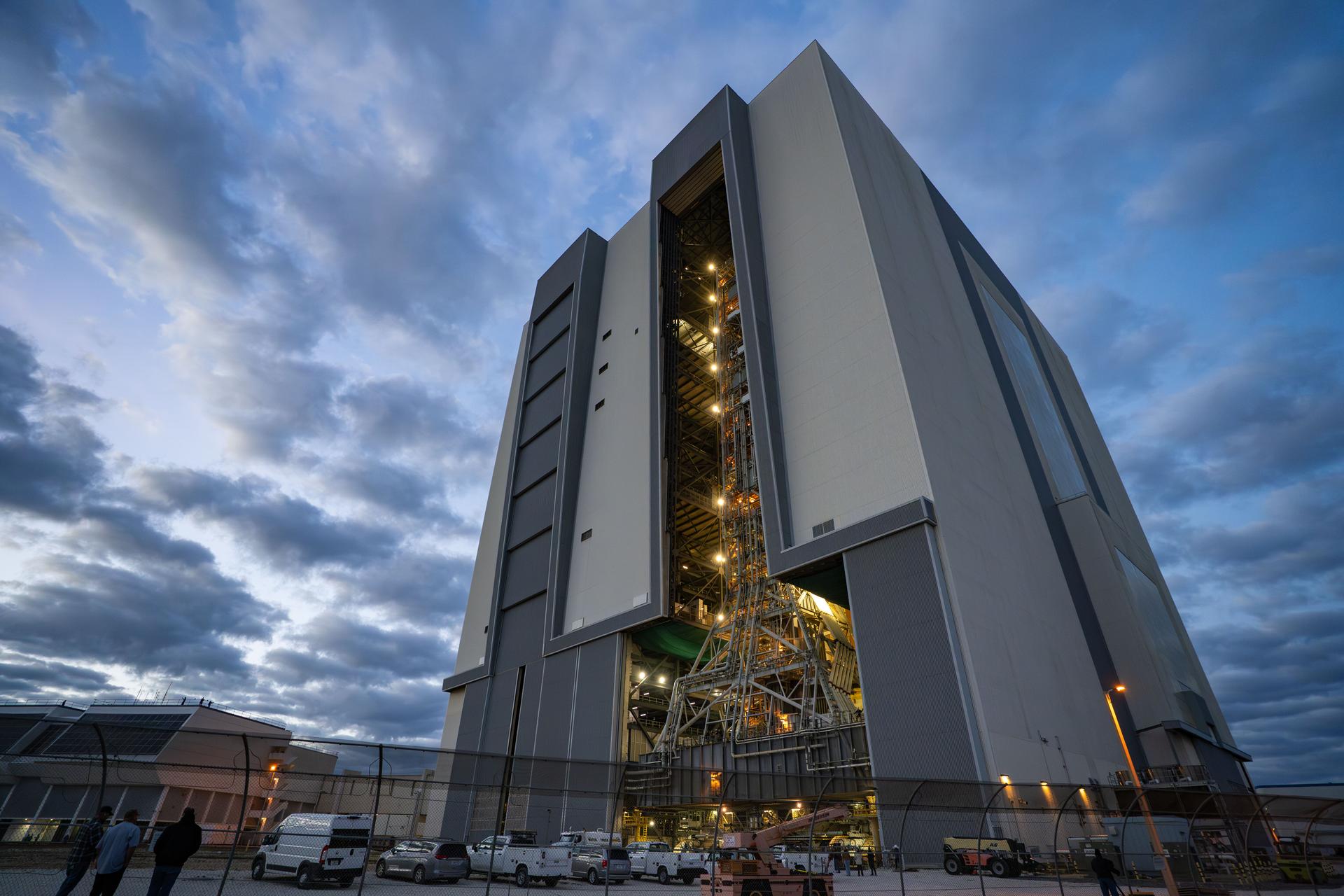
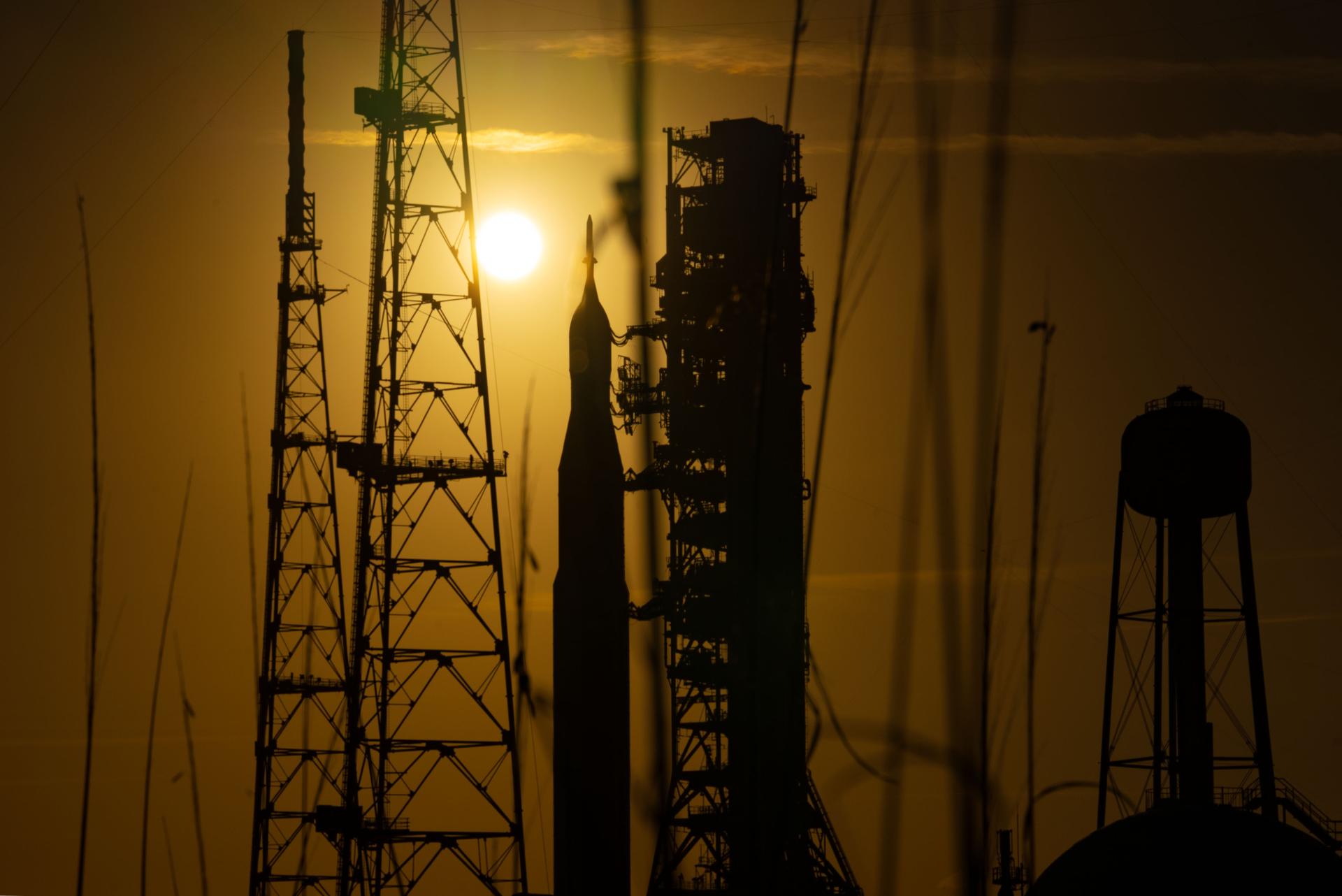
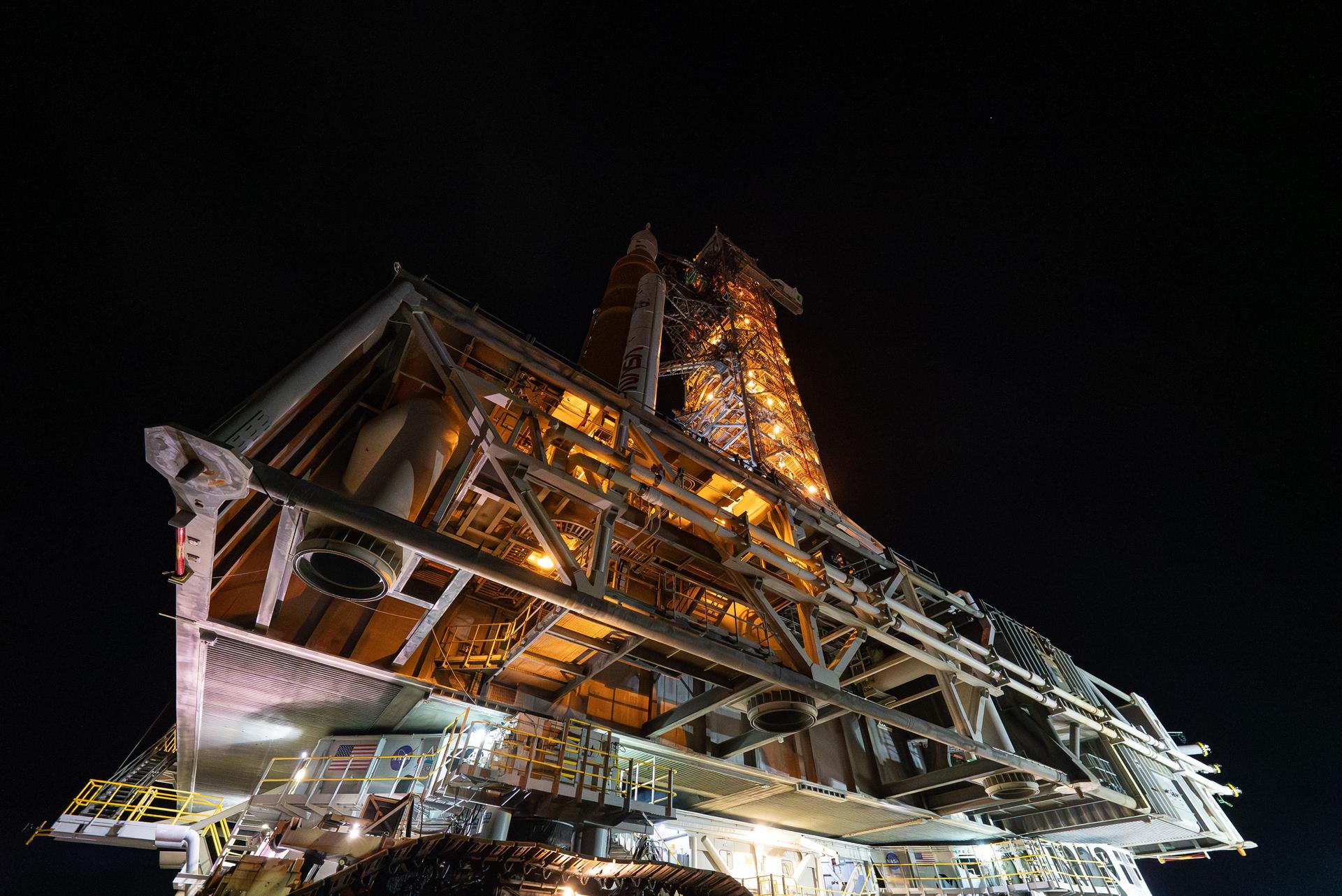
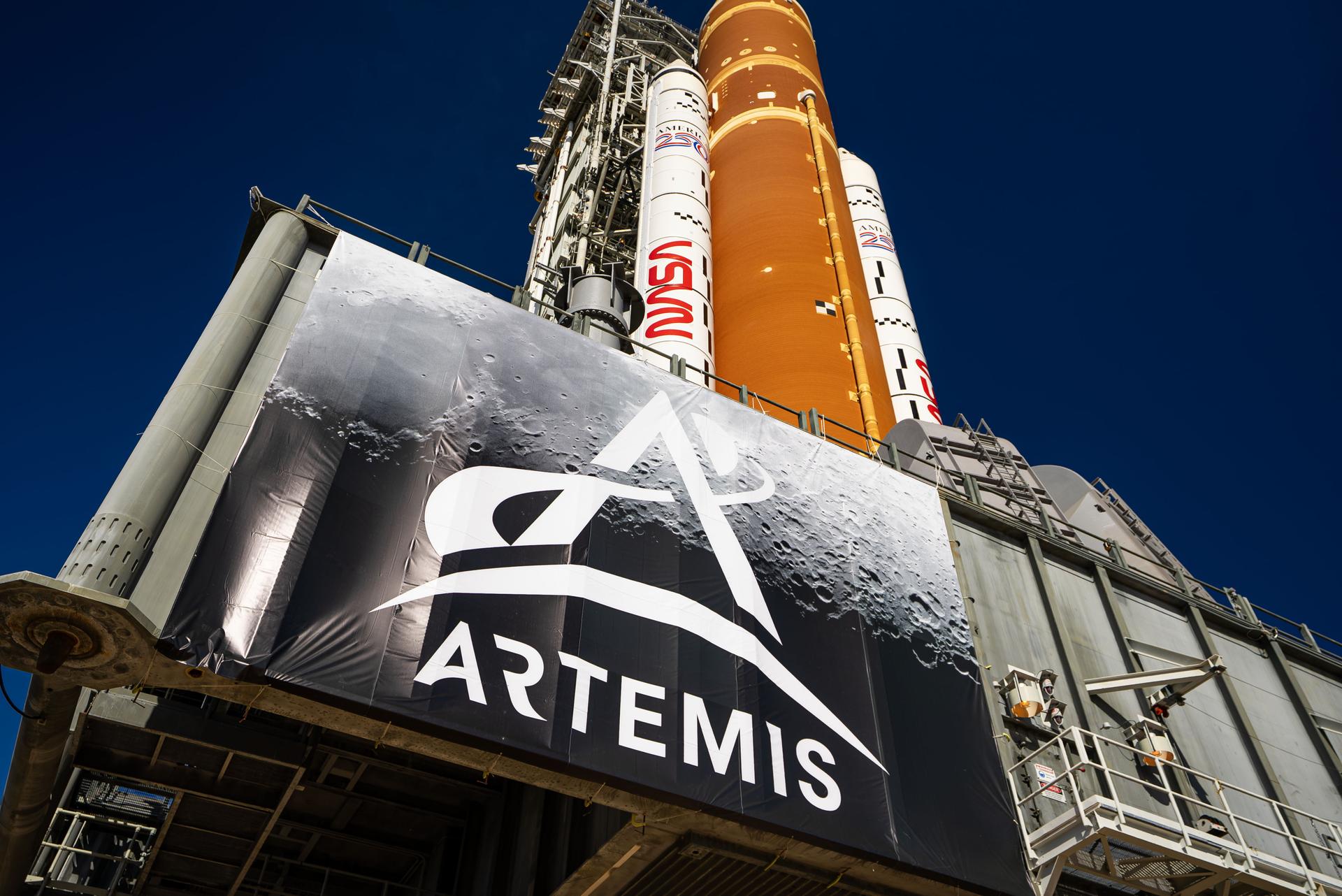
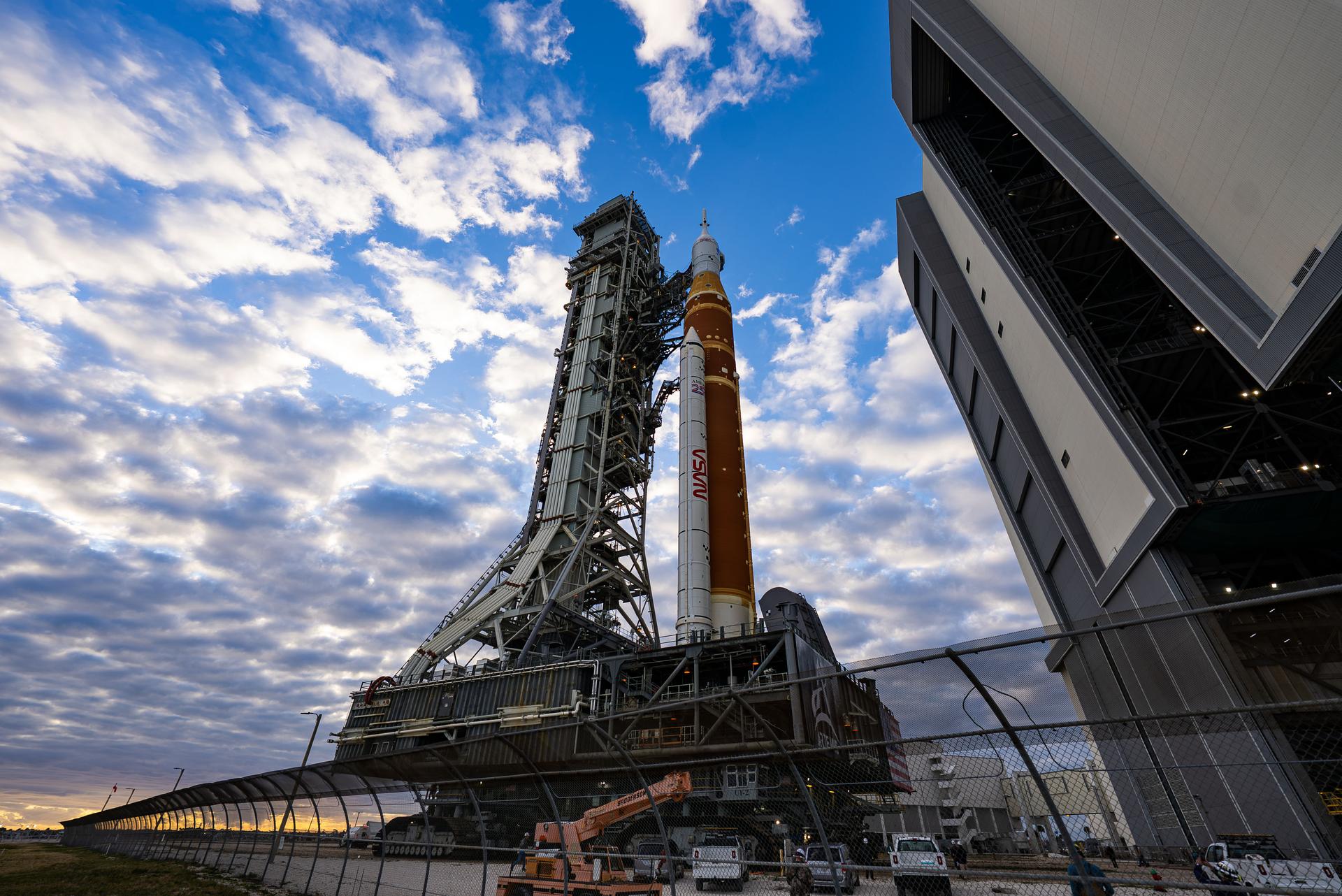
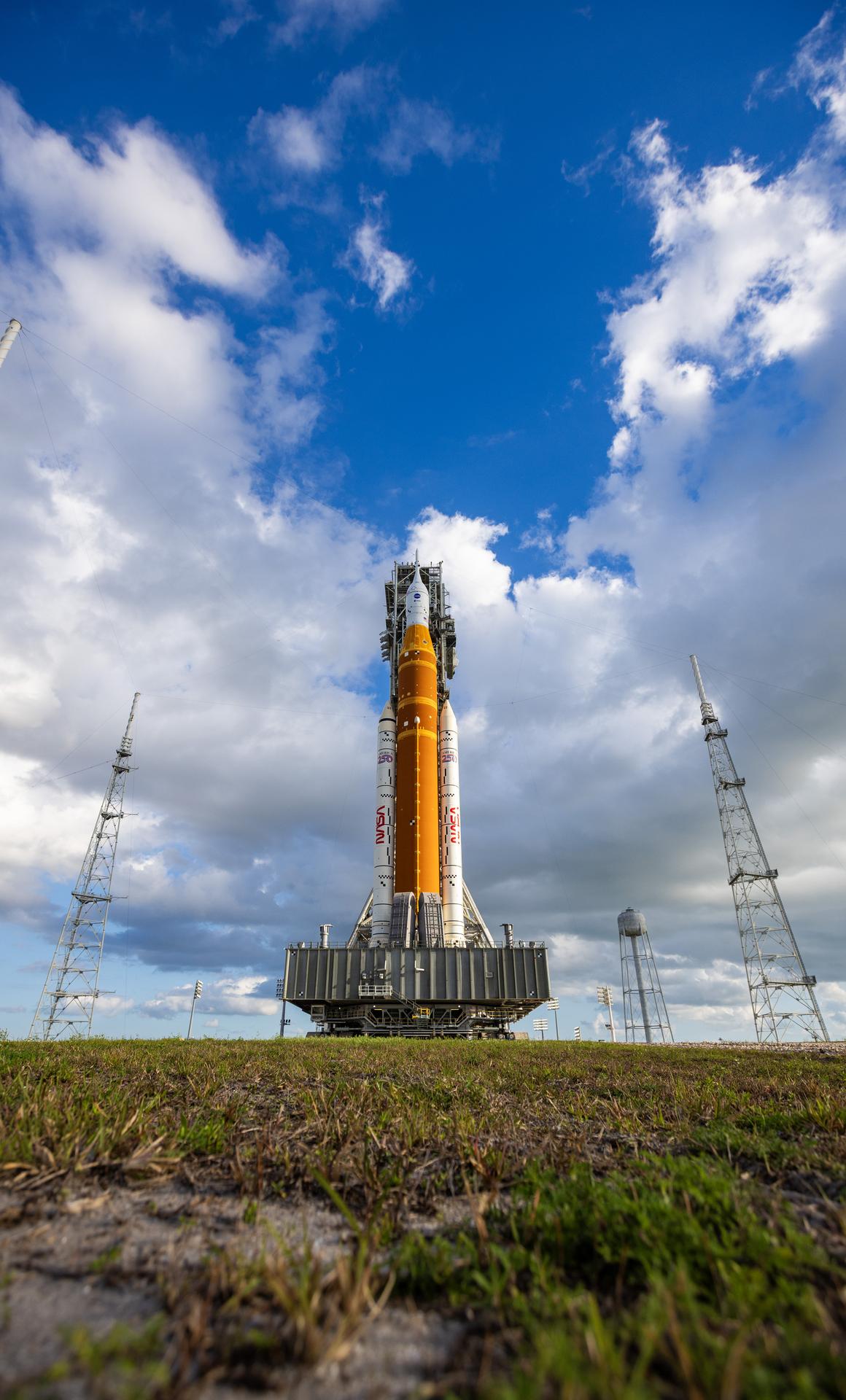
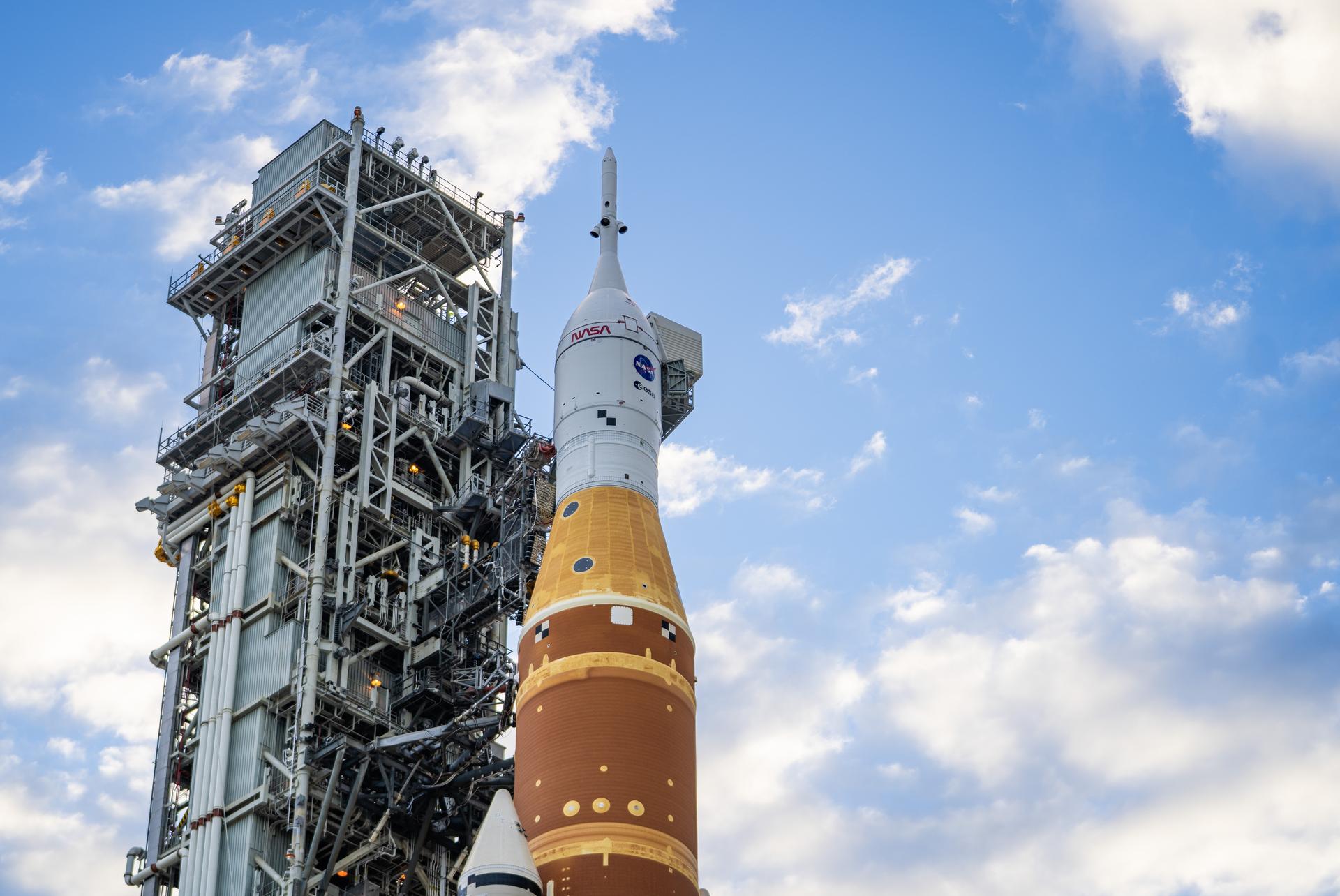
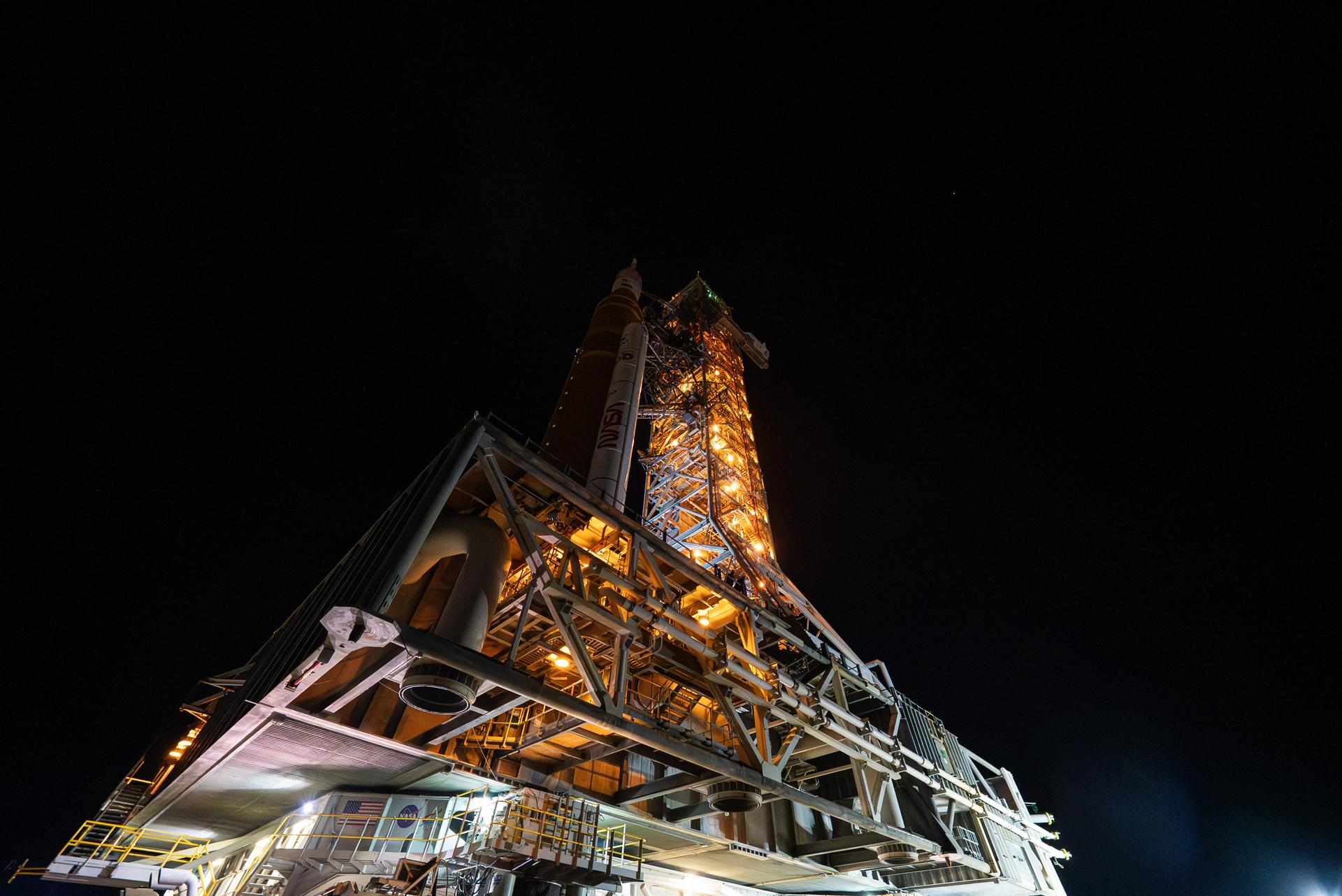
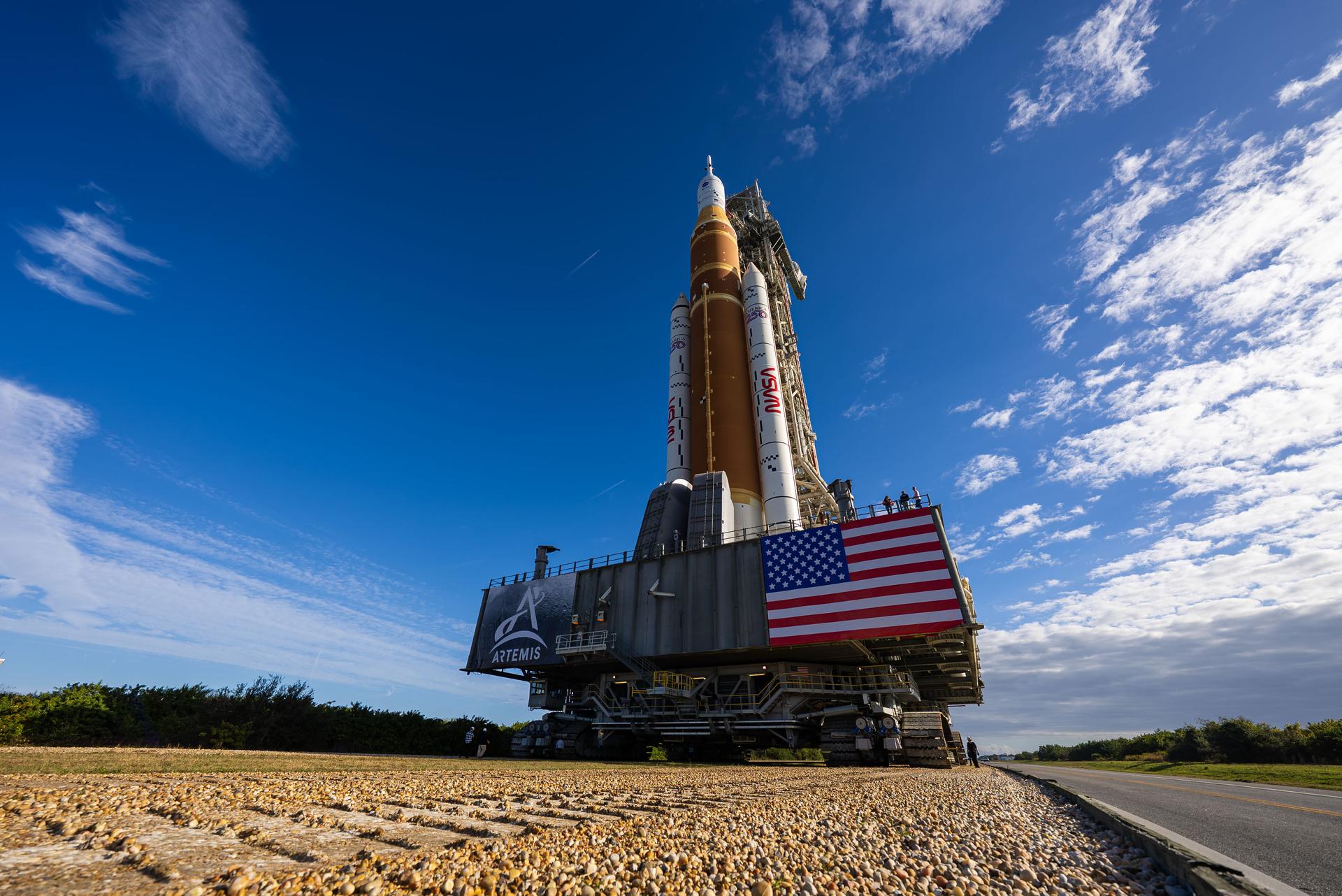
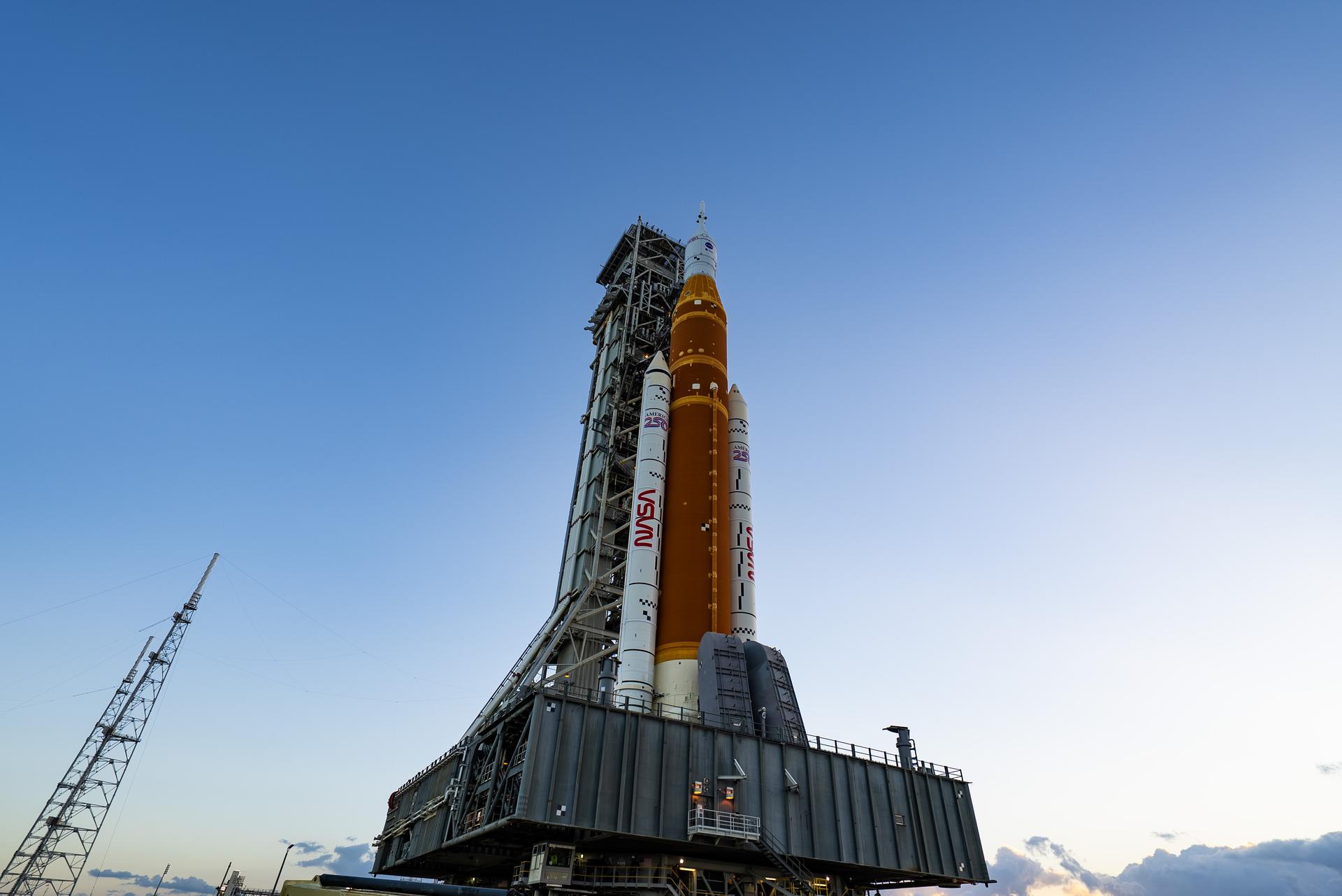
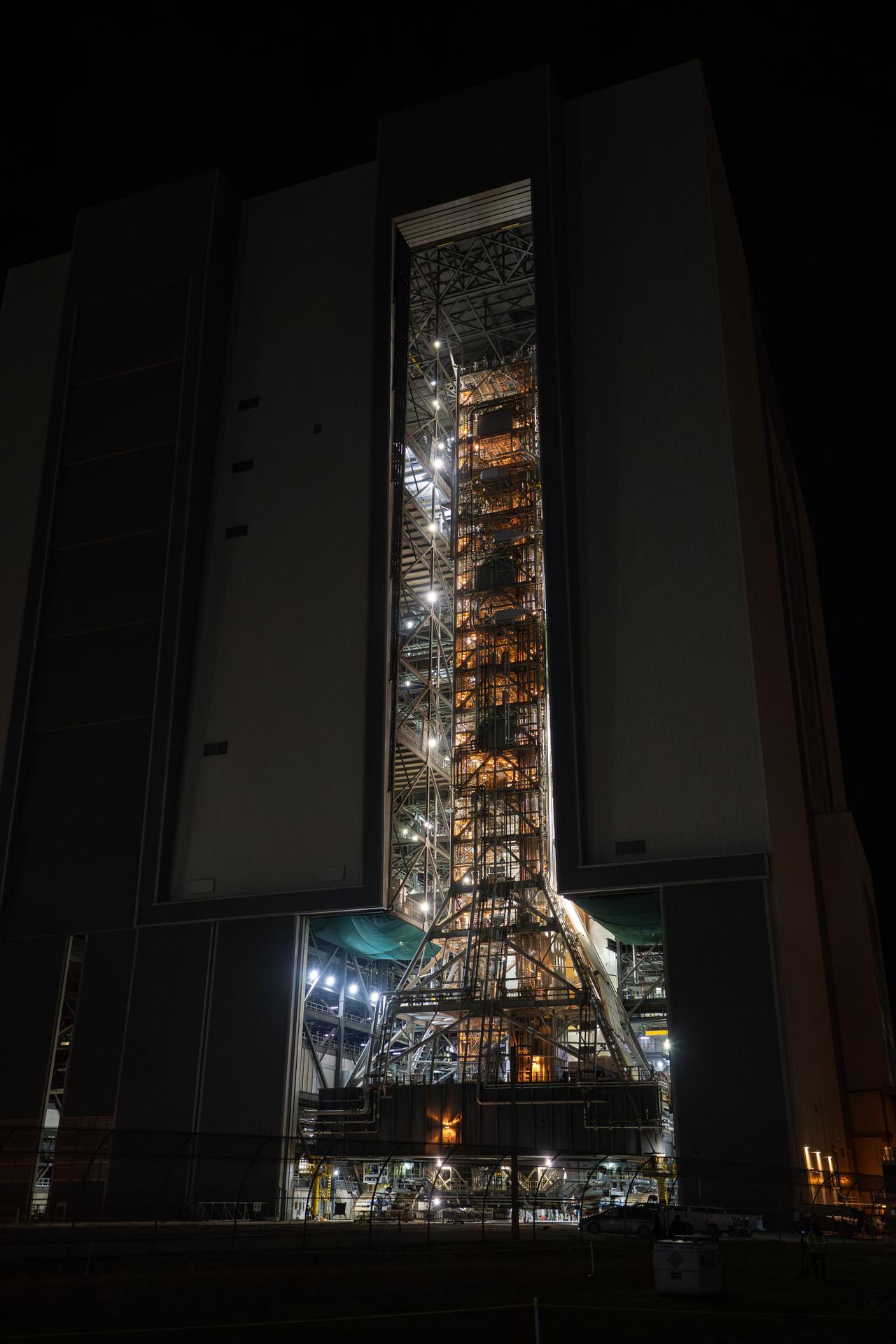
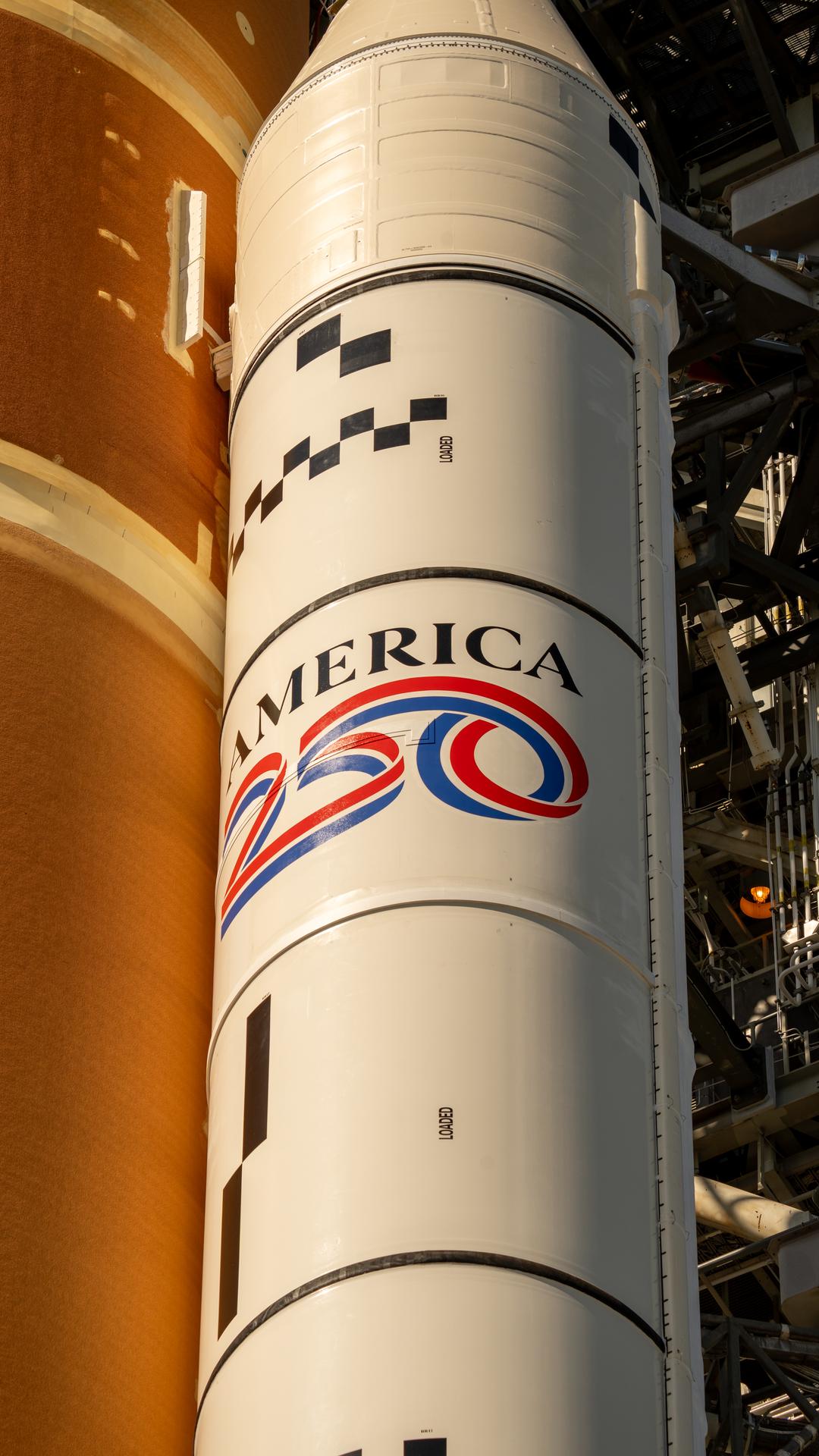
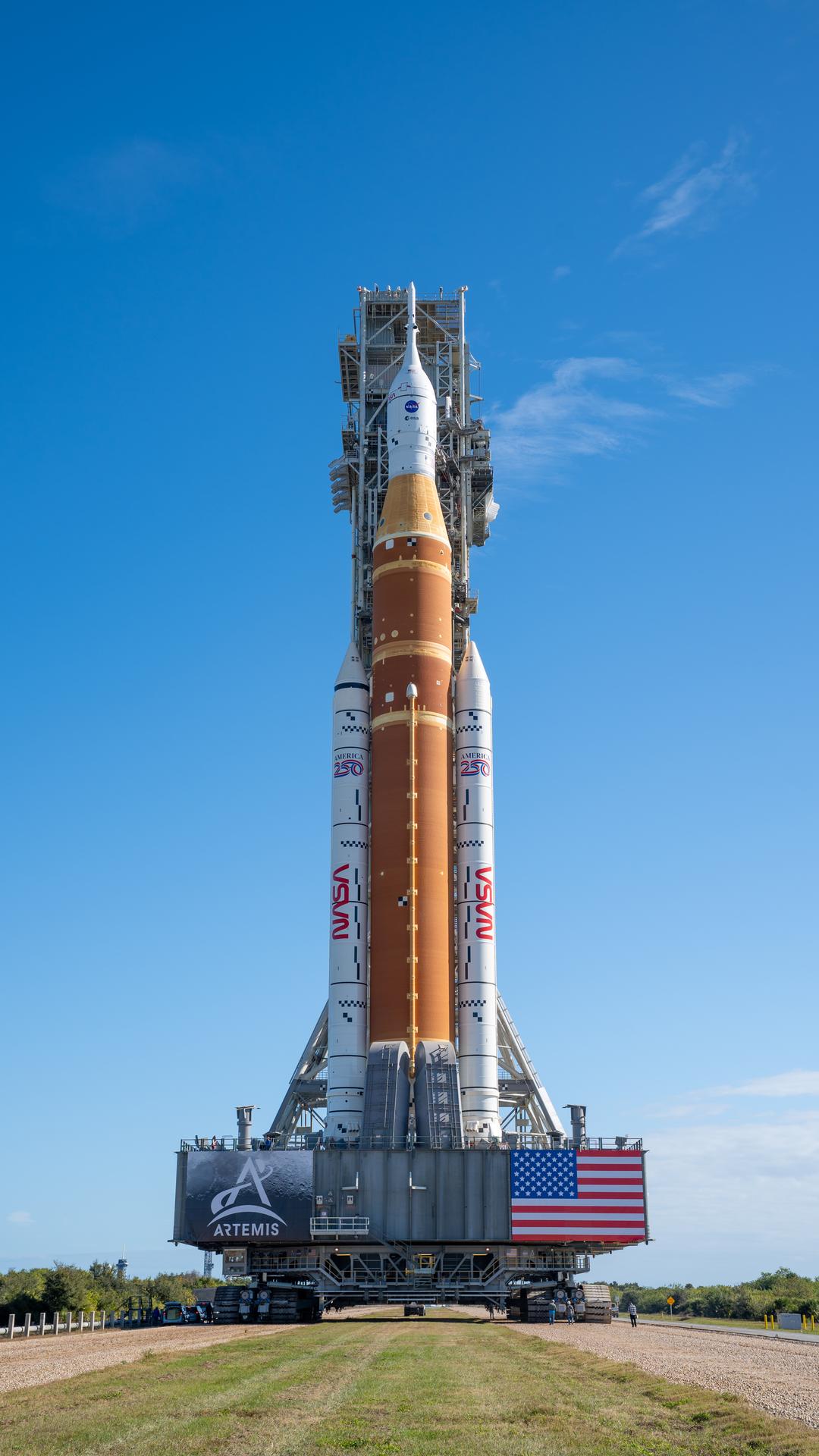
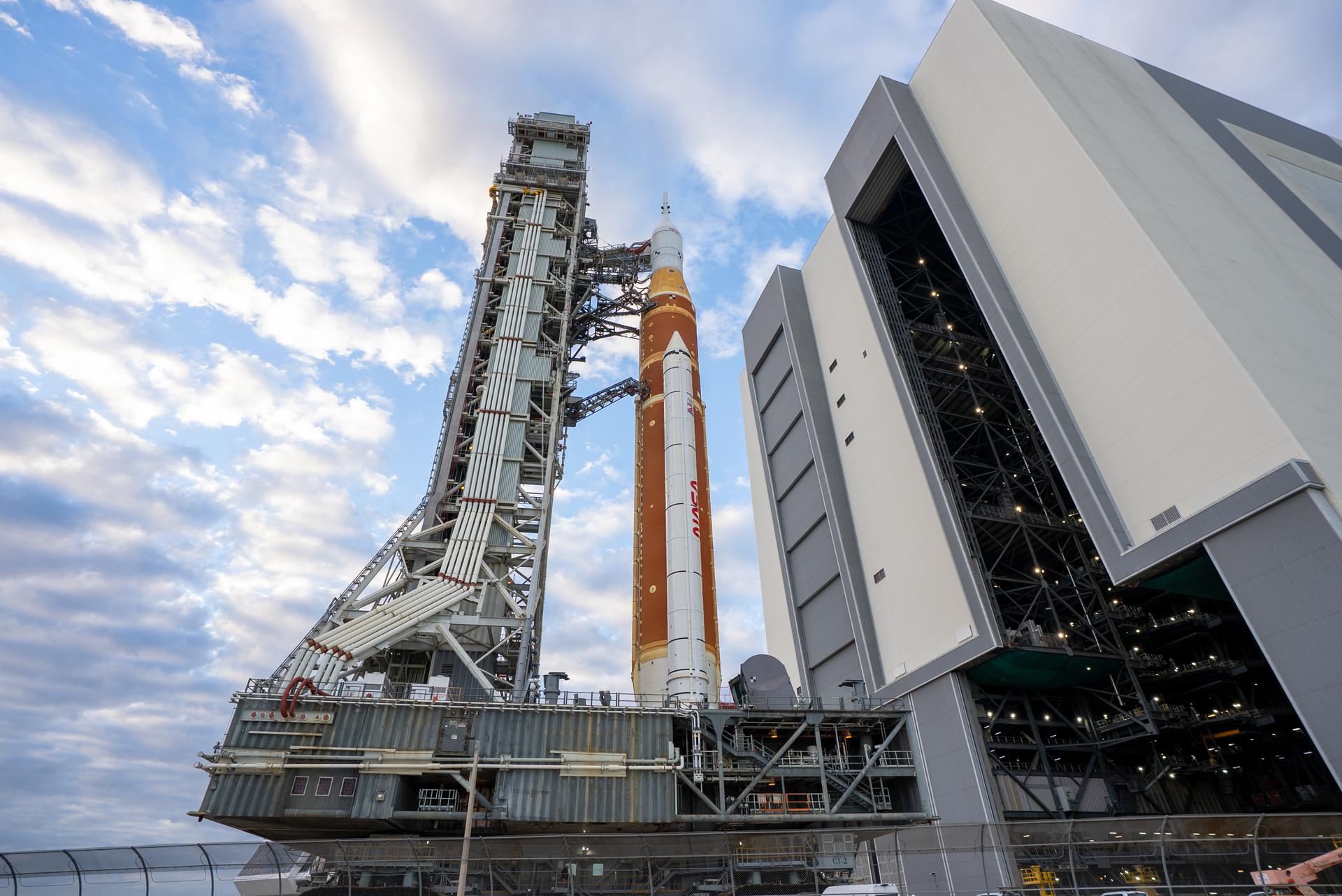
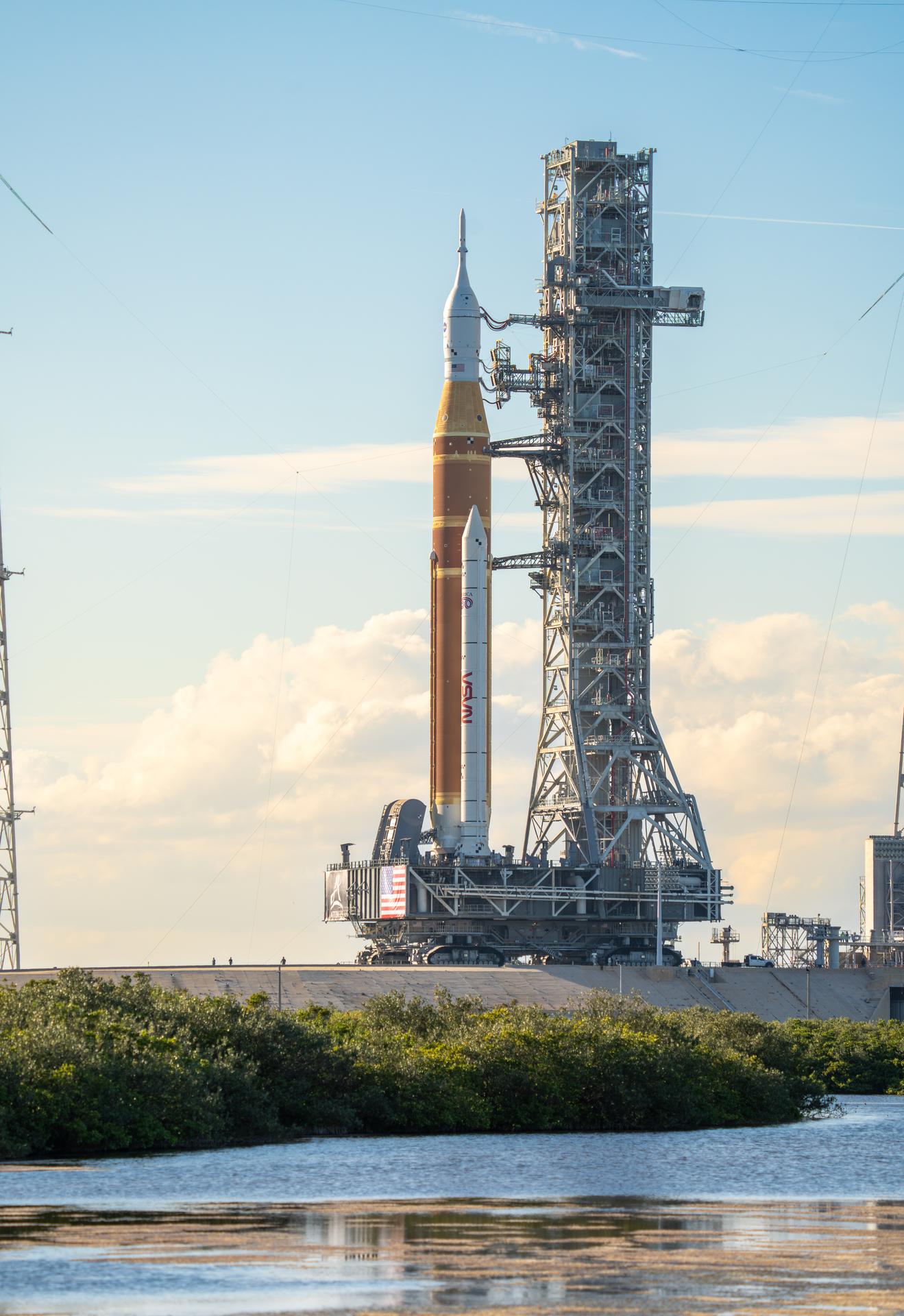
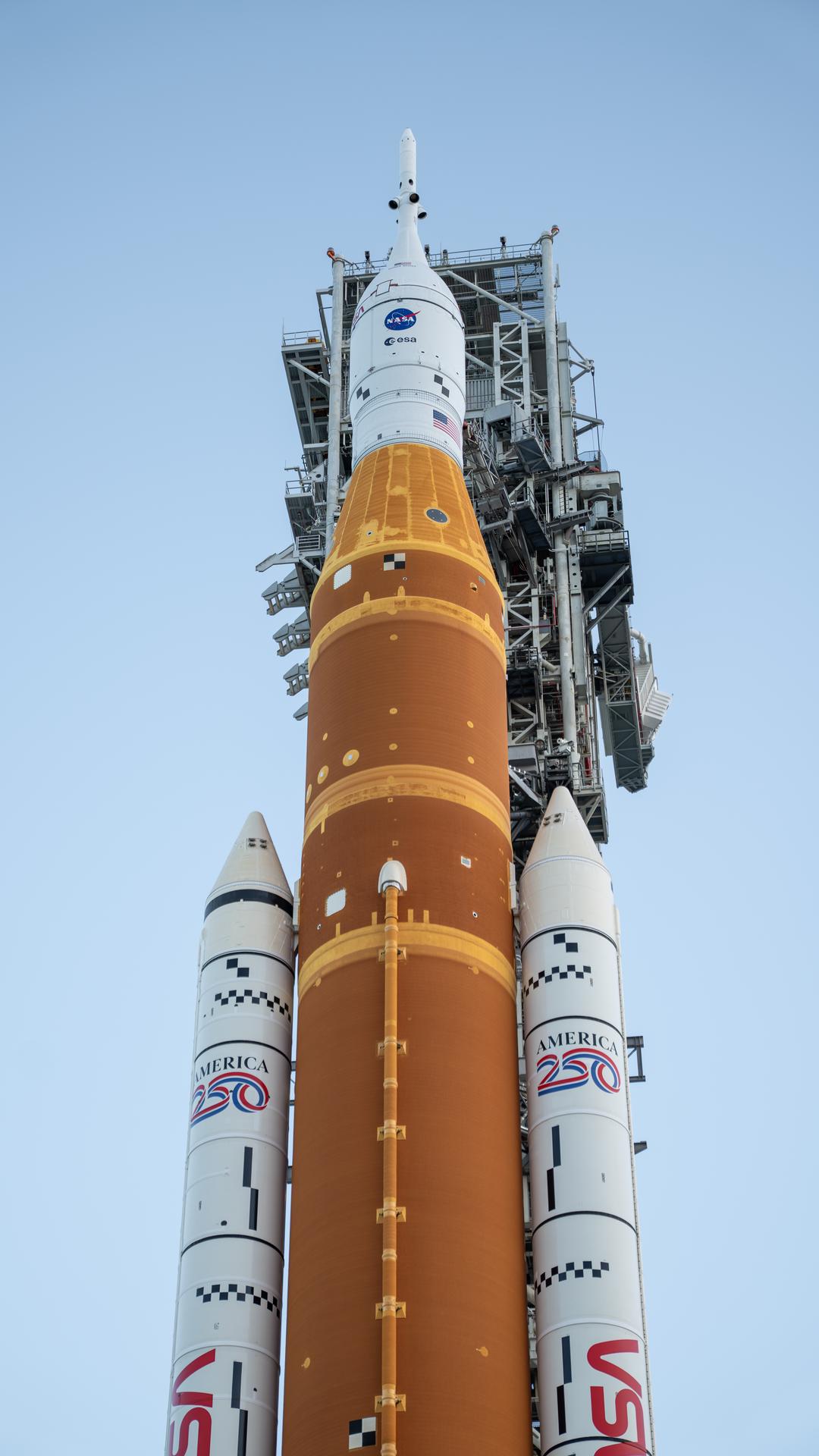
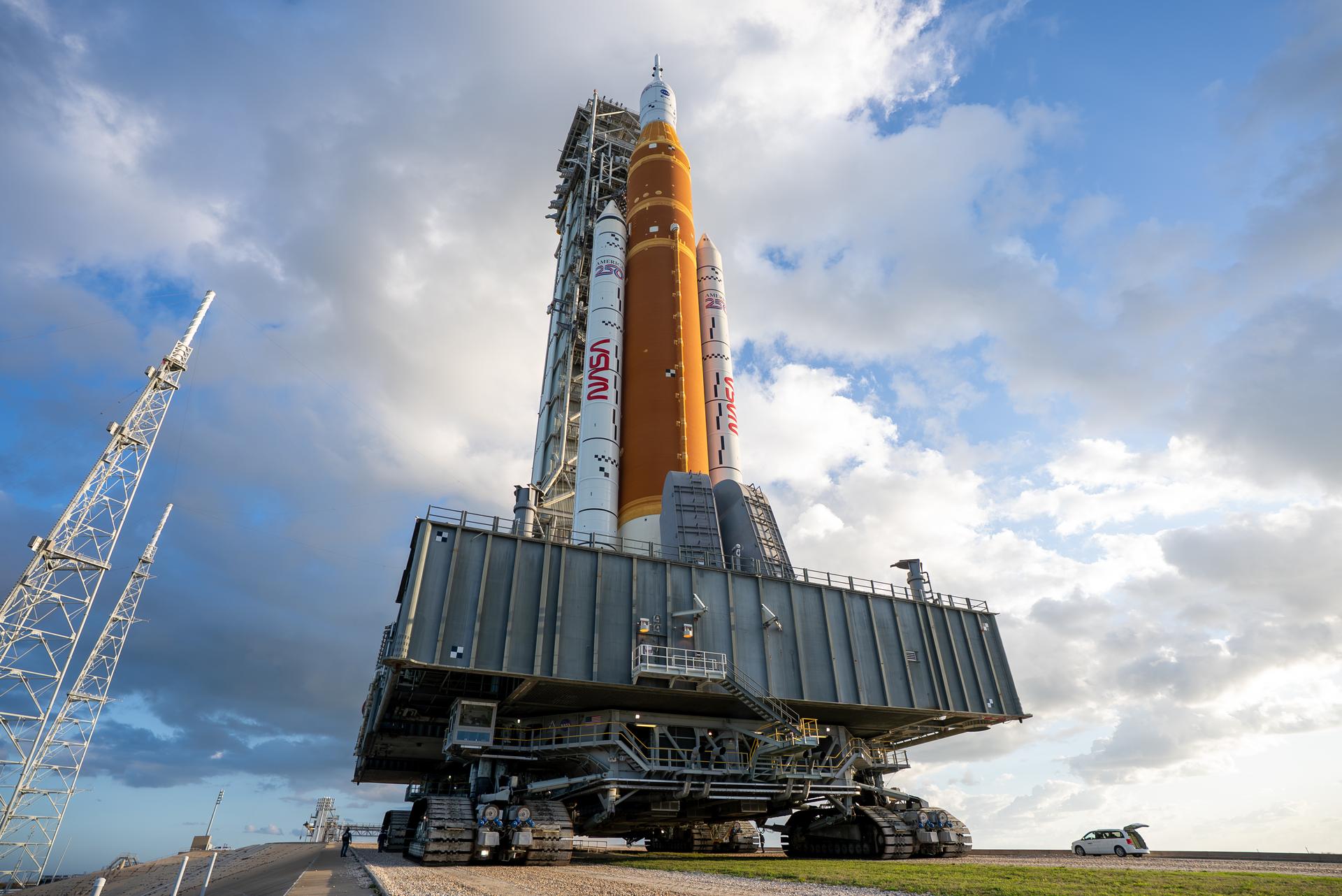
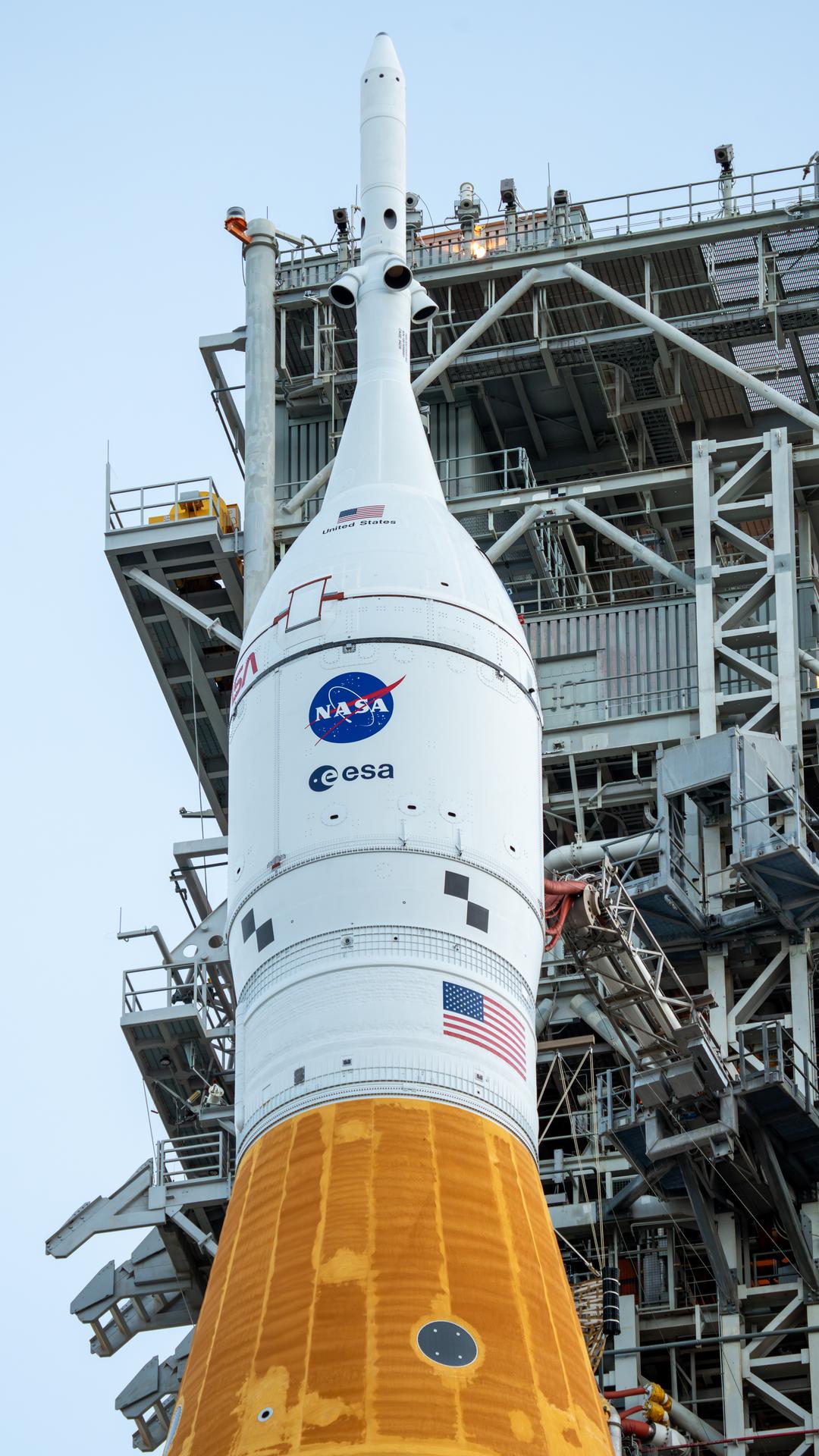
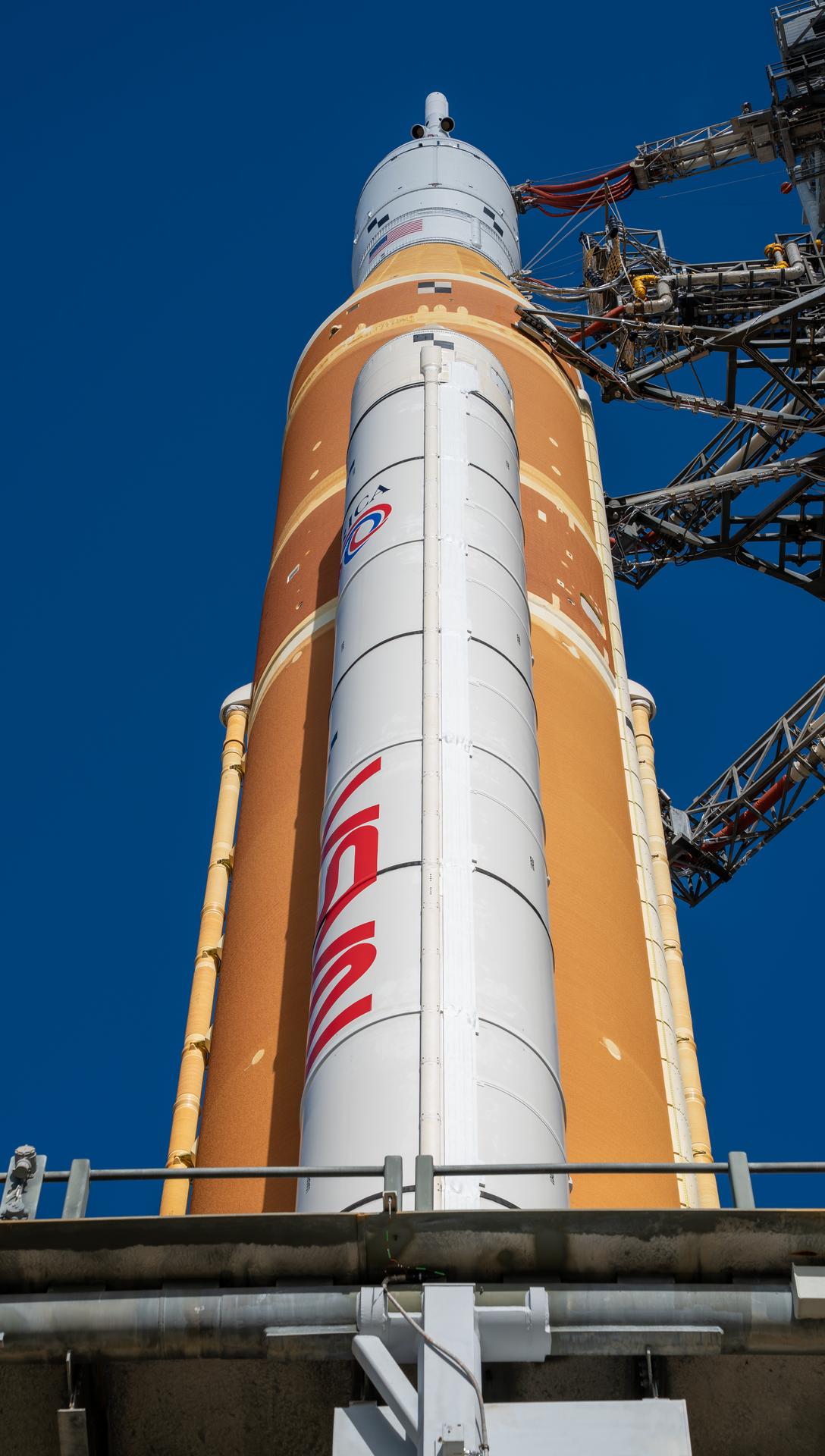
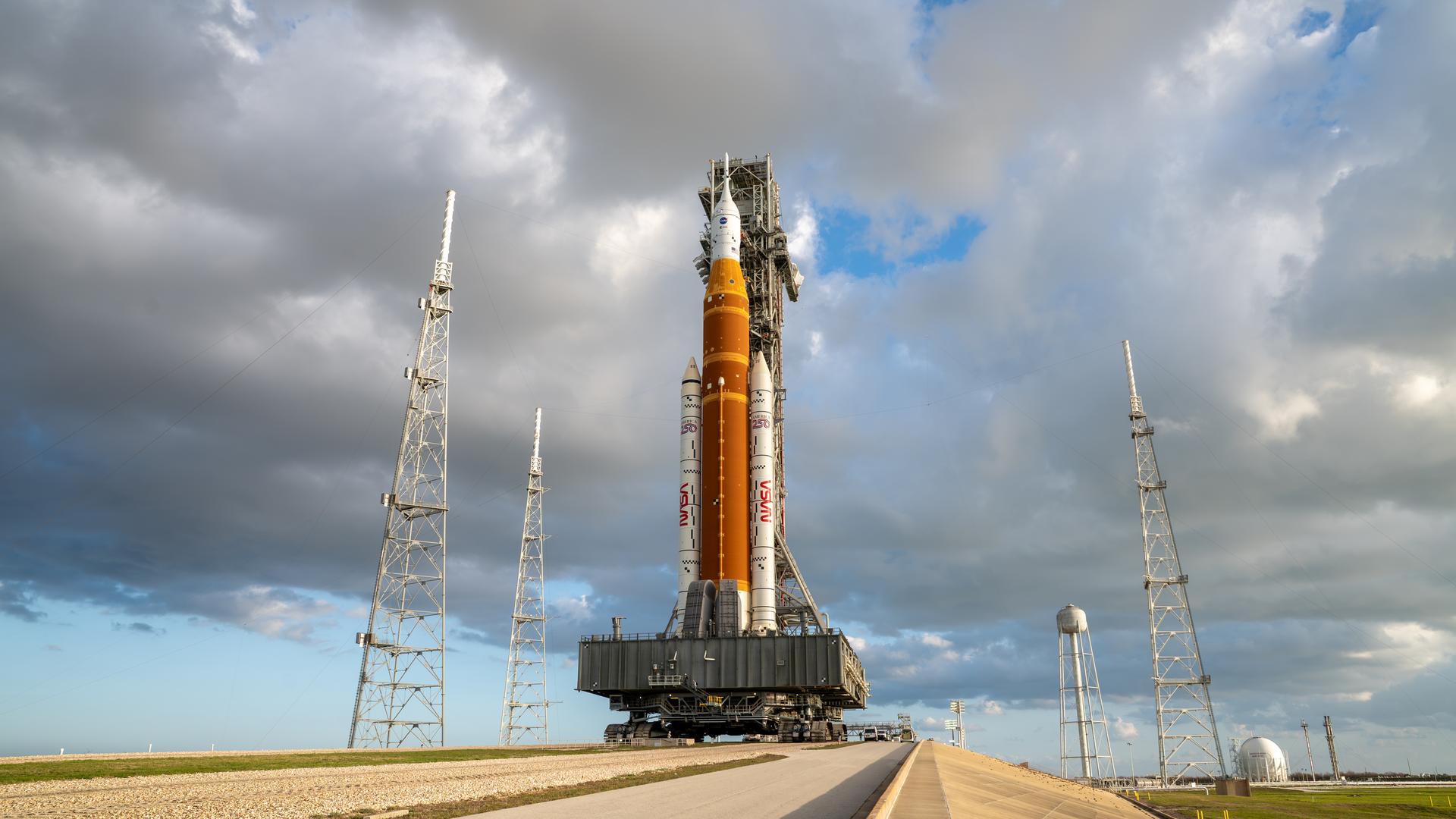
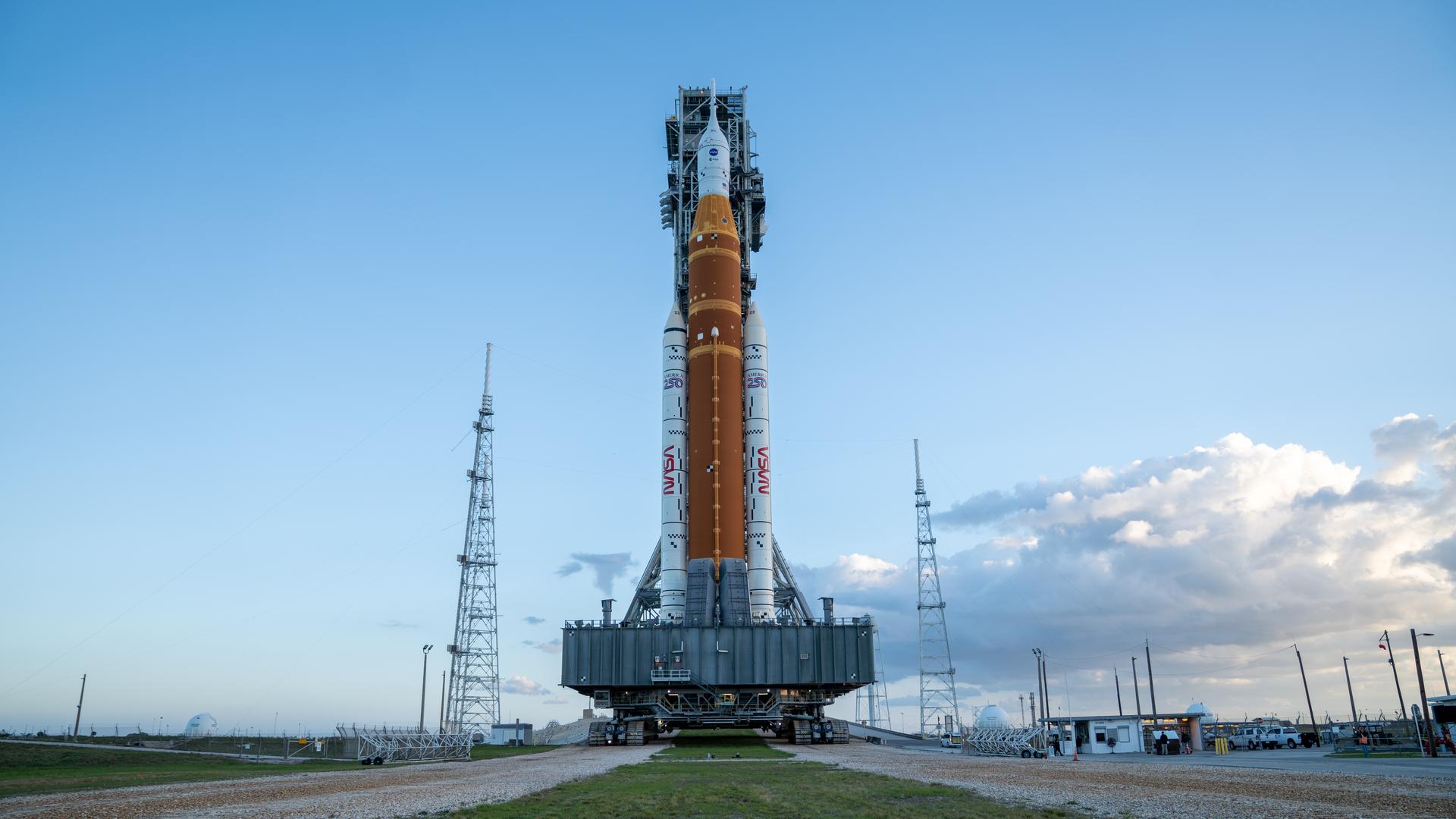
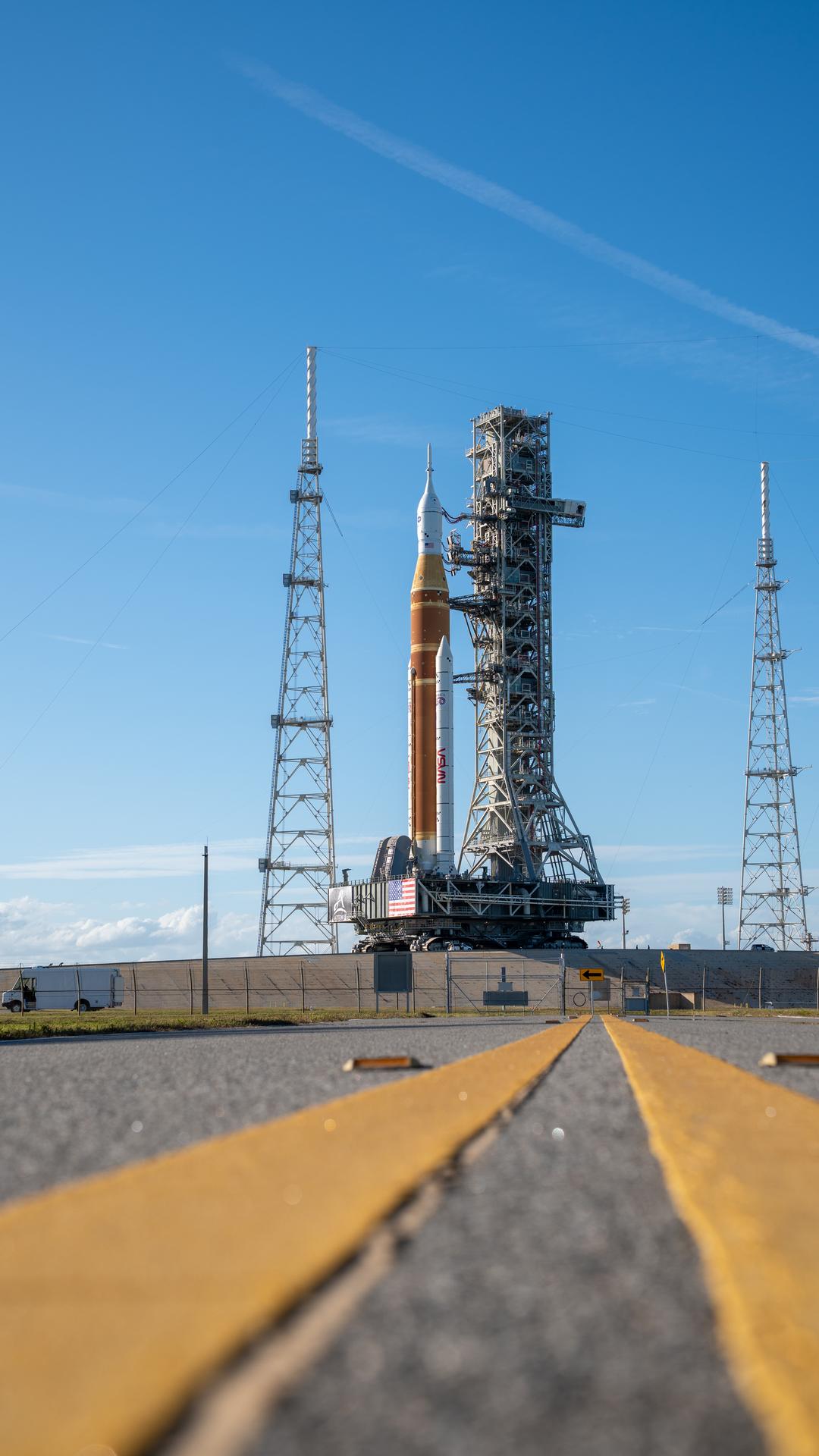
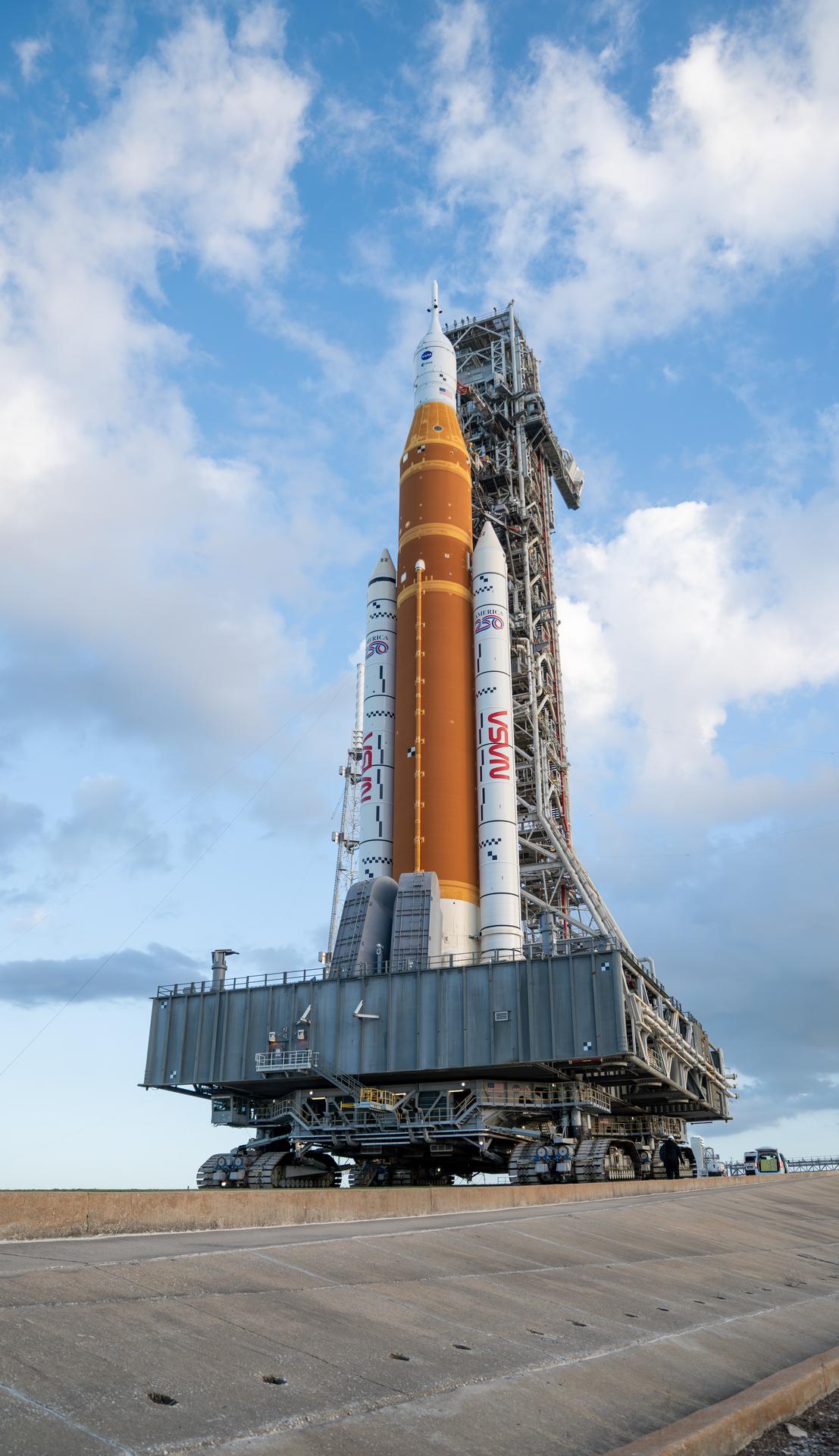
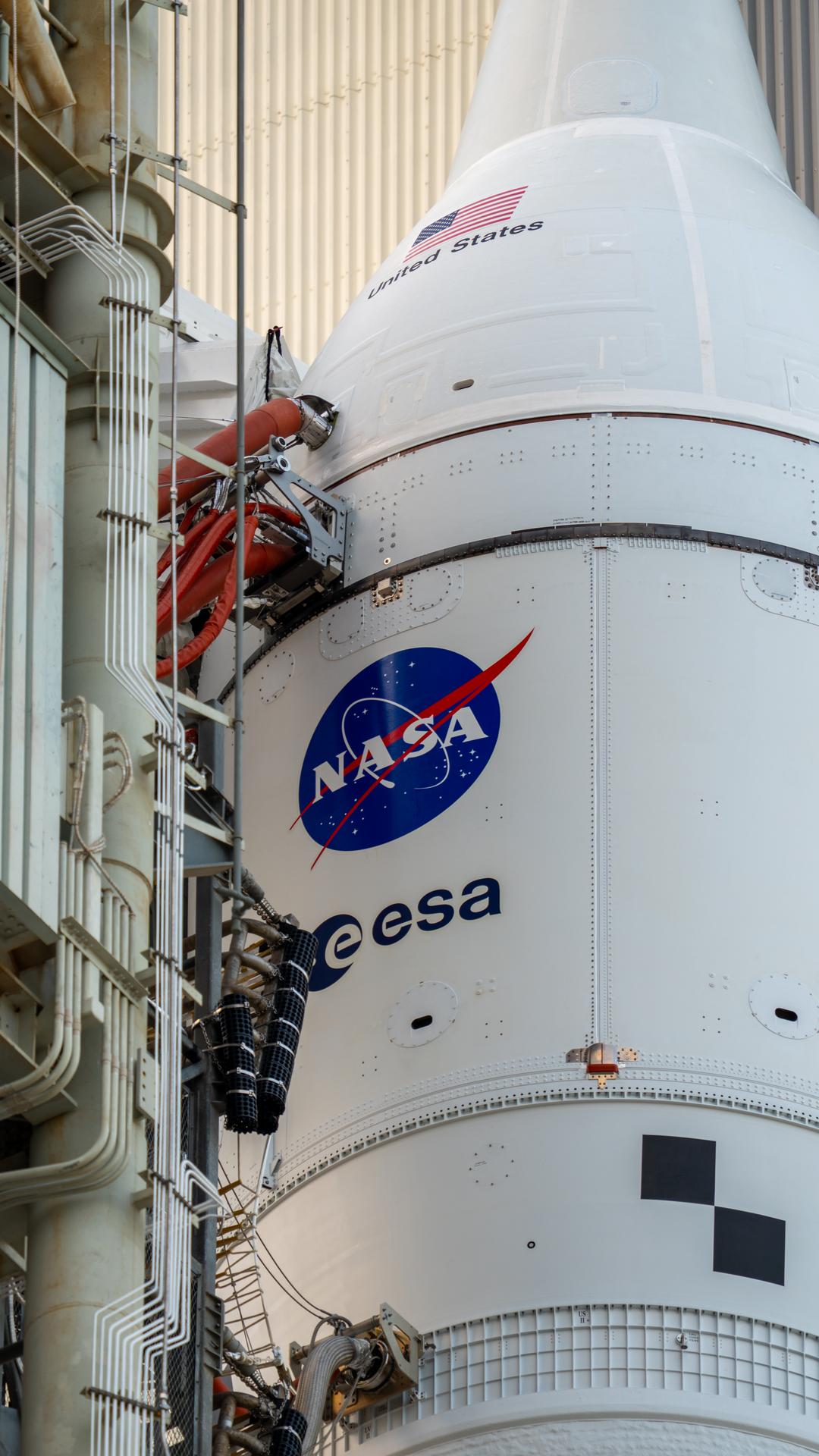
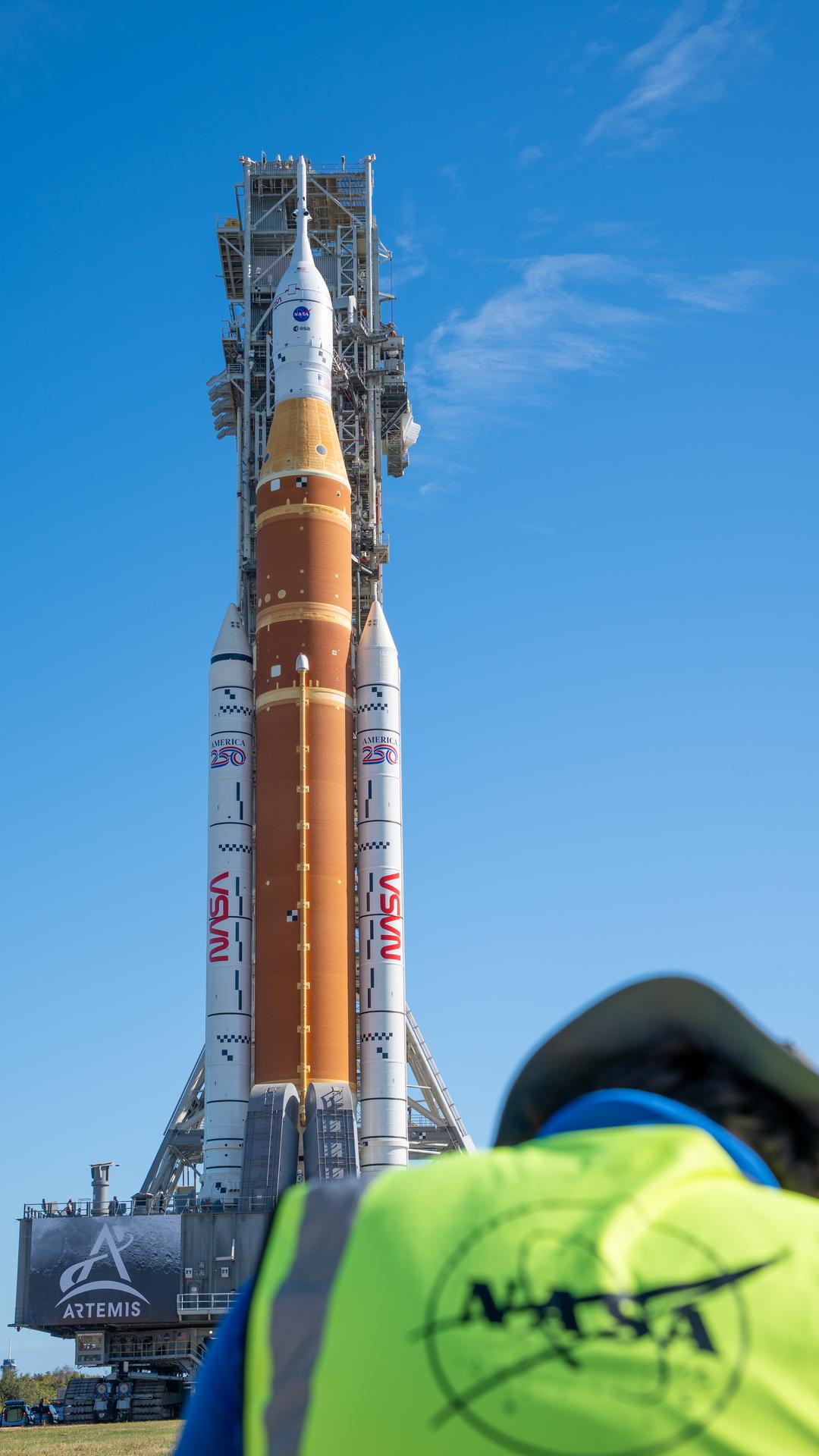
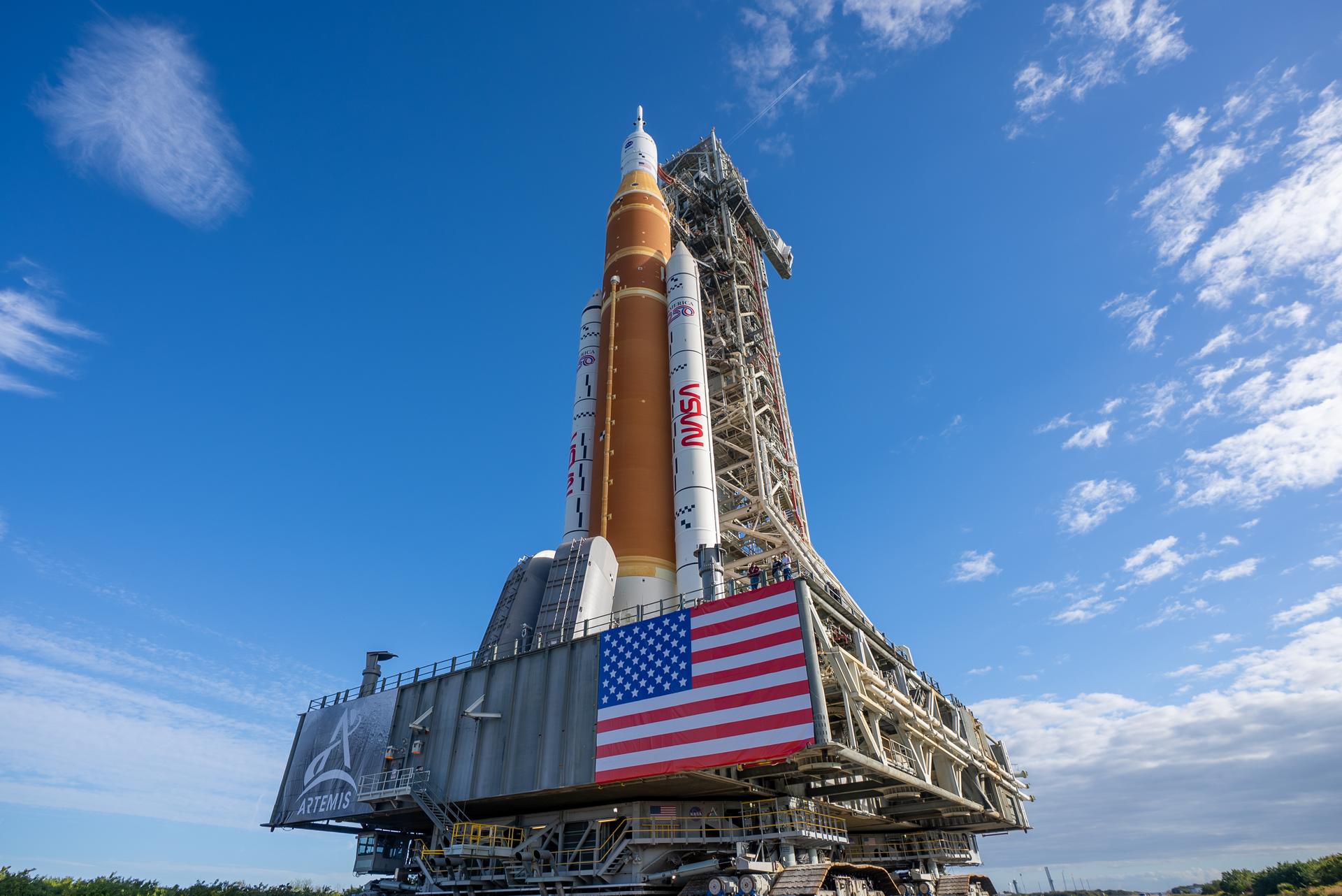
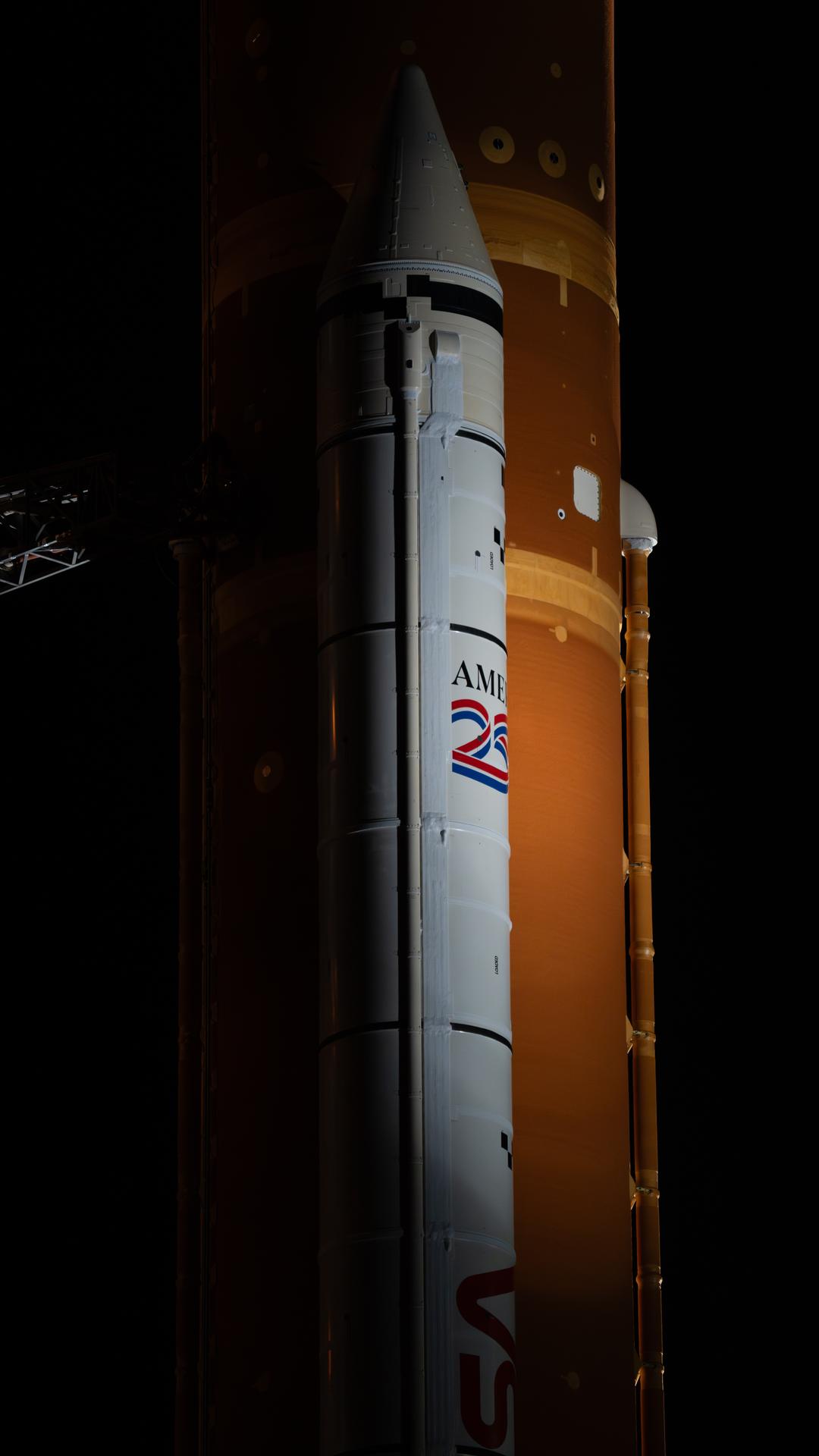
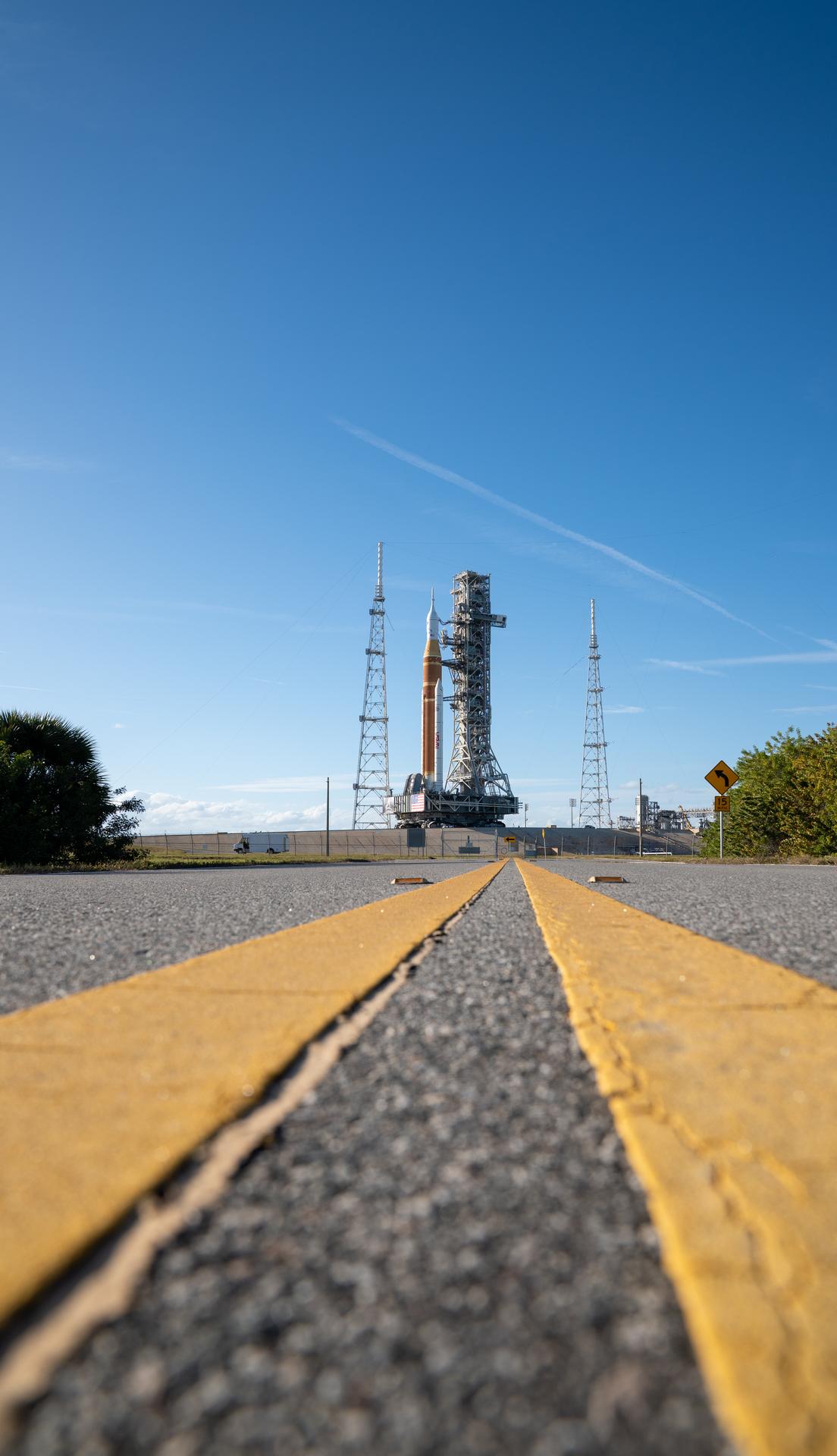
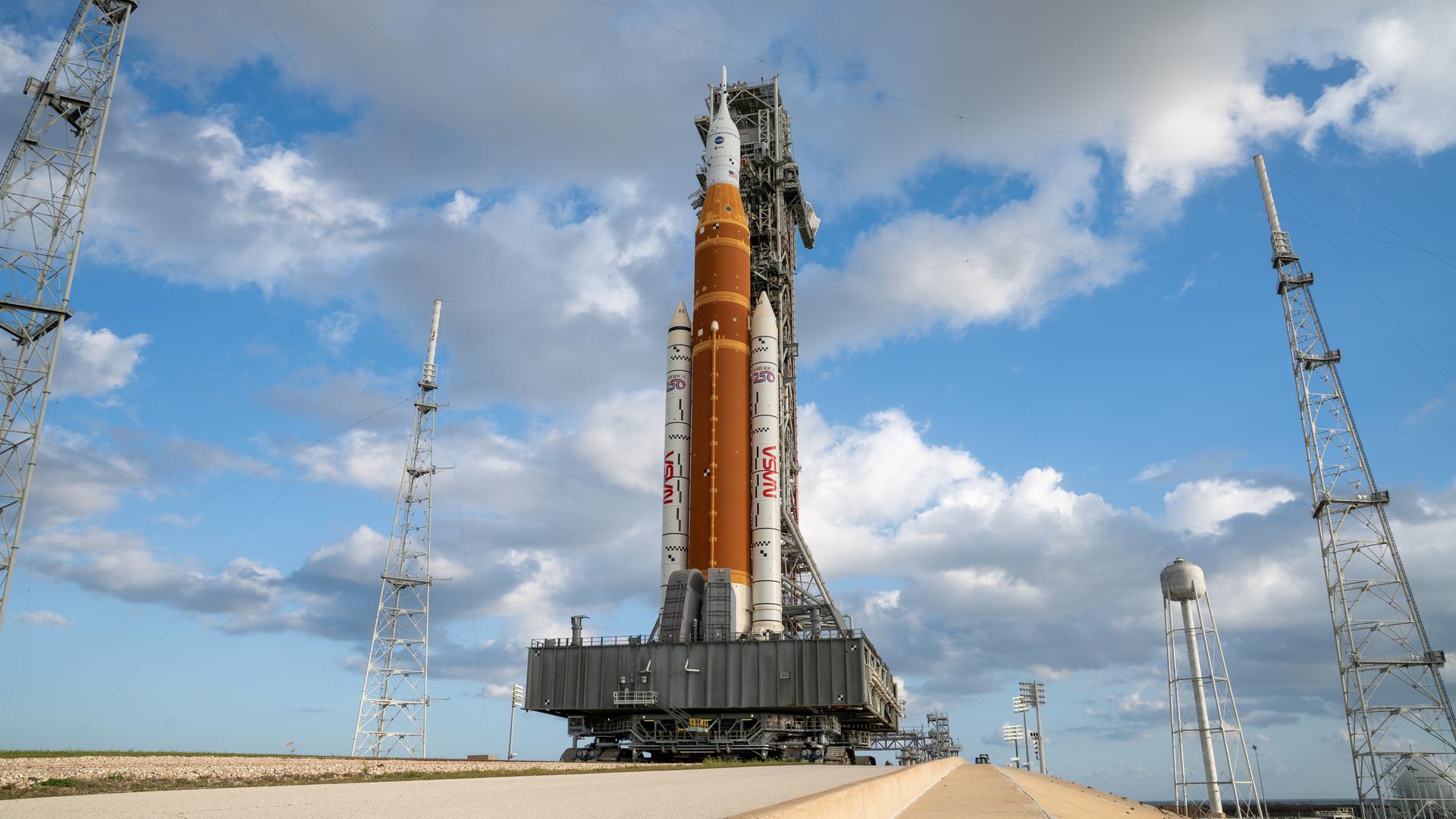
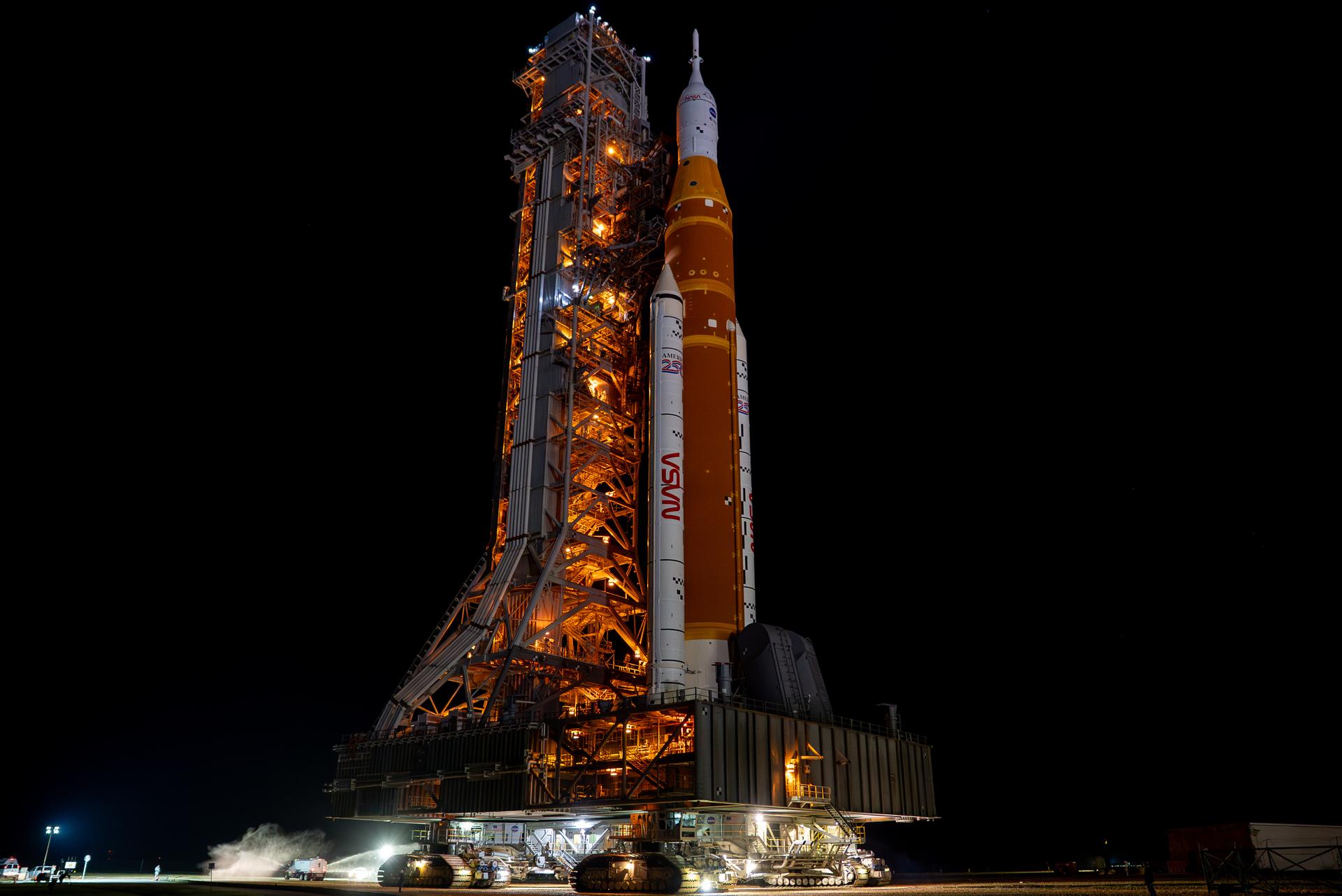
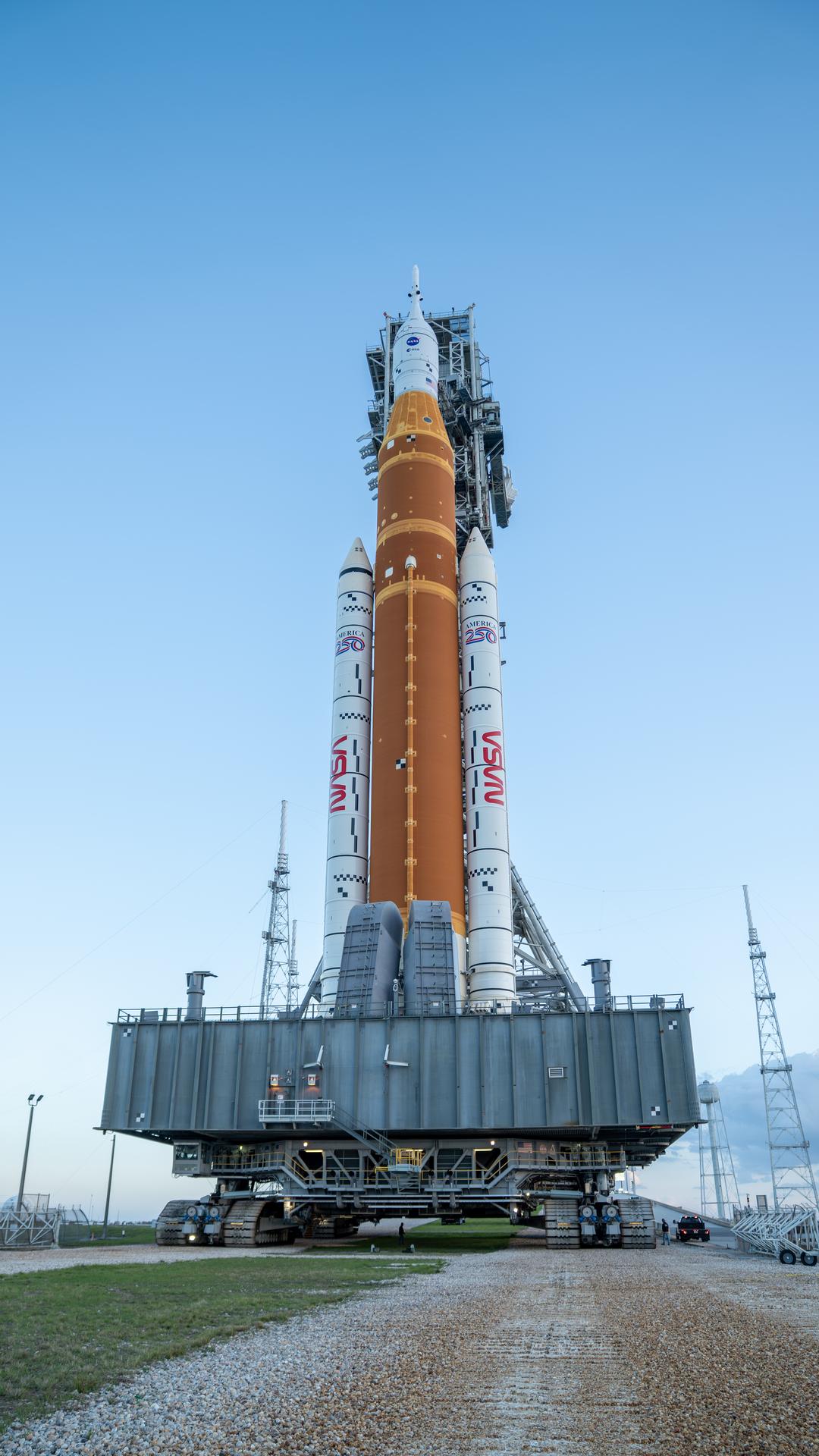
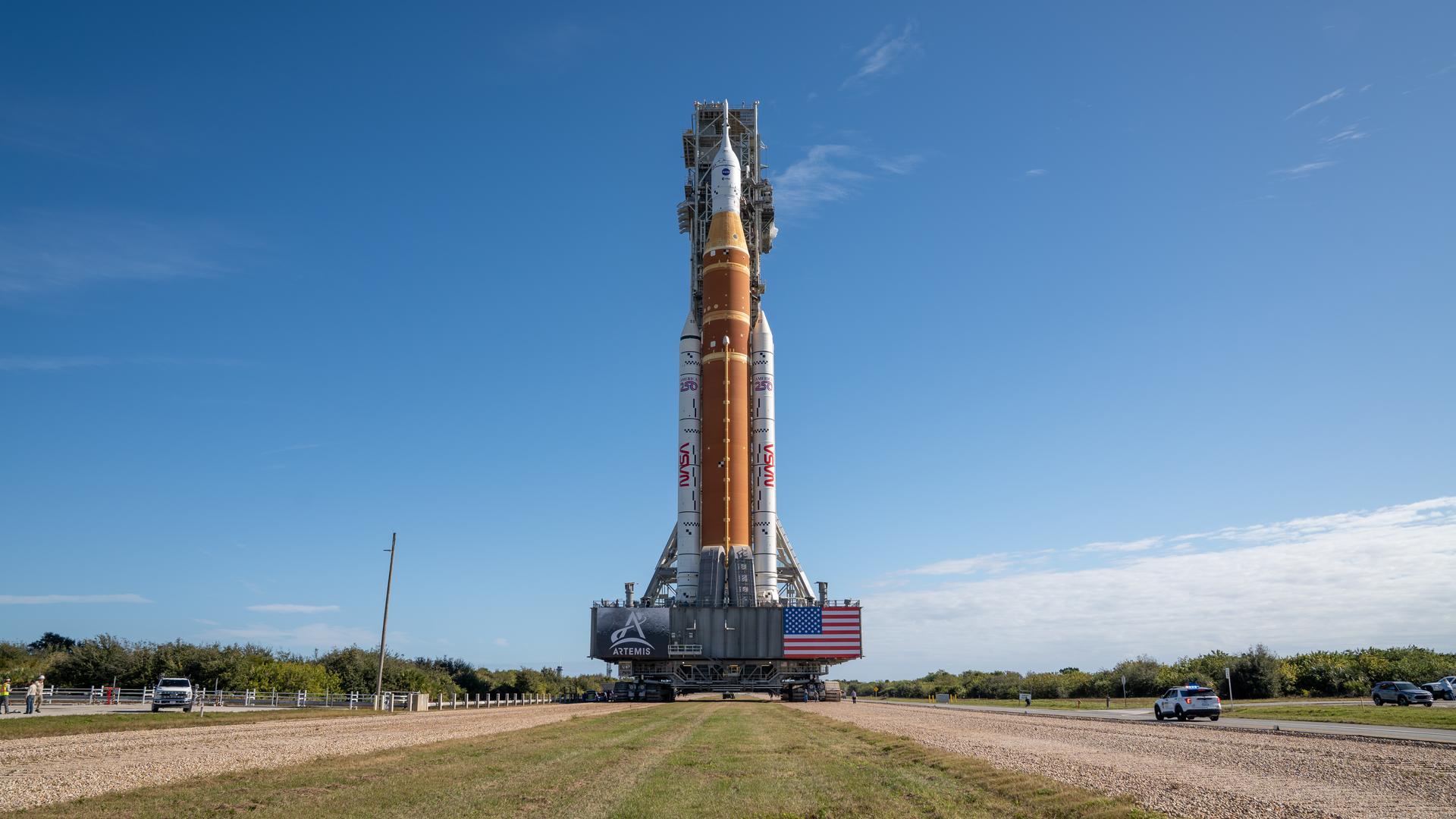
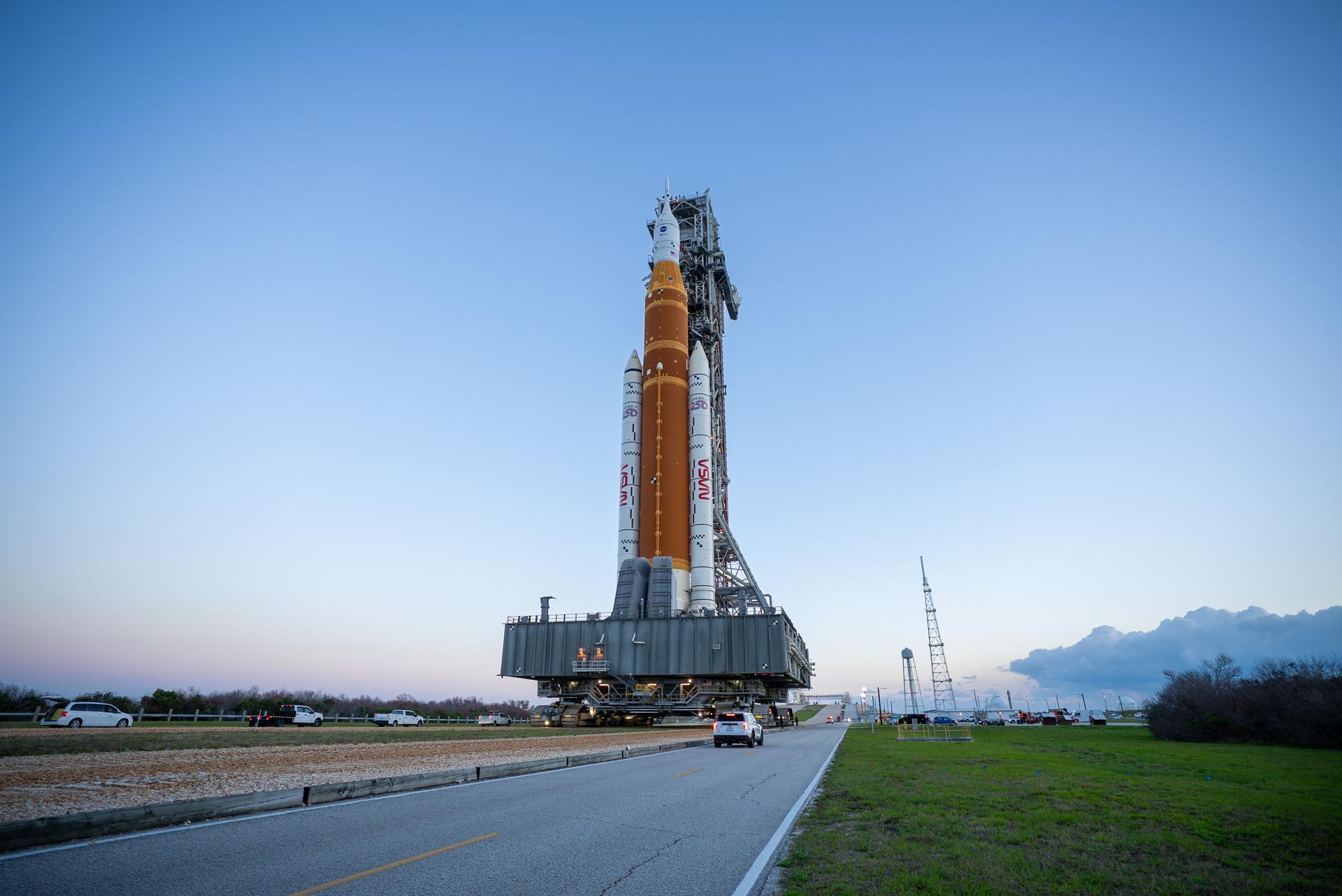
This image shows NASA’s SLS (Space Launch System) and Orion spacecraft rolling out of the Vehicle Assembly Building at NASA’s Kennedy Space Center. NASA's massive Crawler-Transporter, upgraded for the Artemis program, carries the powerful SLS rocket and Orion spacecraft on the Mobile Launcher from the Vehicle Assembly Building to Launch Pad 39B at Kennedy Space Center   in preparation for the Artemis II mission.
NASA's SLS Rocket and Orion Spacecraft Rollout to Launch Pad 39B
This image shows NASA’s SLS (Space Launch System) and Orion spacecraft rolling out of the Vehicle Assembly Building at NASA’s Kennedy Space Center. NASA's massive Crawler-Transporter, upgraded for the Artemis program, carries the powerful SLS rocket and Orion spacecraft on the Mobile Launcher from the Vehicle Assembly Building to Launch Pad 39B at Kennedy Space Center   in preparation for the Artemis II mission.
NASA's SLS Rocket and Orion Spacecraft Rollout to Launch Pad 39B
This image shows NASA’s SLS (Space Launch System) and Orion spacecraft rolling out of the Vehicle Assembly Building at NASA’s Kennedy Space Center. NASA's massive Crawler-Transporter, upgraded for the Artemis program, carries the powerful SLS rocket and Orion spacecraft on the Mobile Launcher from the Vehicle Assembly Building to Launch Pad 39B at Kennedy Space Center   in preparation for the Artemis II mission.
NASA's SLS Rocket and Orion Spacecraft Rollout to Launch Pad 39B
This image shows NASA’s SLS (Space Launch System) and Orion spacecraft rolling out of the Vehicle Assembly Building at NASA’s Kennedy Space Center. NASA's massive Crawler-Transporter, upgraded for the Artemis program, carries the powerful SLS rocket and Orion spacecraft on the Mobile Launcher from the Vehicle Assembly Building to Launch Pad 39B at Kennedy Space Center   in preparation for the Artemis II mission.
SLS_KSC_Artemis II Rollout 1172026_15
This image shows NASA’s SLS (Space Launch System) and Orion spacecraft rolling out of the Vehicle Assembly Building at NASA’s Kennedy Space Center. NASA's massive Crawler-Transporter, upgraded for the Artemis program, carries the powerful SLS rocket and Orion spacecraft on the Mobile Launcher from the Vehicle Assembly Building to Launch Pad 39B at Kennedy Space Center   in preparation for the Artemis II mission.
NASA's SLS Rocket and Orion Spacecraft Rollout to Launch Pad 39B
This image shows NASA’s SLS (Space Launch System) and Orion spacecraft rolling out of the Vehicle Assembly Building at NASA’s Kennedy Space Center. NASA's massive Crawler-Transporter, upgraded for the Artemis program, carries the powerful SLS rocket and Orion spacecraft on the Mobile Launcher from the Vehicle Assembly Building to Launch Pad 39B at Kennedy Space Center   in preparation for the Artemis II mission.
NASA's SLS Rocket and Orion Spacecraft Rollout to Launch Pad 39B
This image shows NASA’s SLS (Space Launch System) and Orion spacecraft rolling out of the Vehicle Assembly Building at NASA’s Kennedy Space Center. NASA's massive Crawler-Transporter, upgraded for the Artemis program, carries the powerful SLS rocket and Orion spacecraft on the Mobile Launcher from the Vehicle Assembly Building to Launch Pad 39B at Kennedy Space Center   in preparation for the Artemis II mission.
NASA's SLS Rocket and Orion Spacecraft Rollout to Launch Pad 39B
This image shows NASA’s SLS (Space Launch System) and Orion spacecraft rolling out of the Vehicle Assembly Building at NASA’s Kennedy Space Center. NASA's massive Crawler-Transporter, upgraded for the Artemis program, carries the powerful SLS rocket and Orion spacecraft on the Mobile Launcher from the Vehicle Assembly Building to Launch Pad 39B at Kennedy Space Center   in preparation for the Artemis II mission.
NASA's SLS Rocket and Orion Spacecraft Rollout to Launch Pad 39B
This image shows NASA’s SLS (Space Launch System) and Orion spacecraft rolling out of the Vehicle Assembly Building at NASA’s Kennedy Space Center. NASA's massive Crawler-Transporter, upgraded for the Artemis program, carries the powerful SLS rocket and Orion spacecraft on the Mobile Launcher from the Vehicle Assembly Building to Launch Pad 39B at Kennedy Space Center   in preparation for the Artemis II mission.
NASA's SLS Rocket and Orion Spacecraft Rollout to Launch Pad 39B
This image shows NASA’s SLS (Space Launch System) and Orion spacecraft rolling out of the Vehicle Assembly Building at NASA’s Kennedy Space Center. NASA's massive Crawler-Transporter, upgraded for the Artemis program, carries the powerful SLS rocket and Orion spacecraft on the Mobile Launcher from the Vehicle Assembly Building to Launch Pad 39B at Kennedy Space Center   in preparation for the Artemis II mission.
NASA's SLS Rocket and Orion Spacecraft Rollout to Launch Pad 39B
This image shows NASA’s SLS (Space Launch System) and Orion spacecraft rolling out of the Vehicle Assembly Building at NASA’s Kennedy Space Center. NASA's massive Crawler-Transporter, upgraded for the Artemis program, carries the powerful SLS rocket and Orion spacecraft on the Mobile Launcher from the Vehicle Assembly Building to Launch Pad 39B at Kennedy Space Center   in preparation for the Artemis II mission.
NASA's SLS Rocket and Orion Spacecraft Rollout to Launch Pad 39B
This image shows NASA’s SLS (Space Launch System) and Orion spacecraft rolling out of the Vehicle Assembly Building at NASA’s Kennedy Space Center. NASA's massive Crawler-Transporter, upgraded for the Artemis program, carries the powerful SLS rocket and Orion spacecraft on the Mobile Launcher from the Vehicle Assembly Building to Launch Pad 39B at Kennedy Space Center   in preparation for the Artemis II mission.
NASA's SLS Rocket and Orion Spacecraft Rollout to Launch Pad 39B
This image shows NASA’s SLS (Space Launch System) and Orion spacecraft rolling out of the Vehicle Assembly Building at NASA’s Kennedy Space Center. NASA's massive Crawler-Transporter, upgraded for the Artemis program, carries the powerful SLS rocket and Orion spacecraft on the Mobile Launcher from the Vehicle Assembly Building to Launch Pad 39B at Kennedy Space Center   in preparation for the Artemis II mission.
NASA's SLS Rocket and Orion Spacecraft Rollout to Launch Pad 39B
This image shows NASA’s SLS (Space Launch System) and Orion spacecraft rolling out of the Vehicle Assembly Building at NASA’s Kennedy Space Center. NASA's massive Crawler-Transporter, upgraded for the Artemis program, carries the powerful SLS rocket and Orion spacecraft on the Mobile Launcher from the Vehicle Assembly Building to Launch Pad 39B at Kennedy Space Center   in preparation for the Artemis II mission.
NASA's SLS Rocket and Orion Spacecraft Rollout to Launch Pad 39B
This image shows NASA’s SLS (Space Launch System) and Orion spacecraft rolling out of the Vehicle Assembly Building at NASA’s Kennedy Space Center. NASA's massive Crawler-Transporter, upgraded for the Artemis program, carries the powerful SLS rocket and Orion spacecraft on the Mobile Launcher from the Vehicle Assembly Building to Launch Pad 39B at Kennedy Space Center   in preparation for the Artemis II mission.
NASA's SLS Rocket and Orion Spacecraft Rollout to Launch Pad 39B
This image shows NASA’s SLS (Space Launch System) and Orion spacecraft rolling out of the Vehicle Assembly Building at NASA’s Kennedy Space Center. NASA's massive Crawler-Transporter, upgraded for the Artemis program, carries the powerful SLS rocket and Orion spacecraft on the Mobile Launcher from the Vehicle Assembly Building to Launch Pad 39B at Kennedy Space Center   in preparation for the Artemis II mission.
NASA's SLS Rocket and Orion Spacecraft Rollout to Launch Pad 39B
This image shows NASA’s SLS (Space Launch System) and Orion spacecraft rolling out of the Vehicle Assembly Building at NASA’s Kennedy Space Center. NASA's massive Crawler-Transporter, upgraded for the Artemis program, carries the powerful SLS rocket and Orion spacecraft on the Mobile Launcher from the Vehicle Assembly Building to Launch Pad 39B at Kennedy Space Center   in preparation for the Artemis II mission.
SLS Rocket and Orion Spacecraft Rollout to Launch Pad 39B
This image shows NASA’s SLS (Space Launch System) and Orion spacecraft rolling out of the Vehicle Assembly Building at NASA’s Kennedy Space Center. NASA's massive Crawler-Transporter, upgraded for the Artemis program, carries the powerful SLS rocket and Orion spacecraft on the Mobile Launcher from the Vehicle Assembly Building to Launch Pad 39B at Kennedy Space Center   in preparation for the Artemis II mission.
NASA's SLS Rocket and Orion Spacecraft Rollout to Launch Pad 39B
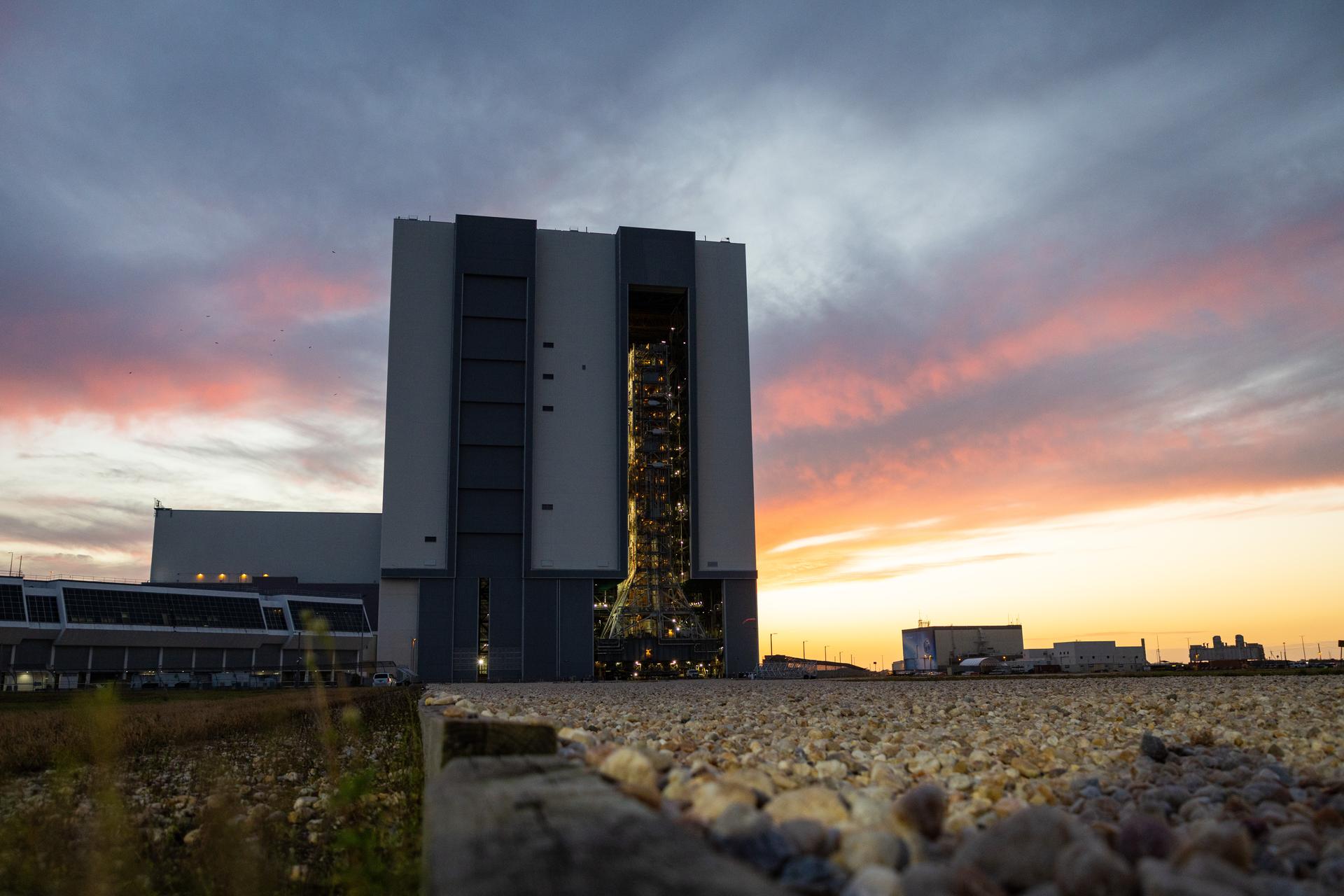
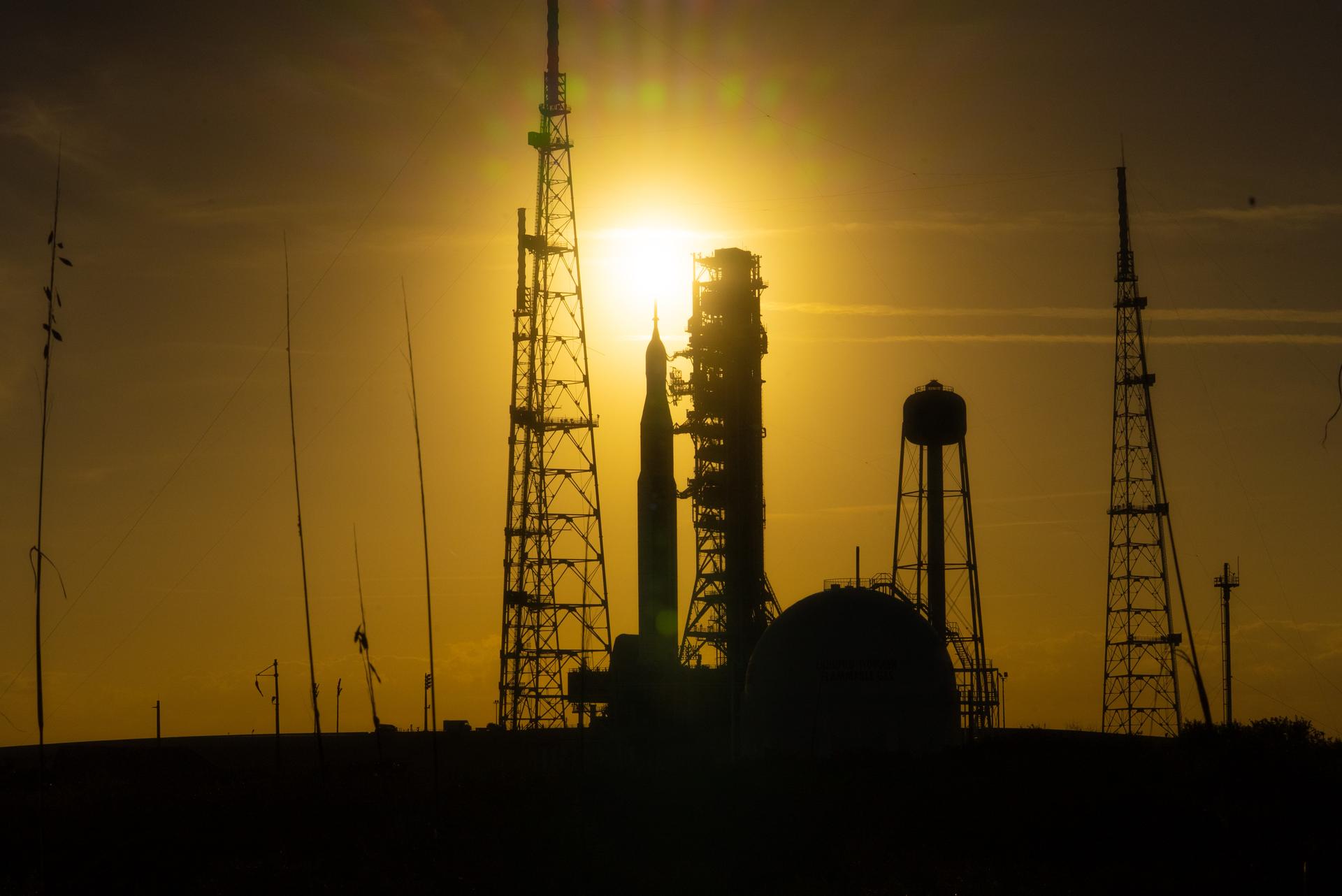
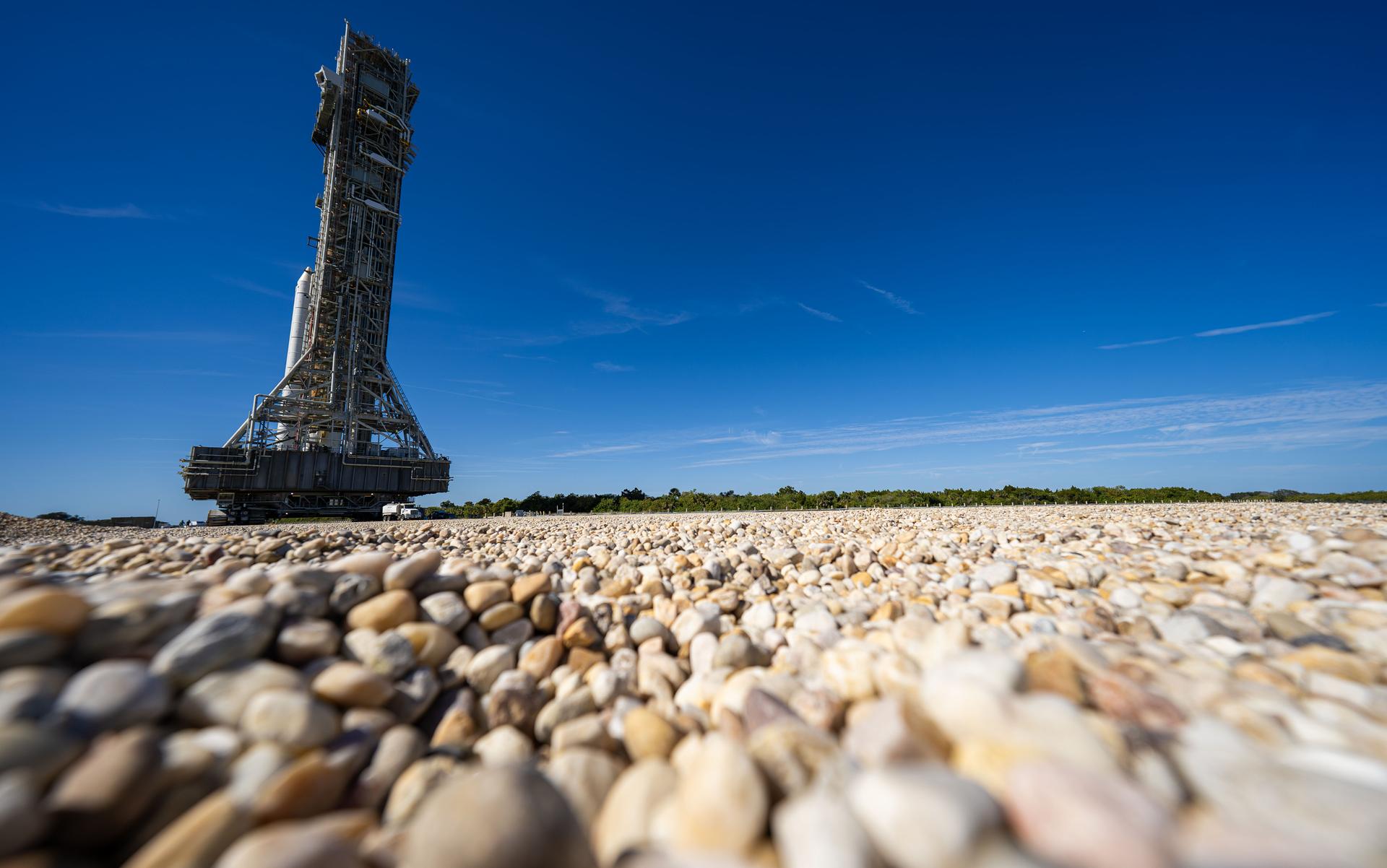
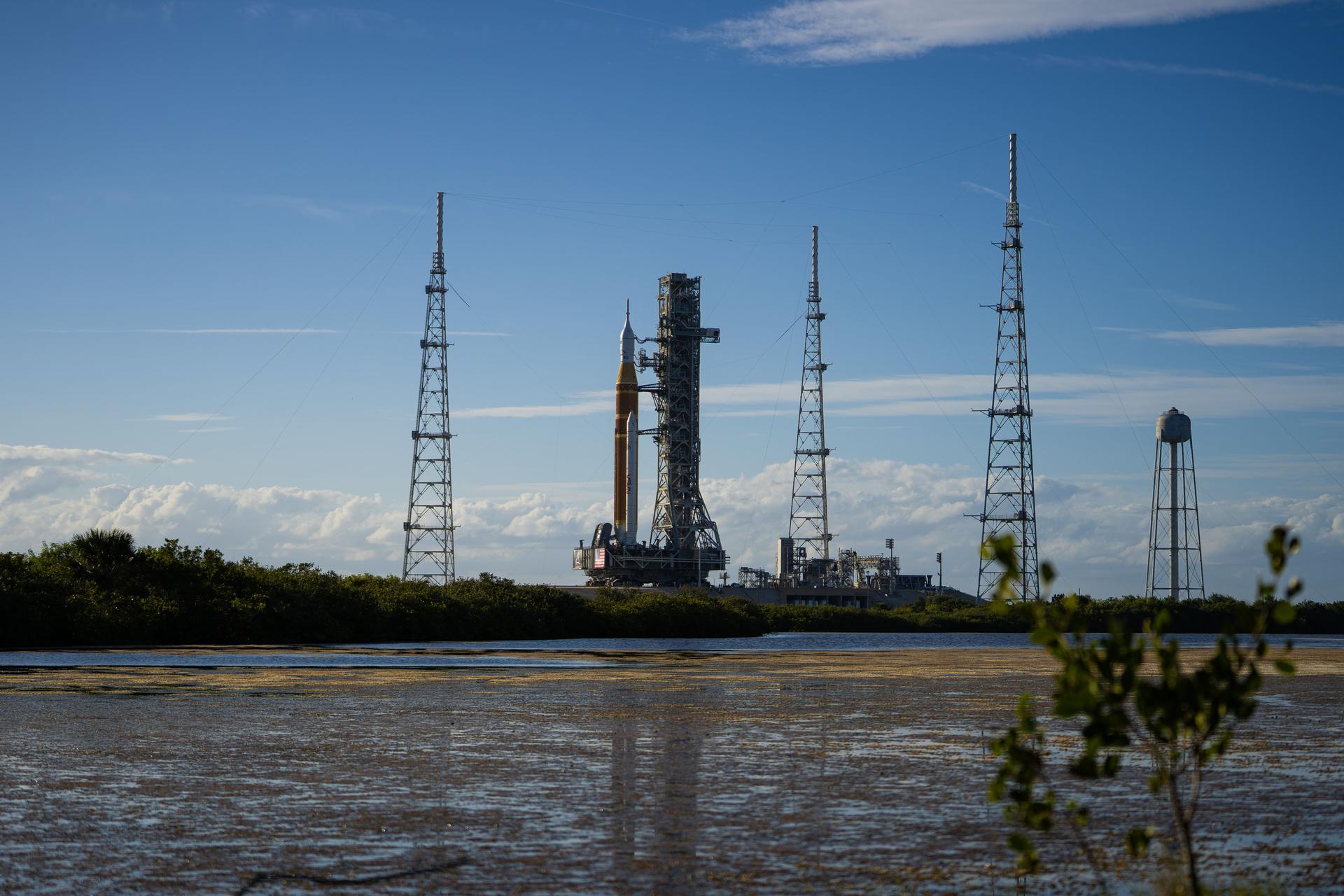
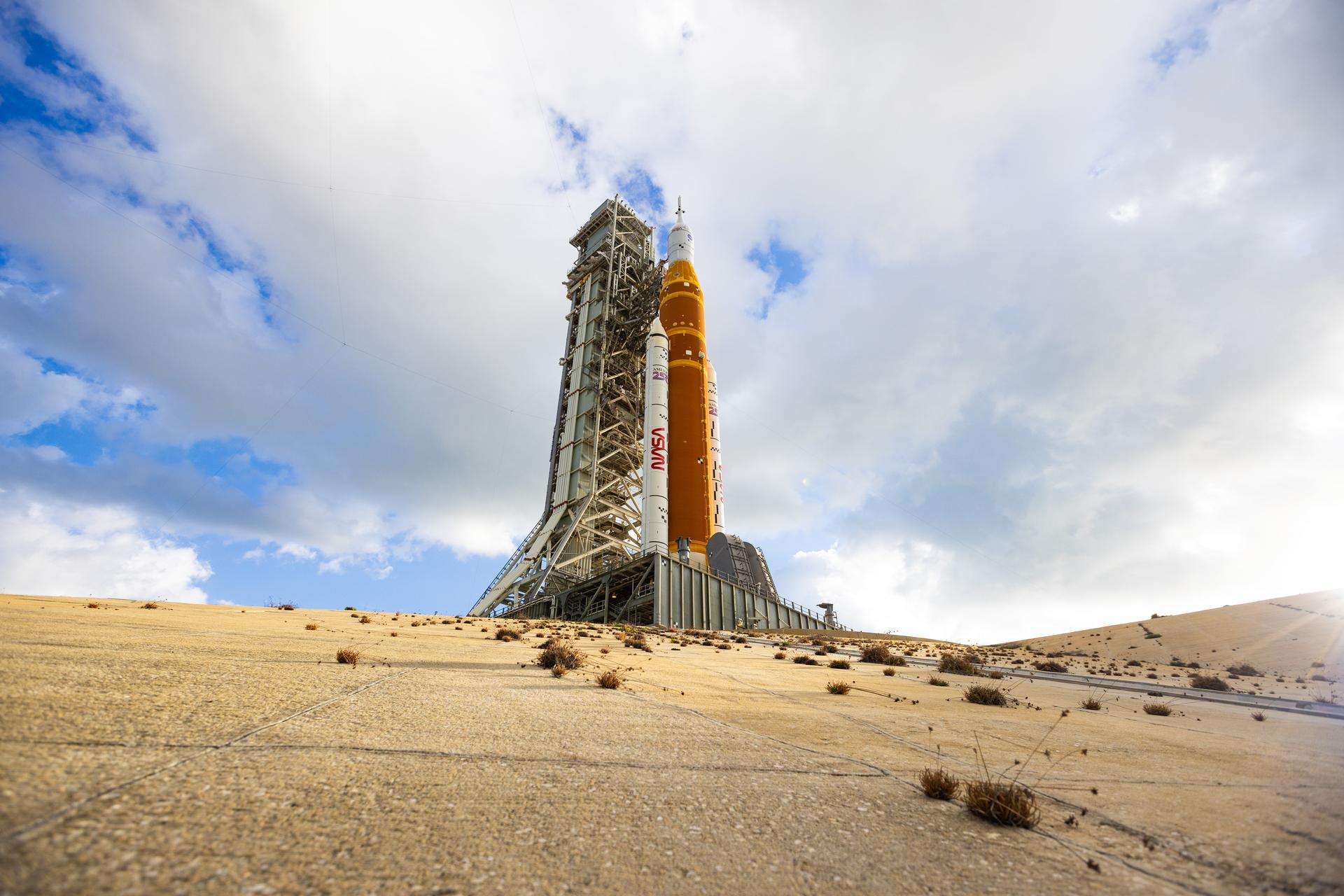
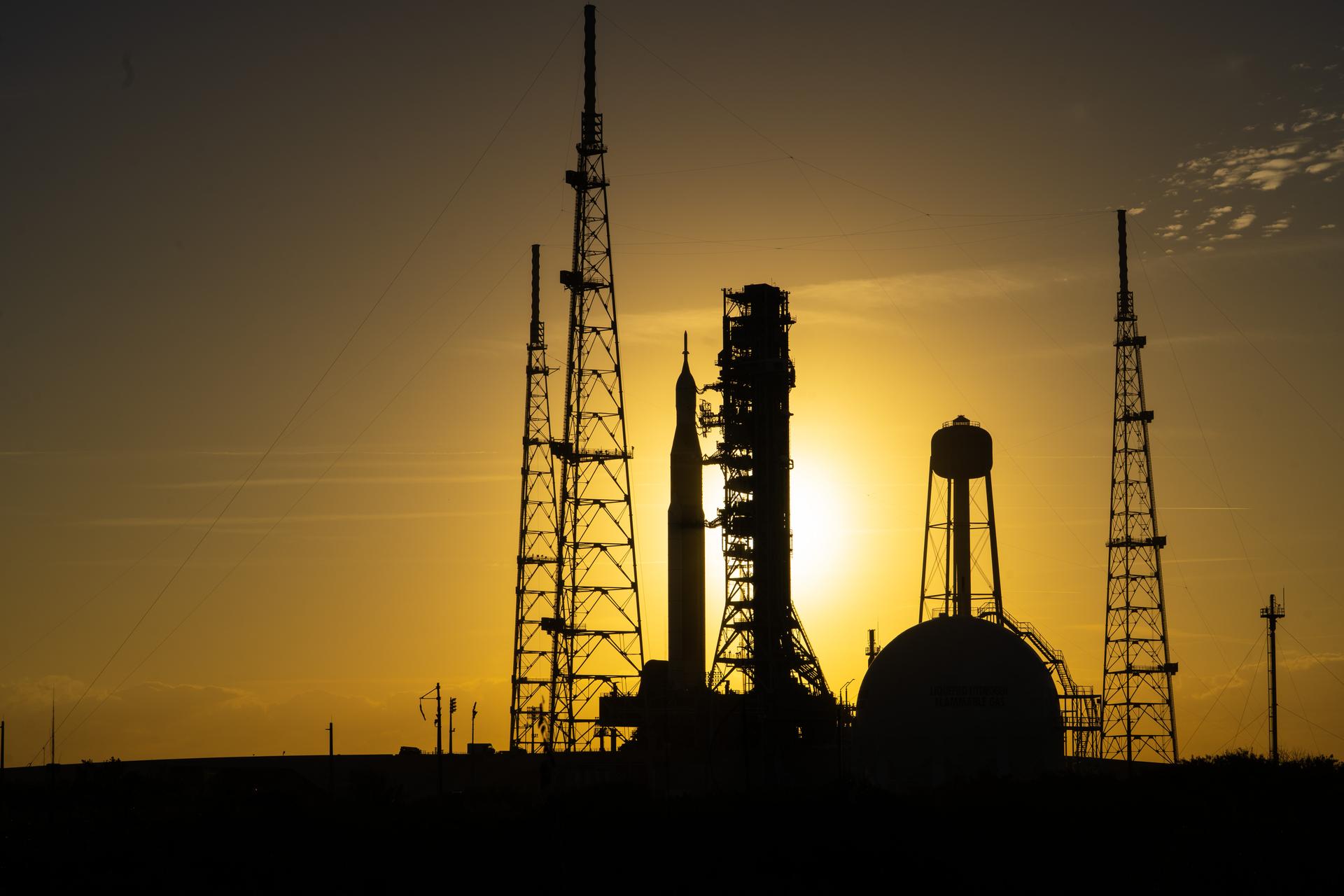
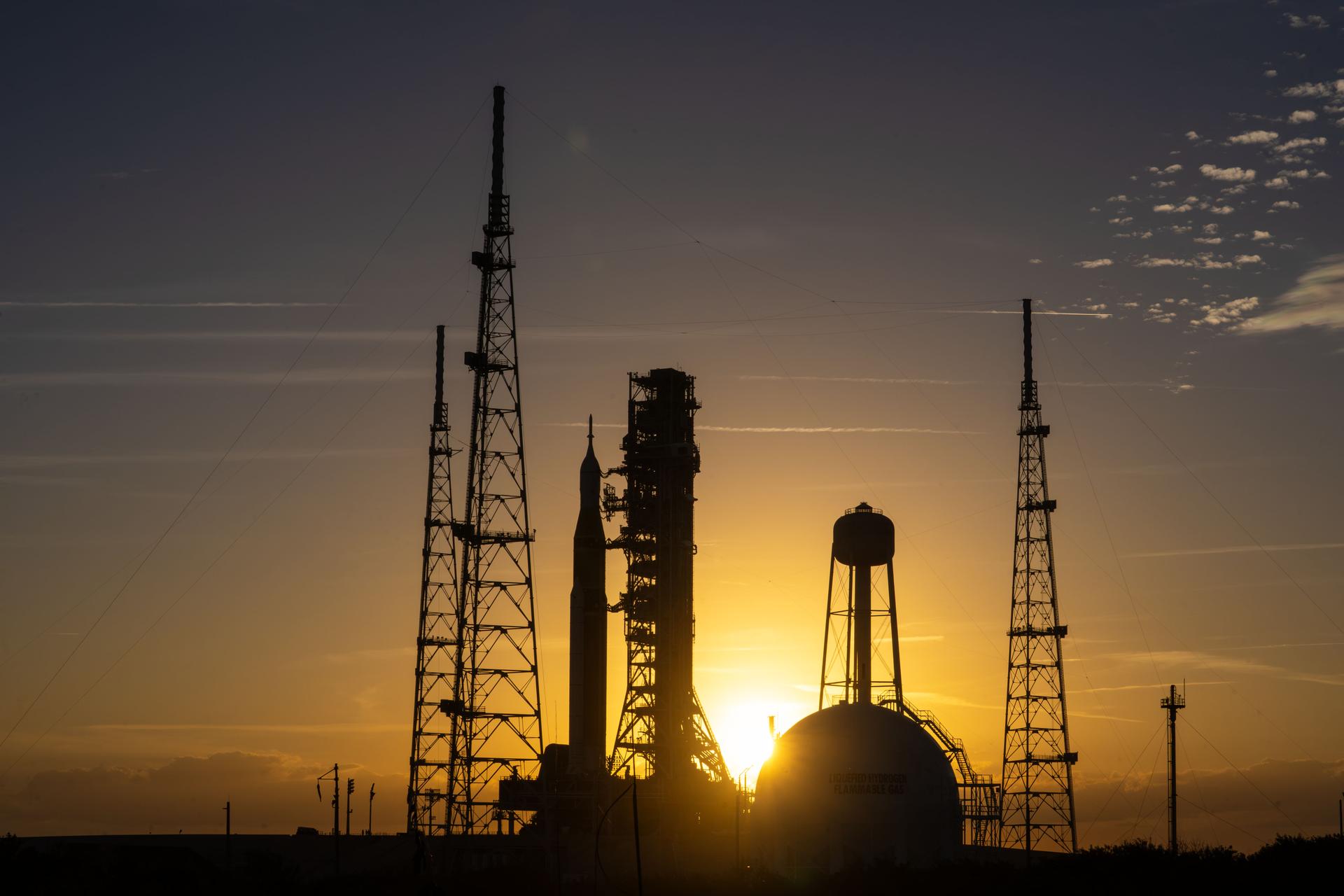
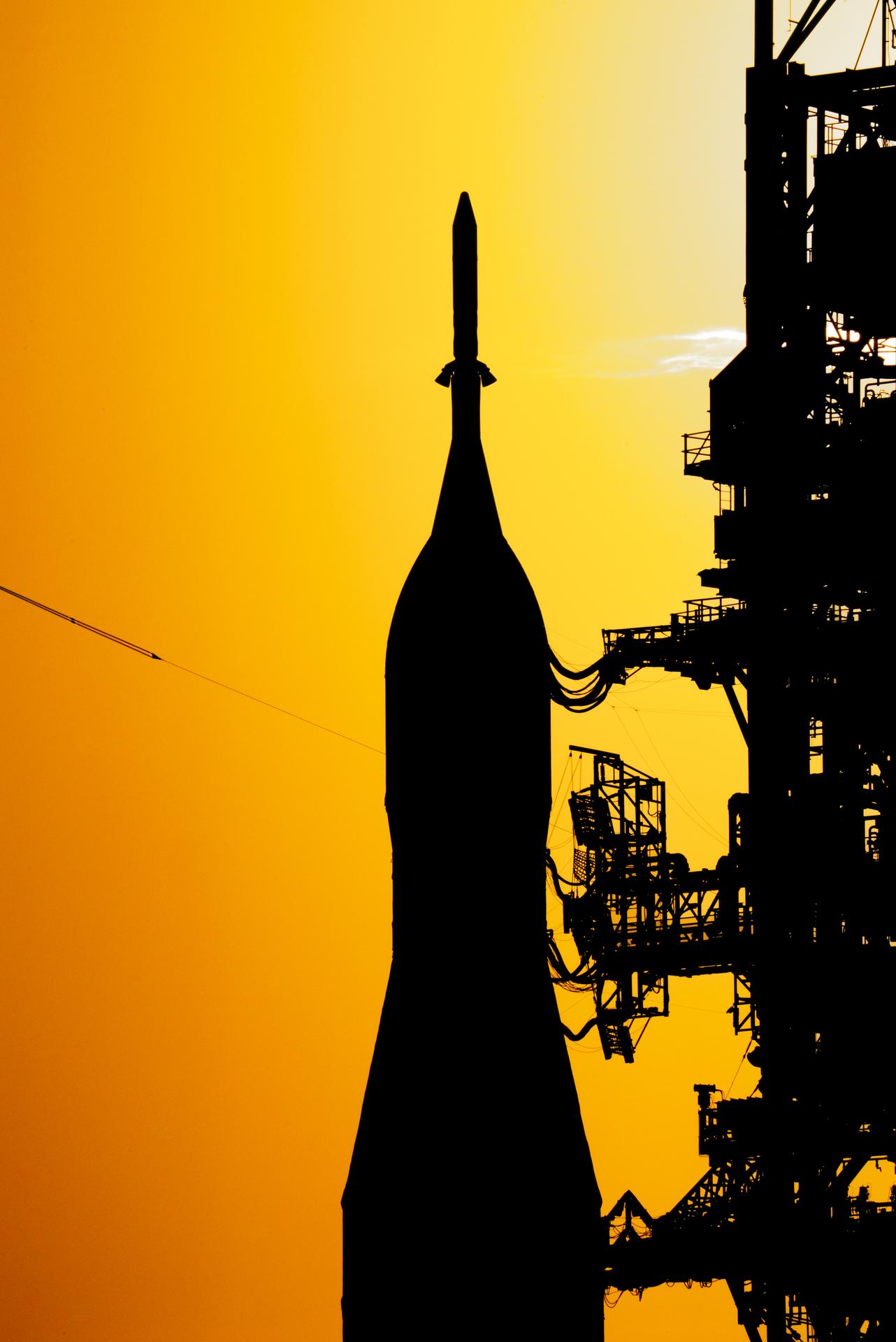
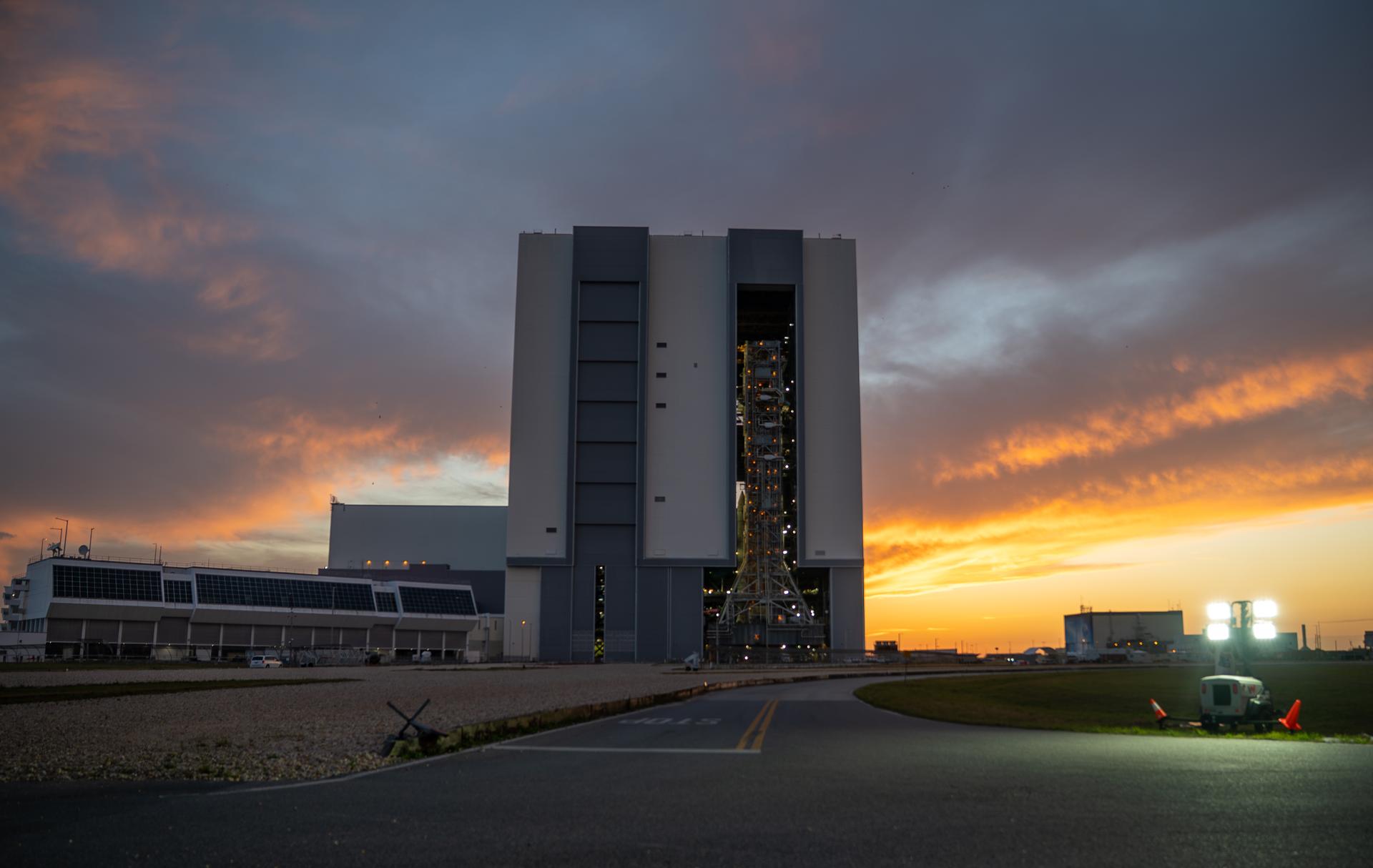
This image shows NASA’s SLS (Space Launch System) and Orion spacecraft rolling out of the Vehicle Assembly Building at NASA’s Kennedy Space Center. NASA's massive Crawler-Transporter, upgraded for the Artemis program, carries the powerful SLS rocket and Orion spacecraft on the Mobile Launcher from the Vehicle Assembly Building to Launch Pad 39B at Kennedy Space Center  in preparation for the Artemis II mission.
SLS_KSC_Artemis II Rollout sunset 1172026_36
This image shows NASA’s SLS (Space Launch System) and Orion spacecraft rolling out of the Vehicle Assembly Building at NASA’s Kennedy Space Center. NASA's massive Crawler-Transporter, upgraded for the Artemis program, carries the powerful SLS rocket and Orion spacecraft on the Mobile Launcher from the Vehicle Assembly Building to Launch Pad 39B at Kennedy Space Center   in preparation for the Artemis II mission.
NASA's SLS Rocket and Orion Spacecraft Rollout to Launch Pad 39B
This image shows NASA’s SLS (Space Launch System) and Orion spacecraft rolling out of the Vehicle Assembly Building at NASA’s Kennedy Space Center. NASA's massive Crawler-Transporter, upgraded for the Artemis program, carries the powerful SLS rocket and Orion spacecraft on the Mobile Launcher from the Vehicle Assembly Building to Launch Pad 39B at Kennedy Space Center   in preparation for the Artemis II mission.
NASA's SLS Rocket and Orion Spacecraft Rollout to Launch Pad 39B
This image shows NASA’s SLS (Space Launch System) and Orion spacecraft rolling out of the Vehicle Assembly Building at NASA’s Kennedy Space Center. NASA's massive Crawler-Transporter, upgraded for the Artemis program, carries the powerful SLS rocket and Orion spacecraft on the Mobile Launcher from the Vehicle Assembly Building to Launch Pad 39B at Kennedy Space Center   in preparation for the Artemis II mission.
NASA's SLS Rocket and Orion Spacecraft Rollout to Launch Pad 39B
These images and video show NASA’s SLS (Space Launch System) and Orion spacecraft rolling out of the Vehicle Assembly Building at NASA’s Kennedy Space Center. NASA's massive Crawler-Transporter, upgraded for the Artemis program, carries the powerful SLS rocket and Orion spacecraft on the Mobile Launcher from the Vehicle Assembly Building to Launch Pad 39B at Kennedy Space Center   in preparation for the Artemis II mission.
NASA's SLS Rocket and Orion Spacecraft Rollout to Launch Pad 39B
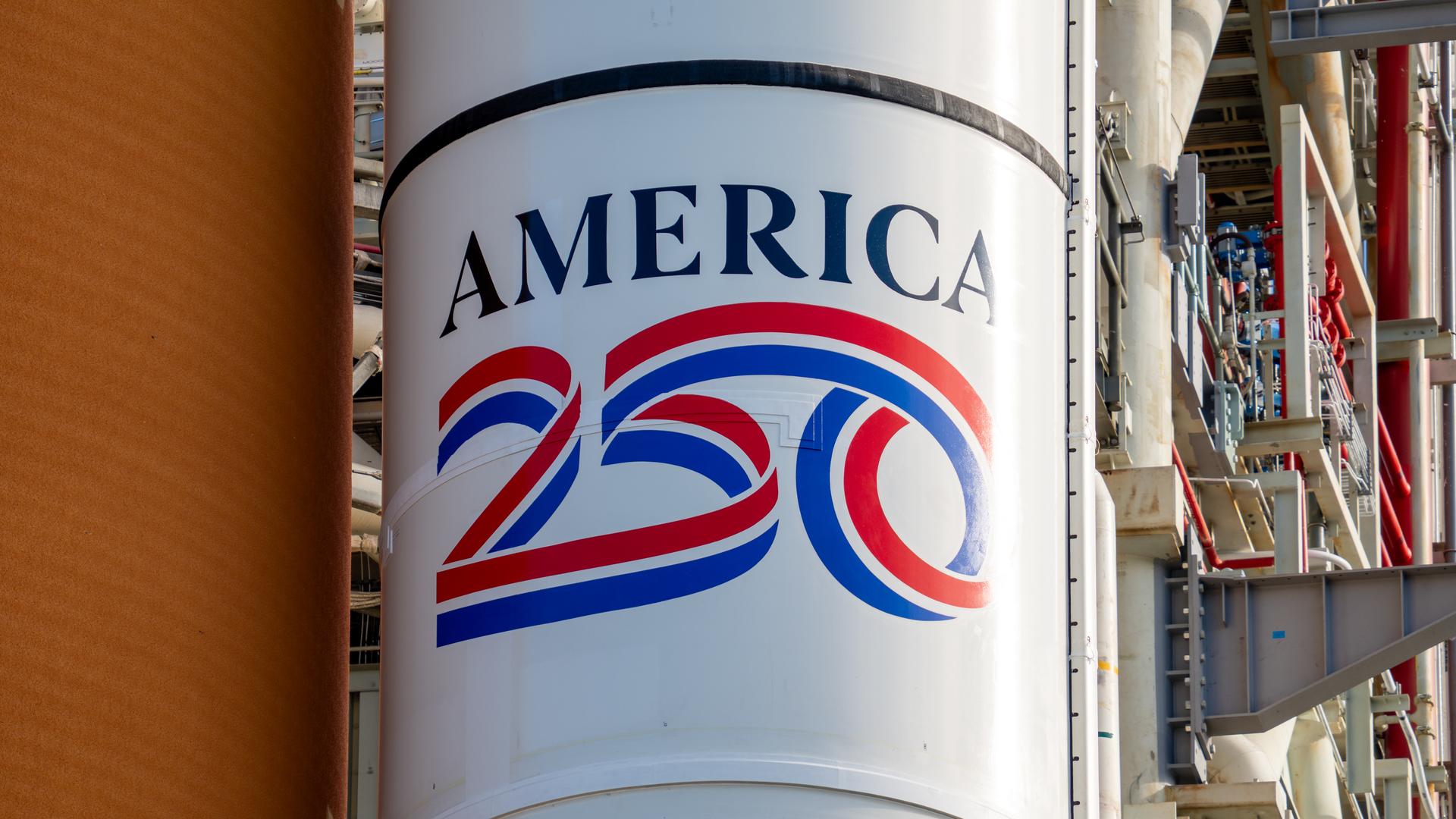
This image shows NASA’s SLS (Space Launch System) and Orion spacecraft rolling out of the Vehicle Assembly Building at NASA’s Kennedy Space Center. NASA's massive Crawler-Transporter, upgraded for the Artemis program, carries the powerful SLS rocket and Orion spacecraft on the Mobile Launcher from the Vehicle Assembly Building to Launch Pad 39B at Kennedy Space Center in preparation for the Artemis II mission.
NASA's Artemis II SLS Rocket and Orion Spacecraft Rollout to Launch Pad 39B
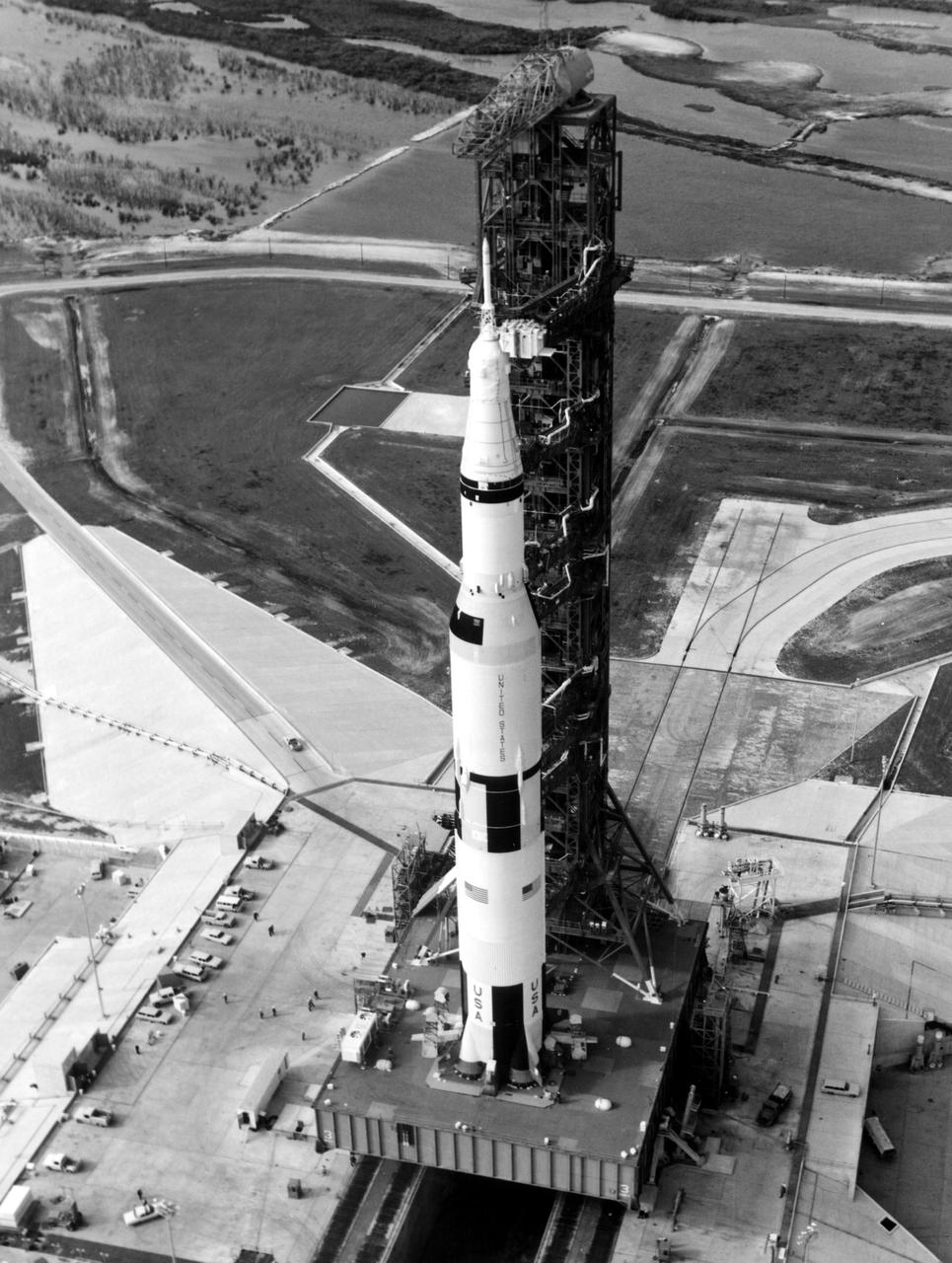
KENNEDY SPACE CENTER, FLA. --  Apollo 10 rollout to Complex 39-B.
KSC-69pc-128
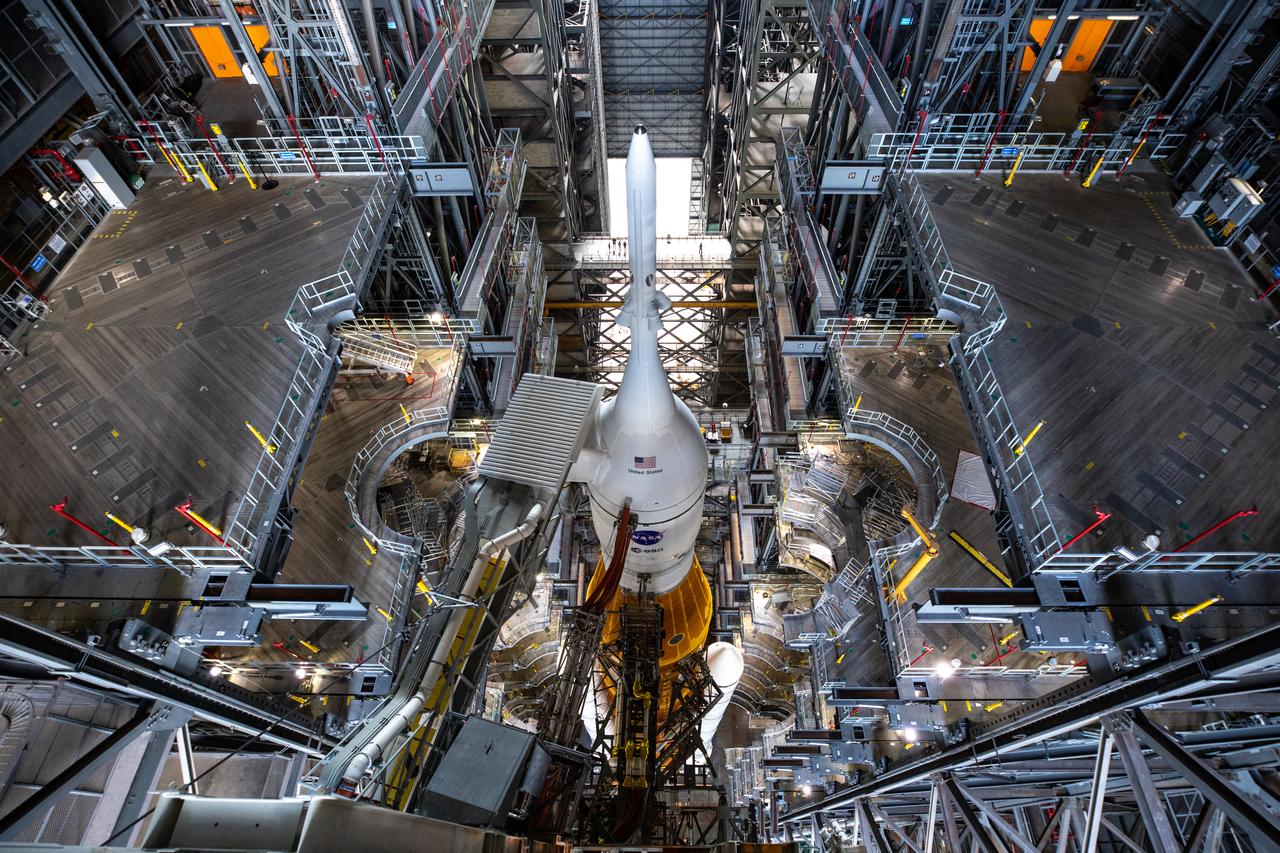
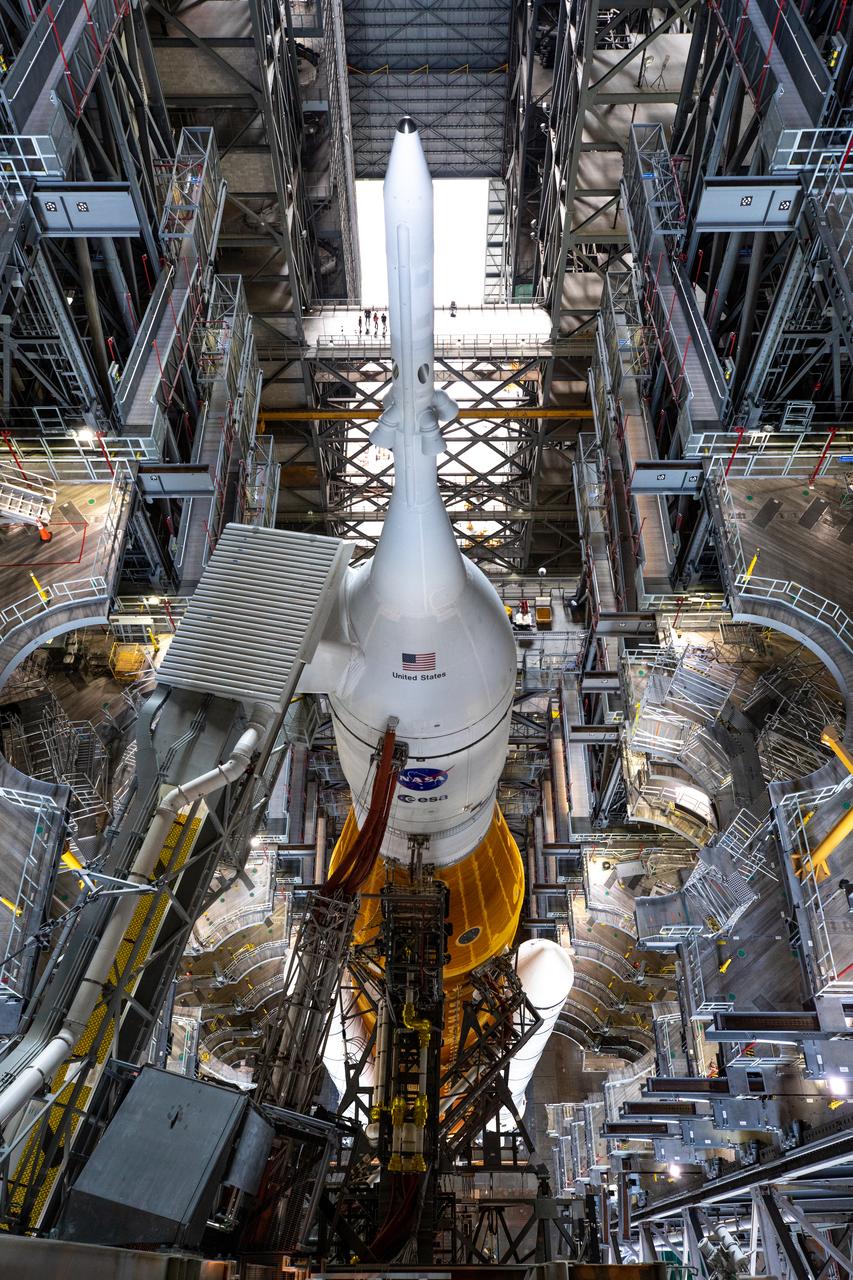
NASA’s Space Launch System and Orion spacecraft atop the mobile launcher are in view in High Bay 3 of the Vehicle Assembly Building (VAB) at the agency’s Kennedy Space Center in Florida on Tuesday, Aug. 16, 2022. All of the work platforms have been retracted in preparation for rollout to Launch Complex 39B ahead of launch of Artemis I. The crawler-transporter, driven by engineers, is under the Artemis I stack atop the mobile launcher and will carry it 4.2 miles via the crawlerway that connects the VAB to the launch pad. The agency’s Artemis I flight test is scheduled to liftoff on Monday, Aug. 29. The first in a series of increasingly complex missions, Artemis I will provide a foundation for human deep space exploration and demonstrate our commitment and capability to extend human presence to the Moon and beyond. The primary goal of Artemis I is to thoroughly test the integrated systems before crewed missions by launching Orion atop the SLS rocket, operating the spacecraft in a deep space environment, testing Orion’s heat shield, and recovering the crew module after reentry, descent, and splashdown.
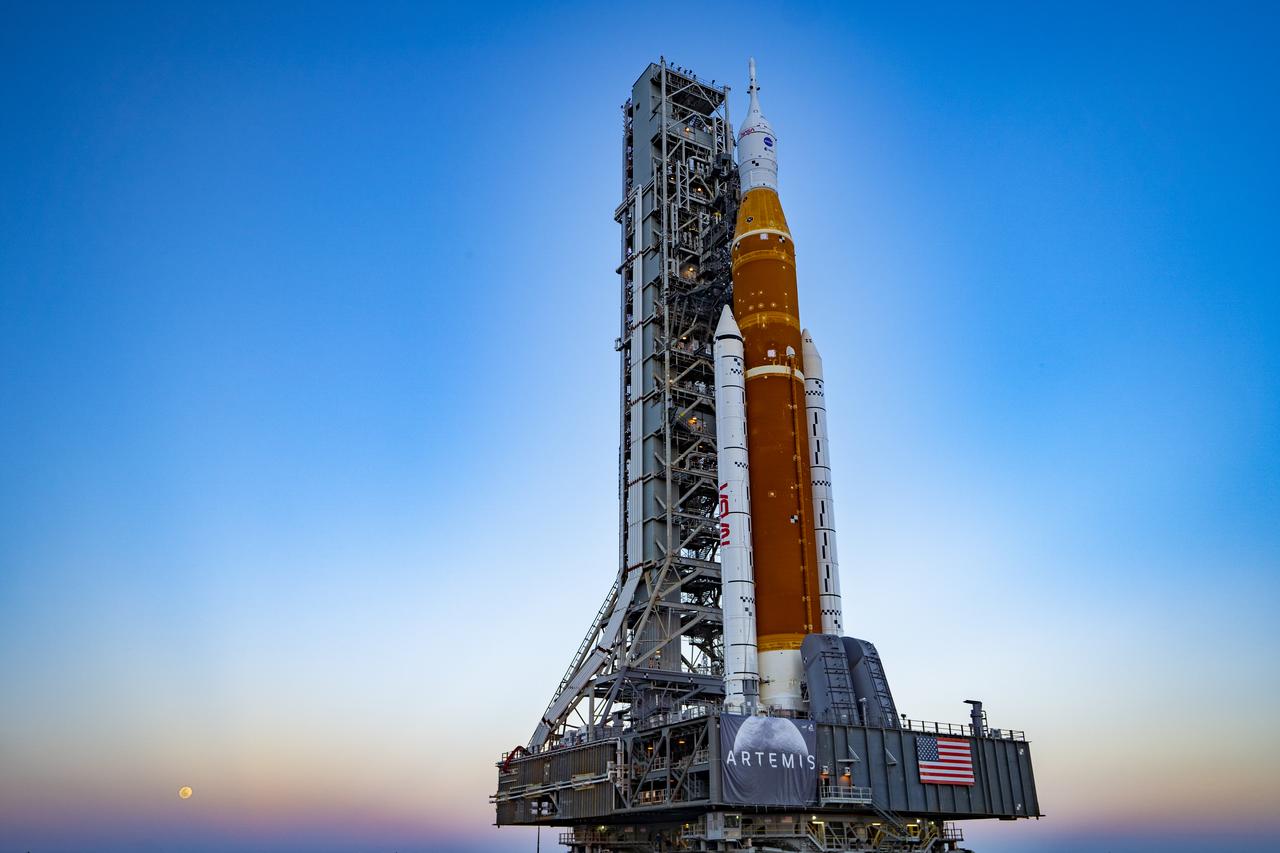
Artemis I Launch Rollout
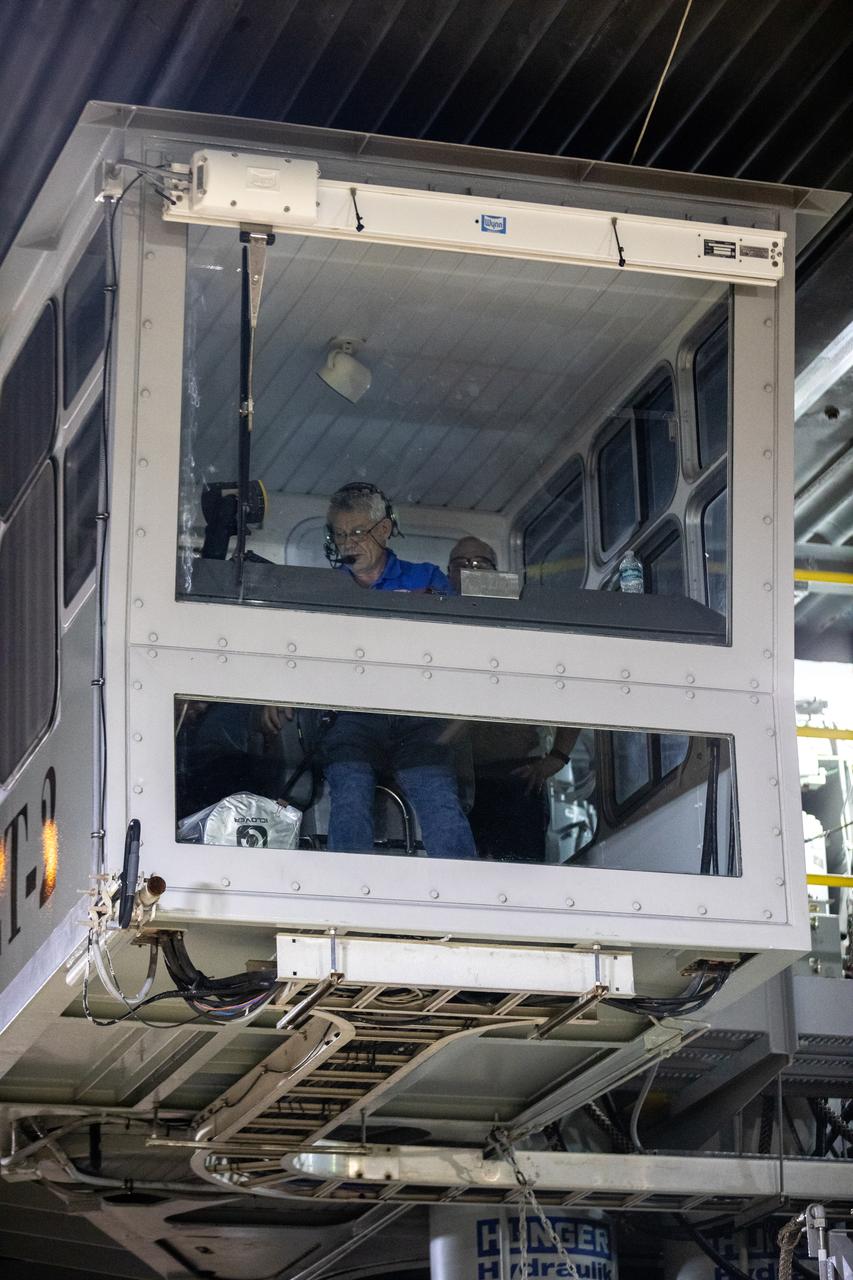
Sam Dove, crawler-transporter operations engineer and driver, Jacobs Engineering, is seen inside the operator cab of the crawler-transporter during rollout operations for NASA’s Space Launch System and Orion spacecraft at the agency’s Kennedy Space Center in Florida on Tuesday, Aug. 16, 2022. The crawler-transporter is under the Artemis I stack atop the mobile launcher and will carry it 4.2 miles via the crawlerway that connects the VAB to the launch pad. The agency’s Artemis I flight test is scheduled to liftoff on Monday, Aug. 29. The first in a series of increasingly complex missions, Artemis I will provide a foundation for human deep space exploration and demonstrate our commitment and capability to extend human presence to the Moon and beyond. The primary goal of Artemis I is to thoroughly test the integrated systems before crewed missions by launching Orion atop the SLS rocket, operating the spacecraft in a deep space environment, testing Orion’s heat shield, and recovering the crew module after reentry, descent, and splashdown.
Artemis I Launch Rollout
NASA’s Space Launch System and Orion spacecraft atop the mobile launcher are in view in High Bay 3 of the Vehicle Assembly Building (VAB) at the agency’s Kennedy Space Center in Florida on Tuesday, Aug. 16, 2022. All of the work platforms have been retracted in preparation for rollout to Launch Complex 39B ahead of launch of Artemis I. The crawler-transporter, driven by engineers, is under the Artemis I stack atop the mobile launcher and will carry it 4.2 miles via the crawlerway that connects the VAB to the launch pad. The agency’s Artemis I flight test is scheduled to liftoff on Monday, Aug. 29. The first in a series of increasingly complex missions, Artemis I will provide a foundation for human deep space exploration and demonstrate our commitment and capability to extend human presence to the Moon and beyond. The primary goal of Artemis I is to thoroughly test the integrated systems before crewed missions by launching Orion atop the SLS rocket, operating the spacecraft in a deep space environment, testing Orion’s heat shield, and recovering the crew module after reentry, descent, and splashdown.
Artemis I Launch Rollout
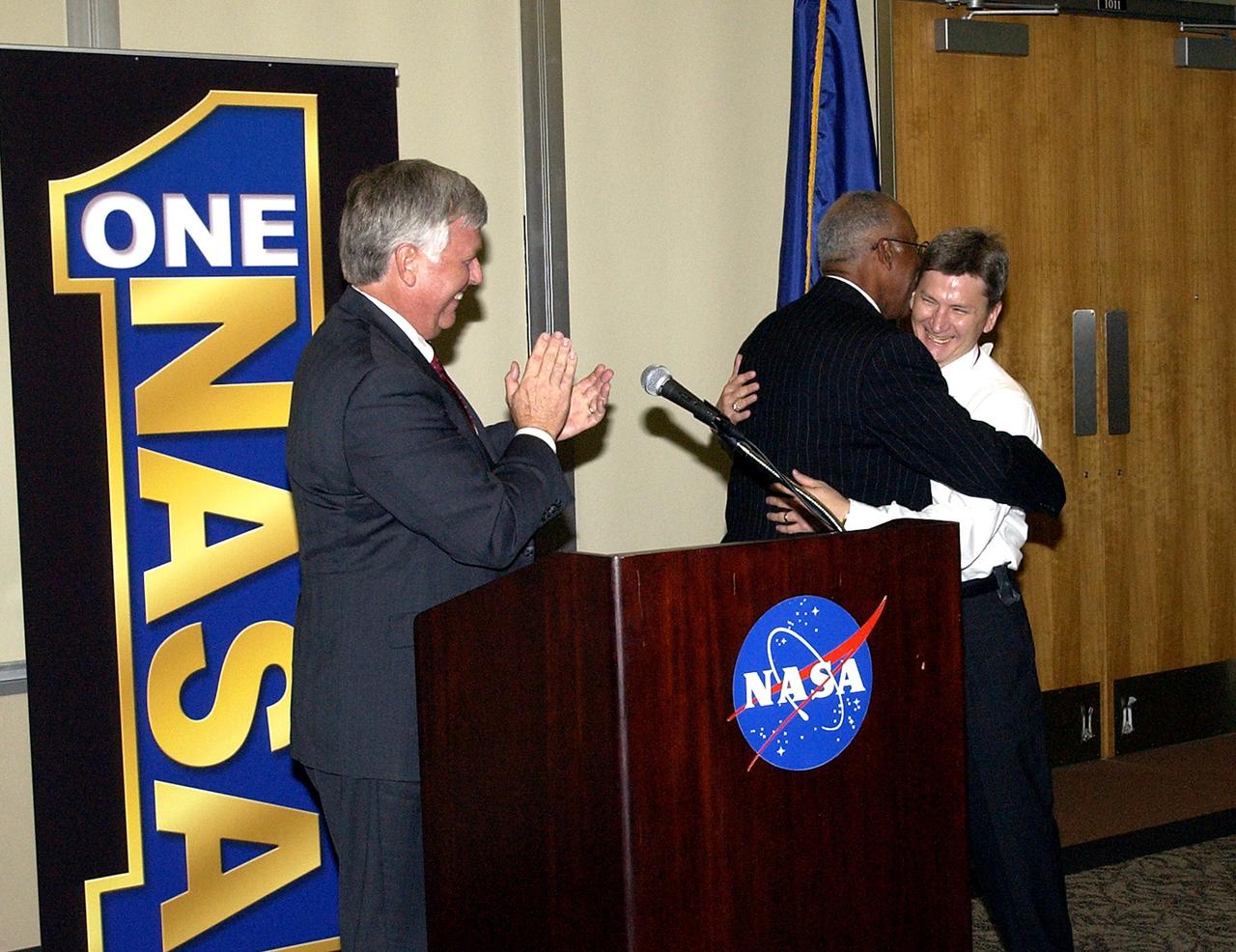
KENNEDY SPACE CENTER, FLA.  -   At the rollout of the One NASA initiative at KSC, Glenn Research Center Director Dr. Julian Earls embraces implementation team lead Johnny Stevenson while KSC Director Jim Kennedy (left) applauds.  Earls gave a motivational speech during the luncheon held at the Visitor Complex Debus Conference Center.  The event was held at the IMAX Theater® where NASA leaders discussed One NASA with selected employees.  Explaining how their respective centers contribute to One NASA, along with Kennedy and Earls, were James Jennings,  NASA’s associate deputy administrator for institutions and asset management; Ed Weiler, associate administrator for Space Science; Kevin Peterson, Dryden Flight Research Center director; incoming KSC Deputy Director Woodrow Whitlow; and implementation team lead Johnny Stevenson.
KENNEDY SPACE CENTER, FLA. - At the rollout of the One NASA initiative at KSC, Glenn Research Center Director Dr. Julian Earls embraces implementation team lead Johnny Stevenson while KSC Director Jim Kennedy (left) applauds. Earls gave a motivational speech during the luncheon held at the Visitor Complex Debus Conference Center. The event was held at the IMAX Theater® where NASA leaders discussed One NASA with selected employees. Explaining how their respective centers contribute to One NASA, along with Kennedy and Earls, were James Jennings, NASA’s associate deputy administrator for institutions and asset management; Ed Weiler, associate administrator for Space Science; Kevin Peterson, Dryden Flight Research Center director; incoming KSC Deputy Director Woodrow Whitlow; and implementation team lead Johnny Stevenson.
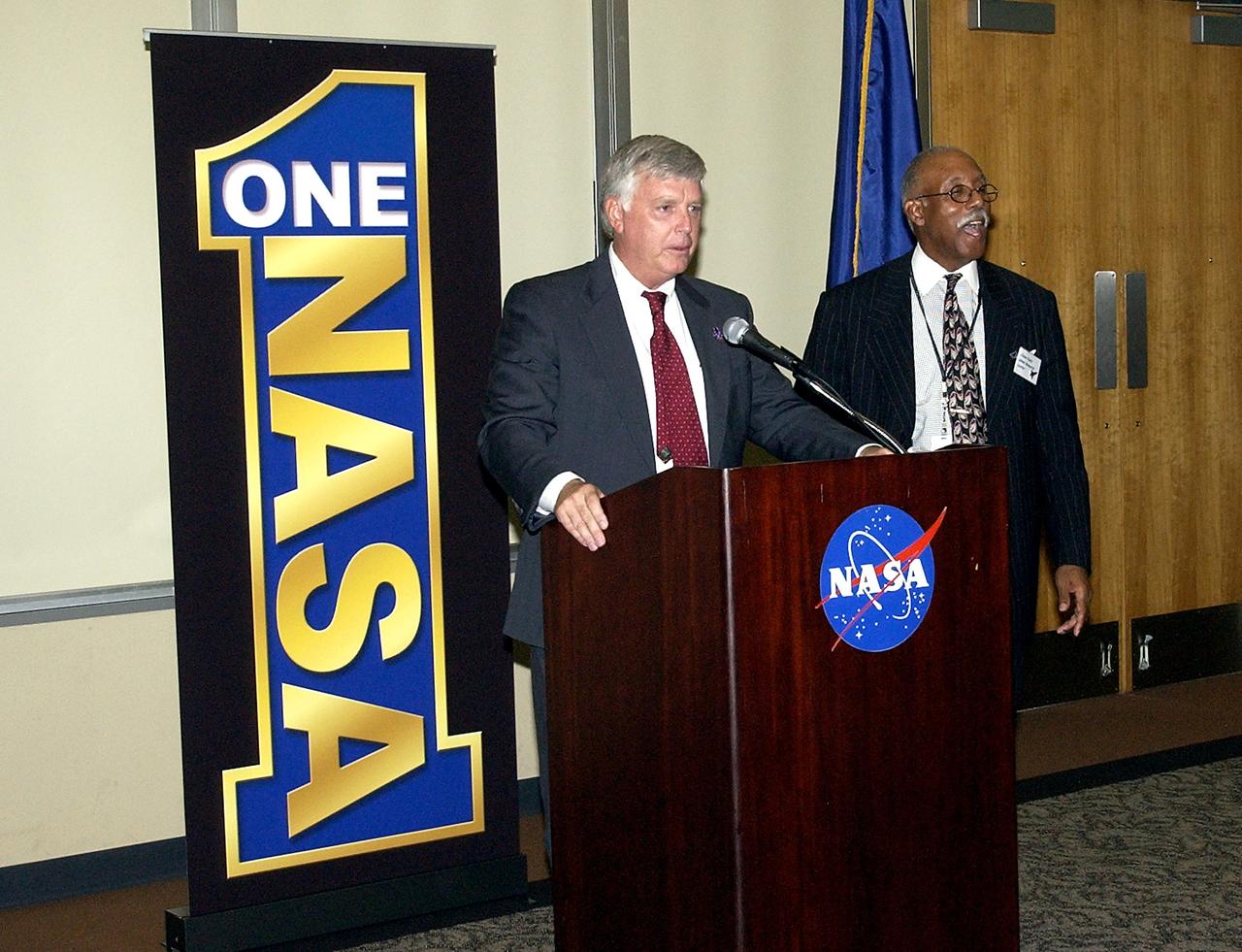
KENNEDY SPACE CENTER, FLA.  -   KSC Director Jim Kennedy and Glenn Research Center Director Dr. Julian Earls share the stage during the rollout of the One NASA initiative at KSC.  Earls gave a motivational speech during the luncheon held at the Visitor Complex Debus Conference Center.  The event was held at the IMAX Theater® where NASA leaders discussed One NASA with selected employees.   Explaining how their respective centers contribute to One NASA, along with Kennedy and Earls, were James Jennings,  NASA’s associate deputy administrator for institutions and asset management; Ed Weiler, associate administrator for Space Science; Kevin Peterson, Dryden Flight Research Center director; incoming KSC Deputy Director Woodrow Whitlow; and implementation team lead Johnny Stevenson.
KENNEDY SPACE CENTER, FLA. - KSC Director Jim Kennedy and Glenn Research Center Director Dr. Julian Earls share the stage during the rollout of the One NASA initiative at KSC. Earls gave a motivational speech during the luncheon held at the Visitor Complex Debus Conference Center. The event was held at the IMAX Theater® where NASA leaders discussed One NASA with selected employees. Explaining how their respective centers contribute to One NASA, along with Kennedy and Earls, were James Jennings, NASA’s associate deputy administrator for institutions and asset management; Ed Weiler, associate administrator for Space Science; Kevin Peterson, Dryden Flight Research Center director; incoming KSC Deputy Director Woodrow Whitlow; and implementation team lead Johnny Stevenson.
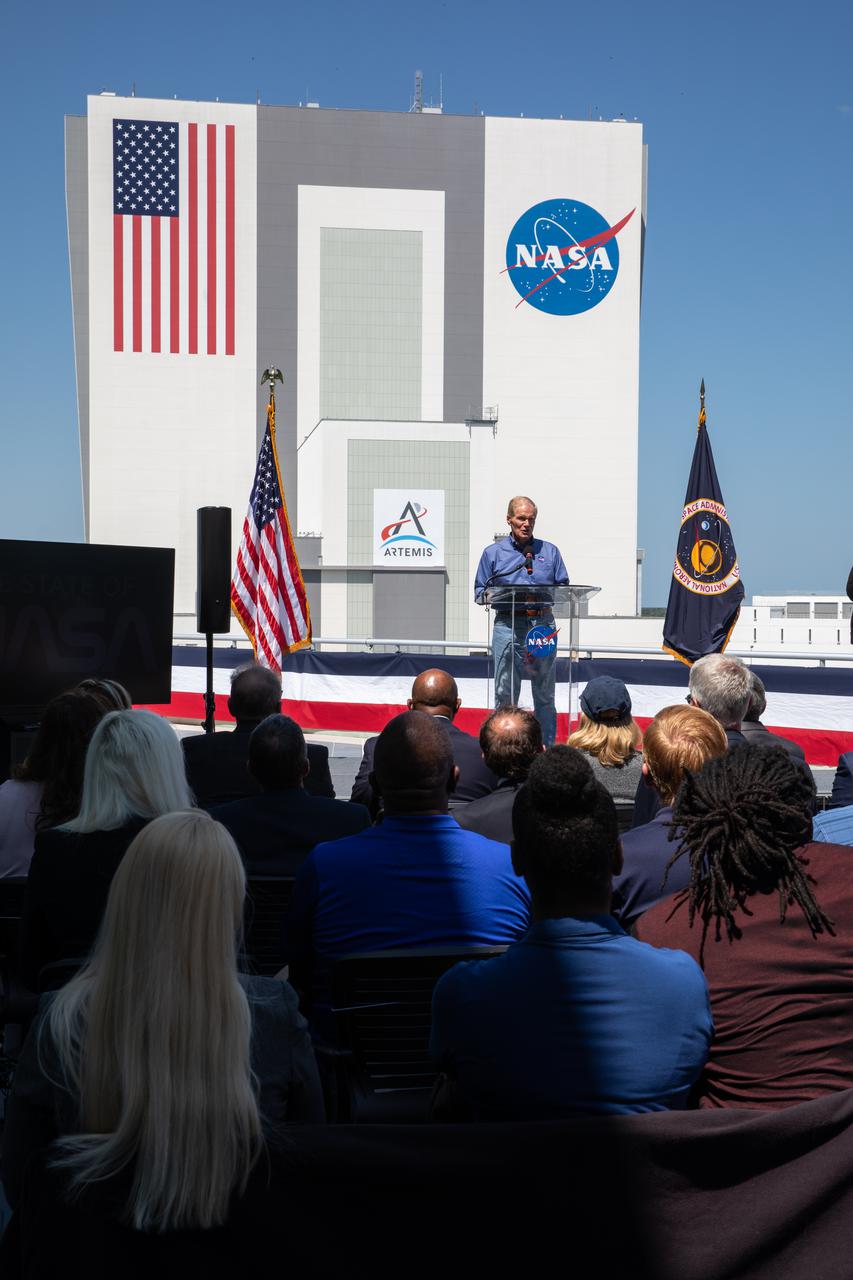
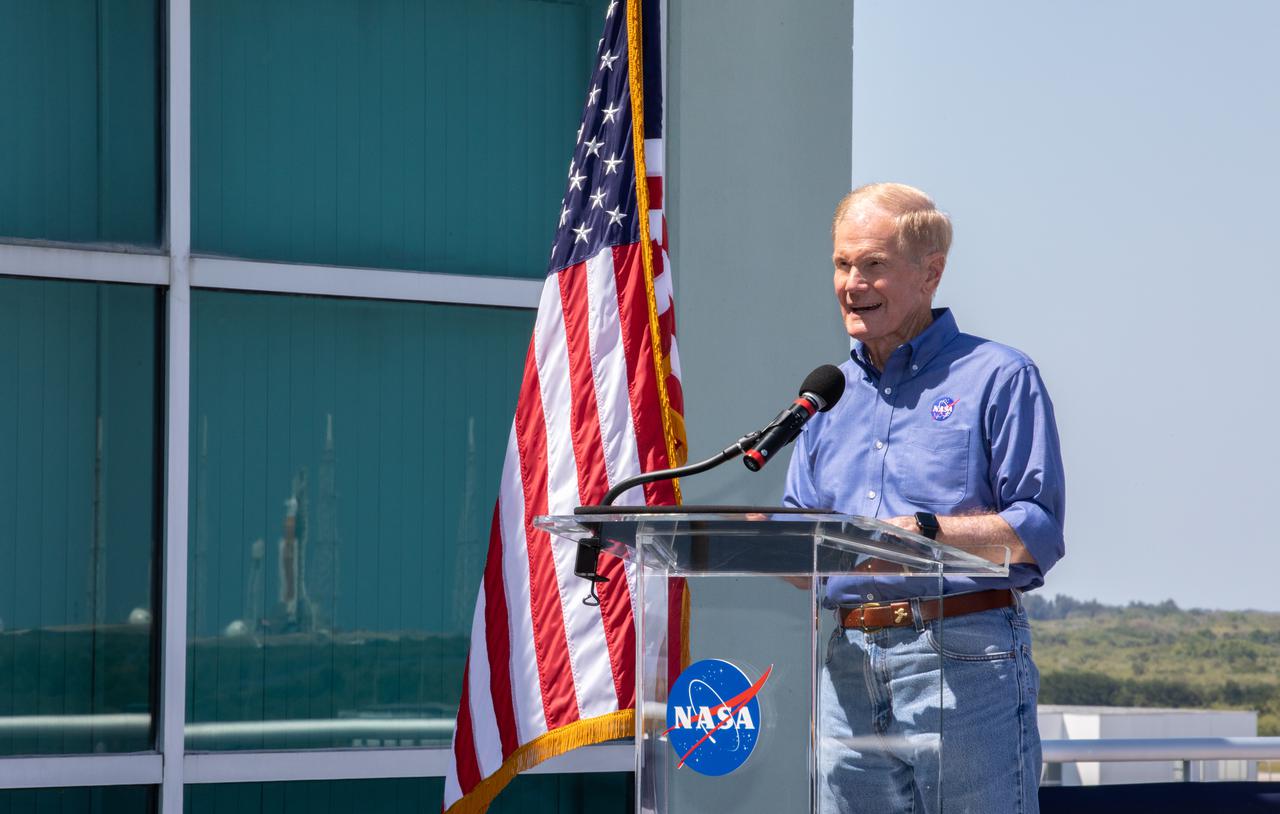
NASA Administrator Bill Nelson delivers the 2022 State of NASA address on March 28, 2022, from the agency’s Kennedy Space Center in Florida. Nelson highlighted NASA’s plans to explore the Moon and Mars, address climate change, promote racial and economic equity, and drive economic growth while sustaining U.S. leadership in aviation and aerospace innovation.
State of NASA Live Address
NASA Administrator Bill Nelson delivers the 2022 State of NASA address on March 28, 2022, from the agency’s Kennedy Space Center in Florida. Nelson highlighted NASA’s plans to explore the Moon and Mars, address climate change, promote racial and economic equity, and drive economic growth while sustaining U.S. leadership in aviation and aerospace innovation.
State of NASA Live Address
This image shows NASA’s SLS (Space Launch System) and Orion spacecraft rolling out of the Vehicle Assembly Building at NASA’s Kennedy Space Center. NASA's massive Crawler-Transporter, upgraded for the Artemis program, carries the powerful SLS rocket and Orion spacecraft on the Mobile Launcher from the Vehicle Assembly Building to Launch Pad 39B at Kennedy Space Center in preparation for the Artemis II mission.
NASA's Artemis II SLS Rocket and Orion Spacecraft Rollout to Launch Pad 39B
This image shows NASA’s SLS (Space Launch System) and Orion spacecraft rolling out of the Vehicle Assembly Building at NASA’s Kennedy Space Center. NASA's massive Crawler-Transporter, upgraded for the Artemis program, carries the powerful SLS rocket and Orion spacecraft on the Mobile Launcher from the Vehicle Assembly Building to Launch Pad 39B at Kennedy Space Center in preparation for the Artemis II mission.
NASA's Artemis II SLS Rocket and Orion Spacecraft Rollout to Launch Pad 39B
This image shows NASA’s SLS (Space Launch System) and Orion spacecraft rolling out of the Vehicle Assembly Building at NASA’s Kennedy Space Center. NASA's massive Crawler-Transporter, upgraded for the Artemis program, carries the powerful SLS rocket and Orion spacecraft on the Mobile Launcher from the Vehicle Assembly Building to Launch Pad 39B at Kennedy Space Center in preparation for the Artemis II mission.
NASA's SLS Rocket and Orion Spacecraft Rollout to Launch Pad 39B
KENNEDY SPACE CENTER, FLA.  -  Dryden Flight Research Center Director Kevin Peterson talks about One NASA during the rollout of the Agency initiative at KSC.  The event was held at the IMAX Theater® where NASA leaders discussed One NASA with selected employees.  Explaining how their respective centers contribute to One NASA, along with Peterson, were KSC Director Jim Kennedy, James Jennings,  NASA’s associate deputy administrator for institutions and asset management; Ed Weiler, associate administrator for Space Science; Kevin Peterson, Dryden Flight Research Center director; incoming KSC Deputy Director Woodrow Whitlow; and implementation team lead Johnny Stevenson.   Glenn Research Center Director Dr. Julian Earls gave a motivational speech during the luncheon held at the Visitor Complex Debus Conference Center.
KENNEDY SPACE CENTER, FLA. - Dryden Flight Research Center Director Kevin Peterson talks about One NASA during the rollout of the Agency initiative at KSC. The event was held at the IMAX Theater® where NASA leaders discussed One NASA with selected employees. Explaining how their respective centers contribute to One NASA, along with Peterson, were KSC Director Jim Kennedy, James Jennings, NASA’s associate deputy administrator for institutions and asset management; Ed Weiler, associate administrator for Space Science; Kevin Peterson, Dryden Flight Research Center director; incoming KSC Deputy Director Woodrow Whitlow; and implementation team lead Johnny Stevenson. Glenn Research Center Director Dr. Julian Earls gave a motivational speech during the luncheon held at the Visitor Complex Debus Conference Center.
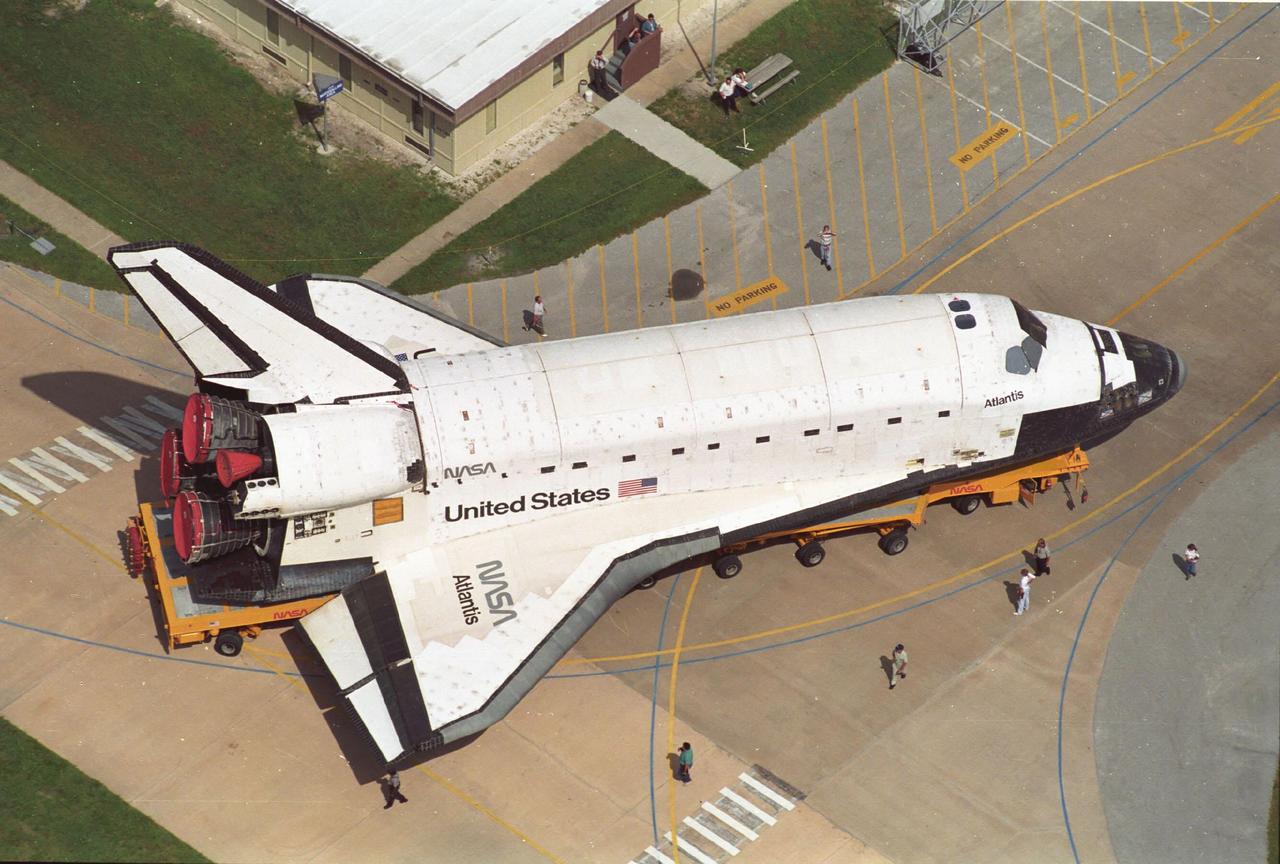
KENNEDY SPACE CENTER, FLA. -- Atlantis rolls to the VAB for stacking before rollout to Pad 39A in preparation for STS-79.
KSC-96pc0973
KENNEDY SPACE CENTER, FLA.  -  NASA’s Ed Weiler, associate administrator for Space Science, speaks to employees and guests during the rollout at KSC of the Agency initiative One NASA .   The event was held at the IMAX Theater®.  Explaining how their respective centers contribute to One NASA, along with Weiler, were KSC Director Jim Kennedy; James Jennings,  NASA’s associate deputy administrator for institutions and asset management; Kevin Peterson, Dryden Flight Research Center director;  incoming KSC Deputy Director Woodrow Whitlow; and implementation team lead Johnny Stevenson.   Glenn Research Center Director Dr. Julian Earls gave a motivational speech during the luncheon held at the Visitor Complex Debus Conference Center.
KENNEDY SPACE CENTER, FLA. - NASA’s Ed Weiler, associate administrator for Space Science, speaks to employees and guests during the rollout at KSC of the Agency initiative One NASA . The event was held at the IMAX Theater®. Explaining how their respective centers contribute to One NASA, along with Weiler, were KSC Director Jim Kennedy; James Jennings, NASA’s associate deputy administrator for institutions and asset management; Kevin Peterson, Dryden Flight Research Center director; incoming KSC Deputy Director Woodrow Whitlow; and implementation team lead Johnny Stevenson. Glenn Research Center Director Dr. Julian Earls gave a motivational speech during the luncheon held at the Visitor Complex Debus Conference Center.
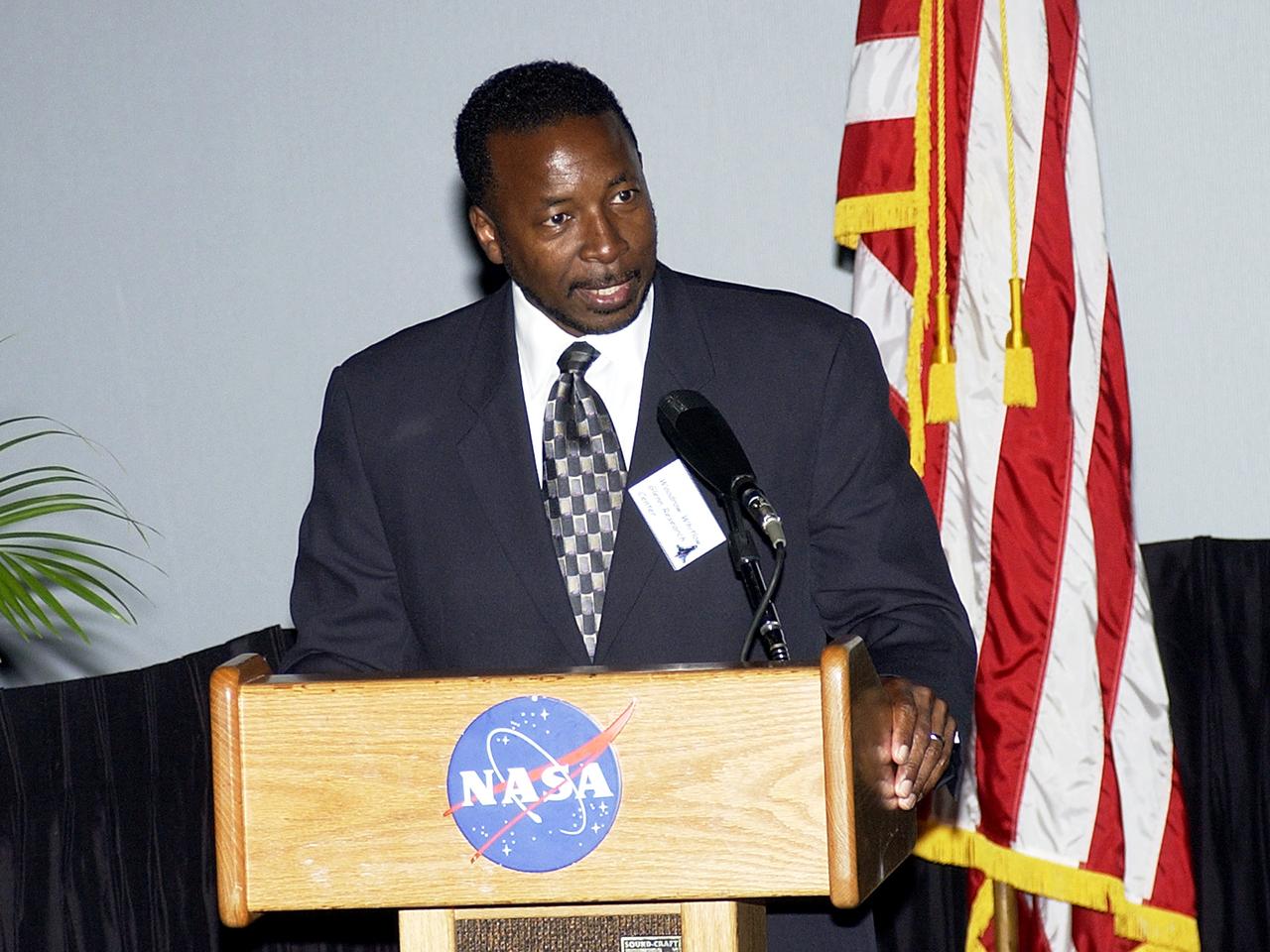
KENNEDY SPACE CENTER, FLA.  -  KSC’s incoming  Deputy Director Woodrow Whitlow speaks to employees and guests during the rollout at KSC of the Agency initiative One NASA .   The event was held at the IMAX Theater® where NASA leaders discussed One NASA with selected employees.  Explaining how their respective centers contribute to One NASA, along with Whitlow, were KSC Director Jim Kennedy; James Jennings,  NASA’s associate deputy administrator for institutions and asset management; Ed Weiler, associate administrator for Space Science; Kevin Peterson, Dryden Flight Research Center director; and implementation team lead Johnny Stevenson.   Glenn Research Center Director Dr. Julian Earls gave a motivational speech during the luncheon held at the Visitor Complex Debus Conference Center.
KENNEDY SPACE CENTER, FLA. - KSC’s incoming Deputy Director Woodrow Whitlow speaks to employees and guests during the rollout at KSC of the Agency initiative One NASA . The event was held at the IMAX Theater® where NASA leaders discussed One NASA with selected employees. Explaining how their respective centers contribute to One NASA, along with Whitlow, were KSC Director Jim Kennedy; James Jennings, NASA’s associate deputy administrator for institutions and asset management; Ed Weiler, associate administrator for Space Science; Kevin Peterson, Dryden Flight Research Center director; and implementation team lead Johnny Stevenson. Glenn Research Center Director Dr. Julian Earls gave a motivational speech during the luncheon held at the Visitor Complex Debus Conference Center.
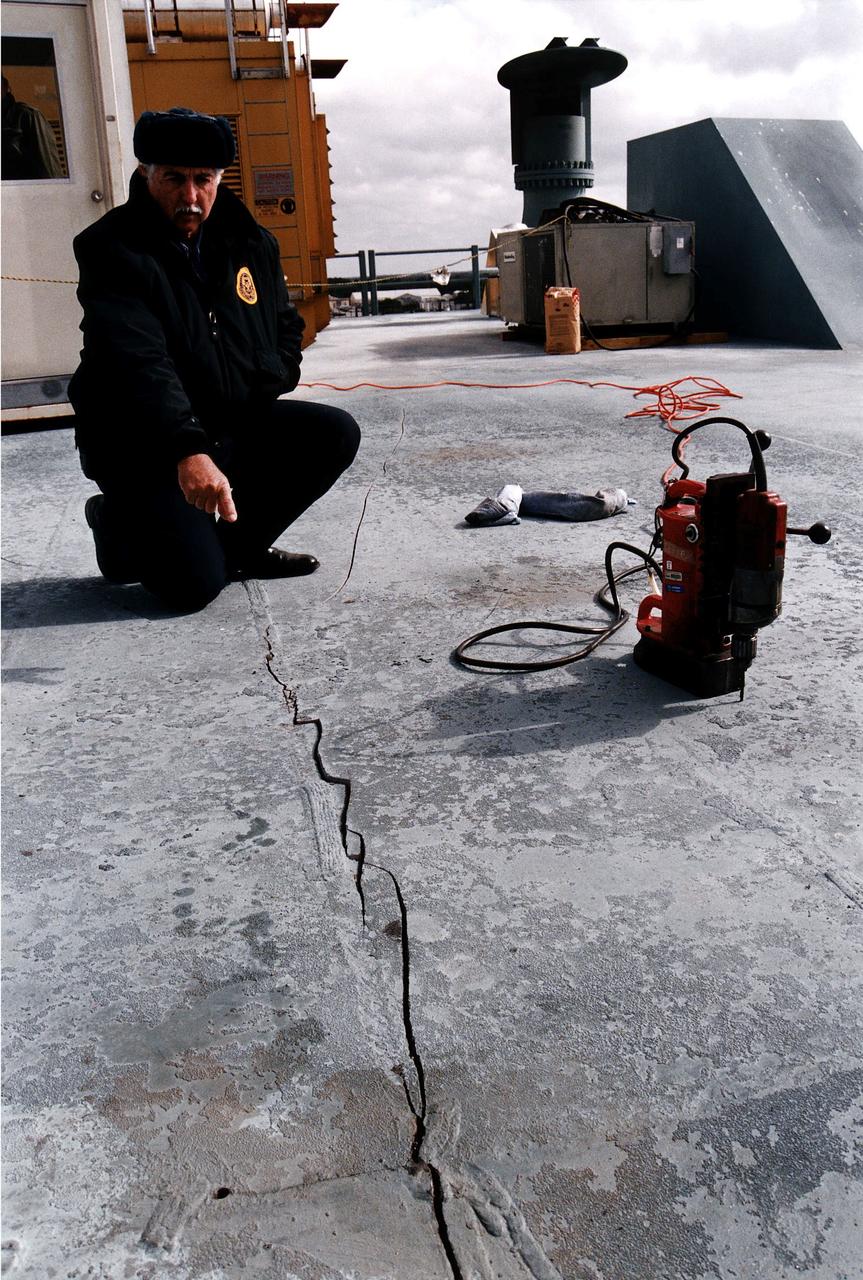
KENNEDY SPACE CENTER, FLA. -  Robert T. Nelson of KSC Security points to an approximately 24-foot-long crack on the Mobile Launcher Platform (MLP), which is holding the Space Shuttle Discovery en route to Launch Pad 39A for the STS-82 mission.  Nelson was riding on the MLP when he heard a loud noise and noticed the crack.  Rollout had begun shortly after 7 a.m. EST and was stopped at about 8:25 a.m.  This Y-shaped crack is on the MLP surface and runs from near the left-hand solid rocket booster flame hole toward the near corner of the MLP.  Rollout of Discovery resumed just past noon after structural engineers determined that the integrity of the MLP had not been compromised.  Discovery is scheduled to lift off on the second Hubble Space Telescope servicing mission on Feb. 11.
KENNEDY SPACE CENTER, FLA. - Robert T. Nelson of KSC Security points to an approximately 24-foot-long crack on the Mobile Launcher Platform (MLP), which is holding the Space Shuttle Discovery en route to Launch Pad 39A for the STS-82 mission. Nelson was riding on the MLP when he heard a loud noise and noticed the crack. Rollout had begun shortly after 7 a.m. EST and was stopped at about 8:25 a.m. This Y-shaped crack is on the MLP surface and runs from near the left-hand solid rocket booster flame hole toward the near corner of the MLP. Rollout of Discovery resumed just past noon after structural engineers determined that the integrity of the MLP had not been compromised. Discovery is scheduled to lift off on the second Hubble Space Telescope servicing mission on Feb. 11.
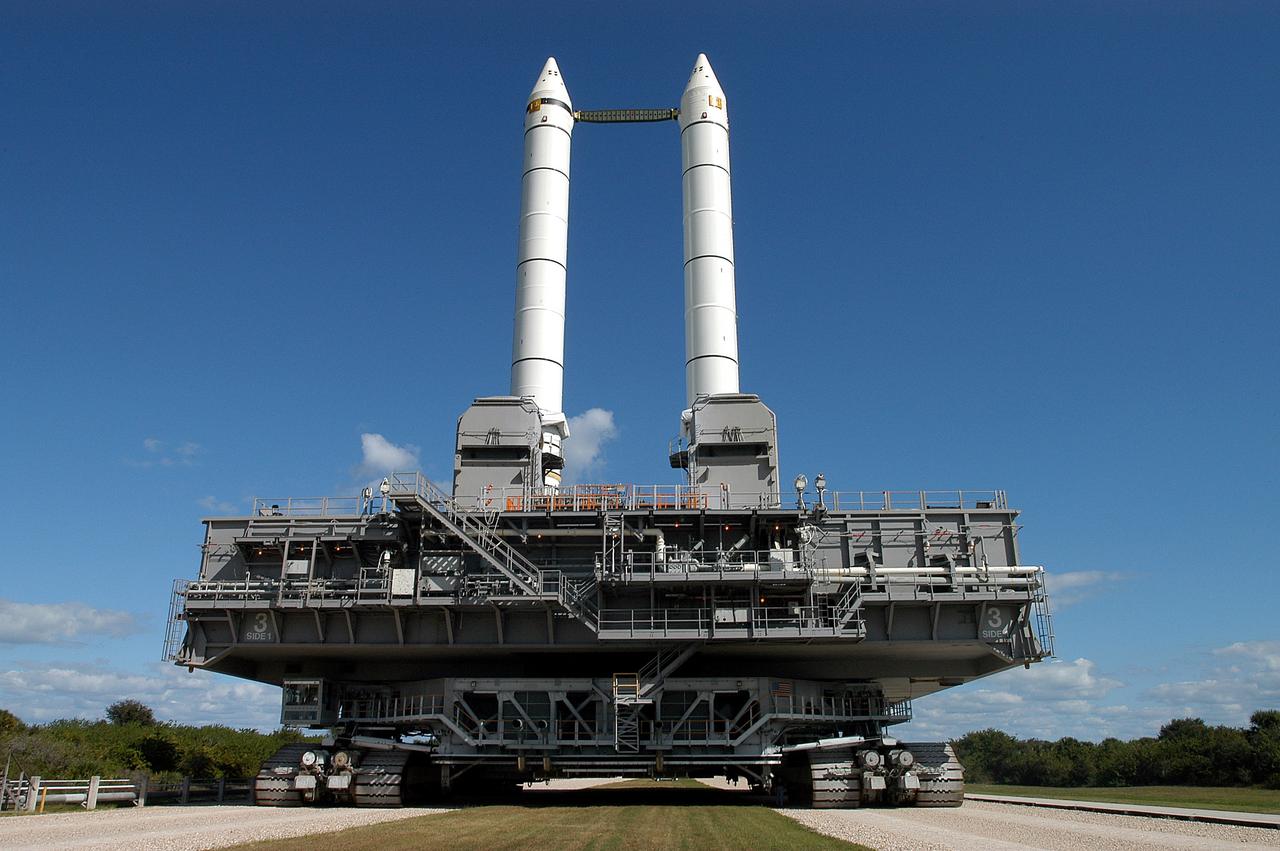
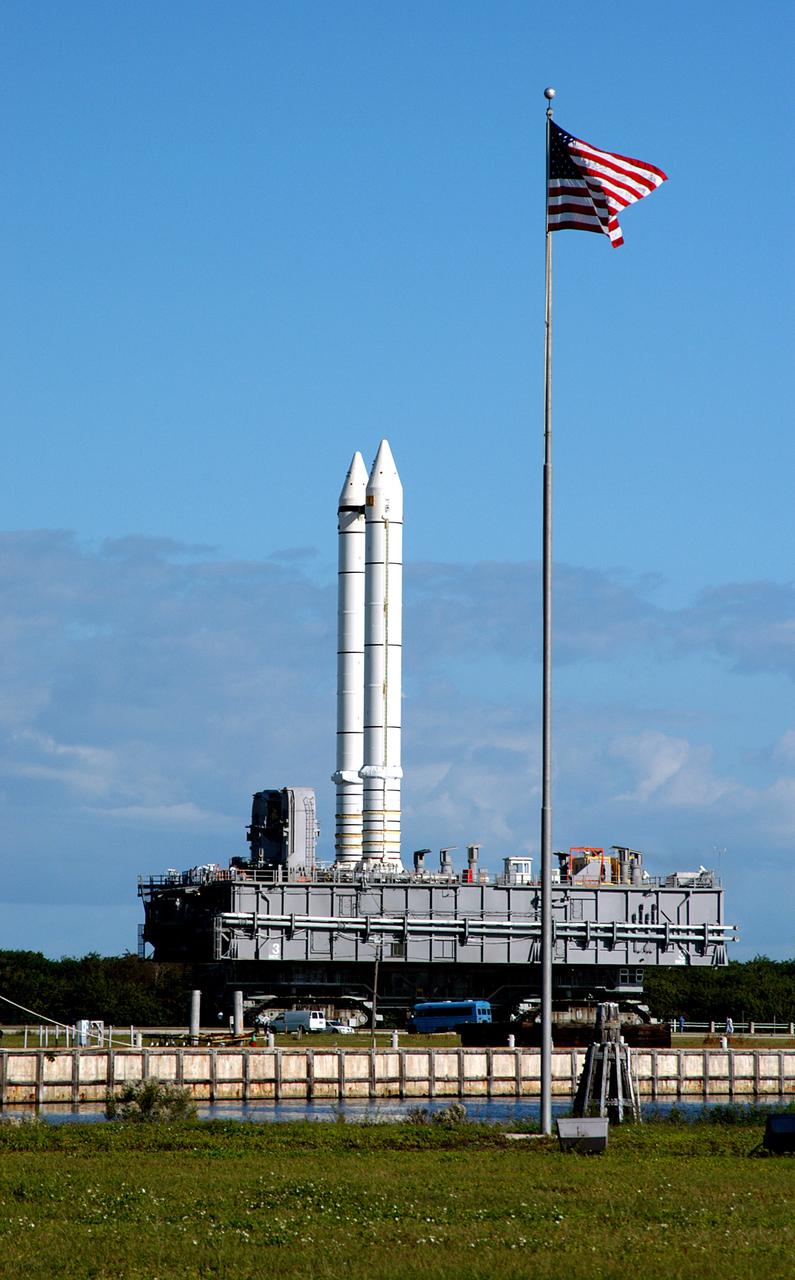
KENNEDY SPACE CENTER, FLA. -  Like candles embedded in a sculptured “cake,” the Mobile Launcher Platform (MLP) number 3 with twin solid rocket boosters bolted to it inches along the crawlerway at various speeds up to 1 mph in an effort to achieve vibration data gathering goals. The boosters are braced at the top for stability.  The primary purpose of these rollout tests is to gather data to develop future maintenance requirements on the transport equipment and the flight hardware. Various parts of the MLP and crawler transporter have been instrumented with vibration data collection equipment.
KENNEDY SPACE CENTER, FLA. - Like candles embedded in a sculptured “cake,” the Mobile Launcher Platform (MLP) number 3 with twin solid rocket boosters bolted to it inches along the crawlerway at various speeds up to 1 mph in an effort to achieve vibration data gathering goals. The boosters are braced at the top for stability. The primary purpose of these rollout tests is to gather data to develop future maintenance requirements on the transport equipment and the flight hardware. Various parts of the MLP and crawler transporter have been instrumented with vibration data collection equipment.
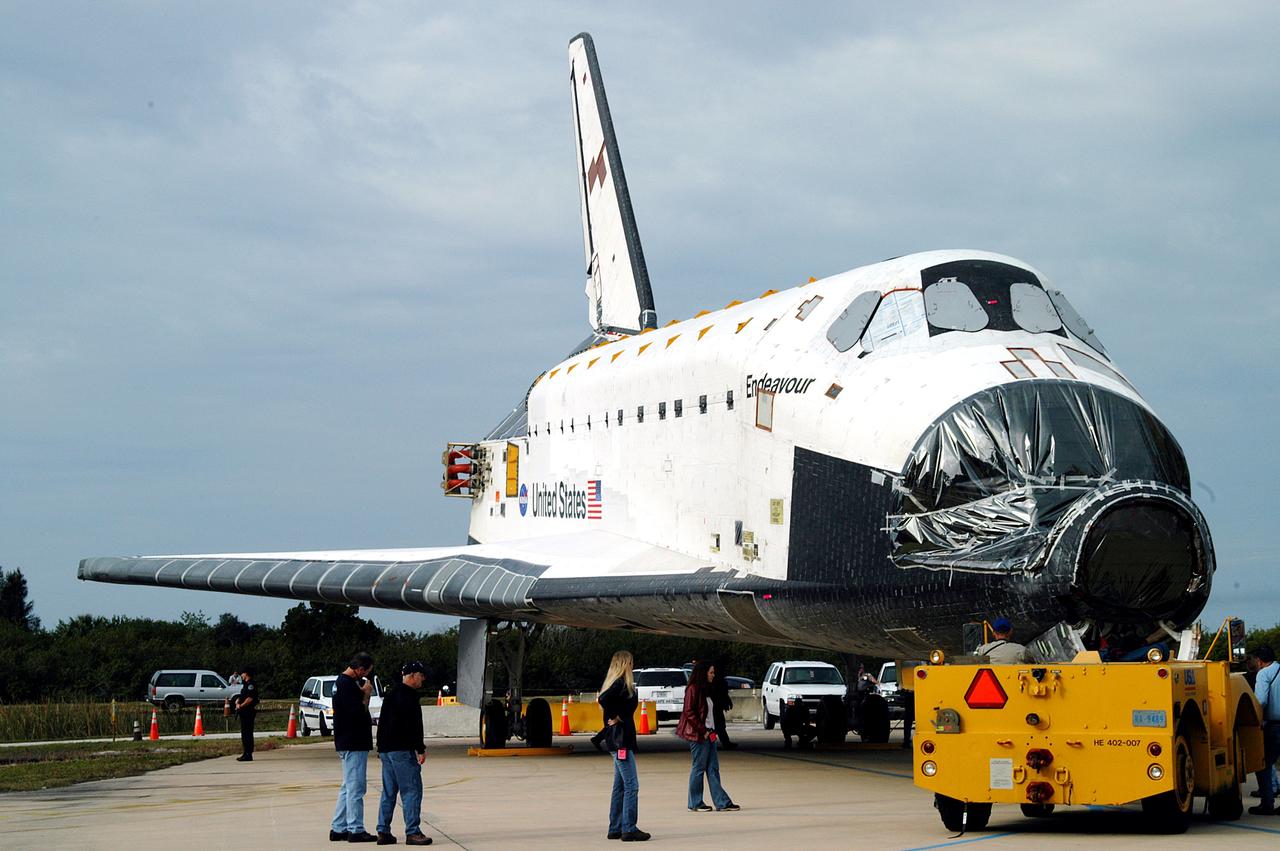
KENNEDY SPACE CENTER, FLA. -- After Endeavour’s rollout from inside the Orbiter Processing Facility, the transporter (foreground) prepares to tow it to the Vehicle Assembly Building for temporary transfer.  A protective cover surrounds the nose of Endeavour.  The move to the VAB allows work to be performed in the OPF that can only be accomplished while the bay is empty. Work scheduled in the OPF includes annual validation of the bay’s cranes, work platforms, lifting mechanisms and jack stands. Endeavour will remain in the VAB for approximately 12 days, then return to the OPF.
KENNEDY SPACE CENTER, FLA. -- After Endeavour’s rollout from inside the Orbiter Processing Facility, the transporter (foreground) prepares to tow it to the Vehicle Assembly Building for temporary transfer. A protective cover surrounds the nose of Endeavour. The move to the VAB allows work to be performed in the OPF that can only be accomplished while the bay is empty. Work scheduled in the OPF includes annual validation of the bay’s cranes, work platforms, lifting mechanisms and jack stands. Endeavour will remain in the VAB for approximately 12 days, then return to the OPF.
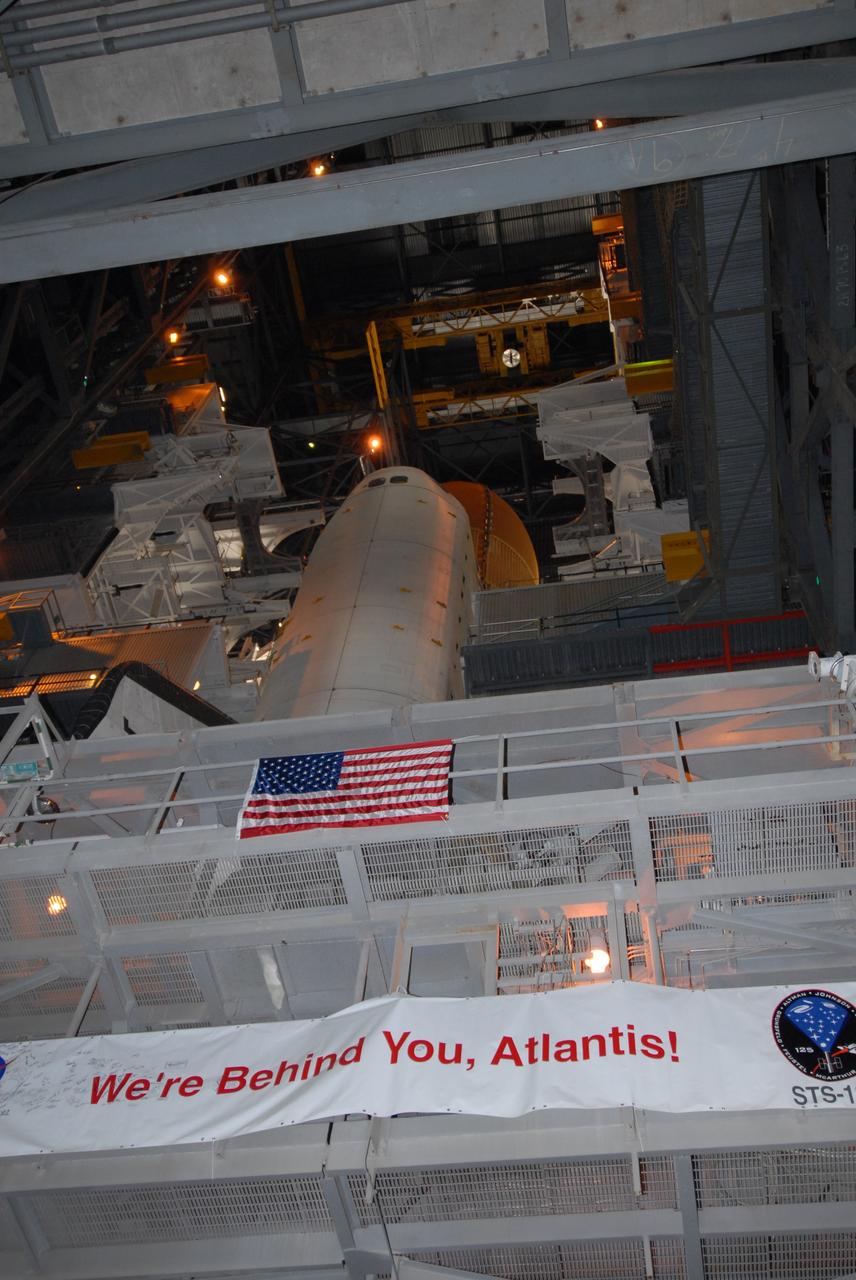
CAPE CANAVERAL, Fla. – Space shuttle Atlantis stands ready in the Vehicle Assembly Building at NASA’s Kennedy Space Center for the pending rollout to Launch Pad 39A. The Sept. 2 rollout date was postponed due to Tropical Storm Hanna’s shift to a northern track.  Managers are closely following Hanna to determine when would be the best time this week to move space shuttle Atlantis to its launch pad. The tentative rollout time is 10 a.m. Sept. 4, depending on the track Hanna follows along the Florida coast. Atlantis is scheduled to launch on the STS-125 mission to service NASA’s Hubble Space Telescope.  Launch is targeted for Oct. 8.   Photo credit: NASA/Jack Pfaller
KSC-08pd2526
The space shuttle Atlantis moves to Launch Pad 39A during rollout at the Kennedy Space Center on Tuesday, May 31, 2011, in Florida. ( NASA Photo / Houston Chronicle, Smiley N. Pool ).
STS_135_RollOut
The space shuttle Atlantis moves to Launch Pad 39A during rollout at the Kennedy Space Center on Tuesday, May 31, 2011, in Florida. ( NASA Photo / Houston Chronicle, Smiley N. Pool ).
STS_135_RollOut
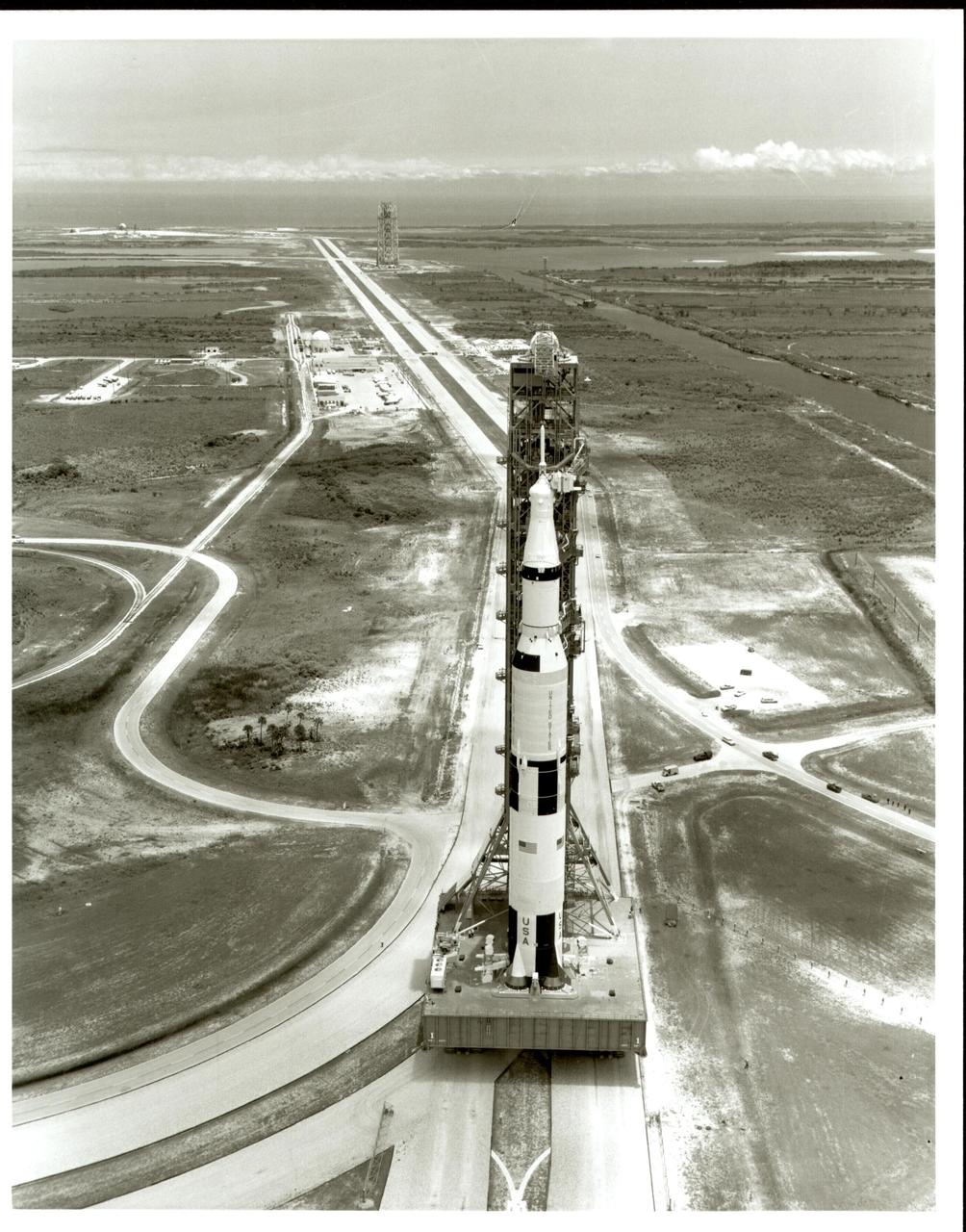
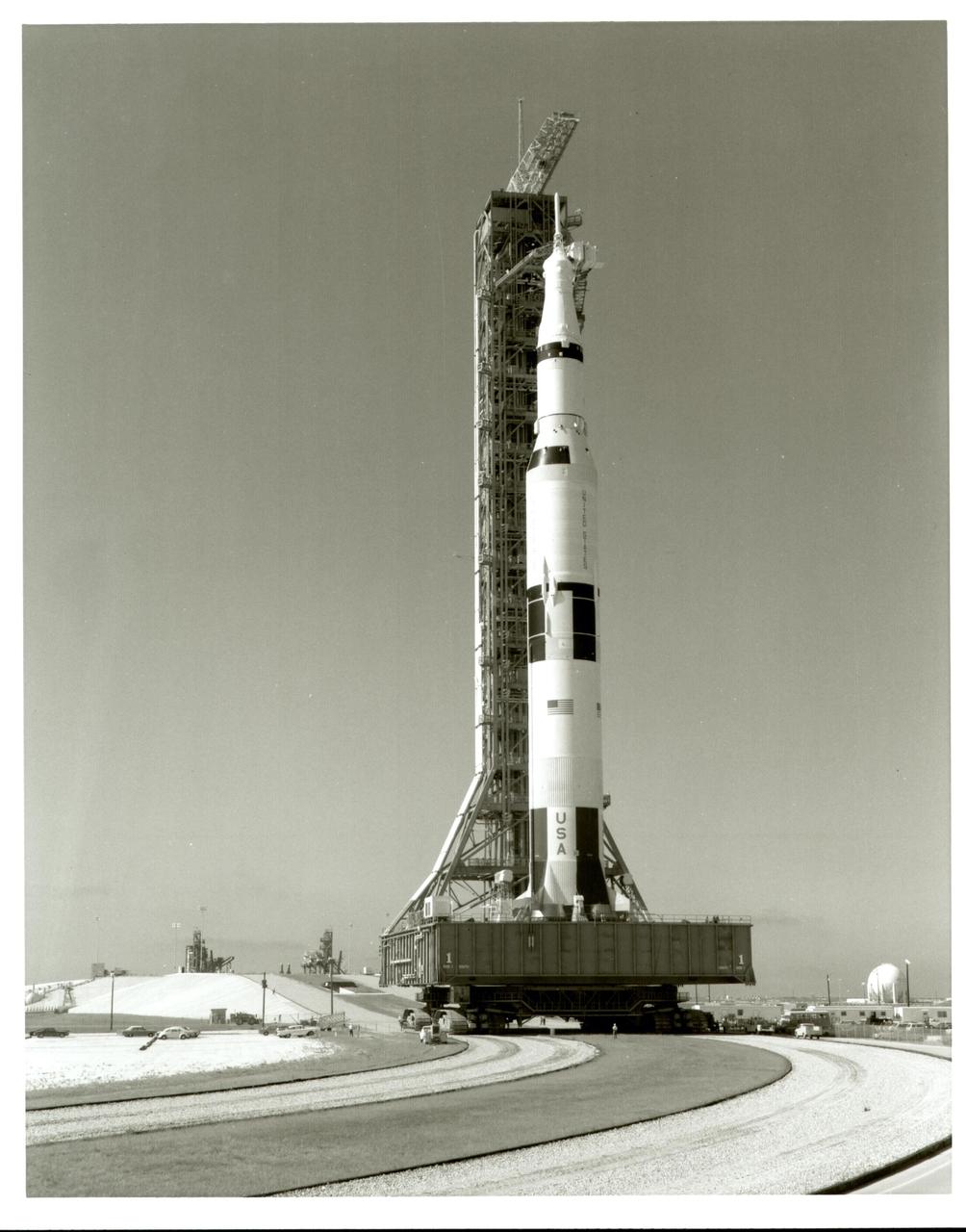
KENNEDY SPACE CENTER, FLA. -  Rollout of Apollo 11 Saturn V space vehicle from the Vehicle Assembly Building's High Bay #1 to Launch Complex 39A.
KSC-69P-372
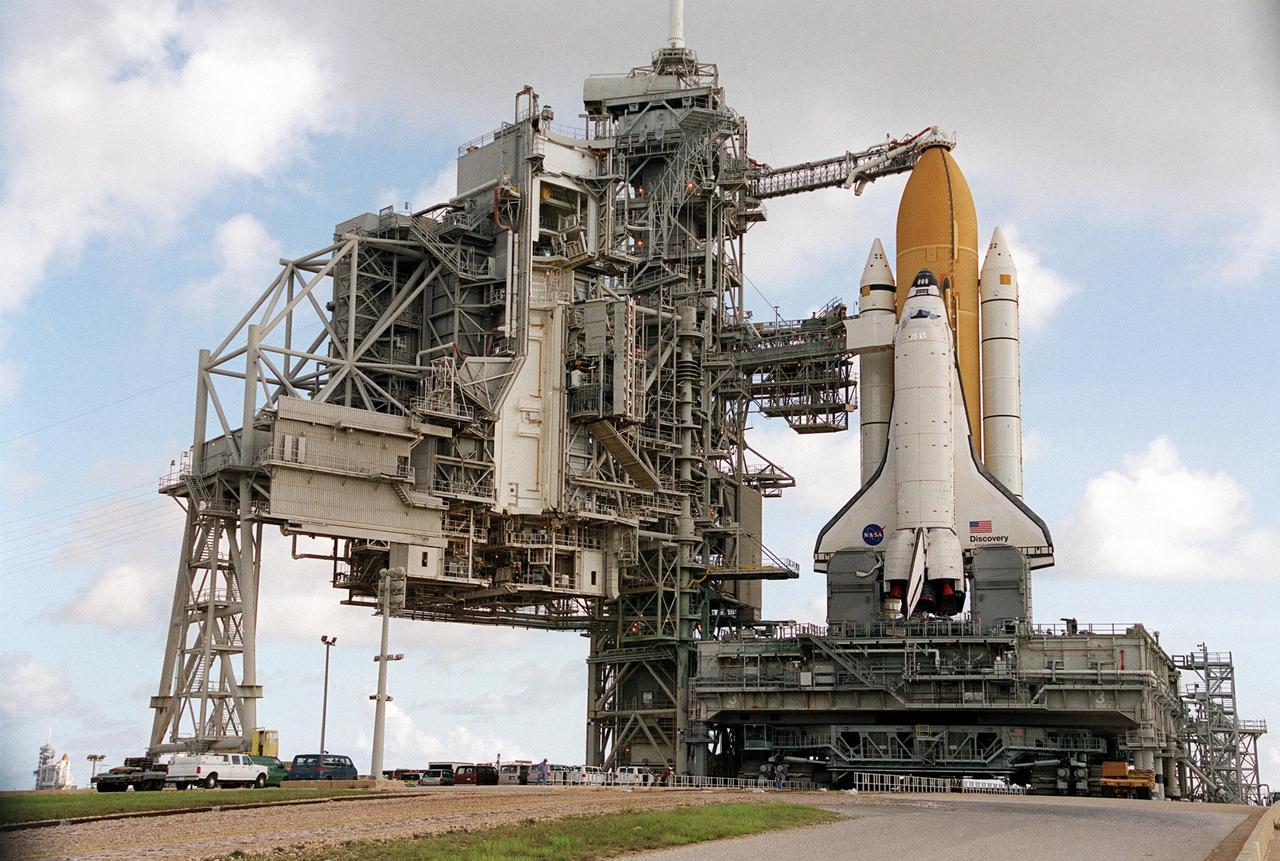
KENNEDY SPACE CENTER, Fla. -- Space Shuttle Discovery arrives at Launch Pad 39A after an early morning rollout from the Vehicle Assembly Building. Discovery is scheduled to launch Aug. 3 on mission STS-105
KSC-01pp1241
KENNEDY SPACE CENTER, FLA. -  Rollout of Apollo 11 Saturn V space vehicle from the Vehicle Assembly Building's High Bay #1 to Launch Complex 39A.
KSC-69P-397
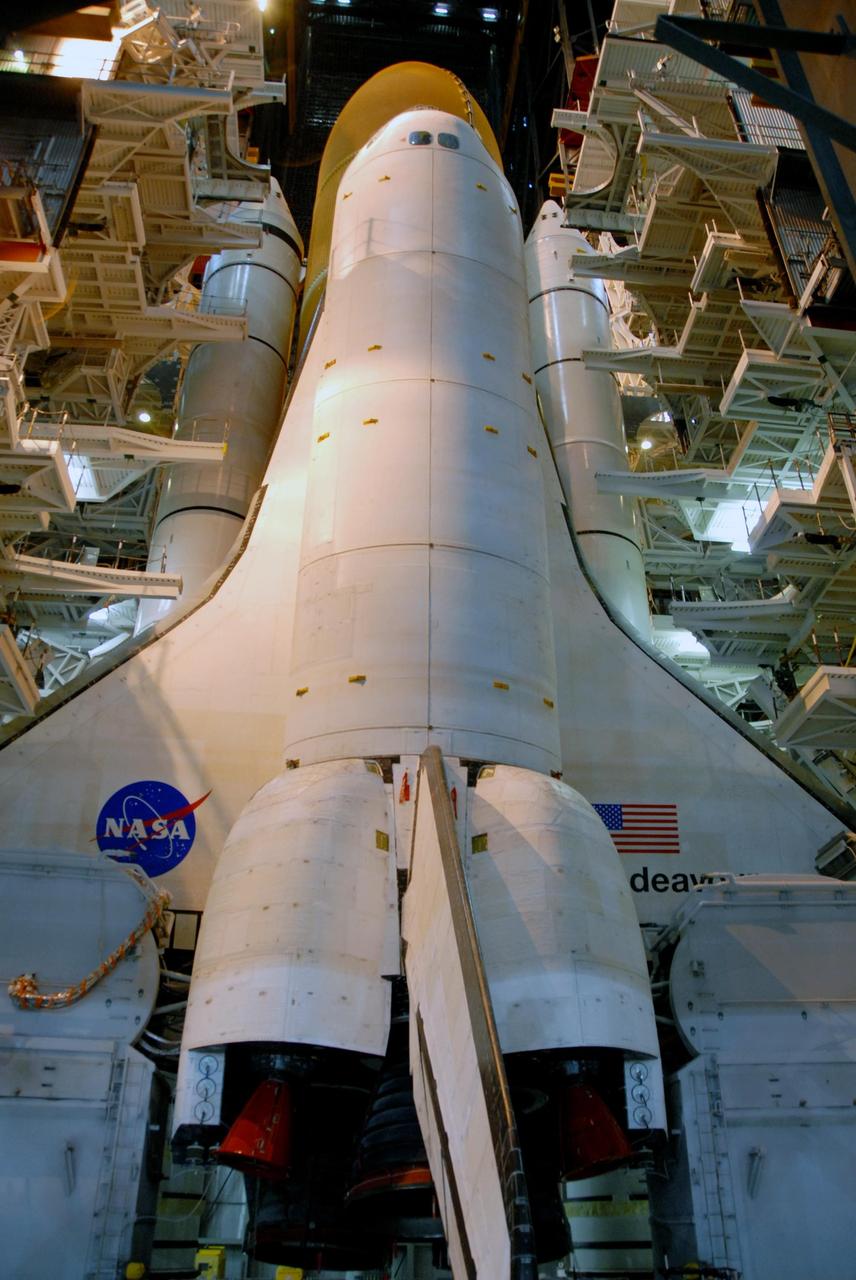
KENNEDY SPACE CENTER, FLA. --   Space Shuttle Endeavour sits in the Vehicle Assembly Building waiting for rollout to Launch Pad 39A.  Visible behind the orbiter are the white solid rocket boosters at each side of the external tank.  Rollout was originally planned for just after midnight on July 10 but the move was canceled by NASA managers because unfavorable weather was predicted to arrive in the launch area before the vehicle would be secured at the pad.   Rollout is scheduled to begin again about 9 p.m. July 10.  Photo credit: NASA/Ken Thornsley
KSC-07pd1817
KENNEDY SPACE CENTER, FLA. - Carrying a set of twin solid rocket boosters, the crawler transporter slowly moves the Mobile Launcher Platform (MLP) past the NASA-KSC News Center where the U.S. flag flies daily.  The journey is in support of engineering analysis vibration tests on the crawler and MLP. The crawler is moving at various speeds up to 1 mph in an effort to achieve vibration data gathering goals as it leaves the VAB and then returns.  The boosters are braced at the top for stability.  The primary purpose of these rollout tests is to gather data to develop future maintenance requirements on the transport equipment and the flight hardware. Various parts of the MLP and crawler transporter have been instrumented with vibration data collection equipment.
KENNEDY SPACE CENTER, FLA. - Carrying a set of twin solid rocket boosters, the crawler transporter slowly moves the Mobile Launcher Platform (MLP) past the NASA-KSC News Center where the U.S. flag flies daily. The journey is in support of engineering analysis vibration tests on the crawler and MLP. The crawler is moving at various speeds up to 1 mph in an effort to achieve vibration data gathering goals as it leaves the VAB and then returns. The boosters are braced at the top for stability. The primary purpose of these rollout tests is to gather data to develop future maintenance requirements on the transport equipment and the flight hardware. Various parts of the MLP and crawler transporter have been instrumented with vibration data collection equipment.
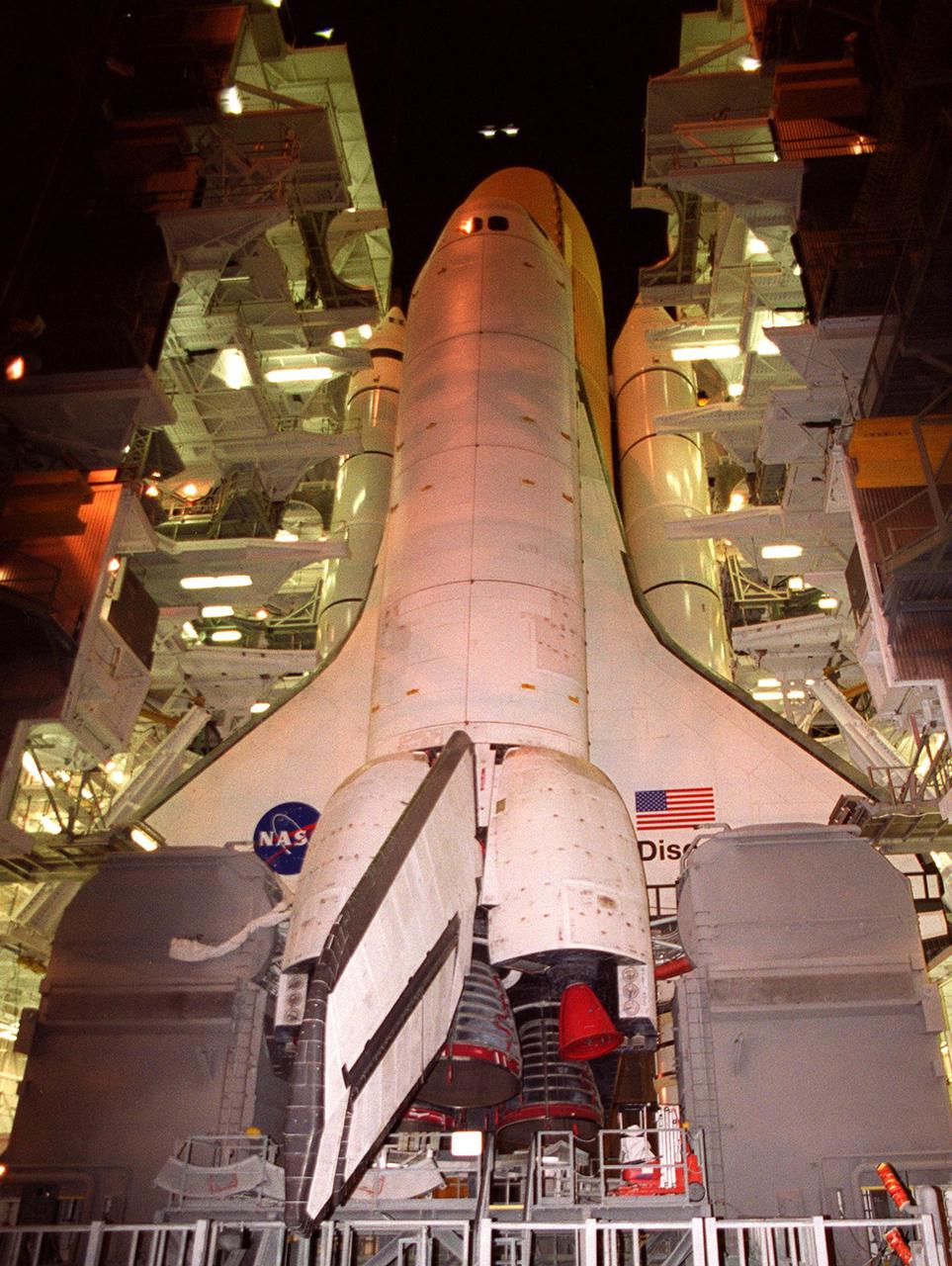
KENNEDY SPACE CENTER, Fla. -- Viewed from below, Space Shuttle Discovery nearly hides the orange external tank behind it. The twin solid rocket boosters can be seen on either side. Discovery waits in the Vehicle Assembly Building for rollout to Launch Pad 39A. Inclement weather has been a prime factor delaying the rollout. Discovery is scheduled for launch no earlier than Aug. 5 on mission STS-105, carrying the Expedition Three crew that will replace Expedition Two on the International Space Station
ksc-01pp-1206
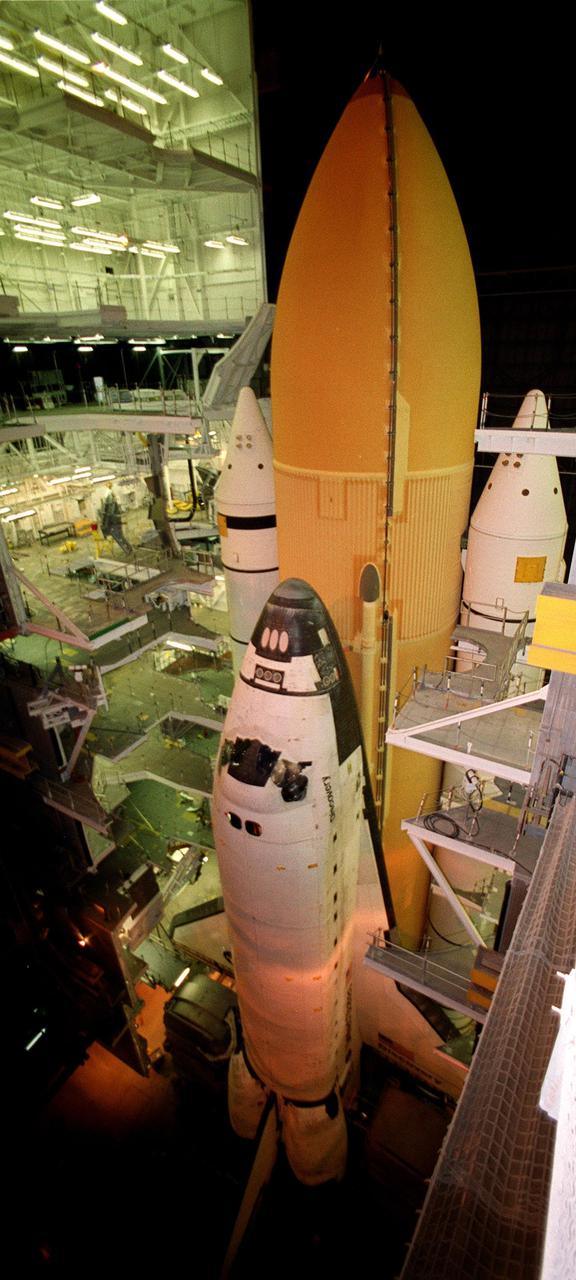
KENNEDY SPACE CENTER, Fla. -- Viewed from above, Space Shuttle Discovery, stacked with an orange external tank and white solid rocket boosters, waits in the Vehicle Assembly Building for rollout to Launch Pad 39A. Inclement weather has been a prime factor delaying the rollout. Discovery is scheduled for launch no earlier than Aug. 5 on mission STS-105, carrying the Expedition Three crew that will replace Expedition Two on the International Space Station
ksc-01pp-1205
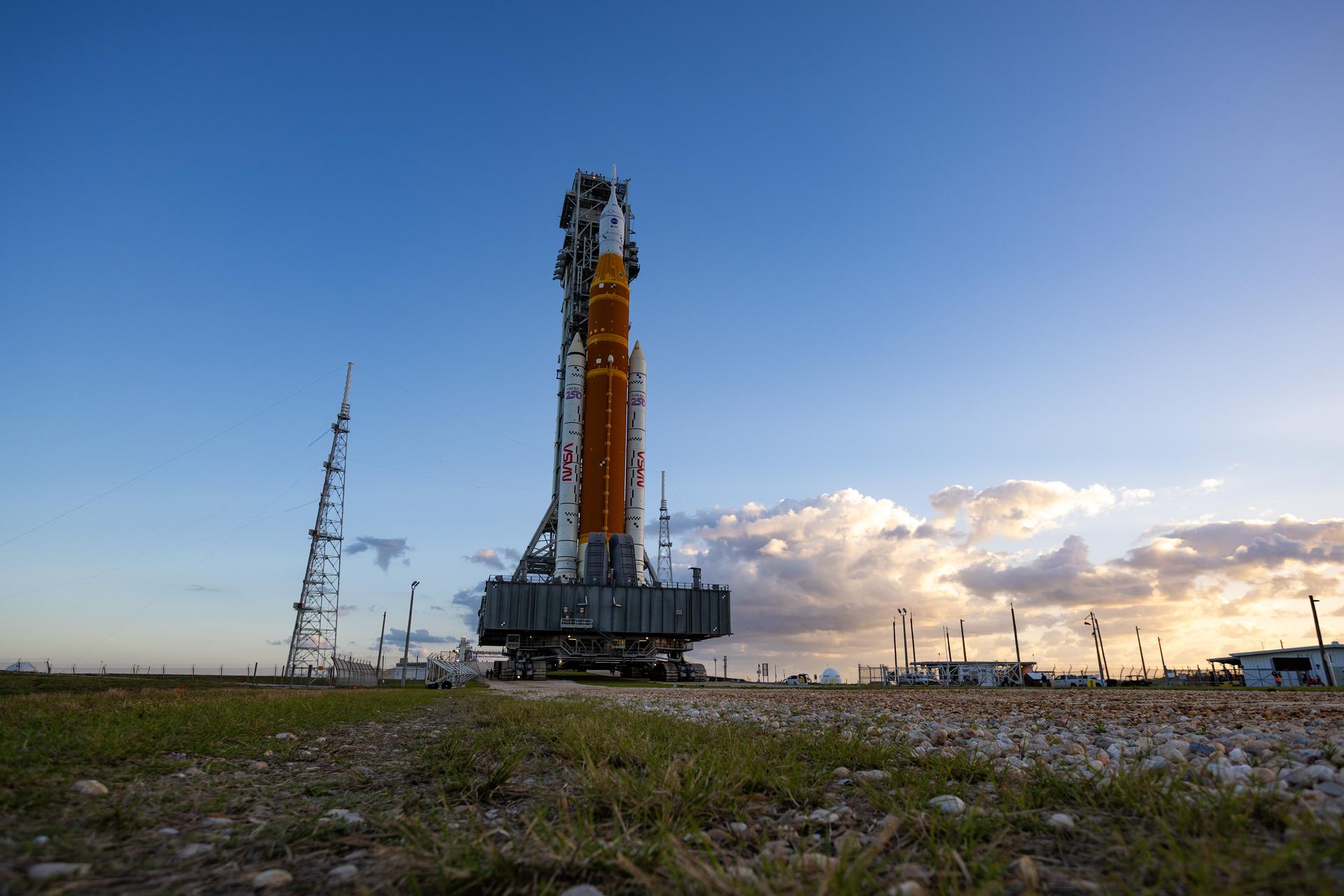
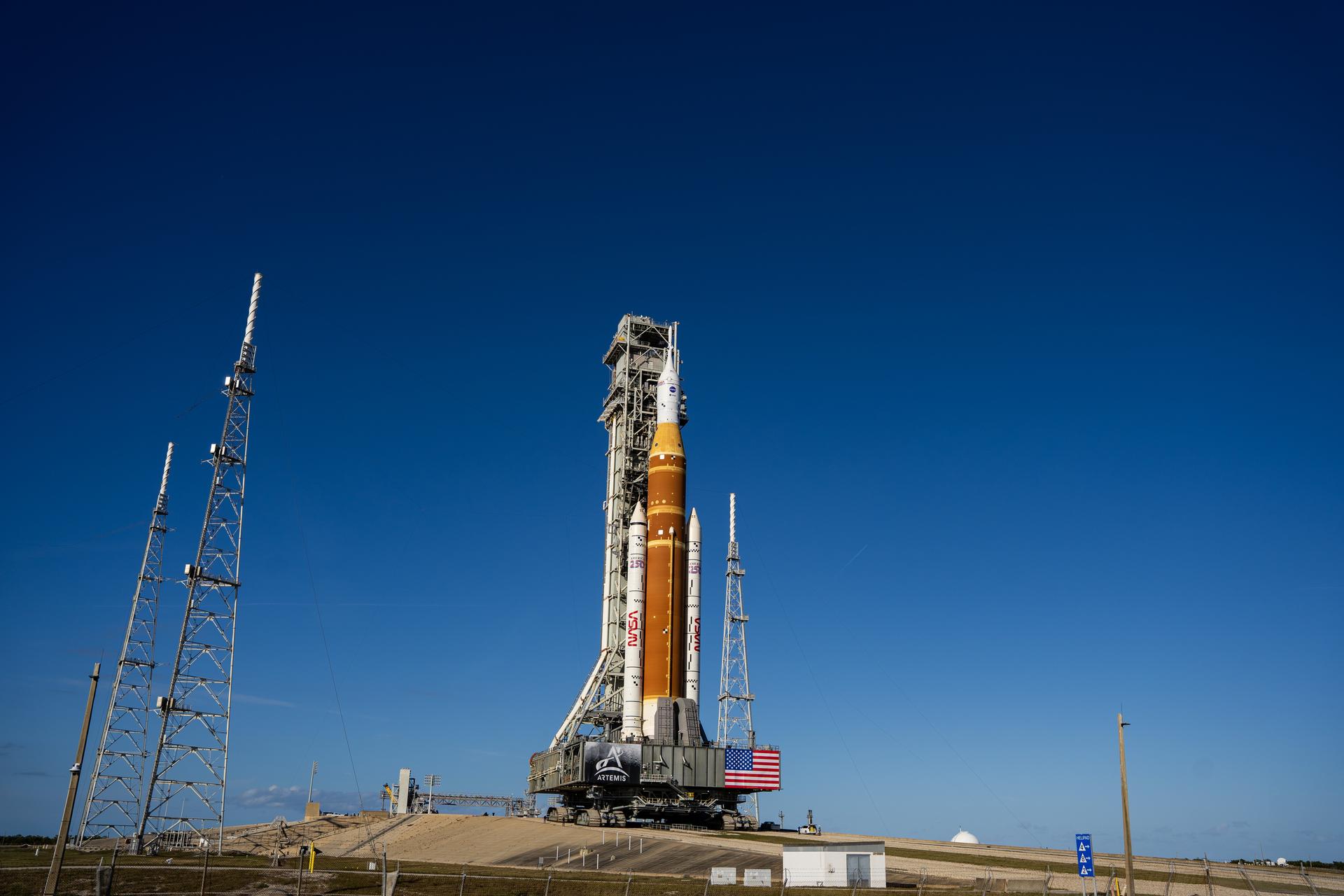
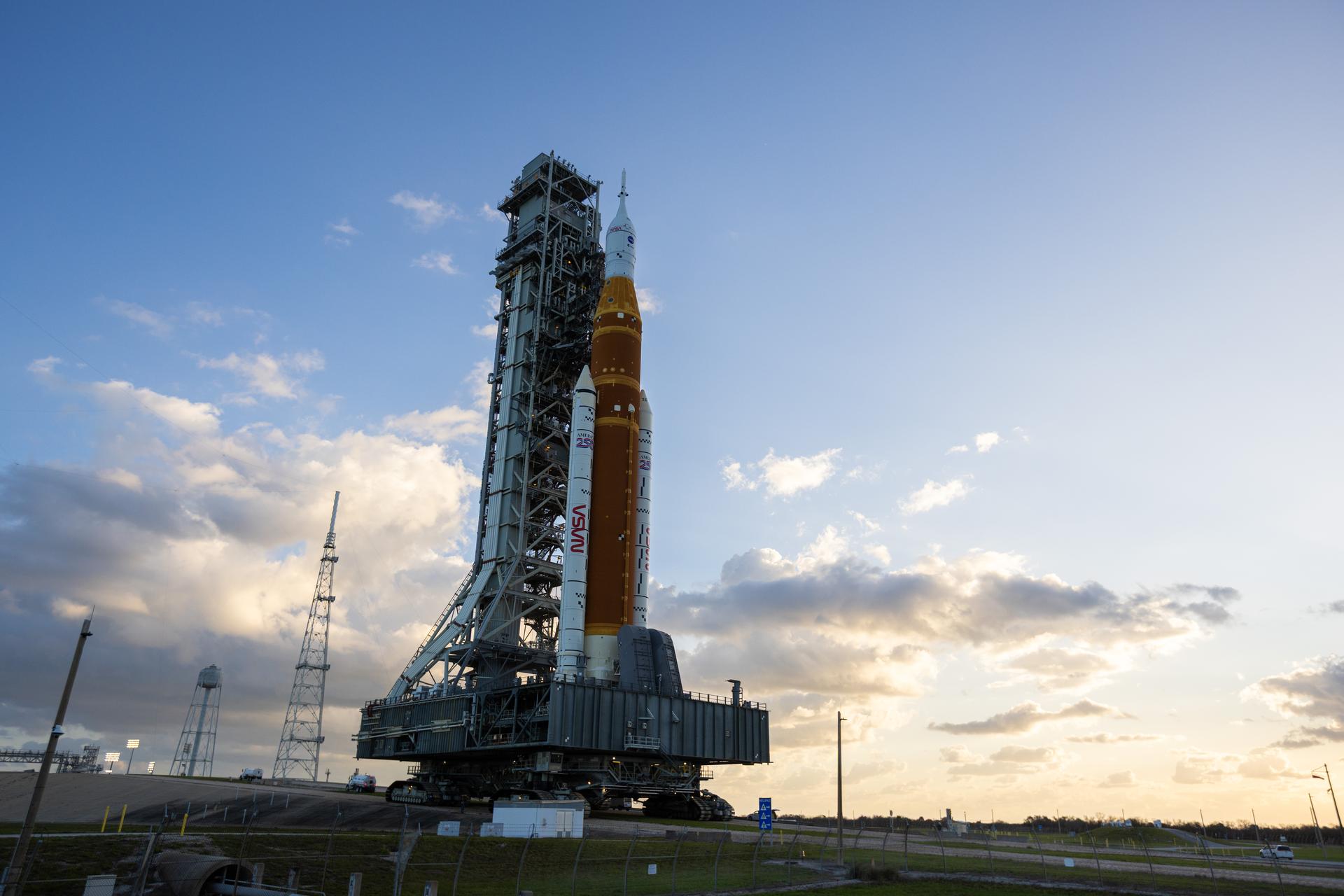
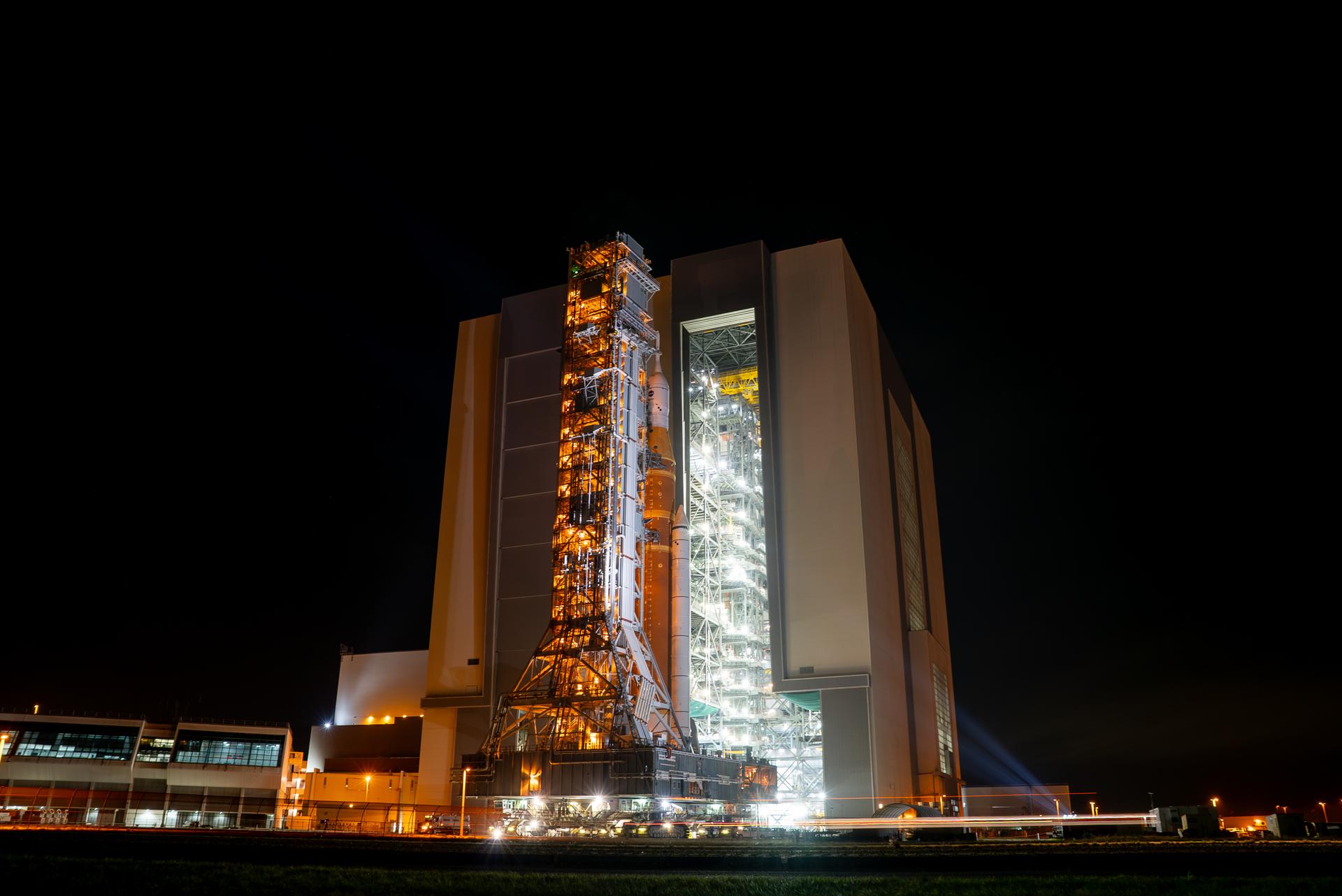
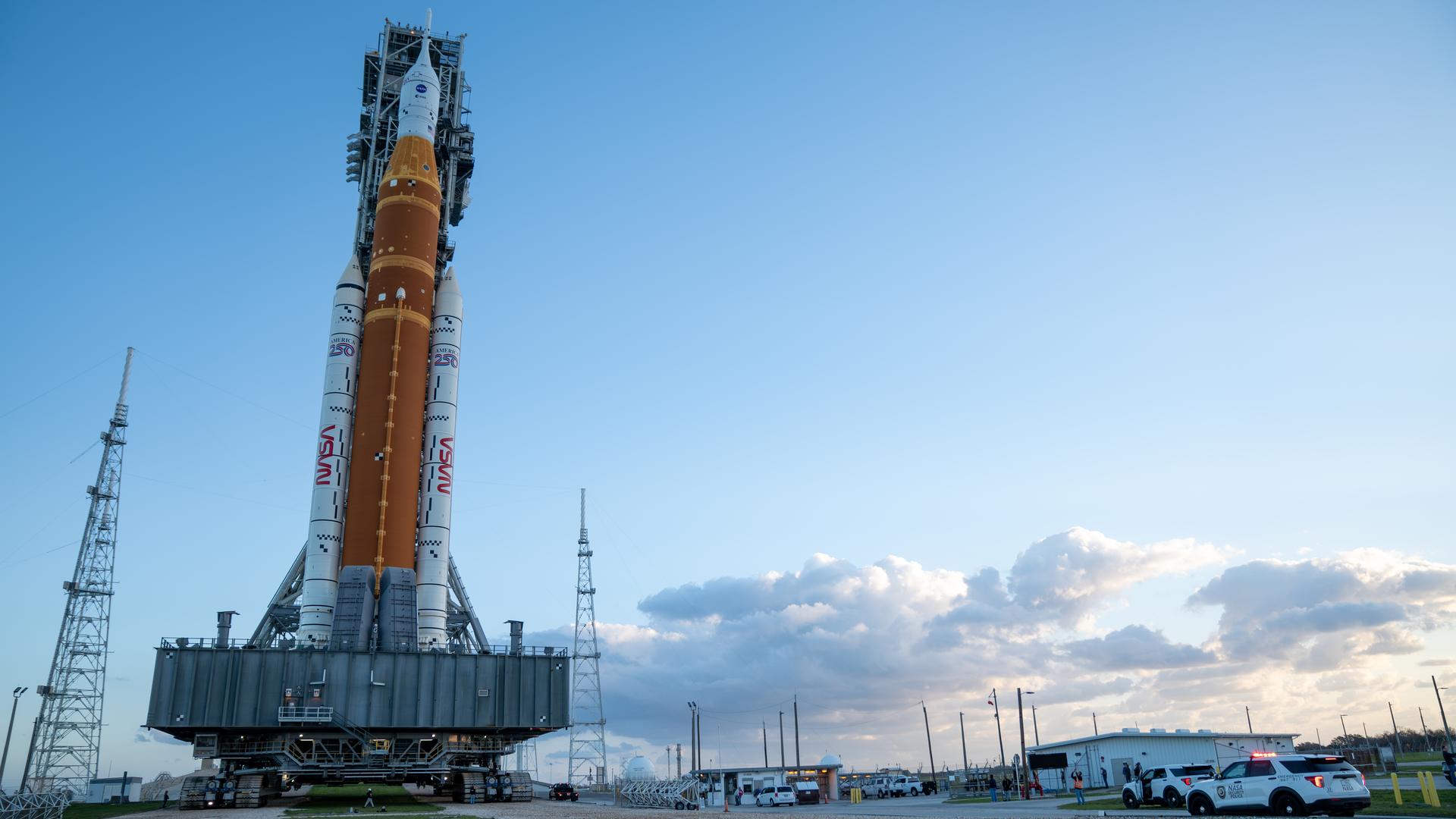
The sun sets as NASA’s crawler-transporter 2 carrying the agency’s Artemis II SLS (Space Launch System) rocket and Orion spacecraft, secured to the mobile launcher, rolls toward Launch Complex 39B at NASA’s Kennedy Space Center in Florida on 01/17/2026. The Artemis II test flight will take Commander Reid Wiseman, Pilot Victor Glover, and Mission Specialist Christina Koch from NASA and Mission Specialist Jeremy Hansen from the CSA (Canadian Space Agency), around the Moon and back to Earth no later than April 2026.
Artemis II Arrives to Launch Complex 39B
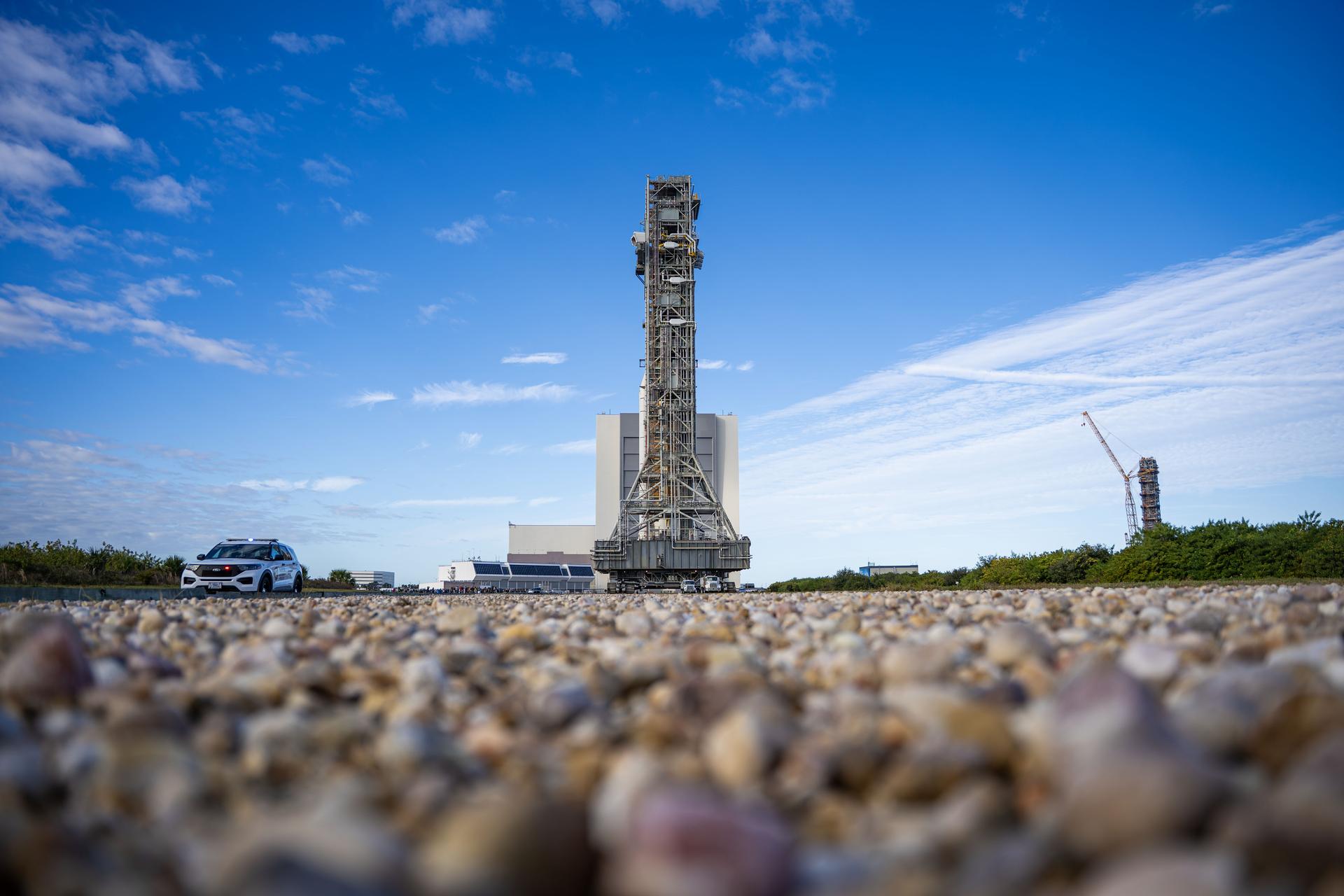
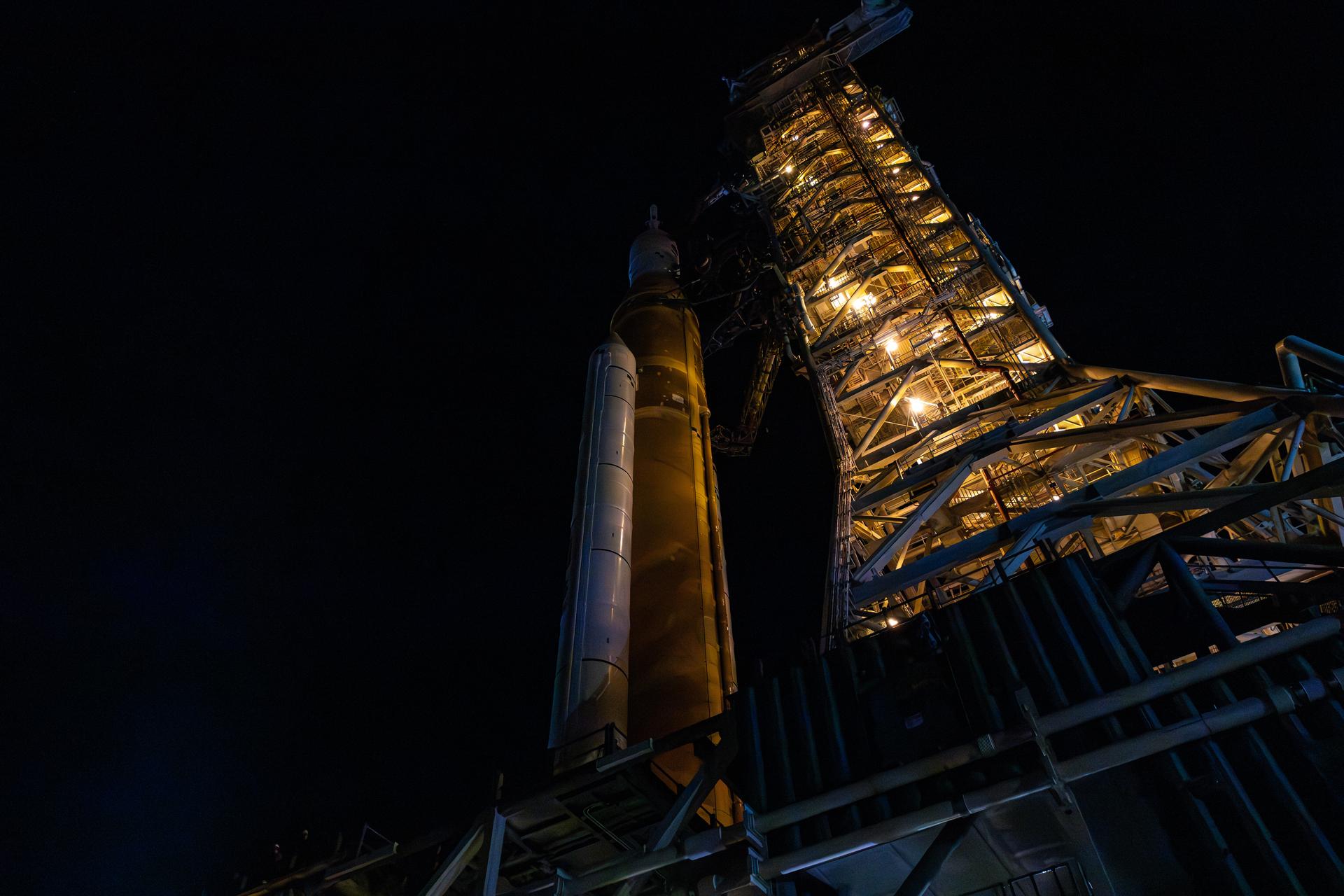
This image shows NASA’s SLS (Space Launch System) and Orion spacecraft rolling out of the Vehicle Assembly Building at NASA’s Kennedy Space Center. NASA's massive Crawler-Transporter, upgraded for the Artemis program, carries the powerful SLS rocket and Orion spacecraft on the Mobile Launcher from the Vehicle Assembly Building to Launch Pad 39B at Kennedy Space Center in preparation for the Artemis II mission.
ASA's Artemis II SLS Rocket and Orion Spacecraft Rollout to Launch Pad 39B
This image shows NASA’s SLS (Space Launch System) and Orion spacecraft rolling out of the Vehicle Assembly Building at NASA’s Kennedy Space Center. NASA's massive Crawler-Transporter, upgraded for the Artemis program, carries the powerful SLS rocket and Orion spacecraft on the Mobile Launcher from the Vehicle Assembly Building to Launch Pad 39B at Kennedy Space Center in preparation for the Artemis II mission.
NASA's Artemis II SLS Rocket and Orion Spacecraft Rollout to Launch Pad 39B
This image shows NASA’s SLS (Space Launch System) and Orion spacecraft rolling out of the Vehicle Assembly Building at NASA’s Kennedy Space Center. NASA's massive Crawler-Transporter, upgraded for the Artemis program, carries the powerful SLS rocket and Orion spacecraft on the Mobile Launcher from the Vehicle Assembly Building to Launch Pad 39B at Kennedy Space Center in preparation for the Artemis II mission.
NASA's Artemis II SLS Rocket and Orion Spacecraft Rollout to Launch Pad 39B
This image shows NASA’s SLS (Space Launch System) and Orion spacecraft rolling out of the Vehicle Assembly Building at NASA’s Kennedy Space Center. NASA's massive Crawler-Transporter, upgraded for the Artemis program, carries the powerful SLS rocket and Orion spacecraft on the Mobile Launcher from the Vehicle Assembly Building to Launch Pad 39B at Kennedy Space Center in preparation for the Artemis II mission.
NASA's Artemis II SLS Rocket and Orion Spacecraft Rollout to Launch Pad 39B
This image shows NASA’s SLS (Space Launch System) and Orion spacecraft rolling out of the Vehicle Assembly Building at NASA’s Kennedy Space Center. NASA's massive Crawler-Transporter, upgraded for the Artemis program, carries the powerful SLS rocket and Orion spacecraft on the Mobile Launcher from the Vehicle Assembly Building to Launch Pad 39B at Kennedy Space Center in preparation for the Artemis II mission.
NASA's Artemis II SLS Rocket and Orion Spacecraft Rollout to Launch Pad 39B
This image shows NASA’s SLS (Space Launch System) and Orion spacecraft rolling out of the Vehicle Assembly Building at NASA’s Kennedy Space Center. NASA's massive Crawler-Transporter, upgraded for the Artemis program, carries the powerful SLS rocket and Orion spacecraft on the Mobile Launcher from the Vehicle Assembly Building to Launch Pad 39B at Kennedy Space Center in preparation for the Artemis II mission.
NASA's SLS Rocket and Orion Spacecraft Rollout to Launch Pad 39B
This image shows NASA’s SLS (Space Launch System) and Orion spacecraft rolling out of the Vehicle Assembly Building at NASA’s Kennedy Space Center. NASA's massive Crawler-Transporter, upgraded for the Artemis program, carries the powerful SLS rocket and Orion spacecraft on the Mobile Launcher from the Vehicle Assembly Building to Launch Pad 39B at Kennedy Space Center in preparation for the Artemis II mission.
NASA's SLS Rocket and Orion Spacecraft Rollout to Launch Pad 39B
This image shows NASA’s SLS (Space Launch System) and Orion spacecraft rolling out of the Vehicle Assembly Building at NASA’s Kennedy Space Center. NASA's massive Crawler-Transporter, upgraded for the Artemis program, carries the powerful SLS rocket and Orion spacecraft on the Mobile Launcher from the Vehicle Assembly Building to Launch Pad 39B at Kennedy Space Center in preparation for the Artemis II mission.
NASA's SLS Rocket and Orion Spacecraft Rollout to Launch Pad 39B
This image shows NASA’s SLS (Space Launch System) and Orion spacecraft rolling out of the Vehicle Assembly Building at NASA’s Kennedy Space Center. NASA's massive Crawler-Transporter, upgraded for the Artemis program, carries the powerful SLS rocket and Orion spacecraft on the Mobile Launcher from the Vehicle Assembly Building to Launch Pad 39B at Kennedy Space Center in preparation for the Artemis II mission.
NASA's SLS Rocket and Orion Spacecraft Rollout to Launch Pad 39B
KENNEDY SPACE CENTER, FLA. - A Kennedy Space Center technician inspects the shoes on one of eight tracks of a crawler-transporter (CT).  The CT is moving Mobile Launcher Platform (MLP) number 3 with a set of twin solid rocket boosters bolted on top to the intersection in the crawlerway in support of the second engineering analysis vibration test on the crawler and MLP.  The crawler is moving at various speeds up to 1 mph in an effort to achieve vibration data gathering goals as it leaves the VAB, travels toward Launch Pad 39A and then returns. The boosters are braced at the top for stability. The primary purpose of these rollout tests is to gather data to develop future maintenance requirements on the transport equipment and the flight hardware. Various parts of the MLP and crawler transporter have been instrumented with vibration data collection equipment.
KENNEDY SPACE CENTER, FLA. - A Kennedy Space Center technician inspects the shoes on one of eight tracks of a crawler-transporter (CT). The CT is moving Mobile Launcher Platform (MLP) number 3 with a set of twin solid rocket boosters bolted on top to the intersection in the crawlerway in support of the second engineering analysis vibration test on the crawler and MLP. The crawler is moving at various speeds up to 1 mph in an effort to achieve vibration data gathering goals as it leaves the VAB, travels toward Launch Pad 39A and then returns. The boosters are braced at the top for stability. The primary purpose of these rollout tests is to gather data to develop future maintenance requirements on the transport equipment and the flight hardware. Various parts of the MLP and crawler transporter have been instrumented with vibration data collection equipment.
KENNEDY SPACE CENTER, FLA. - A Kennedy Space Center technician monitors the performance of a crawler-transporter as it moves Mobile Launcher Platform (MLP) number 3, with a set of twin solid rocket boosters bolted atop, to the intersection in the crawlerway during the second engineering analysis vibration test on the crawler and MLP.  The crawler is moving at various speeds up to 1 mph in an effort to achieve vibration data gathering goals as it leaves the VAB, travels toward Launch Pad 39A, and then returns. The boosters are braced at the top for stability. The primary purpose of these rollout tests is to gather data to develop future maintenance requirements on the transport equipment and the flight hardware. Various parts of the MLP and crawler transporter have been instrumented with vibration data collection equipment.
KENNEDY SPACE CENTER, FLA. - A Kennedy Space Center technician monitors the performance of a crawler-transporter as it moves Mobile Launcher Platform (MLP) number 3, with a set of twin solid rocket boosters bolted atop, to the intersection in the crawlerway during the second engineering analysis vibration test on the crawler and MLP. The crawler is moving at various speeds up to 1 mph in an effort to achieve vibration data gathering goals as it leaves the VAB, travels toward Launch Pad 39A, and then returns. The boosters are braced at the top for stability. The primary purpose of these rollout tests is to gather data to develop future maintenance requirements on the transport equipment and the flight hardware. Various parts of the MLP and crawler transporter have been instrumented with vibration data collection equipment.
KENNEDY SPACE CENTER, FLA. - A Kennedy Space Center technician walks towards the intersection of the crawlerway beside a crawler-transporter moving Mobile Launcher Platform (MLP) number 3, with a set of twin solid rocket boosters bolted atop, during the second engineering analysis vibration test on the crawler and MLP.  The crawler is moving at various speeds up to 1 mph in an effort to achieve vibration data gathering goals as it leaves the VAB, travels toward Launch Pad 39A, and then returns. The boosters are braced at the top for stability. The primary purpose of these rollout tests is to gather data to develop future maintenance requirements on the transport equipment and the flight hardware. Various parts of the MLP and crawler transporter have been instrumented with vibration data collection equipment.
KENNEDY SPACE CENTER, FLA. - A Kennedy Space Center technician walks towards the intersection of the crawlerway beside a crawler-transporter moving Mobile Launcher Platform (MLP) number 3, with a set of twin solid rocket boosters bolted atop, during the second engineering analysis vibration test on the crawler and MLP. The crawler is moving at various speeds up to 1 mph in an effort to achieve vibration data gathering goals as it leaves the VAB, travels toward Launch Pad 39A, and then returns. The boosters are braced at the top for stability. The primary purpose of these rollout tests is to gather data to develop future maintenance requirements on the transport equipment and the flight hardware. Various parts of the MLP and crawler transporter have been instrumented with vibration data collection equipment.
CAPE CANAVERAL, Fla. –  Rollout of space shuttle Atlantis is viewed from inside the Launch Control Center at NASA's Kennedy Space Center.  The shuttle stack, with solid rocket boosters and external fuel tank attached to Atlantis, rest on the mobile launcher platform.  Movement is provided by the crawler-transporter underneath.  First motion occurred at 9:19 a.m. EDT. The Sept. 2 rollout date was postponed due to Tropical Storm Hanna’s shift to a northern track. Atlantis is scheduled to launch on the STS-125 mission to service NASA’s Hubble Space Telescope.  Launch is targeted for Oct. 8.  Photo credit: NASA/Kim Shiflett
KSC-08pd2533
CAPE CANAVERAL, Fla. – Space shuttle Atlantis stands ready in the Vehicle Assembly Building at NASA’s Kennedy Space Center for the pending rollout to Launch Pad 39A. Visible at right behind Atlantis is the external fuel tank. The Sept. 2 rollout date was postponed due to Tropical Storm Hanna’s shift to a northern track.  Managers are closely following Hanna to determine when would be the best time this week to move space shuttle Atlantis to its launch pad. The tentative rollout time is 10 a.m. Sept. 4, depending on the track Hanna follows along the Florida coast. Atlantis is scheduled to launch on the STS-125 mission to service NASA’s Hubble Space Telescope.  Launch is targeted for Oct. 8.   Photo credit: NASA/Jack Pfaller
KSC-08pd2527
CAPE CANAVERAL, Fla. – Space shuttle Atlantis stands ready in the Vehicle Assembly Building at NASA’s Kennedy Space Center for the pending rollout to Launch Pad 39A. Visible behind Atlantis (upper left) is the external fuel tank. The Sept. 2 rollout date was postponed due to Tropical Storm Hanna’s shift to a northern track.  Managers are closely following Hanna to determine when would be the best time this week to move space shuttle Atlantis to its launch pad. The tentative rollout time is 10 a.m. Sept. 4, depending on the track Hanna follows along the Florida coast. Atlantis is scheduled to launch on the STS-125 mission to service NASA’s Hubble Space Telescope.  Launch is targeted for Oct. 8.   Photo credit: NASA/Jack Pfaller
KSC-08pd2528
JSC2011-E-059490 (31 May 2011) --- The space shuttle Atlantis moves away from the Vehicle Assembly Building on its way to Launch Pad 39A during rollout at NASA?s Kennedy Space Center in Florida on May 31, 2011. Photo credit: NASA Photo/Houston Chronicle, Smiley N. Pool
STS_135_RollOut
JSC2011-E-059488 (31 May 2011) --- The space shuttle Atlantis moves away from the Vehicle Assembly Building on its way to Launch Pad 39A during rollout at NASA?s Kennedy Space Center in Florida on May 31, 2011. Photo credit: NASA Photo/Houston Chronicle, Smiley N. Pool
STS_135_RollOut
JSC2011-E-059491 (31 May 2011) --- The space shuttle Atlantis moves to Launch Pad 39A during rollout at NASA?s Kennedy Space Center in Florida on May 31, 2011. Photo credit: NASA Photo/Houston Chronicle, Smiley N. Pool
STS_135_RollOut
KENNEDY SPACE CENTER, FLA.  - Rollout of Apollo 11 Saturn V space vehicle from the VAB's High Bay #1 to Launch Complex 39A.  The transporter covered the 3.5-mile distance at an average speed of less than one mile per hour.
KSC-69P-373
KENNEDY SPACE CENTER, Fla. -- After an early morning rollout from the Vehicle Assembly Building, Space Shuttle Discovery sits atop a mobile launcher platform on Launch Pad 39A. Discovery is scheduled to launch in early August on mission STS-105
KSC-01pp1243
KENNEDY SPACE CENTER, FLA. -  As the crawler transporter slowly moves the Mobile Launcher Platform (MLP) out of the Vehicle Assembly Building, the two solid rocket boosters on top are framed in the doorway.  The move is in support of engineering analysis vibration tests on the crawler and MLP.  The crawler is moving at various speeds up to 1 mph in an effort to achieve vibration data gathering goals as it leaves the VAB and then returns.  The boosters are braced at the top for stability.  The primary purpose of these rollout tests is to gather data to develop future maintenance requirements on the transport equipment and the flight hardware. Various parts of the MLP and crawler transporter have been instrumented with vibration data collection equipment.
KENNEDY SPACE CENTER, FLA. - As the crawler transporter slowly moves the Mobile Launcher Platform (MLP) out of the Vehicle Assembly Building, the two solid rocket boosters on top are framed in the doorway. The move is in support of engineering analysis vibration tests on the crawler and MLP. The crawler is moving at various speeds up to 1 mph in an effort to achieve vibration data gathering goals as it leaves the VAB and then returns. The boosters are braced at the top for stability. The primary purpose of these rollout tests is to gather data to develop future maintenance requirements on the transport equipment and the flight hardware. Various parts of the MLP and crawler transporter have been instrumented with vibration data collection equipment.
KENNEDY SPACE CENTER, FLA. -  The crawler transporter has slowly moved the Mobile Launcher Platform (MLP), carrying a set of twin solid rocket boosters, out of the Vehicle Assembly Building (VAB) in support of engineering analysis vibration tests on the crawler and MLP. The crawler is moving at various speeds up to 1 mph in an effort to achieve vibration data gathering goals as it leaves the VAB and then returns.  The boosters are braced at the top for stability.  The primary purpose of these rollout tests is to gather data to develop future maintenance requirements on the transport equipment and the flight hardware. Various parts of the MLP and crawler transporter have been instrumented with vibration data collection equipment.
KENNEDY SPACE CENTER, FLA. - The crawler transporter has slowly moved the Mobile Launcher Platform (MLP), carrying a set of twin solid rocket boosters, out of the Vehicle Assembly Building (VAB) in support of engineering analysis vibration tests on the crawler and MLP. The crawler is moving at various speeds up to 1 mph in an effort to achieve vibration data gathering goals as it leaves the VAB and then returns. The boosters are braced at the top for stability. The primary purpose of these rollout tests is to gather data to develop future maintenance requirements on the transport equipment and the flight hardware. Various parts of the MLP and crawler transporter have been instrumented with vibration data collection equipment.
KENNEDY SPACE CENTER, FLA. -  The crawler transporter slowly moves the Mobile Launcher Platform (MLP), carrying a set of twin solid rocket boosters, out of the Vehicle Assembly Building (VAB) in support of engineering analysis vibration tests on the crawler and MLP.   The crawler is moving at various speeds up to 1 mph in an effort to achieve vibration data gathering goals as it leaves the VAB and then returns.  The boosters are braced at the top for stability.  The primary purpose of these rollout tests is to gather data to develop future maintenance requirements on the transport equipment and the flight hardware. Various parts of the MLP and crawler transporter have been instrumented with vibration data collection equipment.
KENNEDY SPACE CENTER, FLA. - The crawler transporter slowly moves the Mobile Launcher Platform (MLP), carrying a set of twin solid rocket boosters, out of the Vehicle Assembly Building (VAB) in support of engineering analysis vibration tests on the crawler and MLP. The crawler is moving at various speeds up to 1 mph in an effort to achieve vibration data gathering goals as it leaves the VAB and then returns. The boosters are braced at the top for stability. The primary purpose of these rollout tests is to gather data to develop future maintenance requirements on the transport equipment and the flight hardware. Various parts of the MLP and crawler transporter have been instrumented with vibration data collection equipment.
KENNEDY SPACE CENTER, FLA. -  As the crawler transporter slowly moves the Mobile Launcher Platform (MLP) out of the Vehicle Assembly Building, the two solid rocket boosters on top are framed in the doorway.  The move is in support of engineering analysis vibration tests on the crawler and MLP. The crawler is moving at various speeds up to 1 mph in an effort to achieve vibration data gathering goals as it leaves the VAB and then returns.  The boosters are braced at the top for stability.  The primary purpose of these rollout tests is to gather data to develop future maintenance requirements on the transport equipment and the flight hardware. Various parts of the MLP and crawler transporter have been instrumented with vibration data collection equipment.
KENNEDY SPACE CENTER, FLA. - As the crawler transporter slowly moves the Mobile Launcher Platform (MLP) out of the Vehicle Assembly Building, the two solid rocket boosters on top are framed in the doorway. The move is in support of engineering analysis vibration tests on the crawler and MLP. The crawler is moving at various speeds up to 1 mph in an effort to achieve vibration data gathering goals as it leaves the VAB and then returns. The boosters are braced at the top for stability. The primary purpose of these rollout tests is to gather data to develop future maintenance requirements on the transport equipment and the flight hardware. Various parts of the MLP and crawler transporter have been instrumented with vibration data collection equipment.
KENNEDY SPACE CENTER, FLA. -  Mobile Launcher Platform (MLP) number 3 and a set of twin solid rocket boosters, atop the crawler-transporter, inch along the crawlerway in support of the second engineering analysis vibration test on the crawler and MLP. The crawler is moving at various speeds up to 1 mph in an effort to achieve vibration data gathering goals as it leaves the VAB, travels toward Launch Pad 39A (framed between the boosters), and then returns.  The boosters are braced at the top for stability.  The primary purpose of these rollout tests is to gather data to develop future maintenance requirements on the transport equipment and the flight hardware. Various parts of the MLP and crawler transporter have been instrumented with vibration data collection equipment.
KENNEDY SPACE CENTER, FLA. - Mobile Launcher Platform (MLP) number 3 and a set of twin solid rocket boosters, atop the crawler-transporter, inch along the crawlerway in support of the second engineering analysis vibration test on the crawler and MLP. The crawler is moving at various speeds up to 1 mph in an effort to achieve vibration data gathering goals as it leaves the VAB, travels toward Launch Pad 39A (framed between the boosters), and then returns. The boosters are braced at the top for stability. The primary purpose of these rollout tests is to gather data to develop future maintenance requirements on the transport equipment and the flight hardware. Various parts of the MLP and crawler transporter have been instrumented with vibration data collection equipment.
KENNEDY SPACE CENTER, FLA. -  Mobile Launcher Platform (MLP) number 3 and a set of twin solid rocket boosters, atop the crawler-transporter, crawls away from the Vehicle Assembly Building in support of the second engineering analysis vibration test on the crawler and MLP. The crawler is moving at various speeds up to 1 mph in an effort to achieve vibration data gathering goals as it leaves the VAB, travels toward Launch Pad 39A and then returns.  The boosters are braced at the top for stability.  The primary purpose of these rollout tests is to gather data to develop future maintenance requirements on the transport equipment and the flight hardware. Various parts of the MLP and crawler transporter have been instrumented with vibration data collection equipment.
KENNEDY SPACE CENTER, FLA. - Mobile Launcher Platform (MLP) number 3 and a set of twin solid rocket boosters, atop the crawler-transporter, crawls away from the Vehicle Assembly Building in support of the second engineering analysis vibration test on the crawler and MLP. The crawler is moving at various speeds up to 1 mph in an effort to achieve vibration data gathering goals as it leaves the VAB, travels toward Launch Pad 39A and then returns. The boosters are braced at the top for stability. The primary purpose of these rollout tests is to gather data to develop future maintenance requirements on the transport equipment and the flight hardware. Various parts of the MLP and crawler transporter have been instrumented with vibration data collection equipment.
KENNEDY SPACE CENTER, FLA. -  Framed between palm trees, solid rocket boosters loom above the Mobile Launcher Platform (MLP) as the crawler transporter slowly moves it along the crawlerway.  The journey is in support of engineering analysis vibration tests on the crawler and MLP.  The crawler is moving at various speeds up to 1 mph in an effort to achieve vibration data gathering goals as it leaves the VAB and then returns.  The boosters are braced at the top for stability. The primary purpose of these rollout tests is to gather data to develop future maintenance requirements on the transport equipment and the flight hardware. Various parts of the MLP and crawler transporter have been instrumented with vibration data collection equipment.
KENNEDY SPACE CENTER, FLA. - Framed between palm trees, solid rocket boosters loom above the Mobile Launcher Platform (MLP) as the crawler transporter slowly moves it along the crawlerway. The journey is in support of engineering analysis vibration tests on the crawler and MLP. The crawler is moving at various speeds up to 1 mph in an effort to achieve vibration data gathering goals as it leaves the VAB and then returns. The boosters are braced at the top for stability. The primary purpose of these rollout tests is to gather data to develop future maintenance requirements on the transport equipment and the flight hardware. Various parts of the MLP and crawler transporter have been instrumented with vibration data collection equipment.
KENNEDY SPACE CENTER, FLA. -  As the crawler transporter slowly moves the Mobile Launcher Platform (MLP) out of the Vehicle Assembly Building, the driver of the front control cab can be seen.  The MLP is carrying two solid rocket boosters for engineering analysis vibration tests on the crawler and MLP.    The crawler is moving at various speeds up to 1 mph in an effort to achieve vibration data gathering goals as it leaves the VAB and then returns.  The boosters are braced at the top for stability.  The primary purpose of these rollout tests is to gather data to develop future maintenance requirements on the transport equipment and the flight hardware. Various parts of the MLP and crawler transporter have been instrumented with vibration data collection equipment.
KENNEDY SPACE CENTER, FLA. - As the crawler transporter slowly moves the Mobile Launcher Platform (MLP) out of the Vehicle Assembly Building, the driver of the front control cab can be seen. The MLP is carrying two solid rocket boosters for engineering analysis vibration tests on the crawler and MLP. The crawler is moving at various speeds up to 1 mph in an effort to achieve vibration data gathering goals as it leaves the VAB and then returns. The boosters are braced at the top for stability. The primary purpose of these rollout tests is to gather data to develop future maintenance requirements on the transport equipment and the flight hardware. Various parts of the MLP and crawler transporter have been instrumented with vibration data collection equipment.
KENNEDY SPACE CENTER, FLA. -  The crawler transporter slowly moves the Mobile Launcher Platform (MLP), carrying a set of twin solid rocket boosters, along the crawlerway in support of engineering analysis vibration tests on the crawler and MLP.   In the distance, at left, is Launch Pad 39A. The crawler is moving at various speeds up to 1 mph in an effort to achieve vibration data gathering goals as it leaves the VAB and then returns.  The boosters are braced at the top for stability.  The primary purpose of these rollout tests is to gather data to develop future maintenance requirements on the transport equipment and the flight hardware. Various parts of the MLP and crawler transporter have been instrumented with vibration data collection equipment.
KENNEDY SPACE CENTER, FLA. - The crawler transporter slowly moves the Mobile Launcher Platform (MLP), carrying a set of twin solid rocket boosters, along the crawlerway in support of engineering analysis vibration tests on the crawler and MLP. In the distance, at left, is Launch Pad 39A. The crawler is moving at various speeds up to 1 mph in an effort to achieve vibration data gathering goals as it leaves the VAB and then returns. The boosters are braced at the top for stability. The primary purpose of these rollout tests is to gather data to develop future maintenance requirements on the transport equipment and the flight hardware. Various parts of the MLP and crawler transporter have been instrumented with vibration data collection equipment.
KENNEDY SPACE CENTER, FLA. -  A high-flying bird takes a closer look at the Mobile Launcher Platform (MLP) number 3 with twin solid rocket boosters bolted to it as it crawls toward Launch Pad 39A, in the background.  The crawler is moving along the crawlerway at various speeds up to 1 mph in an effort to achieve vibration data gathering goals as it travels toward Launch Pad 39A and then returns.  The boosters are braced at the top for stability.  The primary purpose of these rollout tests is to gather data to develop future maintenance requirements on the transport equipment and the flight hardware. Various parts of the MLP and crawler transporter have been instrumented with vibration data collection equipment.
KENNEDY SPACE CENTER, FLA. - A high-flying bird takes a closer look at the Mobile Launcher Platform (MLP) number 3 with twin solid rocket boosters bolted to it as it crawls toward Launch Pad 39A, in the background. The crawler is moving along the crawlerway at various speeds up to 1 mph in an effort to achieve vibration data gathering goals as it travels toward Launch Pad 39A and then returns. The boosters are braced at the top for stability. The primary purpose of these rollout tests is to gather data to develop future maintenance requirements on the transport equipment and the flight hardware. Various parts of the MLP and crawler transporter have been instrumented with vibration data collection equipment.
KENNEDY SPACE CENTER, FLA. -   The crawler transporter is slowly moving the Mobile Launcher Platform (MLP), carrying a set of twin solid rocket boosters, out of the Vehicle Assembly Building (VAB) in support of engineering analysis vibration tests on the crawler and MLP. The crawler is moving at various speeds up to 1 mph in an effort to achieve vibration data gathering goals as it leaves the VAB and then returns.  The boosters are braced at the top for stability.  The primary purpose of these rollout tests is to gather data to develop future maintenance requirements on the transport equipment and the flight hardware. Various parts of the MLP and crawler transporter have been instrumented with vibration data collection equipment.
KENNEDY SPACE CENTER, FLA. - The crawler transporter is slowly moving the Mobile Launcher Platform (MLP), carrying a set of twin solid rocket boosters, out of the Vehicle Assembly Building (VAB) in support of engineering analysis vibration tests on the crawler and MLP. The crawler is moving at various speeds up to 1 mph in an effort to achieve vibration data gathering goals as it leaves the VAB and then returns. The boosters are braced at the top for stability. The primary purpose of these rollout tests is to gather data to develop future maintenance requirements on the transport equipment and the flight hardware. Various parts of the MLP and crawler transporter have been instrumented with vibration data collection equipment.
KENNEDY SPACE CENTER, FLA. -  The crawler transporter slowly moves the Mobile Launcher Platform (MLP), carrying a set of twin solid rocket boosters, away from the Vehicle Assembly Building (VAB) in support of engineering analysis vibration tests on the crawler and MLP.   The crawler is moving at various speeds up to 1 mph in an effort to achieve vibration data gathering goals as it leaves the VAB and then returns.  The boosters are braced at the top for stability.  The primary purpose of these rollout tests is to gather data to develop future maintenance requirements on the transport equipment and the flight hardware. Various parts of the MLP and crawler transporter have been instrumented with vibration data collection equipment.
KENNEDY SPACE CENTER, FLA. - The crawler transporter slowly moves the Mobile Launcher Platform (MLP), carrying a set of twin solid rocket boosters, away from the Vehicle Assembly Building (VAB) in support of engineering analysis vibration tests on the crawler and MLP. The crawler is moving at various speeds up to 1 mph in an effort to achieve vibration data gathering goals as it leaves the VAB and then returns. The boosters are braced at the top for stability. The primary purpose of these rollout tests is to gather data to develop future maintenance requirements on the transport equipment and the flight hardware. Various parts of the MLP and crawler transporter have been instrumented with vibration data collection equipment.
KENNEDY SPACE CENTER, FLA. -  Mobile Launcher Platform (MLP) number 3 and a set of twin solid rocket boosters, atop the crawler-transporter, inch along the crawlerway in support of the second engineering analysis vibration test on the crawler and MLP. The crawler is moving at various speeds up to 1 mph in an effort to achieve vibration data gathering goals as it leaves the VAB, travels toward Launch Pad 39A (on the horizon) and then returns.  The boosters are braced at the top for stability.  The primary purpose of these rollout tests is to gather data to develop future maintenance requirements on the transport equipment and the flight hardware. Various parts of the MLP and crawler transporter have been instrumented with vibration data collection equipment.
KENNEDY SPACE CENTER, FLA. - Mobile Launcher Platform (MLP) number 3 and a set of twin solid rocket boosters, atop the crawler-transporter, inch along the crawlerway in support of the second engineering analysis vibration test on the crawler and MLP. The crawler is moving at various speeds up to 1 mph in an effort to achieve vibration data gathering goals as it leaves the VAB, travels toward Launch Pad 39A (on the horizon) and then returns. The boosters are braced at the top for stability. The primary purpose of these rollout tests is to gather data to develop future maintenance requirements on the transport equipment and the flight hardware. Various parts of the MLP and crawler transporter have been instrumented with vibration data collection equipment.
KENNEDY SPACE CENTER, FLA. -   The crawler transporter slowly moves the Mobile Launcher Platform (MLP), carrying a set of twin solid rocket boosters, along the crawlerway in support of engineering analysis vibration tests on the crawler and MLP.  The crawler is moving at various speeds up to 1 mph in an effort to achieve vibration data gathering goals as it leaves the VAB and then returns.  The boosters are braced at the top for stability.  The primary purpose of these rollout tests is to gather data to develop future maintenance requirements on the transport equipment and the flight hardware. Various parts of the MLP and crawler transporter have been instrumented with vibration data collection equipment.
KENNEDY SPACE CENTER, FLA. - The crawler transporter slowly moves the Mobile Launcher Platform (MLP), carrying a set of twin solid rocket boosters, along the crawlerway in support of engineering analysis vibration tests on the crawler and MLP. The crawler is moving at various speeds up to 1 mph in an effort to achieve vibration data gathering goals as it leaves the VAB and then returns. The boosters are braced at the top for stability. The primary purpose of these rollout tests is to gather data to develop future maintenance requirements on the transport equipment and the flight hardware. Various parts of the MLP and crawler transporter have been instrumented with vibration data collection equipment.
KENNEDY SPACE CENTER, FLA. -  The crawler transporter slowly moves the Mobile Launcher Platform (MLP), carrying a set of twin solid rocket boosters, away from the Vehicle Assembly Building (VAB) in support of engineering analysis vibration tests on the crawler and MLP.   The crawler is moving at various speeds up to 1 mph in an effort to achieve vibration data gathering goals as it leaves the VAB and then returns.  The boosters are braced at the top for stability.  The primary purpose of these rollout tests is to gather data to develop future maintenance requirements on the transport equipment and the flight hardware. Various parts of the MLP and crawler transporter have been instrumented with vibration data collection equipment.
KENNEDY SPACE CENTER, FLA. - The crawler transporter slowly moves the Mobile Launcher Platform (MLP), carrying a set of twin solid rocket boosters, away from the Vehicle Assembly Building (VAB) in support of engineering analysis vibration tests on the crawler and MLP. The crawler is moving at various speeds up to 1 mph in an effort to achieve vibration data gathering goals as it leaves the VAB and then returns. The boosters are braced at the top for stability. The primary purpose of these rollout tests is to gather data to develop future maintenance requirements on the transport equipment and the flight hardware. Various parts of the MLP and crawler transporter have been instrumented with vibration data collection equipment.
KENNEDY SPACE CENTER, FLA. --  Space Shuttle Program Director Wayne Hale talks to reporters about the rollout of Space Shuttle Discovery to Launch Pad 39B.   First motion from NASA's Vehicle Assembly Building was at 12:45 p.m. EDT.   The rollout is an important step before launch of Discovery on mission STS-121 to the International Space Station. Discovery's launch is targeted for July 1 in a launch window that extends to July 19. During the 12-day mission, Discovery's crew will test new hardware and techniques to improve shuttle safety, as well as deliver supplies and make repairs to the station.  Photo credit: NASA/Kim Shiflett
KSC-06pd0887
KENNEDY SPACE CENTER, FLA. --  Space Shuttle Program Director Wayne Hale talks to reporters about the rollout of Space Shuttle Discovery to Launch Pad 39B.   First motion from NASA's Vehicle Assembly Building was at 12:45 p.m. EDT.  The rollout is an important step before launch of Discovery on mission STS-121 to the International Space Station. Discovery's launch is targeted for July 1 in a launch window that extends to July 19. During the 12-day mission, Discovery's crew will test new hardware and techniques to improve shuttle safety, as well as deliver supplies and make repairs to the station.  Photo credit: NASA/Kim Shiflett
KSC-06pd0886
KENNEDY SPACE CENTER, FLA. -- After an early morning rollout, Space Shuttle Atlantis sits on the launch pad.  The Rotating Service Structure is wide open (at left). After being stacked with its solid rocket boosters and external tank, Atlantis began its rollout to Launch Pad 39B at 2:27 a.m. EDT in preparation for launch to the International Space Station. The Shuttle arrived at the Pad and was hard down at 9:38 a.m. Launch is scheduled no earlier than Oct. 2 for mission STS-112, the 15th assembly flight to the International Space Station.  Atlantis will carry the S1 Integrated Truss Structure, which will be attached to the central truss segment, the S0 truss, during the mission.
KSC-02pd1294
KENNEDY SPACE CENTER, FLA. --  Space Shuttle Program Director Wayne Hale talks to reporters about the rollout of Space Shuttle Discovery to Launch Pad 39B.   First motion from NASA's Vehicle Assembly Building was at 12:45 p.m. EDT.  The rollout is an important step before launch of Discovery on mission STS-121 to the International Space Station. Discovery's launch is targeted for July 1 in a launch window that extends to July 19. During the 12-day mission, Discovery's crew will test new hardware and techniques to improve shuttle safety, as well as deliver supplies and make repairs to the station.  Photo credit: NASA/Kim Shiflett
KSC-06pd0888
KENNEDY SPACE CENTER, FLA. --  Space Shuttle Program Director Wayne Hale talks to reporters about the rollout of Space Shuttle Discovery to Launch Pad 39B.   First motion from NASA's Vehicle Assembly Building was at 12:45 p.m. EDT.  The rollout is an important step before launch of Discovery on mission STS-121 to the International Space Station. Discovery's launch is targeted for July 1 in a launch window that extends to July 19. During the 12-day mission, Discovery's crew will test new hardware and techniques to improve shuttle safety, as well as deliver supplies and make repairs to the station.  Photo credit: NASA/Kim Shiflett
KSC-06pd0889
KENNEDY SPACE CENTER, FLA. --  Space Shuttle Program Director Wayne Hale talks to reporters about the rollout of Space Shuttle Discovery to Launch Pad 39B.   First motion from NASA's Vehicle Assembly Building was at 12:45 p.m. EDT.  The rollout is an important step before launch of Discovery on mission STS-121 to the International Space Station. Discovery's launch is targeted for July 1 in a launch window that extends to July 19. During the 12-day mission, Discovery's crew will test new hardware and techniques to improve shuttle safety, as well as deliver supplies and make repairs to the station.  Photo credit: NASA/Kim Shiflett
KSC-06pd0890