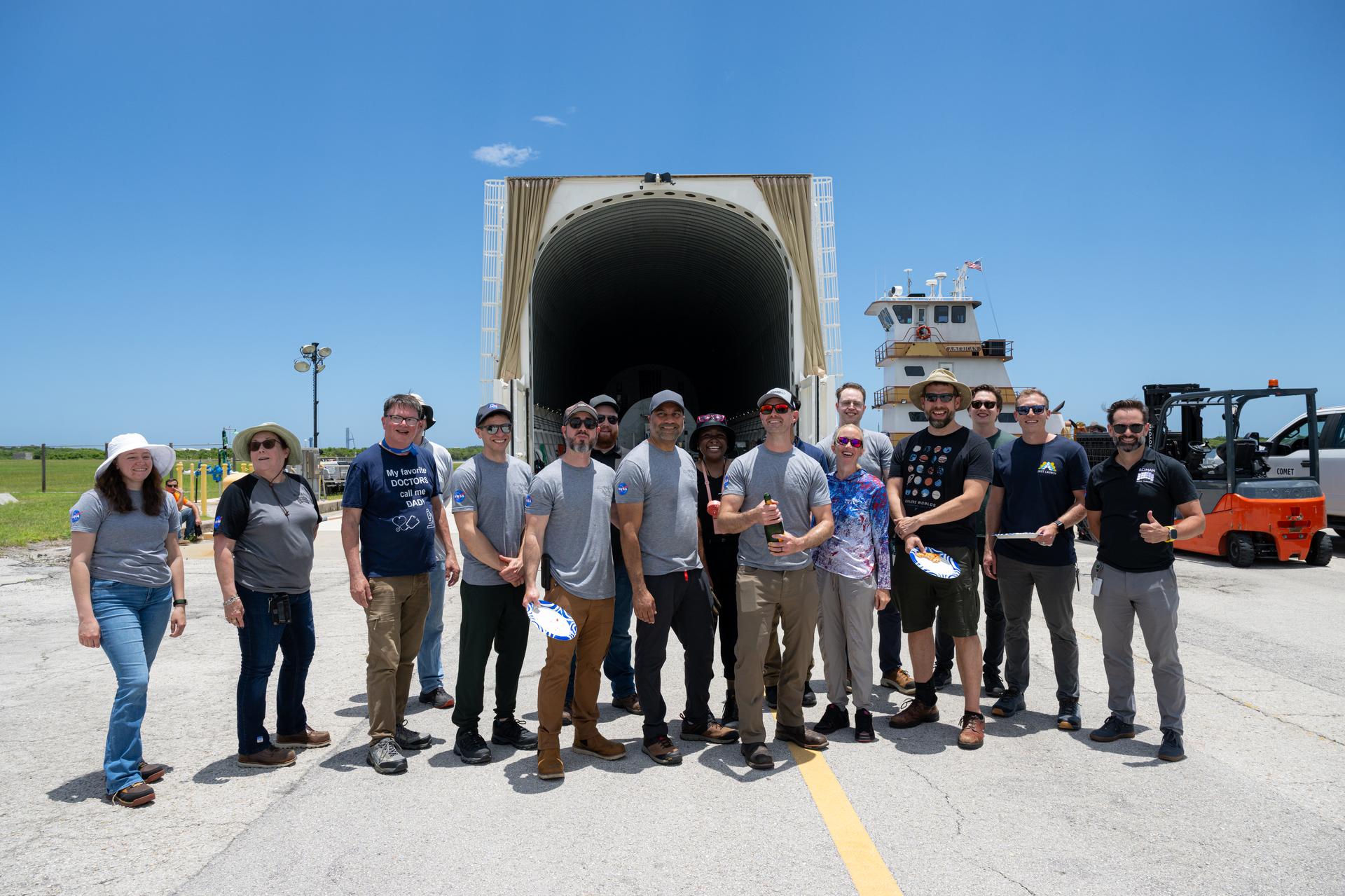
Members of the Nancy Grace Roman Space Telescope transport team pose for a photograph with NASA’s Pegasus barge, Sunday, June 21, at NASA’s Kennedy Space Center in Florida. The Pegasus barge delivered NASA’s Nancy Grace Roman Space Telescope and a weather cover for the Artemis III SLS (Space Launch System) rocket core stage to Kennedy. Photo Credit: (NASA/John Kraus)
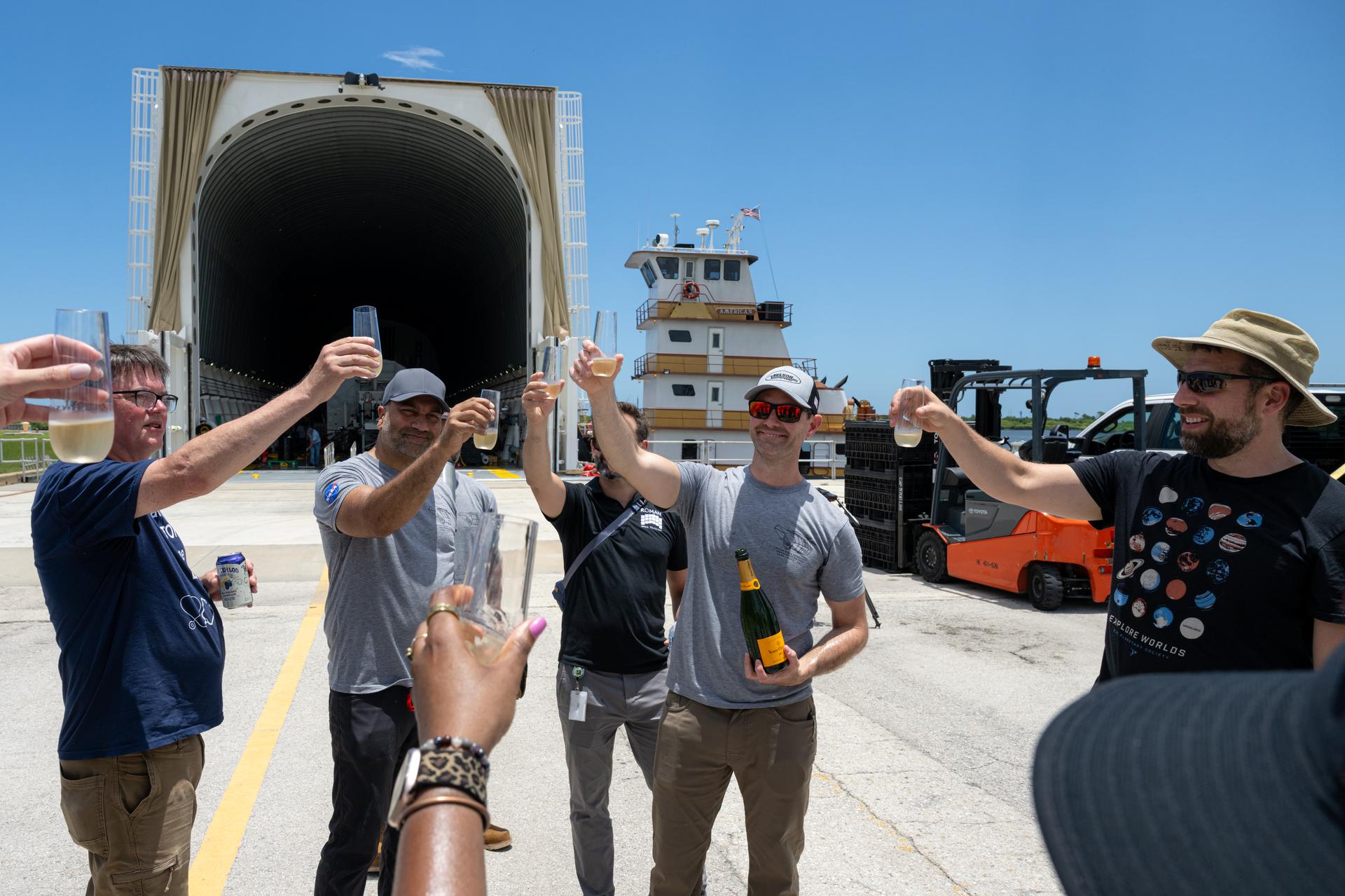
Members of the Nancy Grace Roman Space Telescope transport team celebrate with a toast following the arrival of NASA’s Pegasus barge, Sunday, June 21, at NASA’s Kennedy Space Center in Florida. The Pegasus barge delivered NASA’s Nancy Grace Roman Space Telescope and a weather cover for the Artemis III SLS (Space Launch System) rocket core stage to Kennedy. Photo Credit: (NASA/John Kraus)
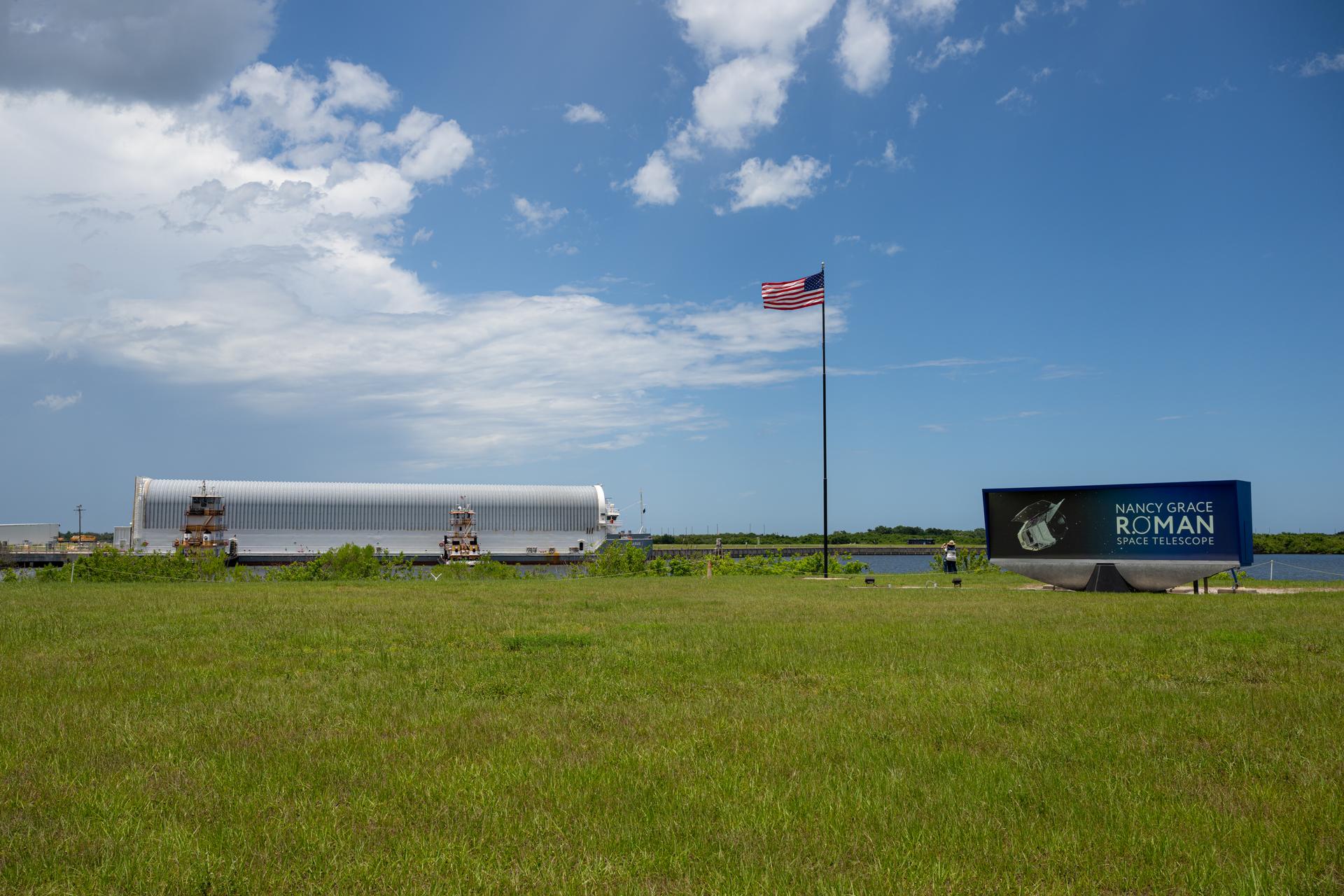
NASA’s Pegasus barge is seen, Sunday, June 21, at NASA’s Kennedy Space Center in Florida. The Pegasus barge delivered NASA’s Nancy Grace Roman Space Telescope and a weather cover for the Artemis III SLS (Space Launch System) rocket core stage to Kennedy. Photo Credit: (NASA/John Kraus)
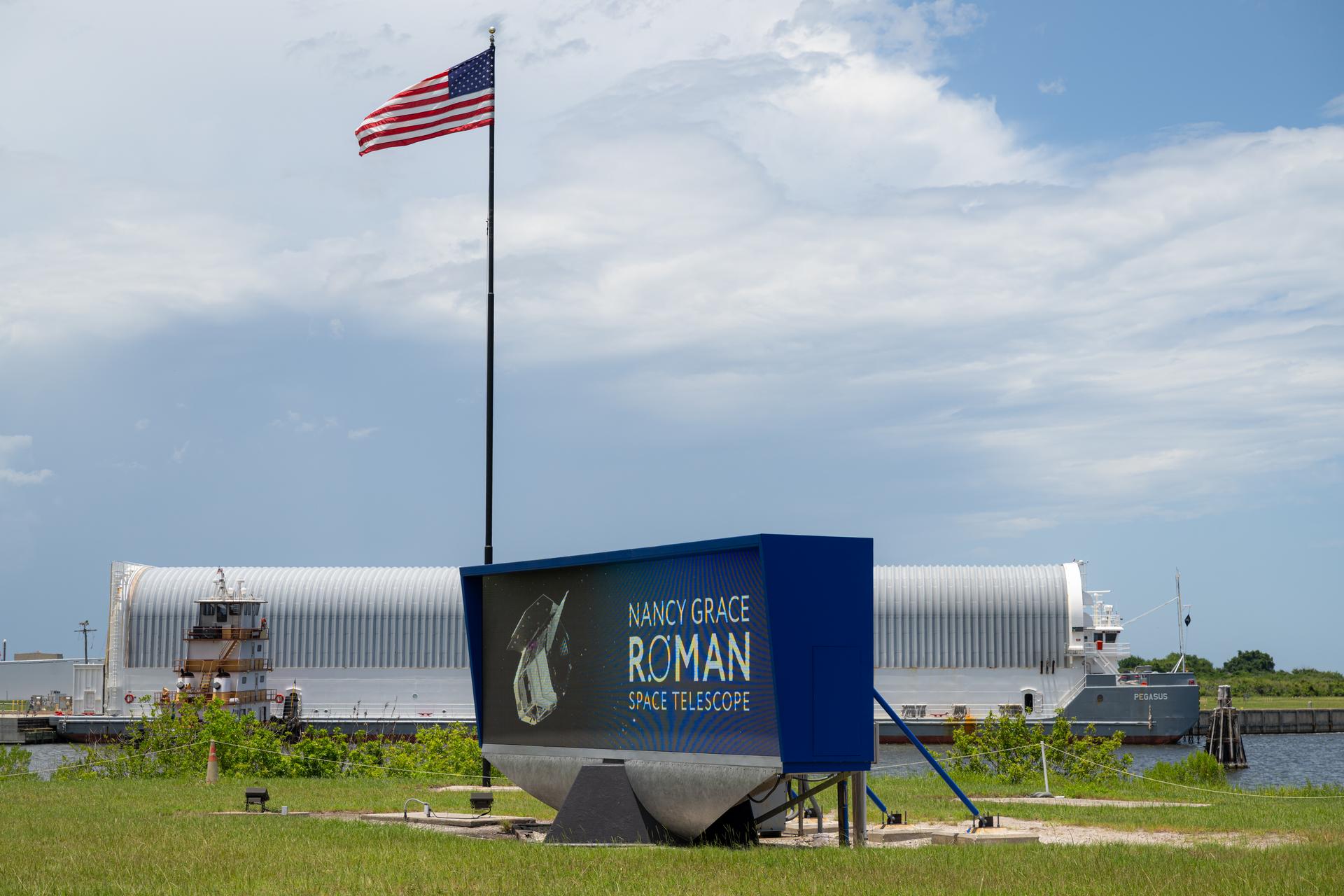
NASA’s Pegasus barge is seen, Sunday, June 21, at NASA’s Kennedy Space Center in Florida. The Pegasus barge delivered NASA’s Nancy Grace Roman Space Telescope and a weather cover for the Artemis III SLS (Space Launch System) rocket core stage to Kennedy. Photo Credit: (NASA/John Kraus)
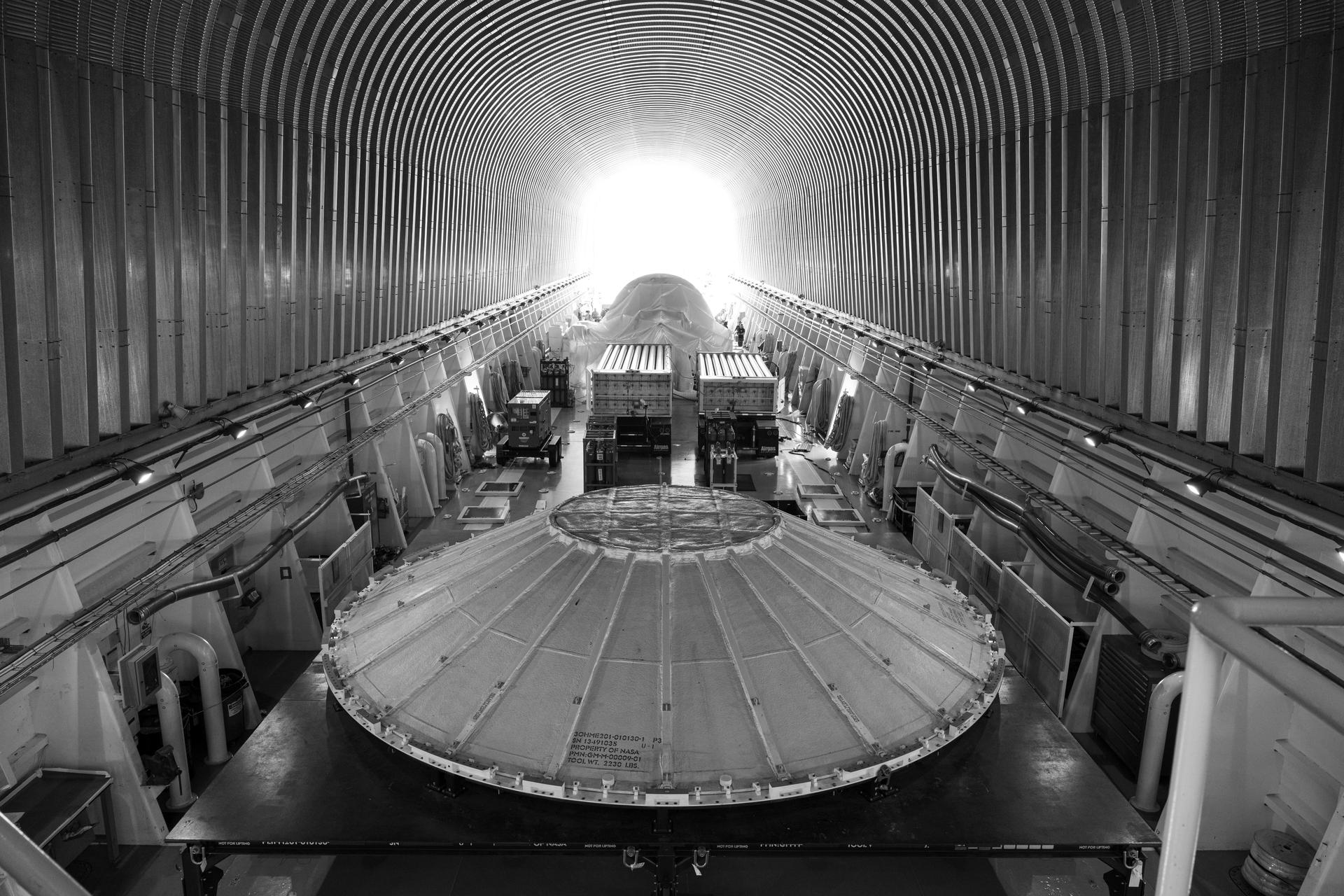
An interior view of NASA’s Pegasus barge, carrying a weather cover for Artemis III SLS (Space Launch System) rocket core stage and NASA’s Nancy Grace Roman Telescope, is seen, Sunday, June 21, at NASA’s Kennedy Space Center in Florida. Photo Credit: (NASA/John Kraus)
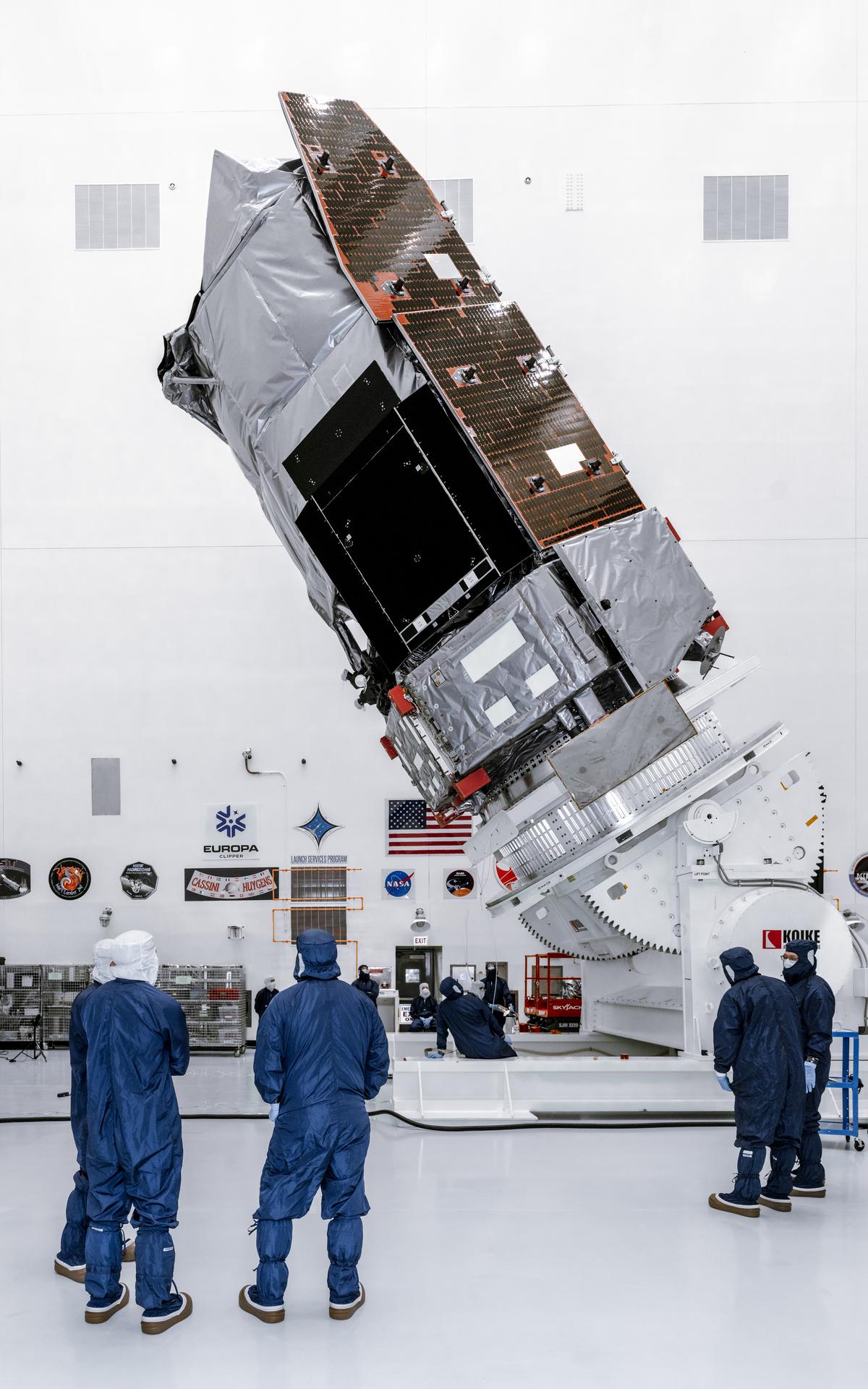
Technicians and engineers inside the Payload Hazardous Servicing Facility at NASA’s Kennedy Space Center in Florida rotate the agency’s Nancy Grace Roman Space Telescope to vertical Thursday, June 25, 2026, using precision handling hardware. Named for NASA’s first chief astronomer and “mother of the Hubble Space Telescope,” the Roman Space Telescope will offer a field of view at least 100 times larger than Hubble’s, resulting in deep, sweeping explorations of the cosmos.
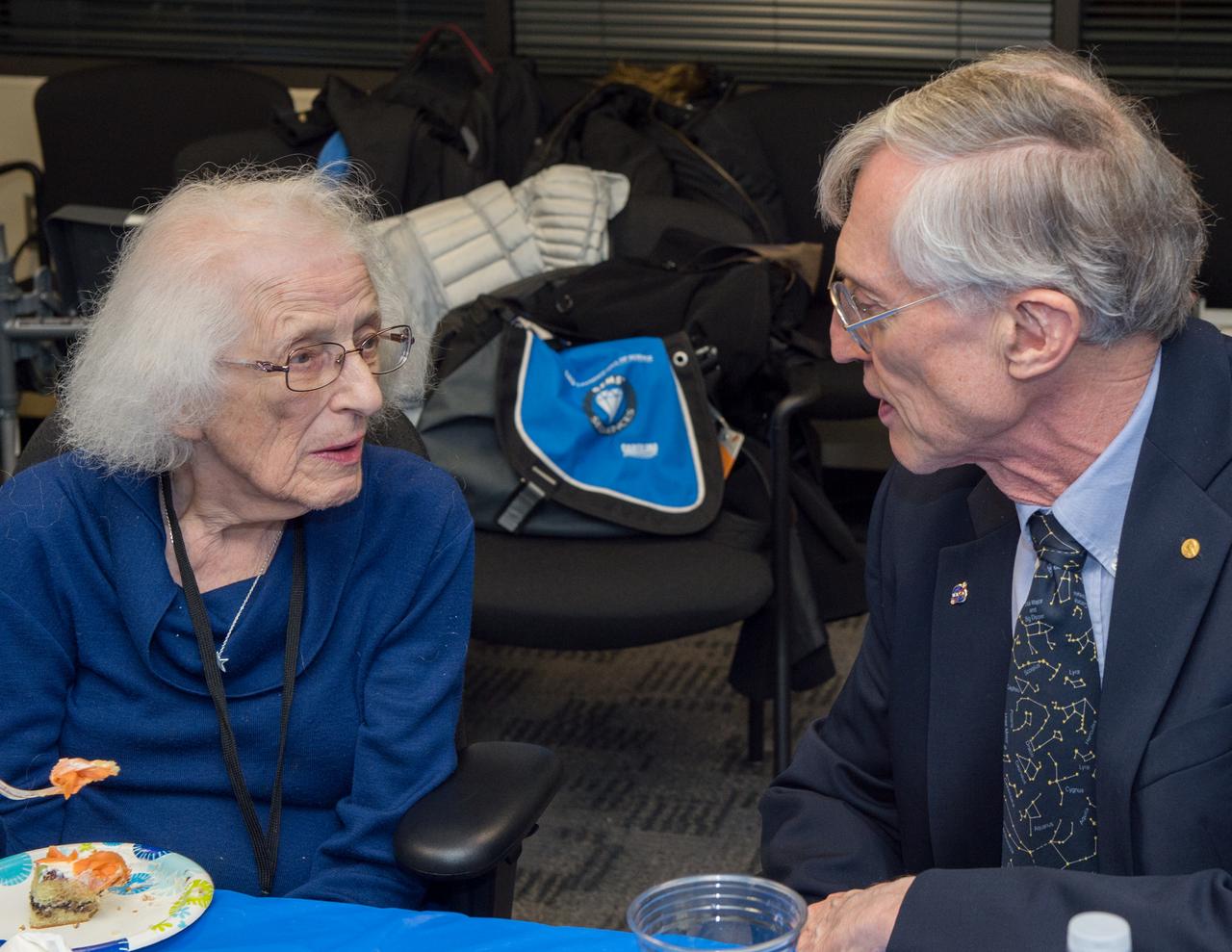
Dr. Nancy Grace Roman visits James Webb Space Telescope (JWST) and the Hubble Project Team. Dr. John Mather.

Dr. Nancy Grace Roman visits James Webb Space Telescope (JWST) and the Hubble Project Team.
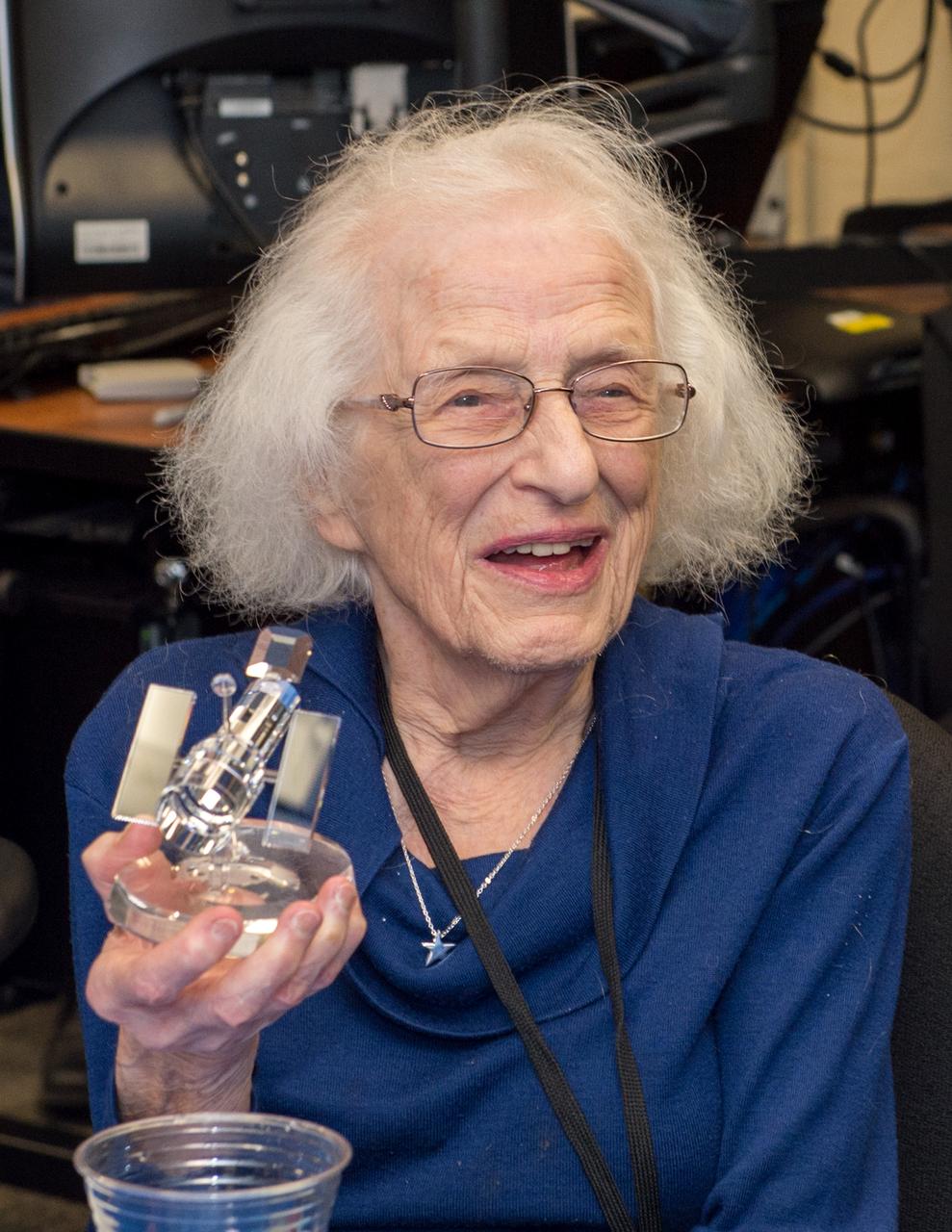
Dr. Nancy Grace Roman visits James Webb Space Telescope (JWST) and the Hubble Project Team.

Dr. Nancy Grace Roman visits James Webb Space Telescope (JWST) and the Hubble Project Team.
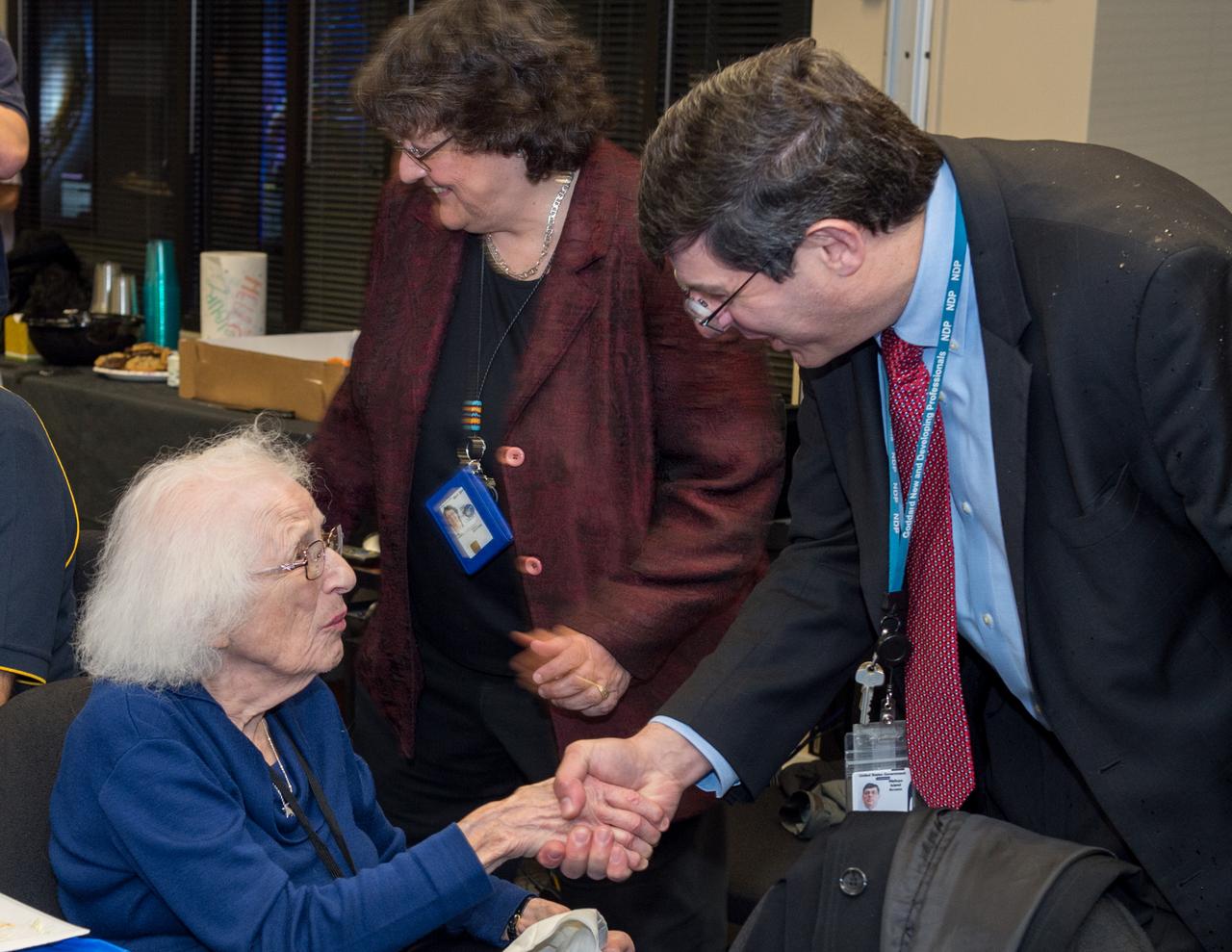
Dr. Nancy Grace Roman visits James Webb Space Telescope (JWST) and the Hubble Project Team. Center Director Chris Scolese
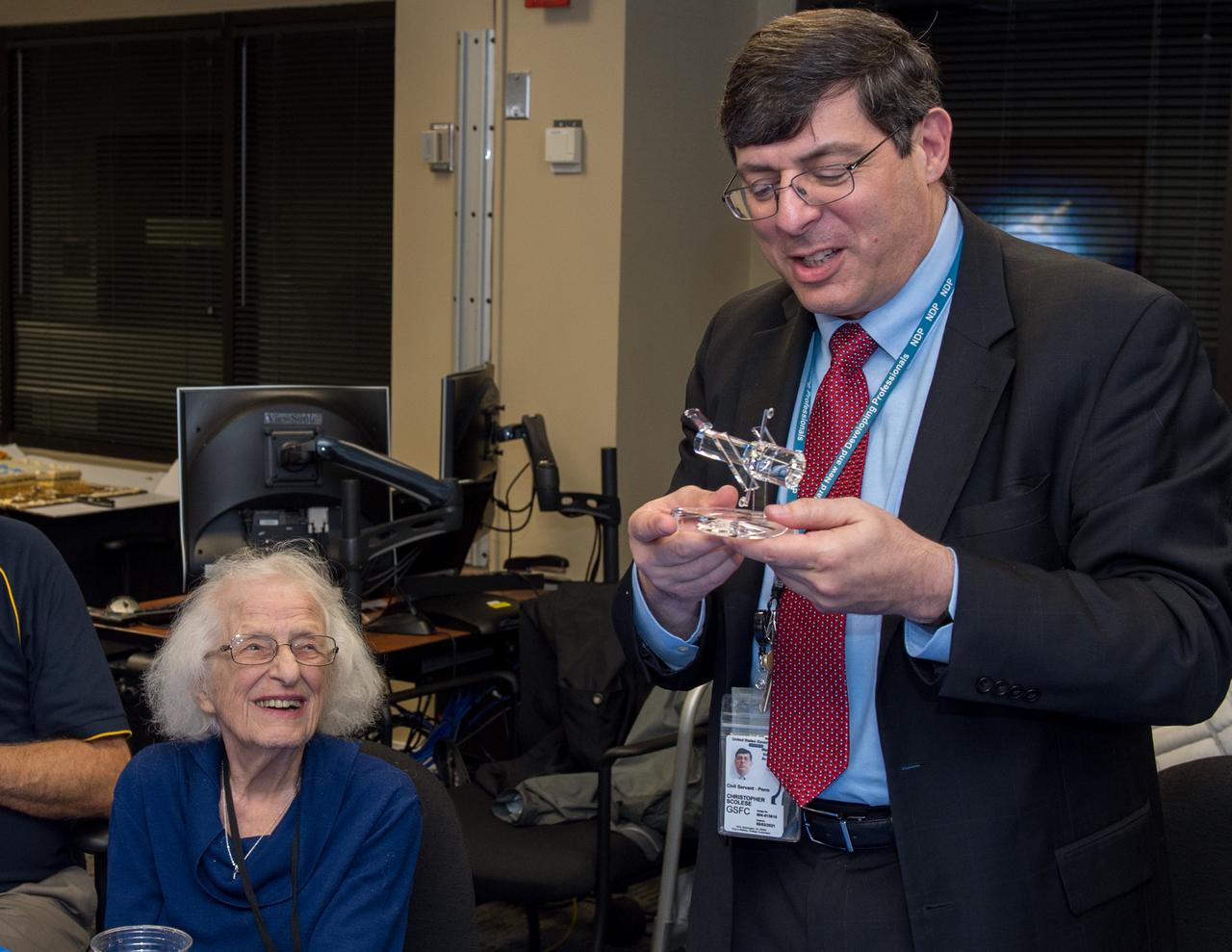
Dr. Nancy Grace Roman visits James Webb Space Telescope (JWST) and the Hubble Project Team. Center Director Chris Scolese

NASA’s Pegasus barge arrives at the Launch Complex 39 turn basin at the agency’s Kennedy Space Center in Florida carrying NASA’s Nancy Grace Roman Space Telescope on Sunday, June 21, 2026. Teams will offload and transport the observatory to the spaceport’s Payload Hazardous Servicing Facility where it will undergo processing ahead of launch, targeted no earlier than Sunday, Aug. 30, 2026. Named for NASA’s first chief astronomer and “mother of the Hubble Space Telescope,” Roman will offer a field of view over 100 times larger than Hubble’s to study up to a billion galaxies, directly image exoplanets and planet‑forming disks, and address fundamental questions about dark energy, exoplanets, and infrared astrophysics.

NASA’s Pegasus barge arrives at the Launch Complex 39 turn basin at the agency’s Kennedy Space Center in Florida carrying NASA’s Nancy Grace Roman Space Telescope on Sunday, June 21, 2026. Teams will offload and transport the observatory to the spaceport’s Payload Hazardous Servicing Facility where it will undergo processing ahead of launch, targeted no earlier than Sunday, Aug. 30, 2026. Named for NASA’s first chief astronomer and “mother of the Hubble Space Telescope,” Roman will offer a field of view over 100 times larger than Hubble’s to study up to a billion galaxies, directly image exoplanets and planet‑forming disks, and address fundamental questions about dark energy, exoplanets, and infrared astrophysics.

NASA’s Pegasus barge arrives at the Launch Complex 39 turn basin at the agency’s Kennedy Space Center in Florida carrying NASA’s Nancy Grace Roman Space Telescope on Sunday, June 21, 2026. Teams will offload and transport the observatory to the spaceport’s Payload Hazardous Servicing Facility where it will undergo processing ahead of launch, targeted no earlier than Sunday, Aug. 30, 2026. Named for NASA’s first chief astronomer and “mother of the Hubble Space Telescope,” Roman will offer a field of view over 100 times larger than Hubble’s to study up to a billion galaxies, directly image exoplanets and planet‑forming disks, and address fundamental questions about dark energy, exoplanets, and infrared astrophysics.

NASA’s Pegasus barge arrives at the Launch Complex 39 turn basin at the agency’s Kennedy Space Center in Florida carrying NASA’s Nancy Grace Roman Space Telescope on Sunday, June 21, 2026. Teams will offload and transport the observatory to the spaceport’s Payload Hazardous Servicing Facility where it will undergo processing ahead of launch, targeted no earlier than Sunday, Aug. 30, 2026. Named for NASA’s first chief astronomer and “mother of the Hubble Space Telescope,” Roman will offer a field of view over 100 times larger than Hubble’s to study up to a billion galaxies, directly image exoplanets and planet‑forming disks, and address fundamental questions about dark energy, exoplanets, and infrared astrophysics.

NASA’s Pegasus barge arrives at the Launch Complex 39 turn basin at the agency’s Kennedy Space Center in Florida carrying NASA’s Nancy Grace Roman Space Telescope on Sunday, June 21, 2026. Teams will offload and transport the observatory to the spaceport’s Payload Hazardous Servicing Facility where it will undergo processing ahead of launch, targeted no earlier than Sunday, Aug. 30, 2026. Named for NASA’s first chief astronomer and “mother of the Hubble Space Telescope,” Roman will offer a field of view over 100 times larger than Hubble’s to study up to a billion galaxies, directly image exoplanets and planet‑forming disks, and address fundamental questions about dark energy, exoplanets, and infrared astrophysics.
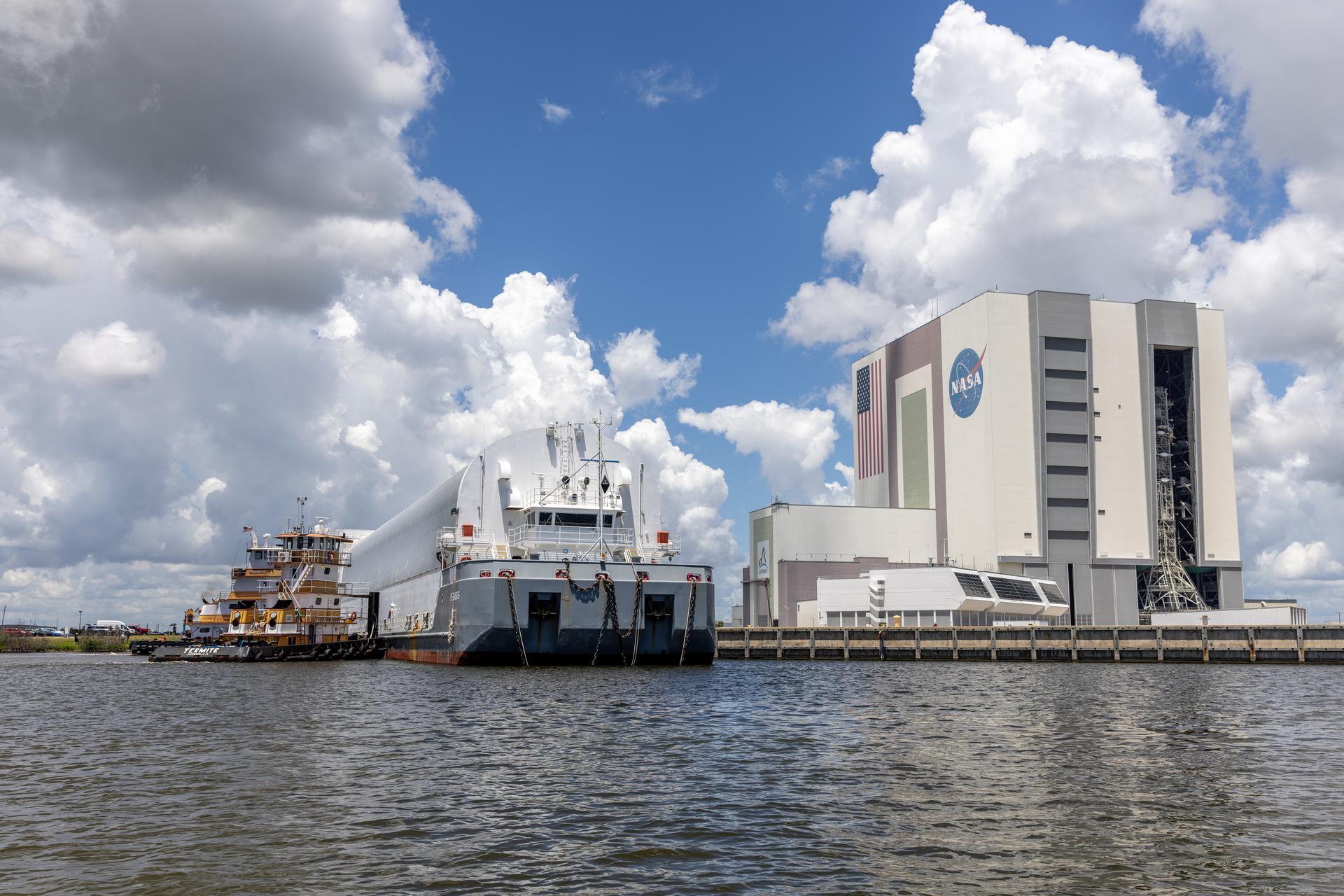
NASA’s Pegasus barge arrives at the Launch Complex 39 turn basin at the agency’s Kennedy Space Center in Florida carrying NASA’s Nancy Grace Roman Space Telescope on Sunday, June 21, 2026. Teams will offload and transport the observatory to the spaceport’s Payload Hazardous Servicing Facility where it will undergo processing ahead of launch, targeted no earlier than Sunday, Aug. 30, 2026. Named for NASA’s first chief astronomer and “mother of the Hubble Space Telescope,” Roman will offer a field of view over 100 times larger than Hubble’s to study up to a billion galaxies, directly image exoplanets and planet forming disks, and address fundamental questions about dark energy, exoplanets, and infrared astrophysics.
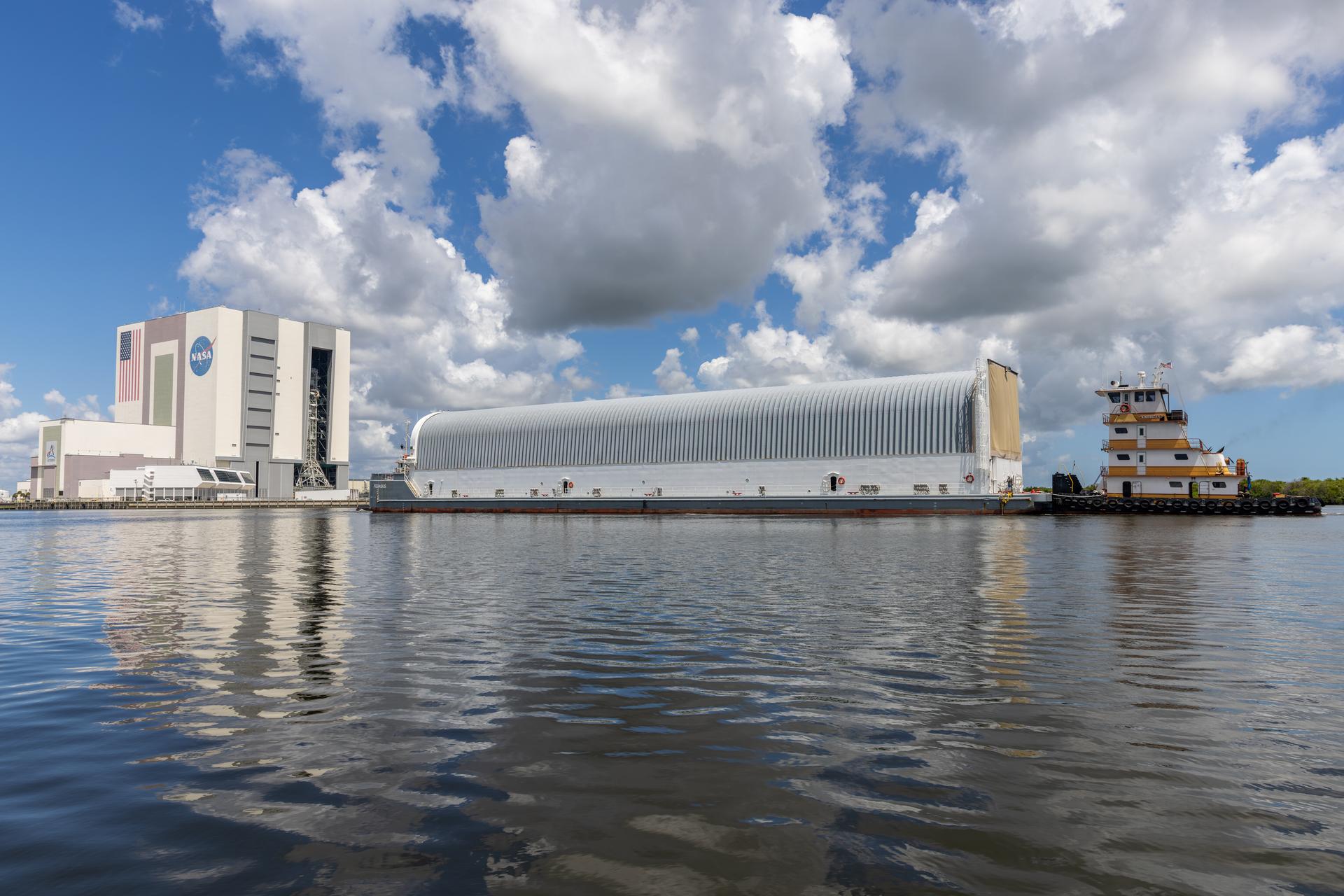
NASA’s Pegasus barge arrives at the Launch Complex 39 turn basin at the agency’s Kennedy Space Center in Florida carrying NASA’s Nancy Grace Roman Space Telescope on Sunday, June 21, 2026. Teams will offload and transport the observatory to the spaceport’s Payload Hazardous Servicing Facility where it will undergo processing ahead of launch, targeted no earlier than Sunday, Aug. 30, 2026. Named for NASA’s first chief astronomer and “mother of the Hubble Space Telescope,” Roman will offer a field of view over 100 times larger than Hubble’s to study up to a billion galaxies, directly image exoplanets and planet forming disks, and address fundamental questions about dark energy, exoplanets, and infrared astrophysics.
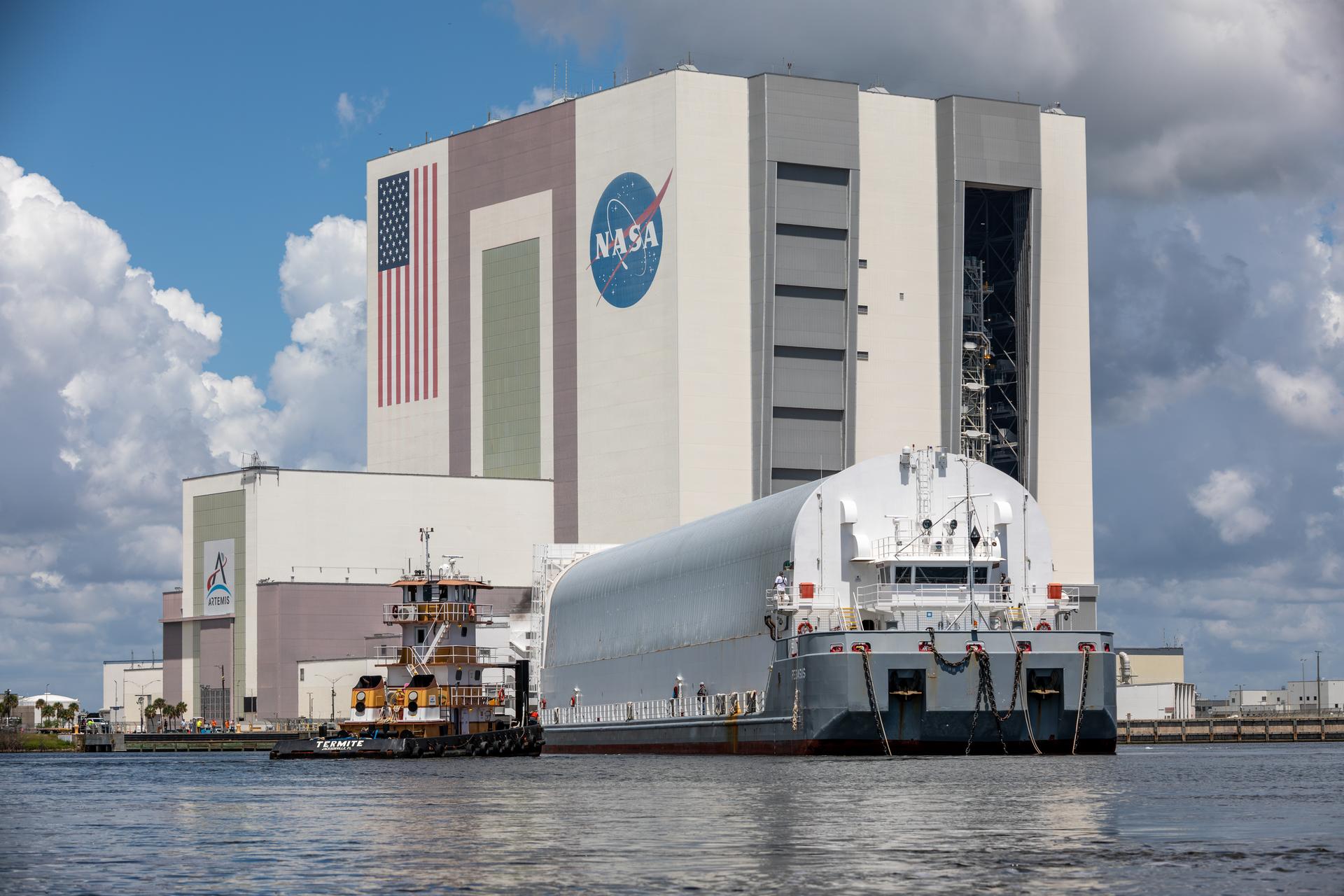
NASA’s Pegasus barge arrives at the Launch Complex 39 turn basin at the agency’s Kennedy Space Center in Florida carrying NASA’s Nancy Grace Roman Space Telescope on Sunday, June 21, 2026. Teams will offload and transport the observatory to the spaceport’s Payload Hazardous Servicing Facility where it will undergo processing ahead of launch, targeted no earlier than Sunday, Aug. 30, 2026. Named for NASA’s first chief astronomer and “mother of the Hubble Space Telescope,” Roman will offer a field of view over 100 times larger than Hubble’s to study up to a billion galaxies, directly image exoplanets and planet forming disks, and address fundamental questions about dark energy, exoplanets, and infrared astrophysics.
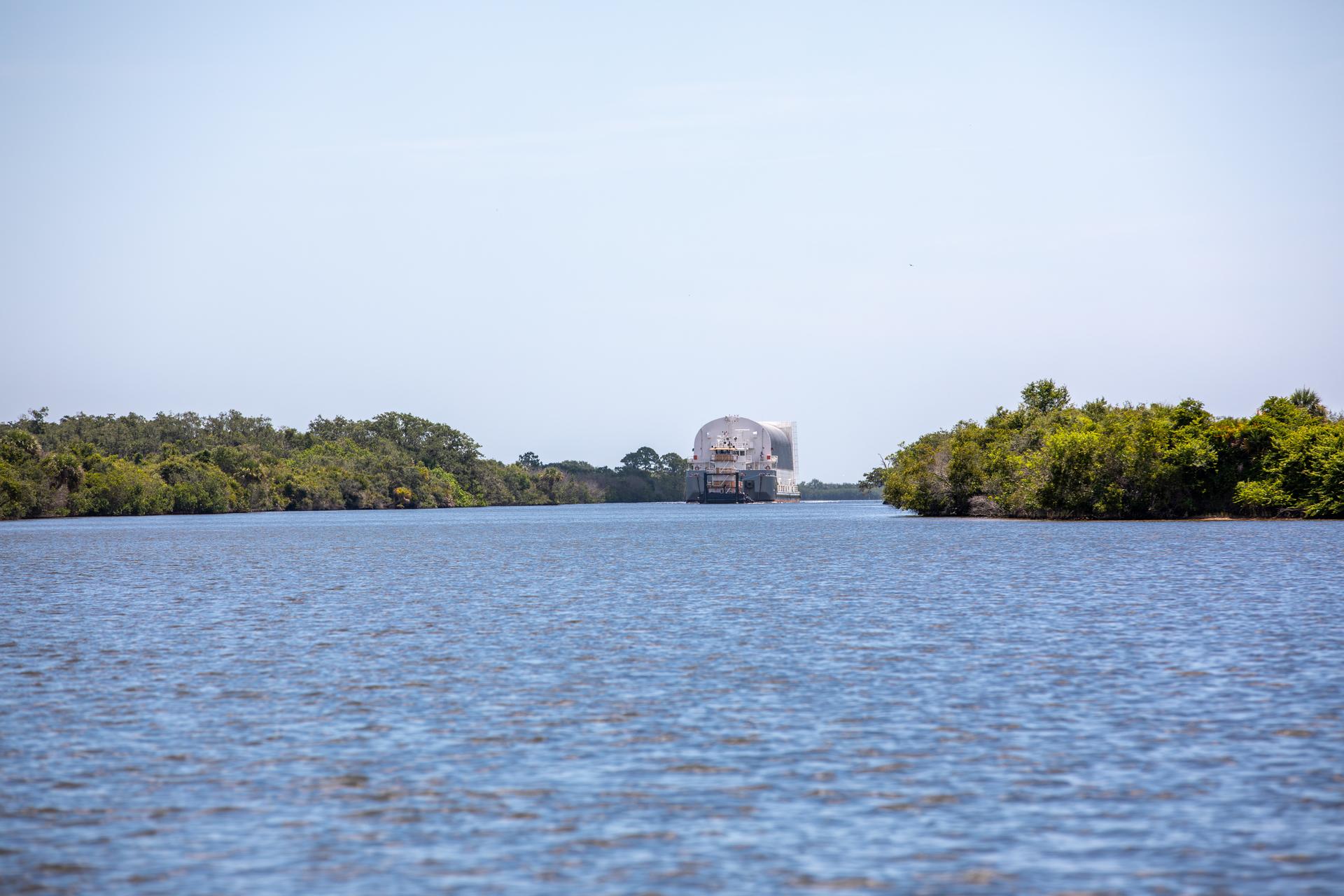
NASA’s Pegasus barge arrives at the Launch Complex 39 turn basin at the agency’s Kennedy Space Center in Florida carrying NASA’s Nancy Grace Roman Space Telescope on Sunday, June 21, 2026. Teams will offload and transport the observatory to the spaceport’s Payload Hazardous Servicing Facility where it will undergo processing ahead of launch, targeted no earlier than Sunday, Aug. 30, 2026. Named for NASA’s first chief astronomer and “mother of the Hubble Space Telescope,” Roman will offer a field of view over 100 times larger than Hubble’s to study up to a billion galaxies, directly image exoplanets and planet forming disks, and address fundamental questions about dark energy, exoplanets, and infrared astrophysics.
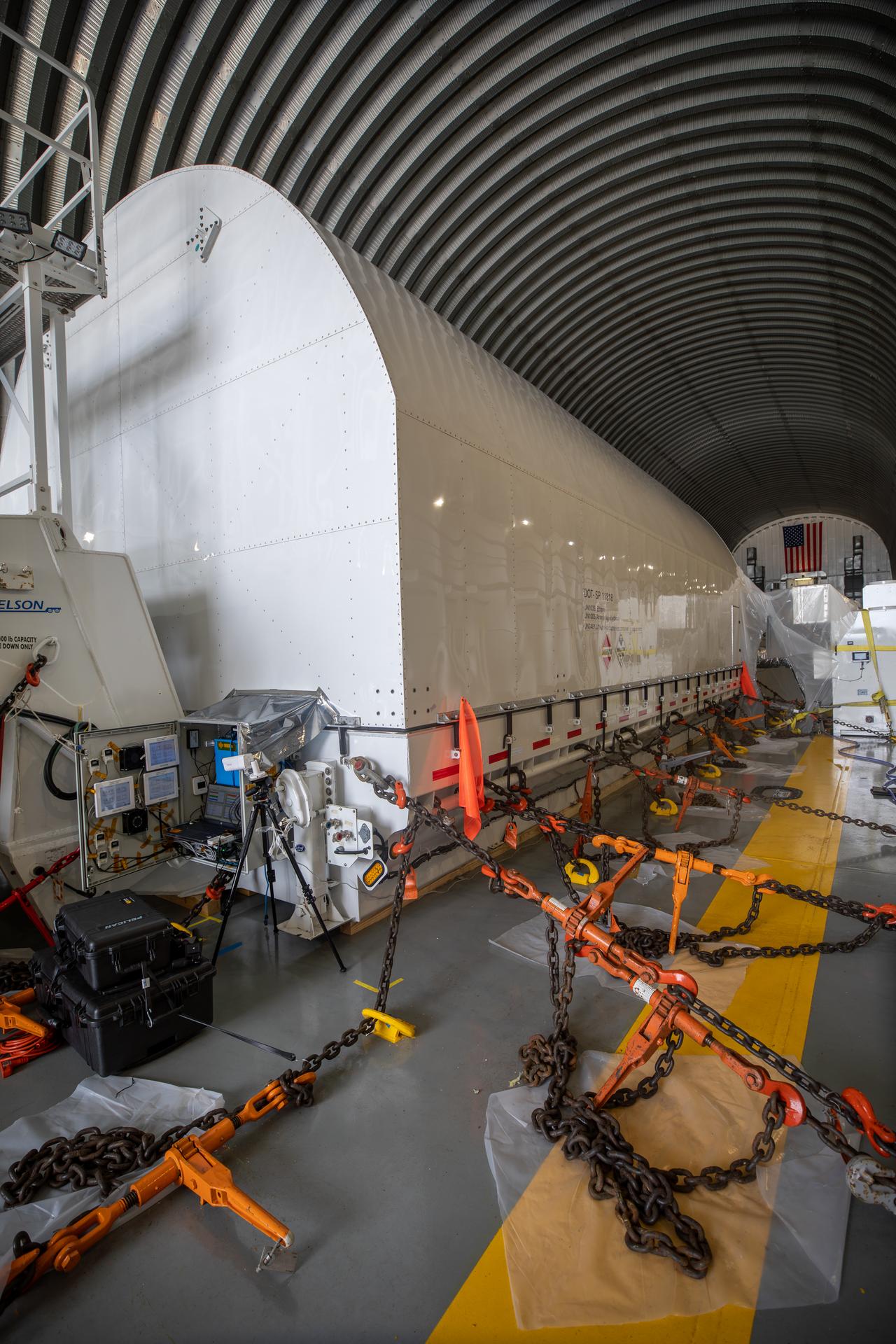
Housed inside a protective and environmentally controlled transportation container, NASA’s Nancy Grace Roman Space Telescope is secured in the usable cargo deck of the agency’s Pegasus barge as it arrives at the Launch Complex 39 turn basin at NASA’s Kennedy Space Center in Florida on Sunday, June 21, 2026. Teams will offload and transport the observatory to the spaceport’s Payload Hazardous Servicing Facility where it will undergo processing ahead of launch, targeted no earlier than Sunday, Aug. 30, 2026. Named for NASA’s first chief astronomer and “mother of the Hubble Space Telescope,” Roman will offer a field of view over 100 times larger than Hubble’s to study up to a billion galaxies, directly image exoplanets and planet forming disks, and address fundamental questions about dark energy, exoplanets, and infrared astrophysics.

NASA’s Nancy Grace Roman Space Telescope arrives at the Payload Hazardous Servicing Facility at the agency’s Kennedy Space Center in Florida on Sunday, June 21, 2026, to undergo prelaunch processing. Named for NASA’s first chief astronomer and “mother of the Hubble Space Telescope,” Roman will offer a field of view over 100 times larger than Hubble’s to study up to a billion galaxies, directly image exoplanets and planet‑forming disks, and address fundamental questions about dark energy, exoplanets, and infrared astrophysics. Liftoff atop a SpaceX Falcon Heavy rocket from NASA Kennedy’s Launch Complex 39A is targeting no earlier than Sunday, Aug. 30, 2026.

NASA’s Nancy Grace Roman Space Telescope arrives at the Payload Hazardous Servicing Facility at the agency’s Kennedy Space Center in Florida on Sunday, June 21, 2026, to undergo prelaunch processing. Named for NASA’s first chief astronomer and “mother of the Hubble Space Telescope,” Roman will offer a field of view over 100 times larger than Hubble’s to study up to a billion galaxies, directly image exoplanets and planet‑forming disks, and address fundamental questions about dark energy, exoplanets, and infrared astrophysics. Liftoff atop a SpaceX Falcon Heavy rocket from NASA Kennedy’s Launch Complex 39A is targeting no earlier than Sunday, Aug. 30, 2026.

Teams prepare for the arrival of NASA’s Nancy Grace Roman Space Telescope at the Payload Hazardous Servicing Facility at the agency’s Kennedy Space Center in Florida on Sunday, June 21, 2026, to undergo prelaunch processing. Named for NASA’s first chief astronomer and “mother of the Hubble Space Telescope,” Roman will offer a field of view over 100 times larger than Hubble’s to study up to a billion galaxies, directly image exoplanets and planet‑forming disks, and address fundamental questions about dark energy, exoplanets, and infrared astrophysics. Liftoff atop a SpaceX Falcon Heavy rocket from NASA Kennedy’s Launch Complex 39A is targeting no earlier than Sunday, Aug. 30, 2026.
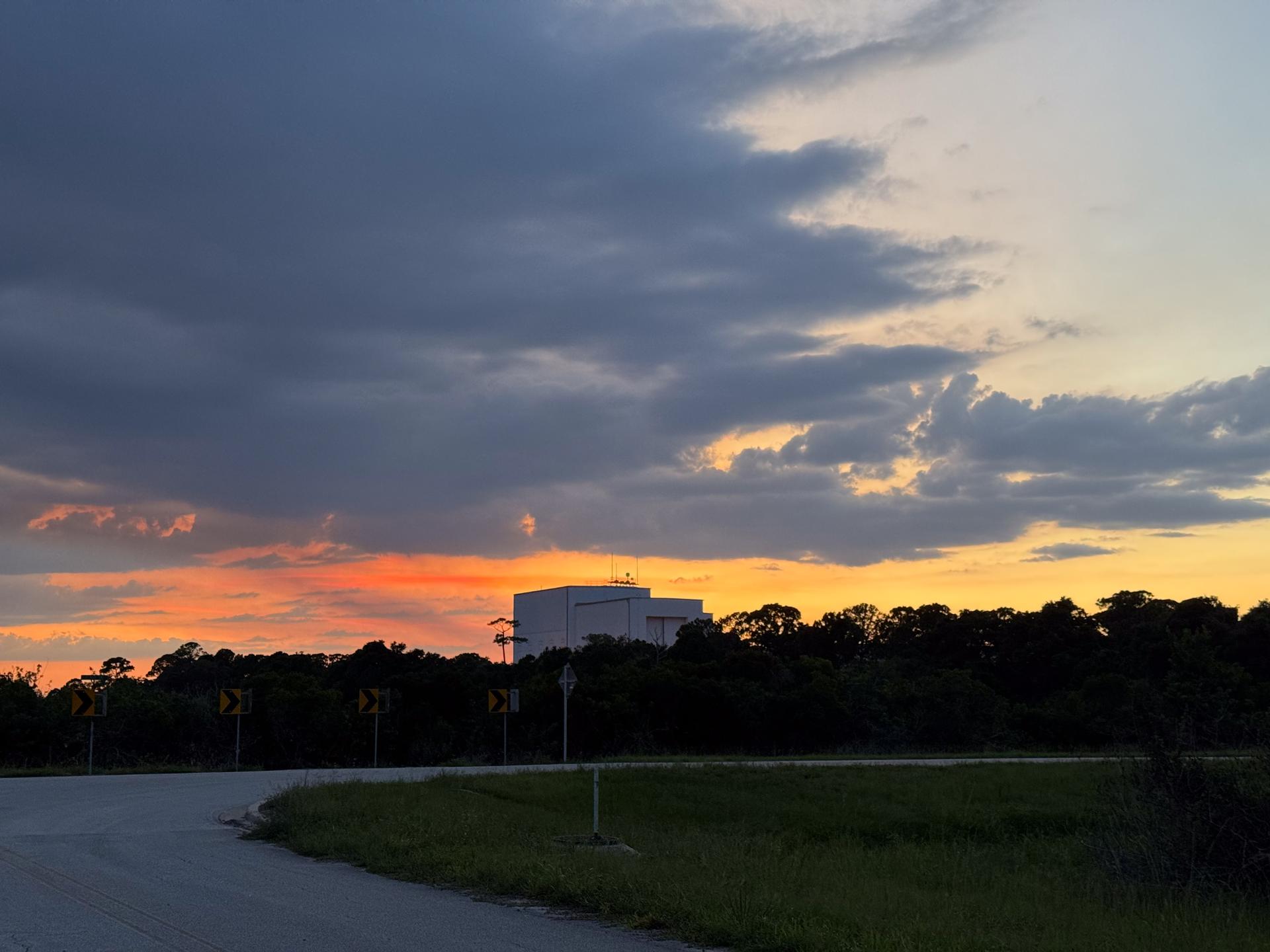
The sun sets on Sunday, June 21, 2026, at the Payload Hazardous Servicing Facility at the agency’s Kennedy Space Center in Florida before the arrival of NASA’s Nancy Grace Roman Space Telescope to undergo prelaunch processing. Named for NASA’s first chief astronomer and “mother of the Hubble Space Telescope,” Roman will offer a field of view over 100 times larger than Hubble’s to study up to a billion galaxies, directly image exoplanets and planet‑forming disks, and address fundamental questions about dark energy, exoplanets, and infrared astrophysics. Liftoff atop a SpaceX Falcon Heavy rocket from NASA Kennedy’s Launch Complex 39A is targeted no earlier than Sunday, Aug. 30, 2026.
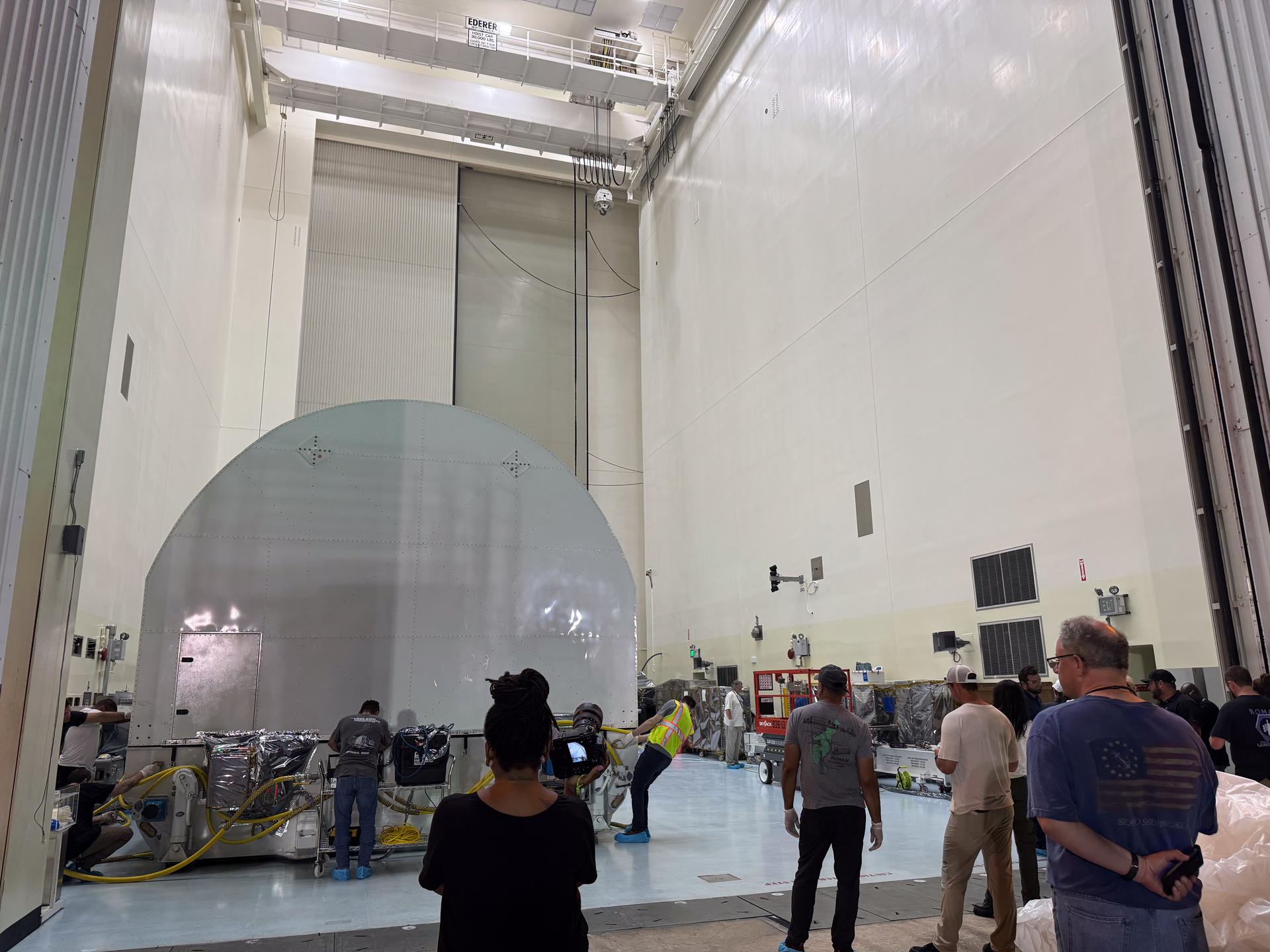
NASA’s Nancy Grace Roman Space Telescope arrives at the Payload Hazardous Servicing Facility at the agency’s Kennedy Space Center in Florida on Sunday, June 21, 2026, to undergo prelaunch processing. Named for NASA’s first chief astronomer and “mother of the Hubble Space Telescope,” Roman will offer a field of view over 100 times larger than Hubble’s to study up to a billion galaxies, directly image exoplanets and planet‑forming disks, and address fundamental questions about dark energy, exoplanets, and infrared astrophysics. Liftoff atop a SpaceX Falcon Heavy rocket from NASA Kennedy’s Launch Complex 39A is targeted no earlier than Sunday, Aug. 30, 2026.
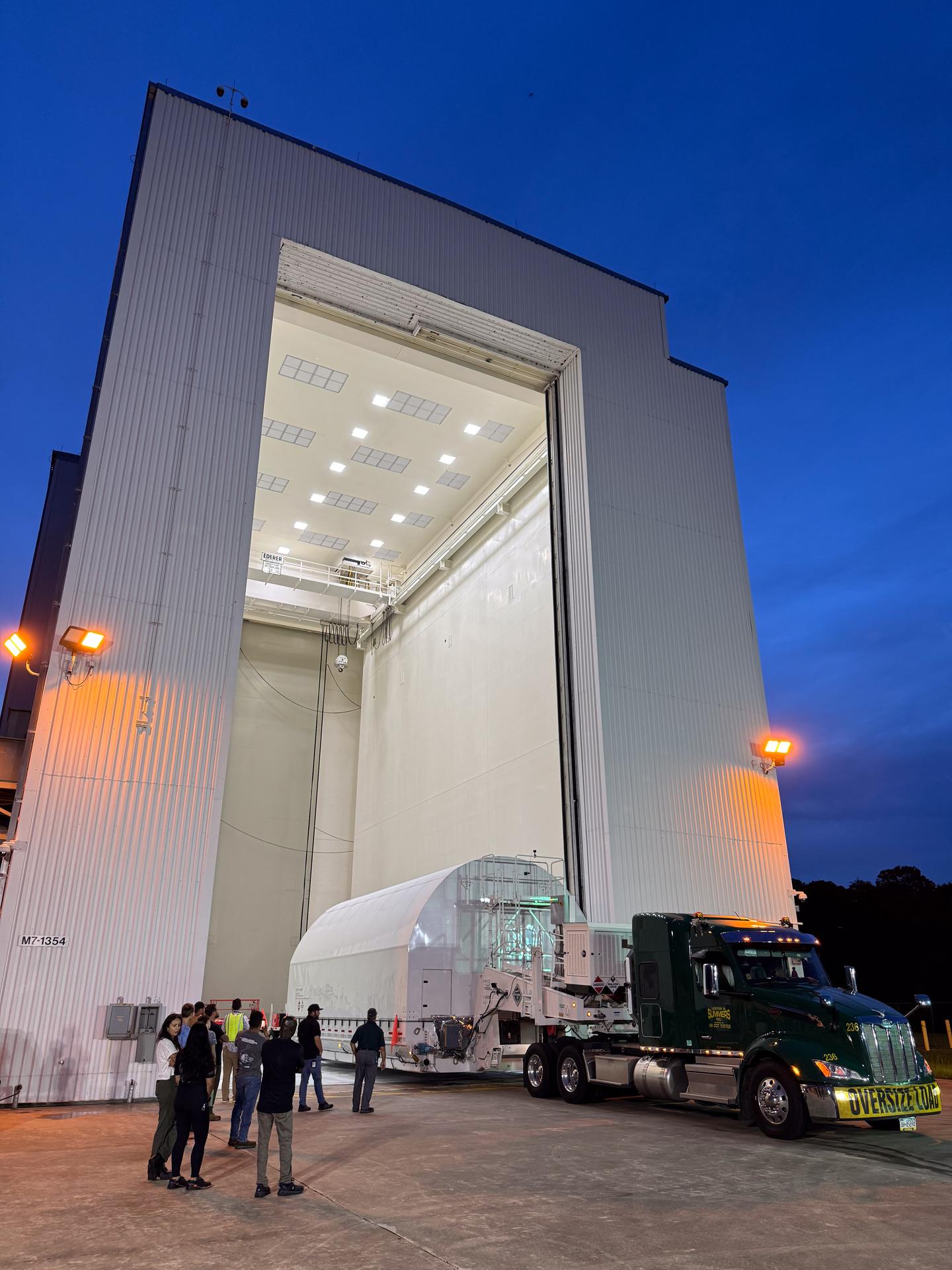
NASA’s Nancy Grace Roman Space Telescope arrives at the Payload Hazardous Servicing Facility at the agency’s Kennedy Space Center in Florida on Sunday, June 21, 2026, to undergo prelaunch processing. Named for NASA’s first chief astronomer and “mother of the Hubble Space Telescope,” Roman will offer a field of view over 100 times larger than Hubble’s to study up to a billion galaxies, directly image exoplanets and planet‑forming disks, and address fundamental questions about dark energy, exoplanets, and infrared astrophysics. Liftoff atop a SpaceX Falcon Heavy rocket from NASA Kennedy’s Launch Complex 39A is targeted no earlier than Sunday, Aug. 30, 2026.
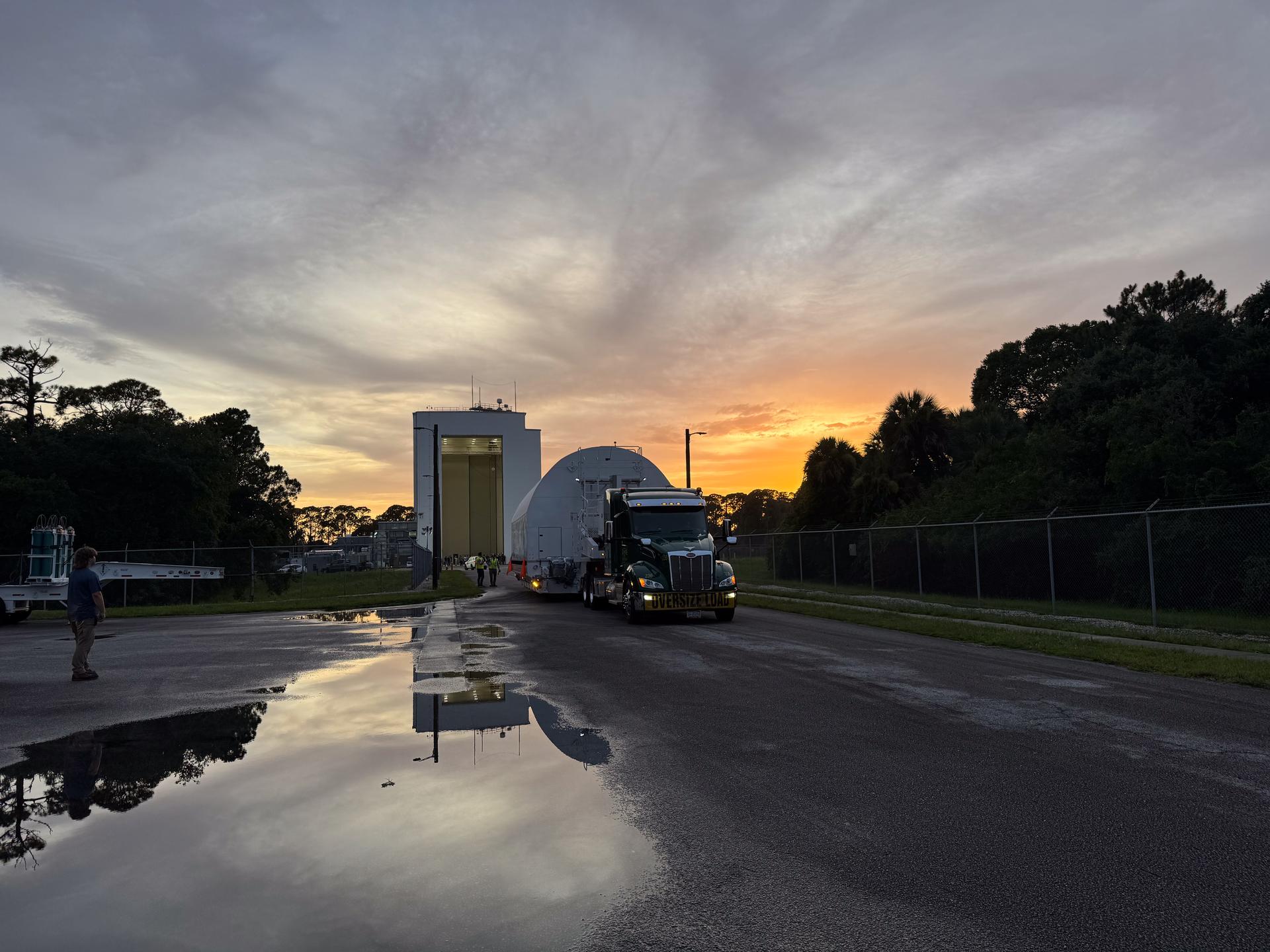
NASA’s Nancy Grace Roman Space Telescope arrives at the Payload Hazardous Servicing Facility at the agency’s Kennedy Space Center in Florida on Sunday, June 21, 2026, to undergo prelaunch processing. Named for NASA’s first chief astronomer and “mother of the Hubble Space Telescope,” Roman will offer a field of view over 100 times larger than Hubble’s to study up to a billion galaxies, directly image exoplanets and planet‑forming disks, and address fundamental questions about dark energy, exoplanets, and infrared astrophysics. Liftoff atop a SpaceX Falcon Heavy rocket from NASA Kennedy’s Launch Complex 39A is targeted no earlier than Sunday, Aug. 30, 2026.
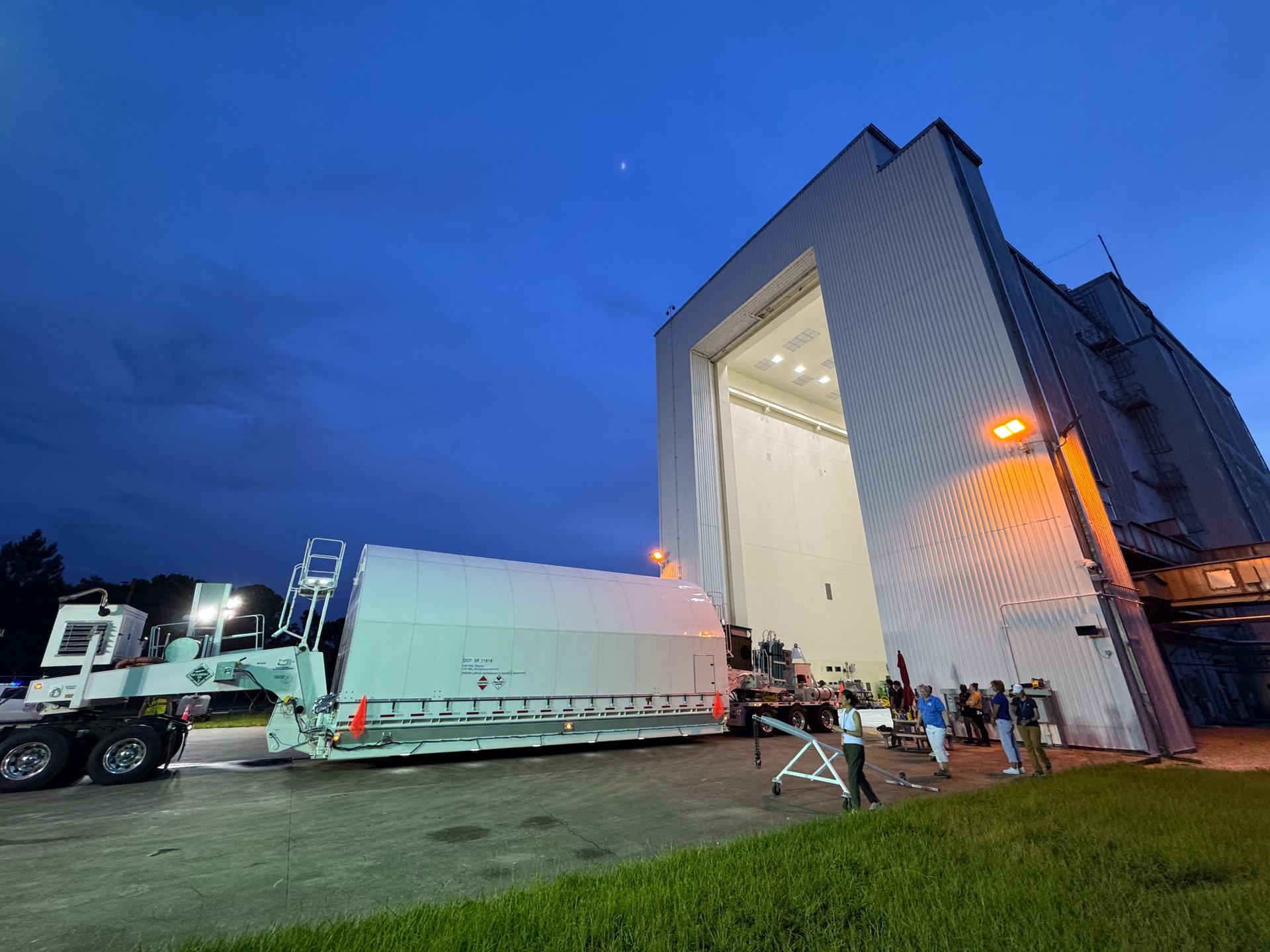
NASA’s Nancy Grace Roman Space Telescope arrives at the Payload Hazardous Servicing Facility at the agency’s Kennedy Space Center in Florida on Sunday, June 21, 2026, to undergo prelaunch processing. Named for NASA’s first chief astronomer and “mother of the Hubble Space Telescope,” Roman will offer a field of view over 100 times larger than Hubble’s to study up to a billion galaxies, directly image exoplanets and planet‑forming disks, and address fundamental questions about dark energy, exoplanets, and infrared astrophysics. Liftoff atop a SpaceX Falcon Heavy rocket from NASA Kennedy’s Launch Complex 39A is targeted no earlier than Sunday, Aug. 30, 2026.
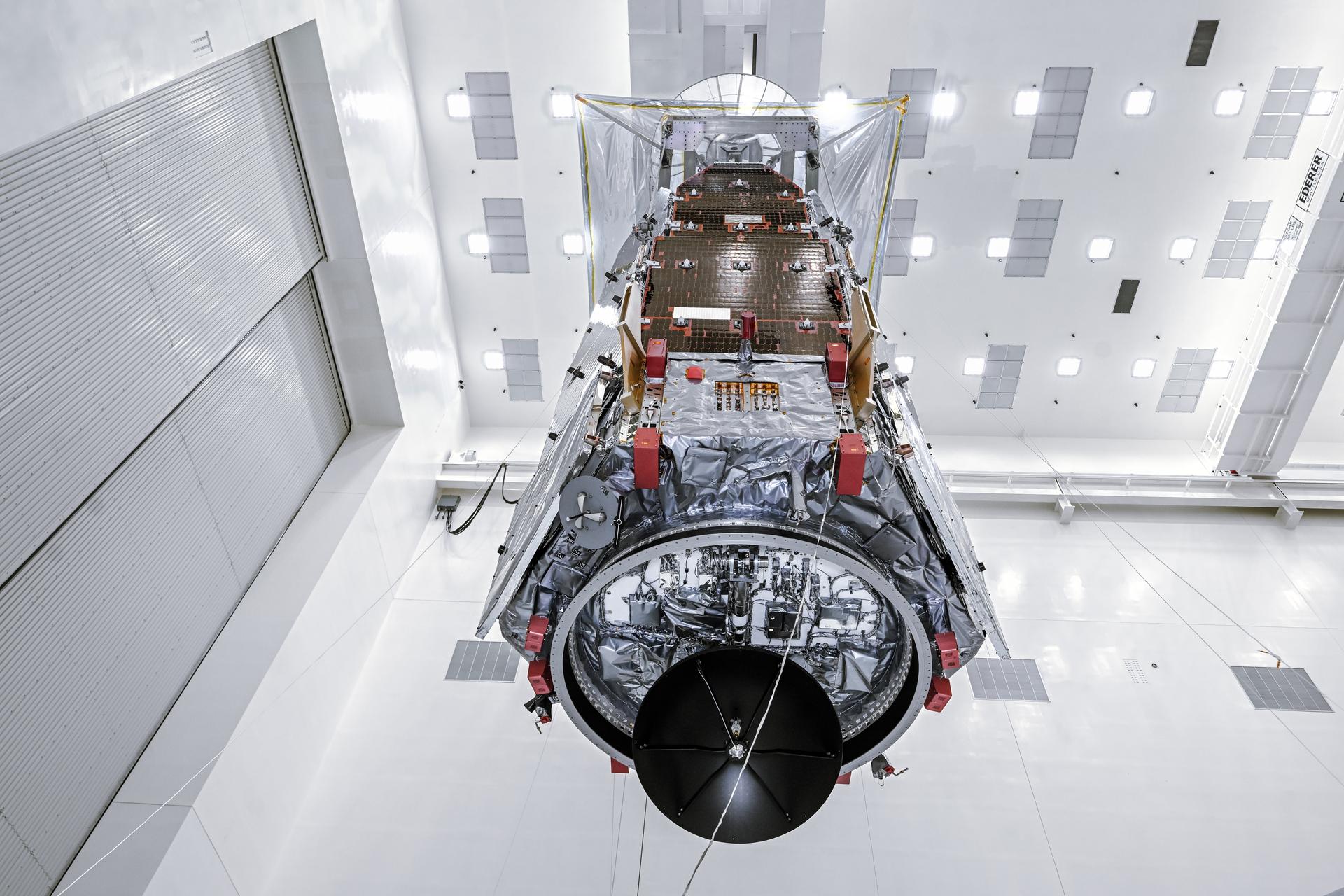
Technicians and engineers inside the Payload Hazardous Servicing Facility at NASA’s Kennedy Space Center in Florida use a crane to lift the agency’s Nancy Grace Roman Space Telescope to a specialized work stand Friday, June 26, 2026. Named for NASA’s first chief astronomer and “mother of the Hubble Space Telescope,” the Roman Space Telescope will offer a field of view at least 100 times larger than Hubble’s, resulting in deep, sweeping explorations of the cosmos.
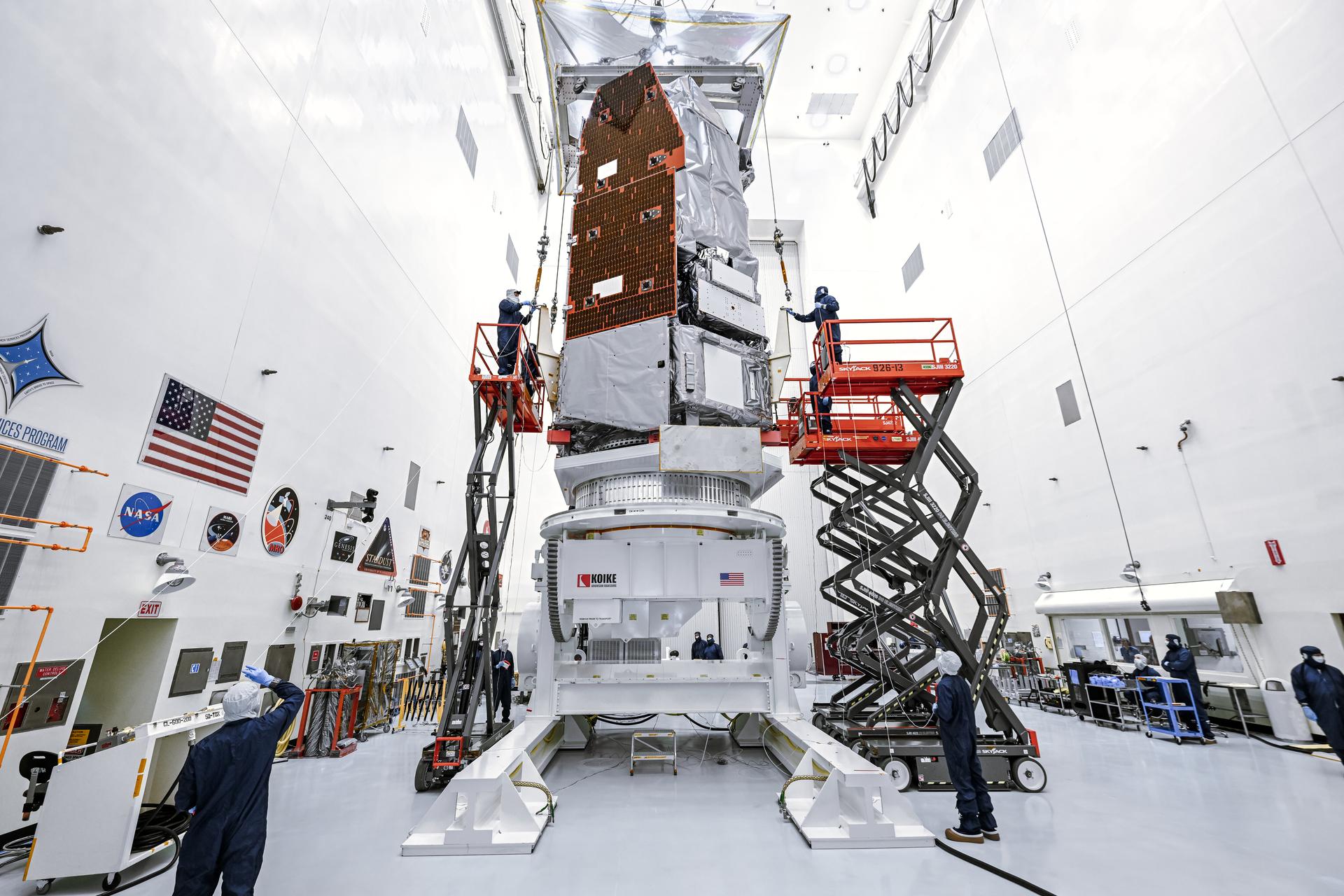
Technicians and engineers inside the Payload Hazardous Servicing Facility at NASA’s Kennedy Space Center in Florida use a crane to lift the agency’s Nancy Grace Roman Space Telescope to a specialized work stand Friday, June 26, 2026. Named for NASA’s first chief astronomer and “mother of the Hubble Space Telescope,” the Roman Space Telescope will offer a field of view at least 100 times larger than Hubble’s, resulting in deep, sweeping explorations of the cosmos.
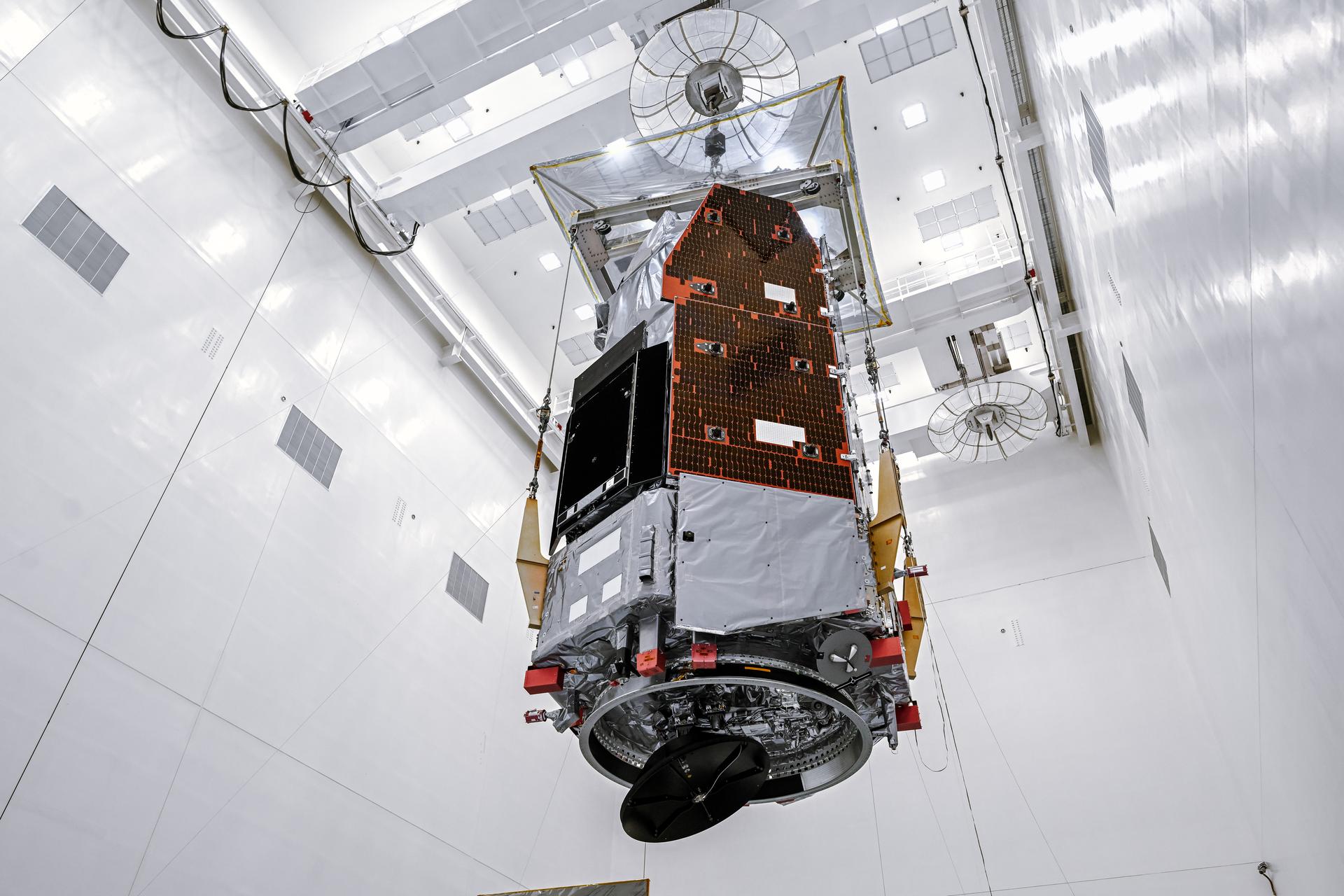
Technicians and engineers inside the Payload Hazardous Servicing Facility at NASA’s Kennedy Space Center in Florida use a crane to lift the agency’s Nancy Grace Roman Space Telescope to a specialized work stand Friday, June 26, 2026. Named for NASA’s first chief astronomer and “mother of the Hubble Space Telescope,” the Roman Space Telescope will offer a field of view at least 100 times larger than Hubble’s, resulting in deep, sweeping explorations of the cosmos.
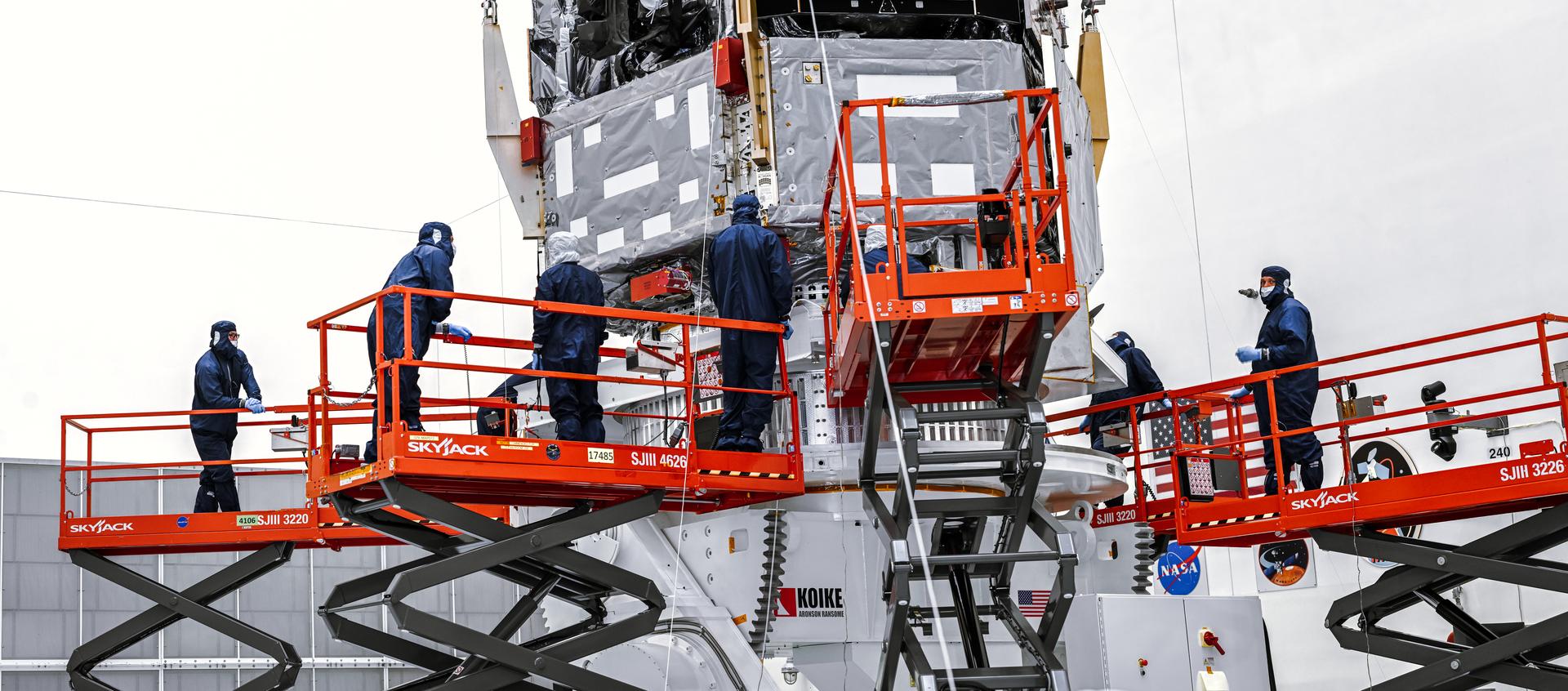
Technicians and engineers inside the Payload Hazardous Servicing Facility at NASA’s Kennedy Space Center in Florida use a crane to lift the agency’s Nancy Grace Roman Space Telescope to a specialized work stand Friday, June 26, 2026. Named for NASA’s first chief astronomer and “mother of the Hubble Space Telescope,” the Roman Space Telescope will offer a field of view at least 100 times larger than Hubble’s, resulting in deep, sweeping explorations of the cosmos.
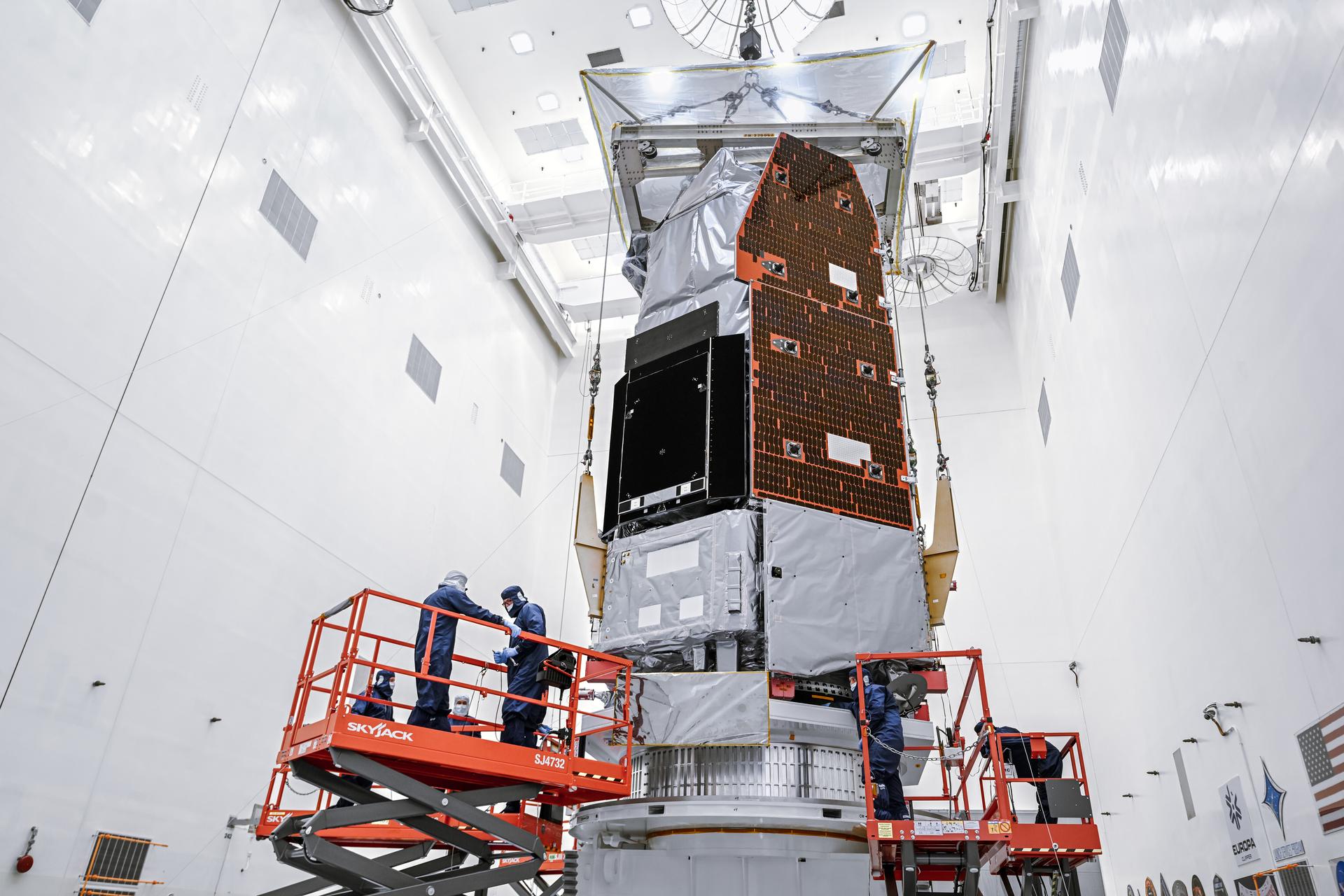
Technicians and engineers inside the Payload Hazardous Servicing Facility at NASA’s Kennedy Space Center in Florida use a crane to lift the agency’s Nancy Grace Roman Space Telescope to a specialized work stand Friday, June 26, 2026. Named for NASA’s first chief astronomer and “mother of the Hubble Space Telescope,” the Roman Space Telescope will offer a field of view at least 100 times larger than Hubble’s, resulting in deep, sweeping explorations of the cosmos.
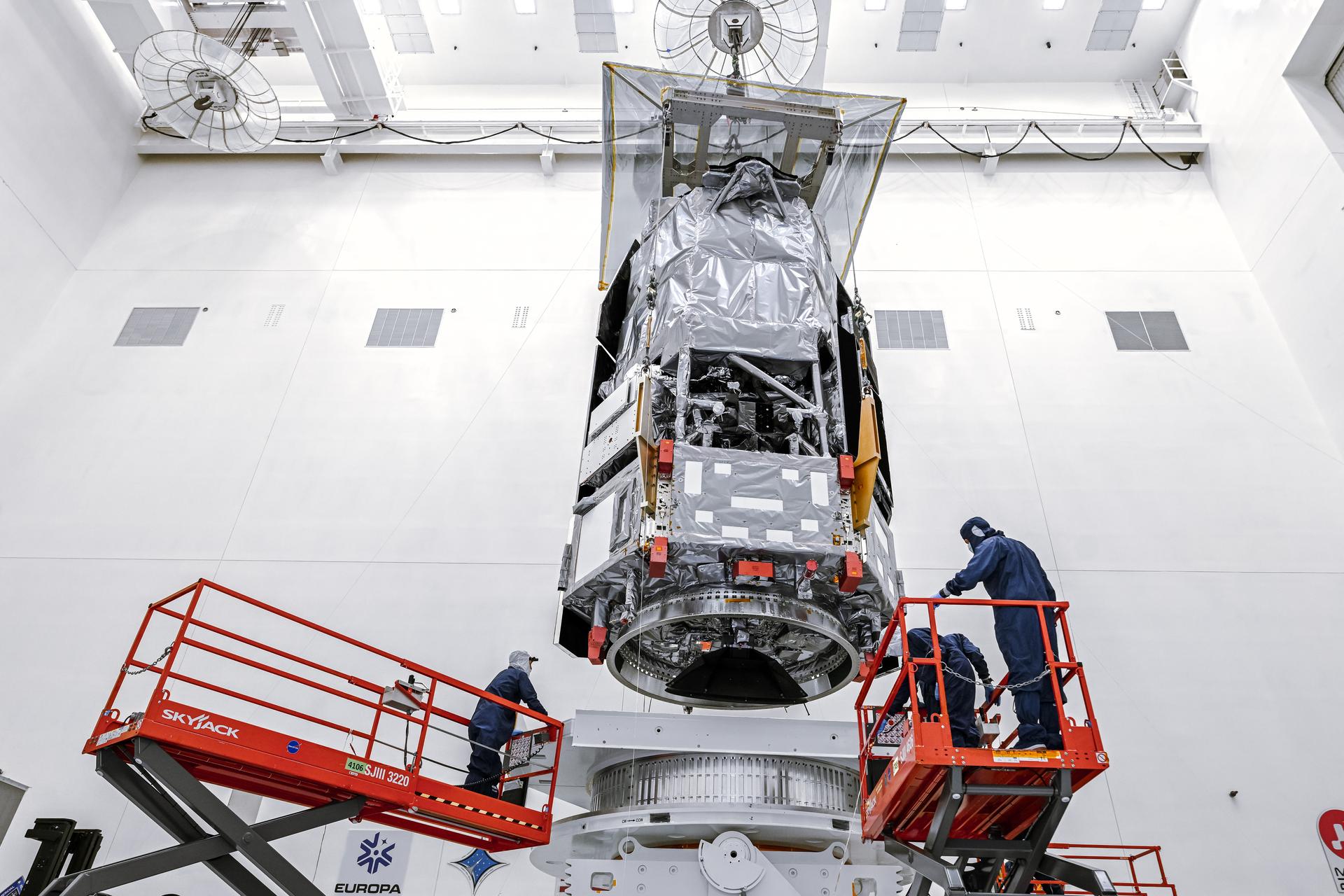
Technicians and engineers inside the Payload Hazardous Servicing Facility at NASA’s Kennedy Space Center in Florida use a crane to lift the agency’s Nancy Grace Roman Space Telescope to a specialized work stand Friday, June 26, 2026. Named for NASA’s first chief astronomer and “mother of the Hubble Space Telescope,” the Roman Space Telescope will offer a field of view at least 100 times larger than Hubble’s, resulting in deep, sweeping explorations of the cosmos.
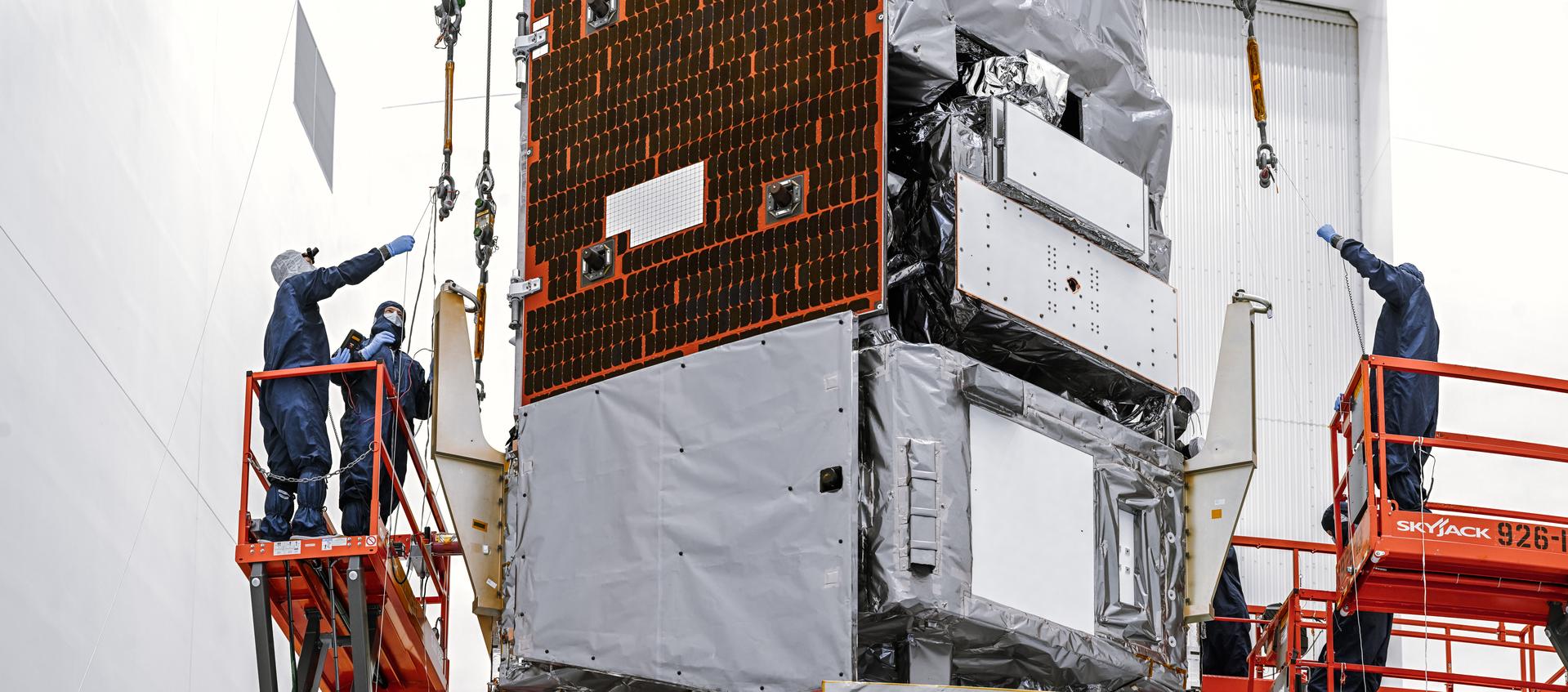
Technicians and engineers inside the Payload Hazardous Servicing Facility at NASA’s Kennedy Space Center in Florida use a crane to lift the agency’s Nancy Grace Roman Space Telescope to a specialized work stand Friday, June 26, 2026. Named for NASA’s first chief astronomer and “mother of the Hubble Space Telescope,” the Roman Space Telescope will offer a field of view at least 100 times larger than Hubble’s, resulting in deep, sweeping explorations of the cosmos.
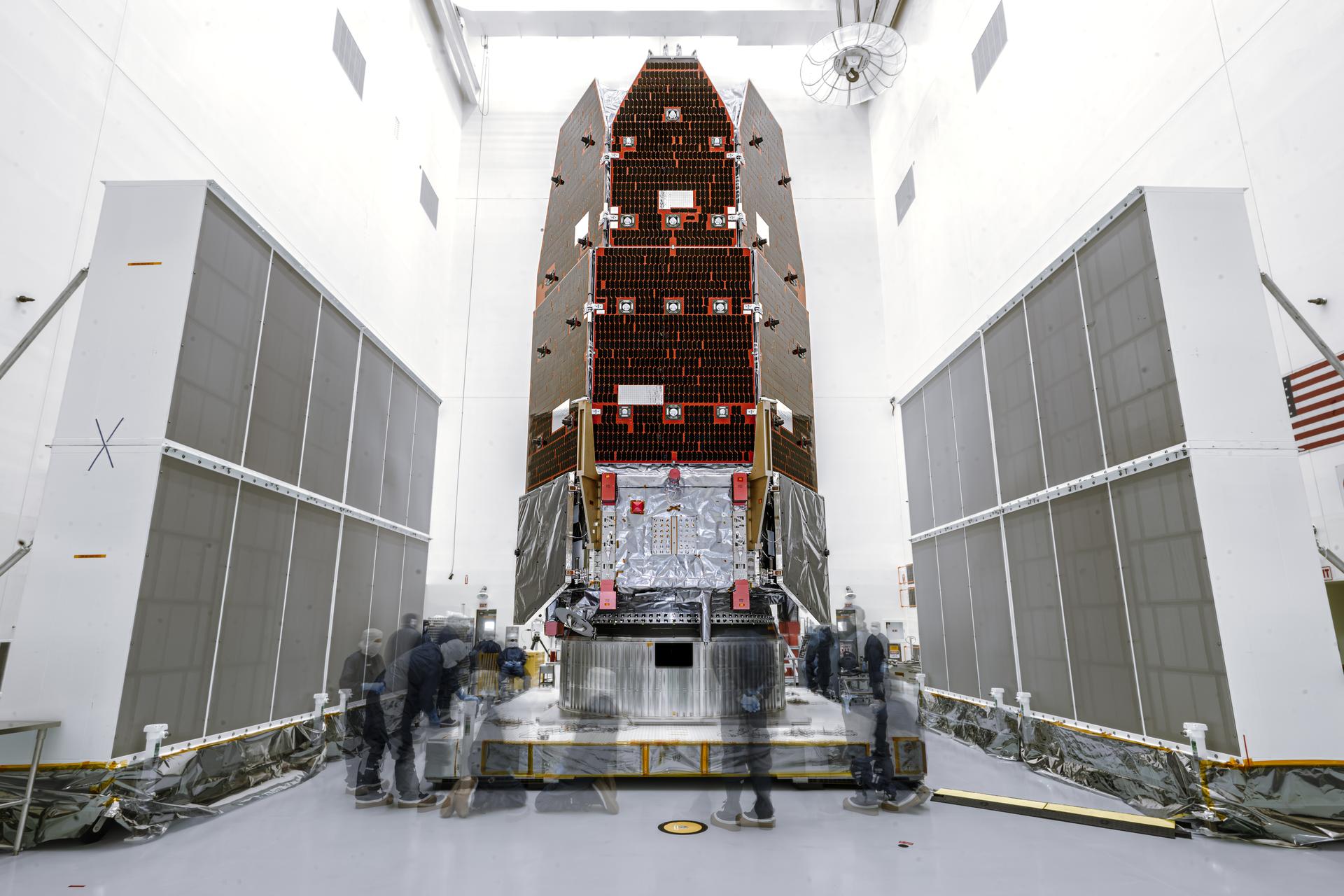
In this long exposure image, members of NASA's Nancy Grace Roman Space Telescope process the observatory on Thursday, July 16, 2026, inside the Payload Hazardous Servicing Facility at NASA’s Kennedy Space Center in Florida. Roman’s primary mission is to settle essential questions about dark energy, exoplanets, and infrared astrophysics by conducting wide-field surveys that explore the universe’s structure, evolution, and composition. Liftoff atop a SpaceX Falcon Heavy rocket from NASA Kennedy’s Launch Complex 39A is targeted no earlier than Sunday, Aug. 30, 2026.
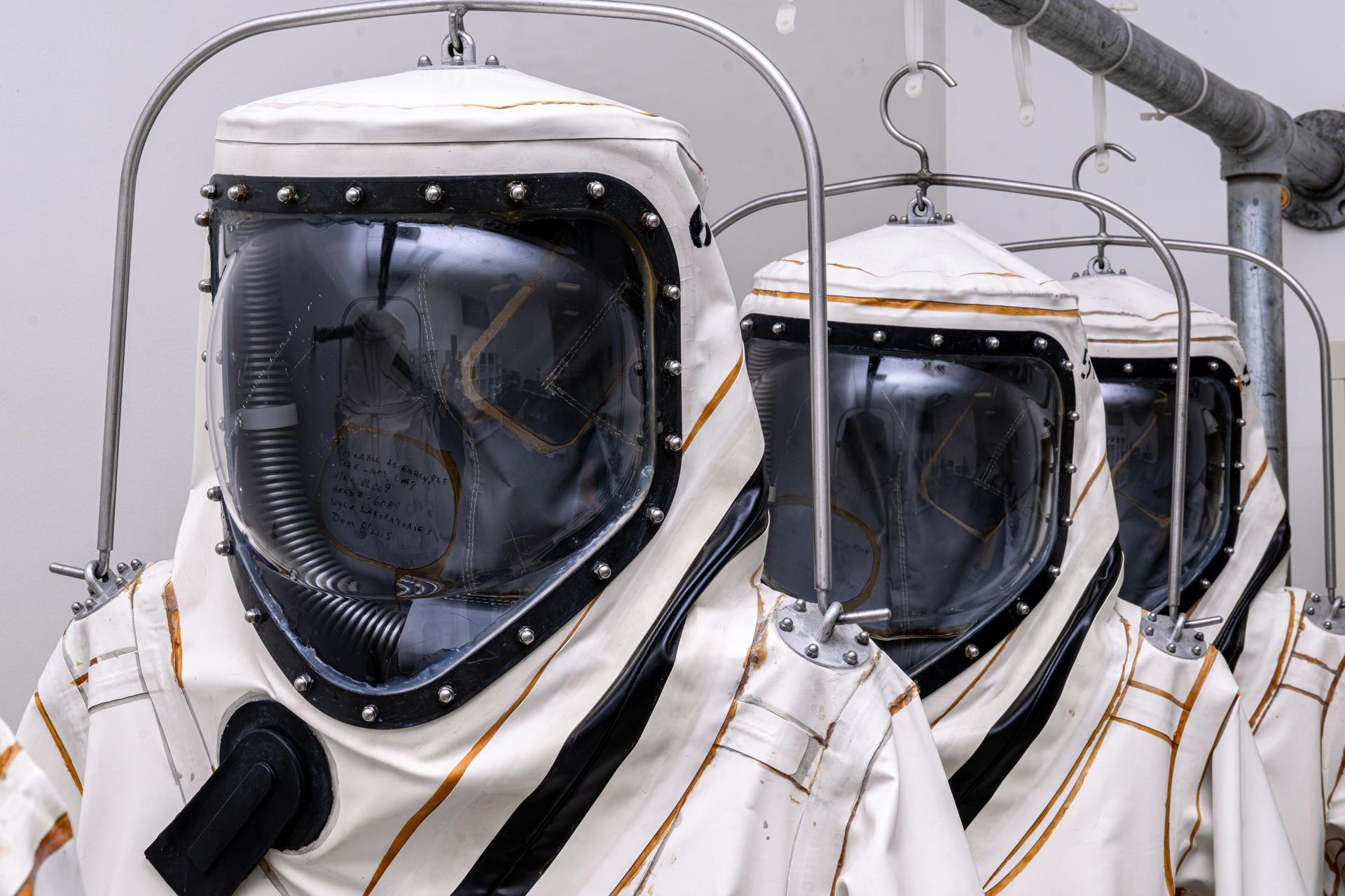
Self-Contained Atmospheric Protective Ensemble (SCAPE) suits hang on a rack the Multi Operations Support Building on Thursday, July 23, 2026, before technicians began operations to load propellant into NASA's Nancy Grace Roman Space Telescope. Once suited up technicians fueled Roman inside the Payload Hazardous Servicing Facility at NASA’s Kennedy Space Center in Florida with about 290 gallons (roughly 1,100 liters) of hydrazine. Roman’s primary mission is to settle essential questions about dark energy, exoplanets, and infrared astrophysics by conducting wide-field surveys that explore the universe’s structure, evolution, and composition. Liftoff atop a SpaceX Falcon Heavy rocket from NASA Kennedy’s Launch Complex 39A is targeted no earlier than Sunday, Aug. 30, 2026.
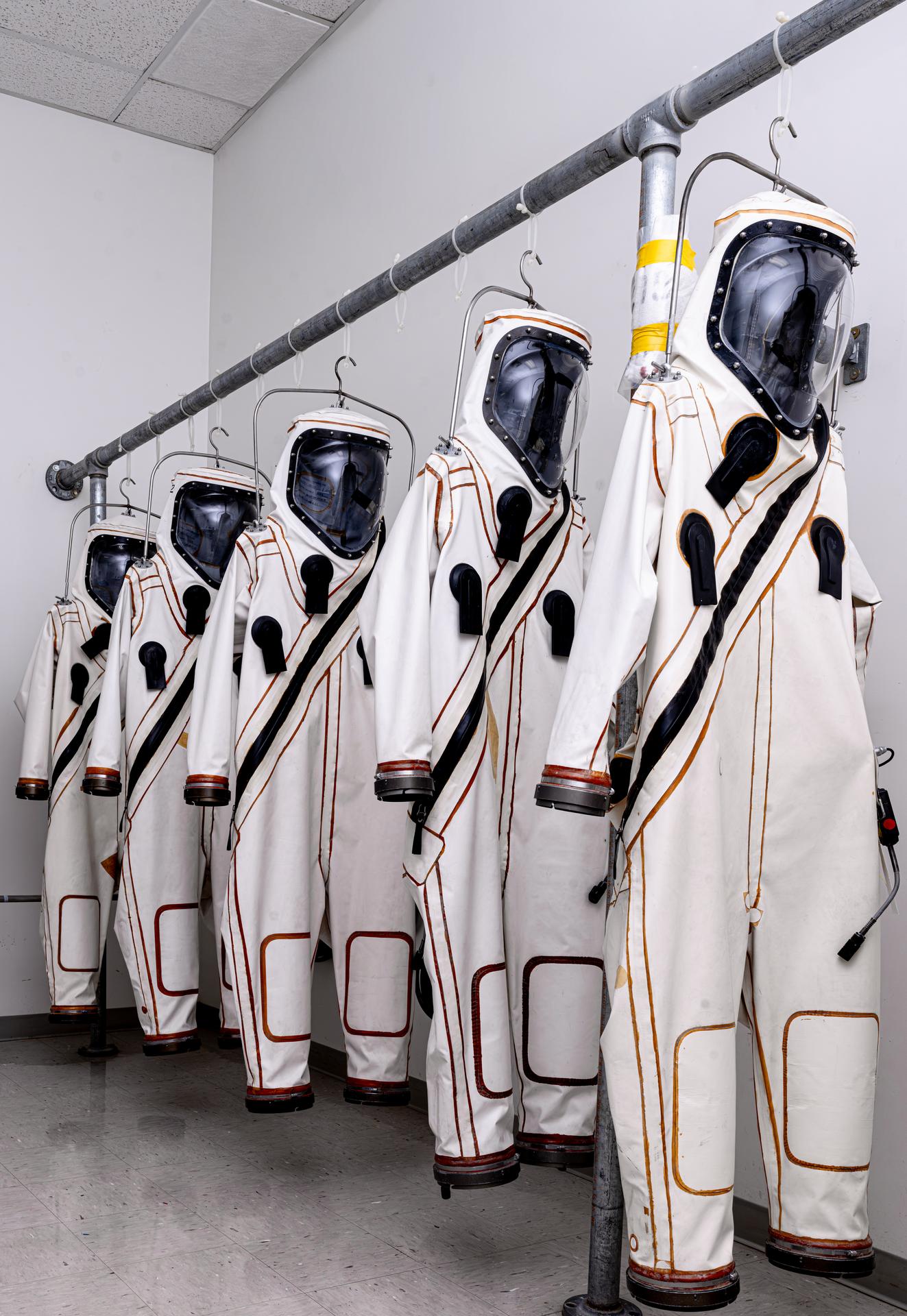
Self-Contained Atmospheric Protective Ensemble (SCAPE) suits hang on a rack the Multi Operations Support Building on Thursday, July 23, 2026, before technicians began operations to load propellant into NASA's Nancy Grace Roman Space Telescope. Once suited up technicians fueled Roman inside the Payload Hazardous Servicing Facility at NASA’s Kennedy Space Center in Florida with about 290 gallons (roughly 1,100 liters) of hydrazine. Roman’s primary mission is to settle essential questions about dark energy, exoplanets, and infrared astrophysics by conducting wide-field surveys that explore the universe’s structure, evolution, and composition. Liftoff atop a SpaceX Falcon Heavy rocket from NASA Kennedy’s Launch Complex 39A is targeted no earlier than Sunday, Aug. 30, 2026.
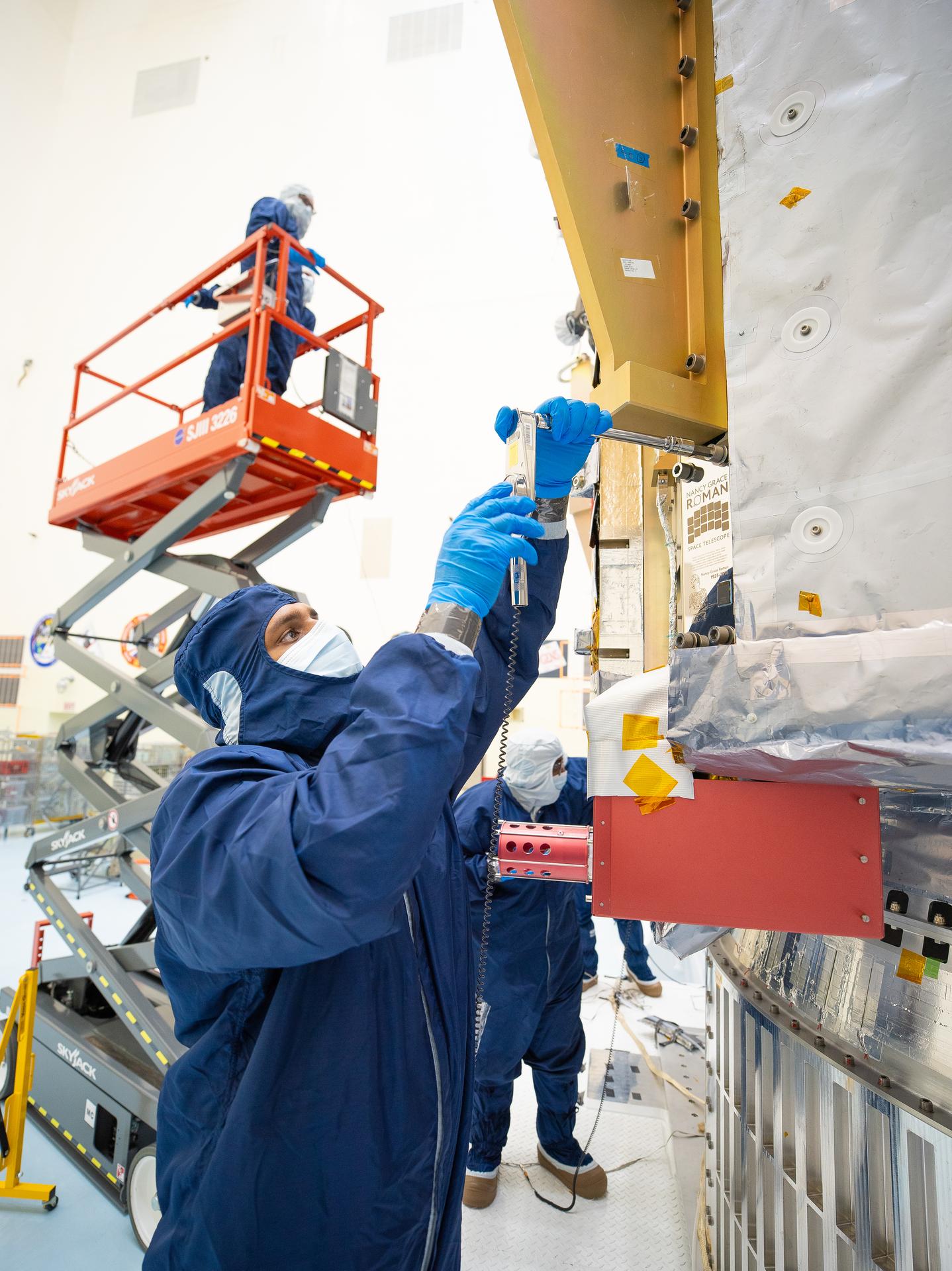
Technicians inside the Payload Hazardous Servicing Facility at NASA’s Kennedy Space Center in Florida install a commemorative plaque on the Nancy Grace Roman Space Telescope on Monday, July 27, 2026. In addition to honoring the legacy of Dr. Nancy Grace Roman, NASA’s first chief astronomer and one of the architects of the agency’s modern science program, the plaque features a memory card containing a total of 1,350,144 names submitted by people from across the globe, including astronauts from NASA’s Artemis II and Artemis III missions. The Roman observatory will travel to the Sun-Earth Lagrange point 2, or L2, about one million miles from Earth, where the Sun’s and Earth’s gravity balance out, to complete a statistical census of planetary systems in our galaxy and settle essential questions in the areas of dark energy, exoplanets, and infrared astrophysics.
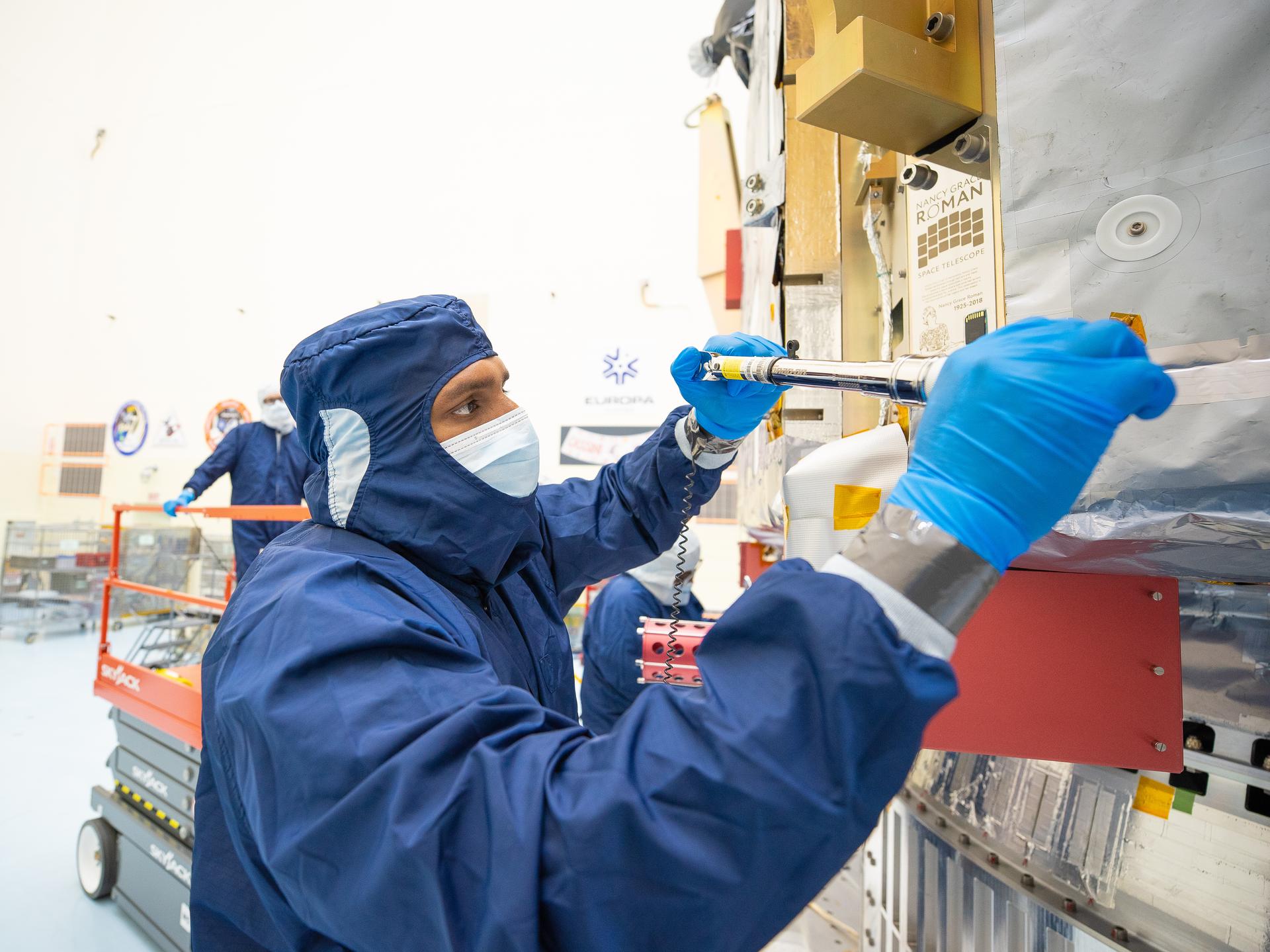
Technicians inside the Payload Hazardous Servicing Facility at NASA’s Kennedy Space Center in Florida install a commemorative plaque on the Nancy Grace Roman Space Telescope on Monday, July 27, 2026. In addition to honoring the legacy of Dr. Nancy Grace Roman, NASA’s first chief astronomer and one of the architects of the agency’s modern science program, the plaque features a memory card containing a total of 1,350,144 names submitted by people from across the globe, including astronauts from NASA’s Artemis II and Artemis III missions. The Roman observatory will travel to the Sun-Earth Lagrange point 2, or L2, about one million miles from Earth, where the Sun’s and Earth’s gravity balance out, to complete a statistical census of planetary systems in our galaxy and settle essential questions in the areas of dark energy, exoplanets, and infrared astrophysics.
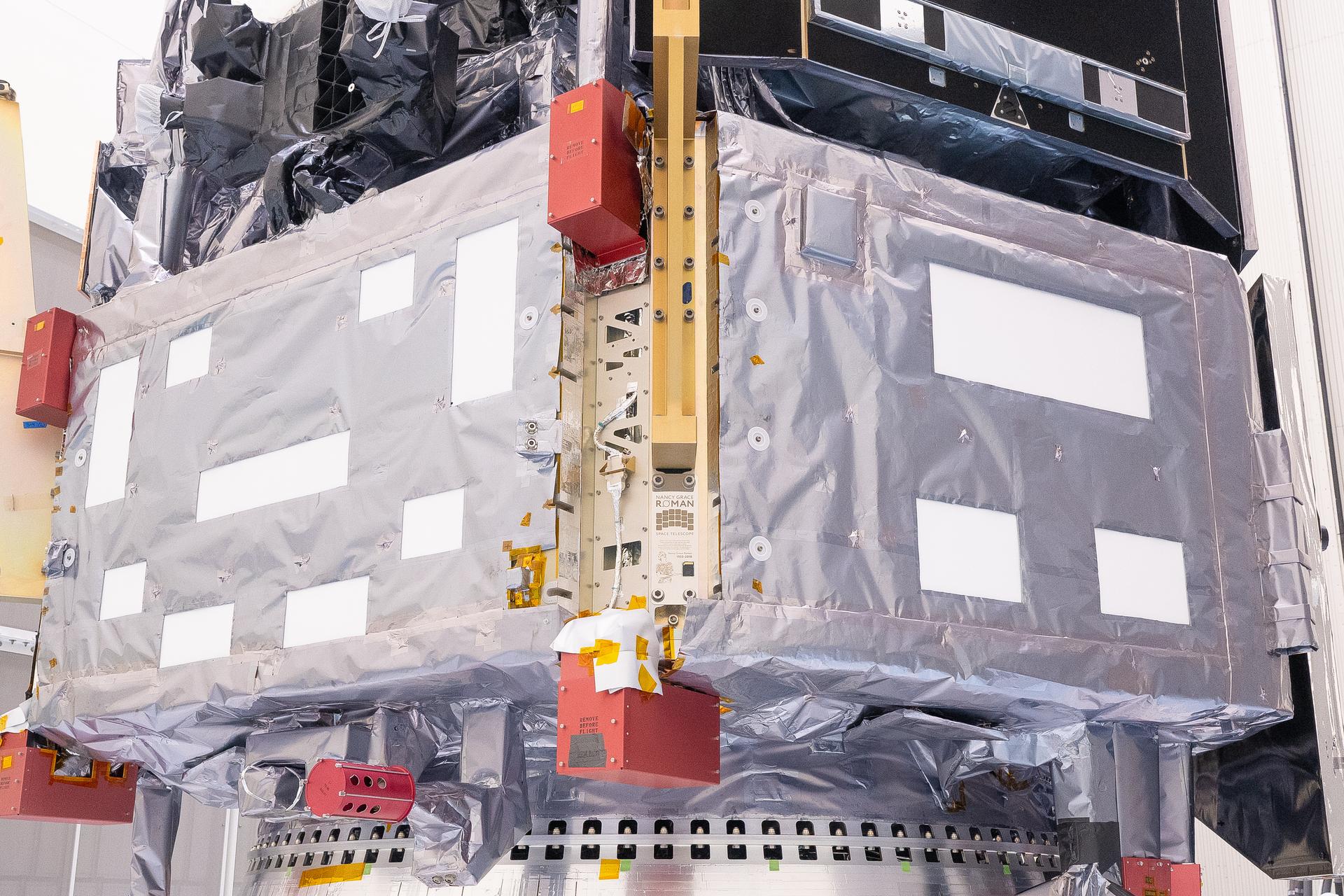
Technicians inside the Payload Hazardous Servicing Facility at NASA’s Kennedy Space Center complete installation of a commemorative plaque on the agency’s Nancy Grace Roman Space Telescope, as photographed on Tuesday, July 28, 2026. In addition to honoring the legacy of Dr. Nancy Grace Roman, NASA’s first chief astronomer and one of the architects of the agency’s modern science program, the plaque features a memory card containing a total of 1,350,144 names submitted by people from across the globe, including astronauts from NASA’s Artemis II and Artemis III missions. The Roman observatory will travel to the Sun-Earth Lagrange point 2, or L2, about one million miles from Earth, where the Sun’s and Earth’s gravity balance out, to complete a statistical census of planetary systems in our galaxy and settle essential questions in the areas of dark energy, exoplanets, and infrared astrophysics.
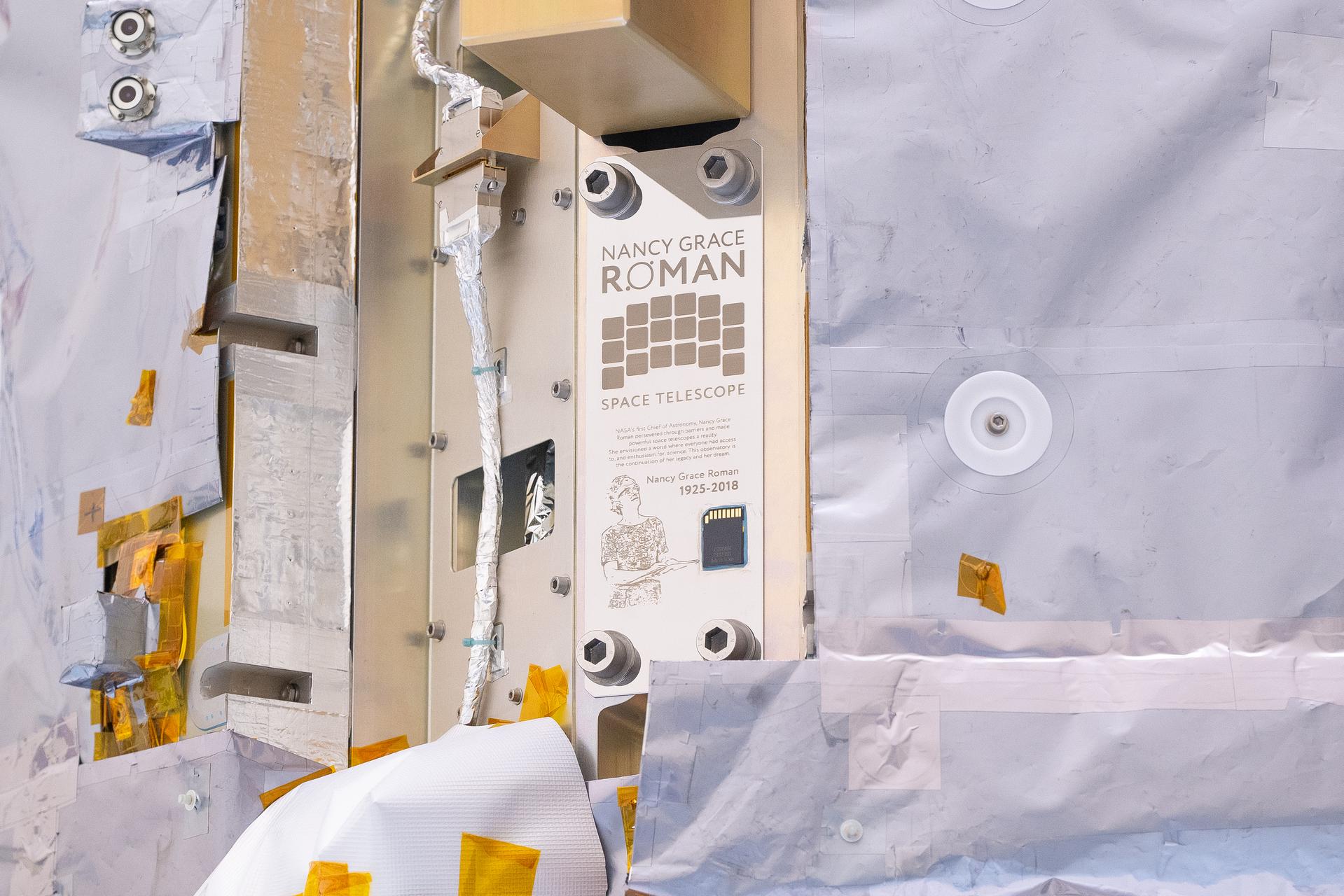
Technicians inside the Payload Hazardous Servicing Facility at NASA’s Kennedy Space Center complete installation of a commemorative plaque on the agency’s Nancy Grace Roman Space Telescope, as photographed on Tuesday, July 28, 2026. In addition to honoring the legacy of Dr. Nancy Grace Roman, NASA’s first chief astronomer and one of the architects of the agency’s modern science program, the plaque features a memory card containing a total of 1,350,144 names submitted by people from across the globe, including astronauts from NASA’s Artemis II and Artemis III missions. The Roman observatory will travel to the Sun-Earth Lagrange point 2, or L2, about one million miles from Earth, where the Sun’s and Earth’s gravity balance out, to complete a statistical census of planetary systems in our galaxy and settle essential questions in the areas of dark energy, exoplanets, and infrared astrophysics.
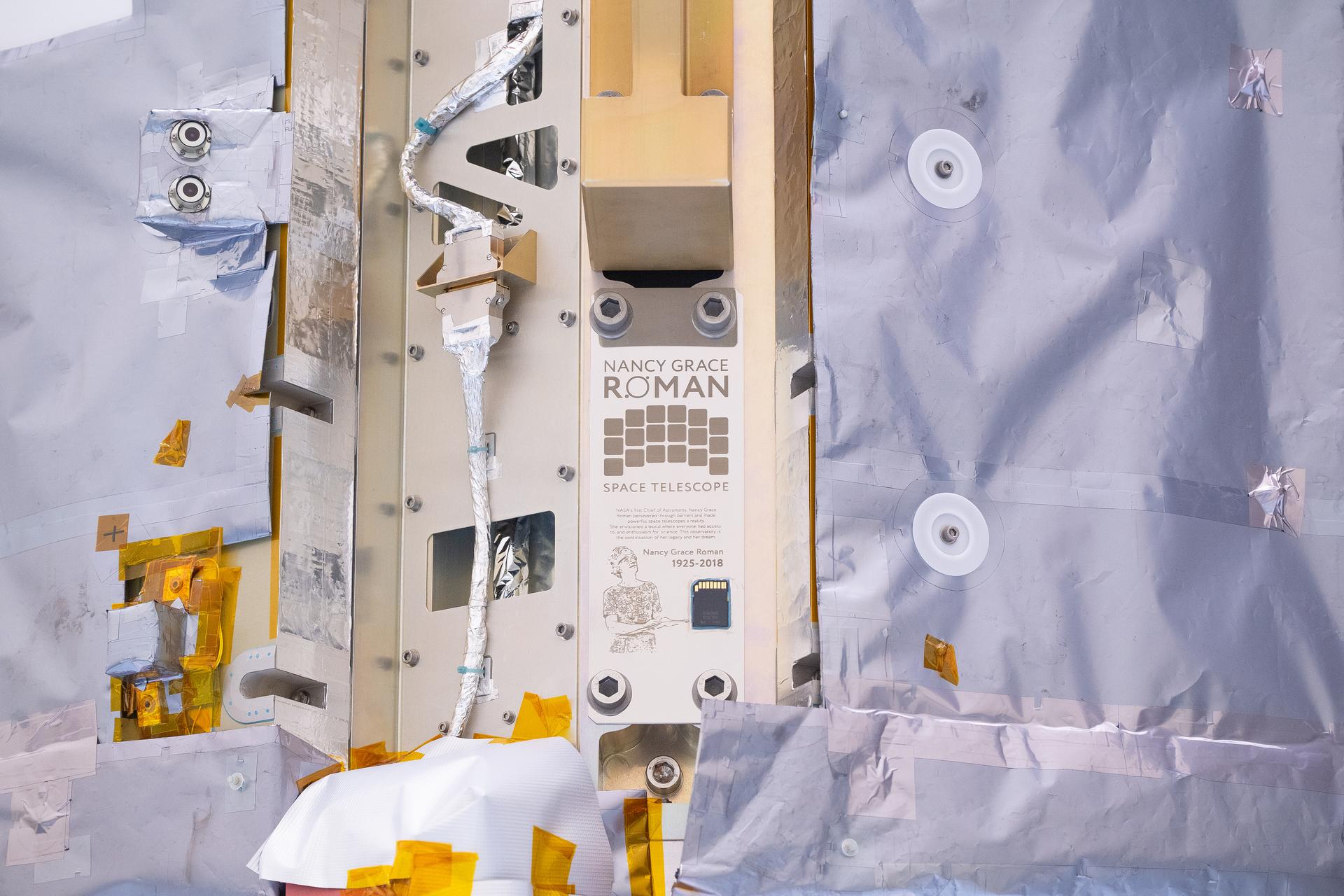
Technicians inside the Payload Hazardous Servicing Facility at NASA’s Kennedy Space Center complete installation of a commemorative plaque on the agency’s Nancy Grace Roman Space Telescope, as photographed on Tuesday, July 28, 2026. In addition to honoring the legacy of Dr. Nancy Grace Roman, NASA’s first chief astronomer and one of the architects of the agency’s modern science program, the plaque features a memory card containing a total of 1,350,144 names submitted by people from across the globe, including astronauts from NASA’s Artemis II and Artemis III missions. The Roman observatory will travel to the Sun-Earth Lagrange point 2, or L2, about one million miles from Earth, where the Sun’s and Earth’s gravity balance out, to complete a statistical census of planetary systems in our galaxy and settle essential questions in the areas of dark energy, exoplanets, and infrared astrophysics.
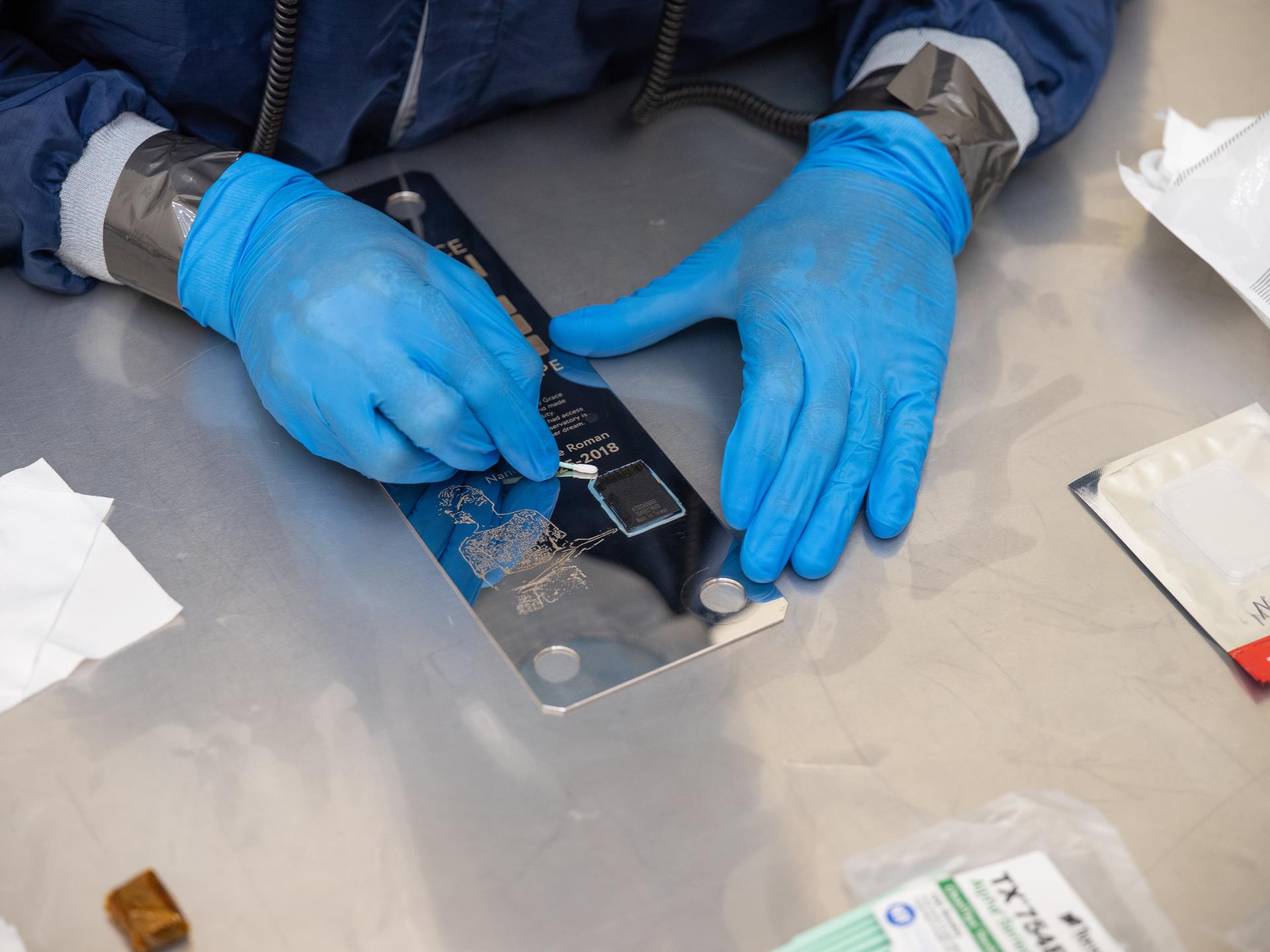
A technician inside the Payload Hazardous Servicing Facility at NASA’s Kennedy Space Center in Florida installs a memory card containing a total of 1,350,144 names as part of a commemorative plaque on the Nancy Grace Roman Space Telescope on Friday, July 17, 2026. The names, submitted by people from across the globe, including astronauts from NASA’s Artemis II and Artemis III missions, will travel with the Roman observatory to the Sun-Earth Lagrange point 2, or L2, about one million miles from Earth, where the Sun’s and Earth’s gravity balance out. Roman is named after Dr. Nancy Grace Roman, NASA’s first chief astronomer and one of the architects of the agency’s modern science program.
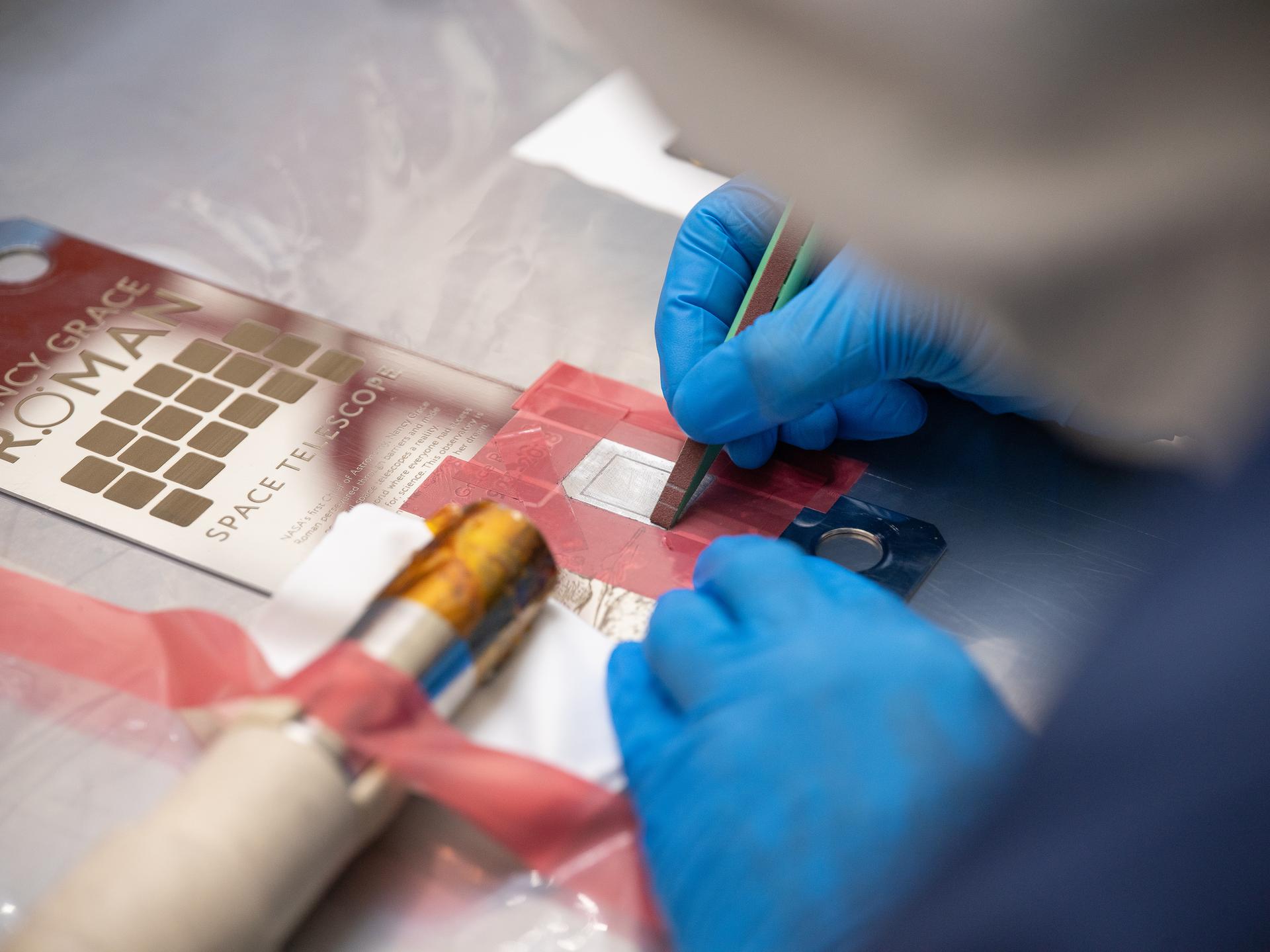
A technician inside the Payload Hazardous Servicing Facility at NASA’s Kennedy Space Center in Florida installs a memory card containing a total of 1,350,144 names as part of a commemorative plaque on the Nancy Grace Roman Space Telescope on Friday, July 17, 2026. The names, submitted by people from across the globe, including astronauts from NASA’s Artemis II and Artemis III missions, will travel with the Roman observatory to the Sun-Earth Lagrange point 2, or L2, about one million miles from Earth, where the Sun’s and Earth’s gravity balance out. Roman is named after Dr. Nancy Grace Roman, NASA’s first chief astronomer and one of the architects of the agency’s modern science program.
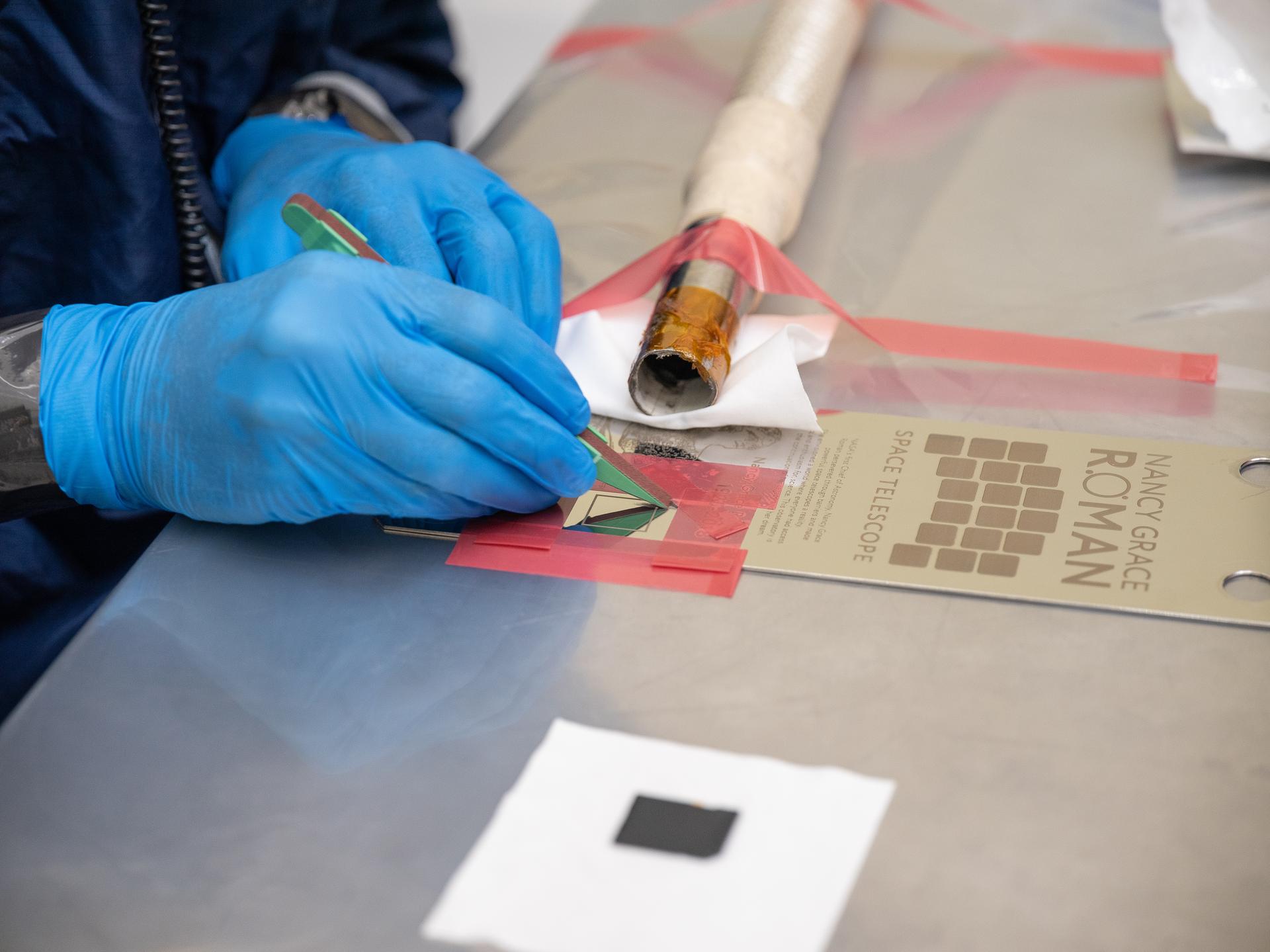
A technician inside the Payload Hazardous Servicing Facility at NASA’s Kennedy Space Center in Florida installs a memory card containing a total of 1,350,144 names as part of a commemorative plaque on the Nancy Grace Roman Space Telescope on Friday, July 17, 2026. The names, submitted by people from across the globe, including astronauts from NASA’s Artemis II and Artemis III missions, will travel with the Roman observatory to the Sun-Earth Lagrange point 2, or L2, about one million miles from Earth, where the Sun’s and Earth’s gravity balance out. Roman is named after Dr. Nancy Grace Roman, NASA’s first chief astronomer and one of the architects of the agency’s modern science program.
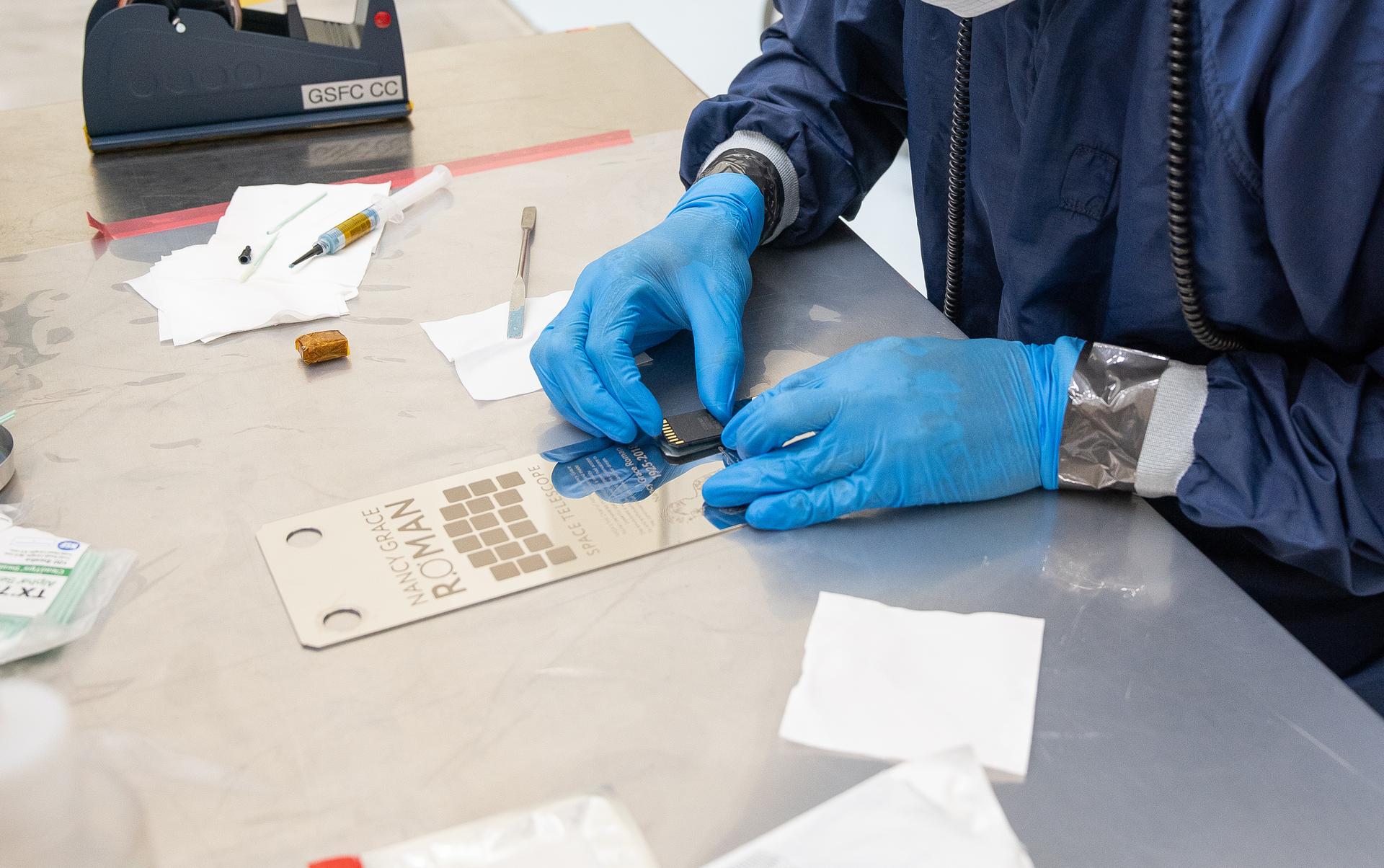
A technician inside the Payload Hazardous Servicing Facility at NASA’s Kennedy Space Center in Florida installs a memory card containing a total of 1,350,144 names as part of a commemorative plaque on the Nancy Grace Roman Space Telescope on Friday, July 17, 2026. The names, submitted by people from across the globe, including astronauts from NASA’s Artemis II and Artemis III missions, will travel with the Roman observatory to the Sun-Earth Lagrange point 2, or L2, about one million miles from Earth, where the Sun’s and Earth’s gravity balance out. Roman is named after Dr. Nancy Grace Roman, NASA’s first chief astronomer and one of the architects of the agency’s modern science program.
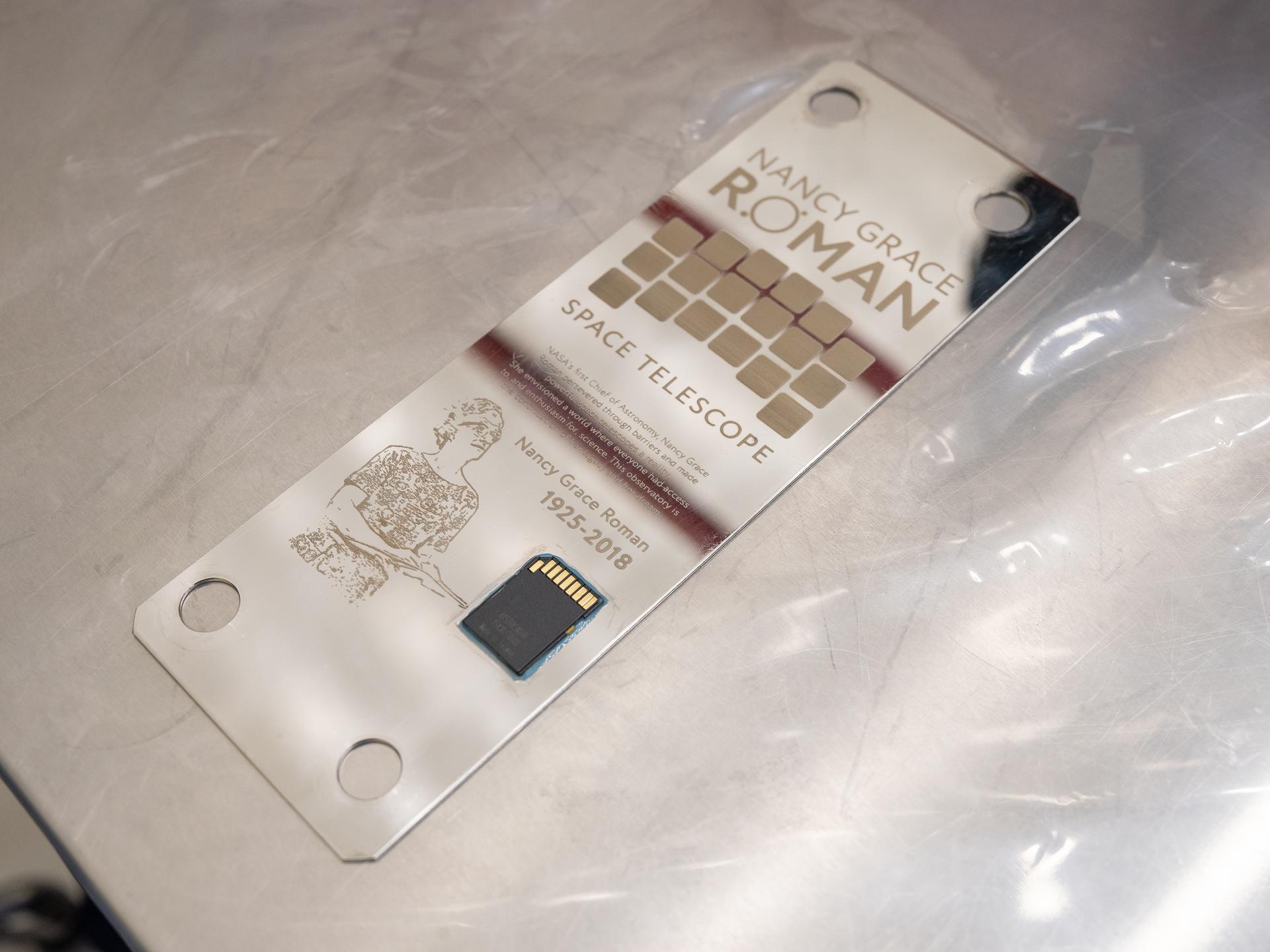
A technician inside the Payload Hazardous Servicing Facility at NASA’s Kennedy Space Center in Florida installs a memory card containing a total of 1,350,144 names as part of a commemorative plaque on the Nancy Grace Roman Space Telescope on Friday, July 17, 2026. The names, submitted by people from across the globe, including astronauts from NASA’s Artemis II and Artemis III missions, will travel with the Roman observatory to the Sun-Earth Lagrange point 2, or L2, about one million miles from Earth, where the Sun’s and Earth’s gravity balance out. Roman is named after Dr. Nancy Grace Roman, NASA’s first chief astronomer and one of the architects of the agency’s modern science program.
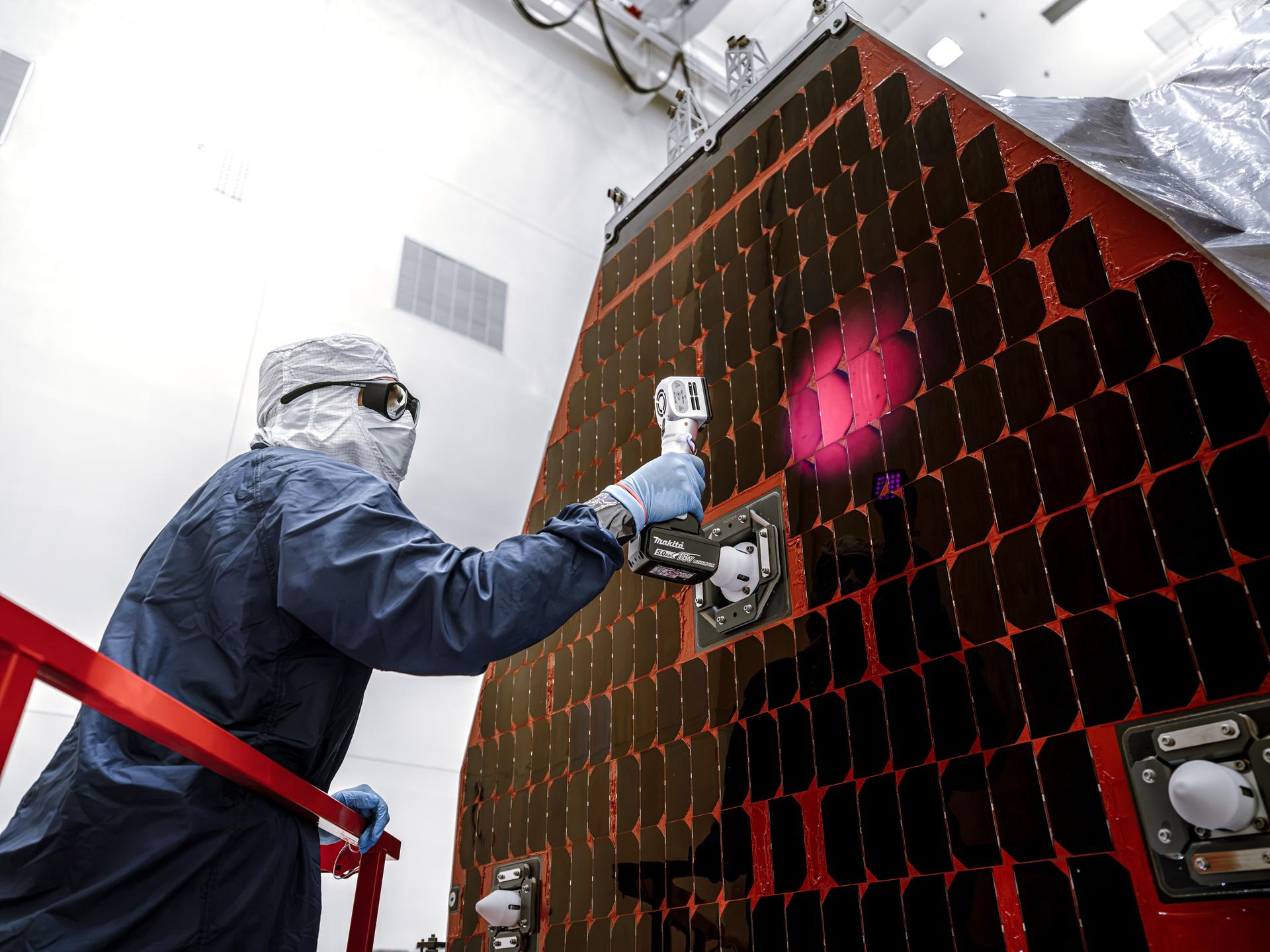
Technicians and engineers inside the Payload Hazardous Servicing Facility at NASA’s Kennedy Space Center in Florida clean and inspect the Solar Array Sun Shield (SASS) on the agency’s Nancy Grace Roman Space Telescope on Tuesday, July 14, 2026. The SASS is made up of six solar array panels, with the two center panels fixed while the four outer ones are deployed once in orbit. The Roman team will orient the SASS toward the Sun to provide power to the entire observatory and shade the telescope and instruments beneath. NASA designed this flagship mission to help astronomers explore dark matter, dark energy, and exoplanets.
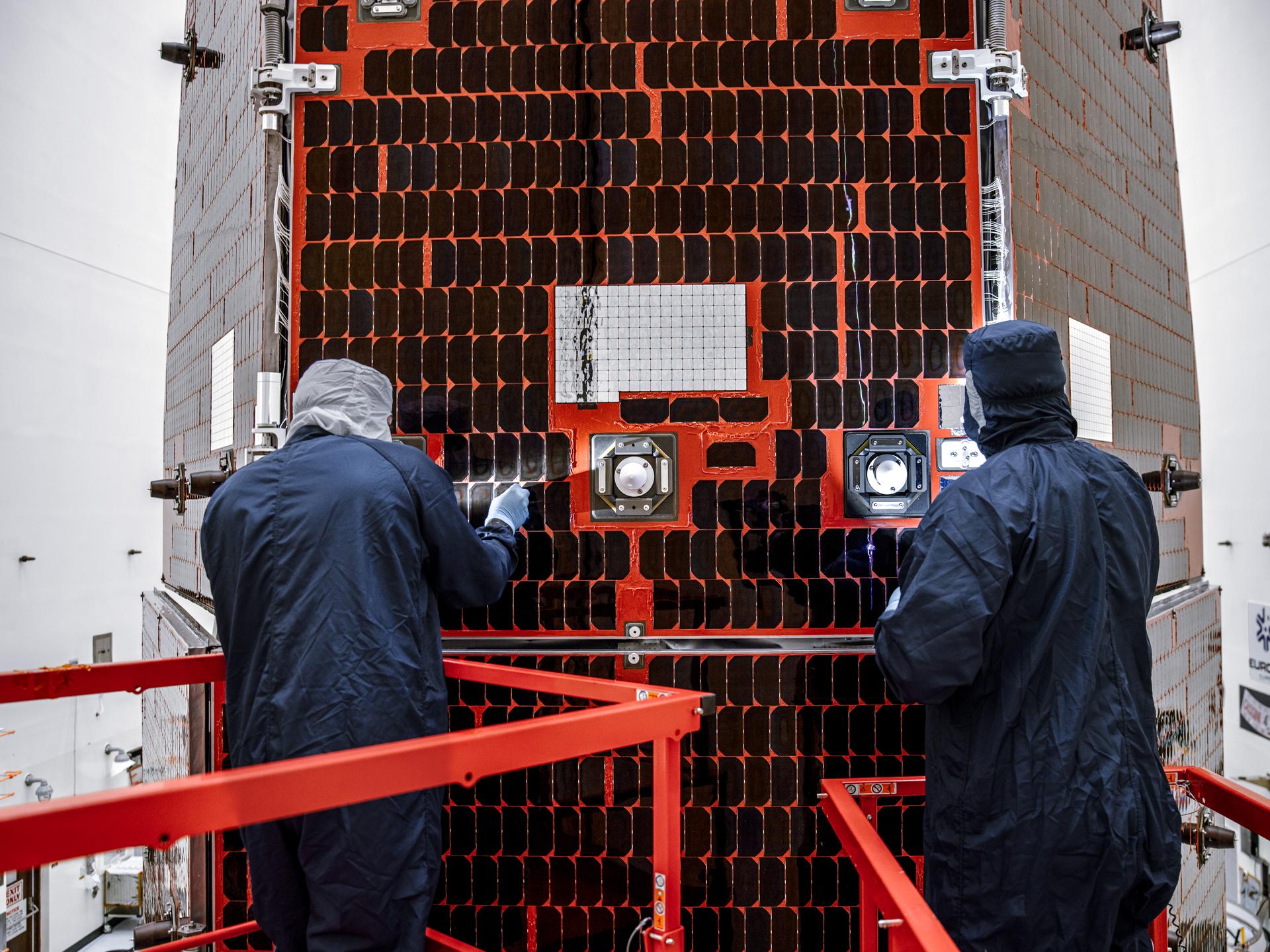
Technicians and engineers inside the Payload Hazardous Servicing Facility at NASA’s Kennedy Space Center in Florida clean and inspect the Solar Array Sun Shield (SASS) on the agency’s Nancy Grace Roman Space Telescope on Tuesday, July 14, 2026. The SASS is made up of six solar array panels, with the two center panels fixed while the four outer ones are deployed once in orbit. The Roman team will orient the SASS toward the Sun to provide power to the entire observatory and shade the telescope and instruments beneath. NASA designed this flagship mission to help astronomers explore dark matter, dark energy, and exoplanets.
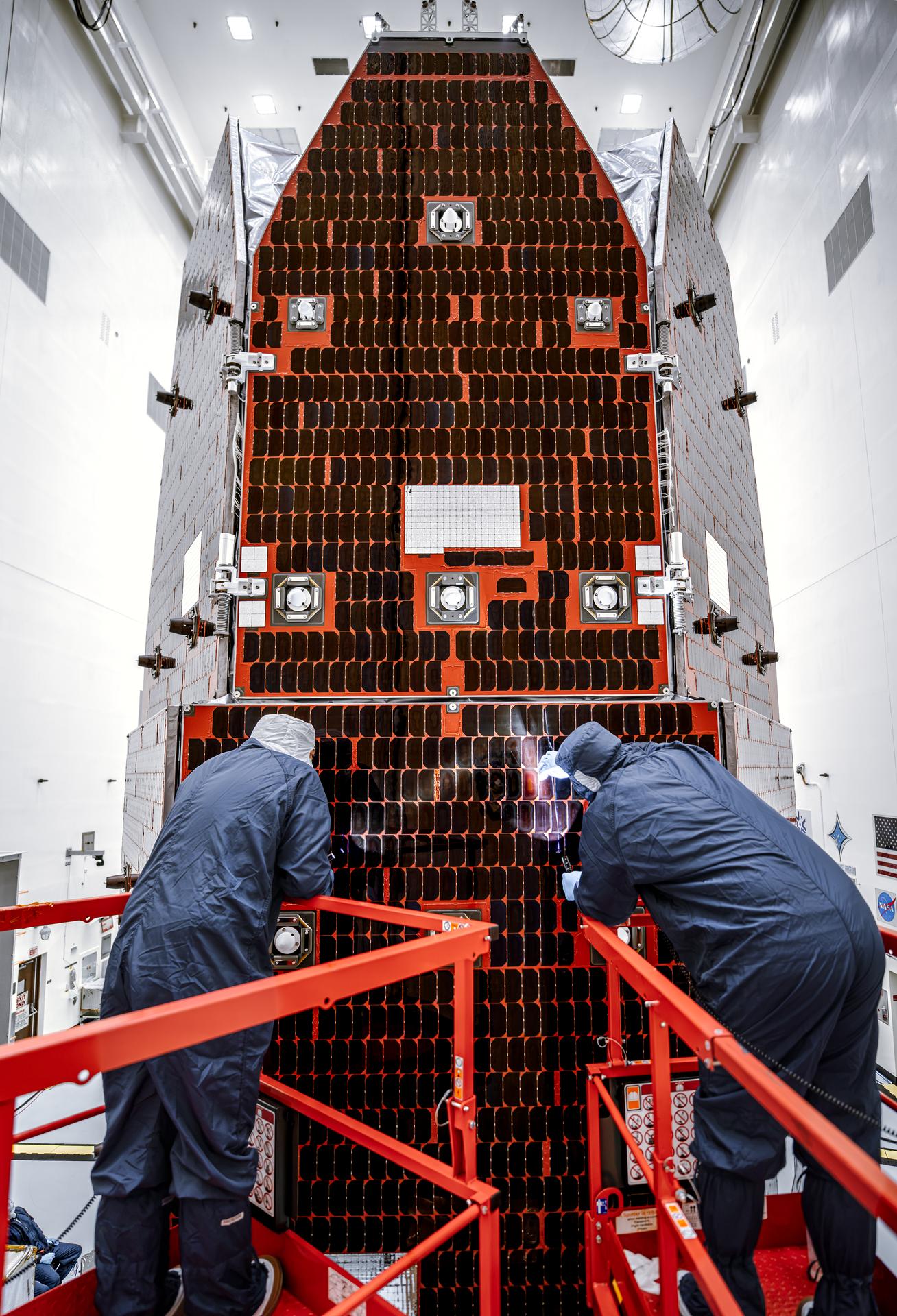
Technicians and engineers inside the Payload Hazardous Servicing Facility at NASA’s Kennedy Space Center in Florida clean and inspect the Solar Array Sun Shield (SASS) on the agency’s Nancy Grace Roman Space Telescope on Tuesday, July 14, 2026. The SASS is made up of six solar array panels, with the two center panels fixed while the four outer ones are deployed once in orbit. The Roman team will orient the SASS toward the Sun to provide power to the entire observatory and shade the telescope and instruments beneath. NASA designed this flagship mission to help astronomers explore dark matter, dark energy, and exoplanets.
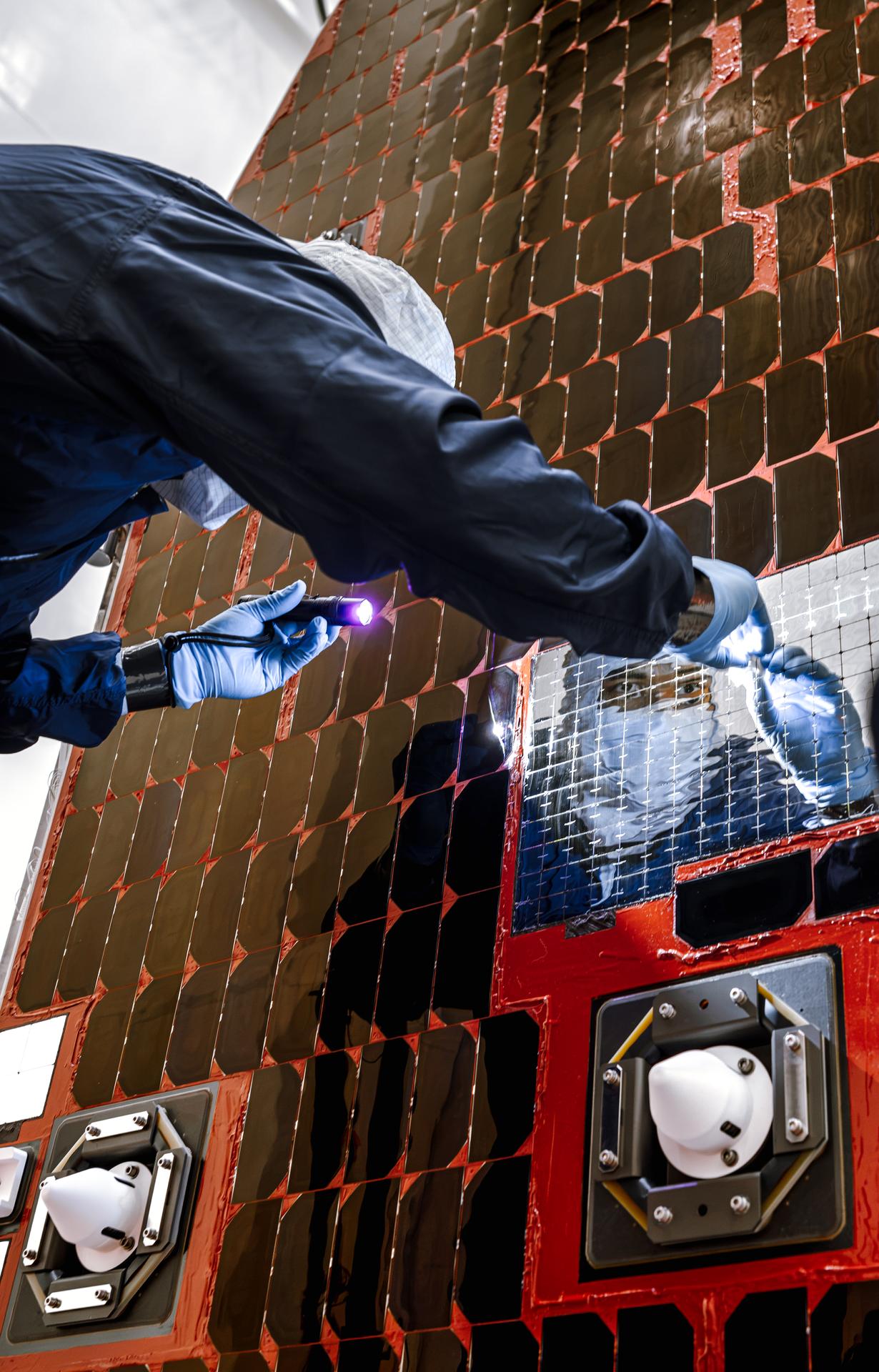
Technicians and engineers inside the Payload Hazardous Servicing Facility at NASA’s Kennedy Space Center in Florida clean and inspect the Solar Array Sun Shield (SASS) on the agency’s Nancy Grace Roman Space Telescope on Tuesday, July 14, 2026. The SASS is made up of six solar array panels, with the two center panels fixed while the four outer ones are deployed once in orbit. The Roman team will orient the SASS toward the Sun to provide power to the entire observatory and shade the telescope and instruments beneath. NASA designed this flagship mission to help astronomers explore dark matter, dark energy, and exoplanets.
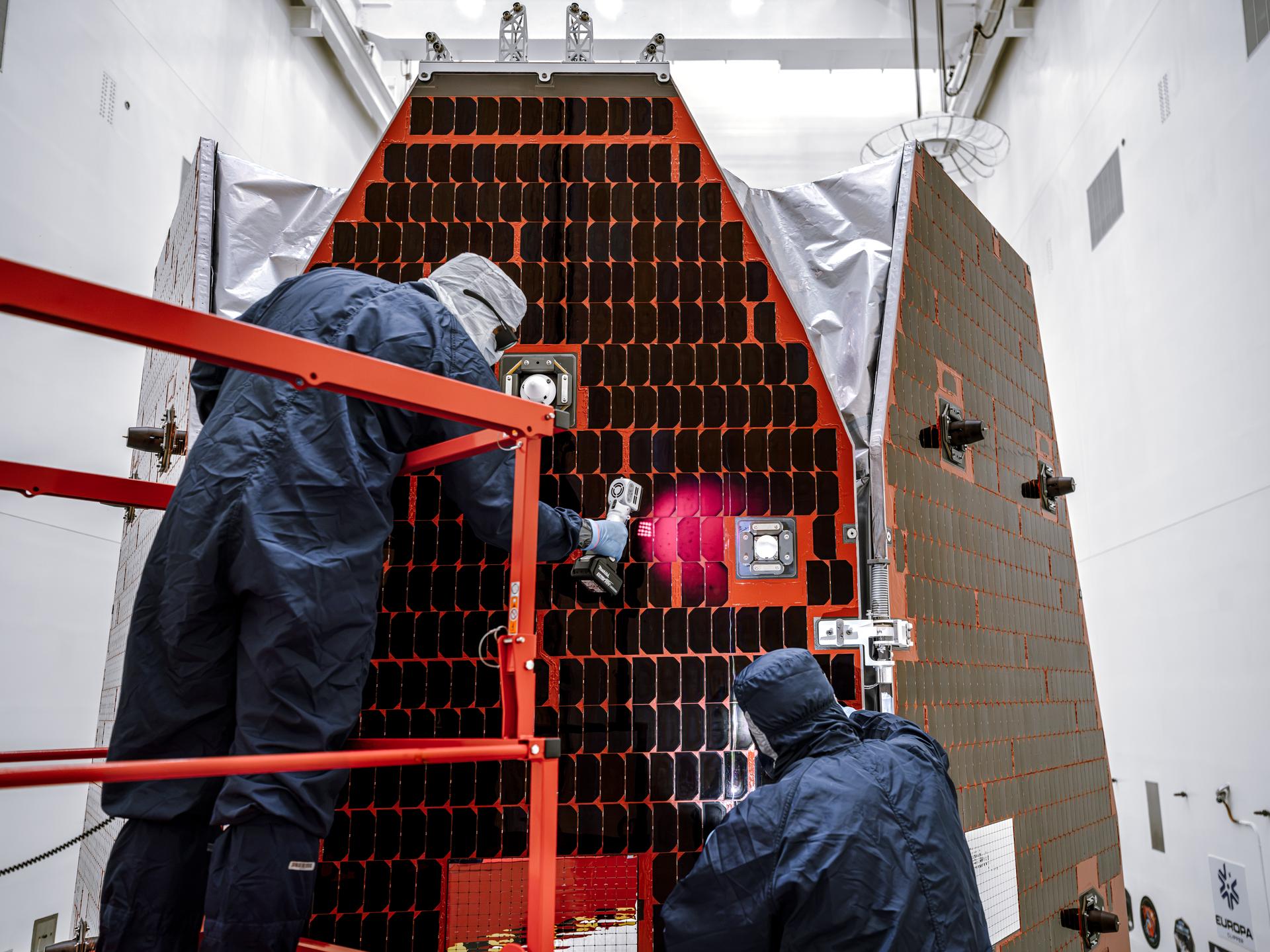
Technicians and engineers inside the Payload Hazardous Servicing Facility at NASA’s Kennedy Space Center in Florida clean and inspect the Solar Array Sun Shield (SASS) on the agency’s Nancy Grace Roman Space Telescope on Tuesday, July 14, 2026. The SASS is made up of six solar array panels, with the two center panels fixed while the four outer ones are deployed once in orbit. The Roman team will orient the SASS toward the Sun to provide power to the entire observatory and shade the telescope and instruments beneath. NASA designed this flagship mission to help astronomers explore dark matter, dark energy, and exoplanets.
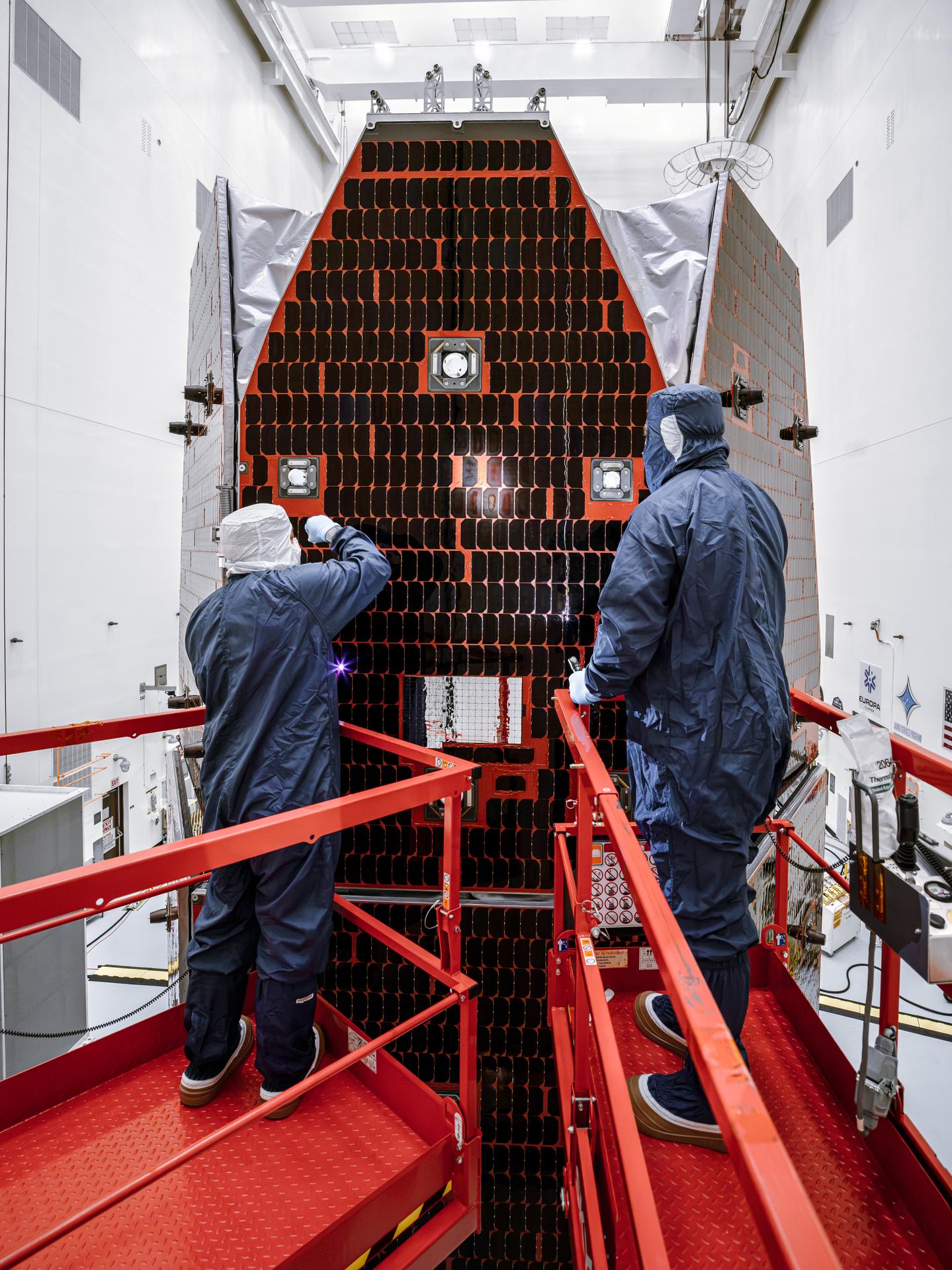
Technicians and engineers inside the Payload Hazardous Servicing Facility at NASA’s Kennedy Space Center in Florida clean and inspect the Solar Array Sun Shield (SASS) on the agency’s Nancy Grace Roman Space Telescope on Tuesday, July 14, 2026. The SASS is made up of six solar array panels, with the two center panels fixed while the four outer ones are deployed once in orbit. The Roman team will orient the SASS toward the Sun to provide power to the entire observatory and shade the telescope and instruments beneath. NASA designed this flagship mission to help astronomers explore dark matter, dark energy, and exoplanets.
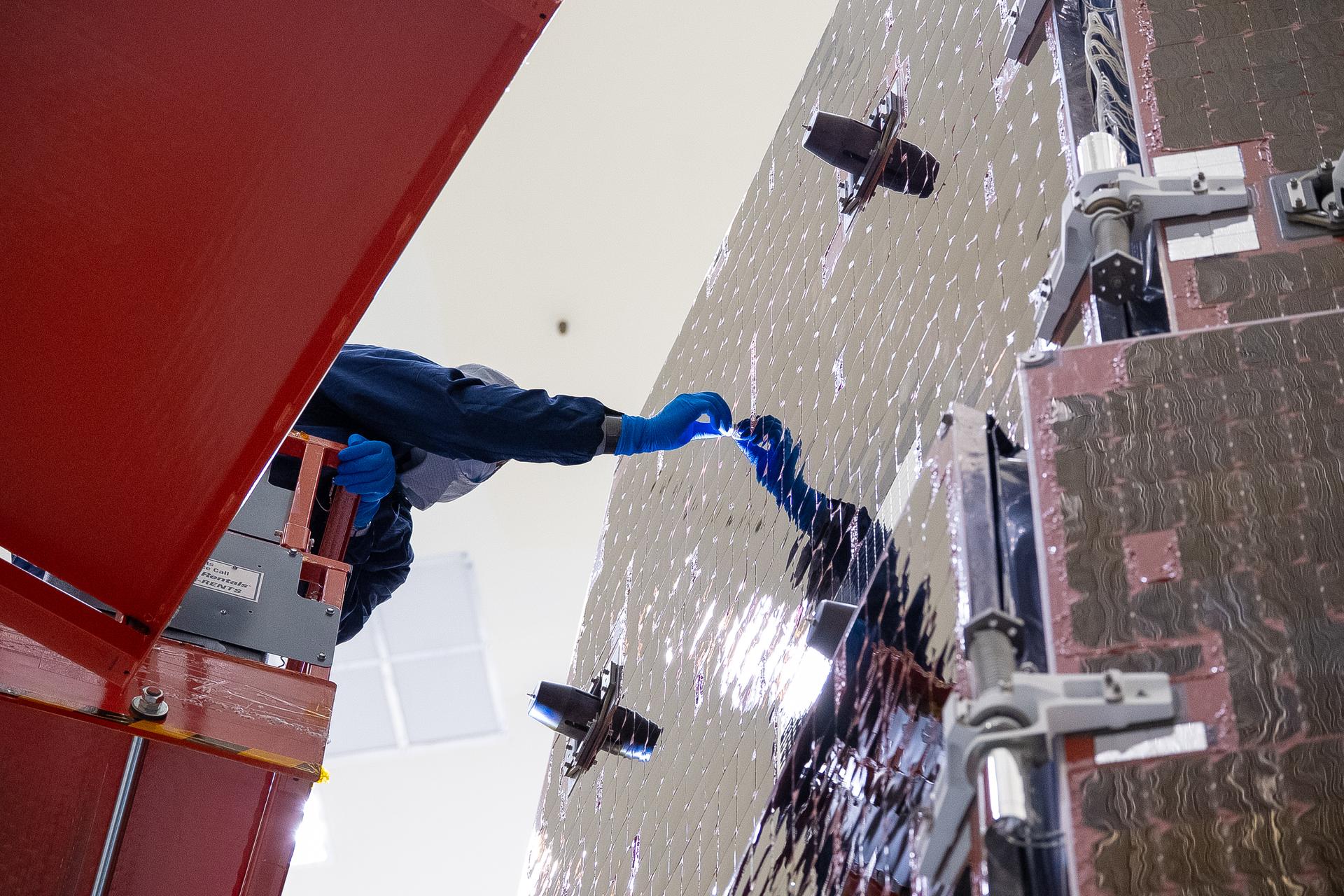
Technicians and engineers inside the Payload Hazardous Servicing Facility at NASA’s Kennedy Space Center in Florida clean and inspect the Solar Array Sun Shield (SASS) on the agency’s Nancy Grace Roman Space Telescope on Wednesday, July 8, 2026. The SASS is made up of six solar array panels, with the two center panels fixed while the four outer ones are deployed once in orbit. The Roman team will orient the SASS toward the Sun to provide power to the entire observatory and shade the telescope and instruments beneath. NASA designed this flagship mission to help astronomers explore dark matter, dark energy, and exoplanets.
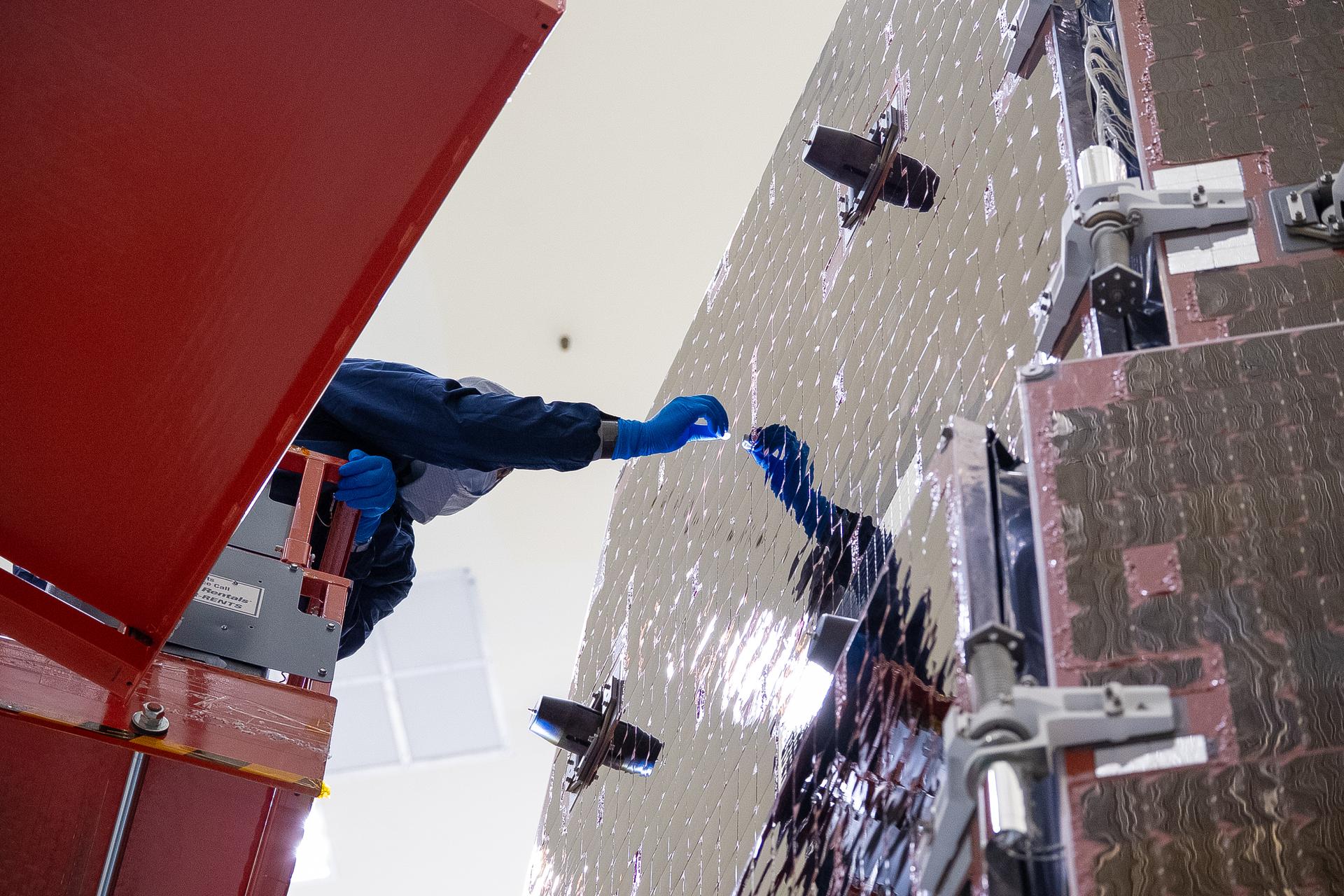
Technicians and engineers inside the Payload Hazardous Servicing Facility at NASA’s Kennedy Space Center in Florida clean and inspect the Solar Array Sun Shield (SASS) on the agency’s Nancy Grace Roman Space Telescope on Wednesday, July 8, 2026. The SASS is made up of six solar array panels, with the two center panels fixed while the four outer ones are deployed once in orbit. The Roman team will orient the SASS toward the Sun to provide power to the entire observatory and shade the telescope and instruments beneath. NASA designed this flagship mission to help astronomers explore dark matter, dark energy, and exoplanets.
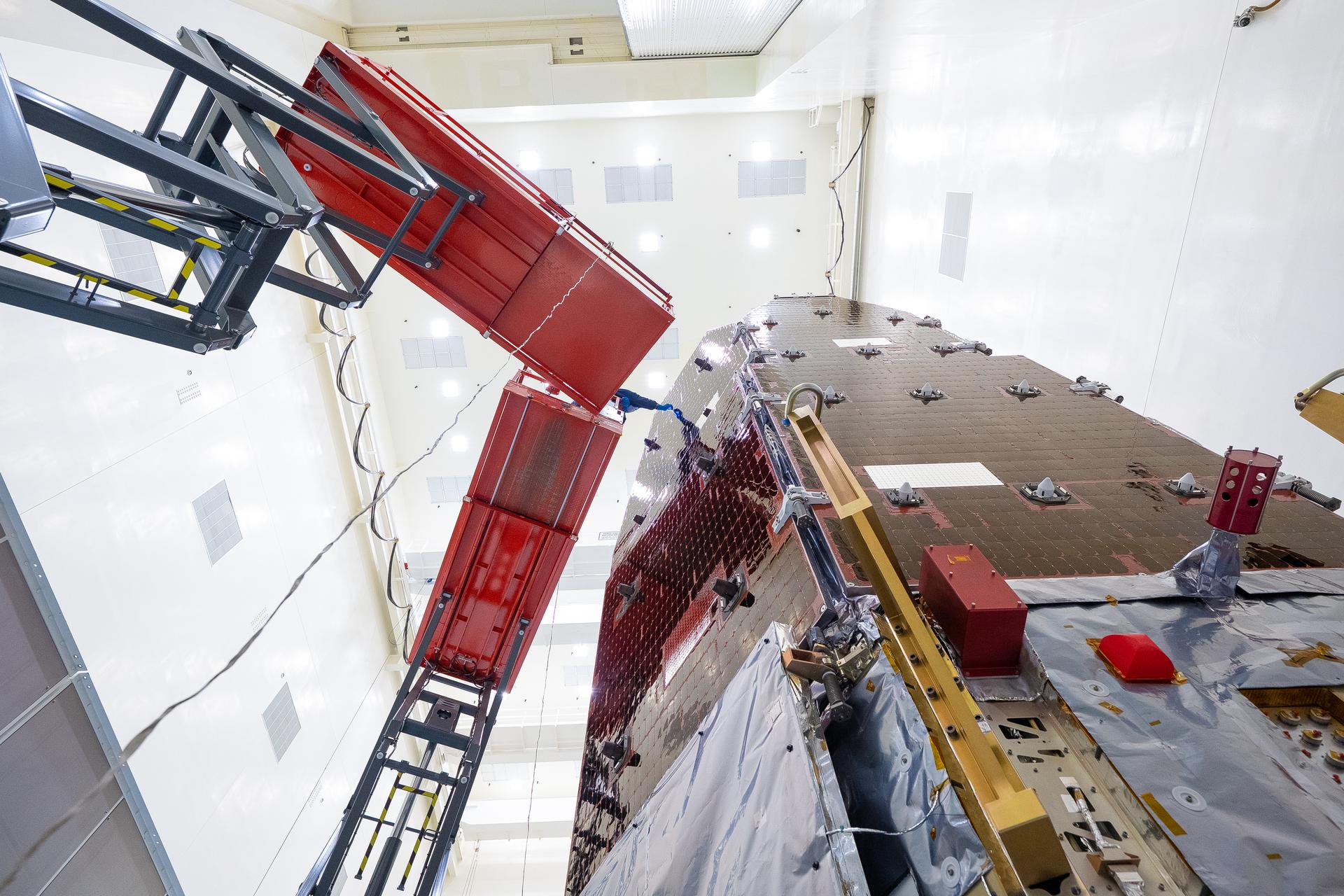
Technicians and engineers inside the Payload Hazardous Servicing Facility at NASA’s Kennedy Space Center in Florida clean and inspect the Solar Array Sun Shield (SASS) on the agency’s Nancy Grace Roman Space Telescope on Wednesday, July 8, 2026. The SASS is made up of six solar array panels, with the two center panels fixed while the four outer ones are deployed once in orbit. The Roman team will orient the SASS toward the Sun to provide power to the entire observatory and shade the telescope and instruments beneath. NASA designed this flagship mission to help astronomers explore dark matter, dark energy, and exoplanets.
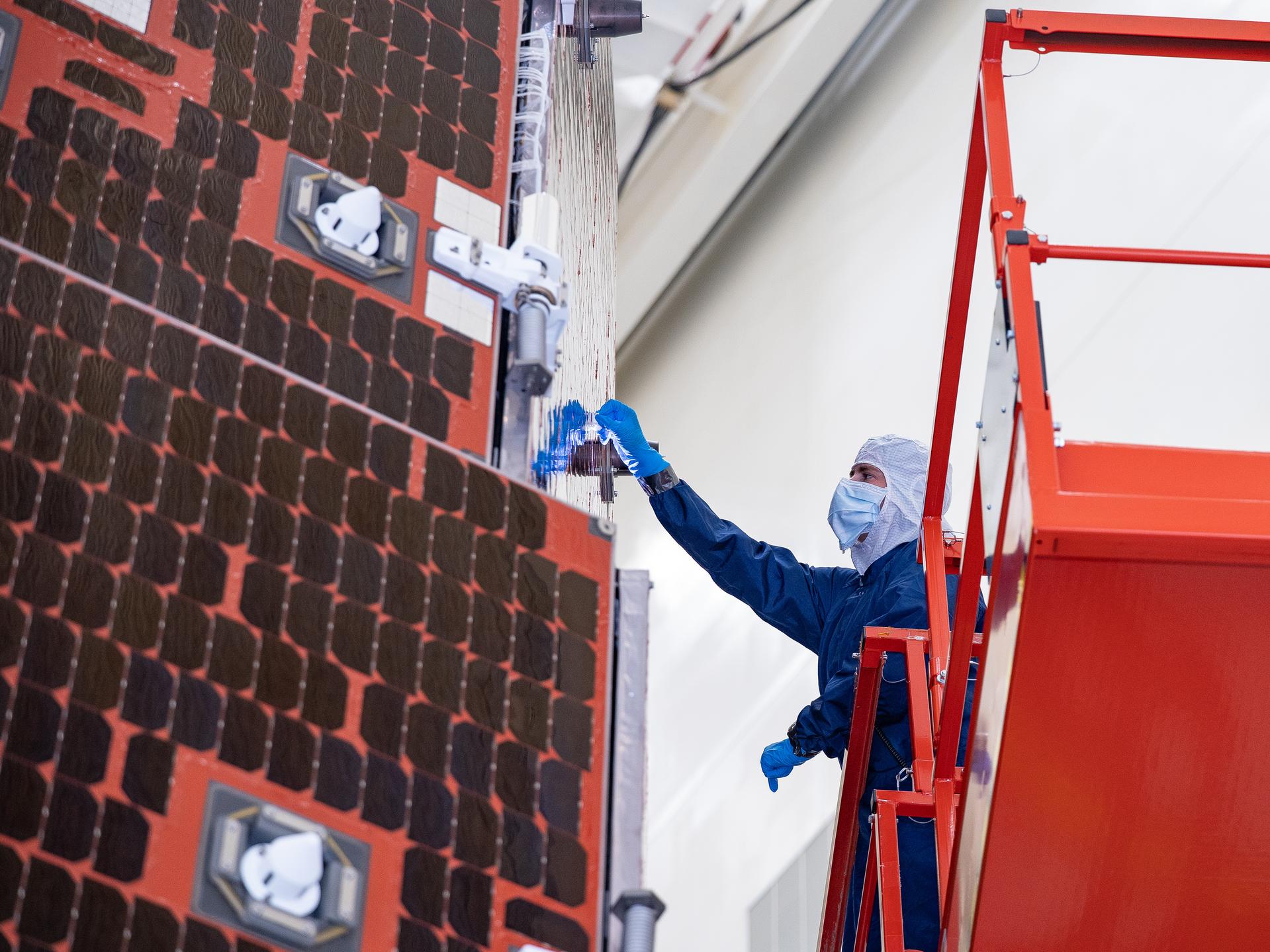
Technicians and engineers inside the Payload Hazardous Servicing Facility at NASA’s Kennedy Space Center in Florida clean and inspect the Solar Array Sun Shield (SASS) on the agency’s Nancy Grace Roman Space Telescope on Thursday, July 9, 2026. The SASS is made up of six solar array panels, with the two center panels fixed while the four outer ones are deployed once in orbit. The Roman team will orient the SASS toward the Sun to provide power to the entire observatory and shade the telescope and instruments beneath. NASA designed this flagship mission to help astronomers explore dark matter, dark energy, and exoplanets.
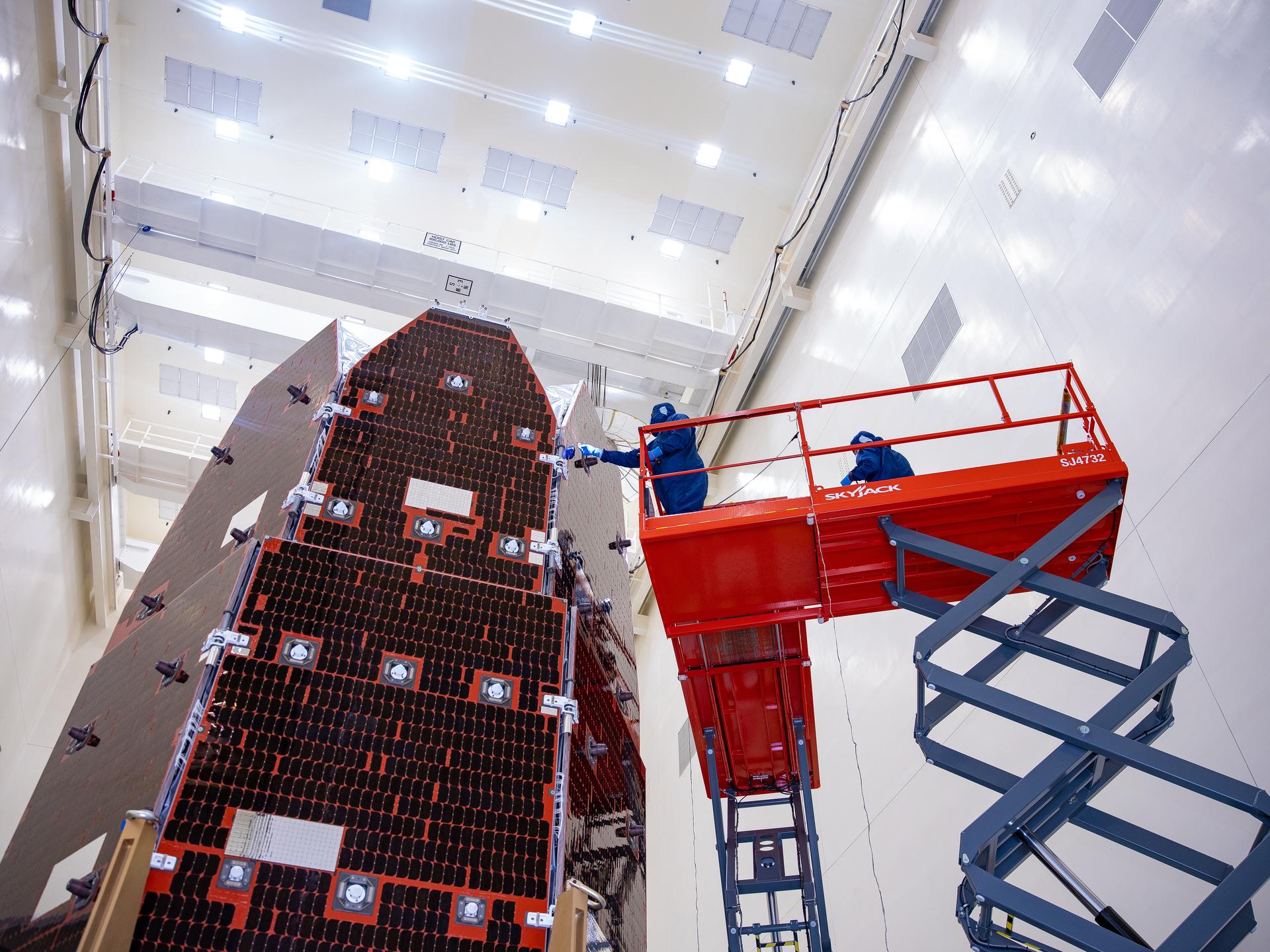
Technicians and engineers inside the Payload Hazardous Servicing Facility at NASA’s Kennedy Space Center in Florida clean and inspect the Solar Array Sun Shield (SASS) on the agency’s Nancy Grace Roman Space Telescope on Thursday, July 9, 2026. The SASS is made up of six solar array panels, with the two center panels fixed while the four outer ones are deployed once in orbit. The Roman team will orient the SASS toward the Sun to provide power to the entire observatory and shade the telescope and instruments beneath. NASA designed this flagship mission to help astronomers explore dark matter, dark energy, and exoplanets.
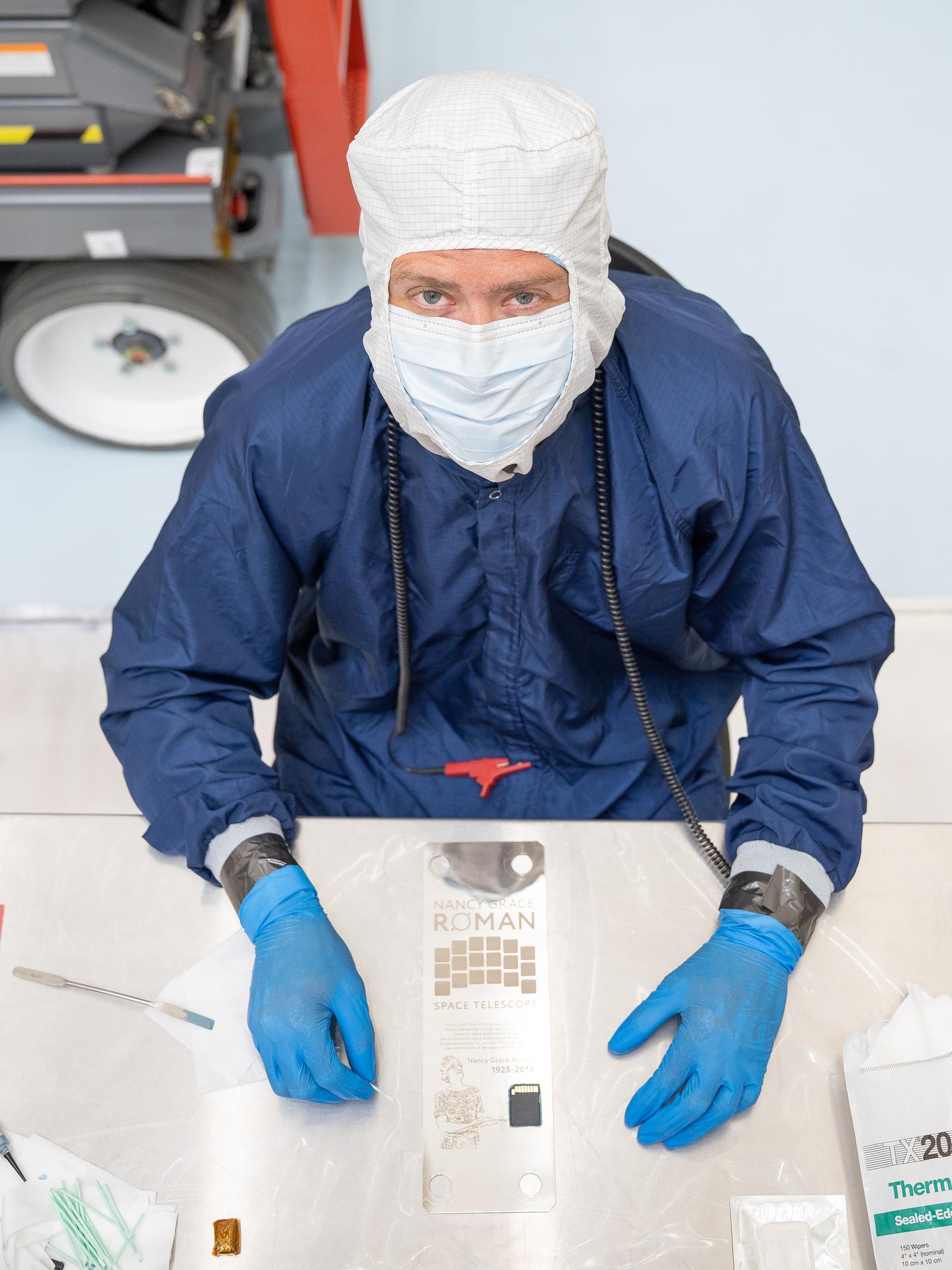
Inside the Payload Hazardous Servicing Facility at NASA’s Kennedy Space Center in Florida, Harry Willems, a mechanical technician from the agency’s Goddard Space Flight Center in Greenbelt, Maryland, installs a memory card containing a total of 1,350,144 names as part of a commemorative plaque on the Nancy Grace Roman Space Telescope on Friday, July 17, 2026. The names, submitted by people from across the globe, including astronauts from NASA’s Artemis II and Artemis III missions, will travel with the Roman observatory to the Sun-Earth Lagrange point 2, or L2, about one million miles from Earth, where the Sun’s and Earth’s gravity balance out. Roman is named after Dr. Nancy Grace Roman, NASA’s first chief astronomer and one of the architects of the agency’s modern science program.
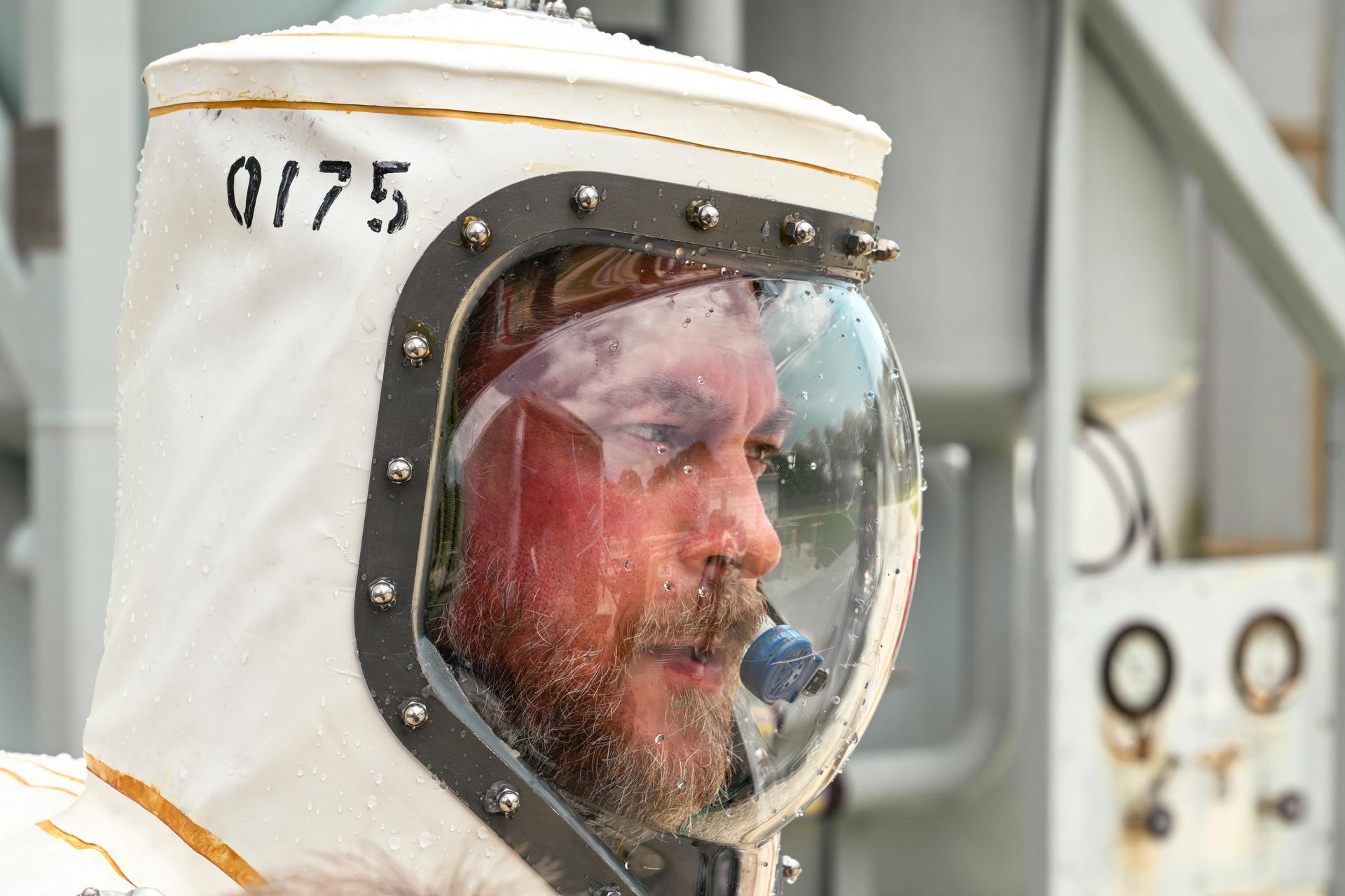
Billy Keim, a senior integration technician for NASA's Nancy Grace Roman Space Telescope wears a Self-Contained Atmospheric Protective Ensemble (SCAPE) suit as he prepares to perform propellant loading operations inside the Payload Hazardous Servicing Facility at NASA’s Kennedy Space Center in Florida Friday, July 24, 2026. With fuel tanks capable of carrying about 290 gallons (roughly 1,100 liters) of hydrazine – a monopropellant not requiring a second chemical to combust – Roman’s primary mission is to settle essential questions about dark energy, exoplanets, and infrared astrophysics by conducting wide-field surveys that explore the universe’s structure, evolution, and composition. Liftoff atop a SpaceX Falcon Heavy rocket from NASA Kennedy’s Launch Complex 39A is targeted no earlier than Sunday, Aug. 30, 2026.
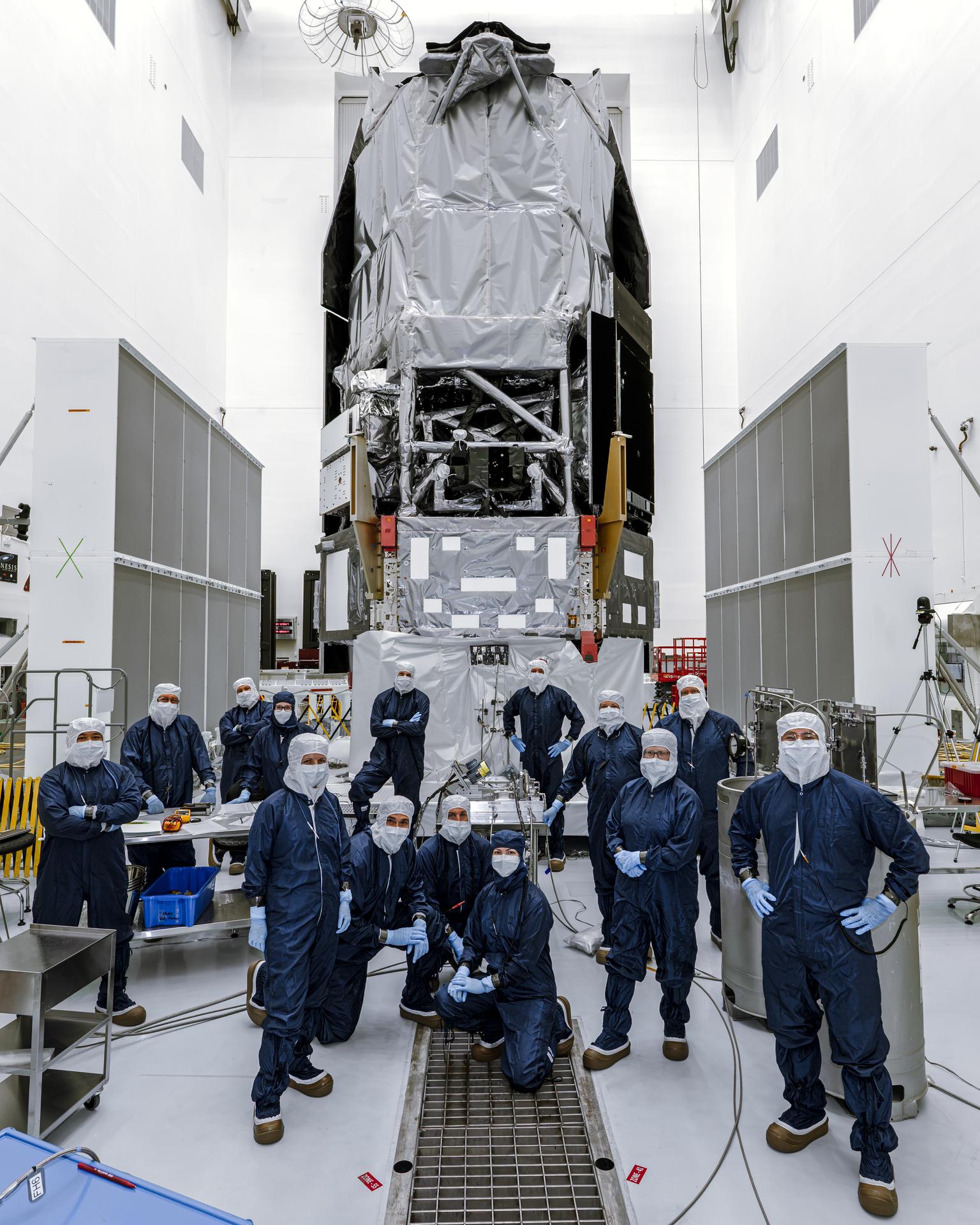
Members of NASA's Nancy Grace Roman Space Telescope propellant, safety, and quality assurance team pose for a photo on Monday July 20, 2026, inside the Payload Hazardous Servicing Facility at NASA’s Kennedy Space Center in Florida, prior to technicians loading propellant into the observatory. With fuel tanks capable of carrying about 290 gallons (roughly 1,100 liters) of hydrazine – a monopropellant not requiring a second chemical to combust – Roman’s primary mission is to settle essential questions about dark energy, exoplanets, and infrared astrophysics by conducting wide-field surveys that explore the universe’s structure, evolution, and composition. Liftoff atop a SpaceX Falcon Heavy rocket from NASA Kennedy’s Launch Complex 39A is targeted no earlier than Sunday, Aug. 30, 2026.
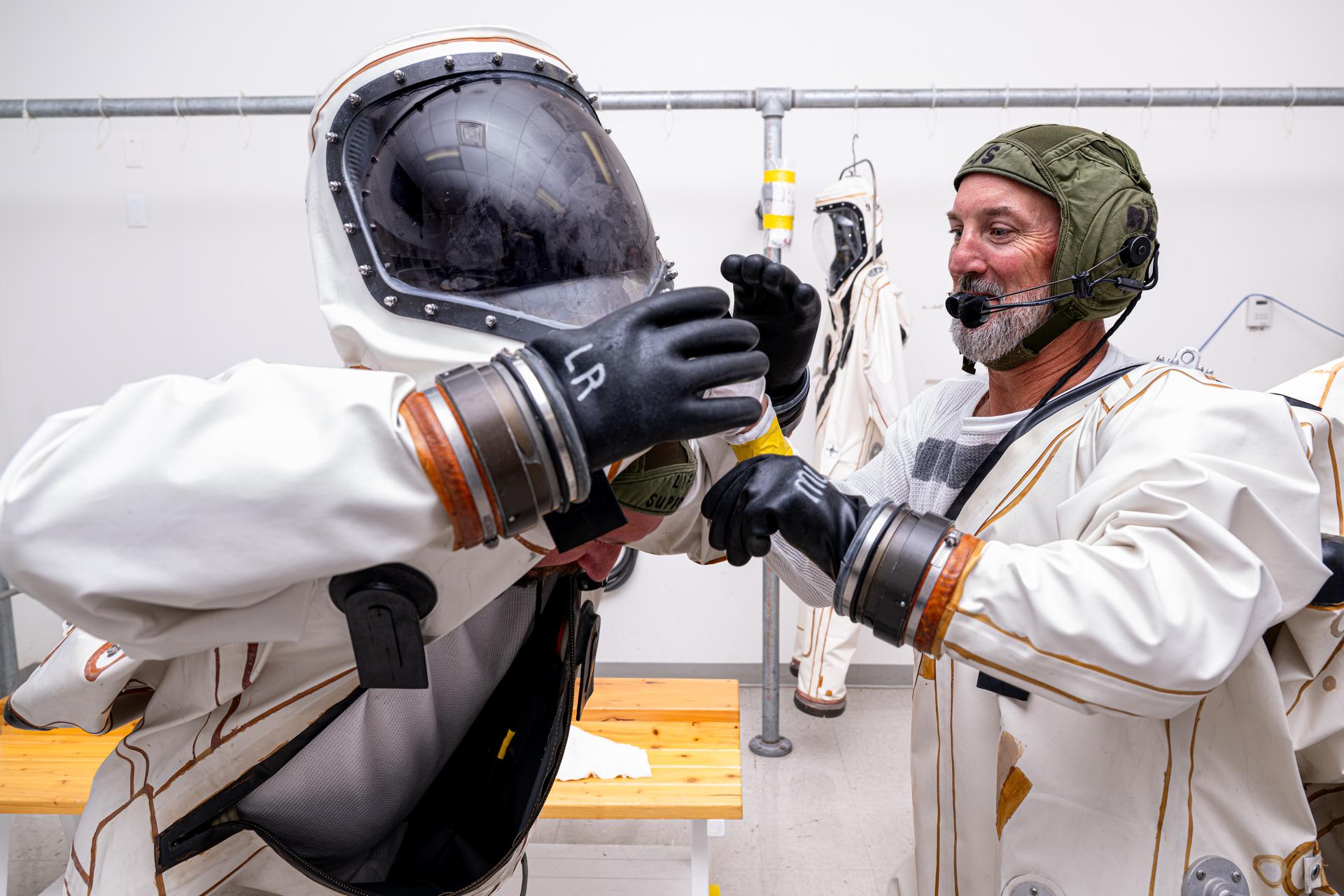
From left, technicians Jacob Stahl and Ryan Renehan don Self-Contained Atmospheric Protective Ensemble (SCAPE) suits as they prepare to perform propellant loading operations inside the Payload Hazardous Servicing Facility at NASA’s Kennedy Space Center in Florida for the agency’s Nancy Grace Roman Space Telescope on Thursday, July 23, 2026. With fuel tanks capable of carrying about 290 gallons (roughly 1,100 liters) of hydrazine – Roman’s primary mission is to settle essential questions about dark energy, exoplanets, and infrared astrophysics by conducting wide-field surveys that explore the universe’s structure, evolution, and composition. Liftoff atop a SpaceX Falcon Heavy rocket from NASA Kennedy’s Launch Complex 39A is targeted no earlier than Sunday, Aug. 30, 2026.
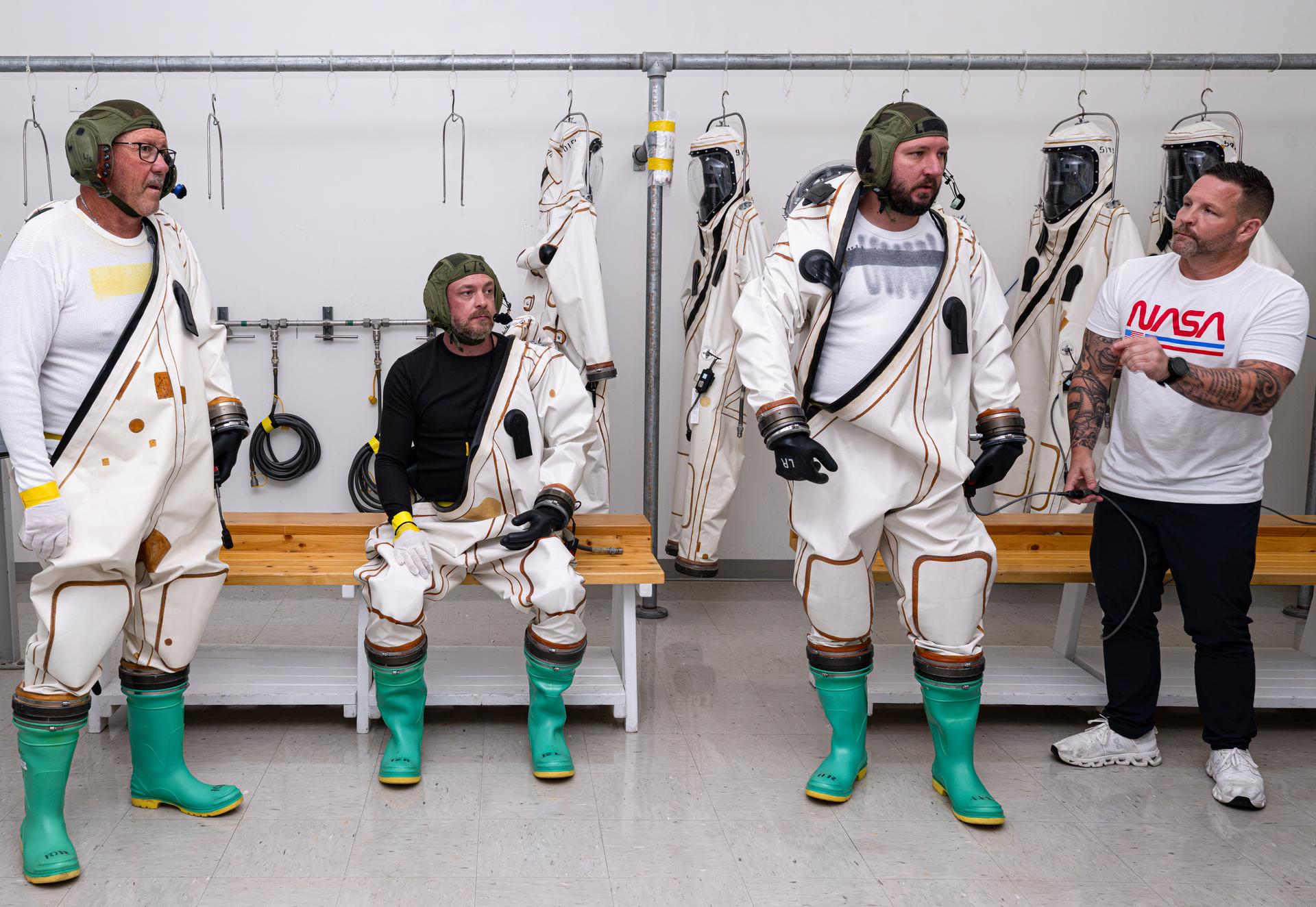
Technicians don Self-Contained Atmospheric Protective Ensemble (SCAPE) suits as they prepare to perform propellant loading operations inside the Payload Hazardous Servicing Facility at NASA’s Kennedy Space Center in Florida for the agency’s Nancy Grace Roman Space Telescope on Thursday, July 23, 2026. With fuel tanks capable of carrying about 290 gallons (roughly 1,100 liters) of hydrazine, Roman’s primary mission is to settle essential questions about dark energy, exoplanets, and infrared astrophysics by conducting wide-field surveys that explore the universe’s structure, evolution, and composition. Liftoff atop a SpaceX Falcon Heavy rocket from NASA Kennedy’s Launch Complex 39A is targeted no earlier than Sunday, Aug. 30, 2026.
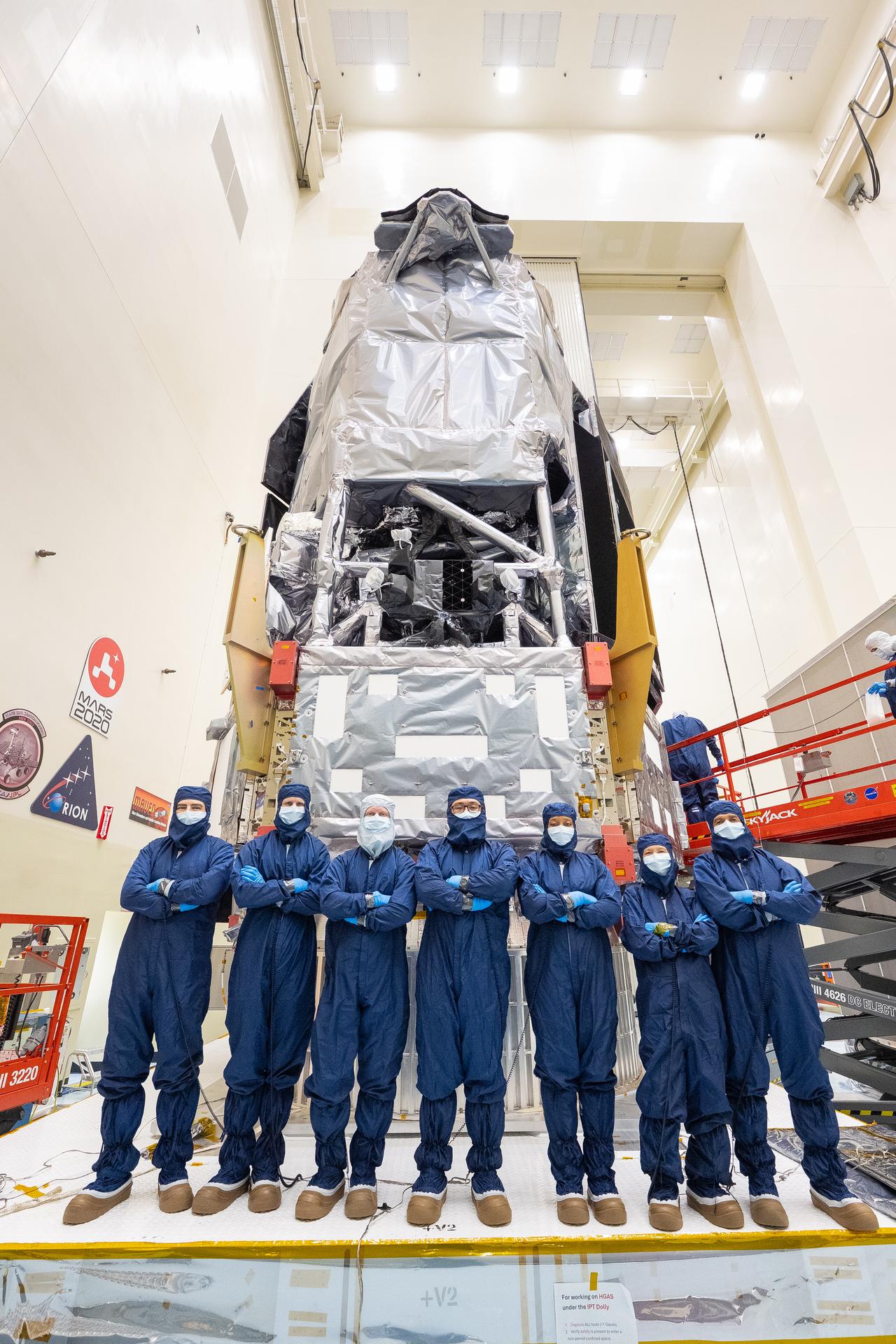
During a key integration milestone for NASA’s Nancy Grace Roman Space Telescope, technicians and engineers from the agency's Jet Propulsion Lab in Southern California gather inside the Payload Hazardous Servicing Facility at NASA’s Kennedy Space Center in Florida on Wednesday, July 8, 2026, following the closeout of the observatory’s Coronagraph Instrument test connector panel. Roman carries one science instrument called the Wide Field Instrument, and one technology demonstration called the Roman Coronagraph Instrument. The coronagraph is a system of masks, prisms, detectors, and even self-flexing mirrors built to block out the glare from distant stars and directly image the planets in orbit around them. The Roman Coronagraph will be the first active coronagraph to fly in space, meaning it contains components that actively respond to variables that would usually cause starlight to scatter, making it harder to see nearby planets.
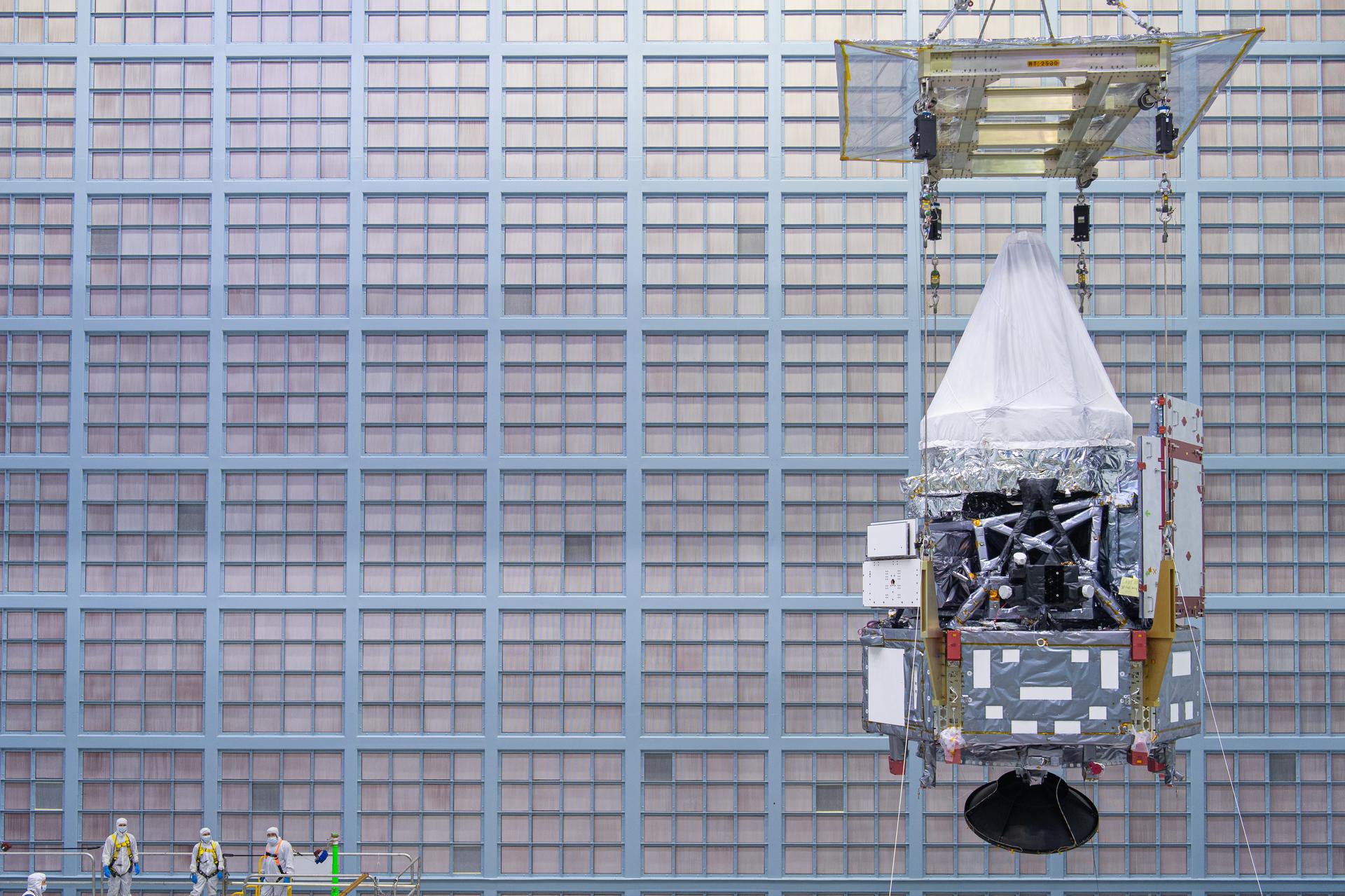
The Roman Space Telescope's Spacecraft Bus and Integrated Payload Assembly is crane lifted inside the cleanroom at Goddard Space Flight Center, Greenbelt Md., June 12, 2025. This photo has been approved for public release. NASA/Mike Guinto

Engineers at NASA's Jet Propulsion Laboratory – from left, Brandon Creager, Juan Gloria, Joshua Nachtigal, and Sonny Gutierrez – are shown assembling the electronics palette for the Coronagraph Instrument on NASA's Roman Space Telescope in December 2022. One of two main sections of the instrument, this layer houses the instrument electronics that receive instructions from the Roman spacecraft and send back the Coronagraph Instrument's scientific data. The electronics also control the mechanical components on the optical bench and the instrument heaters. https://photojournal.jpl.nasa.gov/catalog/PIA25435

In a clean room at NASA's Jet Propulsion Laboratory in Southern California in October 2023, scientist Vanessa Bailey stands behind the Roman Coronagraph, which has been undergoing testing at the lab. Designed to block starlight and allow scientists to see the faint light from planets outside our solar system, the Coronagraph is a technology demonstration that will be part of NASA's Nancy Grace Roman Space Telescope. https://photojournal.jpl.nasa.gov/catalog/PIA26272

This image shows a series of color filters on the Color Filter Assembly for the Coronagraph Instrument on NASA's Nancy Grace Roman Space Telescope. Each filter blocks all but a specific color, or wavelength, of light. Many of the filters appear dark in this photo because they block all visible light – the range of wavelengths that are visible to the human eye – but are transparent to infrared light, which encompasses a range of wavelengths slightly longer than visible light. Most of the filters will be used by the instrument for calibration purposes, but there are scientific uses for some of the filters as well. The presence or absence of different wavelengths can reveal properties of exoplanets (planets around other stars) including their chemical composition and the presence of clouds high or low in their atmospheres. For example, cold gas giant planets with high clouds will appear redder, like Jupiter, compared to those without high clouds, like Neptune. https://photojournal.jpl.nasa.gov/catalog/PIA25436

The Roman Coronagraph Instrument on NASA's upcoming Nancy Grace Roman Space Telescope will test new tools that block starlight, revealing planets hidden by the glare of their parent stars. The technology demonstration instrument is shown here – inside a shipping container – on May 17, 2024, at NASA's Jet Propulsion Laboratory in Southern California, where it was designed and built. Mission team members said farewell to the instrument by signing their names to a flag (featuring the mission logo) on the outside of the container, which carried the instrument from JPL to NASA's Goddard Space Flight Center in Greenbelt, Maryland. There, it will join the rest of the space observatory in preparation for launch by May 2027. https://photojournal.jpl.nasa.gov/catalog/PIA26278

The Roman Coronagraph Instrument on NASA's upcoming Nancy Grace Roman Space Telescope will test new tools that block starlight, revealing planets hidden by the glare of their parent stars. The technology demonstration instrument is shown here on May 17, 2024, at NASA's Jet Propulsion Laboratory in Southern California, where it was designed and built. Mission team members are using a crane to lift the top portion of the shipping container that the instrument was stored in for its journey to the agency's Goddard Space Flight Center in Greenbelt, Maryland, where it will join the rest of the space observatory in preparation for launch by May 2027. https://photojournal.jpl.nasa.gov/catalog/PIA26277

The Roman Coronagraph Instrument, a technology demonstration that will be part of NASA's Nancy Grace Roman Space Telescope, is seen amid testing at the agency's Jet Propulsion Laboratory in Southern California in December 2023. During this test in a special isolated, electromagnetically quiet chamber, the instrument was peppered with radio waves to test its response to ensure that the electrical components on the instrument don't interfere with those on the rest of the observatory, and vice versa. The test was performed inside a chamber lined with foam padding that absorbs the radio waves to prevent them from bouncing off the walls. https://photojournal.jpl.nasa.gov/catalog/PIA26273

The Roman Coronagraph Instrument on NASA's upcoming Nancy Grace Roman Space Telescope will test new tools that block starlight, revealing planets hidden by the glare of their parent stars. This graphic shows a test of what engineers call "digging the dark hole." The image shows three computer readouts of real data from the coronagraph's camera. Engineers used lasers and special optics to replicate the light from a star as it would look when observed by the Roman telescope. The image at left shows the amount of starlight that leaks into the coronagraph's field of view when only fixed components called masks are used to block the star at the center of the circle. Using moveable components such as deformable mirrors, the coronagraph can remove more and more of this starlight. The middle and right images show the progression of this process, where red indicates less starlight, and black indicates most or all starlight has been removed. The deformable mirrors are each only 2 inches (5 centimeters) in diameter and backed by more than 2,000 tiny pistons that move up and down. The pistons work together to change the shape of the mirrors to compensate for the unwanted stray light that spills around the edges of the masks. Though they are too small to affect Roman's other highly precise measurements, the imperfections can send stray starlight into the dark hole. In space, this technique will enable astronomers to observe light directly from planets around other stars, or exoplanets. Once demonstrated on Roman, similar technologies on a future mission could enable astronomers to use that light to identify chemicals in an exoplanet's atmosphere, potentially indicating the presence of life. https://photojournal.jpl.nasa.gov/catalog/PIA26279

Engineer Jordan Rupp is shown at NASA's Jet Propulsion Laboratory in September 2022 with the optical bench for the Coronagraph Instrument on NASA's Nancy Grace Roman Space Telescope. Light from the telescope is directed to the optical bench and passes through series of lenses, filters, and other components that ultimately suppress light from a star while allowing the light from orbiting planets to pass through. Mirrors redirect the light and keep it contained within the optical bench. In this image, the bench is partly assembled at the start of the integration and testing period for the instrument. The large black circles are surrogate components that are standing in for the actual instrument hardware. https://photojournal.jpl.nasa.gov/catalog/PIA25439

The focal plane mask for the Coronagraph Instrument on NASA's Nancy Grace Roman Space Telescope, shown here, is one of the components used to suppress starlight and reveal planets orbiting a star. Each circular section contains multiple "masks" – carefully engineered, opaque obstructions designed to block starlight. Some masks are about the width of a human hair. https://photojournal.jpl.nasa.gov/catalog/PIA25438

An engineer at NASA's Jet Propulsion Laboratory is shown here with the fast steering mirror, a component of the Coronagraph Instrument on NASA's Nancy Grace Roman Space Telescope. The mirror can make small movements that correct for slight wobbling of the observatory. The incoming image needs to be perfectly sharp in order for the instrument to suppress light from a star while allowing the light from planets orbiting it to pass through. Although the technologies differ, it's analogous to image stabilization in digital cameras, in which the camera lens moves to counteract the shake of your hands and keep the image sharp. https://photojournal.jpl.nasa.gov/catalog/PIA25437

NASA’s Pegasus barge carrying the agency’s Nancy Grace Roman Space Telescope seen in the background of this photograph, and a weather cover for the Artemis III SLS (Space Launch System) rocket core stage in the foreground, arrives Sunday, June 21, 2026, at the Launch Complex 39 turn basin wharf at the agency’s Kennedy Space Center in Florida. The cover will protect the stage’s thermal systems while SLS sits atop the mobile launcher at Launch Pad 39B in its short stack configuration. Named for NASA’s first chief astronomer and “mother of the Hubble Space Telescope,” Roman will offer a field of view over 100 times larger than Hubble’s to study up to a billion galaxies, directly image exoplanets and planet forming disks, and address fundamental questions about dark energy, exoplanets, and infrared astrophysics. NASA will send four Artemis astronauts on increasingly difficult missions to explore more of the Moon for scientific discovery, economic benefits, establish an enduring human presence on the lunar surface, and to build on our foundation for the first crewed missions to Mars.

NASA’s Pegasus barge carrying the agency’s Nancy Grace Roman Space Telescope seen in the background of this photograph, and a weather cover for the Artemis III SLS (Space Launch System) rocket core stage in the foreground, arrives Sunday, June 21, 2026, at the Launch Complex 39 turn basin wharf at the agency’s Kennedy Space Center in Florida. The cover will protect the stage’s thermal systems while SLS sits atop the mobile launcher at Launch Pad 39B in its short stack configuration. Named for NASA’s first chief astronomer and “mother of the Hubble Space Telescope,” Roman will offer a field of view over 100 times larger than Hubble’s to study up to a billion galaxies, directly image exoplanets and planet forming disks, and address fundamental questions about dark energy, exoplanets, and infrared astrophysics. NASA will send four Artemis astronauts on increasingly difficult missions to explore more of the Moon for scientific discovery, economic benefits, establish an enduring human presence on the lunar surface, and to build on our foundation for the first crewed missions to Mars.

NASA’s Pegasus barge carrying the agency’s Nancy Grace Roman Space Telescope seen in the background of this photograph, and a weather cover for the Artemis III SLS (Space Launch System) rocket core stage in the foreground, arrives Sunday, June 21, 2026, at the Launch Complex 39 turn basin wharf at the agency’s Kennedy Space Center in Florida. The cover will protect the stage’s thermal systems while SLS sits atop the mobile launcher at Launch Pad 39B in its short stack configuration. Named for NASA’s first chief astronomer and “mother of the Hubble Space Telescope,” Roman will offer a field of view over 100 times larger than Hubble’s to study up to a billion galaxies, directly image exoplanets and planet forming disks, and address fundamental questions about dark energy, exoplanets, and infrared astrophysics. NASA will send four Artemis astronauts on increasingly difficult missions to explore more of the Moon for scientific discovery, economic benefits, establish an enduring human presence on the lunar surface, and to build on our foundation for the first crewed missions to Mars.
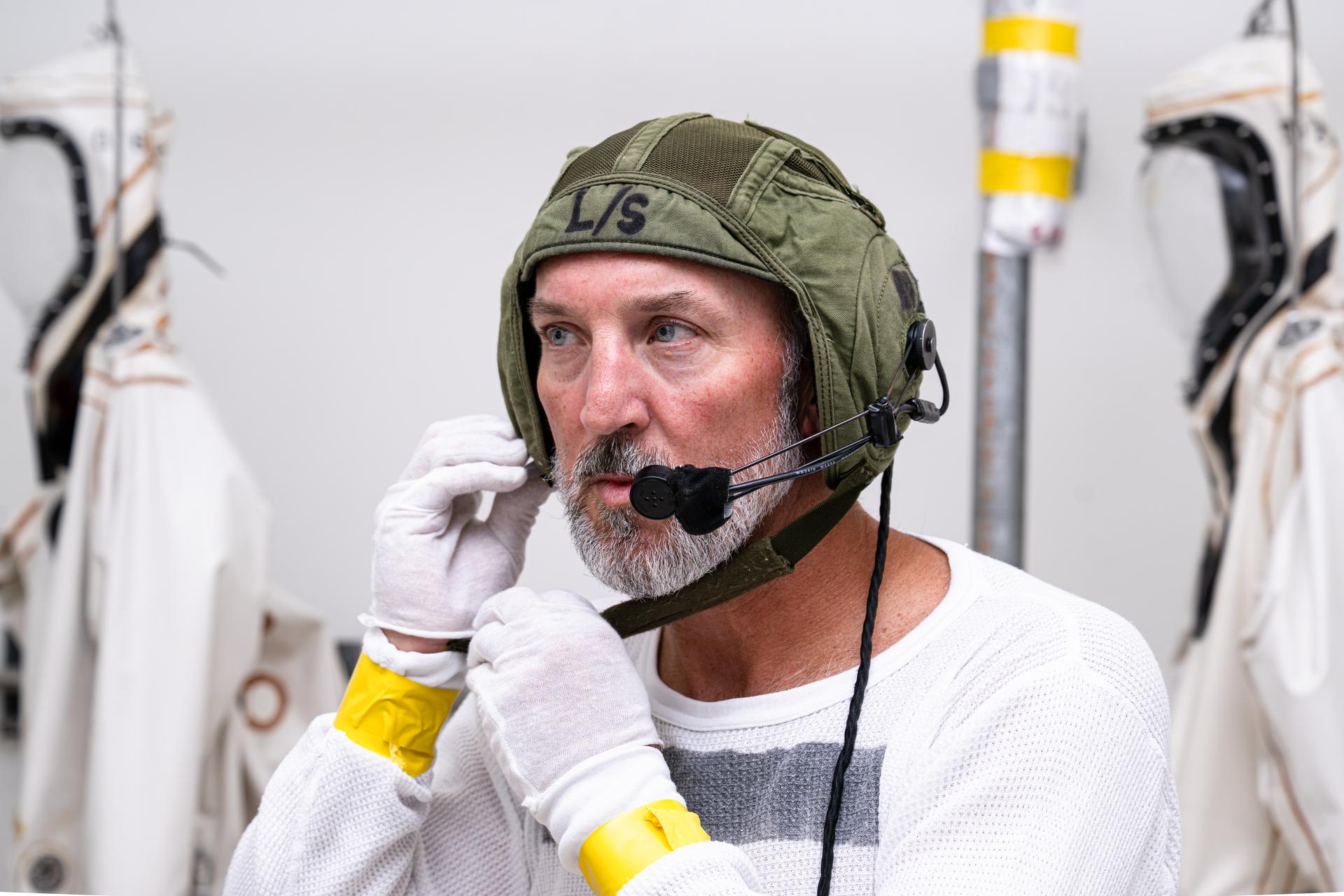
Ryan Renehan, technician, wears a Self-Contained Atmospheric Protective Ensemble (SCAPE) suit as he prepares to perform propellant loading operations inside the Payload Hazardous Servicing Facility at NASA’s Kennedy Space Center in Florida Thursday, July 23, 2026. With fuel tanks capable of carrying about 290 gallons (roughly 1,100 liters) of hydrazine – a monopropellant not requiring a second chemical to combust – Roman’s primary mission is to settle essential questions about dark energy, exoplanets, and infrared astrophysics by conducting wide-field surveys that explore the universe’s structure, evolution, and composition. Liftoff atop a SpaceX Falcon Heavy rocket from NASA Kennedy’s Launch Complex 39A is targeted no earlier than Sunday, Aug. 30, 2026.
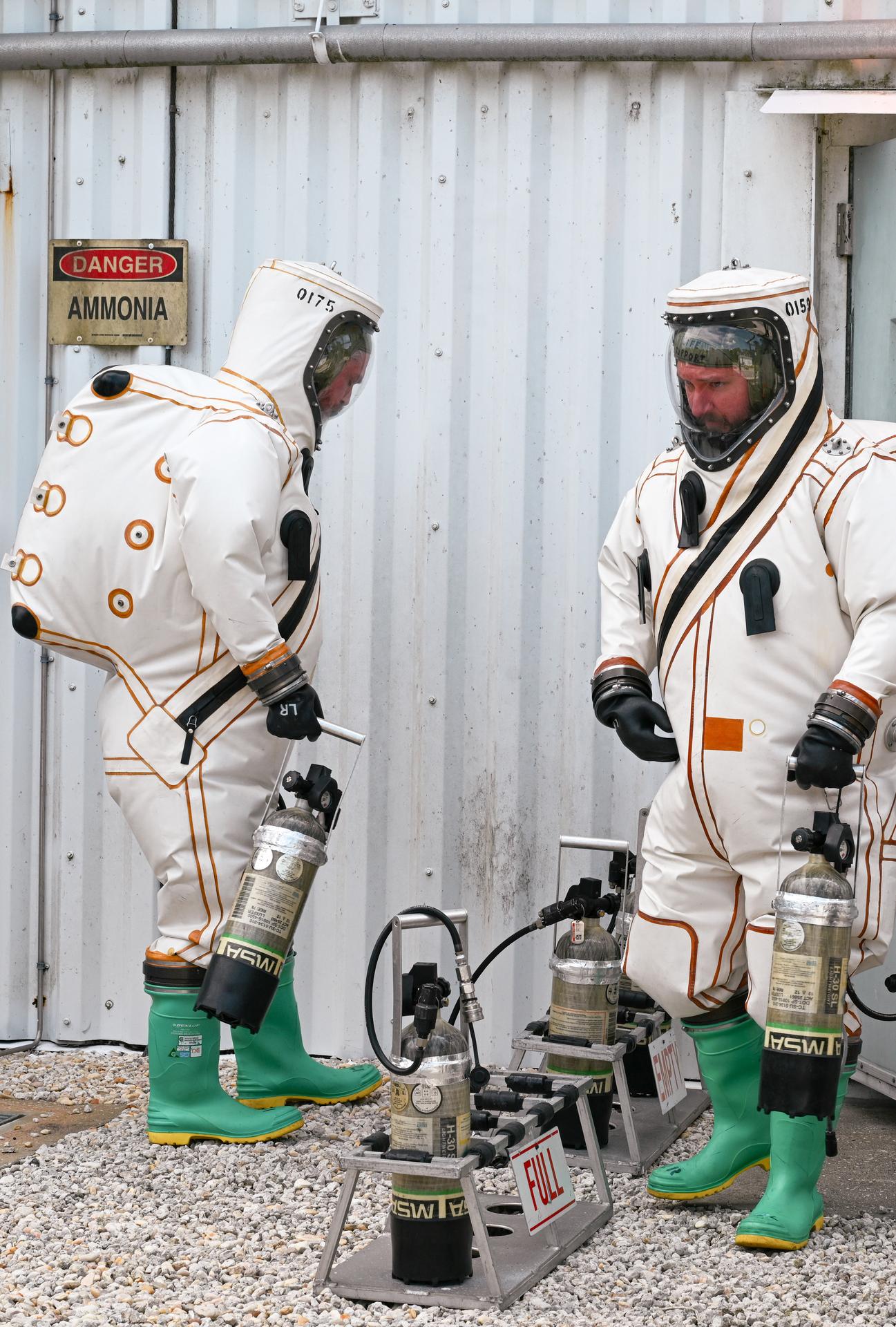
Technicians wear Self-Contained Atmospheric Protective Ensemble (SCAPE) suits as they prepare to perform propellant loading operations inside the Payload Hazardous Servicing Facility at NASA’s Kennedy Space Center in Florida Friday, July 24, 2026. With fuel tanks capable of carrying about 290 gallons (roughly 1,100 liters) of hydrazine – a monopropellant not requiring a second chemical to combust – Roman’s primary mission is to settle essential questions about dark energy, exoplanets, and infrared astrophysics by conducting wide-field surveys that explore the universe’s structure, evolution, and composition. Liftoff atop a SpaceX Falcon Heavy rocket from NASA Kennedy’s Launch Complex 39A is targeted no earlier than Sunday, Aug. 30, 2026.
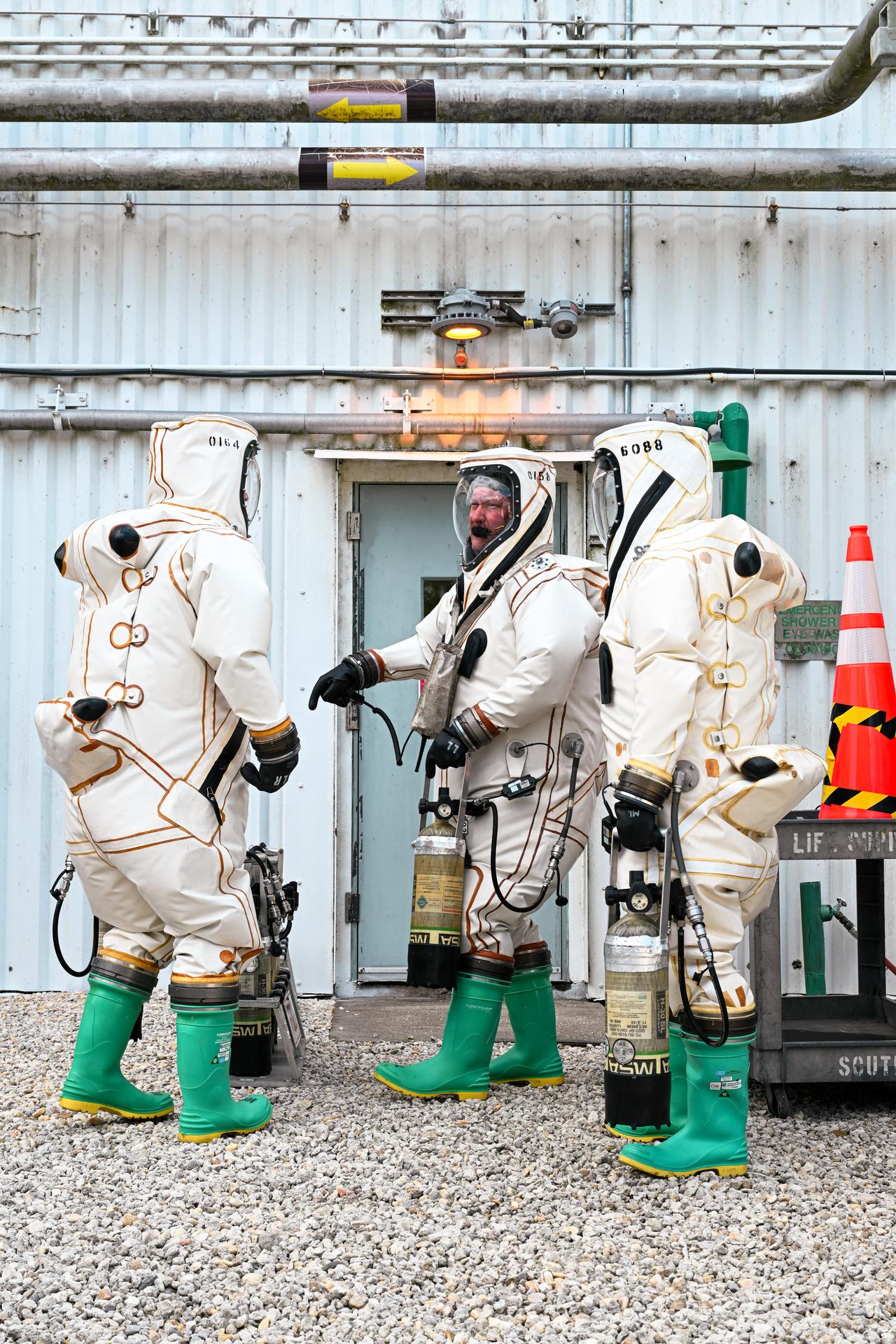
Technicians wear Self-Contained Atmospheric Protective Ensemble (SCAPE) suits as they prepare to perform propellant loading operations inside the Payload Hazardous Servicing Facility at NASA’s Kennedy Space Center in Florida Friday, July 24, 2026. With fuel tanks capable of carrying about 290 gallons (roughly 1,100 liters) of hydrazine – a monopropellant not requiring a second chemical to combust – Roman’s primary mission is to settle essential questions about dark energy, exoplanets, and infrared astrophysics by conducting wide-field surveys that explore the universe’s structure, evolution, and composition. Liftoff atop a SpaceX Falcon Heavy rocket from NASA Kennedy’s Launch Complex 39A is targeted no earlier than Sunday, Aug. 30, 2026.
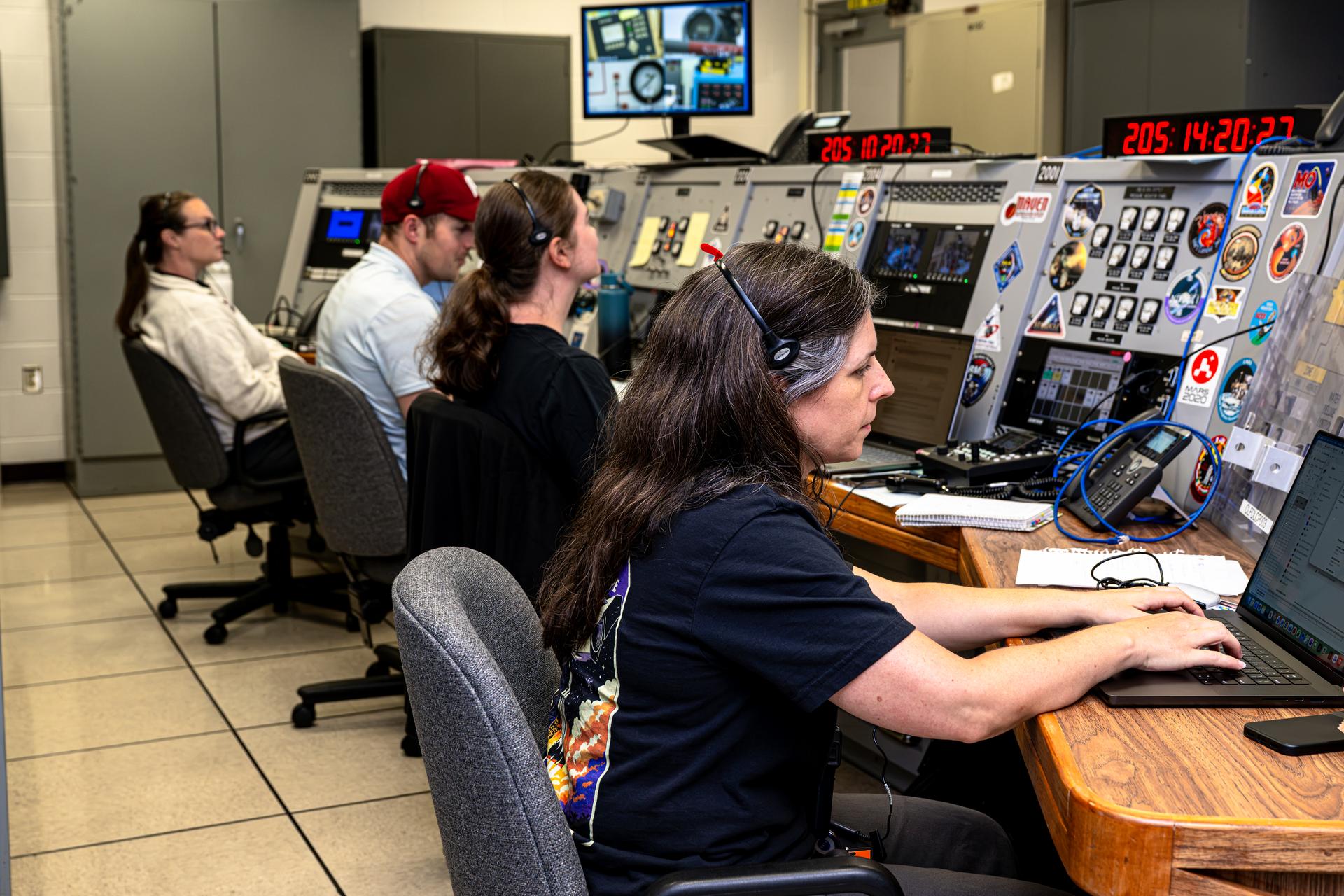
Technicians monitor propellant loading from a control room in the Multi Operations Support Building at NASA’s Kennedy Space Center in Florida Friday, July 24, 2026. With fuel tanks capable of carrying about 290 gallons (roughly 1,100 liters) of hydrazine – a monopropellant not requiring a second chemical to combust – Roman’s primary mission is to settle essential questions about dark energy, exoplanets, and infrared astrophysics by conducting wide-field surveys that explore the universe’s structure, evolution, and composition. Liftoff atop a SpaceX Falcon Heavy rocket from NASA Kennedy’s Launch Complex 39A is targeted no earlier than Sunday, Aug. 30, 2026.
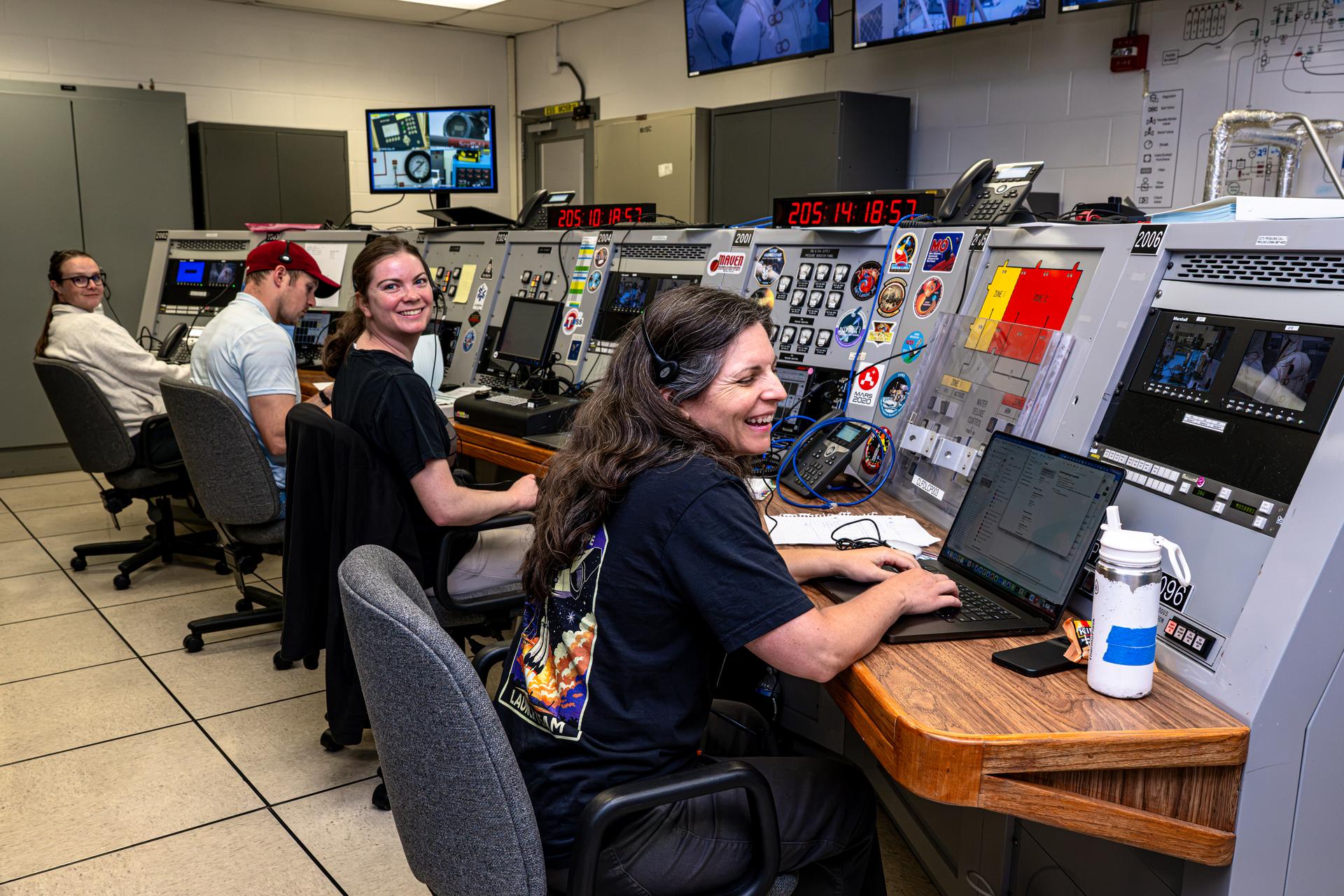
Technicians monitor propellant loading from a control room in the Multi Operations Support Building at NASA’s Kennedy Space Center in Florida Friday, July 24, 2026. With fuel tanks capable of carrying about 290 gallons (roughly 1,100 liters) of hydrazine – a monopropellant not requiring a second chemical to combust – Roman’s primary mission is to settle essential questions about dark energy, exoplanets, and infrared astrophysics by conducting wide-field surveys that explore the universe’s structure, evolution, and composition. Liftoff atop a SpaceX Falcon Heavy rocket from NASA Kennedy’s Launch Complex 39A is targeted no earlier than Sunday, Aug. 30, 2026.
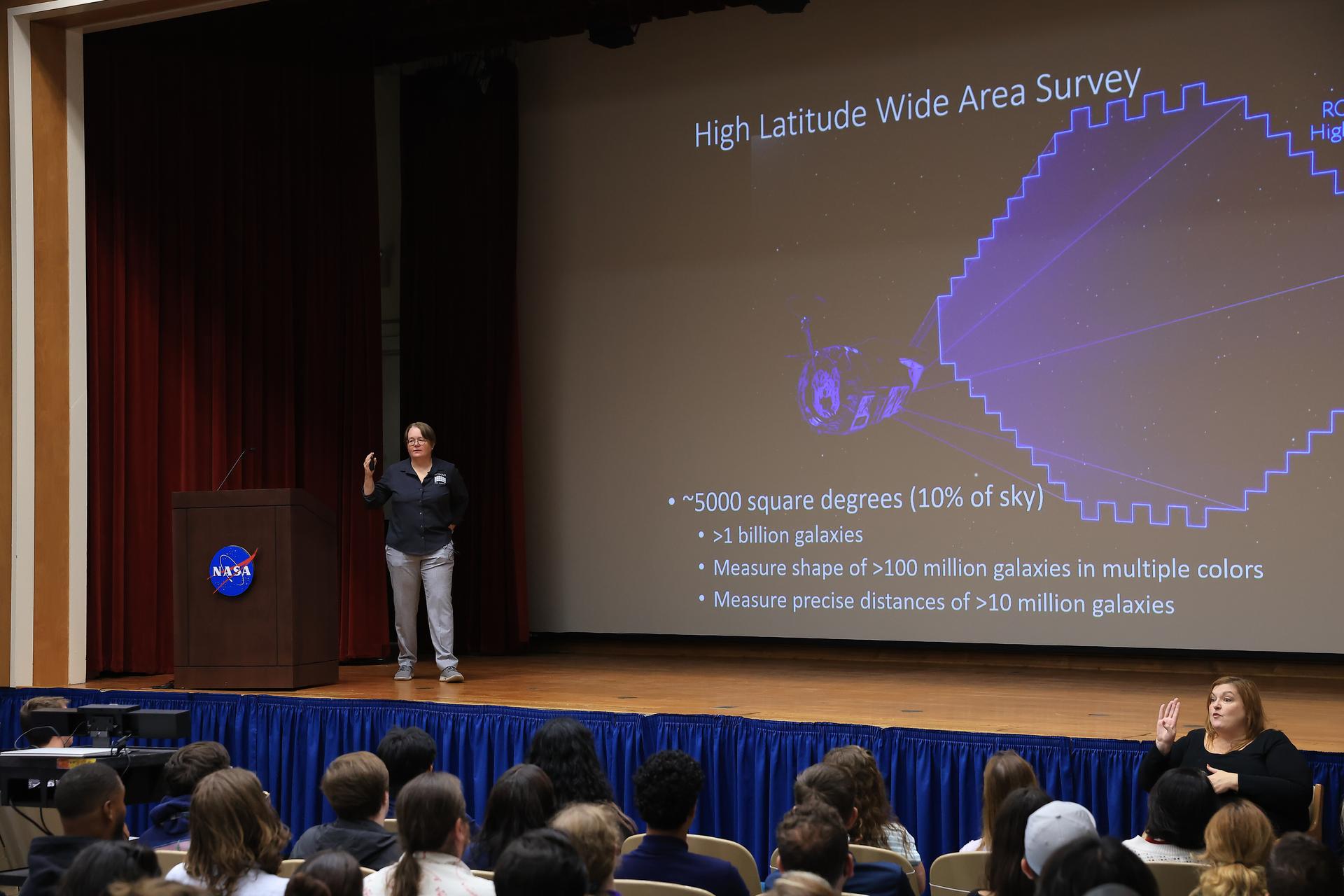
Dr. Julie McEnery, senior project scientist for NASA’s Nancy Grace Roman Space Telescope mission, discusses the upcoming Roman mission in the Training Auditorium at NASA’s Kennedy Space Center in Florida on Tuesday, July 21, 2026. McEnery is a leading astrophysicist at NASA's Goddard Space Flight Center in Greenbelt, Maryland, where she specializes in the study of high energy astrophysics and her work is expanding our understanding of the universe’s creation and behavior. Named for NASA’s first chief astronomer and “mother of the Hubble Space Telescope,” Roman will offer a field of view over 100 times larger than Hubble’s to study up to a billion galaxies, directly image exoplanets and planet forming disks, and address fundamental questions about dark energy, exoplanets, and infrared astrophysics.
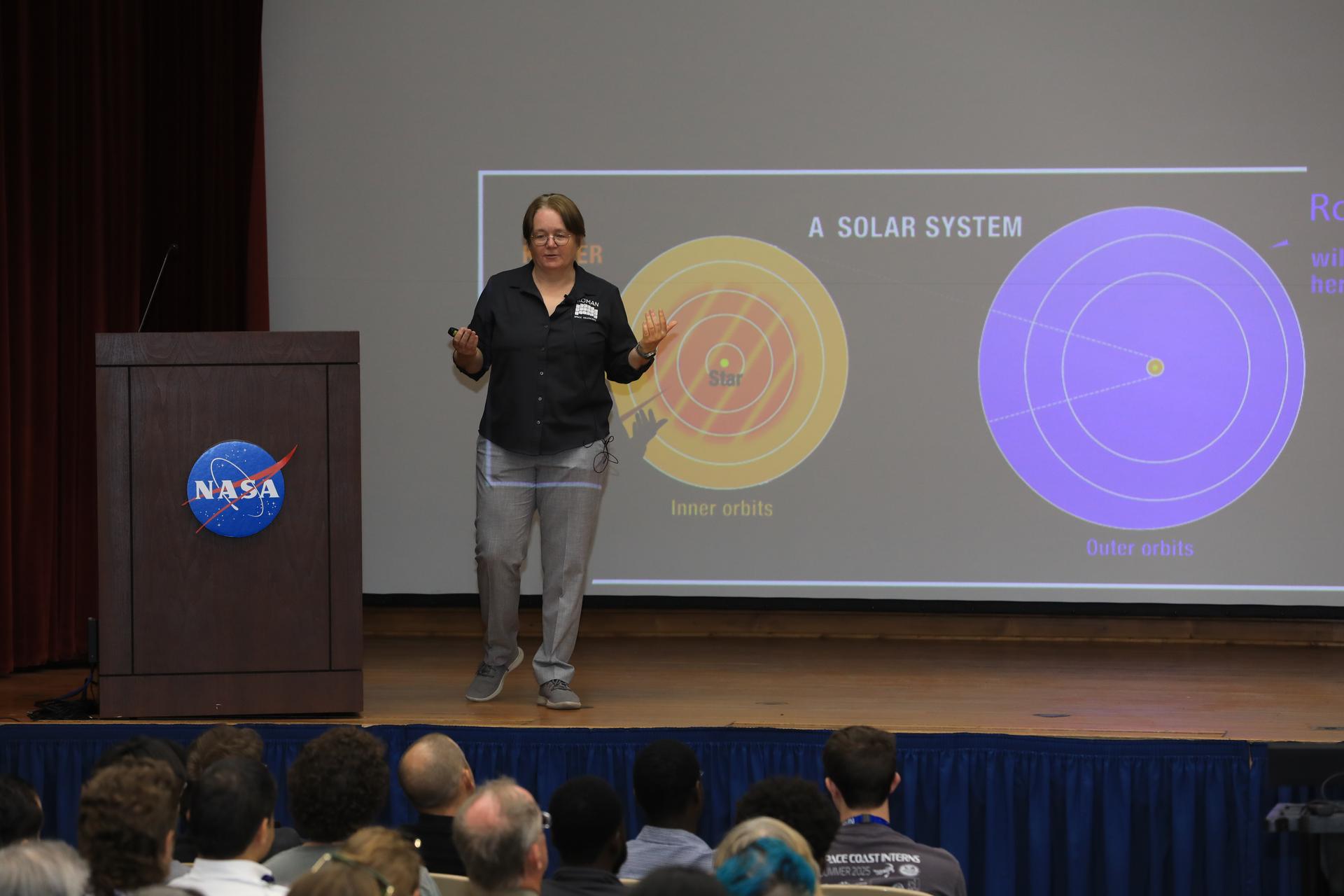
Dr. Julie McEnery, senior project scientist for NASA’s Nancy Grace Roman Space Telescope mission, discusses the upcoming Roman mission in the Training Auditorium at NASA’s Kennedy Space Center in Florida on Tuesday, July 21, 2026. McEnery is a leading astrophysicist at NASA's Goddard Space Flight Center in Greenbelt, Maryland, where she specializes in the study of high energy astrophysics and her work is expanding our understanding of the universe’s creation and behavior. Named for NASA’s first chief astronomer and “mother of the Hubble Space Telescope,” Roman will offer a field of view over 100 times larger than Hubble’s to study up to a billion galaxies, directly image exoplanets and planet forming disks, and address fundamental questions about dark energy, exoplanets, and infrared astrophysics.
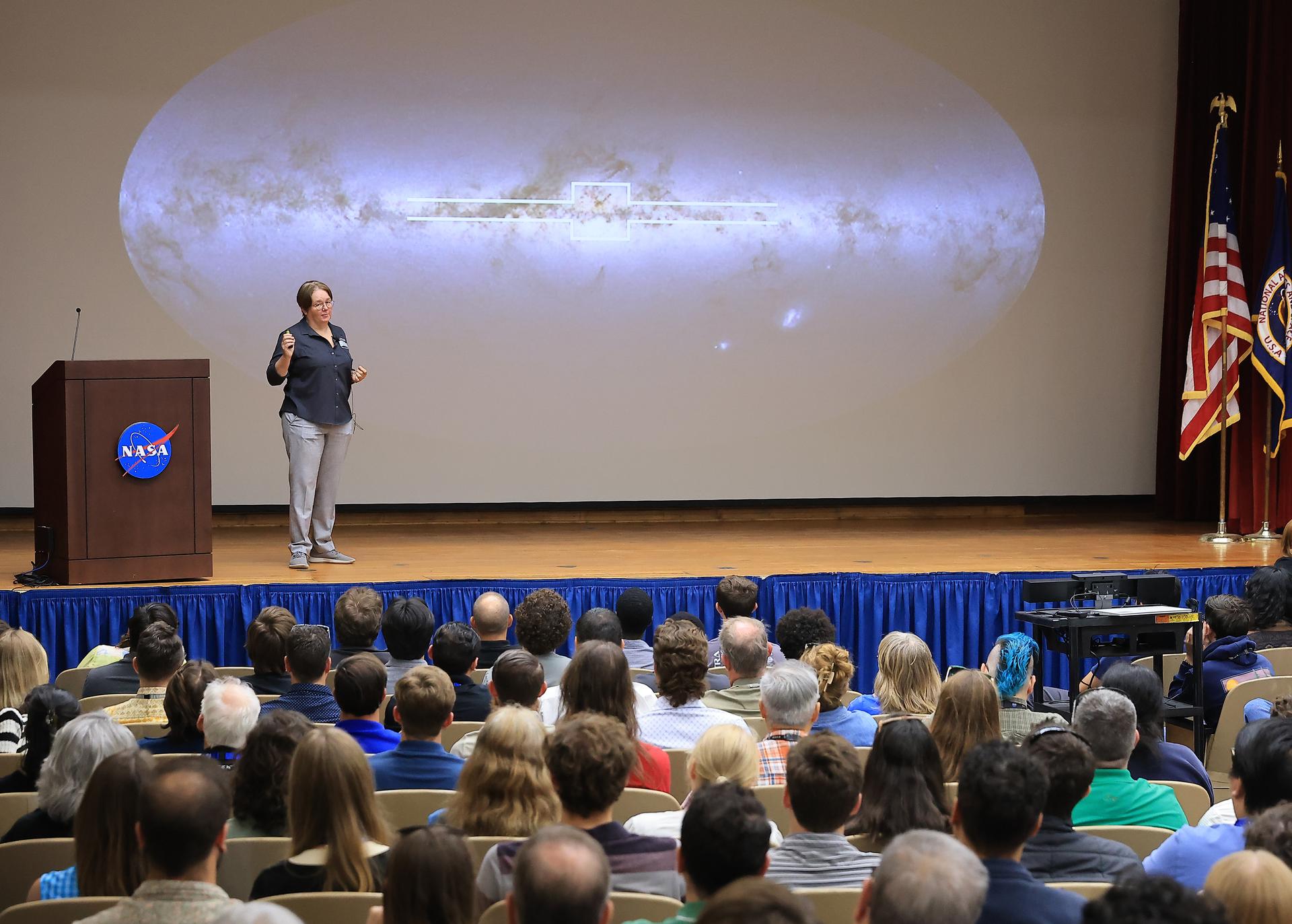
Dr. Julie McEnery, senior project scientist for NASA’s Nancy Grace Roman Space Telescope mission, discusses the upcoming Roman mission in the Training Auditorium at NASA’s Kennedy Space Center in Florida on Tuesday, July 21, 2026. McEnery is a leading astrophysicist at NASA's Goddard Space Flight Center in Greenbelt, Maryland, where she specializes in the study of high energy astrophysics and her work is expanding our understanding of the universe’s creation and behavior. Named for NASA’s first chief astronomer and “mother of the Hubble Space Telescope,” Roman will offer a field of view over 100 times larger than Hubble’s to study up to a billion galaxies, directly image exoplanets and planet forming disks, and address fundamental questions about dark energy, exoplanets, and infrared astrophysics.
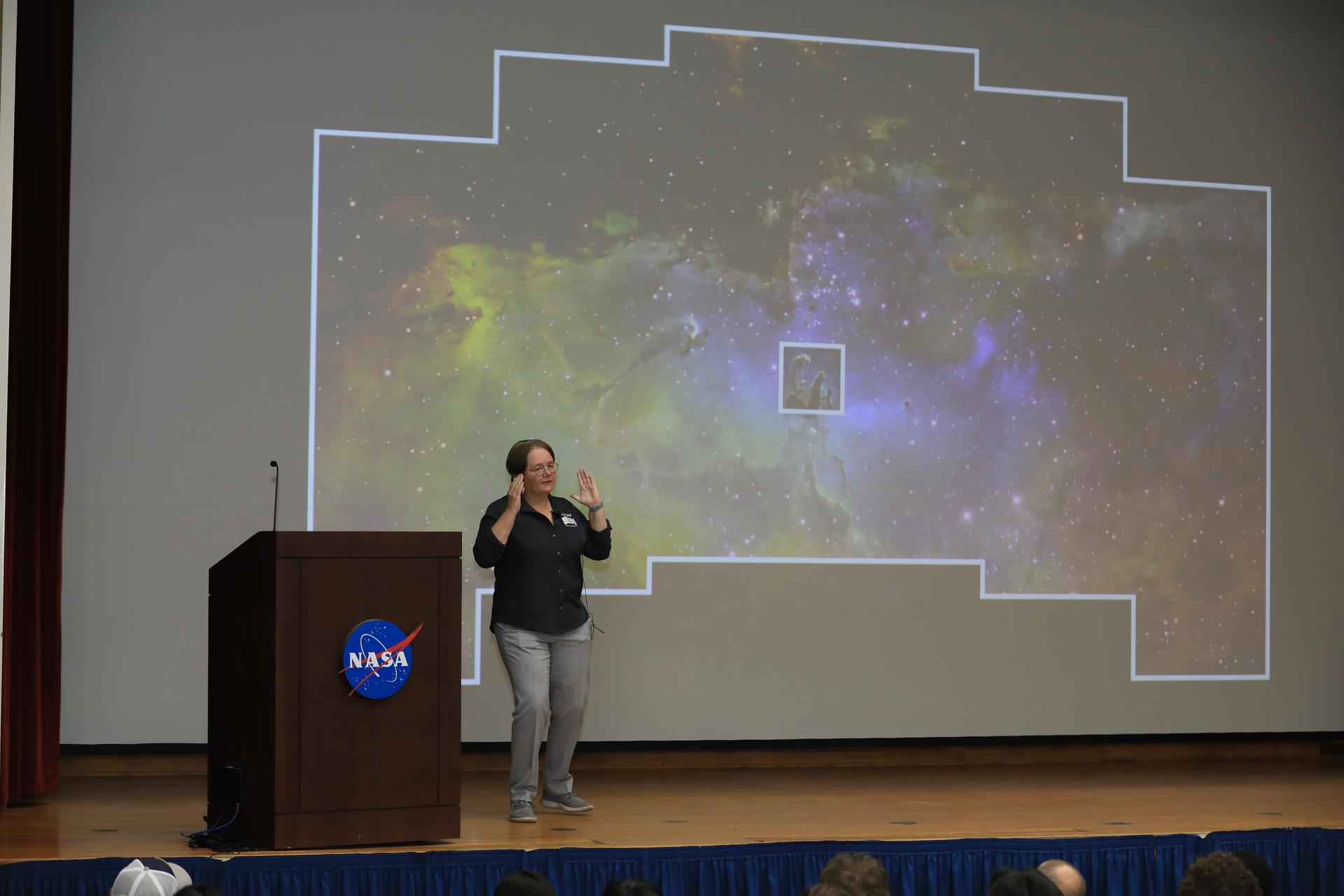
Dr. Julie McEnery, senior project scientist for NASA’s Nancy Grace Roman Space Telescope mission, discusses the upcoming Roman mission in the Training Auditorium at NASA’s Kennedy Space Center in Florida on Tuesday, July 21, 2026. McEnery is a leading astrophysicist at NASA's Goddard Space Flight Center in Greenbelt, Maryland, where she specializes in the study of high energy astrophysics and her work is expanding our understanding of the universe’s creation and behavior. Named for NASA’s first chief astronomer and “mother of the Hubble Space Telescope,” Roman will offer a field of view over 100 times larger than Hubble’s to study up to a billion galaxies, directly image exoplanets and planet forming disks, and address fundamental questions about dark energy, exoplanets, and infrared astrophysics.
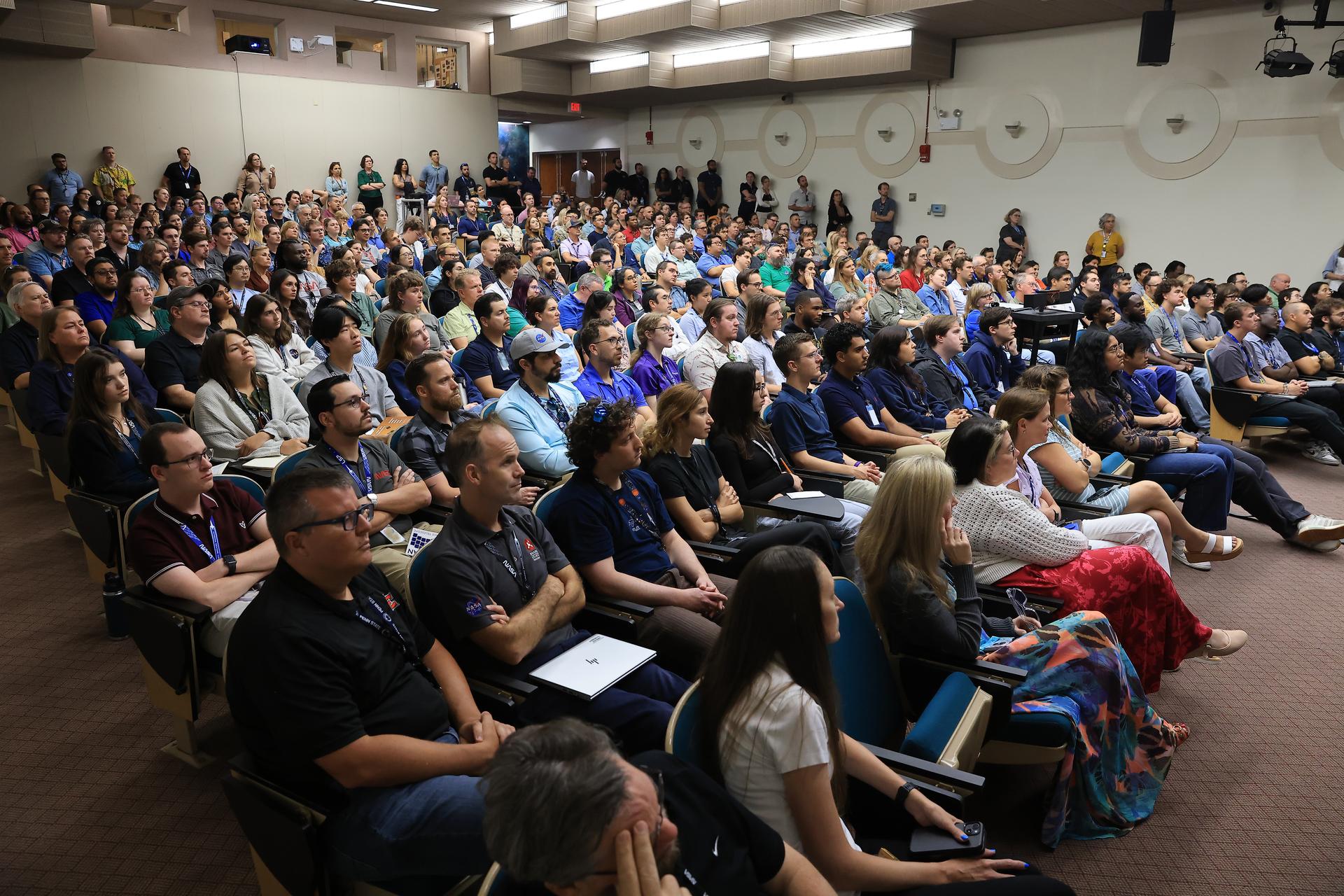
Dr. Julie McEnery, senior project scientist for NASA’s Nancy Grace Roman Space Telescope mission, discusses the upcoming Roman mission in the Training Auditorium at NASA’s Kennedy Space Center in Florida on Tuesday, July 21, 2026. McEnery is a leading astrophysicist at NASA's Goddard Space Flight Center in Greenbelt, Maryland, where she specializes in the study of high energy astrophysics and her work is expanding our understanding of the universe’s creation and behavior. Named for NASA’s first chief astronomer and “mother of the Hubble Space Telescope,” Roman will offer a field of view over 100 times larger than Hubble’s to study up to a billion galaxies, directly image exoplanets and planet forming disks, and address fundamental questions about dark energy, exoplanets, and infrared astrophysics.
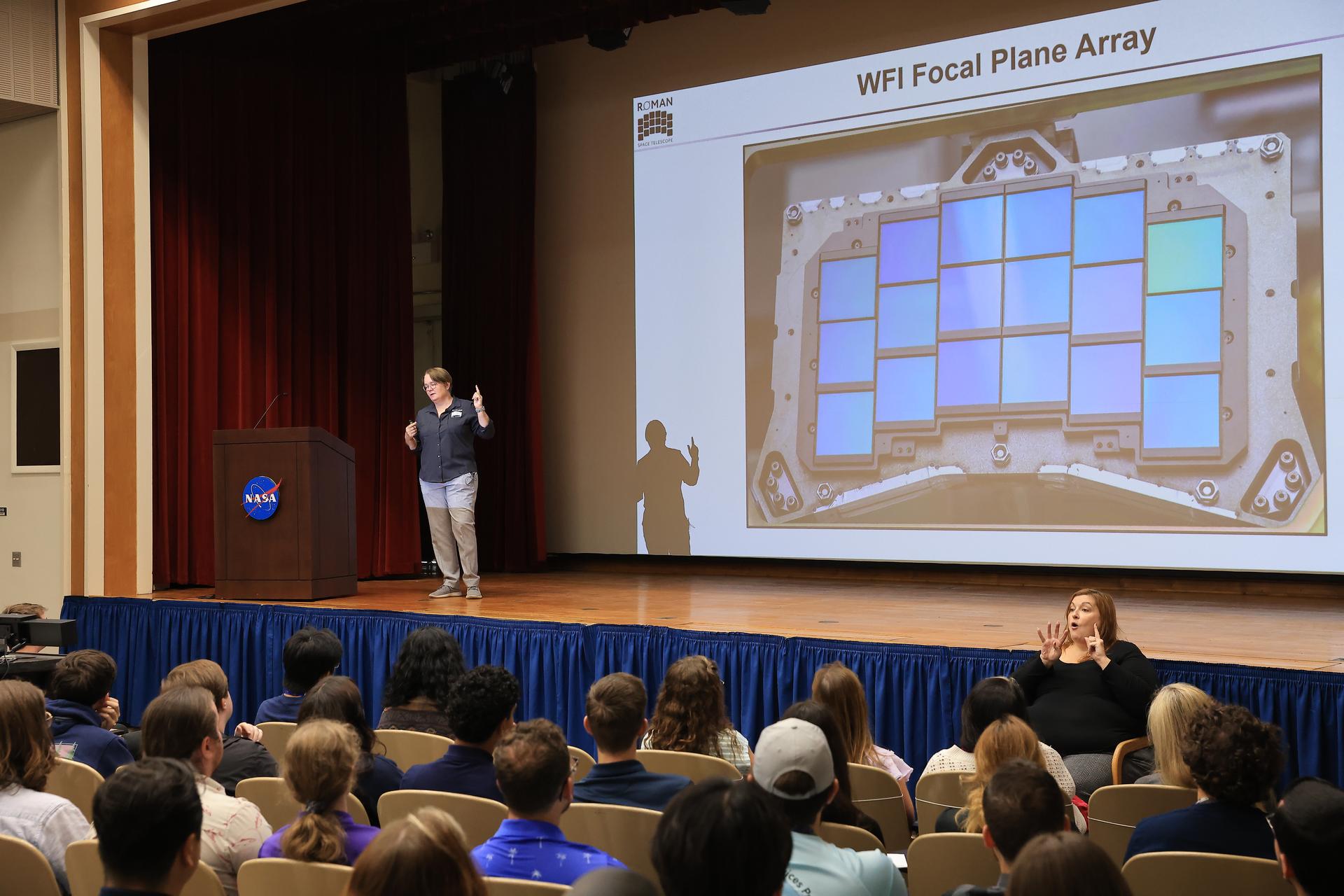
Dr. Julie McEnery, senior project scientist for NASA’s Nancy Grace Roman Space Telescope mission, discusses the upcoming Roman mission in the Training Auditorium at NASA’s Kennedy Space Center in Florida on Tuesday, July 21, 2026. McEnery is a leading astrophysicist at NASA's Goddard Space Flight Center in Greenbelt, Maryland, where she specializes in the study of high energy astrophysics and her work is expanding our understanding of the universe’s creation and behavior. Named for NASA’s first chief astronomer and “mother of the Hubble Space Telescope,” Roman will offer a field of view over 100 times larger than Hubble’s to study up to a billion galaxies, directly image exoplanets and planet forming disks, and address fundamental questions about dark energy, exoplanets, and infrared astrophysics.
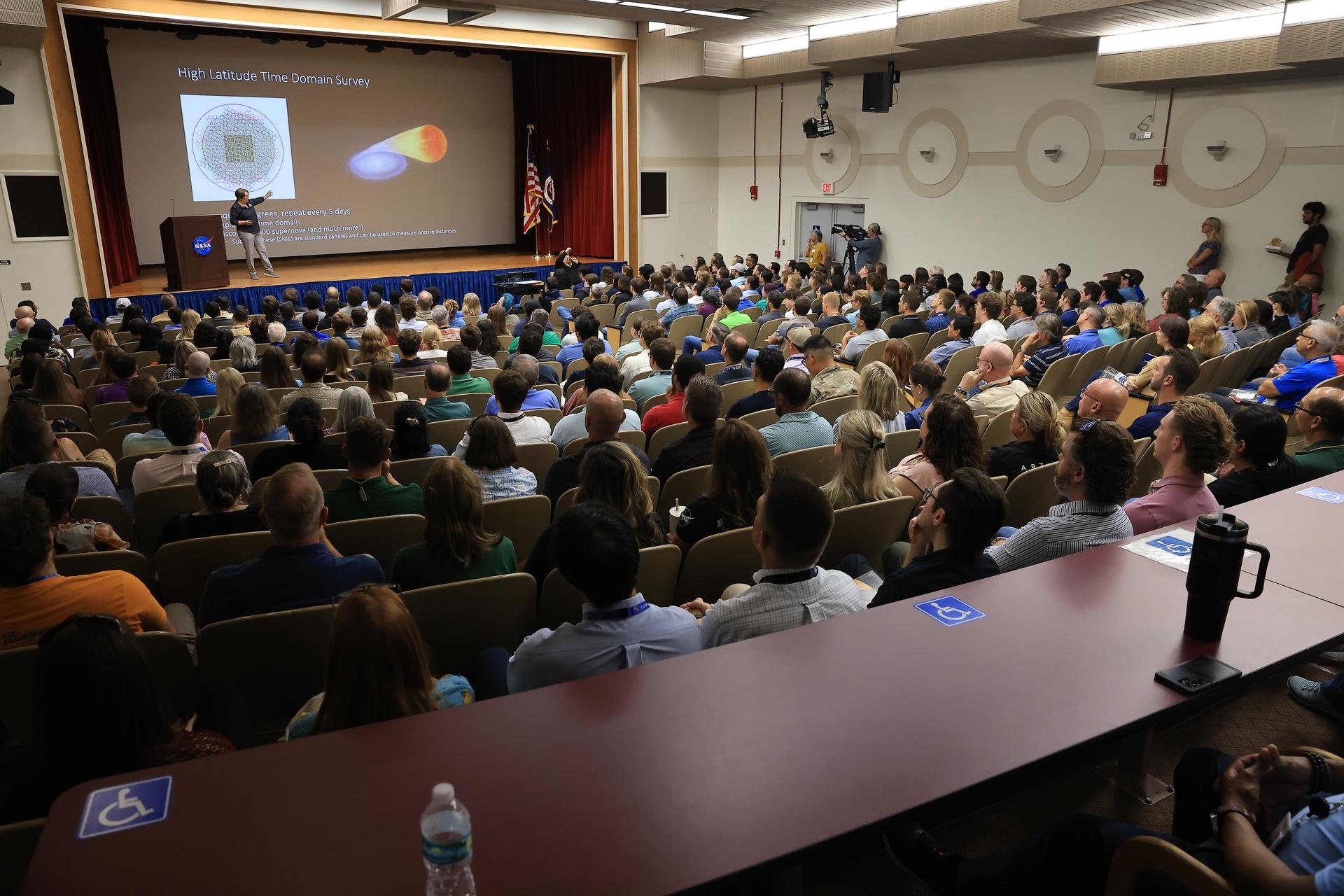
Dr. Julie McEnery, senior project scientist for NASA’s Nancy Grace Roman Space Telescope mission, discusses the upcoming Roman mission in the Training Auditorium at NASA’s Kennedy Space Center in Florida on Tuesday, July 21, 2026. McEnery is a leading astrophysicist at NASA's Goddard Space Flight Center in Greenbelt, Maryland, where she specializes in the study of high energy astrophysics and her work is expanding our understanding of the universe’s creation and behavior. Named for NASA’s first chief astronomer and “mother of the Hubble Space Telescope,” Roman will offer a field of view over 100 times larger than Hubble’s to study up to a billion galaxies, directly image exoplanets and planet forming disks, and address fundamental questions about dark energy, exoplanets, and infrared astrophysics.
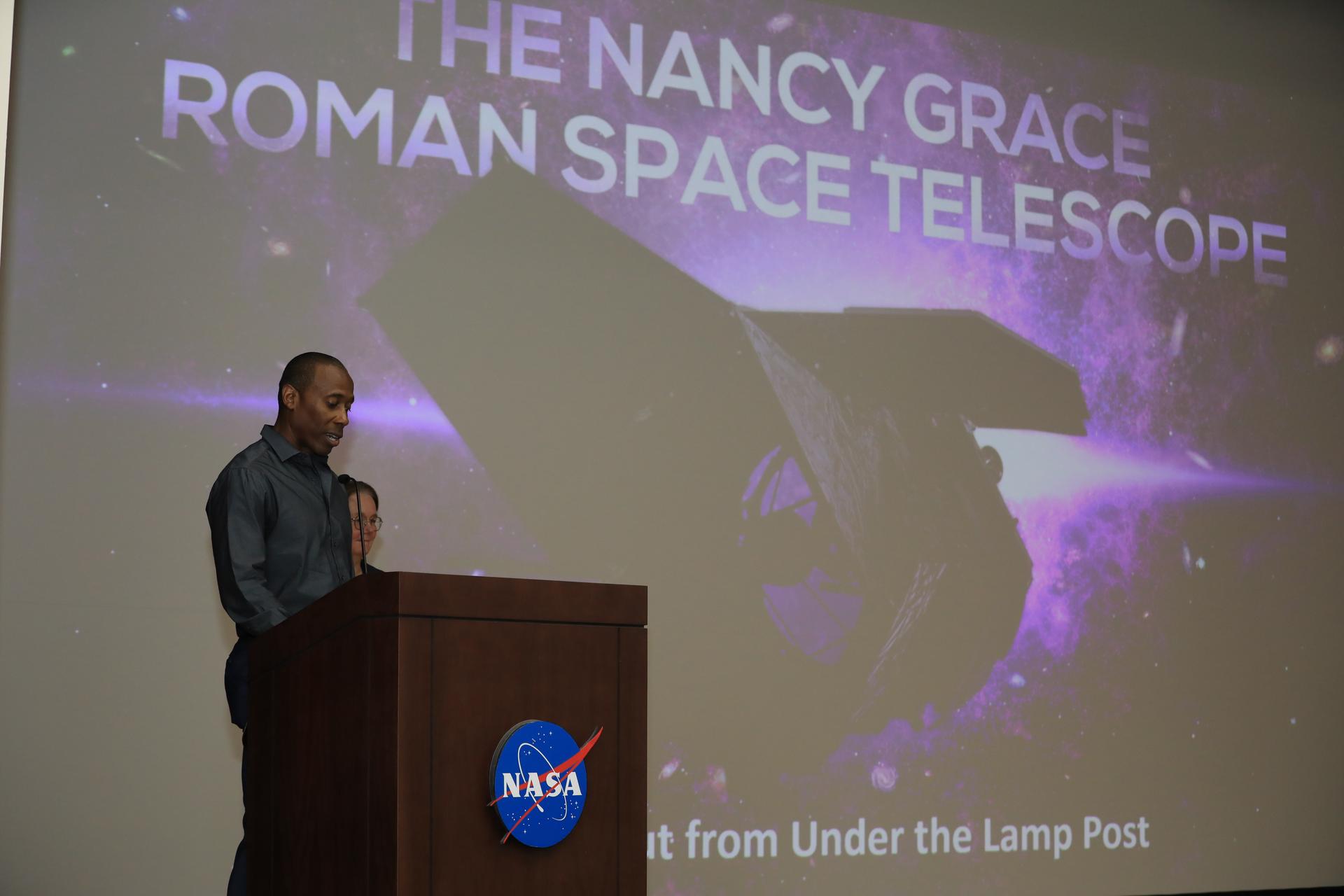
Denton Gibson, launch director of the Launch Services Program, introduces Dr. Julie McEnery, senior project scientist for NASA’s Nancy Grace Roman Space Telescope mission, in the Training Auditorium at NASA’s Kennedy Space Center in Florida on Tuesday, July 21, 2026. McEnery is a leading astrophysicist at NASA's Goddard Space Flight Center in Greenbelt, Maryland, where she specializes in the study of high energy astrophysics and her work is expanding our understanding of the universe’s creation and behavior. Named for NASA’s first chief astronomer and “mother of the Hubble Space Telescope,” Roman will offer a field of view over 100 times larger than Hubble’s to study up to a billion galaxies, directly image exoplanets and planet forming disks, and address fundamental questions about dark energy, exoplanets, and infrared astrophysics.
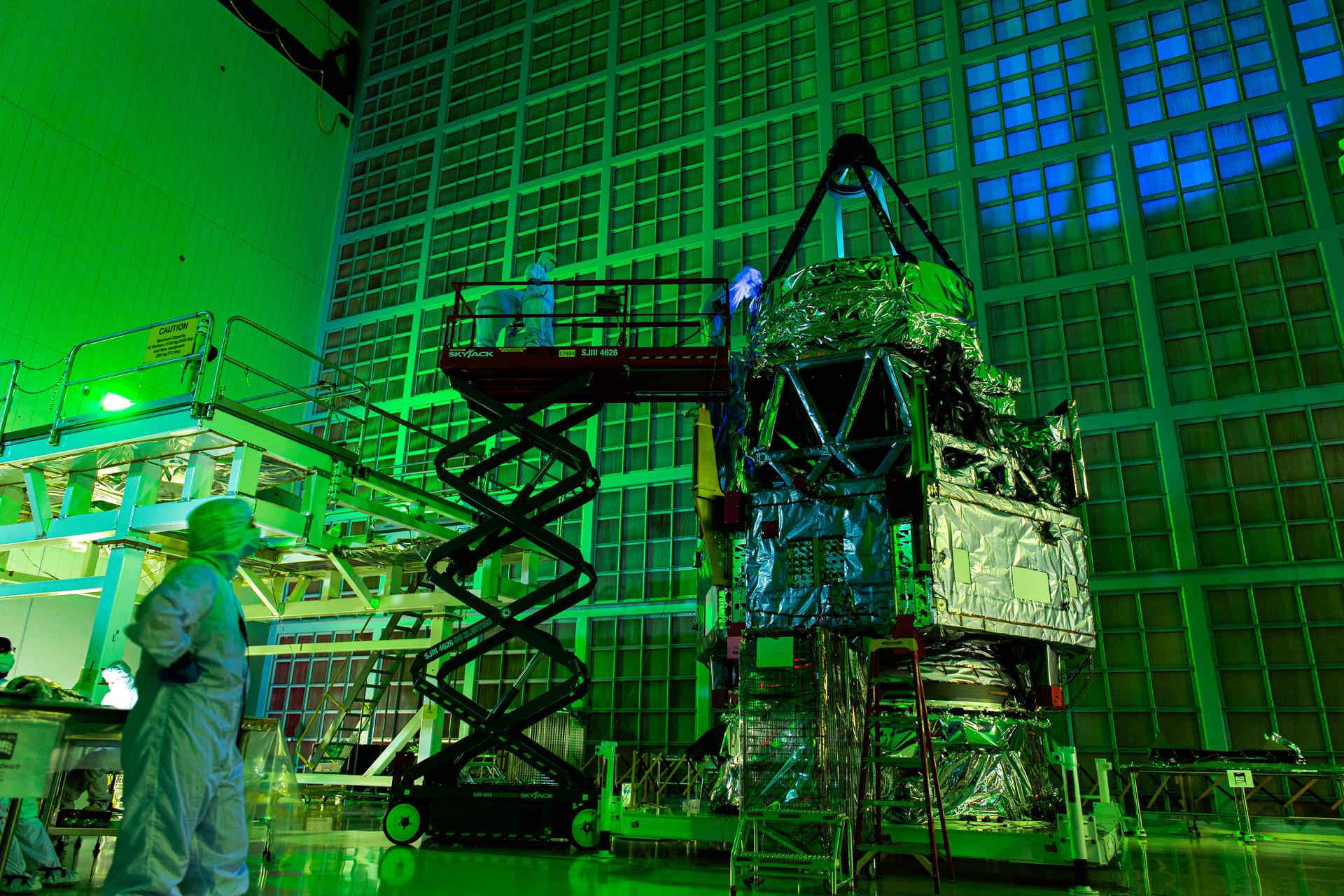
Roman Space Telescope team members inspect the primary mirror in the dark using flashlights and UV lights to help them see any contamination, inside the cleanroom at Goddard Space Flight Center, Greenbelt Md., July 2, 2025. The green glow of the room is due to a long exposure time, the green comes from a light on the left wall which indicates optimal airflow through the room. This photo has been approved for public release. NASA/Mike Guinto
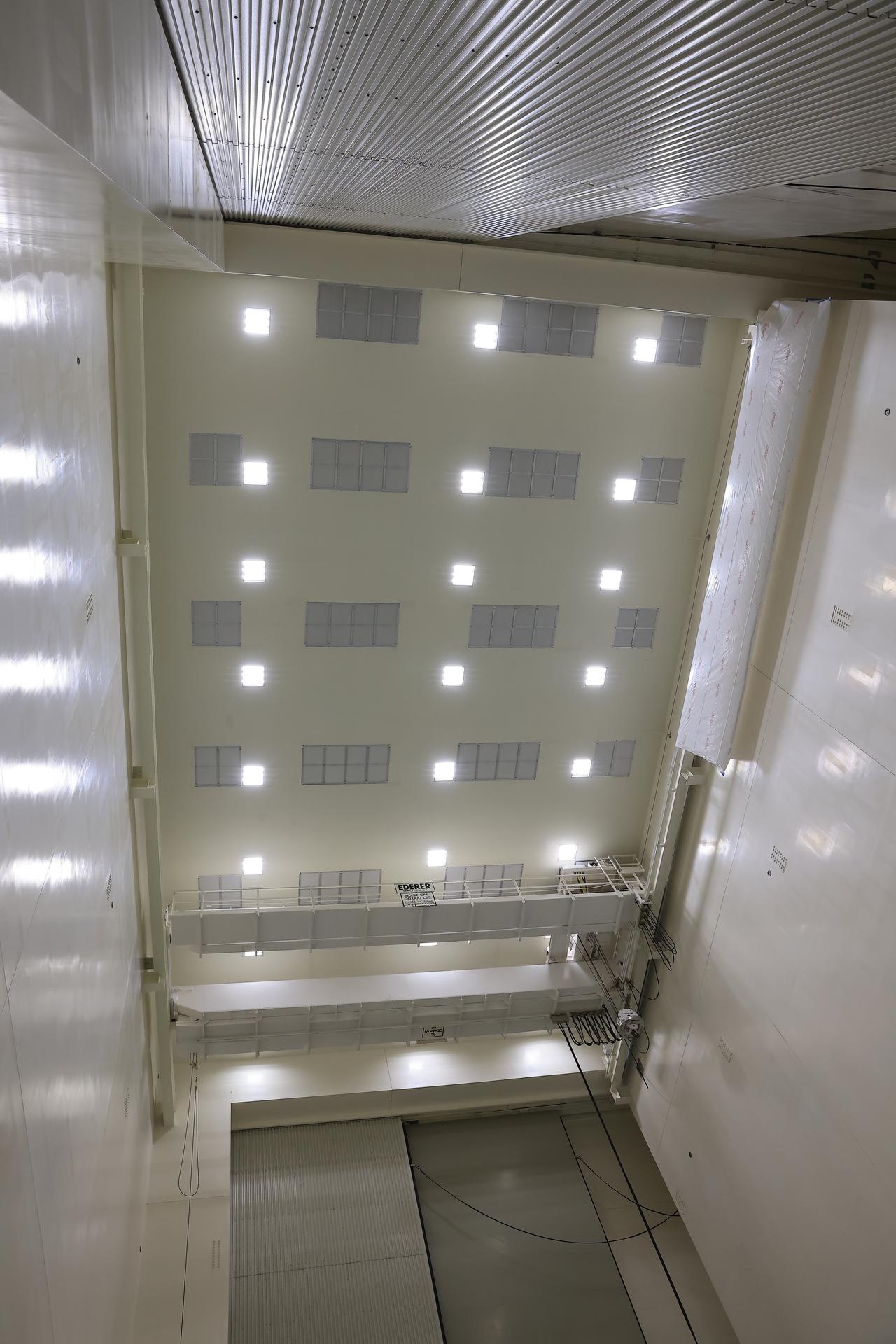
This photograph shows a newly repainted crane mounted inside NASA’s Payload Hazardous Servicing Facility on Friday, Feb. 27, 2026, preparations for the arrival of the agency’s Nancy Grace Roman Space Telescope to NASA’s Kennedy Space Center in Florida. Workers repainted the facility’s 15-ton bridge crane to prevent any paint chips from becoming foreign object debris. The Roman space telescope will provide deep, panoramic views of the cosmos, generating never-before-seen pictures that will revolutionize our understanding of the universe. Roman will undergo several prelaunch operations, including thermal protection closeout, cleaning, solar array work, and loading hydrazine propellant.
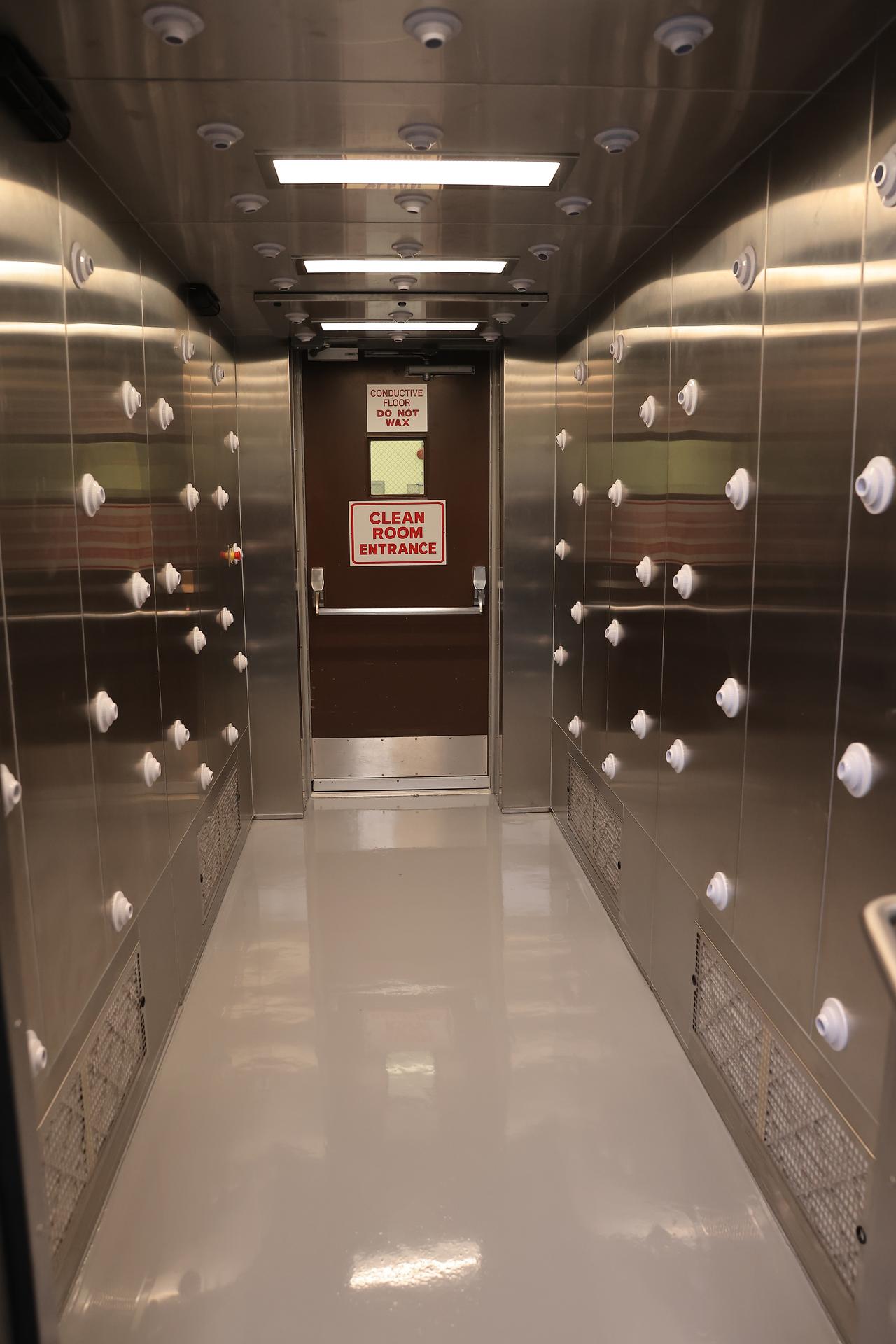
This image shows the recently upgraded air showers which blast high-velocity HEPA-filtered air onto people before they enter a clean room at NASA’s Payload Hazardous Servicing Facility at the agency’s Kennedy Space Center in Florida on Friday, Feb. 27, 2026. The PHSF went through several upgrades ahead of the arrival of Nancy Grace Roman Space Telescope. Roman will provide deep, panoramic views of the cosmos, generating never-before-seen pictures that will revolutionize our understanding of the universe. Roman will undergo several prelaunch operations, including thermal protection closeout, cleaning, solar array work, and loading hydrazine propellant.
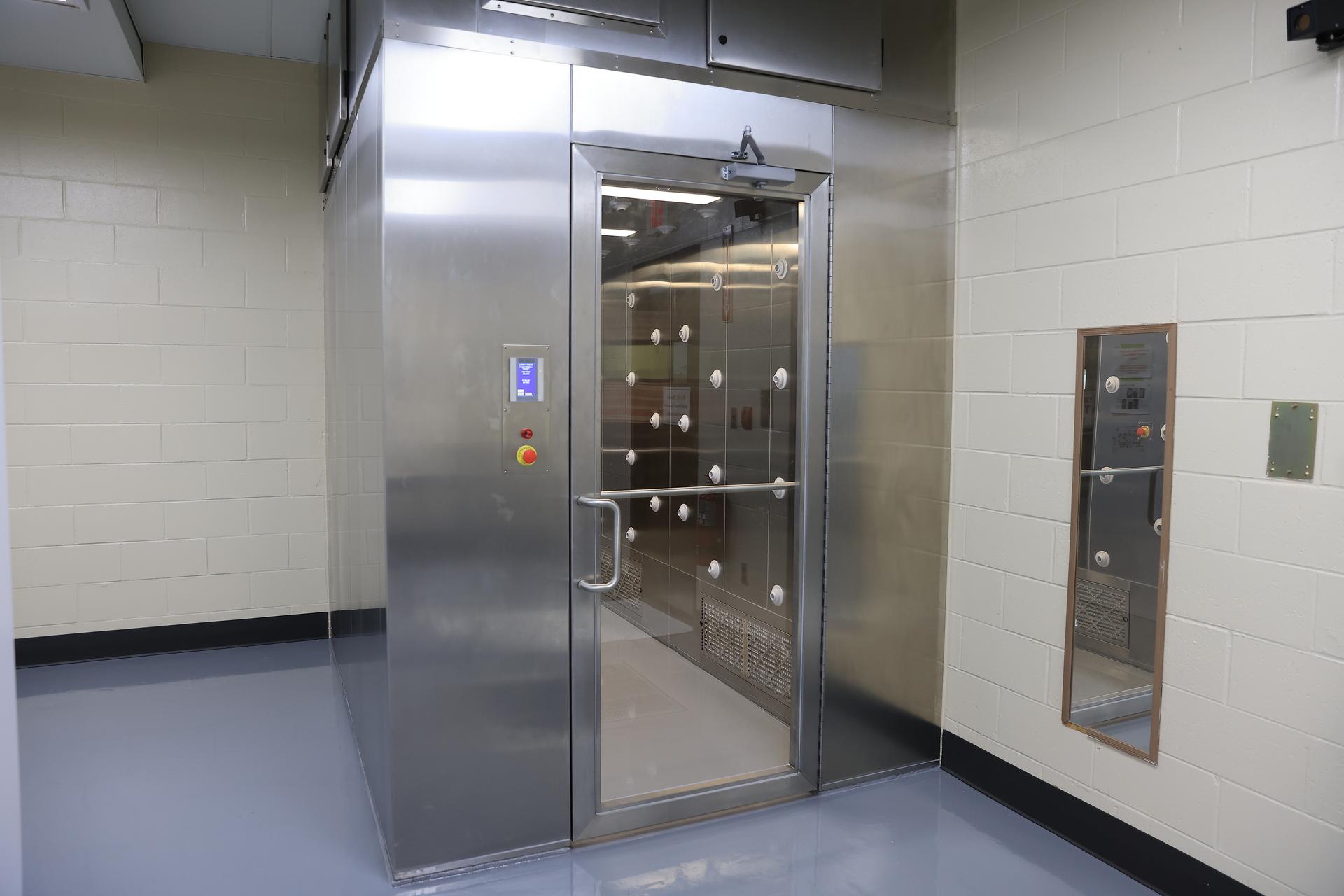
This image shows the recently upgraded air showers which blast high-velocity HEPA-filtered air onto people before they enter a clean room at NASA’s Payload Hazardous Servicing Facility at the agency’s Kennedy Space Center in Florida on Friday, Feb. 27, 2026. The PHSF went through several upgrades ahead of the arrival of Nancy Grace Roman Space Telescope. Roman will provide deep, panoramic views of the cosmos, generating never-before-seen pictures that will revolutionize our understanding of the universe. Roman will undergo several prelaunch operations, including thermal protection closeout, cleaning, solar array work, and loading hydrazine propellant.
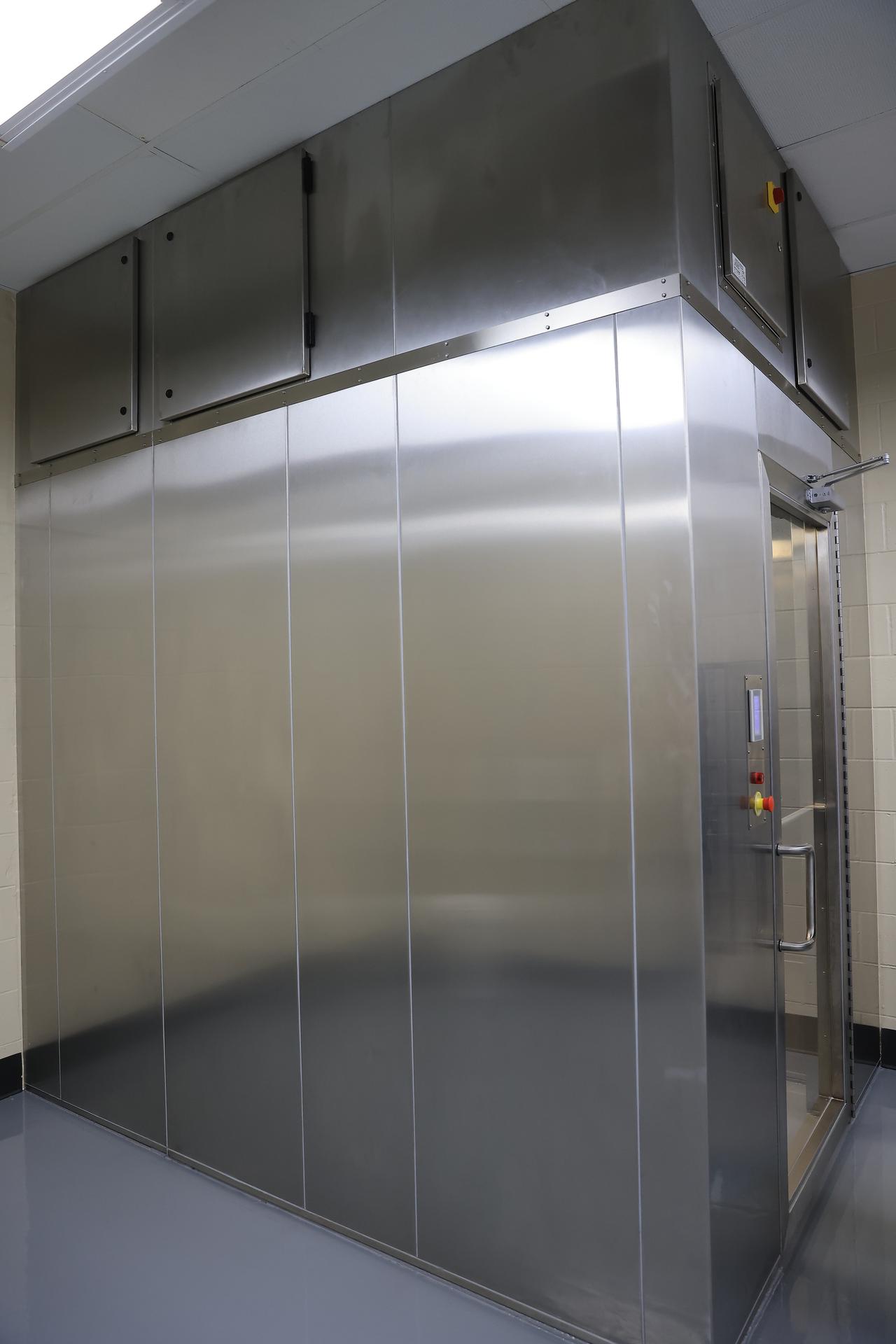
This image shows the recently upgraded air showers which blast high-velocity HEPA-filtered air onto people before they enter a clean room at NASA’s Payload Hazardous Servicing Facility at the agency’s Kennedy Space Center in Florida on Friday, Feb. 27, 2026. The PHSF went through several upgrades ahead of the arrival of Nancy Grace Roman Space Telescope. Roman will provide deep, panoramic views of the cosmos, generating never-before-seen pictures that will revolutionize our understanding of the universe. Roman will undergo several prelaunch operations, including thermal protection closeout, cleaning, solar array work, and loading hydrazine propellant.

Space Telescope Science Institute (STScI) head of the Hubble Space Telescope mission office Julia Roman-Duval, second from right, speaks about the history of the Hubble Space Telescope during an event titled “Beyond the Deep Field: Hubble’s Legacy and the Future of Cosmic Observation,” Thursday, June 4, 2026, at the Mary W. Jackson NASA Headquarters building in Washington. Photo Credit: (NASA/Keegan Barber)