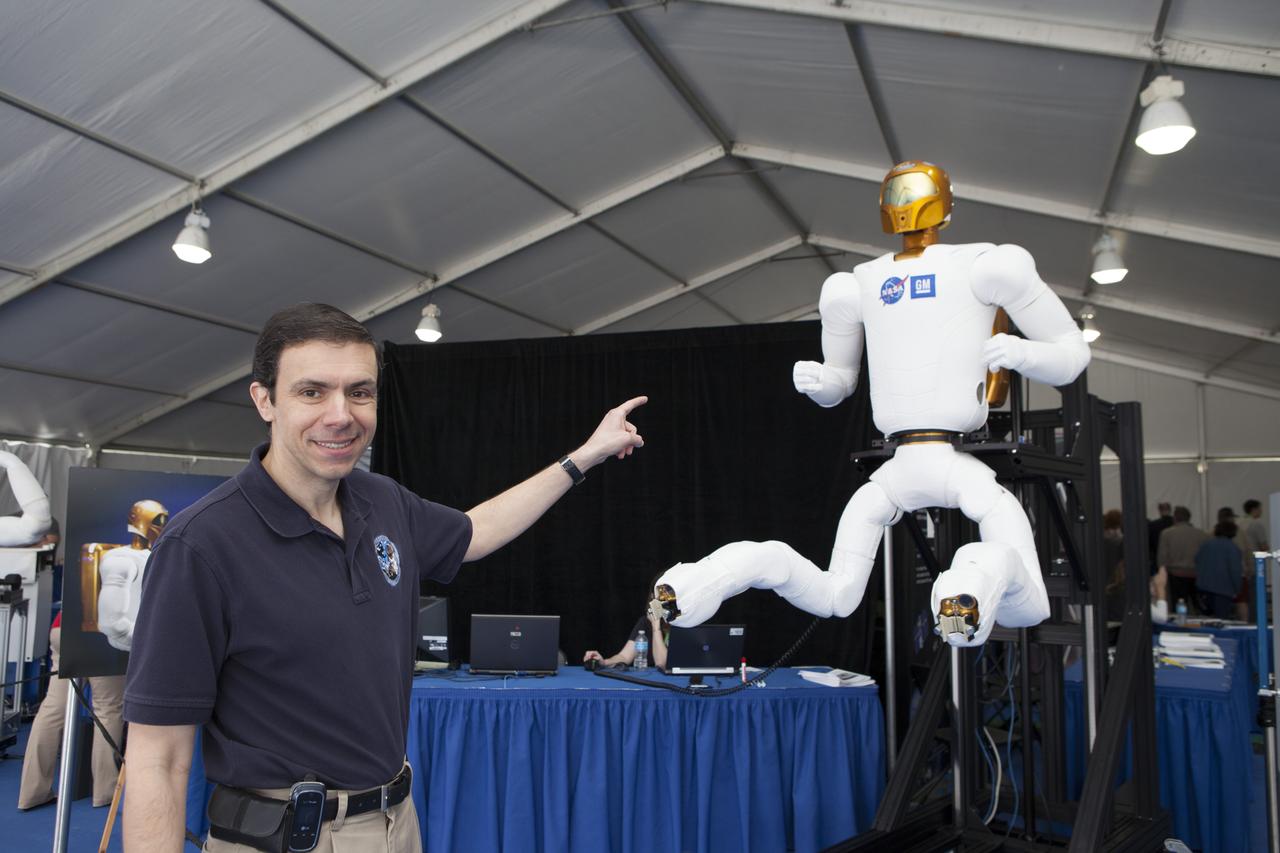
CAPE CANAVERAL, Fla. – Ron Diftler of NASA's Johnson Space Center in Houston demonstrates the leg movements of Robonaut 2 during the Robot Rocket Rally. The three-day event at Florida's Kennedy Space Center Visitor Complex is highlighted by exhibits, games and demonstrations of a variety of robots, with exhibitors ranging from school robotics clubs to veteran NASA scientists and engineers. Photo credit: NASA/Kim Shiflett
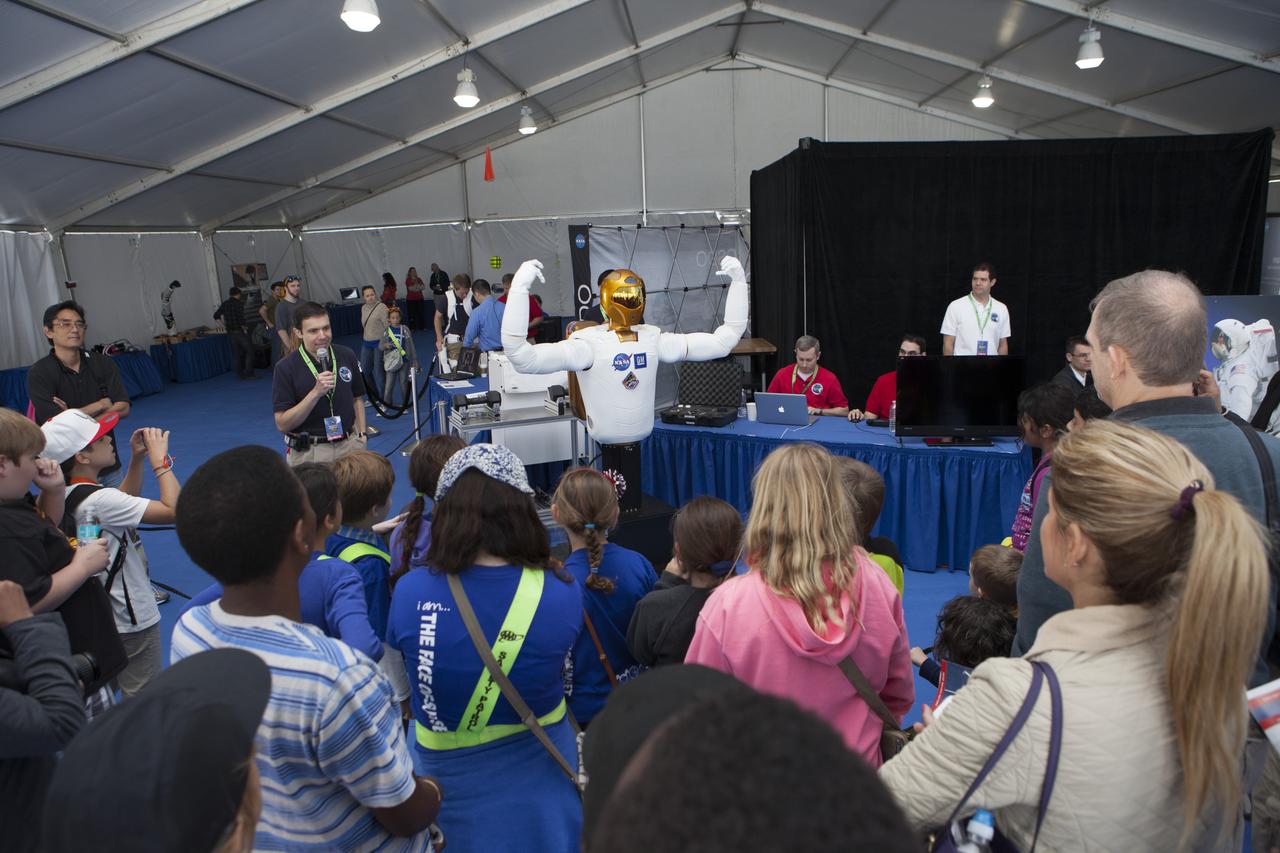
CAPE CANAVERAL, Fla. – A torso model of Robonaut 2, identical to R2 already on the International Space Station, is introduced to a crowd of onlookers by Ron Diftler of NASA's Johnson Space Center in Houston. The demonstration was one of several provided during the Robot Rocket Rally. The three-day event at Florida's Kennedy Space Center Visitor Complex is highlighted by exhibits, games and demonstrations of a variety of robots, with exhibitors ranging from school robotics clubs to veteran NASA scientists and engineers. Photo credit: NASA/Kim Shiflett
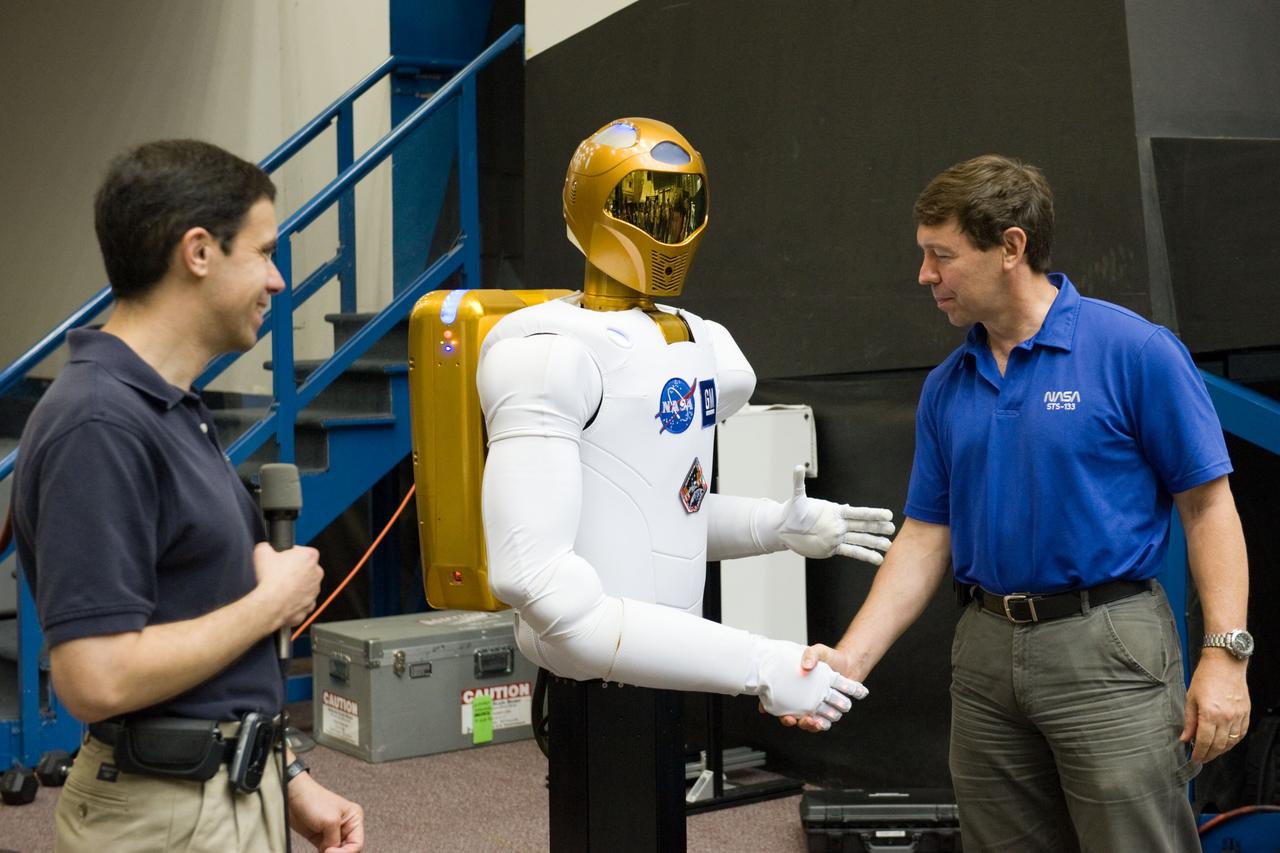
JSC2010-E-112701 (4 Aug. 2010) --- NASA astronaut Michael Barratt, STS-133 mission specialist, shakes hands with Robonaut 2 (R2) during media day in the Space Vehicle Mock-up Facility at NASA's Johnson Space Center. R2 is the first humanoid robot to travel to space and the first U.S.-built robot to visit the International Space Station. R2 will stay on the space station indefinitely to allow engineers on the ground to learn more about how humanoid robots fare in microgravity. Ron Diftler, NASA Robonaut project manager, is at left. Photo credit: NASA or National Aeronautics and Space Administration
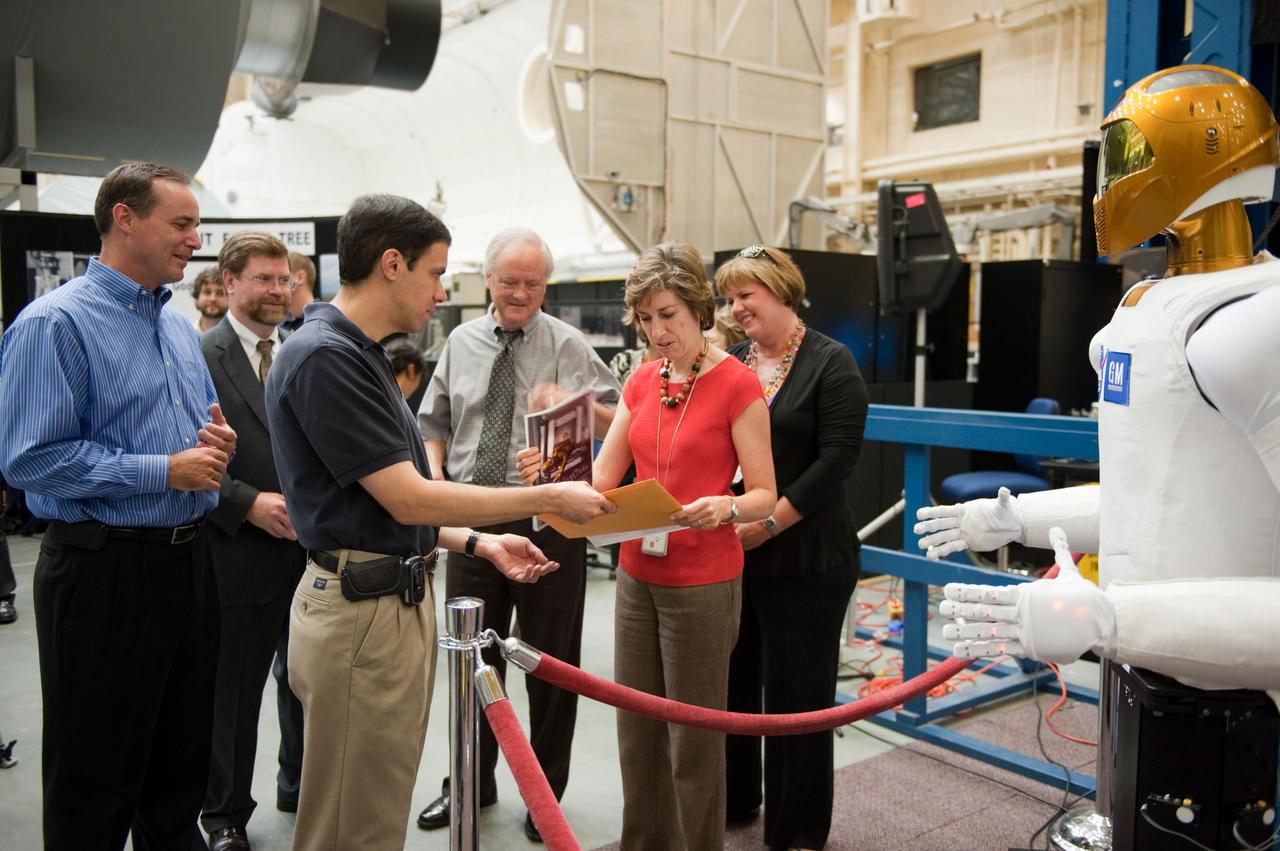
JSC2010-E-113079 (4 Aug. 2010) --- NASA's Johnson Space Center (JSC) deputy director Ellen Ochoa (right foreground), Milt Heflin (center background), associate director; and Ron Diftler, Robonaut project manager, are pictured during Robonaut 2 (R2) media day in the Space Vehicle Mock-up Facility at JSC. R2, who will hitch a ride with the STS-133 crew members, is the first humanoid robot to travel to space and the first U.S.-built robot to visit the International Space Station. R2 will stay on the space station indefinitely to allow engineers on the ground to learn more about how humanoid robots fare in microgravity. Photo credit: NASA

CAPE CANAVERAL, Fla. -- At NASA's Kennedy Space Center in Florida, a dexterous humanoid astronaut helper, known as Robonaut, demonstrates its talents to media with Ron Diftler, NASA's Robonaut 2 (R2) project manager. R2 will be delivered to the International Space Station on space shuttle Discovery's STS-133 mission. Although R2 will initially only participate in operational tests, upgrades could eventually allow the robot to realize its true purpose -- helping spacewalking astronauts with tasks outside the orbiting laboratory. For more information on the upcoming STS-133 mission, visit www.nasa.gov/mission_pages/shuttle/shuttlemissions/sts133/. Photo credit: NASA/Jack Pfaller
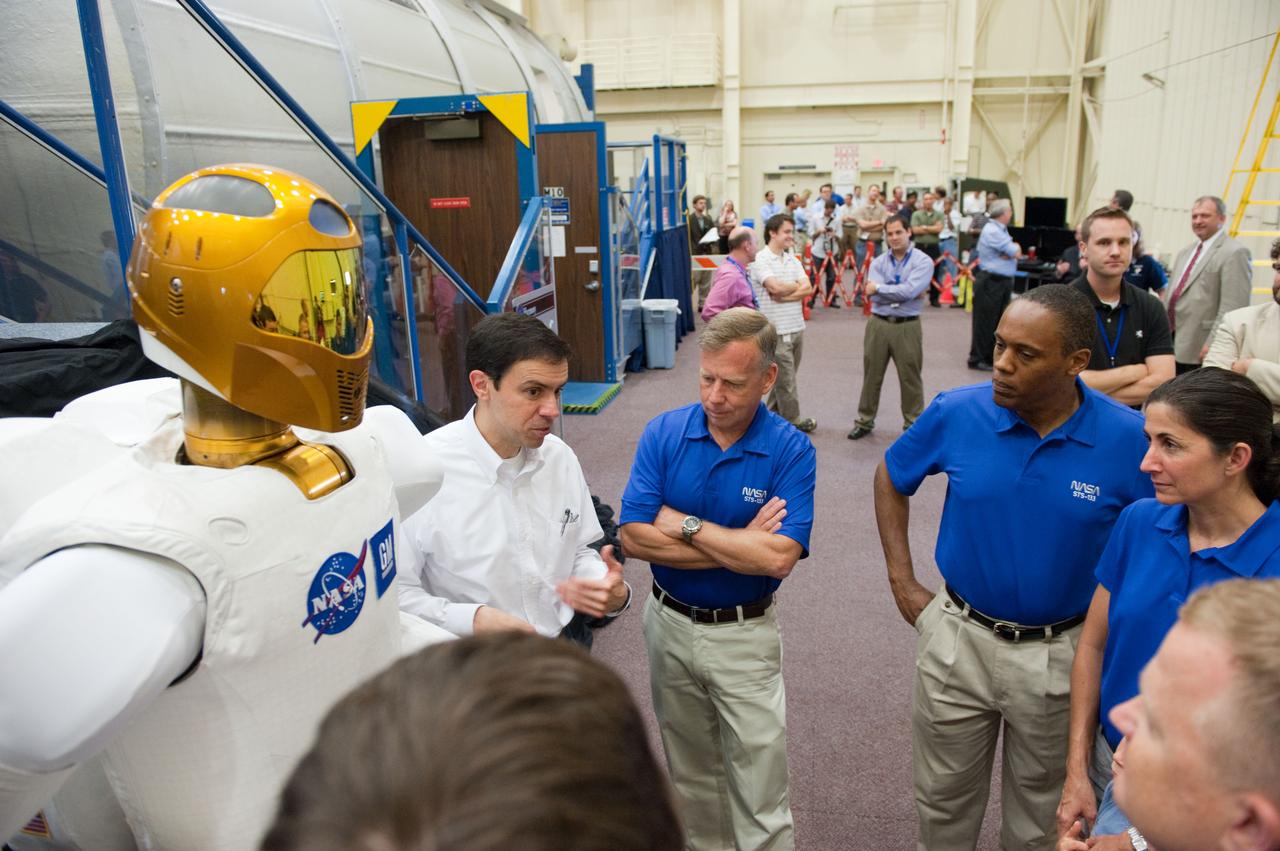
JSC2010-E-106311 (28 June 2010) --- NASA Robonaut Project Manager Ron Diftler (left) explains some of Robonaut 2?s features to members of the STS-133 crew ? continuing left, Steve Lindsey, commander; along with Alvin Drew and Nicole Stott, both mission specialists; and (bottom right corner) Eric Boe, pilot. The STS-133 crew will deliver R2, as the robot is called, to the International Space Station on space shuttle Discovery?s final flight. Photo credit: NASA or National Aeronautics and Space Administration
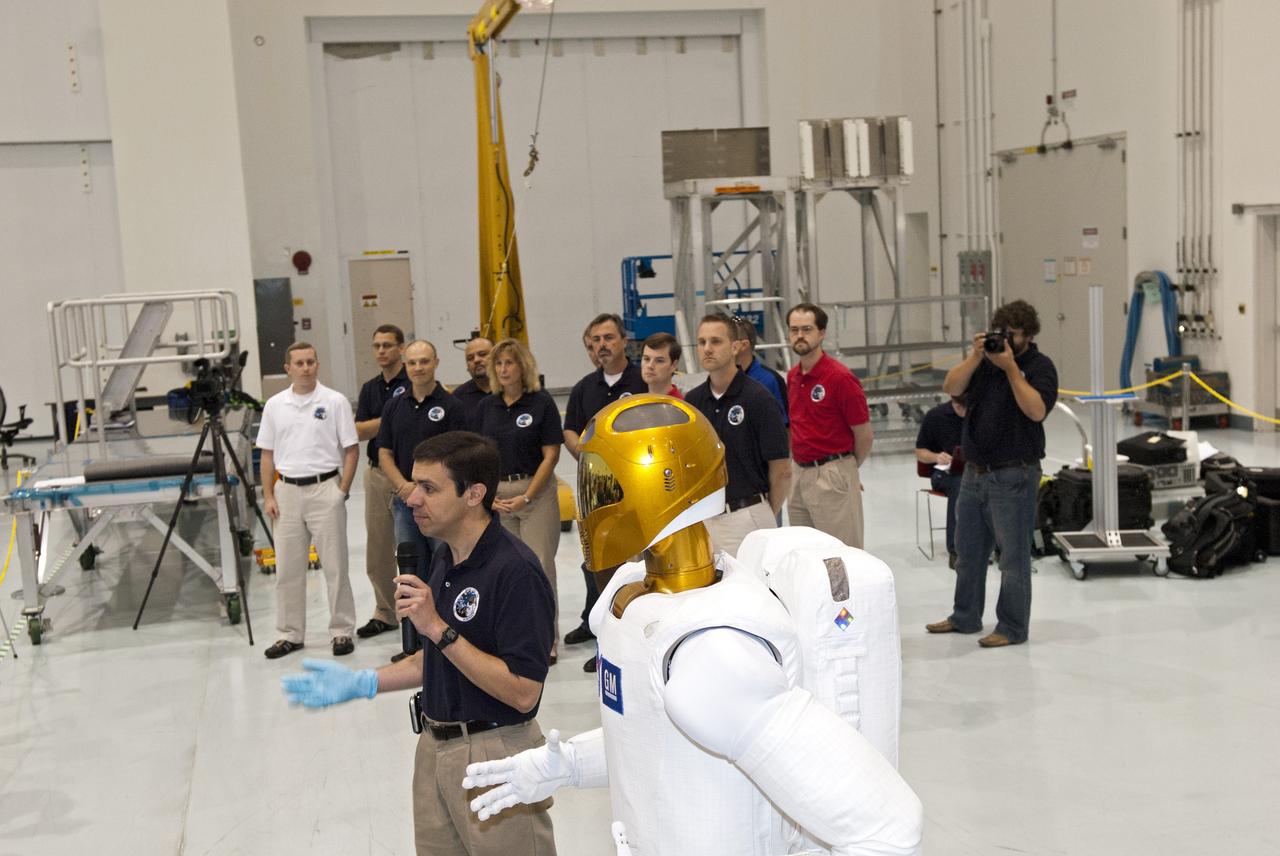
CAPE CANAVERAL, Fla. -- In the Space Station Processing Facility at NASA's Kennedy Space Center in Florida, Ron Diftler, NASA Robonaut project manager, talks to the media about the dexterous humanoid astronaut helper, Robonaut (R2). R2 will fly to the International Space Station aboard space shuttle Discovery on the STS-133 mission. Although it will initially only participate in operational tests, upgrades could eventually allow the robot to realize its true purpose -- helping spacewalking astronauts with tasks outside the space station. Photo credit: NASA/Jim Grossmann
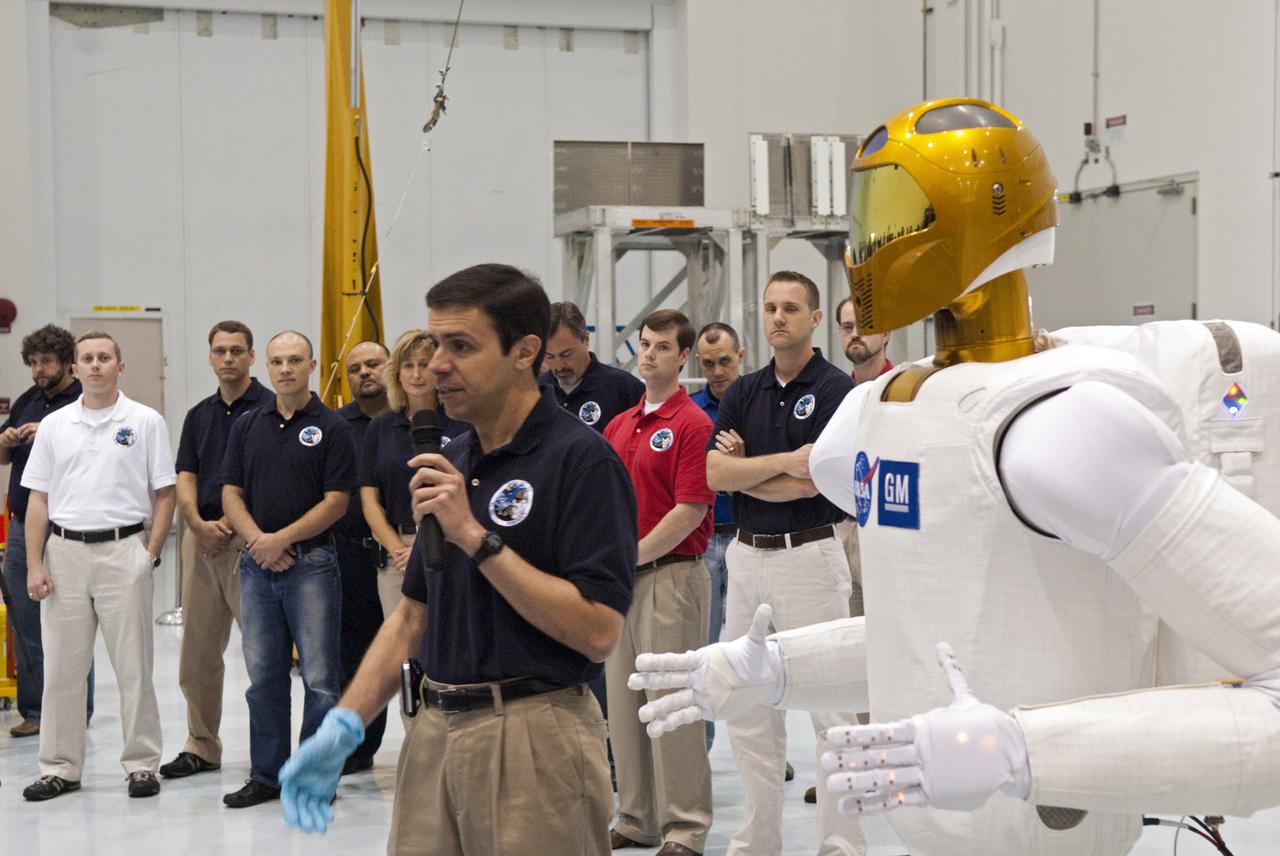
CAPE CANAVERAL, Fla. -- In the Space Station Processing Facility at NASA's Kennedy Space Center in Florida, Ron Diftler, NASA Robonaut project manager, describes the animation of the dexterous humanoid astronaut helper, Robonaut (R2) to the media. R2 will fly to the International Space Station aboard space shuttle Discovery on the STS-133 mission. Although it will initially only participate in operational tests, upgrades could eventually allow the robot to realize its true purpose -- helping spacewalking astronauts with tasks outside the space station. Photo credit: NASA/Jim Grossmann
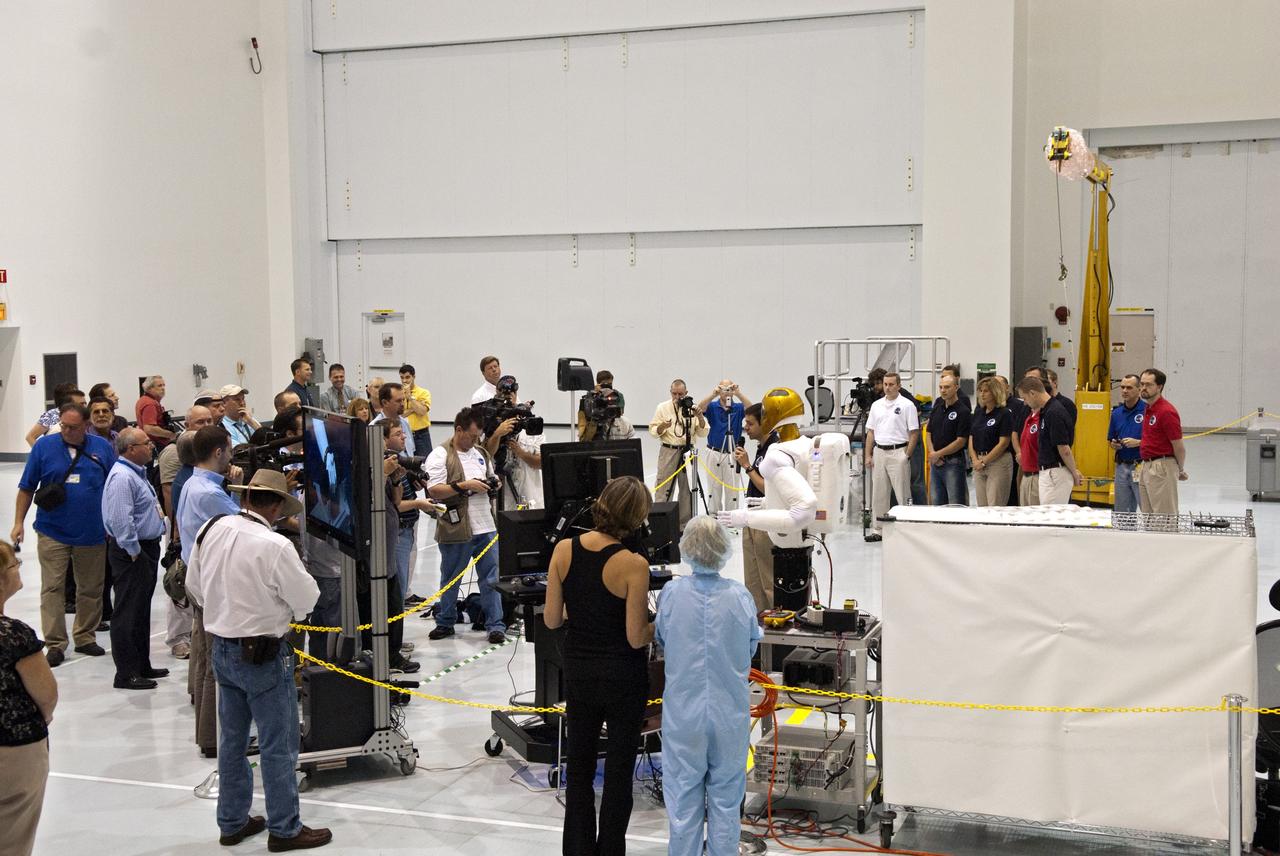
CAPE CANAVERAL, Fla. -- In the Space Station Processing Facility at NASA's Kennedy Space Center in Florida, Ron Diftler, NASA Robonaut project manager, describes the animation of the dexterous humanoid astronaut helper, Robonaut (R2) to the media. R2 will fly to the International Space Station aboard space shuttle Discovery on the STS-133 mission. Although it will initially only participate in operational tests, upgrades could eventually allow the robot to realize its true purpose -- helping spacewalking astronauts with tasks outside the space station. Photo credit: NASA/Jim Grossmann
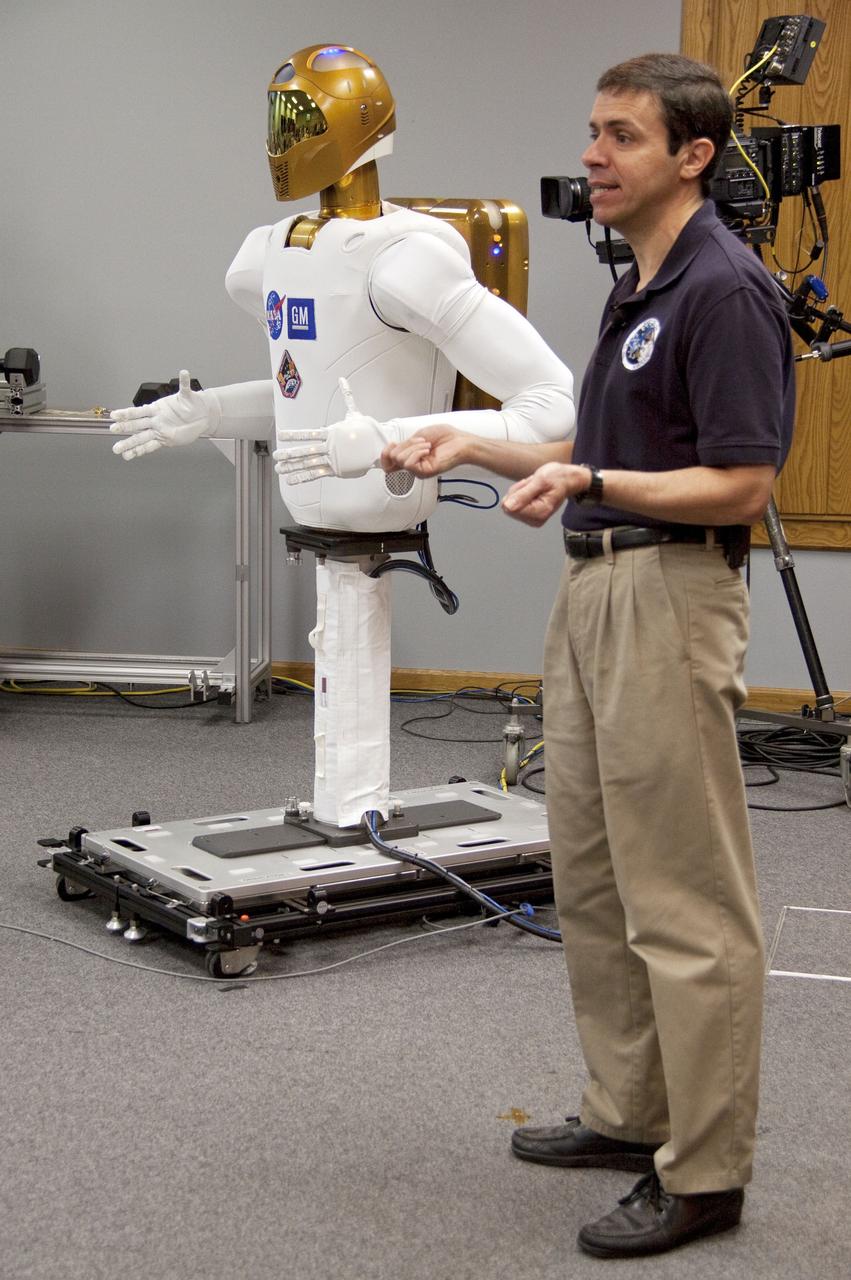
CAPE CANAVERAL, Fla. -- At NASA's Kennedy Space Center in Florida, Ron Diftler, NASA's Robonaut 2 (R2) project manager, shows media the capabilities of a dexterous humanoid astronaut helper. R2 will be delivered to the International Space Station on space shuttle Discovery's STS-133 mission. Although R2 will initially only participate in operational tests, upgrades could eventually allow the robot to realize its true purpose -- helping spacewalking astronauts with tasks outside the orbiting laboratory. For more information on the upcoming STS-133 mission, visit www.nasa.gov/mission_pages/shuttle/shuttlemissions/sts133/. Photo credit: NASA/Jack Pfaller
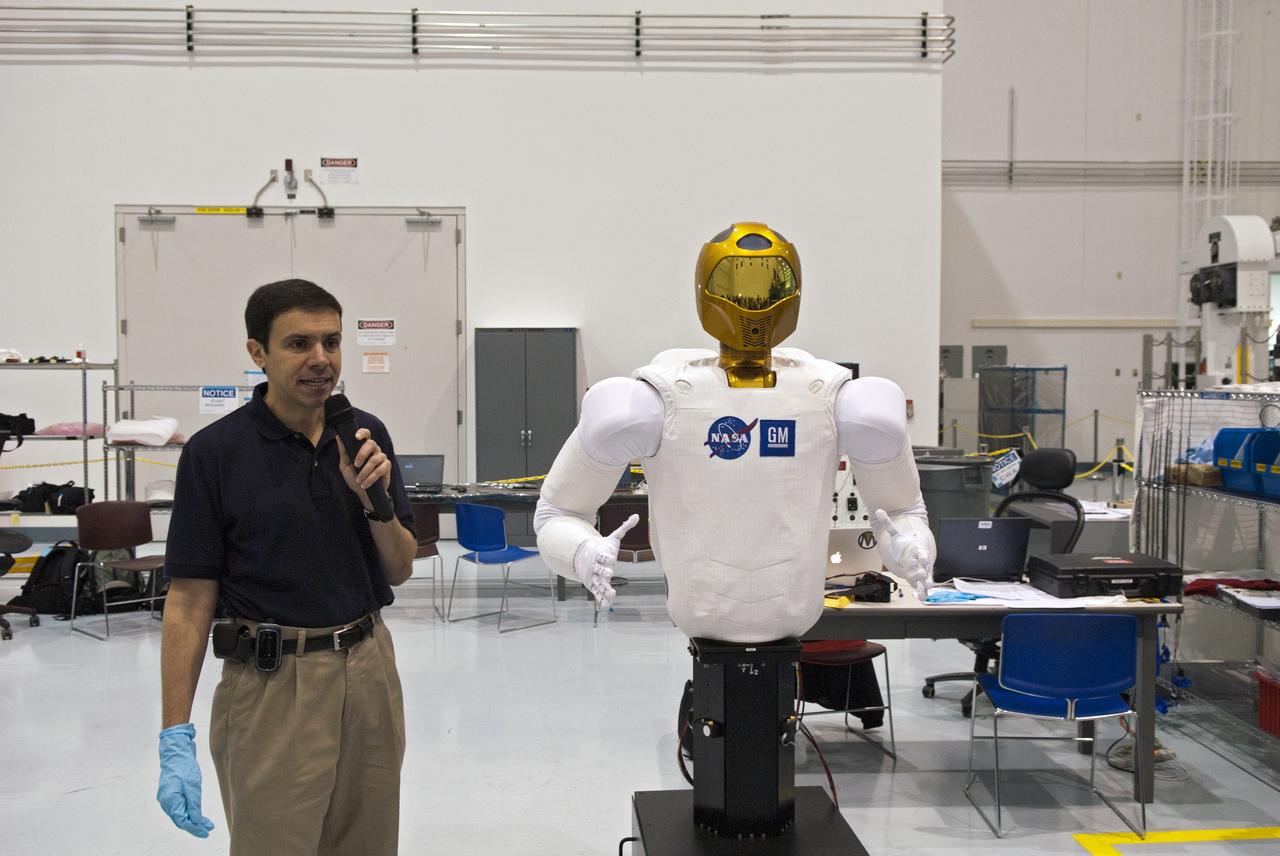
CAPE CANAVERAL, Fla. -- CAPE CANAVERAL, Fla. -- In the Space Station Processing Facility at NASA's Kennedy Space Center in Florida, Ron Diftler, NASA Robonaut project manager, describes the movements of the dexterous humanoid astronaut helper, Robonaut (R2). R2 will fly to the International Space Station aboard space shuttle Discovery on the STS-133 mission. Although it will initially only participate in operational tests, upgrades could eventually allow the robot to realize its true purpose -- helping spacewalking astronauts with tasks outside the space station. Photo credit: NASA/Jim Grossmann
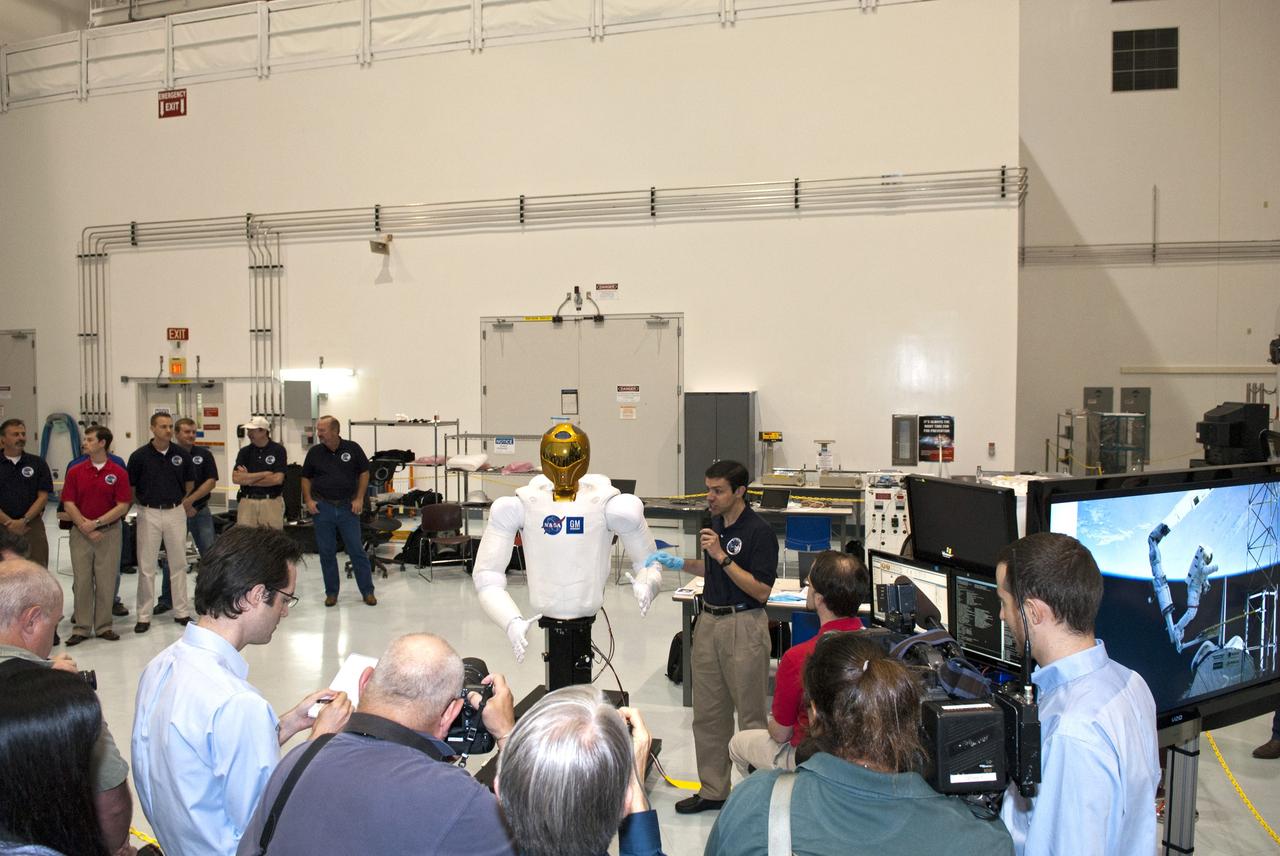
CAPE CANAVERAL, Fla. -- In the Space Station Processing Facility at NASA's Kennedy Space Center in Florida, Ron Diftler, NASA Robonaut project manager explains to the audience how the dexterous humanoid astronaut helper, Robonaut (R2) can be of service while in space. R2 will fly to the International Space Station aboard space shuttle Discovery on the STS-133 mission. Although it will initially only participate in operational tests, upgrades could eventually allow the robot to realize its true purpose -- helping spacewalking astronauts with tasks outside the space station. Photo credit: NASA/Jim Grossmann