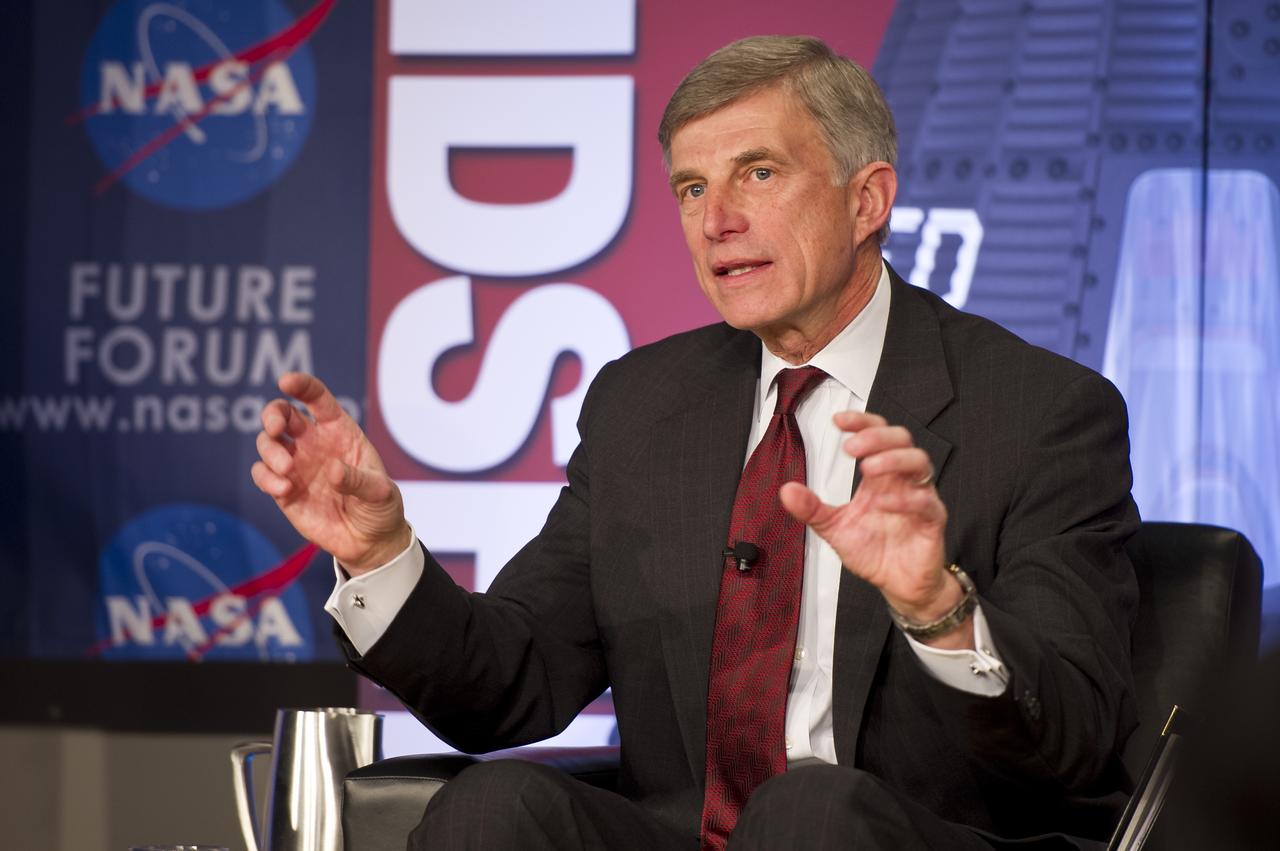
Ron Sega, Vice president and enterprise executive for Energy and the Environment, The Ohio State University and Colorado State University talks during the NASA Future Forum panel titled "Importance of Technology, Science and Innovation for our Economic Future" at The Ohio State University on Tuesday, Feb. 21, 2012 in Columbus, Ohio. The NASA Future Forum features panel discussions on the importance of education to our nation's future in space, the benefit of commercialized space technology to our economy and lives here on Earth, and the shifting roles for the public, commercial and international communities in space. Photo Credit: (NASA/Bill Ingalls)

The Ohio State University President E. Gordon Gee, left, Apollo 11 Astronaut Neil Armstrong, 2nd from left, Former space shuttle astronaut and former Under Secretary of the Air Force Dr. Ron Sega, and Captain Mark Kelly, commander of the space shuttle Endeavour’s final mission and husband of retired U.S. Representative Gabrielle Giffords, right, talk prior to a reception at Ohio State University honoring the 50th anniversary of John Glenn's historic flight aboard Friendship 7 Monday, Feb. 20, 2012, in Columbus, Ohio. Glenn was the first American to orbit Earth. Photo Credit: (NASA/Bill Ingalls)
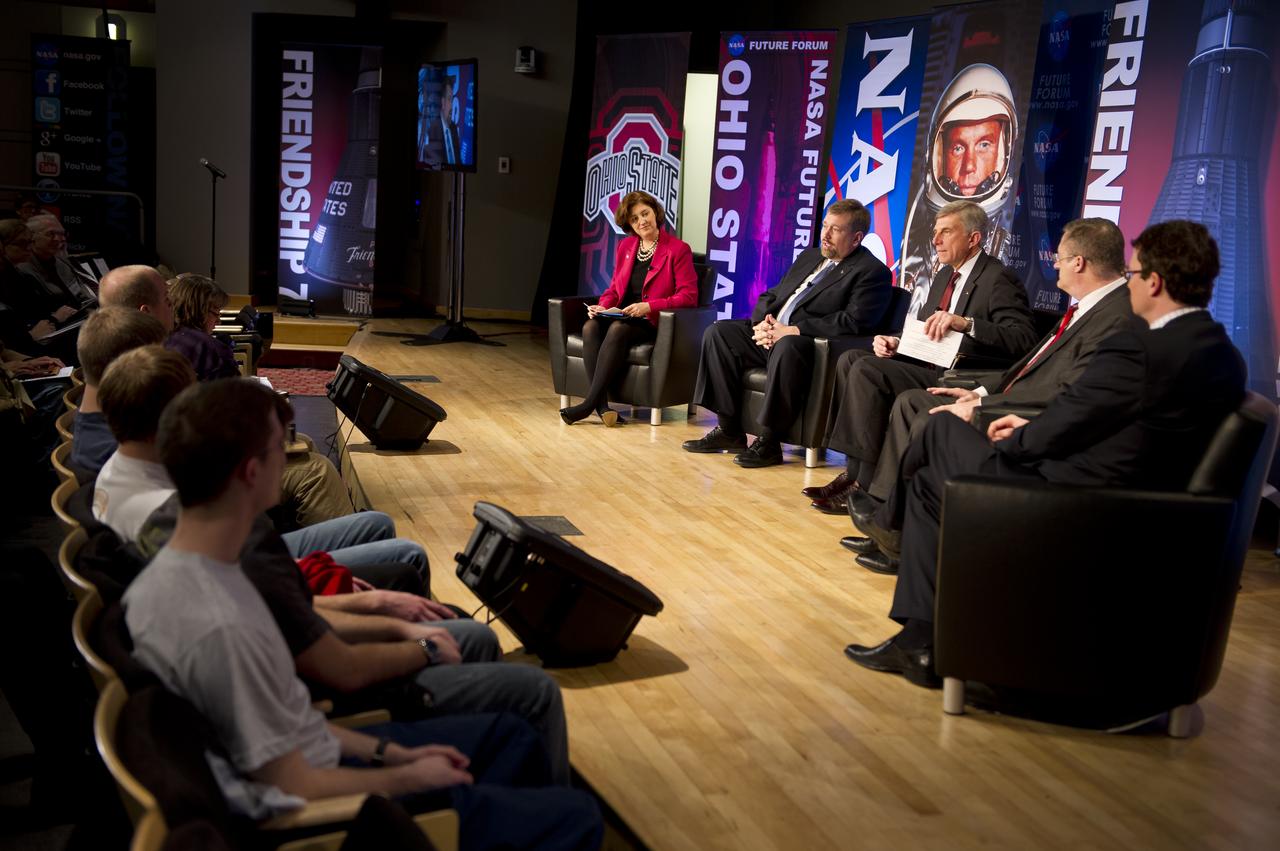
Laurie Leshin, dean of the School of Science, Rensselaer Polytechnic Institute, left, Mason Peck, NASA Chief Technologist, 2nd from left, Ron Sega, Vice president and enterprise executive for Energy and the Environment, The Ohio State University and Colorado State University, Michael Donovan, technology consultant, New Services Development, Hewlett-Packard Company, and, Jordan Hansell, chairman and CEO, NetJets Inc., right, participate in the NASA Future Forum panel titled "Importance of Technology, Science and Innovation for our Economic Future" at The Ohio State University on Tuesday, Feb. 21, 2012 in Columbus, Ohio. The NASA Future Forum features panel discussions on the importance of education to our nation's future in space, the benefit of commercialized space technology to our economy and lives here on Earth, and the shifting roles for the public, commercial and international communities in space. Photo Credit: (NASA/Bill Ingalls)
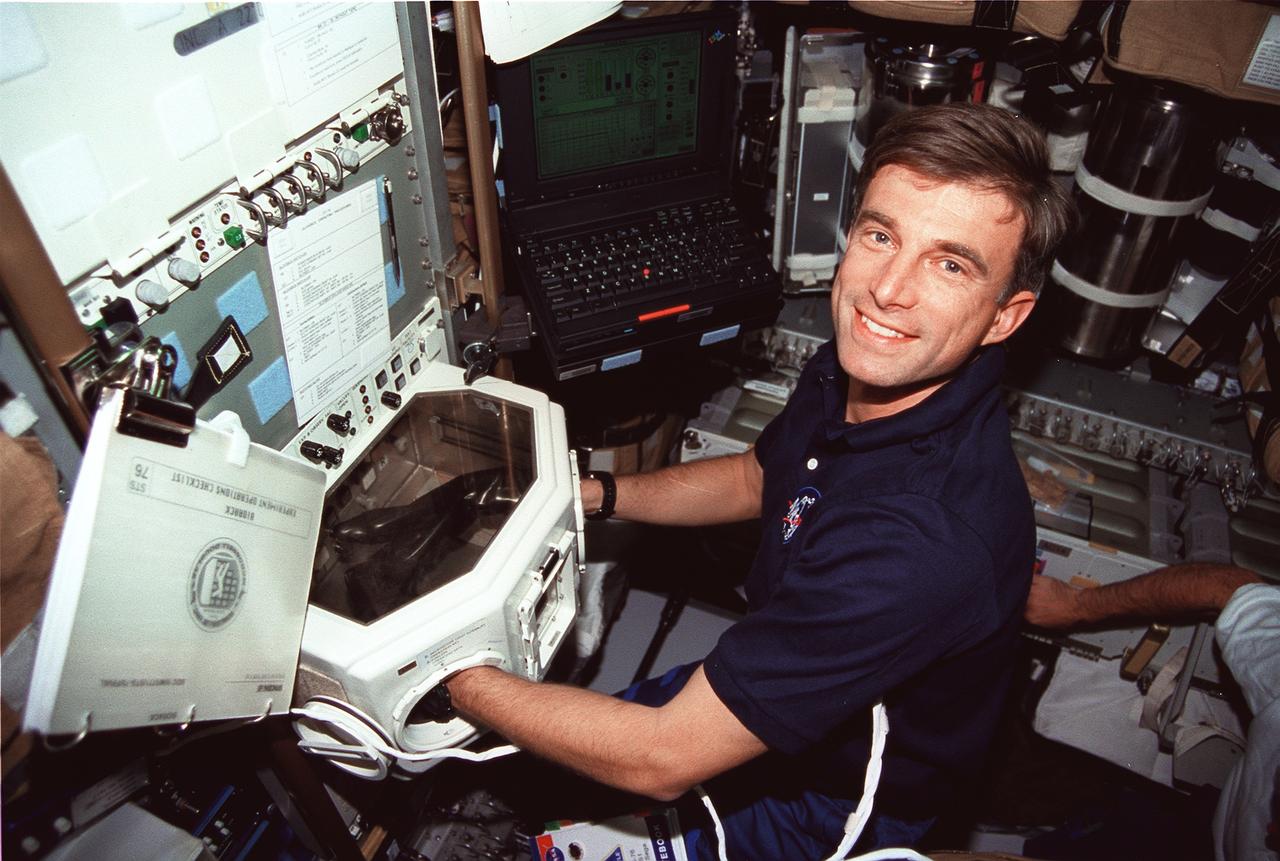
STS076-312-022 (22 - 31 March 1996) --- Astronaut Ronald M. Sega, payload commander, works in the glovebox facility in the Spacehab laboratory aboard the Earth-orbiting Space Shuttle Atlantis. The Spacehab facility was one of the busier research areas on Atlantis during the STS-76 mission. Also, some of the gear for transfer to Russia's Mir Space Station was stowed there prior to the March 23, 1996 docking of Atlantis and Mir.
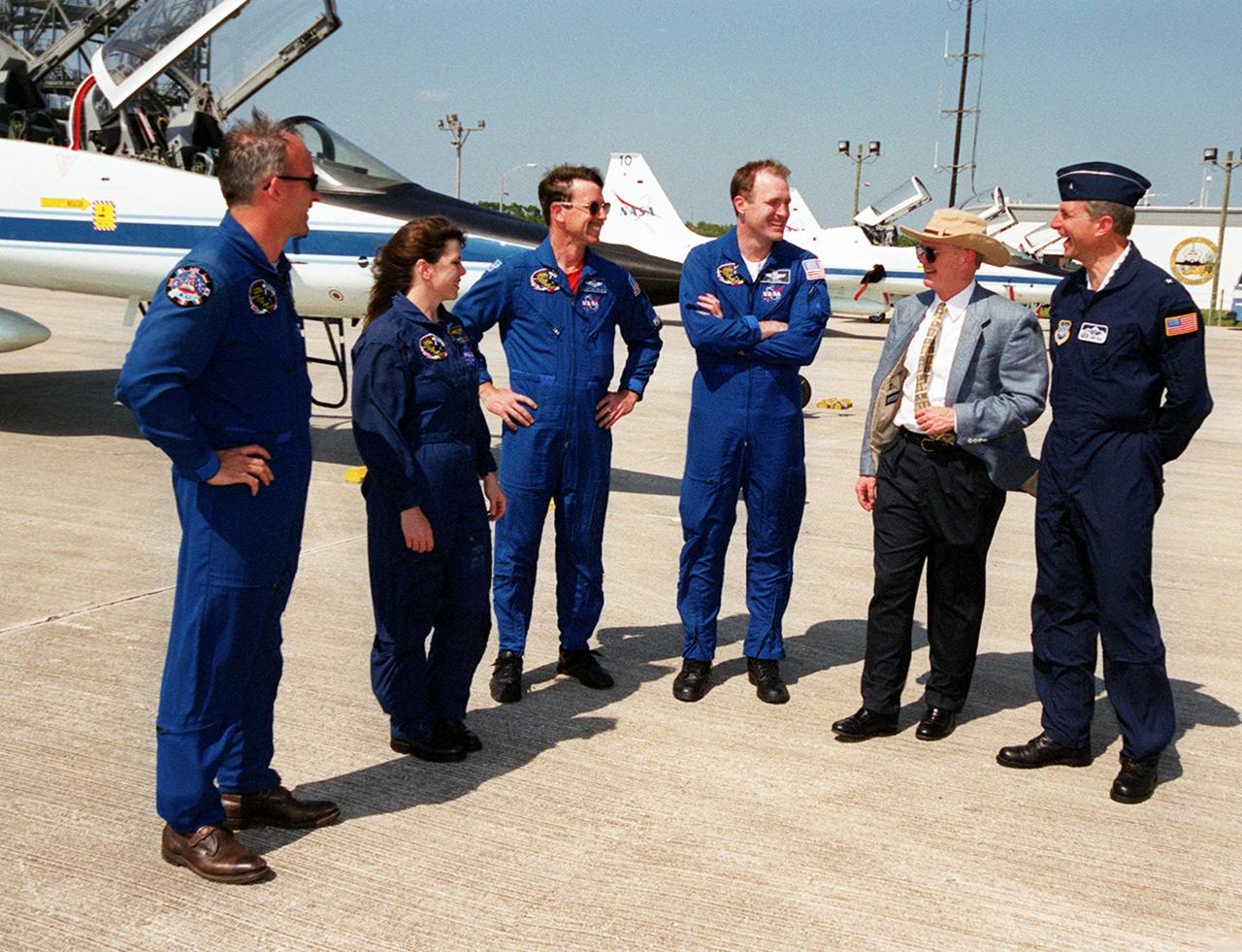
The STS-101 crew is greeted by Center Director Roy Bridges and USAF Brig. Gen. Ron Sega, after the crew's arrival at the Shuttle Landing Facility to get ready for launch. Standing (left to right) on the tarmac are Mission Specialists Jeffrey Williams and Mary Ellen Weber, Pilot Scott "Doc" Horowitz, Commander James Halsell, Bridges and Gen. Sega. Other crew members not shown are Mission Specialists James Voss, Susan Helms and Yury Usachev of Russia. The mission will take the crew to the International Space Station, delivering logistics and supplies, plus preparing the Station for the arrival of the Zvezda Service Module, expected to be launched by Russia in July 2000. Also, the crew will conduct one space walk to perform maintenance on the Space Station. This will be the third assembly flight for the Space Station. Launch is targeted for April 24 at about 4:15 p.m. EDT from Launch Pad 39A