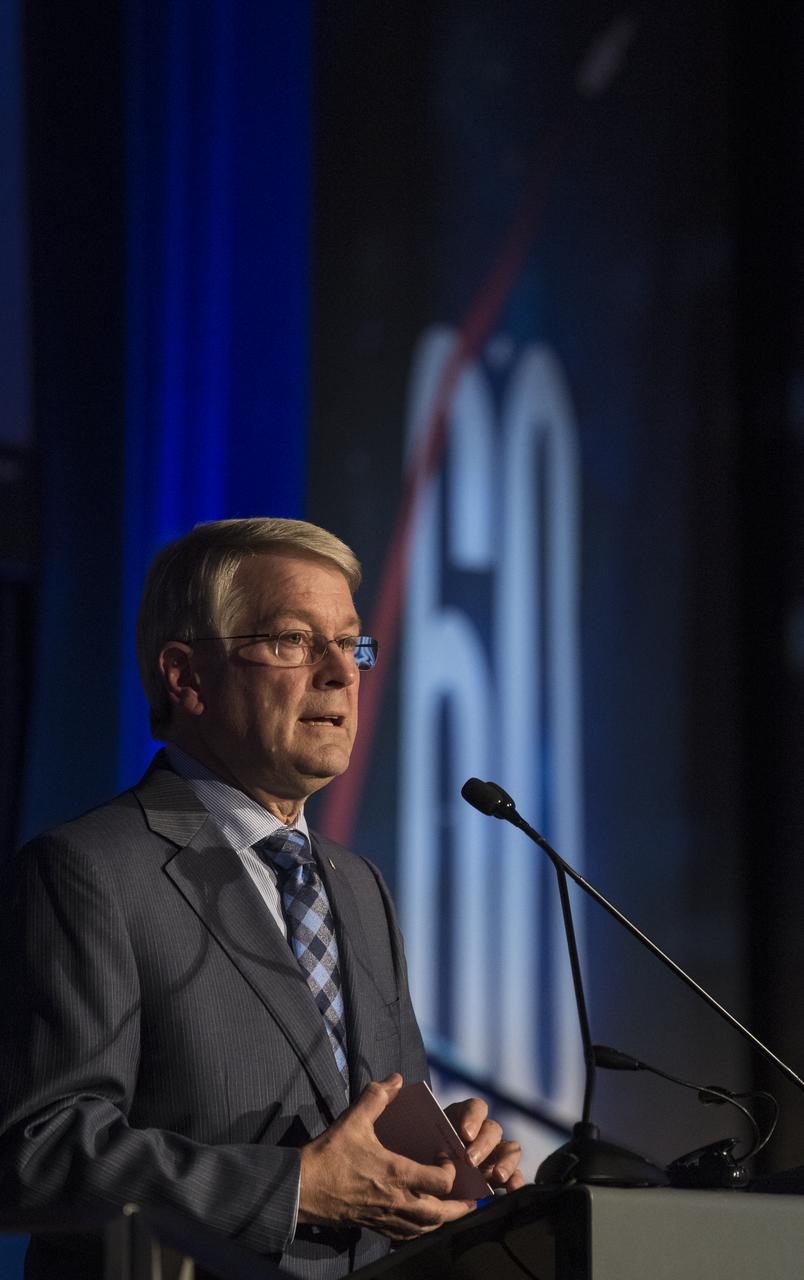
American Institute of Aeronautics and Astronautics (AIAA) President John Langford delivers remarks during a reception hosted by the American Institute of Aeronautics and Astronautics (AIAA) to celebrate NASA's 60th anniversary, Thursday, Sept. 20, 2018 at the Ronald Reagan Building and International Trade Center in Washington, DC. Photo Credit: (NASA/Joel Kowsky)
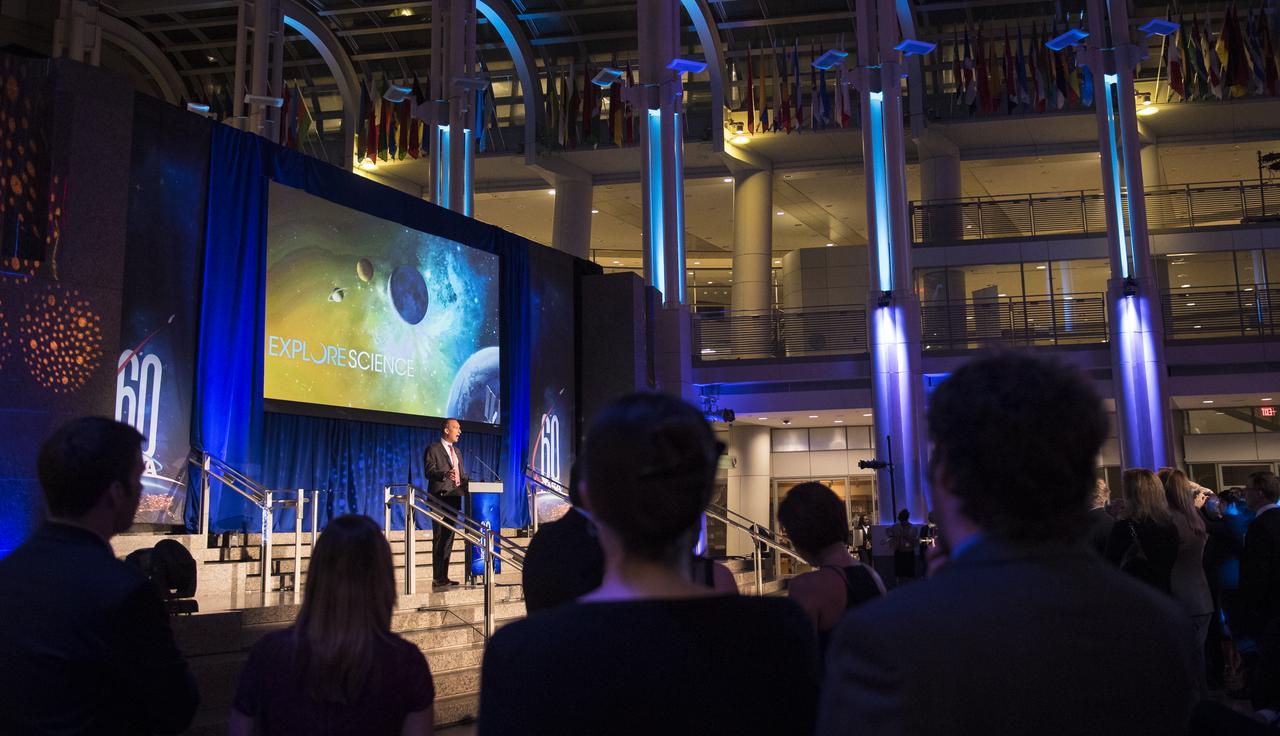
NASA Associate Administrator for the Science Mission Directorate Thomas Zurbuchen speaks during a reception hosted by the American Institute of Aeronautics and Astronautics (AIAA) to celebrate NASA's 60th anniversary, Thursday, Sept. 20, 2018 at the Ronald Reagan Building and International Trade Center in Washington, DC. Photo Credit: (NASA/Joel Kowsky)
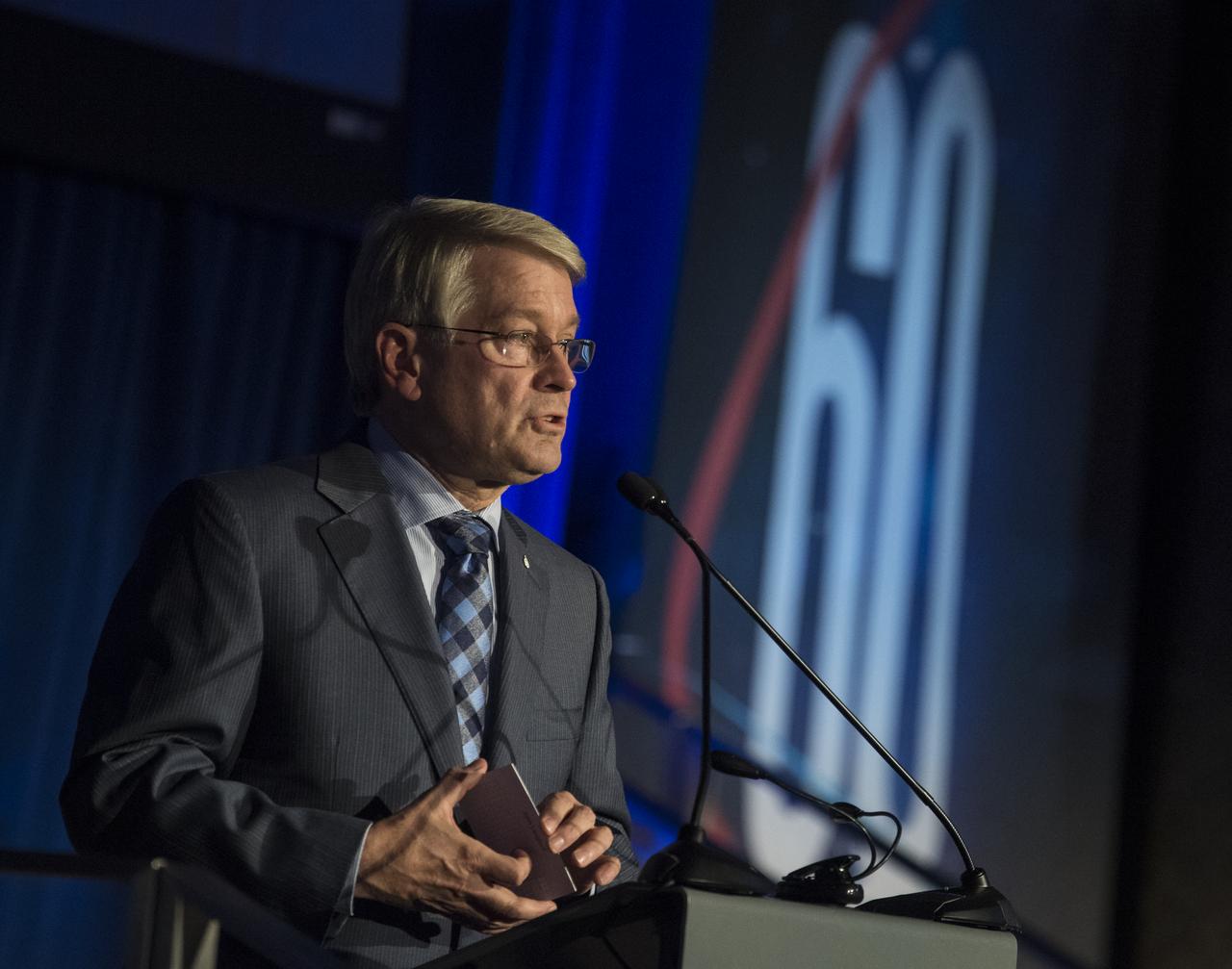
American Institute of Aeronautics and Astronautics (AIAA) President John Langford delivers remarks during a reception hosted by the American Institute of Aeronautics and Astronautics (AIAA) to celebrate NASA's 60th anniversary, Thursday, Sept. 20, 2018 at the Ronald Reagan Building and International Trade Center in Washington, DC. Photo Credit: (NASA/Joel Kowsky)
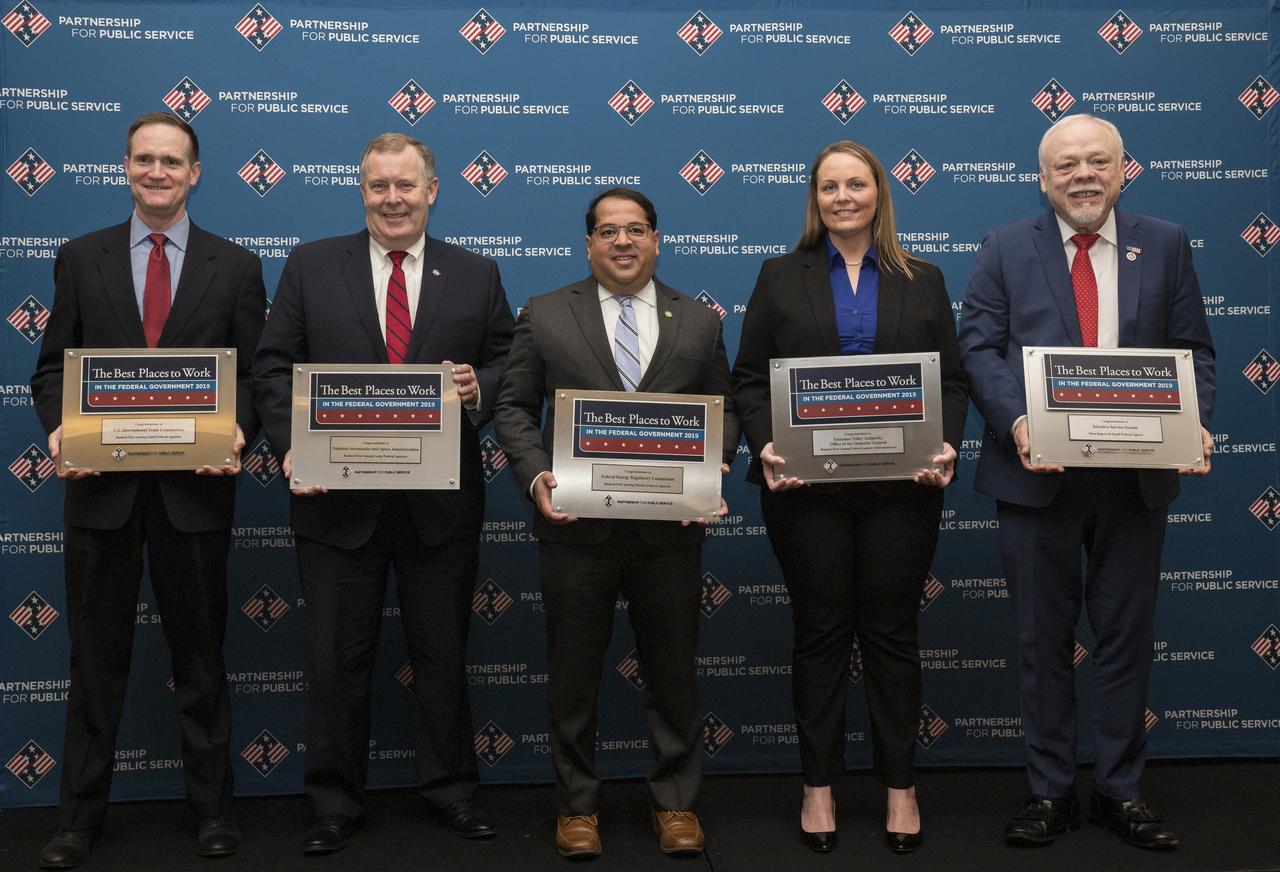
NASA Deputy Administrator Jim Morhard, second from left, poses for a photo with the other awardees, after accepting the Best Place to Work award for large federal government agencies for NASA, Friday, Jan. 10, 2020 at the Ronald Reagan Building in Washington. Photo Credit: (NASA/Aubrey Gemignani)
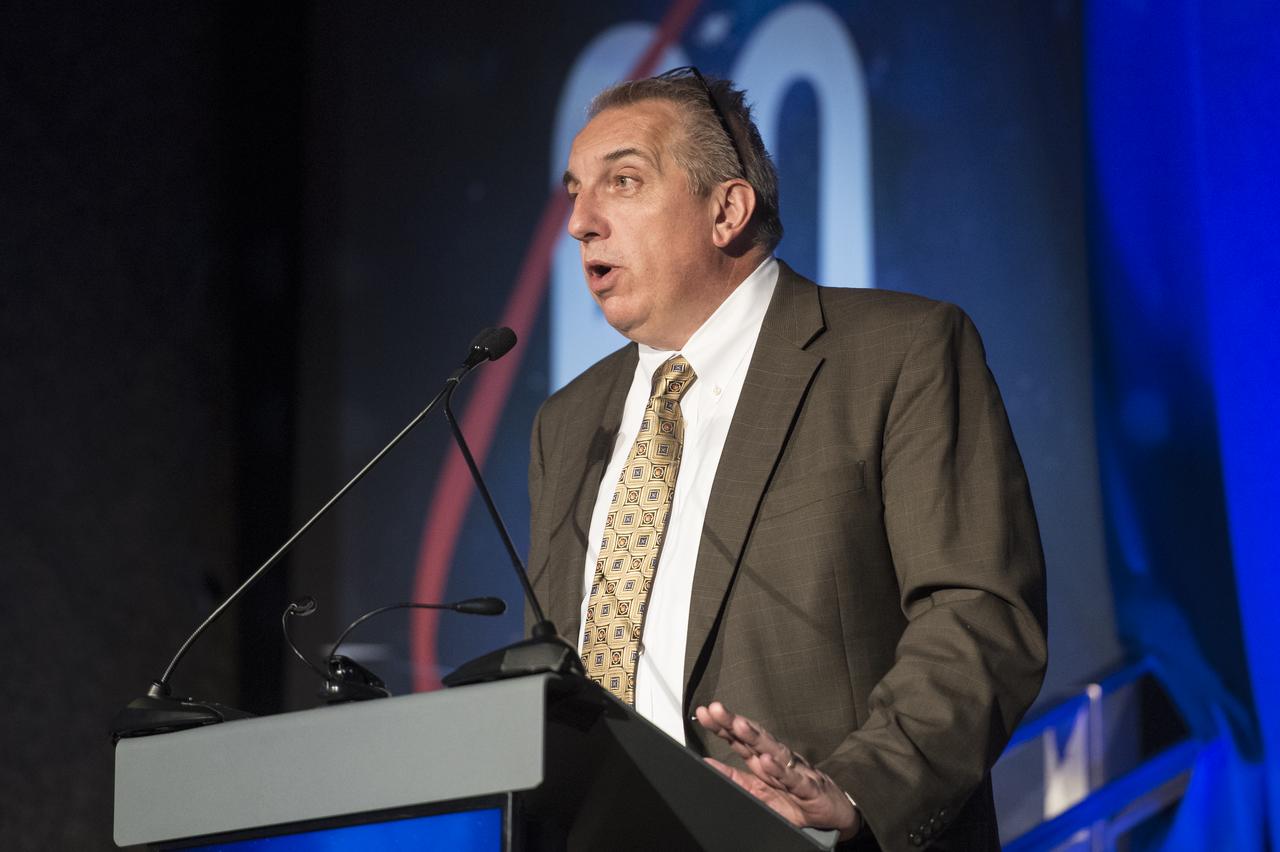
NASA's Deputy Associate Administrator for Strategy in the Aeronautics Mission Directorate Robert Pearce speaks during a reception hosted by the American Institute of Aeronautics and Astronautics (AIAA) to celebrate NASA's 60th anniversary, Thursday, Sept. 20, 2018 at the Ronald Reagan Building and International Trade Center in Washington, DC. Photo Credit: (NASA/Joel Kowsky)
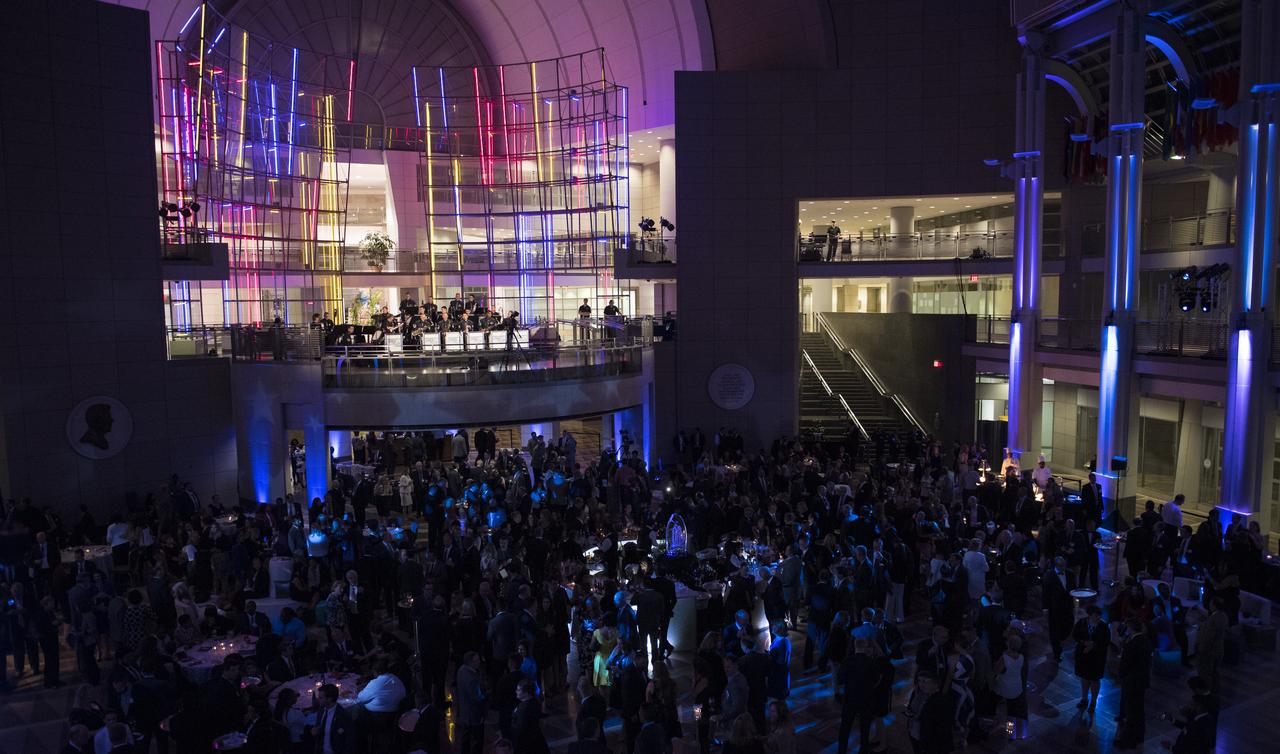
The United States Air Force's Airmen of Note perform during a reception hosted by the American Institute of Aeronautics and Astronautics (AIAA) to celebrate NASA's 60th anniversary, Thursday, Sept. 20, 2018 at the Ronald Reagan Building and International Trade Center in Washington, DC. Photo Credit: (NASA/Joel Kowsky)
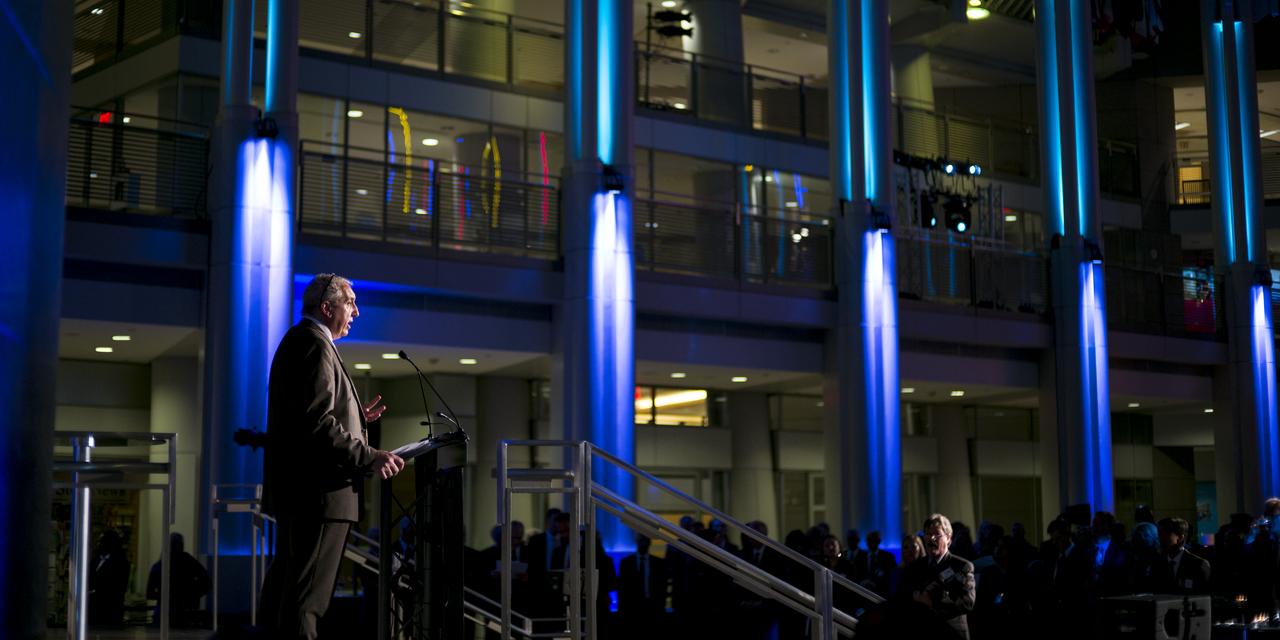
NASA's Deputy Associate Administrator for Strategy in the Aeronautics Mission Directorate Robert Pearce speaks during a reception hosted by the American Institute of Aeronautics and Astronautics (AIAA) to celebrate NASA's 60th anniversary, Thursday, Sept. 20, 2018 at the Ronald Reagan Building and International Trade Center in Washington, DC. Photo Credit: (NASA/Joel Kowsky)
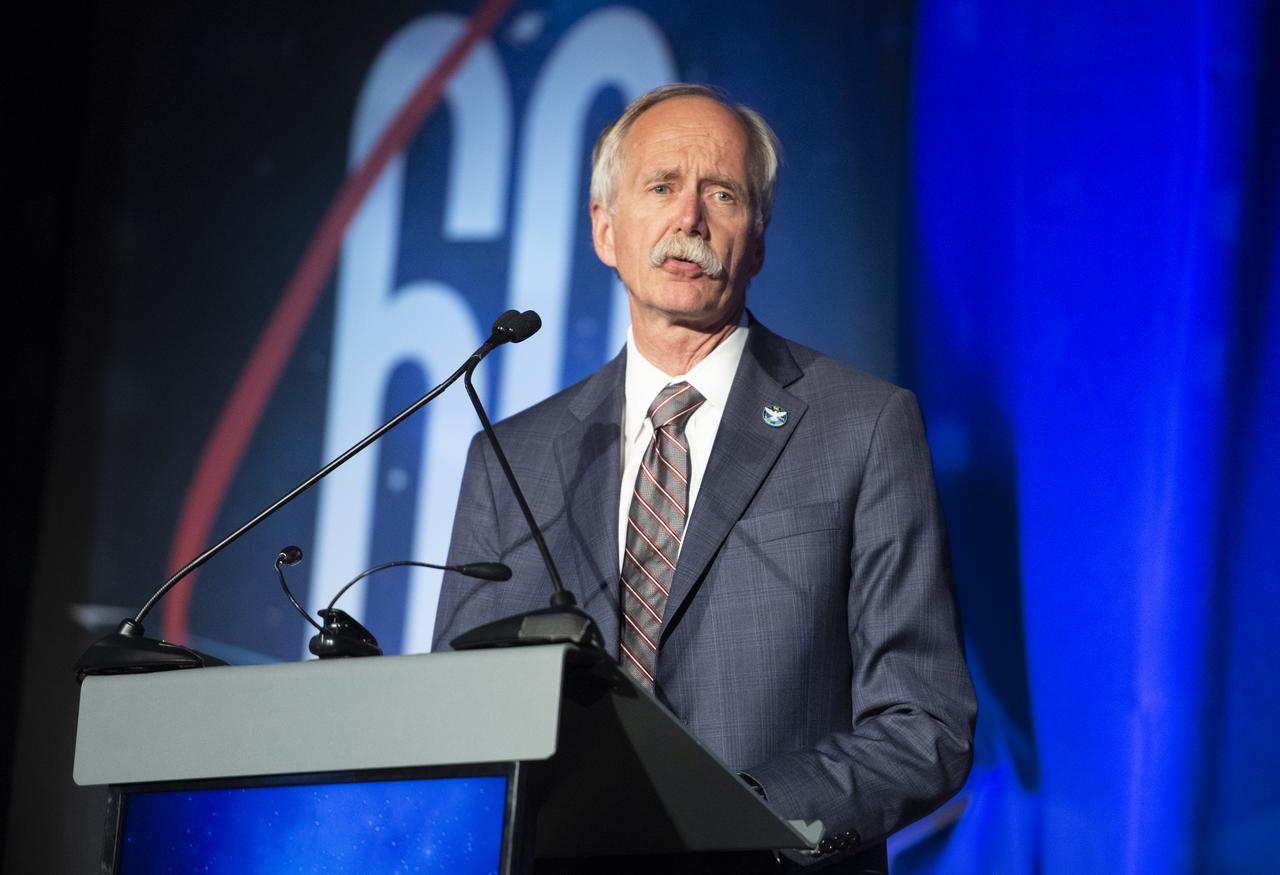
NASA Associate Administrator for the Human Exploration and Operations Mission Directorate William Gerstenmaier speaks during a reception hosted by the American Institute of Aeronautics and Astronautics (AIAA) to celebrate NASA's 60th anniversary, Thursday, Sept. 20, 2018 at the Ronald Reagan Building and International Trade Center in Washington, DC. Photo Credit: (NASA/Joel Kowsky)
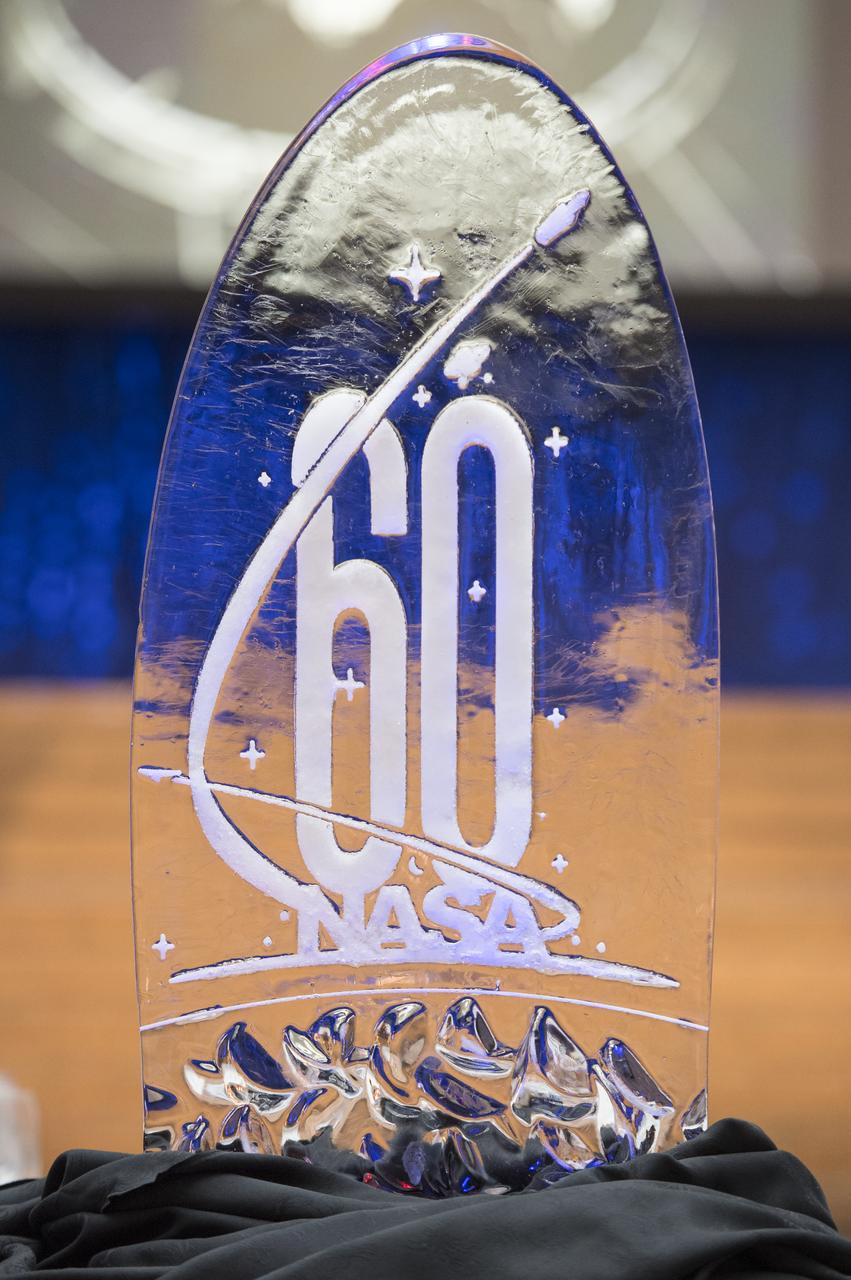
An ice sculpture of NASA's 60th anniversary logo is seen during a reception hosted by the American Institute of Aeronautics and Astronautics (AIAA) to celebrate NASA's 60th anniversary, Thursday, Sept. 20, 2018 at the Ronald Reagan Building and International Trade Center in Washington, DC. Photo Credit: (NASA/Joel Kowsky)

NASA Associate Administrator for the Science Mission Directorate Thomas Zurbuchen speaks during a reception hosted by the American Institute of Aeronautics and Astronautics (AIAA) to celebrate NASA's 60th anniversary, Thursday, Sept. 20, 2018 at the Ronald Reagan Building and International Trade Center in Washington, DC. Photo Credit: (NASA/Joel Kowsky)
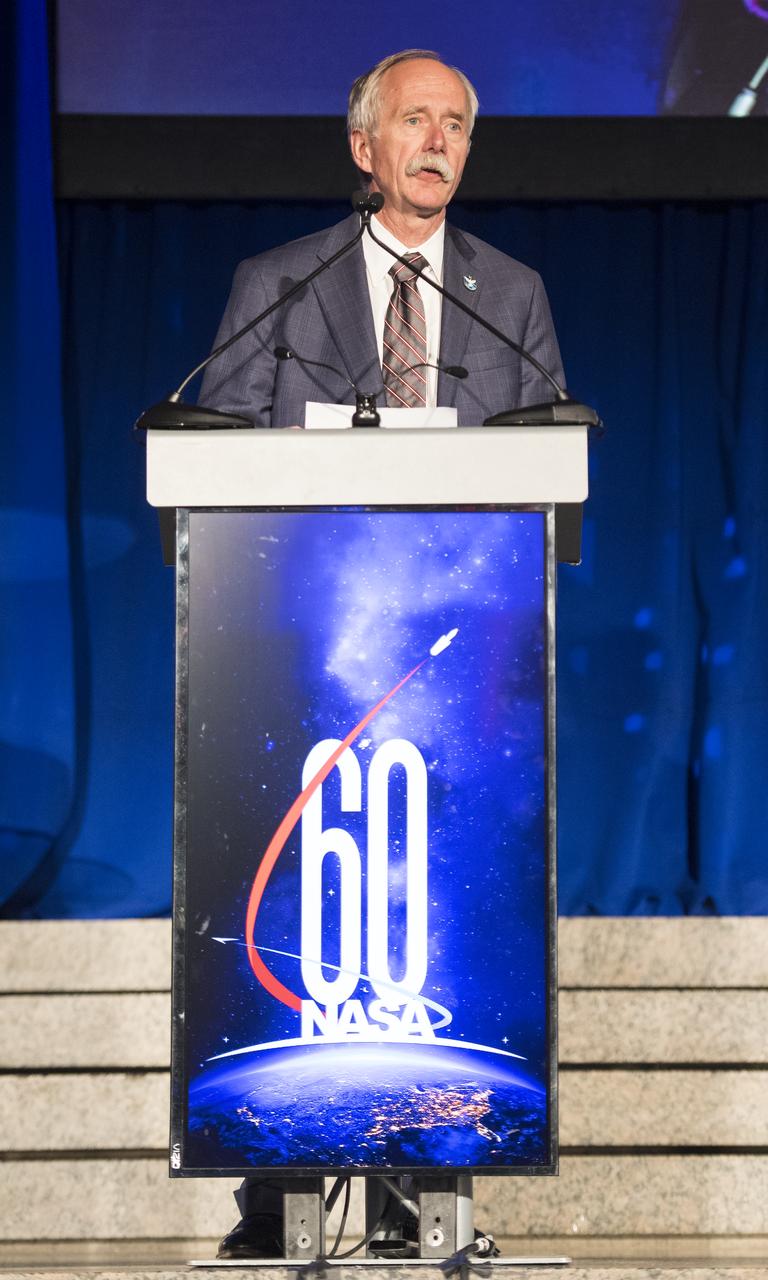
NASA Associate Administrator for the Human Exploration and Operations Mission Directorate William Gerstenmaier speaks during a reception hosted by the American Institute of Aeronautics and Astronautics (AIAA) to celebrate NASA's 60th anniversary, Thursday, Sept. 20, 2018 at the Ronald Reagan Building and International Trade Center in Washington, DC. Photo Credit: (NASA/Joel Kowsky)
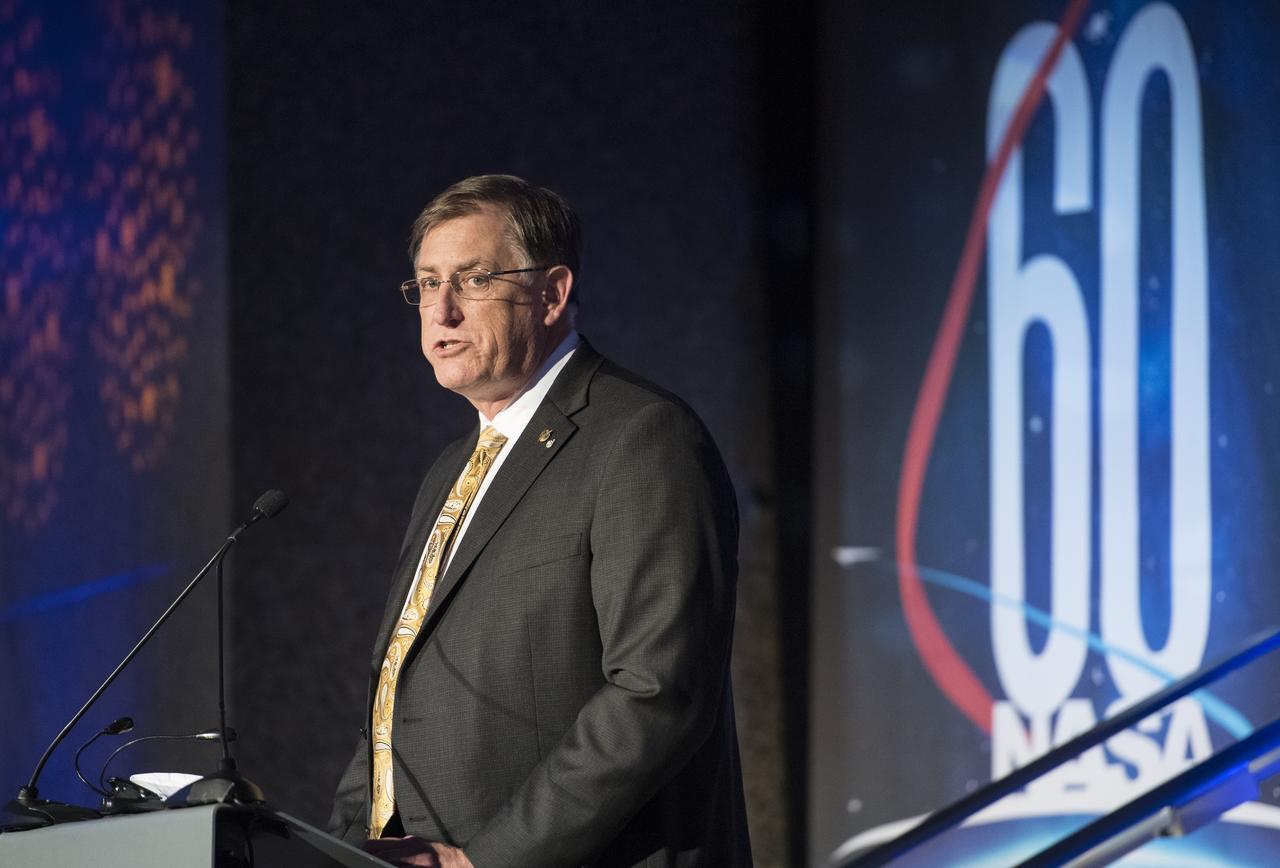
American Institute of Aeronautics and Astronautics (AIAA) Executive Director Daniel Dumbacher deliver remarks during a reception hosted by AIAA to celebrate NASA's 60th anniversary, Thursday, Sept. 20, 2018 at the Ronald Reagan Building and International Trade Center in Washington, DC. Photo Credit: (NASA/Joel Kowsky)
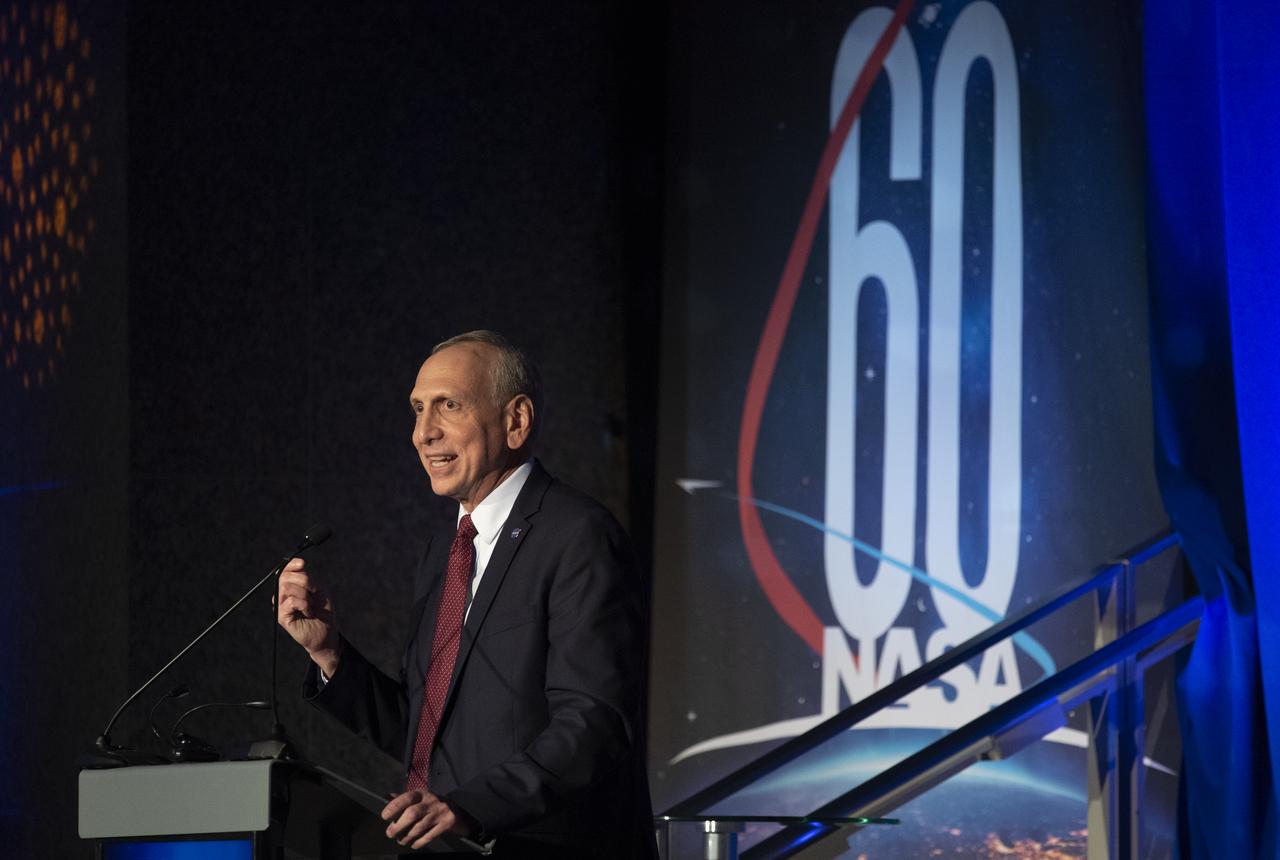
NASA Associate Administrator Steve Jurczyk delivers remarks during a reception hosted by the American Institute of Aeronautics and Astronautics (AIAA) to celebrate NASA's 60th anniversary, Thursday, Sept. 20, 2018 at the Ronald Reagan Building and International Trade Center in Washington, DC. Photo Credit: (NASA/Joel Kowsky)

NASA Deputy Administrator Jim Morhard, center, speaks with guests, after accepting the Best Place to Work award for large federal government agencies for NASA, Friday, Jan. 10, 2020 at the Ronald Reagan Building in Washington. Photo Credit: (NASA/Aubrey Gemignani)
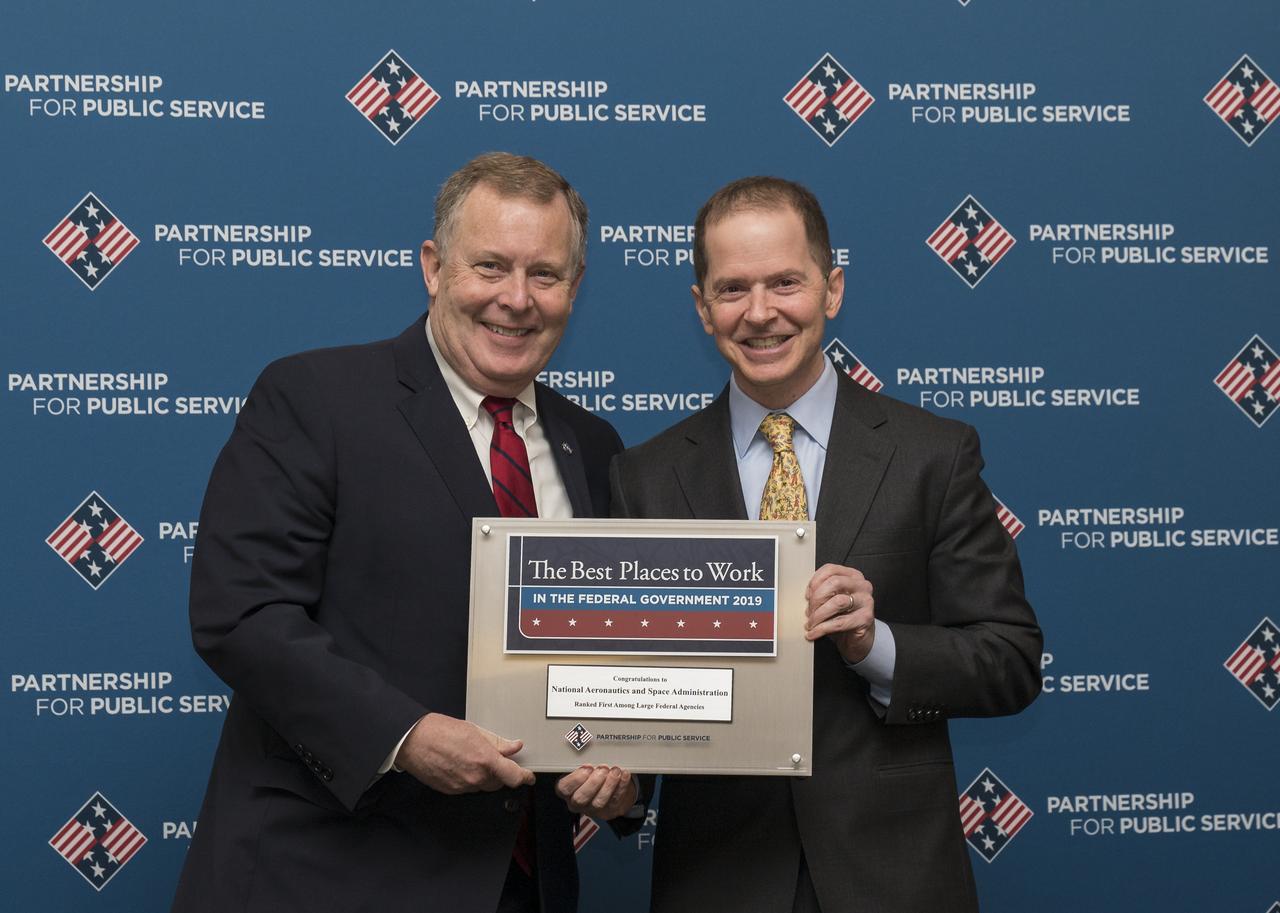
NASA Deputy Administrator Jim Morhard, left, poses for a photo with Max Stier, president and chief executive officer of the Partnership for Public Service, after accepting the Best Place to Work award for large federal government agencies for NASA, Friday, Jan. 10, 2020 at the Ronald Reagan Building in Washington. Photo Credit: (NASA/Aubrey Gemignani)
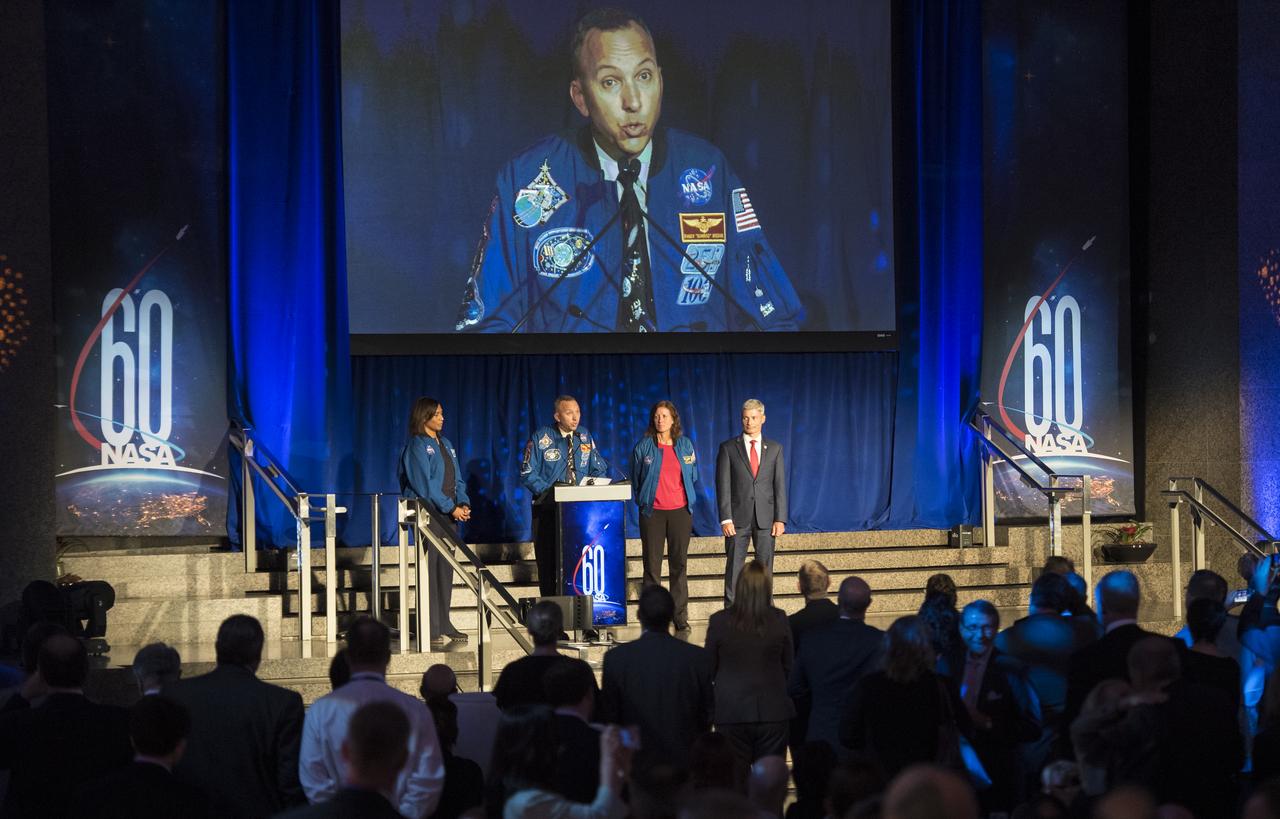
NASA astronauts Jeanette Epps, Randy Bresnik, Shannon Walker, and Mark Vande Hei are seen on stage during a reception hosted by the American Institute of Aeronautics and Astronautics (AIAA) to celebrate NASA's 60th anniversary, Thursday, Sept. 20, 2018 at the Ronald Reagan Building and International Trade Center in Washington, DC. Photo Credit: (NASA/Joel Kowsky)
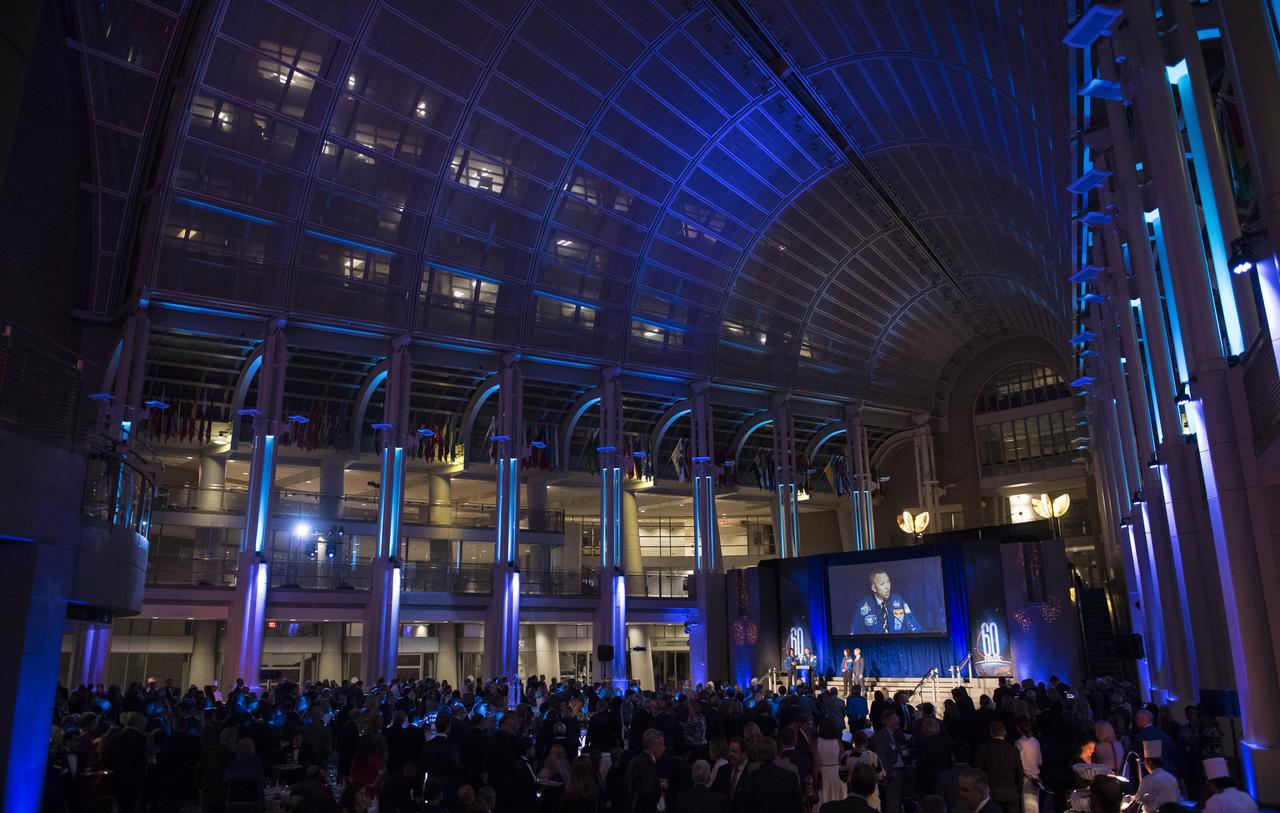
NASA astronauts Jeanette Epps, Randy Bresnik, Shannon Walker, and Mark Vande Hei are seen on stage during a reception hosted by the American Institute of Aeronautics and Astronautics (AIAA) to celebrate NASA's 60th anniversary, Thursday, Sept. 20, 2018 at the Ronald Reagan Building and International Trade Center in Washington, DC. Photo Credit: (NASA/Joel Kowsky)
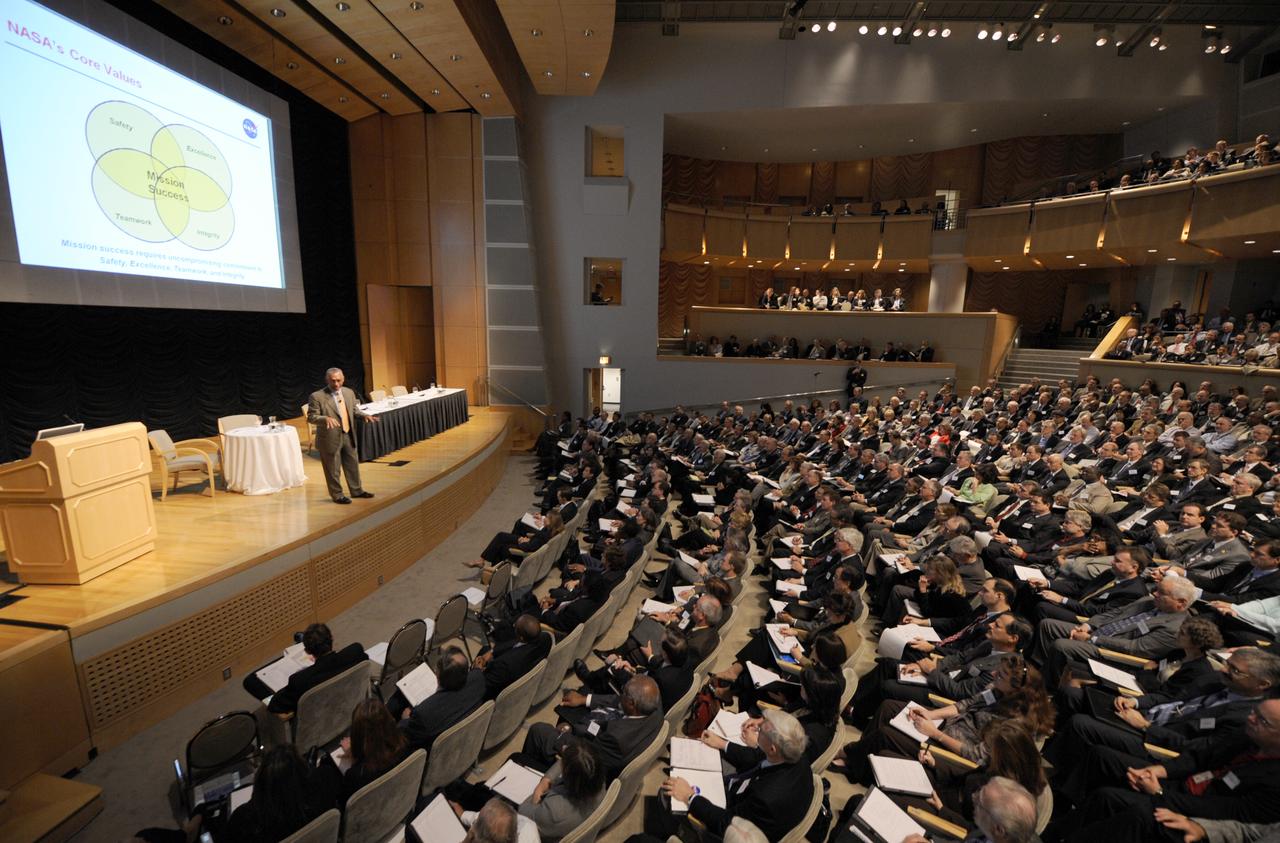
NASA Administrator Charles Bolden speaks to those gathered at the 2009 NASA Executive Summit, Tuesday, Oct. 6, 2009, at the Ronald Reagan Building in Washington. (Photo Credit: (NASA/Paul E. Alers)
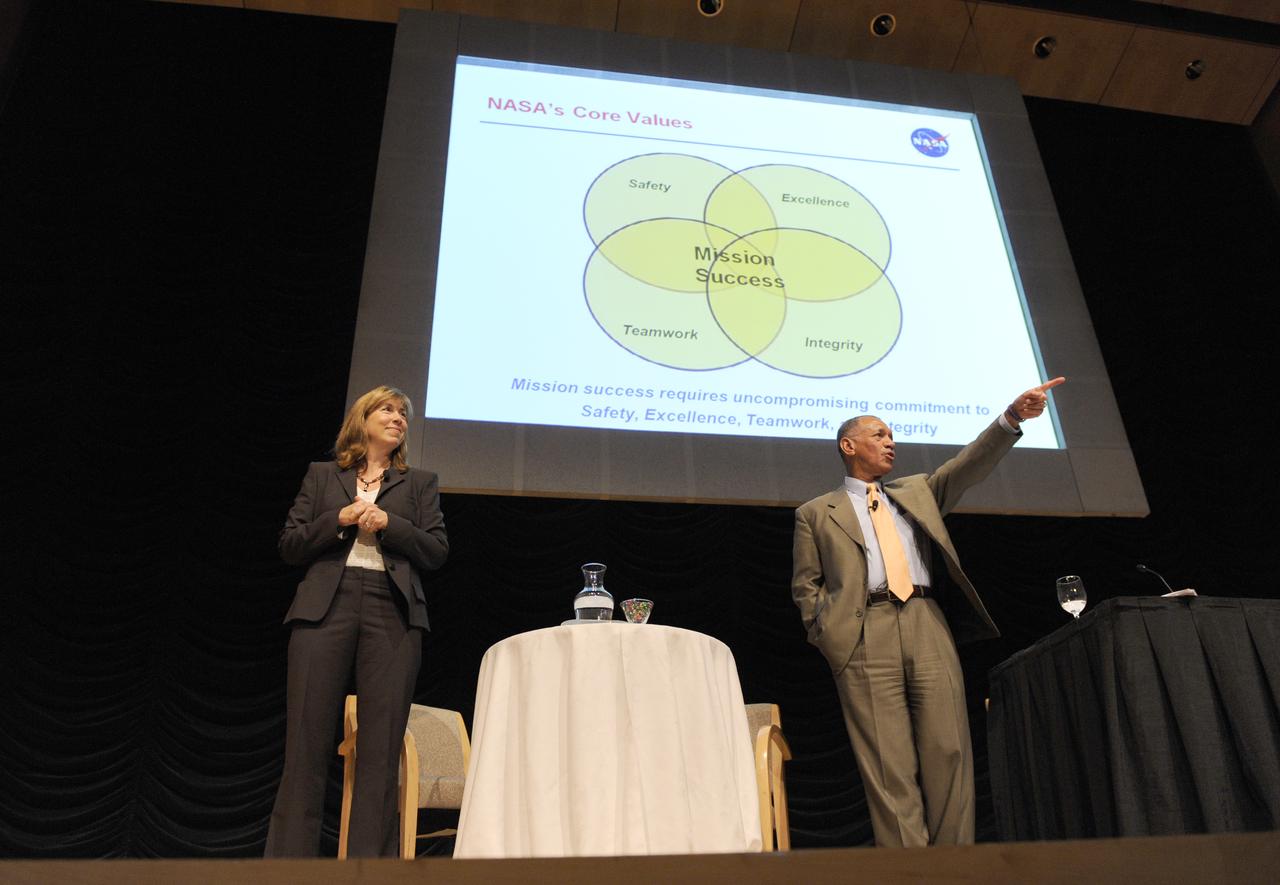
NASA Administrator Charles Bolden, right, and Deputy Administrator Lori Garver speak to those gathered at the 2009 NASA Executive Summit, Tuesday, Oct. 6, 2009, at the Ronald Reagan Building in Washington. (Photo Credit: (NASA/Paul E. Alers)
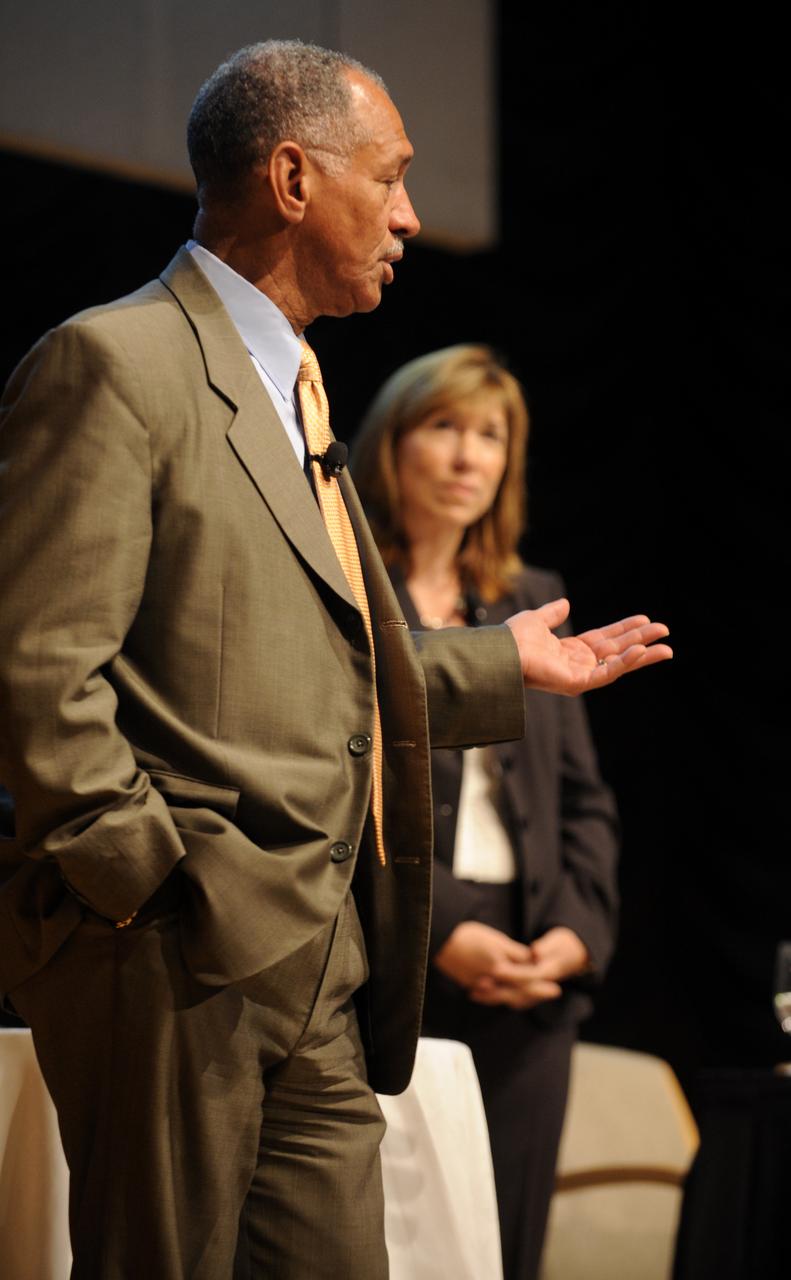
NASA Administrator Charles Boldenl left, speaks as Deputy Administrator Lori Garver looks on at the 2009 NASA Executive Summit, Tuesday, Oct. 6, 2009, at the Ronald Reagan Building in Washington. (Photo Credit: (NASA/Paul E. Alers)

Retired Marine Corps Gen. Anthony Zinni, Chairman of the Board at BAE Systems, speaks to those gathered at the 2009 NASA Executive Summit, Tuesday, Oct. 6, 2009, at the Ronald Reagan Building in Washington. (Photo Credit: (NASA/Paul E. Alers)
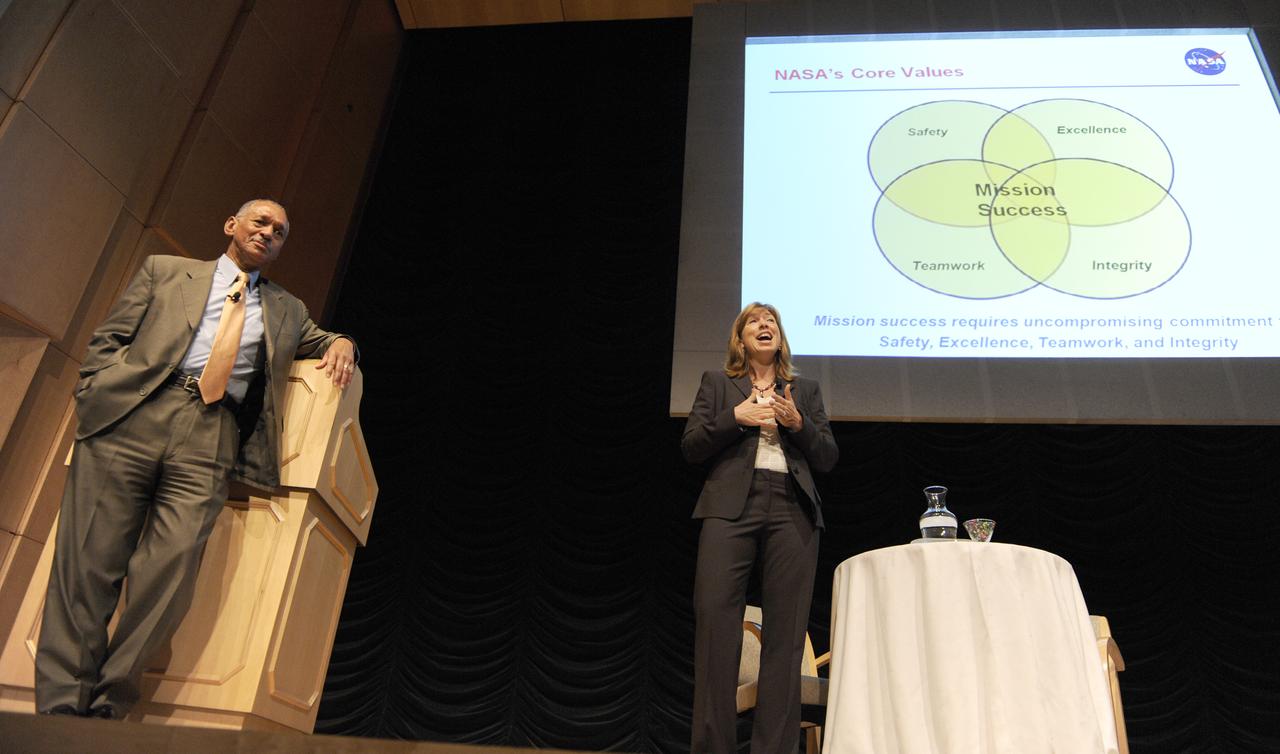
NASA Administrator Charles Bolden, left, listens as Deputy Administrator Lori Garver speaks to those gathered at the 2009 NASA Executive Summit, Tuesday, Oct. 6, 2009, at the Ronald Reagan Building in Washington. (Photo Credit: (NASA/Paul E. Alers)
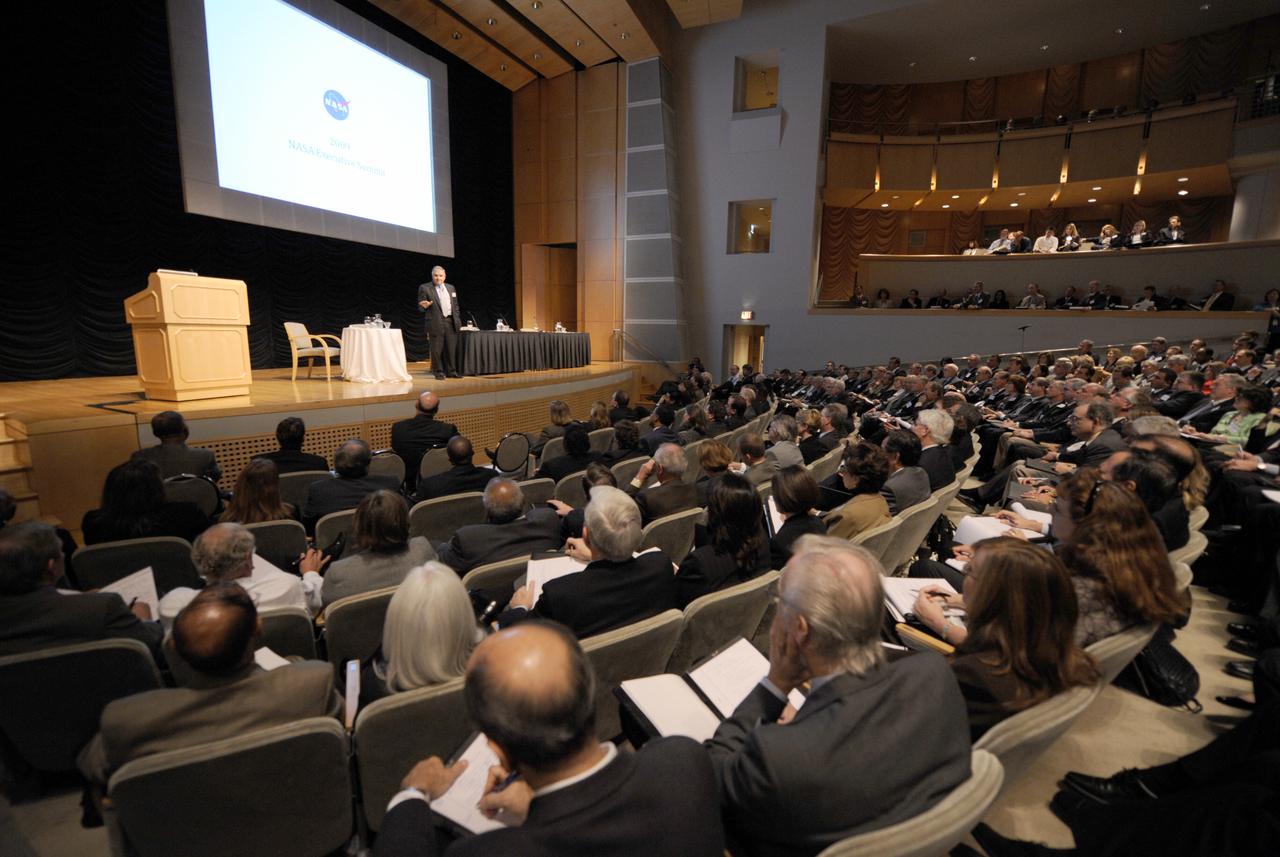
Retired Marine Corps Gen. Anthony Zinni, Chairman of the Board at BAE Systems, speaks to those gathered at the 2009 NASA Executive Summit, Tuesday, Oct. 6, 2009, at the Ronald Reagan Building in Washington. (Photo Credit: (NASA/Paul E. Alers)
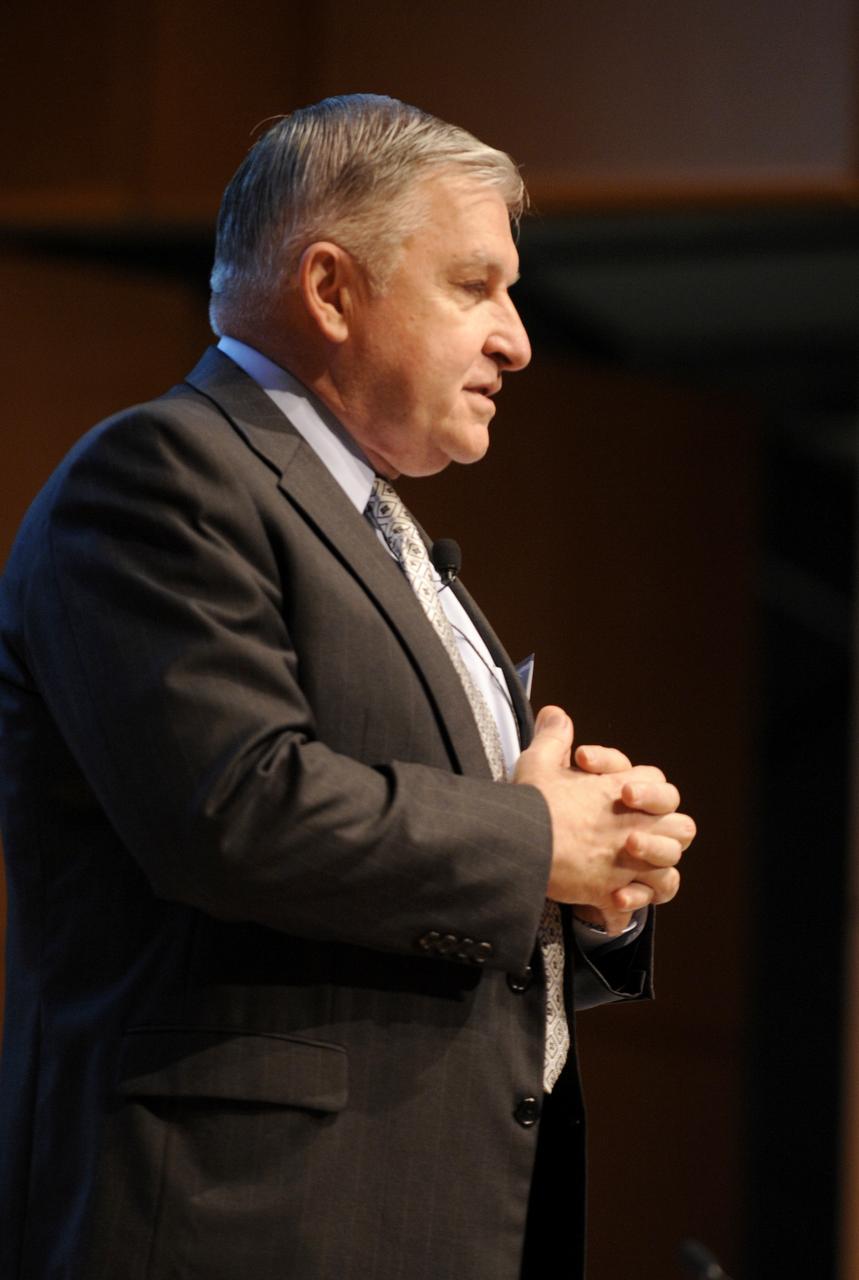
Retired Marine Corps Gen. Anthony Zinni, Chairman of the Board at BAE Systems, speaks to those gathered at the 2009 NASA Executive Summit, Tuesday, Oct. 6, 2009, at the Ronald Reagan Building in Washington. (Photo Credit: (NASA/Paul E. Alers)
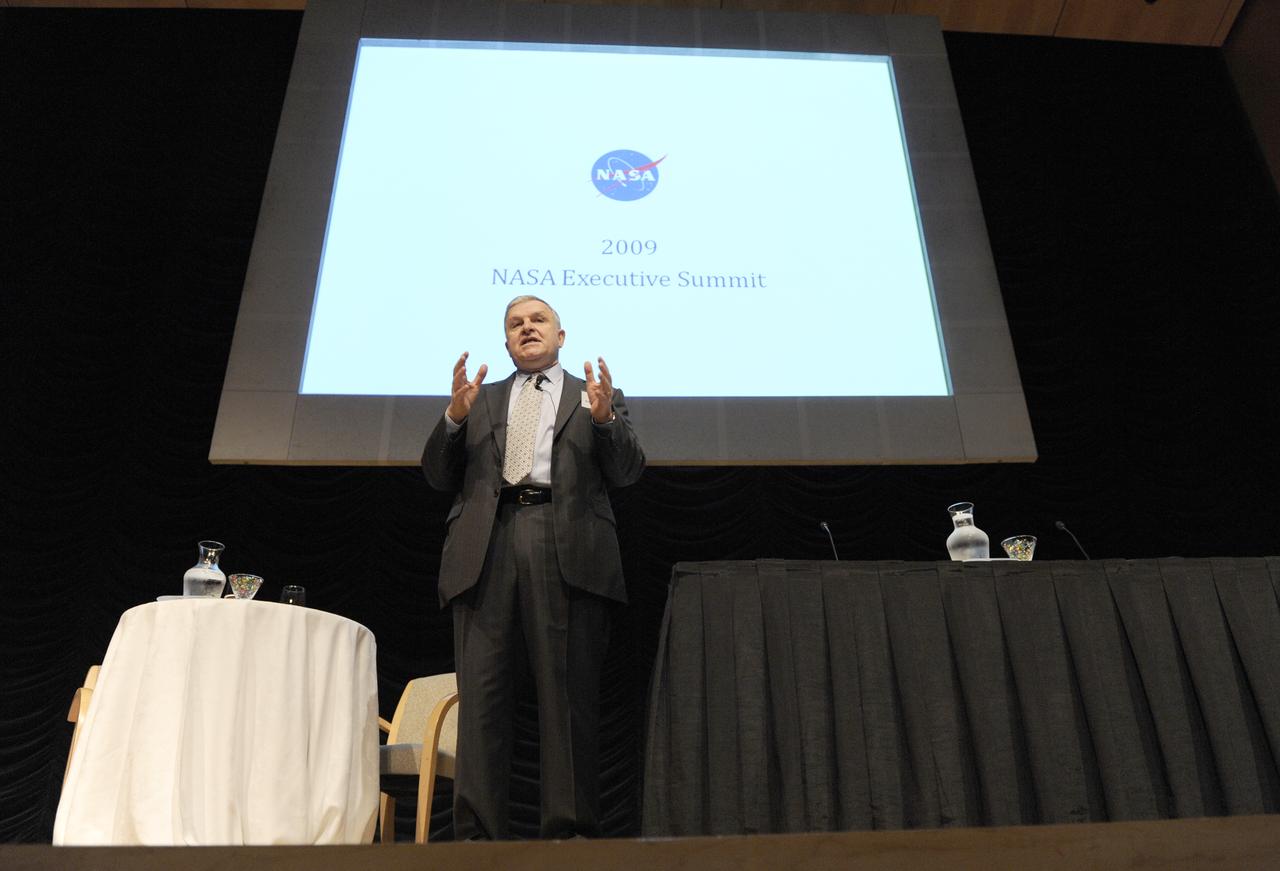
Retired Marine Corps Gen. Anthony Zinni, Chairman of the Board at BAE Systems, speaks to those gathered at the 2009 NASA Executive Summit, Tuesday, Oct. 6, 2009, at the Ronald Reagan Building in Washington. (Photo Credit: (NASA/Paul E. Alers)
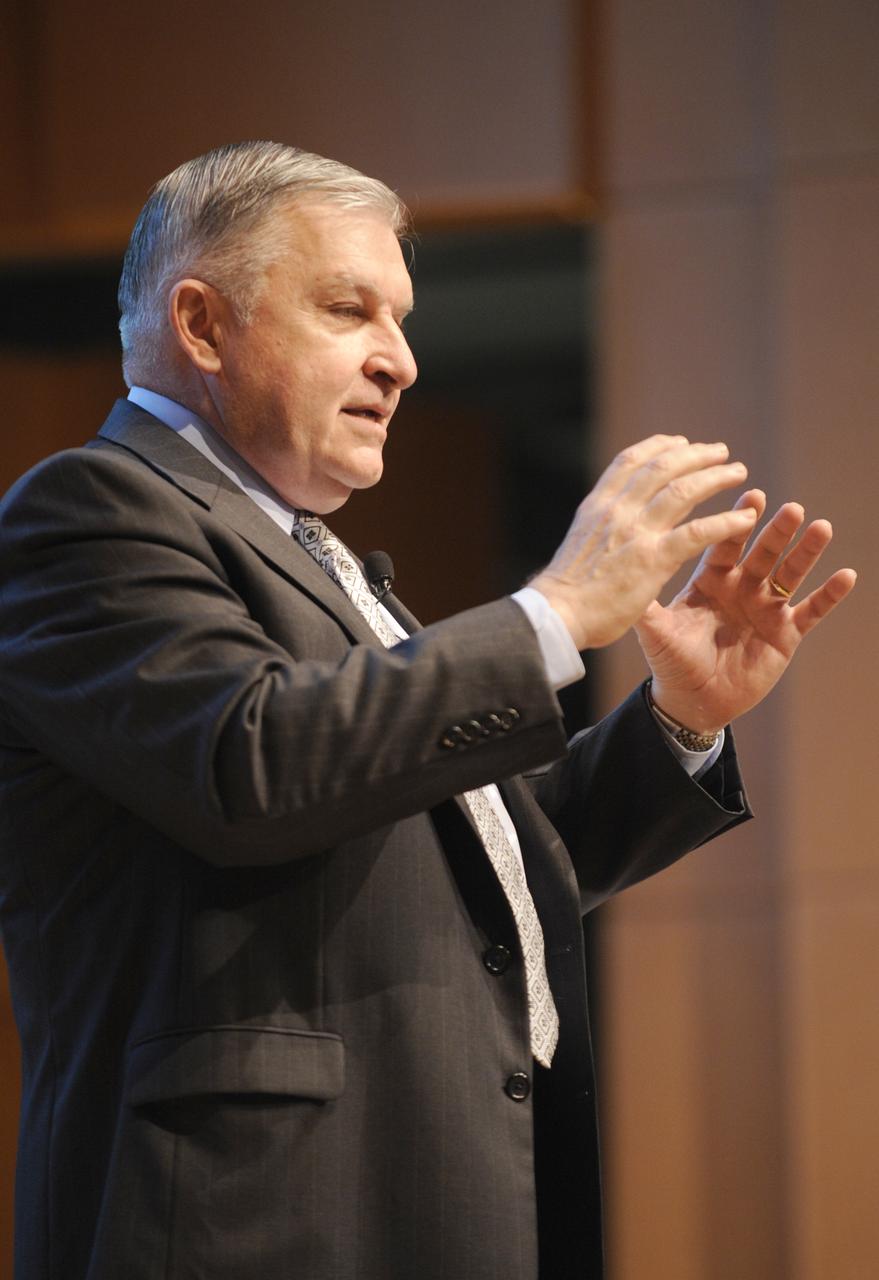
Retired Marine Corps Gen. Anthony Zinni, Chairman of the Board at BAE Systems, makes a point while speaking at the 2009 NASA Executive Summit, Tuesday, Oct. 6, 2009, at the Ronald Reagan Building in Washington. (Photo Credit: (NASA/Paul E. Alers)
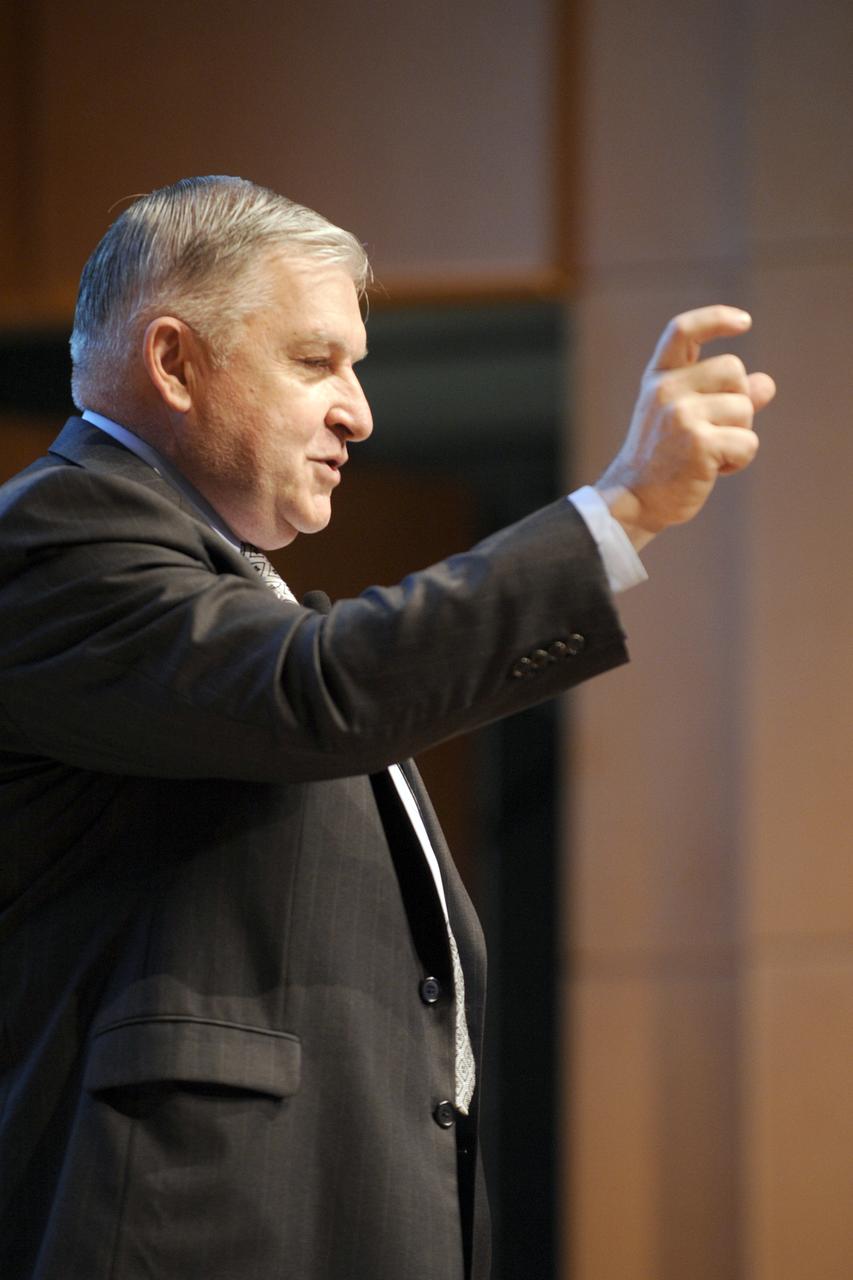
Retired Marine Corps Gen. Anthony Zinni, Chairman of the Board at BAE Systems, speaks to those gathered at the 2009 NASA Executive Summit, Tuesday, Oct. 6, 2009, at the Ronald Reagan Building in Washington. (Photo Credit: (NASA/Paul E. Alers)
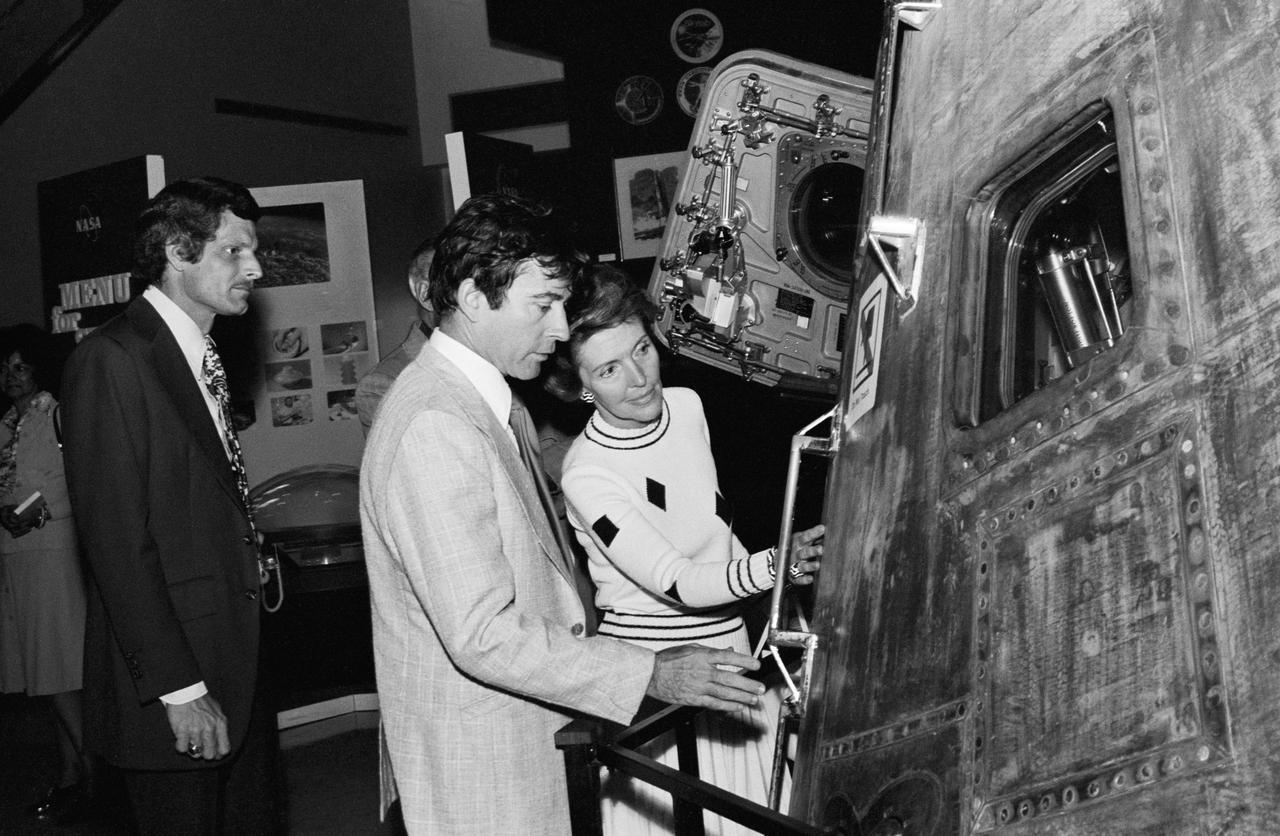
Nine views documenting JSC visit by Mrs. Ronald ( Nancy ) Reagan wife of the U.S, Presidential Candidate challenging the incumbent for Republican nomination. All views are in Building 2. She is seen in Building 2 exhibit area with Astronaut John W. Young in all views and with PAO Harold S. Stall in several. Stall, Young, Reagan at LTA-8 ( 25563 ); Young, Reagan at LRV ( 25564 ); Medium shot of Young, Reagan. ( 25565 ); Young, Reagan at command Module. (25566 ); Reagan, Young, Stall at Cm ( 25567 ); Young, Reagan at Shuttle exhibit. ( 25568 thru 25569 );
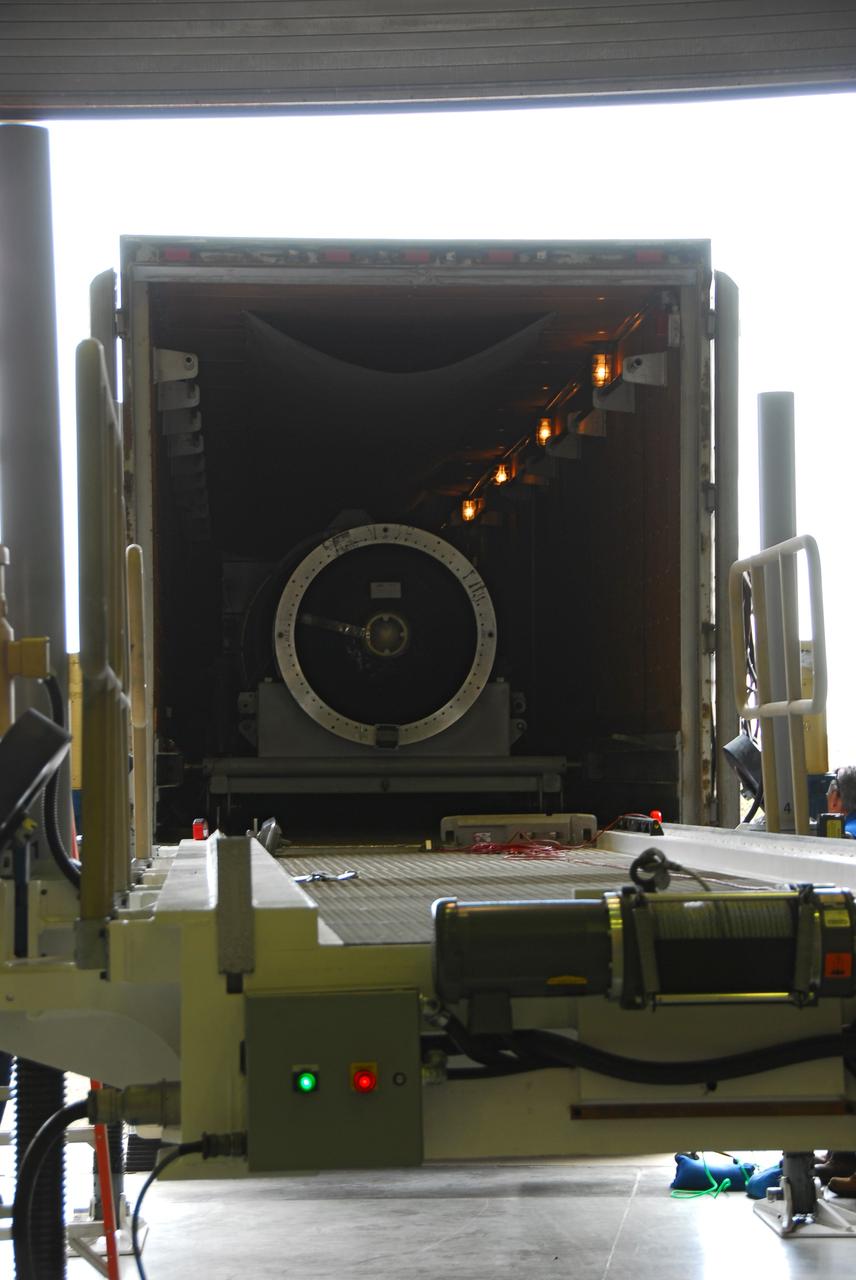
VANDENBERG AIR FORCE BASE, Calif. -- At Vandenberg Air Force Base in California, the third stage of the Pegasus XL rocket that will launch the Nuclear Spectroscopic Telescope Array (NuSTAR) to orbit arrives at Building 1555 for processing. After the rocket and spacecraft are processed at Vandenberg, they will be shipped to the Ronald Reagan Ballistic Missile Defense Test Site located at the Pacific Ocean’s Kwajalein Atoll for launch. The high-energy X-ray telescope will conduct a census for black holes, map radioactive material in young supernovae remnants, and study the origins of cosmic rays and the extreme physics around collapsed stars. Photo credit: NASA/Dan Liberotti, VAFB
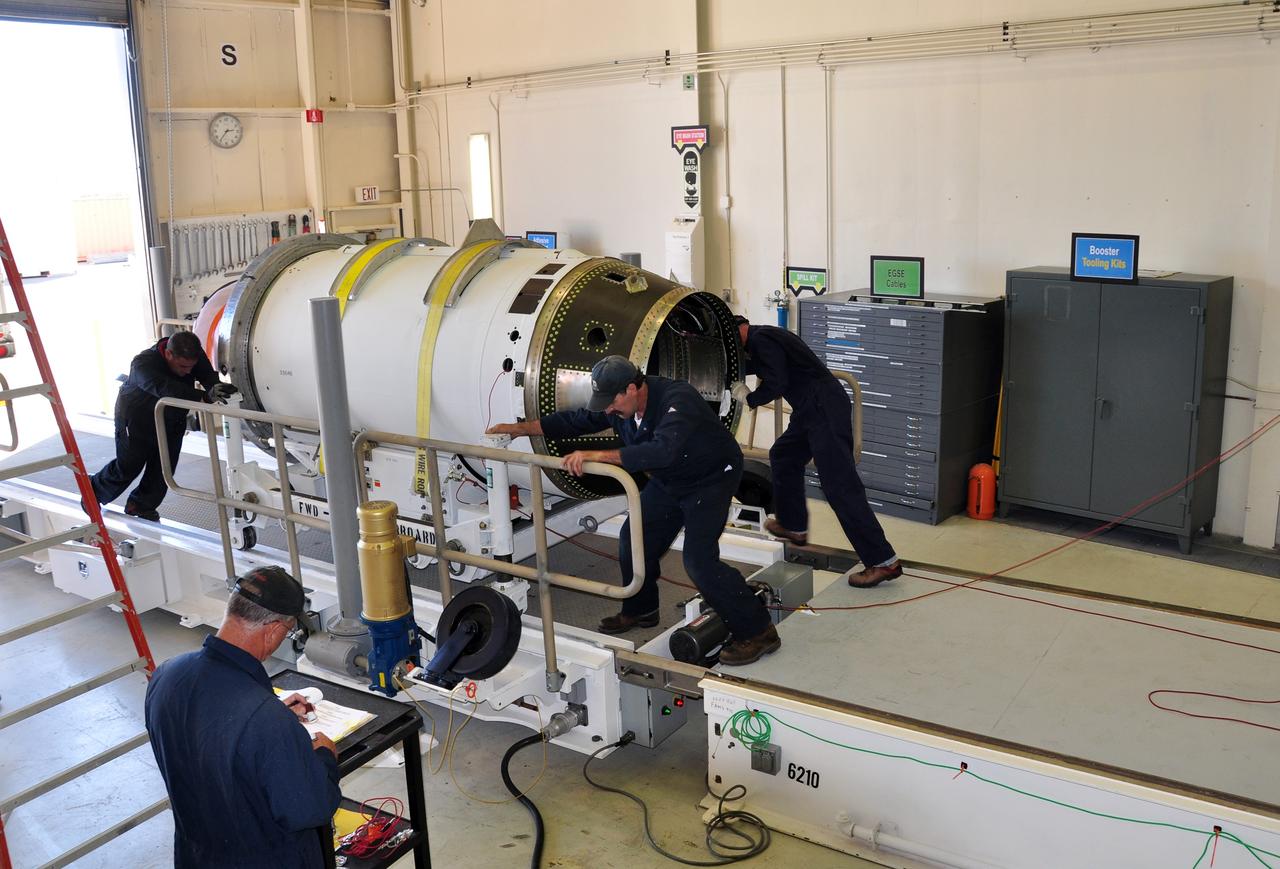
VANDENBERG AIR FORCE BASE, Calif. -- At Vandenberg Air Force Base in California, the second stage of the Pegasus XL rocket that will launch the Nuclear Spectroscopic Telescope Array (NuSTAR) to orbit is moved to a stationary rail in Building 1555 for processing. After the rocket and spacecraft are processed at Vandenberg, they will be shipped to the Ronald Reagan Ballistic Missile Defense Test Site located at the Pacific Ocean’s Kwajalein Atoll for launch. The high-energy X-ray telescope will conduct a census for black holes, map radioactive material in young supernovae remnants, and study the origins of cosmic rays and the extreme physics around collapsed stars. Photo credit: NASA/Randy Beaudoin, VAFB
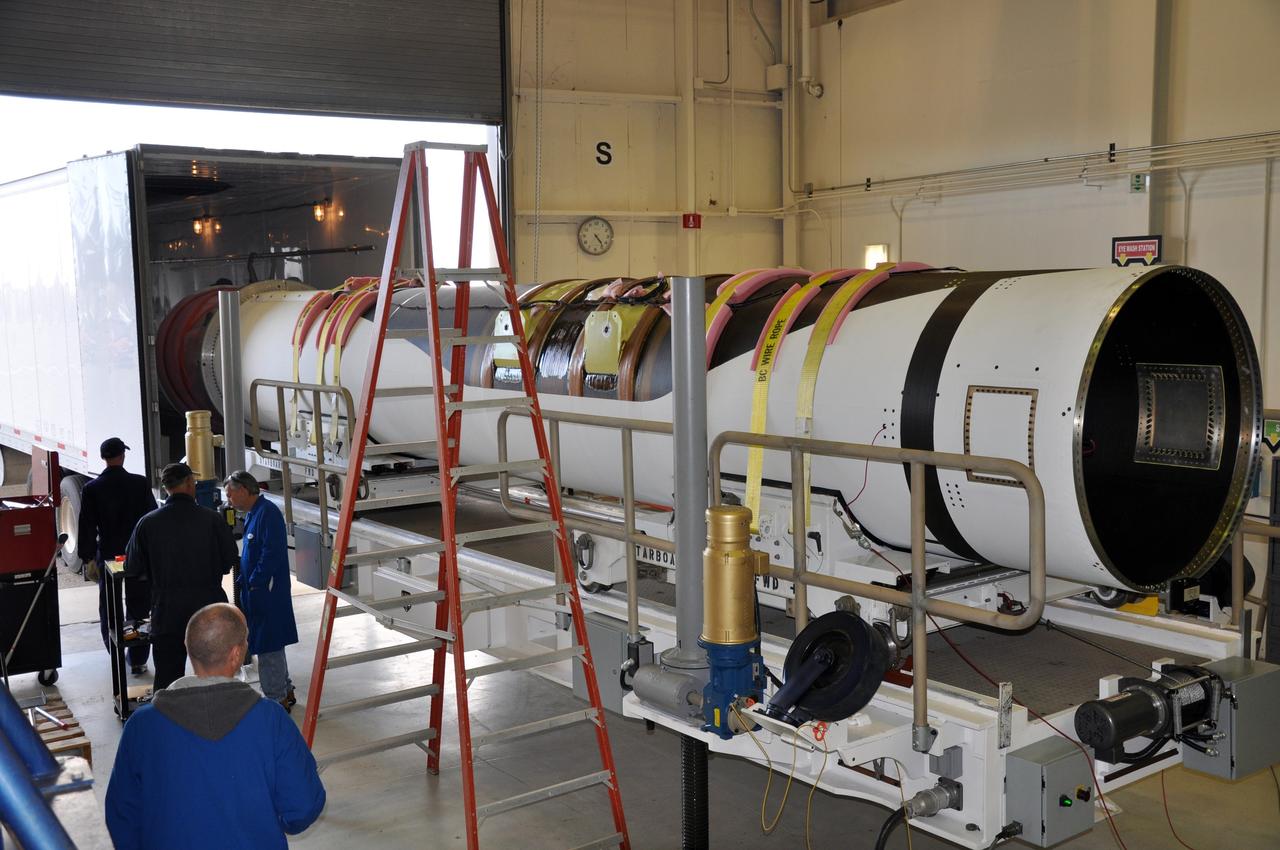
VANDENBERG AIR FORCE BASE, Calif. -- At Vandenberg Air Force Base in California, the first stage of the Pegasus XL rocket that will launch the Nuclear Spectroscopic Telescope Array (NuSTAR) to orbit is offloaded for processing in Building 1555. After the rocket and spacecraft are processed at Vandenberg, they will be shipped to the Ronald Reagan Ballistic Missile Defense Test Site located at the Pacific Ocean’s Kwajalein Atoll for launch. The high-energy X-ray telescope will conduct a census for black holes, map radioactive material in young supernovae remnants, and study the origins of cosmic rays and the extreme physics around collapsed stars. Photo credit: NASA/Randy Beaudoin, VAFB
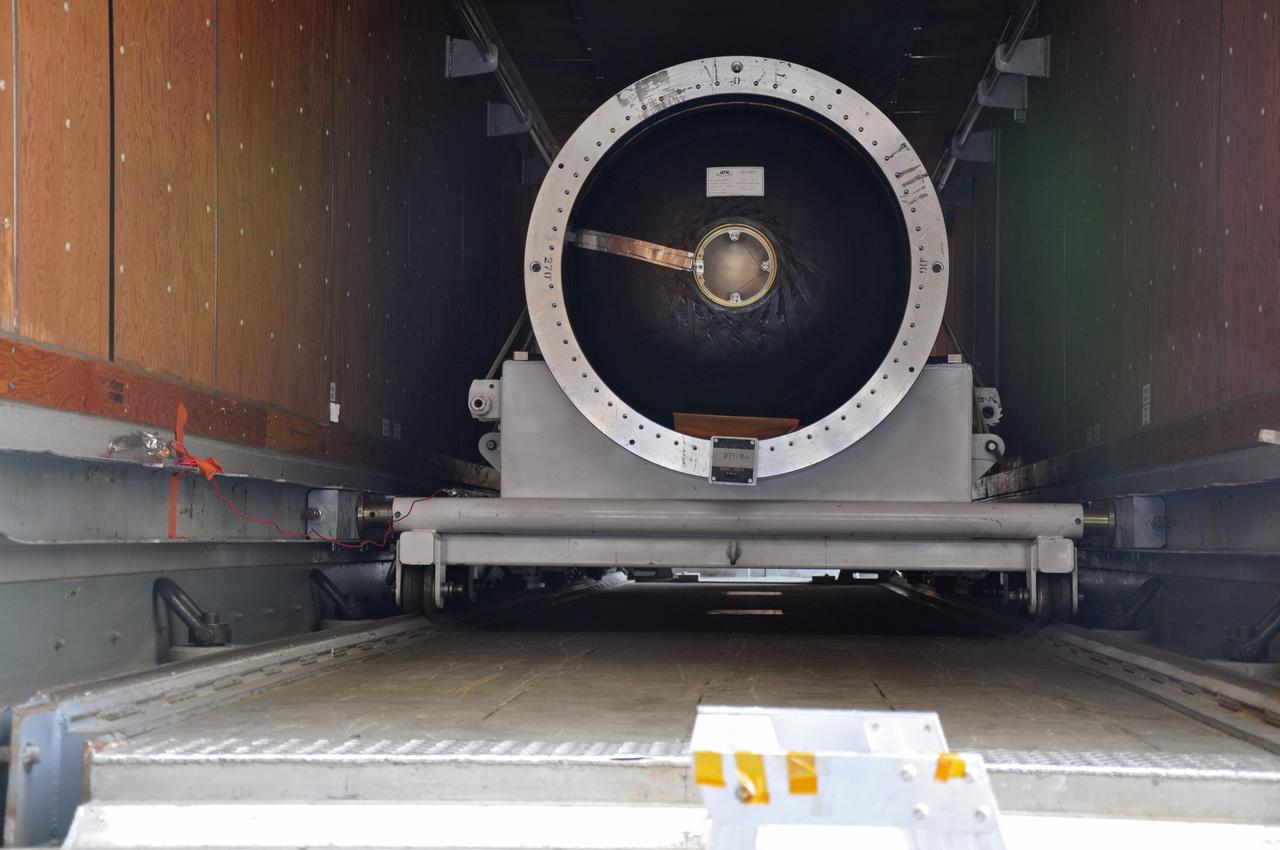
VANDENBERG AIR FORCE BASE, Calif. -- At Vandenberg Air Force Base in California, the third stage of the Pegasus XL rocket that will launch the Nuclear Spectroscopic Telescope Array (NuSTAR) to orbit is offloaded for processing in Building 1555. After the rocket and spacecraft are processed at Vandenberg, they will be shipped to the Ronald Reagan Ballistic Missile Defense Test Site located at the Pacific Ocean’s Kwajalein Atoll for launch. The high-energy X-ray telescope will conduct a census for black holes, map radioactive material in young supernovae remnants, and study the origins of cosmic rays and the extreme physics around collapsed stars. Photo credit: NASA/Randy Beaudoin, VAFB
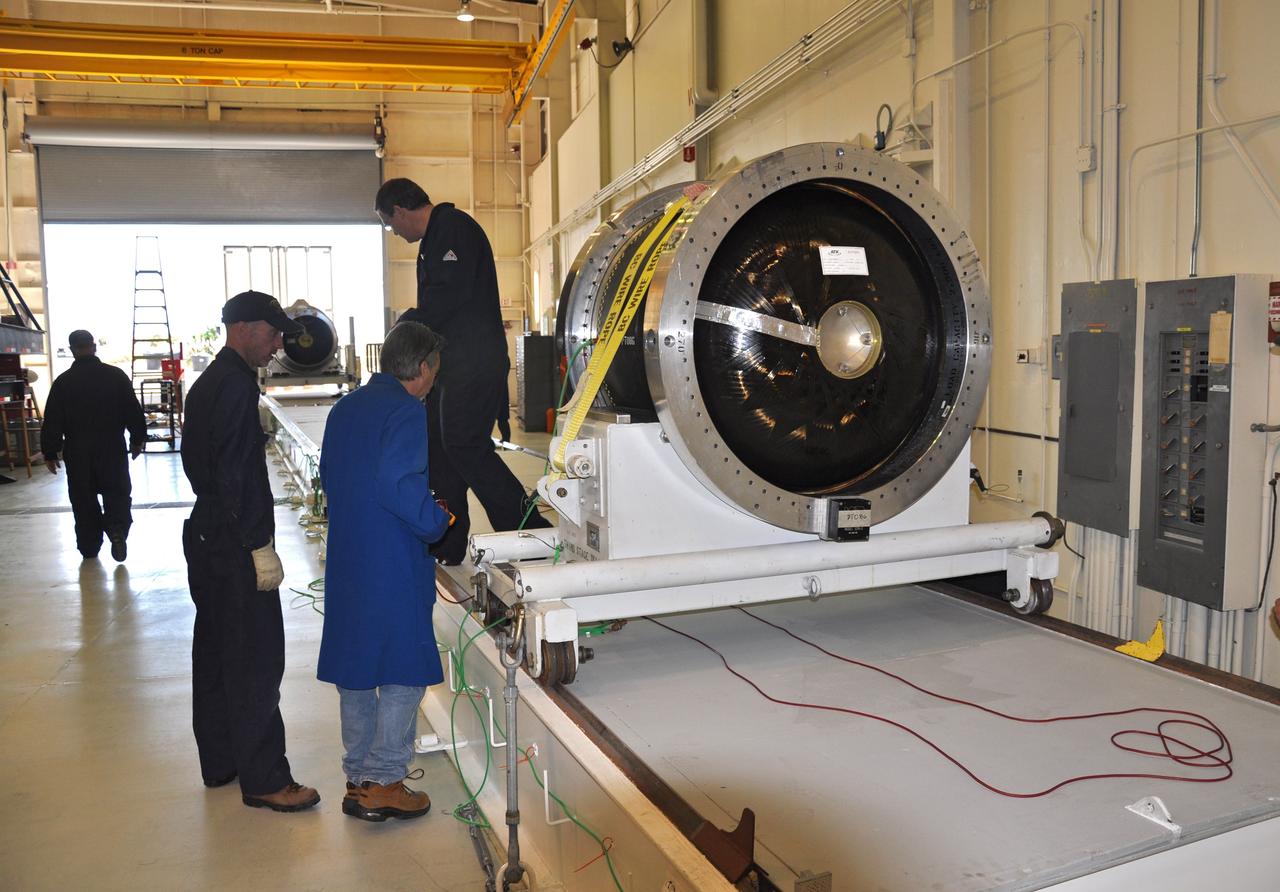
VANDENBERG AIR FORCE BASE, Calif. -- At Vandenberg Air Force Base in California, the second stage of the Pegasus XL rocket that will launch the Nuclear Spectroscopic Telescope Array (NuSTAR) to orbit is moved to a stationary rail in Building 1555 for processing. After the rocket and spacecraft are processed at Vandenberg, they will be shipped to the Ronald Reagan Ballistic Missile Defense Test Site located at the Pacific Ocean’s Kwajalein Atoll for launch. The high-energy X-ray telescope will conduct a census for black holes, map radioactive material in young supernovae remnants, and study the origins of cosmic rays and the extreme physics around collapsed stars. Photo credit: NASA/Randy Beaudoin, VAFB
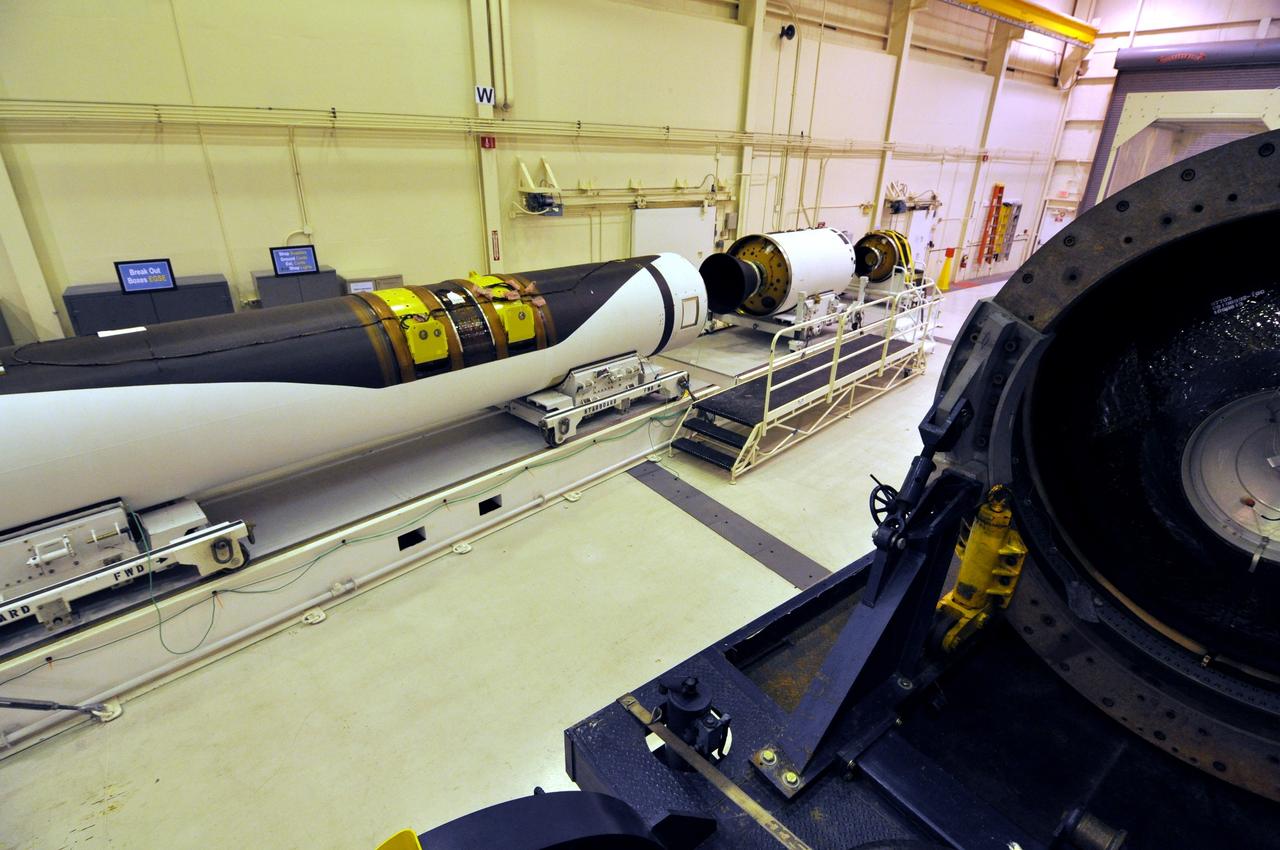
VANDENBERG AIR FORCE BASE, Calif. -- At Vandenberg Air Force Base in California, the first, second and third stages of the Pegasus XL rocket that will launch the Nuclear Spectroscopic Telescope Array (NuSTAR) to orbit are being processed in the west high bay of Building 1555. After the rocket and spacecraft are processed at Vandenberg, they will be shipped to the Ronald Reagan Ballistic Missile Defense Test Site located at the Pacific Ocean’s Kwajalein Atoll for launch. The high-energy X-ray telescope will conduct a census for black holes, map radioactive material in young supernovae remnants, and study the origins of cosmic rays and the extreme physics around collapsed stars. Photo credit: NASA/Randy Beaudoin, VAFB
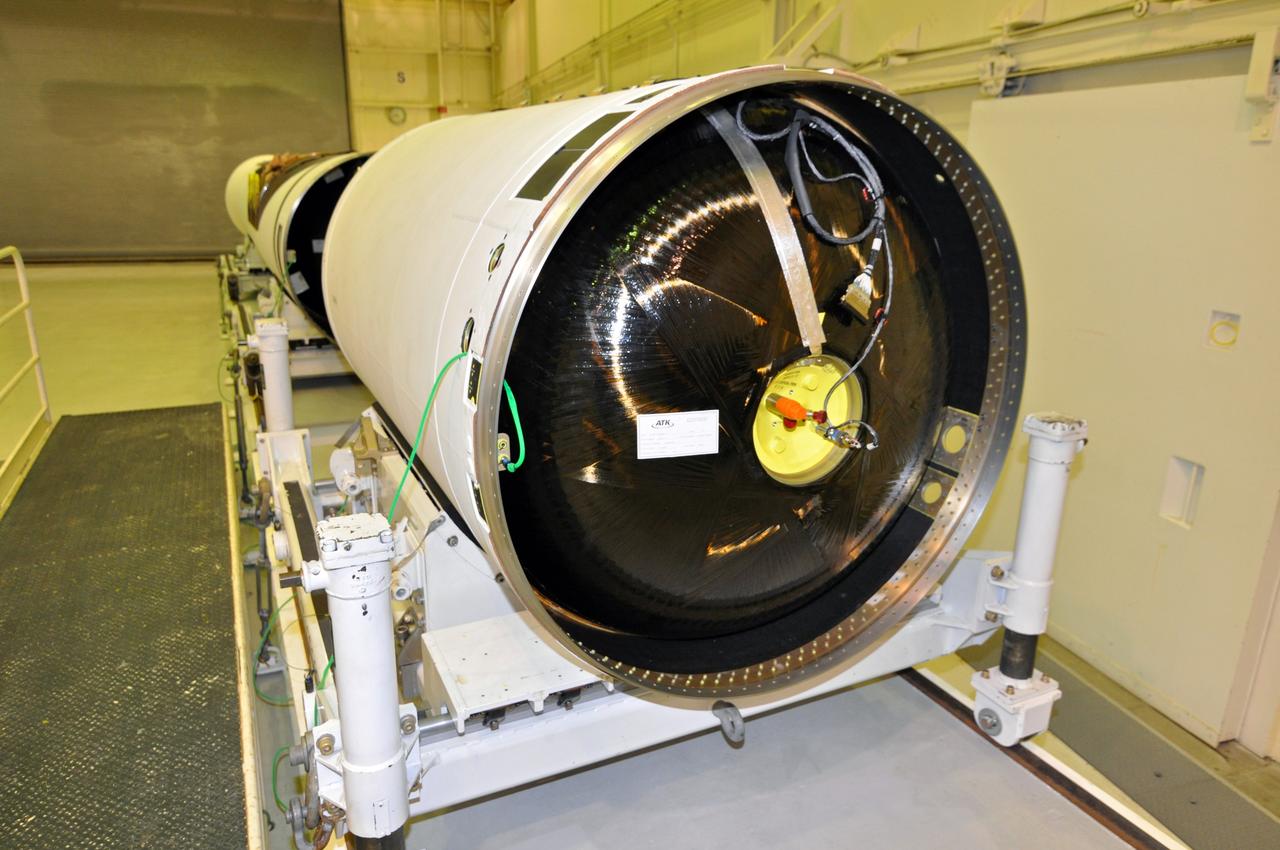
VANDENBERG AIR FORCE BASE, Calif. -- At Vandenberg Air Force Base in California, the Pegasus XL rocket that will launch the Nuclear Spectroscopic Telescope Array (NuSTAR) to orbit is coming together in the west high bay of Building 1555. After the rocket and spacecraft are processed at Vandenberg, they will be shipped to the Ronald Reagan Ballistic Missile Defense Test Site located at the Pacific Ocean’s Kwajalein Atoll for launch. The high-energy X-ray telescope will conduct a census for black holes, map radioactive material in young supernovae remnants, and study the origins of cosmic rays and the extreme physics around collapsed stars. Photo credit: NASA/Randy Beaudoin, VAFB
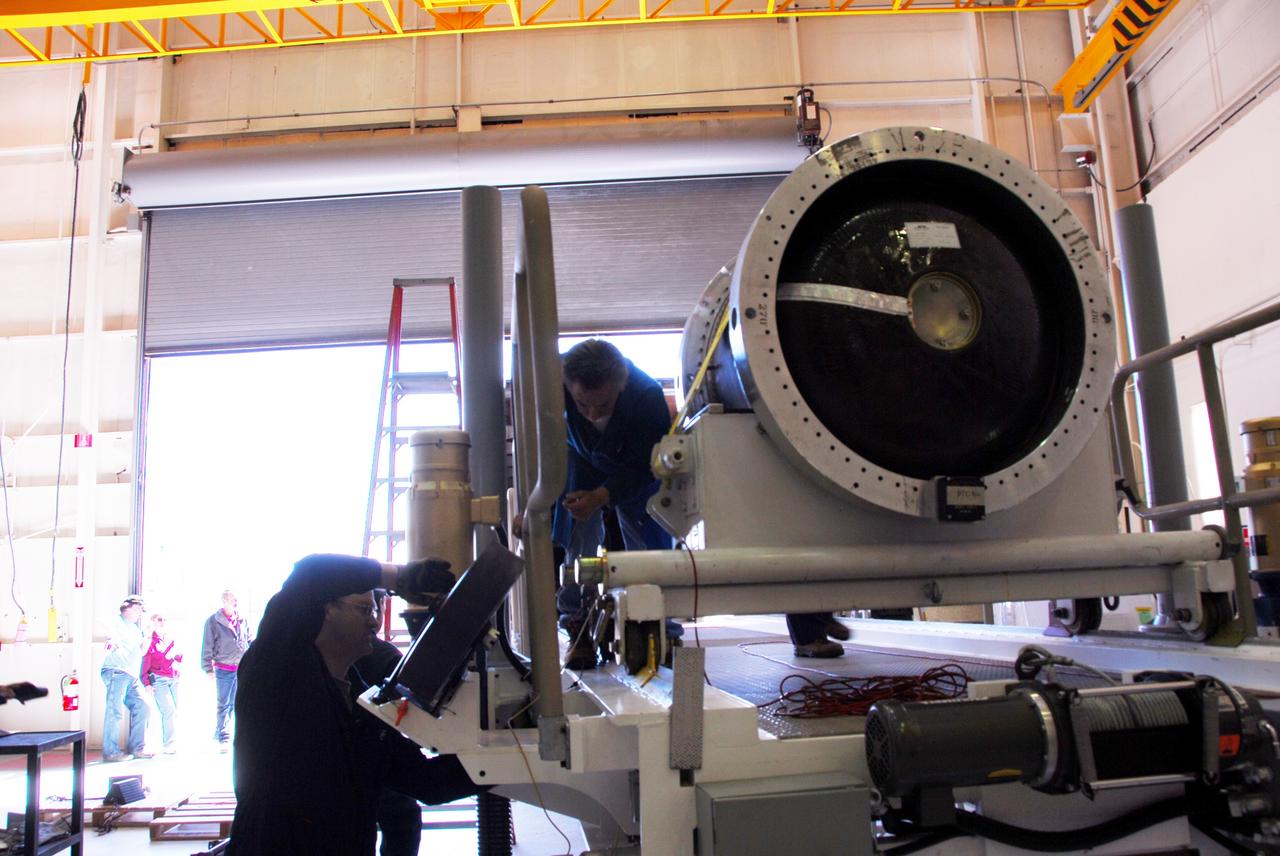
VANDENBERG AIR FORCE BASE, Calif. -- At Vandenberg Air Force Base in California, the third stage of the Pegasus XL rocket that will launch the Nuclear Spectroscopic Telescope Array (NuSTAR) to orbit is moved onto a jackable rail for processing in Building 1555. After the rocket and spacecraft are processed at Vandenberg, they will be shipped to the Ronald Reagan Ballistic Missile Defense Test Site located at the Pacific Ocean’s Kwajalein Atoll for launch. The high-energy X-ray telescope will conduct a census for black holes, map radioactive material in young supernovae remnants, and study the origins of cosmic rays and the extreme physics around collapsed stars. Photo credit: NASA/Dan Liberotti, VAFB
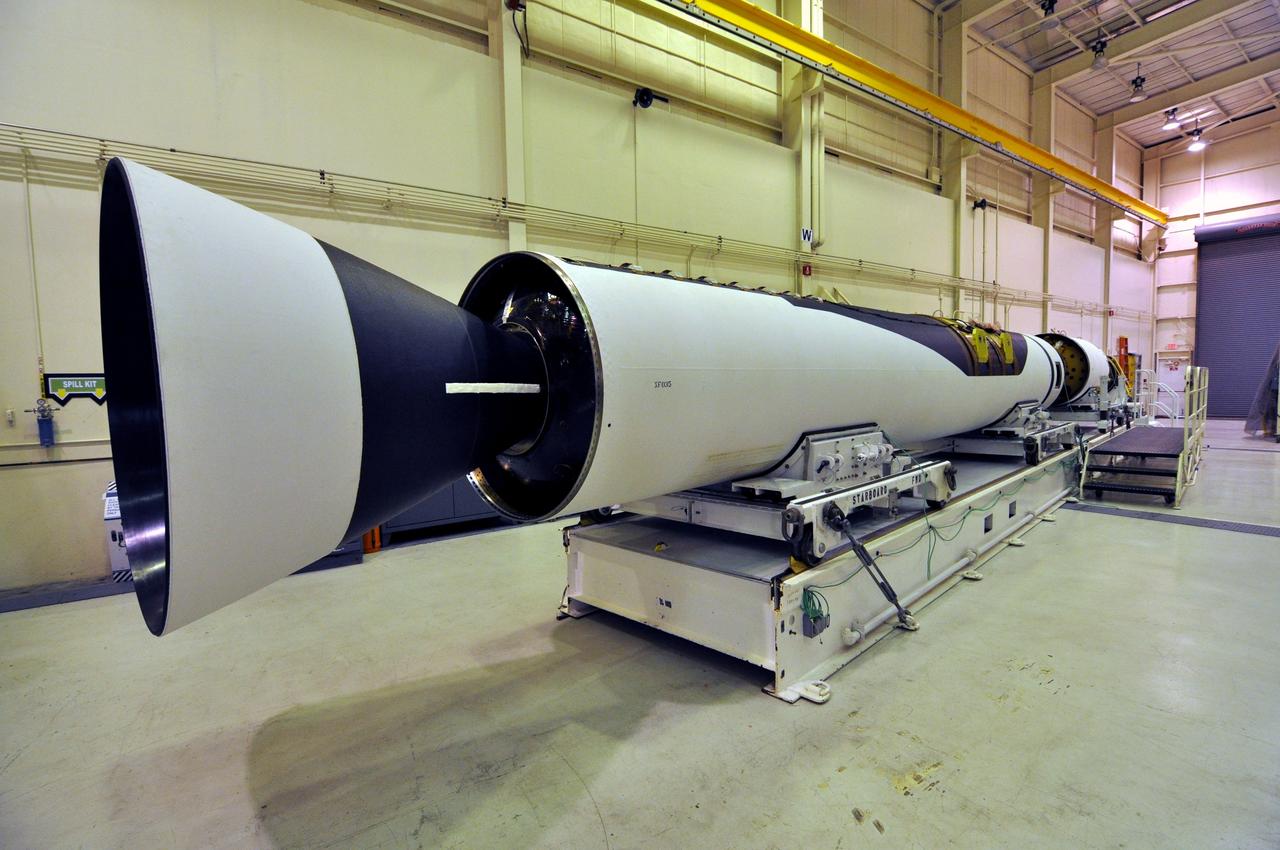
VANDENBERG AIR FORCE BASE, Calif. -- At Vandenberg Air Force Base in California, the first, second and third stages of the Pegasus XL rocket that will launch the Nuclear Spectroscopic Telescope Array (NuSTAR) to orbit are being processed in the west high bay of Building 1555. After the rocket and spacecraft are processed at Vandenberg, they will be shipped to the Ronald Reagan Ballistic Missile Defense Test Site located at the Pacific Ocean’s Kwajalein Atoll for launch. The high-energy X-ray telescope will conduct a census for black holes, map radioactive material in young supernovae remnants, and study the origins of cosmic rays and the extreme physics around collapsed stars. Photo credit: NASA/Randy Beaudoin, VAFB
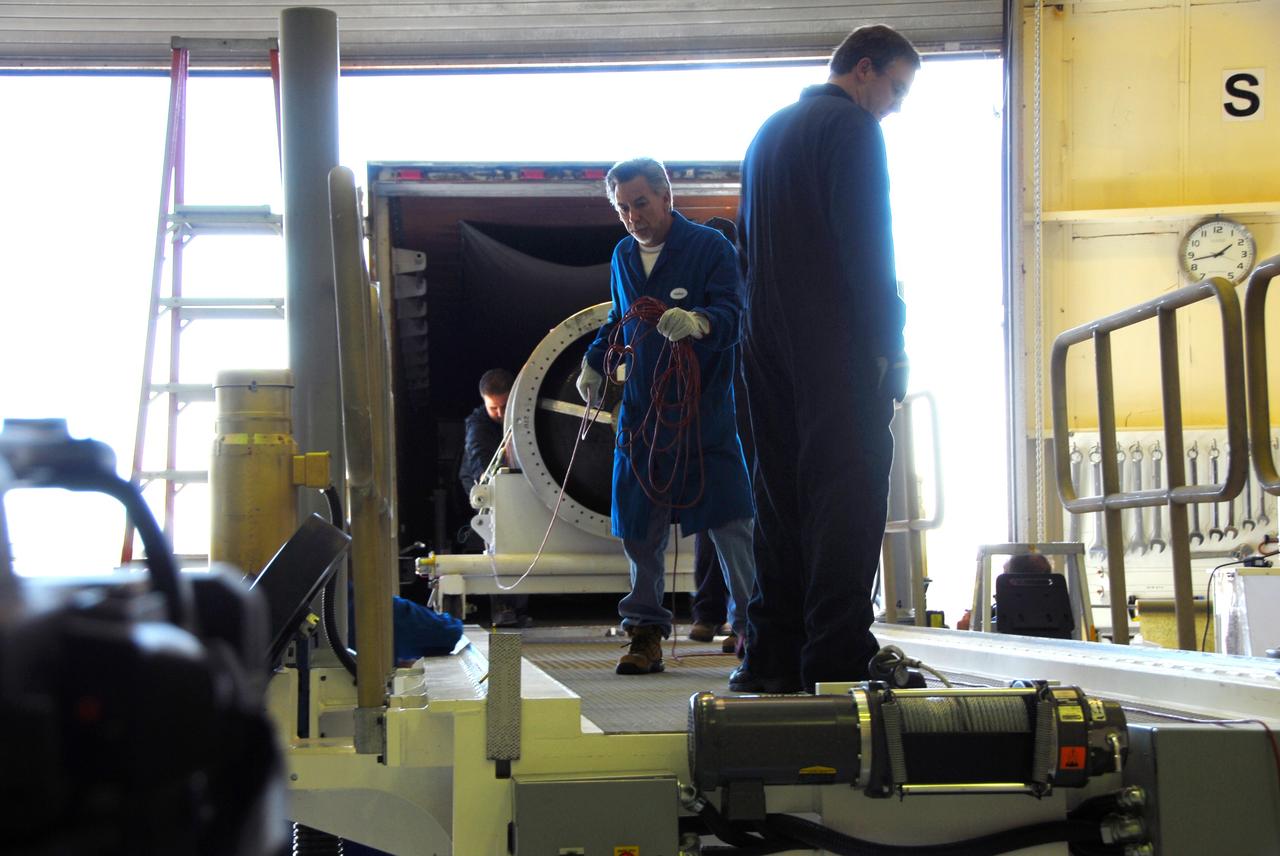
VANDENBERG AIR FORCE BASE, Calif. -- At Vandenberg Air Force Base in California, the third stage of the Pegasus XL rocket that will launch the Nuclear Spectroscopic Telescope Array (NuSTAR) to orbit is offloaded for processing in Building 1555. After the rocket and spacecraft are processed at Vandenberg, they will be shipped to the Ronald Reagan Ballistic Missile Defense Test Site located at the Pacific Ocean’s Kwajalein Atoll for launch. The high-energy X-ray telescope will conduct a census for black holes, map radioactive material in young supernovae remnants, and study the origins of cosmic rays and the extreme physics around collapsed stars. Photo credit: NASA/Dan Liberotti, VAFB
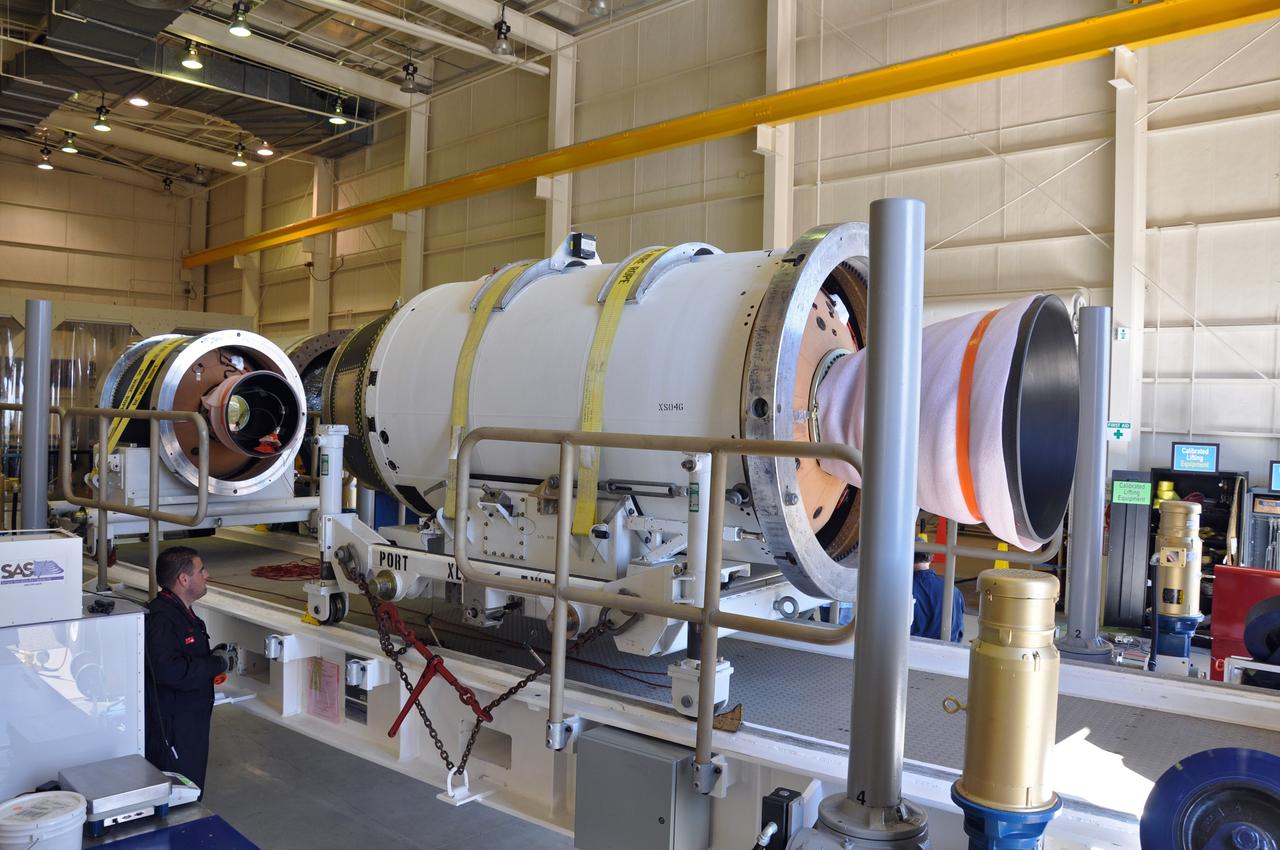
VANDENBERG AIR FORCE BASE, Calif. -- At Vandenberg Air Force Base in California, the second stage of the Pegasus XL rocket that will launch the Nuclear Spectroscopic Telescope Array (NuSTAR) to orbit is ready to move from a jackable rail to a stationary one for processing in Building 1555. After the rocket and spacecraft are processed at Vandenberg, they will be shipped to the Ronald Reagan Ballistic Missile Defense Test Site located at the Pacific Ocean’s Kwajalein Atoll for launch. The high-energy X-ray telescope will conduct a census for black holes, map radioactive material in young supernovae remnants, and study the origins of cosmic rays and the extreme physics around collapsed stars. Photo credit: NASA/Randy Beaudoin, VAFB
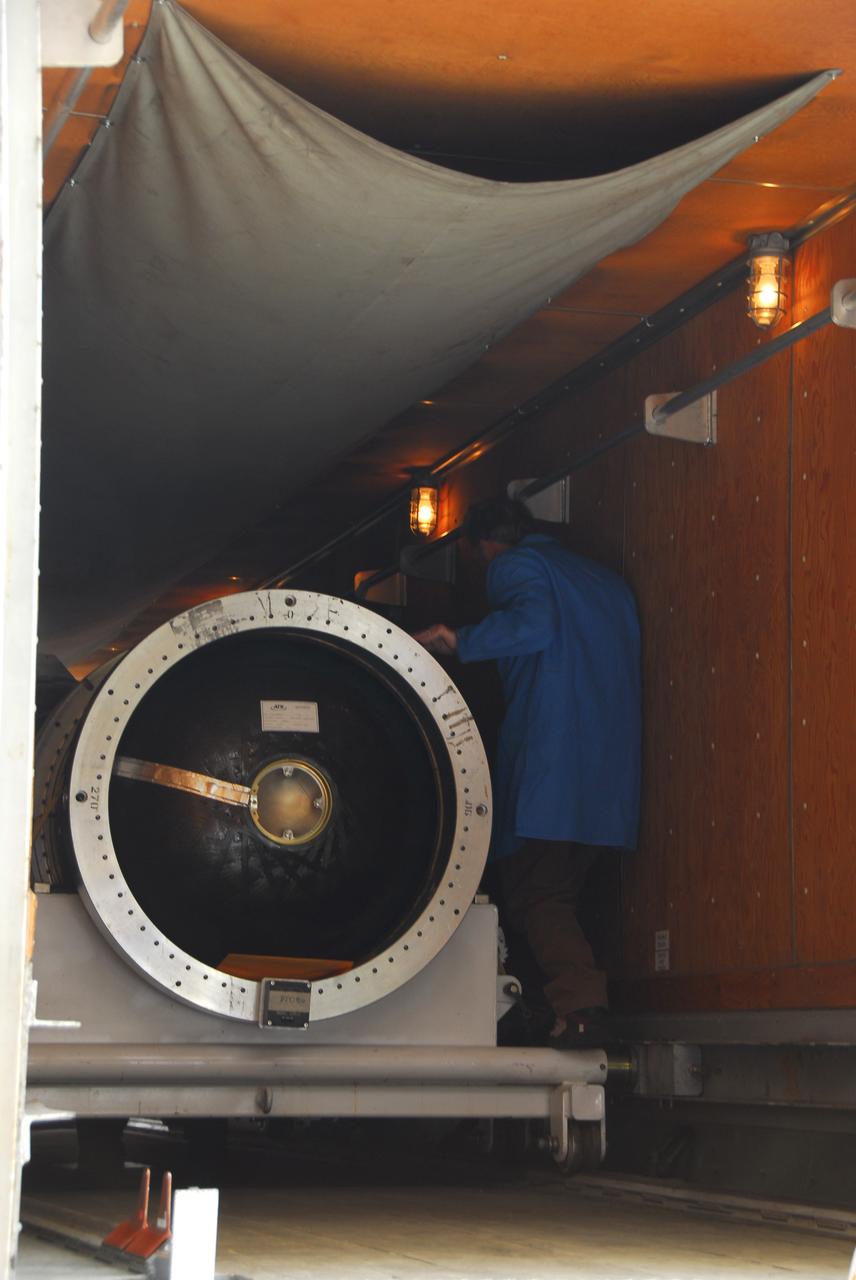
VANDENBERG AIR FORCE BASE, Calif. -- At Vandenberg Air Force Base in California, the third stage of the Pegasus XL rocket that will launch the Nuclear Spectroscopic Telescope Array (NuSTAR) to orbit arrives at Building 1555 for processing. After the rocket and spacecraft are processed at Vandenberg, they will be shipped to the Ronald Reagan Ballistic Missile Defense Test Site located at the Pacific Ocean's Kwajalein Atoll for launch. The high-energy X-ray telescope will conduct a census for black holes, map radioactive material in young supernovae remnants, and study the origins of cosmic rays and the extreme physics around collapsed stars. Photo credit: NASA/Dan Liberotti, VAFB
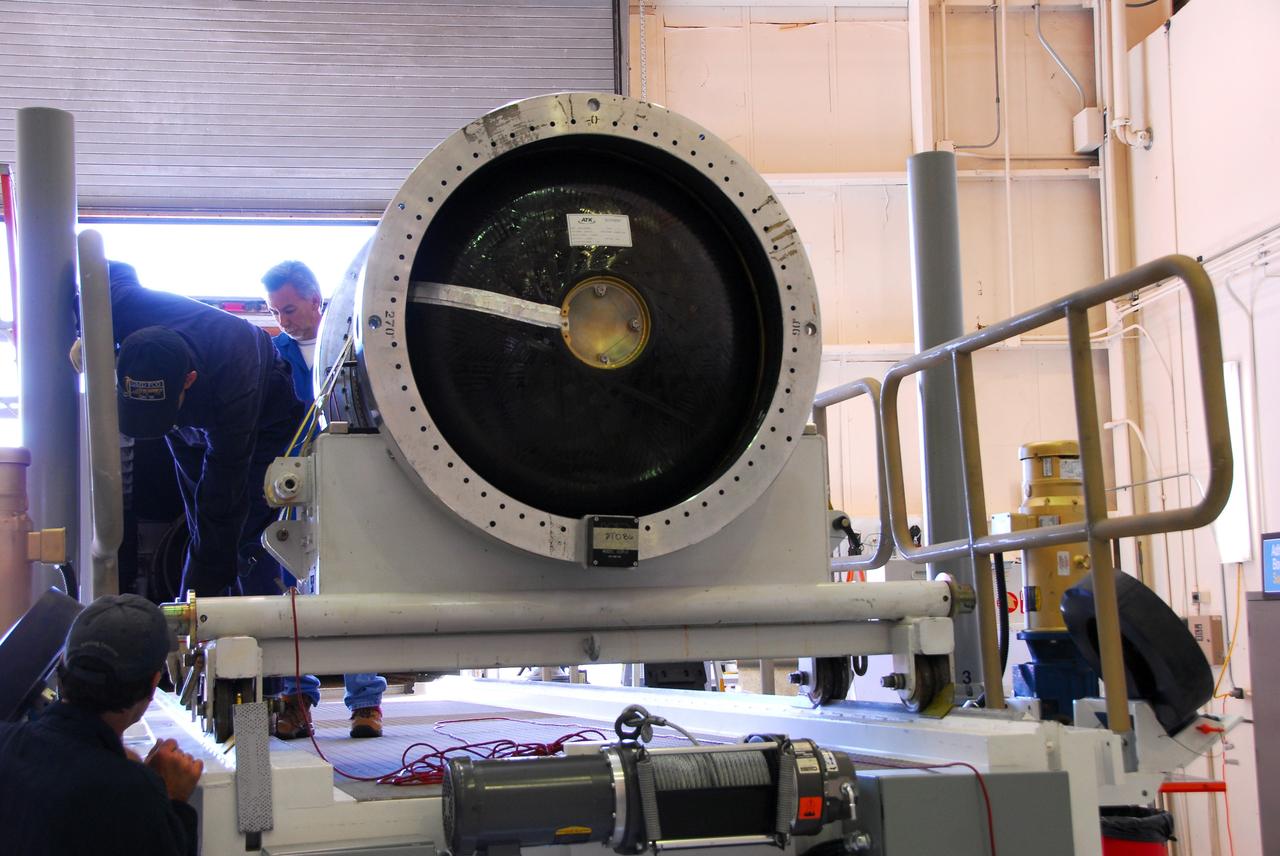
VANDENBERG AIR FORCE BASE, Calif. -- At Vandenberg Air Force Base in California, the third stage of the Pegasus XL rocket that will launch the Nuclear Spectroscopic Telescope Array (NuSTAR) to orbit is moved onto a jackable rail for processing in Building 1555. After the rocket and spacecraft are processed at Vandenberg, they will be shipped to the Ronald Reagan Ballistic Missile Defense Test Site located at the Pacific Ocean’s Kwajalein Atoll for launch. The high-energy X-ray telescope will conduct a census for black holes, map radioactive material in young supernovae remnants, and study the origins of cosmic rays and the extreme physics around collapsed stars. Photo credit: NASA/Dan Liberotti, VAFB
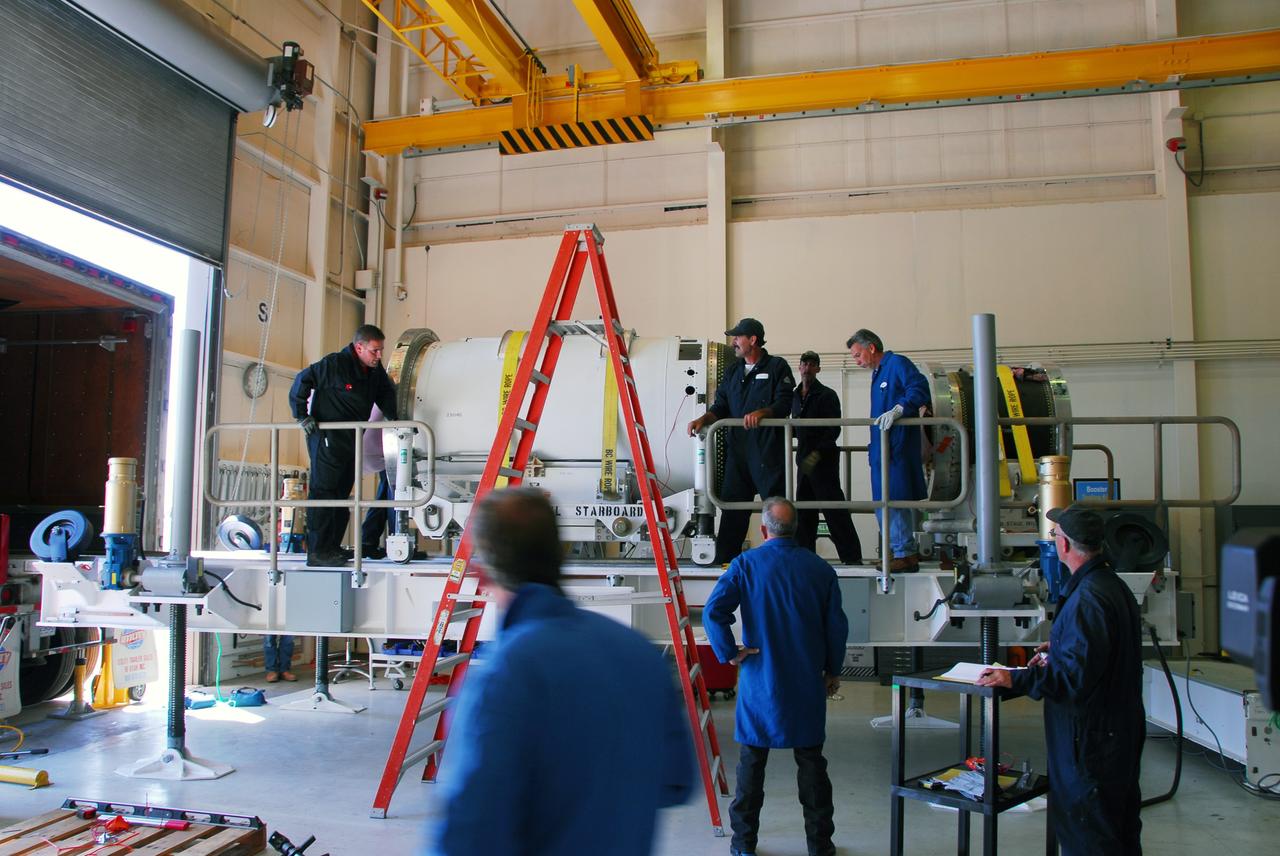
VANDENBERG AIR FORCE BASE, Calif. -- At Vandenberg Air Force Base in California, the second stage of the Pegasus XL rocket, left, that will launch the Nuclear Spectroscopic Telescope Array (NuSTAR) to orbit is moved onto a jackable rail for processing in Building 1555. On the right is the rocket's third stage. After the rocket and spacecraft are processed at Vandenberg, they will be shipped to the Ronald Reagan Ballistic Missile Defense Test Site located at the Pacific Ocean’s Kwajalein Atoll for launch. The high-energy X-ray telescope will conduct a census for black holes, map radioactive material in young supernovae remnants, and study the origins of cosmic rays and the extreme physics around collapsed stars. Photo credit: NASA/Dan Liberotti, VAFB
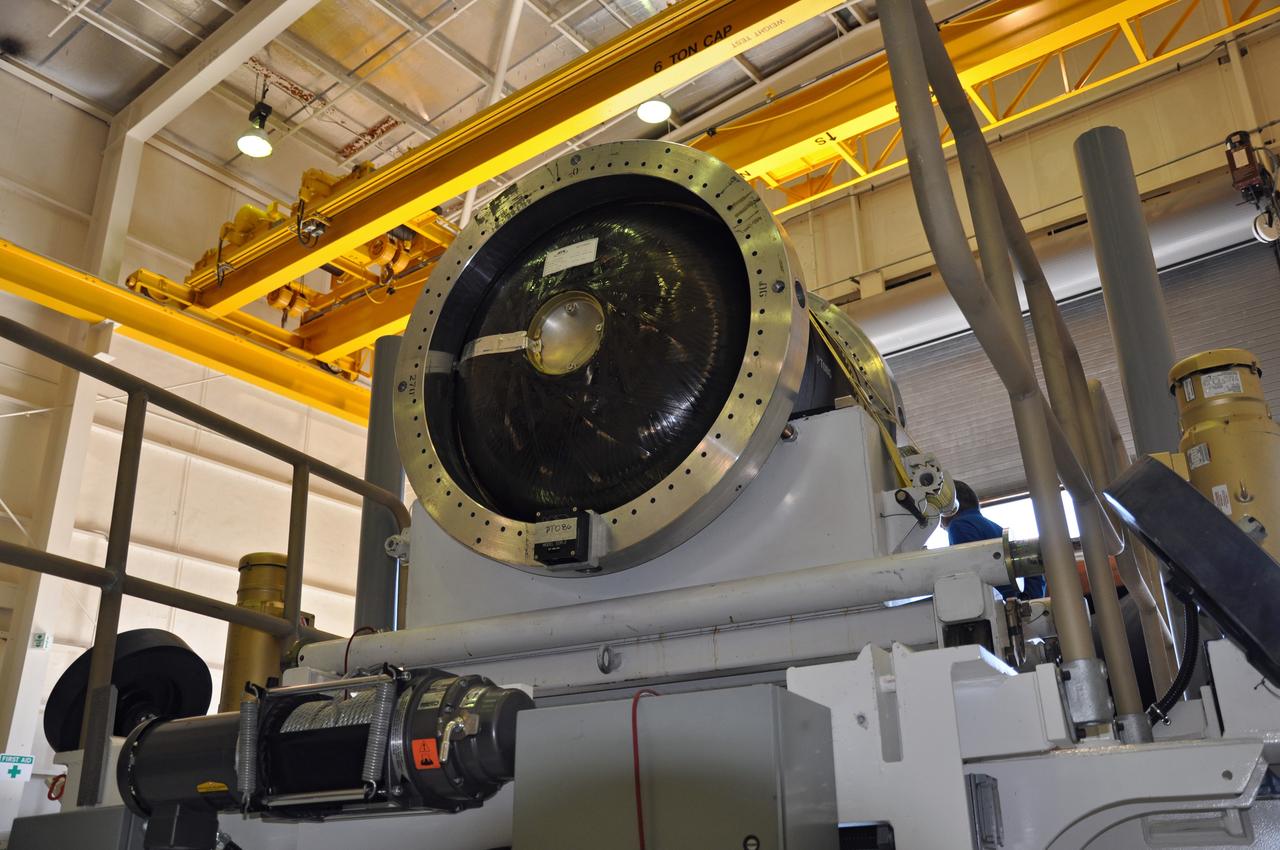
VANDENBERG AIR FORCE BASE, Calif. -- At Vandenberg Air Force Base in California, the third stage of the Pegasus XL rocket that will launch the Nuclear Spectroscopic Telescope Array (NuSTAR) to orbit is offloaded for processing in Building 1555. After the rocket and spacecraft are processed at Vandenberg, they will be shipped to the Ronald Reagan Ballistic Missile Defense Test Site located at the Pacific Ocean’s Kwajalein Atoll for launch. The high-energy X-ray telescope will conduct a census for black holes, map radioactive material in young supernovae remnants, and study the origins of cosmic rays and the extreme physics around collapsed stars. Photo credit: NASA/Randy Beaudoin, VAFB
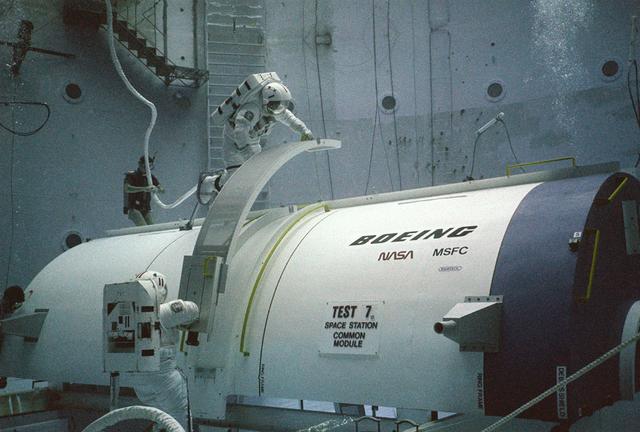
Skylab's success proved that scientific experimentation in a low gravity environment was essential to scientific progress. A more permanent structure was needed to provide this space laboratory. President Ronald Reagan, on January 25, 1984, during his State of the Union address, claimed that the United States should exploit the new frontier of space, and directed NASA to build a permanent marned space station within a decade. The idea was that the space station would not only be used as a laboratory for the advancement of science and medicine, but would also provide a staging area for building a lunar base and manned expeditions to Mars and elsewhere in the solar system. President Reagan invited the international community to join with the United States in this endeavour. NASA and several countries moved forward with this concept. By December 1985, the first phase of the space station was well underway with the design concept for the crew compartments and laboratories. Pictured are two NASA astronauts, at Marshall Space Flight Center's (MSFC) Neutral Buoyancy Simulator (NBS), practicing construction techniques they later used to construct the space station after it was deployed.
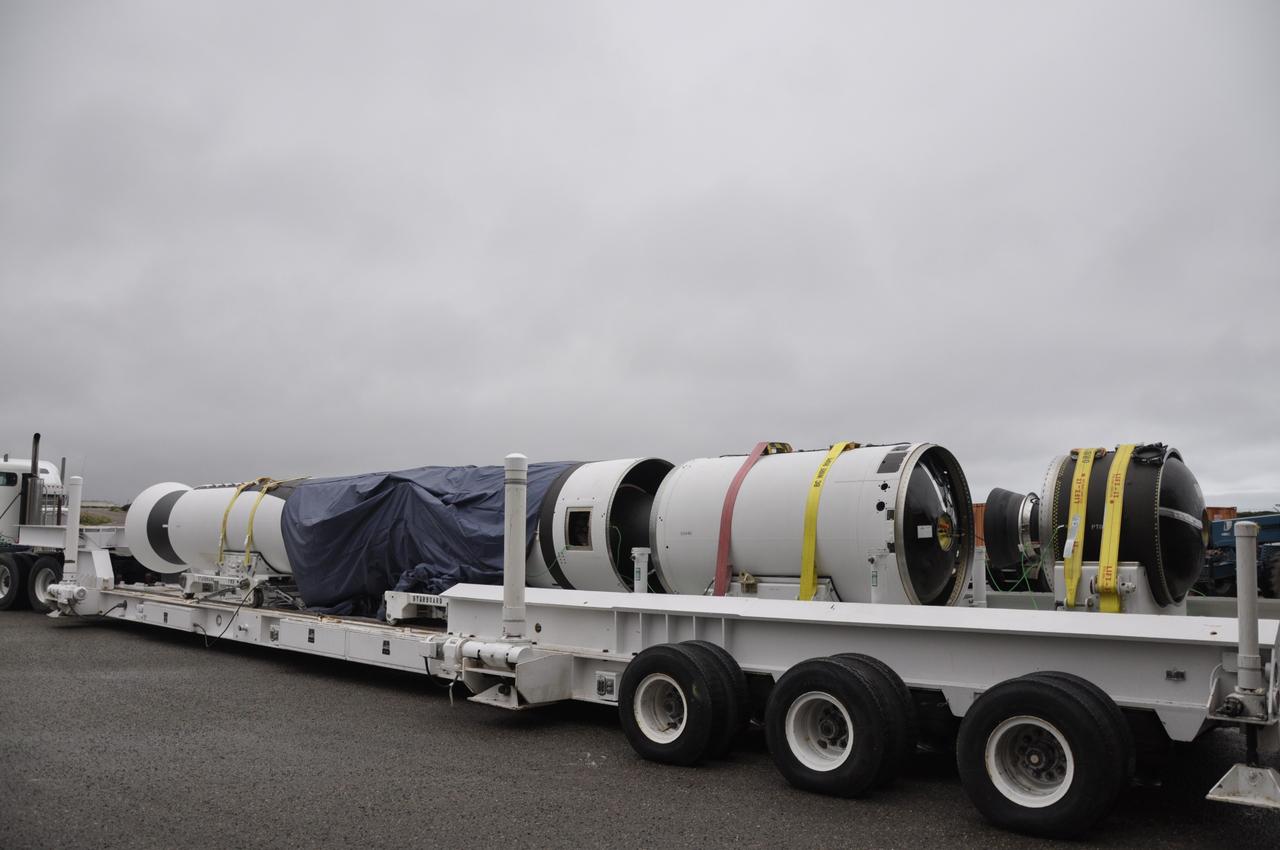
VANDENBERG AIR FORCE BASE, Calif. -- The first, second and third stages of the Orbital Sciences Corp. Pegasus XL rocket that will launch the Nuclear Spectroscopic Telescope Array (NuSTAR) to orbit are moved from the west high bay to the east high bay of Building 1555 at Vandenberg Air Force Base in California. The move will allow technicians to process the spacecraft and fairing in the clean rooms of the east high bay before attaching it to the rocket. After the rocket and spacecraft are processed at Vandenberg, they will be flown on the Orbital Sciences' L-1011 carrier aircraft to the Ronald Reagan Ballistic Missile Defense Test Site located at the Pacific Ocean’s Kwajalein Atoll for launch. The high-energy X-ray telescope will conduct a census for black holes, map radioactive material in young supernovae remnants, and study the origins of cosmic rays and the extreme physics around collapsed stars. Photo credit: NASA/Randy Beaudoin, VAFB
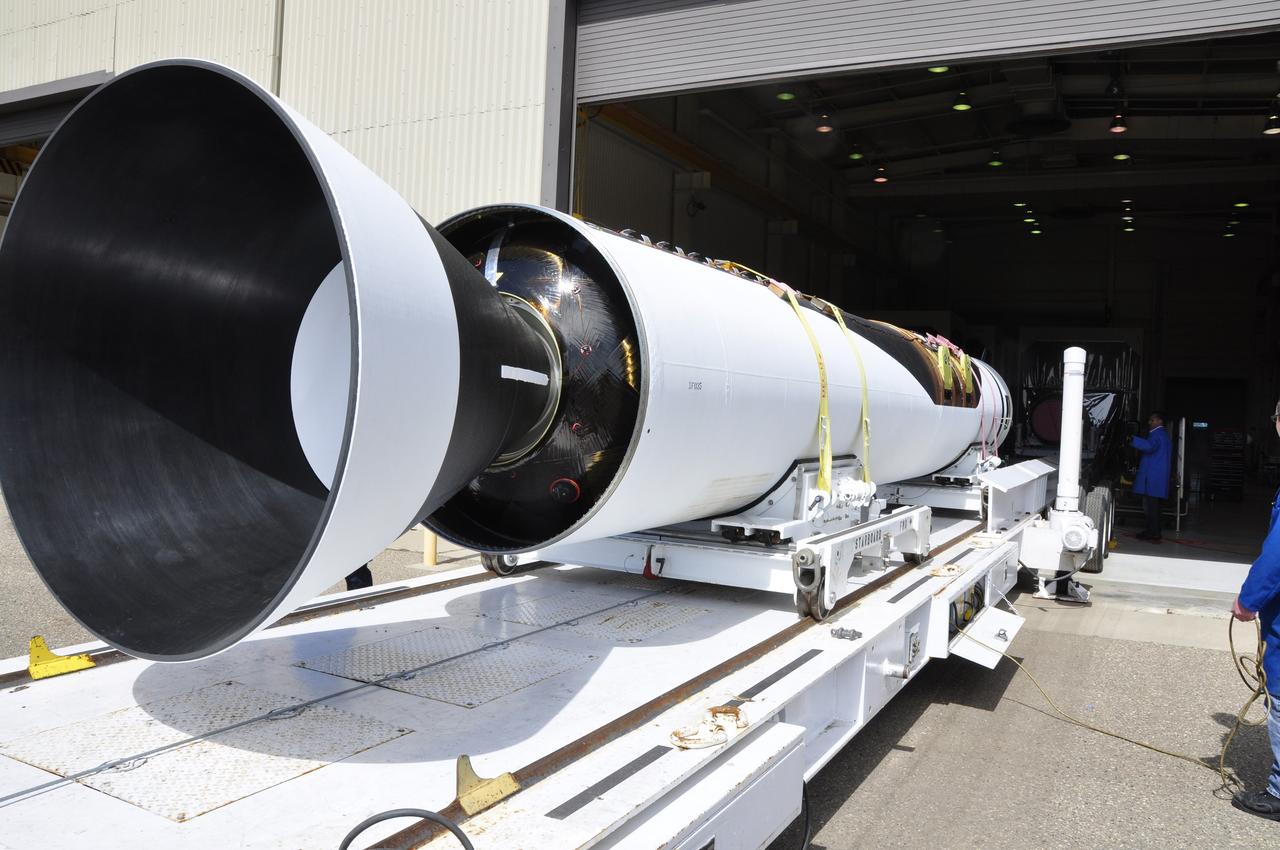
VANDENBERG AIR FORCE BASE, Calif. -- The first, second and third stages of the Orbital Sciences Corp. Pegasus XL rocket that will launch the Nuclear Spectroscopic Telescope Array NuSTAR to orbit are moved from the west high bay to the east high bay of Building 1555 at Vandenberg Air Force Base in California. The move will allow technicians to process the spacecraft and fairing in the clean rooms of the east high bay before attaching it to the rocket. After the rocket and spacecraft are processed at Vandenberg, they will be flown on the Orbital Sciences' L-1011 carrier aircraft to the Ronald Reagan Ballistic Missile Defense Test Site located at the Pacific Ocean’s Kwajalein Atoll for launch. The high-energy X-ray telescope will conduct a census for black holes, map radioactive material in young supernovae remnants, and study the origins of cosmic rays and the extreme physics around collapsed stars. Photo credit: NASA/Randy Beaudoin, VAFB

VANDENBERG AIR FORCE BASE, Calif. -- Orbital Sciences Corp. technicians prepare to move the first, second and third stages of the Pegasus XL rocket that will launch the Nuclear Spectroscopic Telescope Array NuSTAR to orbit from the west high bay to the east high bay of Building 1555 at Vandenberg Air Force Base in California. The move will allow technicians to process the spacecraft and fairing in the clean rooms of the east high bay before attaching it to the rocket. After the rocket and spacecraft are processed at Vandenberg, they will be flown on the Orbital Sciences' L-1011 carrier aircraft to the Ronald Reagan Ballistic Missile Defense Test Site located at the Pacific Ocean’s Kwajalein Atoll for launch. The high-energy X-ray telescope will conduct a census for black holes, map radioactive material in young supernovae remnants, and study the origins of cosmic rays and the extreme physics around collapsed stars. Photo credit: NASA/Randy Beaudoin, VAFB
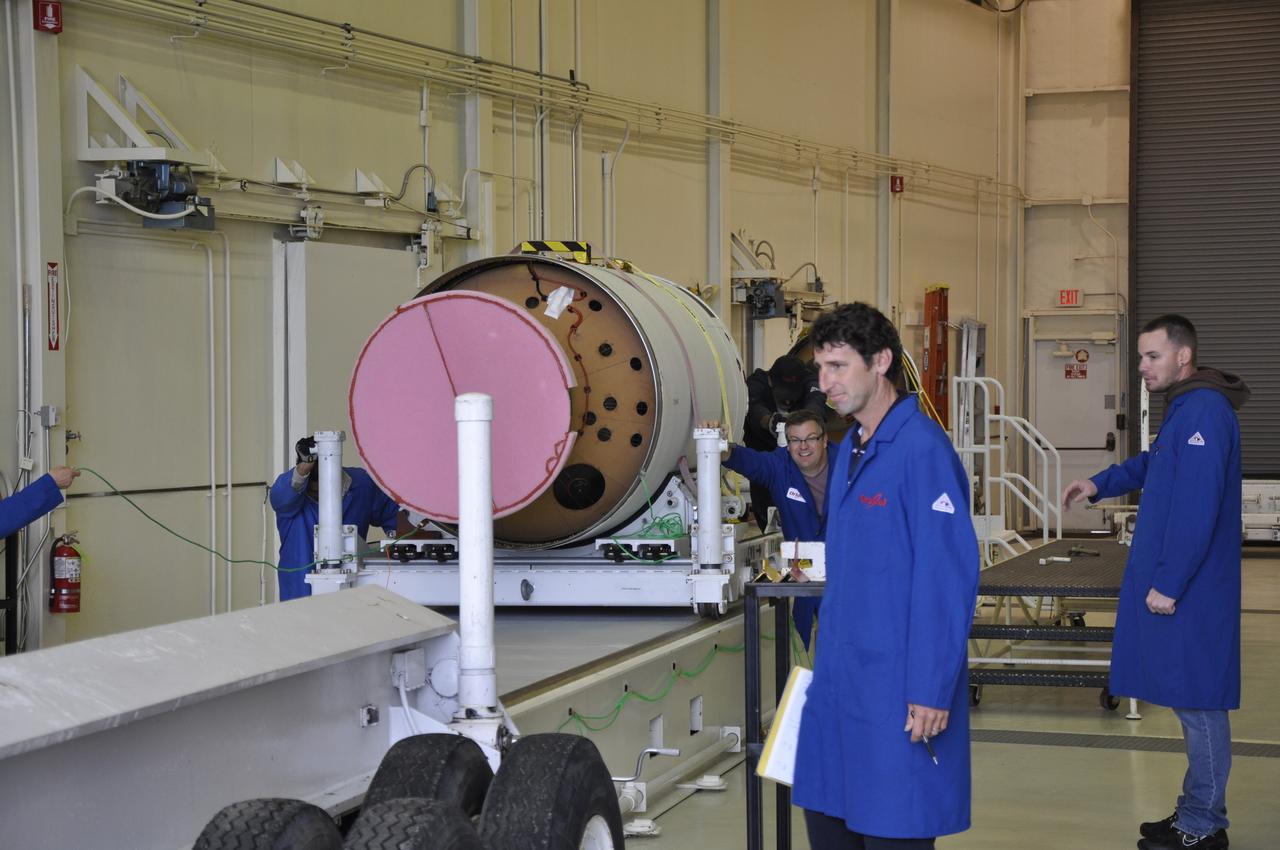
VANDENBERG AIR FORCE BASE, Calif. -- Orbital Sciences Corp. technicians prepare to move the first, second and third stages of the Pegasus XL rocket that will launch the Nuclear Spectroscopic Telescope Array NuSTAR to orbit from the west high bay to the east high bay of Building 1555 at Vandenberg Air Force Base in California. The move will allow technicians to process the spacecraft and fairing in the clean rooms of the east high bay before attaching it to the rocket. After the rocket and spacecraft are processed at Vandenberg, they will be flown on the Orbital Sciences' L-1011 carrier aircraft to the Ronald Reagan Ballistic Missile Defense Test Site located at the Pacific Ocean’s Kwajalein Atoll for launch. The high-energy X-ray telescope will conduct a census for black holes, map radioactive material in young supernovae remnants, and study the origins of cosmic rays and the extreme physics around collapsed stars. Photo credit: NASA/Randy Beaudoin, VAFB
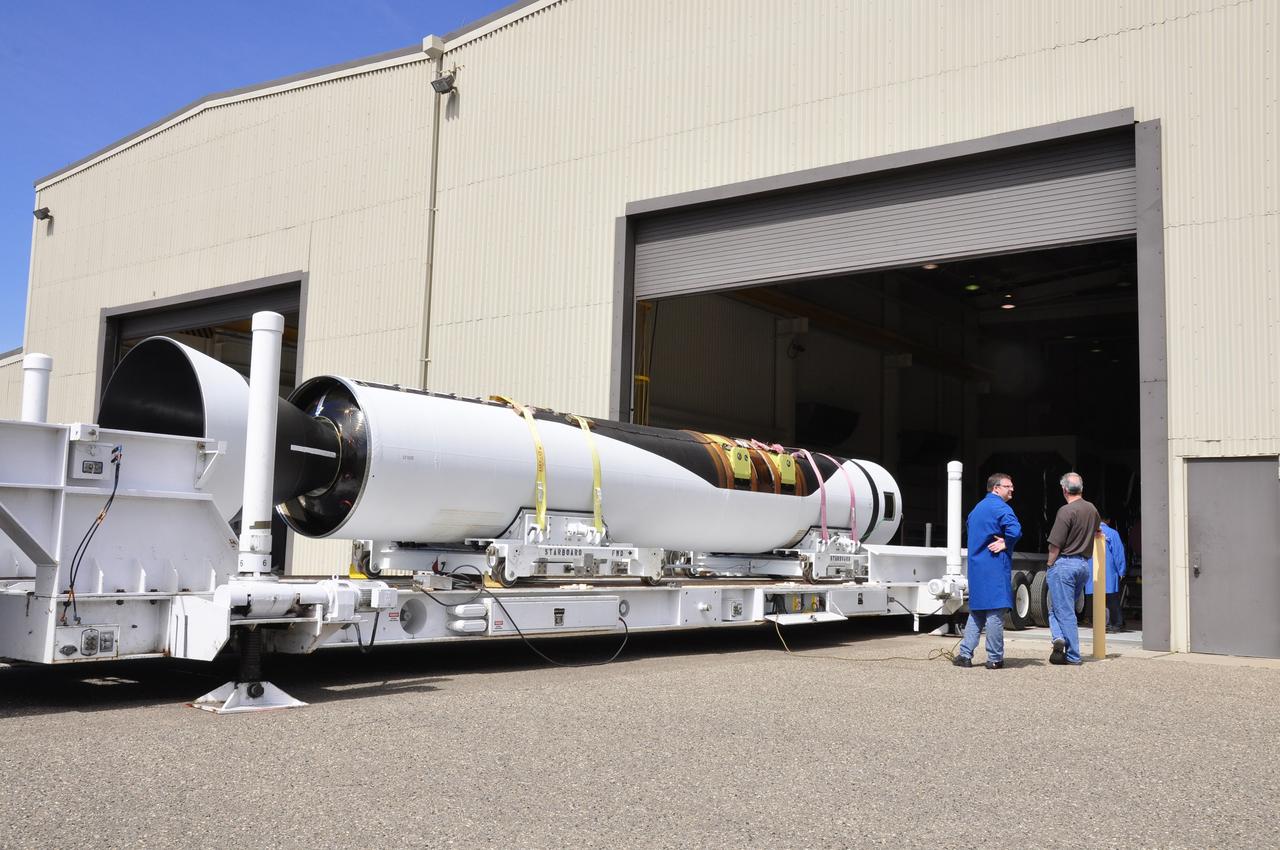
VANDENBERG AIR FORCE BASE, Calif. -- The first, second and third stages of the Orbital Sciences Corp. Pegasus XL rocket that will launch the Nuclear Spectroscopic Telescope Array NuSTAR to orbit are moved from the west high bay to the east high bay of Building 1555 at Vandenberg Air Force Base in California. The move will allow technicians to process the spacecraft and fairing in the clean rooms of the east high bay before attaching it to the rocket. After the rocket and spacecraft are processed at Vandenberg, they will be flown on the Orbital Sciences' L-1011 carrier aircraft to the Ronald Reagan Ballistic Missile Defense Test Site located at the Pacific Ocean’s Kwajalein Atoll for launch. The high-energy X-ray telescope will conduct a census for black holes, map radioactive material in young supernovae remnants, and study the origins of cosmic rays and the extreme physics around collapsed stars. Photo credit: NASA/Randy Beaudoin, VAFB
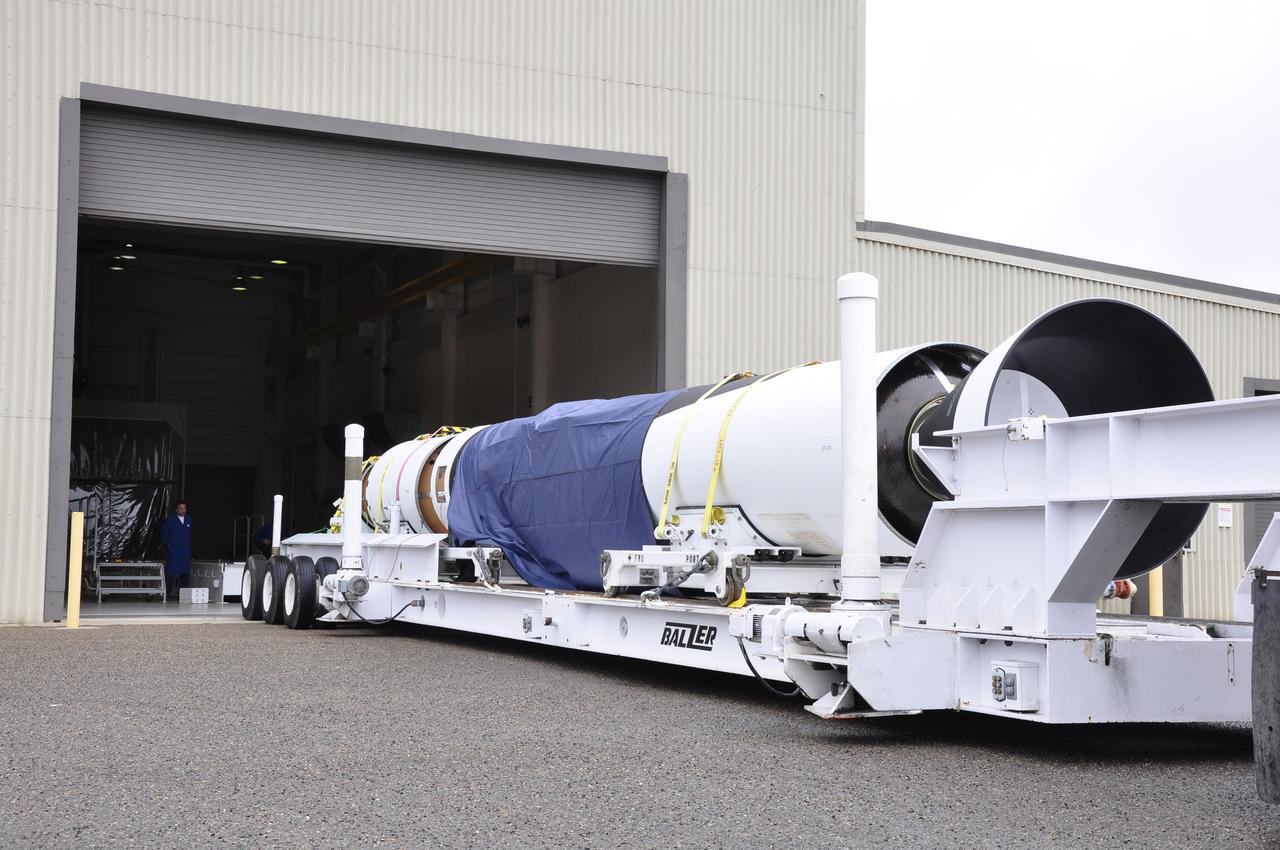
VANDENBERG AIR FORCE BASE, Calif. -- The first, second and third stages of the Orbital Sciences Corp. Pegasus XL rocket that will launch the Nuclear Spectroscopic Telescope Array NuSTAR to orbit are moved from the west high bay to the east high bay of Building 1555 at Vandenberg Air Force Base in California. The move will allow technicians to process the spacecraft and fairing in the clean rooms of the east high bay before attaching it to the rocket. After the rocket and spacecraft are processed at Vandenberg, they will be flown on the Orbital Sciences' L-1011 carrier aircraft to the Ronald Reagan Ballistic Missile Defense Test Site located at the Pacific Ocean’s Kwajalein Atoll for launch. The high-energy X-ray telescope will conduct a census for black holes, map radioactive material in young supernovae remnants, and study the origins of cosmic rays and the extreme physics around collapsed stars. Photo credit: NASA/Randy Beaudoin, VAFB
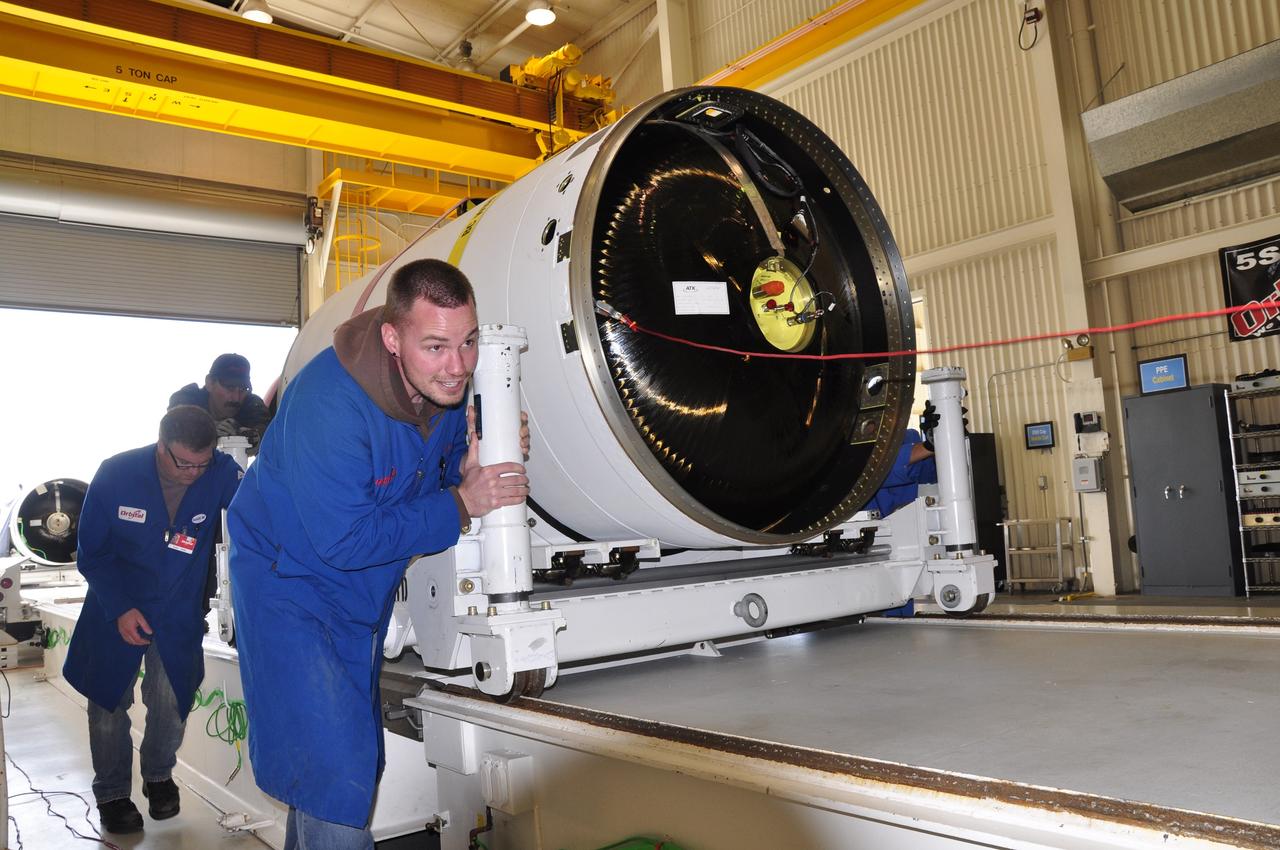
VANDENBERG AIR FORCE BASE, Calif. -- The first, second and third stages of the Orbital Sciences Corp. Pegasus XL rocket that will launch the Nuclear Spectroscopic Telescope Array NuSTAR to orbit are moved from the west high bay to the east high bay of Building 1555 at Vandenberg Air Force Base in California. The move will allow technicians to process the spacecraft and fairing in the clean rooms of the east high bay before attaching it to the rocket. After the rocket and spacecraft are processed at Vandenberg, they will be flown on the Orbital Sciences' L-1011 carrier aircraft to the Ronald Reagan Ballistic Missile Defense Test Site located at the Pacific Ocean’s Kwajalein Atoll for launch. The high-energy X-ray telescope will conduct a census for black holes, map radioactive material in young supernovae remnants, and study the origins of cosmic rays and the extreme physics around collapsed stars. Photo credit: NASA/Randy Beaudoin, VAFB
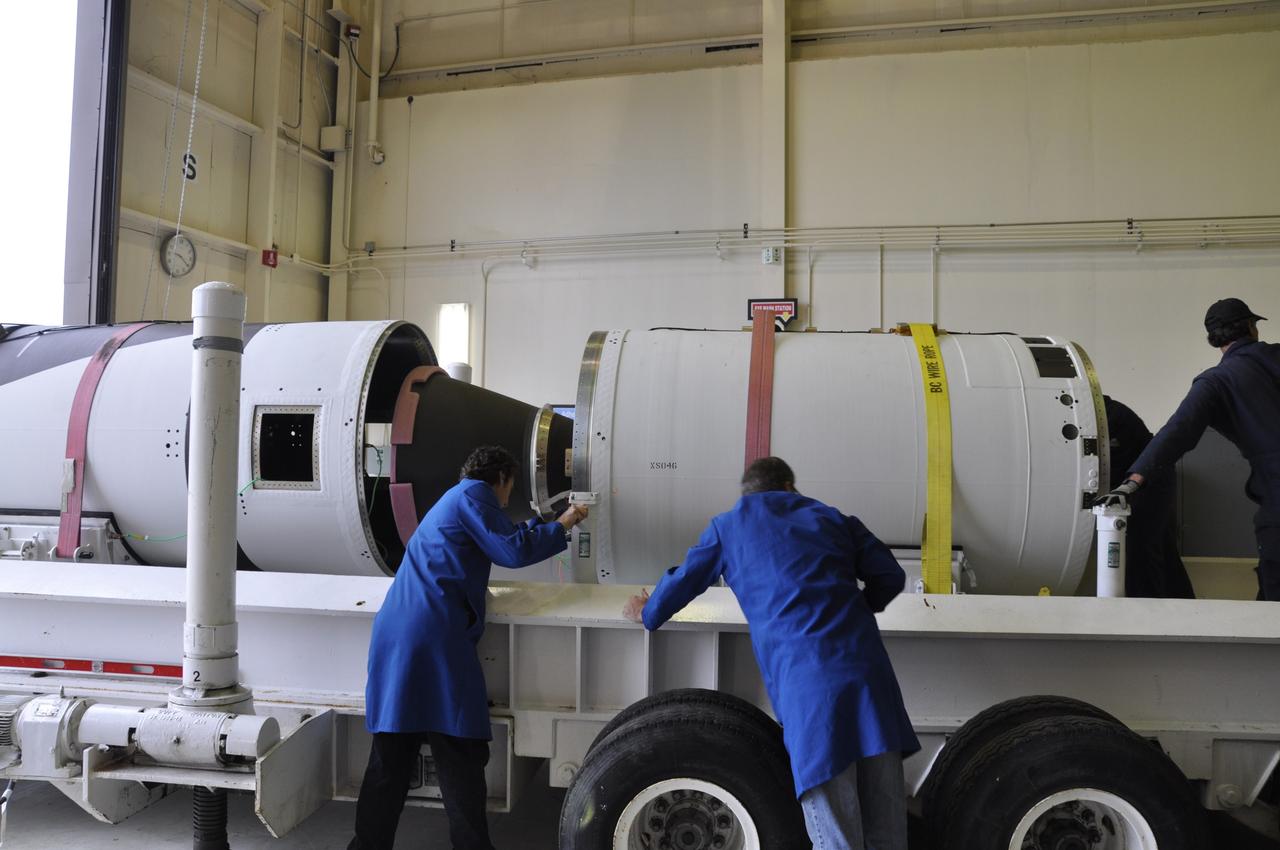
VANDENBERG AIR FORCE BASE, Calif. -- Orbital Sciences Corp. technicians prepare to move the first, second and third stages of the Pegasus XL rocket that will launch the Nuclear Spectroscopic Telescope Array NuSTAR to orbit from the west high bay to the east high bay of Building 1555 at Vandenberg Air Force Base in California. The move will allow technicians to process the spacecraft and fairing in the clean rooms of the east high bay before attaching it to the rocket. After the rocket and spacecraft are processed at Vandenberg, they will be flown on the Orbital Sciences' L-1011 carrier aircraft to the Ronald Reagan Ballistic Missile Defense Test Site located at the Pacific Ocean’s Kwajalein Atoll for launch. The high-energy X-ray telescope will conduct a census for black holes, map radioactive material in young supernovae remnants, and study the origins of cosmic rays and the extreme physics around collapsed stars. Photo credit: NASA/Randy Beaudoin, VAFB
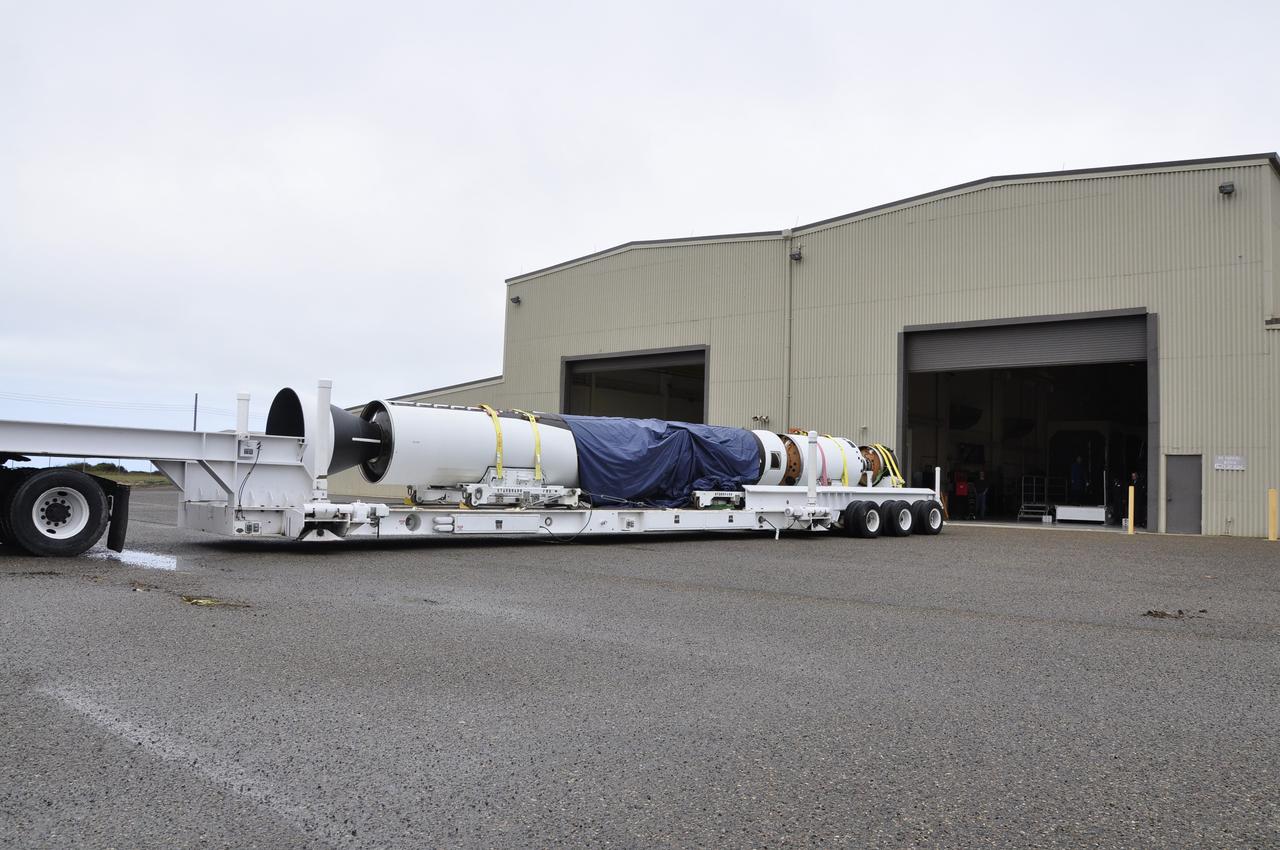
VANDENBERG AIR FORCE BASE, Calif. -- The first, second and third stages of the Orbital Sciences Corp. Pegasus XL rocket that will launch the Nuclear Spectroscopic Telescope Array NuSTAR to orbit are moved from the west high bay to the east high bay of Building 1555 at Vandenberg Air Force Base in California. The move will allow technicians to process the spacecraft and fairing in the clean rooms of the east high bay before attaching it to the rocket. After the rocket and spacecraft are processed at Vandenberg, they will be flown on the Orbital Sciences' L-1011 carrier aircraft to the Ronald Reagan Ballistic Missile Defense Test Site located at the Pacific Ocean’s Kwajalein Atoll for launch. The high-energy X-ray telescope will conduct a census for black holes, map radioactive material in young supernovae remnants, and study the origins of cosmic rays and the extreme physics around collapsed stars. Photo credit: NASA/Randy Beaudoin, VAFB
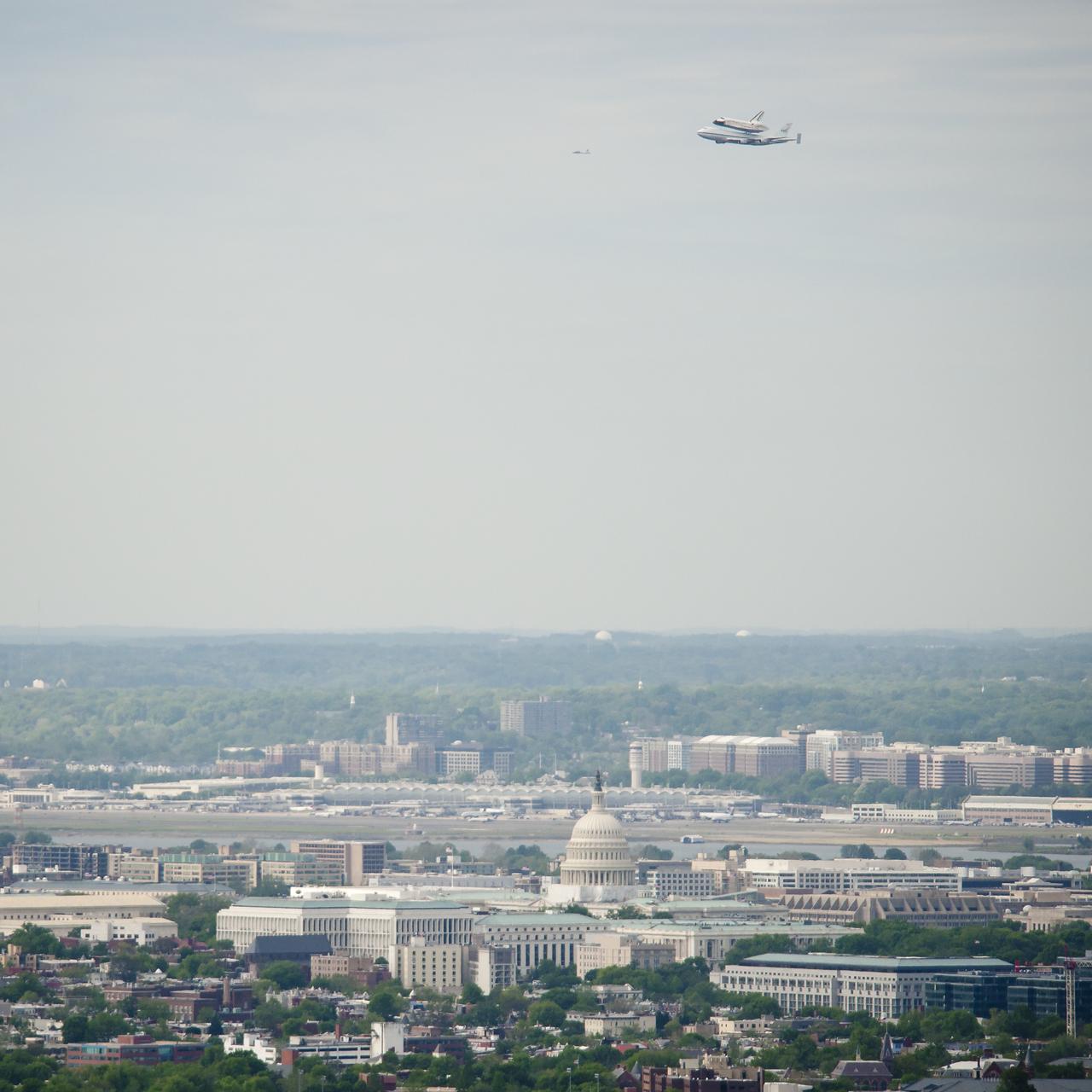
Space shuttle Discovery, mounted atop a NASA 747 Shuttle Carrier Aircraft (SCA) flies near the U.S. Capitol, Tuesday, April 17, 2012, in Washington. Discovery, the first orbiter retired from NASA’s shuttle fleet, completed 39 missions, spent 365 days in space, orbited the Earth 5,830 times, and traveled 148,221,675 miles. NASA will transfer Discovery to the National Air and Space Museum to begin its new mission to commemorate past achievements in space and to educate and inspire future generations of explorers. Photo Credit: (NASA/Bill Ingalls)