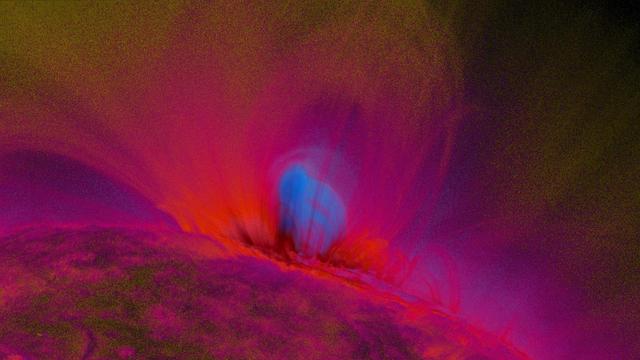
Caption: This is an image of magnetic loops on the sun, captured by NASA's Solar Dynamics Observatory (SDO). It has been processed to highlight the edges of each loop to make the structure more clear. A series of loops such as this is known as a flux rope, and these lie at the heart of eruptions on the sun known as coronal mass ejections (CMEs.) This is the first time scientists were able to discern the timing of a flux rope's formation. (SDO AIA 131 and 171 difference blended image of flux ropes during CME.) Credit: NASA/Goddard Space Flight Center/SDO ---- On July 18, 2012, a fairly small explosion of light burst off the lower right limb of the sun. Such flares often come with an associated eruption of solar material, known as a coronal mass ejection or CME – but this one did not. Something interesting did happen, however. Magnetic field lines in this area of the sun's atmosphere, the corona, began to twist and kink, generating the hottest solar material – a charged gas called plasma – to trace out the newly-formed slinky shape. The plasma glowed brightly in extreme ultraviolet images from the Atmospheric Imaging Assembly (AIA) aboard NASA’s Solar Dynamics Observatory (SDO) and scientists were able to watch for the first time the very formation of something they had long theorized was at the heart of many eruptive events on the sun: a flux rope. Eight hours later, on July 19, the same region flared again. This time the flux rope's connection to the sun was severed, and the magnetic fields escaped into space, dragging billions of tons of solar material along for the ride -- a classic CME. "Seeing this structure was amazing," says Angelos Vourlidas, a solar scientist at the Naval Research Laboratory in Washington, D.C. "It looks exactly like the cartoon sketches theorists have been drawing of flux ropes since the 1970s. It was a series of figure eights lined up to look like a giant slinky on the sun." <b>To read more about this new discovery go to: <a href="http://1.usa.gov/14UHsTt" rel="nofollow">1.usa.gov/14UHsTt</a> </b>
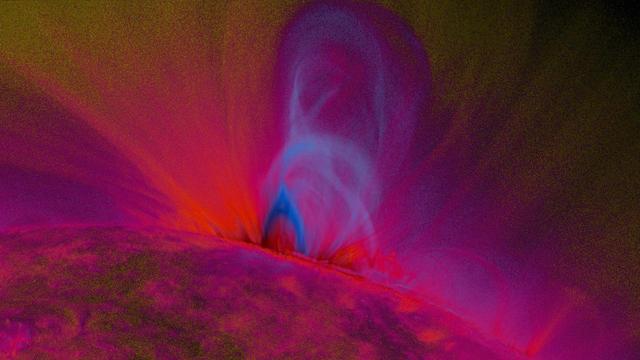
Caption: This is an image of magnetic loops on the sun, captured by NASA's Solar Dynamics Observatory (SDO). It has been processed to highlight the edges of each loop to make the structure more clear. A series of loops such as this is known as a flux rope, and these lie at the heart of eruptions on the sun known as coronal mass ejections (CMEs.) This is the first time scientists were able to discern the timing of a flux rope's formation. (SDO AIA 131 and 171 difference blended image of flux ropes during CME.) Credit: NASA/Goddard Space Flight Center/SDO ---- On July 18, 2012, a fairly small explosion of light burst off the lower right limb of the sun. Such flares often come with an associated eruption of solar material, known as a coronal mass ejection or CME – but this one did not. Something interesting did happen, however. Magnetic field lines in this area of the sun's atmosphere, the corona, began to twist and kink, generating the hottest solar material – a charged gas called plasma – to trace out the newly-formed slinky shape. The plasma glowed brightly in extreme ultraviolet images from the Atmospheric Imaging Assembly (AIA) aboard NASA’s Solar Dynamics Observatory (SDO) and scientists were able to watch for the first time the very formation of something they had long theorized was at the heart of many eruptive events on the sun: a flux rope. Eight hours later, on July 19, the same region flared again. This time the flux rope's connection to the sun was severed, and the magnetic fields escaped into space, dragging billions of tons of solar material along for the ride -- a classic CME. "Seeing this structure was amazing," says Angelos Vourlidas, a solar scientist at the Naval Research Laboratory in Washington, D.C. "It looks exactly like the cartoon sketches theorists have been drawing of flux ropes since the 1970s. It was a series of figure eights lined up to look like a giant slinky on the sun." <b>To read more about this new discovery go to: <a href="http://1.usa.gov/14UHsTt" rel="nofollow">1.usa.gov/14UHsTt</a> </b>
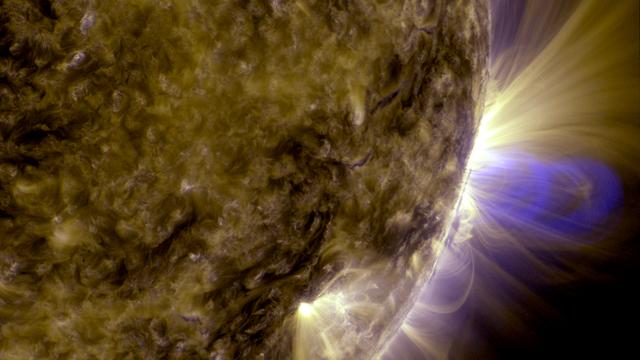
Caption: This is an image of magnetic loops on the sun, captured by NASA's Solar Dynamics Observatory (SDO). It has been processed to highlight the edges of each loop to make the structure more clear. A series of loops such as this is known as a flux rope, and these lie at the heart of eruptions on the sun known as coronal mass ejections (CMEs.) This is the first time scientists were able to discern the timing of a flux rope's formation. (Blended 131 Angstrom and 171 Angstrom images of July 19, 2012 flare and CME.) Credit: NASA/Goddard Space Flight Center/SDO ---- On July 18, 2012, a fairly small explosion of light burst off the lower right limb of the sun. Such flares often come with an associated eruption of solar material, known as a coronal mass ejection or CME – but this one did not. Something interesting did happen, however. Magnetic field lines in this area of the sun's atmosphere, the corona, began to twist and kink, generating the hottest solar material – a charged gas called plasma – to trace out the newly-formed slinky shape. The plasma glowed brightly in extreme ultraviolet images from the Atmospheric Imaging Assembly (AIA) aboard NASA’s Solar Dynamics Observatory (SDO) and scientists were able to watch for the first time the very formation of something they had long theorized was at the heart of many eruptive events on the sun: a flux rope. Eight hours later, on July 19, the same region flared again. This time the flux rope's connection to the sun was severed, and the magnetic fields escaped into space, dragging billions of tons of solar material along for the ride -- a classic CME. "Seeing this structure was amazing," says Angelos Vourlidas, a solar scientist at the Naval Research Laboratory in Washington, D.C. "It looks exactly like the cartoon sketches theorists have been drawing of flux ropes since the 1970s. It was a series of figure eights lined up to look like a giant slinky on the sun." <b>To read more about this new discovery go to: <a href="http://1.usa.gov/14UHsTt" rel="nofollow">1.usa.gov/14UHsTt</a> </b> <b><a href="http://www.nasa.gov/audience/formedia/features/MP_Photo_Guidelines.html" rel="nofollow">NASA image use policy.</a></b> <b><a href="http://www.nasa.gov/centers/goddard/home/index.html" rel="nofollow">NASA Goddard Space Flight Center</a></b> enables NASA’s mission through four scientific endeavors: Earth Science, Heliophysics, Solar System Exploration, and Astrophysics. Goddard plays a leading role in NASA’s accomplishments by contributing compelling scientific knowledge to advance the Agency’s mission. <b>Follow us on <a href="http://twitter.com/NASA_GoddardPix" rel="nofollow">Twitter</a></b> <b>Like us on <a href="http://www.facebook.com/pages/Greenbelt-MD/NASA-Goddard/395013845897?ref=tsd" rel="nofollow">Facebook</a></b> <b>Find us on <a href="http://instagram.com/nasagoddard?vm=grid" rel="nofollow">Instagram</a></b>
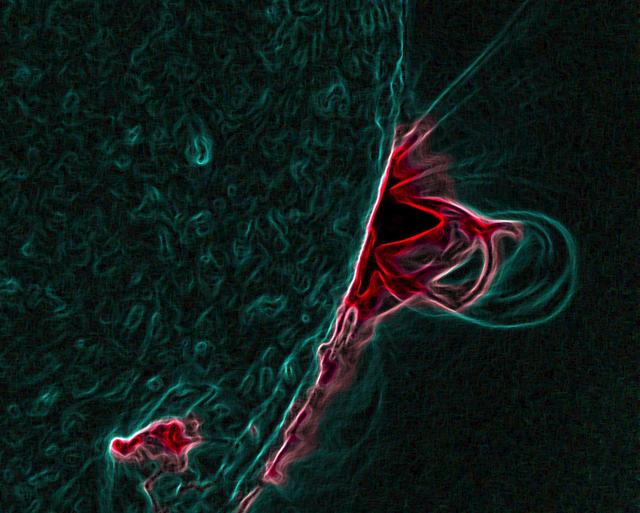
Caption: This is an image of magnetic loops on the sun, captured by NASA's Solar Dynamics Observatory on July 18, 2012. It has been processed to highlight the edges of each loop to make the structure more clear. A series of loops such as this is known as a flux rope, and these lie at the heart of eruptions on the sun known as coronal mass ejections (CMEs.) This is the first time scientists were able to discern the timing of a flux rope's formation. Credit: NASA/Goddard Space Flight Center/SDO ---- On July 18, 2012, a fairly small explosion of light burst off the lower right limb of the sun. Such flares often come with an associated eruption of solar material, known as a coronal mass ejection or CME – but this one did not. Something interesting did happen, however. Magnetic field lines in this area of the sun's atmosphere, the corona, began to twist and kink, generating the hottest solar material – a charged gas called plasma – to trace out the newly-formed slinky shape. The plasma glowed brightly in extreme ultraviolet images from the Atmospheric Imaging Assembly (AIA) aboard NASA’s Solar Dynamics Observatory (SDO) and scientists were able to watch for the first time the very formation of something they had long theorized was at the heart of many eruptive events on the sun: a flux rope. Eight hours later, on July 19, the same region flared again. This time the flux rope's connection to the sun was severed, and the magnetic fields escaped into space, dragging billions of tons of solar material along for the ride -- a classic CME. "Seeing this structure was amazing," says Angelos Vourlidas, a solar scientist at the Naval Research Laboratory in Washington, D.C. "It looks exactly like the cartoon sketches theorists have been drawing of flux ropes since the 1970s. It was a series of figure eights lined up to look like a giant slinky on the sun." <b>To read more about this new discovery go to: <a href="http://1.usa.gov/14UHsTt" rel="nofollow">1.usa.gov/14UHsTt</a> </b> <b><a href="http://www.nasa.gov/audience/formedia/features/MP_Photo_Guidelines.html" rel="nofollow">NASA image use policy.</a></b> <b><a href="http://www.nasa.gov/centers/goddard/home/index.html" rel="nofollow">NASA Goddard Space Flight Center</a></b> enables NASA’s mission through four scientific endeavors: Earth Science, Heliophysics, Solar System Exploration, and Astrophysics. Goddard plays a leading role in NASA’s accomplishments by contributing compelling scientific knowledge to advance the Agency’s mission. <b>Follow us on <a href="http://twitter.com/NASA_GoddardPix" rel="nofollow">Twitter</a></b> <b>Like us on <a href="http://www.facebook.com/pages/Greenbelt-MD/NASA-Goddard/395013845897?ref=tsd" rel="nofollow">Facebook</a></b> <b>Find us on <a href="http://instagram.com/nasagoddard?vm=grid" rel="nofollow">Instagram</a></b>

Sarah Dastugue, 11, leaps in the air as Libby Knox, 9, swings a jump rope. The children were participants in Nickelodeon's Worldwide Day of Play celebration at Stennis Space Center (SSC) on Oct. 1. On the day of the event, children all over the world participate in physical activities as part of the celebration.
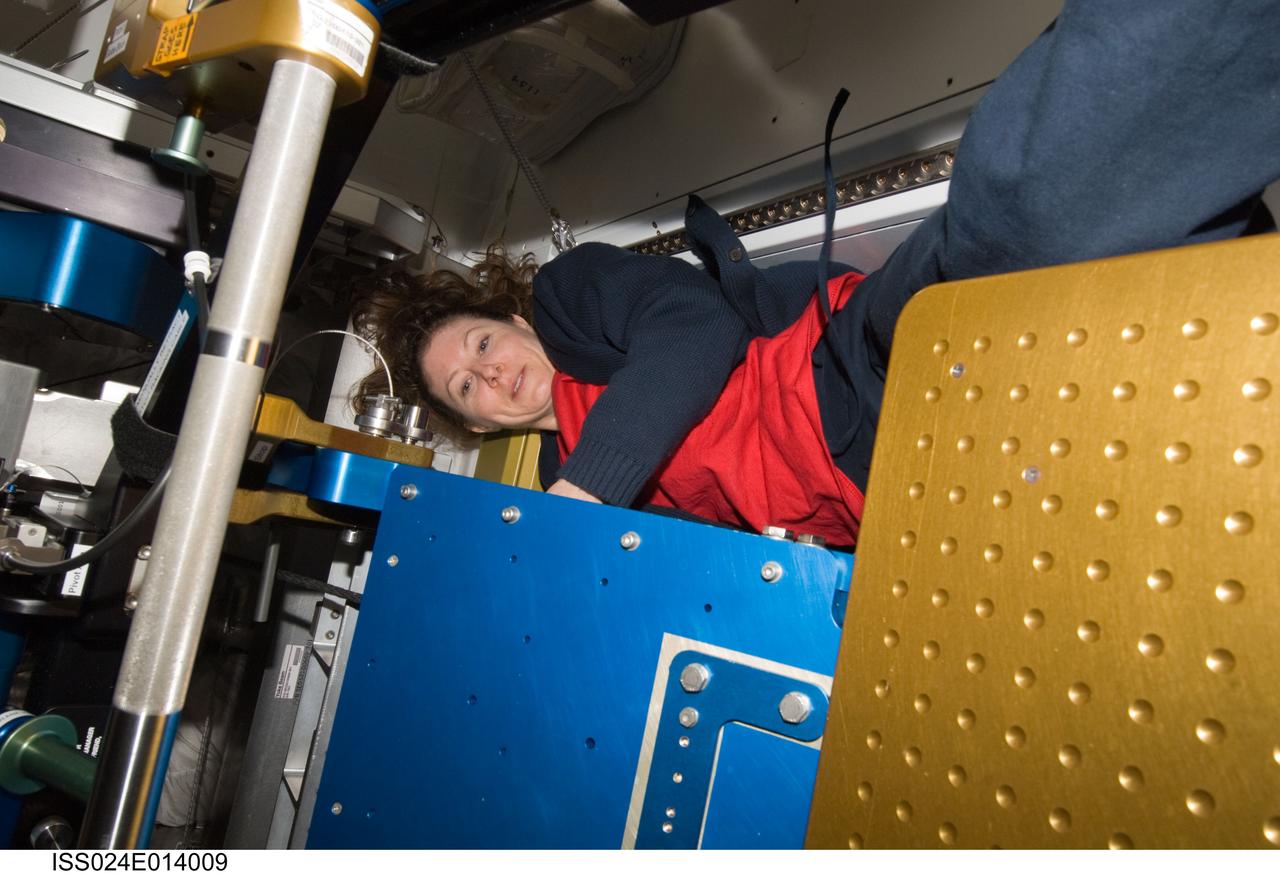
ISS024-E-014009 (9 Sept. 2010) --- NASA astronaut Tracy Caldwell Dyson, Expedition 24 flight engineer, works with the advanced Resistive Exercise Device (aRED) in the Tranquility node of the International Space Station.
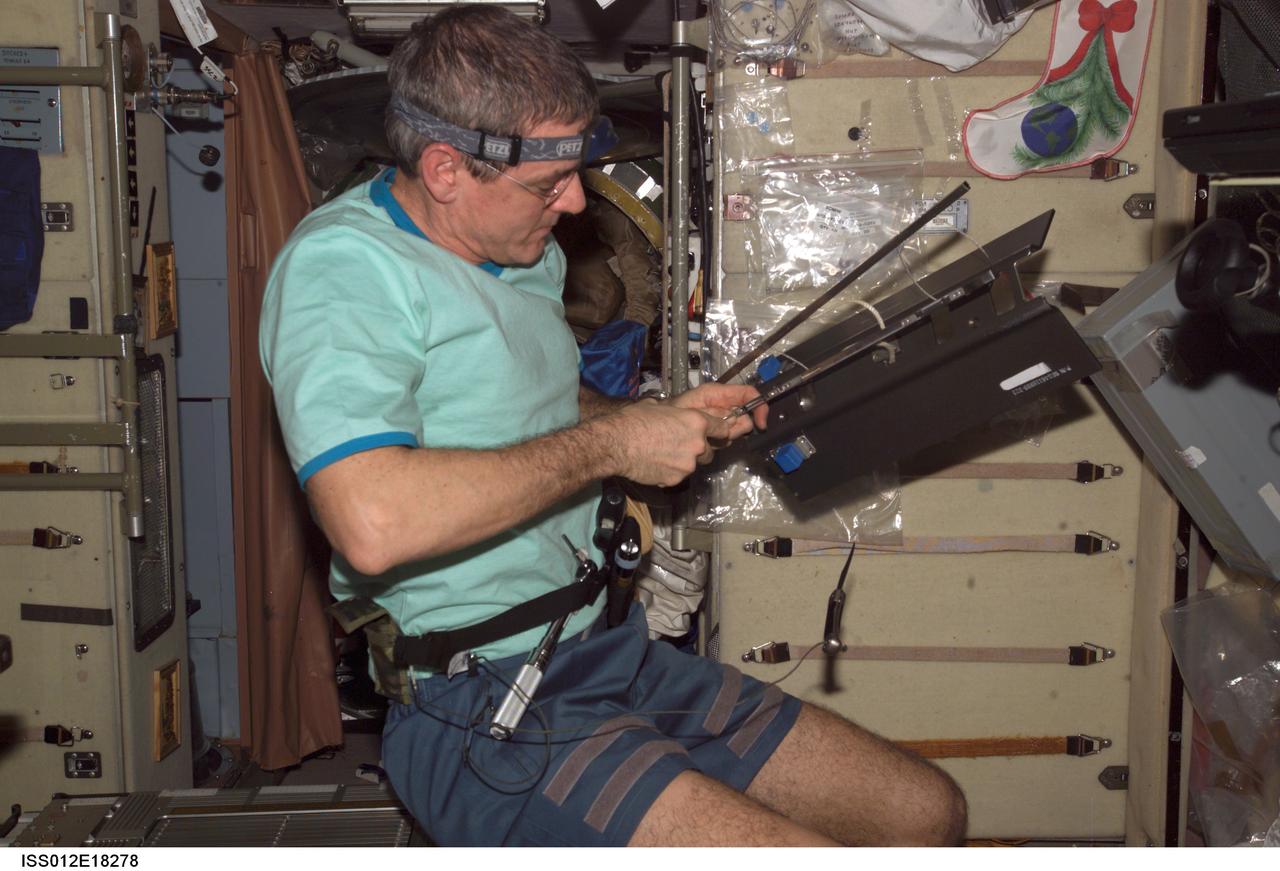
ISS012-E-18278 (14 Feb. 2006) --- Astronaut William S. (Bill) McArthur, Expedition 12 commander and NASA space station science officer, works with a portion of the Treadmill Vibration Isolation System (TVIS) during in-flight maintenance (IFM) in the Zvezda Service Module of the International Space Station.
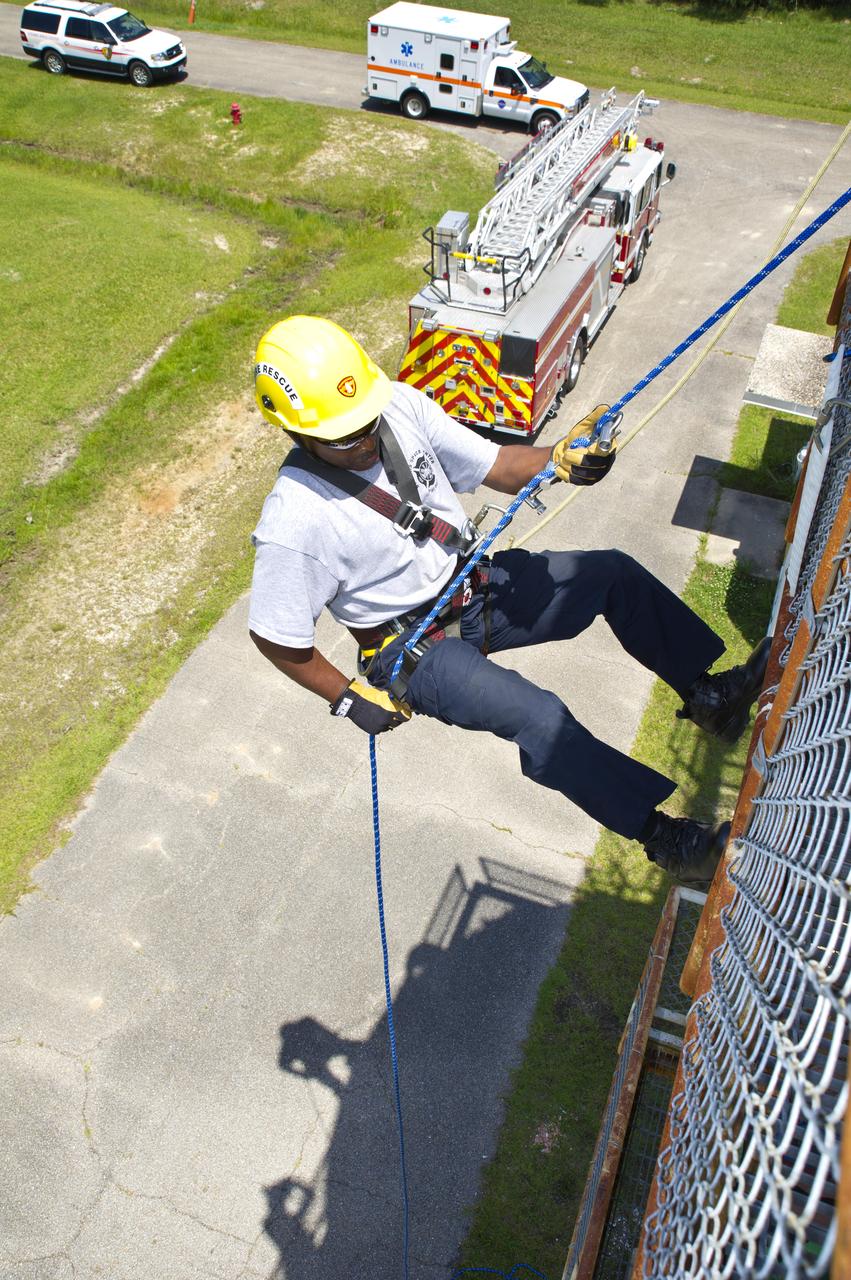
Stennis Space Center firefighter Rodney Boone rappels a tower structure during an onsite training exercise May 11, 2012. The training focused on high-angle rope rescues, which could be needed on the new 300-foot-tall A-3 Test Stand at Stennis.
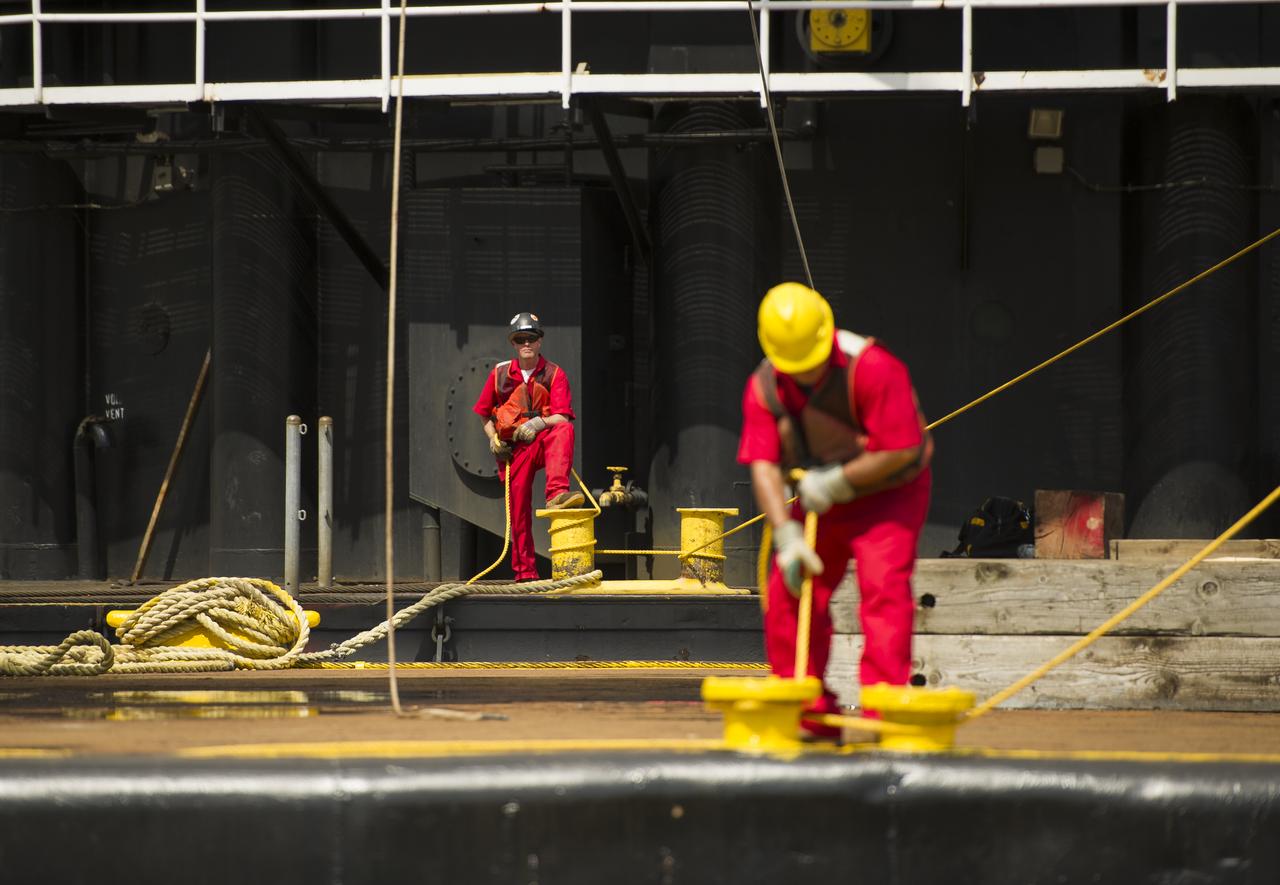
Workers control support ropes from the space shuttle Enterprise in preparation to lift it off of a barge and onto the Intrepid Sea, Air and Space Museum where it will be permanently displayed, Wednesday, June 6, 2012 in New York. Photo Credit: (NASA/Bill Ingalls)
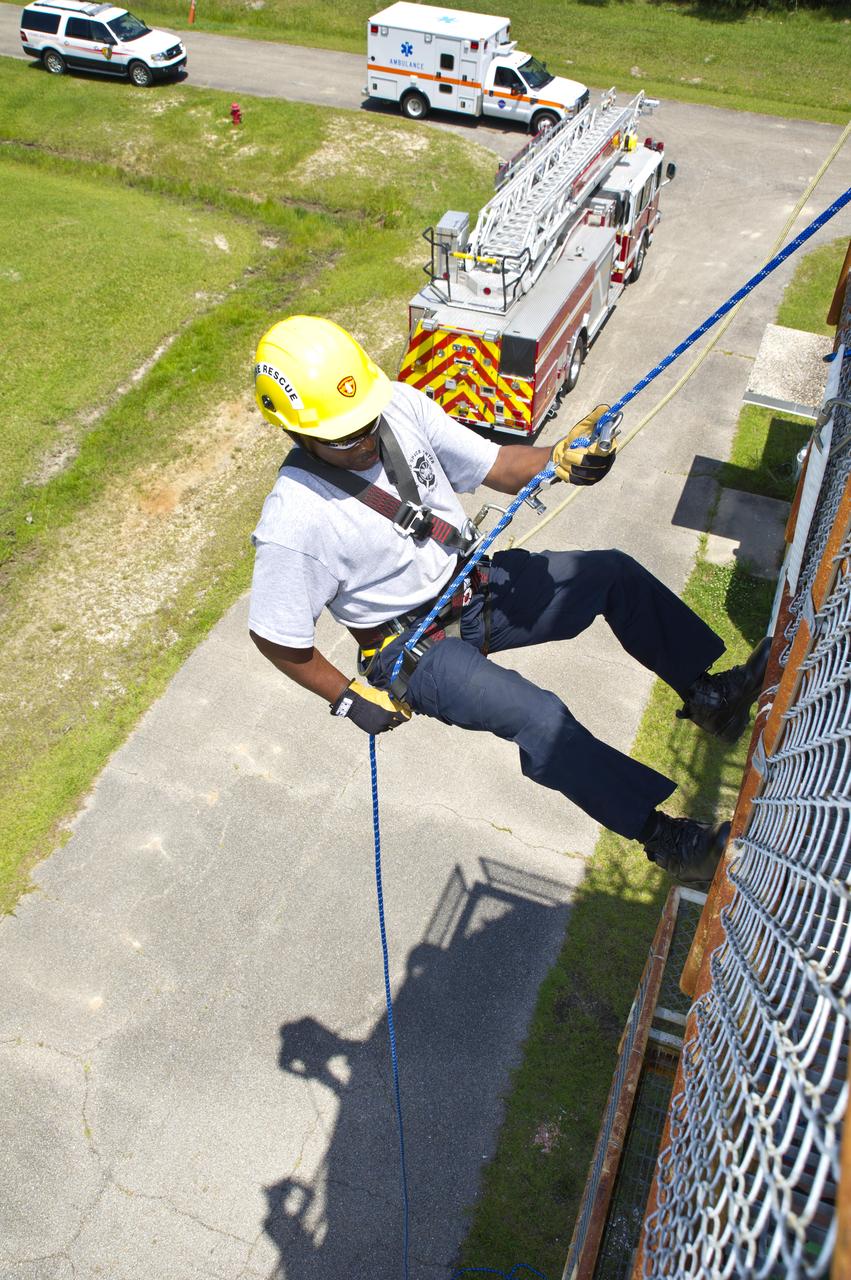
Stennis Space Center firefighter Rodney Boone rappels a tower structure during an onsite training exercise May 11, 2012. The training focused on high-angle rope rescues, which could be needed on the new 300-foot-tall A-3 Test Stand at Stennis.
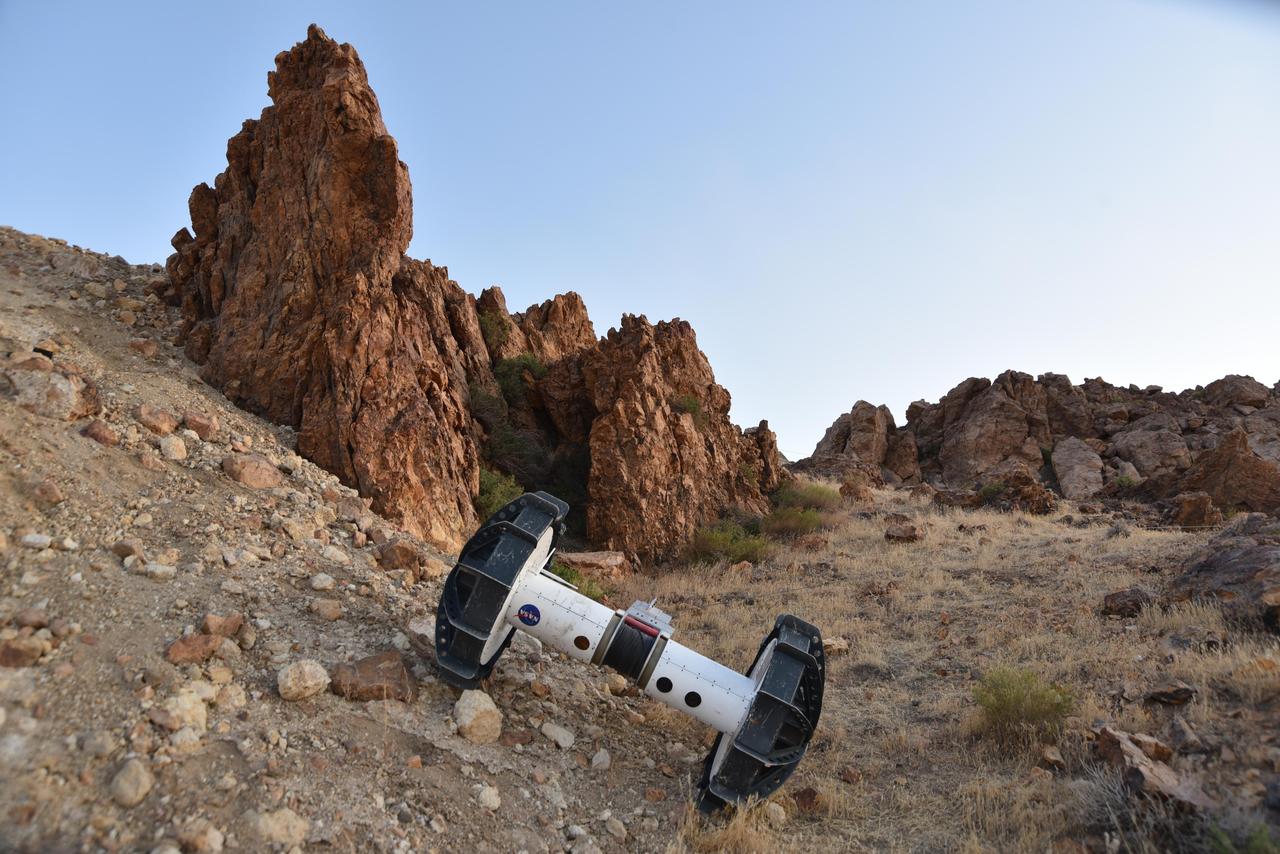
In this photograph, a tethered Axel robot — part of the four-wheeled DuAxel rover — navigates a steep slope during a field test in the Mojave Desert. The tether, which connects to the rover's other half, serves as a climbing rope of sorts while also providing power and a means of communication. This flexibility was built with crater walls, pits, scarps, vents, and other extreme terrain in mind. That's because on Earth, some of the best locations to study geology can be found in rocky outcrops and cliff faces, where many layers of the past are neatly exposed. They're hard enough to reach here, let alone on the Moon, Mars, and other celestial bodies. The DuAxel project is a technology demonstration being developed by roboticists at NASA's Jet Propulsion Laboratory in Southern California to see how this unconventional rover might fill a niche in planetary exploration. https://photojournal.jpl.nasa.gov/catalog/PIA24110

This is a photograph of giant twisters and star wisps in the Lagoon Nebula. This superb Hubble Space Telescope (HST) image reveals a pair of one-half light-year long interstellar twisters, eerie furnels and twisted rope structures (upper left), in the heart of the Lagoon Nebula (Messier 8) that lies 5,000 light-years away in the direction of the constellation Sagittarius. This image was taken by the Hubble Space Telescope Wide Field/Planetary Camera 2 (WF/PC2).
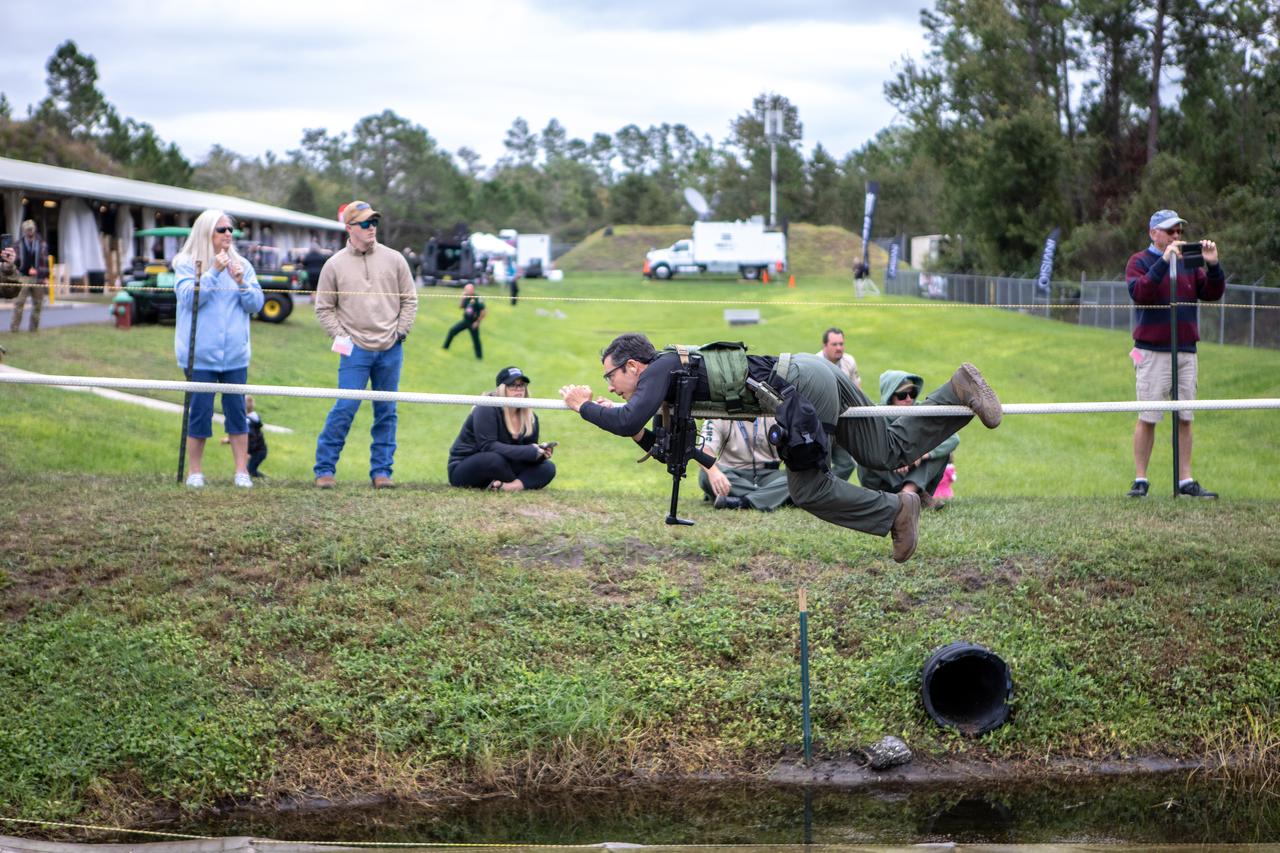
A member of NASA Kennedy Space Center's Emergency Response Team works his way along a rope above water during one of the tactical challenges at the 37th Annual SWAT Round-Up International at the Lawson Lamar Firearms and Tactical Training Center in Orlando, Florida. The competition was held Nov. 10 to 15, 2019, and featured five different tactical challenges. Kennedy's ERT members exchanged best practices and competed with more than 50 teams from the U.S. and around the world.

CAPE CANAVERAL, Fla. – Emergency Response Team officers from the center's Protective Services branch of NASA's Kennedy Space Center in Florida lower ropes before descending from a Huey helicopter from the Aircraft Operations branch at NASA's Kennedy Space Center in Florida during a training exercise. The flight was the beginning of a training mission to simulate a situation the team and pilots could confront at the center. Photo credit: NASA/Dan Casper
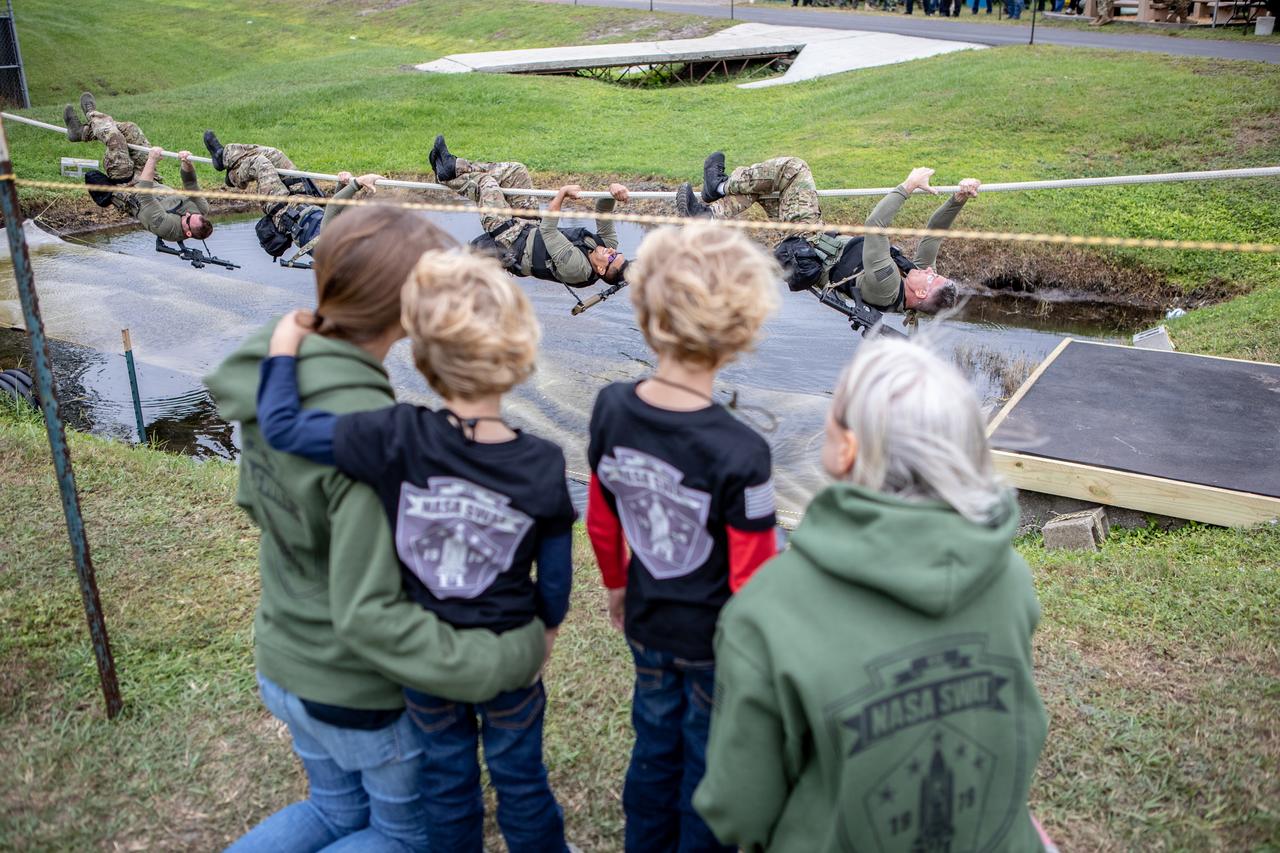
The family of one of NASA Kennedy Space Center's Emergency Response Team members watches the 37th Annual SWAT Round-Up International at the Lawson Lamar Firearms and Tactical Training Center in Orlando, Florida. Kennedy’s ERT members are working their way along a rope. The competition was held Nov. 10 to 15, and featured five different competition categories. Kennedy's ERT members exchanged best practices and competed with 60 teams from the U.S. and around the world.
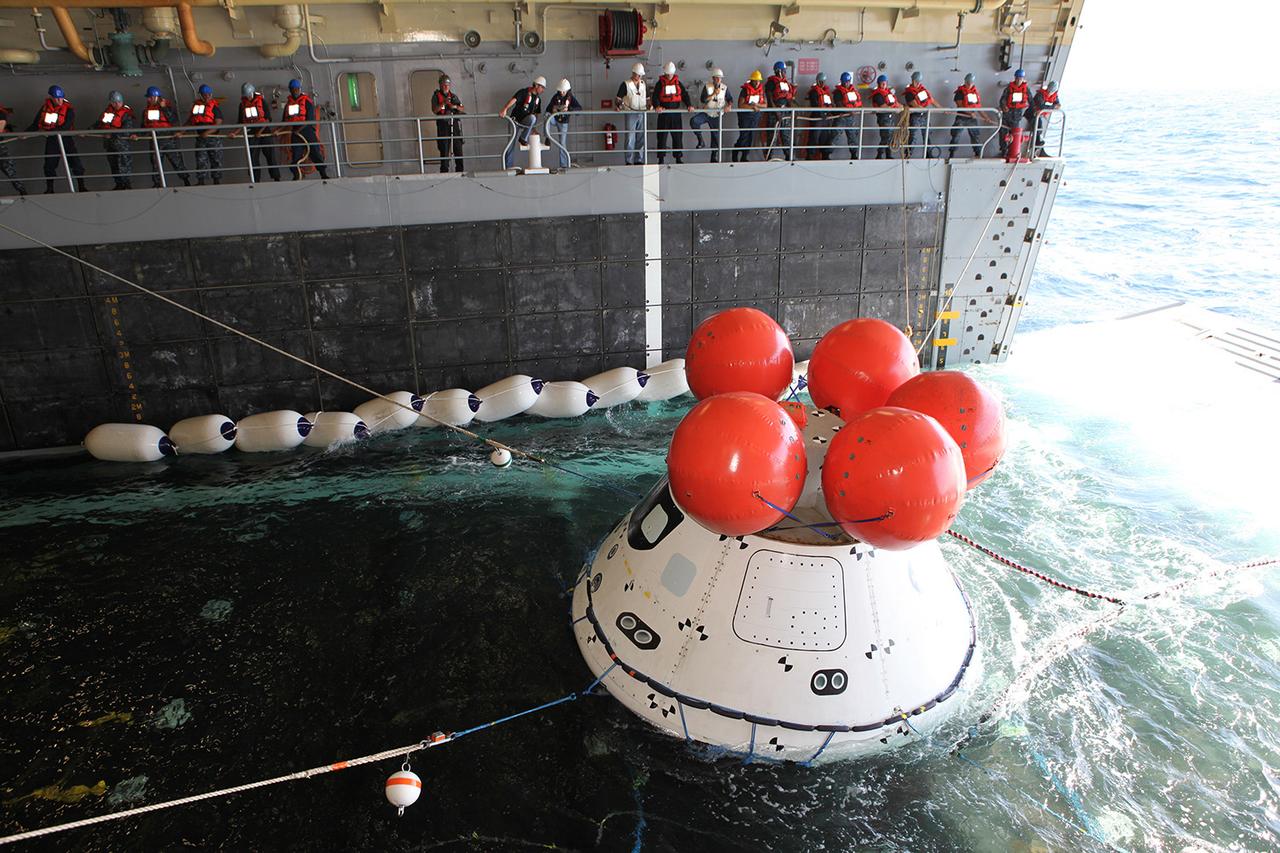
Recovery team members use ropes to hold a test version of Orion steady inside the USS Anchorage's well deck as it is reeled in from the Pacific Ocean on Sept. 17, 2014, during a test of tools and techniques that will be used to retrieve the spacecraft once it splashes down following Exploration Flight Test-1 (EFT-1). Part of Batch image transfer from Flickr.
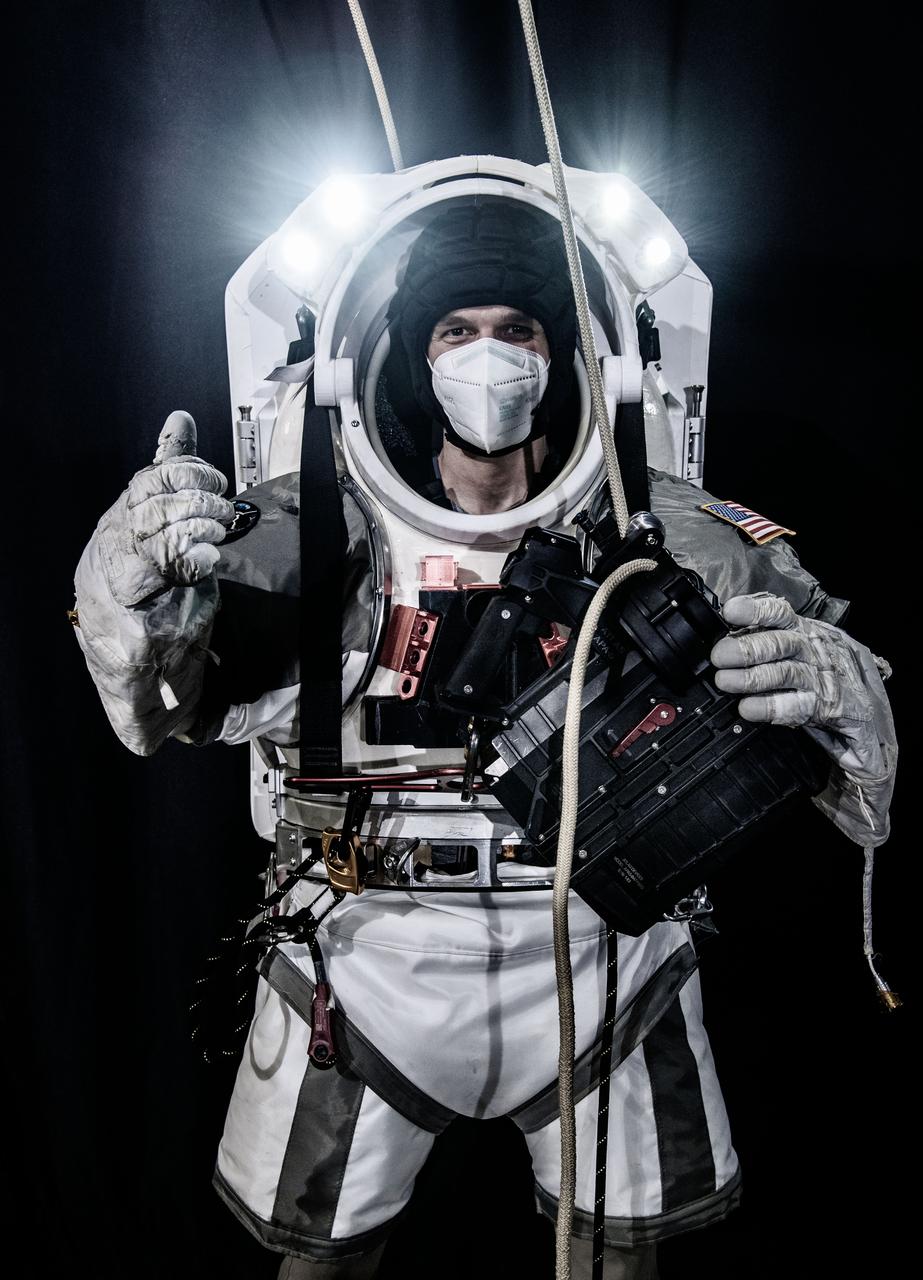
Nate Ball of Atlas Devices prepares to test an APA-5 powered rope ascender with the Exploration Conop (EXCON) Suit, a new xEMU spacesuit simulator. Atlas uses this device in terrestrial applications of powered ascenders including rescue and vertical mobility. This photo was taken when NASA began researching if these capabilities may have analogous applications for lunar surface operations. Photo Date: April 29, 2021. Location: Building 49 High Bay. Photographer: Robert Markowitz
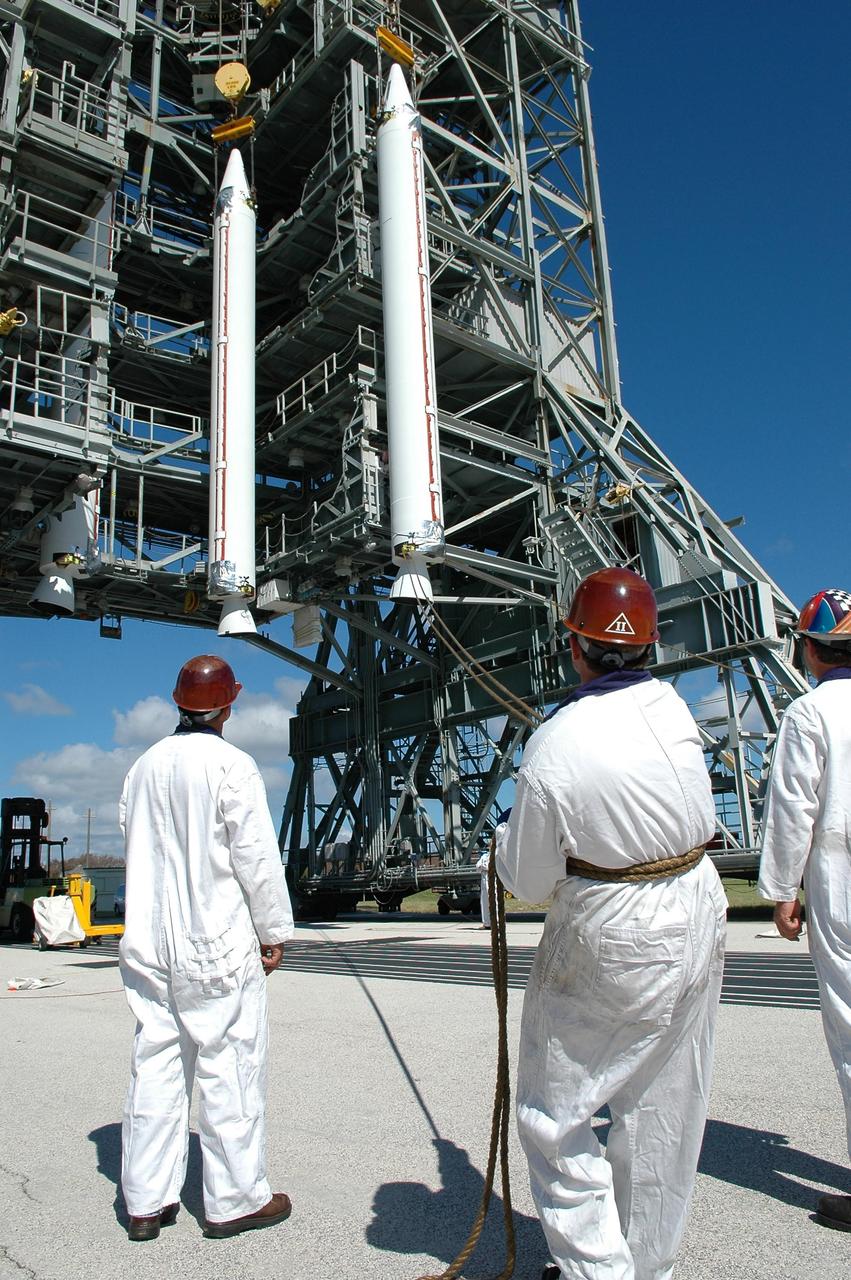
KENNEDY SPACE CENTER, FLA. - On Pad 17-A, Cape Canaveral Air Force Station, technicians on the ground hold guide ropes as a Solid Rocket Booster is lifted in to the mobile service tower. In all, three SRBs will be attached to the Boeing Delta launch vehicle for the Swift spacecraft and its Gamma-Ray Burst Mission. Swift is a medium-class Explorer mission managed by NASA’s Goddard Space Flight Center in Greenbelt, Md.
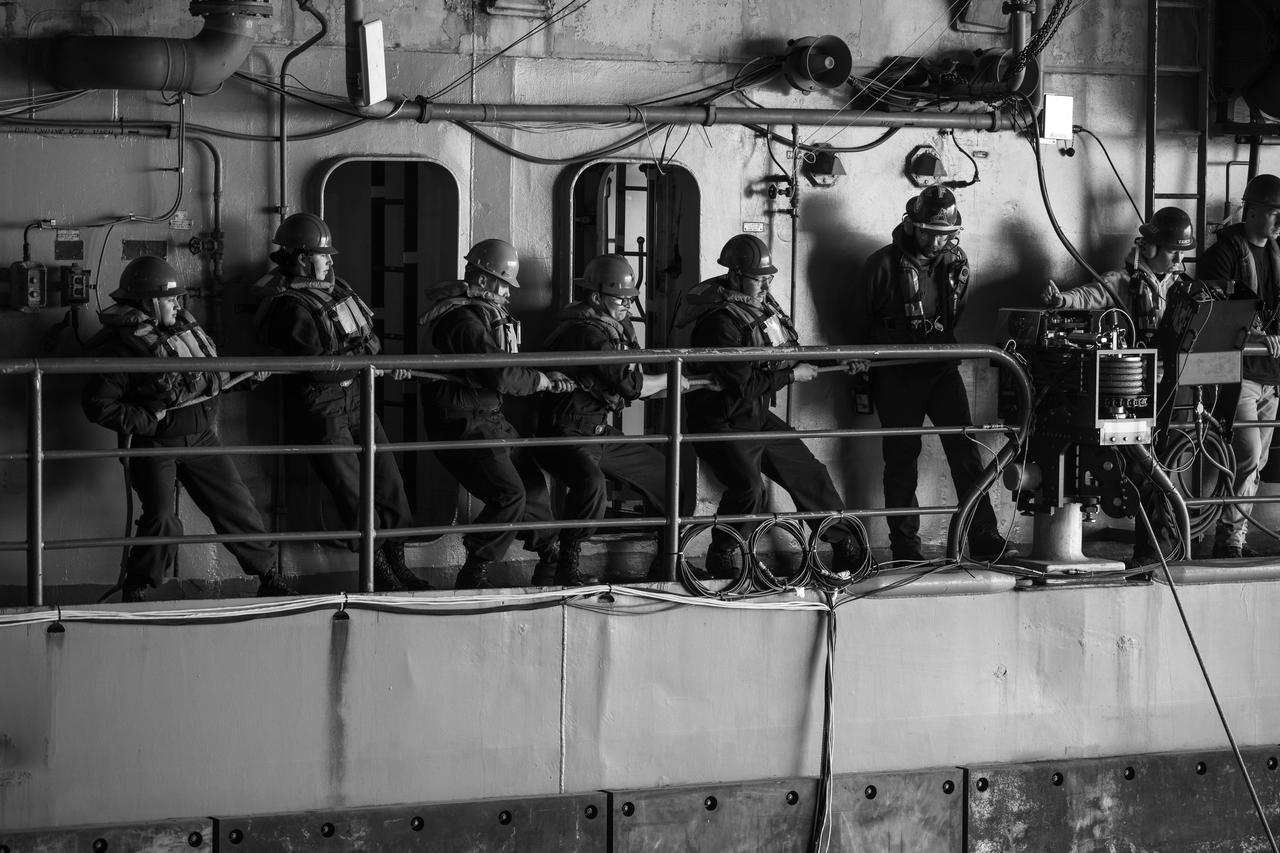
Mission support teams are seen toeing in rope line on USS Somerset as they practice with the Crew Module Test Article (CMTA), a full scale mockup of the Orion spacecraft, during Underway Recovery Test-12 off the coast of California, Wednesday, March 26, 2025. During the test, NASA and Department of Defense teams are practicing to ensure recovery procedures are validated as NASA plans to send Artemis II astronauts around the Moon and splashdown in the Pacific Ocean. Photo Credit: (NASA/Bill Ingalls)
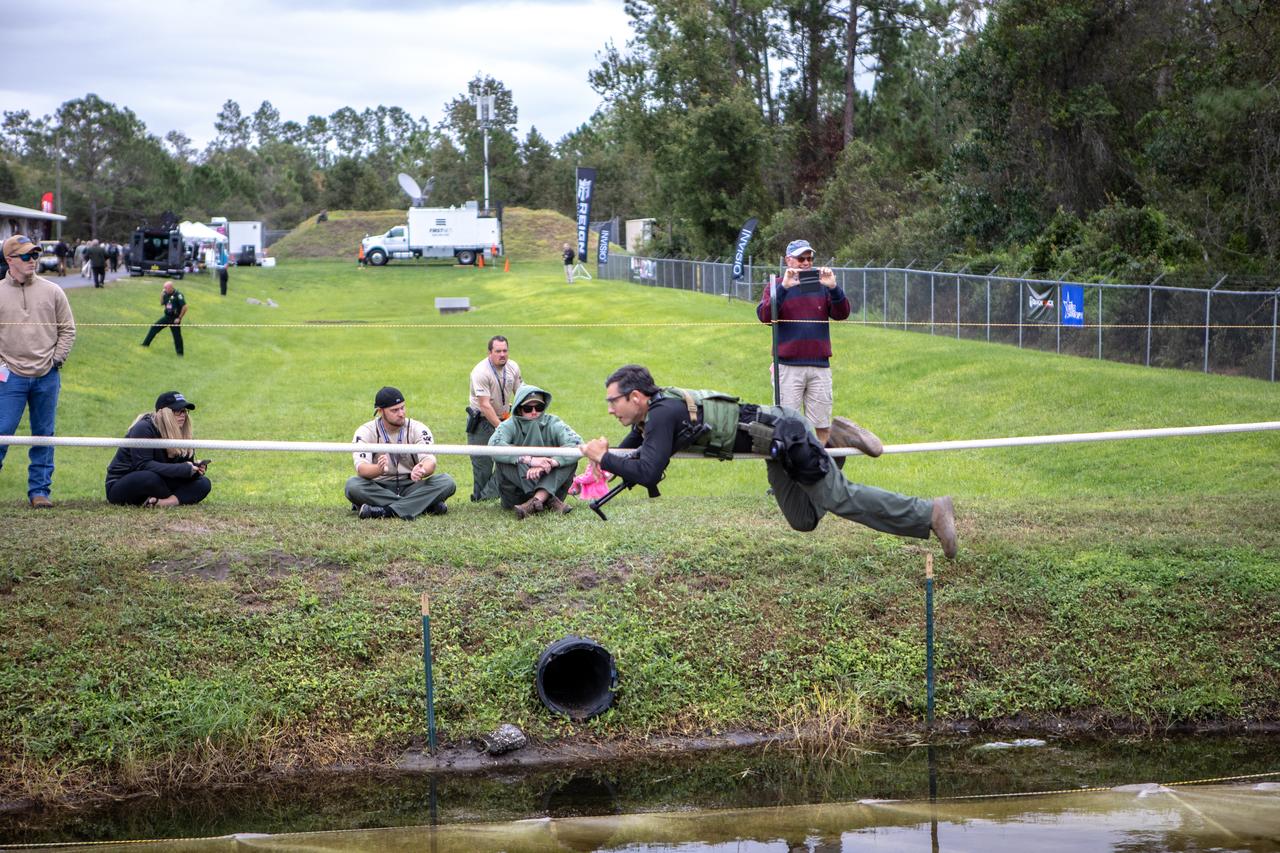
A member of NASA Kennedy Space Center's Emergency Response Team works his way along a rope above water during one of the tactical challenges at the 37th Annual SWAT Round-Up International at the Lawson Lamar Firearms and Tactical Training Center in Orlando, Florida. The competition was held Nov. 10 to 15, 2019, and featured five different tactical challenges. Kennedy's ERT members exchanged best practices and competed with more than 50 teams from the U.S. and around the world.
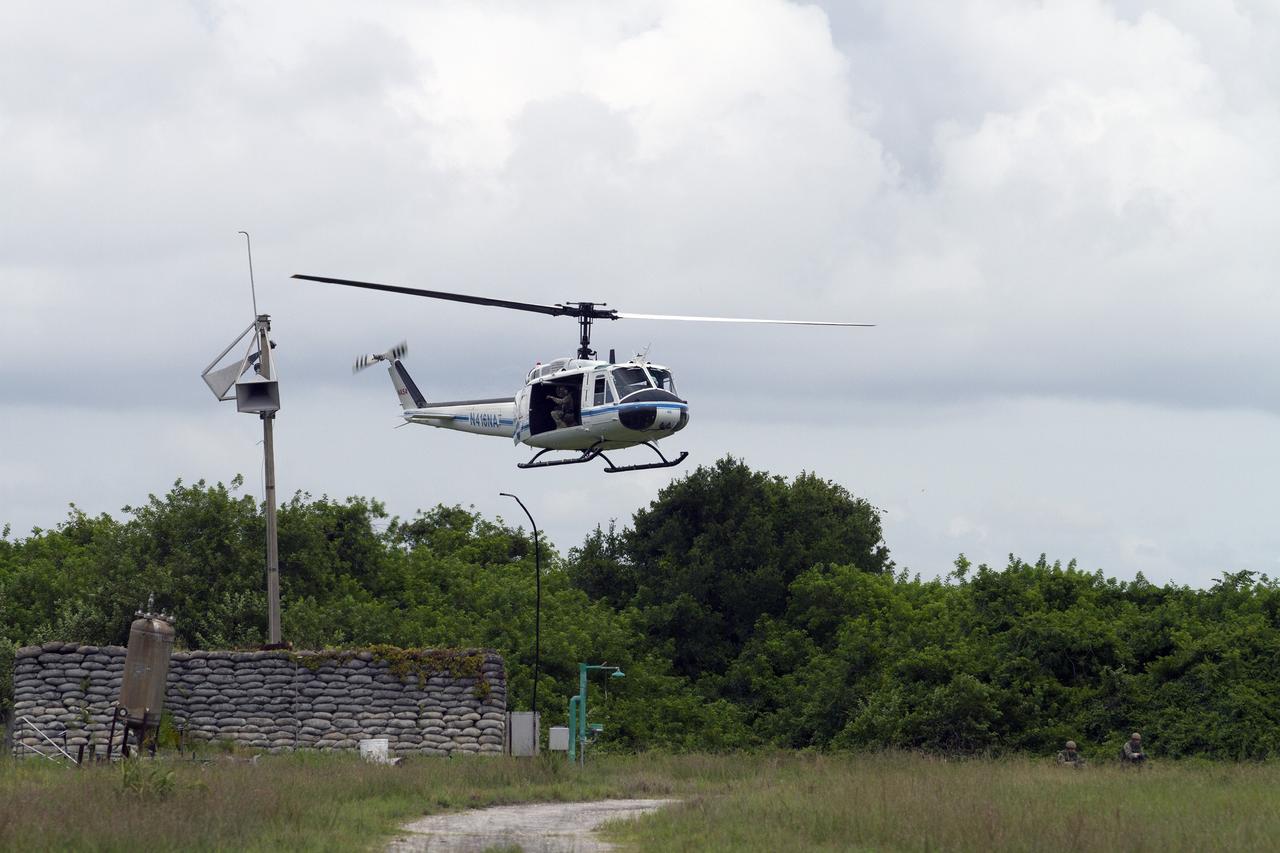
CAPE CANAVERAL, Fla. – The rope is cut from a Huey helicopter from the Aircraft Operations branch at NASA's Kennedy Space Center in Florida before the helicopter begins to fly out of a training area during a training exercise. Moments earlier, Emergency Response Team officers from the Protective Services branch descended from the helicopter to begin the mission. The flight was the beginning of a training mission to simulate a situation the team and pilots could confront at the center. Photo credit: NASA/Dan Casper
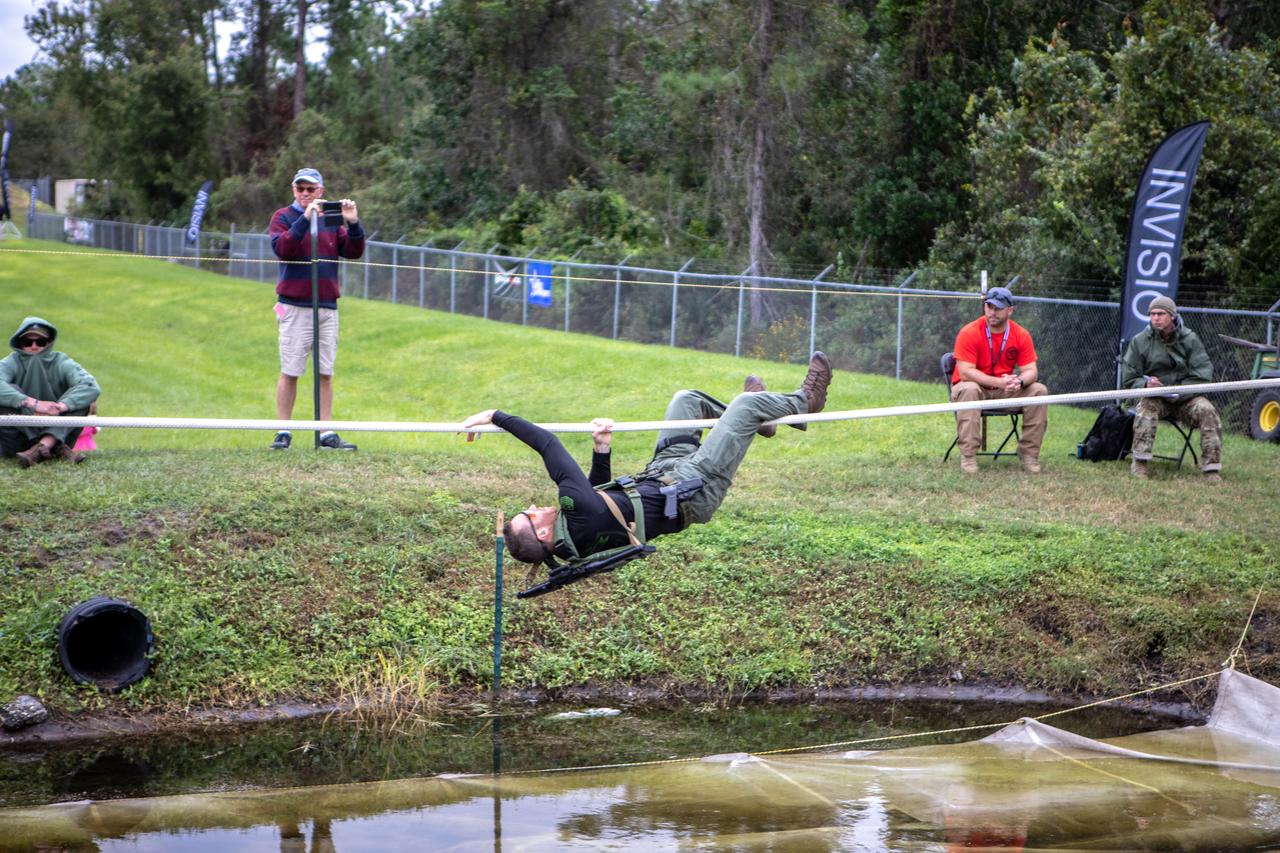
A member of NASA Kennedy Space Center's Emergency Response Team switches position as he works his way along a rope above water during one of the tactical challenges at the 37th Annual SWAT Round-Up International at the Lawson Lamar Firearms and Tactical Training Center in Orlando, Florida. The competition was held Nov. 10 to 15, 2019, and featured five different tactical challenges. Kennedy's ERT members exchanged best practices and competed with more than 50 teams from the U.S. and around the world.
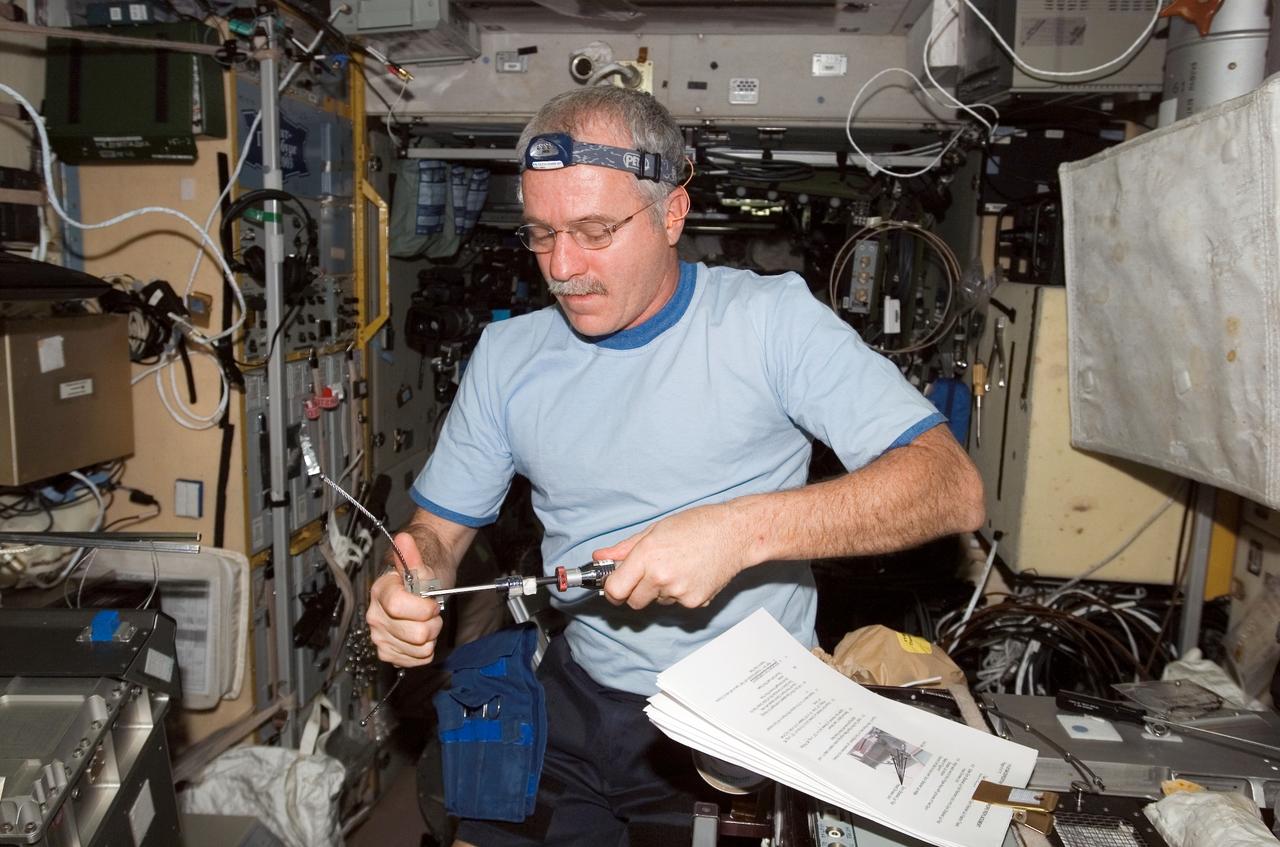
ISS011-E-06174 (16 May 2005) --- Astronaut John L. Phillips, Expedition 11 NASA science officer and flight engineer, works with the Treadmill Vibration Isolation System (TVIS) during In-Flight Maintenance (IFM) in the Zvezda Service Module of international space station. Phillips uses a screwdriver to repair one of the broken forward and aft gyroscope wire ropes.
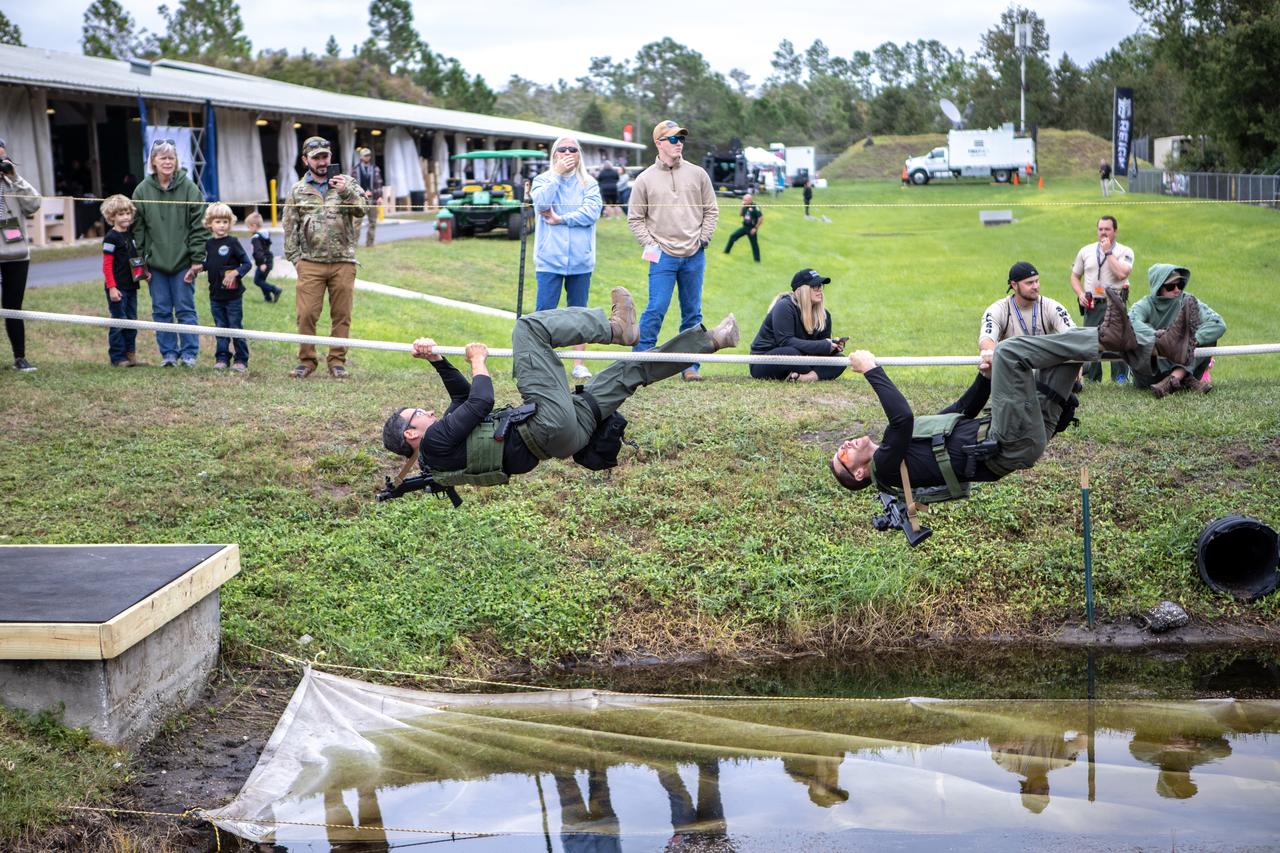
Members of NASA Kennedy Space Center's Emergency Response Team work their way along a rope above water during one of the tactical challenges at the 37th Annual SWAT Round-Up International at the Lawson Lamar Firearms and Tactical Training Center in Orlando, Florida. The competition was held Nov. 10 to 15, 2019, and featured five different tactical challenges. Kennedy's ERT members exchanged best practices and competed with more than 50 teams from the U.S. and around the world.
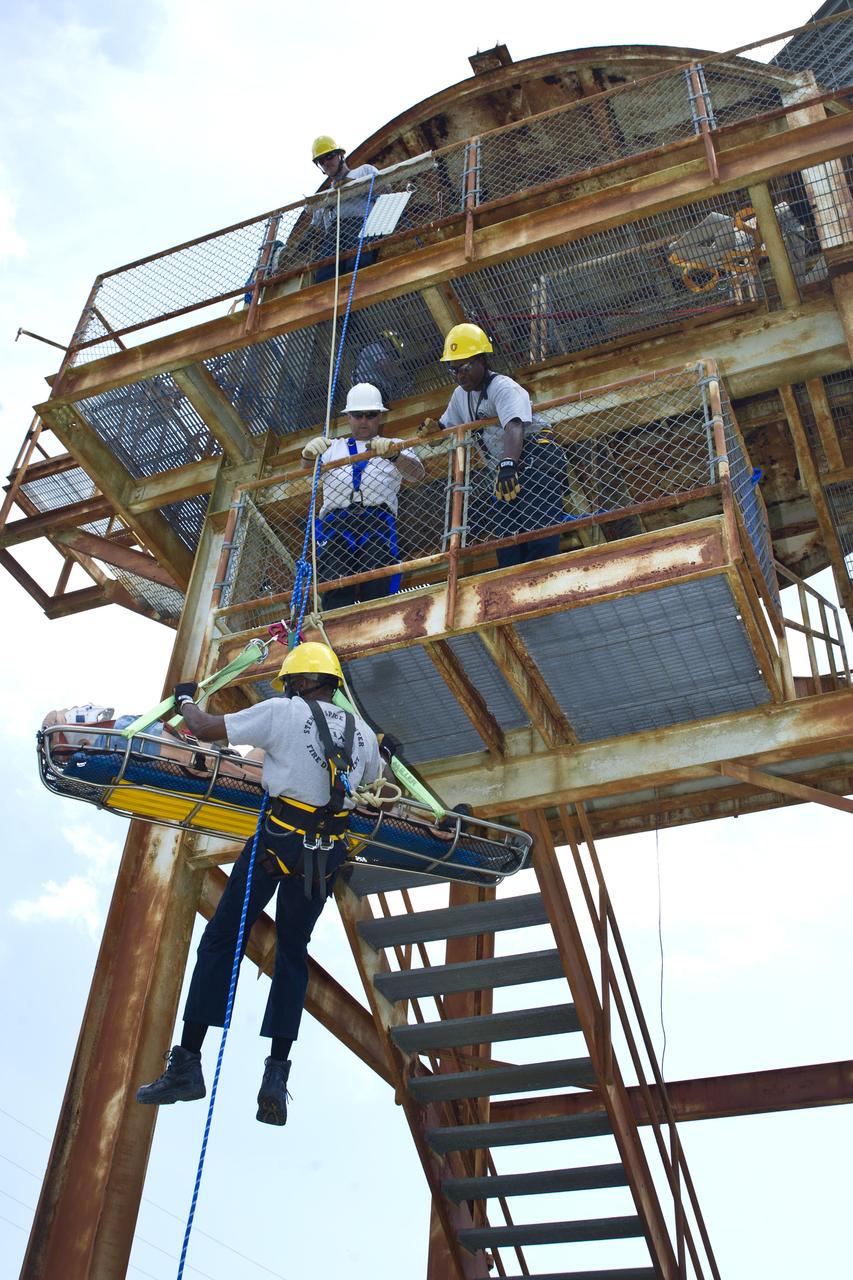
Instructor Rob Mortin watches as Stennis Space Center firefighters Lt. Greg Lampley, Rodney Boone, Vance Forrest and Billy Scarborough practice high-angle rope rescue techniques during a May 11, 2012, training exercise. The exercise specifically focused on scenarios applicable to the 300-foot-tall, open-steel-structure A-3 Test Stand under construction at the rocket engine test facility.
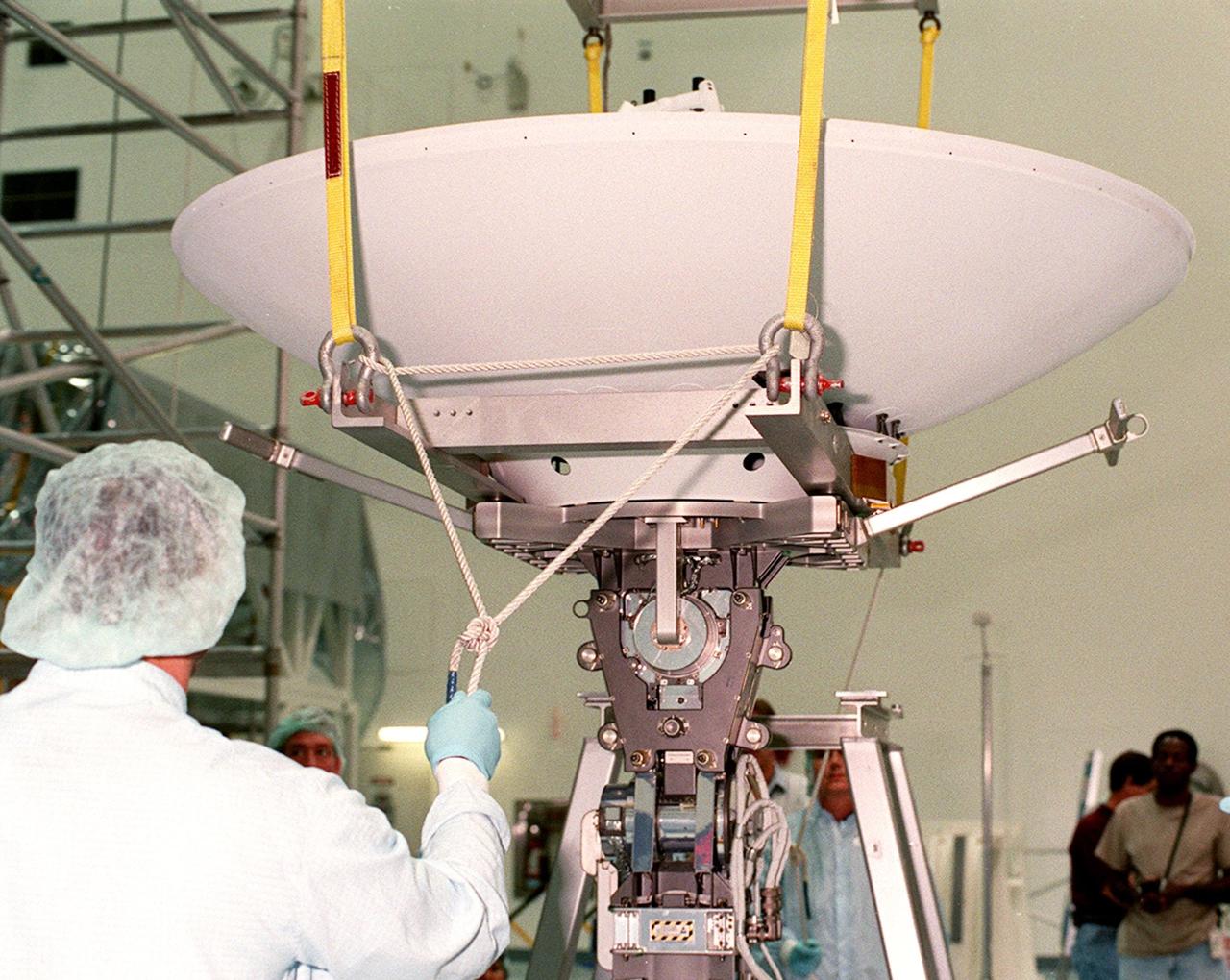
In the Space Shuttle Processing Facility, a worker checks a rope attached to a high-gain antenna before it moves to the Integrated Truss Structure (ITS) Z1, to which it will be attached. The Z1, part of the payload on mission STS-92 (flight 3A) to be launched in mid-fall, is an early exterior framework for the International Space Station. It will allow the first U.S. solar arrays, on mission STS-97 (flight 4A), to be temporarily installed on Unity for early power
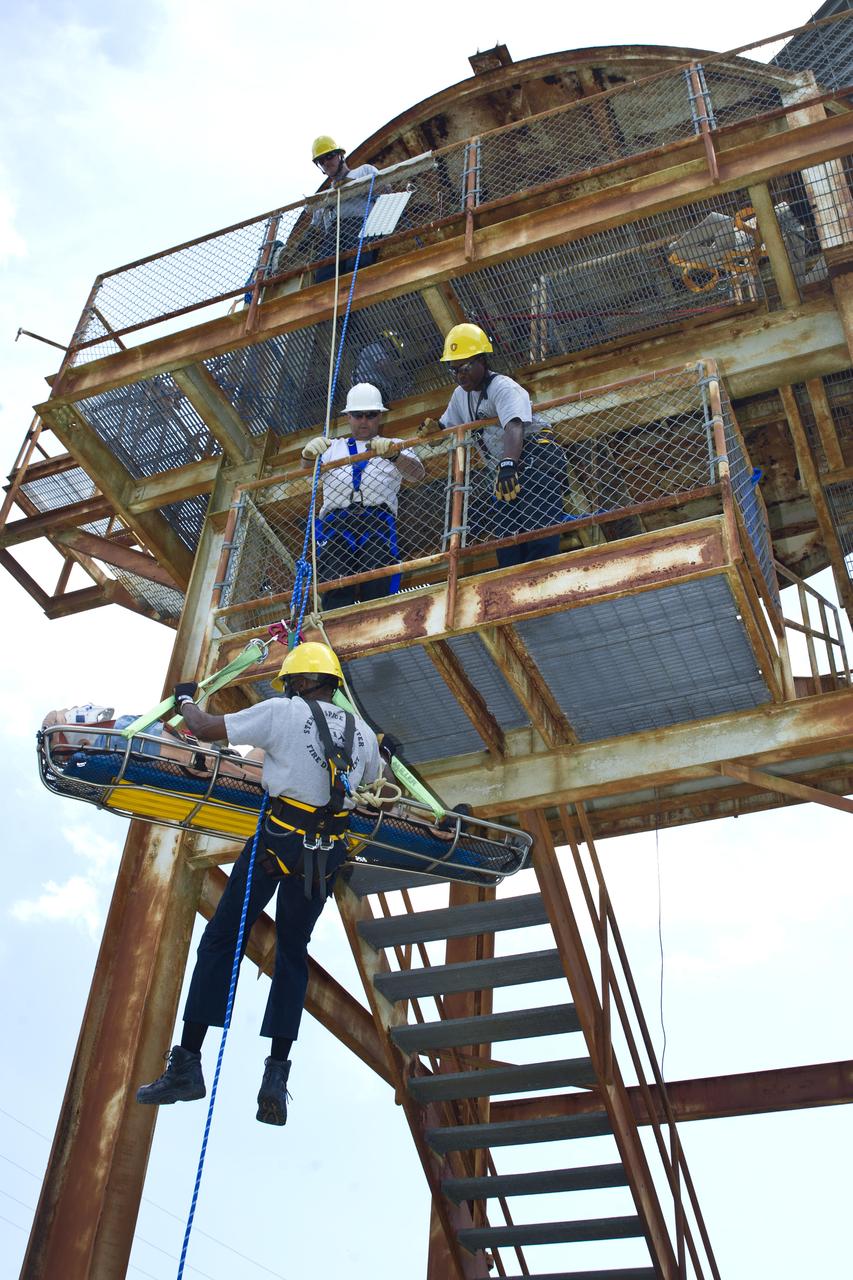
Instructor Rob Mortin watches as Stennis Space Center firefighters Lt. Greg Lampley, Rodney Boone, Vance Forrest and Billy Scarborough practice high-angle rope rescue techniques during a May 11, 2012, training exercise. The exercise specifically focused on scenarios applicable to the 300-foot-tall, open-steel-structure A-3 Test Stand under construction at the rocket engine test facility.
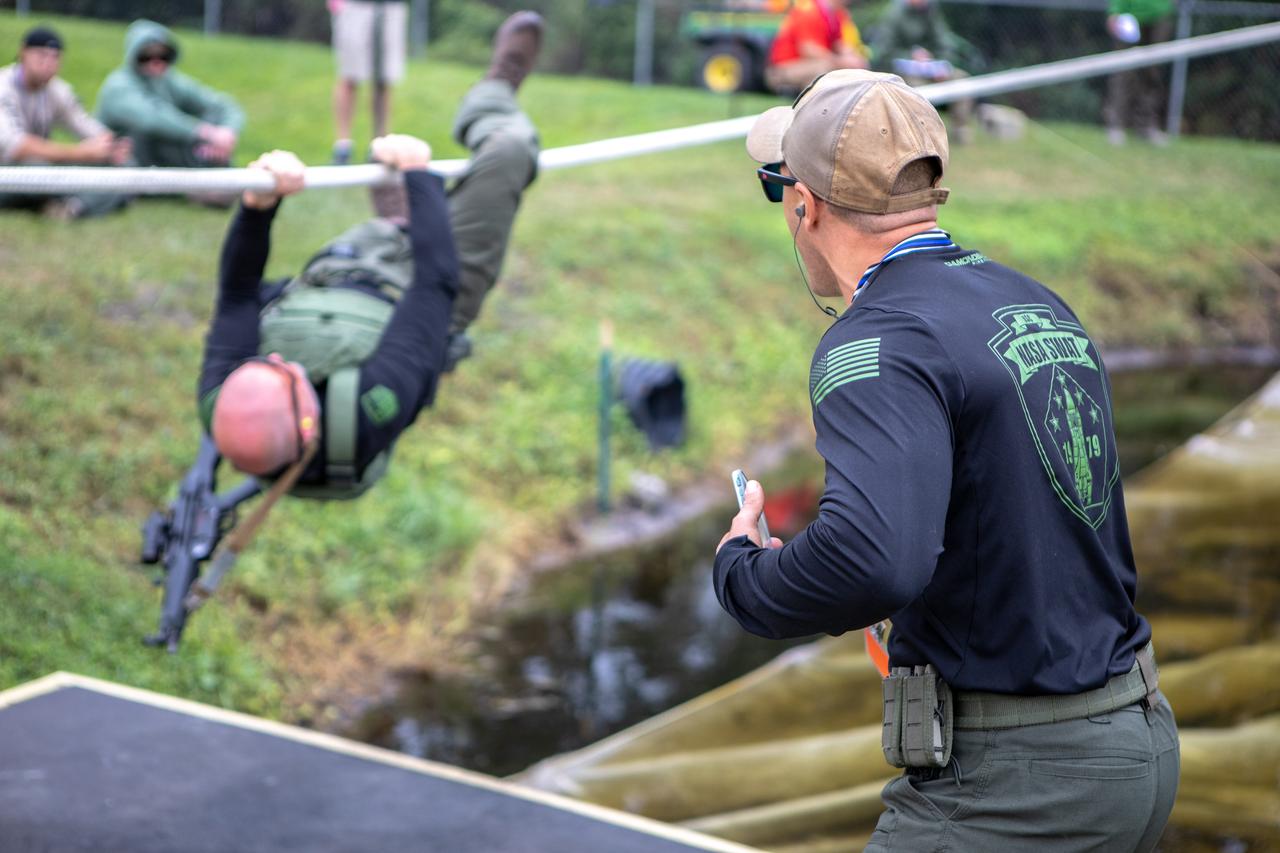
A member of NASA Kennedy Space Center's Emergency Response Team switches position as he works his way along a rope above water during one of the tactical challenges at the 37th Annual SWAT Round-Up International at the Lawson Lamar Firearms and Tactical Training Center in Orlando, Florida. His ERT teammate cheers him on. The competition was held Nov. 10 to 15, 2019, and featured five different tactical challenges. Kennedy's ERT members exchanged best practices and competed with more than 50 teams from the U.S. and around the world.
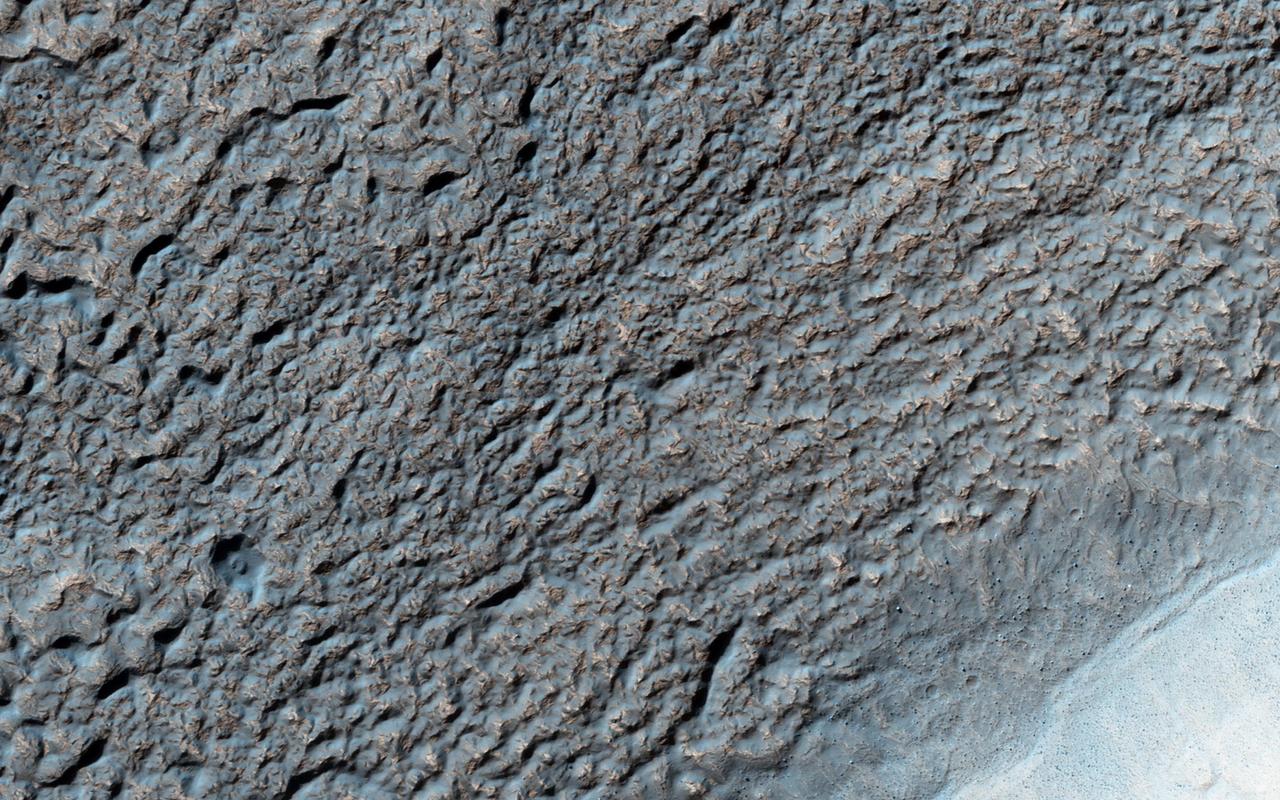
Like Earth's water table, Mars has an ice table. Sometimes, the ice table coincides with the ground's surface as it does here. The knobby, pitted terrain is caused when ice is deposited and then sublimates over and over again. This geologic process is called "accrescence" and "decrescence" and also occurs on Neptune's moon Triton and on Pluto, though in the outer Solar System the ice is not water ice. Other evidence for ice here includes the rope-like, curved flow feature that resembles glacial flow. Solis Planum -- a huge mound south of Valles Marineris -- is the location of this image. http://photojournal.jpl.nasa.gov/catalog/PIA20208
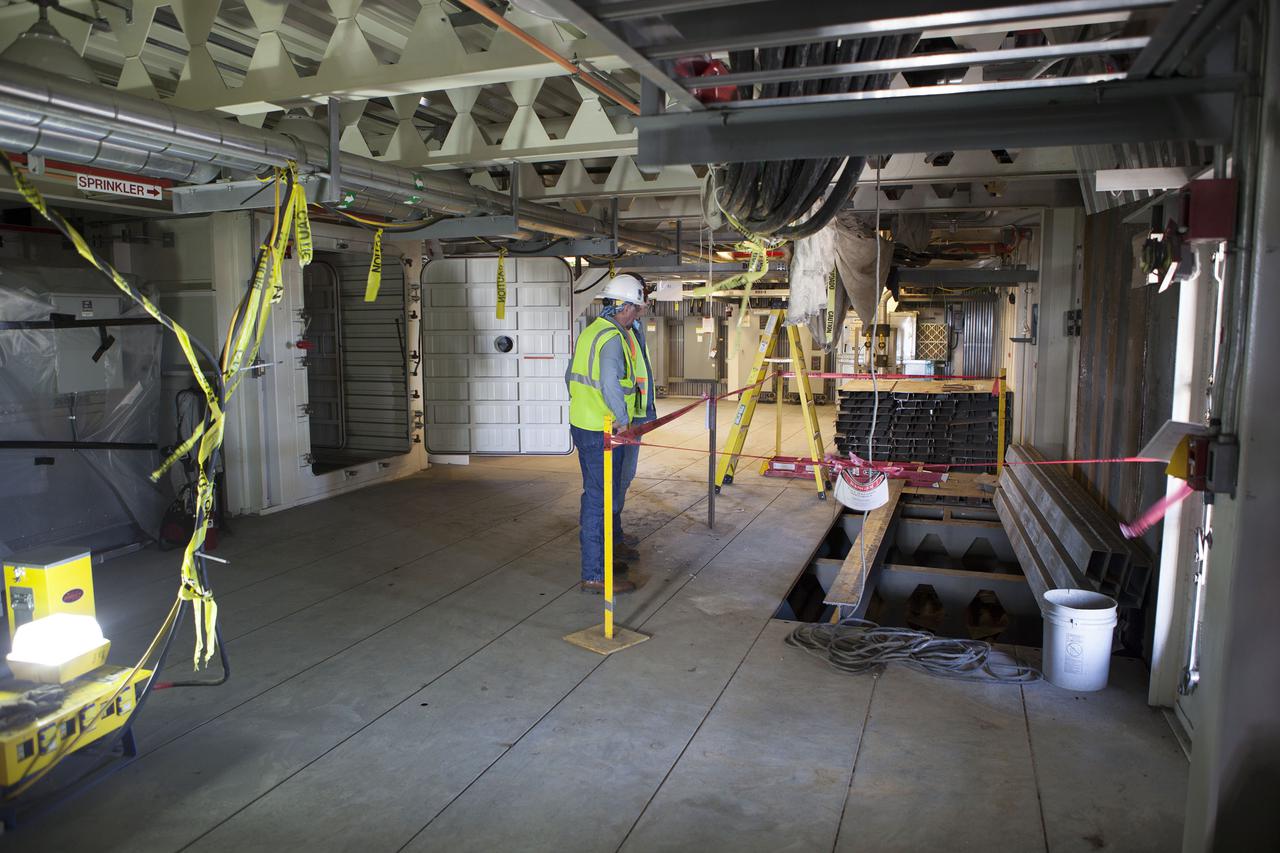
CAPE CANAVERAL, Fla. – Modifications continue on the Mobile Launcher, or ML, at the Mobile Launcher Park Site at NASA’s Kennedy Space Center in Florida. Construction workers check a roped off area beneath the surface of the ML. In 2013, the agency awarded a contract to J.P. Donovan Construction Inc. of Rockledge, Fla., to modify the ML, which is one of the key elements of ground support equipment that is being upgraded by the Ground Systems Development and Operations Program office at Kennedy. The ML will carry the SLS rocket and Orion spacecraft to Launch Pad 39B for its first mission, Exploration Mission 1, in 2017. Photo credit: NASA_Dimitri Gerondidakis
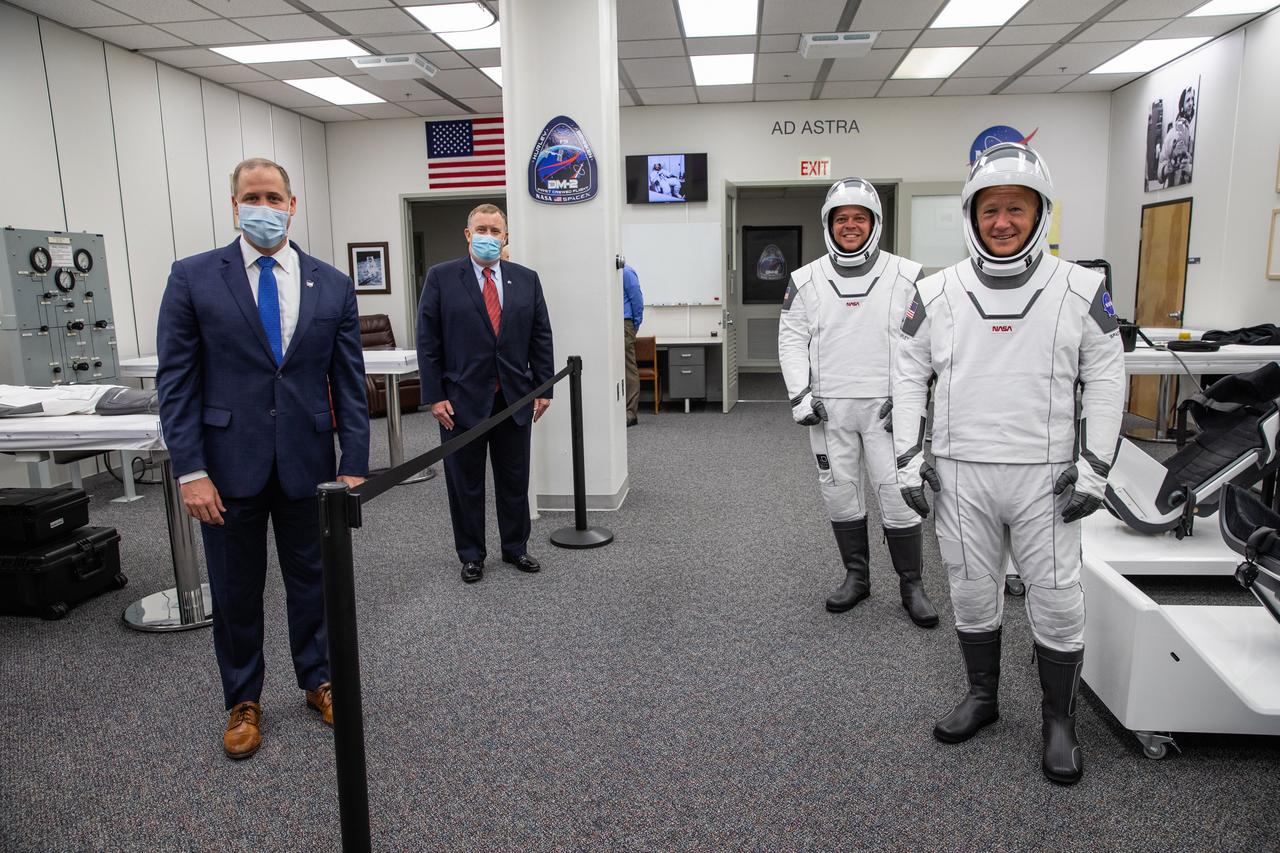
Behind the rope, NASA Administrator Jim Bridenstine (left) and Deputy Administrator Jim Morhard pause for a photo with NASA astronauts Robert Behnken (left) and Douglas Hurley inside the Astronaut Crew Quarters in the Neil A. Armstrong Operations and Checkout Building at NASA’s Kennedy Space Center in Florida on May 30, 2020, ahead of the agency’s SpaceX Demo-2 mission The SpaceX Falcon 9 rocket and Crew Dragon spacecraft lifted off at 3:22 p.m. EDT from historic Launch Complex 39A. Behnken and Hurley are the first astronauts to launch to the International Space Station from U.S. soil since the end of the Space Shuttle Program in 2011. Part of NASA’s Commercial Crew Program, this will be SpaceX’s final flight test, paving the way for the agency to certify the crew transportation system for regular, crewed flights to the orbiting laboratory.

CAPE CANAVERAL, Fla. -- Workers install hoisting ropes around the left spent booster used during space shuttle Discovery's final launch at the Solid Rocket Booster Disassembly Facility at Hangar AF on Cape Canaveral Air Force Station in Florida. The shuttle's two solid rocket booster casings and associated flight hardware are recovered in the Atlantic Ocean after every launch by Freedom Star and Liberty Star. The boosters impact the Atlantic about seven minutes after liftoff and the retrieval ships are stationed about 10 miles from the impact area at the time of splashdown. After the spent segments are processed, they will be transported to Utah, where they will be refurbished and stored, if needed. Photo credit: NASA/Jim Grossmann
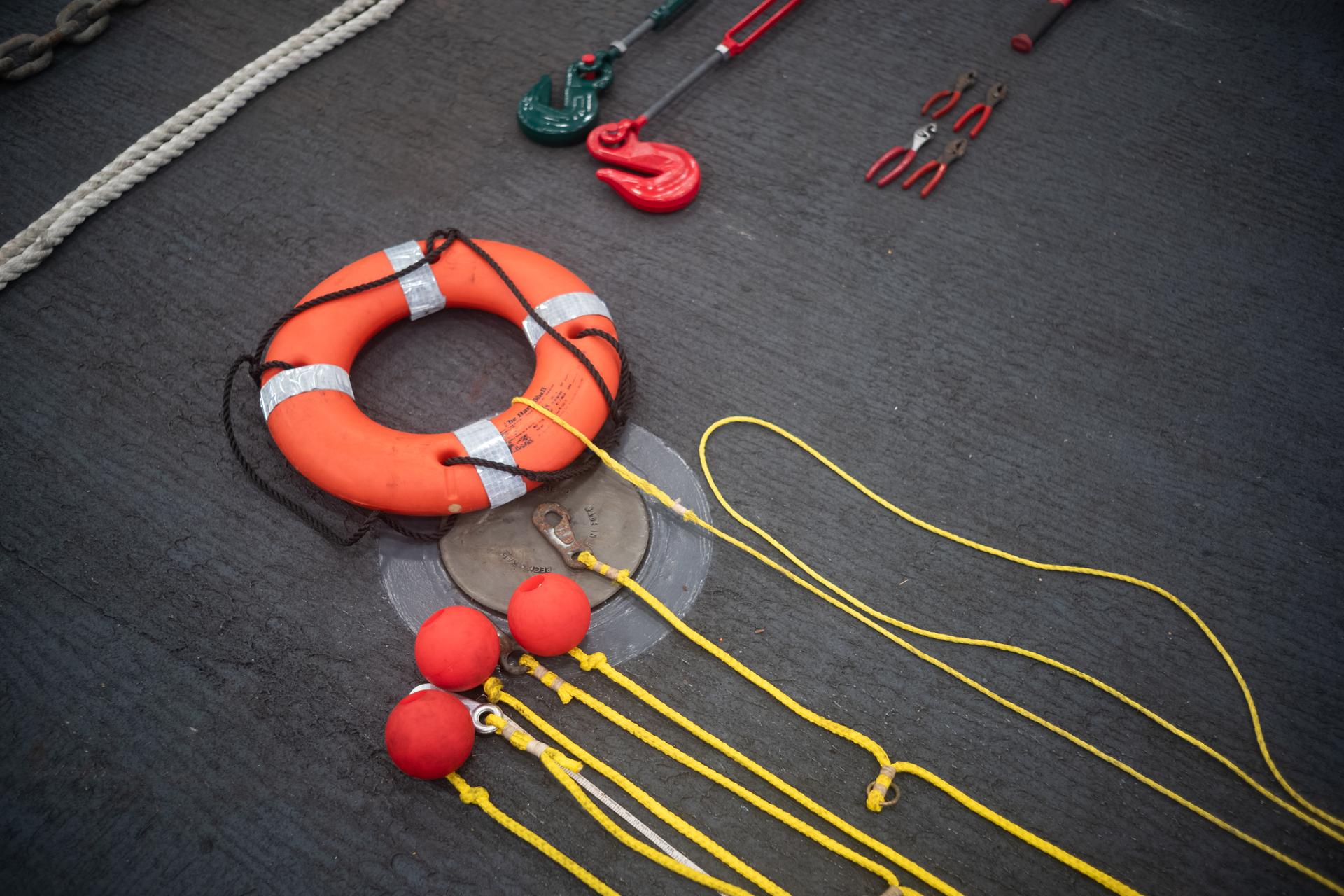
A life ring, throw ropes, and other equipment is seen laid out onboard USS John P. Murtha as NASA, U.S. Navy., and U.S. Air Force teams prepare for the the return of the Artemis II crewmembers to Earth, Wednesday, April 8, 2026, in the Pacific Ocean off the coast of California. NASA’s Artemis II mission is taking NASA astronauts Reid Wiseman, commander; Victor Glover, pilot; Christina Koch, mission specialist; and CSA (Canadian Space Agency) astronaut Jeremy Hansen, mission specialist on a 10-day journey around the Moon and back aboard their Orion spacecraft. Wiseman, Glover, Koch, and Hansen are scheduled to splash down off the coast of San Diego at approximately 5:07 p.m. PDT (8:07 p.m. EDT) on Friday, April 10. Photo Credit: (NASA/Joel Kowsky)
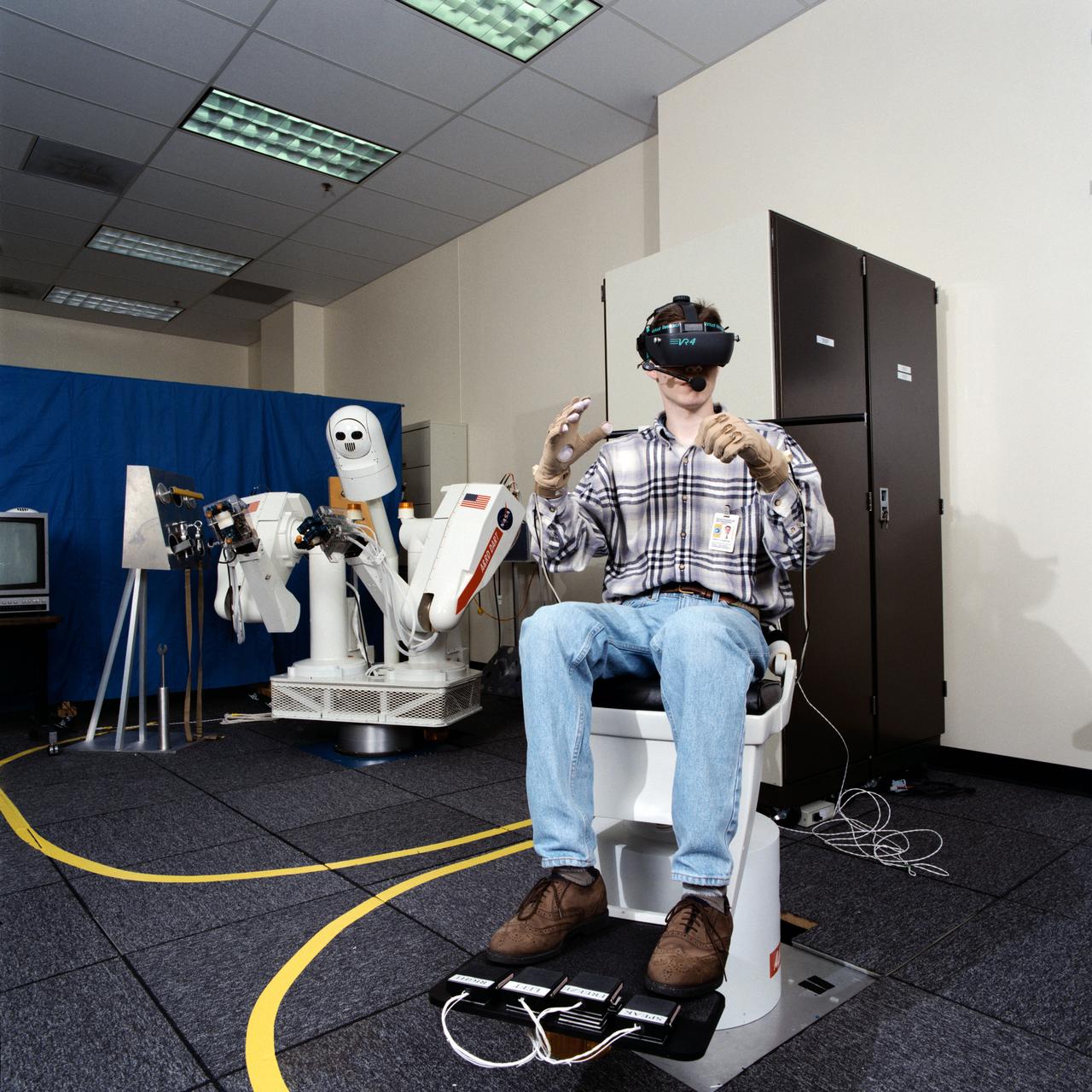
Photographic documentation of the Dextrous Anthropomorphic Robot Testbed (DART)/Full-Immersion Telepresence Testbed (FITT) system. Photos were taken in the Dexterous Robotics Lab, bldg 9N, room 113, and include: DART with upper arm cover removed (08920-1); DART head fully assembled (08922); DART head (08923,08939); DART only official view (08924-5); DART head with shell removed (08926-7); DART/FITT together with operator (08928-9); DART with tools (08930-1,08934); DART with tether hook (08932); DART with rope (08933); DART with Portable Foot Restraint (PFR) (08935); DART pulling out ORU (08936); DART with electronics panel (08937); and DART with automated ball grasp (08938).

Members of the recovery team secure ropes and tether lines in the well deck of the USS San Diego during Underway Recovery Test 5 in the Pacific Ocean off the coast of California. Using a test version of the Orion crew module, NASA's Ground Systems Development and Operations Program and the U.S. Navy are conducting a series of tests to prepare for recovery of Orion on its return from deep space missions. The testing will allow the team to demonstrate and evaluate recovery processes, procedures, hardware and personnel in open waters. Orion is the exploration spacecraft designed to carry astronauts to destinations not yet explored by humans, including an asteroid and NASA's Journey to Mars. It will have emergency abort capability, sustain the crew during space travel and provide safe re-entry from deep space return velocities. Orion is scheduled to launch on NASA's Space Launch System in late 2018. For more information, visit http://www.nasa.gov/orion.
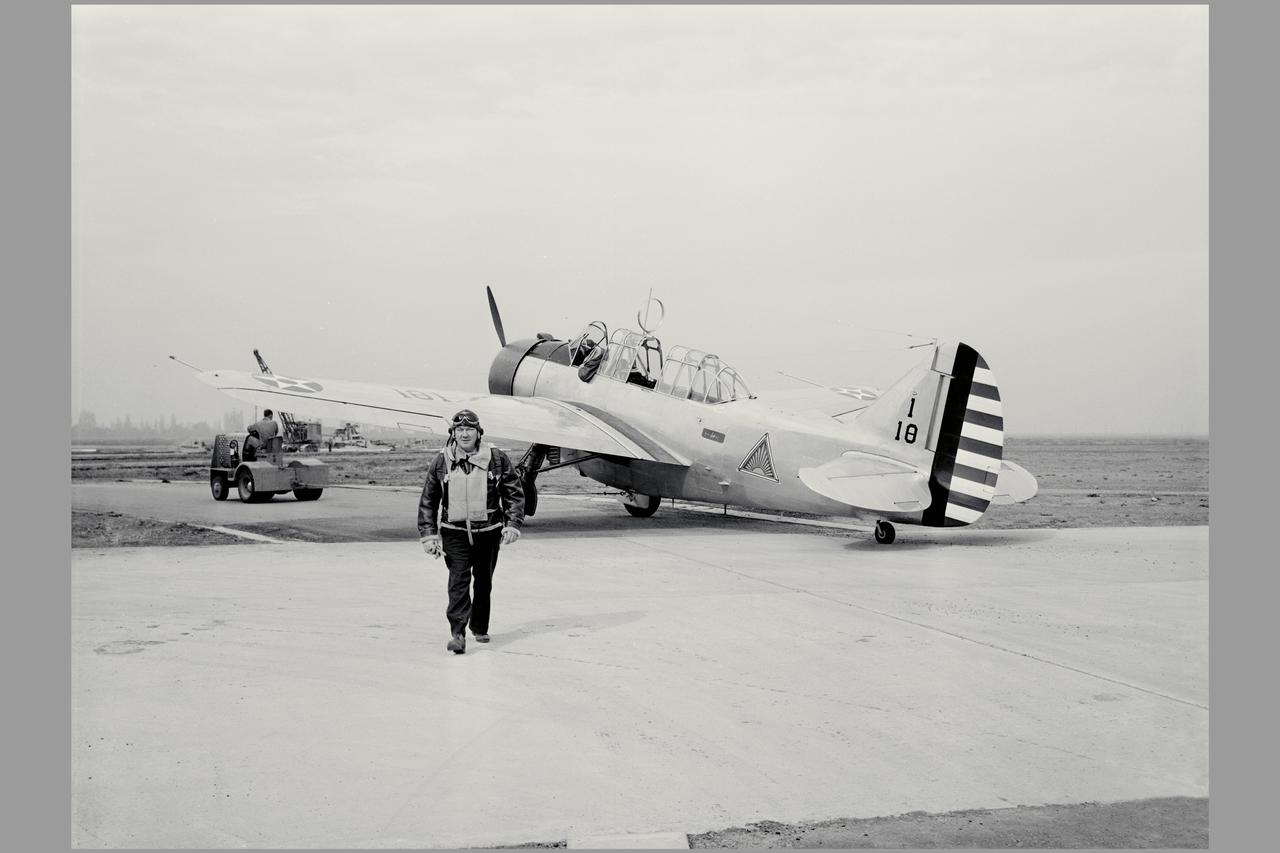
A new three-place North American O-47A observation airplane with Army Air Corps marking was the first ircraft to arrive at Ames. The Circular antenna on top of the canopy is for direction finding. A close look show that help from the front cockpit was needed for directional control when using a rope (instead of a tow bar) to tow the aircraft. (Sept 1940). W.H. McAvoy Ames test pilot returning from an early flight of first test airplane at Ames, a North American O-47A-1 (or 0-47 AAC37-323) This aircraft severed for a short time upon arrival as a research aircraft for heated-wing deicing. NOTE: printed in NASA Ames Publications: Adventures in Research - SP-4320 57 Years - Flight Research at AMES - NASA SP-1998-3300

CAPE CANAVERAL, Fla. -- Crew members in a skiff from Liberty Star, one of NASA's solid rocket booster retrieval ships, attach a tow rope to the parachute lines from the right spent booster bobbing in the Atlantic Ocean from space shuttle Discovery's final launch. The shuttle's two solid rocket booster casings and associated flight hardware are recovered in the Atlantic Ocean after every launch by Freedom Star and Liberty Star. The boosters impact the Atlantic about seven minutes after liftoff and the retrieval ships are stationed about 10 miles from the impact area at the time of splashdown. After the spent segments are processed, they will be transported to Utah, where they will be refurbished and stored, if needed. Photo credit: NASA/Frank Michaux
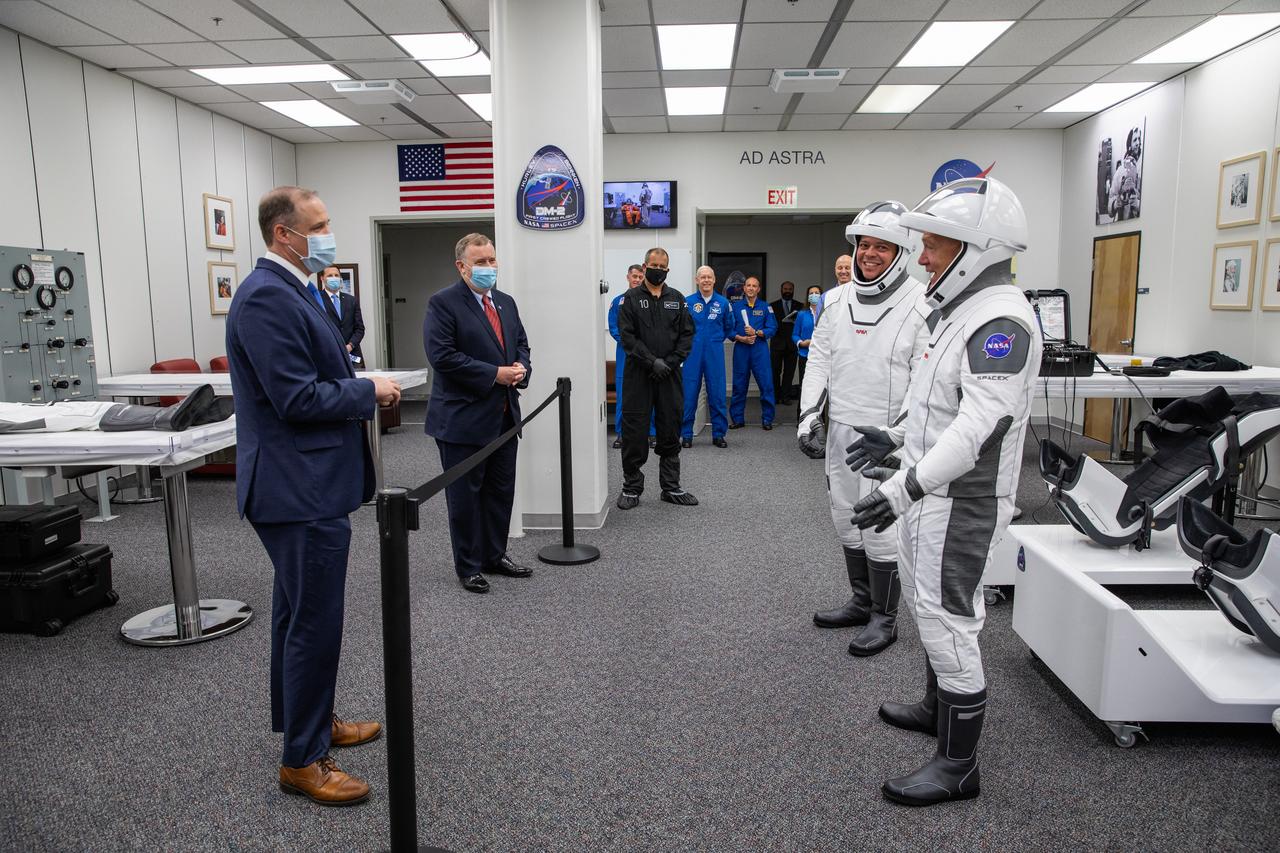
Behind the rope, NASA Administrator Jim Bridenstine (left) and Deputy Administrator Jim Morhard greet NASA astronauts Robert Behnken (left) and Douglas Hurley inside the Astronaut Crew Quarters in the Neil A. Armstrong Operations and Checkout Building at NASA’s Kennedy Space Center in Florida on May 30, 2020, ahead of the agency’s SpaceX Demo-2 mission. The SpaceX Falcon 9 rocket and Crew Dragon spacecraft lifted off at 3:22 p.m. EDT from historic Launch Complex 39A. Behnken and Hurley are the first astronauts to launch to the International Space Station from U.S. soil since the end of the Space Shuttle Program in 2011. Part of NASA’s Commercial Crew Program, this will be SpaceX’s final flight test, paving the way for the agency to certify the crew transportation system for regular, crewed flights to the orbiting laboratory.

Life jackets and throw ropes are seen laid out onboard USS John P. Murtha as NASA, U.S. Navy., and U.S. Air Force teams prepare for the the return of the Artemis II crewmembers to Earth, Wednesday, April 8, 2026, in the Pacific Ocean off the coast of California. NASA’s Artemis II mission is taking NASA astronauts Reid Wiseman, commander; Victor Glover, pilot; Christina Koch, mission specialist; and CSA (Canadian Space Agency) astronaut Jeremy Hansen, mission specialist on a 10-day journey around the Moon and back aboard their Orion spacecraft. Wiseman, Glover, Koch, and Hansen are scheduled to splash down off the coast of San Diego at approximately 5:07 p.m. PDT (8:07 p.m. EDT) on Friday, April 10. Photo Credit: (NASA/Joel Kowsky)
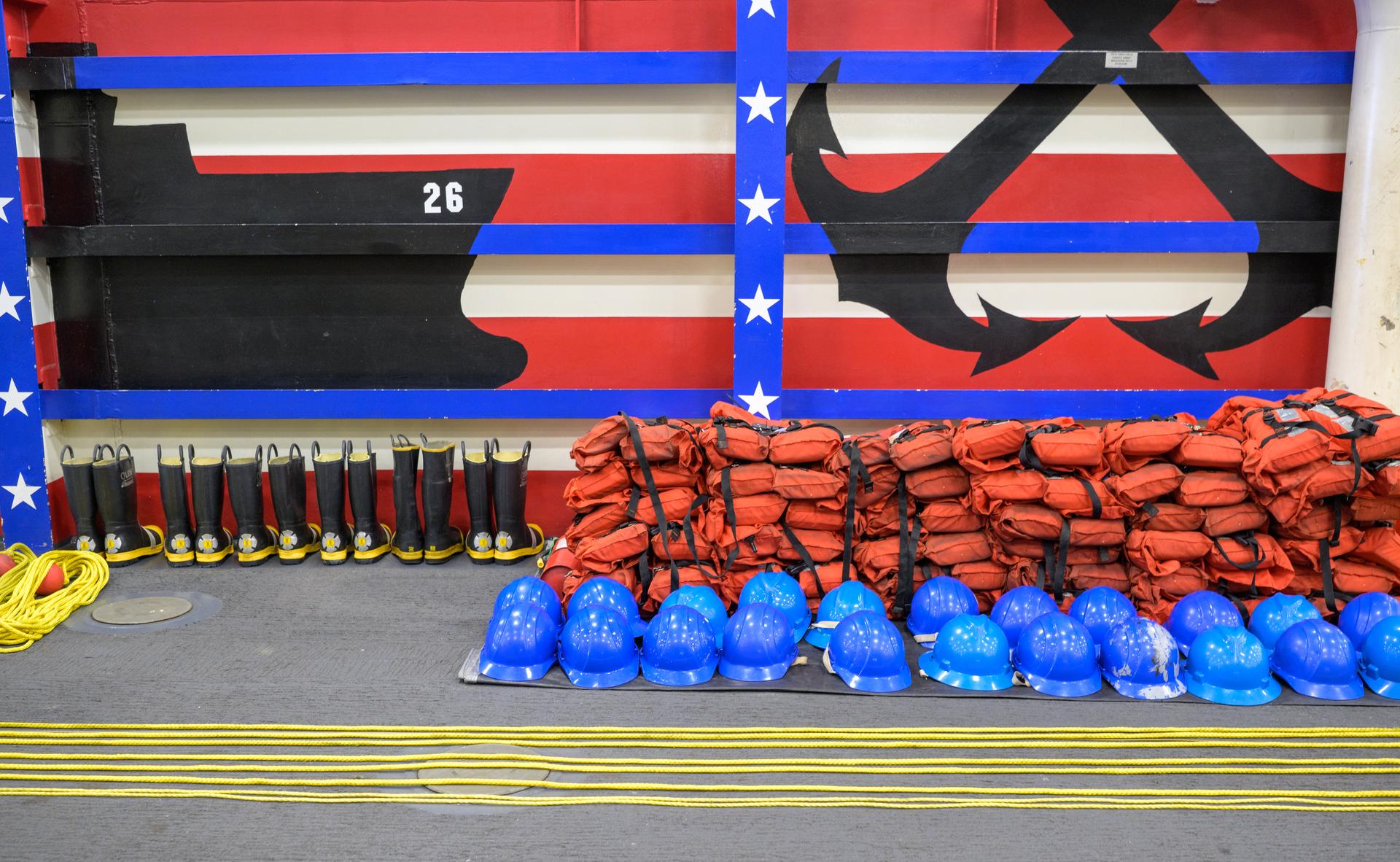
Life jackets, helmets, throw ropes, and boots are seen laid out onboard USS John P. Murtha as NASA, U.S. Navy., and U.S. Air Force teams prepare for the return of the Artemis II crewmembers to Earth, Thursday, April 9, 2026, in the Pacific Ocean off the coast of California. NASA’s Artemis II mission is taking NASA astronauts Reid Wiseman, commander; Victor Glover, pilot; Christina Koch, mission specialist; and CSA (Canadian Space Agency) astronaut Jeremy Hansen, mission specialist on a 10-day journey around the Moon and back aboard their Orion spacecraft. Wiseman, Glover, Koch, and Hansen are scheduled to splash down off the coast of San Diego at approximately 5:07 p.m. PDT (8:07 p.m. EDT) on Friday, April 10. Photo Credit: (NASA/Bill Ingalls)
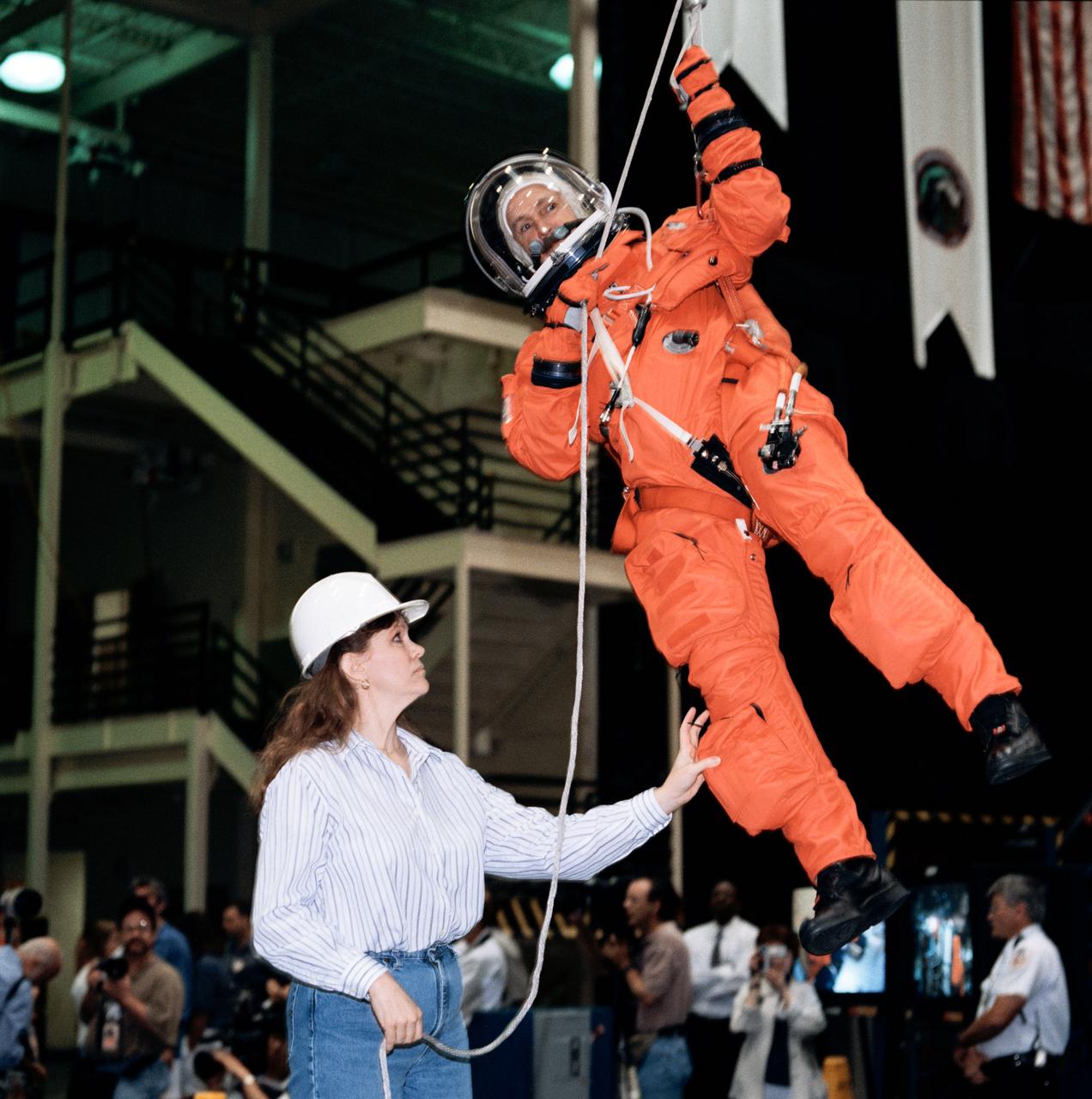
Photographic documentation of the STS-95 crew emergency egress training at the bldg 9A Full Fuselage Trainer (FFT). Views include: Mission specialist Senator John Glenn (in his orange Launch and Landing (LES) suit) is photographed by his wife as other visitors look on (07958). STS-95 crewmember prepares to use the Sky Genie to climb down the side of the FFT (07959). STS-95 crew lines up to pose for pictures in their LES's. Left to right are: Mission specialist Pedro Duque, payload specialist Chiaki Mukai, commander Curt Brown, payload specialist U.S. Senator John Glenn, mission specialist Stephen Robinson, pilot Steven Lindsey, and mission specialist Scott F. Parazynski (07960). Parazynski, Glenn and Robinson talk while their photo is being taken (07961). Mukai receives assistance from suit techs in donning her LES helmet (07962). Glenn receives assistance from suit techs in donning his LES helmet (07963). Glenn, in his LES, walks toward the FFT (07964). Glenn uses the Sky Genie to prepare to climb down the side of the FFT (07965). View of Mrs. Annie Glenn watching her husband during training (07966). Mukai receives assistance from a suit tech with her LES while Glenn watches (07967). Close-up view of Mukai in her LES without a helmet (07968). Glenn and Mukai prepare to strap themselves into their seats in the mockup of the FFT middeck (07969-70). Close-up view of Mukai with her helmet on (07971). Mukai climbs down the rope with help from a technician on the ground (07972). Lindsey, Parazynski, Duque, Mukai and Glenn are photographed seated, waiting for training (07973). Close-up of Duque without his helmet (07974). Close-up of Lindsey with his helmet on, talking to a trainer (07975-6). View of Lindsey climbing down the rope (07977).
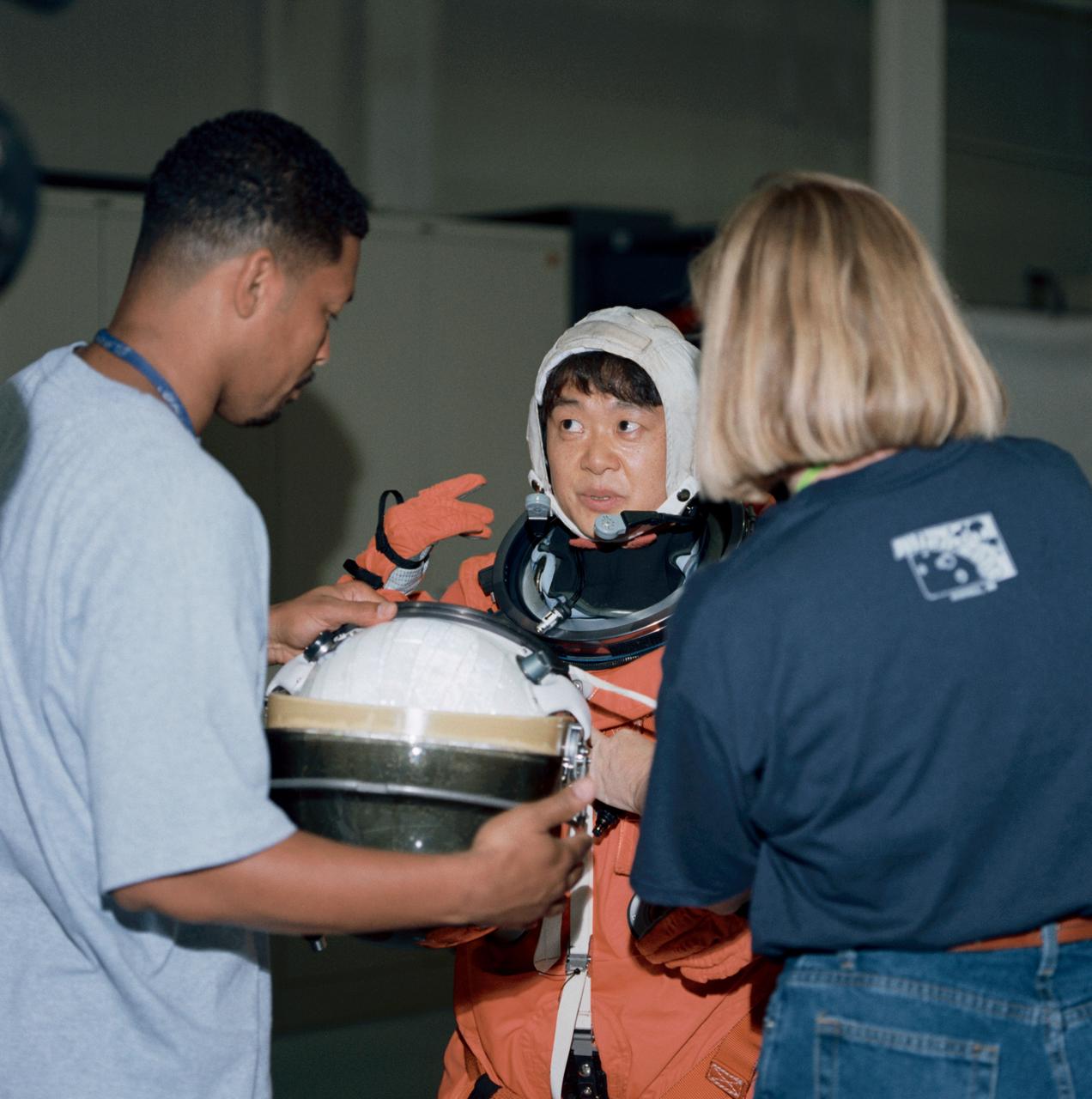
Photographic documentation of the STS-95 crew emergency egress training at the bldg 9A Full Fuselage Trainer (FFT). Views include: Mission specialist Senator John Glenn (in his orange Launch and Landing (LES) suit) is photographed by his wife as other visitors look on (07958). STS-95 crewmember prepares to use the Sky Genie to climb down the side of the FFT (07959). STS-95 crew lines up to pose for pictures in their LES's. Left to right are: Mission specialist Pedro Duque, payload specialist Chiaki Mukai, commander Curt Brown, payload specialist U.S. Senator John Glenn, mission specialist Stephen Robinson, pilot Steven Lindsey, and mission specialist Scott F. Parazynski (07960). Parazynski, Glenn and Robinson talk while their photo is being taken (07961). Mukai receives assistance from suit techs in donning her LES helmet (07962). Glenn receives assistance from suit techs in donning his LES helmet (07963). Glenn, in his LES, walks toward the FFT (07964). Glenn uses the Sky Genie to prepare to climb down the side of the FFT (07965). View of Mrs. Annie Glenn watching her husband during training (07966). Mukai receives assistance from a suit tech with her LES while Glenn watches (07967). Close-up view of Mukai in her LES without a helmet (07968). Glenn and Mukai prepare to strap themselves into their seats in the mockup of the FFT middeck (07969-70). Close-up view of Mukai with her helmet on (07971). Mukai climbs down the rope with help from a technician on the ground (07972). Lindsey, Parazynski, Duque, Mukai and Glenn are photographed seated, waiting for training (07973). Close-up of Duque without his helmet (07974). Close-up of Lindsey with his helmet on, talking to a trainer (07975-6). View of Lindsey climbing down the rope (07977).
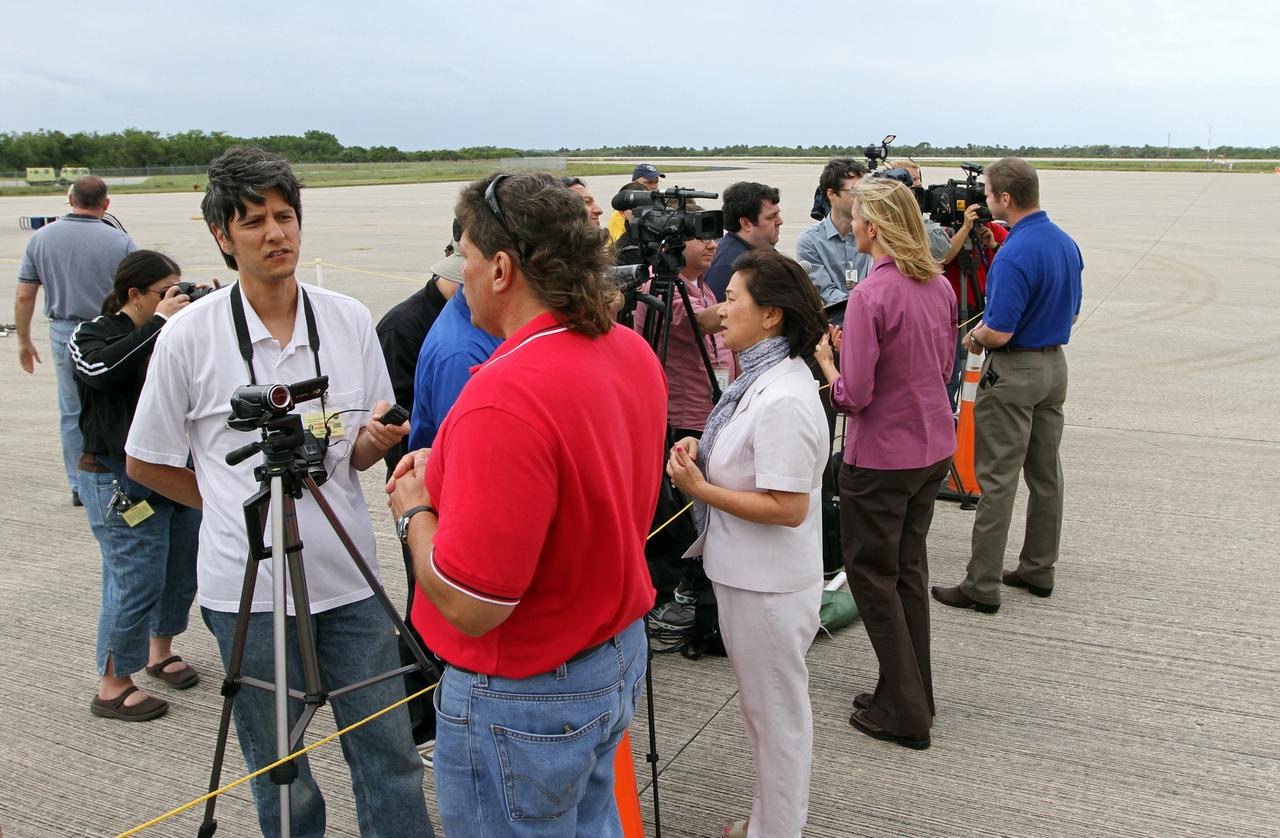
CAPE CANAVERAL, Fla. – At the Shuttle Landing Facility at NASA’s Kennedy Space Center in Florida, media representatives interview space shuttle managers following the arrival of space shuttle Discovery. Behind the rope with their backs to the camera are, from left, Bart Pannullo, NASA Transition and Retirement vehicle manager at Kennedy Dorothy Rasco, manager for Space Shuttle Program Transition and Retirement at NASA’s Johnson Space Center Stephanie Stilson, NASA flow director for Orbiter Transition and Retirement at Kennedy and Kevin Templin, transition manager for the Space Shuttle Program at Johnson. Discovery will be hoisted onto a Shuttle Carrier Aircraft, or SCA, with the aid of the mate-demate device at the landing facility. The SCA, a modified Boeing 747 jet airliner, is scheduled to ferry Discovery to the Washington Dulles International Airport in Virginia on April 17, after which the shuttle will be placed on permanent public display in the Smithsonian's National Air and Space Museum Steven F. Udvar-Hazy Center. For more information on shuttle transition and retirement activities, visit http://www.nasa.gov/transition. Photo credit: NASA/Kim Shiflett
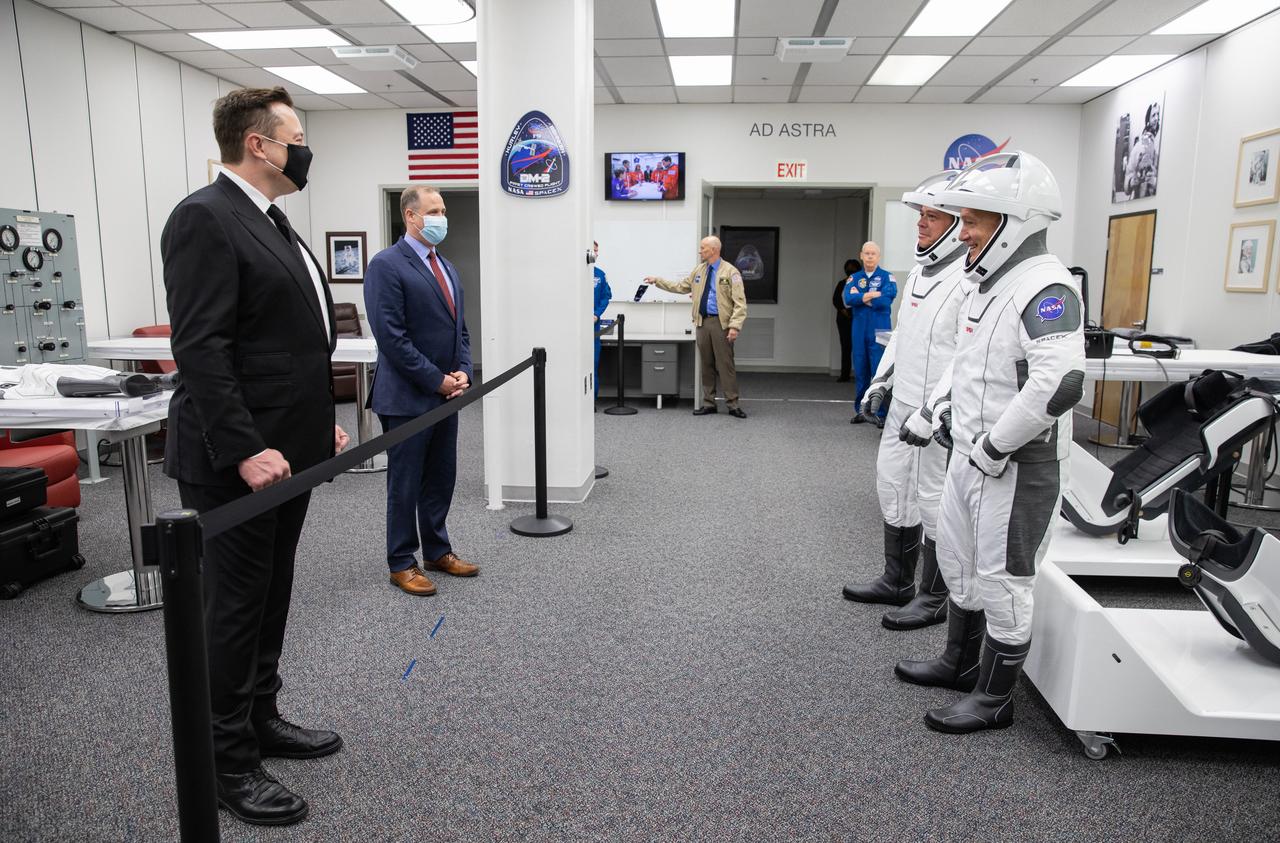
Behind the rope, SpaceX CEO and Chief Designer Elon Musk (left) and NASA Administrator Jim Bridenstine greet NASA astronauts Robert Behnken (left) and Douglas Hurley inside the Astronaut Crew Quarters in the Neil A. Armstrong Operations and Checkout Building at NASA’s Kennedy Space Center in Florida ahead of the agency’s SpaceX Demo-2 mission. The launch, initially scheduled for May 27, 2020, was scrubbed due to unfavorable weather conditions around Launch Complex 39A. The next launch attempt will be Saturday, May 30. Liftoff of the SpaceX Falcon 9 rocket and Crew Dragon spacecraft is scheduled for 3:22 p.m. EDT from historic Launch Complex 39A. Behnken and Hurley will be the first astronauts to launch to the International Space Station from U.S. soil since the end of the Space Shuttle Program in 2011. Part of NASA’s Commercial Crew Program, this will be SpaceX’s final flight test, paving the way for the agency to certify the crew transportation system for regular, crewed flights to the orbiting laboratory.
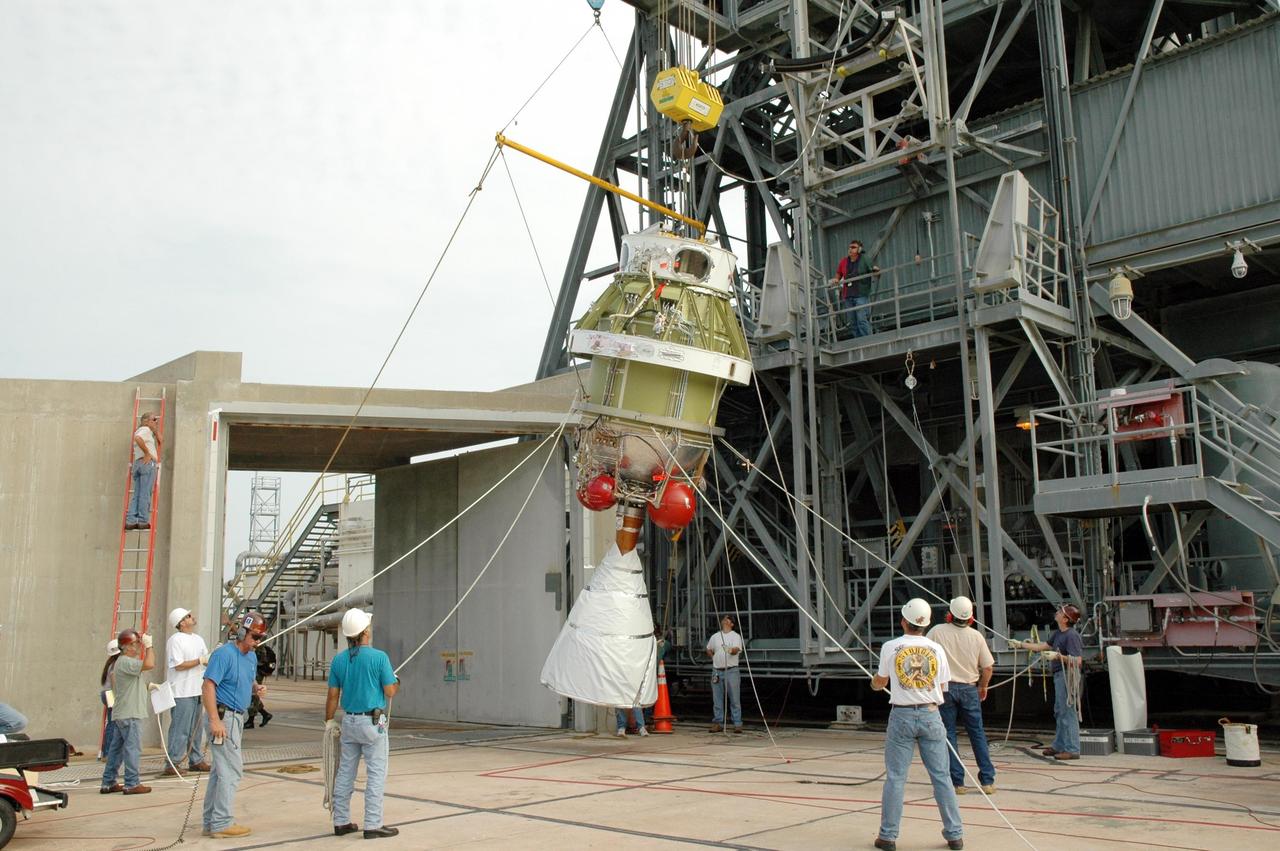
KENNEDY SPACE CENTER, FLA. - On Launch Pad 17-B at Cape Canaveral Air Force Station in Florida, workers maneuver the ropes tied to the second stage segment as it is being lowered to a horizontal position. It will be placed on a transporter and moved to the High-Pressure Test Facility for leak testing. The segment was destacked from the Delta II rocket in the mobile service tower. At the Boeing plant in Alabama, a leak was observed in the second-stage oxidizer tank for another Delta II that had been scheduled to launch in November; therefore, all identical tanks scheduled for launch in the near future are being checked. The second stage for the Delta II that will launch STEREO cannot be effectively tested while atop the first stage at Pad 17-B. STEREO stands for Solar Terrestrial Relations Observatory and comprises two spacecraft. The STEREO mission is the first to take measurements of the sun and solar wind in 3-dimension. This new view will improve our understanding of space weather and its impact on the Earth. STEREO is expected to lift off in late August 2006. Photo credit: NASA/Jim Grossmann
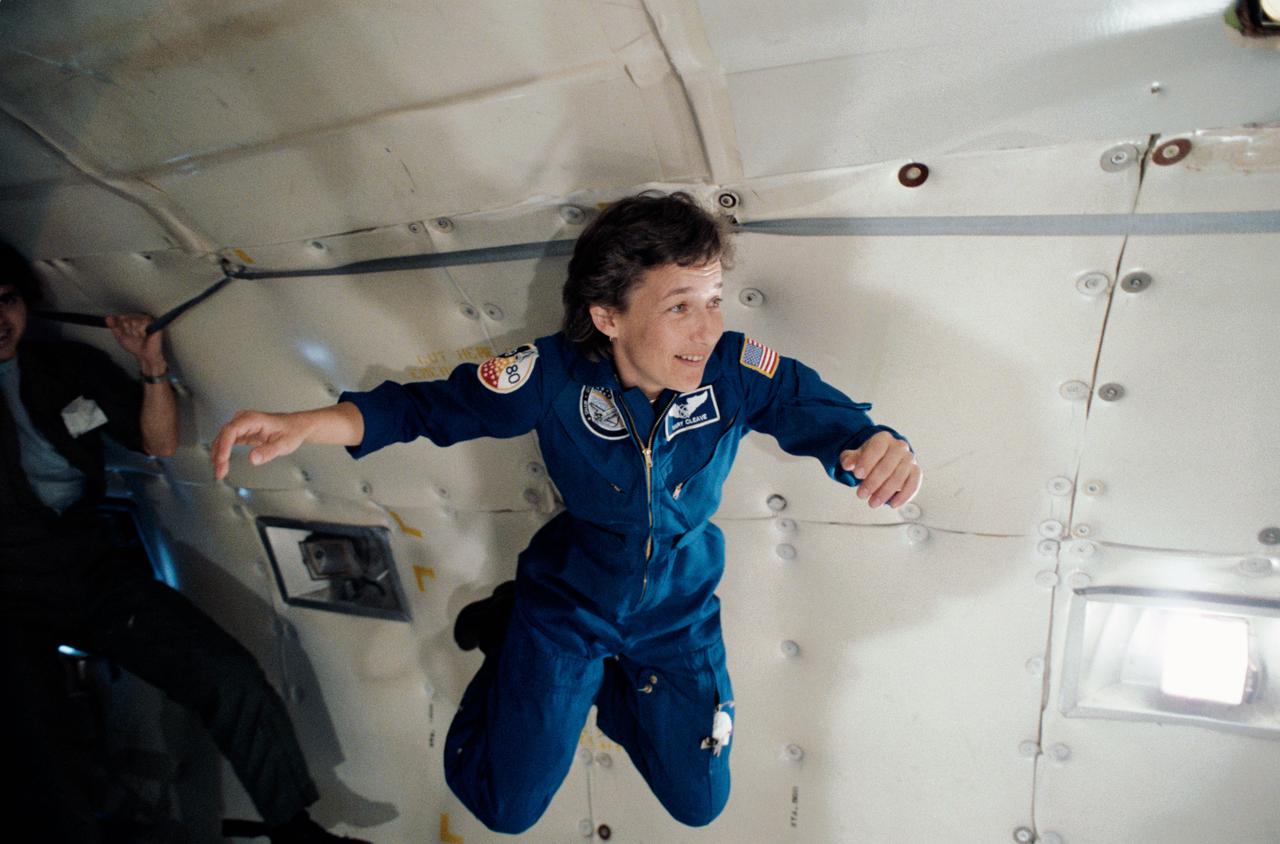
STS 61-B crewmembers training on the KC-135 in zero-G. Views include Payload specialist Charles D. Walker attempting to down the lower torso of his extravehicular mobility unit (EMU) in zero-G in the KC-135. He is being assisted by other participants in the training (39135); Payload specialist Rodolfo Neri floating in midair during training in the KC-135 (39136,39138); Mission specialist Mary L. Cleave floating in midair during her training aboard the KC-135 (39137); Astronaut Bryan D. O'Connor assists Astronaut Sherwood C. Spring in completing his donning of the EMU in the KC-135 (39139); Technicians aid Spring with his EMU in the KC-135 (39140); O'Connor appears to be leaping up in zero-G aboard the KC-135 (39141); Astronaut Brewster Shaw is assisted by a technician to don his EMU (39142); Shaw is attempting to don the EMU gloves while O'Connor watches (39143); Shaw does jumping jacks while Neri attempts to travel down a rope guideline (39144).
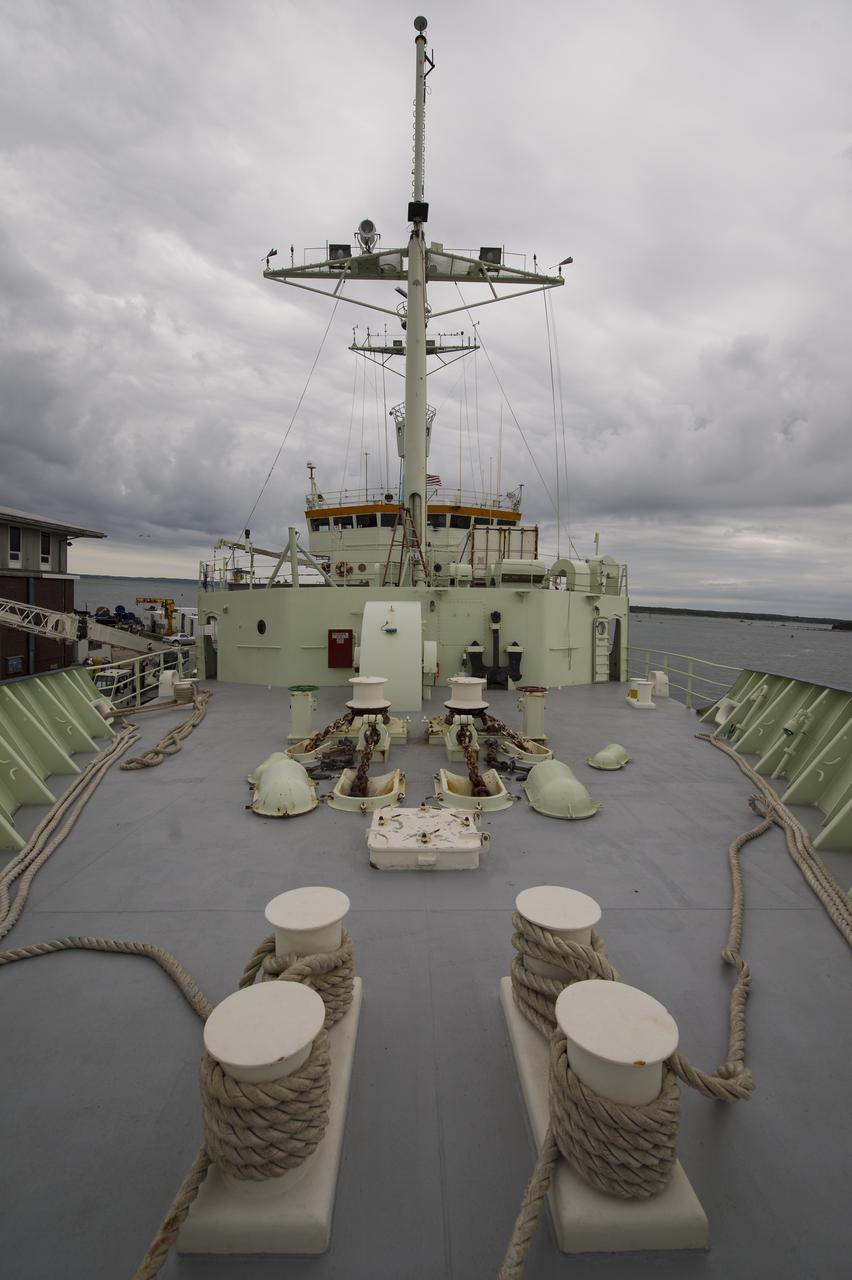
The top bow deck of the Woods Hole Oceanographic Institution's research vessel Knorr is seen on Tuesday, Sept. 4, 2012, in Woods Hole, Mass. Knorr is scheduled to depart on Sept. 6 to take part in the Salinity Processes in the Upper Ocean Regional Study (SPURS). The NASA-sponsored expedition will sail to the North Atlantic's saltiest spot to get a detailed, 3-D picture of how salt content fluctuates in the ocean's upper layers and how these variations are related to shifts in rainfall patterns around the planet. Photo Credit: (NASA/Bill Ingalls)
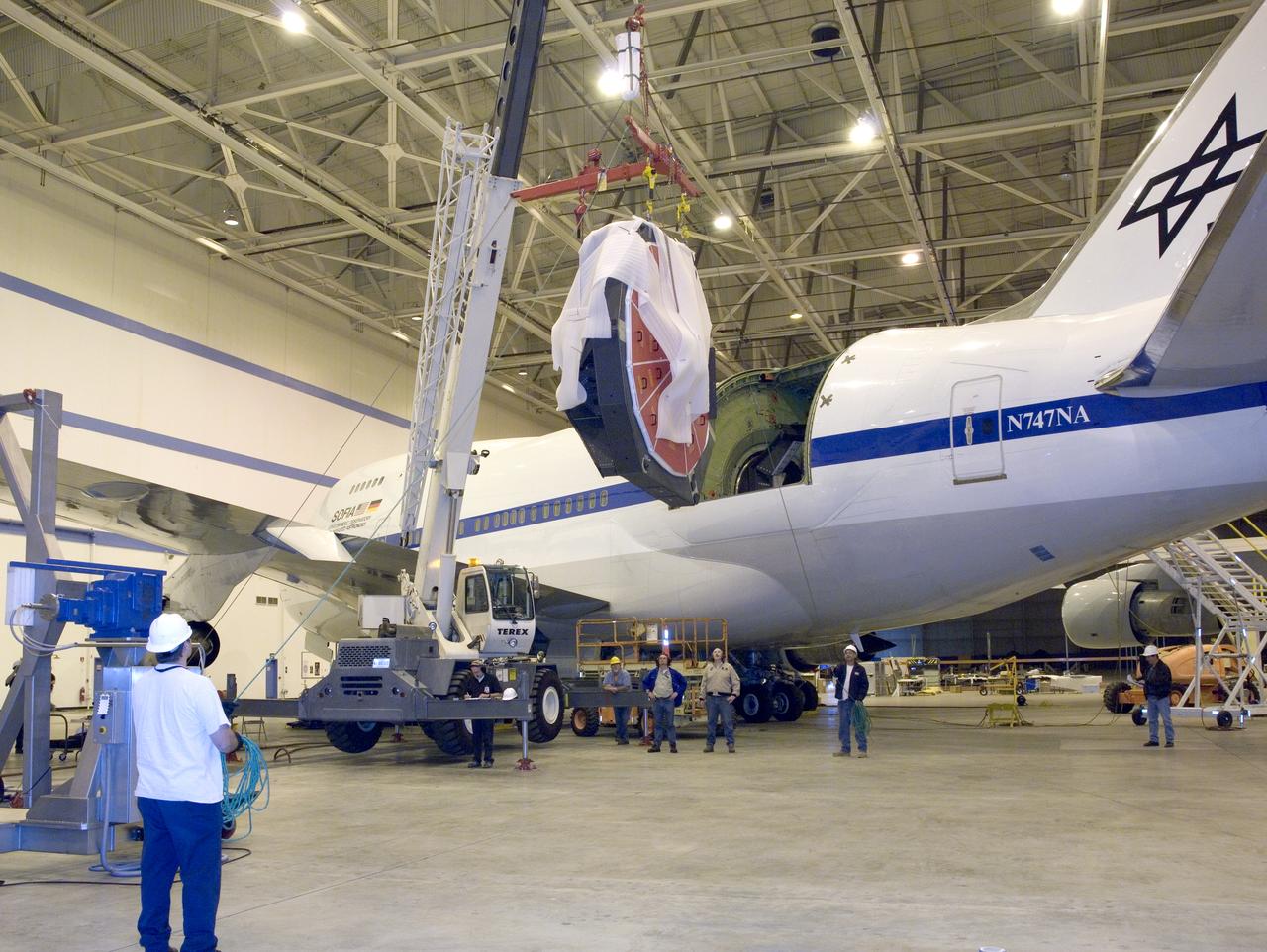
Technicians at the NASA Dryden Aircraft Operations Facility in Palmdale, Calif., removed the German-built primary mirror assembly from the Stratospheric Observatory for Infrared Astronomy, or SOFIA, April 18, 2008 in preparation for the final finish coating of the mirror. A precision crane lifted the more than two-ton mirror assembly from its cavity in the rear fuselage of the highly modified Boeing 747SP. The assembly was then secured in its transport dolly and moved to a clean room where it was prepared for shipment to NASA Ames Research Center at Moffett Field near Mountain View, Calif. where it would receive its aluminized finish coating before being re-installed in the SOFIA aircraft.
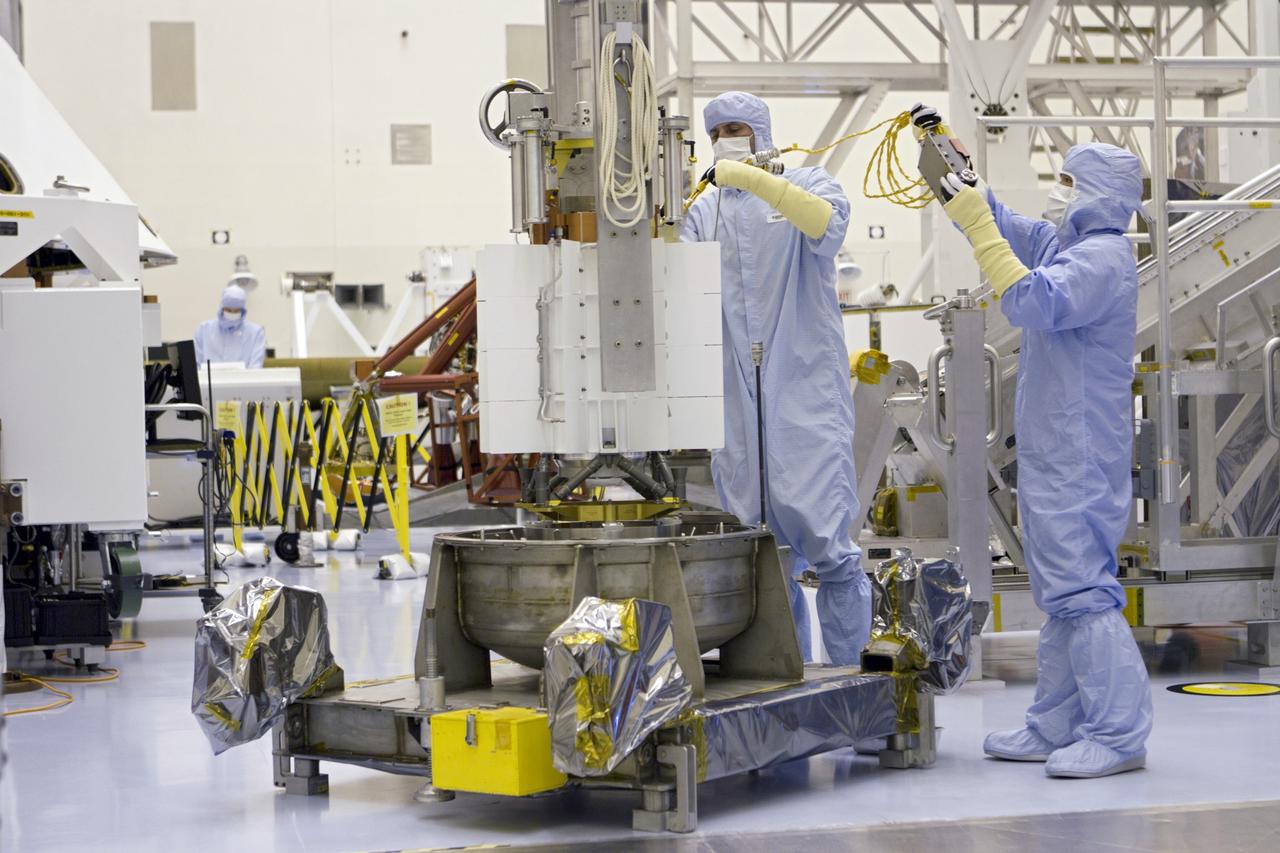
CAPE CANAVERAL, Fla. -- In the high bay of the Payload Hazardous Servicing Facility (PHSF) at NASA's Kennedy Space Center in Florida, spacecraft technicians from NASA's Jet Propulsion Laboratory attach guide ropes to the turning fixture connected to the multi-mission radioisotope thermoelectric generator (MMRTG) for NASA's Mars Science Laboratory (MSL) mission during preparations to lift it from its support base. The turning fixture will lift and lower the MMRTG onto the MMRTG integration cart. The cart will be used to install the MMRTG on Curiosity for a fit check. The MMRTG will be installed on the rover for launch at the pad. The MMRTG will generate the power needed for the mission from the natural decay of plutonium-238, a non-weapons-grade form of the radioisotope. Heat given off by this natural decay will provide constant power through the day and night during all seasons. Curiosity, MSL's car-sized rover, has 10 science instruments designed to search for signs of life, including methane, and help determine if the gas is from a biological or geological source. Waste heat from the MMRTG will be circulated throughout the rover system to keep instruments, computers, mechanical devices and communications systems within their operating temperature ranges. Launch of MSL aboard a United Launch Alliance Atlas V rocket is planned for Nov. 25 from Space Launch Complex 41 on Cape Canaveral Air Force Station. For more information, visit http://www.nasa.gov/msl. Photo credit: NASA/Cory Huston

The dark squares that make up the checkerboard pattern in this image are fields of a sort—fields of seaweed. Along the south coast of South Korea, seaweed is often grown on ropes, which are held near the surface with buoys. This technique ensures that the seaweed stays close enough to the surface to get enough light during high tide but doesn’t scrape against the bottom during low tide. The Operational Land Imager (OLI) on Landsat 8 acquired this image of seaweed cultivation in the shallow waters around Sisan Island on January 31, 2014. Home to a thriving aquaculture industry, the south coast of South Korea produces about 90 percent of the country’s seaweed crop. The waters around Sisan are not the only place where aquaculture is common. View the large image to see how ubiquitous seaweed aquaculture is along the coast in Jeollanam-do, the southernmost province on the Korean peninsula. Two main types of seaweed are cultivated in South Korea: Undaria (known as miyeok in Korean, wakame in Japanese) and Pyropia (gim in Korean, nori in Japanese). Both types are used generously in traditional Korean, Japanese, and Chinese food. Since 1970, farmed seaweed production has increased by approximately 8 percent per year. Today, about 90 percent of all the seaweed that humans consume globally is farmed. That may be good for the environment. In comparison to other types of food production, seaweed farming has a light environmental footprint because it does not require fresh water or fertilizer. NASA Earth Observatory image by Jesse Allen, using Landsat data from the U.S. Geological Survey. Caption by Adam Voiland. Credit: <b><a href="http://www.earthobservatory.nasa.gov/" rel="nofollow"> NASA Earth Observatory</a></b> <b><a href="http://www.nasa.gov/audience/formedia/features/MP_Photo_Guidelines.html" rel="nofollow">NASA image use policy.</a></b> <b><a href="http://www.nasa.gov/centers/goddard/home/index.html" rel="nofollow">NASA Goddard Space Flight Center</a></b> enables NASA’s mission through four scientific endeavors: Earth Science, Heliophysics, Solar System Exploration, and Astrophysics. Goddard plays a leading role in NASA’s accomplishments by contributing compelling scientific knowledge to advance the Agency’s mission. <b>Follow us on <a href="http://twitter.com/NASAGoddardPix" rel="nofollow">Twitter</a></b> <b>Like us on <a href="http://www.facebook.com/pages/Greenbelt-MD/NASA-Goddard/395013845897?ref=tsd" rel="nofollow">Facebook</a></b> <b>Find us on <a href="http://instagrid.me/nasagoddard/?vm=grid" rel="nofollow">Instagram</a></b>
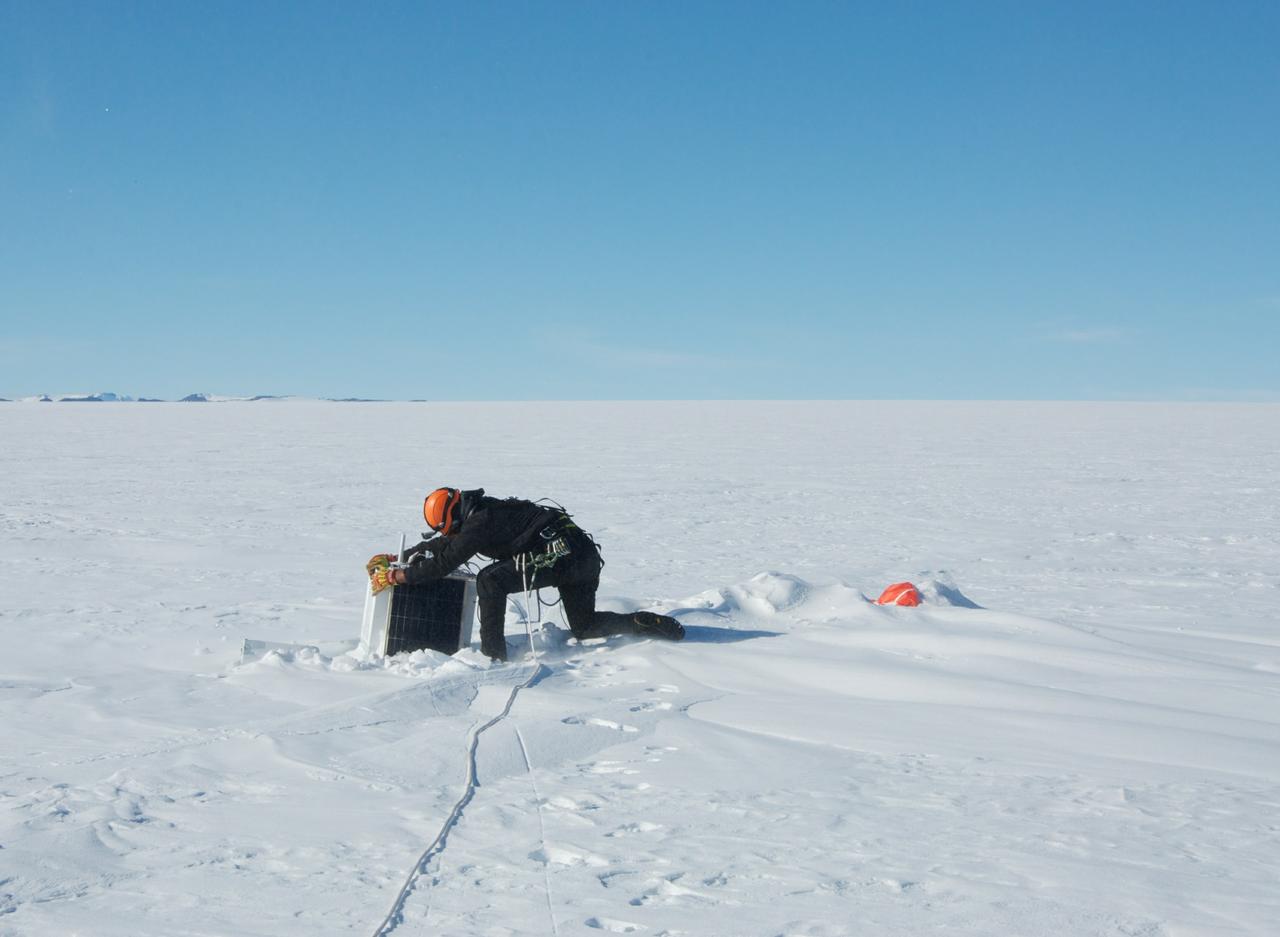
Recovery of a BARREL balloon payload after its flight. The recovery was carried out by helicopter. This area is known to be heavily crevassed so the base mountaineer is seen here with a safety rope. Credit: NASA/Goddard/BARREL/Brett Anderson Read more: <a href="http://www.nasa.gov/content/goddard/nasas-barrel-returns-successful-from-antarctica" rel="nofollow">www.nasa.gov/content/goddard/nasas-barrel-returns-success...</a> -- Three months, 20 balloons, and one very successful campaign. The team for NASA's BARREL – short for Balloon Array for Radiation belt Relativistic Electron Losses -- mission returned from Antarctica in March 2014. BARREL's job is to help unravel the mysterious Van Allen belts, two gigantic donuts of radiation that surround Earth, which can shrink and swell in response to incoming energy and particles from the sun and sometimes expose satellites to harsh radiation. While in Antarctica, the team launched 20 balloons carrying instruments that sense charged particles that are scattered into the atmosphere from the belts, spiraling down the magnetic fields near the South Pole. Each balloon traveled around the pole for up to three weeks. The team will coordinate the BARREL data with observations from NASA's two Van Allen Probes to better understand how occurrences in the belts relate to bursts of particles funneling down toward Earth. BARREL team members will be on hand at the USA Science and Engineering Festival in DC on April 26 and 27, 2014 for the exhibit Space Balloons: Exploring the Extremes of Space Weather. <b><a href="http://www.nasa.gov/audience/formedia/features/MP_Photo_Guidelines.html" rel="nofollow">NASA image use policy.</a></b> <b><a href="http://www.nasa.gov/centers/goddard/home/index.html" rel="nofollow">NASA Goddard Space Flight Center</a></b> enables NASA’s mission through four scientific endeavors: Earth Science, Heliophysics, Solar System Exploration, and Astrophysics. Goddard plays a leading role in NASA’s accomplishments by contributing compelling scientific knowledge to advance the Agency’s mission. <b>Follow us on <a href="http://twitter.com/NASAGoddardPix" rel="nofollow">Twitter</a></b> <b>Like us on <a href="http://www.facebook.com/pages/Greenbelt-MD/NASA-Goddard/395013845897?ref=tsd" rel="nofollow">Facebook</a></b> <b>Find us on <a href="http://instagram.com/nasagoddard?vm=grid" rel="nofollow">Instagram</a></b>

The dark squares that make up the checkerboard pattern in this image are fields of a sort—fields of seaweed. Along the south coast of South Korea, seaweed is often grown on ropes, which are held near the surface with buoys. This technique ensures that the seaweed stays close enough to the surface to get enough light during high tide but doesn’t scrape against the bottom during low tide. The Operational Land Imager (OLI) on Landsat 8 acquired this image of seaweed cultivation in the shallow waters around Sisan Island on January 31, 2014. Home to a thriving aquaculture industry, the south coast of South Korea produces about 90 percent of the country’s seaweed crop. The waters around Sisan are not the only place where aquaculture is common. View the large image to see how ubiquitous seaweed aquaculture is along the coast in Jeollanam-do, the southernmost province on the Korean peninsula. Two main types of seaweed are cultivated in South Korea: Undaria (known as miyeok in Korean, wakame in Japanese) and Pyropia (gim in Korean, nori in Japanese). Both types are used generously in traditional Korean, Japanese, and Chinese food. Since 1970, farmed seaweed production has increased by approximately 8 percent per year. Today, about 90 percent of all the seaweed that humans consume globally is farmed. That may be good for the environment. In comparison to other types of food production, seaweed farming has a light environmental footprint because it does not require fresh water or fertilizer. NASA Earth Observatory image by Jesse Allen, using Landsat data from the U.S. Geological Survey. Caption by Adam Voiland. Credit: <b><a href="http://www.earthobservatory.nasa.gov/" rel="nofollow"> NASA Earth Observatory</a></b> <b><a href="http://www.nasa.gov/audience/formedia/features/MP_Photo_Guidelines.html" rel="nofollow">NASA image use policy.</a></b> <b><a href="http://www.nasa.gov/centers/goddard/home/index.html" rel="nofollow">NASA Goddard Space Flight Center</a></b> enables NASA’s mission through four scientific endeavors: Earth Science, Heliophysics, Solar System Exploration, and Astrophysics. Goddard plays a leading role in NASA’s accomplishments by contributing compelling scientific knowledge to advance the Agency’s mission. <b>Follow us on <a href="http://twitter.com/NASAGoddardPix" rel="nofollow">Twitter</a></b> <b>Like us on <a href="http://www.facebook.com/pages/Greenbelt-MD/NASA-Goddard/395013845897?ref=tsd" rel="nofollow">Facebook</a></b> <b>Find us on <a href="http://instagrid.me/nasagoddard/?vm=grid" rel="nofollow">Instagram</a></b>

NASA’s X-59 quiet supersonic research aircraft sits inside Hangar 4826 at NASA’s Armstrong Flight Research Center in Edwards, California, on Nov. 18, 2025. Following its first flight on Oct. 25, 2025, in support of NASA’s Quesst mission, the aircraft entered scheduled maintenance as part of its transition into flight operations. Quesst aims to demonstrate quiet supersonic flight and reduce the disruptive sonic boom to a quieter sonic thump.

NASA’s X-59 quiet supersonic research aircraft sits inside Hangar 4826 at NASA’s Armstrong Flight Research Center in Edwards, California, on Nov. 18, 2025. Following its first flight on Oct. 25, 2025, in support of NASA’s Quesst mission, the aircraft entered scheduled maintenance as part of its transition into flight operations. Quesst aims to demonstrate quiet supersonic flight and reduce the disruptive sonic boom to a quieter sonic thump.