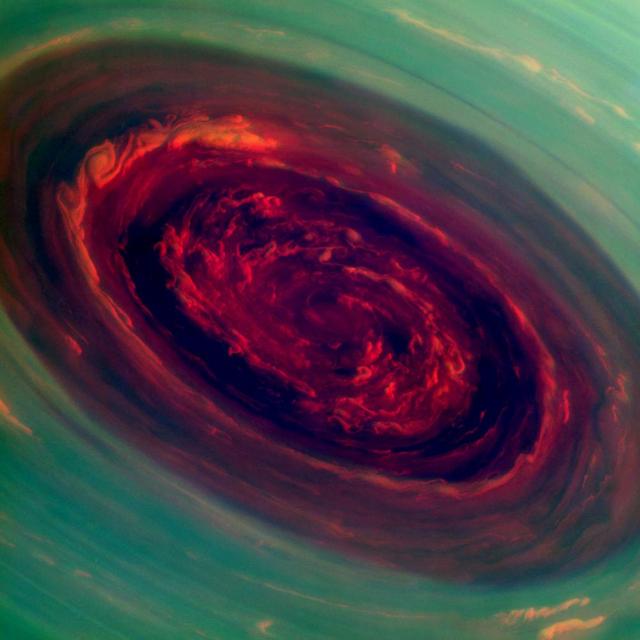
The spinning vortex of Saturn north polar storm resembles a deep red rose of giant proportions surrounded by green foliage in this false-color image from NASA Cassini spacecraft.
The Rose
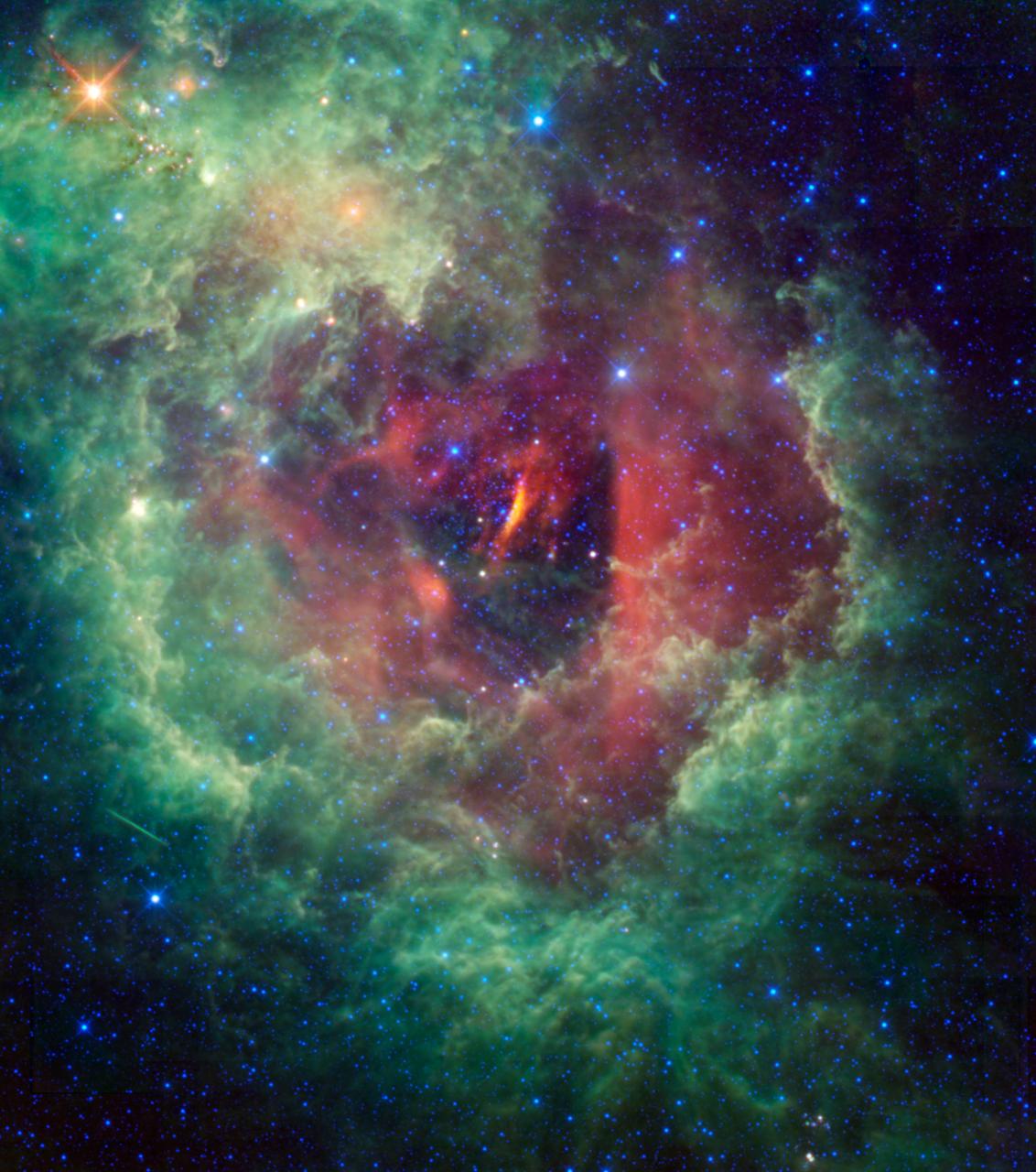
Unicorns and roses are usually the stuff of fairy tales, but a new cosmic image taken by NASA WISE mission shows the Rosette nebula in the constellation Monoceros, or the Unicorn.
WISE Captures the Unicorn Rose
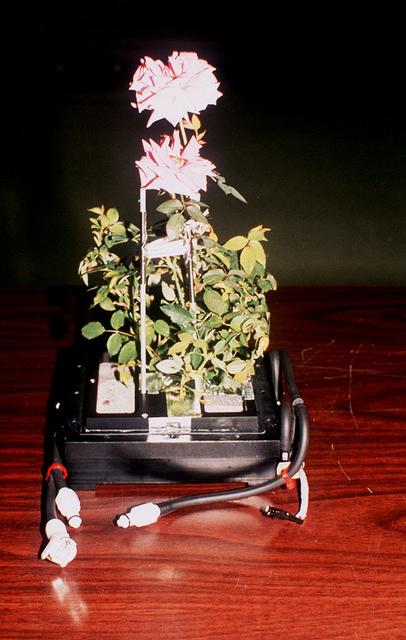
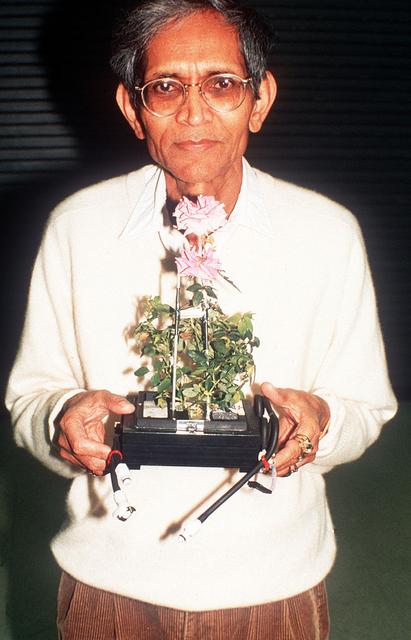
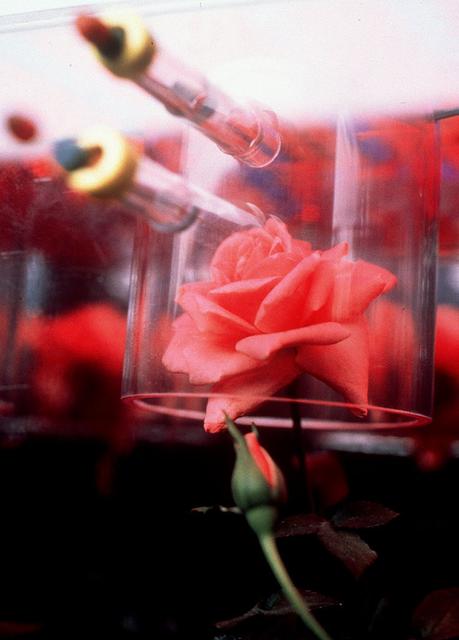
After the Overnight Scentsation rose plant's return to Earth, IFF scientists found a significant change in some of the chemical components occured while in microgravity.
Microgravity
International Flavors and Fragrances Inc., Dr. Braja Mookherjee with the Overnight Scentsation rose plant after its flight aboard NASA's shuttle mission STS-95 for experimentation on scent in microgravity.
Microgravity
International Flavors and Fragrances Inc., is a company that creates and manufactures flavors, fragrances and aroma chemicals. The Overnight Scentsation rose plant will be housed aboard NASA's shuttle flight STS-95 in a specially-designed structure under ultraviolet lights. The flowering plant was brought to Cape Canaveral from its home at IFF's greenhouse in Union Beach, New Jersey.
Microgravity
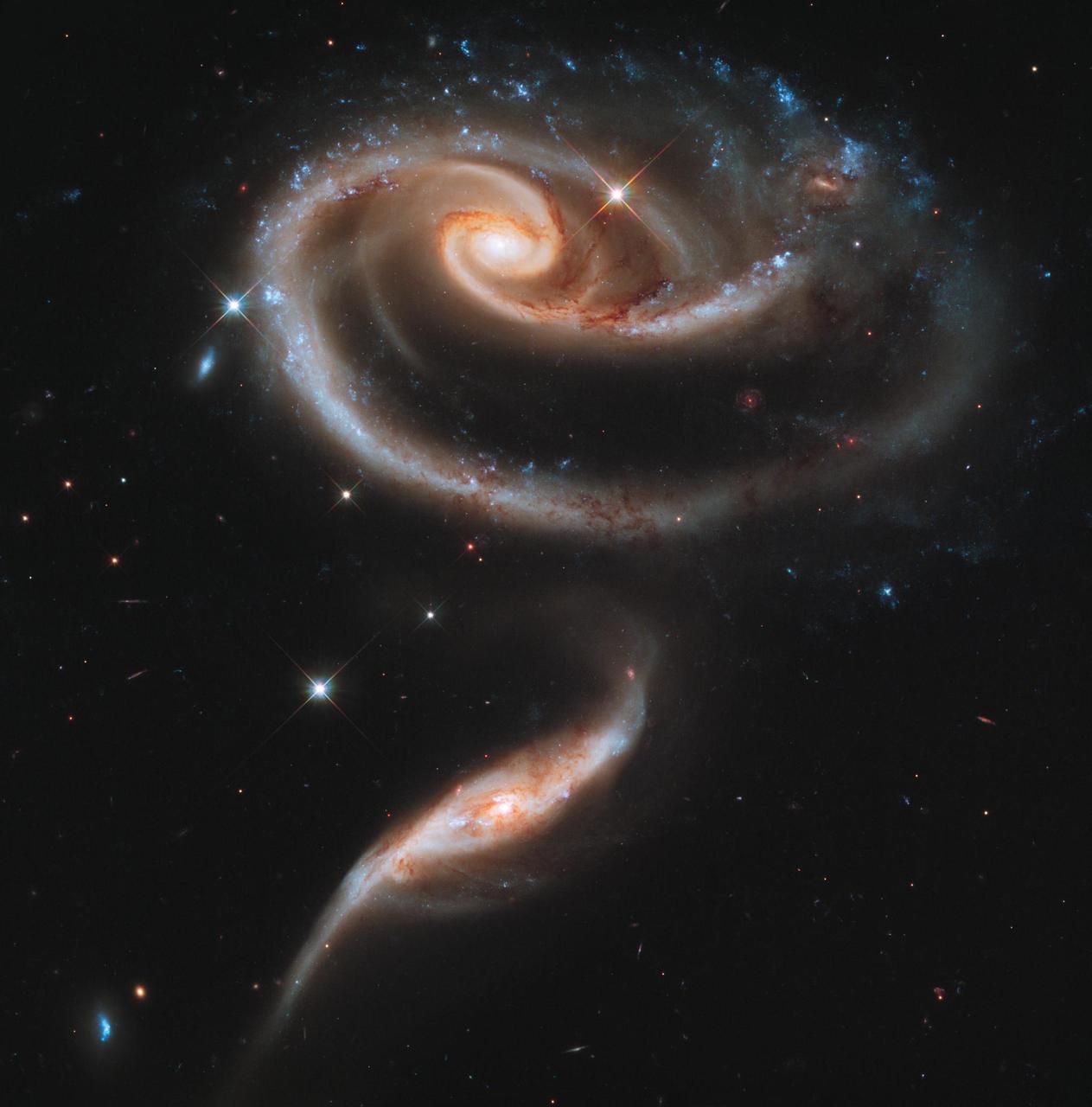
NASA image release April 20, 2011  To see a video of this image go here: <a href="http://www.flickr.com/photos/gsfc/5637796622">www.flickr.com/photos/gsfc/5637796622</a>  To celebrate the 21st anniversary of the Hubble Space Telescope's deployment into space, astronomers at the Space Telescope Science Institute in Baltimore, Md., pointed Hubble's eye at an especially photogenic pair of interacting galaxies called Arp 273. The larger of the spiral galaxies, known as UGC 1810, has a disk that is distorted into a rose-like shape by the gravitational tidal pull of the companion galaxy below it, known as UGC 1813. This image is a composite of Hubble Wide Field Camera 3 data taken on December 17, 2010, with three separate filters that allow a broad range of wavelengths covering the ultraviolet, blue, and red portions of the spectrum.  Hubble was launched April 24, 1990, aboard Discovery's STS-31 mission. Hubble discoveries   revolutionized nearly all areas of current astronomical research from planetary science to cosmology.  Credit: NASA, ESA, and the Hubble Heritage Team (STScI/AURA)  To read more about this image go here: <a href="http://www.nasa.gov/mission_pages/hubble/science/hubble-rose.html" rel="nofollow">www.nasa.gov/mission_pages/hubble/science/hubble-rose.html</a>  <b><a href="http://www.nasa.gov/centers/goddard/home/index.html" rel="nofollow">NASA Goddard Space Flight Center</a></b> enables NASA’s mission through four scientific endeavors: Earth Science, Heliophysics, Solar System Exploration, and Astrophysics. Goddard plays a leading role in NASA’s accomplishments by contributing compelling scientific knowledge to advance the Agency’s mission.  <b>Follow us on <a href="http://twitter.com/NASA_GoddardPix" rel="nofollow">Twitter</a></b>  <b>Join us on <a href="http://www.facebook.com/pages/Greenbelt-MD/NASA-Goddard/395013845897?ref=tsd" rel="nofollow">Facebook</a></b>
NASA's Hubble Celebrates 21st Anniversary with "Rose" of Galaxies
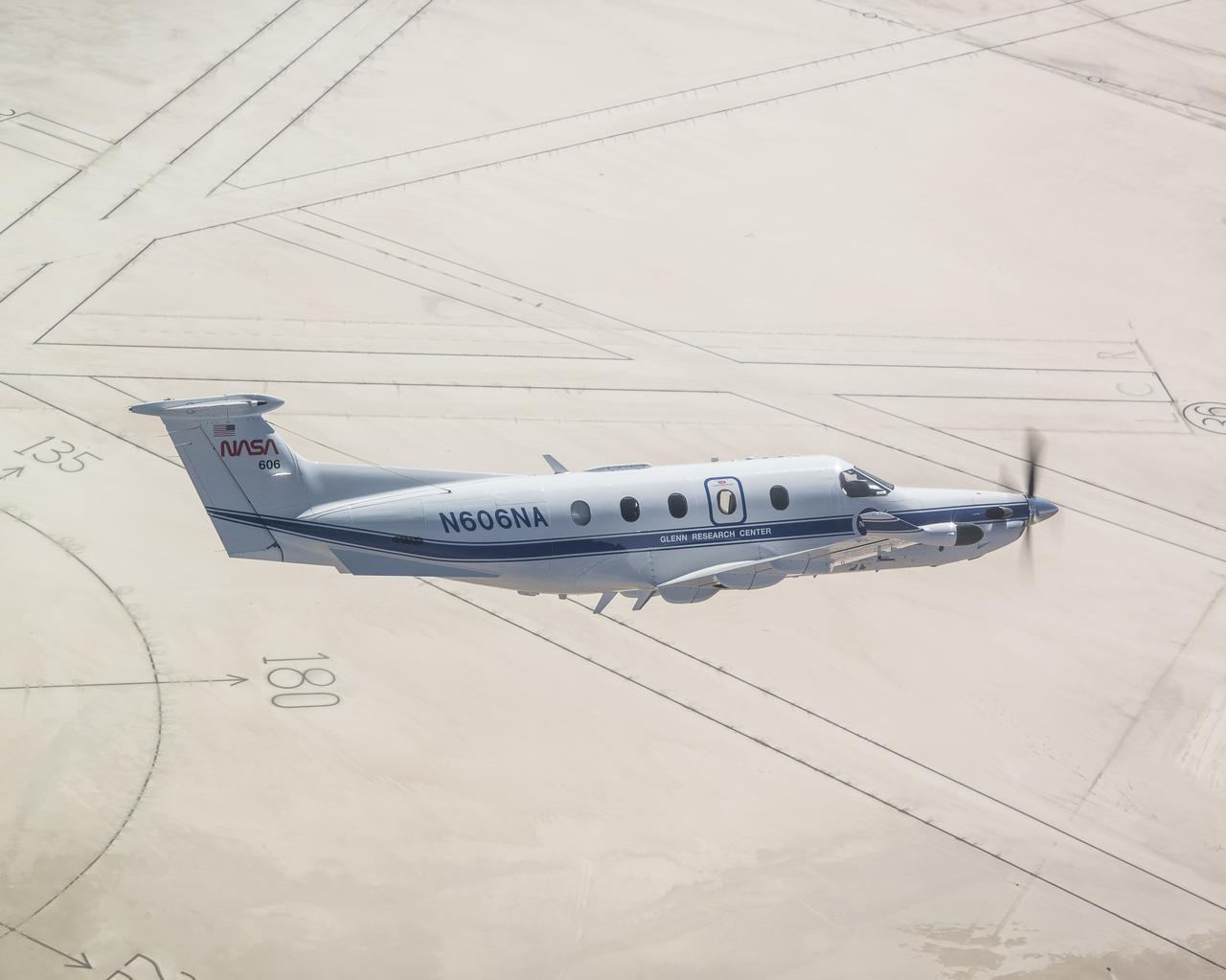
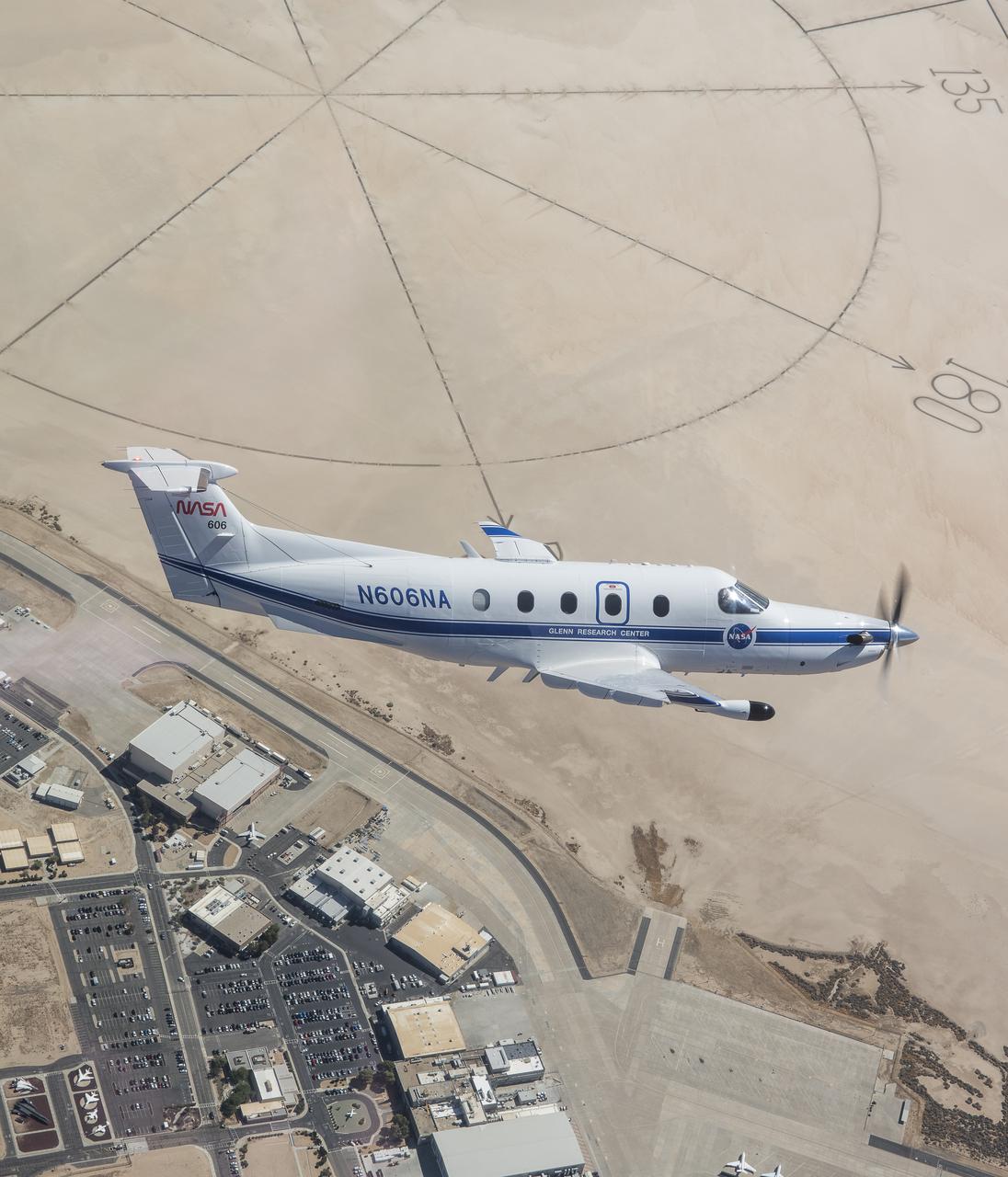
Based out of NASA’s Glenn Research Center in Cleveland, the Pilatus PC-12 is flying over the compass rose in the Roger’s Dry Lakebed at NASA’s Armstrong Flight Research Center, in Edwards, California. The compass rose is more than 4,000 feet in diameter and aligned to magnetic north, to test navigation equipment on aircraft. The Pilatus PC-12 tests communications technology for the emerging Advanced Air Mobility ecosystem. Pilots and crew from both centers perform familiarization flights to prepare for Automatic Dependent Surveillance Broadcast (ADS-B) systems tests between the aircraft and ping-Stations on the ground at Armstrong Flight Research Center. These flights are the first cross-center activity with the Pilatus-PC-12 at Armstrong Flight Research Center.
NASA’s Pilatus PC-12 flies over the world’s largest compass rose at NASA’s Armstrong Flight Research Center in Edwards, California on Sept. 18, 2024
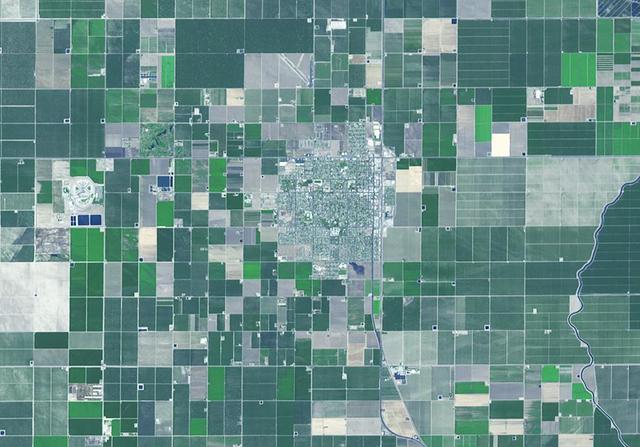
Wasco, California advertises itself as the Rose Capital of the World; over 8000 acres are devoted to cultivation of existing and new varieties of roses, shipped to every state in the U.S. and all over the world.
Wasco, California
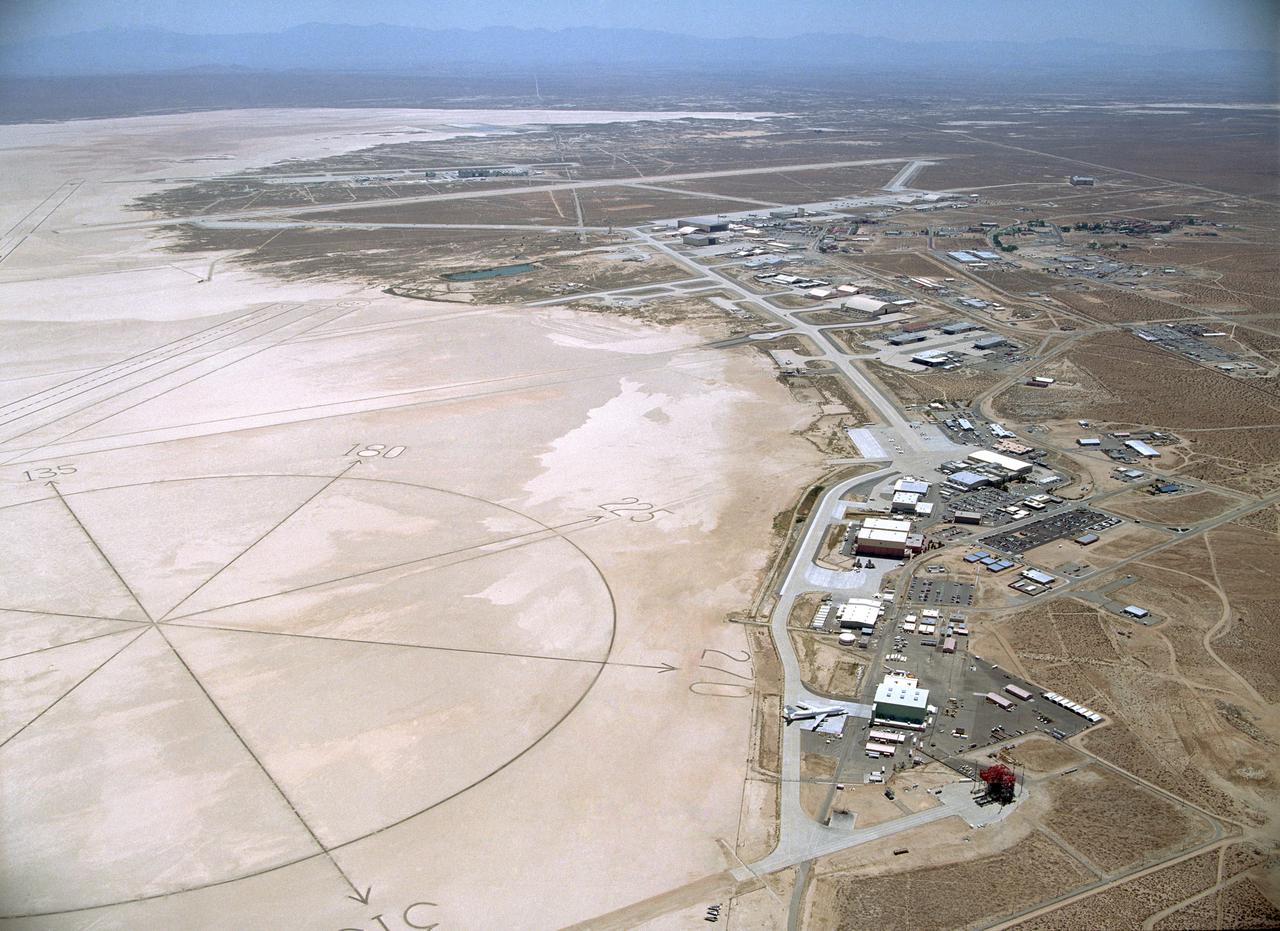
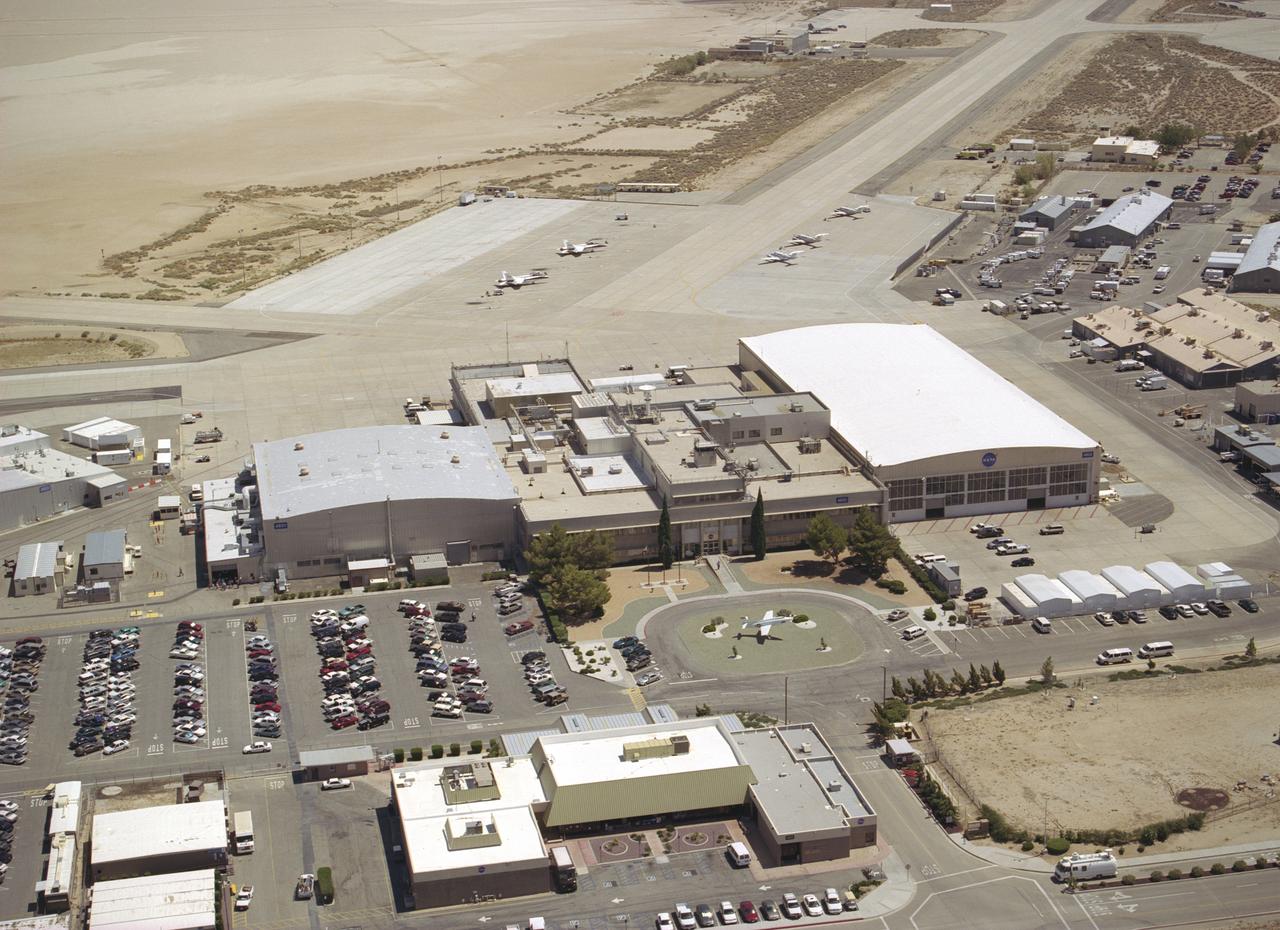
Since the 1940s the Dryden Flight Research Center, Edwards, California, has developed a unique and highly specialized capability for conducting flight research programs. The organization, made up of pilots, scientists, engineers, technicians, and mechanics, has been and will continue to be leaders in the field of advanced aeronautics. Located on the northwest "shore" of Rogers Dry Lake, the complex was built around the original administrative-hangar building constructed in 1954. Since then many additional support and operational facilities have been built including a number of unique test facilities such as the Thermalstructures Research Facility, Flow Visualization Facility, and the Integrated Test Facility.  One of the most prominent structures is the space shuttle program's Mate-Demate Device and hangar in Area A to the north of the main complex. On the lakebed surface is a Compass Rose that gives pilots an instant compass heading.  The Dryden complex originated at Edwards Air Force Base in support of the X-1 supersonic flight program. As other high-speed aircraft entered research programs, the facility became permanent and grew from a staff of five engineers in 1947 to a population in 2006 of nearly 1100 full-time government and contractor employees.
NASA's Dryden Flight Research Center is situated immediately adjacent to the compass rose on the bed of Rogers Dry Lake at Edwards Air Force Base, Calif.
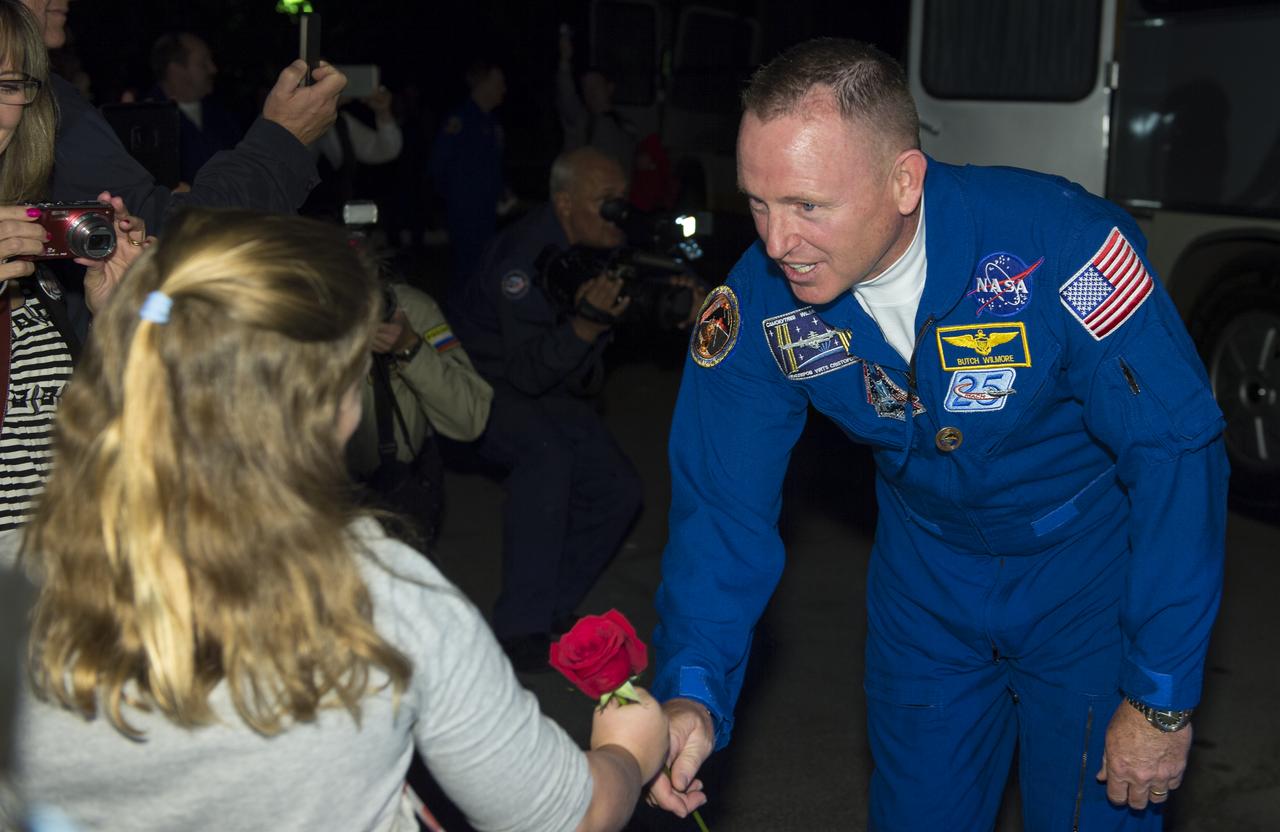
Expedition 41 Flight Engineer Barry Wilmore of NASA, gives a rose to his daughter, Daryn, before departing the Cosmonaut Hotel to suit-up for their Soyuz launch to the International Space Station on Thursday, Sept. 25, 2014, in Baikonur, Kazakhstan. Launch of the Soyuz rocket is scheduled for the early hours of Sept. 26 and will send Samokutyaev, Wilmore, and Serova on a five and a half month mission aboard the International Space Station. Photo Credit: (NASA/Aubrey Gemignani)
Expedition 41 Crew Departure
Used as a directional indicator the compass rose guides pilots flying test and experimental aircraft like the Pilatus PC-12 in the vast airspace over NASA’s Armstrong Flight Research Center in Edwards, California. This Pilatus PC-12 based out of NASA’s Glenn Research Center in Cleveland is being flown for a series of familiarization flights for NASA’s Armstrong pilots and crew. These familiarization flights supported communication, navigation and surveillance evaluations for Advanced Air Mobility research.
NASA Pilatus PC-12 cuts through the desert skies over NASA’s Armstrong Flight Research Center in Edwards, California with the compass rose in the background on Sept. 18, 2024.
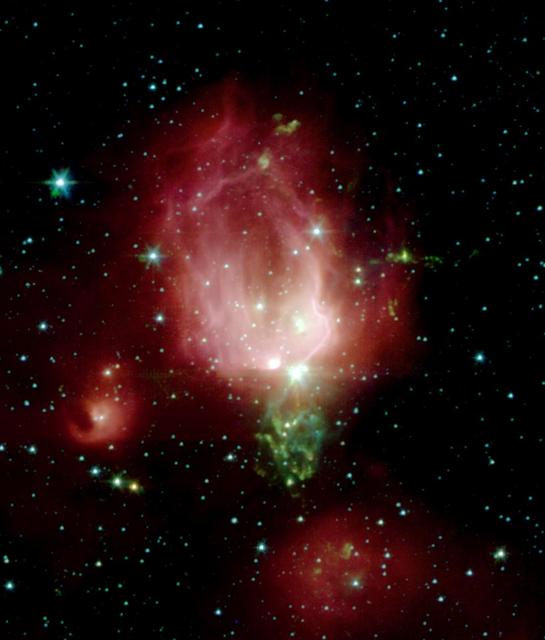
A cluster of newborn stars herald their birth in this interstellar Valentine Day commemorative picture obtained with NASA Spitzer Space Telescope. These bright young stars are found in a rosebud-shaped and rose-colored nebulosity known as NGC 7129. The star cluster and its associated nebula are located at a distance of 3300 light-years in the constellation Cepheus.  A recent census of the cluster reveals the presence of 130 young stars. The stars formed from a massive cloud of gas and dust that contains enough raw materials to create a thousand Sun-like stars. In a process that astronomers still poorly understand, fragments of this molecular cloud became so cold and dense that they collapsed into stars. Most stars in our Milky Way galaxy are thought to form in such clusters.  The Spitzer Space Telescope image was obtained with an infrared array camera that is sensitive to invisible infrared light at wavelengths that are about ten times longer than visible light. In this four-color composite, emission at 3.6 microns is depicted in blue, 4.5 microns in green, 5.8 microns in orange, and 8.0 microns in red. The image covers a region that is about one quarter the size of the full moon.  As in any nursery, mayhem reigns. Within the astronomically brief period of a million years, the stars have managed to blow a large, irregular bubble in the molecular cloud that once enveloped them like a cocoon. The rosy pink hue is produced by glowing dust grains on the surface of the bubble being heated by the intense light from the embedded young stars. Upon absorbing ultraviolet and visible-light photons produced by the stars, the surrounding dust grains are heated and re-emit the energy at the longer infrared wavelengths observed by Spitzer. The reddish colors trace the distribution of molecular material thought to be rich in hydrocarbons.  The cold molecular cloud outside the bubble is mostly invisible in these images. However, three very young stars near the center of the image are sending jets of supersonic gas into the cloud. The impact of these jets heats molecules of carbon monoxide in the cloud, producing the intricate green nebulosity that forms the stem of the rosebud.  Not all stars are formed in clusters. Away from the main nebula and its young cluster are two smaller nebulae, to the left and bottom of the central 'rosebud,'each containing a stellar nursery with only a few young stars.  Astronomers believe that our own Sun may have formed billions of years ago in a cluster similar to NGC 7129. Once the radiation from new cluster stars destroys the surrounding placental material, the stars begin to slowly drift apart.  http://photojournal.jpl.nasa.gov/catalog/PIA05266
Spitzer Telescope Sends Rose for Valentine Day
This image captures a close-up view of a storm with bright cloud tops in the northern hemisphere of Jupiter.  NASA's Juno spacecraft took this color-enhanced image on Feb. 7 at 5:38 a.m. PST (8:38 a.m. EST) during its 11th close flyby of the gas giant planet. At the time, the spacecraft was 7,578 miles (12,195 kilometers) from the tops of Jupiter's clouds at 49.2 degrees north latitude. Citizen scientist Matt Brealey processed the image using data from the JunoCam imager. Citizen scientist Gustavo B C then adjusted colors and embossed Matt Brealey's processing of this storm. https://photojournal.jpl.nasa.gov/catalog/PIA21981 . -   Enhanced image by Matt Brealey / Gustavo B C based on images provided courtesy of NASA/JPL-Caltech/SwRI/MSSS
Rose-Colored Jupiter
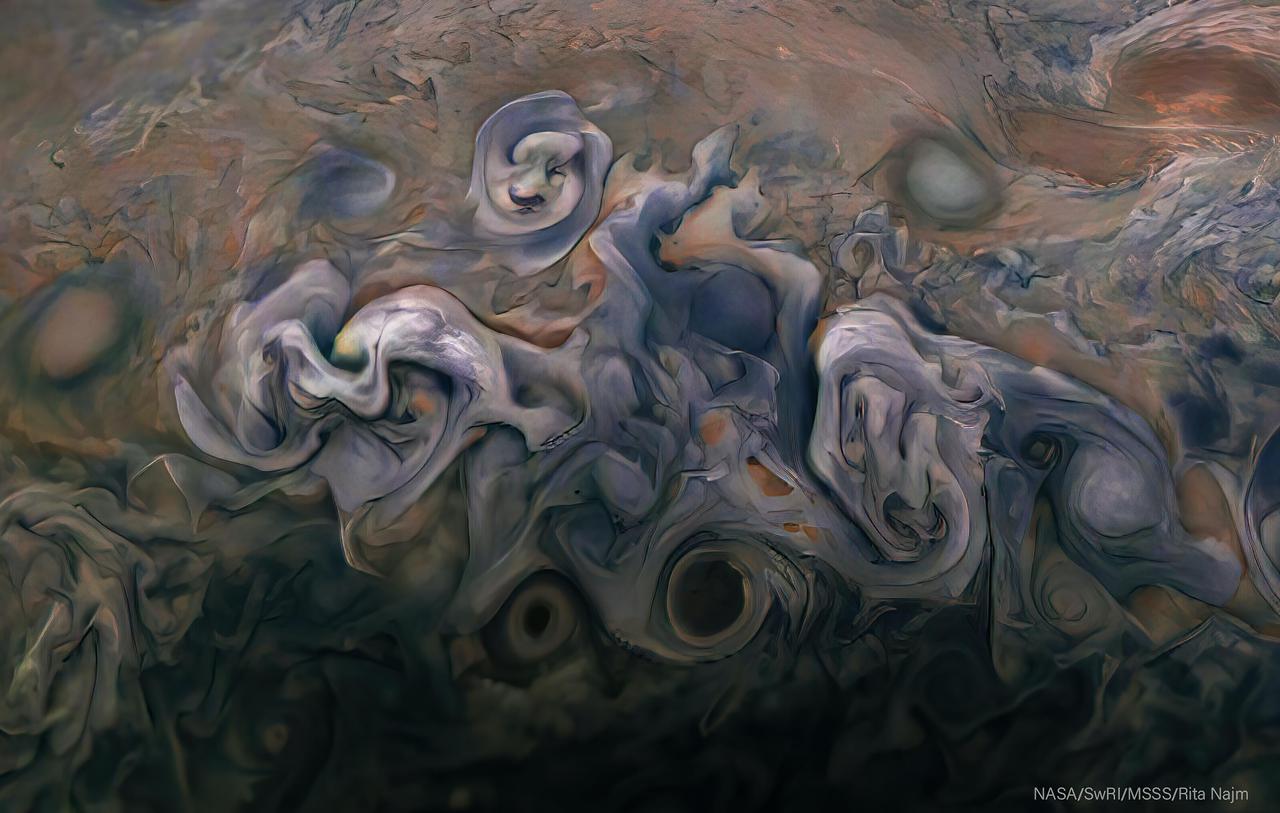
Images from the Juno spacecraft's visible-light amera JunoCam are posted after every close pass for the public to enjoy and process themselves. JunoCam's images of Jupiter inspire art and science. An image taken by JunoCam during Juno's 25th perijove pass on February 17, 2020, inspired citizen scientist Rita Najm to enhance its color and contrast and to give it the impression of a painting that's ready to be framed.  The original JunoCam image used to produce this view was taken from from an altitude of about 7,900 miles (12,700 kilometers) above Jupiter's cloud tops.  https://photojournal.jpl.nasa.gov/catalog/PIA24293
Roses on Jupiter
This image from NASA Spitzer Space Telescope is of the Rosette nebula, a turbulent star-forming region located 5,000 light-years away in the constellation Monoceros.
Infrared Rose
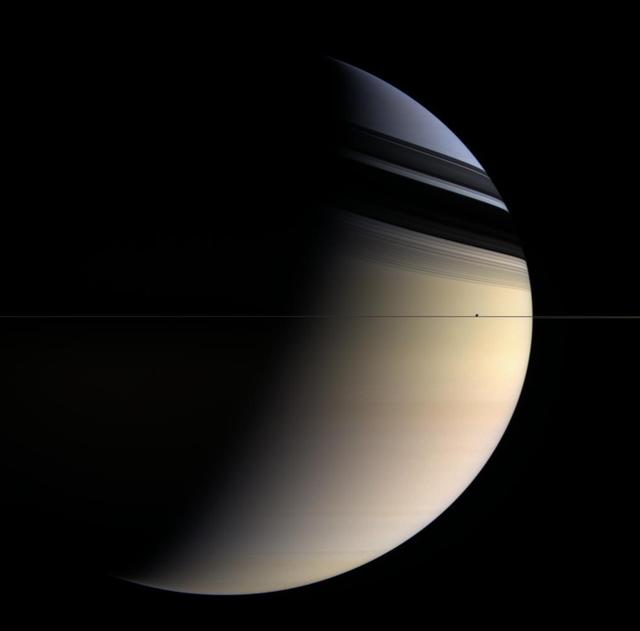
Dreamy colors ranging from pale rose to butterscotch to sapphire give this utterly inhospitable gas planet a romantic appeal. Shadows of the rings caress the northern latitudes whose blue color is presumed to be a seasonal effect
Saturn Subtle Spectrum
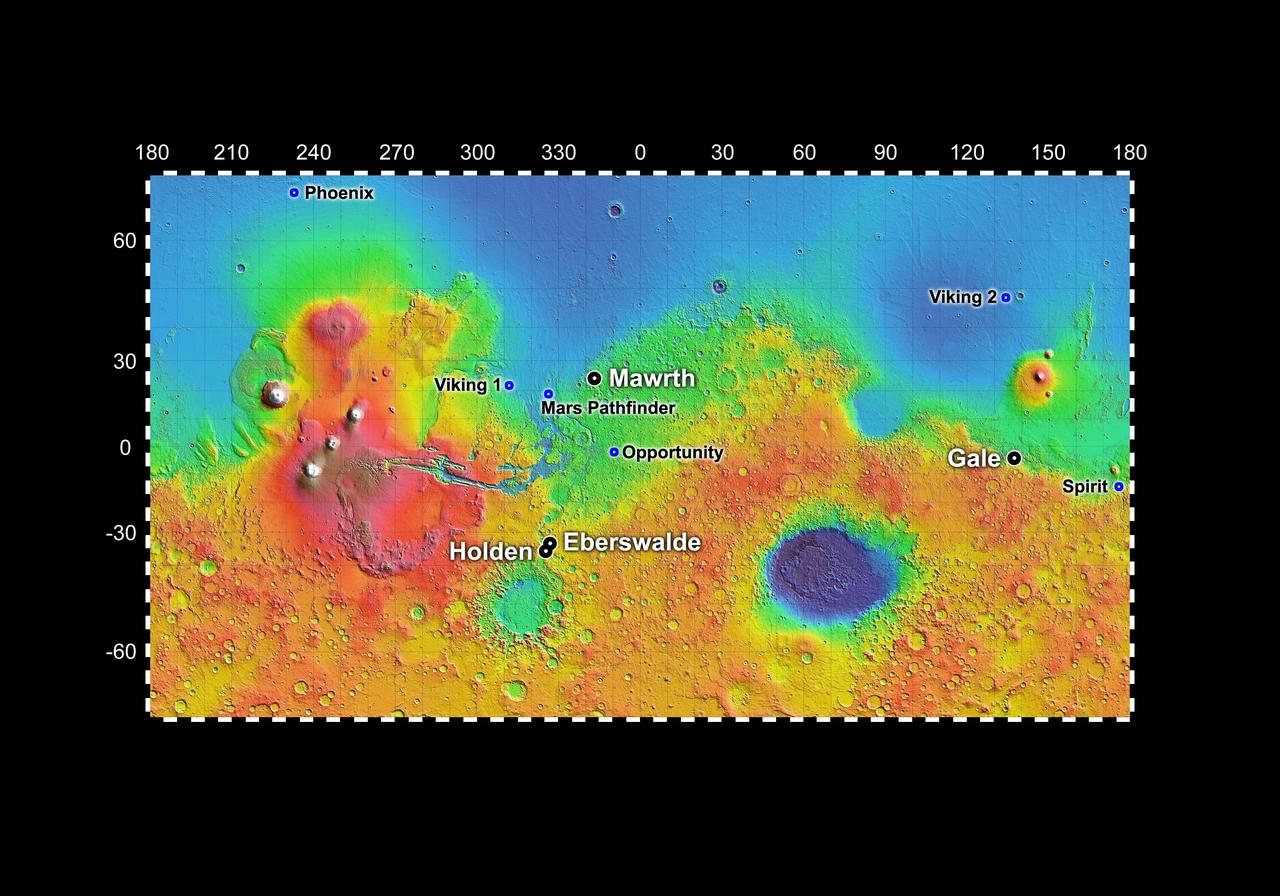
Out of more than 30 sites considered as possible landing targets for NASA Mars Science Laboratory mission, by November 2008 four of the most intriguing places on Mars rose to the final round of the site-selection process.
Four Finalist Landing Site Candidates for Mars Science Laboratory
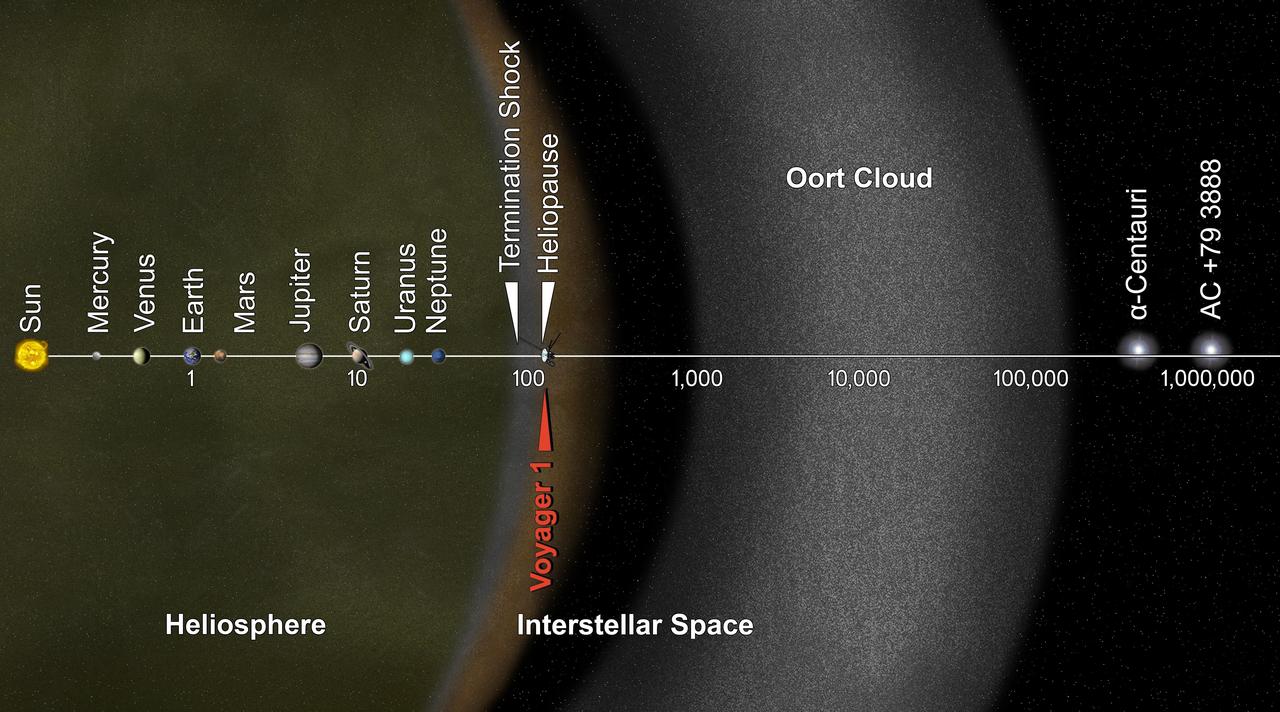
Voyager 1 has entered interstellar space. NASA spacecraft, which rose from Earth on a September morning 36 years ago, has traveled farther than anyone, or anything, in history.
Voyager Goes Interstellar Artist Concept
Since the 1940s the Dryden Flight Research Center, Edwards, California, has developed a unique and highly specialized capability for conducting flight research programs. The organization, made up of pilots, scientists, engineers, technicians, and mechanics, has been and will continue to be leaders in the field of advanced aeronautics. Located on the northwest "shore" of Rogers Dry Lake, the complex was built around the original administrative-hangar building constructed in 1954. Since then many additional support and operational facilities have been built including a number of unique test facilities such as the Thermalstructures Research Facility, Flow Visualization Facility, and the Integrated Test Facility.  One of the most prominent structures is the space shuttle program's Mate-Demate Device and hangar in Area A to the north of the main complex. On the lakebed surface is a Compass Rose that gives pilots an instant compass heading.  The Dryden complex originated at Edwards Air Force Base in support of the X-1 supersonic flight program. As other high-speed aircraft entered research programs, the facility became permanent and grew from a staff of five engineers in 1947 to a population in 2006 of nearly 1100 full-time government and contractor employees.
The Dryden Flight Research Center at Edwards Air Force Base is NASA's premier center for atmospheric flight research to validate high-risk aerospace technology.
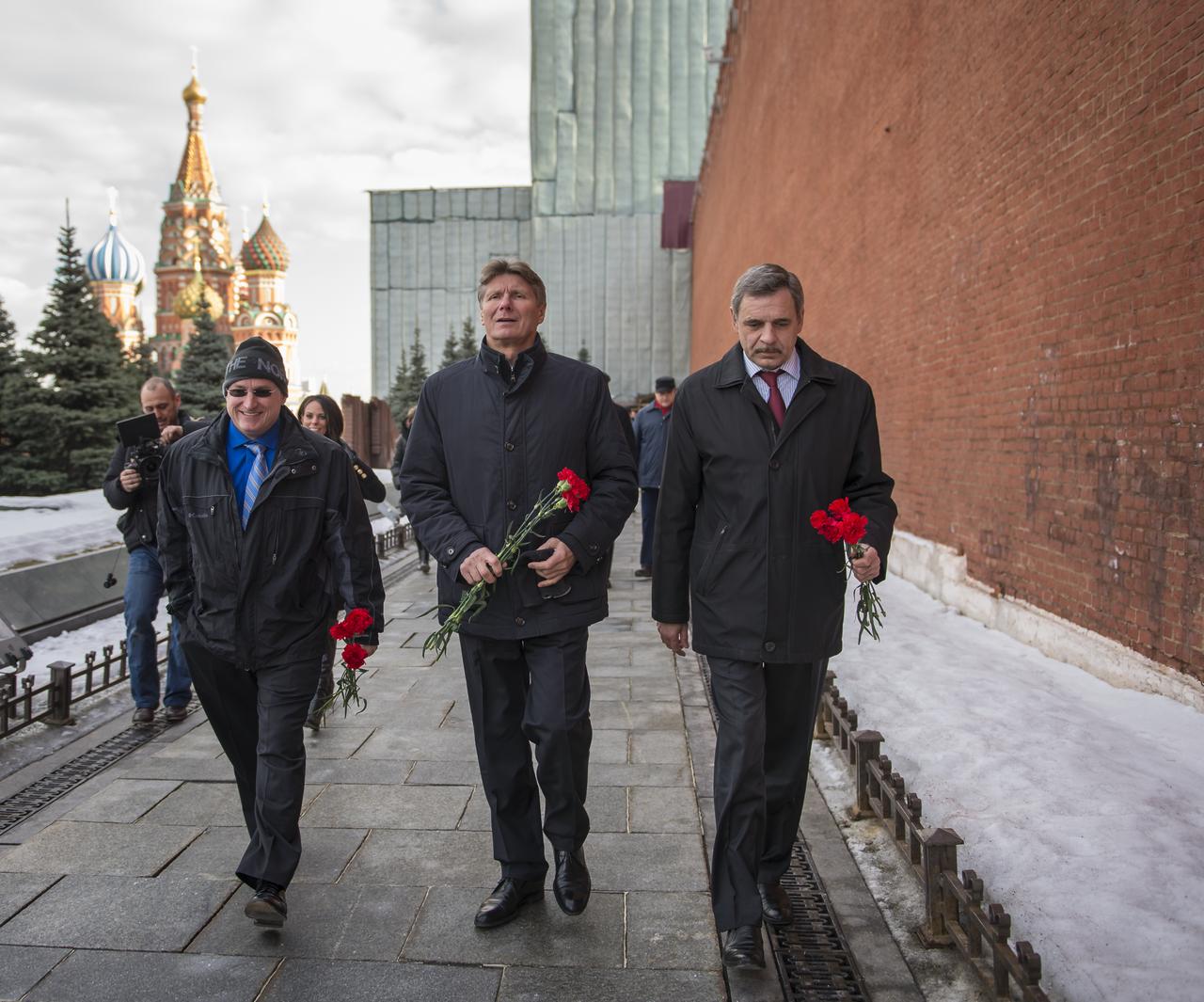
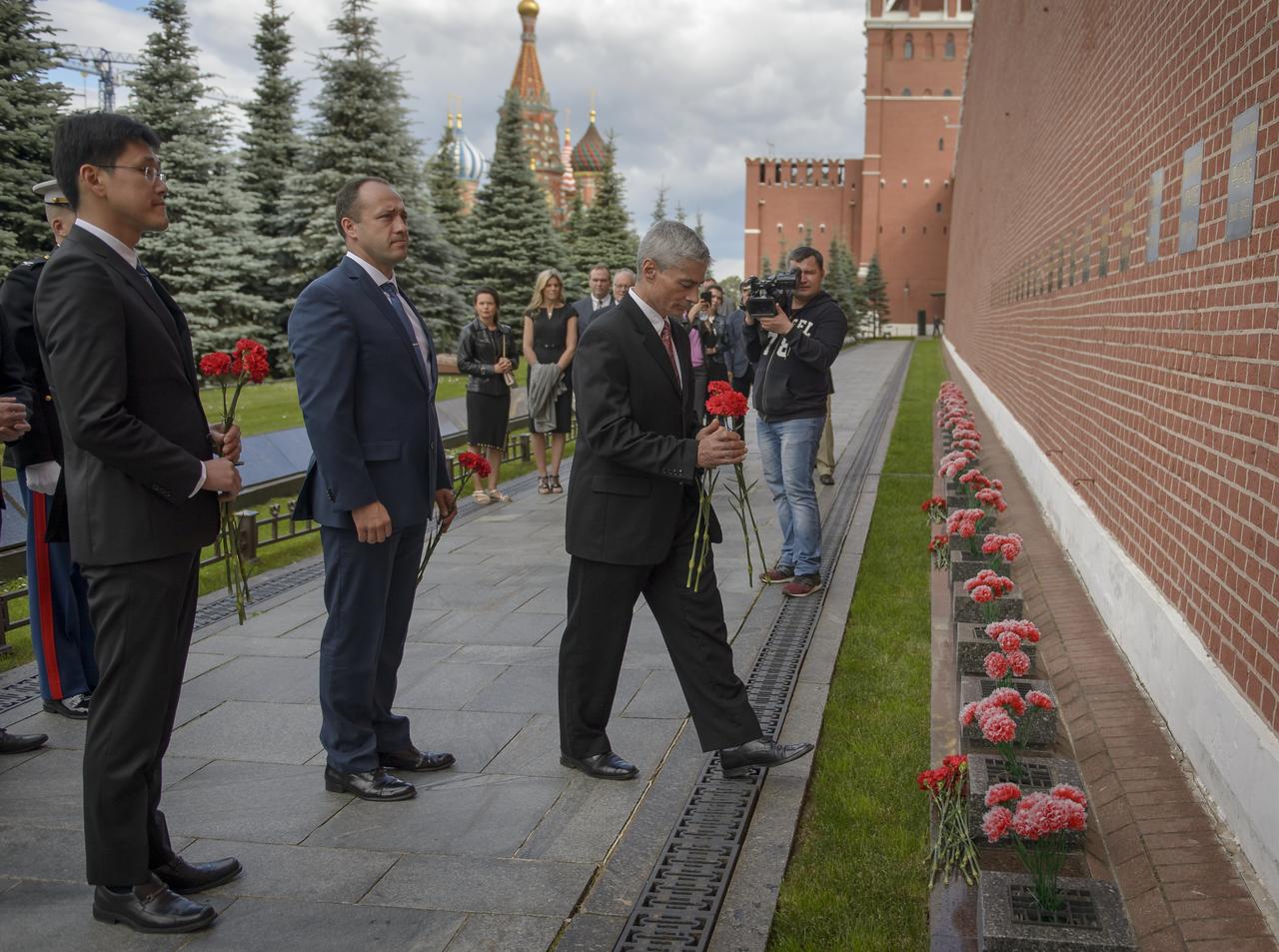
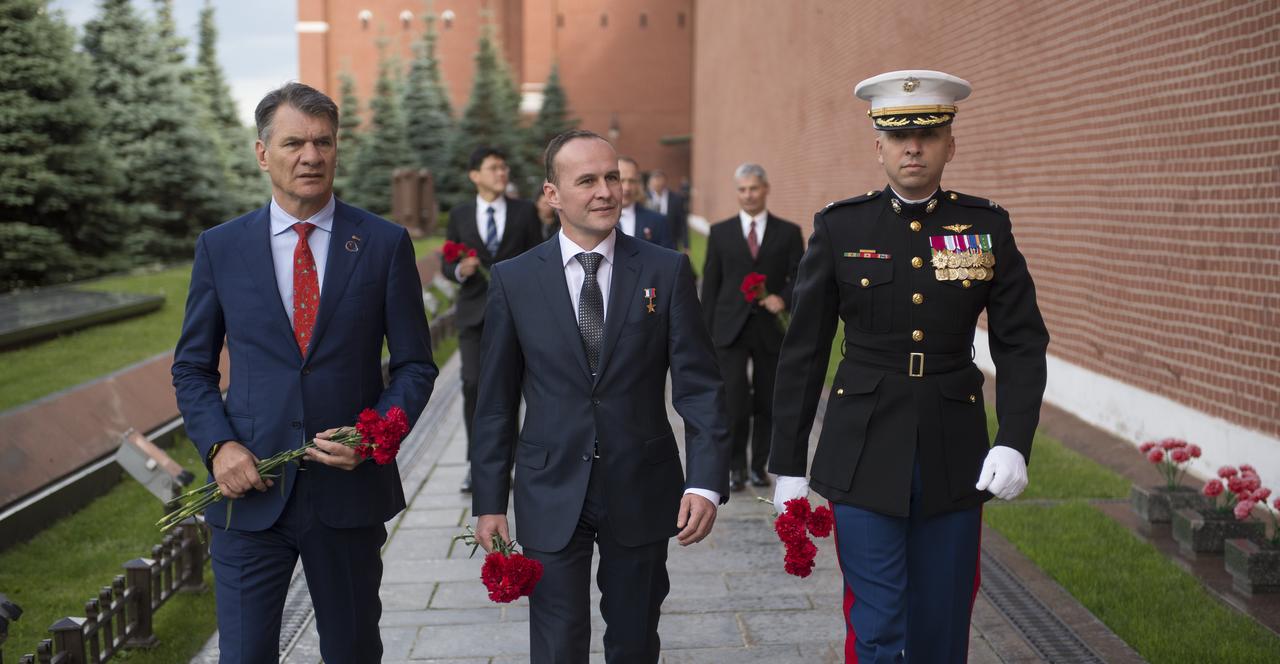
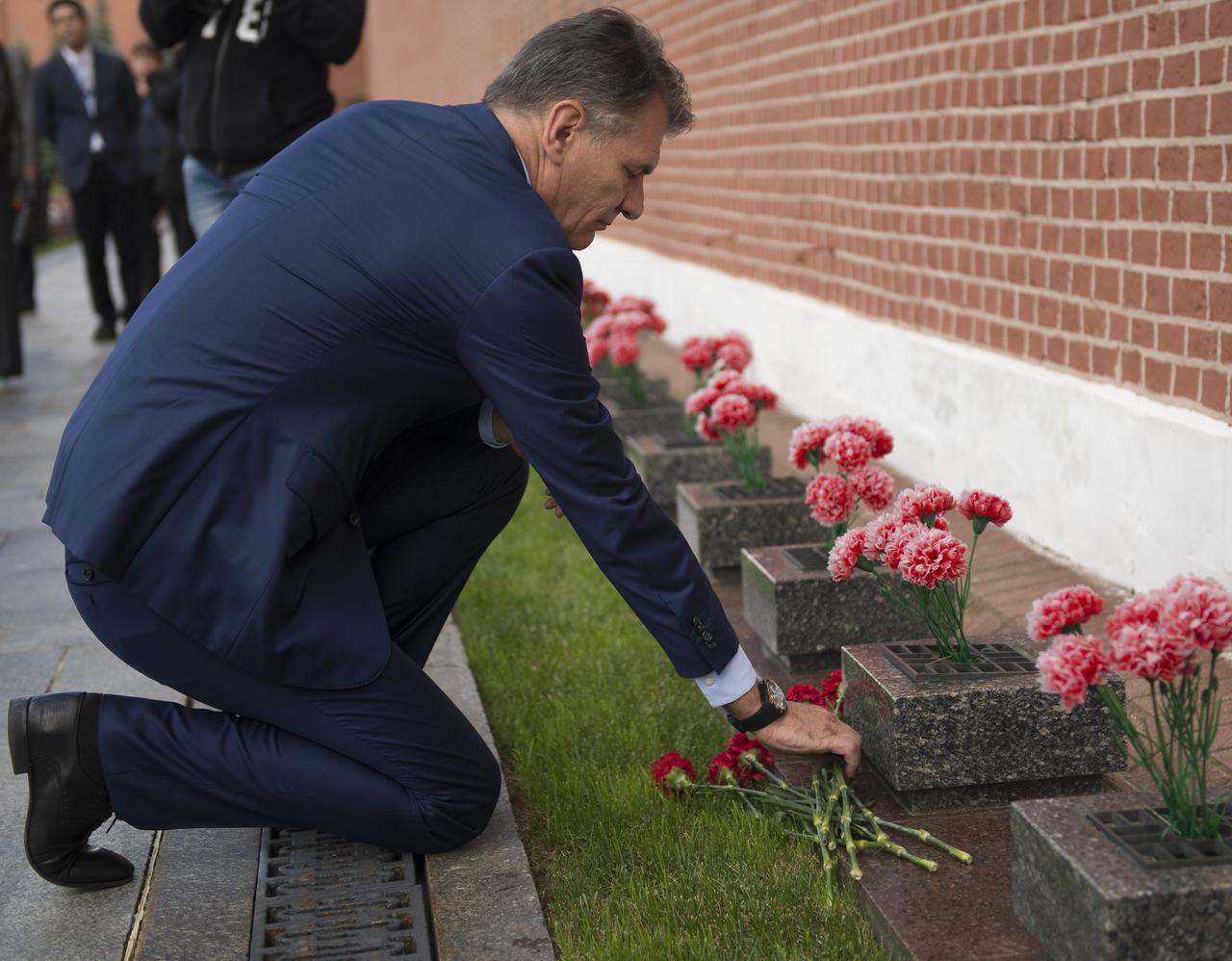
Expedition 43 NASA Astronaut Scott Kelly, left, Russian cosmonaut Gennady Padalka of the Russian Federal Space Agency (Roscosmos), center, and Russian cosmonaut Mikhail Kornienko of Roscosmos walk along the Kremlin Wall in Red Square to leave roses at the site where Russian space icons are interred as part of traditional pre-launch ceremonies, Friday, March 6, 2015, Moscow, Russia. The trio is preparing for launch to the International Space Station in their Soyuz TMA-16M spacecraft from the Baikonur Cosmodrome in Kazakhstan March 28, Kazakh time. As the one-year crew, Kelly and Kornienko will return to Earth on Soyuz TMA-18M in March 2016. Photo Credit: (NASA/Bill Ingalls)
Expedition 43 Preflight
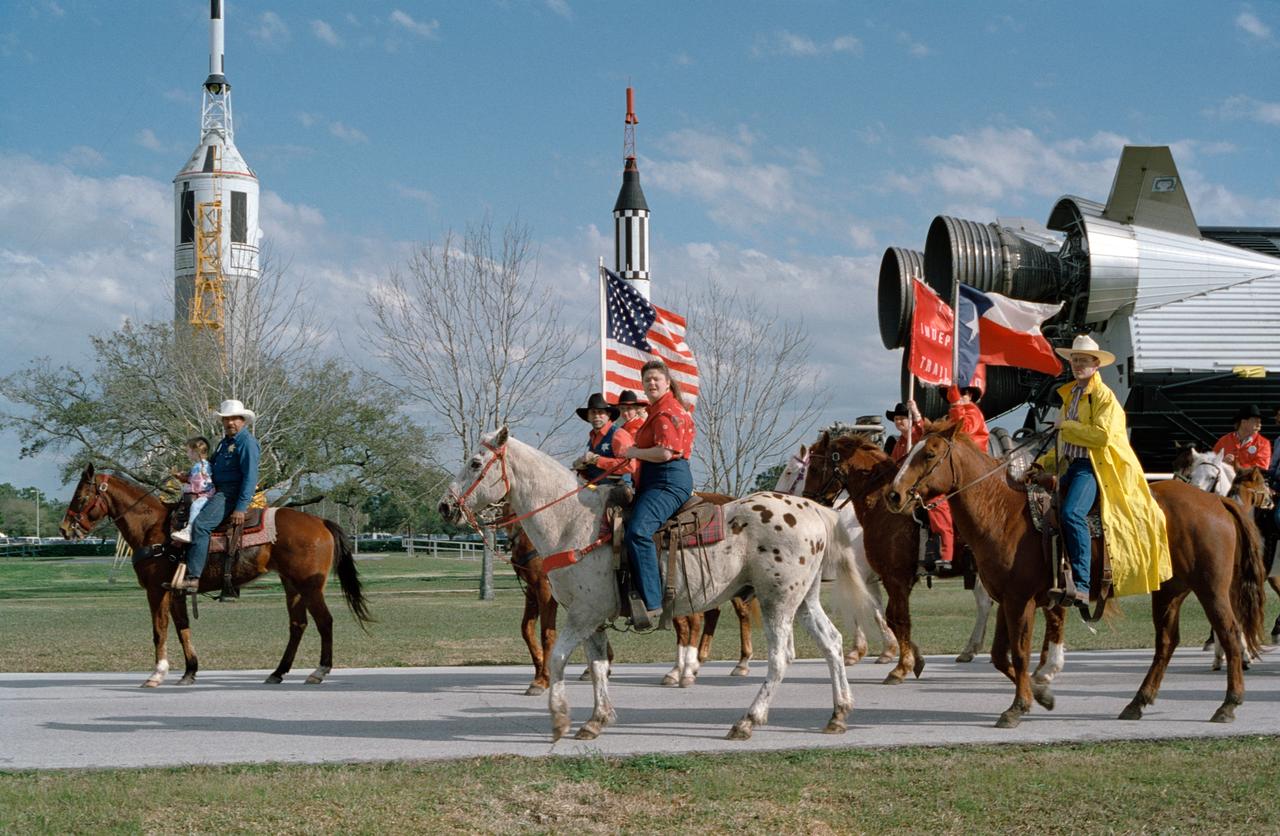
Rose Gardner of the JSC Travel Office, center, rides with the Independence Trail Riders as they enter JSC at Rocket Park.
Texas Independence Trail Riders ride through JSC prior to 1998 Rodeo
This infrared image from NASA Spitzer Space Telescope shows the Rosette nebula, a pretty star-forming region more than 5,000 light-years away in the constellation Monoceros.
Every Rose has a Thorn
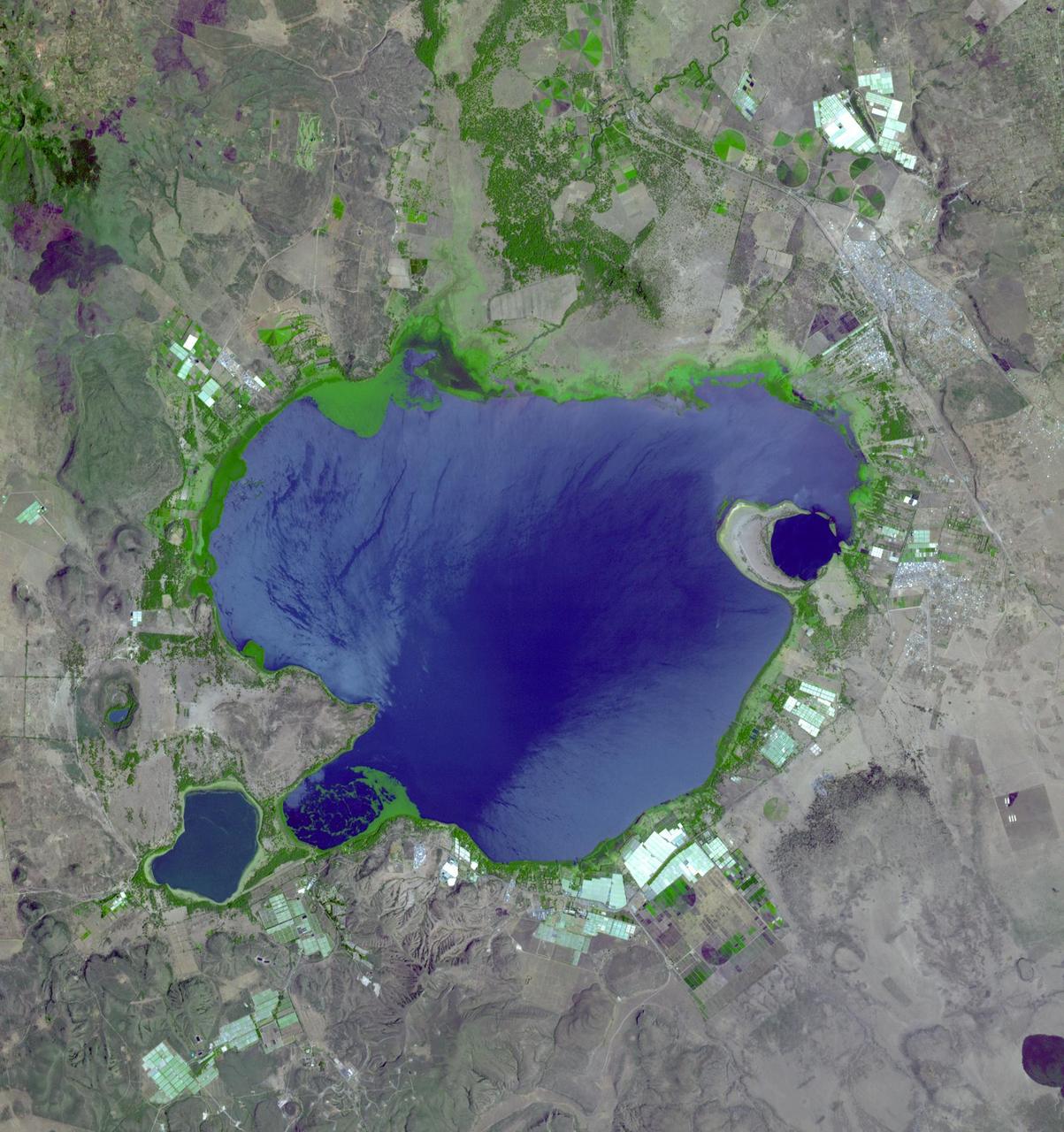
If you live in Europe and buy roses, the chance is good that they were grown in Kenya -- specifically, in one of the colossal greenhouses that blot out the once wild shores of Lake Naivasha, 90km north-west of Nairobi. Image from NASA Terra satellite.
Lake Naivasha, Kenya
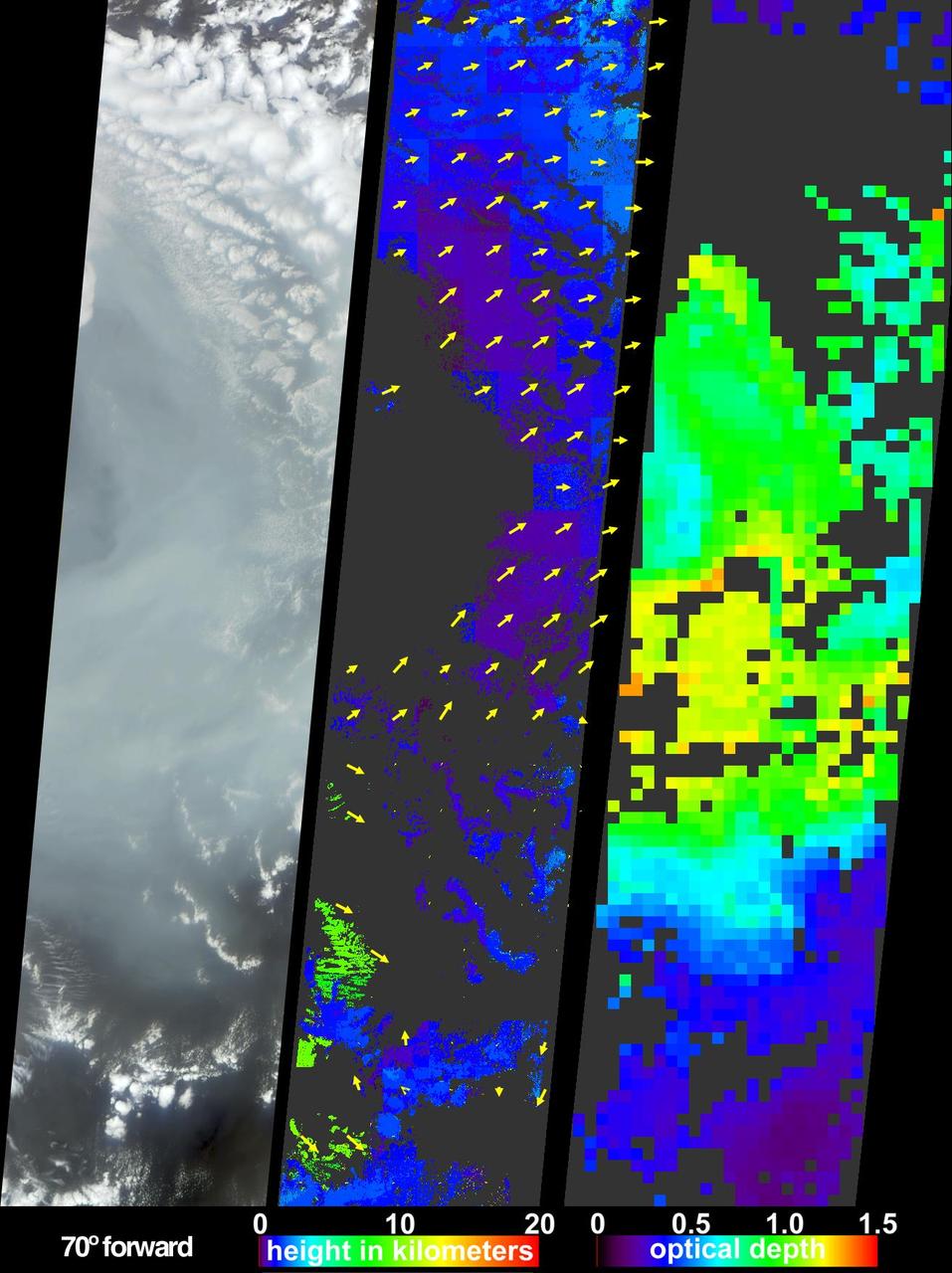
During the first two weeks of April, 2003, numerous fires occurred in eastern Russia and northeast China, and produced a large amount of smoke that rose to form a thick layer of tiny atmospheric particles, or aerosols seen here by NASA Terra spacecraft.
Smoke from Asian Fires Traverses the Pacific
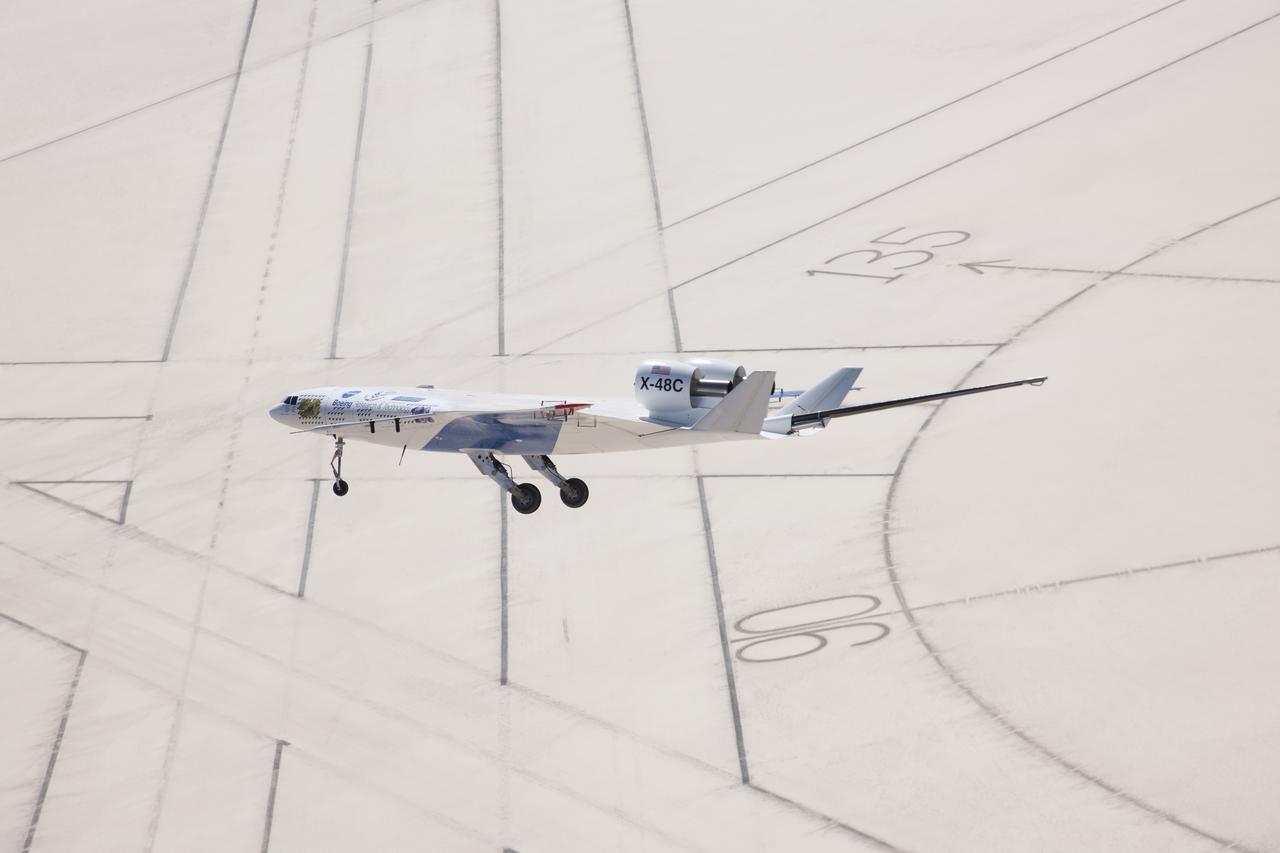
The X-48C Hybrid Wing Body research aircraft flew over the intersection of several runways adjacent to the compass rose on Rogers Dry Lake at Edwards Air Force Base during one of the sub-scale aircraft's final test flights on Feb. 28, 2013.
X-48C Flies Over Intersecting Runways
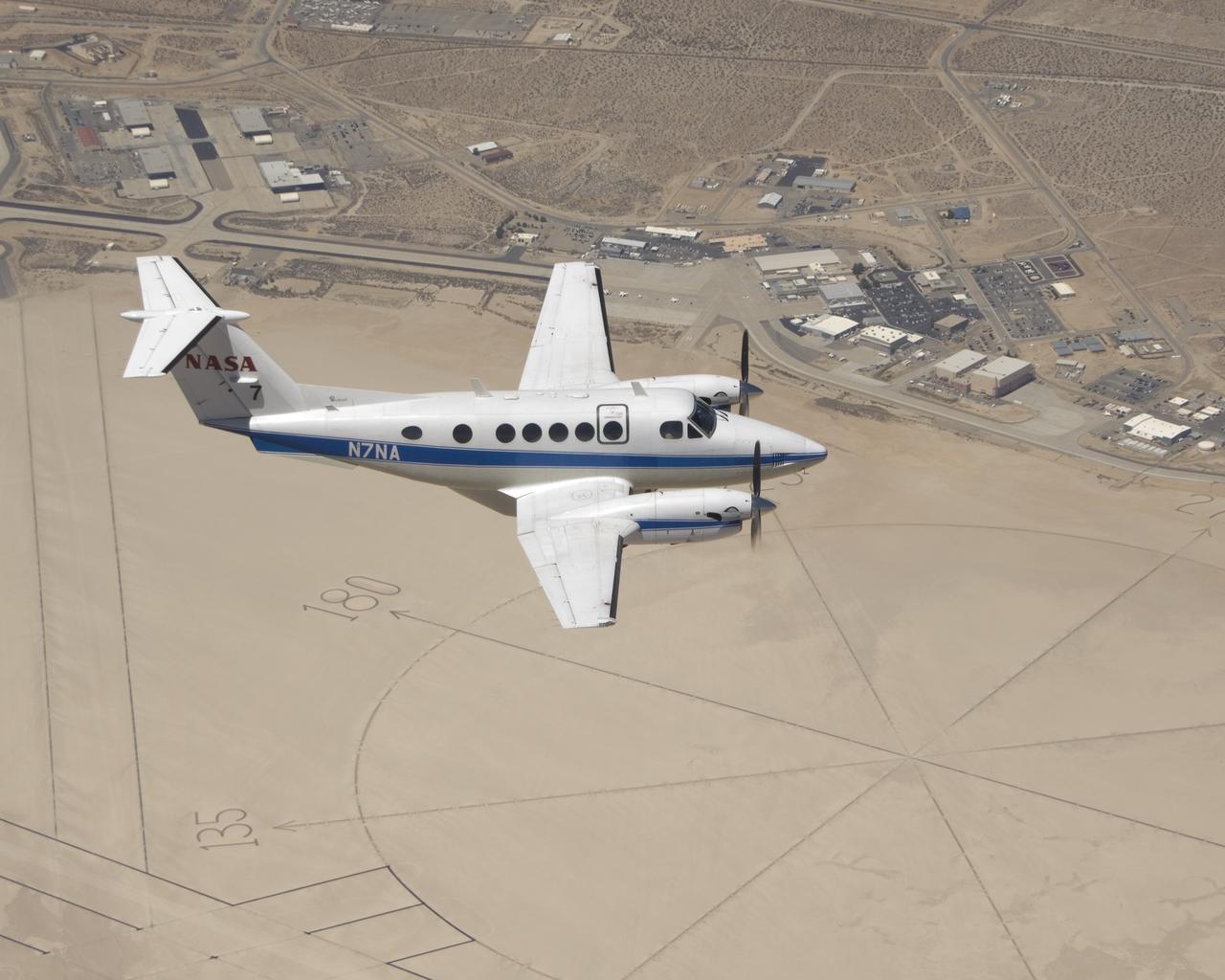
NASA's Beechcraft King Air N7NA mission support aircraft soars over the compass rose on Rogers Dry Lake adjacent to NASA's Dryden Flight Research Center.
ED08-0141-21
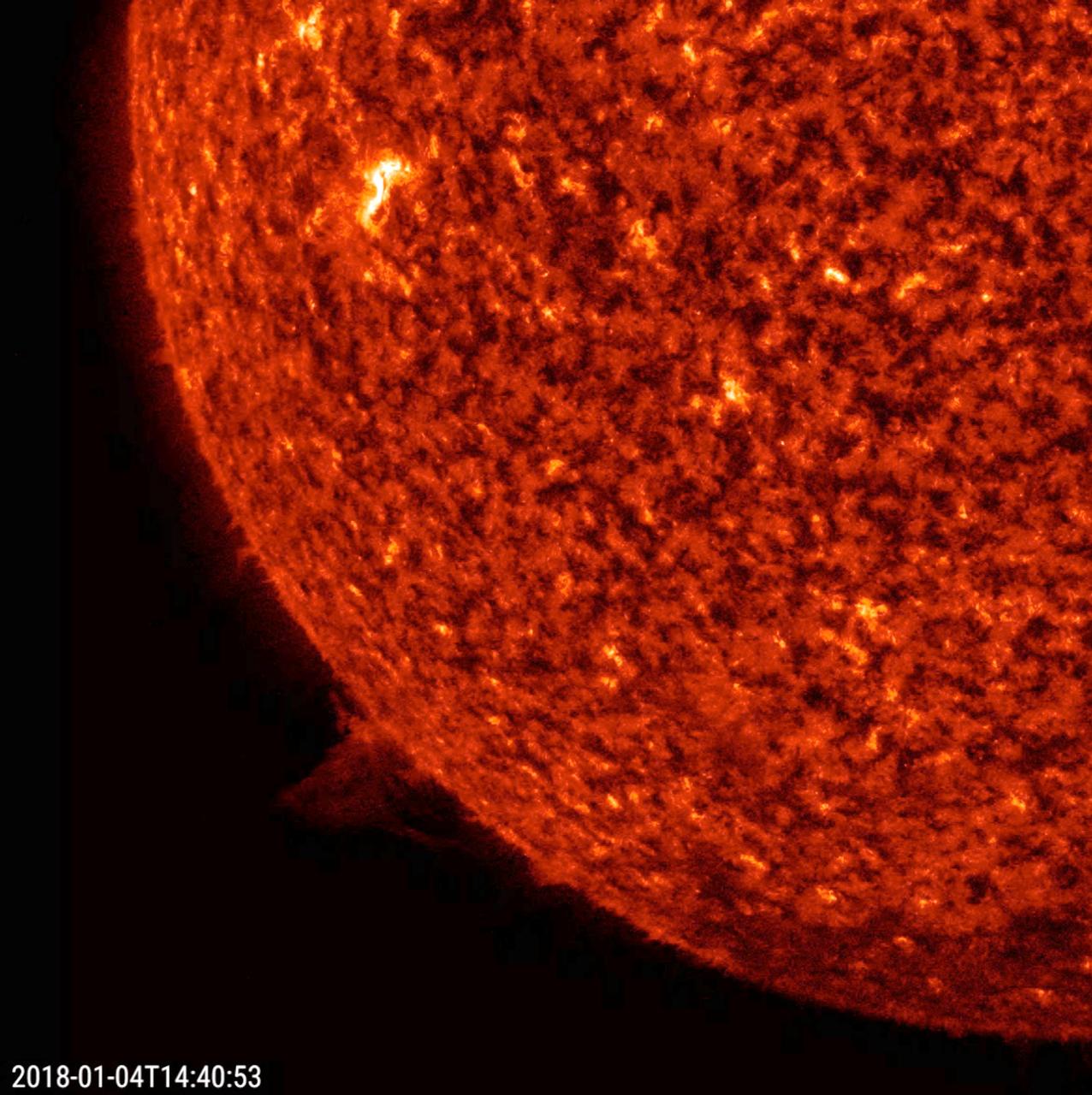
A small prominence rose up above the sun, appeared to twist around for several hours, and then began to send some streams of plasma back into the sun (Jan. 3-4, 2018). The action, observed in a wavelength of extreme ultraviolet light, lasted just about one day. Prominences like this one are quite common. In fact, there were several over the past few days. For a sense of scale, the prominence reached up more than several times the size of Earth.  Movies are available at https://photojournal.jpl.nasa.gov/catalog/PIA22198
Small Twisting Prominence
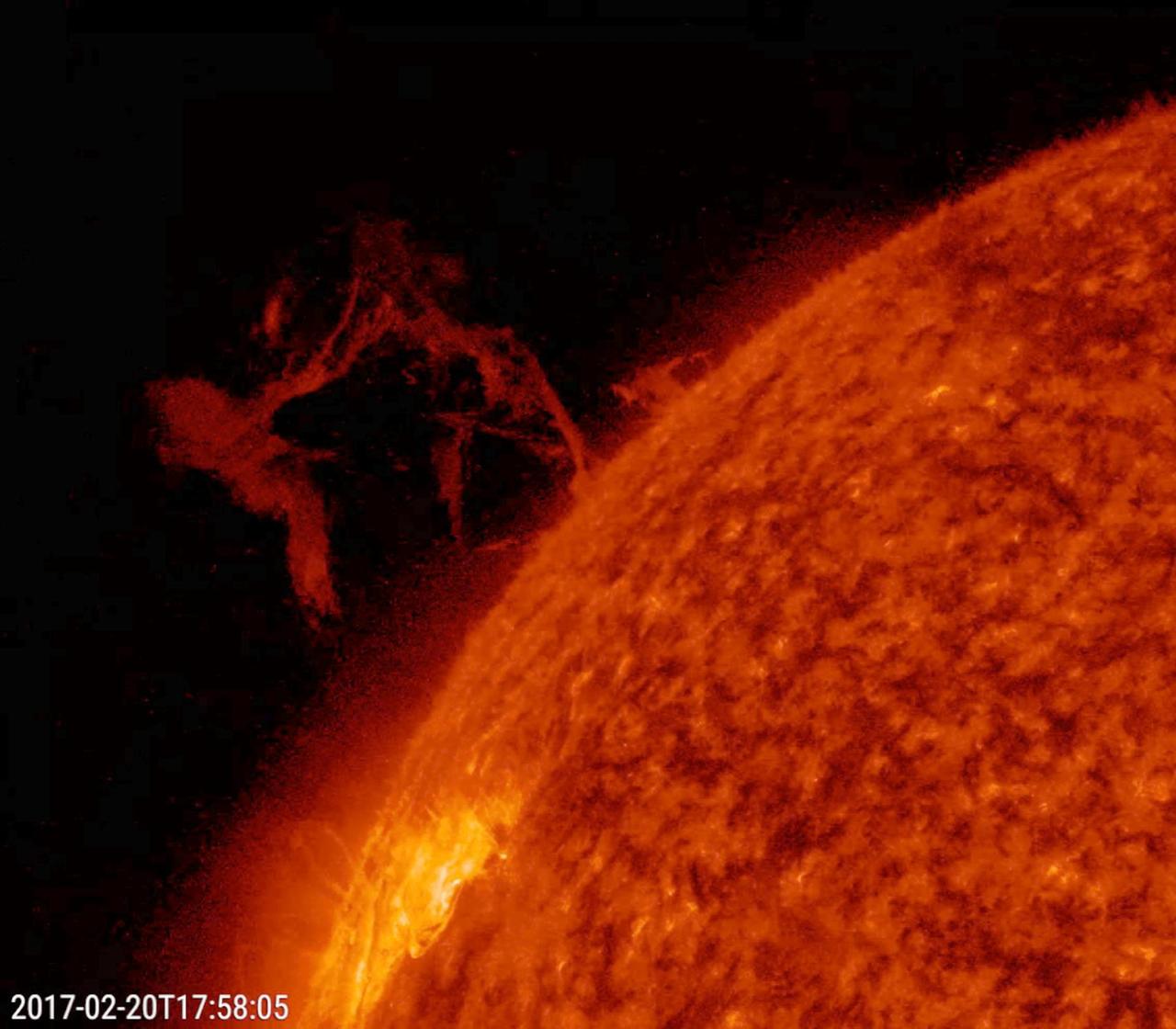
A solar prominence gathered itself into a twisting cone, then rose up and broke apart in a delicate dance of plasma above the sun (Feb. 20, 2017). The event, observed in a wavelength of extreme ultraviolet light, lasted just about four hours. Prominences are unstable clouds of plasma suspended above the sun's surface by magnetic forces. This kind of event is not uncommon. The brighter area near the bottom of the images is an active region.  Movies are available at http://photojournal.jpl.nasa.gov/catalog/PIA21552
Delicate Ballet
A prominence observed along the right edge of the sun rose up and then most of it bent back down to the surface (Oct. 4, 2016). Prominences are clouds of plasma, usually elongated, that are suspended above the sun by magnetic forces. They are notably unstable. A review of SOHO's coronagraph videos shows that some of the particles did break away into space. The video clip, which covers eight hours of activity, was taken in a wavelength of extreme UV light.  Movies are available at http://photojournal.jpl.nasa.gov/catalog/PIA21106
Bendable Prominence
On Oct. 24-25, 2018 a solar prominence rose up above the Sun's surface, twisted and spun around, then became elongated and broke away. Prominences are unstable clouds of cooler plasma suspended above the Sun by strong magnetic forces. They often fall apart after a few days. Although tiny on the scale of the Sun, this prominence stretched out about ten times the diameter of Earth (see inset). Images were taken in a wavelength of extreme ultraviolet light.  Animations are available at https://photojournal.jpl.nasa.gov/catalog/PIA18140
Eruptive Prominence
KENNEDY SPACE CENTER, FLA. -  Following the memorial service for the crew of Columbia at the Space Memorial Mirror, a visitor leaves a rose bouquet behind. Feb. 1 is the one-year anniversary of the loss of the crew and orbiter Columbia in a tragic accident as the ship returned to Earth following mission STS-107. The public was invited to the memorial service, held in the KSC Visitor Complex, which included comments by Center Director Jim Kennedy and Executive Director of Florida Space Authority Winston Scott.  Scott is a former astronaut who flew on Columbia in 1997.
KENNEDY SPACE CENTER, FLA. - Following the memorial service for the crew of Columbia at the Space Memorial Mirror, a visitor leaves a rose bouquet behind. Feb. 1 is the one-year anniversary of the loss of the crew and orbiter Columbia in a tragic accident as the ship returned to Earth following mission STS-107. The public was invited to the memorial service, held in the KSC Visitor Complex, which included comments by Center Director Jim Kennedy and Executive Director of Florida Space Authority Winston Scott. Scott is a former astronaut who flew on Columbia in 1997.
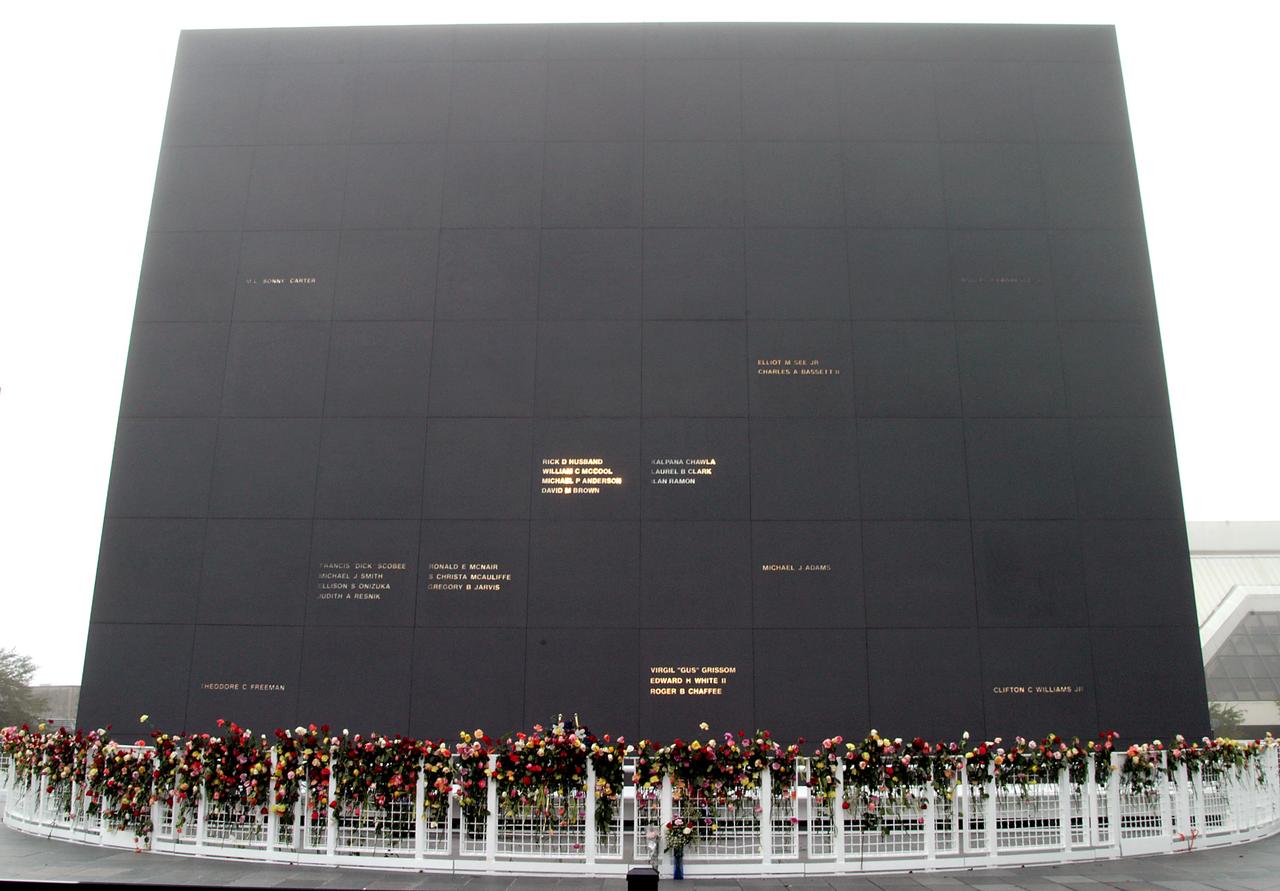
KENNEDY SPACE CENTER, FLA. -  Roses and a floral wreath adorn the Space Memorial Mirror following a memorial service for the crew of Columbia.  Feb. 1 is the one-year anniversary of the loss of the crew and orbiter Columbia in a tragic accident as the ship returned to Earth following mission STS-107. The public was invited to the memorial service, which included comments by Center Director Jim Kennedy and Executive Director of Florida Space Authority Winston Scott.  Scott is a former astronaut who flew on Columbia in 1997.
KENNEDY SPACE CENTER, FLA. - Roses and a floral wreath adorn the Space Memorial Mirror following a memorial service for the crew of Columbia. Feb. 1 is the one-year anniversary of the loss of the crew and orbiter Columbia in a tragic accident as the ship returned to Earth following mission STS-107. The public was invited to the memorial service, which included comments by Center Director Jim Kennedy and Executive Director of Florida Space Authority Winston Scott. Scott is a former astronaut who flew on Columbia in 1997.
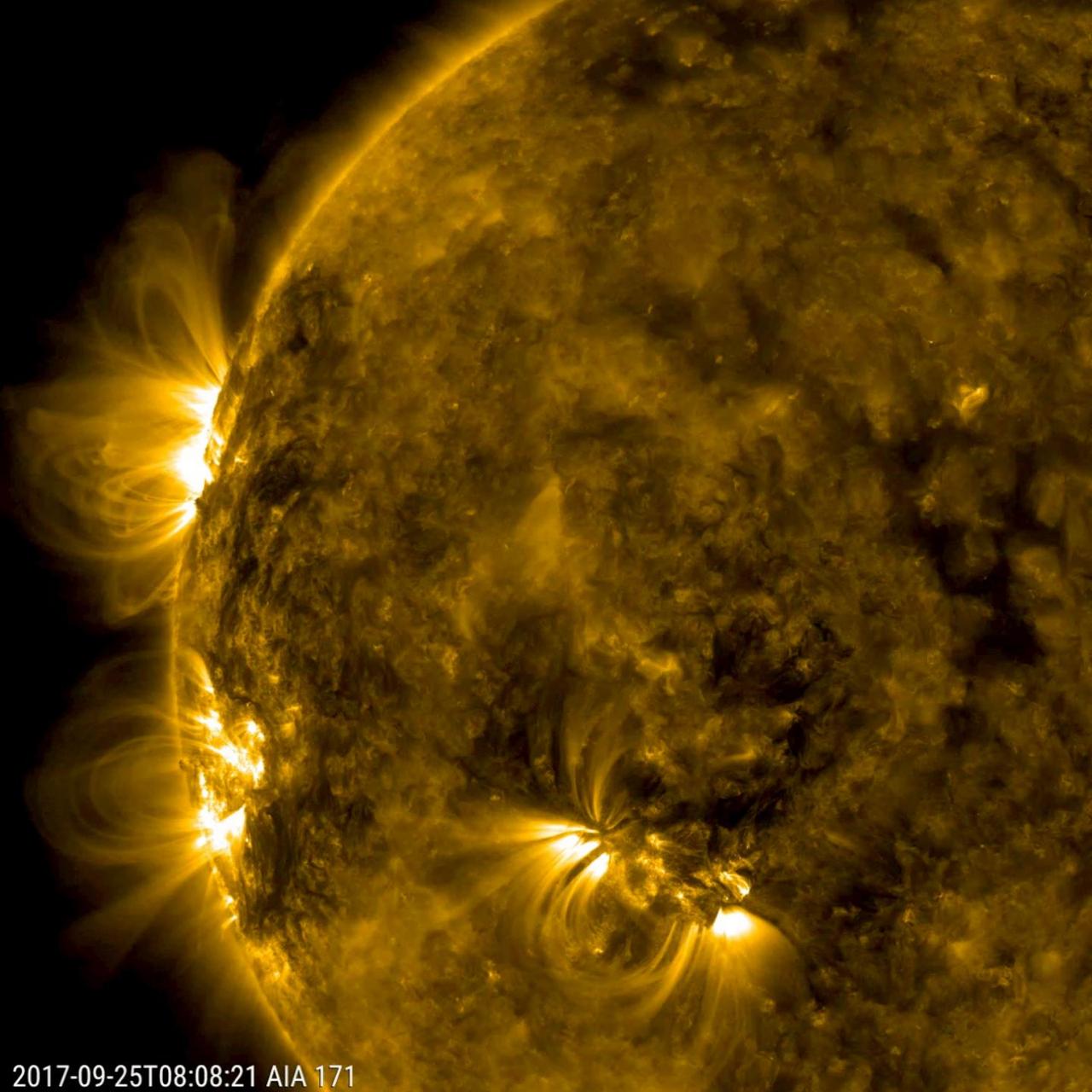
Three distinct active regions with towering arches above them rotated into view over a three-day period (Sept. 24-26, 2017). In extreme ultraviolet light, charged particles that are spinning along the ever-changing magnetic field lines above the active regions make the lines visible. To give some sense of scale, the largest arches rose up many times the size of Earth.  Movies are available at https://photojournal.jpl.nasa.gov/catalog/PIA22038
Trio of Tempests
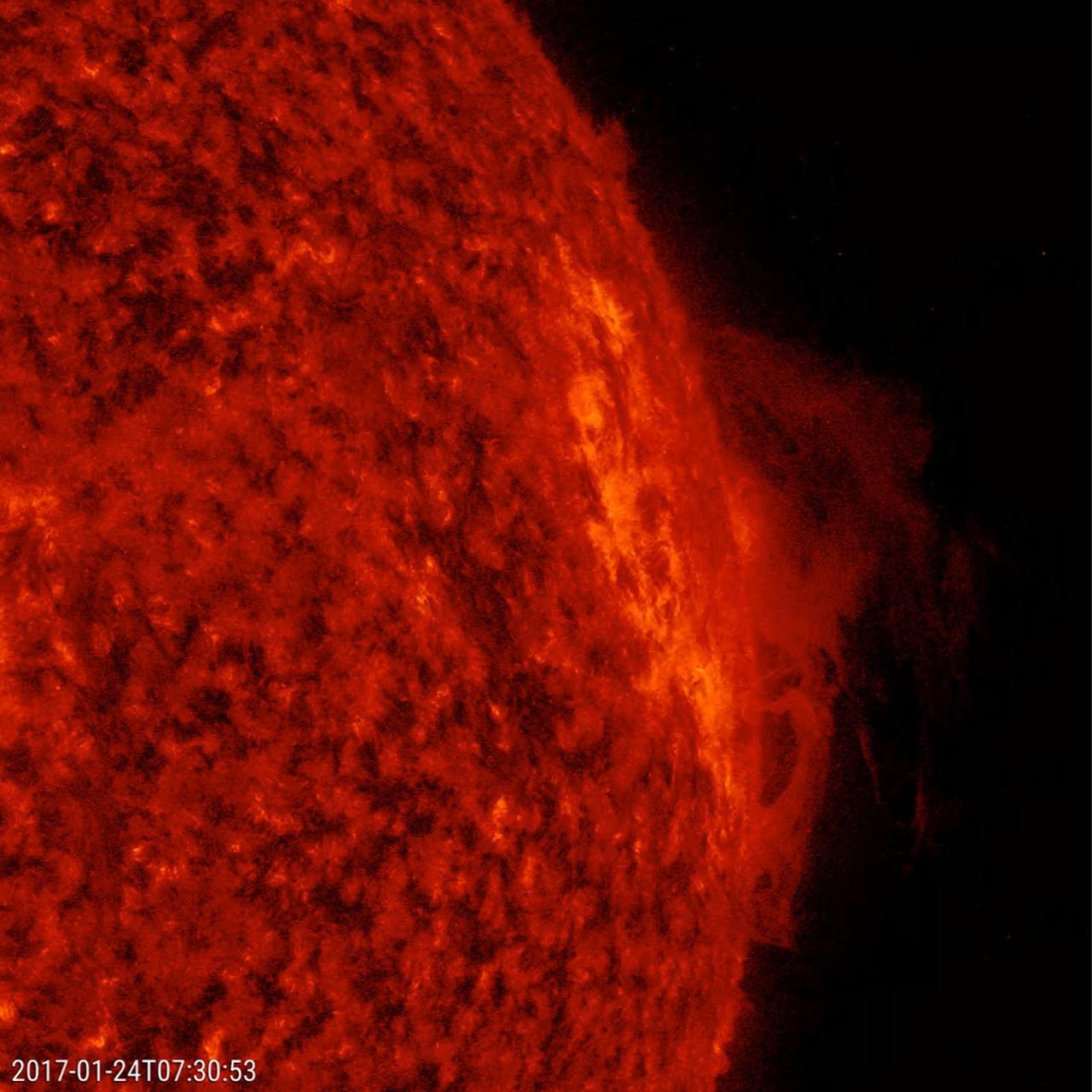
On Jan. 23-24, 2017, NASA Solar Dynamics Observatory watched as a solar prominence rose up along the edge of the sun and twisted and churned for about two days before falling apart. The dynamic action was generated by competing magnetic forces.  The images were taken in a wavelength extreme ultraviolet light that observes activity close to the solar surface, perfect for capturing prominences, which are notoriously unstable clouds of plasma suspended above the sun.  Movies are available at http://photojournal.jpl.nasa.gov/catalog/PIA11237
Churning Prominence
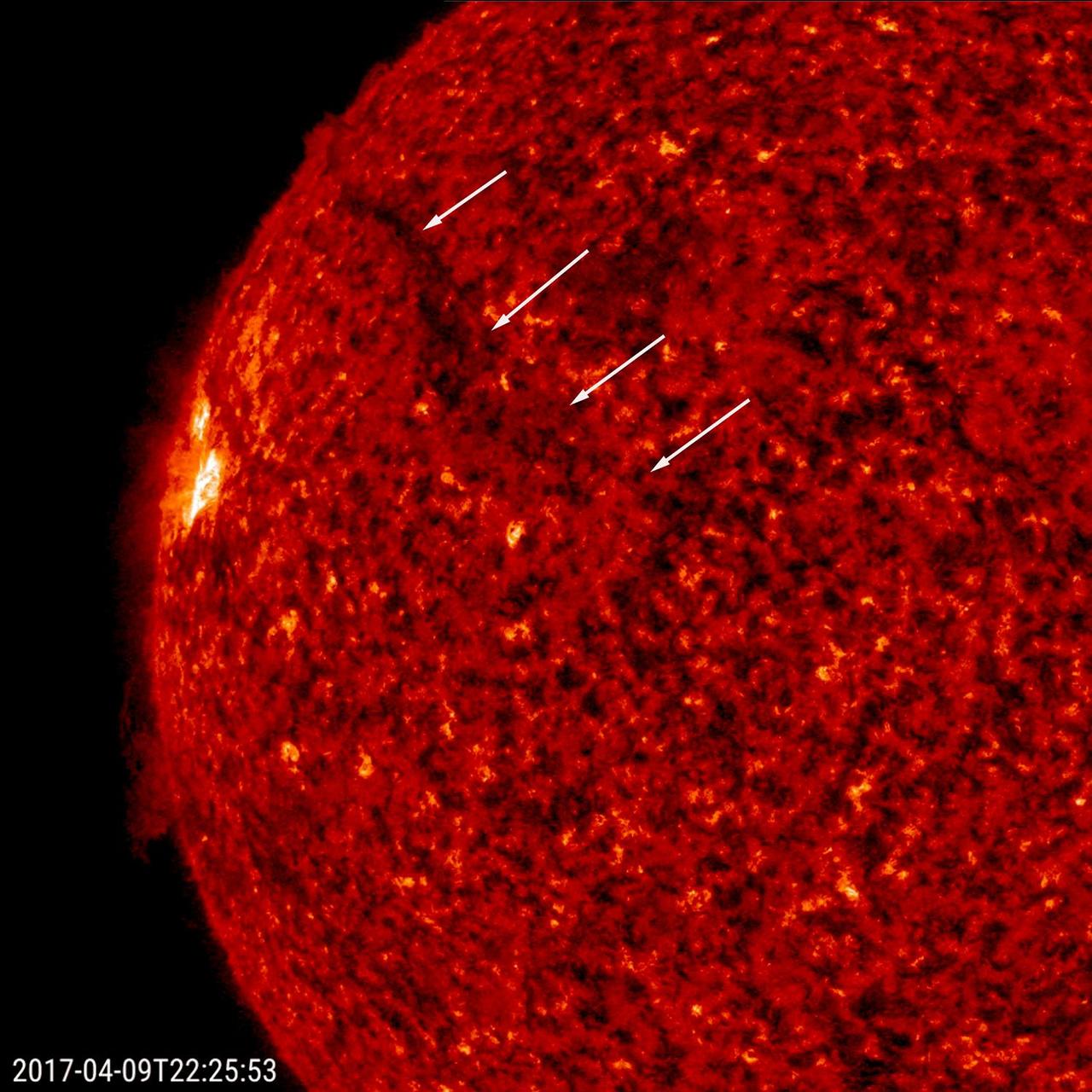
A dark, elongated filament rose up and broke to the lower left and out from the sun seen by NASA Solar Dynamics Observatory, Apr.9-10, 2017. Filaments are cooler clouds of plasma tethered above the sun surface by magnetic forces. They are notoriously unstable and tend not to last more than a few days before they collapse into the sun or break away into space. A video, taken in extreme ultraviolet light, covers about nine hours of activity.  Videos are available at https://photojournal.jpl.nasa.gov/catalog/PIA21592
Filament Breakaway
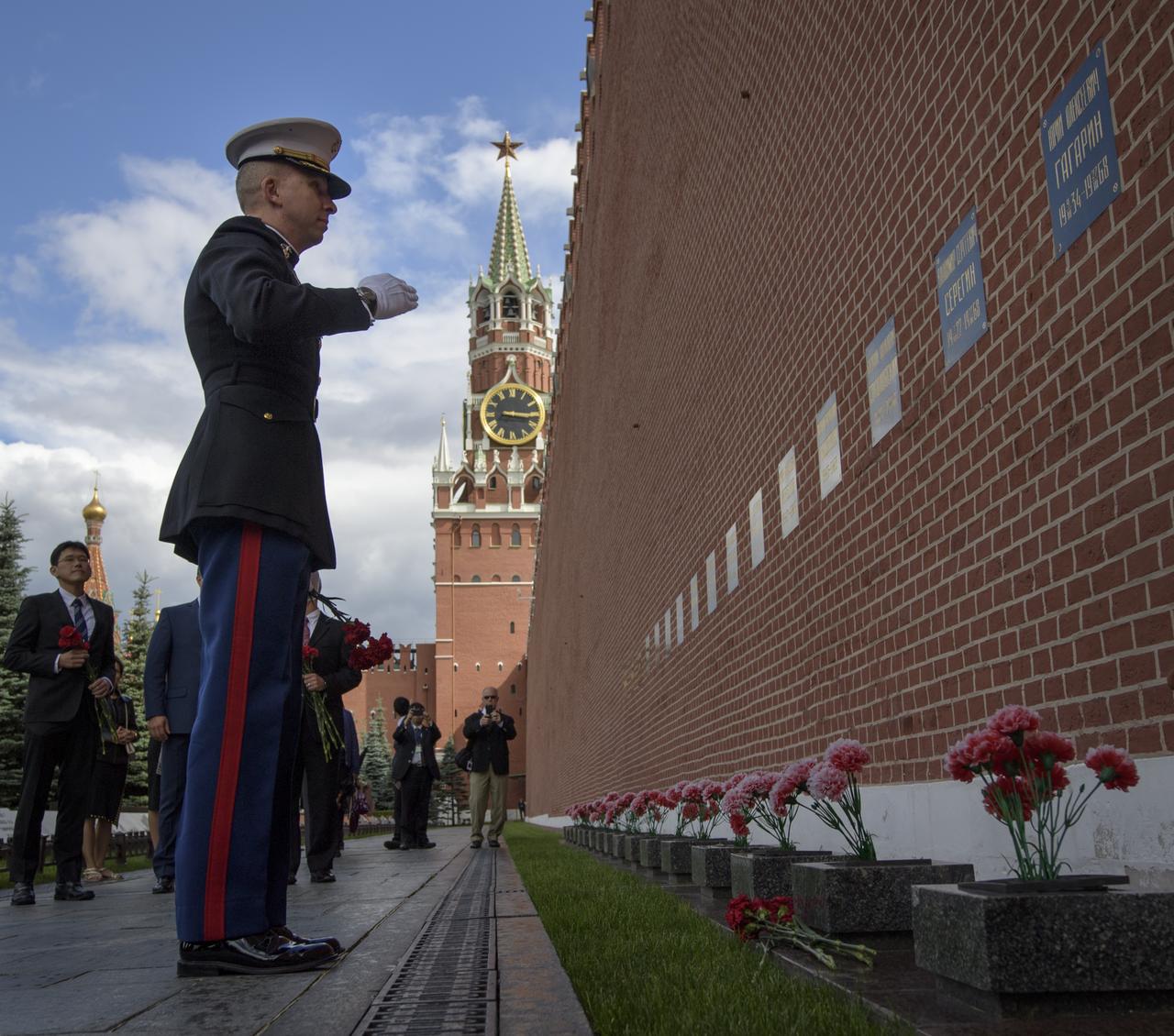
Expedition 52 flight engineer Randy Bresnik of NASA salutes after laying roses at the site where Russian space icons are interred as part of traditional pre-launch ceremonies, Monday, July 10, 2017 in Moscow. Photo Credit: (NASA/Bill Ingalls)
Expedition 52 Red Square Visit
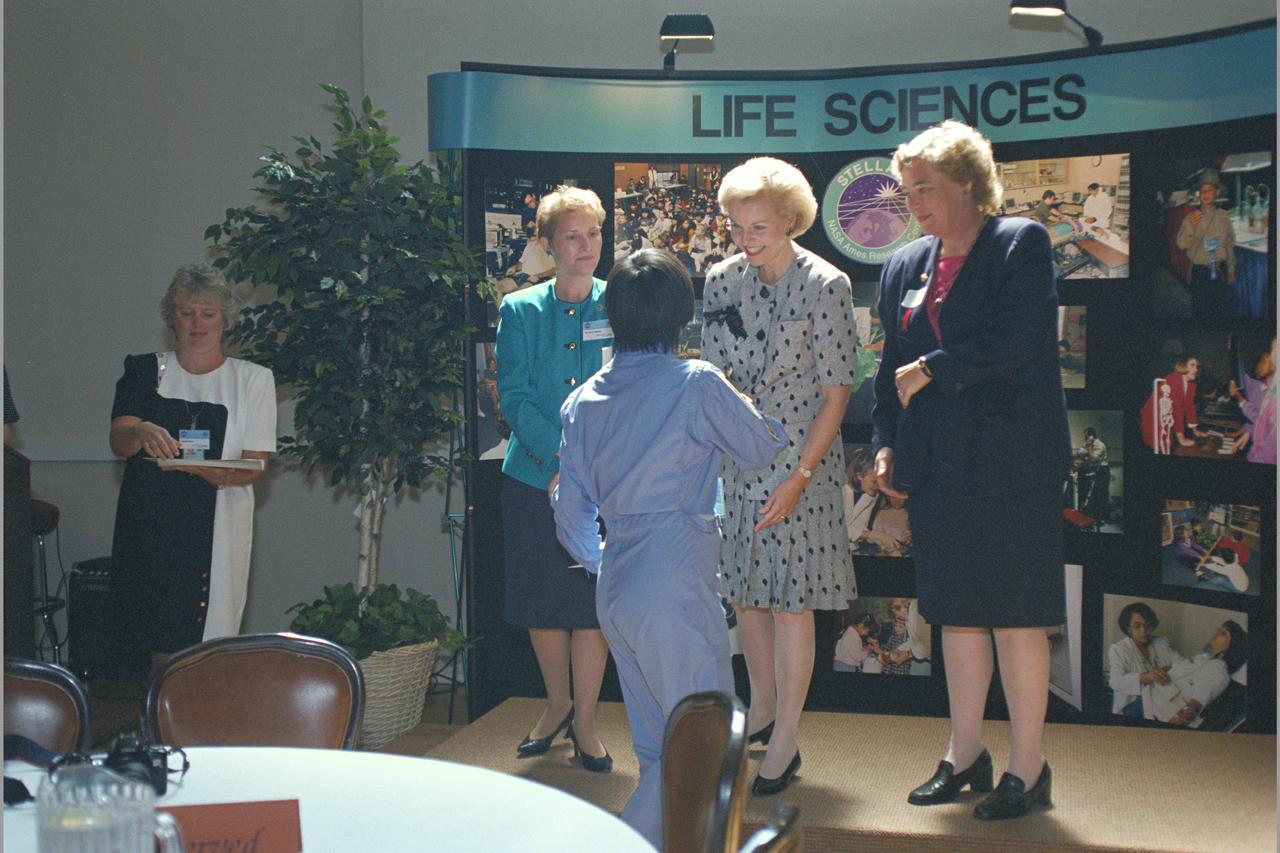
1996 'STELLAR' and MCP program commencements with special guests Mrs. Gayle Wilson, CA Governor  Pete Wilson's wife (center),  Zoe Lofgren,  16th District Congresswoman San Jose, California (right) and Ames scientist Dr Rose Grymes (left)
ARC-1996-AC96-0232-110
May 4, 2003, Astana, Kazakhstan.  One of three local Kazakh girls who were on hand at the Astana airport to welcome the Expedition Six crew with Roses after the crew landed on the Kazakh Steppe in their Soyuz capsule.  Photo Credit: "NASA/Bill Ingalls"
Expedition Six landing views
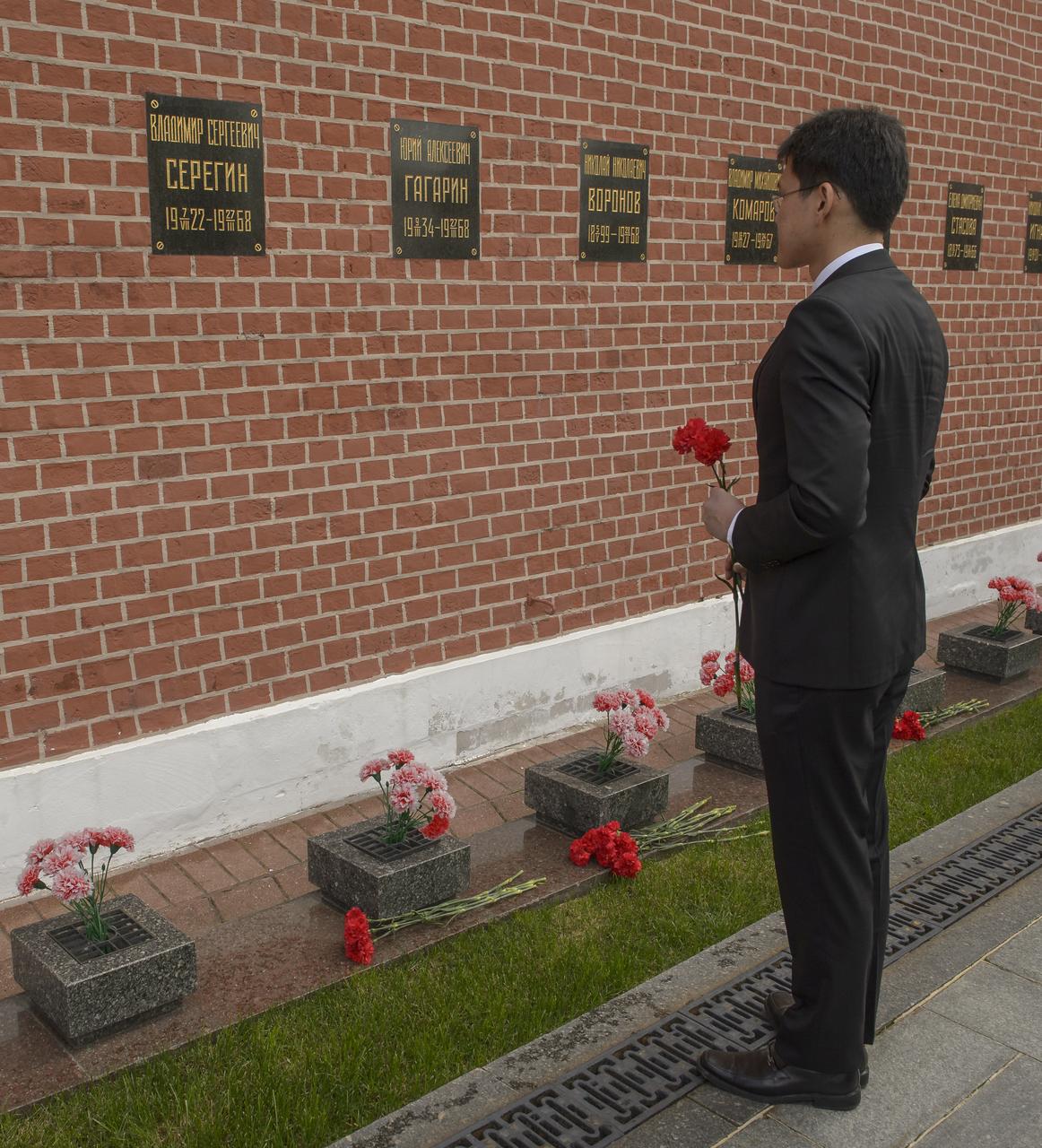
Expedition 52 backup crew member Norishige Kanai of the Japan Aerospace Exploration Agency (JAXA) lays roses at the site where Russian space icons are interred as part of traditional pre-launch ceremonies, Monday, July 10, 2017 in Moscow. Photo Credit: (NASA/Bill Ingalls)
Expedition 52 Red Square Visit
One of three local Kazakh girls who were on hand at the International Airport Astana to welcome the Expedition 6 crew with roses after the crew landed on the Kazakh steppe in their Soyuz capsule, Tuesday, May 4, 2003 in Astana, Kazakhstan.  Photo Credit: (NASA/Bill Ingalls)
Expedition 6 Landing
Expedition 52 flight engineer Paolo Nespoli of ESA lays roses at the site where Russian space icons are interred as part of traditional pre-launch ceremonies, Monday, July 10, 2017 in Moscow. Photo Credit: (NASA/Bill Ingalls)
Expedition 52 Red Square Visit
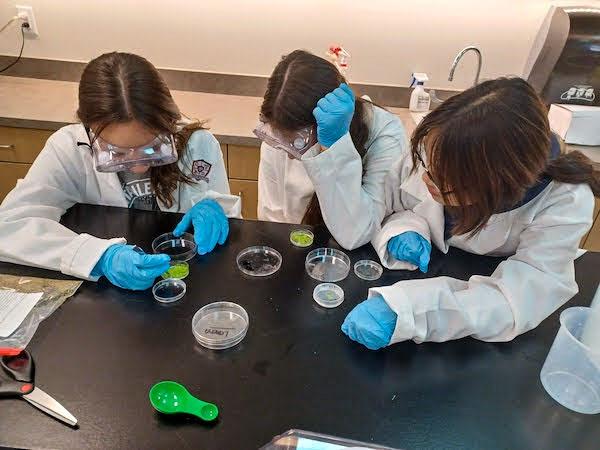
jsc2023e065201 (1/12/2023) --- Pinecrest St. Rose student researchers work on their experiment, Wolffia in Microgravity, which will be included in the Nanoracks-National Center for Earth and Space Science Education-Orbiter-Student Spaceflight Experiments Program Mission 17 to ISS (Nanoracks-NCESSE-Orbiter-SSEP).
Nanoracks-NCESSE-Orbiter-SSEP Preflight Imagery
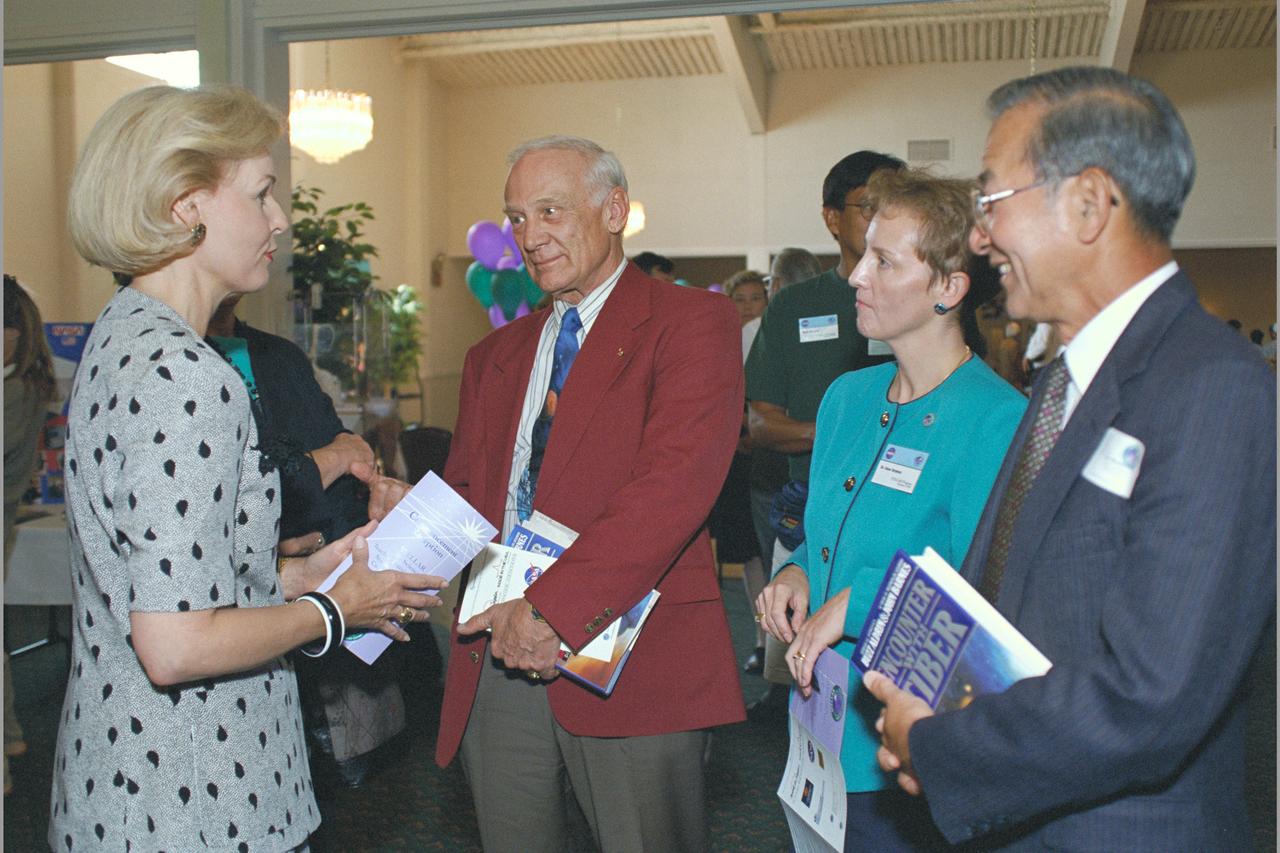
1996 'STELLAR'  and MCP summer programs commencement.  Apollo Astronaut Buzz Aldren drops by after attending his book signing at US Space Camp eariler in the day is shown here with Gayle Wilson (governor's wife) and Ken Munechika (R) and Dr. Rose Grymes (center)
ARC-1996-AC96-0232-71
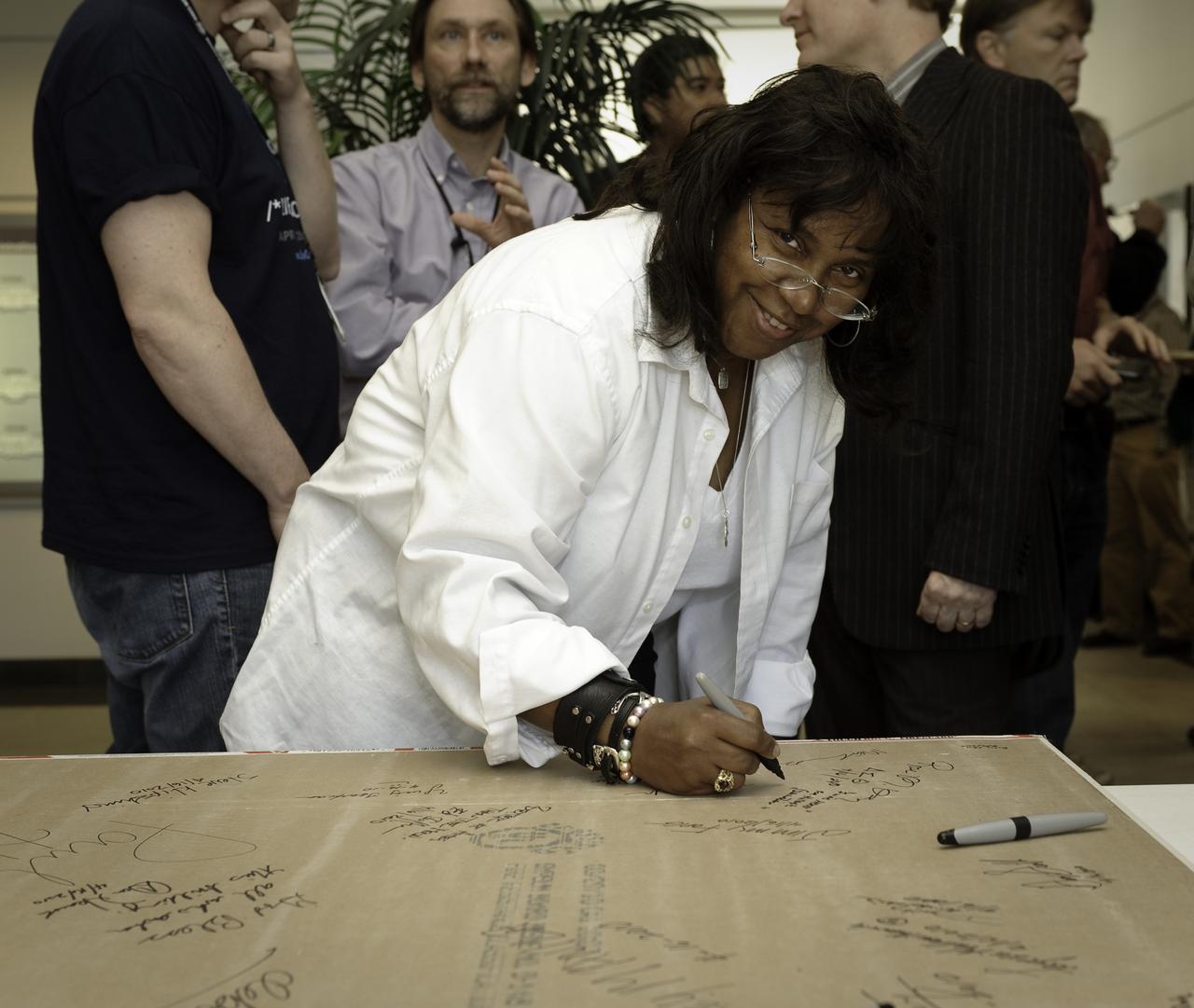
Sustainability Base celebration, sheetrock signing and social in lobby of N-200. Rose King of Code C slated to become on of the first occupants of the new Green building at NASA Ames Research Center, Moffett Field, California designated Sustainability Base N-232 puts her mark on the building forever.
ARC-2010-ACD10-0071-022
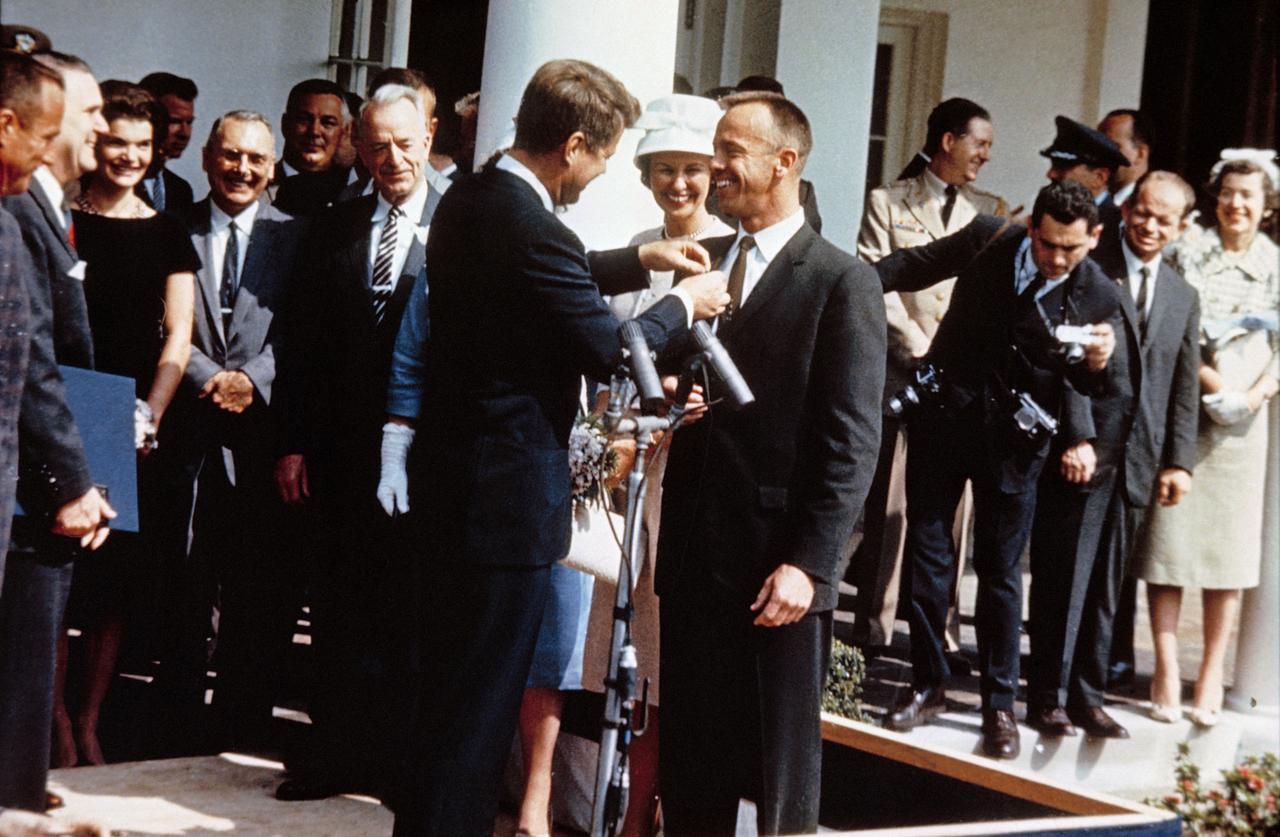
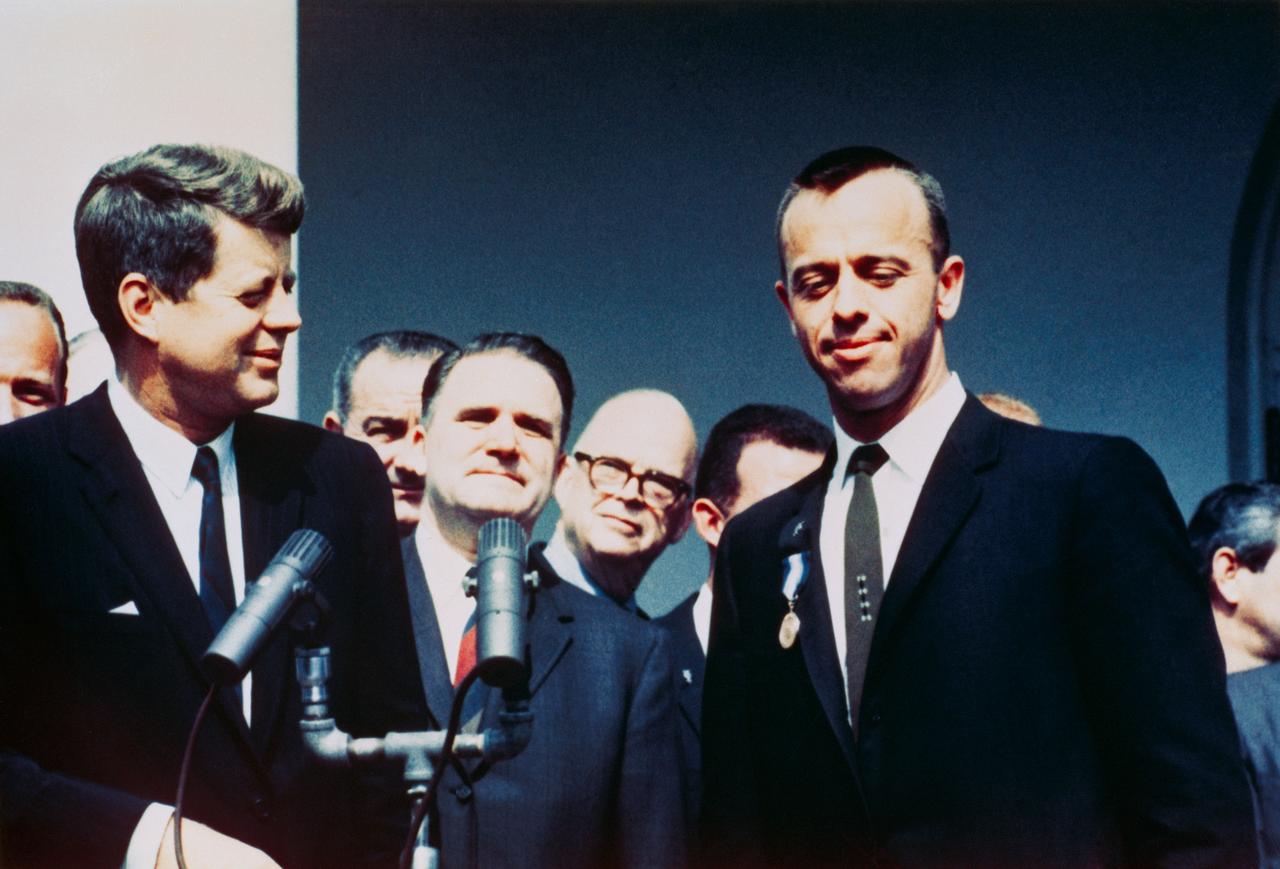
S63-06268 (8 May 1963) --- Astronaut Alan B. Shepard, Jr., receives his NASA's Distinguished Service Medal from President John F. Kennedy, after his Mercury-Redstone 3 (MR-3) flight, in a Rose Garden ceremony on May 8, 1961 at the White House.
SHEPARD, ALAN B., JR. ASTRONAUT - WASHINGTON, DC
May 4, 2003, Astana, Kazakhstan.  One of three local Kazakh girls who were on hand at the Astana airport to welcome the Expedition Six crew with Roses after the crew landed on the Kazakh Steppe in their Soyuz capsule.  Photo Credit: "NASA/Bill Ingalls"
03pd1529
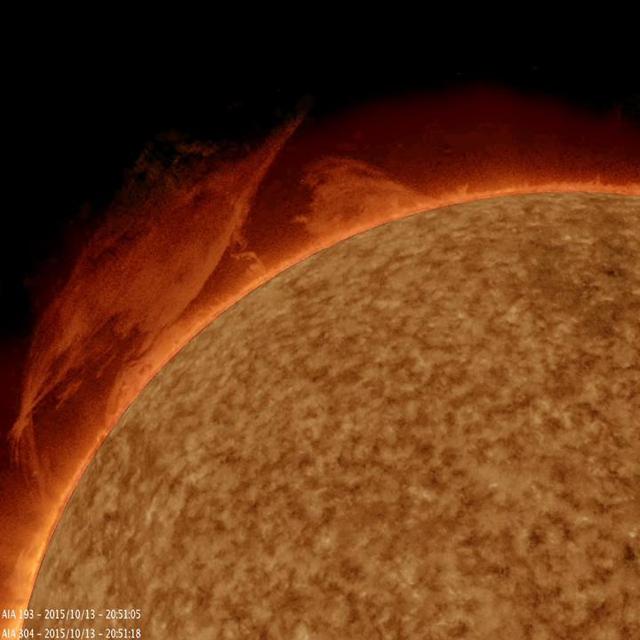
A mass of plasma gathered itself into a twisting mass, spun around for a bit, then rose up and broke apart over a 10-hour period Oct. 13, 2015 as observed by NASA Solar Dynamics Observatory. The image and video were produced with a combination of two wavelengths of extreme ultraviolet light. Prominences are unstable clouds of gas tethered above the surface of the Sun by magnetic forces. Much of the jittering and odd jumping motions above the surface were artifacts caused by brightening and contrast changes used to bring out the detail and structure of the prominence.  http://photojournal.jpl.nasa.gov/catalog/PIA20008
Hefty Prominence Eruption
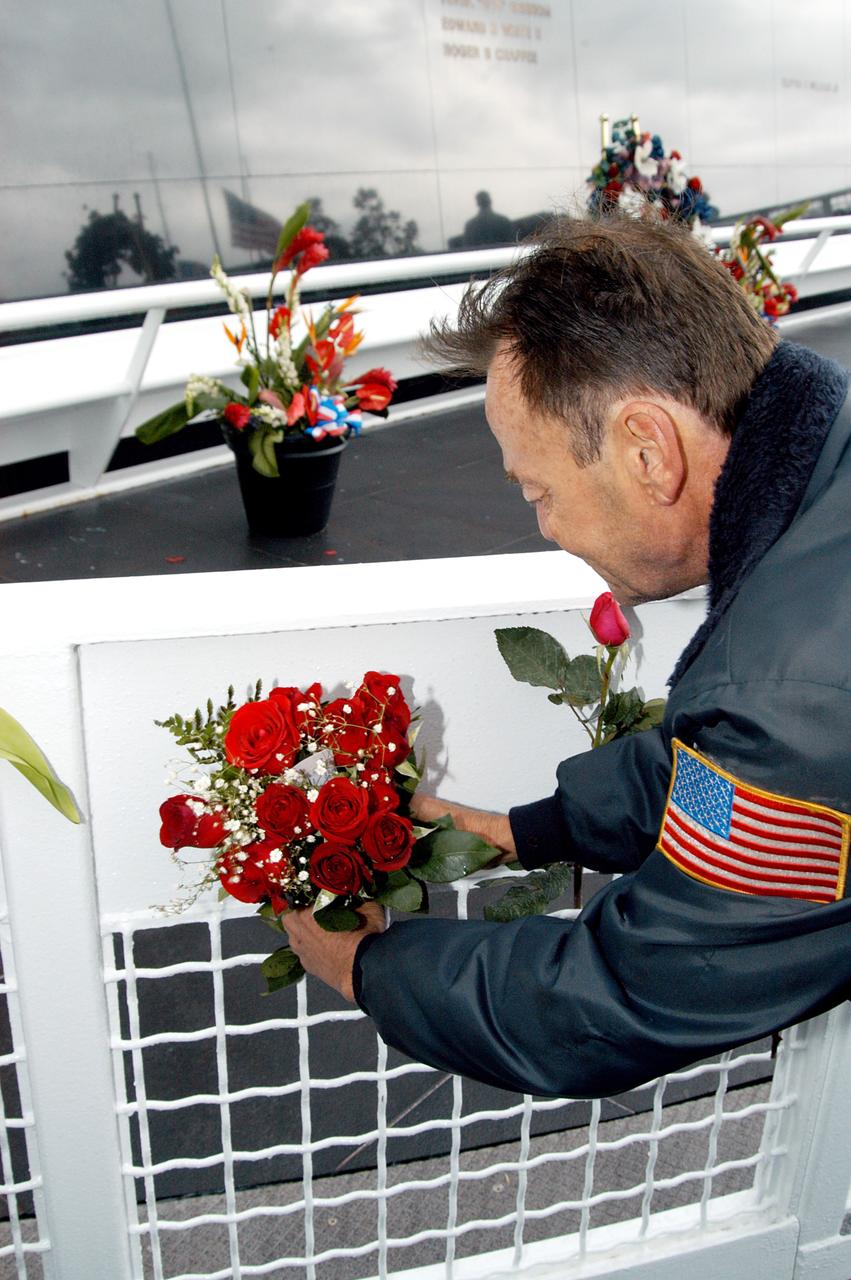
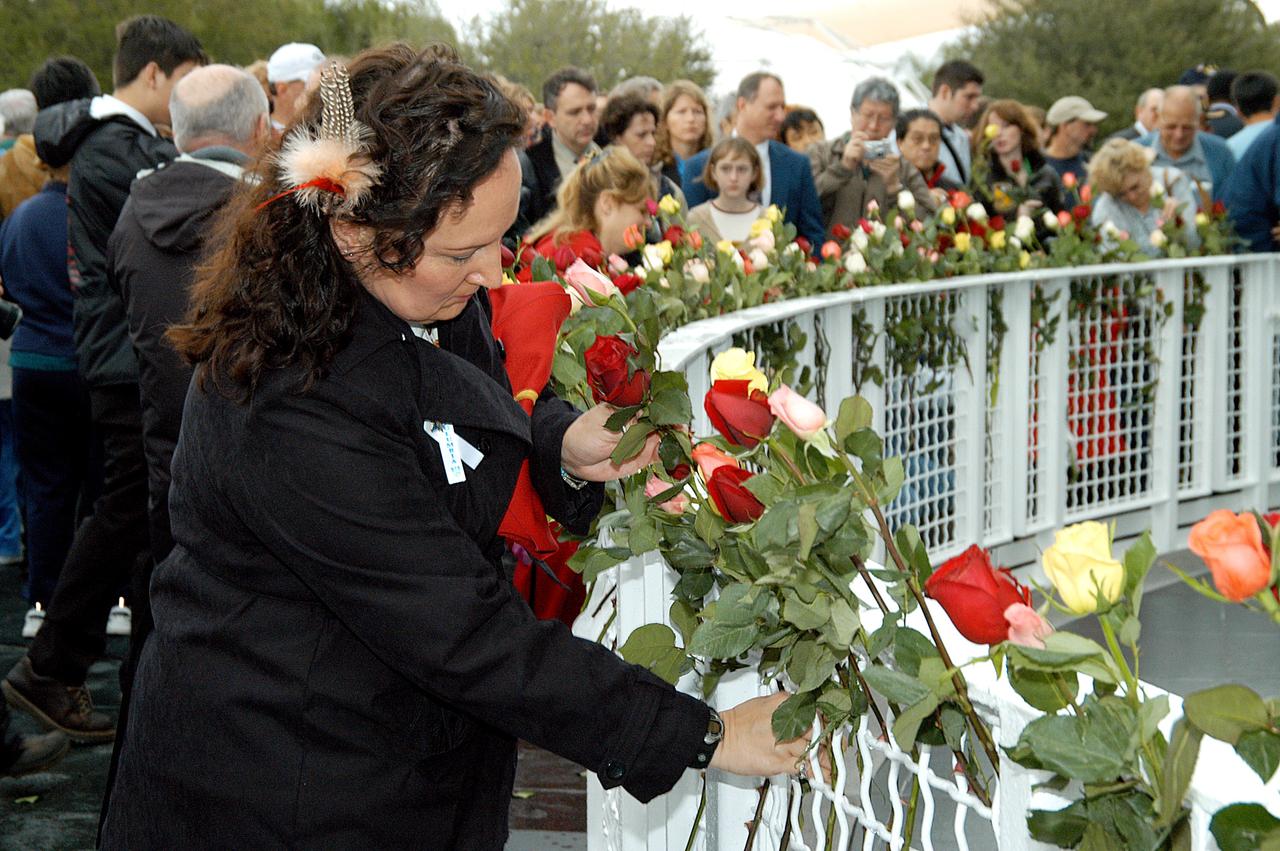
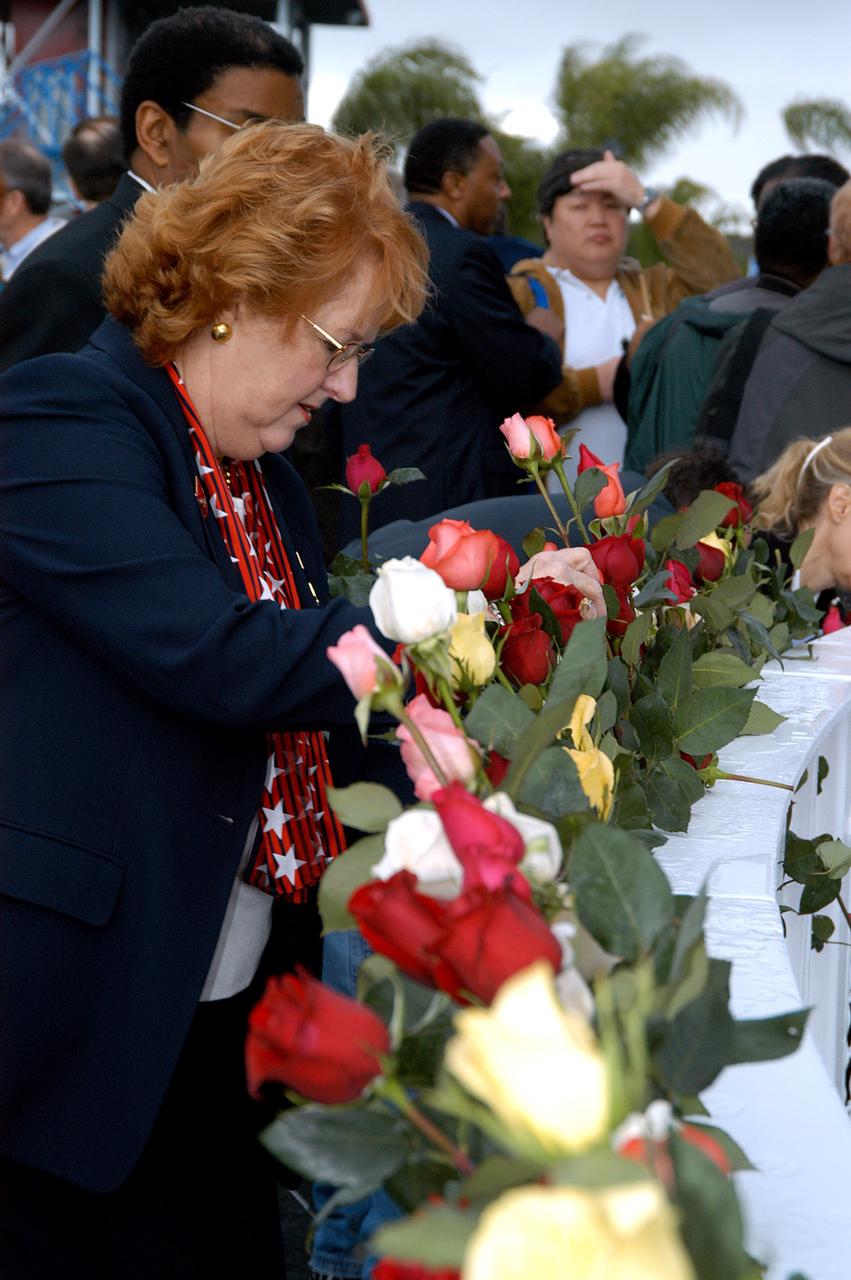
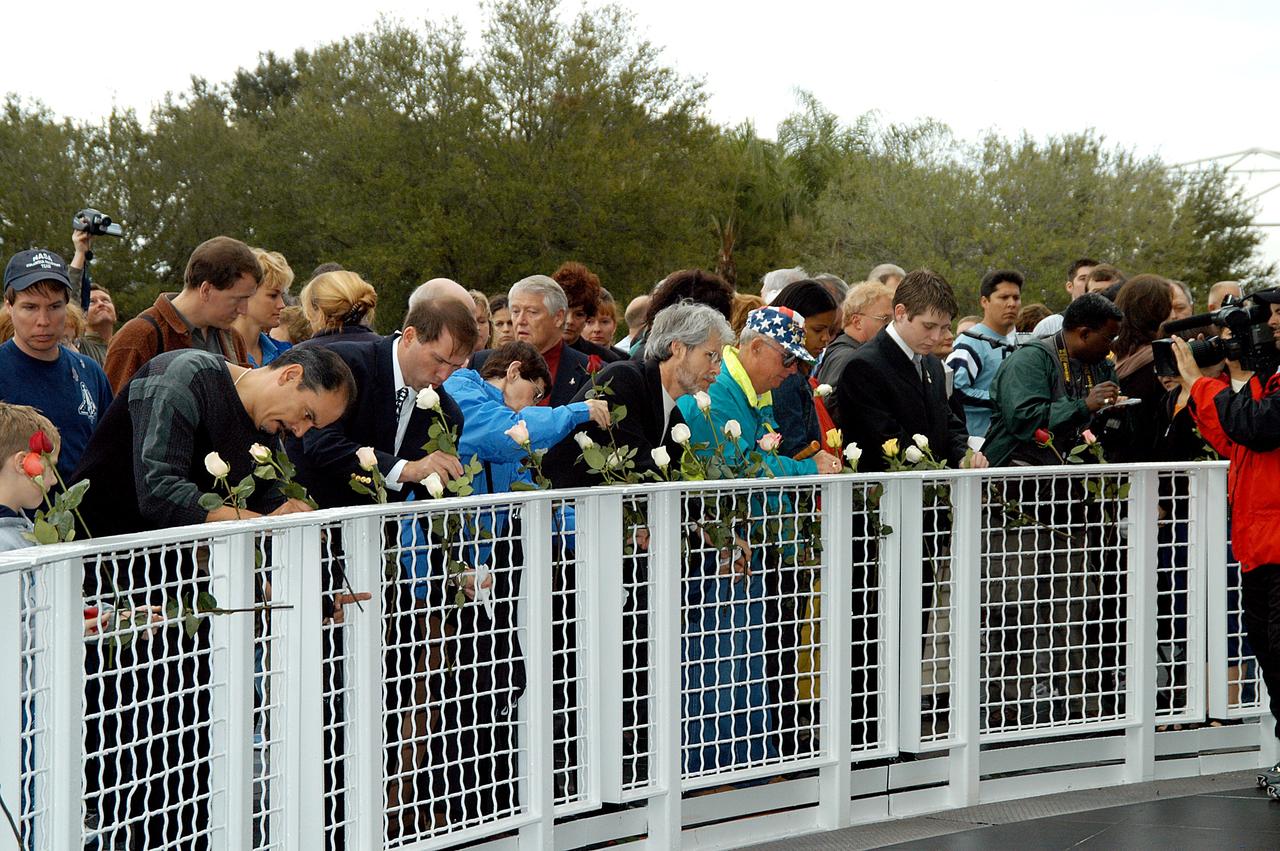
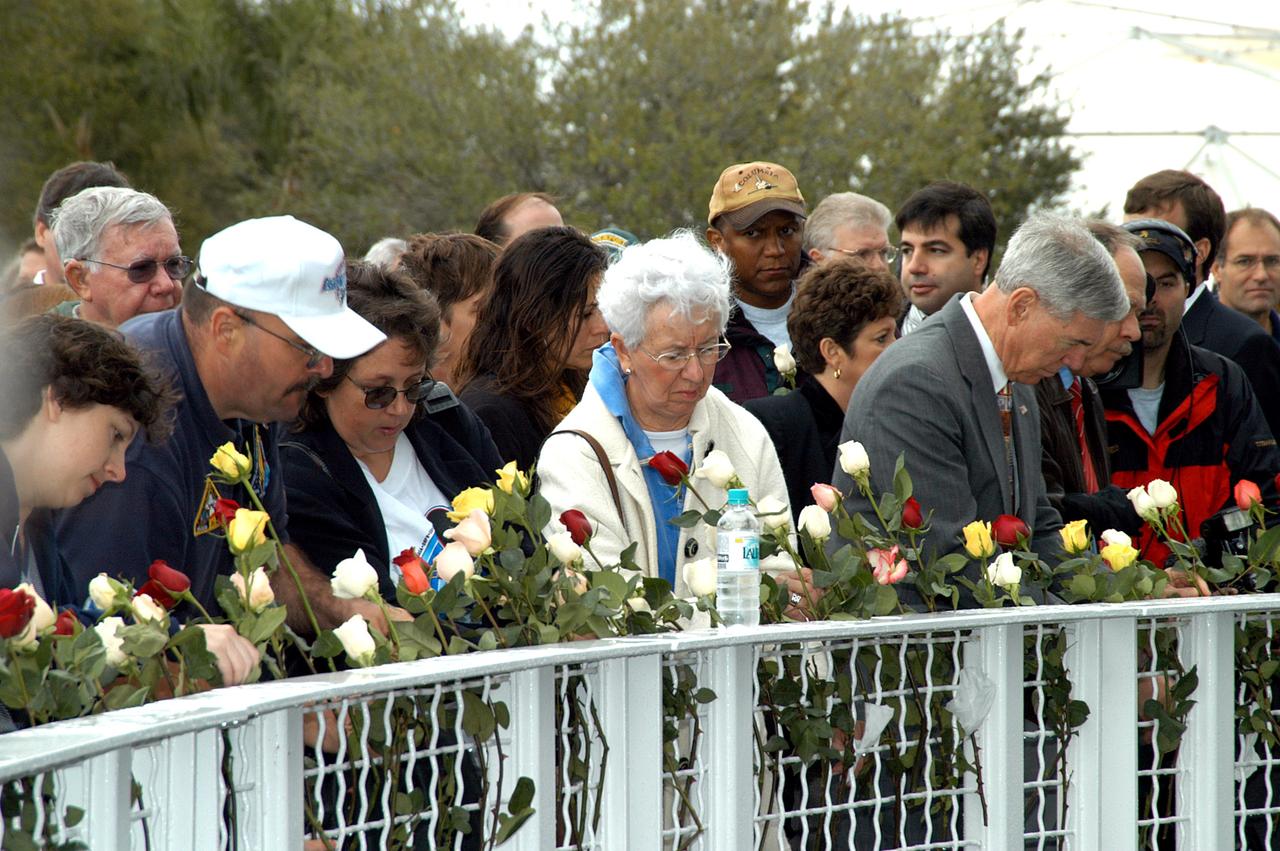
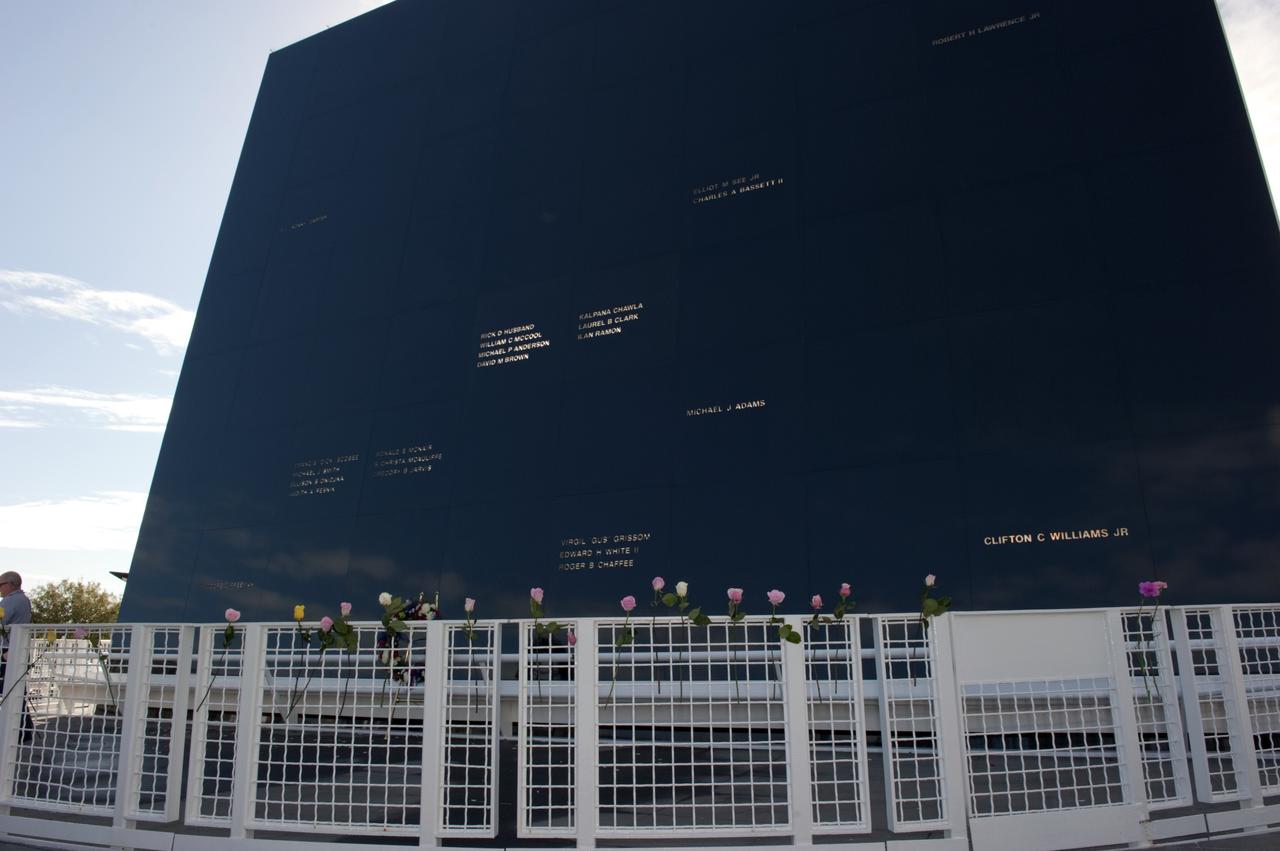
KENNEDY SPACE CENTER, FLA. -  Following the memorial service for the crew of Columbia at the Space Memorial Mirror, visitors place roses in the wire mesh fence surrounding the mirror.  Feb. 1 is the one-year anniversary of the loss of the crew and orbiter Columbia in a tragic accident as the ship returned to Earth following mission STS-107. The public was invited to the memorial service, held in the KSC Visitor Complex, which included comments by Center Director Jim Kennedy and Executive Director of Florida Space Authority Winston Scott.  Scott is a former astronaut who flew on Columbia in 1997.
KENNEDY SPACE CENTER, FLA. - Following the memorial service for the crew of Columbia at the Space Memorial Mirror, visitors place roses in the wire mesh fence surrounding the mirror. Feb. 1 is the one-year anniversary of the loss of the crew and orbiter Columbia in a tragic accident as the ship returned to Earth following mission STS-107. The public was invited to the memorial service, held in the KSC Visitor Complex, which included comments by Center Director Jim Kennedy and Executive Director of Florida Space Authority Winston Scott. Scott is a former astronaut who flew on Columbia in 1997.
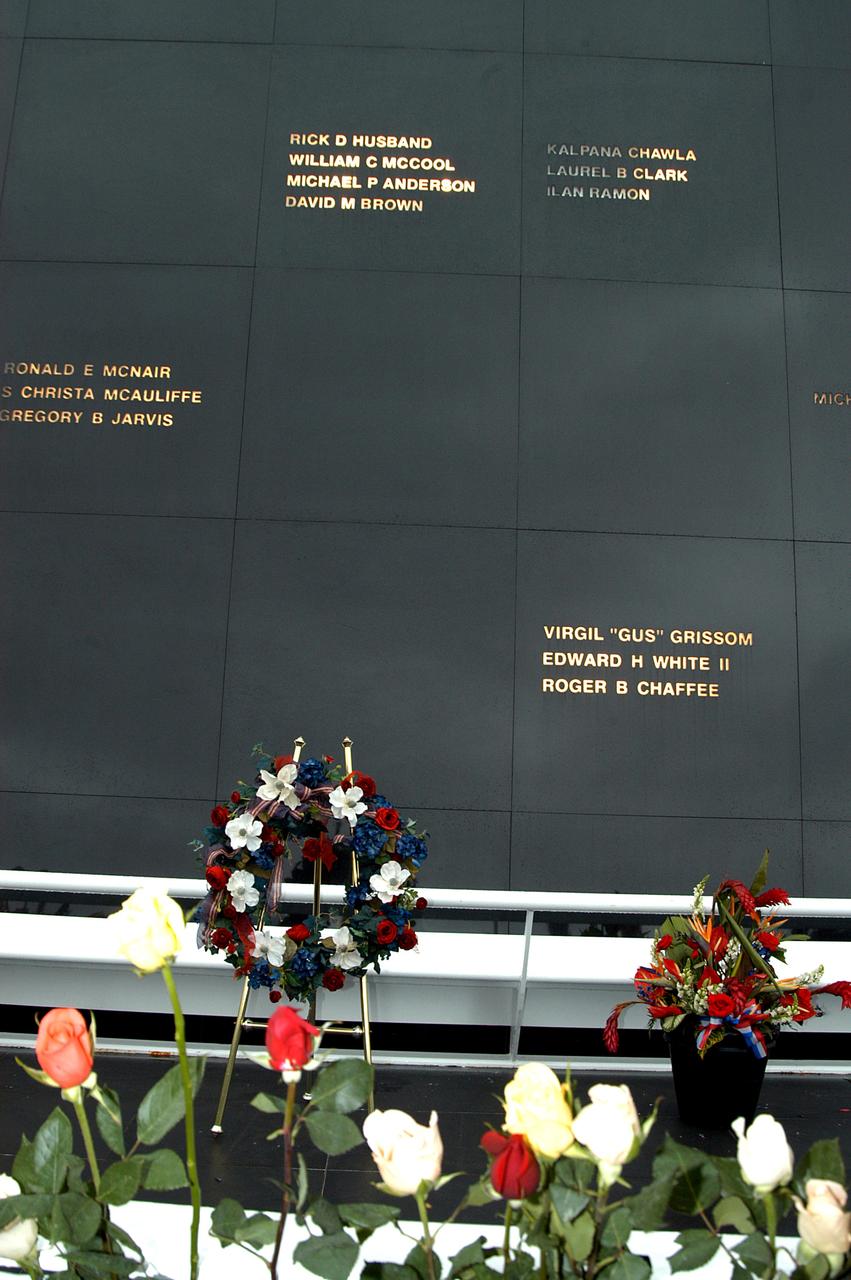
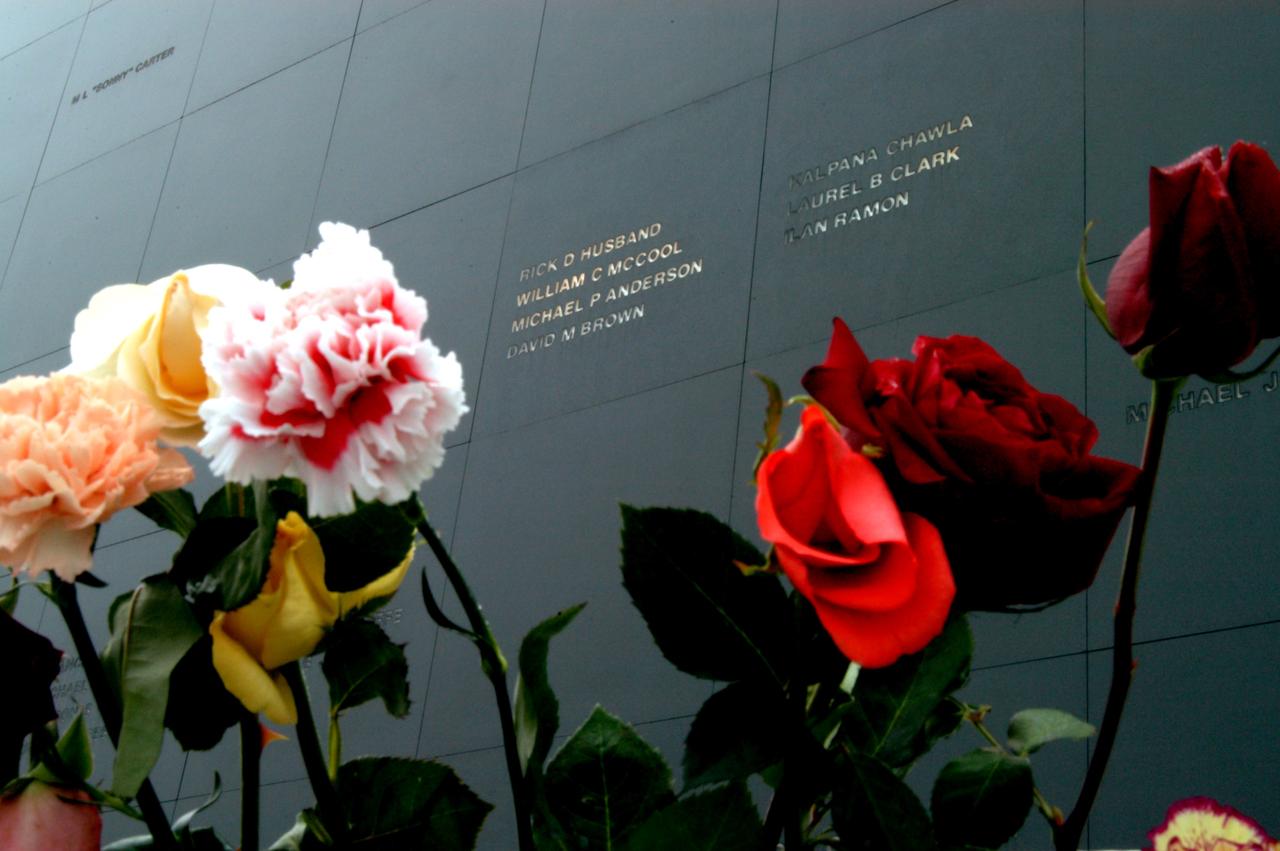
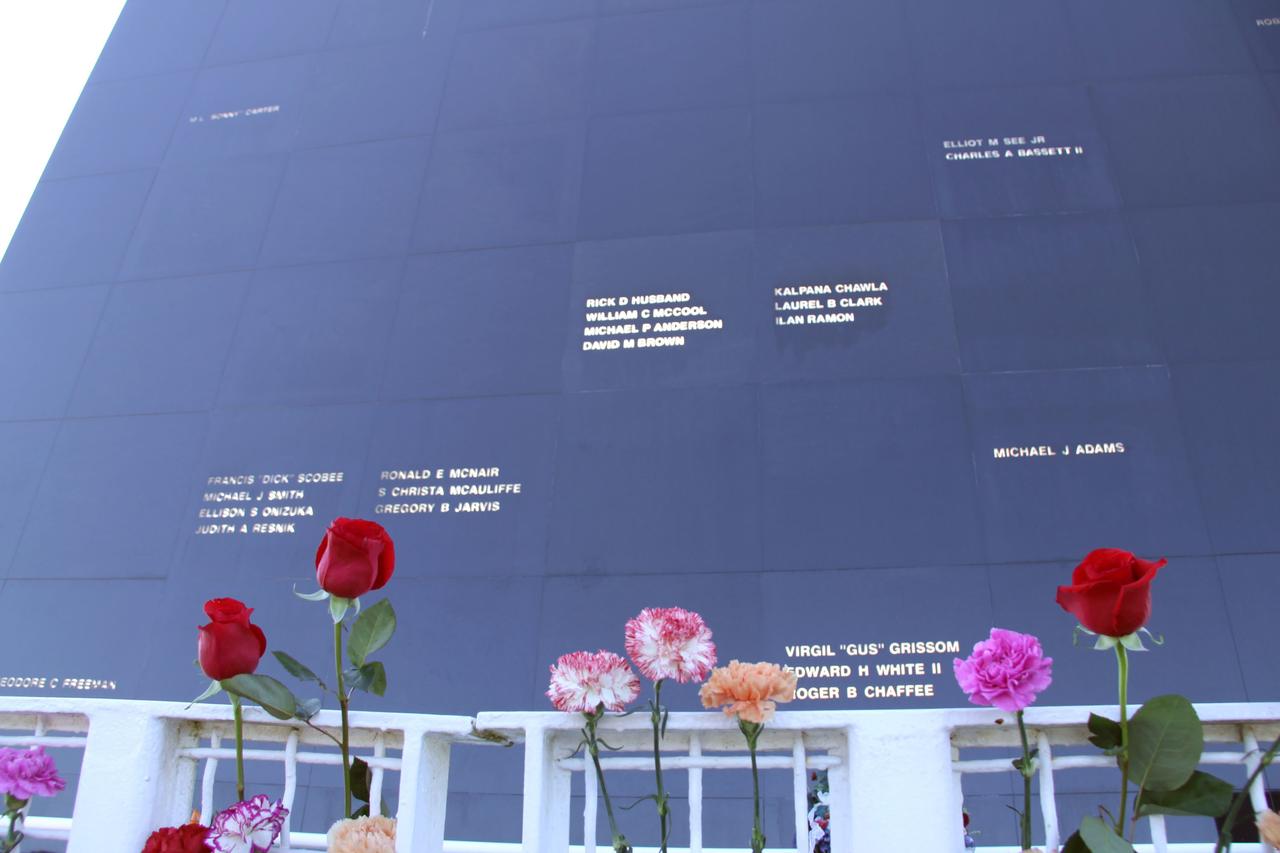
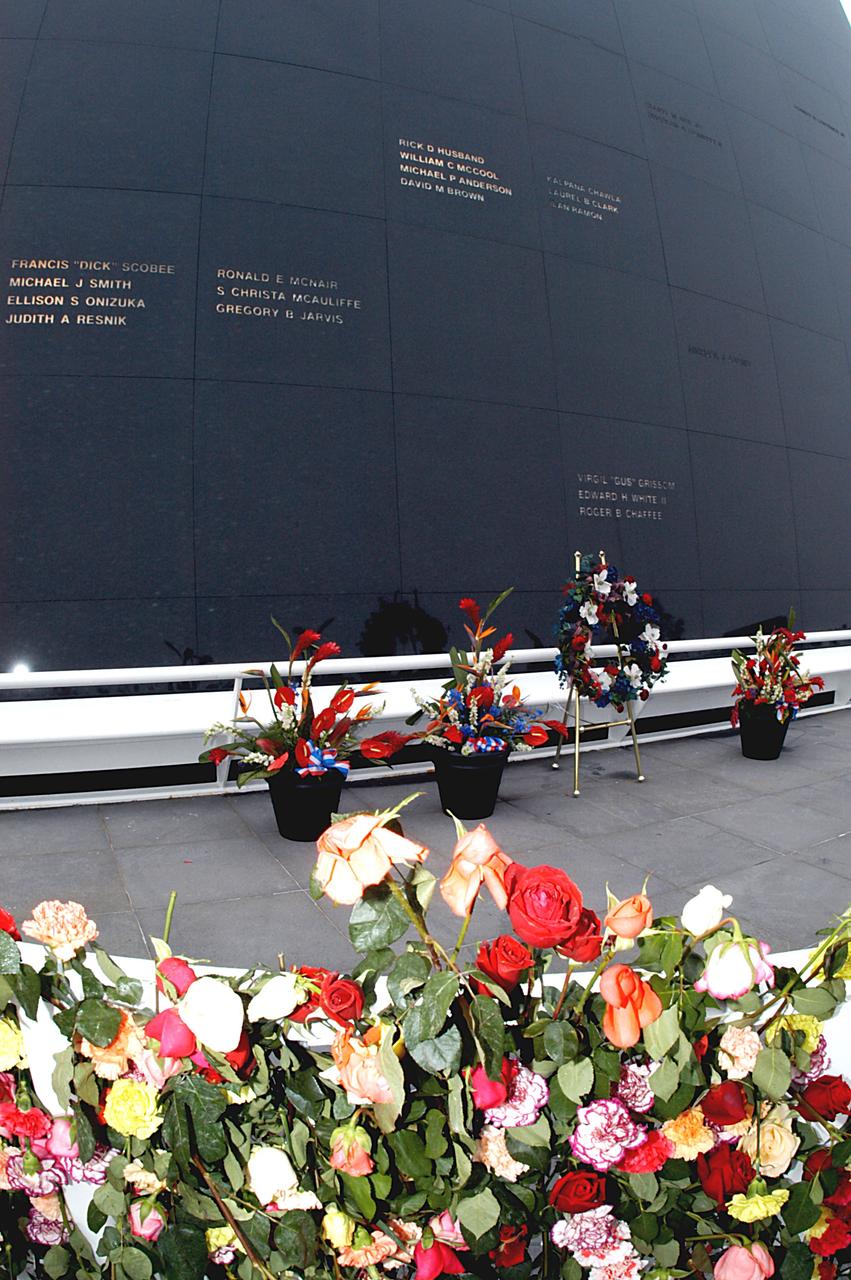
KENNEDY SPACE CENTER, FLA. - Brilliant roses and carnations frame the names of the Columbia crew carved onto the black granite surface of the Astronaut Memorial Mirror at the KSC Visitor Complex.  The flowers were left by visitors who attended a memorial service for the crew on the anniversary of the tragic accident that claimed their lives Feb. 1, 2003.  The service included comments by Center Director Jim Kennedy, Deputy Director Woodrow Whitlow Jr., Executive Director of Florida Space Authority Winston Scott, and Dr. Stephen Feldman, president of the Astronaut Memorial Foundation, who placed the wreath at the mirror.  The mirror honors astronauts who have given their lives for space exploration.
KENNEDY SPACE CENTER, FLA. - Roses and other flowers ring the base of the Astronaut Memorial Mirror at the KSC Visitor Complex following a memorial service held for the crew of Columbia on the anniversary of the tragic accident that took their lives Feb. 1, 2003.  The public was invited to the service and encouraged to place the flowers on the fence.  The service included comments by Center Director Jim Kennedy, Deputy Director Woodrow Whitlow Jr., Executive Director of Florida Space Authority Winston Scott, and Dr. Stephen Feldman, president of the Astronaut Memorial Foundation.  The black granite mirror honors astronauts, whose names are carved in the surface, who have given their lives for space exploration.
KENNEDY SPACE CENTER, FLA. - Following the memorial service held at the Space Memorial Mirror for the crew of Columbia, visitors place roses in the wire mesh fence surrounding the mirror.  Feb. 1 is the one-year anniversary of the loss of the crew and orbiter Columbia in a tragic accident as the ship returned to Earth following mission STS-107. The public was invited to the memorial service, held in the KSC Visitor Complex, which included comments by Center Director Jim Kennedy and Executive Director of Florida Space Authority Winston Scott.  Scott is a former astronaut who flew on Columbia in 1997.
KENNEDY SPACE CENTER, FLA. - Following the memorial service held at the Space Memorial Mirror for the crew of Columbia, visitors place roses in the wire mesh fence surrounding the mirror. Feb. 1 is the one-year anniversary of the loss of the crew and orbiter Columbia in a tragic accident as the ship returned to Earth following mission STS-107. The public was invited to the memorial service, held in the KSC Visitor Complex, which included comments by Center Director Jim Kennedy and Executive Director of Florida Space Authority Winston Scott. Scott is a former astronaut who flew on Columbia in 1997.
KENNEDY SPACE CENTER, FLA. -  Following the memorial service for the crew of Columbia at the Space Memorial Mirror, visitors place roses in the wire mesh fence surrounding the mirror.  Feb. 1 is the one-year anniversary of the loss of the crew and orbiter Columbia in a tragic accident as the ship returned to Earth following mission STS-107.  Scott is a former astronaut who flew on Columbia in 1997. The public was invited to the memorial service, which included comments by Center Director Jim Kennedy and Executive Director of Florida Space Authority Winston Scott.  Scott is a former astronaut who flew on Columbia in 1997.
KENNEDY SPACE CENTER, FLA. - Following the memorial service for the crew of Columbia at the Space Memorial Mirror, visitors place roses in the wire mesh fence surrounding the mirror. Feb. 1 is the one-year anniversary of the loss of the crew and orbiter Columbia in a tragic accident as the ship returned to Earth following mission STS-107. Scott is a former astronaut who flew on Columbia in 1997. The public was invited to the memorial service, which included comments by Center Director Jim Kennedy and Executive Director of Florida Space Authority Winston Scott. Scott is a former astronaut who flew on Columbia in 1997.
KENNEDY SPACE CENTER, FLA. - Following the memorial service for the crew of Columbia at the Space Memorial Mirror, Louise Kleba, who is with United Space Alliance, joins other visitors placing roses in the wire mesh fence surrounding the mirror.  Feb. 1 is the one-year anniversary of the loss of the crew and orbiter Columbia in a tragic accident as the ship returned to Earth following mission STS-107. The public was invited to the memorial service, held in the KSC Visitor Complex, which included comments by Center Director Jim Kennedy and Executive Director of Florida Space Authority Winston Scott.  Scott is a former astronaut who flew on Columbia in 1997.
KENNEDY SPACE CENTER, FLA. - Following the memorial service for the crew of Columbia at the Space Memorial Mirror, Louise Kleba, who is with United Space Alliance, joins other visitors placing roses in the wire mesh fence surrounding the mirror. Feb. 1 is the one-year anniversary of the loss of the crew and orbiter Columbia in a tragic accident as the ship returned to Earth following mission STS-107. The public was invited to the memorial service, held in the KSC Visitor Complex, which included comments by Center Director Jim Kennedy and Executive Director of Florida Space Authority Winston Scott. Scott is a former astronaut who flew on Columbia in 1997.
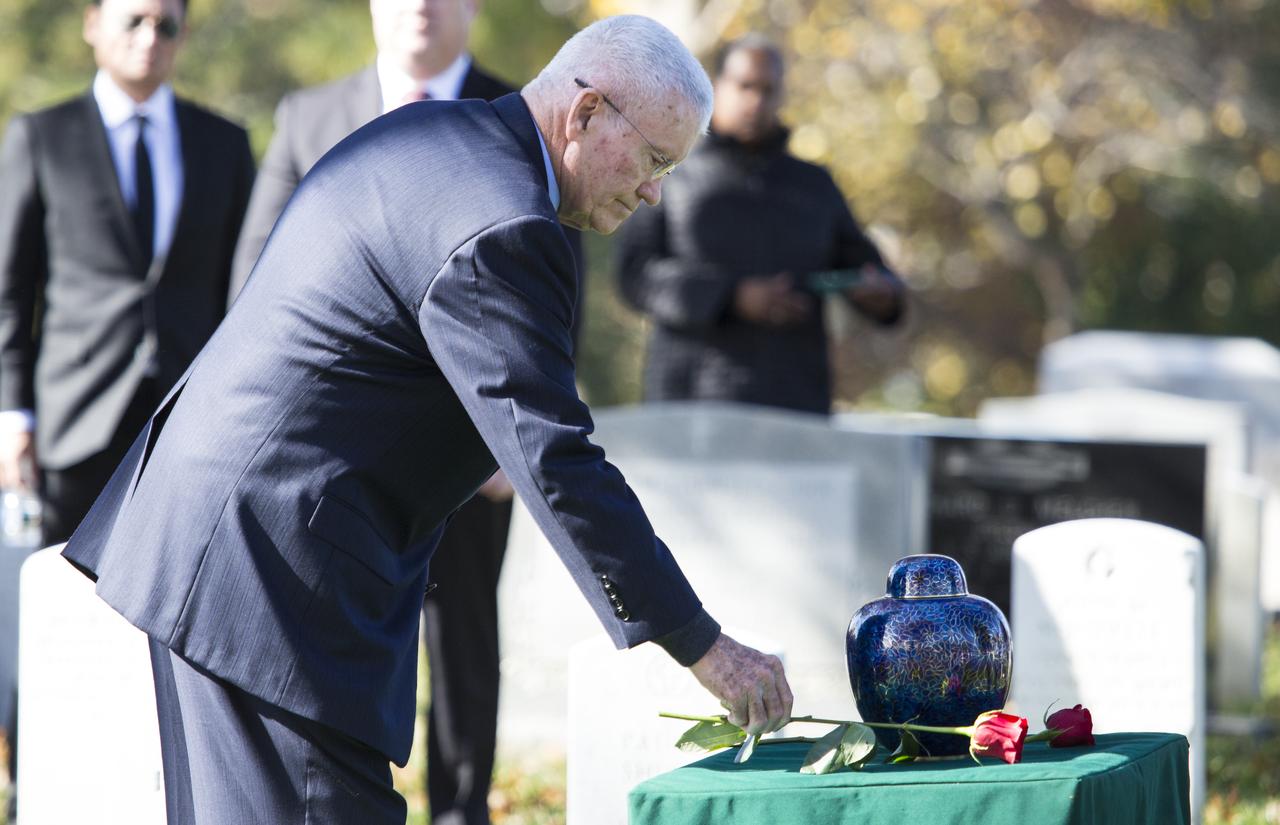
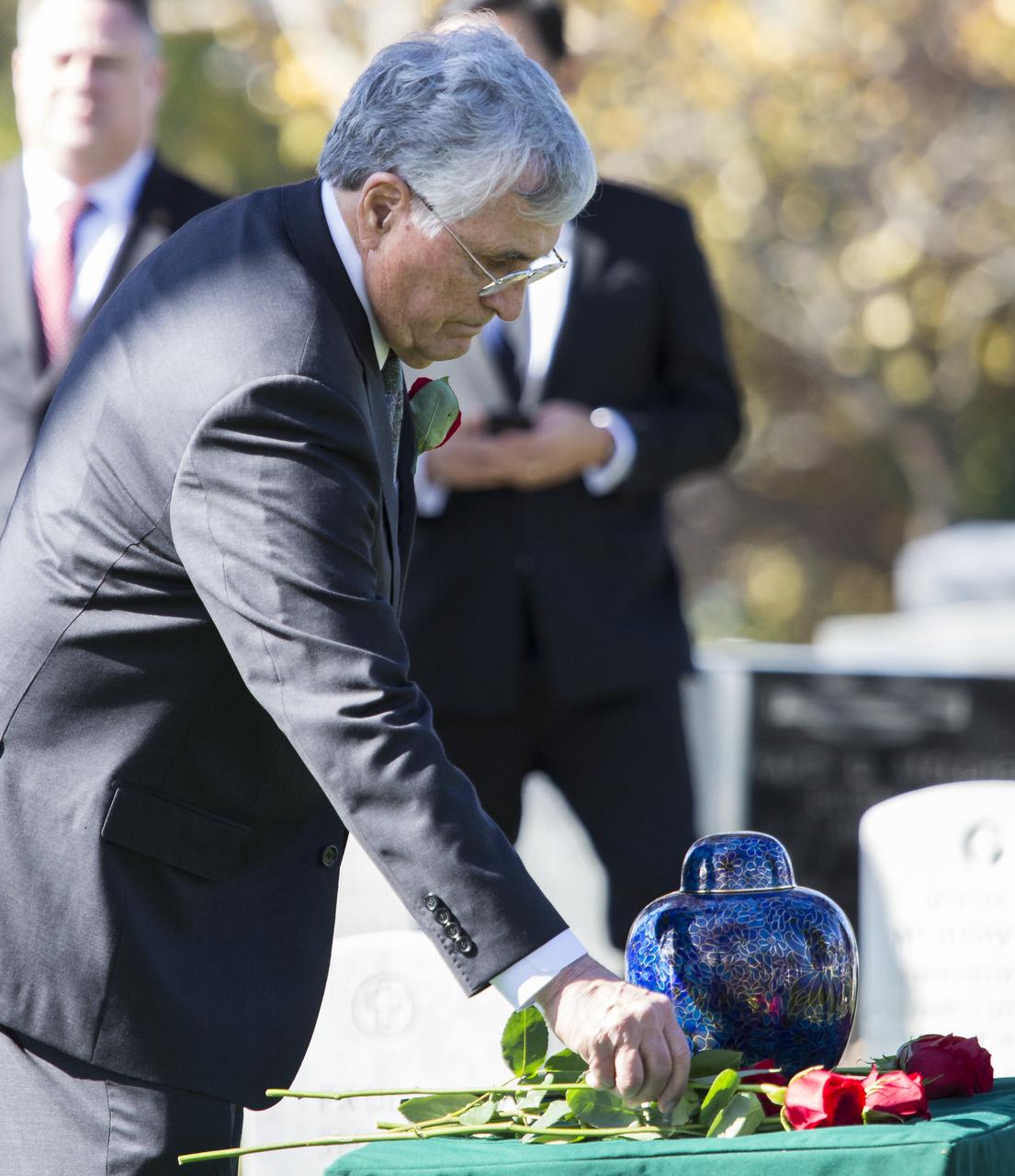
Leslie Bean, wife of former astronaut Alan Bean, places a rose next to the urn containing his ashes, Thursday, Nov. 8, 2018 at Arlington National Cemetery in Virginia. Selected as an astronaut in 1963, Bean flew in space twice, becoming the fourth human to walk on the Moon on Nov. 19, 1969 and spent 59 days in space as commander of the second Skylab mission in 1973. Photo Credit: (NASA/Joel Kowsky)
Alan Bean Interment
S88-31387 (8 May 1961) --- President John F. Kennedy (left) congratulates NASA's Distinguished Service Medal Award recipient astronaut Alan B. Shepard Jr. in a Rose Garden ceremony on May 8, 1961, at the White House.  Vice-President Lyndon B. Johnson, NASA Administrator James E. Webb and several NASA astronauts are in the background. Three days earlier, Shepard made history with a 15-minute suborbital space mission in the Freedom 7, Mercury-Redstone 3 spacecraft. Photo credit: NASA
Astronaut Alan Shepard receives MASA Distinguished Service award
Expedition 52 flight engineers Paolo Nespoli of ESA, left, Sergey Ryazanskiy of Roscosmos, center, and Randy Bresnik of NASA visit Red Square prepare to lay roses at the site where Russian space icons are interred as part of traditional pre-launch ceremonies, Monday, July 10, 2017 in Moscow. Photo Credit: (NASA/Bill Ingalls)
Expedition 52 Red Square Visit
Former astronaut Fred Haise places a rose next to the urn containing the ashes of former astronaut Alan Bean, Thursday, Nov. 8, 2018 at Arlington National Cemetery in Virginia. Selected as an astronaut in 1963, Bean flew in space twice, becoming the fourth human to walk on the Moon on Nov. 19, 1969 and spent 59 days in space as commander of the second Skylab mission in 1973. Photo Credit: (NASA/Joel Kowsky)
Alan Bean Interment
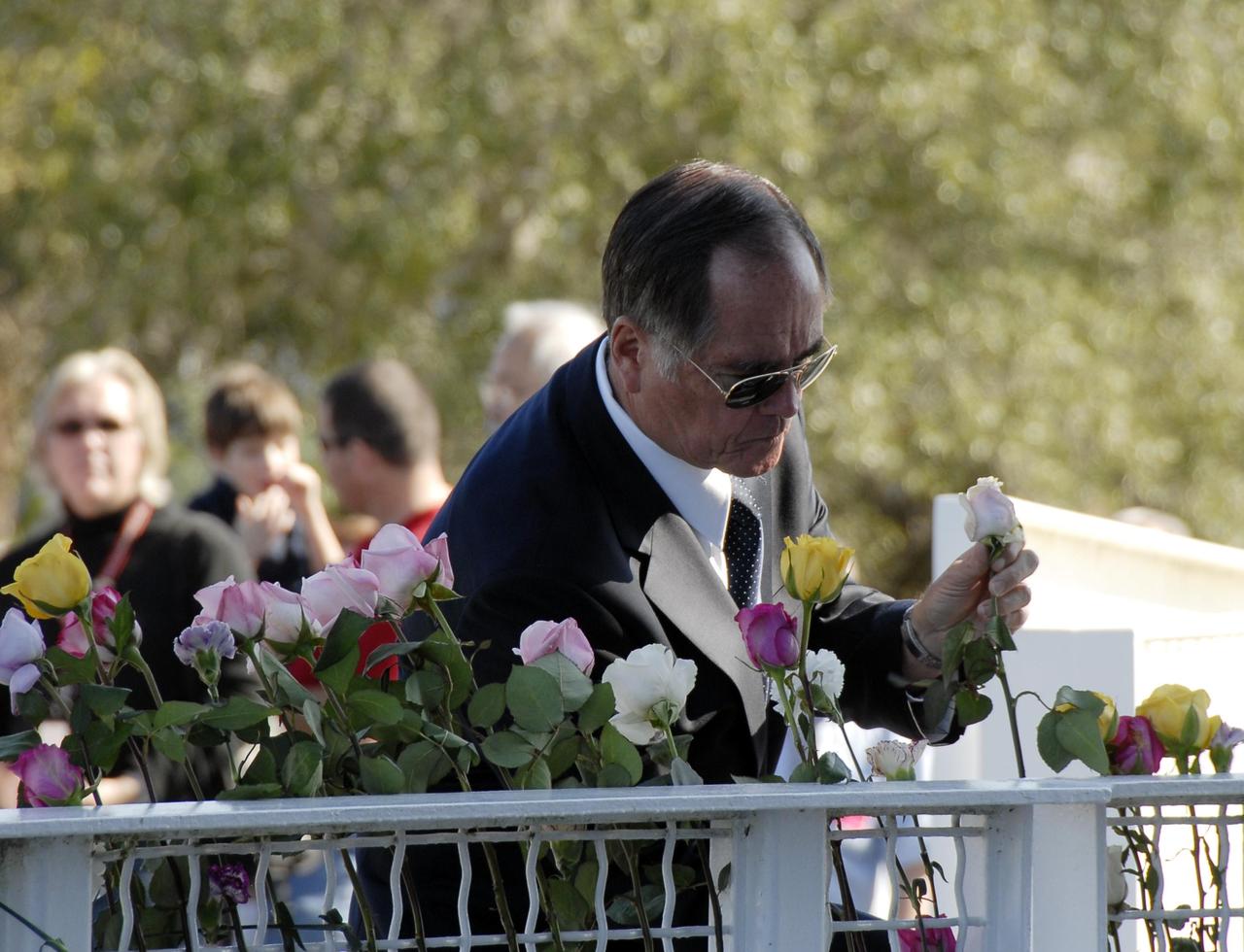
KENNEDY SPACE CENTER, FLA. --  Former astronaut Bob Crippen places a rose in the fence surrounding the Space Mirror Memorial at the KSC Visitor Complex.  The Space Mirror was designated as a national memorial by Congress and President George Bush in 1991 to honor fallen astronauts.  Their names are emblazoned on the monument's 42-1/2-foot-high by 50-foot-wide black granite surface as if to be projected into the heavens.  Photo credit:NASA/Kim Shiflett
KSC-07pd0179
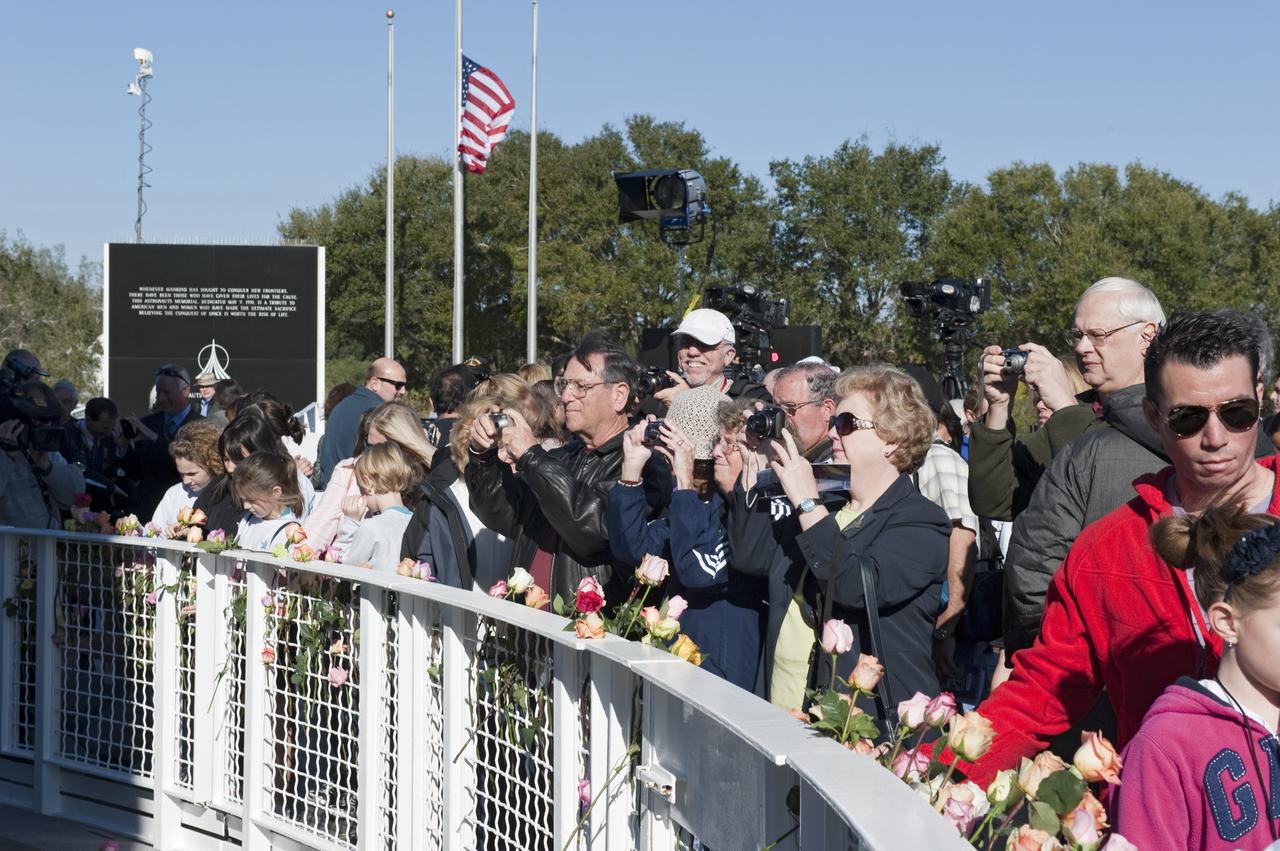
CAPE CANAVERAL, Fla. -- A crowd lays roses and pays their respects space shuttle Challenger's STS-51L crew members who gave their lives for while furthering the cause of exploration and discovery. They gathered for a memorial ceremony in front of the Space Mirror Memorial at the Kennedy Space Center Visitor Complex in Florida. 2011 marks the 25th anniversary of the loss of Challenger, which broke apart over the Atlantic Ocean 73 seconds into flight on Jan. 28, 1986.       Photo credit: NASA/Kim Shiflett
KSC-2011-1236
Expedition 50 NASA astronaut Peggy Whitson, left, Russian cosmonaut Oleg Novitskiy of Roscosmos, center, and ESA astronaut Thomas Pesquet visit Red Square to lay roses at the site where Russian space icons are interred as part of traditional pre-launch ceremonies, Wednesday, Oct. 26, 2016, in Moscow. Photo Credit: (NASA/Bill Ingalls)
Expedition 50 Red Square Visit
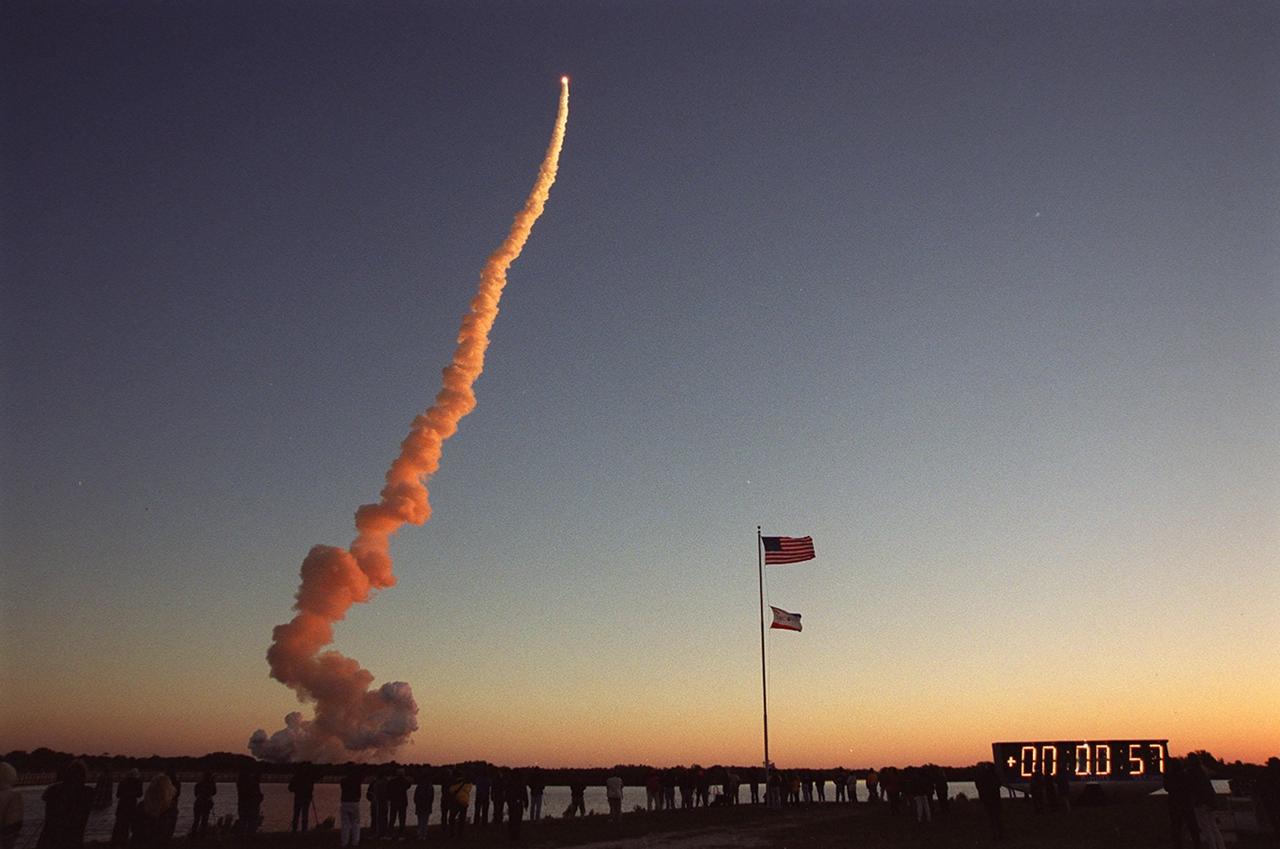
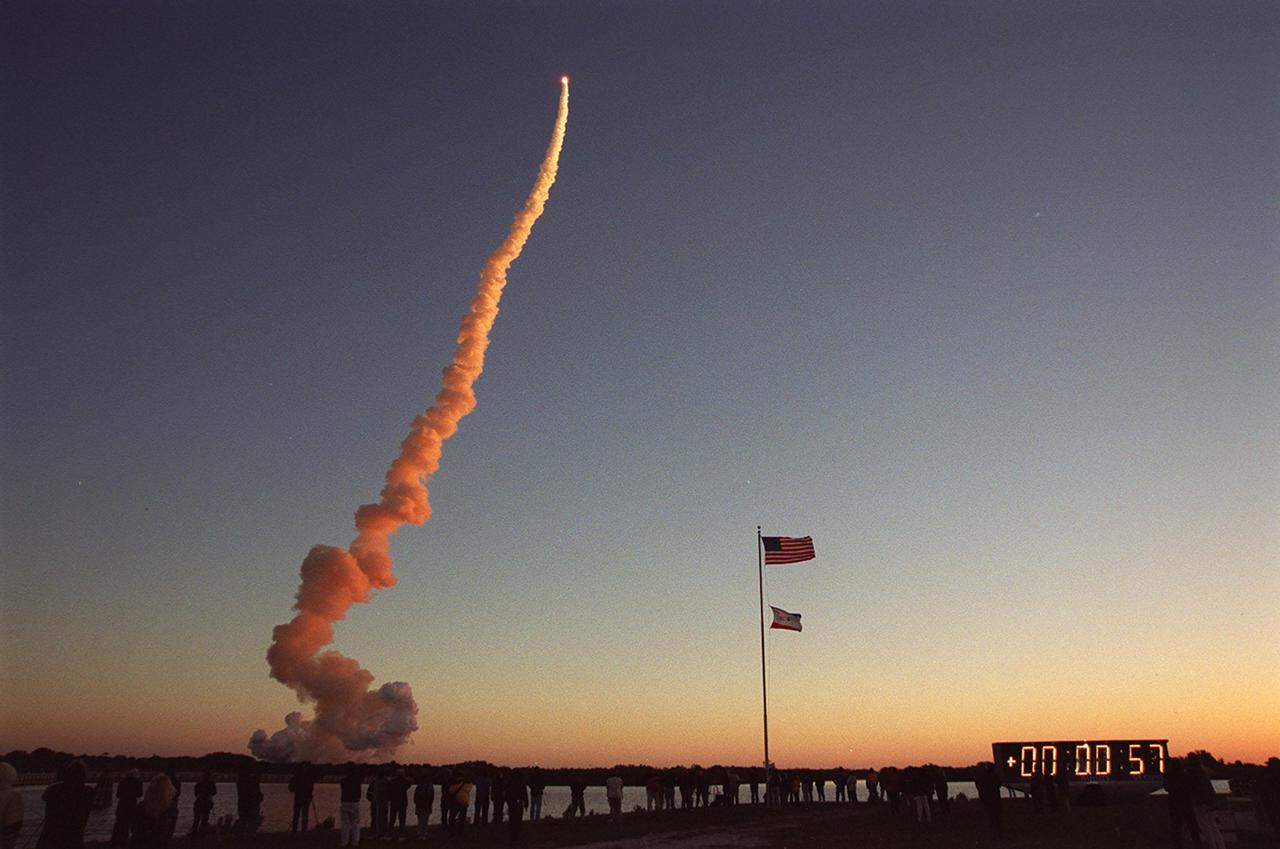
KENNEDY SPACE CENTER, Fla. -- Spectators line the banks of the turn basin to watch the dawn launch of Space Shuttle Discovery on mission STS-102. The rosy sky pales in comparison to the deep rose of the orbiter’s exhaust trail that captures the rising sun’s rays. Liftoff occurred at 6:42:09 EST for the eighth flight to the International Space Station
KSC01pp0437
Former astronaut Harrison Schmitt places a rose next to the urn containing the ashes of former astronaut Alan Bean, Thursday, Nov. 8, 2018 at Arlington National Cemetery in Virginia. Selected as an astronaut in 1963, Bean flew in space twice, becoming the fourth human to walk on the Moon on Nov. 19, 1969 and spent 59 days in space as commander of the second Skylab mission in 1973. Photo Credit: (NASA/Joel Kowsky)
Alan Bean Interment
A prominence rose up above the sun, sent an arch of plasma to link up magnetically with an active region over a one-day period (Jan, 9-10, 2017). Then the flow of plasma seemed to largely change direction and head back where it came from. Finally, amidst the confused patterns of movement, it dissipated and fell away. Prominences are cooler clouds of charged particles tenuously tethered to the sun by magnetic forces. Images were taken in a wavelength of extreme ultraviolet light.  Movies are available at https://photojournal.jpl.nasa.gov/catalog/PIA22199
Reversing Prominence
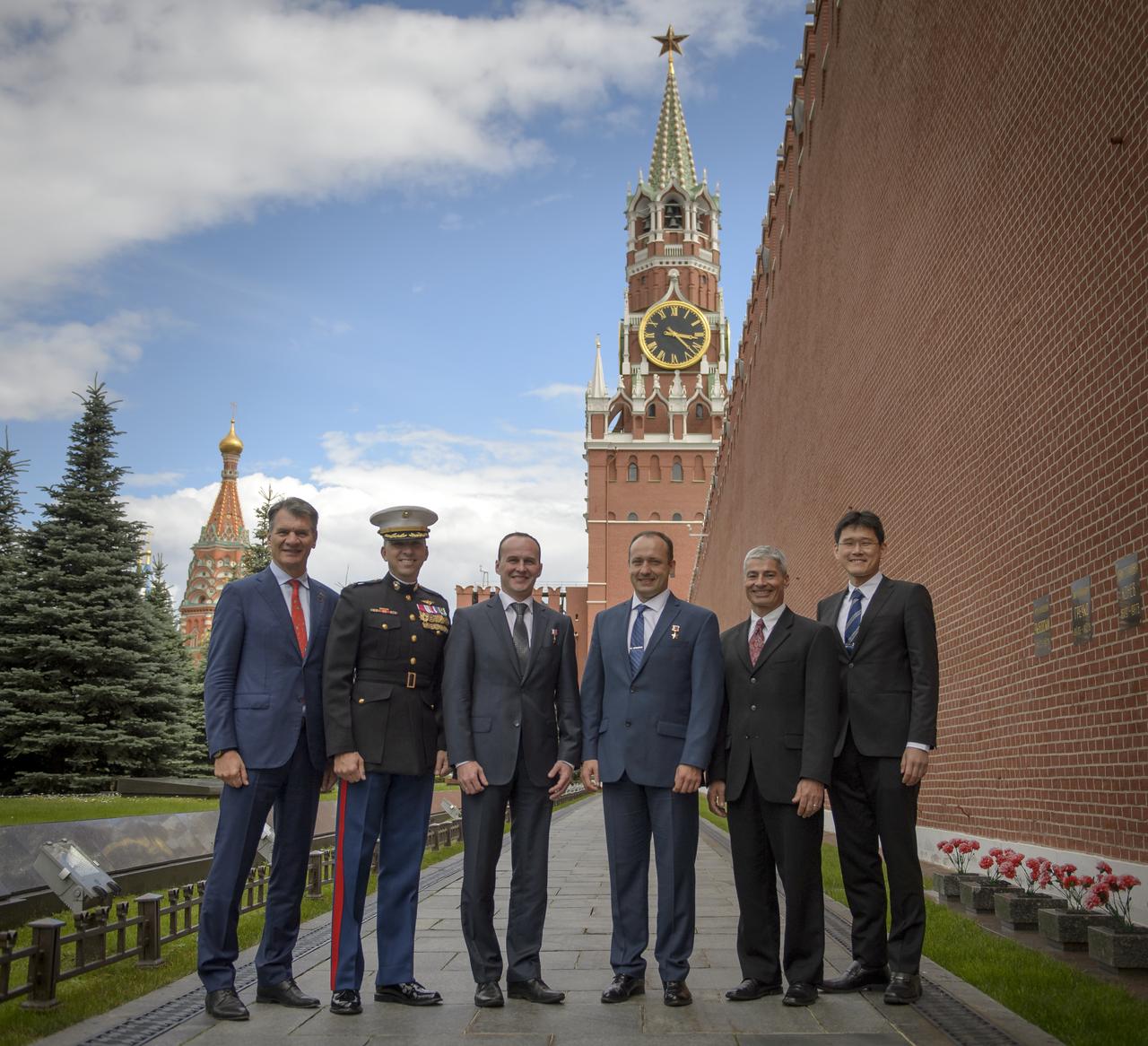
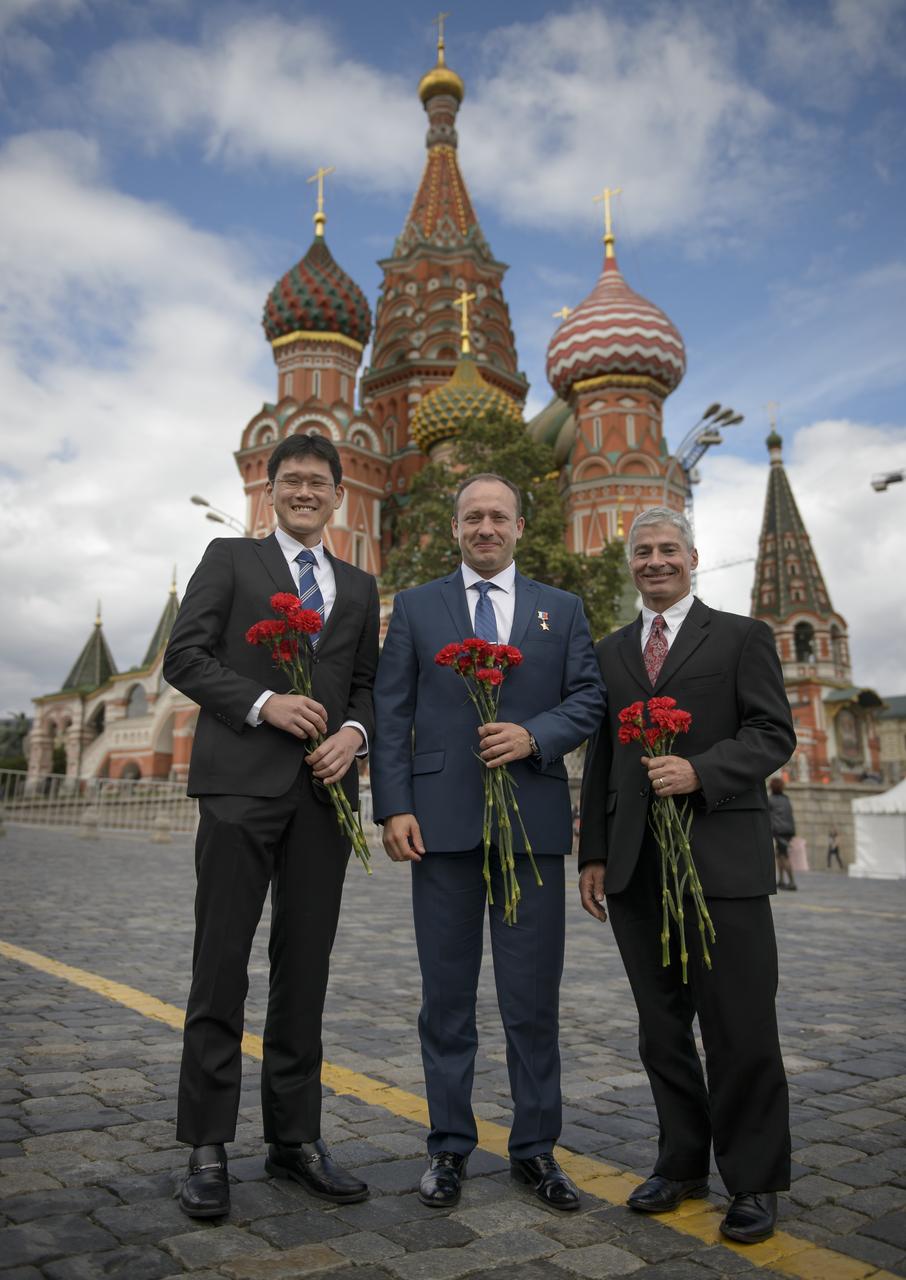
Expedition 52 backup crew members Norishige Kanai of the Japan Aerospace Exploration Agency (JAXA), left, Alexander Misurkin of Roscosmos, center, and Mark Vande Hei of NASA pose for a photograph in front of Saint Basil's Cathedral as they visited Red Square to lay roses at the site where Russian space icons are interred as part of traditional pre-launch ceremonies, Monday, July 10, 2017 in Moscow. Photo Credit: (NASA/Bill Ingalls)
Expedition 52 Red Square Visit
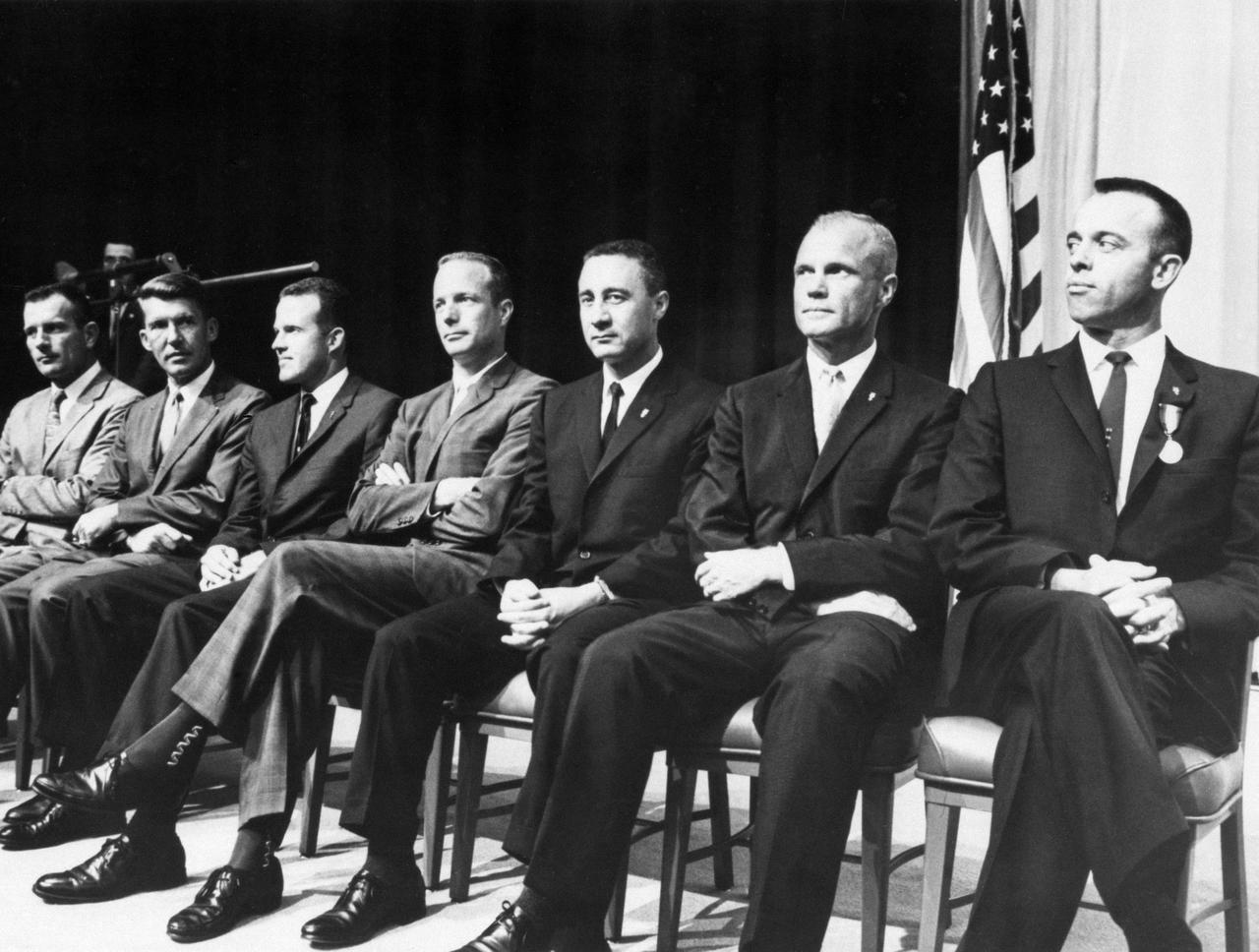
S61-02357 (8 May 1961) --- The original seven Mercury astronauts at the State Department Auditorium on May 8, 1961.  The astronauts are (left to right) Donald K. Slayton, Walter M. Schirra, Jr., L. Gordon Cooper, Jr., M. Scott Carpenter, Virgil I. Grissom, John H. Glenn, Jr. and Alan B. Shepard, Jr.  Earlier President John F. Kennedy had presented astronaut Shepard with the NASA Distinguished Service Medal (note it on his lapel) in the White House Rose Garden.
Mercury Seven at State Department
Expedition 50 NASA astronaut Peggy Whitson, left, Russian cosmonaut Oleg Novitskiy of Roscosmos, center, and ESA astronaut Thomas Pesquet visit Red Square to lay roses at the site where Russian space icons are interred as part of traditional pre-launch ceremonies, Wednesday, Oct. 26, 2016, in Moscow. Photo Credit: (NASA/Bill Ingalls)
Expedition 50 Red Square Visit
ASTANA, KAZAKHSTAN -  One of three local Kazakh girls who were on hand at the Astana airport to welcome the Expedition Six crew with roses after the crew landed on the Kazakh Steppe in their Soyuz capsule.  The Expedition Six crew spent 161 days in space, 159 manning the International Space Station.  Photo Credit: NASA/Bill Ingalls
KSC-03pd1529
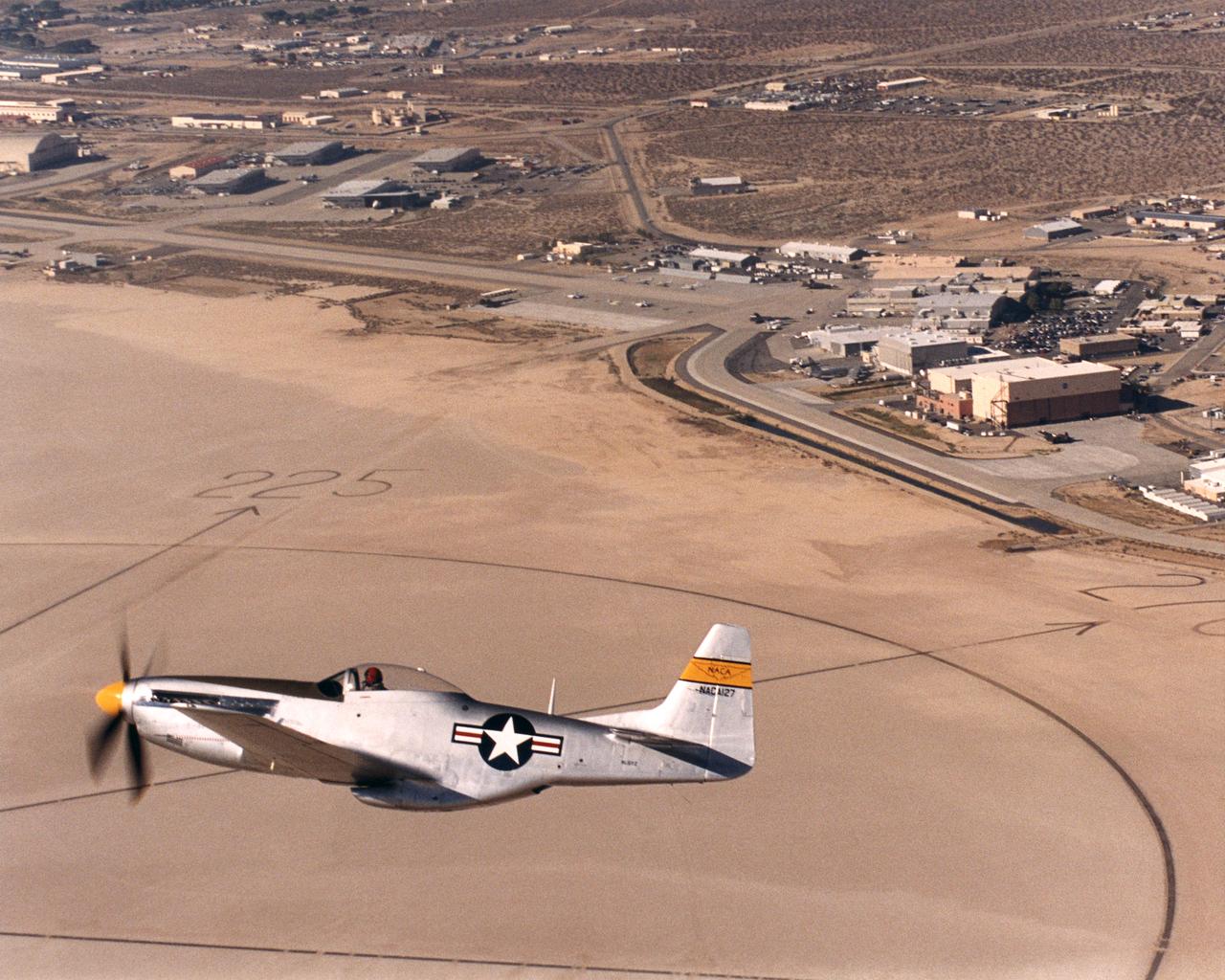
The huge compass rose on Rogers Dry Lake formed a backdrop for a genuine NACA (National Advisory Committee for Aeronautics) P-51D Mustang owned and flown by William C. Allmon during a visit to the NASA Dryden Flight Research Center in California's Mojave Desert Sept. 15, 2000 for a reunion of former NACA employees. The NACA was the forerunner of NASA.
A restored NACA P-51D Mustang in flight
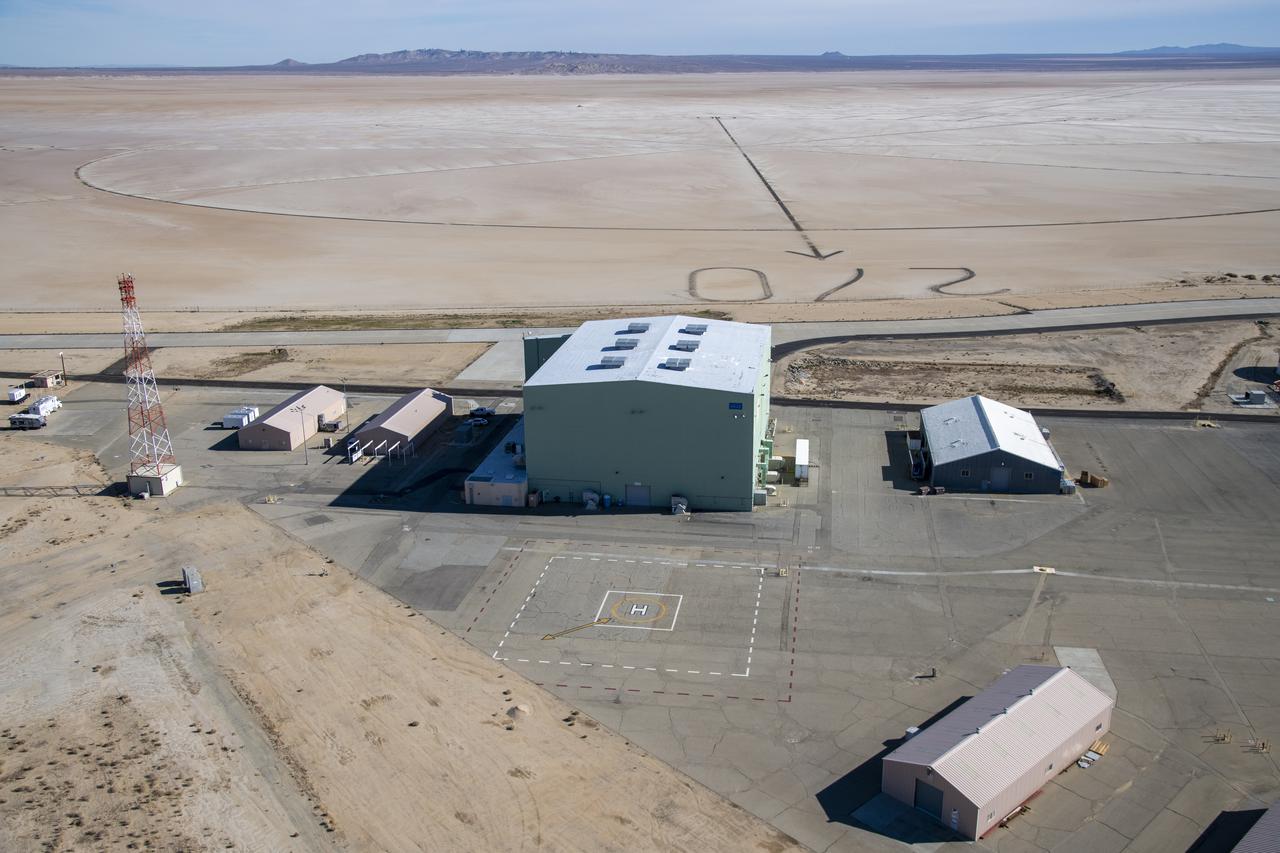
An aerial image taken by one of NASA's photographers during recent helicopter flights shows a view of the windward helipad and surrounding areas and structures that the Advanced Air Mobility National Campaign used during flight research at NASA's Armstrong Flight Research Center in Edwards, California. Part of the compass rose on the Edwards Air Force Base dry lakebed can also be seen.
National Campaign Work Area Aerial Images
A bright solar prominence rose up from the Sun and twisted around in about a six-hour period (Apr. 21, 2015). While some of the material broke away into space, much of it fell back into the Sun. The images were taken in a wavelength of extreme ultraviolet light. At its greatest height, the plume extended out many times the size of Earth, allowing numerous amateur astronomers to observe this event with their solar telescopes. Credit: Solar Dynamics Observatory, NASA.
Filament Burst [video]
Expedition 52 flight engineers Paolo Nespoli of ESA, left, Sergey Ryazanskiy of Roscosmos, center, and Randy Bresnik of NASA visit Red Square to lay roses at the site where Russian space icons are interred as part of traditional pre-launch ceremonies, Monday, July 10, 2017 in Moscow. Photo Credit: (NASA/Bill Ingalls)
Expedition 52 Red Square Visit
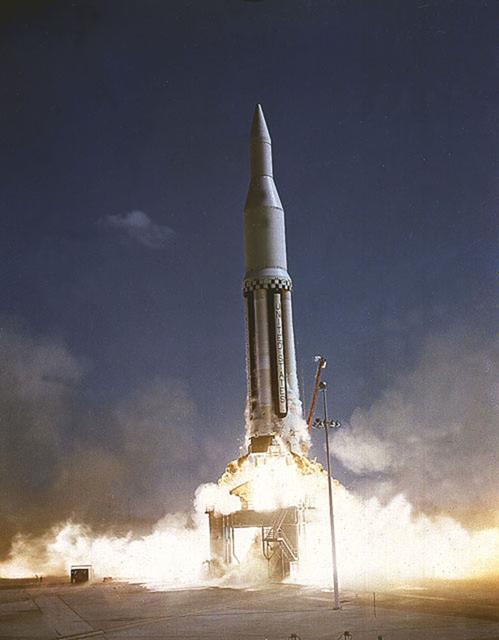
The second flight of the Saturn I vehicle, the SA-2, was successfully launched from Cape Canaveral, Florida on April 15, 1962. This vehicle had a secondary mission. After the first stage shutoff, at a 65-mile altitude, the water-filled upper stage was exploded, dumping 95 tons of water in the upper atmosphere. The resulting massive ice cloud rose to a height of 90 miles. The experiment, called Project Highwater, was intended to investigate the effects on the ionosphere of the sudden release of such a great volume of water.
Saturn Apollo Program
Internation Flavors and Fragrances Inc. proprietary research technology, Solid Phase Micro Extraction (SPME) utilizes a special fiber needle placed directly next to the bloom of the living flower to collect the fragrance molecules. SPME was used in the Space Flower experiment aboard STS-95 space shuttle mission, after which Dr. Braja Mookherjee (left) and Subha Patel of IFF will analyze the effects of gravity on the Overnight Scentsation rose plant.
Microgravity
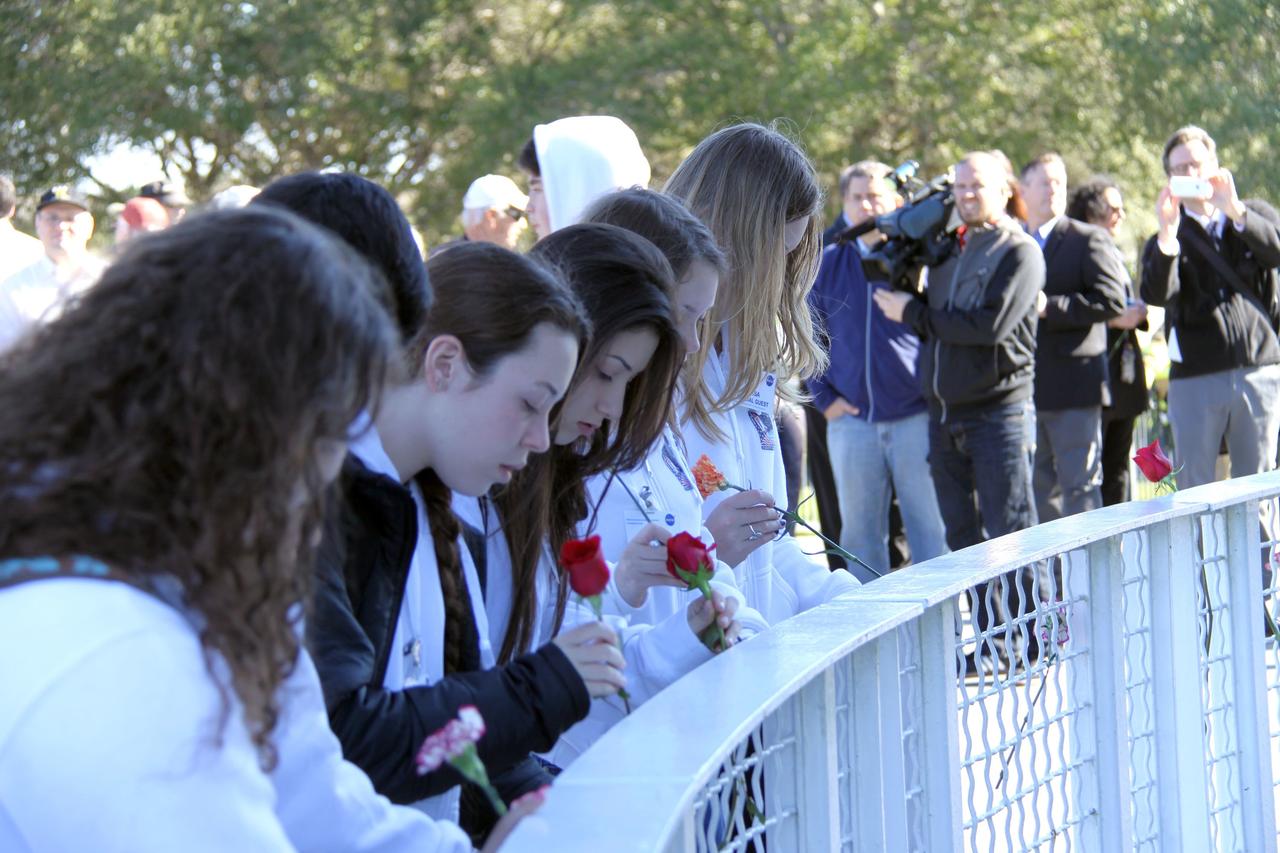
CAPE CANAVERAL, Fla. – NASA’s Kennedy Space Center in Florida paid tribute to the crews of Apollo 1 and space shuttles Challenger and Columbia, as well as other NASA astronauts who lost their lives while furthering the cause of exploration and discovery, during the agency's Day of Remembrance, Jan. 28.  Kennedy workers and guests left roses at the Space Mirror Memorial located in the Kennedy Space Center Visitor Complex. Photo credit: NASA/Jim Grossmann
KSC-2015-1208
KENNEDY SPACE CENTER, Fla. -- Spectators line the banks of the turn basin to watch the dawn launch of Space Shuttle Discovery on mission STS-102. The rosy sky pales in comparison to the deep rose of the orbiter’s exhaust trail that captures the rising sun’s rays. Liftoff occurred at 6:42:09 EST for the eighth flight to the International Space Station
KSC-01PP-0437
CAPE CANAVERAL, Fla. – NASA’s Kennedy Space Center in Florida paid tribute to the crews of Apollo 1 and space shuttles Challenger and Columbia, as well as other NASA astronauts who lost their lives while furthering the cause of exploration and discovery, during the agency's Day of Remembrance, Jan. 28.  Kennedy workers and guests attached roses and carnations to the fence during a wreath-laying ceremony at the Space Mirror Memorial located in the Kennedy Space Center Visitor Complex. Photo credit: NASA/Jim Grossmann
KSC-2015-1215
Expedition 52 flight engineers Paolo Nespoli of ESA, left, Randy Bresnik of NASA, Sergey Ryazanskiy of Roscosmos, and backup crew members, Alexander Misurkin of Roscosmos, Mark Vande Hei of NASA, and Norishige Kanai of the Japan Aerospace Exploration Agency (JAXA), right, pose for a group photograph in Red Square after having laid roses at the site where Russian space icons are interred as part of traditional pre-launch ceremonies, Monday, July 10, 2017 in Moscow. Photo Credit: (NASA/Bill Ingalls)
Expedition 52 Red Square Visit
Expedition 52 backup crew members Norishige Kanai of the Japan Aerospace Exploration Agency (JAXA), left, Alexander Misurkin of Roscosmos, center, and Mark Vande Hei of NASA lay roses at the site where Russian space icons are interred as part of traditional pre-launch ceremonies, Monday, July 10, 2017 in Moscow. Photo Credit: (NASA/Bill Ingalls)
Expedition 52 Red Square Visit
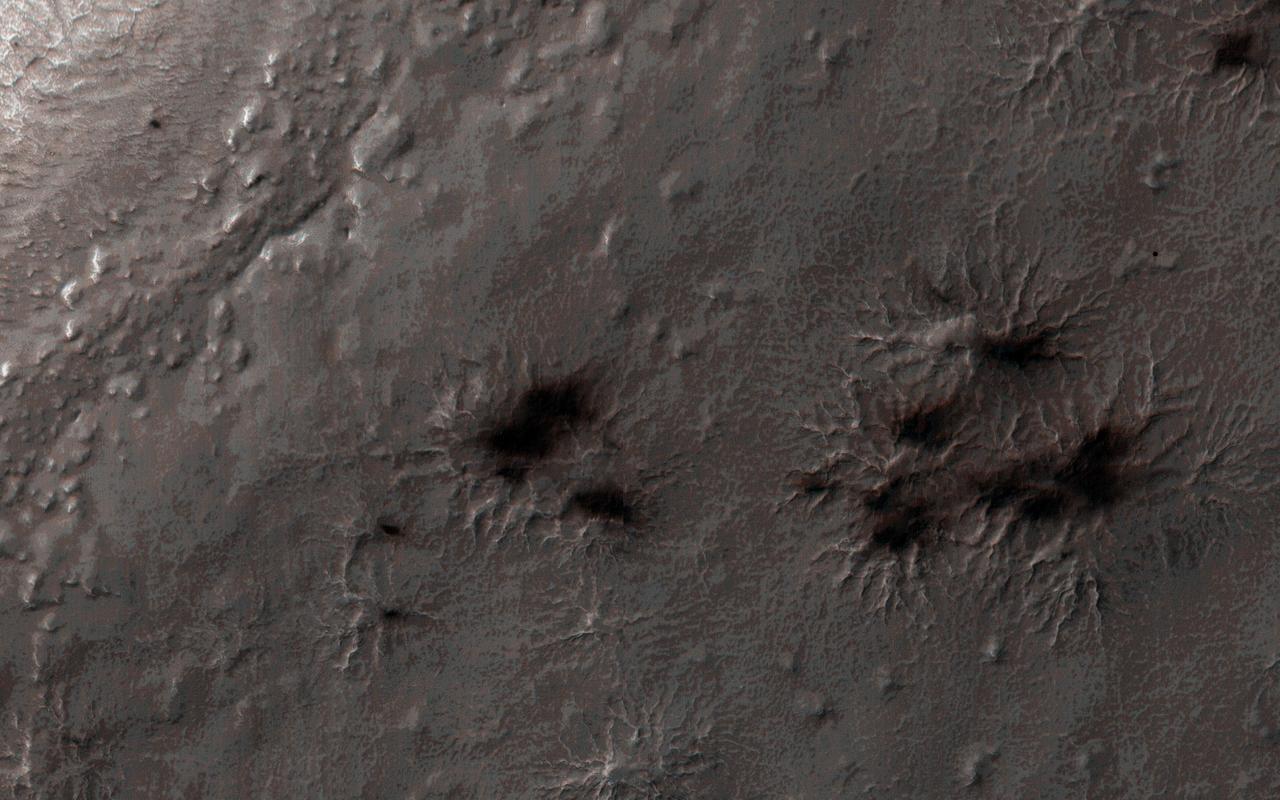
Every winter a layer of carbon dioxide ice-or, dry ice-condenses in the Southern polar region, forming a seasonal polar cap less than 1 meter deep. Early in the spring the ice layer begins to sublimate (going directly from a solid to gas) from the top and bottom of the ice layer. Under the ice gas pressure builds up until a weak spot in the ice layer ruptures. The gas rushes out and as it escapes it erodes a bit of the surface.  Fine particles are carried by the gas to the top of the ice and then fall out in fan-shaped deposits. The direction of the fan shows the direction either of the wind or down the slope. If the wind is not blowing a dark blotch settles around the spot the gas escaped.  This region is known informally as Inca City, and it has a series of distinctive ridges. On the floor between the ridges are radially organized channels, known colloquially as spiders, more formally called "araneiforms." The channels have been carved in the surface over many years by the escaping pressurized gas. Every spring they widen just a bit.  This was the first image to be acquired by NASA Mars Reconnaissance Orbiter after the sun rose on Inca City, marking the end to polar night. A few fans are visible emerging from the araneiforms.  http://photojournal.jpl.nasa.gov/catalog/PIA18892
Spring in Inca City I
The Maker Faire trailer is seen outside the rose garden during the first ever White House Maker Faire, which brings together students, entrepreneurs, and everyday citizens who are using new tools and techniques to launch new businesses, learn vital skills in science, technology, engineering, and math (STEM), and fuel the renaissance in American manufacturing, at the White House, Wednesday, June 18, 2014 in Washington. The President announced new steps the Administration and its partners are taking to support the ability of more Americans, young and old, to have to access to these tools and techniques and brings their ideas to life. Photo Credit: (NASA/Bill Ingalls)
White House Maker Faire
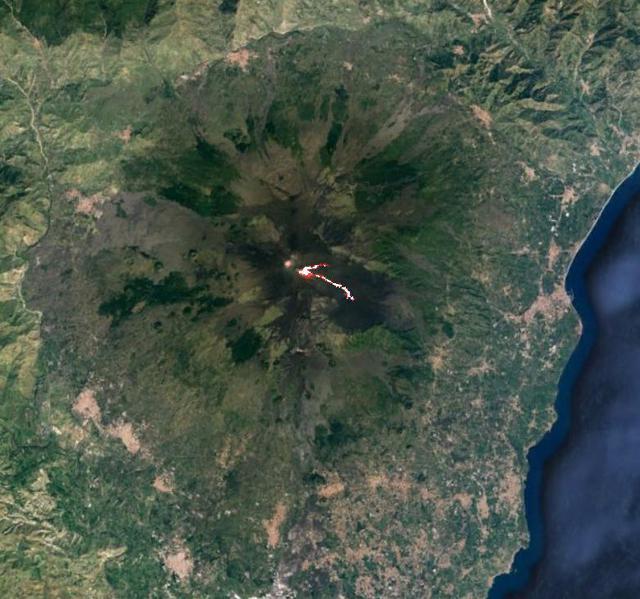
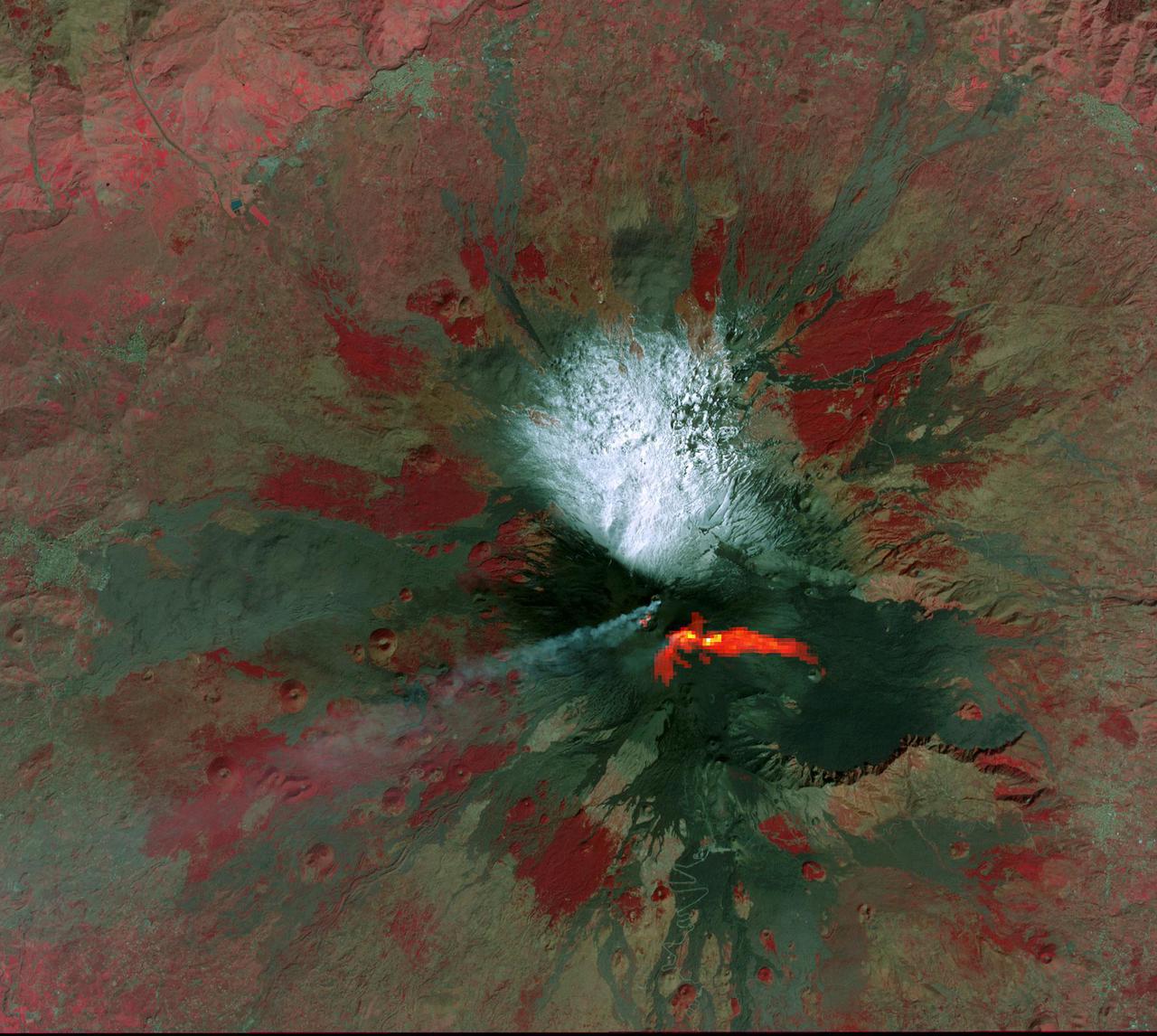
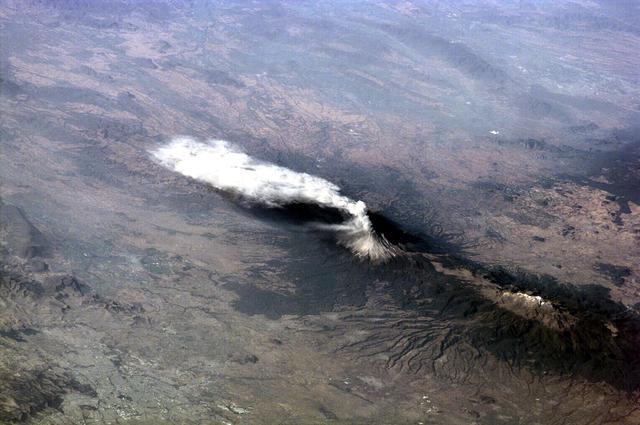
Mt. Etna, Italy erupted Tuesday, February 16, 2021, sending rivers of lava down the southeast flank of the volcano, and spewing ashes and volcanic stones over nearby villages. Sicily's Catania Airport was temporarily closed due to an ash plume that rose to 3700 m altitude. The ASTER nighttime thermal infrared data shows the extent of the active lava flows, draped over an older Google Earth image. The image was acquired February 17, 2021, covers an area of 38 by 39 km, and is located at 37.8 degrees north, 15 degrees east.  https://photojournal.jpl.nasa.gov/catalog/PIA24417
Mt. Etna February 2021
Mt. Etna, Italy erupted February 17, 2021, sending rivers of lave down the southeast flank of the volcano, and spewing ashes and volcanic stones over nearby villages. Sicily's Catania Airport was temporarily closed due to an ash plume that rose to 3700 m altitude. By the following week, the eruption had waned. The ASTER visible image shows the extent of the active lava flows (derived from the thermal infrared data). The image was acquired February 26, 2021, covers an area of 25.5 by 27.0 km, and is located at 37.8 degrees north, 15 degrees east.  https://photojournal.jpl.nasa.gov/catalog/PIA24418
Mt. Etna--February 26, 2021
Sangay Volcano, Ecuador, erupted in early June, sending lava flows and pyroclastic flows down its southeastern flank. A large ash plume rose above 7 km, and was blown westward by the prevailing winds. Ashfall was reported in several cities downwind. The nighttime thermal infrared image acquired by ASTER on June 11 shows the flows in white, and the large ash plume in dark red-brown, indicating its composition is dominated by ash particles. The image covers an area of 24.5 by 46.8 km, and is located at 2 degrees south, 78.4 degrees west.  https://photojournal.jpl.nasa.gov/catalog/PIA23914
Sangay Volcano, Ecuador
Two solar prominences, directly at opposite sides of the Sun, rose up, twisted around, and fell apart at roughly the same time over a 26-hour period (Nov. 12-13, 2018). Prominences are cooler clouds of plasma suspended above the Sun by powerful magnetic forces. Although prominences are fairly common, it is uncommon to see two of them, about the same size, diametrically opposed to each other and lasting just about the same time. The images were taken in a wavelength of extreme ultraviolet light.  Movie available at https://photojournal.jpl.nasa.gov/catalog/PIA18143
Opposing Solar Prominences
Launch pads and towers rose one by one above the scrub land, dotting the shoreline of Florida's East coast. By 1960, the "Missile Firing Laboratory" had become an extension of NASA's Marshall Space Flight Center. On July 1, 1962, NASA officially activated the Launch Operations Center at the seaside spaceport, granting the center equal status to Marshall and offering the center's new director, Dr. Kurt H. Debus, a direct report to the agency's headquarters in Washington, D.C. The following year the center was renamed to honor the president who put America on the path to the moon.
50th Anniversary Logo
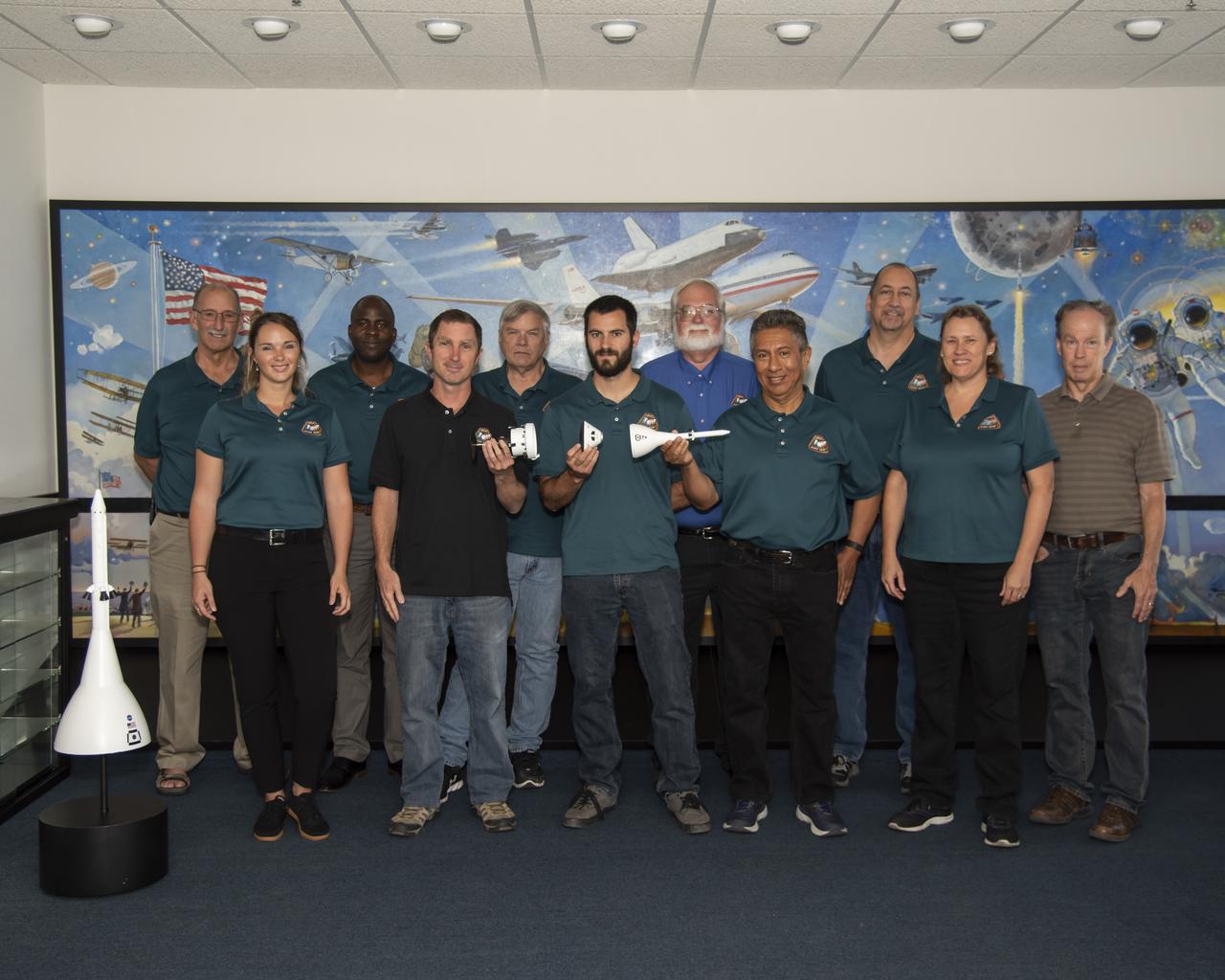
Members of the NASA Armstrong Flight Research Center Ascent Abort-2 management and engineering team contributed to the AA-2 launch at Cape Canaveral in Florida July 2, 2019. From left are Gary Martin, Rose Blomquist, Ernest Mwajagu, Lucas Moxey, Leo Gross, Jeff Sutherland, Chuck Rogers, Joe Hernandez, David Dowdell, Jeri Myers and Dan Nolan. Additional engineering team members include Paul Aristo, Bob Clark and Nikki Martin. Team members hold elements of the stack that was launched to show how the separation ring, crew module and Launch Abort System fit together.
NASA Armstrong Team Assisted with AA-2 Launch
Burt Summerfield, associate director, management, at NASA’s Kennedy Space Center in Florida, and Kathie Scobee Fugham, chairman of the Astronauts Memorial Foundation and daughter of Commander Francis “Dick” Scobee, honor astronauts and astronaut candidates who lost their lives while furthering the cause of exploration and discovery during the annual Day of Remembrance ceremony on Thursday, Jan. 25, 2024, held at the Space Mirror Memorial at NASA’s Kennedy Space Center Visitor Complex in Florida. Family members of fallen astronauts hold roses remembering their loved ones, while guests hold carnations to pay their respects.
A Day of Remembrance 2024
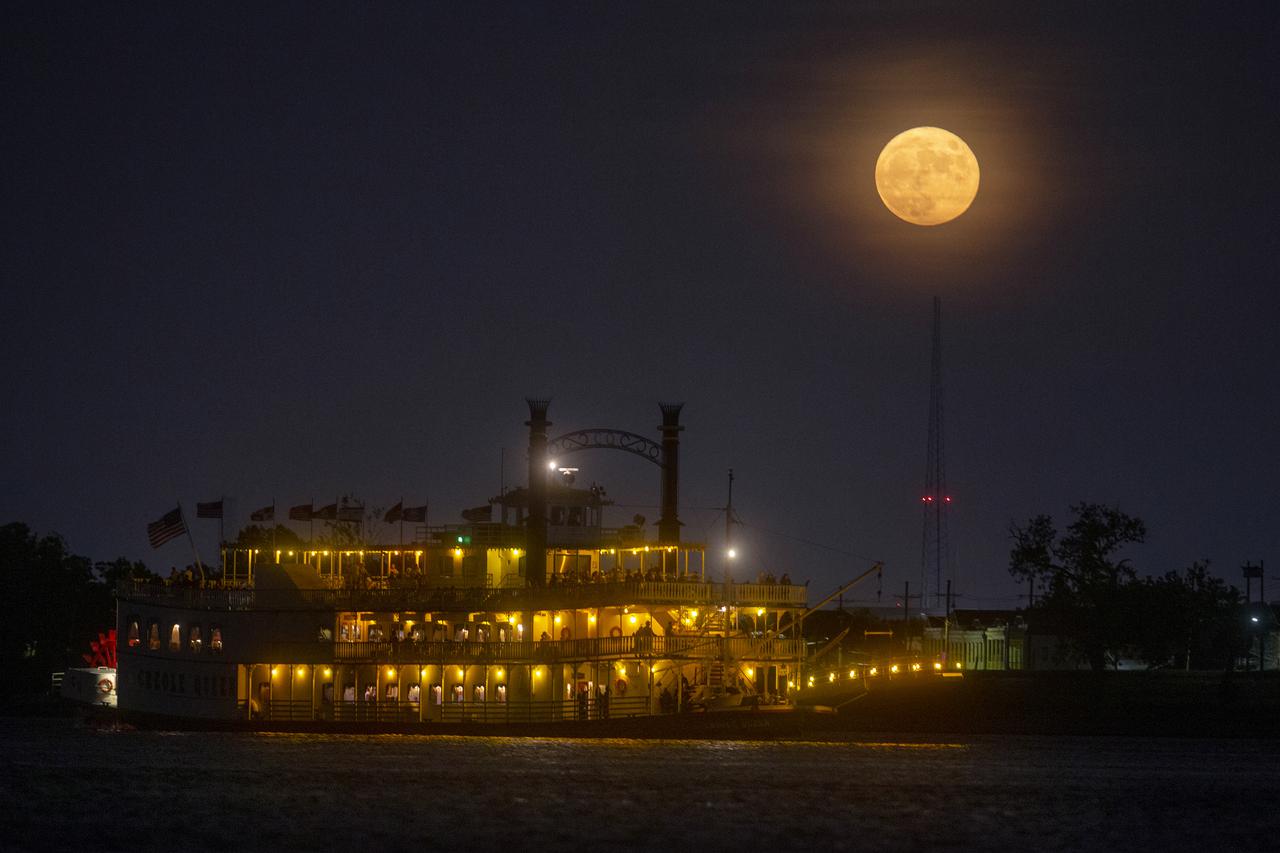
A paddlewheeler makes its way up the Mississippi River as the moon rises over New Orleans on Sunday evening, August 22, 2021. The August Sturgeon Moon, which was also a rare Blue Moon, was full at 7:02 A.M. local time Sunday but the nearly full moon still put on a show when it rose over New Orleans later that evening. New Orleans is home to the NASA Michoud Assembly Facility where the core stage of the Space Launch System that will return people to the moon is being built. Image credit: NASA/Michael DeMocker
Moon rises over New Orleans
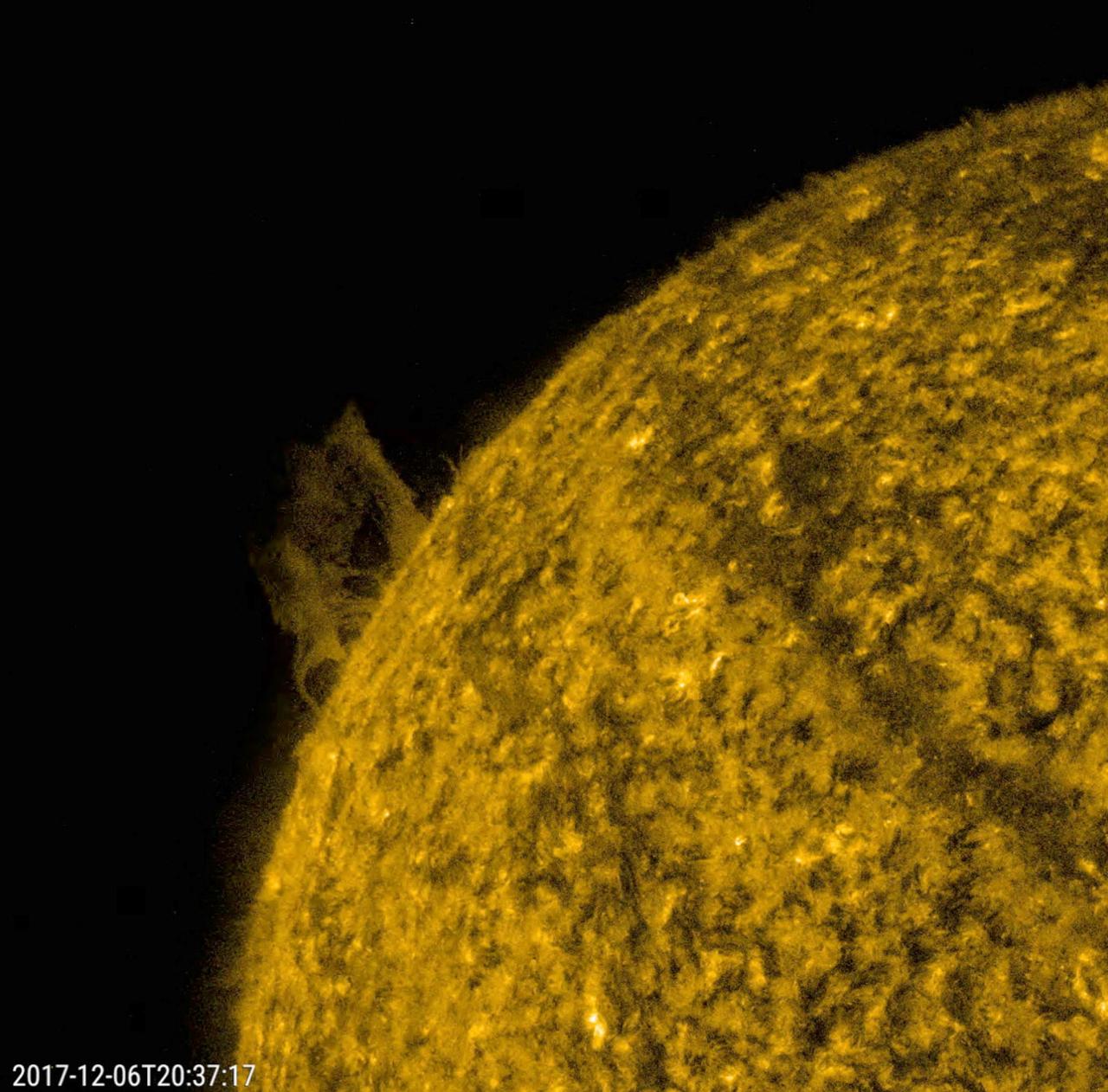
A small prominence slowly rose further up above the sun, then fell apart and back into the sun over about seven hours (Dec. 6, 2017). Prominences, notoriously unstable, are cooler clouds of particles tethered not far above the sun by magnetic forces. When it stretched out, its distance above the sun was several times the size of Earth. Images were taken in a wavelength of extreme ultraviolet light. These images are colorized since we cannot "see" ultraviolet light. In this case, a yellow tone was used instead of the normal red tint we use for this 304 Angstrom wavelength.   Movies are available at https://photojournal.jpl.nasa.gov/catalog/PIA22195
Prominence Falls Apart
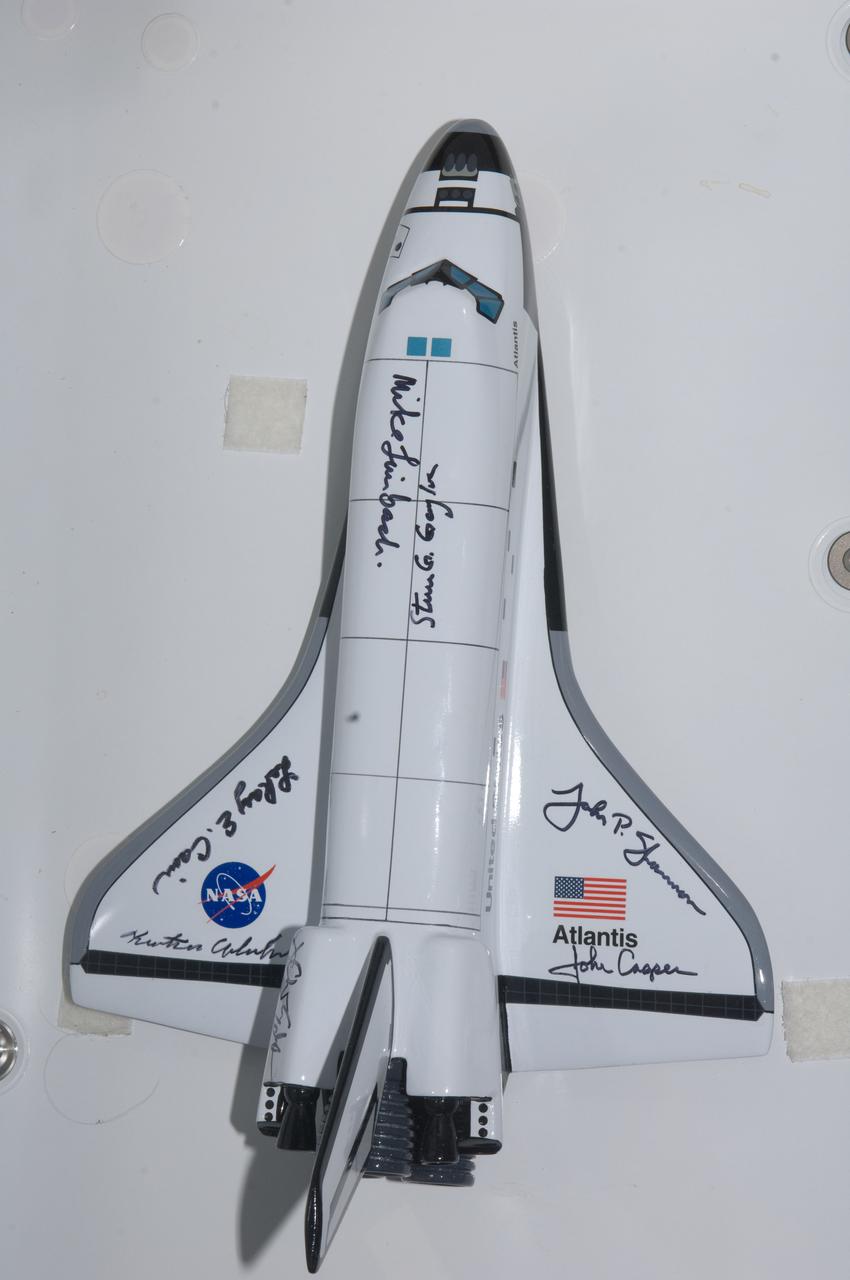
ISS028-E-017459 (18 July 2011) --- This small shuttle model, seen in a close-up view on the wall of the International Space Station's Node 2 or Harmony, was presented by NASA astronaut Chris Ferguson, STS-135 commander, to the  station by way of its current crew, the Expedition 28 astronauts and cosmonauts. The model had been signed by program officials and the mission’s lead shuttle and station flight directors. “What you don’t see is the signatures of the tens of thousands who rose to orbit with us over the past 30 years, if only in spirit,” Ferguson said.
Shuttle Model mounted near Node 2 Forward Hatch
KENNEDY SPACE CENTER, FLA. - A wreath and other floral arrangements rest beneath the Astronaut Memorial Mirror at the KSC Visitor Complex following a memorial service held for the crew of Columbia on the anniversary of the tragic accident that took their lives Feb. 1, 2003.  In the foreground are a portion of the roses and carnations left by visitors who attended the memorial.  The service included comments by Center Director Jim Kennedy, Deputy Director Woodrow Whitlow Jr., Executive Director of Florida Space Authority Winston Scott, and Dr. Stephen Feldman, president of the Astronaut Memorial Foundation, who placed the wreath at the mirror.  The black granite mirror honors astronauts, whose names are carved in the surface, who have given their lives for space exploration.
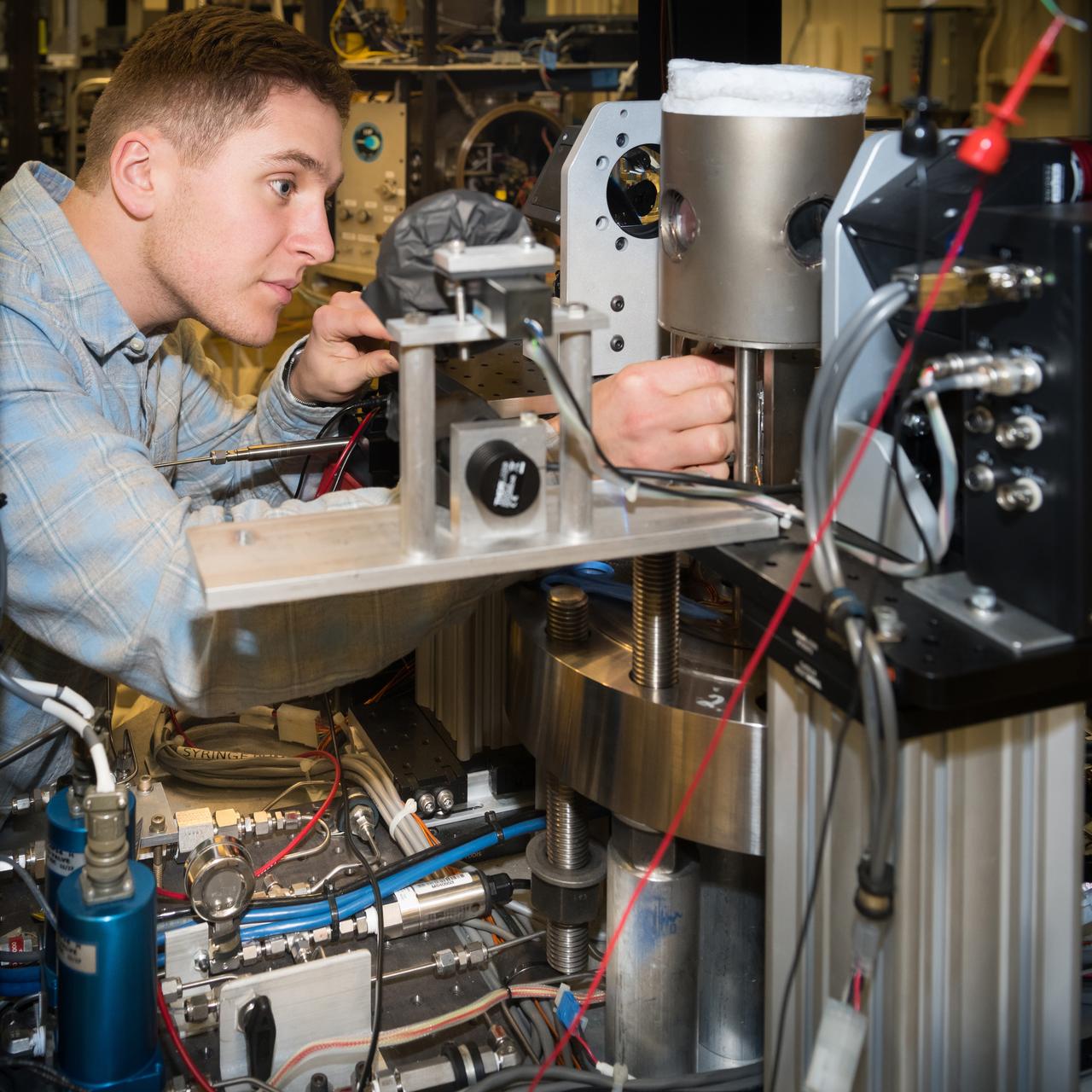
High Pressure Microgravity Combustion Experiment, HPMC,  subjects liquid fuel droplets to high pressures and temperatures to study the ignition process in engine conditions, with a goal of improving fuel efficiency. In this configuration, the experiment is capable of testing droplet combustion at up to 100 atm of pressure, testing the droplet deployment system, which inserts the fuel droplet into the experiment.
High Pressure Microgravity Combustion, HPMC
ALL Singularity University Students, Founding Members, Faculty/TP Leads, TF and Staff; Founders, Peter Diamandis, Ray Kurzweil, Salim, Bruce/Susan Faculty, Bob Richards, Dan Barry, Rob Freitas, Andrew Hessel, Jim Hurd, Neil Jacobstein, Raymond McCauley, Michael McCullough, Ralph Merkle, David Orban, David S. Rose, Chris Lewicki, David Dell,Robert A Freitas, Jr,.Staff, Tasha McCauley, Manuel Zaera-Sanz, David Ayotte, Jose Cordeiro, Sarah Russell,  Candi Sterling, Marco Chacin, Ola Abraham, Jonathan Badal, Eric Dahlstrom, Susan Fonseca-Klein, Emeline Paat-Dahlstrom, Keith Powers, Bruce Klein, Tracy Nguyen, Kelly Lewis, Ken Hurst, Paul Sieveke, Kathryn Myronuk, Andy Barry. Associate Faculty, Adriana Cardenas
ARC-2010-ACD10-0120-005
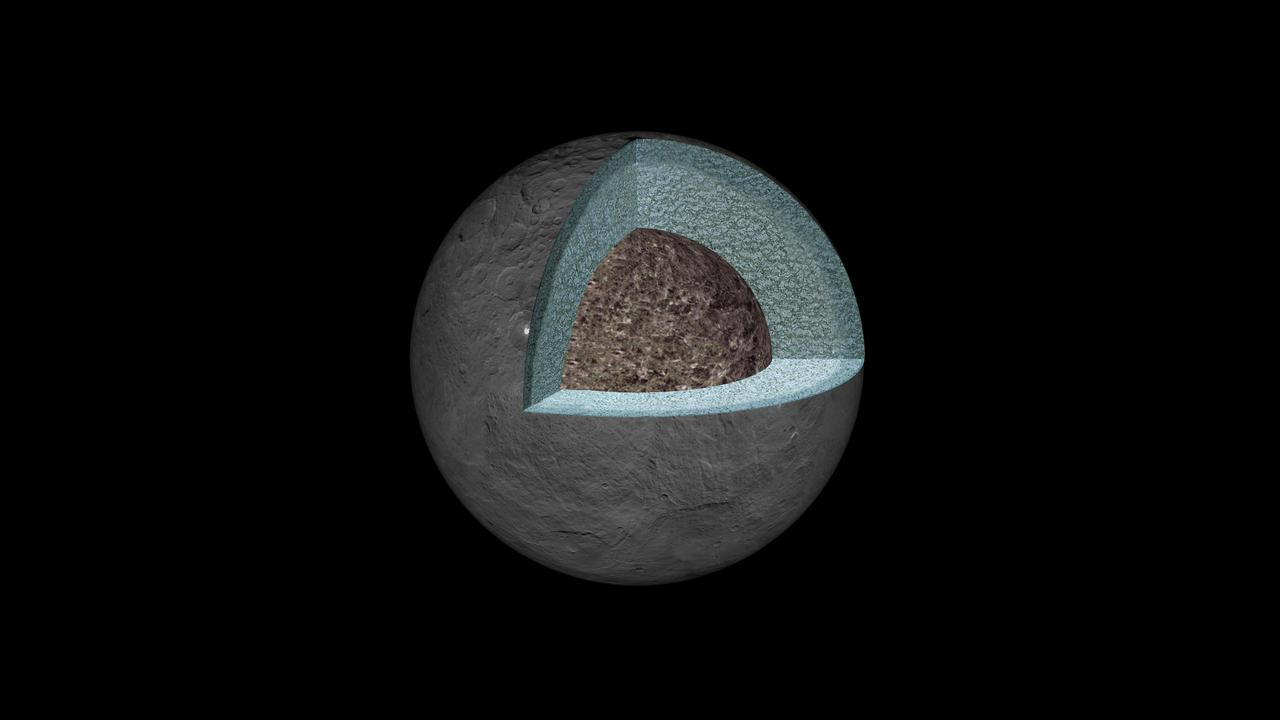
This artist's concept shows a diagram of how the inside of Ceres could be structured, based on data about the dwarf planet's gravity field from NASA's Dawn mission.  Using information about Ceres' gravity and topography, scientists found that Ceres is "differentiated," which means that it has compositionally distinct layers at different depths. The densest layer is at the core, which scientists suspect is made of hydrated silicates. Above that is a volatile-rich shell, topped with a crust of mixed materials.  This research teaches scientists about what internal processes could have occurred during the early history of Ceres. It appears that, during a heating phase early in the history of Ceres, water and other light materials partially separated from rock. These light materials and water then rose to the outer layer of Ceres.  http://photojournal.jpl.nasa.gov/catalog/PIA20867
Interior Structure of Ceres Artist Concept
CAPE CANAVERAL, Fla. -- Roses decorate the fence surrounding the Space Mirror Memorial at the Kennedy Space Center Visitor Complex in Florida during Kennedy Space Center’s NASA Day of Remembrance. A large wreath was placed at the memorial by Kennedy Center Director Robert Cabana, Deputy Director Janet Petro, and United Space Alliance’s Vice President for Aerospace Services/Florida Site Director Mark Nappi.     The Day of Remembrance honors members of the NASA family who lost their lives while furthering the cause of exploration and discovery, including the astronaut crews of Apollo 1 and space shuttles Challenger and Columbia. Kennedy civil service and contractor employees, along with the general public, paid their respects throughout the day. The visitor complex provided flowers for visitors to place at the memorial. Photo credit: NASA/Kim Shiflett
KSC-2012-1126
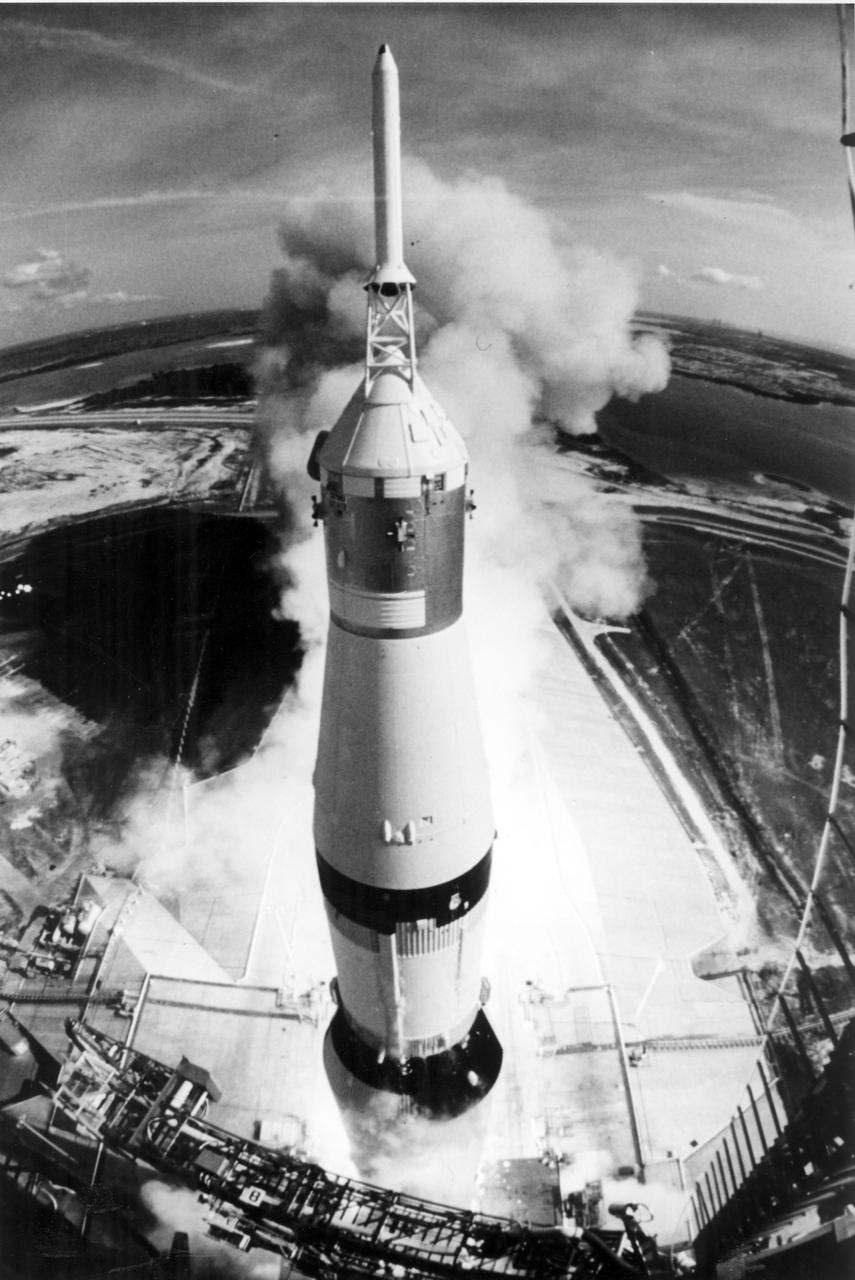
The Apollo 11 mission, the first lunar landing mission, launched from the Kennedy Space Center, Florida via the Marshall Space Flight Center (MSFC) developed Saturn V launch vehicle on July 16, 1969 and safely returned to Earth on July 24, 1969. The Saturn V vehicle produced a holocaust of flames as it rose from its pad at Launch complex 39. The 363 foot tall, 6,400,000 pound rocket hurled the spacecraft into Earth parking orbit and then placed it on the trajectory to the moon for man’s first lunar landing. This high angle view of the launch was provided by a ‘fisheye’ camera mounted on the launch tower. Aboard the space craft were astronauts Neil A. Armstrong, commander; Michael Collins, Command Module pilot; and Edwin E. Aldrin Jr., Lunar Module pilot. With the success of Apollo 11, the national objective to land men on the Moon and return them safely to Earth had been accomplished.
Saturn Apollo Program
KENNEDY SPACE CENTER, FLA. -- Just after sunrise, the Delta II rocket carrying NASA's Dawn spacecraft rose from its launch pad to begin its 1.7-billion-mile journey through the inner solar system to study a pair of asteroids.  Liftoff was at 7:34 a.m. EDT from Pad 17-B at Cape Canaveral Air Force Station.  Dawn is the ninth mission in NASA's Discovery Program. The spacecraft will be the first to orbit two planetary bodies, asteroid Vesta and dwarf planet Ceres,  during a single mission. Vesta and Ceres lie in the asteroid belt between Mars and Jupiter. It is also NASA's first purely scientific mission powered by three solar electric ion propulsion engines. Photo credit: NASA/Tony Gray & Robert Murray
KSC-07pd2587
The Apollo 11 mission, the first manned lunar mission, launched from the Kennedy Space Center, Florida via the Marshall Space Flight Center (MSFC) developed Saturn V launch vehicle on July 16, 1969 and safely returned to Earth on July 24, 1969. The Saturn V vehicle produced a holocaust of flames as it rose from its pad at Launch complex 39. The 363 foot tall, 6,400,000 pound rocket hurled the spacecraft into Earth parking orbit and then placed it on the trajectory to the moon for man’s first lunar landing. Aboard the space craft were astronauts Neil A. Armstrong, commander; Michael Collins, Command Module pilot; and Edwin E. Aldrin Jr., Lunar Module pilot.  With the success of Apollo 11, the national objective to land men on the Moon and return them safely to Earth had been accomplished.
Saturn Apollo Program
Singularity University Founding Members,Faculty/TP Leads, TF's, GSP10 Directors Founders, Peter Diamandis, Ray Kurzweil. Faculty, Bob Richards, Dan Barry, Rob Freitas, Andrew Hessel, Jim Hurd, Neil Jacobstein, Raymond McCauley, Michael McCullough, Ralph Merkle, David Orban, David S. Rose, Chris Lewicki, David Dell,Robert A Freitas, Jr,. Staff, Tasha McCauley, Manuel Zaera-Sanz, David Ayotte, Jose Cordeiro, Sarah Russell,  Candi Sterling, Marco Chacin, Ola Abraham, Jonathan Badal, Eric Dahlstrom, Susan Fonseca-Klein, Emeline Paat-Dahlstrom, Keith Powers, Bruce Klein, Tracy Nguyen, Kelly Lewis, Ken Hurst, Paul Sieveke, Kathryn Myronuk, Andy Barry.  Associate Faculty, Adriana Cardenas
ARC-2010-ACD10-0120-007
The Apollo 11 mission, the first manned lunar mission, launched from the Kennedy Space Center, Florida via the Saturn V launch vehicle on July 16, 1969 and safely returned to Earth on July 24, 1969. The Saturn V vehicle produced a holocaust of flames as it rose from its pad at Launch complex 39. The 363 foot tall, 6,400,000 pound rocket hurled the spacecraft into Earth parking orbit and then placed it on the trajectory to the moon for man’s first lunar landing. The Saturn V was developed by the Marshall Space Flight Center (MSFC) under the direction of Dr. Wernher von Braun. Aboard the spacecraft were astronauts Neil A. Armstrong, commander; Michael Collins, Command Module pilot; and Edwin E. Aldrin Jr., Lunar Module pilot. With the success of Apollo 11, the national objective to land men on the Moon and return them safely to Earth had been accomplished.

Saturn Apollo Program