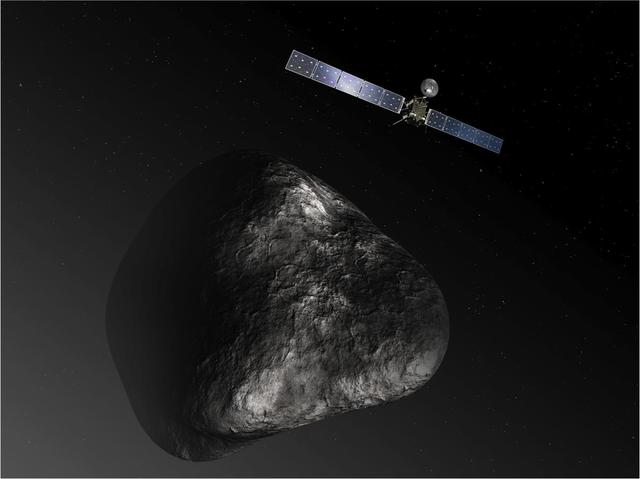
Artist impression of the Rosetta orbiter at comet 67P/Churyumova-Gerasimenko. The image is not to scale.
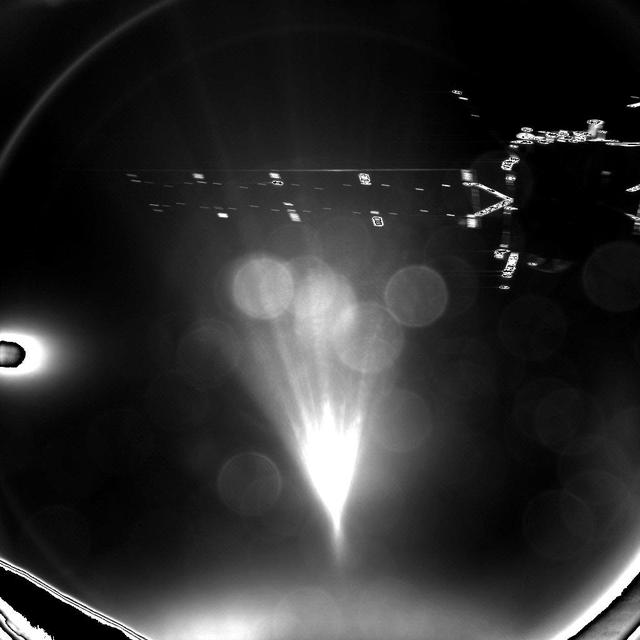
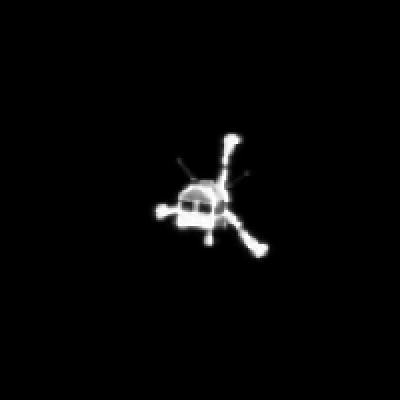
The Philae lander of the European Space Agency Rosetta mission took this parting shot of its mother ship, Rosetta, shortly after separation on Nov. 12, 2014. The image was taken with the lander CIVA-P imaging system.

Three of NASA contributions to the ESA Rosetta mission are pictured here: an ultraviolet spectrometer called Alice top, the Ion and Electron Sensor IES bottom left, and the Microwave Instrument for Rosetta Orbiter MIRO bottom right.
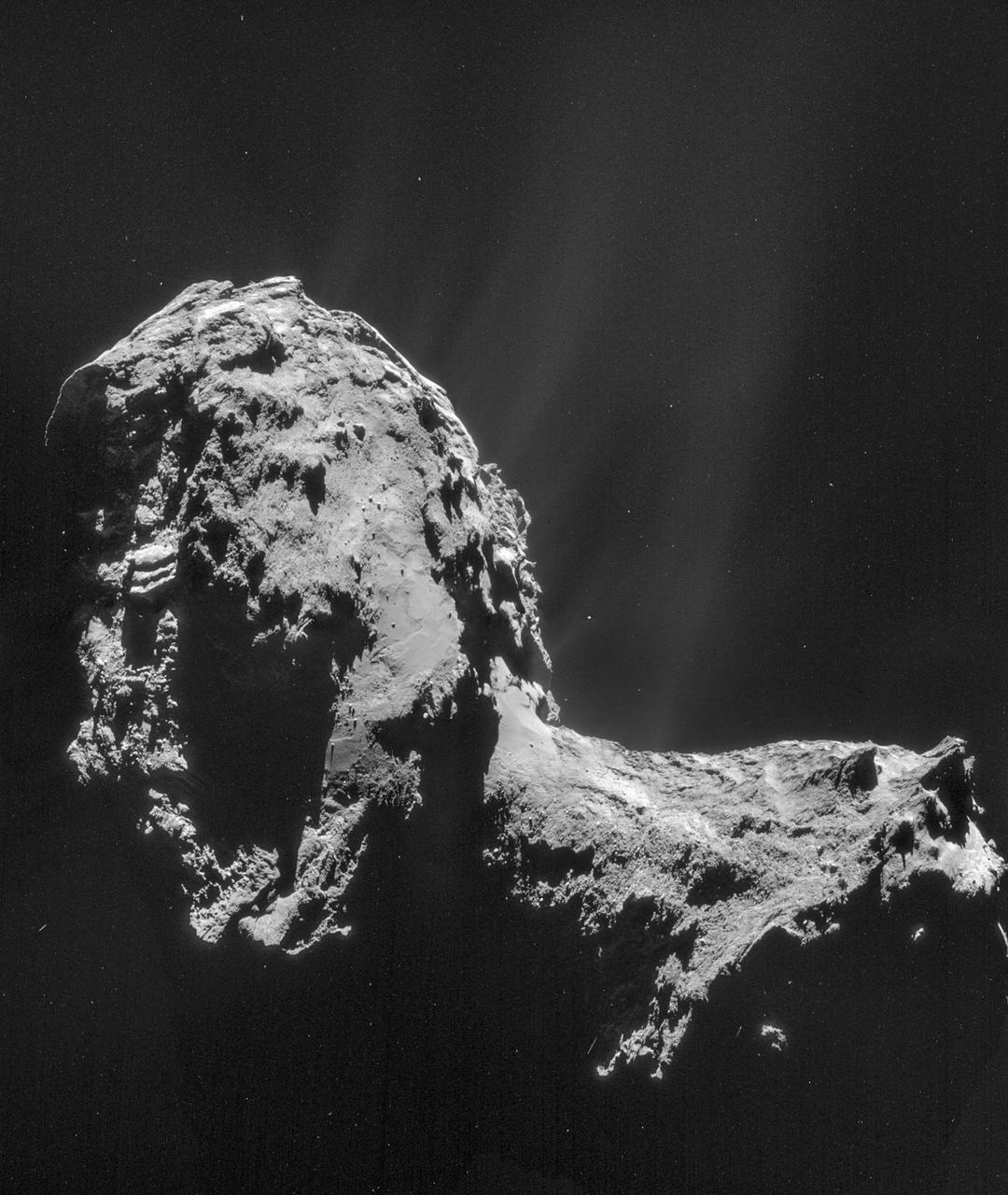
This composite is a mosaic comprising four individual Rosetta NAVCAM images taken from 19 miles 31 kilometers from the center of comet 67P/Churyumov-Gerasimenko on Nov. 20, 2014.
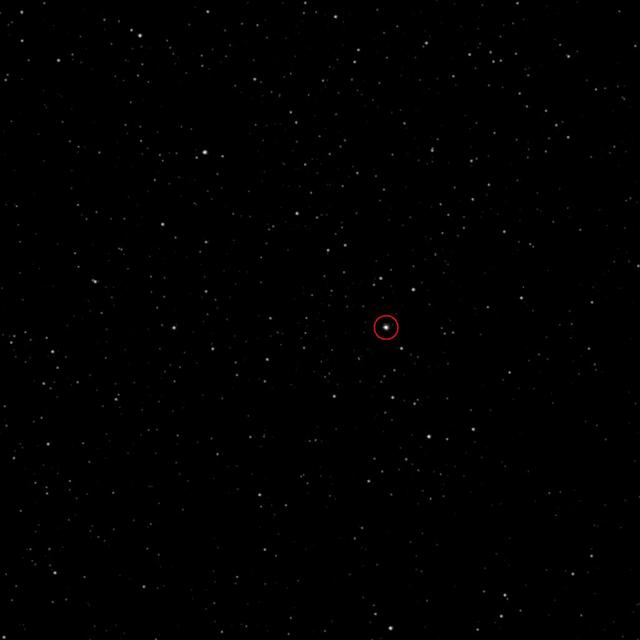
This image of comet 67P/Churyumov-Gerasimenko was taken by the Onboard Scientific Imaging System OSIRIS on the European Space Agency Rosetta spacecraft on June 4, 2014.
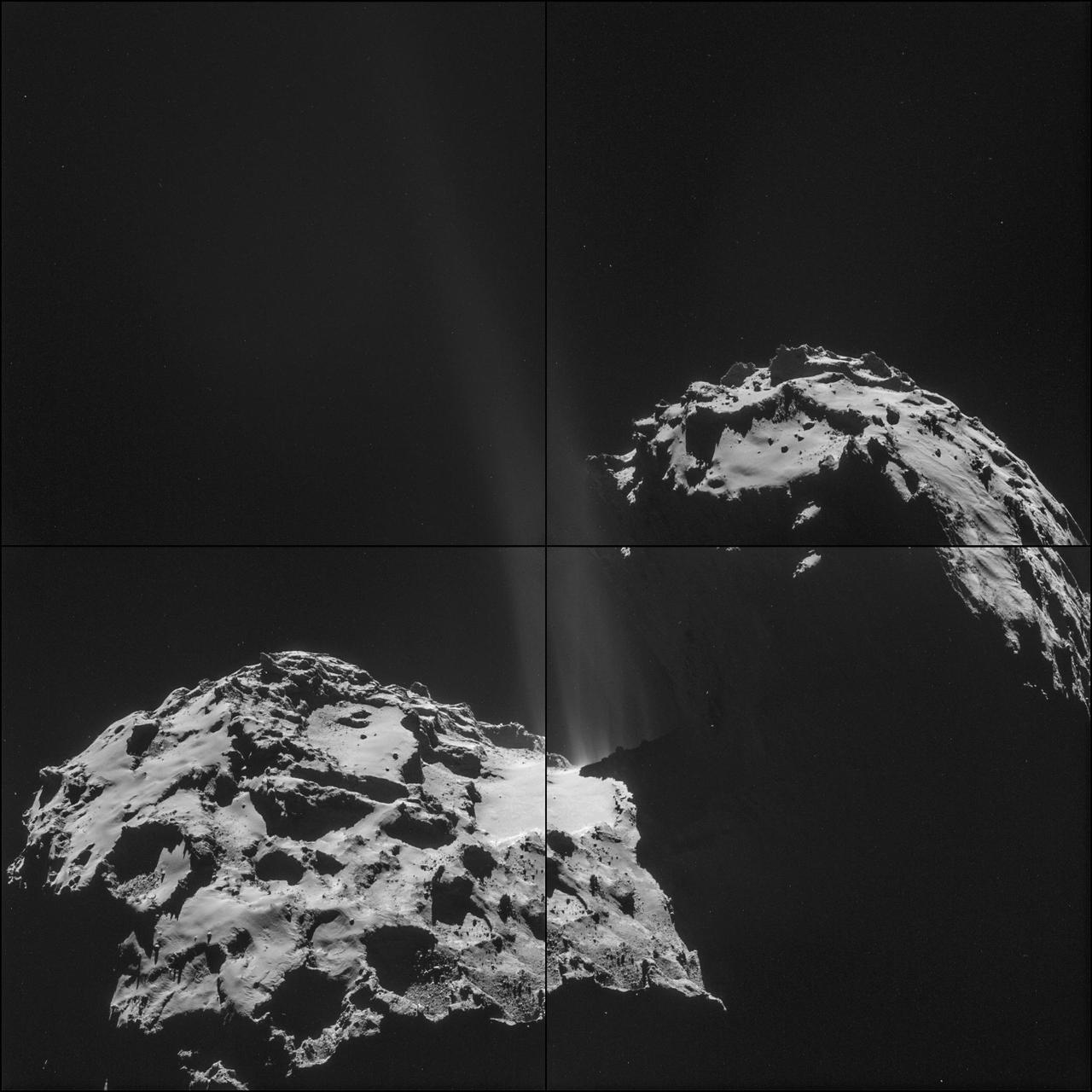
Four images taken by the ESA Rosetta spacecraft create a montage showing jets of dust and gas escaping from the nucleus of comet 67P/Churyumov–Gerasimenko.
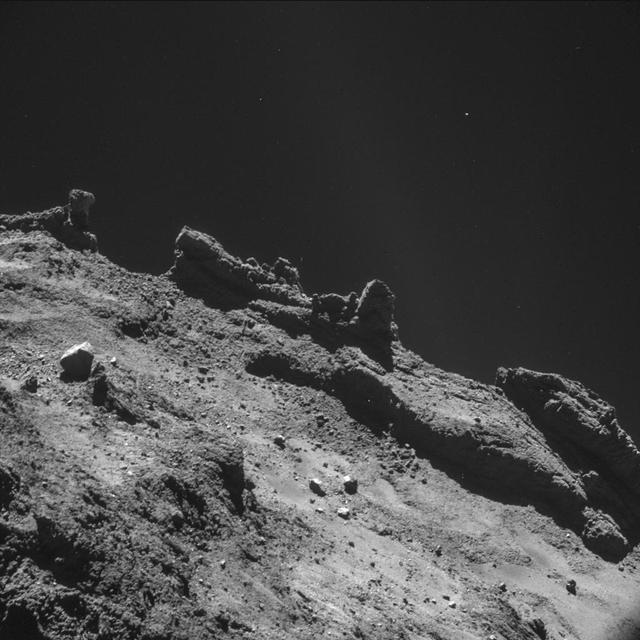
A jagged horizon of the nucleus of comet 67P/Churyumov-Gerasimenko appears in this image taken by the navigation camera on the ESA Rosetta spacecraft during the second half of October 2014.
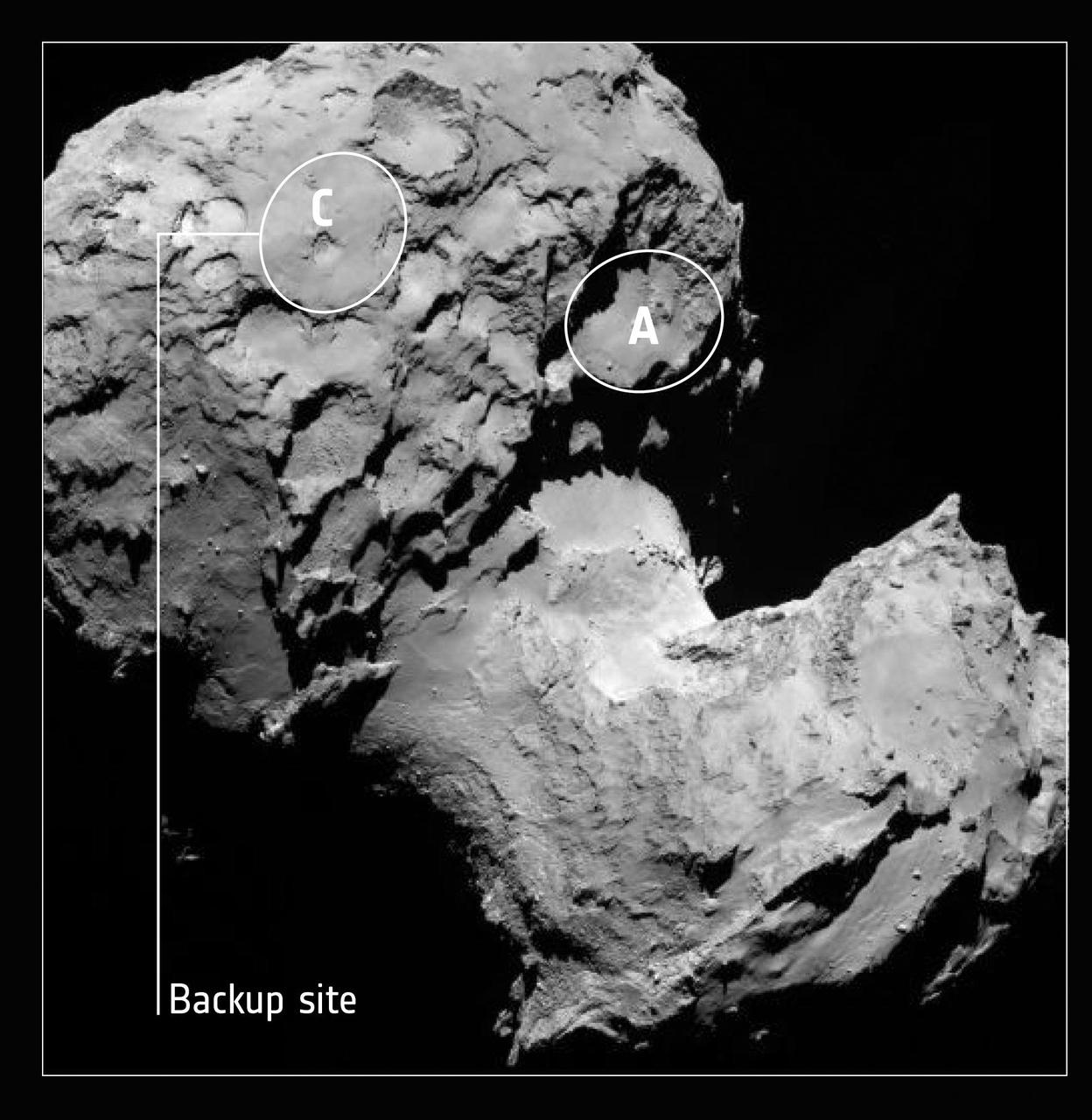
This annotated image depicts the backup landing site Site C chosen for ESA Rosetta spacecraft Philae lander.
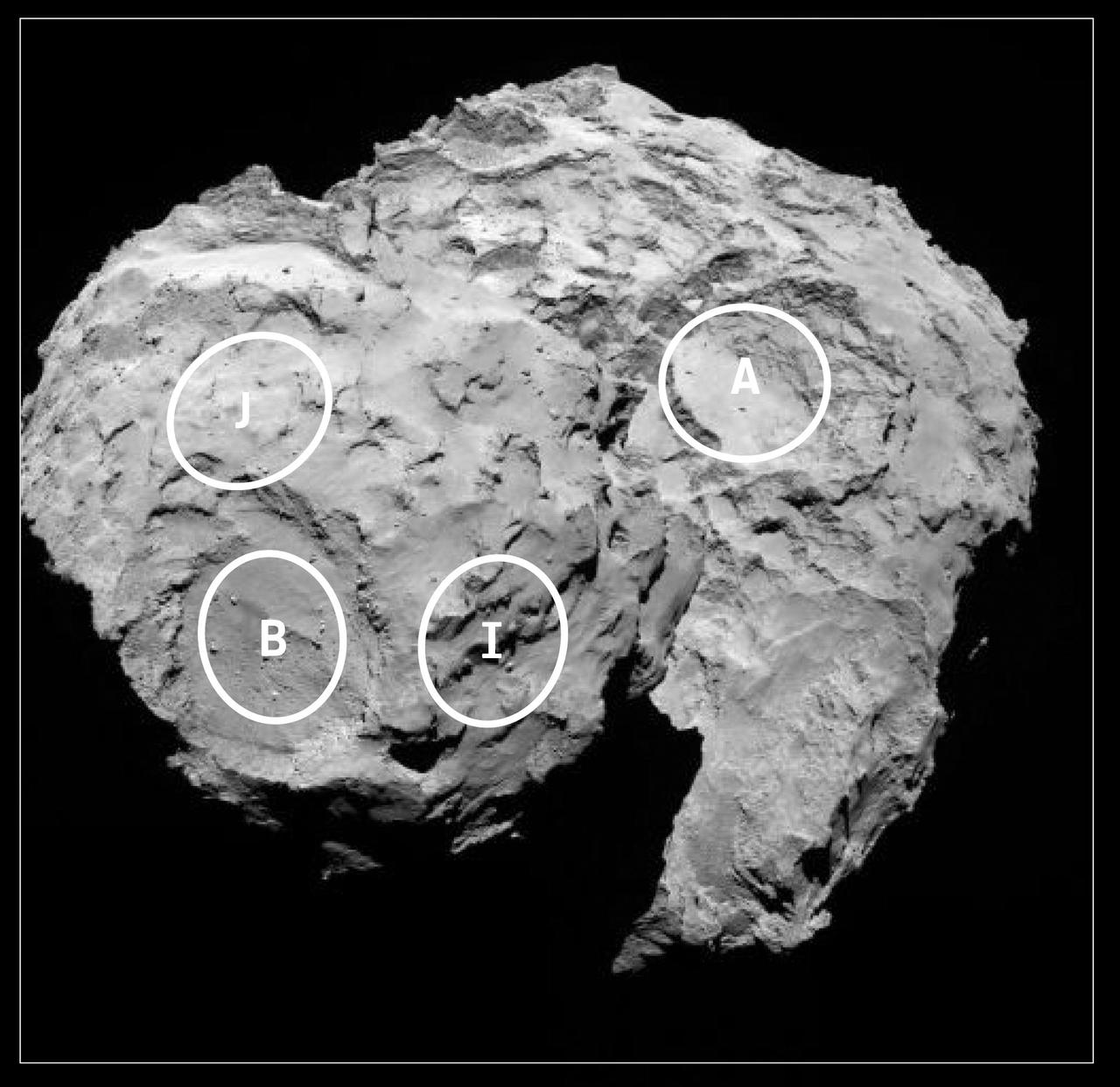
This annotated image depicts four of the five potential landing sites for ESA Rosetta mission Philae lander.
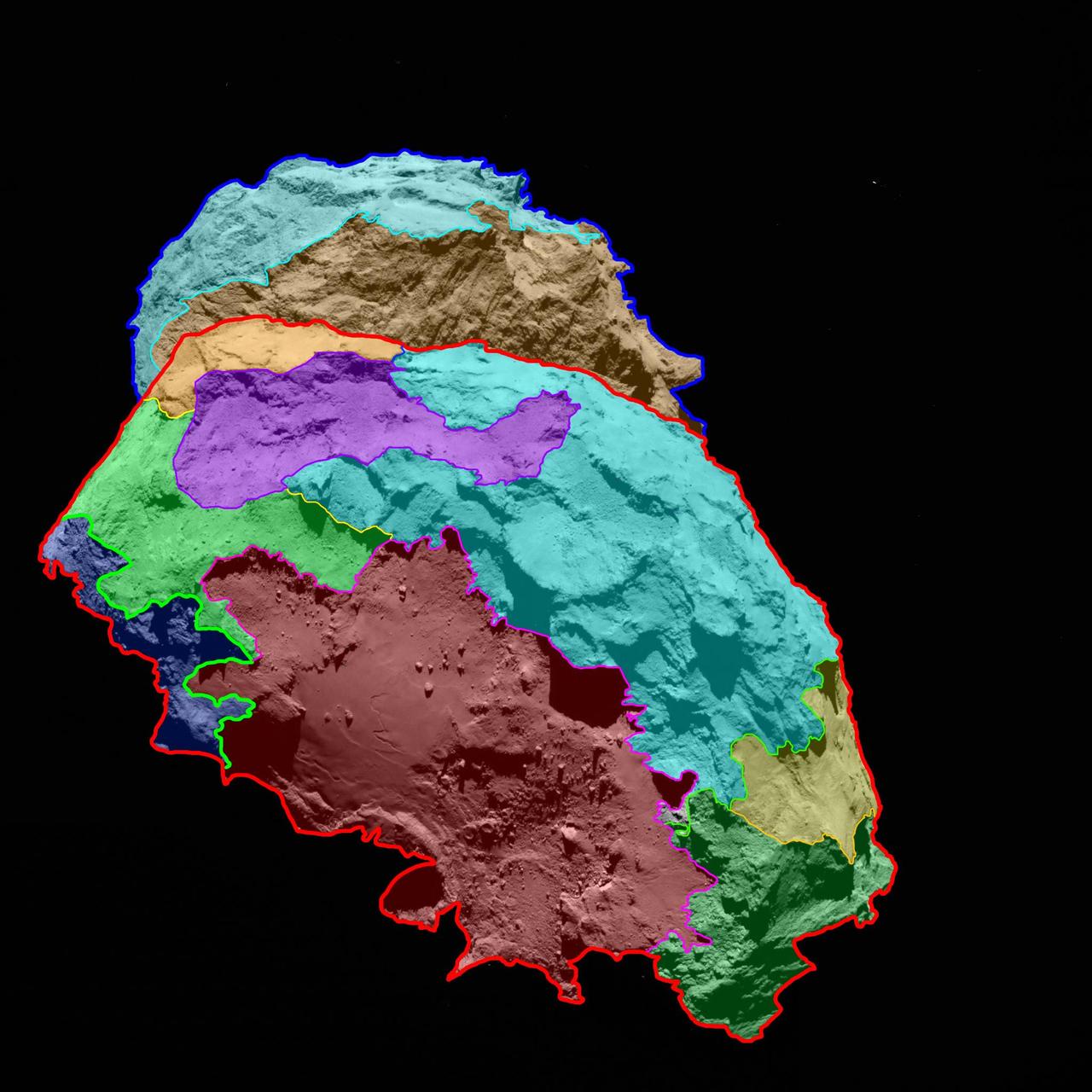
This view of the belly and part of the head of comet 67P/Churyumov-Gerasimenko indicates several morphologically different regions as seen by ESA Rosetta spacecraft.
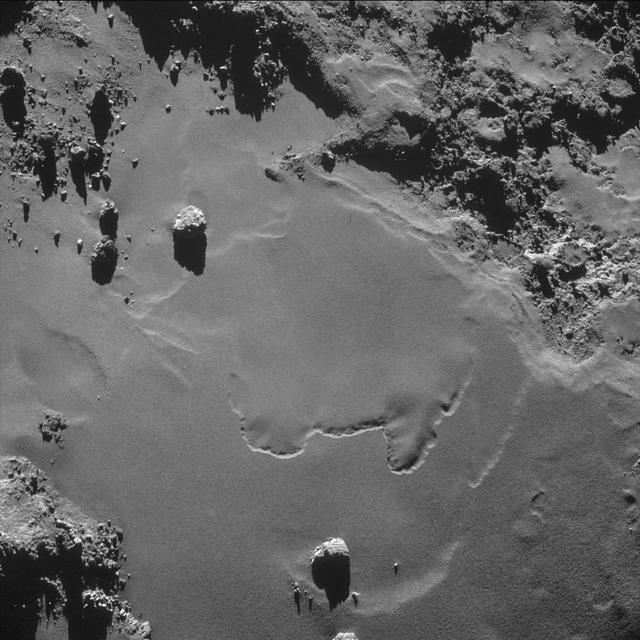
A patch of relatively smooth ground on the nucleus surface of comet 67P/Churyumov-Gerasimenko appears in this image taken by the navigation camera on the European Space Agency Rosetta spacecraft in October 2014.
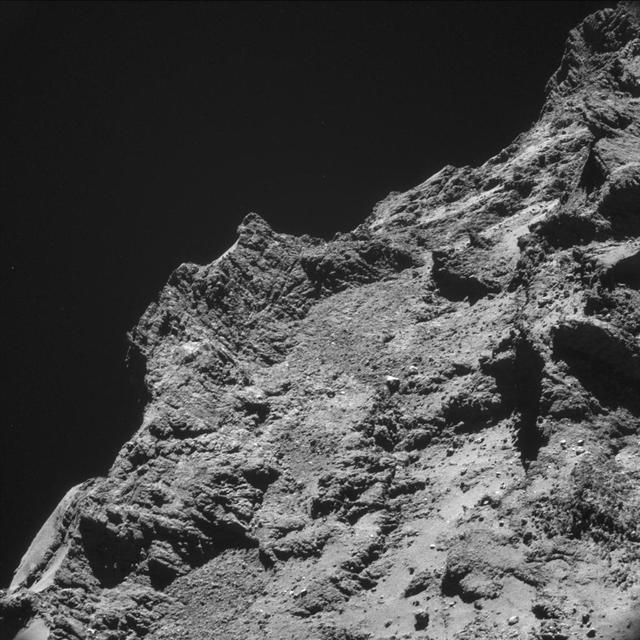
Some relatively rough terrain on the nucleus of comet 67P/Churyumov-Gerasimenko appears in this image taken by the navigation camera on the European Space Agency Rosetta spacecraft in the second half of October 2014.
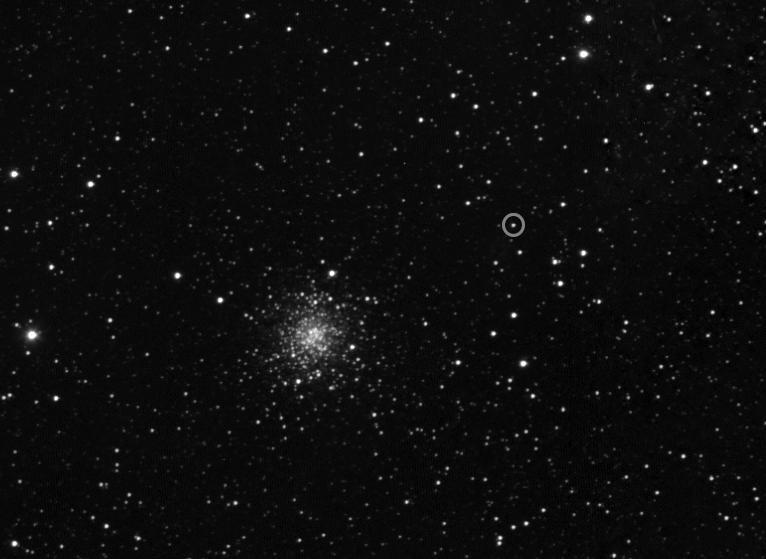
This image of comet 67P/Churymov-Gerasimenko was taken on March 21, 2014, by the narrow-angle camera of the Rosetta spacecraft Optical, Spectroscopic and Infrared Remote Imaging System OSIRIS.
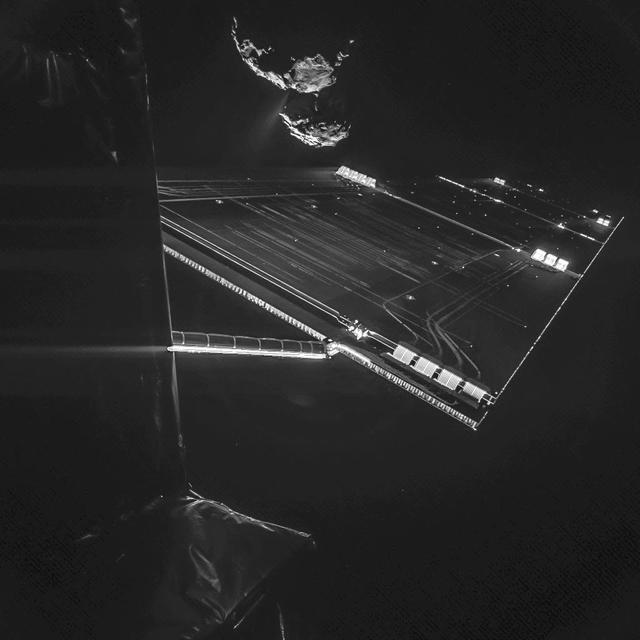
A composite image from a camera on ESA Rosetta mission Philae comet lander shows a solar array, with comet 67P/Churyumov-Gerasimenko in the background.
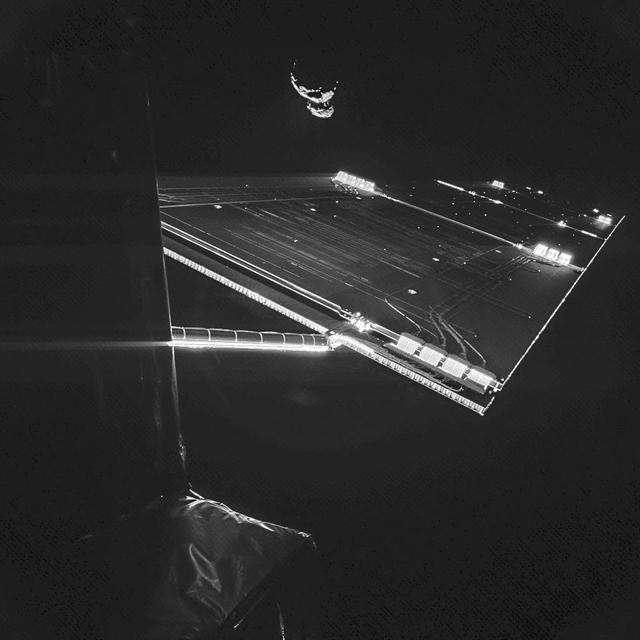
The Philae lander of the European Space Agency Rosetta mission took this self-portrait of the spacecraft on Sept. 7, 2014, at a distance of about 30 miles 50 kilometers from comet 67P/Churyumov-Gerasimenko.
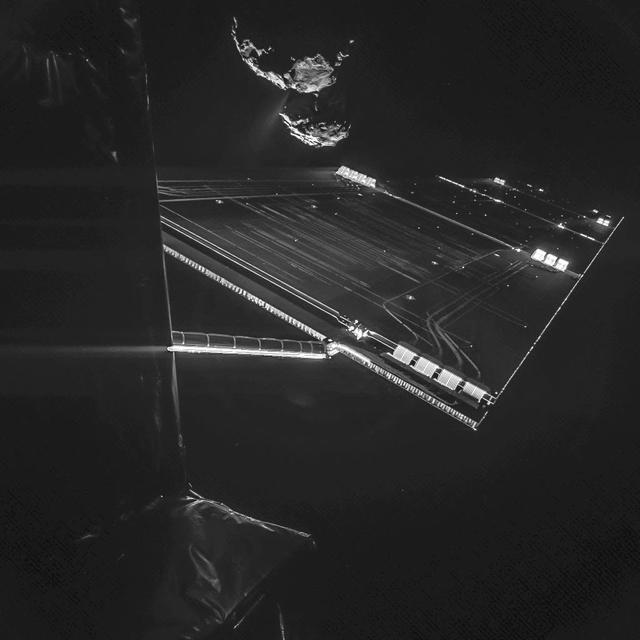
The Philae lander of the European Space Agency Rosetta mission took this self-portrait of the spacecraft on Sept. 7, 2014, at a distance of about 10 miles 16 kilometers from comet 67P/Churyumov-Gerasimenko.
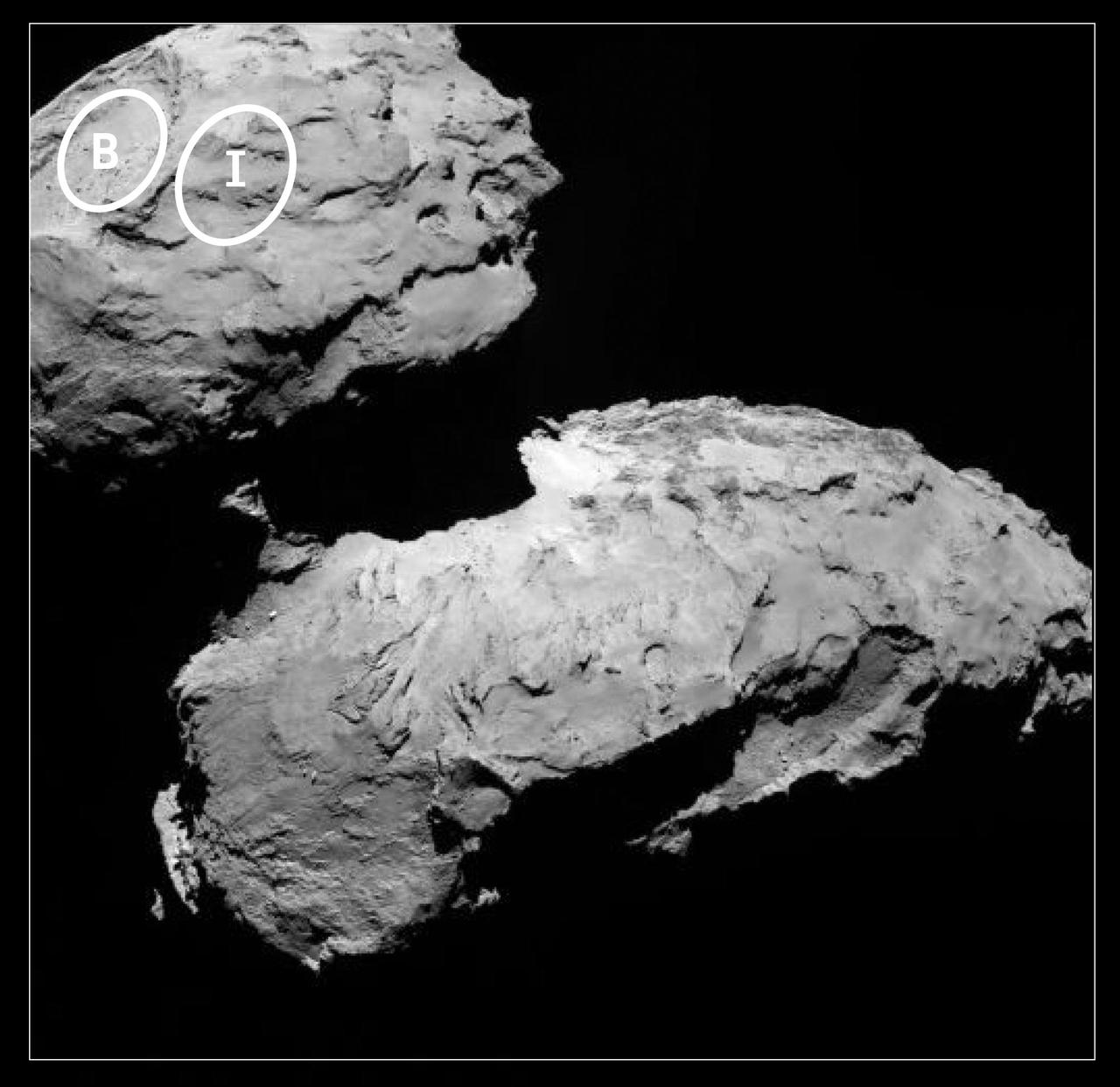
This annotated image depicts two of the five potential landing sites for ESA Rosetta mission Philae lander.
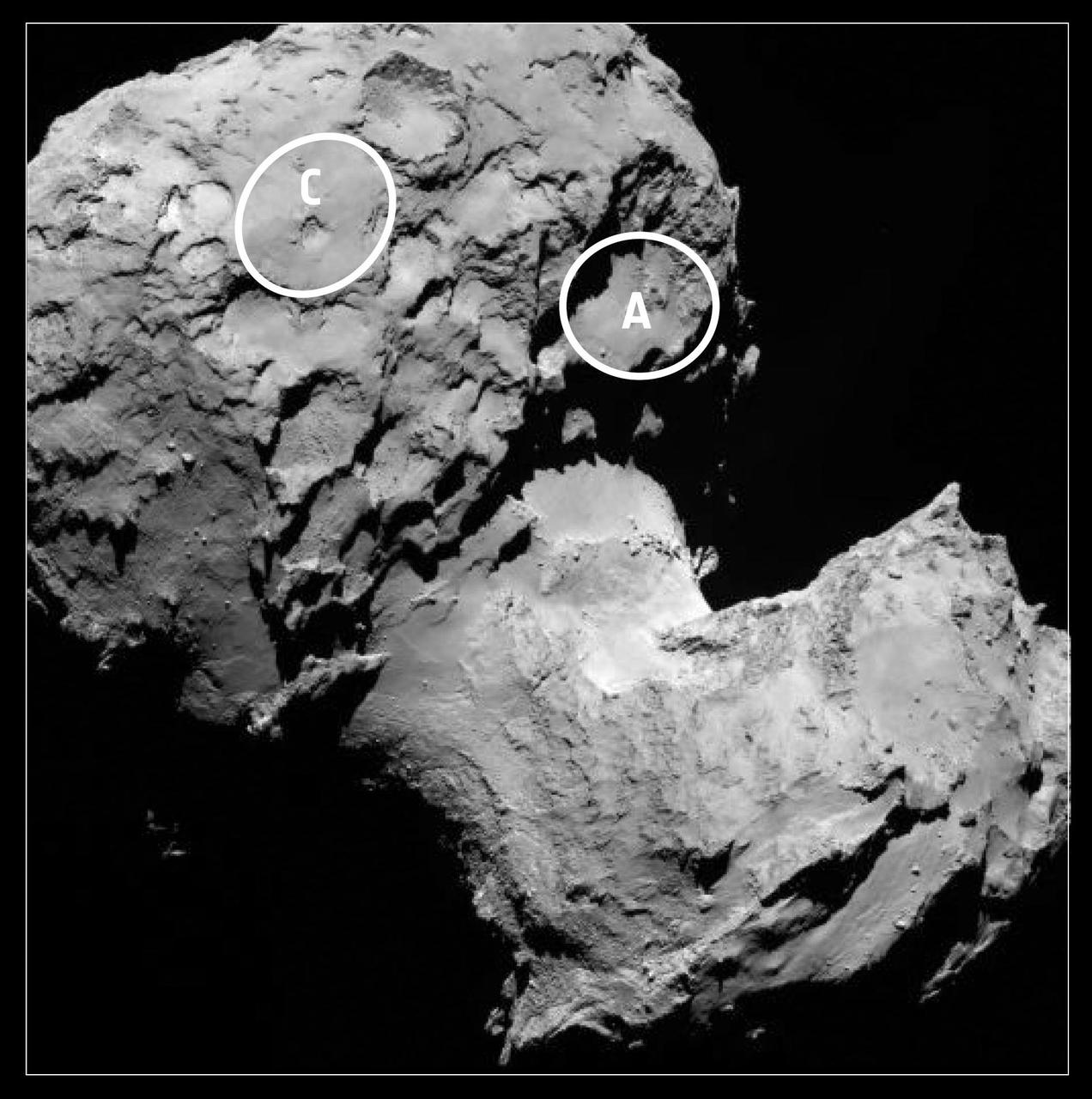
This annotated image depicts the two potential landing sites for ESA Rosetta Philae lander that are on the comet larger lobe.
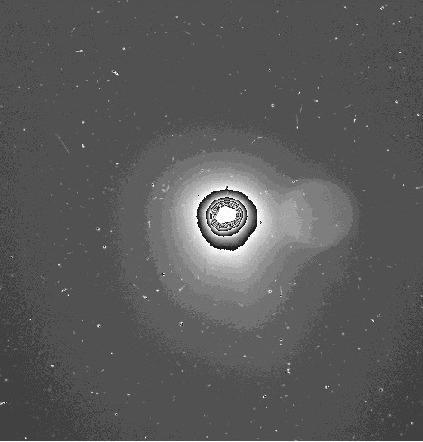
This image of the coma of comet 67P/Churyumov-Gerasimenko, seen with ESAS OSIRIS onboard the Rosetta spacecraft, shows the hazy circular structure to the right and center of the coma is an artifact due to overexposure of the nucleus.
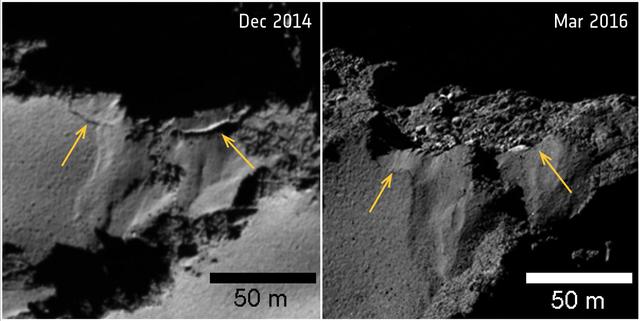
Several sites of cliff collapse on comet 67P/Churyumov-Gerasimenko were identified during Rosetta's mission. The yellow arrows mark the fractures where the detachment occurred. The collapsed sections are about 50 feet (15 meters) long for the left-hand section, and 30 feet (9 meters) for the right-hand section. Additional images taken from greater distances suggest the collapse occurred between May and December 2015. The images were taken by Rosetta's OSIRIS camera on Dec. 2, 2014 (left), and March 12, 2016 (right), with resolutions of 1.6 feet (0.5 meters) per pixel and 1 foot (0.3 meters) per pixel, respectively. http://photojournal.jpl.nasa.gov/catalog/PIA21564

This mosaic of images from the navigation camera on the European Space Agency Rosetta spacecraft shows the nucleus of comet 67P/Churyumov-Gerasimenko as it appeared at 5 a.m. UTC on Dec. 17, 2014 9 p.m. PST on Dec. 16.
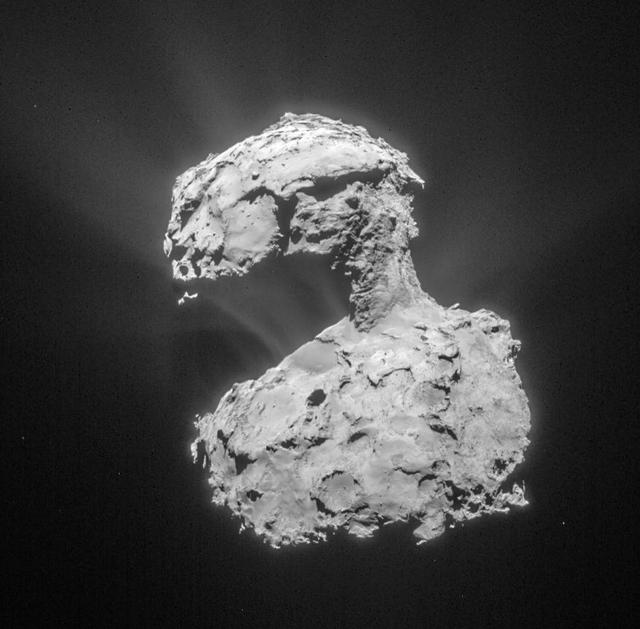
This image, taken by ESA Rosetta navigation camera, was taken from a distance of about 53 miles 86 kilometers from the center of Comet 67P/Churyumov-Gerasimenko on March 14, 2015. The image has a resolution of 24 feet (7 meters) per pixel and is cropped and processed to bring out the details of the comet's activity. http://photojournal.jpl.nasa.gov/catalog/PIA19687
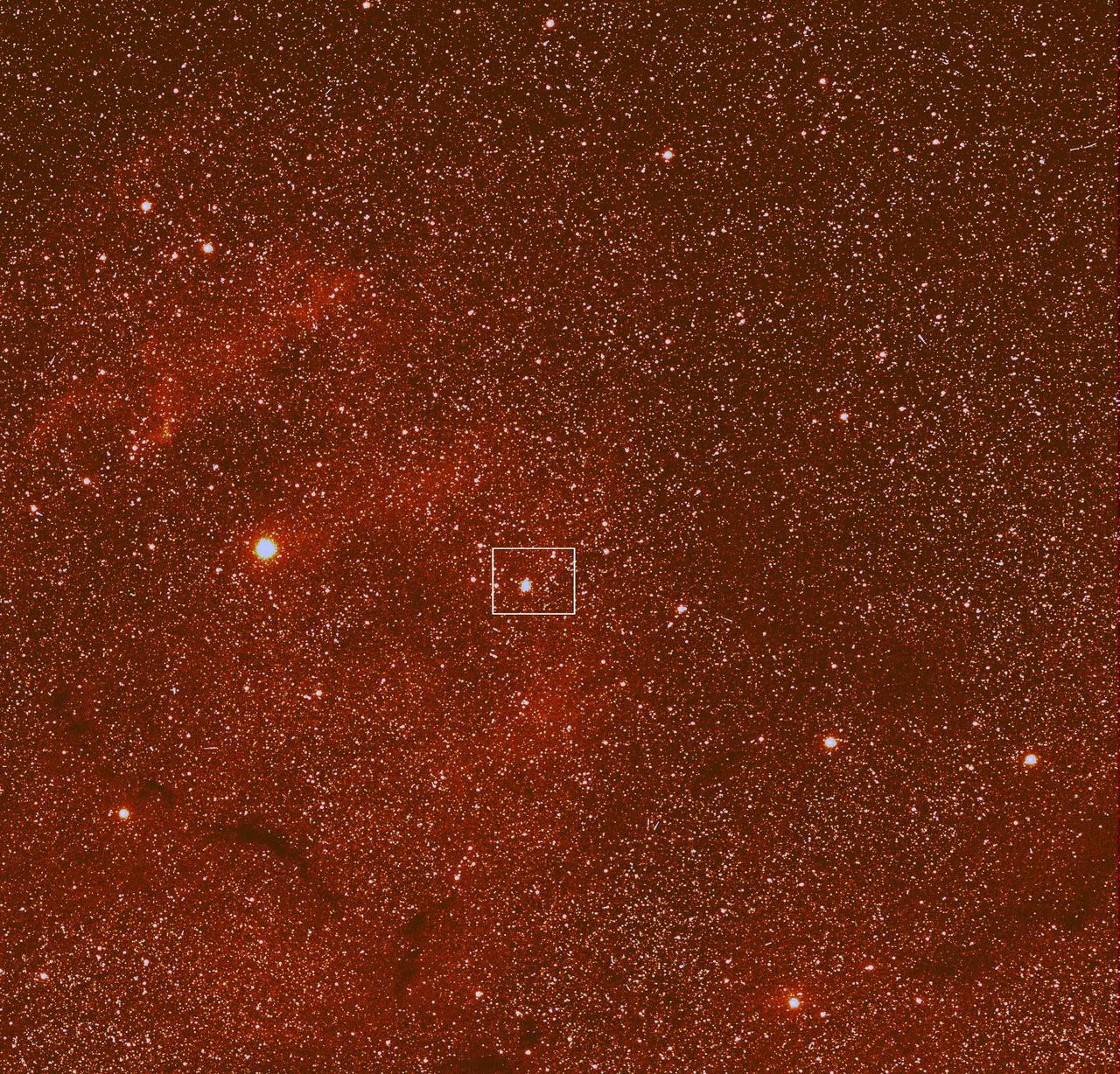
This image of comet 67P/Churymov-Gerasimenko was taken on March 20, 2014, by the wide-angle camera of the Rosetta spacecraft Optical, Spectroscopic and Infrared Remote Imaging System OSIRIS.
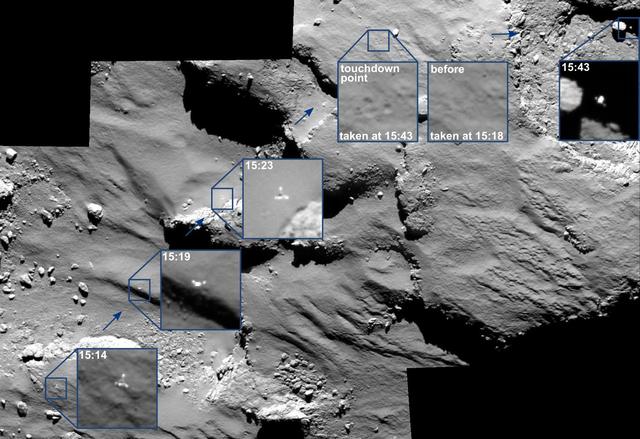
The descent of its comet lander Philae was captured by ESA Rosetta spacecraft main camera as the lander approached -- and then rebounded off -- the comet surface.

An annotated mosaic from the Rosetta spacecraft shows Site J, the primary landing site on comet 67P/Churyumov-Gerasimenko for the mission Philae lander.
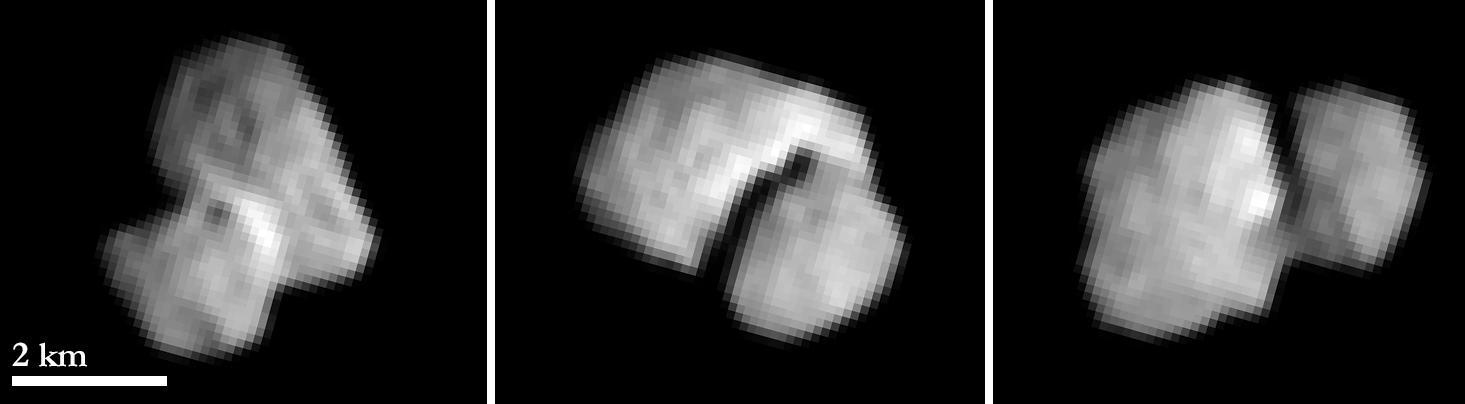
Comet 67P/Churyumov-Gerasimenko was imaged by ESA Rosetta spacecraft on July 20, 2014, from a distance of approximately 3,400 miles 5,500 kilometers. These three images were taken two hours apart.
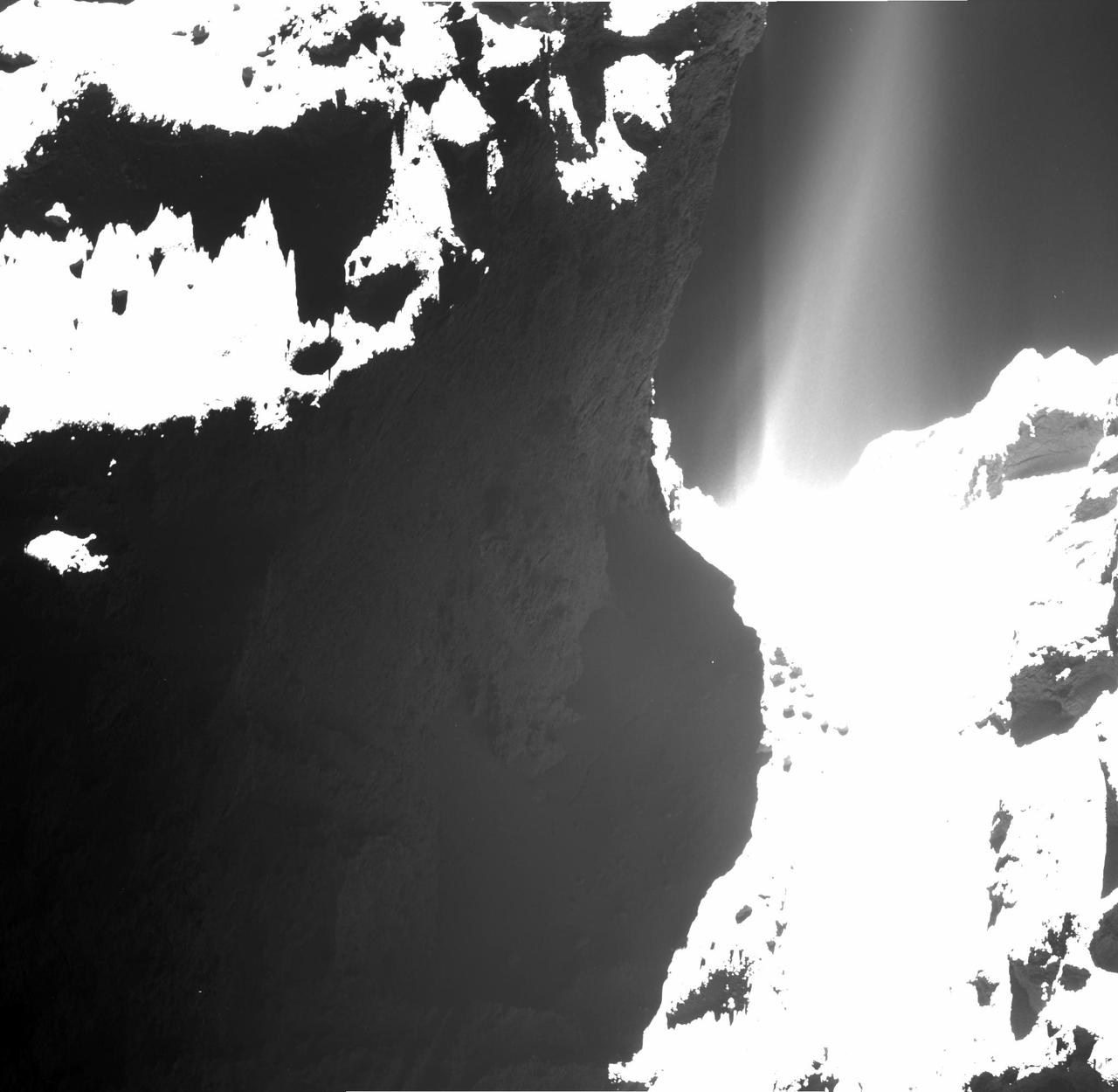
This image was taken by the Optical, Spectroscopic, and Infrared Remote Imaging System, Rosetta main onboard scientific imaging system, on Sept. 10, 2014. Jets of cometary activity can be seen along almost the entire body of the comet.
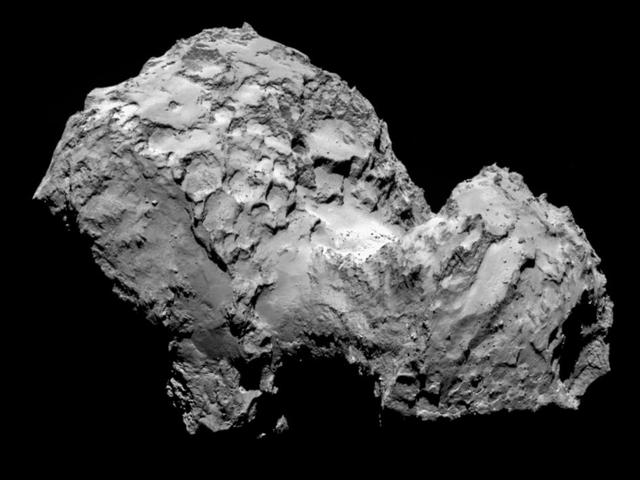
Comet 67P/Churyumov-Gerasimenko by ESA Rosetta OSIRIS narrow-angle camera on August 3, 2014, from a distance of 177 miles 285 kilometers. The image resolution is 17 feet 5.3 meters per pixel.
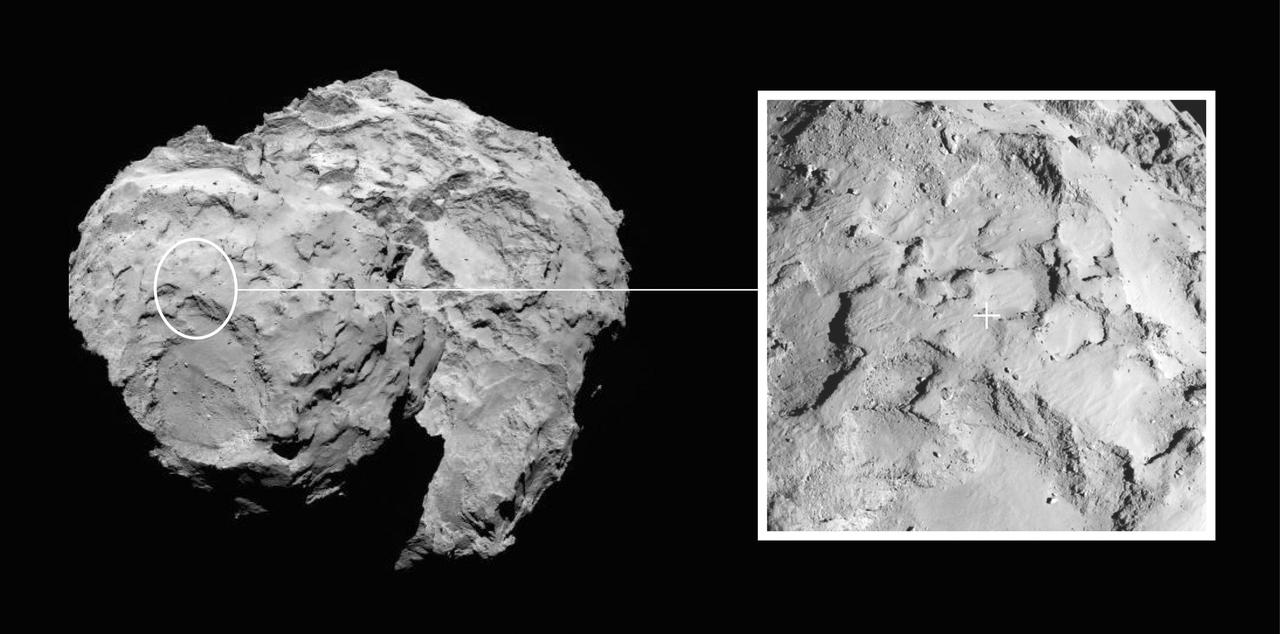
This image depicts the primary landing site on comet 67P/Churyumov-Gerasimenko chosen for the European Space Agency Rosetta mission.
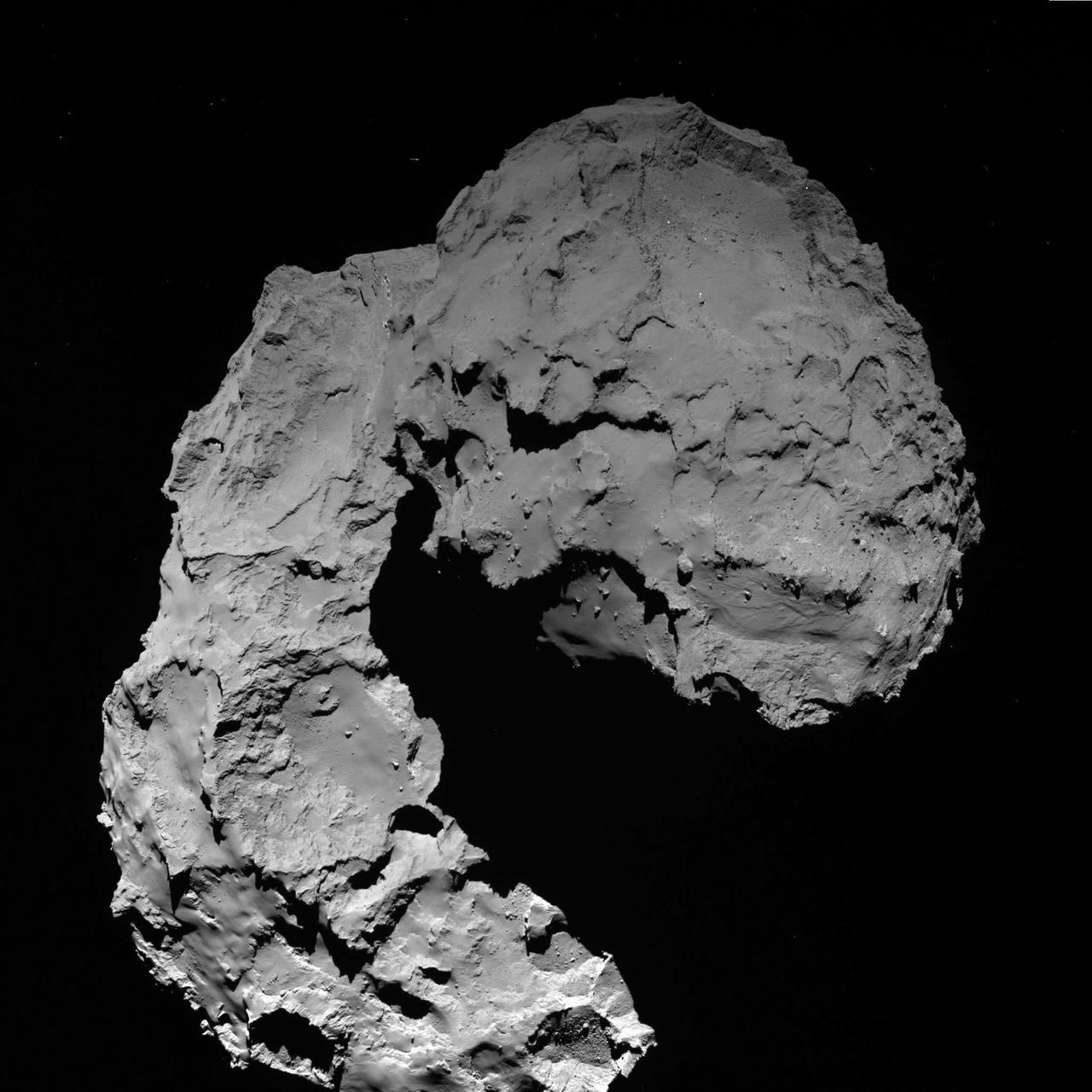
This view shows Comet 67P/Churyumov-Gerasimenko as seen by the OSIRIS wide-angle camera on ESA's Rosetta spacecraft on September 29, 2016, when Rosetta was at an altitude of 14 miles (23 kilometers). The European Space Agency's (ESA) Rosetta mission will come to a dramatic end on Friday, Sept. 30, with a controlled touchdown of the spacecraft on a region of comet 67P/Churyumov-Gerasimenko known for active pits that spew comet dust into space. Confirmation of the end of mission is expected at about 4:20 a.m. PDT (7:20 a.m. EDT). ESA is ending the mission due to the spacecraft's ever-increasing distance from the sun, which has resulted in significantly reduced solar power with which to operate the vehicle and its instruments. http://photojournal.jpl.nasa.gov/catalog/PIA21068
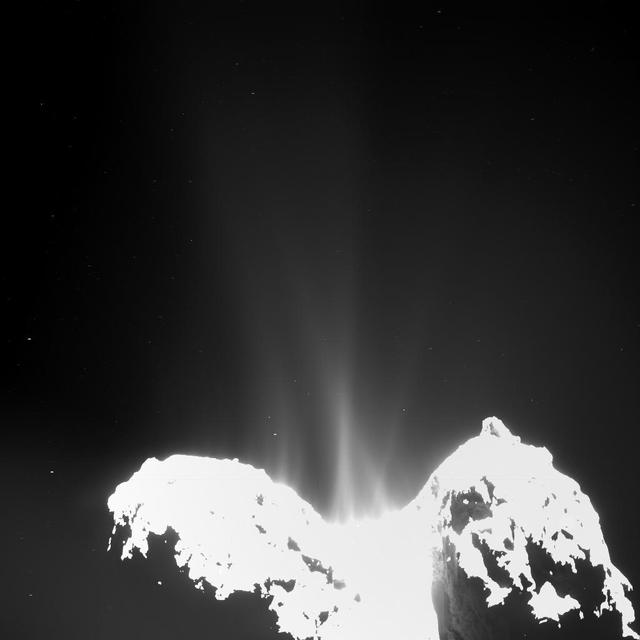
This image was taken by the Optical, Spectroscopic, and Infrared Remote Imaging System, Rosetta main onboard scientific imaging system, on Sept. 10, 2014. Jets of cometary activity can be seen along almost the entire body of the comet. http://photojournal.jpl.nasa.gov/catalog/PIA18886
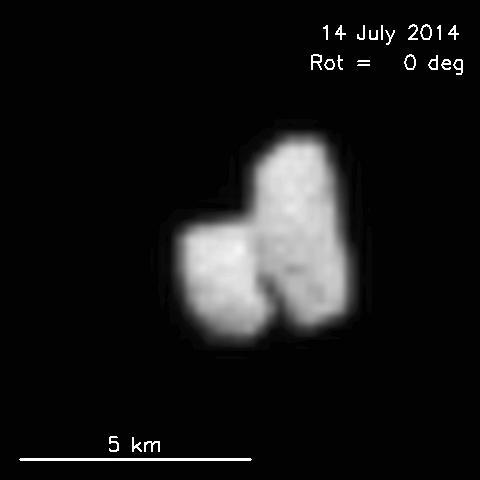
This frame from an animated sequence combined 36 interpolated images of comet 67P/Churyumov-Gerasimenko, each separated by 20 minutes. This comet is the destination for the European Space Agency Rosetta mission in 2014.
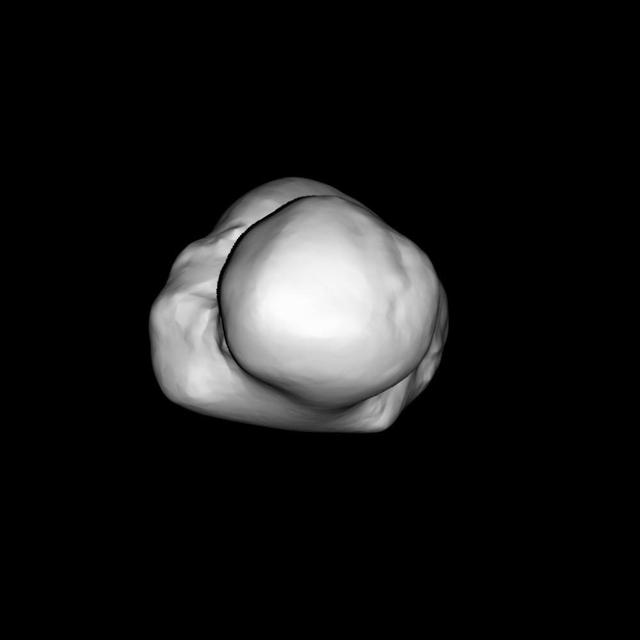
Images of comet 67P/Churyumov-Gerasimenko taken on July 14, 2014, by the OSIRIS imaging system aboard ESA Rosetta spacecraft have allowed scientists to create this three-dimensional shape model of the nucleus.
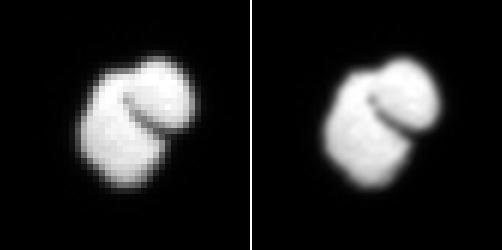
This observation from ESA Rosetta spacecraft shows that comet 67P/Churyumov-Gerasimenko has a two-part shape. The image on the left is from OSIRIS; the image on the right is enhanced with interpolated data.
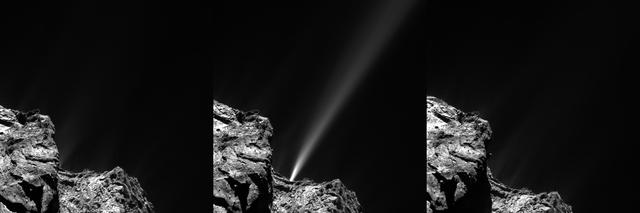
A short-lived outburst from comet 67P/Churyumov-Gerasimenko was captured by Rosetta's OSIRIS narrow-angle camera on July 29, 2015. The image at left was taken at 13:06 Greenwich Mean Time (GMT) (6:06 a.m. PDT), and does not show any visible signs of the jet. It is very strong in the middle image captured at 13:24 GMT (6:24 a.m. PDT). Residual traces of activity are only very faintly visible in the final image taken at 13:42 GMT (6:42 a.m. PDT). The images were taken from a distance of 116 miles (186 kilometers) from the center of the comet. The jet is estimated to have a minimum speed of 33 feet per second (10 meters per second) and originates from a location on the comet's neck. http://photojournal.jpl.nasa.gov/catalog/PIA19867
This frame from an animated sequence shows the Rosetta mission Philae lander descending toward comet 67P/Churyumov-Gerasimenko not in frame on Nov. 12, 2014. The images are from the OSIRIS narrow-angle camera on the ESA Rosetta orbiter.
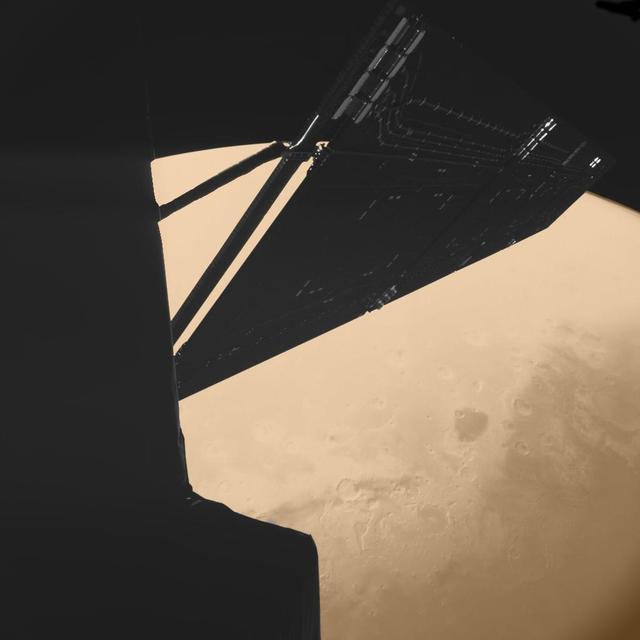
Stunning image taken by the CIVA imaging instrument on Rosetta Philae lander just 4 minutes before closest approach at a distance of some 1000 km from Mars on Feb. 25, 2007. A portion of the spacecraft and one of its solar arrays are visible in nice detail. Beneath, the Mawrth Vallis region is visible on the planet's disk. Mawrth Vallis is particularly relevant as it is one of the areas on the Martian surface where the OMEGA instrument on board ESA's Mars Express detected the presence of hydrated clay minerals -- a sign that water may have flown abundantly on that region in the very early history of Mars. Id 217487 http://photojournal.jpl.nasa.gov/catalog/PIA18154
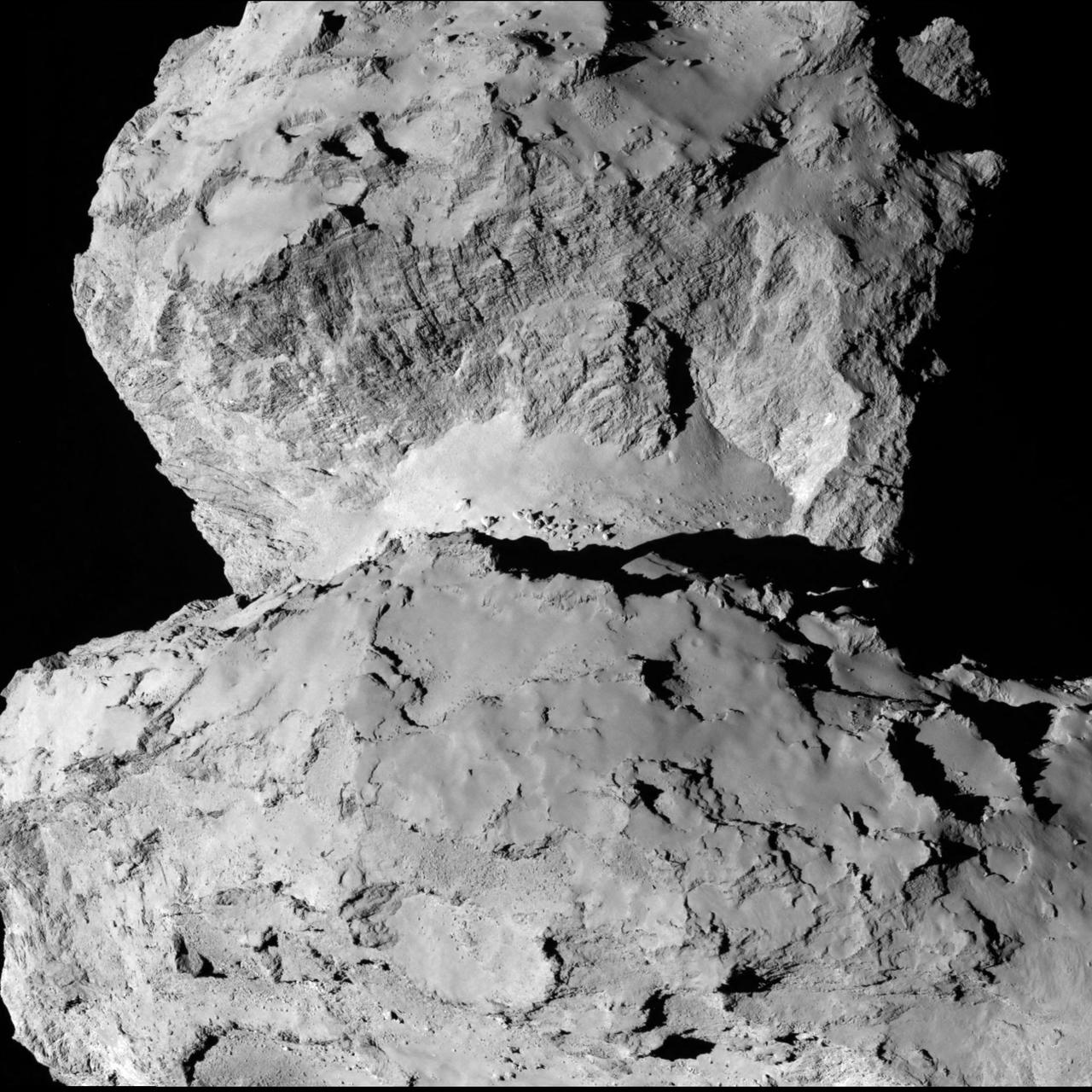
This image from ESA Rosetta spacecraft is of 67P/Churyumov-Gerasimenko shows the diversity of surface structures on the comet nucleus.

This graphic depicts the position of the Philae lander of the European Space Agency Rosetta mission in the context of topographic modeling of the surface of comet 67P/Churyumov-Gerasimenko nucleus.
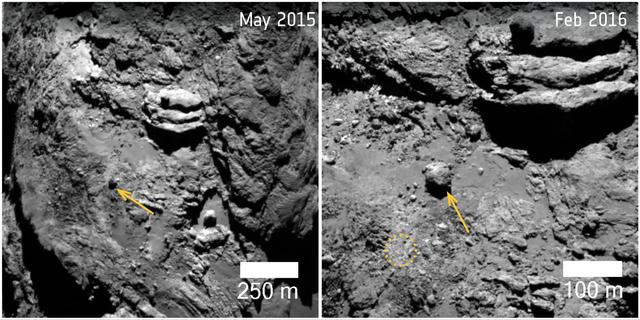
A 100 foot-wide (30 meter), 28-million-pound (12.8-million-kilogram) boulder, was found to have moved 460 feet (140 meters) on comet 67P/Churyumov-Gerasimenko in the lead up to perihelion in August 2015, when the comet's activity was at its highest. In both images, an arrow points to the boulder; in the right-hand image, the dotted circle outlines the original location of the boulder for reference. The movement could have been triggered in one of two ways: either the material on which it was sitting eroded away, allowing it to roll downslope, or a sufficiently forceful outburst could have directly lifted it to the new location. Indeed, several outburst events were detected close to the original position of the boulder during perihelion. The images were taken by Rosetta's OSIRIS camera on May 2, 2015 (left) and Feb. 7, 2016 (right), with resolutions of 7.5 feet (2.3 meters) per pixel and 2.6 feet (0.8 meters) per pixel, respectively. http://photojournal.jpl.nasa.gov/catalog/PIA21565
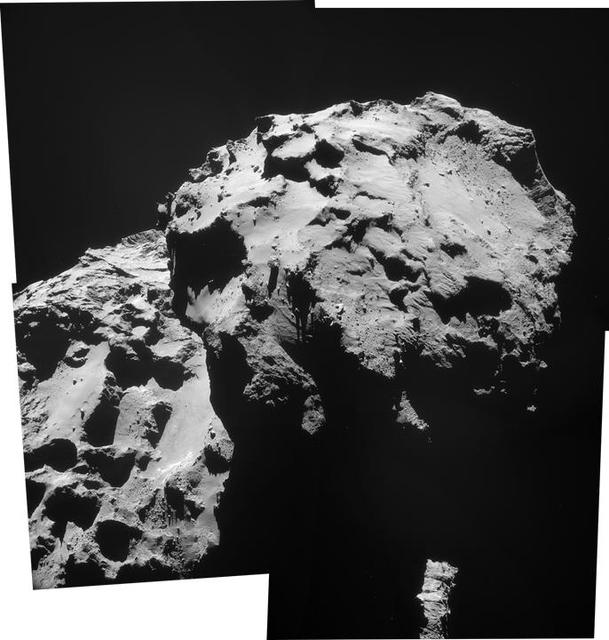
This mosaic of images from the navigation camera on the ESA Rosetta spacecraft shows the nucleus of comet 67P/Churyumov-Gerasimenko as it appeared at in the early morning, Universal Coordinated Time, of Dec. 17, 2014 evening of Dec. 16, PST.
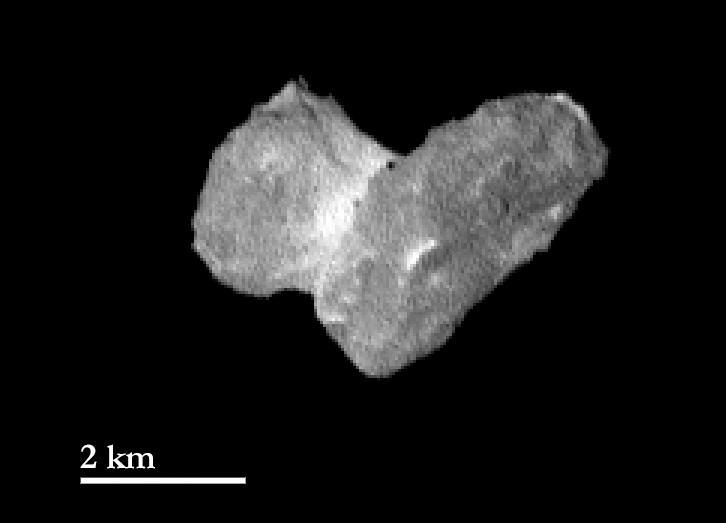
This view from the OSIRIS instrument onboard ESA Rosetta spacecraft shows the nucleus of comet 67P/Churyumov-Gerasimernko from a distance of 1,210 miles 1950 kilometers.
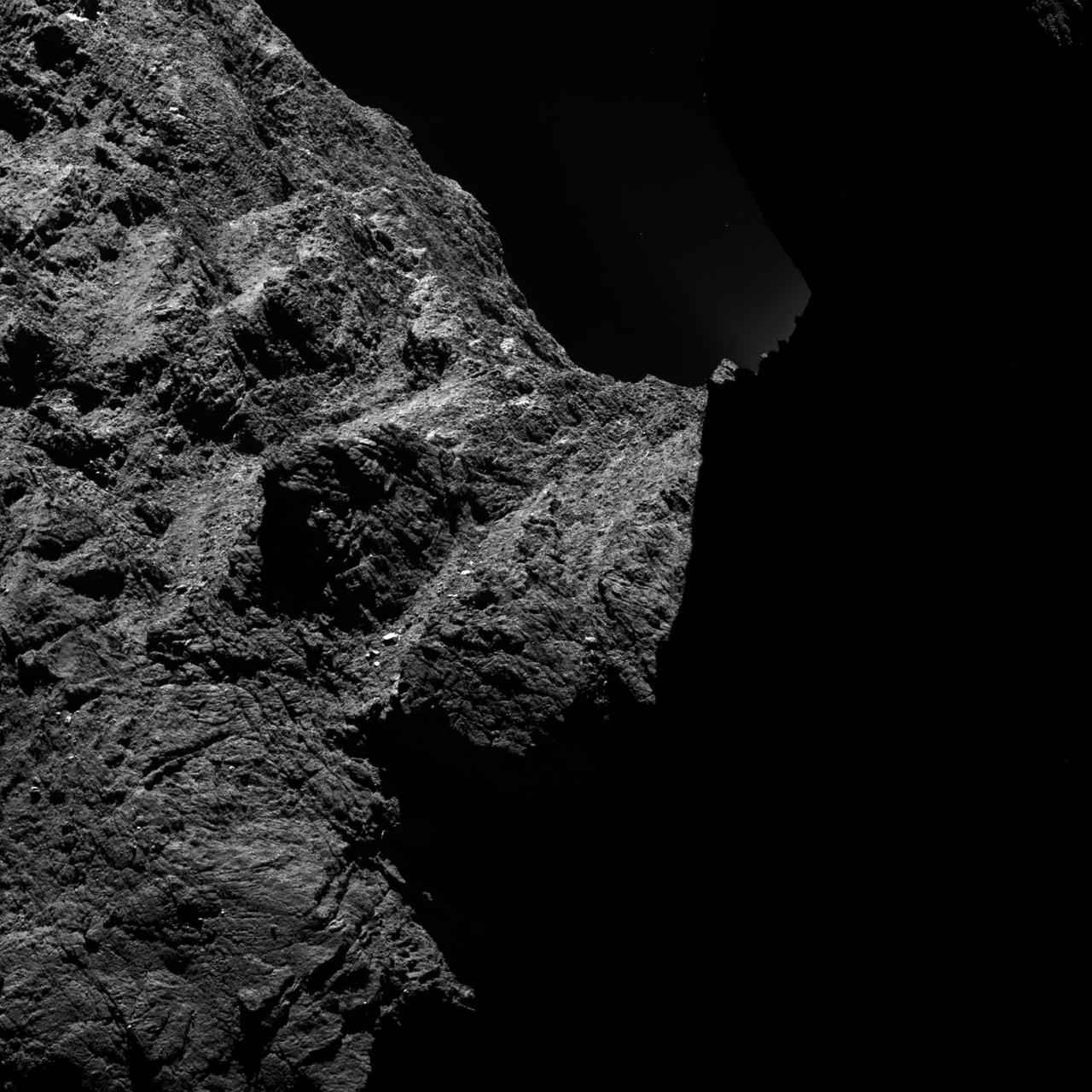
This image of comet 67P/Churyumov-Gerasimenko was obtained on October 30, 2014 by the OSIRIS scientific imaging system on the Rosetta spacecraft. The right half is obscured by darkness.
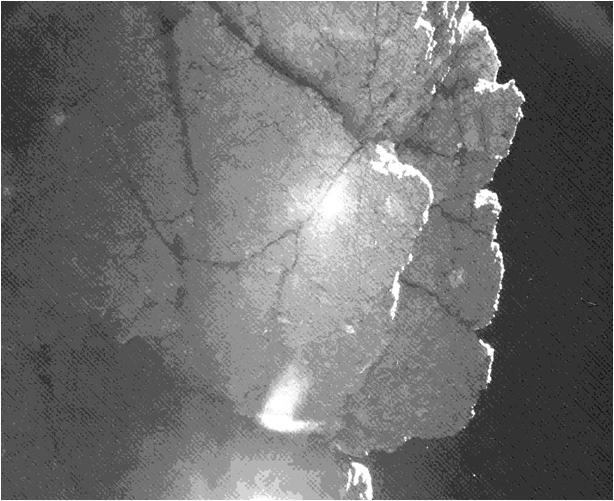
From the location where it came to rest after bounces, the Philae lander of the European Space Agency Rosetta mission captured this view of a cliff on the nucleus of comet 67P/Churyumov-Gerasimenko. The feature is called Perihelion Cliff.
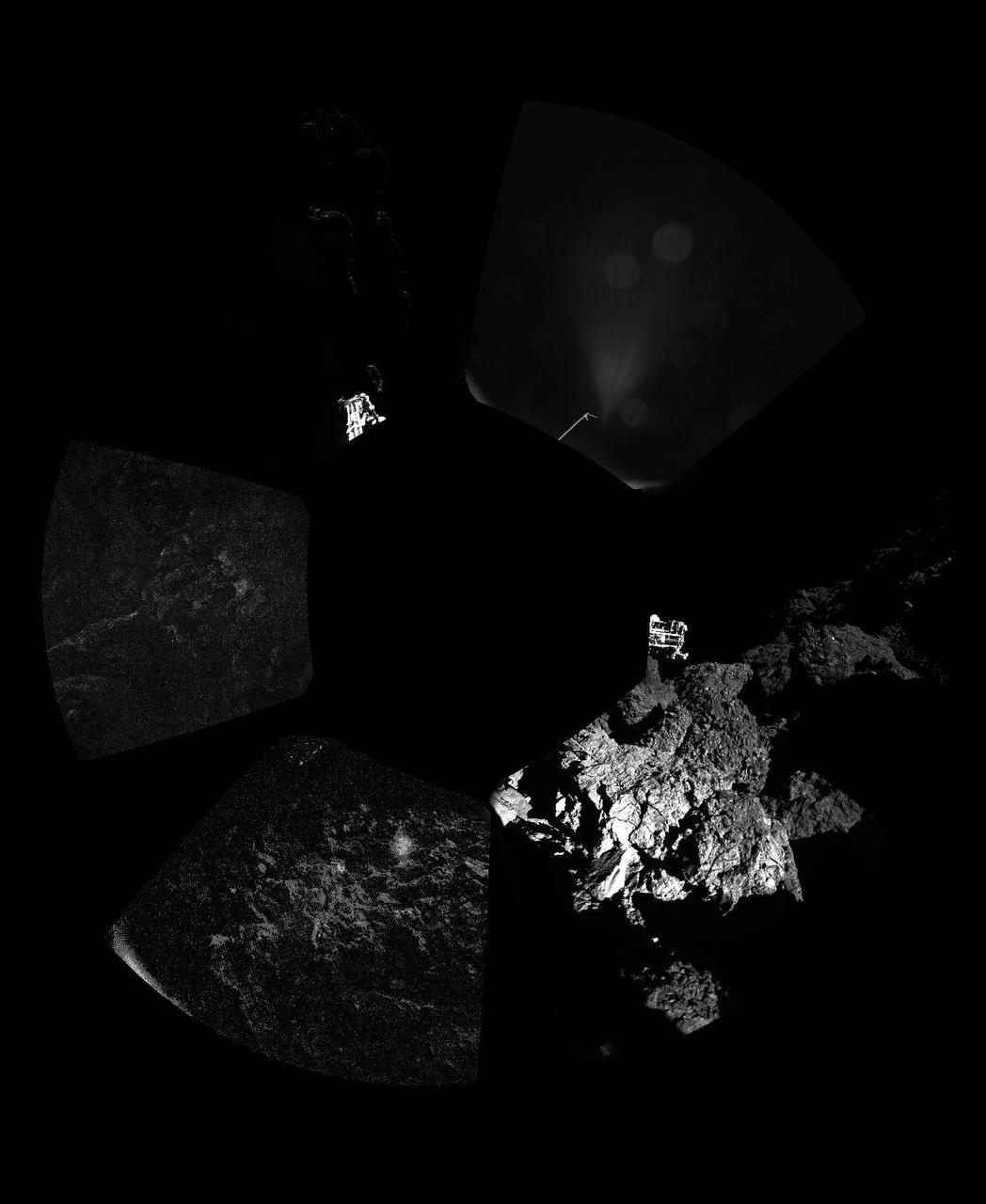
The Philae lander of Europe Rosetta mission has returned the first panoramic image from the surface of a comet. The unprocessed panorama from the lander CIVA-P camera shows a 360-degree view around the point of final touchdown.
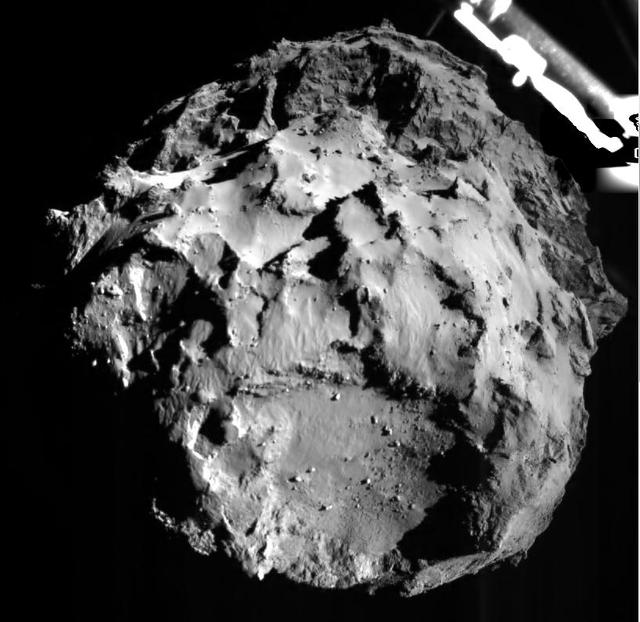
This image of comet 67P/Churyumov-Gerasimenko was taken by the Philae lander of the European Space Agency Rosetta mission during Philae descent toward the comet on Nov. 12, 2014 from a distance of approximate two miles three kilometers.
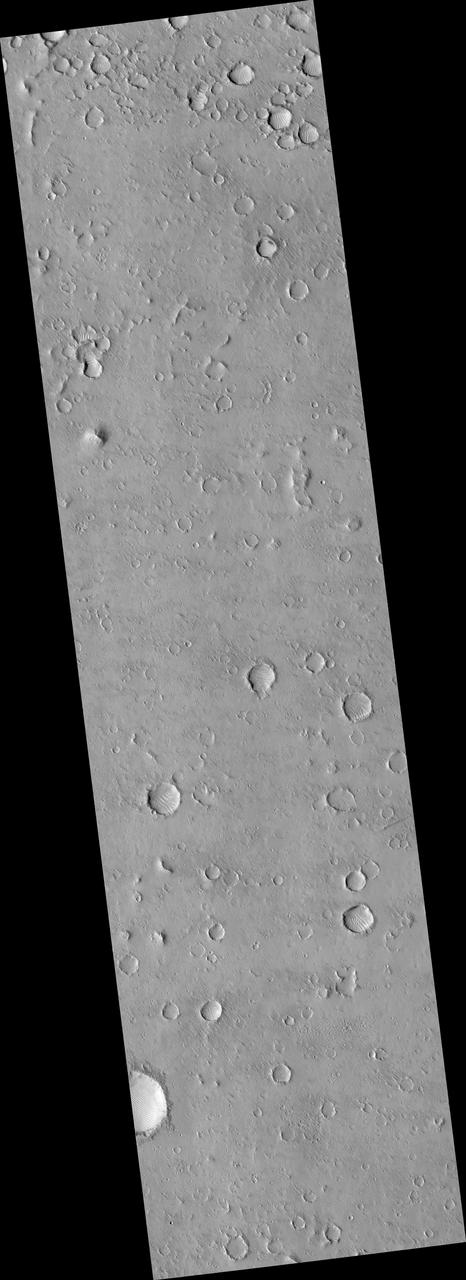
Joint Observation of the Isidis Basin with the Rosetta Mission
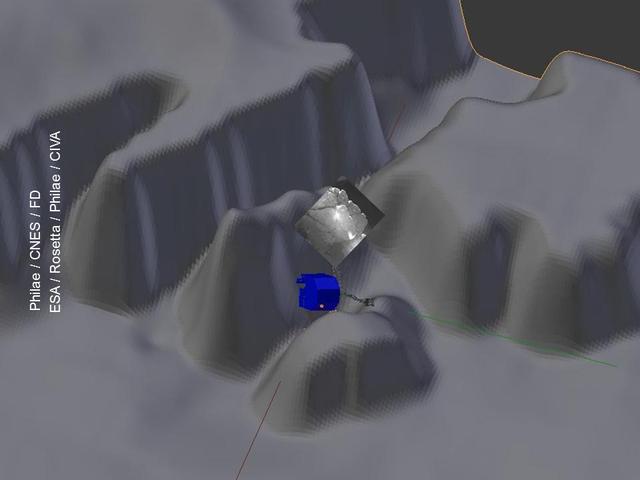
This graphic depicts the position of the Philae lander of the European Space Agency Rosetta mission, and a nearby cliff photographed by the lander, in the context of topographic modeling of the surface of comet 67P/Churyumov-Gerasimenko nucleus.
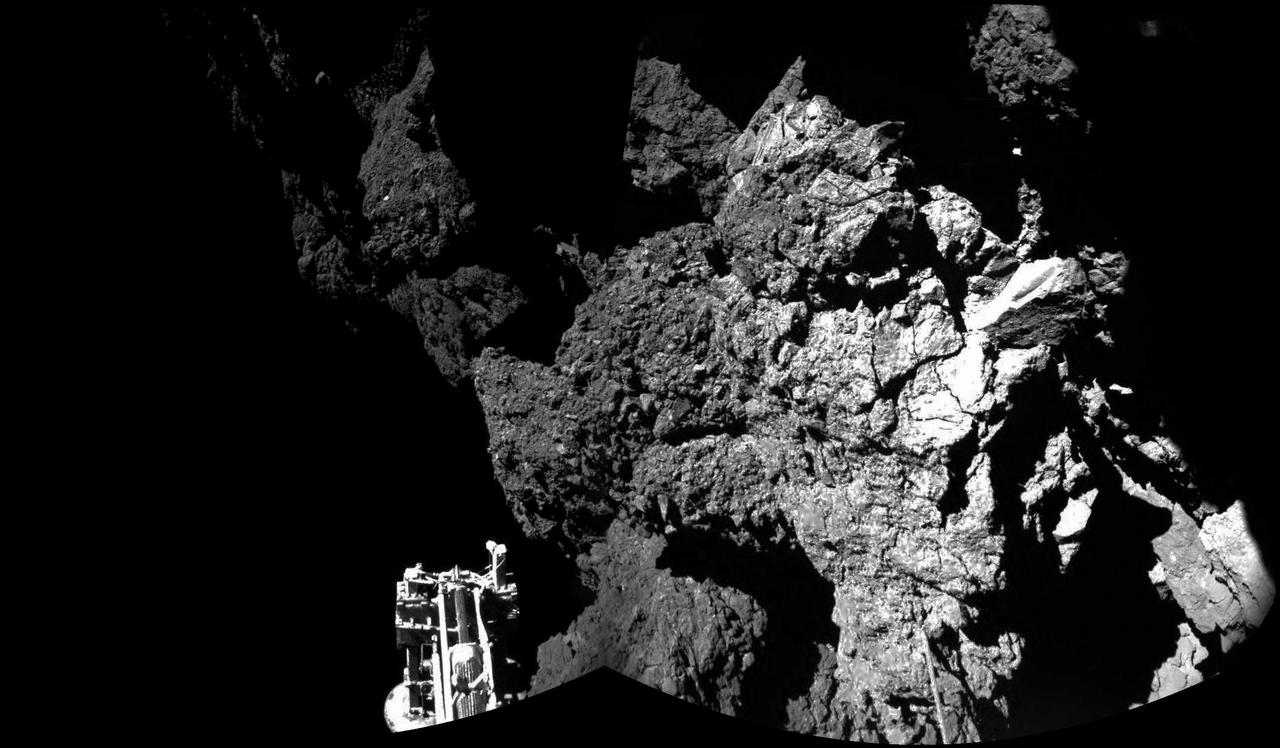
The Philae lander of the European Space Agency Rosetta mission is safely on the surface of Comet 67P/Churyumov-Gerasimenko, as these first two images from the lander CIVA camera confirm. One of the lander three feet can be seen in the foreground.
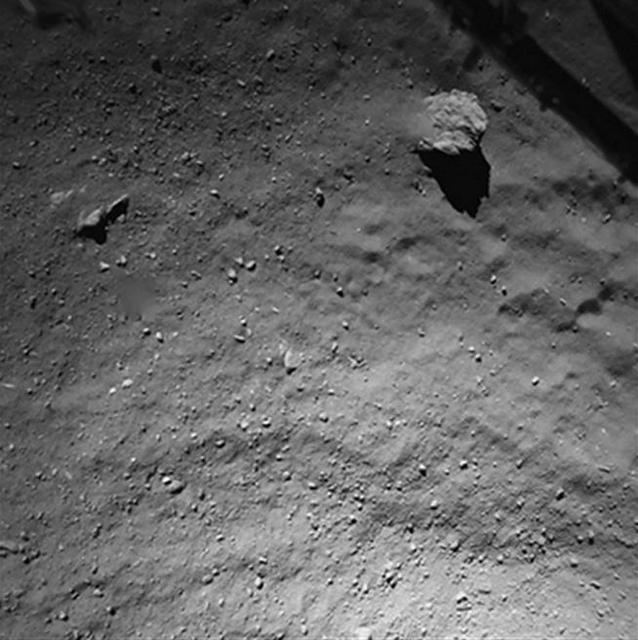
This image was taken by the Philae lander of the European Space Agency Rosetta mission when it was about 130 feet 40 meters above the surface of comet 67P/Churyumov-Gerasimenko during descent to the surface on Nov. 12, 2014.
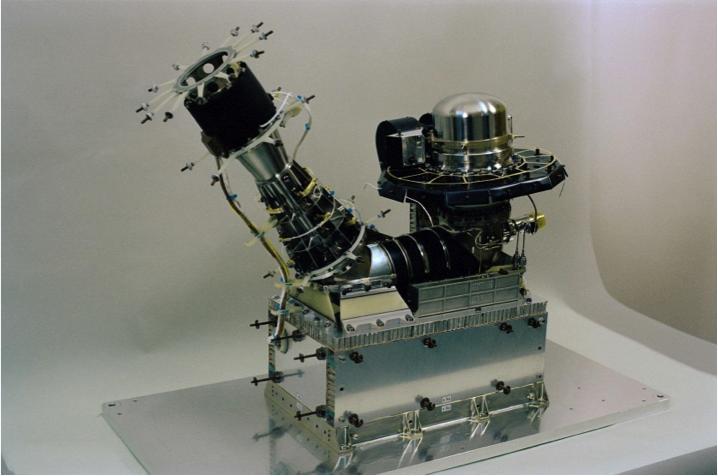
NASA has provided part of the electronics package for an instrument called the Double Focusing Mass Spectrometer, which is part of the Swiss-built Rosetta Orbiter Spectrometer for Ion and Neutral Analysis ROSINA instrument.
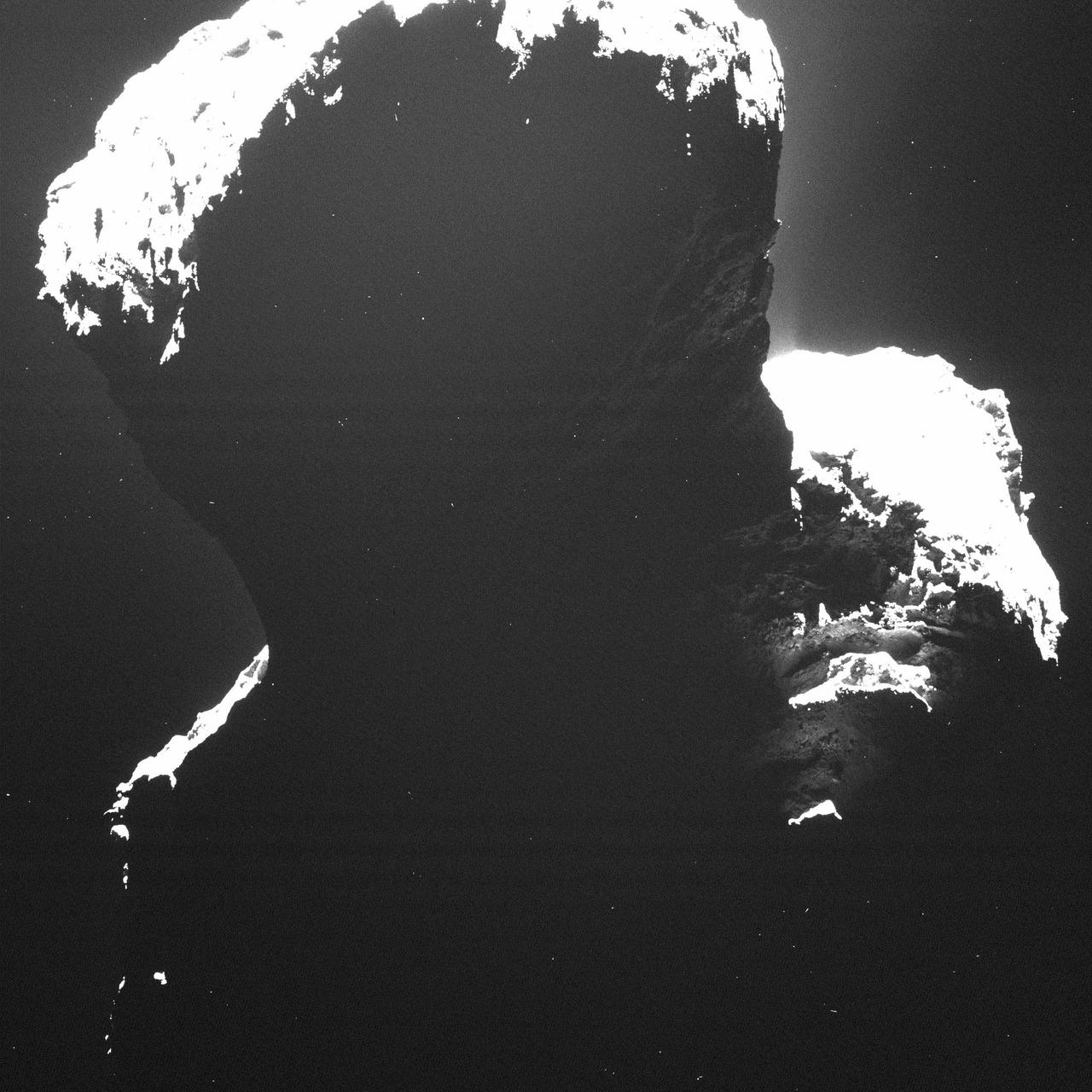
Image of the southern polar regions of comet 67P/Churyumov-Gerasimenko taken by Rosetta Optical, Spectroscopic, and Infrared Remote Imaging System OSIRIS on September 29, 2014, when the comet was still experiencing the long southern winter. http://photojournal.jpl.nasa.gov/catalog/PIA19969
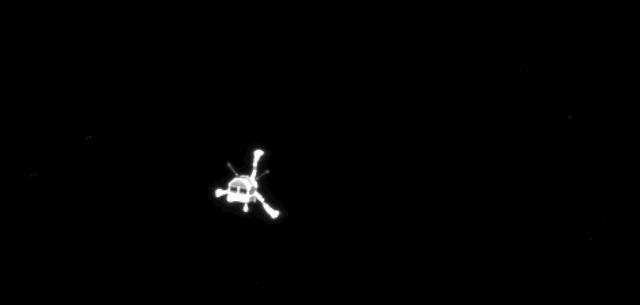
The Onboard Scientific Imaging System OSIRIS on the European Space Agency Rosetta spacecraft captured this parting shot of the mission Philae lander after its separation from the mother ship on Nov. 12, 2014.
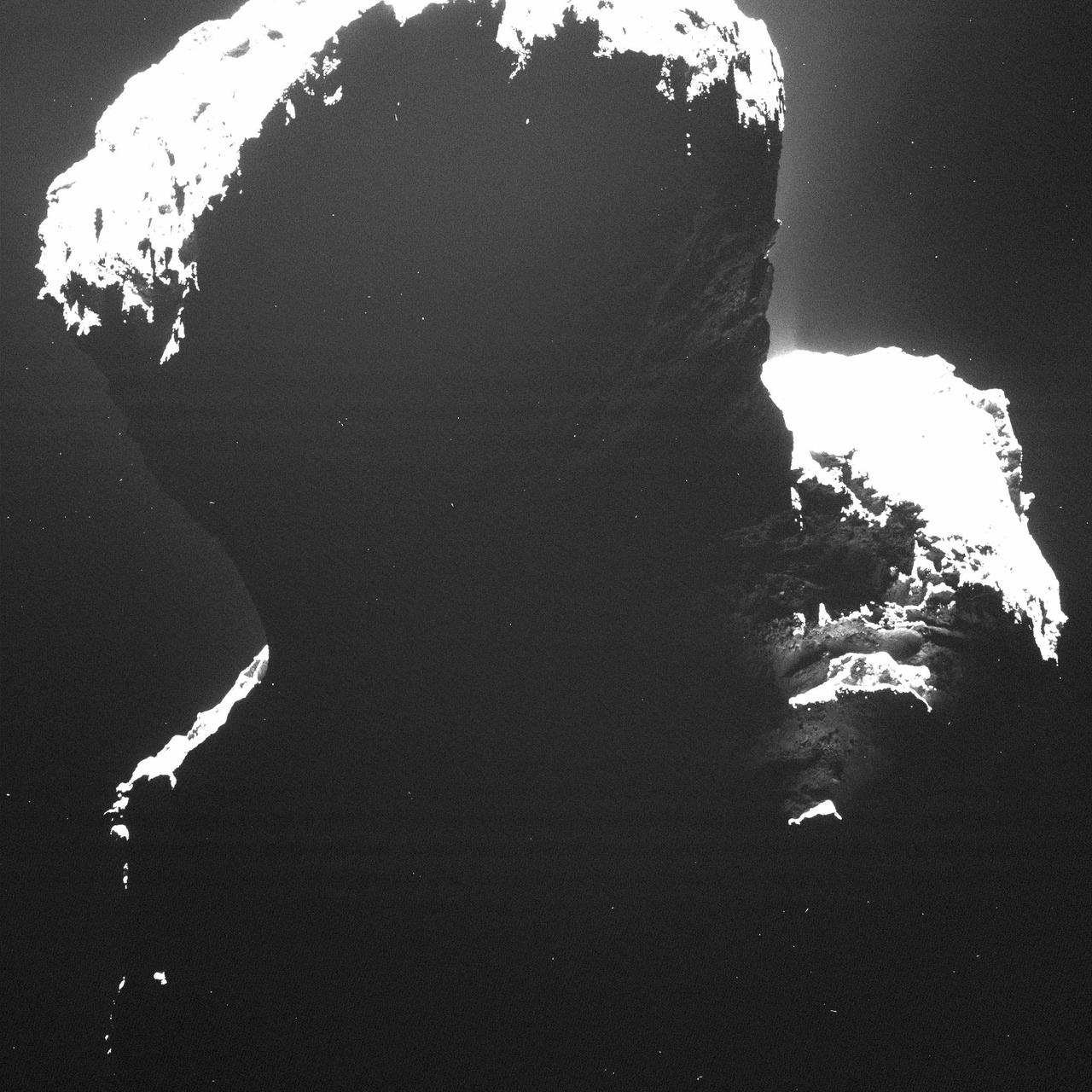
This is a rare glance at the dark side of comet 67P/Churyumov-Gerasimenko. Light backscattered from dust particles in the comet coma reveals a hint of surface structures. This image was taken by OSIRIS, Rosetta scientific imaging system.
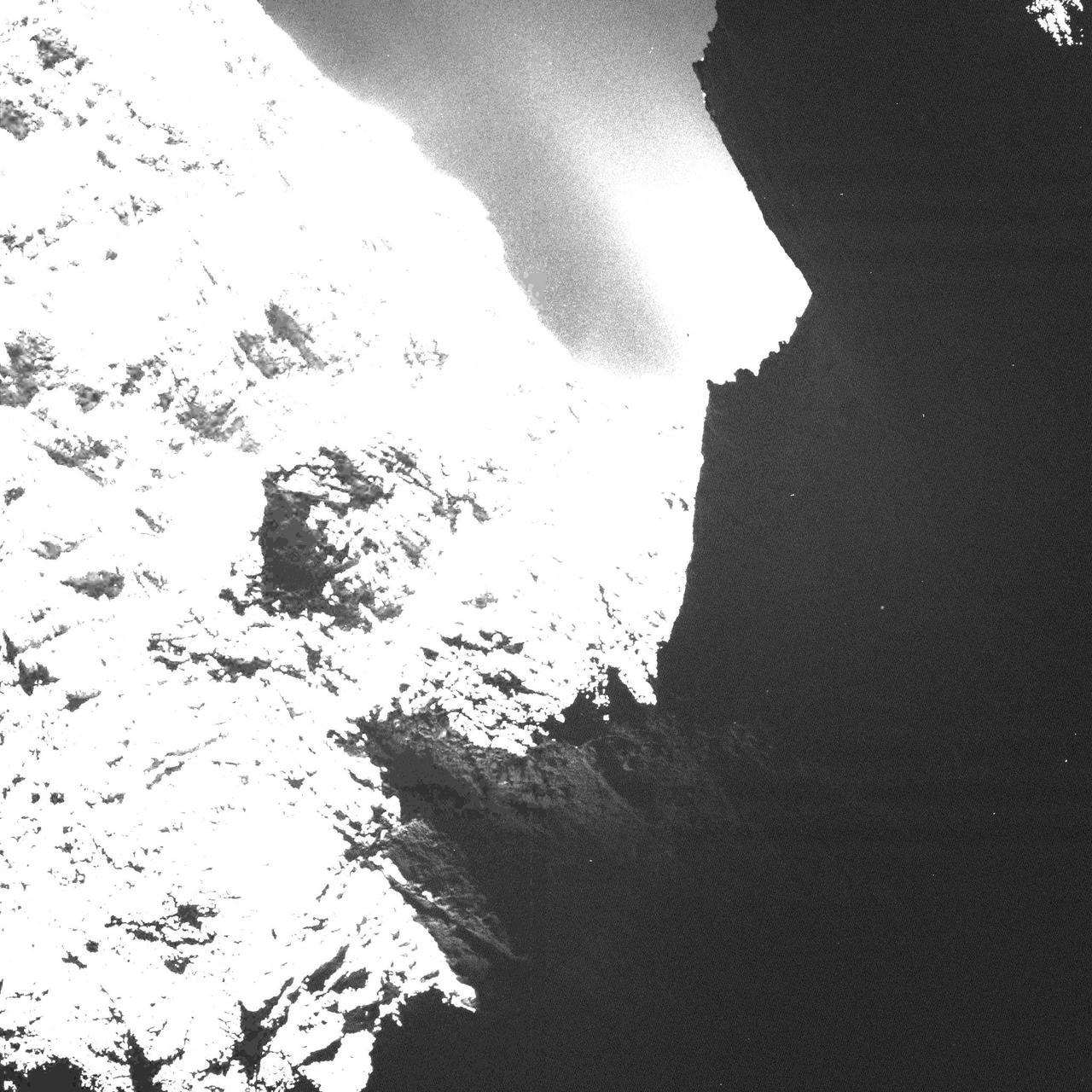
This image of comet 67P/Churyumov-Gerasimenko was obtained on October 30, 2014 by the OSIRIS scientific imaging system on the Rosetta spacecraft. The saturation of the image allows the viewer to see some surface structures on dark side of the comet.
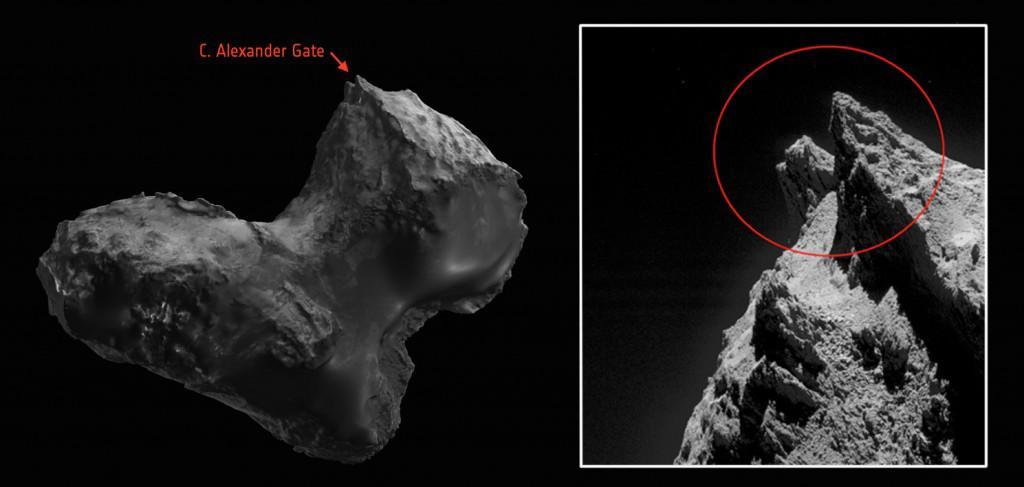
Scientists from the European Space Agency Rosetta team have honored two late team members by naming comet features after them. The comet is 67P/Churyumov-Gerasimenko, where the mission successfully landed a probe. One of the features is shown here in these Rosetta images, with the picture on the right being a close-up view. The "C. Alexander Gate" is found on the comet's smaller lobe, and is dedicated to Claudia Alexander, the U.S. project scientist from NASA's Jet Propulsion Laboratory, Pasadena, California, who passed away in July of this year. Image credit left: ESA's comet viewer http://sci.esa.int/comet-viewer. http://photojournal.jpl.nasa.gov/catalog/PIA19838
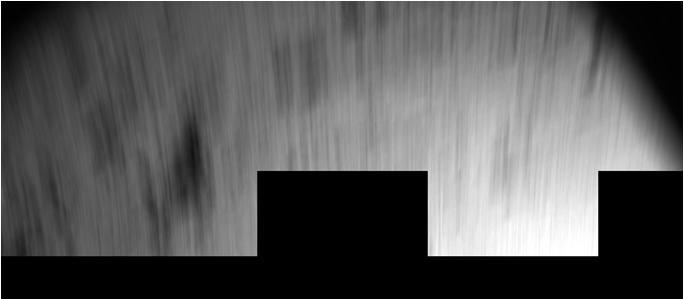
The Philae lander of the European Space Agency Rosetta mission captured this view during its first bounce after hitting the surface of comet 67P/Churyumov-Gerasimenko on Nov. 12, 2014, with blurring as a result of the lander own motion. The image from
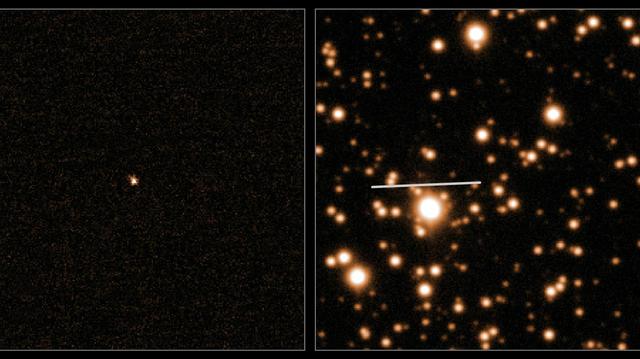
This image shows the most recent observations of the 2-mile-wide 4-kilometer-wide comet 67P/Churyumov-Gerasimenko, which is the upcoming target of the European Space Agency Rosetta mission.
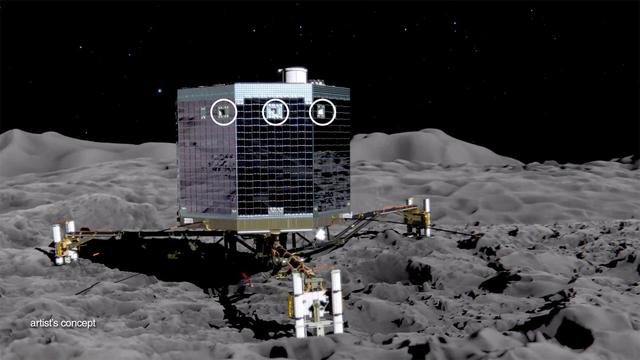
This artist concept of the Rosetta mission Philae lander on the surface of comet 67P/Churyumov-Gerasimenko, is from an animation showing the upcoming deployment of Philae and its subsequent science operations on the surface of the comet. http://photojournal.jpl.nasa.gov/catalog/PIA18891
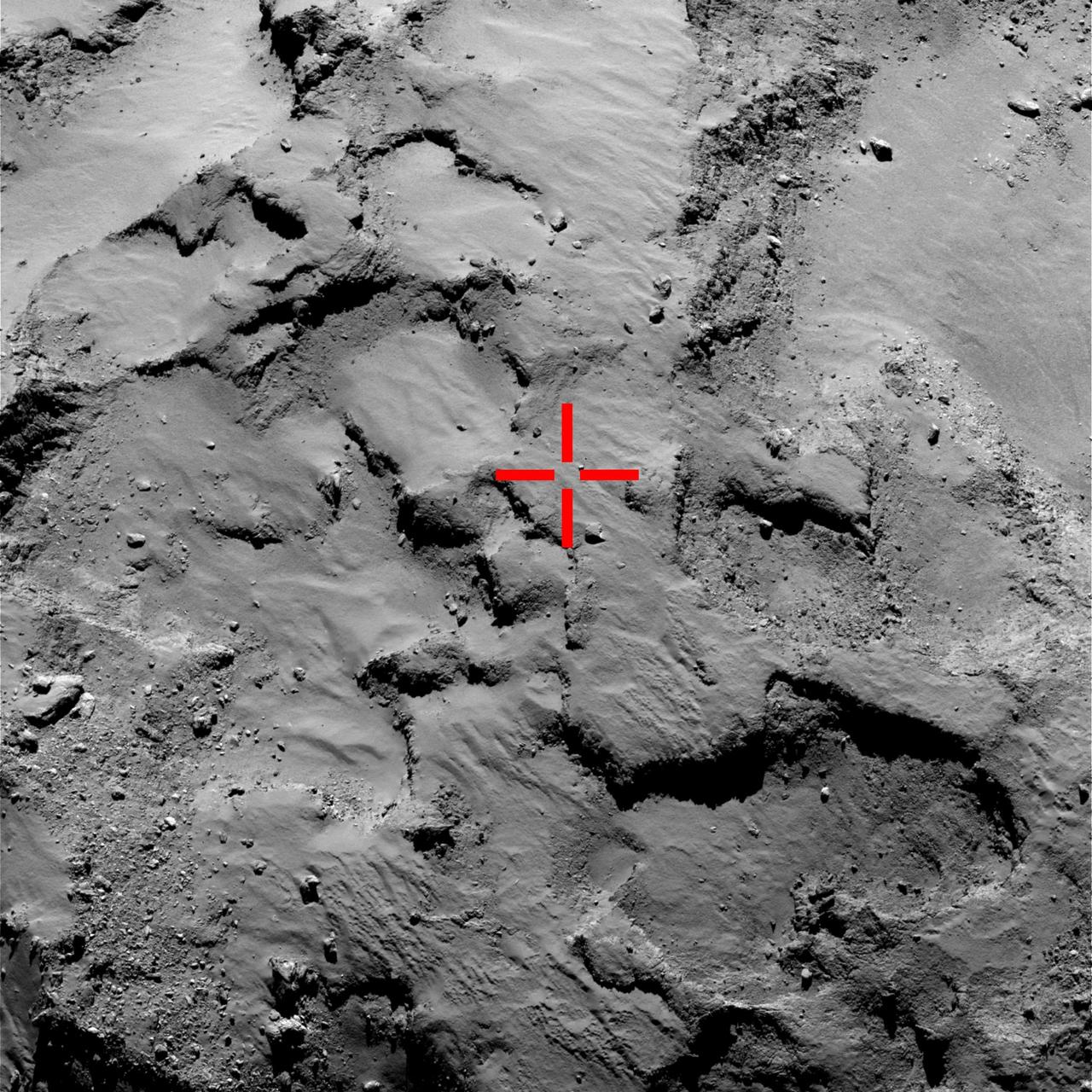
This image of comet 67P/Churyumov-Gerasimenko marks the first touchdown point of the Philae lander of the European Space Agency Rosetta mission. The image was taken by on Sept. 14, 2104, nearly two months before Philae Nov. 12 landing.
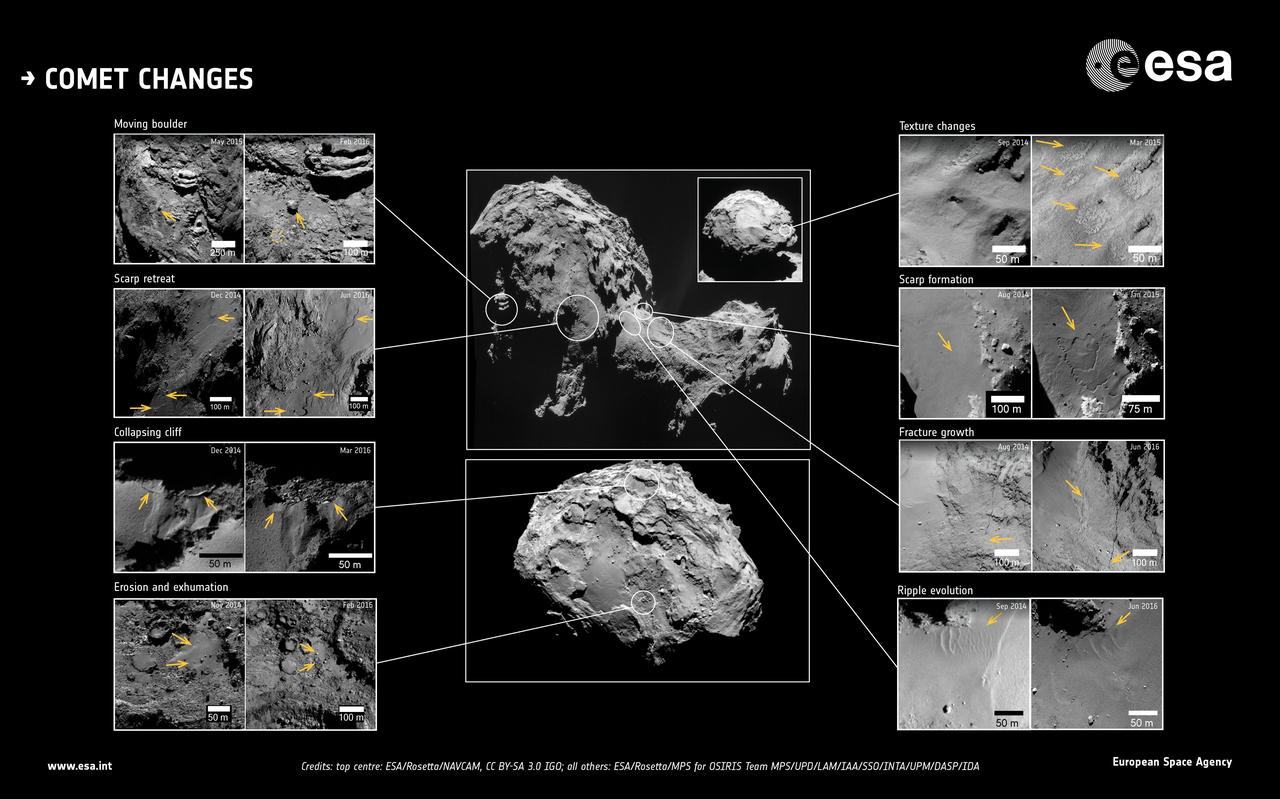
This image showcases changes identified in high-resolution images of Comet 67P/Churyumov-Gerasimenko during more than two years of monitoring by ESA's Rosetta spacecraft. The approximate locations of each feature are marked on the central context images. Dates of when the before and after images were taken are also indicated. Note that the orientation and resolution between image pairs may vary, therefore set arrows in each image point to the location of the changes, for guidance. http://photojournal.jpl.nasa.gov/catalog/PIA21566
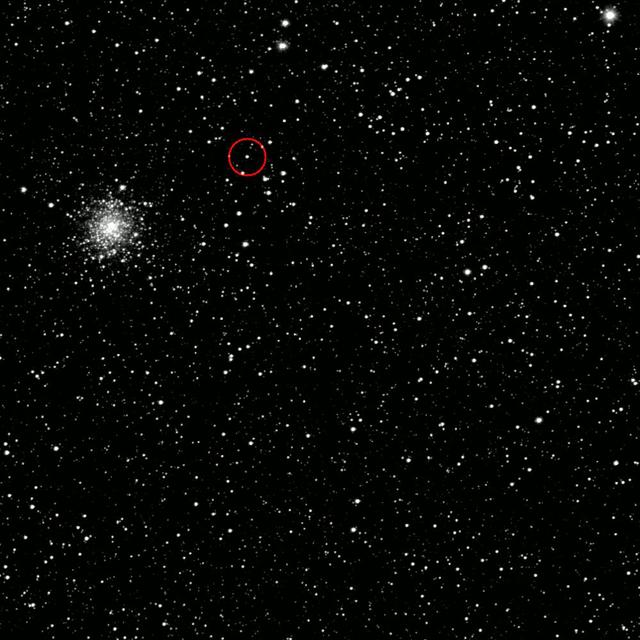
This still from a sequence of images shows comet 67P/Churyumov-Gerasimenko moving against the background star field.
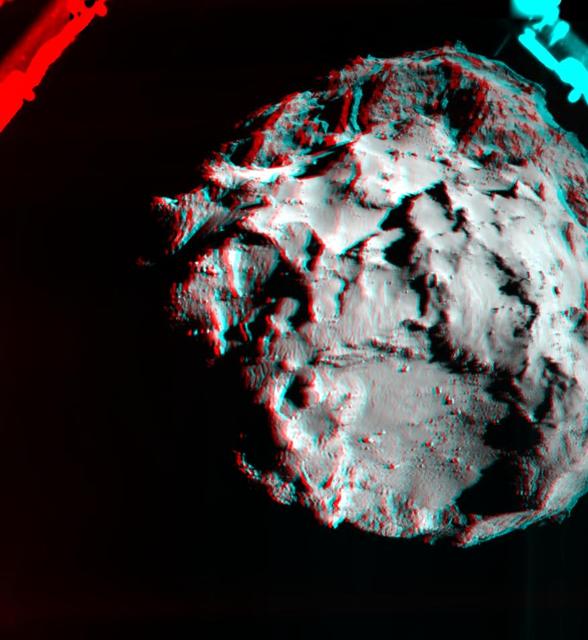
A 3D image shows what it would look like to fly over the surface of comet 67P/Churyumov-Gerasimenko. The image was generated by data collected by ESA Philae spacecraft during the decent to the spacecraft initial touchdown on the comet Nov. 12, 2014.
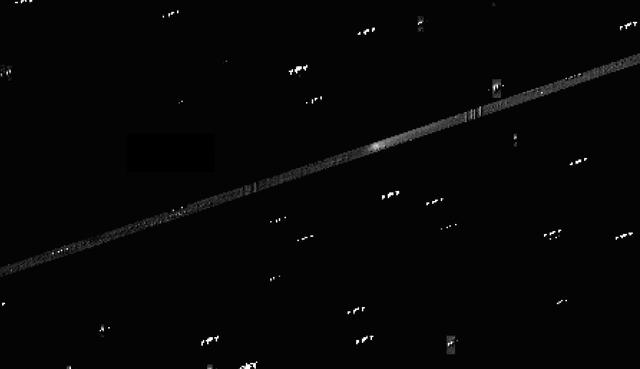
The European Space Agency's Rosetta mission concluded its study of comet 67P/Churyumov-Gerasimenko on Sept. 30, 2016. NASA's planet-hunting Kepler spacecraft observed the comet during the final month of the Rosetta mission, while the comet was not visible from Earth. This animation is composed of images from Kepler of the comet. From Sept. 7 through Sept. 20, the Kepler spacecraft, operating in its K2 mission, fixed its gaze on comet 67P. From the distant vantage point of Kepler, the comet's nucleus and tail could be observed. The long-range view from Kepler complements the closeup view of the Rosetta spacecraft, providing context for the high-resolution investigation Rosetta performed as it descended closer and closer to the comet. During the two-week period of study, Kepler took a picture of the comet every 30 minutes. The animation shows a period of 29.5 hours of observation from Sept. 17 thru Sept. 18. The comet is seen passing through Kepler's field of view from top right to bottom left, as outlined by the diagonal strip. The white dots represent stars and other regions in space studied during K2's tenth observing campaign. As a comet travels through space it sheds a tail of gas and dust. The more material that is shed, the more surface area there is to reflect sunlight. A comet's activity level can be obtained by measuring the reflected sunlight. Analyzing the Kepler data, scientists will be able to determine the amount of mass lost each day as comet 67P travels through the solar system. An animation is available at http://photojournal.jpl.nasa.gov/catalog/PIA21072
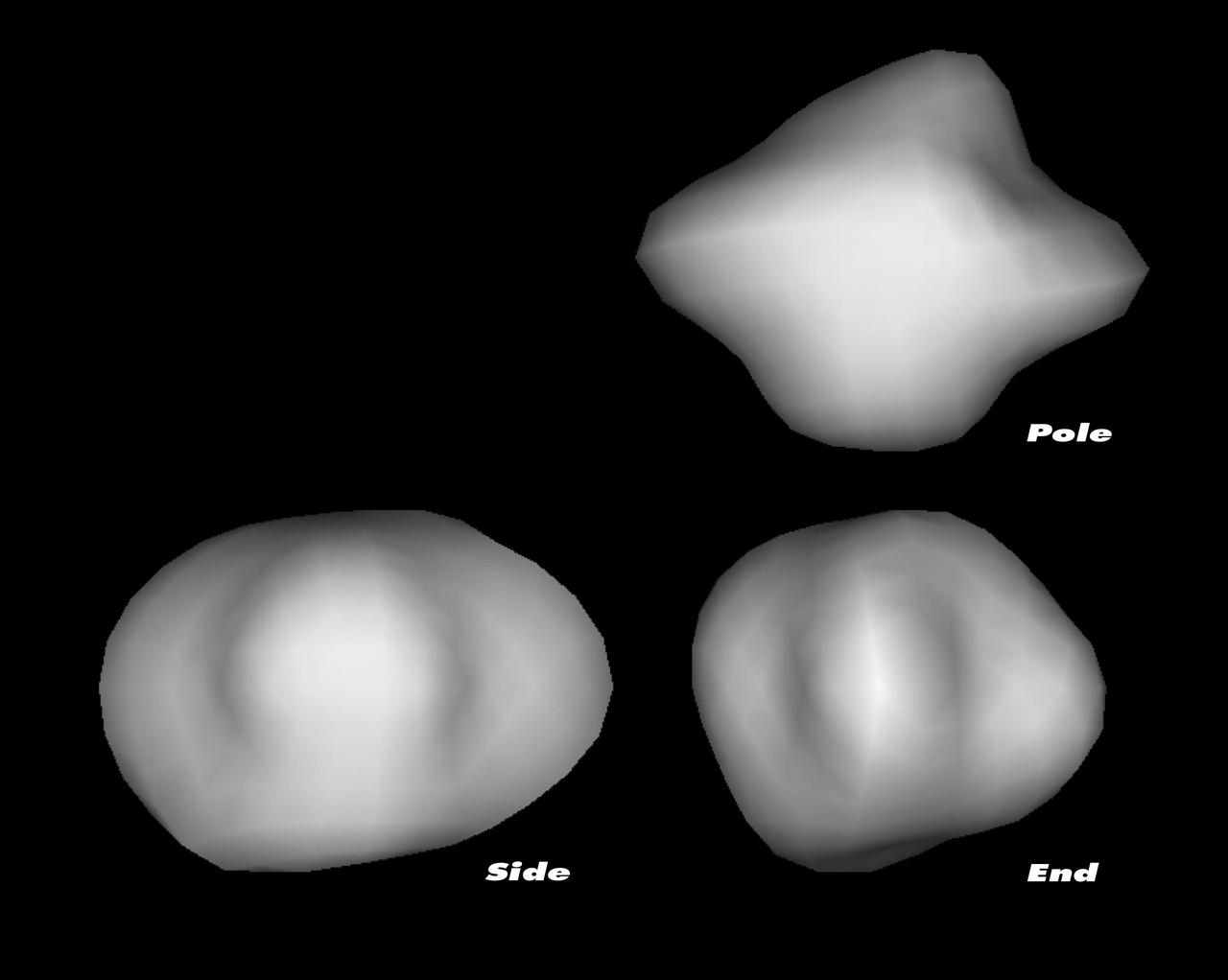
Hubble measured the size, shape and rotational period of the Rosetta mission backup target, comet 67P/Churyumov-Gerasimenko 67P/C-G.

Rosetta Stone Protein Model

Rosetta Stone Protein Model
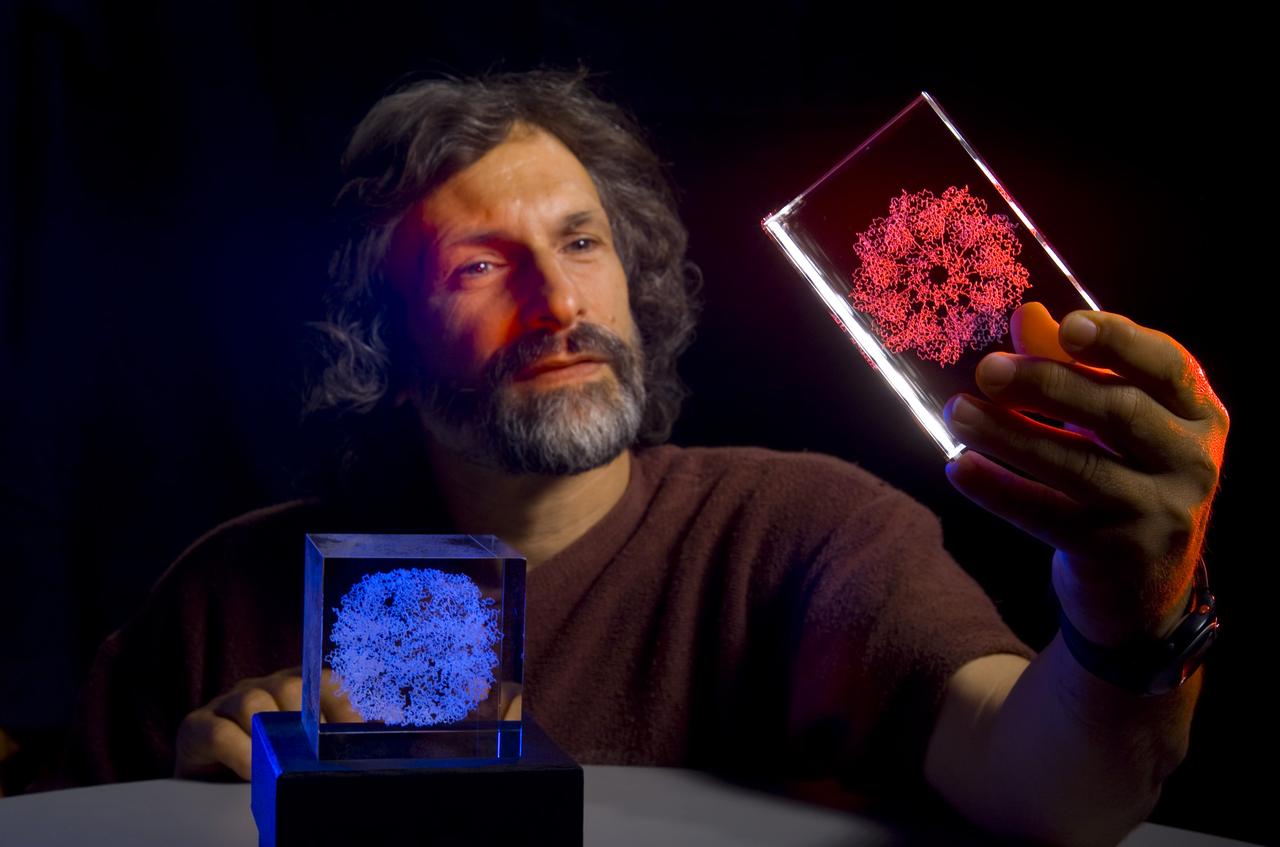
Johnathan Trent looking at Rosetta Stone Protein Model
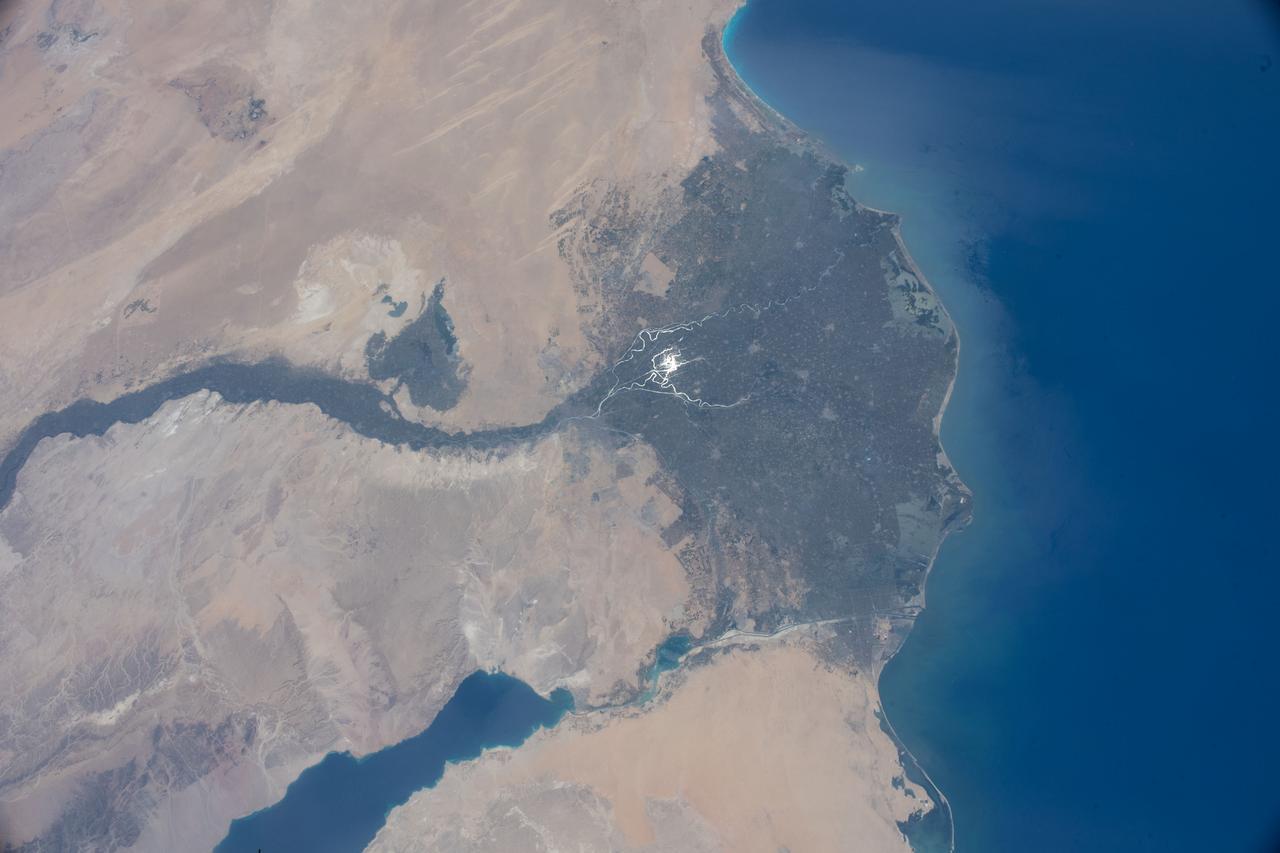
iss067e090312 (May 29, 2022) --- The Nile Delta is pictured from the International Space Station at an altitude of 262 miles above the Mediterranean Sea off the coast of Israel. The sun's glint beams off the Rosetta and the Damietta branches of the Nile River at the base of the Nile Delta.
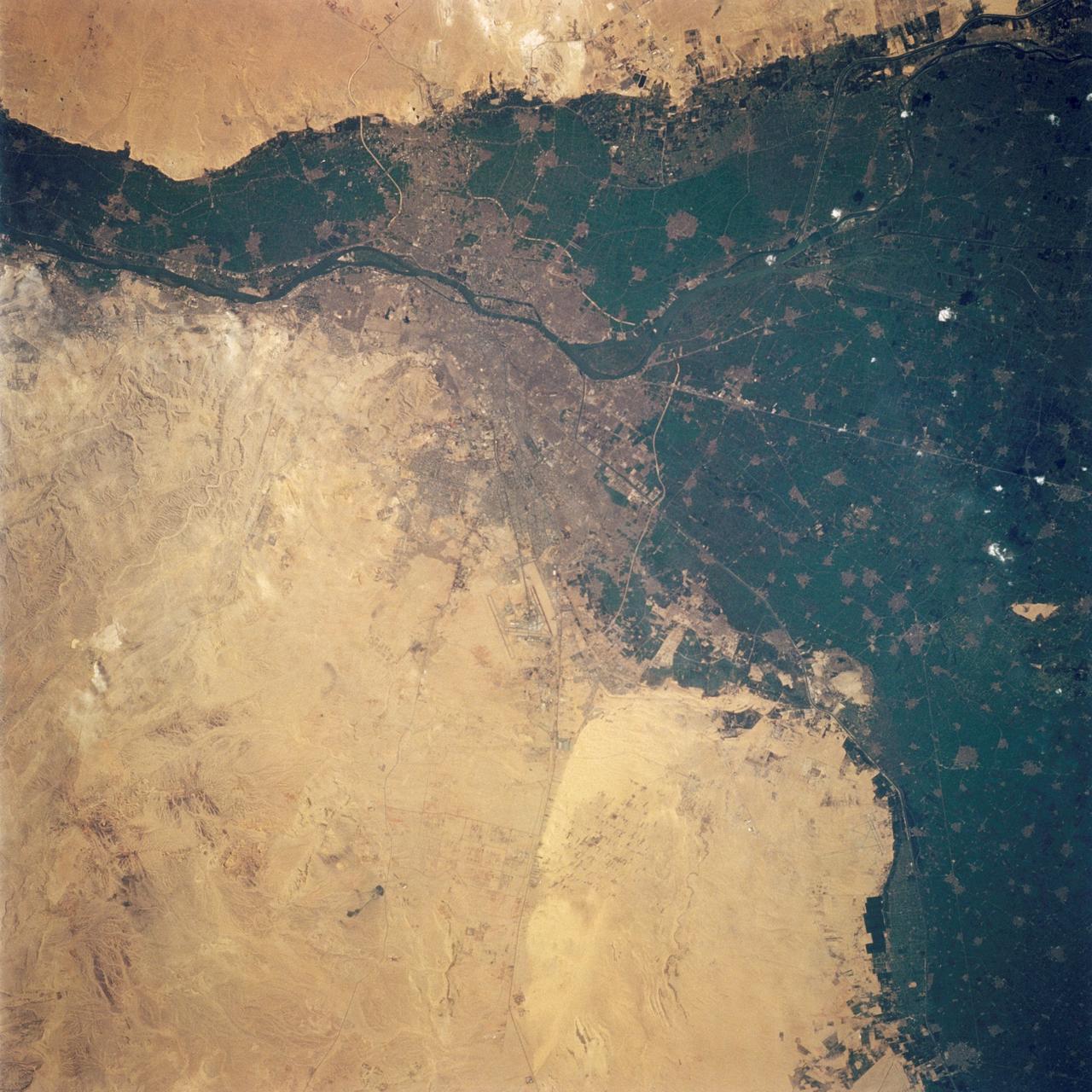
STS062-108-058 (4-18 March 1994) --- Cairo lies at the apex of the great delta of the Nile: the delta is marked by the strong greens of cultivated lands, Cairo by the gray sprawl along the river and the eastern delta apex as it develops in the direction of the airports and Suez. The city of El Giza lies on the west side of the Nile with the Giza pyramids in the desert just beyond the cultivated lands. Several major canals lead water to parts of the delta more distant from the Nile; generally these can be recognized as straighter, more engineered waterways. Towards the top left, the bifurcation of the Rosetta and Damietta branches of the Nile can be seen. These are the two major present-day veins of the Nile as it approaches the Mediterranean.
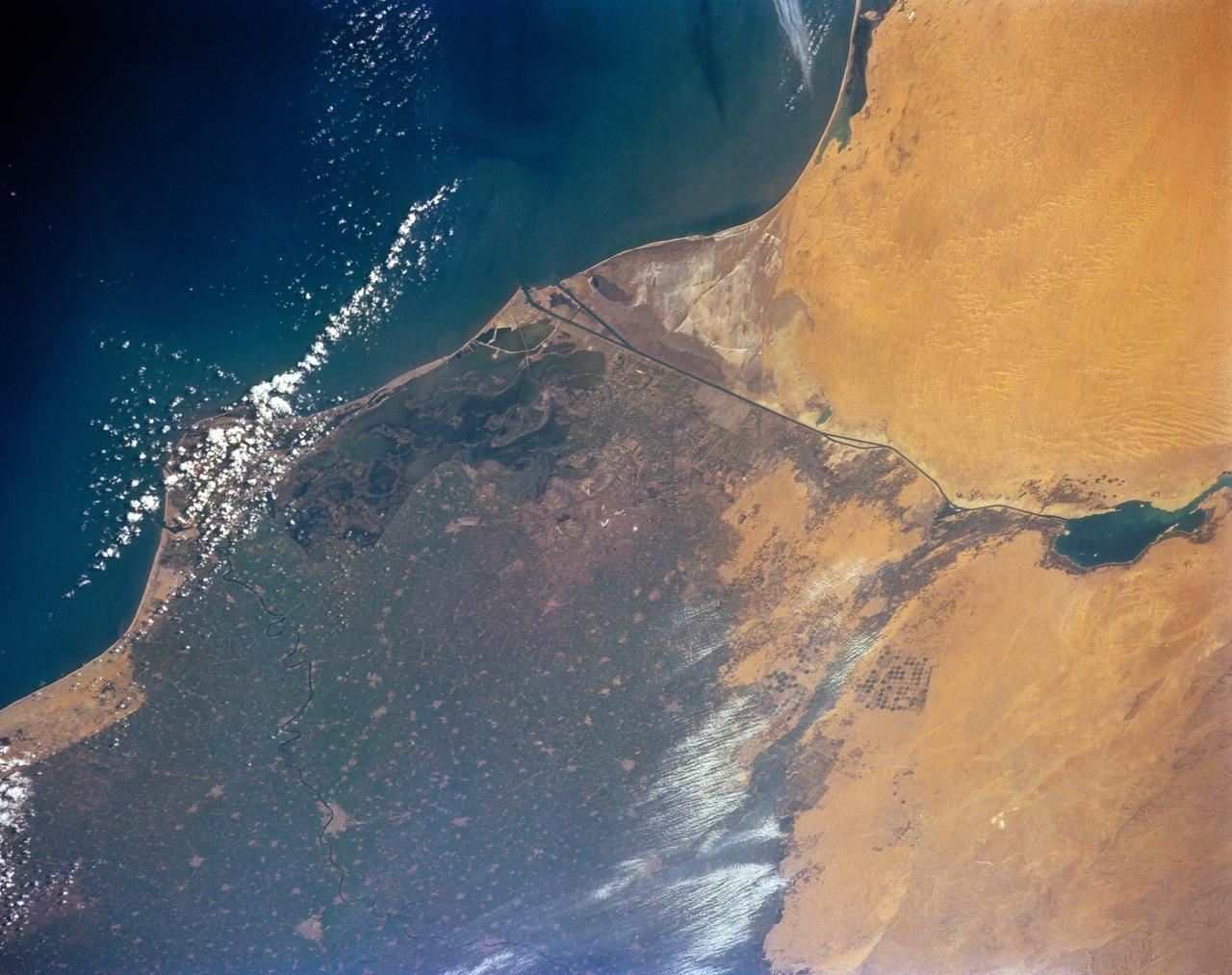
STS-56 Earth observation of the northeastern Nile Delta was photographed from the Earth-orbiting Discovery, Orbiter Vehicle (OV) 103. The branch of the Nile featured in the frame is Daimietta. The Suez Canal marks the boundary of the Nile Delta agriculture and the Sinai Desert to the right. Lake Masada, the dark waterlogged area to the west (left) of Port Said is becoming more saline as the Aswan Dam has reduced sediment downstream. This sediment reduction, according to NASA scientists studying the STS-56 photography, has resulted in increased coastal erosion and the intrusion of a salt-water lens to the ground water, particularly in the northeastern portions of the delta. Center pivot irrigation fields are located along either side of the Ramses Canal, which connects the Daimietta Nile with Great Bitter Lake. This canal has been re-dug three or four times in the past 3,000 years. Historians note that the canal's most famous use was as the departure point of the fleet of Pharaoh Necho. The fleet circumnavigated Africa clockwise from the head of the Red Sea to the Mediterranean coast of the Nile (probably the Rosetta Nile) in a three-year voyage circa 660 BC.