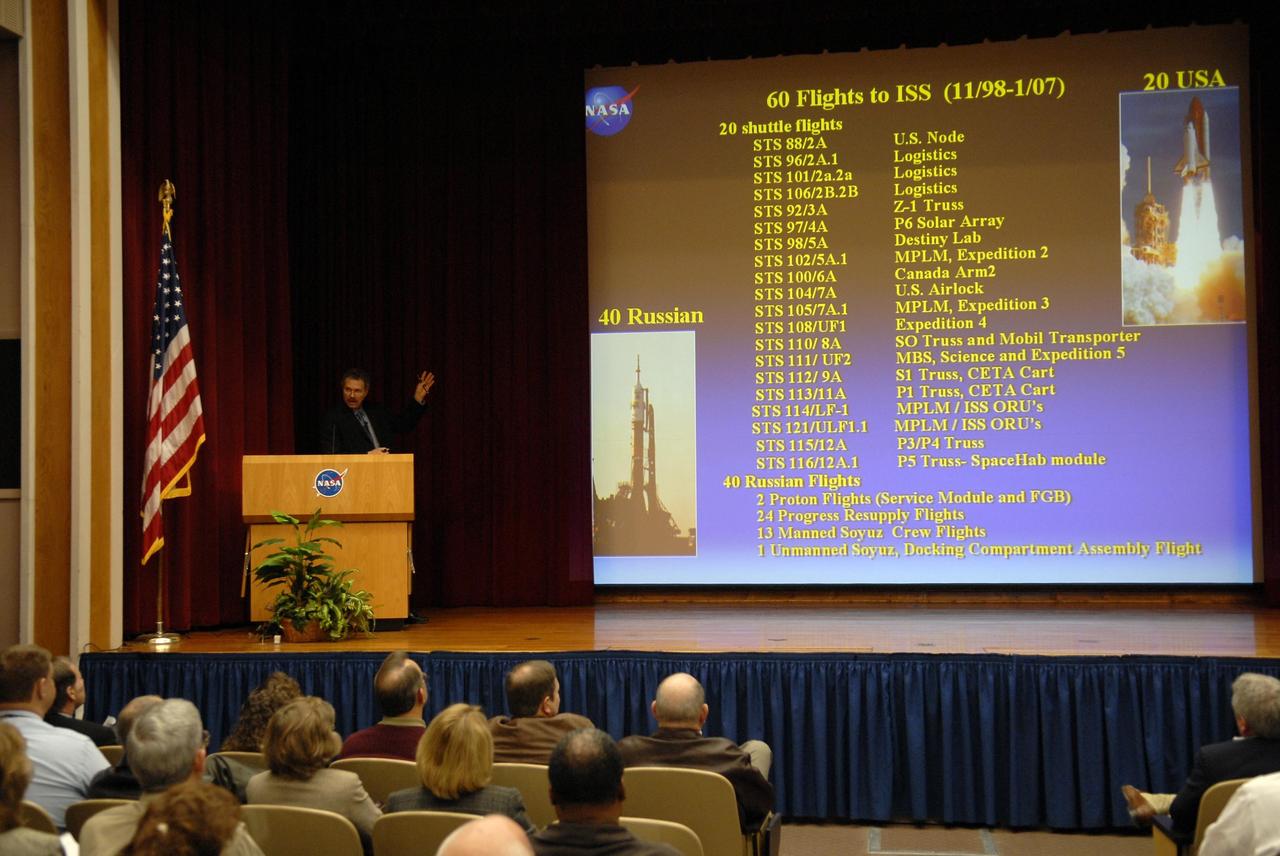
KENNEDY SPACE CENTER, FLA. -- During an all-hands meeting, Russ Romanella, director of the ISS & Spacecraft Processing Directorate, talks to employees about the shuttle flights to the space station already accomplished and those to come in the years ahead. Photo credit: NASA/Kim Shiflett
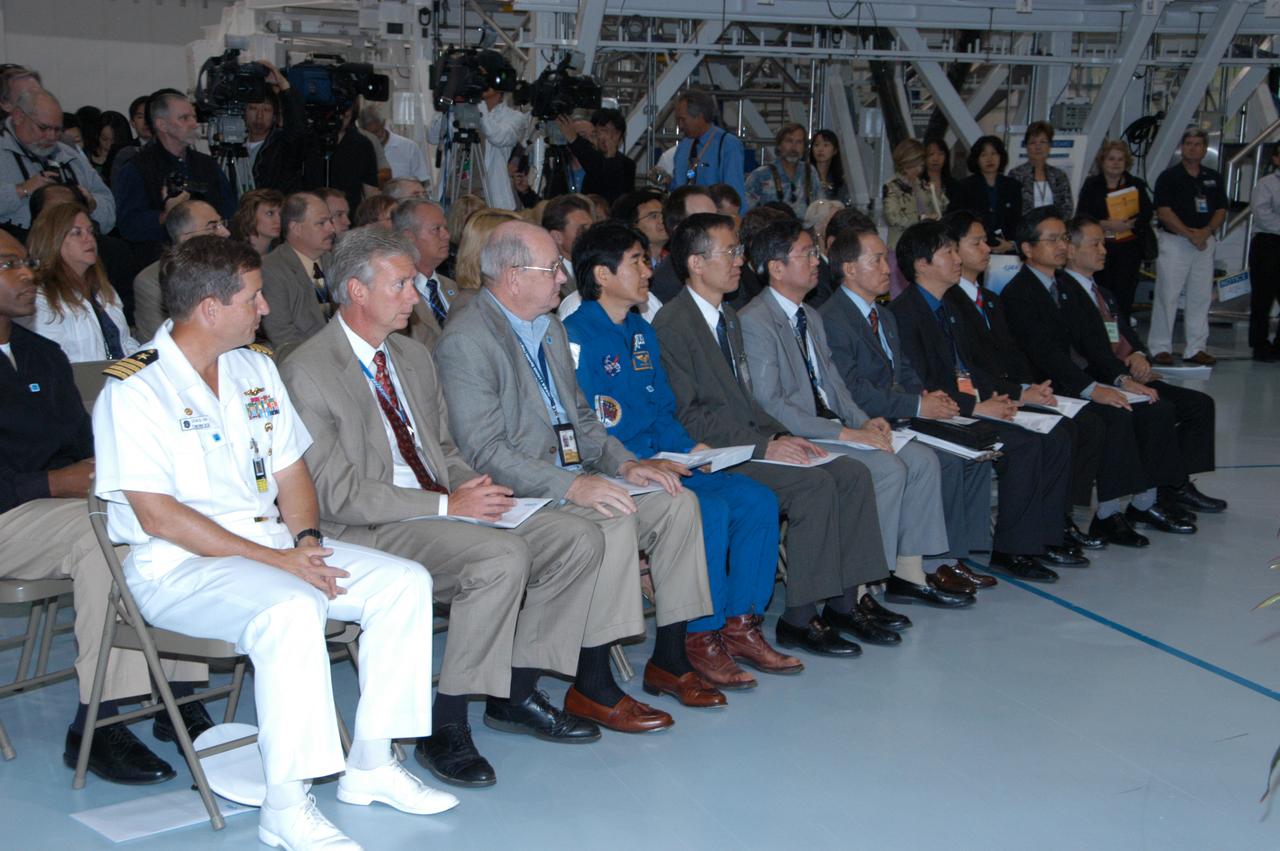
In the Space Station Processing Facility, NASA and Japanese Aerospace and Exploration Agency (JAXA) officials welcome the arrival of the Experiment Logistics Module Pressurized Section for the Japanese Experiment Module, or JEM, to the Kennedy Space Center. Seen here at right are JAXA representatives, including Japanese astronaut Takao Doi (center of front row), who is a crew member for mission STS-123 that will deliver the module to the space station. The new International Space Station component arrived at Kennedy March 12 to begin preparations for its future launch on mission STS-123. It will serve as an on-orbit storage area for materials, tools and supplies. It can hold up to eight experiment racks and will attach to the top of another larger pressurized module.
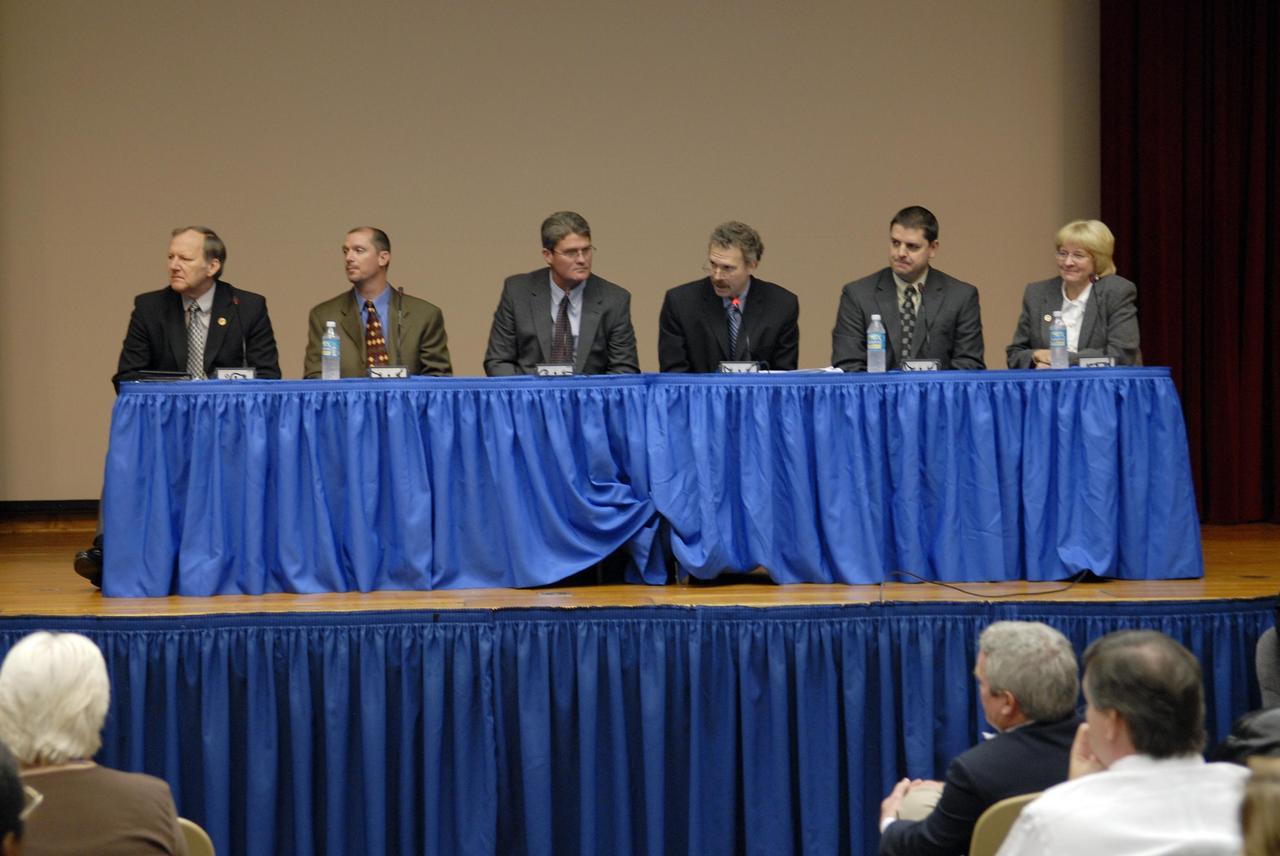
KENNEDY SPACE CENTER, FLA. -- Participants in the all-hands meeting respond to questions from the audience. Topics discussed included the year ahead at KSC. Seated at the table (from left) are Steve Francois, manager of Launch Services Program; Pepper Phillips, deputy director of the Constellation Program office; Parsons; Russ Romanella, director of the ISS & Spacecraft Processing Directorate; Jeff Angermeier, chief of the Project Control office in the Launch Vehicle Processing Directorate; and Shannon Bartell, director of NASA Safety and Mission Assurance. Photo credit: NASA/Kim Shiflett
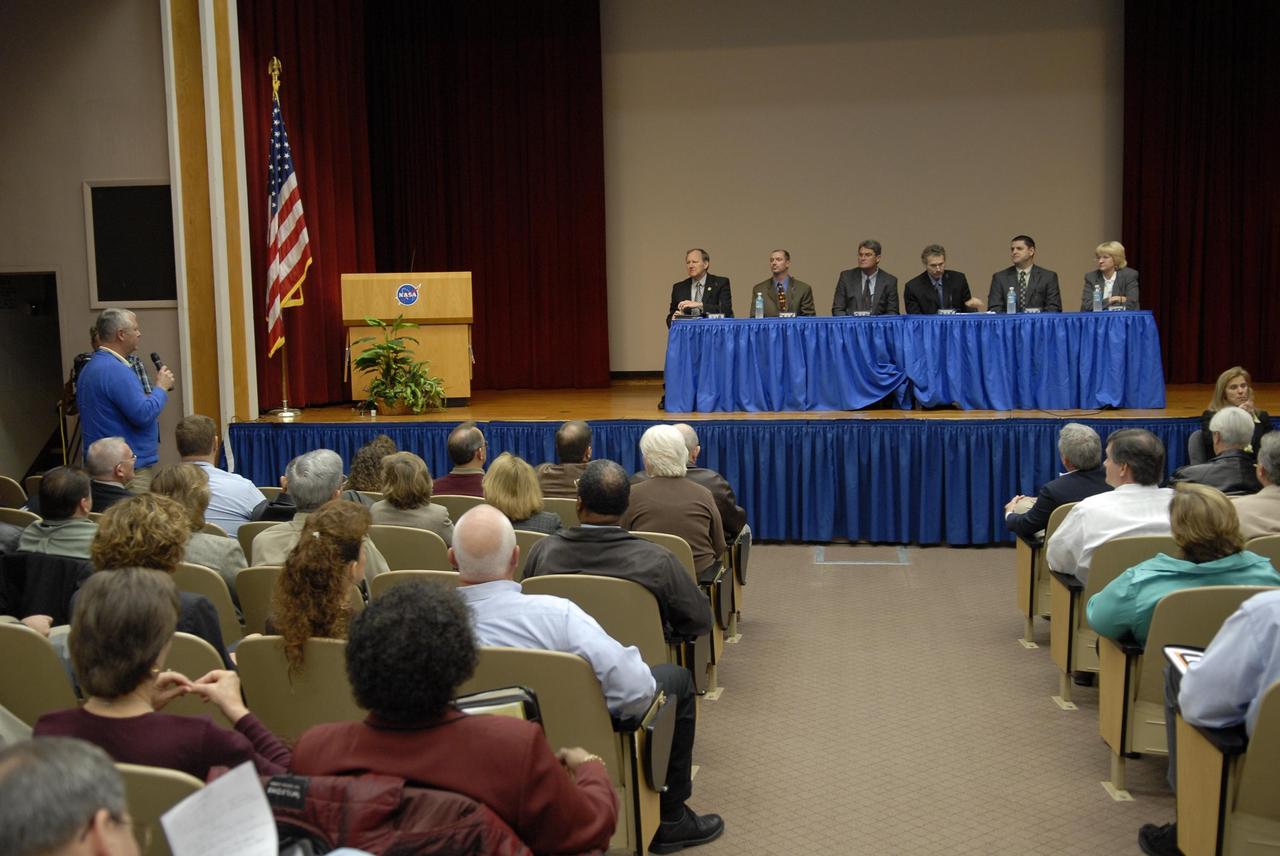
KENNEDY SPACE CENTER, FLA. -- During an all-hands meeting led by Center Director Bill Parsons (center left at the table), an employee asks for more information. Topics discussed included the year ahead at KSC. At the table on stage (from left) are Steve Francois, manager of Launch Services Program; Pepper Phillips, deputy director of the Constellation Program office; Parsons; Russ Romanella, director of the ISS & Spacecraft Processing Directorate; Jeff Angermeier, chief of the Project Control office in the Launch Vehicle Processing Directorate; and Shannon Bartell, director of NASA Safety and Mission Assurance. Photo credit: NASA/Kim Shiflett
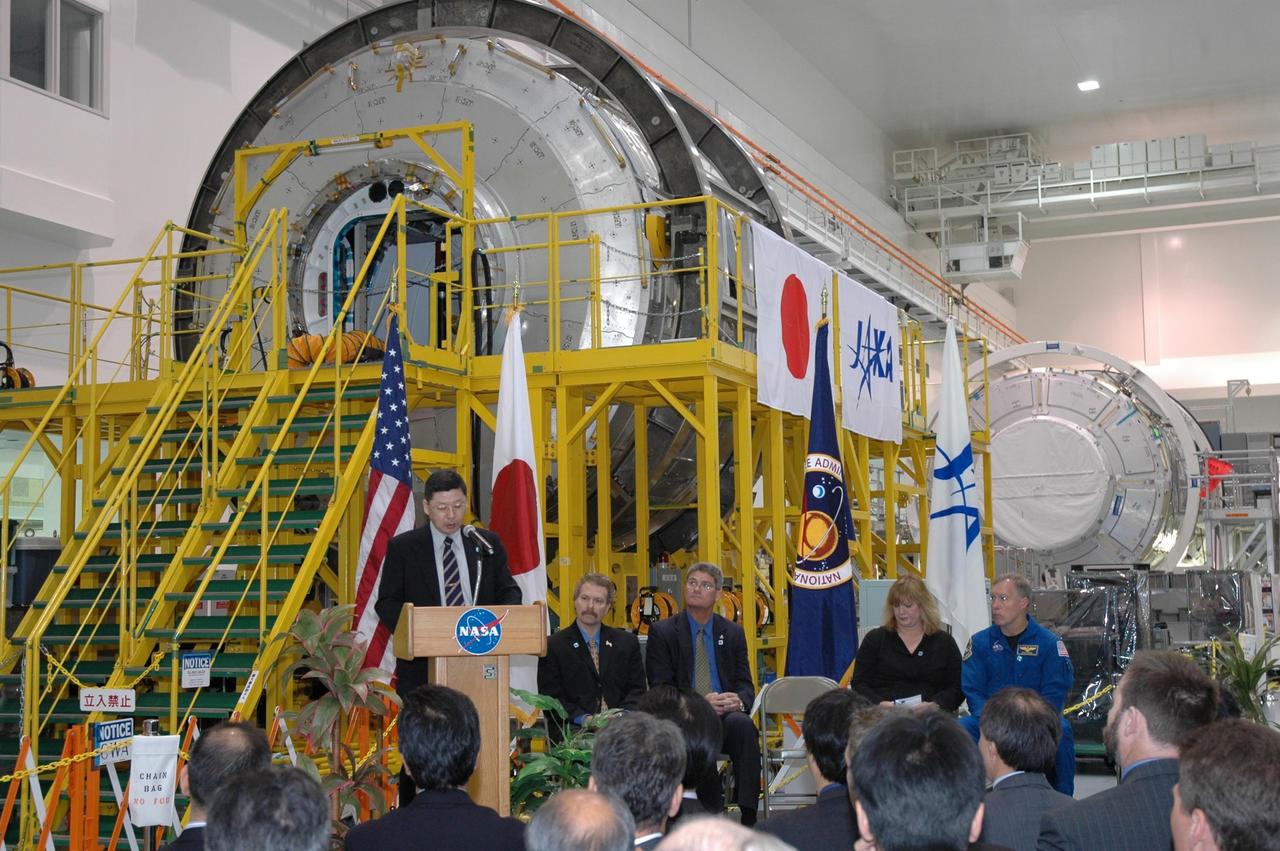
KENNEDY SPACE CENTER, FLA. -- In the Space Station Processing Facility, NASA and Japanese Aerospace and Exploration Agency (JAXA) officials welcome the arrival of the Experiment Logistics Module Pressurized Section for the Japanese Experiment Module, or JEM, to the Kennedy Space Center. At the podium is Dr. Kichiro Imagawa, project manager of the JEM Development Project Team for JAXA. Seated at right are Russ Romanella, director of International Space Station and Spacecraft Processing; Bill Parsons, director of Kennedy Space Center; Melanie Saunders, associate manager of the International Space Station Program at Johnson Space Center; and Dominic Gorie, commander on mission STS-123 that will deliver the module to the space station. The logistics module will serve as an on-orbit storage area for materials, tools and supplies. It can hold up to eight experiment racks and will attach to the top of another larger pressurized module. Photo credit: NASA/George Shelton
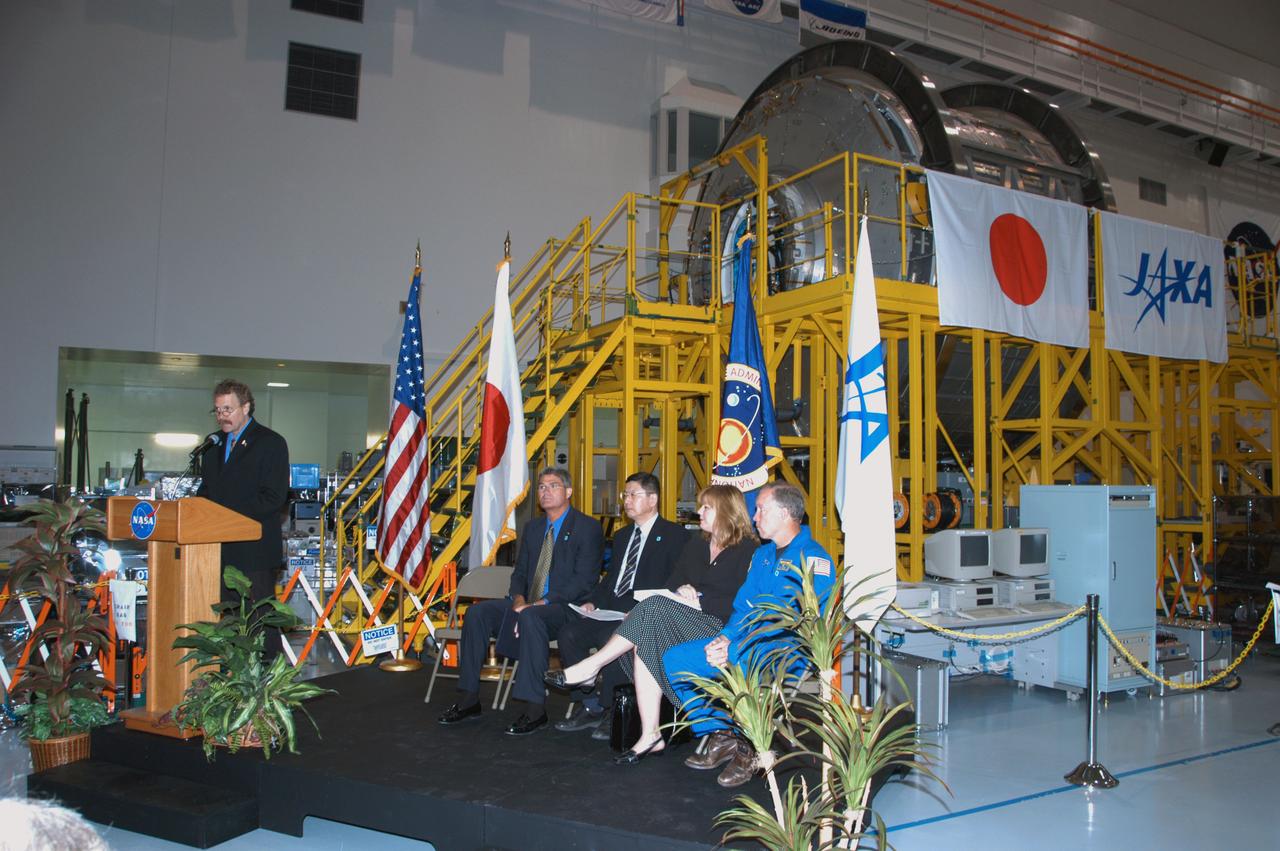
In the Space Station Processing Facility, NASA and Japanese Aerospace and Exploration Agency (JAXA) officials welcome the arrival of the Experiment Logistics Module Pressurized Section for the Japanese Experiment Module, or JEM, to the Kennedy Space Center. At the podium is Russ Romanella, director of International Space Station and Spacecraft Processing. Seated at right are Bill Parsons, director of Kennedy Space Center; Dr. Kichiro Imagawa, project manager of the JEM Development Project Team for JAXA; Melanie Saunders, associate manager of the International Space Station Program at Johnson Space Center; and Dominic Gorie, commander on mission STS-123 that will deliver the module to the space station. The new International Space Station component arrived at Kennedy March 12 to begin preparations for its future launch on mission STS-123. It will serve as an on-orbit storage area for materials, tools and supplies. It can hold up to eight experiment racks and will attach to the top of another larger pressurized module.
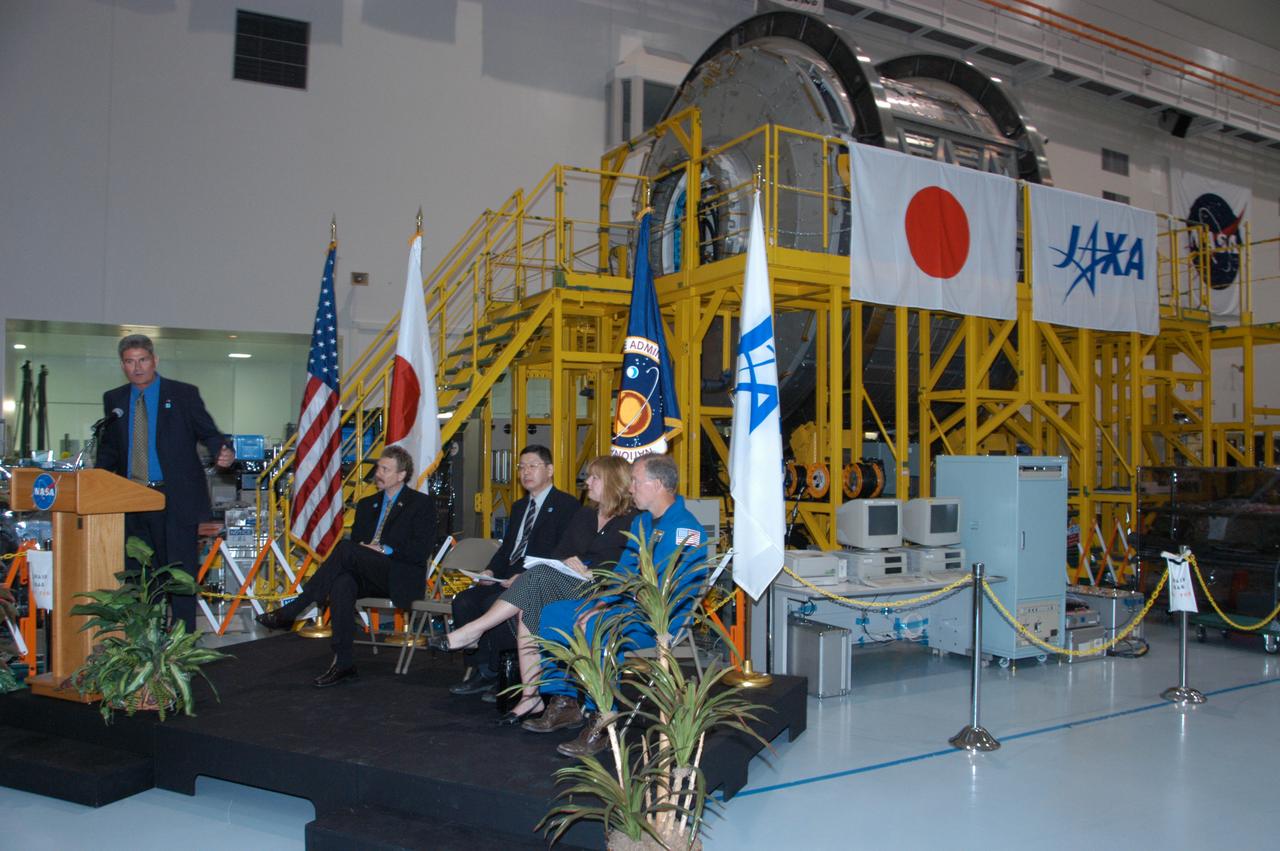
In the Space Station Processing Facility, NASA and Japanese Aerospace and Exploration Agency (JAXA) officials welcome the arrival of the Experiment Logistics Module Pressurized Section for the Japanese Experiment Module, or JEM, to the Kennedy Space Center. At the podium is Bill Parsons, director of Kennedy Space Center. Seated at right are Russ Romanella, director of International Space Station and Spacecraft Processing; Dr. Kichiro Imagawa, project manager of the JEM Development Project Team for JAXA; Melanie Saunders, associate manager of the International Space Station Program at Johnson Space Center; and Dominic Gorie, commander on mission STS-123 that will deliver the module to the space station. The new International Space Station component arrived at Kennedy March 12 to begin preparations for its future launch on mission STS-123. It will serve as an on-orbit storage area for materials, tools and supplies. It can hold up to eight experiment racks and will attach to the top of another larger pressurized module.
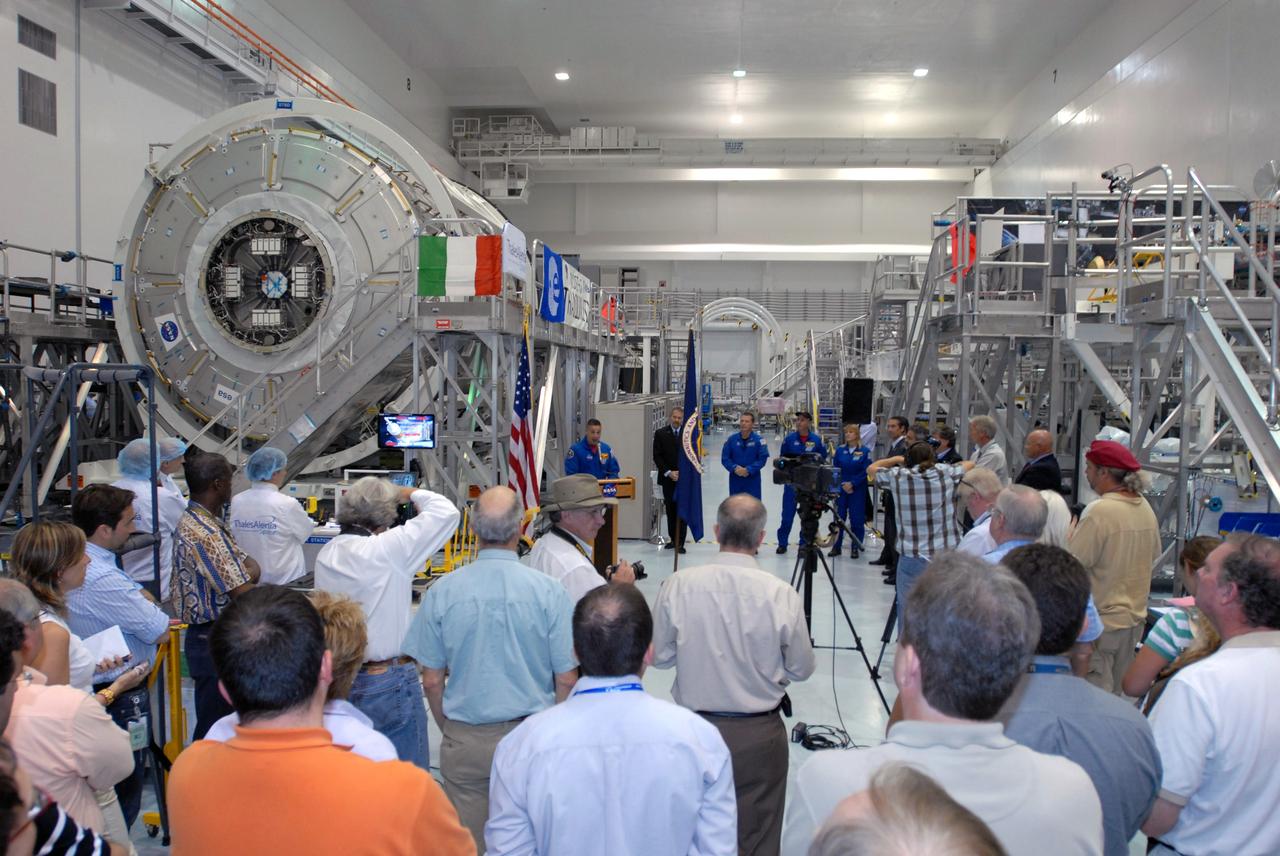
CAPE CANAVERAL, Fla. – During a media event at NASA's Kennedy Space Center in Florida to showcase the newest section of the International Space Station, the Tranquility node, STS-130 Commander George Zamka speaks to the media and guests. Tranquility will be delivered to the station during space shuttle Endeavour's STS-130 mission, targeted for launch in February 2010. Others present at right of Zamka are Russ Romanella, director of the ISS and Payload Processing Directorate, STS-130 Pilot Terry Virts and Mission Specialists Stephen Robinson and Kathryn Hire, Philippe Deloo, ISS Nodes project manager with the European Space Agency, and Rafael Garcia, ISS Nodes and Express Logistics Carrier project manager with NASA's Johnson Space Center. Managers from NASA, the European Space Agency, Thales Alenia Space and Boeing -- the organizations involved in building and processing the module for flight -- were available for a question-and-answer session during the event. Tranquility will be delivered to the station during space shuttle Endeavour's STS-130 mission, targeted for launch in February 2010. Photo credit: NASA/Jim Grossmann
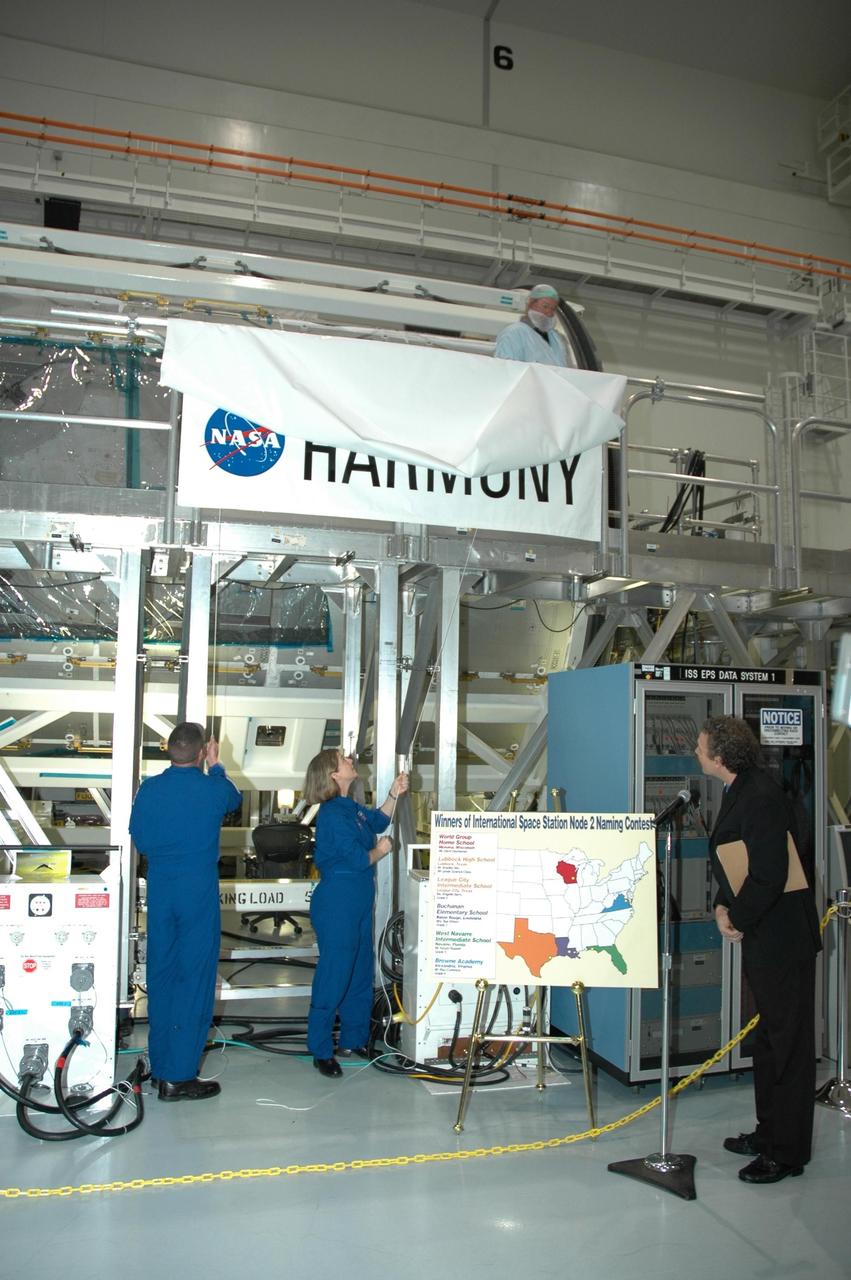
KENNEDY SPACE CENTER, FLA. -- In the Space Station Processing Facility, Mission STS-120 Pilot George Zamka (left) and Commander Pam Melroy begin to unveil the Node 2 module's new name, Harmony, as Russ Romanella, director of International Space Station and Spacecraft Processing presides over the ceremony. The name, Harmony, was chosen from an academic competition involving thousands of students in kindergarten through high school. The Node 2 Challenge required students to learn about the International Space Station, build a scale model of the module, and write an essay explaining their proposed name. This will be the first U.S. piece of the space station named by someone other than a NASA official. Node 2 is a pressurized module that will act as a connecting port and passageway to additional international science labs and supply spacecraft. It also will be a work platform for the station's robotic arm. The module is scheduled to fly on mission STS-120 aboard Space Shuttle Atlantis targeted for later this year. Photo credit: NASA/Jim Grossmann
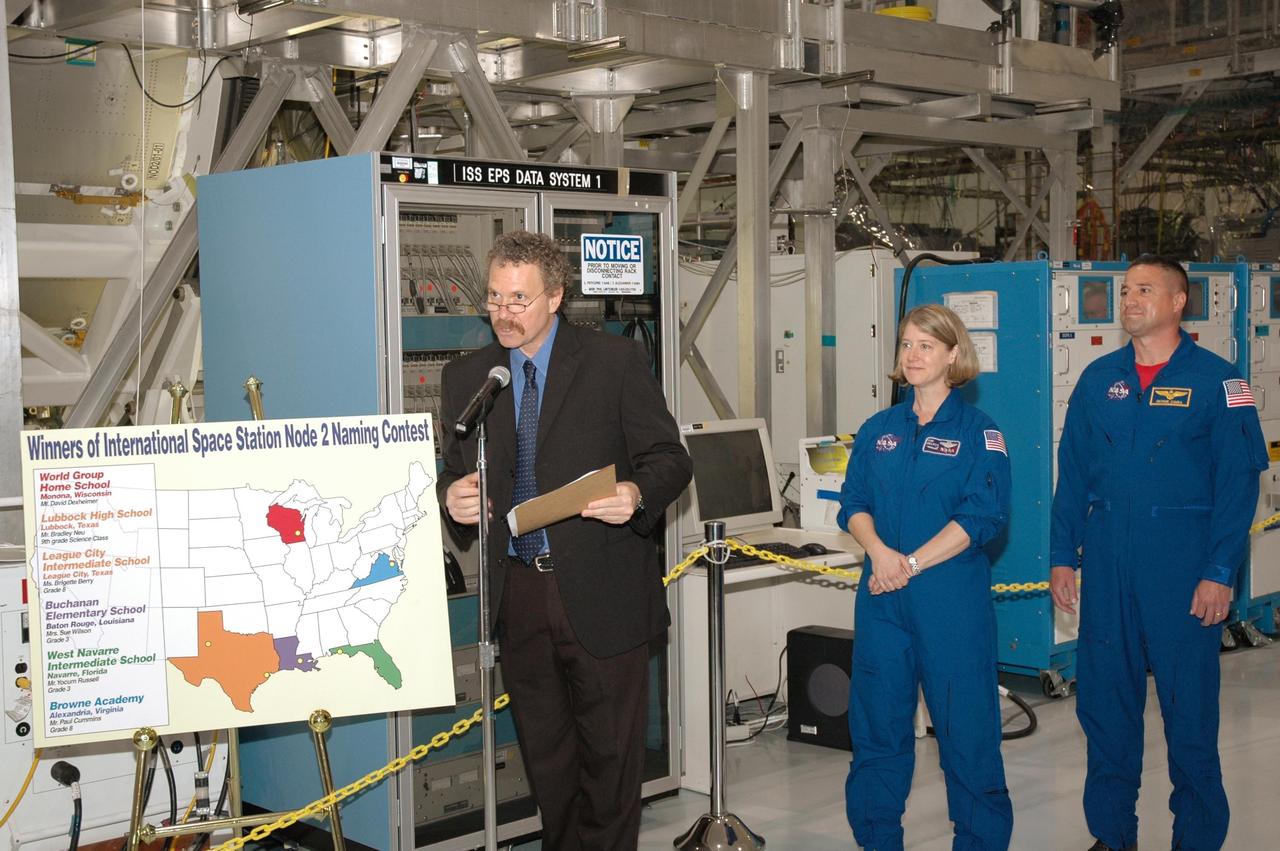
KENNEDY SPACE CENTER, FLA. -- In the Space Station Processing Facility, Russ Romanella (left), director of International Space Station and Spacecraft Processing, presides over a ceremony to unveil the new name of NASA's Node 2 module, Harmony. With him are Mission STS-120 Commander Pam Melroy and Pilot George Zamka. The name, Harmony, was chosen from an academic competition involving thousands of students in kindergarten through high school. The Node 2 Challenge required students to learn about the International Space Station, build a scale model of the module, and write an essay explaining their proposed name. This will be the first U.S. piece of the space station named by someone other than a NASA official. Node 2 is a pressurized module that will act as a connecting port and passageway to additional international science labs and supply spacecraft. It also will be a work platform for the station's robotic arm. The module is scheduled to fly on mission STS-120 aboard Space Shuttle Atlantis targeted for later this year. Photo credit: NASA/Jim Grossmann
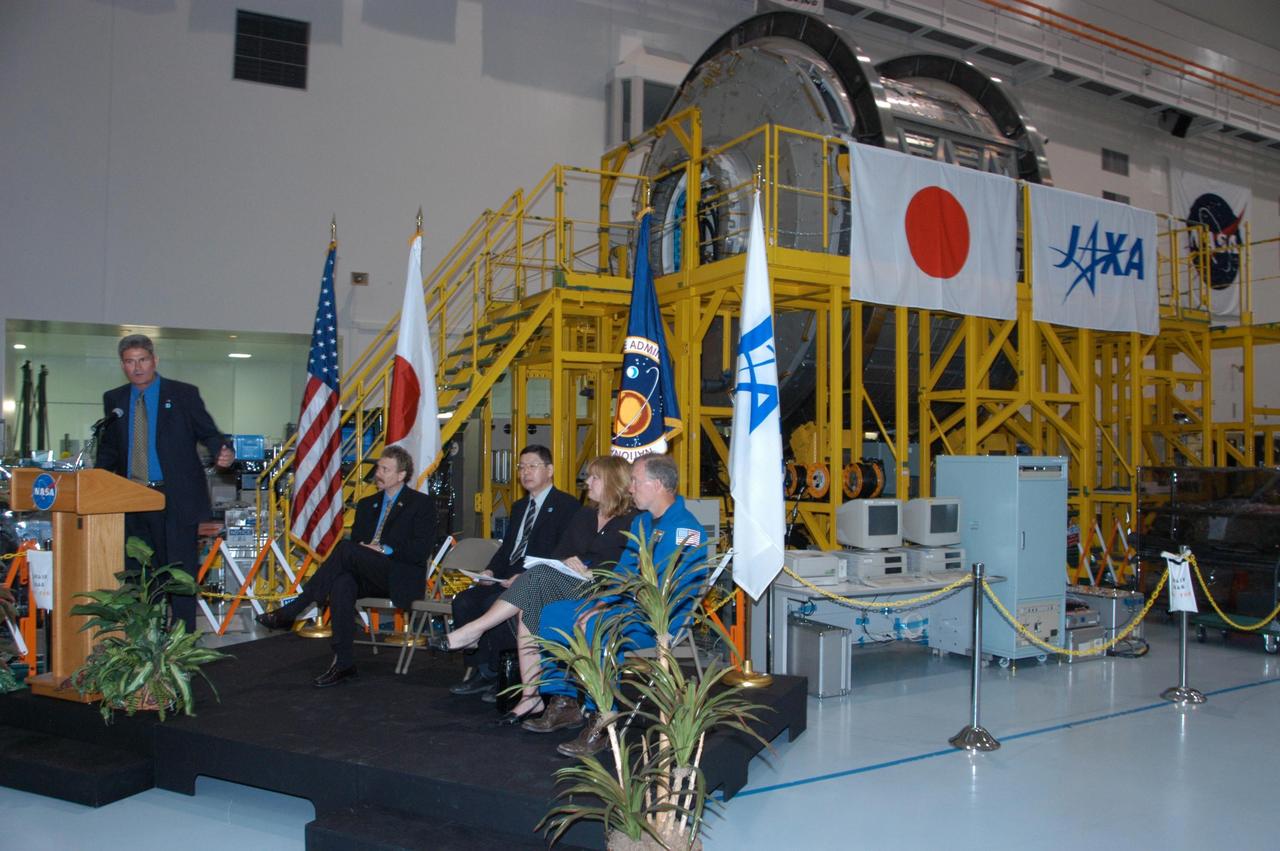
KENNEDY SPACE CENTER, FLA. -- In the Space Station Processing Facility, NASA and Japanese Aerospace and Exploration Agency (JAXA) officials welcome the arrival of the Experiment Logistics Module Pressurized Section for the Japanese Experiment Module, or JEM, to the Kennedy Space Center. At the podium is Bill Parsons, director of Kennedy Space Center. Seated at right are Russ Romanella, director of International Space Station and Spacecraft Processing; Dr. Kichiro Imagawa, project manager of the JEM Development Project Team for JAXA; Melanie Saunders, associate manager of the International Space Station Program at Johnson Space Center; and Dominic Gorie, commander on mission STS-123 that will deliver the module to the space station. The new International Space Station component arrived at Kennedy March 12 to begin preparations for its future launch on mission STS-123. It will serve as an on-orbit storage area for materials, tools and supplies. It can hold up to eight experiment racks and will attach to the top of another larger pressurized module. Photo credit: NASA/George Shelton
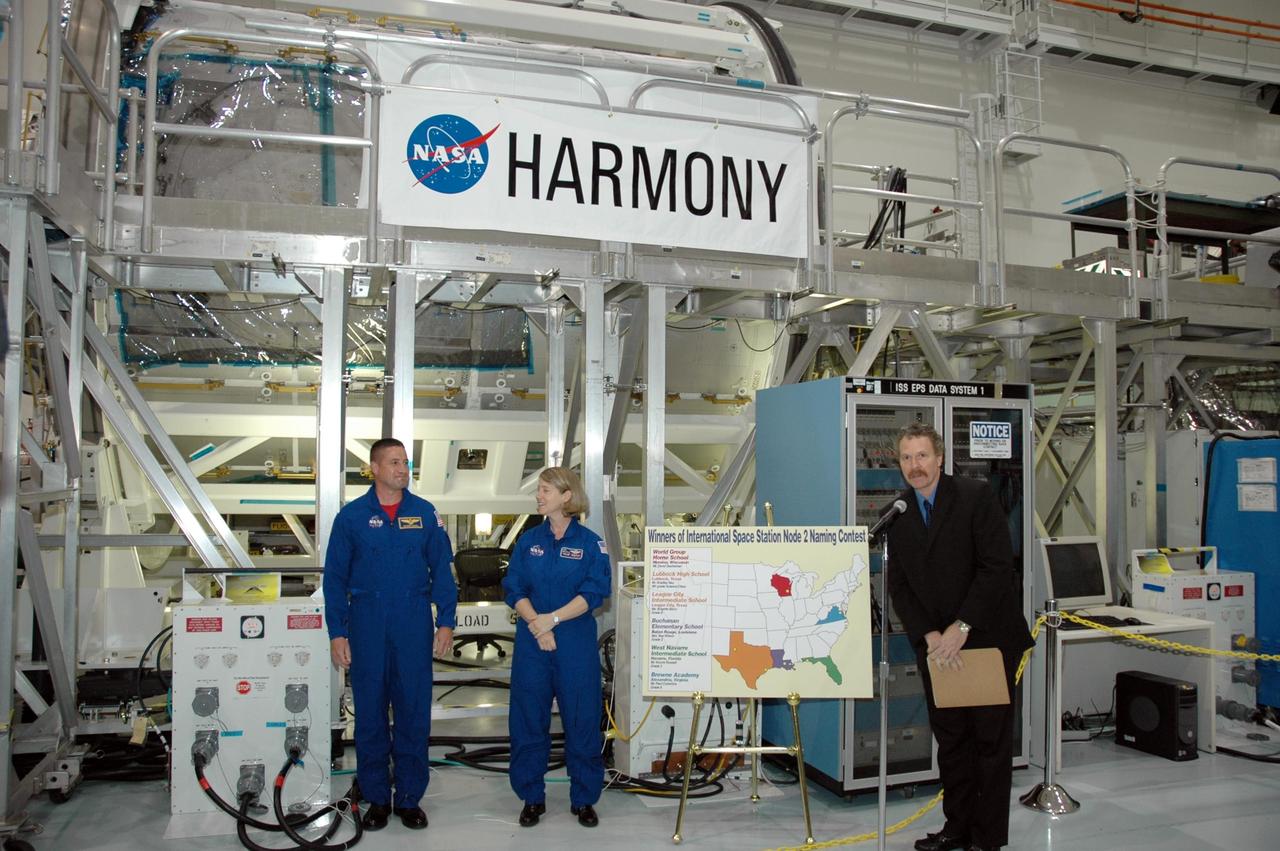
KENNEDY SPACE CENTER, FLA. -- In the Space Station Processing Facility, Mission STS-120 Pilot George Zamka (left) and Commander Pam Melroy stand in front of the Node 2 module with it's new name, Harmony, unveiled, as Russ Romanella, director of International Space Station and Spacecraft Processing presides over the ceremony. The name, Harmony, was chosen from an academic competition involving thousands of students in kindergarten through high school. The Node 2 Challenge required students to learn about the International Space Station, build a scale model of the module, and write an essay explaining their proposed name. This will be the first U.S. piece of the space station named by someone other than a NASA official. Node 2 is a pressurized module that will act as a connecting port and passageway to additional international science labs and supply spacecraft. It also will be a work platform for the station's robotic arm. The module is scheduled to fly on mission STS-120 aboard Space Shuttle Atlantis targeted for later this year. Photo credit: NASA/Jim Grossmann
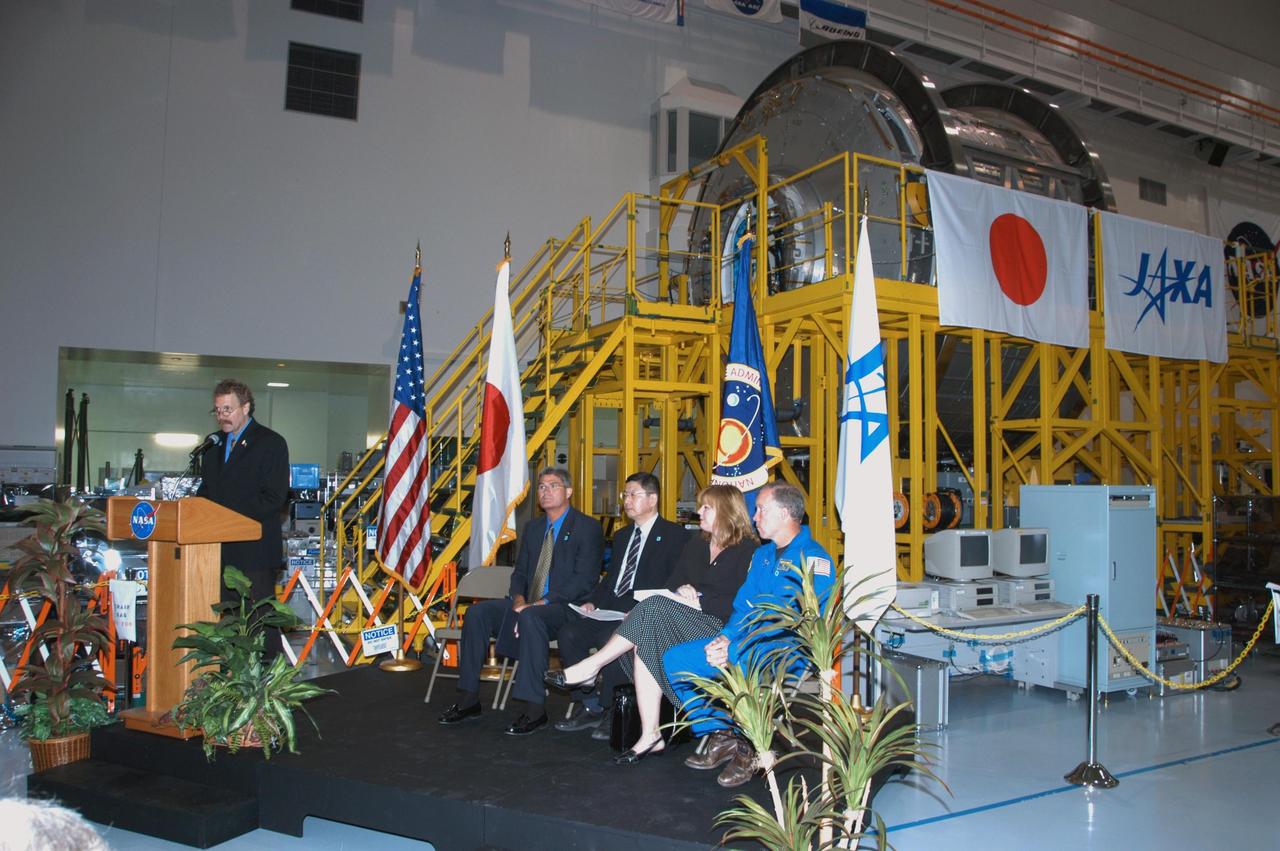
KENNEDY SPACE CENTER, FLA. -- In the Space Station Processing Facility, NASA and Japanese Aerospace and Exploration Agency (JAXA) officials welcome the arrival of the Experiment Logistics Module Pressurized Section for the Japanese Experiment Module, or JEM, to the Kennedy Space Center. At the podium is Russ Romanella, director of International Space Station and Spacecraft Processing. Seated at right are Bill Parsons, director of Kennedy Space Center; Dr. Kichiro Imagawa, project manager of the JEM Development Project Team for JAXA; Melanie Saunders, associate manager of the International Space Station Program at Johnson Space Center; and Dominic Gorie, commander on mission STS-123 that will deliver the module to the space station. The new International Space Station component arrived at Kennedy March 12 to begin preparations for its future launch on mission STS-123. It will serve as an on-orbit storage area for materials, tools and supplies. It can hold up to eight experiment racks and will attach to the top of another larger pressurized module. Photo credit: NASA/George Shelton