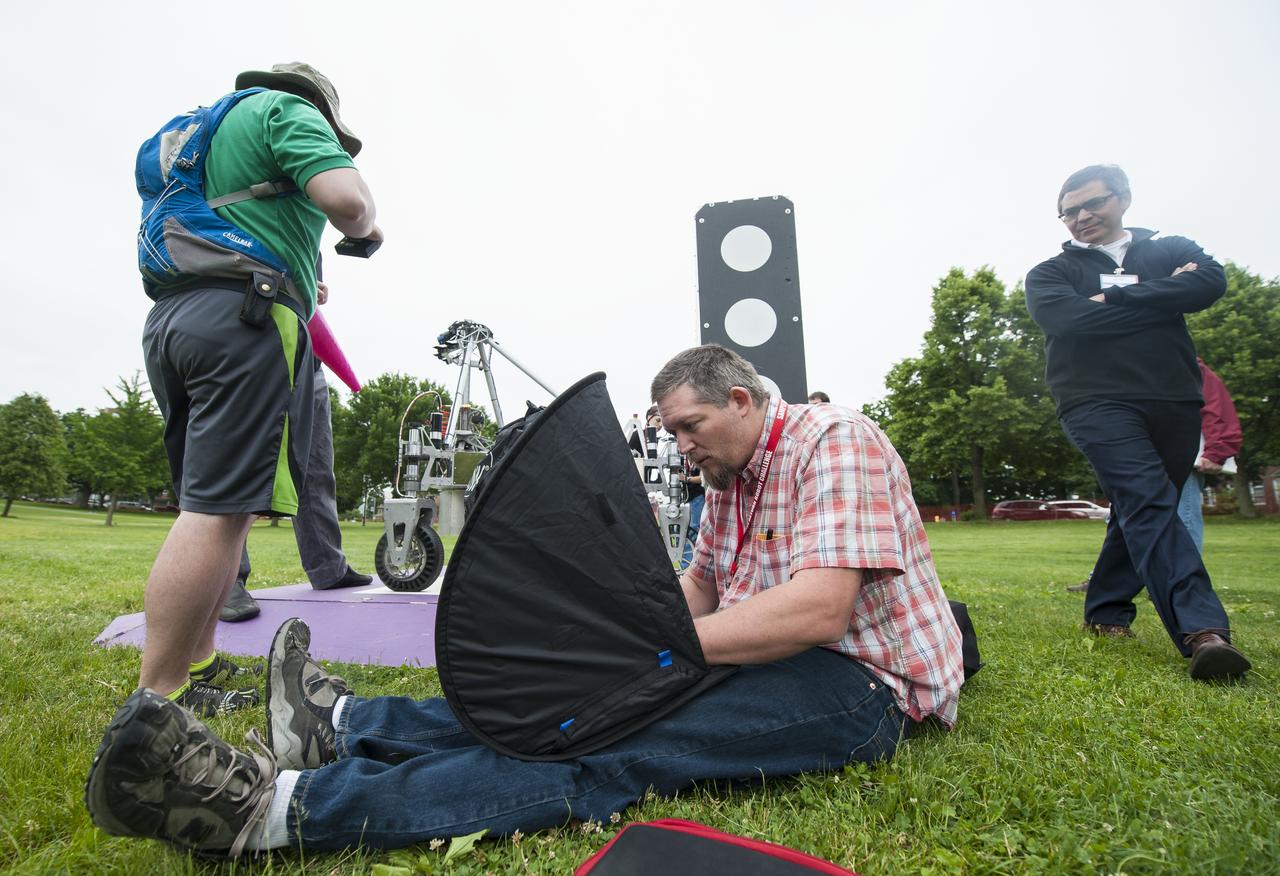
Russel Howe of team Survey, center, works on a laptop to prepare the team's robot for a demonstration run after the team's robot failed to leave the starting platform during it's attempt at the level two challenge at the 2014 NASA Centennial Challenges Sample Return Robot Challenge, Thursday, June 12, 2014, at the Worcester Polytechnic Institute (WPI) in Worcester, Mass. Eighteen teams are competing for a $1.5 million NASA prize purse. Teams will be required to demonstrate autonomous robots that can locate and collect samples from a wide and varied terrain, operating without human control. The objective of this NASA-WPI Centennial Challenge is to encourage innovations in autonomous navigation and robotics technologies. Innovations stemming from the challenge may improve NASA's capability to explore a variety of destinations in space, as well as enhance the nation's robotic technology for use in industries and applications on Earth. Photo Credit: (NASA/Joel Kowsky)
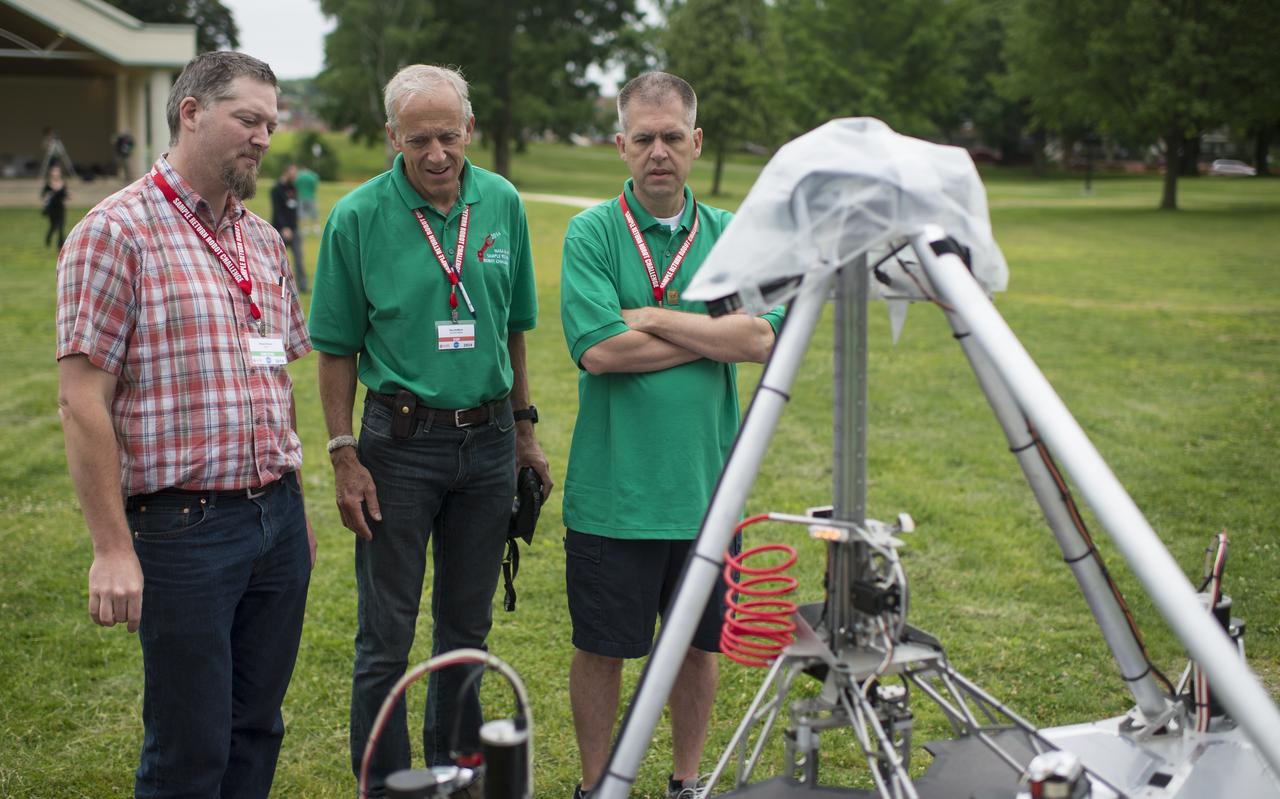
Russel Howe of team Survey speaks with Sample Return Robot Challenge staff members after the team's robot failed to leave the starting platform during it's attempt at the level two challenge during the 2014 NASA Centennial Challenges Sample Return Robot Challenge, Thursday, June 12, 2014, at the Worcester Polytechnic Institute (WPI) in Worcester, Mass. Eighteen teams are competing for a $1.5 million NASA prize purse. Teams will be required to demonstrate autonomous robots that can locate and collect samples from a wide and varied terrain, operating without human control. The objective of this NASA-WPI Centennial Challenge is to encourage innovations in autonomous navigation and robotics technologies. Innovations stemming from the challenge may improve NASA's capability to explore a variety of destinations in space, as well as enhance the nation's robotic technology for use in industries and applications on Earth. Photo Credit: (NASA/Joel Kowsky)
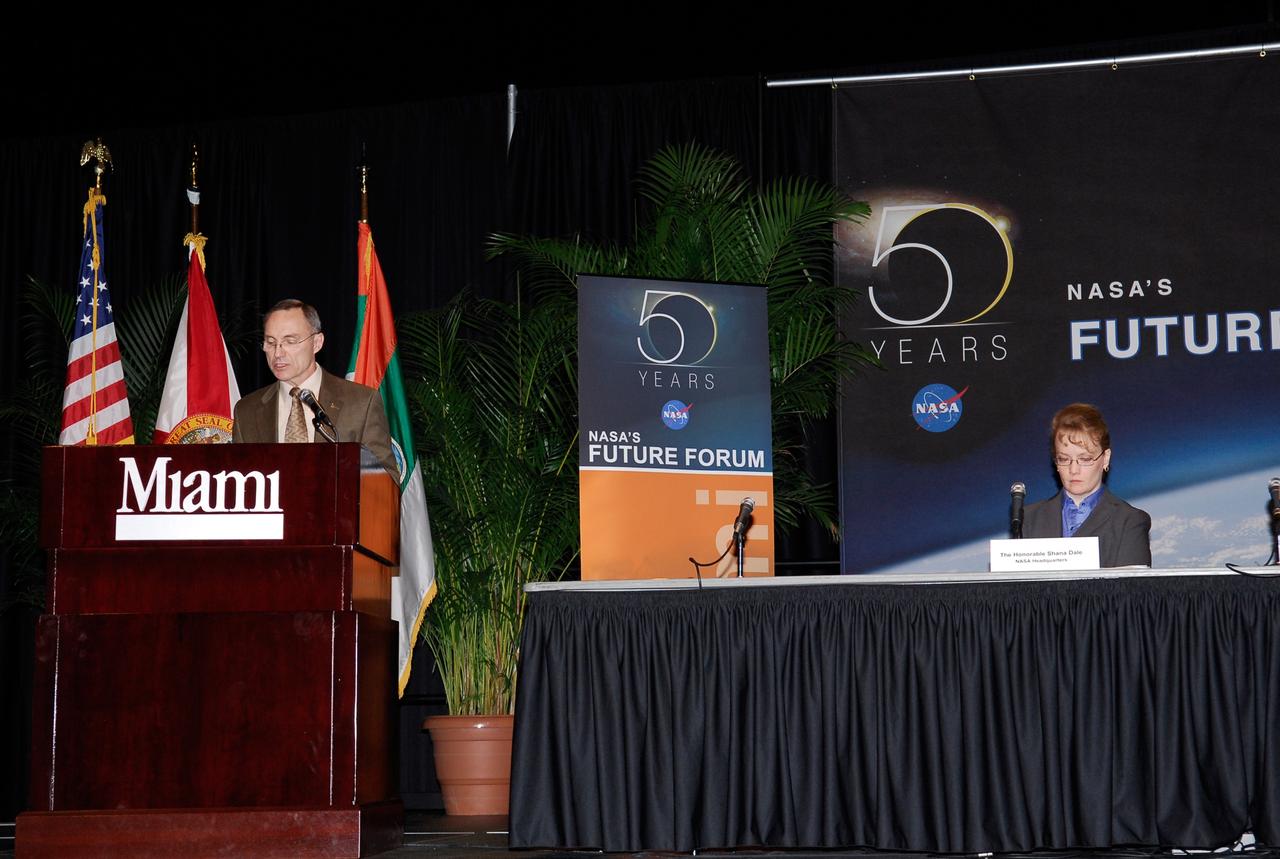
CAPE CANAVERAL, Fla. -- During NASA’s Future Forum in Miami, Carl Walz provides an overview of NASA’s Exploration Program. Walz is director of the Advanced Capabilities Division. At the table on the right is NASA Deputy Administrator Shana Dale. The forum focused on how space exploration benefits Florida's economy. The forum was held at the University of Miami's BankUnited Center and included presentations and panels. Also participating was Russell Romanella, director of the International Space Station and Spacecraft Processing. Photo credit: NASA/Kim Shiflett
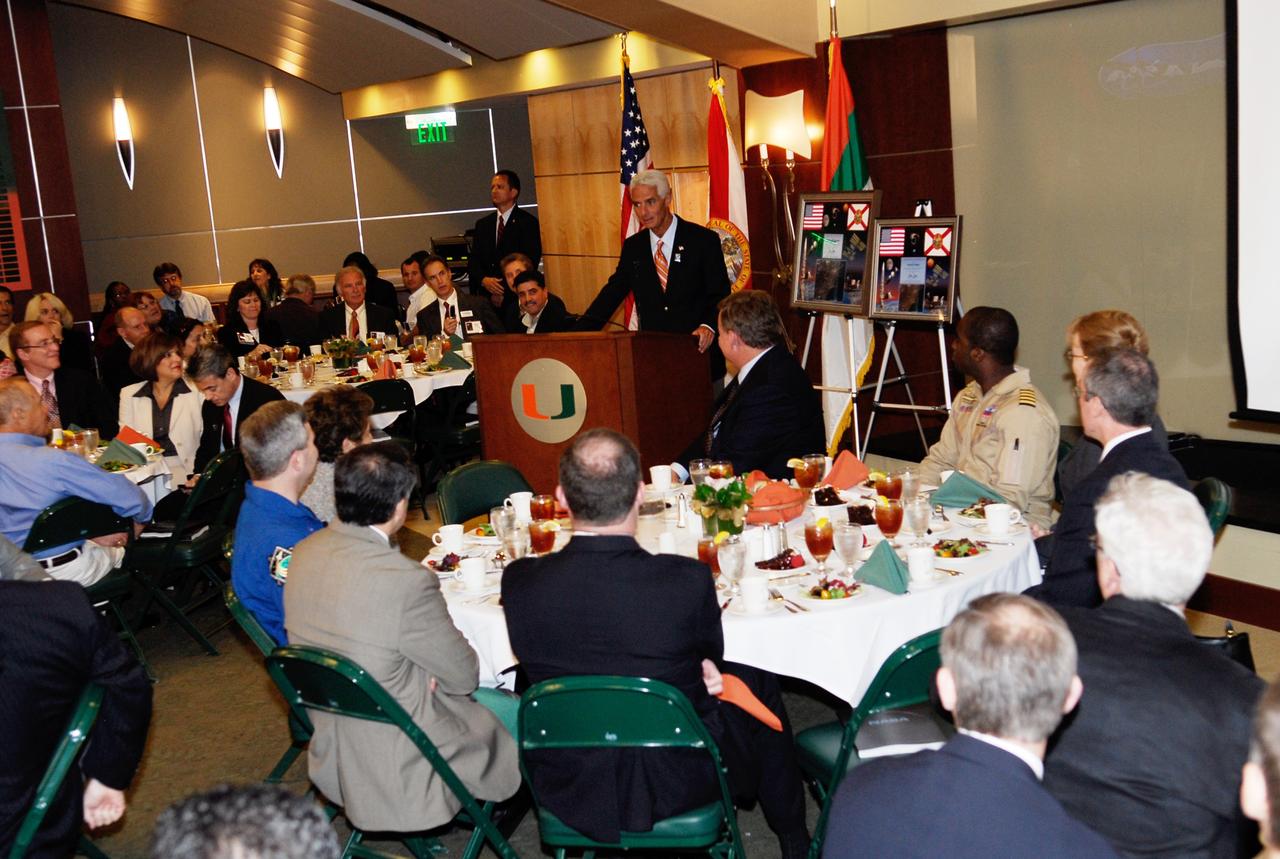
CAPE CANAVERAL, Fla. -- Florida Gov. Charlie Crist (center, by the podium) makes an appearance at the luncheon held during NASA’s Future Forum in Miami. The keynote presentation was given by astronaut Steve Frick, who was commander of the STS-122 shuttle mission. The forum focused on how space exploration benefits Florida's economy. The event, which included presentations and panels, was held at the University of Miami's BankUnited Center. Among those participating were NASA Deputy Administrator Shana Dale, astronaut Carl Walz, director of the Advanced Capabilities Division in NASA's Exploration Systems Mission Directorate, and Russell Romanella, director, International Space Station and Spacecraft Processing. Photo credit: NASA/Kim Shiflett
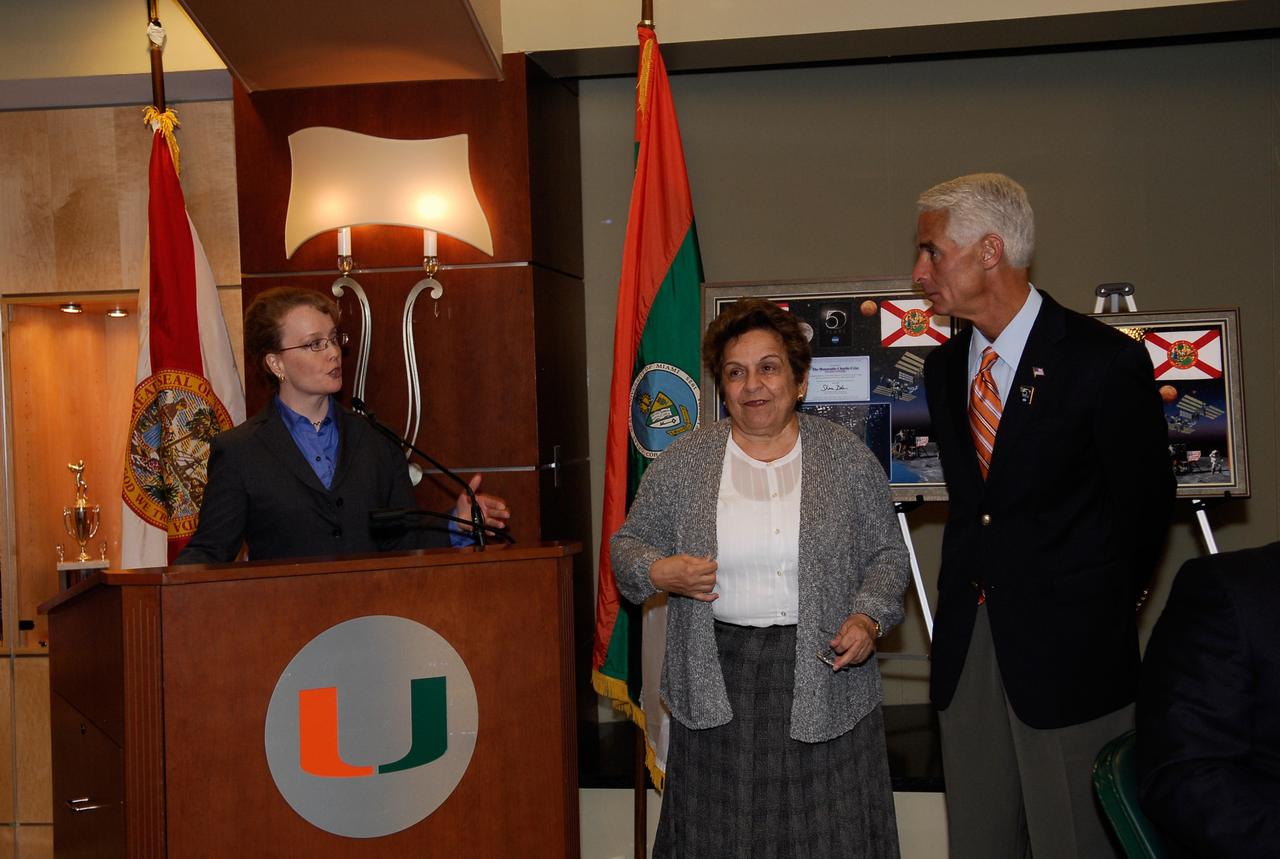
CAPE CANAVERAL, Fla. -- At the luncheon held during NASA’s Future Forum in Miami, NASA’s Deputy Administrator Shana Dale presents Florida Gov. Charlie Crist (on the right). At center is Donna E. Shalala, president of the University of Miami. The forum focused on how space exploration benefits Florida's economy. The event, which included presentations and panels, was held at the University of Miami's BankUnited Center. Among those participating were NASA Deputy Administrator Shana Dale, astronaut Carl Walz, director of the Advanced Capabilities Division in NASA's Exploration Systems Mission Directorate, and Russell Romanella, director, International Space Station and Spacecraft Processing. Photo credit: NASA/Kim Shiflett
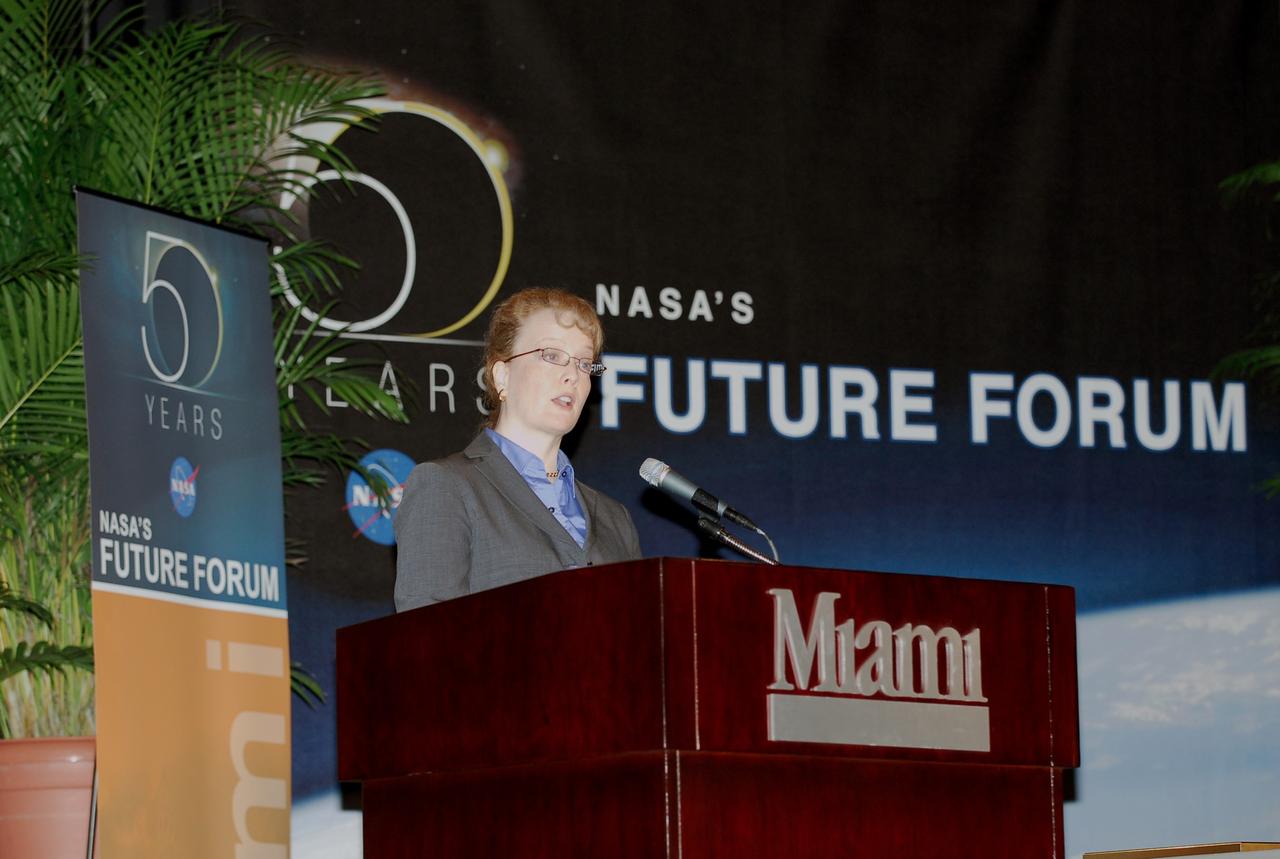
CAPE CANAVERAL, Fla. -- NASA Deputy Administrator Shana Dale (at the podium) gives the keynote address during a Future Forum in Miami. The forum, which focused on how space exploration benefits Florida's economy, was held at the University of Miami's BankUnited Center and included presentations and panels. Among those participating were NASA Deputy Administrator Shana Dale, astronaut Carl Walz, director of the Advanced Capabilities Division in NASA's Exploration Systems Mission Directorate, and Russell Romanella, director, International Space Station and Spacecraft Processing. Photo credit: NASA/Kim Shiflett
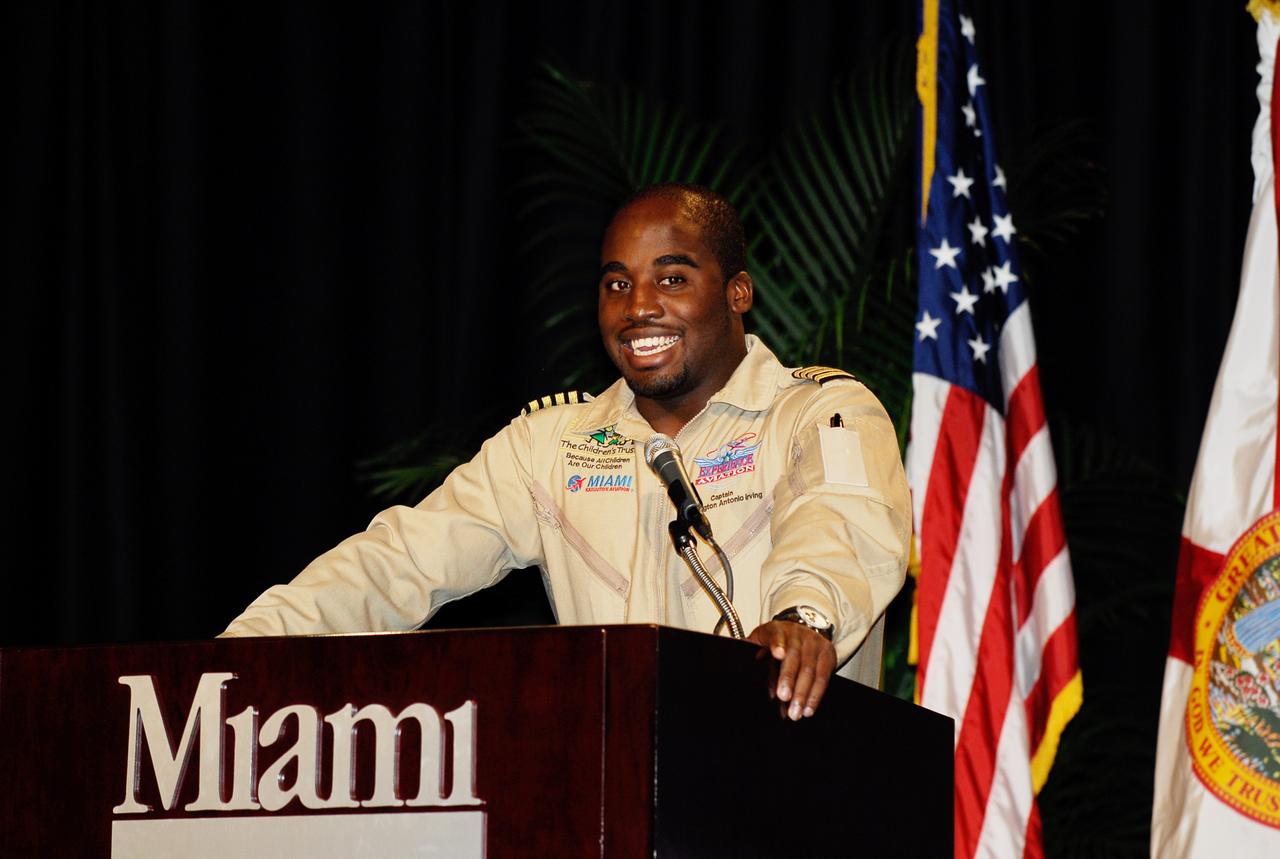
CAPE CANAVERAL, Fla. -- At the luncheon held during NASA’s Future Forum in Miami, Barrington Irving talks about his experiences as the first African-American and youngest person to fly solo around the world. The forum focused on how space exploration benefits Florida's economy. The event, which included presentations and panels, was held at the University of Miami's BankUnited Center. Among those participating were NASA Deputy Administrator Shana Dale, astronaut Carl Walz, director of the Advanced Capabilities Division in NASA's Exploration Systems Mission Directorate, and Russell Romanella, director, International Space Station and Spacecraft Processing. Photo credit: NASA/Kim Shiflett
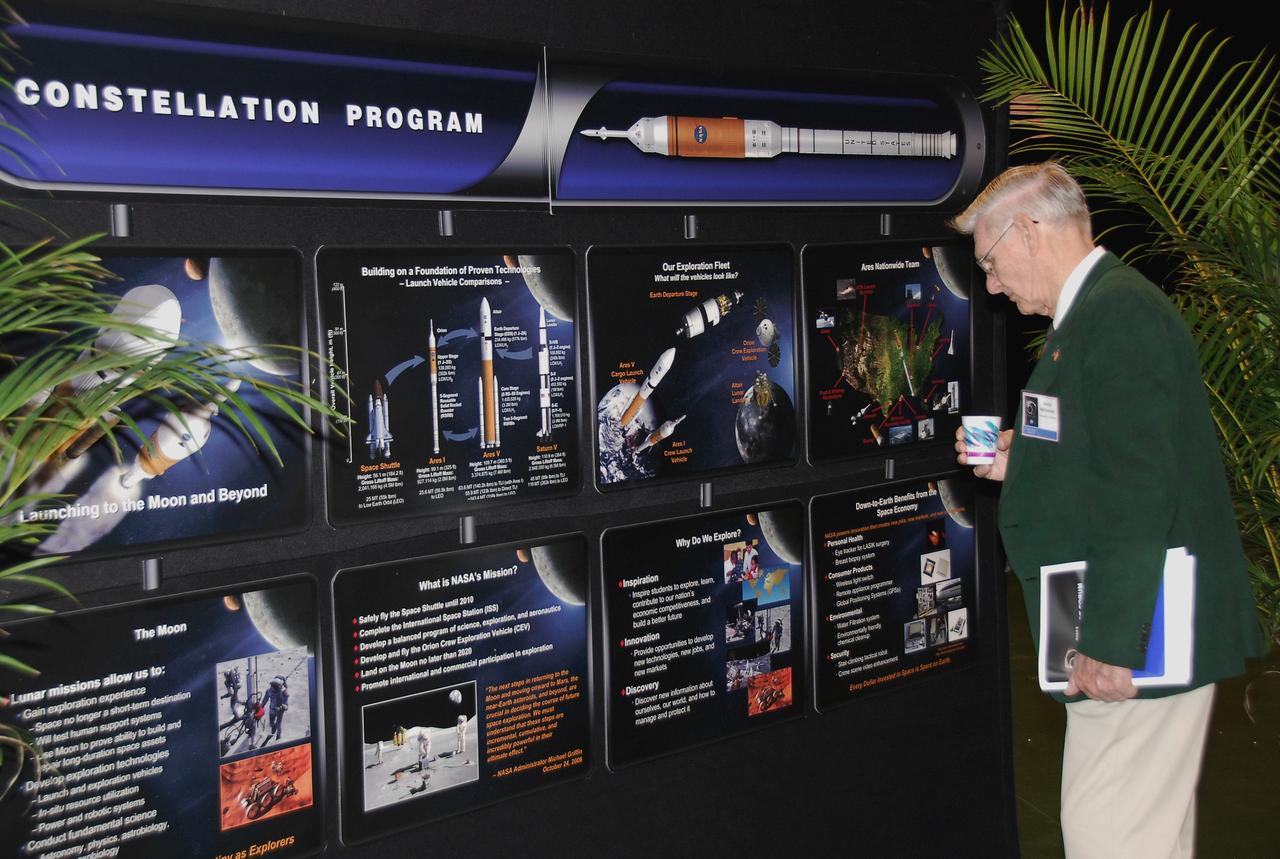
CAPE CANAVERAL, Fla. -- This display of NASA’s Constellation Program was part of a daylong event commemorating the agency’s 50th anniversary during a Future Forum in Miami that focused on how space exploration benefits Florida's economy. The event, which included presentations and panels, was held at the University of Miami's BankUnited Center. Among those participating were NASA Deputy Administrator Shana Dale, astronaut Carl Walz, director of the Advanced Capabilities Division in NASA's Exploration Systems Mission Directorate, and Russell Romanella, director, International Space Station and Spacecraft Processing. Photo credit: NASA/Kim Shiflett
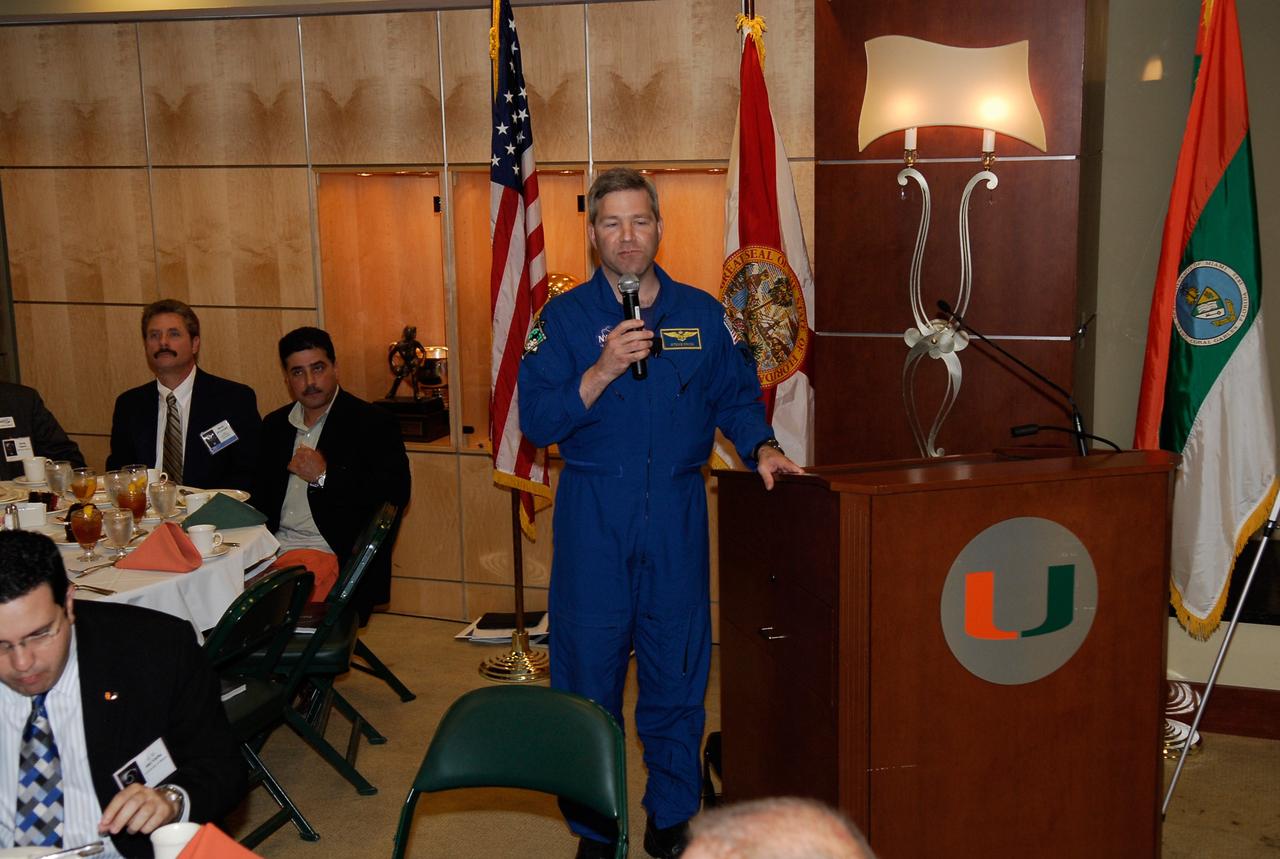
CAPE CANAVERAL, Fla. -- At the luncheon held during NASA’s Future Forum in Miami, astronaut Steve Frick gives the keynote address. Frick served as commander of the STS-122 shuttle mission. The forum focused on how space exploration benefits Florida's economy. The event, which included presentations and panels, was held at the University of Miami's BankUnited Center. Among those participating were NASA Deputy Administrator Shana Dale, astronaut Carl Walz, director of the Advanced Capabilities Division in NASA's Exploration Systems Mission Directorate, and Russell Romanella, director, International Space Station and Spacecraft Processing. Photo credit: NASA/Kim Shiflett
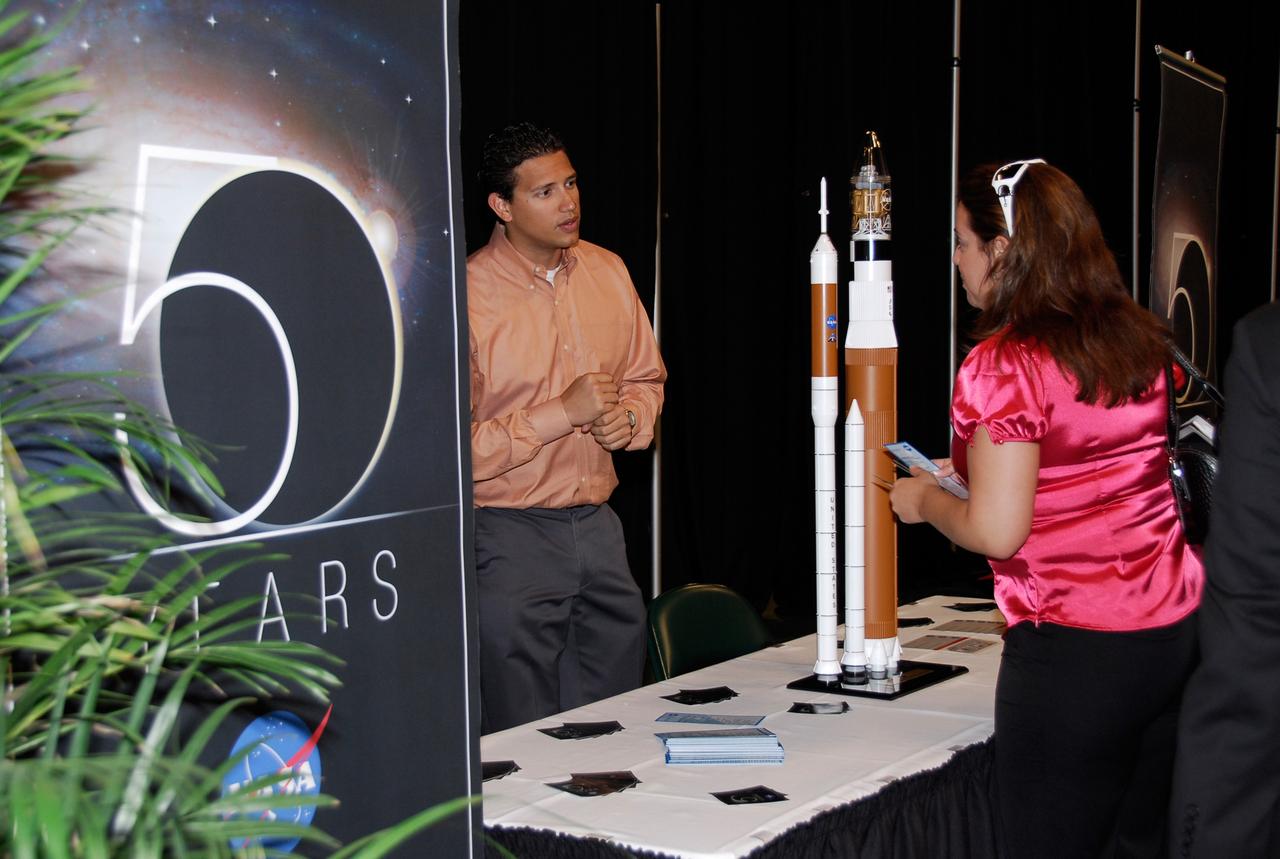
CAPE CANAVERAL, Fla. -- NASA displays an exhibit commemorating the agency’s 50th anniversary during a Future Forum in Miami that focuses on how space exploration benefits Florida's economy. The event, which included presentations and panels, was held at the University of Miami's BankUnited Center. Among those participating were NASA Deputy Administrator Shana Dale, astronaut Carl Walz, director of the Advanced Capabilities Division in NASA's Exploration Systems Mission Directorate, and Russell Romanella, director, International Space Station and Spacecraft Processing. Photo credit: NASA/Kim Shiflett
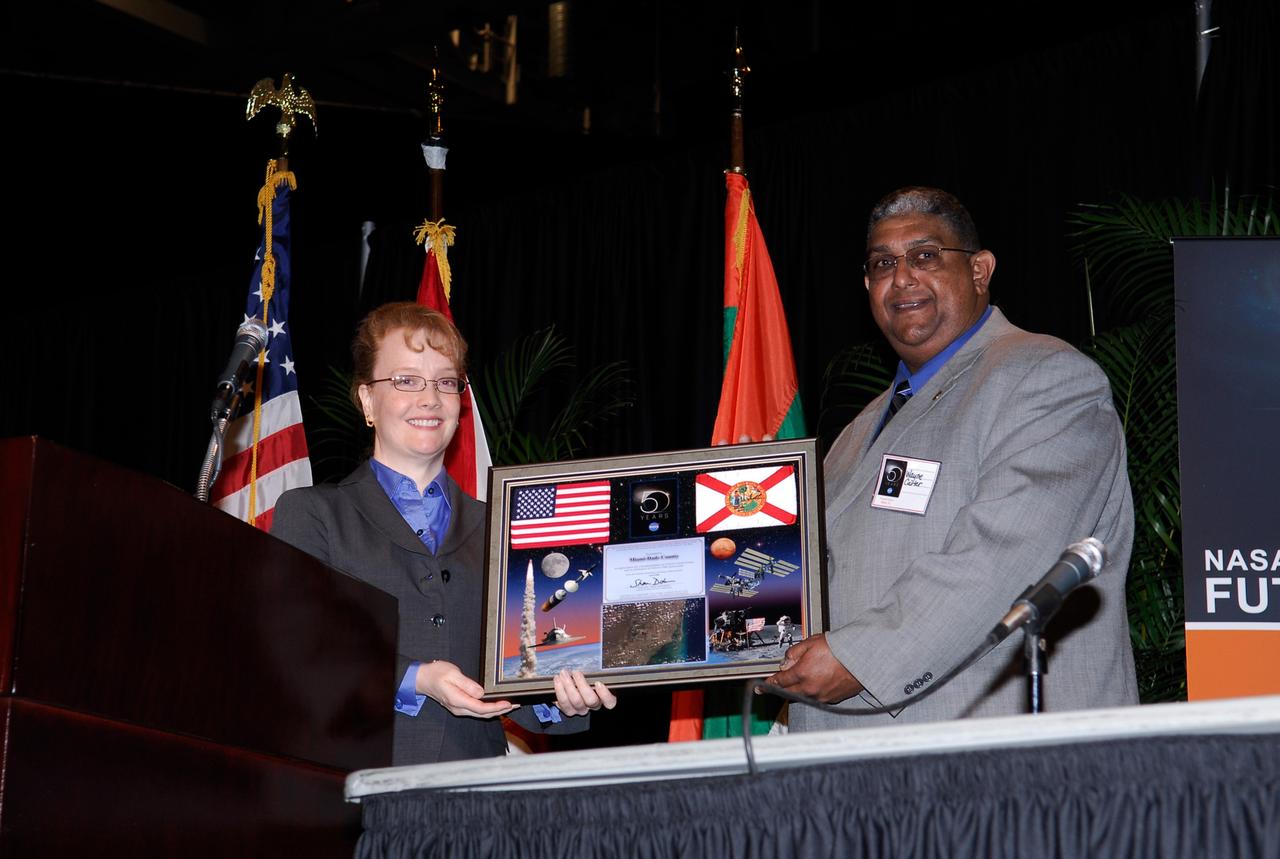
CAPE CANAVERAL, Fla. -- NASA Deputy Administrator Shana Dale (left) presents a 50th anniversary commemorative plaque to Wayne Carter during a Future Forum in Miami that focused on how space exploration benefits Florida's economy. Carter is assistant director for constituent services for the Miami-Dade County Mayor, Carlos Alveraz. The event, which included presentations and panels, was held at the University of Miami's BankUnited Center. Among those participating were NASA Deputy Administrator Shana Dale, astronaut Carl Walz, director of the Advanced Capabilities Division in NASA's Exploration Systems Mission Directorate, and Russell Romanella, director, International Space Station and Spacecraft Processing. Photo credit: NASA/Kim Shiflett
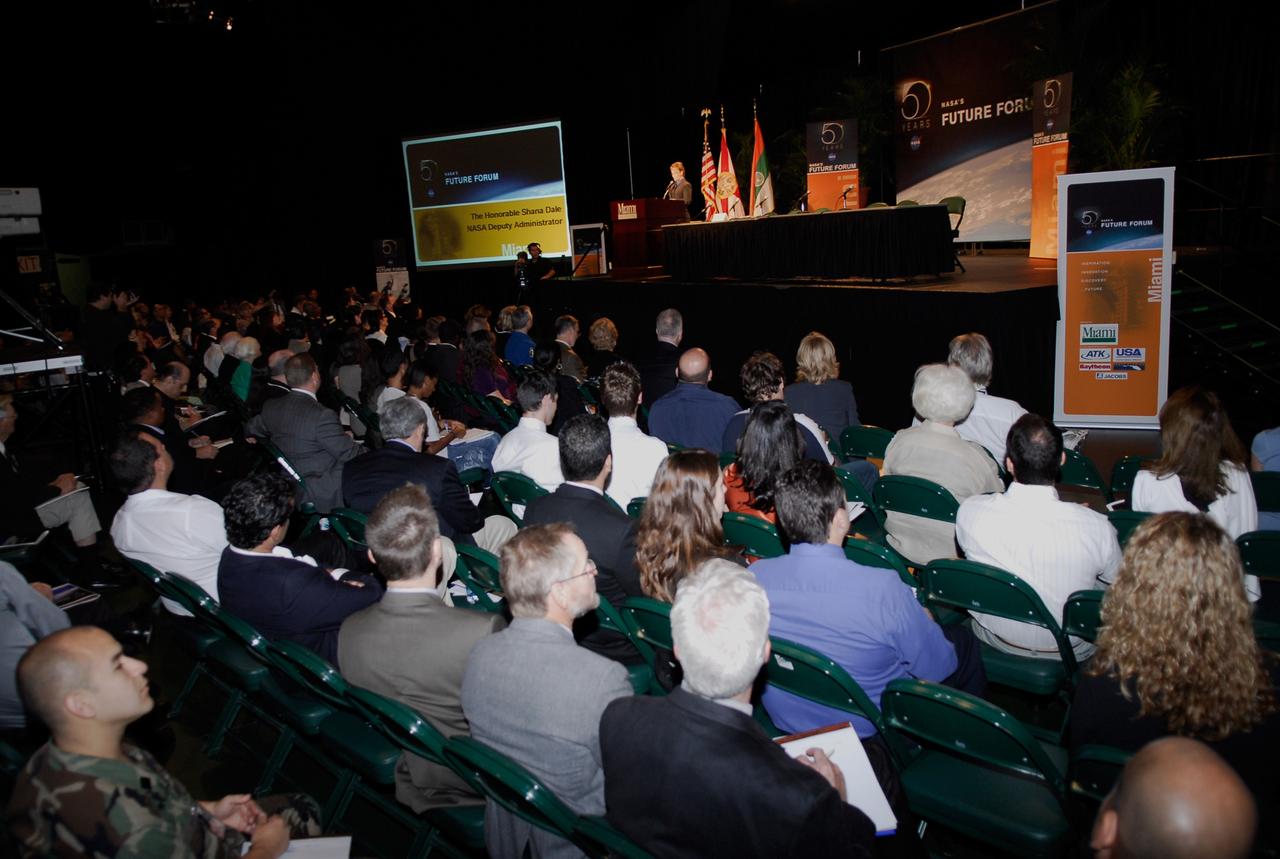
CAPE CANAVERAL, Fla. -- NASA Deputy Administrator Shana Dale (at the podium) gives the keynote address during a Future Forum in Miami. The forum, which focused on how space exploration benefits Florida's economy, was held at the University of Miami's BankUnited Center and included presentations and panels. Among those participating were NASA Deputy Administrator Shana Dale, astronaut Carl Walz, director of the Advanced Capabilities Division in NASA's Exploration Systems Mission Directorate, and Russell Romanella, director, International Space Station and Spacecraft Processing. Photo credit: NASA/Kim Shiflett
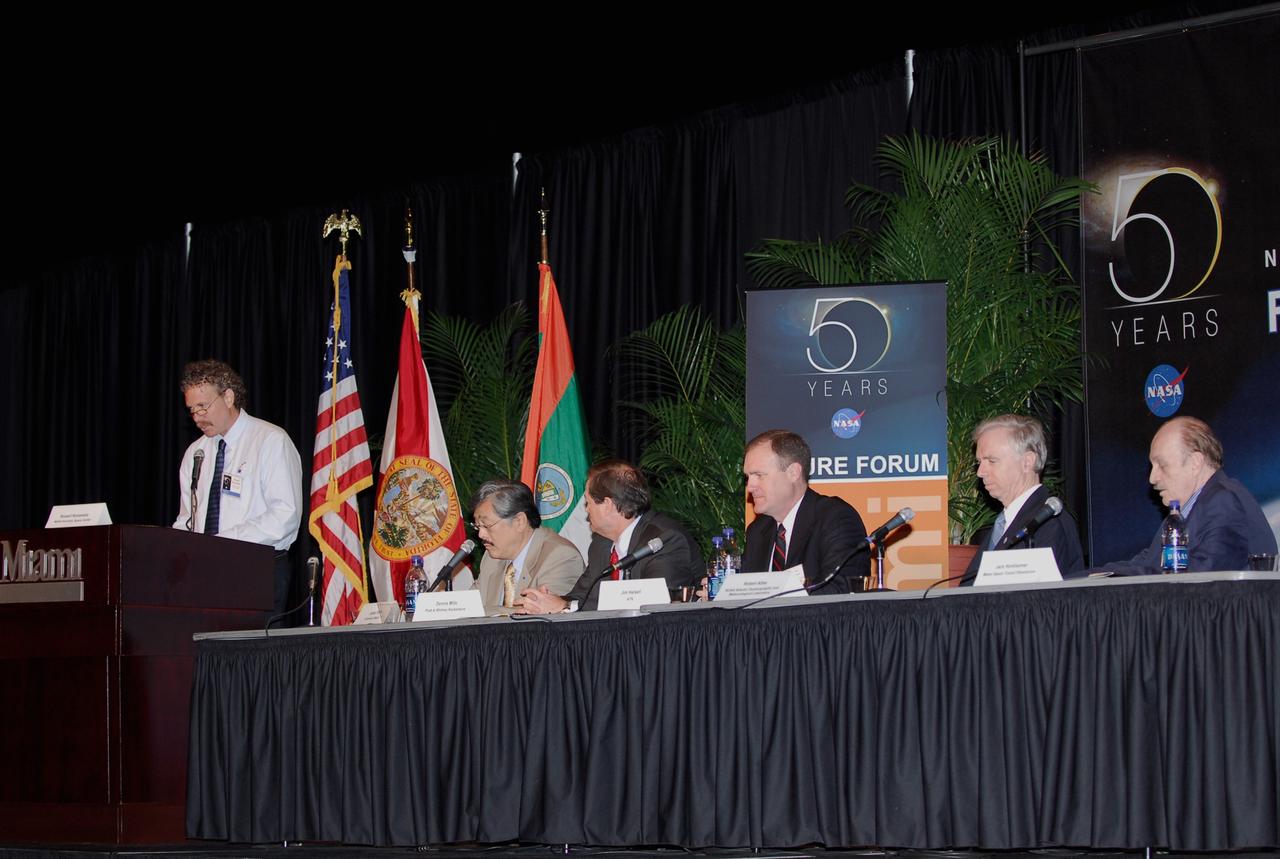
CAPE CANAVERAL, Fla. -- At the podium, Russell Romanella, director of International Space Station and Spacecraft Processing at Kennedy Space Center, moderates a panel presenting “Pushing the Limits of Knowledge To Inspire New Generations” during NASA’s Future Forum in Miami. Others on the panel include James Tien, dean of engineering at the University of Miami; Dennis Mills, with UTC/Pratt Whitney Rocketdyne; Jim Halsell, former astronaut; Robert Atlas, director of NOAA's Atlantic Oceanographic and Meteorological Laboratory; and Jack Horkheimer, executive director of the Miami Space Transit Planetarium. The forum focused on how space exploration benefits Florida's economy. The event, which included presentations and panels, was held at the University of Miami's BankUnited Center. Among those participating were NASA Deputy Administrator Shana Dale, astronaut Carl Walz, director of the Advanced Capabilities Division in NASA's Exploration Systems Mission Directorate, and Russell Romanella, director, International Space Station and Spacecraft Processing. Photo credit: NASA/Kim Shiflett
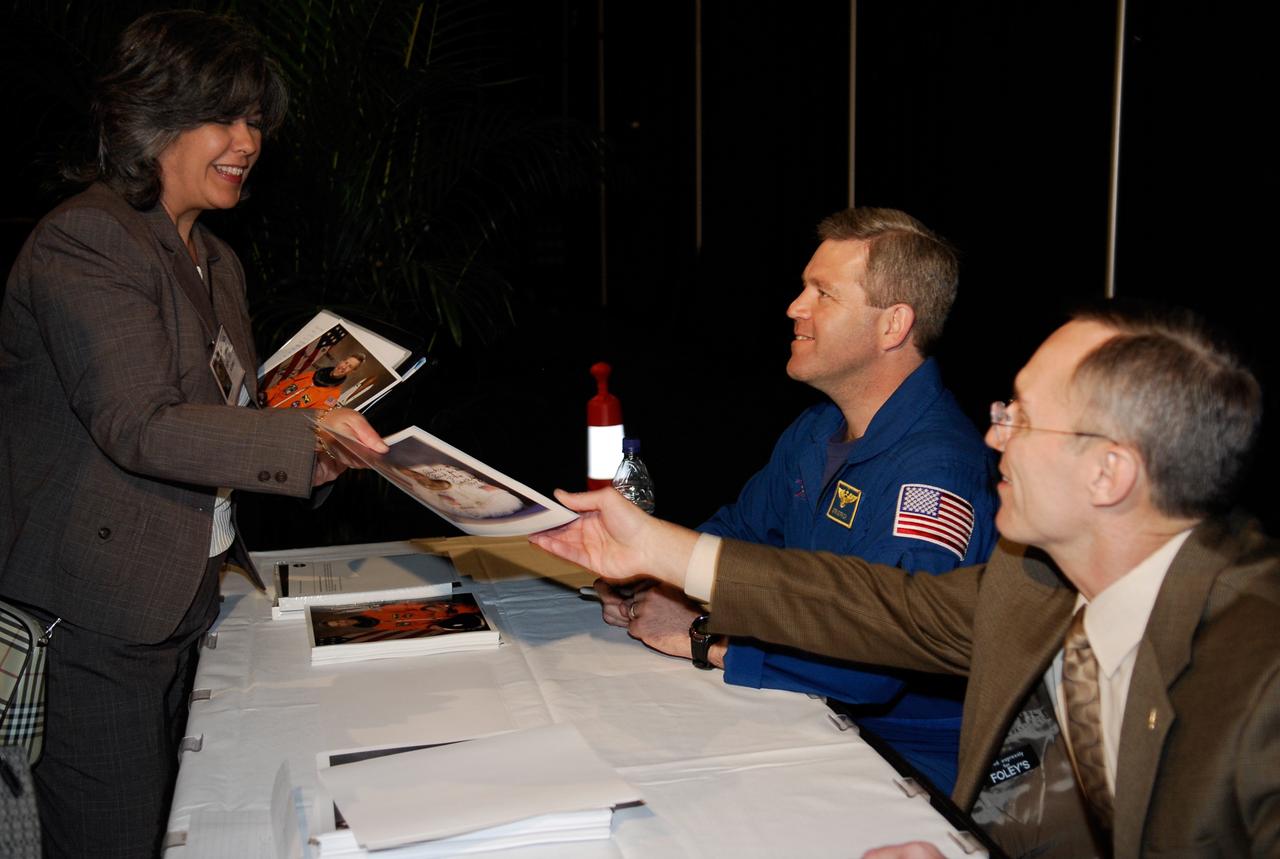
CAPE CANAVERAL, Fla. -- During a break in presentations at NASA’s Future Forum in Miami, astronaut Steve Frick and former astronaut Carl Walz sign autographs. Frick served as commander of the STS-122 shuttle mission. Walz is now director of NASA’s Advanced Capabilities Division. The forum focused on how space exploration benefits Florida's economy. The event, which included presentations and panels, was held at the University of Miami's BankUnited Center. Among those participating were NASA Deputy Administrator Shana Dale, astronaut Carl Walz, director of the Advanced Capabilities Division in NASA's Exploration Systems Mission Directorate, and Russell Romanella, director, International Space Station and Spacecraft Processing. Photo credit: NASA/Kim Shiflett
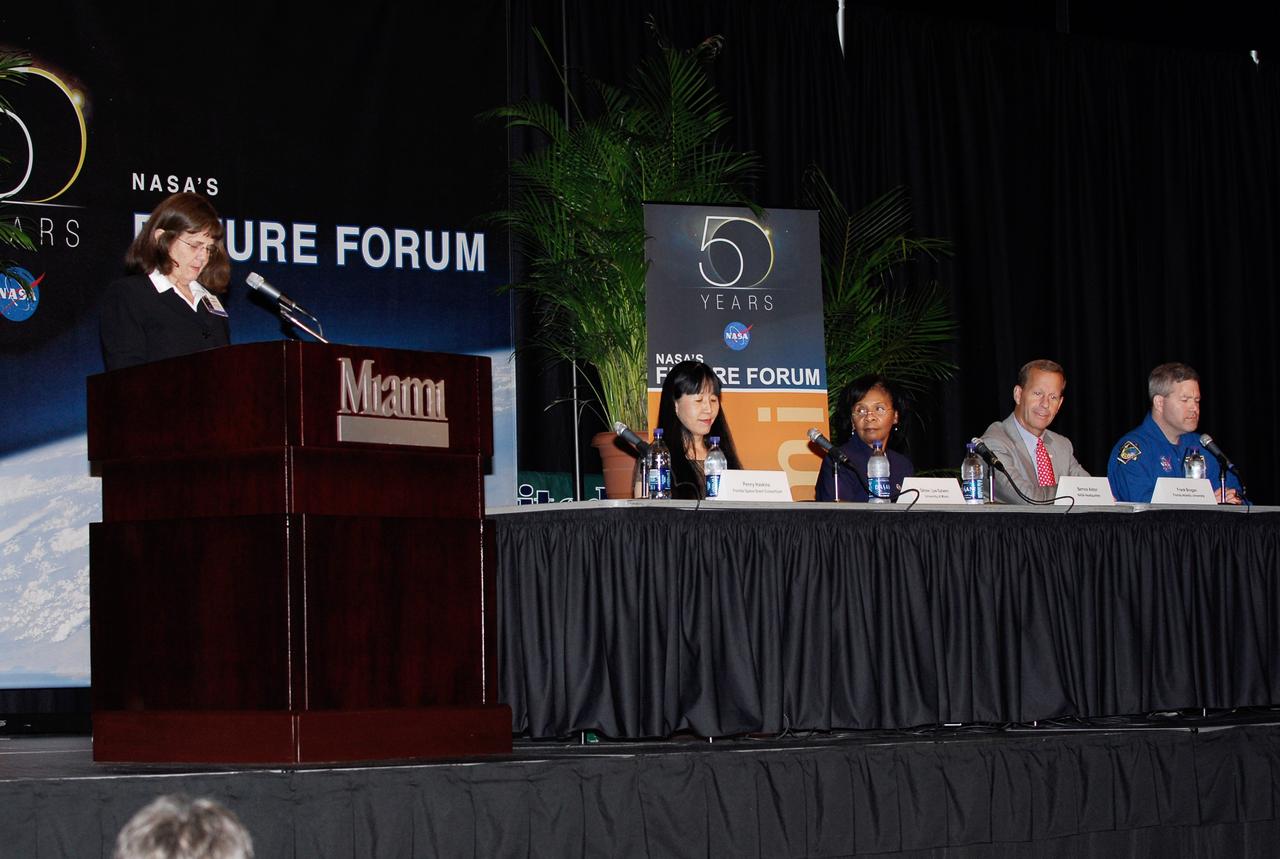
CAPE CANAVERAL, Fla. -- One of the panels conducted during NASA’s Future Forum in Miami featured (left to right) Penny Haskins (at the podium), associate director of the Florida Space Grant Consortium; Okhee Lee-Salwen, with the University of Miami’s College of Education; Bernice Alston, NASA deputy assistant administrator for education; Frank Brogan, president of Florida Atlantic University and former Florida lieutenant governor; Steve Frick, astronaut and commander of the STS-122 space shuttle mission. The forum, which focused on how space exploration benefits Florida's economy, was held at the University of Miami's BankUnited Center and included presentations and panels. Among those participating were NASA Deputy Administrator Shana Dale, astronaut Carl Walz, director of the Advanced Capabilities Division in NASA's Exploration Systems Mission Directorate, and Russell Romanella, director, International Space Station and Spacecraft Processing. Photo credit: NASA/Kim Shiflett
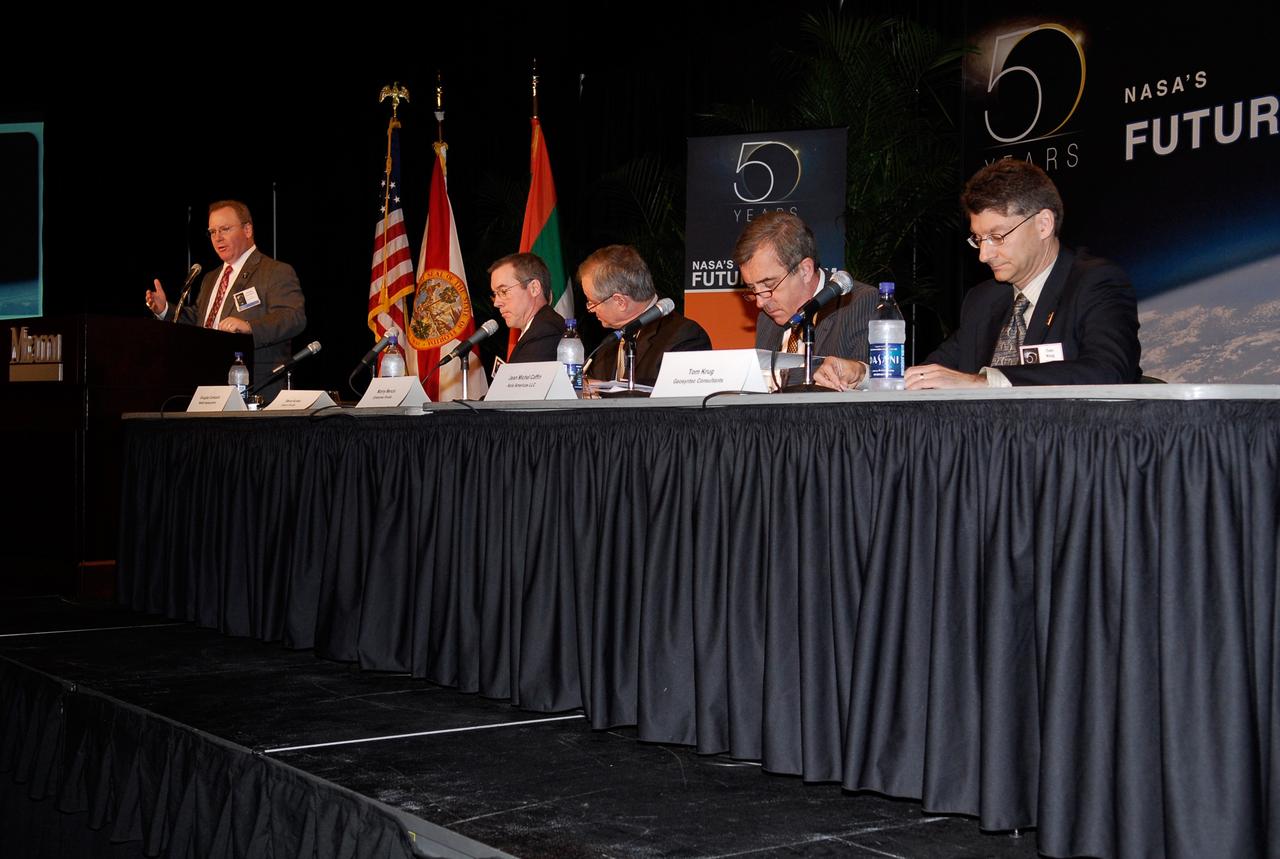
CAPE CANAVERAL, Fla. -- From the podium, Douglas Comstock, director of NASA's Innovative Partnership Program, moderates a panel presenting the topic “Unleashing the Power of Technology and Creativity” during NASA’s Future Forum in Miami. Others on the panel are (left to right), Steve Kohler, president and CEO of Space Florida; Manny Mencia Sr., vice president for international trade and business development of Enterprise Florida; Jean Michel Caffin, managing partner of Axis Americas and Beacon Council Executive Cabinet; and Tom Krug, associate and senior engineer with Geosyntec Consultants. The forum focused on how space exploration benefits Florida's economy. The event, which included presentations and panels, was held at the University of Miami's BankUnited Center. Among those participating were NASA Deputy Administrator Shana Dale, astronaut Carl Walz, director of the Advanced Capabilities Division in NASA's Exploration Systems Mission Directorate, and Russell Romanella, director, International Space Station and Spacecraft Processing. Photo credit: NASA/Kim Shiflett
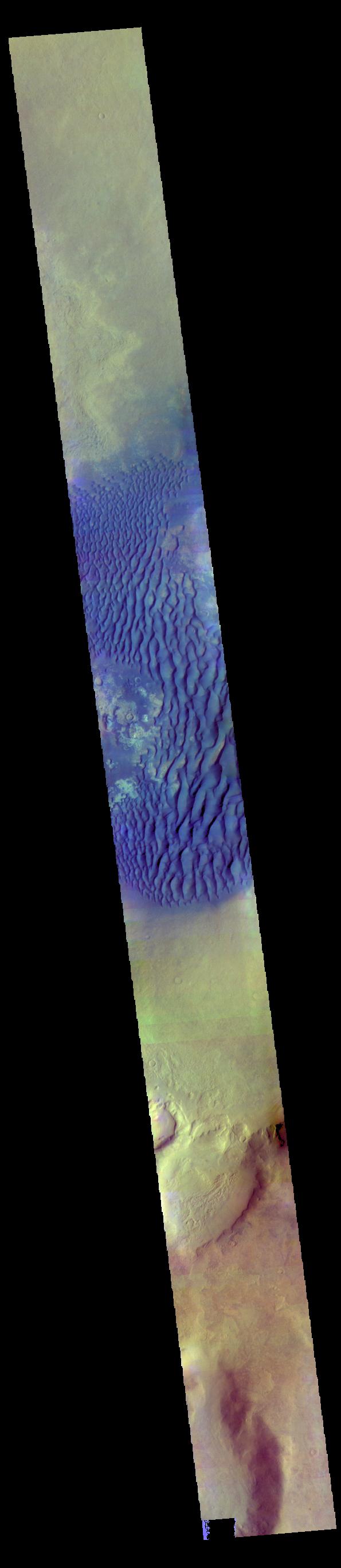
This is a false color image of Kaiser Crater. In this combination of filters "blue" typically means basaltic sand. This VIS image crosses 3/4 of the crater and demonstrates how extensive the dunes are on the floor of Kaiser Crater. Kaiser Crater is located in the southern hemisphere in the Noachis region west of Hellas Planitia. Kaiser Crater is just one of several large craters with extensive dune fields on the crater floor. Other nearby dune filled craters are Proctor, Russell, and Rabe. Kaiser Crater is 207 km (129 miles) in diameter. The dunes are located in the southern part of the crater floor. The THEMIS VIS camera contains 5 filters. The data from different filters can be combined in multiple ways to create a false color image. These false color images may reveal subtle variations of the surface not easily identified in a single band image. The Odyssey spacecraft has spent over 15 years in orbit around Mars, circling the planet more than 71,000 times. It holds the record for longest working spacecraft at Mars. THEMIS, the IR/VIS camera system, has collected data for the entire mission and provides images covering all seasons and lighting conditions. Over the years many features of interest have received repeated imaging, building up a suite of images covering the entire feature. From the deepest chasma to the tallest volcano, individual dunes inside craters and dune fields that encircle the north pole, channels carved by water and lava, and a variety of other feature, THEMIS has imaged them all. For the next several months the image of the day will focus on the Tharsis volcanoes, the various chasmata of Valles Marineris, and the major dunes fields. We hope you enjoy these images! Orbit Number: 66602 Latitude: -47.0551 Longitude: 19.446 Instrument: VIS Captured: 2016-12-18 21:42 https://photojournal.jpl.nasa.gov/catalog/PIA22265