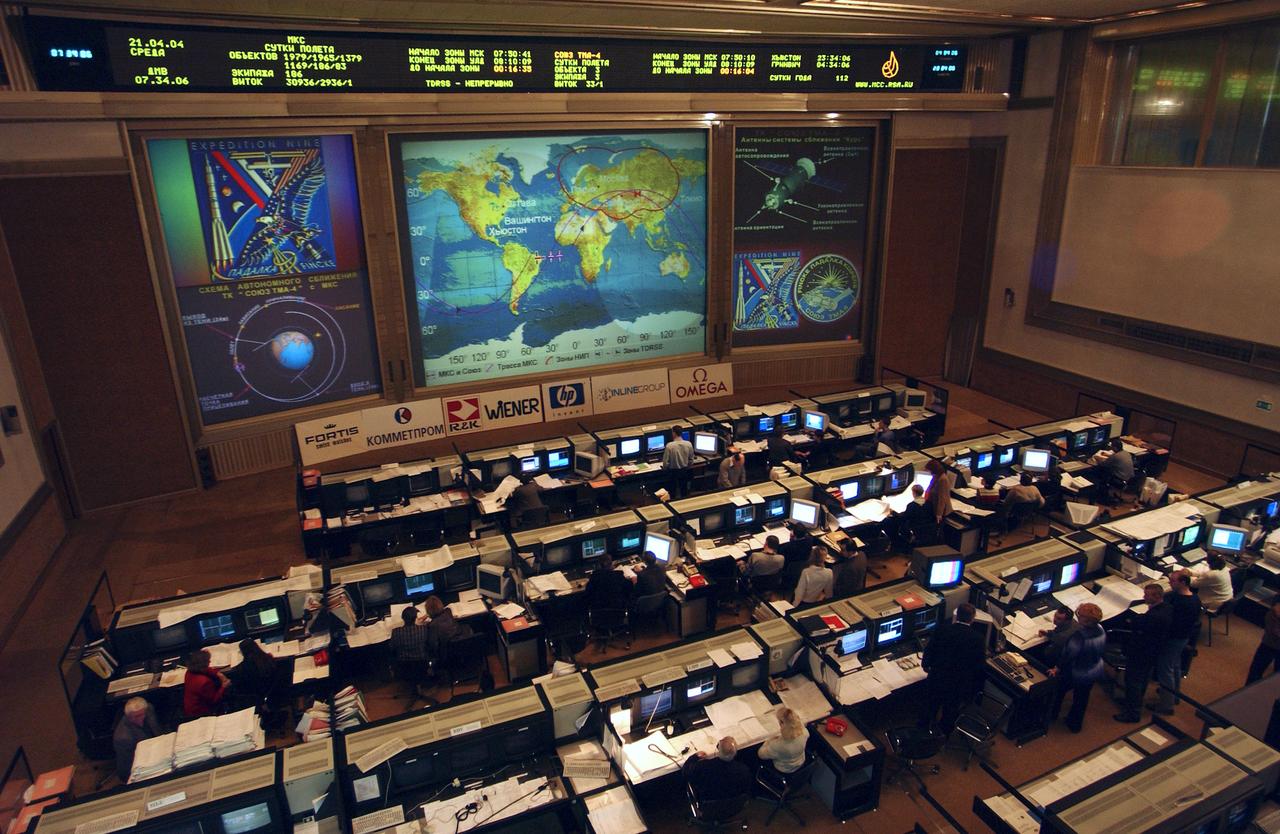
View of the Flight Control Room at the Russian Mission Control Center in Korolev, Russia, located on the outskirts of Moscow, Wednesday, April 21, 2004. Photo Credit: (NASA/Bill Ingalls)
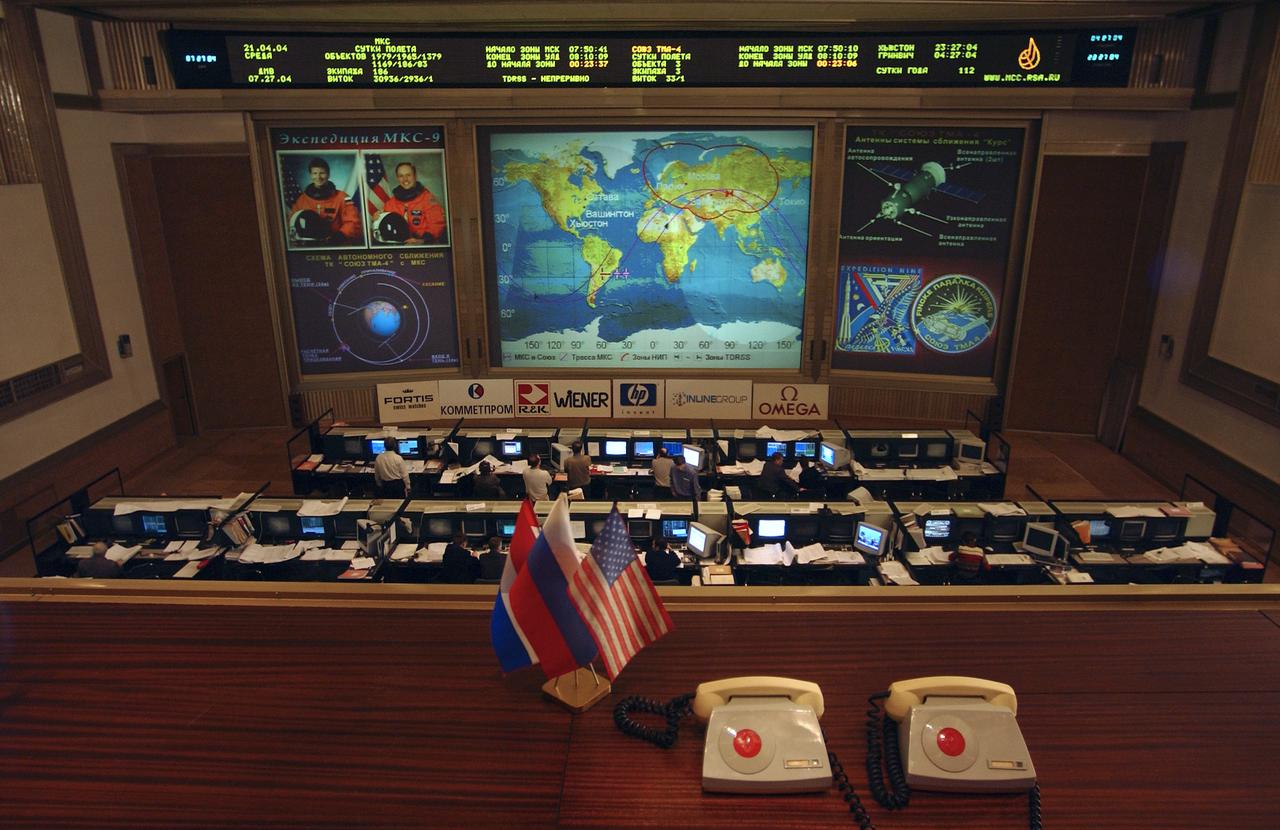
View of the Flight Control Room at the Russian Mission Control Center in Korolev, Russia, located on the outskirts of Moscow, Wednesday, April 21, 2004. Photo Credit: (NASA/Bill Ingalls)
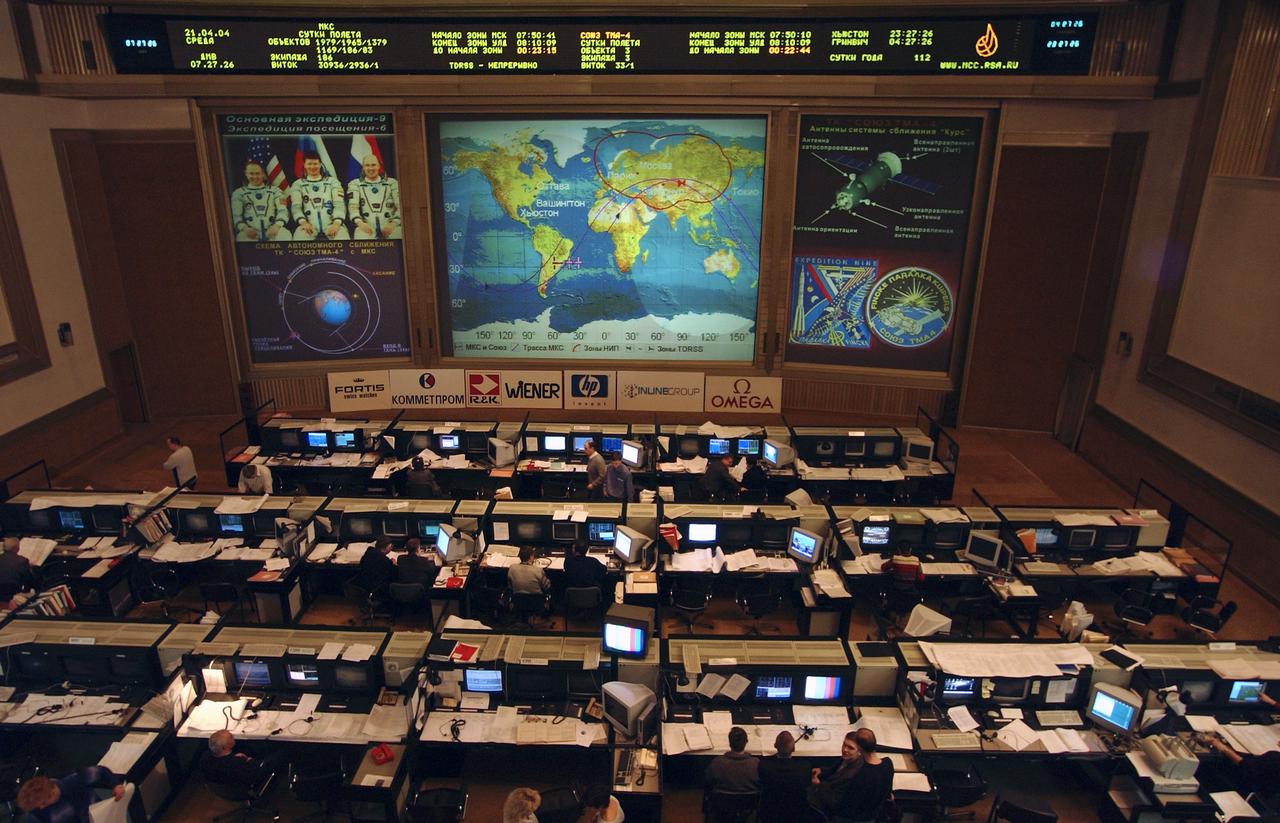
View of the Flight Control Room at the Russian Mission Control Center in Korolev, Russia, located on the outskirts of Moscow, Wednesday, April 21, 2004. Photo Credit: (NASA/Bill Ingalls)

NASA Deputy Administrator Fred Gregory, left, joins Russian Federal Space Agency Deputy General-Director Nikolai Moiseev, Wednesday, April 21, 2004, at the Russian Mission Control Center outside Moscow to view the docking of the Expedition 9 crew to the International Space Station in a Russian Soyuz spacecraft. Photo Credit: (NASA/Bill Ingalls)
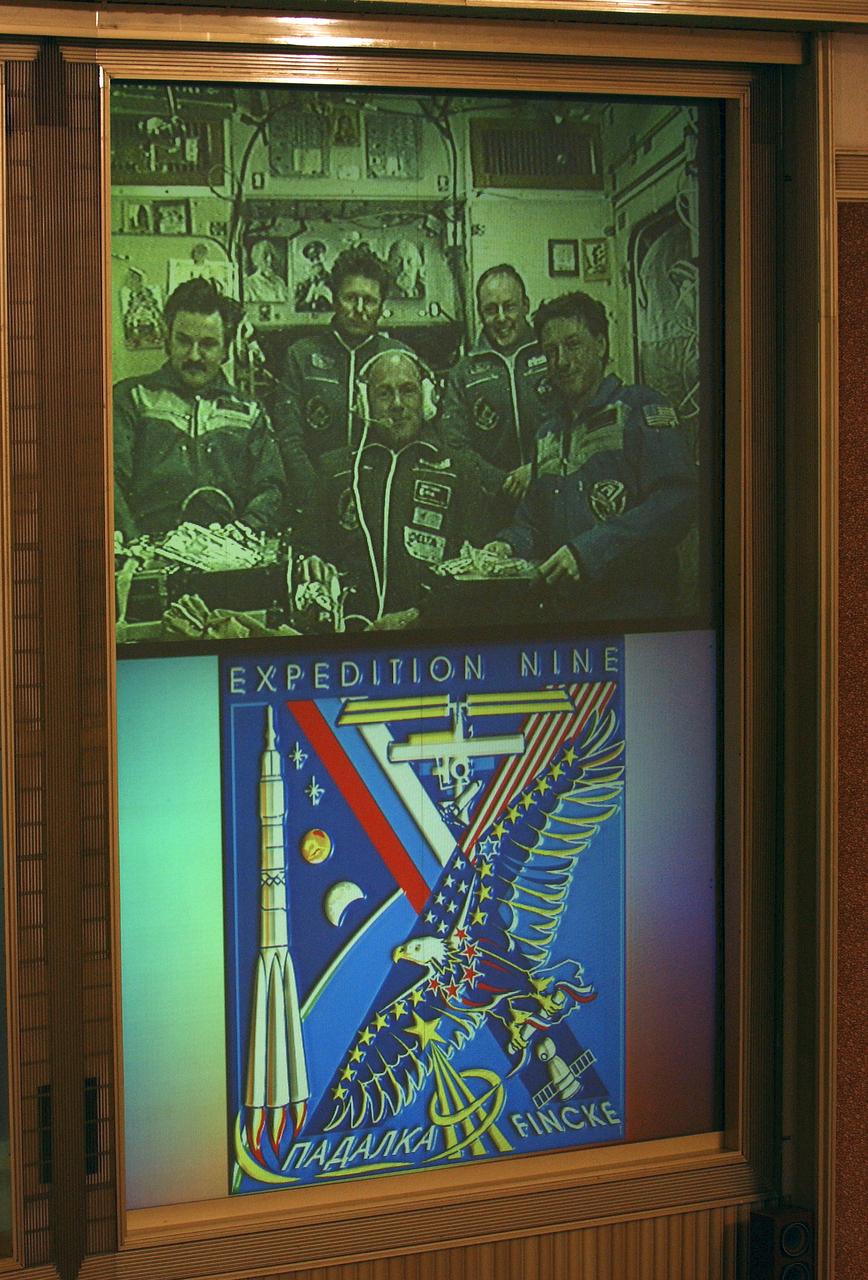
The Expedition 8 and 9 crews and European Space Agency astronaut Andre Kuipers of the Netherlands are viewed on the front screen of the Flight Control Room at the Russian Mission Control Center outside Moscow, Wednesday, April 21, 2004, in a televised welcoming ceremony following their docking to the International Space Station in a Russian Soyuz spacecraft. Under the televised view of the two crews is the insignia of the Expedition 9 crew, consisting of commander Gennady Padalka and Flight Engineer and NASA International Space Station Science Officer Michael Fincke, who will spend six months on the Station. Photo Credit: (NASA/Bill Ingalls)

JSC2015E076004 (08/10/2015) --- Flight controllers in the International Space Station Mission Control at the Johnson Space Center monitor systems aboard the orbiting laboratory during a number of dynamic events for Expedition 44. Screens in the front of the room show the camera views from two spacewalking Russian cosmonauts while NASA astronaut Kjell Lindgren is seen harvesting lettuce from the Veggie experiment that would become the first food grown in space to be eaten. NASA Photographer Bill Stafford.
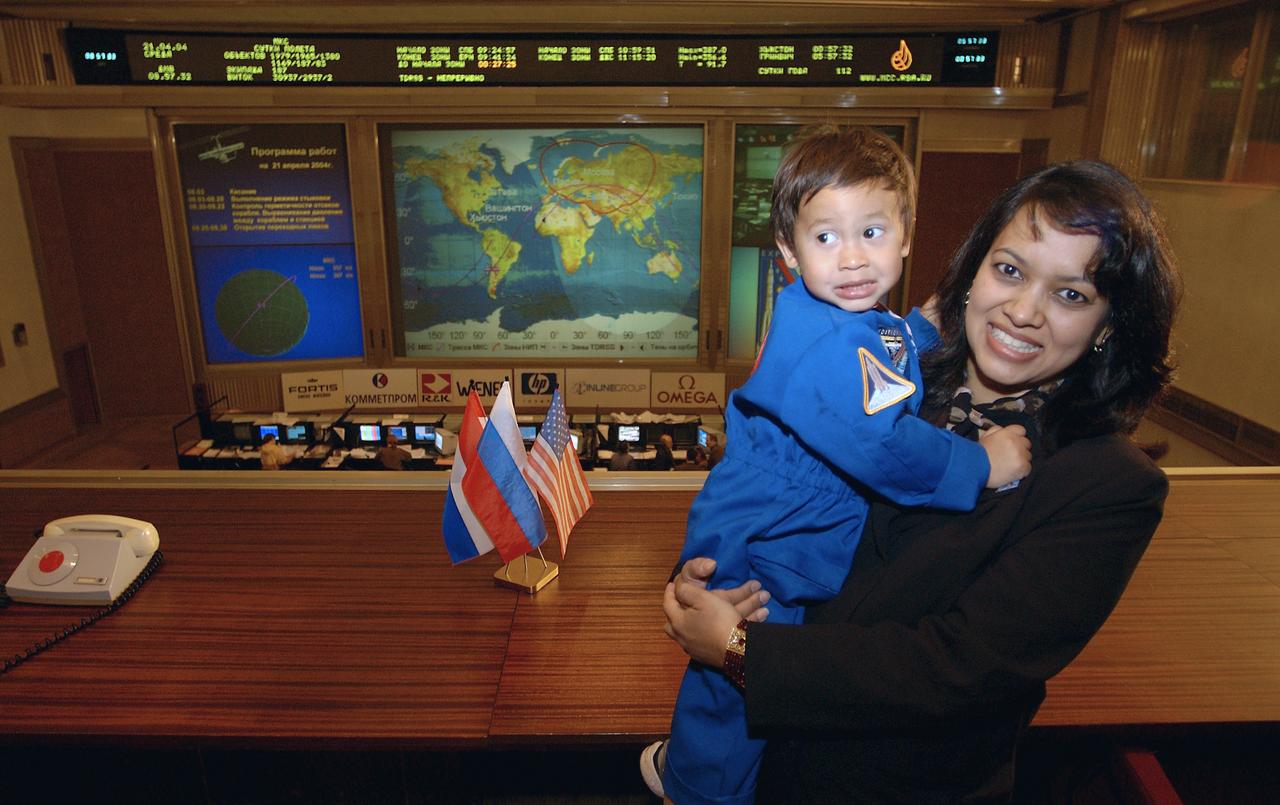
Renita Fincke, wife of Expedition 9 Flight Engineer and NASA International Space Station Science Officer Michael Fincke, smiles with their two-year old son Chandra at the Russian Mission Control Center outside Moscow, Wednesday, April 21, 2004, following the successful docking of the Russian Soyuz capsule carrying Fincke, Expedition 9 Commander Gennady Padalka and European Space Agency astronaut Andre Kuipers of the Netherlands to the International Space Station. Photo Credit: (NASA/Bill Ingalls)
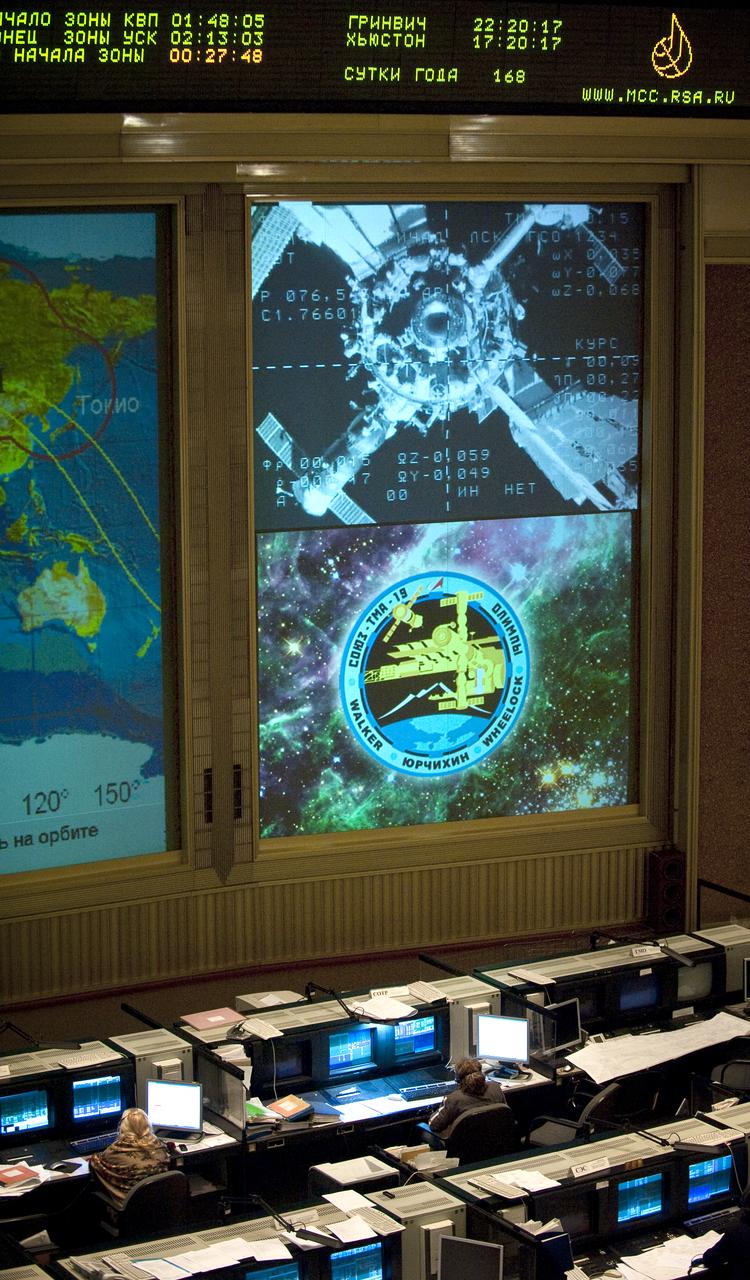
The Soyuz TMA-19 nears its docking with the International Space Station (ISS) as seen in the video monitor at Russian Mission Control Center in Korolev, Russia on Friday, June 18, 2010. The TMA-19 delivered the crew of Expedition 24 Soyuz Commander Fyodor Yurchikhin, and NASA Flight Engineers Doug Wheelock and Shannon Walker to the ISS. Photo Credit: (NASA/Carla Cioffi)
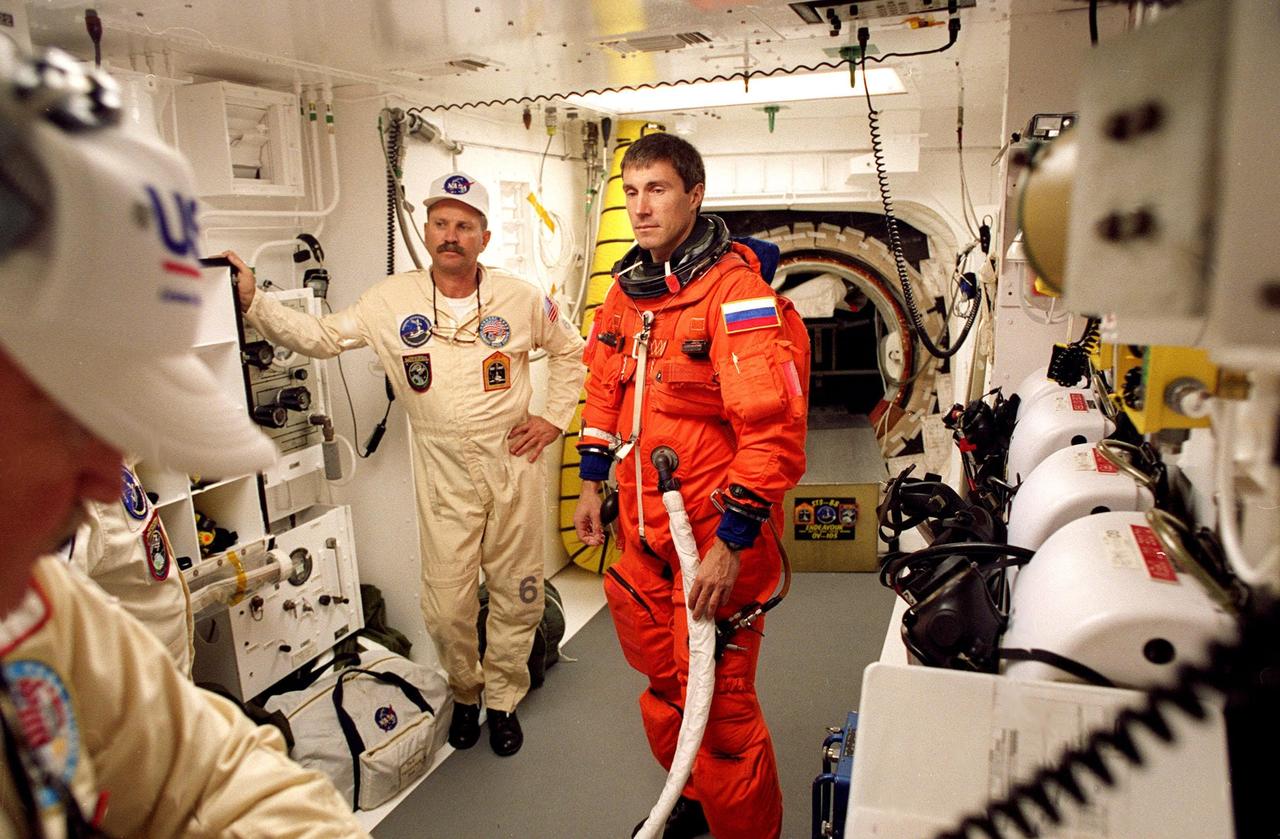
STS-88 Mission Specialist Sergei Konstantinovich Krikalev, a Russian cosmonaut, is assisted with his ascent and re-entry flight suit in the white room at Launch Pad 39A before entering Space Shuttle Endeavour for launch. During the nearly 12-day mission, the six-member crew will mate the first two elements of the International Space Station the already-orbiting Zarya control module with the Unity connecting module carried by Endeavour. He is making his fourth spaceflight
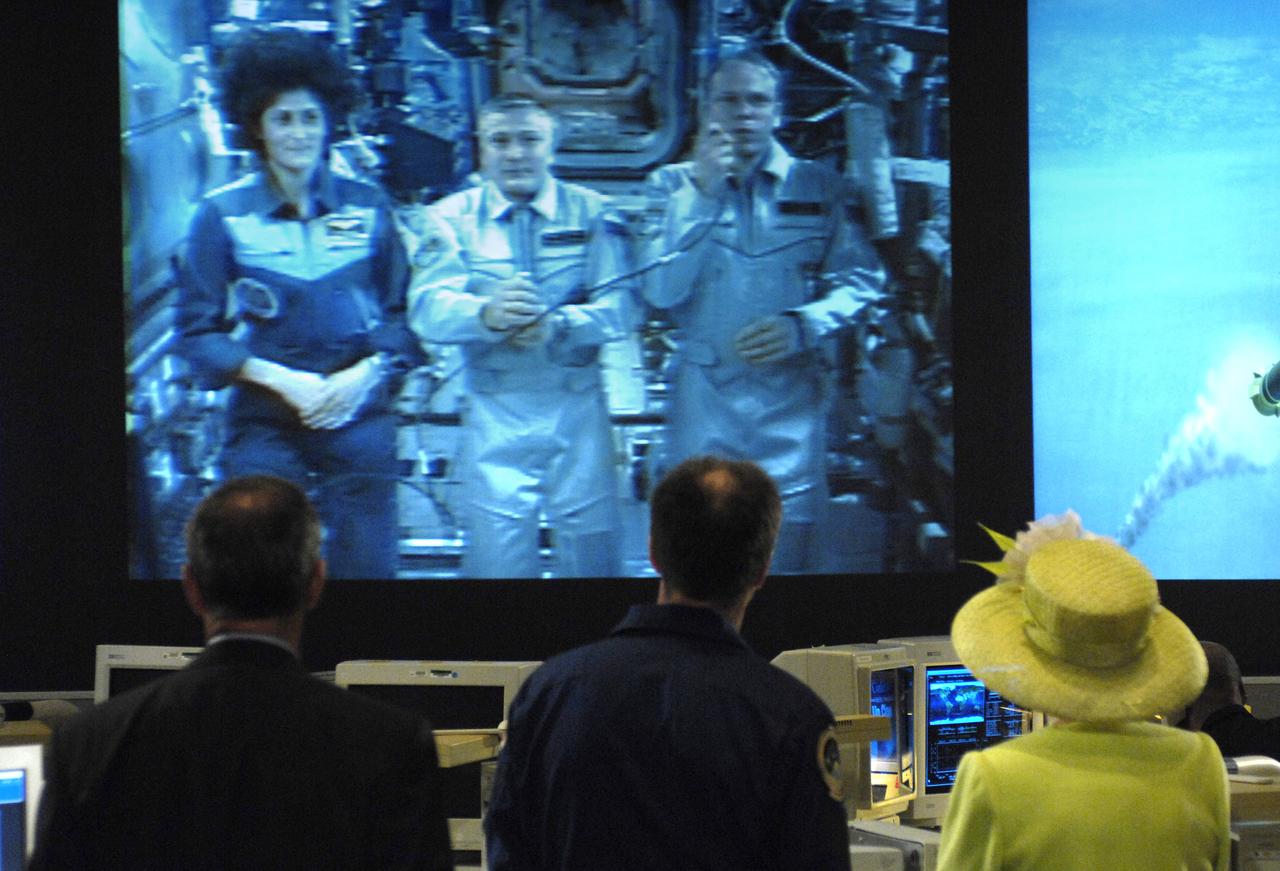
Queen Elizabeth II, lower right, talks to Expedition 15 crew members from left, NASA astronaut, Sunita Williams, Russian cosmonaut Fyodor N. Yurchikhin and cosmonaut Oleg V. Kotov aboard the International Space Station crew along with NASA Administrator Michael Griffin, lower left and NASA astronaut Michael Foale during a downlink at the NASA's Goddard Space Flight Center Operational Control Room, Tuesday, May 8, 2007, in Greenbelt, Md. NASA Goddard was one of the last stops on the Queen's six-day visit to the United States. Photo Credit: (NASA/Bill Ingalls)
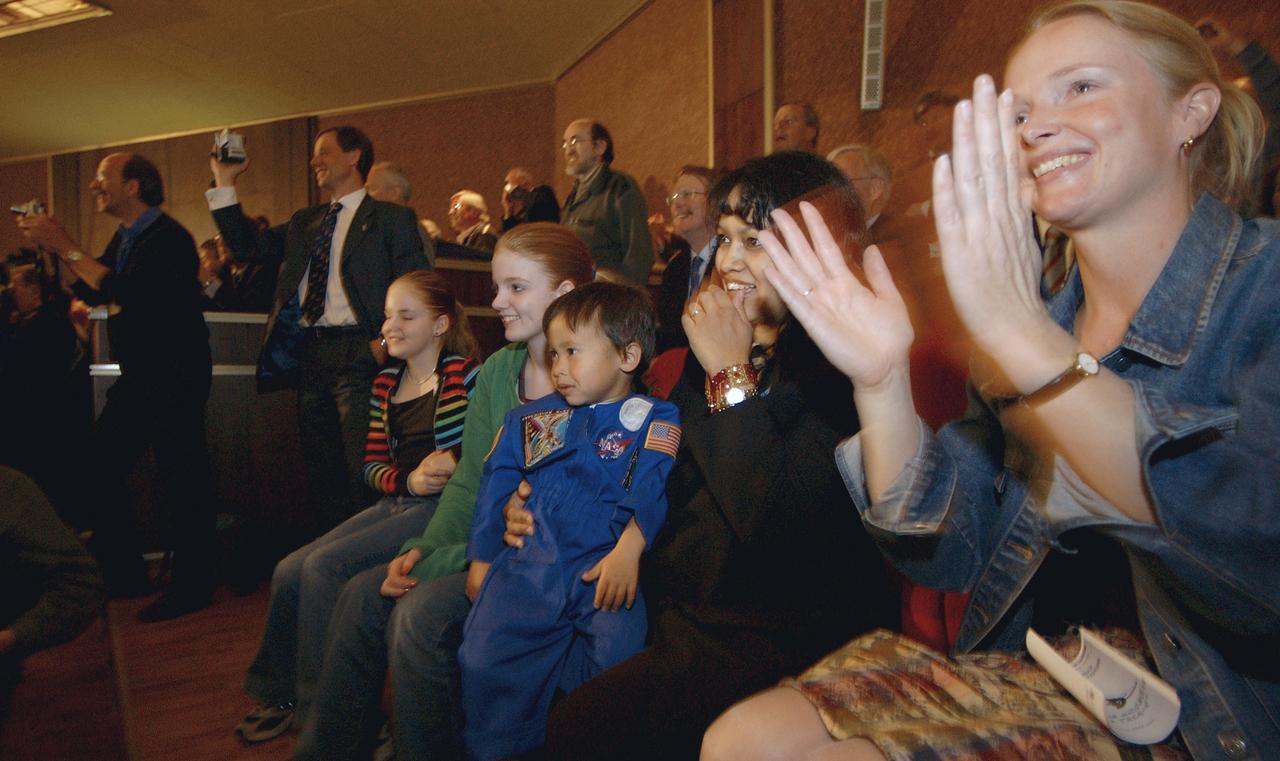
Helen Conijn, fiancée of European Space Agency astronaut Andre Kuipers of the Netherlands, far right, joins Renita Fincke, second from right, wife of Expedition 9 Flight Engineer and NASA International Space Station Science Officer Michael Fincke, along with family members at the Russian Mission Control Center outside Moscow, Wednesday, April 21, 2004 to view the docking of the Soyuz capsule to the International Space Station that brought Kuipers, Fincke and Expedition 9 Commander Gennady Padalka to the complex following their launch Monday from Kazakhstan. Photo Credit: (NASA/Bill Ingalls)
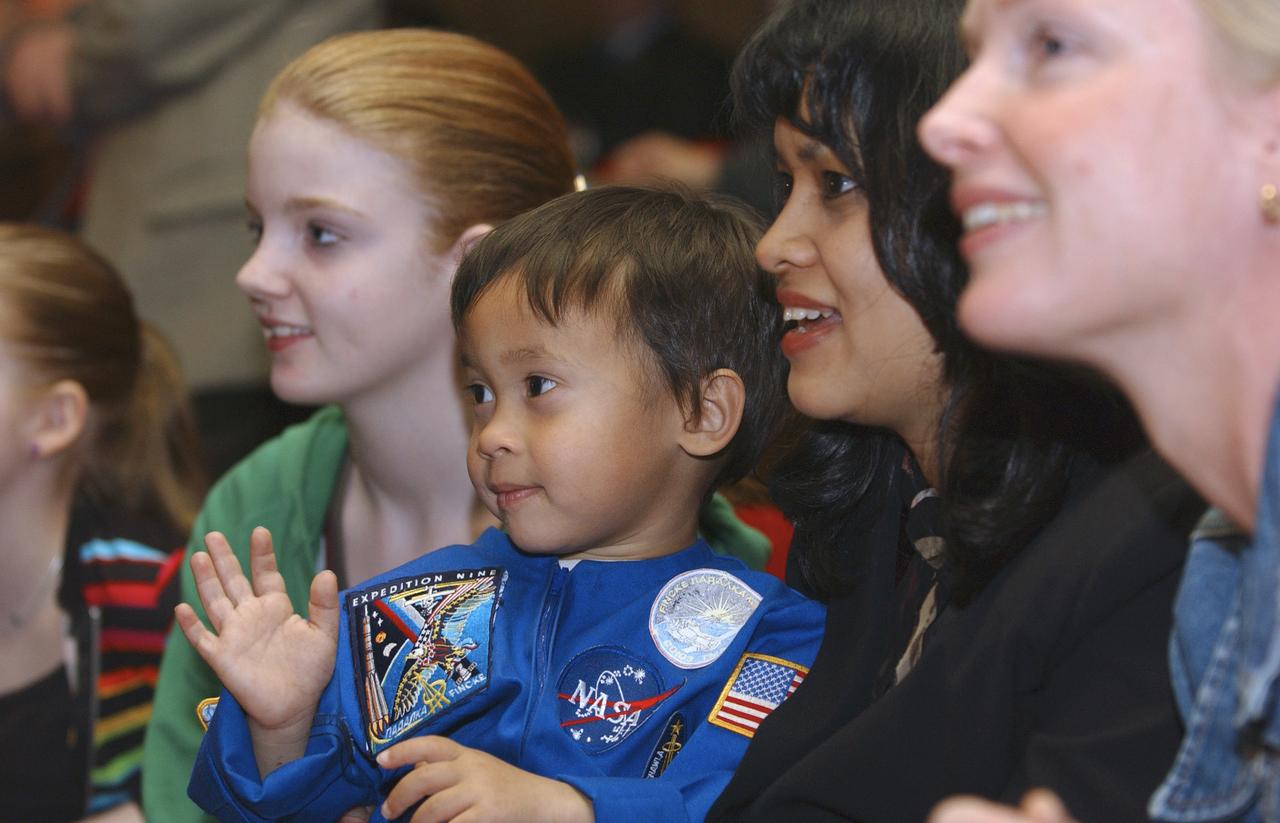
Helen Conijn, fiancée of European Space Agency astronaut Andre Kuipers of the Netherlands, far right, joins Renita Fincke, second from right, wife of Expedition 9 Flight Engineer and NASA International Space Station Science Officer Michael Fincke, along with family members at the Russian Mission Control Center outside Moscow, Wednesday, April 21, 2004 to view the docking of the Soyuz capsule to the International Space Station that brought Kuipers, Fincke and Expedition 9 Commander Gennady Padalka to the complex following their launch Monday from Kazakhstan. Photo Credit: (NASA/Bill Ingalls)
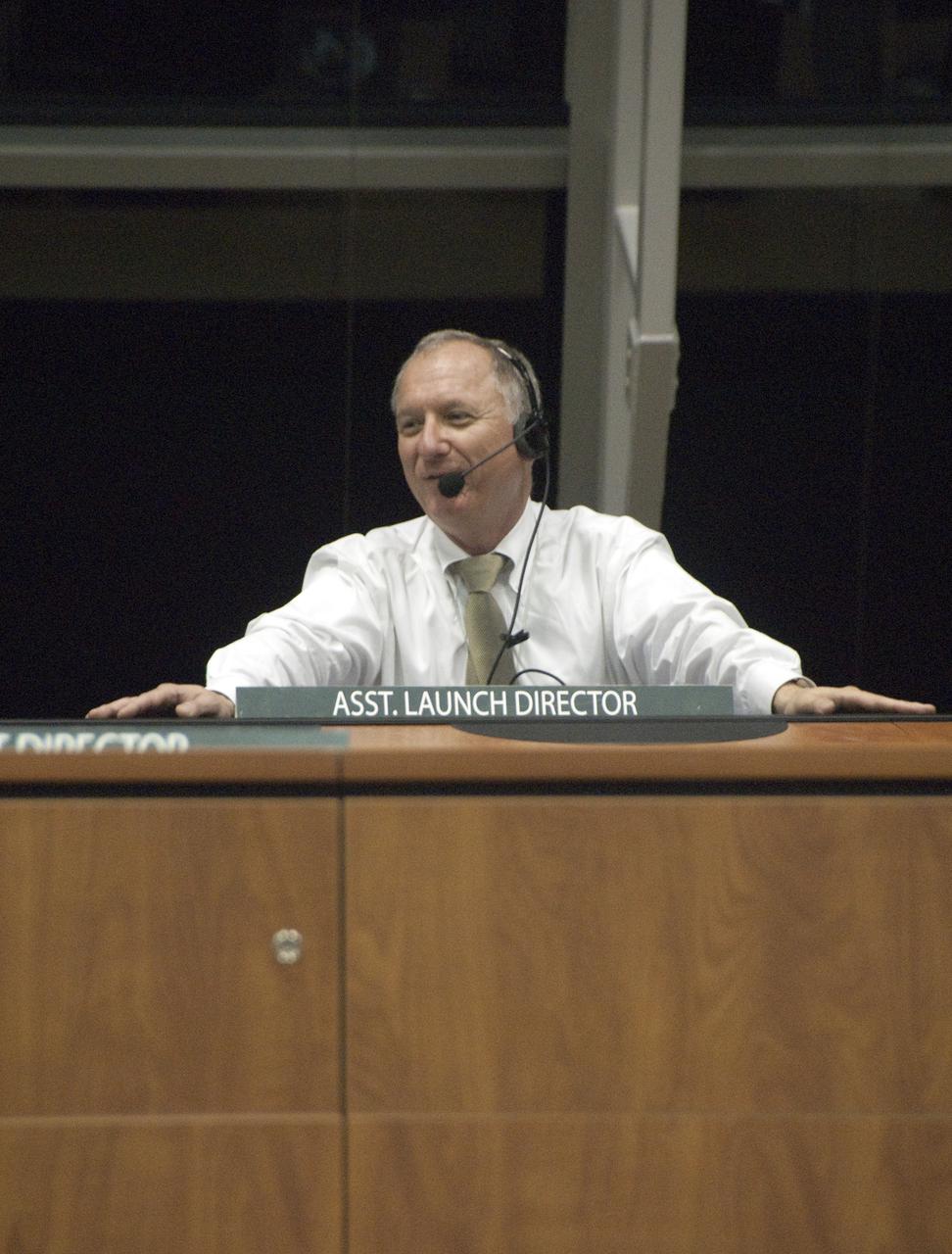
CAPE CANAVERAL, Fla. - In the Launch Control Center at NASA's Kennedy Space Center in Florida, NASA Assistant Launch Director Pete Nickolenko is pleased with the outcome of the tanking operations for space shuttle Atlantis' STS-132 mission being conducted from Firing Room 4. Liftoff of the STS-132 mission is set for 2:20 p.m. EDT on May 14. The six-member STS-132 crew will deliver the Russian-built Mini Research Module-1 to the International Space Station. Named Rassvet, Russian for 'dawn,' the module is the second in a series of new pressurized components for Russia and will be permanently attached to the Earth-facing port of the Zarya control module. Rassvet will be used for cargo storage and will provide an additional docking port to the station. Also aboard Atlantis is an Integrated Cargo Carrier, or ICC, an unpressurized flat bed pallet and keel yoke assembly used to support the transfer of exterior cargo from the shuttle to the station. STS-132 is the 34th mission to the station and the last scheduled flight for Atlantis. For more information on the STS-132 mission objectives, payload and crew, visit http:__www.nasa.gov_mission_pages_shuttle_shuttlemissions_sts132_index.html. Photo Credit: NASA_Cory Huston
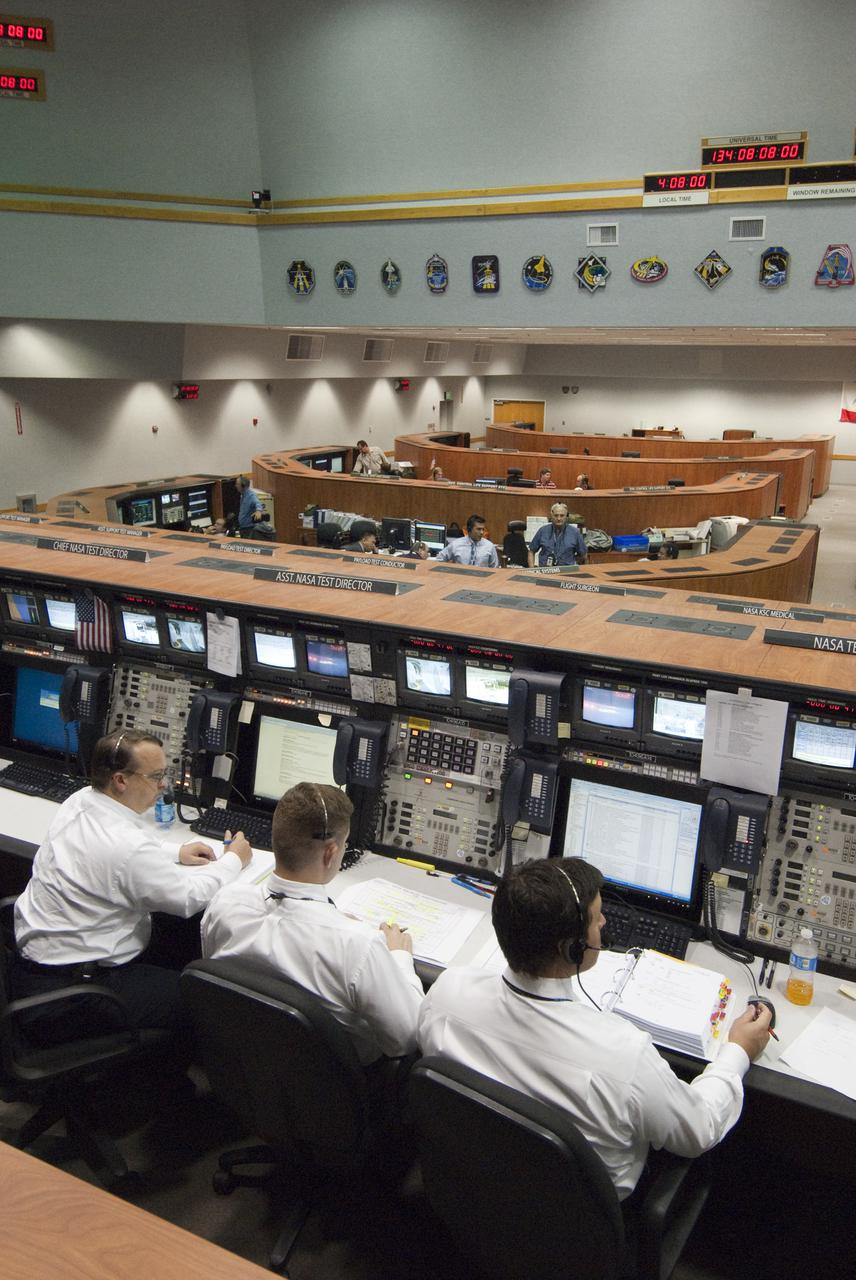
CAPE CANAVERAL, Fla. - In the Launch Control Center at NASA's Kennedy Space Center in Florida, NASA test directors take their stations in Firing Room 4 for the start of tanking operations for space shuttle Atlantis' STS-132 mission. Liftoff of the STS-132 mission is set for 2:20 p.m. EDT on May 14. The six-member STS-132 crew will deliver the Russian-built Mini Research Module-1 to the International Space Station. Named Rassvet, Russian for 'dawn,' the module is the second in a series of new pressurized components for Russia and will be permanently attached to the Earth-facing port of the Zarya control module. Rassvet will be used for cargo storage and will provide an additional docking port to the station. Also aboard Atlantis is an Integrated Cargo Carrier, or ICC, an unpressurized flat bed pallet and keel yoke assembly used to support the transfer of exterior cargo from the shuttle to the station. STS-132 is the 34th mission to the station and the last scheduled flight for Atlantis. For more information on the STS-132 mission objectives, payload and crew, visit http:__www.nasa.gov_mission_pages_shuttle_shuttlemissions_sts132_index.html. Photo Credit: NASA_Cory Huston
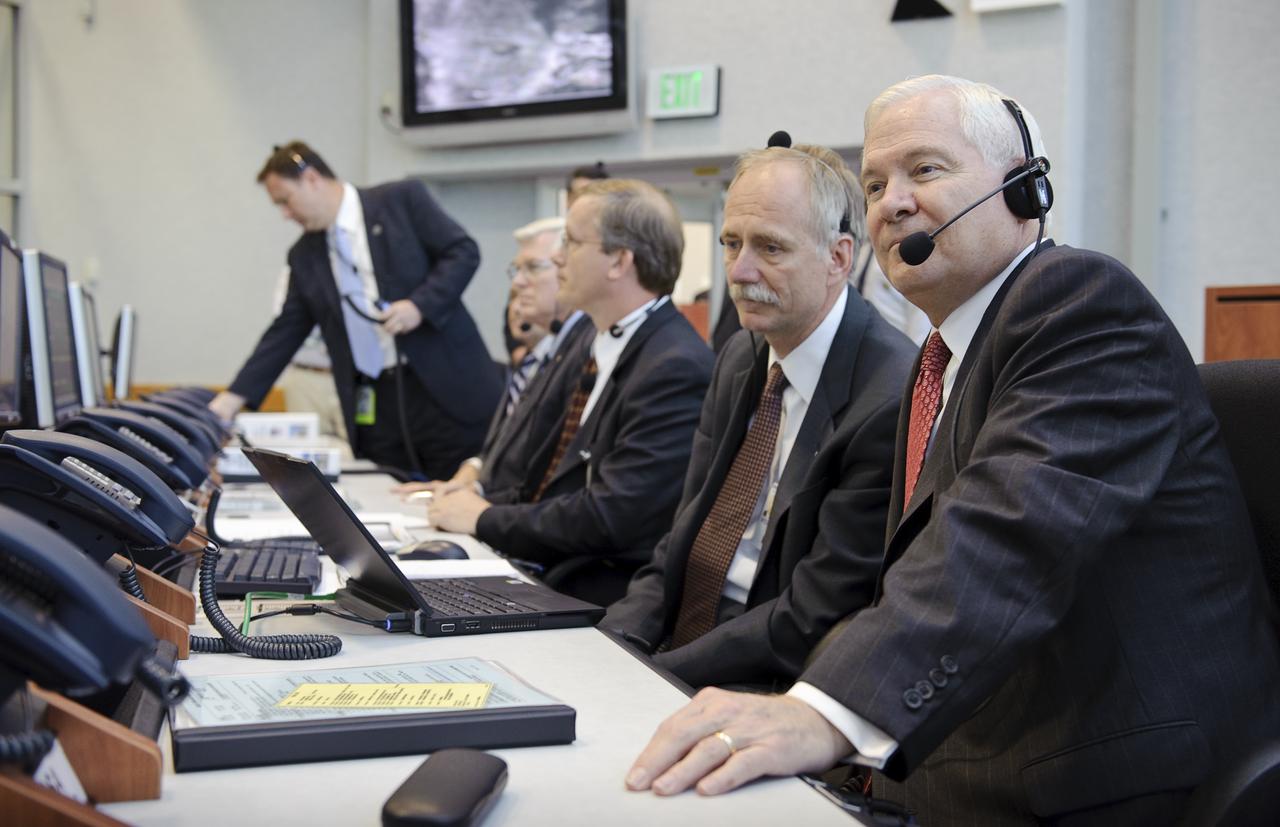
Secretary of Defense Dr. Robert M. Gates, right, NASA Associate Administrator for Space Operations William H. Gerstenmaier, center, and other NASA mission managers monitor the launch of the space shuttle Atlantis and the STS-132 mission from Firing Room Four of the NASA Kennedy Space Center Launch Control Center, Friday, May 14, 2010 in Cape Canaveral Florida. Space shuttle Atlantis is embarking on its final planned mission. During the 12-day flight, Atlantis and six astronauts will fly to the International Space Station, leaving behind a Russian Mini Research Module, a set of batteries for the station's truss and dish antenna, along with other replacement parts. Atlantis' 32nd flight is scheduled to last 12 days and include three spacewalks and extensive robotics work. Photo Credit: (NASA/Bill Ingalls)
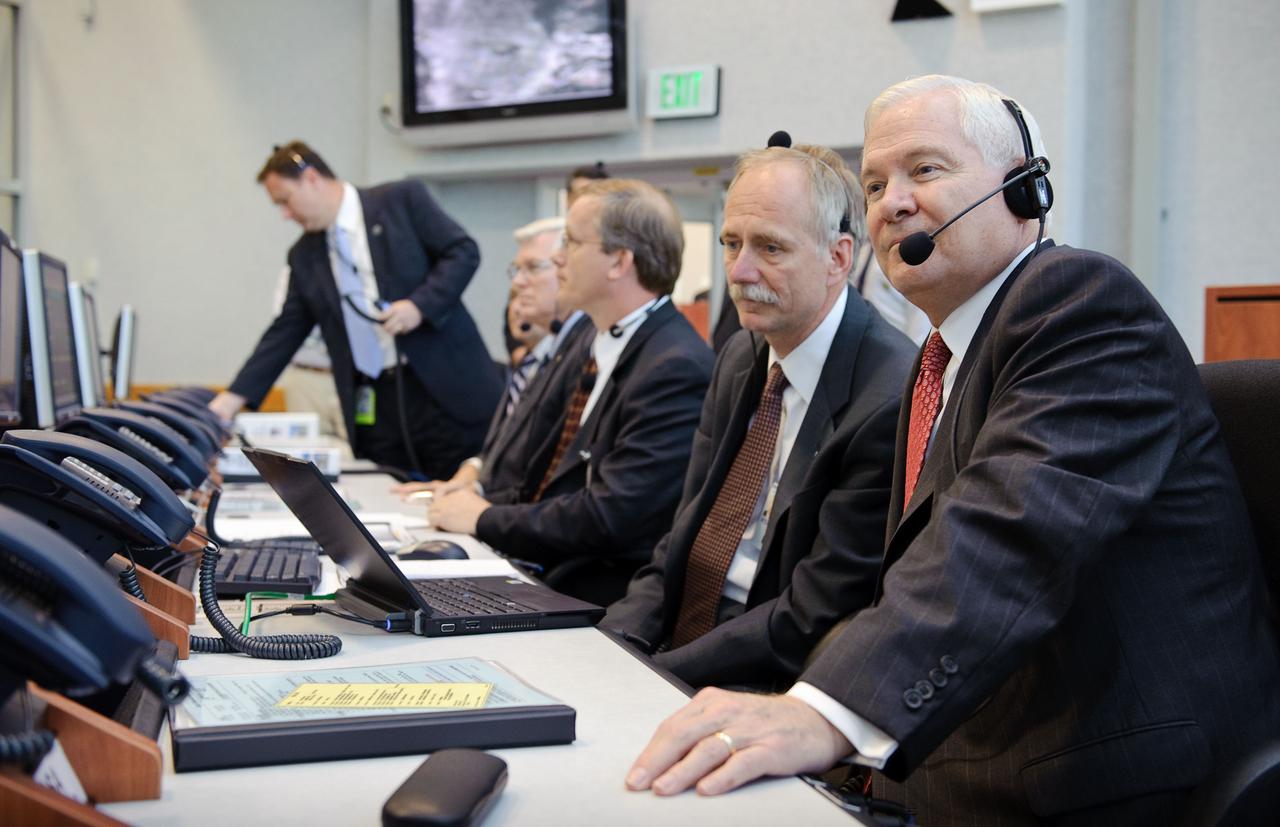
STS132-S-012 (14 May 2010) --- Secretary of Defense Dr. Robert M. Gates, right, NASA Associate Administrator for Space Operations William H. Gerstenmaier, center, and other NASA mission managers monitor the launch of the space shuttle Atlantis and the STS-132 mission from Firing Room Four of the NASA Kennedy Space Center Launch Control Center, Friday, May 14, 2010 in Cape Canaveral Florida. Space shuttle Atlantis is embarking on its final planned mission. During the 12-day flight, Atlantis and six astronauts will fly to the International Space Station, leaving behind a Russian Mini Research Module, a set of batteries for the station's truss and dish antenna, along with other replacement parts. Atlantis' 32nd flight is scheduled to last 12 days and include three spacewalks and extensive robotics work. Photo credit: NASA/Bill Ingalls
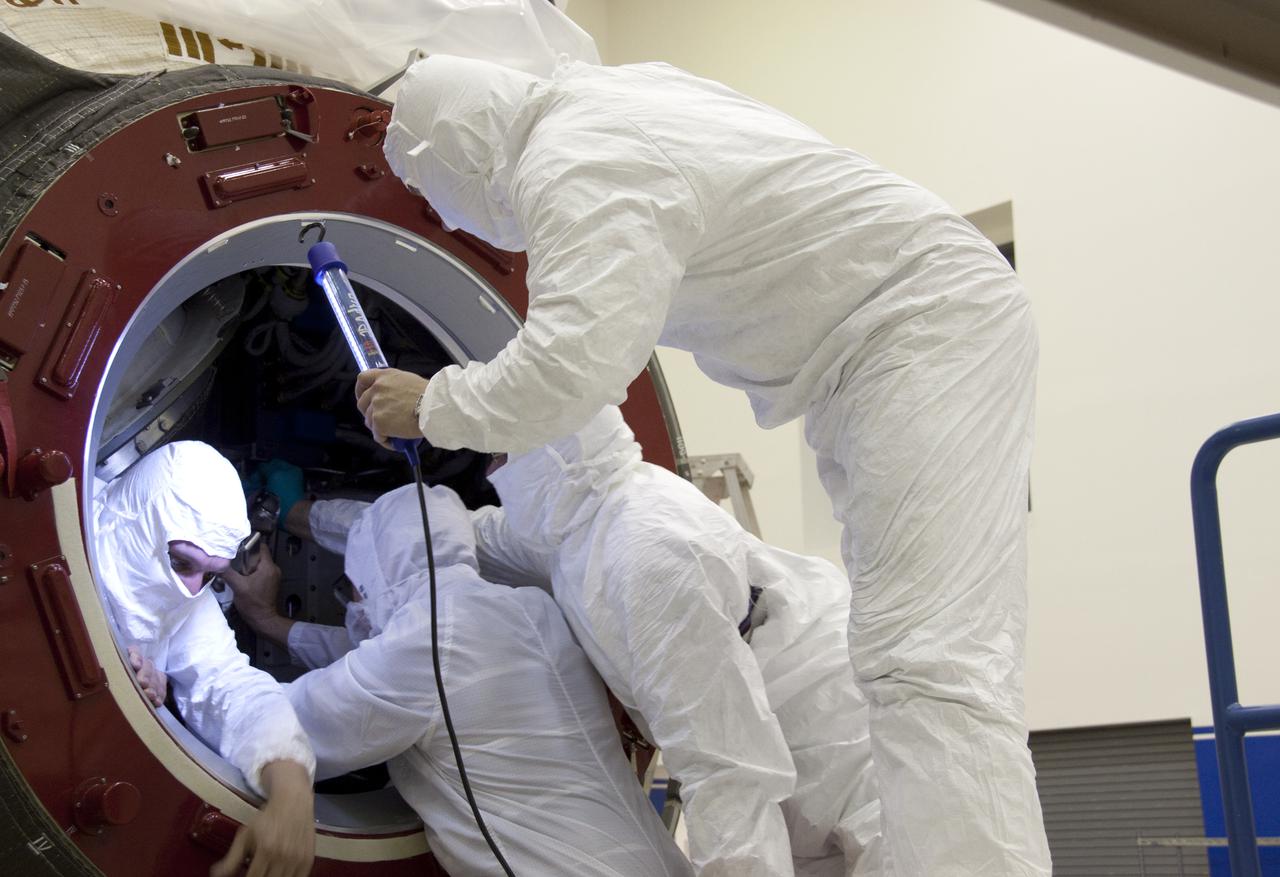
CAPE CANAVERAL, Fla. – In the Astrotech payload processing facility at Port Canaveral, Fla., the Russian-built Mini-Research Module-1, or MRM-1, gets a thorough inspection, inside and out, by workers dressed in clean room attire, known as bunny suits, before its hatch is closed for flight. The six-member crew of space shuttle Atlantis' STS-132 mission will deliver an Integrated Cargo Carrier and the MRM-1, known as Rassvet, to the International Space Station. The second in a series of new pressurized components for Russia, MRM-1 will be permanently attached to the Earth-facing port of the Zarya control module. Rassvet, which translates to 'dawn,' will be used for cargo storage and will provide an additional docking port to the station. STS-132 is the 34th mission to the station and the 132nd space shuttle mission. Launch is targeted for May 14. For information on the STS-132 mission, visit http:__www.nasa.gov_mission_pages_shuttle_shuttlemissions_sts132_index.html. Photo credit: NASA_Troy Cryder
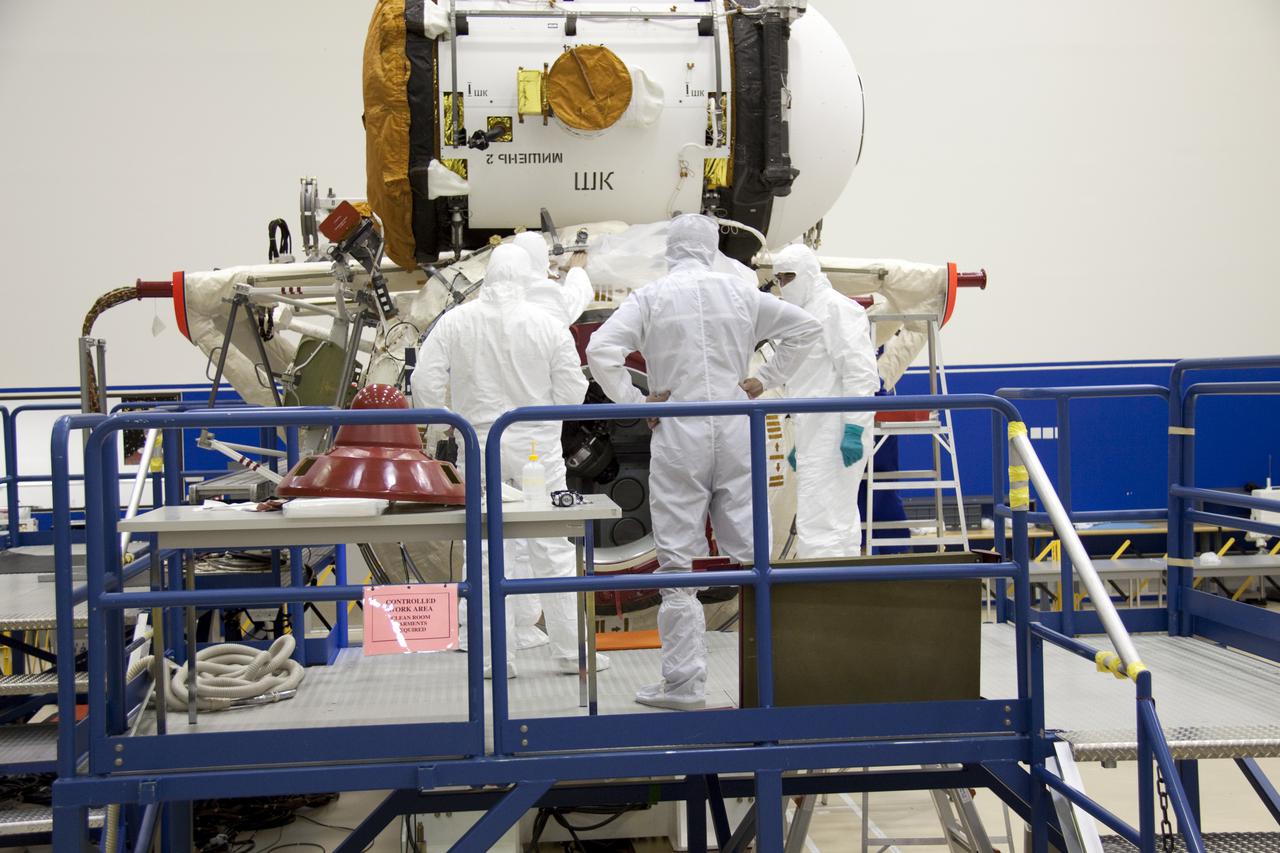
CAPE CANAVERAL, Fla. – In the Astrotech payload processing facility at Port Canaveral, Fla., workers dressed in clean room attire, known as bunny suits, prepare to close the hatch of the Russian-built Mini-Research Module-1, or MRM-1, for flight. The six-member crew of space shuttle Atlantis' STS-132 mission will deliver an Integrated Cargo Carrier and the MRM-1, known as Rassvet, to the International Space Station. The second in a series of new pressurized components for Russia, MRM-1 will be permanently attached to the Earth-facing port of the Zarya control module. Rassvet, which translates to 'dawn,' will be used for cargo storage and will provide an additional docking port to the station. STS-132 is the 34th mission to the station and the 132nd space shuttle mission. Launch is targeted for May 14. For information on the STS-132 mission, visit http:__www.nasa.gov_mission_pages_shuttle_shuttlemissions_sts132_index.html. Photo credit: NASA_Troy Cryder
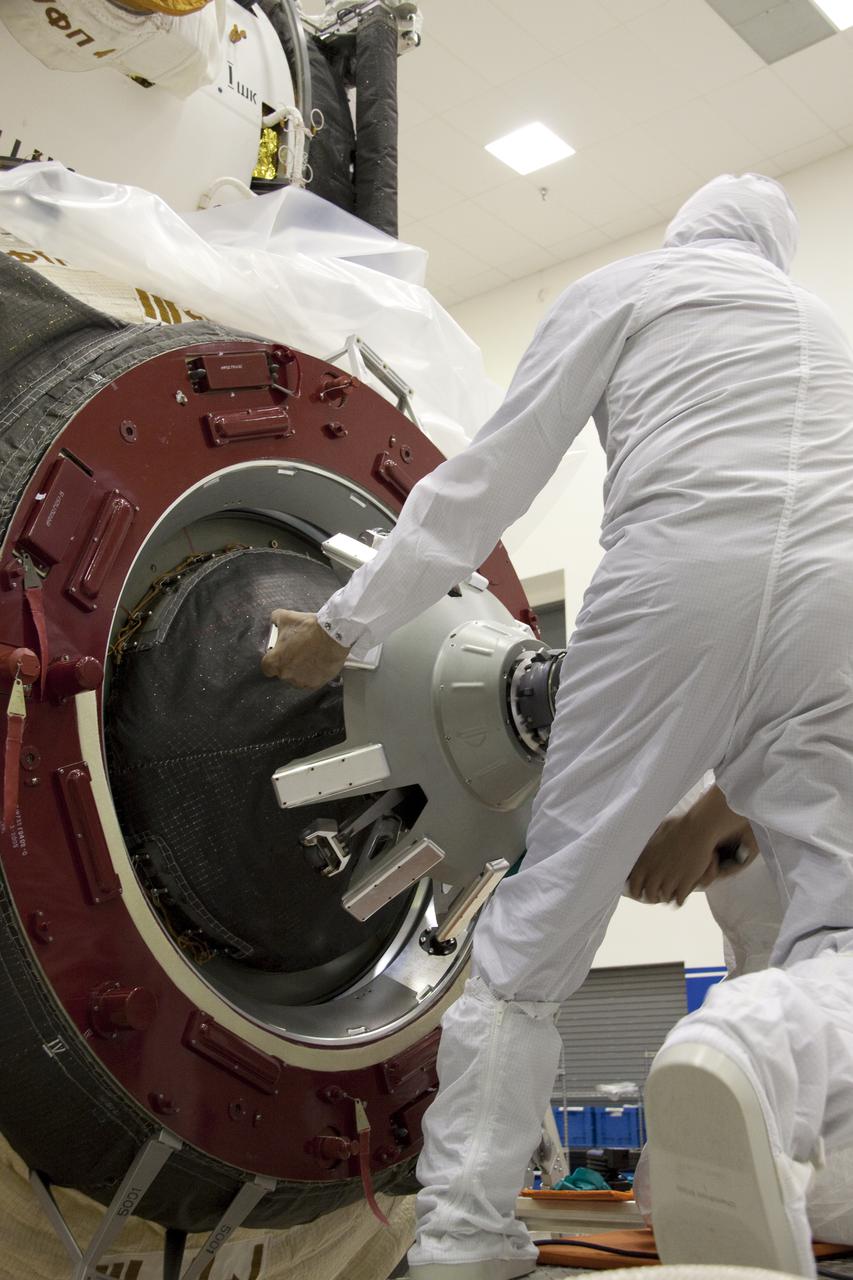
CAPE CANAVERAL, Fla. – In the Astrotech payload processing facility at Port Canaveral, Fla., the hatch on the Russian-built Mini-Research Module-1, or MRM-1, is closed for flight by a worker dressed in clean room attire, known as a bunny suit. The six-member crew of space shuttle Atlantis' STS-132 mission will deliver an Integrated Cargo Carrier and the MRM-1, known as Rassvet, to the International Space Station. The second in a series of new pressurized components for Russia, MRM-1 will be permanently attached to the Earth-facing port of the Zarya control module. Rassvet, which translates to 'dawn,' will be used for cargo storage and will provide an additional docking port to the station. STS-132 is the 34th mission to the station and the 132nd space shuttle mission. Launch is targeted for May 14. For information on the STS-132 mission, visit http:__www.nasa.gov_mission_pages_shuttle_shuttlemissions_sts132_index.html. Photo credit: NASA_Troy Cryder
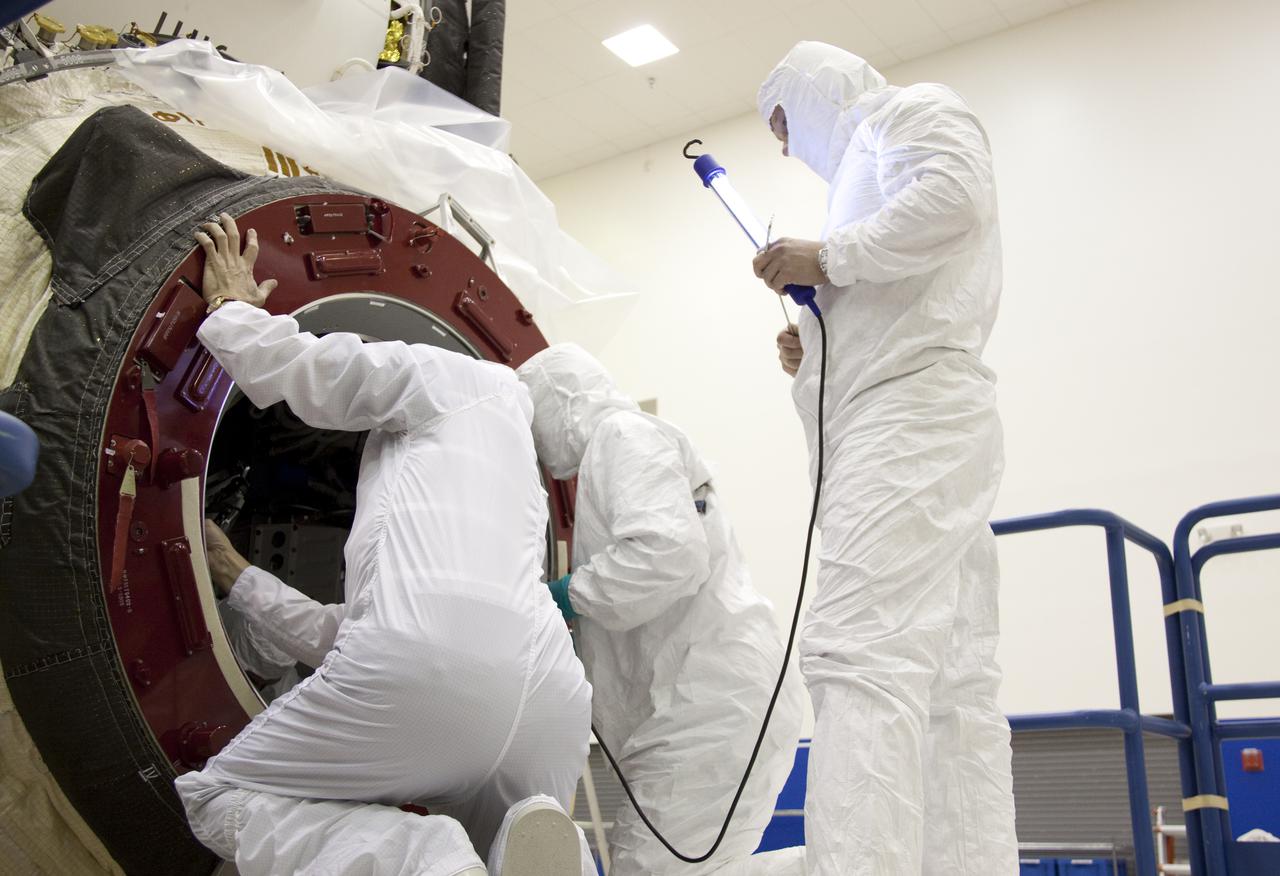
CAPE CANAVERAL, Fla. – In the Astrotech payload processing facility at Port Canaveral, Fla., workers dressed in clean room attire, known as bunny suits, inspect the seals around the hatch of the Russian-built Mini-Research Module-1, or MRM-1, before the hatch is closed for flight. The six-member crew of space shuttle Atlantis' STS-132 mission will deliver an Integrated Cargo Carrier and the MRM-1, known as Rassvet, to the International Space Station. The second in a series of new pressurized components for Russia, MRM-1 will be permanently attached to the Earth-facing port of the Zarya control module. Rassvet, which translates to 'dawn,' will be used for cargo storage and will provide an additional docking port to the station. STS-132 is the 34th mission to the station and the 132nd space shuttle mission. Launch is targeted for May 14. For information on the STS-132 mission, visit http:__www.nasa.gov_mission_pages_shuttle_shuttlemissions_sts132_index.html. Photo credit: NASA_Troy Cryder
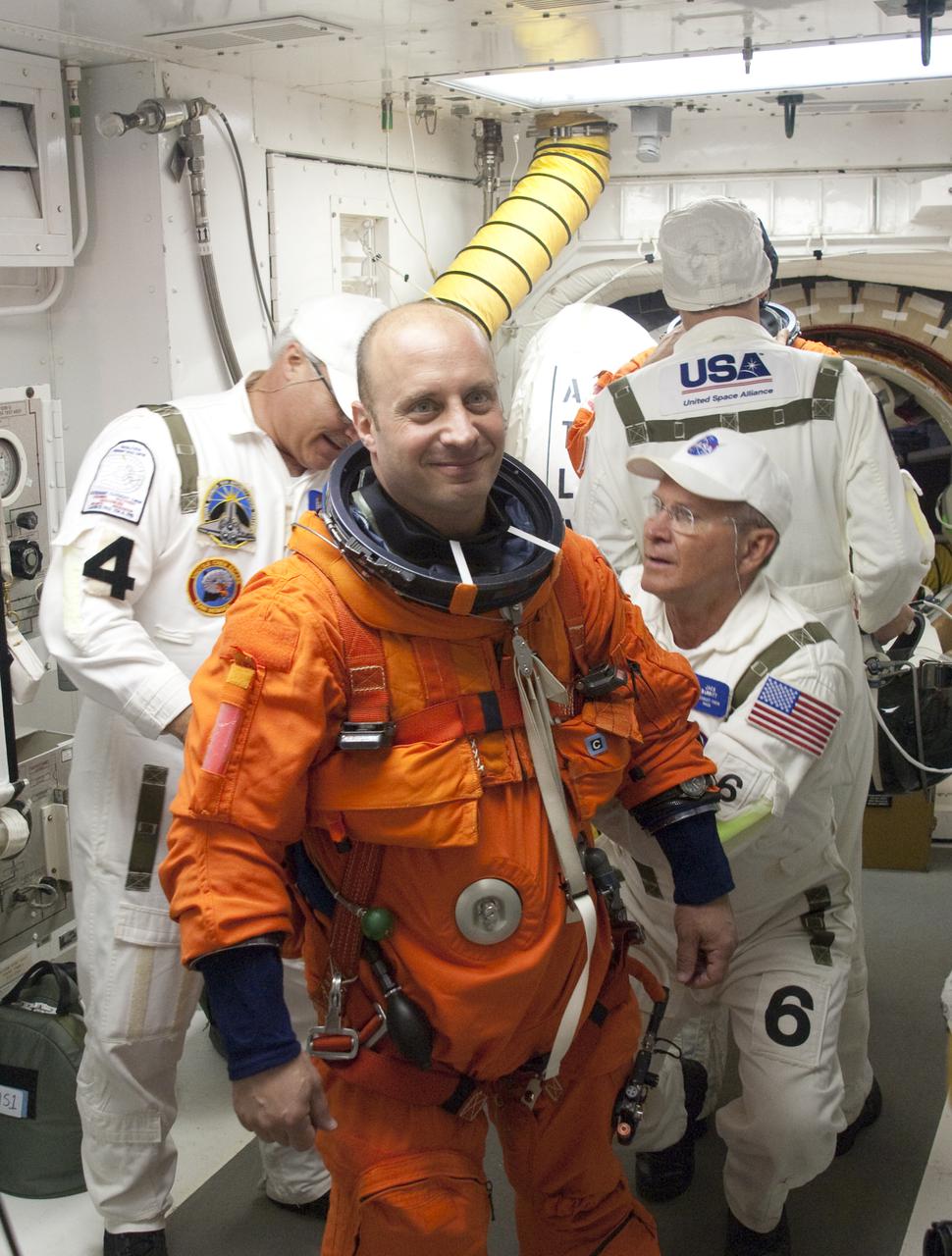
CAPE CANAVERAL, Fla. - In the White Room at Launch Pad 39A at NASA's Kennedy Space Center in Florida, United Space Alliance space suit technicians help STS-132 Mission Specialist Garrett Reisman put on the parachute for his launch-and-entry suit before he enters space shuttle Atlantis through the crew hatch in the background. Reisman was a flight engineer on the International Space Station's Expedition 16 and 17. Liftoff of the STS-132 mission is set for 2:20 p.m. EDT on May 14. The six-member STS-132 crew will deliver the Russian-built Mini Research Module-1 to the International Space Station. Named Rassvet, Russian for 'dawn,' the module is the second in a series of new pressurized components for Russia and will be permanently attached to the Earth-facing port of the Zarya control module. Rassvet will be used for cargo storage and will provide an additional docking port to the station. Also aboard Atlantis is an Integrated Cargo Carrier, or ICC, an unpressurized flat bed pallet and keel yoke assembly used to support the transfer of exterior cargo from the shuttle to the station. STS-132 is the 34th mission to the station and the last scheduled flight for Atlantis. For more information on the STS-132 mission objectives, payload and crew, visit http:__www.nasa.gov_mission_pages_shuttle_shuttlemissions_sts132_index.html. Photo Credit: NASA_Sandra Joseph and Kevin O'Connell

Photographs documenting International Space Station (ISS) Phase One activities at the Russian Space Agency's (RSA) Gagarin Cosmonaut Training Center, Korolov Mission Control Center and Zvezda; and ISS and Soyuz manufacturing at RSA's Khrunichev Design Center and RSC Energiya in Moscow, Russia, the French Space Agency's (CNES) INTESPACE facility in Toulouse, France, and the Italian Space Agency's (ASI) Alenia Spazio facility in Torino, Italy. Photographs were taken by Johnson Space Center Imagery and Publications Office contractors travelling from October 7 to November 4, 1996. Includes: VIEWS FROM RSC ENERGIYA'S SPACE MUSEUM: Room with a Buran model and photographic displays (17372-374). Salyut Space Station mock-up (17376). Russian propulsion engines on display (17377-378). Russian spacecraft on display (17375, 17387-398). Graphic displays (17399-405). VIEWS FROM RSC ENERGIYA MANUFACTURING FACILITIES: Unidentified facility (17379). Mir 24 crew member Michael C. Foale, suited in a Soyuz pressure suit, ingresses the Soyuz TM-26 flight article at RSC Energiya for a fit check (17380-381). Closeups of Foale inside the Soyuz during the fit check (17382-383, 17466-467). Overhead views of RSC Energiya's Building 444 manufacturing floor where docking modules and Soyuz TM spacecraft are built (17495-498). Technicians on the Building 444 manufacturing floor assembling probe and drogue docking modules (17499-500, 17504). Technicians assembling Soyuz spacecraft (17437-439). Views of other Soyuz spacecraft (17440-441). Androgynous Peripheral Docking System (APDS) mock-up (17501-503). Closeups of a control panel, possibly for the APDS mock-up (17519-528). VIEWS FROM ZVEZDA, RSA CONTRACTOR FOR SUIT DESIGN AND SOYUZ SEAT LINERS: Mir 24 crew member Foale dons a "penguin" flight suit for a fit check (17454-456). Zvezda personnel adjust Foale's Soyuz seat and seat liner (17442). Closeup of Foale, suited in a Soyuz pressure suit, sitting on a chair (17444). Zvezda personnel strap pressure-suited Foale into his Soyuz seat (17443, 17445, 17450). Views of Foale in his Soyuz seat during a pressurized pressure suit fit check (17451-453). Views looking into a vacuum chamber where Foale, wearing pressure suit, is strapped into his Soyuz seat (17466-467). Views of Zvezda personnel working at the vacuum chamber control station during the vacuum chamber suit test (17468-471). VIEWS FROM KHRUNICHEV DESIGN CENTER: Views of a green ISS Functional Cargo Block (FGB) test article on the manufacturing floor (17529, 17532-536, 17540-544). Views of an ISS Service Module (SM) test article on the manufacturing floor (17530-531, 17537, 17539). Closeup of the SM test article docking sphere (17538). Views of the FGB flight article on the manufacturing floor during systems tests (17545-548, 17550-567). Views of technicians conducting the FGB systems tests (17549, 17557). VIEWS FROM GAGARIN COSMONAUT TRAINING CENTER: NASA astronauts work out in the cosmonaut gym at Gagarin: Closeup of ISS 2R Expedition Commander William Shepherd on a weight machine (17384). Shepherd and an unidentified man with back to camera work out with dumbbells (17386). Shepherd does pull-ups (17447). Closeup of Foale on an exercise machine (17385). Closeups of Foale exercising arms on a cycle ergometer and a weight machine (17415, 17448-449). Foale exercises on a Nordic Track (17416). Closeup of Mir 23 crew member Jerry Linenger exercising arms (17417). Wendy Lawrence exercises with dumbbells (17418). Closeup of Lawrence in a handstand position (17419). David Wolf works out on a leg press machine (17446). Views of the Mir Space Station mock-up at Gagarin: Interior views of the Mir Base Module mock-up looking toward the transfer compartment (17421-425). Mir Base Module living area mock-up (17420). Overall views of the Base Module mock-up central control station (17426-427, 17505). Closeups of switch panels on the central control station (17428-436, 17506-518). Other views from Gagarin: Personnel work at an unidentified test/trainer control station (17472-473). Linenger sits at a table next to an RSA trainer during a Mir 23 meeting (17475-476). Out-of-focus view of two subjects in the Soyuz trainer (17474). Foale examines a Mir Complex EVA Suit (Orlan) with RSA trainers during an EVA suit training class (17492-494). VIEWS FROM KOROLOV MISSION CONTROL CENTER: Various views of personnel working in the NASA Consulting Room and/or PAO Consulting Room at Korolov Mission Control Center (17457-463). VIEWS FROM INTESPACE: Exterior views of an ISS Mini Pressurized Logistics Module (MPLM) structural test article (STA) during testing at INTESPACE (17406-409, 17477, 17482-484). Technicians install hatch on the MPLM STA (17410-414). Interior views of the MPLM STA (17478-481). VIEWS FROM ALENIA SPAZIO: Closeups of MPLM flight article #1 side panels during milling and refining at Alenia Spazio (17485-488). Workers process MPLM parts at milling machines (17489-491).
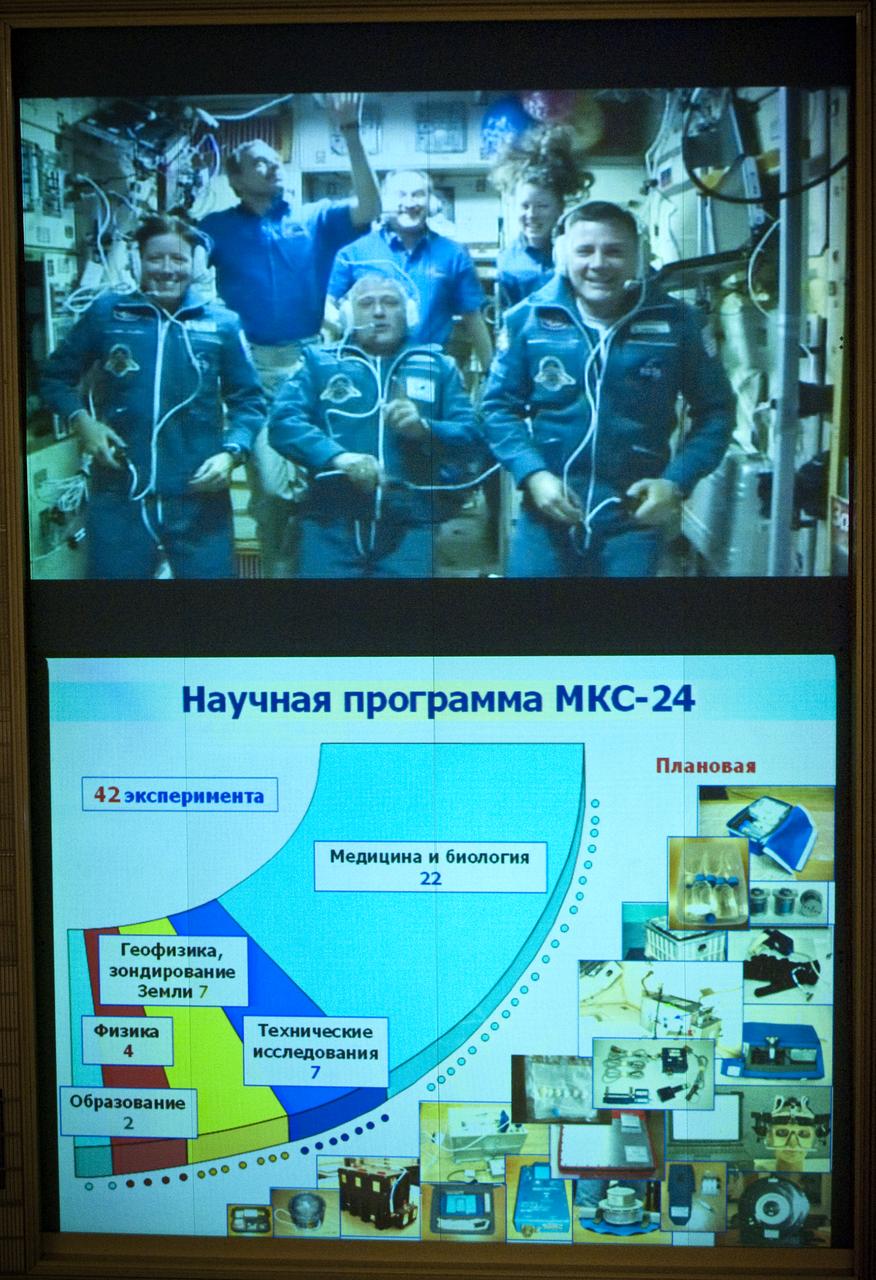
The crews of Expedition 23 and 24 are seen on a large TV screen in the Russian Mission Control Center in Korolev, Russia, Friday, June 19, 2010 shortly after the Soyuz TMA-19 spacecraft docked to the International Space Station and delivered Expedition 24 Flight Engineers and NASA astronauts Shannon Walker and Doug Wheelock, and Flight Engineer and Russian cosmonaut Fyodor Yurchikhin. Seen clockwise from top left: Mikhail Kornienko, Expedition 24 Commander Alexander Skvortsov, Tracy Caldwell Dyson, Doug Wheelock, Fyodor Yurchikhin and Shannon Walker. Photo Credit: (NASA/Carla Cioffi)
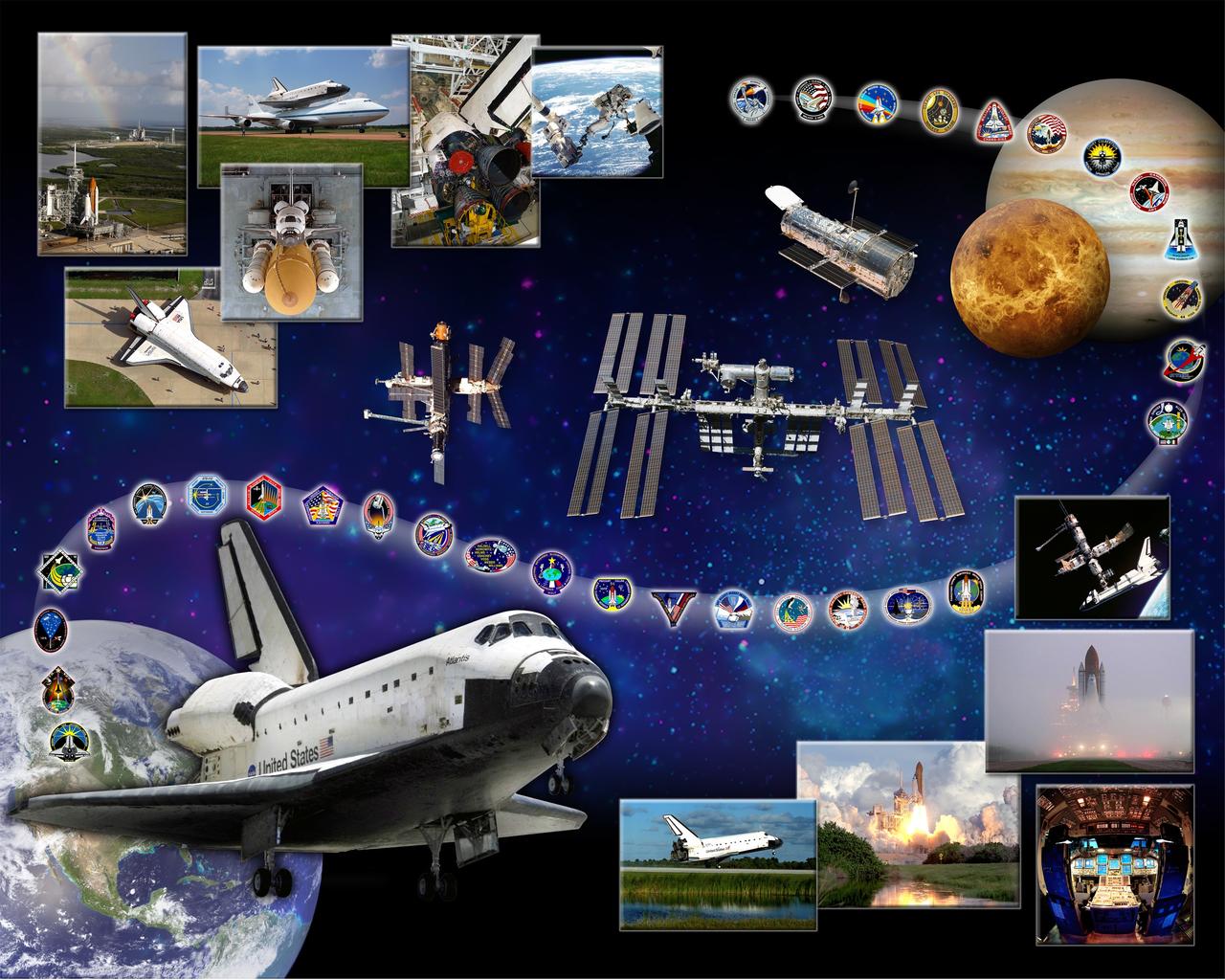
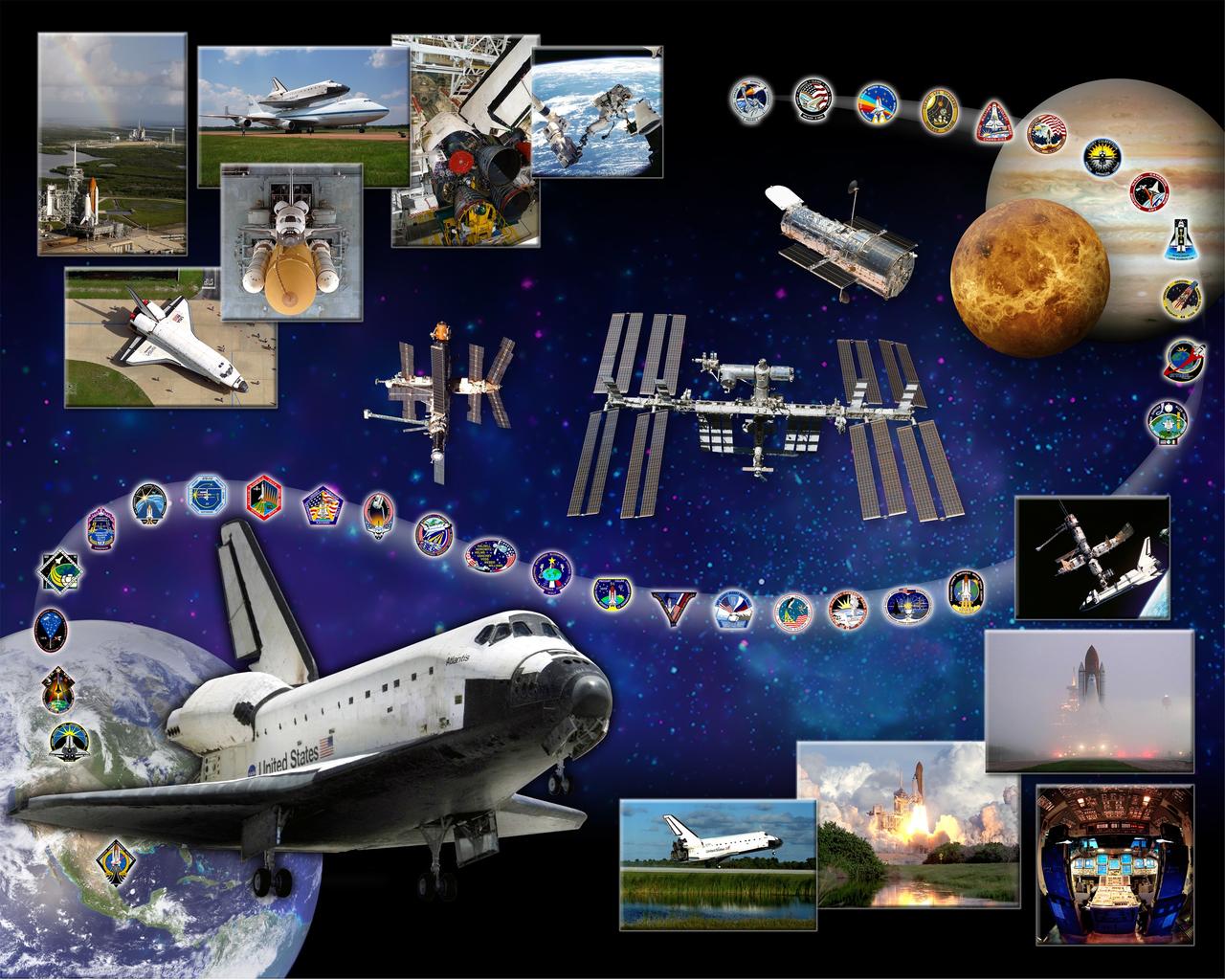
CAPE CANAVERAL, Fla. -- This orbiter tribute of space shuttle Atlantis, or OV-104, hangs in Firing Room 4 of the Launch Control Center at NASA's Kennedy Space Center in Florida. In the lower-left corner, it features Atlantis soaring above Earth and threaded through the design are the mission patches for each of Atlantis’ flights. Atlantis' accomplishments include seven missions to the Russian space station Mir and several assembly, construction and resupply missions to the International Space Station. Atlantis also flew the last Hubble Space Telescope servicing mission on STS-125. In the tribute, the planet Venus represents the Magellan probe being deployed during STS-30, and Jupiter represents the Galileo probe being deployed during STS-34. The inset photos illustrate various aspects of shuttle processing as well as significant achievements, such as the glass cockpit and the first shuttle docking with Mir during STS-71. The inset photo in the upper-left corner shows a rainbow over Atlantis on Launch Pad 39A and shuttle Endeavour on Launch Pad 39B at Kennedy. Endeavour was the assigned vehicle had Atlantis’ STS-125 mission needed rescue, and this was the last time both launch pads were occupied at the same time. The stars in the background represent the many people who have worked with Atlantis and their contributions to the vehicle’s success. Graphic design credit: NASA/Amy Lombardo
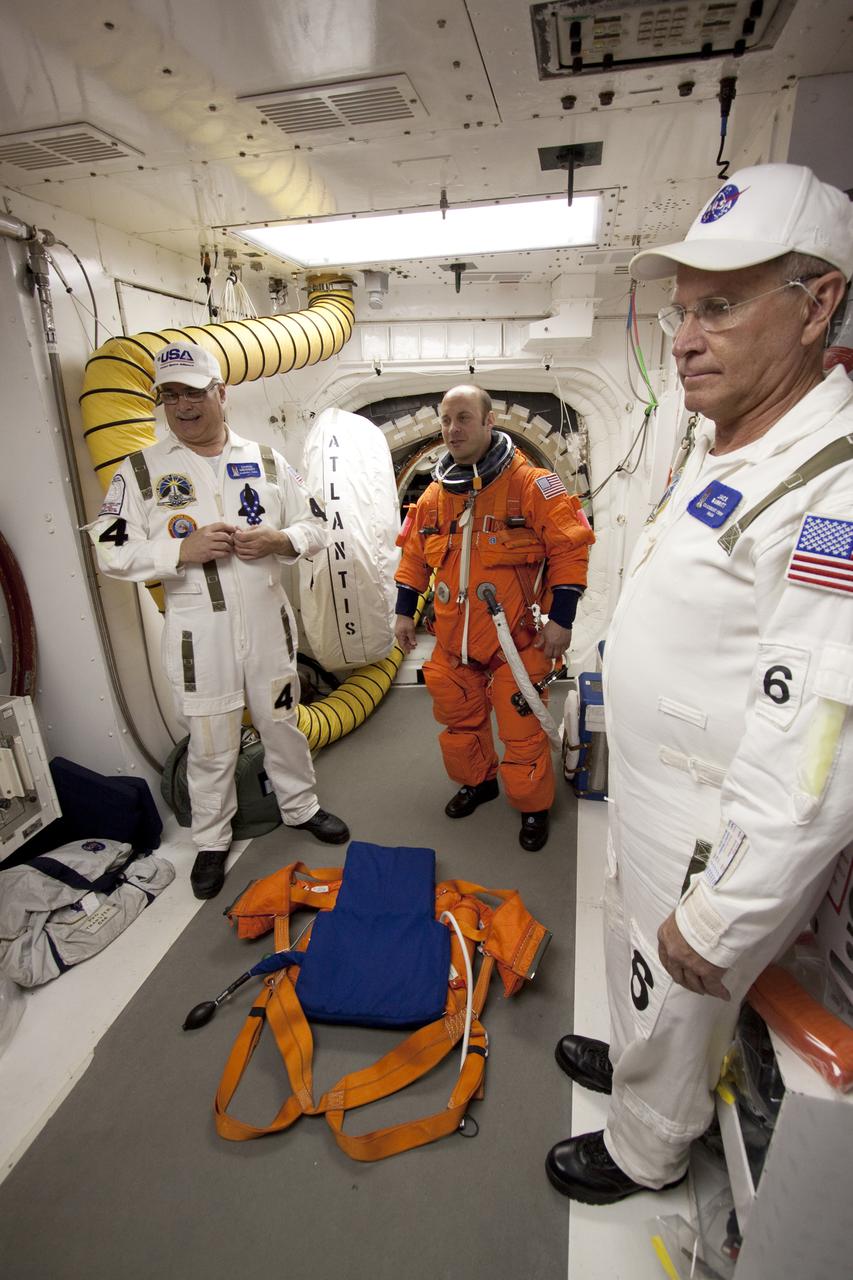
CAPE CANAVERAL, Fla. - At Launch Pad 39A at NASA's Kennedy Space Center in Florida, STS-132 Mission Specialist Garrett Reisman prepares to enter space shuttle Atlantis from the pad's White Room. Reisman was a flight engineer on the International Space Station's Expedition 16 and 17. The six-member STS-132 crew is participating in a dress rehearsal for launch, known as the Terminal Countdown Demonstration Test, from their seats in the crew compartment of space shuttle Atlantis. Launch is targeted for 2:19 p.m. EDT on May 14. On the STS-132 mission, the crew will deliver an Integrated Cargo Carrier, or ICC, and the Russian-built Mini-Research Module-1, or MRM-1, to the International Space Station. The ICC is an unpressurized flat bed pallet and keel yoke assembly used to support the transfer of exterior cargo from the shuttle to the space station. The MRM-1, known as Rassvet, is the second in a series of new pressurized components for Russia and will be permanently attached to the Earth-facing port of the Zarya control module. Rassvet, which translates to 'dawn,' will be used for cargo storage and provide an additional docking port to the station. STS-132 is the 34th mission to the station and the 132nd shuttle mission overall. For information on the STS-132 mission, visit http:__www.nasa.gov_mission_pages_shuttle_shuttlemissions_sts132_index.html. Photo credit: NASA_Jack Pfaller
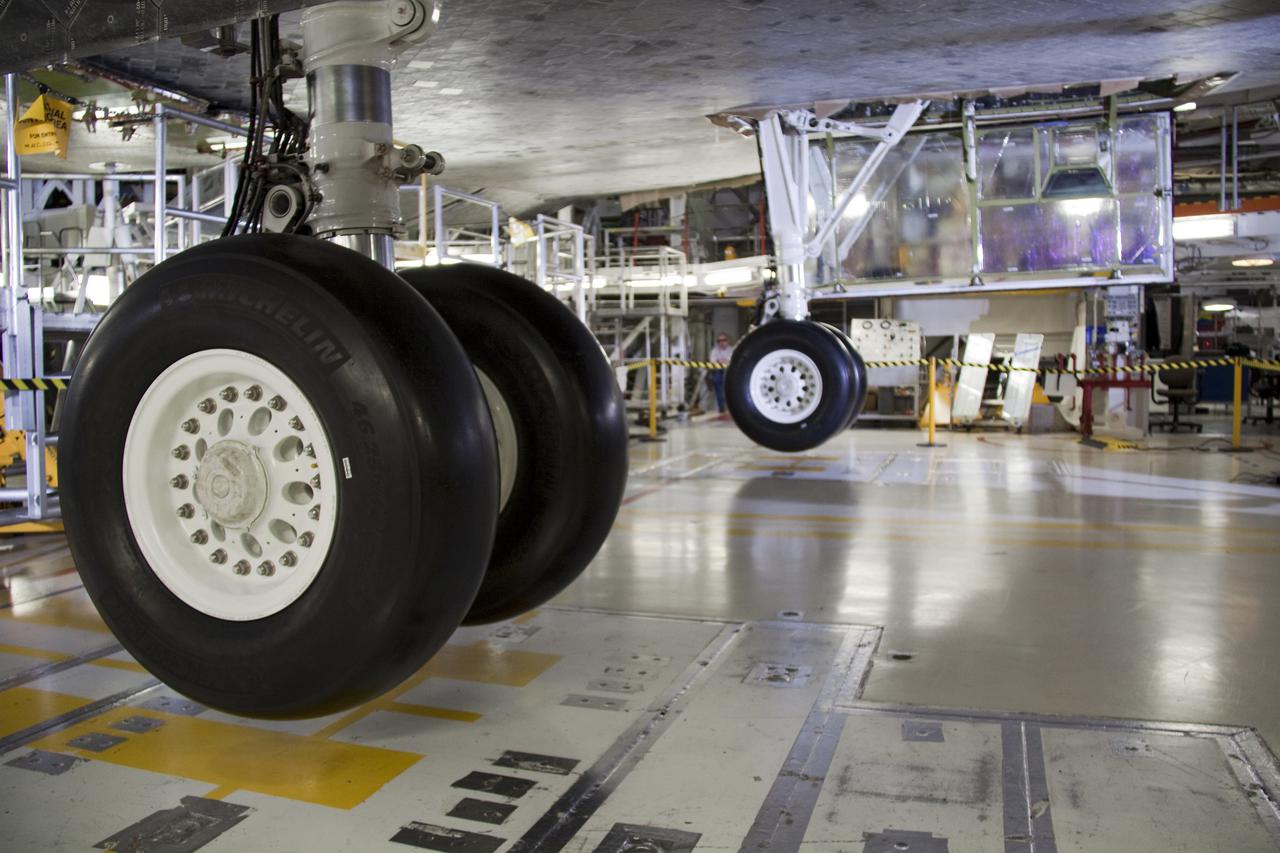
CAPE CANAVERAL, Fla. – In Orbiter Processing Facility-1 at NASA's Kennedy Space Center in Florida, space shuttle Atlantis' rear landing gears are extended and appear to hover over the clean room floor during processing of the shuttle. Changes to the thermal protection system tiles on the periphery of the landing gear doors necessitate that the gears be extended to ensure the doors open properly without obstruction. The practice is standard procedure between shuttle flights. The six-member crew of space shuttle Atlantis' STS-132 mission will deliver an Integrated Cargo Carrier and the Russian-built Mini-Research Module-1, known as Rassvet, to the International Space Station. The second in a series of new pressurized components for Russia, Rassvet will be permanently attached to the Earth-facing port of the Zarya control module. Rassvet, which translates to 'dawn,' will be used for cargo storage and provide an additional docking port to the station. STS-132 is the 34th mission to the station and the 132nd shuttle mission overall. Launch is targeted for May 14. For information on the STS-132 mission, visit http:__www.nasa.gov_mission_pages_shuttle_shuttlemissions_sts132_index.html. Photo credit: NASA_Gianni Woods
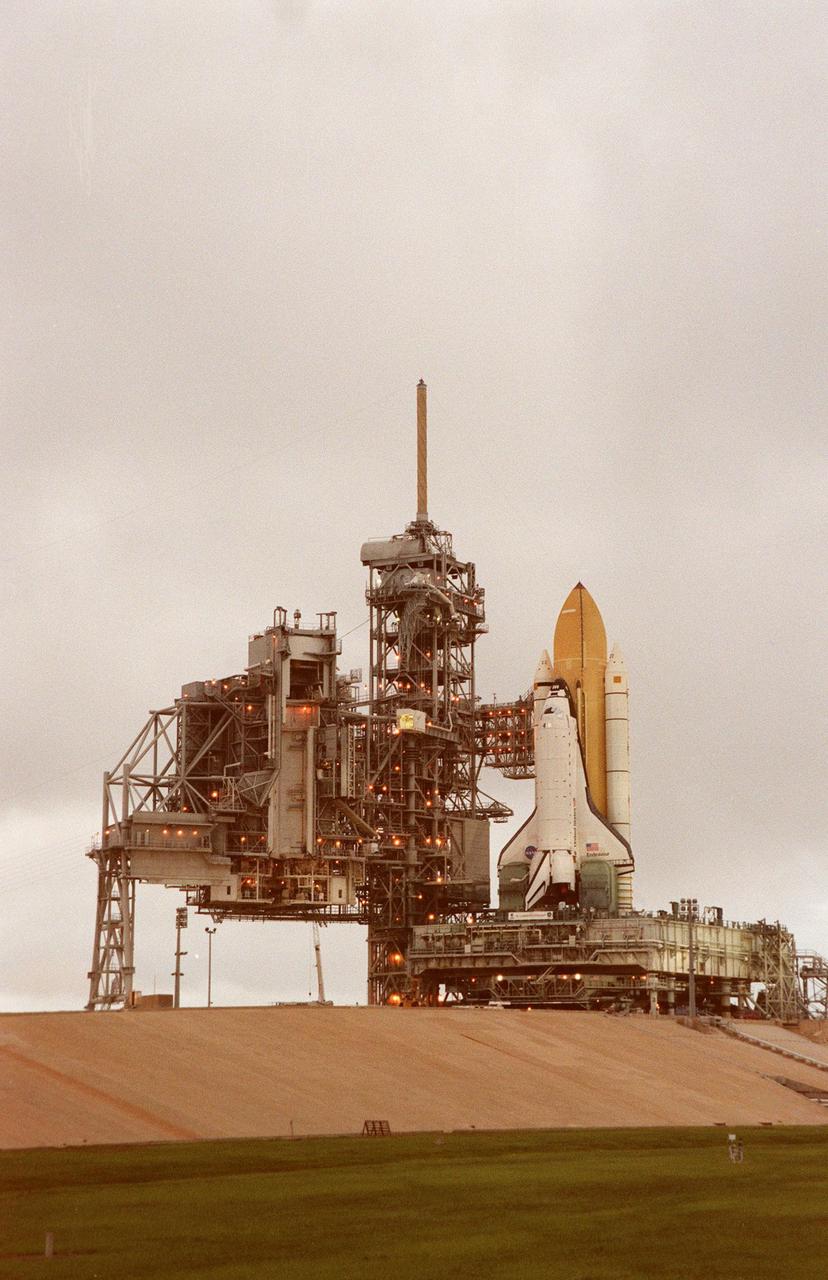
KENNEDY SPACE CENTER, Fla. -- In the cloud-dimmed light of early morning, Space Shuttle Endeavour sits in place at Launch Pad 39A , atop the mobile launcher platform and crawler transporter, after rollout from the Vehicle Assembly Building. At its left are the Rotating Service Structure and Fixed Service Structure with the orbiter access arm extended. The access arm swings out to the orbiter crew compartment hatch to allow personnel to enter the crew compartment. At its outer end is the white room, an environmental chamber, that mates with the orbiter. While at the pad, the orbiter, external tank and solid rocket boosters will undergo final preparations for the STS-88 launch targeted for Dec. 3, 1998. Mission STS-88 is the first U.S. flight for the assembly of the International Space Station and will carry the Unity connecting module. While on orbit, the flight crew will deploy Unity from the payload bay and connect it to the Russian-built Zarya control module which will be in orbit at that time. Unity will be the main connecting point for later U.S. station modules and components. More than 40 launches are planned over five years involving the resources and expertise of 16 cooperating nations. Comprising the STS-88 crew are Commander Robert D. Cabana, Pilot Frederick W. "Rick" Sturckow, Mission Specialists Nancy J. Currie, Jerry L. Ross, James H. Newman and Russian cosmonaut Sergei Konstantinovich Krikalev. Ross and Newman will make three spacewalks to connect power, data and utility lines and install exterior equipment

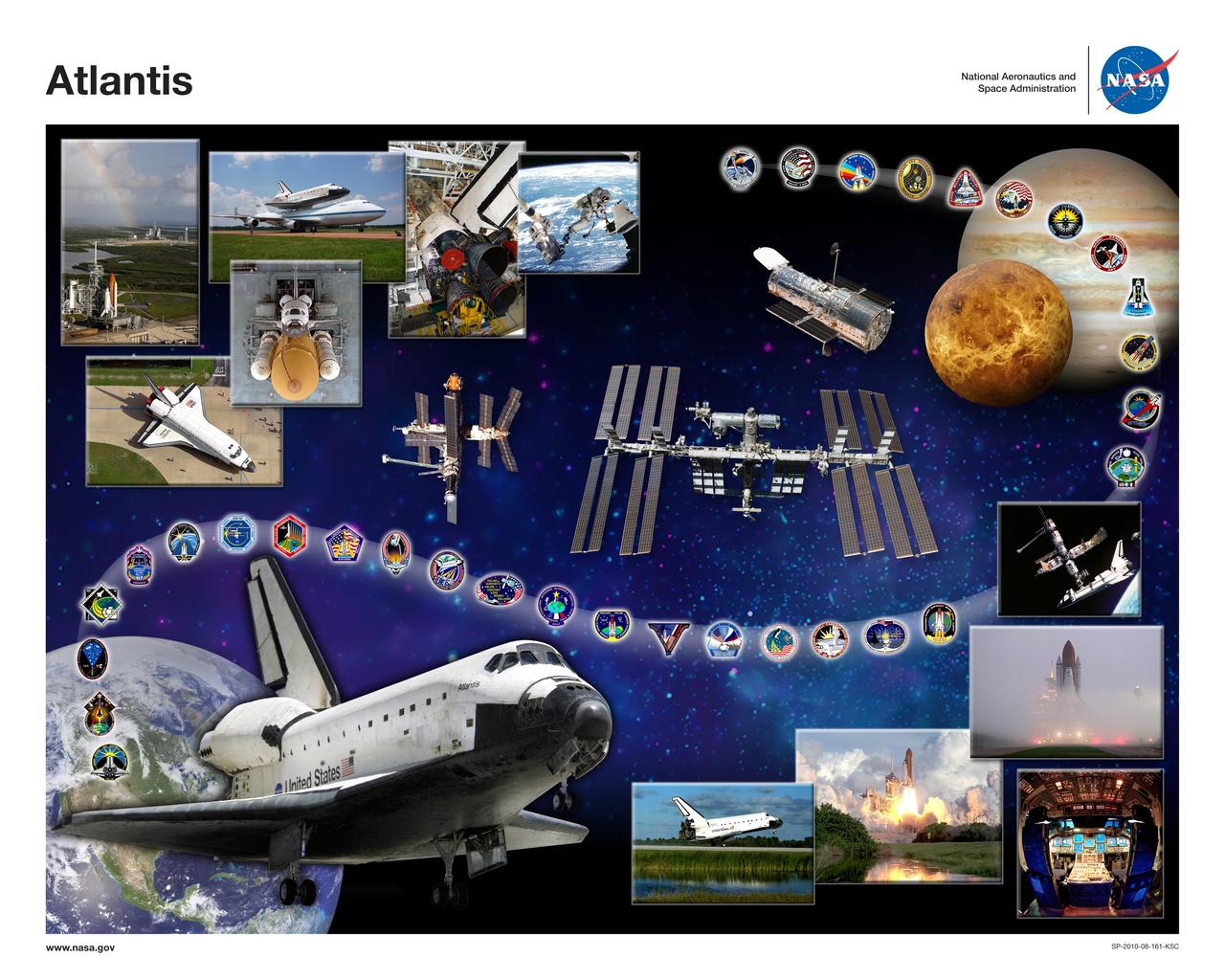
CAPE CANAVERAL, Fla. -- This is a printable version of space shuttle Atlantis' orbiter tribute, or OV-104, which hangs in Firing Room 4 of the Launch Control Center at NASA's Kennedy Space Center in Florida. In 2011, the tribute was updated to reflect the addition of one more flight -- STS-135 -- which will be the 33rd flight of Atlantis, the 37th shuttle mission to the space station, and the 135th and final mission of NASA's Space Shuttle Program. In the lower-left corner, it features Atlantis soaring above Earth and threaded through the design are the mission patches for each of Atlantis’ flights. Atlantis' accomplishments include seven missions to the Russian space station Mir and several assembly, construction and resupply missions to the International Space Station. Atlantis also flew the last Hubble Space Telescope servicing mission on STS-125. In the tribute, the planet Venus represents the Magellan probe being deployed during STS-30, and Jupiter represents the Galileo probe being deployed during STS-34. The inset photos illustrate various aspects of shuttle processing as well as significant achievements, such as the glass cockpit and the first shuttle docking with Mir during STS-71. The inset photo in the upper-left corner shows a rainbow over Atlantis on Launch Pad 39A and shuttle Endeavour on Launch Pad 39B at Kennedy. Endeavour was the assigned vehicle had Atlantis’ STS-125 mission needed rescue, and this was the last time both launch pads were occupied at the same time. The stars in the background represent the many people who have worked with Atlantis and their contributions to the vehicle’s success. Graphic design credit: NASA/Amy Lombardo. NASA publication number: SP-2010-08-161-KSC
CAPE CANAVERAL, Fla. -- This orbiter tribute of space shuttle Atlantis, or OV-104, hangs in Firing Room 4 of the Launch Control Center at NASA's Kennedy Space Center in Florida. In 2011, the tribute was updated to reflect the addition of one more Atlantis flight -- STS-135 -- which will be the 33rd flight of Atlantis, the 37th shuttle mission to the space station, and the 135th and final mission of NASA's Space Shuttle Program. In the lower-left corner, it features Atlantis soaring above Earth and threaded through the design are the mission patches for each of Atlantis’ flights. Atlantis' accomplishments include seven missions to the Russian space station Mir and several assembly, construction and resupply missions to the International Space Station. Atlantis also flew the last Hubble Space Telescope servicing mission on STS-125. In the tribute, the planet Venus represents the Magellan probe being deployed during STS-30, and Jupiter represents the Galileo probe being deployed during STS-34. The inset photos illustrate various aspects of shuttle processing as well as significant achievements, such as the glass cockpit and the first shuttle docking with Mir during STS-71. The inset photo in the upper-left corner shows a rainbow over Atlantis on Launch Pad 39A and shuttle Endeavour on Launch Pad 39B at Kennedy. Endeavour was the assigned vehicle had Atlantis’ STS-125 mission needed rescue, and this was the last time both launch pads were occupied at the same time. The stars in the background represent the many people who have worked with Atlantis and their contributions to the vehicle’s success. Graphic design credit: NASA/Amy Lombardo. NASA publication number: SP-2010-08-161-KSC

CAPE CANAVERAL, Fla. -- This is a version of space shuttle Atlantis' orbiter tribute, or OV-104, which hangs in Firing Room 4 of the Launch Control Center at NASA's Kennedy Space Center in Florida. In 2011, the tribute was updated to reflect the addition of one more Atlantis flight -- STS-135 -- which will be the 33rd flight of Atlantis, the 37th shuttle mission to the space station, and the 135th and final mission of NASA's Space Shuttle Program. In the lower-left corner, it features Atlantis soaring above Earth and threaded through the design are the mission patches for each of Atlantis’ flights. Atlantis' accomplishments include seven missions to the Russian space station Mir and several assembly, construction and resupply missions to the International Space Station. Atlantis also flew the last Hubble Space Telescope servicing mission on STS-125. In the tribute, the planet Venus represents the Magellan probe being deployed during STS-30, and Jupiter represents the Galileo probe being deployed during STS-34. The inset photos illustrate various aspects of shuttle processing as well as significant achievements, such as the glass cockpit and the first shuttle docking with Mir during STS-71. The inset photo in the upper-left corner shows a rainbow over Atlantis on Launch Pad 39A and shuttle Endeavour on Launch Pad 39B at Kennedy. Endeavour was the assigned vehicle had Atlantis’ STS-125 mission needed rescue, and this was the last time both launch pads were occupied at the same time. The stars in the background represent the many people who have worked with Atlantis and their contributions to the vehicle’s success. Graphic design credit: NASA/Amy Lombardo. NASA publication number: SP-2010-08-161-KSC
CAPE CANAVERAL, Fla. -- This is a version of space shuttle Atlantis' orbiter tribute, or OV-104, which hangs in Firing Room 4 of the Launch Control Center at NASA's Kennedy Space Center in Florida. In the lower-left corner, it features Atlantis soaring above Earth and threaded through the design are the mission patches for each of Atlantis’ flights. Atlantis' accomplishments include seven missions to the Russian space station Mir and several assembly, construction and resupply missions to the International Space Station. Atlantis also flew the last Hubble Space Telescope servicing mission on STS-125. In the tribute, the planet Venus represents the Magellan probe being deployed during STS-30, and Jupiter represents the Galileo probe being deployed during STS-34. The inset photos illustrate various aspects of shuttle processing as well as significant achievements, such as the glass cockpit and the first shuttle docking with Mir during STS-71. The inset photo in the upper-left corner shows a rainbow over Atlantis on Launch Pad 39A and shuttle Endeavour on Launch Pad 39B at Kennedy. Endeavour was the assigned vehicle had Atlantis’ STS-125 mission needed rescue, and this was the last time both launch pads were occupied at the same time. The stars in the background represent the many people who have worked with Atlantis and their contributions to the vehicle’s success. Graphic design credit: NASA/Amy Lombardo. NASA publication number: SP-2010-08-161-KSC
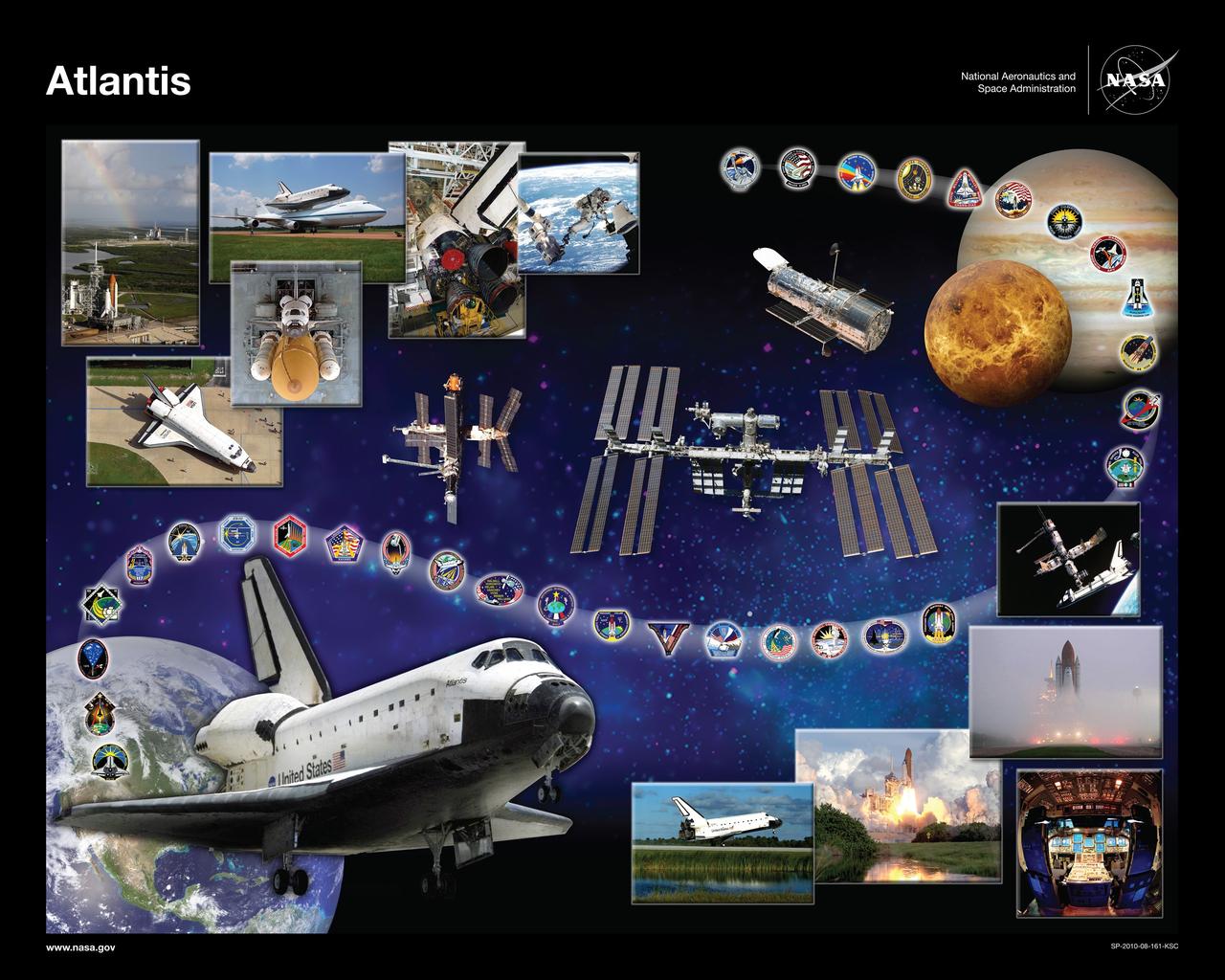
CAPE CANAVERAL, Fla. -- This is a printable version of space shuttle Atlantis' orbiter tribute, or OV-104, which hangs in Firing Room 4 of the Launch Control Center at NASA's Kennedy Space Center in Florida. In the lower-left corner, it features Atlantis soaring above Earth and threaded through the design are the mission patches for each of Atlantis’ flights. Atlantis' accomplishments include seven missions to the Russian space station Mir and several assembly, construction and resupply missions to the International Space Station. Atlantis also flew the last Hubble Space Telescope servicing mission on STS-125. In the tribute, the planet Venus represents the Magellan probe being deployed during STS-30, and Jupiter represents the Galileo probe being deployed during STS-34. The inset photos illustrate various aspects of shuttle processing as well as significant achievements, such as the glass cockpit and the first shuttle docking with Mir during STS-71. The inset photo in the upper-left corner shows a rainbow over Atlantis on Launch Pad 39A and shuttle Endeavour on Launch Pad 39B at Kennedy. Endeavour was the assigned vehicle had Atlantis’ STS-125 mission needed rescue, and this was the last time both launch pads were occupied at the same time. The stars in the background represent the many people who have worked with Atlantis and their contributions to the vehicle’s success. Graphic design credit: NASA/Amy Lombardo. NASA publication number: SP-2010-08-161-KSC