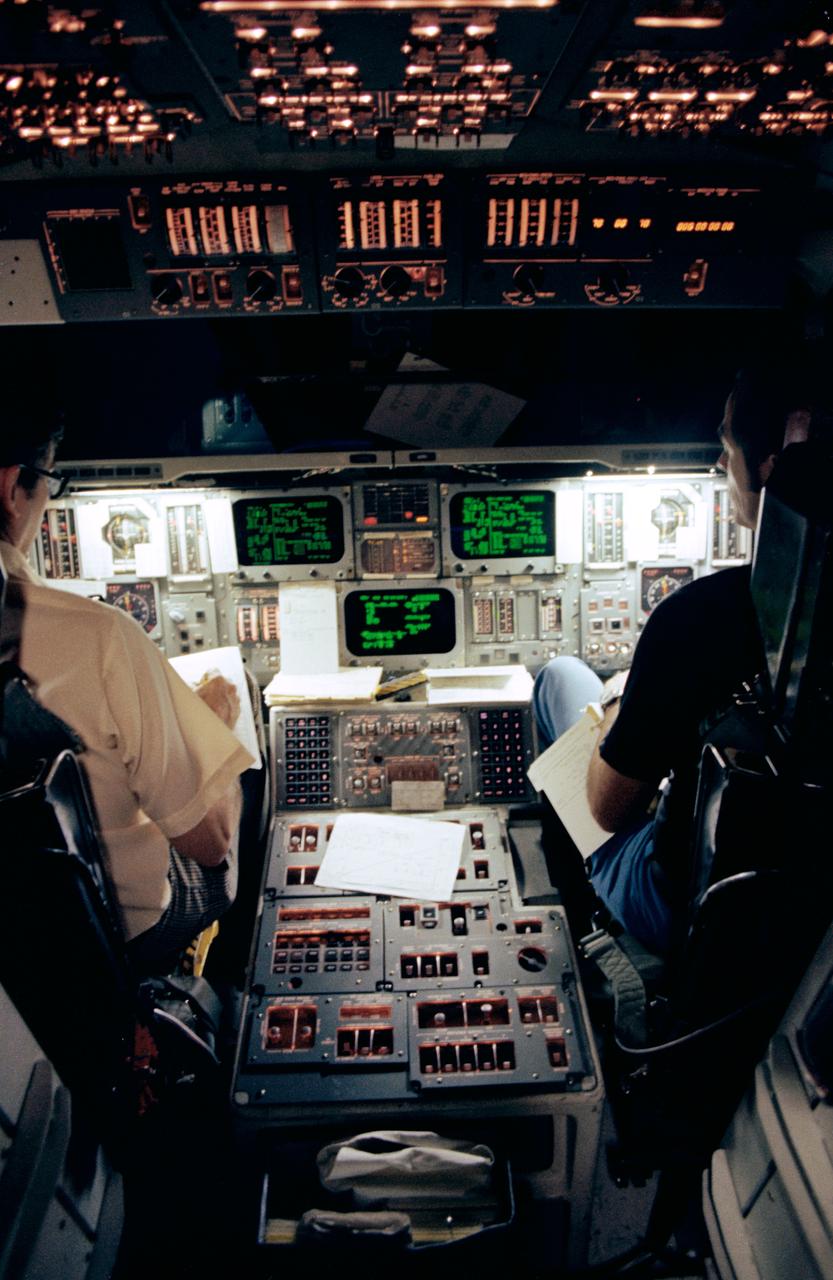
S79-31075 (5 April 1979) --- Astronauts John W. Young, left, and Robert L. Crippen, crewmen for the first space transportation system (STS-1) mission, go over a check off list during simulations in the Johnson Space Center?s shuttle mission simulator in the mission simulation and training facility. Young will be crew commander and Crippen, pilot, for the mission-shuttle?s initial orbital flight test (OFT). Photo credit: NASA
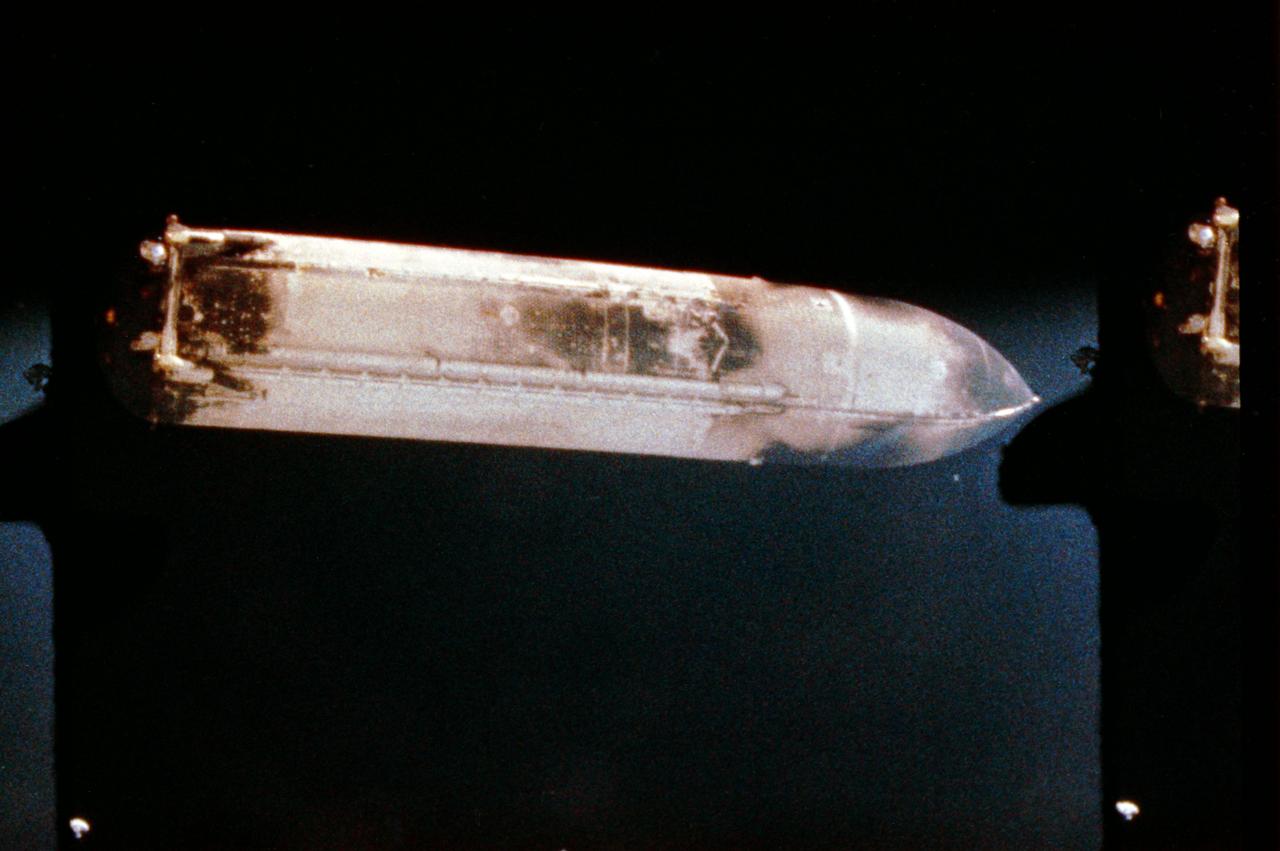
S81-30509 (12 April 1981) --- Separation of space shuttle Columbia?s external tank, photographed by motion picture cameras in the umbilical bays, occurred following the shutdown of the vehicle?s three main engines. The Columbia?s cameras were able to record the underside of the tank as the orbiter headed toward its Earth-orbital mission with astronauts John W. Young and Robert L. Crippen aboard, and the fuel tank fell toward Earth, passing through the atmosphere rapidly. Photo credit: NASA
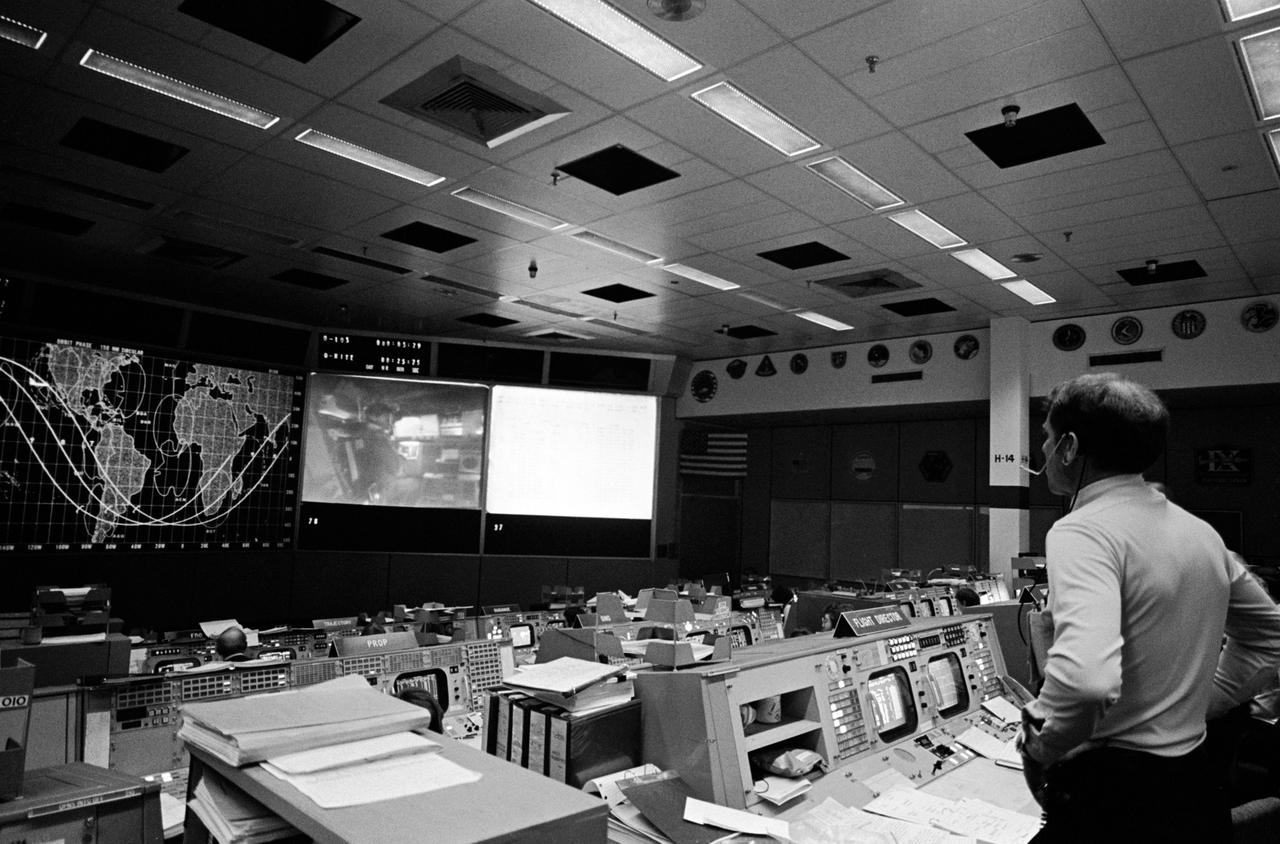
S81-30216 (12 April 1981) --- Astronaut Joe H. Engle, backup crew commander for STS-1, watches a large screen in the mission operations control room of the Johnson Space Center?s Mission Control Center during the STS-1 flight?s prime crew commander?s status report. Astronaut John W. Young, commander, can be seen in the image at left center, which is displayed via rear screen projector. Photo credit: NASA
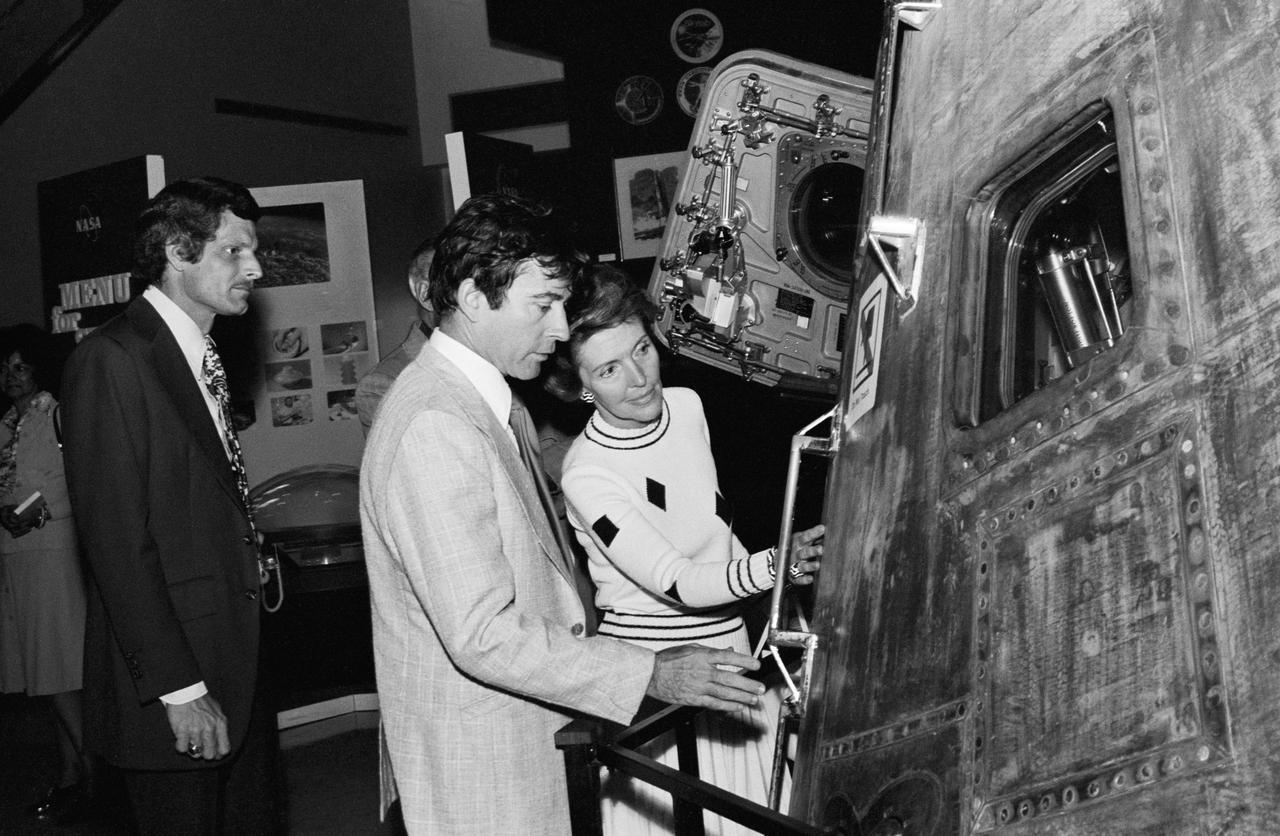
Nine views documenting JSC visit by Mrs. Ronald ( Nancy ) Reagan wife of the U.S, Presidential Candidate challenging the incumbent for Republican nomination. All views are in Building 2. She is seen in Building 2 exhibit area with Astronaut John W. Young in all views and with PAO Harold S. Stall in several. Stall, Young, Reagan at LTA-8 ( 25563 ); Young, Reagan at LRV ( 25564 ); Medium shot of Young, Reagan. ( 25565 ); Young, Reagan at command Module. (25566 ); Reagan, Young, Stall at Cm ( 25567 ); Young, Reagan at Shuttle exhibit. ( 25568 thru 25569 );
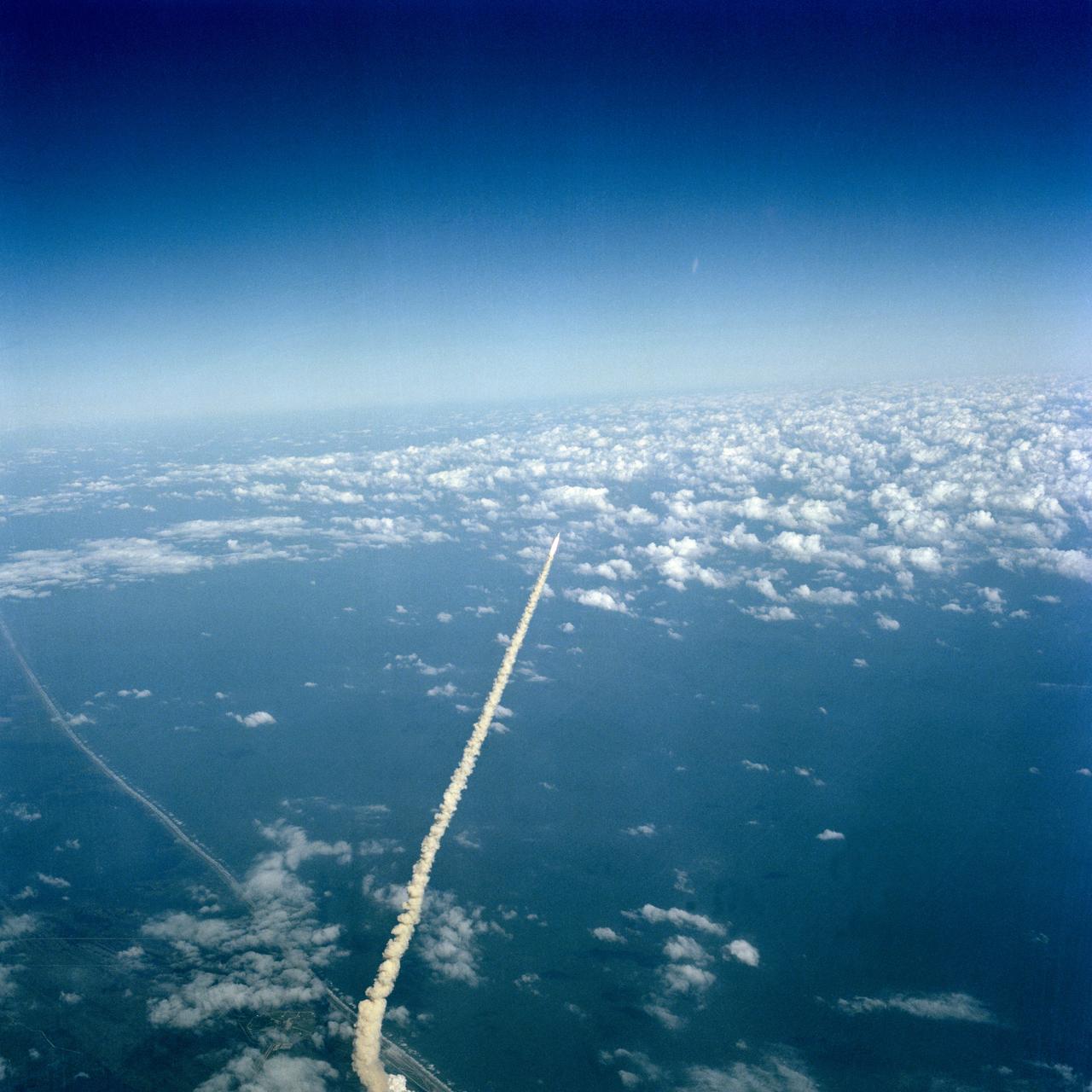
S81-39440 (12 Nov. 1981) --- The tiny image of the space shuttle Columbia, its two solid rocket boosters and an external fuel tank feeding Columbia?s engines was captured on camera by one who can truly relate to the thoughts of the astronauts aboard ? John W. Young who was aboard the same spacecraft for its successful debut in April of this year. Young was flying NASA?s shuttle training aircraft (STA) when he used a hand-held camera to record this scene on 70mm film. Astronauts Joe H. Engle, STS-2 commander, and Richard H. Truly, pilot, were aboard Columbia. Photo credit: NASA
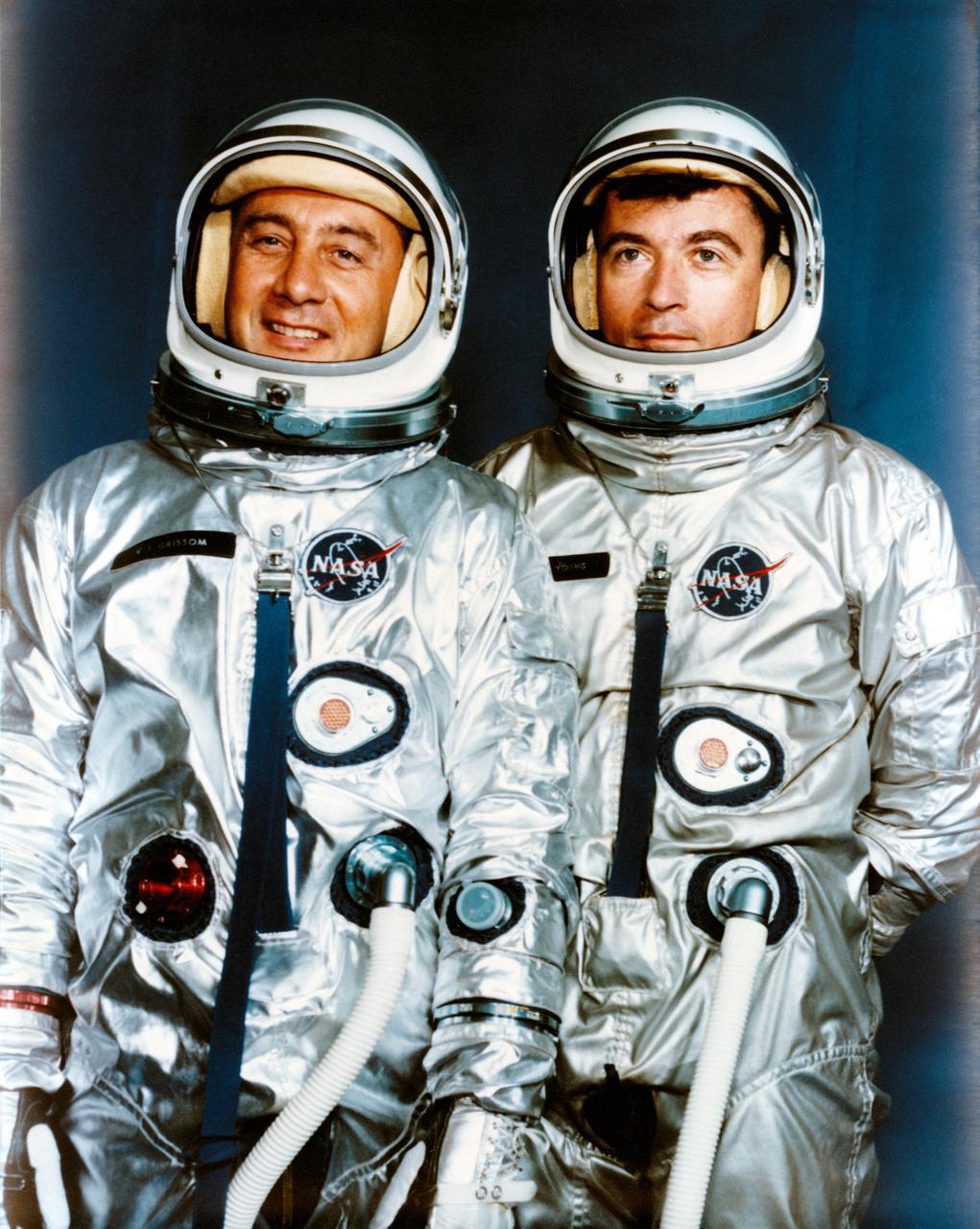
S64-19430 (13 April 1964) --- Astronauts Virgil I. Grissom (left), Gemini-3 command pilot; and John W. Young, pilot. EDITOR?S NOTE: Astronaut Grissom lost his life in the Apollo 1/Saturn 204 fire at Cape Kennedy on Jan. 27, 1967.

STS009-128-858 (28 Nov-8 Dec 1983) --- Astronaut John W. Young takes notes in the commander?s station on the flight deck of the Columbia. The cathode ray tube (CRT) among the forward panels displays the orbiter?s position in relation to the Earth on its monitor. Astronaut Brewster H. Shaw Jr., pilot, took this photograph.
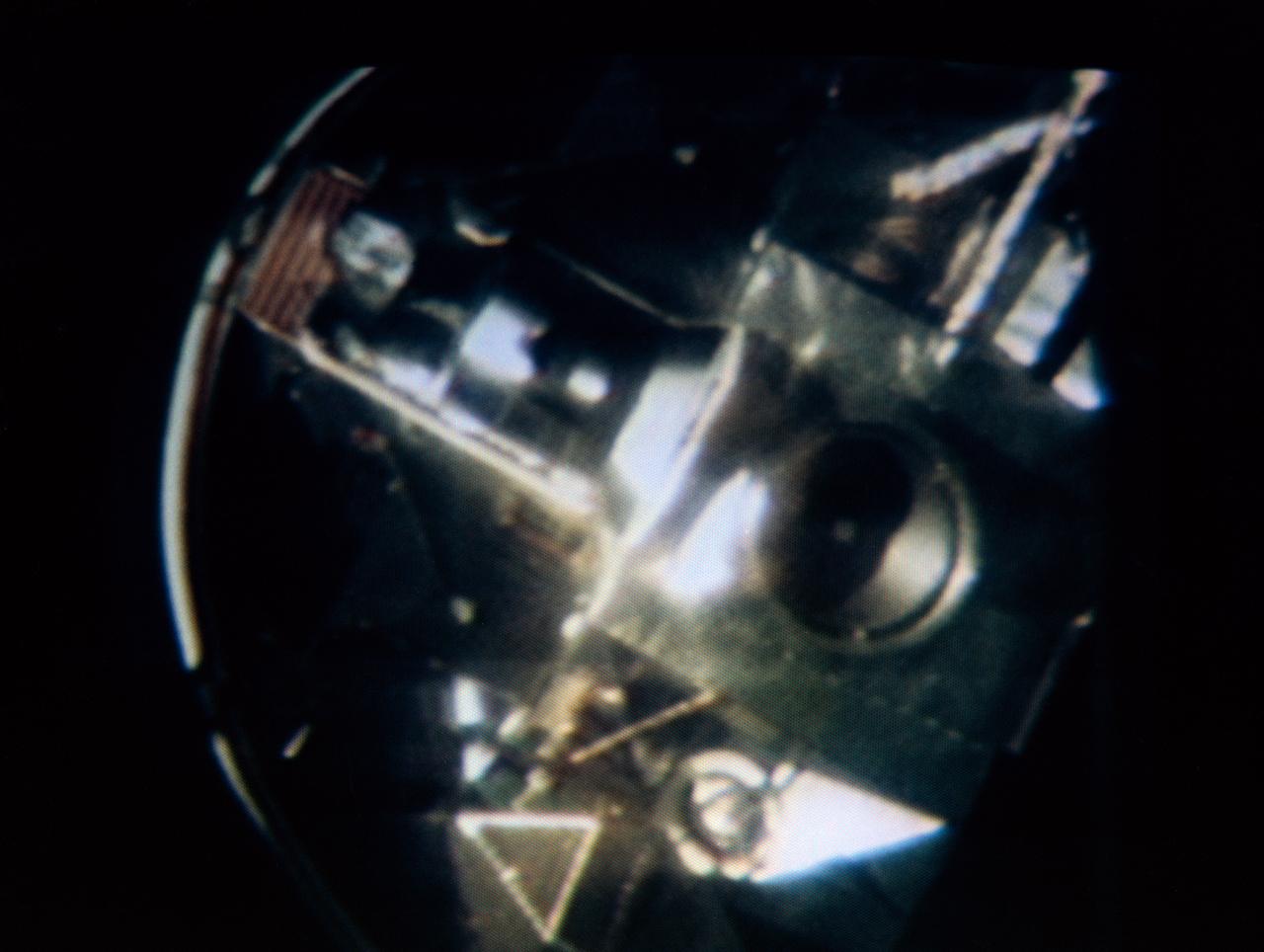
S69-33993 (18 May 1969) --- The Apollo 10 Lunar Module, still attached to the Saturn IVB stage, is seen in this color reproduction taken from the first television transmission made by the color television camera aboard the Apollo 10 spacecraft. This picture was made following CSM/LM-S-IVB separation, and prior to LM extraction from the S-IVB. The Command and Service Modules were making the docking approach to the LM/S-IVB. The circular object is the docking drogue assembly on the LM. Aboard the Command Module were astronauts Thomas P. Stafford, commander; John W. Young, command module pilot; and Eugene A. Cernan, lunar module pilot.
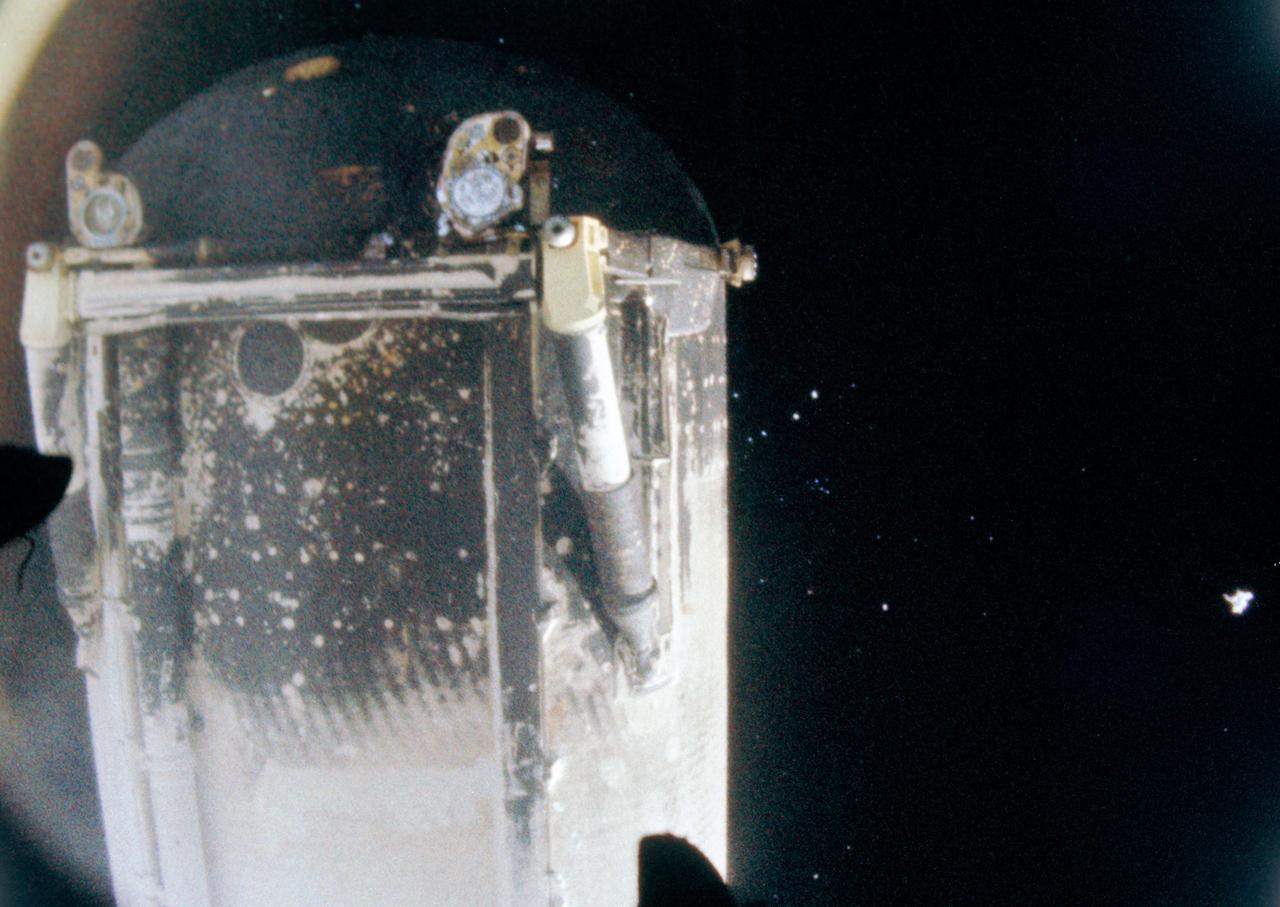
S81-30505 (12 April 1981) --- Separation of space shuttle Columbia?s external tank, photographed by motion picture cameras in the umbilical bays, occurred following the shutdown of the vehicle?s three main engines. Columbia?s cameras were able to record the bottom side of the tank as the orbiter headed toward its Earth-orbital mission with astronauts John W. Young and Robert L. Crippen aboard and the fuel tank fell toward Earth, passing through the atmosphere rapidly. Liquid oxygen and liquid hydrogen umbilical connectors can be seen at the bottom of the tank. For orientation, the photo should be held with the rounded end at bottom of the frame. Photo credit: NASA
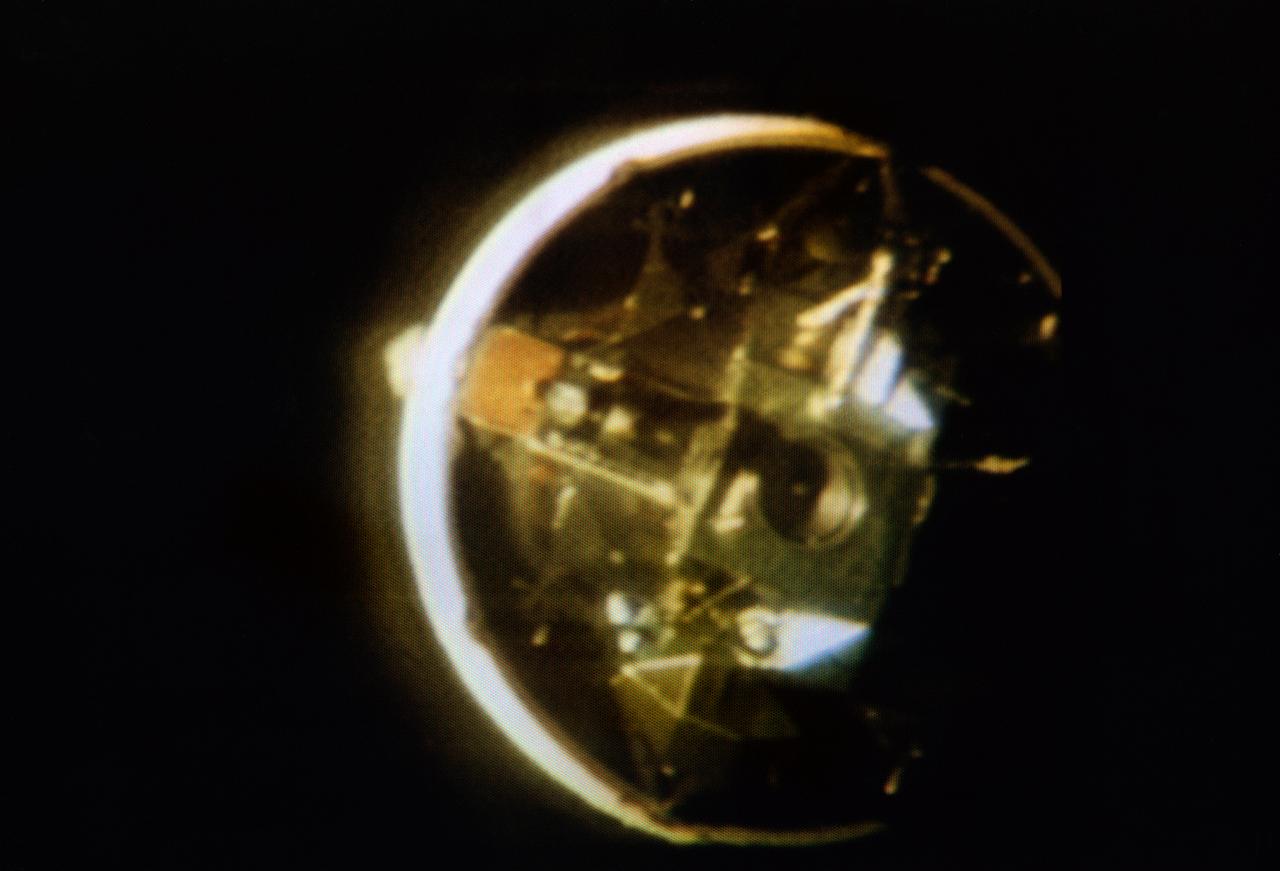
S69-33994 (18 May 1969) --- The Apollo 10 Lunar Module, still attached to the Saturn IVB stage, is seen in this color reproduction taken from the first television transmission made by the color television camera aboard the Apollo 10 spacecraft. This picture was made following CSM/LM-S-IVB separation, and prior to LM extraction from the S-IVB. The Command and Service Modules were making the docking approach to the LM/S-IVB. The circular object is the docking drogue assembly on the LM. Aboard the Command Module were astronauts Thomas P. Stafford, commander; John W. Young, command module pilot; and Eugene A. Cernan, lunar module pilot.
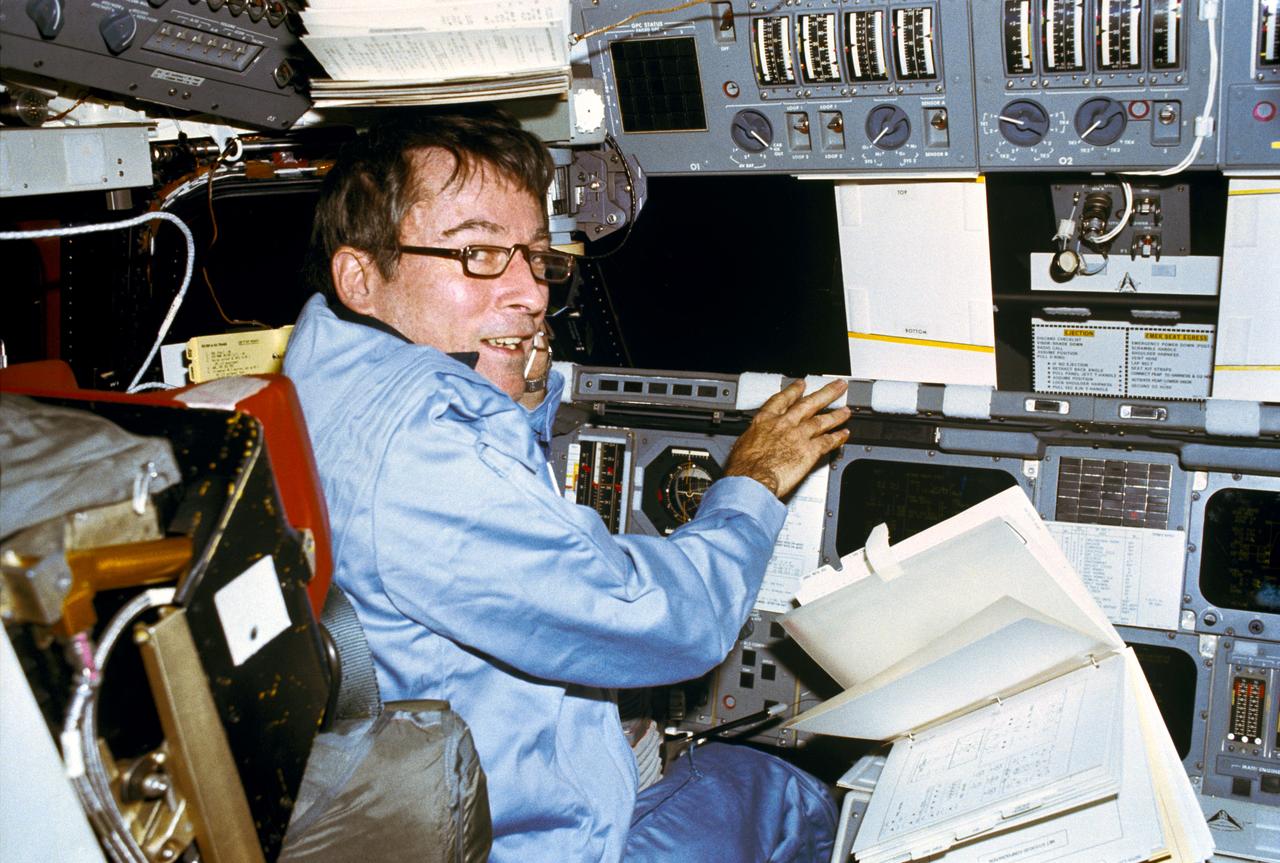
S81-30419 (12-14 April 1981) --- Astronaut John W. Young, mans the commander?s station in the Columbia during the 36-orbit STS-1 flight. A loose leaf notebook with flight activities data floats in the weightless environment. Young is wearing a three-piece constant wear flight suit. This 35mm frame was exposed by astronaut Robert L. Crippen. Photo credit: NASA
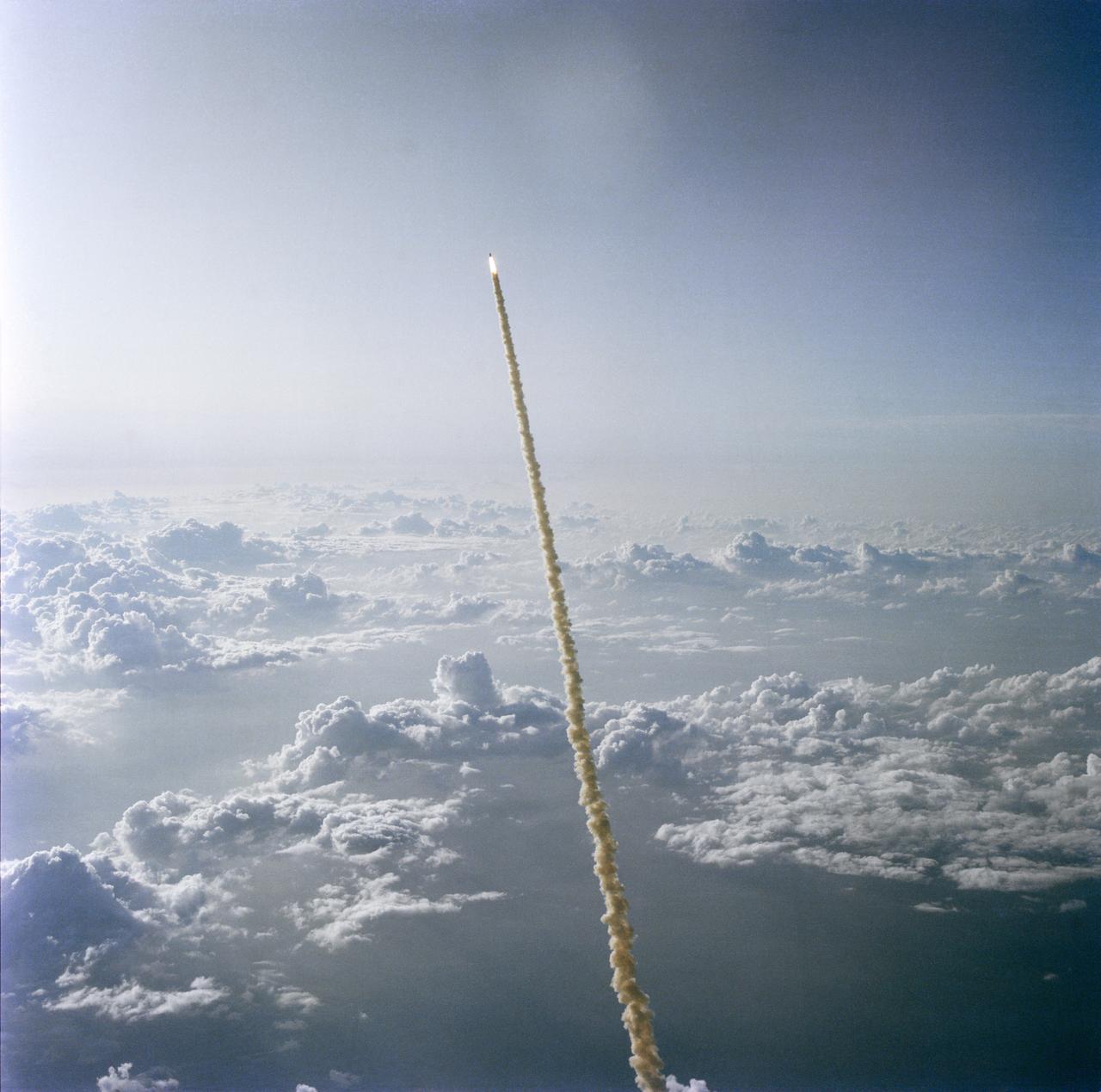
S83-35620 (18 June 1983) --- The space shuttle Challenger, its two solid rocket boosters and an external fuel tank carry the five-member STS-7 astronaut crew toward a six-day mission in Earth orbit. This high-angle view of the liftoff, a lengthy stretch of Florida Atlantic coastline and a number of large cumulus clouds was photographed with a handheld 70mm camera by astronaut John W. Young. Young usually pilots the Shuttle Training Aircraft (STA) for weather monitoring at launch and landing sites for STS missions. The Challenger?s second launch occurred at 7:33 a.m. (EDT) on 18 June 1983. Photo credit: NASA
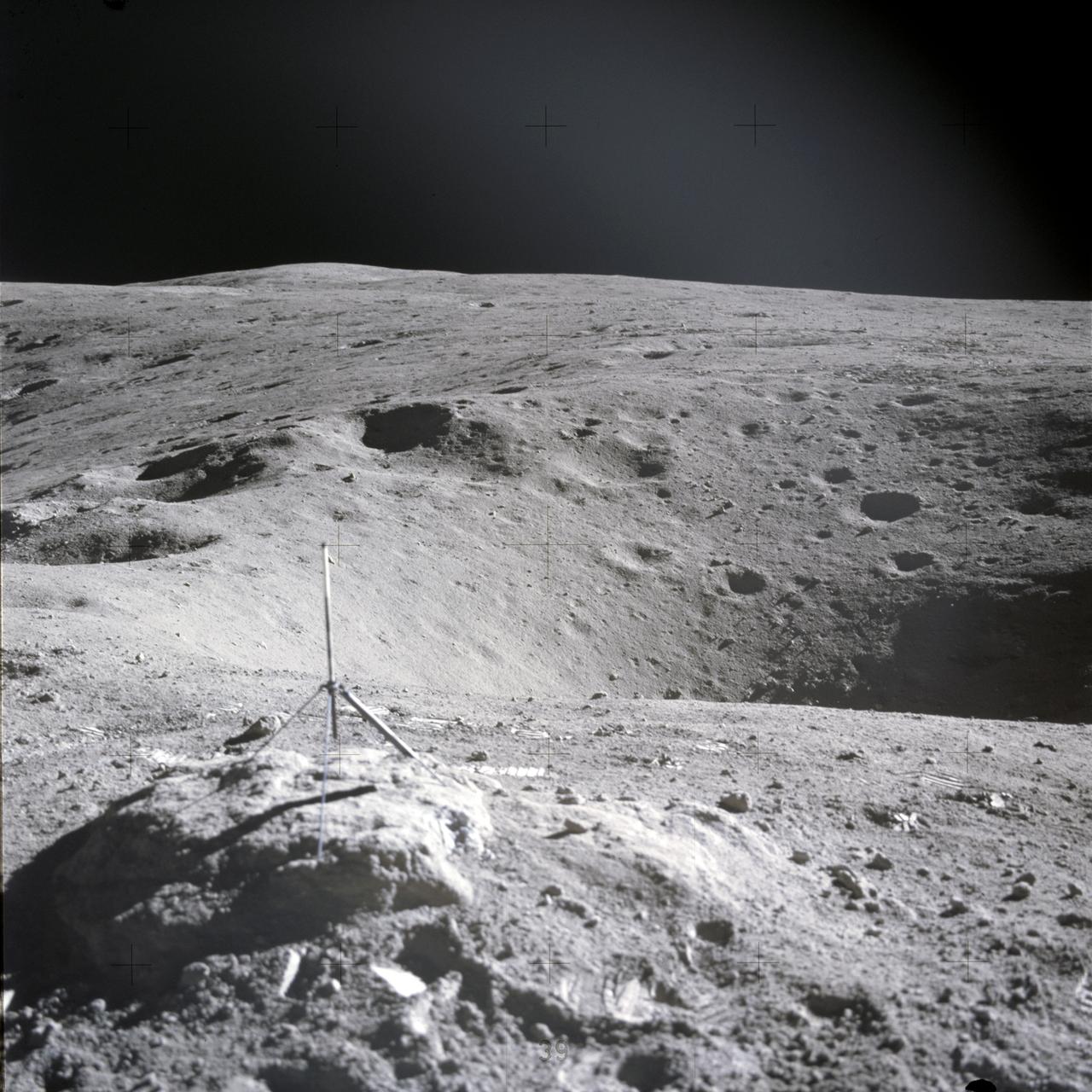
AS16-114-18421 (16-27 April 1972) --- This picture of the lunar surface was photographed by astronaut John W. Young during Apollo 16's first extravehicular activity (EVA) at EVA Station No 1. The instrument near the small crater's edge (foreground) is a gnomon. While astronauts Young, commander; and Charles M. Duke Jr., lunar module pilot; descended in the Apollo 16 Lunar Module (LM) "Orion" to explore the Descartes highlands landing site on the moon, astronaut Thomas K. Mattingly II, command module pilot, remained with the Command and Service Modules (CSM) "Casper" in lunar orbit.
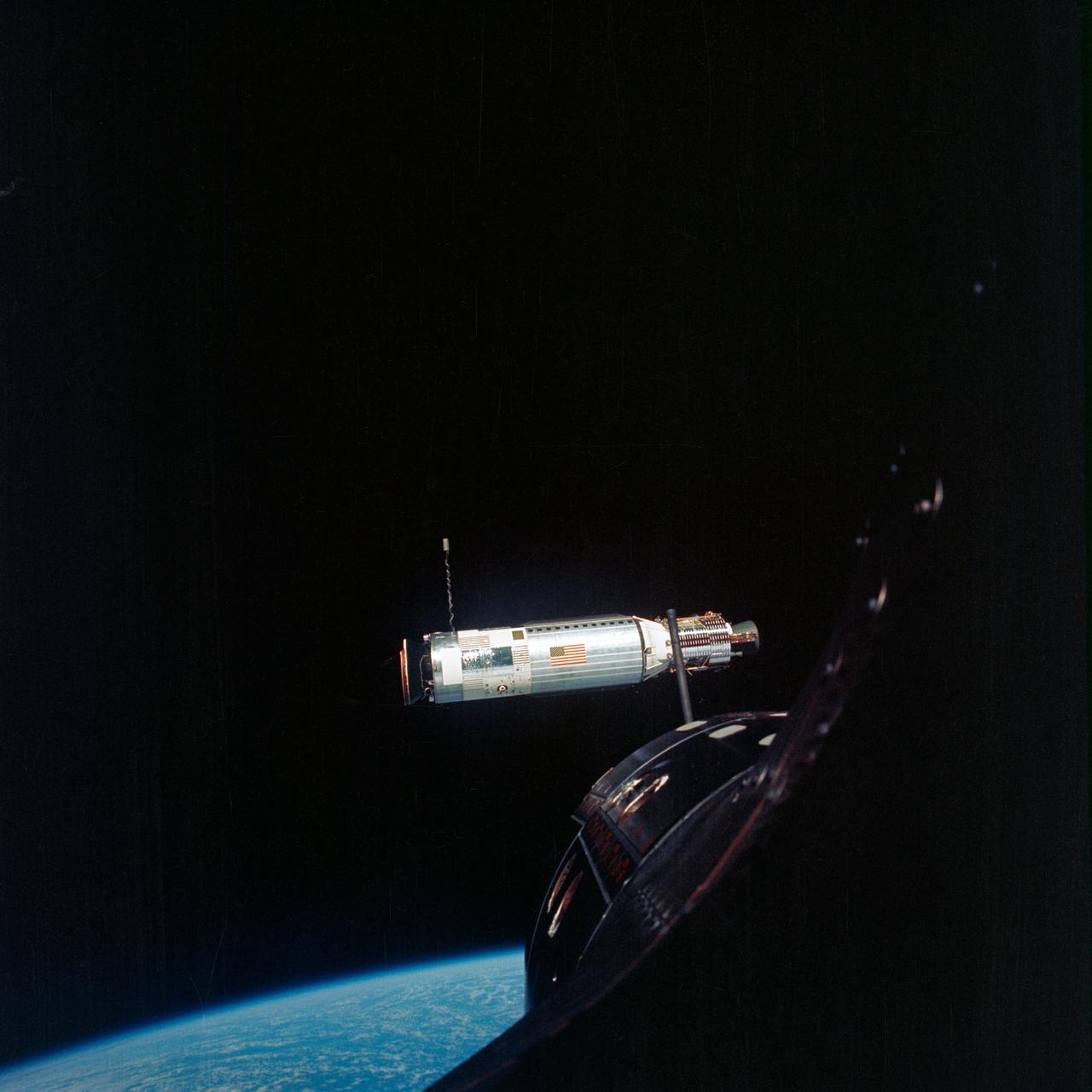
S66-46124 (18 July 1966) --- Agena Target Docking Vehicle 5005 is photographed from the Gemini-10 spacecraft during rendezvous in space. The two spacecraft are about 41 feet apart. After docking with the Agena, astronauts John W. Young, command pilot, and Michael Collins, pilot, fired the 16,000-pound thrust engine of Agena-10's primary propulsion system to boost the combined vehicles into an orbit with an apogee of 413 nautical miles to set a new altitude record for manned spaceflight. Photo credit: NASA
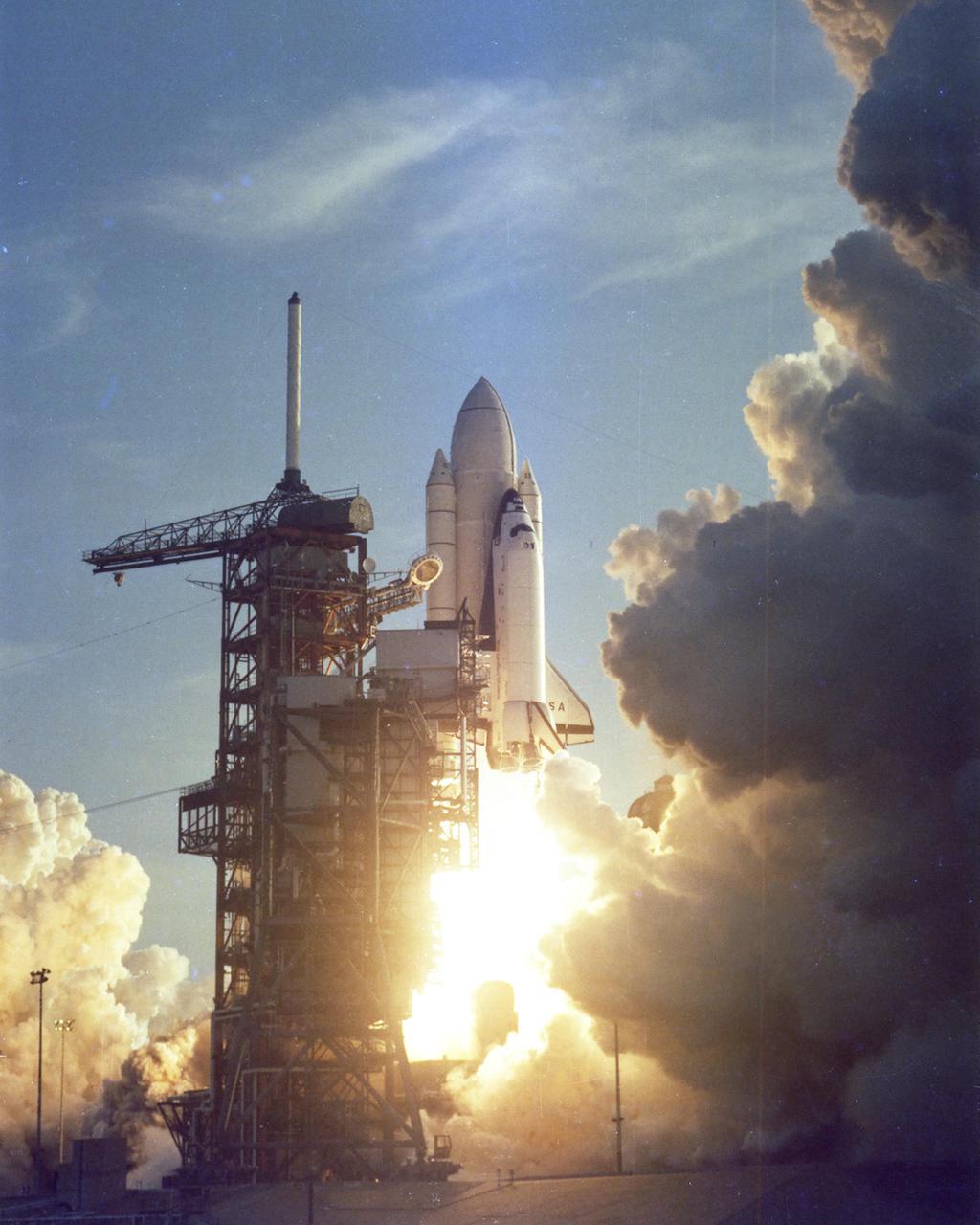
KENNEDY SPACE CENTER, FLA. -- The Space Shuttle Columbia rises majestically above Launch Complex 39's Pad A on the first leg of its maiden journey into space. On board for the historic flight are Astronauts John Young and Bob Crippen, scheduled to spend nearly 54 hours in space on this first shakedown test of America's new reusable Space Transportation System (STS-1). The Sunday morning liftoff came a few seconds after 7:00 a.m. and marked the dawn of a new era in spaceflight.
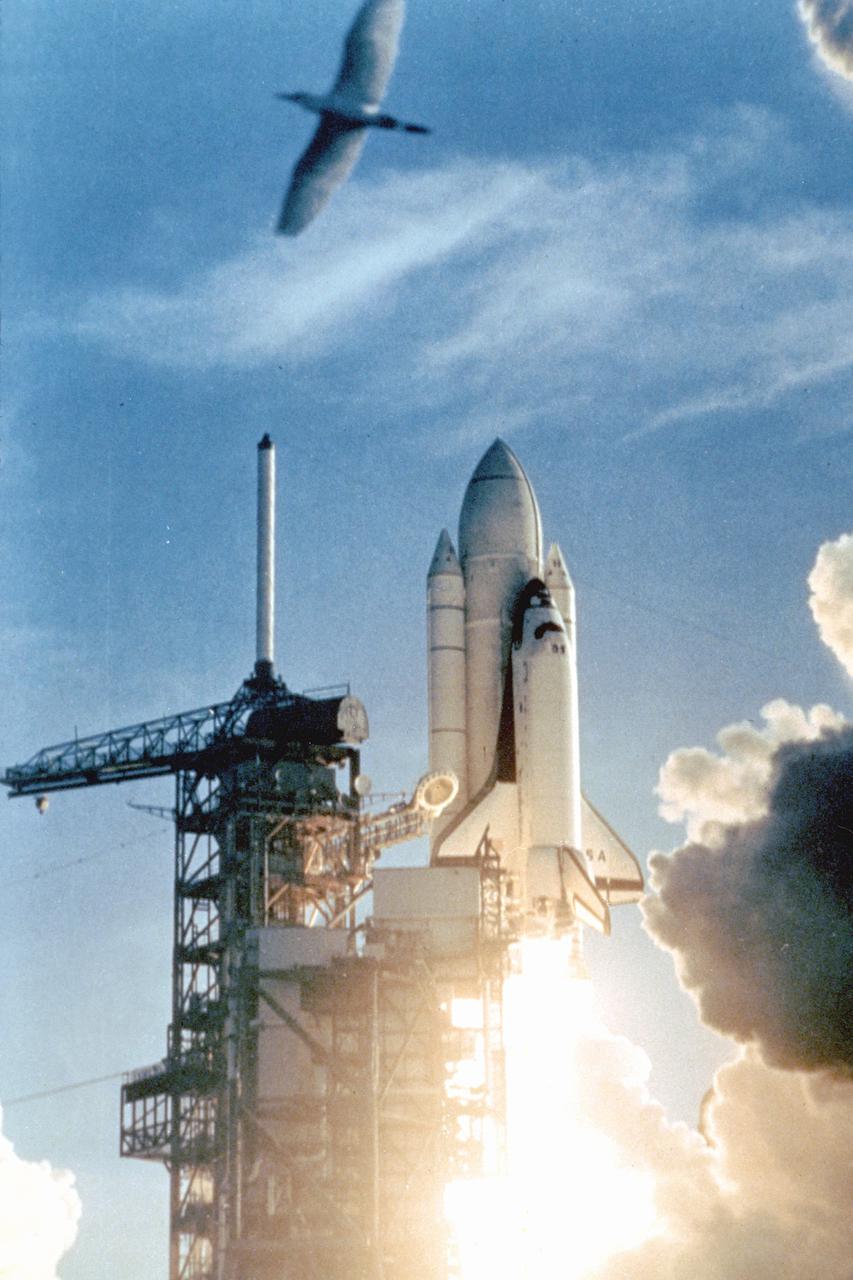
KENNEDY SPACE CENTER, FLA. - The Space Shuttle rises majestically above Launch Complex 39's Pad A on the first leg of its maiden journey into space. On board for the historic flight are astronauts John Young and Bob Crippen, scheduled to spend nearly 54 hours in space on this first shakedown test of America’s new reusable Space Transportation System (STS). The Sunday morning liftoff came a few seconds after 7 a.m. and marked the dawn of a new era in spaceflight.
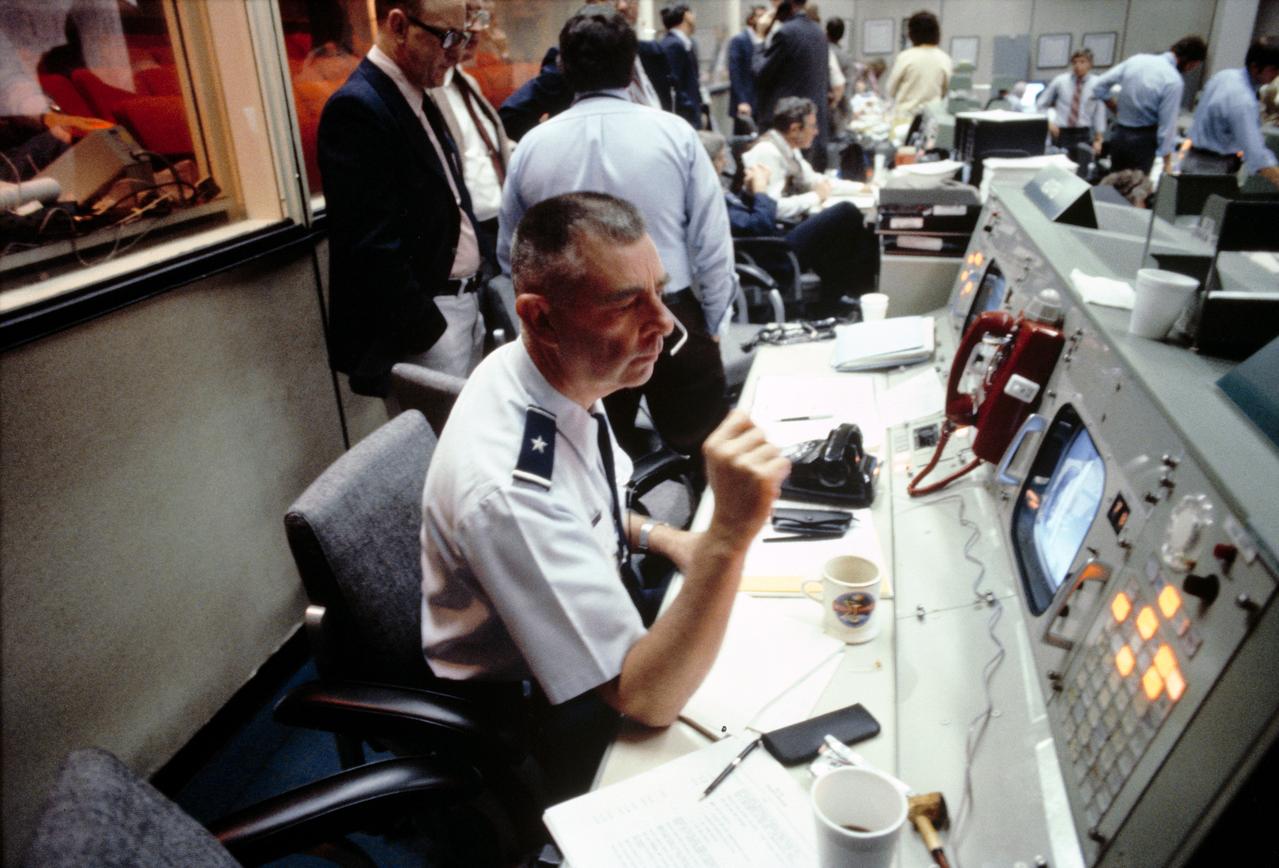
S81-32876 (13 April 1981) --- Brig. Gen. William T. Twinting studies the monitor at the Department of Defense (DOD) console in the mission operations control room (MOCR) at the Johnson Space Center?s Mission Control Center (MCC). He is deputy DOD manager for Space Shuttle Support Operations. Gen. Twinting and the other flight controllers seen in the background listen as astronaut John W. Young, STS-1 commander, describes the scenery of a downlink TV transmission. Photo credit: NASA
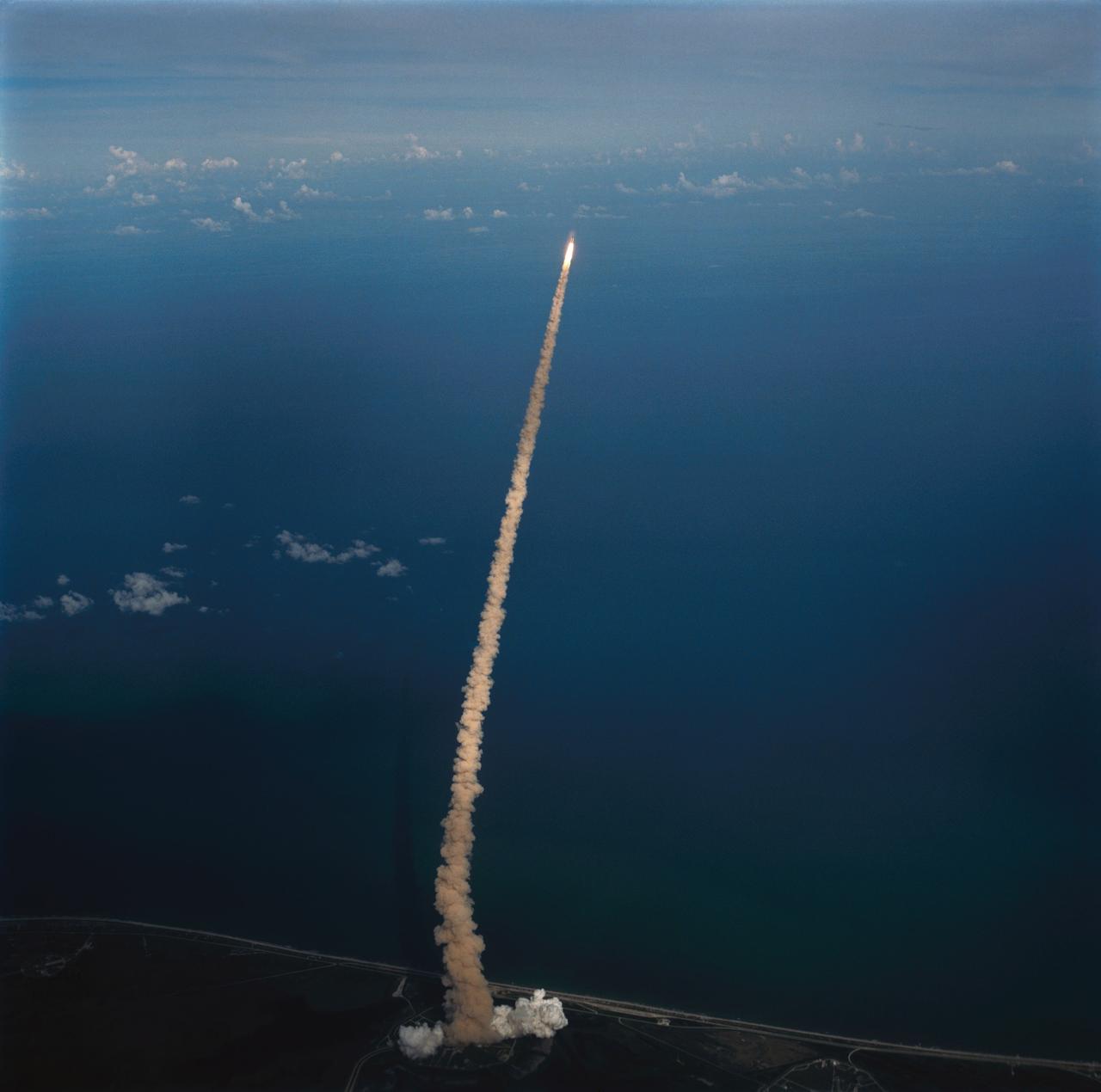
51F-S-038 (29 July 1985) ---An air-to-air view of the Space Shuttle orbiter Challenger, its two solid rocket boosters and external fuel tank moments after launch from Pad 39A at Kennedy Space Center (KSC). Astronaut John W. Young, veteran of two Shuttle flights and four other NASA missions, took the photograph with a handheld camera while piloting the Shuttle training aircraft. Launch occured at 5:00:00:423 p.m. (EDT), July 29, 1985.
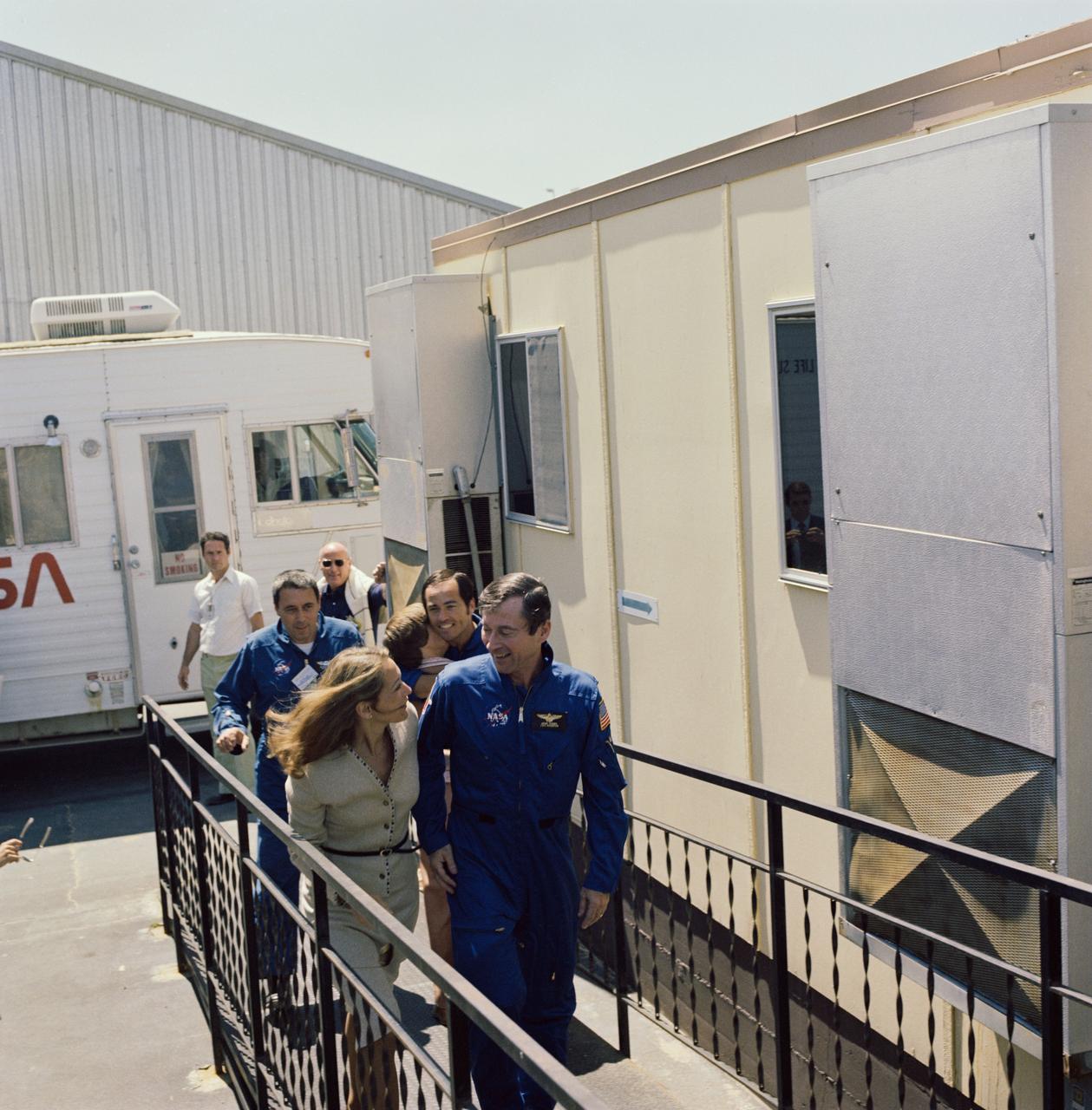
Astronaut Robert L. Crippen, right, is greeted by wife Virginia following landing of mission STS-1. Behind Mrs. Crippon is George W.S. Abbey, Director of Flight Operations at JSC (30850); Astronaut John W. Young, right, and Robert L. Crippen, center, are greeted by wives Susy and Virginia after completing STS-1 mission. Near left is George W. S. Abbey (30851).

S81-31319 (14 April 1981) --- One of the STS-1 solid rocket boosters (SRB) is towed back to shore after landing in the Atlantic Ocean following the jettisoning of both of Columbia?s SRB en route to her Earth-orbital mission. The UTC Freedom and Liberty (pictured) were involved in the recovery of the reusable boosters. Astronauts John W. Young, commander, and Robert L. Crippen, pilot, are orbiting Earth for approximately two and a third days aboard Columbia. Photo credit: NASA
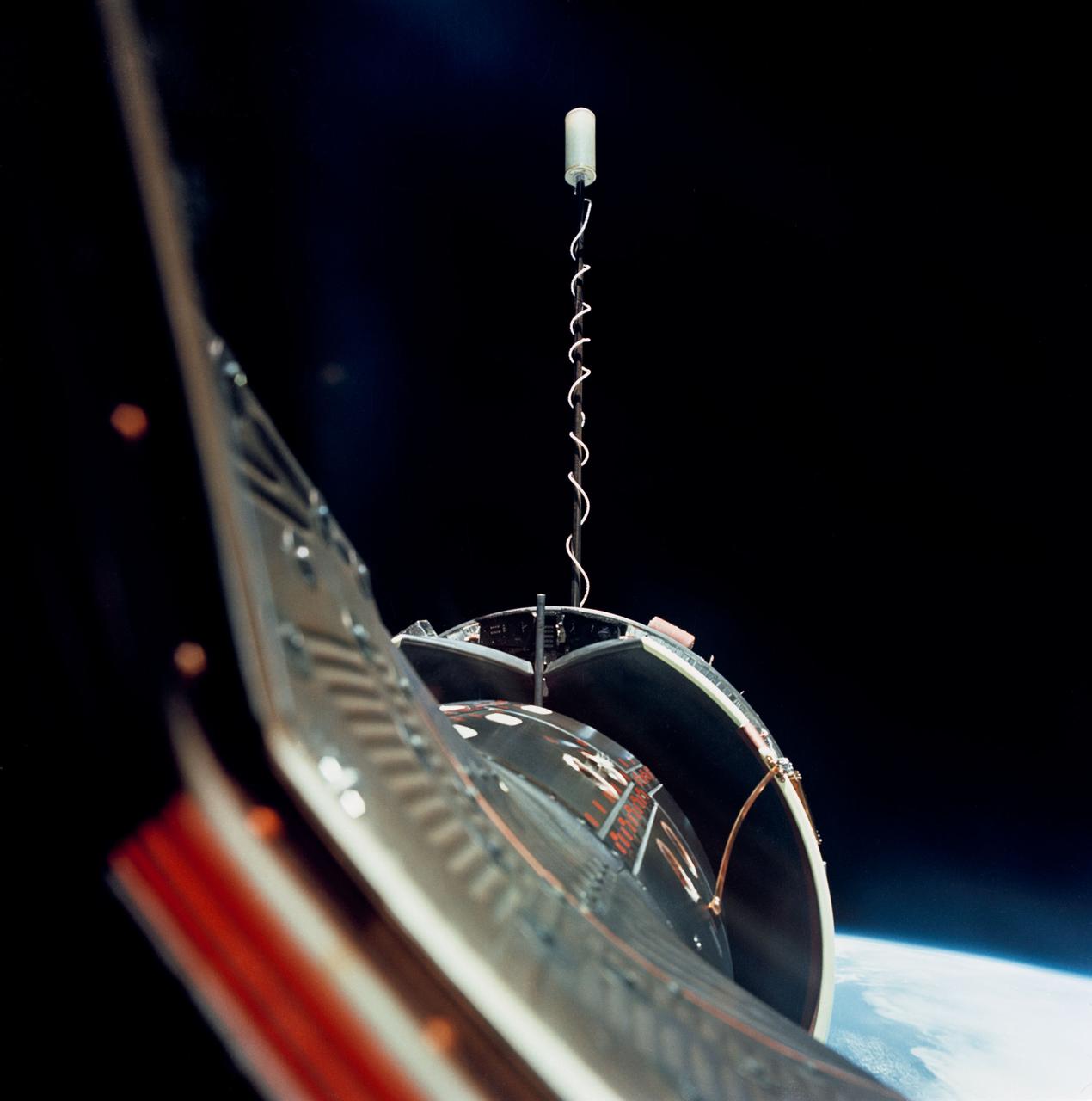
S66-46144 (18 July 1966) --- The Gemini-10 spacecraft is successfully docked with the Agena Target Docking Vehicle 5005. The Agena display panel is clearly visible. After docking with the Agena, astronauts John W. Young, command pilot, and Michael Collins, pilot, fired the 16,000-pound thrust engine of Agena-10's primary propulsion system to boost the combined vehicles into an orbit with an apogee of 413 nautical miles to set a new altitude record for manned spaceflight. Photo credit: NASA

S81-30843 (14 April 1981) --- Astronaut John W. Young, STS-1 commander, egresses the space shuttle orbiter Columbia following her successful landing on Rogers dry lake bed on southern California?s Edwards Air Force Base. Approaching the crew member at right is Dr. Craig L. Fischer, head of the medical operations branch at Johnson Space Center. Still inside the spacecraft is Robert L. Crippen, STS-1 pilot. Photo credit: NASA

KENNEDY SPACE CENTER, FLA. -- STS-1: Columbia. The Space Shuttle rises majestically above Launch Complex 39’s Pad A on the first leg of its maiden journey into space. On board for the historic flight are Astronauts John Young and Bob Crippen, scheduled to spend nearly 54 hours in space on this first shakedown test of America’s new reusable Space Transportation System (STS). The Sunday morning liftoff came a few seconds after 7 a.m. and marked the dawn of a new era in spaceflight.
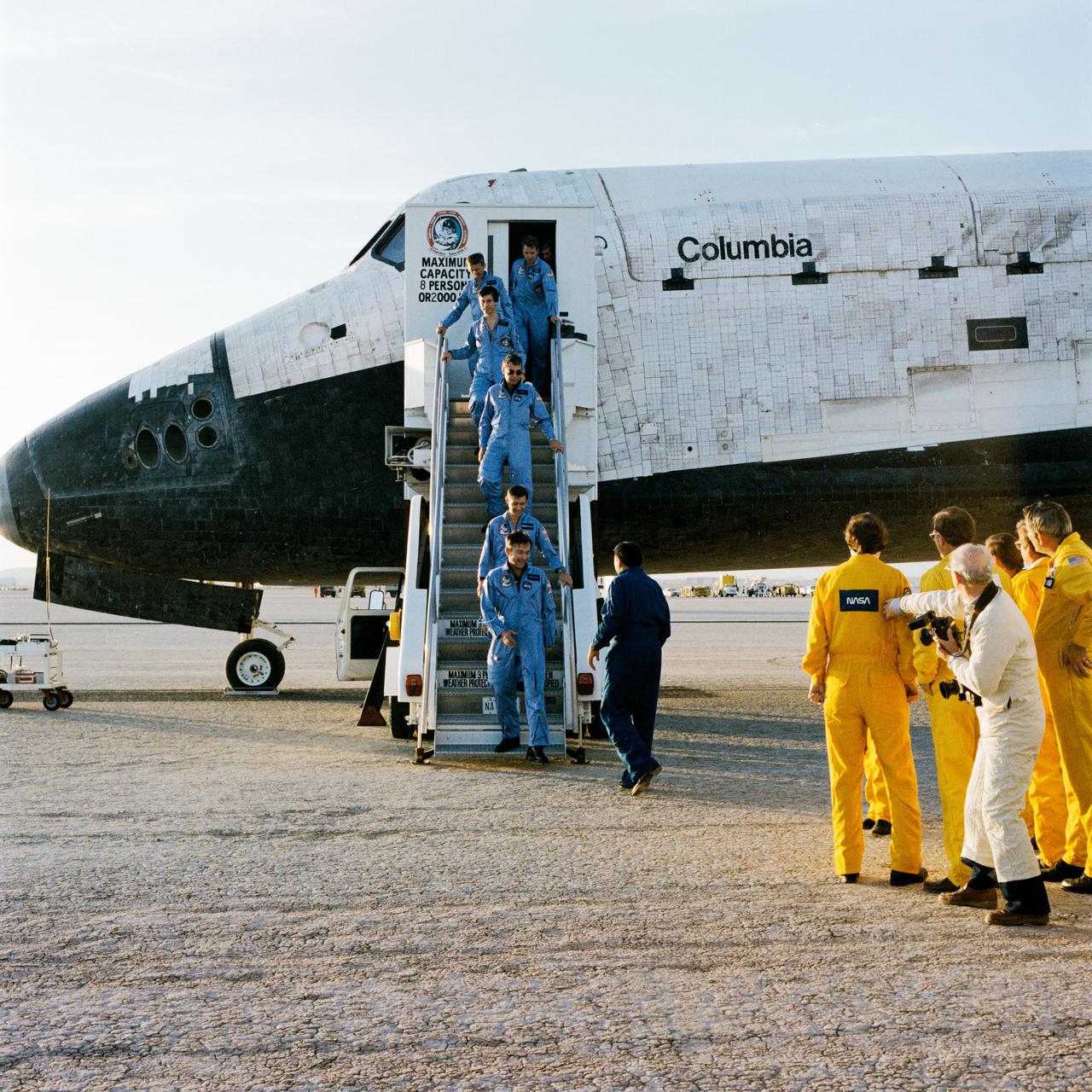
S83-45648 (8 Dec 1983) --- After more than 10 days in Earth orbit, the crewmembers for STS-9 egress the Space Shuttle Columbia following its successful landing at Edwards Air Force Base in southern California. Descending the stairs are (from bottom) Astronaut John W. Young, Brewster H. Shaw Jr. and Robert A. R. Parker; West German physicist Dr. Ulf Merbold; Astronaut Owen K. Garriott, and Dr. Byron K. Lichtenberg, a biomedical engineer from the Massachusetts Institute of Technology. Young was STS-9 crew commander; Shaw, pilot Drs. Parker and Garriott were mission specialists; and Drs. Merbold and Lichtenberg, payload specialists. Dr. Merbold was the European Space Agency?s first scientist to fly aboard a NASA spacecraft and Dr. Lichtenberg was America?s first non-astronaut to join a NASA crew in space. On hand to greet the crewmembers is George W. S. Abbey, director of flight crew operations.

AS16-113-18339 (21 April 1972) --- Astronaut John W. Young, commander of the Apollo 16 lunar landing mission, leaps from the lunar surface as he salutes the United States flag at the Descartes landing site during the first Apollo 16 extravehicular activity (EVA). Astronaut Charles M. Duke Jr., lunar module pilot, took this picture. The Lunar Module (LM) "Orion" is on the left. The Lunar Roving Vehicle (LRV) is parked beside the LM. The object behind Young (in the shade of the LM) is the Far Ultraviolet Camera/Spectrograph (FUC/S). Stone Mountain dominates the background in this lunar scene. While astronauts Young and Duke descended in the LM to explore the Descartes highlands landing site on the moon, astronaut Thomas K. Mattingly II, command module pilot, remained with the Command and Service Modules (CSM) "Casper" in lunar orbit.
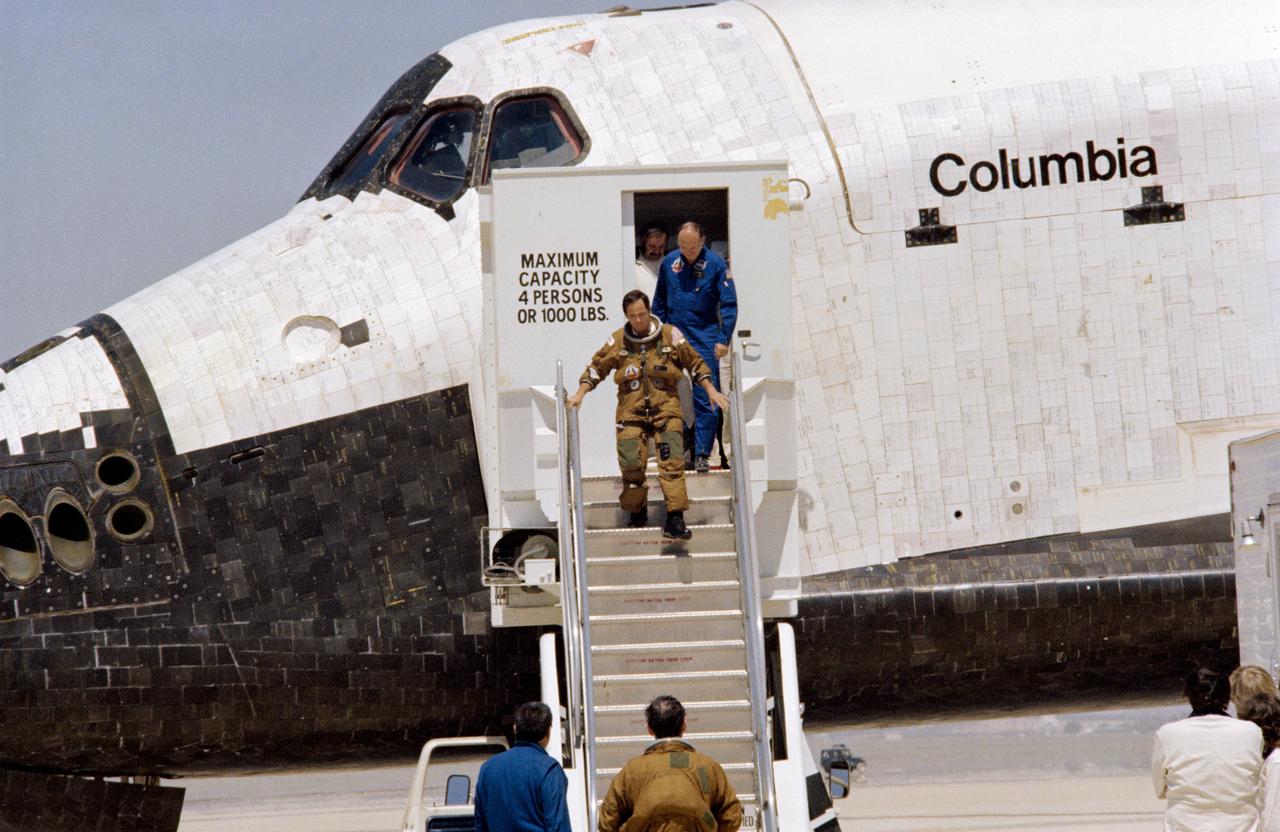
S81-30852 (14 April 1981) --- Astronaut Robert L. Crippen, pilot for the STS-1 flight, egresses the NASA space shuttle following touchdown of the Columbia on Rogers Dry Lake at Edwards Air Force Base, California. Astronaut John W. Young, crew commander, had earlier exited the craft and can be seen standing at the foot of the steps with George W.S. Abbey, director of flight operations at the Johnson Space Center (JSC). Dr. Craig L. Fischer, chief of the medical operations branch in JSC?s medical sciences division, follows Crippen down the steps. Photo credit: NASA
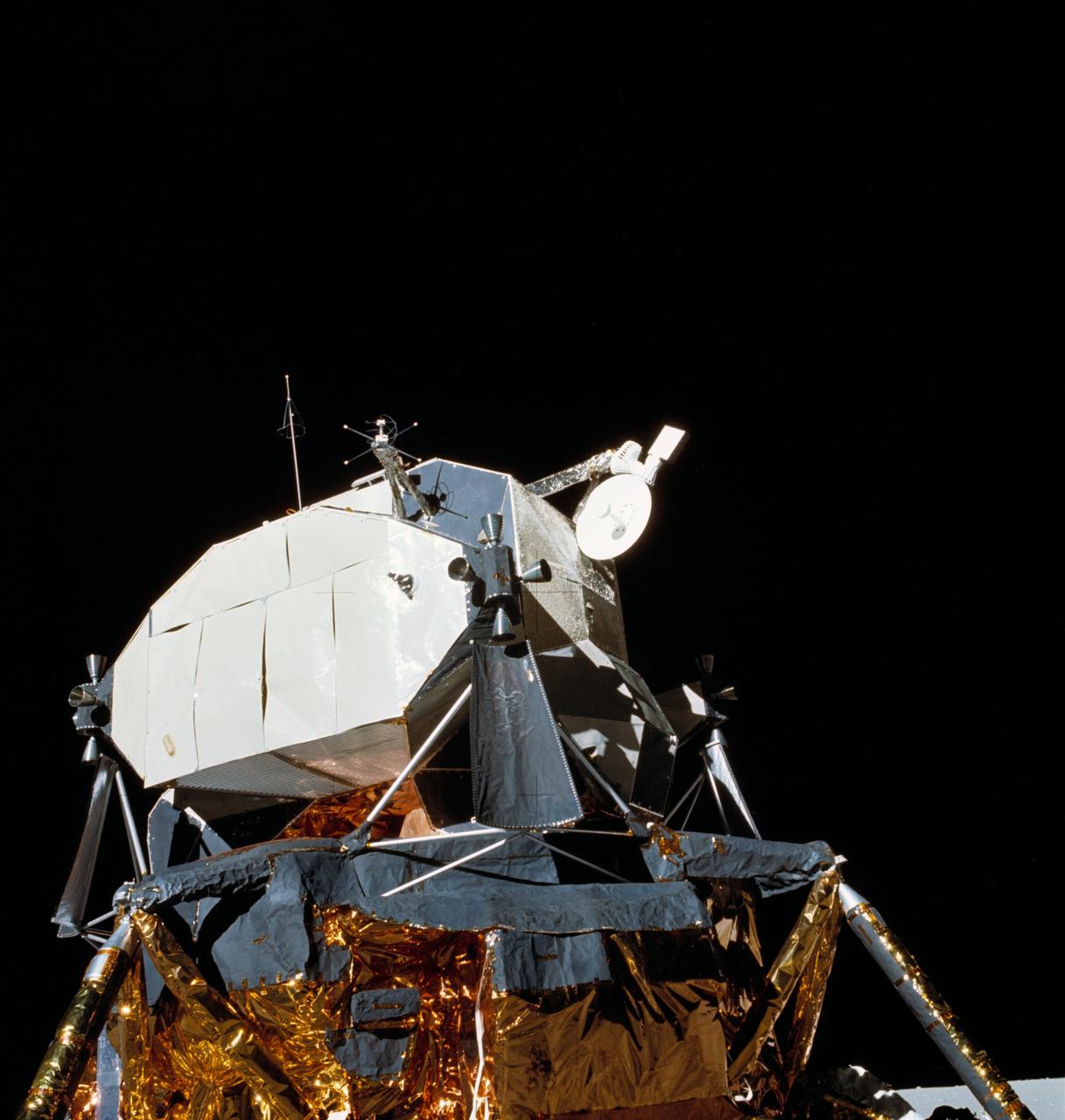
AS16-113-18334 (21 April 1972) --- View of the Lunar Module (LM) "Orion" parked on the lunar surface. During their post mission press conference, the Apollo 16 crewmembers called attention to the steerable S-band antenna, which was "frozen" in a yaw axis during much of the flight. This view of the LM was photographed by astronaut Charles M. Duke Jr., the lunar module pilot, during the mission's first extravehicular activity (EVA). Astronauts John W. Young, commander, and Duke had earlier descended in the LM to explore the Descartes region of the moon, while astronaut Thomas K. Mattingly II, command module pilot, remained with the Command and Service Modules (CSM) "Casper" in lunar orbit.
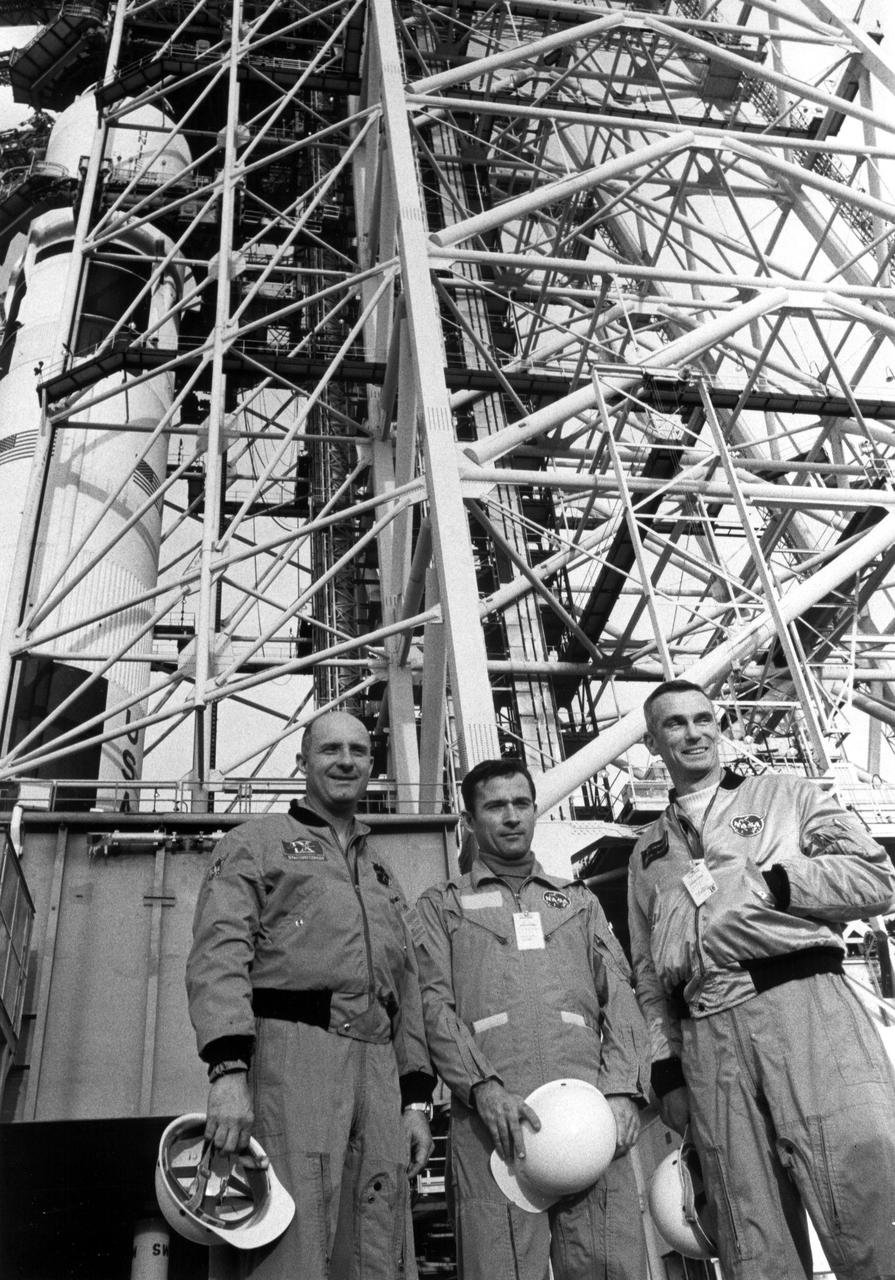
KENNEDY SPACE CENTER, FLA. -- The May 18 launch date for the Apollo 10 mission is now little more than a month away for its prime crew, shown here at Complex 39's Pad B. From left are Thomas P. Stafford, commander; John W. Young, command module pilot; and Eugene A. Cernan, lunar module pilot. Visible through the girders of the Mobile Service Structure is the launch vehicle which will hurl them toward the Moon in a mission that is to carry Stafford and Cernan to within 50,000 feet of the lunar surface.
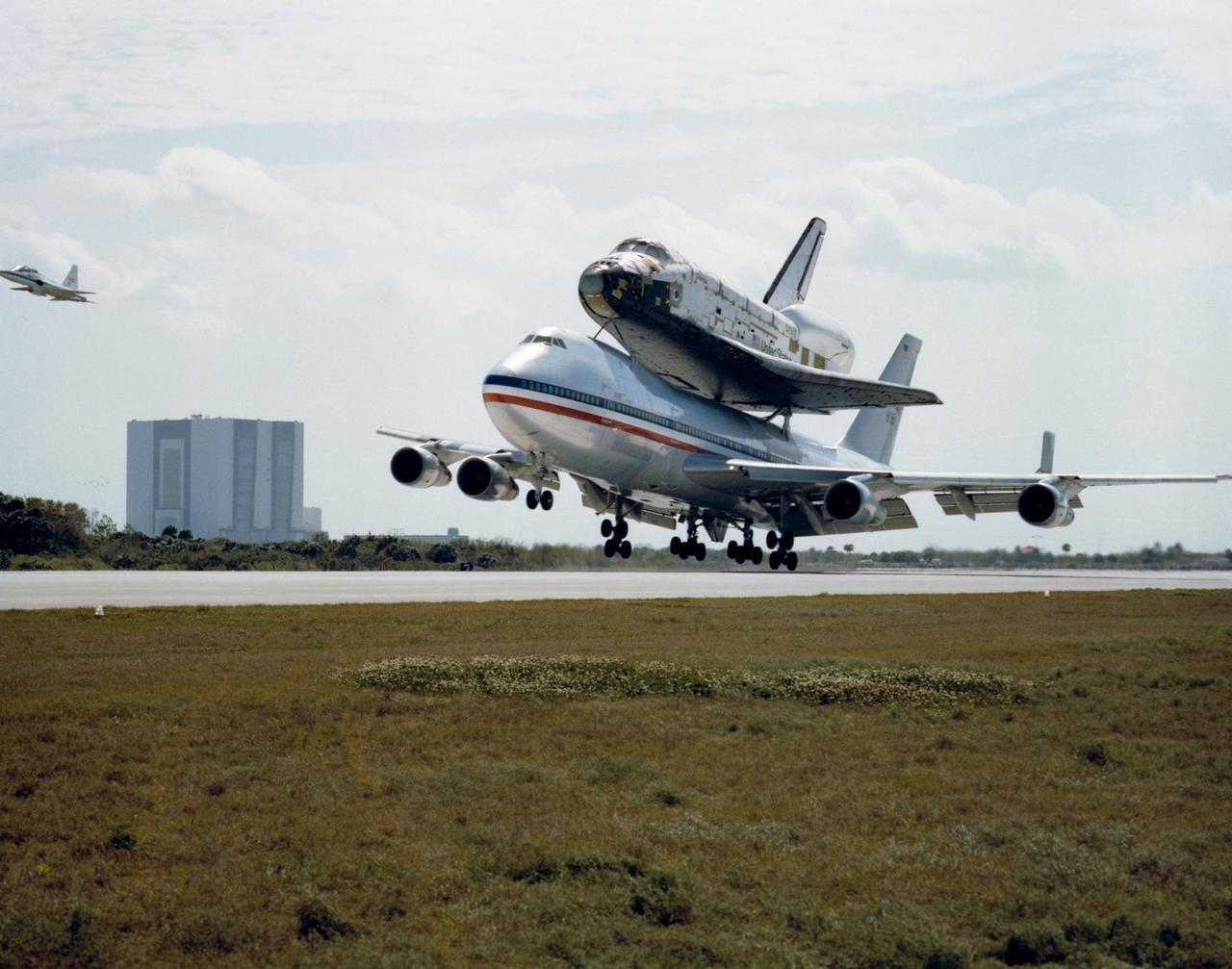
S79-30819 (24 March 1979) --- The space shuttle orbiter 102 Columbia riding ?piggyback? on NASA 905, a 747 carrier aircraft, is only seconds away from landing on Kennedy Space Center?s Shuttle landing facility, ending a 2,400-mile ferry flight from California. The T-38 chase plane at left is flown by Donald K. Slayton, manager for the orbital fight test (OFT) program. Columbia will be used for the OFT program, and it will be manned by astronauts John W. Young and Robert L. Crippen the first time it flies in space. The vehicle assembly building (VAB) is in right background. Photo credit: NASA
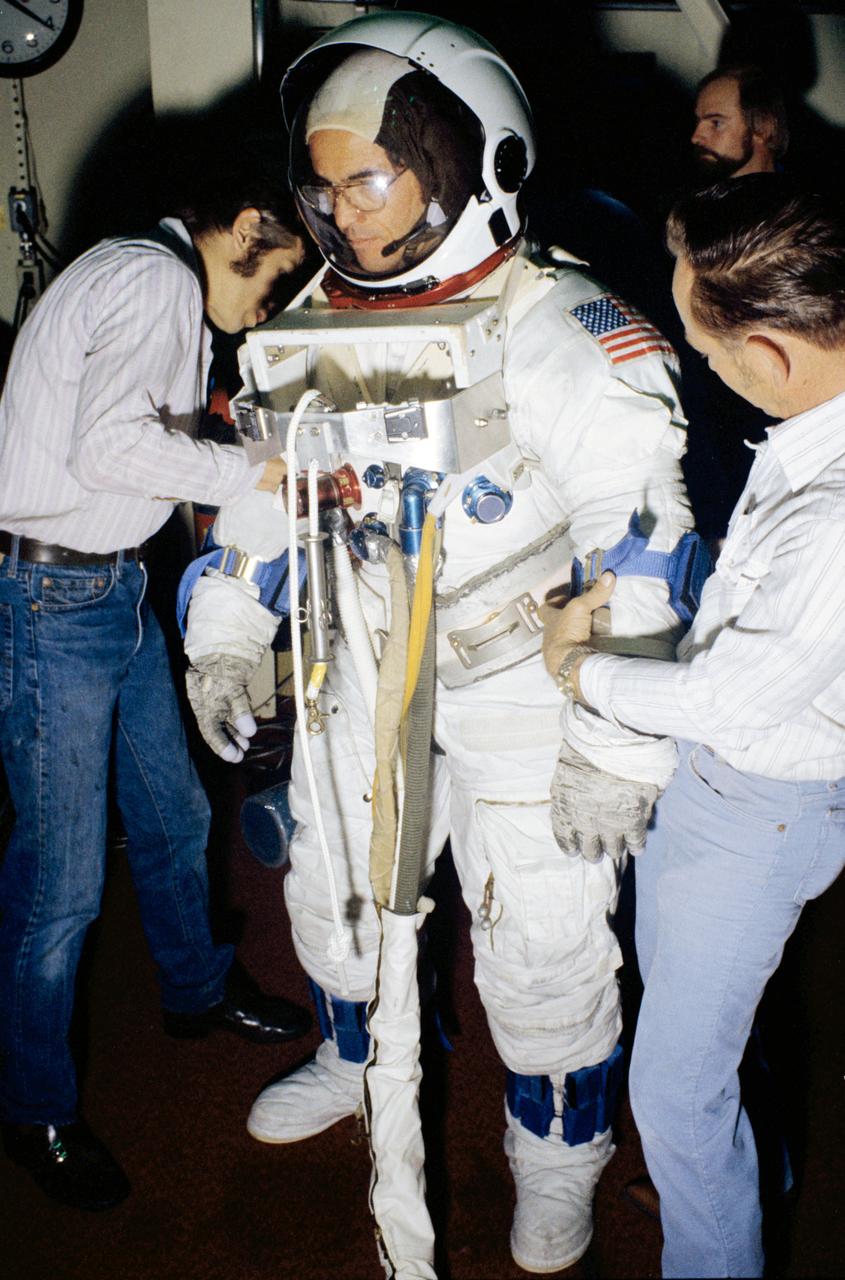
S79-25007 (13 Dec. 1978) --- Astronaut Robert L. Crippen, pilot for the first space shuttle orbital flight test (STS-1), is assisted by technicians prior to entering a water immersion facility (WIF) during a training session. The zero-gravity familiarization took place in the Johnson Space Center?s training and test center (Building 260). The WIF afford one of two ways to simulate the feeling of weightlessness experienced during space extravehicular activity (EVA), the other being inside aircraft flying a parabolic curve. Crippen will be joined by astronaut John W. Young for the STS-1 flight. Photo credit: NASA
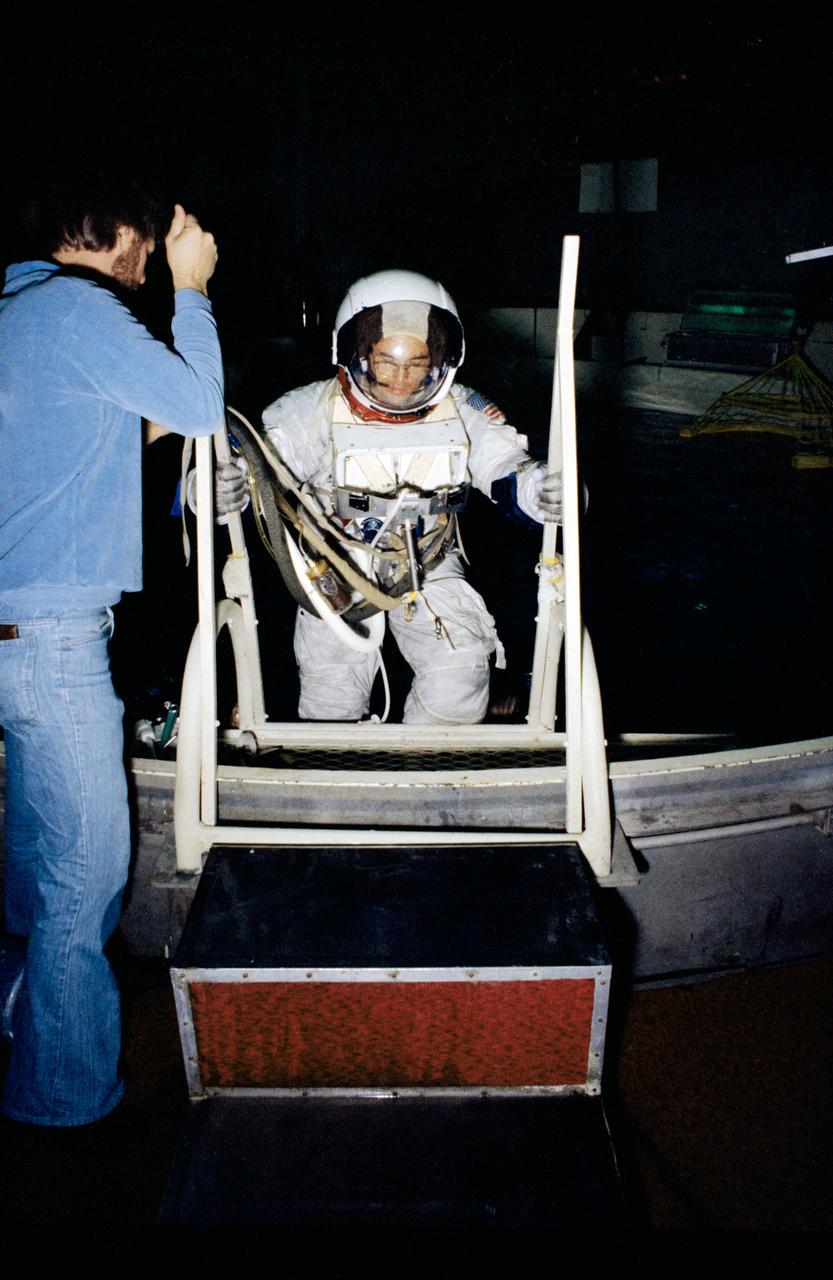
S79-25016 (13 Dec. 1978) --- Astronaut Robert L. Crippen, pilot for the first space shuttle orbital flight test, descends steps leading into the water immersion facility (WIF) during a training session in the Johnson Space Center?s training and test facility (Bldg. 260). The WIF affords one of two ways to simulate space extravehicular activity (EVA), the other being inside aircraft flying a parabolic curve. Crippen will be joined by astronaut John W. Young, commander for the first space shuttle flight (STS-1). Photo credit: NASA

51D-9091 (S23-9091) (12 April 1985) --- The Space Shuttle mission 51-D crewmembers depart the Kennedy Space Center's operations and checkout building on their way to the launch pad for an early morning launch of Discovery. Leading the seven are Karol J. Bobko (center of frame), commander; and Donald E. Williams (right), pilot. Following are Rhea Seddon, Jeffrey A. Hoffman, S. David Griggs--all mission specialists--Charles D. Walker and U.S. Sen. E. J. (Jake) Garn (partly obscured behind Walker), both payload specialists. Partly visible in the doorway are Astronaut John W. Young and George W.S. Abbey, director of flight crew operations.
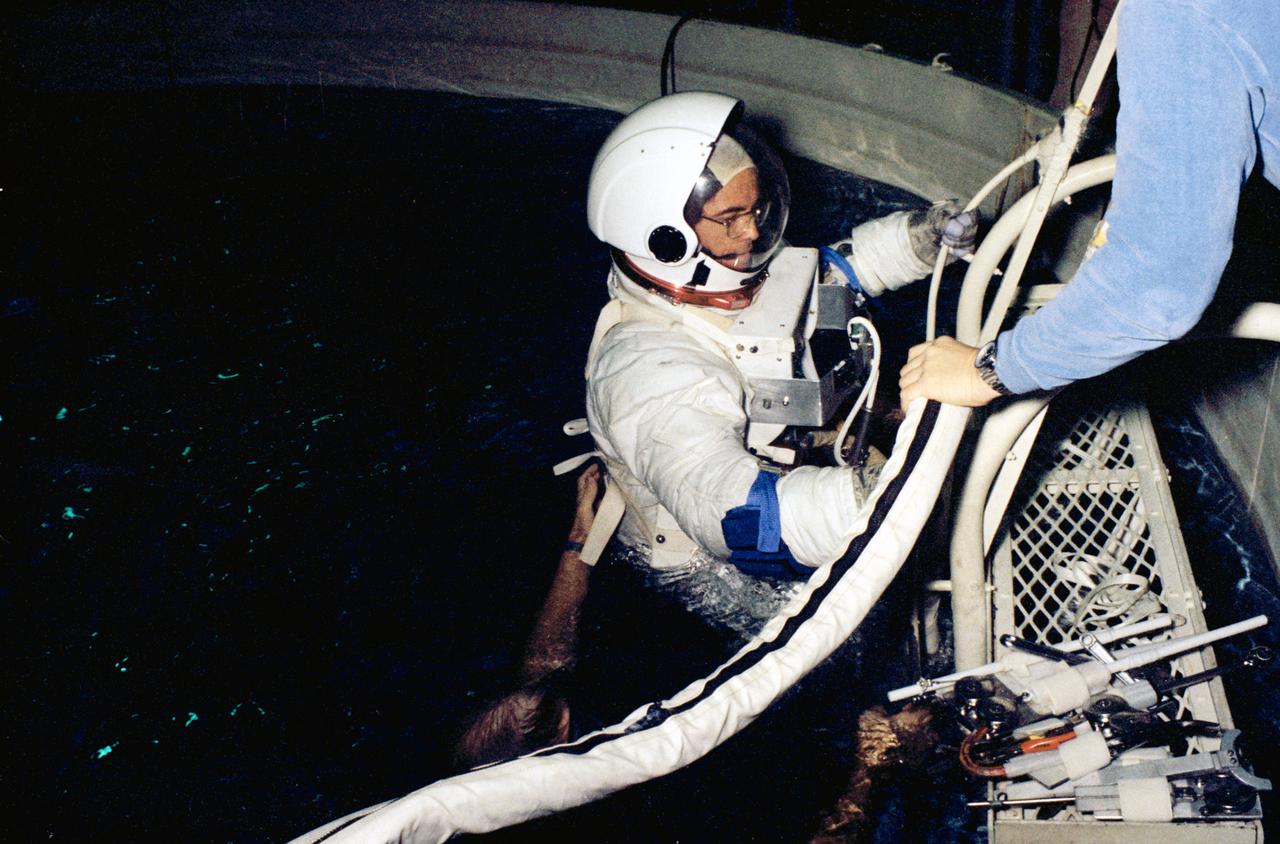
S79-25014 (13 Dec. 1978) --- Astronaut Robert L. Crippen, pilot of the first space shuttle orbital flight test (STS-1), eases into a water immersion facility (WIF) during a training session in the Johnson Space Center?s training and test facility (Bldg. 260). The WIF affords one of two ways to simulate the feeling of weightlessness experienced during space extravehicular activity (EVA), the other being inside aircraft flying a parabolic curve. Crippen will be joined by astronaut John W. Young, commander for the STS-1 flight. Photo credit: NASA
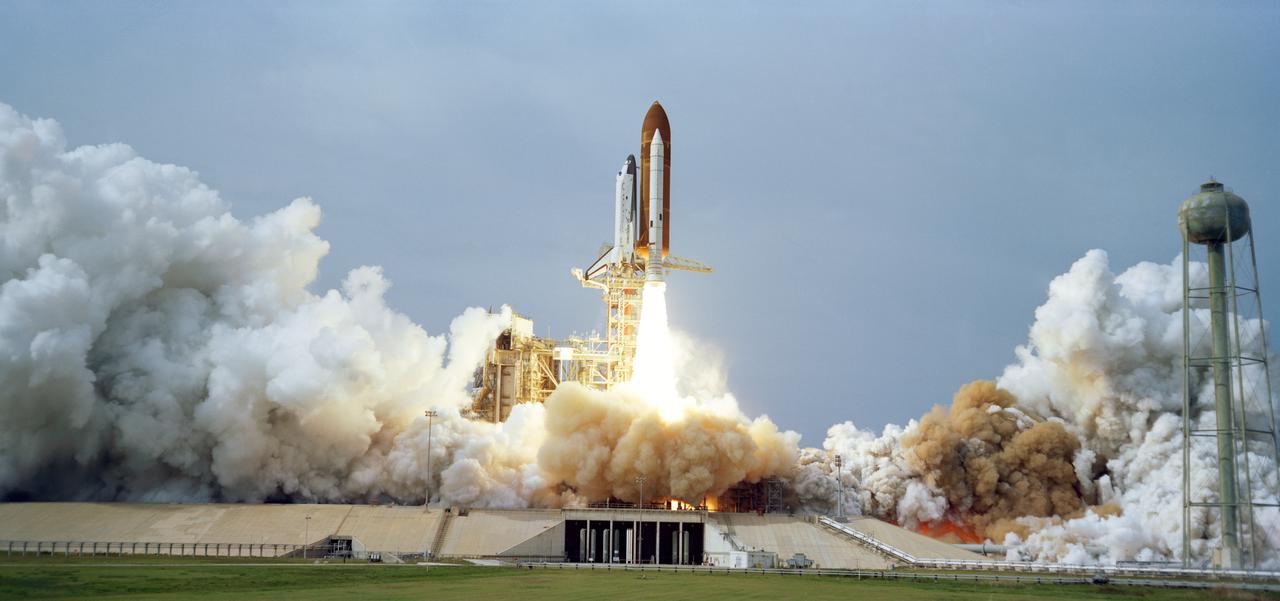
S83-44997 (28 Nov 1983) --- The Columbia lifts off once again from launch pad 39A at the Kennedy Space Center to begin a busy nine days in space for six crewmembers. Official launch time was 11:00:00:84 a.m. (EST). Onboard the spacecraft are Astronauts John W. Young, Brewster Shaw, Jr., Dr. Owen K. Garriott, Dr. Robert A. R. Parker; the European Space Agency?s Dr. Ulf Merbold; and Dr. Byron K. Lichtenberg, biomedical engineer with Massachusetts Institute of Technology.
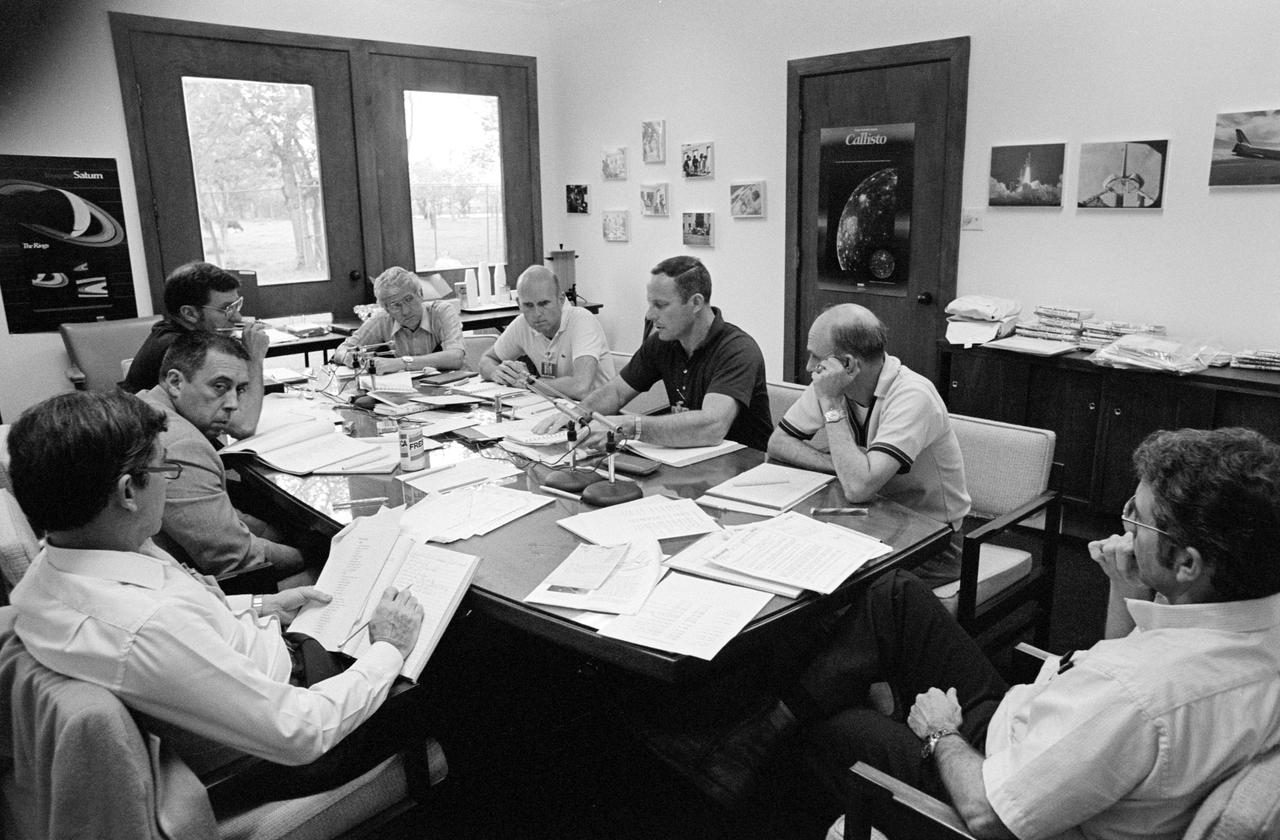
S82-28952 (1 April 1982) --- Crew members from STS-2 and STS-4 meet with the recently returned STS-3 astronauts for a debriefing session at the Johnson Space Center. Taking notes at bottom left foreground is astronaut John W. Young, STS-1 commander and chief of the Astronaut Office at JSC. Clockwise around the table, beginning with Young, are George W. S. Abbey, JSC Director of Flight Operations; and astronauts Joe E. Engle, STS-2 commander; Henry W. Hartsfield Jr., STS-4 pilot; C. Gordon Fullerton, STS-3 pilot; Jack R. Lousma, STS-3 commander; Thomas K. (Ken) Mattingly, STS-4 commander; and Richard H. Truly, STS-2 pilot. Photo credit: NASA
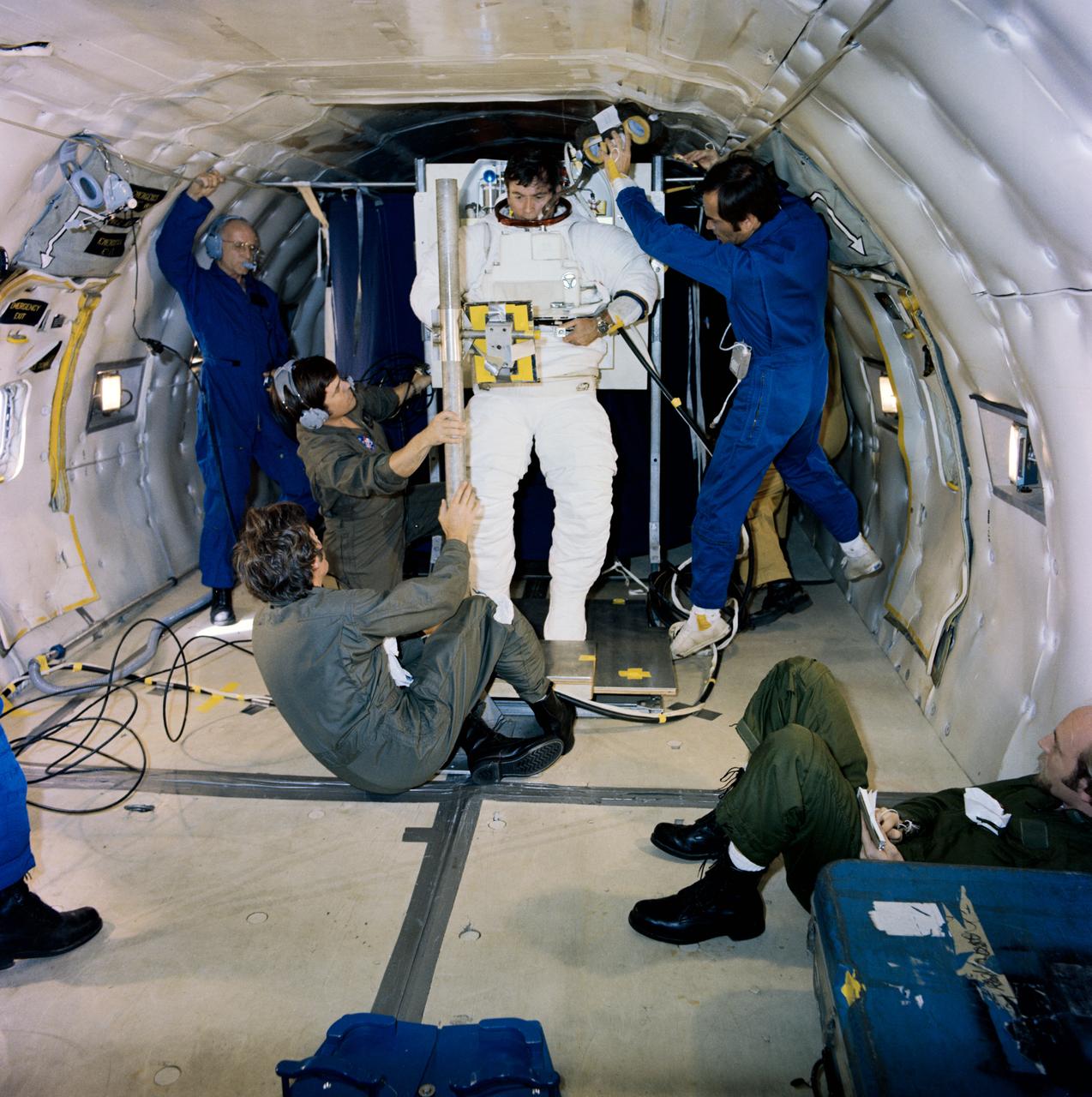
S79-30347 (31 March 1979) --- Taking advantage of a brief period of zero-gravity afforded aboard a KC-135 flying a parabolic curve, the flight crew of the first space shuttle orbital flight test (STS-1) goes through a spacesuit donning exercise. Astronaut John W. Young has just entered the hard-material torso of the shuttle spacesuit by approaching it from below. He is assisted by astronaut Robert L. Crippen. The torso is held in place by a special stand here, simulating the function provided by the airlock wall aboard the actual shuttle craft. The life support system is mated to the torso on Earth and remains so during the flight, requiring this type of donning and doffing exercise. Note Crippen?s suit is the type to be used for intravehicular activity in the shirt sleeve environment to be afforded aboard shuttle. The suit worn by Young is for extravehicular activity (EVA). Young will be STS-1 commander and Crippen, pilot. They will man the space shuttle orbiter 102 Columbia. Photo credit: NASA
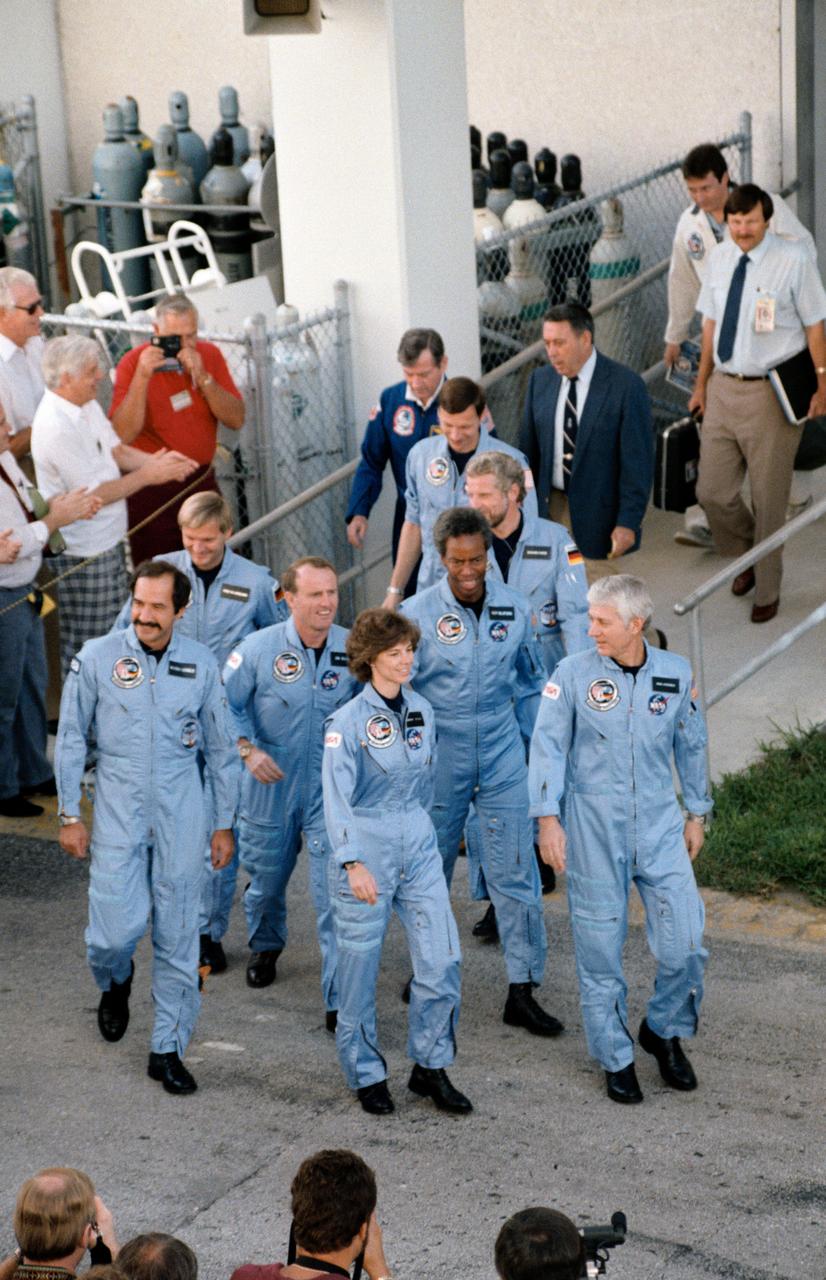
61A-S-015 (30 Oct 1985) --- A record number of crewmembers to serve on a Shuttle mission walks from the operations and checkout facility to a crew transfer van en route to Launch Pad 39A where the Challenger awaits the 61-A/Spacelab D-1launch. Leading the way is Henry W. Hartsfield Jr., mission commander, as Steven R. Nagel, pilot, trails the blue-suited team members. At center are James F. Buchli, Bonnie J. Dunbar and Guion S. Bluford Jr.--all mission specialists. They are flanked by Wubbo J. Ockels and Ernst Messerschmid on the left and Reinhard Furrer on the right. John W. Young, chief of the astronaut office at JSC and George W.S. Abbey, director of flight crew operations at JSC, follow the crew. Richard W. Nygren, assistant to the director, is in background. Messerschmid and Furrer are German scientists and Ockels is a Dutch scientist; and the three will be working with NASA's three mission specialists in the D-1 science module during the week-long flight.
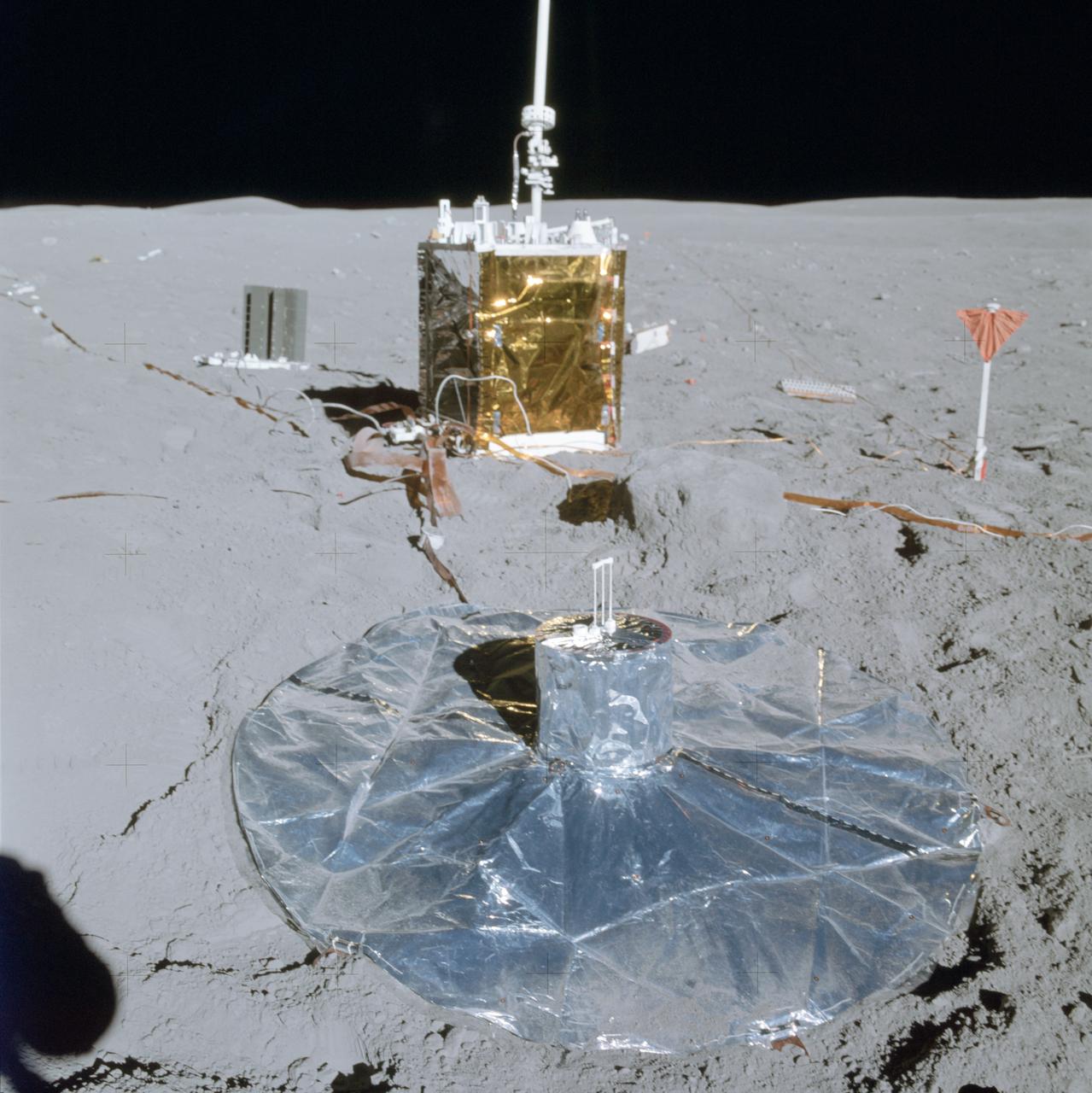
AS16-113-18347 (21 April 1972) --- A partial view of the Apollo 16 Apollo Lunar Surface Experiments Package (ALSEP) in deployed configuration on the lunar surface as photographed during the mission's first extravehicular activity (EVA), on April 21, 1972. The Passive Seismic Experiment (PSE) is in the foreground center; Central Station (C/S) is in center background, with the Radioisotope Thermoelectric Generator (RTG) to the left. One of the anchor flags for the Active Seismic Experiment (ASE) is at right. While astronauts John W. Young, commander; and Charles M. Duke Jr., lunar module pilot; descended in the Apollo 16 Lunar Module (LM) "Orion" to explore the Descartes highlands landing site on the moon, astronaut Thomas K. Mattingly II, command module pilot, remained with the Command and Service Modules (CSM) "Casper" in lunar orbit.
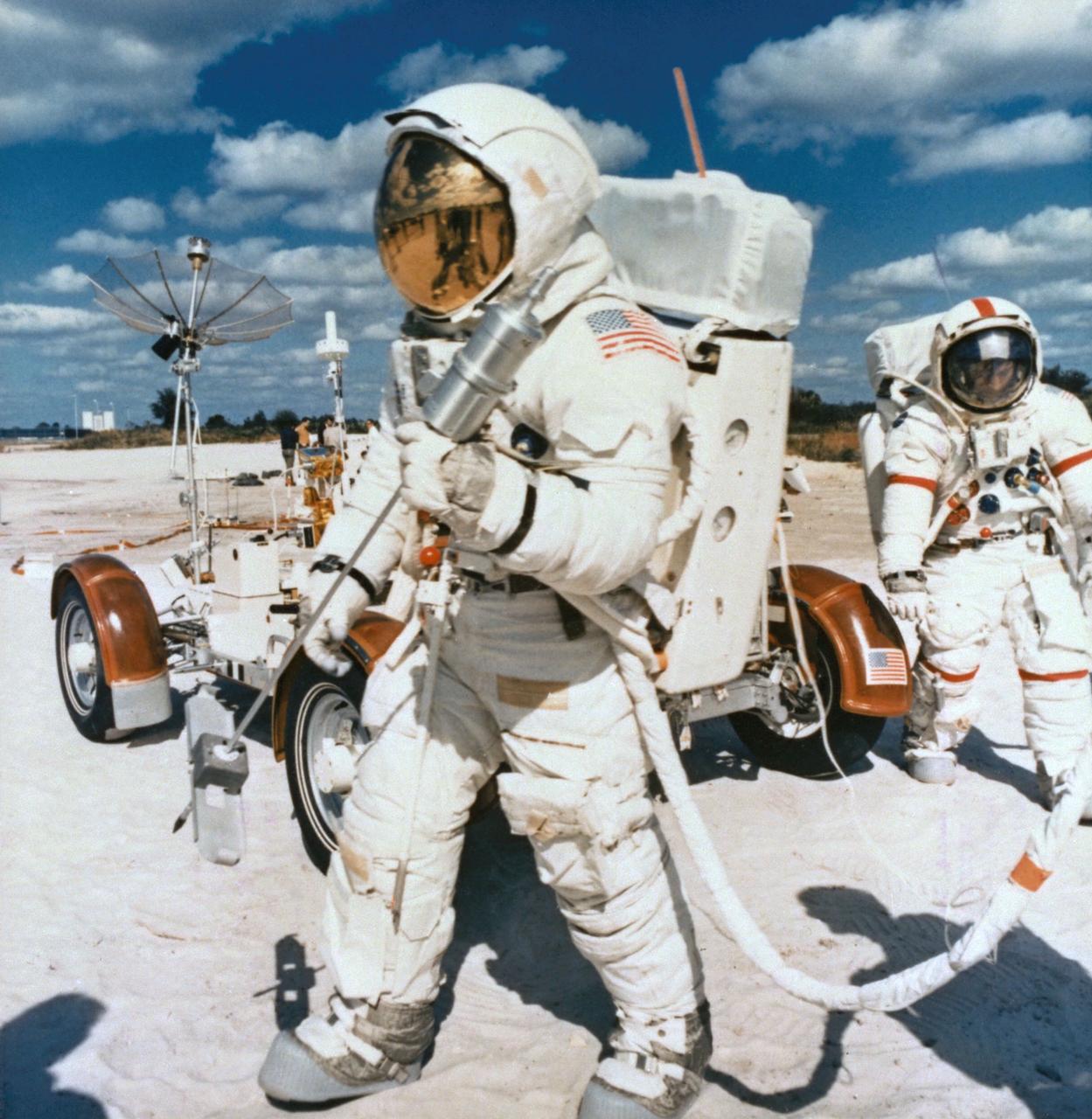
S72-30694 (28 Jan. 1972) --- Astronauts John W. Young, left, Apollo 16 commander, and Charles M. Duke Jr., lunar module pilot, prepare to begin a simulated traverse in a training area at the Kennedy Space Center (KSC). The fifth National Aeronautics and Space Administration (NASA) Apollo lunar landing mission is scheduled to land in the mountainous highlands region near the crater Descartes to explore the area for a three-day period. Among the experiments to fly on Apollo 16 is the soil mechanics (S-200) experiment or self-recording penetrometer, a model of which is held here by Duke. A training model of the Lunar Roving Vehicle (LRV) is parked between the two crew men. Astronaut Thomas K. (Ken) Mattingly II is prime crew command module pilot for the mission.
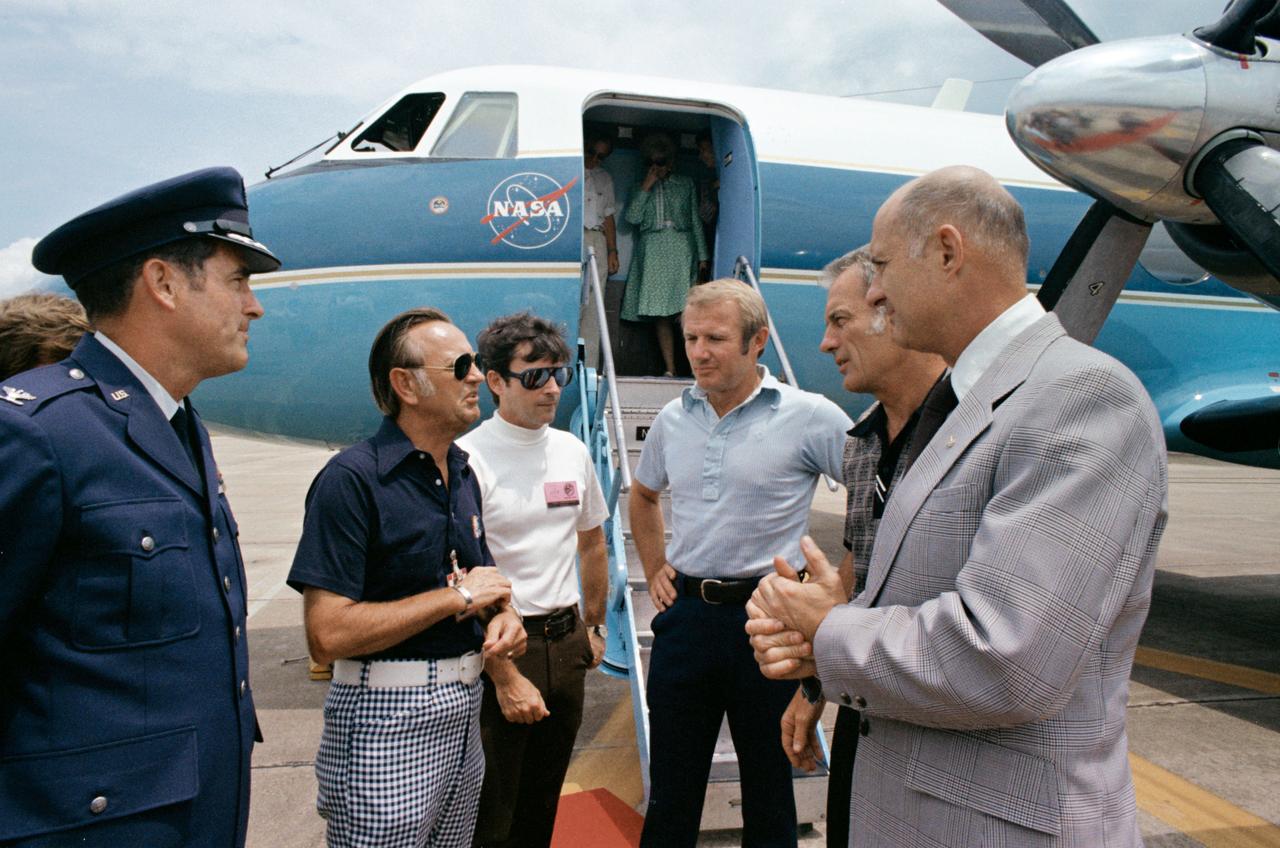
S75-30109 (10 Aug. 1975) --- Dr. Christopher C. Kraft Jr. (second from left), JSC Director, chats with the three ASTP crewmen on the runway at Ellington Air Force Base after their arrival home from the Pacific recovery area. The six men are, left to right, Col. Donald Robinson, EAFB commander; Dr. Kraft; astronaut John W. Young, Chief of the Astronaut Office at JSC; astronaut Vance D. Brand, command module pilot of the crew; astronaut Donald K. Slayton, docking module pilot of the crew; and astronaut Thomas P. Stafford, crew commander. This picture was taken prior to the official welcoming ceremonies. The crewmen?s wives are still aboard the plane. Medical treatment in Hawaii delayed the return of the crew to JSC. They suffered a pulmonary irritation from inhalation of a toxic gas minutes before splashdown on July 24, 1975.
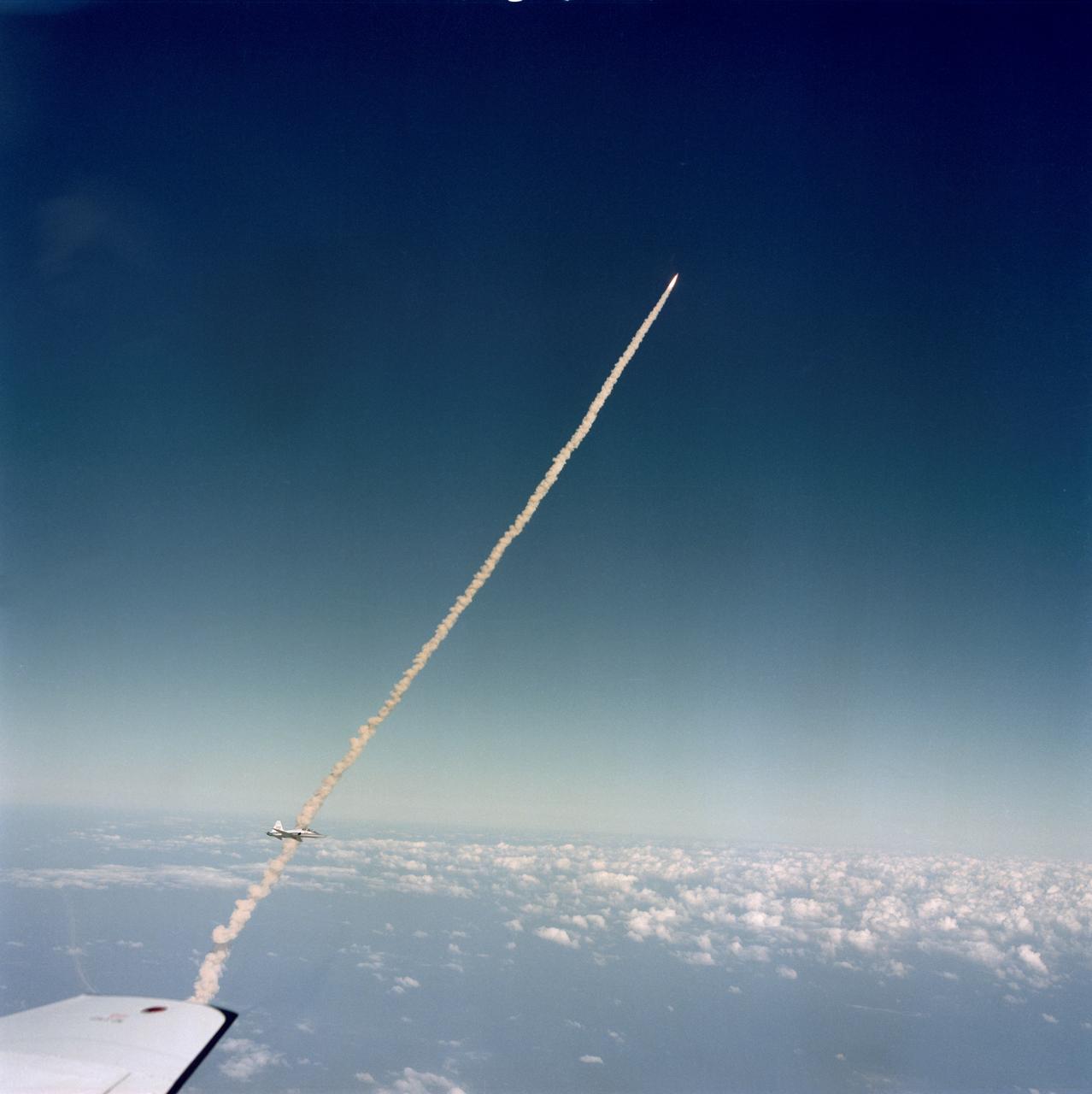
S81-39527 (12 Nov. 1981) --- This photograph of the STS-2 crew and the space shuttle Columbia soaring toward Earth orbit was captured with a hand-held 70mm camera (using an 80mm lens) operated from the rear station of a T-38 jet aircraft. Mission specialist-astronaut Kathryn D. Sullivan took the picture, and part of the wing tip of her aircraft can be seen in lower left corner. Astronaut John W. Young piloting NASA?s shuttle training aircraft (STA) was taking pictures from a higher angle. A close look can delineate his craft above the orbiter and supportive elements, almost perpendicular to them from this point of view. Another T-38 jet, with a TV camera operator as back-seat passenger, can be seen at lower left corner near the smoke trails from the shuttle. Photo credit: NASA
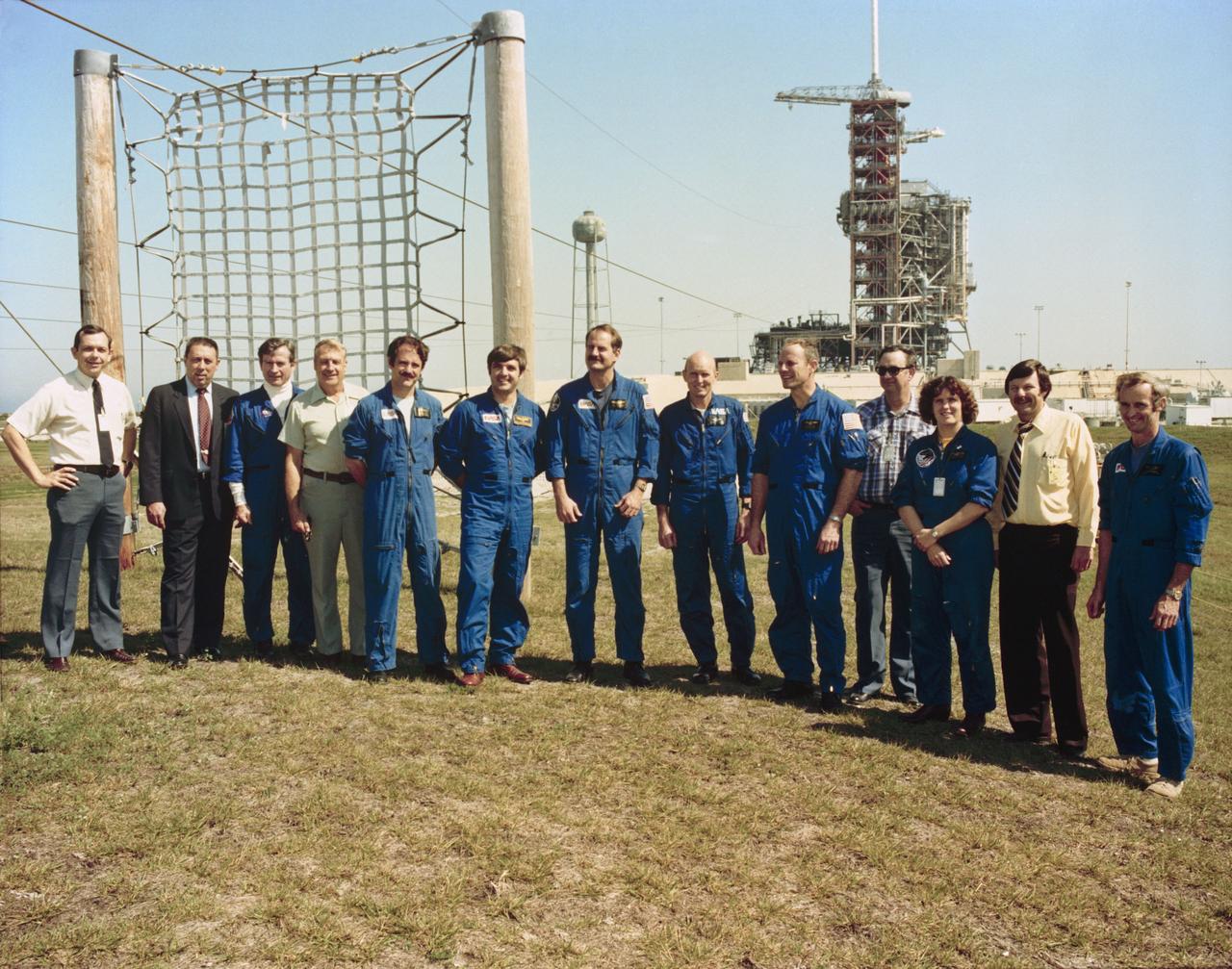
S82-28457 (19 Feb. 1982) --- Member of the JSC astronaut corps., STS-3 vehicle integration test (VIT) team and other personnel pose for a photograph at the completion of a countdown demonstration test (CDDT) and safety briefings at Launch Pad 39A, Kennedy Space Center (KSC). Participants are, from the left, Wilbur J. Etbauer, engineer with the VIT team; George W. S. Abbey, director of flight operations at JSC; astronaut John W. Young, chief of the astronaut office at JSC; Jack Fleming of Rockwell International; mission specialist-astronaut John M. Lounge; astronaut Daniel C. Brandenstein; mission specialist-astronaut James D. Van Hoften; astronauts C. Gordon Fullerton and Jack Lousma, prime crew for STS-3; Olan J. Bertrand, VIT team member; mission specialist-astronaut Kathryn D. Sullivan; Richard W. Nygren, head of the VIT team; and astronaut Donald E. Williams. The space shuttle Columbia is obscured by its service structure on Launch Pad 39A in the background. Part of slide-wire type emergency escape system is visible in the picture. Photo credit: NASA
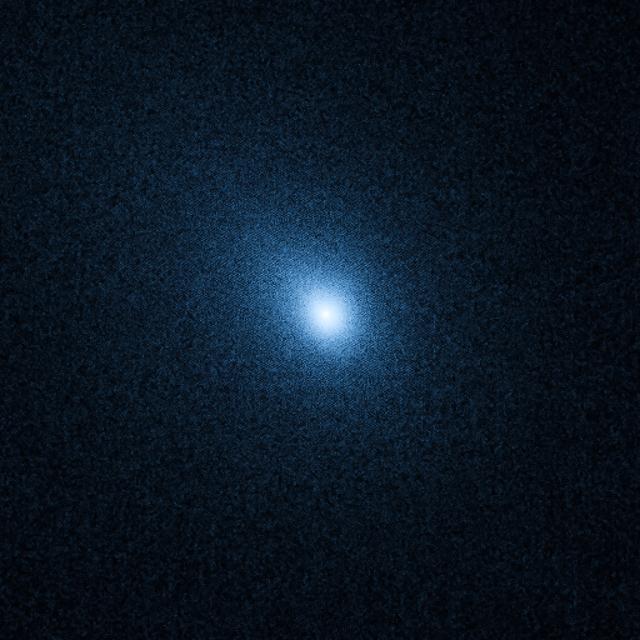
NASA image release October 5, 2010 Hubble Space Telescope observations of comet 103P/Hartley 2, taken on September 25, are helping in the planning for a November 4 flyby of the comet by NASA's Deep Impact eXtended Investigation (DIXI) spacecraft. Analysis of the new Hubble data shows that the nucleus has a diameter of approximately 0.93 miles (1.5 km), which is consistent with previous estimates. The comet is in a highly active state, as it approaches the Sun. The Hubble data show that the coma is remarkably uniform, with no evidence for the types of outgassing jets seen from most "Jupiter Family" comets, of which Hartley 2 is a member. Jets can be produced when the dust emanates from a few specific icy regions, while most of the surface is covered with relatively inert, meteoritic-like material. In stark contrast, the activity from Hartley 2's nucleus appears to be more uniformly distributed over its entire surface, perhaps indicating a relatively "young" surface that hasn't yet been crusted over. Hubble's spectrographs - the Cosmic Origins Spectrograph (COS) and the Space Telescope Imaging Spectrograph (STIS) -- are expected to provide unique information about the comet's chemical composition that might not be obtainable any other way, including measurements by DIXI. The Hubble team is specifically searching for emissions from carbon monoxide (CO) and diatomic sulfur (S2). These molecules have been seen in other comets but have not yet been detected in 103P/Hartley 2. 103P/Hartley has an orbital period of 6.46 years. It was discovered by Malcolm Hartley in 1986 at the Schmidt Telescope Unit in Siding Spring, Australia. The comet will pass within 11 million miles of Earth (about 45 times the distance to the Moon) on October 20. During that time the comet may be visible to the naked eye as a 5th magnitude "fuzzy star" in the constellation Auriga. Credit: NASA, ESA, and H. Weaver (The Johns Hopkins University/Applied Physics Lab) The Hubble Space Telescope is a project of international cooperation between NASA and the European Space Agency. NASA's Goddard Space Flight Center manages the telescope. The Space Telescope Science Institute (STScI) conducts Hubble science operations. STScI is operated for NASA by the Association of Universities for Research in Astronomy, Inc., in Washington, D.C. <b><a href="http://www.nasa.gov/centers/goddard/home/index.html" rel="nofollow">NASA Goddard Space Flight Center</a></b> enables NASA’s mission through four scientific endeavors: Earth Science, Heliophysics, Solar System Exploration, and Astrophysics. Goddard plays a leading role in NASA’s accomplishments by contributing compelling scientific knowledge to advance the Agency’s mission. <b>Follow us on <a href="http://twitter.com/NASA_GoddardPix" rel="nofollow">Twitter</a></b> <b>Join us on <a href="http://www.facebook.com/pages/Greenbelt-MD/NASA-Goddard/395013845897?ref=tsd" rel="nofollow">Facebook</a></b>