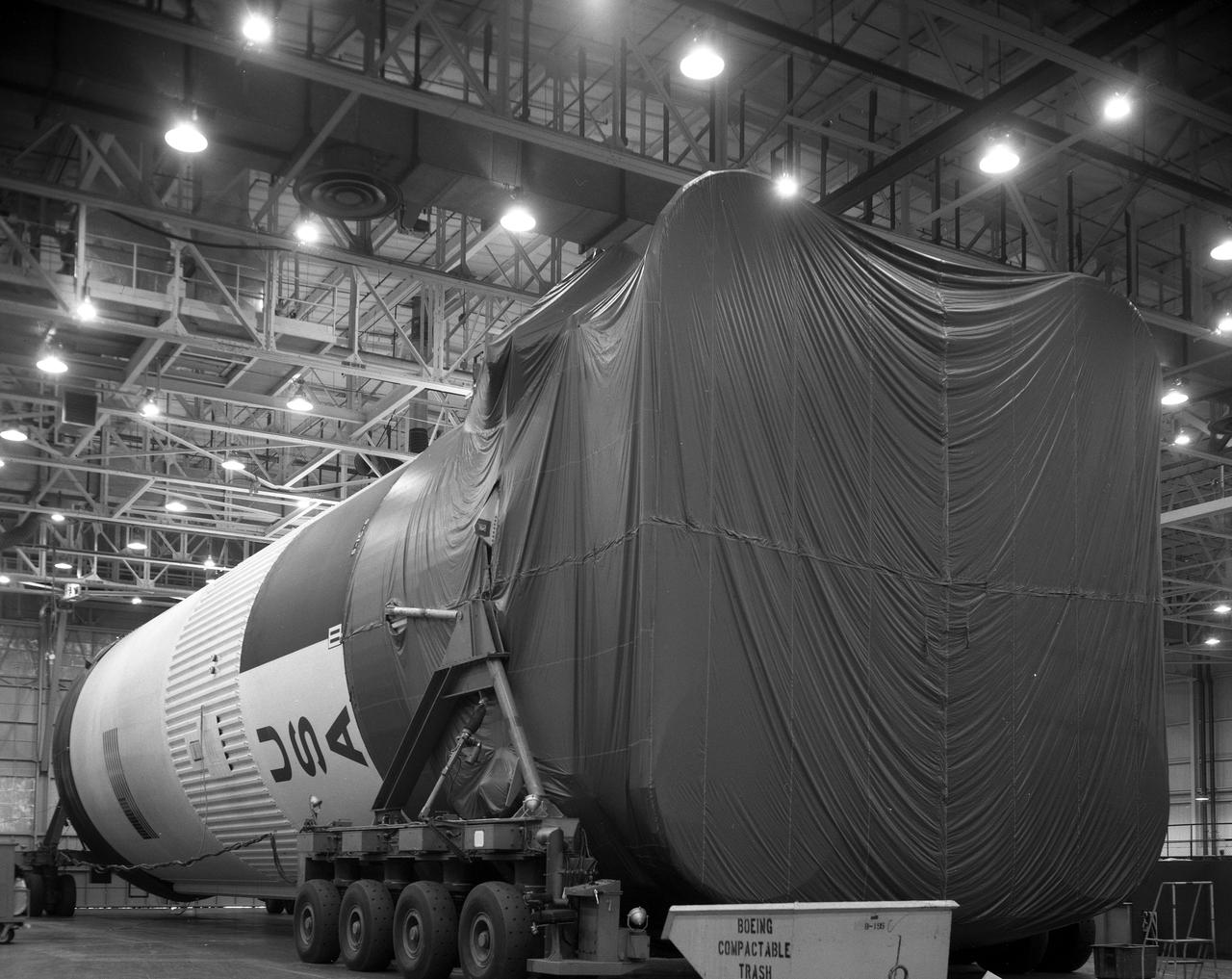
The first stage of the Apollo 11 Saturn V (S-1C-6) rocket awaits its departure from the Michoud Assembly Facility in New Orleans, LA. Image dated 11-6-1967.
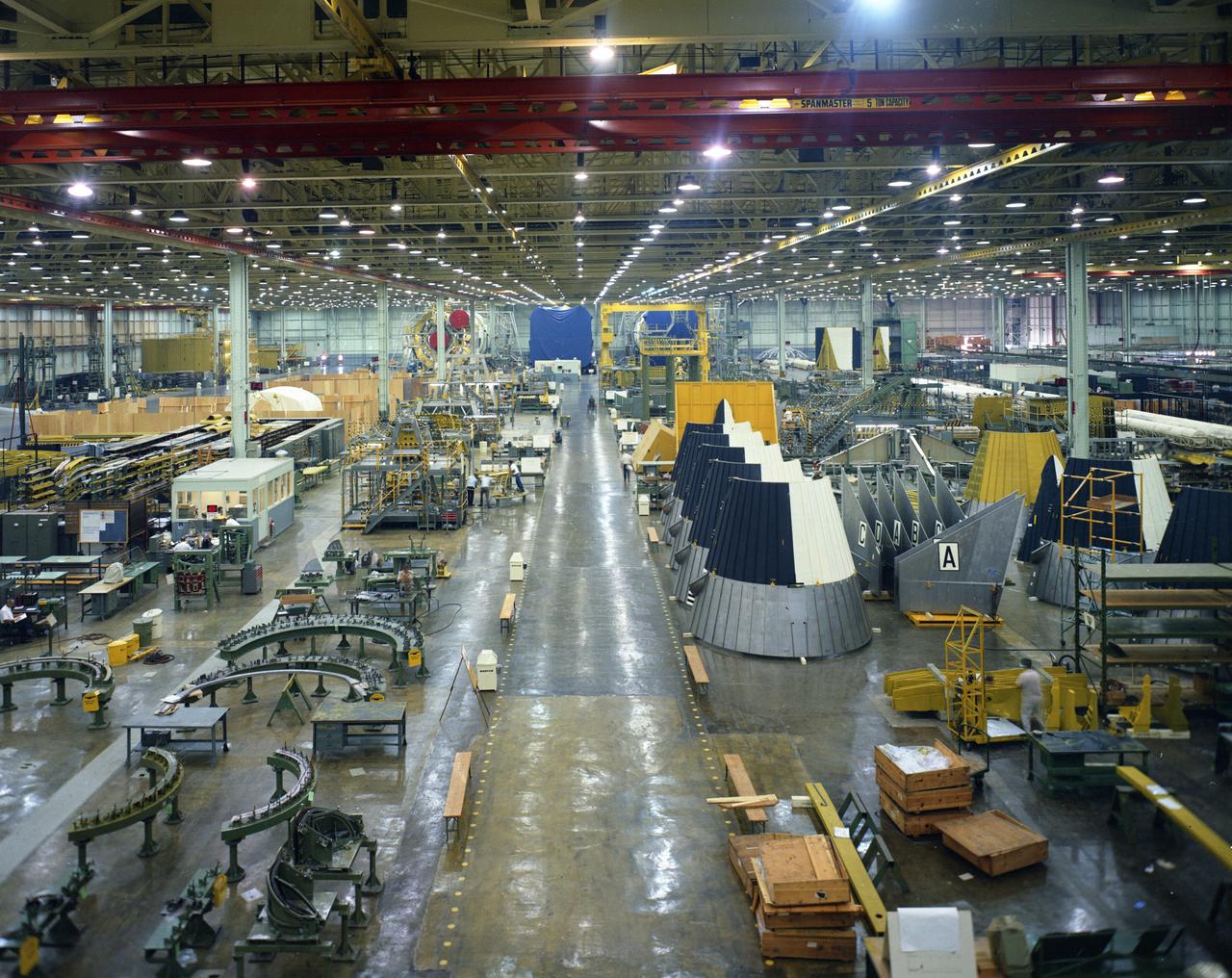
New Orleans, LA - Parts of the Saturn V first stage await assembly at NASA’s Michoud Assembly Facility in October of 1967. In the far end of the image, S-1C stages are nearing completion. Image dated 10-5-1967.
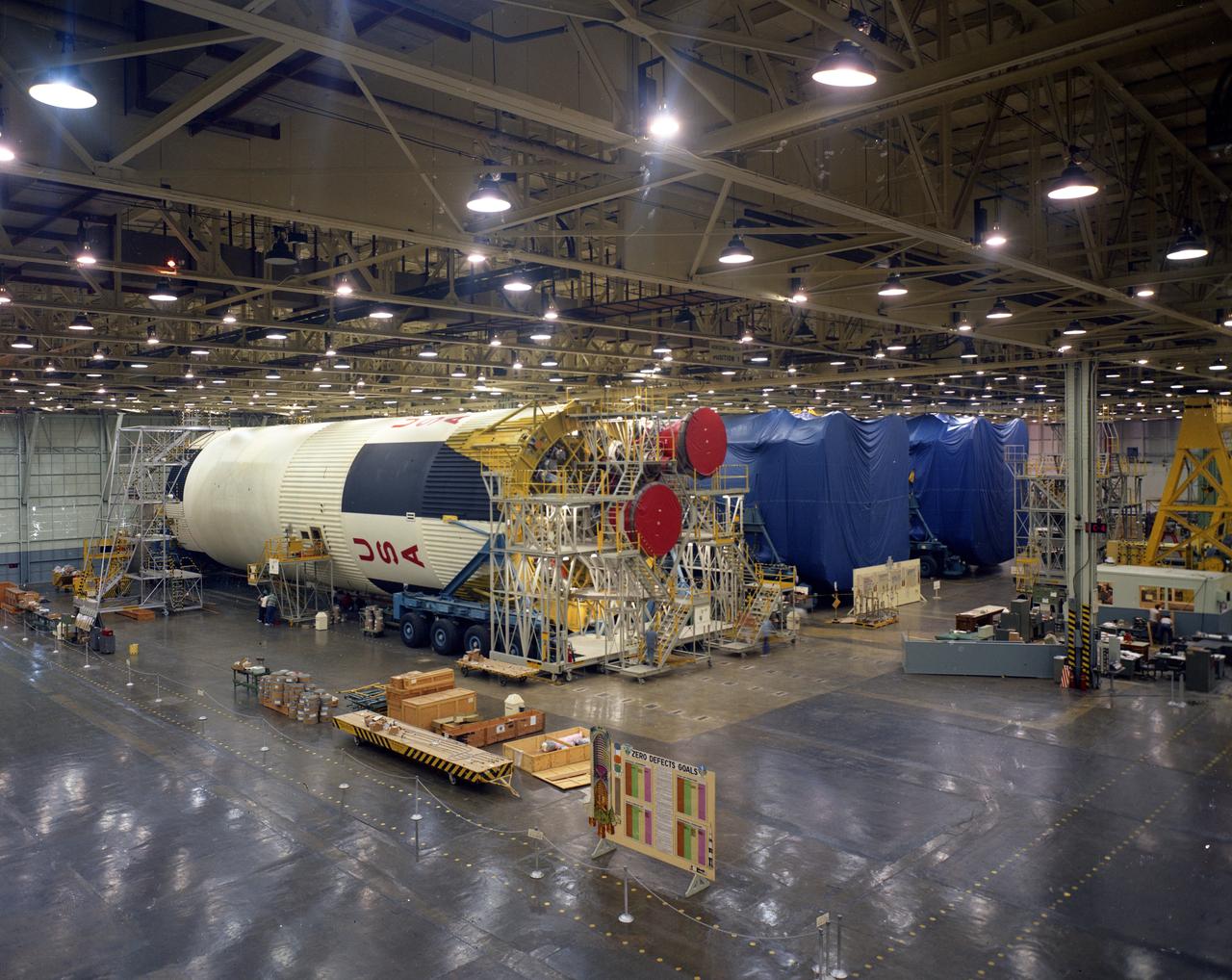
Saturn V S-1C boosters lined up in the Horizontal Assembly area of Michoud Assembly Facility. Image dated 10-5-1967.
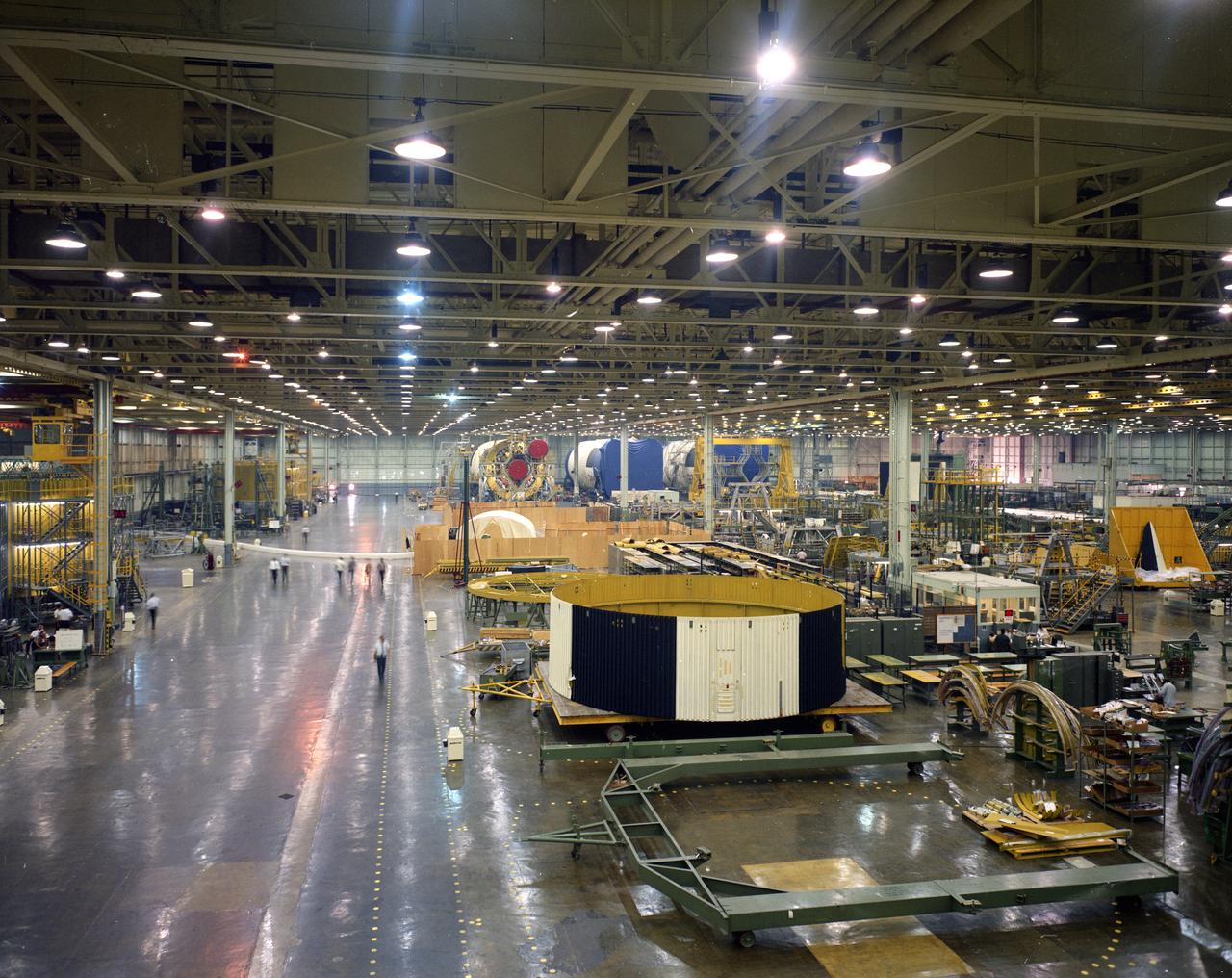
Parts of the Saturn V first stage await assembly at NASA’s Michoud Assembly Facility in October of 1967. In the far end of the image you can see S-1C stages nearing completion.
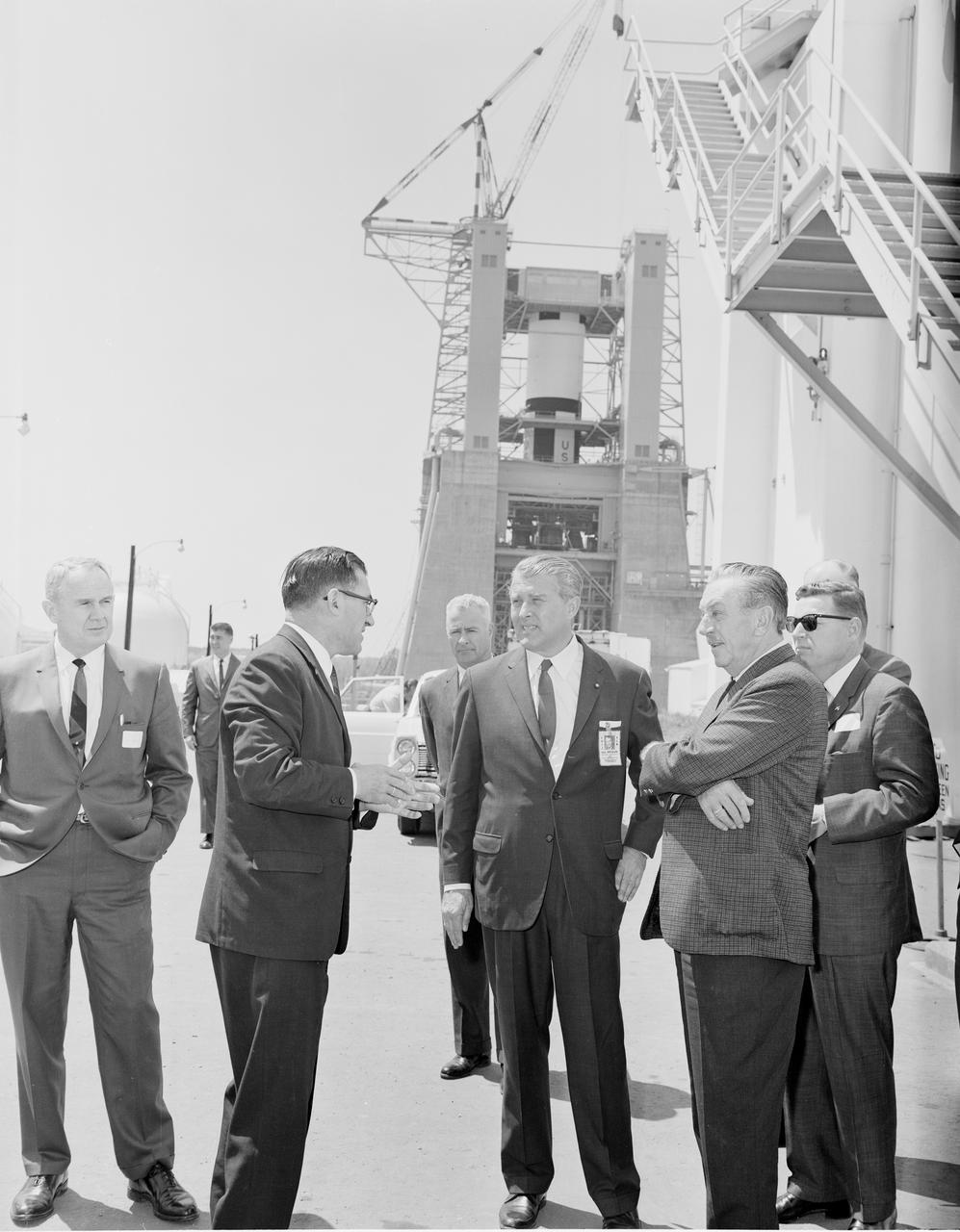
Walt Disney toured the West Test Area during his visit to the Marshall Space Flight Center on April 13, 1965. The three in center foreground are Karl Heimburg, Director, Test Division; Dr. von Braun, Director, MSFC; and Walt Disney. The Dynamic Test Stand with the S-1C stage being installed is in the background.
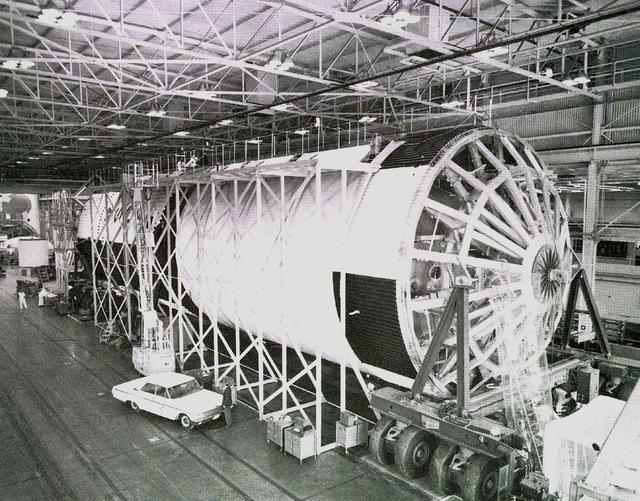
This photograph shows a Saturn V first stage (S-1C). This stage was assembled at the Manufacturing Engineering Laboratory at NASA's Marshall Space Flight Center. With assistance by the Boeing Company, the manufacturer, this first stage was assembled using components made by Boeing in Wichita, Kansas and New Orleans.
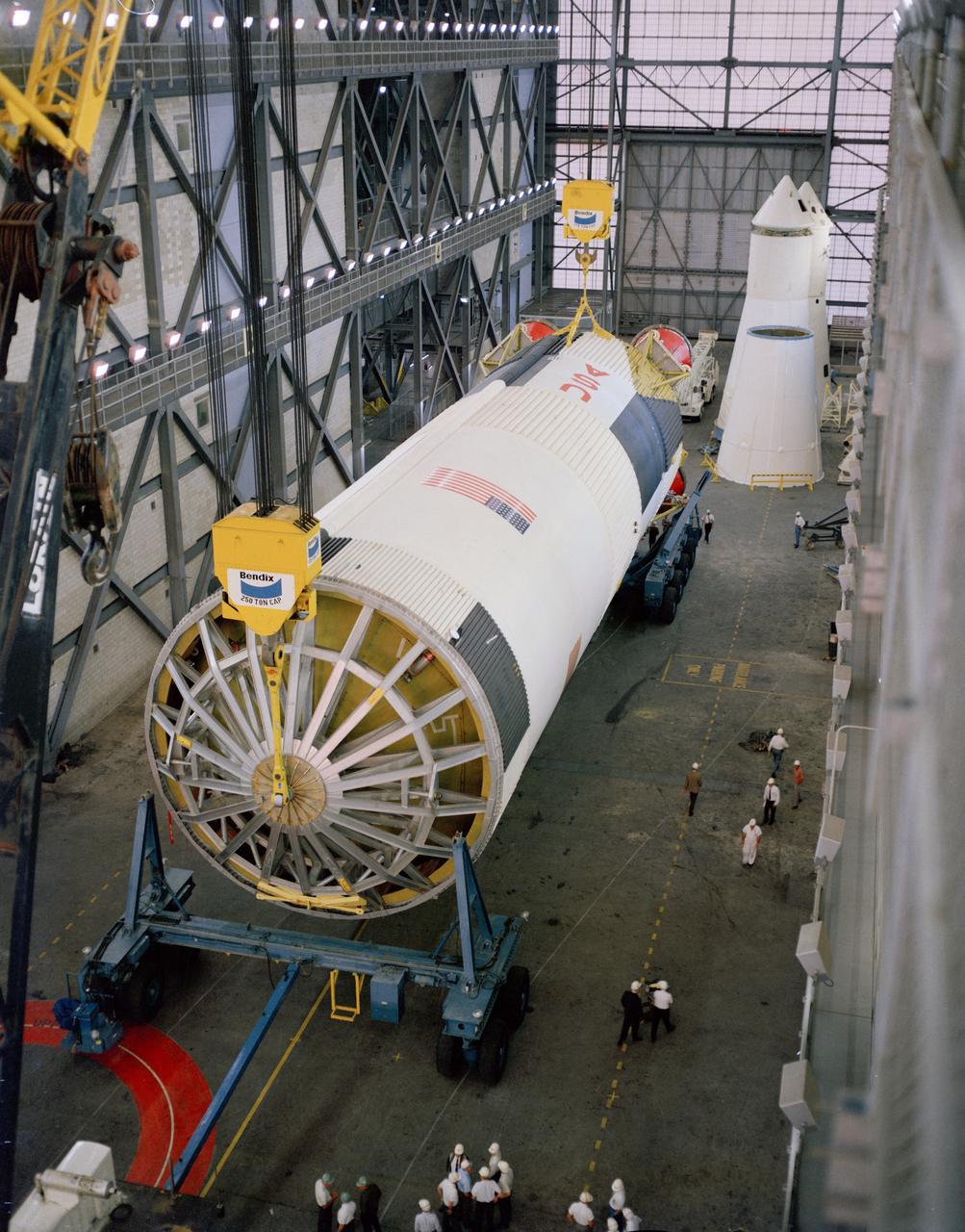
S68-55034 (3 Dec. 1968) --- The first (S-1C) stage of the Saturn 505 launch vehicle being prepared for erection in the high bay area of the Kennedy Space Center's (KSC) Vehicle Assembly Building (VAB). Saturn 505 is the launch vehicle for the Apollo 10 mission.
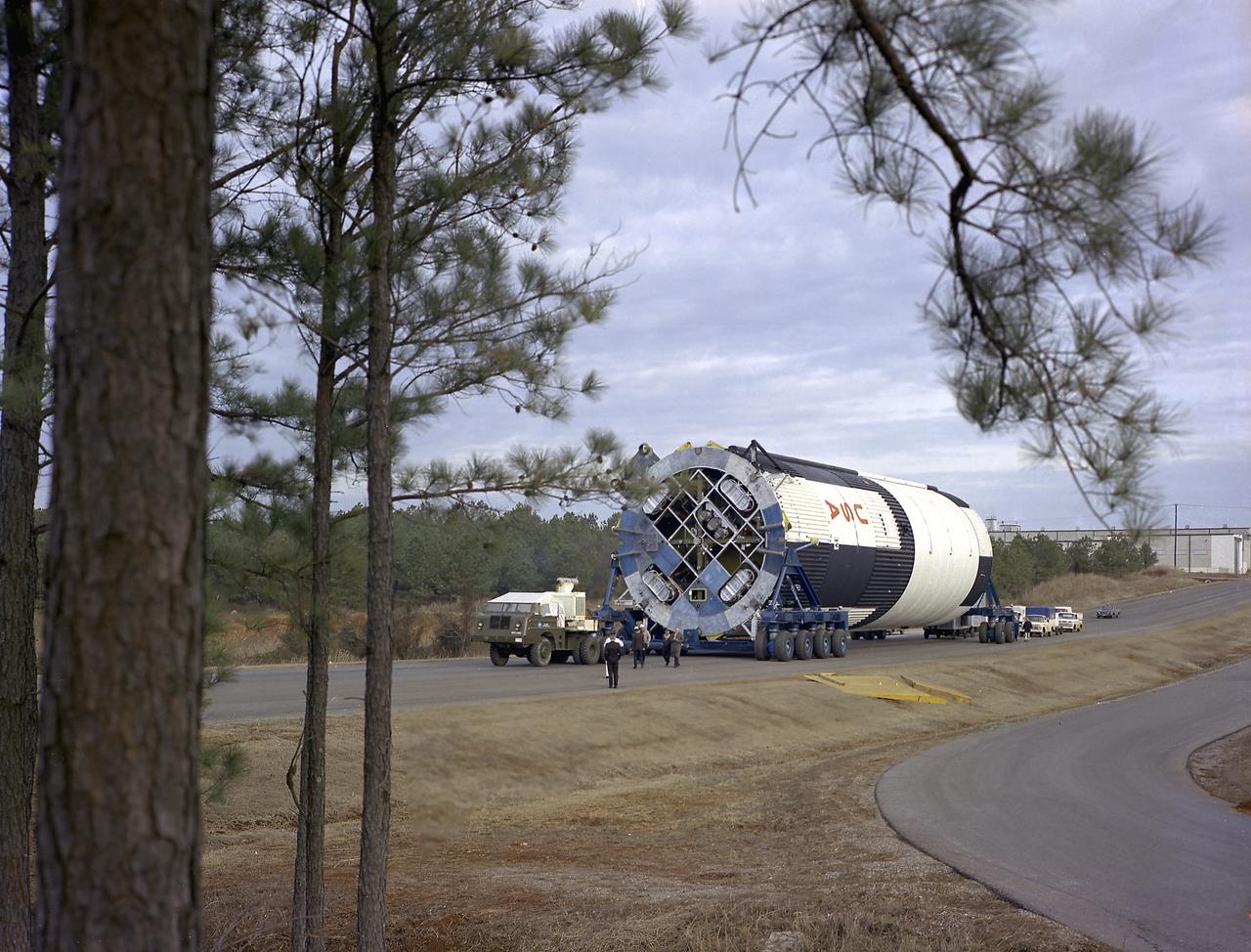
The Saturn V S-IC-T stage (static testing stage) was enroute from the Manufacturing Engineering Laboratory to the newly-built S-1C Static Test Stand at the Marshall Space Flight Center west test area. Known as S-IC-T, the stage was a static test vehicle not intended for flight. It was ground tested repeatedly over a period of many months proving the vehicle's propulsion system.
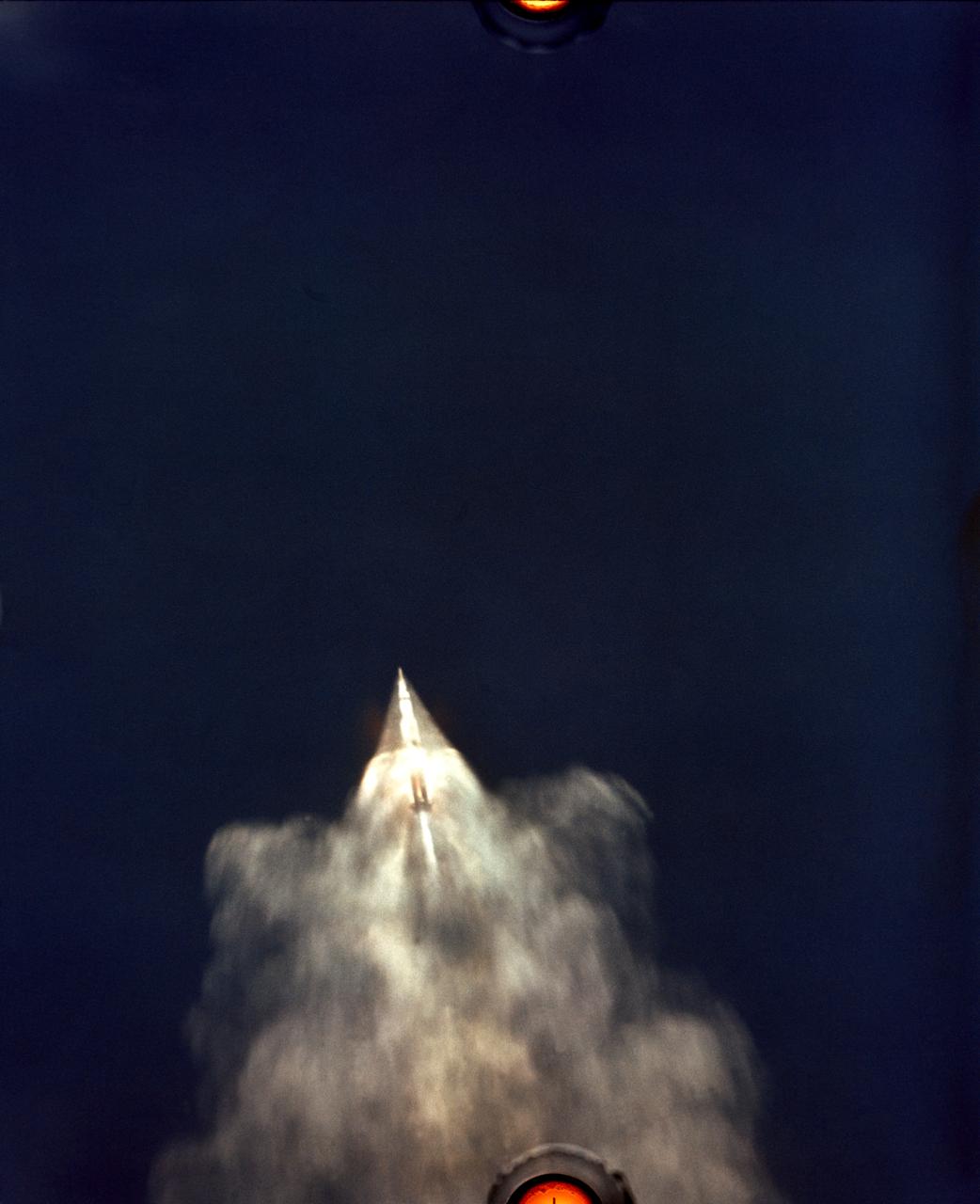
S69-39957 (16 July 1969) --- A 70mm Airborne Lightweight Optical Tracking System (ALOTS) took this picture. ALOTS tracking camera mounted on an Air Force EC-135 aircraft flying at about 40,000 feet altitude photographed this event in the early moments of the Apollo 11 launch. The 7.6 million-pound thrust Saturn V (S-1C) first stage boosts the space vehicle to an altitude of 36.3 nautical miles at 50.6 nautical miles downrange in 2 minutes 40.8 seconds. The S-1C stage separates at 2 minutes 41.6 seconds after liftoff. The crew of the Apollo 11 NASA's first lunar landing mission are astronauts Neil A. Armstrong, Michael Collins, and Edwin E. Aldrin Jr. The Apollo 11 launch was at 9:32 a.m. (EDT), July 16, 1969.
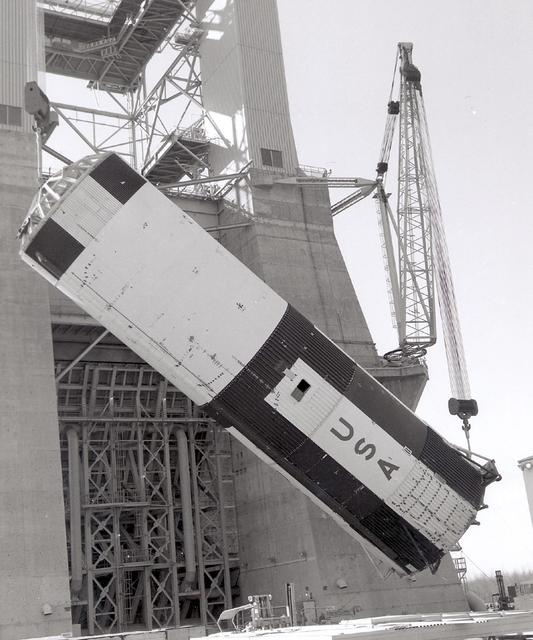
This vintage photograph shows the 138-foot long first stage of the Saturn V being lowered to the ground following a successful static test firing at Marshall Space flight Center's S-1C test stand. The firing provided NASA engineers information on the booster's systems. The towering 363-foot Saturn V was a multi-stage, multi-engine launch vehicle standing taller than the Statue of Liberty. Altogether, the Saturn V engines produced as much power as 85 Hoover Dams.

S73-25140 (16 April 1973) --- A ground-level view of Pad A, Launch Complex 39, Kennedy Space Center, Florida, showing the 341-feet tall Skylab 1/Saturn V space vehicle on the pad soon after being rolled out from the Vehicle Assembly Building (VAB). The vehicle is composed of the Saturn V first (S-1C) stage, the Apollo Telescope Mount (ATM), the Multiple Docking Adapter (MDA), the Airlock Module (AM), and the Orbital Workshop (OWS). Photo credit: NASA
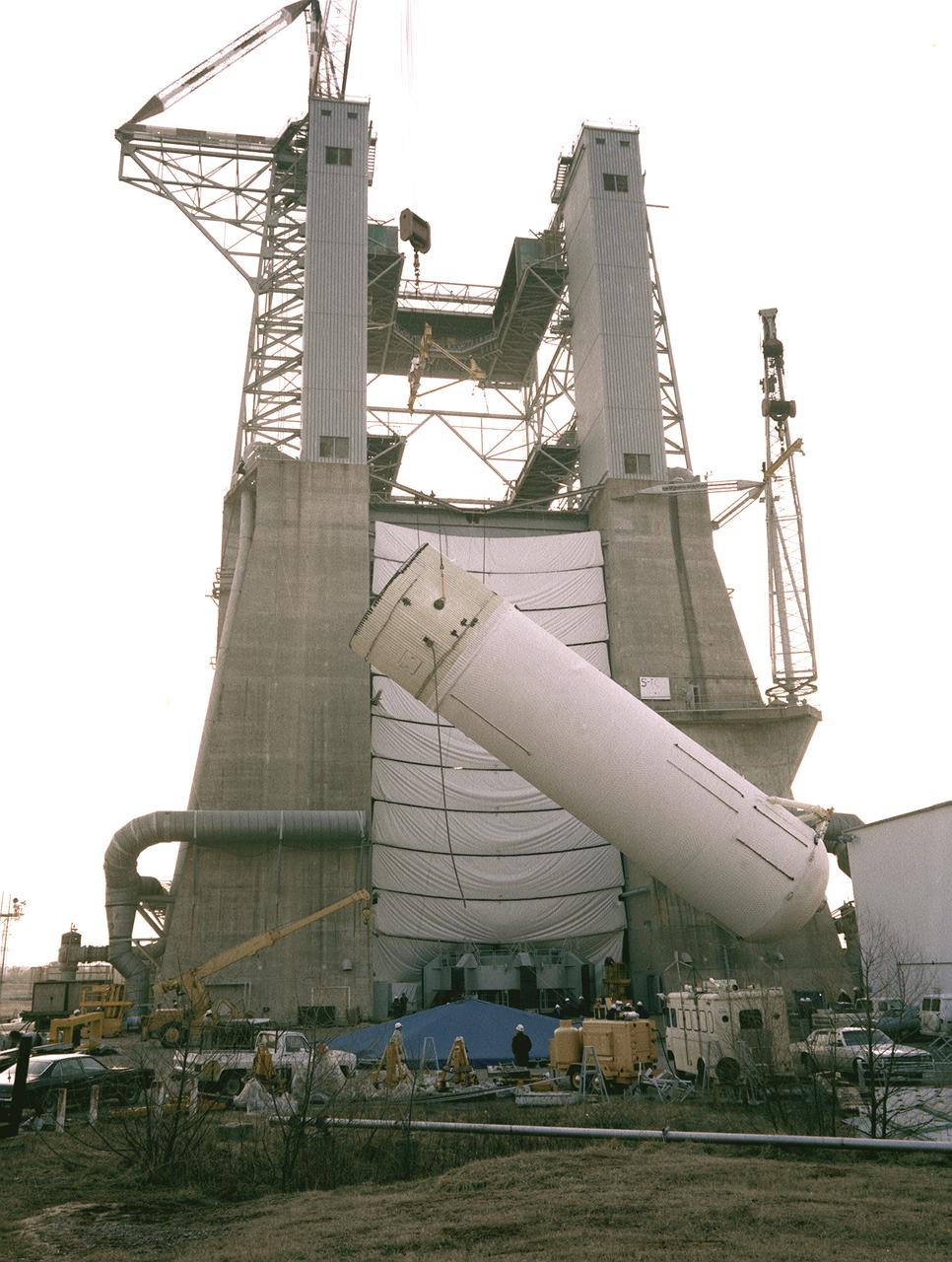
A liquid hydrogen tank of the Shuttle's external tank (ET) is installed into the S-1C Test Stand for a structural test at the Marshall Space Flight Center. At 154-feet long and more than 27-feet in diameter, the ET is the largest component of the Space Shuttle, the structural backbone of the entire Shuttle system, and is the only part of the vehicle that is not reusable. The ET is manufactured at the Michoud Assembly Facility near New Orleans, Louisiana, by the Martin Marietta Corporation under management of the Marshall Space Flight Center.
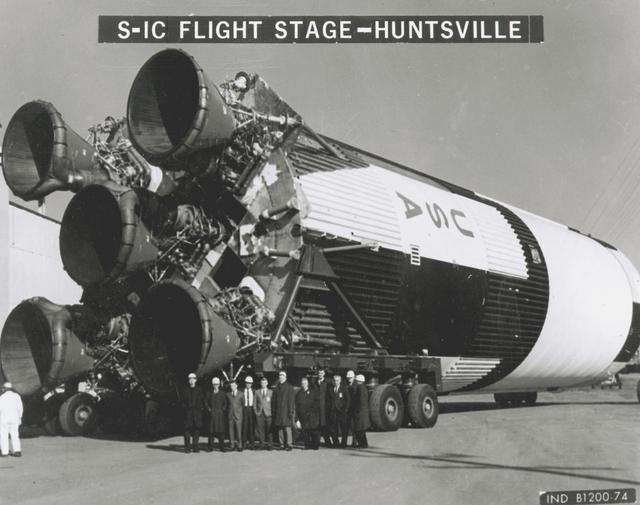
This small group of unidentified officials is dwarfed by the gigantic size of the Saturn V first stage (S-1C) at the shipping area of the Manufacturing Engineering Laboratory at Marshall Space Flight Center in Huntsville, Alabama. The towering 363-foot Saturn V was a multi-stage, multi-engine launch vehicle standing taller than the Statue of Liberty. Altogether, the Saturn V engines produced as much power as 85 Hoover Dams.
![S68-56621 (18 Dec. 1968) --- These three astronauts are the prime crew of the Apollo 9 (Spacecraft 104/Lunar Module 3/Saturn 504) space mission. Left to right, are James A. McDivitt, commander; David R. Scott, command module pilot: and Russell L. Schweickart, lunar module pilot. The Apollo 9 launch is scheduled no earlier than February 28, 1969. In the background is the Apollo 8 space vehicle on Pad A, Launch Complex 39, Kennedy Space Center, which was launched on December 21, 1968. (Gaseous liquid oxygen is venting from the vehicle’s first [S-1C] stage during a countdown demonstration test). McDivitt holds a U.S. flag.](https://images-assets.nasa.gov/image/S68-56621/S68-56621~medium.jpg)
S68-56621 (18 Dec. 1968) --- These three astronauts are the prime crew of the Apollo 9 (Spacecraft 104/Lunar Module 3/Saturn 504) space mission. Left to right, are James A. McDivitt, commander; David R. Scott, command module pilot: and Russell L. Schweickart, lunar module pilot. The Apollo 9 launch is scheduled no earlier than February 28, 1969. In the background is the Apollo 8 space vehicle on Pad A, Launch Complex 39, Kennedy Space Center, which was launched on December 21, 1968. (Gaseous liquid oxygen is venting from the vehicle’s first [S-1C] stage during a countdown demonstration test). McDivitt holds a U.S. flag.
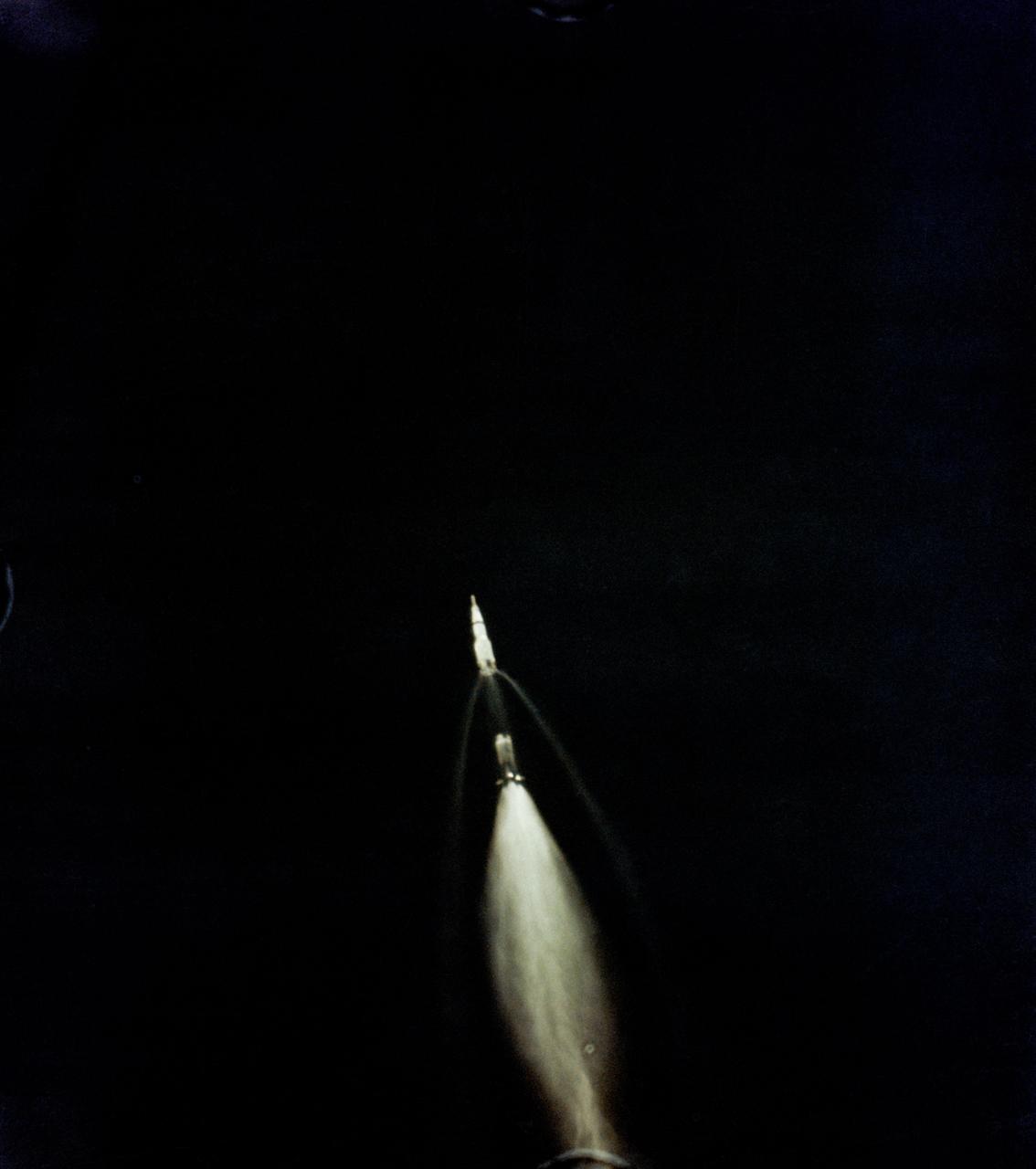
S69-39958 (16 July 1969) --- A 70mm Airborne Lightweight Optical Tracking System (ALOTS) camera, mounted in a pod on a cargo door of a U.S. Air Force EC-135N aircraft, photographed this event in the early moments of the Apollo 11 launch. The mated Apollo spacecraft and Saturn V second (S-II) and third (S-IVB) stages pull away from the expended first (S-1C) stage. Separation occurred at an altitude of about 38 miles, some 55 miles downrange from Cape Kennedy. The aircraft's pod is 20 feet long and 5 feet in diameter. The crew of the Apollo 11 lunar landing mission are astronauts Neil A. Armstrong, Michael Collins, and Edwin E. Aldrin Jr.
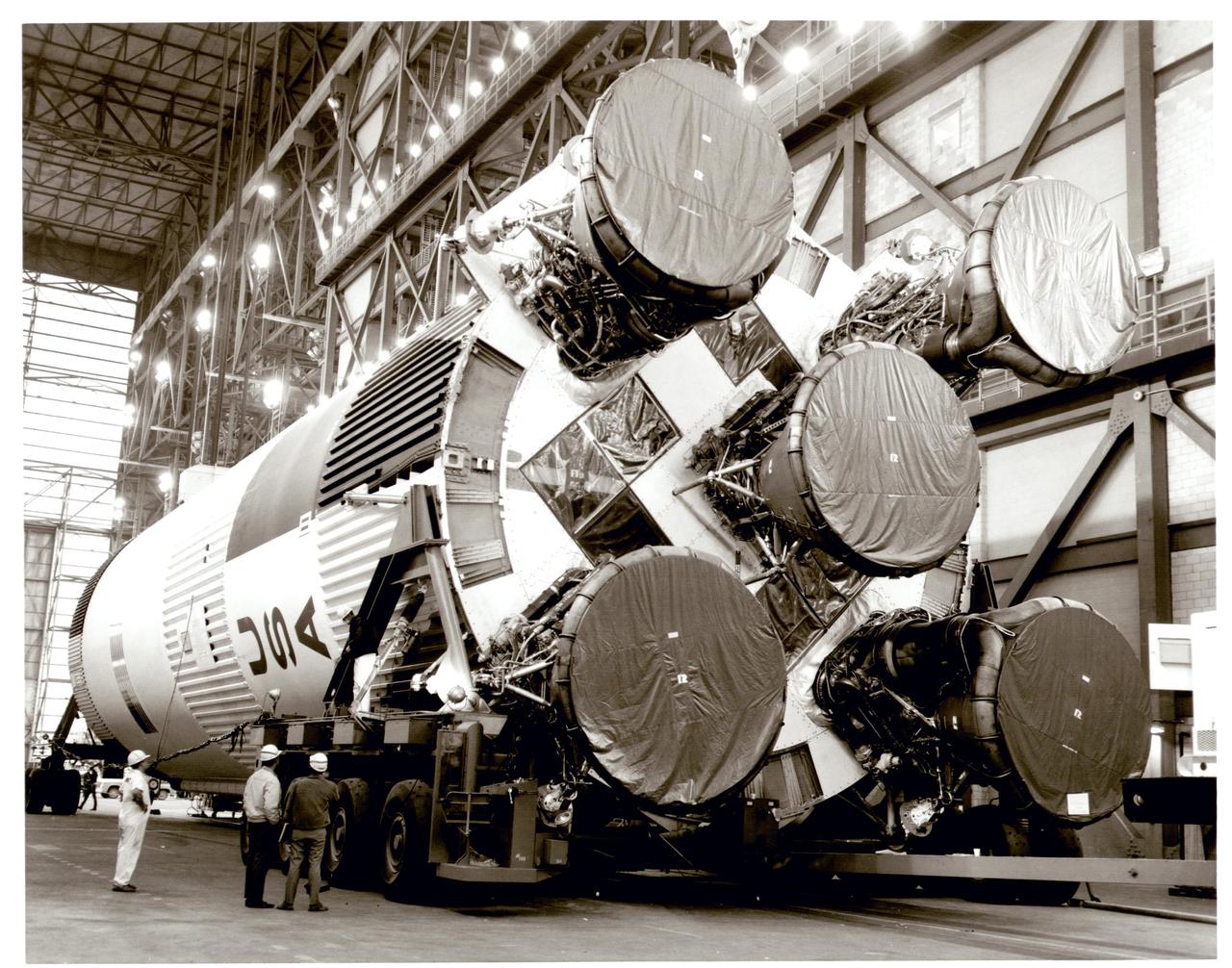
Teams attach the S-1C (first stage) booster for the Apollo 11 Saturn V rocket to cranes in preparation for lifting and stacking on its mobile launcher inside the Vehicle Assembly Building at NASA’s Kennedy Space Center in Florida in February 1969. The booster is 138 feet tall, 33 feet in diameter, and produces 7.5 million pounds of thrust from its five powerful engines. Apollo 11 was the first flight that landed humans on the Moon under the Apollo Program. The mission launched on July 16, 1969, and members of the crew included Commander Neil A. Armstrong, Command Module Pilot Michael Collins, and Lunar Module Pilot Edwin “Buzz” Aldrin.
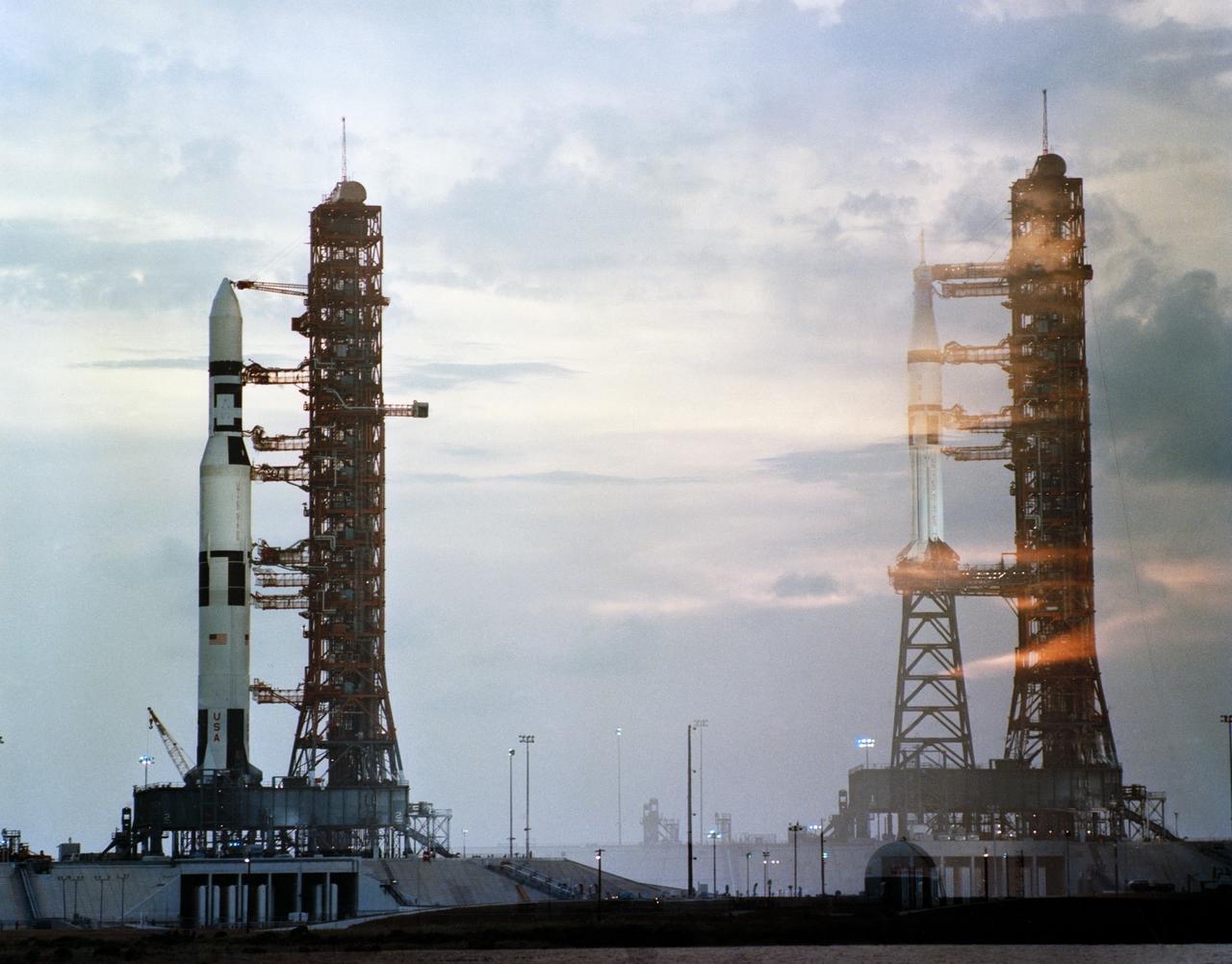
S73-25654 (7 May 1973) --- A deliberate double exposure to help illustrate the comparative sizes and configurations of the Skylab 1 and Skylab 2 space vehicles at Launch Complex 39, Kennedy Space Center, Florida. The double exposure creates an illusion that the rockets are side by side, though actually they are one and a half miles apart. The Skylab 1/ Saturn 1B space vehicle on Pad A is on the left. On the right is the Skylab 2/ Saturn 1B space vehicle on Pad B. The Skylab 1 payload is the space station cluster. The Skylab 2 payload will be an Apollo Command/Service Module (CSM) with astronauts Charles Conrad Jr., Joseph P. Kerwin and Paul J. Weitz aboard. The Saturn V launch vehicle is composed of a Saturn V first (S-1C) stage, a Saturn V second (S-11) stage, and the Skylab payload. The Saturn 1B launch vehicle consists of a Saturn 1B first (S-1B) stage, a Saturn 1B second (S-1VB) stage, and the CSM payload including its launch escape system. Photo credit: NASA
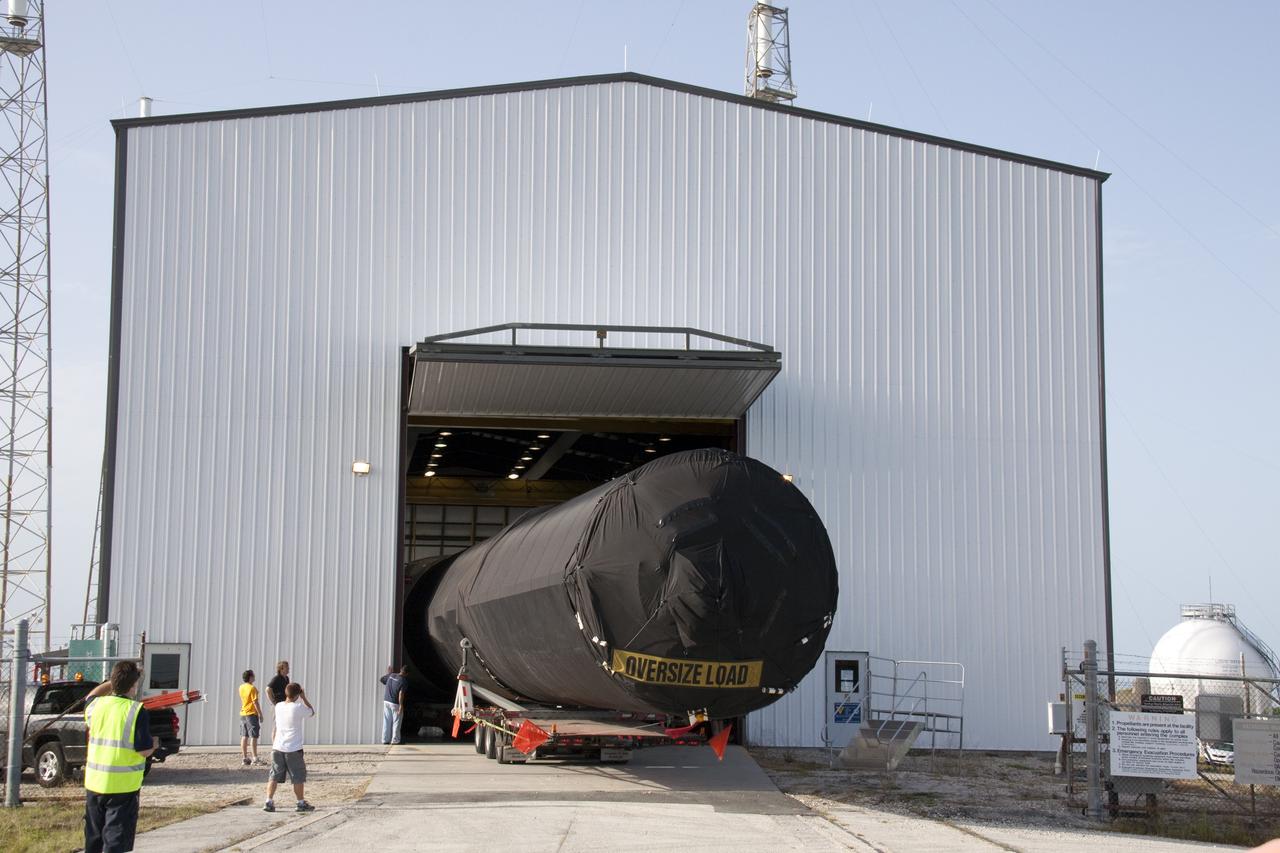
CAPE CANAVERAL, Fla. -- At Cape Canaveral Air Force Station in Florida, the first stage of the SpaceX Falcon 9 rocket arrives at Launch Complex-40's horizontal processing hangar. Once assembled, it will be a two-stage fully integrated launch vehicle, consisting of a first stage powered by nine SpaceX-developed Merlin 1C engines, a second stage, an interstage, an unpressurized trunk and the Dragon spacecraft qualification unit. SpaceX was awarded procurement for three demonstration flights under the Commercial Orbital Transportation Services, or COTS, program managed by NASA's Johnson Space Center in Houston. A subsequent contract for Commercial Resupply Services, or CRS, was awarded in late 2008 to resupply the International Space Station. The SpaceX CRS contract provides for 12 missions to resupply the station from 2011 through 2015. Photo credit: NASA/Troy Cryder
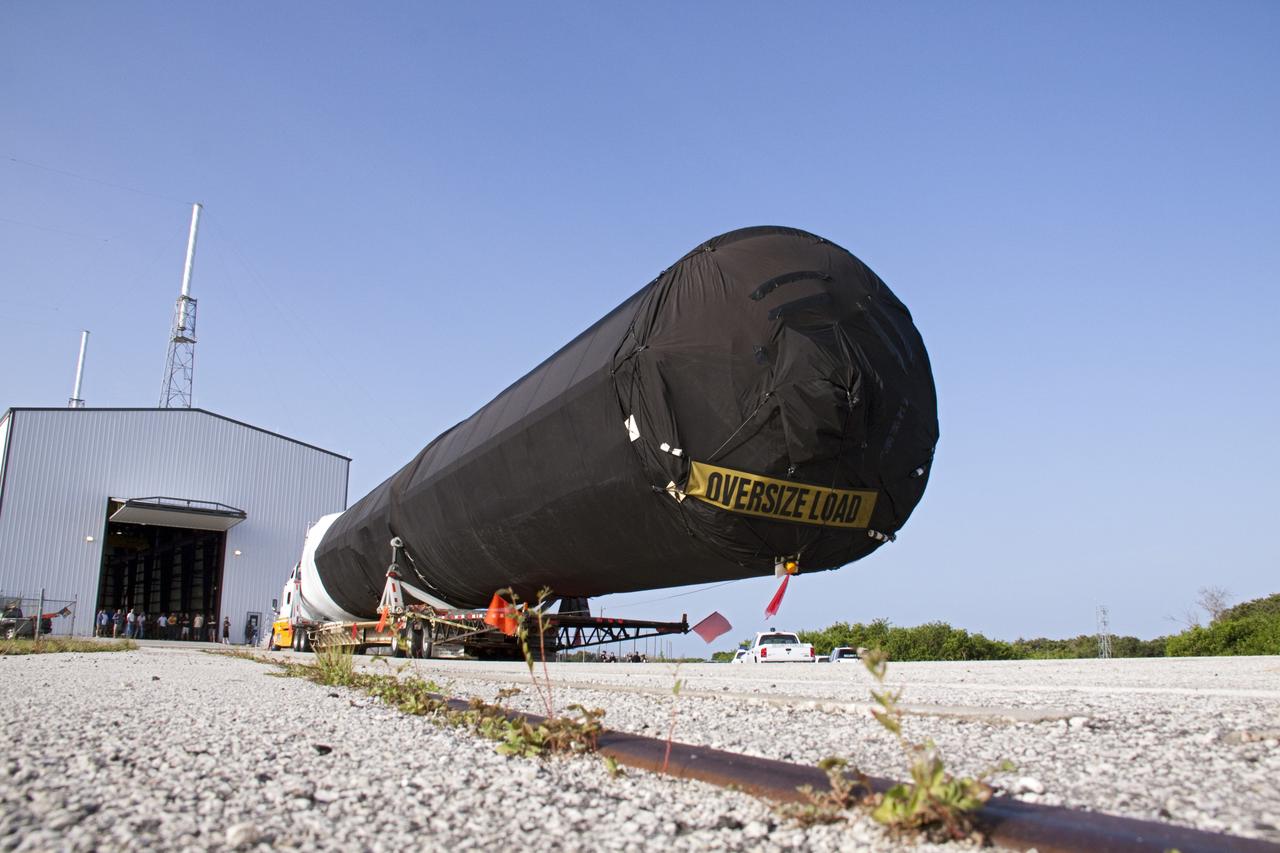
CAPE CANAVERAL, Fla. -- At Cape Canaveral Air Force Station in Florida, the first stage of the SpaceX Falcon 9 rocket arrives at Launch Complex-40's horizontal processing hangar. Once assembled, it will be a two-stage fully integrated launch vehicle, consisting of a first stage powered by nine SpaceX-developed Merlin 1C engines, a second stage, an interstage, an unpressurized trunk and the Dragon spacecraft qualification unit. SpaceX was awarded procurement for three demonstration flights under the Commercial Orbital Transportation Services, or COTS, program managed by NASA's Johnson Space Center in Houston. A subsequent contract for Commercial Resupply Services, or CRS, was awarded in late 2008 to resupply the International Space Station. The SpaceX CRS contract provides for 12 missions to resupply the station from 2011 through 2015. Photo credit: NASA/Troy Cryder
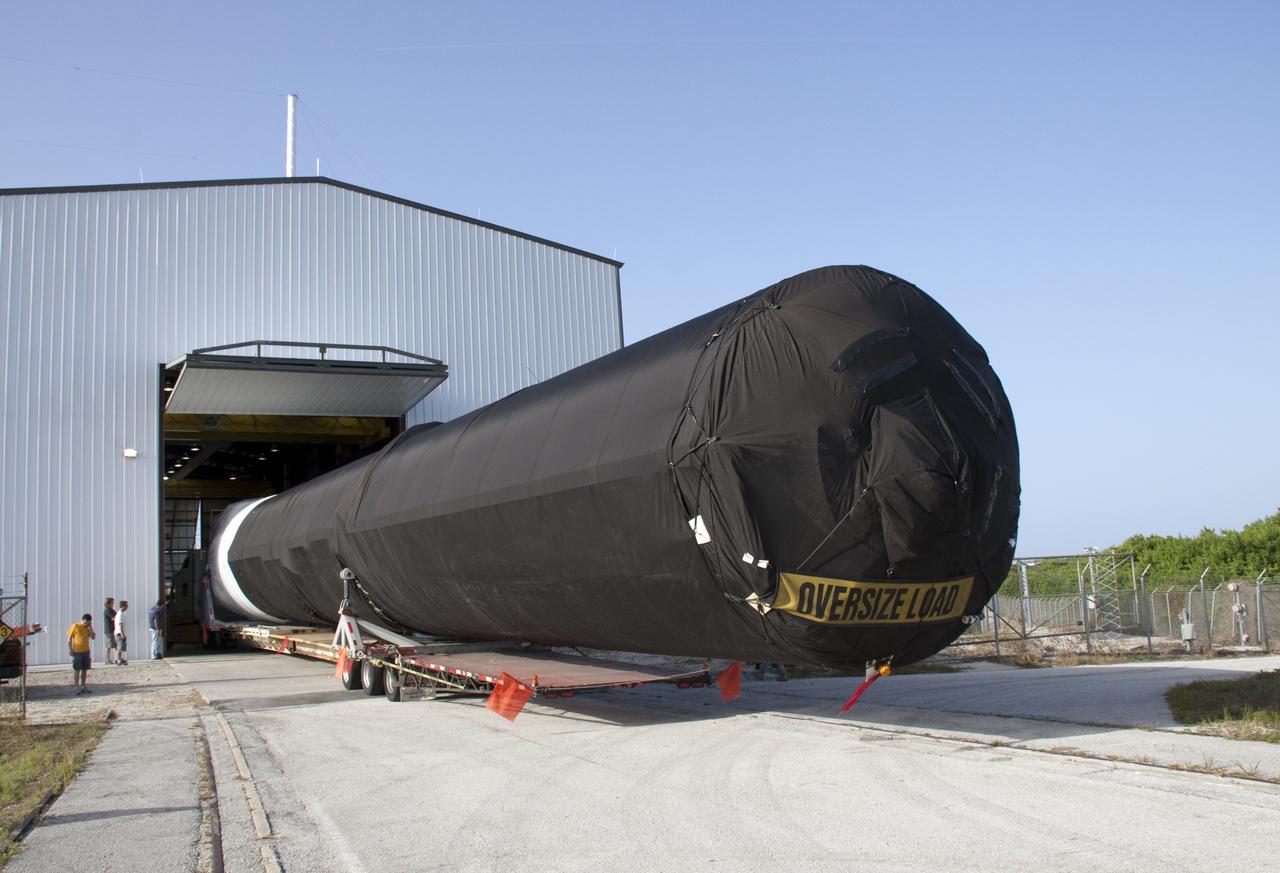
CAPE CANAVERAL, Fla. -- At Cape Canaveral Air Force Station in Florida, the first stage of the SpaceX Falcon 9 rocket arrives at Launch Complex-40's horizontal processing hangar. Once assembled, it will be a two-stage fully integrated launch vehicle, consisting of a first stage powered by nine SpaceX-developed Merlin 1C engines, a second stage, an interstage, an unpressurized trunk and the Dragon spacecraft qualification unit. SpaceX was awarded procurement for three demonstration flights under the Commercial Orbital Transportation Services, or COTS, program managed by NASA's Johnson Space Center in Houston. A subsequent contract for Commercial Resupply Services, or CRS, was awarded in late 2008 to resupply the International Space Station. The SpaceX CRS contract provides for 12 missions to resupply the station from 2011 through 2015. Photo credit: NASA/Troy Cryder

CAPE CANAVERAL, Fla. -- At Cape Canaveral Air Force Station in Florida, the first stage of the SpaceX Falcon 9 rocket arrives at Launch Complex-40's horizontal processing hangar. Once assembled, it will be a two-stage fully integrated launch vehicle, consisting of a first stage powered by nine SpaceX-developed Merlin 1C engines, a second stage, an interstage, an unpressurized trunk and the Dragon spacecraft qualification unit. SpaceX was awarded procurement for three demonstration flights under the Commercial Orbital Transportation Services, or COTS, program managed by NASA's Johnson Space Center in Houston. A subsequent contract for Commercial Resupply Services, or CRS, was awarded in late 2008 to resupply the International Space Station. The SpaceX CRS contract provides for 12 missions to resupply the station from 2011 through 2015. Photo credit: NASA/Troy Cryder
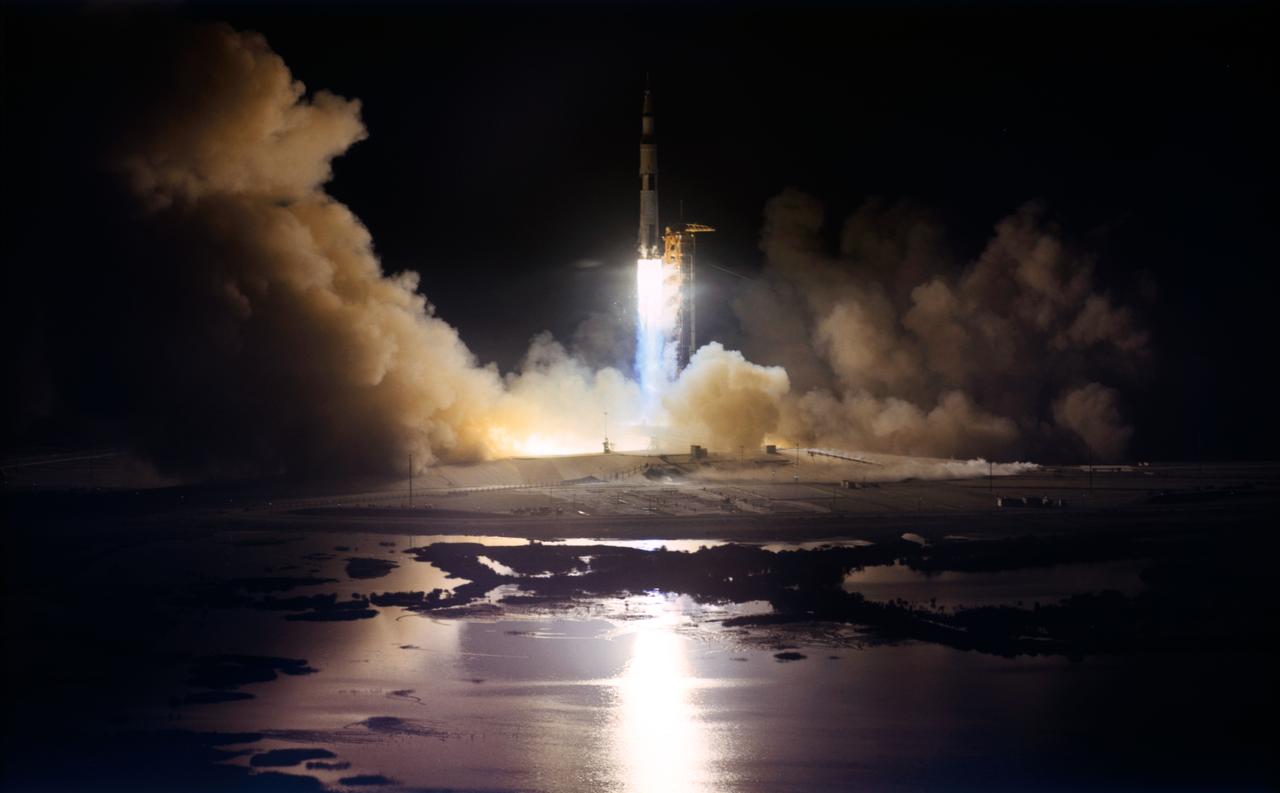
S72-55070 (7 Dec. 1972) --- The huge, 363-feet tall Apollo 17 (Spacecraft 114/Lunar Module 12/Saturn 512) space vehicle is launched from Pad A, Launch Complex 39, Kennedy Space Center (KSC), Florida, at 12:33 a.m. (EST), Dec. 7, 1972. Apollo 17, the final lunar landing mission in NASA's Apollo program, was the first nighttime liftoff of the Saturn V launch vehicle. Aboard the Apollo 17 spacecraft were astronaut Eugene A. Cernan, commander; astronaut Ronald E. Evans, command module pilot; and scientist-astronaut Harrison H. Schmitt, lunar module pilot. Flame from the five F-1 engines of the Apollo/Saturn first (S-1C) stage illuminates the nighttime scene. A two-hour and 40-minute hold delayed the Apollo 17 launching.
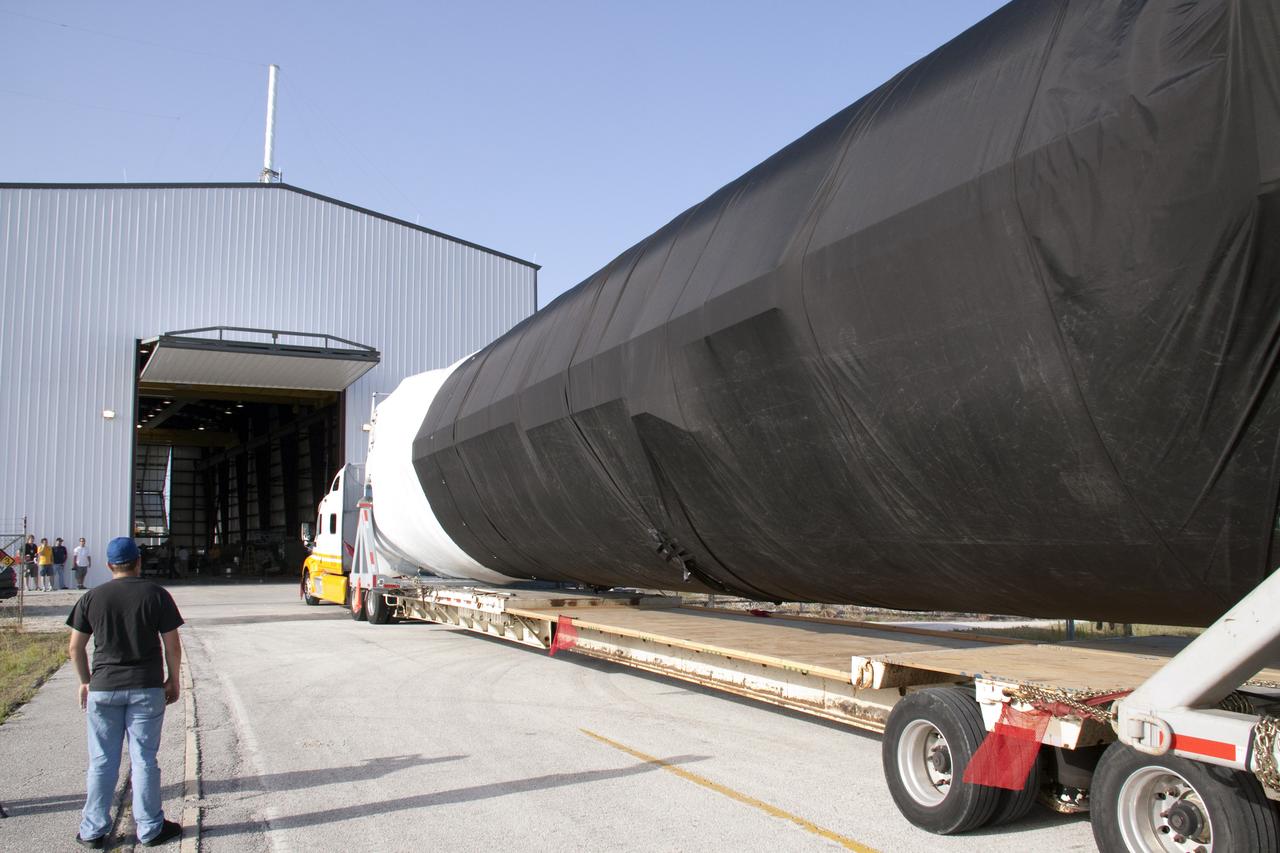
CAPE CANAVERAL, Fla. -- At Cape Canaveral Air Force Station in Florida, the first stage of the SpaceX Falcon 9 rocket arrives at Launch Complex-40's horizontal processing hangar. Once assembled, it will be a two-stage fully integrated launch vehicle, consisting of a first stage powered by nine SpaceX-developed Merlin 1C engines, a second stage, an interstage, an unpressurized trunk and the Dragon spacecraft qualification unit. SpaceX was awarded procurement for three demonstration flights under the Commercial Orbital Transportation Services, or COTS, program managed by NASA's Johnson Space Center in Houston. A subsequent contract for Commercial Resupply Services, or CRS, was awarded in late 2008 to resupply the International Space Station. The SpaceX CRS contract provides for 12 missions to resupply the station from 2011 through 2015. Photo credit: NASA/Troy Cryder
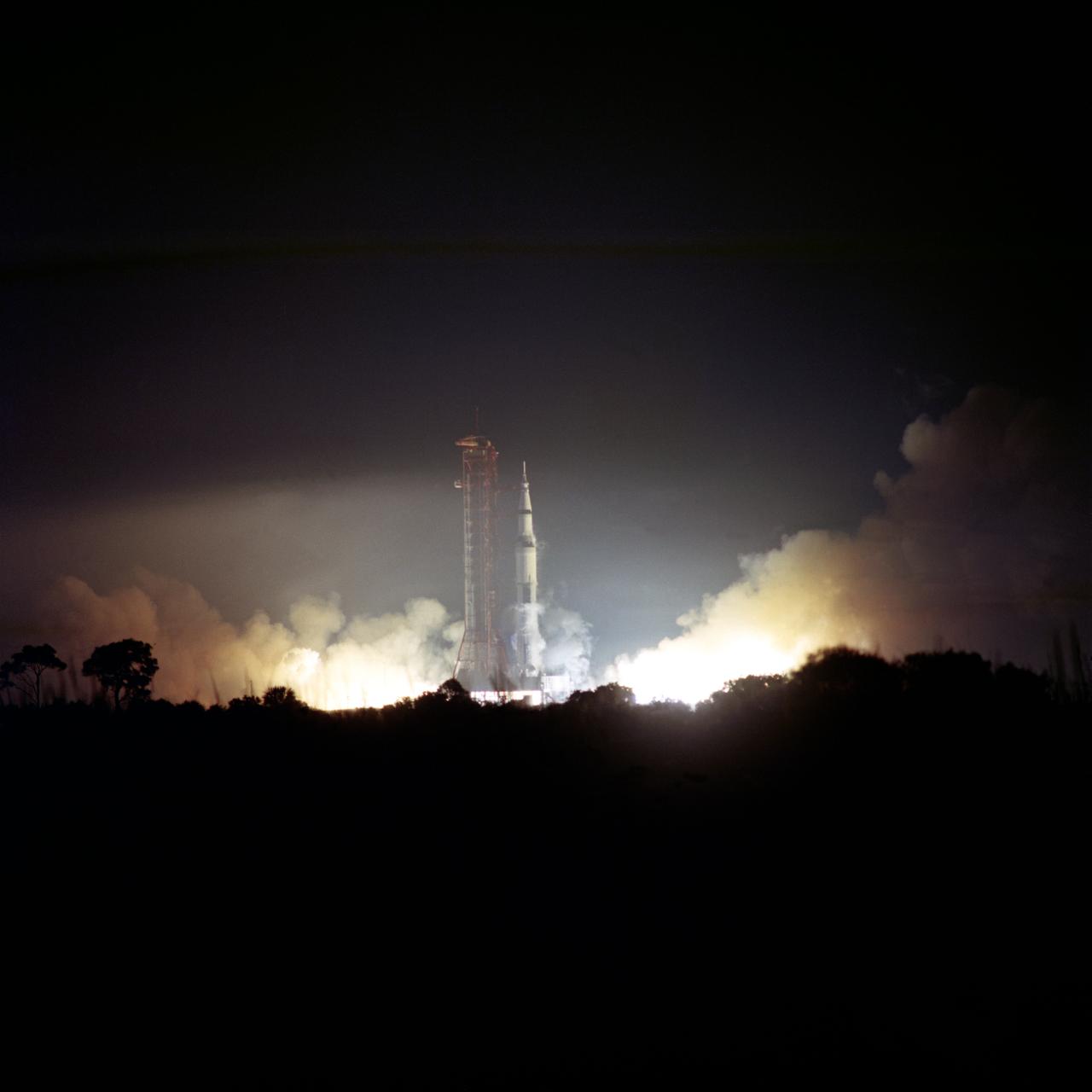
S72-55482 (7 Dec. 1972) --- The huge, 363-feet tall Apollo 17 (Spacecraft 114/Lunar Module 12/Saturn 512) space vehicle is launched from Pad A., Launch Complex 39, Kennedy Space Center (KSC), Florida, at 12:33 a.m. (EST), Dec. 7, 1972. Apollo 17, the final lunar landing mission in NASA's Apollo program, was the first nighttime liftoff of the Saturn V launch vehicle. Aboard the Apollo 17 spacecraft were astronaut Eugene A. Cernan, commander; astronaut Ronald E. Evans, command module pilot; and scientist-astronaut Harrison H. Schmitt, lunar module pilot. Flame from the five F-1 engines of the Apollo/Saturn first (S-1C) stage illuminates the nighttime scene. A two-hour and 40-minute hold delayed the Apollo 17 launching.
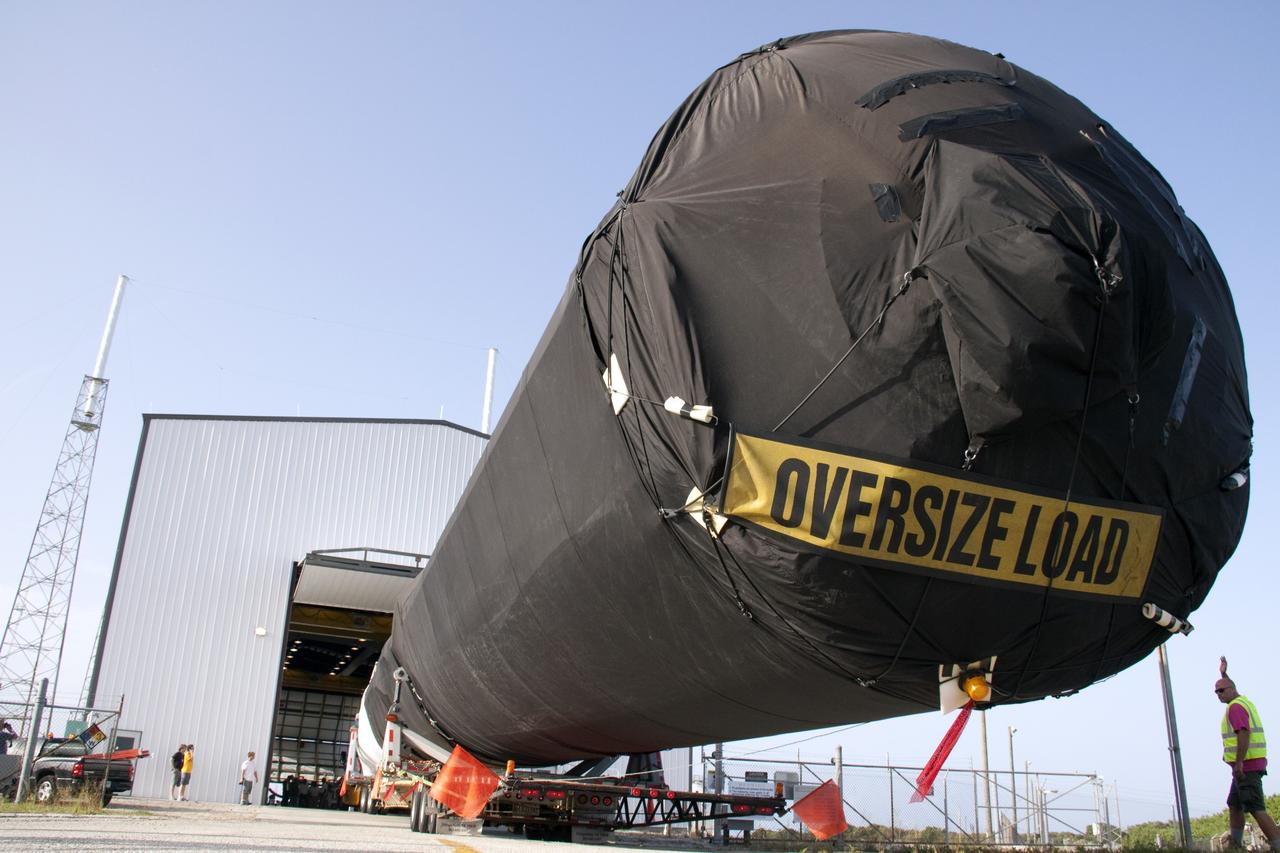
CAPE CANAVERAL, Fla. -- At Cape Canaveral Air Force Station in Florida, the first stage of the SpaceX Falcon 9 rocket arrives at Launch Complex-40's horizontal processing hangar. Once assembled, it will be a two-stage fully integrated launch vehicle, consisting of a first stage powered by nine SpaceX-developed Merlin 1C engines, a second stage, an interstage, an unpressurized trunk and the Dragon spacecraft qualification unit. SpaceX was awarded procurement for three demonstration flights under the Commercial Orbital Transportation Services, or COTS, program managed by NASA's Johnson Space Center in Houston. A subsequent contract for Commercial Resupply Services, or CRS, was awarded in late 2008 to resupply the International Space Station. The SpaceX CRS contract provides for 12 missions to resupply the station from 2011 through 2015. Photo credit: NASA/Troy Cryder

CAPE CANAVERAL, Fla. -- At Cape Canaveral Air Force Station in Florida, the first stage of the SpaceX Falcon 9 rocket arrives at Launch Complex-40's horizontal processing hangar. Once assembled, it will be a two-stage fully integrated launch vehicle, consisting of a first stage powered by nine SpaceX-developed Merlin 1C engines, a second stage, an interstage, an unpressurized trunk and the Dragon spacecraft qualification unit. SpaceX was awarded procurement for three demonstration flights under the Commercial Orbital Transportation Services, or COTS, program managed by NASA's Johnson Space Center in Houston. A subsequent contract for Commercial Resupply Services, or CRS, was awarded in late 2008 to resupply the International Space Station. The SpaceX CRS contract provides for 12 missions to resupply the station from 2011 through 2015. Photo credit: NASA/Troy Cryder
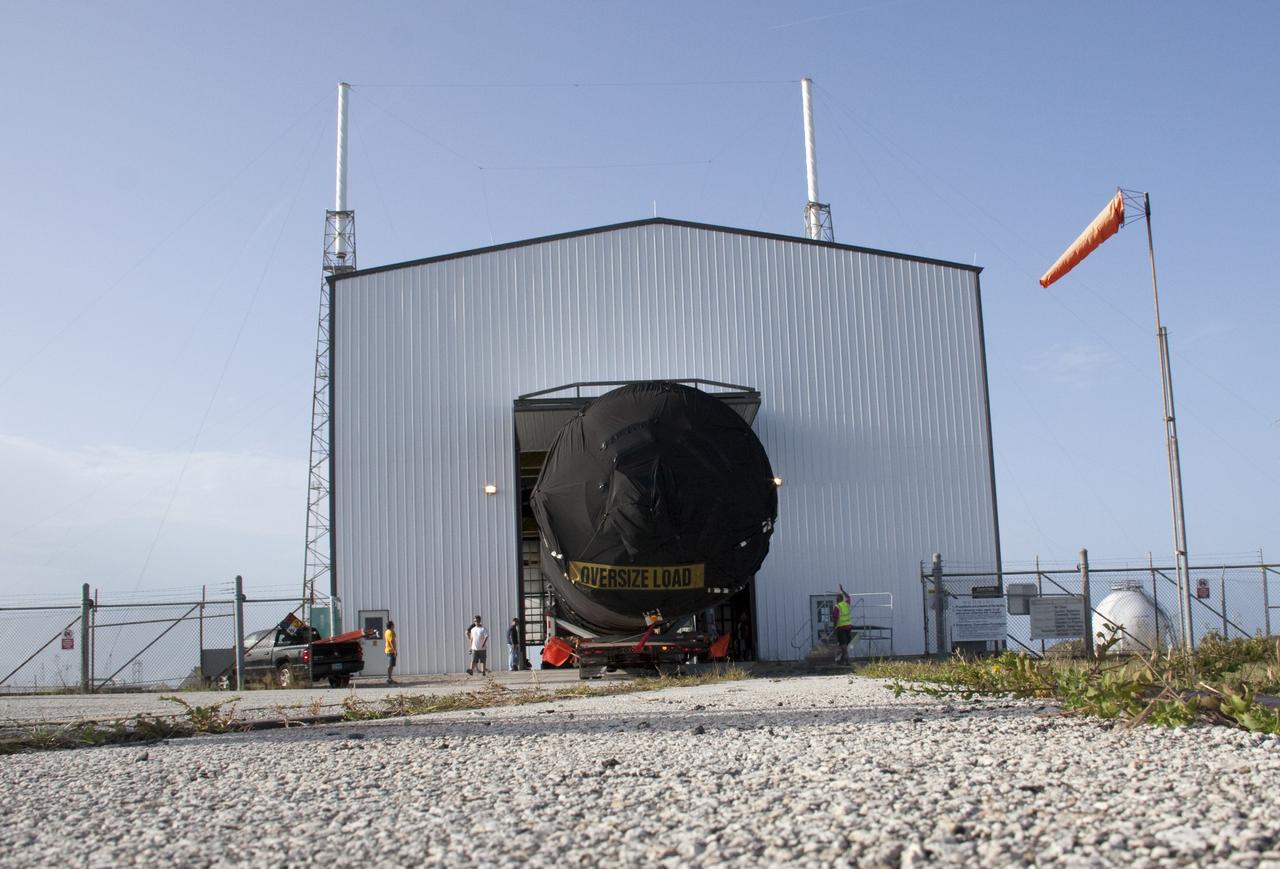
CAPE CANAVERAL, Fla. -- At Cape Canaveral Air Force Station in Florida, the first stage of the SpaceX Falcon 9 rocket arrives at Launch Complex-40's horizontal processing hangar. Once assembled, it will be a two-stage fully integrated launch vehicle, consisting of a first stage powered by nine SpaceX-developed Merlin 1C engines, a second stage, an interstage, an unpressurized trunk and the Dragon spacecraft qualification unit. SpaceX was awarded procurement for three demonstration flights under the Commercial Orbital Transportation Services, or COTS, program managed by NASA's Johnson Space Center in Houston. A subsequent contract for Commercial Resupply Services, or CRS, was awarded in late 2008 to resupply the International Space Station. The SpaceX CRS contract provides for 12 missions to resupply the station from 2011 through 2015. Photo credit: NASA/Troy Cryder
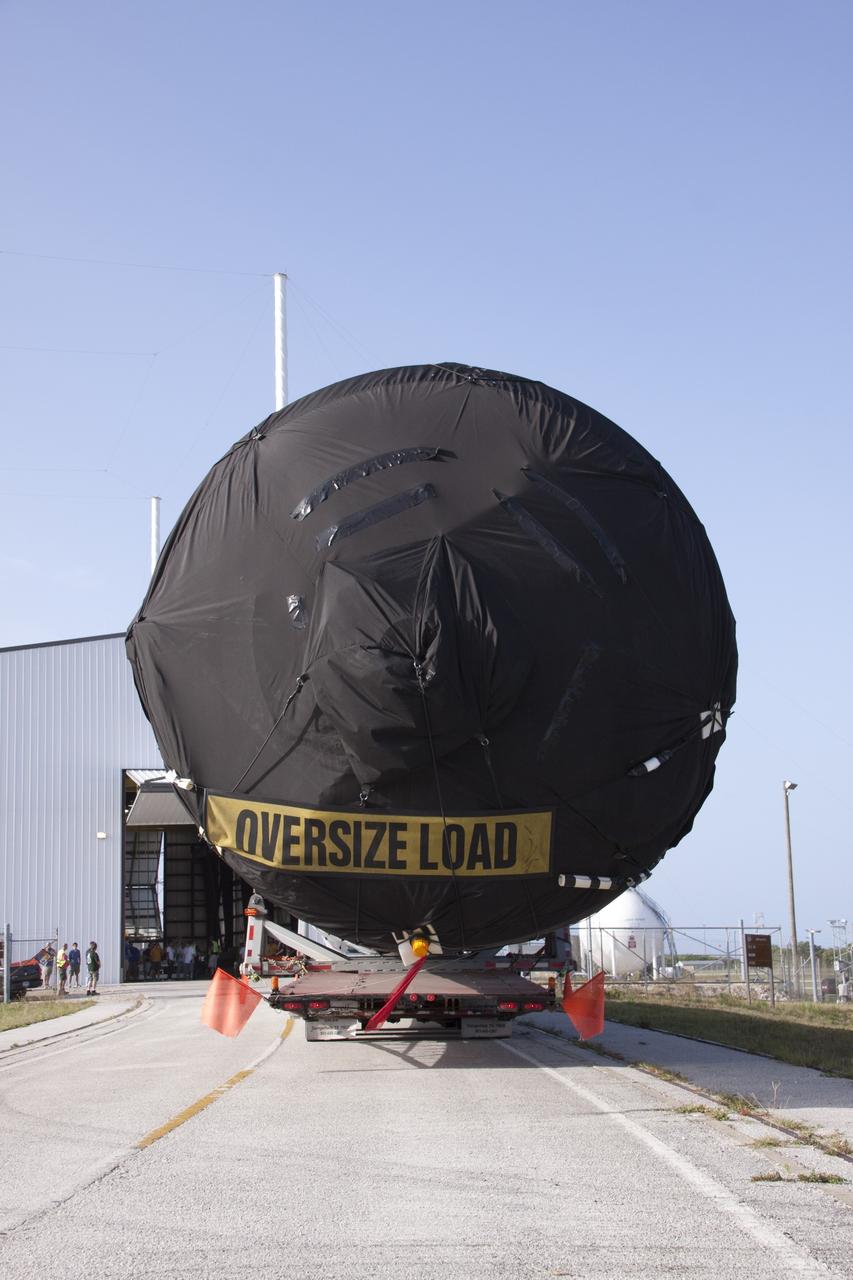
CAPE CANAVERAL, Fla. -- At Cape Canaveral Air Force Station in Florida, the first stage of the SpaceX Falcon 9 rocket arrives at Launch Complex-40's horizontal processing hangar. Once assembled, it will be a two-stage fully integrated launch vehicle, consisting of a first stage powered by nine SpaceX-developed Merlin 1C engines, a second stage, an interstage, an unpressurized trunk and the Dragon spacecraft qualification unit. SpaceX was awarded procurement for three demonstration flights under the Commercial Orbital Transportation Services, or COTS, program managed by NASA's Johnson Space Center in Houston. A subsequent contract for Commercial Resupply Services, or CRS, was awarded in late 2008 to resupply the International Space Station. The SpaceX CRS contract provides for 12 missions to resupply the station from 2011 through 2015. Photo credit: NASA/Troy Cryder
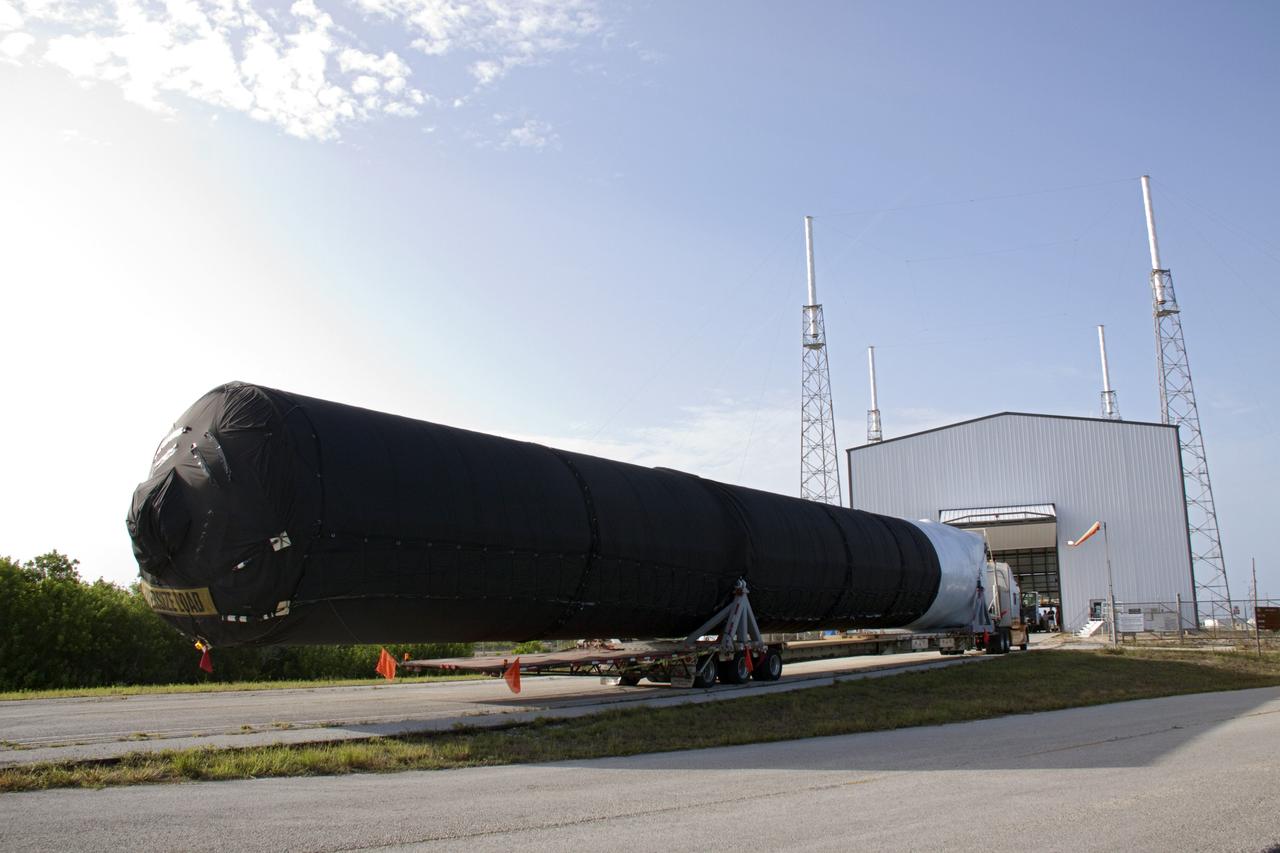
CAPE CANAVERAL, Fla. -- At Cape Canaveral Air Force Station in Florida, the first stage of the SpaceX Falcon 9 rocket arrives at Launch Complex-40's horizontal processing hangar. Once assembled, it will be a two-stage fully integrated launch vehicle, consisting of a first stage powered by nine SpaceX-developed Merlin 1C engines, a second stage, an interstage, an unpressurized trunk and the Dragon spacecraft qualification unit. SpaceX was awarded procurement for three demonstration flights under the Commercial Orbital Transportation Services, or COTS, program managed by NASA's Johnson Space Center in Houston. A subsequent contract for Commercial Resupply Services, or CRS, was awarded in late 2008 to resupply the International Space Station. The SpaceX CRS contract provides for 12 missions to resupply the station from 2011 through 2015. Photo credit: NASA/Troy Cryder