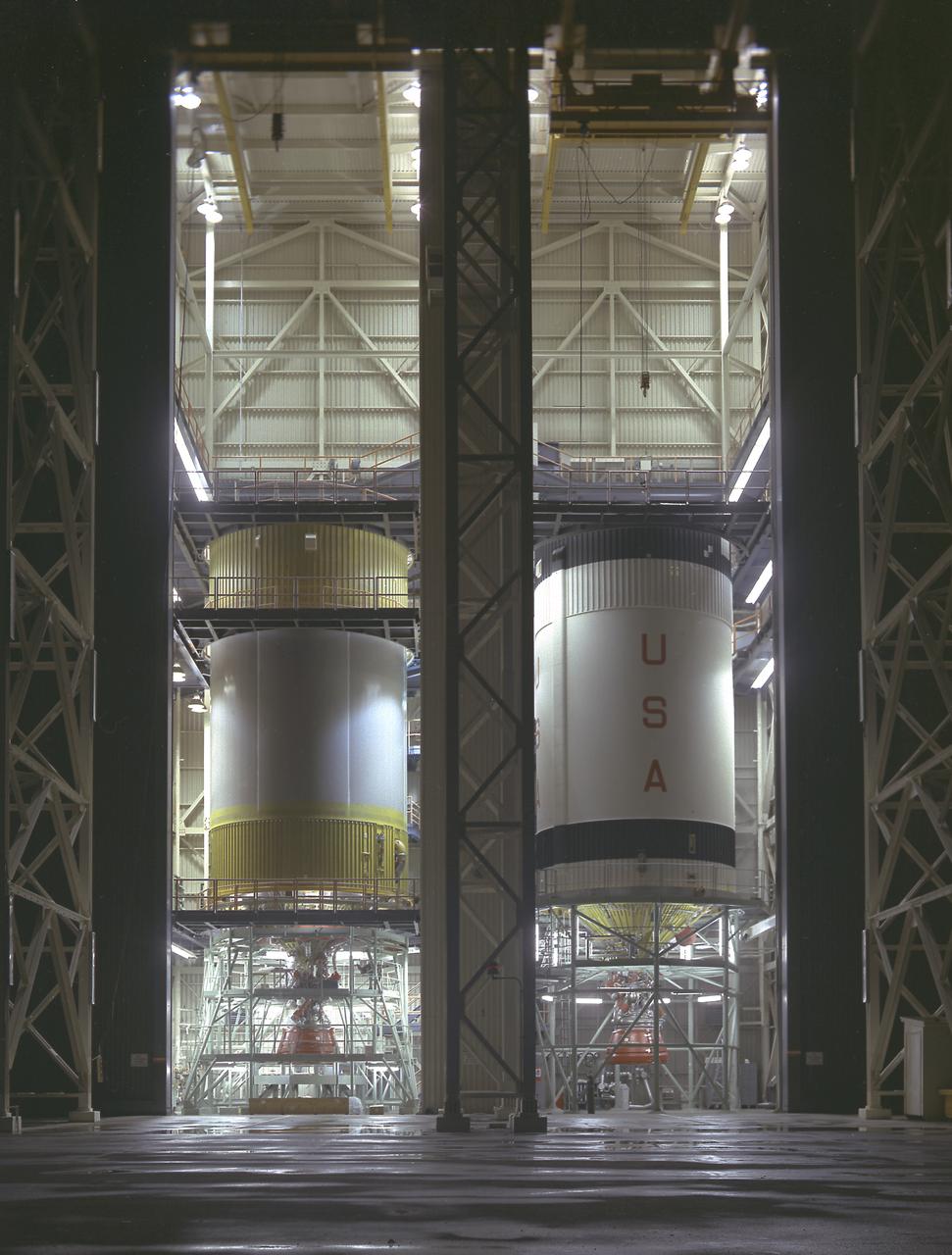
S-IVB-505 and S-IVB-211, the flight version of the S-IVB stages, in the McDornell Douglas' S-IVB Assembly and Checkout Tower in Huntington Beach, California. As a part of the Marshall Space Flight Center `s "building block" approach to the Saturn vehicle development, the S-IVB stage, in its 200 series, was utilized as the Saturn IB launch vehicle's second stage, and, in its 500 series, the Saturn V's third stage. The S-IVB was powered by a single J-2 engine, initially capable of 200,000 pounds of thrust.
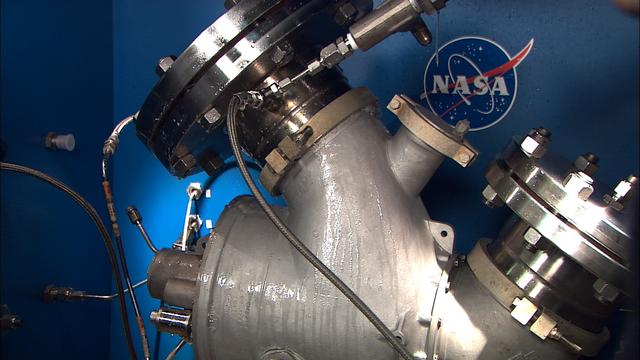
Shown is the disassembly, examination, refurbishment and testing of the LH2 ( liquid hydrogen) and LOX (liquid oxygen) vent and relief valves for the S-IVB-211 engine stage in support of the Constellation/Ares project. This image is extracted from high definition video and is the highest resolution available.
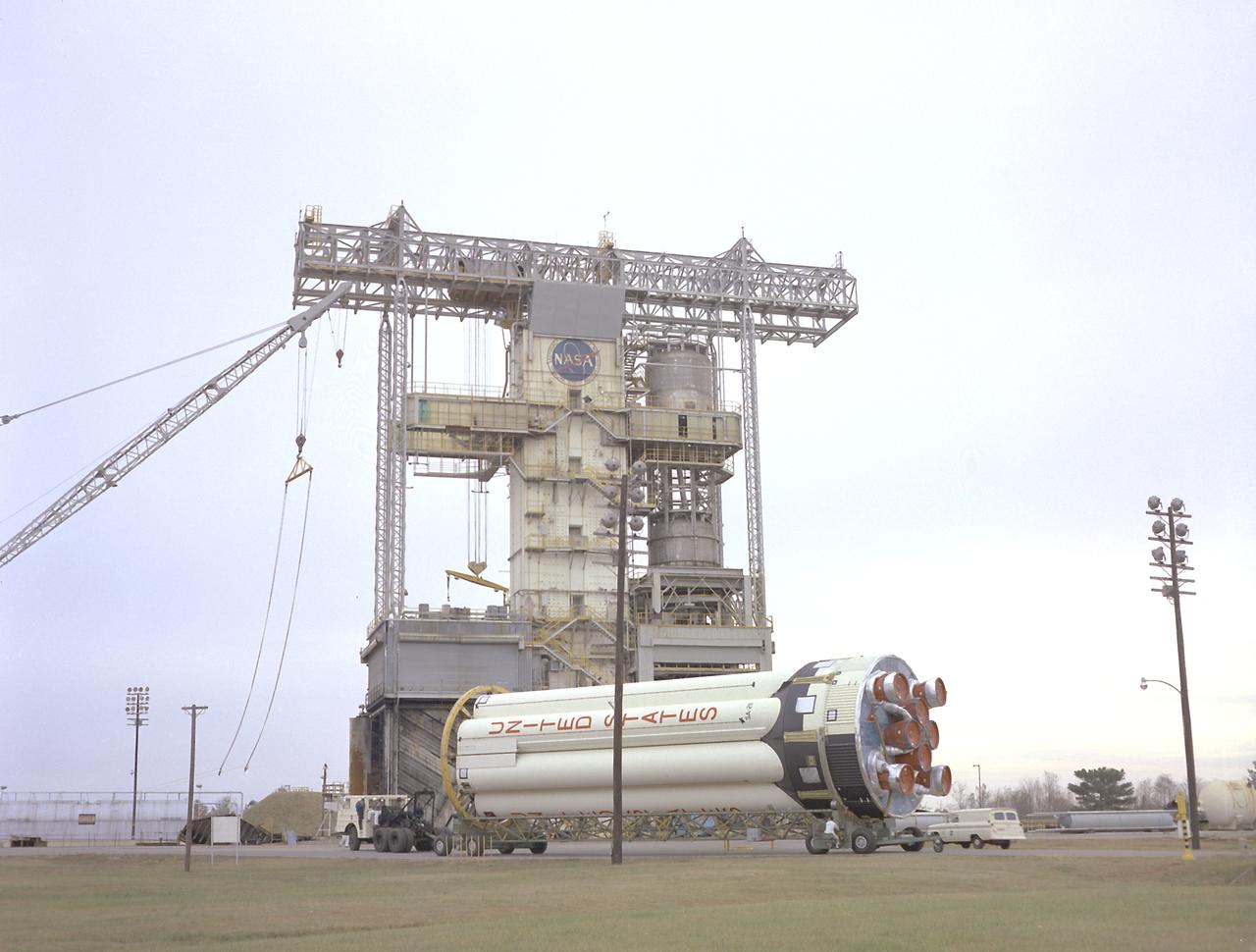
S-IB-211, the flight version of the Saturn IB launch vehicle's first (S-IVB) stage, arrives at Marshall Space Flight Center's (MSFC's) S-IB static test stand. Between December 1967 and April 1968, the stage would undergo seven static test firings. The S-IB, developed by the MSFC and built by the Chrysler Corporation at the Michoud Assembly Facility near New Orleans, Louisiana, utilized eight H-1 engines and each produced 200,000 pounds of thrust.
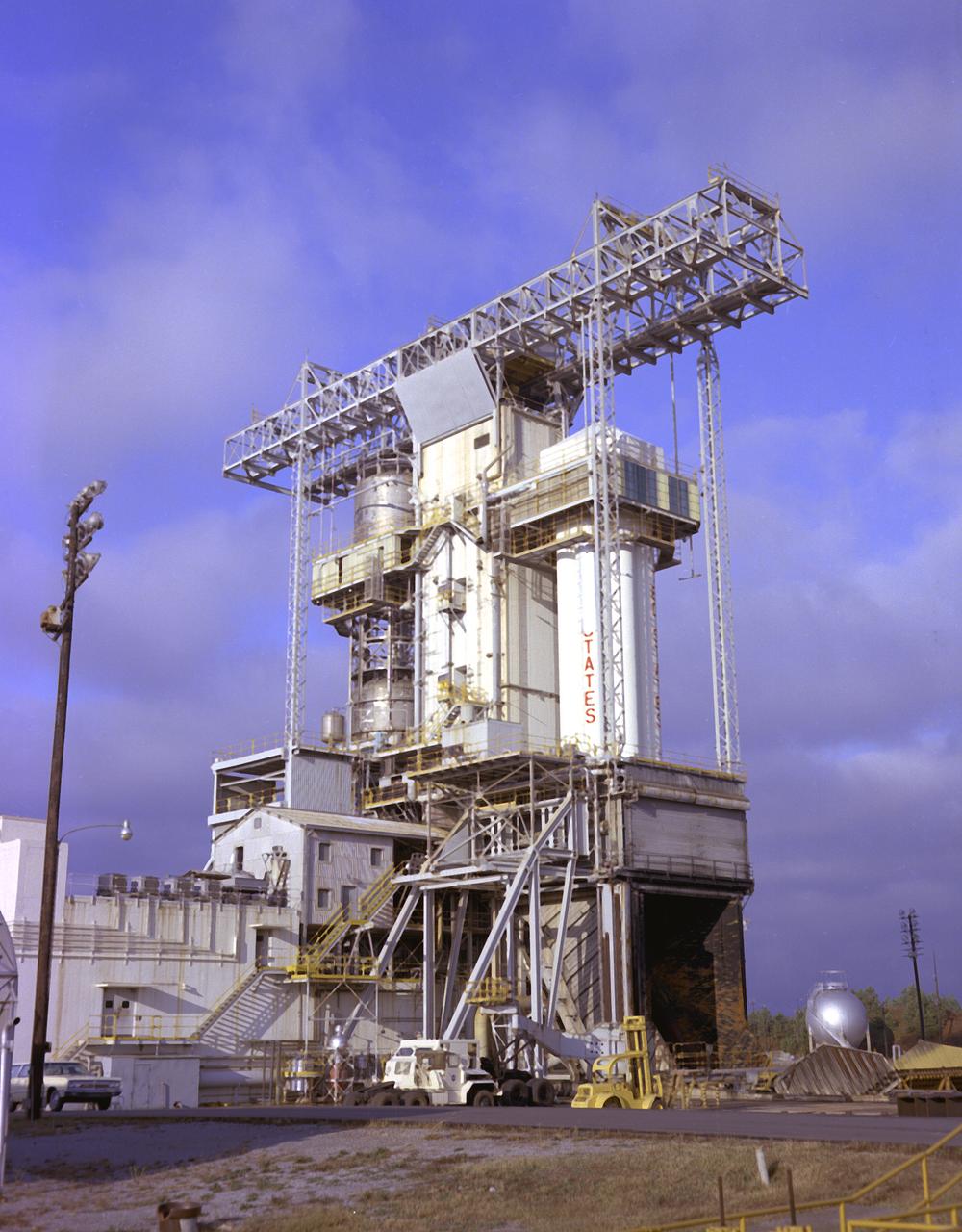
S-IB-211, the flight version of the Saturn IB launch vehicle's (S-IVB) first stage, after installation at the Marshall Space Flight Center's (MSFC's) S-IB static test stand. Between December 1967 and April 1968, the stage would undergo seven static test firings. The S-IB, developed by the MSFC and built by the Chrysler Corporation at the Michoud Assembly Facility near New Orleans, Louisiana, utilized eight H-1 engines and each produced 200,000 pounds of thrust.
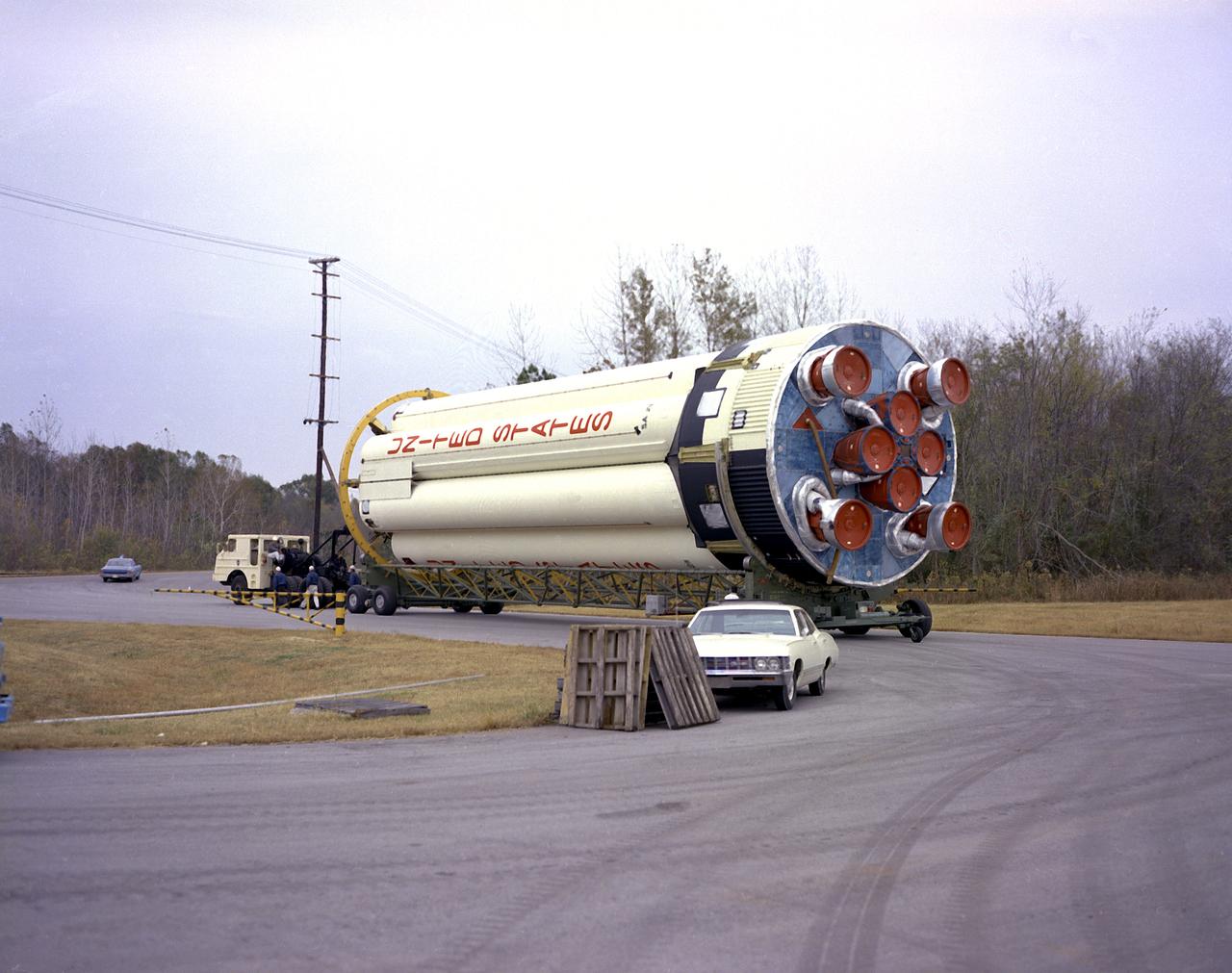
S-IB-211, the flight version of the Saturn IB launch vehicle's first (S-IVB) stage, on its way to Marshall Space Flight Center's (MSFC's) west test area. Between December 1967 and April 1968, the stage would undergo seven static test firings. The S-IB, developed by the MSFC and built by the Chrysler Corporation at the Michoud Assembly Facility near New Orleans, Louisiana, utilized eight H-1 engines and each produced 200,000 pounds of thrust.