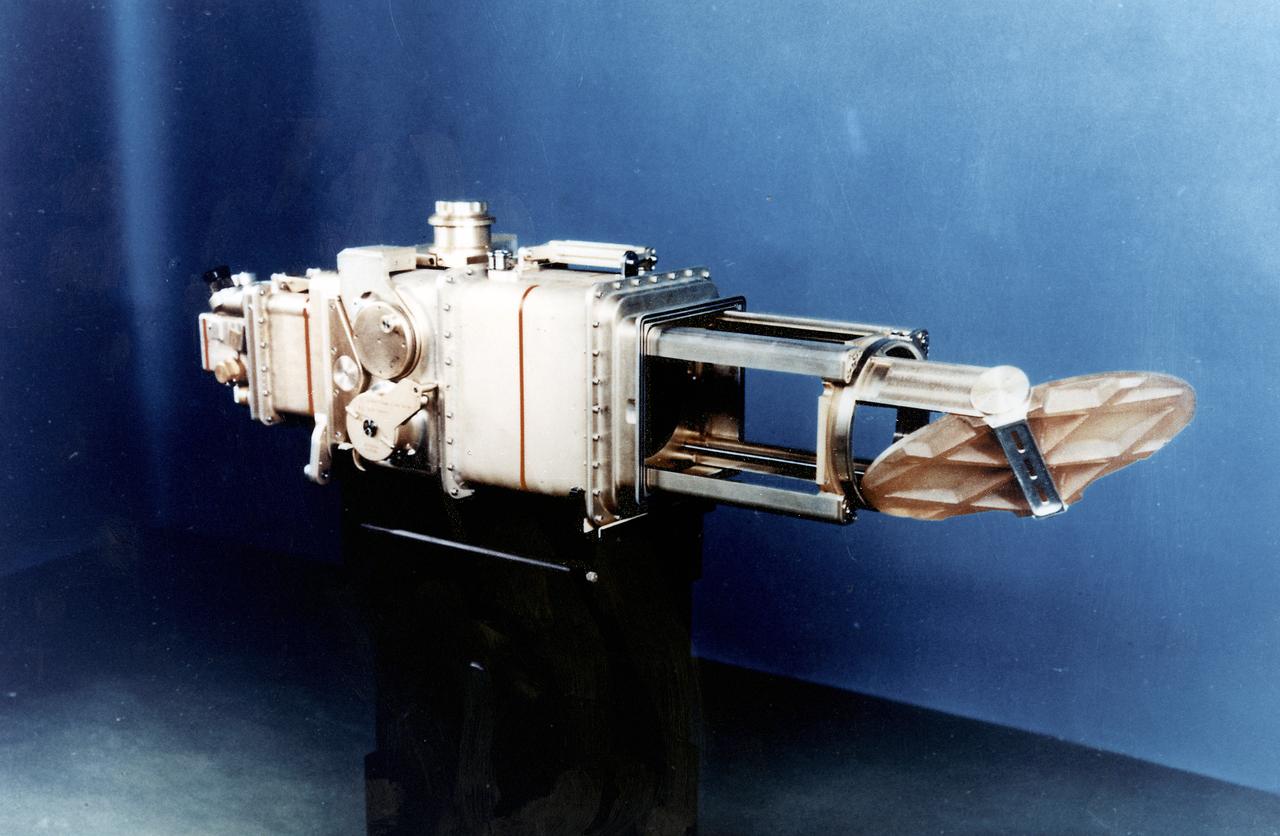
This 1970 photograph shows Skylab's Ultraviolet (UV) Stellar Astronomy experiment, a scientific airlock-based facility/experiment that would study UV spectra of early-type stars and galaxies. The Marshall Space Flight Center had program management responsibility for the development of Skylab hardware and experiments.
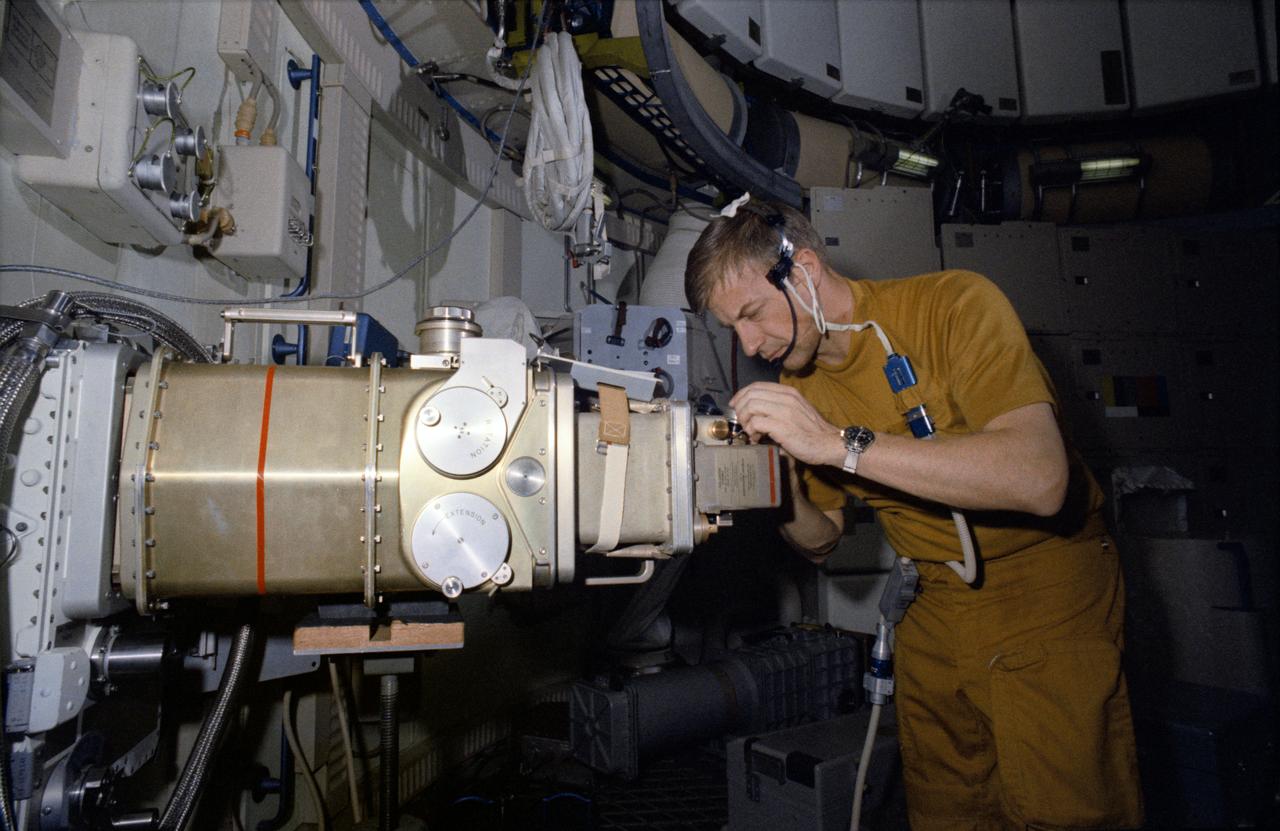
S73-20716 (1 March 1973) --- Astronaut Paul J. Weitz, pilot of the first manned Skylab mission, works with the UV Stellar Astronomy Experiment S019 in the forward compartment of the Skylab Orbital Workshop (OWS) trainer during Skylab training at Johnson Space Center. The equipment consists of a reflecting telescope, a 35mm camera and an additional mirror. It is mounted in an anti-solar scientific airlock in the side of the OWS. Photo credit: NASA
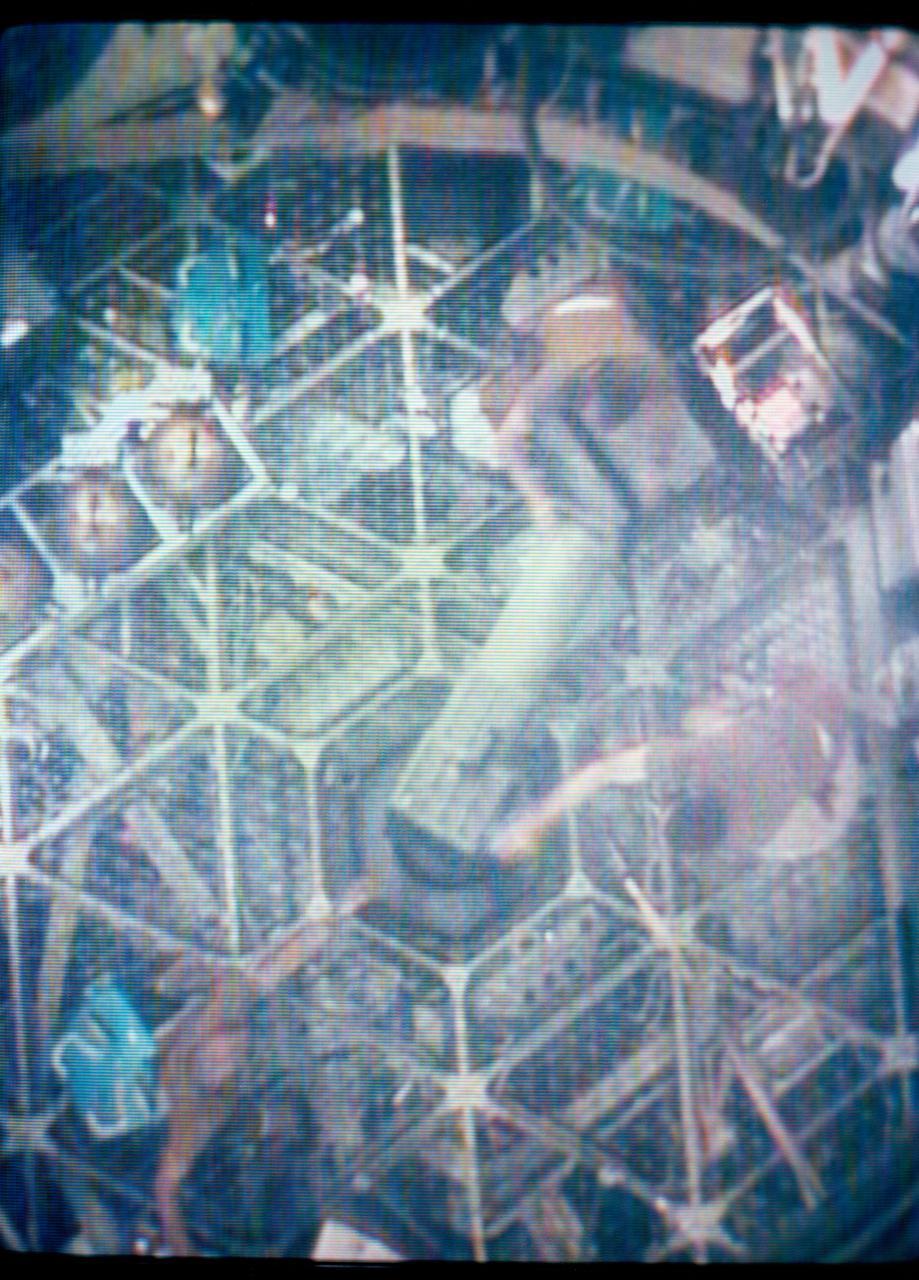
S73-27730 (June 1973) --- The Skylab 2 crewmen, astronauts Charles Conrad Jr., Joseph P. Kerwin and Paul J. Weitz, move the S183 Ultraviolet Panorama astrophysics experiment equipment under zero-gravity conditions in space in the foreground compartment of the Orbital Workshop of the Skylab 1 & 2 space station in Earth orbit, as seen in this reproduction taken from a color television transmission made by a TV camera aboard the space station. The S183 equipment includes the S183 spectrograph, the S019 mirror assembly, and a Maurer camera. Photo credit: NASA
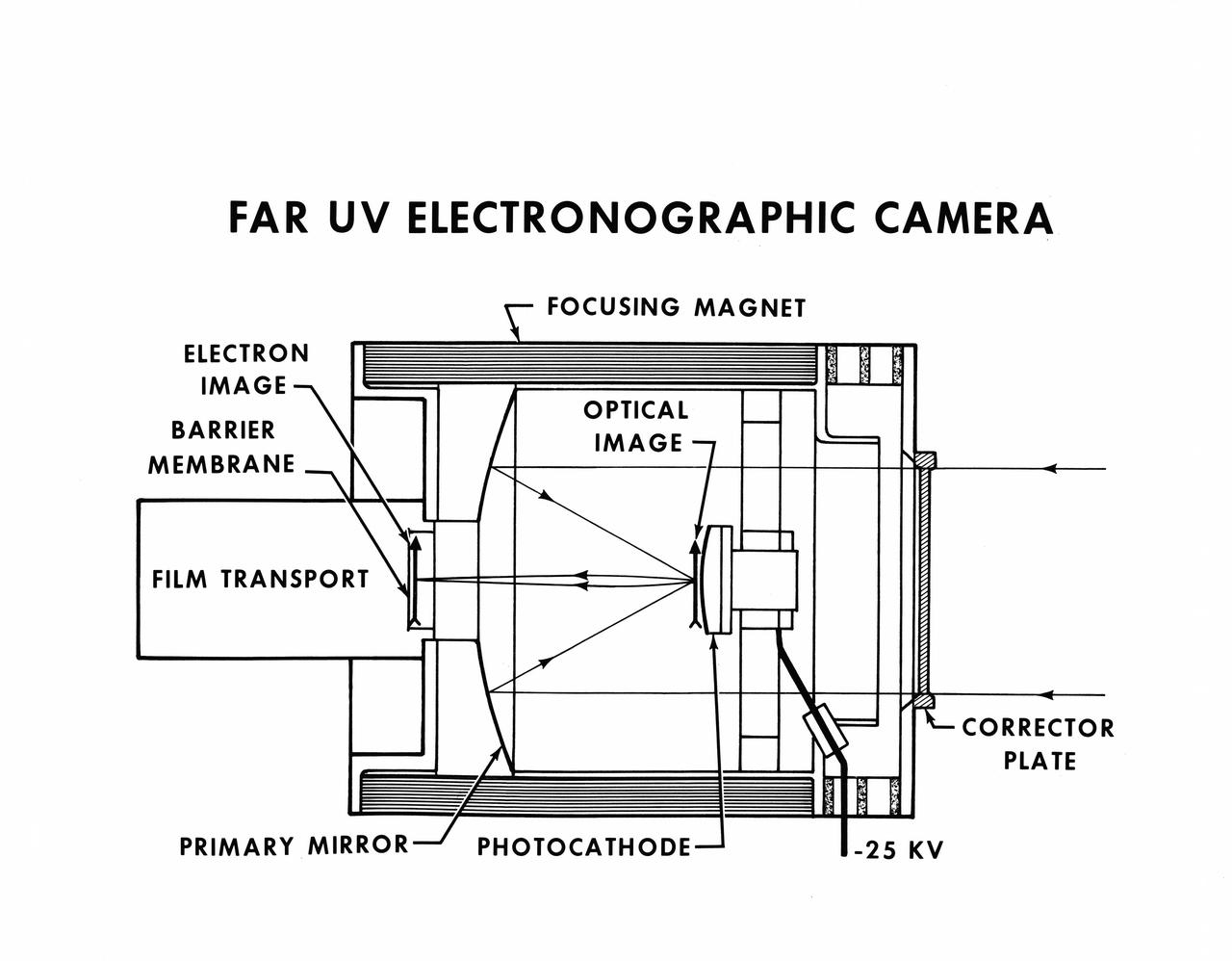
S73-36910 (November 1973) --- An engineer's drawing of the Skylab 4 Far Ultraviolet Electronographic camera (Experiment S201). Arrows point to various features and components of the camera. As the Comet Kohoutek streams through space at speeds of 100,000 miles per hour, the Skylab 4 crewmen will use the S201 UV camera to photograph features of the comet not visible from the Earth's surface. While the comet is some distance from the sun, the camera will be pointed through the scientific airlock in the wall of the Skylab space station Orbital Workshop (OWS). By using a movable mirror system built for the Ultraviolet Stellar Astronomy (S019) Experiment and rotating the space station, the S201 camera will be able to photograph the comet around the side of the space station. Photo credit: NASA