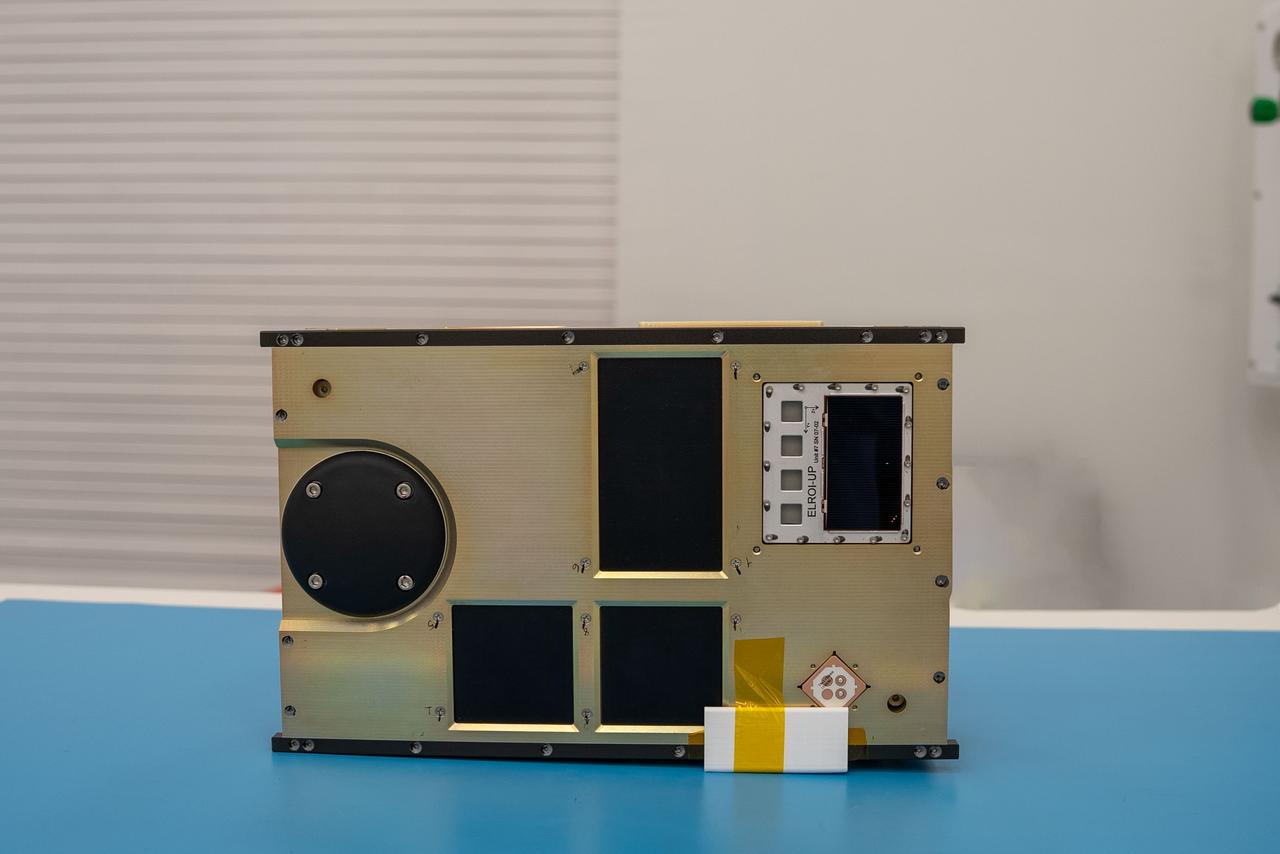
NASA’s CubeSat R5 Spacecraft 4 (R5-S4) awaits integration at Firefly’s Payload Processing Facility at Vandenberg Space Force Base, California on Wednesday, April 24, 2024. R5-S4, along with several other CubeSats, will launch to space on an Alpha rocket during NASA’s Educational Launch of Nanosatellites (ELaNa) 43 mission as part of the agency’s CubeSat Launch Initiative and Firefly’s Venture-Class Launch Services Demonstration 2 contract.
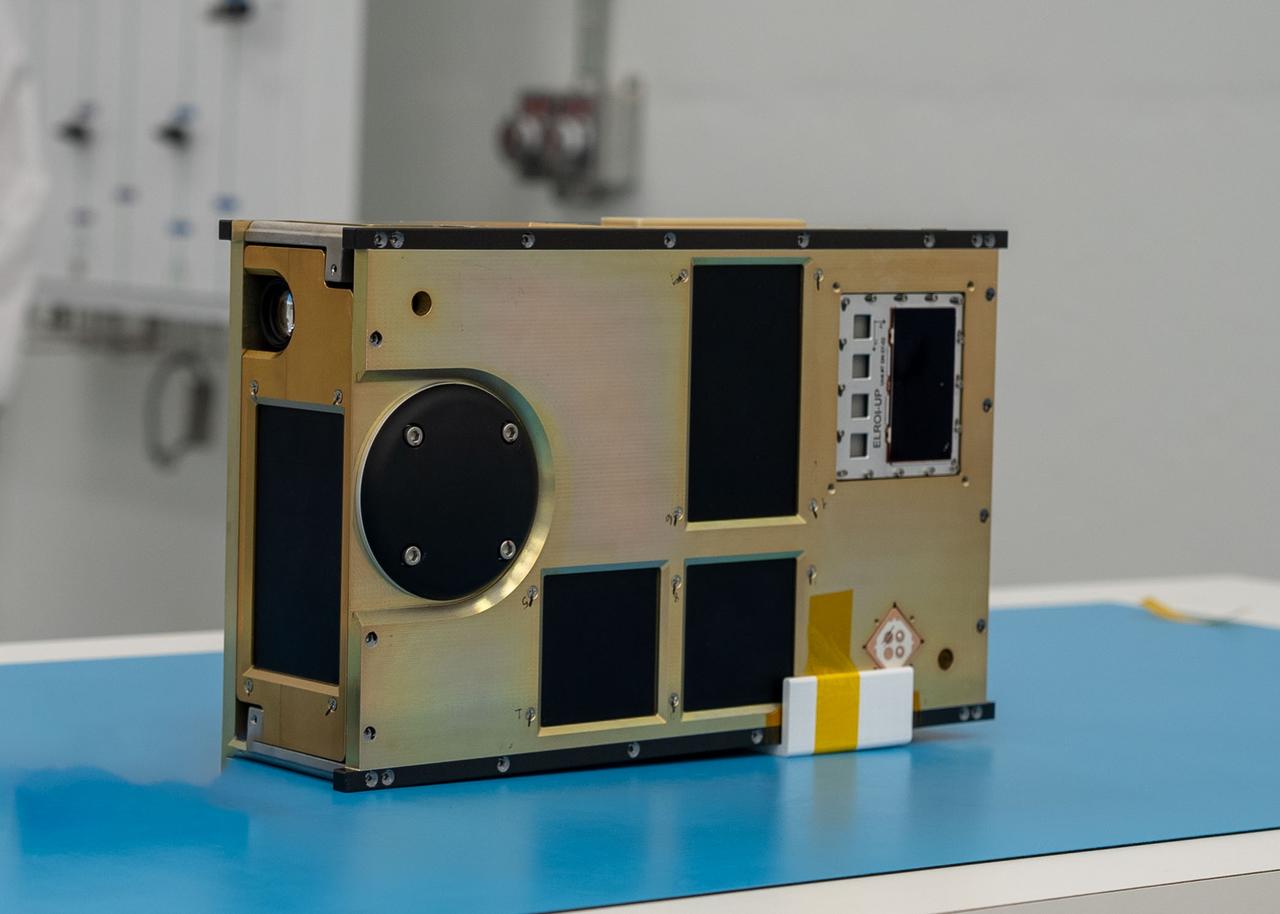
NASA’s CubeSat R5 Spacecraft 4 (R5-S4) awaits integration at Firefly’s Payload Processing Facility at Vandenberg Space Force Base, California on Wednesday, April 24, 2024. R5-S4, along with several other CubeSats, will launch to space on an Alpha rocket during NASA’s Educational Launch of Nanosatellites (ELaNa) 43 mission as part of the agency’s CubeSat Launch Initiative and Firefly’s Venture-Class Launch Services Demonstration 2 contract.
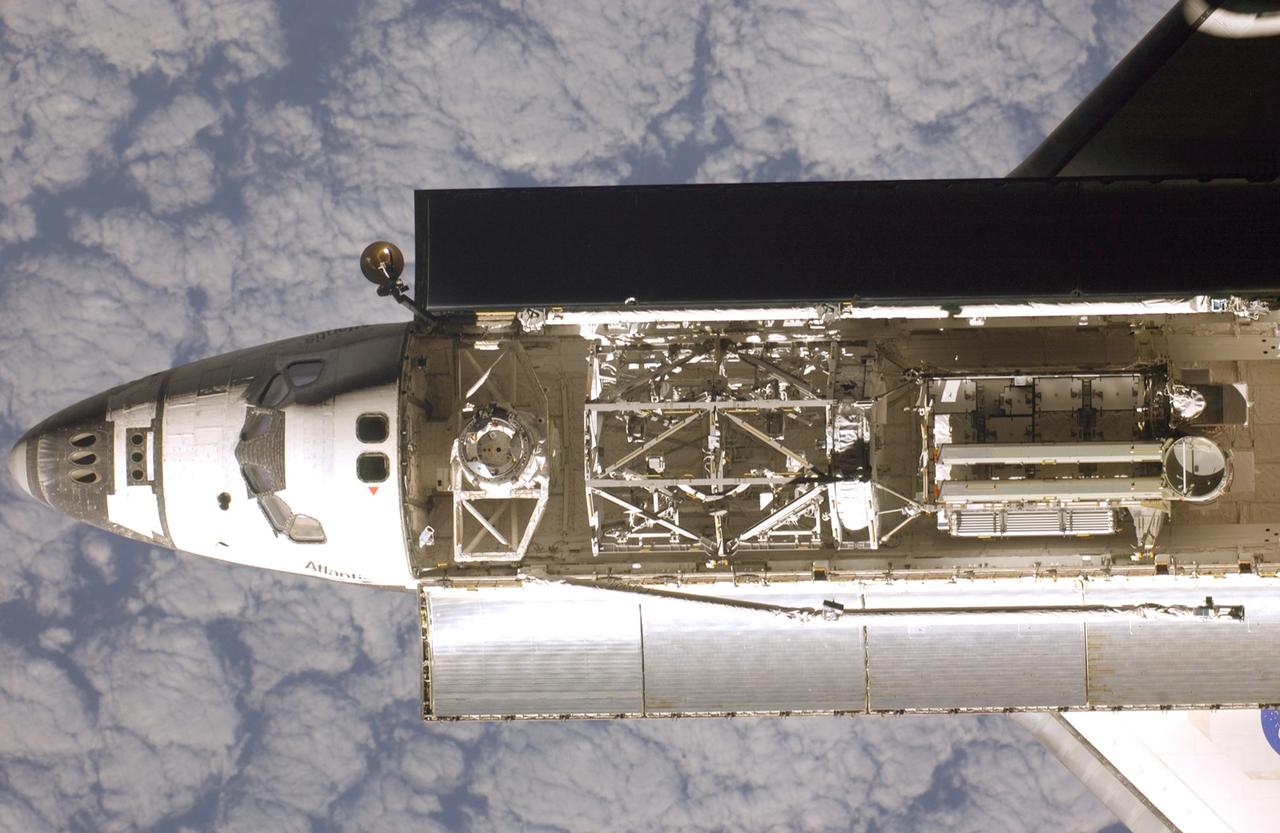
This nadir view of the STS-117 mission Space Shuttle Atlantis, taken by the Expedition 15 crew aboard the International Space Station (ISS), occurred just before the two spacecraft linked up in Earth orbit. Berthed in the cargo bay are the 17.8 ton second and third (S3 and S4) truss segments ready for installment. STS-117 mission objectives included the addition of S3 and S4 with Photovoltaic Radiator (PVR), the deployment of the third set of solar arrays, and the retraction of the P4 starboard solar array wing and one radiator.
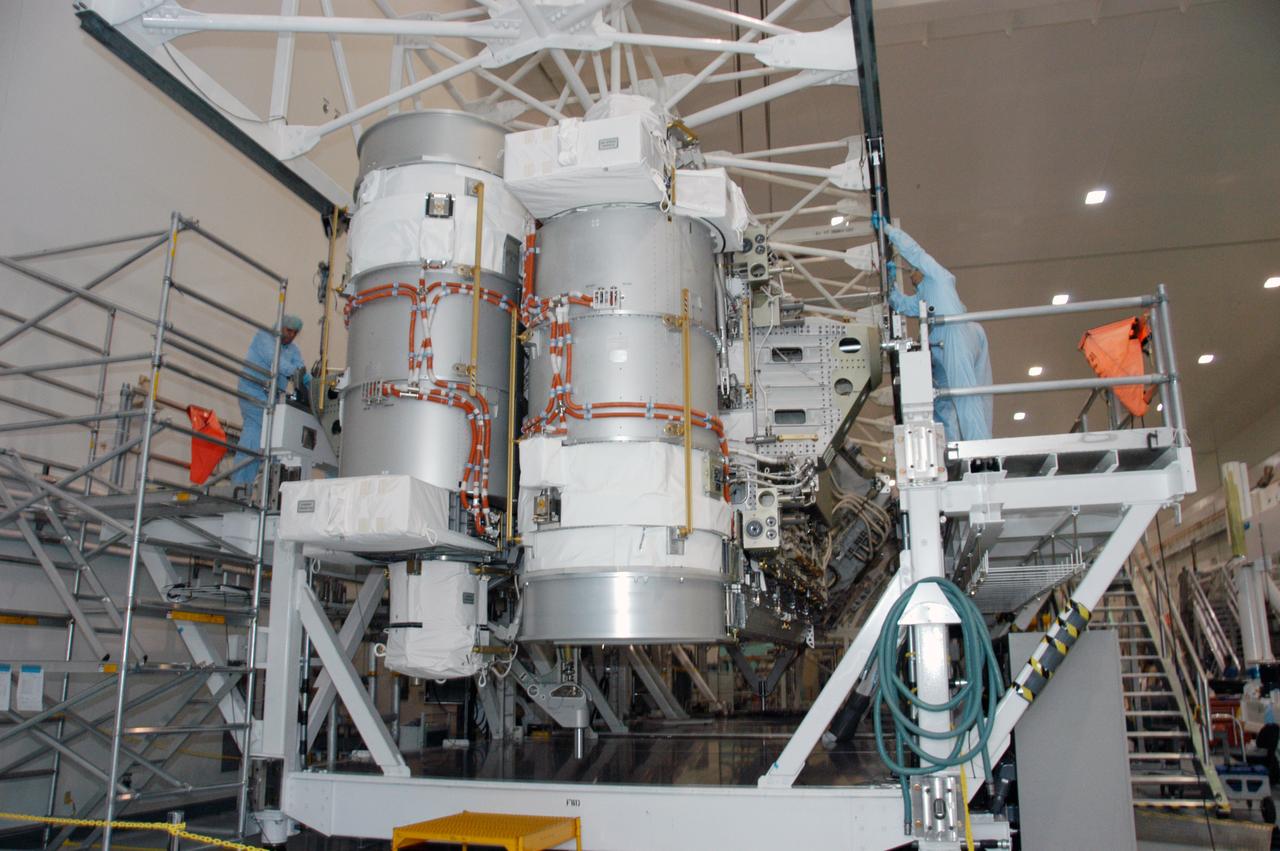
In the Space Station Processing Facility, workers attach an overhead crane to the S3/S4 integrated truss in order to move it to the payload canister. After it is stowed in the canister, the S3/S4 truss will be transported to the launch pad. The truss is the payload on mission STS-117, targeted for launch on March 15.
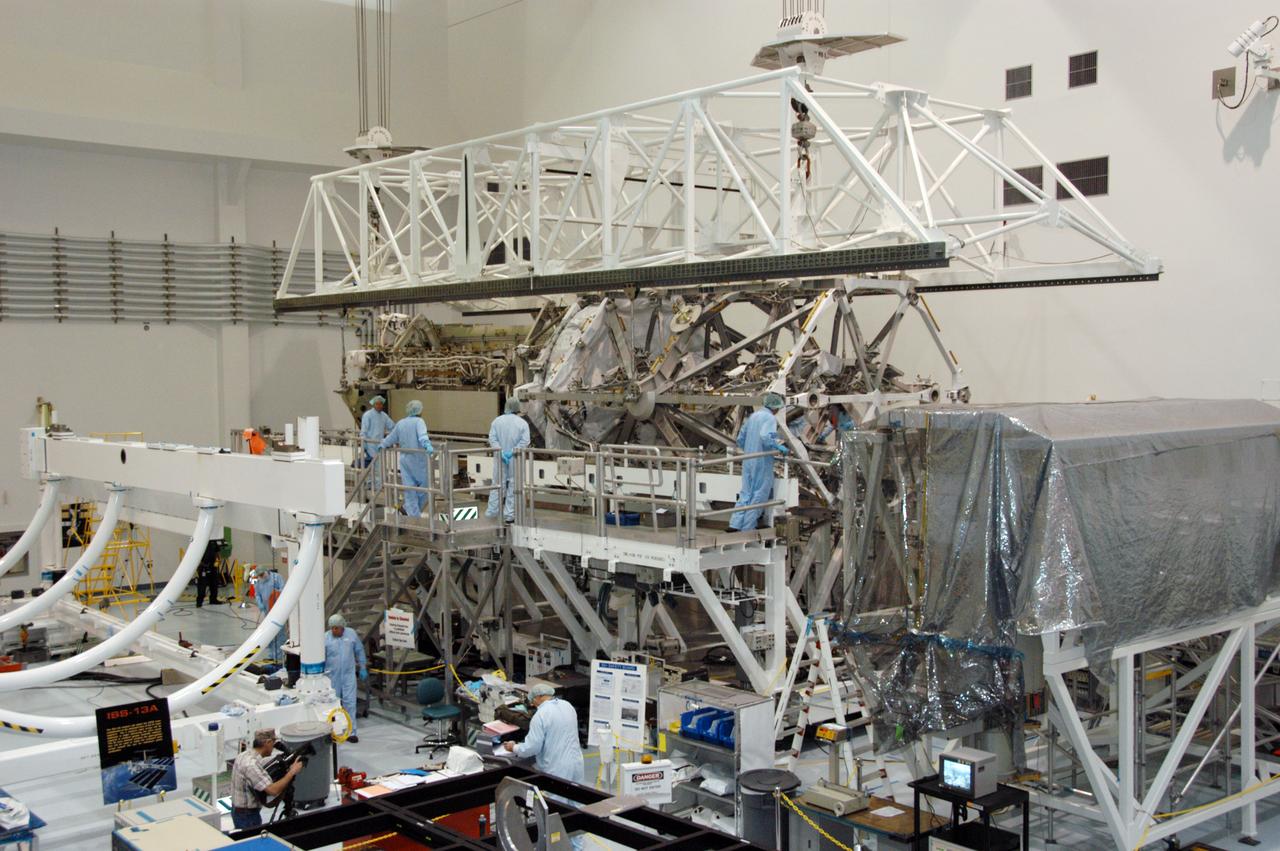
In the Space Station Processing Facility, an overhead crane lowers the S3/S4 integrated truss toward the open doors of the payload canister. After it is stowed in the canister, the S3/S4 truss will be transported to the launch pad. The truss is the payload on mission STS-117, targeted for launch on March 15.
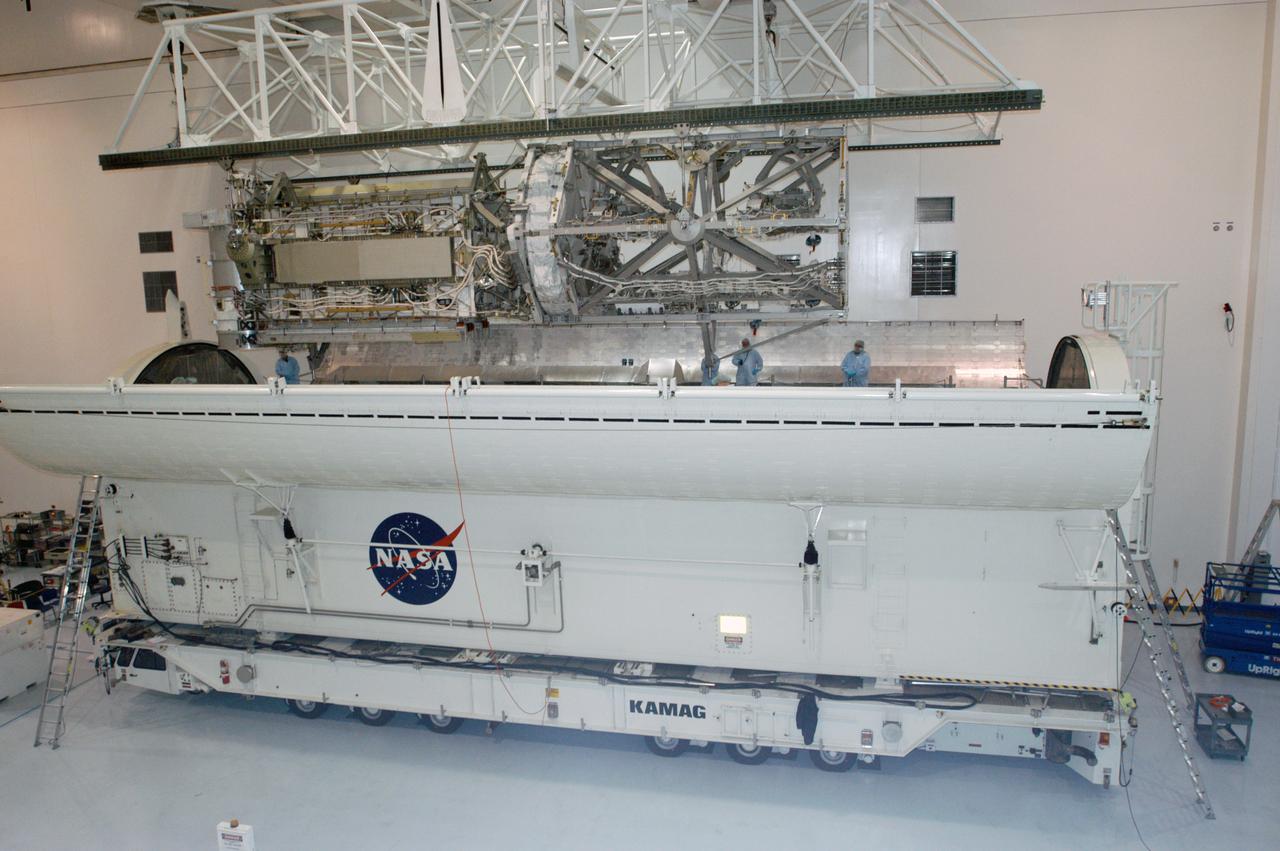
In the Space Station Processing Facility, an overhead crane lowers the S3/S4 integrated truss into the open bay of the payload canister. After it is stowed in the canister, the S3/S4 truss will be transported to the launch pad. The truss is the payload on mission STS-117, targeted for launch on March 15.
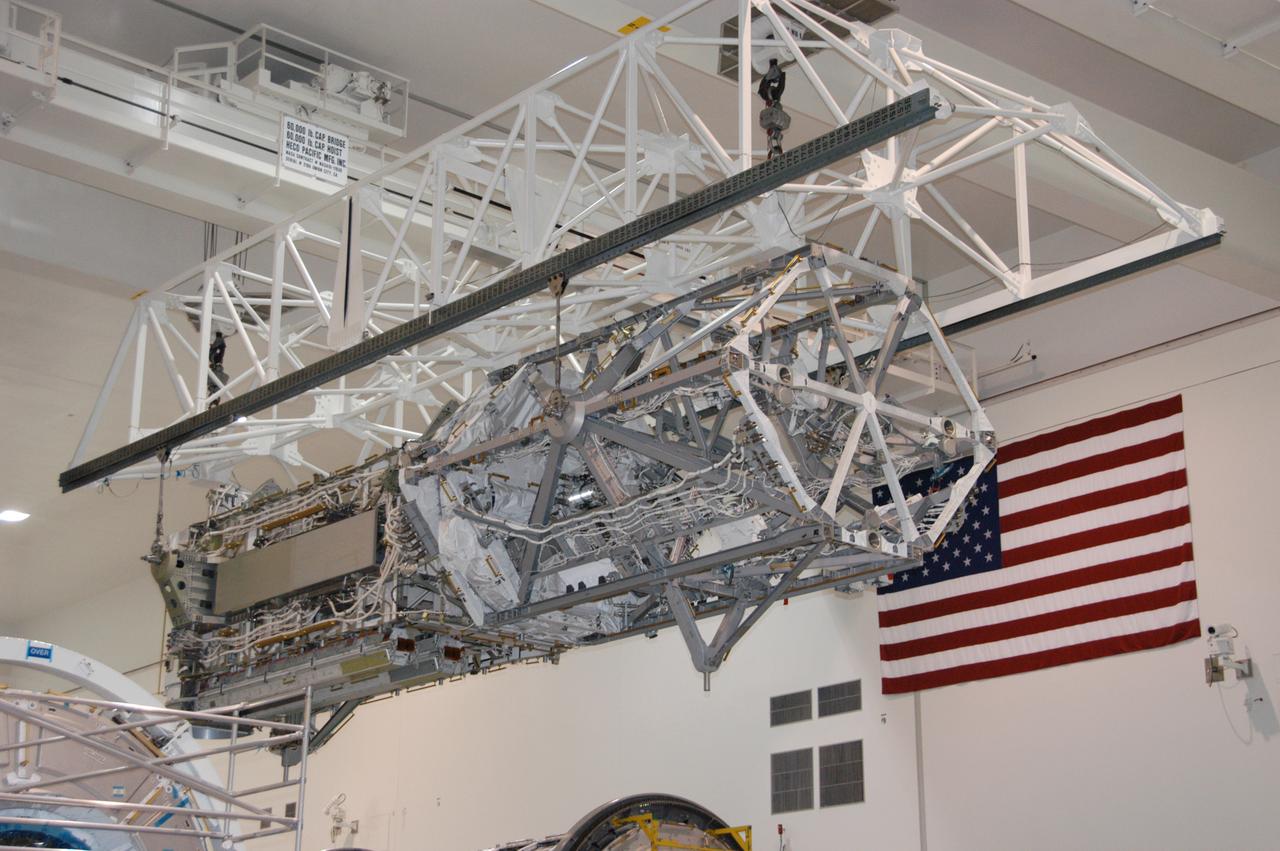
In the Space Station Processing Facility, an overhead crane moves the S3/S4 integrated truss to a payload canister. After it is stowed in the canister, the S3/S4 truss will be transported to the launch pad. The truss is the payload on mission STS-117, targeted for launch on March 15.
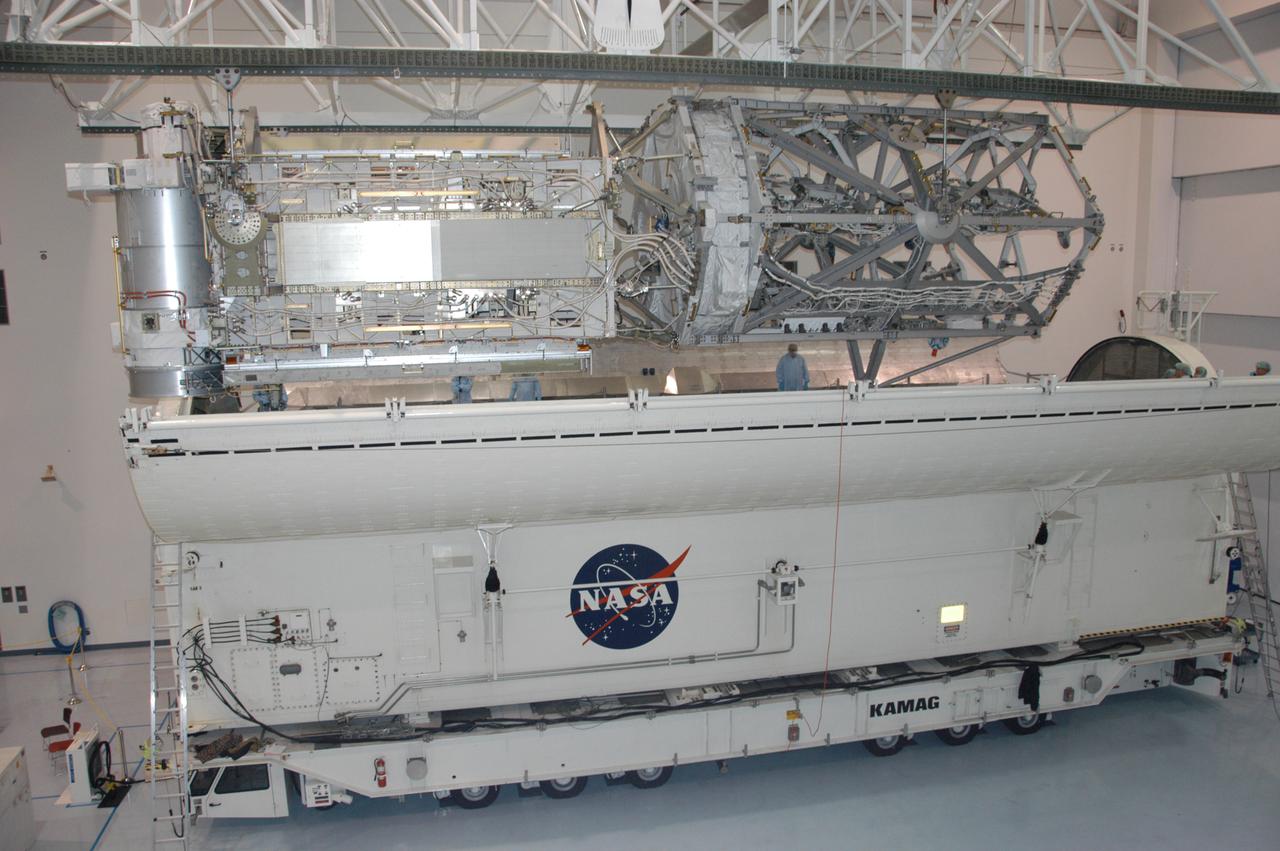
In the Space Station Processing Facility, workers attach an overhead crane to the S3/S4 integrated truss in order to move it to the payload canister. After it is stowed in the canister, the S3/S4 truss will be transported to the launch pad. The truss is the payload on mission STS-117, targeted for launch on March 15.
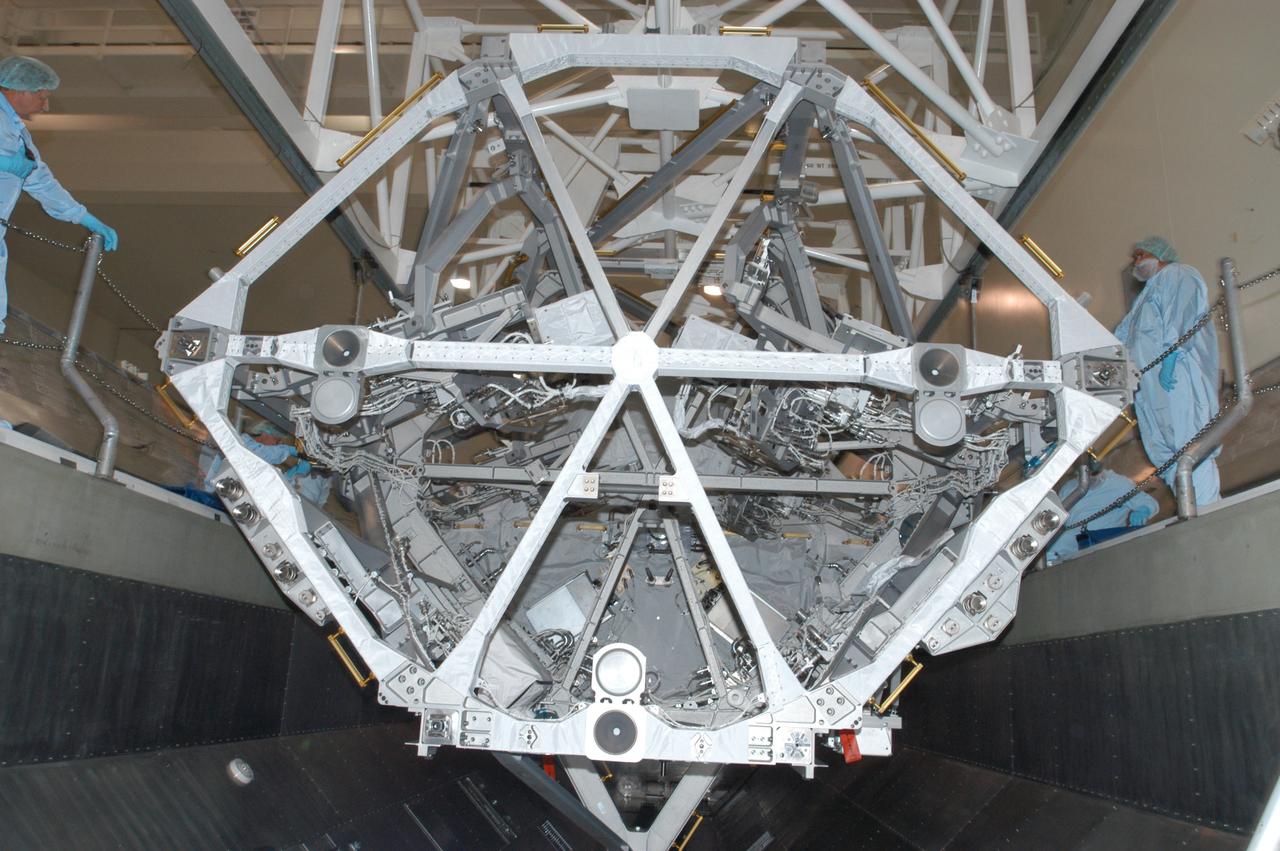
In the Space Station Processing Facility, an overhead crane settles the S3/S4 integrated truss into the payload canister. After it is stowed in the canister, the S3/S4 truss will be transported to the launch pad. The truss is the payload on mission STS-117, targeted for launch on March 15.
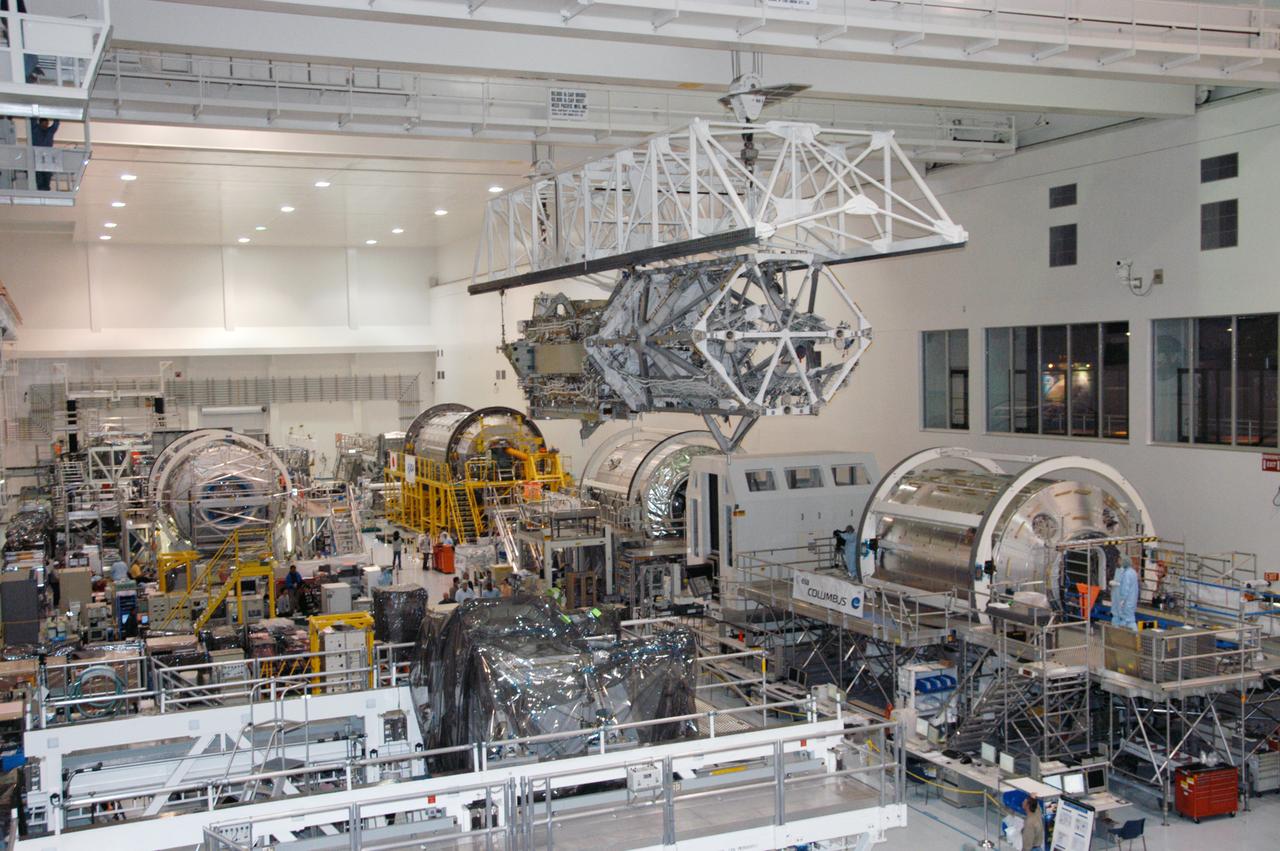
In the Space Station Processing Facility, an overhead crane moves the S3/S4 integrated truss above the floor to a payload canister. Several space station modules can be seen at various points on the floor. After it is stowed in the canister, the S3/S4 truss will be transported to the launch pad. The truss is the payload on mission STS-117, targeted for launch on March 15.
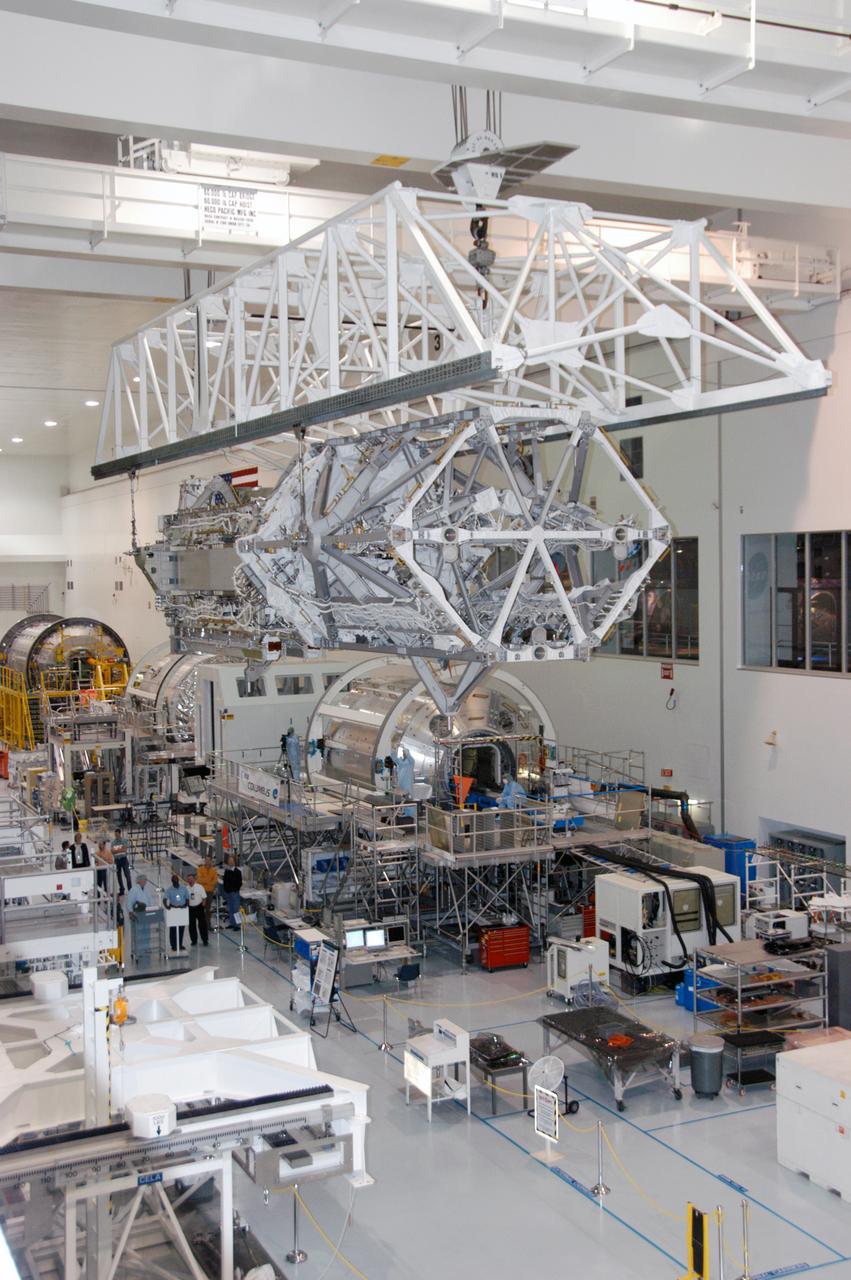
In the Space Station Processing Facility, an overhead crane moves the S3/S4 integrated truss above the floor to a payload canister. Several space station modules can be seen at various points on the floor. After it is stowed in the canister, the S3/S4 truss will be transported to the launch pad. The truss is the payload on mission STS-117, targeted for launch on March 15.
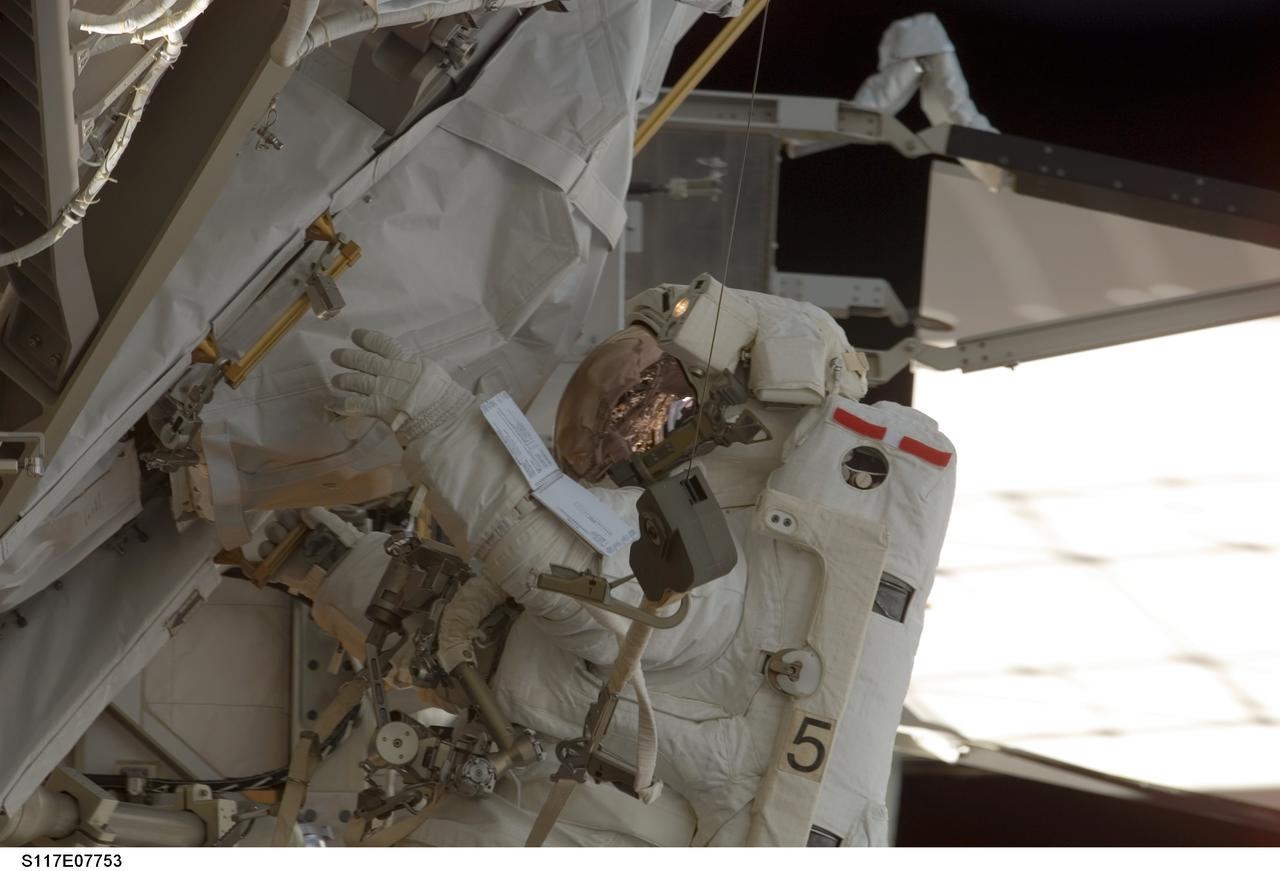
S117-E-07753 (17 June 2007) --- Astronaut Patrick Forrester, STS-117 mission specialist, participates in the mission's fourth and final session of extravehicular activity (EVA), as construction continues on the International Space Station. Among other tasks, Forrester and astronaut Steven Swanson (out of frame), mission specialist, continued activation of the station's new starboard 3 and 4 (S3/S4) truss segment; checked out the Drive Lock Assembly 2, one of two mechanisms that will drive rotation of the S3/S4 Truss Solar Alpha Rotary Joint (SARJ); and removed the final launch restraints on the SARJ.
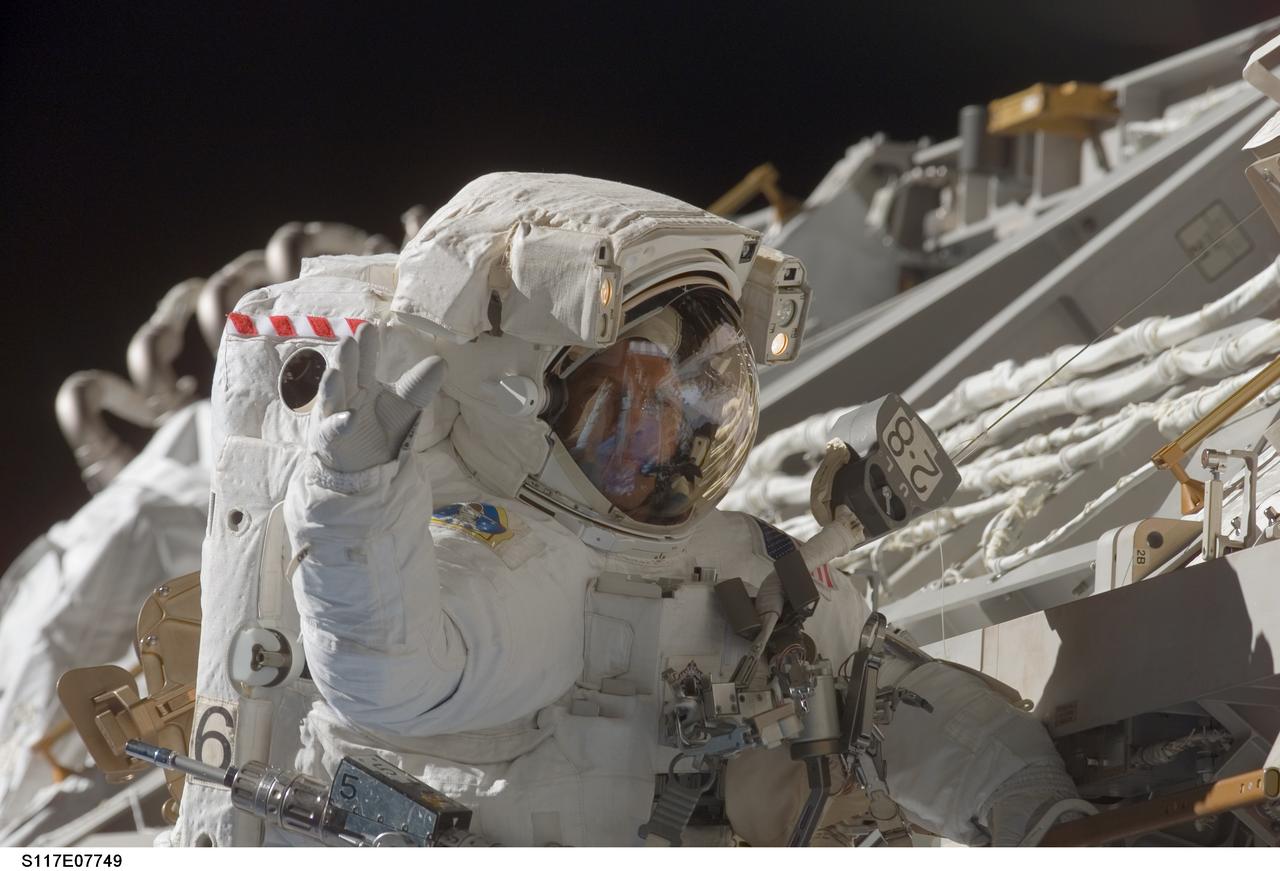
S117-E-07749 (17 June 2007) --- Astronaut Steven Swanson, STS-117 mission specialist, participates in the mission's fourth and final session of extravehicular activity (EVA), as construction continues on the International Space Station. Among other tasks, Swanson and astronaut Patrick Forrester (out of frame), mission specialist, continued activation of the station's new starboard 3 and 4 (S3/S4) truss segment; checked out the Drive Lock Assembly 2, one of two mechanisms that will drive rotation of the S3/S4 Truss Solar Alpha Rotary Joint (SARJ); and removed the final launch restraints on the SARJ.
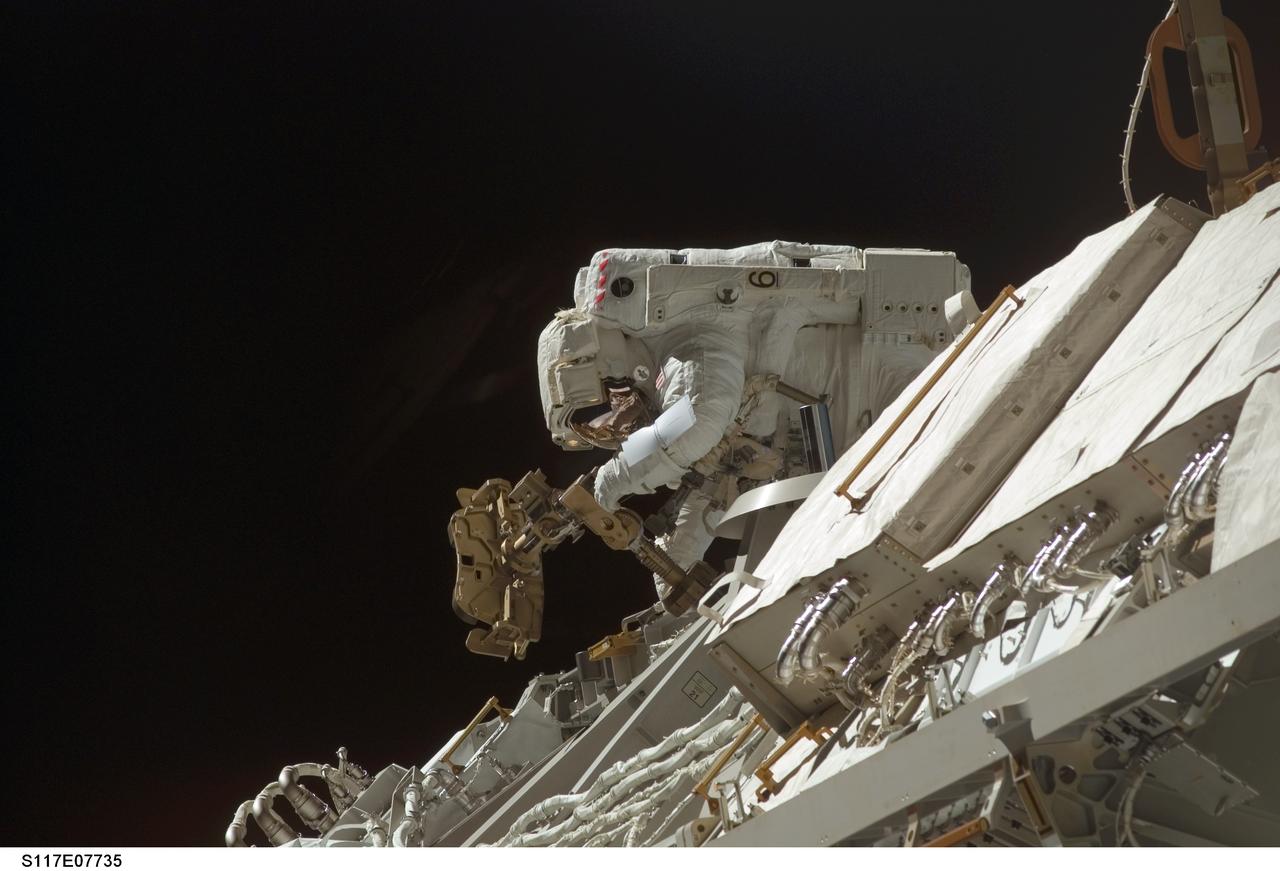
S117-E-07735 (17 June 2007) --- Astronaut Steven Swanson, STS-117 mission specialist, participates in the mission's fourth and final session of extravehicular activity (EVA), as construction continues on the International Space Station. Among other tasks, Swanson and astronaut Patrick Forrester (out of frame), mission specialist, continued activation of the station's new starboard 3 and 4 (S3/S4) truss segment; checked out the Drive Lock Assembly 2, one of two mechanisms that will drive rotation of the S3/S4 Truss Solar Alpha Rotary Joint (SARJ); and removed the final launch restraints on the SARJ.
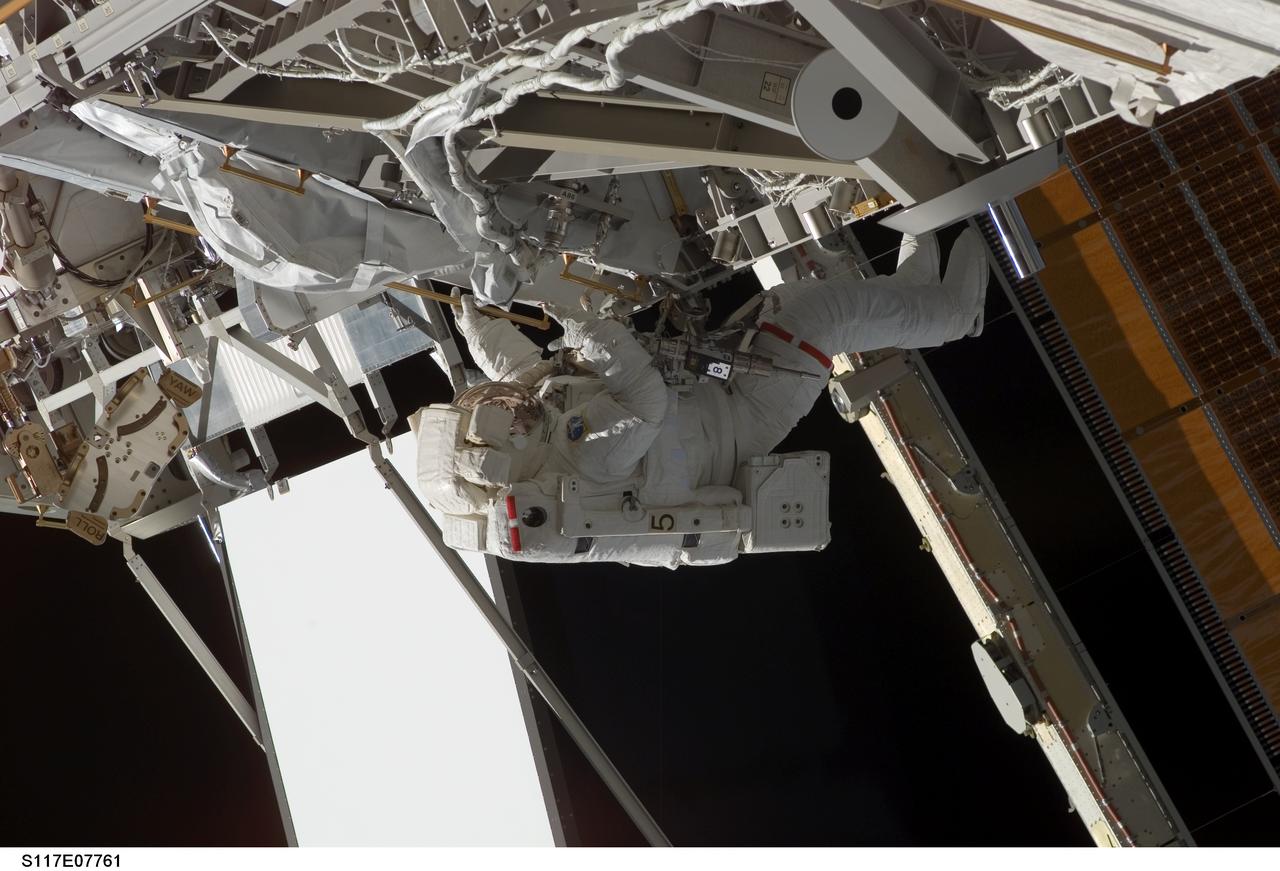
S117-E-07761 (17 June 2007) --- Astronaut Patrick Forrester, STS-117 mission specialist, participates in the mission's fourth and final session of extravehicular activity (EVA), as construction continues on the International Space Station. Among other tasks, Forrester and astronaut Steven Swanson (out of frame), mission specialist, continued activation of the station's new starboard 3 and 4 (S3/S4) truss segment; checked out the Drive Lock Assembly 2, one of two mechanisms that will drive rotation of the S3/S4 Truss Solar Alpha Rotary Joint (SARJ); and removed the final launch restraints on the SARJ.
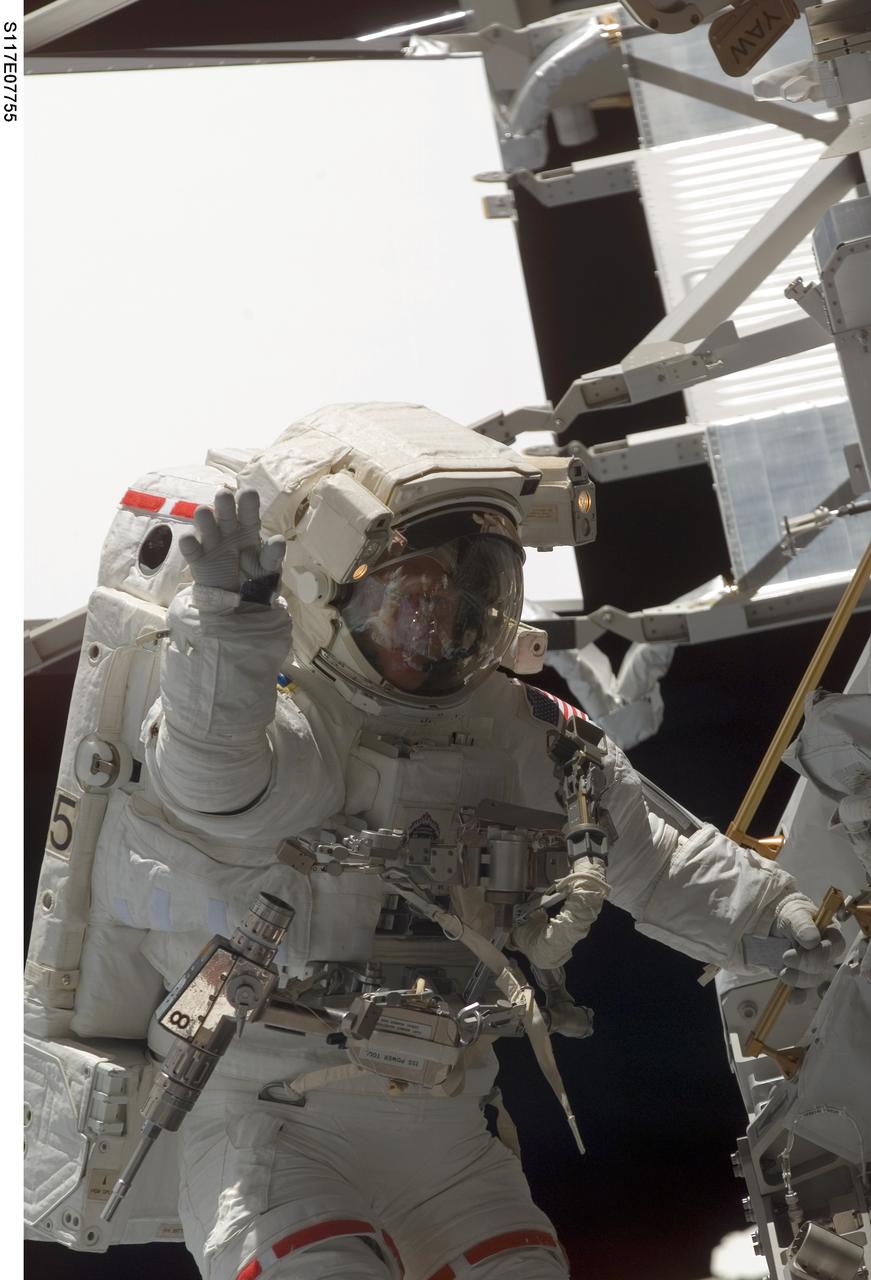
S117-E-07755 (17 June 2007) --- Astronaut Patrick Forrester, STS-117 mission specialist, participates in the mission's fourth and final session of extravehicular activity (EVA), as construction continues on the International Space Station. Among other tasks, Forrester and astronaut Steven Swanson (out of frame), mission specialist, continued activation of the station's new starboard 3 and 4 (S3/S4) truss segment; checked out the Drive Lock Assembly 2, one of two mechanisms that will drive rotation of the S3/S4 Truss Solar Alpha Rotary Joint (SARJ); and removed the final launch restraints on the SARJ.

KENNEDY SPACE CENTER, FLA. -- In the Space Station Processing Facility, an overhead crane moves the S3/S4 integrated truss to a payload canister. After it is stowed in the canister, the S3/S4 truss will be transported to the launch pad. The truss is the payload on mission STS-117, targeted for launch on March 15. Photo credit: NASA/George Shelton
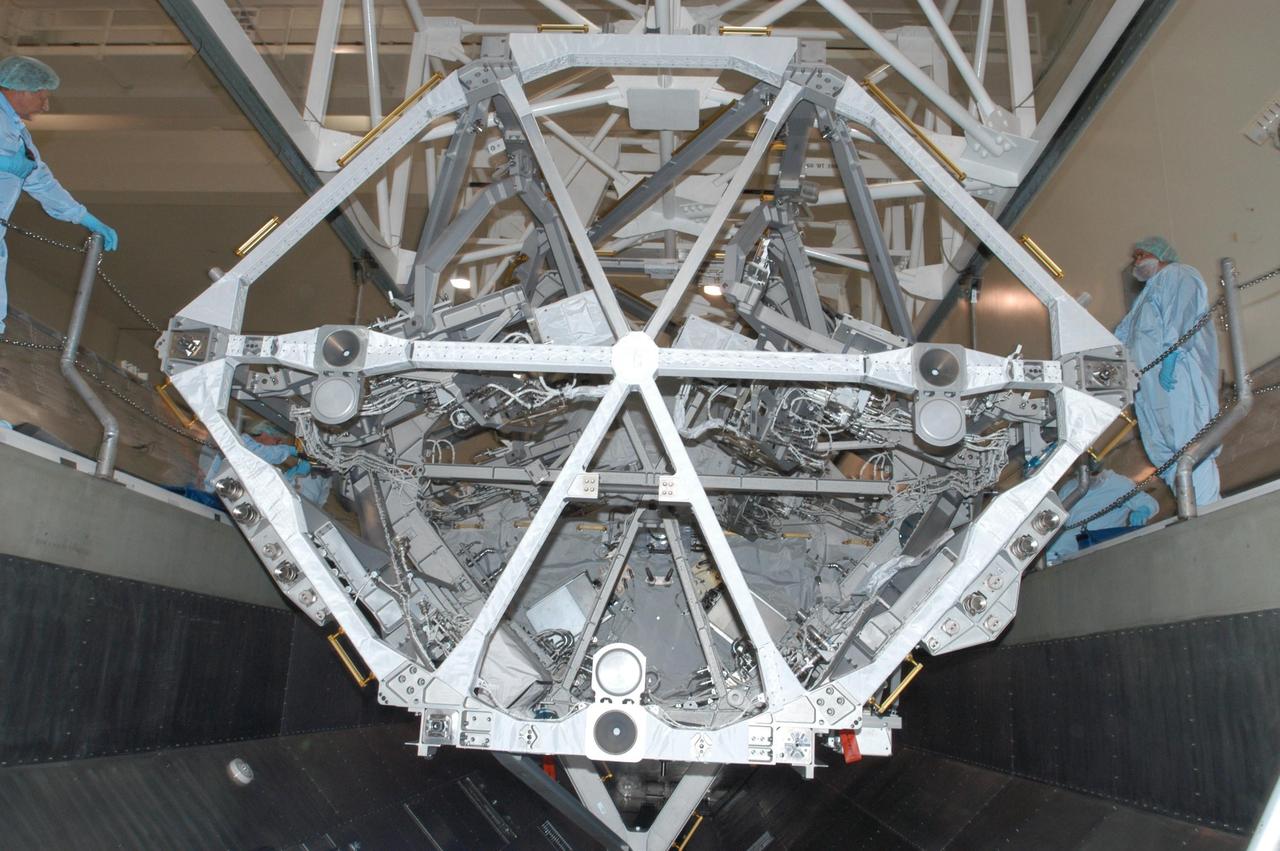
KENNEDY SPACE CENTER, FLA. -- In the Space Station Processing Facility, an overhead crane settles the S3/S4 integrated truss into the payload canister. After it is stowed in the canister, the S3/S4 truss will be transported to the launch pad. The truss is the payload on mission STS-117, targeted for launch on March 15. Photo credit: NASA/George Shelton
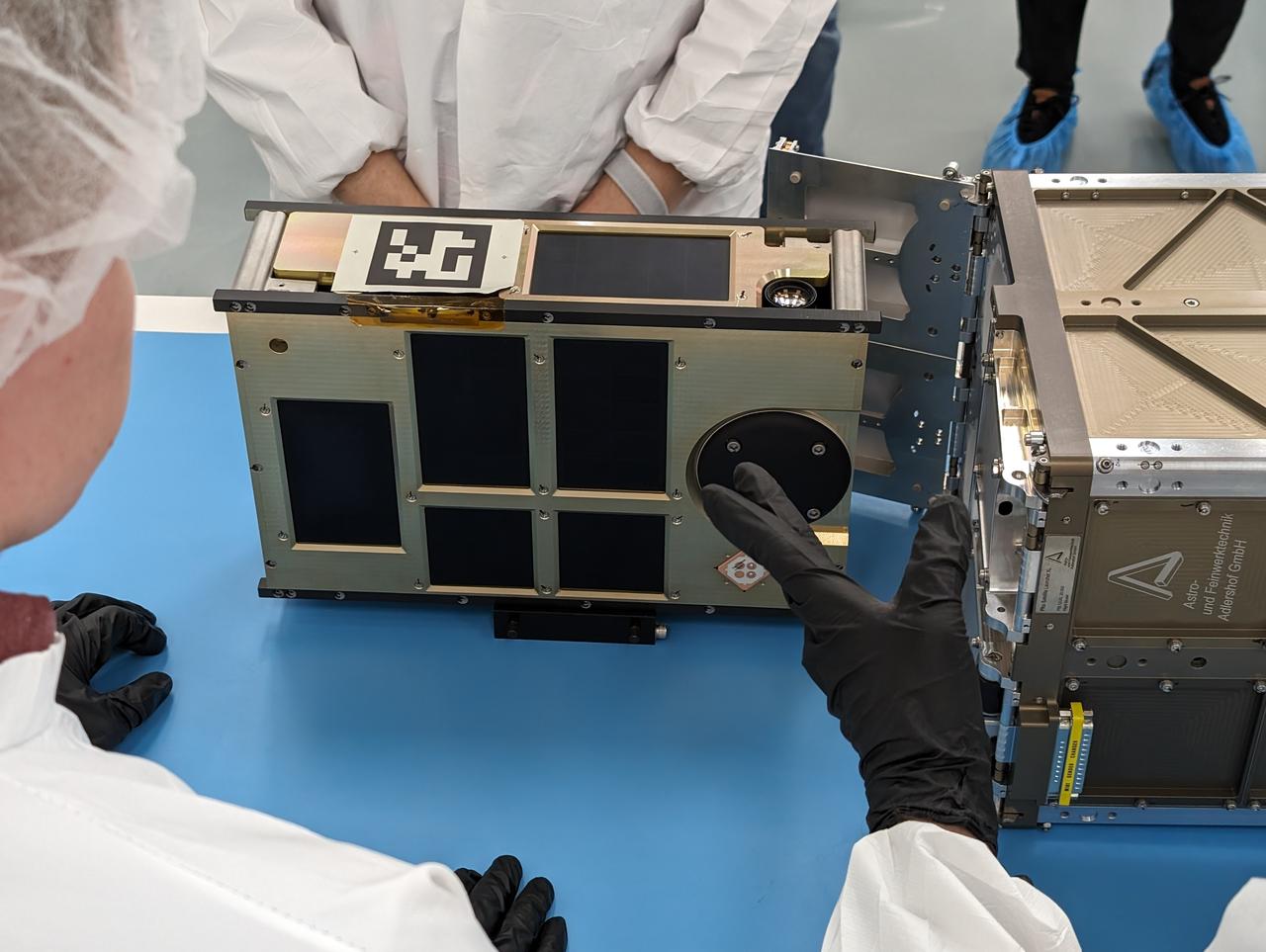
NASA and Firefly Aerospace engineers review the integration plan for the agency’s CubeSat R5 Spacecraft 4 (R5-S4) at Firefly Aerospace’s Payload Processing Facility at Vandenberg Space Force Base, California on Wednesday, April 24, 2024. The spacecraft will soon be integrated for launch aboard the company’s Alpha rocket, as part of launch services provided for NASA's CubeSat Launch Initiative and Educational Launch of Nanosatellites 43 mission in support of the agency ’s Venture-Class Launch Services Demonstration 2 contract.
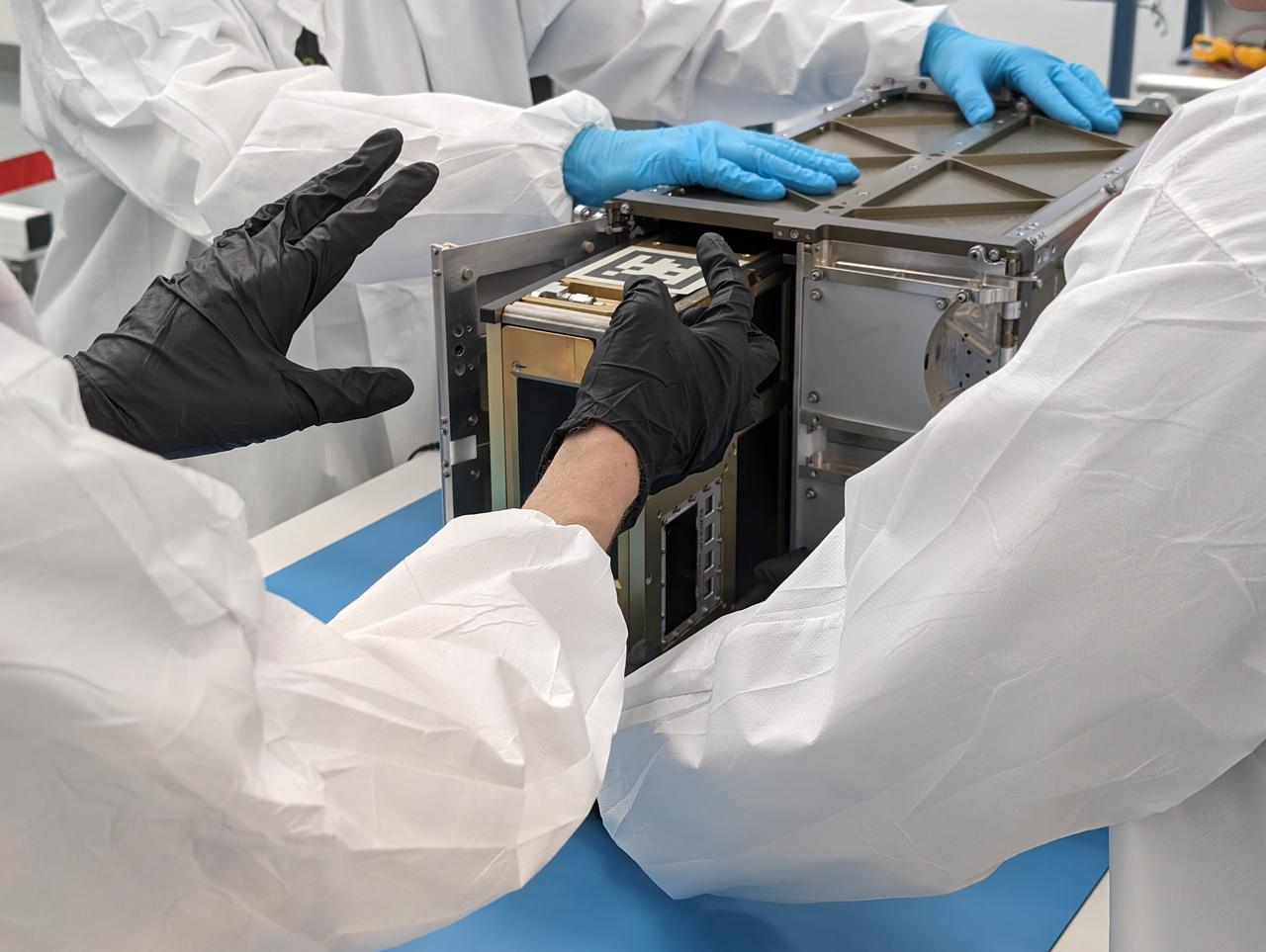
A NASA engineer installs the agency’s CubeSat R5 Spacecraft 4 (R5-S4) into the dispenser at Firefly Aerospace's Payload Processing Facility at Vandenberg Space Force Base, California on Wednesday, April 24, 2024. The spacecraft will soon be integrated for launch aboard the company’s Alpha rocket, as part of launch services provided for NASA's CubeSat Launch Initiative and Educational Launch of Nanosatellites 43 mission in support of the agency ’s Venture-Class Launch Services Demonstration 2 contract.
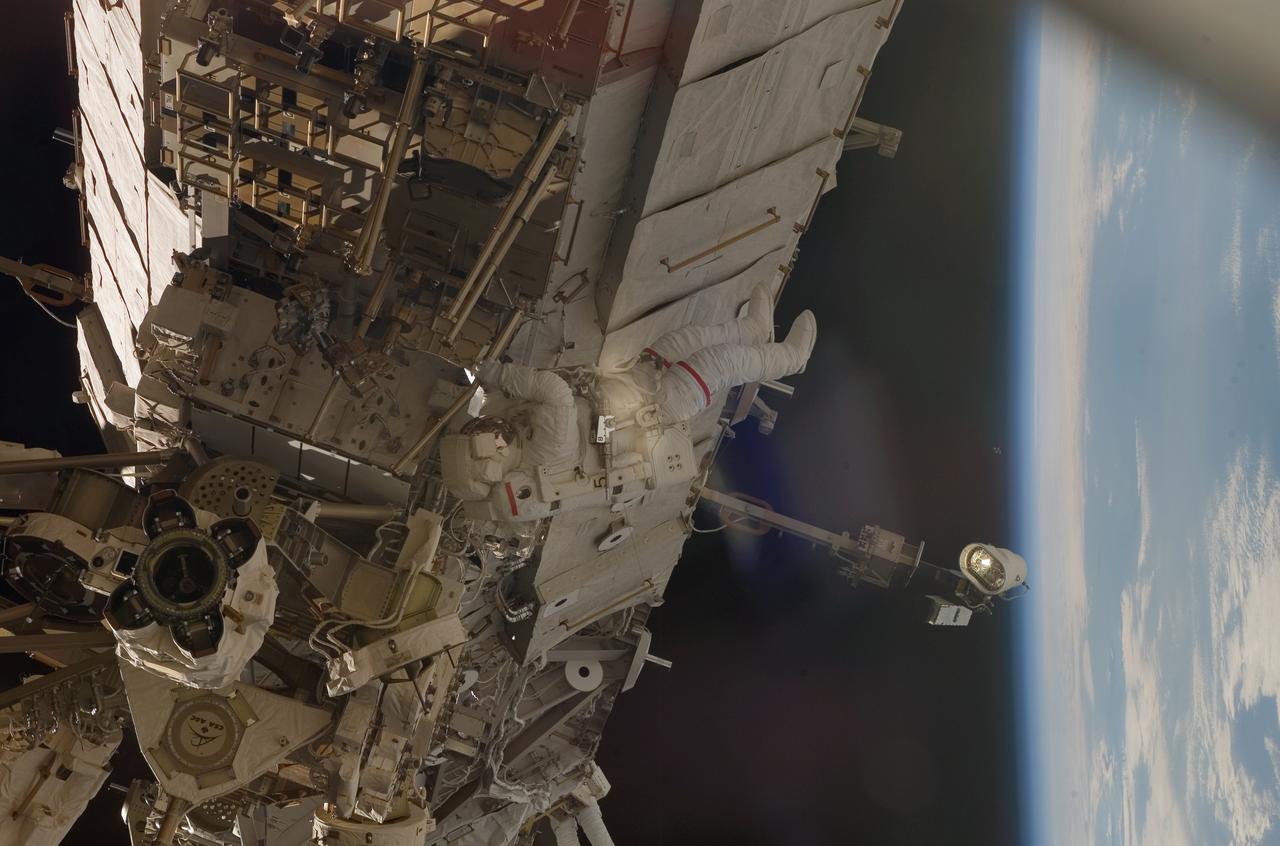
STS-117 astronauts and mission specialists Jim Reilly (center frame), and John “Danny” Olivas (bottom center), participated in the first Extra Vehicular Activity (EVA) as construction resumed on the International Space Station (ISS). Among other tasks, the two connected power, data, and cooling cables between trusses 1 (S1) and 3 (S3), released the launch restraints from and deployed the four solar array blanket boxes on S4, and released the cinches and winches holding the photovoltaic radiator on S4. The primary mission objective was the installment of the second and third starboard truss segments (S3 and S4).

From left, Firefly mission manager Marcy Mabry observes NASA engineer James Berck install the agency’s CubeSat R5 Spacecraft 4 (R5-S4) into the dispenser at Firefly Aerospace’s Payload Processing Facility at Vandenberg Space Force Base, California on Wednesday, April 24, 2024. The spacecraft will soon be integrated for launch aboard the company’s Alpha rocket, as part of launch services provided for NASA's CubeSat Launch Initiative and Educational Launch of Nanosatellites 43 mission in support of the agency ’s Venture-Class Launch Services Demonstration 2 contract.
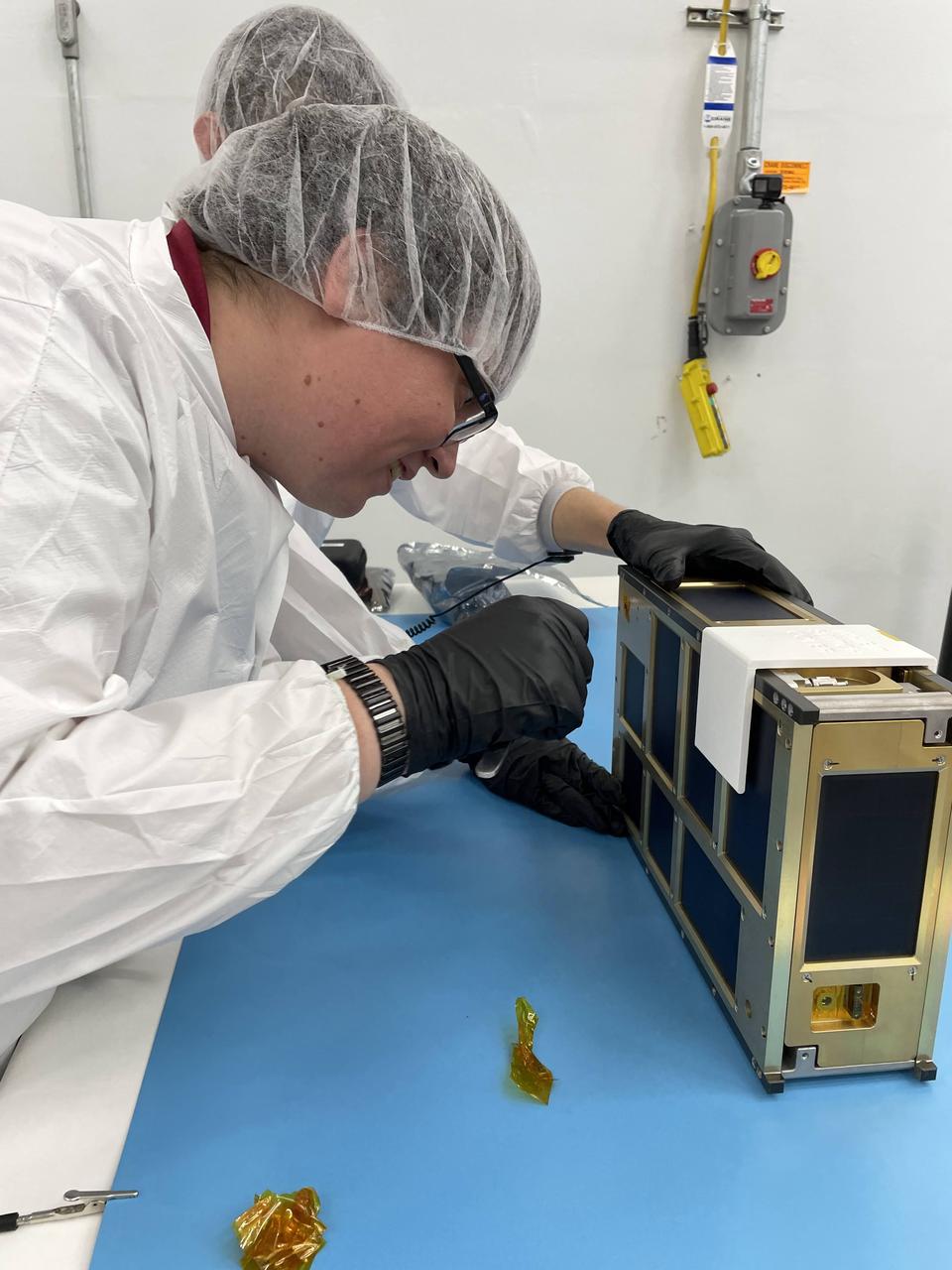
NASA engineer Jacob Nunez-Kearny removes the foreign object debris (FOD) cover from the propulsion system on the agency’s CubeSat R5 Spacecraft 4 (R5-S4) at Firefly Aerospace’s Payload Processing Facility at Vandenberg Space Force Base, California on Wednesday, April 24, 2024. The spacecraft will soon be integrated for launch aboard the company’s Alpha rocket, as part of launch services provided for NASA's CubeSat Launch Initiative and Educational Launch of Nanosatellites 43 mission in support of the agency ’s Venture-Class Launch Services Demonstration 2 contract .
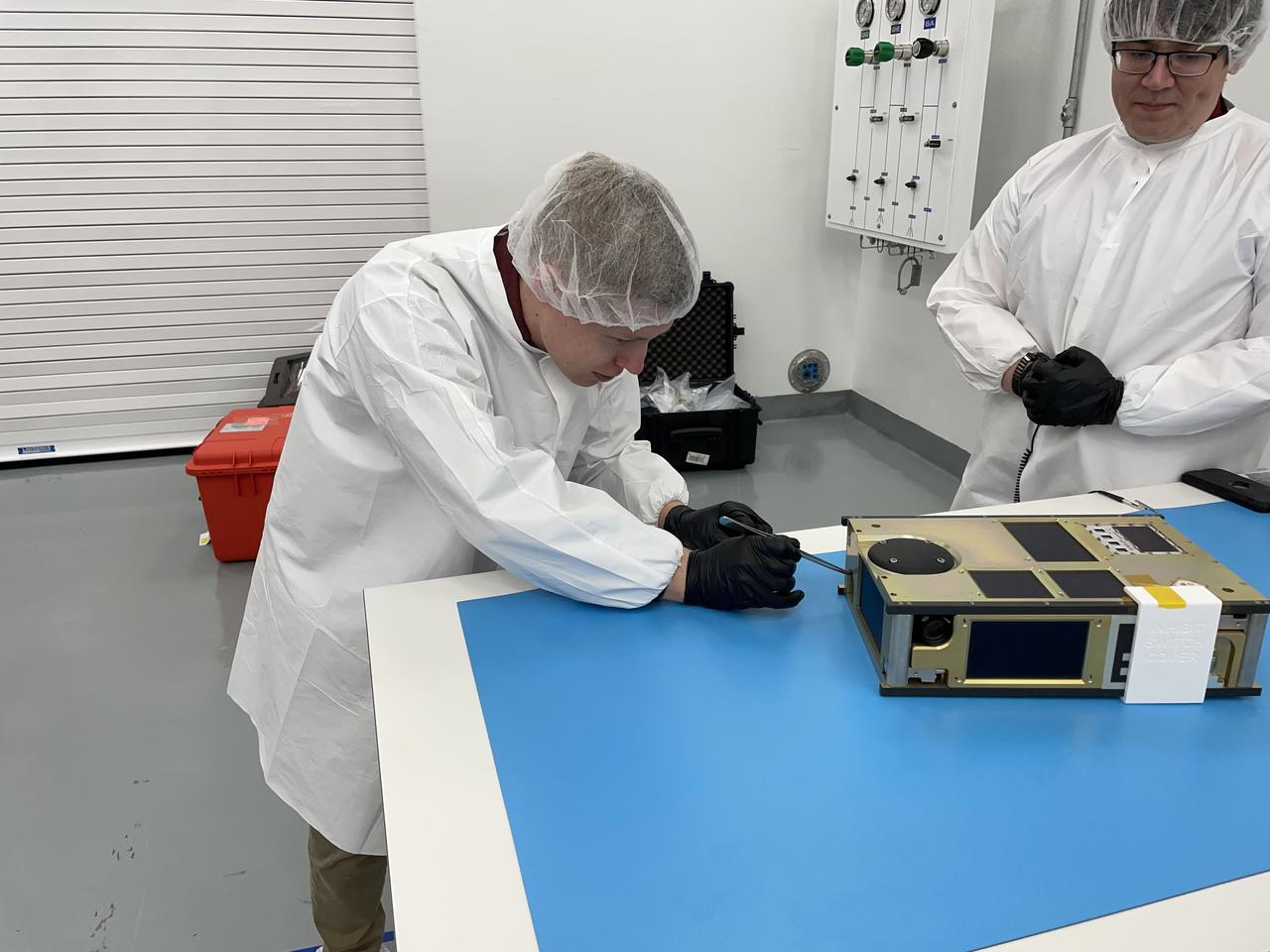
From left, NASA engineer James Berck removes the foreign object debris (FOD) cover from the relative navigation camera on the agency’s CubeSat R5 Spacecraft 4 (R5-S4) while NASA engineer Jacob Nunez-Kearny observes, at Firefly Aerospace’s Payload Processing Facility at Vandenberg Space Force Base, California on Wednesday, April 24, 2024. The spacecraft will soon be integrated for launch aboard the company’s Alpha rocket, as part of launch services provided for NASA's CubeSat Launch Initiative and Educational Launch of Nanosatellites 43 mission in support of the agency ’s Venture-Class Launch Services Demonstration 2 contract.
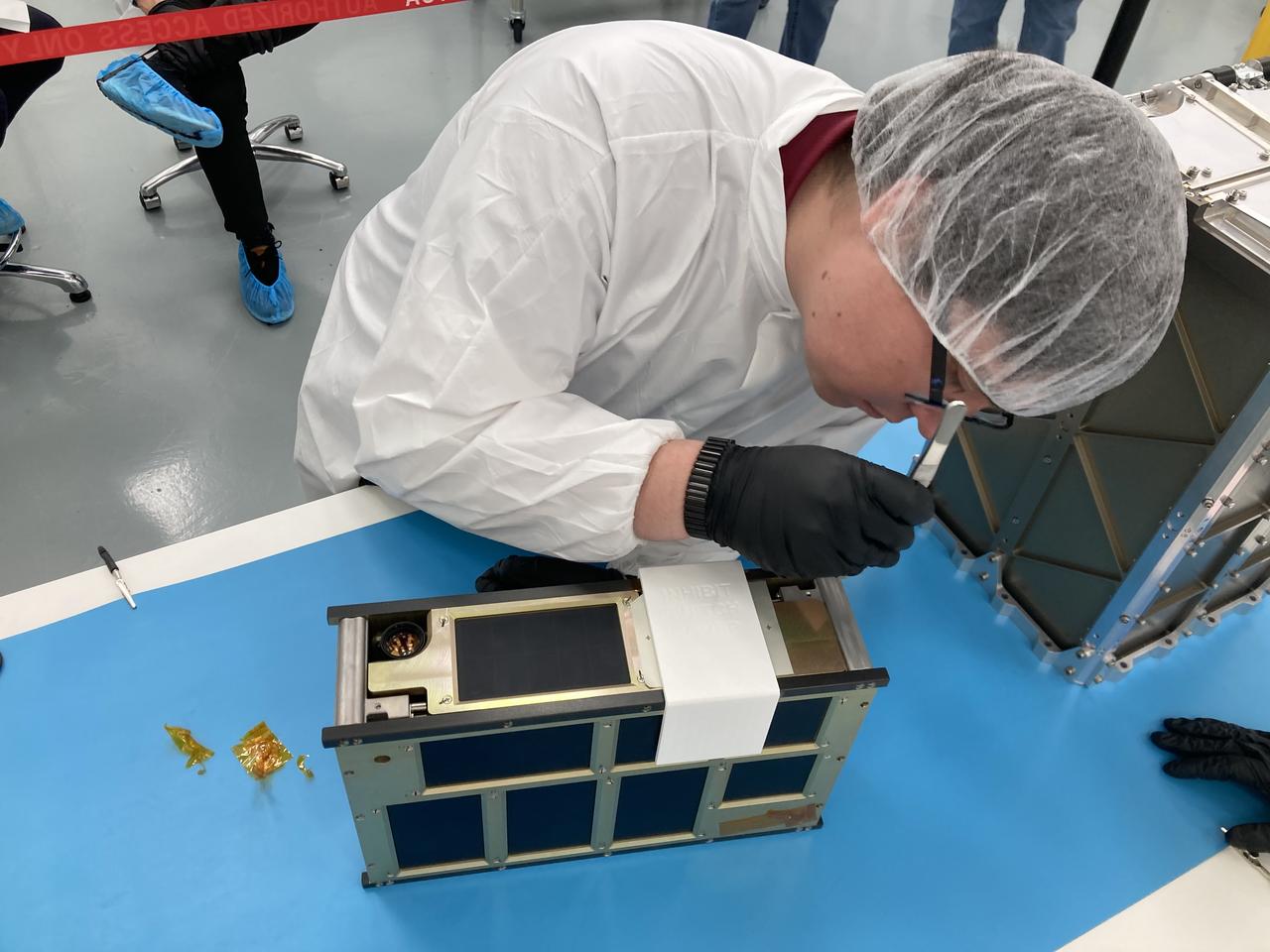
NASA engineer Jacob Nunez-Kearny removes foreign object debris (FOD) cover from the propulsion system on the agency’s CubeSat R5 Spacecraft 4 (R5-S4) at Firefly Aerospace’s Payload Processing Facility at Vandenberg Space Force Base, California on Wednesday, April 24, 2024. The spacecraft will soon be integrated for launch aboard the company’s Alpha rocket, as part of launch services provided for NASA's CubeSat Launch Initiative and Educational Launch of Nanosatellites 43 mission in support of the agency ’s Venture-Class Launch Services Demonstration 2 contract.
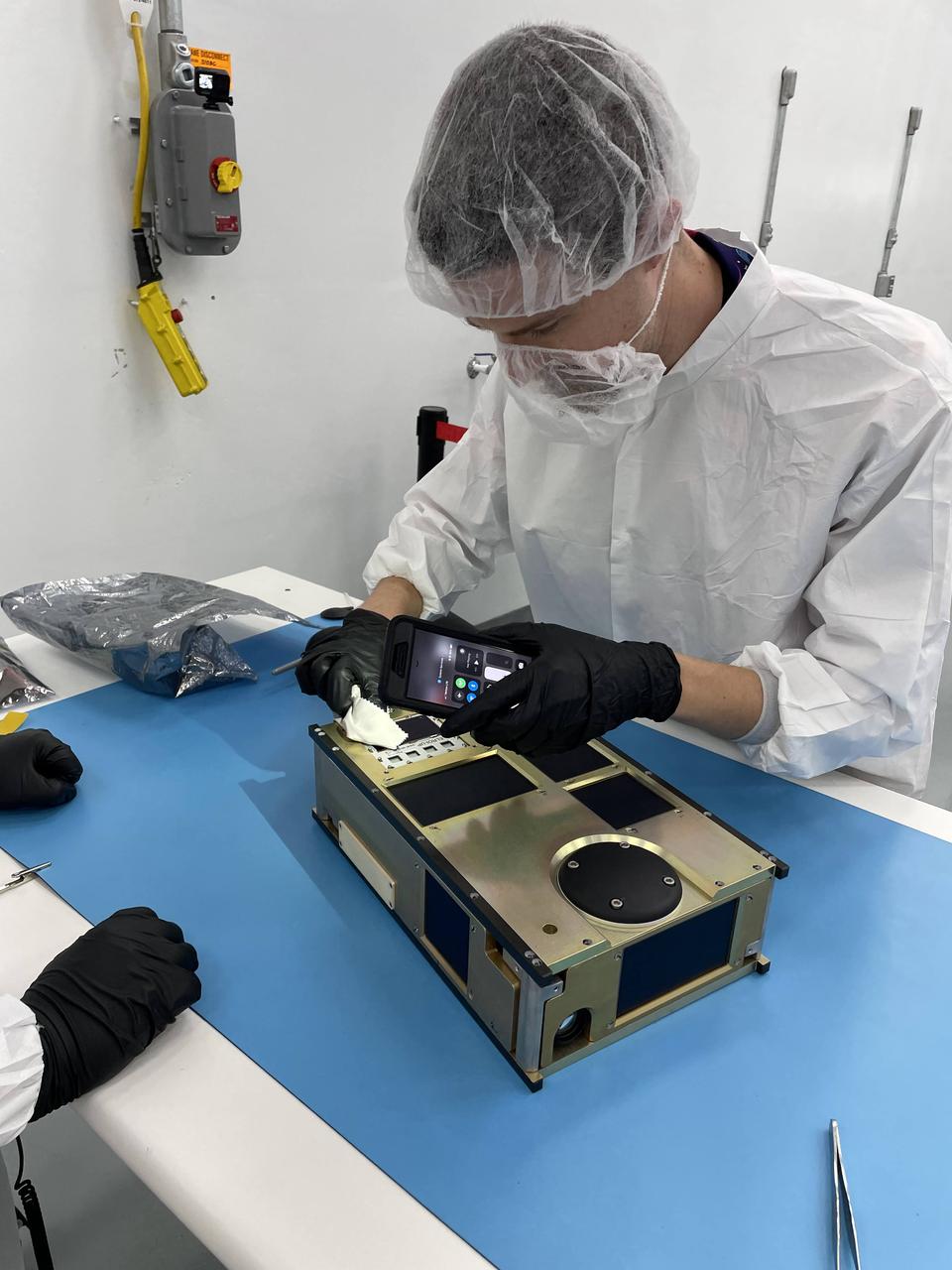
NASA engineer Sam Pedrotty performs final cleaning of Los Alamos National Laboratory’s (LANL’s) Extremely Low Resource Optical Identifier (ELROI) on the agency’s CubeSat R5 Spacecraft 4 (R5-S4) at Firefly Aerospace’s Payload Processing Facility at Vandenberg Space Force Base, California on Wednesday, April 24, 2024. The spacecraft will soon be integrated for launch aboard the company’s Alpha rocket, as part of launch services provided for NASA's CubeSat Launch Initiative and Educational Launch of Nanosatellites 43 mission in support of the agency ’s Venture-Class Launch Services Demonstration 2 contract.
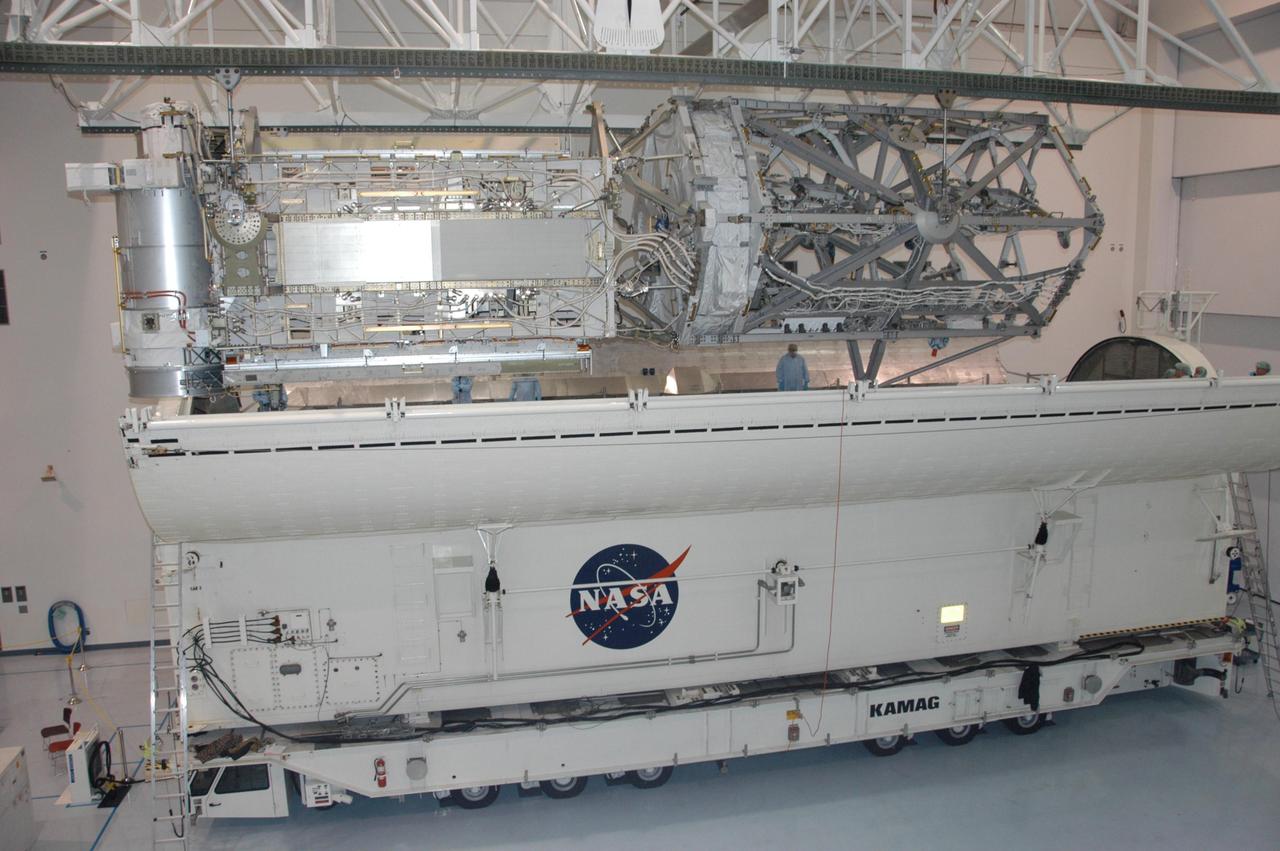
KENNEDY SPACE CENTER, FLA. -- In the Space Station Processing Facility, an overhead crane lowers the S3/S4 integrated truss toward the open doors of the payload canister. After it is stowed in the canister, the S3/S4 truss will be transported to the launch pad. The truss is the payload on mission STS-117, targeted for launch on March 15. Photo credit: NASA/George Shelton
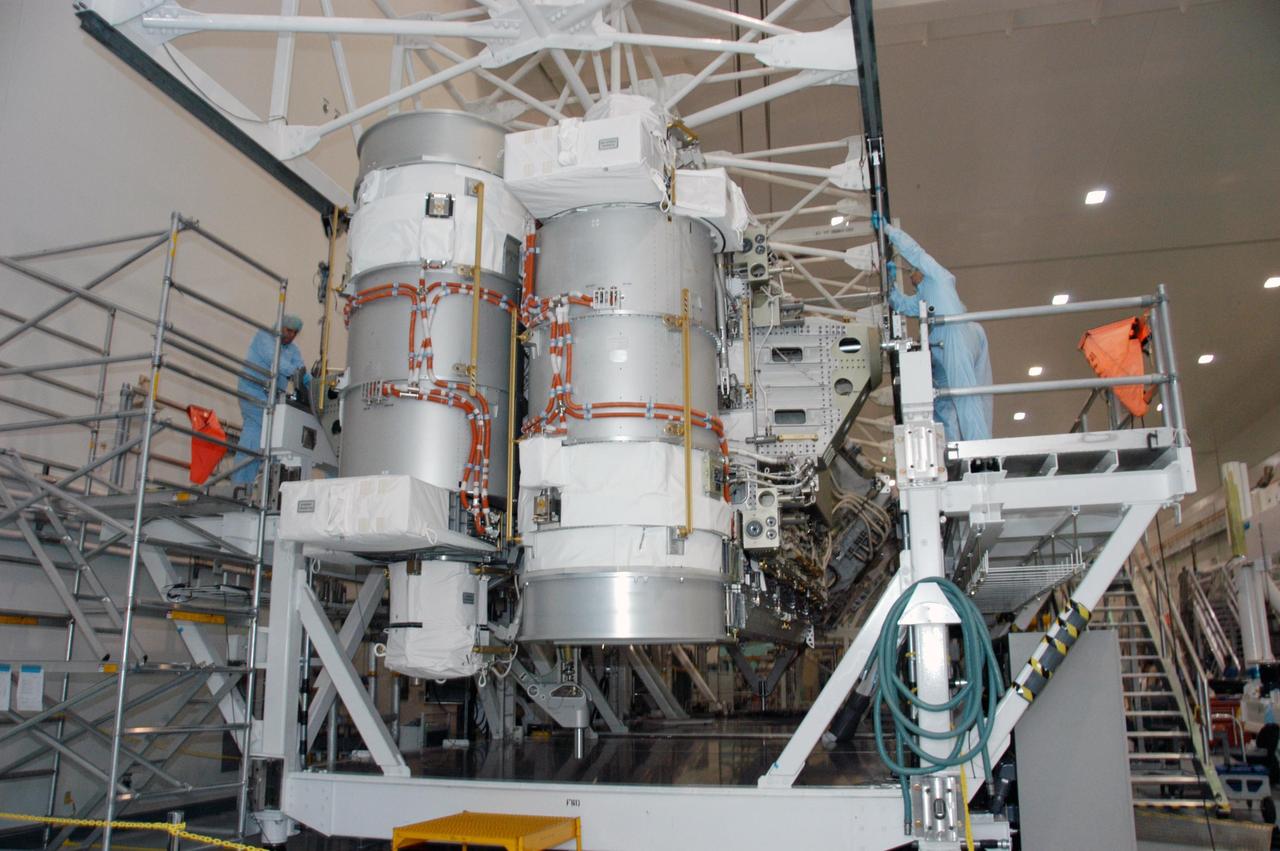
KENNEDY SPACE CENTER, FLA. -- In the Space Station Processing Facility, workers attach an overhead crane to the S3/S4 integrated truss in order to move it to the payload canister. After it is stowed in the canister, the S3/S4 truss will be transported to the launch pad. The truss is the payload on mission STS-117, targeted for launch on March 15. Photo credit: NASA/George Shelton
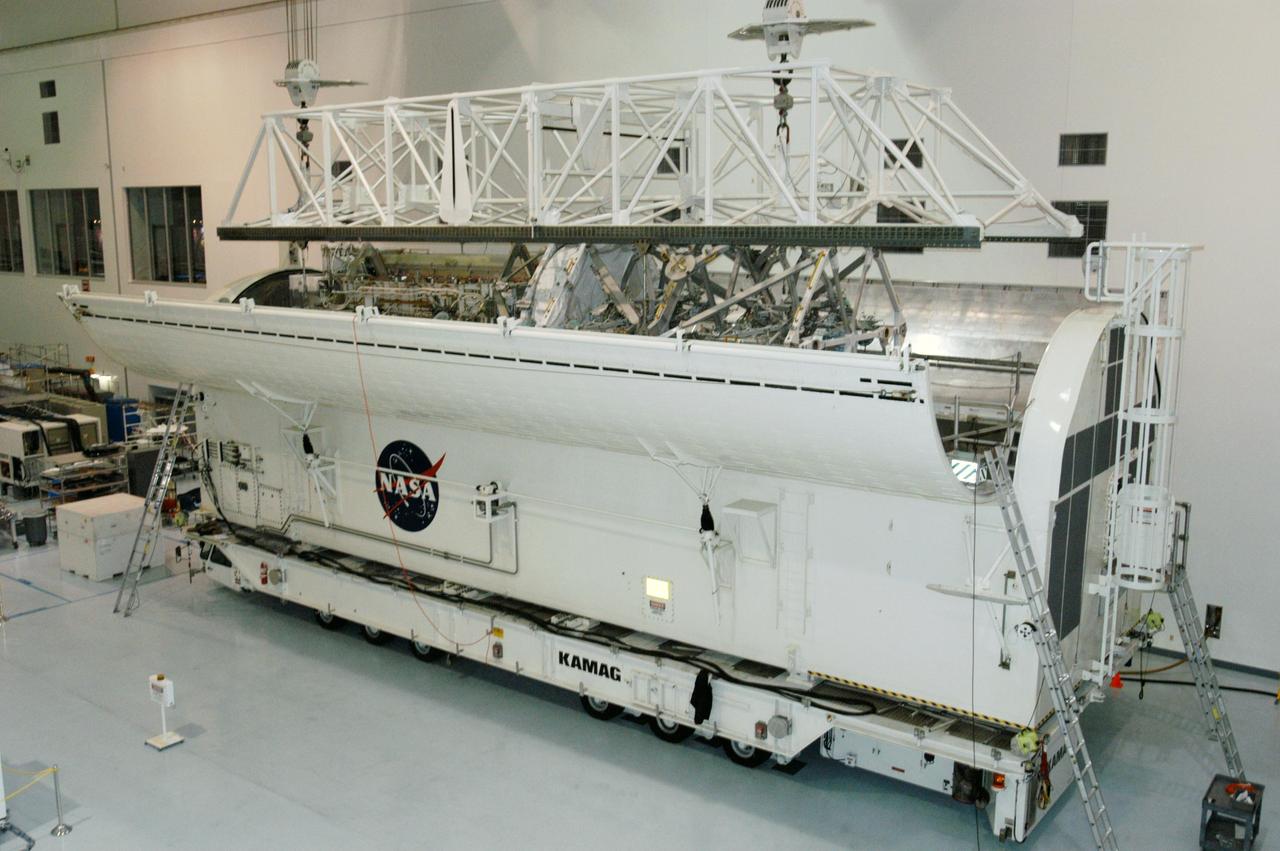
KENNEDY SPACE CENTER, FLA. -- In the Space Station Processing Facility, an overhead crane lowers the S3/S4 integrated truss into the open bay of the payload canister. After it is stowed in the canister, the S3/S4 truss will be transported to the launch pad. The truss is the payload on mission STS-117, targeted for launch on March 15. Photo credit: NASA/George Shelton
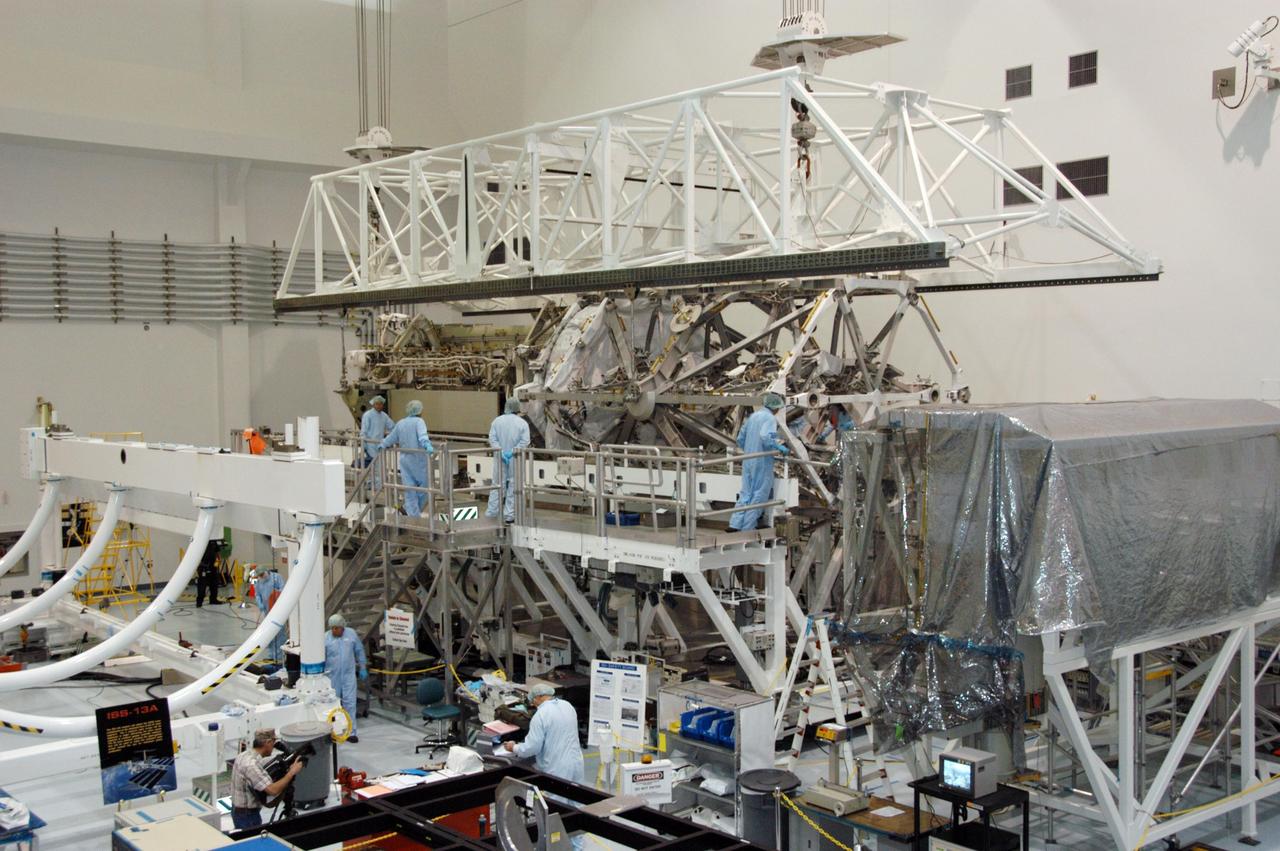
KENNEDY SPACE CENTER, FLA. -- In the Space Station Processing Facility, workers attach an overhead crane to the S3/S4 integrated truss in order to move it to the payload canister. After it is stowed in the canister, the S3/S4 truss will be transported to the launch pad. The truss is the payload on mission STS-117, targeted for launch on March 15. Photo credit: NASA/George Shelton
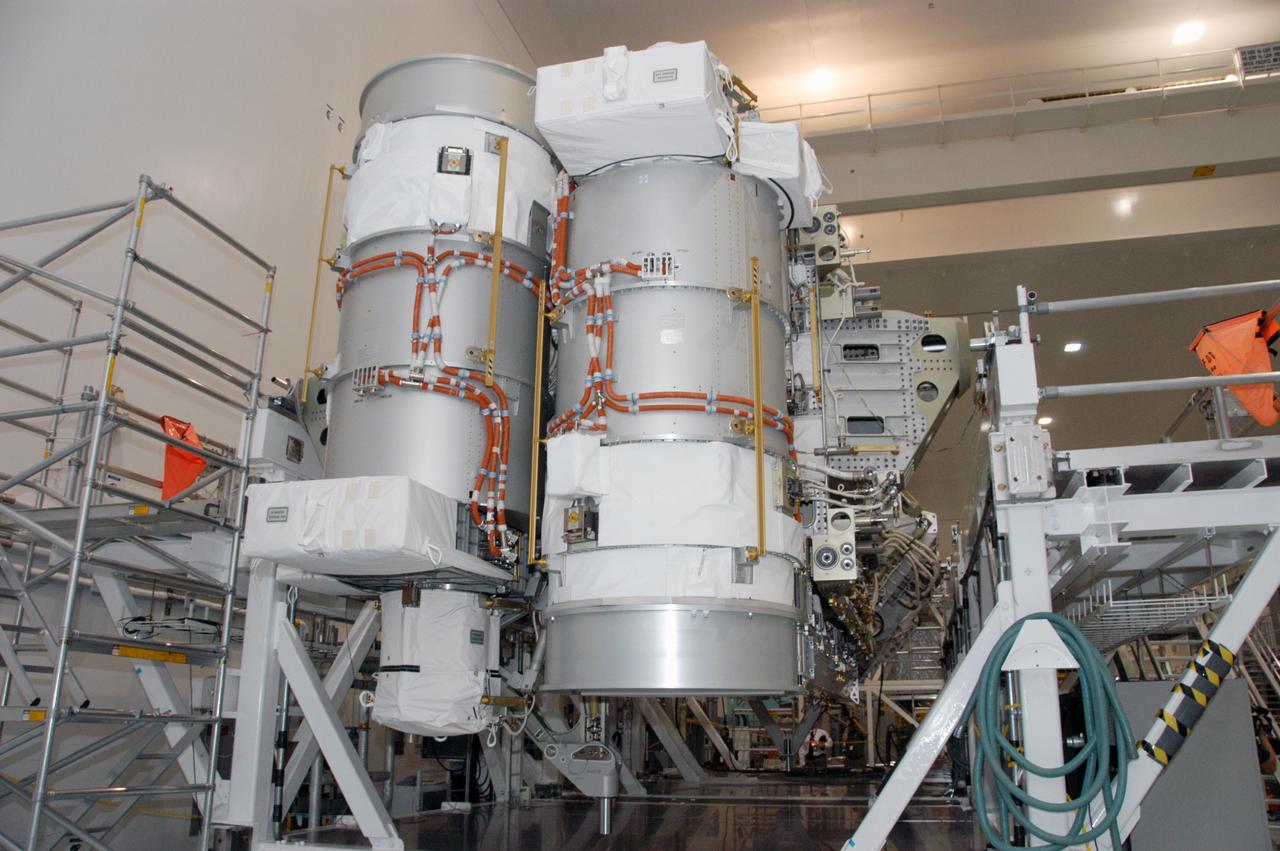
In the Space Station Processing Facility, the S3/S4 integrated truss segment is on display for the media. The starboard 3/4 truss segment will launch aboard Space Shuttle Atlantis on mission STS-117, targeted for March 15. The element will be added to the 11-segment integrated truss structure, the station's backbone. The integrated truss structure eventually will span more than 300 feet. The S3/S4 truss has two large solar arrays and will provide one-fourth of the total power generation for the completed station.
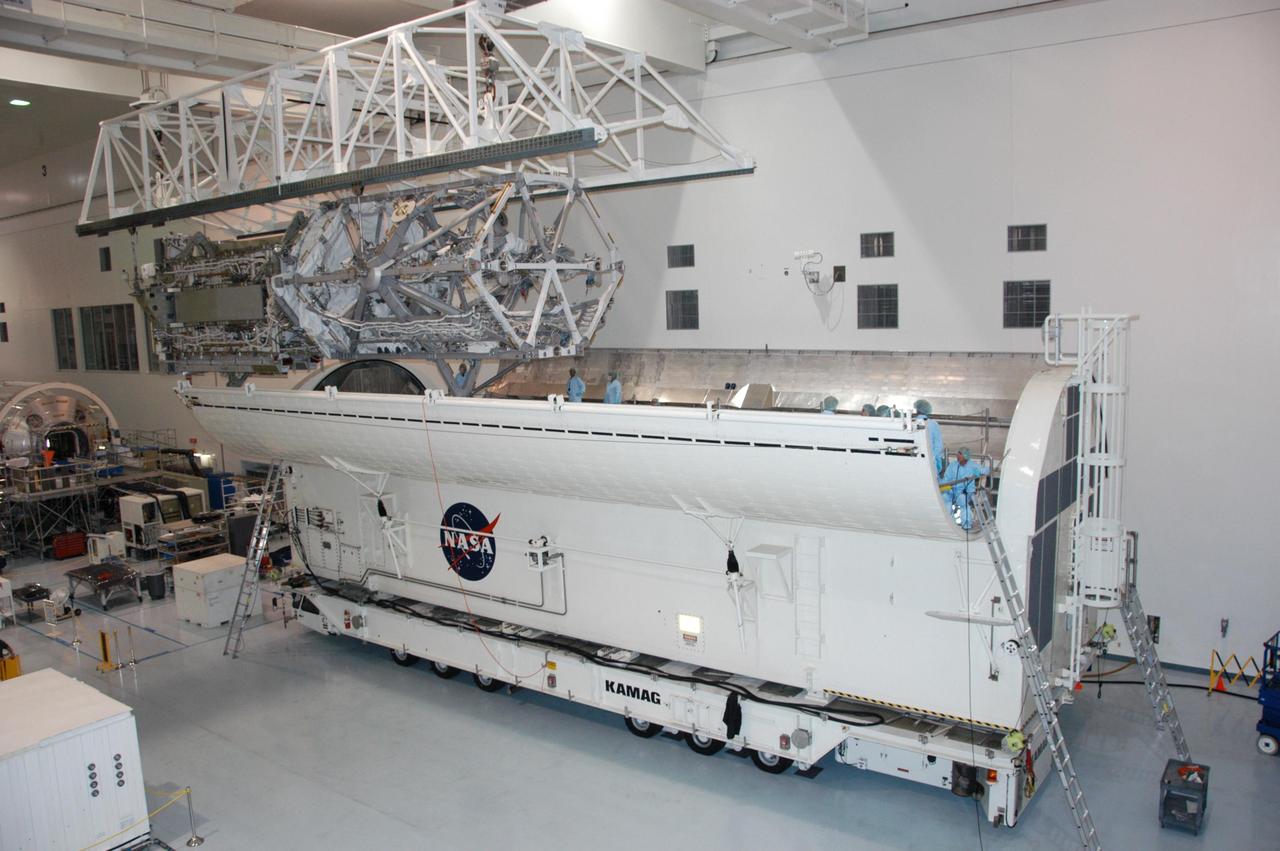
KENNEDY SPACE CENTER, FLA. -- In the Space Station Processing Facility, an overhead crane moves the S3/S4 integrated truss toward the open doors of the payload canister. After it is stowed in the canister, the S3/S4 truss will be transported to the launch pad. The truss is the payload on mission STS-117, targeted for launch on March 15. Photo credit: NASA/George Shelton
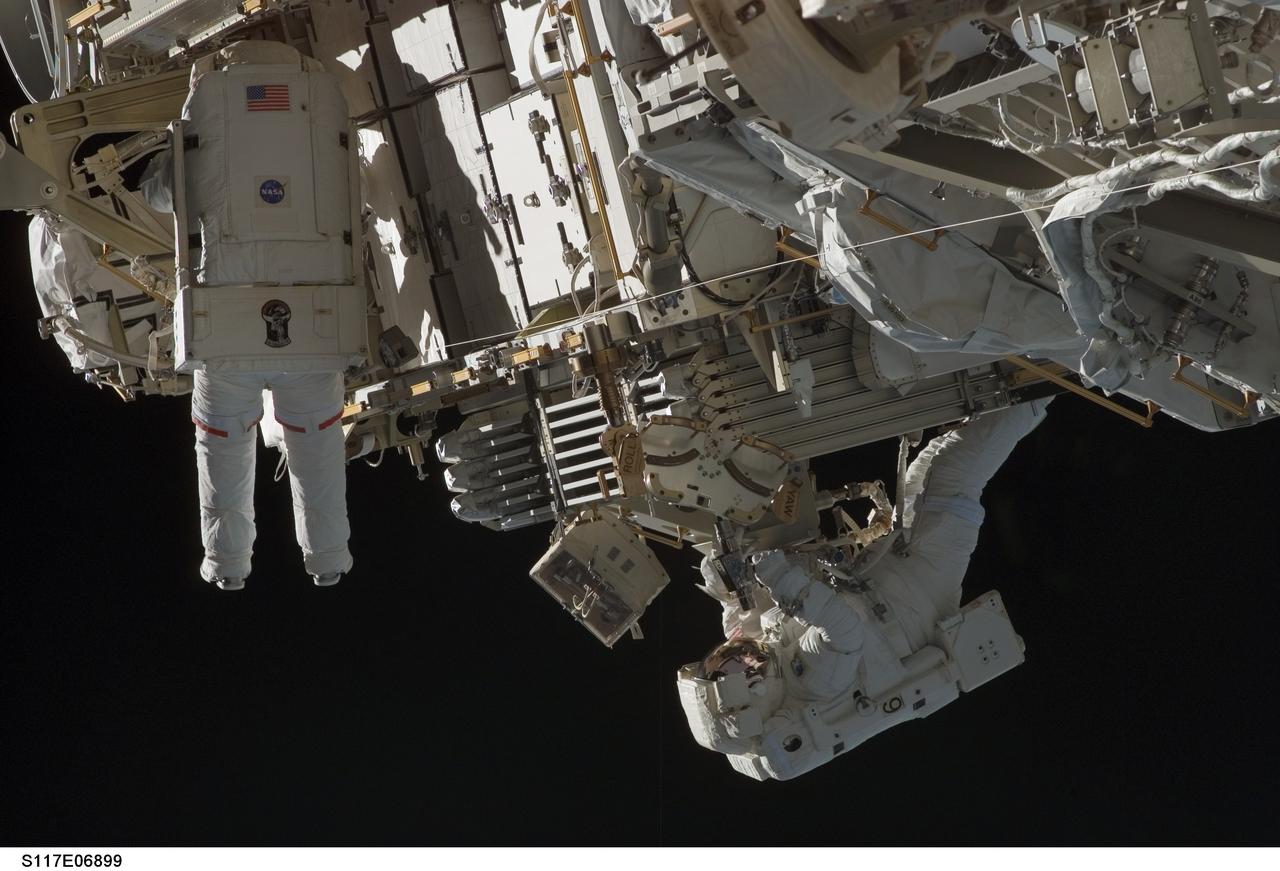
S117-E-06899 (11 June 2007) --- Astronauts Jim Reilly (left) and John "Danny" Olivas (bottom right), both STS-117 mission specialists, participate in the mission's first planned session of extravehicular activity (EVA), as construction resumes on the International Space Station. Among other tasks, Reilly and Olivas connected power, data and cooling cables between S1 and S3; released the launch restraints from and deployed the four solar array blanket boxes on S4 and released the cinches and winches holding the photovoltaic radiator on S4.
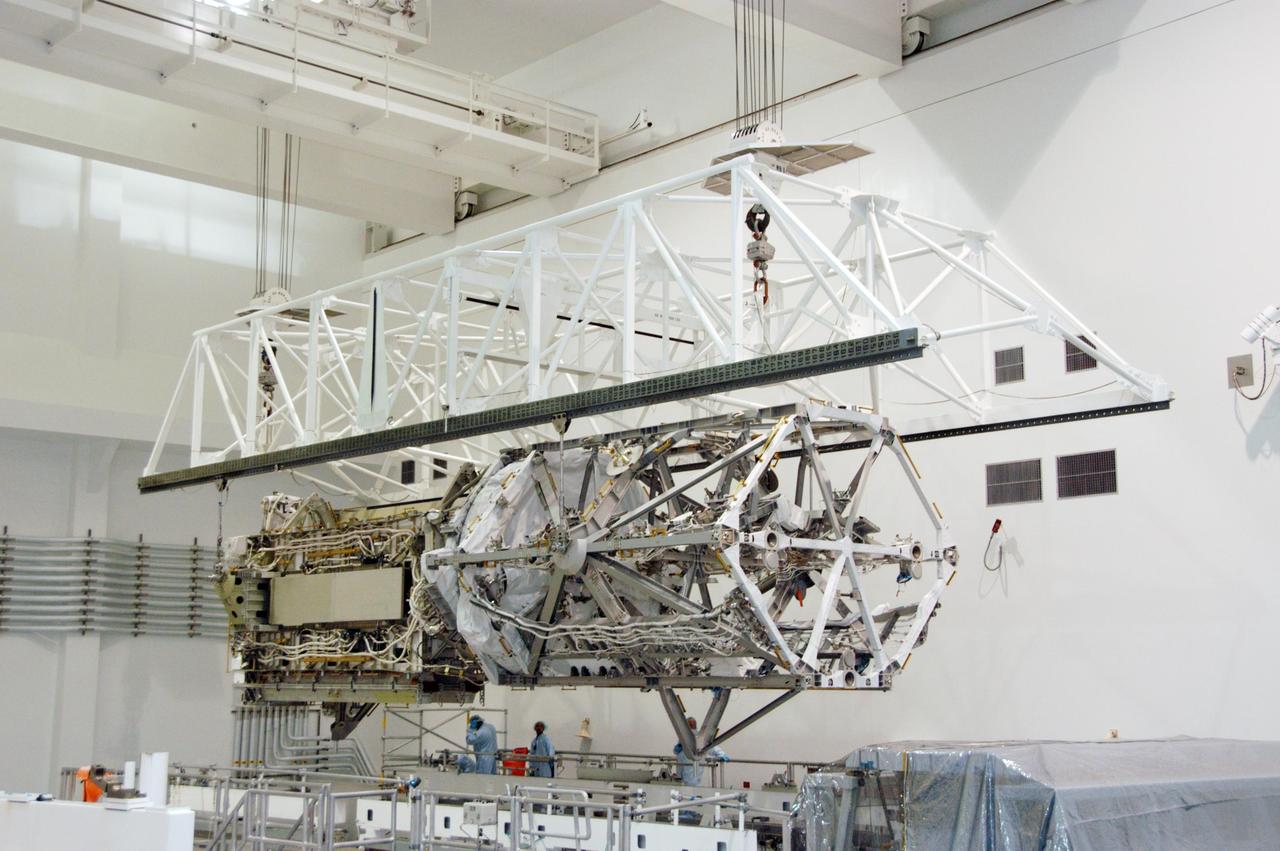
KENNEDY SPACE CENTER, FLA. -- In the Space Station Processing Facility, an overhead crane lifts the S3/S4 integrated truss from its workstand in order to move it to the payload canister. After it is stowed in the canister, the S3/S4 truss will be transported to the launch pad. The truss is the payload on mission STS-117, targeted for launch on March 15. Photo credit: NASA/George Shelton
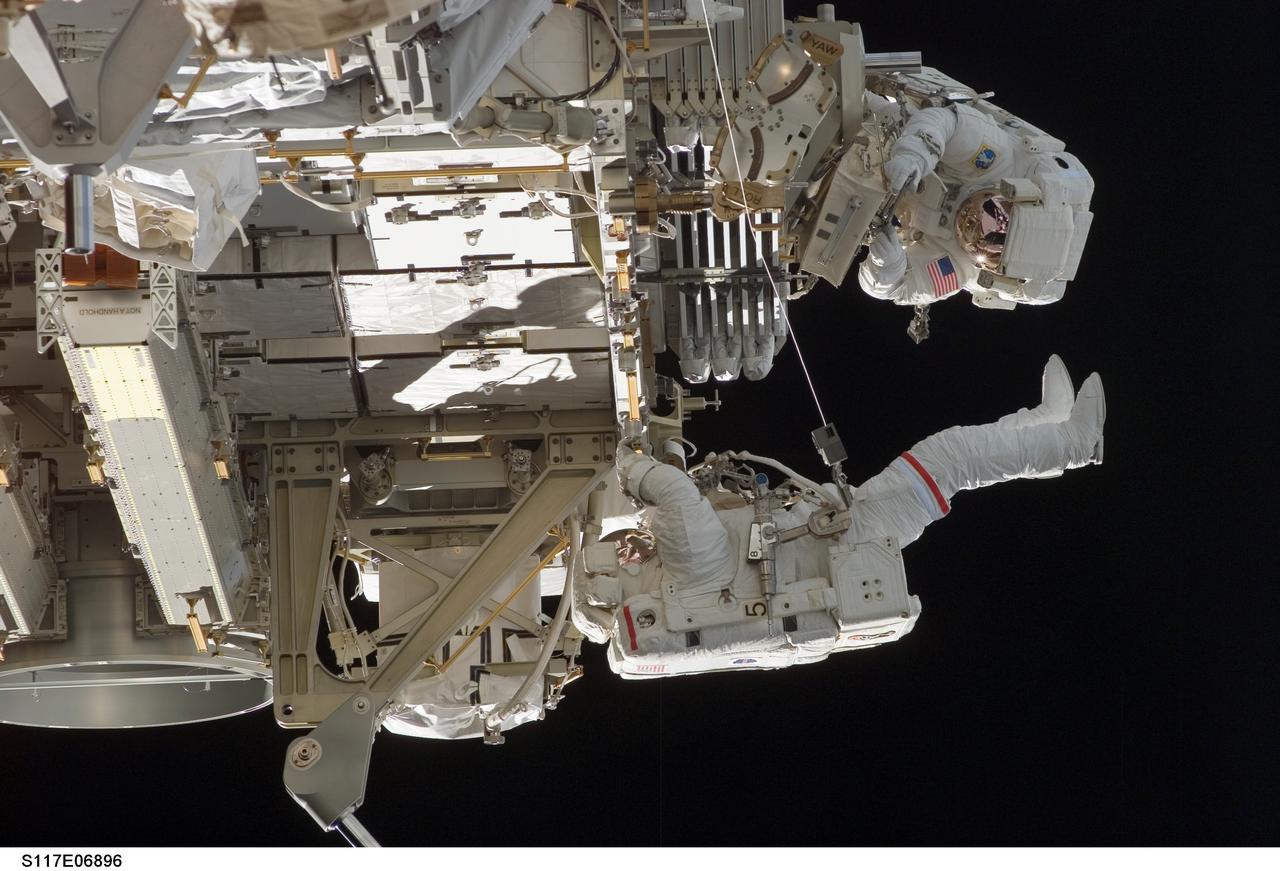
S117-E-06896 (11 June 2007) --- Astronauts Jim Reilly (bottom) and John "Danny" Olivas (top right), both STS-117 mission specialists, participate in the mission's first planned session of extravehicular activity (EVA), as construction resumes on the International Space Station. Among other tasks, Reilly and Olivas connected power, data and cooling cables between S1 and S3; released the launch restraints from and deployed the four solar array blanket boxes on S4 and released the cinches and winches holding the photovoltaic radiator on S4.

KENNEDY SPACE CENTER, FLA. -- In the Space Station Processing Facility, an overhead crane lowers the S3/S4 integrated truss into the open bay of the payload canister. After it is stowed in the canister, the S3/S4 truss will be transported to the launch pad. The truss is the payload on mission STS-117, targeted for launch on March 15. Photo credit: NASA/George Shelton
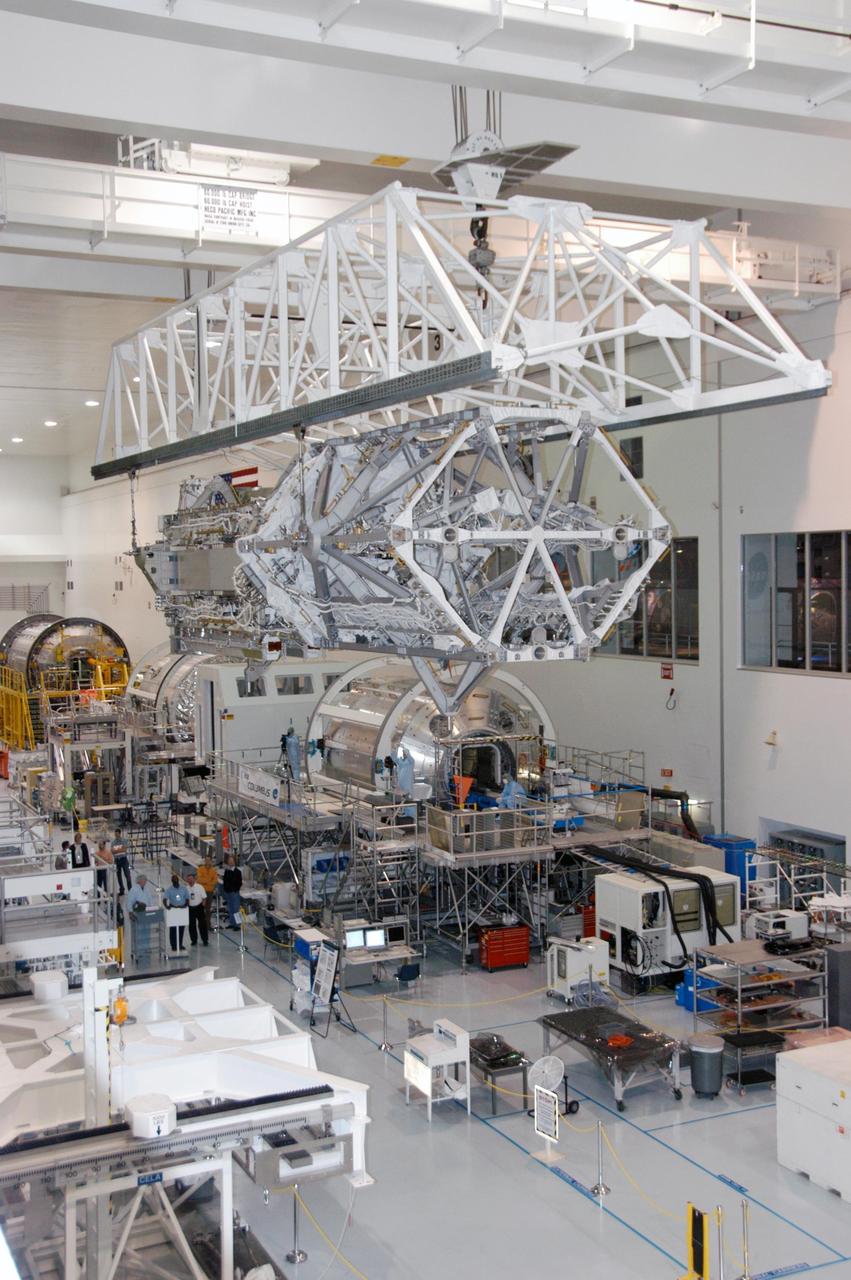
KENNEDY SPACE CENTER, FLA. -- In the Space Station Processing Facility, an overhead crane moves the S3/S4 integrated truss above the floor to a payload canister. Several space station modules can be seen at various points on the floor. After it is stowed in the canister, the S3/S4 truss will be transported to the launch pad. The truss is the payload on mission STS-117, targeted for launch on March 15. Photo credit: NASA/George Shelton
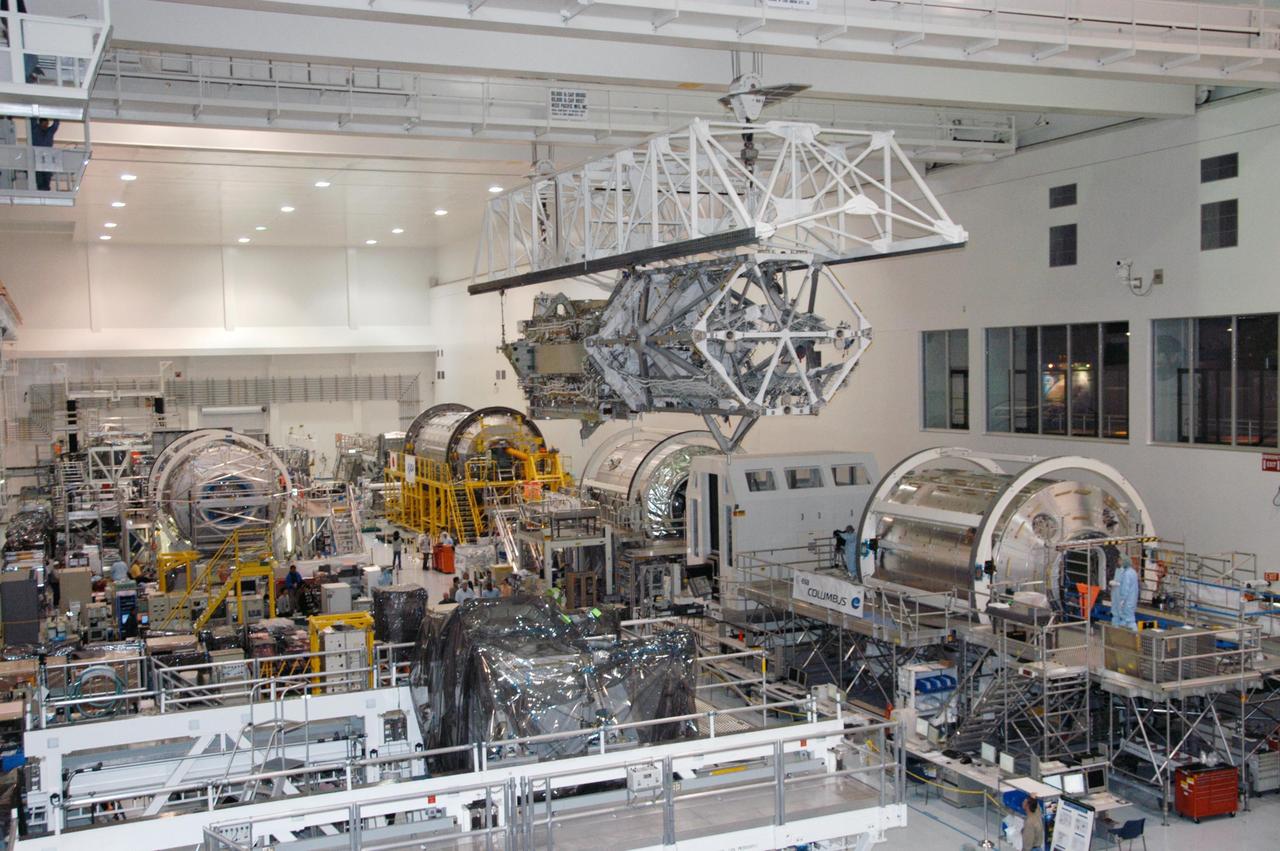
KENNEDY SPACE CENTER, FLA. -- In the Space Station Processing Facility, an overhead crane moves the S3/S4 integrated truss above the floor to a payload canister. Several space station modules can be seen at various points on the floor. After it is stowed in the canister, the S3/S4 truss will be transported to the launch pad. The truss is the payload on mission STS-117, targeted for launch on March 15. Photo credit: NASA/George Shelton
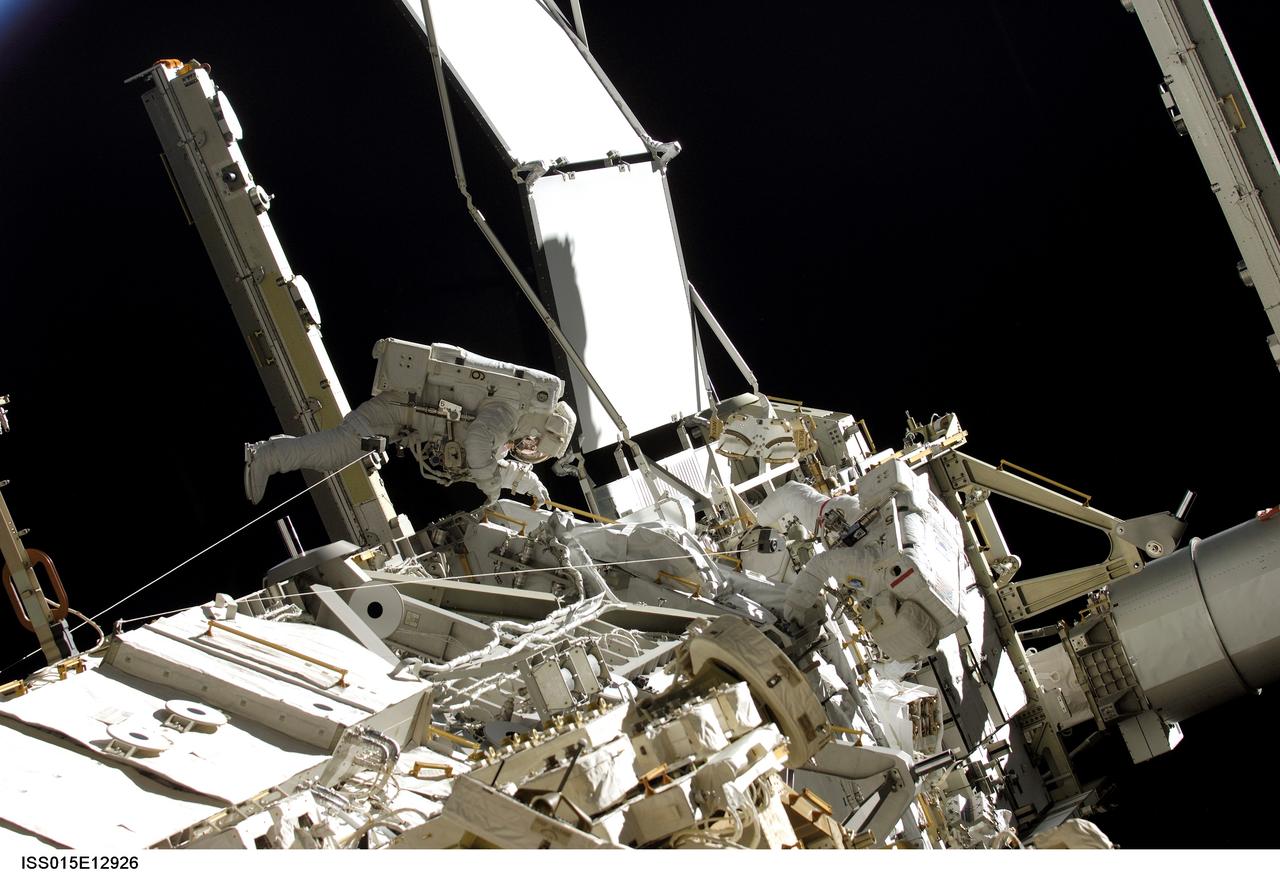
ISS015-E-12926 (11 June 2007) --- Astronauts Jim Reilly (right) and John "Danny" Olivas, both STS-117 mission specialists, participate in the mission's first planned session of extravehicular activity (EVA), as construction continues on the International Space Station. Among other tasks, Reilly and Olivas connected power, data and cooling cables between S1 and S3; released the launch restraints from and deployed the four solar array blanket boxes on S4 and released the cinches and winches holding the photovoltaic radiator on S4.
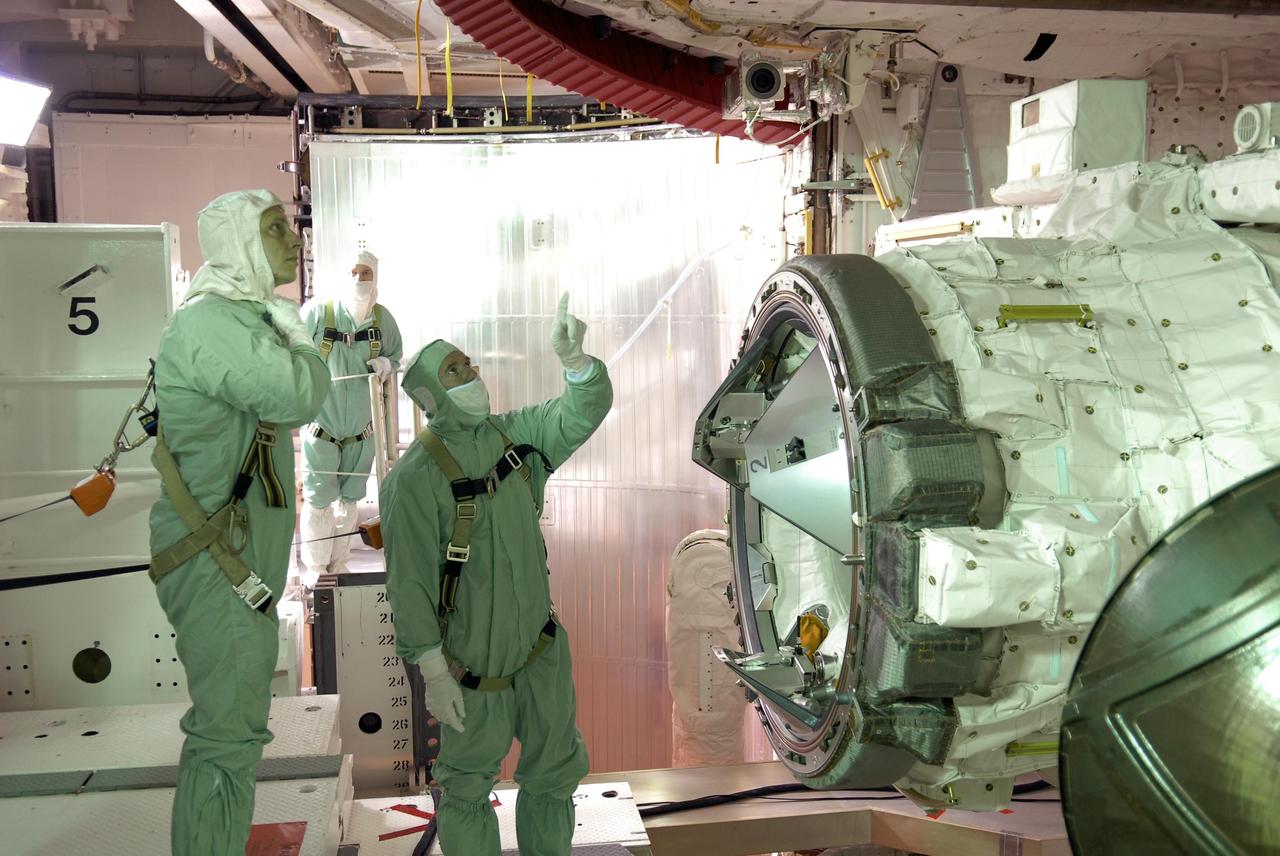
KENNEDY SPACE CENTER, FLA. -- After their arrival at KSC, STS-117 crew members take part in a payload bay walkdown on Launch Pad 39A to look at the cargo in Space Shuttle Atlantis. Seen here are Mission Specialists Patrick Forrester (left) and James Reilly. The payload includes the S3/S4 integrated truss structure for the International Space Station. The payload includes the S3/S4 integrated truss structure for the International Space Station. STS-117 is scheduled to launch at 7:38 p.m. June 8. During the 11-day mission and three spacewalks, the crew will work with flight controllers at NASA's Johnson Space Center in Houston to install the 17-ton segment on the station's girder-like truss and deploy the set of solar arrays, S3/S4. The mission will increase the space station's power capability in preparation for the arrival of new science modules from the European and Japanese space agencies. Photo credit: NASA/Kim Shiflett
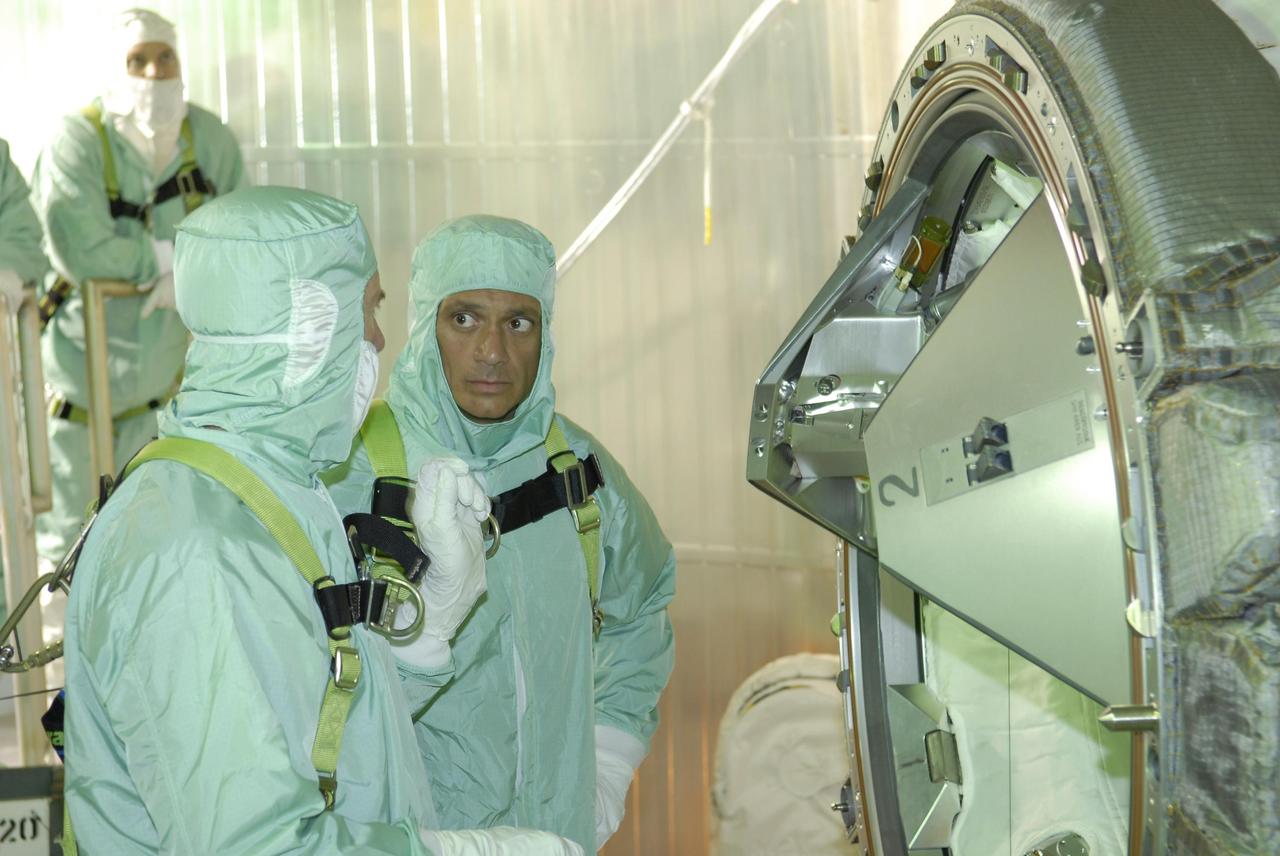
KENNEDY SPACE CENTER, FLA. -- After their arrival at KSC, STS-117 crew members take part in a payload bay walkdown on Launch Pad 39A to look at the cargo in Space Shuttle Atlantis. The payload includes the S3/S4 integrated truss structure for the International Space Station. The payload includes the S3/S4 integrated truss structure for the International Space Station. STS-117 is scheduled to launch at 7:38 p.m. June 8. During the 11-day mission and three spacewalks, the crew will work with flight controllers at NASA's Johnson Space Center in Houston to install the 17-ton segment on the station's girder-like truss and deploy the set of solar arrays, S3/S4. The mission will increase the space station's power capability in preparation for the arrival of new science modules from the European and Japanese space agencies. Photo credit: NASA/Kim Shiflett
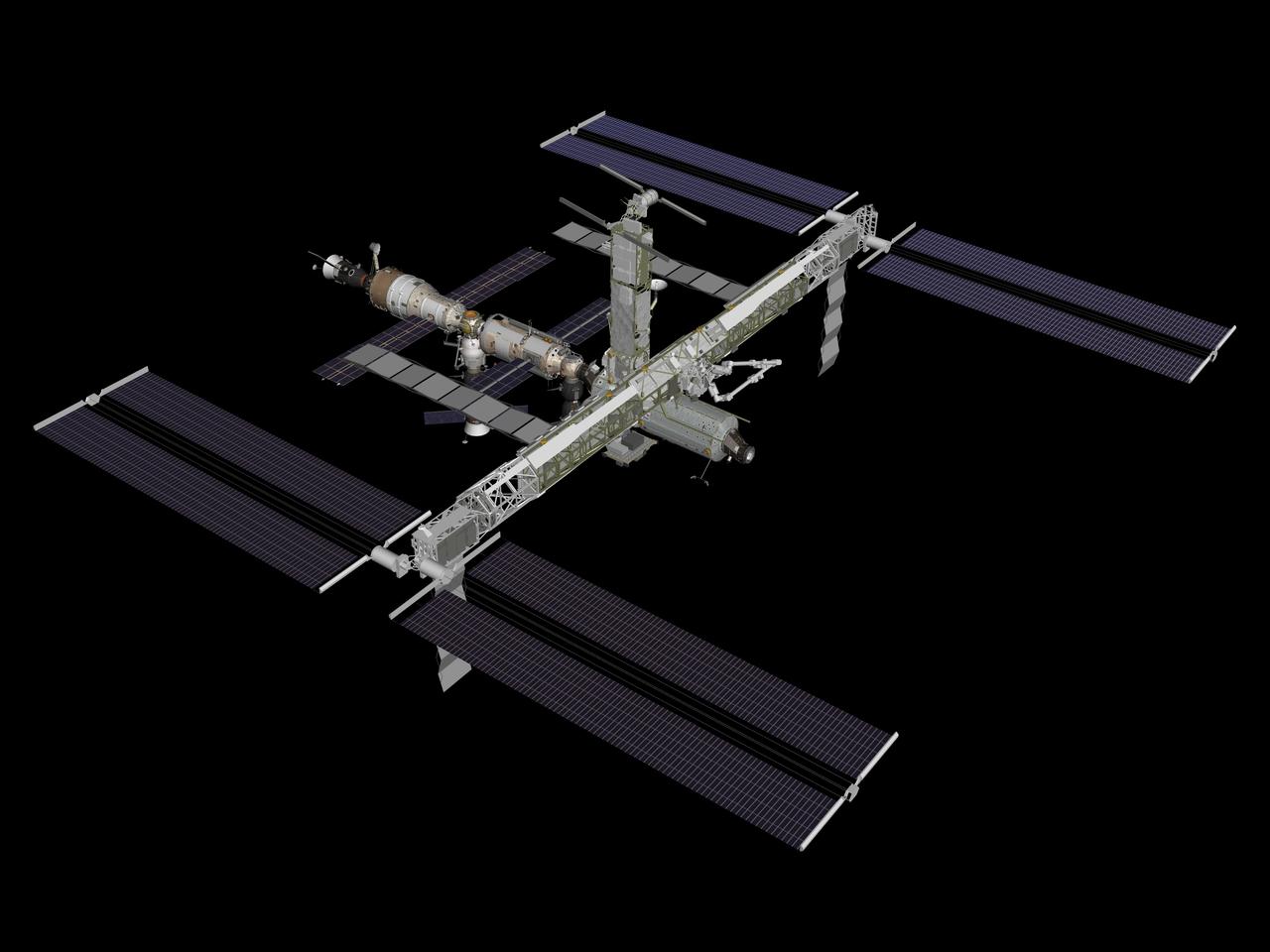
JSC2006-E-38951 (August 2006) --- Computer generated graphic of the International Space Station configuration after STS-117/13A with the addition of S3/S4 integrated truss segments.
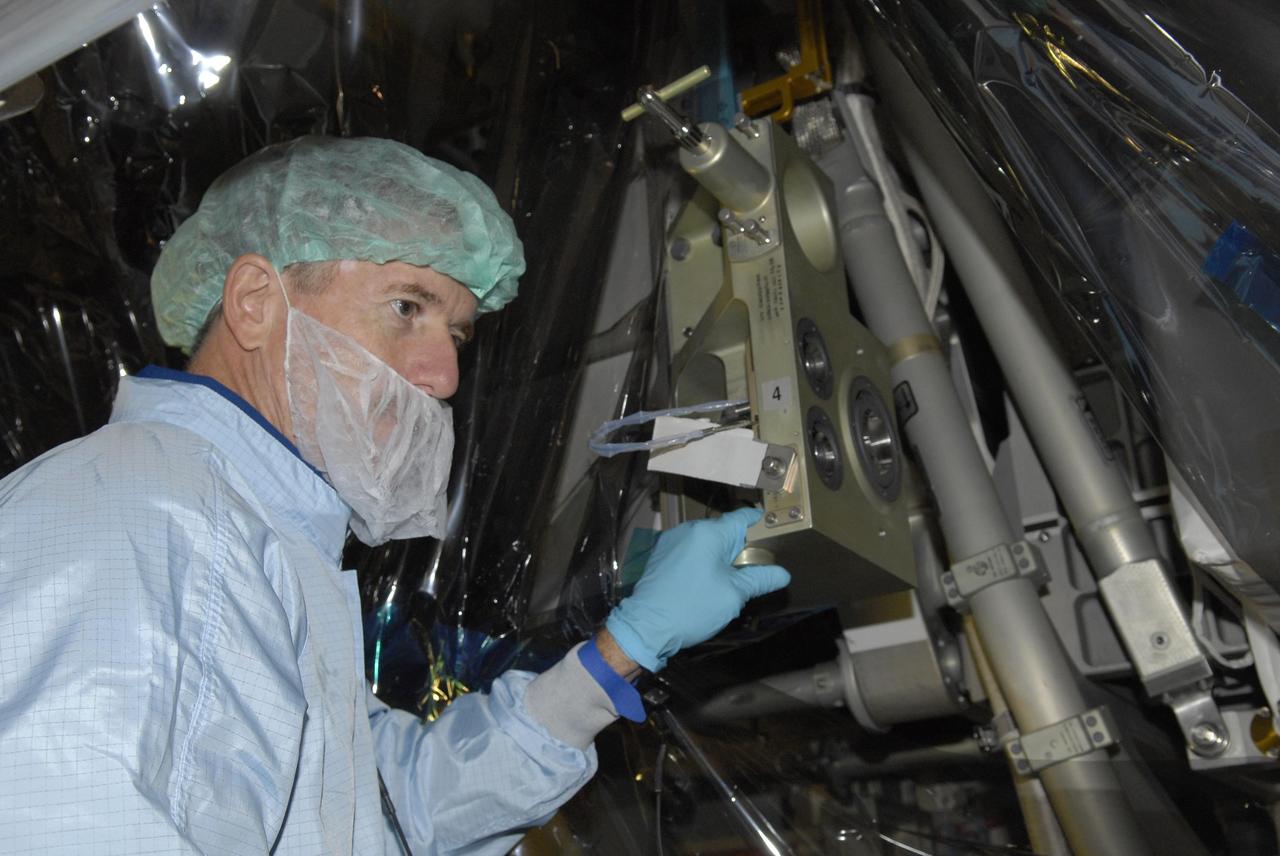
KENNEDY SPACE CENTER, FLA. -- In the Space Station Processing Facility, STS-117 Mission Specialist James Reilly examines the S3/S4 Integrated Truss Segment during Crew Equipment Interface Test (CEIT) activities. A CEIT provides the astronauts opportunities to become familiar with equipment and hardware with which they will be working during their mission. The crew of mission STS-117 will deliver and install the second and third starboard truss segments (S3/S4) and another pair of solar arrays and batteries during the Space Shuttle Program's 21st mission to the International Space Station. Launch of Space Shuttle Atlantis is scheduled for March 2007. Photo credit: NASA/Kim Shiflett
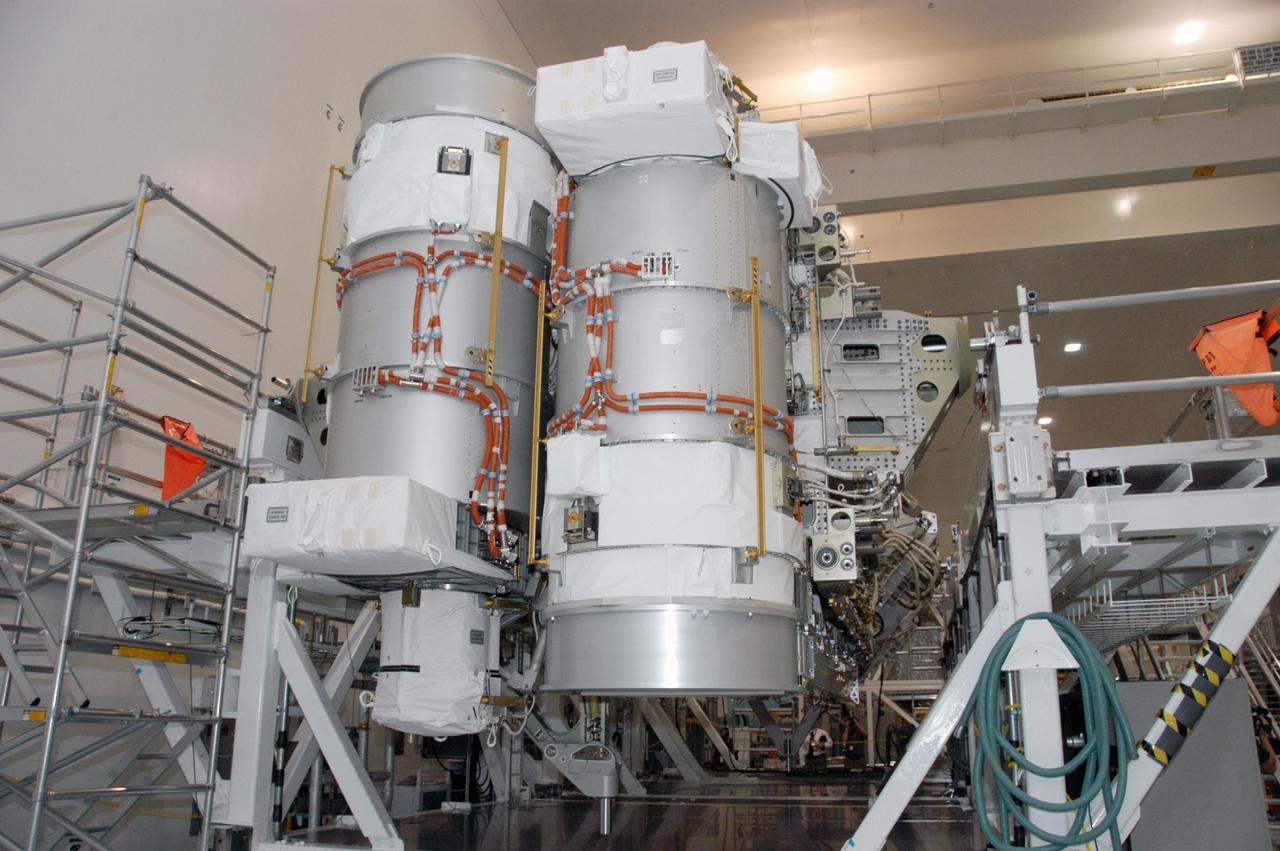
KENNEDY SPACE CENTER, FLA. -- In the Space Station Processing Facility, the S3/S4 integrated truss segment is on display for the media. The starboard 3/4 truss segment will launch aboard Space Shuttle Atlantis on mission STS-117, targeted for March 15. The element will be added to the 11-segment integrated truss structure, the station's backbone. The integrated truss structure eventually will span more than 300 feet. The S3/S4 truss has two large solar arrays and will provide one-fourth of the total power generation for the completed station. Photo credit: NASA/George Shelton
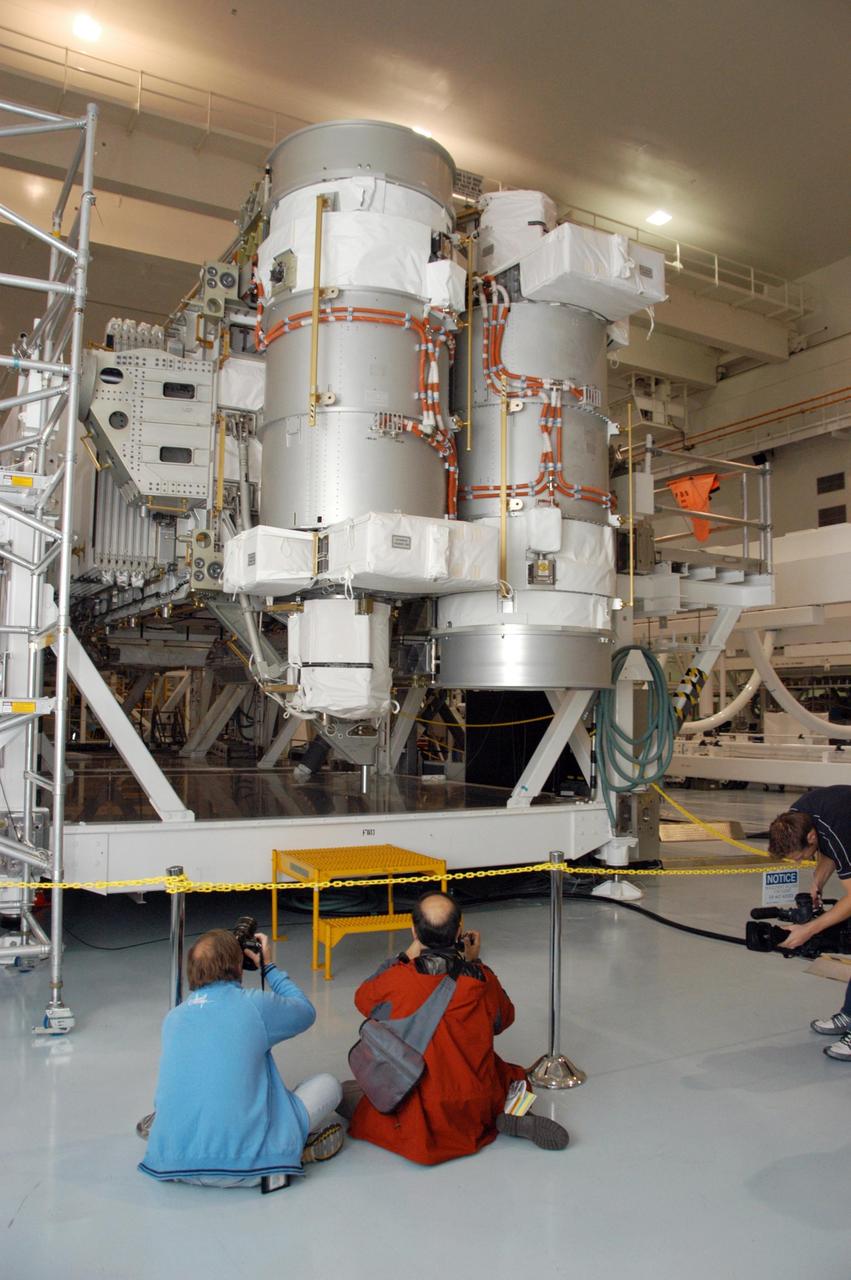
KENNEDY SPACE CENTER, FLA. -- In the Space Station Processing Facility, photographers take advantage of a media showcase to get photos of the S3/S4 integrated truss segment. The starboard 3/4 truss segment will launch aboard Space Shuttle Atlantis on mission STS-117, targeted for March 15. The element will be added to the 11-segment integrated truss structure, the station's backbone. The integrated truss structure eventually will span more than 300 feet. The S3/S4 truss has two large solar arrays and will provide one-fourth of the total power generation for the completed station. Photo credit: NASA/George Shelton
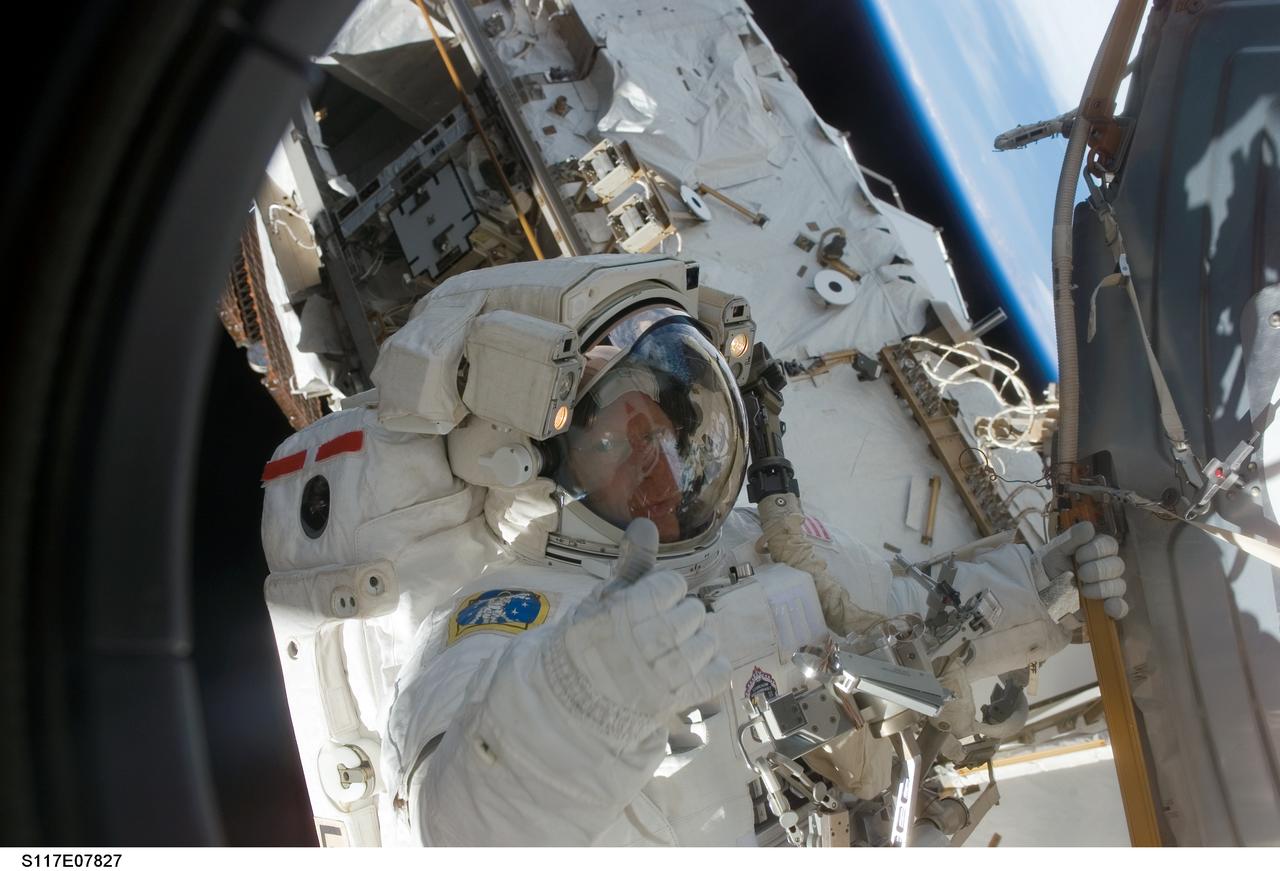
S117-E-07827 (17 June 2007) --- Astronaut Patrick Forrester, STS-117 mission specialist, participates in the mission's fourth and final session of extravehicular activity (EVA), as construction continues on the International Space Station. Among other tasks, Forrester and astronaut Steven Swanson (out of frame), mission specialist, continued activation of the station's new starboard 3 and 4 (S3/S4) truss segment; checked out the Drive Lock Assembly 2, one of two mechanisms that will drive rotation of the S3/S4 Truss Solar Alpha Rotary Joint (SARJ); and removed the final launch restraints on the SARJ.
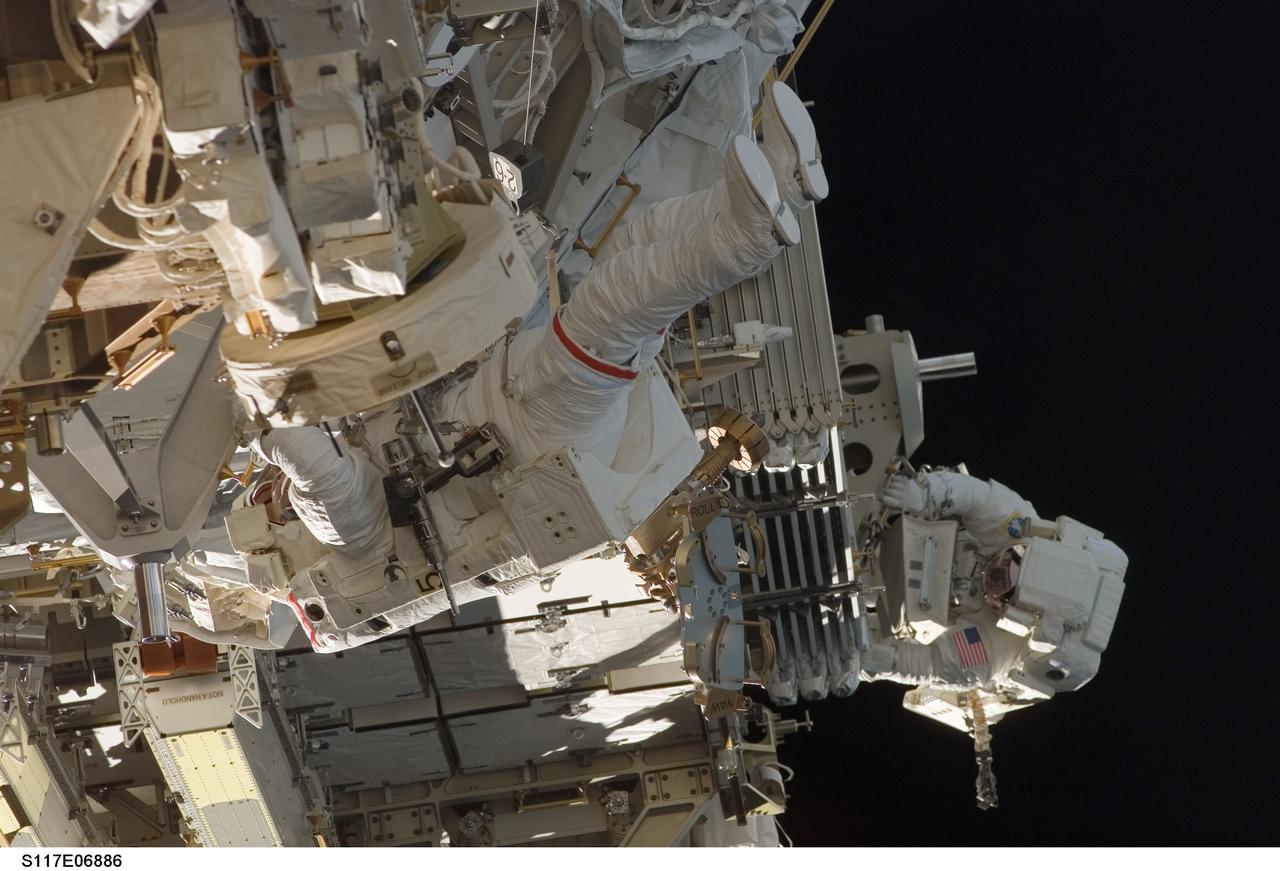
S117-E-06886 (11 June 2007) --- Astronauts Jim Reilly (center frame) and John "Danny" Olivas (bottom right), both STS-117 mission specialists, participate in the mission's first planned session of extravehicular activity (EVA), as construction resumes on the International Space Station. Among other tasks, Reilly and Olivas connected power, data and cooling cables between S1 and S3; released the launch restraints from and deployed the four solar array blanket boxes on S4 and released the cinches and winches holding the photovoltaic radiator on S4.
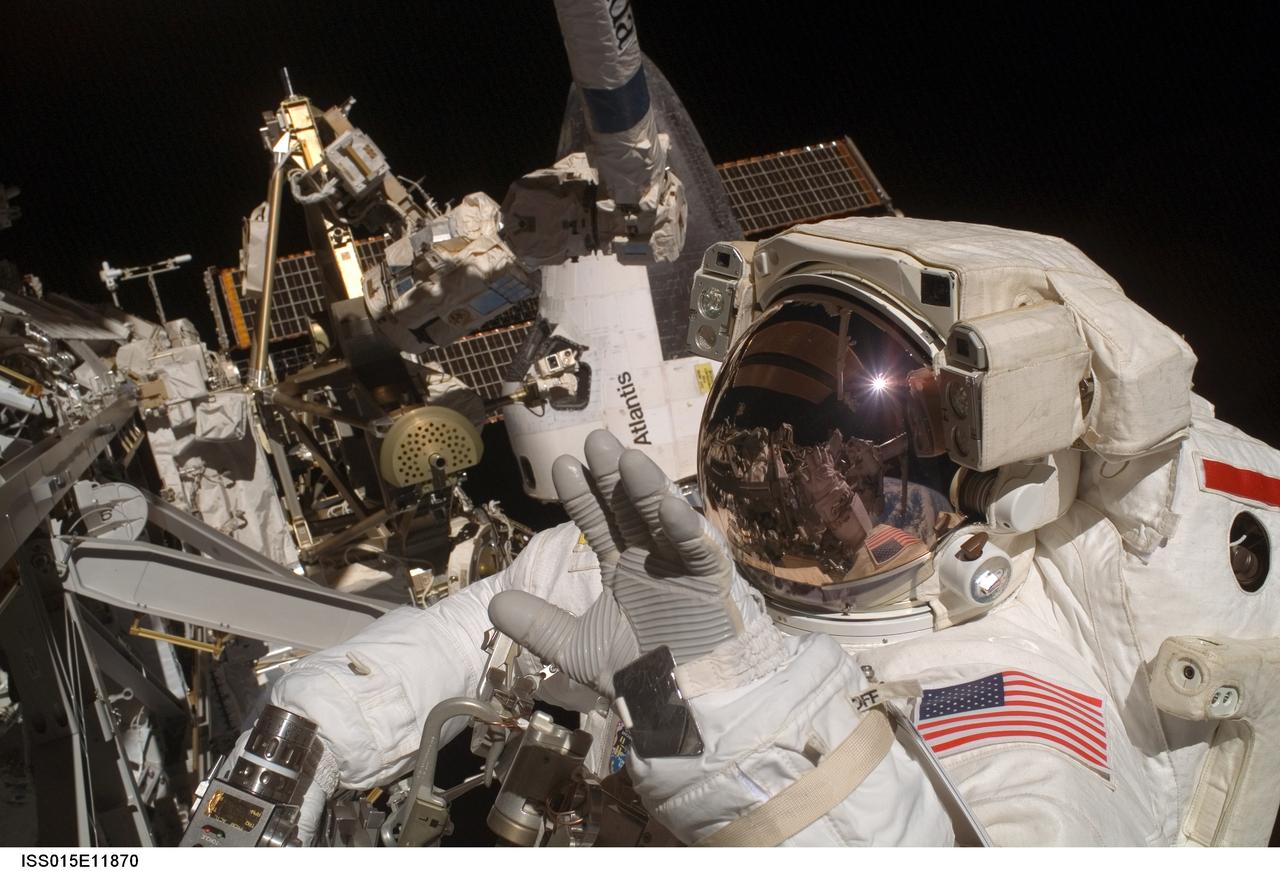
ISS015-E-11870 (11 June 2007) --- Astronauts Jim Reilly and John "Danny" Olivas (visible among Reilly's helmet reflections), both STS-117 mission specialists, participate in the mission's first planned session of extravehicular activity (EVA), as construction resumes on the International Space Station. Among other tasks, Reilly and Olivas connected power, data and cooling cables between S1 and S3; released the launch restraints from and deployed the four solar array blanket boxes on S4 and released the cinches and winches holding the photovoltaic radiator on S4. The crew cabin and nose of Space Shuttle Atlantis docked to the station is visible in the background.
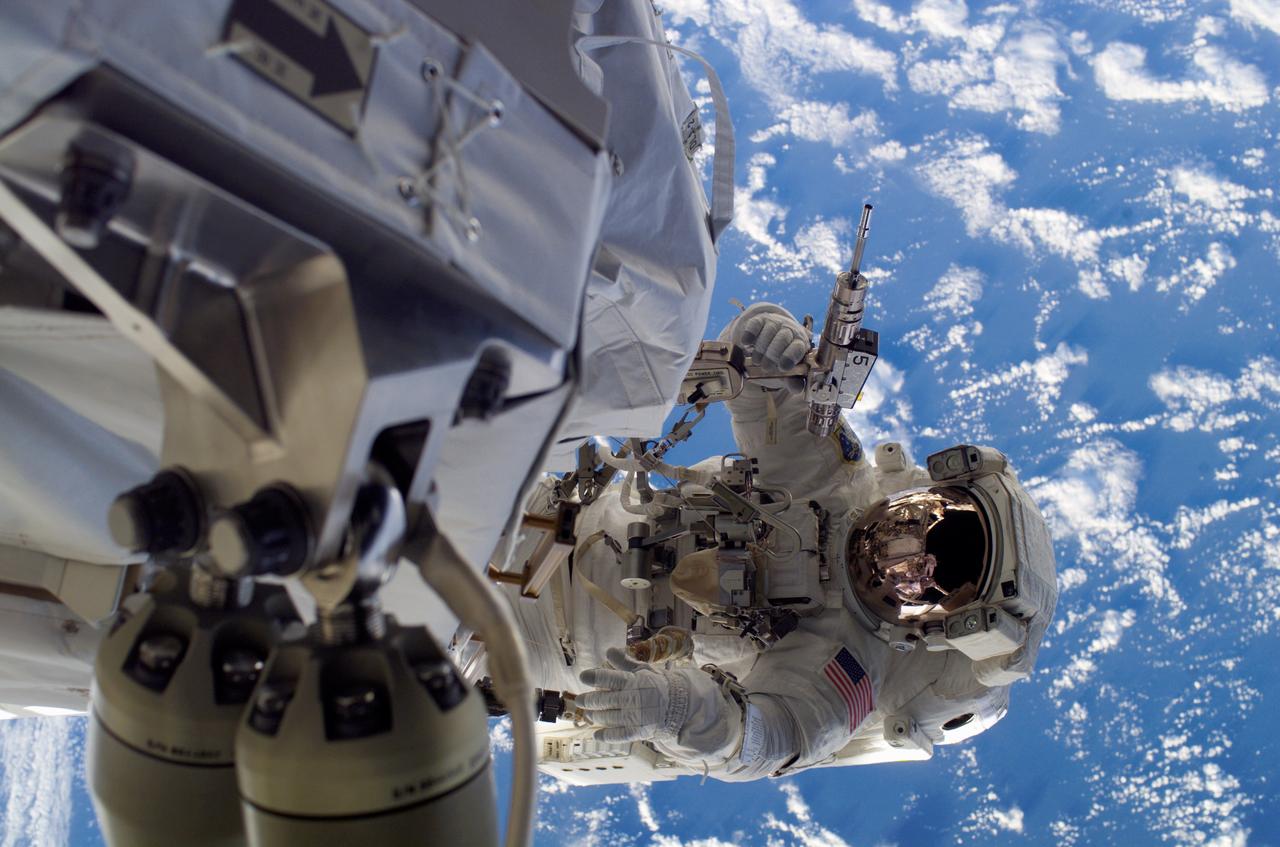
ISS015-E-11831 (11 June 2007) --- Astronauts John "Danny" Olivas and Jim Reilly (out of frame), both STS-117 mission specialists, participate in the mission's first planned session of extravehicular activity (EVA), as construction resumes on the International Space Station. Among other tasks, Reilly and Olivas connected power, data and cooling cables between S1 and S3; released the launch restraints from and deployed the four solar array blanket boxes on S4 and released the cinches and winches holding the photovoltaic radiator on S4. A blue and white Earth provided the backdrop for the scene.
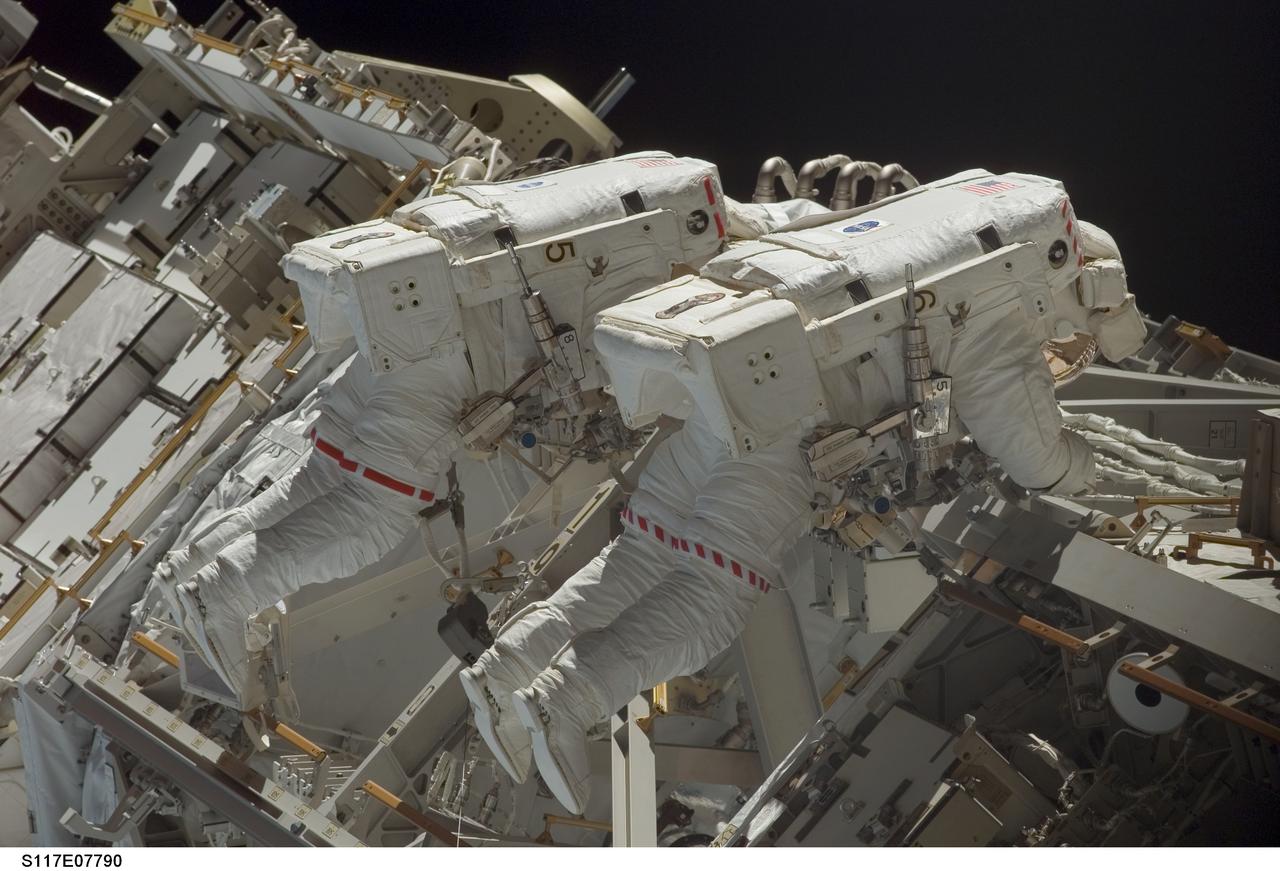
S117-E-07790 (17 June 2007) --- Astronauts Patrick Forrester (left) and Steven Swanson, both STS-117 mission specialists, participate in the mission's fourth and final session of extravehicular activity (EVA), as construction continues on the International Space Station. Among other tasks, Forrester and Swanson continued activation of the station's new starboard 3 and 4 (S3/S4) truss segment; checked out the Drive Lock Assembly 2, one of two mechanisms that will drive rotation of the S3/S4 Truss Solar Alpha Rotary Joint (SARJ); and removed the final launch restraints on the SARJ.
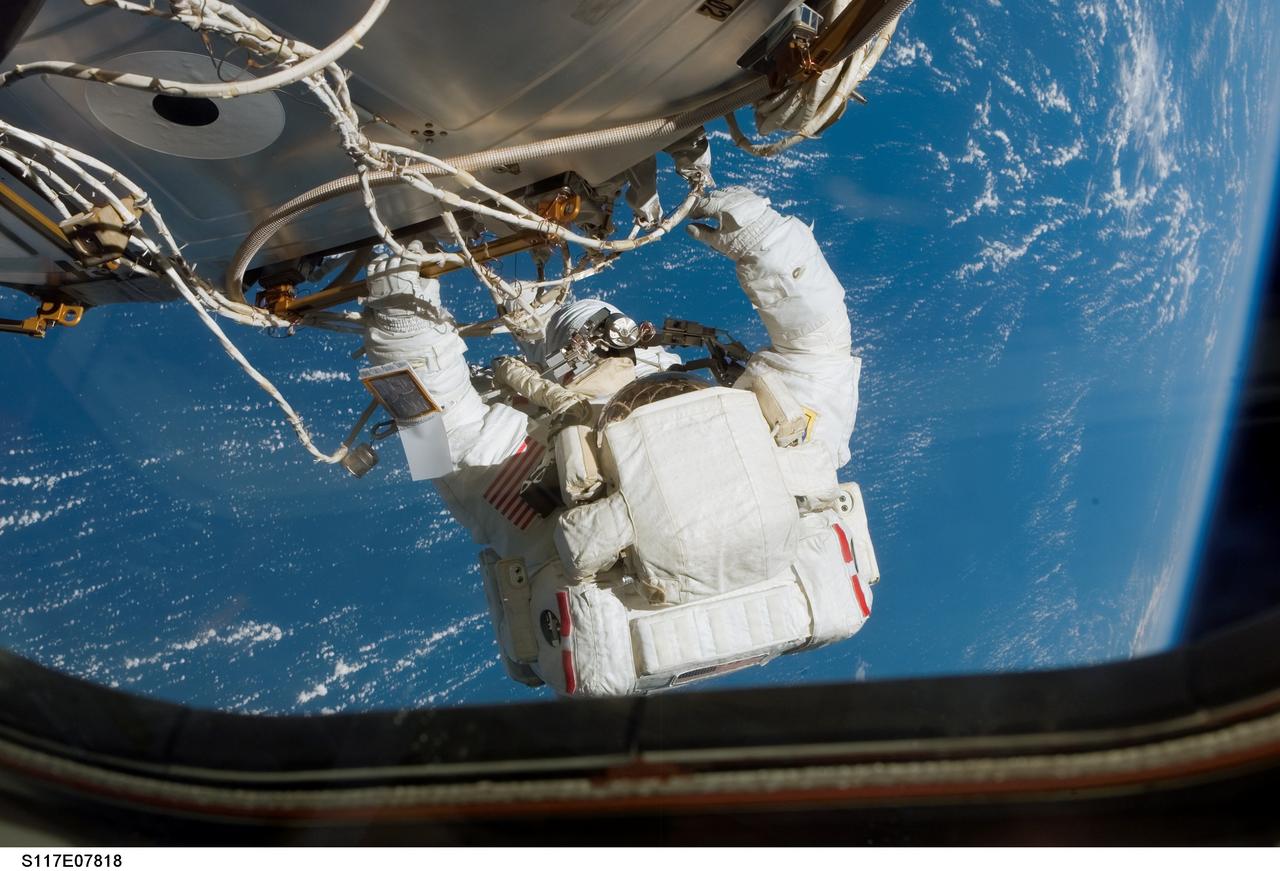
S117-E-07818 (17 June 2007) --- Astronaut Patrick Forrester, STS-117 mission specialist, participates in the mission's fourth and final session of extravehicular activity (EVA), as construction continues on the International Space Station. Among other tasks, Forrester and astronaut Steven Swanson (out of frame), mission specialist, continued activation of the station's new starboard 3 and 4 (S3/S4) truss segment; checked out the Drive Lock Assembly 2, one of two mechanisms that will drive rotation of the S3/S4 Truss Solar Alpha Rotary Joint (SARJ); and removed the final launch restraints on the SARJ.
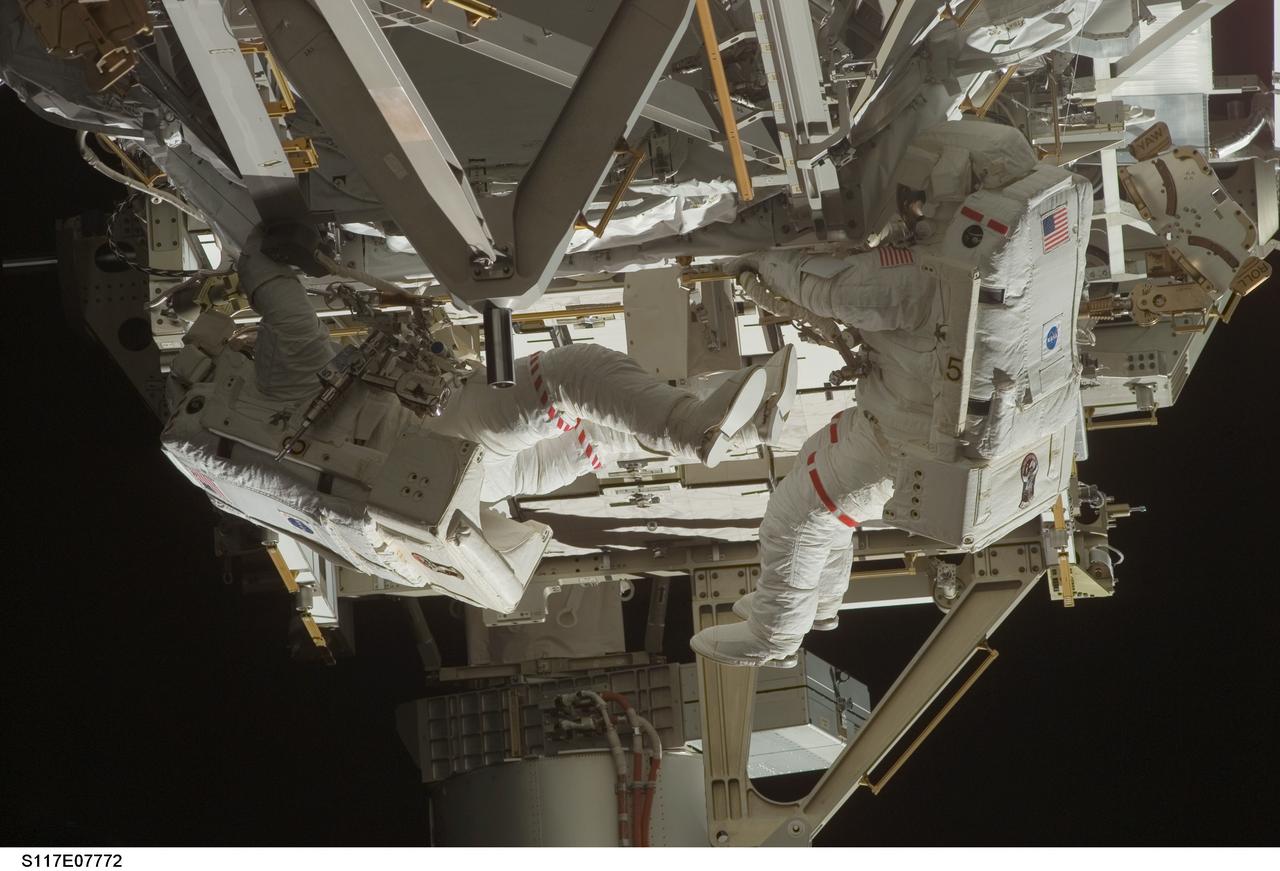
S117-E-07772 (17 June 2007) --- Astronauts Patrick Forrester (right) and Steven Swanson, both STS-117 mission specialists, participate in the mission's fourth and final session of extravehicular activity (EVA), as construction continues on the International Space Station. Among other tasks, Forrester and Swanson continued activation of the station's new starboard 3 and 4 (S3/S4) truss segment; checked out the Drive Lock Assembly 2, one of two mechanisms that will drive rotation of the S3/S4 Truss Solar Alpha Rotary Joint (SARJ); and removed the final launch restraints on the SARJ.
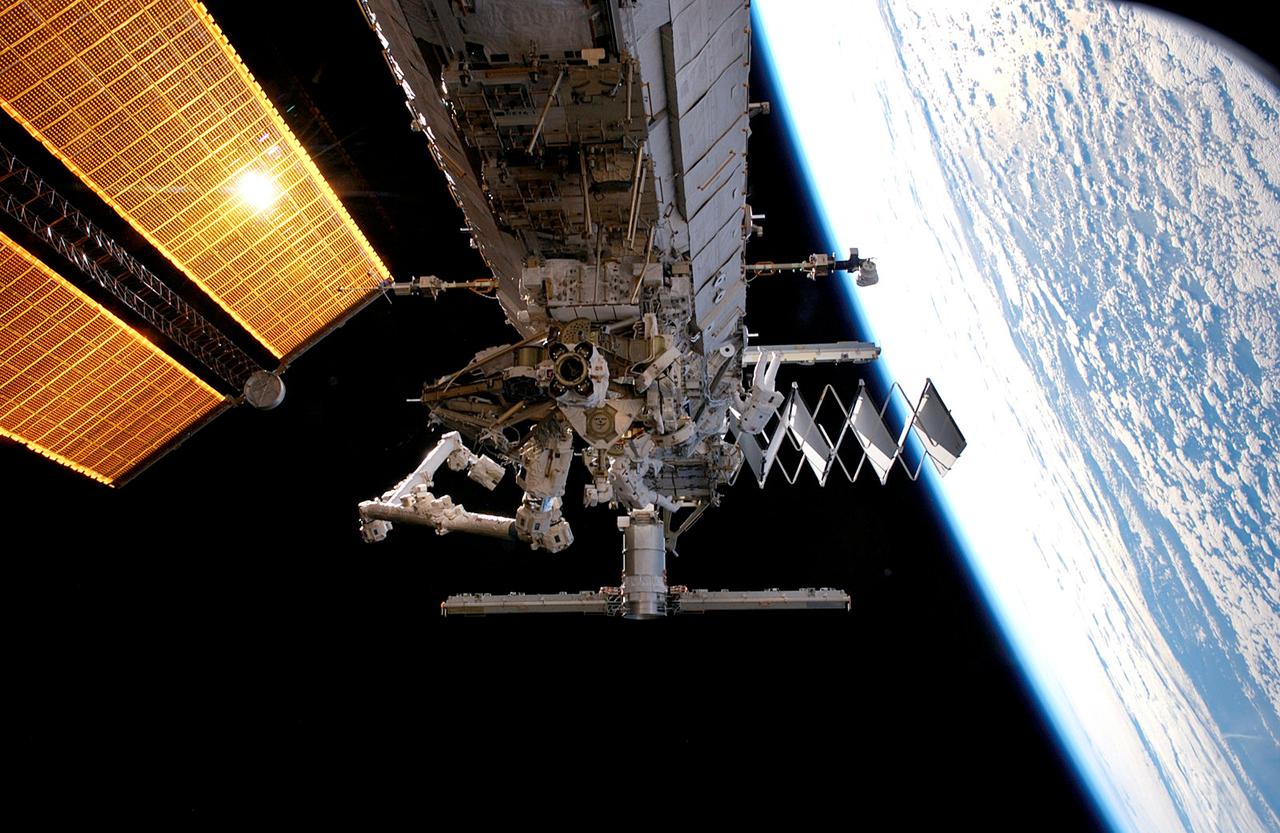
ISS015-E-12863 (11 June 2007) --- Astronauts Jim Reilly (left) and John "Danny" Olivas, both STS-117 mission specialists, participate in the mission's first planned session of extravehicular activity (EVA), as construction continues on the International Space Station. Among other tasks, Reilly and Olivas connected power, data and cooling cables between S1 and S3; released the launch restraints from and deployed the four solar array blanket boxes on S4 and released the cinches and winches holding the photovoltaic radiator on S4. Earth's horizon and the blackness of space provide the backdrop for the scene.
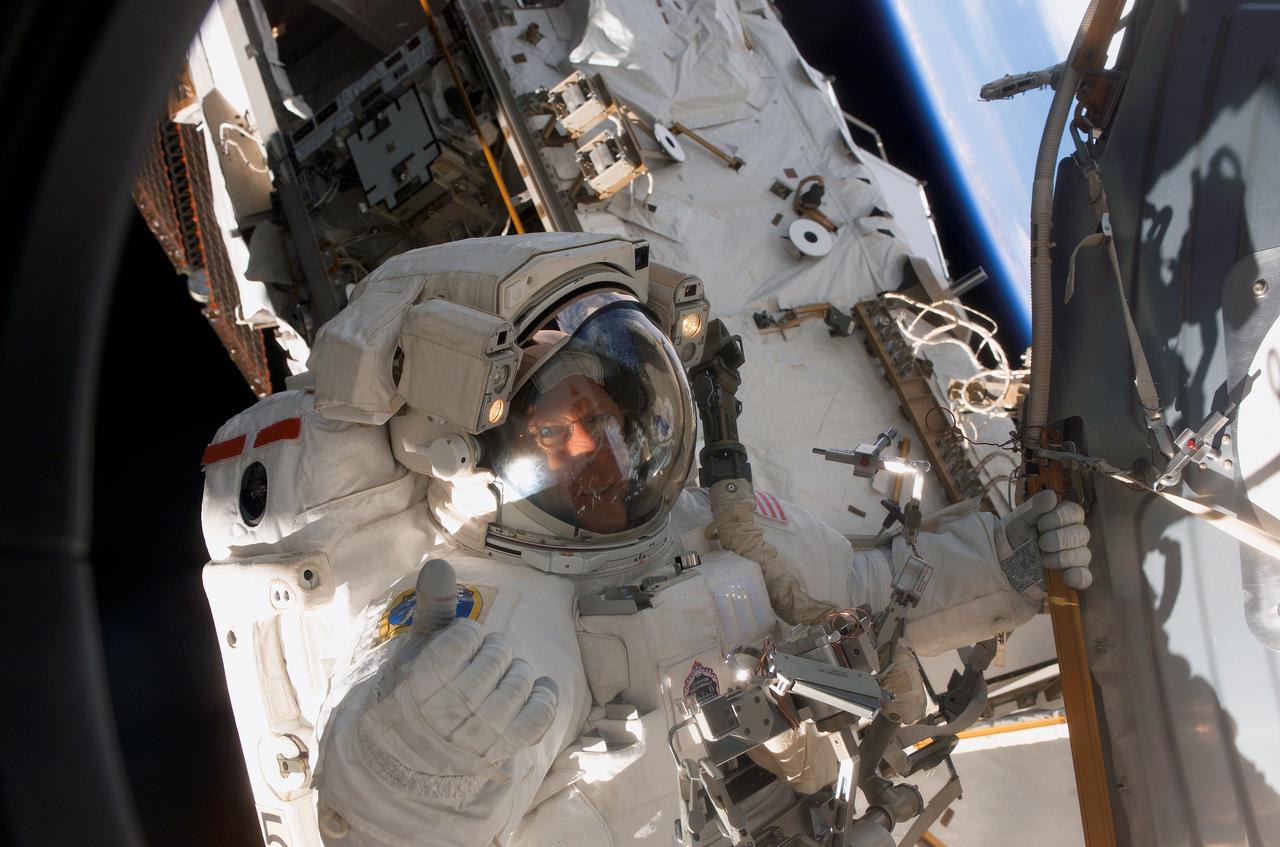
S117-E-07829 (17 June 2007) --- Astronaut Patrick Forrester, STS-117 mission specialist, participates in the mission's fourth and final session of extravehicular activity (EVA), as construction continues on the International Space Station. Among other tasks, Forrester and astronaut Steven Swanson (out of frame), mission specialist, continued activation of the station's new starboard 3 and 4 (S3/S4) truss segment; checked out the Drive Lock Assembly 2, one of two mechanisms that will drive rotation of the S3/S4 Truss Solar Alpha Rotary Joint (SARJ); and removed the final launch restraints on the SARJ.
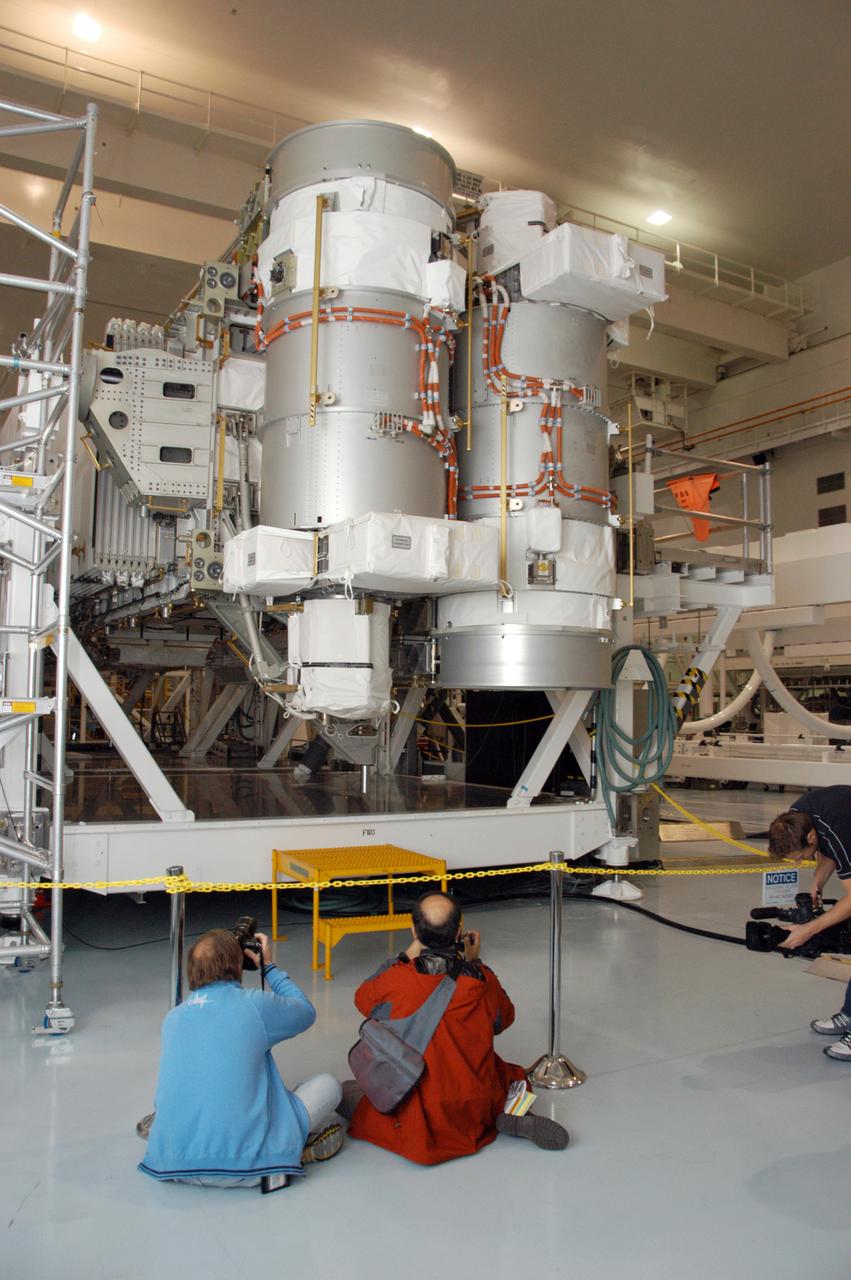
In the Space Station Processing Facility, photographers take advantage of a media showcase to get photos of the S3/S4 integrated truss segment. The starboard 3/4 truss segment will launch aboard Space Shuttle Atlantis on mission STS-117, targeted for March 15. The element will be added to the 11-segment integrated truss structure, the station's backbone. The integrated truss structure eventually will span more than 300 feet. The S3/S4 truss has two large solar arrays and will provide one-fourth of the total power generation for the completed station.
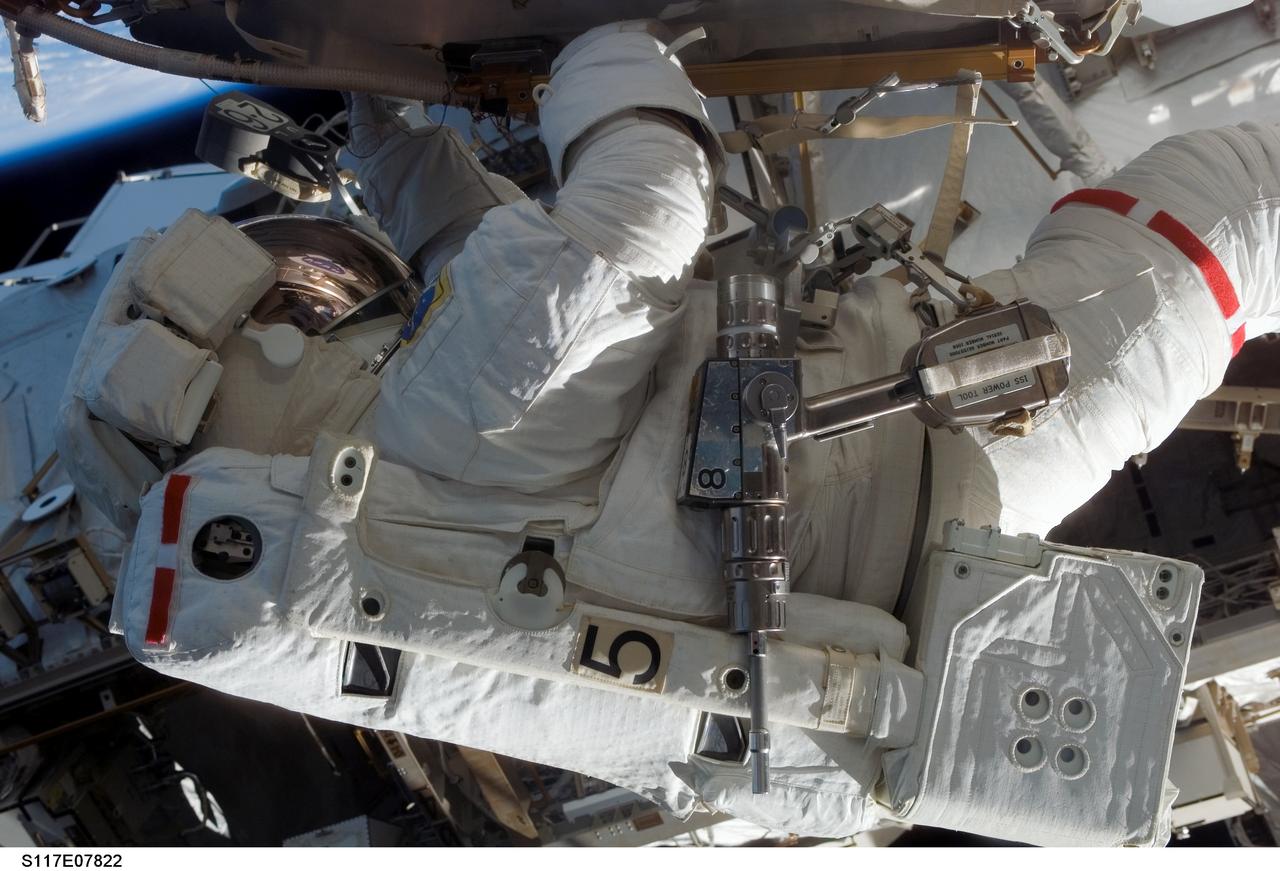
S117-E-07822 (17 June 2007) --- Astronaut Patrick Forrester, STS-117 mission specialist, participates in the mission's fourth and final session of extravehicular activity (EVA), as construction continues on the International Space Station. Among other tasks, Forrester and astronaut Steven Swanson (out of frame), mission specialist, continued activation of the station's new starboard 3 and 4 (S3/S4) truss segment; checked out the Drive Lock Assembly 2, one of two mechanisms that will drive rotation of the S3/S4 Truss Solar Alpha Rotary Joint (SARJ); and removed the final launch restraints on the SARJ.
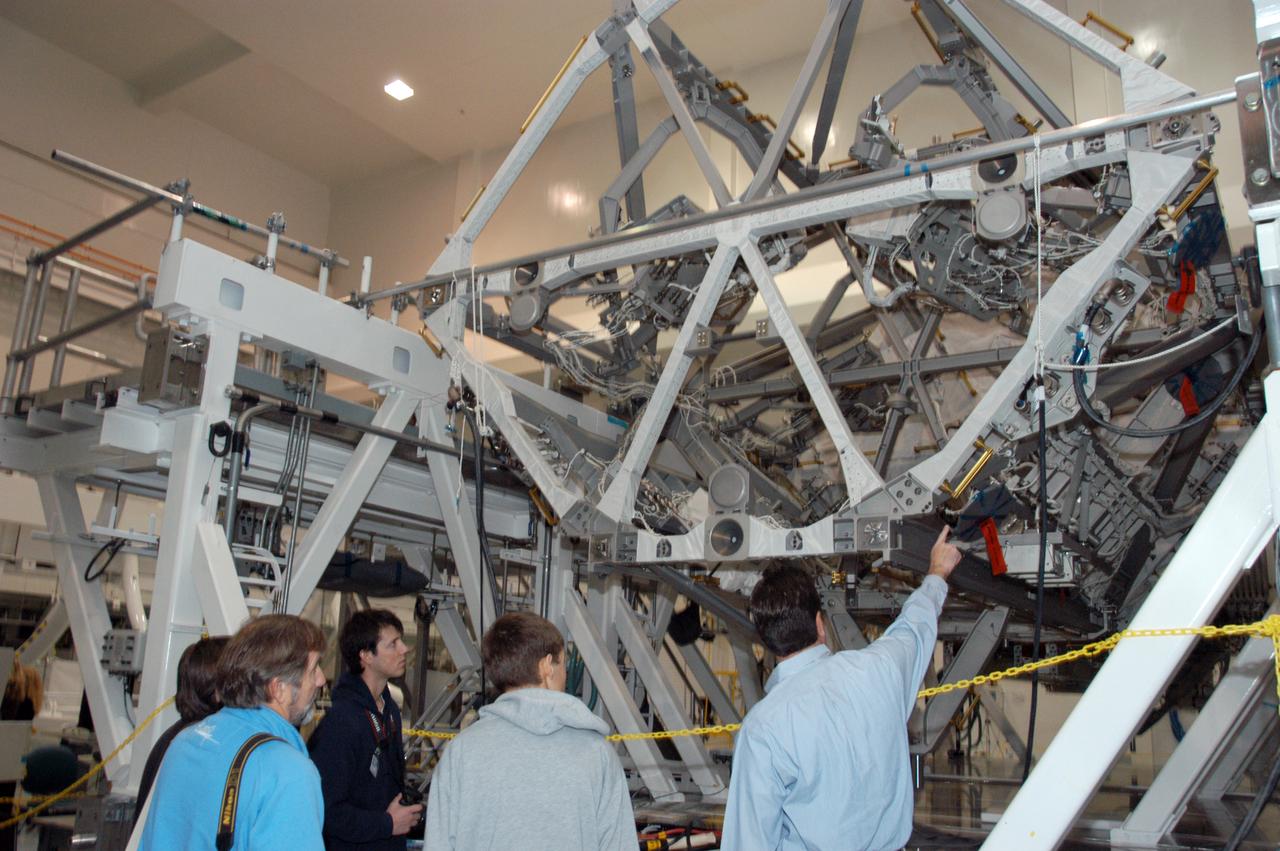
At a media showcase in the Space Station Processing Facility, reporters and photographers get a close look at the S3/S4 integrated truss segment. The starboard 3/4 truss segment will launch aboard Space Shuttle Atlantis on mission STS-117, targeted for March 15. The element will be added to the 11-segment integrated truss structure, the station's backbone. The integrated truss structure eventually will span more than 300 feet. The S3/S4 truss has two large solar arrays and will provide one-fourth of the total power generation for the completed station.
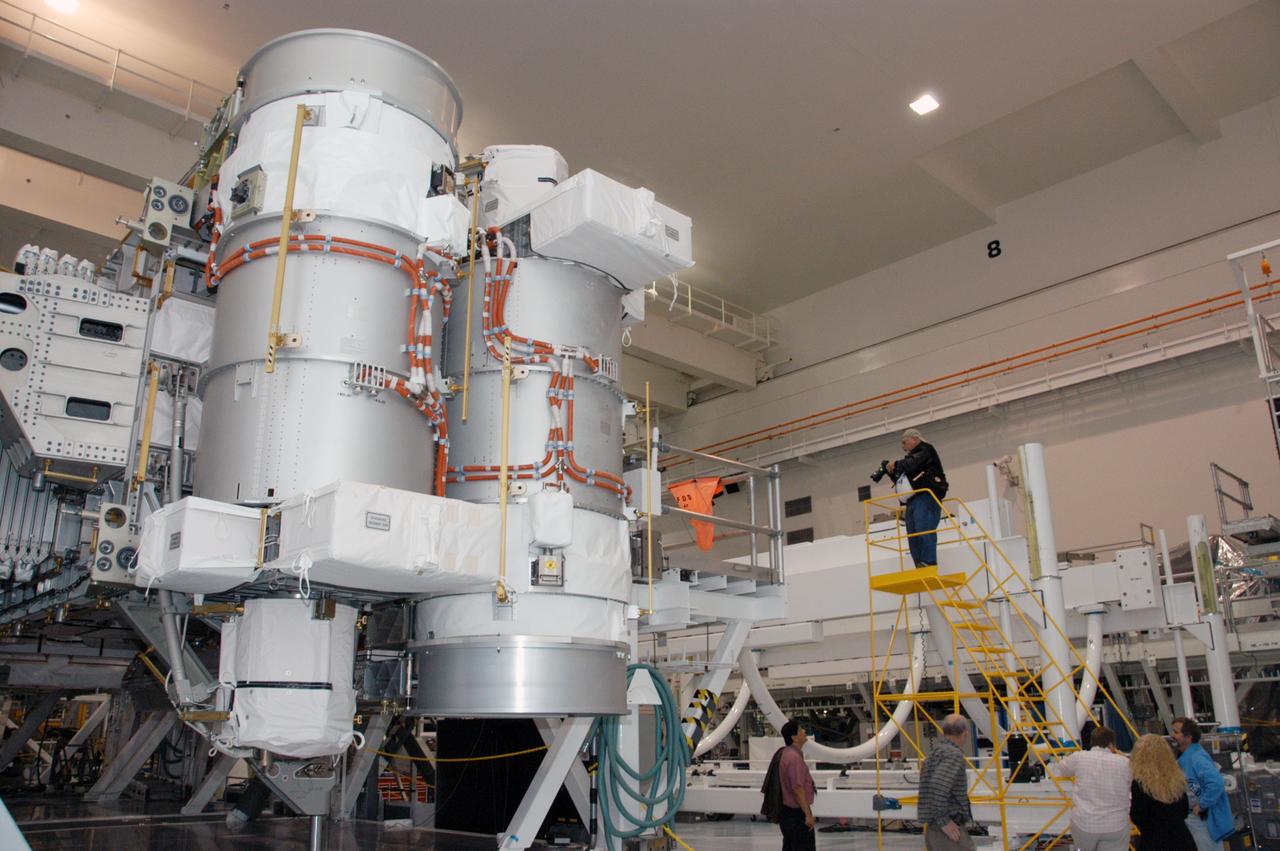
At a media showcase in the Space Station Processing Facility, reporters and photographers get a close look at the S3/S4 integrated truss segment. The starboard 3/4 truss segment will launch aboard Space Shuttle Atlantis on mission STS-117, targeted for March 15. The element will be added to the 11-segment integrated truss structure, the station's backbone. The integrated truss structure eventually will span more than 300 feet. The S3/S4 truss has two large solar arrays and will provide one-fourth of the total power generation for the completed station.
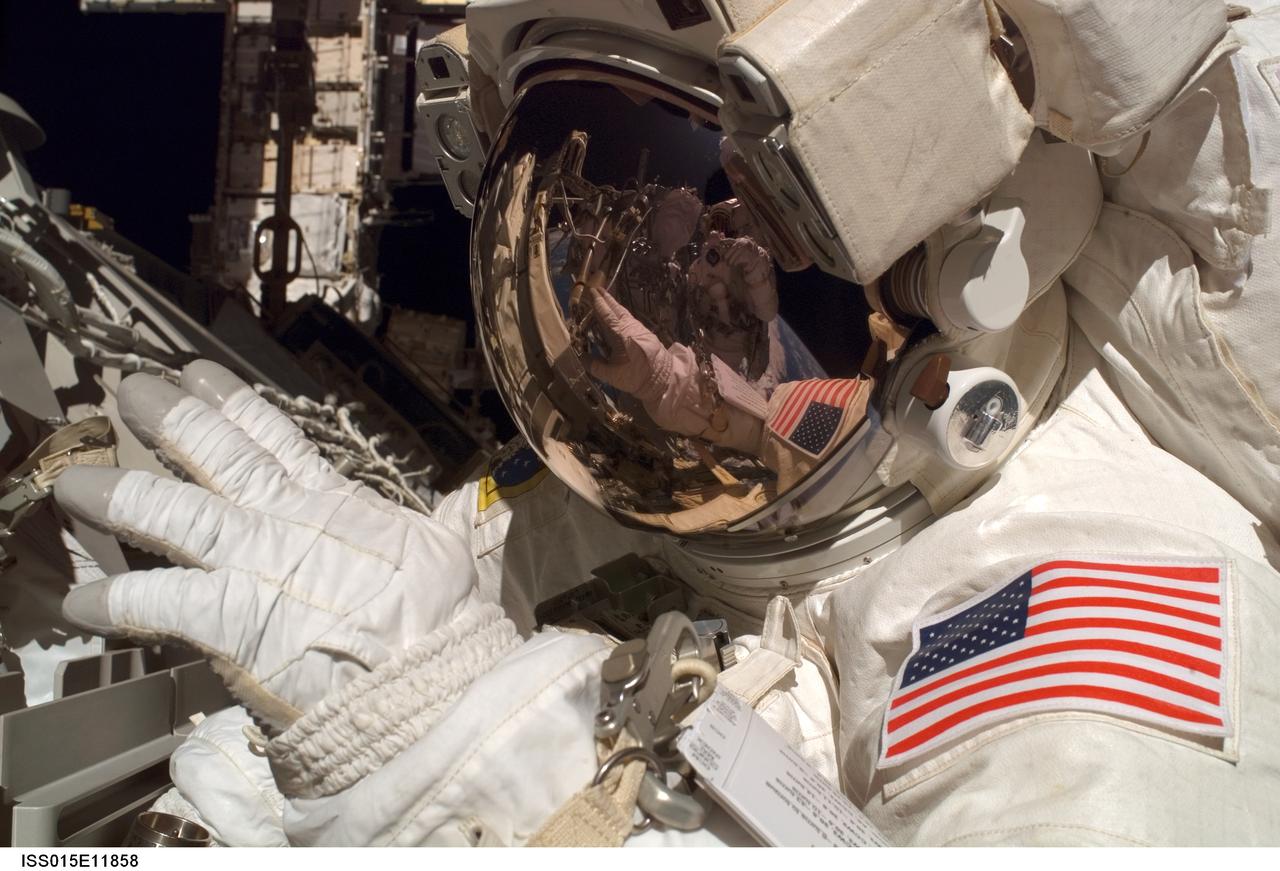
ISS015-E-11858 (11 June 2007) --- Astronauts Jim Reilly and John "Danny" Olivas (visible among Reilly's helmet reflections), both STS-117 mission specialists, participate in the mission's first planned session of extravehicular activity (EVA), as construction resumes on the International Space Station. Among other tasks, Reilly and Olivas connected power, data and cooling cables between S1 and S3; released the launch restraints from and deployed the four solar array blanket boxes on S4 and released the cinches and winches holding the photovoltaic radiator on S4.
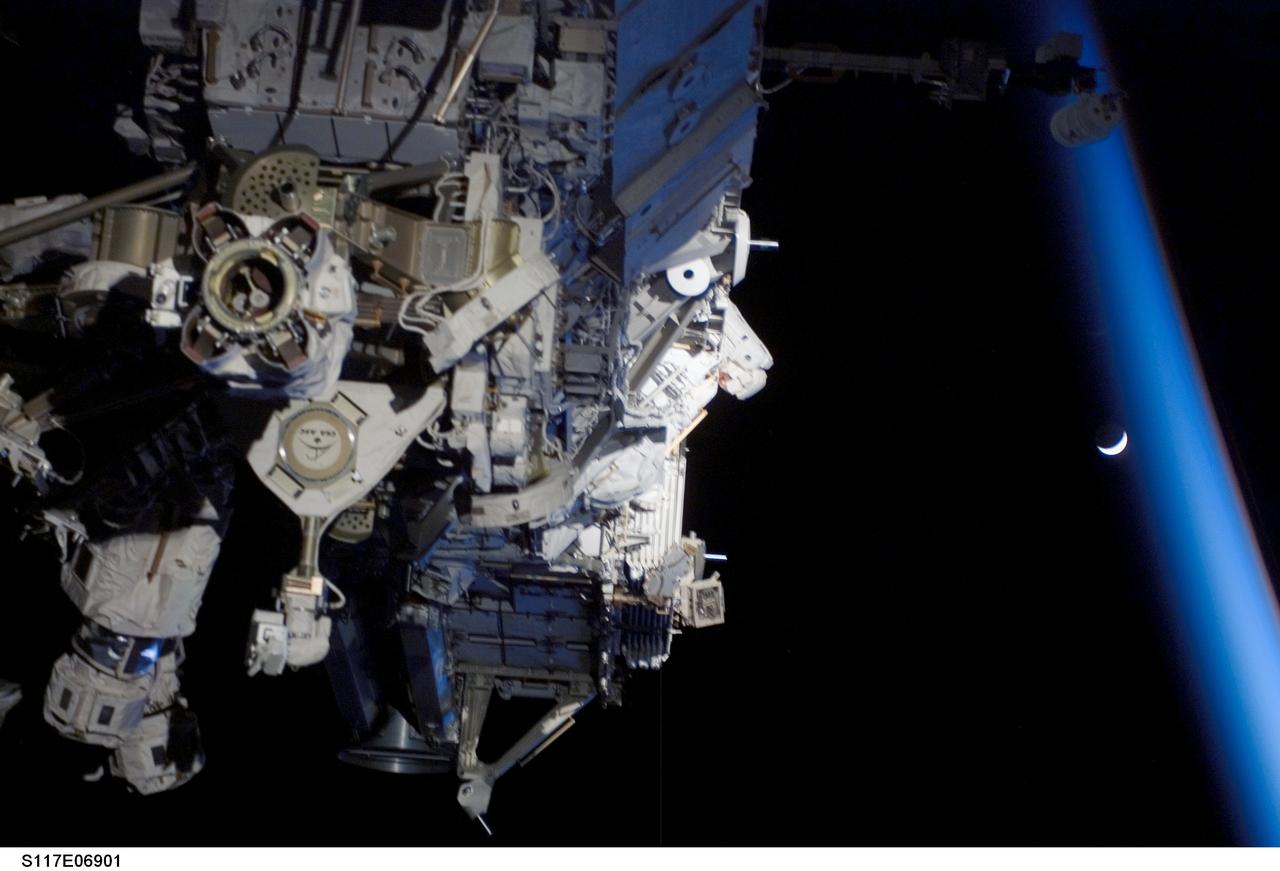
S117-E-06901 (11 June 2007) --- Astronauts Jim Reilly (out of frame) and John "Danny" Olivas (partially obscured, center), both STS-117 mission specialists, participate in the mission's first planned session of extravehicular activity (EVA), as construction resumes on the International Space Station. Among other tasks, Reilly and Olivas connected power, data and cooling cables between S1 and S3; released the launch restraints from and deployed the four solar array blanket boxes on S4 and released the cinches and winches holding the photovoltaic radiator on S4. Earth's horizon and a crescent moon are visible at right.
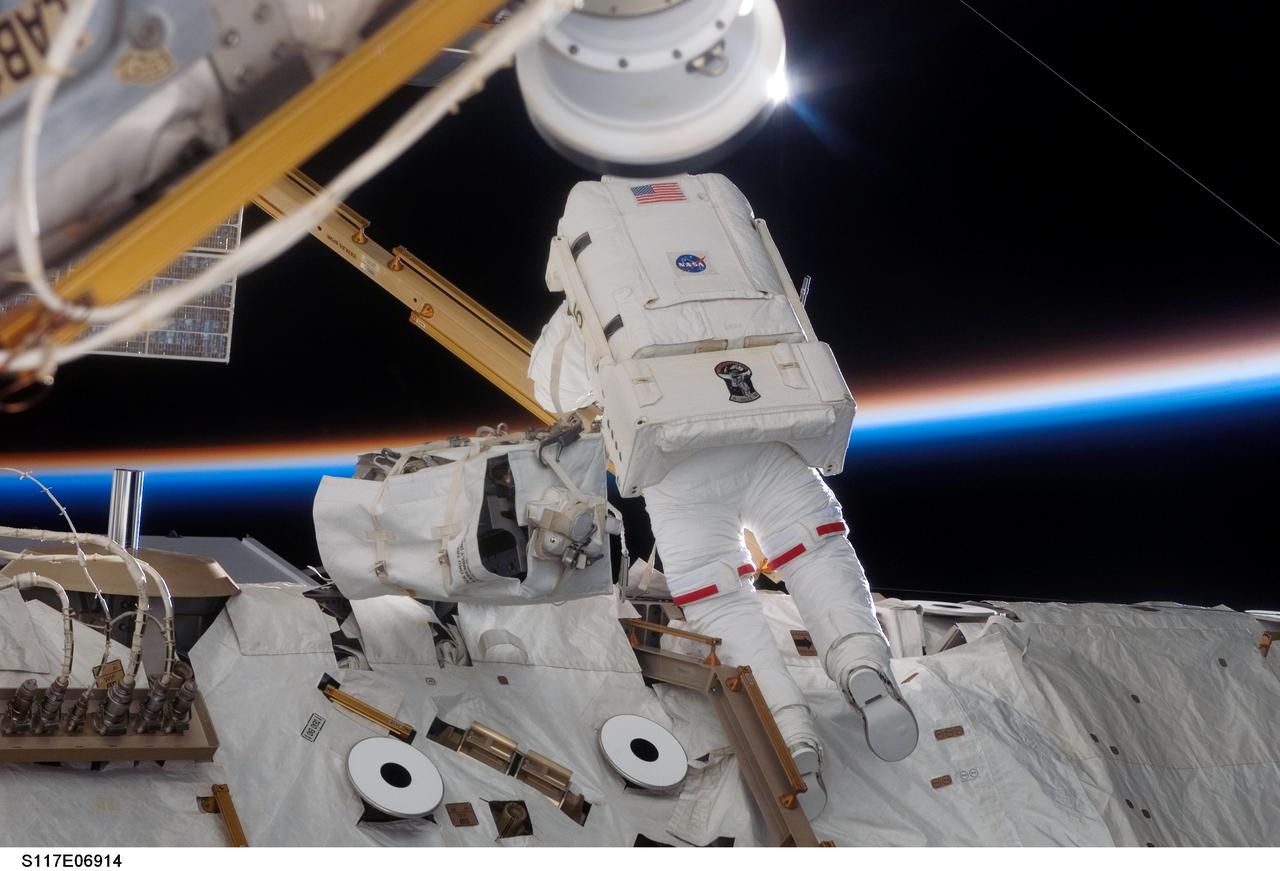
S117-E-06914 (11 June 2007) --- Astronauts Jim Reilly (center frame) and John "Danny" Olivas (out of frame), both STS-117 mission specialists, participate in the mission's first planned session of extravehicular activity (EVA), as construction resumes on the International Space Station. Among other tasks, Reilly and Olivas connected power, data and cooling cables between S1 and S3; released the launch restraints from and deployed the four solar array blanket boxes on S4 and released the cinches and winches holding the photovoltaic radiator on S4. Earth's horizon and the blackness of space provided the backdrop for the scene.
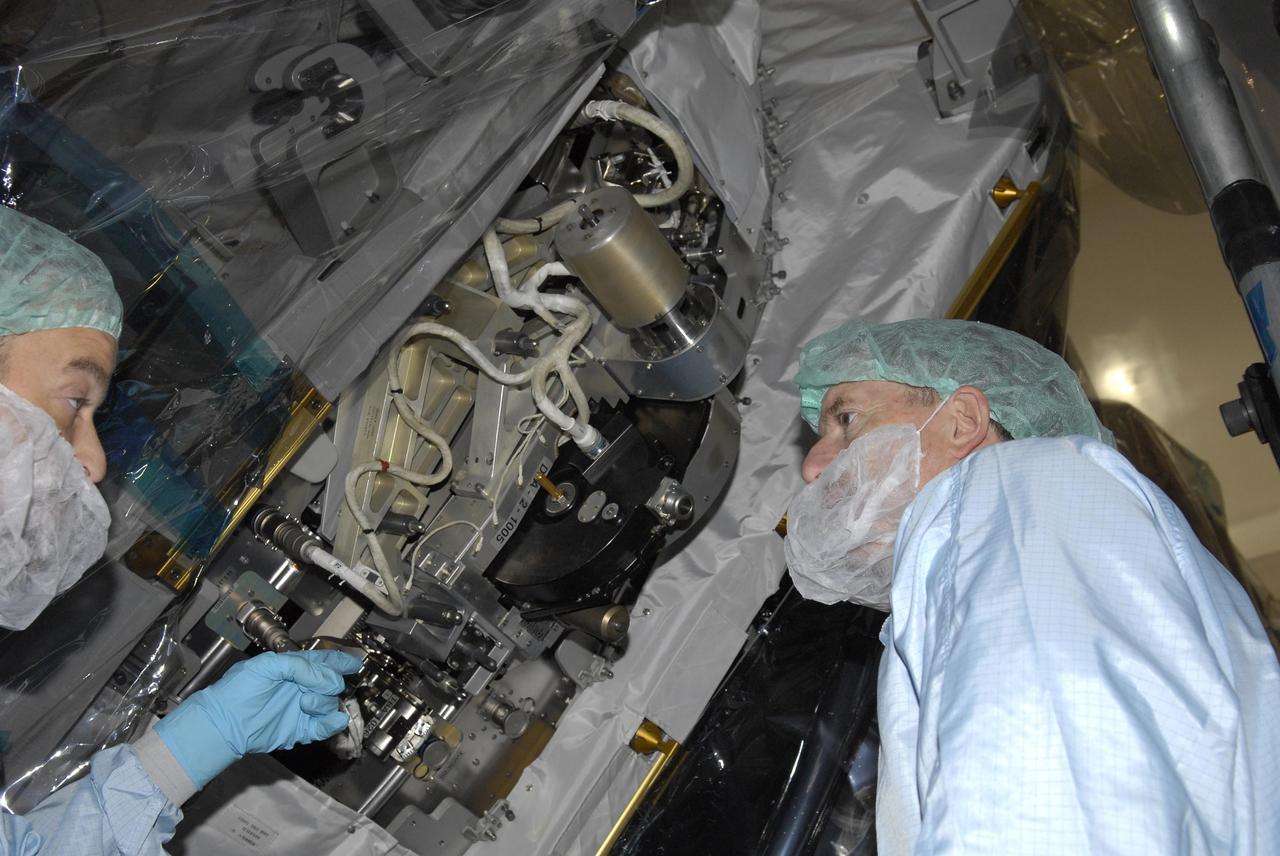
KENNEDY SPACE CENTER, FLA. -- In the Space Station Processing Facility, a technician points out elements of the S3/S4 Integrated Truss Segment to STS-117 Mission Specialist James Reilly (right) during Crew Equipment Interface Test (CEIT) activities. A CEIT provides the astronauts opportunities to become familiar with equipment and hardware with which they will be working during their mission. The crew of mission STS-117 will deliver and install the second and third starboard truss segments (S3/S4) and another pair of solar arrays and batteries during the Space Shuttle Program's 21st mission to the International Space Station. Launch of Space Shuttle Atlantis is scheduled for March 2007. Photo credit: NASA/Kim Shiflett
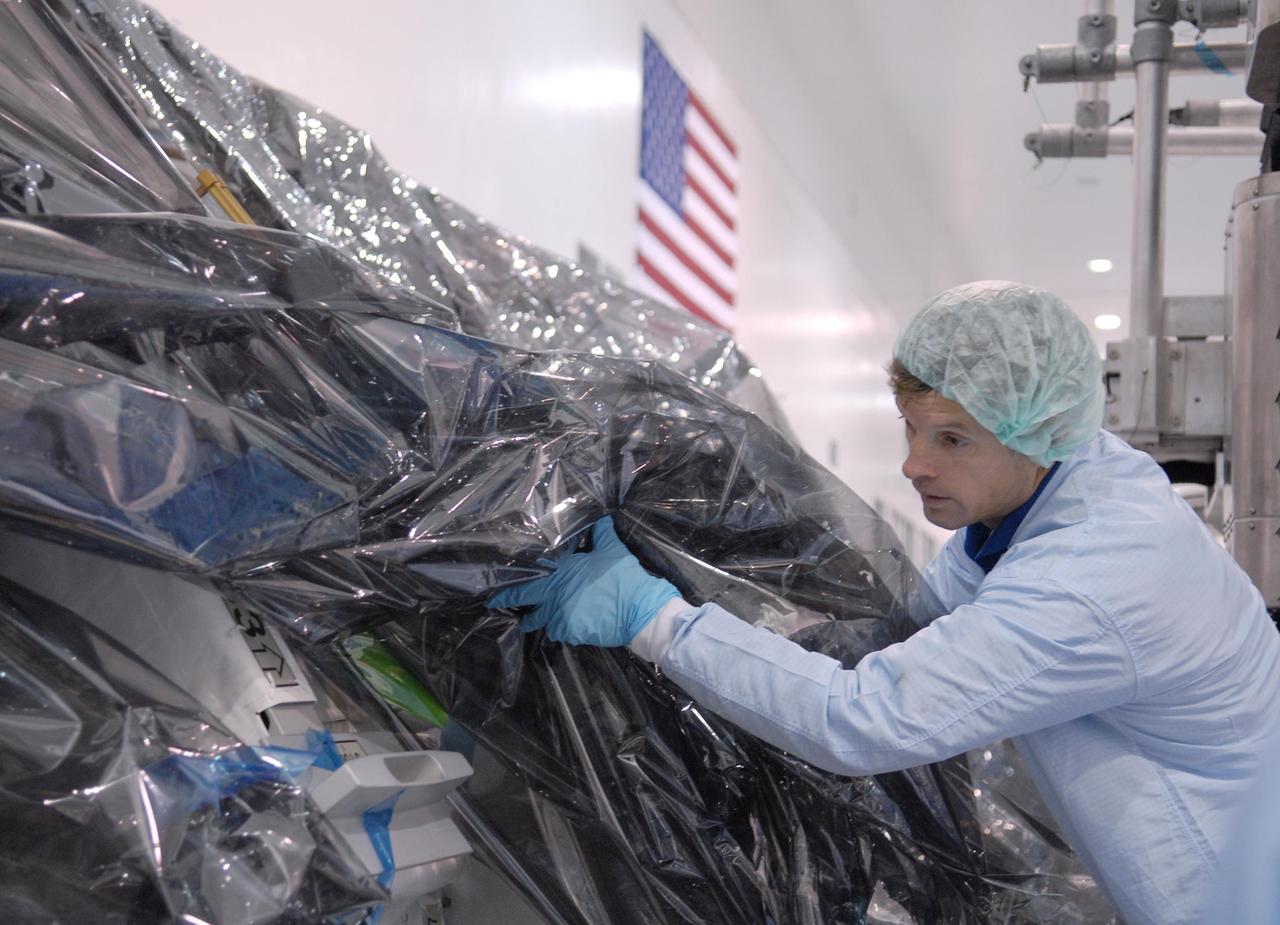
KENNEDY SPACE CENTER, FLA. -- In the Space Station Processing Facility, STS-117 Mission Specialist Steven Swanson looks under the protective wrapping at the S3/S4 starboard integrated truss segment that is part of the payload on the mission. He and other crew members are at KSC to take part in a Crew Equipment Interface Test that allows them opportunities to become familiar with equipment and hardware for their mission. STS-117 will deliver the S3/S4 and another pair of solar arrays to the space station. The 21st shuttle mission to the International Space Station, STS-117 is scheduled to launch no earlier than March 16. Photo credit: NASA/Kim Shiflett
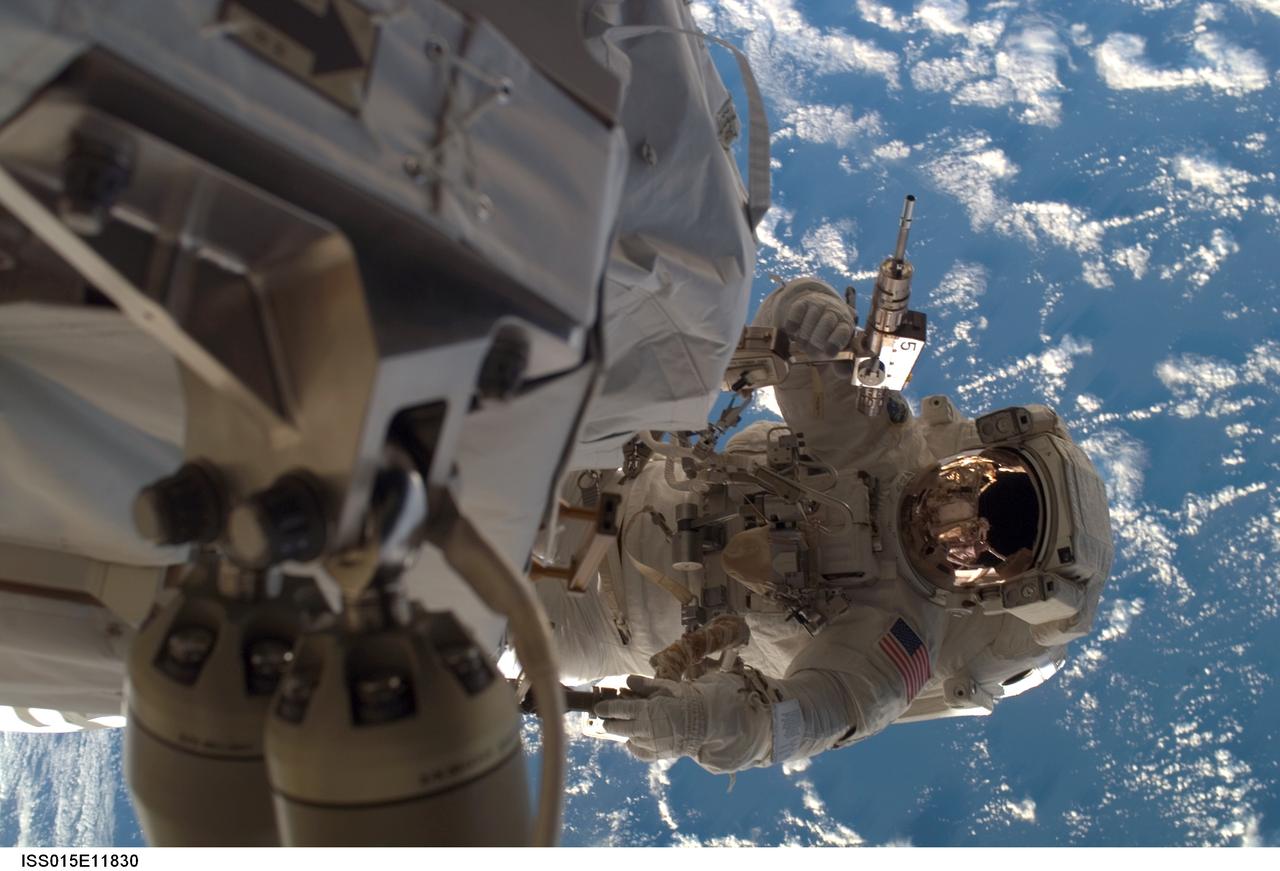
ISS015-E-11830 (11 June 2007) --- Astronauts John "Danny" Olivas and Jim Reilly (out of frame), both STS-117 mission specialists, participate in the mission's first planned session of extravehicular activity (EVA), as construction resumes on the International Space Station. Among other tasks, Reilly and Olivas connected power, data and cooling cables between S1 and S3; released the launch restraints from and deployed the four solar array blanket boxes on S4 and released the cinches and winches holding the photovoltaic radiator on S4. A blue and white Earth provided the backdrop for the scene.
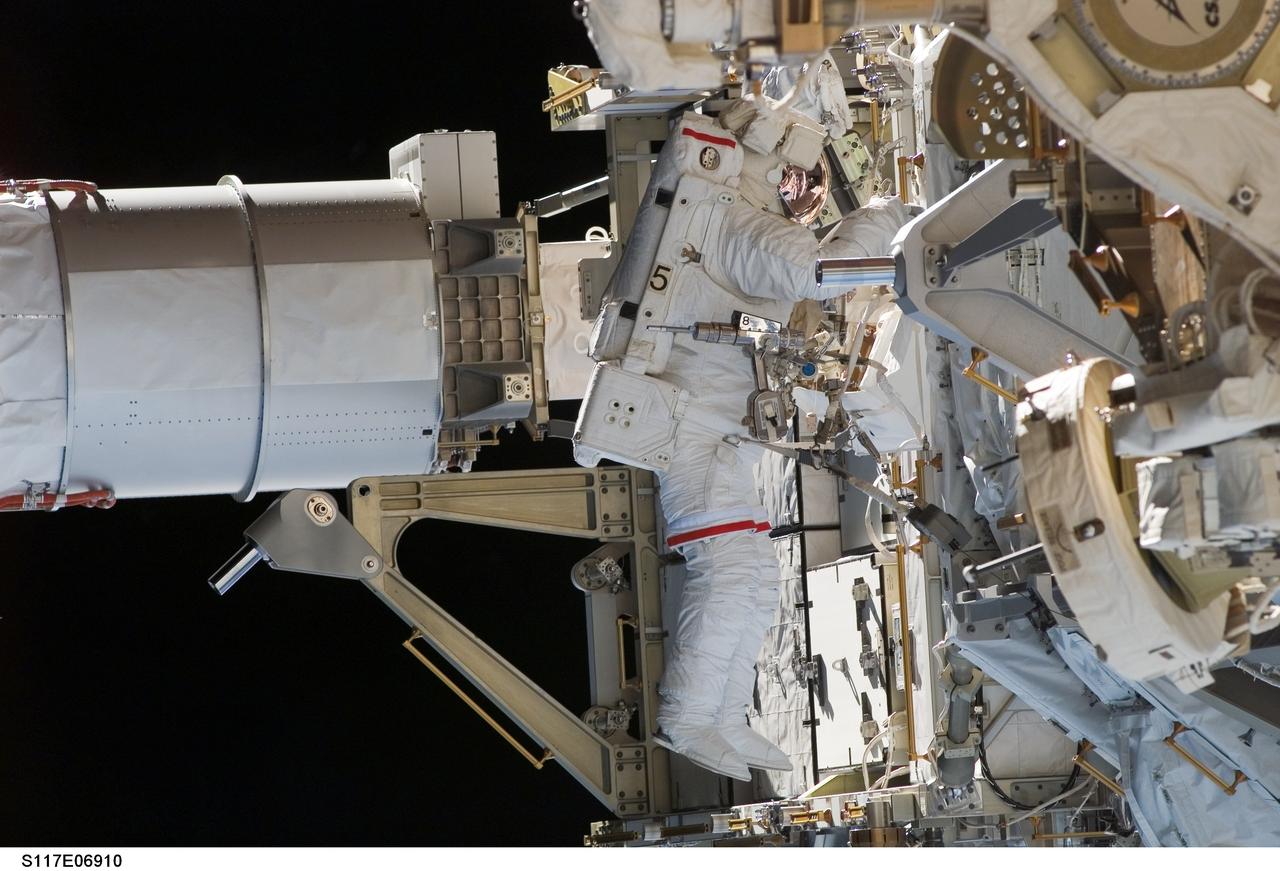
S117-E-06910 (11 June 2007) --- Astronauts Jim Reilly (center frame) and John "Danny" Olivas (out of frame), both STS-117 mission specialists, participate in the mission's first planned session of extravehicular activity (EVA), as construction resumes on the International Space Station. Among other tasks, Reilly and Olivas connected power, data and cooling cables between S1 and S3; released the launch restraints from and deployed the four solar array blanket boxes on S4 and released the cinches and winches holding the photovoltaic radiator on S4.
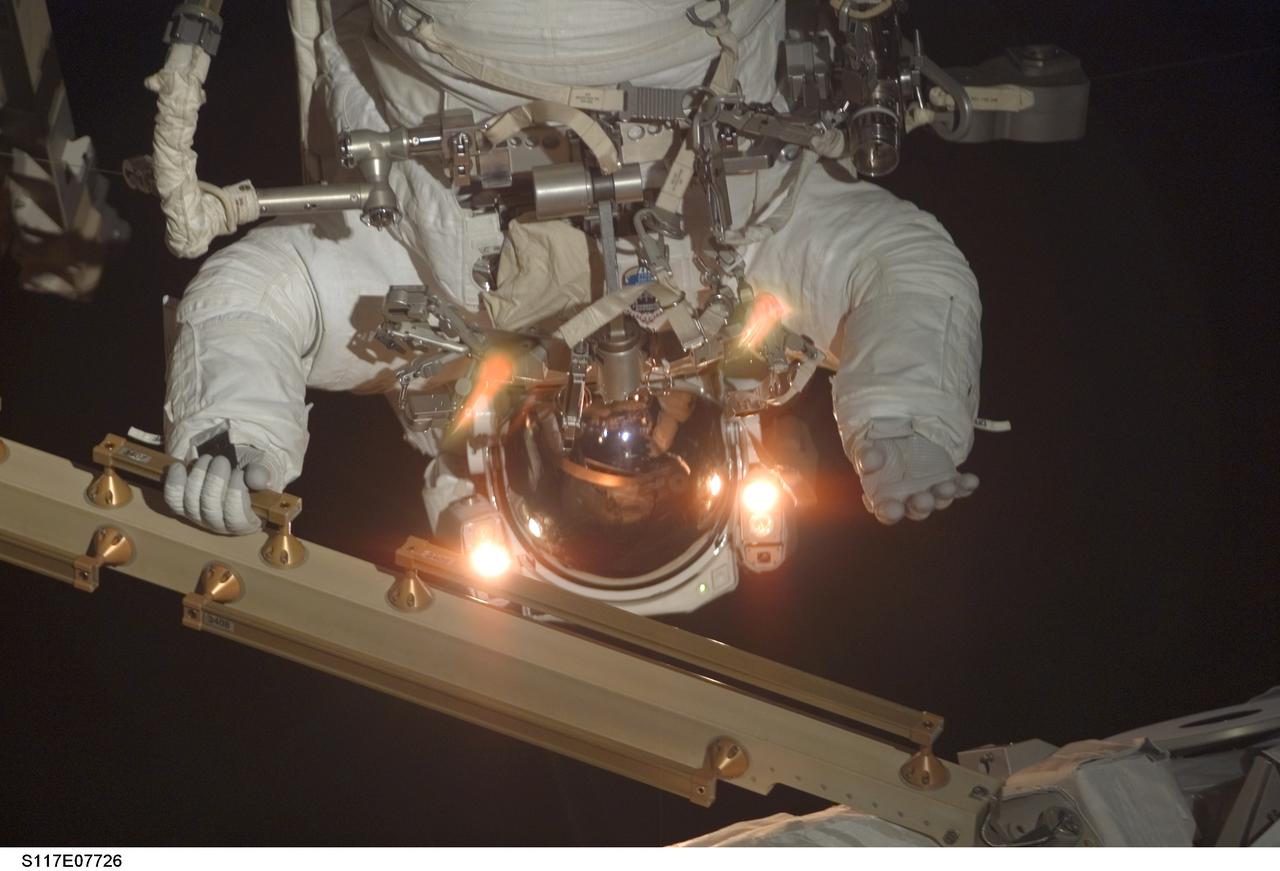
S117-E-07726 (17 June 2007) --- Astronaut Patrick Forrester, STS-117 mission specialist, participates in the mission's fourth and final session of extravehicular activity (EVA), as construction continues on the International Space Station. Among other tasks, Forrester and astronaut Steven Swanson (out of frame), mission specialist, continued activation of the station's new starboard 3 and 4 (S3/S4) truss segment; checked out the Drive Lock Assembly 2, one of two mechanisms that will drive rotation of the S3/S4 Truss Solar Alpha Rotary Joint (SARJ); and removed the final launch restraints on the SARJ.
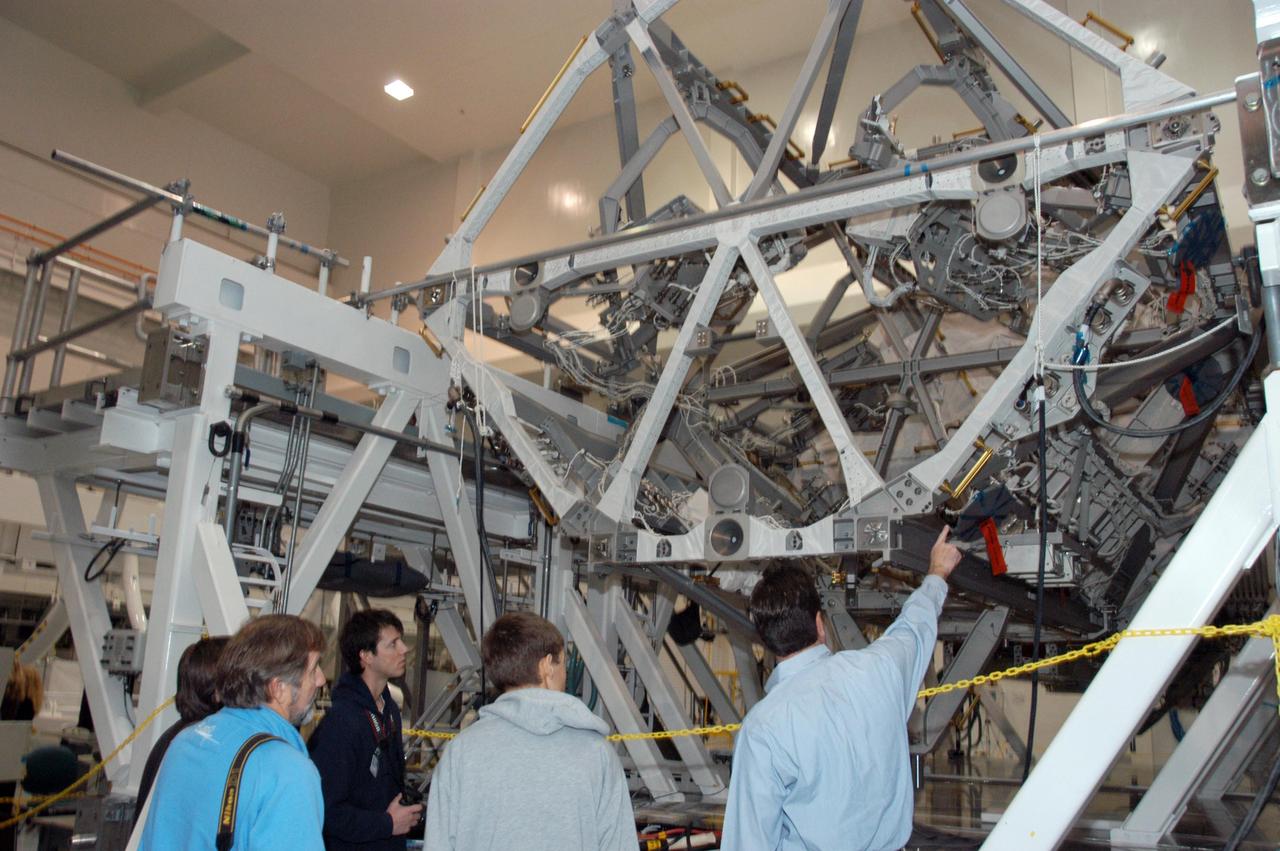
KENNEDY SPACE CENTER, FLA. -- At a media showcase in the Space Station Processing Facility, reporters and photographers get a close look at the S3/S4 integrated truss segment. The starboard 3/4 truss segment will launch aboard Space Shuttle Atlantis on mission STS-117, targeted for March 15. The element will be added to the 11-segment integrated truss structure, the station's backbone. The integrated truss structure eventually will span more than 300 feet. The S3/S4 truss has two large solar arrays and will provide one-fourth of the total power generation for the completed station. Photo credit: NASA/George Shelton
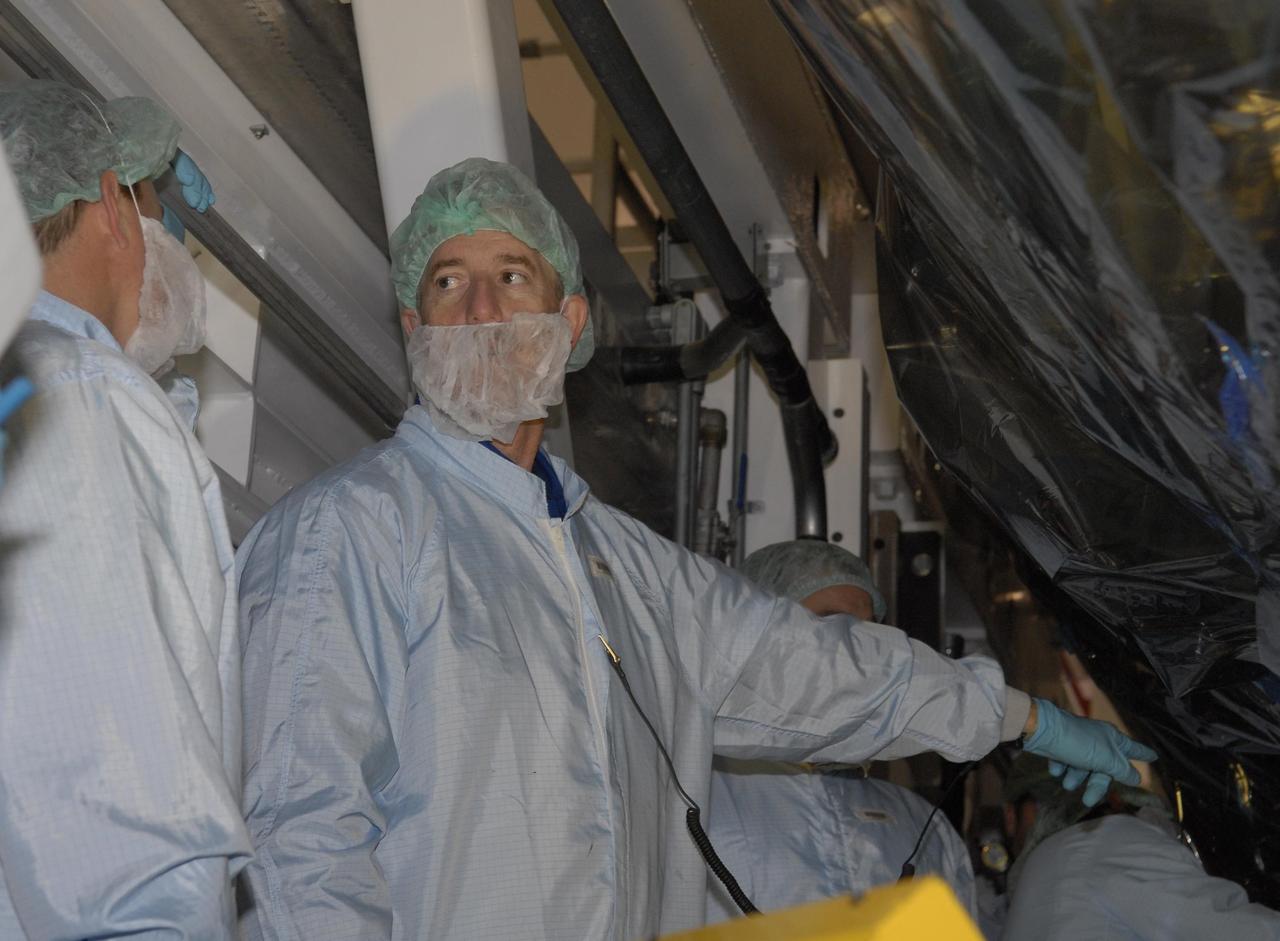
KENNEDY SPACE CENTER, FLA. -- In the Space Station Processing Facility, STS-117 Mission Specialist James Reilly (right) discusses the S3/S4 Integrated Truss Segment with a technician during Crew Equipment Interface Test (CEIT) activities. A CEIT provides the astronauts opportunities to become familiar with equipment and hardware with which they will be working during their mission. The crew of mission STS-117 will deliver and install the second and third starboard truss segments (S3/S4) and another pair of solar arrays and batteries during the Space Shuttle Program's 21st mission to the International Space Station. Launch of Space Shuttle Atlantis is scheduled for March 2007. Photo credit: NASA/Kim Shiflett
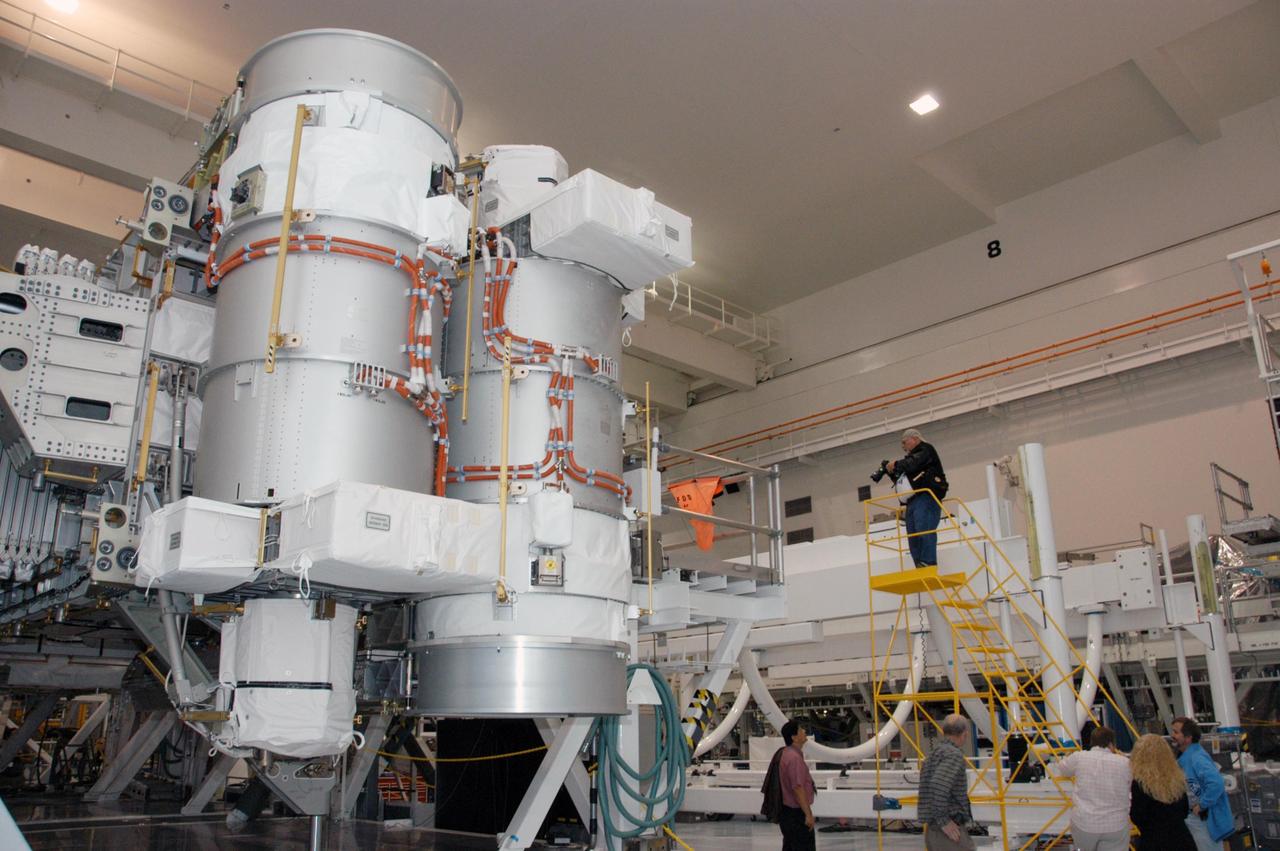
KENNEDY SPACE CENTER, FLA. -- At a media showcase in the Space Station Processing Facility, reporters and photographers get a close look at the S3/S4 integrated truss segment. The starboard 3/4 truss segment will launch aboard Space Shuttle Atlantis on mission STS-117, targeted for March 15. The element will be added to the 11-segment integrated truss structure, the station's backbone. The integrated truss structure eventually will span more than 300 feet. The S3/S4 truss has two large solar arrays and will provide one-fourth of the total power generation for the completed station. Photo credit: NASA/George Shelton
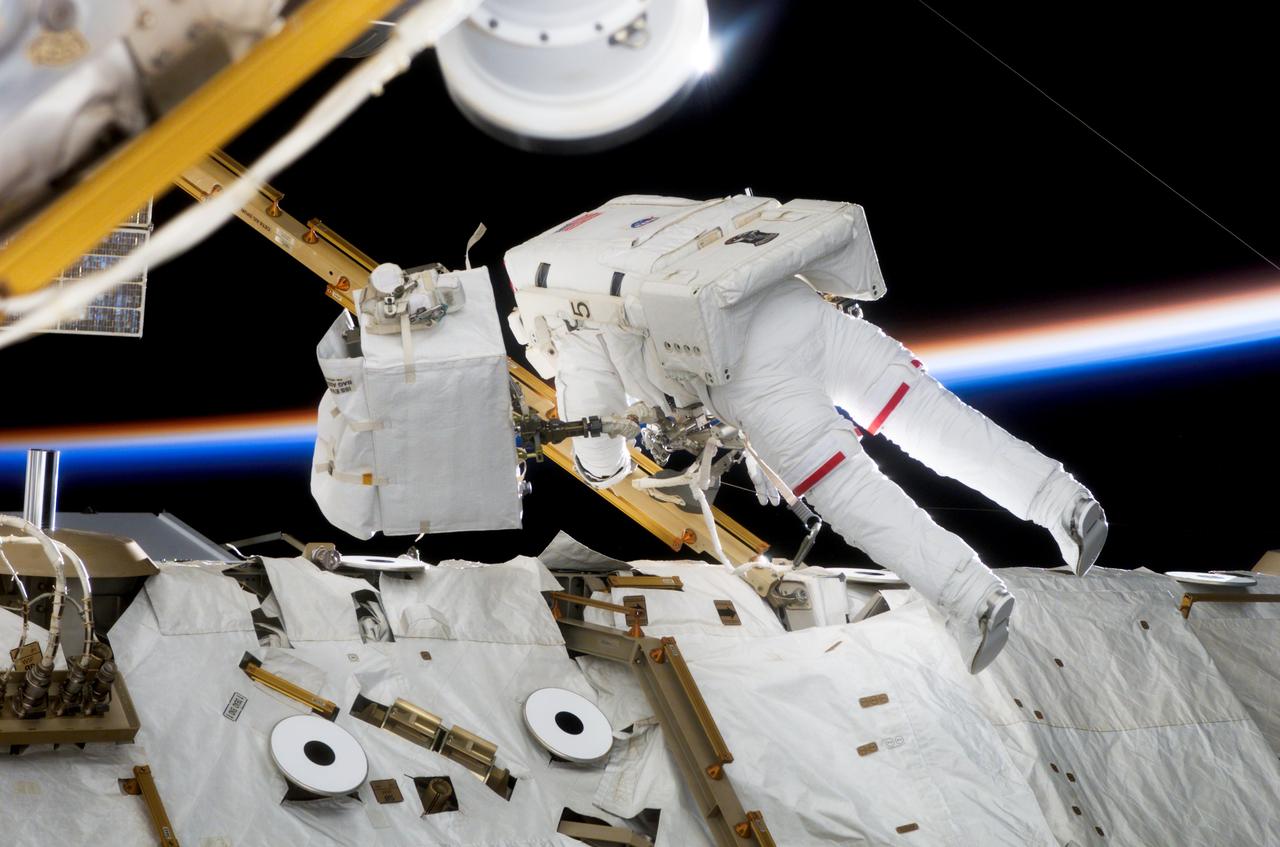
S117-E-06912 (11 June 2007) --- Astronaut Jim Reilly, STS-117 mission specialist, participates in the mission's first planned session of extravehicular activity (EVA) as construction continues on the International Space Station. Among other tasks, Reilly and astronaut John "Danny" Olivas (out of frame), connected power, data and cooling cables between S1 and S3; released the launch restraints from and deployed the four solar array blanket boxes on S4 and released the cinches and winches holding the photovoltaic radiator on S4. Earth's horizon and the blackness of space provide the backdrop for the scene.
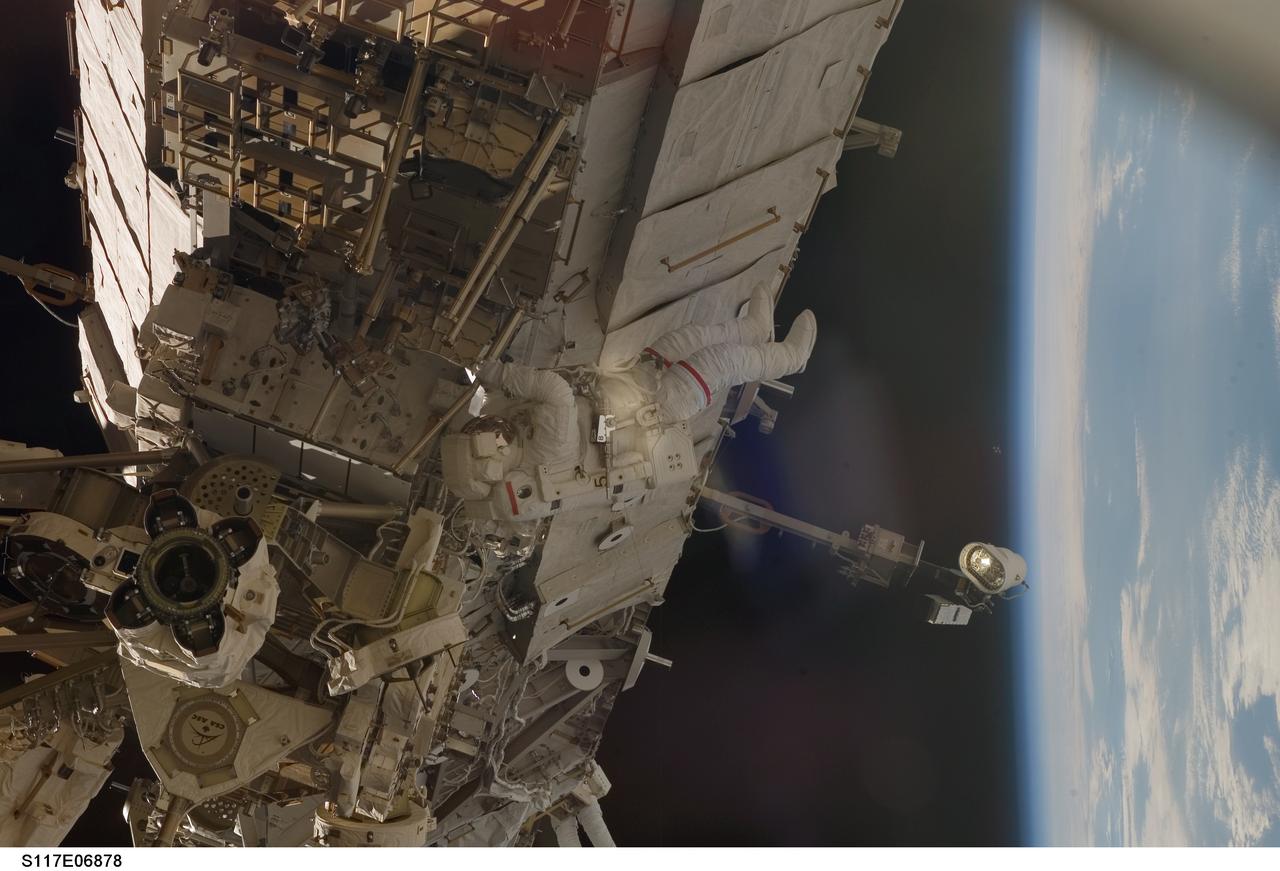
S117-E-06878 (11 June 2007) --- Astronauts Jim Reilly (center frame) and John "Danny" Olivas (bottom center), both STS-117 mission specialists, participate in the mission's first planned session of extravehicular activity (EVA), as construction resumes on the International Space Station. Among other tasks, Reilly and Olivas connected power, data and cooling cables between S1 and S3; released the launch restraints from and deployed the four solar array blanket boxes on S4 and released the cinches and winches holding the photovoltaic radiator on S4.
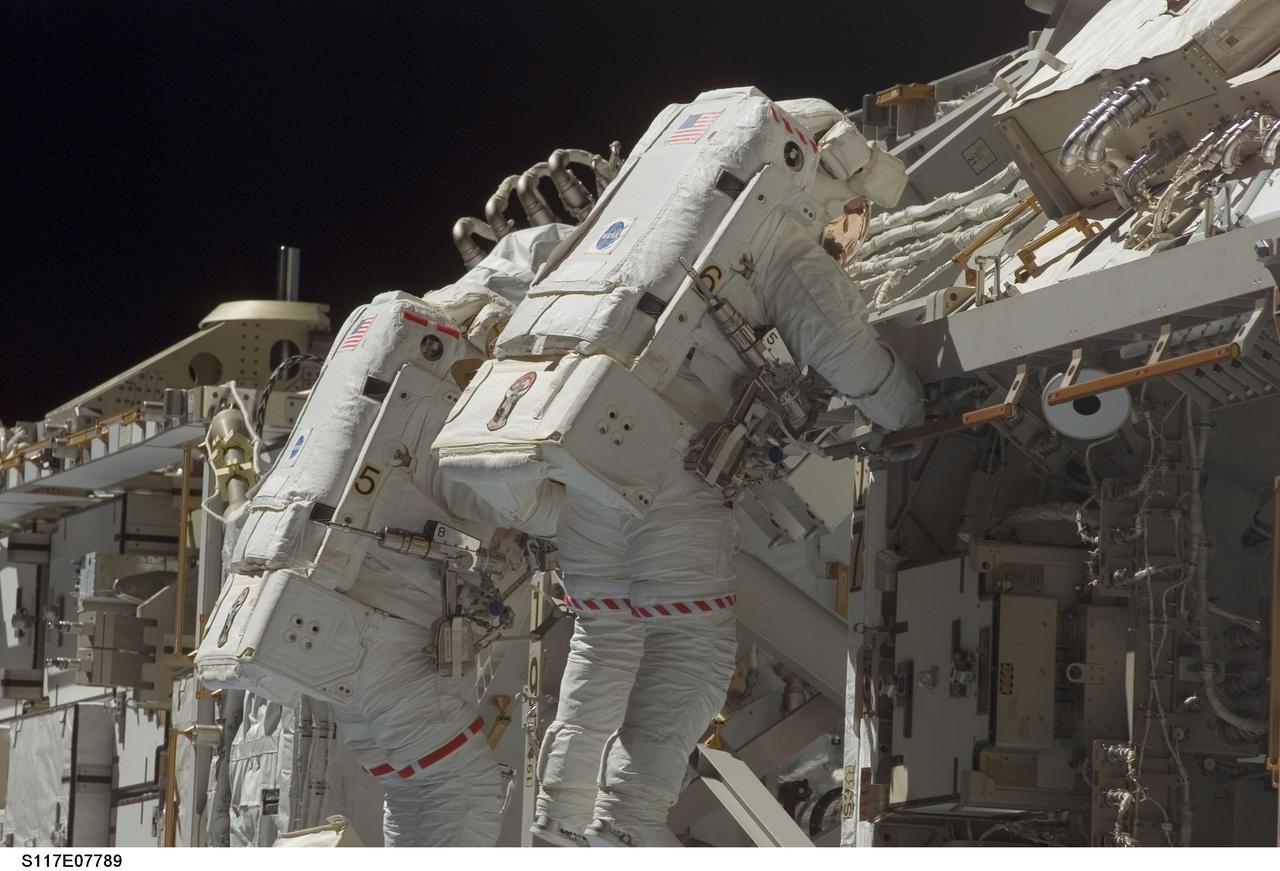
S117-E-07789 (17 June 2007) --- Astronauts Patrick Forrester (left) and Steven Swanson, both STS-117 mission specialists, participate in the mission's fourth and final session of extravehicular activity (EVA), as construction continues on the International Space Station. Among other tasks, Forrester and Swanson continued activation of the station's new starboard 3 and 4 (S3/S4) truss segment; checked out the Drive Lock Assembly 2, one of two mechanisms that will drive rotation of the S3/S4 Truss Solar Alpha Rotary Joint (SARJ); and removed the final launch restraints on the SARJ.

KENNEDY SPACE CENTER, FLA. - In a brief ceremony in the Space Station Processing Facility, Chuck Hardison (left), Boeing senior truss manager, turns over the “key” for the starboard truss segment S3/S4 to Scott Gahring, ISS Vehicle Office manager (acting), Johnson Space Center. The trusses are scheduled to be delivered to the International Space Station on mission STS-117.
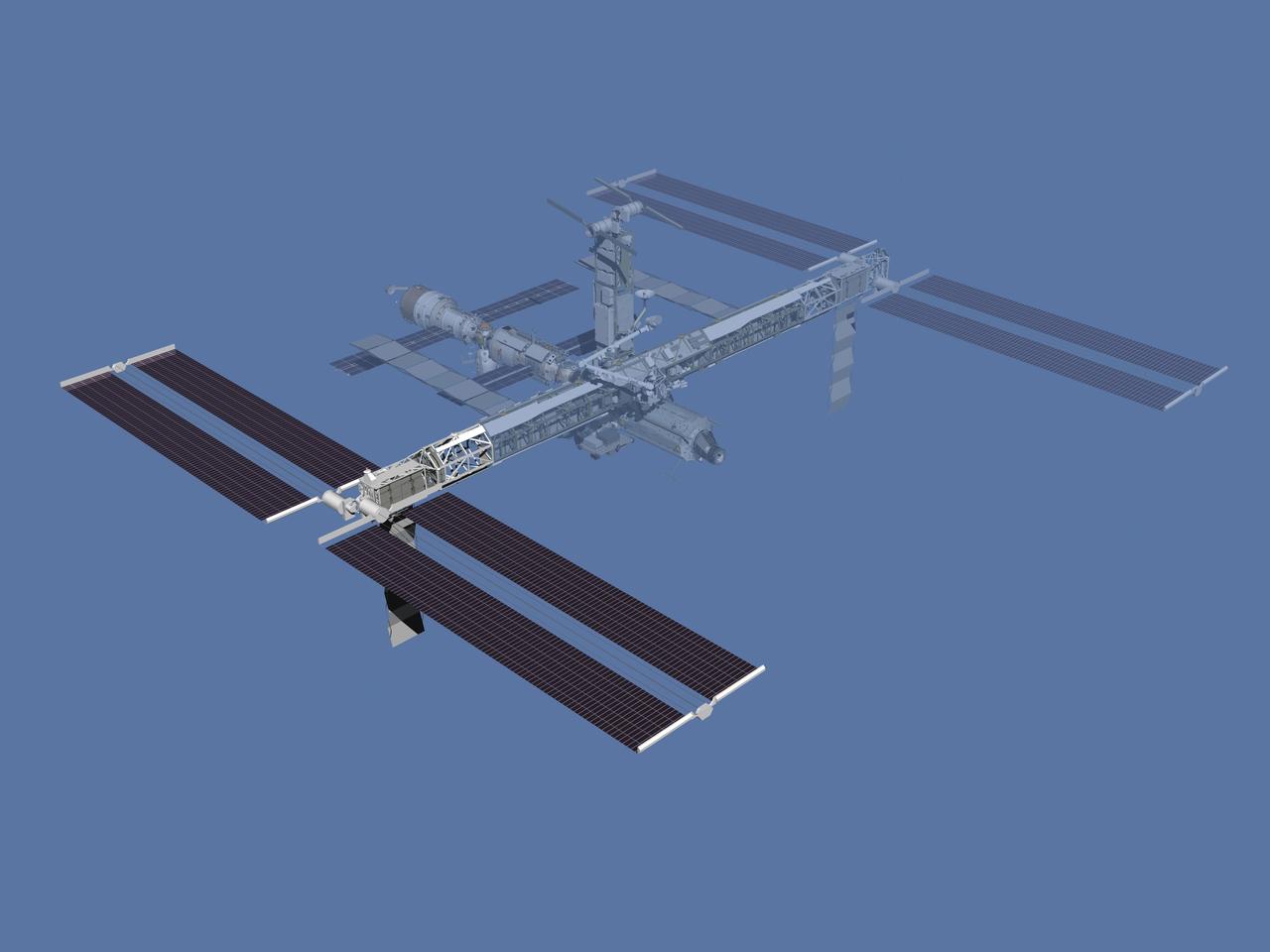
JSC2006-E-43500 (October 2006) --- Computer-generated artist's rendering of the International Space Station after flight STS-117/13A. Second starboard truss segment (S3/S4) is delivered and installed. The third set of solar arrays is deployed. P6 starboard solar array wing and one radiator are retracted.
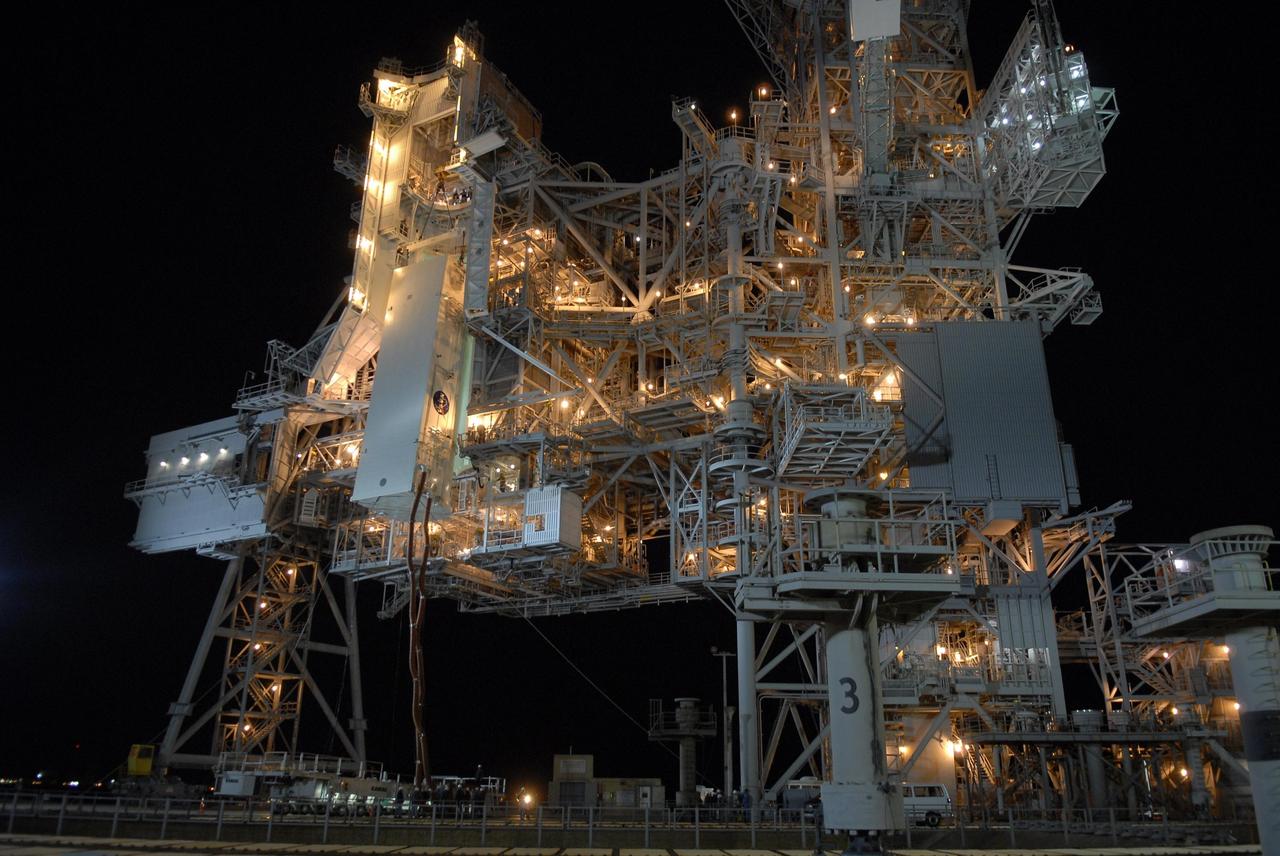
KENNEDY SPACE CENTER, FLA. -- With umbilical lines still attached, the payload canister is lifted up to the payload changeout room on the rotating service structure (RSS) on Launch Pad 39A The canister contains the S3/S4 integrated truss for mission STS-117 to the International Space Station aboard Space Shuttle Atlantis. Once inside the PCR, the S3/S4 arrays will be transferred into Space Shuttle Atlantis' payload bay after the vehicle has rolled out to the pad. The changeout room is the enclosed, environmentally controlled portion of the RSS that supports cargo delivery to the pad and subsequent vertical installation into the orbiter payload bay. The Atlantis crew will install the new truss segment, retract a set of solar arrays and unfold a new set on the starboard side of the station. Launch is targeted for March 15. Photo credit: NASA/Kim Shiflett
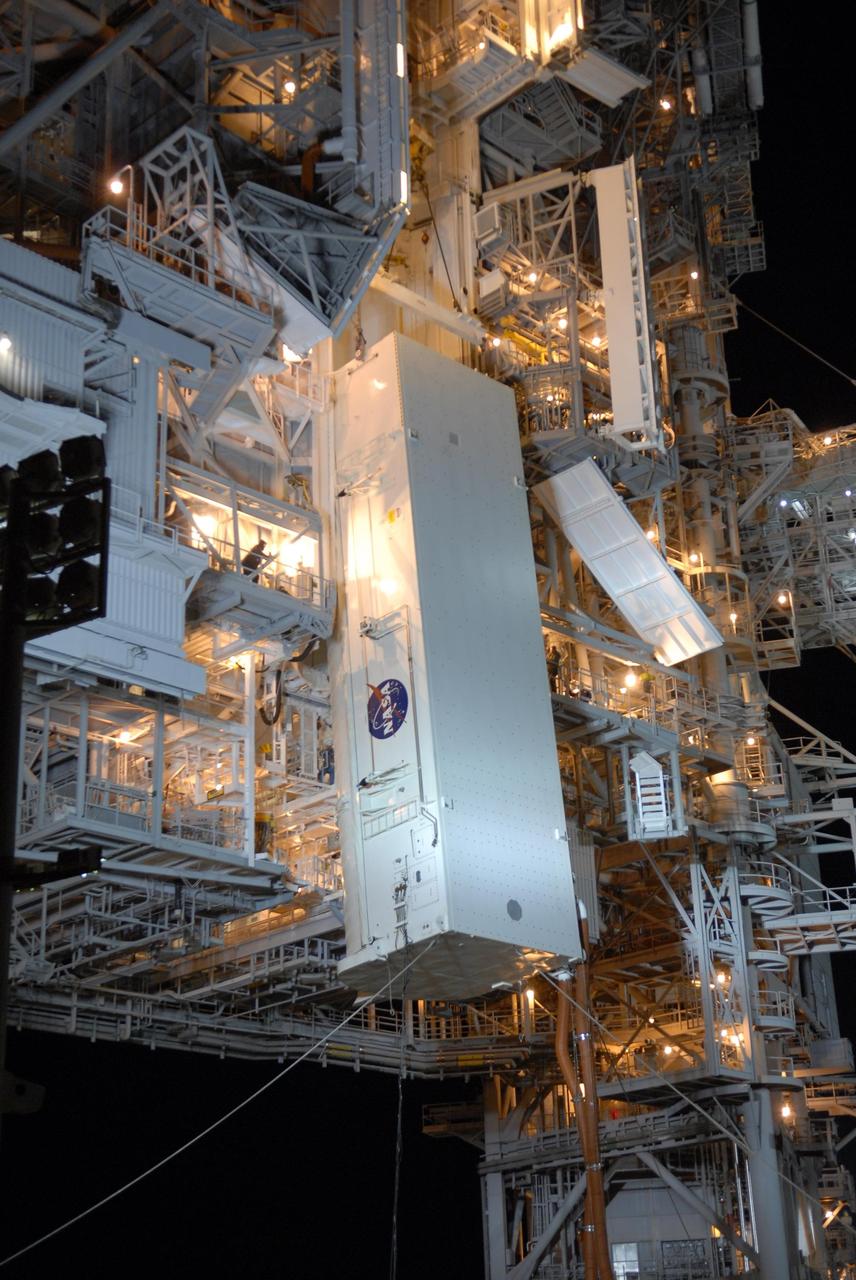
KENNEDY SPACE CENTER, FLA. -- With umbilical lines still attached, the payload canister is lifted up to the payload changeout room on the rotating service structure (RSS) on Launch Pad 39A The canister contains the S3/S4 integrated truss for mission STS-117 to the International Space Station aboard Space Shuttle Atlantis. Once inside the PCR, the S3/S4 arrays will be transferred into Space Shuttle Atlantis' payload bay after the vehicle has rolled out to the pad. The changeout room is the enclosed, environmentally controlled portion of the RSS that supports cargo delivery to the pad and subsequent vertical installation into the orbiter payload bay. The Atlantis crew will install the new truss segment, retract a set of solar arrays and unfold a new set on the starboard side of the station. Launch is targeted for March 15. Photo credit: NASA/Kim Shiflett
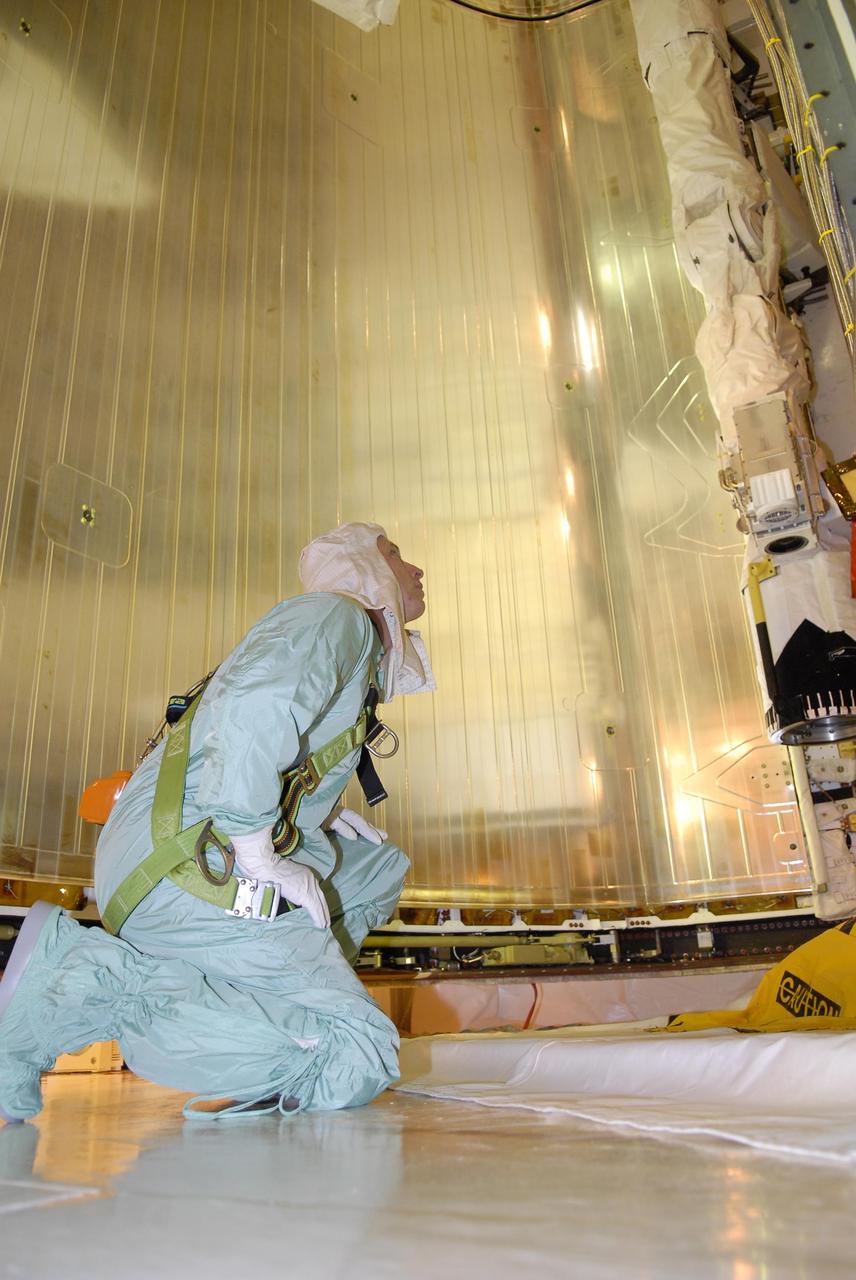
KENNEDY SPACE CENTER, FLA. -- After their arrival at KSC, STS-117 crew members take part in a payload bay walkdown on Launch Pad 39A to look at the cargo in Space Shuttle Atlantis. Seen here is Mission Specialist Patrick Forrester. The payload includes the S3/S4 integrated truss structure for the International Space Station. STS-117 is scheduled to launch at 7:38 p.m. June 8. During the 11-day mission and three spacewalks, the crew will work with flight controllers at NASA's Johnson Space Center in Houston to install the 17-ton segment on the station's girder-like truss and deploy the set of solar arrays, S3/S4. The mission will increase the space station's power capability in preparation for the arrival of new science modules from the European and Japanese space agencies. Photo credit: NASA/Kim Shiflett
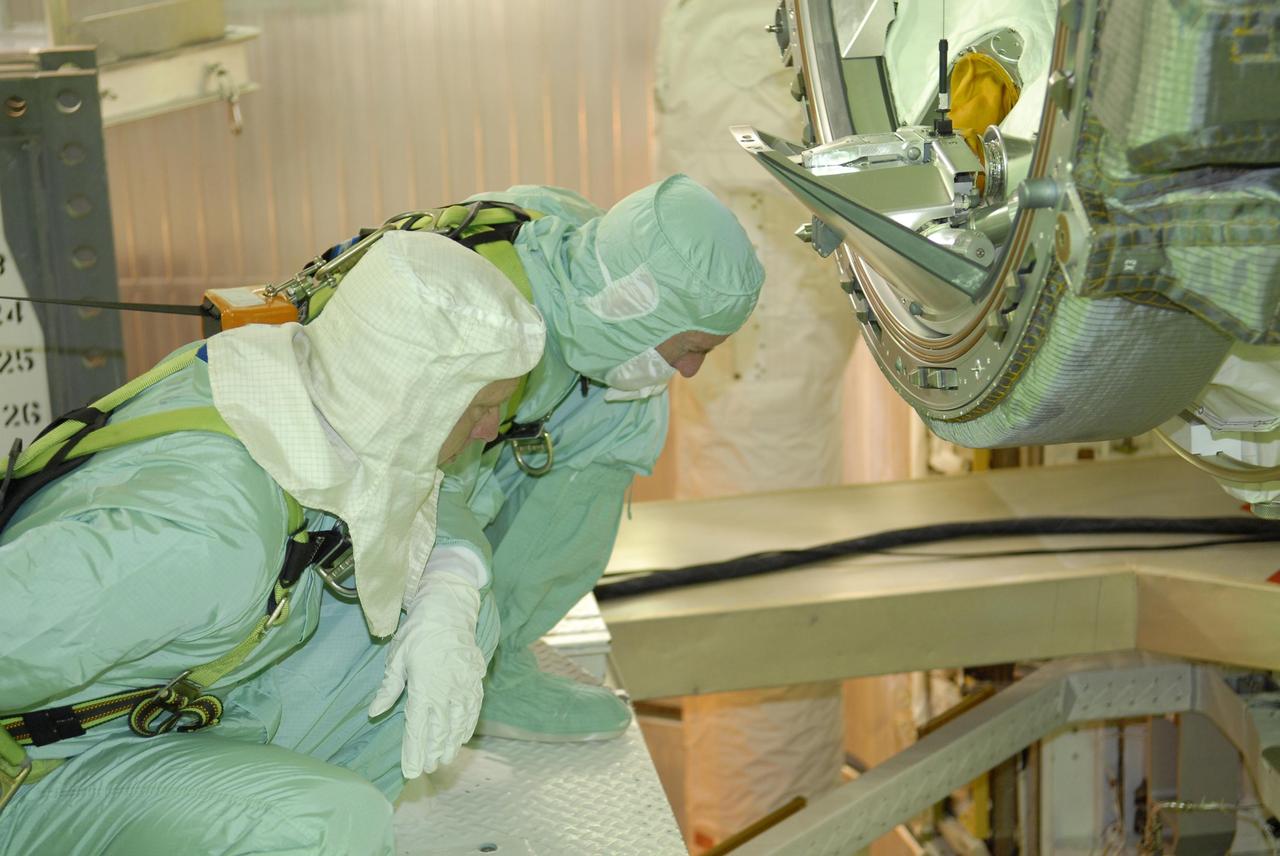
KENNEDY SPACE CENTER, FLA. -- After their arrival at KSC, STS-117 crew members take part in a payload bay walkdown on Launch Pad 39A to look at the cargo in Space Shuttle Atlantis. Seen here are Mission Specialists Patrick Forrester (left) and James Reilly. The payload includes the S3/S4 integrated truss structure for the International Space Station. STS-117 is scheduled to launch at 7:38 p.m. June 8. During the 11-day mission and three spacewalks, the crew will work with flight controllers at NASA's Johnson Space Center in Houston to install the 17-ton segment on the station's girder-like truss and deploy the set of solar arrays, S3/S4. The mission will increase the space station's power capability in preparation for the arrival of new science modules from the European and Japanese space agencies. Photo credit: NASA/Kim Shiflett
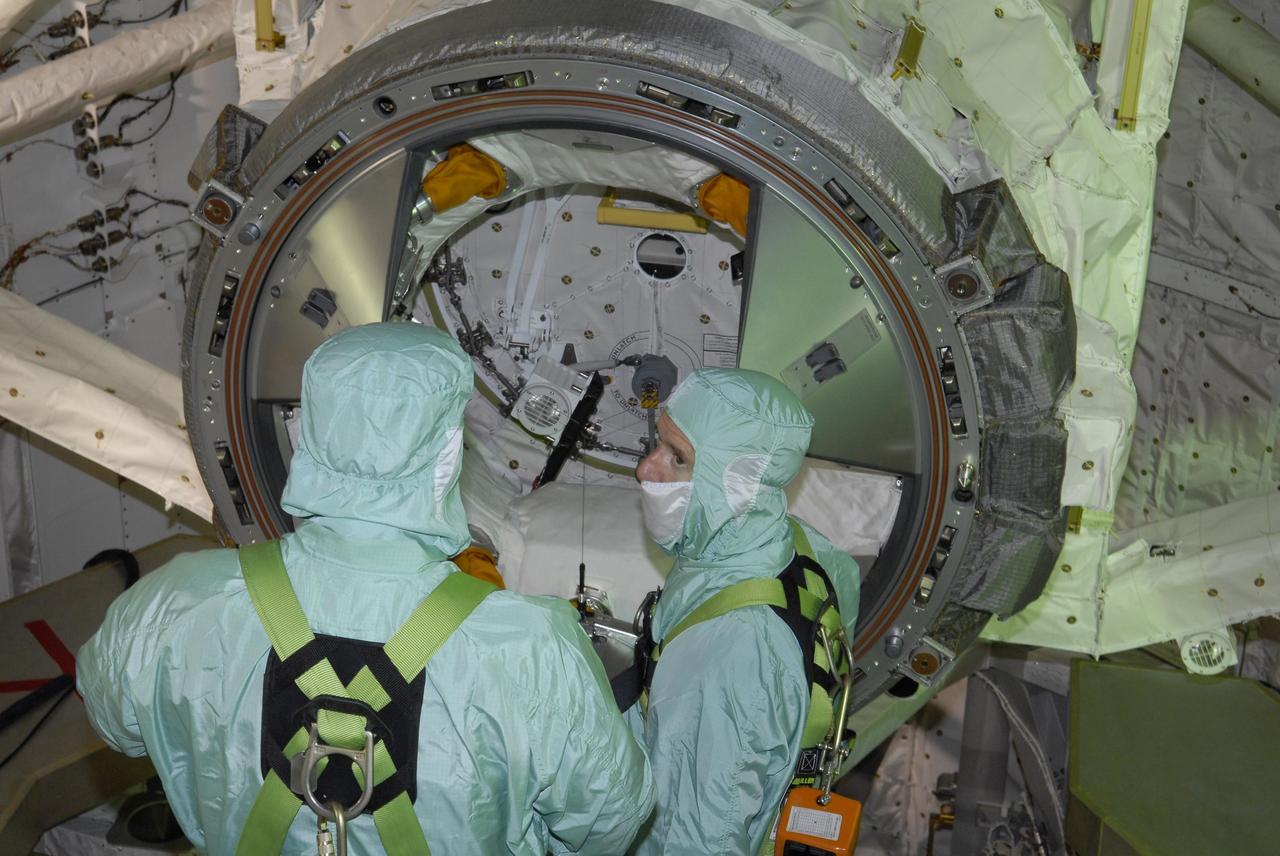
KENNEDY SPACE CENTER, FLA. -- After their arrival at KSC, STS-117 crew members take part in a payload bay walkdown on Launch Pad 39A to look at the cargo in Space Shuttle Atlantis. The payload includes the S3/S4 integrated truss structure for the International Space Station. STS-117 is scheduled to launch at 7:38 p.m. June 8. During the 11-day mission and three spacewalks, the crew will work with flight controllers at NASA's Johnson Space Center in Houston to install the 17-ton segment on the station's girder-like truss and deploy the set of solar arrays, S3/S4. The mission will increase the space station's power capability in preparation for the arrival of new science modules from the European and Japanese space agencies. Photo credit: NASA/Kim Shiflett
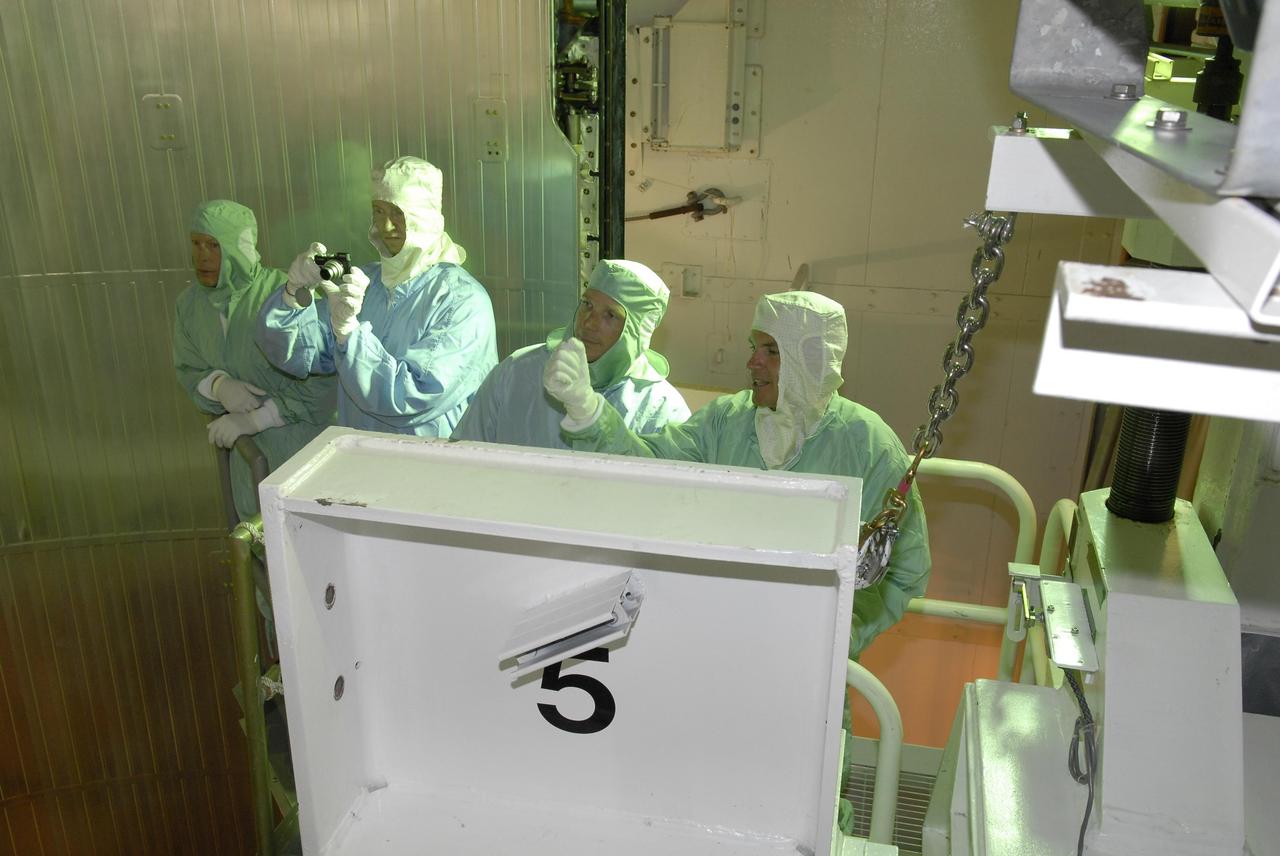
KENNEDY SPACE CENTER, FLA. -- After their arrival at KSC, STS-117 crew members take part in a payload bay walkdown on Launch Pad 39A to look at the cargo in Space Shuttle Atlantis. In the bucket are Mission Specialists Patrick Forrester (with camera) and Steven Swanson (far right). The payload includes the S3/S4 integrated truss structure for the International Space Station. STS-117 is scheduled to launch at 7:38 p.m. June 8. During the 11-day mission and three spacewalks, the crew will work with flight controllers at NASA's Johnson Space Center in Houston to install the 17-ton segment on the station's girder-like truss and deploy the set of solar arrays, S3/S4. The mission will increase the space station's power capability in preparation for the arrival of new science modules from the European and Japanese space agencies. Photo credit: NASA/Kim Shiflett
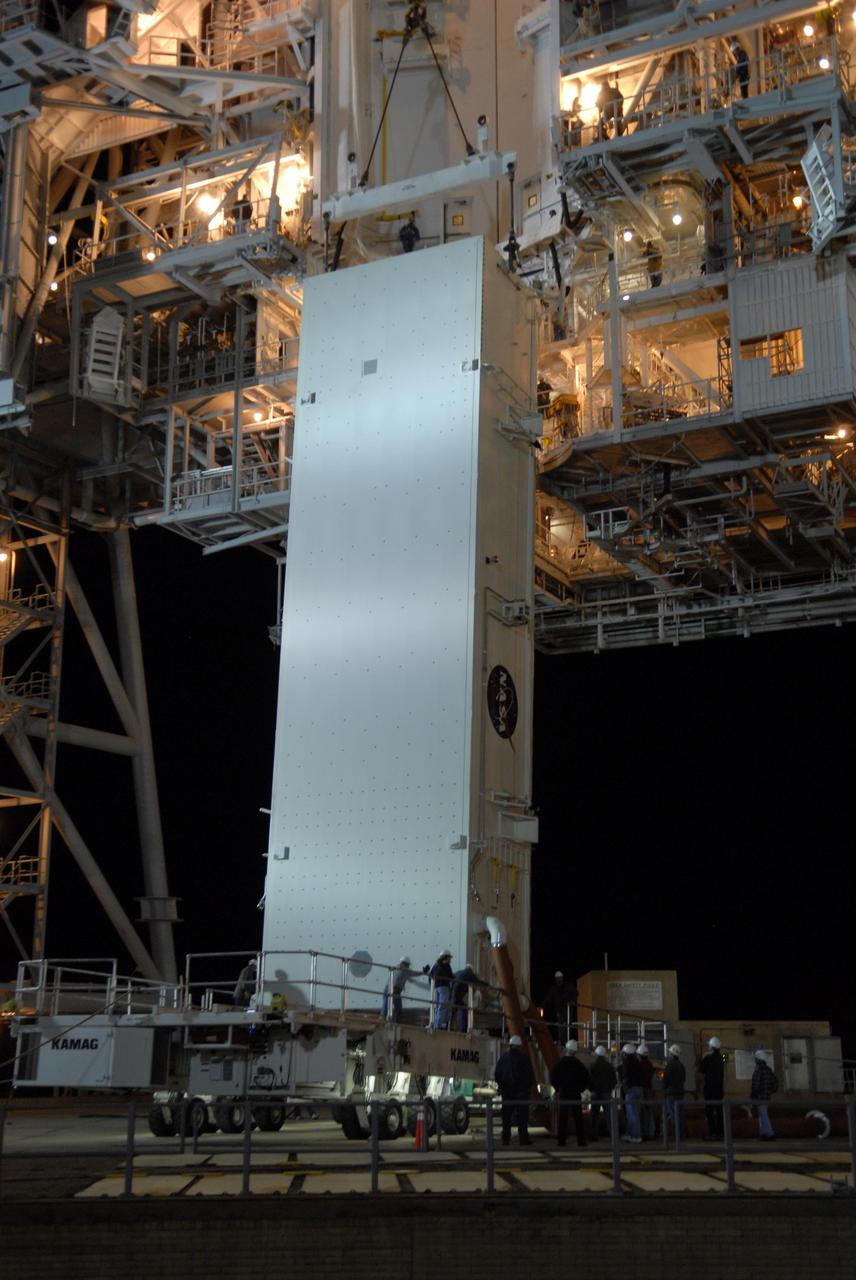
KENNEDY SPACE CENTER, FLA. -- The payload canister on its transporter sits beneath the payload changeout room on the rotating service structure (RSS) on Launch Pad 39A. The canister contains the S3/S4 integrated truss for mission STS-117 to the International Space Station aboard Space Shuttle Atlantis. Once inside the PCR, the S3/S4 arrays will be transferred into Space Shuttle Atlantis' payload bay after the vehicle has rolled out to the pad. The changeout room is the enclosed, environmentally controlled portion of the RSS that supports cargo delivery to the pad and subsequent vertical installation into the orbiter payload bay. The Atlantis crew will install the new truss segment, retract a set of solar arrays and unfold a new set on the starboard side of the station. Launch is targeted for March 15. Photo credit: NASA/Kim Shiflett
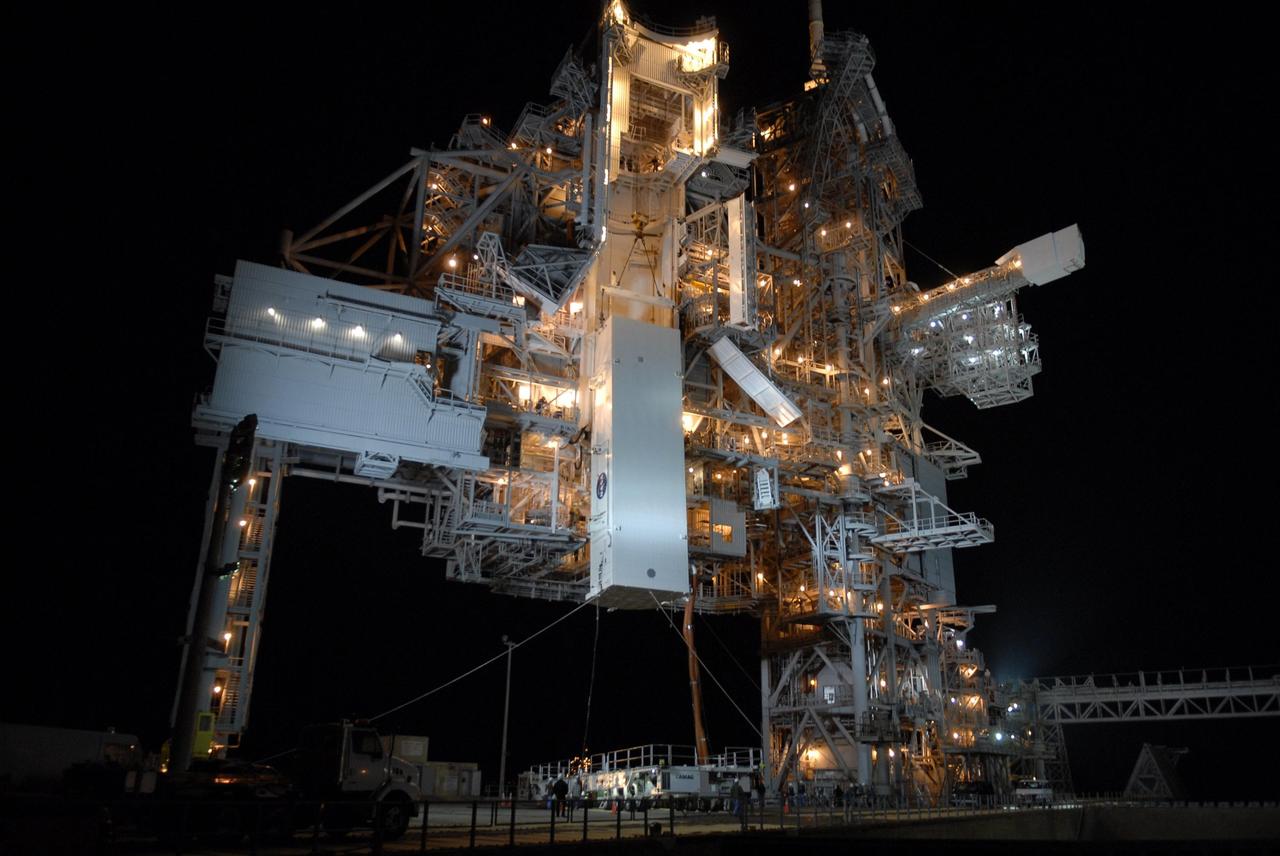
KENNEDY SPACE CENTER, FLA. -- With umbilical lines still attached, the payload canister is lifted up to the payload changeout room on the rotating service structure (RSS) on Launch Pad 39A The canister contains the S3/S4 integrated truss for mission STS-117 to the International Space Station aboard Space Shuttle Atlantis. Once inside the PCR, the S3/S4 arrays will be transferred into Space Shuttle Atlantis' payload bay after the vehicle has rolled out to the pad. The changeout room is the enclosed, environmentally controlled portion of the RSS that supports cargo delivery to the pad and subsequent vertical installation into the orbiter payload bay. The Atlantis crew will install the new truss segment, retract a set of solar arrays and unfold a new set on the starboard side of the station. Launch is targeted for March 15. Photo credit: NASA/Kim Shiflett
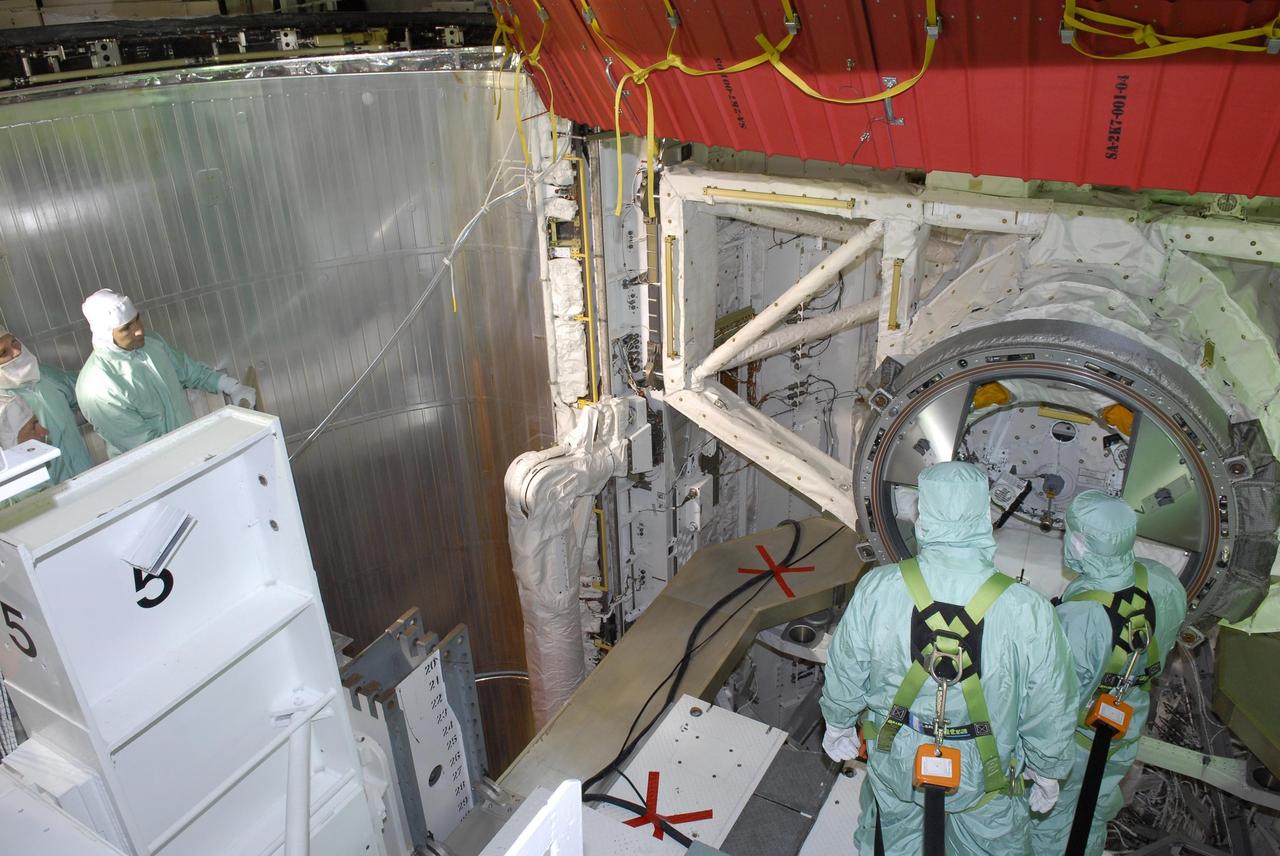
KENNEDY SPACE CENTER, FLA. -- After their arrival at KSC, STS-117 crew members take part in a payload bay walkdown on Launch Pad 39A to look at the cargo in Space Shuttle Atlantis. The payload includes the S3/S4 integrated truss structure for the International Space Station. STS-117 is scheduled to launch at 7:38 p.m. June 8. During the 11-day mission and three spacewalks, the crew will work with flight controllers at NASA's Johnson Space Center in Houston to install the 17-ton segment on the station's girder-like truss and deploy the set of solar arrays, S3/S4. The mission will increase the space station's power capability in preparation for the arrival of new science modules from the European and Japanese space agencies. Photo credit: NASA/Kim Shiflett
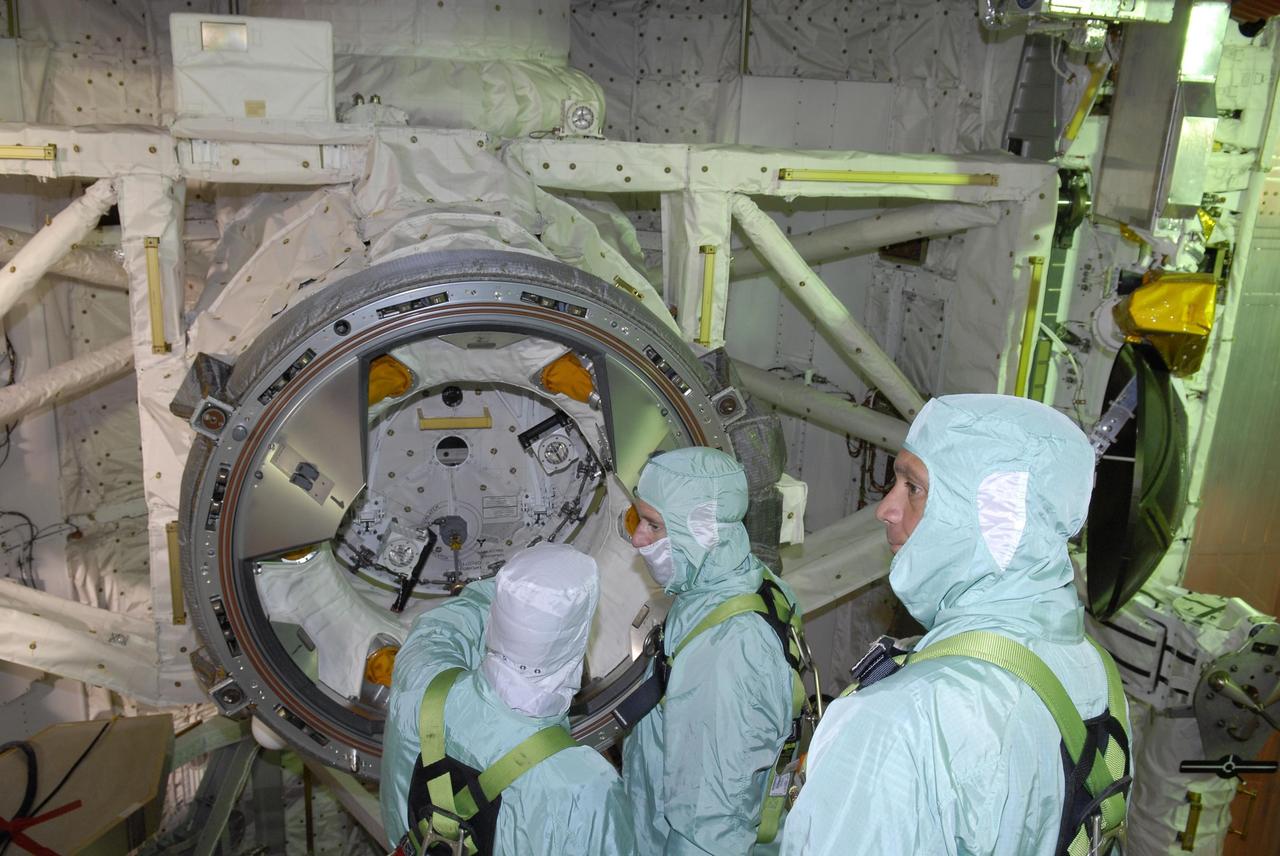
KENNEDY SPACE CENTER, FLA. -- After their arrival at KSC, STS-117 crew members take part in a payload bay walkdown on Launch Pad 39A to look at the cargo in Space Shuttle Atlantis. The payload includes the S3/S4 integrated truss structure for the International Space Station. STS-117 is scheduled to launch at 7:38 p.m. June 8. During the 11-day mission and three spacewalks, the crew will work with flight controllers at NASA's Johnson Space Center in Houston to install the 17-ton segment on the station's girder-like truss and deploy the set of solar arrays, S3/S4. The mission will increase the space station's power capability in preparation for the arrival of new science modules from the European and Japanese space agencies. Photo credit: NASA/Kim Shiflett
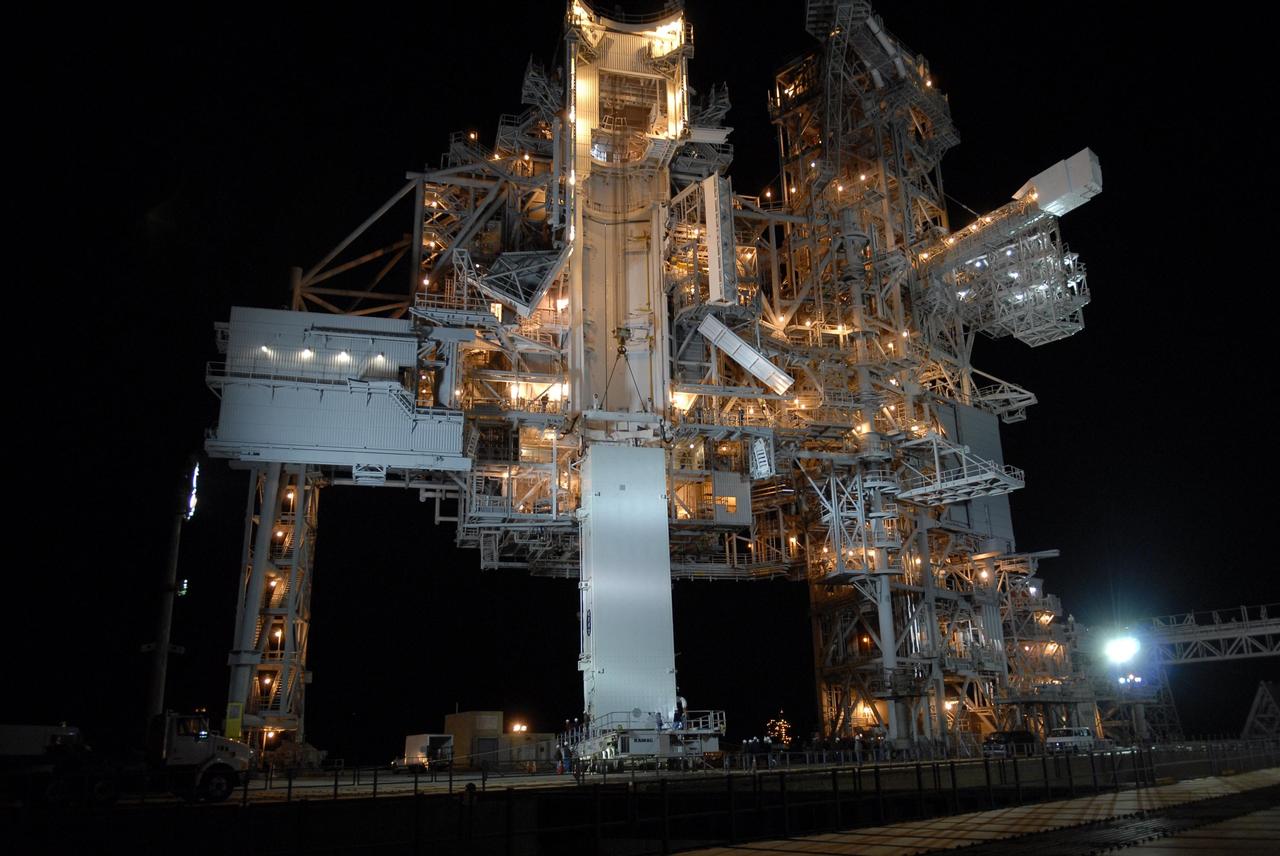
KENNEDY SPACE CENTER, FLA. -- The payload canister on its transporter arrives on Launch Pad 39A, stopping beneath the payload changeout room on the rotating service structure (RSS). The canister contains the S3/S4 integrated truss for mission STS-117 to the International Space Station aboard Space Shuttle Atlantis. Once inside the PCR, the S3/S4 arrays will be transferred into Space Shuttle Atlantis' payload bay after the vehicle has rolled out to the pad. The changeout room is the enclosed, environmentally controlled portion of the RSS that supports cargo delivery to the pad and subsequent vertical installation into the orbiter payload bay.The Atlantis crew will install the new truss segment, retract a set of solar arrays and unfold a new set on the starboard side of the station. Launch is targeted for March 15. Photo credit: NASA/Kim Shiflett
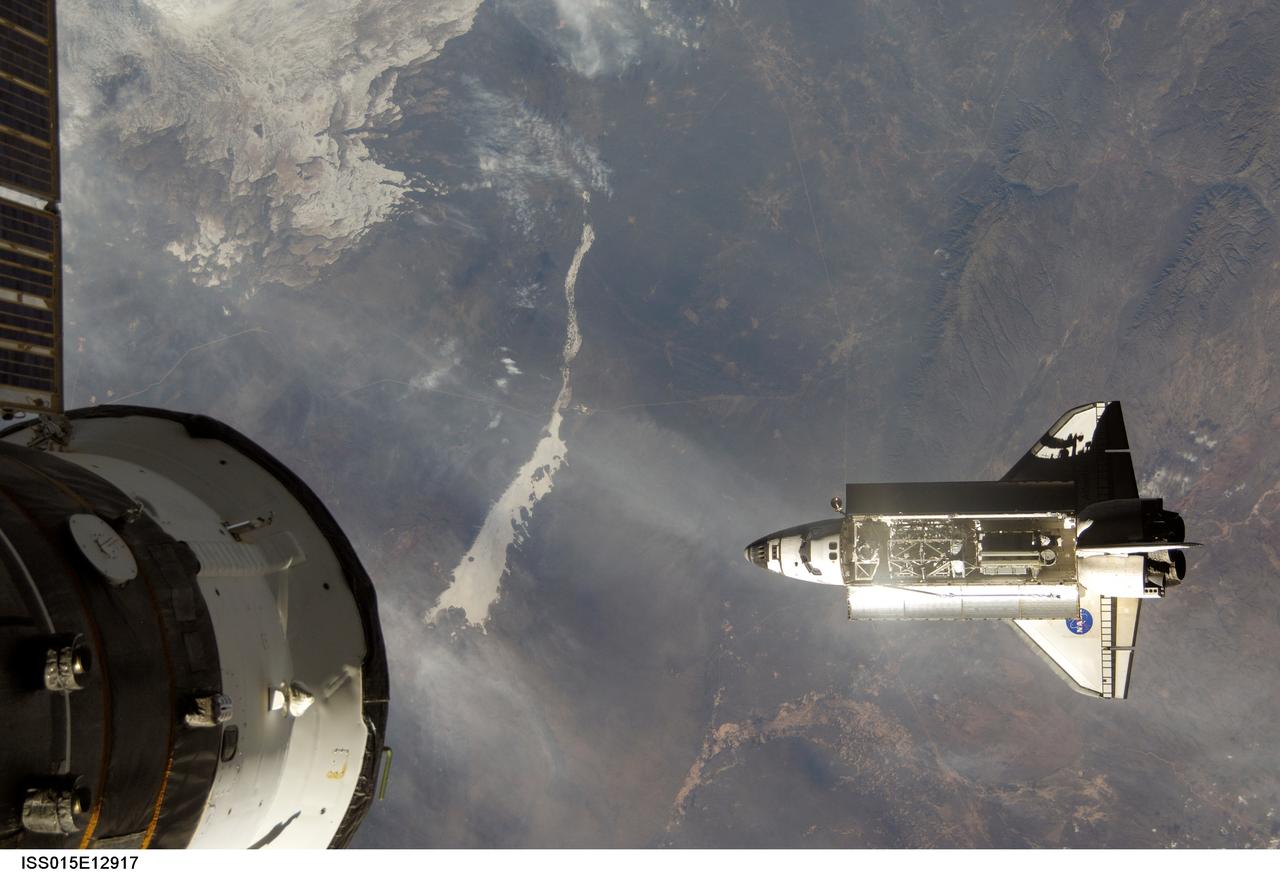
ISS015-E-12917 (10 June 2007) --- Backdropped by rugged Earth terrain, the Space Shuttle Atlantis approaches the International Space Station during STS-117 rendezvous and docking operations. Docking occurred at 2:36 p.m. (CDT) on June 10, 2007. A pair of solar arrays and starboard truss segments (S3/S4), which are later to be attached to the station and outfitted during three spacewalks, can be seen in Atlantis' cargo bay. A docked Soyuz spacecraft is visible at right.
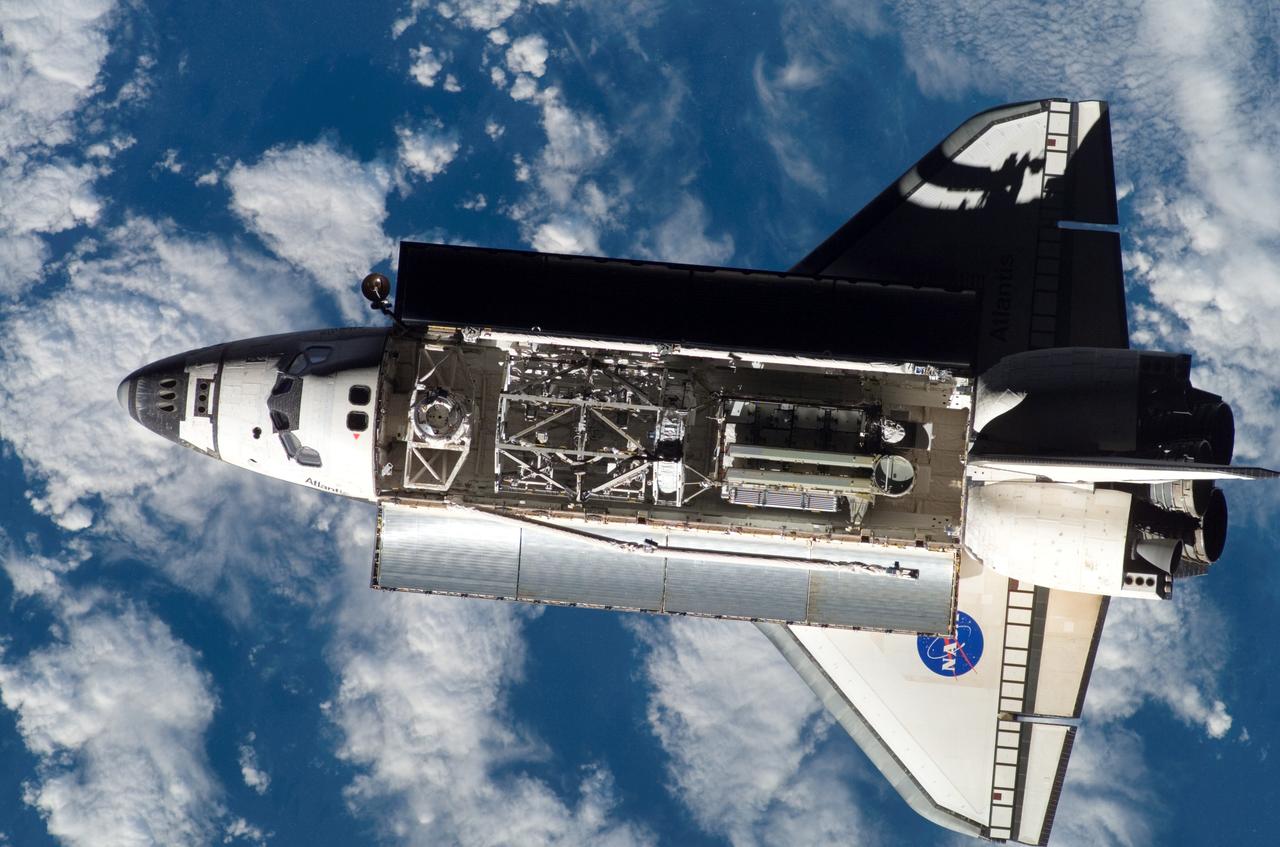
ISS015-E-11705 (10 June 2007) --- A nadir view of the Space Shuttle Atlantis was photographed by a member of the Expedition 15 crew aboard the International Space Station as the two spacecraft were nearing their much-anticipated link-up in Earth orbit. The 17.8 ton S3/S4 truss to be added next week to the station can be seen berthed in the payload bay of the shuttle.
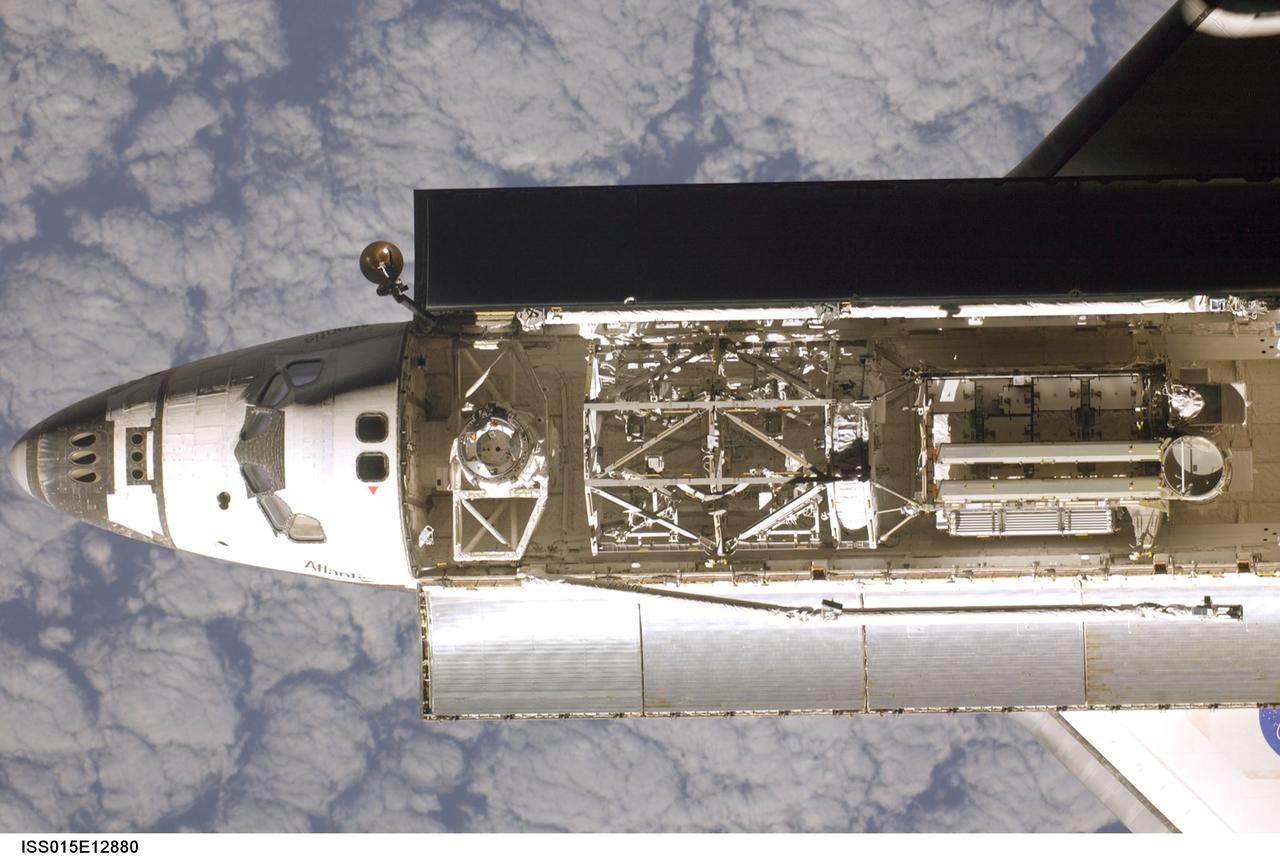
ISS015-E-12880 (10 June 2007) --- A nadir view of the Space Shuttle Atlantis was photographed by a member of the Expedition 15 crew aboard the International Space Station as the two spacecraft were nearing their much-anticipated link-up in Earth orbit. The 17.8 ton S3/S4 truss to be added next week to the station can be seen berthed in the payload bay of the shuttle.

ISS015-E-11743 (10 June 2007) --- A view photographed from the International Space Station shows the Space Shuttle Atlantis from the aft looking forward as the two spacecraft were nearing their much-anticipated link-up in Earth orbit. The 17.8 ton S3/S4 truss to be added next week to the station can be seen berthed in the payload bay of the shuttle.
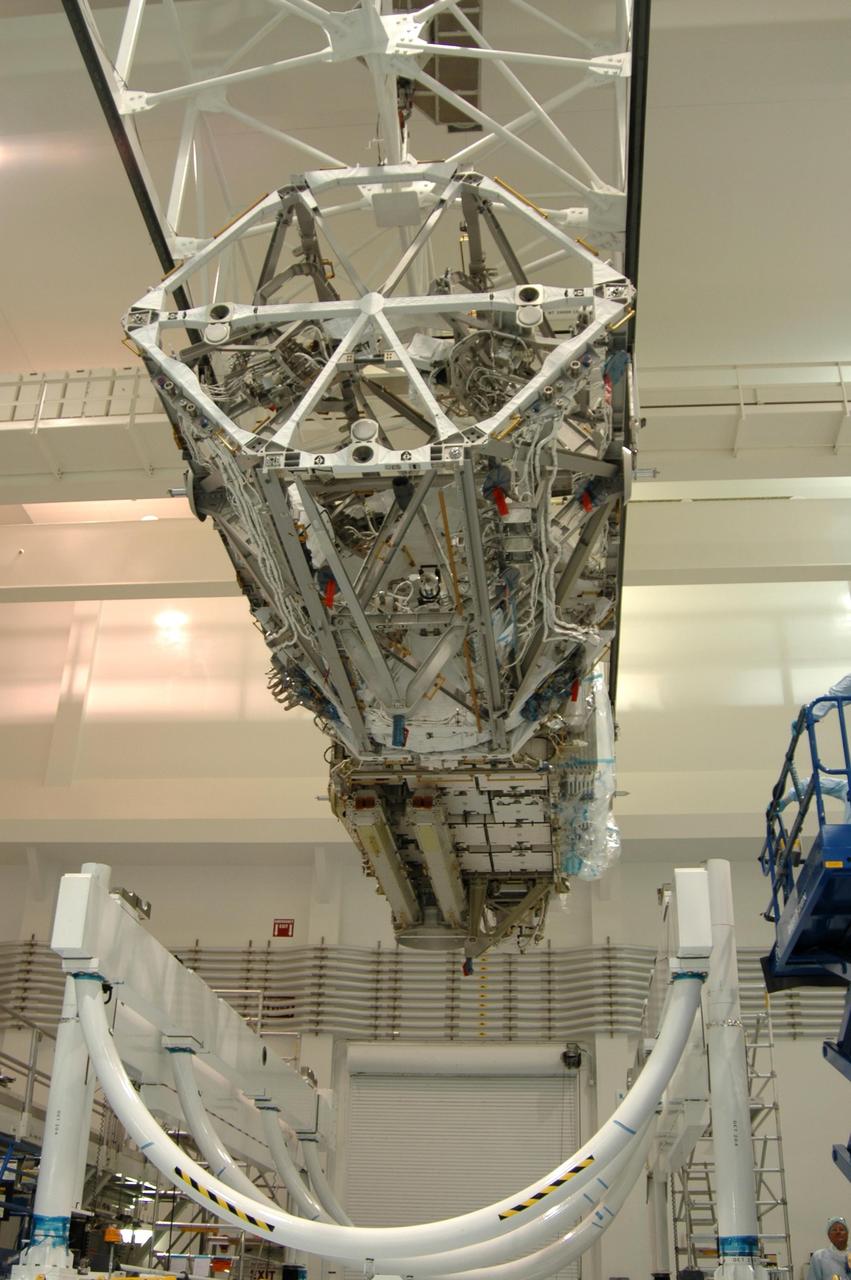
KENNEDY SPACE CENTER, FLA. - In the Space Station Processing Facility, an overhead crane lifts the S3/S4 integrated truss structure from a rotation stand. The truss will be moved to a work stand. Along with a third set of solar arrays and batteries, the truss is scheduled to fly on mission STS-117 aboard Space Shuttle Atlantis to the International Space Station. The crew of six astronauts will install the truss to continue assembly of the station. Photo credit: NASA/Dimitri Gerondidakis
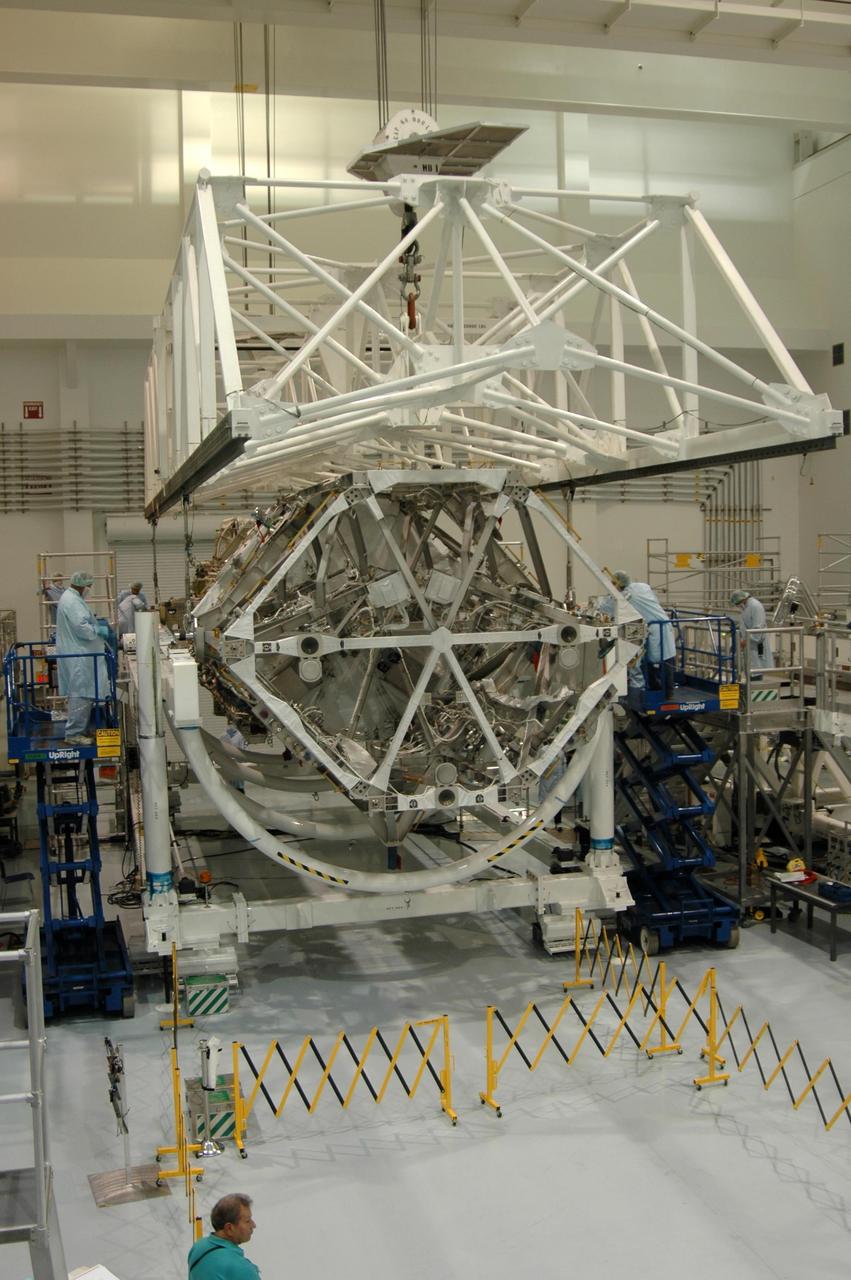
KENNEDY SPACE CENTER, FLA. - In the Space Station Processing Facility, an overhead crane is being attached to the S3/S4 integrated truss structure in order to move it from a rotation stand to a work stand. Along with a third set of solar arrays and batteries, the truss is scheduled to fly on mission STS-117 aboard Space Shuttle Atlantis to the International Space Station. The crew of six astronauts will install the truss to continue assembly of the station. Photo credit: NASA/Dimitri Gerondidakis
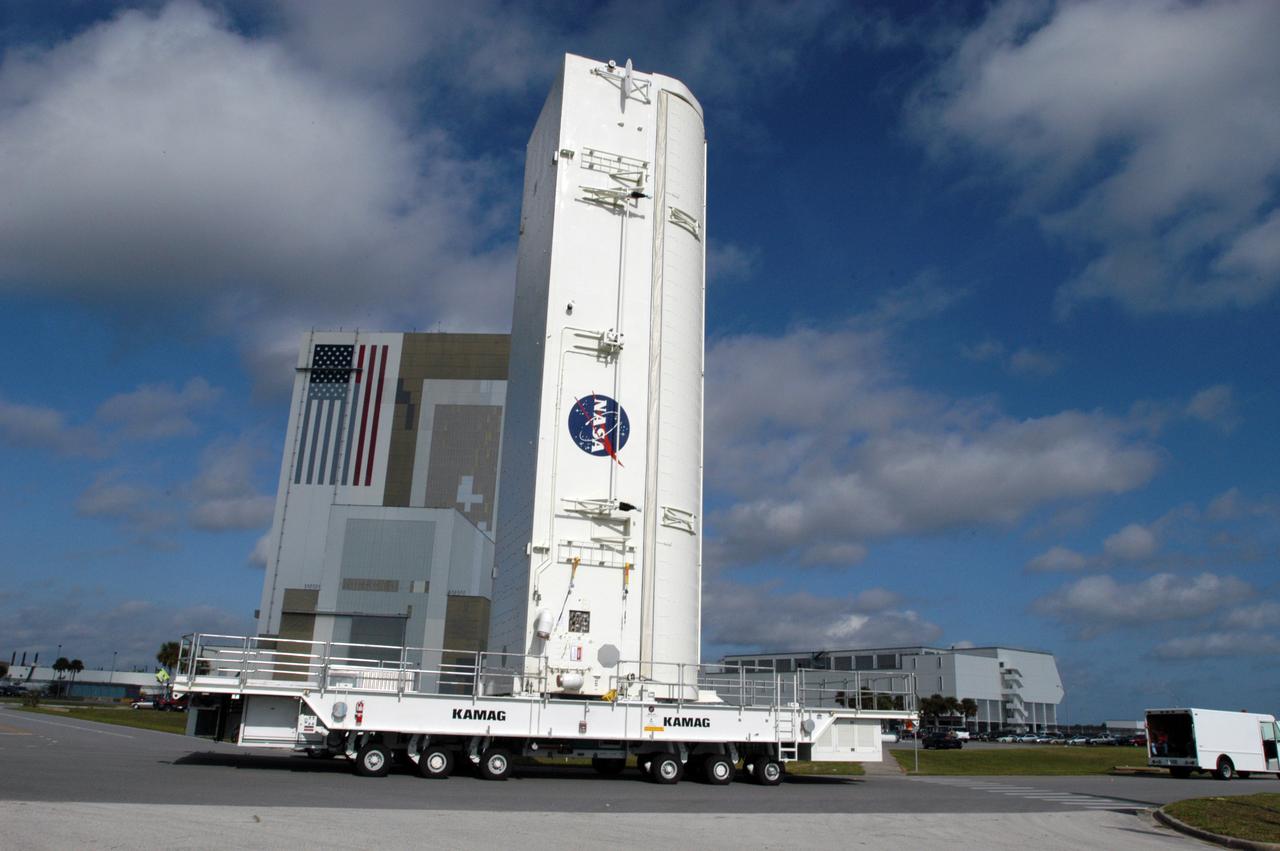
This payload canister is being transported to Launch Pad 39A for a "fit check." At a later date, the canister will be used to transport to the pad the S3/S4 solar arrays that are the payload for mission STS-117. The mission will launch on Space Shuttle Atlantis for the 21st flight to the International Space Station, and the crew of six will continue the construction of station with the installation of the arrays. The launch of Atlantis is targeted for March 16.
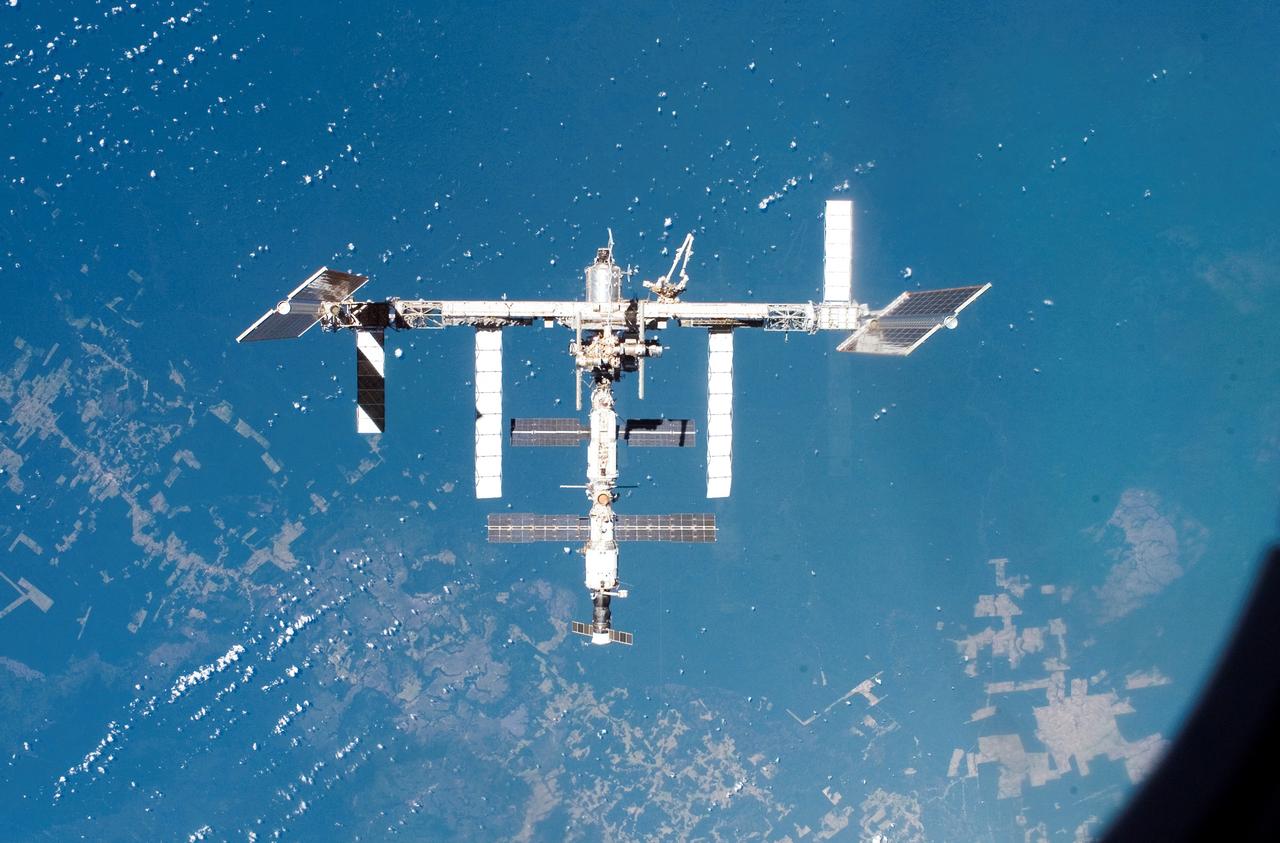
Eight days of construction resumed on the International Space Station (ISS), as STS-117 astronauts and mission specialists and the Expedition 15 crew completed installation of the second and third starboard truss segments (S3 and S4). Back dropped by our colorful Earth, its newly expanded configuration is revealed as pilot Lee Archambault conducts a fly around upon departure from the station on June 19, 2007.

Extravehicular Activity (EVA) suits packed inside containers arrive at the Space Station Processing Facility from Johnson Space Center in Texas. The suits will be used by STS-117 crew members to perform several spacewalks during the mission. The mission payload aboard Space Shuttle Atlantis is the S3/S4 integrated truss structure, along with a third set of solar arrays and batteries. The crew of six astronauts will install the truss to continue assembly of the International Space Station.
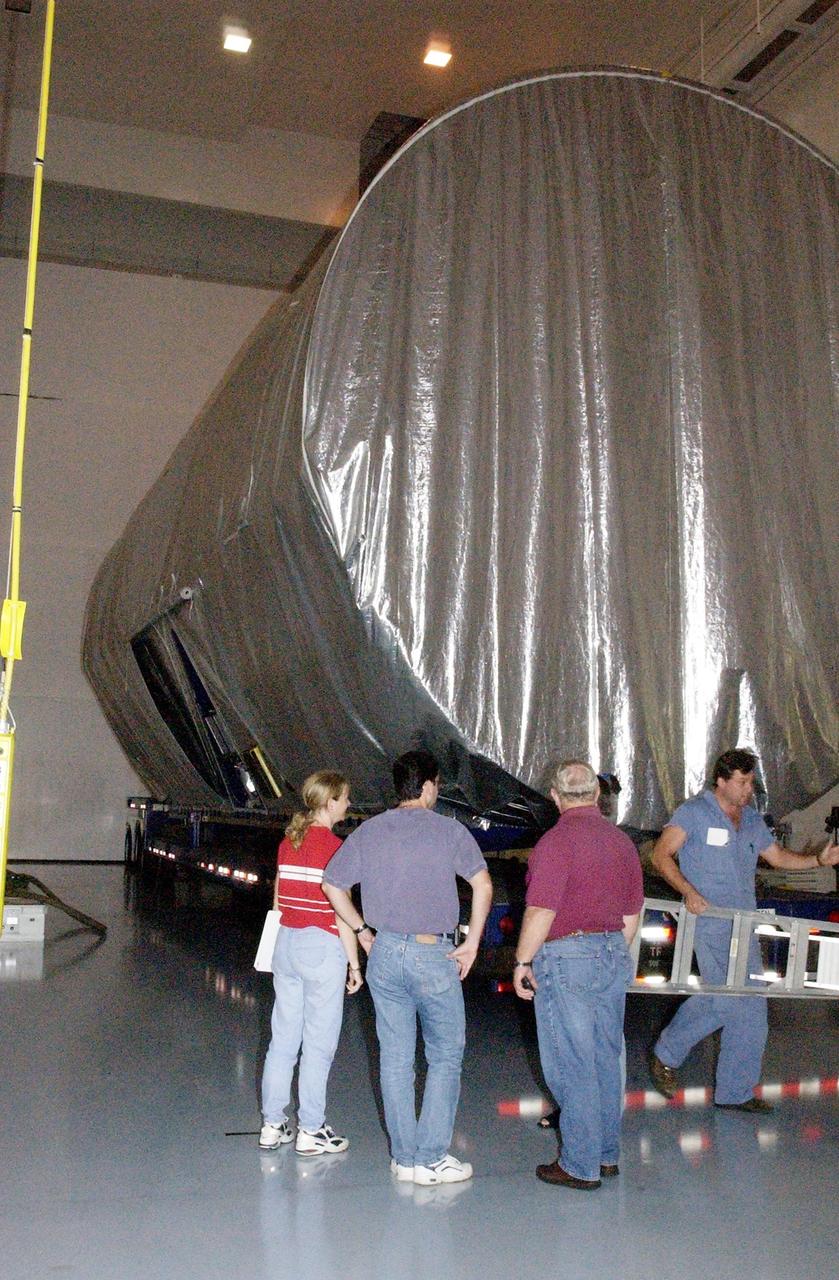
KENNEDY SPACE CENTER, FLA. -- In the Space Station Processing Facility, workers prepare to process the newly arrived S5 truss segment for the International Space Station. It will be fit checked for a Photo-Voltaic Radiator Grapple Fixture and also undergo a fit check to a truss simulator to ensure that it will fit properly with the S4 and S6 truss segments. S5 is scheduled for launch in October 2003 on mission STS-118. It will be the tenth truss assembled in an 11-truss structure
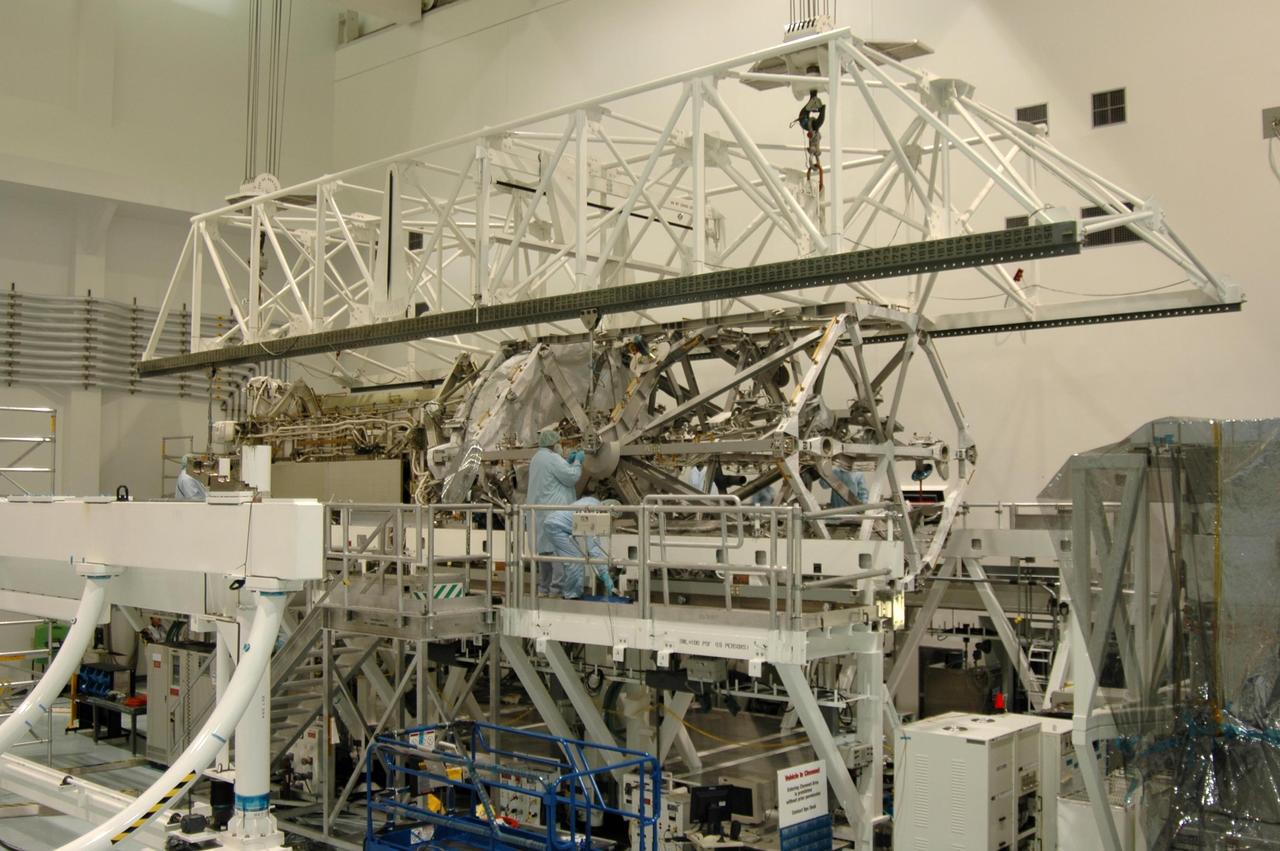
KENNEDY SPACE CENTER, FLA. - In the Space Station Processing Facility, an overhead crane lowers the S3/S4 integrated truss structure onto a work stand. It was moved from a rotation stand at left. Along with a third set of solar arrays and batteries, the truss is scheduled to fly on mission STS-117 aboard Space Shuttle Atlantis to the International Space Station. The crew of six astronauts will install the truss to continue assembly of the station. Photo credit: NASA/Dimitri Gerondidakis
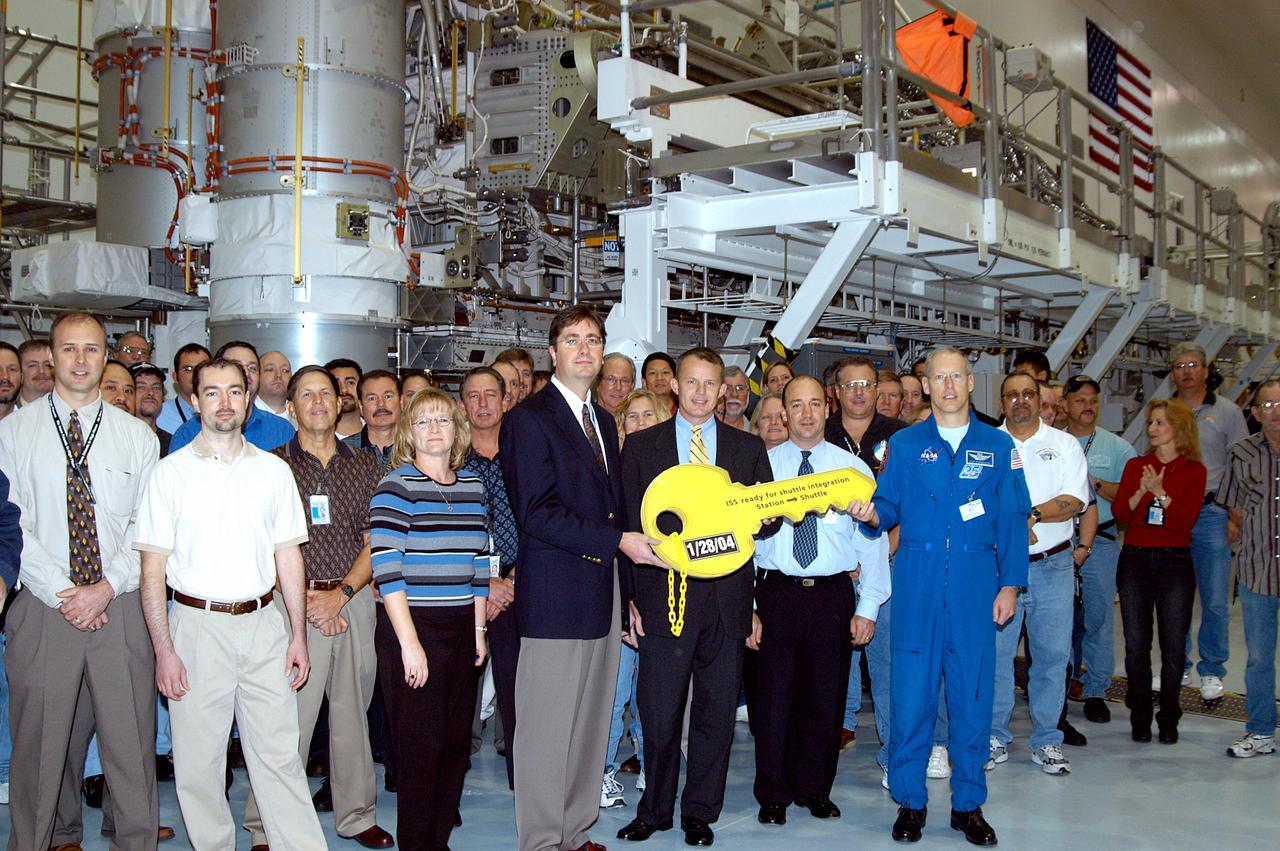
KENNEDY SPACE CENTER, FLA. - Surrounded by workers in the Space Station Processing Facility, Chuck Hardison (left), Boeing senior truss manager, presents the “key” for the starboard truss segment S3/S4 to Scott Gahring (center), ISS Vehicle Office manager (acting), Johnson Space Center. The trusses are scheduled to be delivered to the International Space Station on mission STS-117. Holding the tip of the key at right is astronaut Patrick Forrester, who is a mission specialist on the flight.
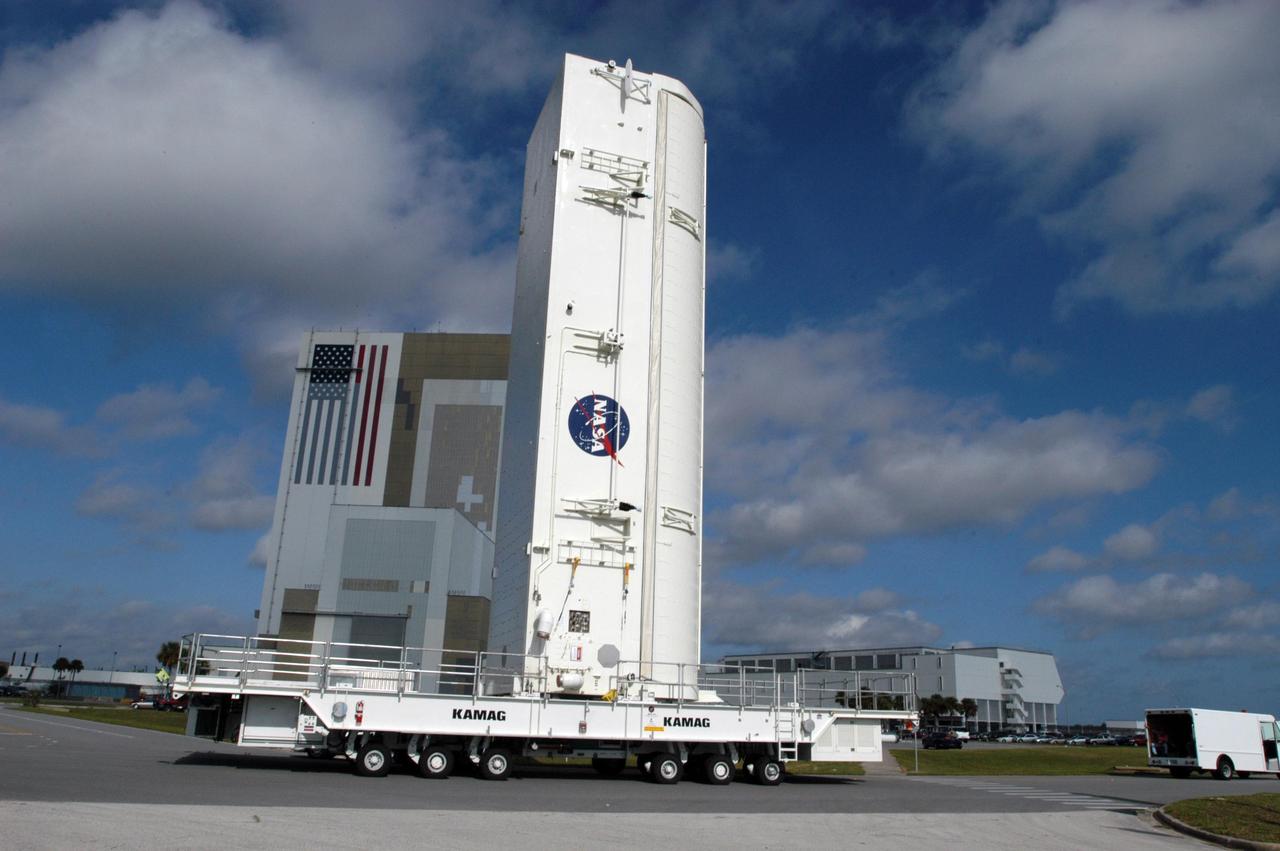
KENNEDY SPACE CENTER, FLA. -- This payload canister is being transported to Launch Pad 39A for a "fit check." At a later date, the canister will be used to transport to the pad the S3/S4 solar arrays that are the payload for mission STS-117. The mission will launch on Space Shuttle Atlantis for the 21st flight to the International Space Station, and the crew of six will continue the construction of station with the installation of the arrays. The launch of Atlantis is targeted for March 16. Photo credit: NASA/George Shelton

ISS015-E-11759 (10 June 2007) --- Backdropped by a blue and white Earth, the Space Shuttle Atlantis approaches the International Space Station during STS-117 rendezvous and docking operations. Docking occurred at 2:36 p.m. (CDT) on June 10, 2007. A pair of solar arrays and starboard truss segments (S3/S4), which are later to be attached to the station and outfitted during three spacewalks, can be seen in Atlantis' cargo bay. A docked Soyuz spacecraft is visible at top center.
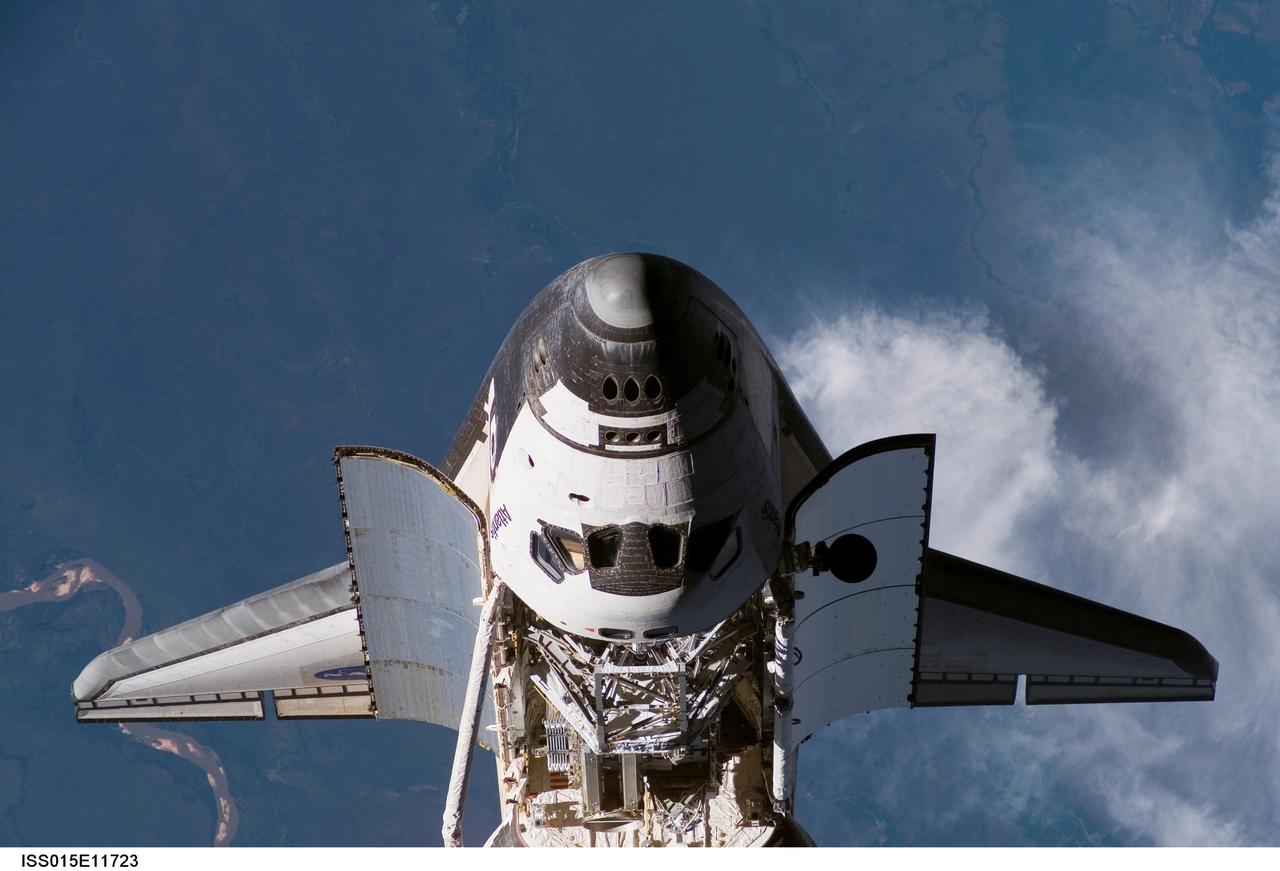
ISS015-E-11723 (10 June 2007) --- A view photographed from the International Space Station shows the Space Shuttle Atlantis as the two spacecraft were nearing their much-anticipated link-up in Earth orbit. The 17.8 ton S3/S4 truss to be added next week to the station can be seen berthed in the payload bay of the shuttle.