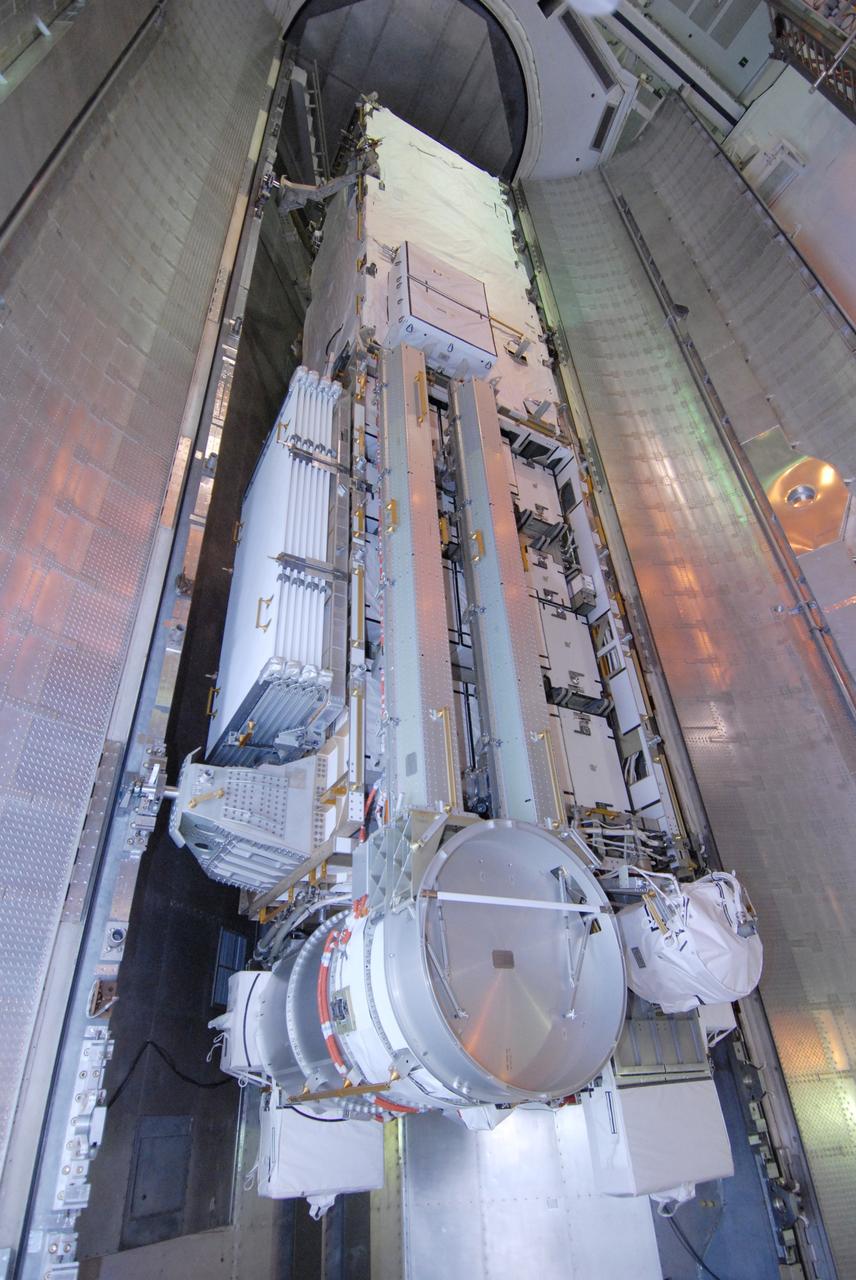
CAPE CANAVERAL, Fla. -- On Launch Pad 39A at NASA's Kennedy Space Center in Florida, the integrated truss structure S6 and solar arrays, the STS-119 mission payload, slowly move out of the payload canister into the Payload Changeout Room, or PCR. They will be installed in space shuttle Discovery's payload bay after the shuttle rolls out to the launch pad. Launch of Discovery on the STS-119 mission is scheduled for Feb. 12. During Discovery's 14-day mission, the crew will install the S6 truss segment and its solar arrays to the starboard side of the station, completing the station's backbone, or truss. Photo credit: NASA/Chris Rhodes
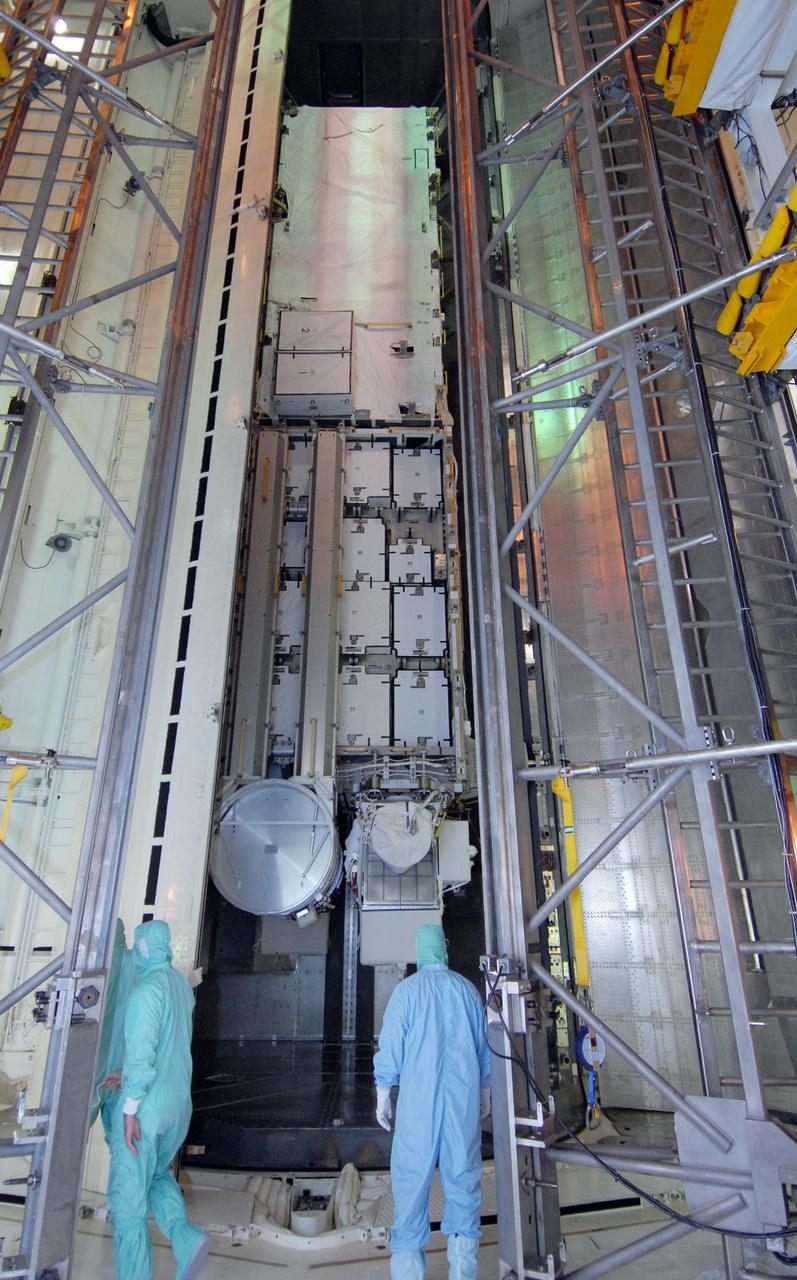
CAPE CANAVERAL, Fla. -- On Launch Pad 39A at NASA's Kennedy Space Center in Florida, the doors of the payload canister open to reveal space shuttle Discovery's payload, the integrated truss structure S6 and solar arrays, for the STS-119 mission. The payload will be transferred into the Payload Changeout Room, or PCR. They will be installed in Discovery's payload bay after the shuttle rolls out to the launch pad. Launch of Discovery on the STS-119 mission is scheduled for Feb. 12. During Discovery's 14-day mission, the crew will install the S6 truss segment and its solar arrays to the starboard side of the station, completing the station's backbone, or truss. Photo credit: NASA/Chris Rhodes
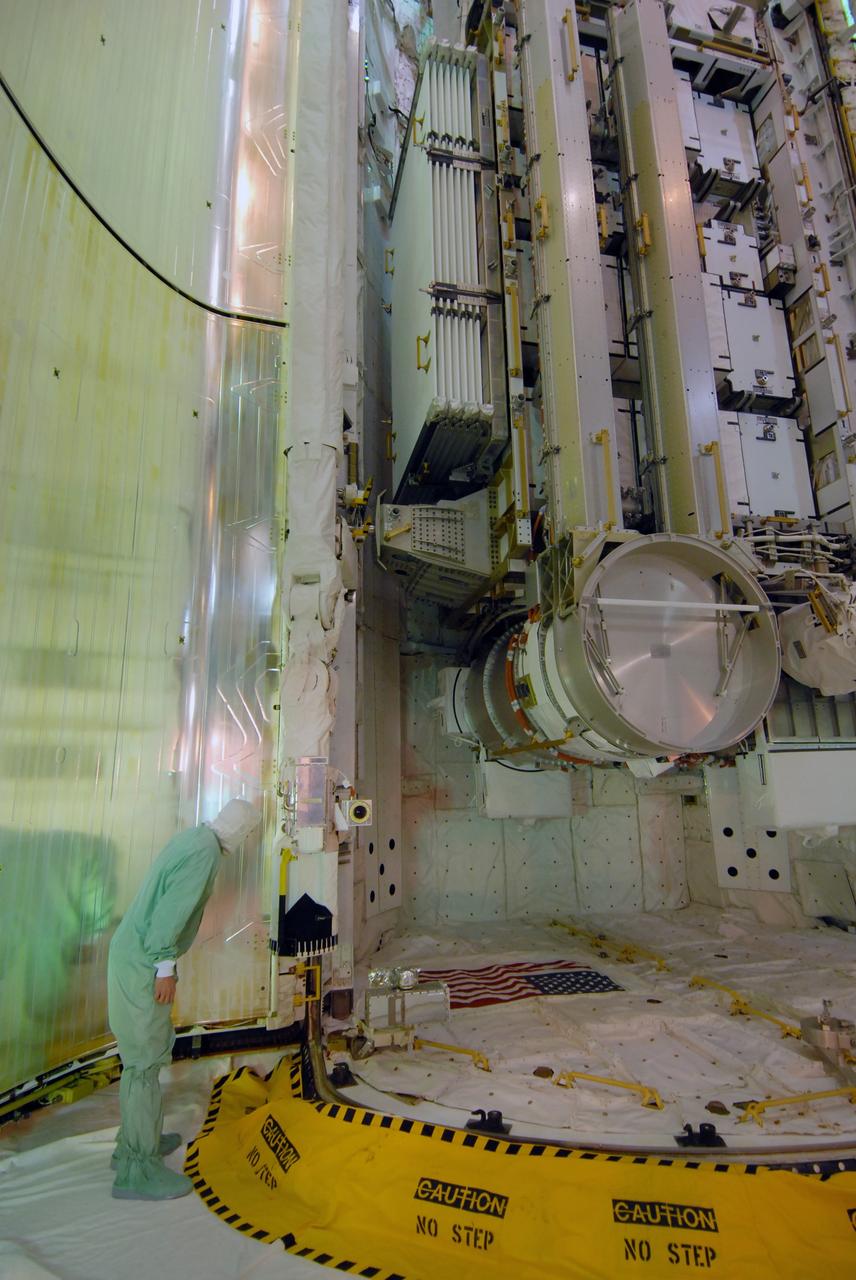
CAPE CANAVERAL, Fla. – On Launch Pad 39A at NASA's Kennedy Space Center in Florida, space shuttle Discovery's payload bay doors are being closed. A worker checks the progress of the doors. The cargo consists of the integrated truss structure S6 and solar arrays for the STS-119 mission to the International Space Station. During Discovery's 14-day mission, the shuttle's seven astronauts will install the S6 truss to the starboard side of the space station, completing the station's truss, or backbone. Launch of Discovery on the STS-119 mission is targeted for Feb. 12. Photo credit: NASA/Dimitri Gerondidakis
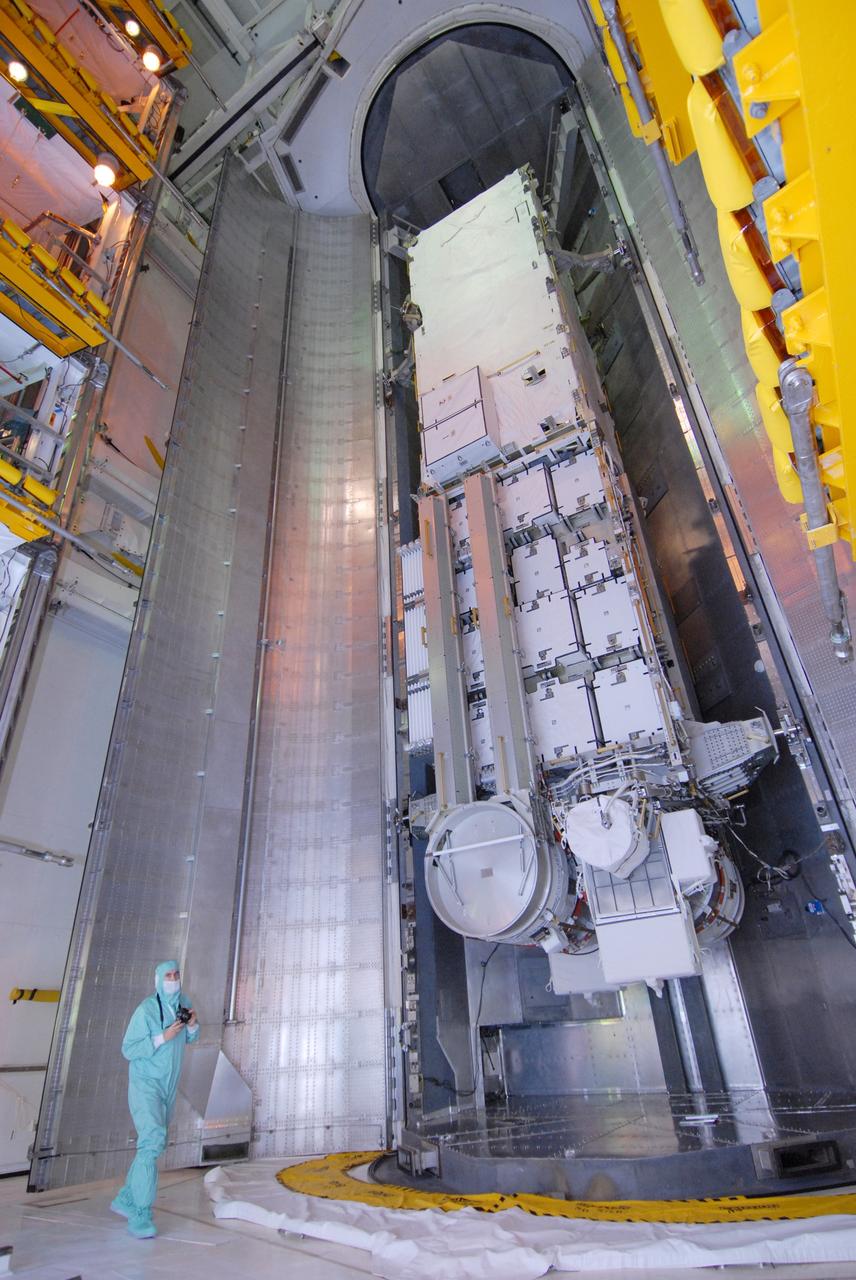
CAPE CANAVERAL, Fla. -- On Launch Pad 39A at NASA's Kennedy Space Center in Florida, the open doors of the payload canister reveal space shuttle Discovery's payload, the integrated truss structure S6 and solar arrays, for the STS-119 mission. The payload will be transferred into the Payload Changeout Room, or PCR. They will be installed in Discovery's payload bay after the shuttle rolls out to the launch pad. Launch of Discovery on the STS-119 mission is scheduled for Feb. 12. During Discovery's 14-day mission, the crew will install the S6 truss segment and its solar arrays to the starboard side of the station, completing the station's backbone, or truss. Photo credit: NASA/Chris Rhodes
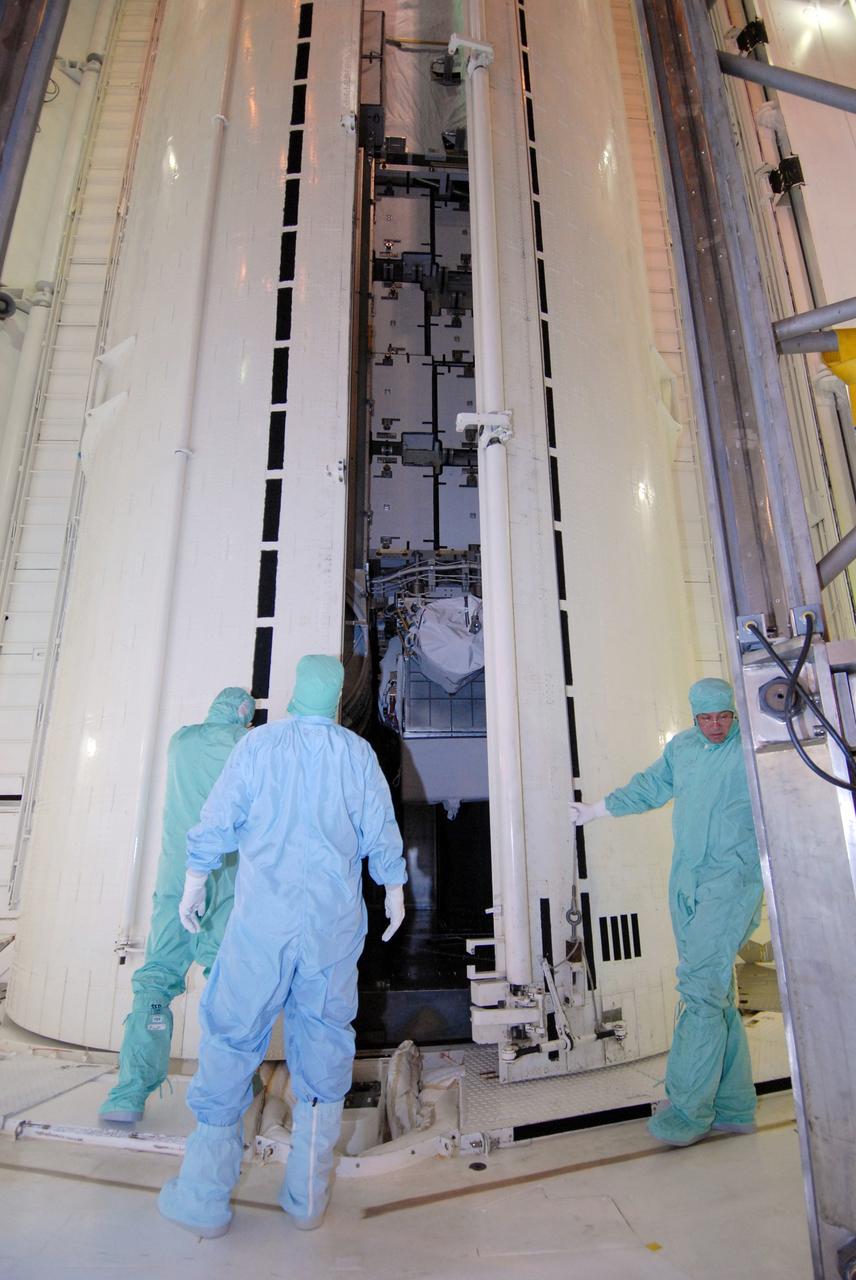
CAPE CANAVERAL, Fla. -- On Launch Pad 39A at NASA's Kennedy Space Center in Florida, the doors of the payload canister are opened to transfer the space shuttle Discovery's payload into the Payload Changeout Room, or PCR. The payload for the STS-119 mission comprises the integrated truss structure S6 and solar arrays to be installed on the International Space Station. They will be installed in Discovery's payload bay after the shuttle rolls out to the launch pad. Launch of Discovery on the STS-119 mission is scheduled for Feb. 12. During Discovery's 14-day mission, the crew will install the S6 truss segment and its solar arrays to the starboard side of the station, completing the station's backbone, or truss. Photo credit: NASA/Chris Rhodes
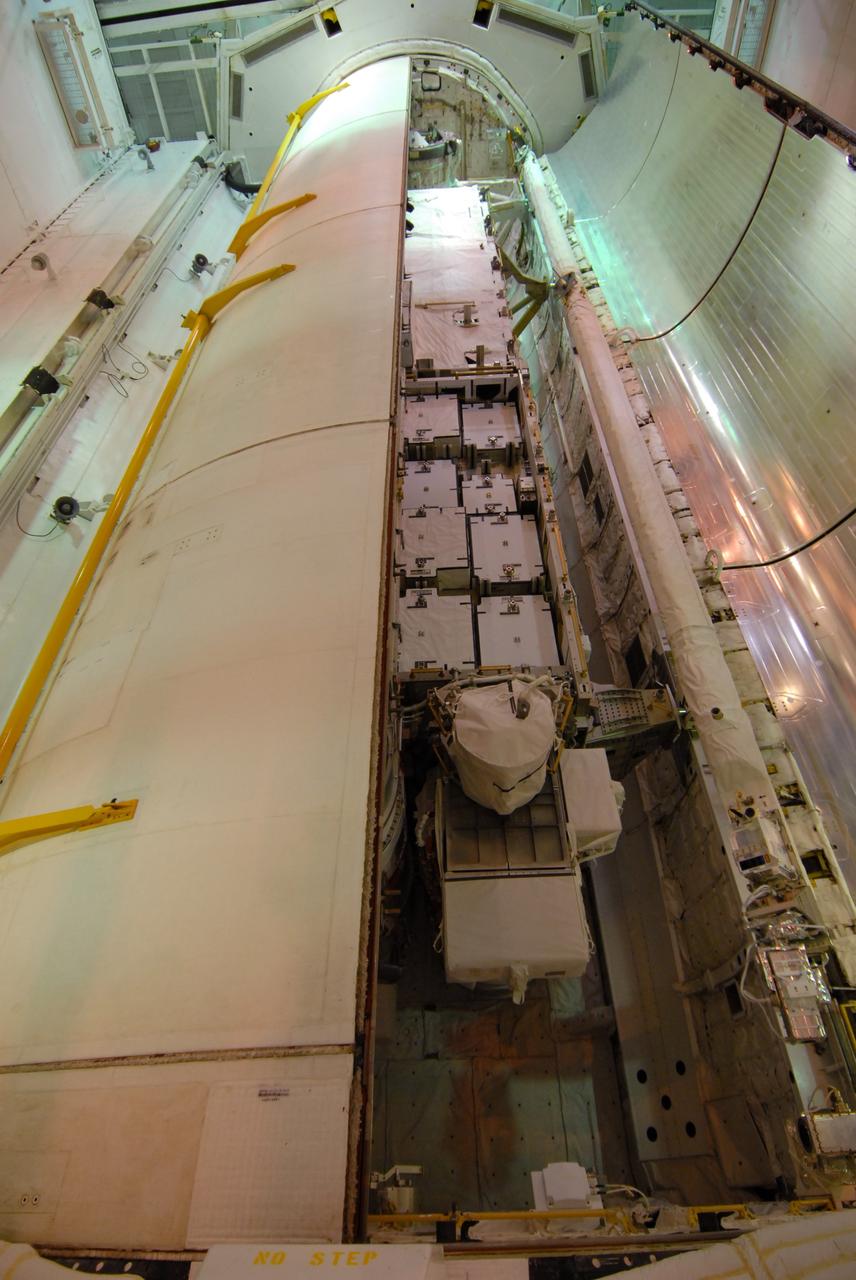
CAPE CANAVERAL, Fla. – On Launch Pad 39A at NASA's Kennedy Space Center in Florida, one of space shuttle Discovery's payload bay doors has been closed. The cargo inside consists of the integrated truss structure S6 and solar arrays for the STS-119 mission to the International Space Station. During Discovery's 14-day mission, the shuttle's seven astronauts will install the S6 truss to the starboard side of the space station, completing the station's truss, or backbone. Launch of Discovery on the STS-119 mission is targeted for Feb. 12. Photo credit: NASA/Dimitri Gerondidakis
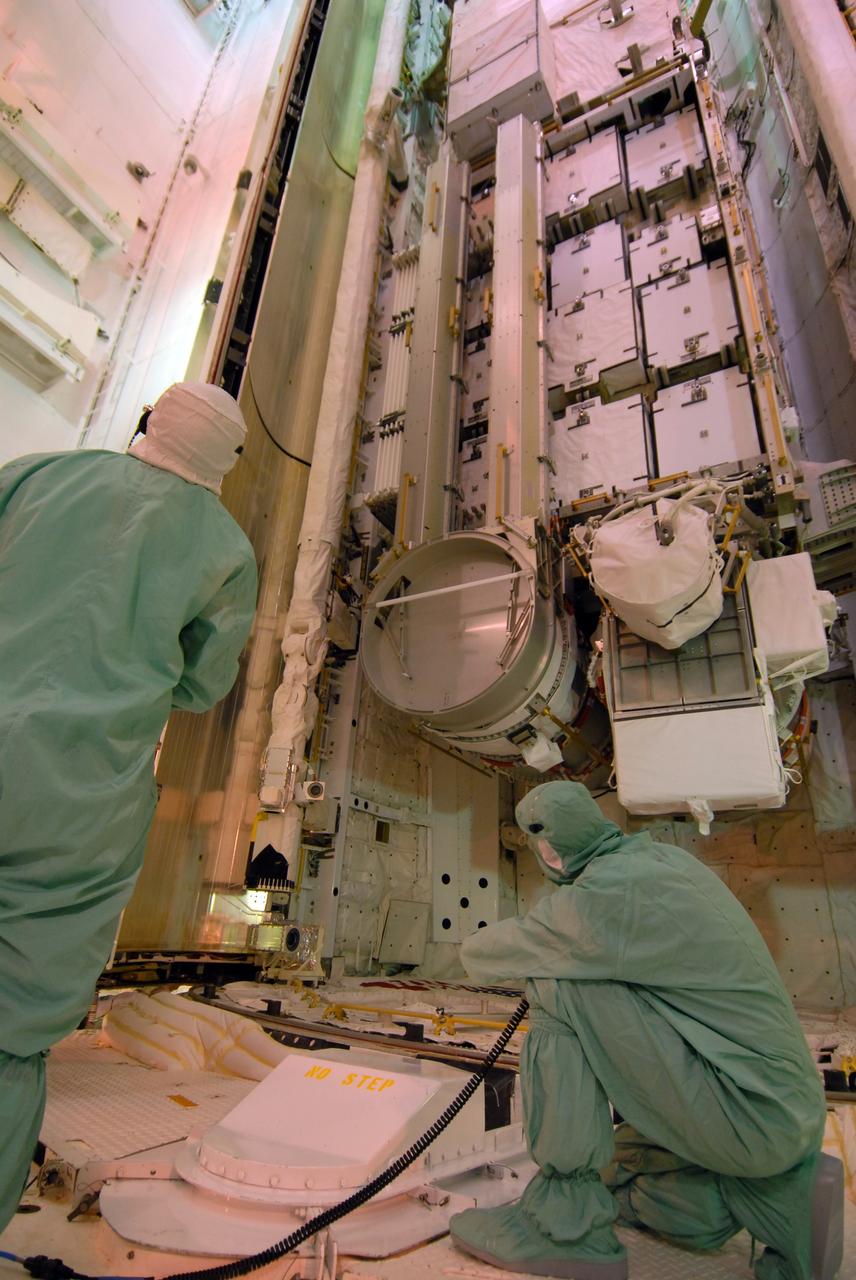
CAPE CANAVERAL, Fla. – On Launch Pad 39A at NASA's Kennedy Space Center in Florida, workers check the movement of space shuttle Discovery's payload bay doors as they close around the cargo. The cargo consists of the integrated truss structure S6 and solar arrays for the STS-119 mission to the International Space Station. During Discovery's 14-day mission, the shuttle's seven astronauts will install the S6 truss to the starboard side of the space station, completing the station's truss, or backbone. Launch of Discovery on the STS-119 mission is targeted for Feb. 12. Photo credit: NASA/Dimitri Gerondidakis
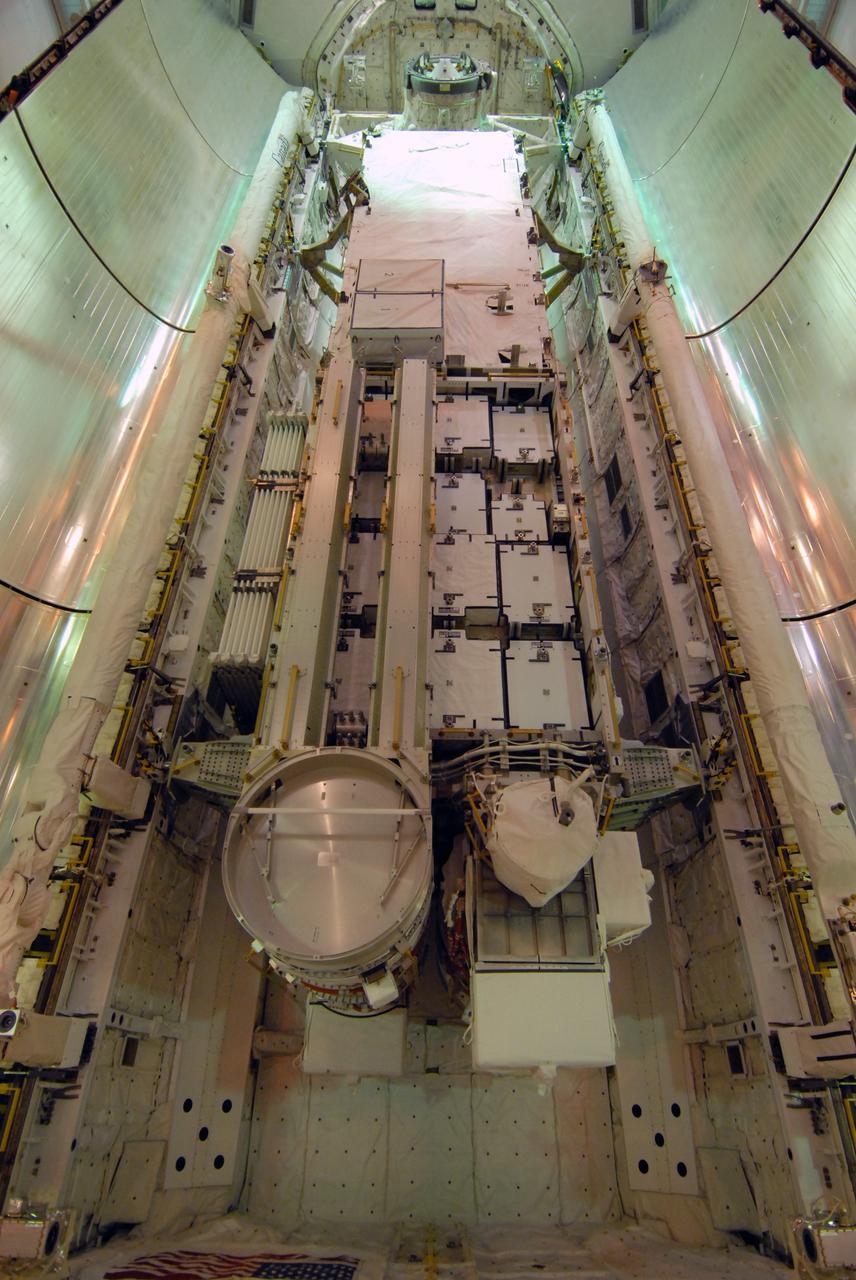
CAPE CANAVERAL, Fla. – On Launch Pad 39A at NASA's Kennedy Space Center in Florida, space shuttle Discovery's payload bay doors are being closed. The cargo consists of the integrated truss structure S6 and solar arrays for the STS-119 mission to the International Space Station. During Discovery's 14-day mission, the shuttle's seven astronauts will install the S6 truss to the starboard side of the space station, completing the station's truss, or backbone. Launch of Discovery on the STS-119 mission is targeted for Feb. 12. Photo credit: NASA/Dimitri Gerondidakis
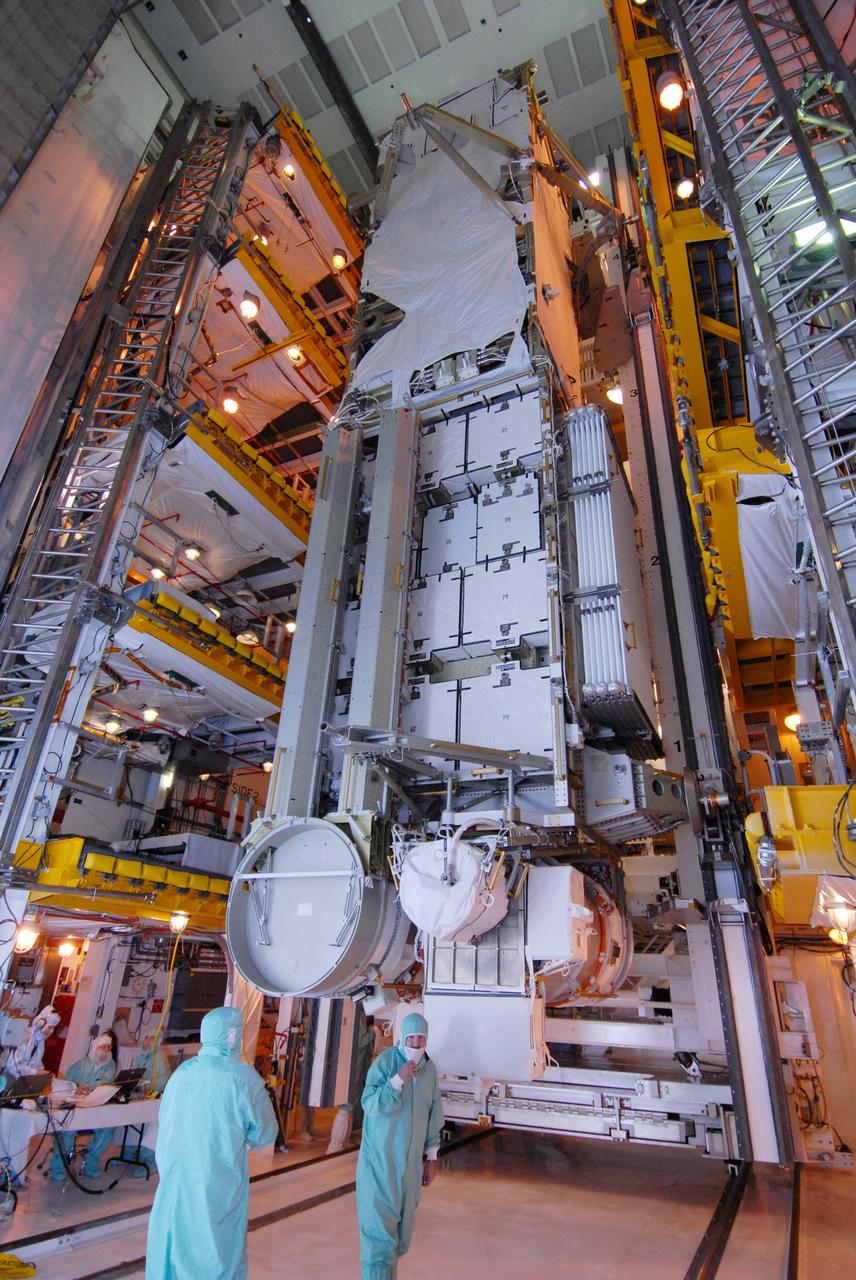
CAPE CANAVERAL, Fla. -- On Launch Pad 39A at NASA's Kennedy Space Center in Florida, the integrated truss structure S6 and solar arrays, the STS-119 mission payload, are moved into the Payload Changeout Room, or PCR. They will be installed in space shuttle Discovery's payload bay after the shuttle rolls out to the launch pad. Launch of Discovery on the STS-119 mission is scheduled for Feb. 12. During Discovery's 14-day mission, the crew will install the S6 truss segment and its solar arrays to the starboard side of the station, completing the station's backbone, or truss. Photo credit: NASA/Chris Rhodes
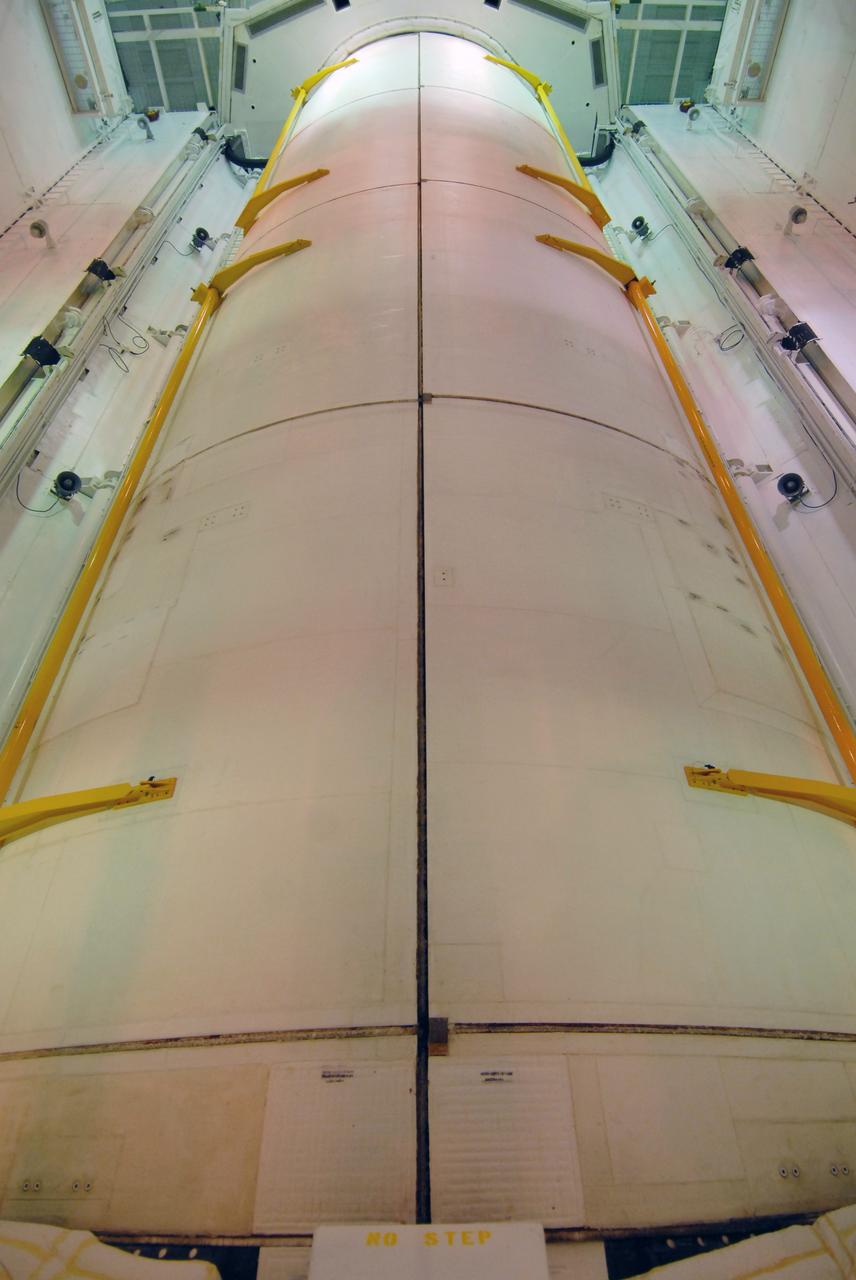
CAPE CANAVERAL, Fla. – On Launch Pad 39A at NASA's Kennedy Space Center in Florida, space shuttle Discovery's payload bay doors are closed. Inside, the cargo consists of the integrated truss structure S6 and solar arrays for the STS-119 mission to the International Space Station. During Discovery's 14-day mission, the shuttle's seven astronauts will install the S6 truss to the starboard side of the space station, completing the station's truss, or backbone. Launch of Discovery on the STS-119 mission is targeted for Feb. 12. Photo credit: NASA/Dimitri Gerondidakis
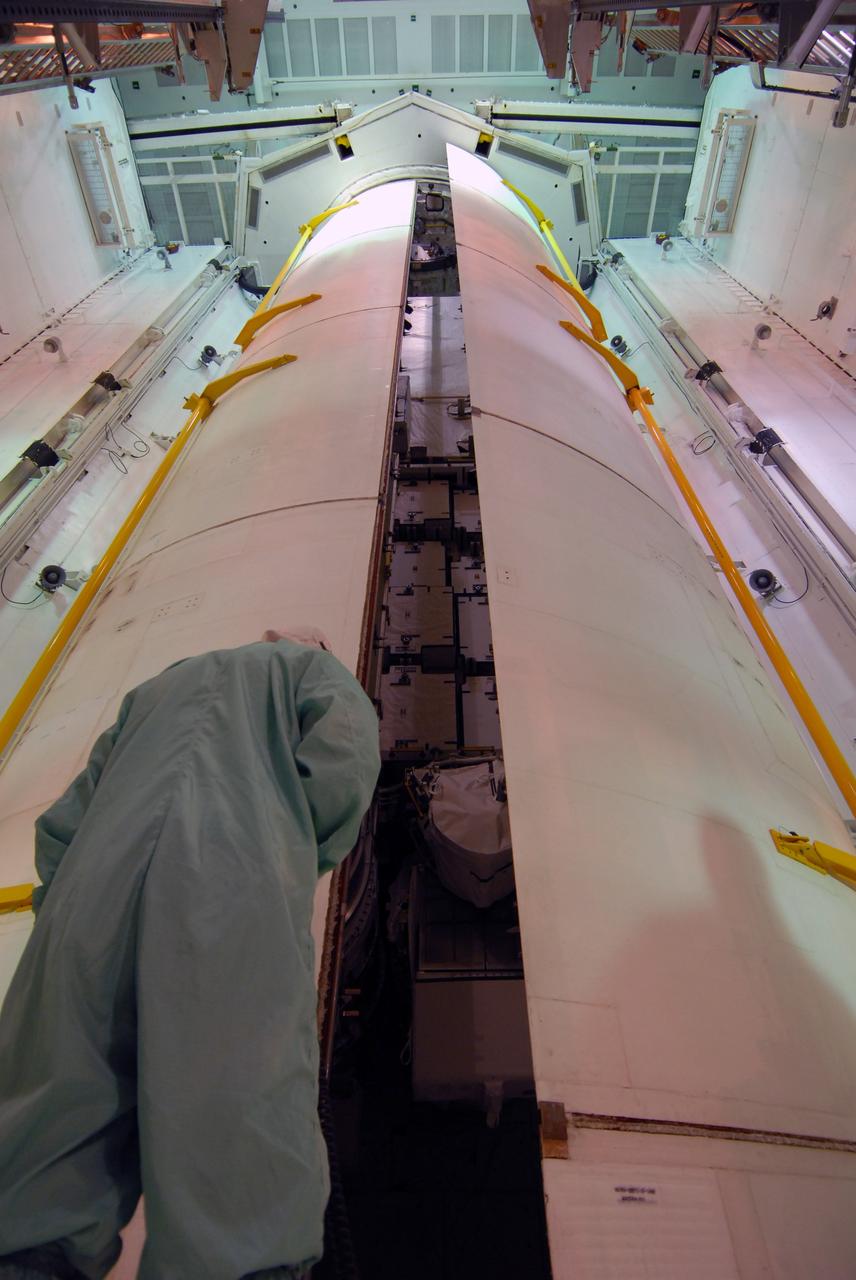
CAPE CANAVERAL, Fla. – On Launch Pad 39A at NASA's Kennedy Space Center in Florida, the second of space shuttle Discovery's payload bay doors is closing. The cargo inside consists of the integrated truss structure S6 and solar arrays for the STS-119 mission to the International Space Station. During Discovery's 14-day mission, the shuttle's seven astronauts will install the S6 truss to the starboard side of the space station, completing the station's truss, or backbone. Launch of Discovery on the STS-119 mission is targeted for Feb. 12. Photo credit: NASA/Dimitri Gerondidakis
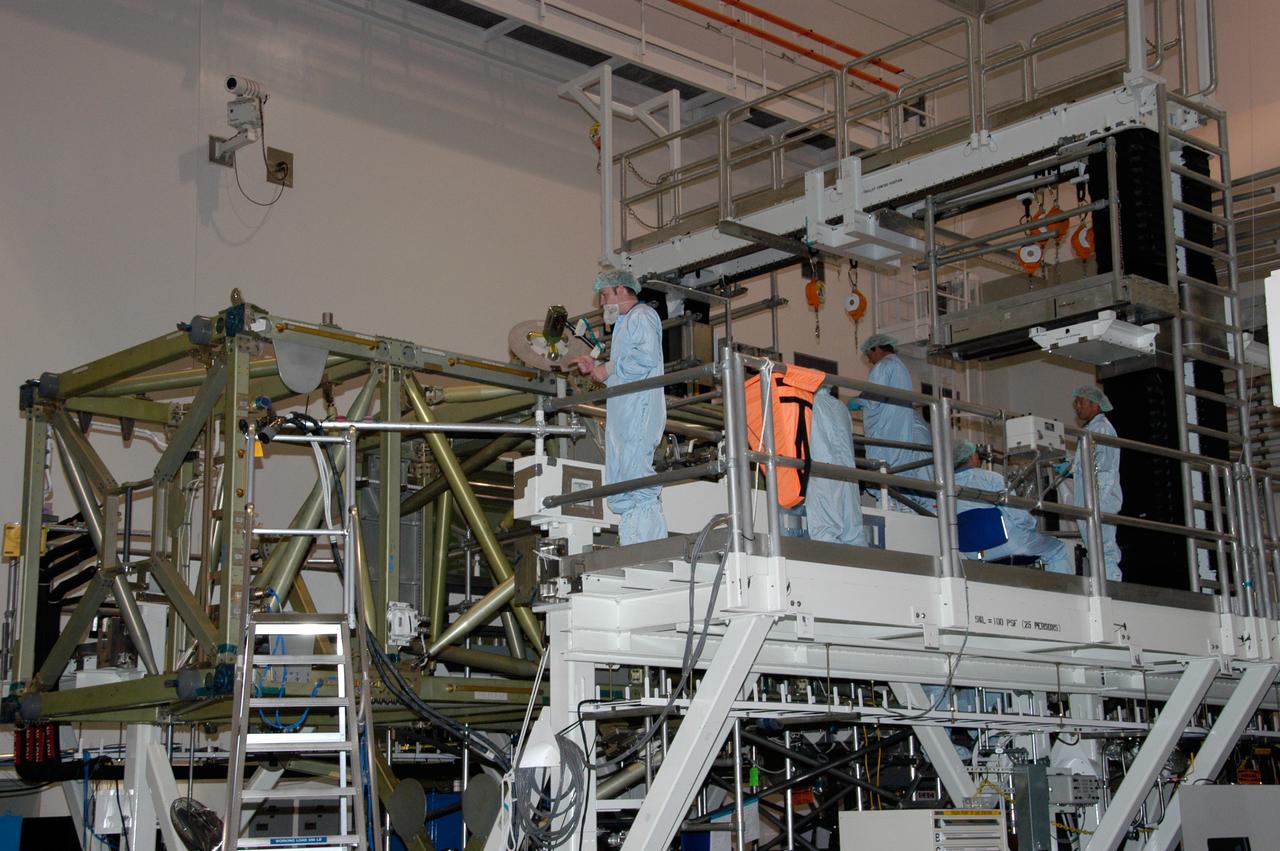
In the Space Station Processing Facility at NASA's Kennedy Space Center, workers prepare to connect cables that will recharge the battery for the S6 integrated truss. The final starboard truss in the assembly of the International Space Station, the S6 is scheduled to fly on space shuttle mission STS-119, whose launch date is not yet determined.
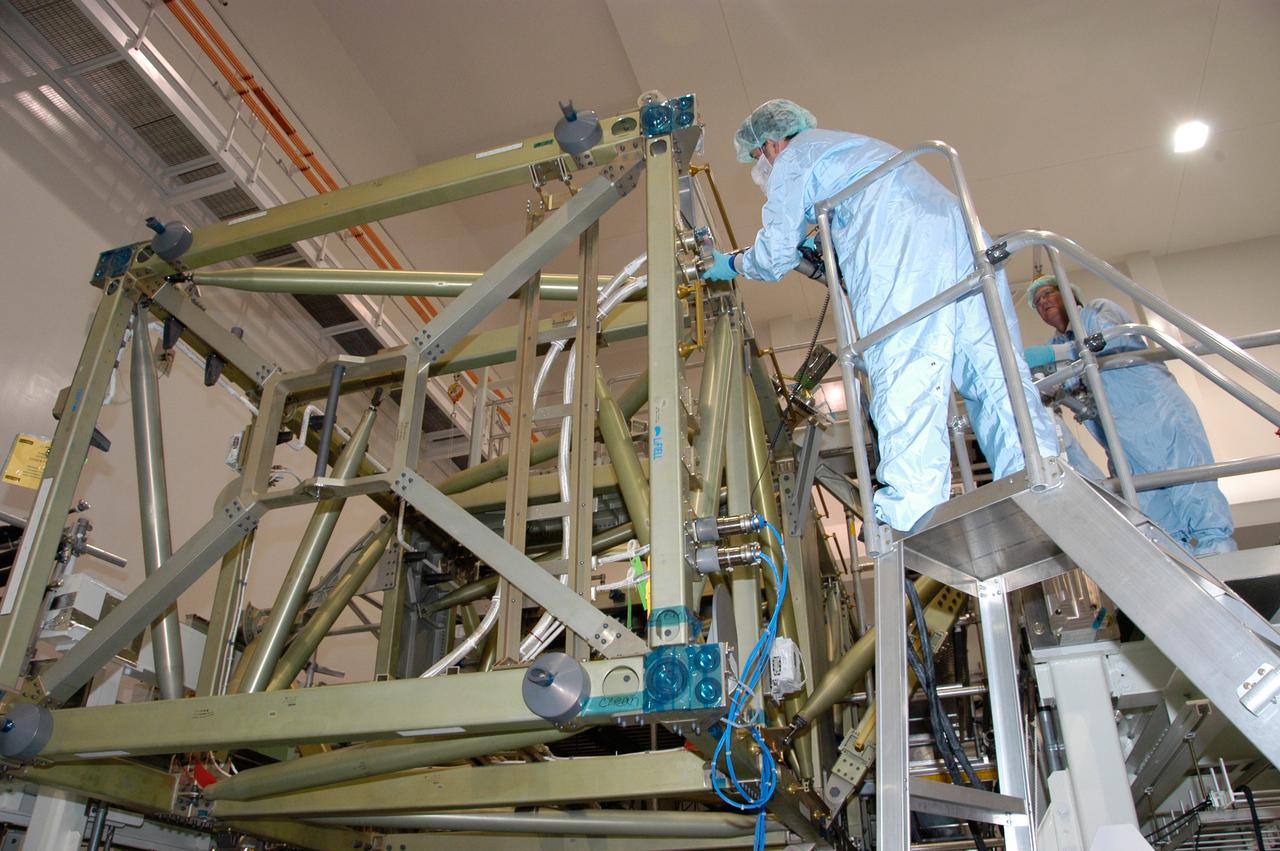
In the Space Station Processing Facility at NASA's Kennedy Space Center, a worker connects a cable to recharge the battery for the S6 integrated truss. The final starboard truss in the assembly of the International Space Station, the S6 is scheduled to fly on space shuttle mission STS-119, whose launch date is not yet determined.
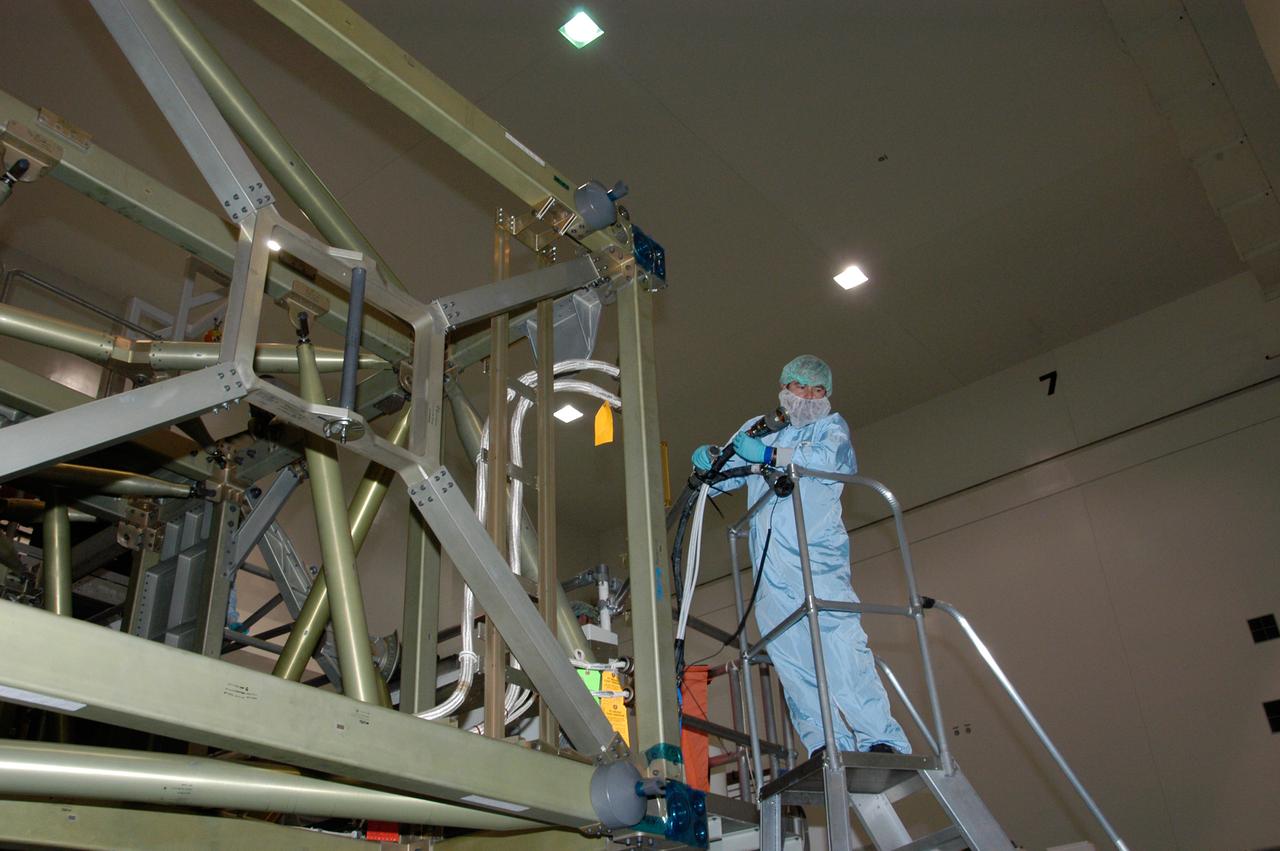
In the Space Station Processing Facility at NASA's Kennedy Space Center, a worker holds a cable that will help recharge the battery for the S6 integrated truss. The final starboard truss in the assembly of the International Space Station, the S6 is scheduled to fly on space shuttle mission STS-119, whose launch date is not yet determined.

KENNEDY SPACE CENTER, FLA. - In the Space Station Processing Facility, astronaut Tracy Caldwell (left) assists a technician check out the Pump Flow Control Subsystem (PFCS) before it is installed on the upper deck of the S6 Truss. The PFCS pumps and controls the liquid ammonia used to cool the various Orbital Replacement Units on the Integrated Equipment Assembly that make up the S6 Photo-Voltaic Power Module on the International Space Station (ISS). The fourth starboard truss segment, the S6 Truss measures 112 feet long by 39 feet wide. The solar arrays are mounted on a “blanket” that can be folded like an accordion for delivery to the ISS. Once in orbit, astronauts will deploy the blankets to their full size. When completed, the Station's electrical power system (EPS) will use eight photovoltaic solar arrays to convert sunlight to electricity. Delivery of the S6 Truss, the last power module truss segment, is targeted for mission STS-119.
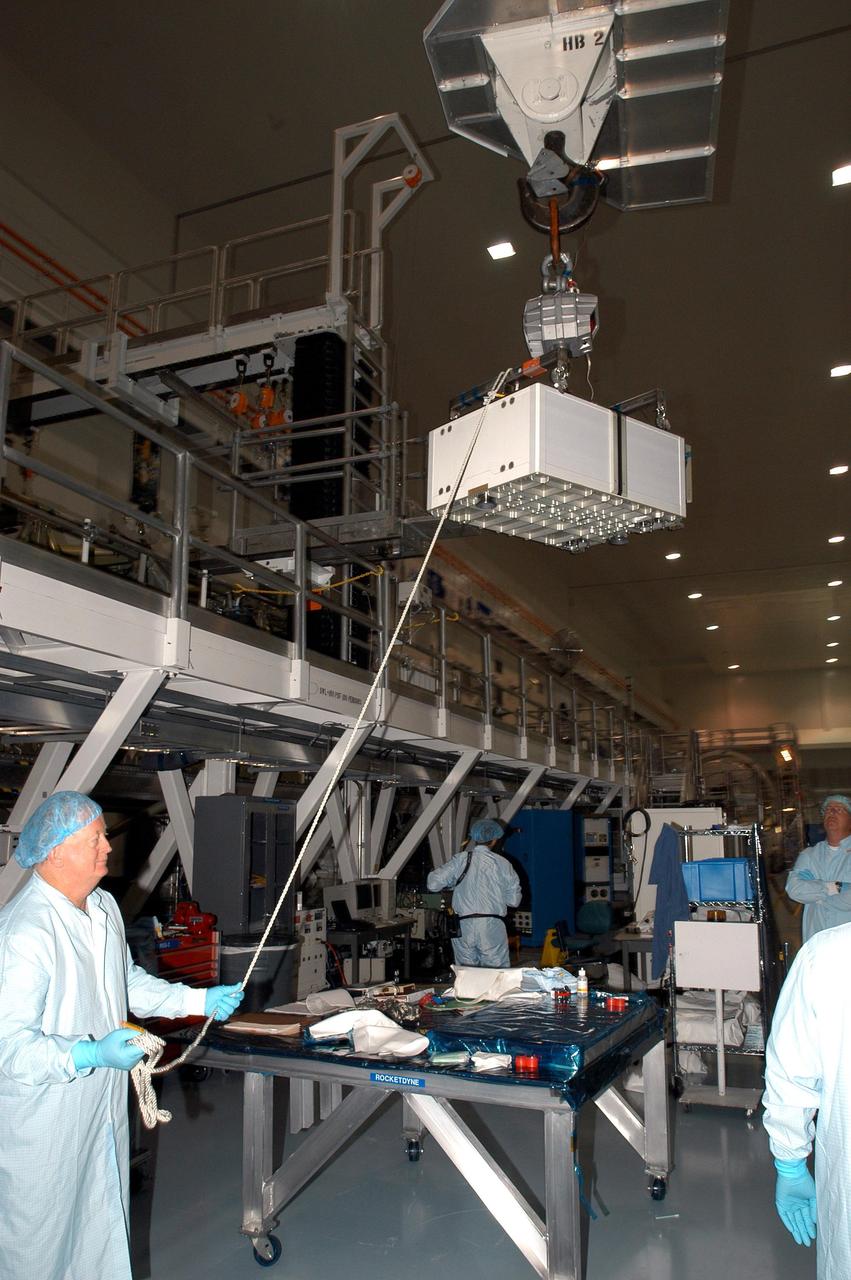
KENNEDY SPACE CENTER, FLA. - In the Space Station Processing Facility, a technician steadies the Pump Flow Control Subsystem (PFCS) as it is lifted and moved toward the S6 Truss. The PFCS pumps and controls the liquid ammonia used to cool the various Orbital Replacement Units on the Integrated Equipment Assembly that make up the S6 Photo-Voltaic Power Module on the International Space Station (ISS). The fourth starboard truss segment, the S6 Truss measures 112 feet long by 39 feet wide. Its solar arrays are mounted on a “blanket” that can be folded like an accordion for delivery to the ISS. Once in orbit, astronauts will deploy the blankets to their full size. When completed, the Station's electrical power system (EPS) will use eight photovoltaic solar arrays to convert sunlight to electricity. Delivery of the S6 Truss, the last power module truss segment, is targeted for mission STS-119.
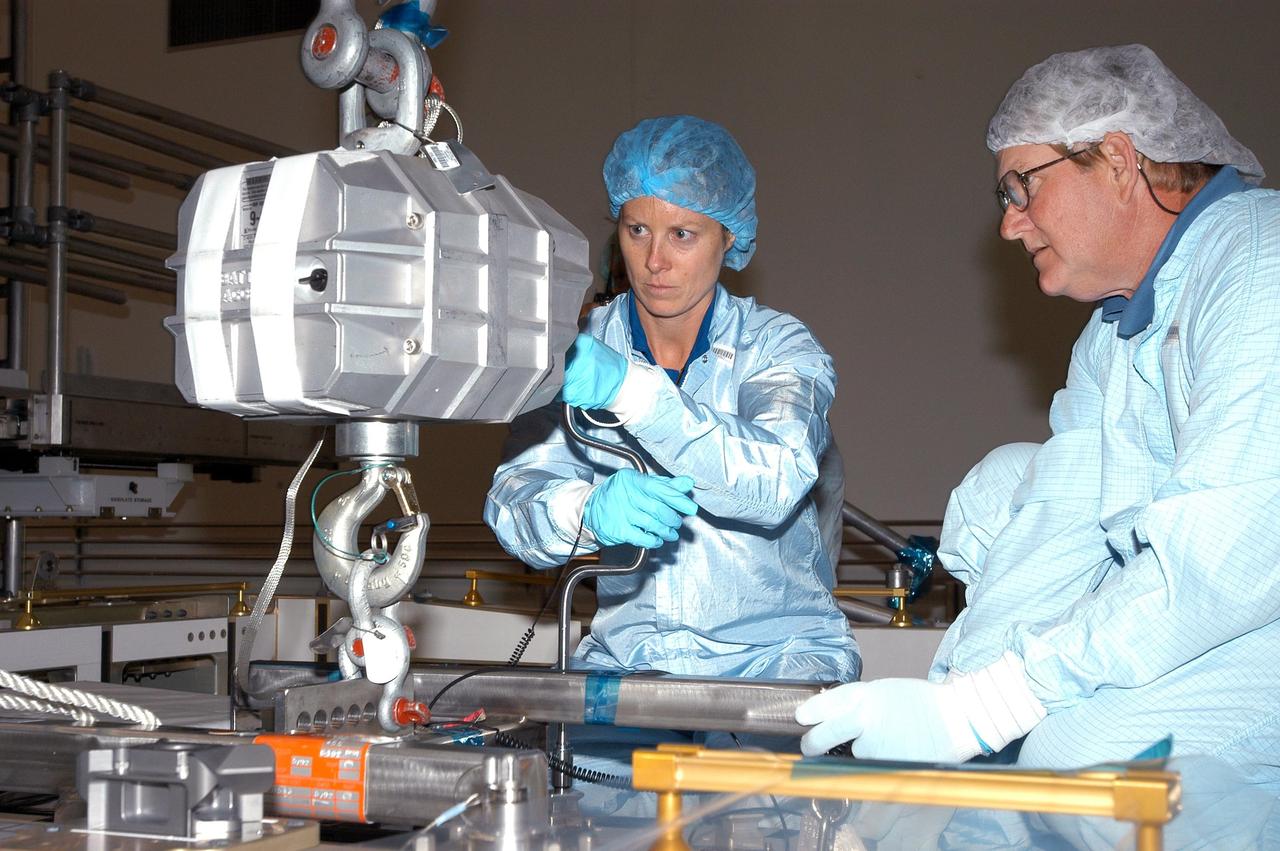
KENNEDY SPACE CENTER, FLA. - In the Space Station Processing Facility, astronaut Tracy Caldwell (left) assists technicians install the Pump Flow Control Subsystem (PFCS) onto the upper deck of the S6 Truss. The PFCS pumps and controls the liquid ammonia used to cool the various Orbital Replacement Units on the Integrated Equipment Assembly that make up the S6 Photo-Voltaic Power Module on the International Space Station (ISS). The fourth starboard truss segment, the S6 Truss measures 112 feet long by 39 feet wide. Its solar arrays are mounted on a “blanket” that can be folded like an accordion for delivery to the ISS. Once in orbit, astronauts will deploy the blankets to their full size. When completed, the Station's electrical power system (EPS) will use eight photovoltaic solar arrays to convert sunlight to electricity. Delivery of the S6 Truss, the last power module truss segment, is targeted for mission STS-119.
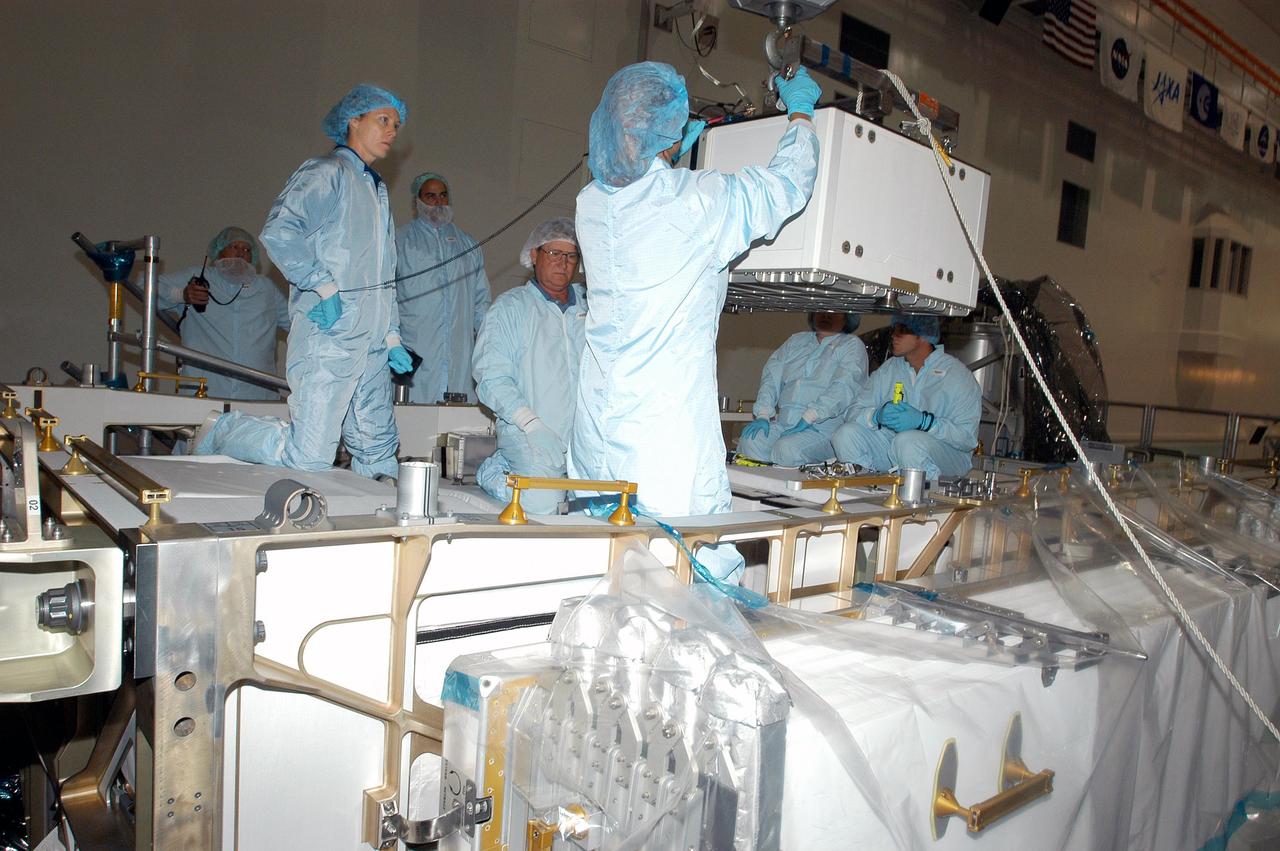
KENNEDY SPACE CENTER, FLA. - In the Space Station Processing Facility, astronaut Tracy Caldwell (second from left) assists technicians position the Pump Flow Control Subsystem (PFCS) over the upper deck of the S6 Truss. The PFCS pumps and controls the liquid ammonia used to cool the various Orbital Replacement Units on the Integrated Equipment Assembly that make up the S6 Photo-Voltaic Power Module on the International Space Station (ISS). The fourth starboard truss segment, the S6 Truss measures 112 feet long by 39 feet wide. Its solar arrays are mounted on a “blanket” that can be folded like an accordion for delivery to the ISS. Once in orbit, astronauts will deploy the blankets to their full size. When completed, the Station's electrical power system (EPS) will use eight photovoltaic solar arrays to convert sunlight to electricity. Delivery of the S6 Truss, the last power module truss segment, is targeted for mission STS-119.

KENNEDY SPACE CENTER, FLA. - In the Space Station Processing Facility, astronaut Tracy Caldwell (second from left) assists technicians lower the Pump Flow Control Subsystem (PFCS) into position onto the upper deck of the S6 Truss. The PFCS pumps and controls the liquid ammonia used to cool the various Orbital Replacement Units on the Integrated Equipment Assembly that make up the S6 Photo-Voltaic Power Module on the International Space Station (ISS). The fourth starboard truss segment, the S6 Truss measures 112 feet long by 39 feet wide. Its solar arrays are mounted on a “blanket” that can be folded like an accordion for delivery to the ISS. Once in orbit, astronauts will deploy the blankets to their full size. When completed, the Station's electrical power system (EPS) will use eight photovoltaic solar arrays to convert sunlight to electricity. Delivery of the S6 Truss, the last power module truss segment, is targeted for mission STS-119.
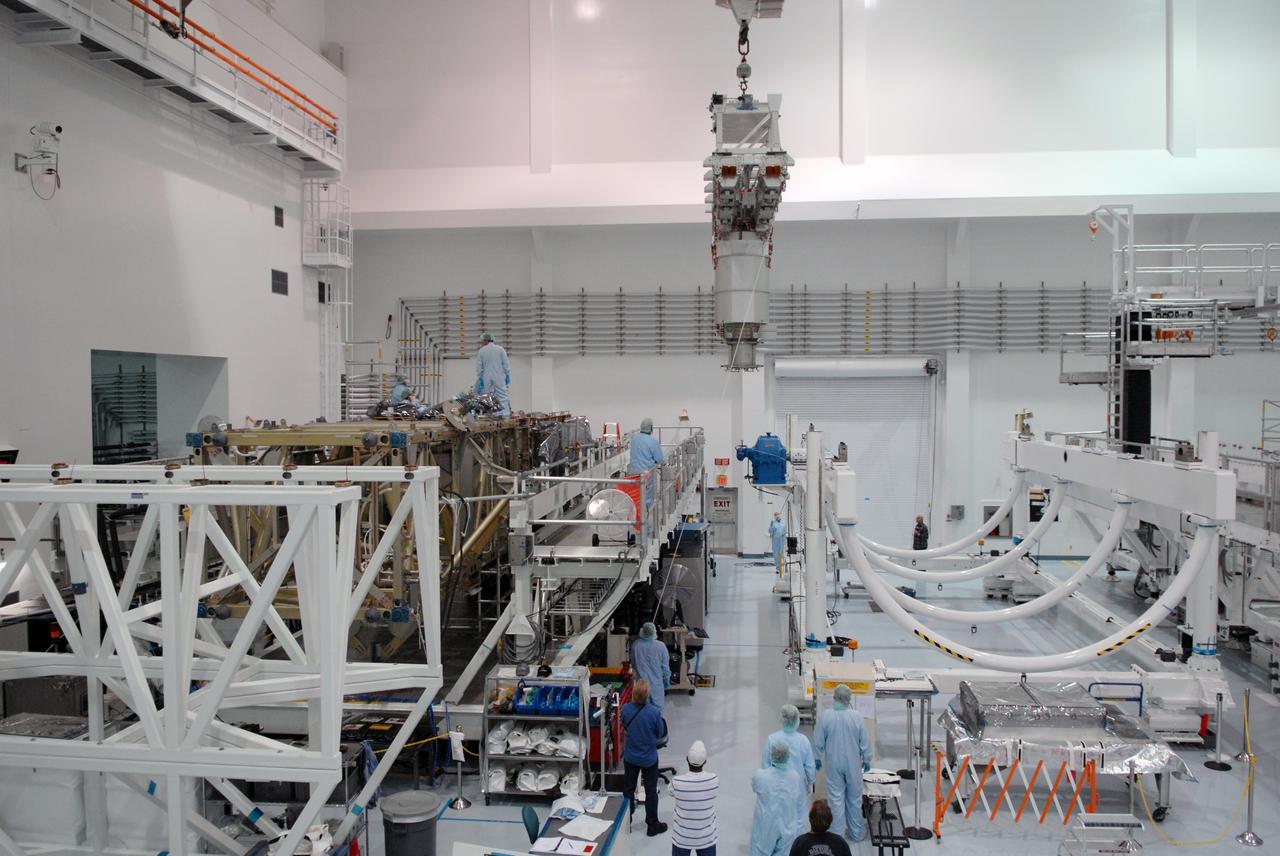
CAPE CANAVERAL, Fla. – In the Space Station Processing Facility at NASA's Kennedy Space Center, workers move the final solar array wing for the International Space Station into position for installation on the S6 truss element. Scheduled to launch on the STS-119 mission, space shuttle Discovery will carry the S6 truss segment to complete the 361-foot-long backbone of the International Space Station. The truss includes the fourth pair of solar array wings and electronics that convert sunlight to power for the orbiting laboratory. Launch is targeted for Feb. 12, 2009. Photo credit: NASA/Troy Cryder
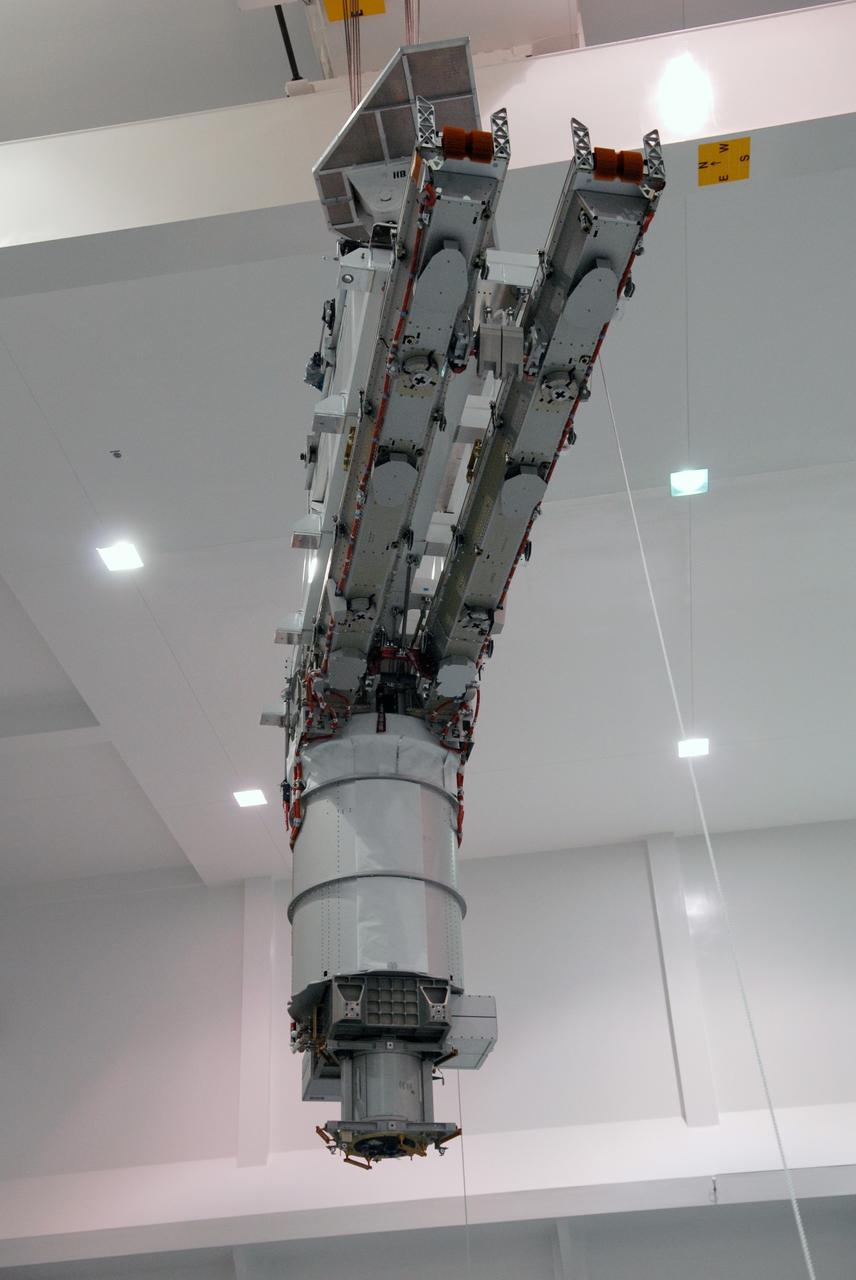
CAPE CANAVERAL, Fla. – In the Space Station Processing Facility at NASA's Kennedy Space Center, the final solar array wing for the International Space Station is moved into position for installation onto the S6 truss element. Scheduled to launch on the STS-119 mission, space shuttle Discovery will carry the S6 truss segment to complete the 361-foot-long backbone of the International Space Station. The truss includes the fourth pair of solar array wings and electronics that convert sunlight to power for the orbiting laboratory. Launch is targeted for Feb. 12, 2009. Photo credit: NASA/Troy Cryder

CAPE CANAVERAL, Fla. – In the Space Station Processing Facility at NASA's Kennedy Space Center, workers install the final solar array wing for the International Space Station onto the S6 truss element. Scheduled to launch on the STS-119 mission, space shuttle Discovery will carry the S6 truss segment to complete the 361-foot-long backbone of the International Space Station. The truss includes the fourth pair of solar array wings and electronics that convert sunlight to power for the orbiting laboratory. Launch is targeted for Feb. 12, 2009. Photo credit: NASA/Troy Cryder
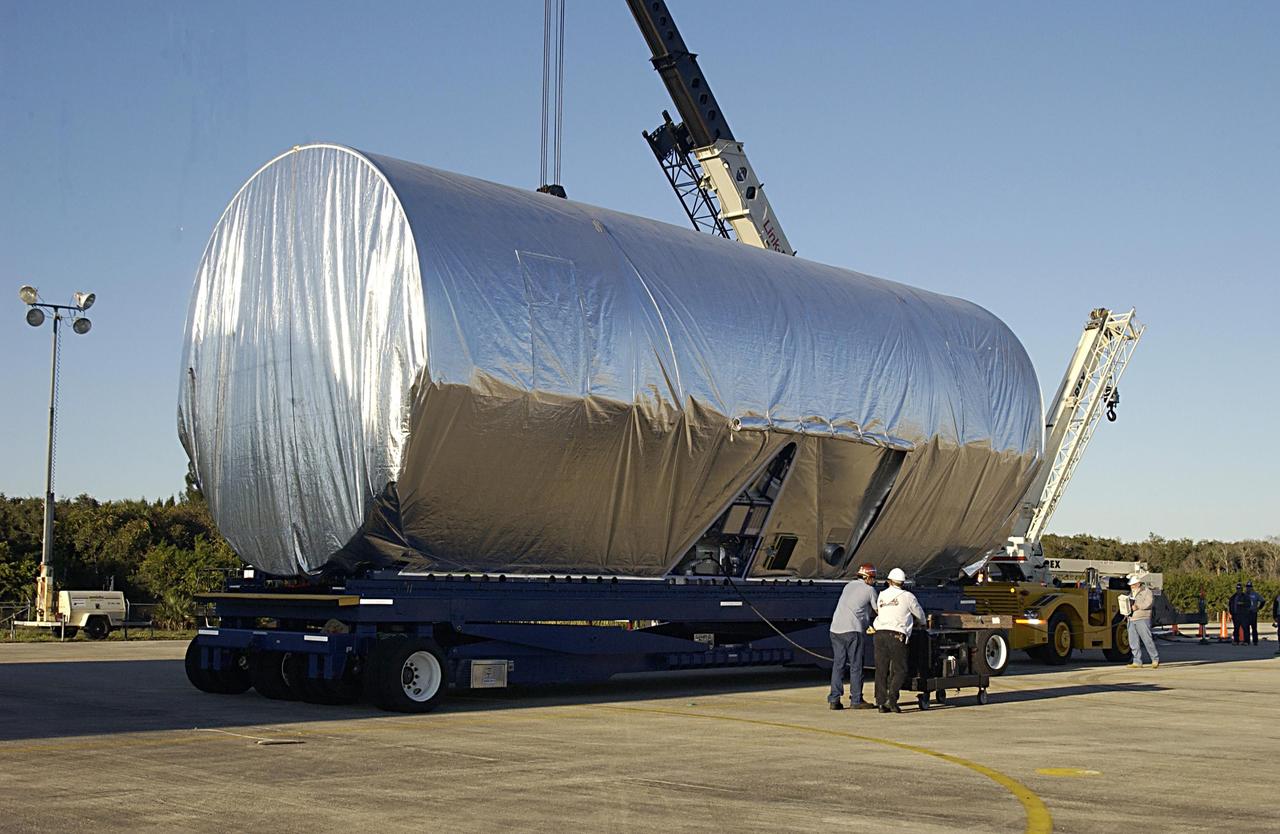
KENNEDY SPACE CENTER, FLA. -- The Long Spacer (LS), the second and final piece of the Starboard 6 (S6) Integrated Truss Segment, is secured on a flatbed truck for transport to the Space Station Processing Facility where it will undergo inspections and verification tests. Eventually the LS will be integrated with the S6 Integrated Equipment Assembly already at KSC and will fly as one segment to the International Space Station on Space Shuttle mission STS-119 in early 2004. Together the segment pieces weigh 26,000 pounds and measure 45 feet long. .

KENNEDY SPACE CENTER, FLA. -- The Long Spacer (LS), the second and final piece of the Starboard 6 (S6) Integrated Truss Segment, rolls out of NASA's Super Guppy cargo airplane. The LS will be transported to the Space Station Processing Facility for inspections and verification tests. Eventually the LS will be integrated with the S6 Integrated Equipment Assembly already at KSC and will fly as one segment to the International Space Station on Space Shuttle mission STS-119 in early 2004. Together the segment pieces weigh 26,000 pounds and measure 45 feet long. .
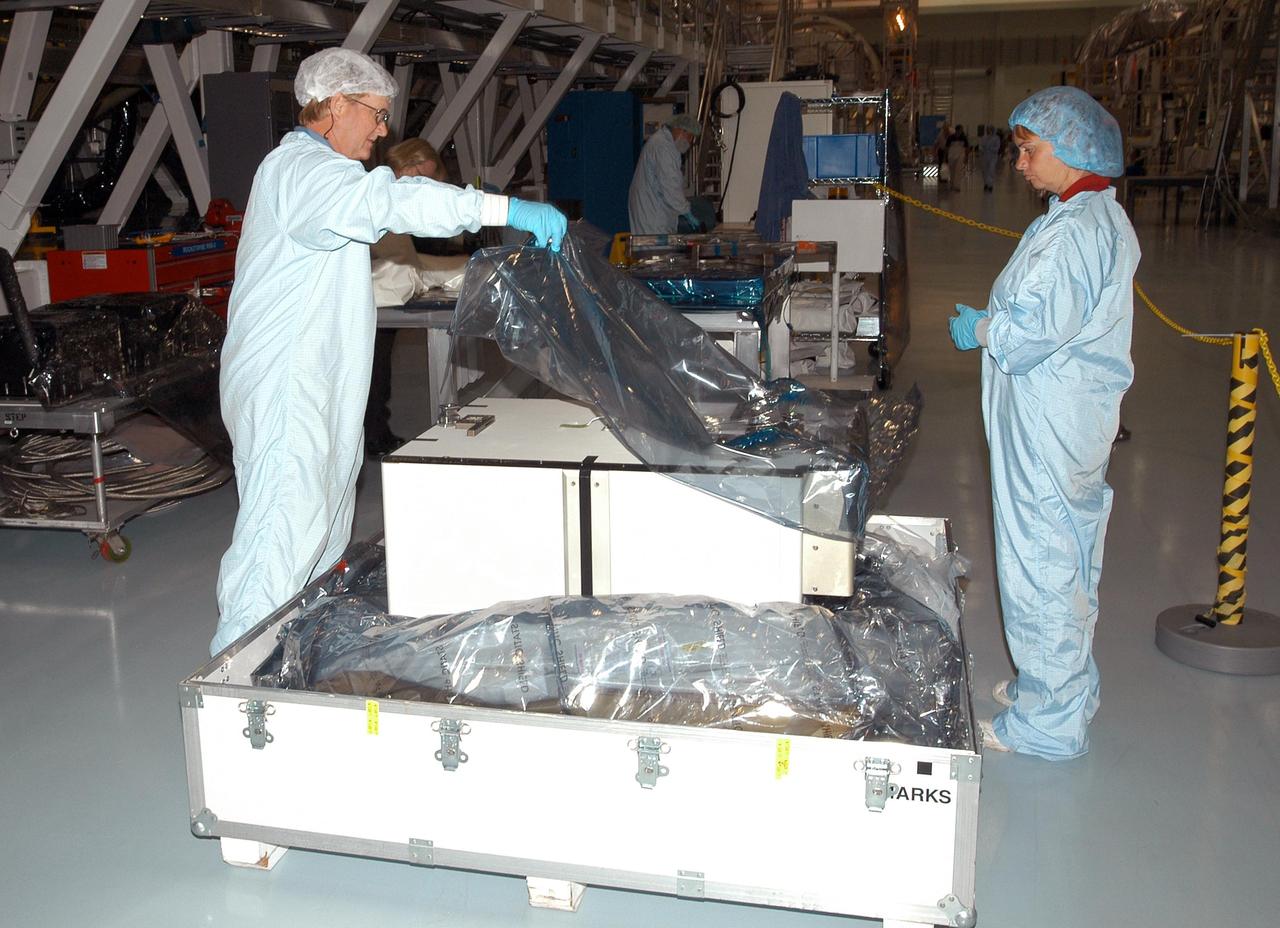
KENNEDY SPACE CENTER, FLA. - Unpacking of the Pump Flow Control Subsystem (PFCS) begins in the Space Station Processing Facility. The PFCS pumps and controls the liquid ammonia used to cool the various Orbital Replacement Units on the Integrated Equipment Assembly that make up the S6 Photo-Voltaic Power Module on the International Space Station (ISS). The fourth starboard truss segment, the S6 Truss measures 112 feet long by 39 feet wide. Its solar arrays are mounted on a “blanket” that can be folded like an accordion for delivery to the ISS. Once in orbit, astronauts will deploy the blankets to their full size. When completed, the Station's electrical power system will use eight photovoltaic solar arrays to convert sunlight to electricity. Delivery of the S6 Truss, the last power module truss segment, is targeted for mission STS-119.
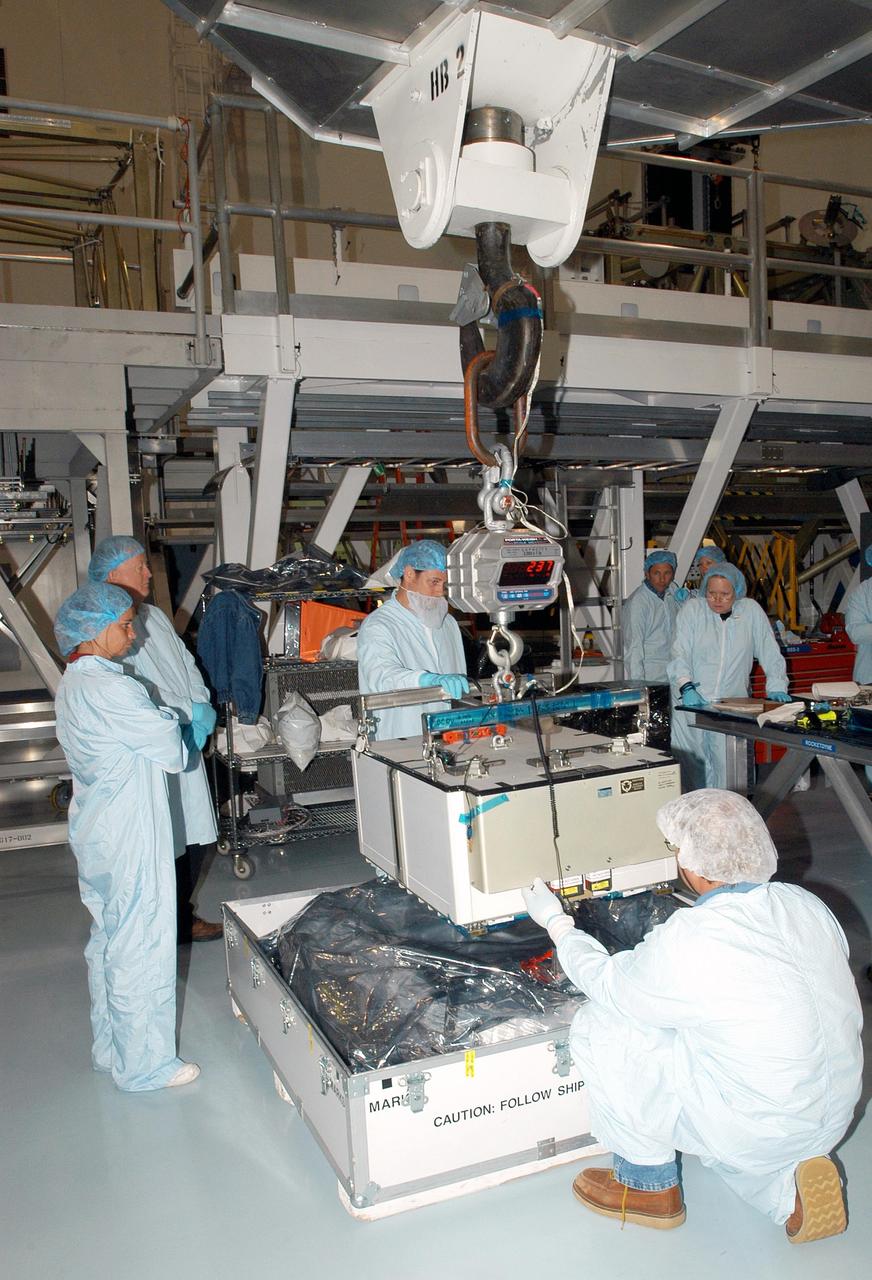
KENNEDY SPACE CENTER, FLA. - Technicians attach a crane to the Pump Flow Control Subsystem (PFCS) in the Space Station Processing Facility. The PFCS pumps and controls the liquid ammonia used to cool the various Orbital Replacement Units on the Integrated Equipment Assembly that make up the S6 Photo-Voltaic Power Module on the International Space Station (ISS). The fourth starboard truss segment, the S6 Truss measures 112 feet long by 39 feet wide. Its solar arrays are mounted on a “blanket” that can be folded like an accordion for delivery to the ISS. Once in orbit, astronauts will deploy the blankets to their full size. When completed, the Station's electrical power system (EPS) will use eight photovoltaic solar arrays to convert sunlight to electricity. Delivery of the S6 Truss, the last power module truss segment, is targeted for mission STS-119.
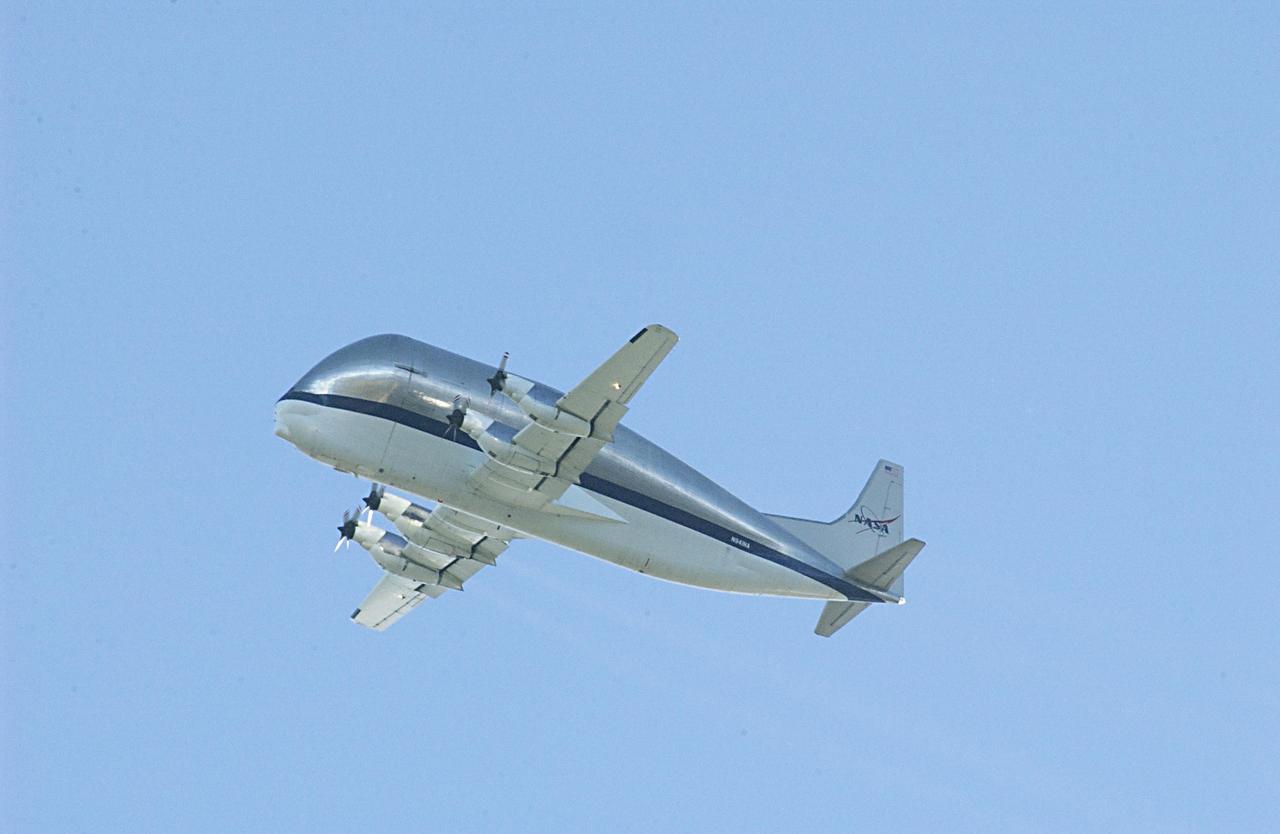
KENNEDY SPACE CENTER, FLA. - NASA's Super Guppy cargo airplane arrives at KSC carrying the Long Spacer (LS), the second and final piece of the Starboard 6 (S6) Integrated Truss Segment. After landing and offloading, the LS will be transported to the Space Station Processing Facility for inspections and verification tests. Eventually the LS will be integrated with the S6 Integrated Equipment Assembly already at KSC and will fly as one segment to the International Space Station on Space Shuttle mission STS-119 in early 2004. Together the segment pieces weigh 26,000 pounds and measure 45 feet long.
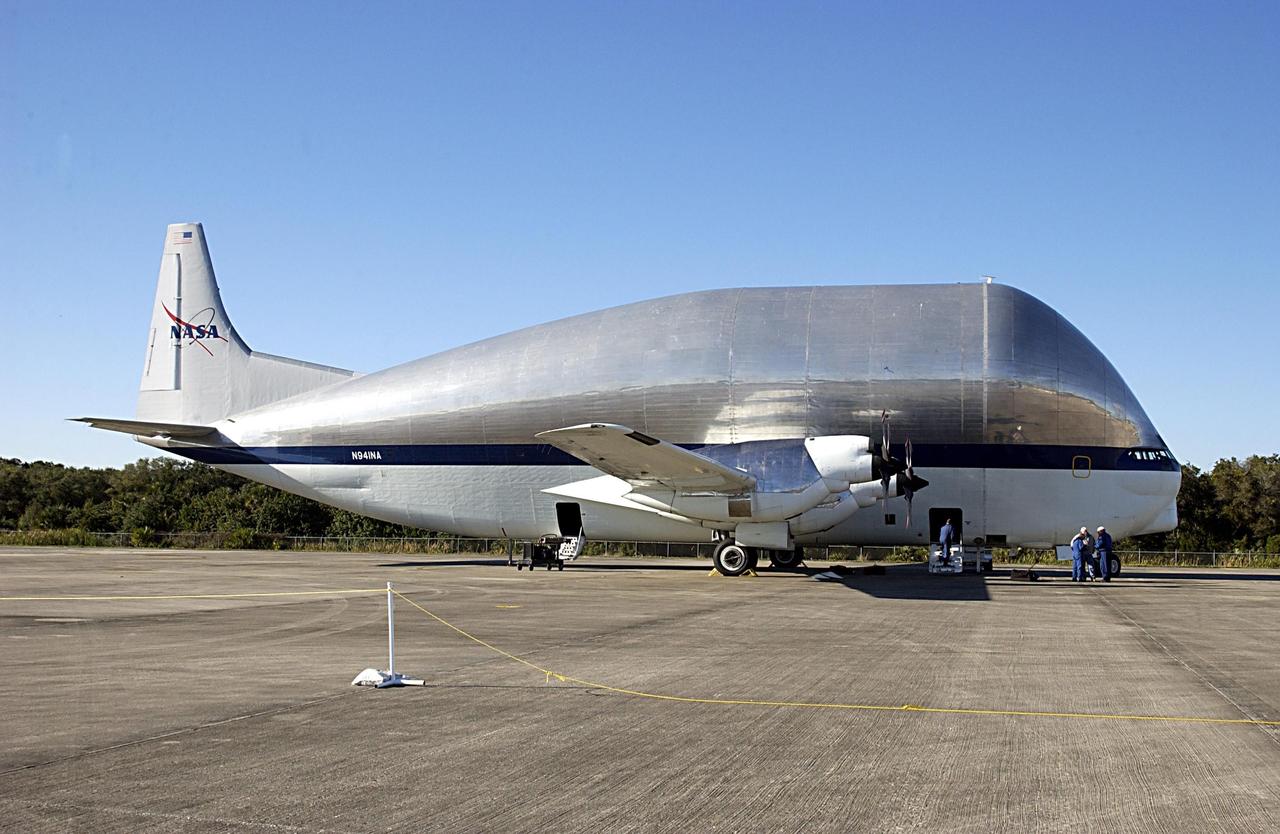
KENNEDY SPACE CENTER, FLA. - NASA's Super Guppy cargo airplane parks on the Shuttle Landing Facility at KSC before offloading the Long Spacer (LS), the second and final piece of the Starboard 6 (S6) Integrated Truss Segment. The LS will be transported to the Space Station Processing Facility for inspections and verification tests. Eventually the LS will be integrated with the S6 Integrated Equipment Assembly already at KSC and will fly as one segment to the International Space Station on Space Shuttle mission STS-119 in early 2004. Together the segment pieces weigh 26,000 pounds and measure 45 feet long. .
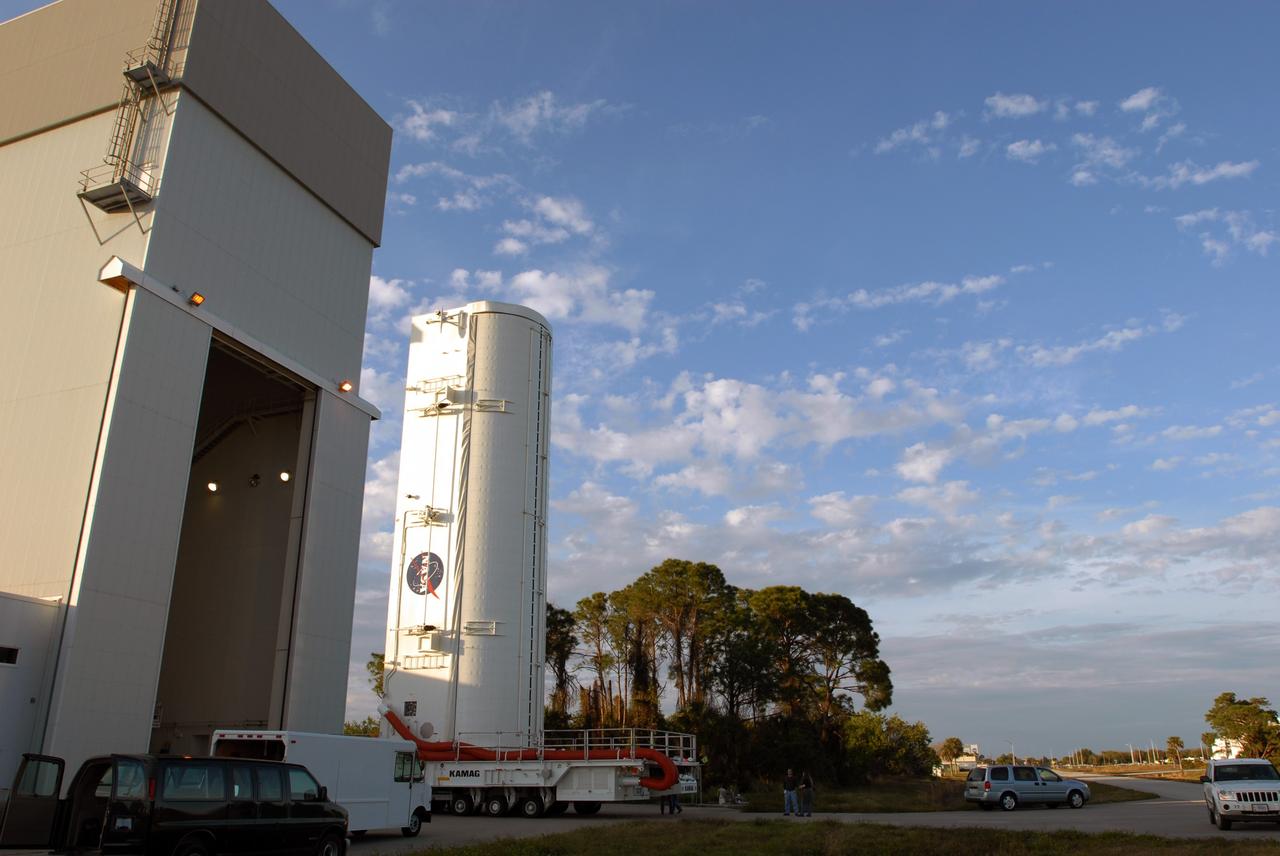
CAPE CANAVERAL, Fla. -- The payload canister containing the S6 truss and solar arrays leaves the Canister Rotation Facility at NASA's Kennedy Space Center in Florida to head for Launch Pad 39A. The truss and arrays are space shuttle Discovery's payload for the STS-119 mission to the International Space Station. Launch of Discovery on the STS-119 mission is scheduled for Feb. 12. During Discovery's 14-day mission, the crew will install the S6 truss segment and its solar arrays to the starboard side of the station, completing the station's backbone, or truss Photo credit: NASA/Jim Grossmann
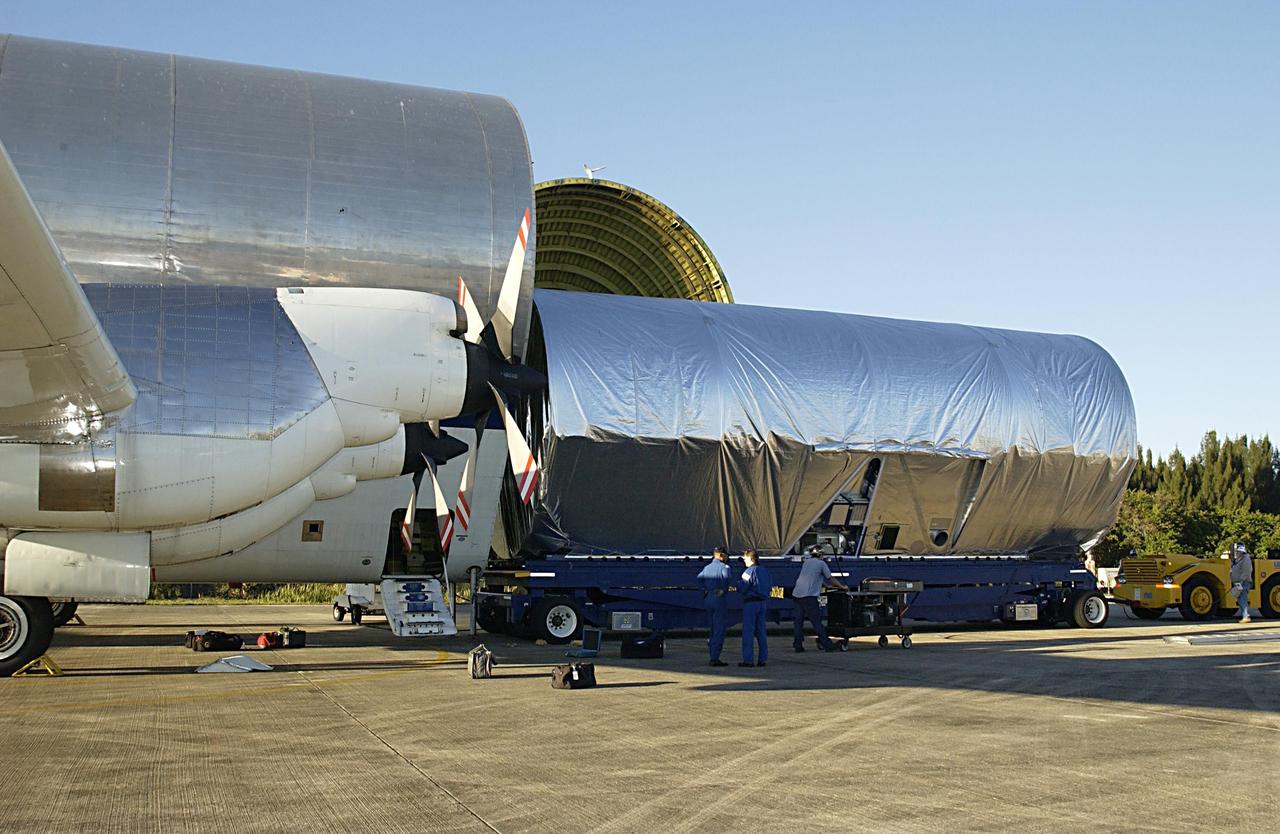
KENNEDY SPACE CENTER, FLA. -- The Long Spacer (LS), the second and final piece of the Starboard 6 (S6) Integrated Truss Segment, rolls out of NASA's Super Guppy cargo airplane onto a transporter. The LS will be moved to the Space Station Processing Facility for inspections and verification tests. Eventually the LS will be integrated with the S6 Integrated Equipment Assembly already at KSC and will fly as one segment to the International Space Station on Space Shuttle mission STS-119 in early 2004. Together the segment pieces weigh 26,000 pounds and measure 45 feet long. .
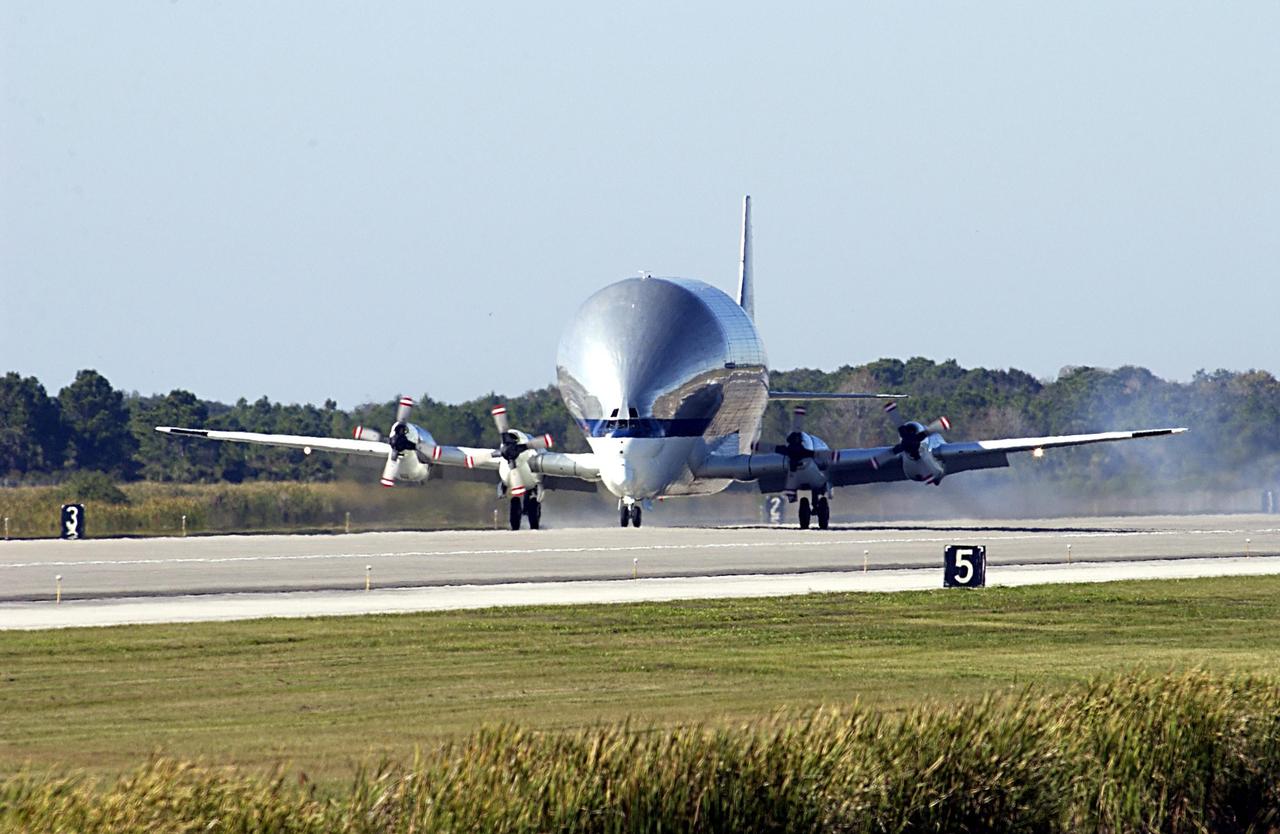
KENNEDY SPACE CENTER, FLA. - - NASA's Super Guppy cargo airplane arrives at KSC carrying the Long Spacer (LS), the second and final piece of the Starboard 6 (S6) Integrated Truss Segment. After landing and offloading, the LS will be transported to the Space Station Processing Facility for inspections and verification tests. Eventually the LS will be integrated with the S6 Integrated Equipment Assembly already at KSC and will fly as one segment to the International Space Station on Space Shuttle mission STS-119 in early 2004. Together the segment pieces weigh 26,000 pounds and measure 45 feet long. .
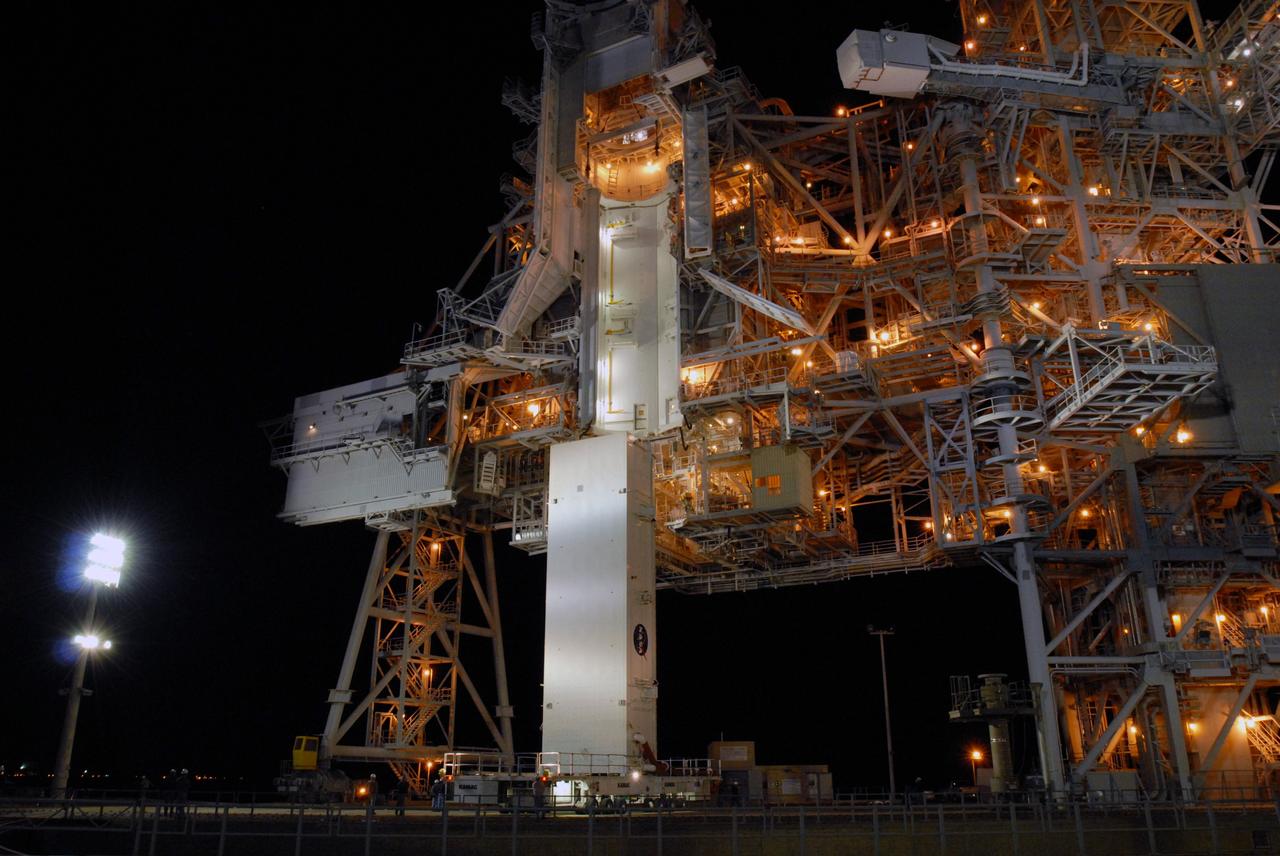
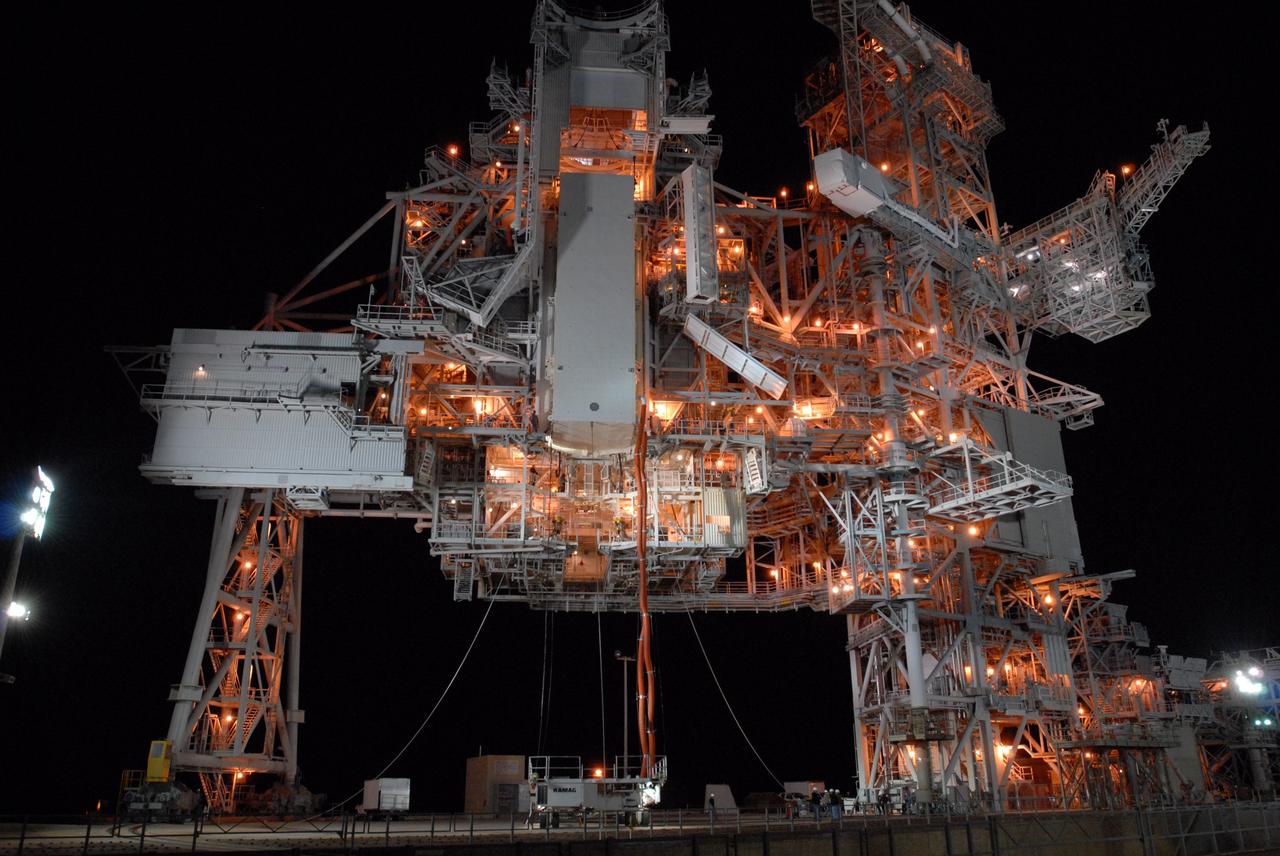
CAPE CANAVERAL, Fla. -- The payload canister containing the S6 truss and solar arrays arrives at Launch Pad 39A at NASA's Kennedy Space Center in Florida. The canister sits below the Payload Changeout Room, or PCR. It will be lifted up to the PCR and space shuttle Discovery's payload transferred inside. After Discovery rolls out to the pad, the payload will be installed in the shuttle's payload bay. Launch of Discovery on the STS-119 mission is scheduled for Feb. 12. During Discovery's 14-day mission, the crew will install the S6 truss segment and its solar arrays to the starboard side of the station, completing the station's backbone, or truss Photo credit: NASA/Jim Grossmann
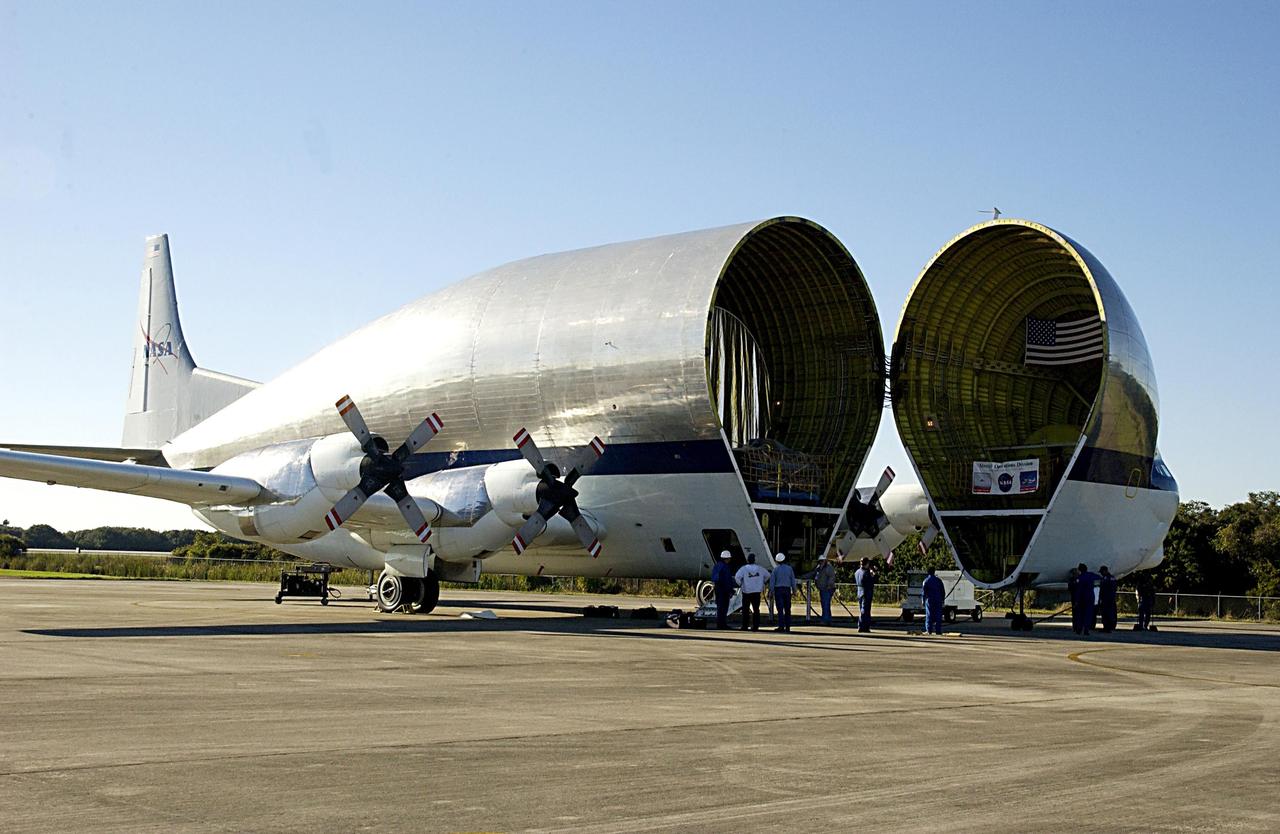
KENNEDY SPACE CENTER, FLA. - After landing at the KSC Shuttle Landing Facility, NASA's Super Guppy cargo airplane opens to remove its cargo, the Long Spacer (LS), the second and final piece of the Starboard 6 (S6) Integrated Truss Segment. The LS will be transported to the Space Station Processing Facility for inspections and verification tests. Eventually the LS will be integrated with the S6 Integrated Equipment Assembly already at KSC and will fly as one segment to the International Space Station on Space Shuttle mission STS-119 in early 2004. Together the segment pieces weigh 26,000 pounds and measure 45 feet long. .
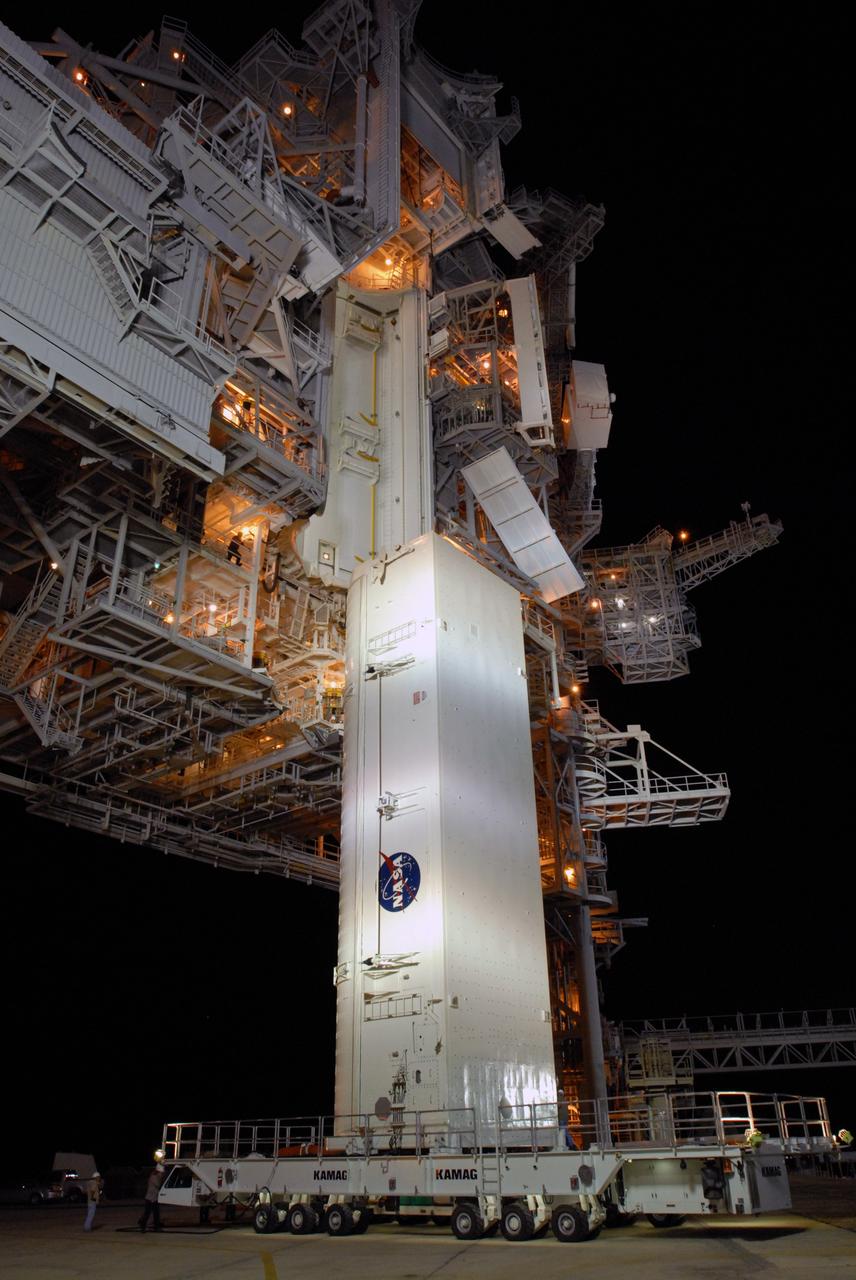
CAPE CANAVERAL, Fla. -- The payload canister containing the S6 truss and solar arrays arrives at Launch Pad 39A at NASA's Kennedy Space Center in Florida. The canister sits below the Payload Changeout Room, or PCR. It will be lifted up to the PCR and space shuttle Discovery's payload transferred inside. After Discovery rolls out to the pad, the payload will be installed in the shuttle's payload bay. Launch of Discovery on the STS-119 mission is scheduled for Feb. 12. During Discovery's 14-day mission, the crew will install the S6 truss segment and its solar arrays to the starboard side of the station, completing the station's backbone, or truss Photo credit: NASA/Jim Grossmann
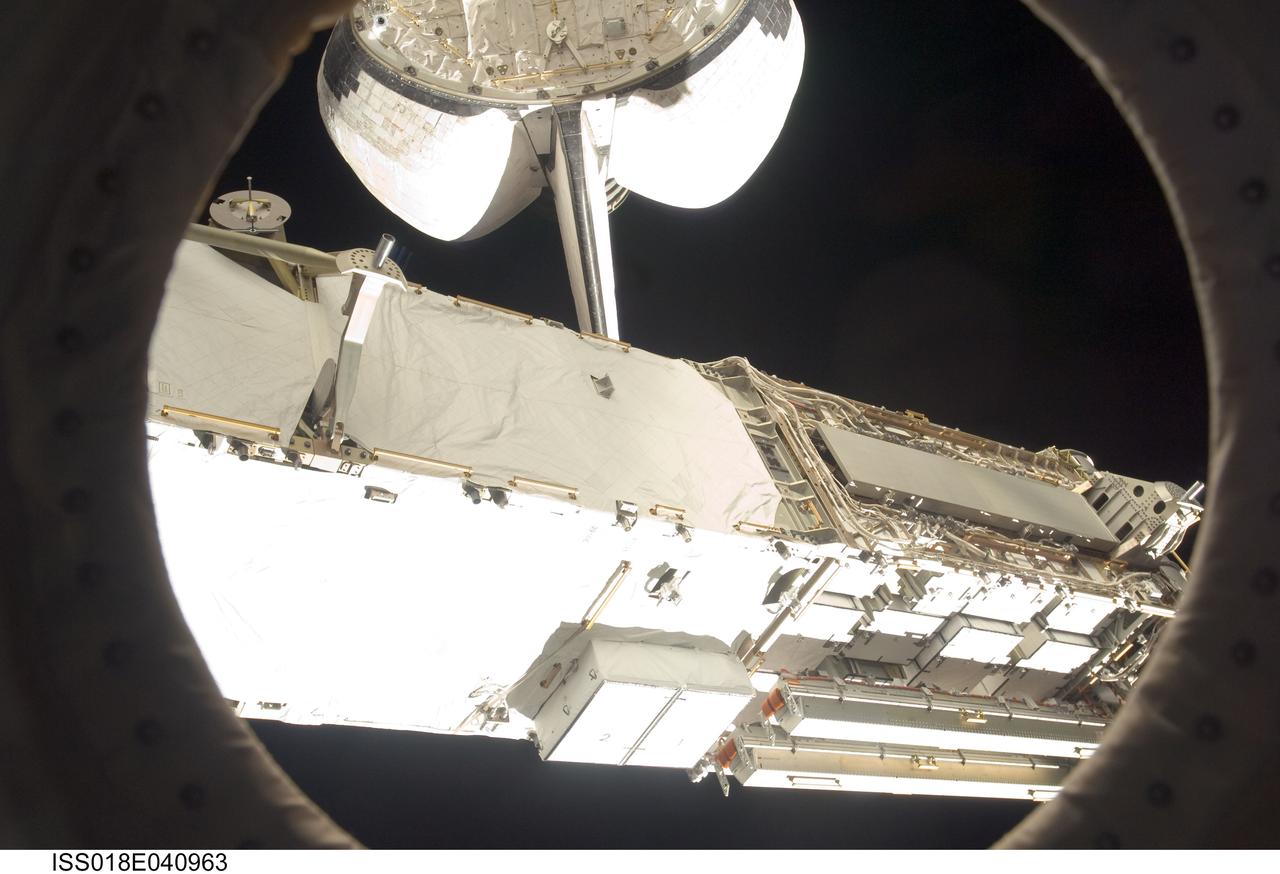
ISS018-E-040963 (18 March 2009) --- This scene of the Space Shuttle Discovery parked at the International Space Station and the presence of the S6 truss are a sign that the home improvement project is being renewed aboard the orbital outpost. The photo was taken by one of the station crewmembers inside the complex.

CAPE CANAVERAL, Fla. – United Space Alliance technicians remove and replace all the hub tiles on space shuttle Discovery before its STS-119 mission targeted for Feb. 12. Hub tiles, heat protection tiles, are difficult to install because of their location on the inboard side of the inboard elevons. On the STS-119 mission, Discovery will carry the S6 truss segment to complete the 361-foot-long backbone of the International Space Station. The truss includes the fourth pair of solar array wings and electronics that convert sunlight to power for the orbiting laboratory. Photo credit: NASA/Dimitri Gerondidakis

CAPE CANAVERAL, Fla. – United Space Alliance technicians remove and replace all the hub tiles on space shuttle Discovery before its STS-119 mission targeted for Feb. 12. Hub tiles, heat protection tiles, are difficult to install because of their location on the inboard side of the inboard elevons. On the STS-119 mission, Discovery will carry the S6 truss segment to complete the 361-foot-long backbone of the International Space Station. The truss includes the fourth pair of solar array wings and electronics that convert sunlight to power for the orbiting laboratory. Photo credit: NASA/Dimitri Gerondidakis
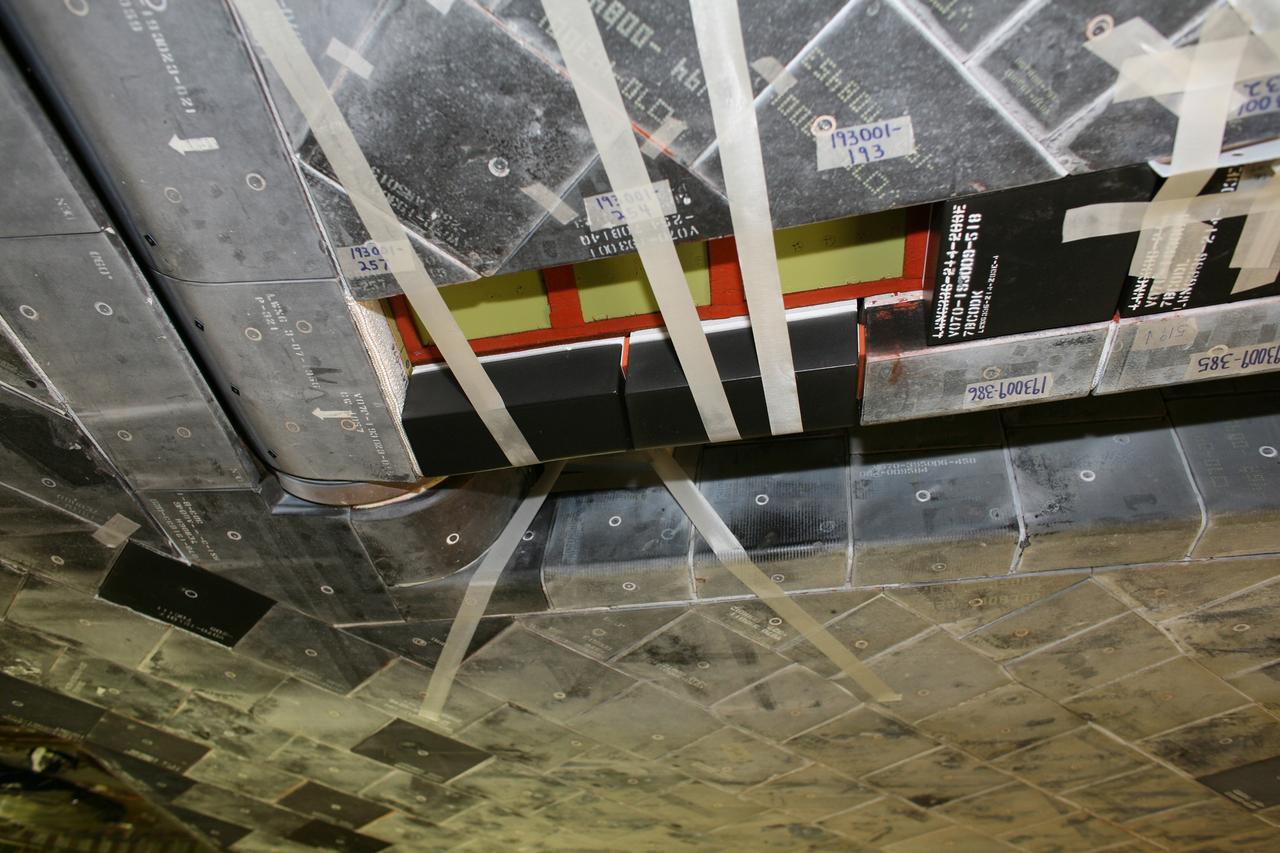
CAPE CANAVERAL, Fla. – A closeup of hub tiles replaced on space shuttle Discovery before its STS-119 mission targeted for Feb. 12. Hub tiles, heat protection tiles, are difficult to install because of their location on the inboard side of the inboard elevons. On the STS-119 mission, Discovery will carry the S6 truss segment to complete the 361-foot-long backbone of the International Space Station. The truss includes the fourth pair of solar array wings and electronics that convert sunlight to power for the orbiting laboratory. Photo credit: NASA/Dimitri Gerondidakis
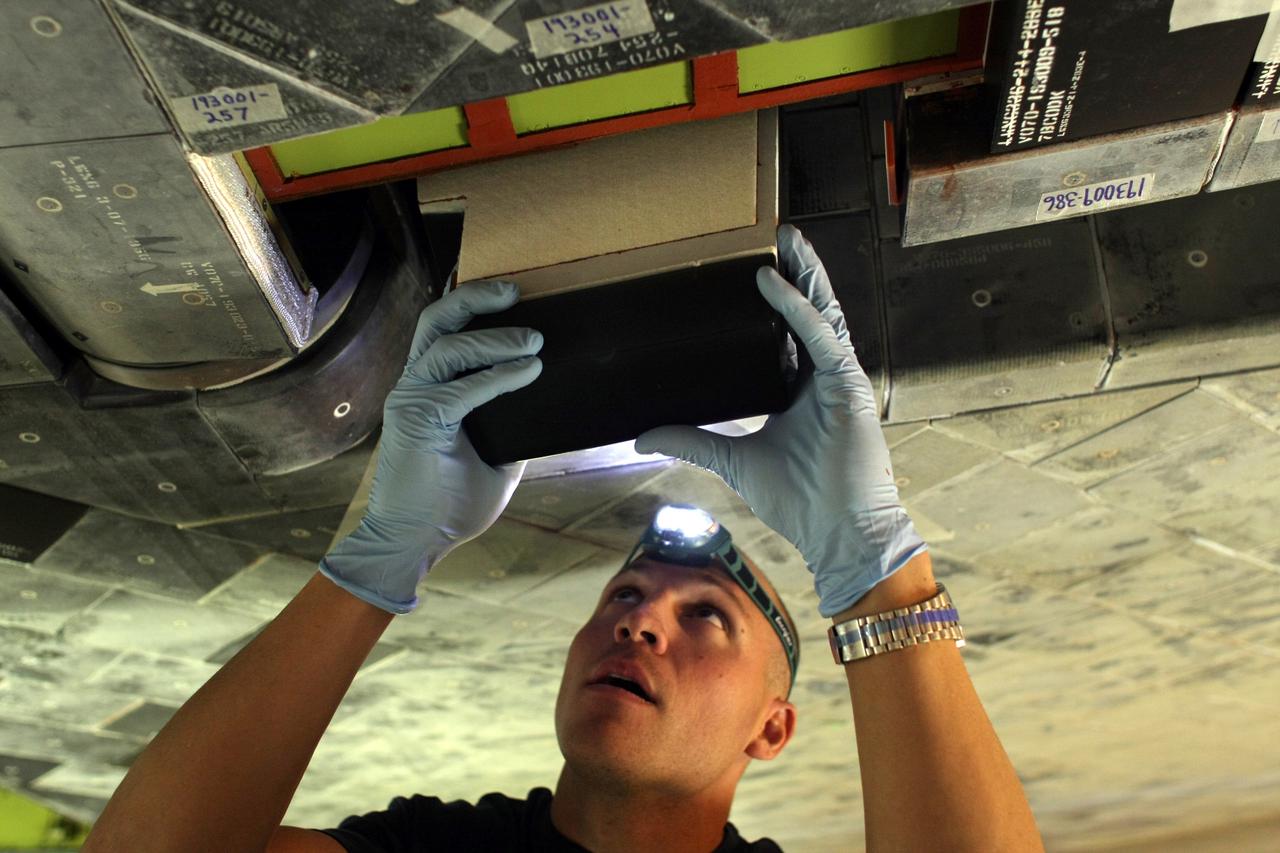
CAPE CANAVERAL, Fla. – United Space Alliance technicians remove and replace all the hub tiles on space shuttle Discovery before its STS-119 mission targeted for Feb. 12. Hub tiles, heat protection tiles, are difficult to install because of their location on the inboard side of the inboard elevons. On the STS-119 mission, Discovery will carry the S6 truss segment to complete the 361-foot-long backbone of the International Space Station. The truss includes the fourth pair of solar array wings and electronics that convert sunlight to power for the orbiting laboratory. Photo credit: NASA/Dimitri Gerondidakis
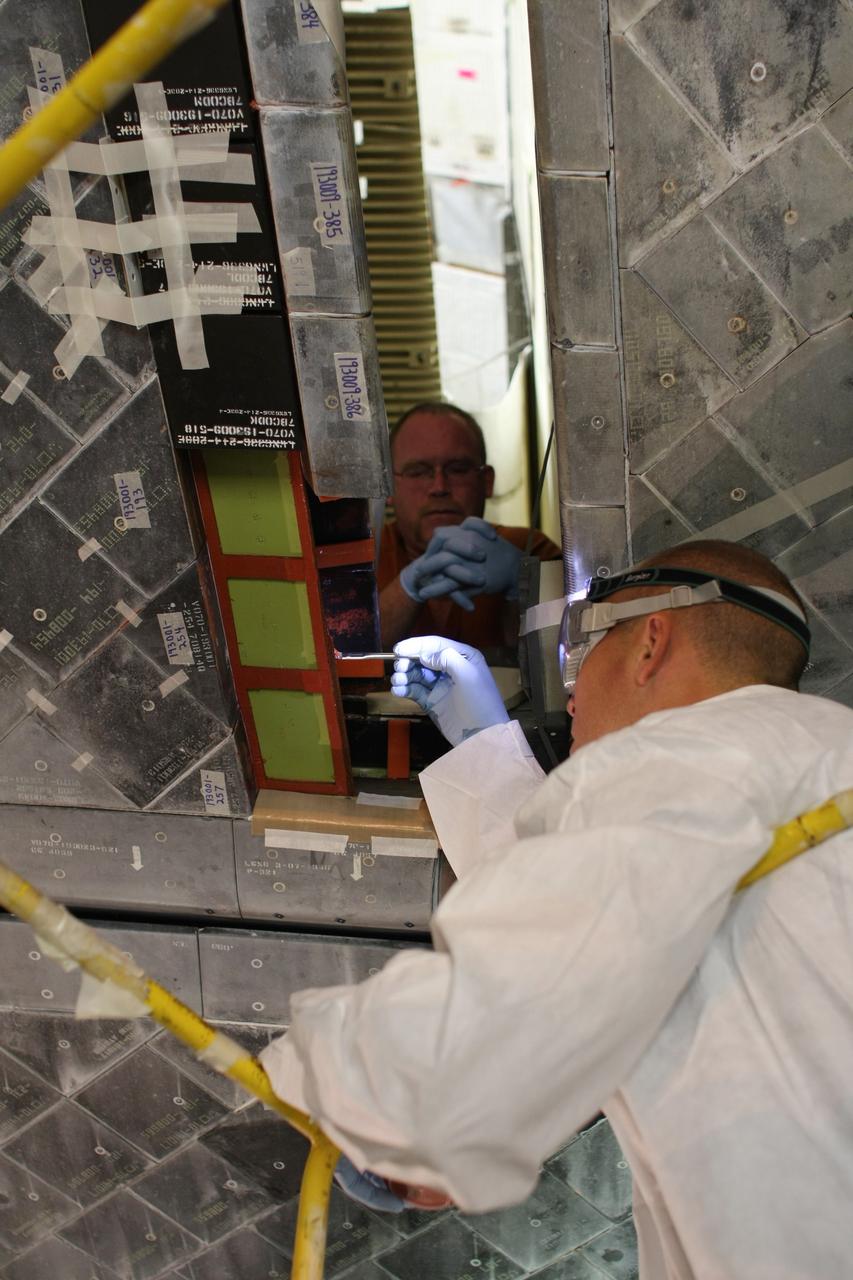
CAPE CANAVERAL, Fla. – United Space Alliance technicians remove and replace all the hub tiles on space shuttle Discovery before its STS-119 mission targeted for Feb. 12. Hub tiles, heat protection tiles, are difficult to install because of their location on the inboard side of the inboard elevons. On the STS-119 mission, Discovery will carry the S6 truss segment to complete the 361-foot-long backbone of the International Space Station. The truss includes the fourth pair of solar array wings and electronics that convert sunlight to power for the orbiting laboratory. Photo credit: NASA/Dimitri Gerondidakis

CAPE CANAVERAL, Fla. – United Space Alliance technicians remove and replace all the hub tiles on space shuttle Discovery before its STS-119 mission targeted for Feb. 12. Hub tiles, heat protection tiles, are difficult to install because of their location on the inboard side of the inboard elevons. On the STS-119 mission, Discovery will carry the S6 truss segment to complete the 361-foot-long backbone of the International Space Station. The truss includes the fourth pair of solar array wings and electronics that convert sunlight to power for the orbiting laboratory. Photo credit: NASA/Dimitri Gerondidakis
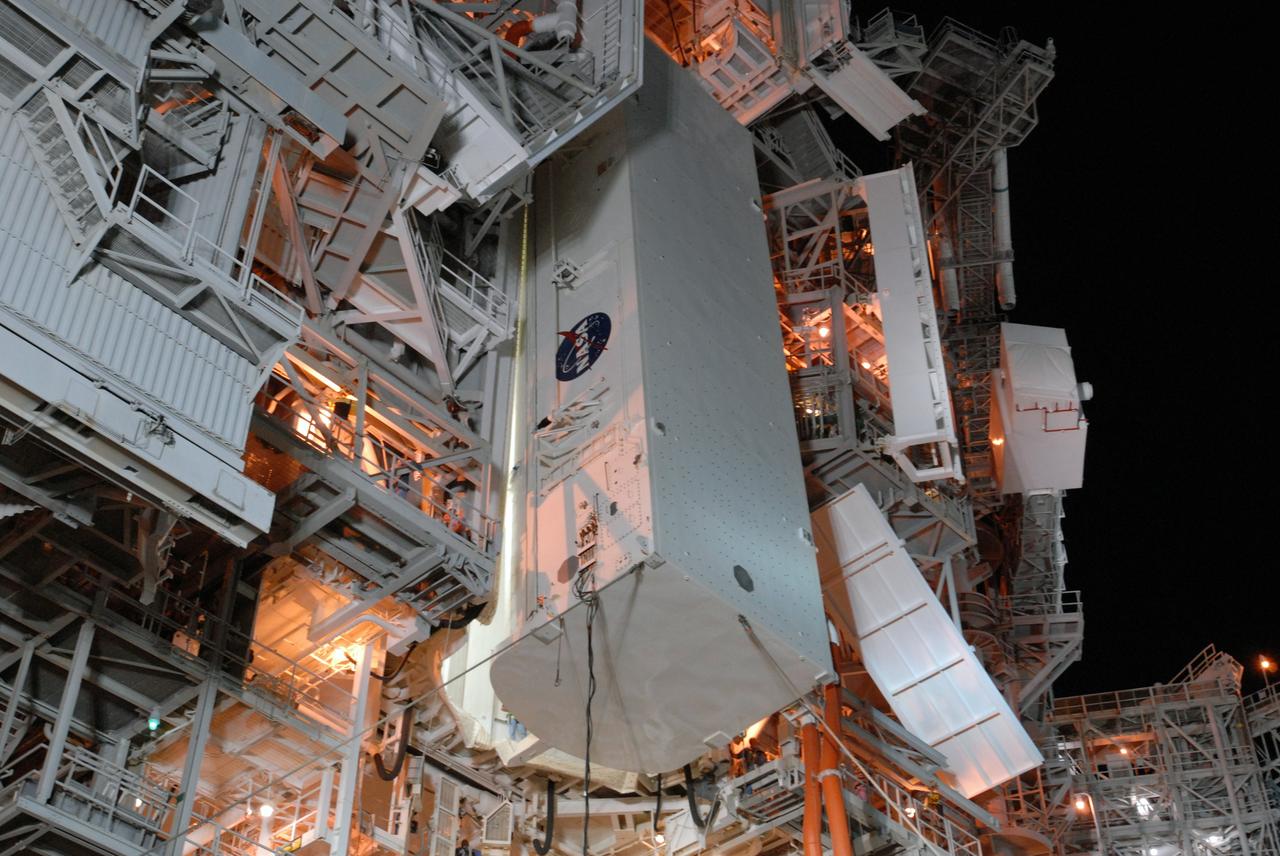
CAPE CANAVERAL, Fla. -- With red umbilical lines attached, the payload containing space shuttle Discovery's S6 truss and solar arrays is lifted up to the Payload Changeout Room, or PCR, on Launch Pad 39A at NASA's Kennedy Space Center in Florida. The payload will be transferred inside the PCR where it will wait until Discovery rolls out to the pad. Then the payload will be installed in the shuttle's payload bay. Launch of Discovery on the STS-119 mission is scheduled for Feb. 12. During Discovery's 14-day mission, the crew will install the S6 truss segment and its solar arrays to the starboard side of the station, completing the station's backbone, or truss Photo credit: NASA/Jim Grossmann
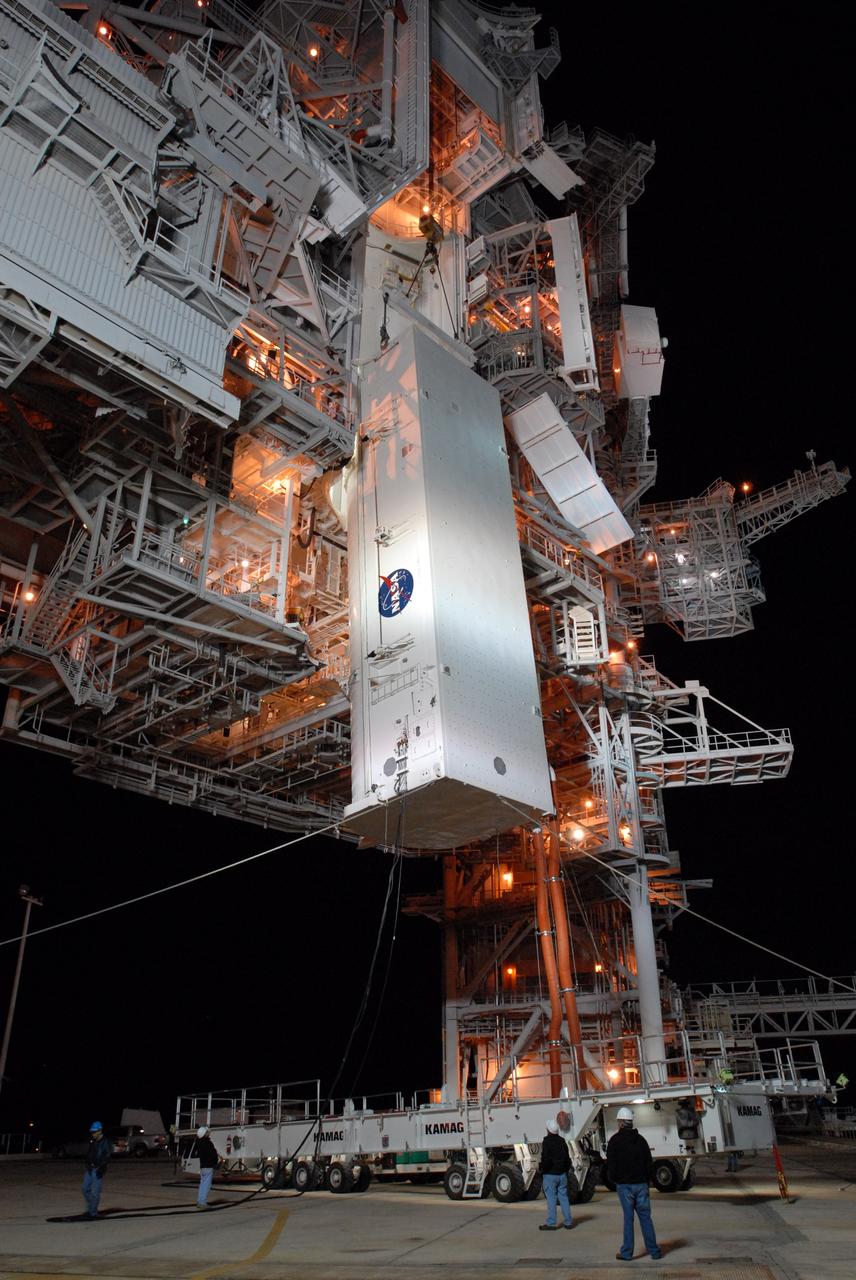
CAPE CANAVERAL, Fla. -- With red umbilical lines attached, the payload containing space shuttle Discovery's S6 truss and solar arrays is lifted up to the Payload Changeout Room, or PCR, on Launch Pad 39A at NASA's Kennedy Space Center in Florida. The payload will be transferred inside the PCR where it will wait until Discovery rolls out to the pad. Then the payload will be installed in the shuttle's payload bay. Launch of Discovery on the STS-119 mission is scheduled for Feb. 12. During Discovery's 14-day mission, the crew will install the S6 truss segment and its solar arrays to the starboard side of the station, completing the station's backbone, or truss. Photo credit: NASA/Jim Grossmann
CAPE CANAVERAL, Fla. -- With red umbilical lines attached, the payload containing space shuttle Discovery's S6 truss and solar arrays is lifted up to the Payload Changeout Room, or PCR, on Launch Pad 39A at NASA's Kennedy Space Center in Florida. The payload will be transferred inside the PCR where it will wait until Discovery rolls out to the pad. Then the payload will be installed in the shuttle's payload bay. Launch of Discovery on the STS-119 mission is scheduled for Feb. 12. During Discovery's 14-day mission, the crew will install the S6 truss segment and its solar arrays to the starboard side of the station, completing the station's backbone, or truss Photo credit: NASA/Jim Grossmann
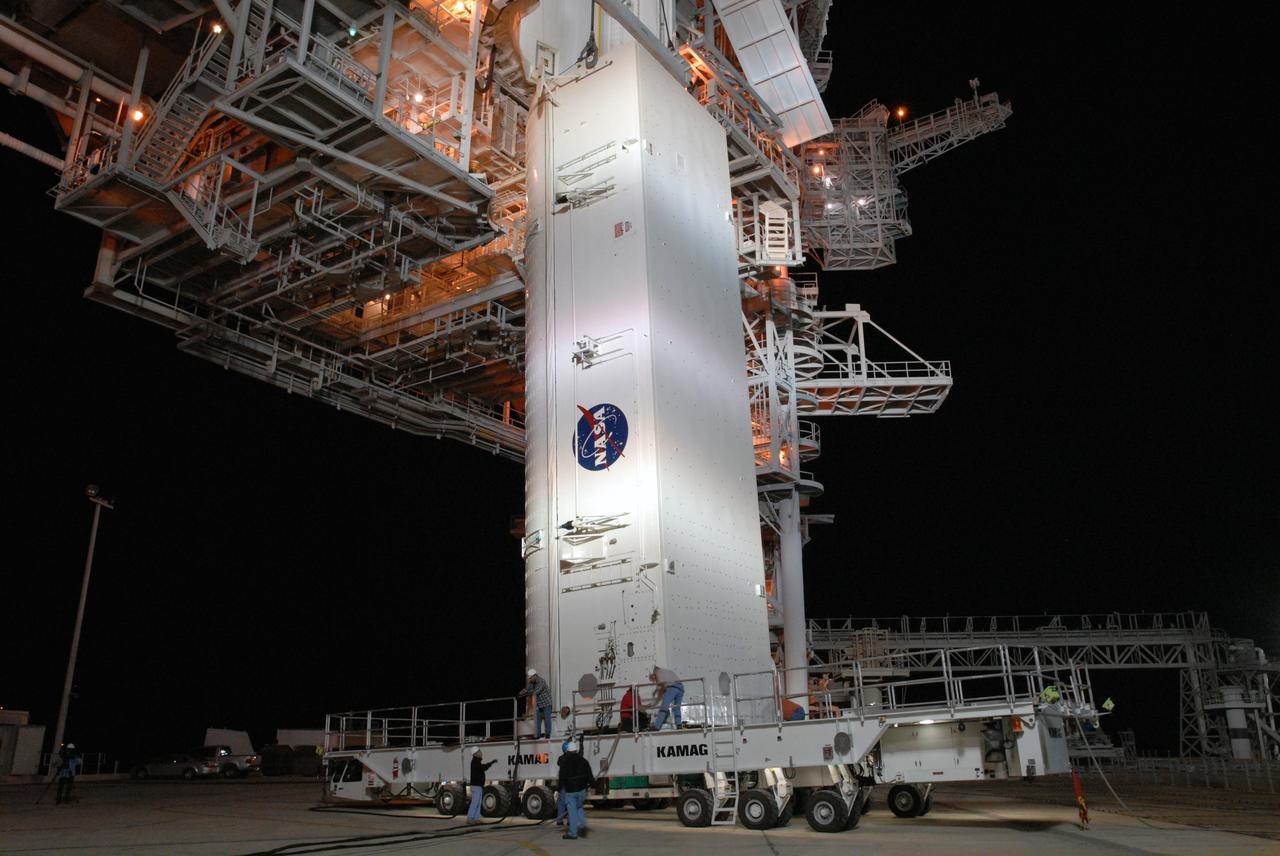
CAPE CANAVERAL, Fla. -- The payload canister containing the S6 truss and solar arrays arrives at Launch Pad 39A at NASA's Kennedy Space Center in Florida. The canister sits below the Payload Changeout Room, or PCR. It will be lifted up to the PCR and space shuttle Discovery's payload transferred inside. After Discovery rolls out to the pad, the payload will be installed in the shuttle's payload bay. Launch of Discovery on the STS-119 mission is scheduled for Feb. 12. During Discovery's 14-day mission, the crew will install the S6 truss segment and its solar arrays to the starboard side of the station, completing the station's backbone, or truss Photo credit: NASA/Jim Grossmann
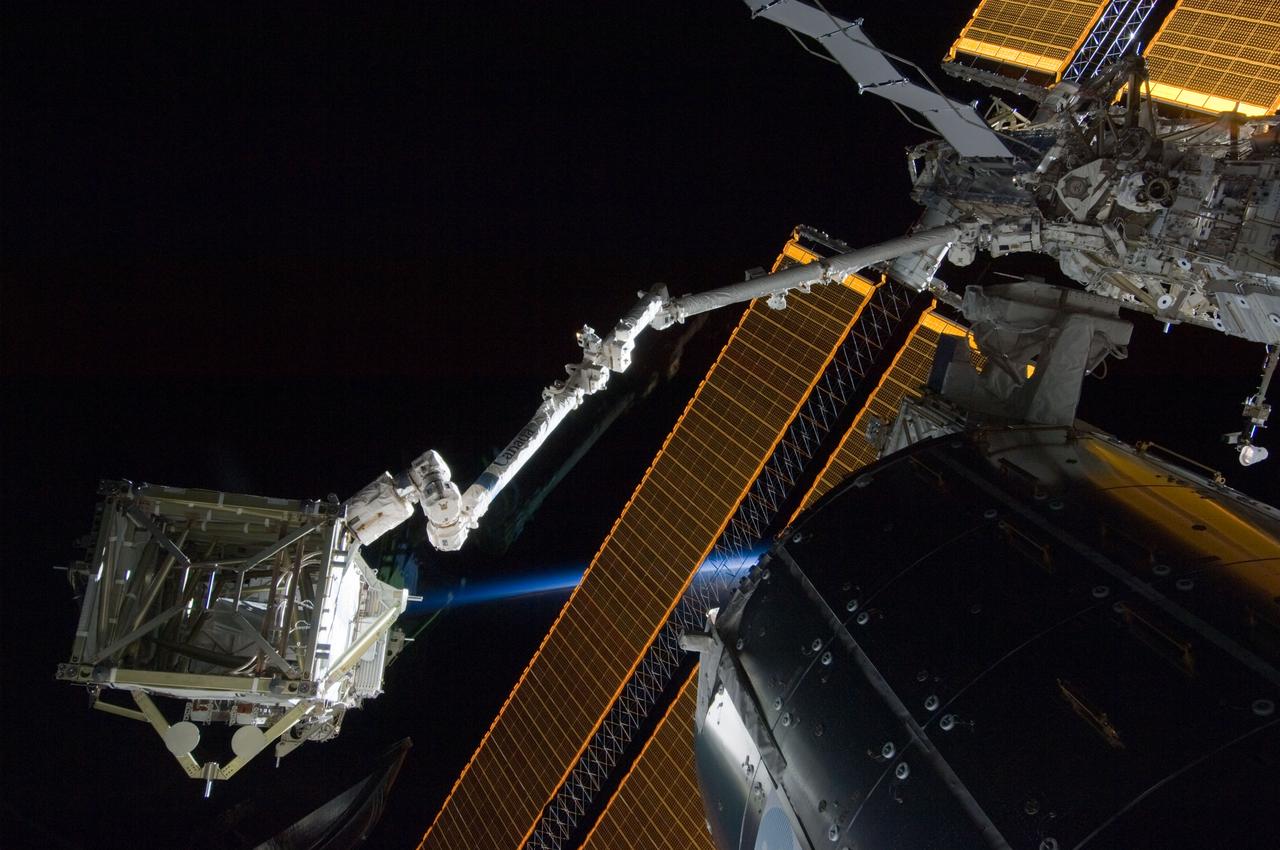
S119-E-006588 (18 March 2009) --- In the grasp of the International Space Station’s robotic Canadarm2, the S6 truss segment was photographed by a STS-119 crewmember while Space Shuttle Discovery is docked with the station. The S6 truss segment was moved from Discovery’s cargo bay by the station’s Canadarm2, handed off to the shuttle’s remote manipulator system (RMS), and then handed back to the station’s robotic arm where it will remain in an overnight parked position. Also visible in the image are the Columbus laboratory, starboard truss and solar array panels.
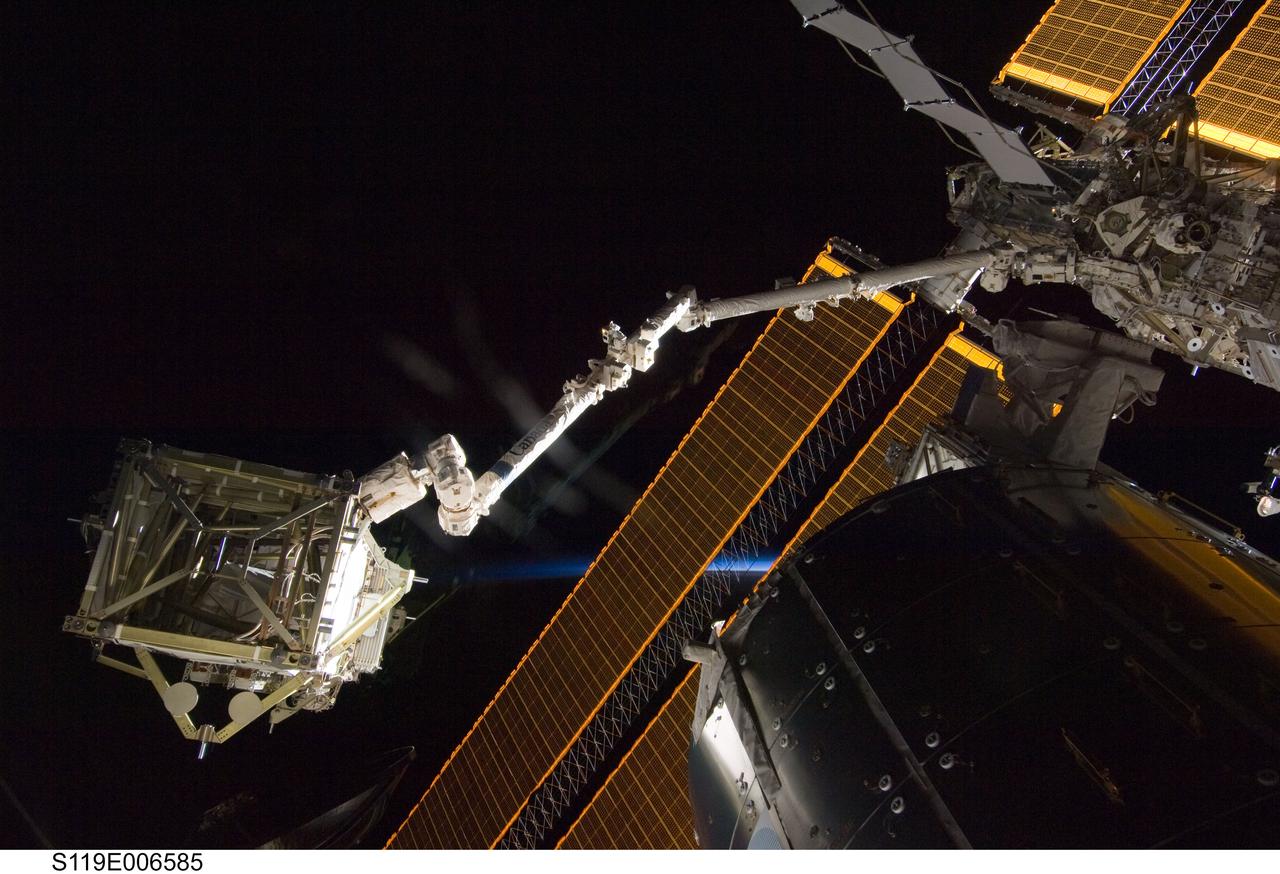
S119-E-006585 (18 March 2009) --- In the grasp of the International Space Station’s robotic Canadarm2, the S6 truss segment was photographed by a STS-119 crewmember while Space Shuttle Discovery is docked with the station. The S6 truss segment was moved from Discovery’s cargo bay by the station’s Canadarm2, handed off to the shuttle’s remote manipulator system (RMS), and then handed back to the station’s robotic arm where it will remain in an overnight parked position. Also visible in the image are the Columbus laboratory, starboard truss and solar array panels.

S119-E-006596 (18 March 2009) --- In the grasp of the International Space Station’s robotic Canadarm2, the S6 truss segment was photographed by a STS-119 crewmember while Space Shuttle Discovery is docked with the station. The S6 truss segment was moved from Discovery’s cargo bay by the station’s Canadarm2, handed off to the shuttle’s remote manipulator system (RMS), and then handed back to the station’s robotic arm where it will remain in an overnight parked position. Also visible in the image are the Columbus laboratory, starboard truss and solar array panels.
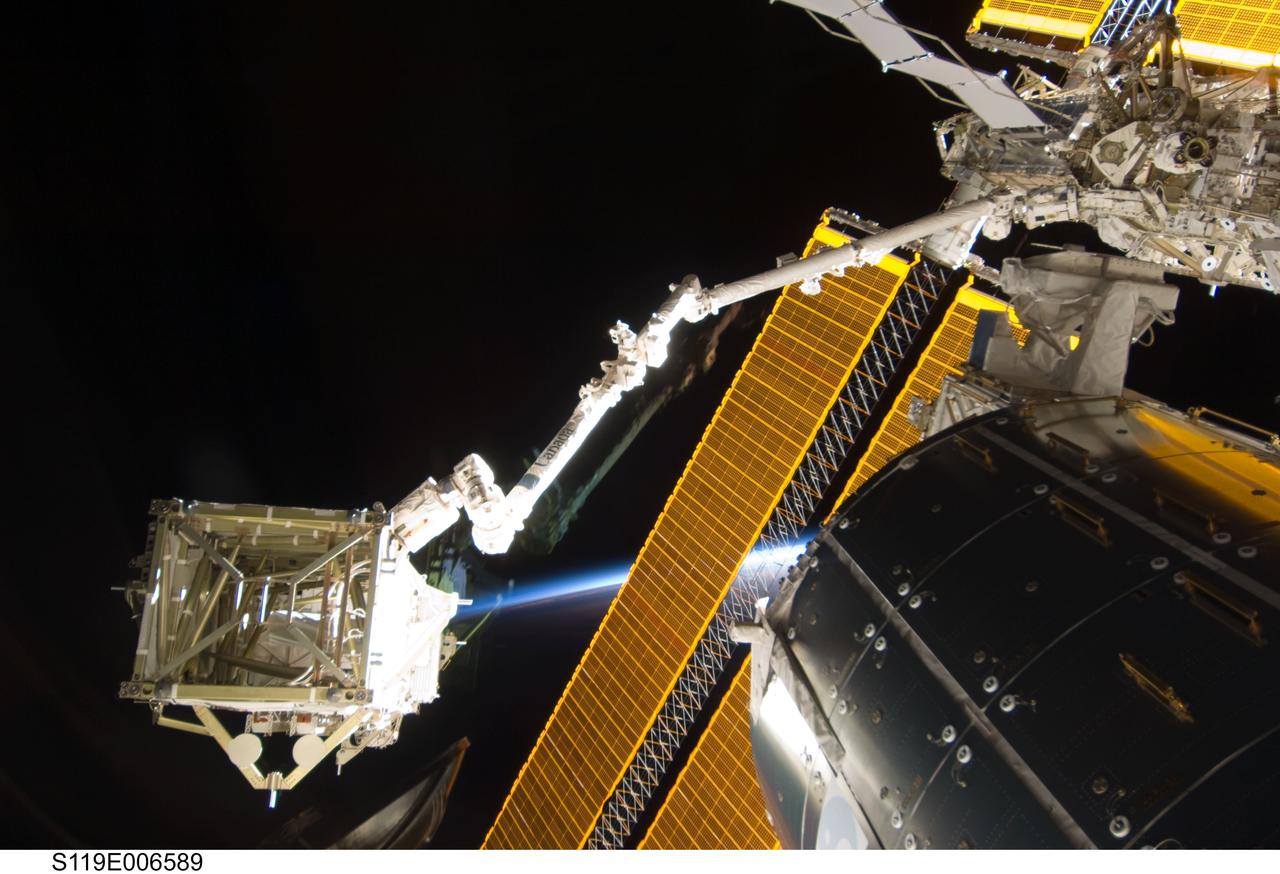
S119-E-006589 (18 March 2009) --- In the grasp of the International Space Station’s robotic Canadarm2, the S6 truss segment was photographed by a STS-119 crewmember while Space Shuttle Discovery is docked with the station. The S6 truss segment was moved from Discovery’s cargo bay by the station’s Canadarm2, handed off to the shuttle’s remote manipulator system (RMS), and then handed back to the station’s robotic arm where it will remain in an overnight parked position. Also visible in the image are the Columbus laboratory, starboard truss and solar array panels.
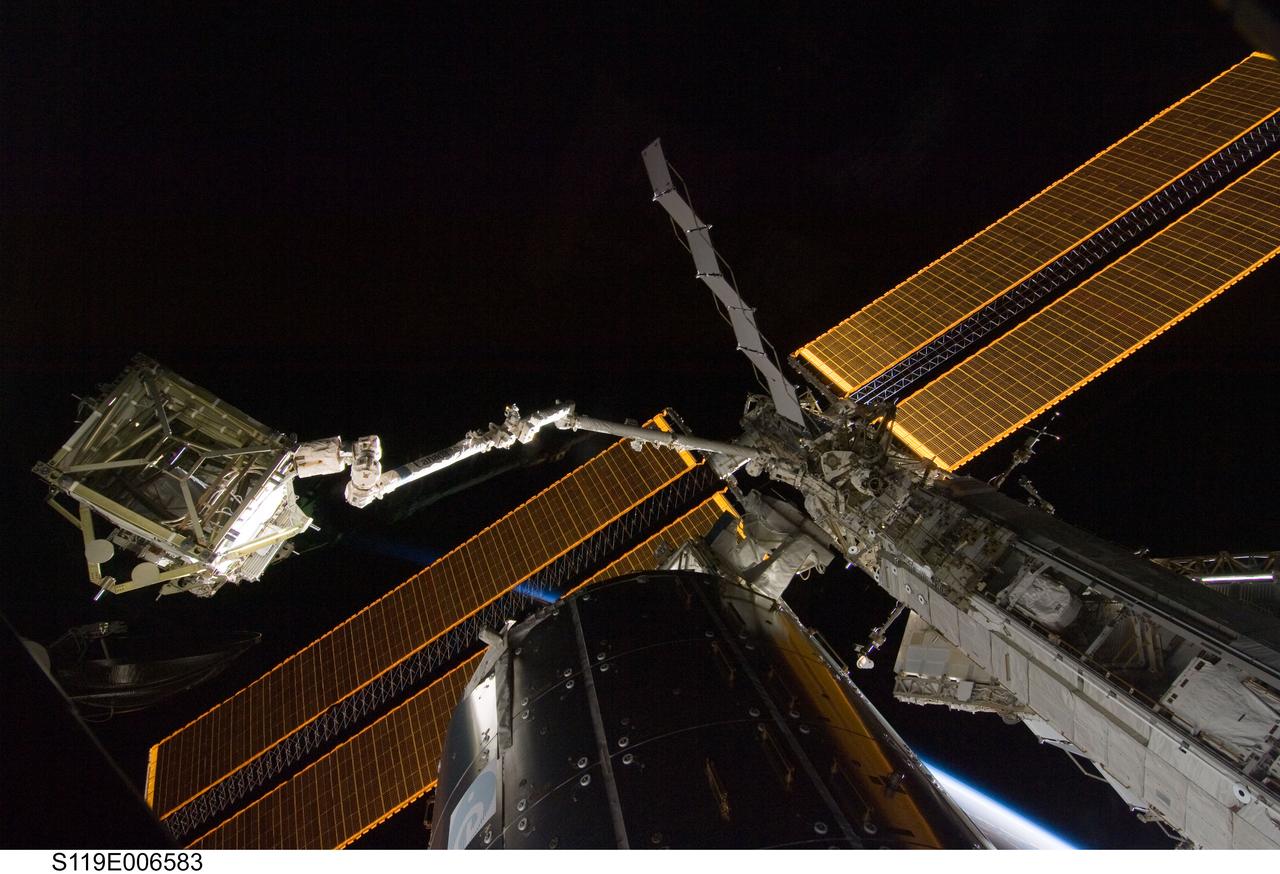
S119-E-006583 (18 March 2009) --- In the grasp of the International Space Station’s robotic Canadarm2, the S6 truss segment was photographed by a STS-119 crewmember while Space Shuttle Discovery is docked with the station. The S6 truss segment was moved from Discovery’s cargo bay by the station’s Canadarm2, handed off to the shuttle’s remote manipulator system (RMS), and then handed back to the station’s robotic arm where it will remain in an overnight parked position. Also visible in the image are the Columbus laboratory, starboard truss and solar array panels.
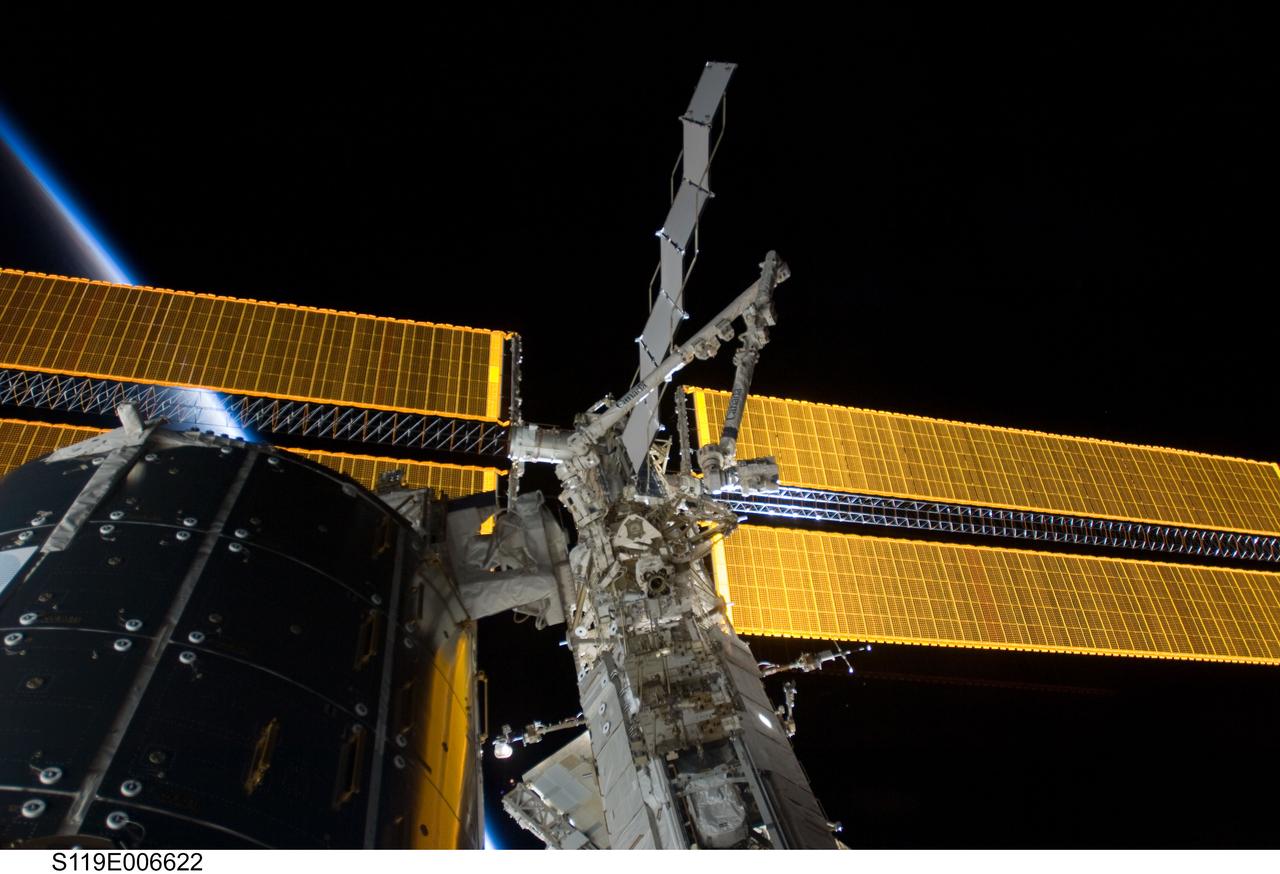
View of the Space Station Remote Manipulator System (SSRMS) on the Mobile Transporter (MT) for S6 Relocation OPS during STS-119 / Expedition 18 joint docked OPS. The MT is on the S1 Truss segment.
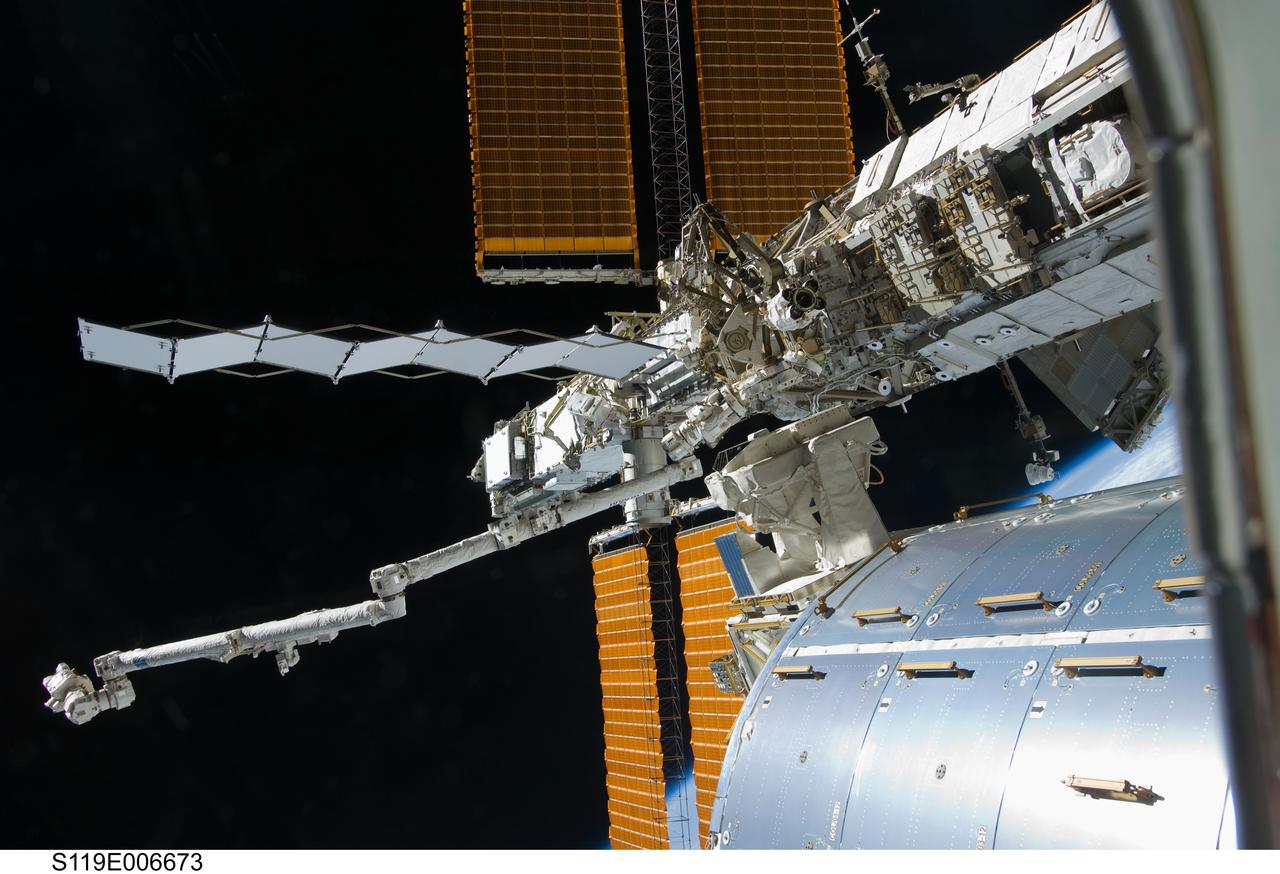
S119-E-006673 (19 March 2009) --- Astronauts Steve Swanson (center) and Richard Arnold (partially obscured above Swanson), both STS-119 mission specialists, participate in the mission's first scheduled session of extravehicular activity (EVA) as construction and maintenance continue on the International Space Station. During the six-hour, seven-minute spacewalk, Swanson and Arnold connected bolts to permanently attach the S6 truss segment to S5. The spacewalkers plugged in power and data connectors to the truss, prepared a radiator to cool it, opened boxes containing the new solar arrays and deployed the Beta Gimbal Assemblies containing masts that support the solar arrays.
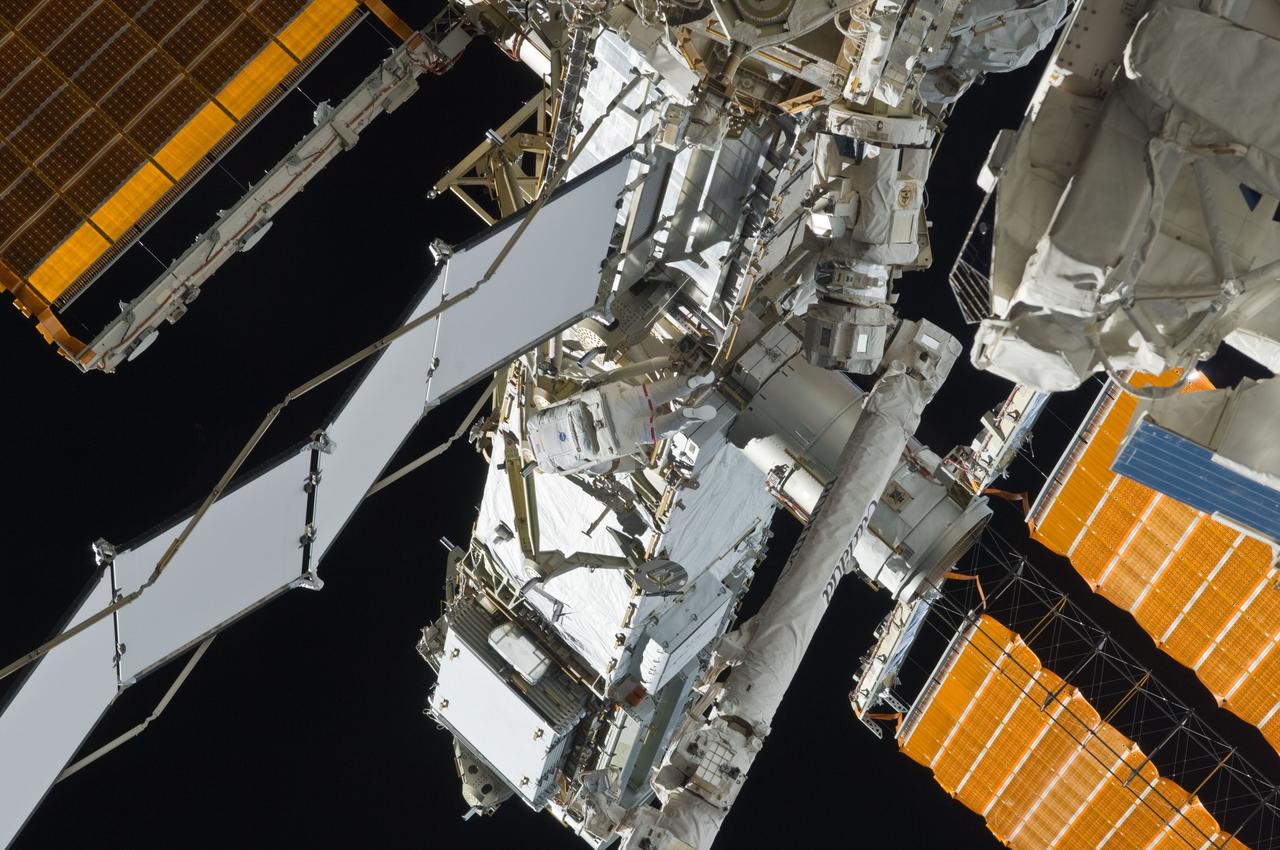
S119-E-006674 (19 March 2009) --- Astronaut Steve Swanson (center), STS-119 mission specialist, participates in the mission's first scheduled session of extravehicular activity (EVA) as construction and maintenance continue on the International Space Station. During the six-hour, seven-minute spacewalk, Swanson and astronaut Richard Arnold (out of frame), mission specialist, connected bolts to permanently attach the S6 truss segment to S5. The spacewalkers plugged in power and data connectors to the truss, prepared a radiator to cool it, opened boxes containing the new solar arrays and deployed the Beta Gimbal Assemblies containing masts that support the solar arrays.
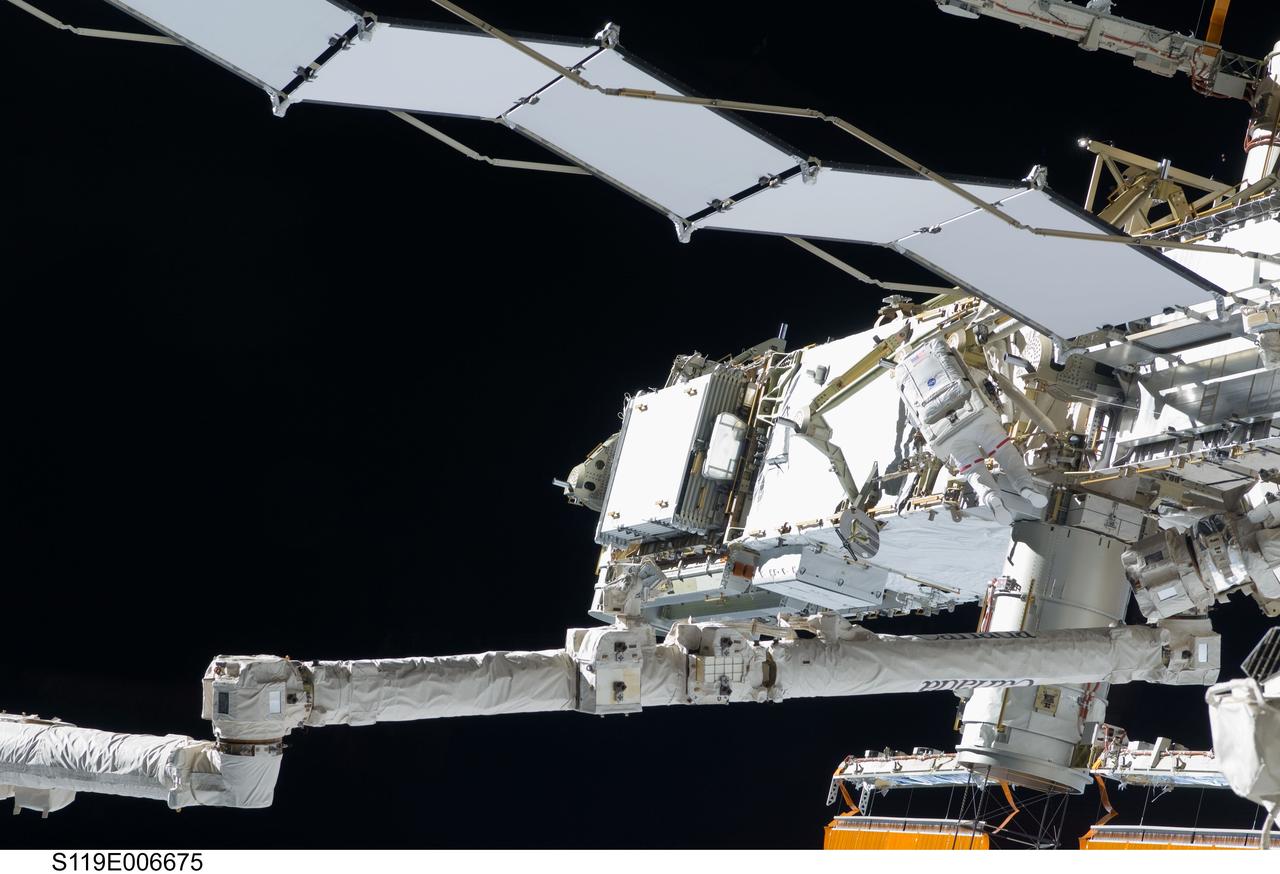
S119-E-006675 (19 March 2009) --- Astronaut Steve Swanson (center right), STS-119 mission specialist, participates in the mission's first scheduled session of extravehicular activity (EVA) as construction and maintenance continue on the International Space Station. During the six-hour, seven-minute spacewalk, Swanson and astronaut Richard Arnold (out of frame), mission specialist, connected bolts to permanently attach the S6 truss segment to S5. The spacewalkers plugged in power and data connectors to the truss, prepared a radiator to cool it, opened boxes containing the new solar arrays and deployed the Beta Gimbal Assemblies containing masts that support the solar arrays.

ISS018-E-040973 (18 March 2009) --- This scene gives evidence that the "work crews" have arrived at the International Space Station to continue the "home improvement" project. A Soyuz vehicle used to transport the station crewmembers is in the foreground, with the Space Shuttle Discovery visible just beneath it. Ten people are busy on the station, and two of them are preparing to exit the shirt sleeve environment to go outside for a March 19 spacewalk, on which the other crewmembers will be pitching in their support and technical assistance.
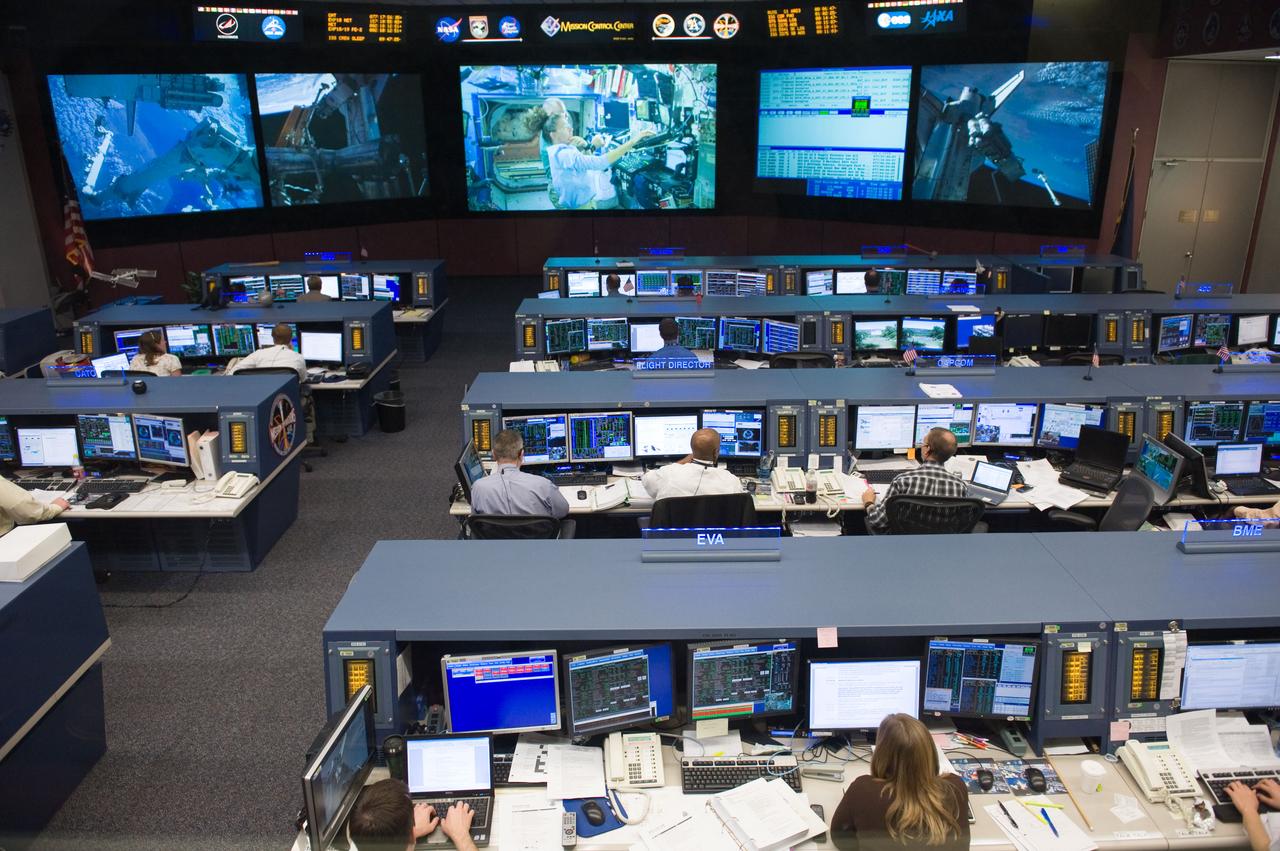
DATE: 3-18-09 LOCATION: Bldg 30 SUBJECT: STS-119 and ISS-15A flight controllers on console during SSRMS Grapple & Unberth S6 Truss, SSRMS Handoff of S6 Truss to SRMS. Flight Controllers: Paul Dye and Kwatsi Alibaruto PHOTOGRAPHER: Harnett
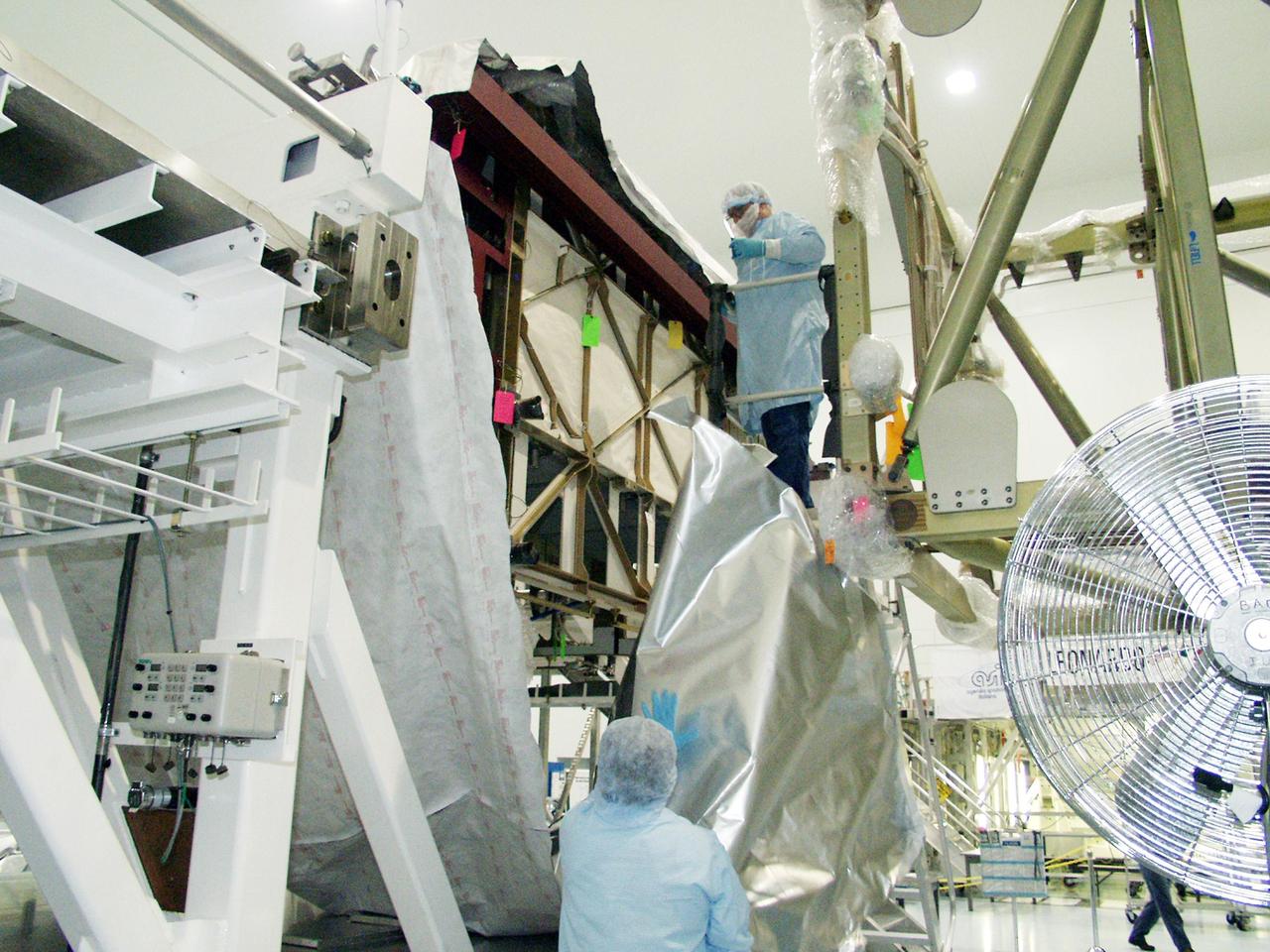
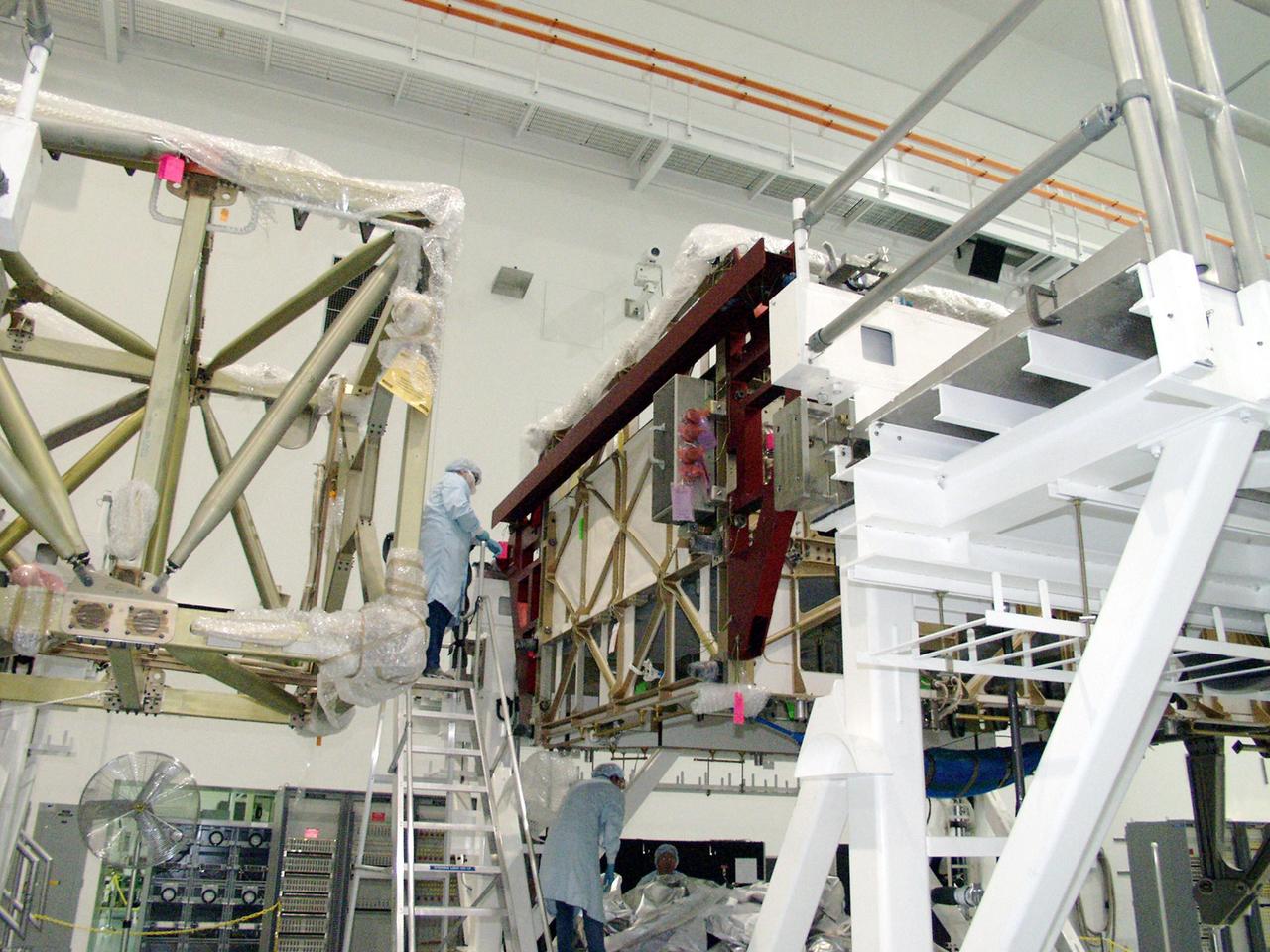
KENNEDY SPACE CENTER, FLA. -- In the Space Station Processing Facility, workers begin uncovering the Long Spacer (LS), the second and final piece of the S6 Integrated Truss Segment. Both the LS and the S6 Integrated Equipment Assembly (IEA) will undergo inspections and verifications tests to prepare them for flight to the International Space Station in early 2004. Although separate for now, the two segments will be integrated and fly as one on mission STS-119. Together the two pieces weigh 26,000 pounds and measure 45 feet long. The S6 is the 11th and final piece of the Station's Integrated Truss Structure, which will measure more than 300 feet in all. .
KENNEDY SPACE CENTER, FLA. -- In the Space Station Processing Facility, workers finish uncovering the Long Spacer (LS), the second and final piece of the S6 Integrated Truss Segment. Both the LS and the S6 Integrated Equipment Assembly (IEA) will undergo inspections and verifications tests to prepare them for flight to the International Space Station in early 2004. Although separate for now, the two segments will be integrated and fly as one on mission STS-119. Together the two pieces weigh 26,000 pounds and measure 45 feet long. The S6 is the 11th and final piece of the Station's Integrated Truss Structure, which will measure more than 300 feet in all. .
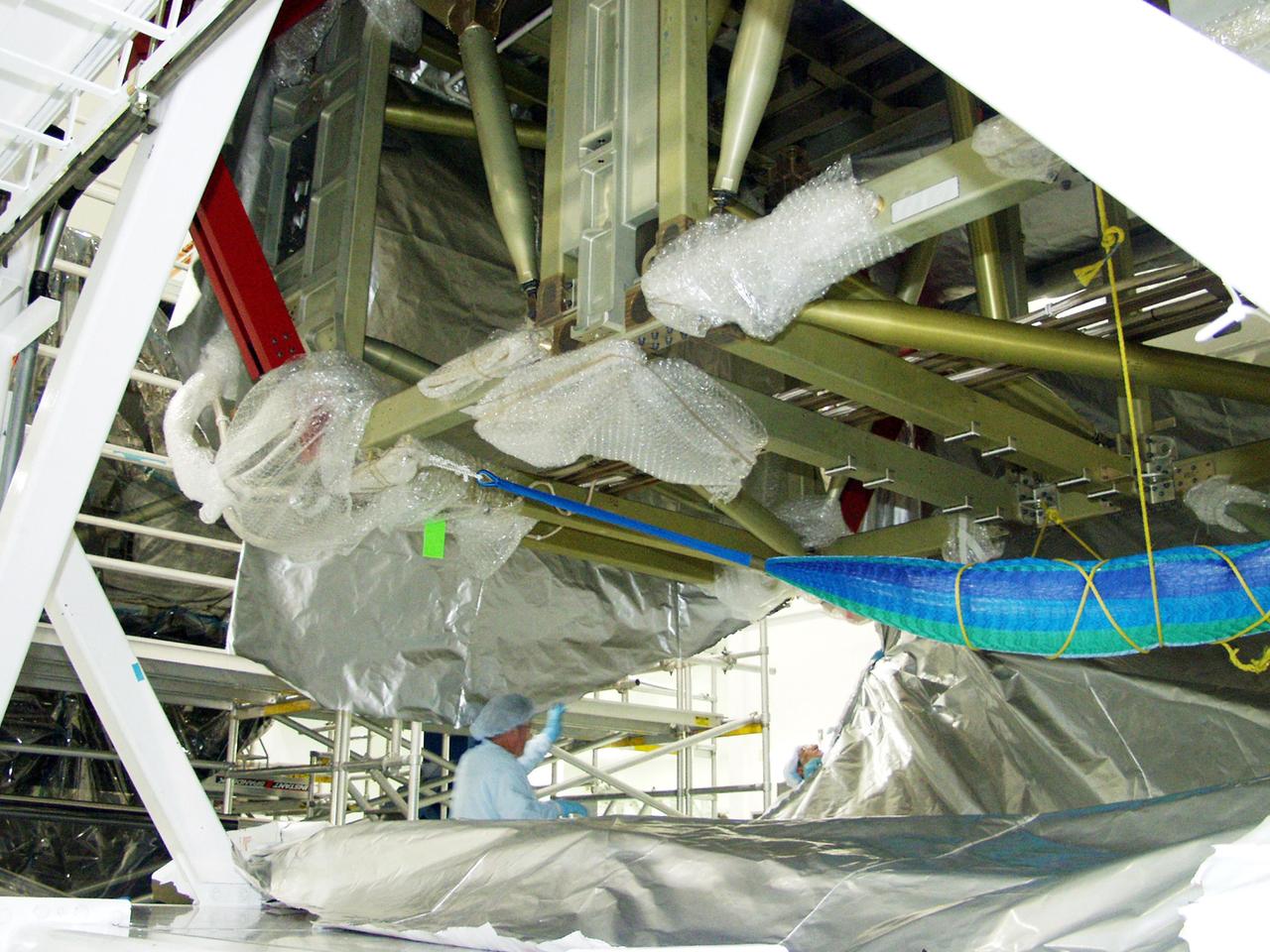
KENNEDY SPACE CENTER, FLA. -- In the Space Station Processing Facility, workers begin uncovering the Long Spacer (LS), the second and final piece of the S6 Integrated Truss Segment. Both the LS and the S6 Integrated Equipment Assembly (IEA) will undergo inspections and verifications tests to prepare them for flight to the International Space Station in early 2004. Although separate for now, the two segments will be integrated and fly as one on mission STS-119. Together the two pieces weigh 26,000 pounds and measure 45 feet long. The S6 is the 11th and final piece of the Station's Integrated Truss Structure, which will measure more than 300 feet in all. .
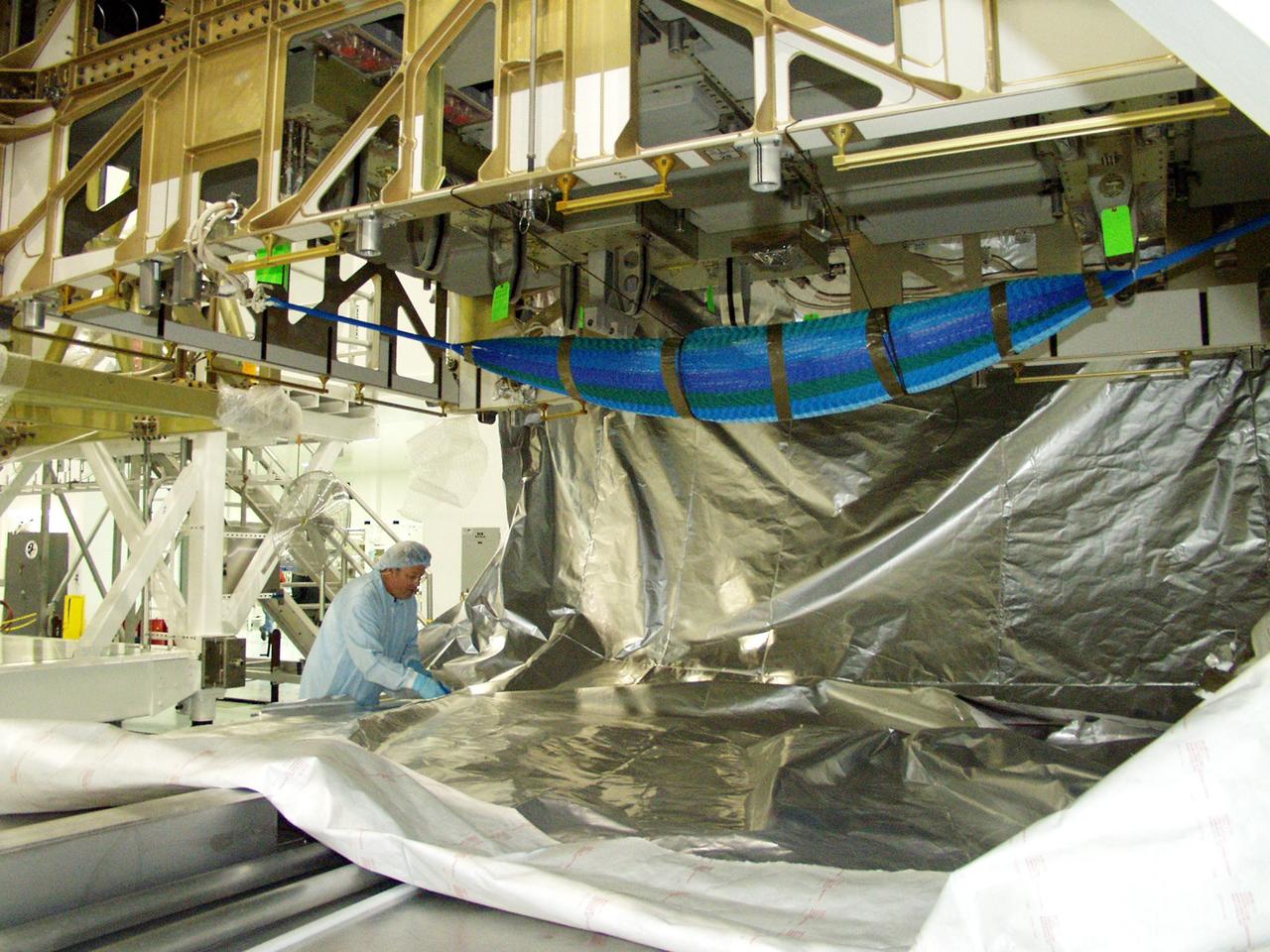
KENNEDY SPACE CENTER, FLA. -- In the Space Station Processing Facility, workers begin uncovering the Long Spacer (LS), the second and final piece of the S6 Integrated Truss Segment. Both the LS and the S6 Integrated Equipment Assembly (IEA) will undergo inspections and verifications tests to prepare them for flight to the International Space Station in early 2004. Although separate for now, the two segments will be integrated and fly as one on mission STS-119. Together the two pieces weigh 26,000 pounds and measure 45 feet long. The S6 is the 11th and final piece of the Station's Integrated Truss Structure, which will measure more than 300 feet in all. .
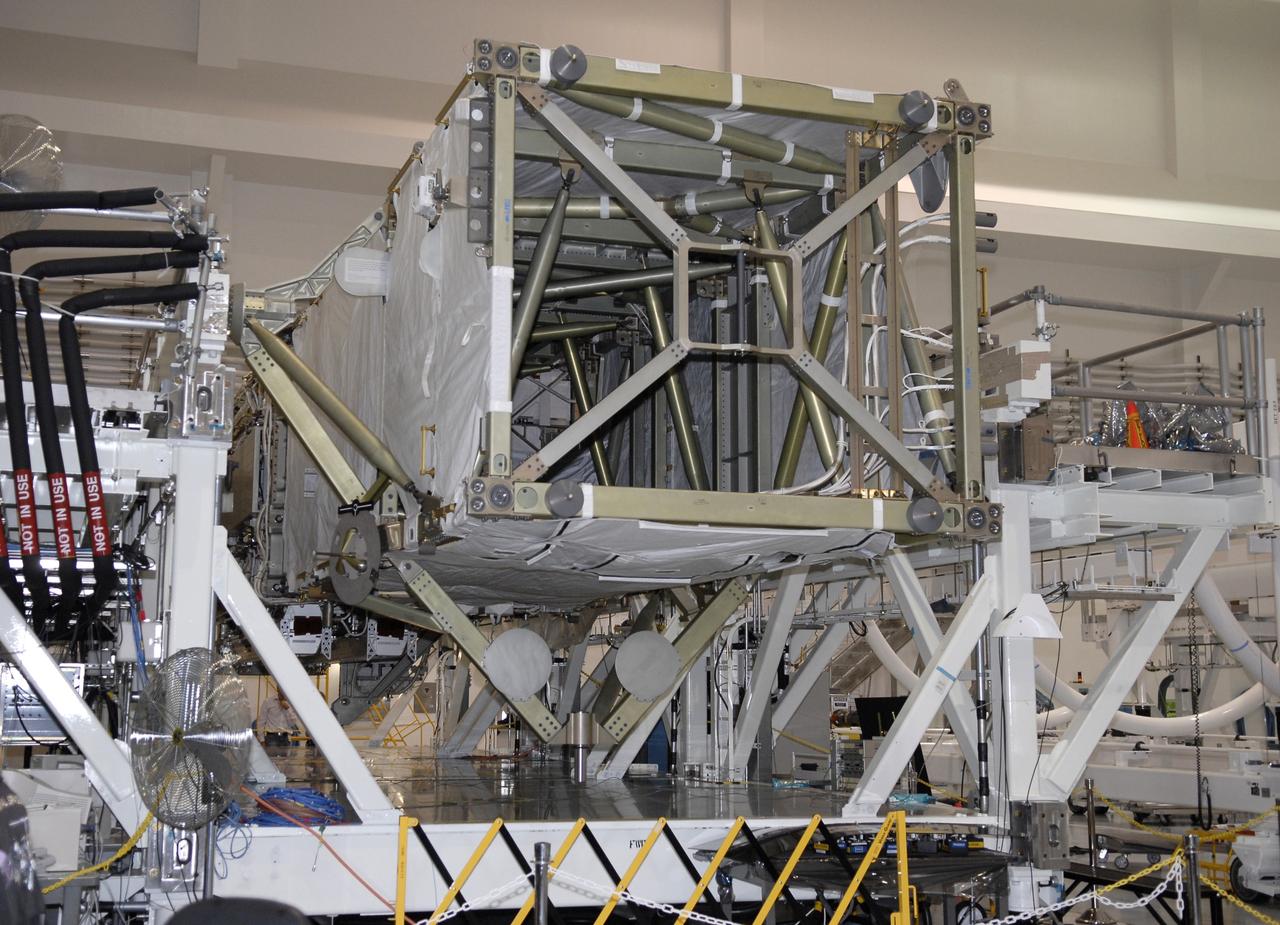
CAPE CANAVERAL, Fla. -- In the Space Station Processing Facility, the S6 truss segment is on display for the media at NASA's Kennedy Space Center in Florida. The S6 truss segment, with its set of large U.S. solar arrays, will be attached to the starboard, or right, side of the station during space shuttle Discovery's STS-119 mission. The S6 truss will complete the backbone of the station. The two solar wings will provide one-fourth of the total power needed to support a crew of six astronauts. The segment is expected to be loaded into the payload transportation canister Jan. 7, in preparation for its targeted journey to the launch pad Jan. 11. Photo credit: NASA/Kim Shiflett

KENNEDY SPACE CENTER, FLA. -- In the Space Station Processing Facility, a worker begins uncovering the Long Spacer (LS), the second and final piece of the S6 Integrated Truss Segment. Both the LS and the S6 Integrated Equipment Assembly (IEA) will undergo inspections and verifications tests to prepare them for flight to the International Space Station in early 2004. Although separate for now, the two segments will be integrated and fly as one on mission STS-119. Together the two pieces weigh 26,000 pounds and measure 45 feet long. The S6 is the 11th and final piece of the Station's Integrated Truss Structure, which will measure more than 300 feet in all. .

CAPE CANAVERAL, Fla. -- In the Space Station Processing Facility at NASA's Kennedy Space Center in Florida, the S6 truss segment is on display for the media. The S6 truss segment, with its set of large U.S. solar arrays, will be attached to the starboard, or right, side of the station during space shuttle Discovery's STS-119 mission. The S6 truss will complete the backbone of the station. The two solar wings will provide one-fourth of the total power needed to support a crew of six astronauts. The segment is expected to be loaded into the payload transportation canister Jan. 7, in preparation for its targeted journey to the launch pad Jan. 11. Photo credit: NASA/Kim Shiflett
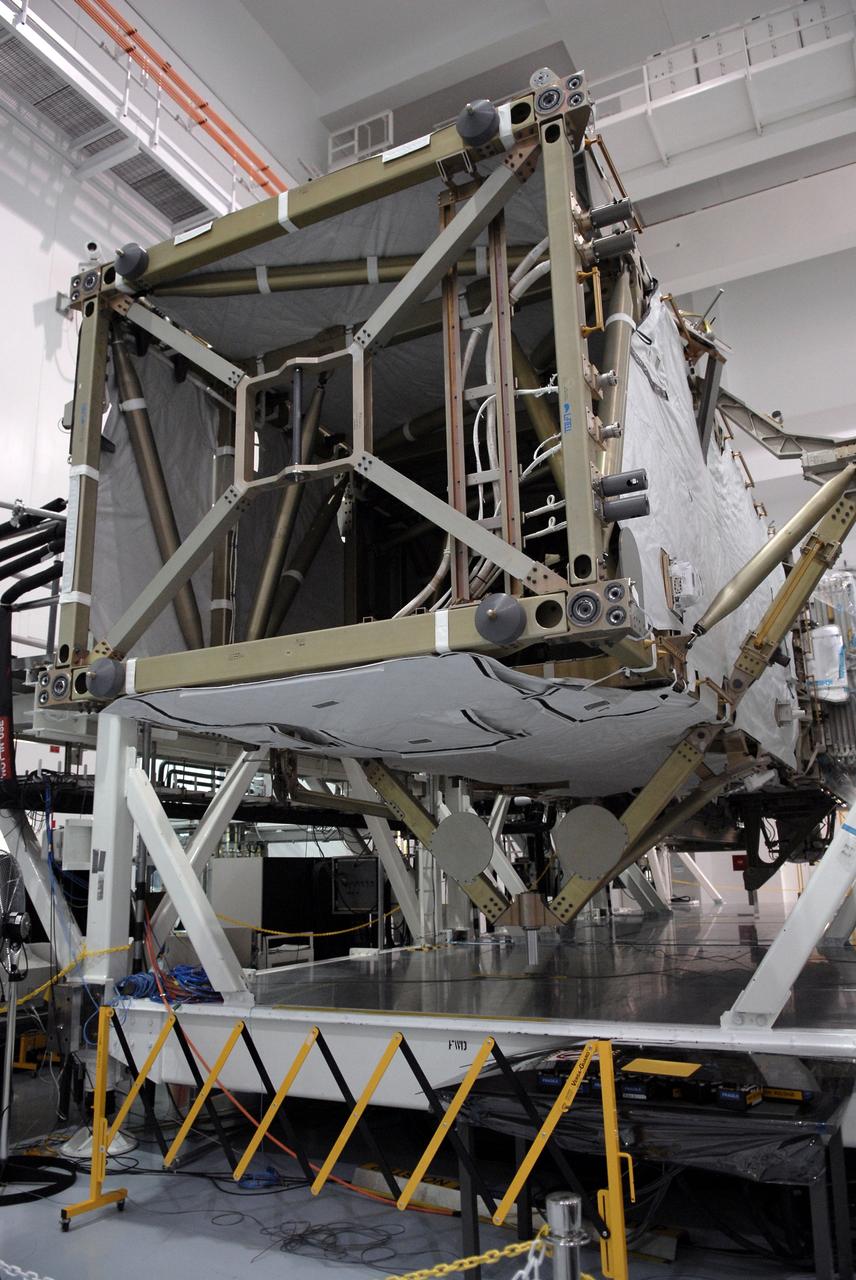
CAPE CANAVERAL, Fla. -- In the Space Station Processing Facility at NASA's Kennedy Space Center in Florida, the S6 truss segment is on display for the media. The S6 truss segment, with its set of large U.S. solar arrays, will be attached to the starboard, or right, side of the station during space shuttle Discovery's STS-119 mission. The S6 truss will complete the backbone of the station. The two solar wings will provide one-fourth of the total power needed to support a crew of six astronauts. The segment is expected to be loaded into the payload transportation canister Jan. 7, in preparation for its targeted journey to the launch pad Jan. 11. Photo credit: NASA/Kim Shiflett
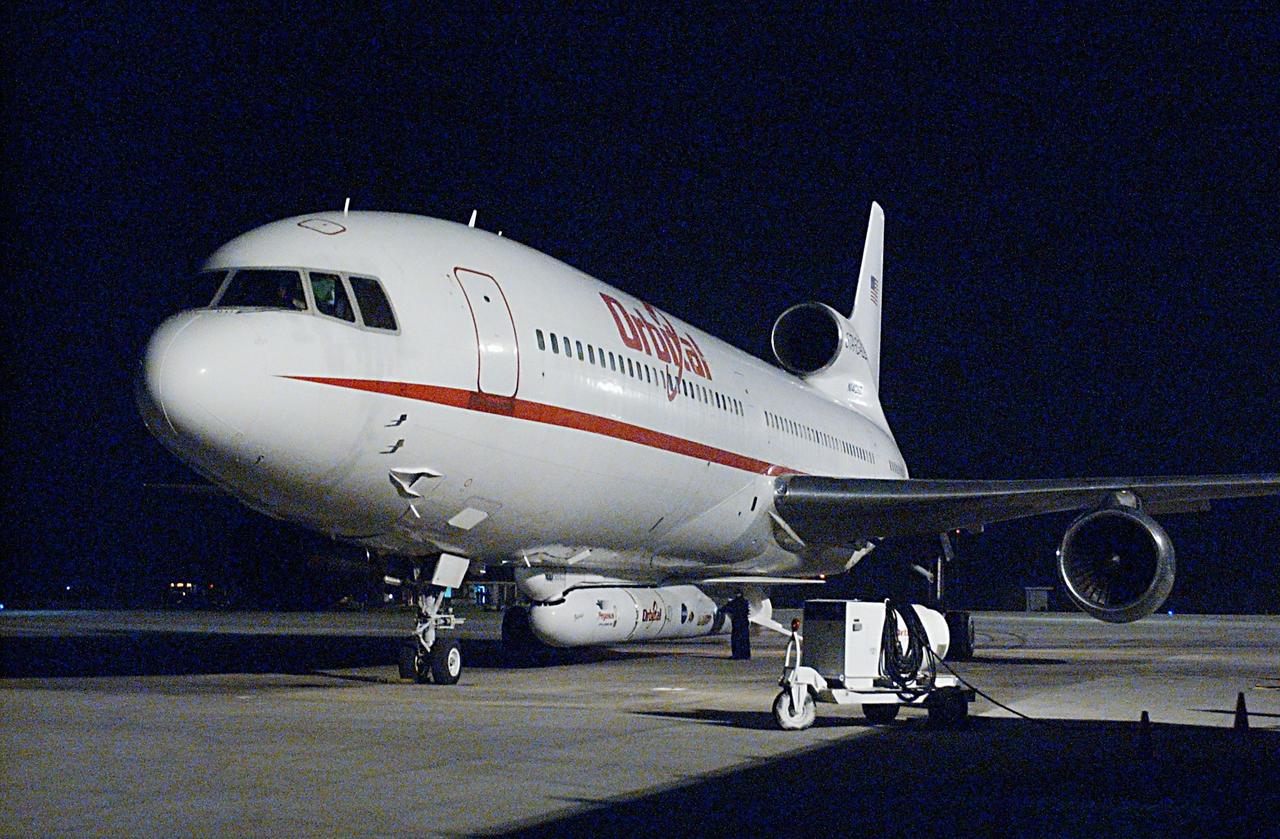
KENNEDY SPACE CENTER, FLA. - An Orbital Sciences L-1011 aircraft arrives at the Cape Canaveral Air Force Station Skid Strip. Attached underneath the aircraft is the Pegasus XL Expendable Launch Vehicle, which will be transported to the Multi-Payload Processing Facility for testing and verification. The Pegasus will undergo three flight simulations prior to its scheduled launch in late January 2003. The Pegasus XL will carry NASA's Solar Radiation and Climate Experiment (SORCE) into orbit. Built by Orbital Sciences Space Systems Group, SORCE will study and measure solar irradiance as a source of energy in the Earth's atmosphere. .
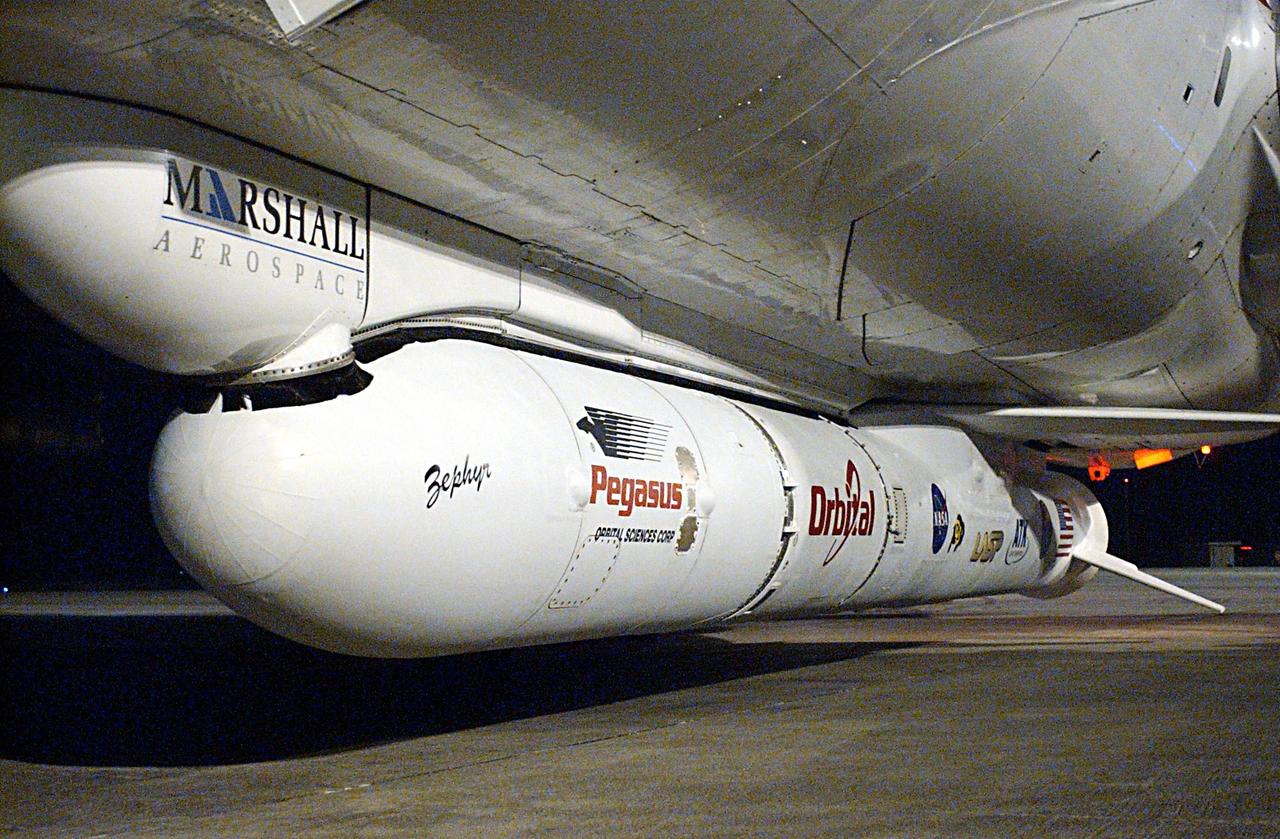
KENNEDY SPACE CENTER, FLA. -- Attached underneath the Orbital Sciences L-1011 aircraft is the Pegasus XL Expendable Launch Vehicle, which will be transported to the Multi-Payload Processing Facility for testing and verification. The Pegasus will undergo three flight simulations prior to its scheduled launch in late January 2003. The Pegasus XL will carry NASA's Solar Radiation and Climate Experiment (SORCE) into orbit. Built by Orbital Sciences Space Systems Group, SORCE will study and measure solar irradiance as a source of energy in the Earth's atmosphere. .
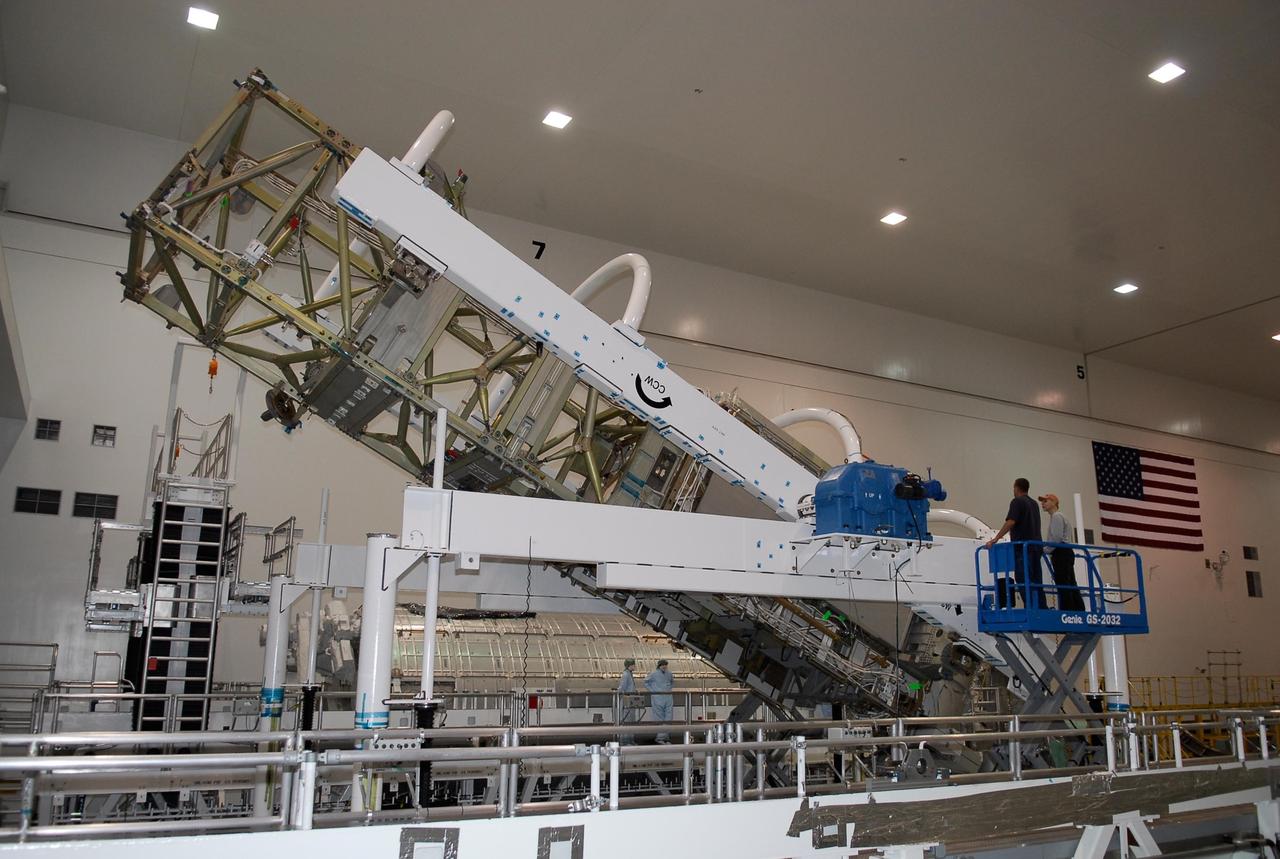
KENNEDY SPACE CENTER, FLA. -- In the Space Station Processing Facility at NASA's Kennedy Space Center, workers stand ready as the starboard integrated truss, known as S6, is three-fourths of the way through its rotation. The truss is being rotated in order to remove and replace lower deck batteries. The final starboard truss in the assembly of the International Space Station, the S6 is scheduled to fly on the STS-119 space shuttle mission, whose launch date is not yet determined. Photo credit: NASA/Kim Shiflett
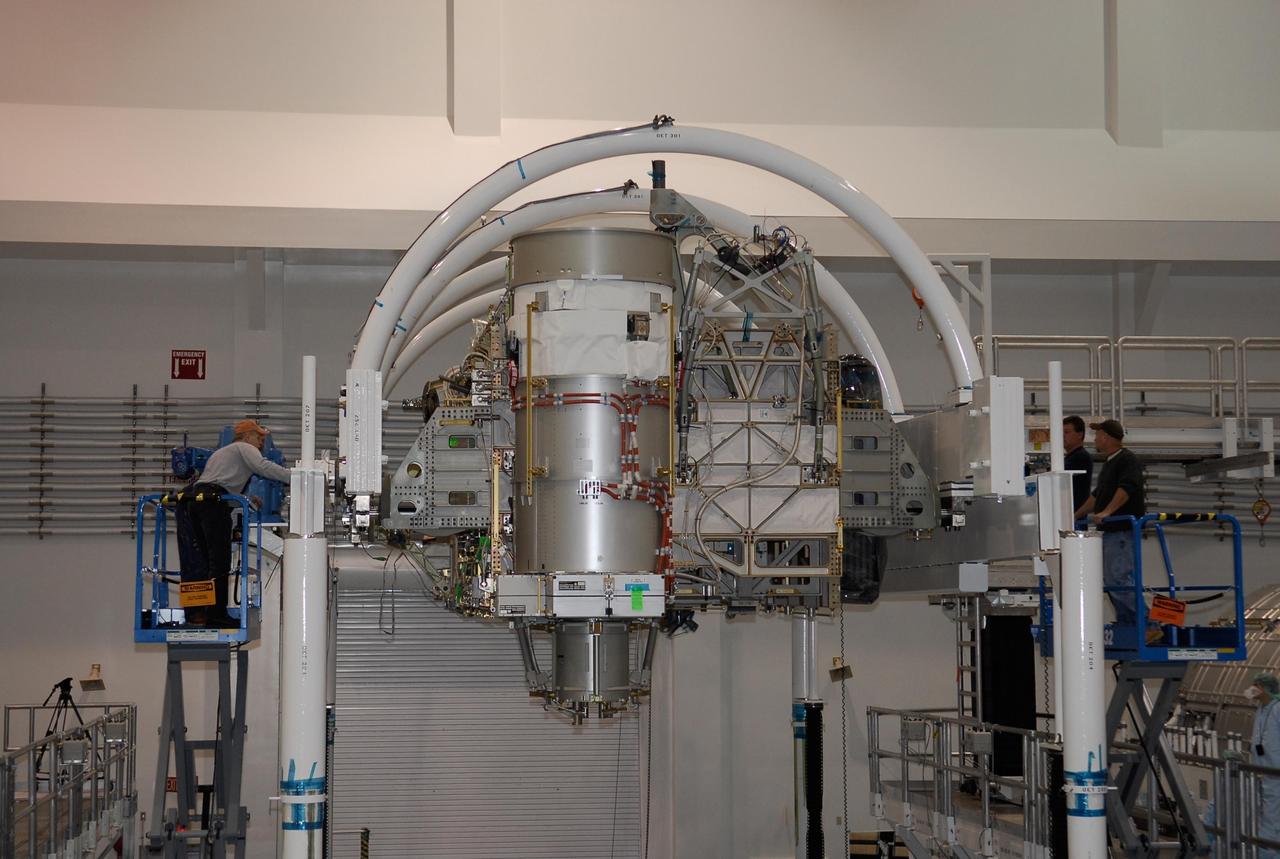
KENNEDY SPACE CENTER, FLA. -- In the Space Station Processing Facility at NASA's Kennedy Space Center, workers check the starboard integrated truss, known as S6, after its full rotation. The truss was rotated in order to remove and replace lower deck batteries. The final starboard truss in the assembly of the International Space Station, the S6 is scheduled to fly on the STS-119 space shuttle mission, whose launch date is not yet determined. Photo credit: NASA/Kim Shiflett

KENNEDY SPACE CENTER, FLA. -- In the Space Station Processing Facility at NASA's Kennedy Space Center, a worker connects a cable to recharge the battery for the S6 integrated truss. The final starboard truss in the assembly of the International Space Station, the S6 is scheduled to fly on space shuttle mission STS-119, whose launch date is not yet determined. Photo credit: NASA/George Shelton
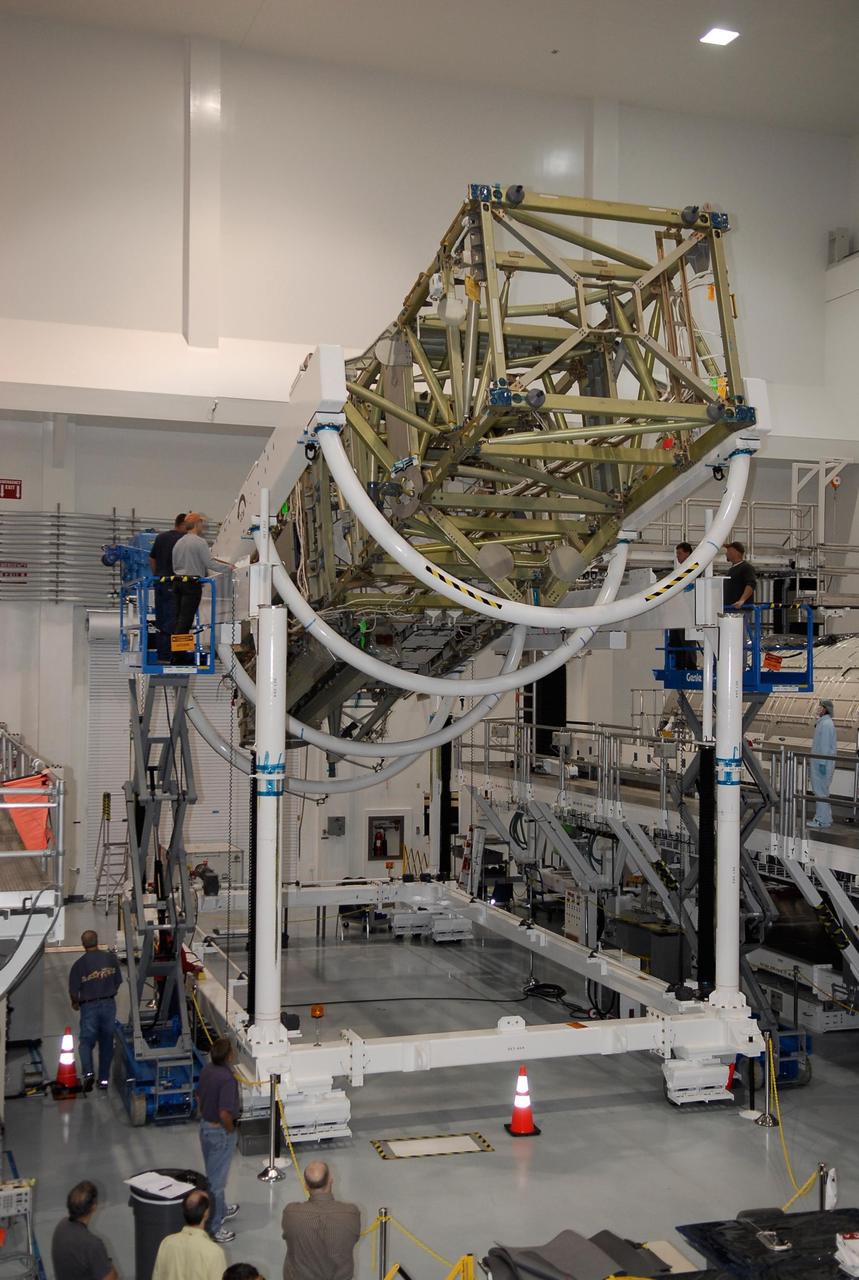
KENNEDY SPACE CENTER, FLA. -- In the Space Station Processing Facility at NASA's Kennedy Space Center, workers stand ready as the starboard integrated truss, known as S6, is rotated in order to remove and replace lower deck batteries. The final starboard truss in the assembly of the International Space Station, the S6 is scheduled to fly on the STS-119 space shuttle mission, whose launch date is not yet determined. Photo credit: NASA/Kim Shiflett
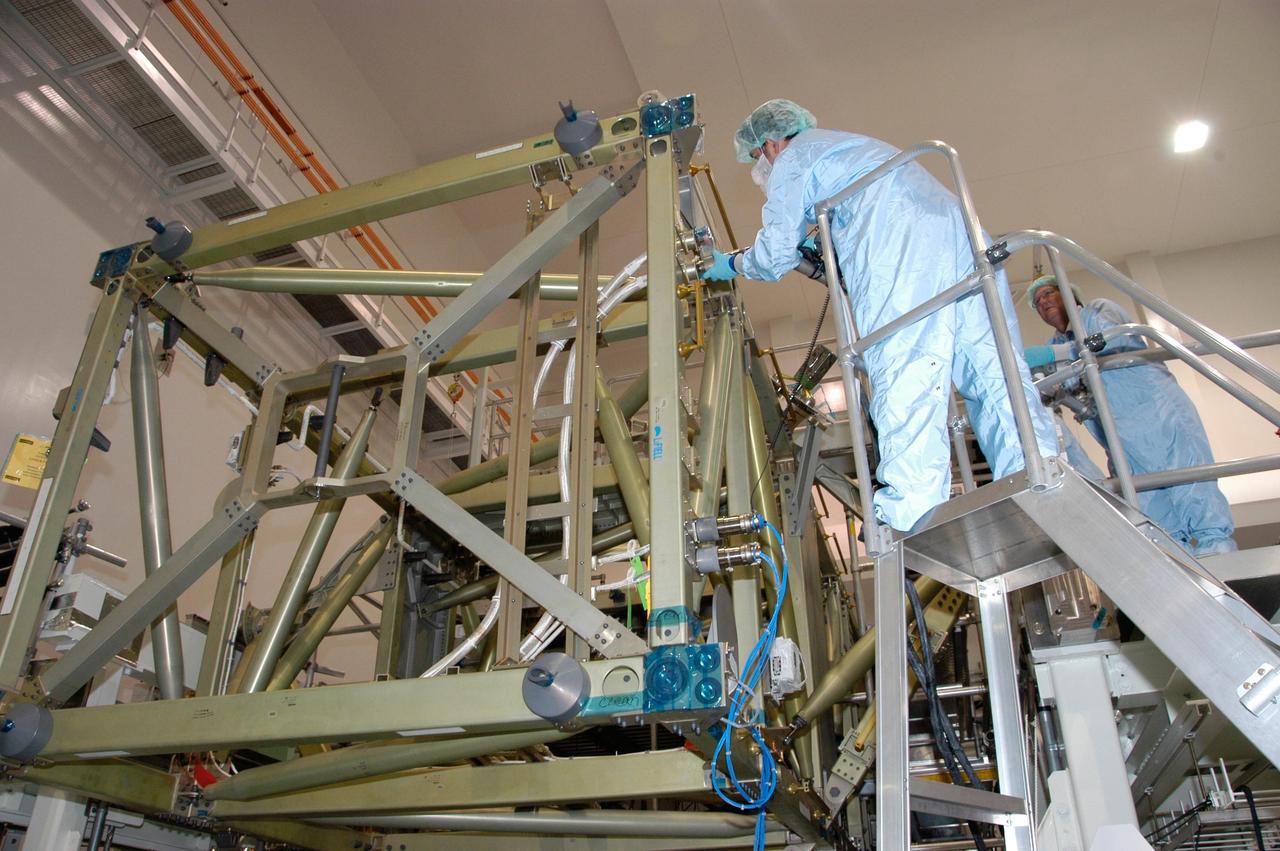
KENNEDY SPACE CENTER, FLA. -- In the Space Station Processing Facility at NASA's Kennedy Space Center, a worker connects a cable to recharge the battery for the S6 integrated truss. The final starboard truss in the assembly of the International Space Station, the S6 is scheduled to fly on space shuttle mission STS-119, whose launch date is not yet determined. Photo credit: NASA/George Shelton
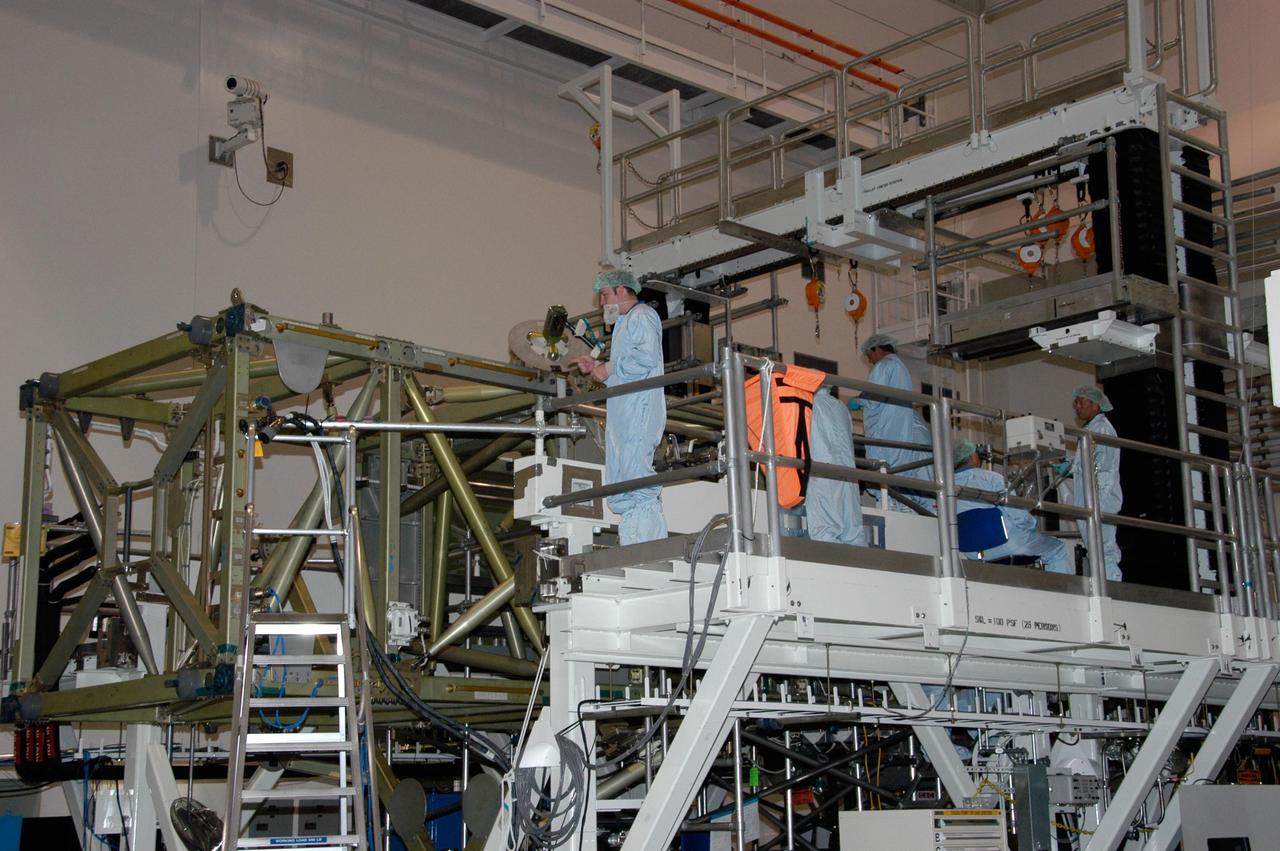
KENNEDY SPACE CENTER, FLA. -- In the Space Station Processing Facility at NASA's Kennedy Space Center, workers prepare to connect cables that will recharge the battery for the S6 integrated truss. The final starboard truss in the assembly of the International Space Station, the S6 is scheduled to fly on space shuttle mission STS-119, whose launch date is not yet determined. Photo credit: NASA/George Shelton

KENNEDY SPACE CENTER, FLA. -- In the Space Station Processing Facility at NASA's Kennedy Space Center, workers get ready to rotate the starboard integrated truss, known as S6. The truss is being rotated in order to remove and replace lower deck batteries. The final starboard truss in the assembly of the International Space Station, the S6 is scheduled to fly on the STS-119 space shuttle mission, whose launch date is not yet determined. Photo credit: NASA/Kim Shiflett
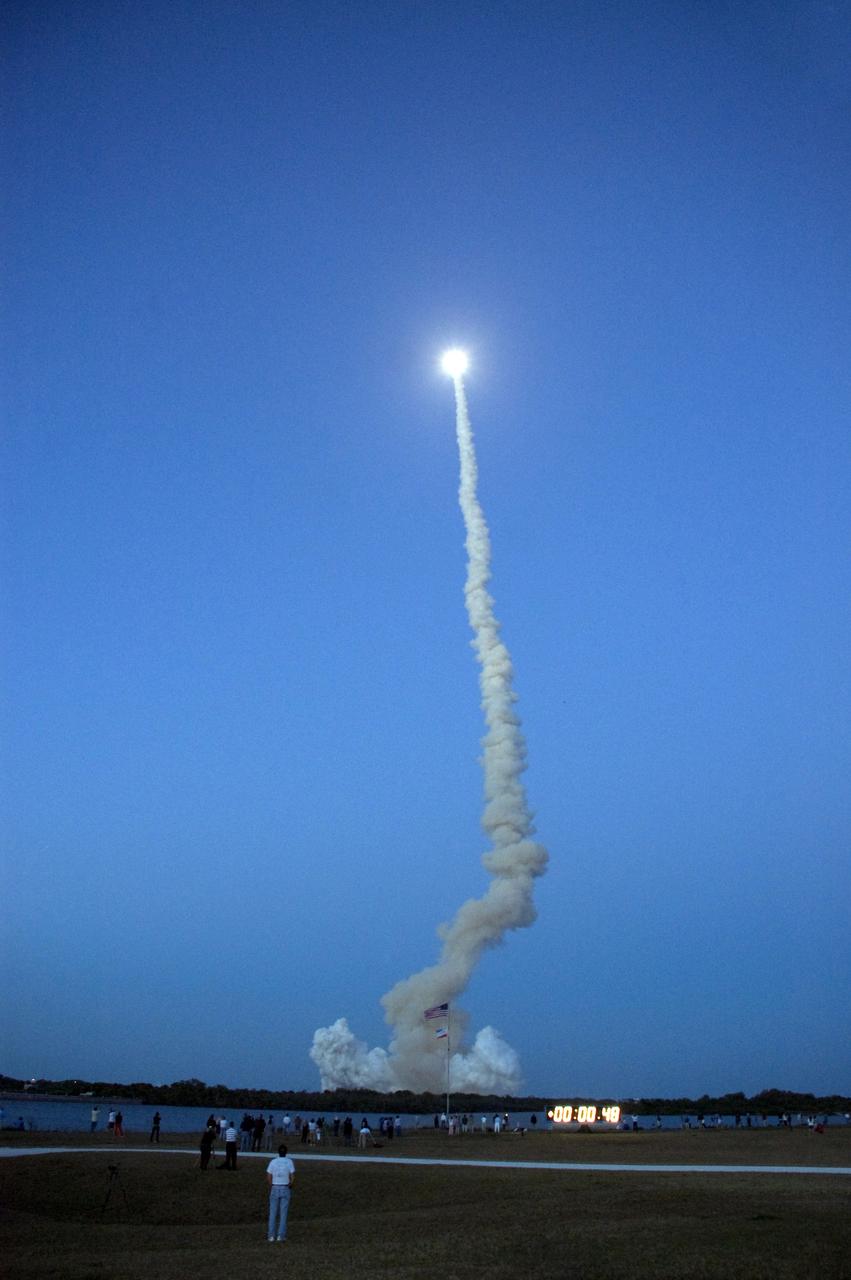
CAPE CANAVERAL, Fla. – Looking like a sun riding a column of smoke, space shuttle Discovery hurtles into the evening sky on the STS-119 mission. Liftoff was on time at 7:43 p.m. EDT. The STS-119 mission is the 28th to the International Space Station and the 125th space shuttle flight. Discovery will deliver the final pair of power-generating solar array wings and the S6 truss segment. Installation of S6 will signal the station's readiness to house a six-member crew for conducting increased science. Photo credit: NASA/Fletch Hildreth
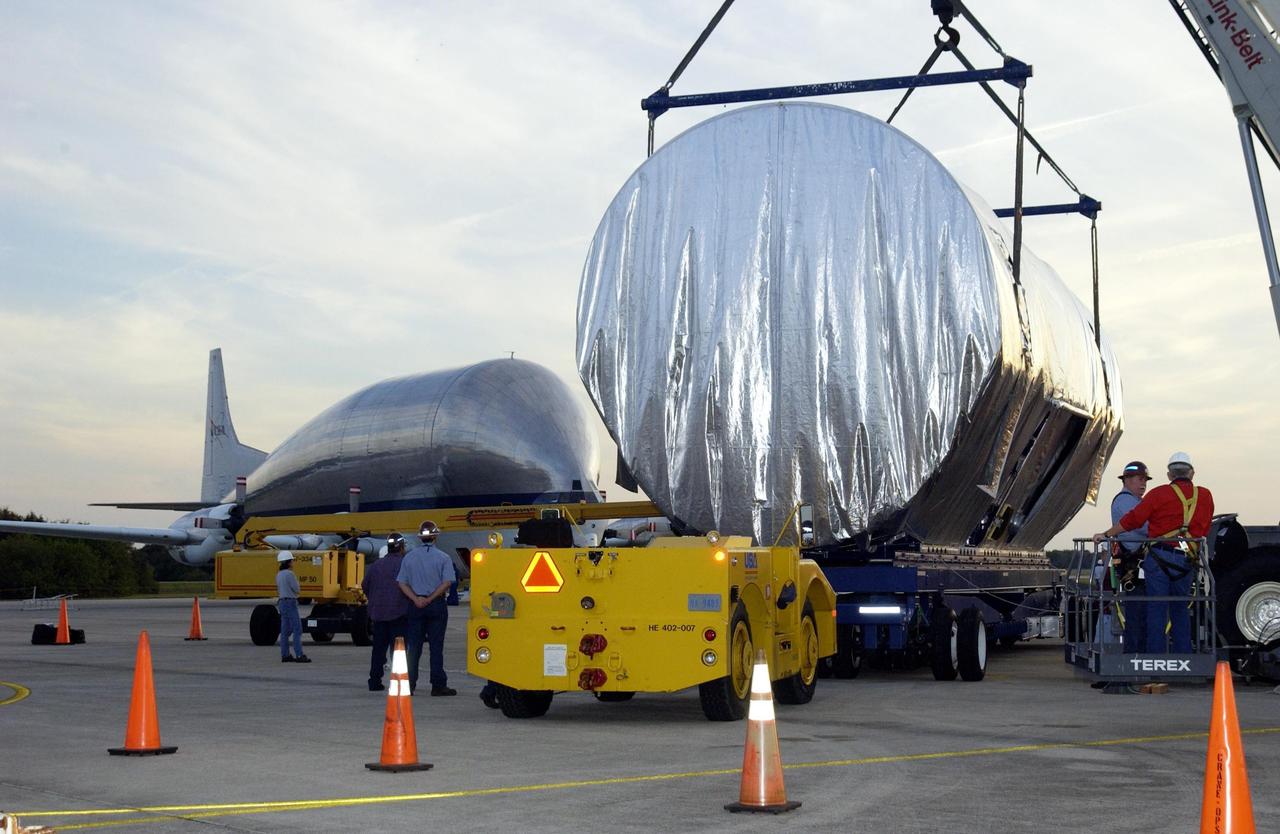
KENNEDY SPACE CENTER, FLA. -- The Integrated Equipment Assembly (IEA), one of two major components of the Starboard 6 (S6) truss segment for the International Space Station (ISS), is offloaded onto a cargo transporter following its arrival at the Shuttle Landing Facility. The IEA will be joined to its companion piece, the Long Spacer, before launch early in 2004. The S6 truss segment will be the 11th and final piece of the Station's Integrated Truss Structure and will support the fourth and final set of solar arrays, batteries, and electronics.
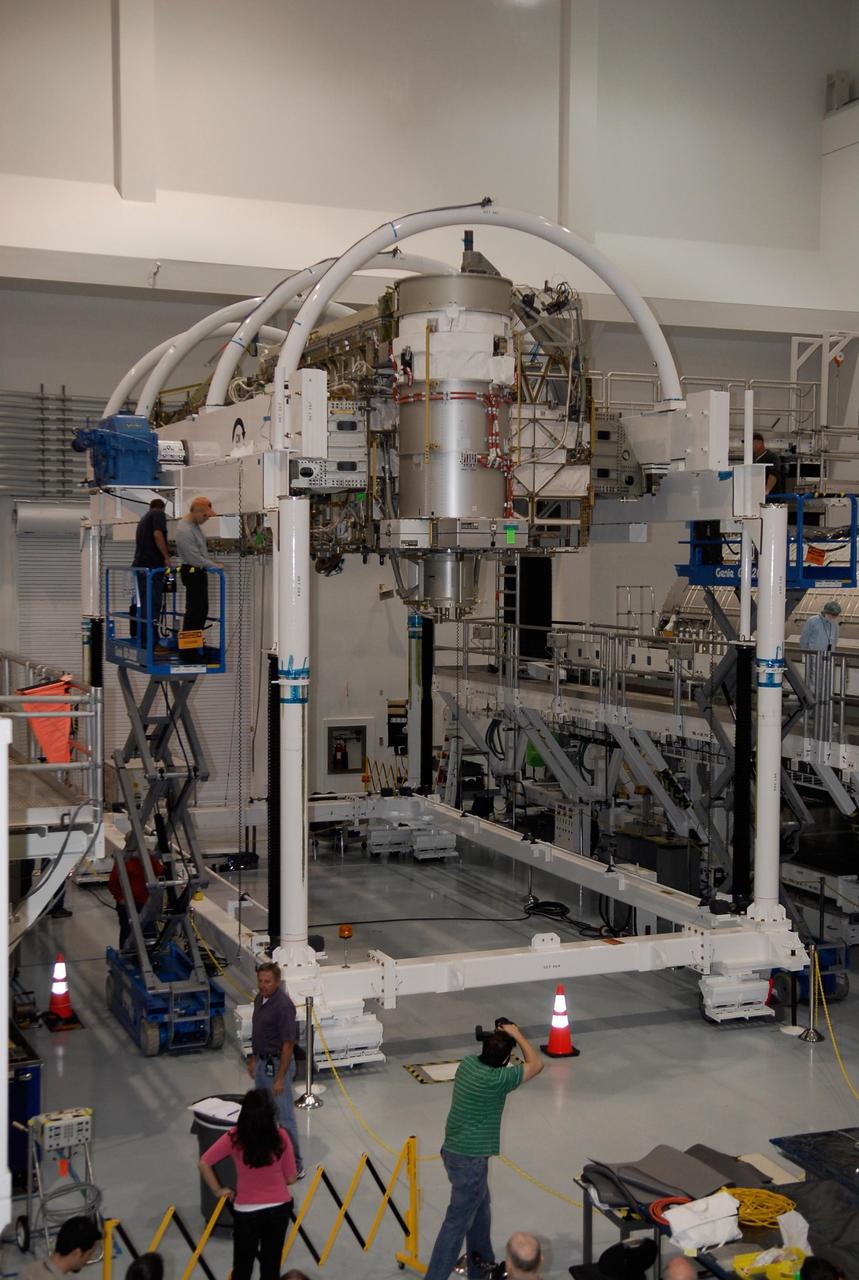
KENNEDY SPACE CENTER, FLA. -- In the Space Station Processing Facility at NASA's Kennedy Space Center, workers check the starboard integrated truss, known as S6, after its full rotation. The truss was rotated in order to remove and replace lower deck batteries. The final starboard truss in the assembly of the International Space Station, the S6 is scheduled to fly on the STS-119 space shuttle mission, whose launch date is not yet determined. Photo credit: NASA/Kim Shiflett
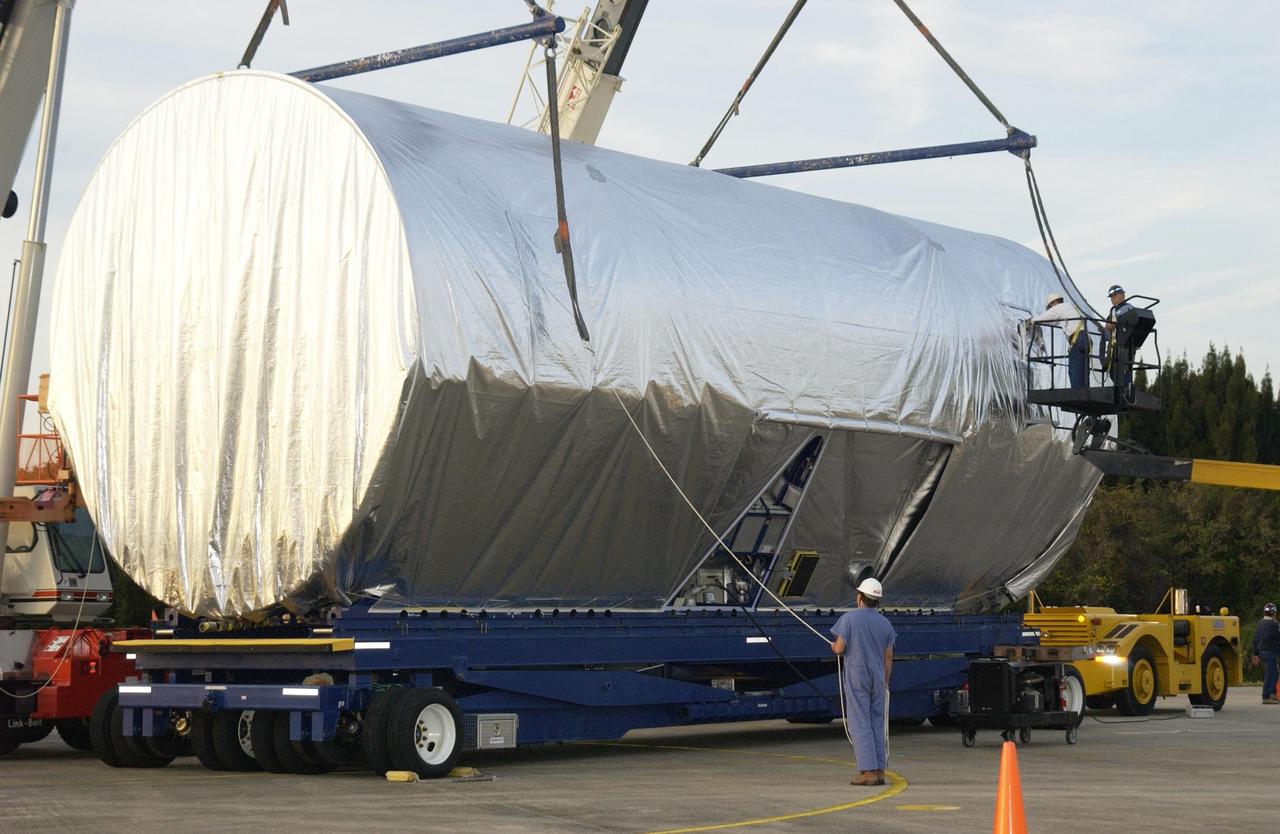
KENNEDY SPACE CENTER, FLA. -- The Integrated Equipment Assembly (IEA), one of two major components of the Starboard 6 (S6) truss segment for the International Space Station (ISS), is offloaded onto a cargo transporter following its arrival at the Shuttle Landing Facility. The IEA will be joined to its companion piece, the Long Spacer, before launch early in 2004. The S6 truss segment will be the 11th and final piece of the Station's Integrated Truss Structure and will support the fourth and final set of solar arrays, batteries, and electronics.
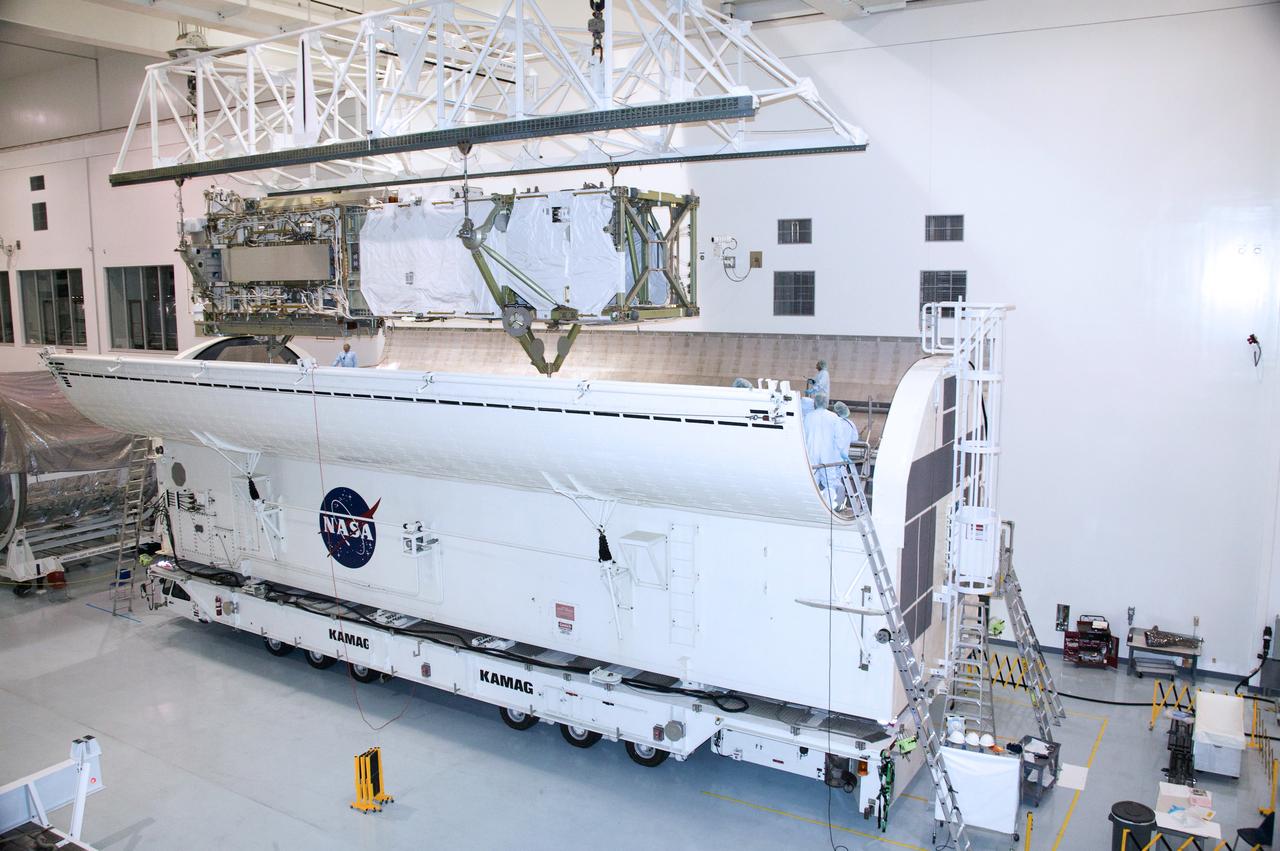
CAPE CANAVERAL, Fla. – In the Space Station Processing Facility at NASA's Kennedy Space Center in Florida, the integrated truss structure, S6, and solar arrays are lowered into the payload canister for transfer to Launch Pad 39A. Launch of Discovery on the STS-119 mission is targeted for Feb. 12. During Discovery's 14-day mission, the crew will install the S6 truss segment and its solar arrays to the starboard side of the station, completing the station's truss, or backbone. Photo credit: NASA/Kevin Gill
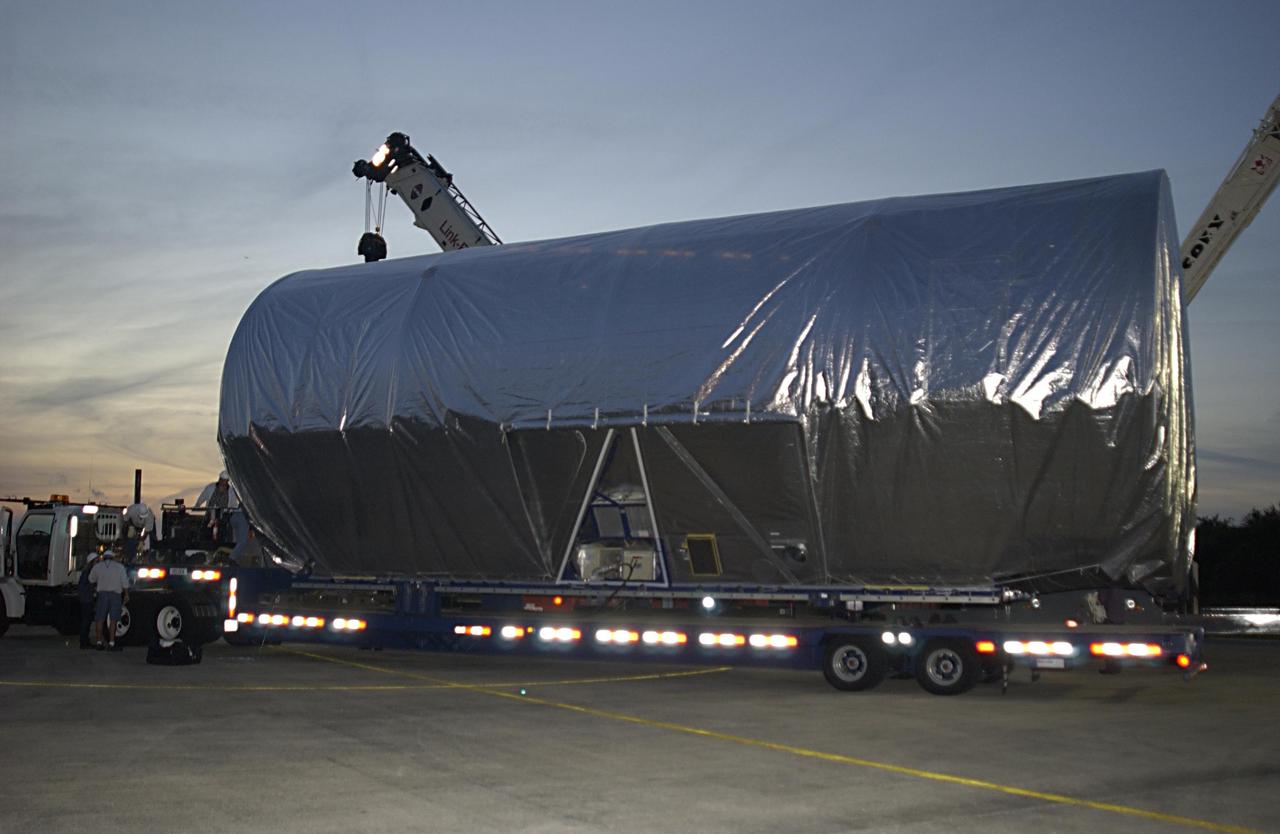
KENNEDY SPACE CENTER, FLA. -- The Integrated Equipment Assembly (IEA), one of two major components of the Starboard 6 (S6) truss segment for the International Space Station (ISS), sits on a cargo transporter following its arrival at the Shuttle Landing Facility. The IEA will be joined to its companion piece, the Long Spacer, before launch early in 2004. The S6 truss segment will be the 11th and final piece of the Station's Integrated Truss Structure and will support the fourth and final set of solar arrays, batteries, and electronics.
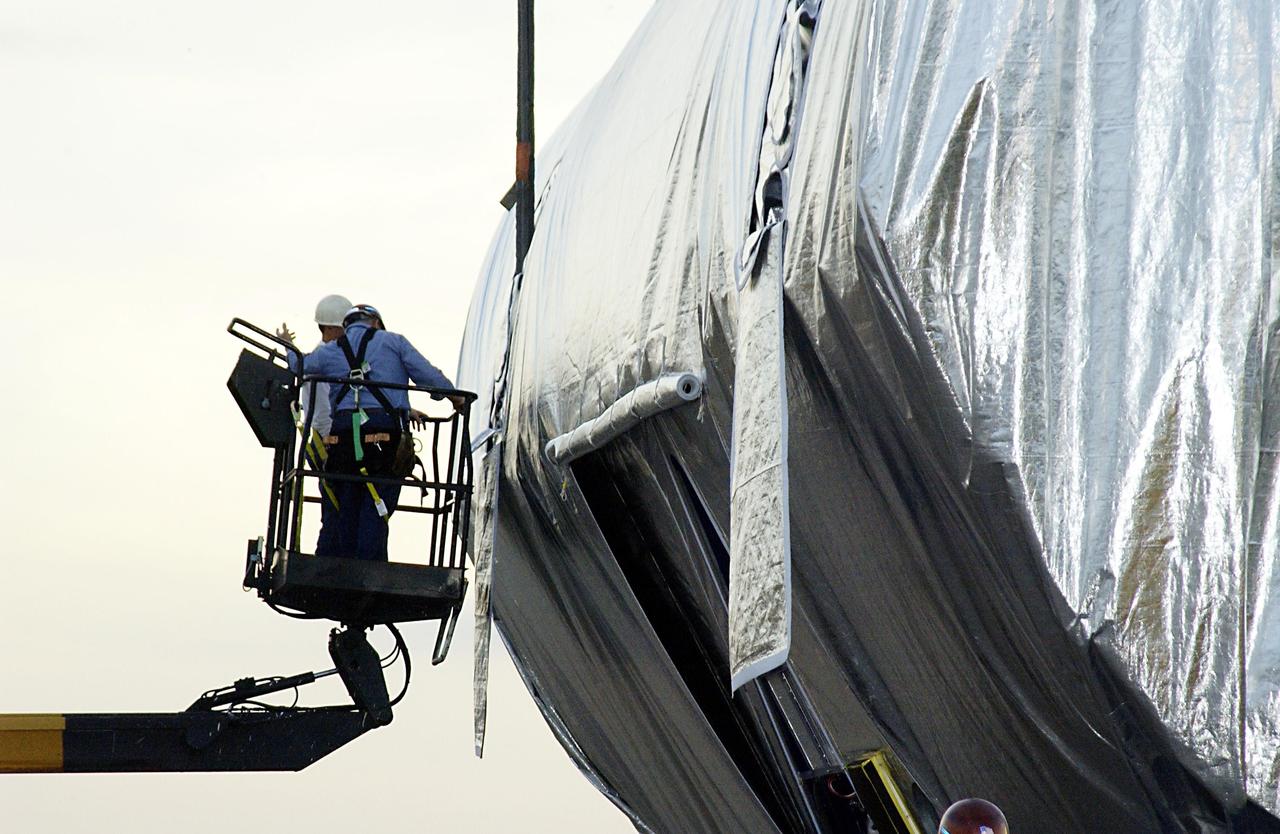
KENNEDY SPACE CENTER, FLA. -- KSC technicians supervise the offloading of the Integrated Equipment Assembly (IEA), one of two major components of the Starboard 6 (S6) truss segment for the International Space Station (ISS), onto a cargo transporter following its arrival at the Shuttle Landing Facility. The IEA will be joined to its companion piece, the Long Spacer, before launch early in 2004. The S6 truss segment will be the 11th and final piece of the Station's Integrated Truss Structure and will support the fourth and final set of solar arrays, batteries, and electronics.
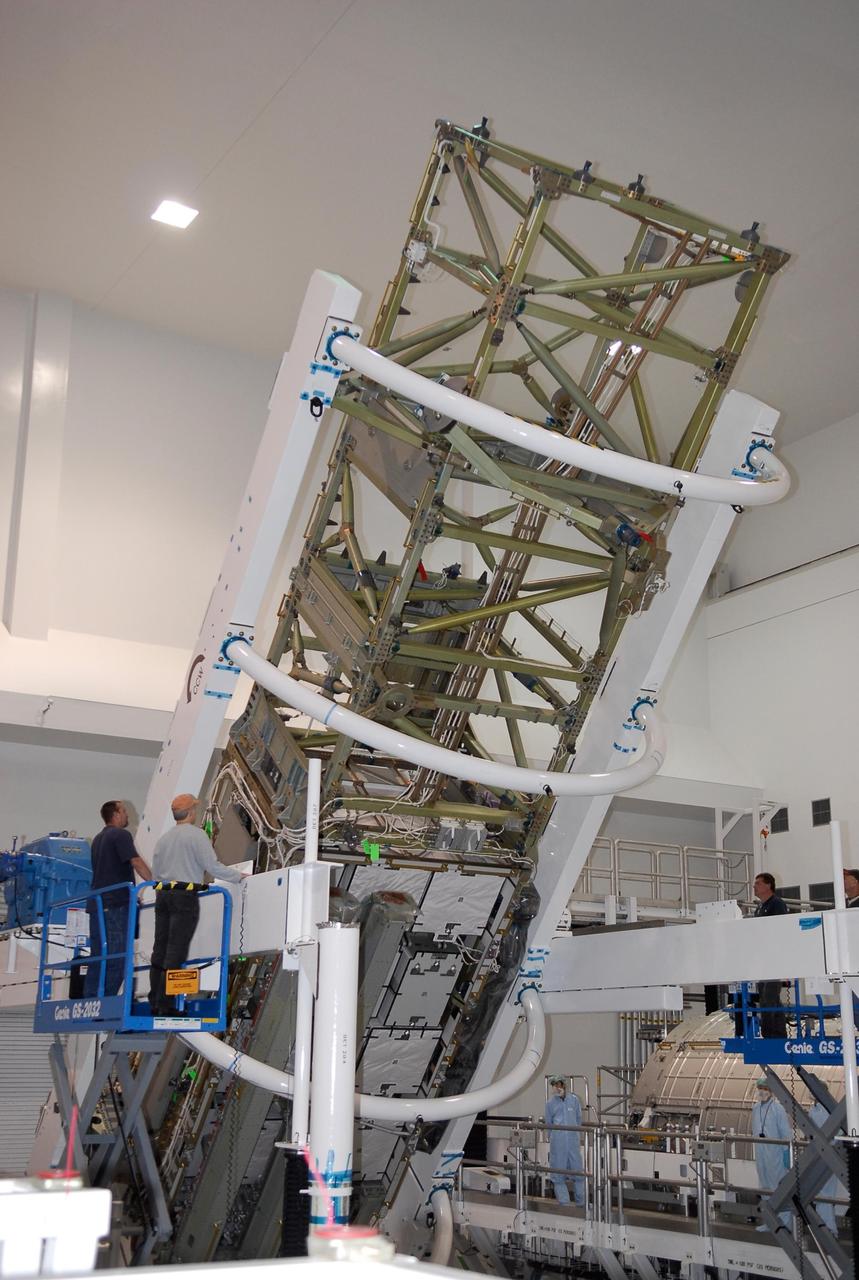
KENNEDY SPACE CENTER, FLA. -- In the Space Station Processing Facility at NASA's Kennedy Space Center, workers stand ready as the starboard integrated truss, known as S6, is rotated in order to remove and replace lower deck batteries. The final starboard truss in the assembly of the International Space Station, the S6 is scheduled to fly on the STS-119 space shuttle mission, whose launch date is not yet determined. Photo credit: NASA/Kim Shiflett
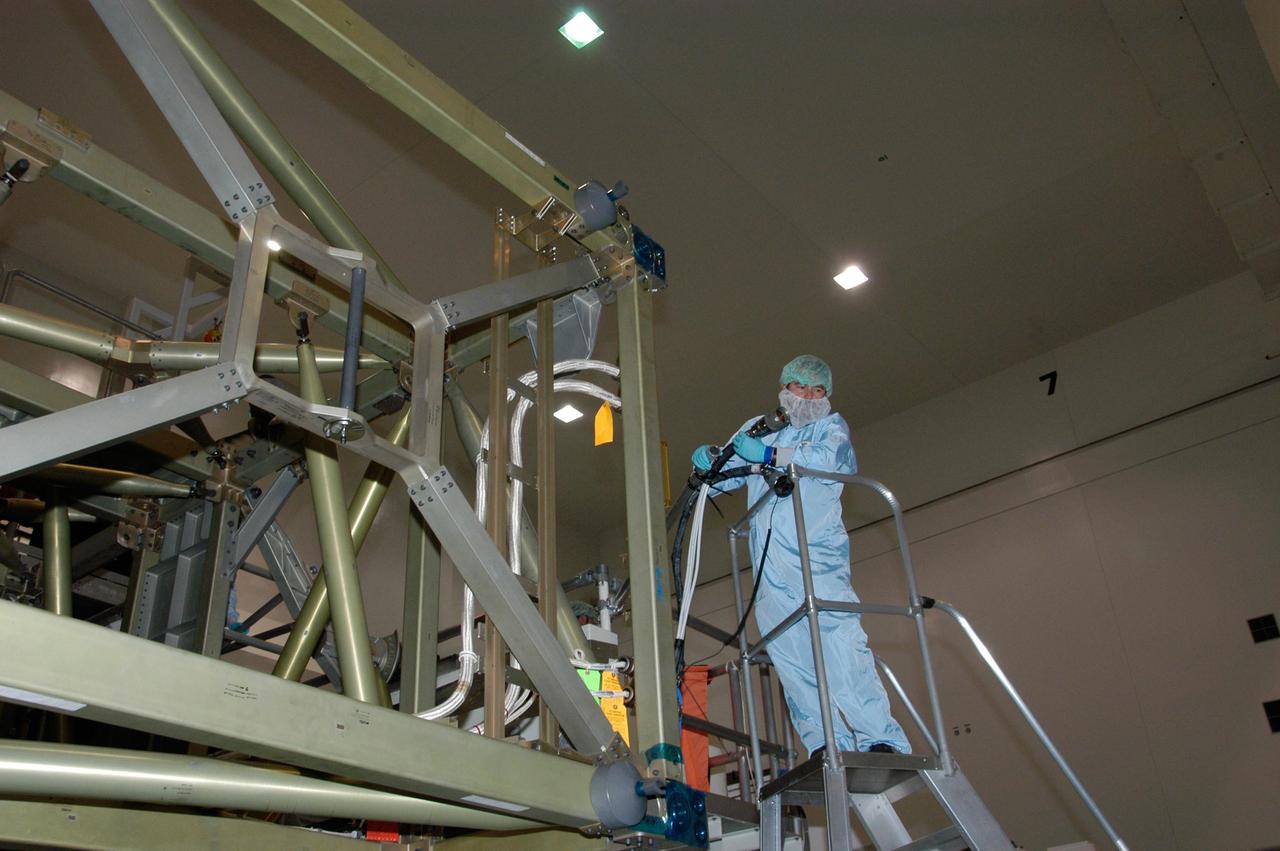
KENNEDY SPACE CENTER, FLA. -- In the Space Station Processing Facility at NASA's Kennedy Space Center, a worker holds a cable that will help recharge the battery for the S6 integrated truss. The final starboard truss in the assembly of the International Space Station, the S6 is scheduled to fly on space shuttle mission STS-119, whose launch date is not yet determined. Photo credit: NASA/George Shelton
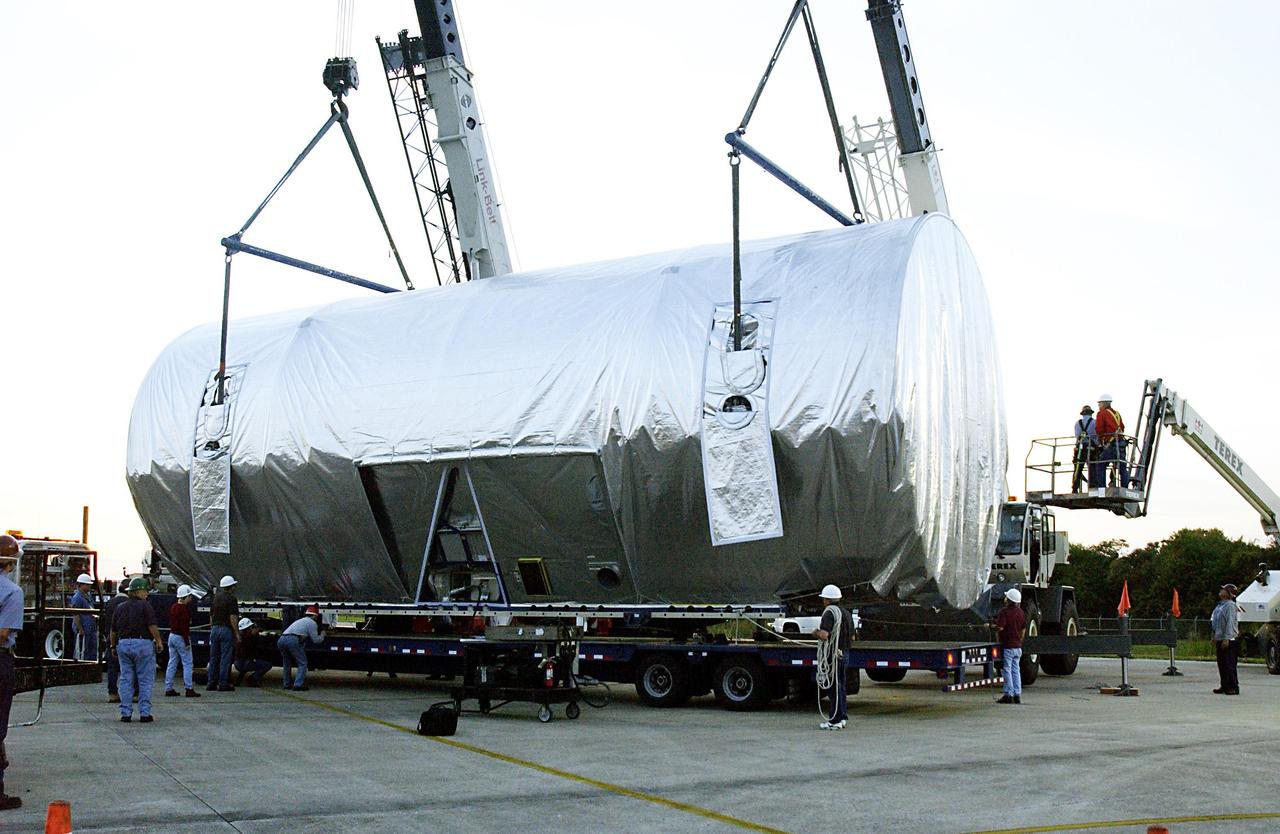
KENNEDY SPACE CENTER, FLA. -- KSC technicians supervise the transfer of the Integrated Equipment Assembly (IEA), one of two major components of the Starboard 6 (S6) truss segment for the International Space Station (ISS), onto a cargo transporter following its arrival at the Shuttle Landing Facility. The IEA will be joined to its companion piece, the Long Spacer, before launch early in 2004. The S6 truss segment will be the 11th and final piece of the Station's Integrated Truss Structure and will support the fourth and final set of solar arrays, batteries, and electronics.
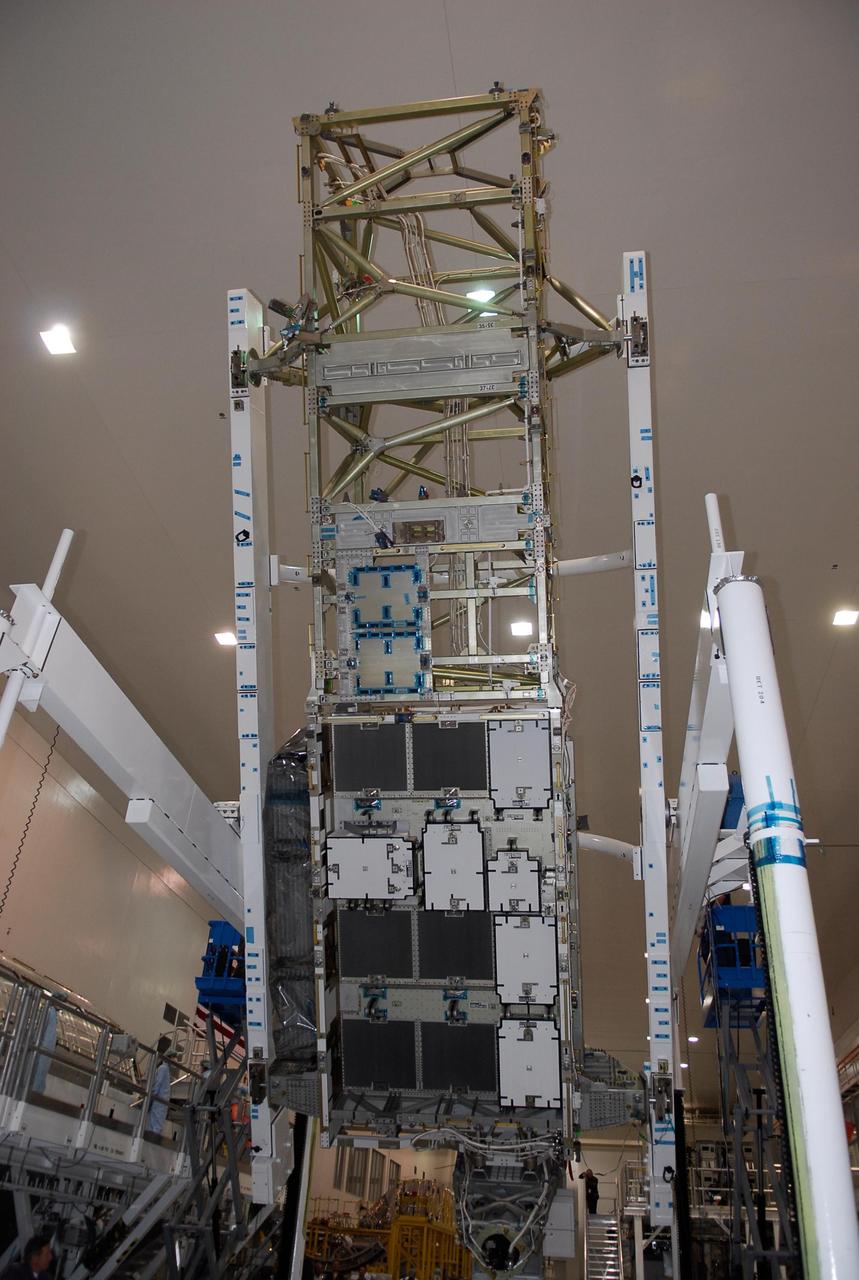
KENNEDY SPACE CENTER, FLA. -- In the Space Station Processing Facility at NASA's Kennedy Space Center, the starboard integrated truss, known as S6, is half way through its rotation. The truss is being rotated in order to remove and replace lower deck batteries. The final starboard truss in the assembly of the International Space Station, the S6 is scheduled to fly on the STS-119 space shuttle mission, whose launch date is not yet determined. Photo credit: NASA/Kim Shiflett
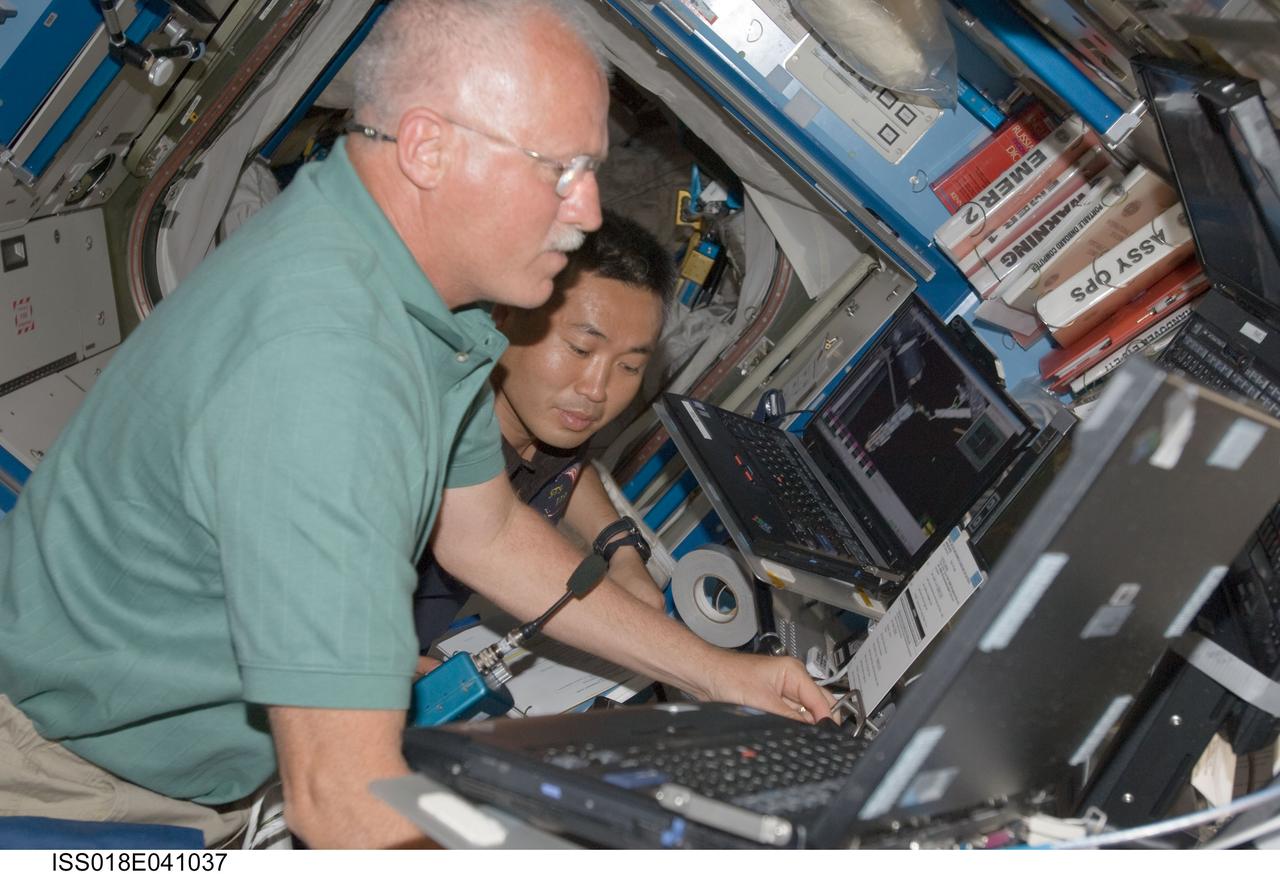
ISS018-E-041037 (18 March 2009) --- NASA astronaut John Phillips (foreground), STS-119 mission specialist; and Japan Aerospace Exploration Agency (JAXA) astronaut Koichi Wakata, Expedition 18 flight engineer, work the controls of the station's robotic Canadarm2 in the Destiny laboratory of the International Space Station while Space Shuttle Discovery remains docked with the station.
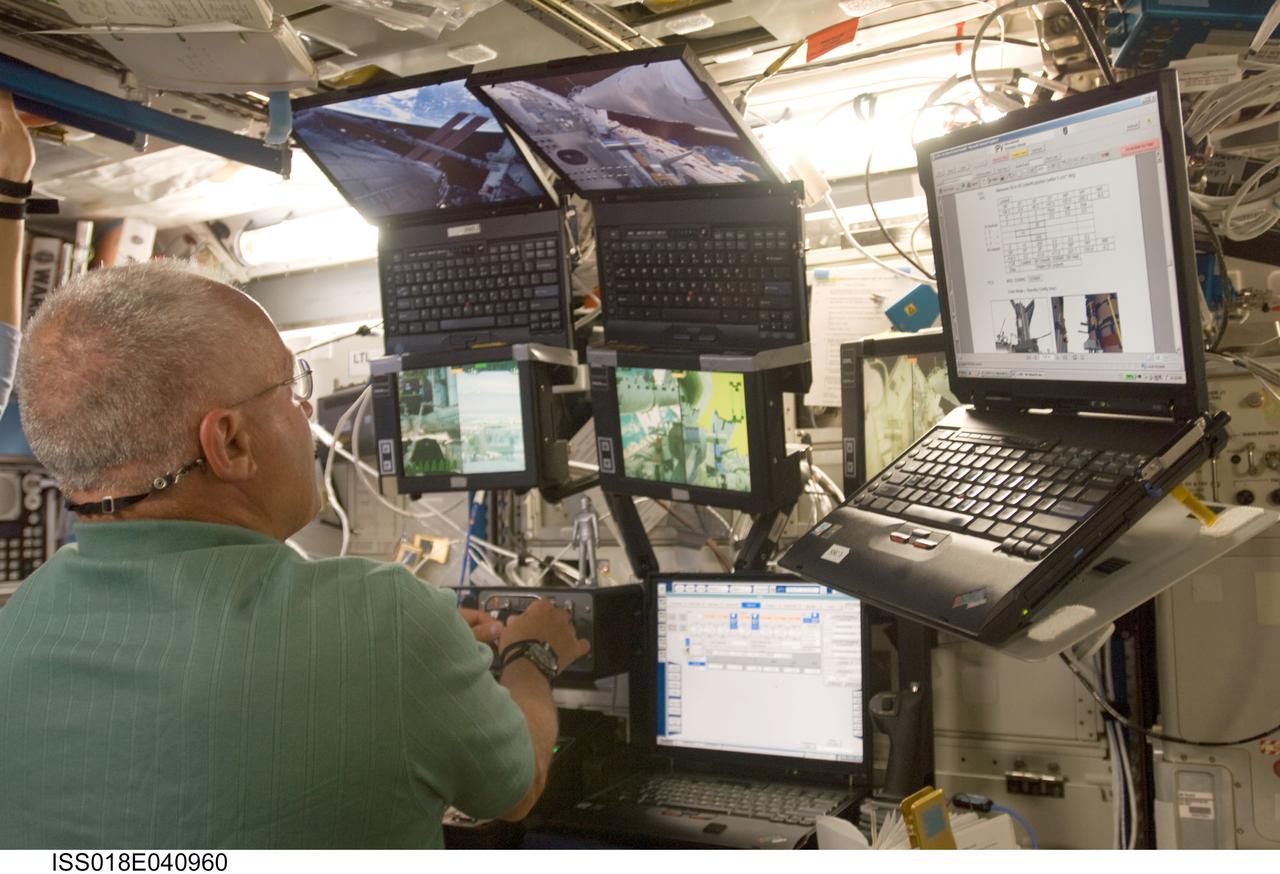
ISS018-E-040960 (18 March 2009) --- Astronaut John Phillips, STS-119 mission specialist, works the controls of the station's robotic Canadarm2 in the Destiny laboratory of the International Space Station while Space Shuttle Discovery is docked with the station.
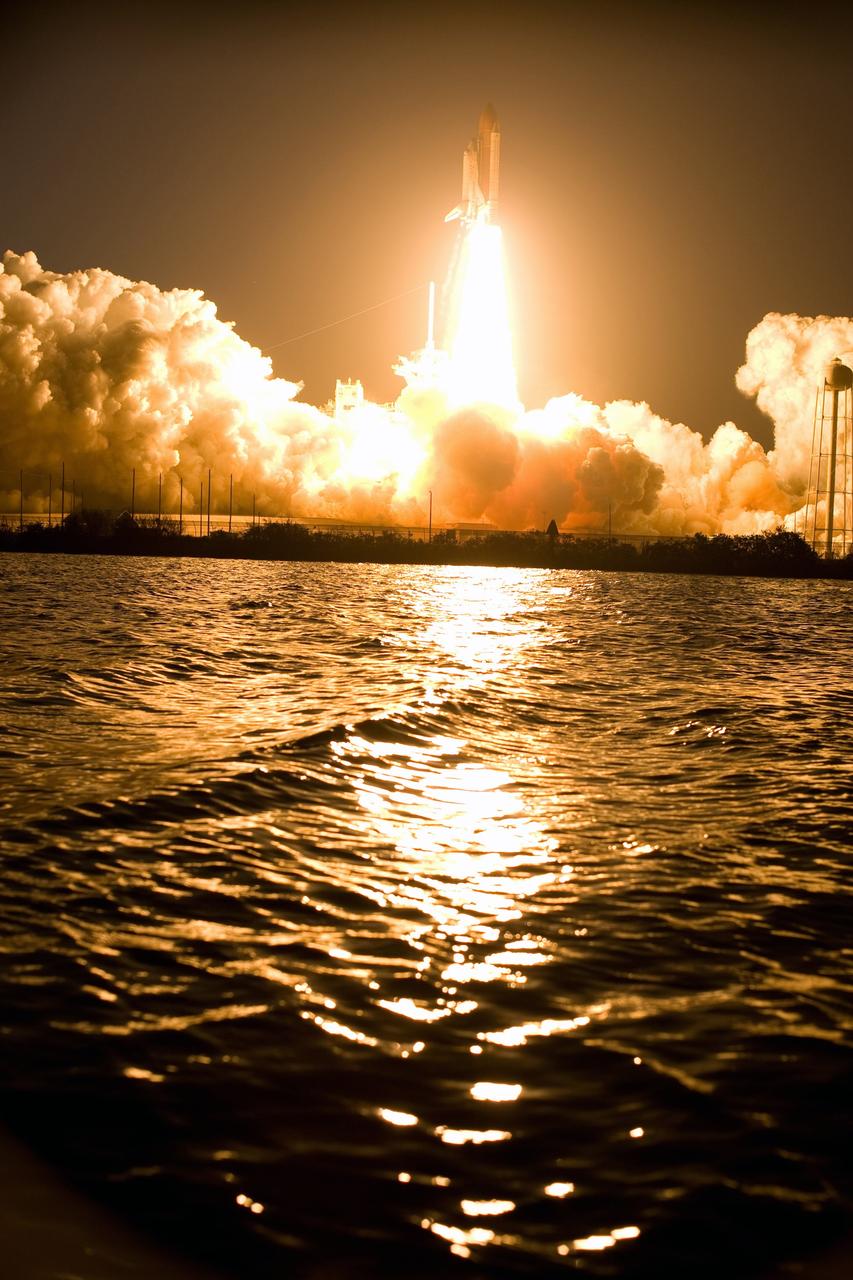
CAPE CANAVERAL, Fla. – Water near Launch Pad 39A at NASA's Kennedy Space Center in Florida captures the brilliant flames as space shuttle Discovery lifts off on the STS-119 mission. The launch was on time at 7:43 p.m. EDT. The STS-119 mission is the 28th to the International Space Station and the 125th space shuttle flight. Discovery will deliver the final pair of power-generating solar array wings and the S6 truss segment. Installation of S6 will signal the station's readiness to house a six-member crew for conducting increased science. Photo credit: NASA/Tony Gray, Tom Farrar
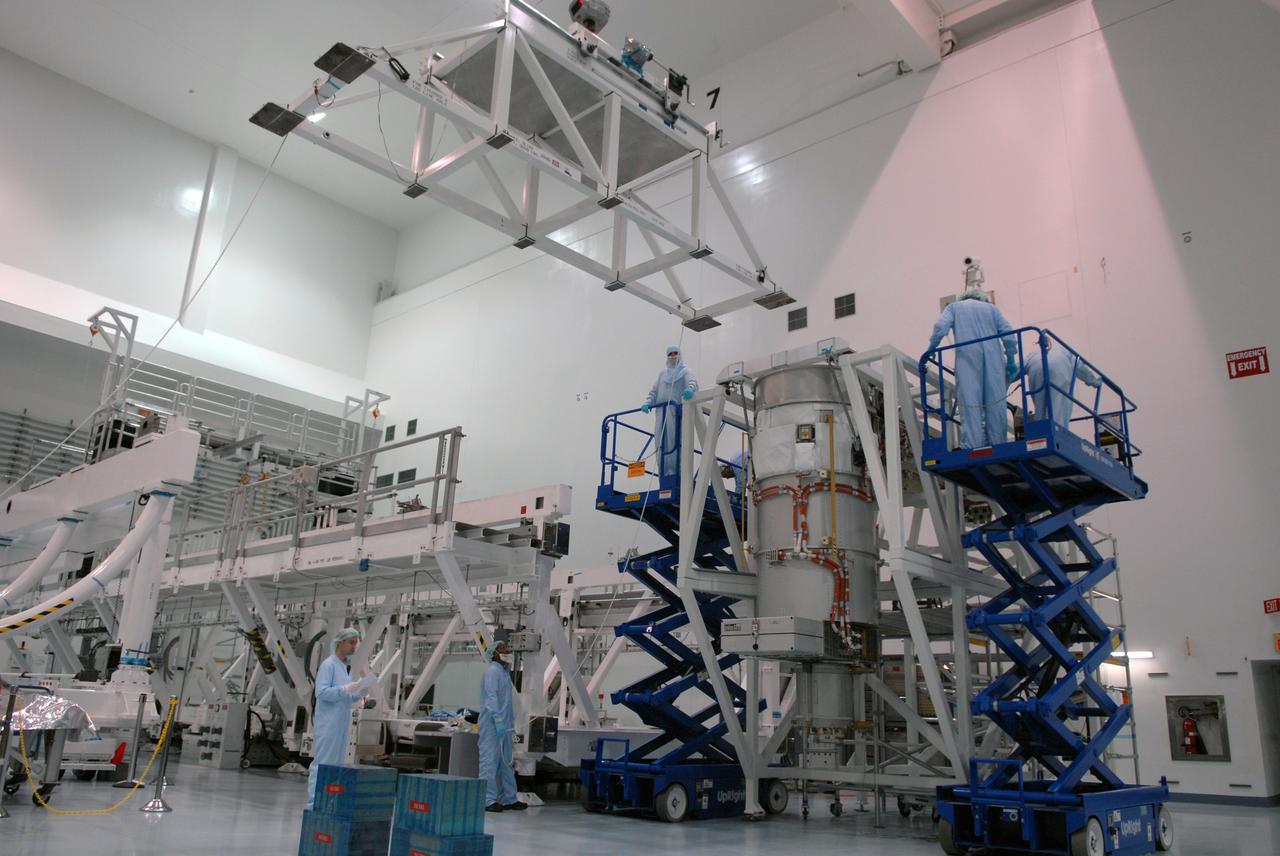
CAPE CANAVERAL, Fla. – In the Space Station Processing Facility at NASA's Kennedy Space Center, workers prepare to install the final solar array wing for the International Space Station onto the S6 truss element. Scheduled to launch on the STS-119 mission, space shuttle Discovery will carry the S6 truss segment to complete the 361-foot-long backbone of the International Space Station. The truss includes the fourth pair of solar array wings and electronics that convert sunlight to power for the orbiting laboratory. Launch is targeted for Feb. 12, 2009. Photo credit: NASA/Troy Cryder
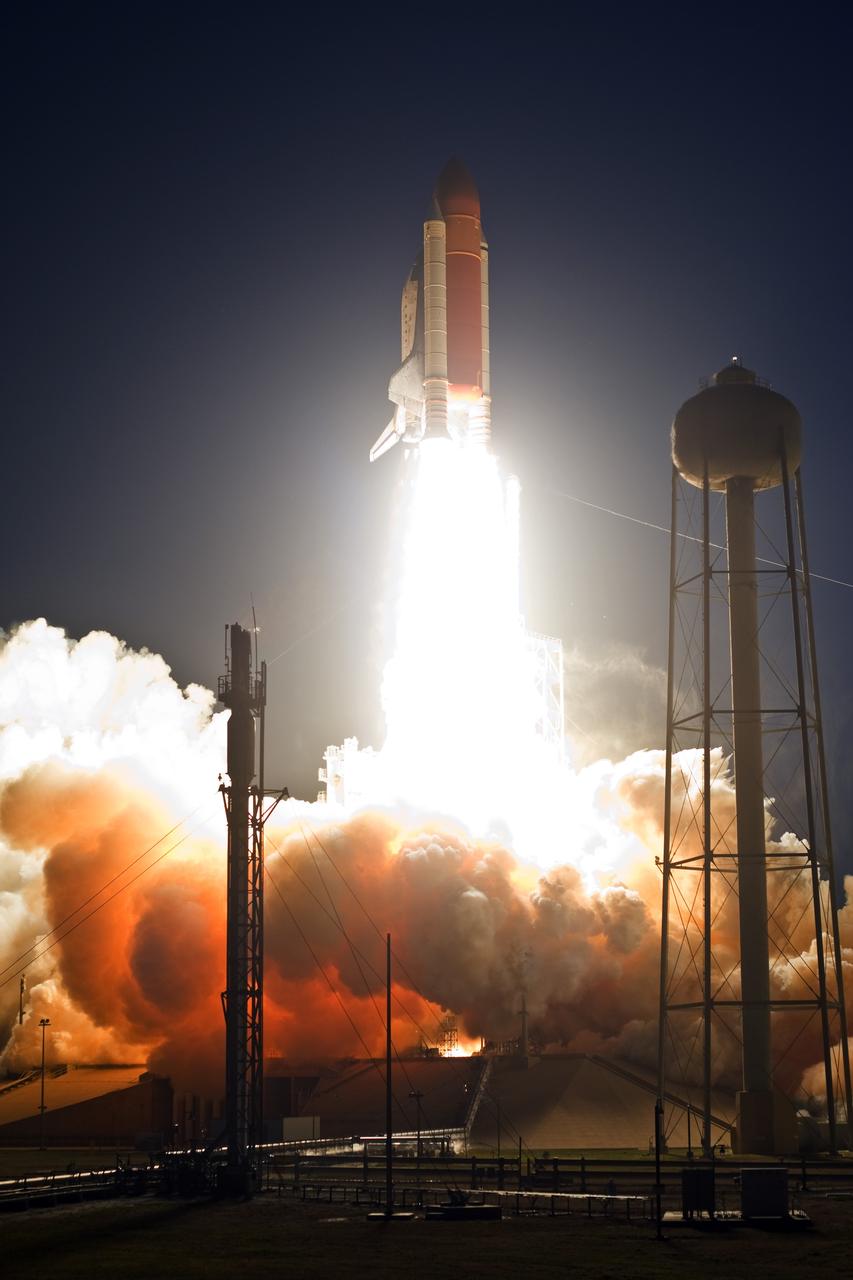
CAPE CANAVERAL, Fla. – From Launch Pad 39A at NASA's Kennedy Space Center in Florida, space shuttle Discovery races toward space atop towers of flame. Clouds of smoke and steam engulf the pad below. Launch on mission STS-119 was on time at 7:43 p.m. EDT. The STS-119 mission is the 28th to the space station and Discovery's 36th flight. Discovery will deliver the final pair of power-generating solar array wings and the S6 truss segment. Installation of S6 will signal the station's readiness to house a six-member crew for conducting increased science. Photo credit: NASA/Tony Gray, Tom Farrar
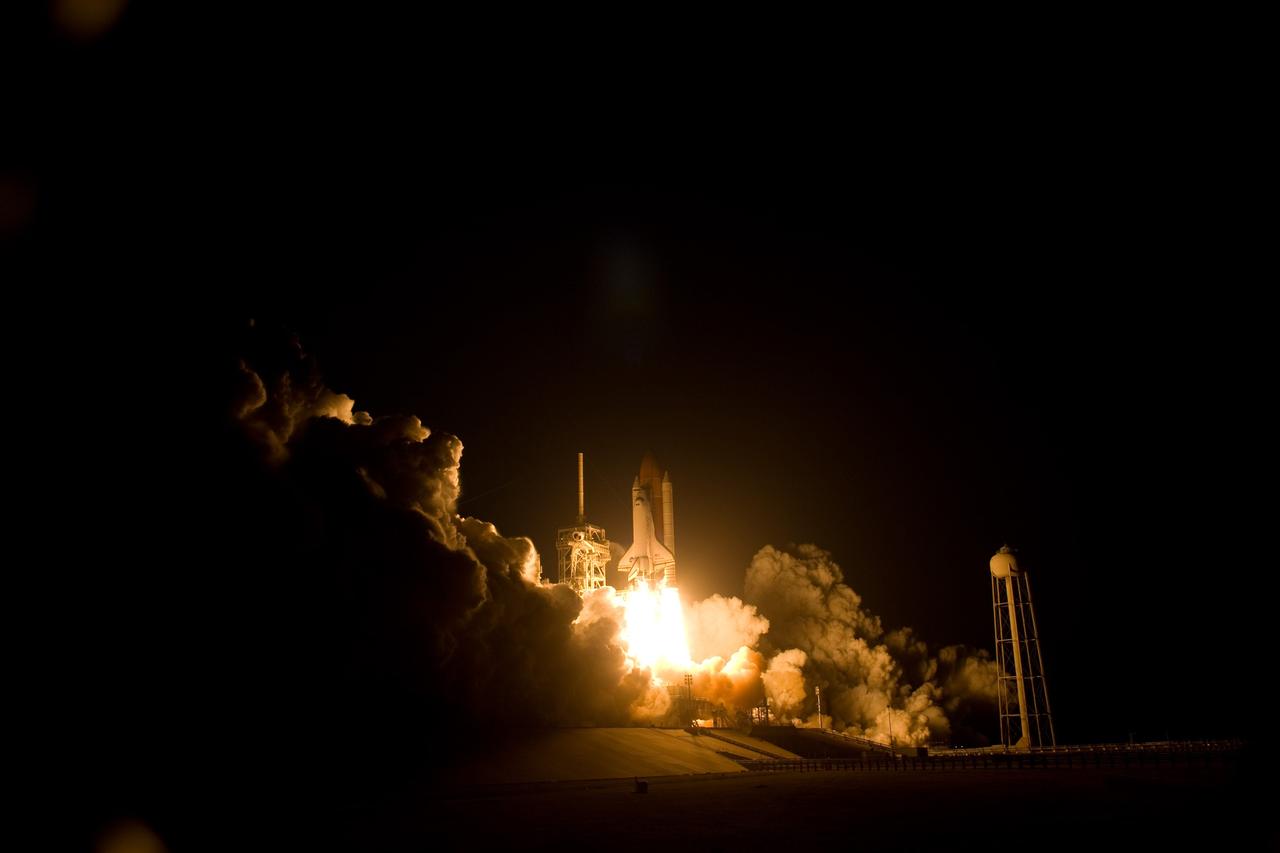
CAPE CANAVERAL, Fla. – Clouds of smoke and steam roll across Launch Pad 39A at NASA's Kennedy Space Center in Florida as space shuttle Discovery roars into the night sky on the STS-119 mission. The launch was on time at 7:43 p.m. EDT. The STS-119 mission is the 28th to the International Space Station and the 125th space shuttle flight. Discovery will deliver the final pair of power-generating solar array wings and the S6 truss segment. Installation of S6 will signal the station's readiness to house a six-member crew for conducting increased science. Photo credit: NASA/Sandra Joseph, Kevin O'Connell
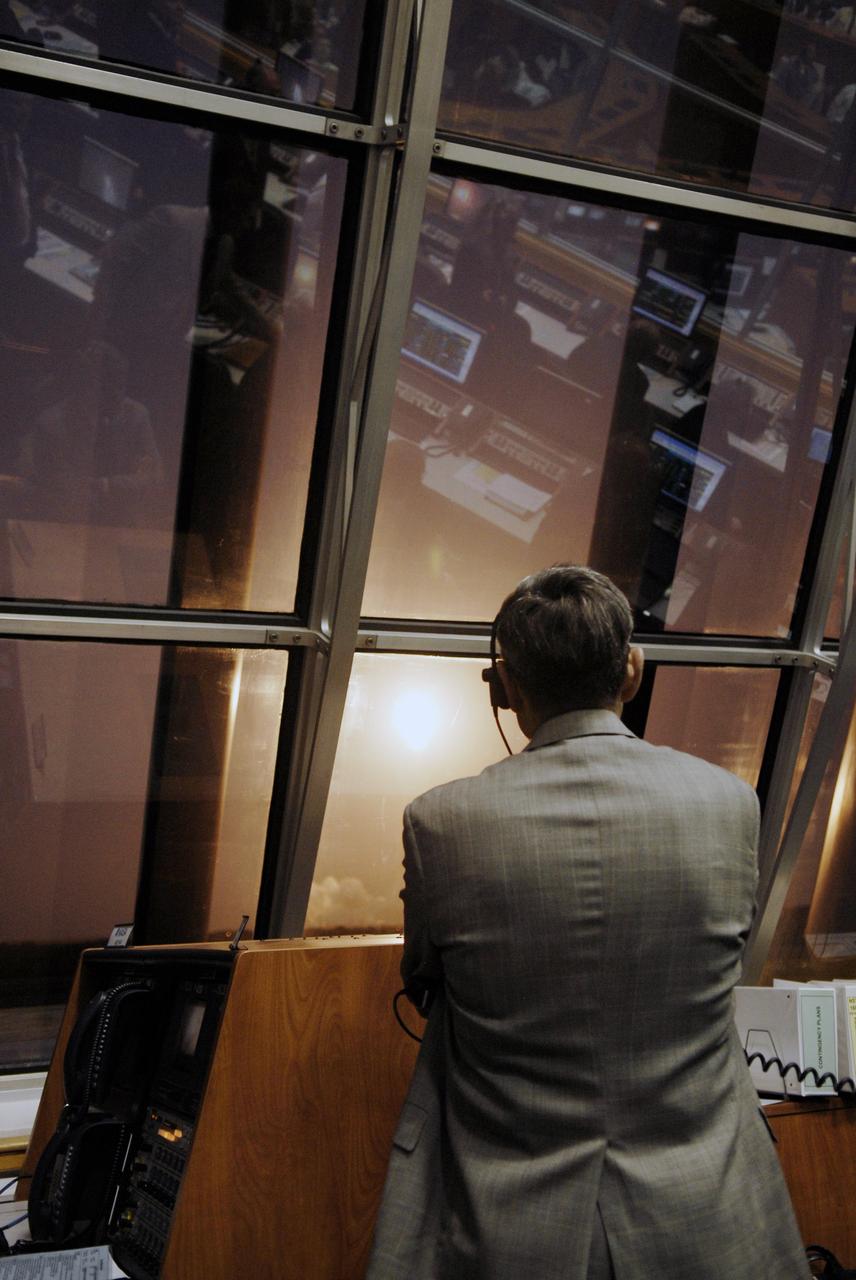
CAPE CANAVERAL, Fla. – In Firing Room 4 of the Launch Control Center at NASA's Kennedy Space Center in Florida, Center Director Bob Cabana watches the brilliant launch of space shuttle Discovery on the STS-119 mission. Launch was on time at 7:43 p.m. EDT. The STS-119 mission is the 28th to the space station and Discovery's 36th flight. Discovery will deliver the final pair of power-generating solar array wings and the S6 truss segment. Installation of S6 will signal the station's readiness to house a six-member crew for conducting increased science. Photo credit: NASA/Kim Shiflett
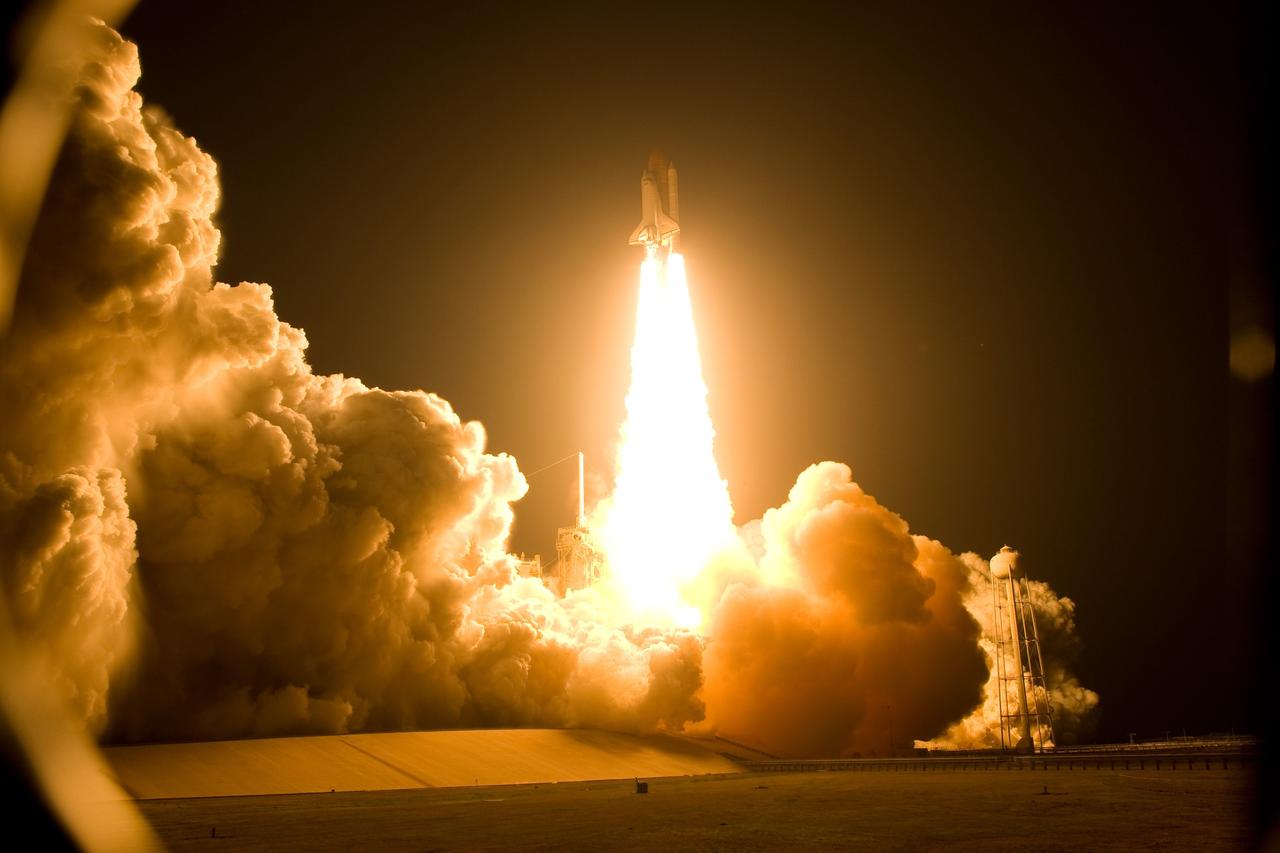
CAPE CANAVERAL, Fla. – Liftoff of space shuttle Discovery from Launch Pad 39A at NASA's Kennedy Space Center in Florida lights up the evening sky as it begins the STS-119 mission. The launch was on time at 7:43 p.m. EDT. The STS-119 mission is the 28th to the International Space Station and the 125th space shuttle flight. Discovery will deliver the final pair of power-generating solar array wings and the S6 truss segment. Installation of S6 will signal the station's readiness to house a six-member crew for conducting increased science. Photo credit: NASA/Sandra Joseph, Kevin O'Connell
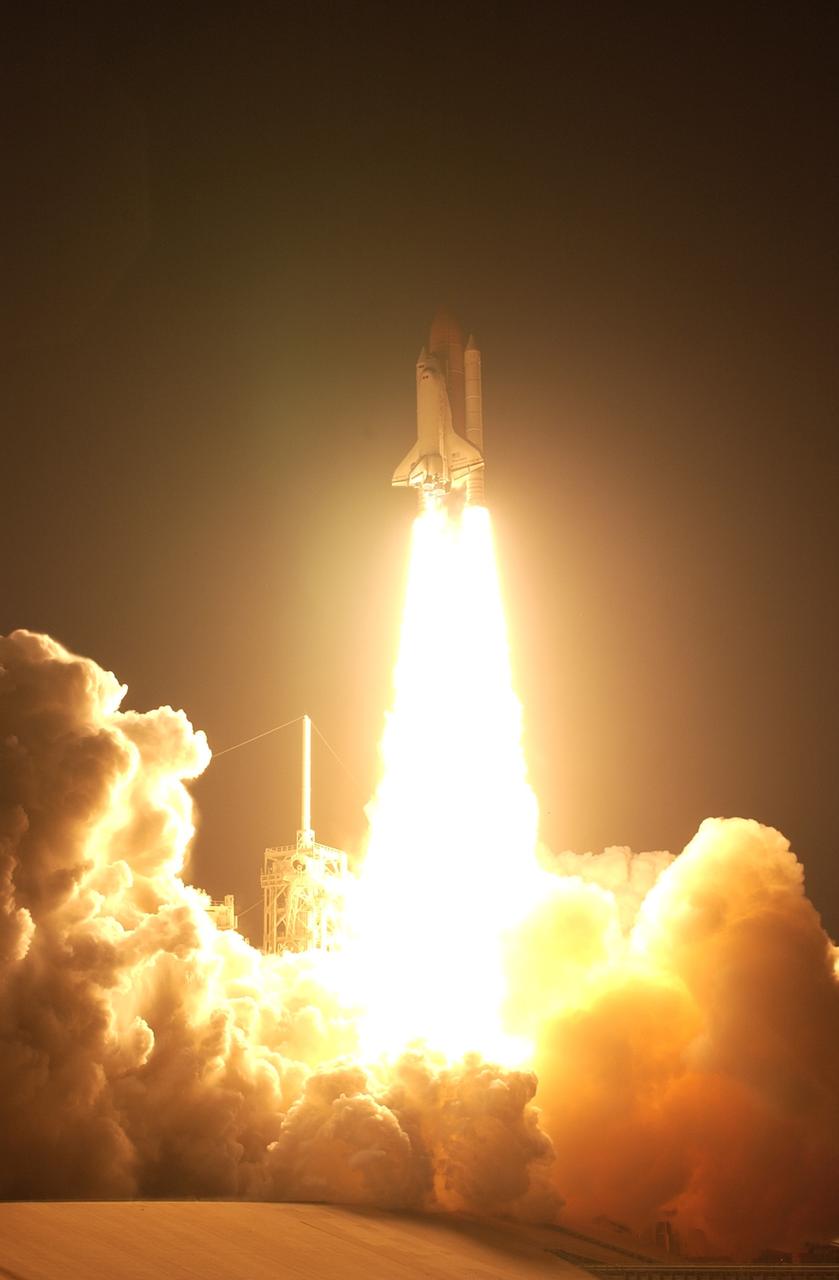
CAPE CANAVERAL, Fla. – Propelled by columns of fire, space shuttle Discovery races toward space on the STS-119 mission after liftoff from Launch Pad 39A at NASA's Kennedy Space Center in Florida. Clouds of smoke and steam roll across the pad. Launch was on time at 7:43 p.m. EDT. The STS-119 mission is the 28th to the International Space Station and the 125th space shuttle flight. Discovery will deliver the final pair of power-generating solar array wings and the S6 truss segment. Installation of S6 will signal the station's readiness to house a six-member crew for conducting increased science. Photo credit: NASA/Sandra Joseph, Kevin O'Connell

KENNEDY SPACE CENTER, FLA. -- The Integrated Equipment Assembly (IEA), one of two major components of the Starboard 6 (S6) truss segment for the International Space Station (ISS), arrives at the Shuttle Landing Facility aboard NASA's Super Guppy cargo airplane. The customized four-engine aricraft has a 24-foot-diameter fuselage and a foldaway nose enabling it to load and transport oversize cargo. The IEA will be joined to its companion piece, the Long Spacer, before launch early in 2004. The S6 truss segment will be the 11th and final piece of the Station's Integrated Truss Structure and will support the fourth and final set of solar arrays, batteries, and electronics.
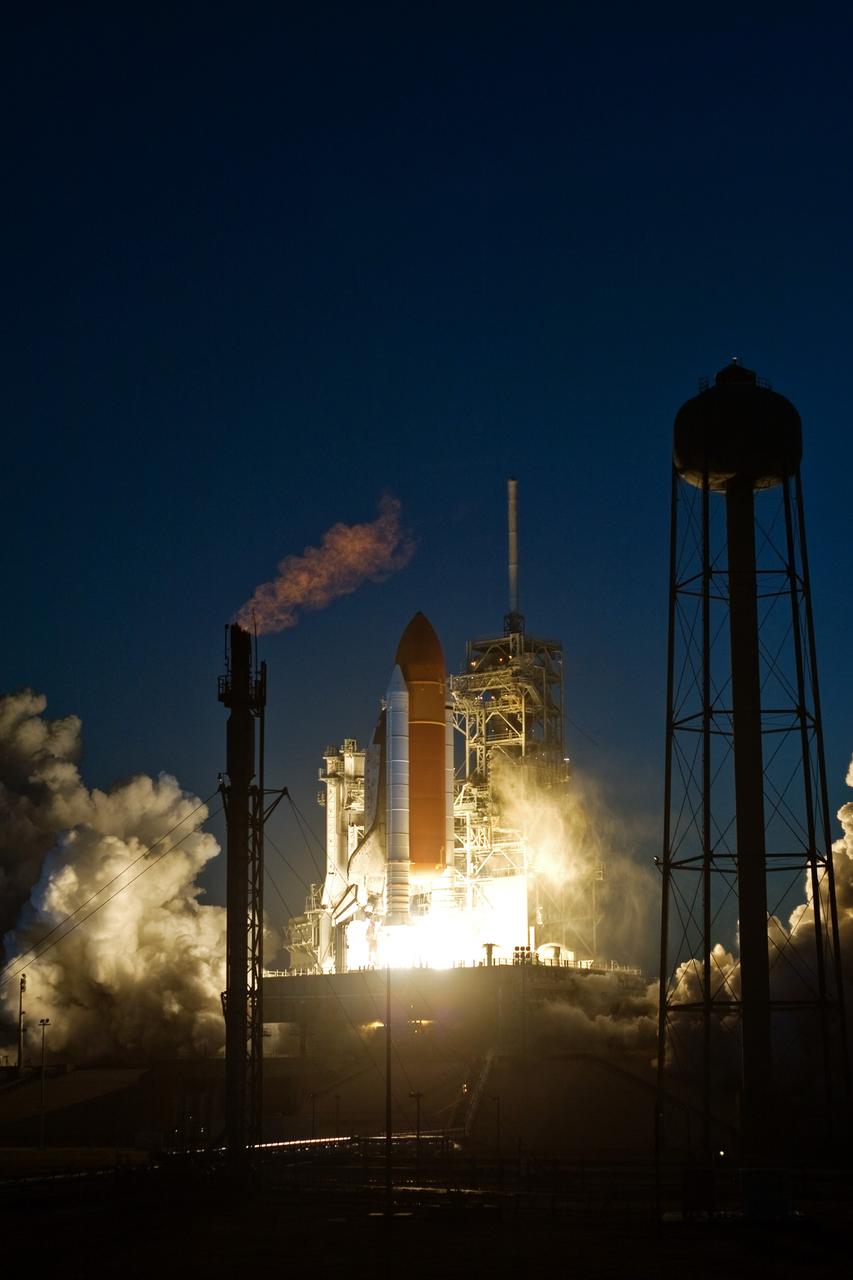
CAPE CANAVERAL, Fla. – On Launch Pad 39A at NASA's Kennedy Space Center in Florida, the fiery exhaust from liftoff of space shuttle Discovery lights up the evening sky. Launch on mission STS-119 was on time at 7:43 p.m. EDT. The STS-119 mission is the 28th to the space station and Discovery's 36th flight. Discovery will deliver the final pair of power-generating solar array wings and the S6 truss segment. Installation of S6 will signal the station's readiness to house a six-member crew for conducting increased science. Photo credit: NASA/Tony Gray, Tom Farrar
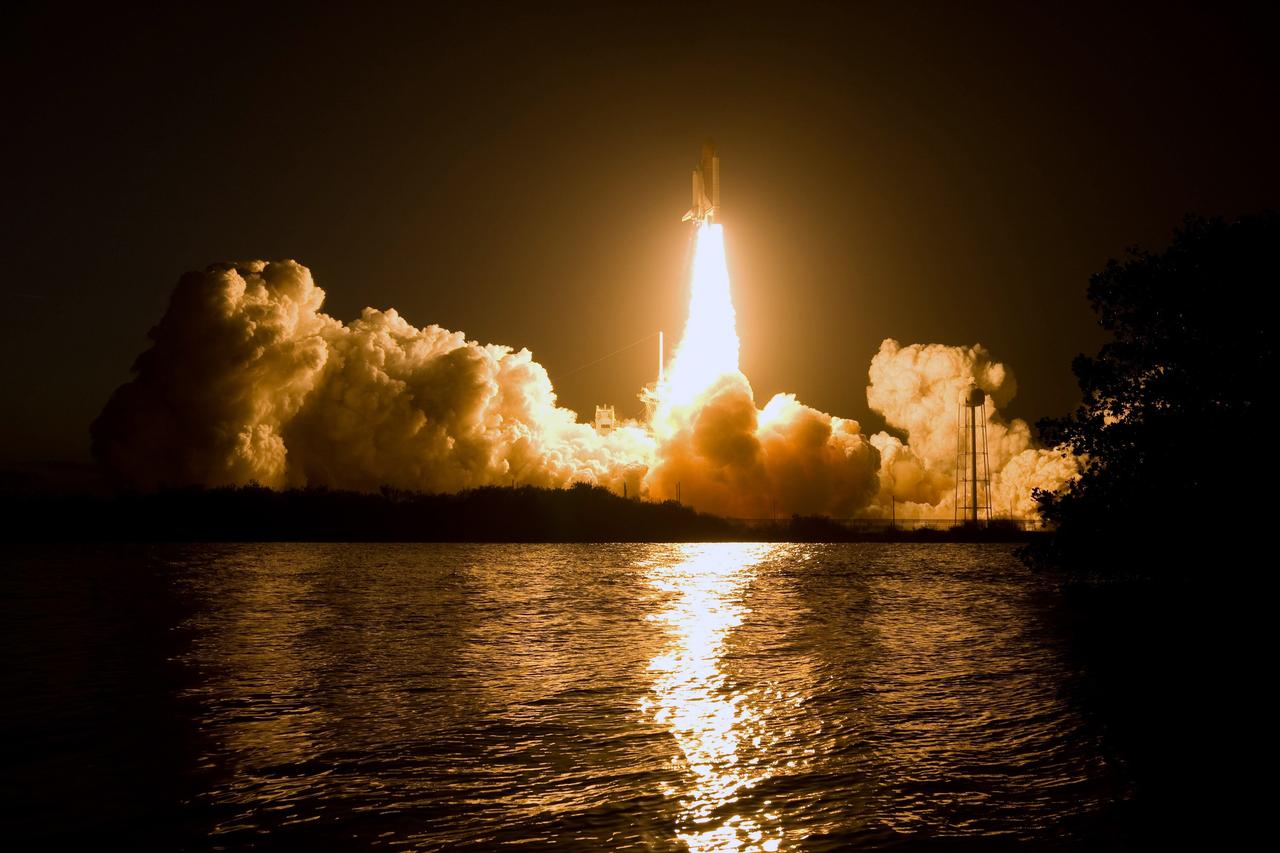
CAPE CANAVERAL, Fla. – Billows of smoke and the water near Launch Pad 39A at NASA's Kennedy Space Center in Florida capture the brilliant light of space shuttle Discovery's lift-off on the STS-119 mission. The launch was on time at 7:43 p.m. EDT. The STS-119 mission is the 28th to the International Space Station and the 125th space shuttle flight. Discovery will deliver the final pair of power-generating solar array wings and the S6 truss segment. Installation of S6 will signal the station's readiness to house a six-member crew for conducting increased science. Photo credit: NASA/Sandra Joseph, Kevin O'Connell
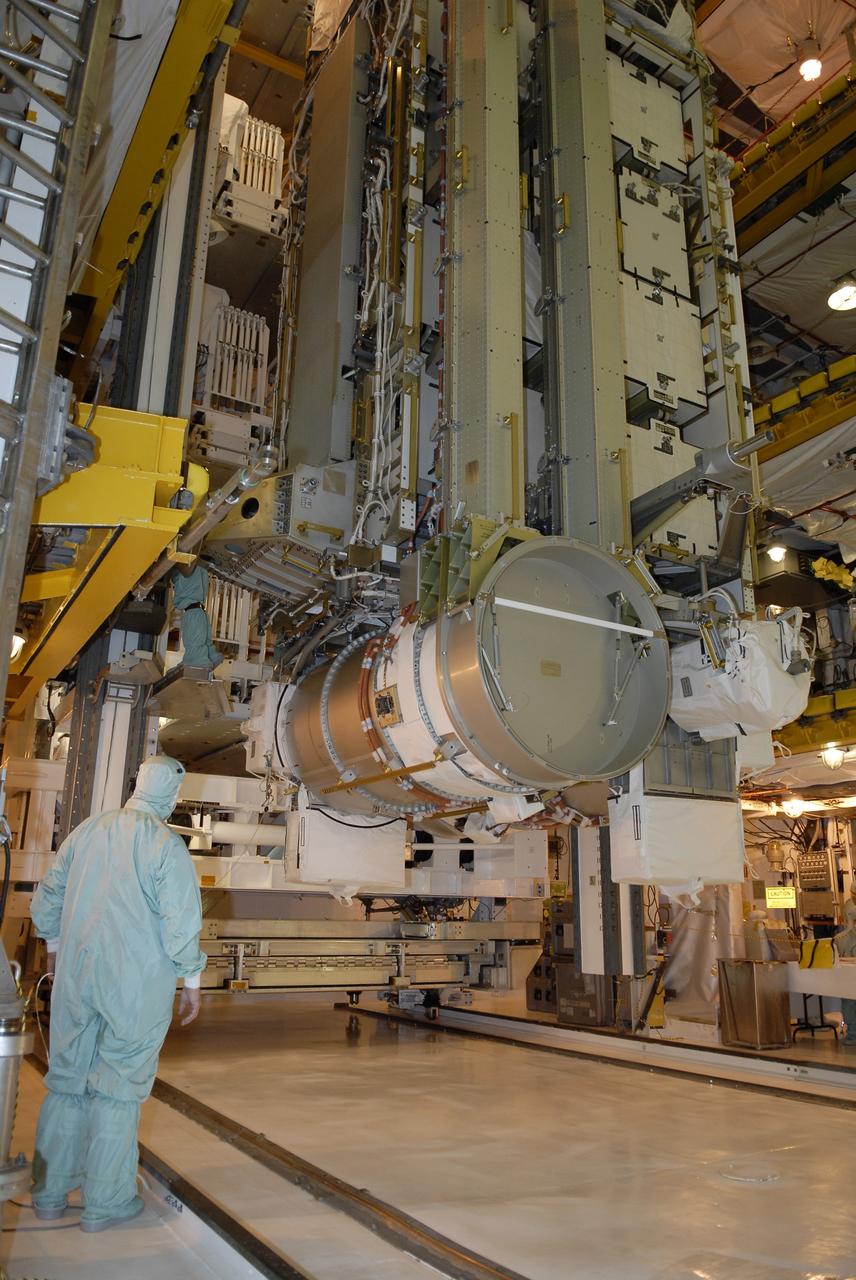
CAPE CANAVERAL, Fla. – In the Payload Changeout Room on Launch Pad 39A at NASA's Kennedy Space Center in Florida, the payload for the STS-119 mission is being transferred to space shuttle Discovery's cargo bay. The payload consists of the integrated truss structure S6 and solar arrays. During Discovery's 14-day mission, the shuttle's seven astronauts will install the S6 truss segment and solar arrays to the starboard side of the International Space Station, completing the station's truss, or backbone. Launch of Discovery on the STS-119 mission is targeted for Feb. 12. Photo credit: NASA/Kim Shiflett
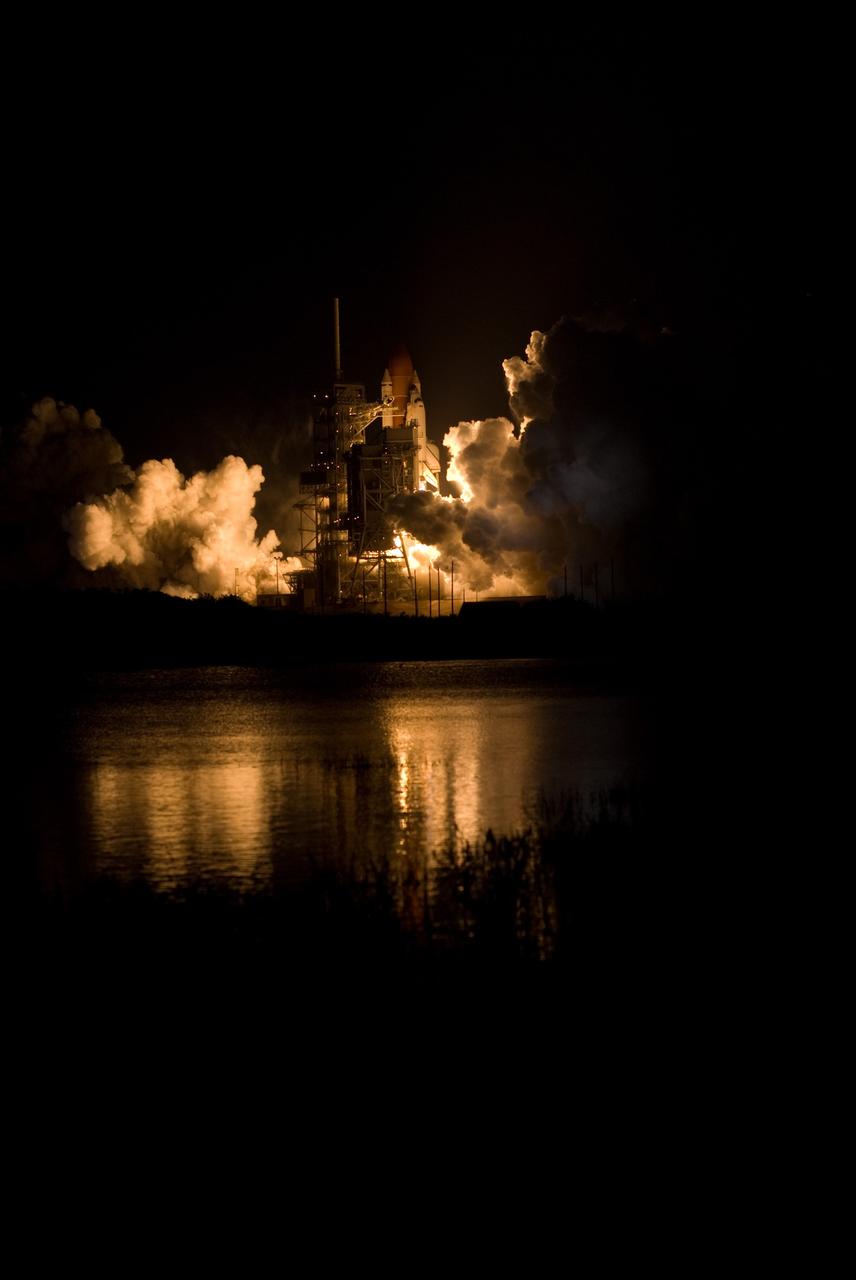
CAPE CANAVERAL, Fla. – Billows of smoke and the water near Launch Pad 39A at NASA's Kennedy Space Center in Florida capture the brilliant light of space shuttle Discovery's lift-off on the STS-119 mission. The launch was on time at 7:43 p.m. EDT.The STS-119 mission is the 28th to the International Space Station and the 125th space shuttle flight. Discovery will deliver the final pair of power-generating solar array wings and the S6 truss segment. Installation of S6 will signal the station's readiness to house a six-member crew for conducting increased science. Photo credit: NASA/Tony Gray, Tom Farrar
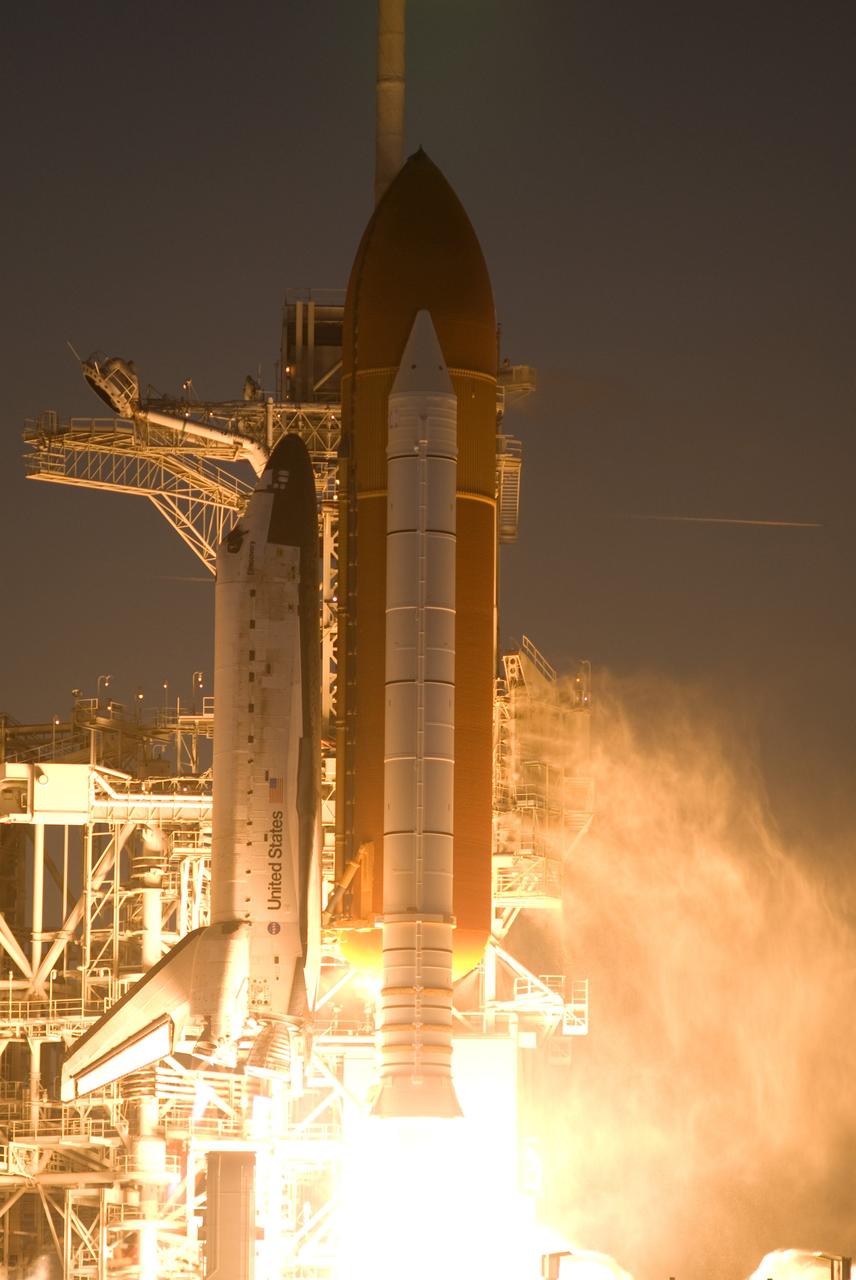
CAPE CANAVERAL, Fla. – Steam rises from Launch Pad 39A at NASA's Kennedy Space Center in Florida as space shuttle Discovery lifts off on mission STS-119. Launch was on time at 7:43 p.m. EDT. The STS-119 mission is the 28th to the International Space Station and the 125th space shuttle flight. Discovery will deliver the final pair of power-generating solar array wings and the S6 truss segment. Installation of S6 will signal the station's readiness to house a six-member crew for conducting increased science. Photo credit: NASA/Rusty Backer, George Roberts
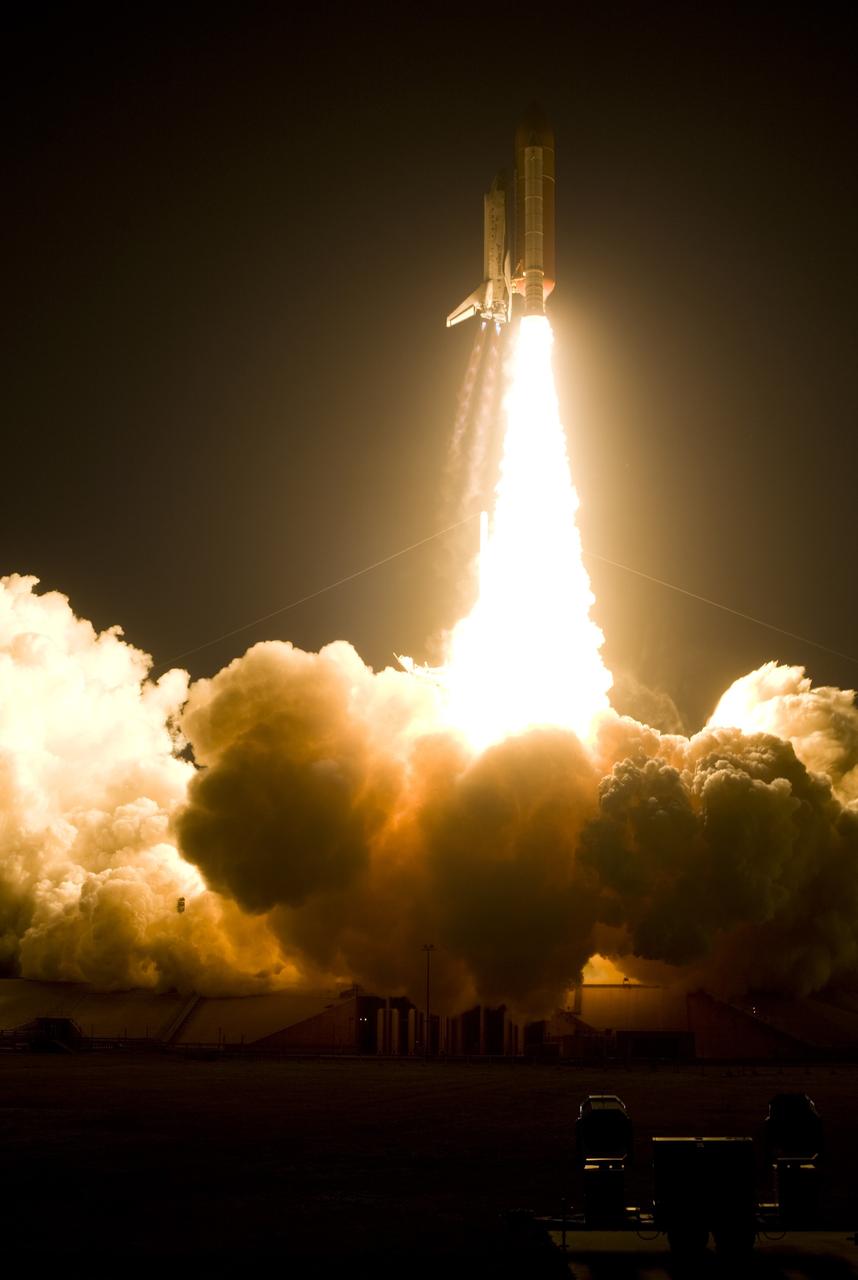
CAPE CANAVERAL, Fla. – Propelled by a column of fire, space shuttle Discovery races toward space on the STS-119 mission after liftoff from Launch Pad 39A at NASA's Kennedy Space Center in Florida. Launch was on time at 7:43 p.m. EDT. The STS-119 mission is the 28th to the International Space Station and the 125th space shuttle flight. Discovery will deliver the final pair of power-generating solar array wings and the S6 truss segment. Installation of S6 will signal the station's readiness to house a six-member crew for conducting increased science. Photo courtesy of Scott Andrews