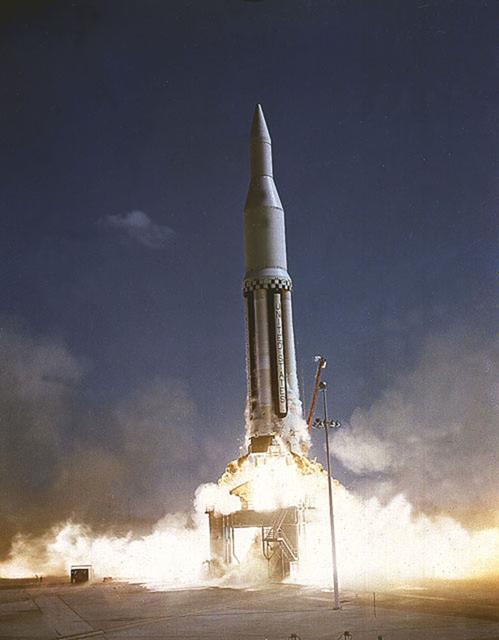
The second flight of the Saturn I vehicle, the SA-2, was successfully launched from Cape Canaveral, Florida on April 15, 1962. This vehicle had a secondary mission. After the first stage shutoff, at a 65-mile altitude, the water-filled upper stage was exploded, dumping 95 tons of water in the upper atmosphere. The resulting massive ice cloud rose to a height of 90 miles. The experiment, called Project Highwater, was intended to investigate the effects on the ionosphere of the sudden release of such a great volume of water.
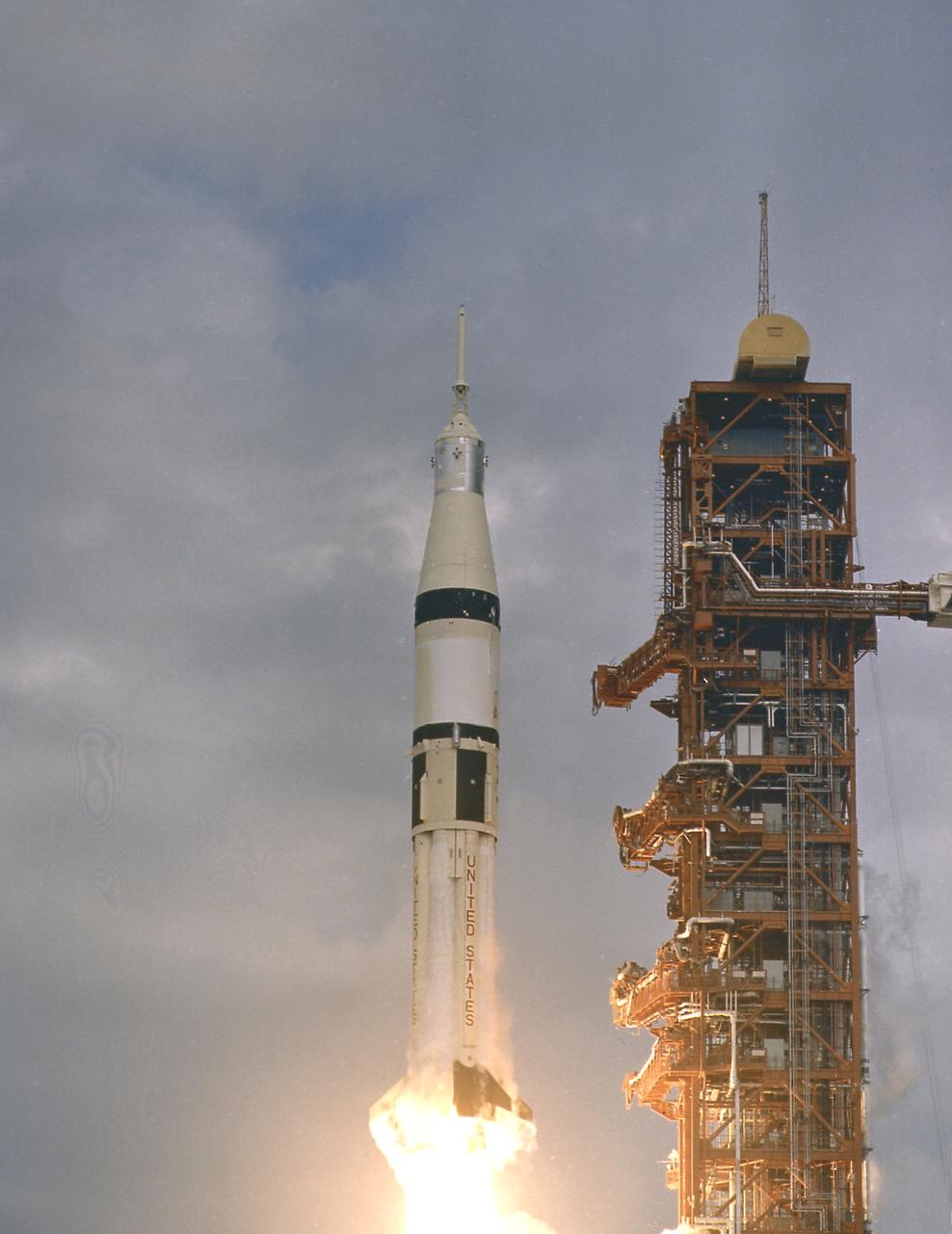
SA-206 lifts off from Kennedy Space Center's launch complex 39B, in Florida, on May 25, 1973, for the first manned Skylab mission (SL-2) with astronauts Pete Conrad, Joseph Kerwin, and Paul Weitz. The Saturn IB, developed under the direction of the Marshall Space Flight Center (MSFC), launched five manned Earth-orbital missions between 1968 and 1975: Apollo 7, Skylab 2, Skylab 3, Skylab 4, and the Apollo-Soyuz Test Project (ASTP).
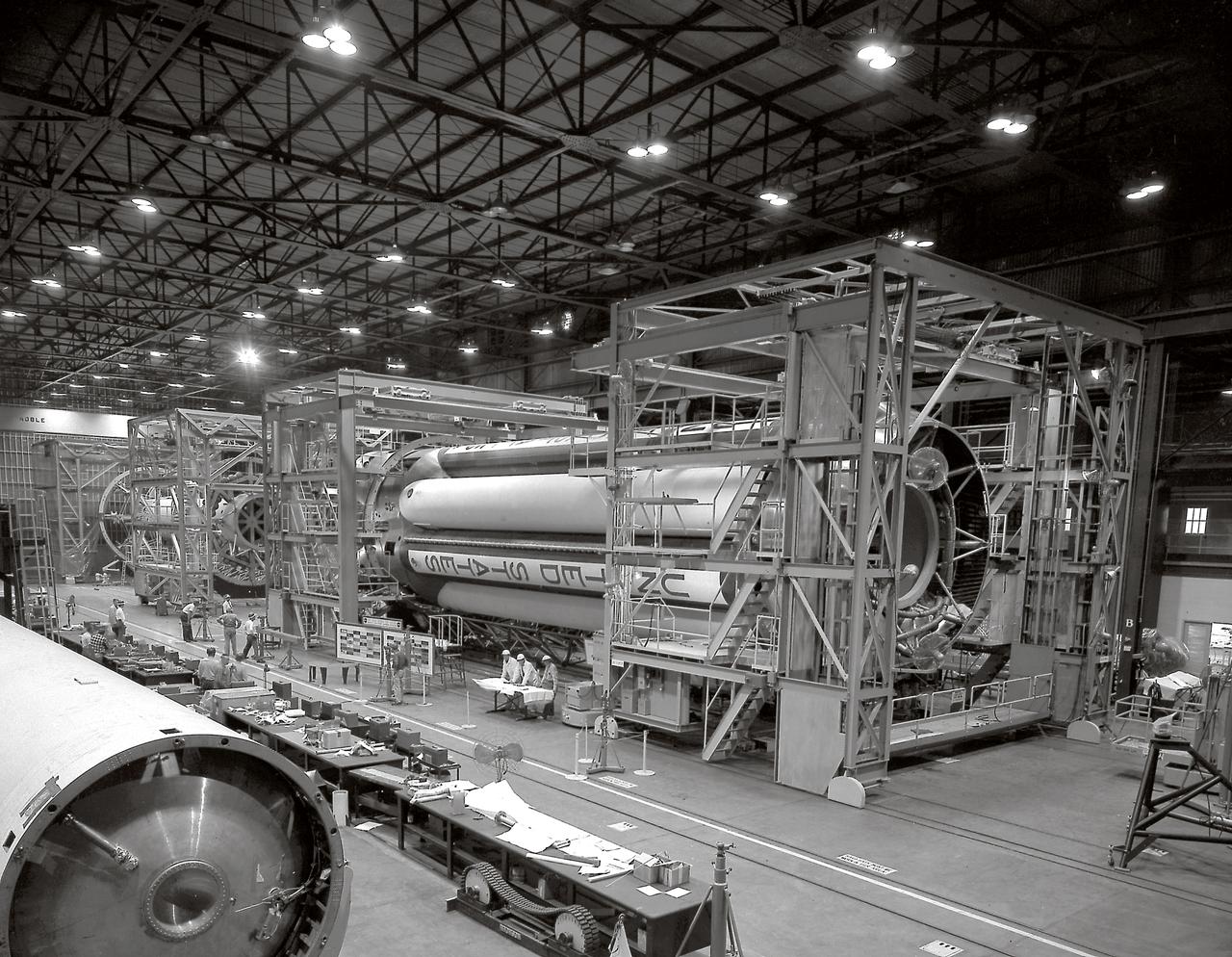
The S-I stages for the Saturn I (SA-1 at right and SA-2 at left) are being assembled at the Marshall Space Flight Center, building 4705. The Saturn I S-I stage had eight H-1 engines clustered, using liquid oxygen/kerosene-1 (LOX/RP-1) propellants capable of producing a total of 1,500,000 pounds of thrust.
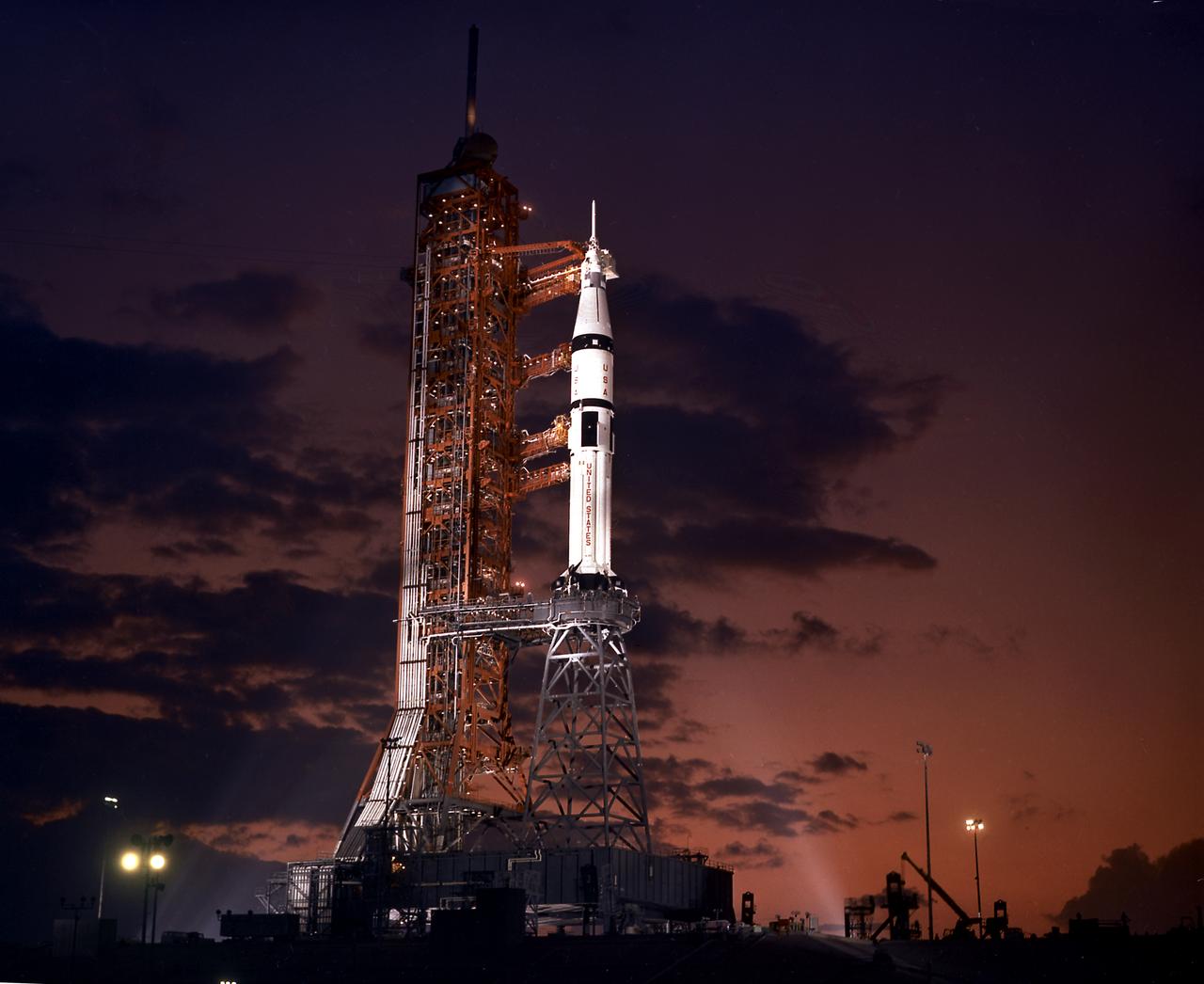
SA-210 Apollo-Soyuz Test Project (ASTP) awaits the launch scheduled on July 15, 1975 on the launch pad at the Kennedy Space Center, the ASTP mission with astronauts Thomas Stafford, Vance Brand, and Donald "Deke" Slayton. The Saturn IB, developed under the direction of the Marshall Space Flight Center (MSFC), launched five manned Earth-orbital missions between 1968 and 1975: Apollo 7, Skylab 2, Skylab 3, Skylab 4, and the Apollo-Soyuz Test Project .
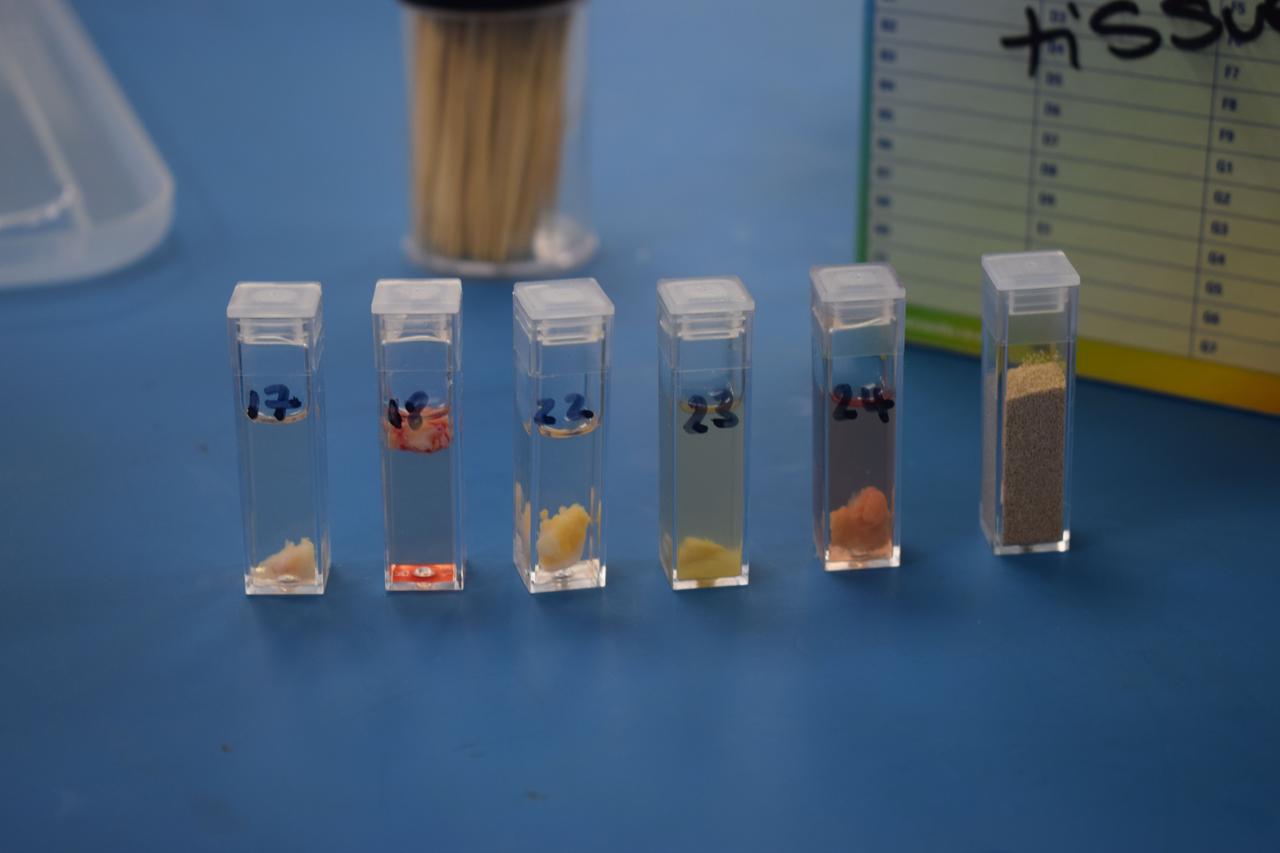
jsc2022e057883 (5/12/2022) --- A close up view of six sample cuvettes that are planned to hold five human skin tissue and microbiome samples from Diabetic Foot Ulcer patients and one yeast sample from Malta. This is part of the Follow-up Study of Human Skin Tissue Microbiome Studies and Yeast Cells in Space (Ice Cubes #9.2 – Maleth 2) investigation. Image courtesy of Space Applications Services, NV/SA.
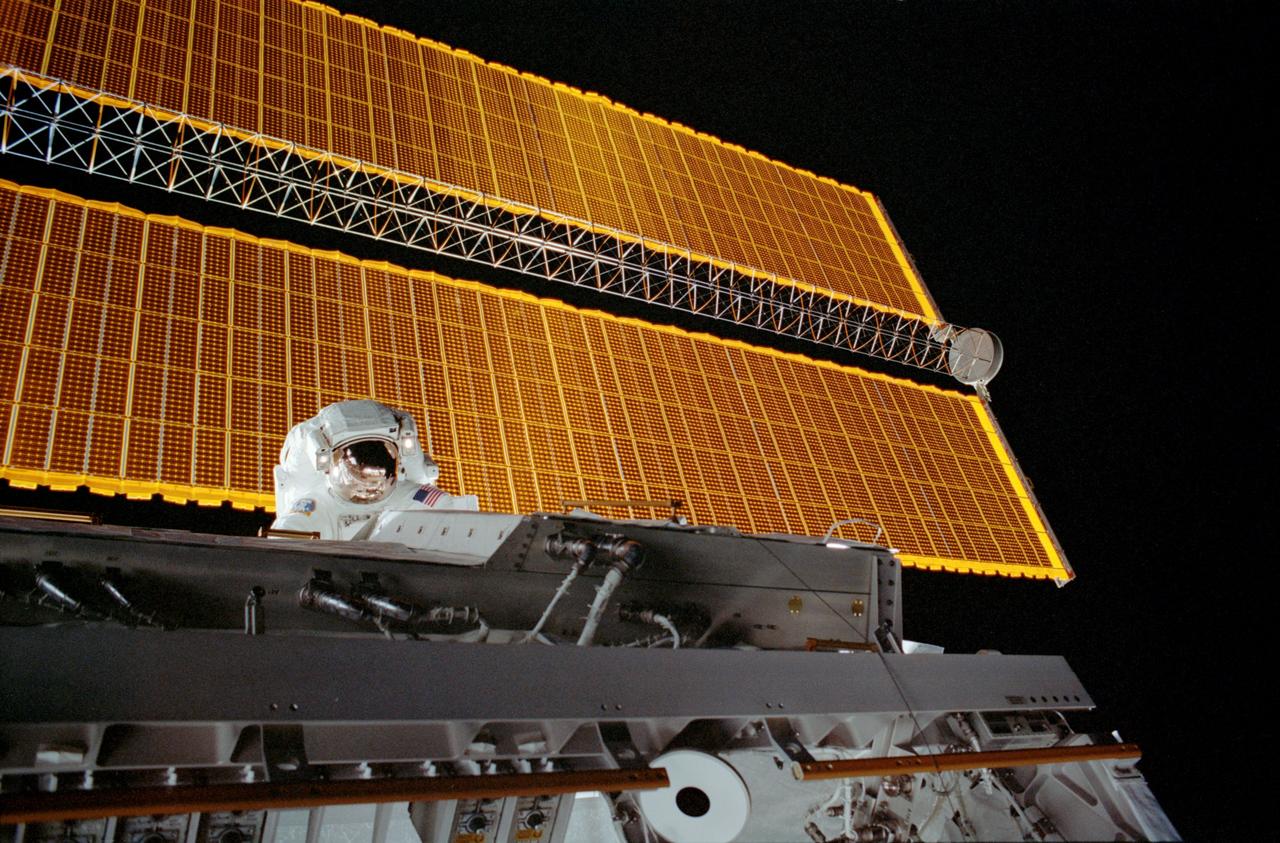
STS113-310-017 (28 November 2002) --- Astronaut John B. Herrington, STS-113 mission specialist, traverses along the newly installed Port One (P1) truss on the International Space Station (ISS) during the mission’s second scheduled spacewalk. One of the station’s main solar arrays is behind Herrington.
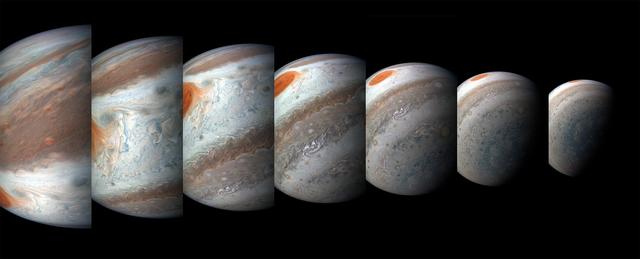
A south tropical disturbance has just passed Jupiter's iconic Great Red Spot and is captured stealing threads of orange haze from the Great Red Spot in this series of color-enhanced images from NASA's Juno spacecraft. From left to right, this sequence of images was taken between 2:57 a.m. and 3:36 a.m. PDT (5:57 a.m. and 6:36 a.m. EDT) on April 1, 2018, as the spacecraft performed its 12th close flyby of Jupiter. Citizen scientists Gerald Eichstädt and Seán Doran created this image using data from the spacecraft's JunoCam imager. https://photojournal.jpl.nasa.gov/catalog/PIA22937 ** Image Credit: Enhanced Image by Gerald Eichstädt and Seán Doran (CC BY-NC-SA) based on images provided courtesy of NASA/JPL-Caltech/SwRI/MSSS
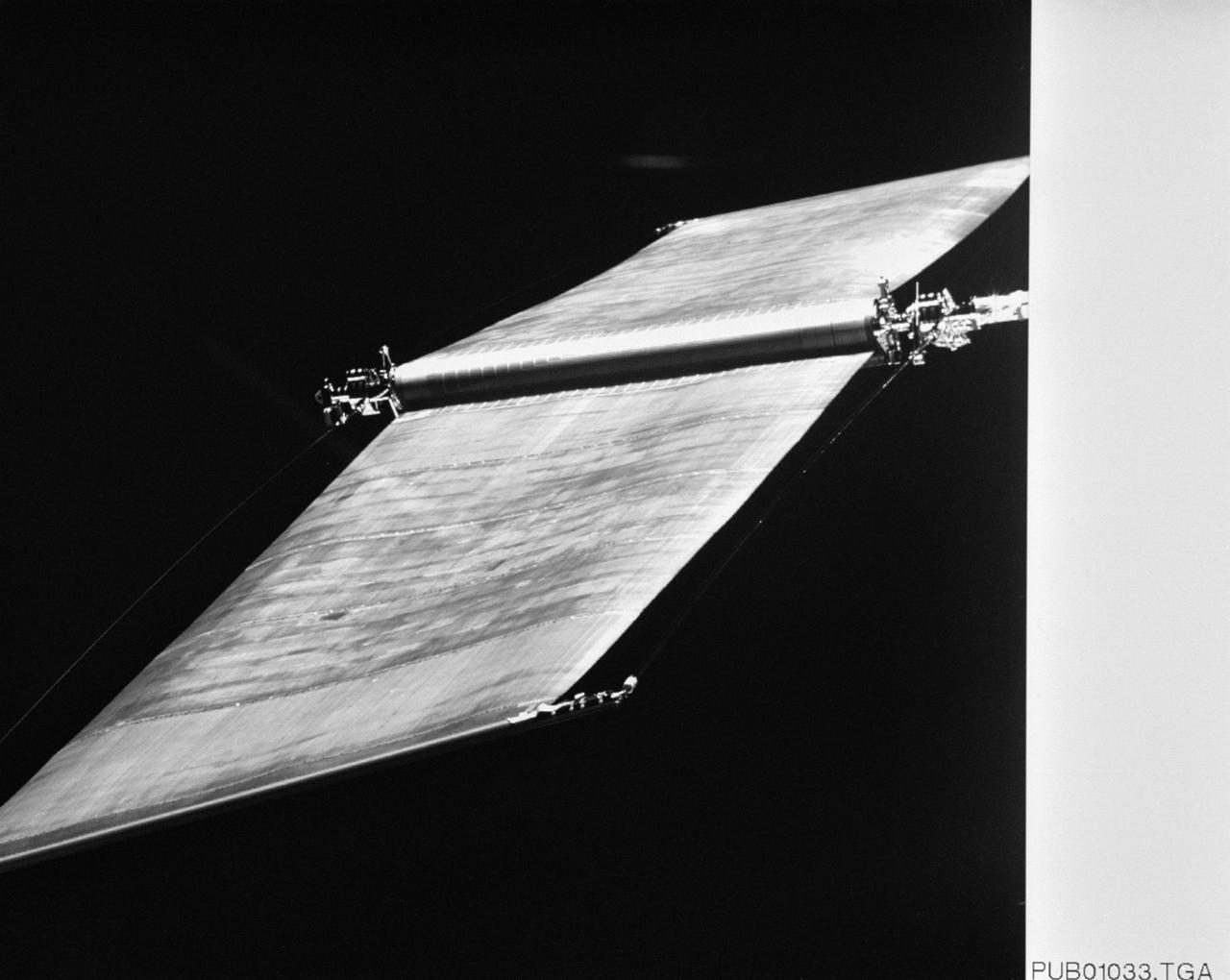
S61-E-002 (4 Dec 1993) --- This view, backdropped against the blackness of space shows one of two original Solar Arrays (SA) on the Hubble Space Telescope (HST). The scene was photographed from inside Endeavour's cabin with an Electronic Still Camera (ESC), and down linked to ground controllers soon afterward. This view features the minus V-2 panel. Endeavour's crew captured the HST on December 4, 1993 in order to service the telescope over a period of five days. Four of the crew members will work in alternating pairs outside Endeavour's shirt sleeve environment to service the giant telescope. Electronic still photography is a relatively new technology which provides the means for a handheld camera to electronically capture and digitize an image with resolution approaching film quality. The electronic still camera has flown as an experiment on several other shuttle missions.

S61-E-003 (4 Dec 1993) --- This medium close-up view of one of two original Solar Arrays (SA) on the Hubble Space Telescope (HST) was photographed with an Electronic Still Camera (ESC), and down linked to ground controllers soon afterward. This view shows the cell side of the minus V-2 panel. Endeavour's crew captured the HST on December 4, 1993 in order to service the telescope over a period of five days. Four of the crew members will work in alternating pairs outside Endeavour's shirt sleeve environment to service the giant telescope. Electronic still photography is a relatively new technology which provides the means for a handheld camera to electronically capture and digitize an image with resolution approaching film quality. The electronic still camera has flown as an experiment on several other shuttle missions.
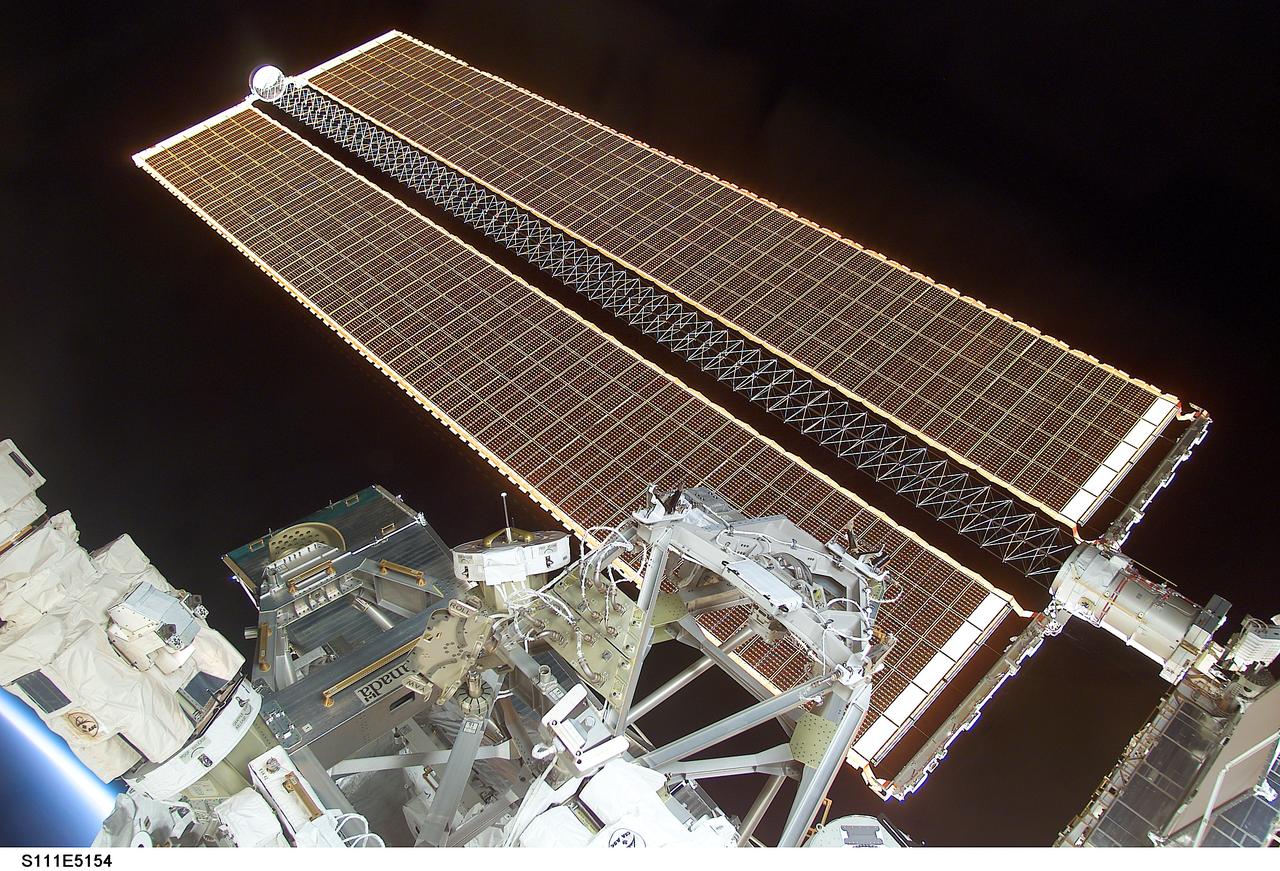
STS111-E-5154 (10 June 2002) --- Backdropped by the blackness of space, this view of the starboard solar array wing panel of the International Space Station (ISS) was photographed with a digital still camera from inside the crew cabin of the Space Shuttle Endeavour.

This enhanced color Jupiter image, taken by the JunoCam imager on NASA's Juno spacecraft, showcases several interesting features on the apparent edge (limb) of the planet. Prior to Juno's fifth flyby over Jupiter's mysterious cloud tops, members of the public voted on which targets JunoCam should image. This picture captures not only a fascinating variety of textures in Jupiter's atmosphere, it also features three specific points of interest: "String of Pearls," "Between the Pearls," and "An Interesting Band Point." Also visible is what's known as the STB Spectre, a feature in Jupiter's South Temperate Belt where multiple atmospheric conditions appear to collide. JunoCam images of Jupiter sometimes appear to have an odd shape. This is because the Juno spacecraft is so close to Jupiter that it cannot capture the entire illuminated area in one image -- the sides get cut off. Juno acquired this image on March 27, 2017, at 2:12 a.m. PDT (5:12 a.m. EDT), as the spacecraft performed a close flyby of Jupiter. When the image was taken, the spacecraft was about 12,400 miles (20,000 kilometers) from the planet. https://photojournal.jpl.nasa.gov/catalog/PIA21389. - Enhanced image by Björn Jónsson (CC-NC-SA) based on images provided courtesy of NASA/JPL-Caltech/SwRI/MSSS
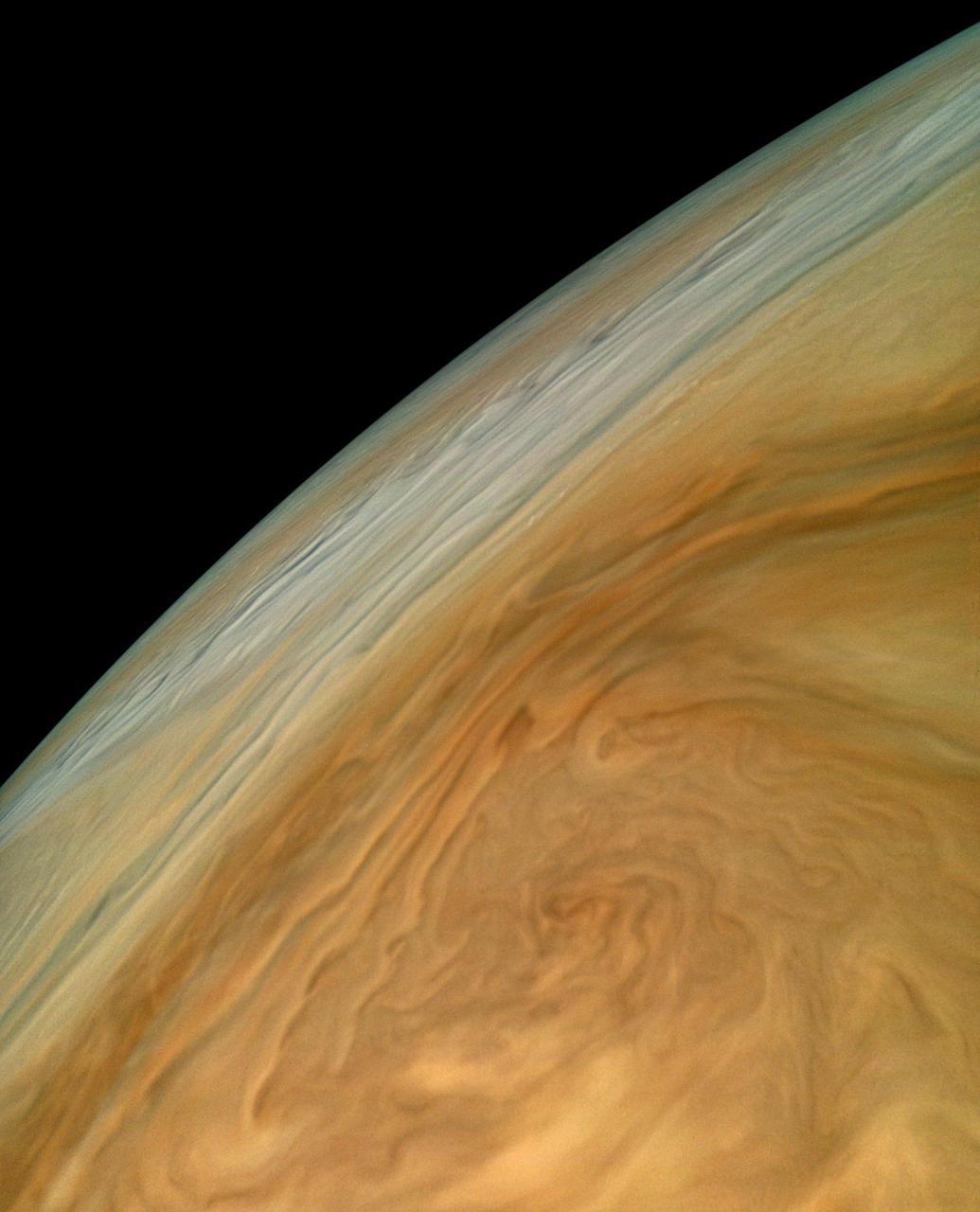
Colorful swirling clouds in Jupiter's North Equatorial Belt practically fill this image from NASA's Juno spacecraft. This is the closest image captured of the Jovian clouds during this recent flyby of the gas giant planet. The color-enhanced image was taken at 2:08 p.m. PDT (5:08 p.m. EDT) on Oct. 29, 2018 as the spacecraft performed its 16th close flyby of Jupiter. At the time, Juno was about 2,100 miles (3,400 kilometers) from the planet's cloud tops, at approximately 14 degrees north latitude. In other words, the spacecraft was about as close to Jupiter as San Francisco is to Chicago, which is quite close when racing over a planet that's 11 times wider than Earth. Citizen scientist Björn Jónsson created this image using data from the spacecraft's JunoCam imager. https://photojournal.jpl.nasa.gov/catalog/PIA22695. - Enhanced image by Björn Jónsson (CC-NC-SA) based on images provided courtesy of NASA/JPL-Caltech/SwRI/MSSS
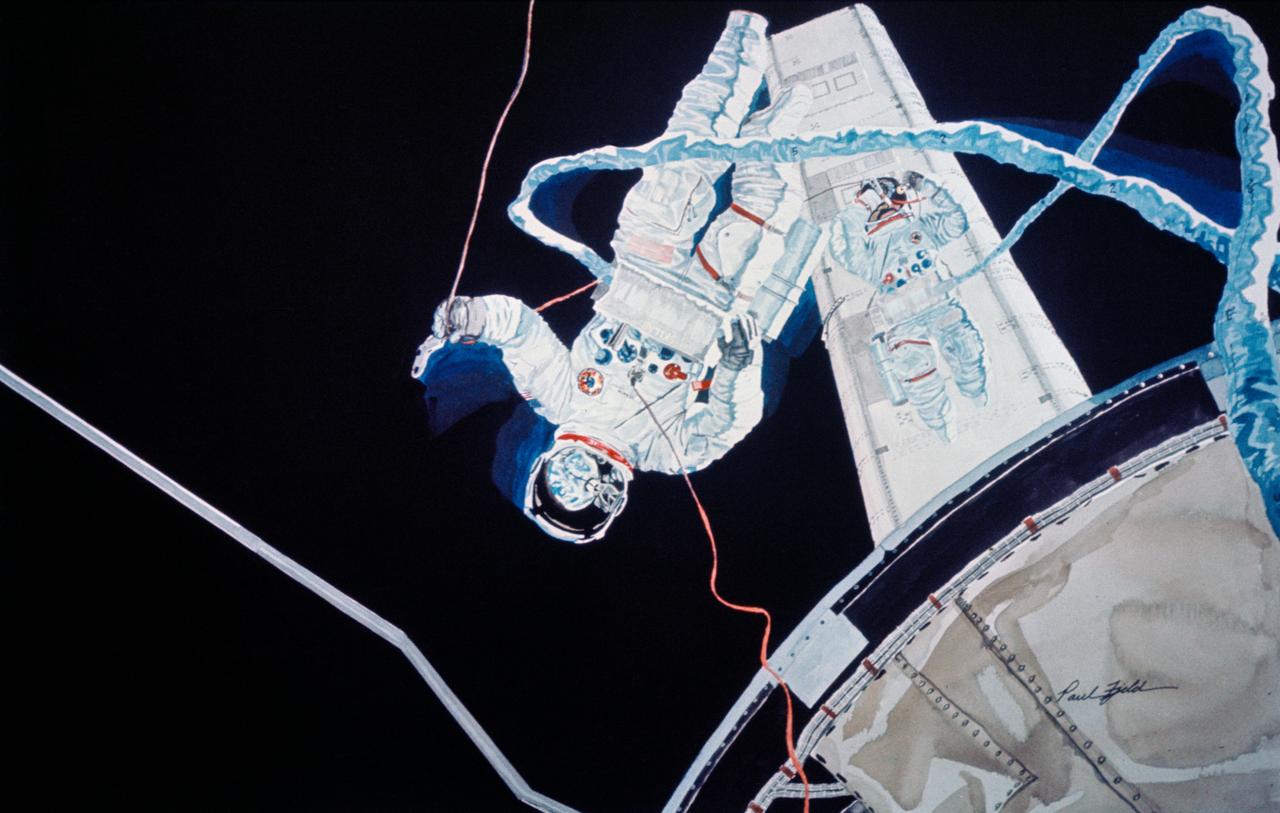
S75-21432 (March 1975) --- An artist's concept illustrating a scene during the June 7, 1973 Skylab 2 extravehicular activity in Earth orbit when astronauts Joseph P. Kerwin (larger figure) and Charles Conrad Jr. cut the aluminum strapping which prevented the Skylab Orbital Workshop solar array system wing from deploying. The solar panel was successfully deployed. The painting is by artist Paul Fjeld. The action portrayed here is about two to four seconds after using the beam erection tether, the two crewmen broke the frozen SAS beam actuators. This artistic effort took weeks to research and a day and a half to paint. Fjeld said that he needed some hundred or so photographs to get all the details for the painting. He struggled through about 300 pages of transcripts from the flight. Also, he used several pages of teleprinter messages which were the actual instructions on the EVA that the two astronauts used in flight. Photo credit: NASA