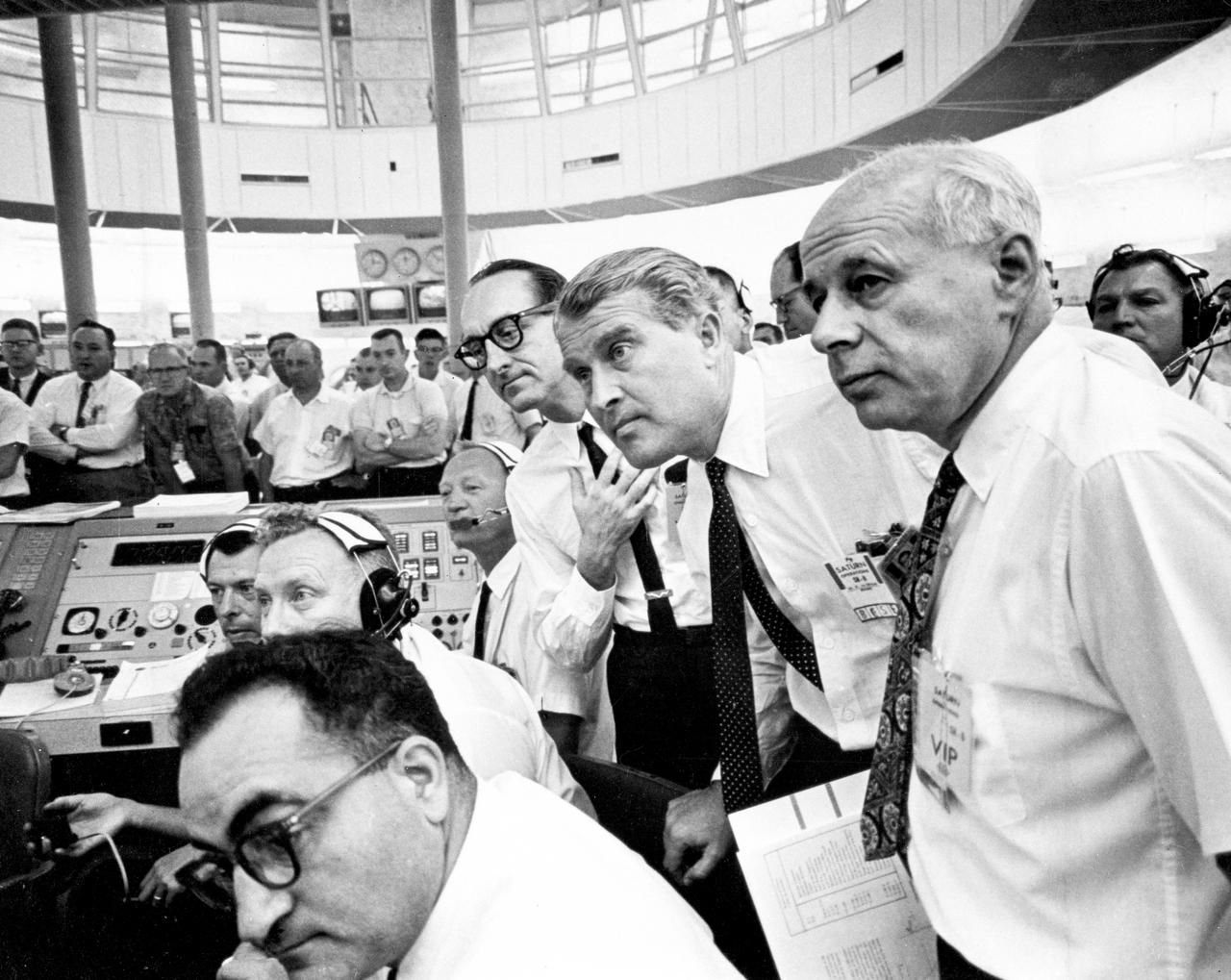
This photograph depicts an intense moment during the SA-6 launch at the Firing Room. Dr. von Braun, Director of the Marshall Space Flight Center (MSFC) is at center; to his left is Dr. George Mueller, Associate Director for Marned Space Flight; and far right is Dr. Eberhard Rees, Director for Research and Development, MSFC. The SA-6, the sixth flight of the Saturn 1 vehicle, launched a S-IV stage (a second stage) and an Apollo boilerplate spacecraft.
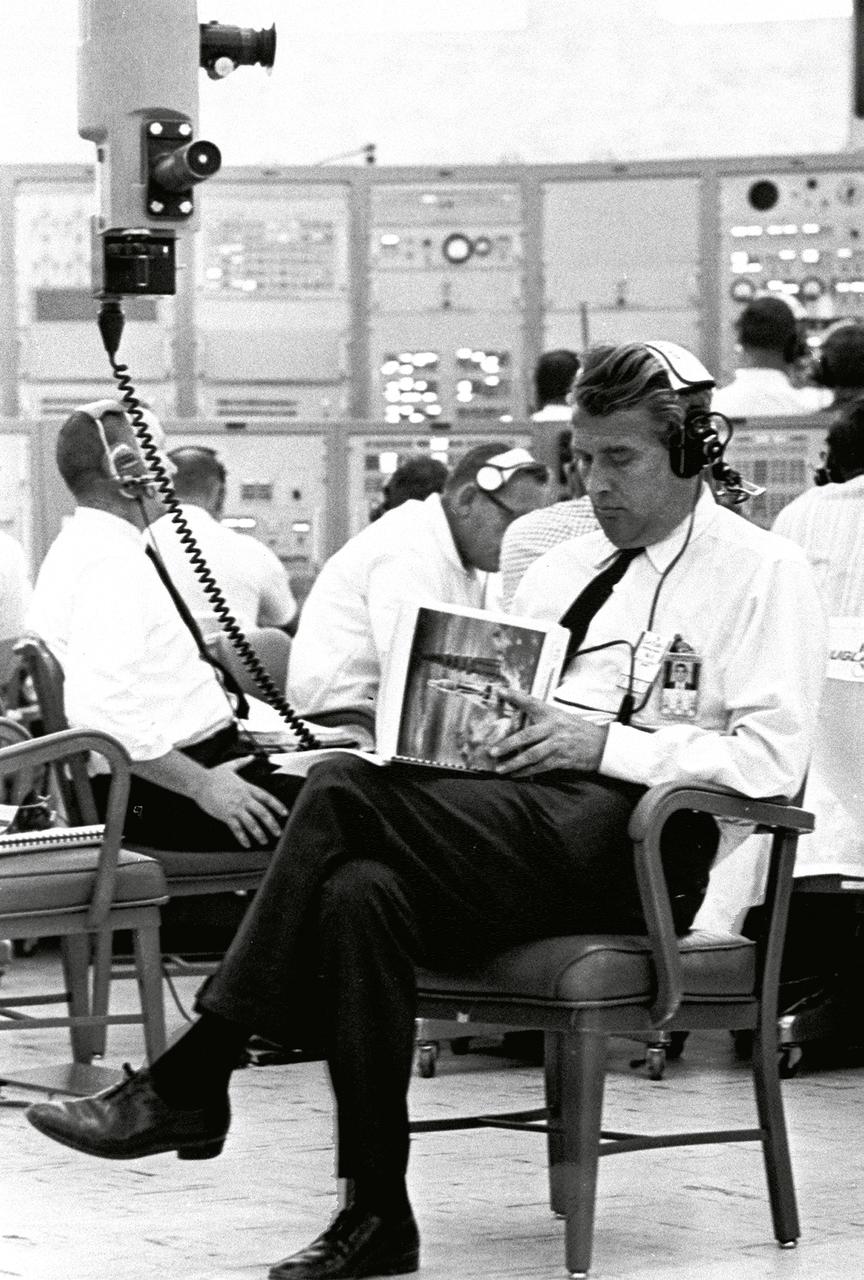
Marshall Space Flight Center (MSFC) Director Wernher von Braun, seated near a periscope in Kennedy Space Center's Blockhouse 34, on May 28, 1964, looks over a flight manual while awaiting the launch of SA-6, the sixth Saturn I flight. Also known as Apollo Mission A-101, the launch marked the first flight of an Apollo spacecraft with a Saturn launch vehicle.
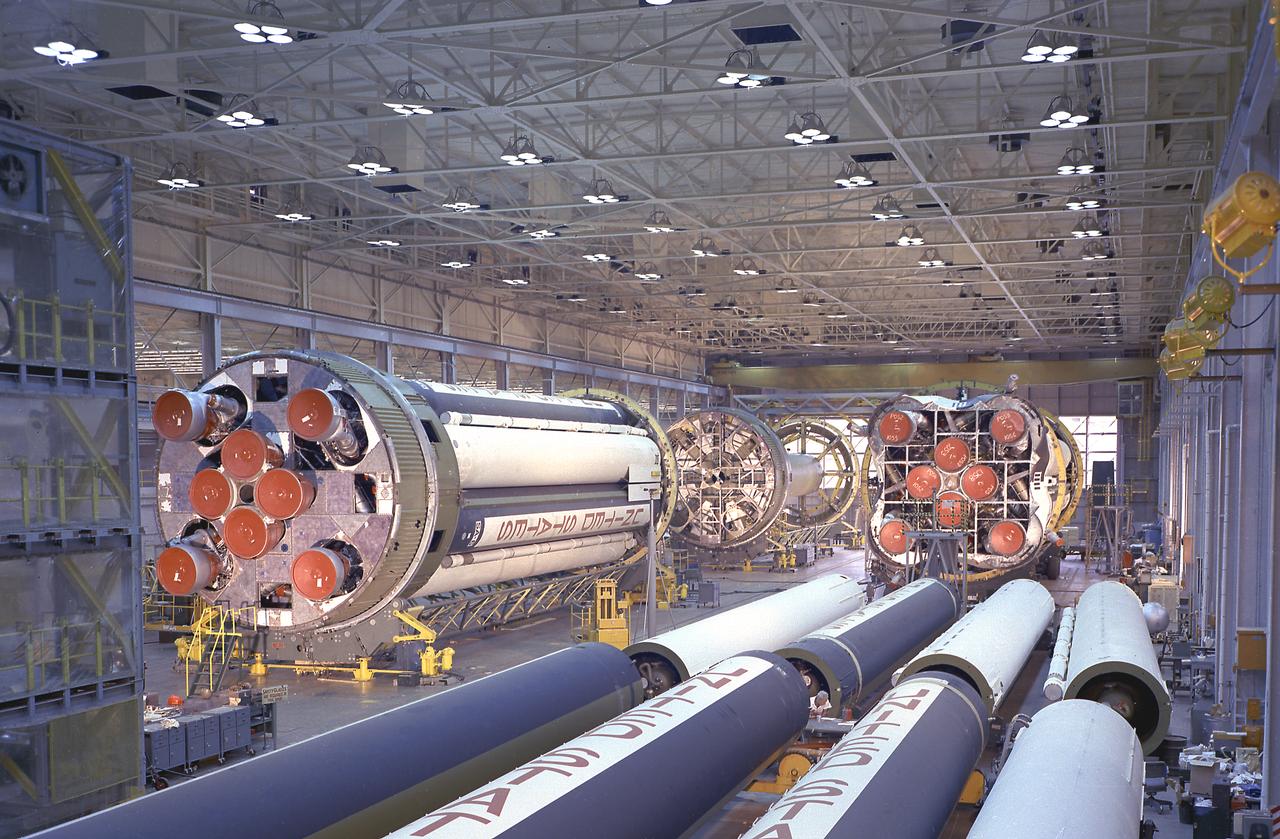
In this photograph, the Saturn I S-I stages for the SA-4, SA-6, and SA-7 missions were being assembled at the Fabrication and Assembly Engineering Division in the Marshall Space Flight Center building 4705, January 13, 1963.
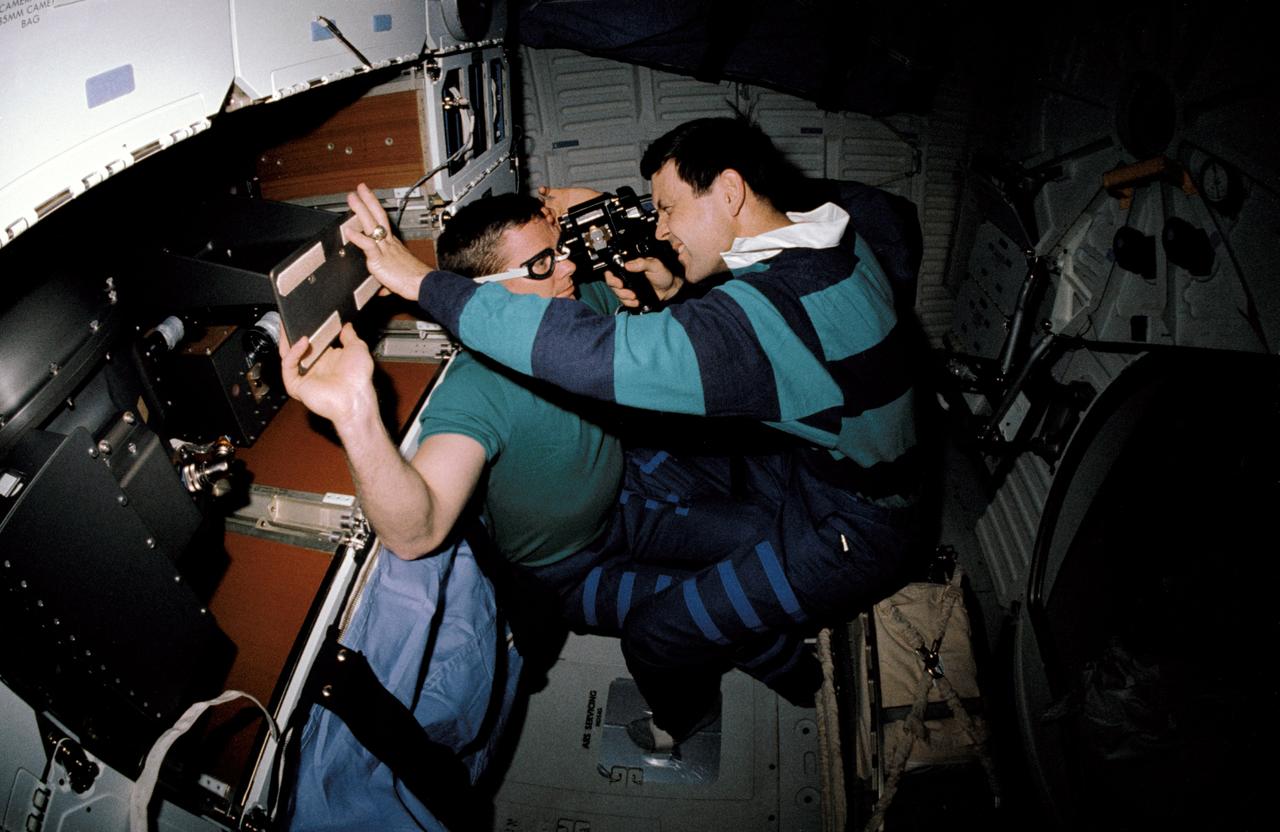
STS041-02-015 (6-10 Oct. 1990) --- A 35mm scene showing astronauts Robert D. Cabana (right), STS-41 pilot, and Bruce E. Melnick, mission specialist, participating in a detailed supplemental objective for STS-41 involving retinal photography. The hypothesis of this experiment is that retinal photographs taken on orbit will show evidence of increased intracranial pressure (ICP) and the evidence of increased ICP and the development of Space Adaptation Syndrome (SAS) will be correlated. SAS has been a subject of on-orbit analysis since the early days of space shuttle.
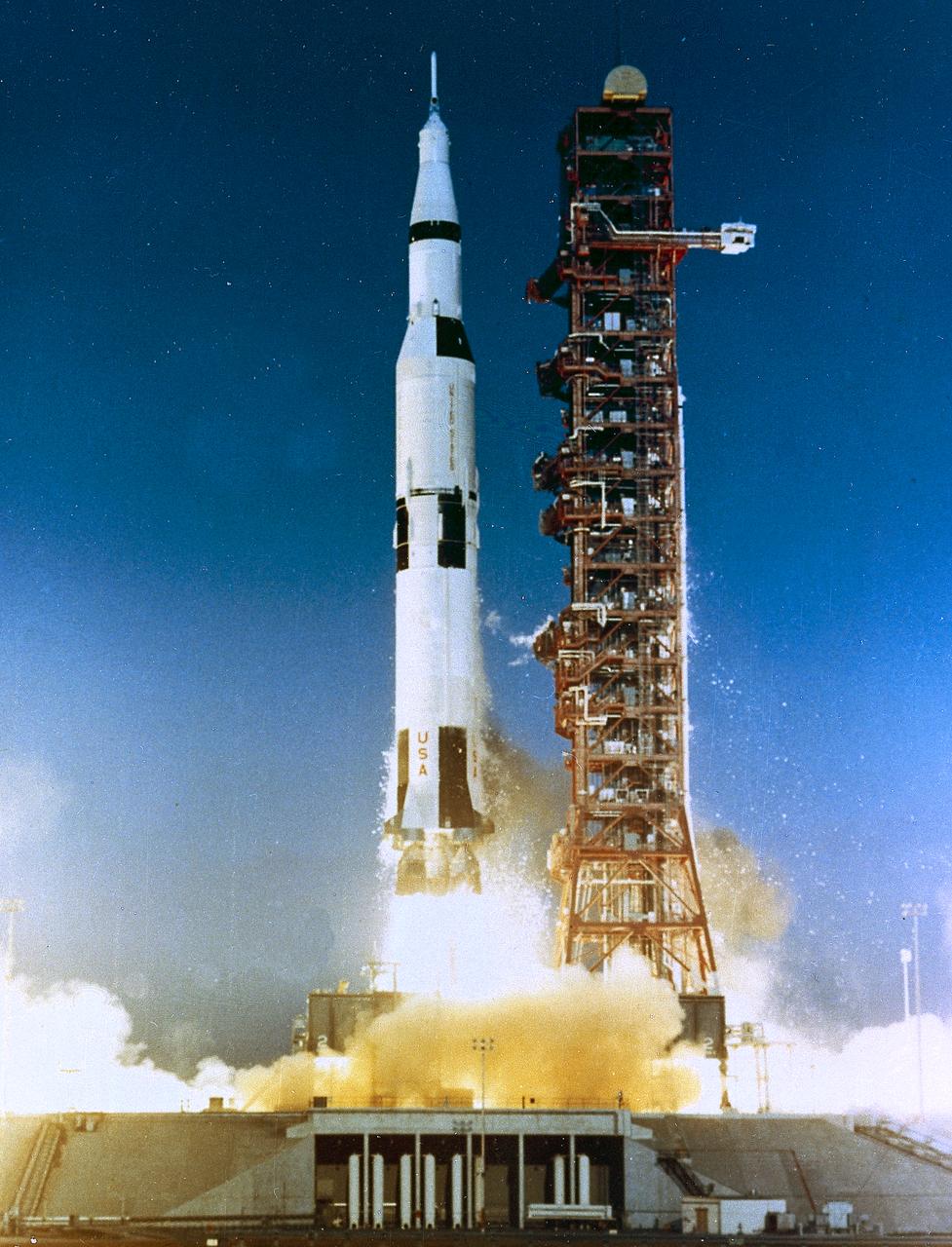
The second Saturn V launch vehicle (SA-502) for the Apollo 6 mission lifted off from the Kennedy Space Center launch complex on April 4, 1968. This unmanned Saturn V launch vehicle tested the emergency detection system in closed loop configuration.
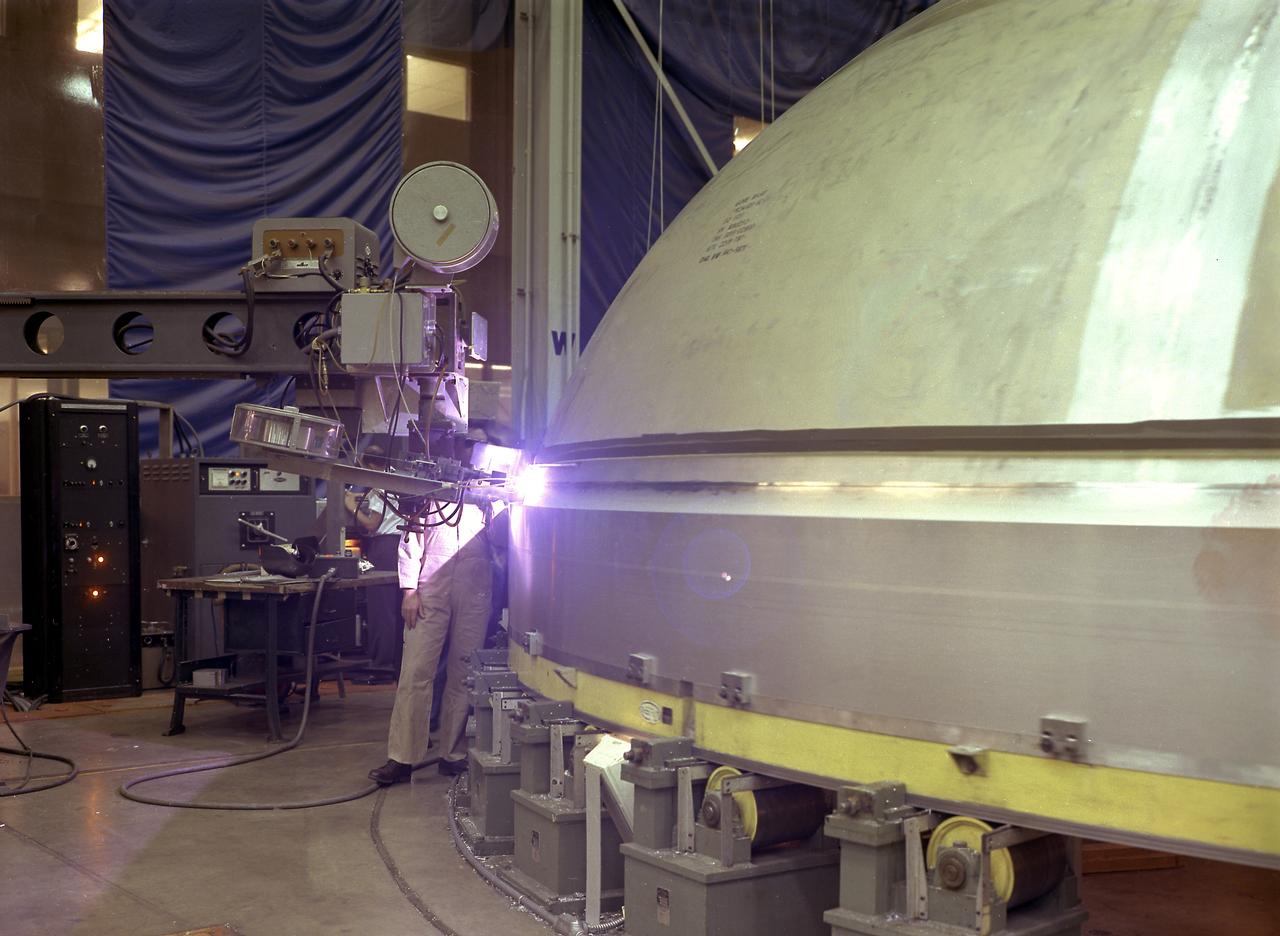
A technician is pictured at the Marshall Space Flight Center welding the Y-ring to the S-IC stage bulkhead and the fuel tank for the Saturn V SA-502 launch vehicle (Apollo 6 mission) in building 4705. The size of the S-IC required a special rig known as the Y-ring to join the tank wall cylinders and domes together. The Y-ring was designed to eliminate lap joints where the tank domes, wall, and adjoining structure (such as the intertank segment) came together.
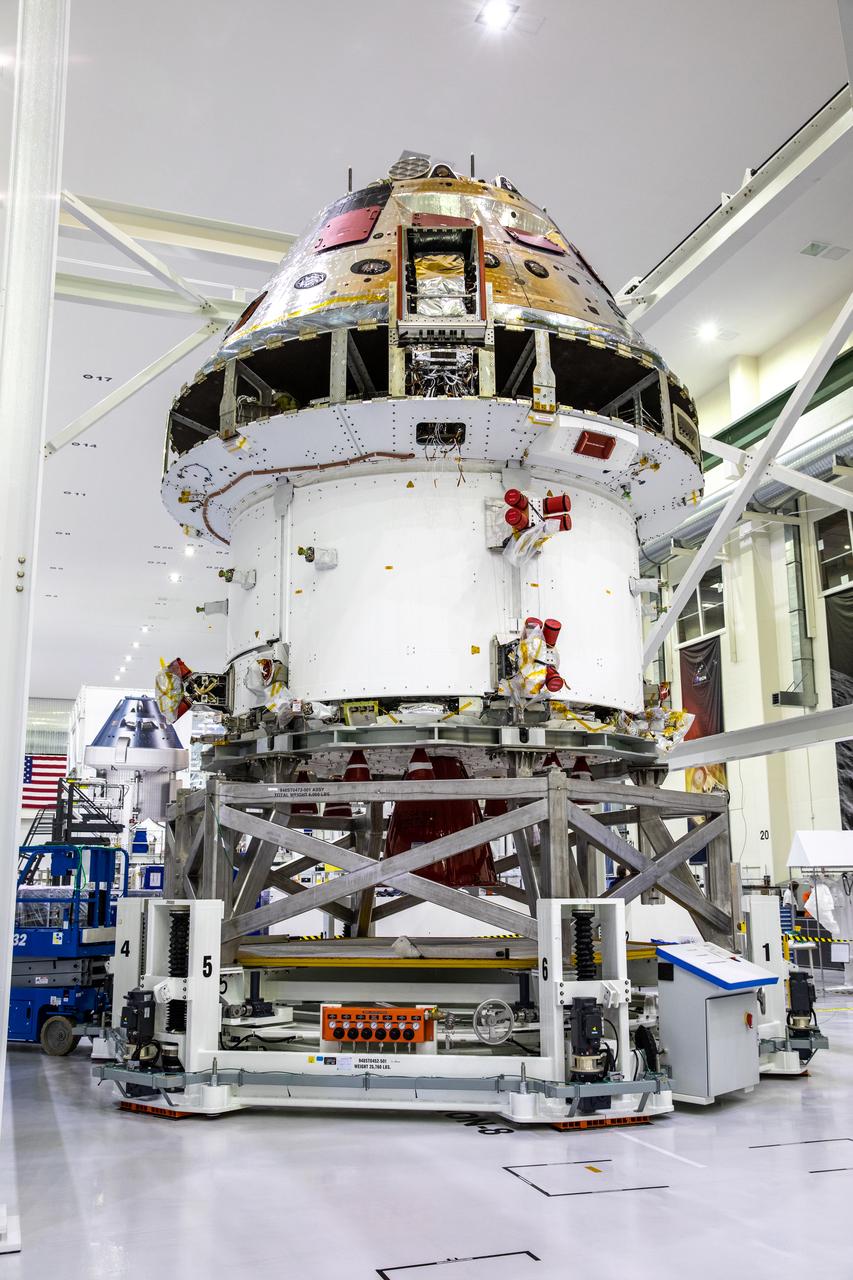
Installation of the spacecraft adapter (SA) cone to the Artemis I Orion spacecraft is in progress inside the Neil Armstrong Operations and Checkout Building at NASA’s Kennedy Space Center in Florida on Aug. 6, 2020. This is one of the final major hardware operations the spacecraft will undergo during closeout processing prior to being integrated with the Space Launch System (SLS) rocket in preparation for the first Artemis mission. The spacecraft adapter cone connects the bottom portion of Orion’s service module to the top part of the rocket known as the interim cryogenic propulsion stage (ICPS). Orion will fly on the agency’s Artemis I mission – the first in a series of increasingly complex missions to the Moon that will ultimately lead to the exploration of Mars.
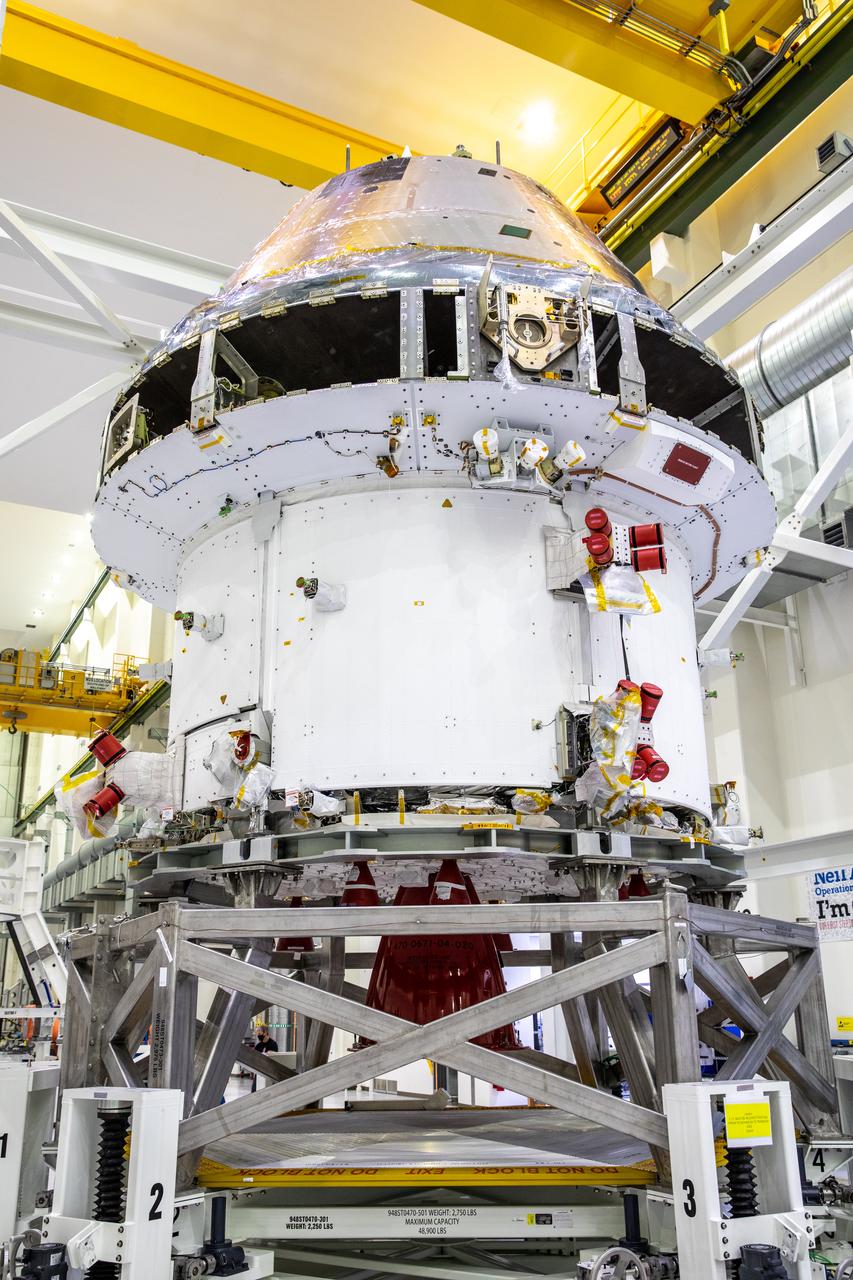
Installation of the spacecraft adapter (SA) cone to the Artemis I Orion spacecraft is in progress inside the Neil Armstrong Operations and Checkout Building at NASA’s Kennedy Space Center in Florida on Aug. 6, 2020. This is one of the final major hardware operations the spacecraft will undergo during closeout processing prior to being integrated with the Space Launch System (SLS) rocket in preparation for the first Artemis mission. The spacecraft adapter cone connects the bottom portion of Orion’s service module to the top part of the rocket known as the interim cryogenic propulsion stage (ICPS). Orion will fly on the agency’s Artemis I mission – the first in a series of increasingly complex missions to the Moon that will ultimately lead to the exploration of Mars.
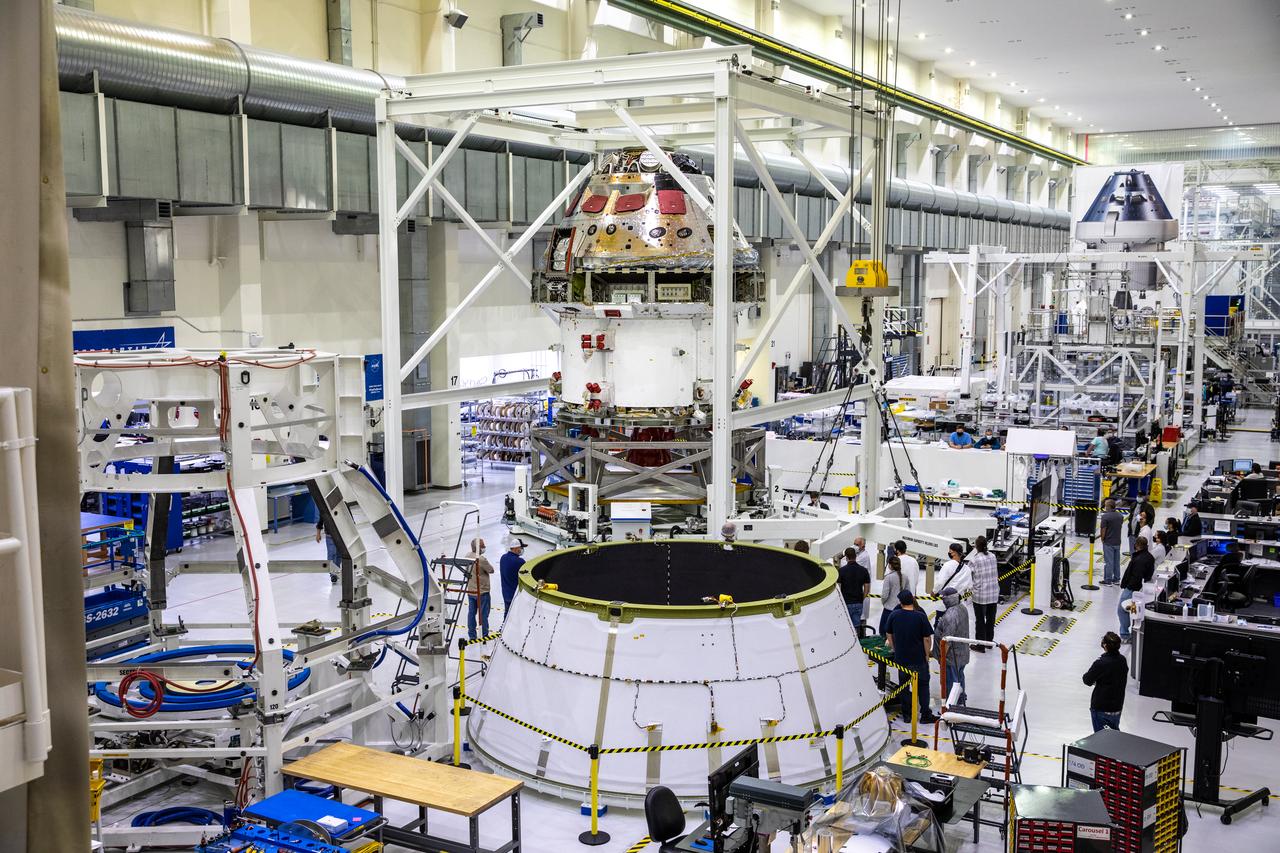
Installation of the spacecraft adapter (SA) cone to the Artemis I Orion spacecraft is in progress inside the Neil Armstrong Operations and Checkout Building at NASA’s Kennedy Space Center in Florida on Aug. 6, 2020. This is one of the final major hardware operations the spacecraft will undergo during closeout processing prior to being integrated with the Space Launch System (SLS) rocket in preparation for the first Artemis mission. The spacecraft adapter cone connects the bottom portion of Orion’s service module to the top part of the rocket known as the interim cryogenic propulsion stage (ICPS). Orion will fly on the agency’s Artemis I mission – the first in a series of increasingly complex missions to the Moon that will ultimately lead to the exploration of Mars.
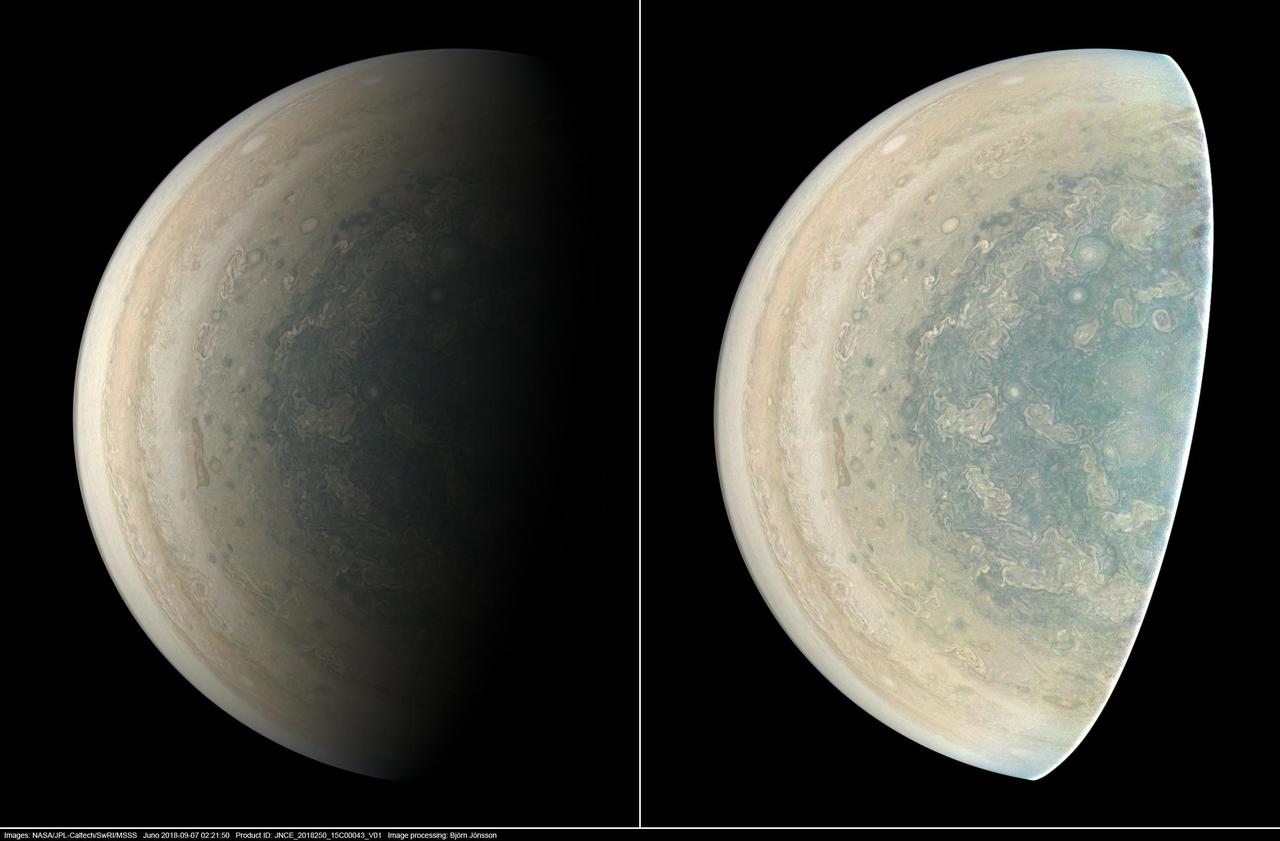
This image was taken at 7:21 p.m. PDT (10:21 p.m. EDT) on Sept. 6, 2018, as the spacecraft performed its 15th close flyby of Jupiter. The version of the image on the left side shows Jupiter in approximate true color, while the same image on the right has been processed to bring out detail close to the terminator and reveals four of the five southern circumpolar cyclones plus the cyclone in the center. Citizen scientist Björn Jónsson created this image using data from the spacecraft's JunoCam imager. https://photojournal.jpl.nasa.gov/catalog/PIA22933. - Enhanced image by Björn Jónsson (CC-NC-SA) based on images provided courtesy of NASA/JPL-Caltech/SwRI/MSSS
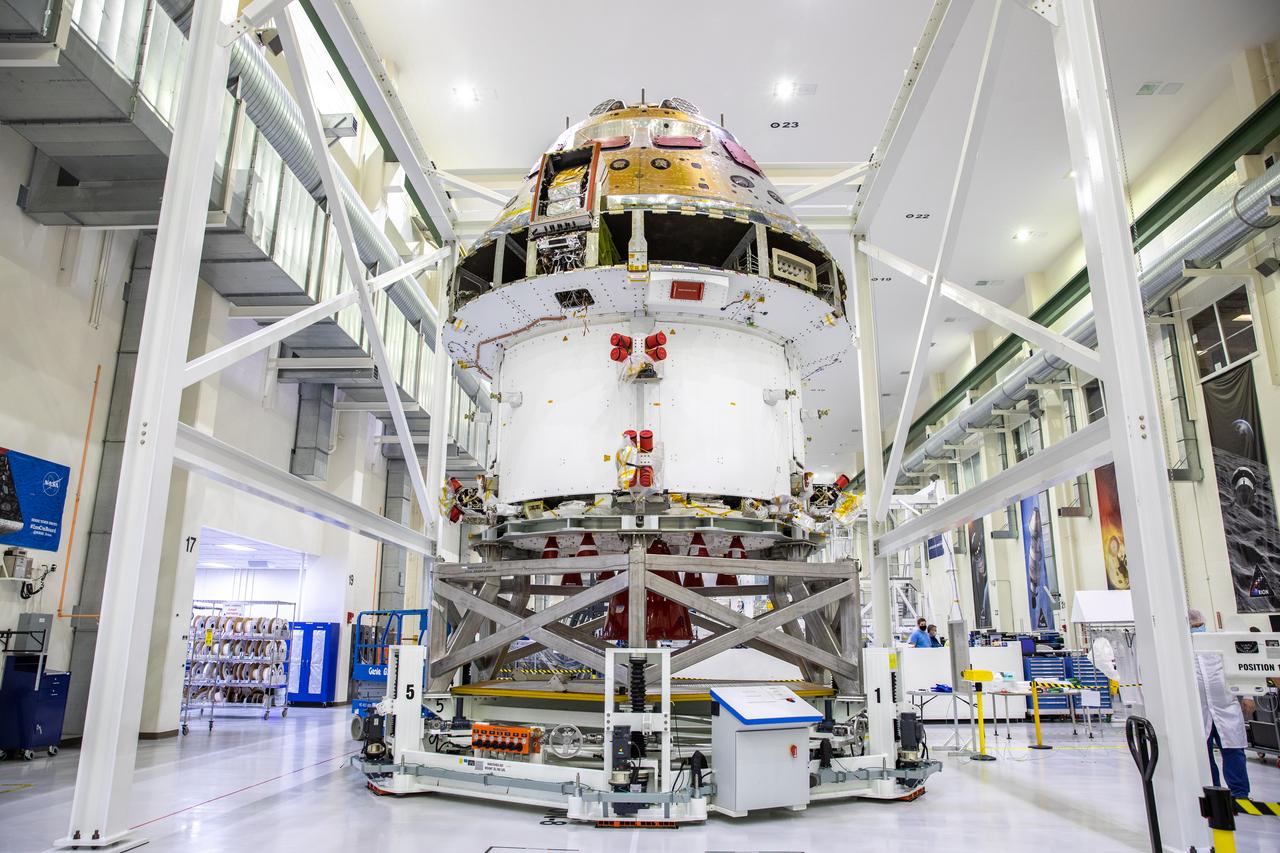
Installation of the spacecraft adapter (SA) cone to the Artemis I Orion spacecraft is in progress inside the Neil Armstrong Operations and Checkout Building at NASA’s Kennedy Space Center in Florida on Aug. 6, 2020. This is one of the final major hardware operations the spacecraft will undergo during closeout processing prior to being integrated with the Space Launch System (SLS) rocket in preparation for the first Artemis mission. The spacecraft adapter cone connects the bottom portion of Orion’s service module to the top part of the rocket known as the interim cryogenic propulsion stage (ICPS). Orion will fly on the agency’s Artemis I mission – the first in a series of increasingly complex missions to the Moon that will ultimately lead to the exploration of Mars.
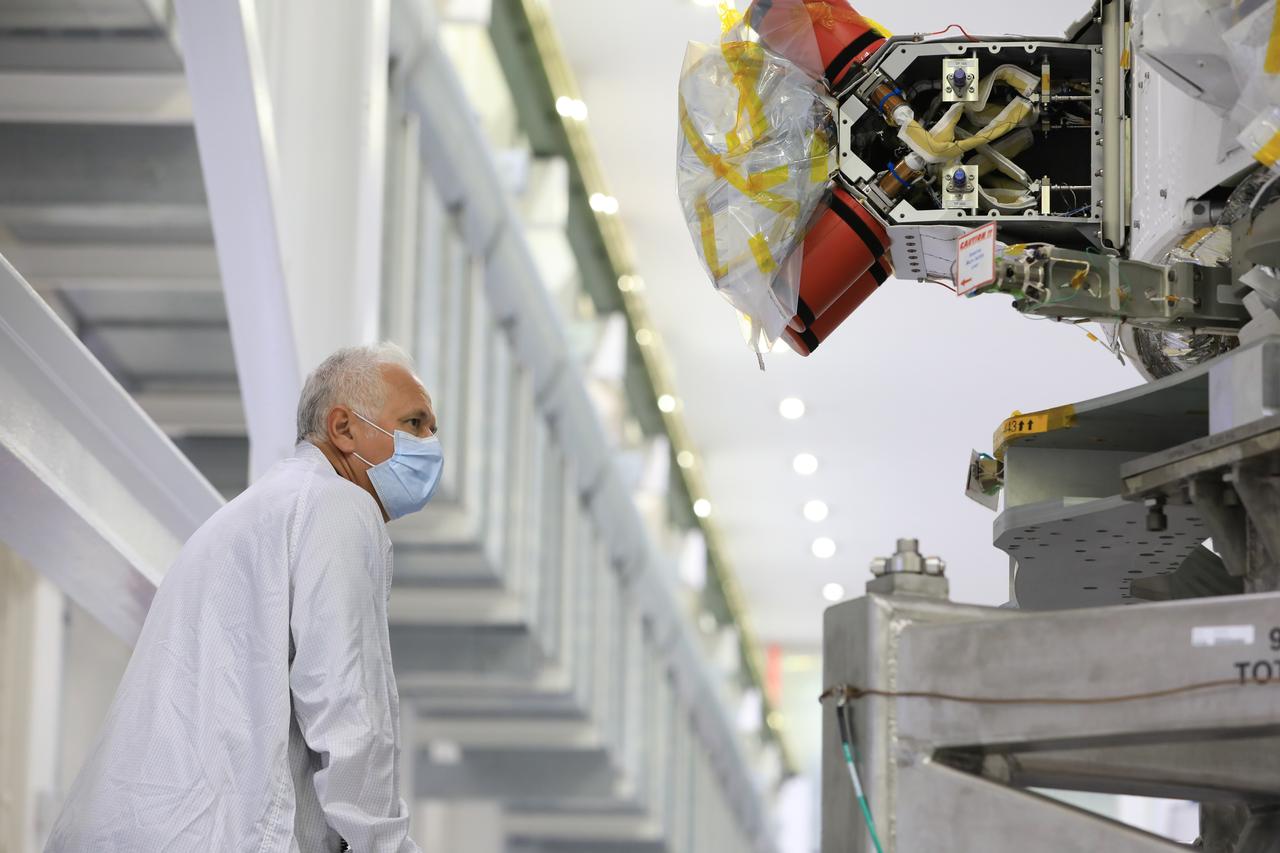
Vince Nichols, Lockheed Martin Floor Operations, inspects the Artemis I Orion spacecraft in preparation for installation of the spacecraft adapter (SA) cone inside the Neil Armstrong Operations and Checkout Building at NASA’s Kennedy Space Center in Florida on Aug. 6, 2020. This is one of the final major hardware operations the spacecraft will undergo during closeout processing prior to being integrated with the Space Launch System (SLS) rocket in preparation for the first Artemis mission. The spacecraft adapter cone connects the bottom portion of Orion’s service module to the top part of the rocket known as the interim cryogenic propulsion stage (ICPS). Orion will fly on the agency’s Artemis I mission – the first in a series of increasingly complex missions to the Moon that will ultimately lead to the exploration of Mars.
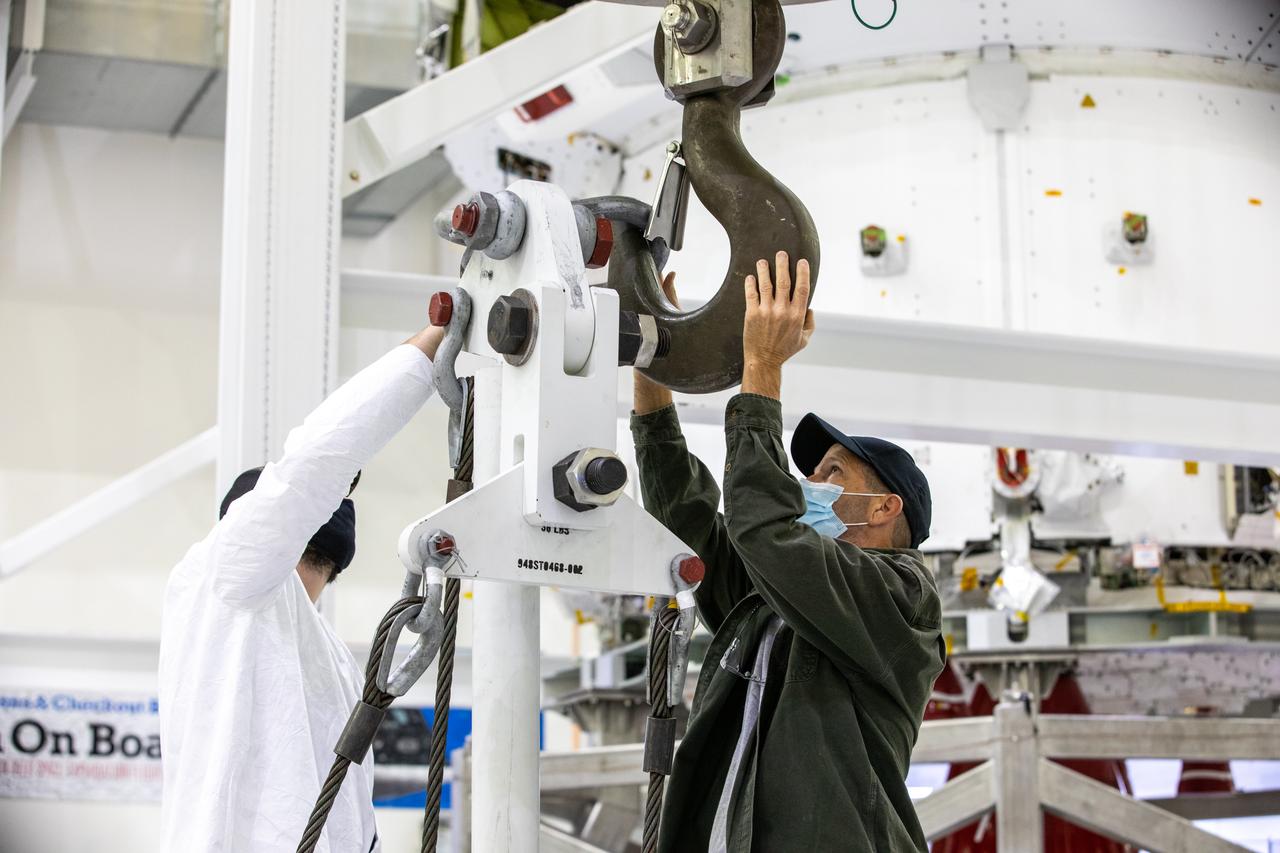
ASRC technicians Dustin Swickert, to the left. and John Nesbitt, to the right, work to attach the crane that lifts the Artemis I Orion spacecraft in preparation for installation of the spacecraft adapter (SA) cone inside the Neil Armstrong Operations and Checkout Building at NASA’s Kennedy Space Center in Florida on Aug. 6, 2020. This is one of the final major hardware operations the spacecraft will undergo during closeout processing prior to being integrated with the Space Launch System (SLS) rocket in preparation for the first Artemis mission. The spacecraft adapter cone connects the bottom portion of Orion’s service module to the top part of the rocket known as the interim cryogenic propulsion stage (ICPS). Orion will fly on the agency’s Artemis I mission – the first in a series of increasingly complex missions to the Moon that will ultimately lead to the exploration of Mars.
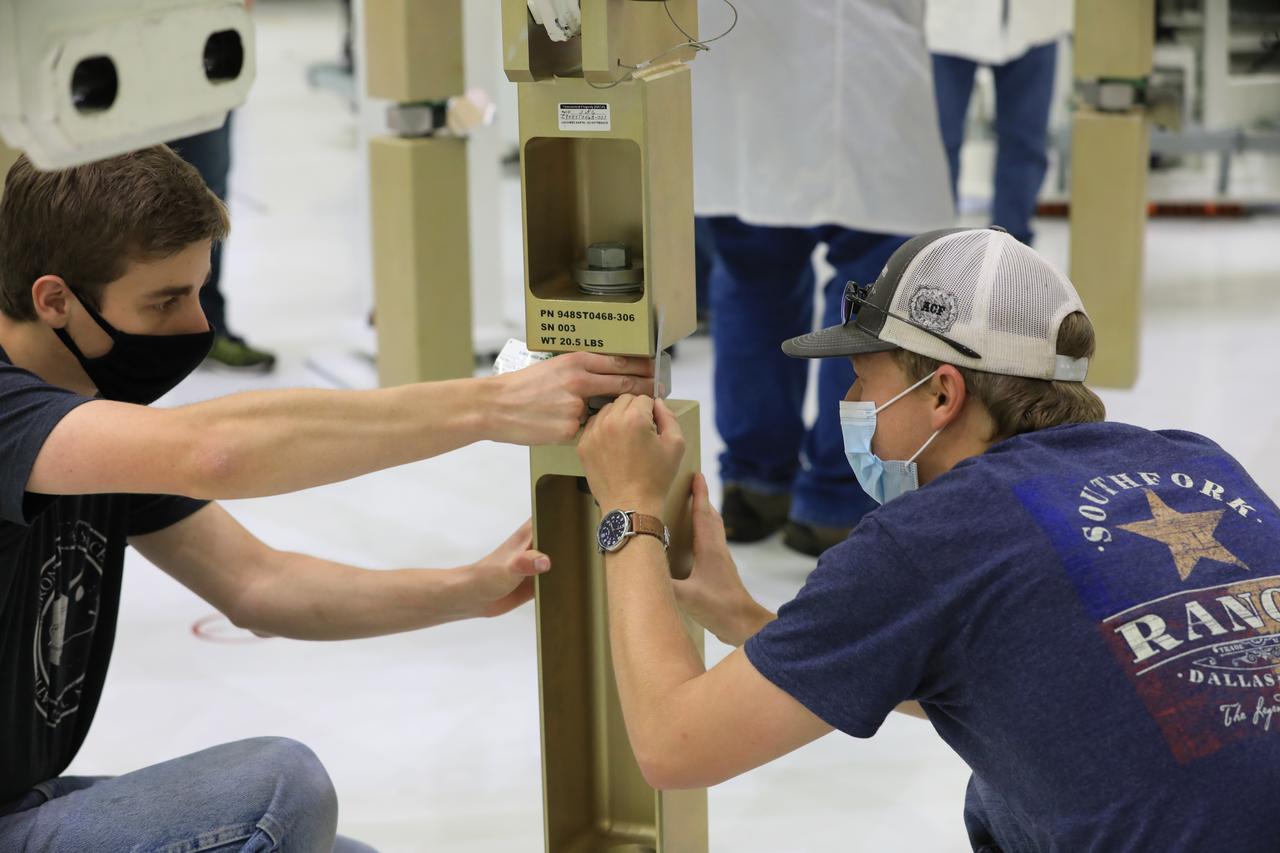
ASRC technicians William Coddington, to the left and Cameron Fitch, to the right, work to ready the Super Station fixture that will support the installation of the spacecraft adapter (SA) cone to the Artemis I Orion spacecraft is in progress inside the Neil Armstrong Operations and Checkout Building at NASA’s Kennedy Space Center in Florida on Aug. 6, 2020. This is one of the final major hardware operations the spacecraft will undergo during closeout processing prior to being integrated with the Space Launch System (SLS) rocket in preparation for the first Artemis mission. The spacecraft adapter cone connects the bottom portion of Orion’s service module to the top part of the rocket known as the interim cryogenic propulsion stage (ICPS). Orion will fly on the agency’s Artemis I mission – the first in a series of increasingly complex missions to the Moon that will ultimately lead to the exploration of Mars.
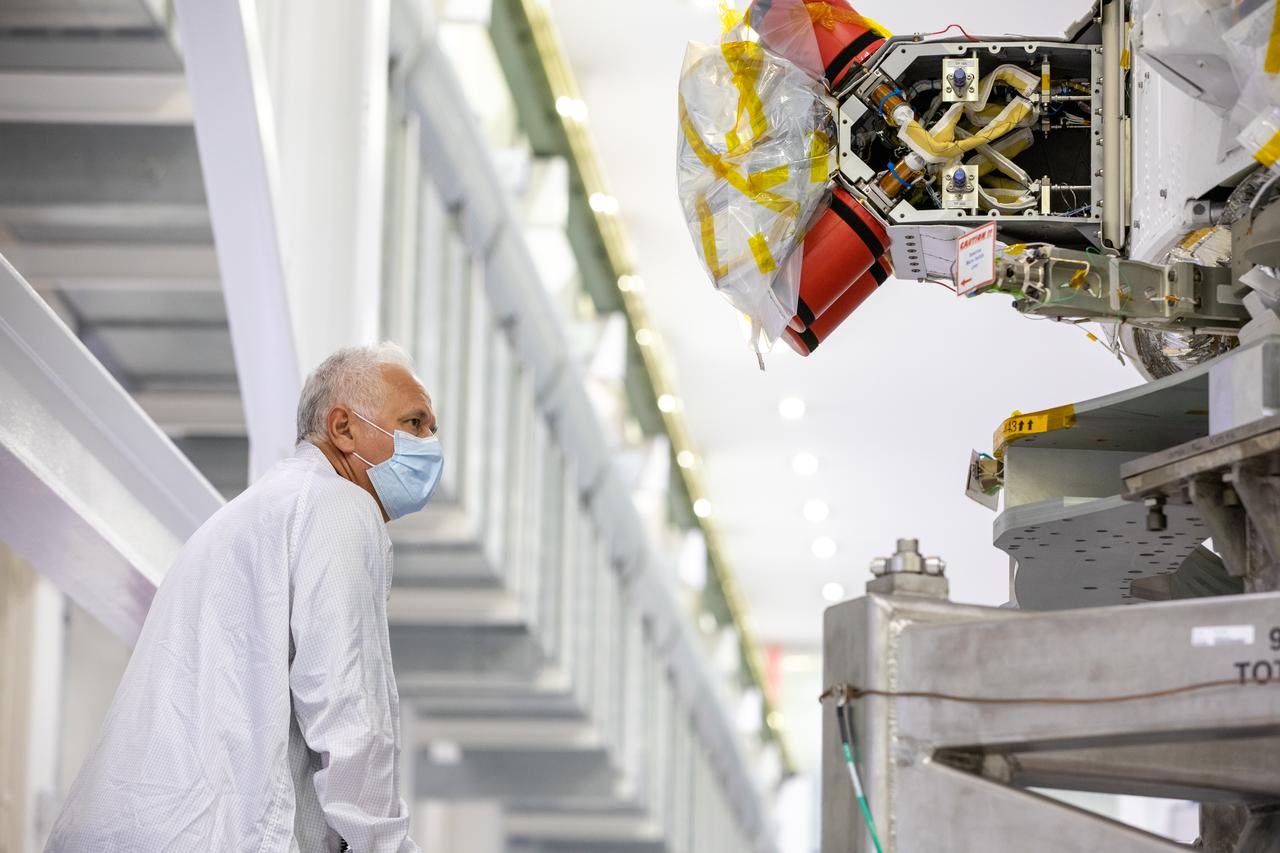
Vince Nichols, Lockheed Martin Floor Operations, inspects the Artemis I Orion spacecraft in preparation for installation of the spacecraft adapter (SA) cone inside the Neil Armstrong Operations and Checkout Building at NASA’s Kennedy Space Center in Florida on Aug. 6, 2020. This is one of the final major hardware operations the spacecraft will undergo during closeout processing prior to being integrated with the Space Launch System (SLS) rocket in preparation for the first Artemis mission. The spacecraft adapter cone connects the bottom portion of Orion’s service module to the top part of the rocket known as the interim cryogenic propulsion stage (ICPS). Orion will fly on the agency’s Artemis I mission – the first in a series of increasingly complex missions to the Moon that will ultimately lead to the exploration of Mars.
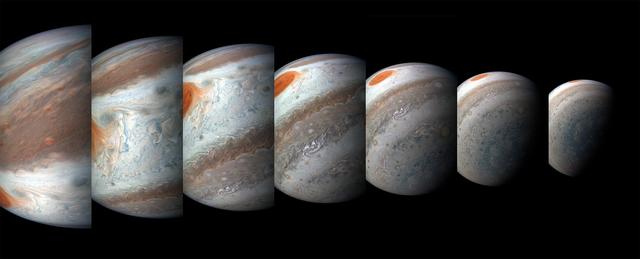
A south tropical disturbance has just passed Jupiter's iconic Great Red Spot and is captured stealing threads of orange haze from the Great Red Spot in this series of color-enhanced images from NASA's Juno spacecraft. From left to right, this sequence of images was taken between 2:57 a.m. and 3:36 a.m. PDT (5:57 a.m. and 6:36 a.m. EDT) on April 1, 2018, as the spacecraft performed its 12th close flyby of Jupiter. Citizen scientists Gerald Eichstädt and Seán Doran created this image using data from the spacecraft's JunoCam imager. https://photojournal.jpl.nasa.gov/catalog/PIA22937 ** Image Credit: Enhanced Image by Gerald Eichstädt and Seán Doran (CC BY-NC-SA) based on images provided courtesy of NASA/JPL-Caltech/SwRI/MSSS
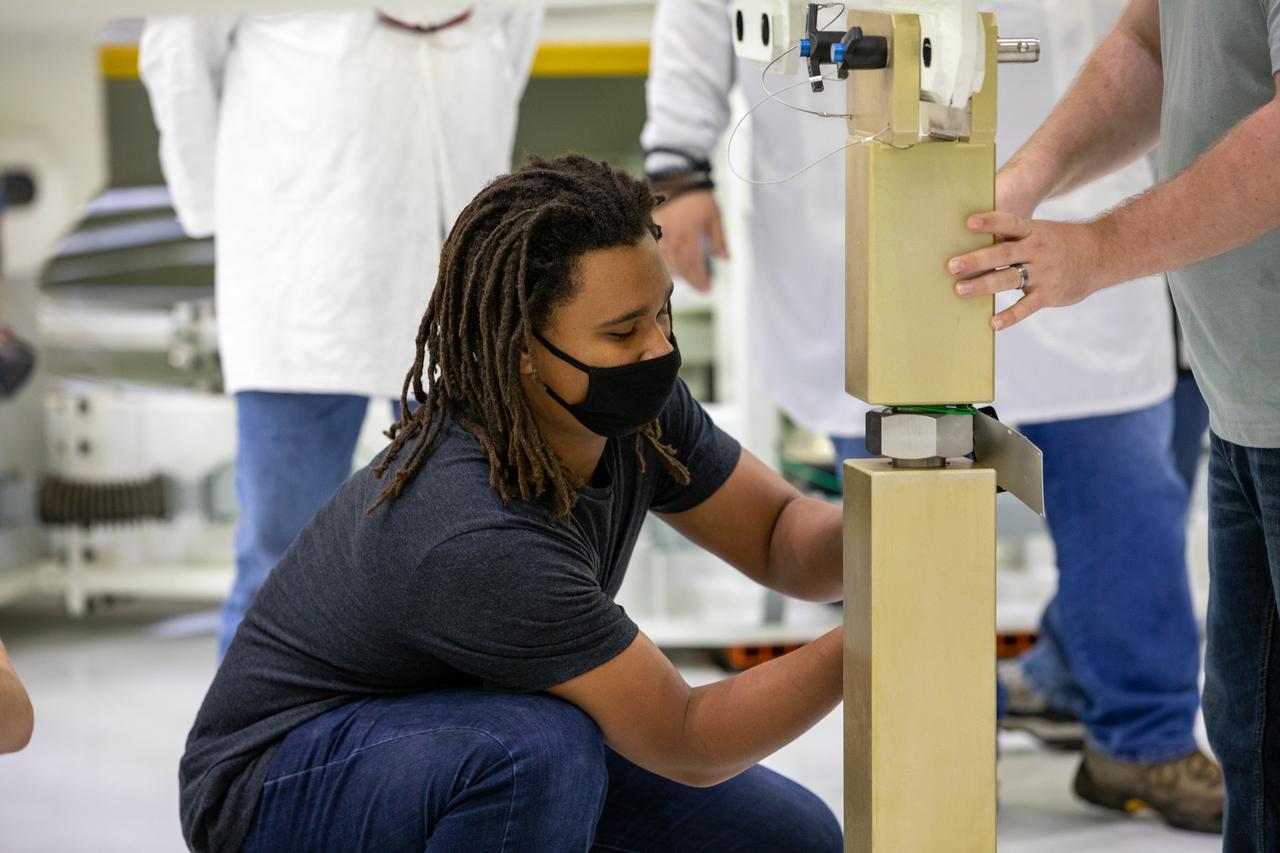
ASRC technician Nathaniel Bowman works to ready the Super Station fixture that will support the installation of the spacecraft adapter (SA) cone to the Artemis I Orion spacecraft inside the Neil Armstrong Operations and Checkout Building at NASA’s Kennedy Space Center in Florida on Aug. 6, 2020. This is one of the final major hardware operations the spacecraft will undergo during closeout processing prior to being integrated with the Space Launch System (SLS) rocket in preparation for the first Artemis mission. The spacecraft adapter cone connects the bottom portion of Orion’s service module to the top part of the rocket known as the interim cryogenic propulsion stage (ICPS). Orion will fly on the agency’s Artemis I mission – the first in a series of increasingly complex missions to the Moon that will ultimately lead to the exploration of Mars.
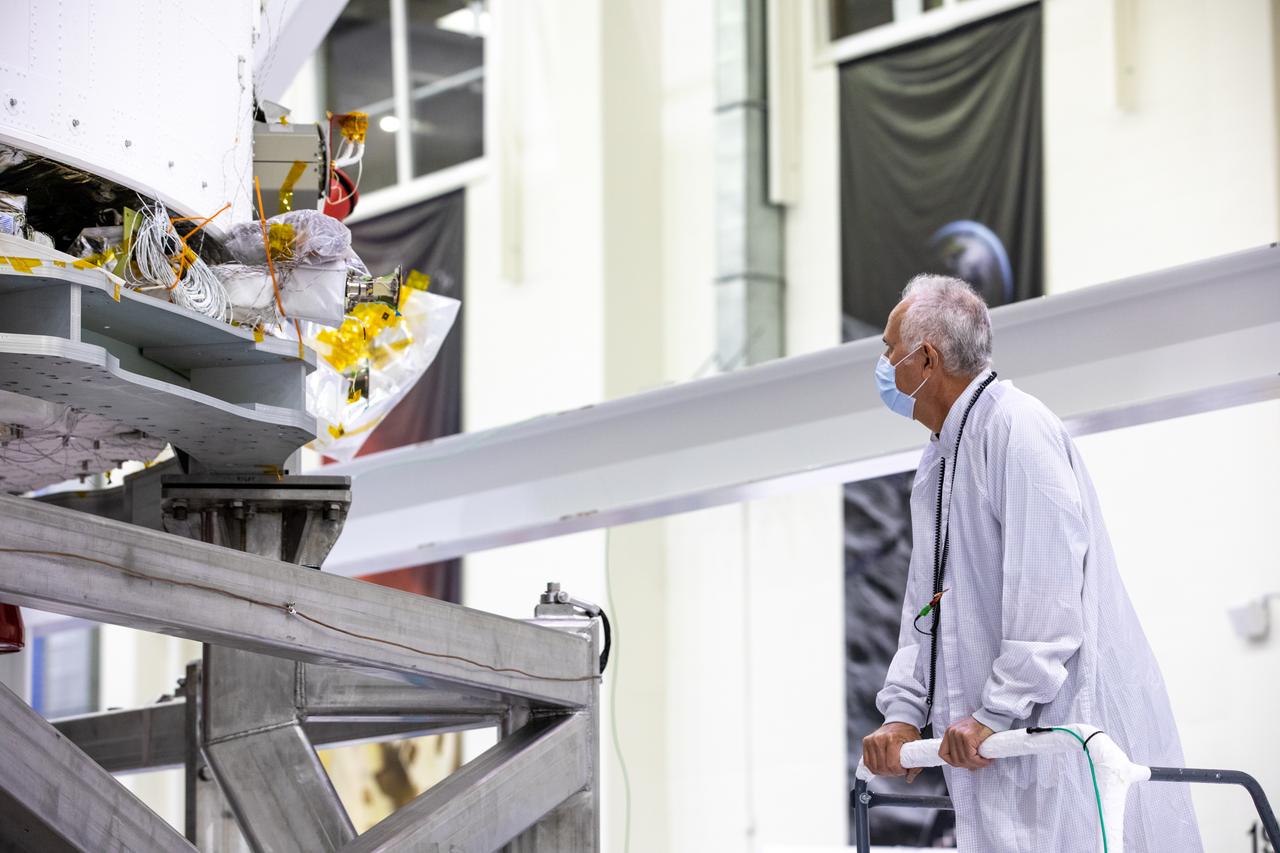
Vince Nichols, Lockheed Martin Floor Operations, inspects the Artemis I Orion spacecraft in preparation for installation of the spacecraft adapter (SA) cone inside the Neil Armstrong Operations and Checkout Building at NASA’s Kennedy Space Center in Florida on Aug. 6, 2020. This is one of the final major hardware operations the spacecraft will undergo during closeout processing prior to being integrated with the Space Launch System (SLS) rocket in preparation for the first Artemis mission. The spacecraft adapter cone connects the bottom portion of Orion’s service module to the top part of the rocket known as the interim cryogenic propulsion stage (ICPS). Orion will fly on the agency’s Artemis I mission – the first in a series of increasingly complex missions to the Moon that will ultimately lead to the exploration of Mars.
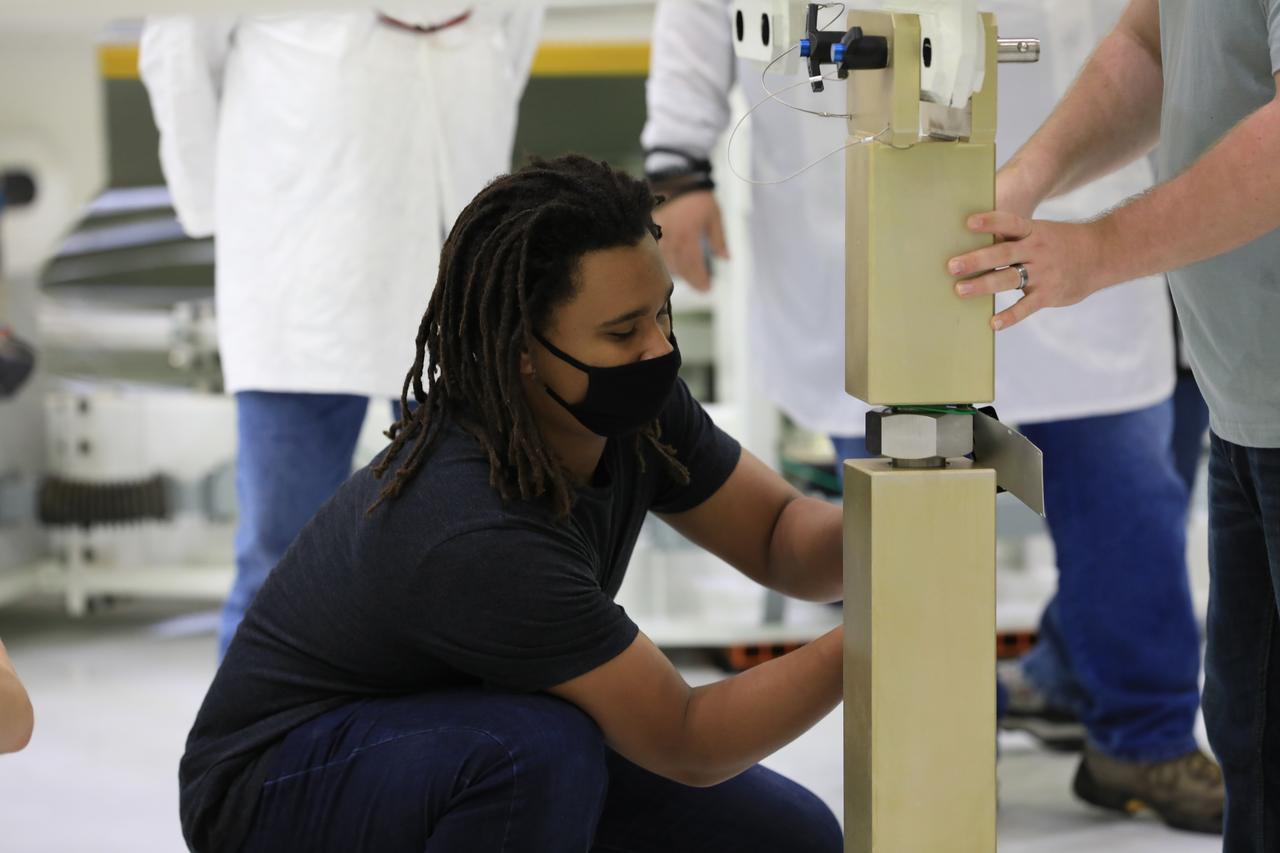
ASRC technician Nathaniel Bowman works to ready the Super Station fixture that will support the installation of the spacecraft adapter (SA) cone to the Artemis I Orion spacecraft inside the Neil Armstrong Operations and Checkout Building at NASA’s Kennedy Space Center in Florida on Aug. 6, 2020. This is one of the final major hardware operations the spacecraft will undergo during closeout processing prior to being integrated with the Space Launch System (SLS) rocket in preparation for the first Artemis mission. The spacecraft adapter cone connects the bottom portion of Orion’s service module to the top part of the rocket known as the interim cryogenic propulsion stage (ICPS). Orion will fly on the agency’s Artemis I mission – the first in a series of increasingly complex missions to the Moon that will ultimately lead to the exploration of Mars.
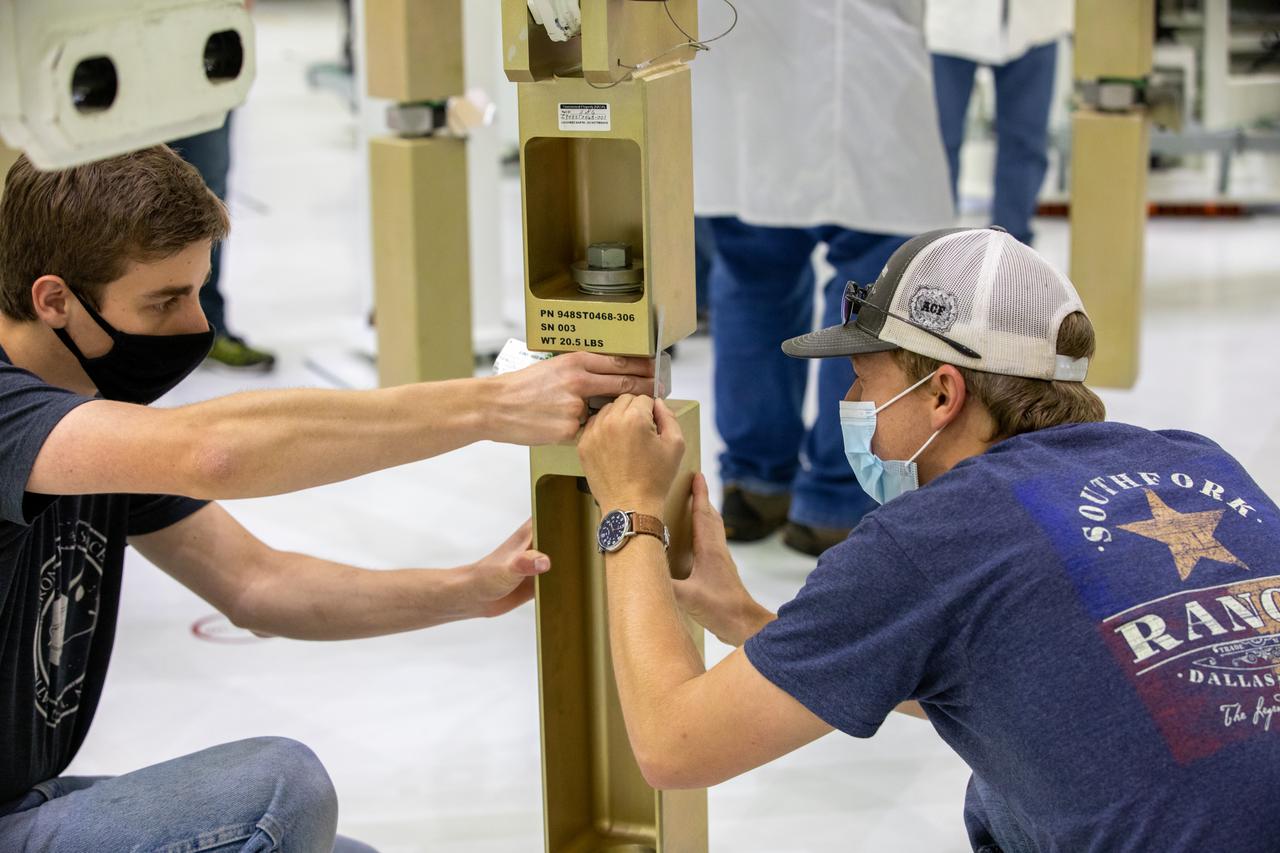
ASRC technicians William Coddington, to the left and Cameron Fitch, to the right, work to ready the Super Station fixture that will support the installation of the spacecraft adapter (SA) cone to the Artemis I Orion spacecraft is in progress inside the Neil Armstrong Operations and Checkout Building at NASA’s Kennedy Space Center in Florida on Aug. 6, 2020. This is one of the final major hardware operations the spacecraft will undergo during closeout processing prior to being integrated with the Space Launch System (SLS) rocket in preparation for the first Artemis mission. The spacecraft adapter cone connects the bottom portion of Orion’s service module to the top part of the rocket known as the interim cryogenic propulsion stage (ICPS). Orion will fly on the agency’s Artemis I mission – the first in a series of increasingly complex missions to the Moon that will ultimately lead to the exploration of Mars.