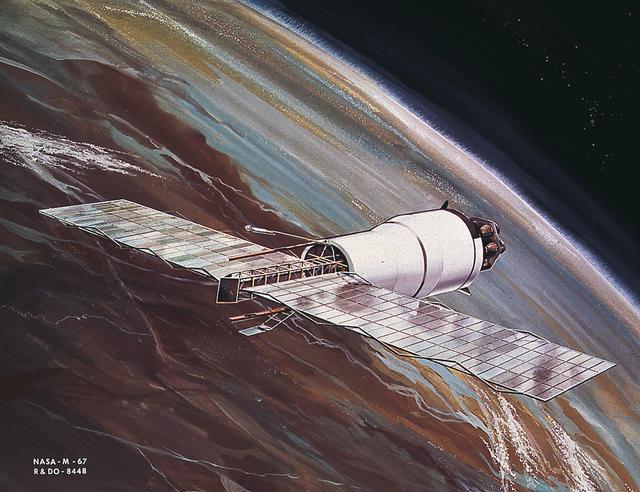
This image is an artist's conception of the Pegasus, meteoroid detection satellite, in orbit with meteoroid detector extended. The satellite, a payload for Saturn I SA-8, SA-9, and SA-10 missions, was used to obtain data on frequency and penetration of the potentially hazardous micrometeoroids in low Earth orbits and to relay the information back to Earth.
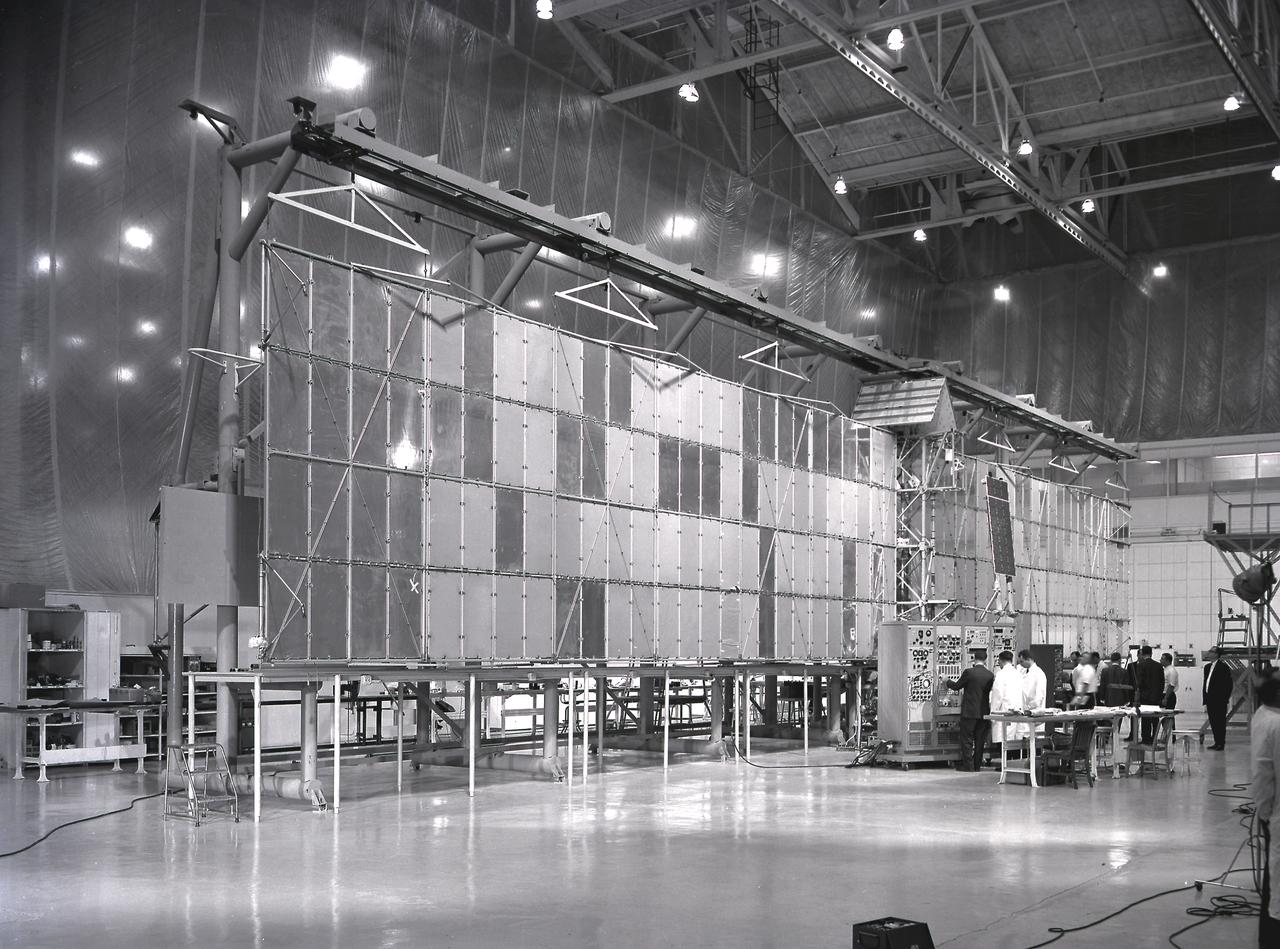
Fairchild technicians check out the extended Pegasus meteoroid detection surface. The Pegasus was developed by Fairchild Stratos Corporation, Hagerstown, Maryland, for NASA through the Marshall Space Flight Center. Three Pegasus satellites were flown aboard Saturn I SA-8, SA-9, and SA-10 missions. After being placed into orbit around the Earth, the satellite unfolded a series of giant panels to form a pair of wings measuring 96 feet across. The purpose of the satellite was to electronically record the size and frequency of particles in space, and compare the performance of protected and unprotected solar cells as important new preliminaries to a marned flight to the Moon.
Pegasus-1, meteoroid detection satellite, installed on Saturn I (SA-9 mission) S-IV stage, January 13, 1965. The satellite was used to obtain data on frequency and penetration of the potentially hazardous micrometeoroids in low Earth orbits and to relay the information back to Earth. SA-9 was launched on February 16, 1965 and the Pegasus-1 satellite was the first operational payload for Saturn I.
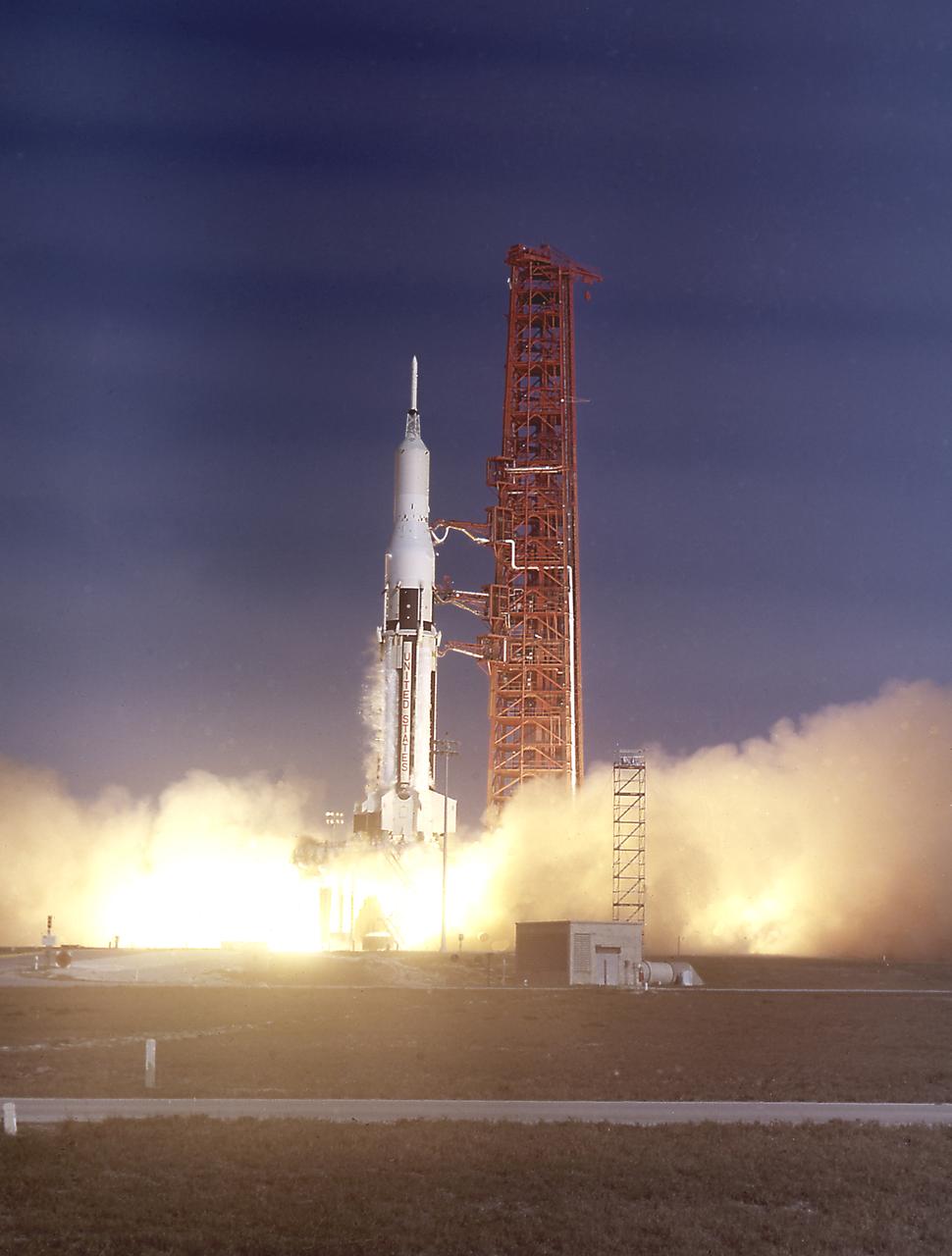
The SA-9 (Saturn I Block II), the eighth Saturn I flight, lifted off on February 16, 1965. This was the first Saturn with an operational payload, the Pegasus I meteoroid detection satellite. SA-9 successfully deployed the Pegasus I, NASA's largest unmarned instrumented satellite, into near Earth orbit.
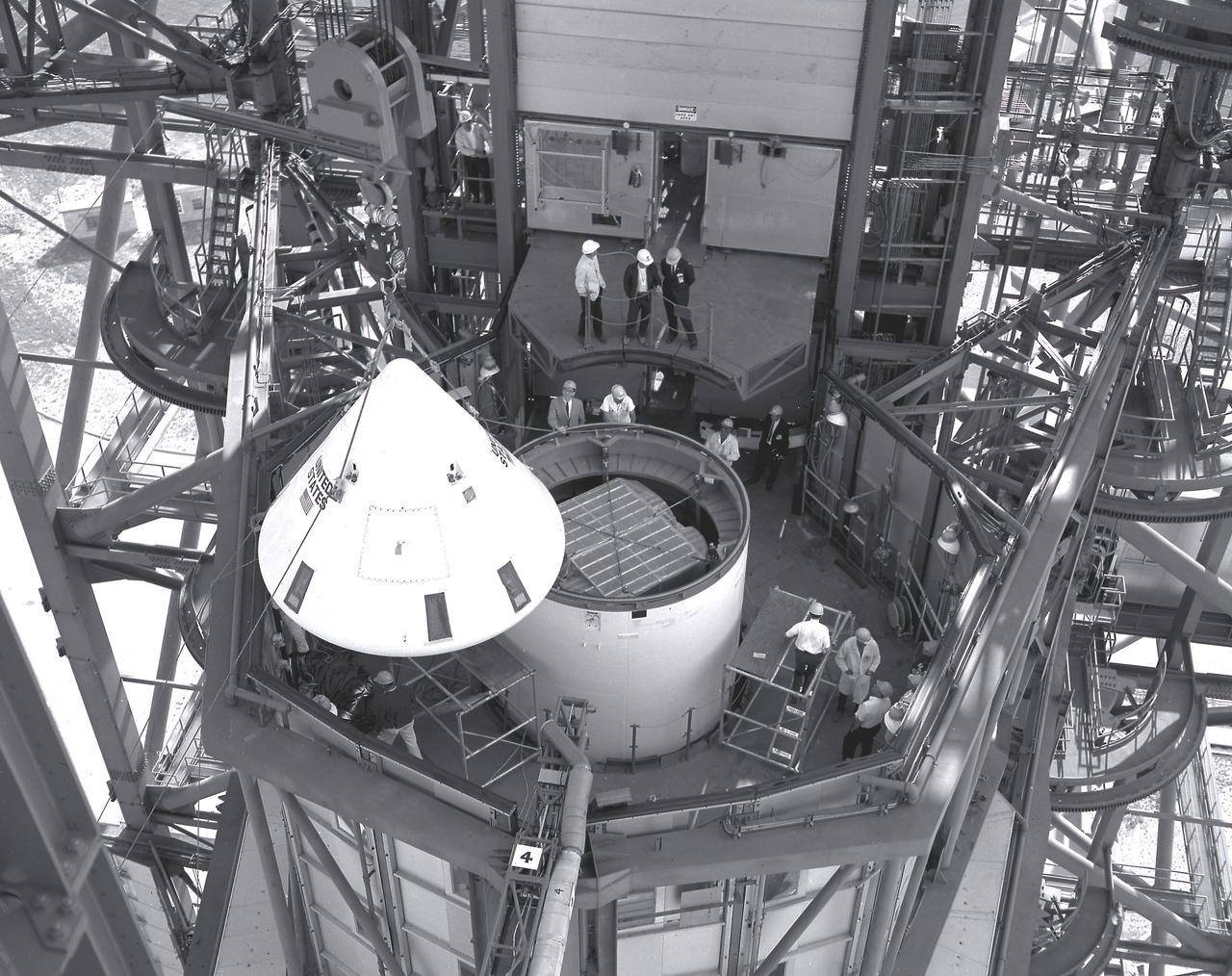
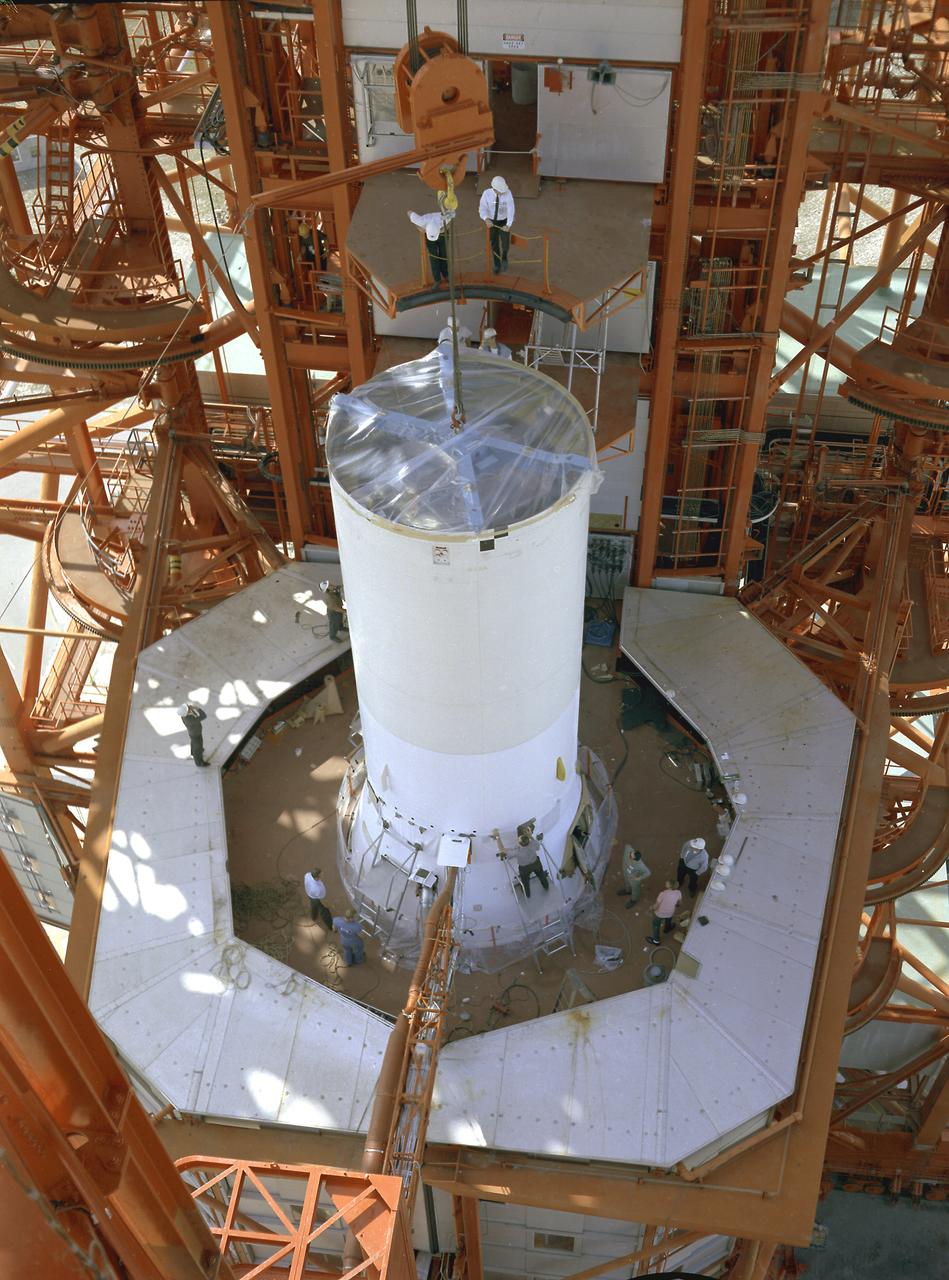
In this photograph, the Pegasus, meteoroid detection satellite is installed in its specially modified Apollo service module atop the S-IV stage (second stage) of a Saturn I vehicle for the SA-9 mission at Cape Kennedy. Personnel in the service structure moved the boilerplate Apollo command module into place to cap the vehicle. The command and service modules, visible here, were jettisoned into orbit to free the Pegasus for wing deployment. The satellite was used to obtain data on frequency and penetration of the potentially hazardous micrometeoroids in low Earth orbits and to relay the information back to Earth. The SA-9 was launched on February 16, 1965.
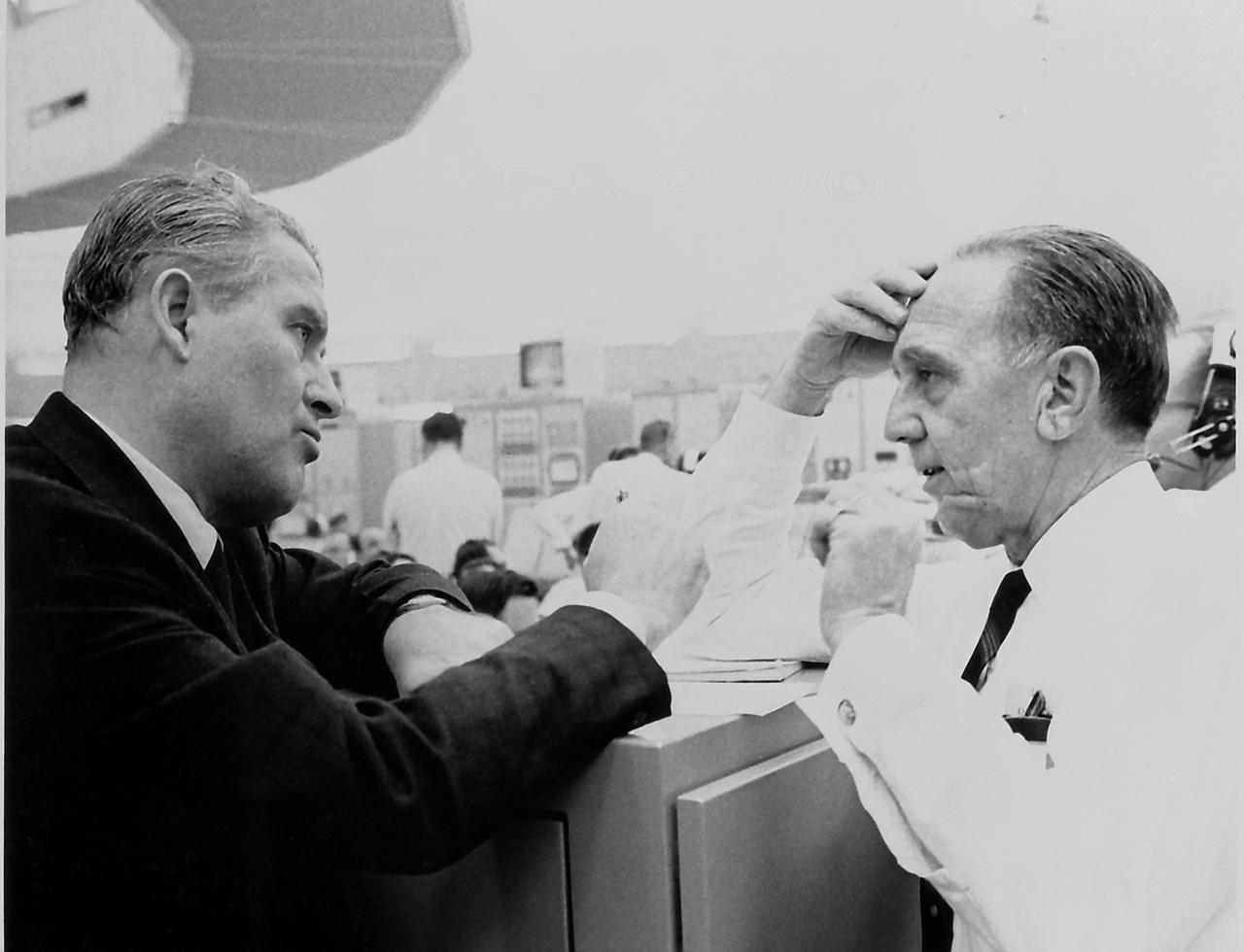
Marshall Space Flight Center (MSFC) Director, Dr. Wernher von Braun (left) confers with the Director of the MSFC Launch Operation Directorate, Dr. Debus, during the countdown for the Saturn/Pegasus (Saturn I, SA-9) launch. The successful launch of the Pegasus satellite marked the largest unmarned instrumented satellite in orbit up to 1965.
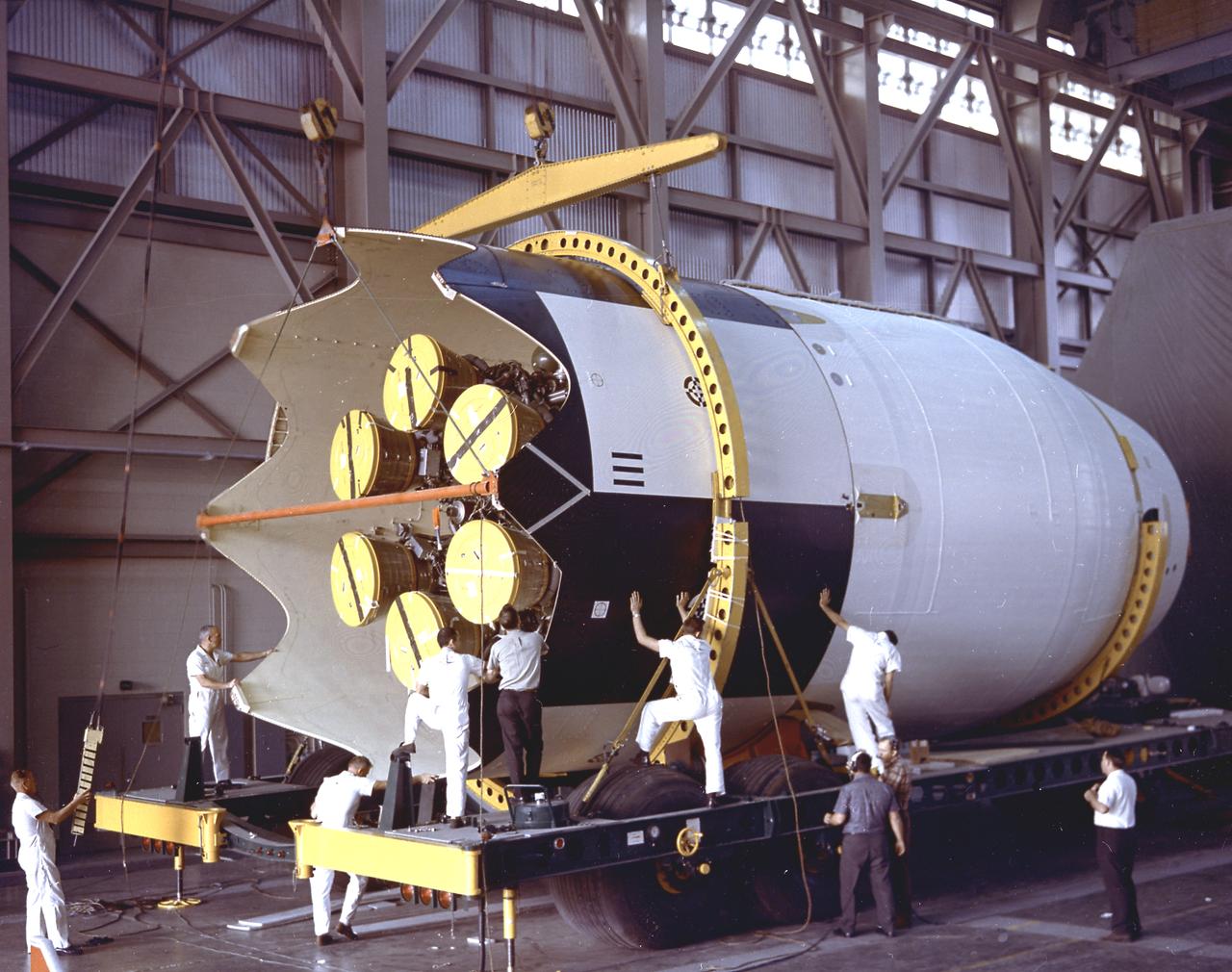
The Saturn I S-IV stage (second stage) assembly for the SA-9 mission underwent the weight and balance test in the hangar building at Cape Canaveral. The S-IV stage had six RL-10 engines which used liquid hydrogen and liquid oxygen as its propellants arranged in a circle. Each RL-10 engine produced a thrust of 15,000 pounds, a total combined thrust of 90,000 pounds. The SA-9 mission was the first Saturn with operational payload Pegasus I, meteoroid detection satellite, and launched on February 16, 1965.
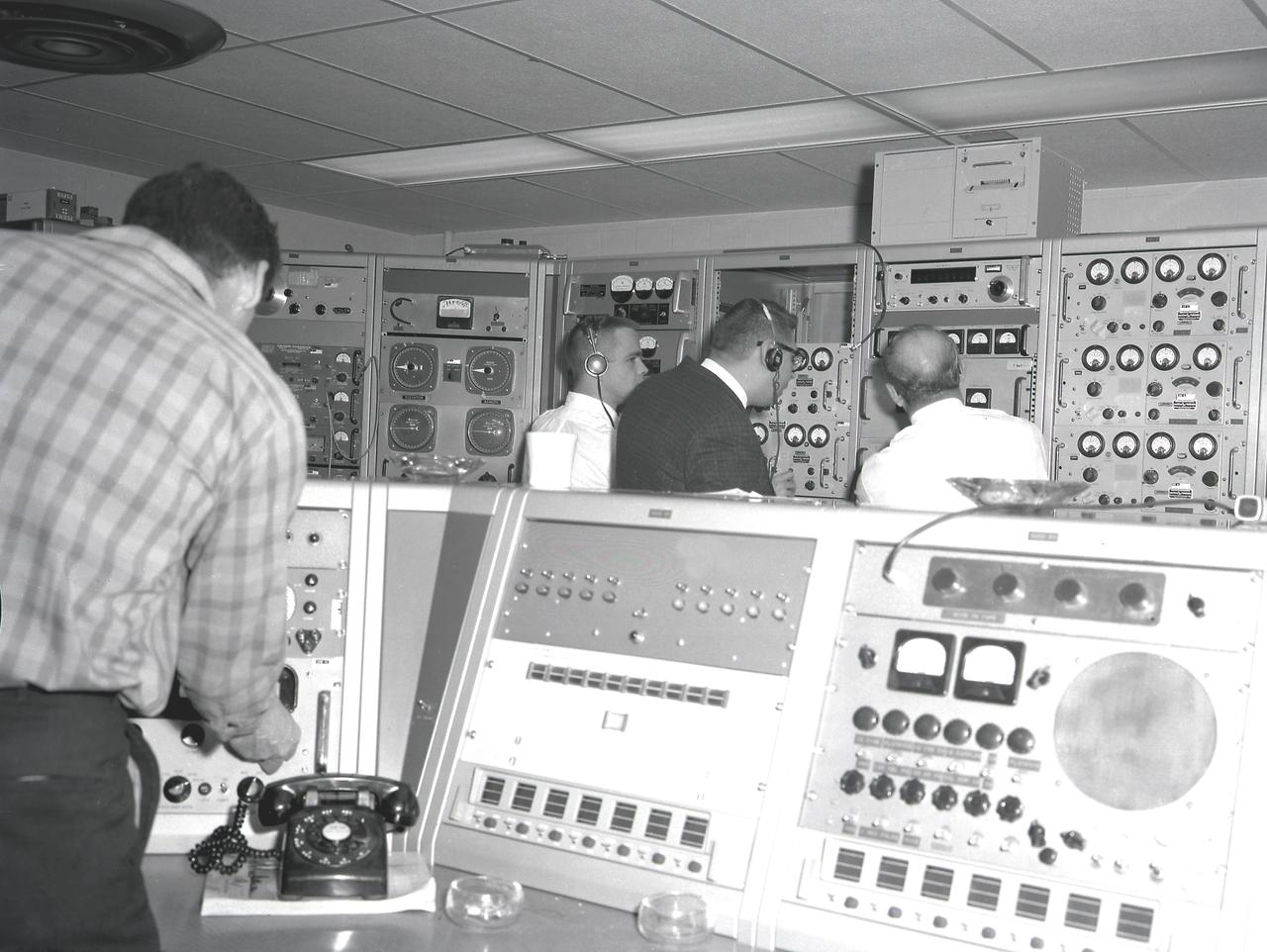
Activities at Green Mountain Tracking Station, Alabama, during lift-off of the Saturn I, SA-9 mission, showing the overall view of instrument panels used in tracking the Pegasus, meteoroid-detection satellite. The satellite was used to obtain data on frequency and penetration of the potentially hazardous micrometeoroids in low Earth orbits and to relay the information back to Earth.
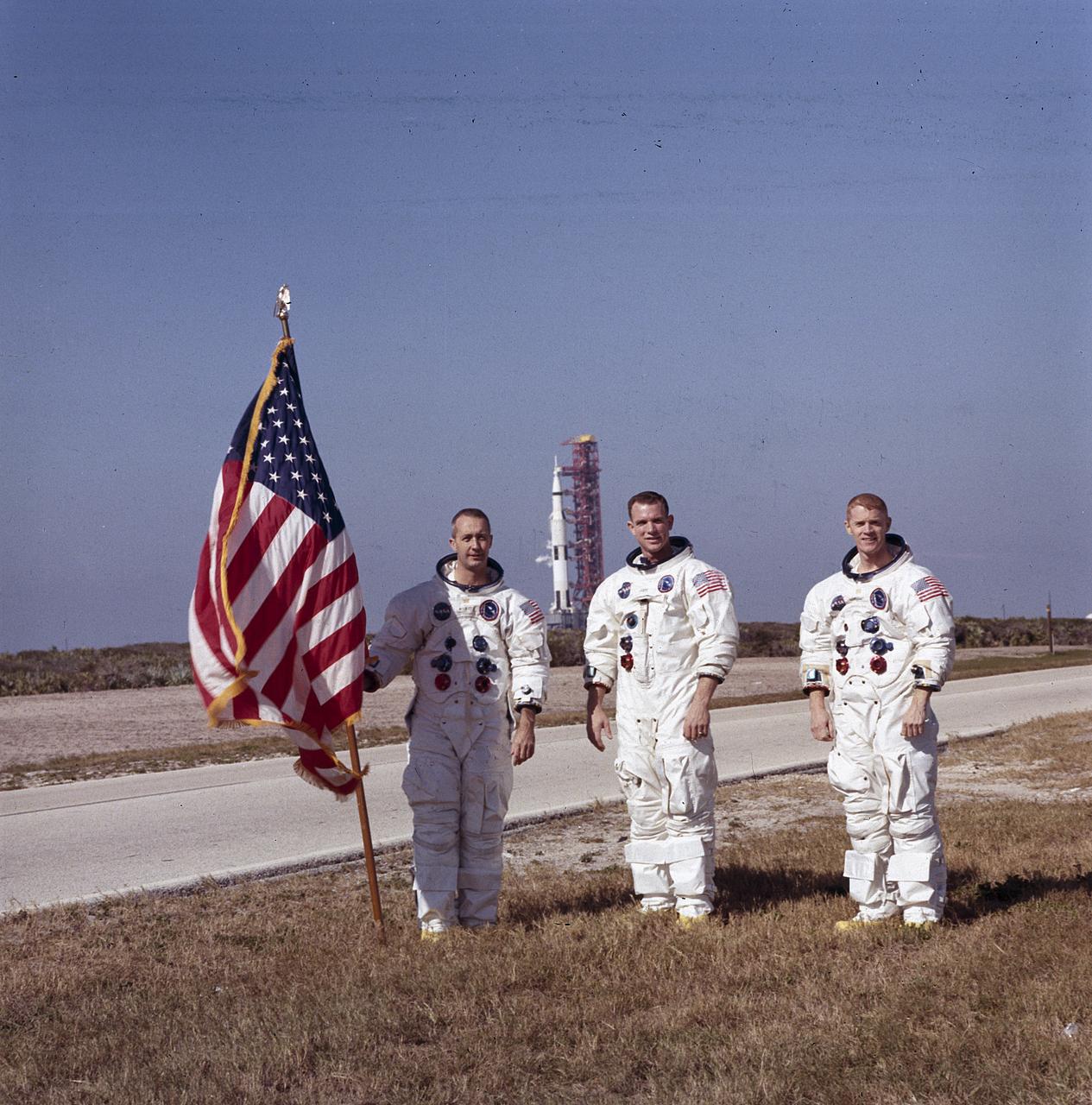
Pictured from left to right, the Apollo 9 astronauts, James A. McDivitt, David R. Scott, and Russell L. Schweickart, pause in front of the Apollo/Saturn V space vehicle that would launch the Apollo 8 crew. The launch of the Apollo 9 (Saturn V launch vehicle, SA-504) took place on March 3, 1968. The Apollo 9 spacecraft, in the lunar mission configuration, was tested in Earth orbit. The mission was designed to rehearse all the steps and reproduce all the events of the Apollo 11 mission with the exception of the lunar touchdown, stay, and liftoff. The command and service modules, and the lunar module were used in flight procedures identical to those that would later take similar vehicles to the Moon, and a landing. The flight mechanics, mission support systems, communications, and recording of data were tested in a final round of verification. Astronauts Scott and Schweickart conducted Extravehicular Activity during this mission.

This photograph depicts the Saturn V vehicle (SA-501) for the Apollo 4 mission in the Vehicle Assembly Building (VAB) at the Kennedy Space Center (KSC). After the completion of the assembly operation, the work platform was retracted and the vehicle was readied to rollout from the VAB to the launch pad. The Apollo 4 mission was the first launch of the Saturn V launch vehicle. Objectives of the unmanned Apollo 4 test flight were to obtain flight information on launch vehicle and spacecraft structural integrity and compatibility, flight loads, stage separation, and subsystems operation including testing of restart of the S-IVB stage, and to evaluate the Apollo command module heat shield. The Apollo 4 was launched on November 9, 1967 from KSC.
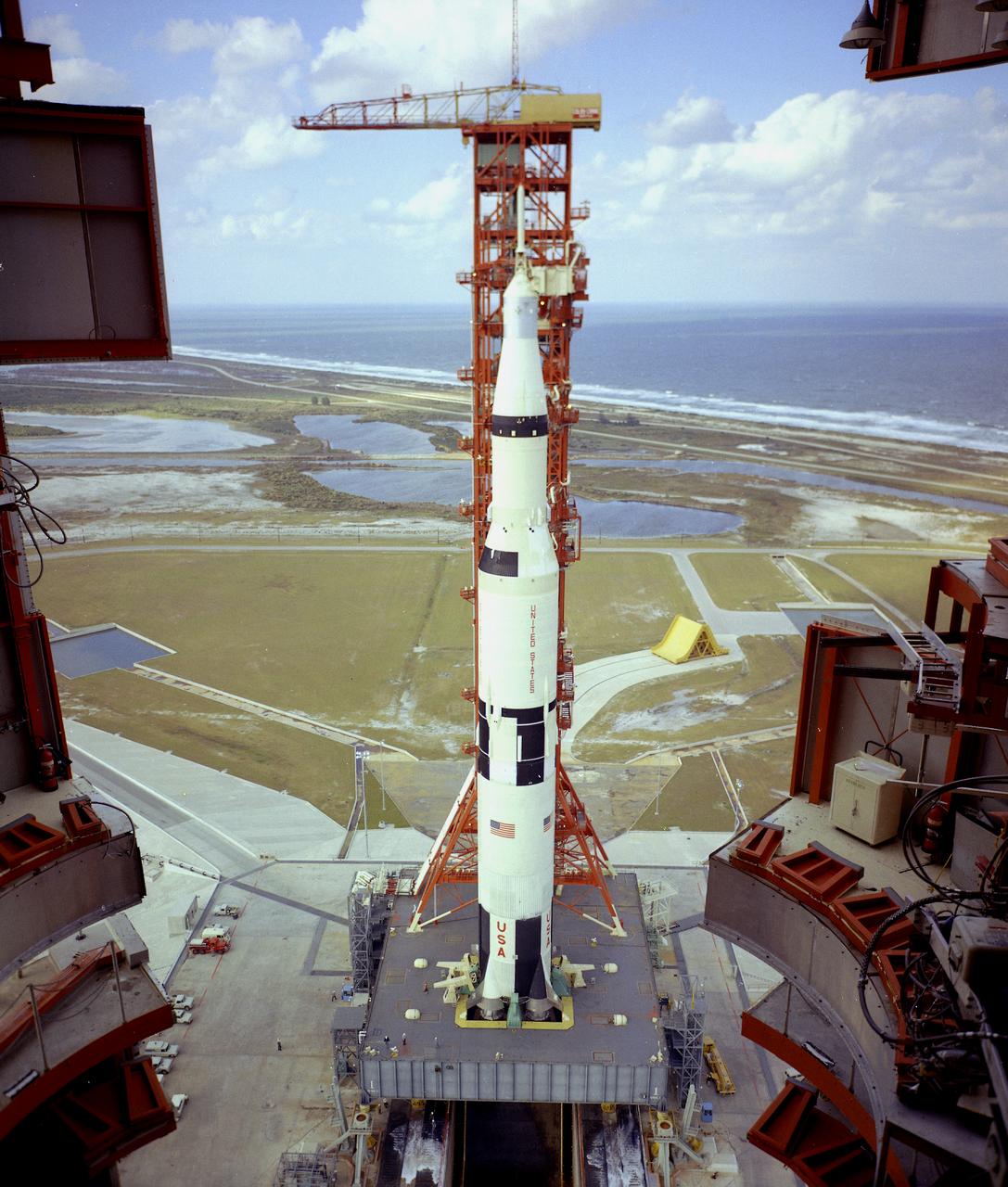
This is a view of the the first test flight of the Saturn V vehicle (SA-501) at the Kennedy Space Center (KSC) launch complex 39A. The thrust chambers of the first stage's five engines extend into the 45-foot-square hole in the mobile launcher platform. Until liftoff, the flames impinged downward onto a flame deflector that diverted the blast lengthwise in the flame trench. Here, a flame deflector, coated with a black ceramic, is in place below the opening, while a yellow (uncoated) spare deflector rests on its track in the background. It took a tremendous flow of water (28,000 gallons per minute) to cool the flame deflector and trench. The Apollo 4 was launched on November 9, 1967 from KSC.
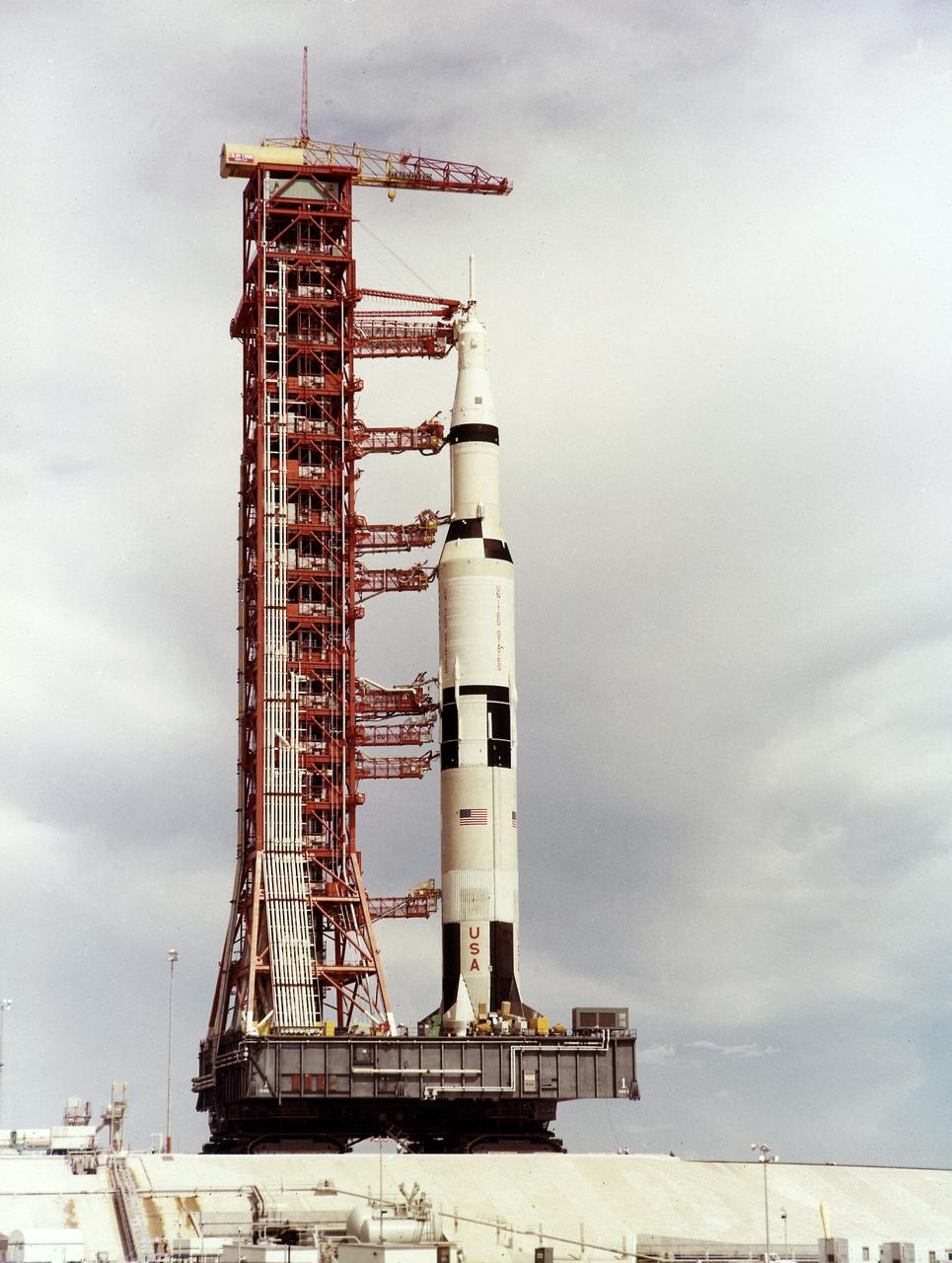
This is a view of the the first test flight of the Saturn V vehicle (SA-501) at the Kennedy Space Center (KSC) launch complex 39A, awaiting the scheduled launch on November 9, 1967. Designated as Apollo 4, this mission was the first launch of the Saturn V launch vehicle. Objectives of the unmanned Apollo 4 test flight were to obtain flight information on launch vehicle and spacecraft structural integrity and compatibility, flight loads, stage separation, and subsystems operation including testing of restart of the S-IVB stage, and to evaluate the Apollo command module heat shield.
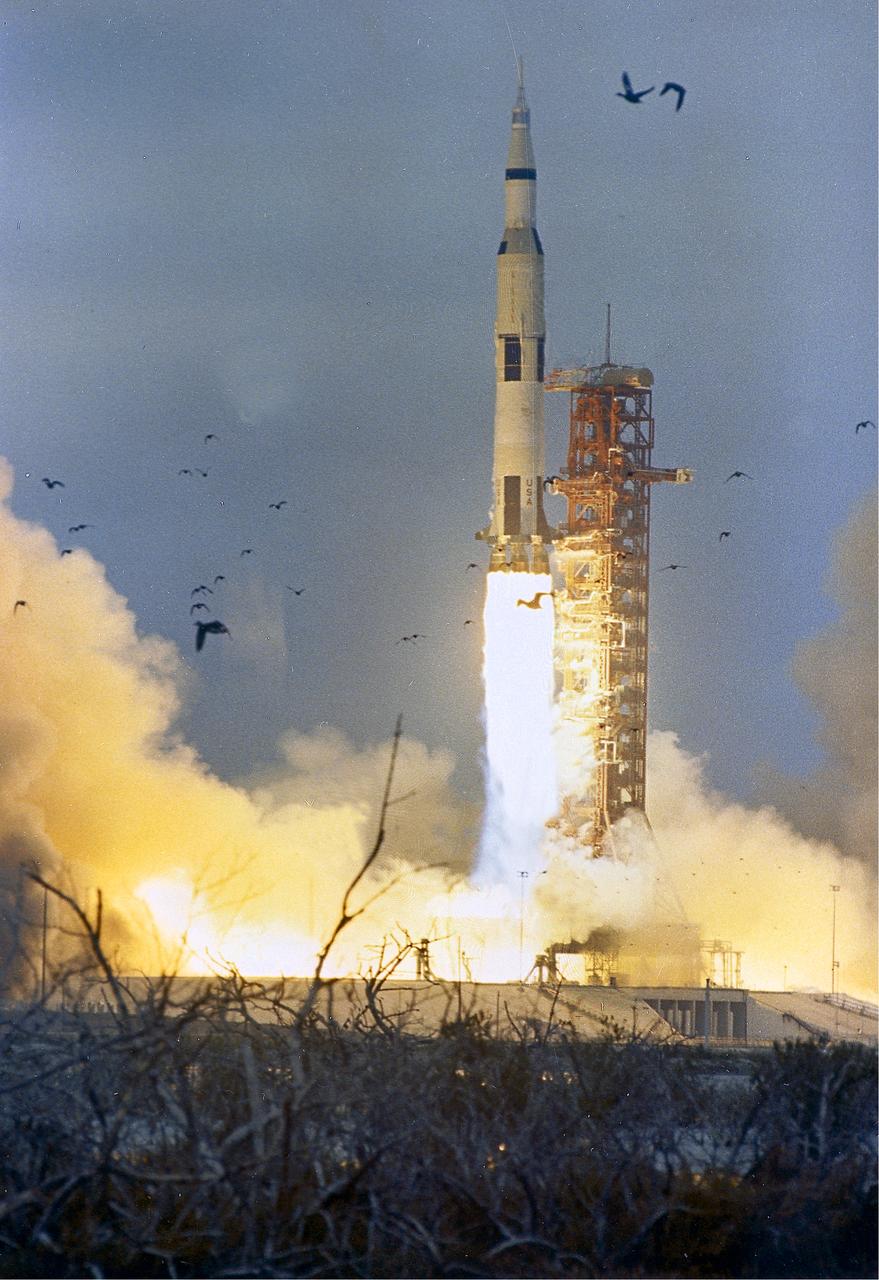
The launch of the Apollo 9 (Saturn V launch vehicle, SA-504), with astronauts James A. McDivitt, David R. Scott, and Russell L. Schweickart, took place on March 3, 1968. The Apollo 9 spacecraft, in the lunar mission configuration, was tested in Earth orbit. The mission was designed to rehearse all the steps and reproduce all the events of the Apollo 11 mission with the exception of the lunar touchdown, stay, and liftoff. The command and service modules, and the lunar module were used in flight procedures identical to those that would later take similar vehicles to the Moon, and a landing. The flight mechanics, mission support systems, communications, and recording of data were tested in a final round of verification. Astronauts Scott and Schweickart conducted Extravehicular Activity during this mission.
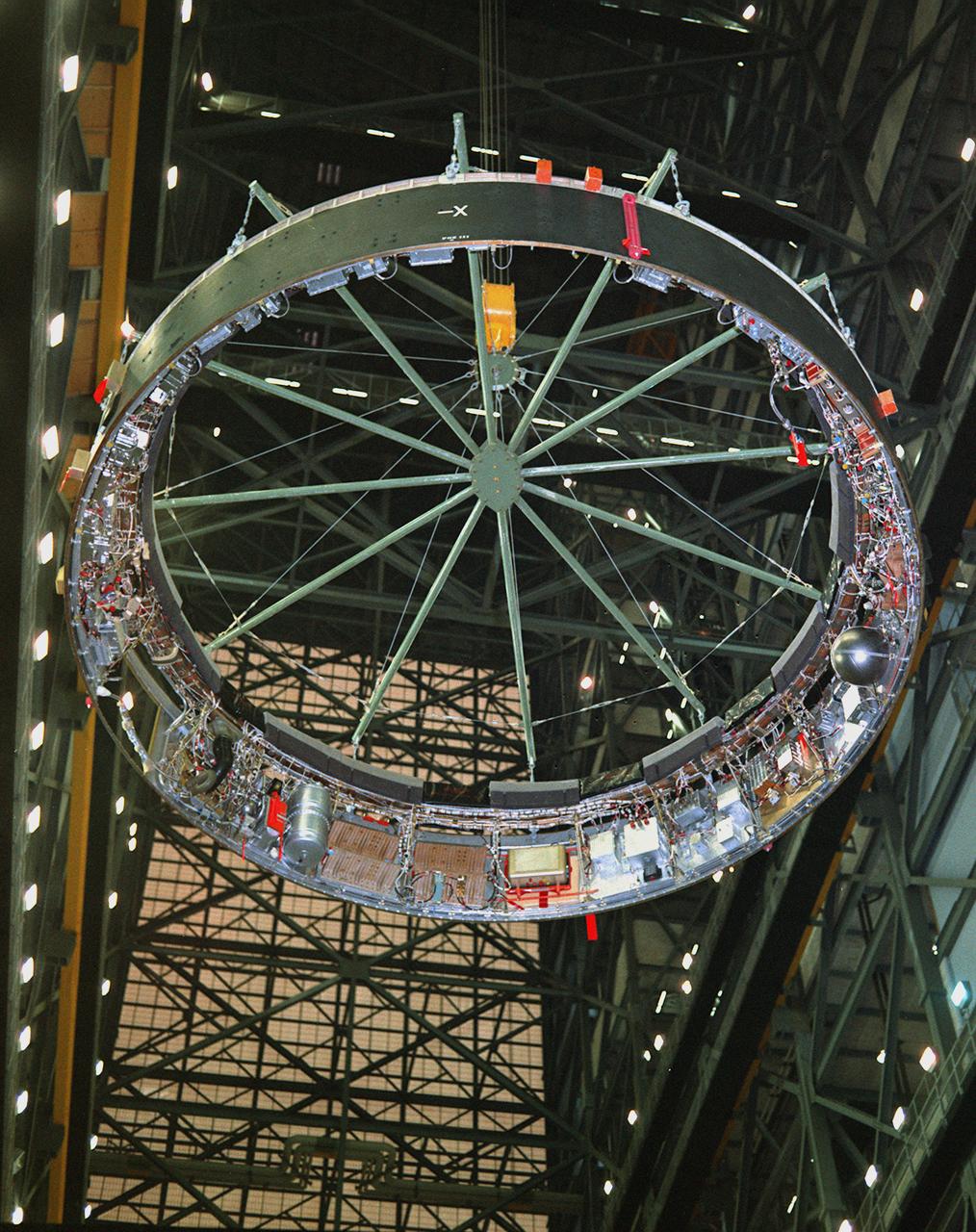
This photograph was taken during the final assembly operation of the Saturn V launch vehicle for the Apollo 4 (SA 501) mission. The instrument unit (IU) was hoisted to be mated to the S-IC/S-II assembly in the Vehicle Assembly Building high bay at the Kennedy Space Center. The Apollo 4 mission was the first launch of the Saturn V launch vehicle. Objectives of the unmanned Apollo 4 test flight were to obtain flight information on launch vehicle and spacecraft structural integrity and compatibility, flight loads, stage separation, and subsystems operation including testing of restart of the S-IVB stage, and to evaluate the Apollo command module heat shield. The Apollo 4 was launched on November 9, 1967 from KSC.
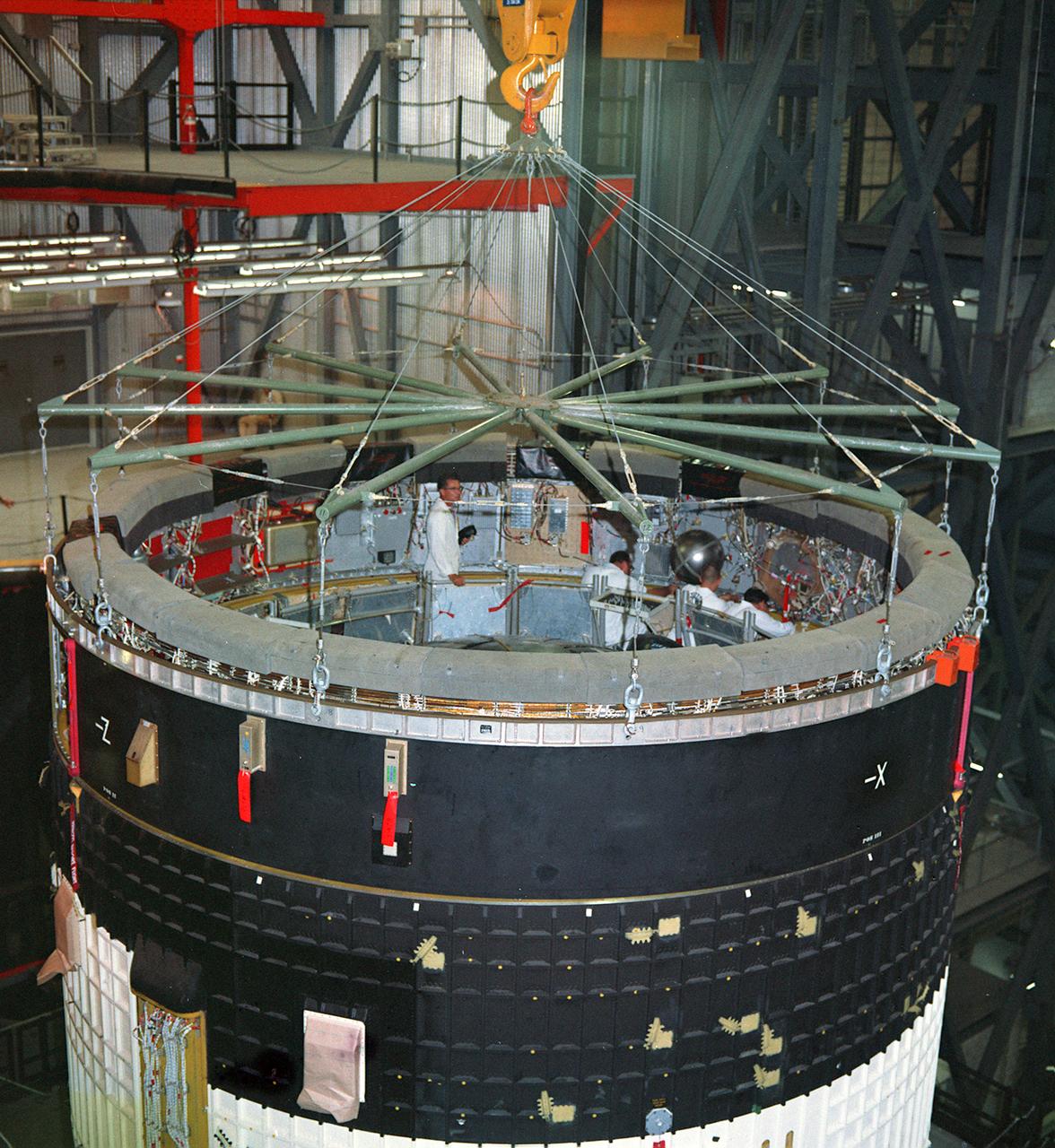
This photograph was taken during the final assembly operation of the Saturn V launch vehicle for the Apollo 4 (SA 501) mission. The instrument unit (IU) was mated atop the S-IC/S-II assembly in the Vehicle Assembly Building high bay at the Kennedy Space Center. The Apollo 4 mission was the first launch of the Saturn V launch vehicle. Objectives of the unmanned Apollo 4 test flight were to obtain flight information on launch vehicle and spacecraft structural integrity and compatibility, flight loads, stage separation, and subsystems operation including testing of restart of the S-IVB stage, and to evaluate the Apollo command module heat shield. The Apollo 4 was launched on November 9, 1967 from KSC.

See Jupiter's northern polar belt region in this view taken by NASA's Juno spacecraft. This color-enhanced image was taken on Dec. 16, 2017 at 9:47 a.m. PST (12:47 p.m. EST), as Juno performed its tenth close flyby of Jupiter. At the time the image was taken, the spacecraft was about 5,600 miles (8,787 kilometers) from the tops of the clouds of the planet at a latitude of 38.4 degrees north. Citizen scientist Björn Jónsson processed this image using data from the JunoCam imager. This image has been processed from the raw JunoCam framelets by removing the effects of global illumination. Jónsson then increased the contrast and color and sharpened smallscale features. The image has also been cropped. While at first glance the view may appear to be in Jupiter's south, the raw source images were obtained when Juno was above the planet's northern hemisphere looking south, potentially causing a sense of disorientation to the viewer. The geometry of the scene can be explored using the time of the image and the Juno mission module of NASA's Eyes on the Solar System. https://photojournal.jpl.nasa.gov/catalog/PIA21976. - Enhanced image by Björn Jónsson (CC-NC-SA) based on images provided courtesy of NASA/JPL-Caltech/SwRI/MSSS