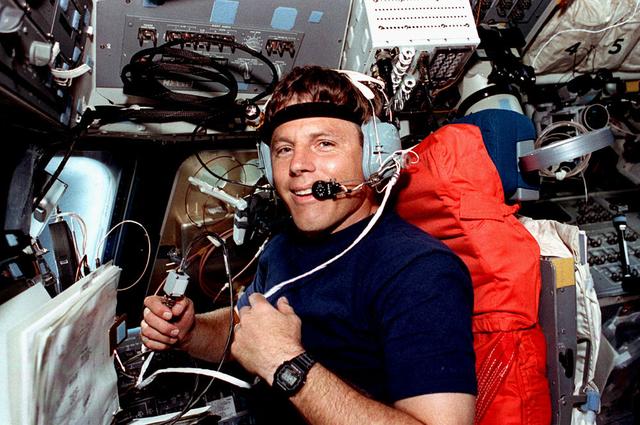
Space Shuttle Discovery (STS-56) onboard photo of Pilot Stephen S. Oswald (wearing a headset) uses the Shuttle Amateur Radio Experiment II (SAREX-II) while sitting at the pilot's station on the forward flight deck. Oswald smiled from behind the microphone as he talks to amateur radio operators on Earth via the SAREX equipment. SAREX cables and the interface module freefloat in front of Oswald. The anterna located in the forward flight deck window is visible in the background. SAREX was established by NASA, the American Radio League/Amateur Radio Satellite Corporation and the Johnson Space Center (JSC) Amateur Radio Club to encourage public participation in the space program through a program to demonstrate the effectiveness of conducting short-wave radio transmissions between the Shuttle and ground-based radio operators at low-cost ground stations with amateur and digital techniques.
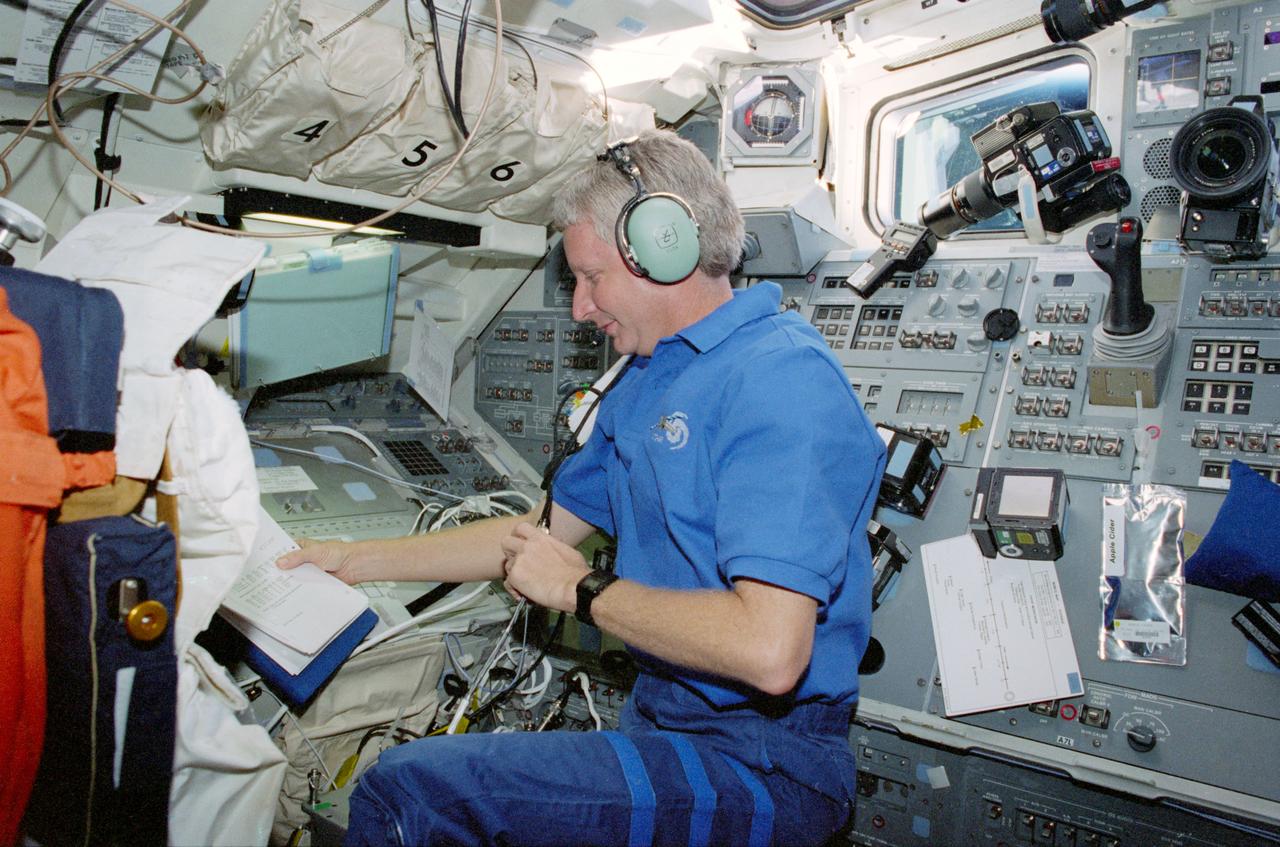
STS093-348-006 (22-27 July 1999) --- Astronaut Steven A. Hawley, mission specialist, communicates with students using the Shuttle Amateur Radio Experiment-2 (SAREX II) equipment on the flight deck of the Earth-orbiting Space Shuttle Columbia.
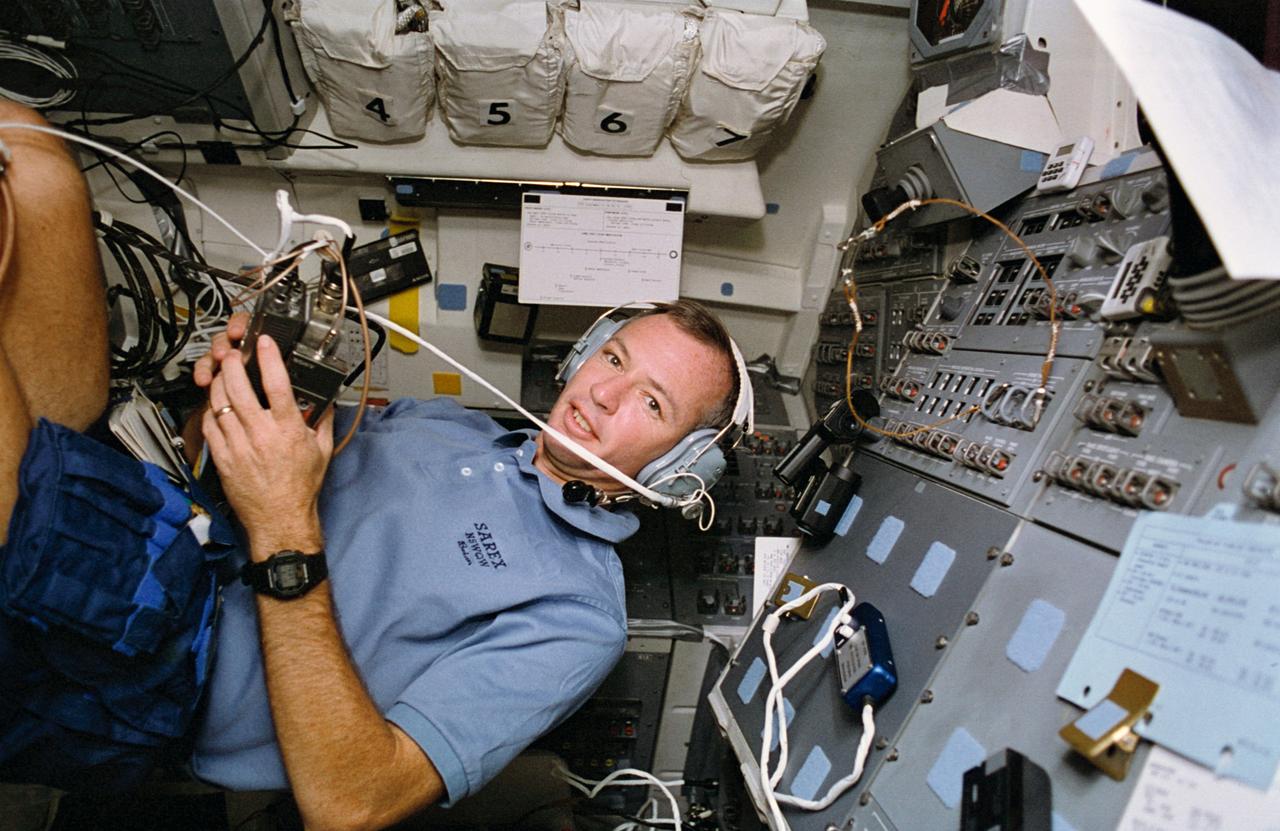
STS057-40-028 (21 June-1 July 1993) --- Astronaut Brian Duffy, pilot, talks to amateur radio operators on Earth from the flight deck of the Earth-orbiting Space Shuttle Endeavour. The space to Earth communications was part of the Shuttle amateur radio experiment (SAREX), which has been included on a number of Space Shuttle missions. Duffy, a licensed amateur radio operator using call letters N5WQW, was among crewmembers talking to students at various points on the ground.

STS047-45-003 (12-20 Sept 1992) --- Payload specialist Mamoru Mohri communicates with students from the aft flight deck of the Earth-orbiting Space Shuttle Endeavour. The communications were an extension of the Shuttle Amateur Radio Experiment (SAREX), which has flown on a number of previous flights. Dr. Mohri represents Japan's National Space Development Agency (NASDA), joining six NASA astronauts for eight-days in space in support of the Spacelab-J mission. Several of the crew members were able to talk with students and other "ham" operators during the mission.

STS055-203-034 (26 April-6 May 1993) --- Astronaut Steven R. Nagel, STS-55 mission commander, has found an isolated station in the D-2 science module from which to talk to students on Earth. Like many before it, the seven member crew participated in communications with students and licensed radio operators via the Shuttle Amateur Radio Experiment (SAREX). Photo credit: NASA
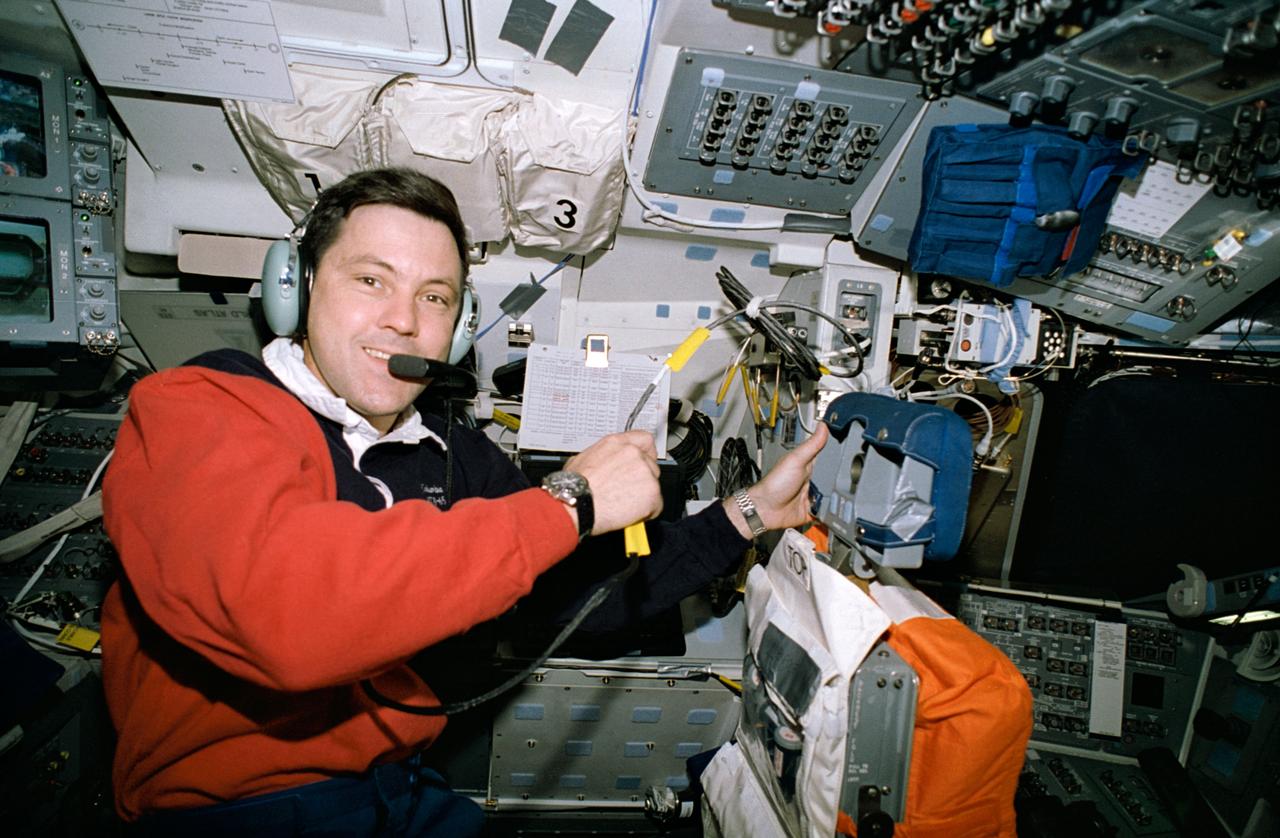
STS065-44-014 (8-23 July 1994) --- Astronaut Robert D. Cabana, mission commander, is seen on the Space Shuttle Columbia's flight deck with the Shuttle Amateur Radio Experiment (SAREX). SAREX was established by NASA, the American Radio League/Amateur Radio Satellite Corporation and the Johnson Space Center (JSC) Amateur Radio Club to encourage public participation in the space program through a project to demonstrate the effectiveness of conducting short-wave radio transmissions between the Shuttle and ground-based radio operators at low-cost ground stations with amateur and digital techniques. As on several previous missions, SAREX was used on this flight as an educational opportunity for students around the world to learn about space firsthand by speaking directly to astronauts aboard the Shuttle.