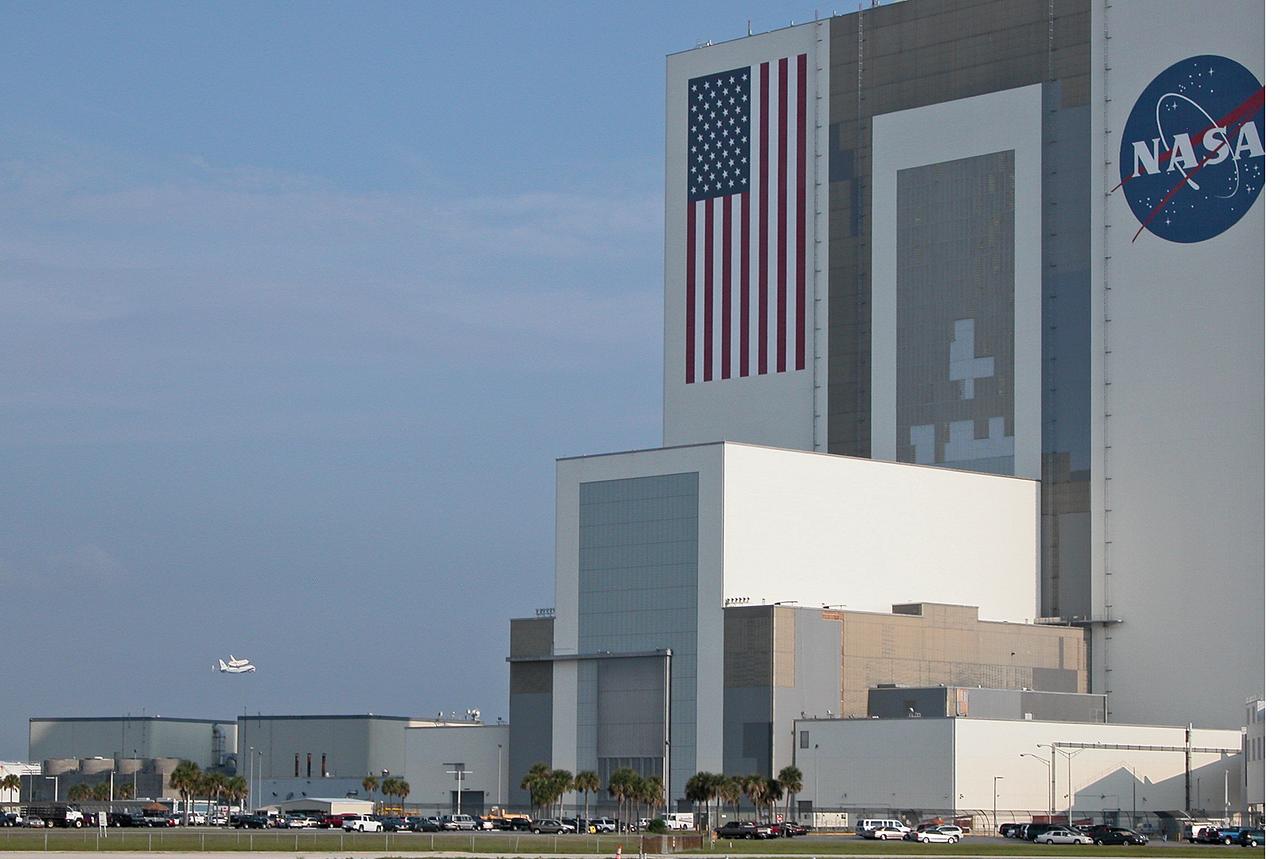
Through broken clouds, the shuttle carrier aircraft, or SCA, and its passenger Atlantis ease their way past the Vehicle Assembly Building, at right, for a landing at the KSC Shuttle Landing Facility, known as the SLF. The aircraft is a modified Boeing 747 jetliner. Atlantis landed at Edwards Air Force Base in California to end mission STS-117. The return to KSC began July 1 and took three days after stops across the country for fuel. The last stop was at Ft. Campbell in Kentucky. Weather conditions over the last leg postponed the return trip until July 3. Touchdown was at 8:27 a.m. EDT. Atlantis will be removed from the back of the SCA via the mate/demate device at the SLF. It will then be towed to the Orbiter Processing Facility to begin processing for its next launch, mission STS-122 in December.
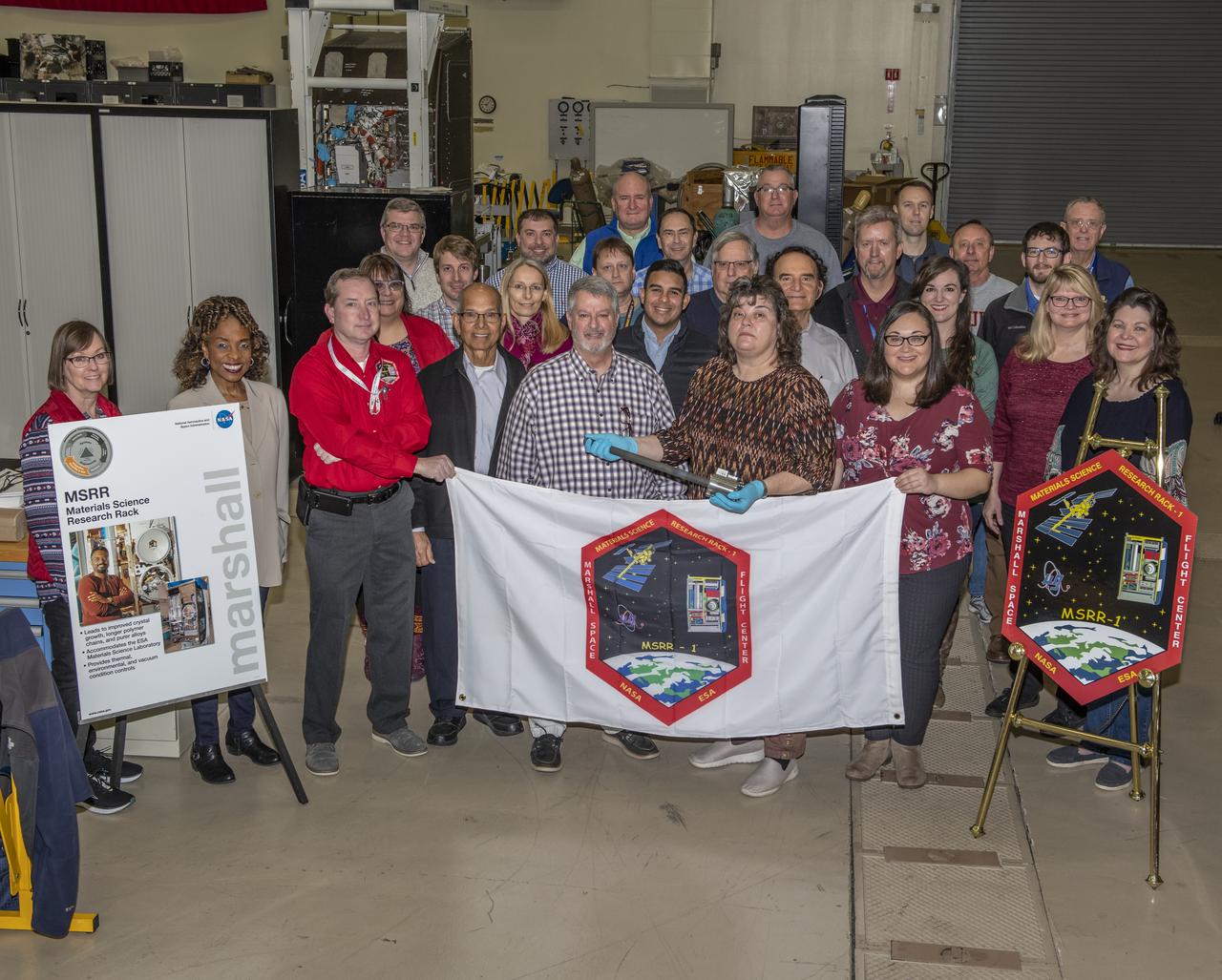
NASA's first Sample Cartridge Assembly (SCA) project designed and validated a payload containing a materials research sample in a sealed environment. The SCA was heated in the European Space Agency's (ESA) Low Gradient Furnace (LGF) that is housed inside the Material Science Research Rack (MSRR) located on the International Space Station (ISS). Sintered metals and crystal growth experiments in microgravity are examples of some of the types of materials research that may be performed with a SCA.
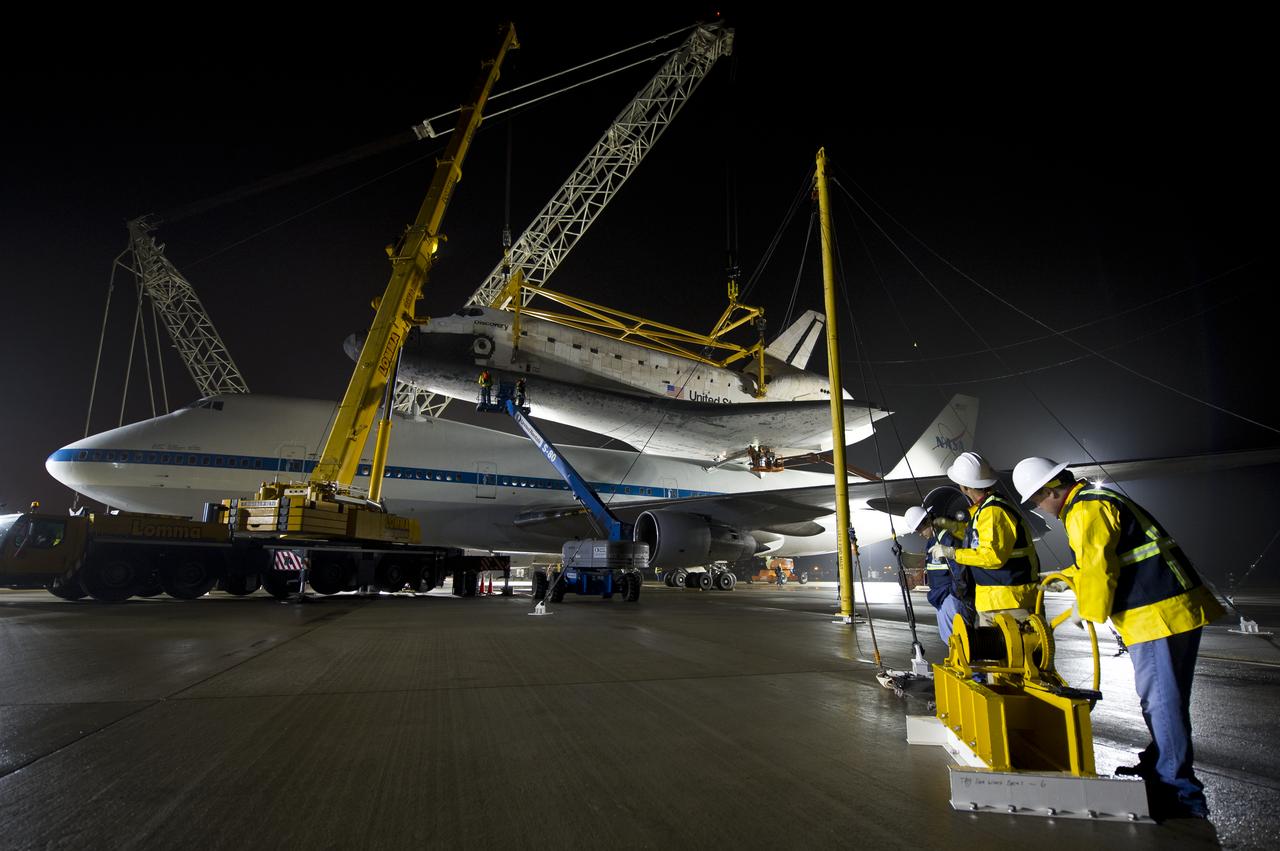
Workers monitor the lift of the space shuttle Discovery from the the NASA 747 Shuttle Carrier Aircraft (SCA) at Washington Dulles International Airport, Thursday, April 19, 2012, in Sterling, VA. Discovery, the first orbiter retired from NASA’s shuttle fleet, completed 39 missions, spent 365 days in space, orbited the Earth 5,830 times, and traveled 148,221,675 miles. NASA will transfer Discovery to the National Air and Space Museum to begin its new mission to commemorate past achievements in space and to educate and inspire future generations of explorers. Photo Credit: (NASA/Bill Ingalls)
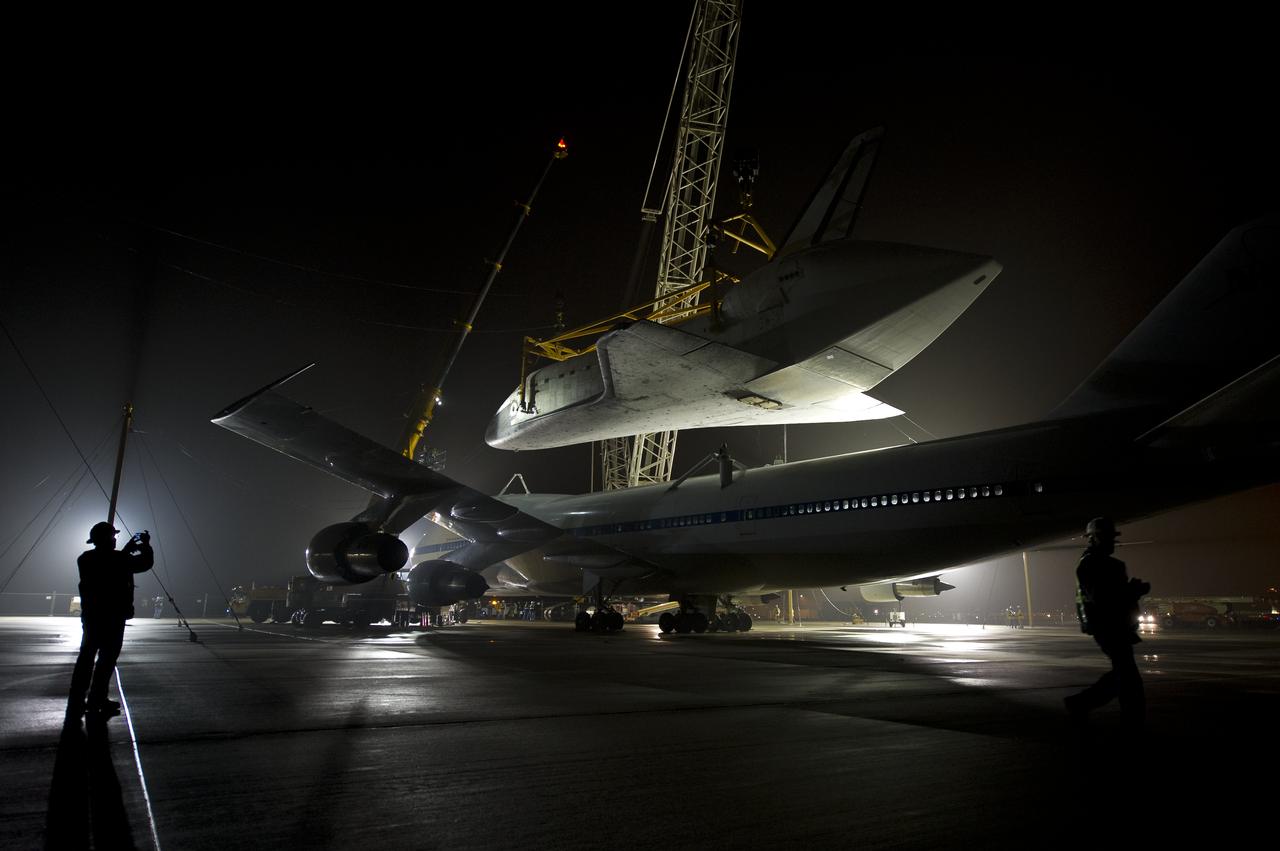
Workers monitor the lift of the space shuttle Discovery from the top of the NASA 747 Shuttle Carrier Aircraft (SCA) at Washington Dulles International Airport, Thursday, April 19, 2012, in Sterling, VA. Discovery, the first orbiter retired from NASA’s shuttle fleet, completed 39 missions, spent 365 days in space, orbited the Earth 5,830 times, and traveled 148,221,675 miles. NASA will transfer Discovery to the National Air and Space Museum to begin its new mission to commemorate past achievements in space and to educate and inspire future generations of explorers. Photo Credit: (NASA/Bill Ingalls)
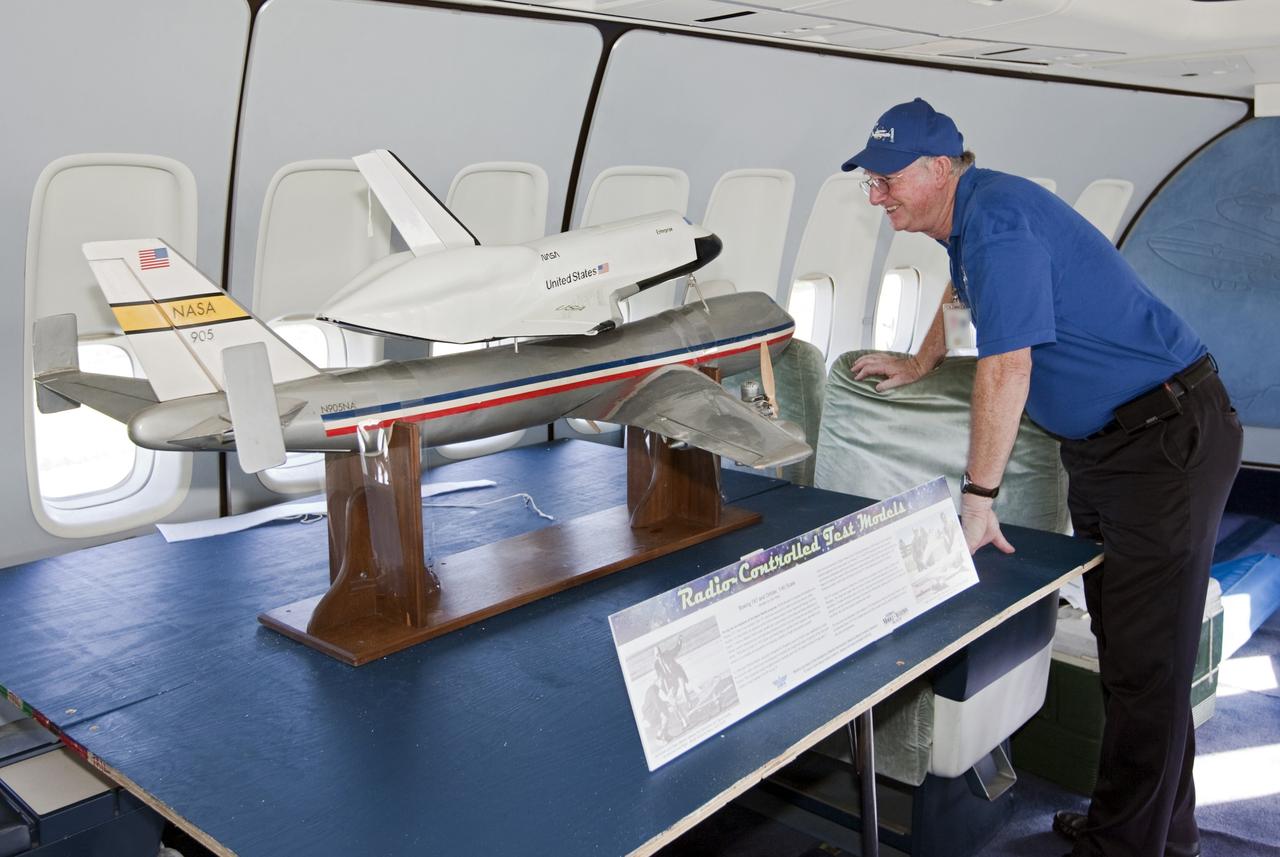
CAPE CANAVERAL, Fla. – A visitor looks over a model of the Shuttle Carrier Aircraft, or SCA, and a space shuttle during a tour of the real Shuttle Carrier Aircraft. The model is a radio-controlled scale version of the modified 747 that was used to test theories for how the space shuttle would separate from the SCA during approach and landing tests. Photo credit: NASA/Kim Shiflett
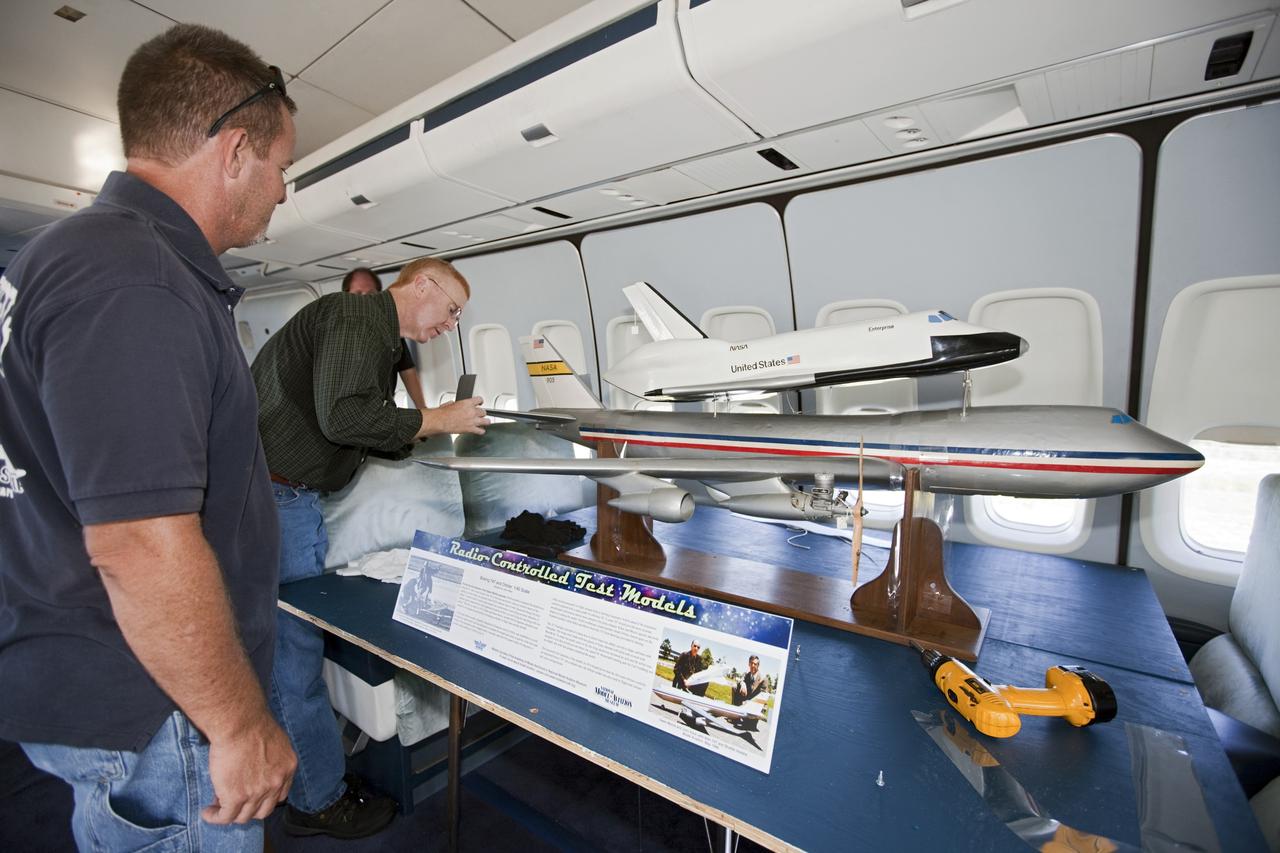
CAPE CANAVERAL, Fla. – Reporters look over a model of the Shuttle Carrier Aircraft, or SCA, and a space shuttle during a tour of the real Shuttle Carrier Aircraft. The model is a radio-controlled scale version of the modified 747 that was used to test theories for how the space shuttle would separate from the SCA during approach and landing tests. Photo credit: NASA/Kim Shiflett
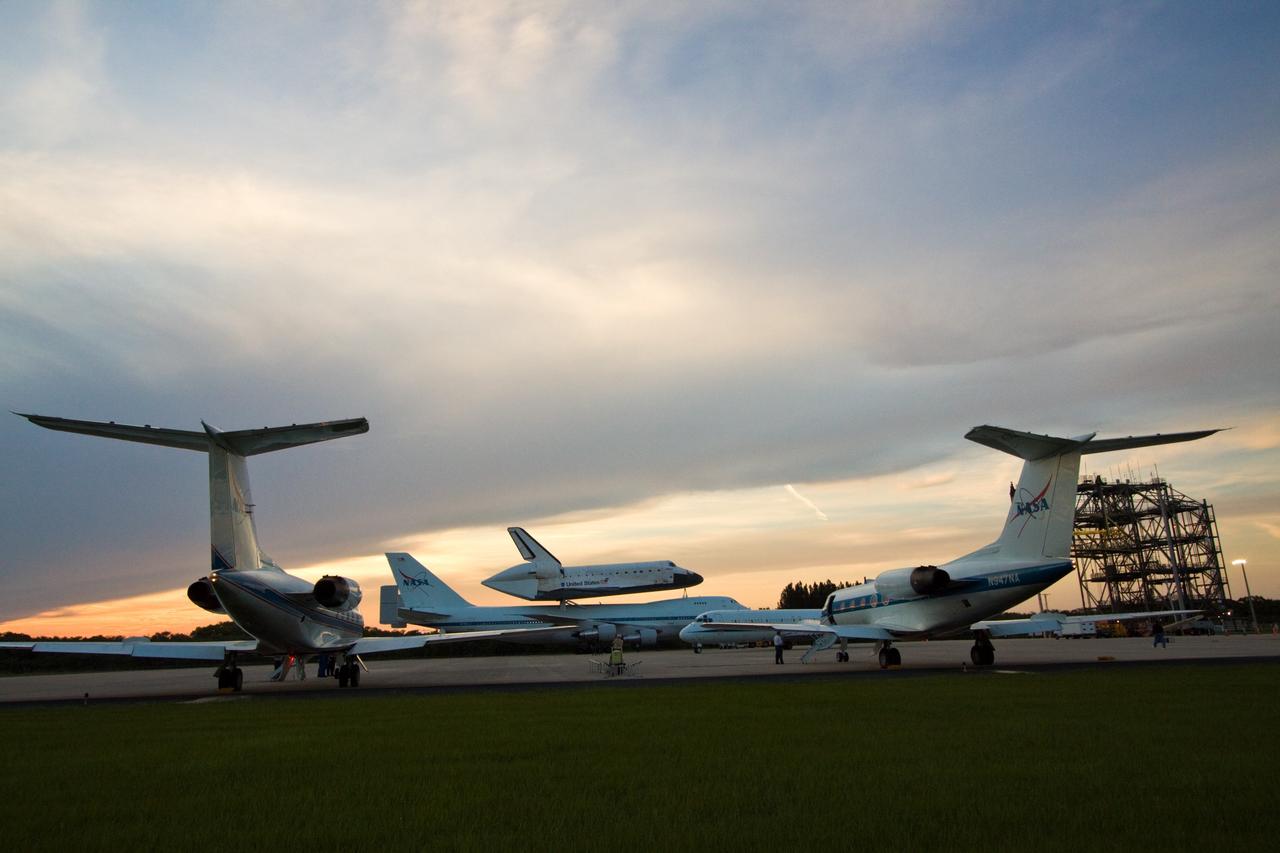
CAPE CANAVERAL, Fla. – Under a dimming sky, space shuttle Atlantis, atop a Shuttle Carrier Aircraft, or SCA, is framed between two Shuttle Training Aircraft on the Shuttle Landing Facility at NASA's Kennedy Space Center in Florida. The SCA is a modified Boeing 747 jetliner. The SCA and Atlantis are being towed the mate/demate device (at far right) on the Shuttle Landing Facility where Atlantis will be lifted from the SCA and placed on the ground. Atlantis returned from California atop the SCA after its May 24 landing at Edwards Air Force Base, concluding mission STS-125. The ferry flight from Edwards Air Force Base began June 1. Atlantis' next assignment is the STS-129 mission, targeted to launch in November 2009. Photo credit: NASA/Jack Pfaller
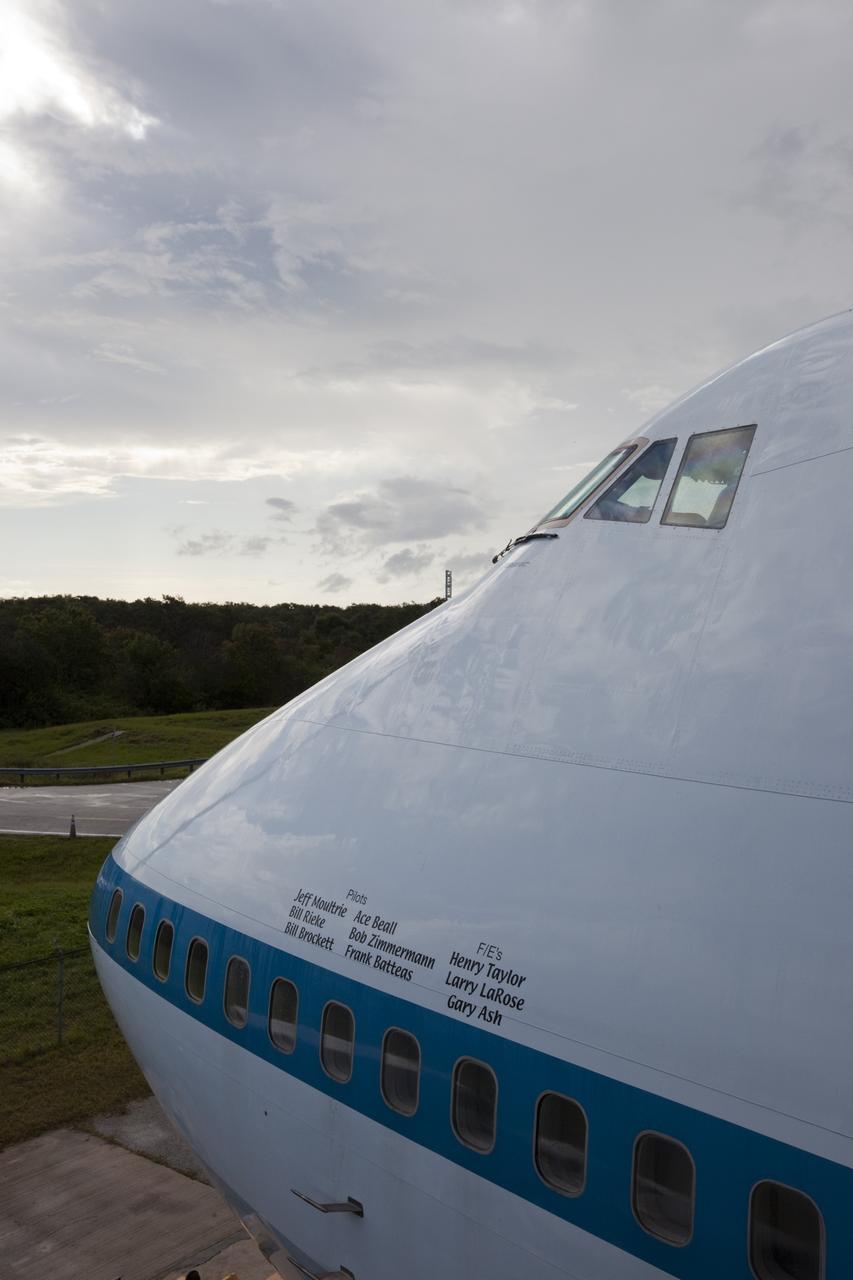
CAPE CANAVERAL, Fla. – The flight crew names are painted near the nose of NASA's Shuttle Carrier Aircraft, or SCA. With the space shuttle Endeavour, mounted atop, the SCA is being prepared to ferry the orbiter to California. The SCA, a modified 747 jetliner, will fly Endeavour to Los Angeles where it will be placed on public display at the California Science Center. This is the final ferry flight scheduled in the Space Shuttle Program era. For more information on the shuttles' transition and retirement, visit http://www.nasa.gov/transition. Photo credit: NASA/ Kim Shiflett

CAPE CANAVERAL, Fla. – At Biggs Army Air Field in El Paso, Texas, the Shuttle Carrier Aircraft, or SCA, a modified Boeing 747, is ready to take off after an overnight stop at Biggs Army Air Field in El Paso, Texas. The shuttle and SCA left Edwards Air Force Base in California for its return to Florida.Atlantis is being returned to Florida on a ferry flight on the SCA. Atlantis' next assignment is the STS-129 mission, targeted to launch in November 2009. Photo credit: NASA/Ben Smegelsky
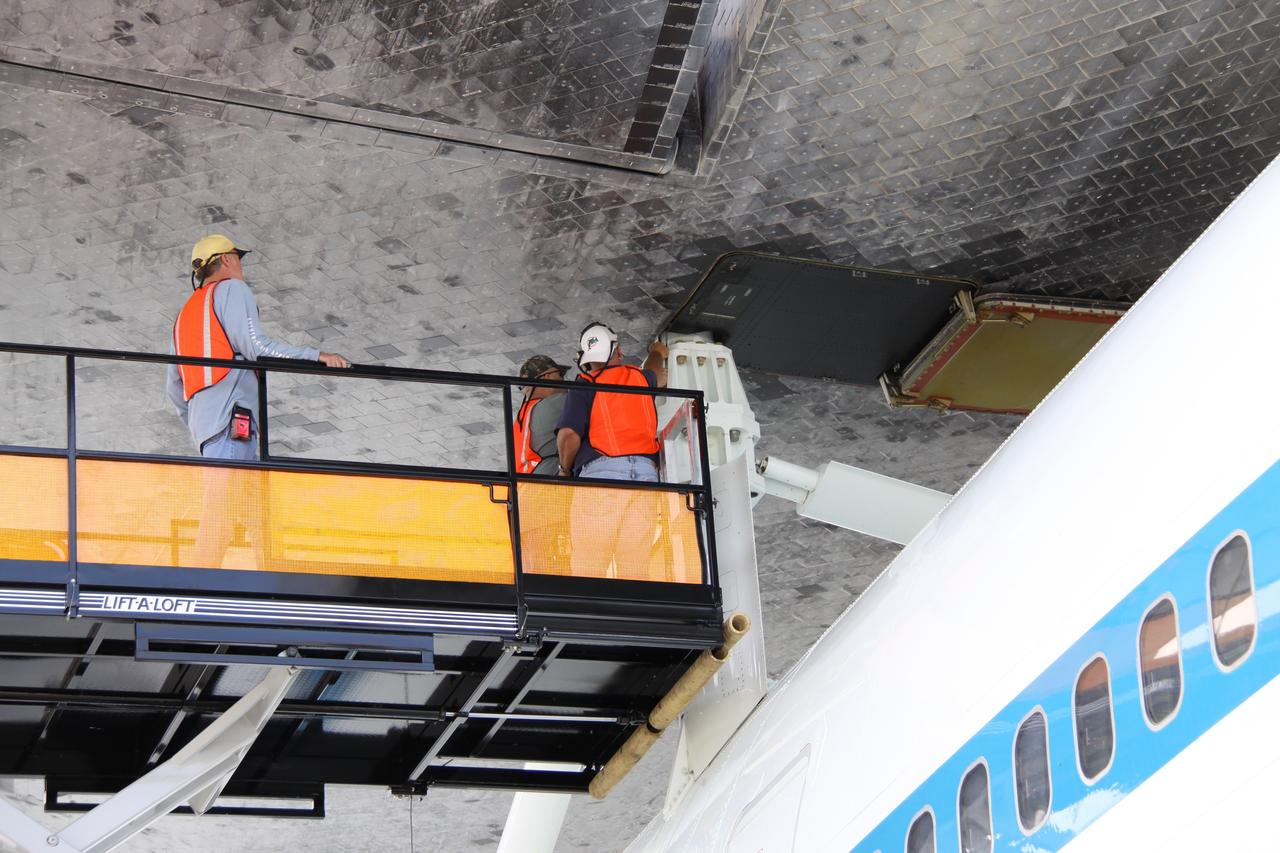
CAPE CANAVERAL, Fla. – Work is under way to separate space shuttle Atlantis from the Shuttle Carrier Aircraft, or SCA, underneath via the mate/demate device on the Shuttle Landing Facility at NASA's Kennedy Space Center in Florida. Workers are removing the struts that attached Atlantis to the SCA. A hoist attached to Atlantis will suspend the shuttle while the SCA is moved away. Atlantis returned from California atop the SCA, a modified Boeing 747, after its May 24 landing at Edwards Air Force Base, concluding mission STS-125. The ferry flight from Edwards Air Force Base began June 1. Atlantis' next assignment is the STS-129 mission, targeted to launch in November 2009. Photo credit: NASA/Jack Pfaller
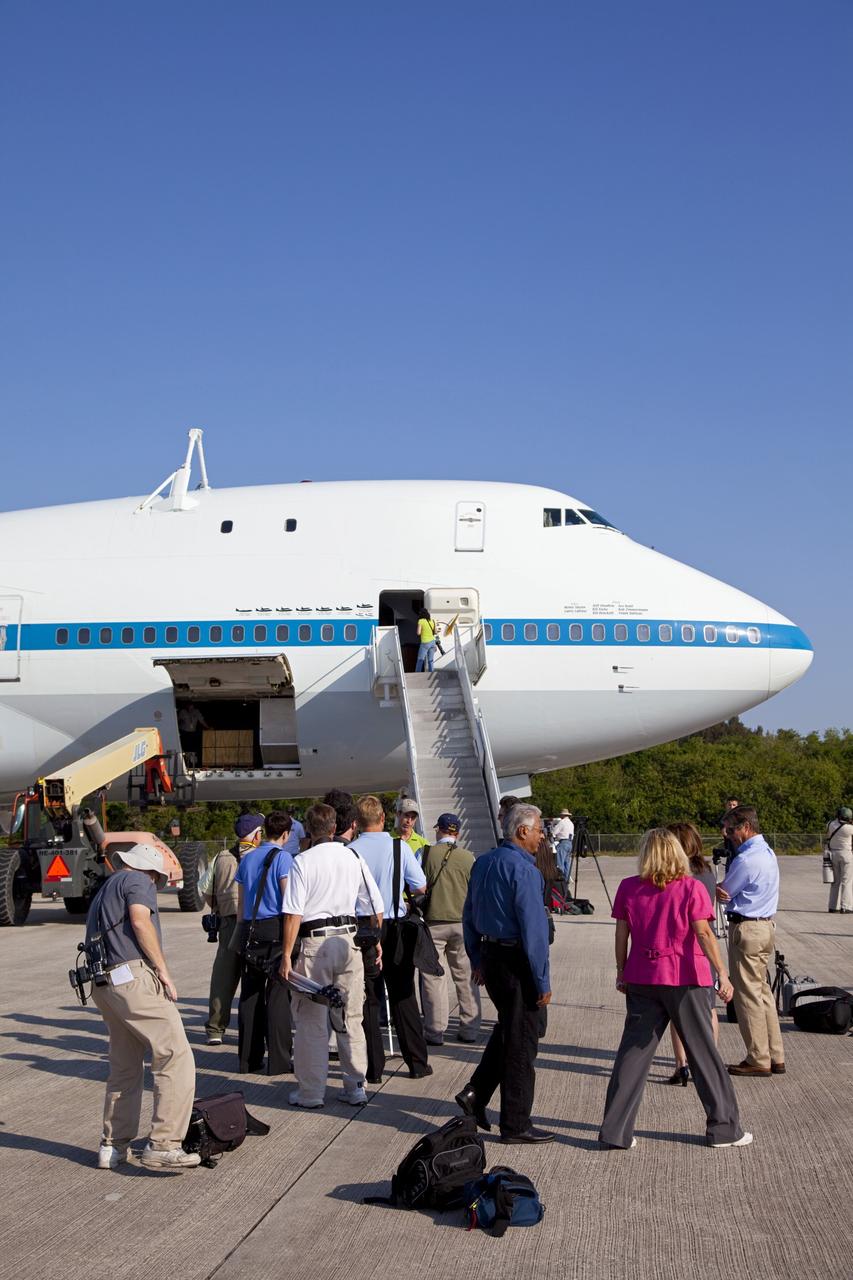
CAPE CANAVERAL, Fla. – At NASA’s Kennedy Space Center in Florida, NASA’s Shuttle Carrier Aircraft modified 747 jet, or SCA, has arrived at the Shuttle Landing Facility, or SLF, after a 5-hour flight from Edwards Air Force Base in California. On the SLF tarmac, members of the media talk to the SCA pilots. During the Space Shuttle Program’s transition and retirement processing, Discovery was prepared for display at Smithsonian’s National Air and Space Museum, Steven F. Udvar-Hazy Center in Chantilly, Va. Discovery is scheduled to be transported atop the SCA, designated NASA 905, to Dulles International Airport in Virginia on April 17 and then moved to the Smithsonian for permanent public display on April 19. The SCA is assigned to the remaining ferry missions, delivering the shuttles to their permanent public display sites. For more information, visit http://www.nasa.gov/shuttle. Photo credit: NASA/Frankie Martin
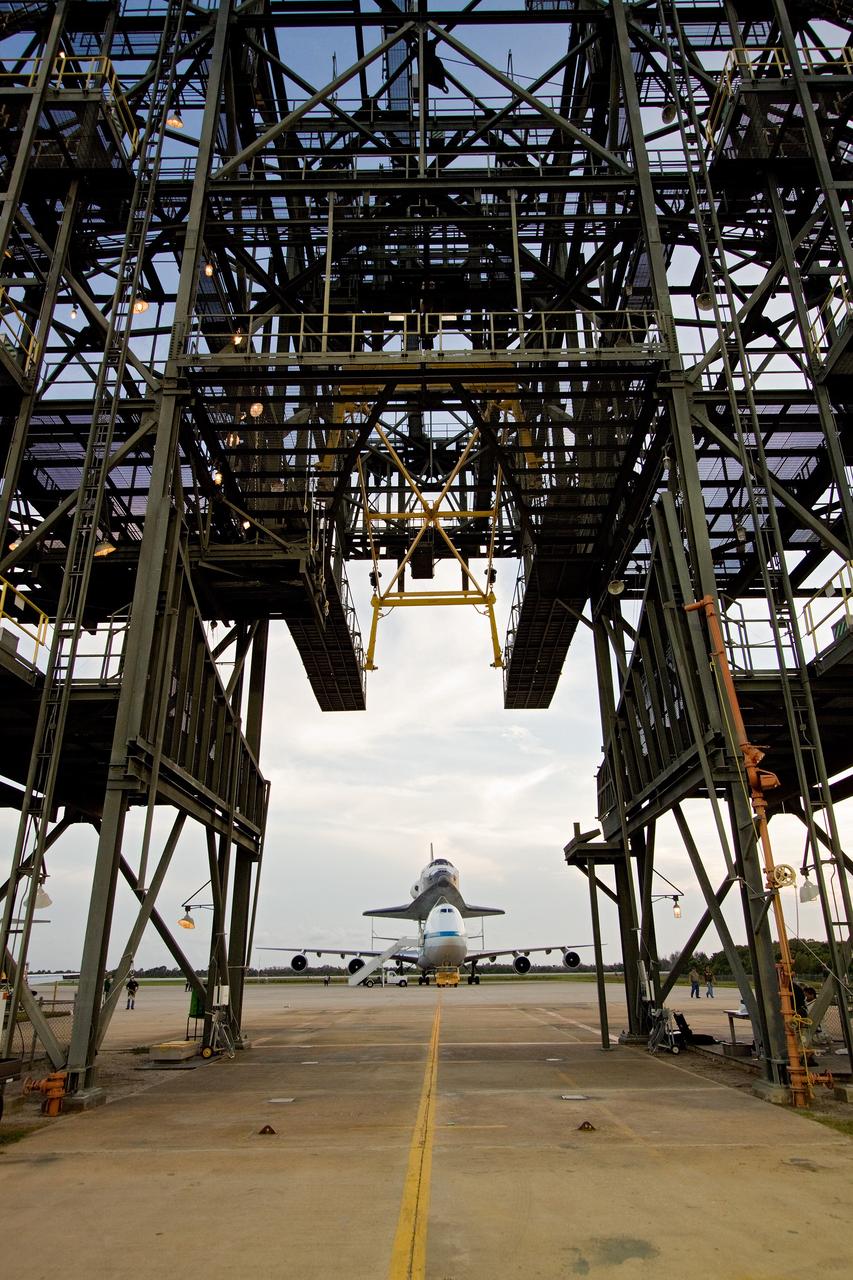
CAPE CANAVERAL, Fla. – Space shuttle Atlantis, atop a Shuttle Carrier Aircraft, or SCA, is towed toward the mate/demate device on the Shuttle Landing Facility at NASA's Kennedy Space Center in Florida. The SCA is a modified Boeing 747 jetliner. Once underneath the device, a hoist will lift Atlantis from the back of the SCA and place it on the ground. Atlantis returned from California atop the SCA after its May 24 landing at Edwards Air Force Base, concluding mission STS-125. The ferry flight from Edwards Air Force Base began June 1. Atlantis' next assignment is the STS-129 mission, targeted to launch in November 2009. Photo credit: NASA/Jack Pfaller
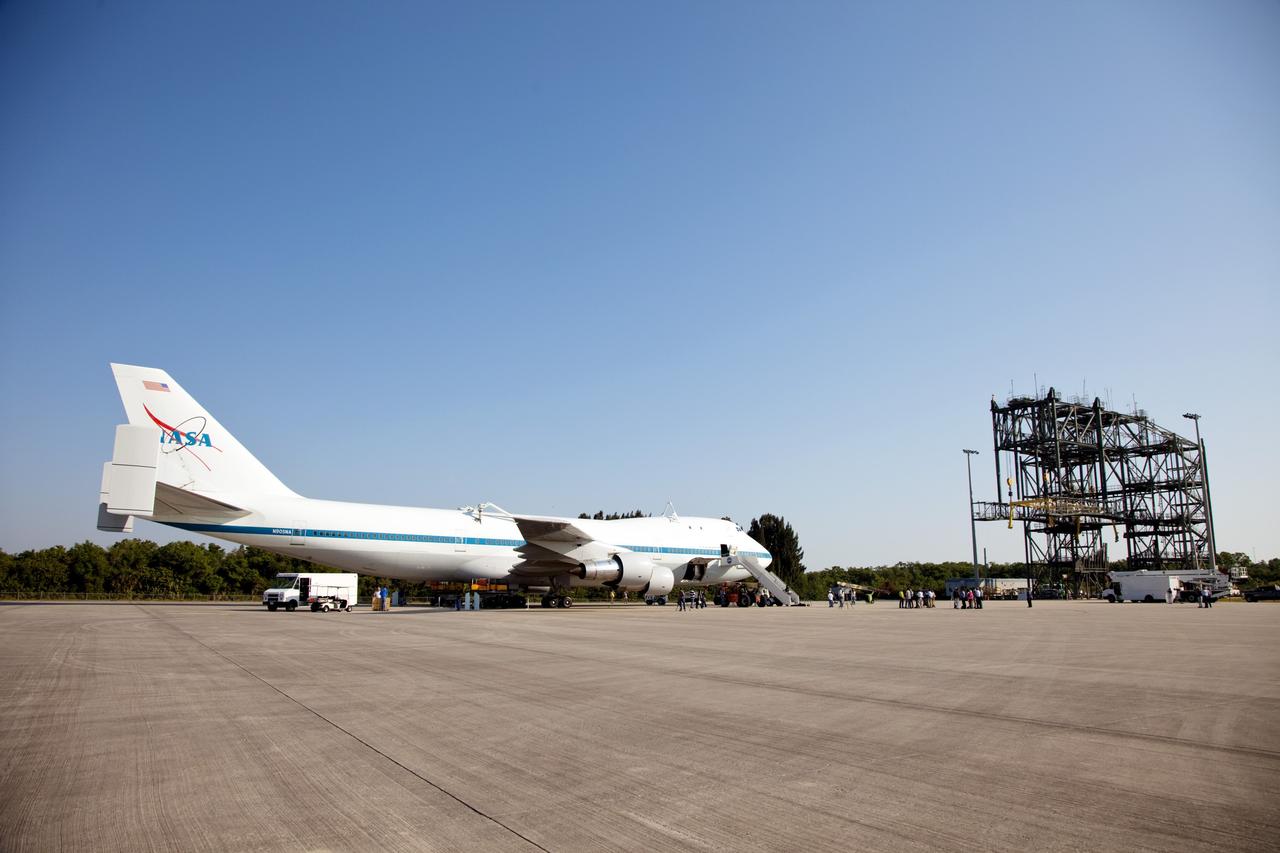
CAPE CANAVERAL, Fla. – At NASA’s Kennedy Space Center in Florida, NASA’s Shuttle Carrier Aircraft modified 747 jet, or SCA, has arrived at the Shuttle Landing Facility, or SLF, after a 5-hour flight from Edwards Air Force Base in California. To the right is the Mate/Demate device that will be used to lift and attach Discovery atop the SCA. During the Space Shuttle Program’s transition and retirement processing, Discovery was prepared for display at Smithsonian’s National Air and Space Museum, Steven F. Udvar-Hazy Center in Chantilly, Va. Discovery is scheduled to be transported atop the SCA, designated NASA 905, to Dulles International Airport in Virginia on April 17 and then moved to the Smithsonian for permanent public display on April 19. The SCA is assigned to the remaining ferry missions, delivering the shuttles to their permanent public display sites. For more information, visit http://www.nasa.gov/shuttle. Photo credit: NASA/Frankie Martin
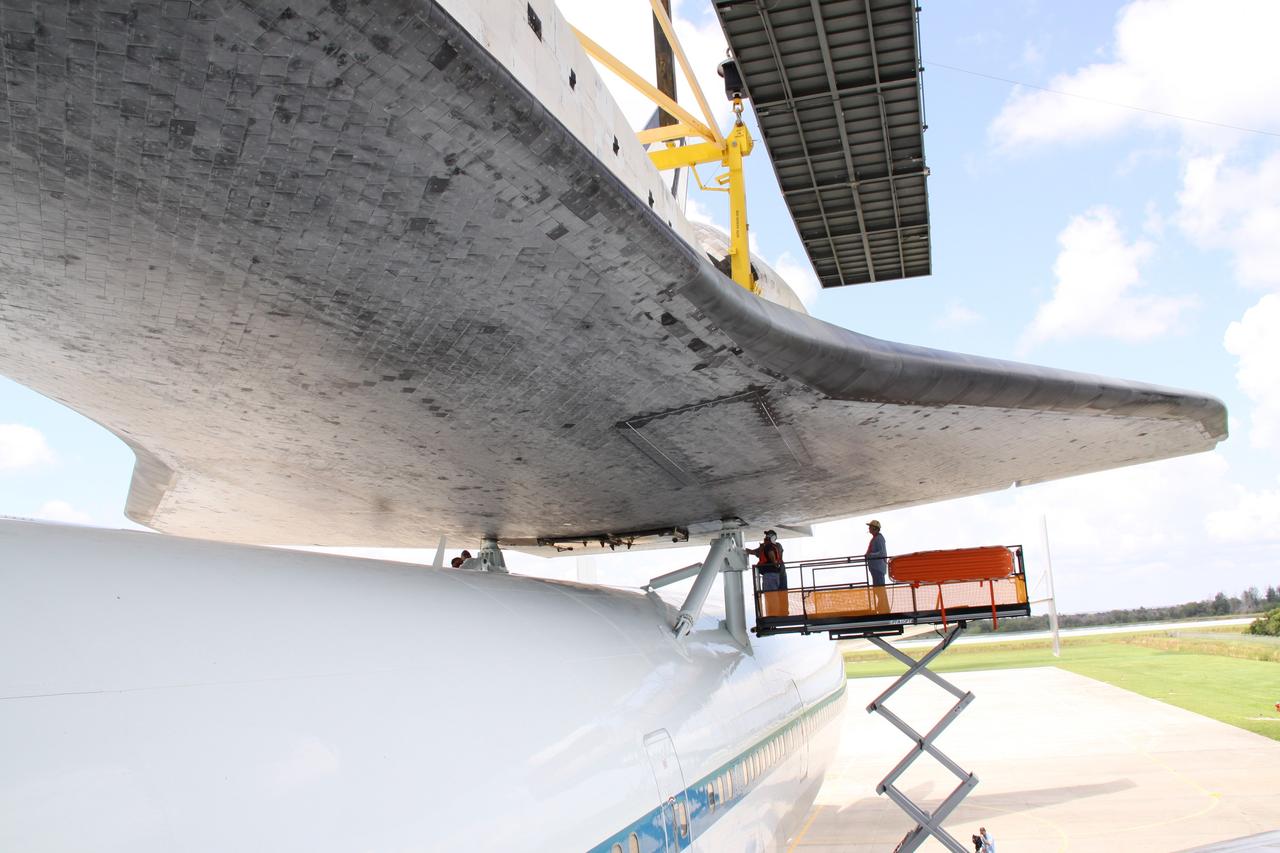
CAPE CANAVERAL, Fla. – Work is under way to separate space shuttle Atlantis from the Shuttle Carrier Aircraft, or SCA, underneath via the mate/demate device on the Shuttle Landing Facility at NASA's Kennedy Space Center in Florida. Workers are removing the struts that attached Atlantis to the SCA. A hoist attached to Atlantis will suspend the shuttle while the SCA is moved away. Atlantis returned from California atop the SCA, a modified Boeing 747, after its May 24 landing at Edwards Air Force Base, concluding mission STS-125. The ferry flight from Edwards Air Force Base began June 1. Atlantis' next assignment is the STS-129 mission, targeted to launch in November 2009. Photo credit: NASA/Jack Pfaller
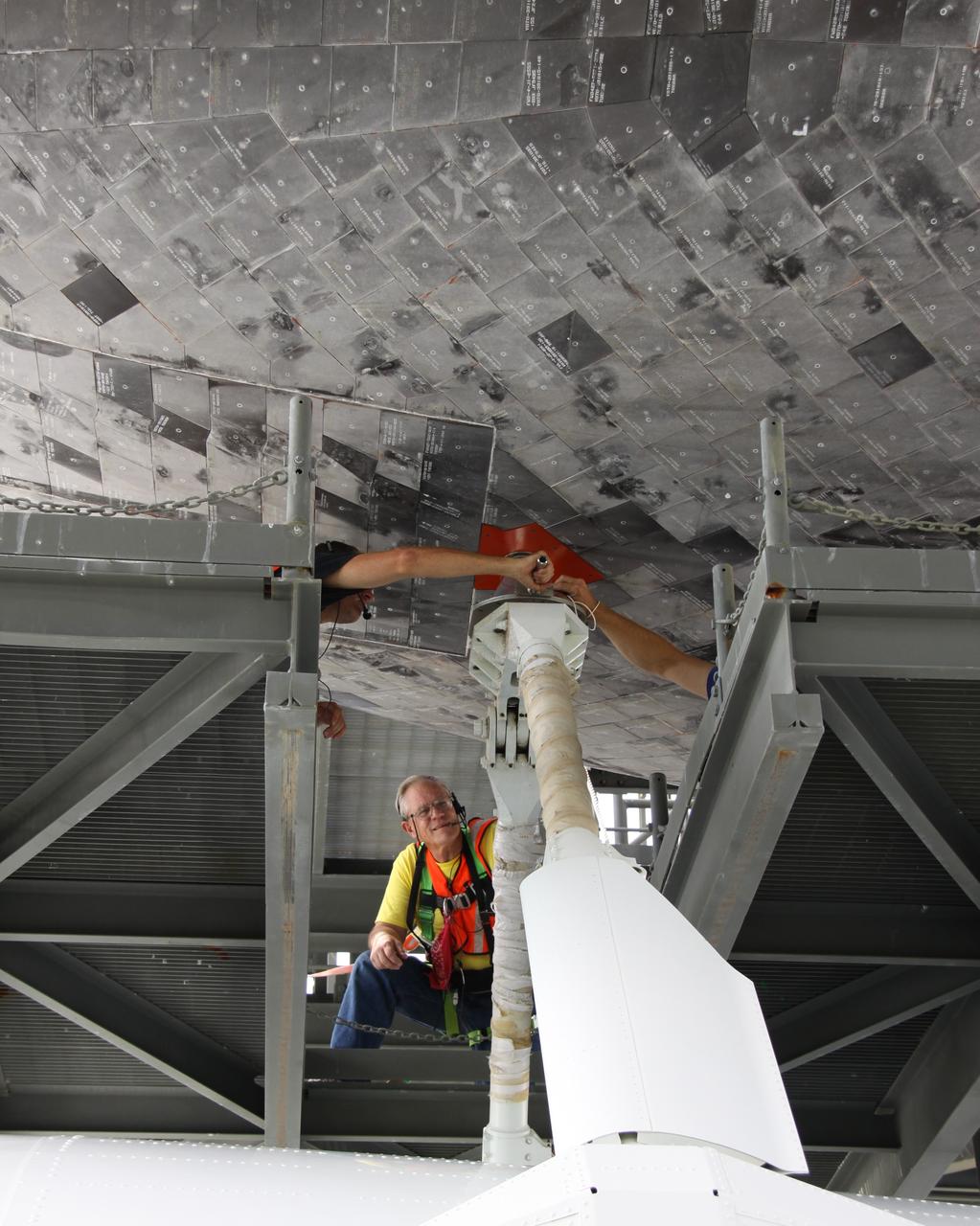
CAPE CANAVERAL, Fla. – Work is under way to separate space shuttle Atlantis from the Shuttle Carrier Aircraft, or SCA, underneath via the mate/demate device on the Shuttle Landing Facility at NASA's Kennedy Space Center in Florida. Workers are removing the struts that attached Atlantis to the SCA. A hoist attached to Atlantis will suspend the shuttle while the SCA is moved away. Atlantis returned from California atop the SCA, a modified Boeing 747, after its May 24 landing at Edwards Air Force Base, concluding mission STS-125. The ferry flight from Edwards Air Force Base began June 1. Atlantis' next assignment is the STS-129 mission, targeted to launch in November 2009. Photo credit: NASA/Jack Pfaller
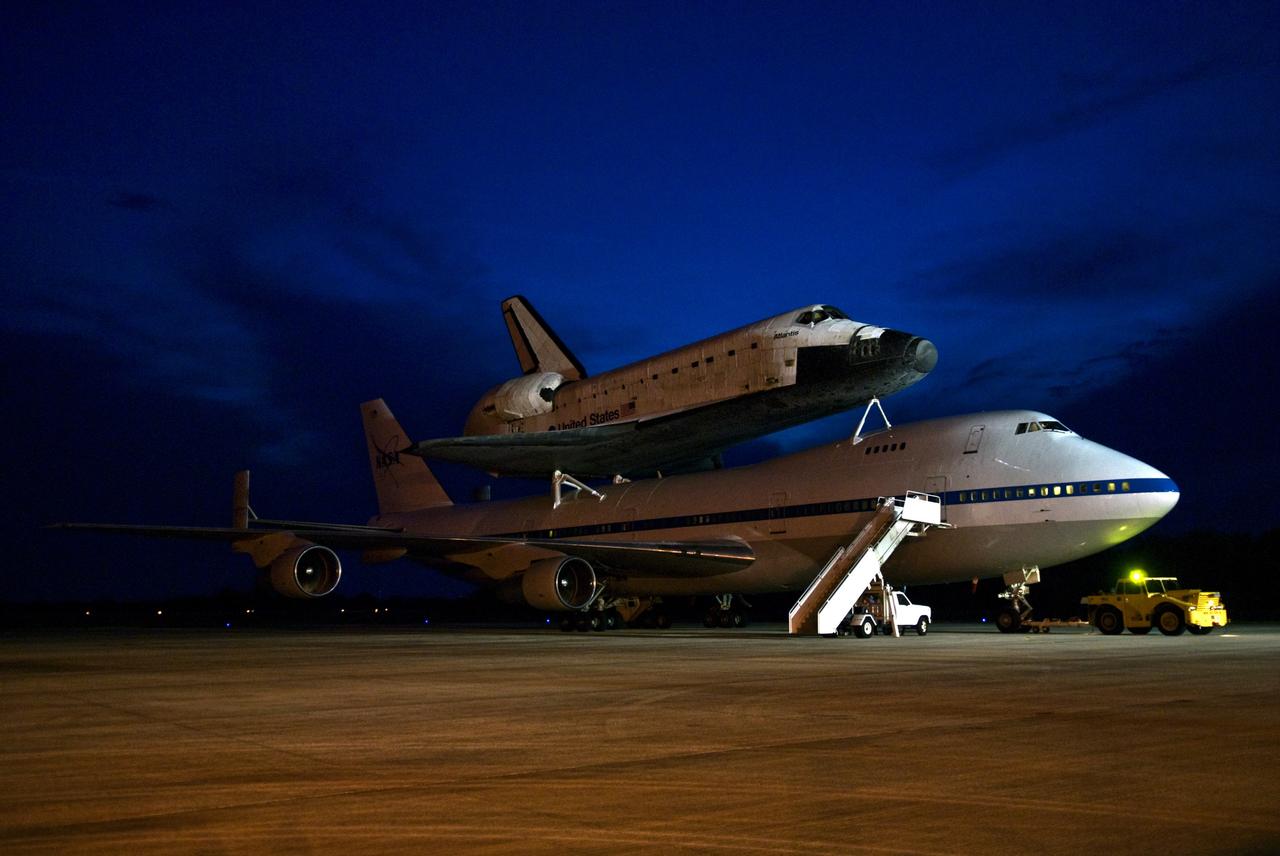
CAPE CANAVERAL, Fla. – Space shuttle Atlantis on top of the Shuttle Carrier Aircraft, or SCA, is parked on the tarmac of NASA Kennedy Space Center's Shuttle Landing Facility. The SCA landed at Kennedy after a more than 2,500-mile cross-country ferry flight from NASA's Dryden Flight Research Center at Edwards Air Force Base in Southern California. The SCA is a modified Boeing 747 jetliner. Atlantis returned from California atop the SCA after its May 24 landing at Edwards Air Force Base, concluding mission STS-125. The ferry flight from Edwards began June 1. Atlantis' next assignment is the STS-129 mission, targeted to launch in November 2009. Photo credit: NASA/Kim Shiflett
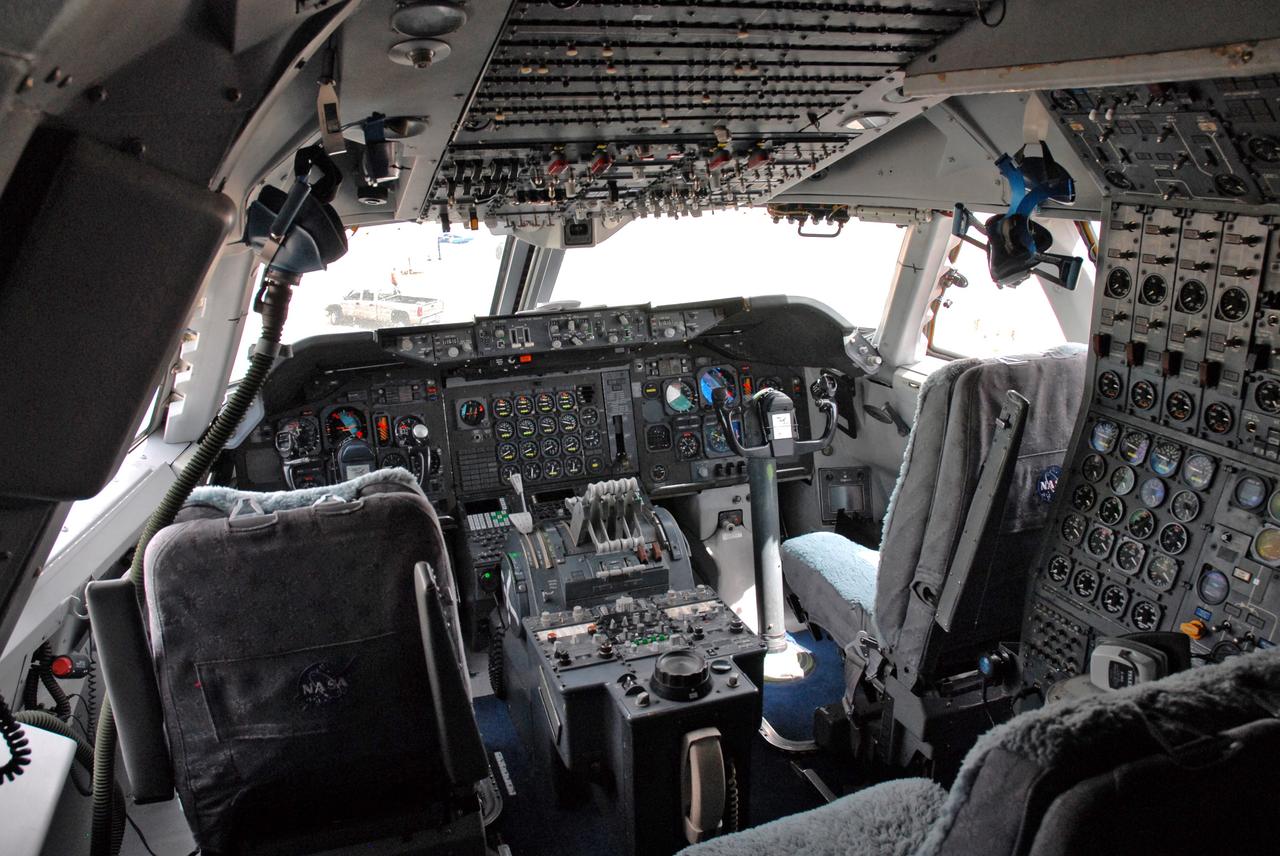
CAPE CANAVERAL, Fla. – This is the cockpit of the Shuttle Carrier Aircraft, or SCA, a modified Boeing 747, at Edwards Air Force Base in California. The SCA will carry space shuttle Atlantis on its ferry flight to Florida. Atlantis landed at Edwards on May 24, which concluded mission STS-125, after two landing opportunities at Kennedy were waved off due to weather concerns. Atlantis is being returned to Florida on a ferry flight on the SCA. Atlantis' next assignment is the STS-129 mission, targeted to launch in November 2009. Photo credit: NASA/Ben Smegelsky
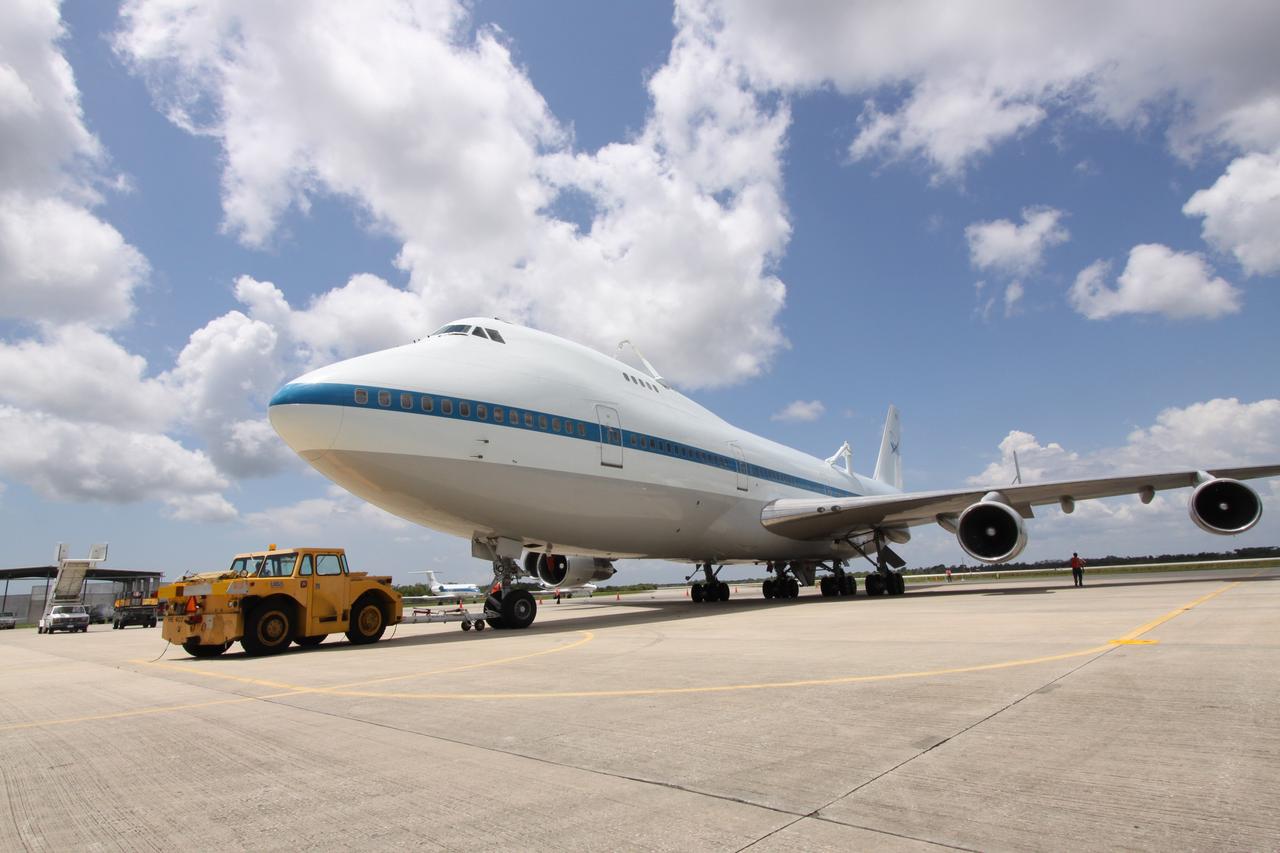
CAPE CANAVERAL, Fla. – On the Shuttle Landing Facility at NASA's Kennedy Space Center in Florida, the Shuttle Carrier Aircraft, or SCA, is towed away from the mate/demate device. The SCA was just demated from the shuttle. Atlantis returned from California atop the SCA, a modified Boeing 747, after its May 24 landing at Edwards Air Force Base, concluding mission STS-125. The ferry flight from Edwards Air Force Base began June 1. Atlantis' next assignment is the STS-129 mission, targeted to launch in November 2009. Photo credit: NASA/Jack Pfaller
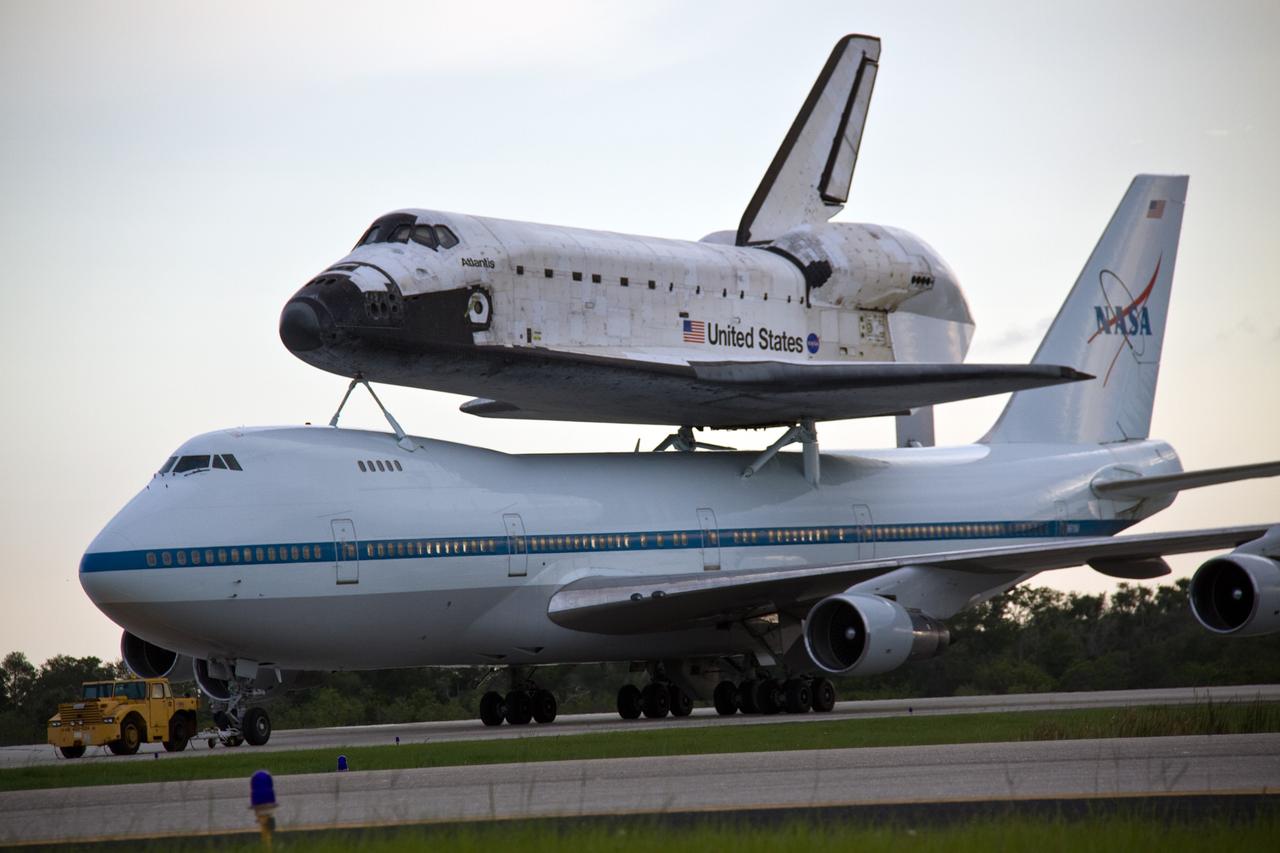
CAPE CANAVERAL, Fla. – After a two-day trip from California, space shuttle Atlantis, atop a Shuttle Carrier Aircraft, or SCA, is towed from the runway at NASA's Kennedy Space Center in Florida. The SCA is a modified Boeing 747 jetliner. Atlantis returned from California atop the SCA after its May 24 landing at Edwards Air Force Base, concluding mission STS-125. The ferry flight from Edwards Air Force Base began June 1. Atlantis' next assignment is the STS-129 mission, targeted to launch in November 2009. Photo credit: NASA/Jack Pfaller
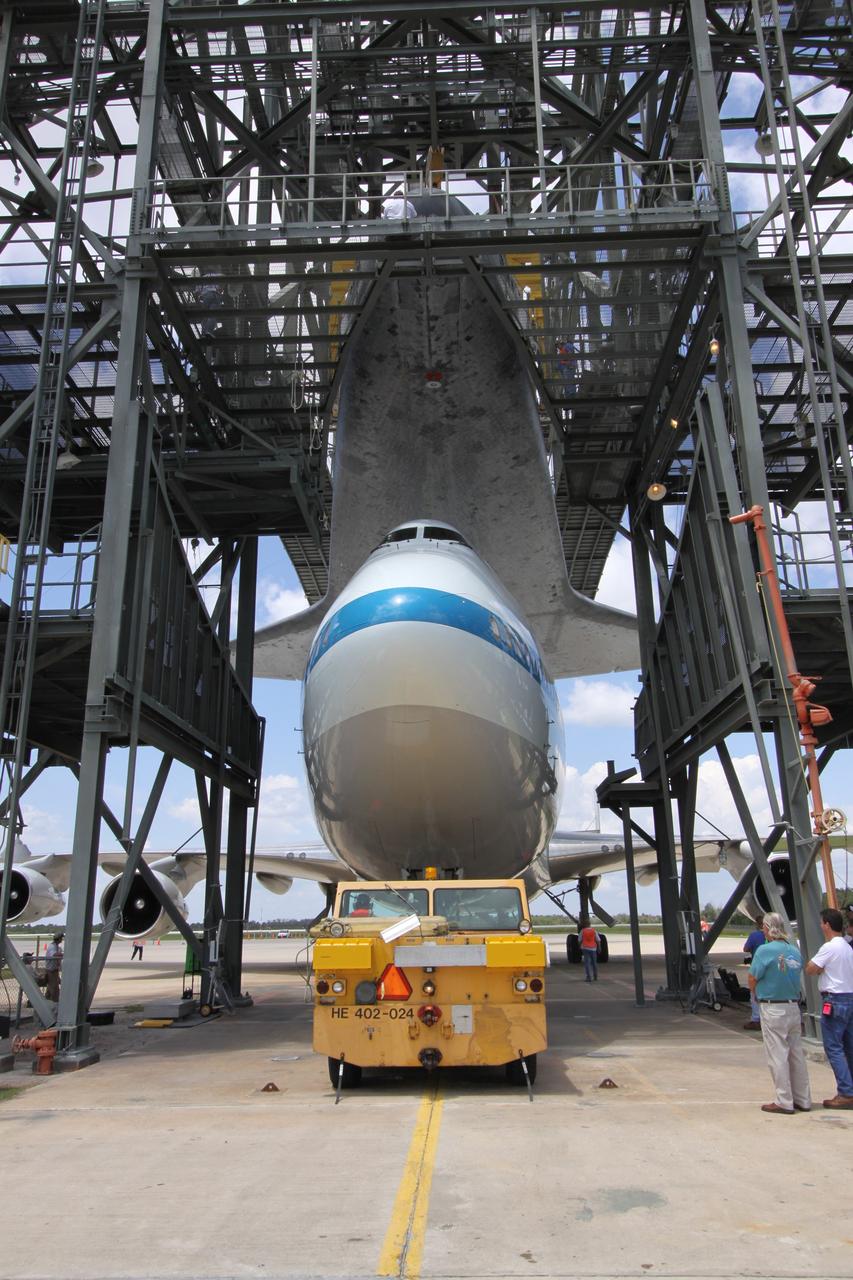
CAPE CANAVERAL, Fla. – On the Shuttle Landing Facility at NASA's Kennedy Space Center in Florida, the Shuttle Carrier Aircraft, or SCA, is moved from underneath space shuttle Atlantis in the mate/demate device. A hoist attached to Atlantis suspends the shuttle while the SCA is moved away. Atlantis returned from California atop the SCA, a modified Boeing 747, after its May 24 landing at Edwards Air Force Base, concluding mission STS-125. The ferry flight from Edwards Air Force Base began June 1. Atlantis' next assignment is the STS-129 mission, targeted to launch in November 2009. Photo credit: NASA/Jack Pfaller

CAPE CANAVERAL, Fla. – Against a setting sun, space shuttle Atlantis, atop a Shuttle Carrier Aircraft, or SCA, is towed from the runway at NASA's Kennedy Space Center in Florida. The SCA is a modified Boeing 747 jetliner. Atlantis returned from California atop the SCA after its May 24 landing at Edwards Air Force Base, concluding mission STS-125. The ferry flight from Edwards Air Force Base began June 1. Atlantis' next assignment is the STS-129 mission, targeted to launch in November 2009. Photo credit: NASA/Jack Pfaller
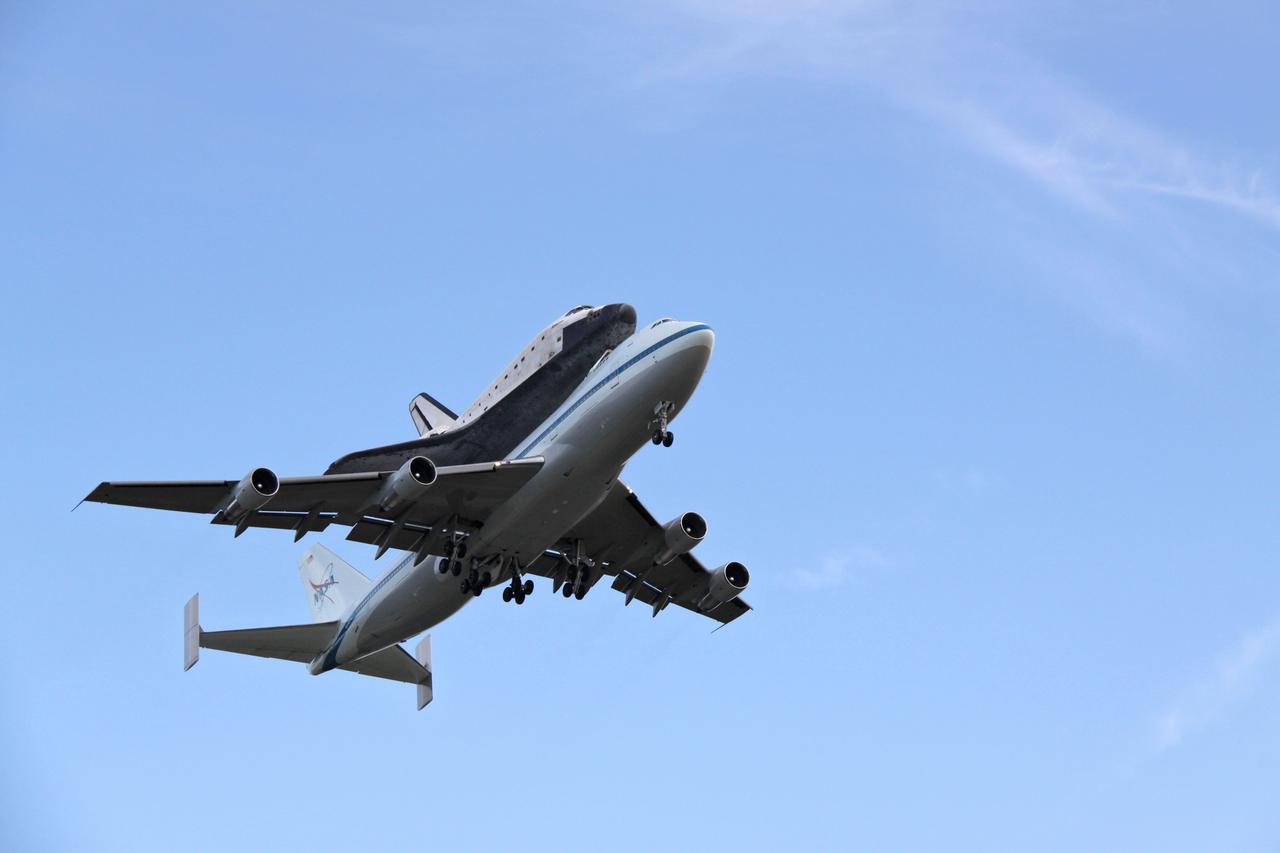
CAPE CANAVERAL, Fla. – After a two-day trip from California, the Shuttle Carrier Aircraft, or SCA, and its piggyback passenger space shuttle Atlantis approach NASA Kennedy Space Center's Shuttle Landing Facility runway. The SCA is a modified Boeing 747 jetliner. Atlantis returned from California atop the SCA after its May 24 landing at Edwards Air Force Base, concluding mission STS-125. The ferry flight from Edwards Air Force Base began June 1. Touchdown at Kennedy was at 6:53 p.m. EDT. Photo credit: NASA/Jack Pfaller
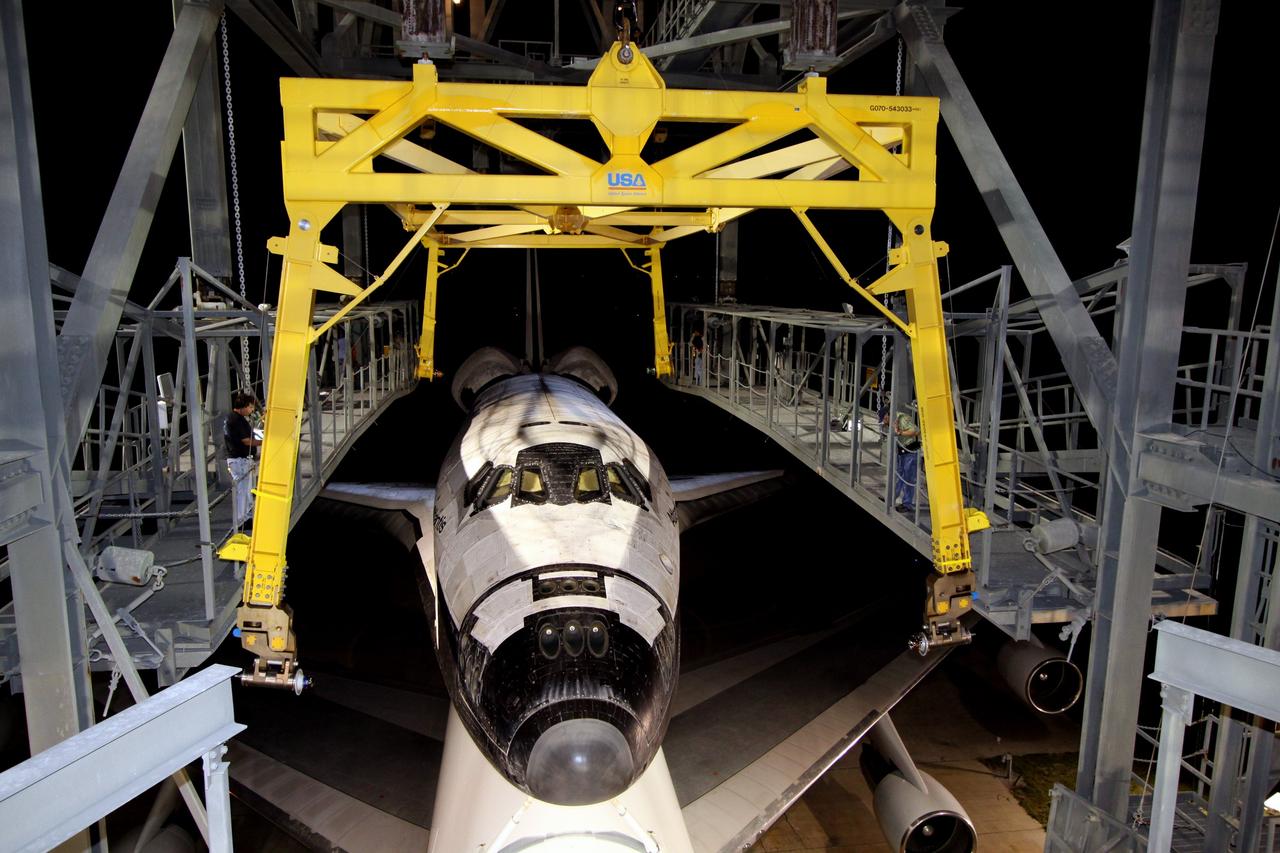
CAPE CANAVERAL, Fla. – After dark on the Shuttle Landing Facility at NASA's Kennedy Space Center in Florida, the hoist in the mate/demate device is lowered toward space shuttle Atlantis, secured on top of the Shuttle Carrier Aircraft, or SCA. The hoist will lift the shuttle from the SCA and place it on the ground. Atlantis returned from California atop the SCA after its May 24 landing at Edwards Air Force Base, concluding mission STS-125. The ferry flight from Edwards Air Force Base began June 1. Atlantis' next assignment is the STS-129 mission, targeted to launch in November 2009. Photo credit: NASA/Jack Pfaller
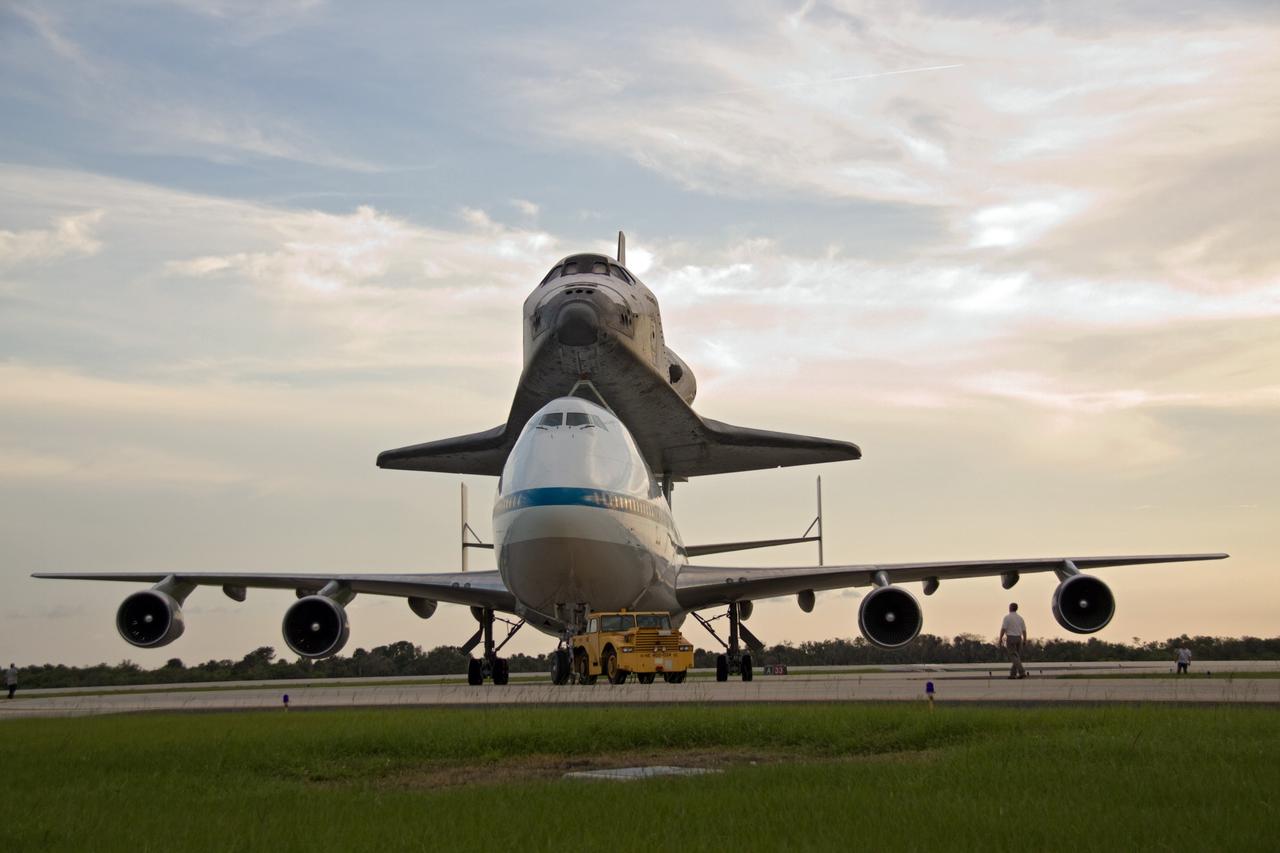
CAPE CANAVERAL, Fla. – Against a setting sun, space shuttle Atlantis, atop a Shuttle Carrier Aircraft, or SCA, is towed from the runway at NASA's Kennedy Space Center in Florida. The SCA is a modified Boeing 747 jetliner. Atlantis returned from California atop the SCA after its May 24 landing at Edwards Air Force Base, concluding mission STS-125. The ferry flight from Edwards Air Force Base began June 1. Atlantis' next assignment is the STS-129 mission, targeted to launch in November 2009. Photo credit: NASA/Jack Pfaller
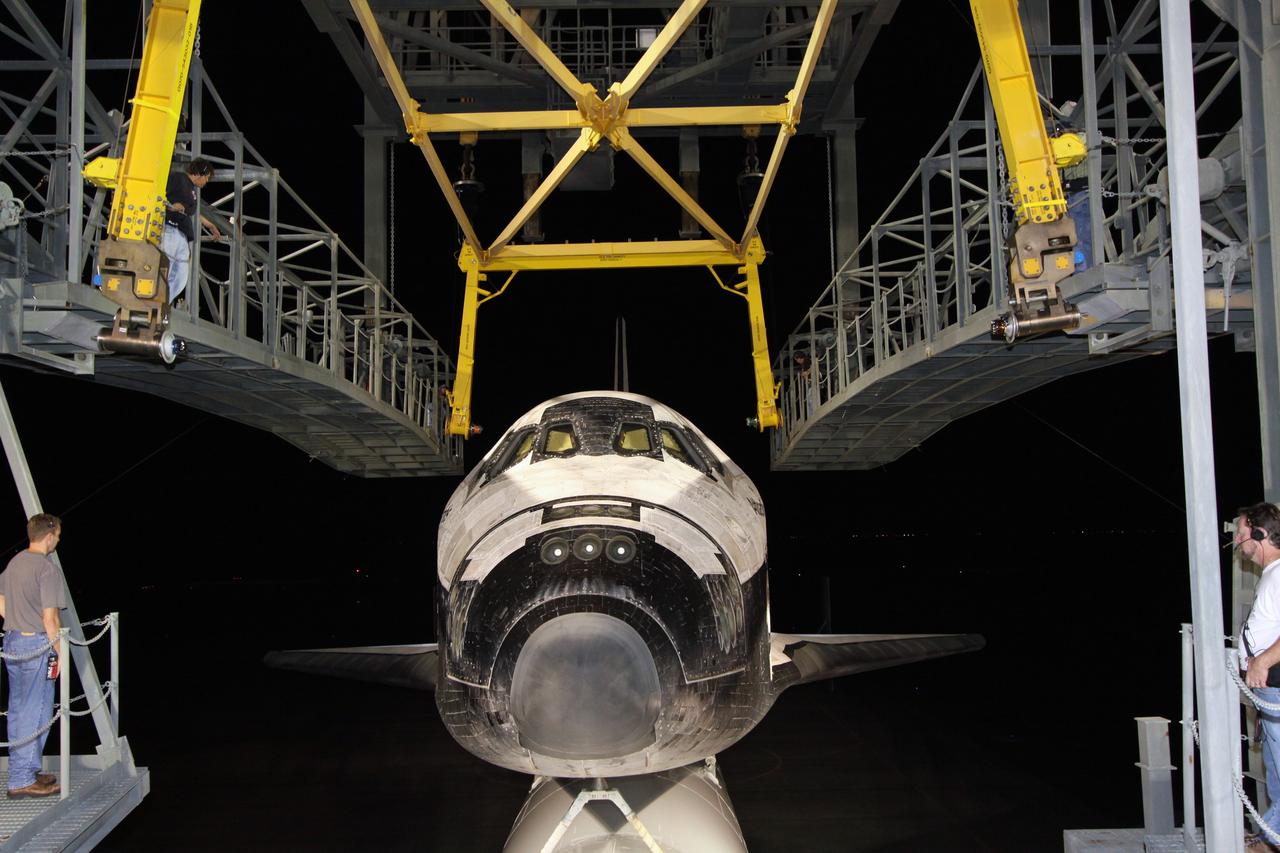
CAPE CANAVERAL, Fla. – After dark, space shuttle Atlantis, atop a Shuttle Carrier Aircraft, or SCA, rolls into place under the mate/demate device on the Shuttle Landing Facility at NASA's Kennedy Space Center in Florida. The hoist seen above Atlantis will lift the shuttle from the SCA and place it on the ground. Atlantis returned from California atop the SCA after its May 24 landing at Edwards Air Force Base, concluding mission STS-125. The ferry flight from Edwards Air Force Base began June 1. Atlantis' next assignment is the STS-129 mission, targeted to launch in November 2009. Photo credit: NASA/Jack Pfaller
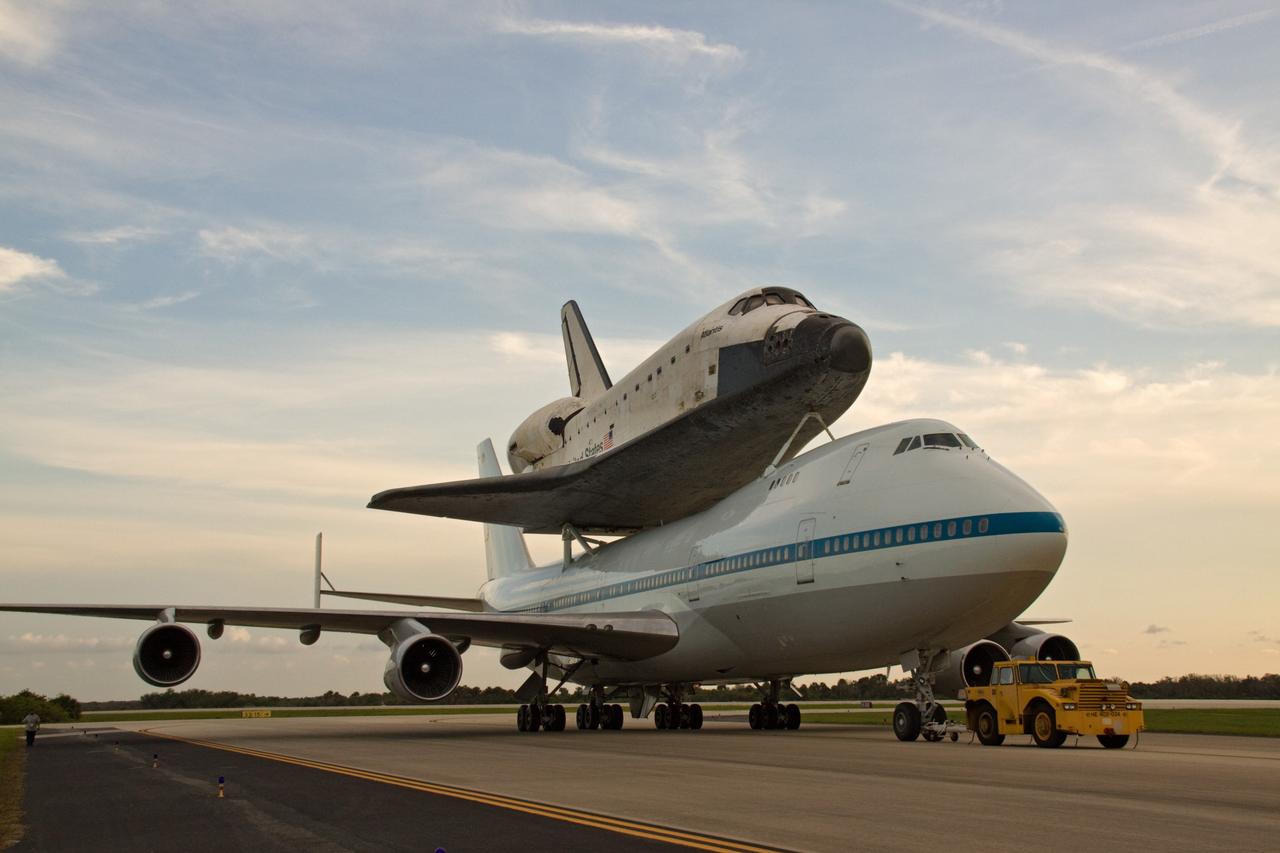
CAPE CANAVERAL, Fla. – Against a setting sun, space shuttle Atlantis, atop a Shuttle Carrier Aircraft, or SCA, is towed from the runway at NASA's Kennedy Space Center in Florida. The SCA is a modified Boeing 747 jetliner. Atlantis returned from California atop the SCA after its May 24 landing at Edwards Air Force Base, concluding mission STS-125. The ferry flight from Edwards Air Force Base began June 1. Atlantis' next assignment is the STS-129 mission, targeted to launch in November 2009. Photo credit: NASA/Jack Pfaller
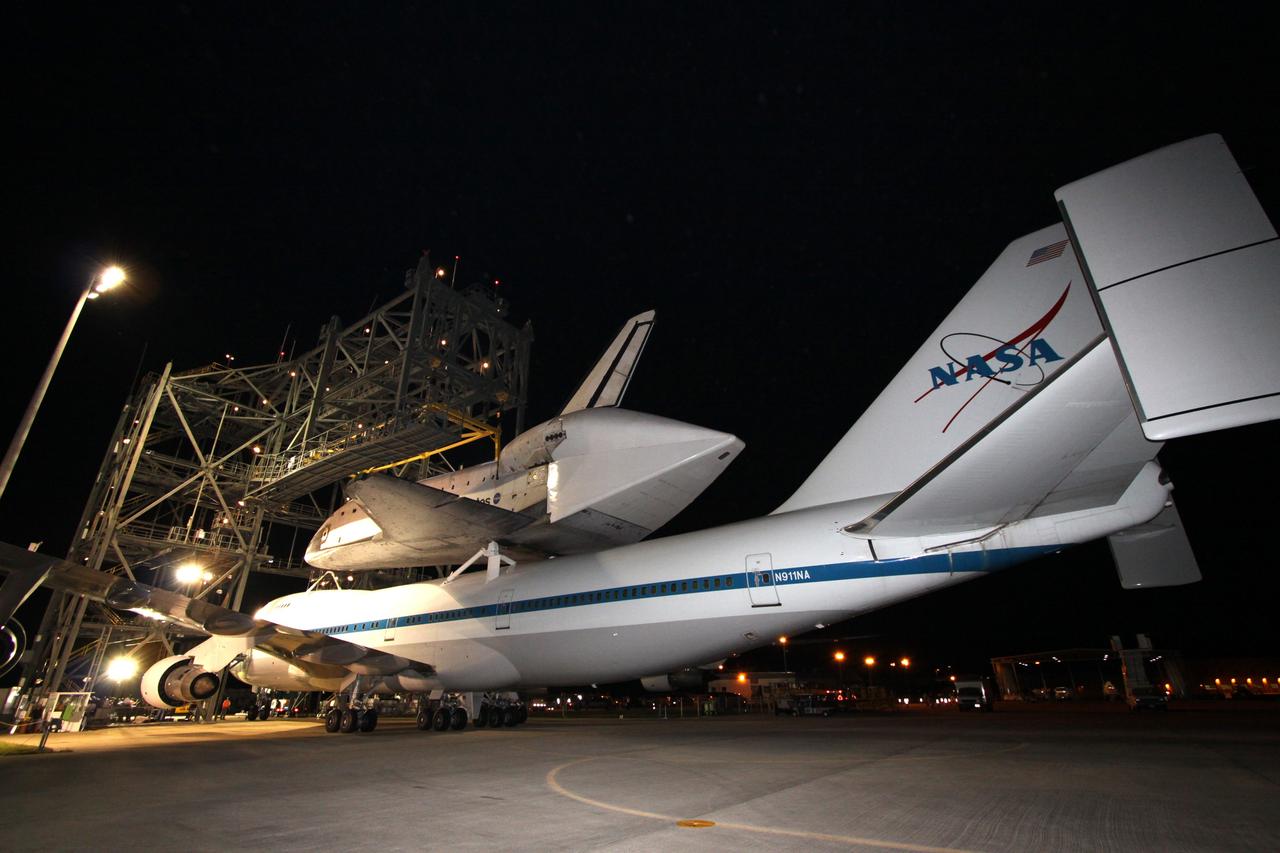
CAPE CANAVERAL, Fla. – After dark, space shuttle Atlantis, atop a Shuttle Carrier Aircraft, or SCA, rolls into place under the mate/demate device on the Shuttle Landing Facility at NASA's Kennedy Space Center in Florida. The hoist seen above Atlantis will lift the shuttle from the SCA and place it on the ground. Atlantis returned from California atop the SCA after its May 24 landing at Edwards Air Force Base, concluding mission STS-125. The ferry flight from Edwards Air Force Base began June 1. Atlantis' next assignment is the STS-129 mission, targeted to launch in November 2009. Photo credit: NASA/Jack Pfaller
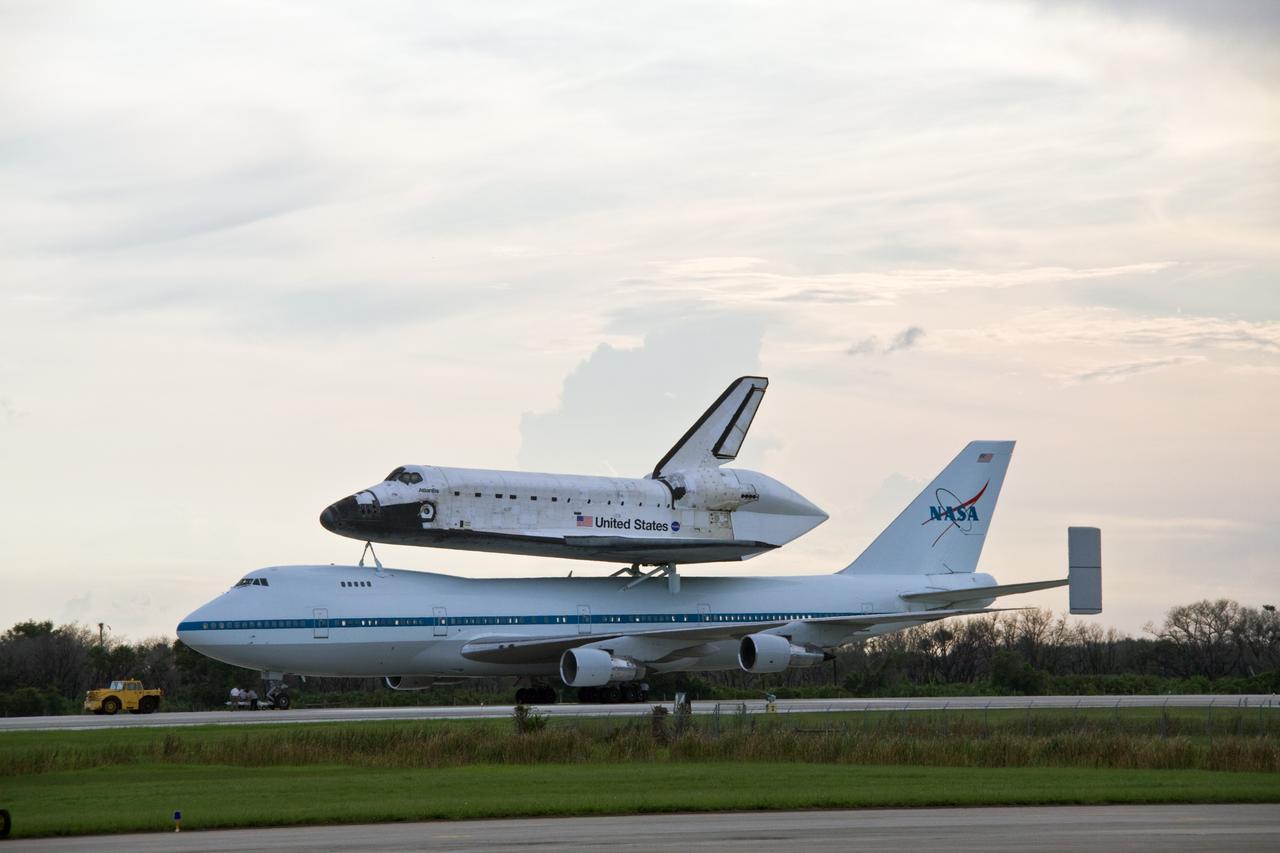
CAPE CANAVERAL, Fla. – After a two-day trip from California, space shuttle Atlantis, atop a Shuttle Carrier Aircraft, or SCA, is towed from the runway at NASA's Kennedy Space Center in Florida. The SCA is a modified Boeing 747 jetliner. Atlantis returned from California atop the SCA after its May 24 landing at Edwards Air Force Base, concluding mission STS-125. The ferry flight from Edwards Air Force Base began June 1. Atlantis' next assignment is the STS-129 mission, targeted to launch in November 2009. Photo credit: NASA/Jack Pfaller
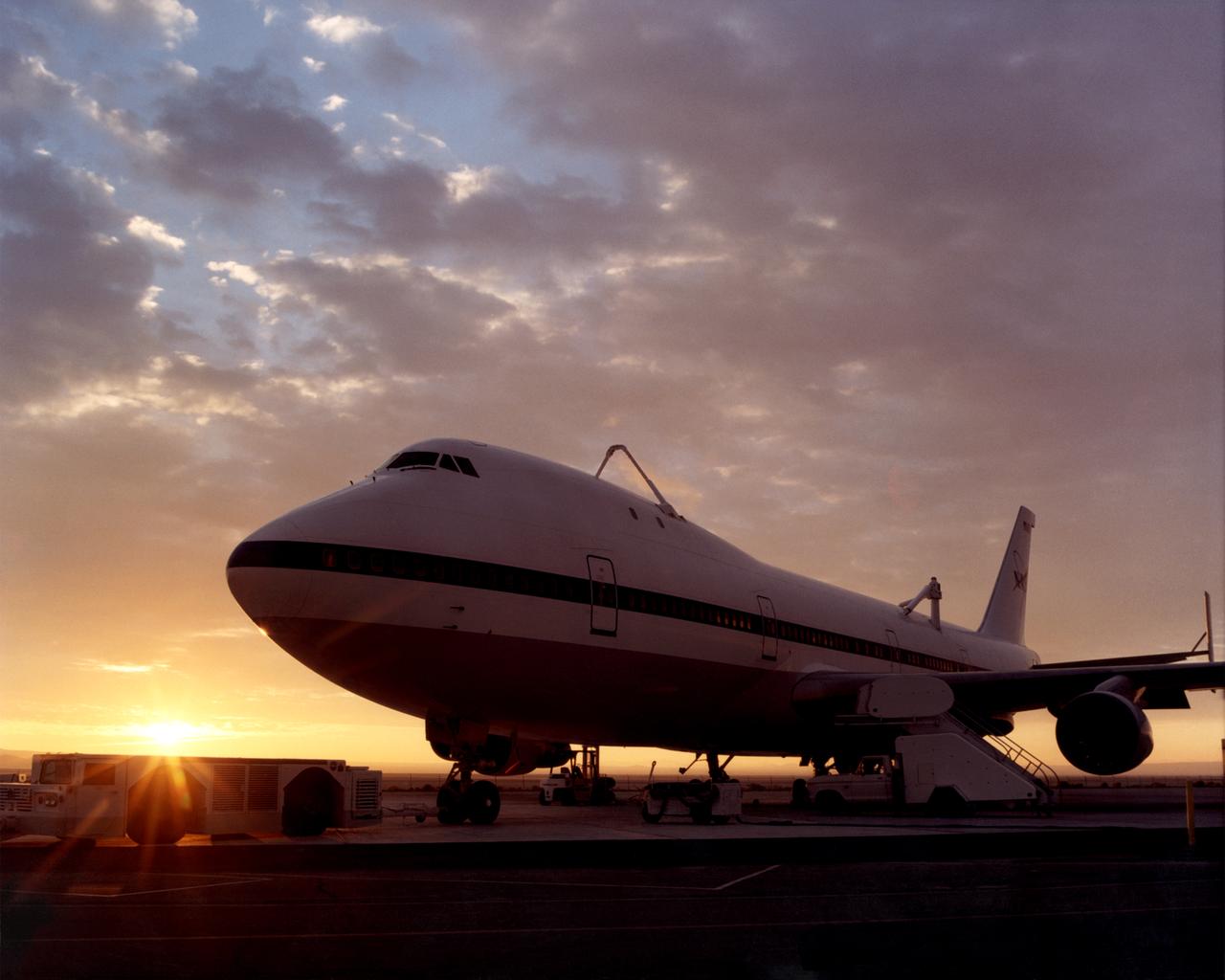
One of NASA’s two modified Boeing 747 Shuttle Carrier Aircraft is bathed in the morning Sun at NASA’s Dryden Flight Research Center at Edwards, California. The modified jumbo jetliners are used to ferry the Space Shuttle orbiters between Dryden and the Kennedy Space Center in Florida and Boeing’s Reusable Space Systems modification facility at Palmdale, California. Features which distinguish the two SCAs from standard 747 jetliners are three struts, with associated interior structural strengthening, which protrude from the top of the fuselage (two aft, one forward) on which the orbiter is attached, and two additional vertical stabilizers, one on each end of the standard horizontal stabilizer, to enhance directional stability. All interior furnishings and equipment aft of the forward No. 1 doors have also been removed to reduce weight. The two SCAs are under the operational control of NASA's Johnson Space Center, Houston, Texas.
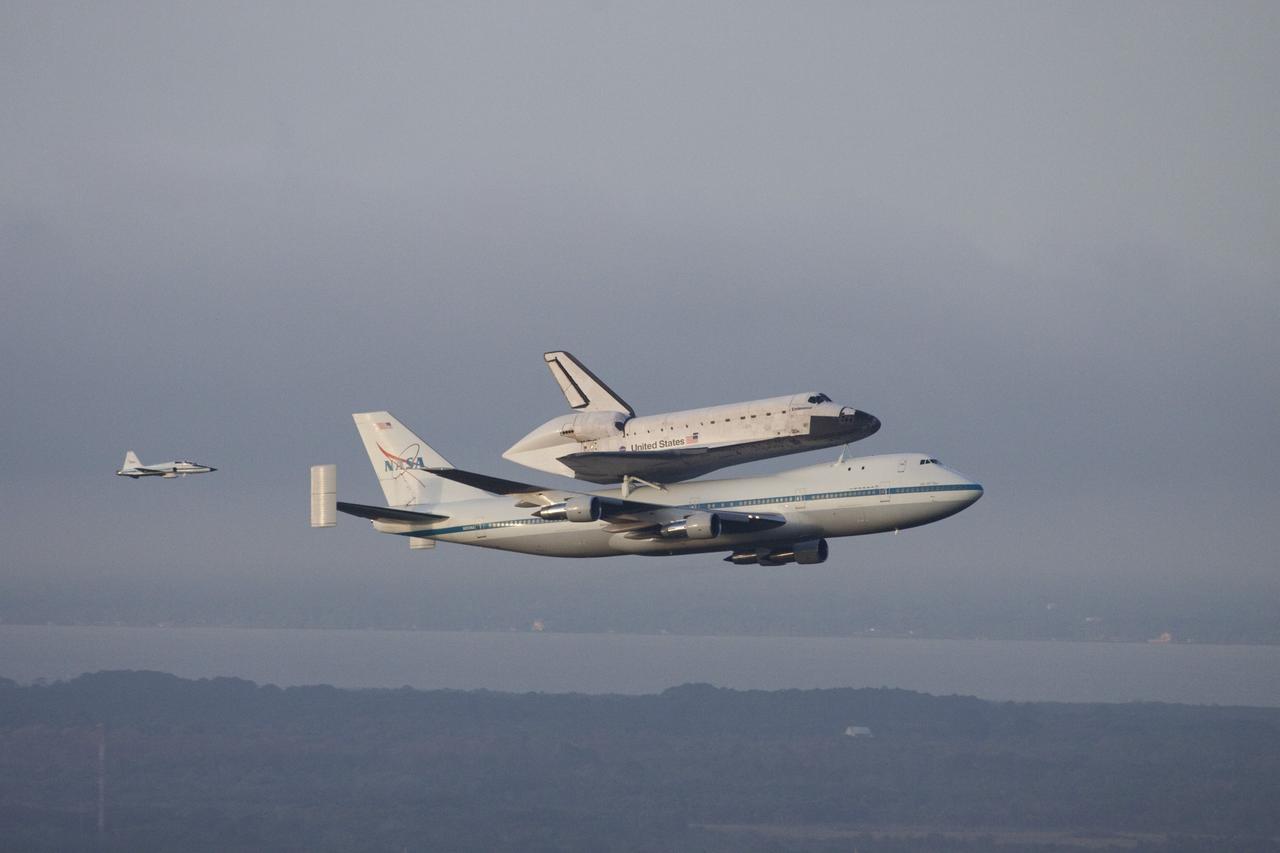
CAPE CANAVERAL, Fla. – At NASA's Kennedy Space Center in Florida, NASA's Shuttle Carrier Aircraft, or SCA, with the space shuttle Endeavour mounted atop, makes a low-level pass over the Shuttle Landing Facility. Following behind the SCA-shuttle combination is a T-38 chase aircraft. After making several low-level passes over several locations on Florida's Space Coast the SCA-Shuttle will head west for its ferry flight to California. The SCA, a modified 747 jetliner, will fly Endeavour to Los Angeles where it will be placed on public display at the California Science Center. This is the final ferry flight scheduled in the Space Shuttle Program era. For more information on the shuttles' transition and retirement, visit http://www.nasa.gov/transition. Photo credit: NASA/Jim Grossmann
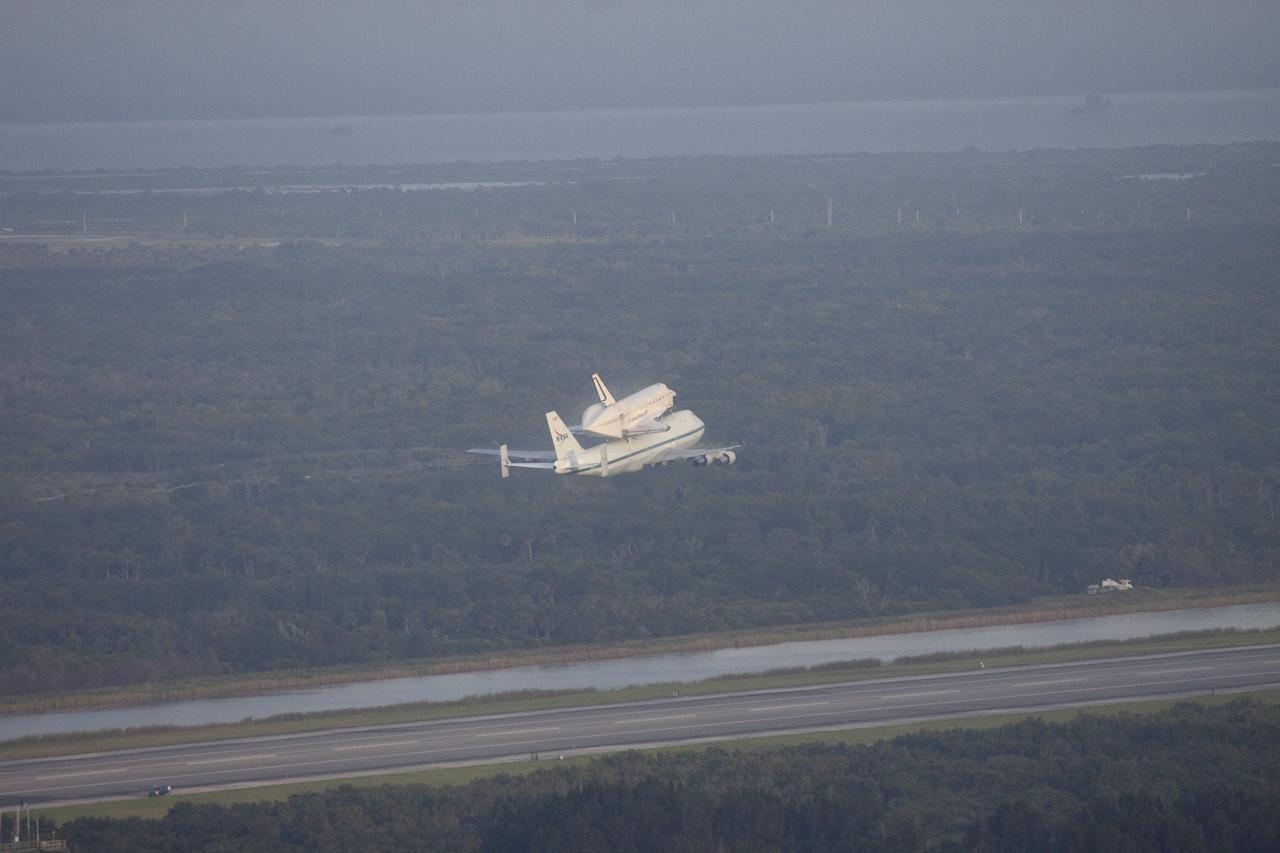
CAPE CANAVERAL, Fla. – At NASA's Kennedy Space Center in Florida, NASA's Shuttle Carrier Aircraft, or SCA, with the space shuttle Endeavour mounted atop, makes a low-level pass over the Shuttle Landing Facility. Following behind the SCA-shuttle combination is a T-38 chase aircraft. After making several low-level passes over several locations on Florida's Space Coast the SCA-Shuttle will head west for its ferry flight to California. The SCA, a modified 747 jetliner, will fly Endeavour to Los Angeles where it will be placed on public display at the California Science Center. This is the final ferry flight scheduled in the Space Shuttle Program era. For more information on the shuttles' transition and retirement, visit http://www.nasa.gov/transition. Photo credit: NASA/Jim Grossmann
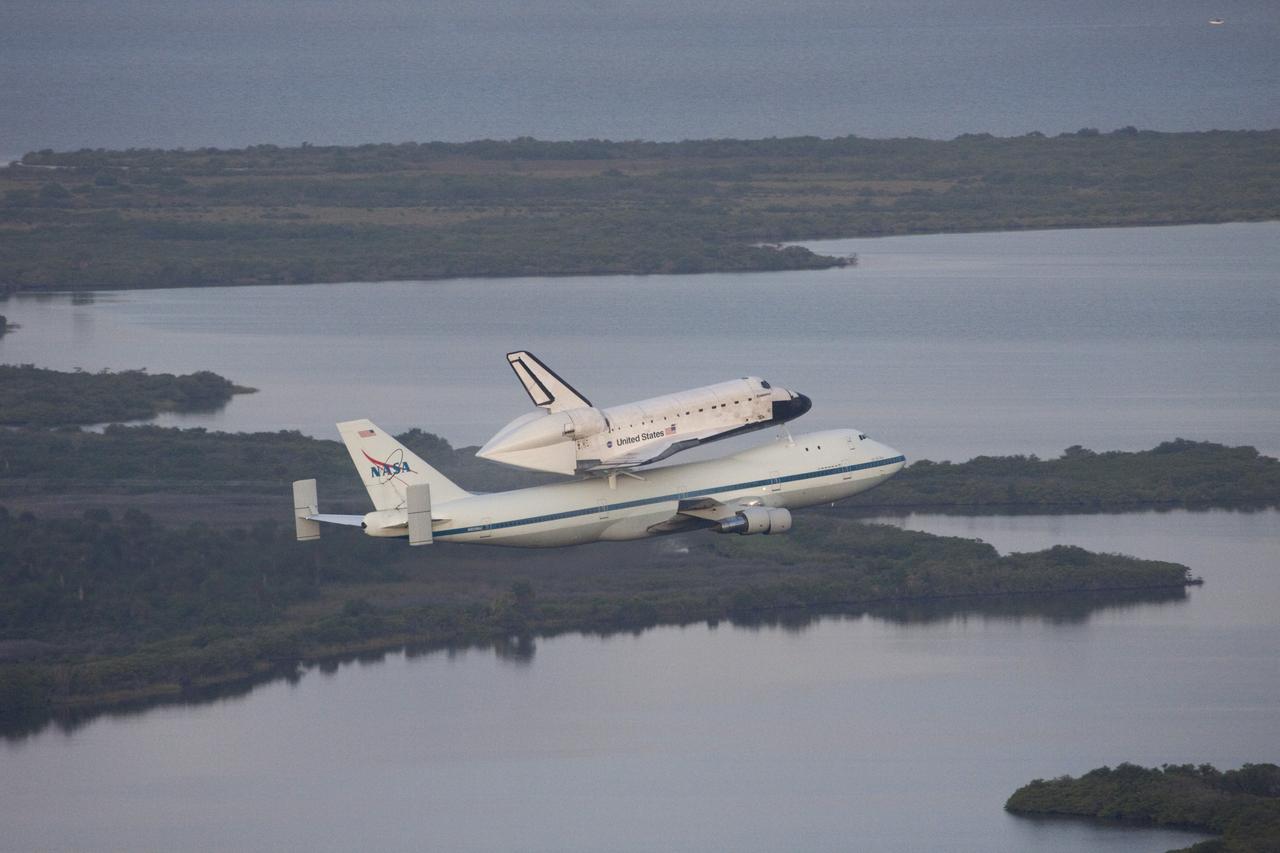
CAPE CANAVERAL, Fla. – At NASA's Kennedy Space Center in Florida, NASA's Shuttle Carrier Aircraft, or SCA, with the space shuttle Endeavour mounted atop, makes a low-level pass over the Shuttle Landing Facility. Following behind the SCA-shuttle combination is a T-38 chase aircraft. After making several low-level passes over several locations on Florida's Space Coast the SCA-Shuttle will head west for its ferry flight to California. The SCA, a modified 747 jetliner, will fly Endeavour to Los Angeles where it will be placed on public display at the California Science Center. This is the final ferry flight scheduled in the Space Shuttle Program era. For more information on the shuttles' transition and retirement, visit http://www.nasa.gov/transition. Photo credit: NASA/Jim Grossmann
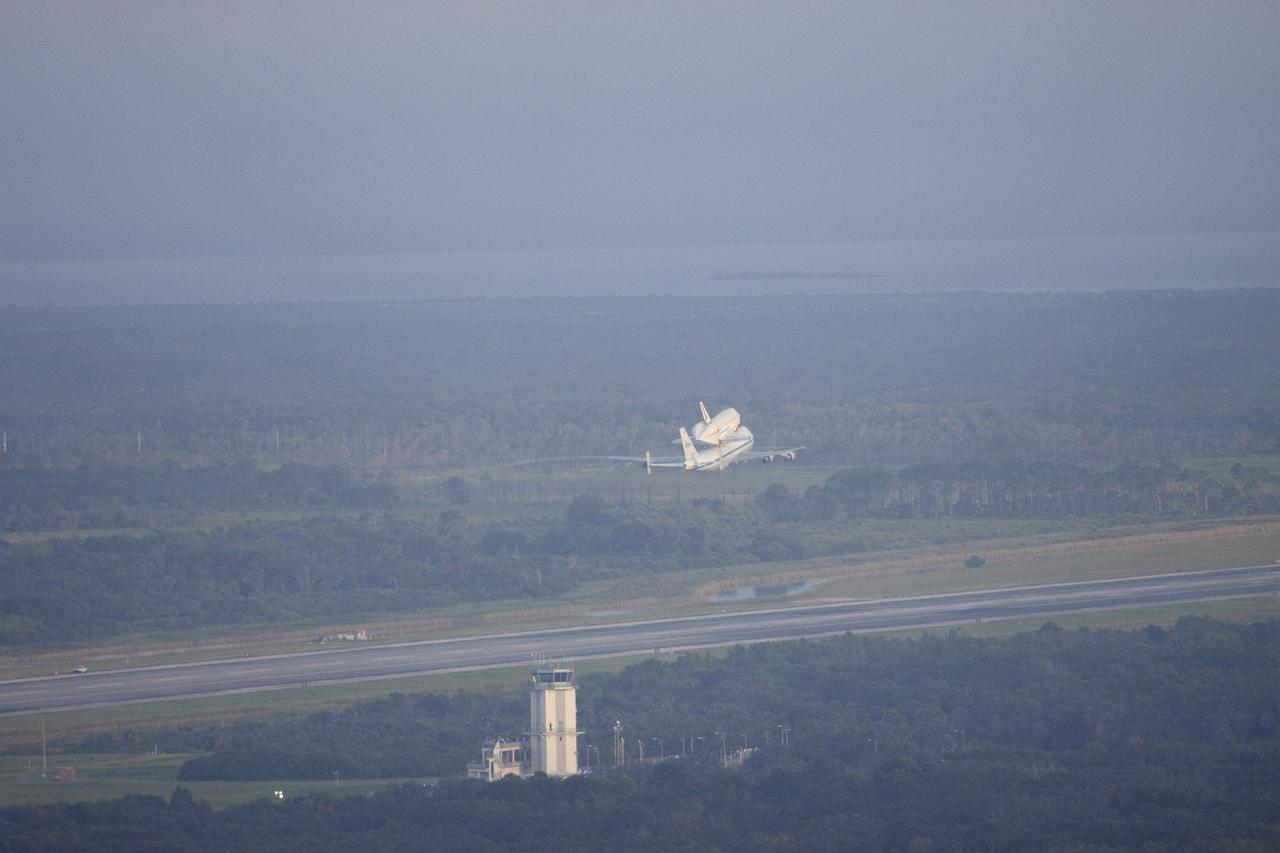
CAPE CANAVERAL, Fla. – At NASA's Kennedy Space Center in Florida, NASA's Shuttle Carrier Aircraft, or SCA, with the space shuttle Endeavour mounted atop, makes a low-level pass over the Shuttle Landing Facility. Following behind the SCA-shuttle combination is a T-38 chase aircraft. After making several low-level passes over several locations on Florida's Space Coast the SCA-Shuttle will head west for its ferry flight to California. The SCA, a modified 747 jetliner, will fly Endeavour to Los Angeles where it will be placed on public display at the California Science Center. This is the final ferry flight scheduled in the Space Shuttle Program era. For more information on the shuttles' transition and retirement, visit http://www.nasa.gov/transition. Photo credit: NASA/Jim Grossmann
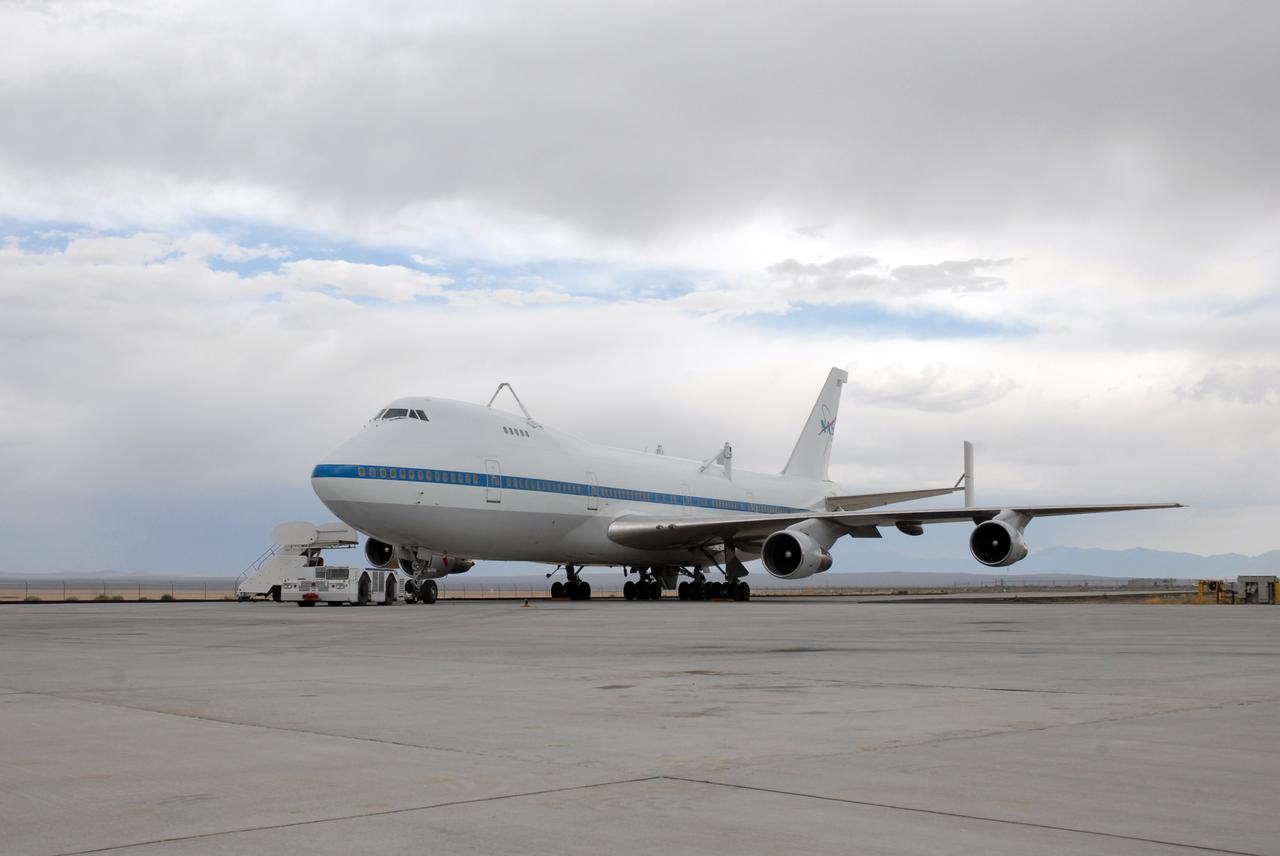
CAPE CANAVERAL, Fla. – This Shuttle Carrier Aircraft, or SCA, a modified Boeing 747, is fitted with struts on top that will attach to space shuttle Atlantis for a piggyback flight. Atlantis landed at Edwards on May 24, which concluded mission STS-125, after two landing opportunities at Kennedy were waved off due to weather concerns. Atlantis is being returned to Florida on a ferry flight on the SCA. Atlantis' next assignment is the STS-129 mission, targeted to launch in November 2009. Photo credit: NASA/Ben Smegelsky
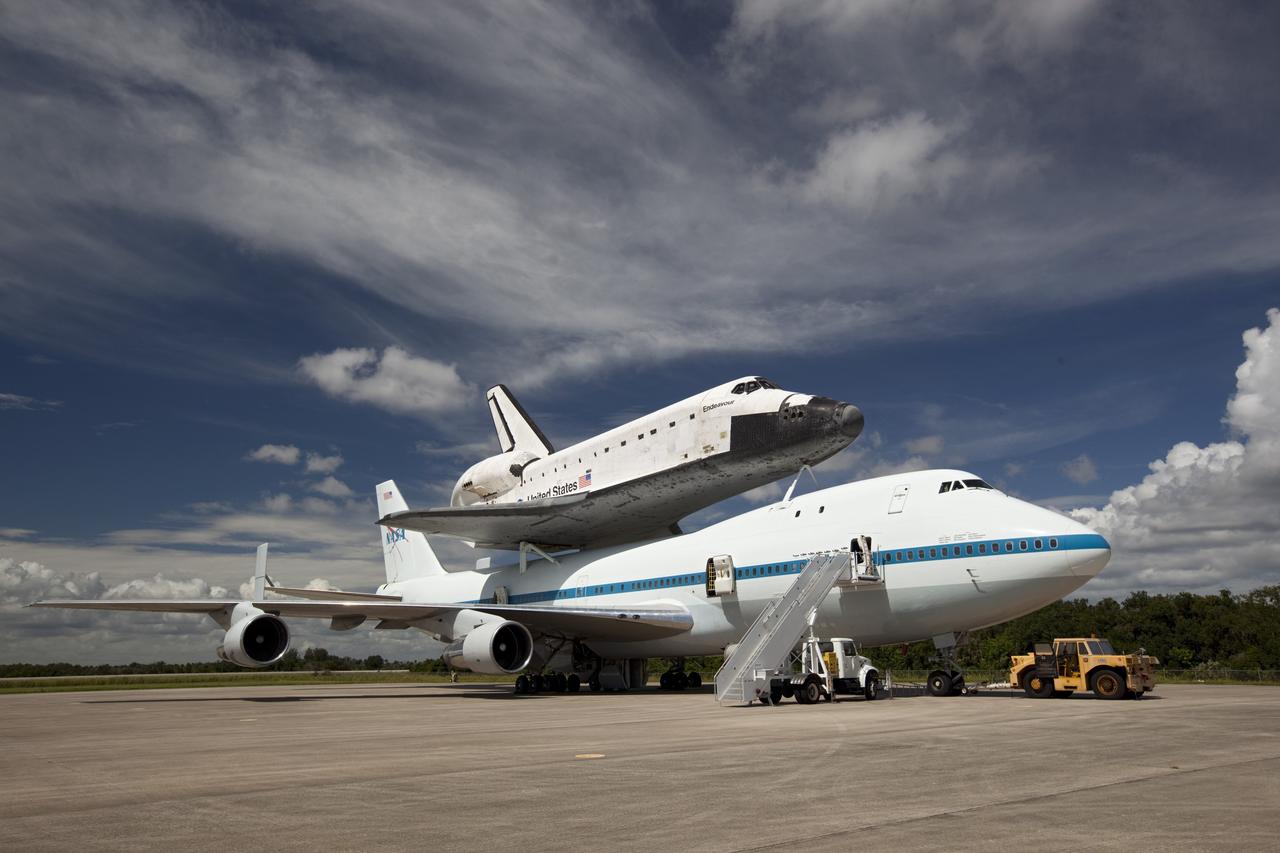
CAPE CANAVERAL, Fla. – At the Shuttle Landing Facility at NASA's Kennedy Space Center in Florida, the space shuttle Endeavour, mounted atop NASA's Shuttle Carrier Aircraft, or SCA, prepares for its ferry flight to California. The SCA, a modified 747 jetliner, will fly Endeavour to Los Angeles where it will be placed on public display at the California Science Center. This is the final ferry flight scheduled in the Space Shuttle Program era. For more information on the shuttles' transition and retirement, visit http://www.nasa.gov/transition. Photo credit: NASA/ Dimitri Gerondidakis
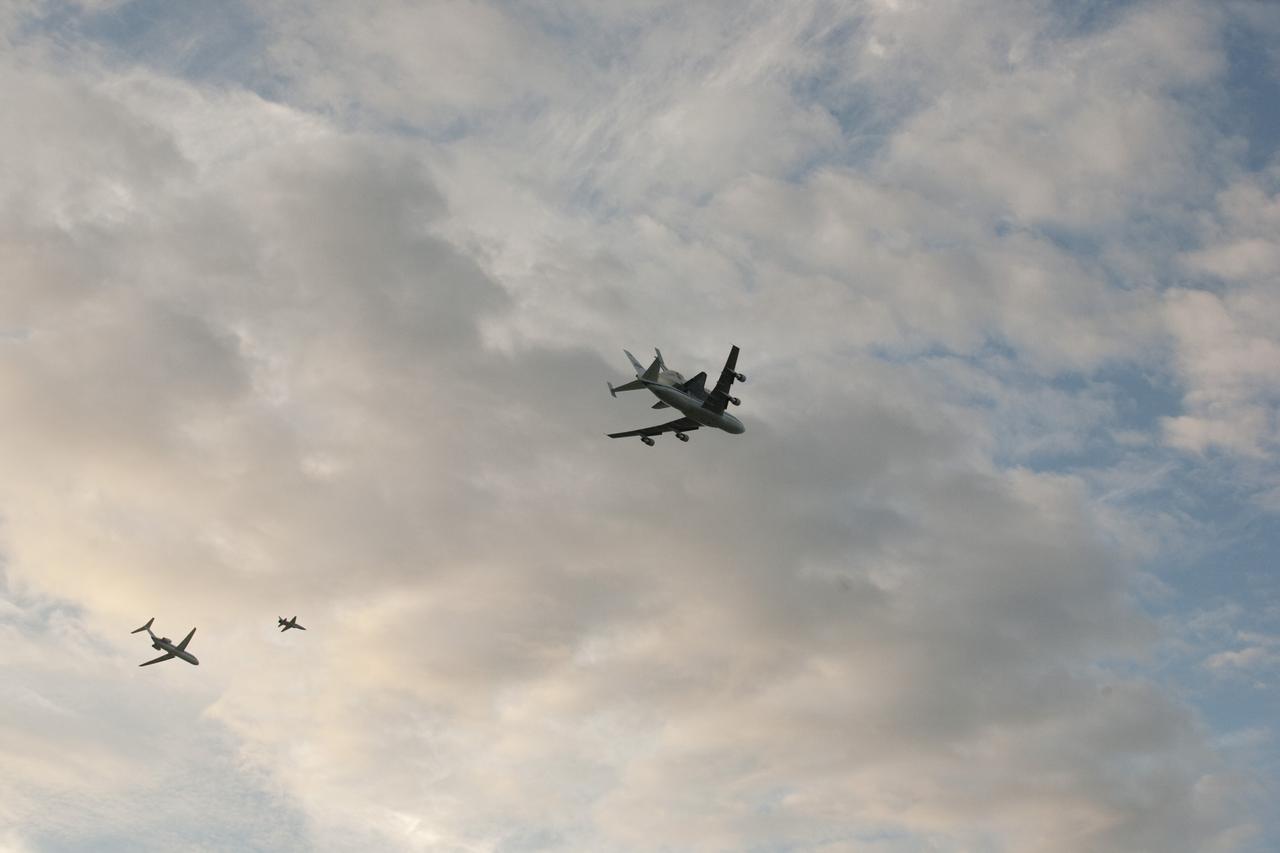
COCOA BEACH, Fla. – NASA's Shuttle Carrier Aircraft, or SCA, with the space shuttle Endeavour mounted atop, right, is accompanied by a T-38 chase aircraft, center, and a pathfinder aircraft flying along Cocoa Beach. The SCA, a modified 747 jetliner, will fly Endeavour to Los Angeles where it will be placed on public display at the California Science Center. This is the final ferry flight scheduled in the Space Shuttle Program era. For more information on the shuttles' transition and retirement, visit http://www.nasa.gov/transition. Photo credit: NASA/Alan Ault
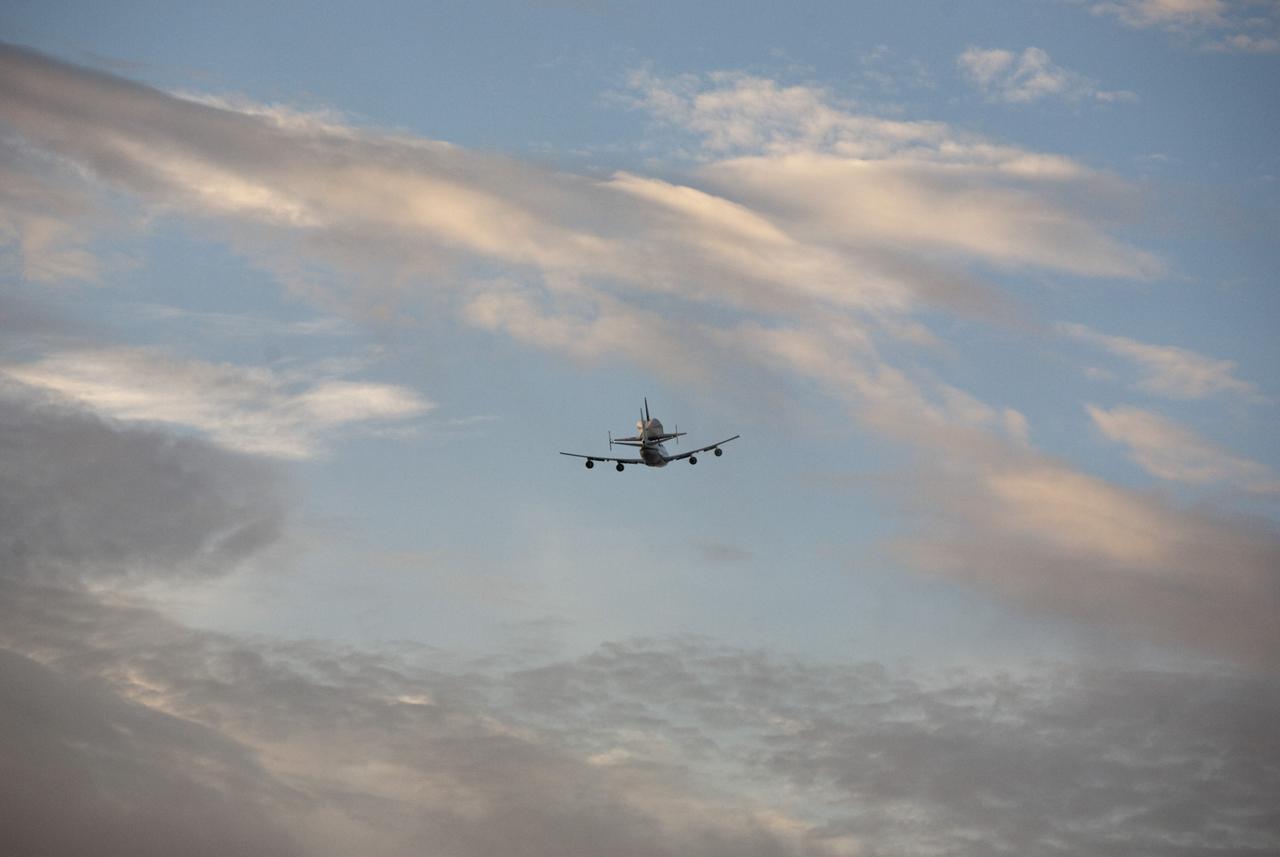
COCOA BEACH, Fla. – NASA's Shuttle Carrier Aircraft, or SCA, with the space shuttle Endeavour mounted atop, fly along Cocoa Beach. The SCA, a modified 747 jetliner, will fly Endeavour to Los Angeles where it will be placed on public display at the California Science Center. This is the final ferry flight scheduled in the Space Shuttle Program era. For more information on the shuttles' transition and retirement, visit http://www.nasa.gov/transition. Photo credit: NASA/Alan Ault
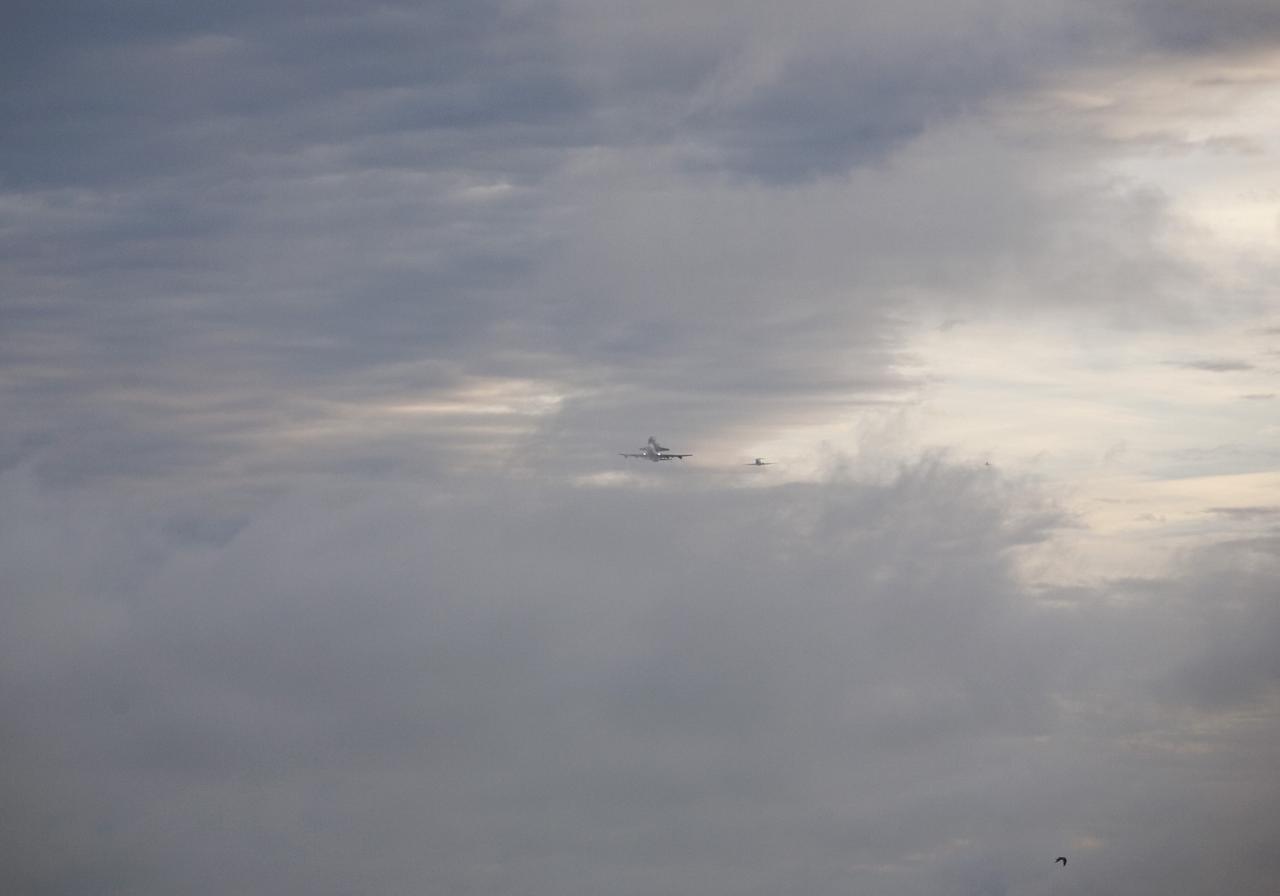
COCOA BEACH, Fla. – NASA's Shuttle Carrier Aircraft, or SCA, with the space shuttle Endeavour mounted atop is accompanied by its pathfinder aircraft flying along Cocoa Beach. The SCA, a modified 747 jetliner, will fly Endeavour to Los Angeles where it will be placed on public display at the California Science Center. This is the final ferry flight scheduled in the Space Shuttle Program era. For more information on the shuttles' transition and retirement, visit http://www.nasa.gov/transition. Photo credit: NASA/Alan Ault
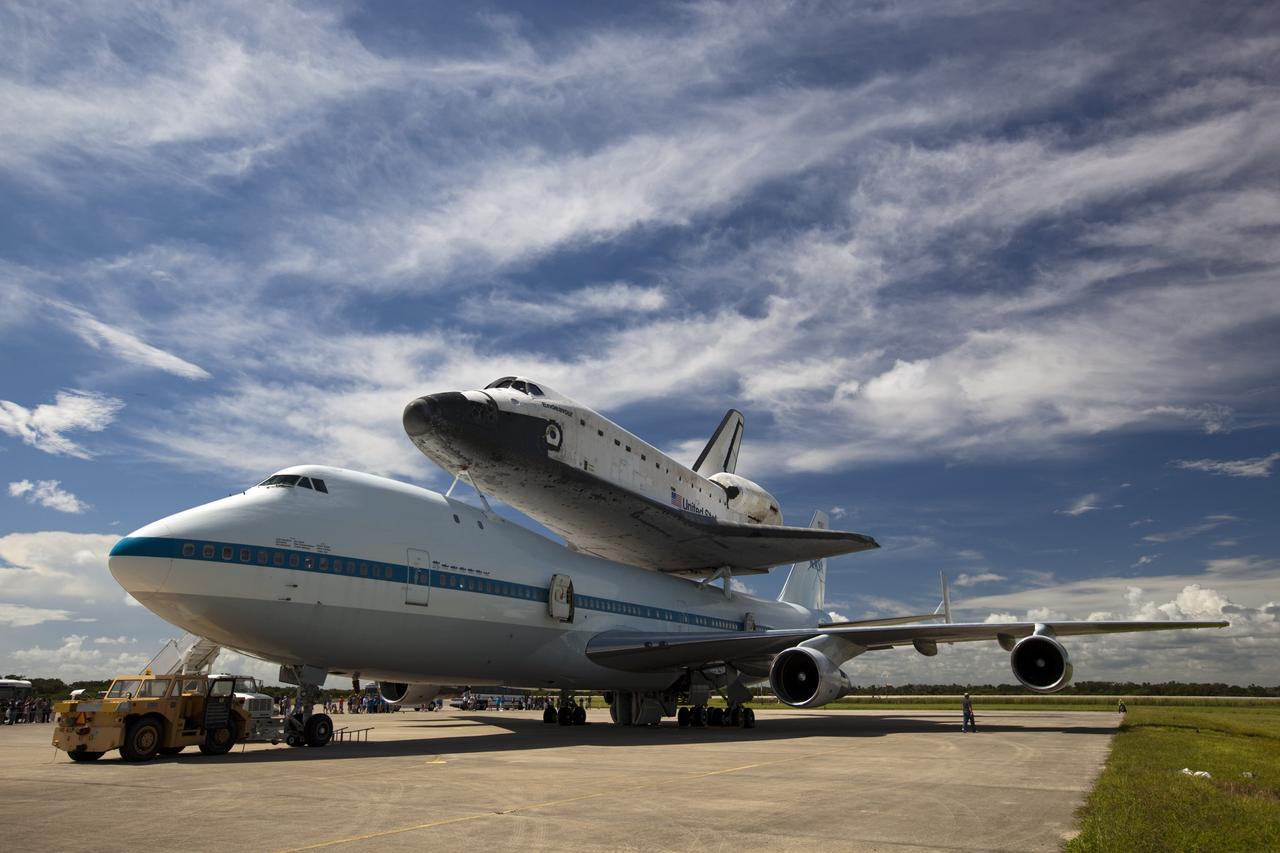
CAPE CANAVERAL, Fla. – At the Shuttle Landing Facility at NASA's Kennedy Space Center in Florida, the space shuttle Endeavour, mounted atop NASA's Shuttle Carrier Aircraft, or SCA, prepares for its ferry flight to California. The SCA, a modified 747 jetliner, will fly Endeavour to Los Angeles where it will be placed on public display at the California Science Center. This is the final ferry flight scheduled in the Space Shuttle Program era. For more information on the shuttles' transition and retirement, visit http://www.nasa.gov/transition. Photo credit: NASA/ Dimitri Gerondidakis

CAPE CANAVERAL, Fla. – The Shuttle Carrier Aircraft, or SCA, a modified Boeing 747, with space shuttle Atlantis on top, has landed at Biggs Army Air Field in El Paso, Texas, for an overnight stop. Atlantis is being returned to Florida on a ferry flight on the SCA. Atlantis' next assignment is the STS-129 mission, targeted to launch in November 2009. Photo credit: NASA/Ben Smegelsky
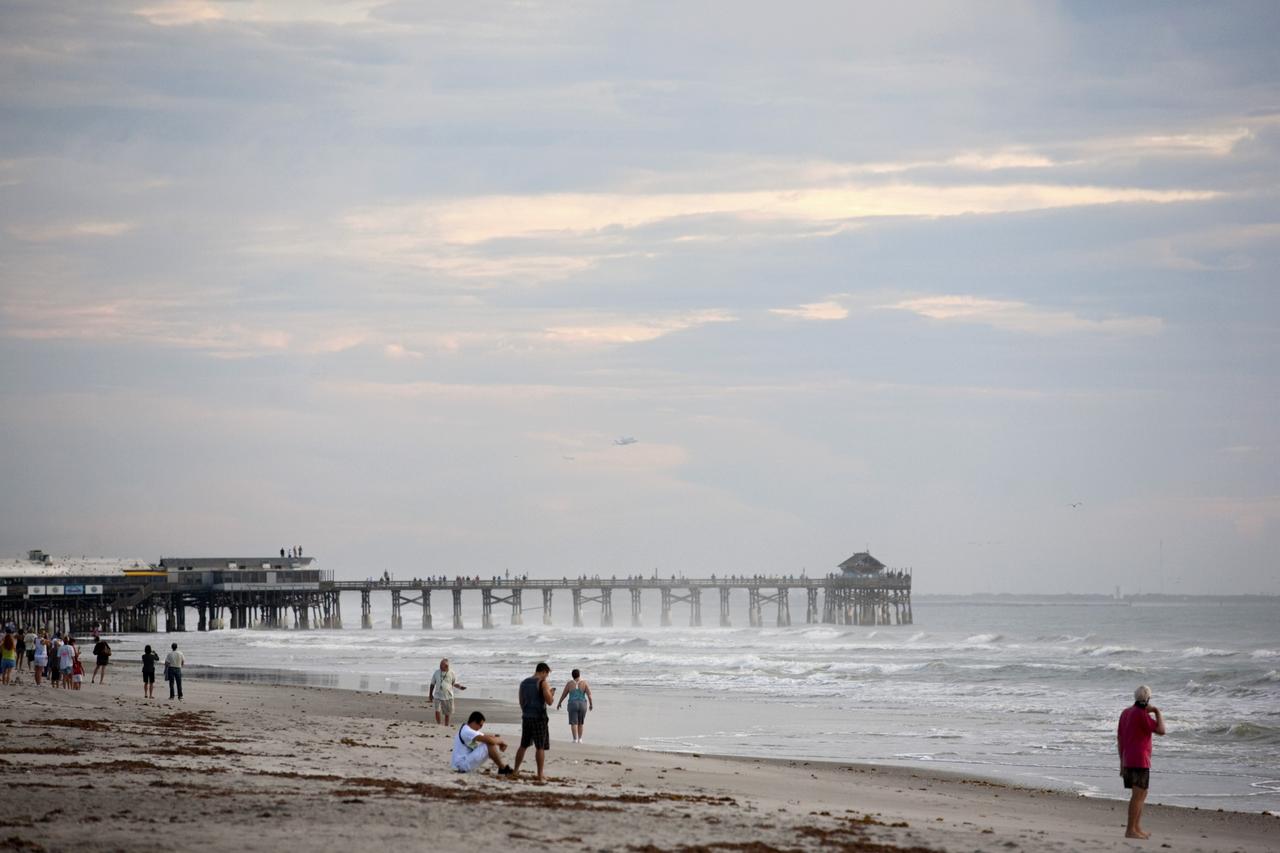
COCOA BEACH, Fla. – People lined the shore along Cocoa Beach to get an early-morning view of NASA's Shuttle Carrier Aircraft, or SCA, with the space shuttle Endeavour mounted atop. The SCA, a modified 747 jetliner, will fly Endeavour to Los Angeles where it will be placed on public display at the California Science Center. This is the final ferry flight scheduled in the Space Shuttle Program era. For more information on the shuttles' transition and retirement, visit http://www.nasa.gov/transition. Photo credit: NASA/Alan Ault
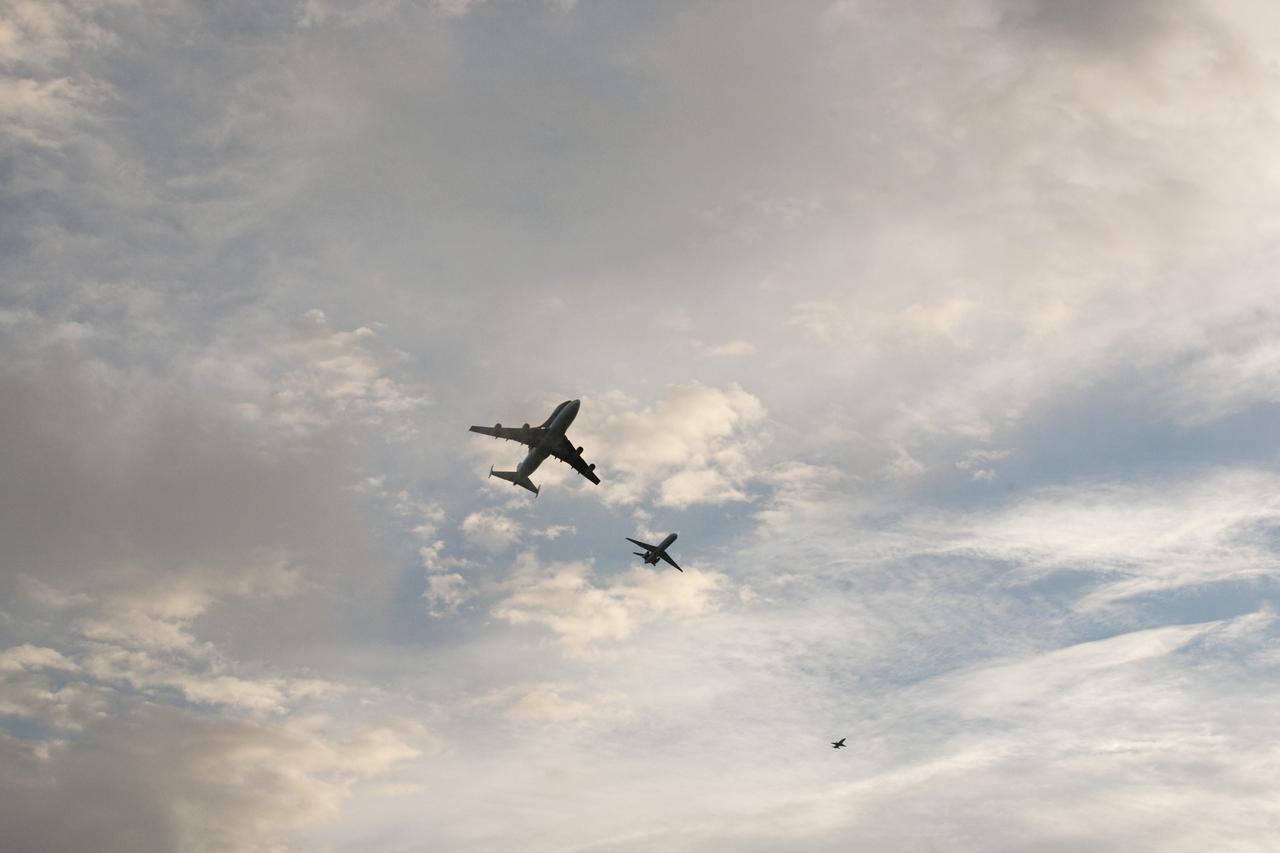
COCOA BEACH, Fla. – NASA's Shuttle Carrier Aircraft, or SCA, with the space shuttle Endeavour mounted atop, left, is accompanied by its pathfinder aircraft, center, and a T-38 chase aircraft flying along Cocoa Beach. The SCA, a modified 747 jetliner, will fly Endeavour to Los Angeles where it will be placed on public display at the California Science Center. This is the final ferry flight scheduled in the Space Shuttle Program era. For more information on the shuttles' transition and retirement, visit http://www.nasa.gov/transition. Photo credit: NASA/Alan Ault
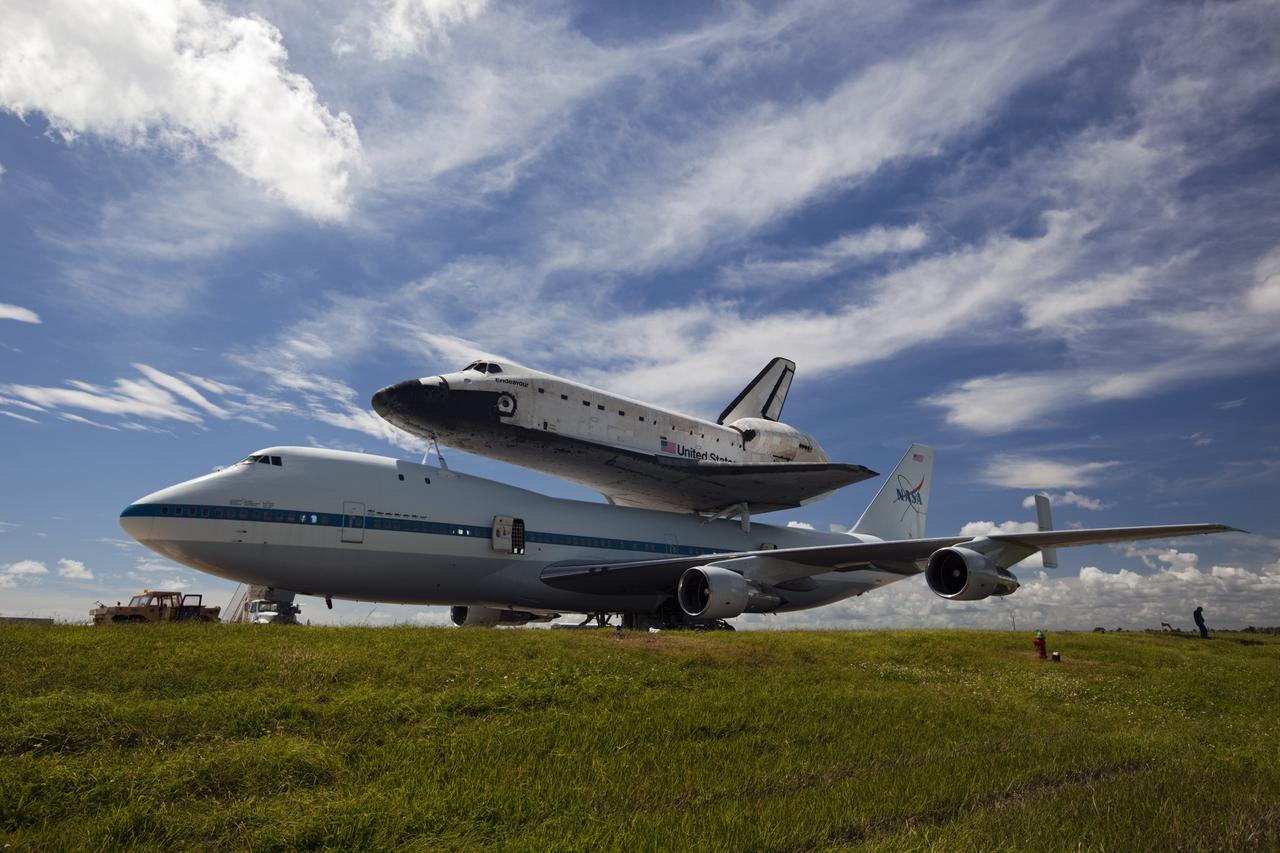
CAPE CANAVERAL, Fla. – At the Shuttle Landing Facility at NASA's Kennedy Space Center in Florida, the space shuttle Endeavour, mounted atop NASA's Shuttle Carrier Aircraft, or SCA, prepares for its ferry flight to California. The SCA, a modified 747 jetliner, will fly Endeavour to Los Angeles where it will be placed on public display at the California Science Center. This is the final ferry flight scheduled in the Space Shuttle Program era. For more information on the shuttles' transition and retirement, visit http://www.nasa.gov/transition. Photo credit: NASA/ Dimitri Gerondidakis
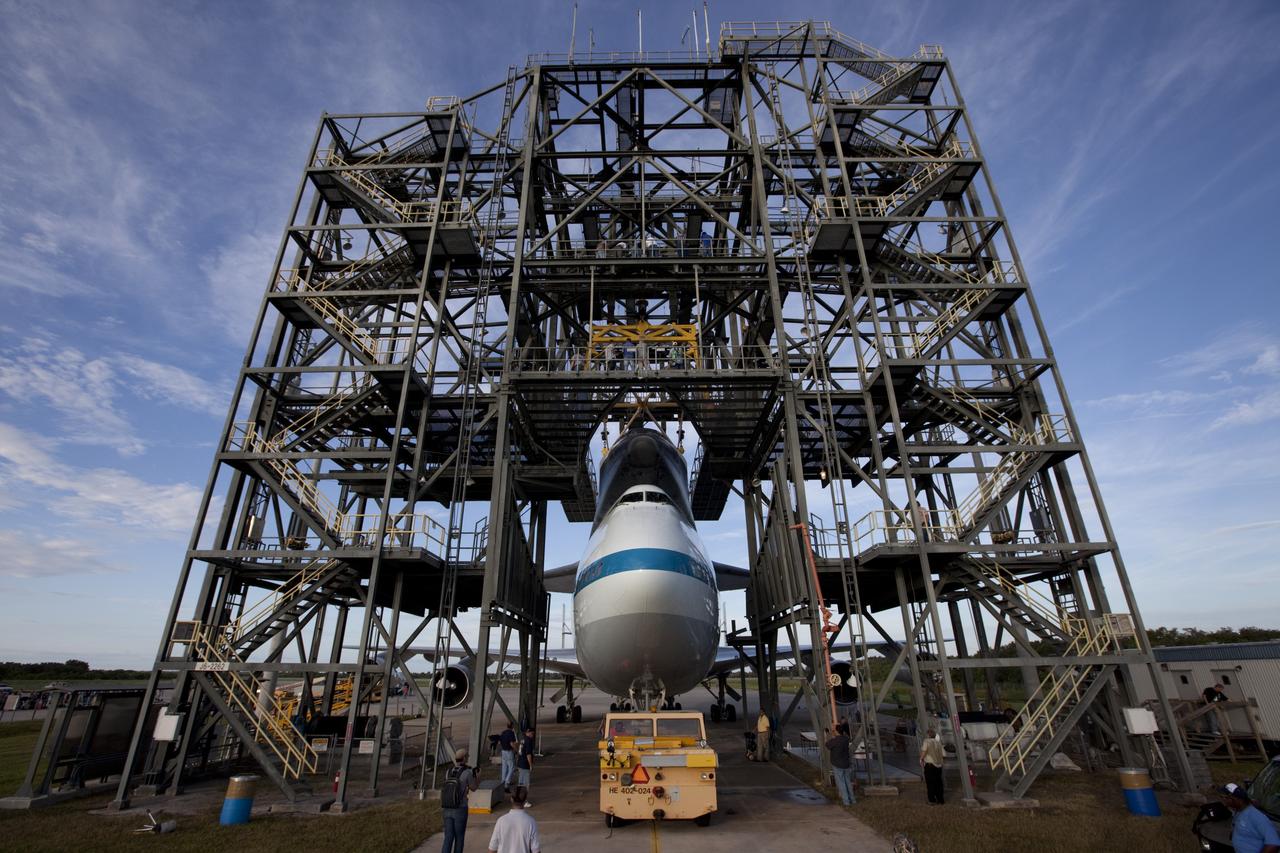
CAPE CANAVERAL, Fla. – At the Shuttle Landing Facility at NASA's Kennedy Space Center in Florida, the space shuttle Endeavour, mounted atop NASA's Shuttle Carrier Aircraft, or SCA, is rolled back from the mate-demate device. The SCA, a modified 747 jetliner, will fly Endeavour to Los Angeles where it will be placed on public display at the California Science Center. This is the final ferry flight scheduled in the Space Shuttle Program era. For more information on the shuttles' transition and retirement, visit http://www.nasa.gov/transition. Photo credit: NASA/ Kim Shiflett
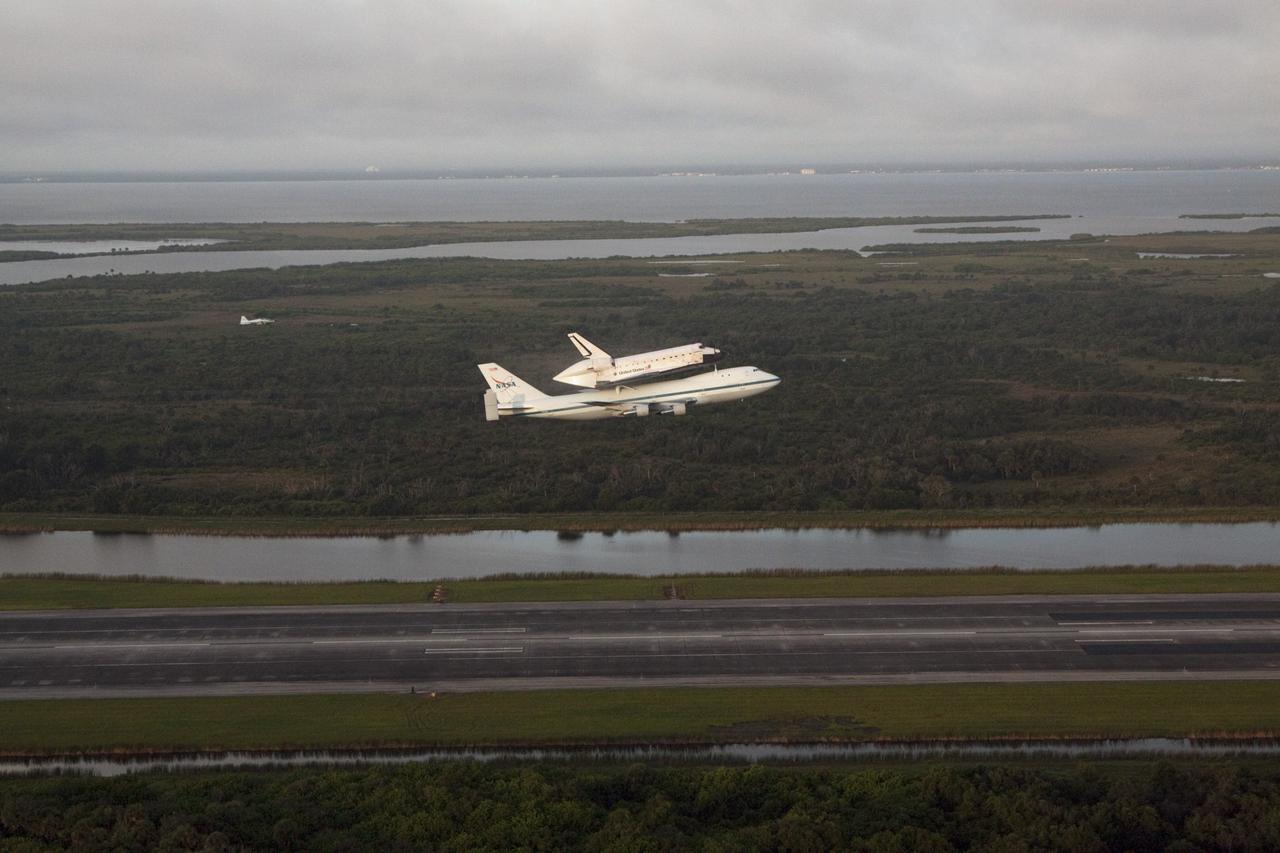
CAPE CANAVERAL, Fla. – Space shuttle Endeavour, mounted atop NASA's Shuttle Carrier Aircraft or SCA, is airborne at 7:22 a.m. EDT from the Shuttle Landing Facility at NASA's Kennedy Space Center in Florida. The SCA, a modified 747 jetliner, will fly Endeavour to Los Angeles where it will be placed on public display at the California Science Center. This is the final ferry flight scheduled in the Space Shuttle Program era. For more information on the shuttles' transition and retirement, visit http://www.nasa.gov/transition. Photo credit: NASA/Kim Shiflett
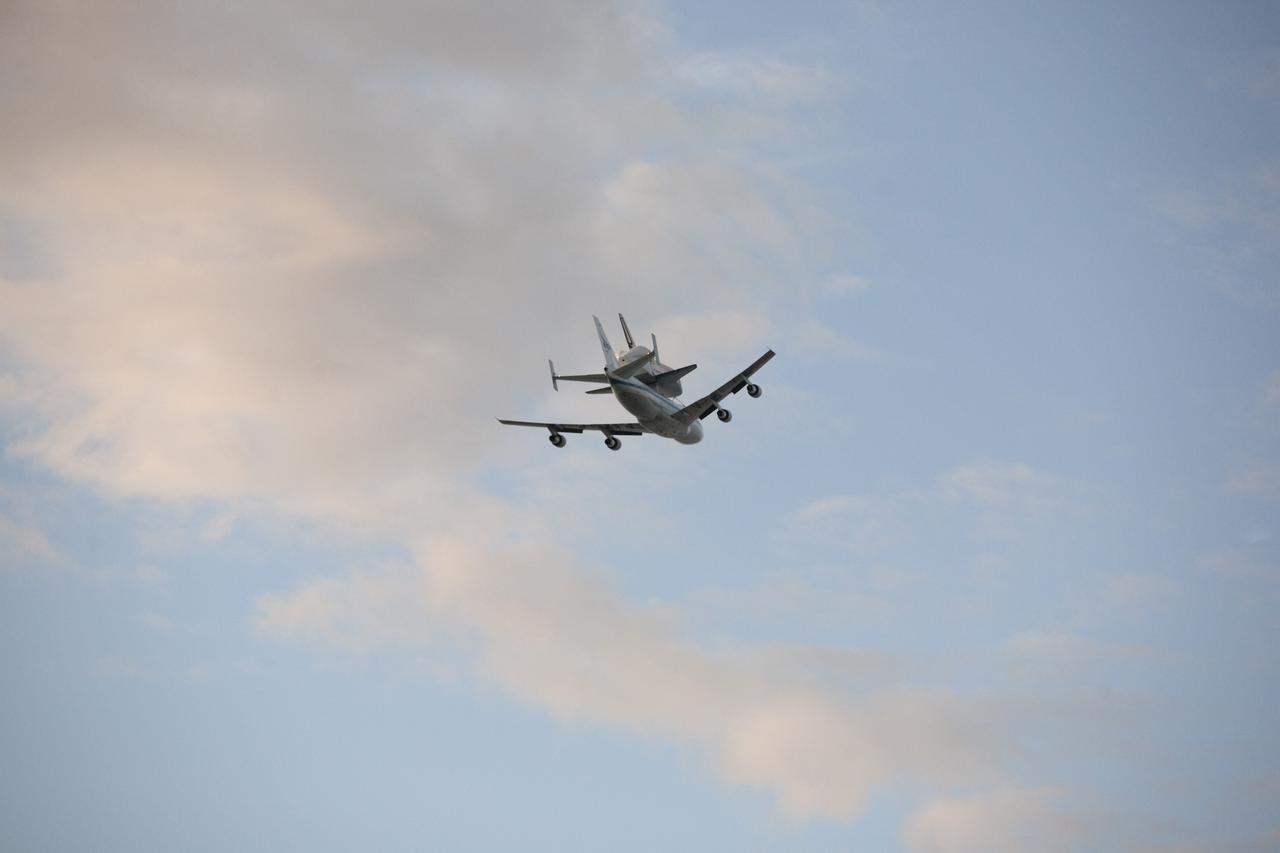
COCOA BEACH, Fla. – NASA's Shuttle Carrier Aircraft, or SCA, with the space shuttle Endeavour mounted atop, fly along Cocoa Beach. The SCA, a modified 747 jetliner, will fly Endeavour to Los Angeles where it will be placed on public display at the California Science Center. This is the final ferry flight scheduled in the Space Shuttle Program era. For more information on the shuttles' transition and retirement, visit http://www.nasa.gov/transition. Photo credit: NASA/Alan Ault
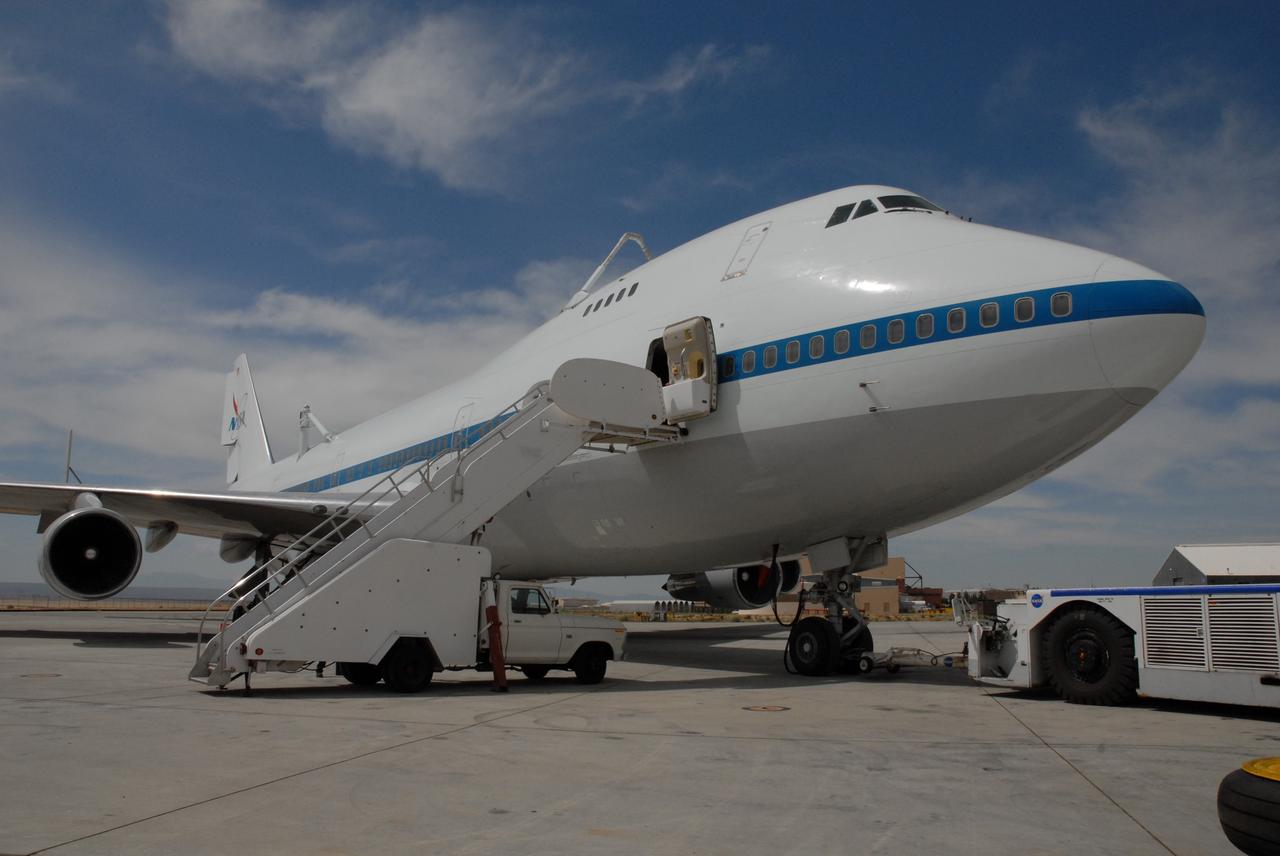
CAPE CANAVERAL, Fla. – This Shuttle Carrier Aircraft, or SCA, a modified Boeing 747, is prepared for its ferry flight to Florida, carrying space shuttle Atlantis. Atlantis landed at Edwards on May 24, which concluded mission STS-125, after two landing opportunities at Kennedy were waved off due to weather concerns. Atlantis is being returned to Florida on a ferry flight on the SCA. Atlantis' next assignment is the STS-129 mission, targeted to launch in November 2009. Photo credit: NASA/Ben Smegelsky
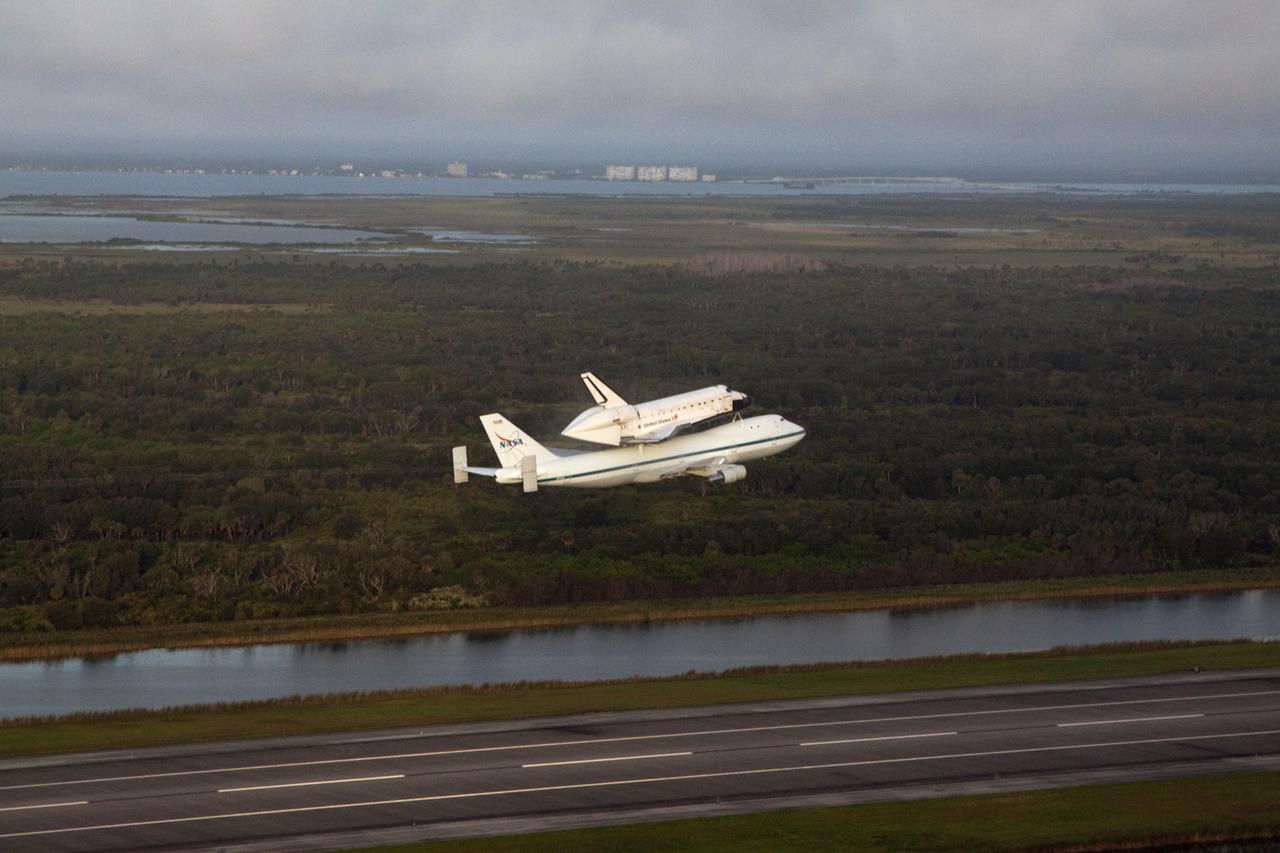
CAPE CANAVERAL, Fla. – Space shuttle Endeavour, mounted atop NASA's Shuttle Carrier Aircraft or SCA, is airborne at 7:22 a.m. EDT from the Shuttle Landing Facility at NASA's Kennedy Space Center in Florida. The SCA, a modified 747 jetliner, will fly Endeavour to Los Angeles where it will be placed on public display at the California Science Center. This is the final ferry flight scheduled in the Space Shuttle Program era. For more information on the shuttles' transition and retirement, visit http://www.nasa.gov/transition. Photo credit: NASA/Kim Shiflett
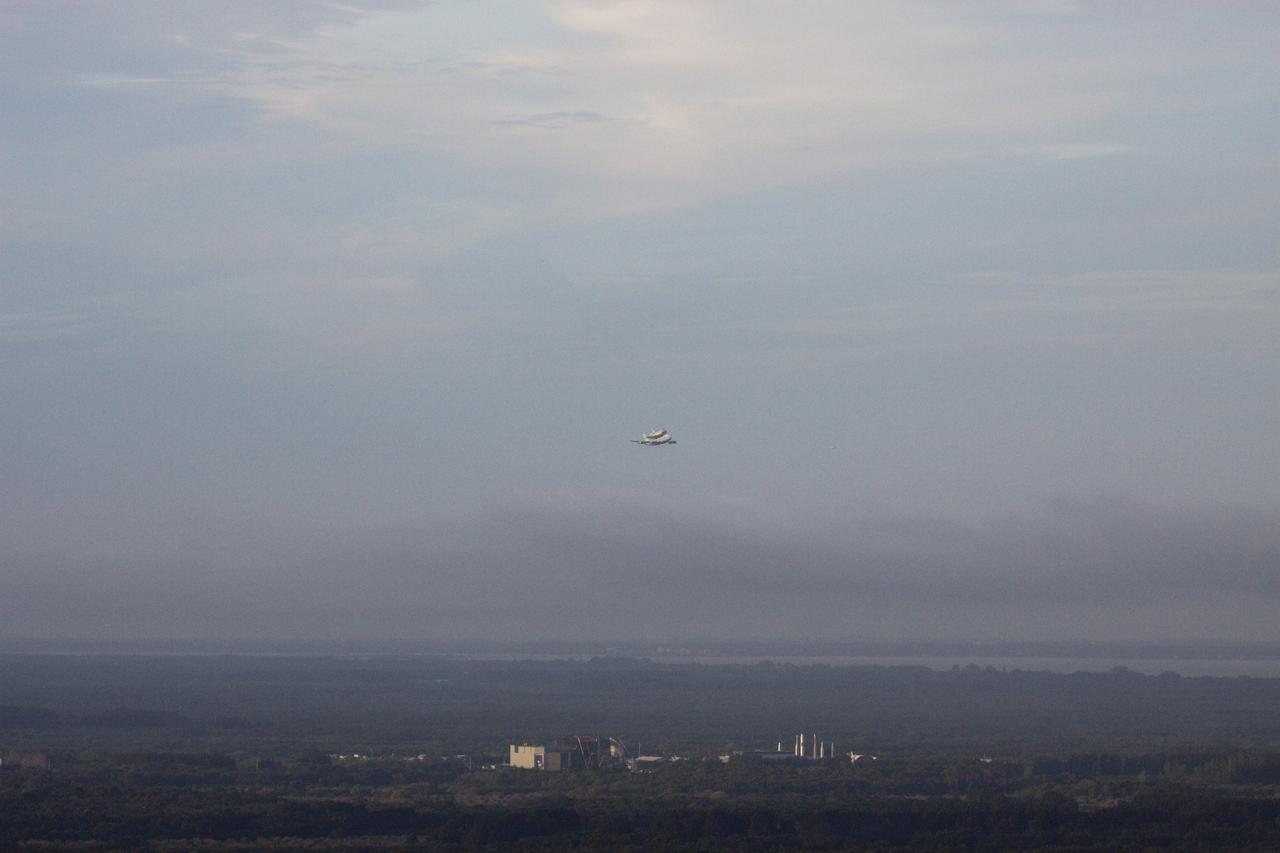
CAPE CANAVERAL, Fla. – At NASA's Kennedy Space Center in Florida, NASA's Shuttle Carrier Aircraft, or SCA, with the space shuttle Endeavour mounted atop, has just taken off for its ferry flight to California. Before heading west, the shuttle-SCA combination made several low-level passes over several locations on Florida's Space Coast. The SCA, a modified 747 jetliner, will fly Endeavour to Los Angeles where it will be placed on public display at the California Science Center. This is the final ferry flight scheduled in the Space Shuttle Program era. For more information on the shuttles' transition and retirement, visit http://www.nasa.gov/transition. Photo credit: NASA/Jim Grossmann
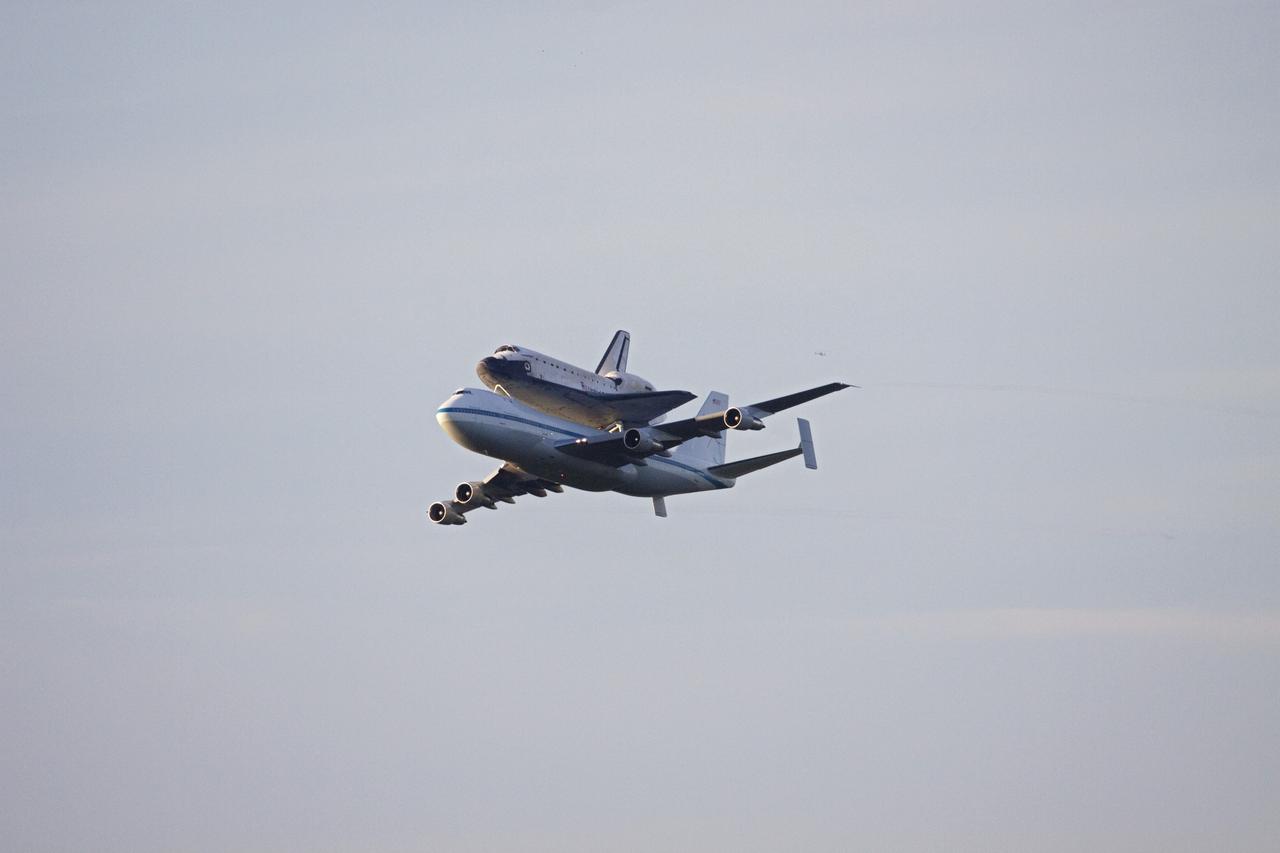
CAPE CANAVERAL, Fla. – At NASA's Kennedy Space Center in Florida, NASA's Shuttle Carrier Aircraft, or SCA, with the space shuttle Endeavour mounted atop, prepares to make a low-level pass over the Shuttle Landing Facility. The shuttle-SCA combination will then head west for its ferry flight to California. The SCA, a modified 747 jetliner, will fly Endeavour to Los Angeles where it will be placed on public display at the California Science Center. This is the final ferry flight scheduled in the Space Shuttle Program era. For more information on the shuttles' transition and retirement, visit http://www.nasa.gov/transition. Photo credit: NASA/Jim Grossmann
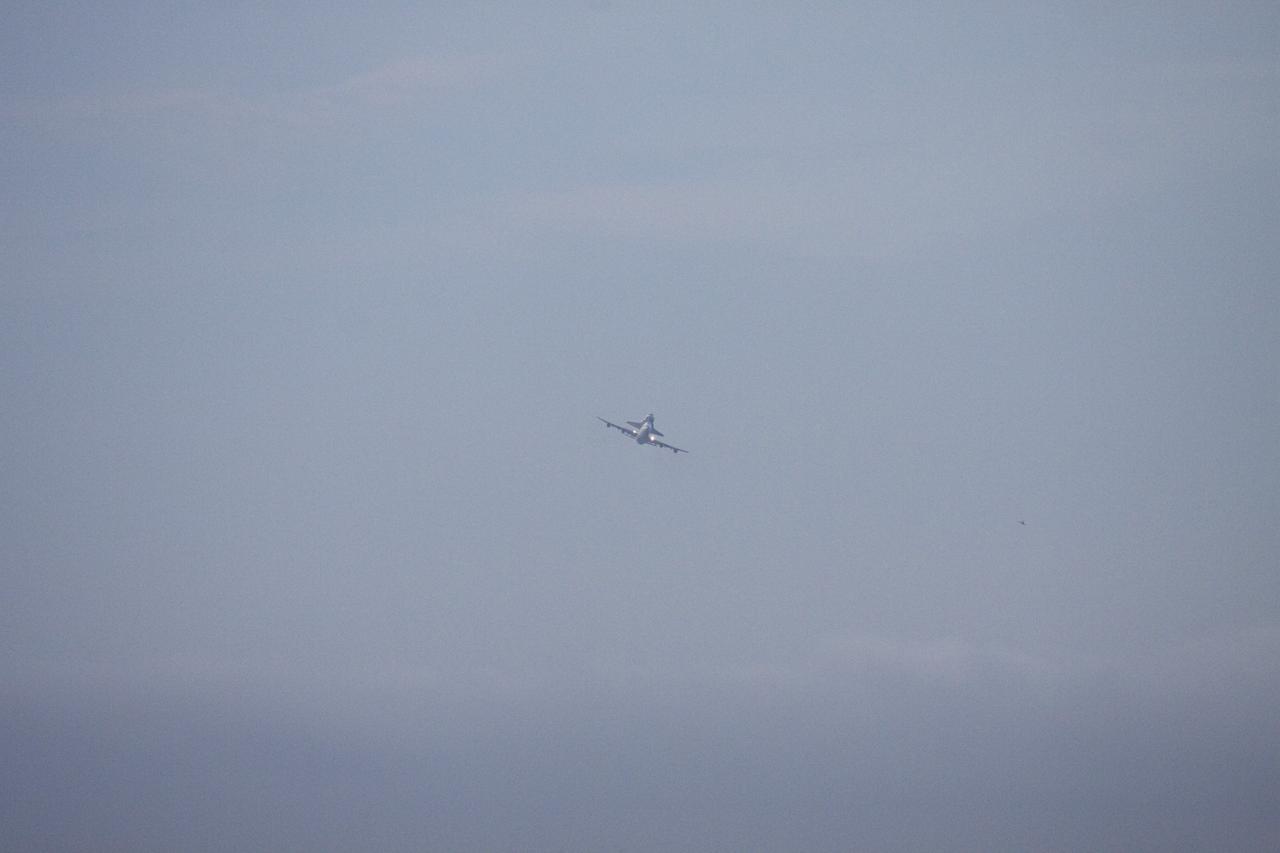
CAPE CANAVERAL, Fla. – At NASA's Kennedy Space Center in Florida, NASA's Shuttle Carrier Aircraft, or SCA, with the space shuttle Endeavour mounted atop, has just taken off for its ferry flight to California. Before heading west, the shuttle-SCA combination made several low-level passes over several locations on Florida's Space Coast. The SCA, a modified 747 jetliner, will fly Endeavour to Los Angeles where it will be placed on public display at the California Science Center. This is the final ferry flight scheduled in the Space Shuttle Program era. For more information on the shuttles' transition and retirement, visit http://www.nasa.gov/transition. Photo credit: NASA/Jim Grossmann
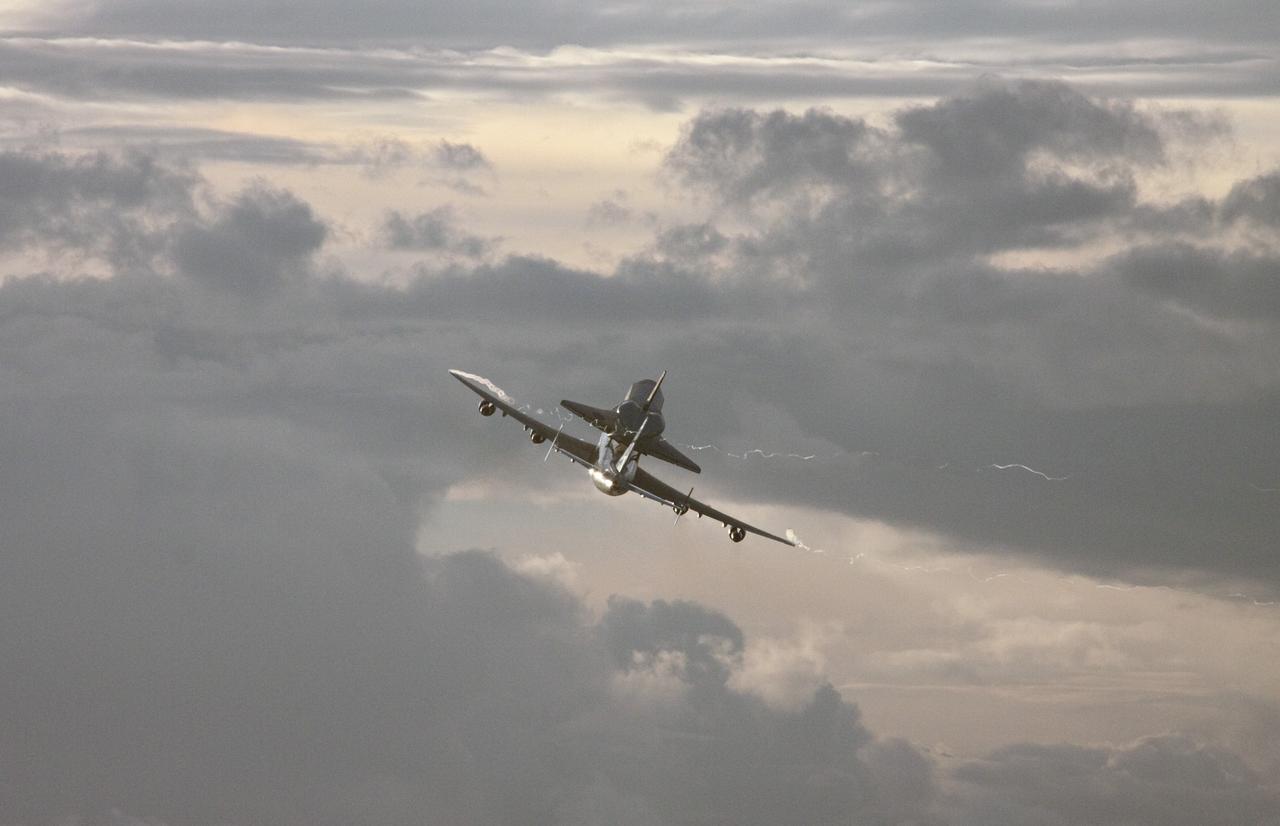
CAPE CANAVERAL, Fla. – At NASA's Kennedy Space Center in Florida, NASA's Shuttle Carrier Aircraft, or SCA, with the space shuttle Endeavour mounted atop, prepares to make a low-level pass over the Shuttle Landing Facility. The shuttle-SCA combination will then head west for its ferry flight to California. The SCA, a modified 747 jetliner, will fly Endeavour to Los Angeles where it will be placed on public display at the California Science Center. This is the final ferry flight scheduled in the Space Shuttle Program era. For more information on the shuttles' transition and retirement, visit http://www.nasa.gov/transition. Photo credit: NASA/Jim Grossmann
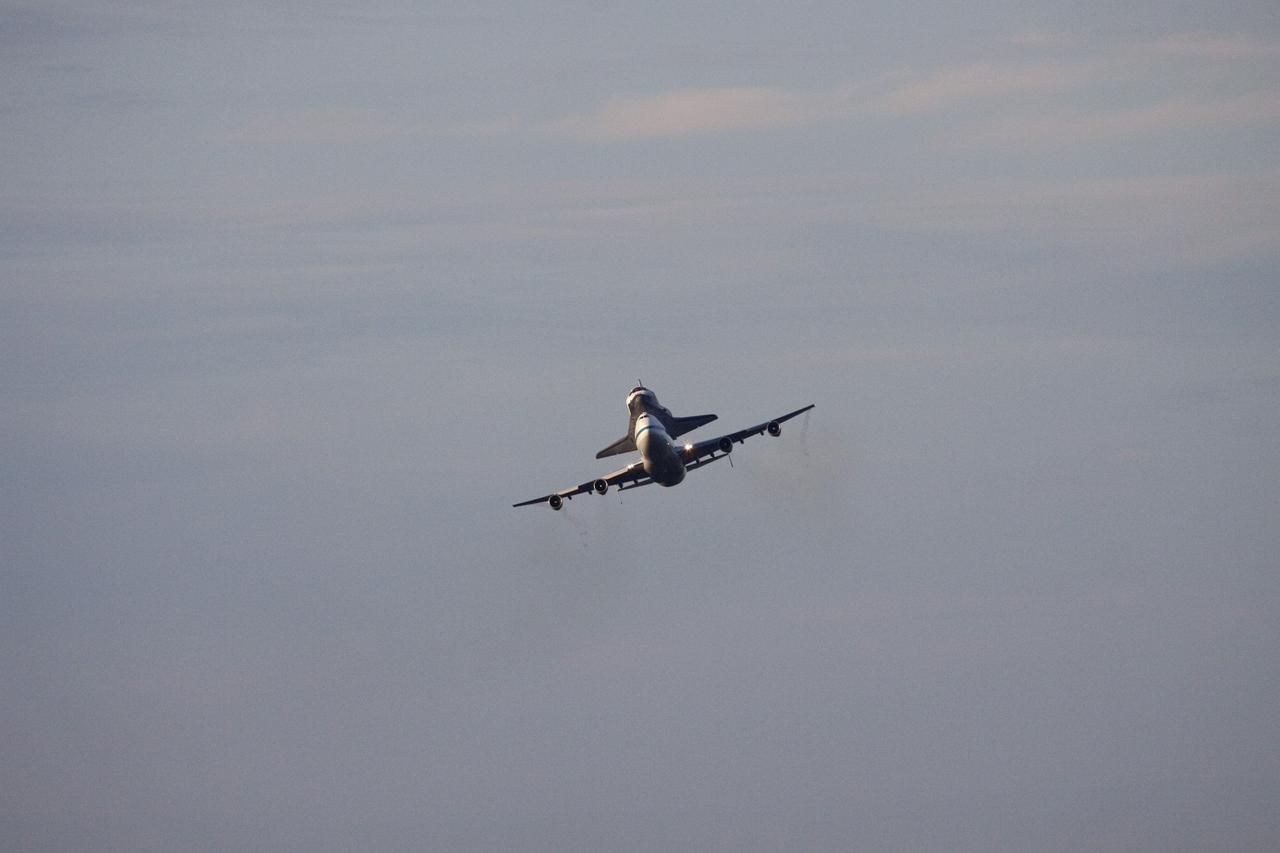
CAPE CANAVERAL, Fla. – At NASA's Kennedy Space Center in Florida, NASA's Shuttle Carrier Aircraft, or SCA, with the space shuttle Endeavour mounted atop, prepares to make a low-level pass over the Shuttle Landing Facility. The shuttle-SCA combination will then head west for its ferry flight to California. The SCA, a modified 747 jetliner, will fly Endeavour to Los Angeles where it will be placed on public display at the California Science Center. This is the final ferry flight scheduled in the Space Shuttle Program era. For more information on the shuttles' transition and retirement, visit http://www.nasa.gov/transition. Photo credit: NASA/Jim Grossmann
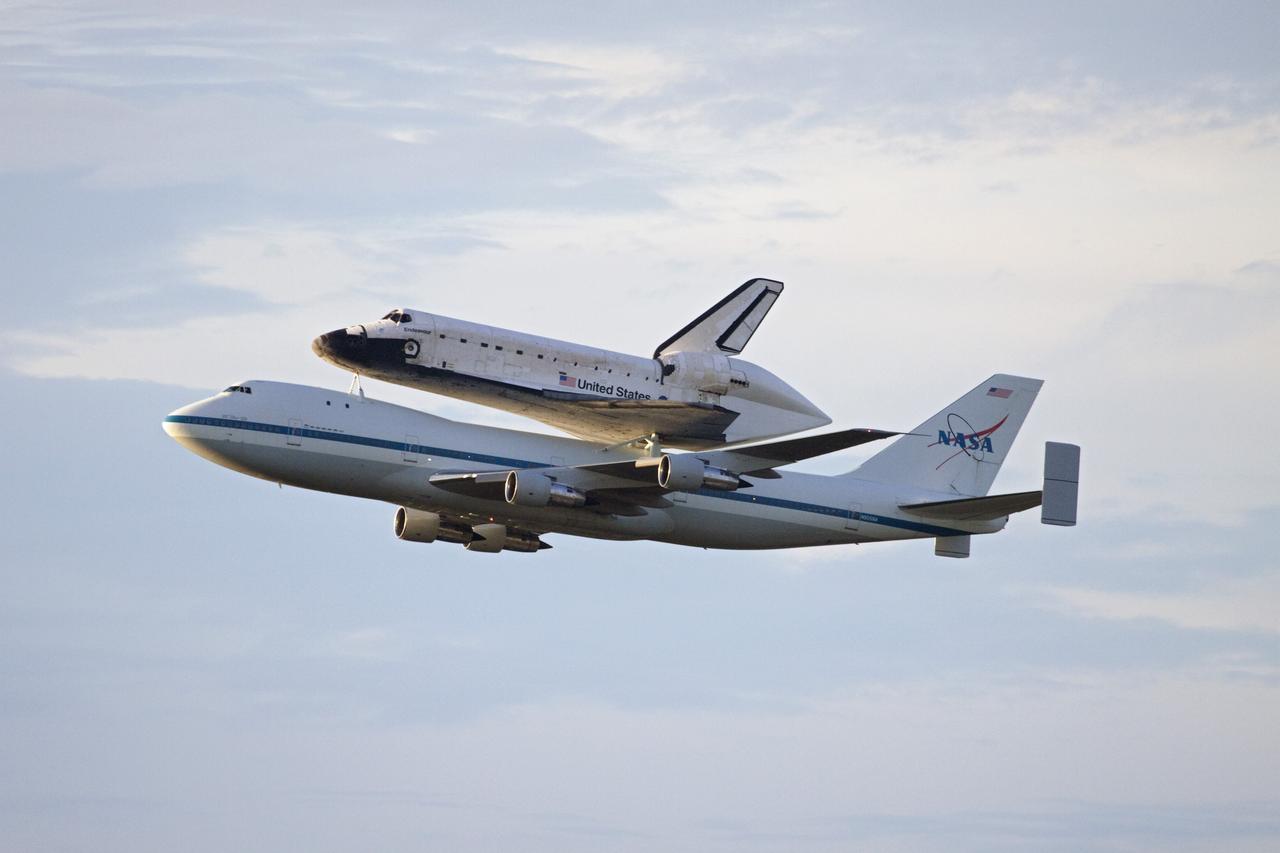
CAPE CANAVERAL, Fla. – At NASA's Kennedy Space Center in Florida, NASA's Shuttle Carrier Aircraft, or SCA, with the space shuttle Endeavour mounted atop, prepares to make a low-level pass over the Shuttle Landing Facility. The shuttle-SCA combination will then head west for its ferry flight to California. The SCA, a modified 747 jetliner, will fly Endeavour to Los Angeles where it will be placed on public display at the California Science Center. This is the final ferry flight scheduled in the Space Shuttle Program era. For more information on the shuttles' transition and retirement, visit http://www.nasa.gov/transition. Photo credit: NASA/Jim Grossmann
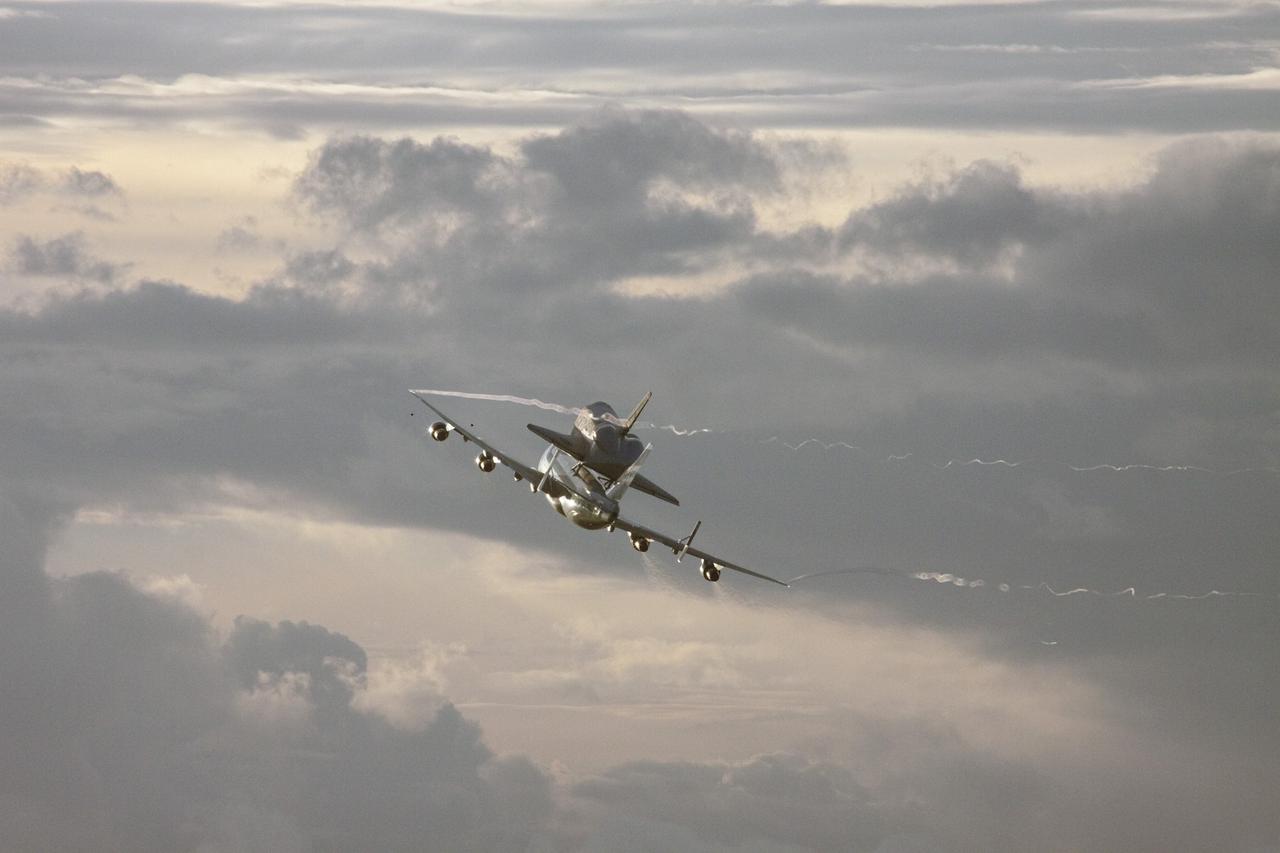
CAPE CANAVERAL, Fla. – At NASA's Kennedy Space Center in Florida, NASA's Shuttle Carrier Aircraft, or SCA, with the space shuttle Endeavour mounted atop, prepares to make a low-level pass over the Shuttle Landing Facility. The shuttle-SCA combination will then head west for its ferry flight to California. The SCA, a modified 747 jetliner, will fly Endeavour to Los Angeles where it will be placed on public display at the California Science Center. This is the final ferry flight scheduled in the Space Shuttle Program era. For more information on the shuttles' transition and retirement, visit http://www.nasa.gov/transition. Photo credit: NASA/Jim Grossmann
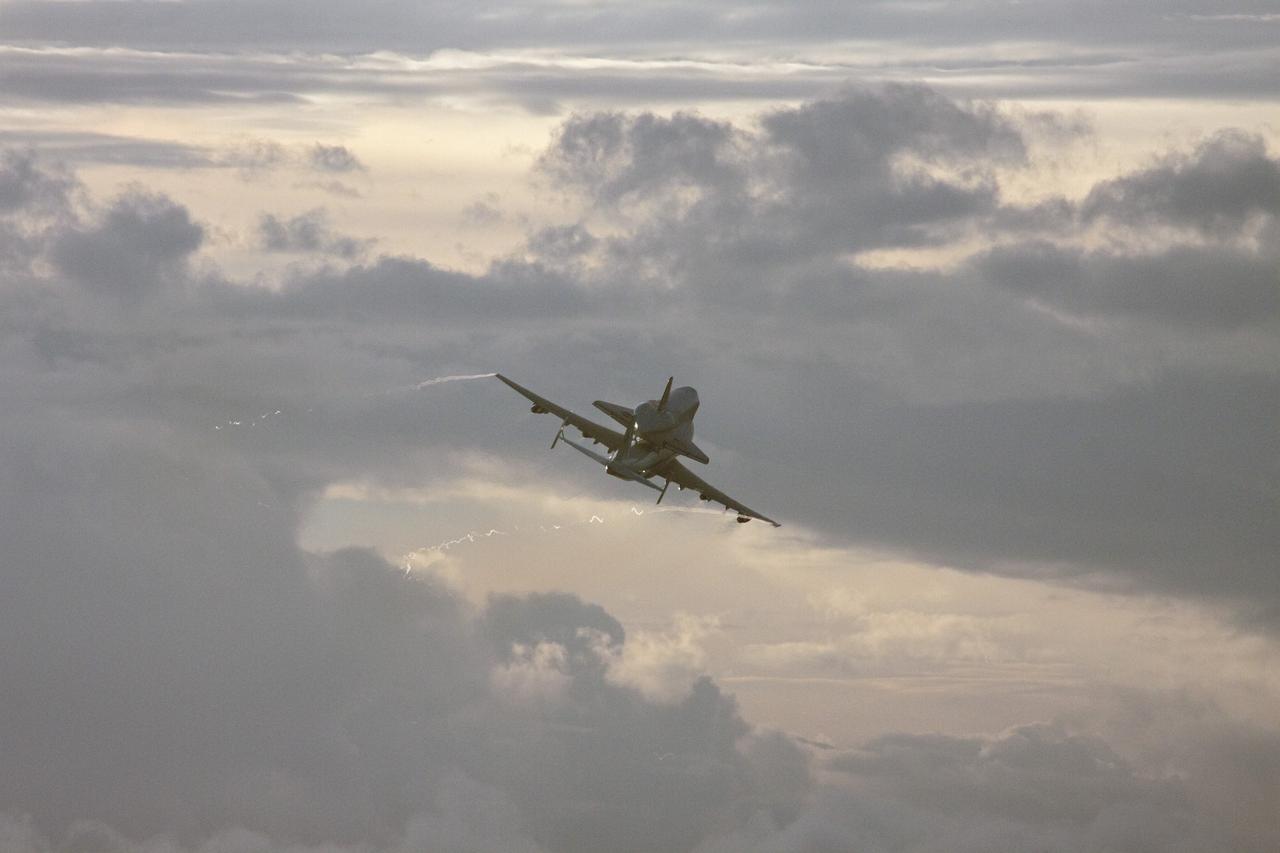
CAPE CANAVERAL, Fla. – At NASA's Kennedy Space Center in Florida, NASA's Shuttle Carrier Aircraft, or SCA, with the space shuttle Endeavour mounted atop, prepares to make a low-level pass over the Shuttle Landing Facility. The shuttle-SCA combination will then head west for its ferry flight to California. The SCA, a modified 747 jetliner, will fly Endeavour to Los Angeles where it will be placed on public display at the California Science Center. This is the final ferry flight scheduled in the Space Shuttle Program era. For more information on the shuttles' transition and retirement, visit http://www.nasa.gov/transition. Photo credit: NASA/Jim Grossmann

CAPE CANAVERAL, Fla. – On the Shuttle Landing Facility at NASA's Kennedy Space Center in Florida, the Shuttle Carrier Aircraft, or SCA, is backed away from underneath space shuttle Atlantis in the mate/demate device. A hoist attached to Atlantis suspends the shuttle while the SCA is moved away. Covering the rear of Atlantis is the tail cone, which protects the aft engine area and provides a more efficient aeronautical dimension during a piggyback flight. Atlantis returned from California atop the SCA, a modified Boeing 747, after its May 24 landing at Edwards Air Force Base, concluding mission STS-125. The ferry flight from Edwards Air Force Base began June 1. Atlantis' next assignment is the STS-129 mission, targeted to launch in November 2009. Photo credit: NASA/Jack Pfaller
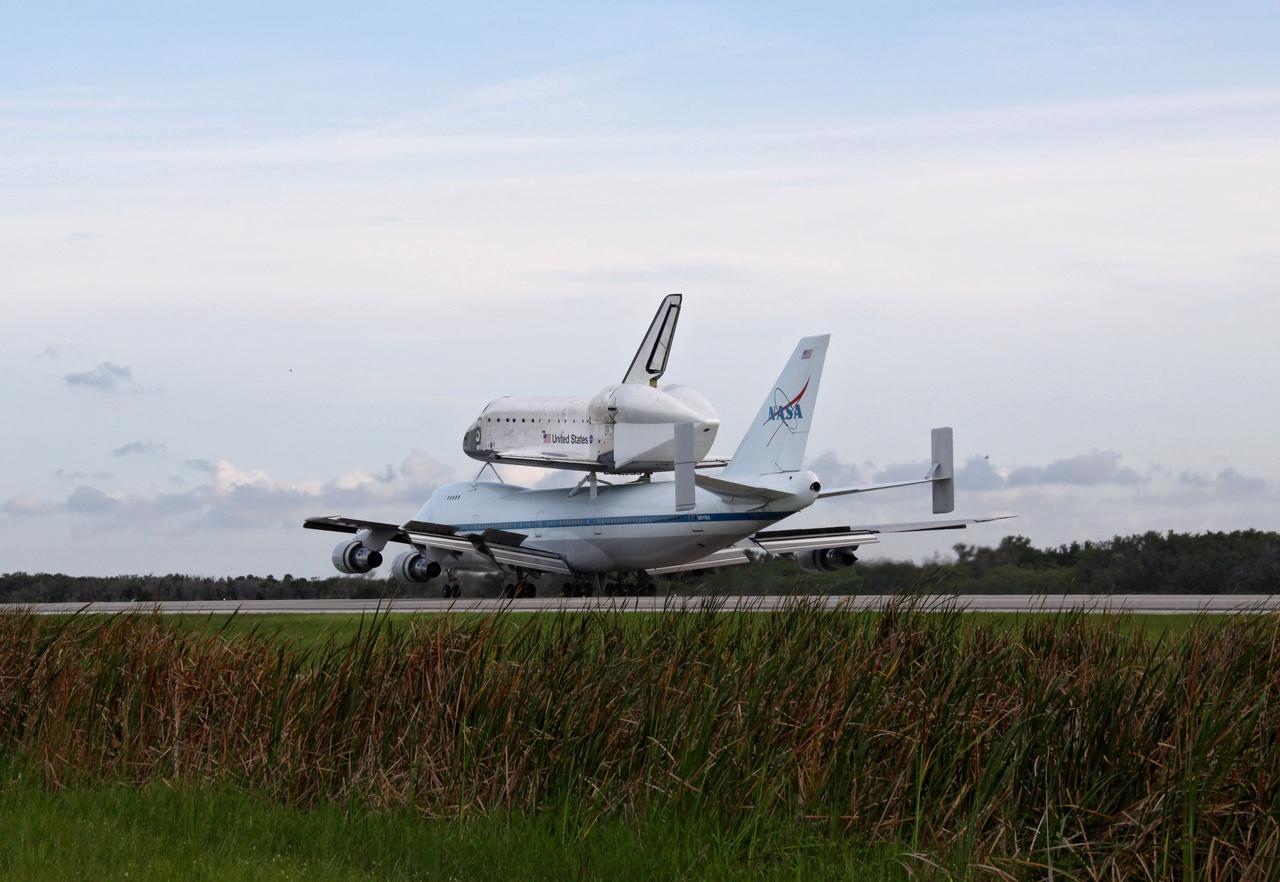
CAPE CANAVERAL, Fla. – After a two-day trip from California, space shuttle Atlantis returns home to NASA's Kennedy Space Center secured atop a Shuttle Carrier Aircraft, or SCA. Touchdown on runway 15 at Kennedy's Shuttle Landing Facility was at 6:53 p.m. EDT. The SCA is a modified Boeing 747 jetliner. Atlantis returned from California atop the SCA after its May 24 landing at Edwards Air Force Base, concluding mission STS-125. The ferry flight from Edwards Air Force Base began June 1. Atlantis' next assignment is the STS-129 mission, targeted to launch in November 2009. Photo credit: NASA/Jack Pfaller

CAPE CANAVERAL, Fla. – After a two-day trip from California, space shuttle Atlantis returns home to NASA's Kennedy Space Center secured atop a Shuttle Carrier Aircraft, or SCA. Touchdown on runway 15 at Kennedy's Shuttle Landing Facility was at 6:53 p.m. EDT. The SCA is a modified Boeing 747 jetliner. Atlantis returned from California atop the SCA after its May 24 landing at Edwards Air Force Base, concluding mission STS-125. The ferry flight from Edwards Air Force Base began June 1. Atlantis' next assignment is the STS-129 mission, targeted to launch in November 2009. Photo credit: NASA/Jack Pfaller

CAPE CANAVERAL, Fla. – At Edwards Air Force Base in California, the Shuttle Carrier Aircraft, or SCA, a modified Boeing 747, is moved beneath space shuttle Atlantis, suspended in the mate/demate device. Atlantis will be bolted to the SCA for a piggyback flight to Florida. A tail cone, which protects the aft engine area and provides a more efficient aeronautical dimension during its piggyback flight, can be seen. Atlantis landed at Edwards on May 24, which concluded mission STS-125, after two landing opportunities at Kennedy were waved off due to weather concerns. Atlantis is being returned to Florida on a ferry flight on the SCA. Atlantis' next assignment is the STS-129 mission, targeted to launch in November 2009. Photo credit: NASA/Ben Smegelsky
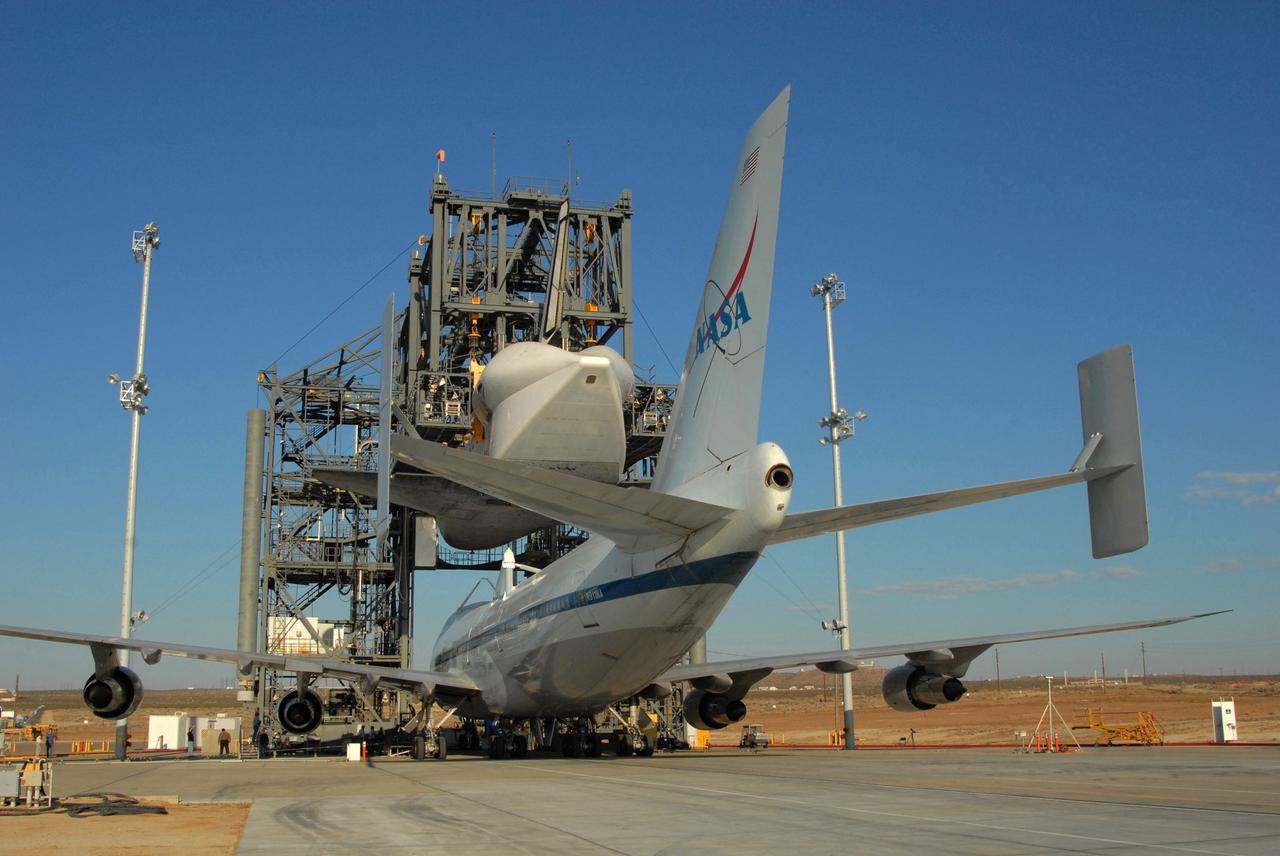
CAPE CANAVERAL, Fla. – At Edwards Air Force Base in California, the Shuttle Carrier Aircraft, or SCA, a modified Boeing 747, is moved beneath space shuttle Atlantis, suspended in the mate/demate device. Atlantis will be bolted to the SCA for a piggyback flight to Florida. A tail cone, which protects the aft engine area and provides a more efficient aeronautical dimension during its piggyback flight, can be seen. Atlantis landed at Edwards on May 24, which concluded mission STS-125, after two landing opportunities at Kennedy were waved off due to weather concerns. Atlantis is being returned to Florida on a ferry flight on the SCA. Atlantis' next assignment is the STS-129 mission, targeted to launch in November 2009. Photo credit: NASA/Ben Smegelsky
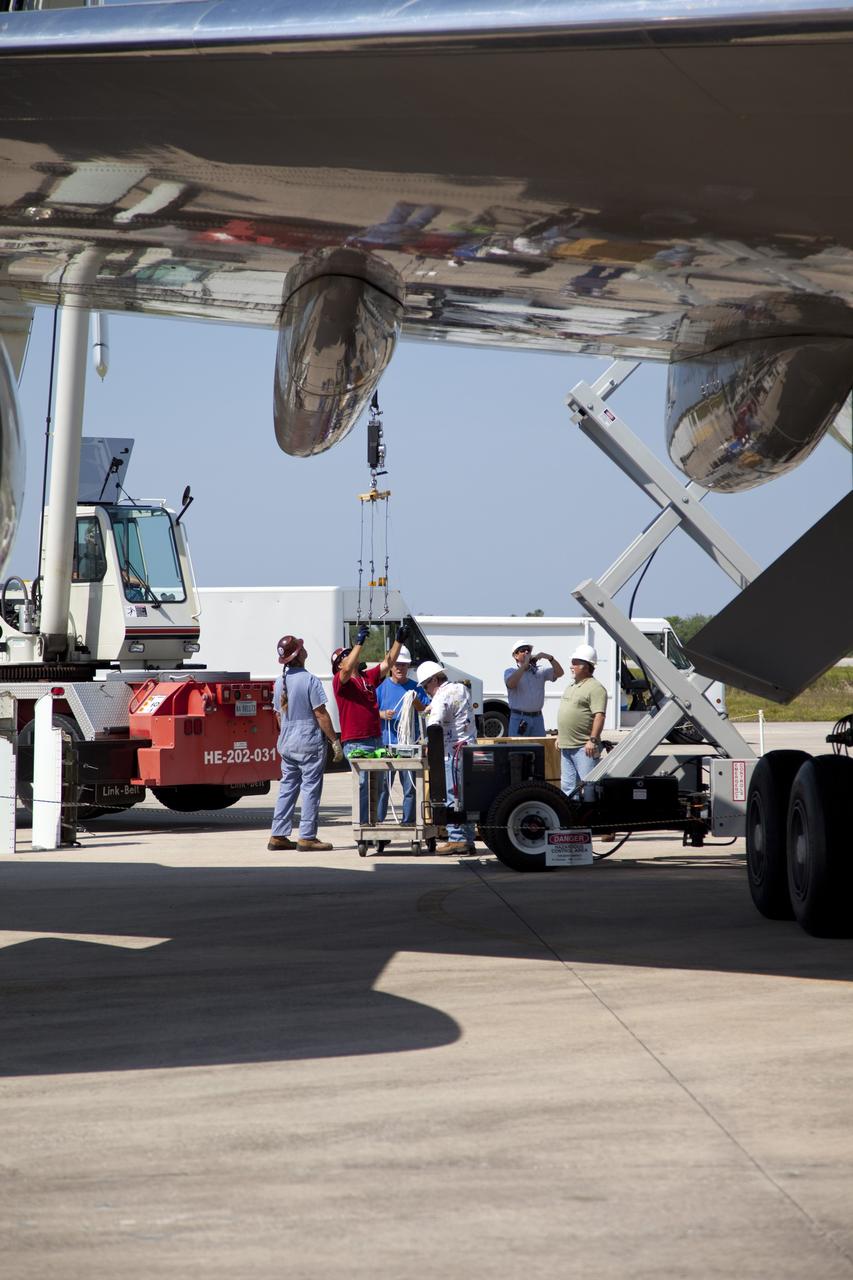
CAPE CANAVERAL, Fla. – At the Shuttle Landing Facility at NASA’s Kennedy Space Center in Florida, maintenance technicians from NASA’s Dryden Flight Research Center in California and Kennedy check NASA’s Shuttle Carrier Aircraft modified 747 jet, or SCA, after arriving from Edwards Air Force Base in California. During the Space Shuttle Program’s transition and retirement processing, Discovery was prepared for display at Smithsonian’s National Air and Space Museum, Steven F. Udvar-Hazy Center in Chantilly, Va. Discovery is scheduled to be transported atop the SCA, designated NASA 905, to Dulles International Airport in Virginia on April 17 and then moved to the Smithsonian for permanent public display on April 19. The SCA is assigned to the remaining ferry missions, delivering the shuttles to their permanent public display sites. For more information, visit http://www.nasa.gov/shuttle. Photo credit: NASA/Frankie Martin
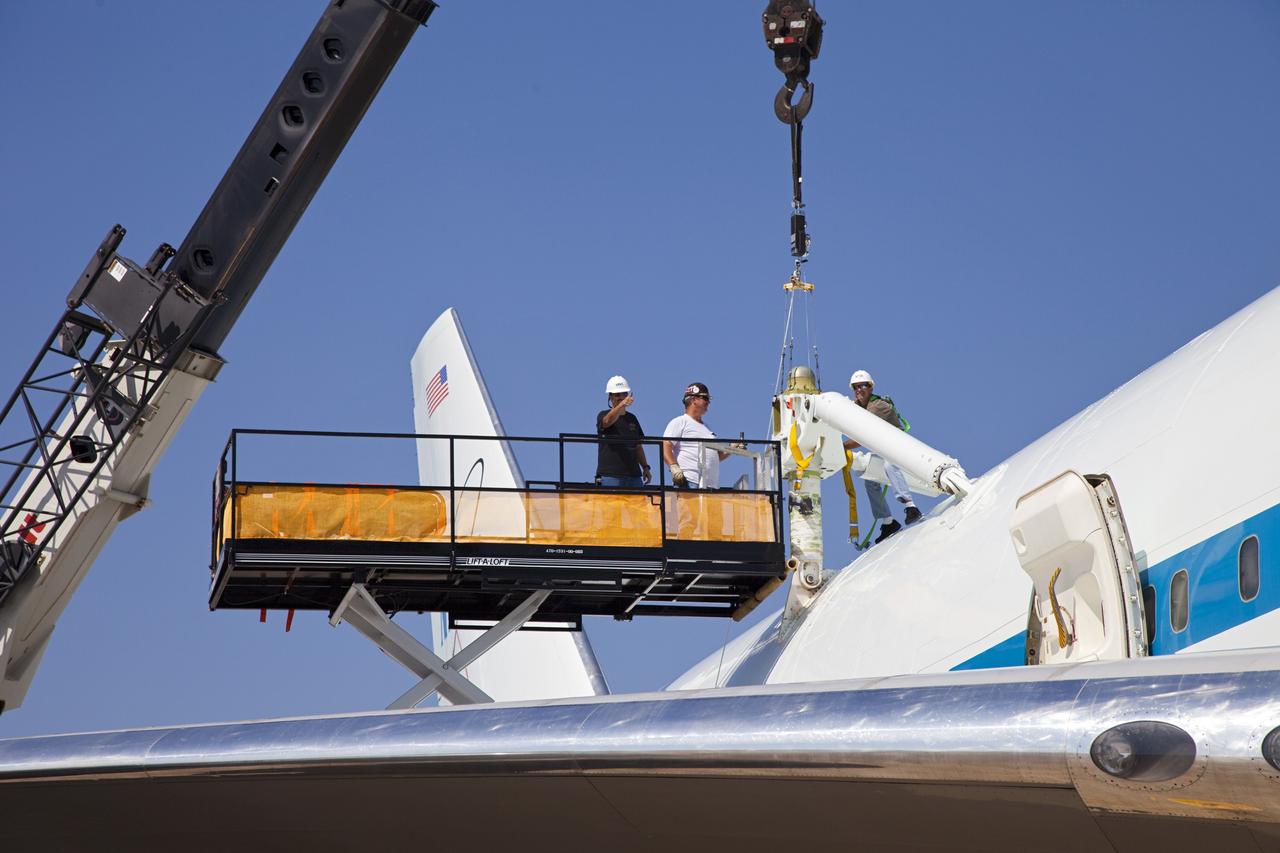
CAPE CANAVERAL, Fla. – At the Shuttle Landing Facility at NASA’s Kennedy Space Center in Florida, maintenance technicians from NASA’s Dryden Flight Research Center in California check attach points on top of NASA’s Shuttle Carrier Aircraft modified 747 jet, or SCA, after arriving from Edwards Air Force Base in California. During the Space Shuttle Program’s transition and retirement processing, Discovery was prepared for display at Smithsonian’s National Air and Space Museum, Steven F. Udvar-Hazy Center in Chantilly, Va. Discovery is scheduled to be transported atop the SCA, designated NASA 905, to Dulles International Airport in Virginia on April 17 and then moved to the Smithsonian for permanent public display on April 19. The SCA is assigned to the remaining ferry missions, delivering the shuttles to their permanent public display sites. For more information, visit http://www.nasa.gov/shuttle. Photo credit: NASA/Frankie Martin

CAPE CANAVERAL, Fla. – At NASA’s Kennedy Space Center in Florida, NASA’s Shuttle Carrier Aircraft modified 747 jet, or SCA, has arrived at the Shuttle Landing Facility, or SLF, after a 5-hour flight from Edwards Air Force Base in California. During the Space Shuttle Program’s transition and retirement processing, Discovery was prepared for display at Smithsonian’s National Air and Space Museum, Steven F. Udvar-Hazy Center in Chantilly, Va. Discovery is scheduled to be transported atop the SCA, designated NASA 905, to Dulles International Airport in Virginia on April 17 and then moved to the Smithsonian for permanent public display on April 19. The SCA is assigned to the remaining ferry missions, delivering the shuttles to their permanent public display sites. For more information, visit http://www.nasa.gov/shuttle. Photo credit: NASA/Frankie Martin

CAPE CANAVERAL, Fla. – At NASA’s Kennedy Space Center in Florida, an interior view of NASA’s Shuttle Carrier Aircraft modified 747 jet, or SCA, is seen after arriving at the Shuttle Landing Facility from Edwards Air Force Base in California. During the Space Shuttle Program’s transition and retirement processing, Discovery was prepared for display at Smithsonian’s National Air and Space Museum, Steven F. Udvar-Hazy Center in Chantilly, Va. Discovery is scheduled to be transported atop the SCA, designated NASA 905, to Dulles International Airport in Virginia on April 17 and then moved to the Smithsonian for permanent public display on April 19. The SCA is assigned to the remaining ferry missions, delivering the shuttles to their permanent public display sites. For more information, visit http://www.nasa.gov/shuttle. Photo credit: NASA/Frankie Martin

CAPE CANAVERAL, Fla. – At Edwards Air Force Base in California, space shuttle Atlantis is lowered from the mate/demate device onto the Shuttle Carrier Aircraft, or SCA, a modified Boeing 747, beneath it. Atlantis will be bolted to the SCA for a piggyback flight to Florida. A tail cone, which protects the aft engine area and provides a more efficient aeronautical dimension during its piggyback flight, can be seen. Atlantis landed at Edwards on May 24, which concluded mission STS-125, after two landing opportunities at Kennedy were waved off due to weather concerns. Atlantis is being returned to Florida on a ferry flight on the SCA. Atlantis' next assignment is the STS-129 mission, targeted to launch in November 2009. Photo credit: NASA/Ben Smegelsky
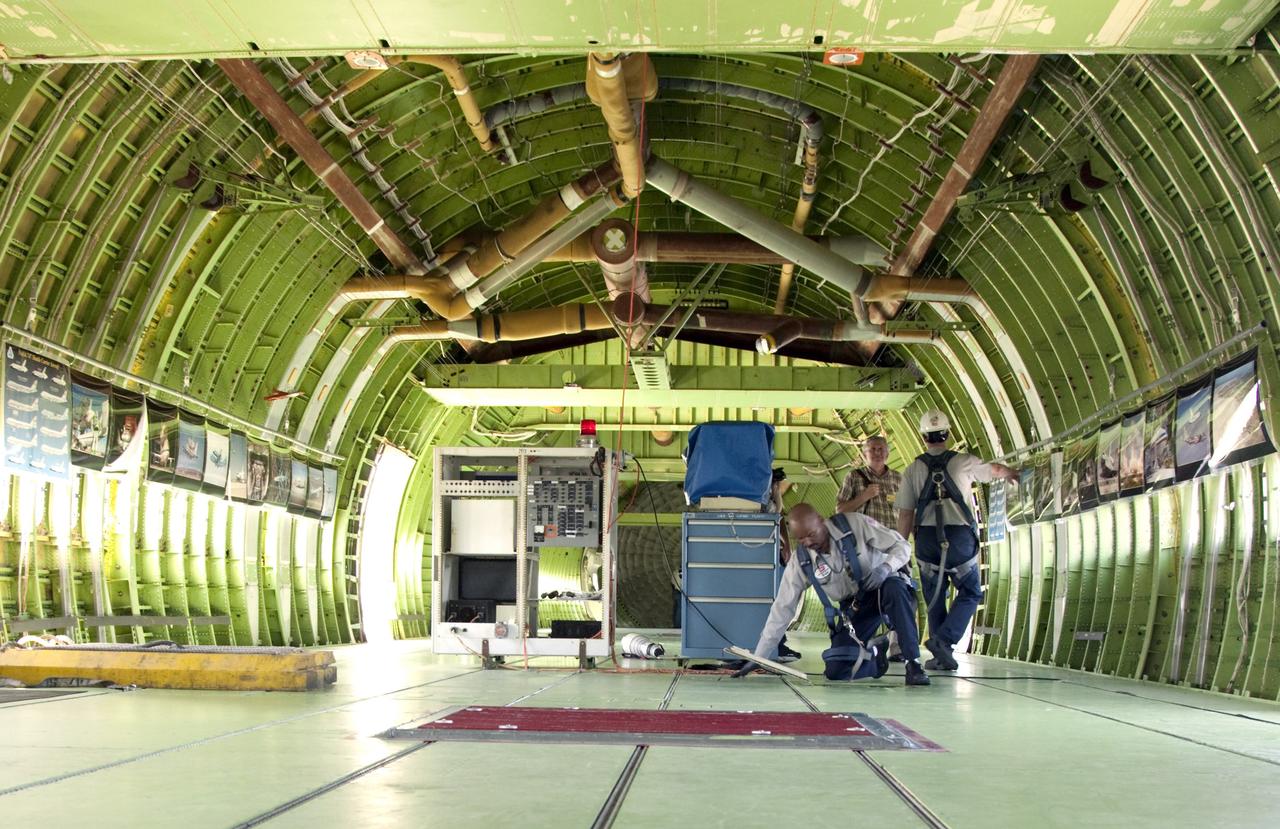
CAPE CANAVERAL, Fla. – At NASA’s Kennedy Space Center in Florida, maintenance technicians from NASA’s Dryden Flight Research Center in California check equipment inside NASA’s Shuttle Carrier Aircraft modified 747 jet, or SCA, after arriving at the Shuttle Landing Facility from Edwards Air Force Base in California. During the Space Shuttle Program’s transition and retirement processing, Discovery was prepared for display at Smithsonian’s National Air and Space Museum, Steven F. Udvar-Hazy Center in Chantilly, Va. Discovery is scheduled to be transported atop the SCA, designated NASA 905, to Dulles International Airport in Virginia on April 17 and then moved to the Smithsonian for permanent public display on April 19. The SCA is assigned to the remaining ferry missions, delivering the shuttles to their permanent public display sites. For more information, visit http://www.nasa.gov/shuttle. Photo credit: NASA/Frankie Martin

CAPE CANAVERAL, Fla. – At Edwards Air Force Base in California, the Shuttle Carrier Aircraft, or SCA, a modified Boeing 747, is towed beneath space shuttle Atlantis, suspended in the mate/demate device. Atlantis will be bolted to the SCA for a piggyback flight to Florida. A tail cone, which protects the aft engine area and provides a more efficient aeronautical dimension during its piggyback flight, can be seen. Atlantis landed at Edwards on May 24, which concluded mission STS-125, after two landing opportunities at Kennedy were waved off due to weather concerns. Atlantis is being returned to Florida on a ferry flight on the SCA. Atlantis' next assignment is the STS-129 mission, targeted to launch in November 2009. Photo credit: NASA/Ben Smegelsky
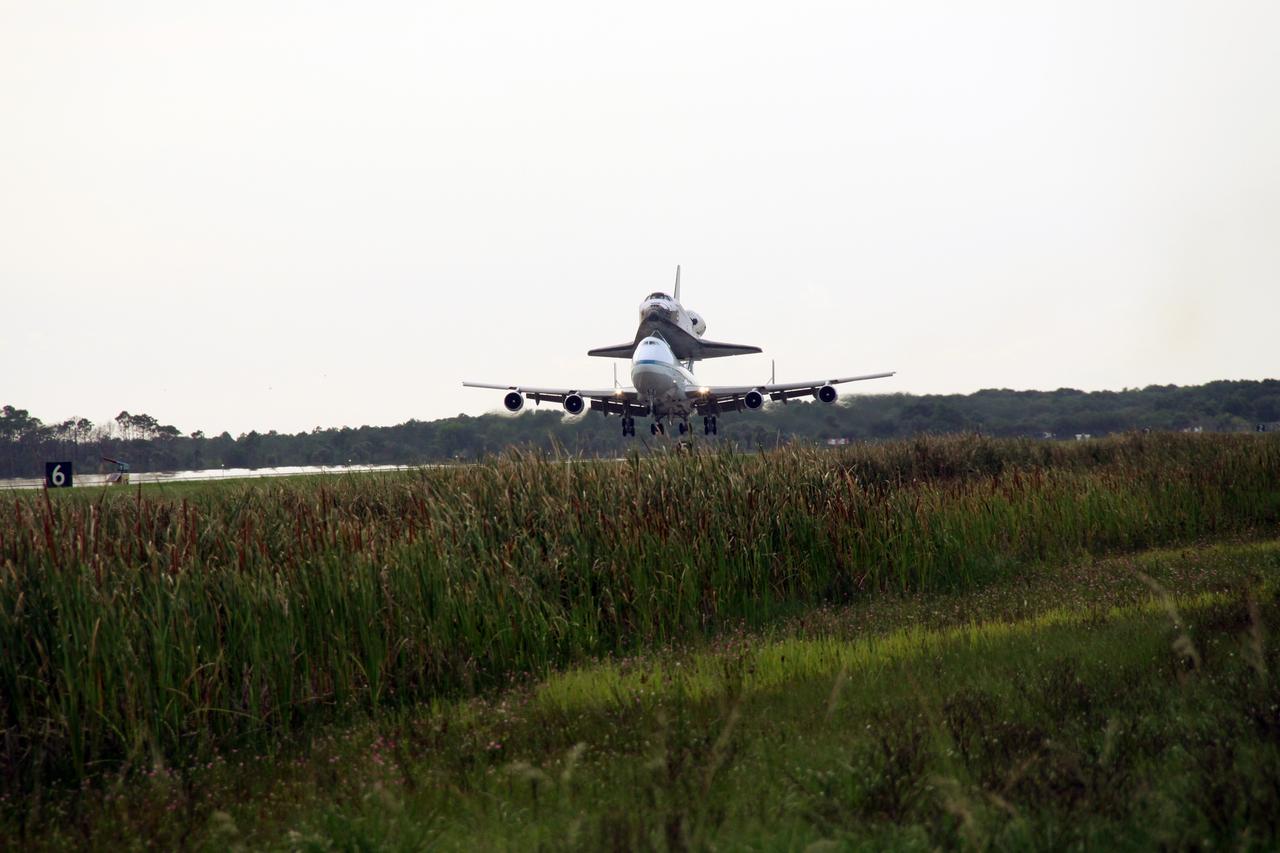
CAPE CANAVERAL, Fla. – After a two-day trip from California, the wheels of the Shuttle Carrier Aircraft, or SCA, with space shuttle Atlantis secured to its back, near contact with NASA Kennedy Space Center's Shuttle Landing Facility runway 15. The SCA is a modified Boeing 747 jetliner. Visible on Atlantis is the tail cone, which protects the aft engine area and provides a more efficient aeronautical dimension during flight. Atlantis returned from California atop the SCA after its May 24 landing at Edwards Air Force Base, concluding mission STS-125. The ferry flight from Edwards Air Force Base began June 1. Touchdown at Kennedy was at 6:53 p.m. EDT. Photo credit: NASA/Jack Pfaller
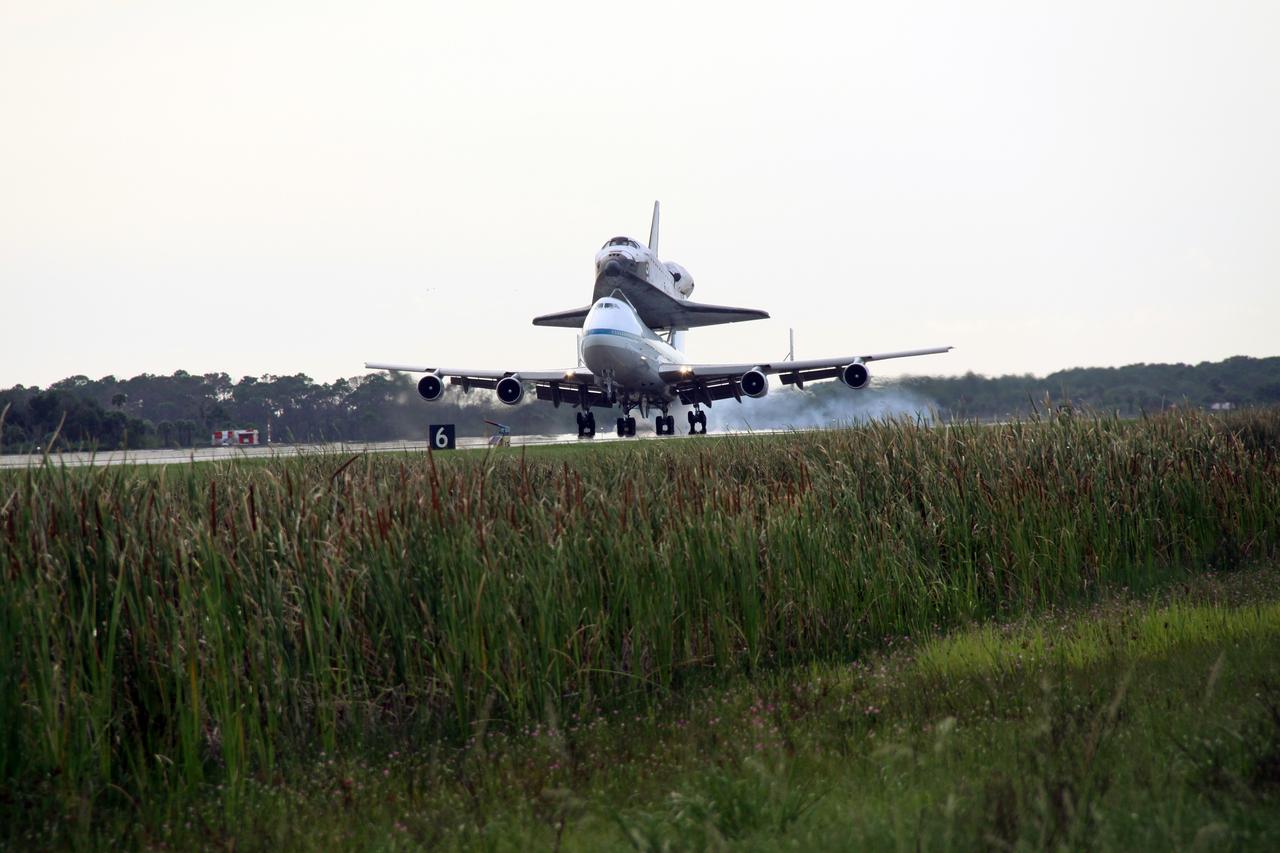
CAPE CANAVERAL, Fla. – After a two-day trip from California, the wheels of the Shuttle Carrier Aircraft, or SCA, with space shuttle Atlantis secured to its back, contact runway 15 at NASA Kennedy Space Center's Shuttle Landing Facility. The SCA is a modified Boeing 747 jetliner. Visible on Atlantis is the tail cone, which protects the aft engine area and provides a more efficient aeronautical dimension during flight. Atlantis returned from California atop the SCA after its May 24 landing at Edwards Air Force Base, concluding mission STS-125. The ferry flight from Edwards Air Force Base began June 1. Touchdown at Kennedy was at 6:53 p.m. EDT. Photo credit: NASA/Jack Pfaller
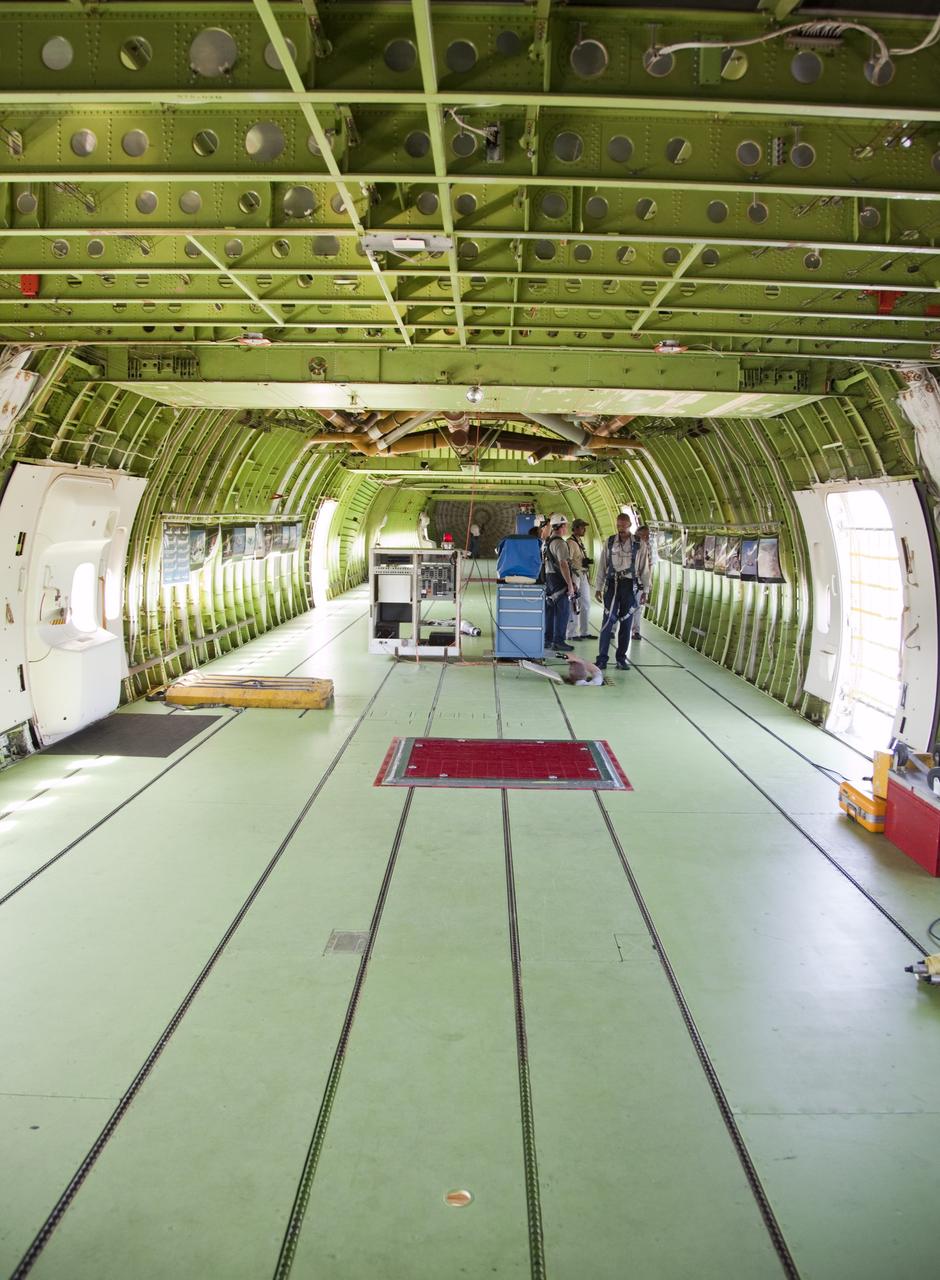
CAPE CANAVERAL, Fla. – At NASA’s Kennedy Space Center in Florida, maintenance technicians from NASA’s Dryden Flight Research Center in California check equipment inside NASA’s Shuttle Carrier Aircraft modified 747 jet, or SCA, after arriving at the Shuttle Landing Facility from Edwards Air Force Base in California. During the Space Shuttle Program’s transition and retirement processing, Discovery was prepared for display at Smithsonian’s National Air and Space Museum, Steven F. Udvar-Hazy Center in Chantilly, Va. Discovery is scheduled to be transported atop the SCA, designated NASA 905, to Dulles International Airport in Virginia on April 17 and then moved to the Smithsonian for permanent public display on April 19. The SCA is assigned to the remaining ferry missions, delivering the shuttles to their permanent public display sites. For more information, visit http://www.nasa.gov/shuttle. Photo credit: NASA/Frankie Martin
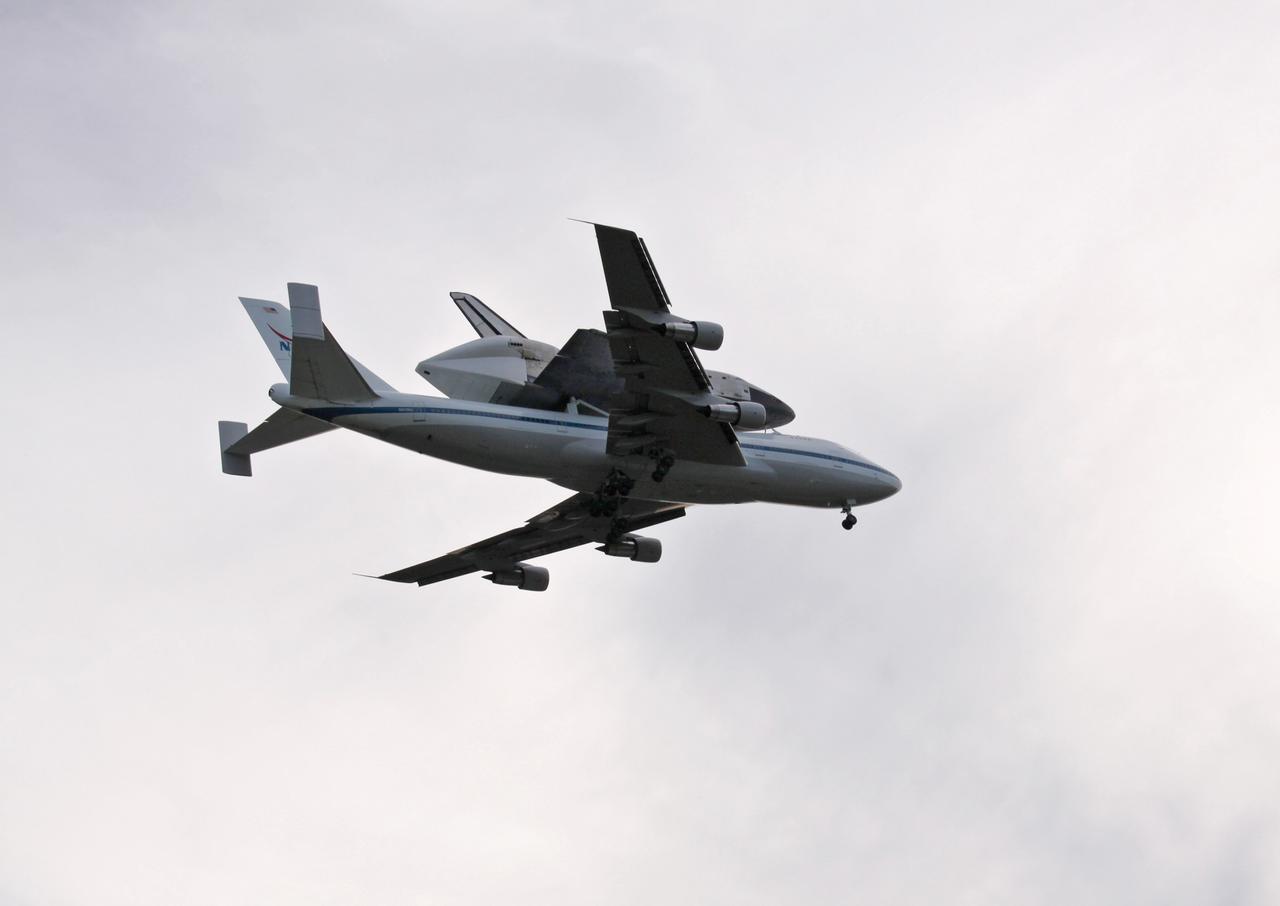
CAPE CANAVERAL, Fla. – After a two-day trip from California, the Shuttle Carrier Aircraft, or SCA, and its piggyback passenger space shuttle Atlantis near touchdown on NASA Kennedy Space Center's Shuttle Landing Facility runway 15. The SCA is a modified Boeing 747 jetliner. Visible on Atlantis is the tail cone, which protects the aft engine area and provides a more efficient aeronautical dimension during flight. Atlantis returned from California atop the SCA after its May 24 landing at Edwards Air Force Base, concluding mission STS-125. The ferry flight from Edwards Air Force Base began June 1. Touchdown at Kennedy was at 6:53 p.m. EDT. Photo credit: NASA/Jack Pfaller
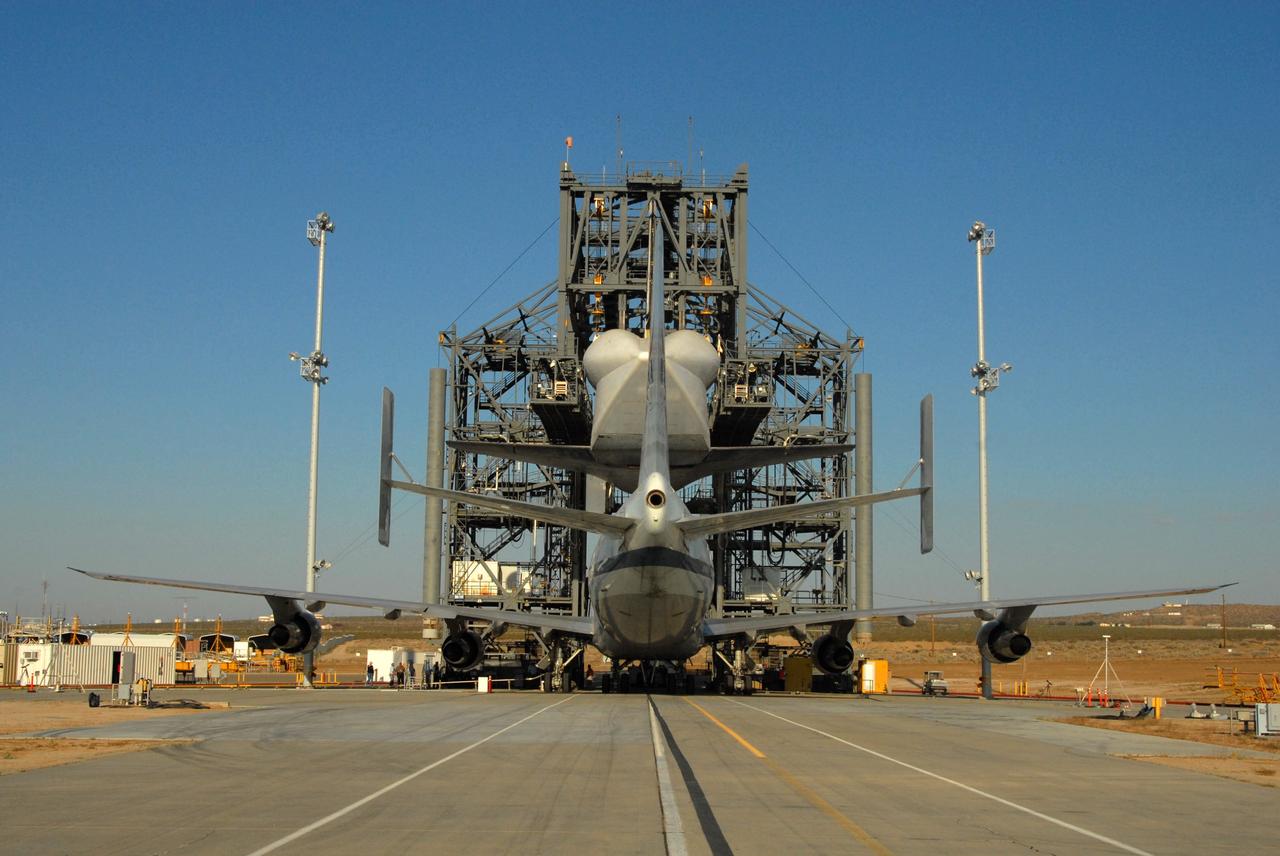
CAPE CANAVERAL, Fla. – At Edwards Air Force Base in California, space shuttle Atlantis is lowered from the mate/demate device toward the Shuttle Carrier Aircraft, or SCA, a modified Boeing 747, beneath it. Atlantis will be bolted to the SCA for a piggyback flight to Florida. A tail cone, which protects the aft engine area and provides a more efficient aeronautical dimension during its piggyback flight, can be seen. Atlantis landed at Edwards on May 24, which concluded mission STS-125, after two landing opportunities at Kennedy were waved off due to weather concerns. Atlantis is being returned to Florida on a ferry flight on the SCA. Atlantis' next assignment is the STS-129 mission, targeted to launch in November 2009. Photo credit: NASA/Ben Smegelsky
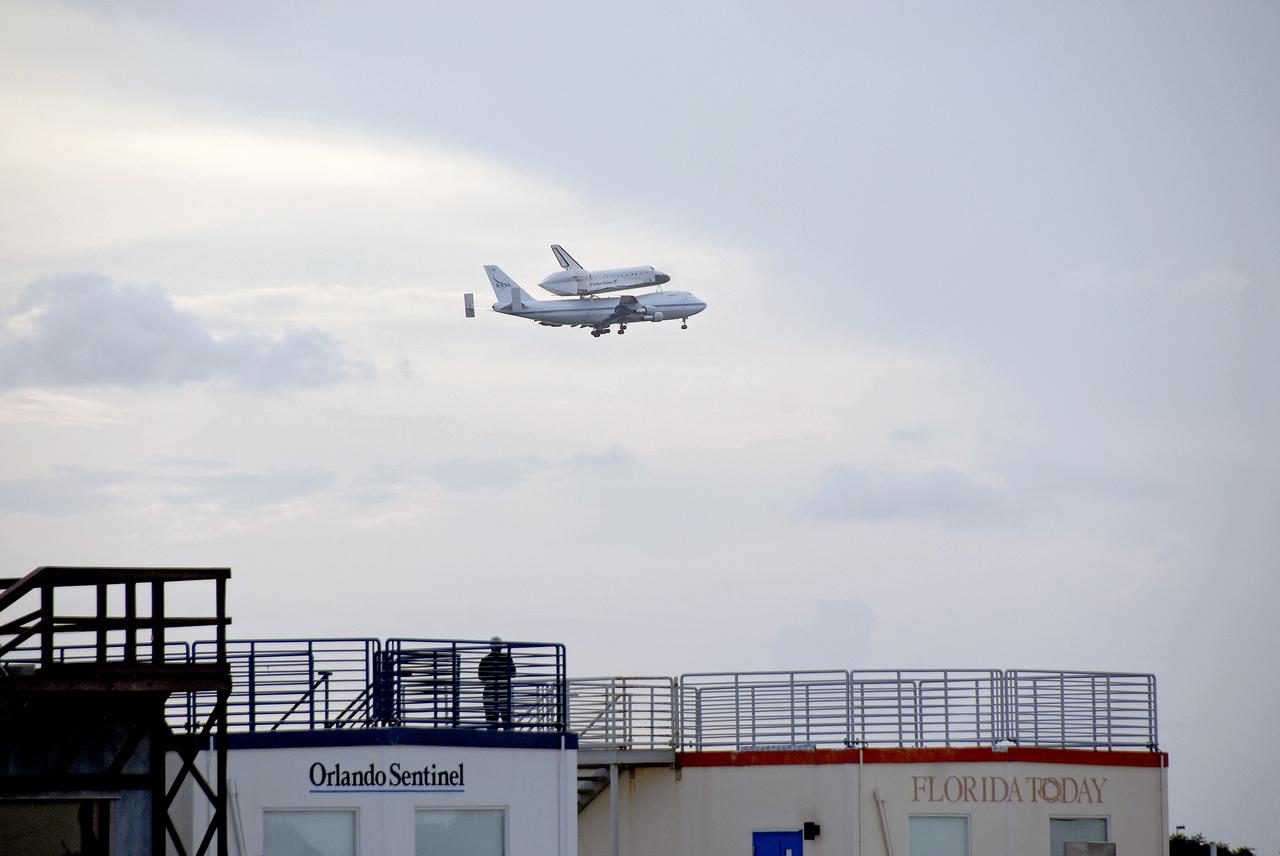
CAPE CANAVERAL, Fla. – After a two-day trip from California, the Shuttle Carrier Aircraft, or SCA, and its piggyback passenger space shuttle Atlantis are ready to land on NASA Kennedy Space Center's Shuttle Landing Facility runway. The SCA is a modified Boeing 747 jetliner. Visible on Atlantis is the tail cone, which protects the aft engine area and provides a more efficient aeronautical dimension during flight. Atlantis returned from California atop the SCA after its May 24 landing at Edwards Air Force Base, concluding mission STS-125. The ferry flight from Edwards Air Force Base began June 1. Touchdown at Kennedy was at 6:53 p.m. EDT. Photo credit: NASA/Kim Shiflett
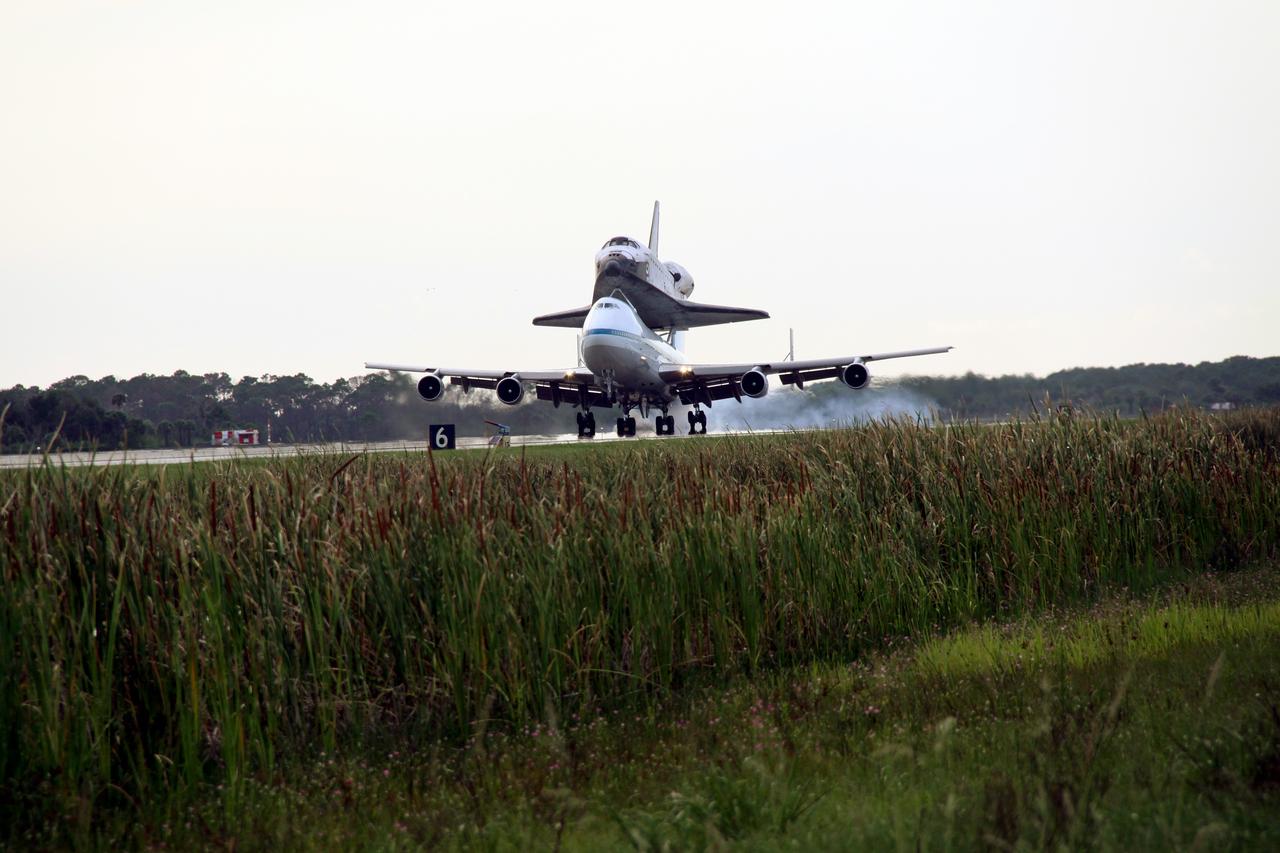
CAPE CANAVERAL, Fla. – After a two-day trip from California, the Shuttle Carrier Aircraft, or SCA, and its piggyback passenger space shuttle Atlantis lands on NASA Kennedy Space Center's Shuttle Landing Facility runway 15. The SCA is a modified Boeing 747 jetliner. Visible on Atlantis is the tail cone, which protects the aft engine area and provides a more efficient aeronautical dimension during flight. Atlantis returned from California atop the SCA after its May 24 landing at Edwards Air Force Base, concluding mission STS-125. The ferry flight from Edwards Air Force Base began June 1. Touchdown at Kennedy was at 6:53 p.m. EDT. Photo credit: NASA/Jack Pfaller
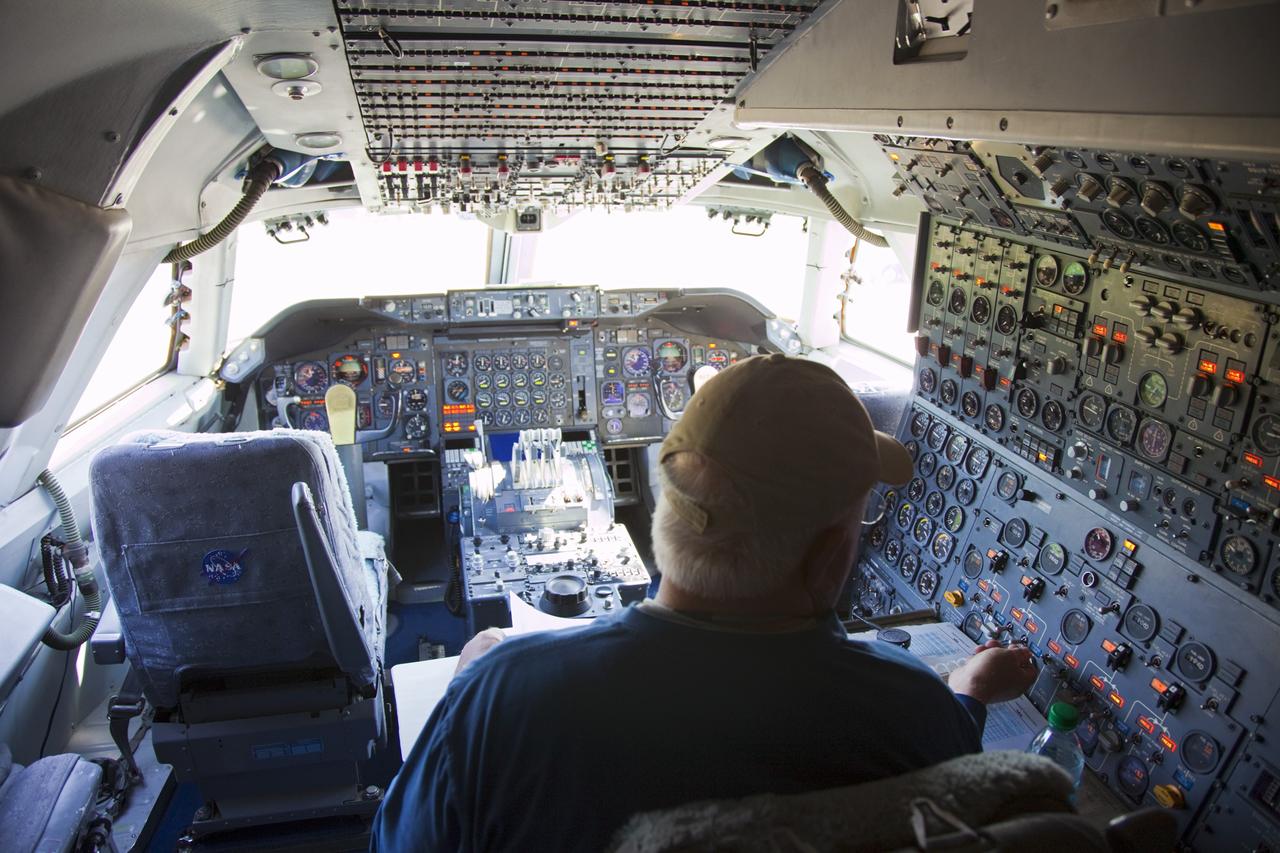
CAPE CANAVERAL, Fla. – At NASA’s Kennedy Space Center in Florida, a maintenance technician from NASA’s Dryden Flight Research Center in California checks controls inside NASA’s Shuttle Carrier Aircraft modified 747 jet, or SCA, after arriving at the Shuttle Landing Facility from Edwards Air Force Base in California. During the Space Shuttle Program’s transition and retirement processing, Discovery was prepared for display at Smithsonian’s National Air and Space Museum, Steven F. Udvar-Hazy Center in Chantilly, Va. Discovery is scheduled to be transported atop the SCA, designated NASA 905, to Dulles International Airport in Virginia on April 17 and then moved to the Smithsonian for permanent public display on April 19. The SCA is assigned to the remaining ferry missions, delivering the shuttles to their permanent public display sites. For more information, visit http://www.nasa.gov/shuttle. Photo credit: NASA/Frankie Martin

CAPE CANAVERAL, Fla. – At the Shuttle Landing Facility at NASA’s Kennedy Space Center in Florida, maintenance technicians from NASA’s Dryden Flight Research Center in California and Kennedy check NASA’s Shuttle Carrier Aircraft modified 747 jet, or SCA, after arriving from Edwards Air Force Base in California. During the Space Shuttle Program’s transition and retirement processing, Discovery was prepared for display at Smithsonian’s National Air and Space Museum, Steven F. Udvar-Hazy Center in Chantilly, Va. Discovery is scheduled to be transported atop the SCA, designated NASA 905, to Dulles International Airport in Virginia on April 17 and then moved to the Smithsonian for permanent public display on April 19. The SCA is assigned to the remaining ferry missions, delivering the shuttles to their permanent public display sites. For more information, visit http://www.nasa.gov/shuttle. Photo credit: NASA/Frankie Martin
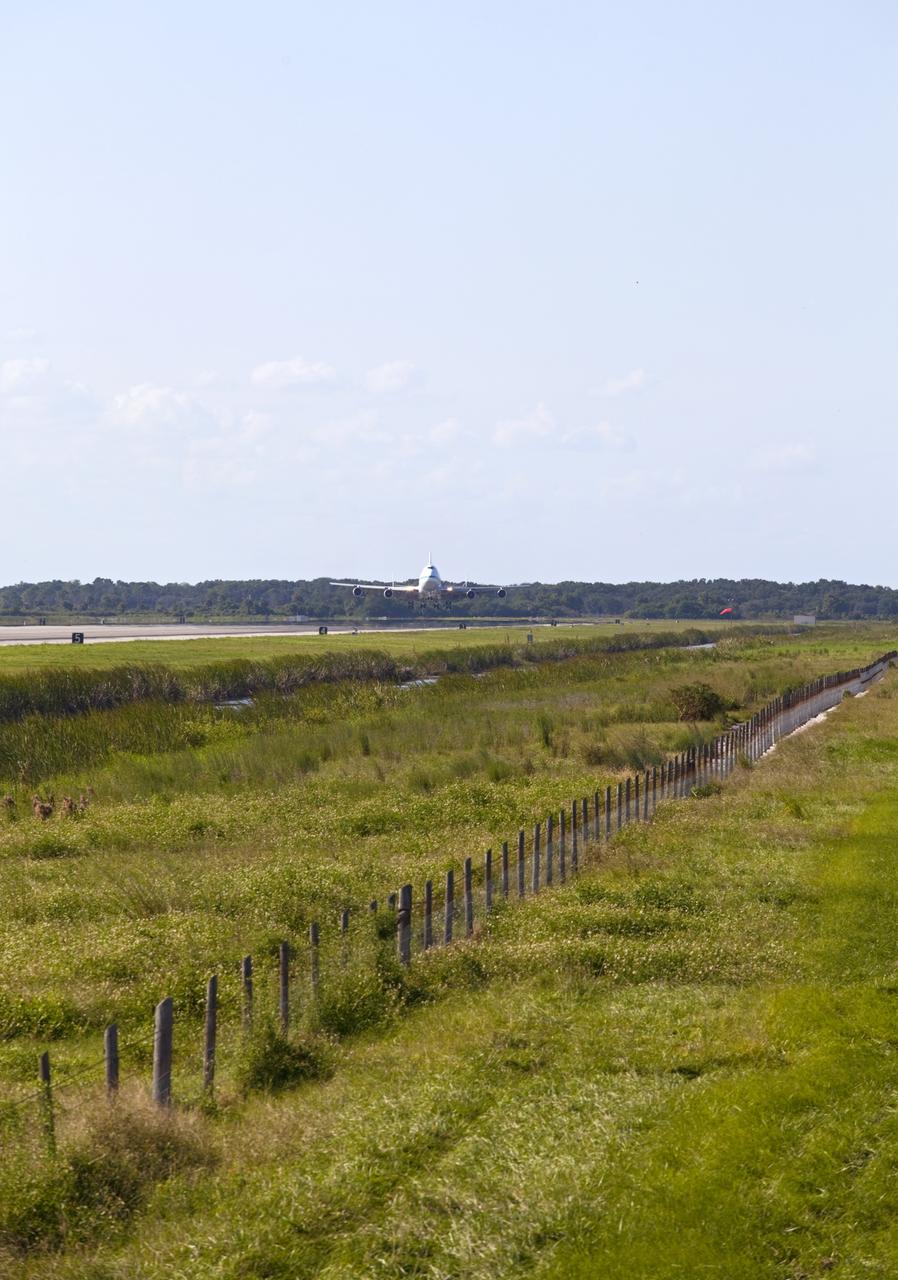
CAPE CANAVERAL, Fla. – The Shuttle Carrier Aircraft, or SCA, approaches the runway at NASA Kennedy Space Center’s Shuttle Landing Facility in Florida. The SCA touched down at 5:05 p.m. EDT to prepare for shuttle Endeavour’s ferry flight to the Los Angeles International Airport on Sept. 17. This SCA, designated NASA 905, is a modified Boeing 747 jet airliner, originally manufactured for commercial use. One of two SCAs employed over the course of the Space Shuttle Program, NASA 905 is assigned to the final ferry mission. Endeavour will be placed on permanent public display at the California Science Center in Los Angeles. For more information on the SCA, visit http://www.nasa.gov/centers/dryden/news/FactSheets/FS-013-DFRC.html. For more information on shuttle transition and retirement activities, visit http://www.nasa.gov/shuttle. Photo credit: NASA/Frankie Martin
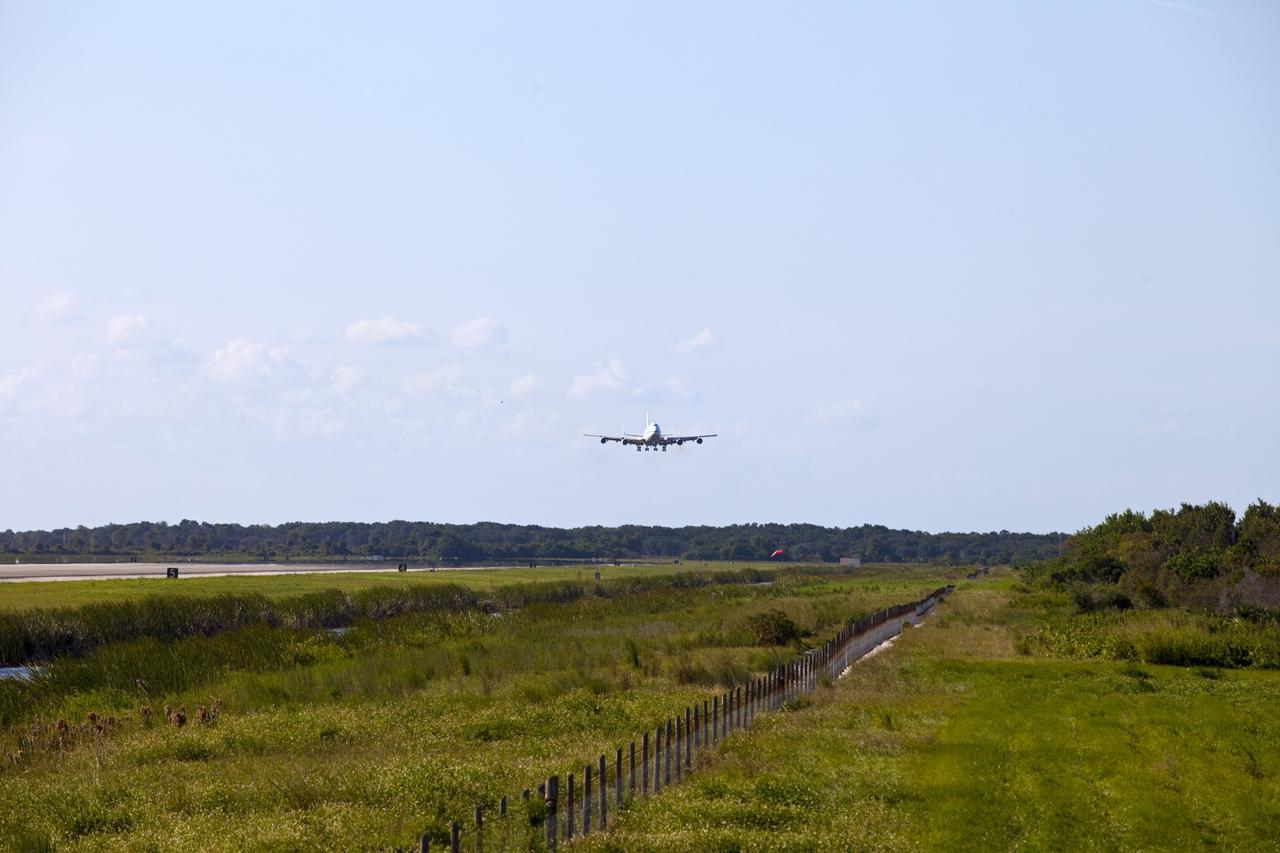
CAPE CANAVERAL, Fla. – The Shuttle Carrier Aircraft, or SCA, approaches the runway at NASA Kennedy Space Center’s Shuttle Landing Facility in Florida. The SCA touched down at 5:05 p.m. EDT to prepare for shuttle Endeavour’s ferry flight to the Los Angeles International Airport on Sept. 17. This SCA, designated NASA 905, is a modified Boeing 747 jet airliner, originally manufactured for commercial use. One of two SCAs employed over the course of the Space Shuttle Program, NASA 905 is assigned to the final ferry mission. Endeavour will be placed on permanent public display at the California Science Center in Los Angeles. For more information on the SCA, visit http://www.nasa.gov/centers/dryden/news/FactSheets/FS-013-DFRC.html. For more information on shuttle transition and retirement activities, visit http://www.nasa.gov/shuttle. Photo credit: NASA/Frankie Martin
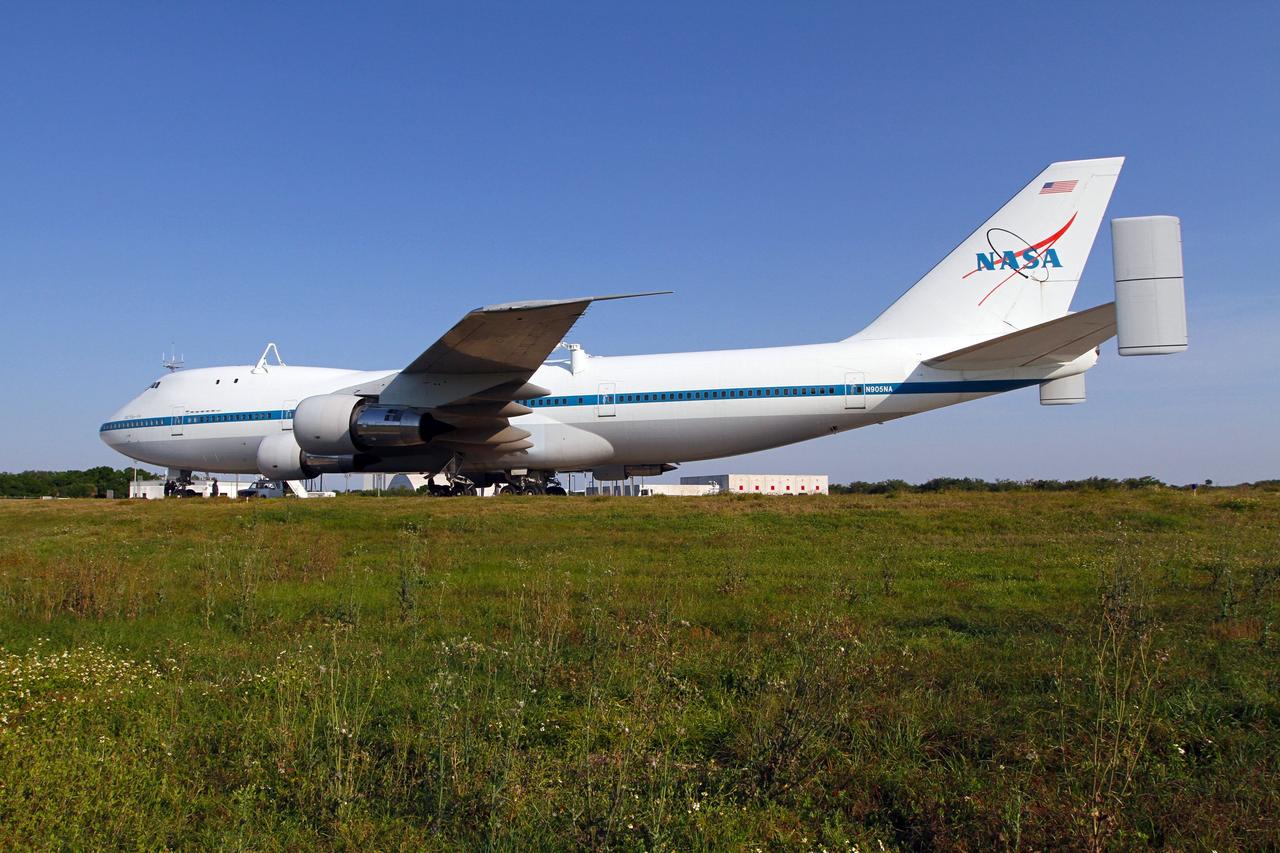
CAPE CANAVERAL, Fla. – The Shuttle Carrier Aircraft comes to a stop on the apron of the runway at the Shuttle Landing Facility at NASA’s Kennedy Space Center in Florida. The aircraft, known as an SCA, arrived at 5:35 p.m. EDT to prepare for shuttle Discovery’s ferry flight to the Washington Dulles International Airport in Sterling, Va., on April 17. This SCA, designated NASA 905, is a modified Boeing 747 jet airliner, originally manufactured for commercial use. One of two SCAs employed over the course of the Space Shuttle Program, NASA 905 is assigned to the remaining ferry missions, delivering the shuttles to their permanent public display sites. NASA 911 was decommissioned at the NASA Dryden Flight Research Center in California in February. Discovery will be placed on permanent public display in the Smithsonian's National Air and Space Museum Steven F. Udvar-Hazy Center in Chantilly, Va. For more information on the SCA, visit http://www.nasa.gov/centers/dryden/news/FactSheets/FS-013-DFRC.html. For more information on shuttle transition and retirement activities, visit http://www.nasa.gov/shuttle. Photo credit: NASA/Kim Shiflett
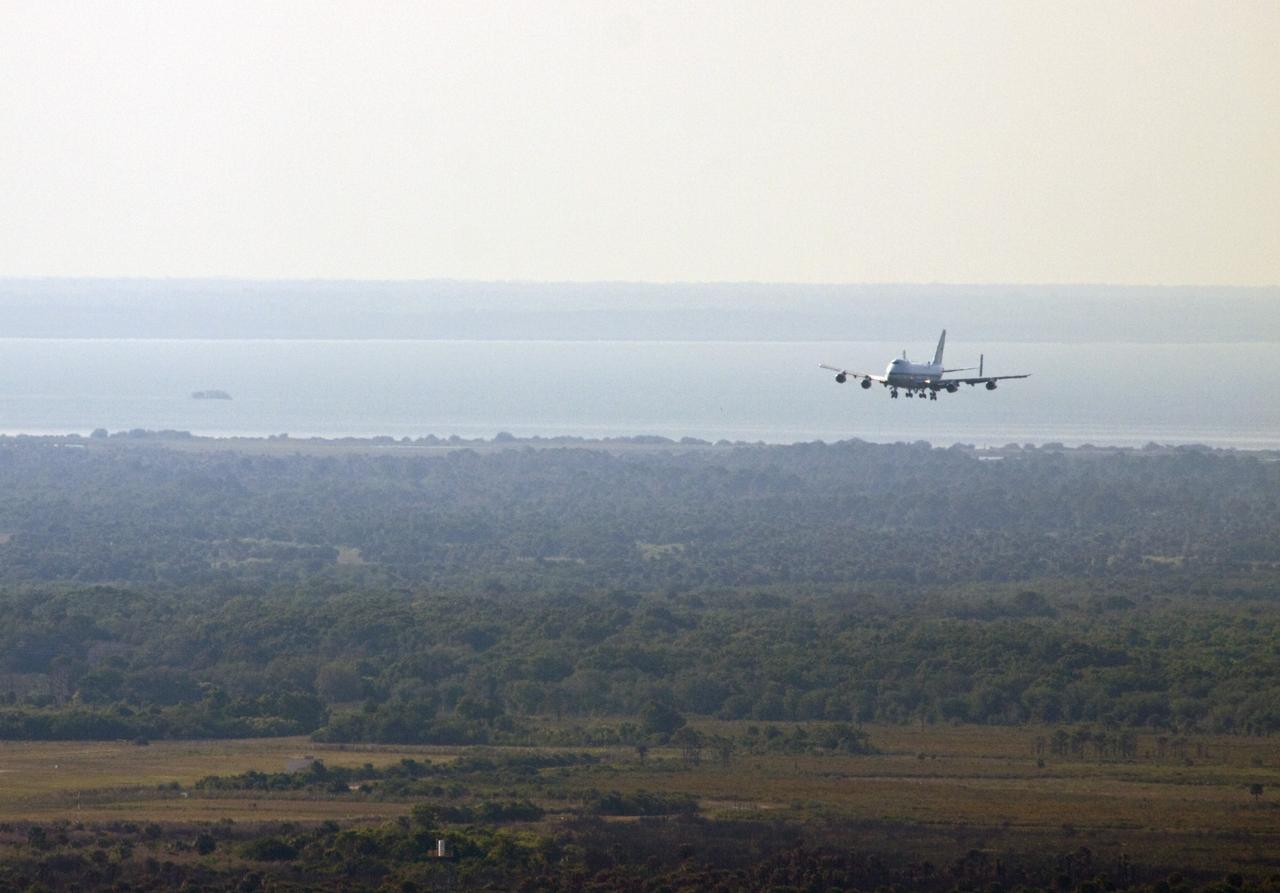
CAPE CANAVERAL, Fla. – The Shuttle Carrier Aircraft approaches the runway of the Shuttle Landing Facility at NASA’s Kennedy Space Center in Florida. The aircraft, known as an SCA, arrived at 5:35 p.m. EDT to prepare for shuttle Discovery’s ferry flight to the Washington Dulles International Airport in Sterling, Va., on April 17. This SCA, designated NASA 905, is a modified Boeing 747 jet airliner, originally manufactured for commercial use. One of two SCAs employed over the course of the Space Shuttle Program, NASA 905 is assigned to the remaining ferry missions, delivering the shuttles to their permanent public display sites. NASA 911 was decommissioned at the NASA Dryden Flight Research Center in California in February. Discovery will be placed on permanent public display in the Smithsonian's National Air and Space Museum Steven F. Udvar-Hazy Center in Chantilly, Va. For more information on the SCA, visit http://www.nasa.gov/centers/dryden/news/FactSheets/FS-013-DFRC.html. For more information on shuttle transition and retirement activities, visit http://www.nasa.gov/shuttle. Photo credit: NASA/Jim Grossmann
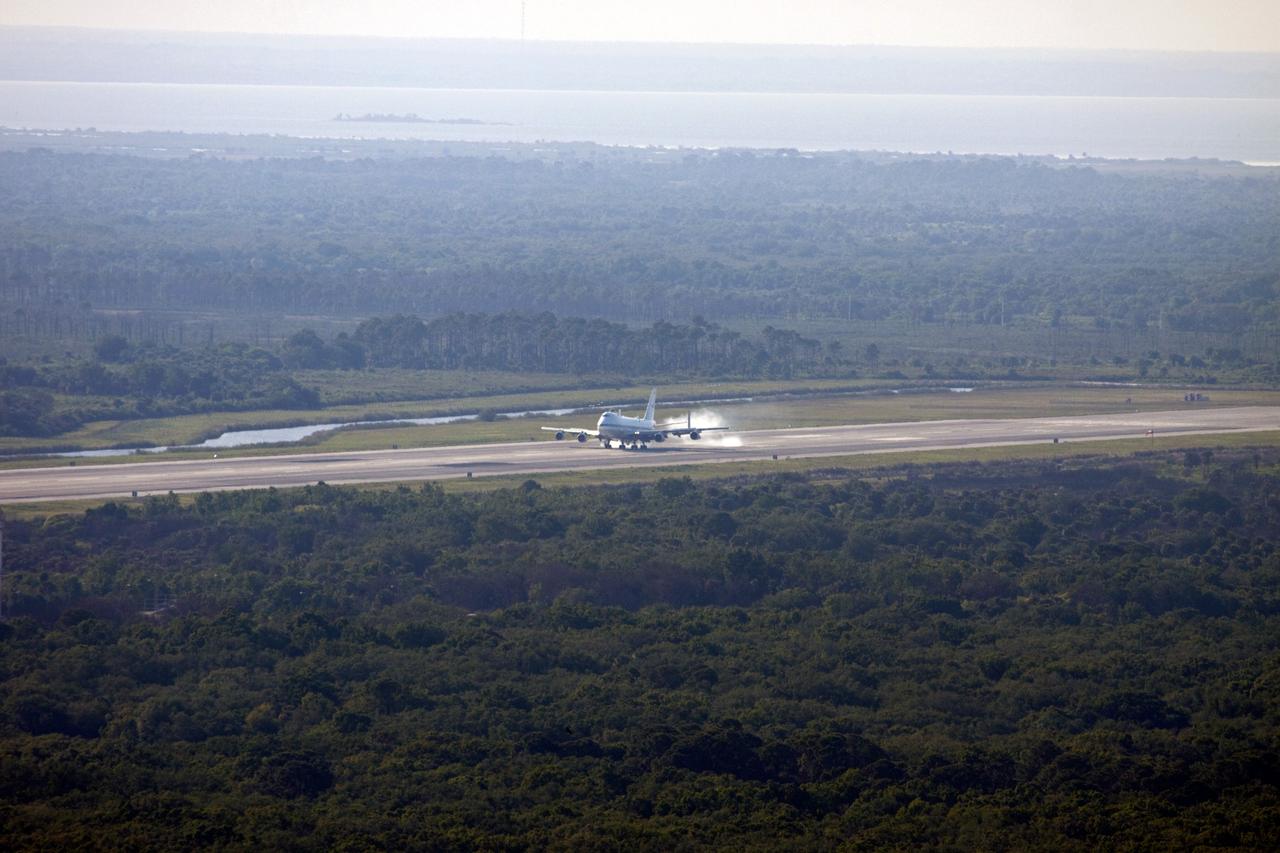
CAPE CANAVERAL, Fla. – The Shuttle Carrier Aircraft makes contact with the runway at the Shuttle Landing Facility at NASA’s Kennedy Space Center in Florida. The aircraft, known as an SCA, arrived at 5:35 p.m. EDT to prepare for shuttle Discovery’s ferry flight to the Washington Dulles International Airport in Sterling, Va., on April 17. This SCA, designated NASA 905, is a modified Boeing 747 jet airliner, originally manufactured for commercial use. One of two SCAs employed over the course of the Space Shuttle Program, NASA 905 is assigned to the remaining ferry missions, delivering the shuttles to their permanent public display sites. NASA 911 was decommissioned at the NASA Dryden Flight Research Center in California in February. Discovery will be placed on permanent public display in the Smithsonian's National Air and Space Museum Steven F. Udvar-Hazy Center in Chantilly, Va. For more information on the SCA, visit http://www.nasa.gov/centers/dryden/news/FactSheets/FS-013-DFRC.html. For more information on shuttle transition and retirement activities, visit http://www.nasa.gov/shuttle. Photo credit: NASA/Jim Grossmann
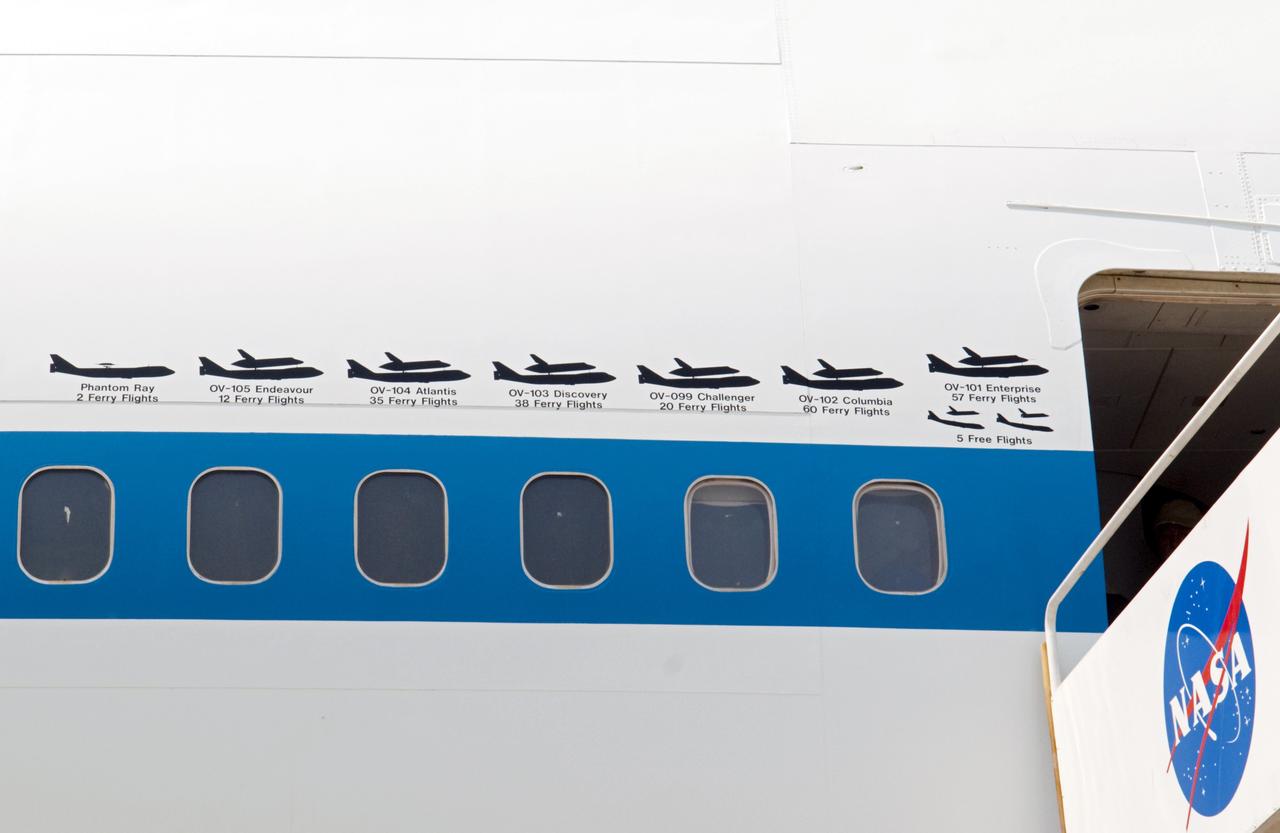
CAPE CANAVERAL, Fla. – Painted graphics line the side of NASA 905 depicting the various ferry flights the Shuttle Carrier Aircraft has supported during the Space Shuttle Program, including the tests using the space shuttle prototype Enterprise. The aircraft, known as an SCA, is at Kennedy to prepare for shuttle Discovery’s ferry flight to the Washington Dulles International Airport in Sterling, Va., on April 17. The SCA is a modified Boeing 747 jet airliner, originally manufactured for commercial use. One of two SCAs employed over the course of the Space Shuttle Program, NASA 905 is assigned to the remaining ferry missions, delivering the shuttles to their permanent public display sites. NASA 911 was decommissioned at the NASA Dryden Flight Research Center in California in February. Discovery will be placed on permanent public display in the Smithsonian's National Air and Space Museum Steven F. Udvar-Hazy Center in Chantilly, Va. For more information on the SCA, visit http://www.nasa.gov/centers/dryden/news/FactSheets/FS-013-DFRC.html. For more information on shuttle transition and retirement activities, visit http://www.nasa.gov/shuttle. Photo credit: NASA/Ben Smegelsky

CAPE CANAVERAL, Fla. – The Shuttle Carrier Aircraft touches down at the Shuttle Landing Facility at NASA’s Kennedy Space Center in Florida. The aircraft, known as an SCA, arrived at 5:35 p.m. EDT to prepare for shuttle Discovery’s ferry flight to the Washington Dulles International Airport in Sterling, Va., on April 17. This SCA, designated NASA 905, is a modified Boeing 747 jet airliner, originally manufactured for commercial use. One of two SCAs employed over the course of the Space Shuttle Program, NASA 905 is assigned to the remaining ferry missions, delivering the shuttles to their permanent public display sites. NASA 911 was decommissioned at the NASA Dryden Flight Research Center in California in February. Discovery will be placed on permanent public display in the Smithsonian's National Air and Space Museum Steven F. Udvar-Hazy Center in Chantilly, Va. For more information on the SCA, visit http://www.nasa.gov/centers/dryden/news/FactSheets/FS-013-DFRC.html. For more information on shuttle transition and retirement activities, visit http://www.nasa.gov/shuttle. Photo credit: NASA/Frankie Martin
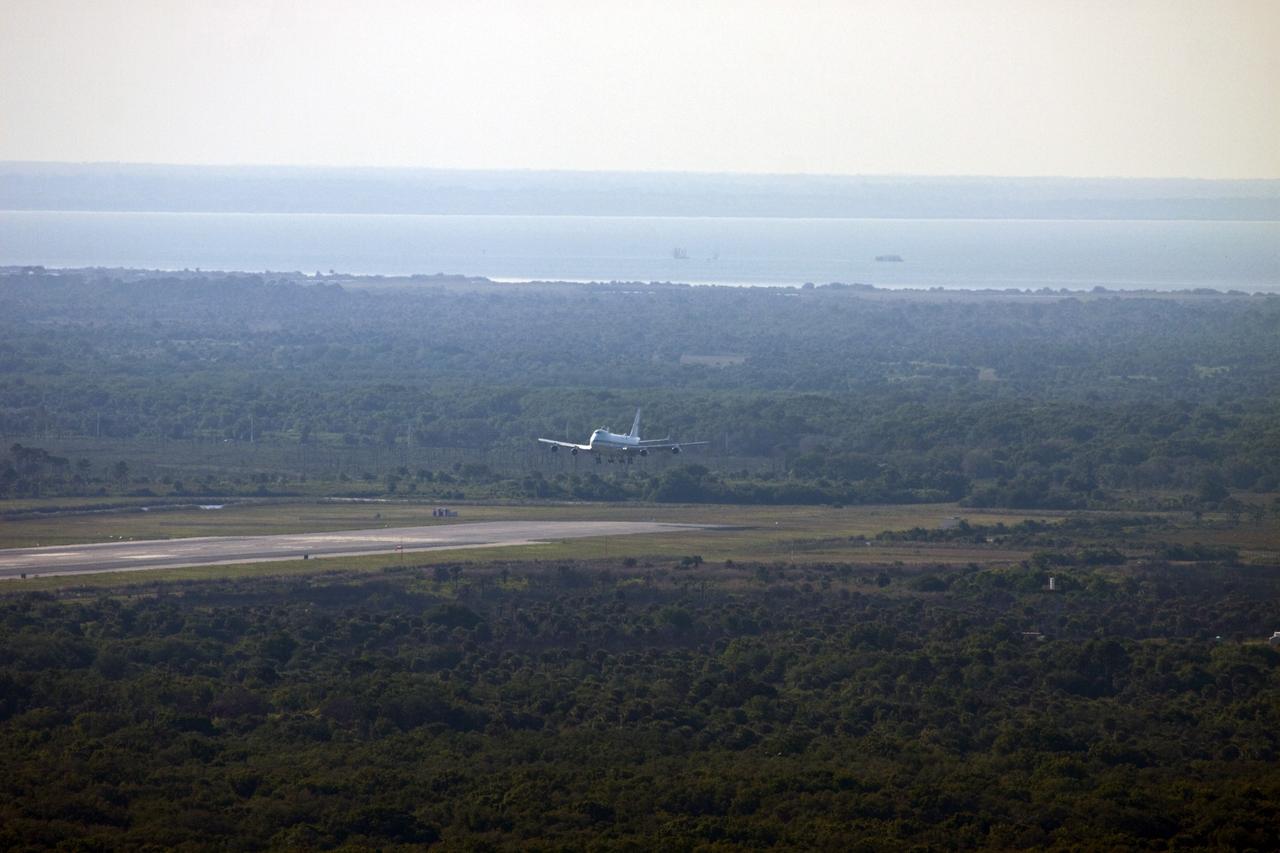
CAPE CANAVERAL, Fla. – The Shuttle Carrier Aircraft prepares to touch down on the runway at the Shuttle Landing Facility at NASA’s Kennedy Space Center in Florida. The aircraft, known as an SCA, arrived at 5:35 p.m. EDT to prepare for shuttle Discovery’s ferry flight to the Washington Dulles International Airport in Sterling, Va., on April 17. This SCA, designated NASA 905, is a modified Boeing 747 jet airliner, originally manufactured for commercial use. One of two SCAs employed over the course of the Space Shuttle Program, NASA 905 is assigned to the remaining ferry missions, delivering the shuttles to their permanent public display sites. NASA 911 was decommissioned at the NASA Dryden Flight Research Center in California in February. Discovery will be placed on permanent public display in the Smithsonian's National Air and Space Museum Steven F. Udvar-Hazy Center in Chantilly, Va. For more information on the SCA, visit http://www.nasa.gov/centers/dryden/news/FactSheets/FS-013-DFRC.html. For more information on shuttle transition and retirement activities, visit http://www.nasa.gov/shuttle. Photo credit: NASA/Jim Grossmann
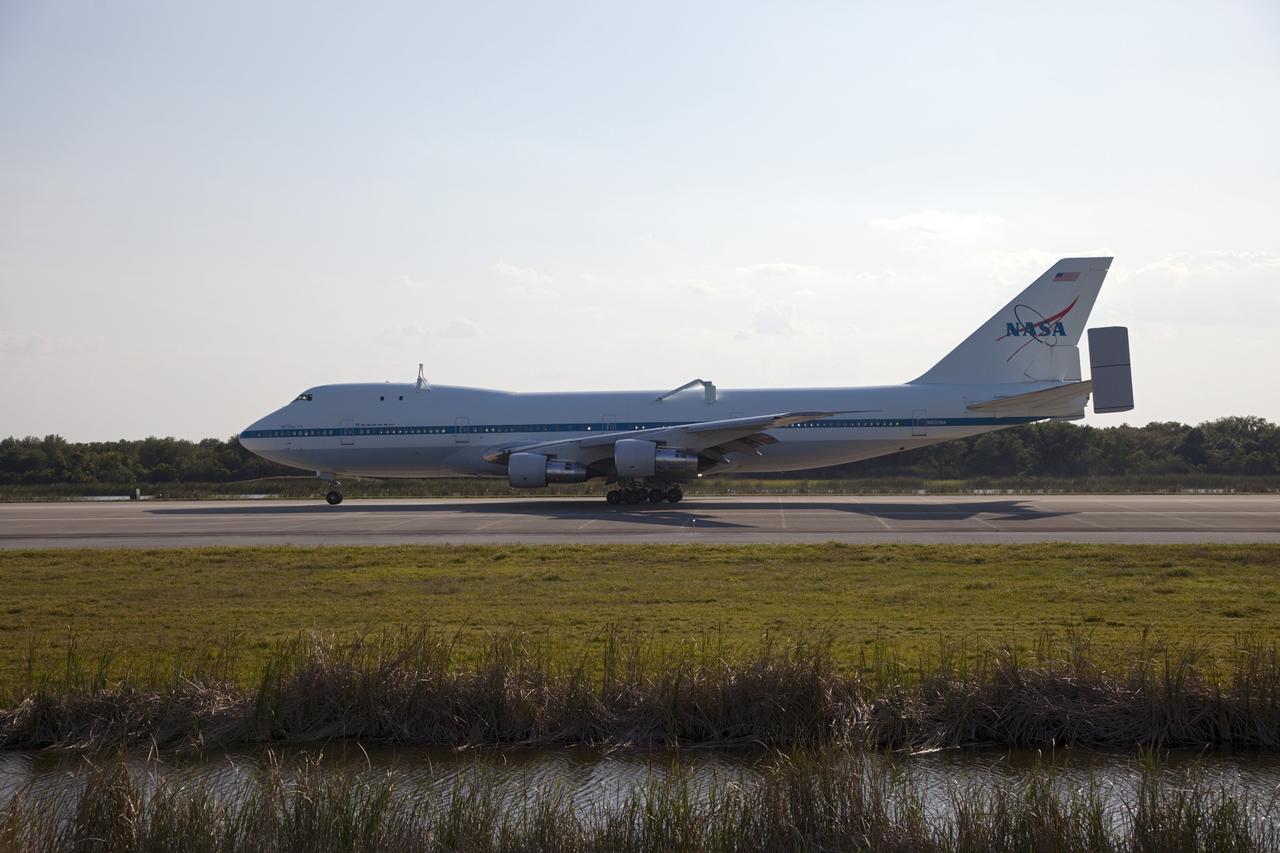
CAPE CANAVERAL, Fla. – NASA pilot Jeff Moultrie guides the Shuttle Carrier Aircraft to a picture-perfect touchdown at the Shuttle Landing Facility at NASA’s Kennedy Space Center in Florida with NASA co-pilot Bill Rieke at his side. The aircraft, known as an SCA, arrived at 5:35 p.m. EDT to prepare for shuttle Discovery’s ferry flight to the Washington Dulles International Airport in Sterling, Va., on April 17. This SCA, designated NASA 905, is a modified Boeing 747 jet airliner, originally manufactured for commercial use. One of two SCAs employed over the course of the Space Shuttle Program, NASA 905 is assigned to the remaining ferry missions, delivering the shuttles to their permanent public display sites. NASA 911 was decommissioned at the NASA Dryden Flight Research Center in California in February. Discovery will be placed on permanent public display in the Smithsonian's National Air and Space Museum Steven F. Udvar-Hazy Center in Chantilly, Va. For more information on the SCA, visit http://www.nasa.gov/centers/dryden/news/FactSheets/FS-013-DFRC.html. For more information on shuttle transition and retirement activities, visit http://www.nasa.gov/shuttle. Photo credit: NASA/Frankie Martin
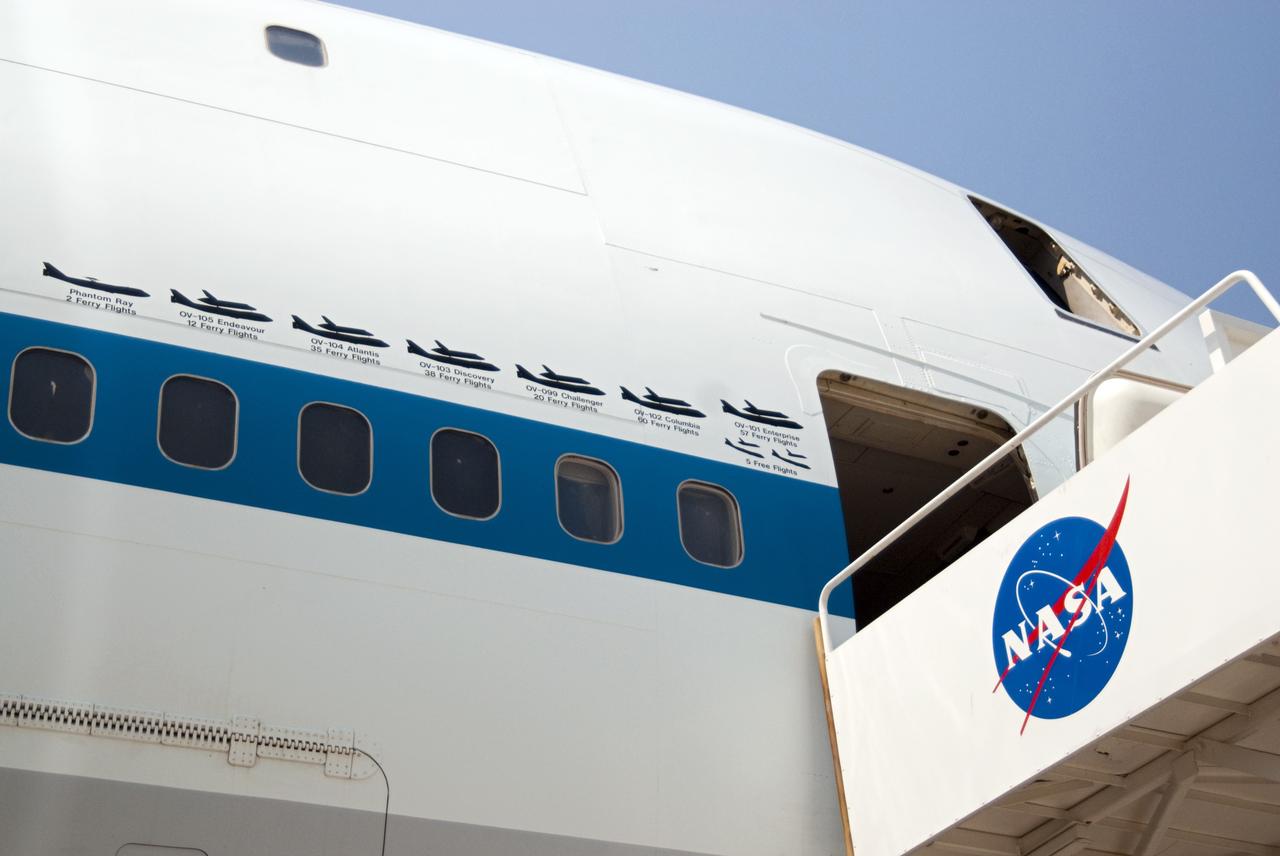
CAPE CANAVERAL, Fla. – Painted graphics line the side of NASA 905 depicting the various ferry flights the Shuttle Carrier Aircraft has supported during the Space Shuttle Program, including the tests using the space shuttle prototype Enterprise. The aircraft, known as an SCA, is at Kennedy to prepare for shuttle Discovery’s ferry flight to the Washington Dulles International Airport in Sterling, Va., on April 17. The SCA is a modified Boeing 747 jet airliner, originally manufactured for commercial use. One of two SCAs employed over the course of the Space Shuttle Program, NASA 905 is assigned to the remaining ferry missions, delivering the shuttles to their permanent public display sites. NASA 911 was decommissioned at the NASA Dryden Flight Research Center in California in February. Discovery will be placed on permanent public display in the Smithsonian's National Air and Space Museum Steven F. Udvar-Hazy Center in Chantilly, Va. For more information on the SCA, visit http://www.nasa.gov/centers/dryden/news/FactSheets/FS-013-DFRC.html. For more information on shuttle transition and retirement activities, visit http://www.nasa.gov/shuttle. Photo credit: NASA/Ben Smegelsky
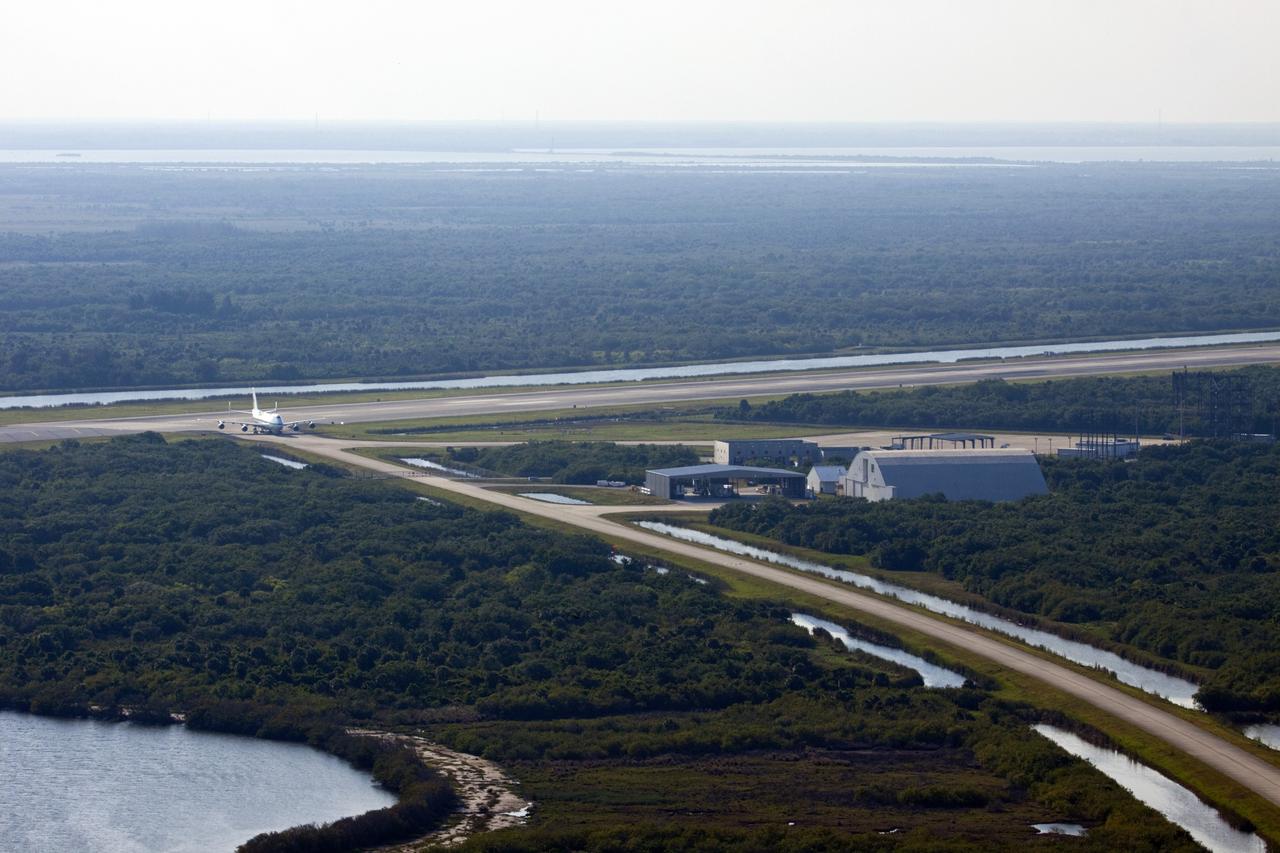
CAPE CANAVERAL, Fla. – NASA pilot Jeff Moultrie guides the Shuttle Carrier Aircraft toward the apron of the runway at the Shuttle Landing Facility at NASA’s Kennedy Space Center in Florida. The aircraft, known as an SCA, arrived at 5:35 p.m. EDT to prepare for shuttle Discovery’s ferry flight to the Washington Dulles International Airport in Sterling, Va., on April 17. This SCA, designated NASA 905, is a modified Boeing 747 jet airliner, originally manufactured for commercial use. One of two SCAs employed over the course of the Space Shuttle Program, NASA 905 is assigned to the remaining ferry missions, delivering the shuttles to their permanent public display sites. NASA 911 was decommissioned at the NASA Dryden Flight Research Center in California in February. Discovery will be placed on permanent public display in the Smithsonian's National Air and Space Museum Steven F. Udvar-Hazy Center in Chantilly, Va. For more information on the SCA, visit http://www.nasa.gov/centers/dryden/news/FactSheets/FS-013-DFRC.html. For more information on shuttle transition and retirement activities, visit http://www.nasa.gov/shuttle. Photo credit: NASA/Jim Grossmann
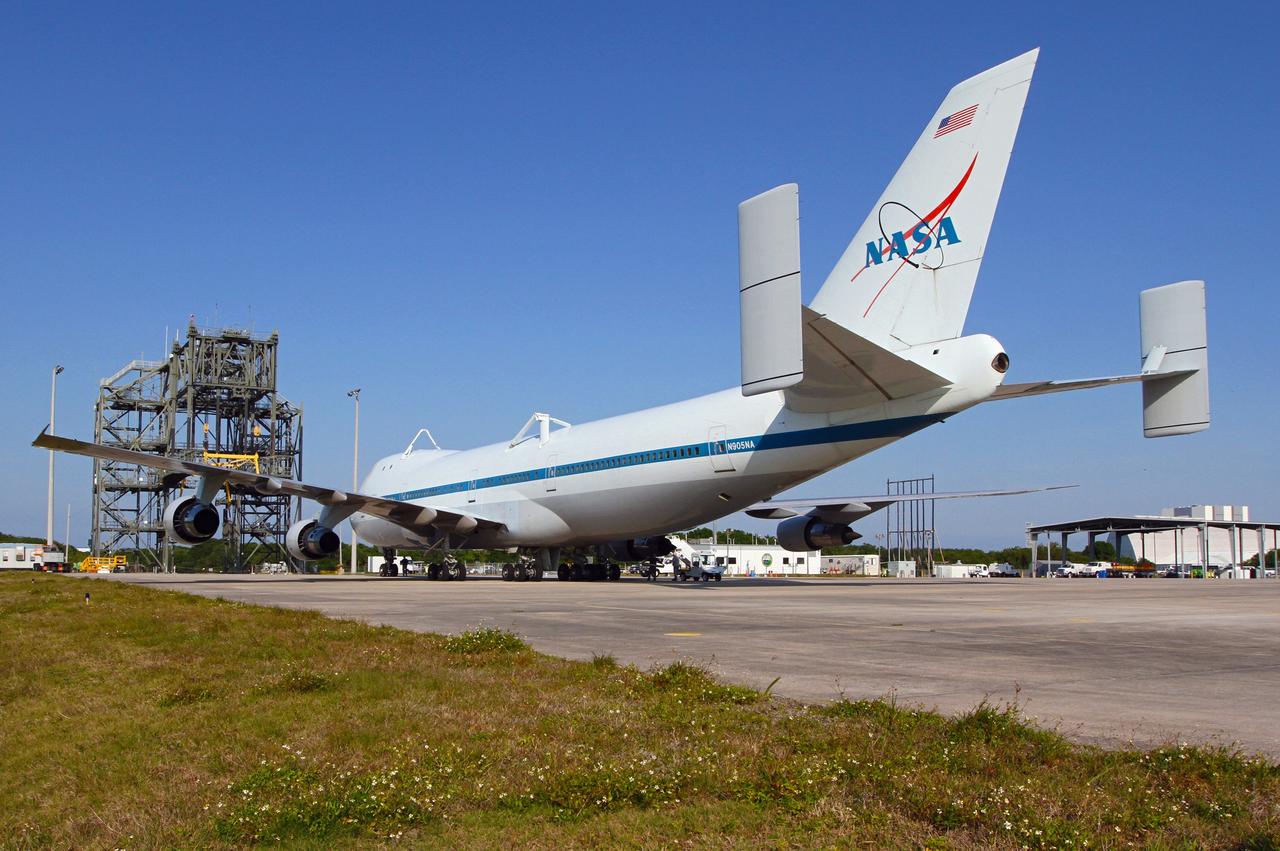
CAPE CANAVERAL, Fla. – The Shuttle Carrier Aircraft parks near the mate/demate device at the Shuttle Landing Facility at NASA’s Kennedy Space Center in Florida. The aircraft, known as an SCA, arrived at 5:35 p.m. EDT to prepare for shuttle Discovery’s ferry flight to the Washington Dulles International Airport in Sterling, Va., on April 17. This SCA, designated NASA 905, is a modified Boeing 747 jet airliner, originally manufactured for commercial use. One of two SCAs employed over the course of the Space Shuttle Program, NASA 905 is assigned to the remaining ferry missions, delivering the shuttles to their permanent public display sites. NASA 911 was decommissioned at the NASA Dryden Flight Research Center in California in February. Discovery will be placed on permanent public display in the Smithsonian's National Air and Space Museum Steven F. Udvar-Hazy Center in Chantilly, Va. For more information on the SCA, visit http://www.nasa.gov/centers/dryden/news/FactSheets/FS-013-DFRC.html. For more information on shuttle transition and retirement activities, visit http://www.nasa.gov/shuttle. Photo credit: NASA/Kim Shiflett
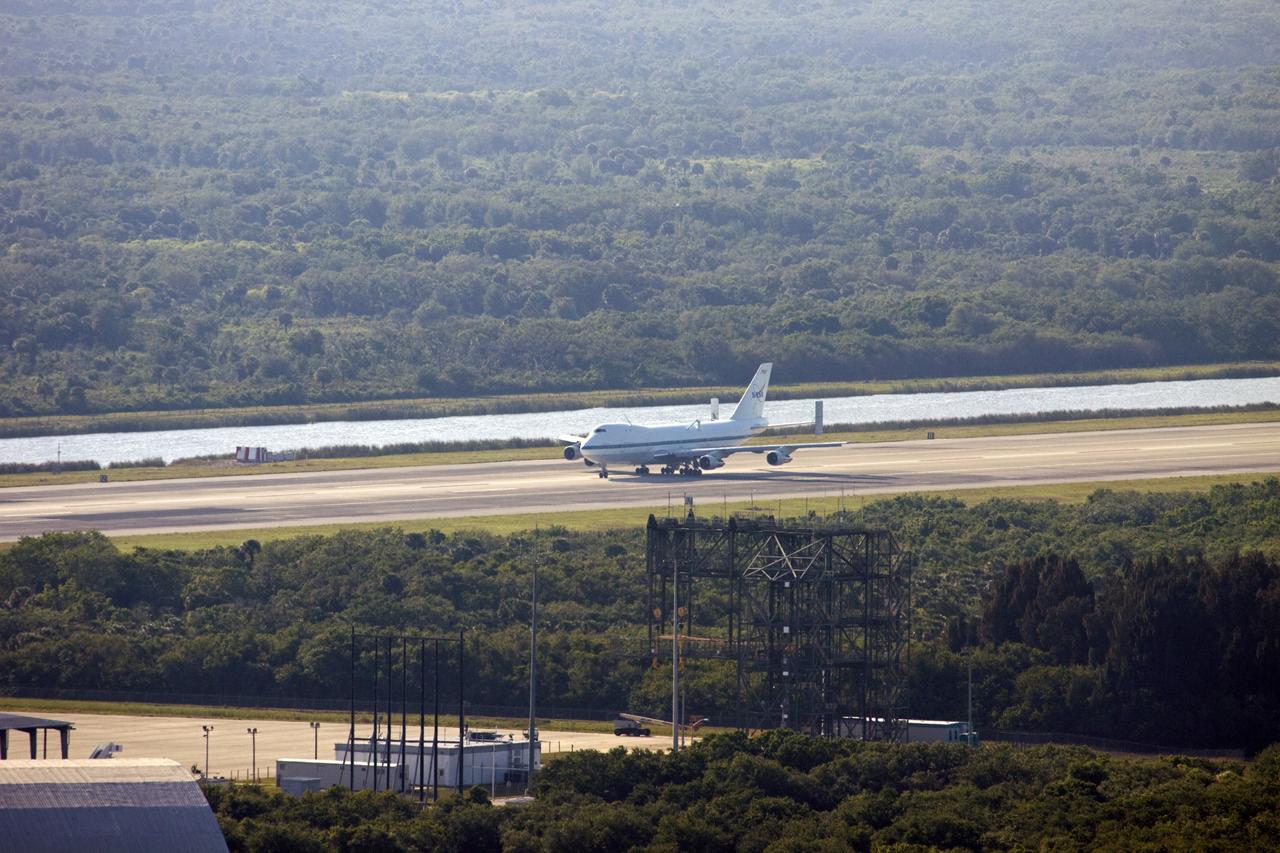
CAPE CANAVERAL, Fla. – The Shuttle Carrier Aircraft coasts down the runway at the Shuttle Landing Facility at NASA’s Kennedy Space Center in Florida. The aircraft, known as an SCA, arrived at 5:35 p.m. EDT to prepare for shuttle Discovery’s ferry flight to the Washington Dulles International Airport in Sterling, Va., on April 17. This SCA, designated NASA 905, is a modified Boeing 747 jet airliner, originally manufactured for commercial use. One of two SCAs employed over the course of the Space Shuttle Program, NASA 905 is assigned to the remaining ferry missions, delivering the shuttles to their permanent public display sites. NASA 911 was decommissioned at the NASA Dryden Flight Research Center in California in February. Discovery will be placed on permanent public display in the Smithsonian's National Air and Space Museum Steven F. Udvar-Hazy Center in Chantilly, Va. For more information on the SCA, visit http://www.nasa.gov/centers/dryden/news/FactSheets/FS-013-DFRC.html. For more information on shuttle transition and retirement activities, visit http://www.nasa.gov/shuttle. Photo credit: NASA/Jim Grossmann
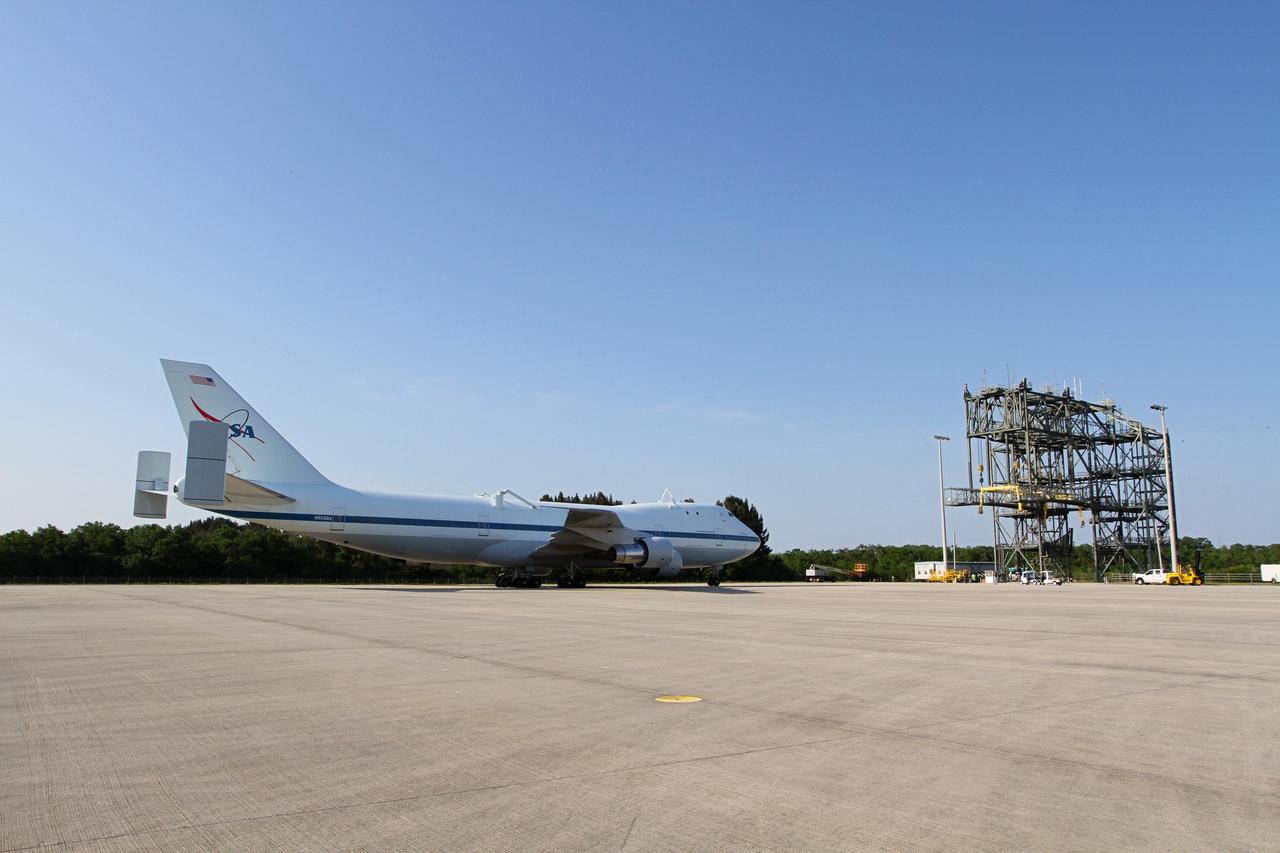
CAPE CANAVERAL, Fla. – The Shuttle Carrier Aircraft approaches the mate/demate device at the Shuttle Landing Facility at NASA’s Kennedy Space Center in Florida. The aircraft, known as an SCA, arrived at 5:35 p.m. EDT to prepare for shuttle Discovery’s ferry flight to the Washington Dulles International Airport in Sterling, Va., on April 17. This SCA, designated NASA 905, is a modified Boeing 747 jet airliner, originally manufactured for commercial use. One of two SCAs employed over the course of the Space Shuttle Program, NASA 905 is assigned to the remaining ferry missions, delivering the shuttles to their permanent public display sites. NASA 911 was decommissioned at the NASA Dryden Flight Research Center in California in February. Discovery will be placed on permanent public display in the Smithsonian's National Air and Space Museum Steven F. Udvar-Hazy Center in Chantilly, Va. For more information on the SCA, visit http://www.nasa.gov/centers/dryden/news/FactSheets/FS-013-DFRC.html. For more information on shuttle transition and retirement activities, visit http://www.nasa.gov/shuttle. Photo credit: NASA/Kim Shiflett
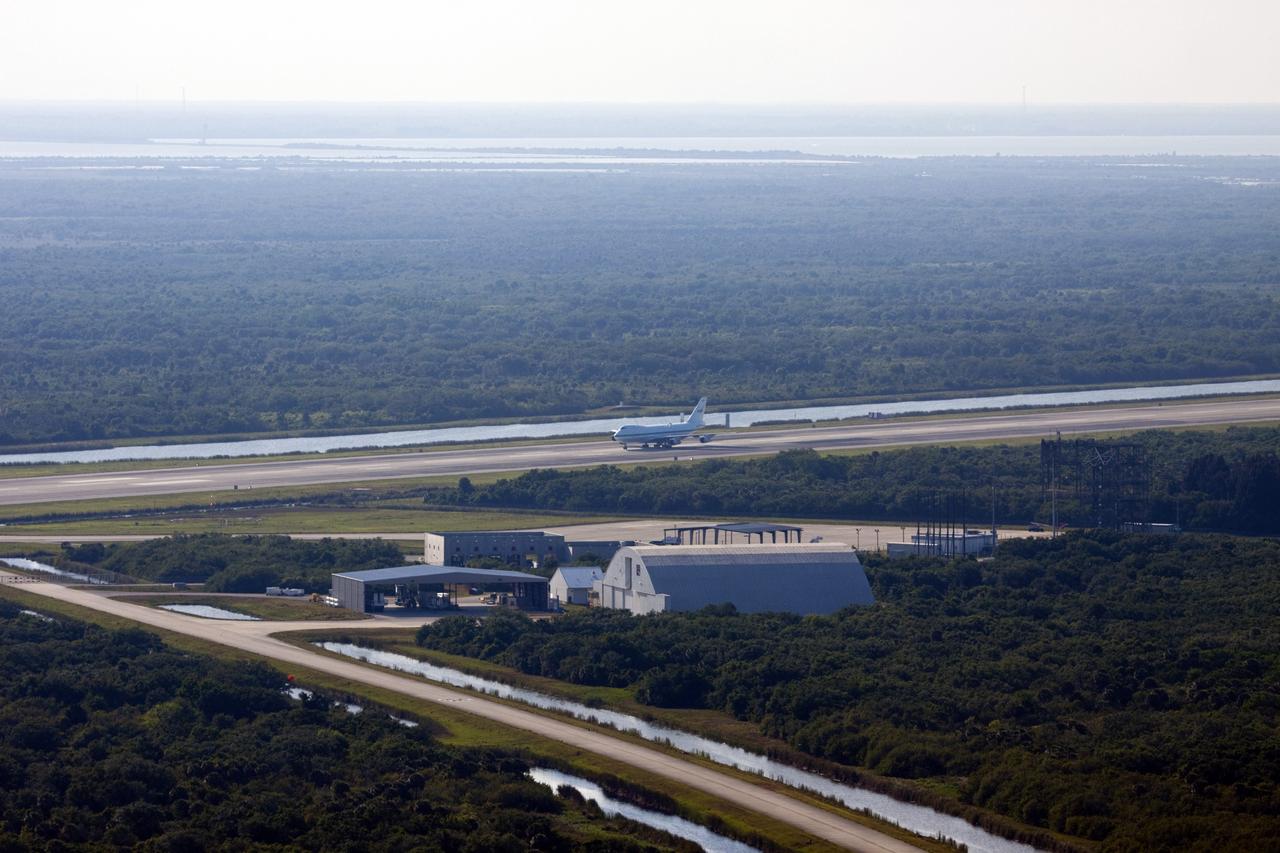
CAPE CANAVERAL, Fla. – NASA pilot Jeff Moultrie guides the Shuttle Carrier Aircraft along the runway at the Shuttle Landing Facility at NASA’s Kennedy Space Center in Florida. The aircraft, known as an SCA, arrived at 5:35 p.m. EDT to prepare for shuttle Discovery’s ferry flight to the Washington Dulles International Airport in Sterling, Va., on April 17. This SCA, designated NASA 905, is a modified Boeing 747 jet airliner, originally manufactured for commercial use. One of two SCAs employed over the course of the Space Shuttle Program, NASA 905 is assigned to the remaining ferry missions, delivering the shuttles to their permanent public display sites. NASA 911 was decommissioned at the NASA Dryden Flight Research Center in California in February. Discovery will be placed on permanent public display in the Smithsonian's National Air and Space Museum Steven F. Udvar-Hazy Center in Chantilly, Va. For more information on the SCA, visit http://www.nasa.gov/centers/dryden/news/FactSheets/FS-013-DFRC.html. For more information on shuttle transition and retirement activities, visit http://www.nasa.gov/shuttle. Photo credit: NASA/Jim Grossmann
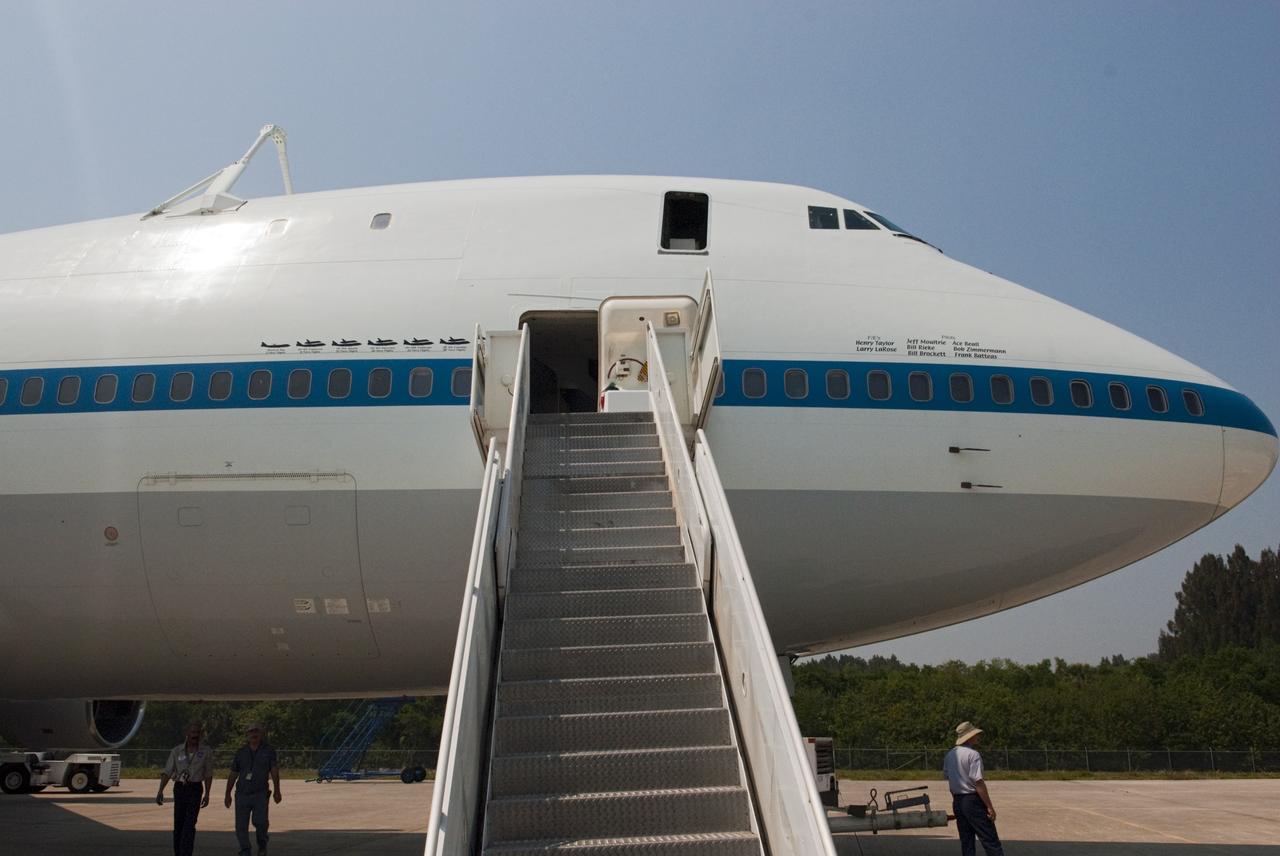
CAPE CANAVERAL, Fla. – Painted graphics line the side of NASA 905 depicting the various ferry flights the Shuttle Carrier Aircraft has supported during the Space Shuttle Program. The names of the pilots and flight engineers who have flown the aircraft also are listed. The aircraft, known as an SCA, is at Kennedy to prepare for shuttle Discovery’s ferry flight to the Washington Dulles International Airport in Sterling, Va., on April 17. The SCA is a modified Boeing 747 jet airliner, originally manufactured for commercial use. One of two SCAs employed over the course of the Space Shuttle Program, NASA 905 is assigned to the remaining ferry missions, delivering the shuttles to their permanent public display sites. NASA 911 was decommissioned at the NASA Dryden Flight Research Center in California in February. Discovery will be placed on permanent public display in the Smithsonian's National Air and Space Museum Steven F. Udvar-Hazy Center in Chantilly, Va. For more information on the SCA, visit http://www.nasa.gov/centers/dryden/news/FactSheets/FS-013-DFRC.html. For more information on shuttle transition and retirement activities, visit http://www.nasa.gov/shuttle. Photo credit: NASA/Ben Smegelsky
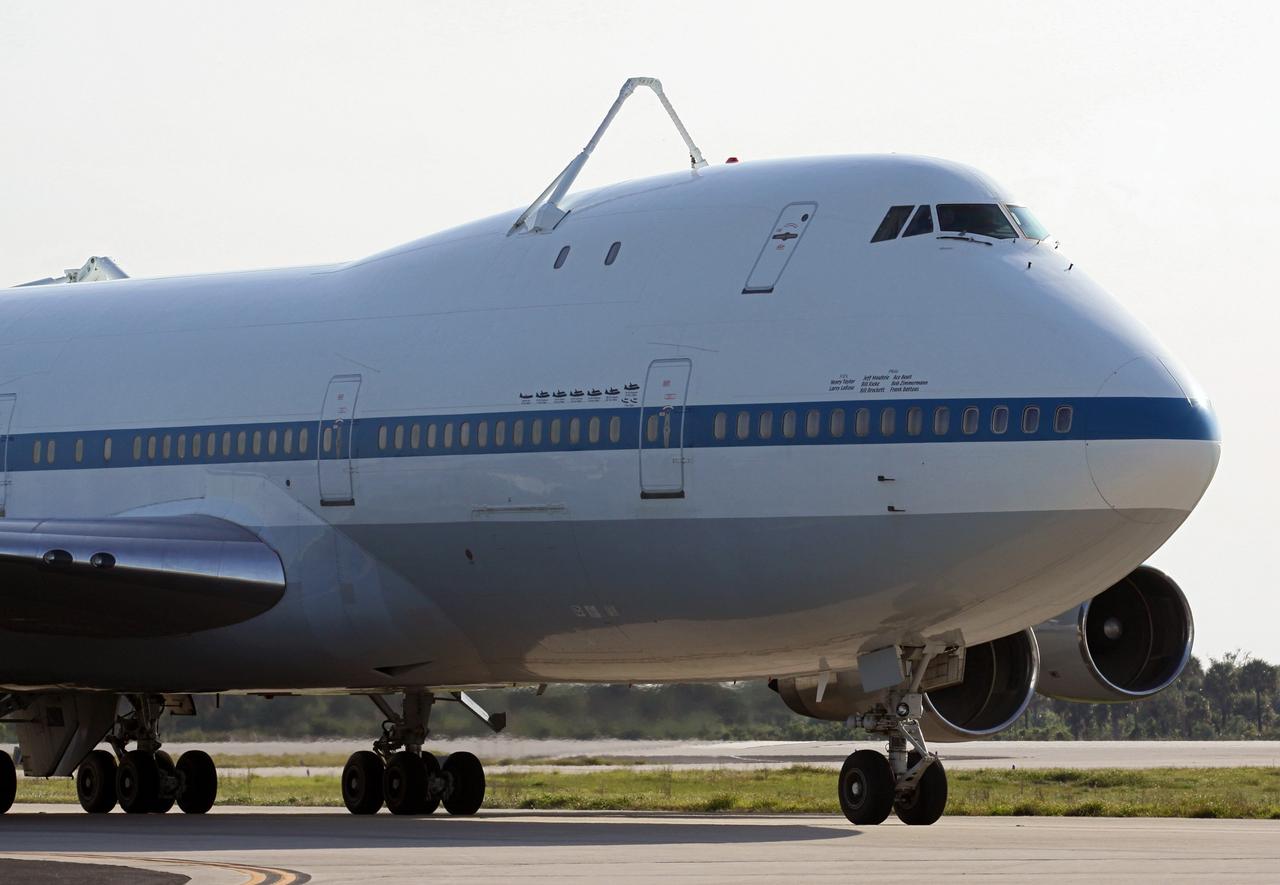
CAPE CANAVERAL, Fla. – NASA pilot Jeff Moultrie guides the Shuttle Carrier Aircraft along the apron of the runway at the Shuttle Landing Facility at NASA’s Kennedy Space Center in Florida. The aircraft, known as an SCA, arrived at 5:35 p.m. EDT to prepare for shuttle Discovery’s ferry flight to the Washington Dulles International Airport in Sterling, Va., on April 17. This SCA, designated NASA 905, is a modified Boeing 747 jet airliner, originally manufactured for commercial use. One of two SCAs employed over the course of the Space Shuttle Program, NASA 905 is assigned to the remaining ferry missions, delivering the shuttles to their permanent public display sites. NASA 911 was decommissioned at the NASA Dryden Flight Research Center in California in February. Discovery will be placed on permanent public display in the Smithsonian's National Air and Space Museum Steven F. Udvar-Hazy Center in Chantilly, Va. For more information on the SCA, visit http://www.nasa.gov/centers/dryden/news/FactSheets/FS-013-DFRC.html. For more information on shuttle transition and retirement activities, visit http://www.nasa.gov/shuttle. Photo credit: NASA/Kim Shiflett
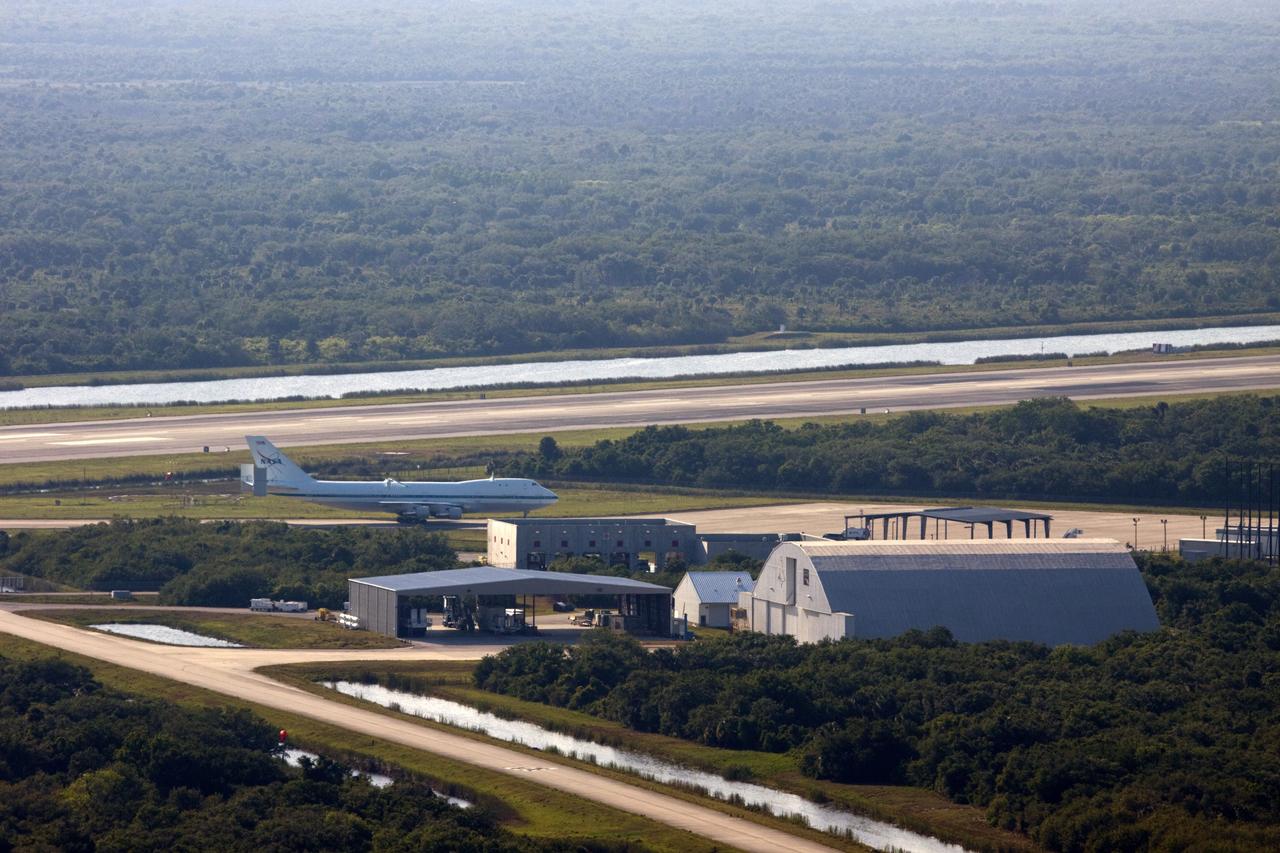
CAPE CANAVERAL, Fla. – The Shuttle Carrier Aircraft glides onto the apron of the runway at the Shuttle Landing Facility at NASA’s Kennedy Space Center in Florida. The aircraft, known as an SCA, arrived at 5:35 p.m. EDT to prepare for shuttle Discovery’s ferry flight to the Washington Dulles International Airport in Sterling, Va., on April 17. This SCA, designated NASA 905, is a modified Boeing 747 jet airliner, originally manufactured for commercial use. One of two SCAs employed over the course of the Space Shuttle Program, NASA 905 is assigned to the remaining ferry missions, delivering the shuttles to their permanent public display sites. NASA 911 was decommissioned at the NASA Dryden Flight Research Center in California in February. Discovery will be placed on permanent public display in the Smithsonian's National Air and Space Museum Steven F. Udvar-Hazy Center in Chantilly, Va. For more information on the SCA, visit http://www.nasa.gov/centers/dryden/news/FactSheets/FS-013-DFRC.html. For more information on shuttle transition and retirement activities, visit http://www.nasa.gov/shuttle. Photo credit: NASA/Jim Grossmann
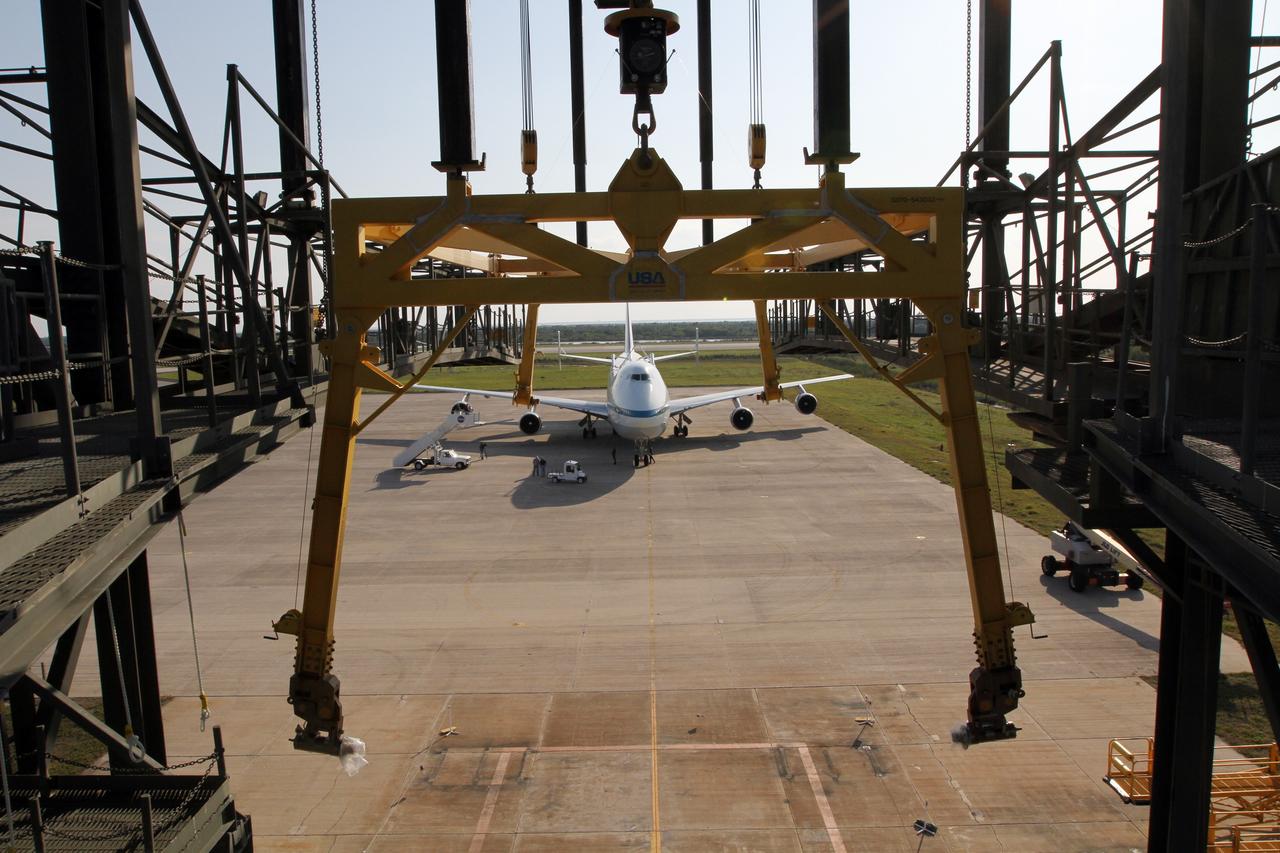
CAPE CANAVERAL, Fla. – The newly arrived Shuttle Carrier Aircraft is framed by a grappling fixture on the mate-demate device at the Shuttle Landing Facility at NASA’s Kennedy Space Center in Florida. The aircraft, known as an SCA, arrived at 5:35 p.m. EDT to prepare for shuttle Discovery’s ferry flight to the Washington Dulles International Airport in Sterling, Va., on April 17. This SCA, designated NASA 905, is a modified Boeing 747 jet airliner, originally manufactured for commercial use. One of two SCAs employed over the course of the Space Shuttle Program, NASA 905 is assigned to the remaining ferry missions, delivering the shuttles to their permanent public display sites. NASA 911 was decommissioned at the NASA Dryden Flight Research Center in California in February. Discovery will be placed on permanent public display in the Smithsonian's National Air and Space Museum Steven F. Udvar-Hazy Center in Chantilly, Va. For more information on the SCA, visit http://www.nasa.gov/centers/dryden/news/FactSheets/FS-013-DFRC.html. For more information on shuttle transition and retirement activities, visit http://www.nasa.gov/shuttle. Photo credit: NASA/Kim Shiflett
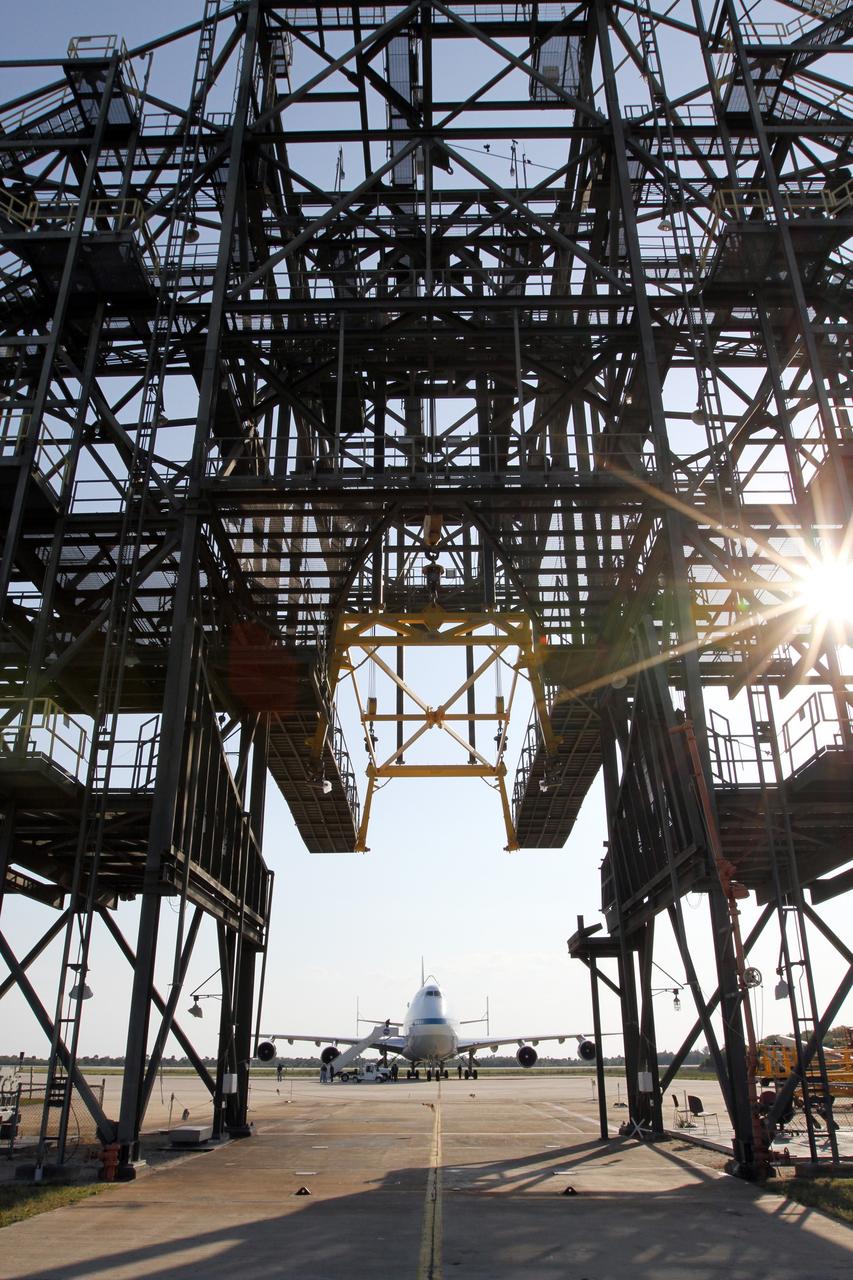
CAPE CANAVERAL, Fla. – The newly arrived Shuttle Carrier Aircraft is seen through the platforms of the mate-demate device at the Shuttle Landing Facility at NASA’s Kennedy Space Center in Florida. The aircraft, known as an SCA, arrived at 5:35 p.m. EDT to prepare for shuttle Discovery’s ferry flight to the Washington Dulles International Airport in Sterling, Va., on April 17. This SCA, designated NASA 905, is a modified Boeing 747 jet airliner, originally manufactured for commercial use. One of two SCAs employed over the course of the Space Shuttle Program, NASA 905 is assigned to the remaining ferry missions, delivering the shuttles to their permanent public display sites. NASA 911 was decommissioned at the NASA Dryden Flight Research Center in California in February. Discovery will be placed on permanent public display in the Smithsonian's National Air and Space Museum Steven F. Udvar-Hazy Center in Chantilly, Va. For more information on the SCA, visit http://www.nasa.gov/centers/dryden/news/FactSheets/FS-013-DFRC.html. For more information on shuttle transition and retirement activities, visit http://www.nasa.gov/shuttle. Photo credit: NASA/Kim Shiflett
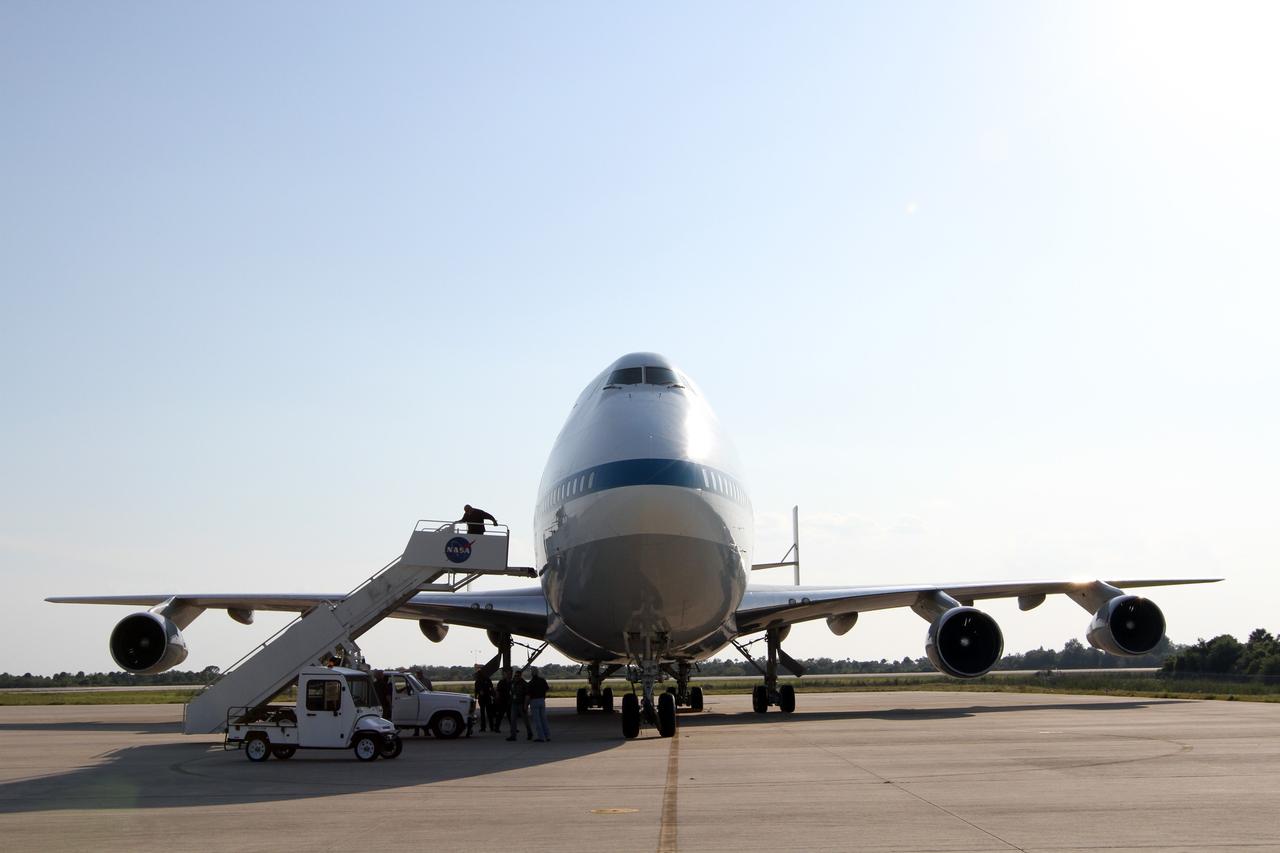
CAPE CANAVERAL, Fla. – Preparations are under way at the Shuttle Landing Facility at NASA’s Kennedy Space Center in Florida for the pilots of the newly arrived Shuttle Carrier Aircraft to disembark. The aircraft, known as an SCA, arrived at 5:35 p.m. EDT to prepare for shuttle Discovery’s ferry flight to the Washington Dulles International Airport in Sterling, Va., on April 17. This SCA, designated NASA 905, is a modified Boeing 747 jet airliner, originally manufactured for commercial use. One of two SCAs employed over the course of the Space Shuttle Program, NASA 905 is assigned to the remaining ferry missions, delivering the shuttles to their permanent public display sites. NASA 911 was decommissioned at the NASA Dryden Flight Research Center in California in February. Discovery will be placed on permanent public display in the Smithsonian's National Air and Space Museum Steven F. Udvar-Hazy Center in Chantilly, Va. For more information on the SCA, visit http://www.nasa.gov/centers/dryden/news/FactSheets/FS-013-DFRC.html. For more information on shuttle transition and retirement activities, visit http://www.nasa.gov/shuttle. Photo credit: NASA/Kim Shiflett
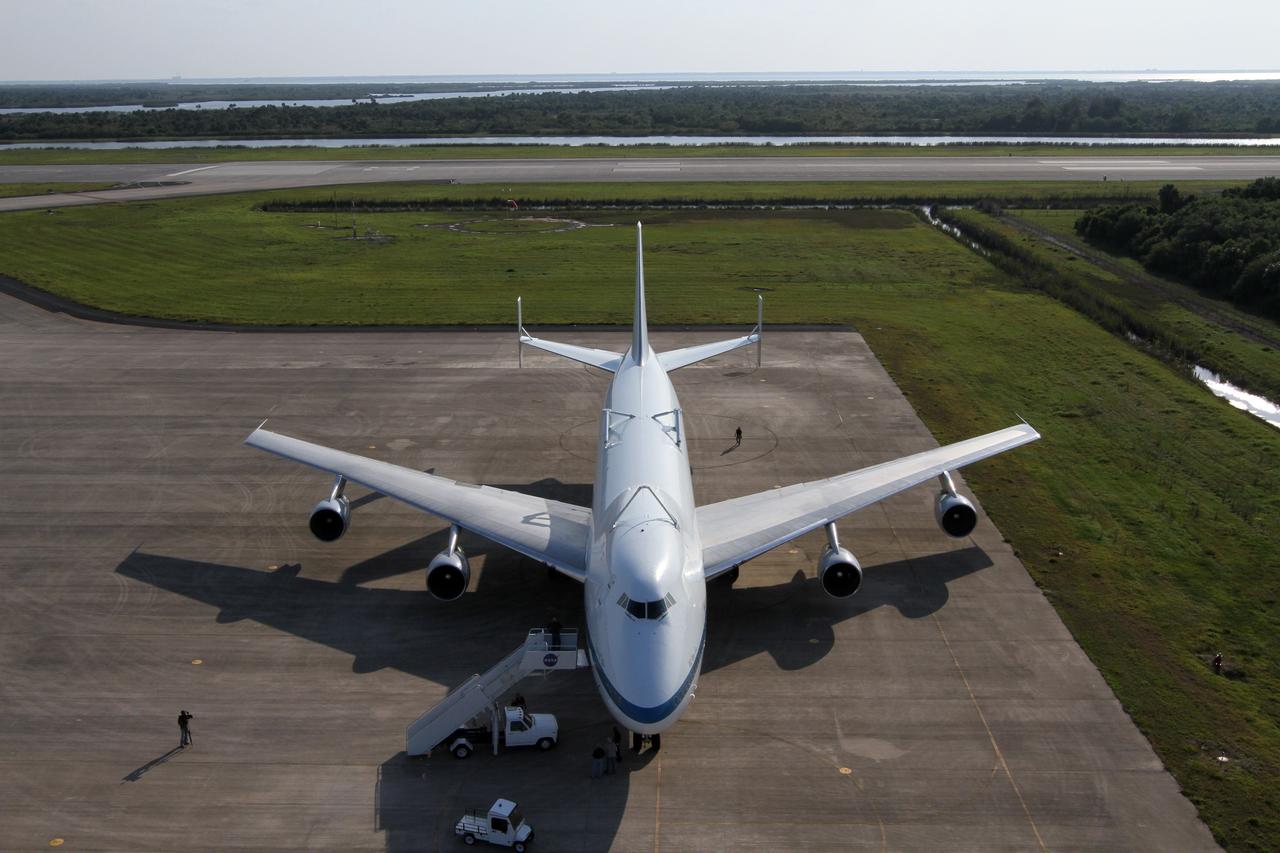
CAPE CANAVERAL, Fla. – This overhead view shows Shuttle Carrier Aircraft parked on the apron of the runway at the Shuttle Landing Facility at NASA’s Kennedy Space Center in Florida. The aircraft, known as an SCA, arrived at 5:35 p.m. EDT to prepare for shuttle Discovery’s ferry flight to the Washington Dulles International Airport in Sterling, Va., on April 17. This SCA, designated NASA 905, is a modified Boeing 747 jet airliner, originally manufactured for commercial use. One of two SCAs employed over the course of the Space Shuttle Program, NASA 905 is assigned to the remaining ferry missions, delivering the shuttles to their permanent public display sites. NASA 911 was decommissioned at the NASA Dryden Flight Research Center in California in February. Discovery will be placed on permanent public display in the Smithsonian's National Air and Space Museum Steven F. Udvar-Hazy Center in Chantilly, Va. For more information on the SCA, visit http://www.nasa.gov/centers/dryden/news/FactSheets/FS-013-DFRC.html. For more information on shuttle transition and retirement activities, visit http://www.nasa.gov/shuttle. Photo credit: NASA/Kim Shiflett
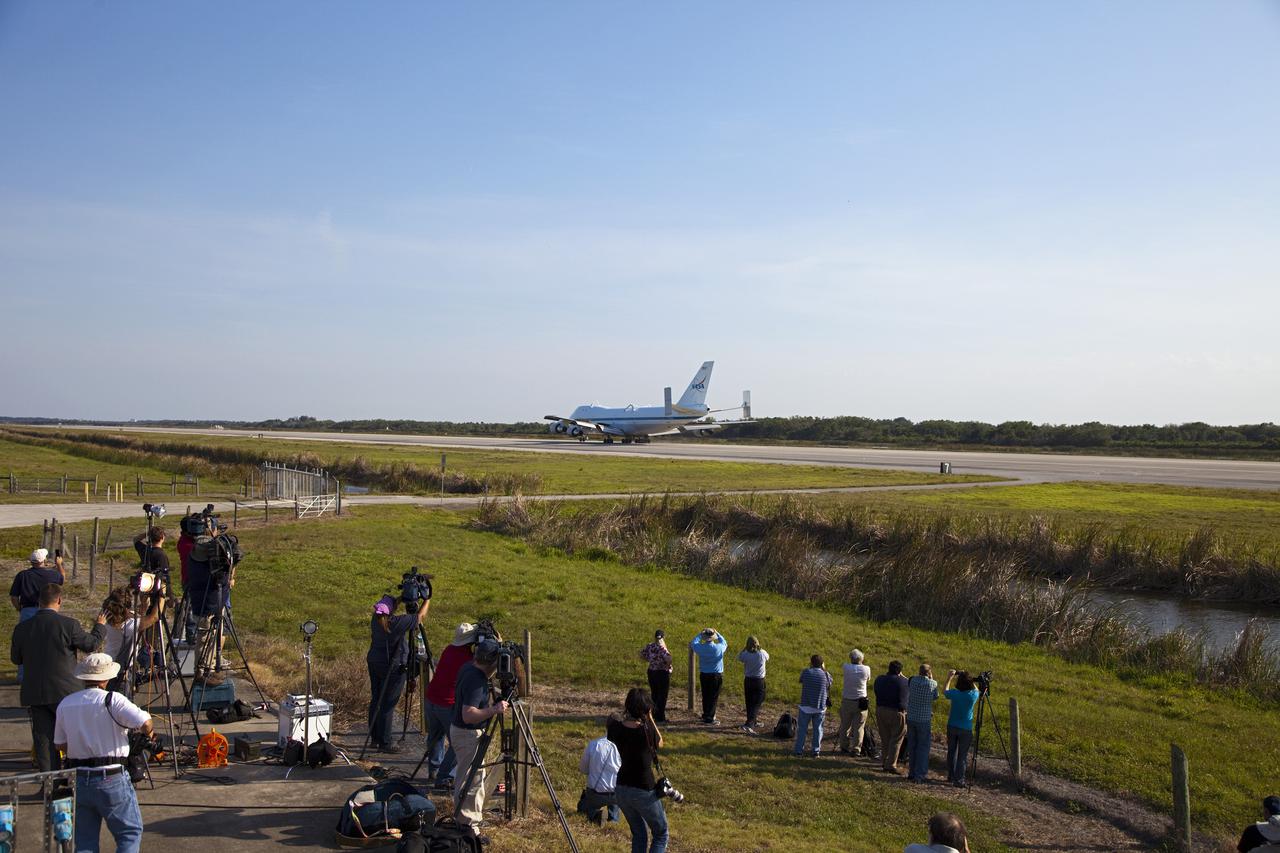
CAPE CANAVERAL, Fla. – Media representatives are on hand at the Shuttle Landing Facility at NASA’s Kennedy Space Center in Florida for the arrival of the Shuttle Carrier Aircraft. The aircraft, known as an SCA, arrived at 5:35 p.m. EDT to prepare for shuttle Discovery’s ferry flight to the Washington Dulles International Airport in Sterling, Va., on April 17. This SCA, designated NASA 905, is a modified Boeing 747 jet airliner, originally manufactured for commercial use. One of two SCAs employed over the course of the Space Shuttle Program, NASA 905 is assigned to the remaining ferry missions, delivering the shuttles to their permanent public display sites. NASA 911 was decommissioned at the NASA Dryden Flight Research Center in California in February. Discovery will be placed on permanent public display in the Smithsonian's National Air and Space Museum Steven F. Udvar-Hazy Center in Chantilly, Va. For more information on the SCA, visit http:__www.nasa.gov_centers_dryden_news_FactSheets_FS-013-DFRC.html. For more information on shuttle transition and retirement activities, visit http:__www.nasa.gov_shuttle. Photo credit: NASA_Frankie Martin