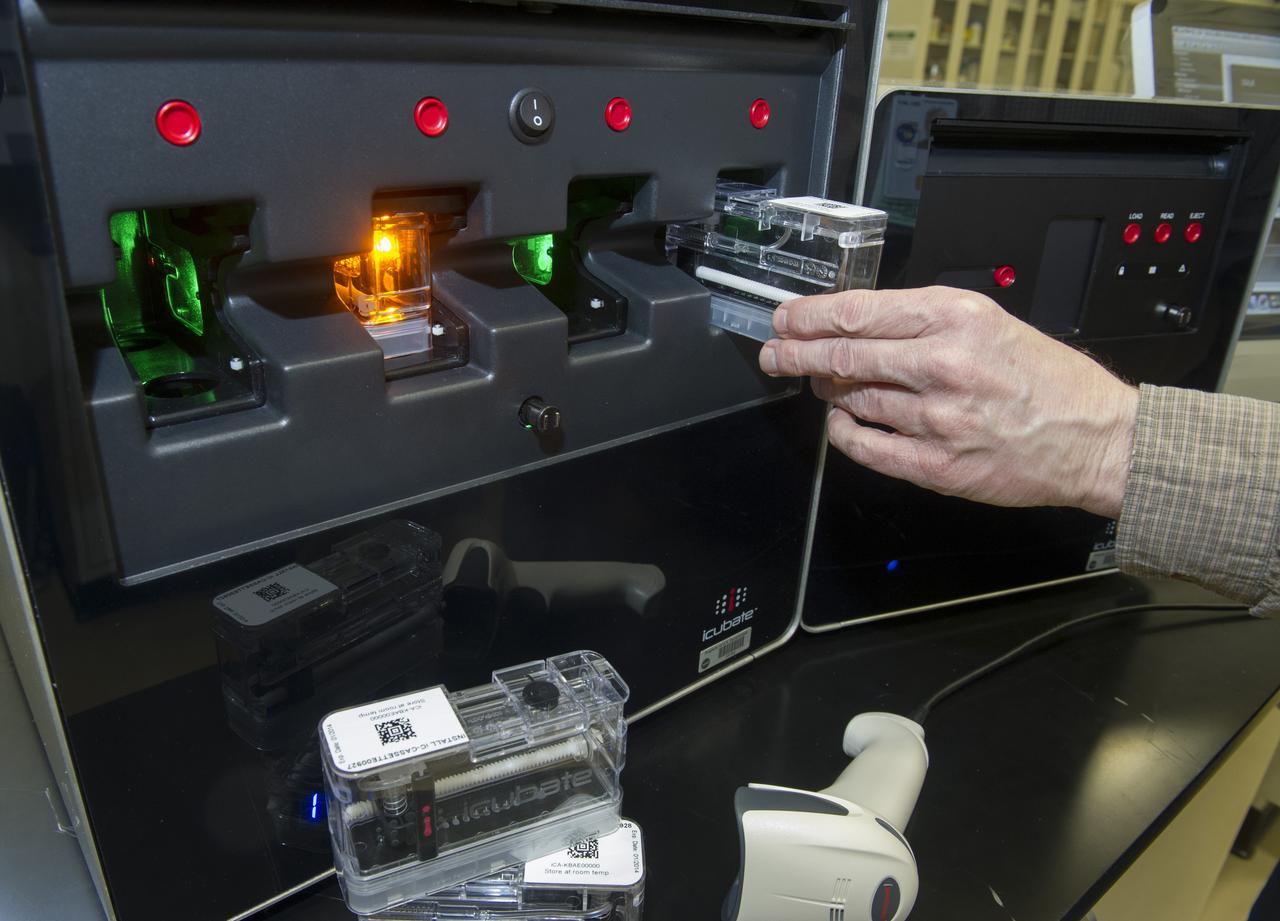
ICUBATE PROCESSOR WITH CASSETTE, SCANNER, AND READER
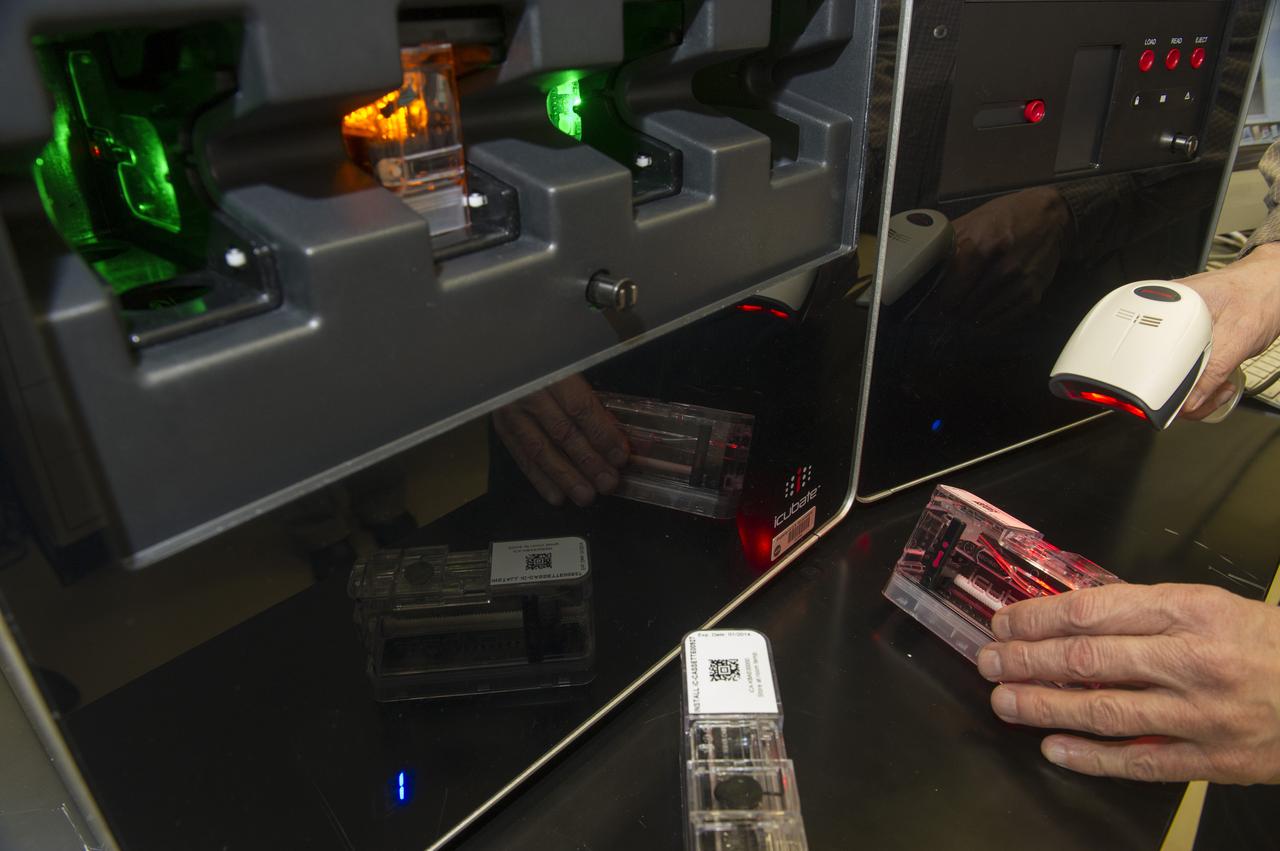
ICUBATE PROCESSOR WITH CASSETTE, SCANNER, AND READER
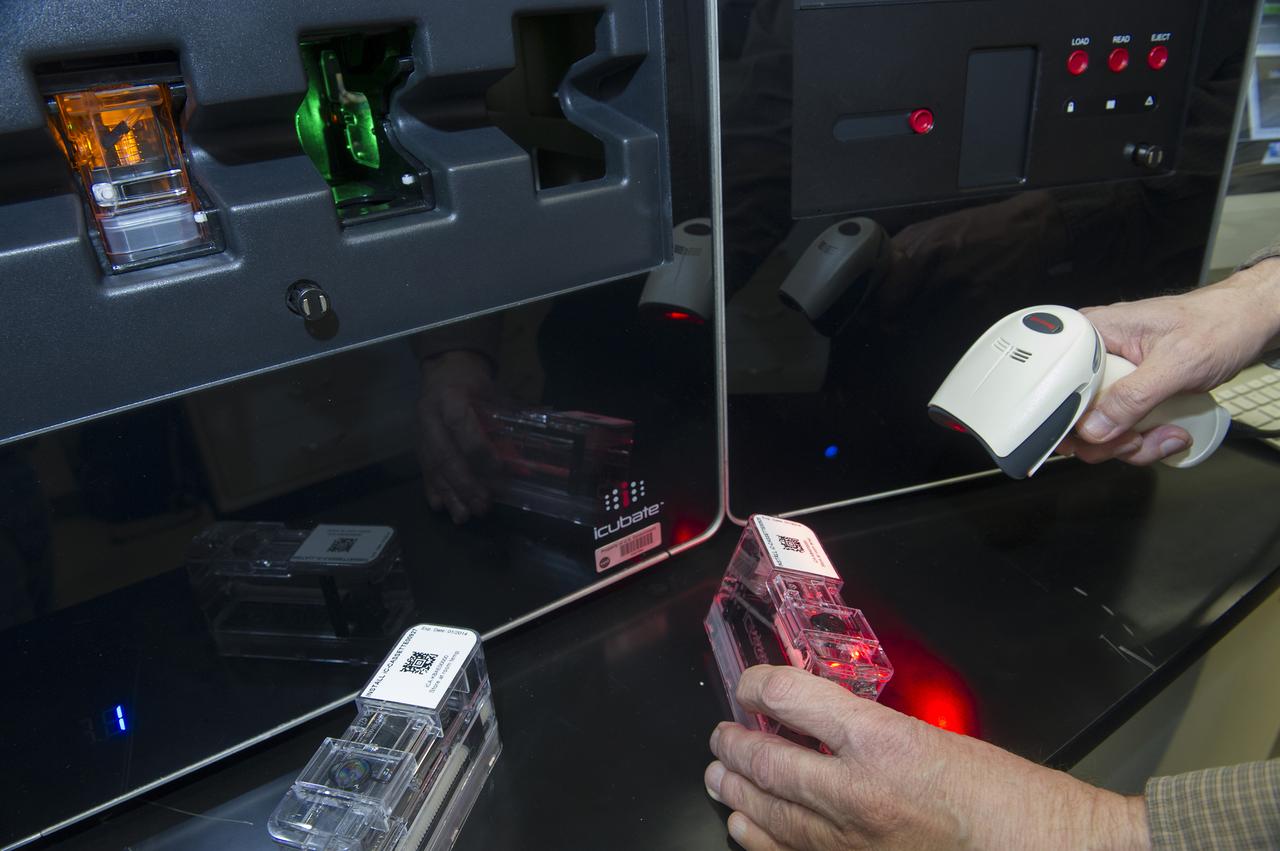
ICUBATE PROCESSOR WITH CASSETTE, SCANNER, AND READER
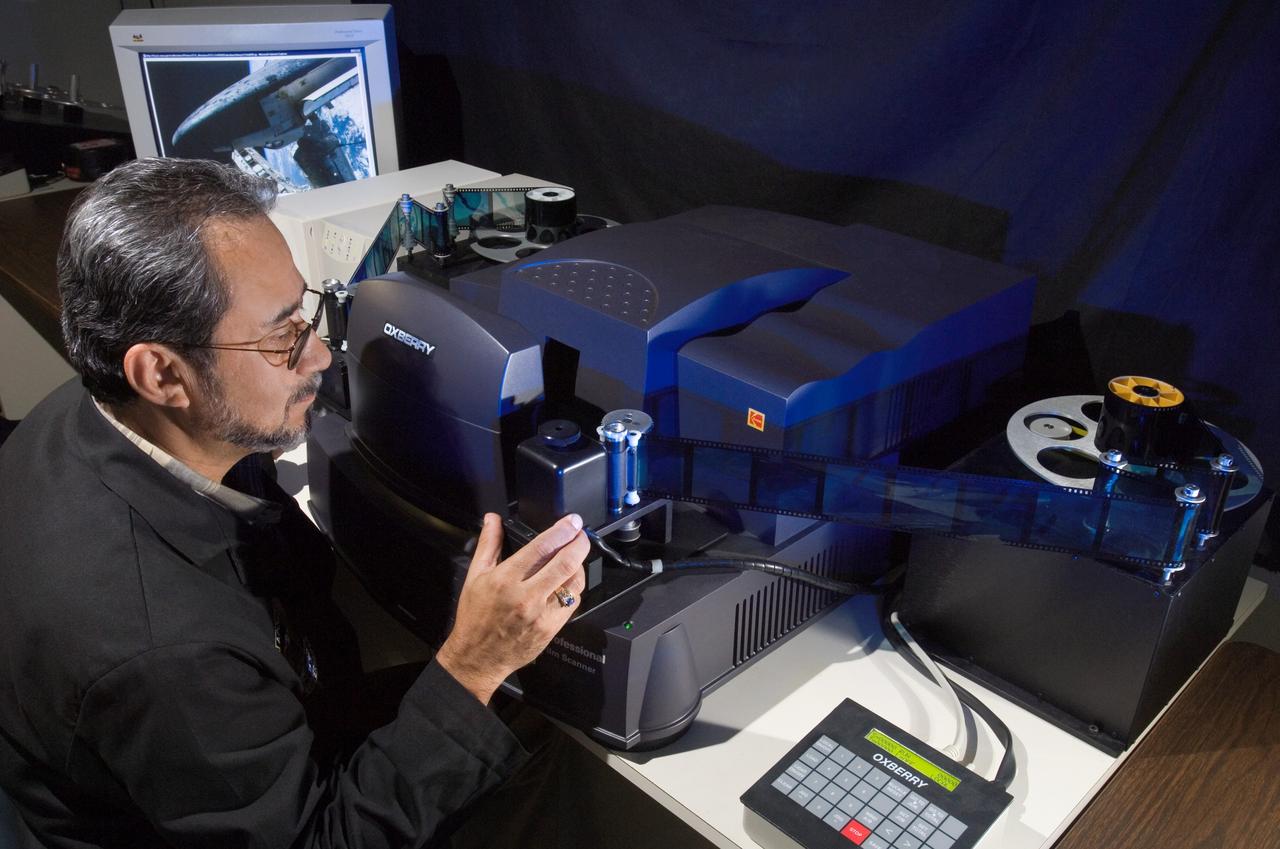
Juan Zamora in building 8 photo lab works with the Kodak 500 HR Film Scanner.
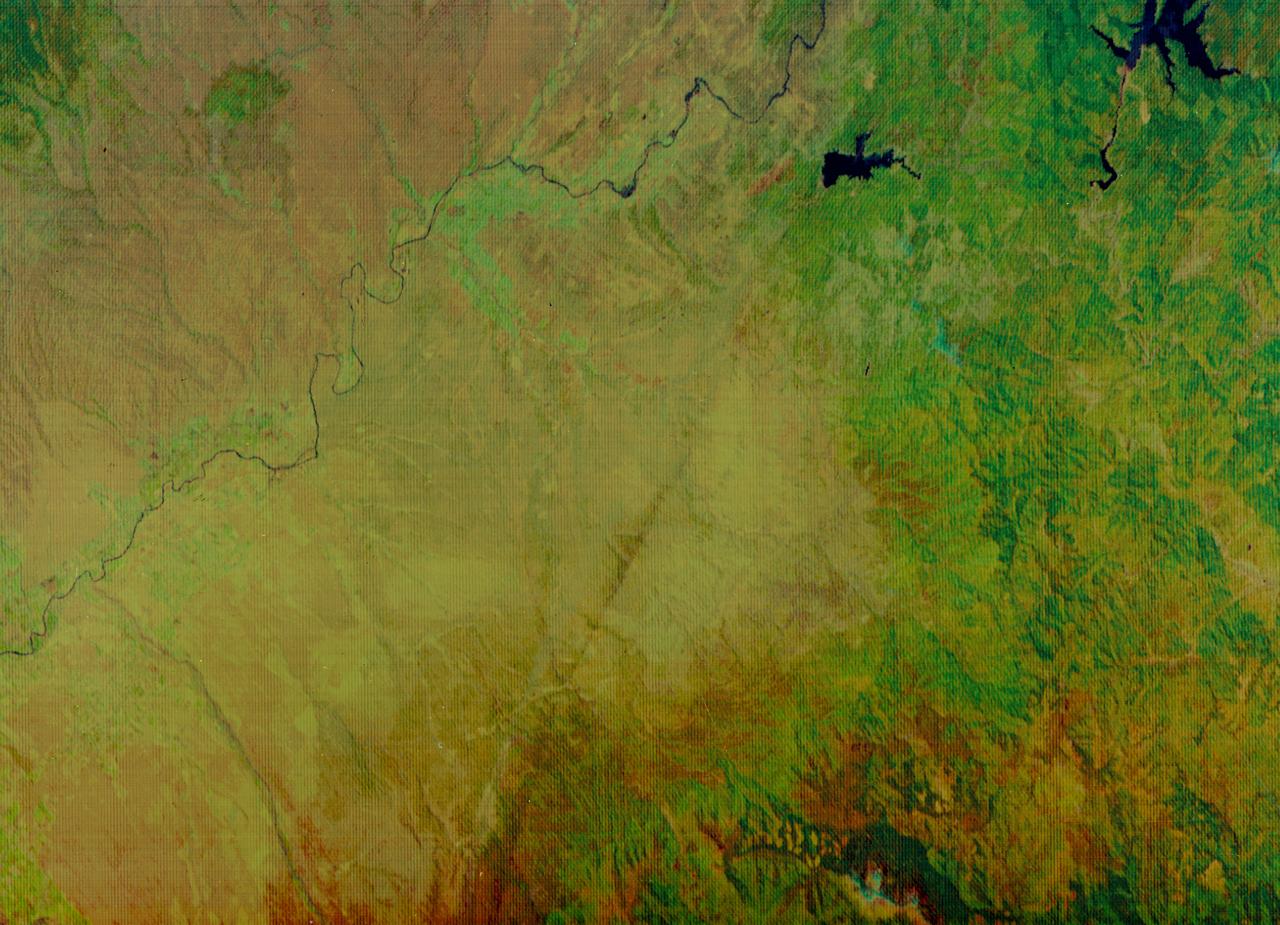
S73-34295B (June 1973) --- A vertical view of a portion of northern California reproduced from data taken from the Skylab Multispectral Scanner, experiment S192, in the Skylab space station in Earth orbit. This view is the most westerly one-third of Frame No. 001, Roll No. 518, S192, Skylab 2. Frame No. 001 extends from the Pacific coast at the Eureka area southeasterly 175 nautical miles to the Feather River drainage basin. Included in this view are Lake Shasta, Sacramento River Valley, Redding and Red Bluff. This non-photographic image is a color composite of channels 2 (visible), 7, and 12 (infrared) from the Earth Resources Experiments Package (EREP) S192 scanner. The scanner techniques assist with spectral signature identification and mapping of ground truth targets in agriculture, forestry, geology, hydrology and oceanography. Photo credit: NASA
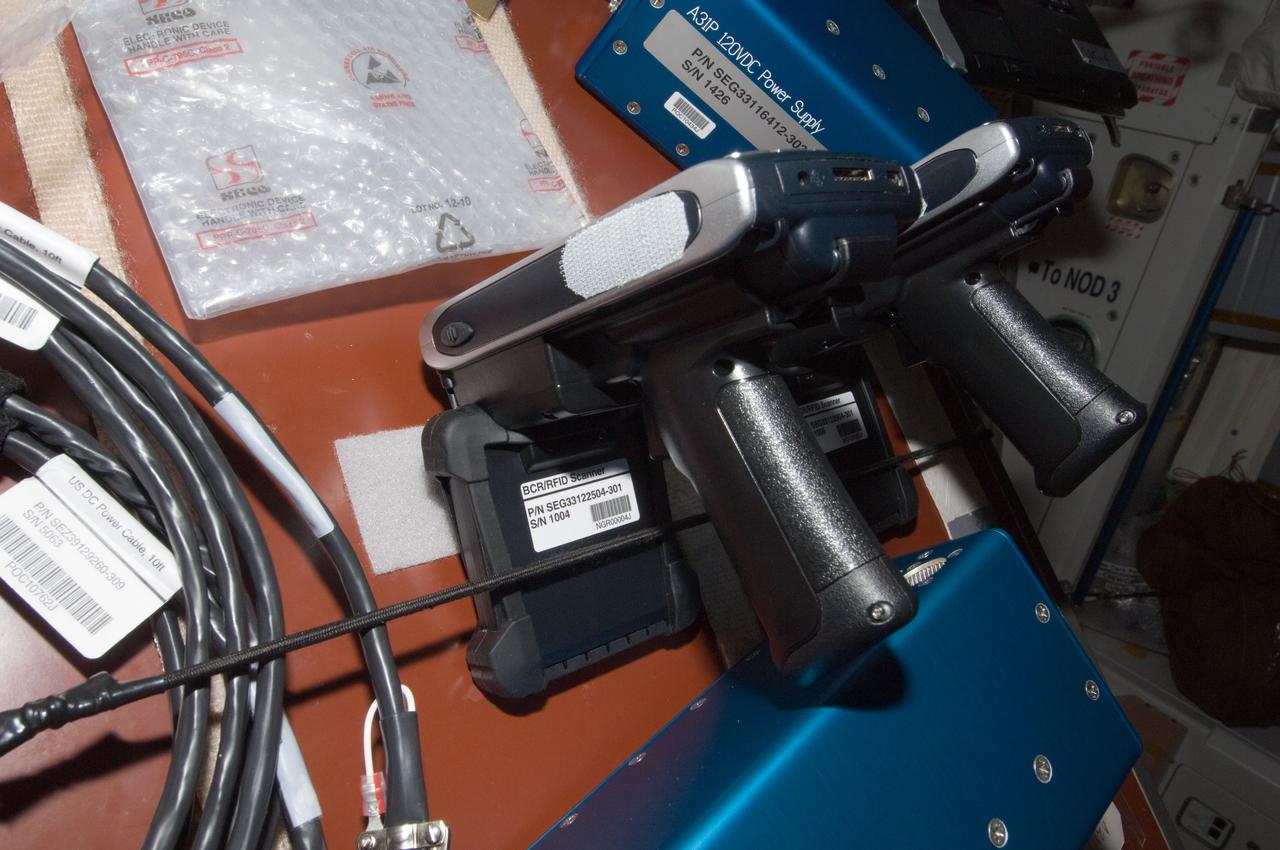
iss028e025734 (8/15/2011) --- Photo documentation of the BCR/RFID Scanner taken aboard the International Space Station(ISS). The RFID-Enabled Autonomous Logistics Management (REALM) (RFID Logistics Awareness) investigation tests a radio-based inventory control system to keep track of everything inside the football-field-sized ISS. Some aspects of the technology are commonly used on Earth, but other aspects are experimental in nature.
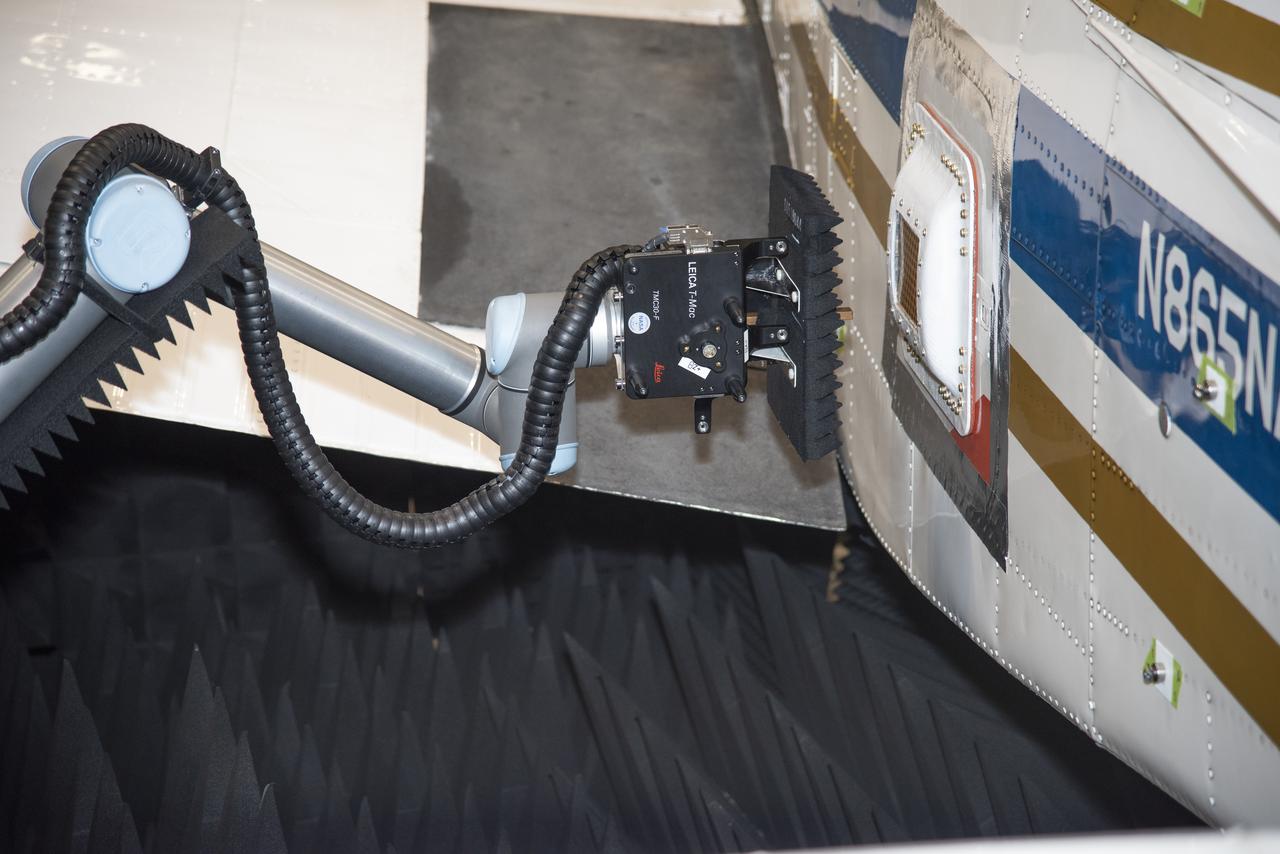
Tests were conducted with a robotic antenna scanner at NASA's Armstrong Flight Research Center in California. The scanner was used to test the in-situ radiation pattern of the conformal antenna to verify its performance parameters before being tested on an aircraft.
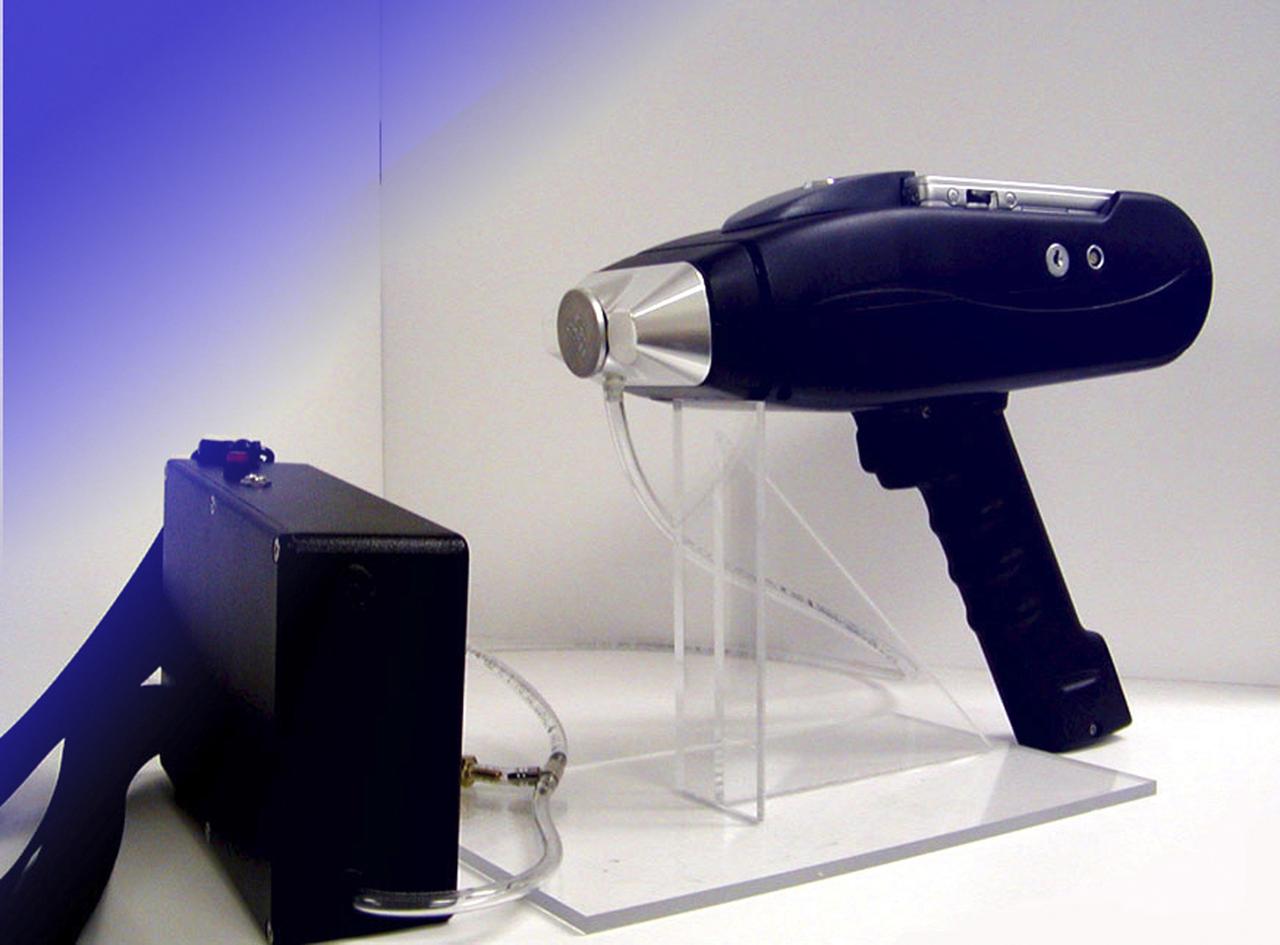
Marshall Space Flight Center engineers have teamed with KeyMaster Technologies, Kennewick, Washington, to develop a portable vacuum analyzer that performs on-the-spot chemical analyses under field conditions, a task previously only possible in a chemical laboratory. The new capability is important not only to the aerospace industry, but holds potential for broad applications in any industry that depends on materials analysis, such as the automotive and pharmaceutical industries. Weighing in at a mere 4 pounds, the newly developed handheld vacuum X-ray fluorescent analyzer can identify and characterize a wide range of elements, and is capable of detecting chemical elements with low atomic numbers, such as sodium, aluminum and silicon. It is the only handheld product on the market with that capability. Aluminum alloy verification is of particular interest to NASA because vast amounts of high-strength aluminum alloys are used in the Space Shuttle propulsion system such as the External Tank, Main Engine, and Solid Rocket Boosters. This capability promises to be a boom to the aerospace community because of unique requirements, for instance, the need to analyze Space Shuttle propulsion systems on the launch pad. Those systems provide the awe-inspiring rocket power that propels the Space Shuttle from Earth into orbit in mere minutes. The scanner development also marks a major improvement in the quality assurance field, because screws, nuts, bolts, fasteners, and other items can now be evaluated upon receipt and rejected if found to be substandard. The same holds true for aluminum weld rods. The ability to validate the integrity of raw materials and partially finished products before adding value to them in the manufacturing process will be of benefit not only to businesses, but also to the consumer, who will have access to a higher value product at a cheaper price. Three vacuum X-ray scanners are already being used in the Space Shuttle Program. The External Tank Project Office is using one for aluminum alloy analysis, while a Marshall contractor is evaluating alloys with another unit purchased for the Space Shuttle Main Engine Office. The Reusable Solid Rocket Motor Project Office has obtained a scanner that is being used to test hardware and analyze materials.
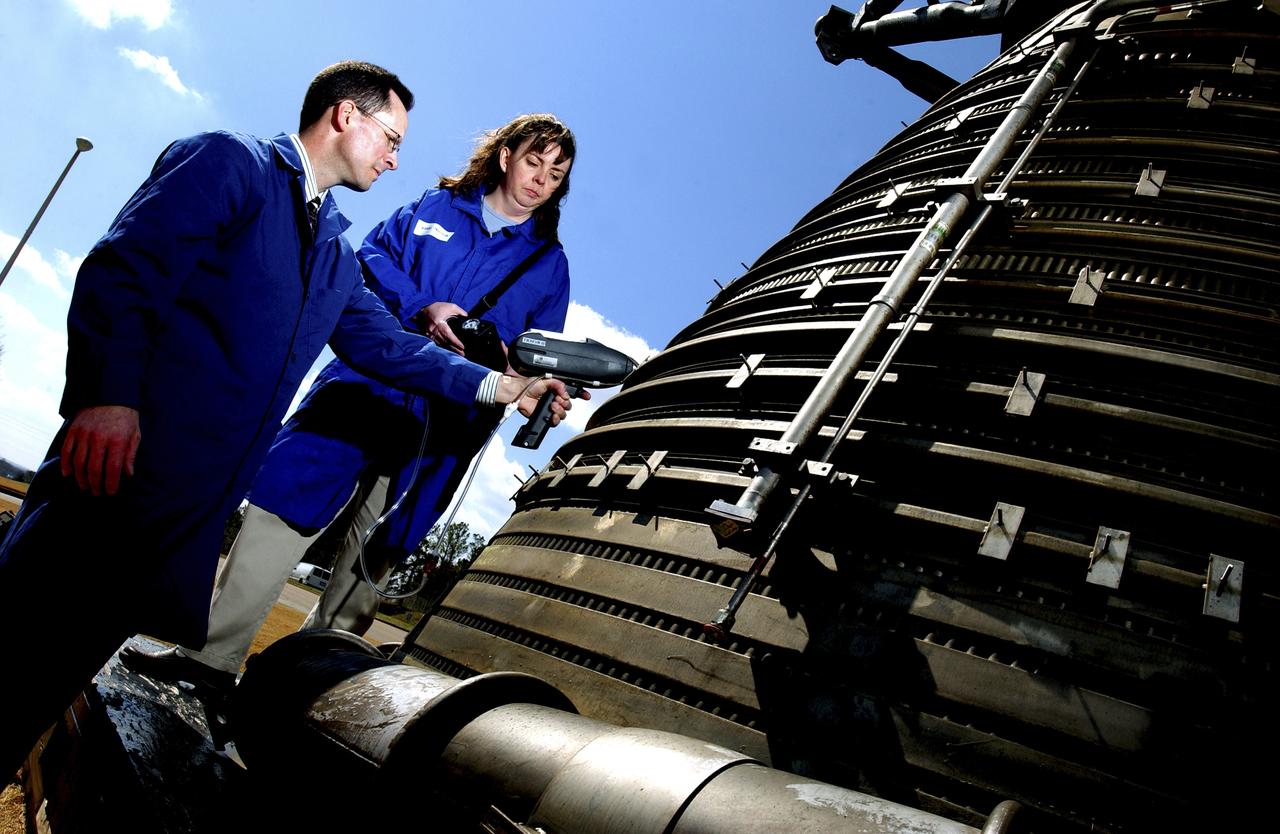
Teamed with KeyMaster Technologies, Kennewick, Washington, the Marshall Space Flight Center engineers have developed a portable vacuum analyzer that performs on-the-spot chemical analyses under field conditions— a task previously only possible in a chemical laboratory. The new capability is important not only to the aerospace industry, but holds potential for broad applications in any industry that depends on materials analysis, such as the automotive and pharmaceutical industries. Weighing in at a mere 4 pounds, the newly developed handheld vacuum X-ray fluorescent analyzer can identify and characterize a wide range of elements, and is capable of detecting chemical elements with low atomic numbers, such as sodium, aluminum and silicon. It is the only handheld product on the market with that capability. Aluminum alloy verification is of particular interest to NASA because vast amounts of high-strength aluminum alloys are used in the Space Shuttle propulsion system such as the External Tank, Main Engine, and Solid Rocket Boosters. This capability promises to be a boom to the aerospace community because of unique requirements, for instance, the need to analyze Space Shuttle propulsion systems on the launch pad. Those systems provide the awe-inspiring rocket power that propels the Space Shuttle from Earth into orbit in mere minutes. The scanner development also marks a major improvement in the quality assurance field, because screws, nuts, bolts, fasteners, and other items can now be evaluated upon receipt and rejected if found to be substandard. The same holds true for aluminum weld rods. The ability to validate the integrity of raw materials and partially finished products before adding value to them in the manufacturing process will be of benefit not only to businesses, but also to the consumer, who will have access to a higher value product at a cheaper price. Three vacuum X-ray scanners are already being used in the Space Shuttle Program. The External Tank Project Office is using one for aluminum alloy analysis, while a Marshall contractor is evaluating alloys with another unit purchased for the Space Shuttle Main Engine Office. The Reusable Solid Rocket Motor Project Office has obtained a scanner that is being used to test hardware and analyze materials. In this photograph, Richard Booth, Marshall Engineering Directorate, and Wanda Hudson, ATK Thiokol, use an enhanced vacuum X-ray fluorescent scanner to analyze materials in an F-1 engine, which was used to boost the Saturn V rocket from Earth’s orbit that carried astronauts to the moon in the 1960s.
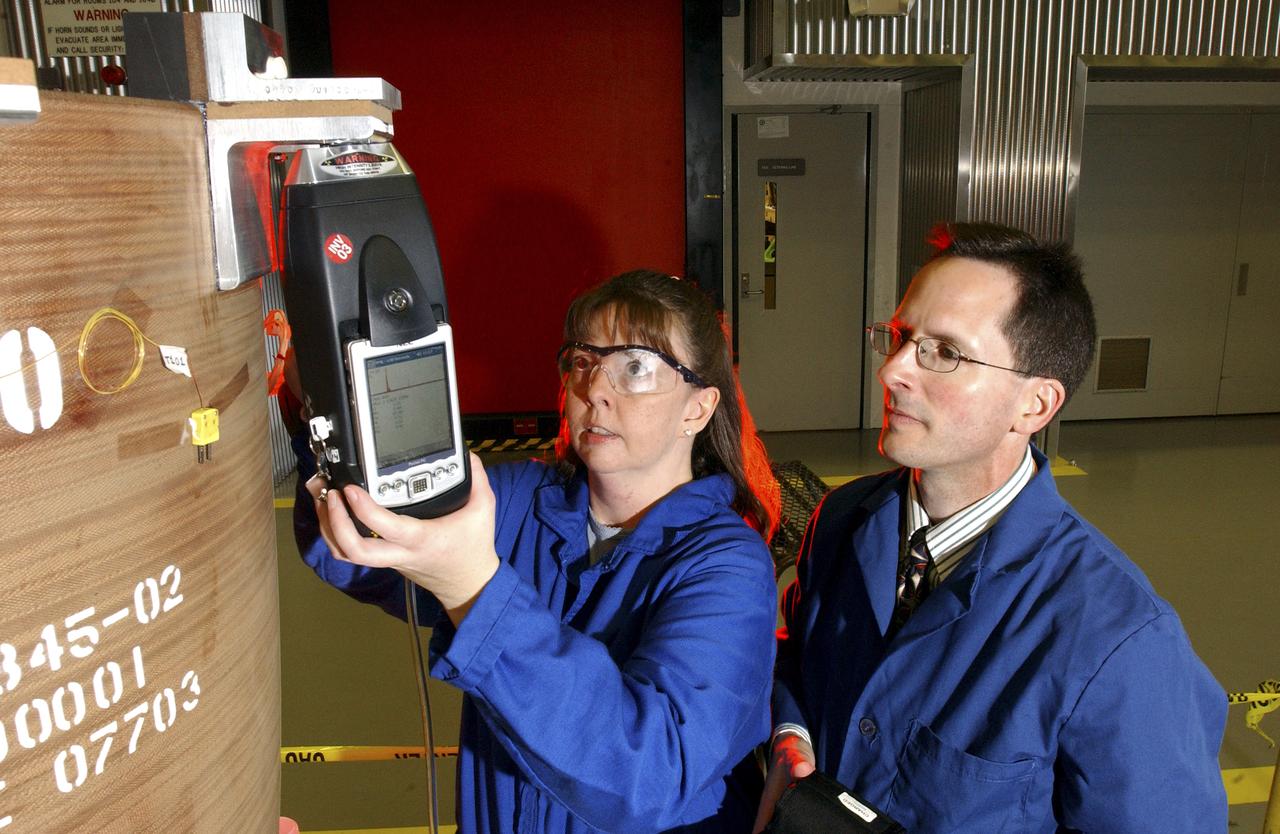
Teamed with KeyMaster Technologies, Kennewick, Washington, the Marshall Space Flight Center engineers have developed a portable vacuum analyzer that performs on-the-spot chemical analyses under field conditions— a task previously only possible in a chemical laboratory. The new capability is important not only to the aerospace industry, but holds potential for broad applications in any industry that depends on materials analysis, such as the automotive and pharmaceutical industries. Weighing in at a mere 4 pounds, the newly developed handheld vacuum X-ray fluorescent analyzer can identify and characterize a wide range of elements, and is capable of detecting chemical elements with low atomic numbers, such as sodium, aluminum and silicon. It is the only handheld product on the market with that capability. Aluminum alloy verification is of particular interest to NASA because vast amounts of high-strength aluminum alloys are used in the Space Shuttle propulsion system such as the External Tank, Main Engine, and Solid Rocket Boosters. This capability promises to be a boom to the aerospace community because of unique requirements, for instance, the need to analyze Space Shuttle propulsion systems on the launch pad. Those systems provide the awe-inspiring rocket power that propels the Space Shuttle from Earth into orbit in mere minutes. The scanner development also marks a major improvement in the quality assurance field, because screws, nuts, bolts, fasteners, and other items can now be evaluated upon receipt and rejected if found to be substandard. The same holds true for aluminum weld rods. The ability to validate the integrity of raw materials and partially finished products before adding value to them in the manufacturing process will be of benefit not only to businesses, but also to the consumer, who will have access to a higher value product at a cheaper price. Three vacuum X-ray scanners are already being used in the Space Shuttle Program. The External Tank Project Office is using one for aluminum alloy analysis, while a Marshall contractor is evaluating alloys with another unit purchased for the Space Shuttle Main Engine Office. The Reusable Solid Rocket Motor Project Office has obtained a scanner that is being used to test hardware and analyze materials. In this photograph, Wanda Hudson, left, ATK Thiokol, and Richard Booth, Marshall Engineering Directorate, use an enhanced vacuum X-ray fluorescent scanner to evaluate Reusable Solid Rocket Motor hardware.

This 1970 photograph shows Skylab's Multispectral Scanner, one of the major components of an Earth Resources Experiment Package (EREP). It was designed to evaluate the on-orbit use of multispectral scanning of Earth resources. Investigators could evaluate the usefulness of spacecraft multispectral data for crop identification, vegetation mapping, soil moisture measurements, identification of contaminated areas in large bodies of water, and surface temperature mapping. The overall purpose of the EREP was to test the use of sensors that operated in the visible, infrared, and microwave portions of the electromagnetic spectrum to monitor and study Earth resources. The Marshall Space Flight Center had program management responsibility for the development of Skylab hardware and experiments.
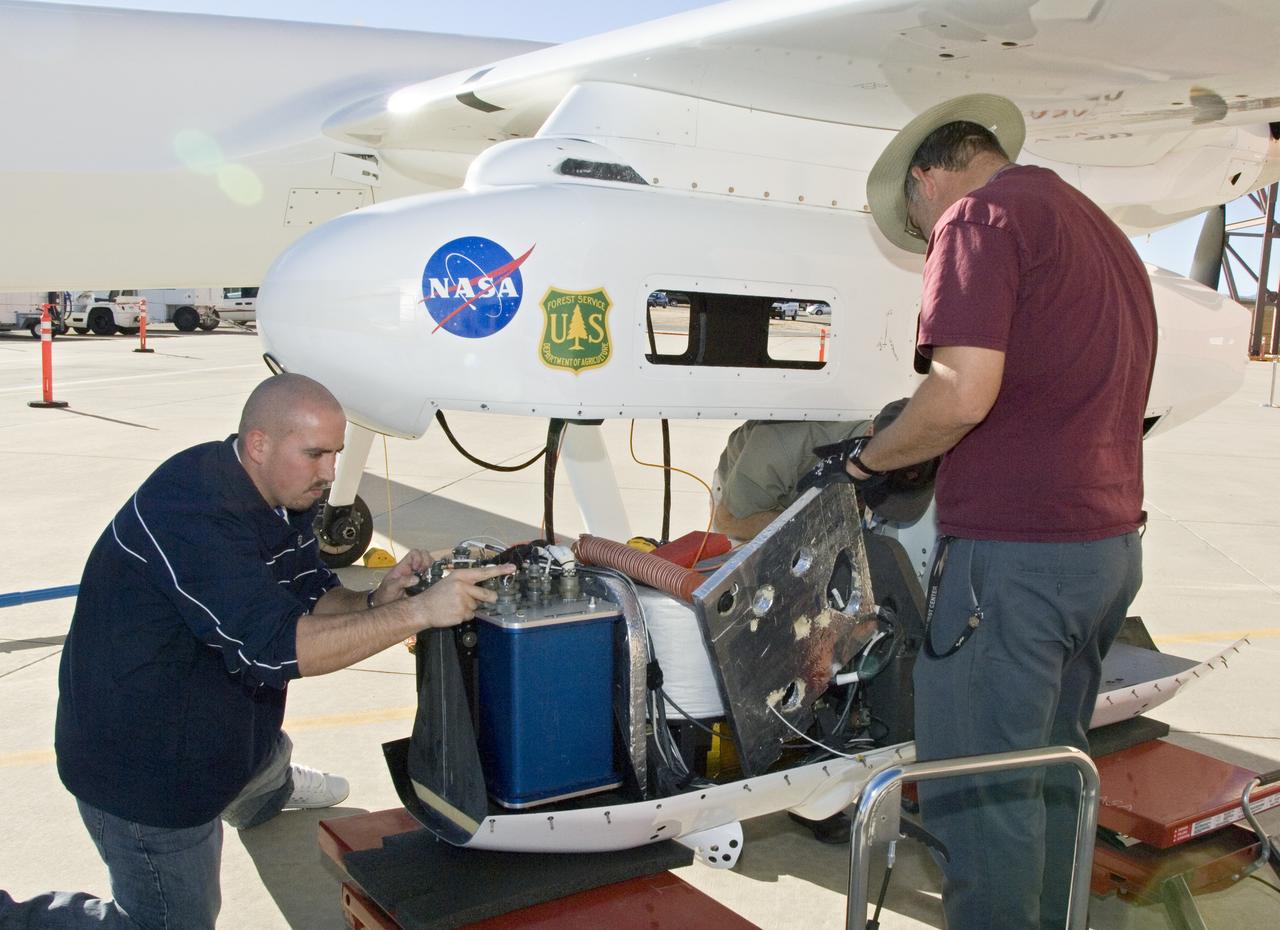
NASA Dryden's Ikhana ground crewmen Gus Carreno and James Smith load the thermal-infrared imaging scanner pallet into the Ikhana's underwing payload pod.
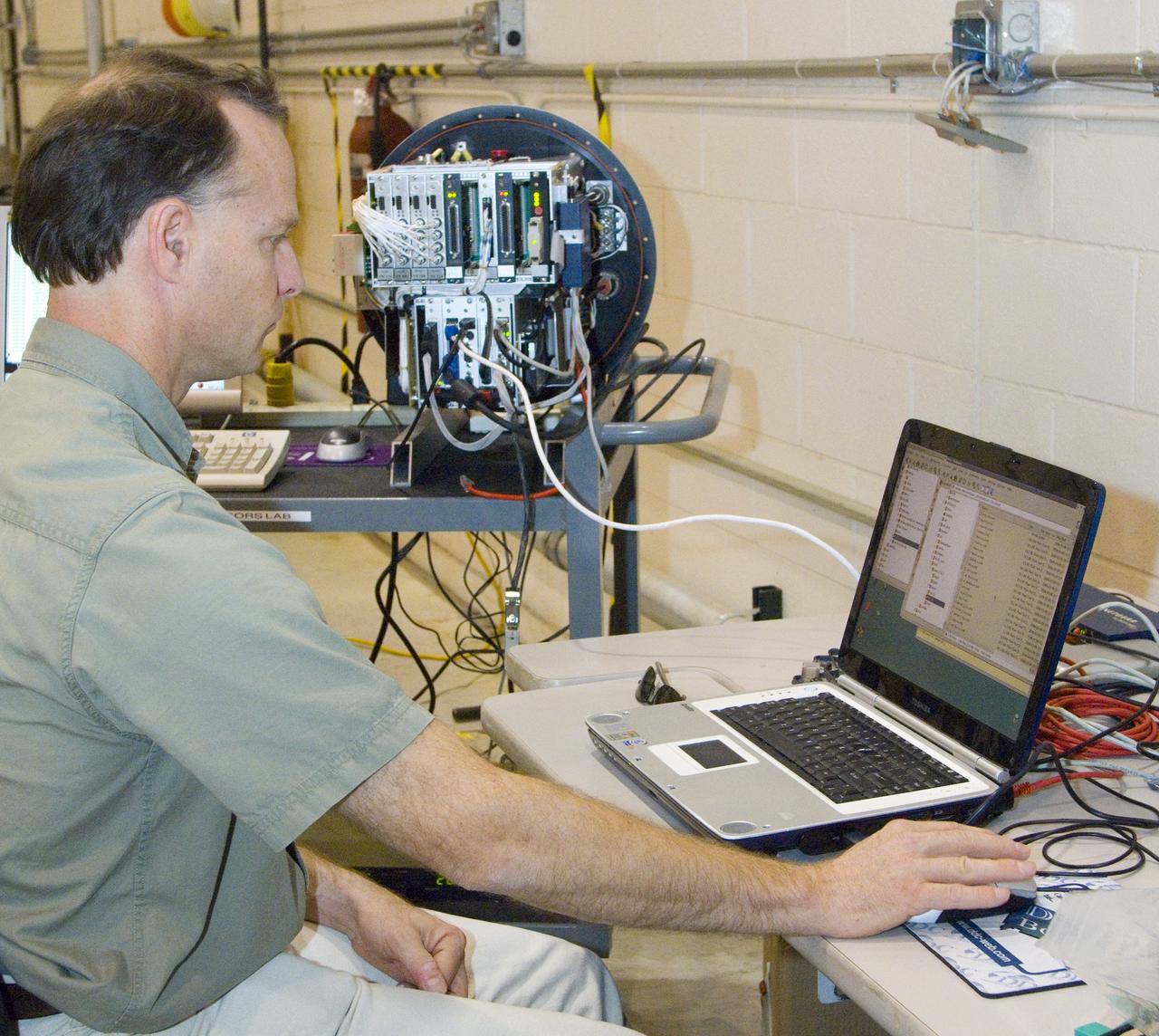
NASA Ames engineer Ted Hildum checks out the thermal-infrared scanner computer before it is loaded on NASA's Ikhana unmanned aircraft.

3D DIMENSIONAL LASER SCANNER
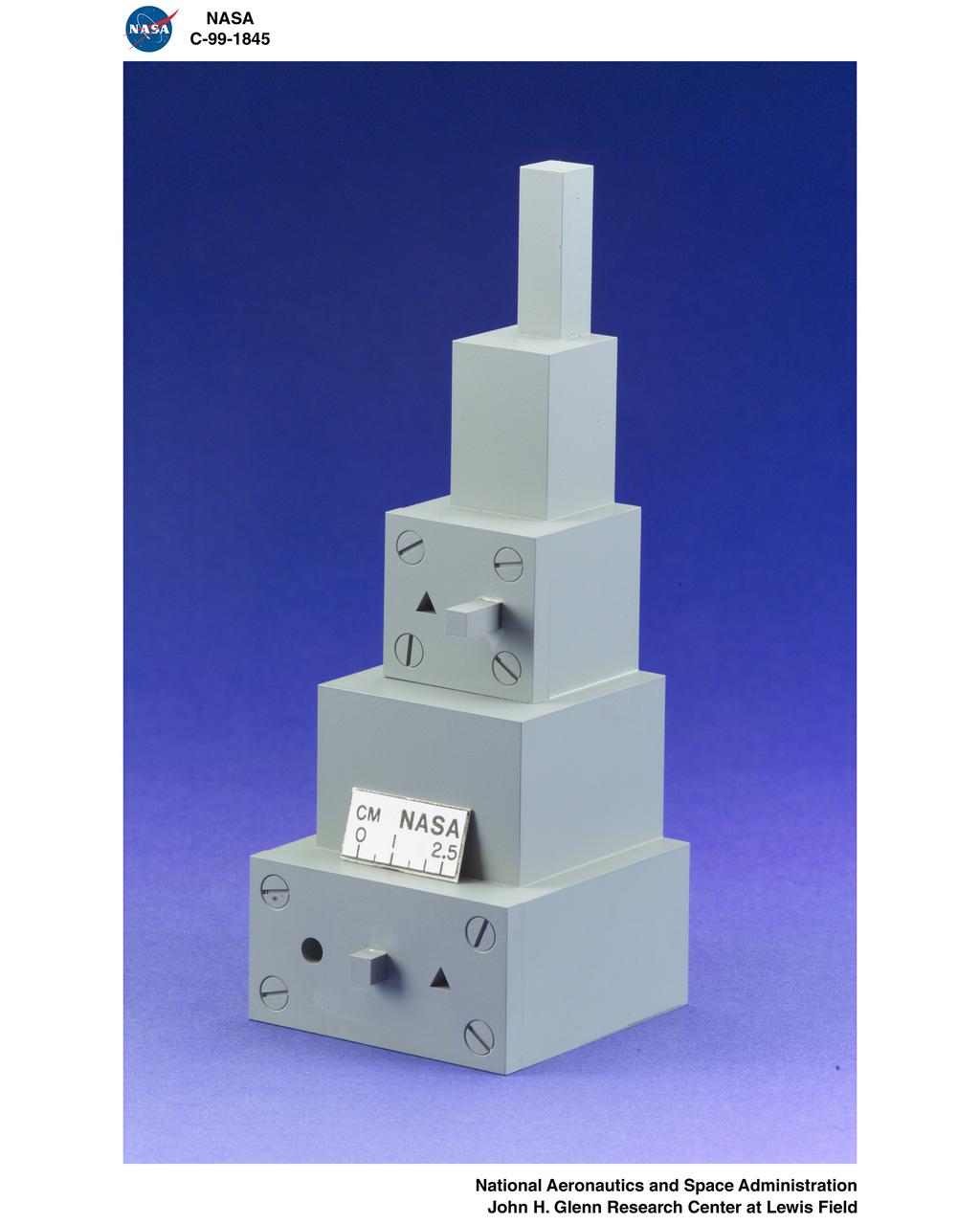
3D DIMENSIONAL SCANNER SQUARE CALIBRATION BLOCK
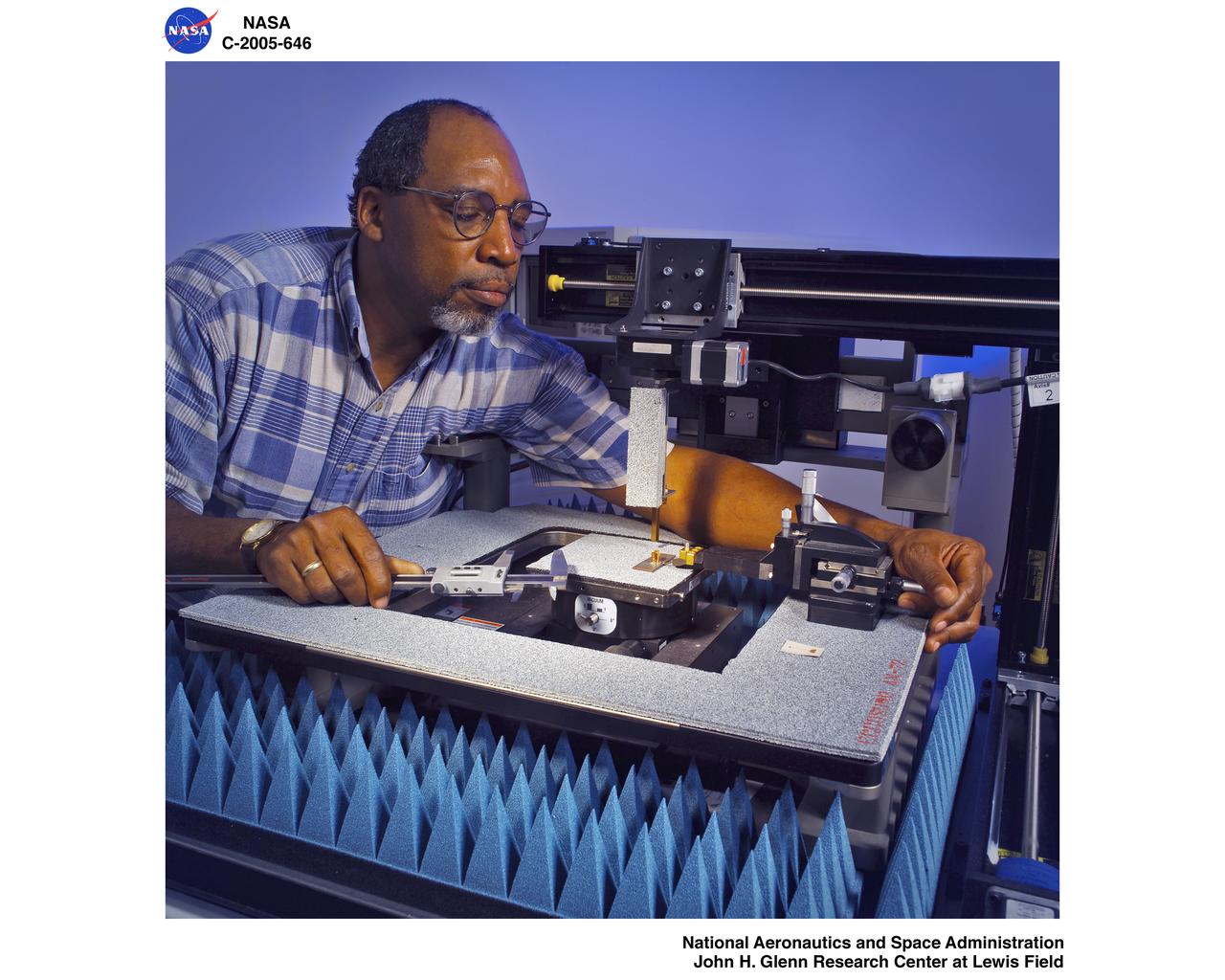
Near Field Probe Scanner Pictured: William Darby
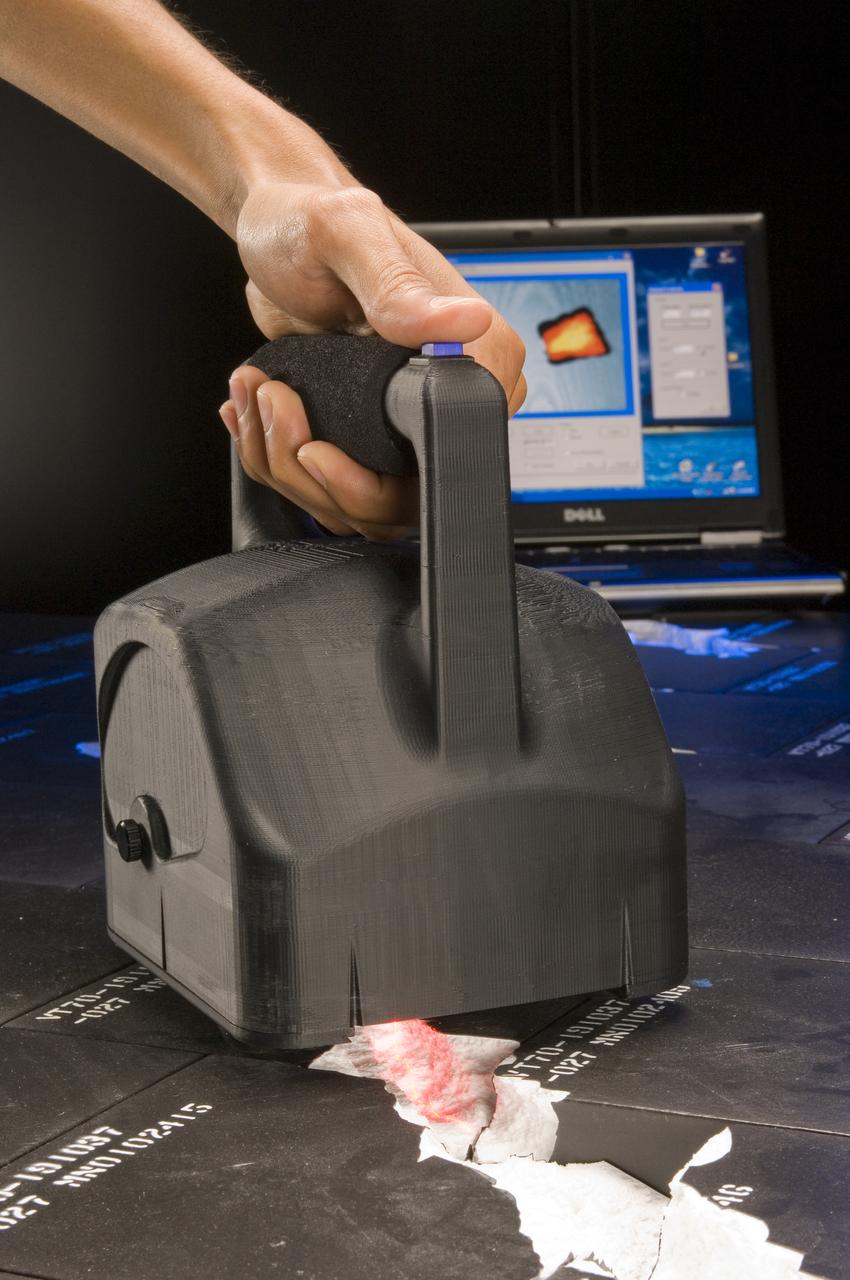
wireless space shuttle tile scanner (P.I. Joe Lavelle)
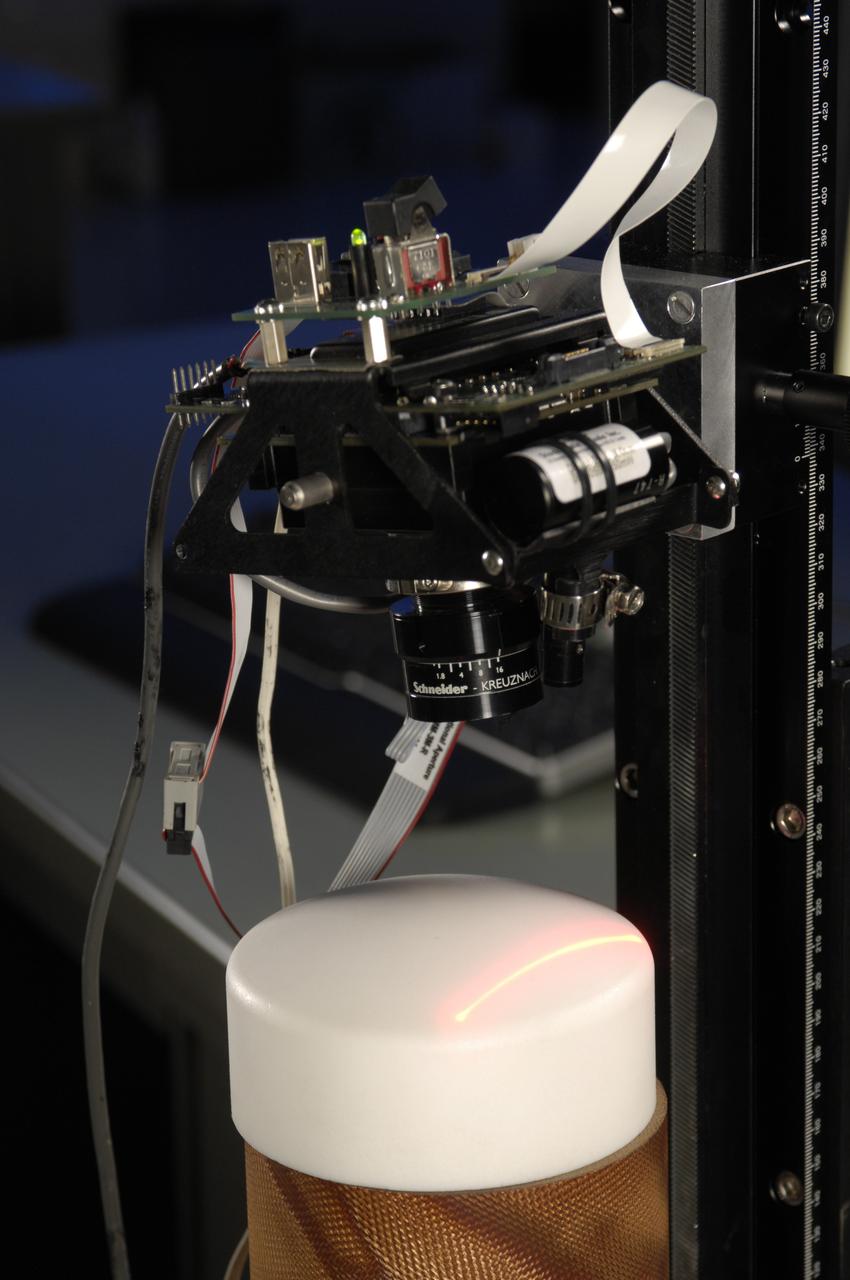
Desk top scanner used to inspect Orion Heat Schield Materials
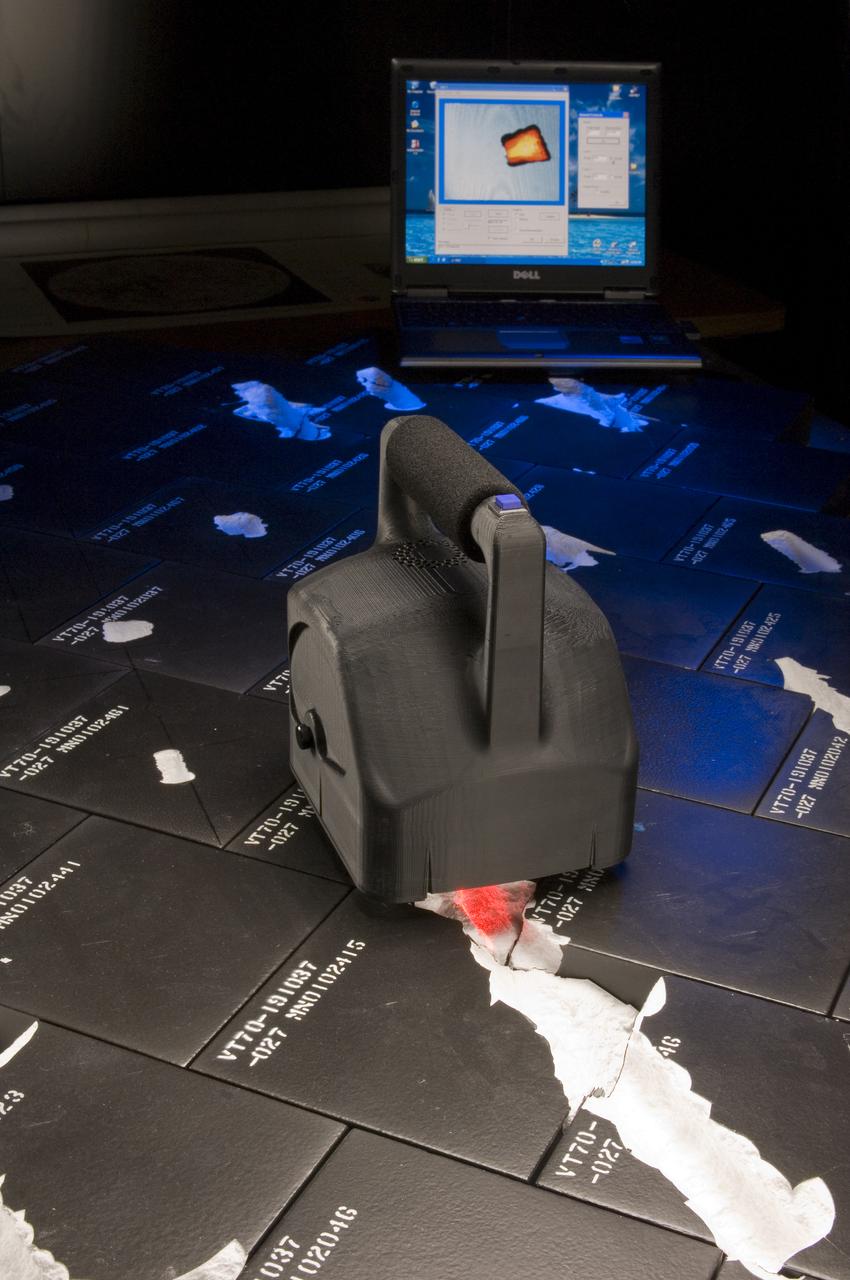
wireless space shuttle tile scanner (P.I. Joe Lavelle)
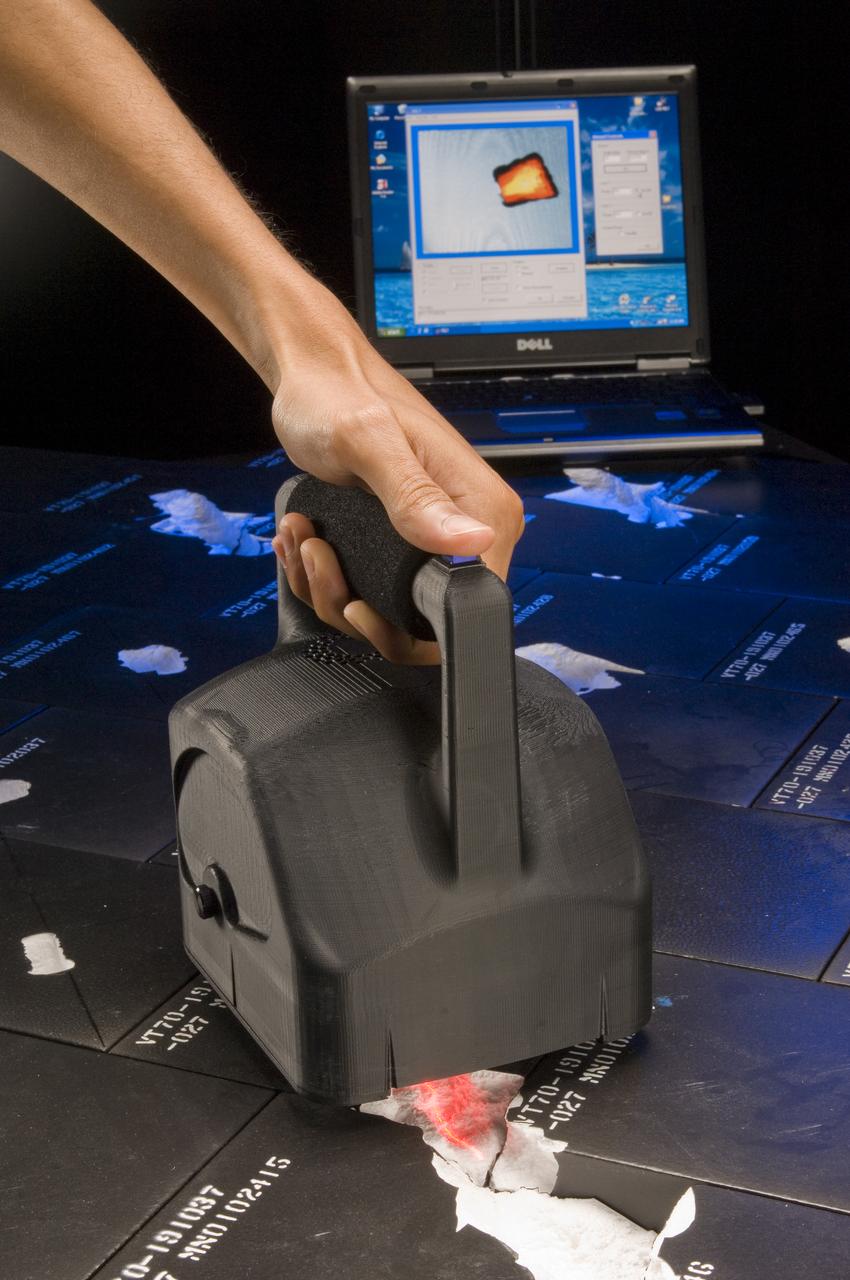
Wireless space shuttle tile scanner (P.I. Joe Lavelle)
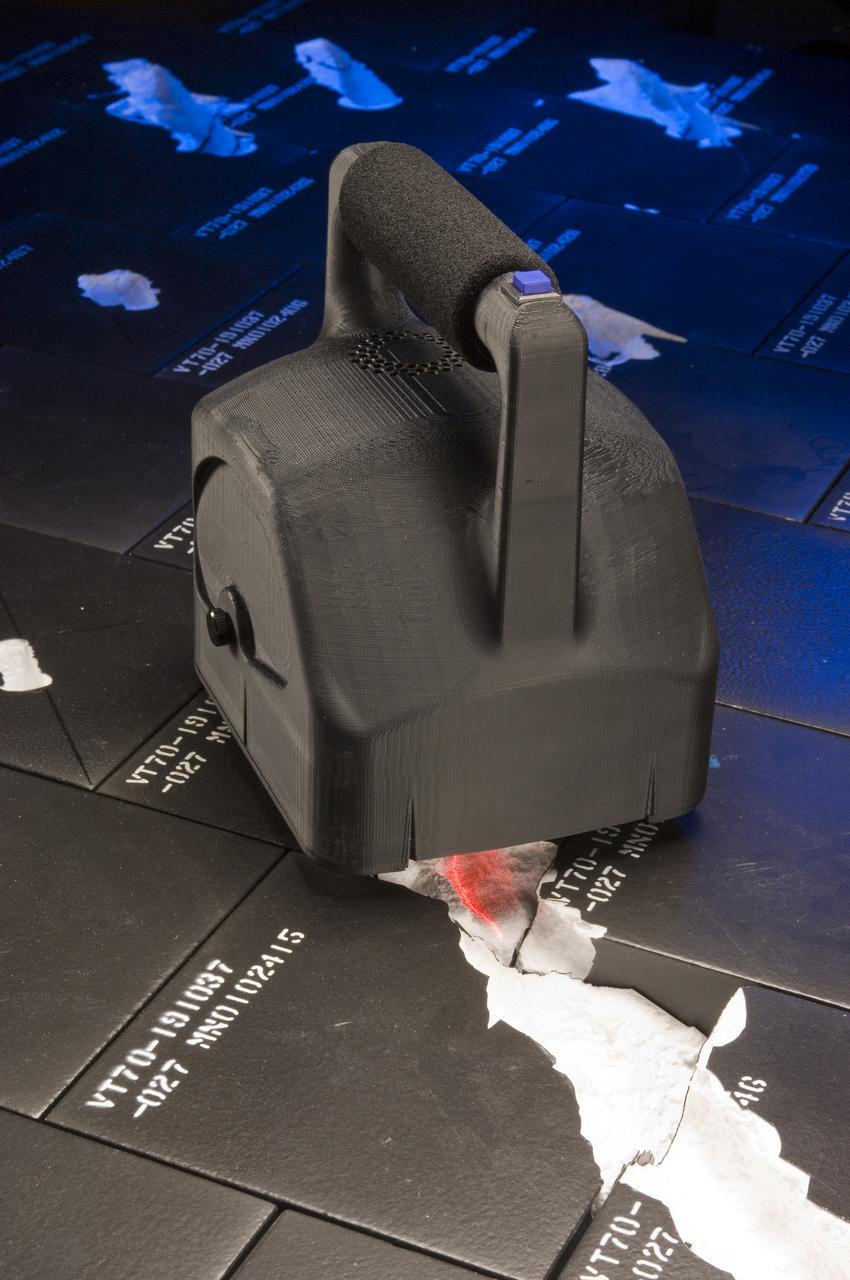
Wireless space shuttle tile scanner (P.I. Joe Lavelle)
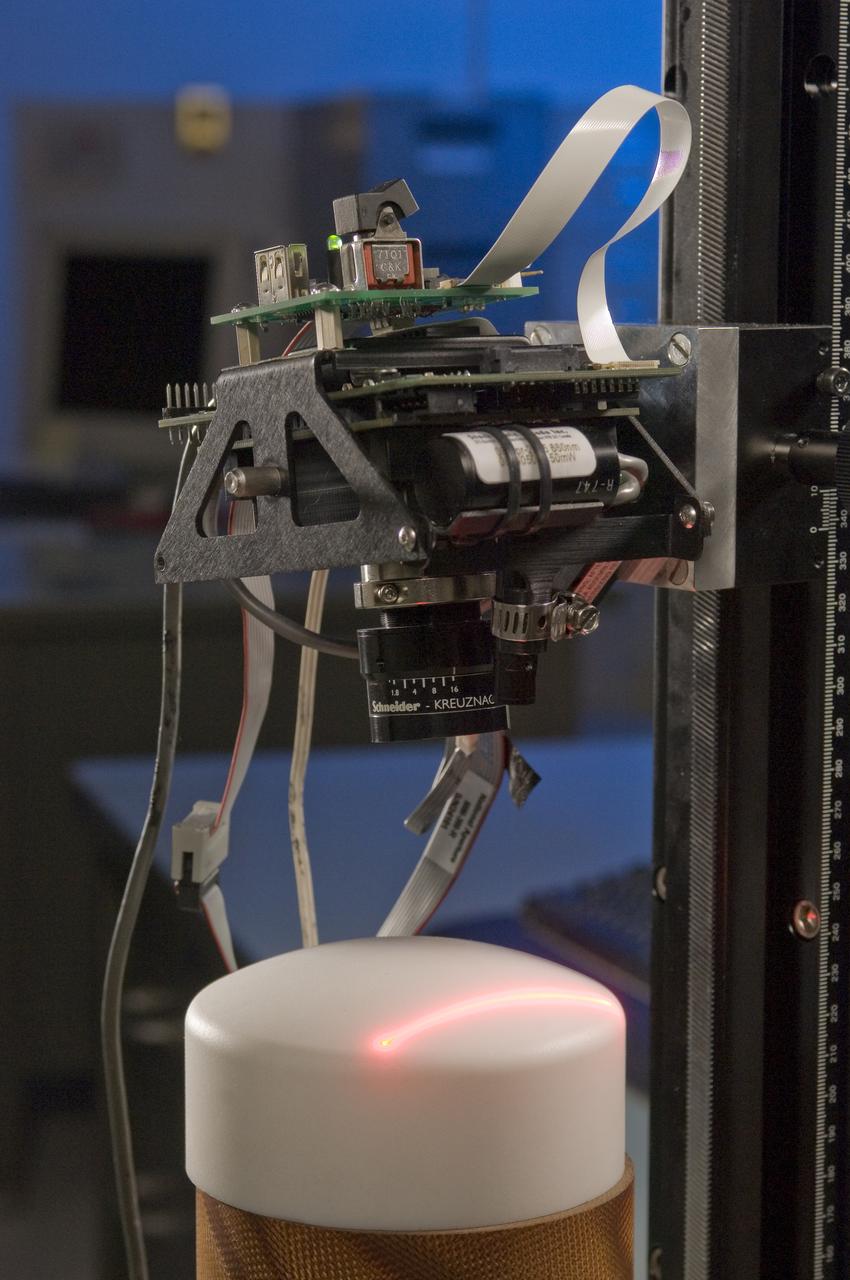
Desk top scanner used to inspect Orion Heat Schield Materials with Mike Derouen
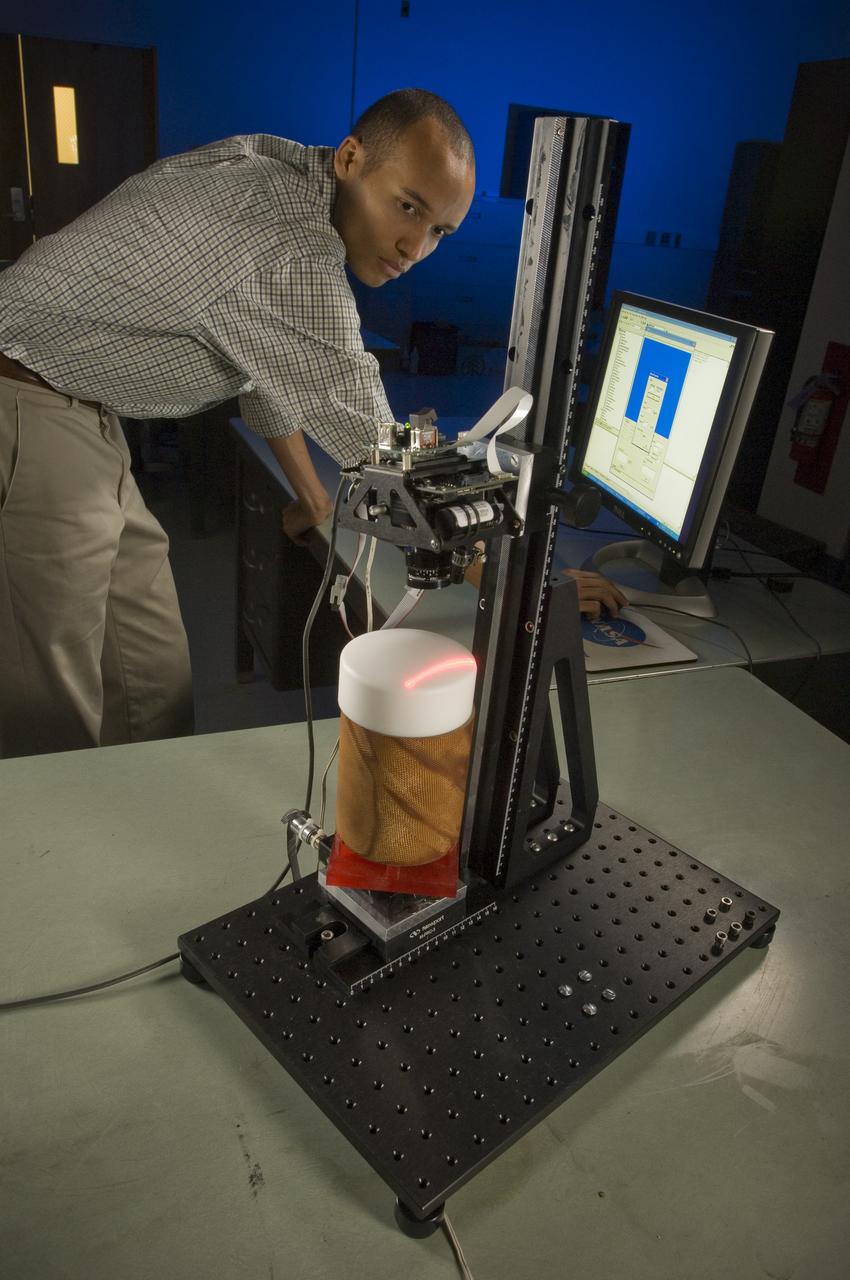
Desk top scanner used to inspect Orion Heat Schield Materials with Mike Derouen

Mary Jackson at Work. In 1958 Mary Jackson became NASA’s first black female engineer. At the time this photo was taken in June 2, 1977 Mrs. Jackson was working in the Transonic Aerodynamic Branch.
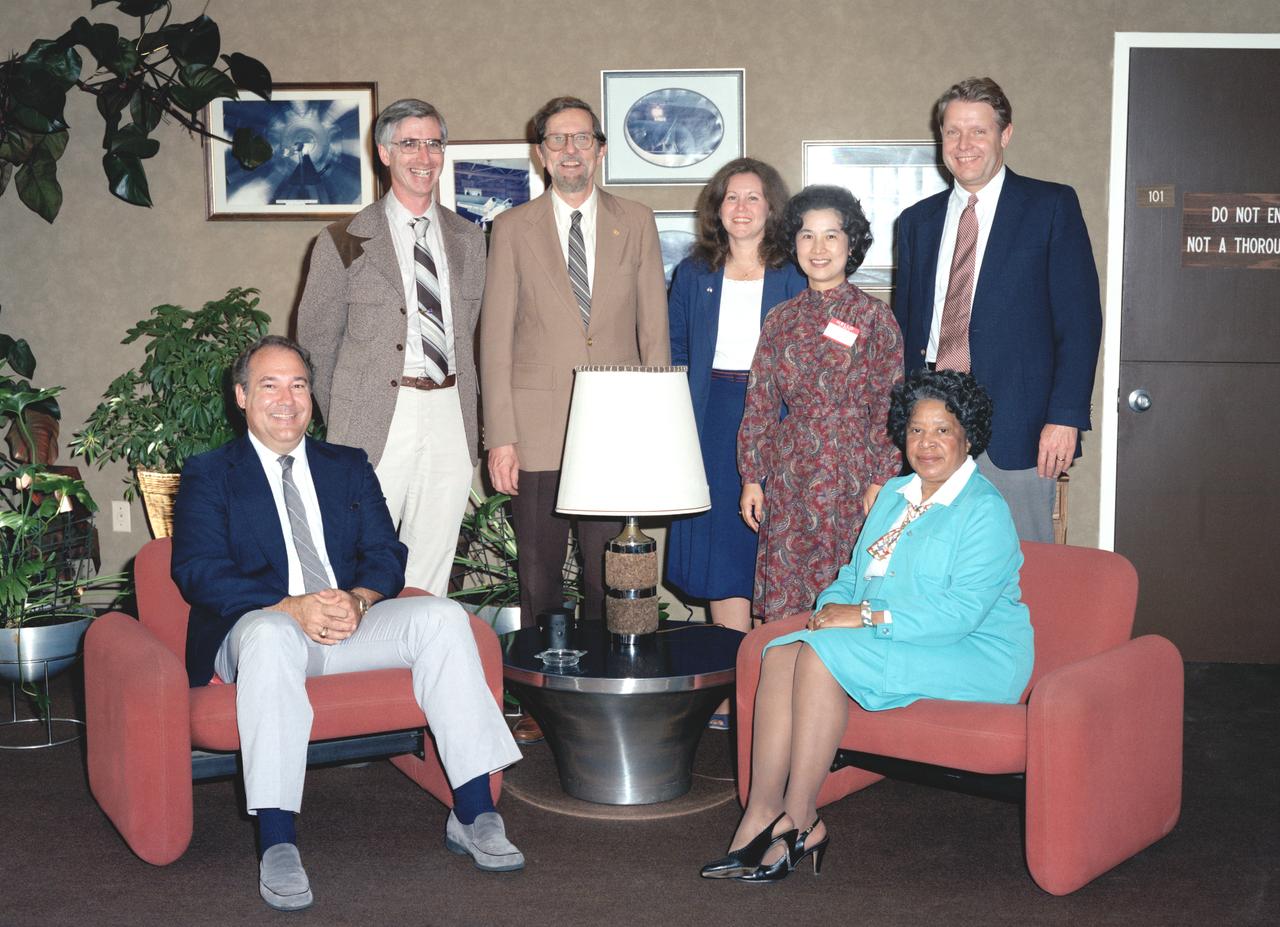
Federal Women's Program Mary Jackson setting. Center directors Donald Heath, and Richard Peterson. In 1958 Mary Jackson became NASA’s first black female engineer.
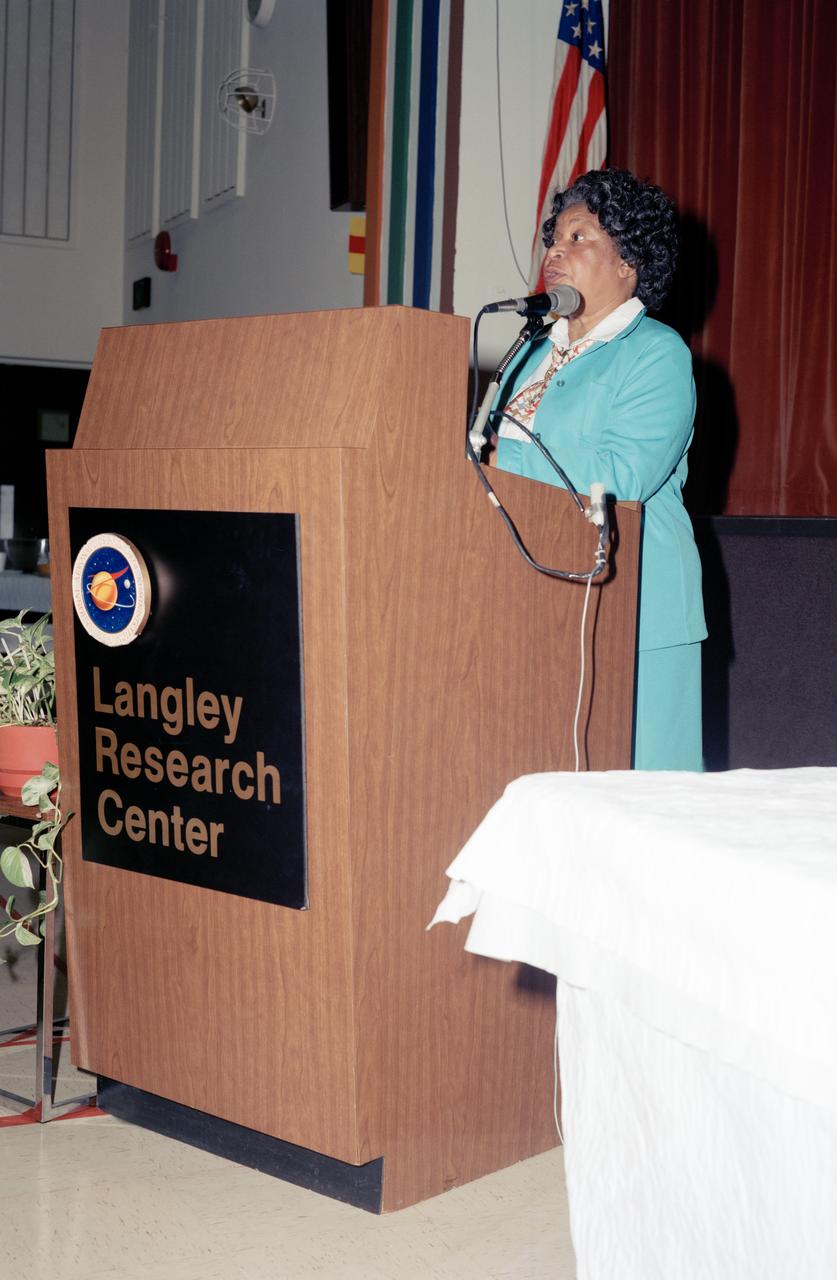
Federal Women's Program speaking is Mary Jackson. In 1958 Mary Jackson became NASA’s first black female engineer.
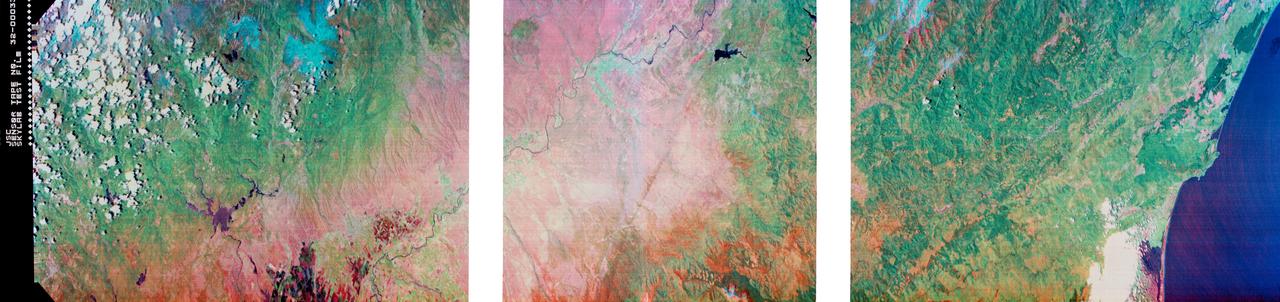
S73-34295 (June 1973) --- A vertical view of a portion of northern California reproduced from data taken from the Skylab Multispectral Scanner, experiment S192, in the Skylab space station in Earth orbit. This view is the most westerly one-third of Frame No. 001, Roll No. 518, S192, Skylab 2. Frame No. 001 extends from the Pacific coast at the Eureka area southeasterly 175 nautical miles to the Feather River drainage basin. Included in this view are Eureka, Trinidad, Klamath & Trinity Rivers and the Coastal Range mountains. This non-photographic image is a color composite of channels 2 (visible), 7, and 12 (infrared) from the Earth Resources Experiments Package (EREP) S192 scanner. The scanner techniques assist with spectral signature identification and mapping of ground truth targets in agriculture, forestry, geology, hydrology and oceanography. Photo credit: NASA
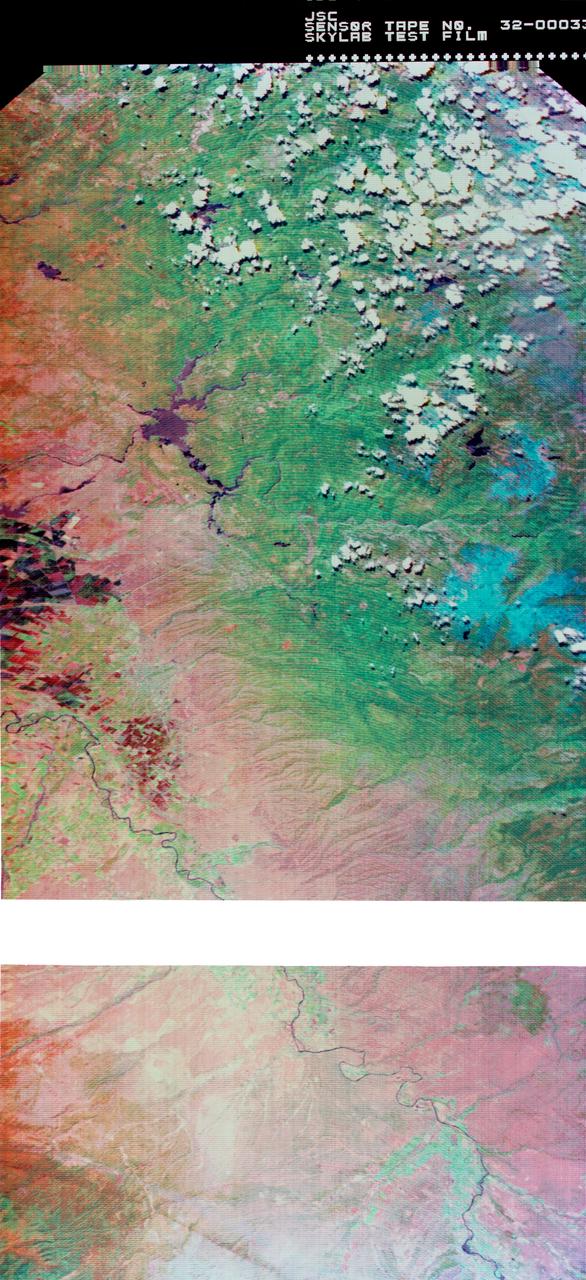
S73-34295A (June 1973) --- A vertical view of a portion of northern California reproduced from data taken from the Skylab Multispectral Scanner, experiment S192, in the Skylab space station in Earth orbit. This view is the most westerly one-third of Frame No. 001, Roll No. 518, S192, Skylab 2. Frame No. 001 extends from the Pacific coast at the Eureka area southeasterly 175 nautical miles to the Feather River drainage basin. Included in this view are Sacramento River Valley, Oroville Reservoir, Oroville and Chico. This non-photographic image is a color composite of channels 2 (visible), 7 and 12 (infrared) from the Earth Resources Experiments Package (EREP) S192 scanner. The scanner techniques assist with spectral signature identification and mapping of ground truth targets in agriculture, forestry, geology, hydrology and oceanography. Photo credit: NASA
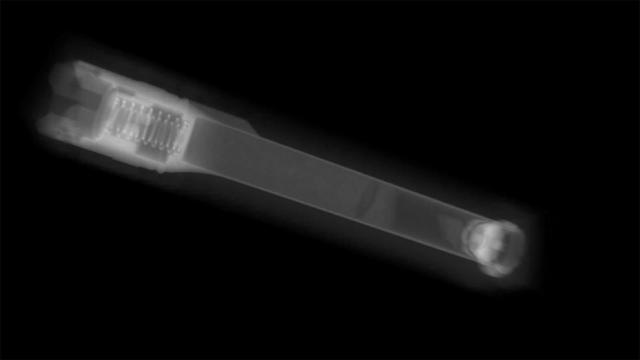
This animation shows the data collected on a Mars 2020 sample tube using a computerized tomography (CT) scanner. Engineers working on the sample tubes used the 3D imagery to better understand the tubes' internal structure. About the size and shape of a standard lab test tube, the 43 sample tubes headed to Mars must be lightweight, hardy enough to survive the demands of the round trip, and so clean that future scientists will be confident that what they are analyzing is 100% Mars. Movie available at https://photojournal.jpl.nasa.gov/catalog/PIA24304
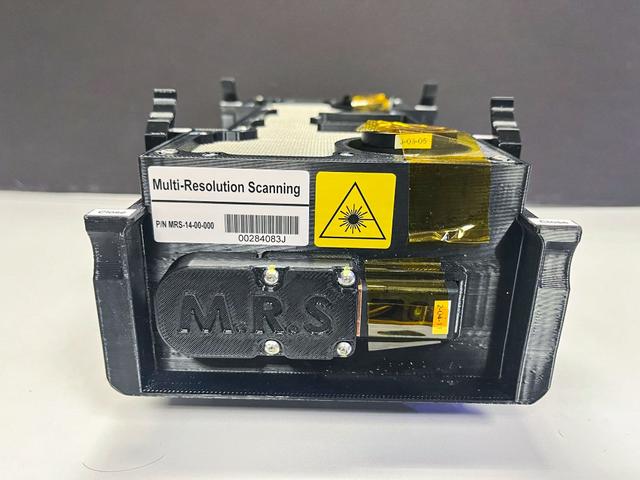
jsc2024e016239 (12/6/2023) --- The multi-resolution scanner (MRS) ready for testing and certification at NASA’s Ames Research Center. The Multi-Resolution Scanning payload will be mated to the Astrobee free-flying robot, which will undertake a small flight and use MRS to create 3D maps of the interior of the International Space Station. Image courtesy of CSIRO.
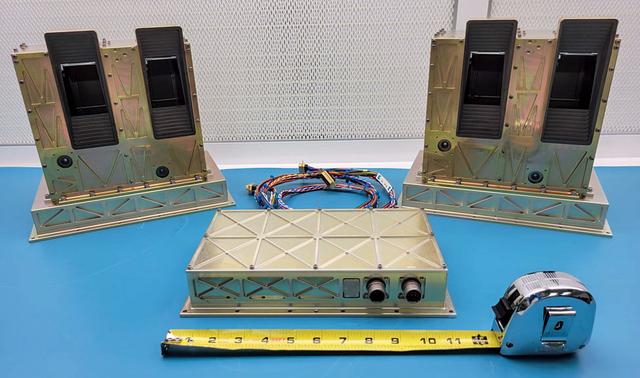
jsc2022e091372 (12/7/2022) --- The STP-H9-ECLIPSE flight hardware is shown prior to its delivery to NASA’s Johnson Space Center in March 2022. The box on the upper left in the image is the Cross-track Scanner (CTS), which views beneath the ISS and produces maps of the airglow emission. The sensor on the upper right is the Aft Limb-Scanner (ALS), which makes images of the ionospheric airglow behind the ISS in its orbit plane. The blackened rectangular structures on the boxes are the sunshade baffles around the openings to the SUVM mirrors, which are at the center of the baffles. The box near the bottom center is the Mission Operations Electronics (MOE), which controls the instruments and accepts commands from the ISS and relays data back to the ISS during the mission. The measuring tape in the image shows the size of the MOE box as approximately 11 inches wide. Image courtesy of the Naval Research Laboratory.
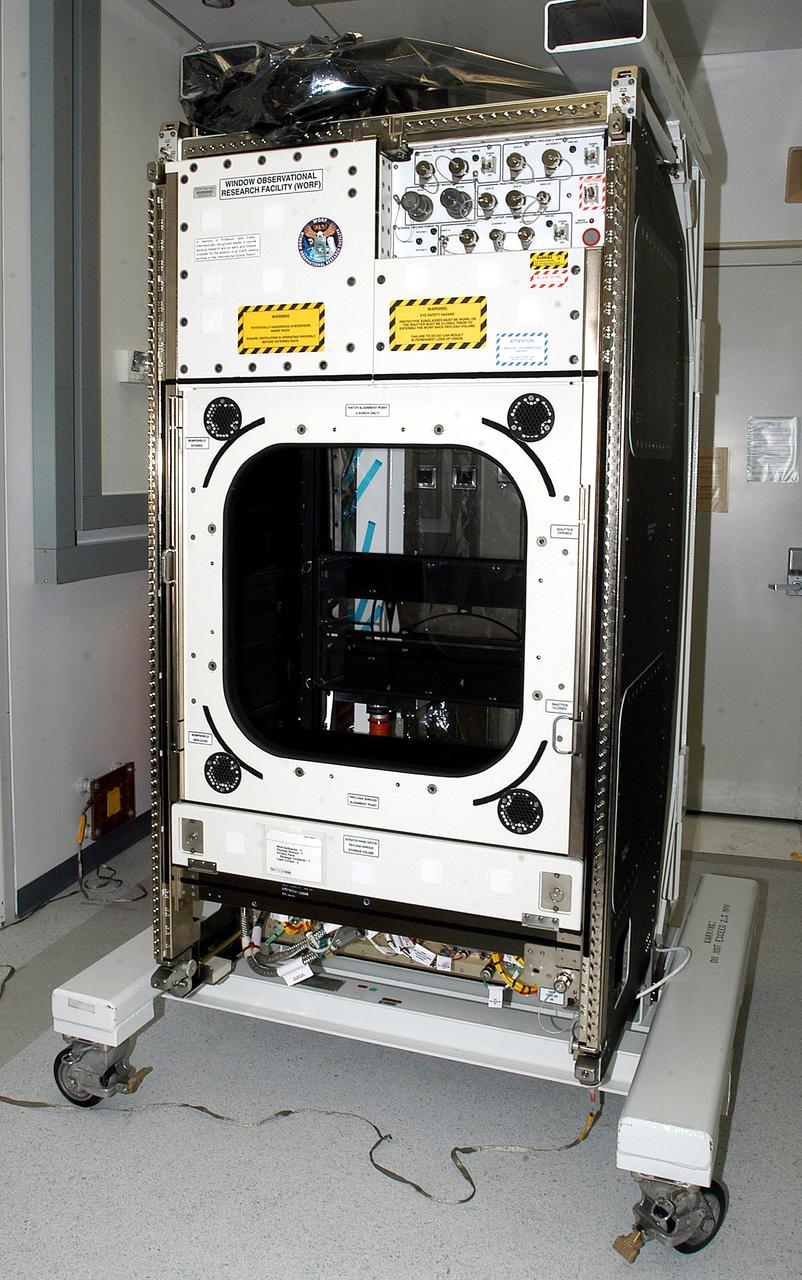
KENNEDY SPACE CENTER, FLA. - The Window Observational Research Facility (WORF), seen in the Space Station Processing Facility, was designed and built by the Boeing Co. at NASA’s Marshall Space Flight Center in Huntsville, Ala. WORF will be delivered to the International Space Station and placed in the rack position in front of the Destiny lab window, providing locations for attaching cameras, multi-spectral scanners and other instruments. WORF will support a variety of scientific and commercial experiments in areas of Earth systems and processes, global ecological changes in Earth’s biosphere, lithosphere, hydrosphere and climate system, Earth resources, natural hazards, and education. After installation, it will become a permanent focal point for Earth Science research aboard the space station.
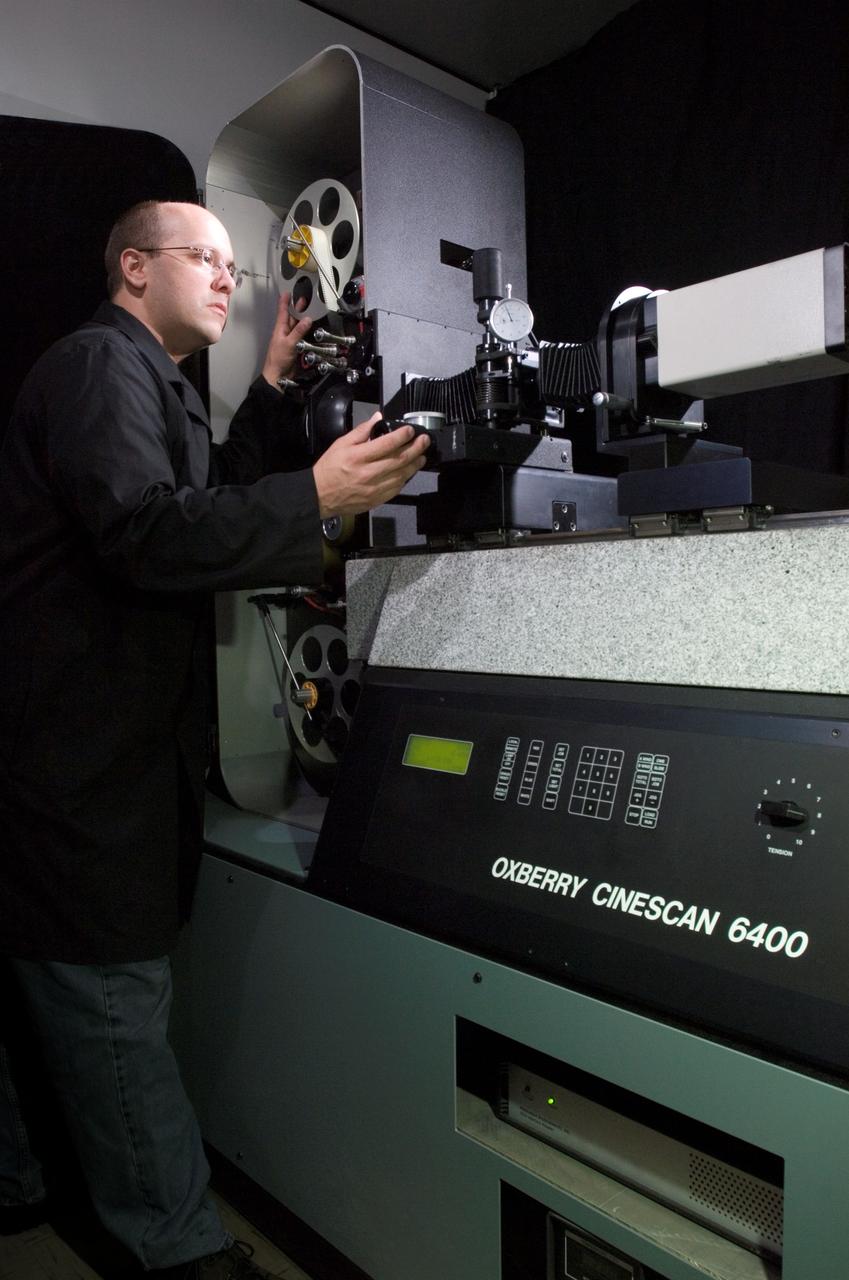
Todd Munson in the Building 8 photo lab works with the Oxberry Cinescan 6400.
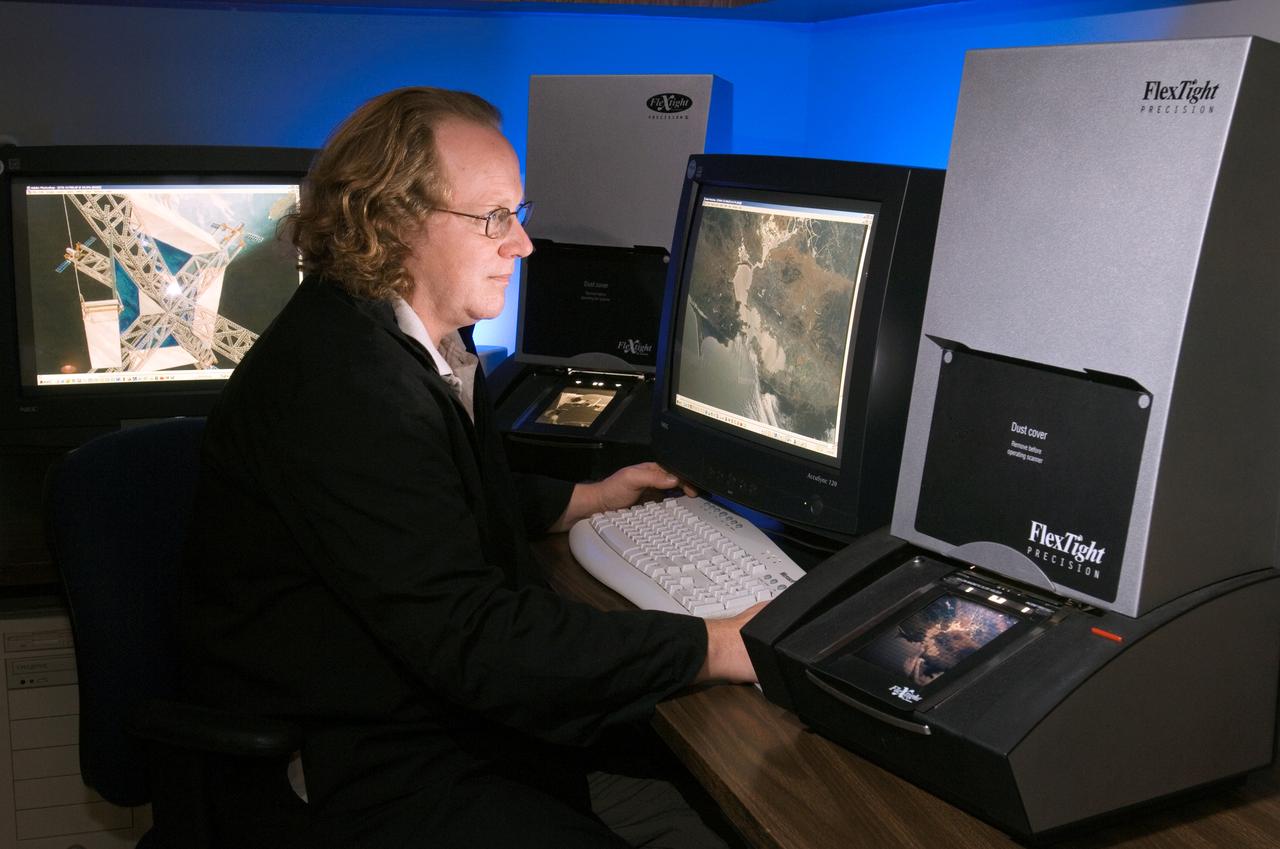
View of Larry Jefferson in the Building 8 photo lab scanning area working with Environmental Photos.
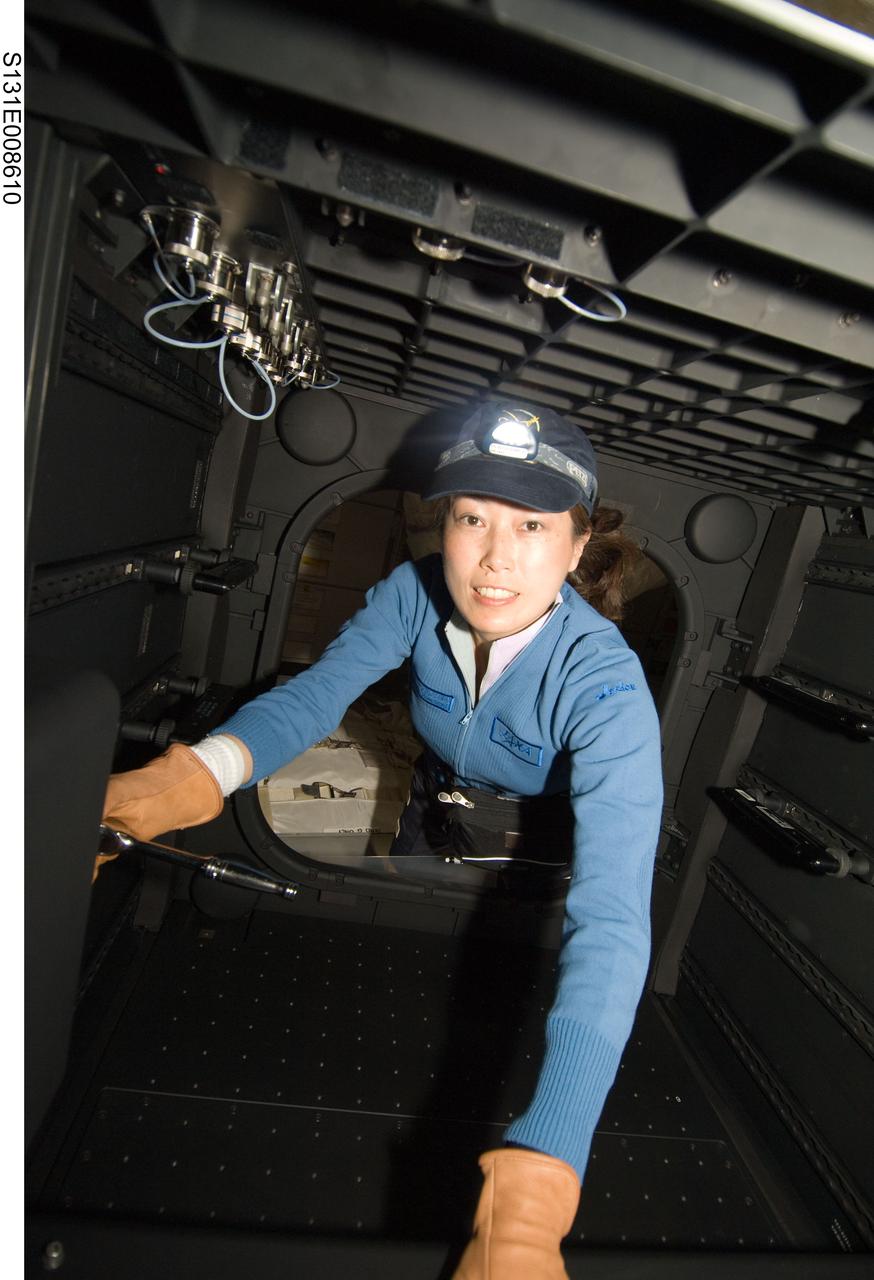
S131-E-008610 (10 April 2010) --- Japan Aerospace Exploration Agency (JAXA) astronaut Naoko Yamazaki, STS-131 mission specialist, works in the Window Observational Research Facility (WORF) in the Destiny laboratory of the International Space Station while space shuttle Discovery remains docked with the station. WORF will provide cameras, multispectral and hyperspectral scanners, camcorders and other instruments to capture Earth imagery through Destiny?s nadir window.
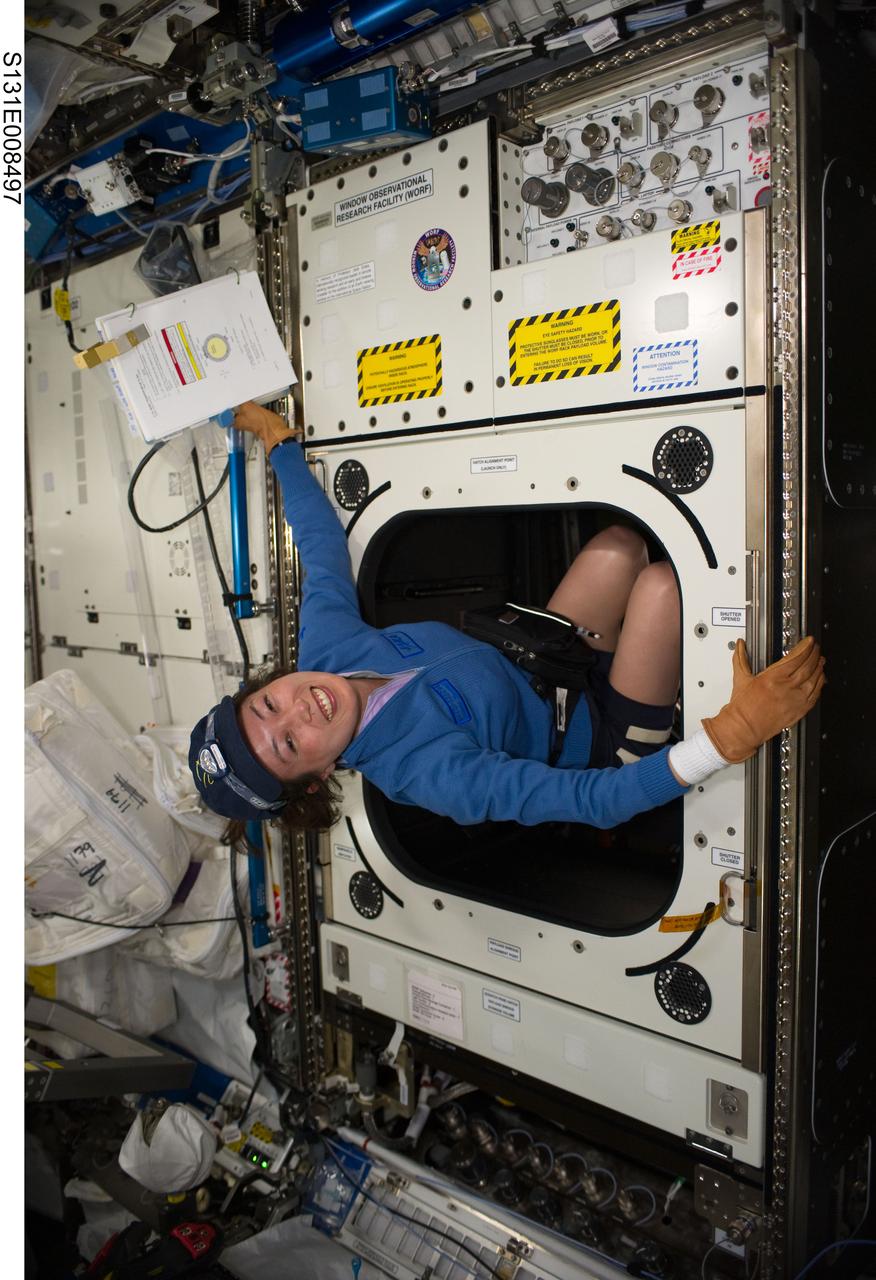
S131-E-008497 (10 April 2010) --- Japan Aerospace Exploration Agency (JAXA) astronaut Naoko Yamazaki, STS-131 mission specialist, works with the Window Observational Research Facility (WORF) in the Destiny laboratory of the International Space Station while space shuttle Discovery remains docked with the station. WORF will provide cameras, multispectral and hyperspectral scanners, camcorders and other instruments to capture Earth imagery through Destiny?s nadir window.
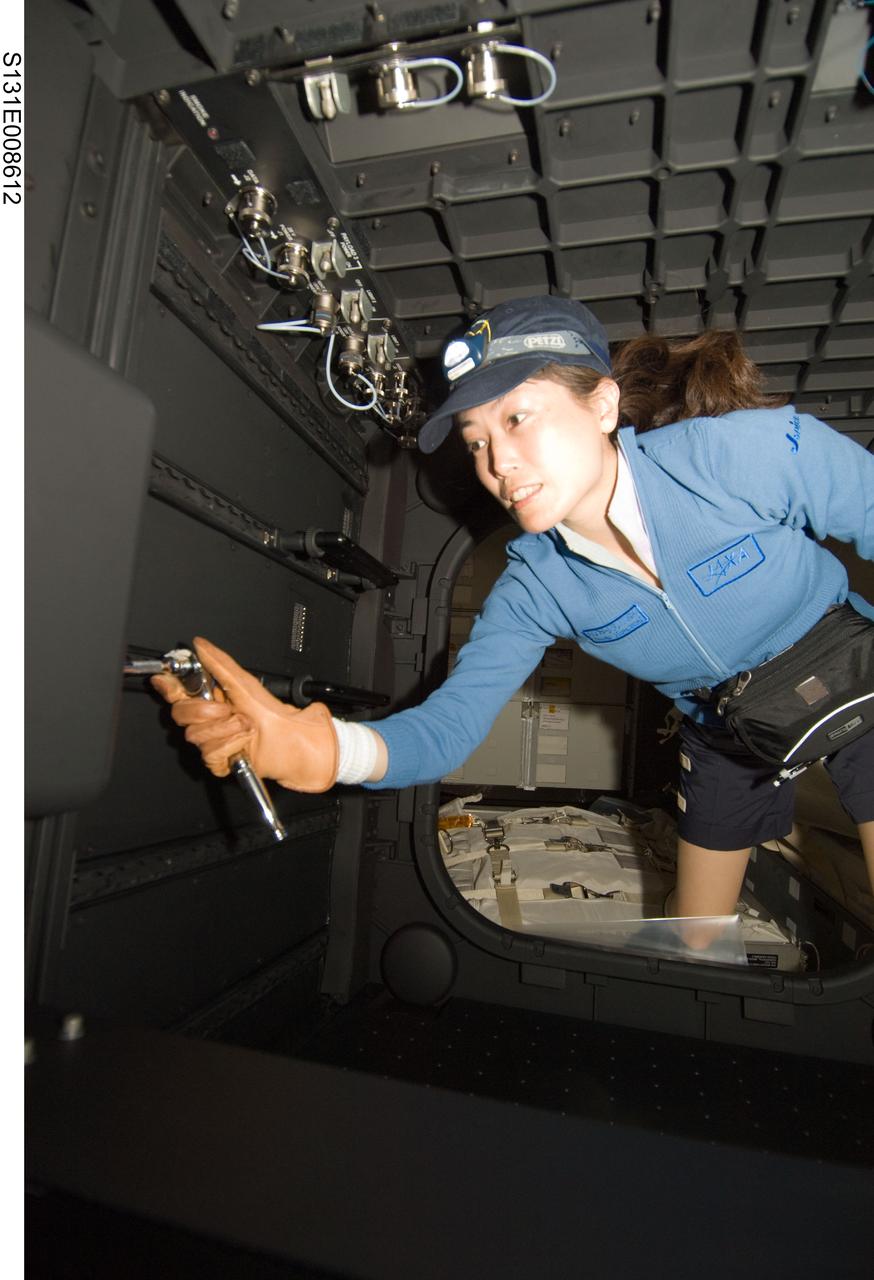
S131-E-008612 (10 April 2010) --- Japan Aerospace Exploration Agency (JAXA) astronaut Naoko Yamazaki, STS-131 mission specialist, works in the Window Observational Research Facility (WORF) in the Destiny laboratory of the International Space Station while space shuttle Discovery remains docked with the station. WORF will provide cameras, multispectral and hyperspectral scanners, camcorders and other instruments to capture Earth imagery through Destiny?s nadir window.
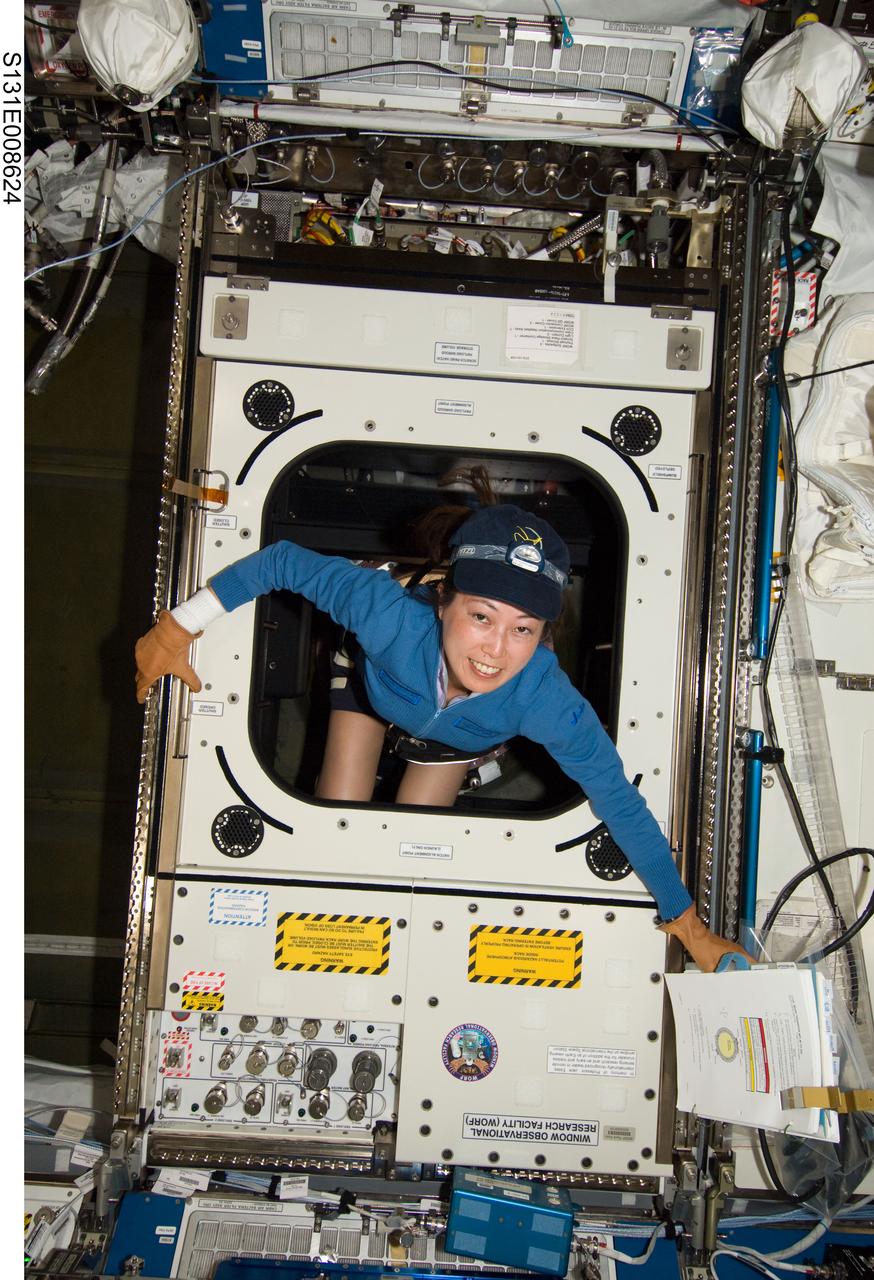
S131-E-008624 (10 April 2010) --- Japan Aerospace Exploration Agency (JAXA) astronaut Naoko Yamazaki, STS-131 mission specialist, works with the Window Observational Research Facility (WORF) in the Destiny laboratory of the International Space Station while space shuttle Discovery remains docked with the station. WORF will provide cameras, multispectral and hyperspectral scanners, camcorders and other instruments to capture Earth imagery through Destiny?s nadir window.

jsc2024e016240 (3/20/2023) --- The multi-resolution scanning payload prototype housed within an Astrobee robot at NASA’s Ames Research Center (with front cover removed). The Multi-Resolution Scanning payload will be mated to the Astrobee free-flying robot, which will undertake a small flight and use the multi-resolution scanner (MRS) to create 3D maps of the interior of the International Space Station. Image courtesy of CSIRO.
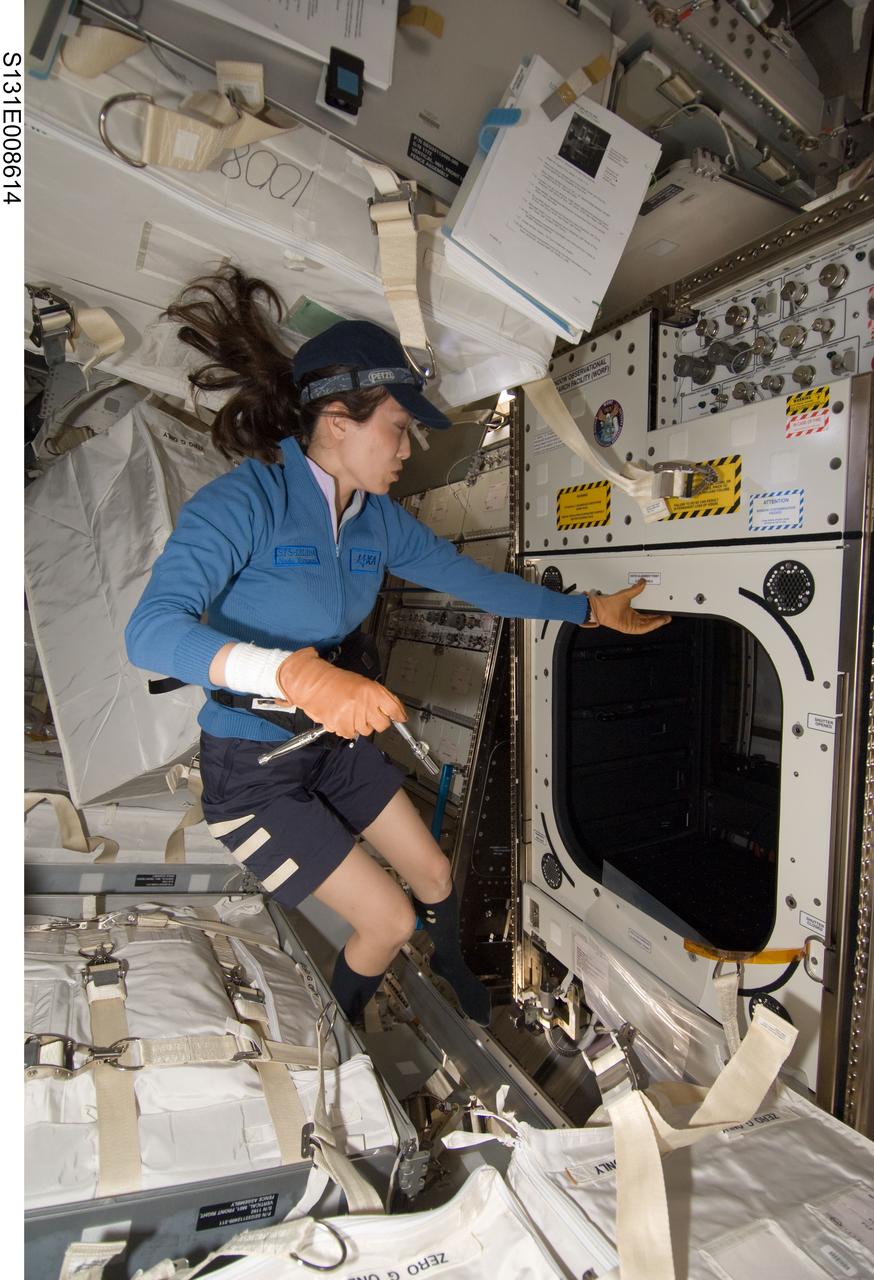
S131-E-008614 (10 April 2010) --- Japan Aerospace Exploration Agency (JAXA) astronaut Naoko Yamazaki, STS-131 mission specialist, works with the Window Observational Research Facility (WORF) in the Destiny laboratory of the International Space Station while space shuttle Discovery remains docked with the station. WORF will provide cameras, multispectral and hyperspectral scanners, camcorders and other instruments to capture Earth imagery through Destiny?s nadir window.
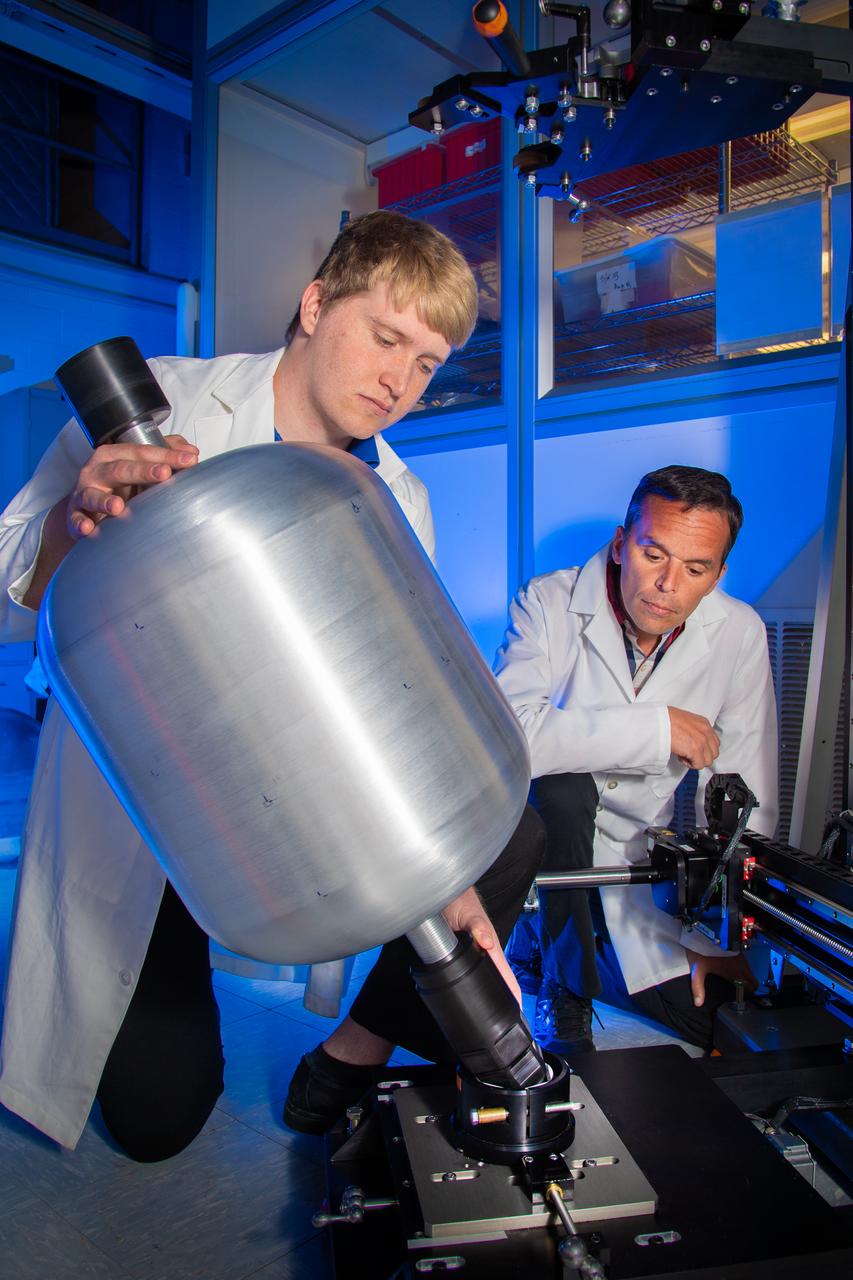
Engineers Ayrton Jordan (left) and Anthony Milana (right) at the NASA White Sands Test Facility (WSTF) in Las Cruces, N.M. install a metallic liner into the multipurpose pressure vessel scanner that could one day become part of a composite overwrapped pressure vessel. A slotted ball joint at the base of the rotary stage allows the tank to pivot resulting in helical scans that are more reliable when measuring interior and exterior 3D surface profiles. Photo Credit: (NASA/Reed P. Elliott)
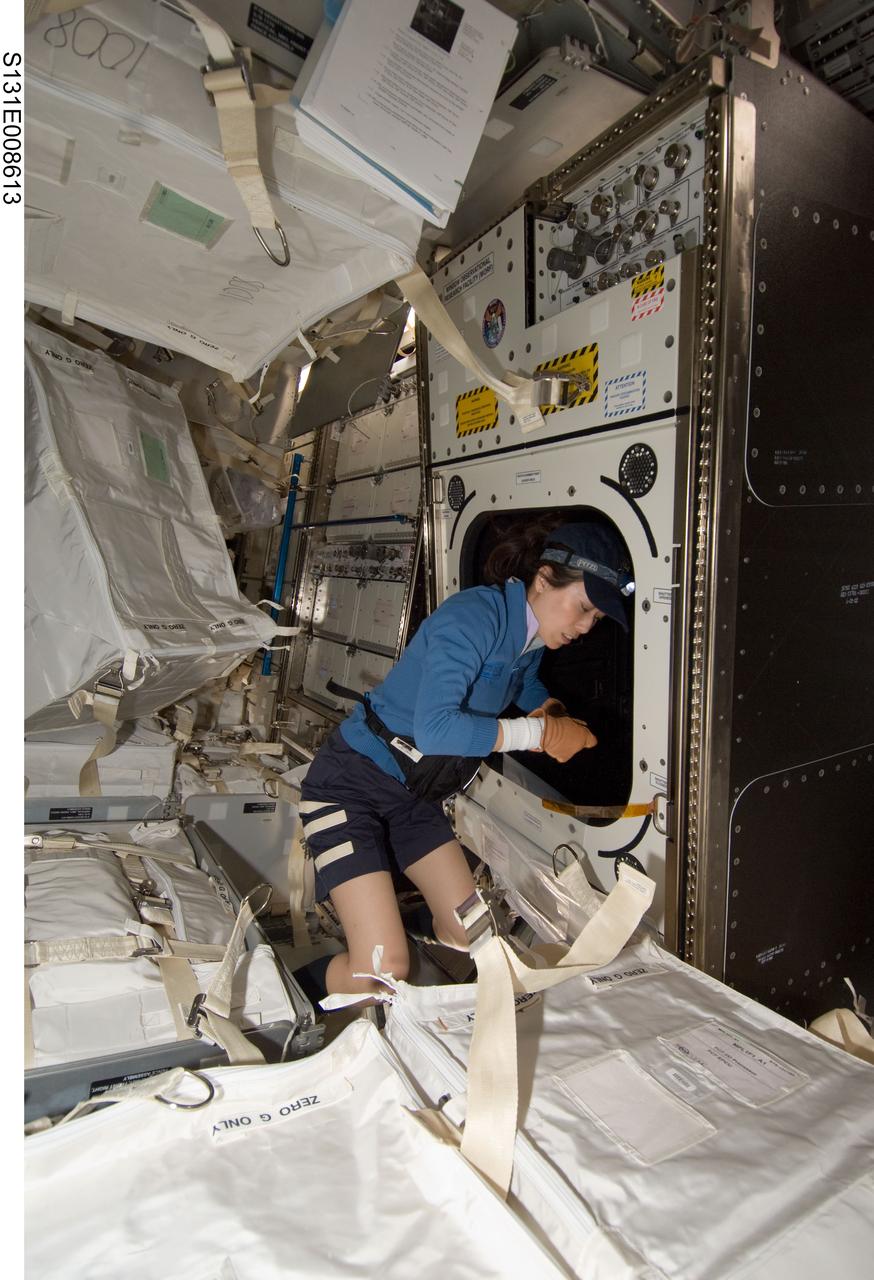
S131-E-008613 (10 April 2010) --- Japan Aerospace Exploration Agency (JAXA) astronaut Naoko Yamazaki, STS-131 mission specialist, works with the Window Observational Research Facility (WORF) in the Destiny laboratory of the International Space Station while space shuttle Discovery remains docked with the station. WORF will provide cameras, multispectral and hyperspectral scanners, camcorders and other instruments to capture Earth imagery through Destiny?s nadir window.
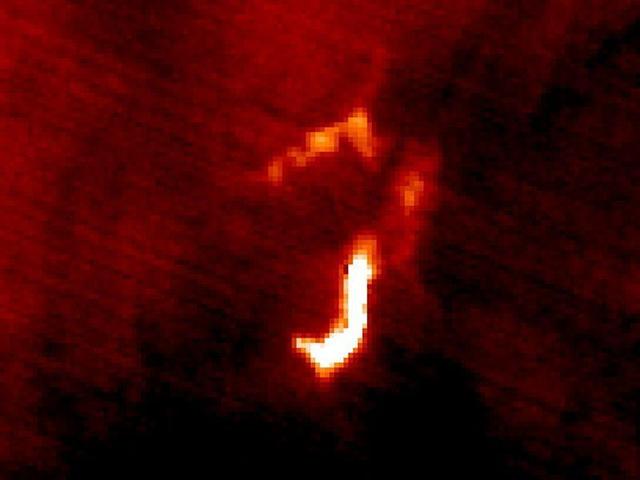
The March 16 volcanic eruption in Iceland's Reykjanes Peninsula was the fourth in many months. On March 22, ASTER's thermal infrared scanner detected the hot lava flow, through a thick cloud cover. The image matched the most recent official map, released March 20. The image covers an area of 7.5 by 10 km, and is located at 63.9 degrees north, 22.3 degrees west. https://photojournal.jpl.nasa.gov/catalog/PIA26288
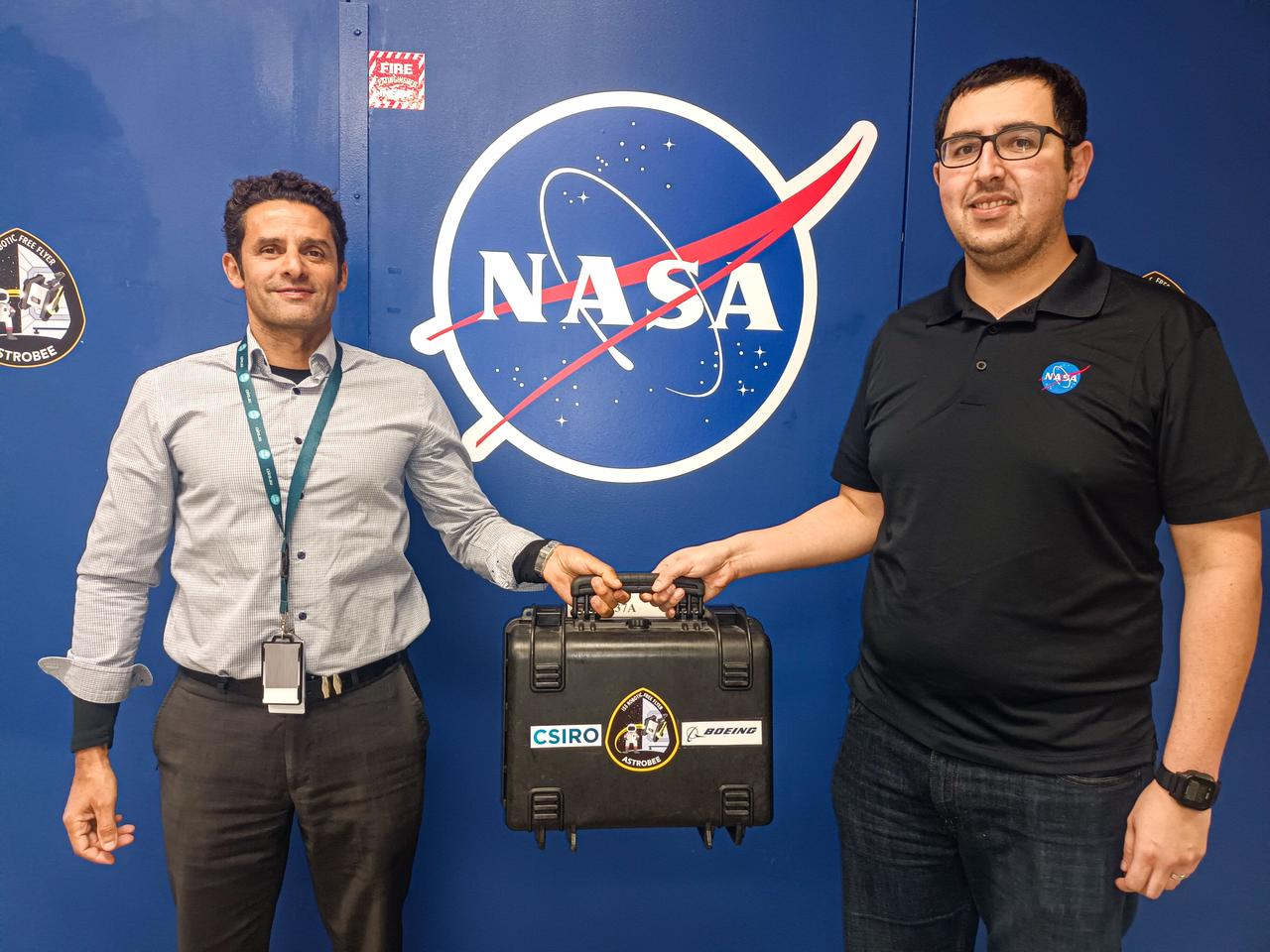
jsc2024e016242 (11/17/2023) --- CSIRO Project Lead Dr. Marc Elmouttie hands over the flight-ready Multi-Resolution Scanning payload to Jose Cortez from NASA’s Ames Research Center ahead of its final testing. The Multi-Resolution Scanning payload will be mated to the Astrobee free-flying robot, which will undertake a small flight and use the multi-resolution scanner (MRS) to create 3D maps of the interior of the International Space Station. Image courtesy of CSIRO.
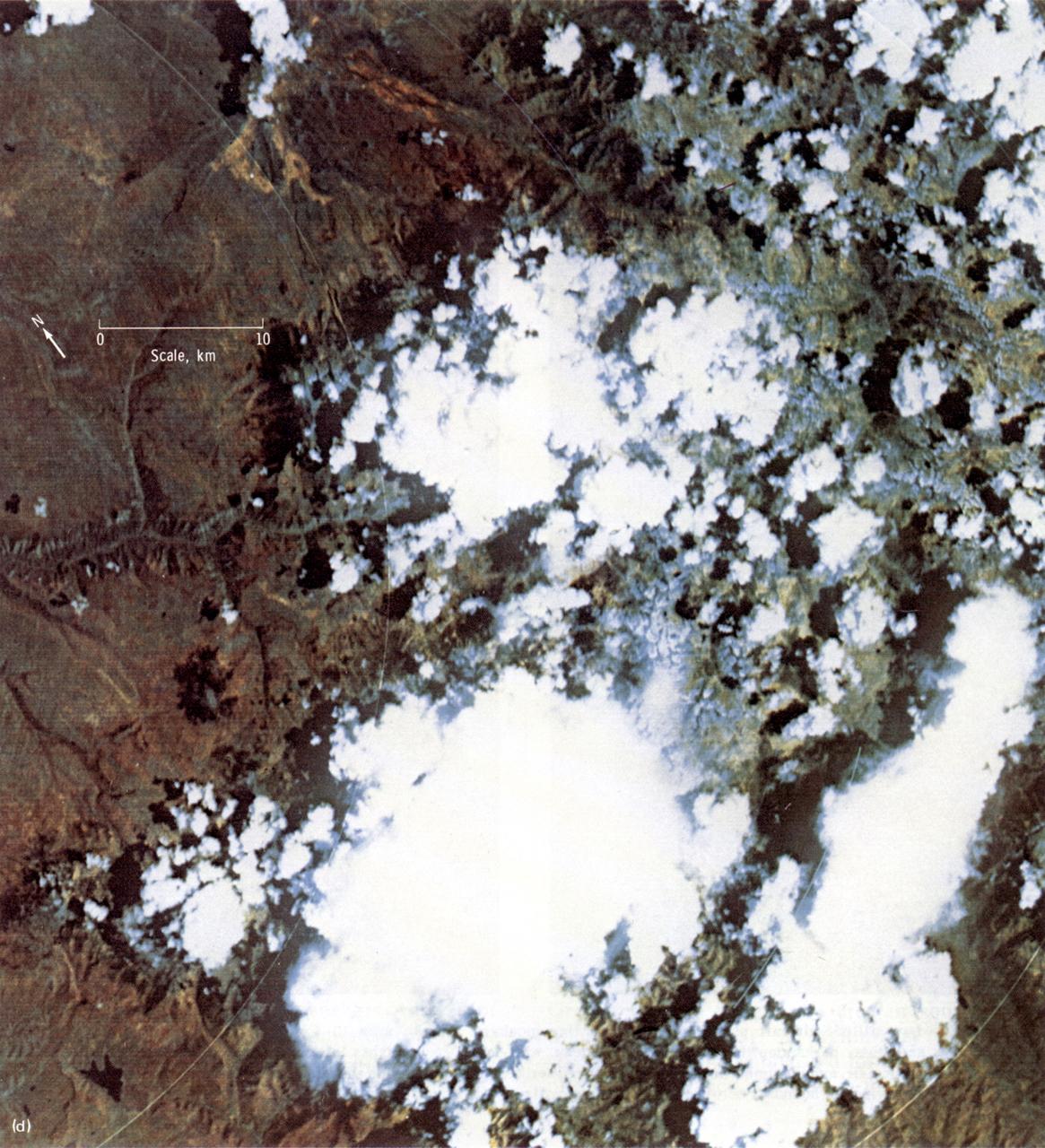
This Earth Resource Experiment Package (EREP) photograph of the Uncompahgre area of Colorado was electronically acquired in September of 1973 by the Multi-spectral Scarner, Skylab Experiment S192. EREP images were used to analyze the vegetation conditions and landscape characteristic of this area. Skylab's Earth sensors played the dual roles of gathering information about the planet and perfecting instruments and techniques for future satellites and manned stations. An array of six fixed cameras, another for high resolution, and the astronauts' handheld cameras photographed surface features. Other instruments, recording on magnetic tape, measured the reflectivity of plants, soils, and water. Radar measured the altitude of land and water surfaces. The sensors' objectives were to survey croplands and forests, identify soils and rock types, map natural features and urban developments, detect sediments and the spread of pollutants, study clouds and the sea, and determine the extent of snow and ice cover.
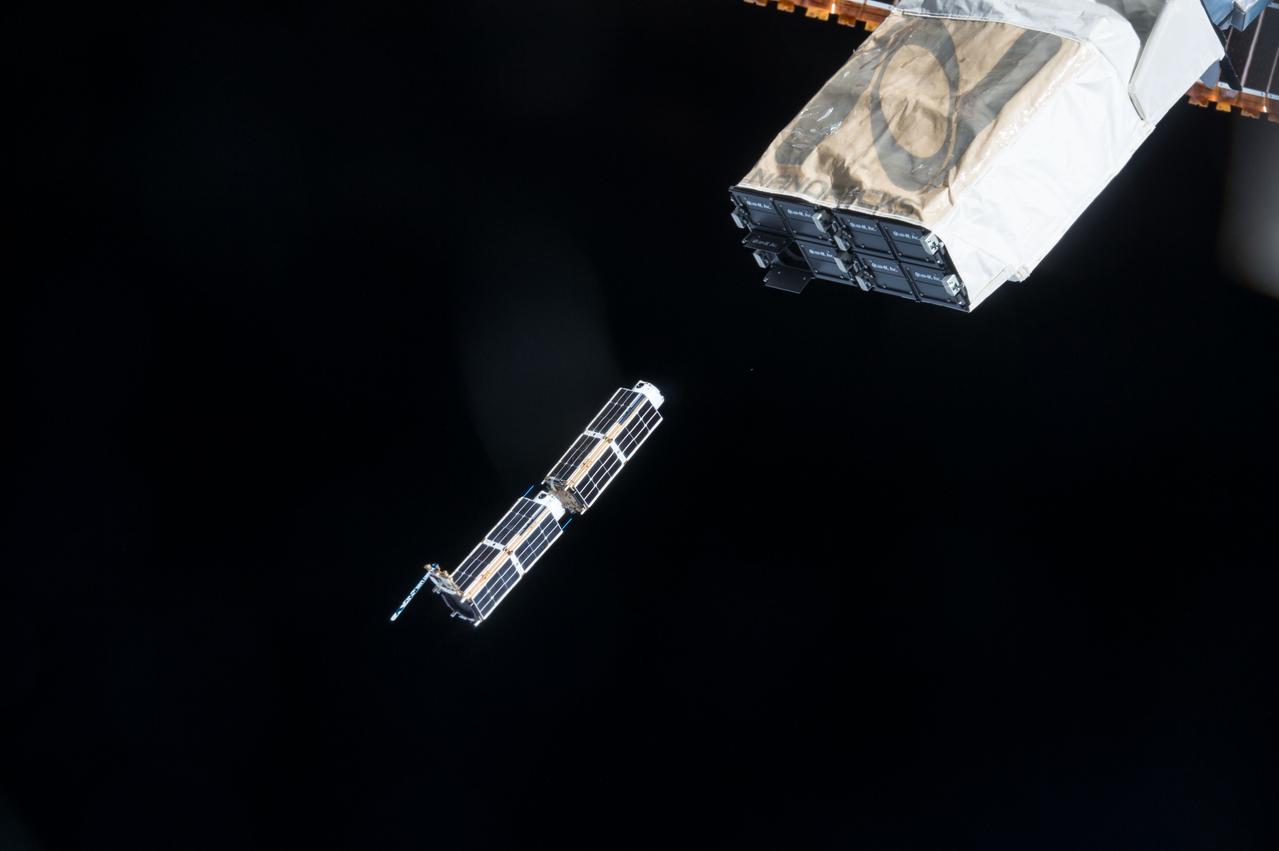
ISS042E290579 (02/27/2015) --- On Feb. 27 2015, a series of CubeSats, small experimental satellites, were deployed via a special device mounted on the Japanese Experiment Module (JEM) Remote Manipulator System (JEMRMS). Deployed satellites included twelve Dove sats, one TechEdSat-4, one GEARRSat, one LambdaSat, one MicroMas. These satellites perform a variety of functions from capturing new Earth imagery, to using microwave scanners to create 3D images of hurricanes, to even developing new methods for returning science samples back to Earth from space. The small satellites were deployed through the first week in March.
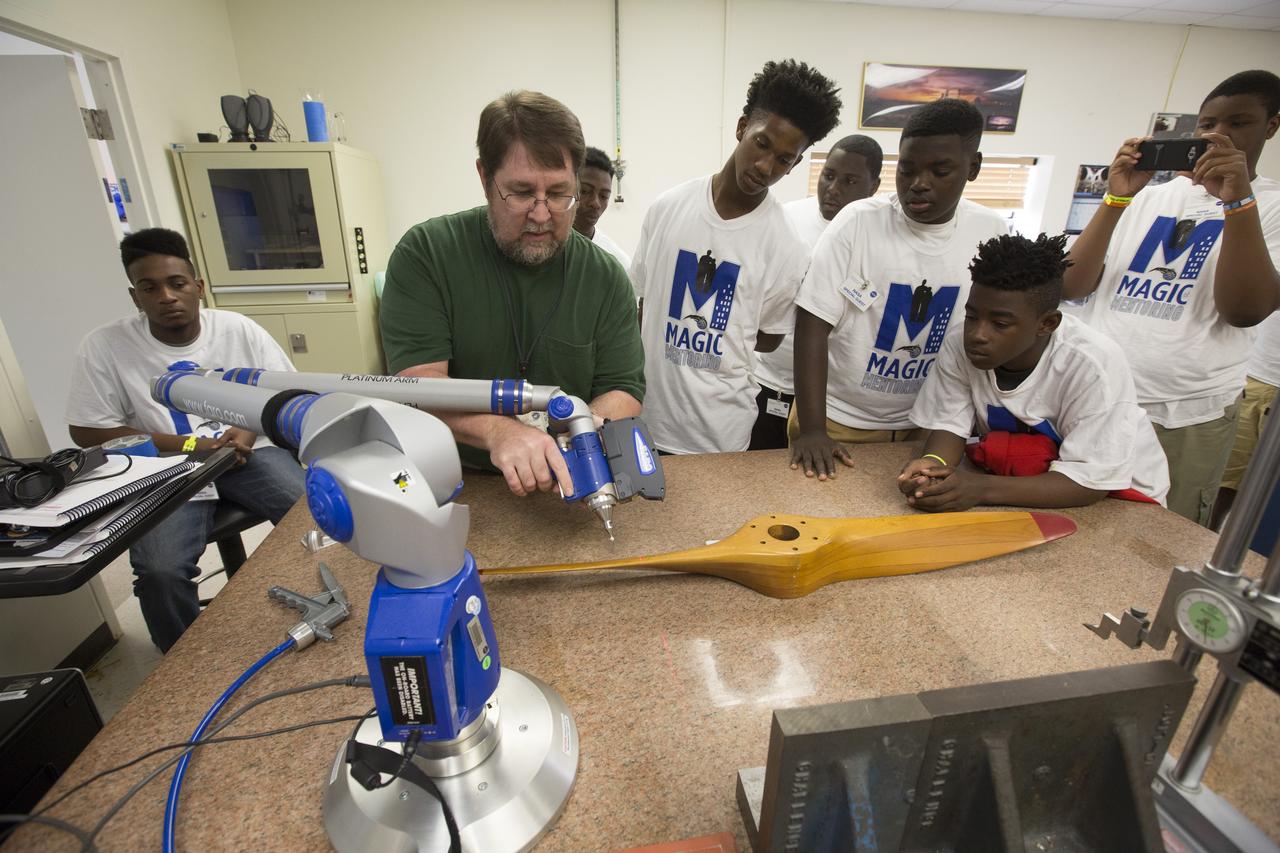
Mike Lane demonstrates a 3D scanner inside the NASA Kennedy Space Center Prototype Lab for students in the My Brother’s Keeper program. The Florida spaceport is one of six NASA centers that participated in My Brother’s Keeper National Lab Week. The event is a nationwide effort to bring youth from underrepresented communities into federal labs and centers for hands-on activities, tours and inspirational speakers. Sixty students from the nearby cities of Orlando and Sanford visited Kennedy, where they toured the Vehicle Assembly Building, the Space Station Processing Facility and the center’s innovative Swamp Works Labs. The students also had a chance to meet and ask questions of a panel of subject matter experts from across Kennedy.
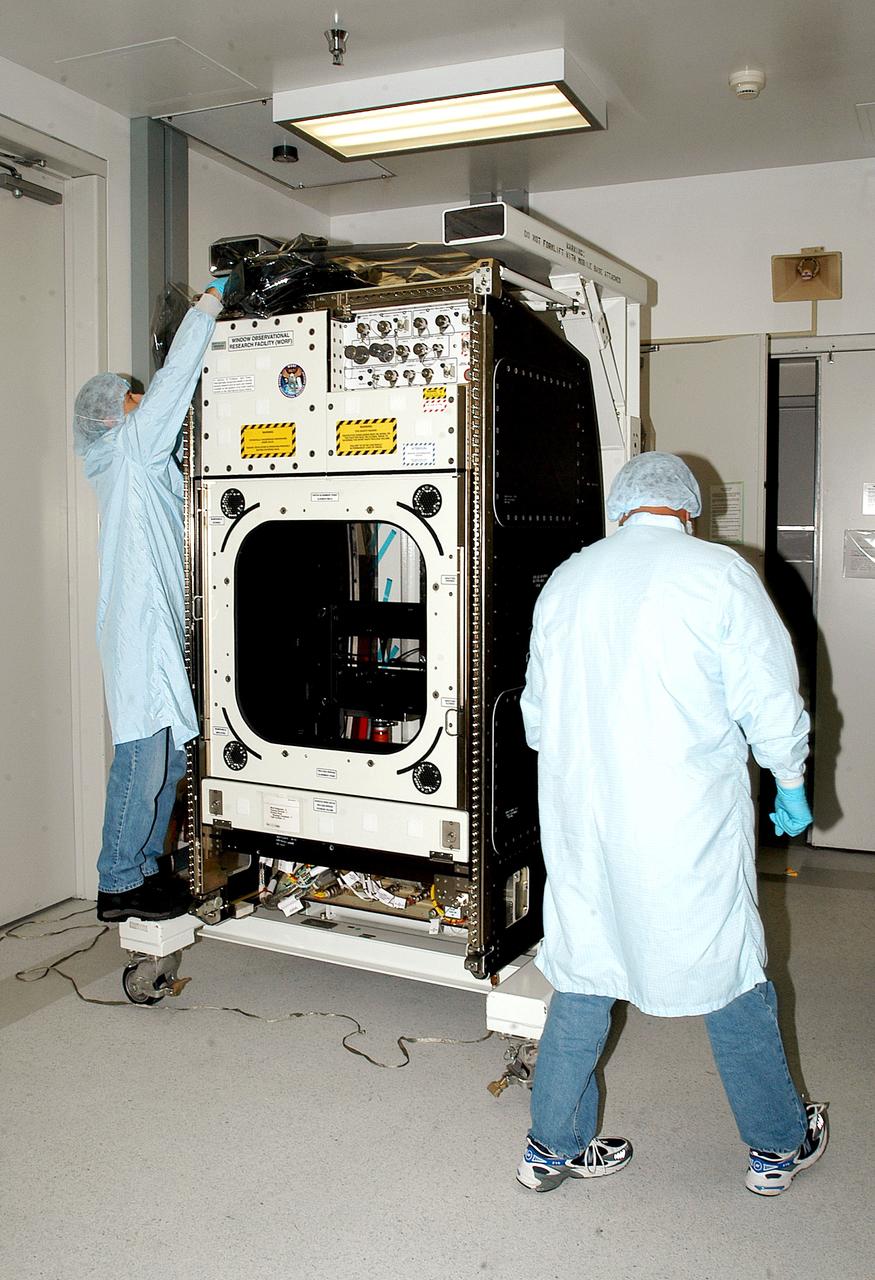
KENNEDY SPACE CENTER, FLA. - Workers in the Space Station Processing Facility check out the Window Observational Research Facility (WORF), designed and built by the Boeing Co. at NASA’s Marshall Space Flight Center in Huntsville, Ala. WORF will be delivered to the International Space Station and placed in the rack position in front of the Destiny lab window, providing locations for attaching cameras, multi-spectral scanners and other instruments. WORF will support a variety of scientific and commercial experiments in areas of Earth systems and processes, global ecological changes in Earth’s biosphere, lithosphere, hydrosphere and climate system, Earth resources, natural hazards, and education. After installation, it will become a permanent focal point for Earth Science research aboard the space station.
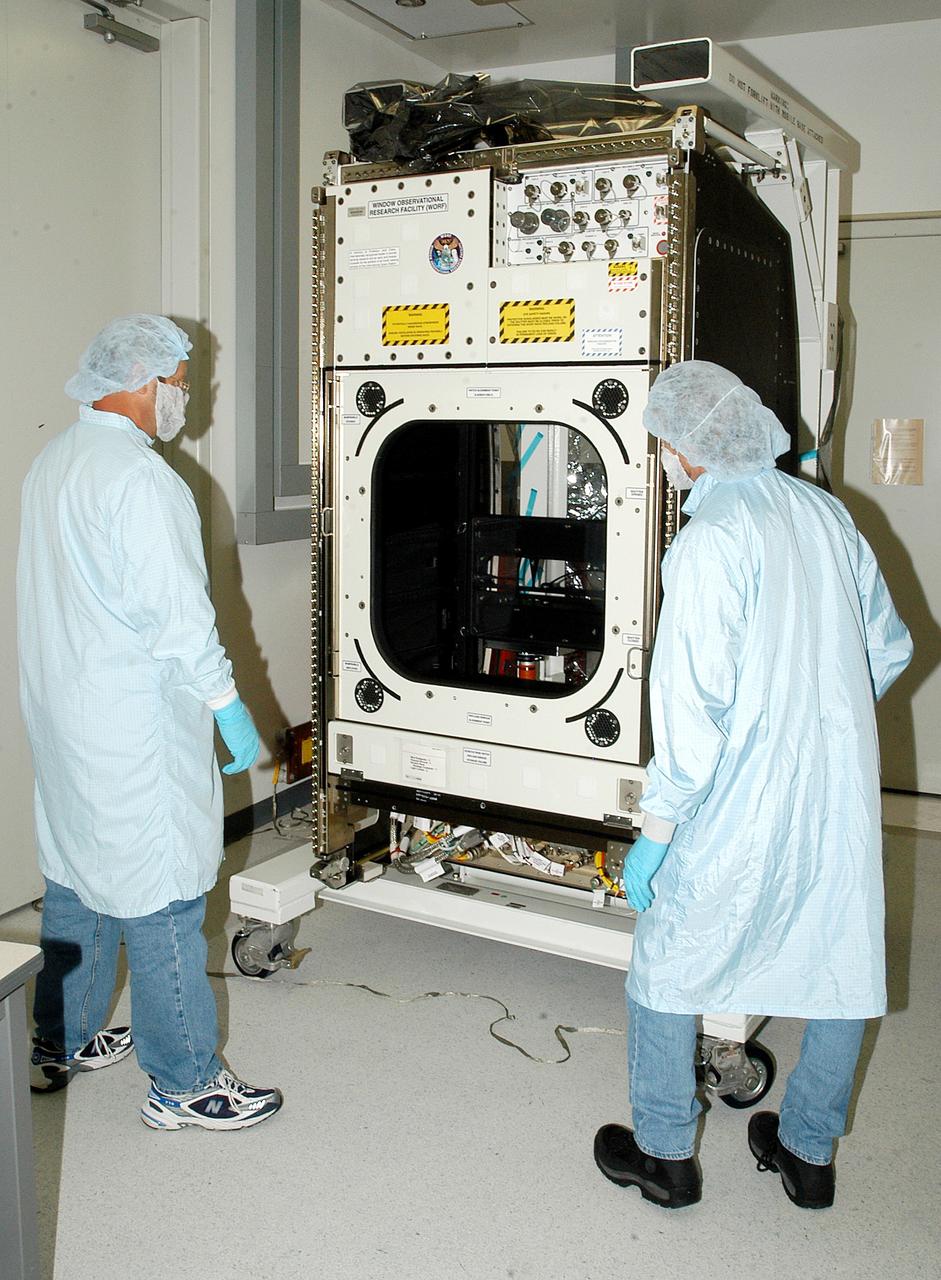
KENNEDY SPACE CENTER, FLA. - Workers in the Space Station Processing Facility check out the Window Observational Research Facility (WORF), designed and built by the Boeing Co. at NASA’s Marshall Space Flight Center in Huntsville, Ala. WORF will be delivered to the International Space Station and placed in the rack position in front of the Destiny lab window, providing locations for attaching cameras, multi-spectral scanners and other instruments. WORF will support a variety of scientific and commercial experiments in areas of Earth systems and processes, global ecological changes in Earth’s biosphere, lithosphere, hydrosphere and climate system, Earth resources, natural hazards, and education. After installation, it will become a permanent focal point for Earth Science research aboard the space station.
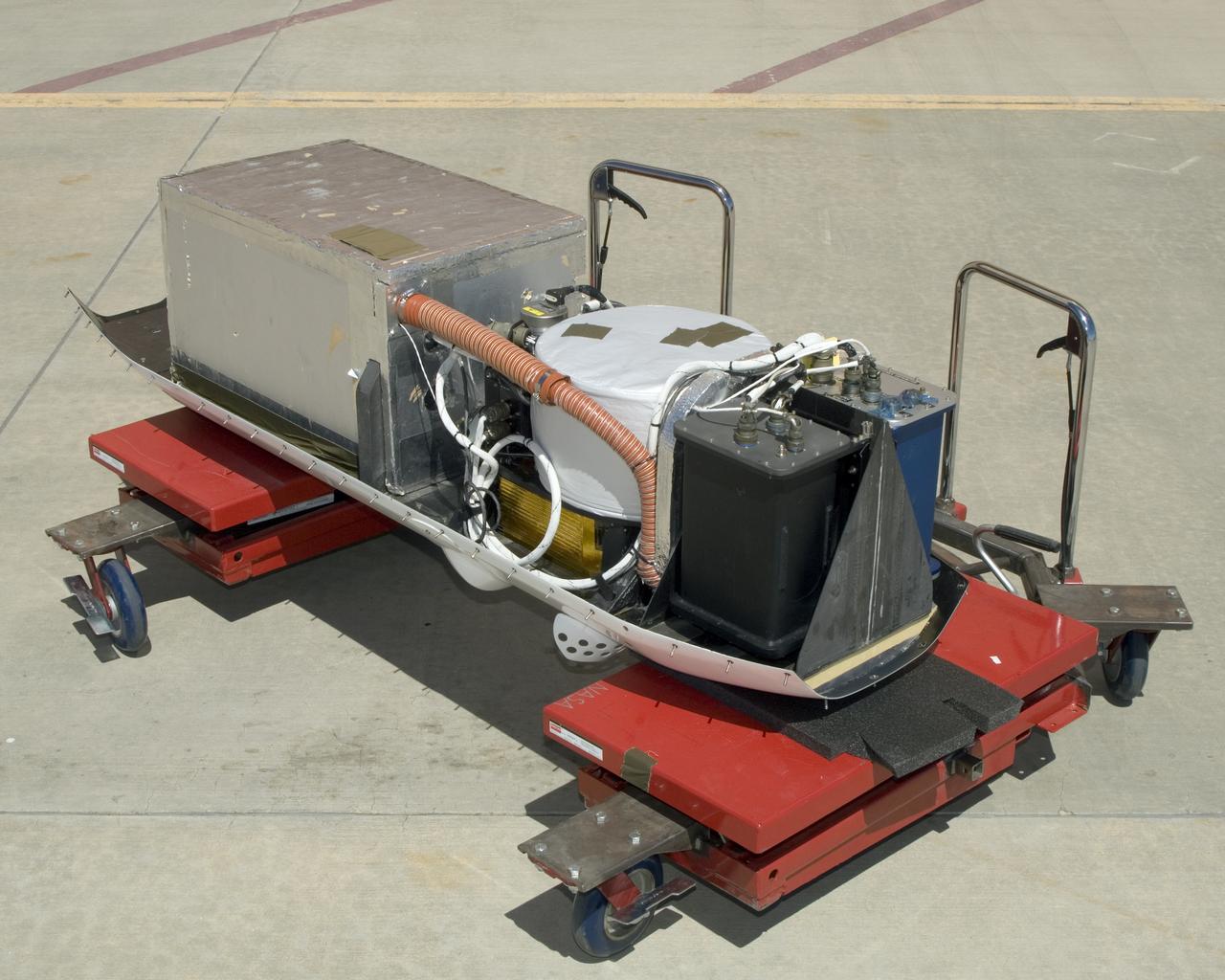
The instruments that make up the Ames Autonomous Module Scanner (AMS) that provided precise thermal-infrared imaging during the Western States Fire Mission in 2007 are detailed in this photo of the AMS as mounted on Ikhana's pod tray. The large foil-covered foam-insulated box at left covers the pressure vessel containing the data system computers and other electronics. The round white-topped assembly is the scan head, including the scan mirror, folded telescope, blackbody references, spectrometer and detectors. Two pressure boxes visible at the forward end of the tray contain the Applanix POS/AV precision navigation subsystem (black) and the power distributor including circuit breakers and ancillary wiring, scan motor controller and the blackbody reference temperature controller (blue).
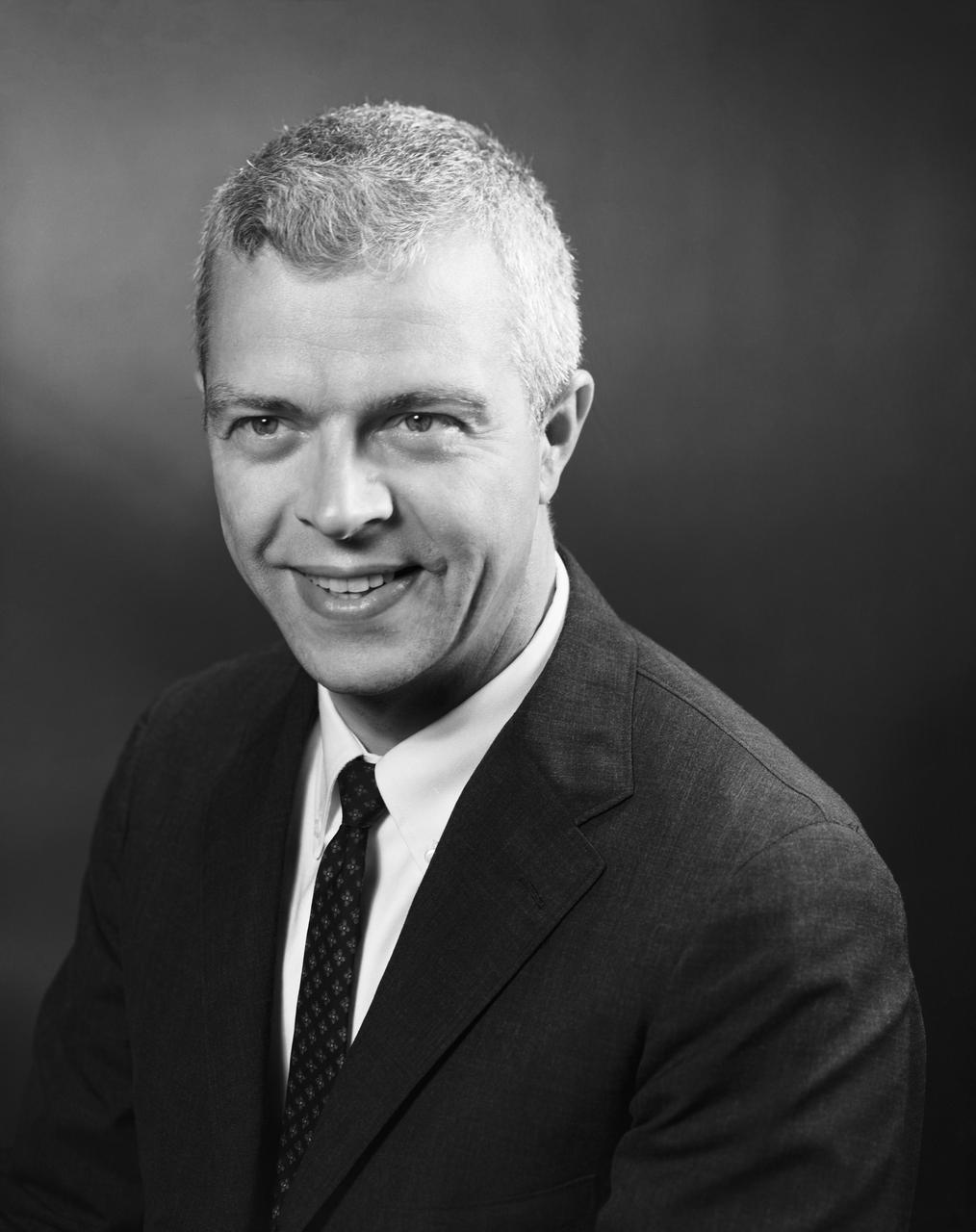
Portrait of Dr. John C. Houbolt
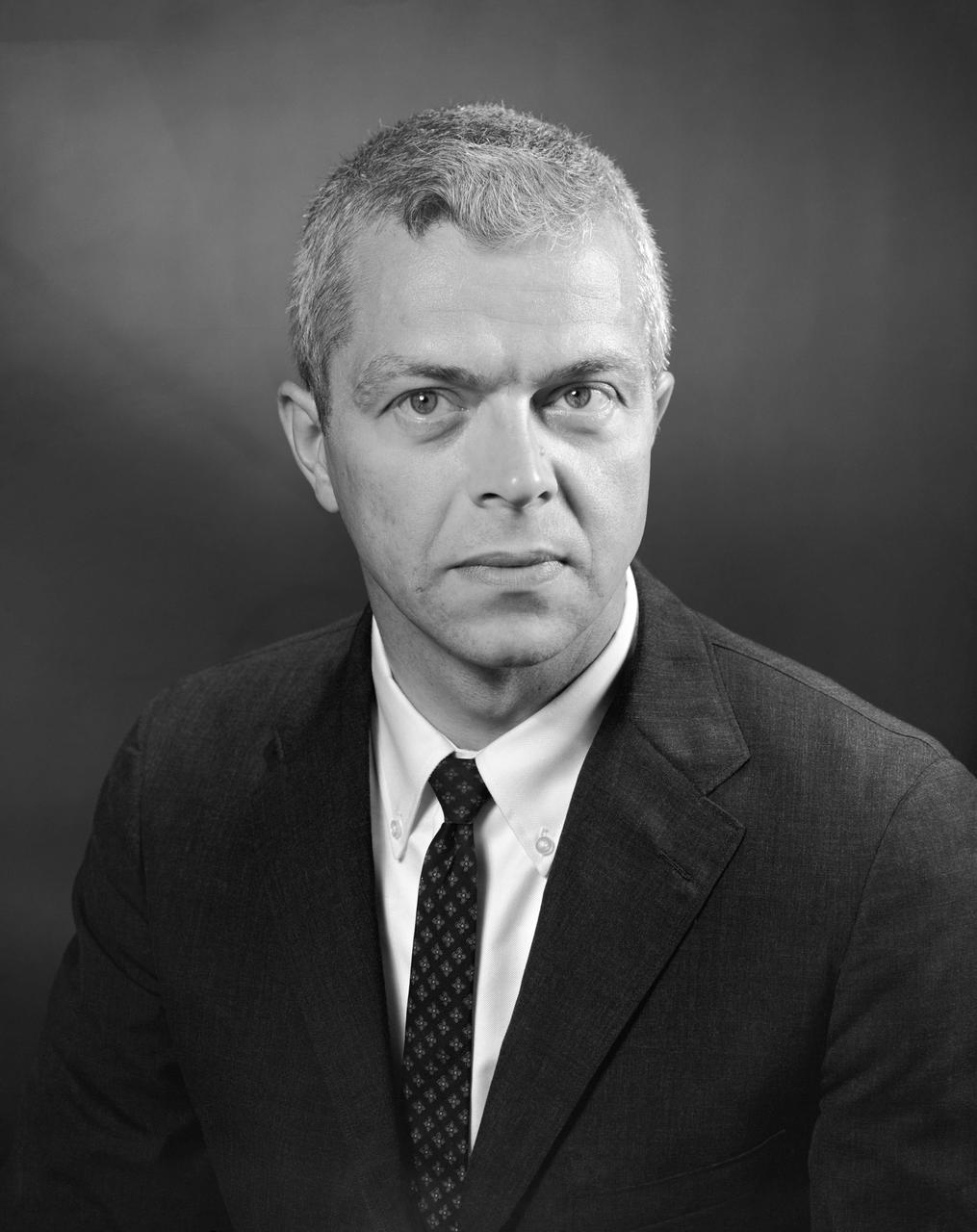
Portrait of Dr. John C. Houbolt

Portrait of Dr. John C. Houbolt

Portrait of Dr. John C. Houbolt
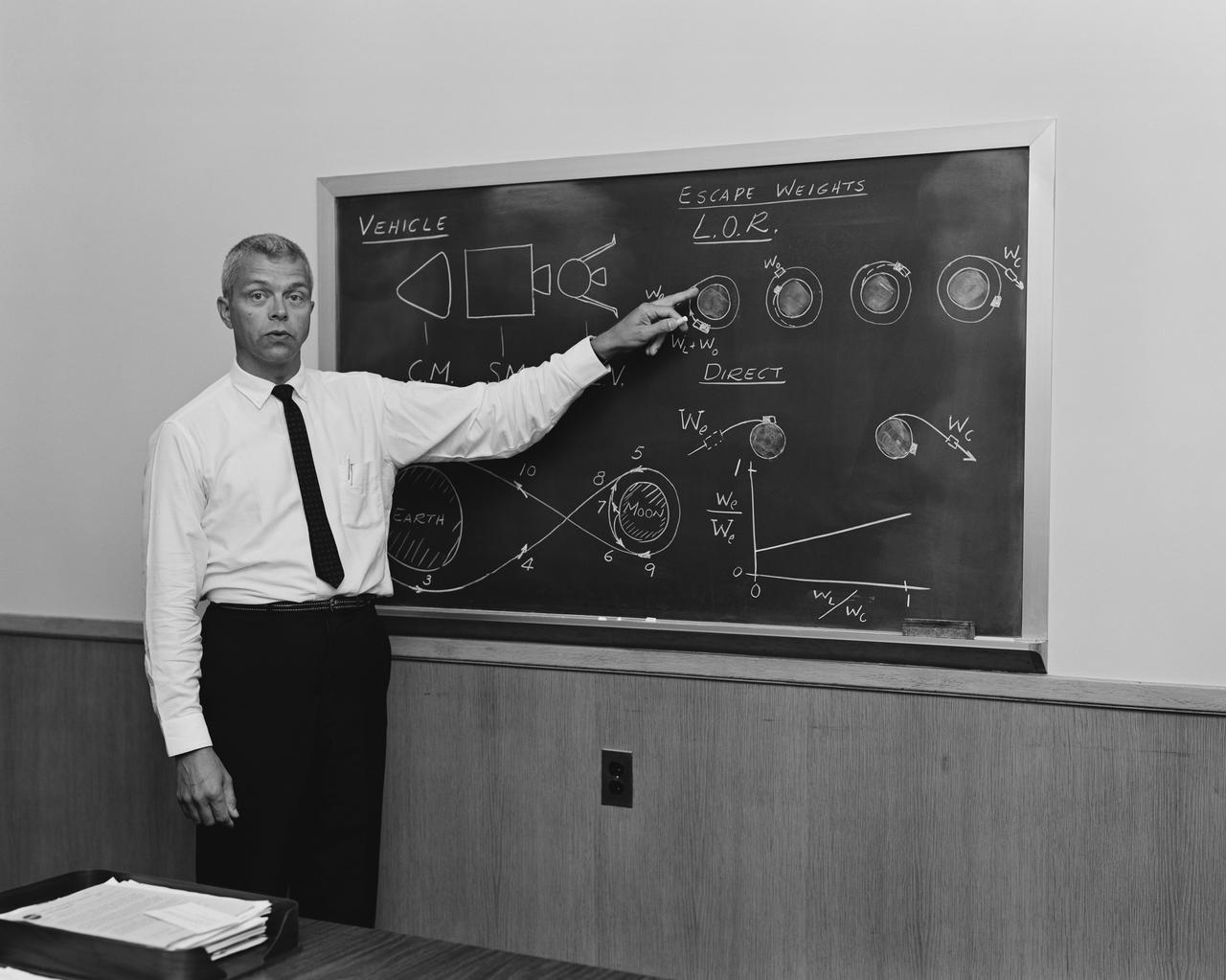
At blackboard, showing his space rendezvous concept for lunar landings. Lunar Orbital Rendezvous (LOR) would be used in the Apollo program. Photograph published in Space Flight Revolution - NASA Langley Research Center From Sputnik to Apollo (page 247), by James R. Hansen.

Portrait of Dr. John C. Houbolt
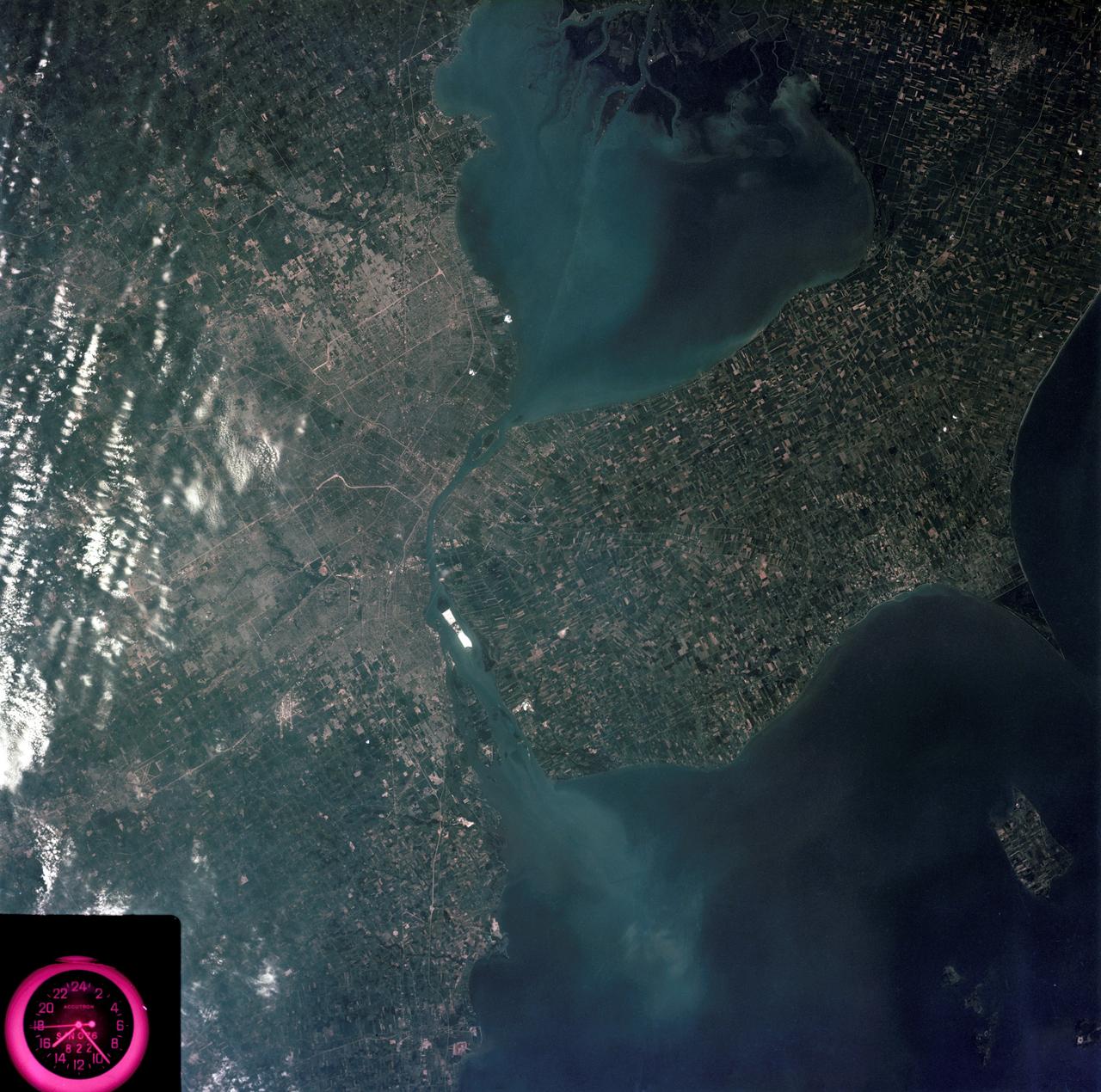
SL3-83-0152 (July-September 1973) --- A near vertical view of the metropolitan Detroit, Michigan area is seen in this Skylab 3 Earth Resources Experiments Package S190-B (five-inch Earth terrain camera) photograph taken from the Skylab space station in Earth orbit. The 25-mile long Detroit River drains the smaller body of water (Lake St. Clair) and flows southwestward separating Detroit from Windsor, Ontario, and empties into Lake Erie. The Detroit River handles a great deal of Great Lakes barge and ship traffic. Major streets and thoroughfares radiating from the city are clearly visible. Fighting Island is the highly reflective, white area located almost in the center of the picture. This high reflectivity is caused by the functional use of the island-disposal ponds for chemical salts. Sedimentation and/or pollution patterns in the area provide interesting visual phenomena for speculation and analysis. Distinct and rather unique cultivated field patterns can be observed south and east of Windsor, Ontario. This is a direct result of an English survey and land tenure system which was utilized when the area was settled. New areas of residential development are fairly easy to differentiate from older, established residential areas. Vegetation and extent of area coverage can be determined. The Oakland County Planning Commission and the Federal Bureau of Outdoor Recreation working closely with Irv Sattinger of the Environmental Research Institute of Michigan (University of Michigan) are presently processing and analyzing photographic and Multispectral scanner data to determine its usefulness for recreation and open space site studies for this area. Photo credit: NASA
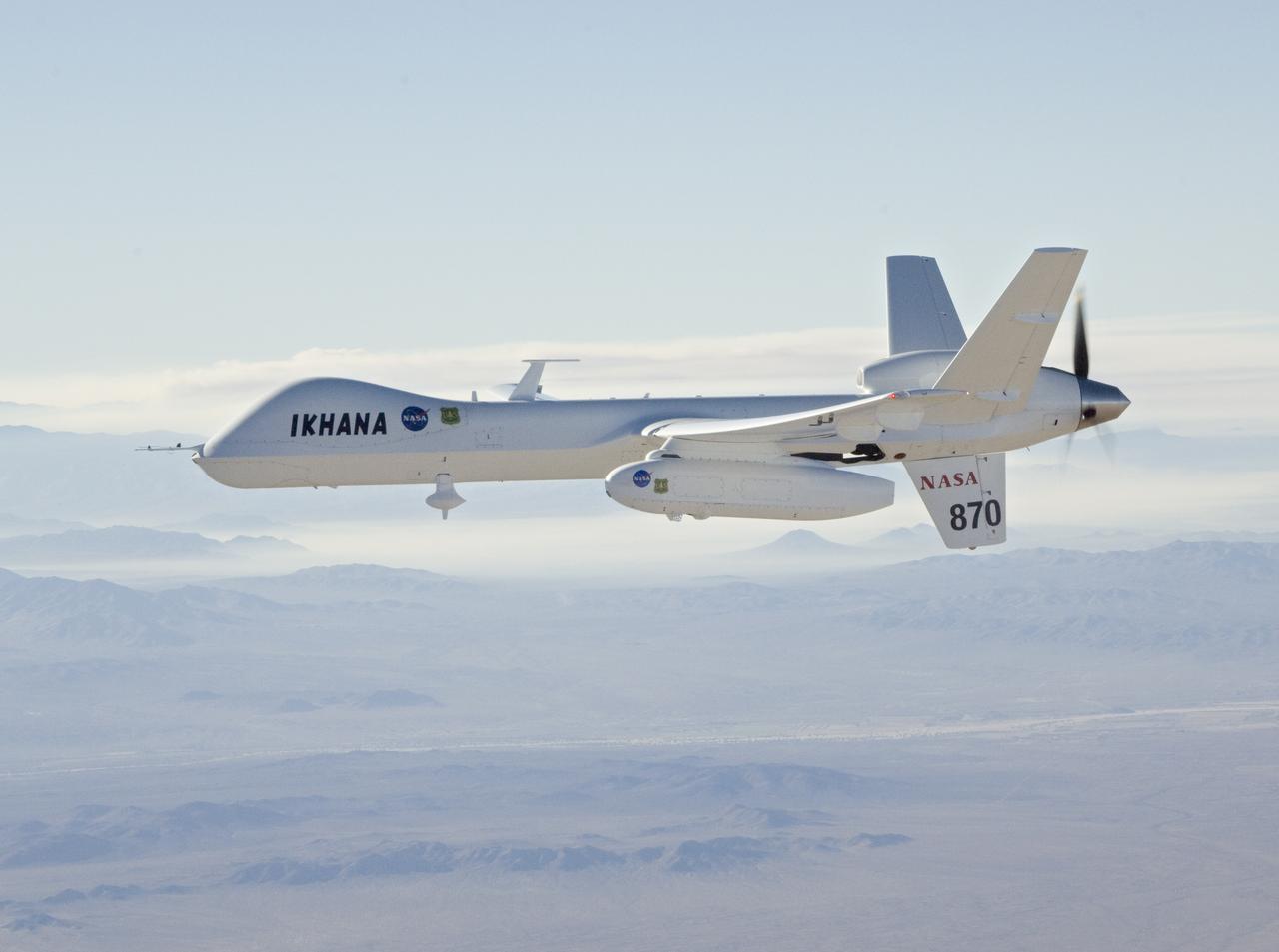
With smoke from the Lake Arrowhead area fires streaming in the background, NASA's Ikhana unmanned aircraft heads out on a Southern California wildfires imaging mission.
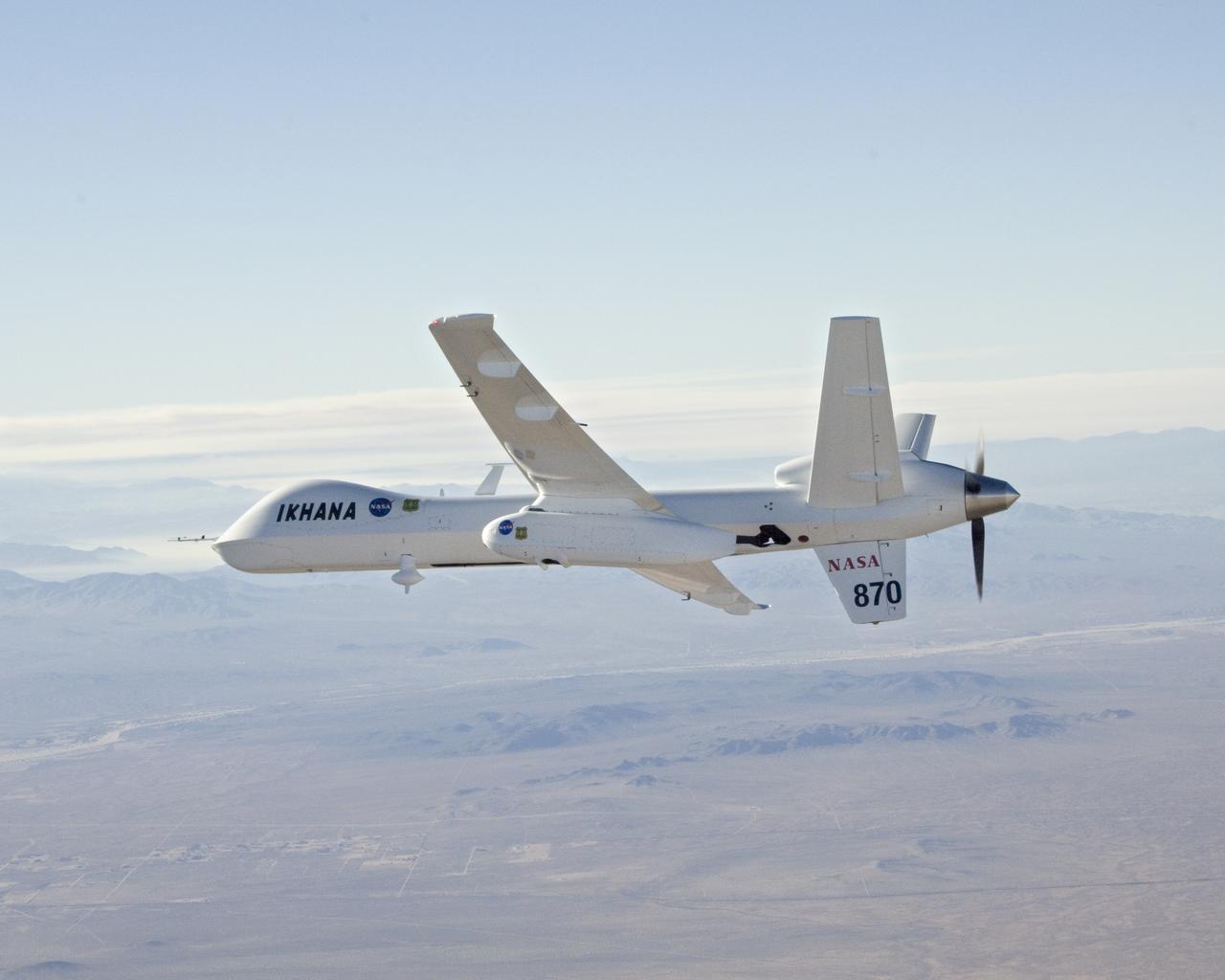
With smoke from the Lake Arrowhead area fires streaming in the background, NASA's Ikhana unmanned aircraft heads out on a Southern California wildfires imaging mission.
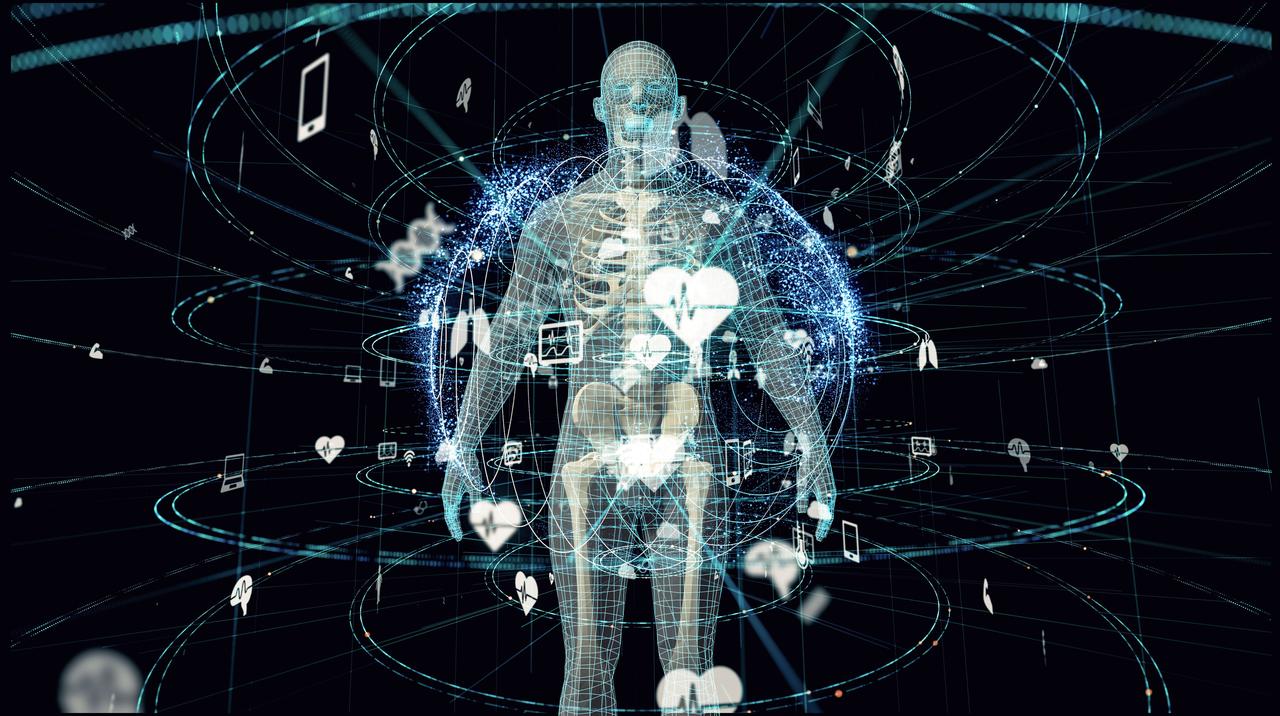
jsc2022e062020 (6/30/2022) --- Space Health will create a digital twin of the astronaut from the data collected by the Bio-Monitor and demonstrate how this could be used for autonomous health monitoring on future space missions. (Image courtesy of CSA)