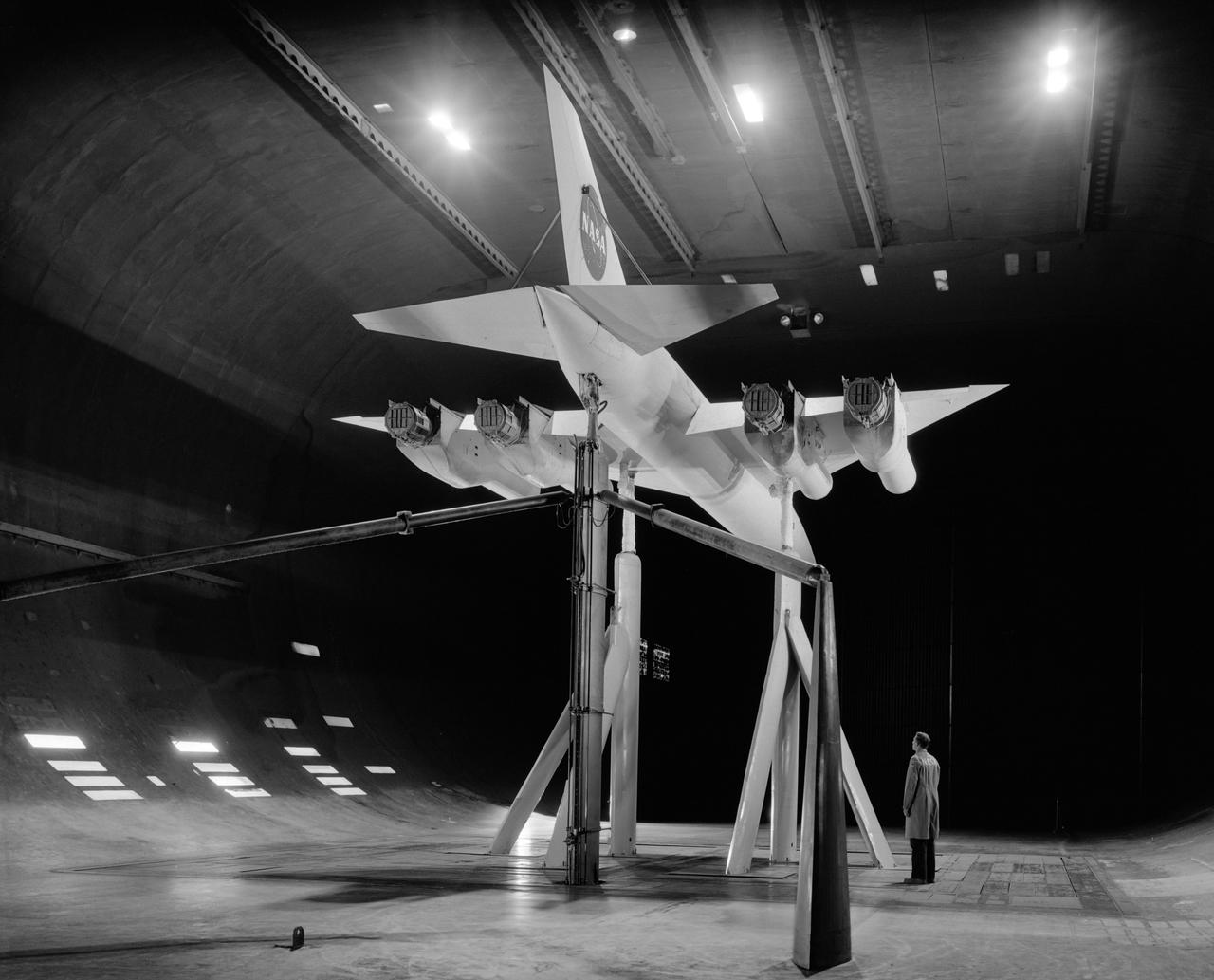
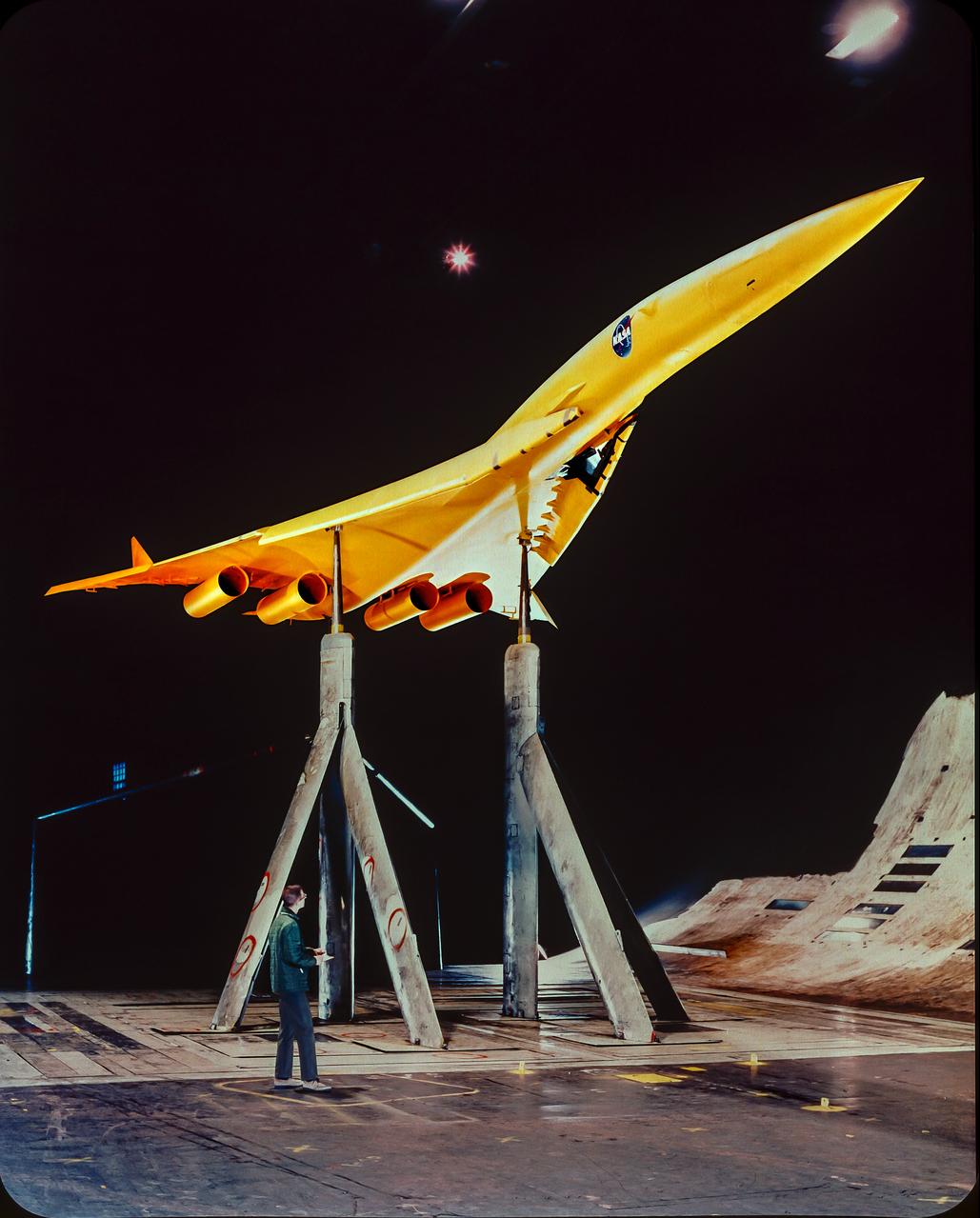
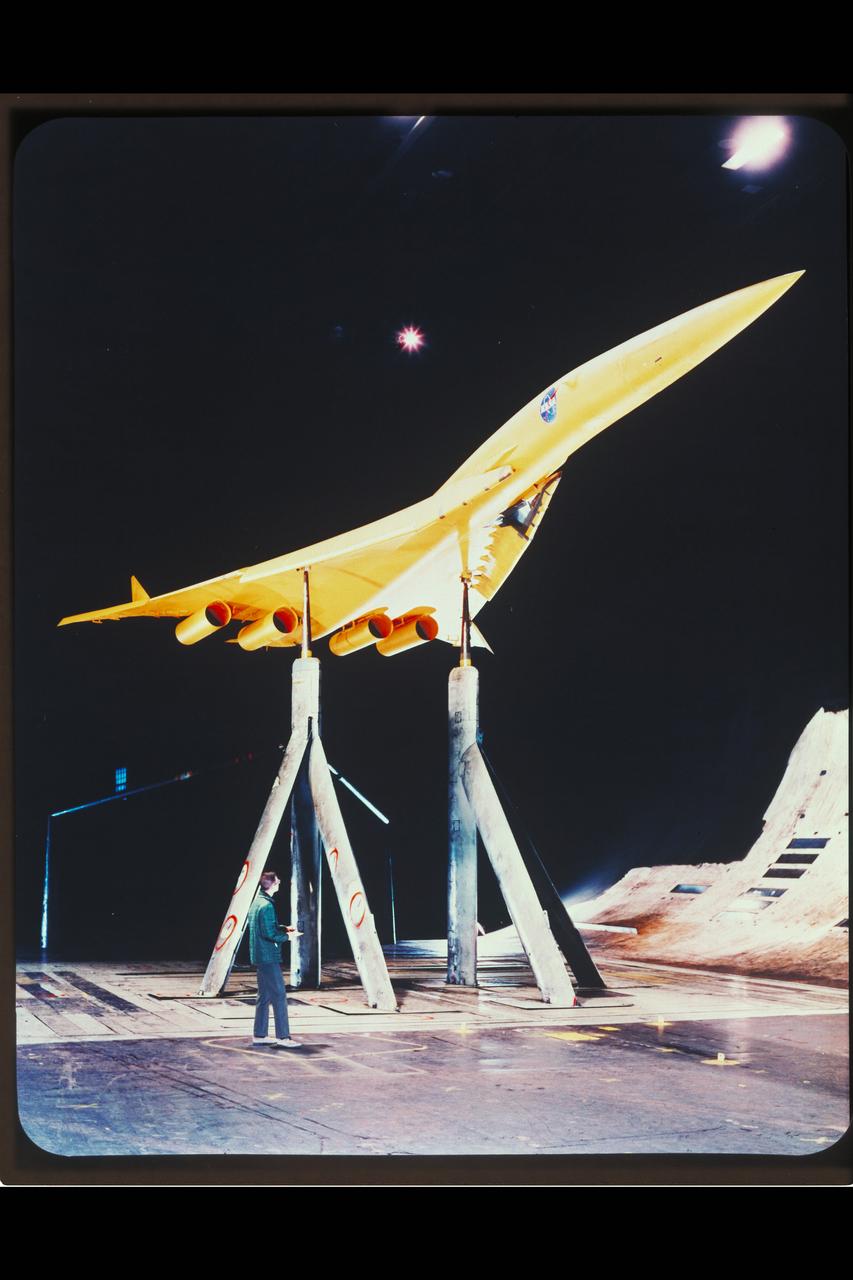
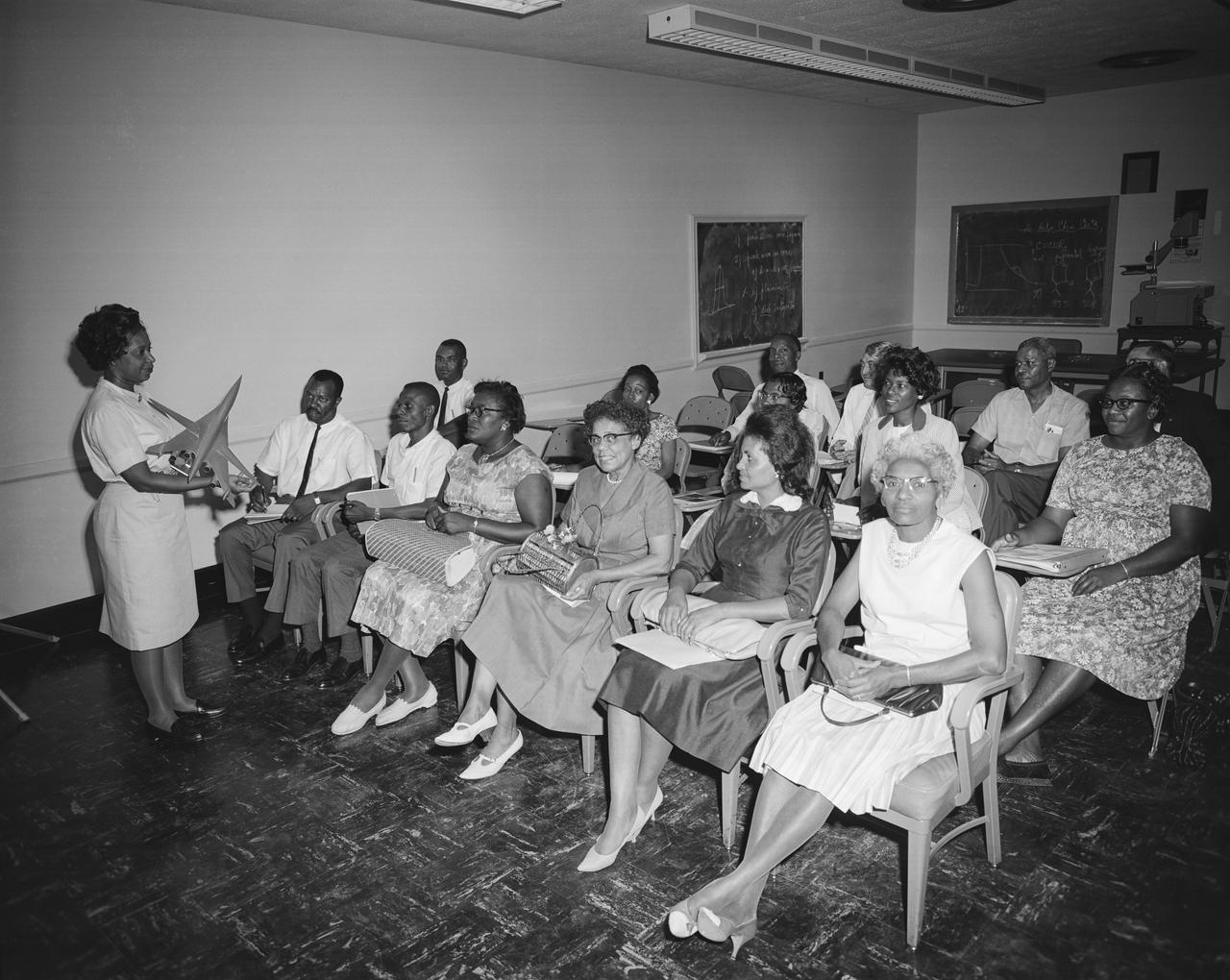
Hampton Institute Tour Photograph taken July 30, 1964. Mary W Jackson, Aerospace Engineer in the Large Supersonic Tunnels Branch of Full-Scale Research Division, explains the facilities used in testing research models such as SCAT. The Guidance Counseling Class from Hampton Institute visited the center on July 30 and toured a number of facilities. The purpose of the visit was to provide the counselors an opportunity to see areas of work representing fields in which their students might be employed. The group, under the direction of Professor Fissell Jones (Left, back row) of Hampton Institute, represented the states of Virginia, North Carolina, South Carolina, and Georgia. In 1958 Mary Jackson became NASA's first black female engineer. The Hampton Institute (now Hampton University) is a Historically Black College. NASA started its EEO office in 1964 and the NASA Administrator at the time, James Webb, was very enthusiastic about reaching out to universities (including HBCUs) to partner with them and to encourage students to become NASA engineers.