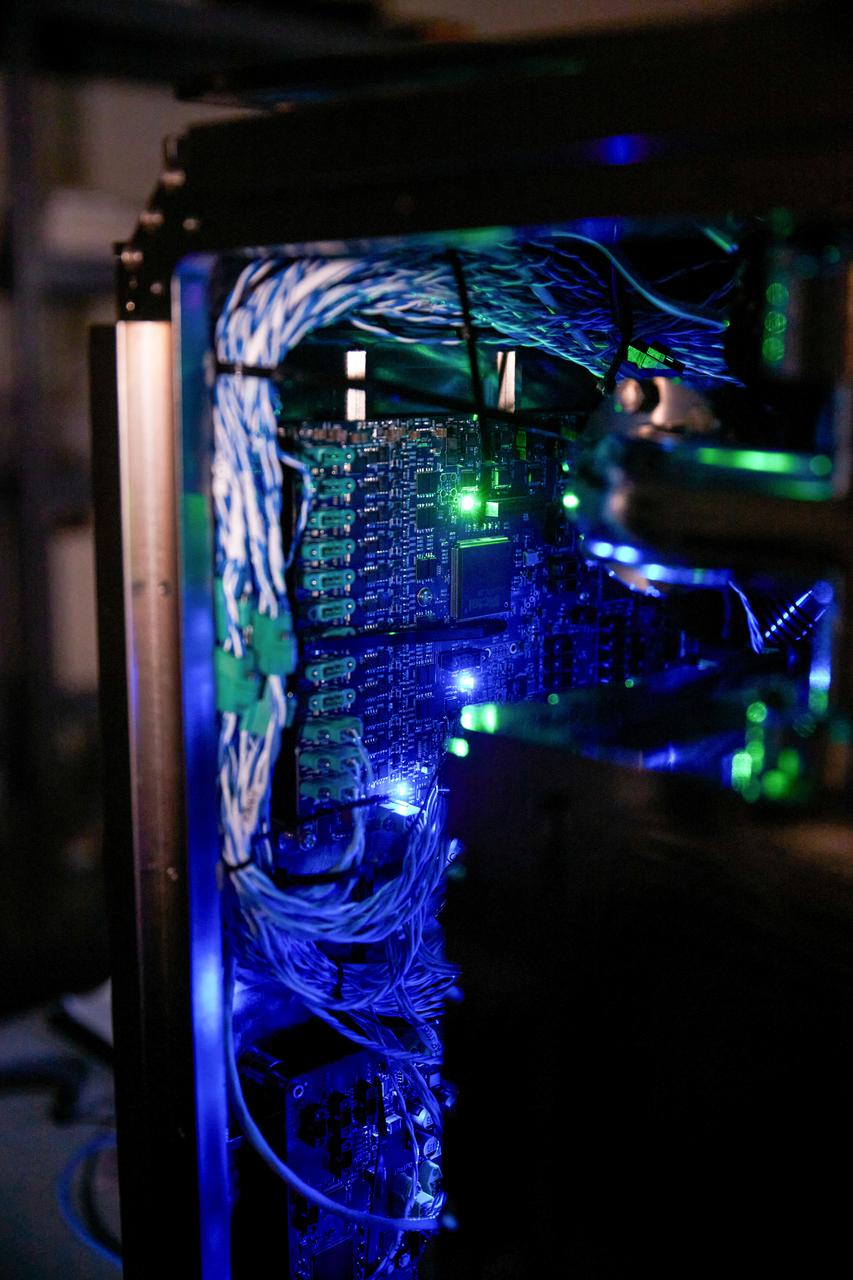
jsc2021e063286 (3/5/2021) --- The Turbine Superalloy Casting Module (Turbine SCM) is a commercial in-space manufacturing device designed to provide proof-of-principle for polycrystal superalloy part manufacturing in microgravity for terrestrial use. Image courtesy of Redwire.
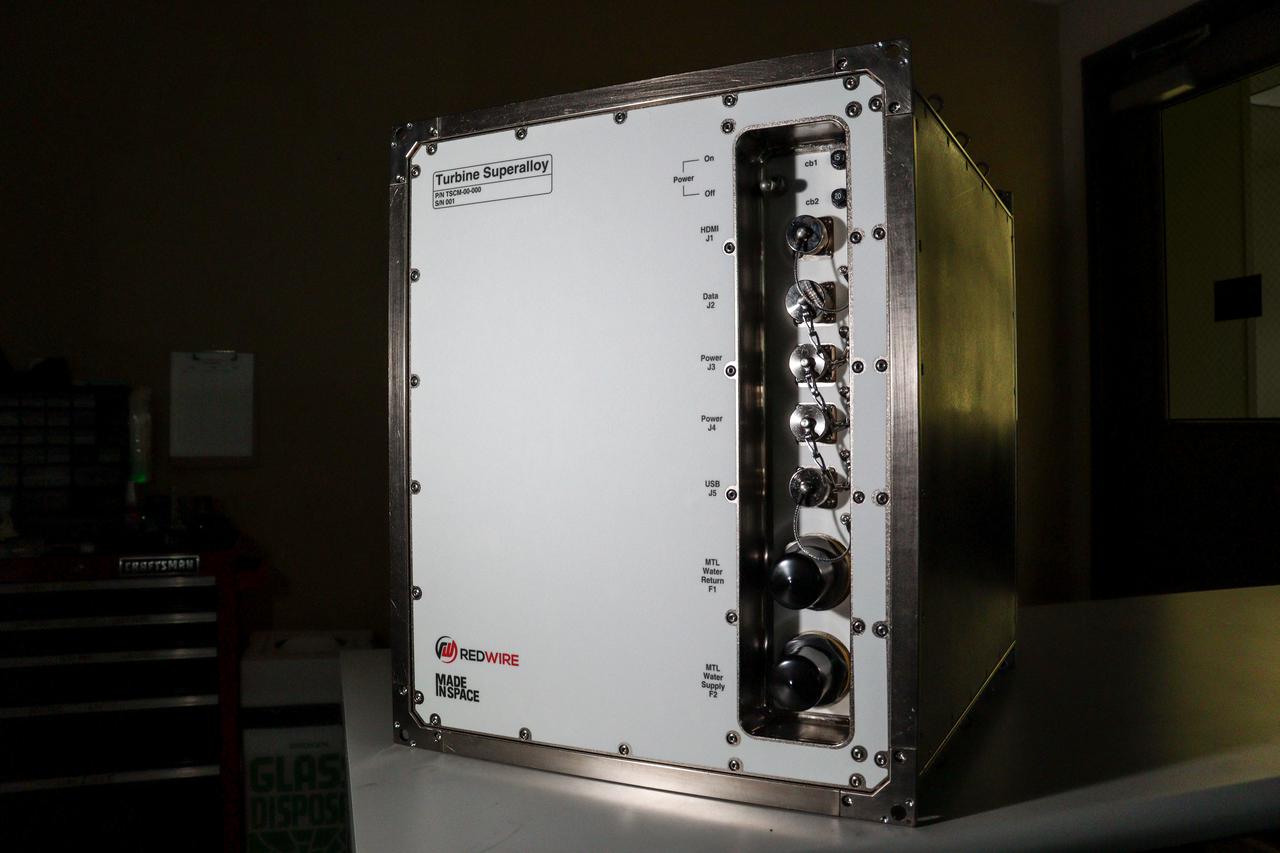
jsc2021e063285 (12/10/2021) --- The Turbine Superalloy Casting Module (Turbine SCM) is a commercial in-space manufacturing device designed to provide proof-of-principle for polycrystal superalloy part manufacturing in microgravity for terrestrial use. Image courtesy of Redwire.
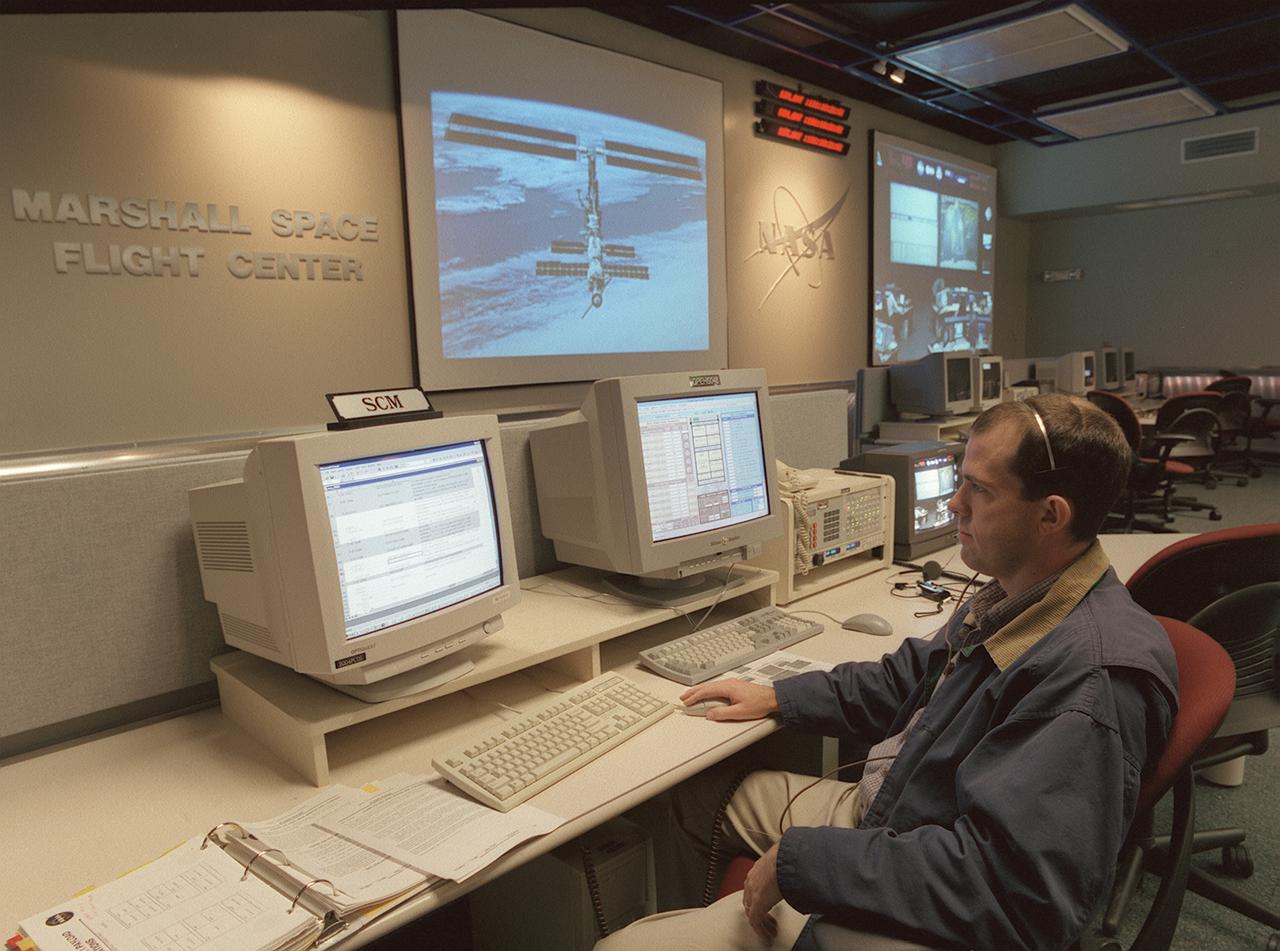
The Payload Operations Center (POC) is the science command post for the International Space Station (ISS). Located at NASA's Marshall Space Flight Center in Huntsville, Alabama, it is the focal point for American and international science activities aboard the ISS. The POC's unique capabilities allow science experts and researchers around the world to perform cutting-edge science in the unique microgravity environment of space. The POC is staffed around the clock by shifts of payload flight controllers. At any given time, 8 to 10 flight controllers are on consoles operating, plarning for, and controlling various systems and payloads. This photograph show the Safety Coordination Manager (SCM) at a work station. The SCM monitors science experiments to ensure they are conducted in a safe manner in accordance with strict safety regulations.
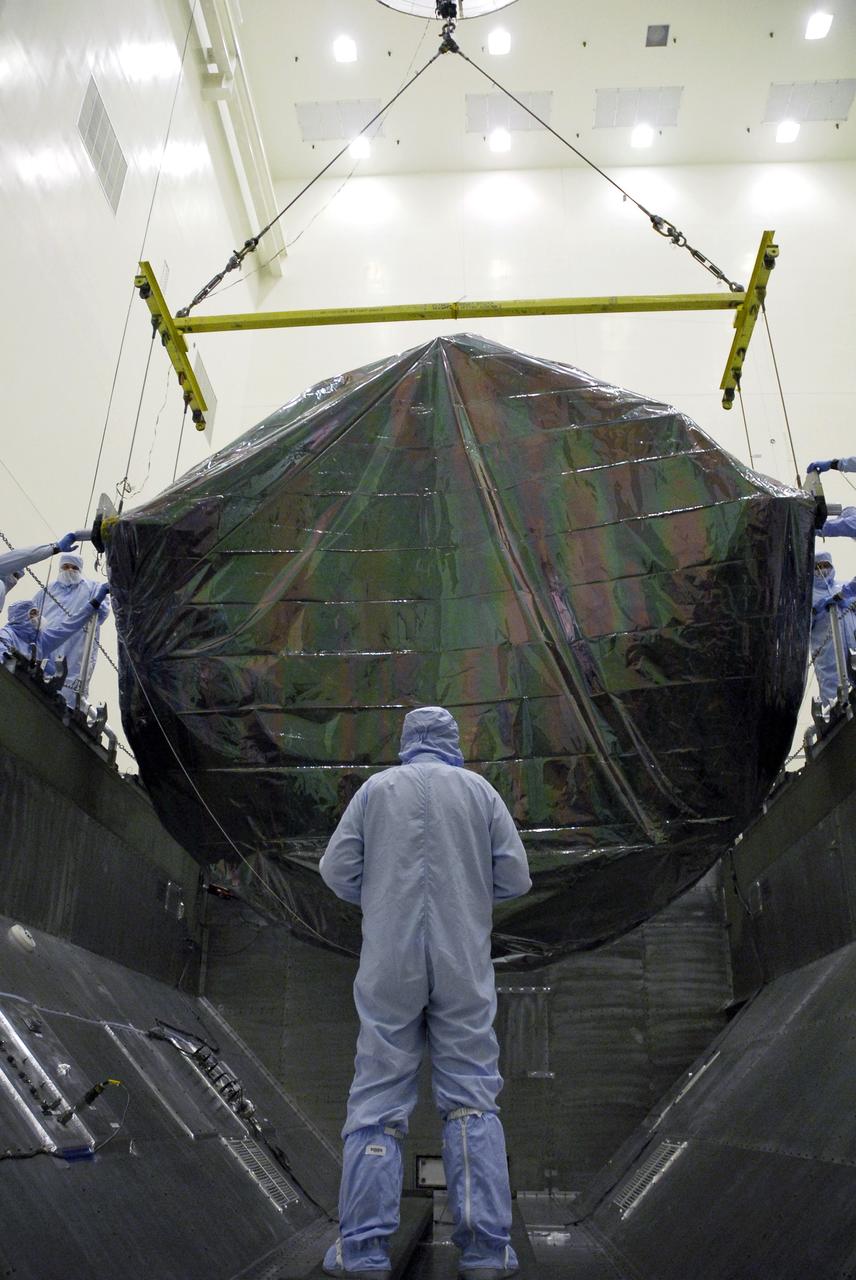
CAPE CANAVERAL, Fla. - In the Payload Hazardous Servicing Facility at NASA’s Kennedy Space Center, workers monitor the movement of the Flight Support System carrier with the Soft Capture Mechanism as it is lowered into the payload canister. The carrier is associated with the STS-125 mission to service the Hubble Space Telescope. The canister will transfer the carrier to Launch Pad 39A. The carrier is one of four associated with the STS-125 mission to service the Hubble Space Telescope. At the pad, all the carriers will be loaded into space shuttle Atlantis’ payload bay. Launch of Atlantis is targeted for Oct. 10. Photo credit: NASA/Cory Huston
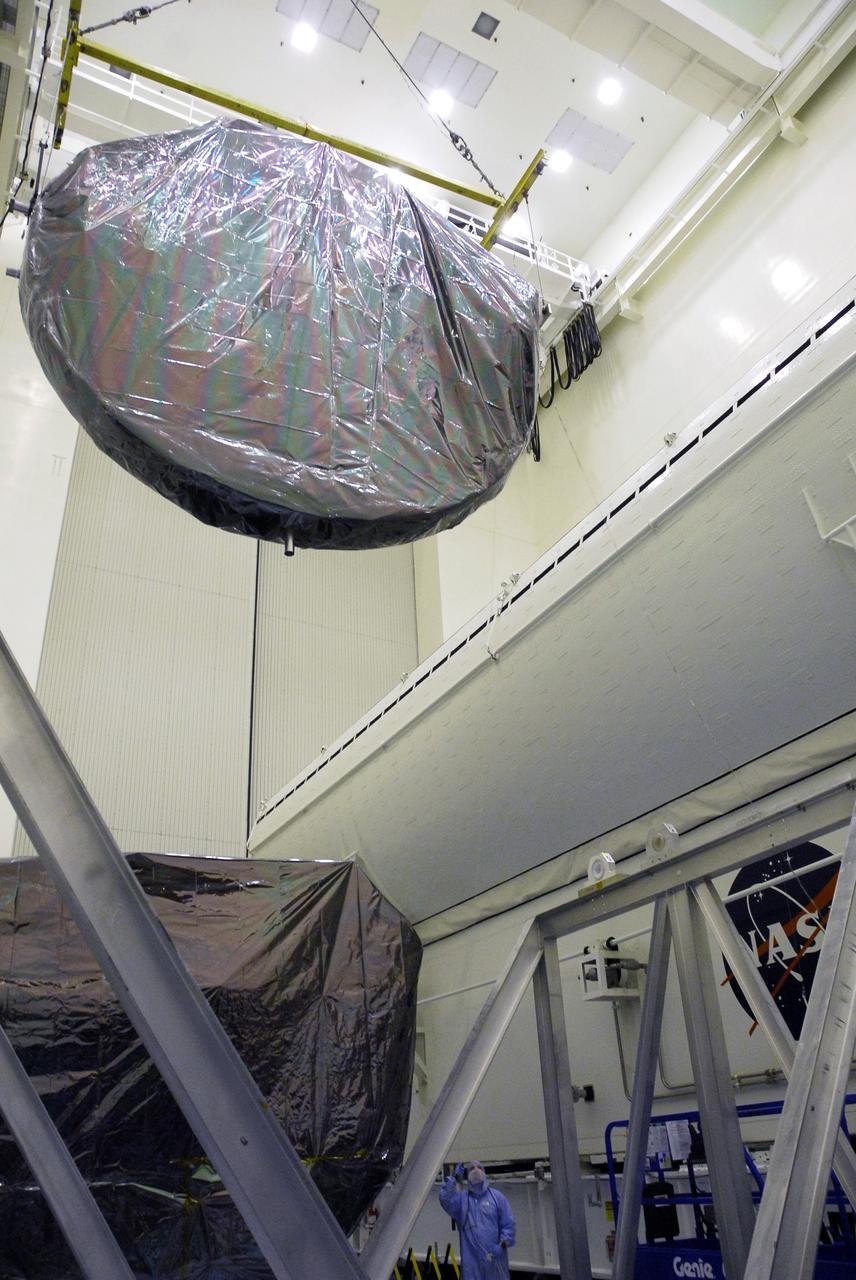
CAPE CANAVERAL, Fla. - In the Payload Hazardous Servicing Facility at NASA’s Kennedy Space Center, an overhead crane moves the Flight Support System carrier with the Soft Capture Mechanism toward the payload canister for transfer to Launch Pad 39A. The carrier is one of four associated with the STS-125 mission to service the Hubble Space Telescope. At the pad, all the carriers will be loaded into space shuttle Atlantis’ payload bay. Launch of Atlantis is targeted for Oct. 10. Photo credit: NASA/Cory Huston
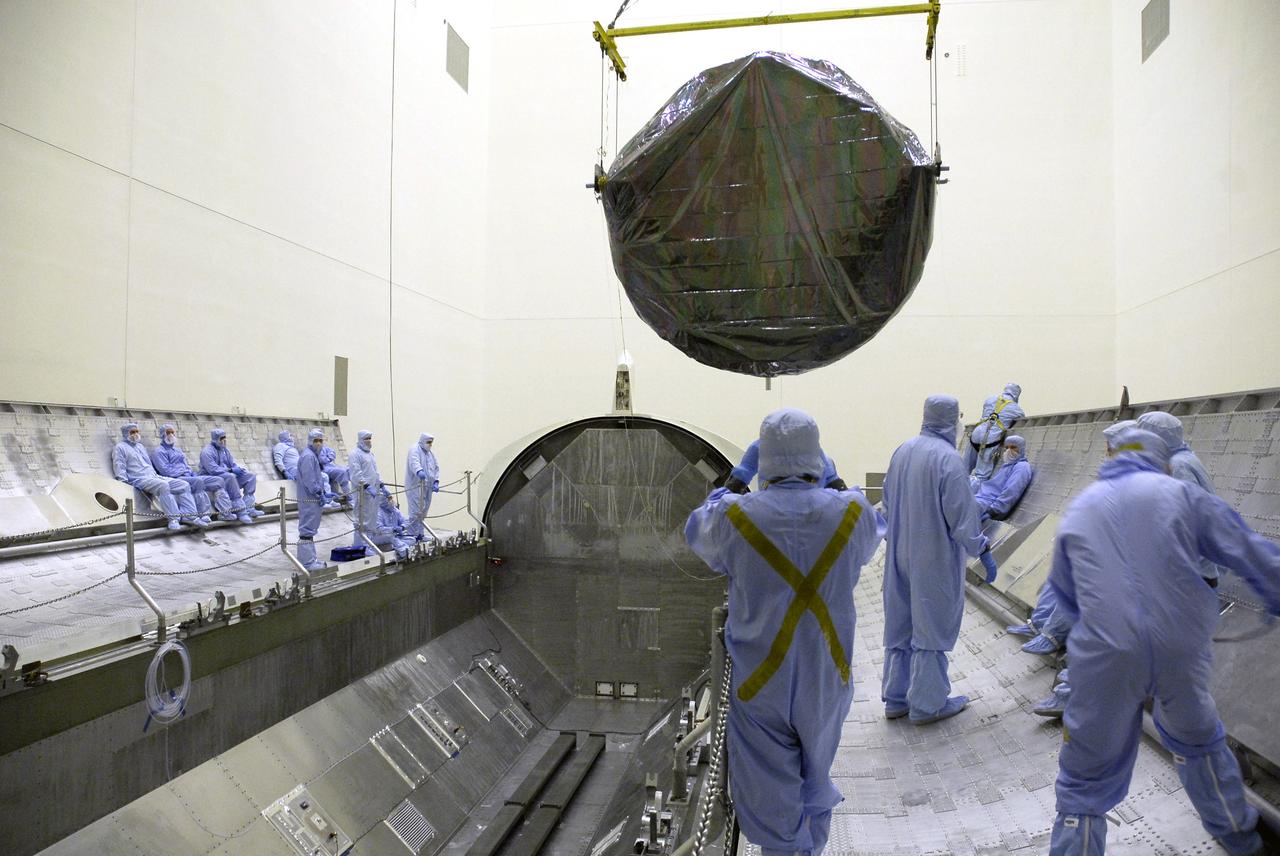
CAPE CANAVERAL, Fla. - In the Payload Hazardous Servicing Facility at NASA’s Kennedy Space Center, workers observe the movement of the crane holding the Flight Support System carrier with the Soft Capture Mechanism. It will be installed in the payload canister for transfer to Launch Pad 39A. The carrier is one of four associated with the STS-125 mission to service the Hubble Space Telescope. At the pad, all the carriers will be loaded into space shuttle Atlantis’ payload bay. Launch of Atlantis is targeted for Oct. 10. Photo credit: NASA/Cory Huston
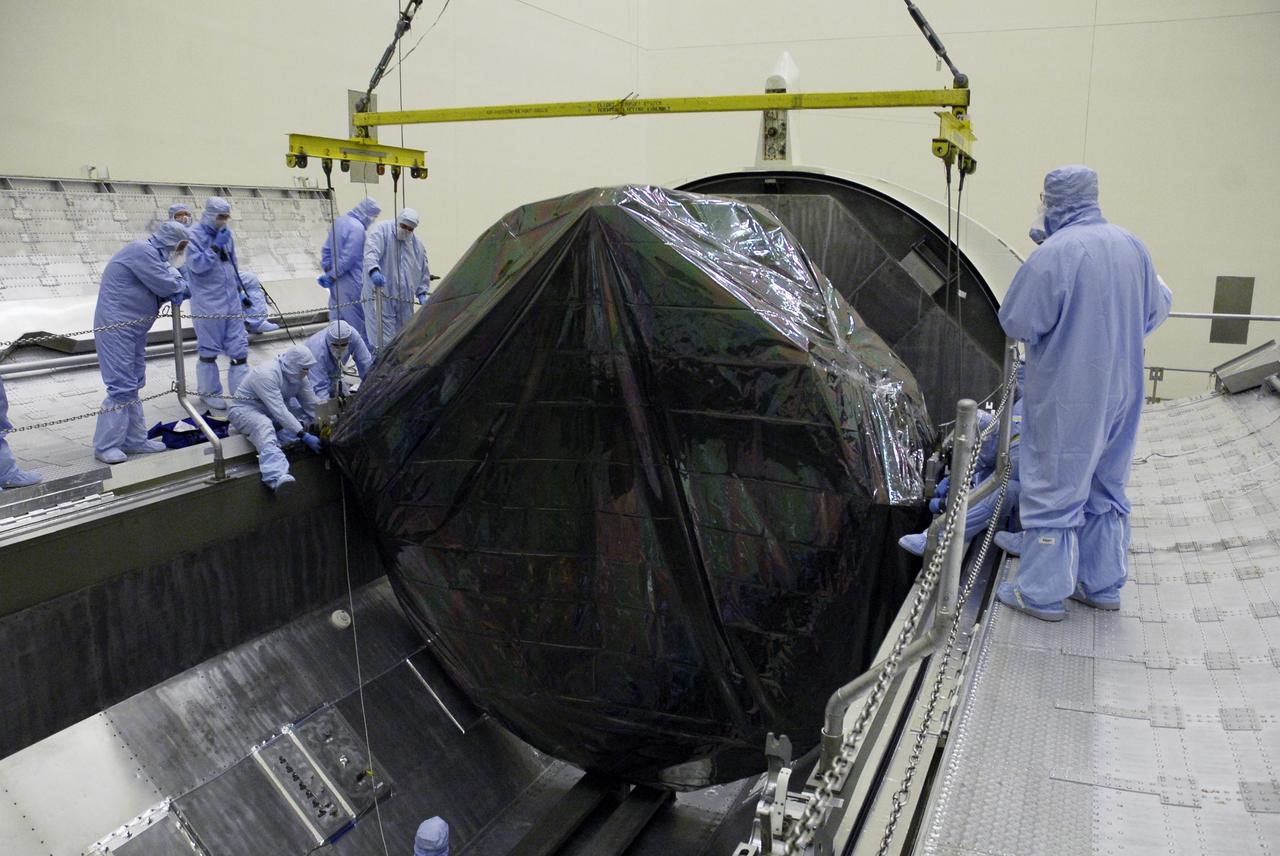
CAPE CANAVERAL, Fla. - In the Payload Hazardous Servicing Facility at NASA’s Kennedy Space Center, workers begin securing the Flight Support System carrier with the Soft Capture Mechanism in the payload canister. The canister will transfer the carrier to Launch Pad 39A. The carrier is one of four associated with the STS-125 mission to service the Hubble Space Telescope. At the pad, all the carriers will be loaded into space shuttle Atlantis’ payload bay. Launch of Atlantis is targeted for Oct. 10. Photo credit: NASA/Cory Huston
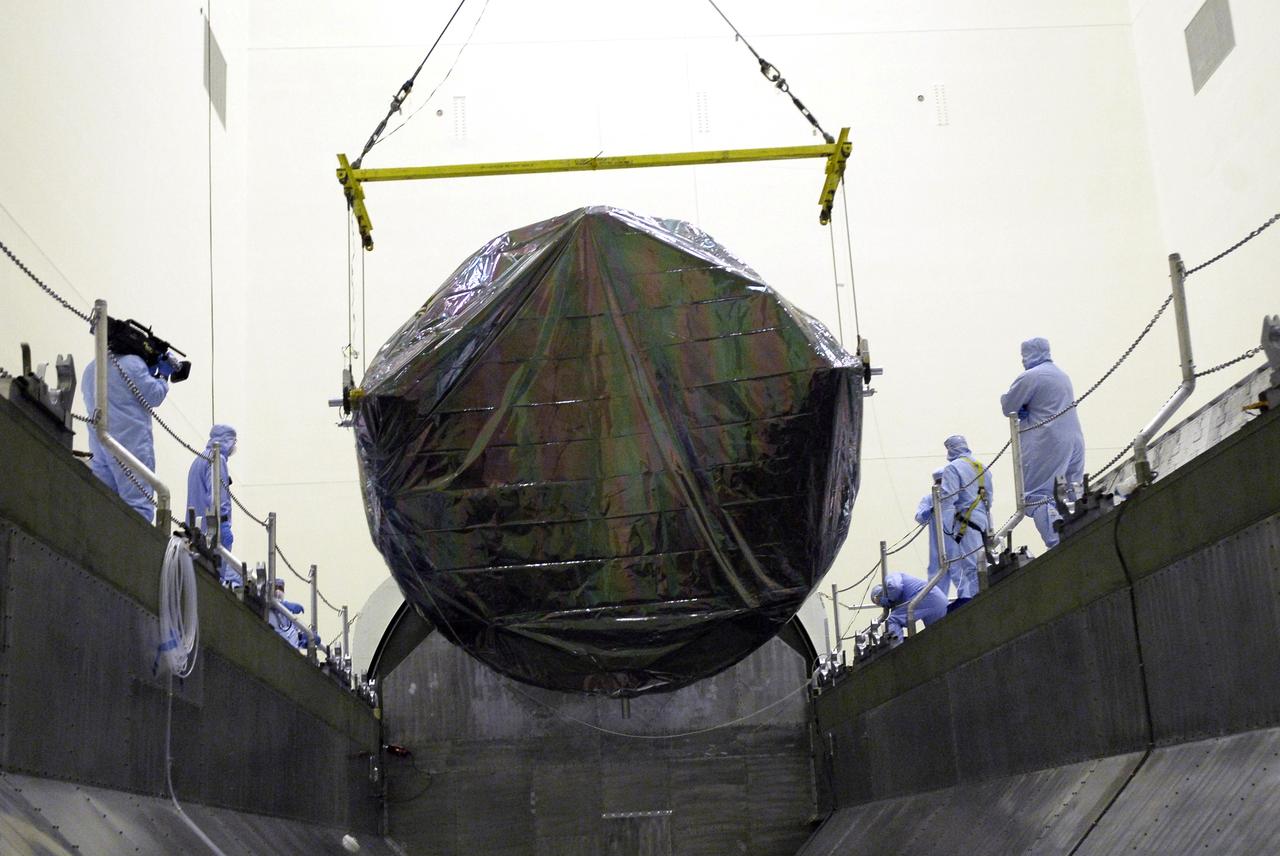
CAPE CANAVERAL, Fla. - In the Payload Hazardous Servicing Facility at NASA’s Kennedy Space Center, the overhead crane lowers the Flight Support System carrier with the Soft Capture Mechanism into the payload canister. The canister will transfer the carrier to Launch Pad 39A. The carrier is one of four associated with the STS-125 mission to service the Hubble Space Telescope. At the pad, all the carriers will be loaded into space shuttle Atlantis’ payload bay. Launch of Atlantis is targeted for Oct. 10. Photo credit: NASA/Cory Huston

CAPE CANAVERAL, Fla. - In the Payload Hazardous Servicing Facility at NASA’s Kennedy Space Center, an overhead crane lifts the Flight Support System carrier with the Soft Capture Mechanism under protective cover. The carrier is one of four associated with the STS-125 mission to service the Hubble Space Telescope. It will be installed in the payload canister for transfer to Launch Pad 39A. At the pad, all the carriers will be loaded into space shuttle Atlantis’ payload bay. Launch of Atlantis is targeted for Oct. 10. Photo credit: NASA/Cory Huston

CAPE CANAVERAL, Fla. - In the Payload Hazardous Servicing Facility at NASA’s Kennedy Space Center, engineers control the movement of the overhead crane lifting the Flight Support System carrier with the Soft Capture Mechanism. It will be installed in the payload canister for transfer to Launch Pad 39A. The carrier is one of four associated with the STS-125 mission to service the Hubble Space Telescope. At the pad, all the carriers will be loaded into space shuttle Atlantis’ payload bay. Launch of Atlantis is targeted for Oct. 10. Photo credit: NASA/Cory Huston
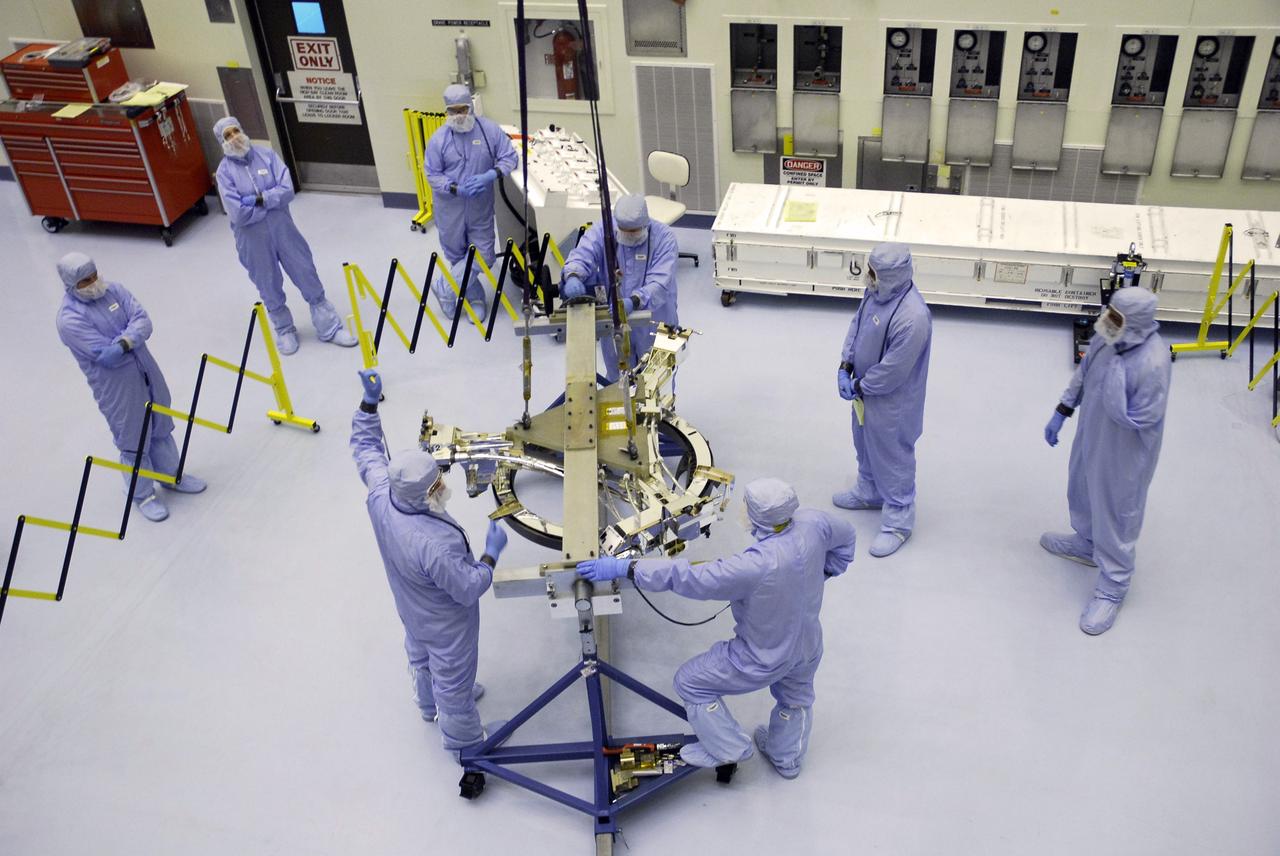
CAPE CANAVERAL, Fla. – In the Payload Hazardous Servicing Facility at NASA's Kennedy Space Center, a technician signals to begin lifting the Soft Capture Mechanism (SCM), part of the Soft Capture and Rendezvous System, or SCRS. The SCM will be transferred to the stand holding the Flight Support System, or FSS, carrier where the SCM will be mated to the FSS. The SCRS will enable the future rendezvous, capture and safe disposal of NASA's Hubble Space Telescope by either a crewed or robotic mission. The ring-like device attaches to Hubble’s aft bulkhead. The SCRS greatly increases the current shuttle capture interfaces on Hubble, therefore significantly reducing the rendezvous and capture design complexities associated with the disposal mission. The FSS will join the Multi-Use Lightweight Equipment, or MULE, carrier, the Super Lightweight Interchangeable Carrier and the Orbital Replacement Unit Carrier as payload on space shuttle Atlantis's STS-125 mission. The payload is scheduled to go to Launch Pad 39A in mid-September to be installed into Atlantis' payload bay. Atlantis is targeted to launch Oct. 8 at 1:34 a.m. EDT. Photo credit: NASA/Troy Cryder
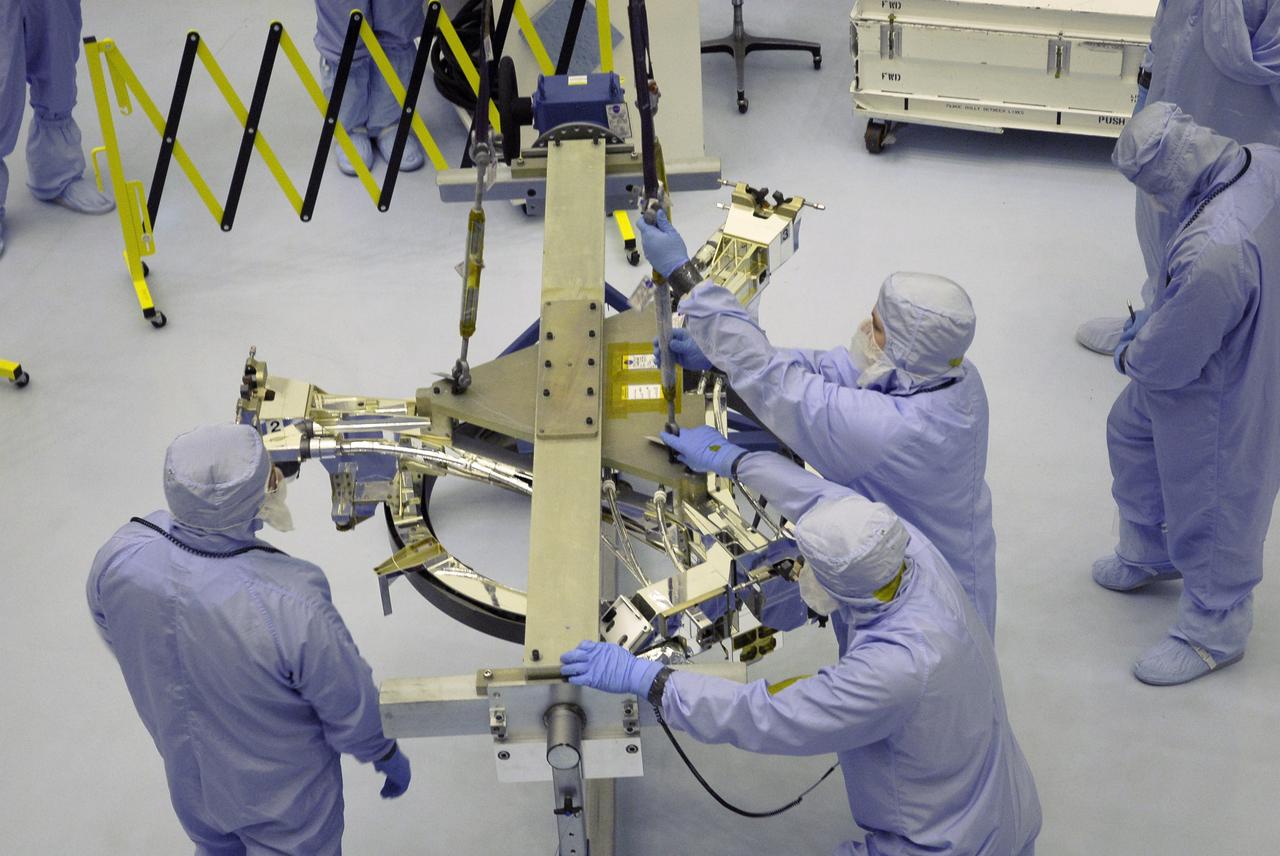
CAPE CANAVERAL, Fla. – In the Payload Hazardous Servicing Facility at NASA's Kennedy Space Center, technicians attach a crane to the Soft Capture Mechanism (SCM), part of the Soft Capture and Rendezvous System, or SCRS. The SCM will be lifted and transferred to the stand holding the Flight Support System, or FSS, carrier, where the SCM will be mated to the FSS. The SCRS will enable the future rendezvous, capture and safe disposal of NASA's Hubble Space Telescope by either a crewed or robotic mission. The ring-like device attaches to Hubble’s aft bulkhead. The SCRS greatly increases the current shuttle capture interfaces on Hubble, therefore significantly reducing the rendezvous and capture design complexities associated with the disposal mission. The FSS will join the Multi-Use Lightweight Equipment, or MULE, carrier, the Super Lightweight Interchangeable Carrier and the Orbital Replacement Unit Carrier as payload on space shuttle Atlantis's STS-125 mission. The payload is scheduled to go to Launch Pad 39A in mid-September to be installed into Atlantis' payload bay. Atlantis is targeted to launch Oct. 8 at 1:34 a.m. EDT. Photo credit: NASA/Troy Cryder
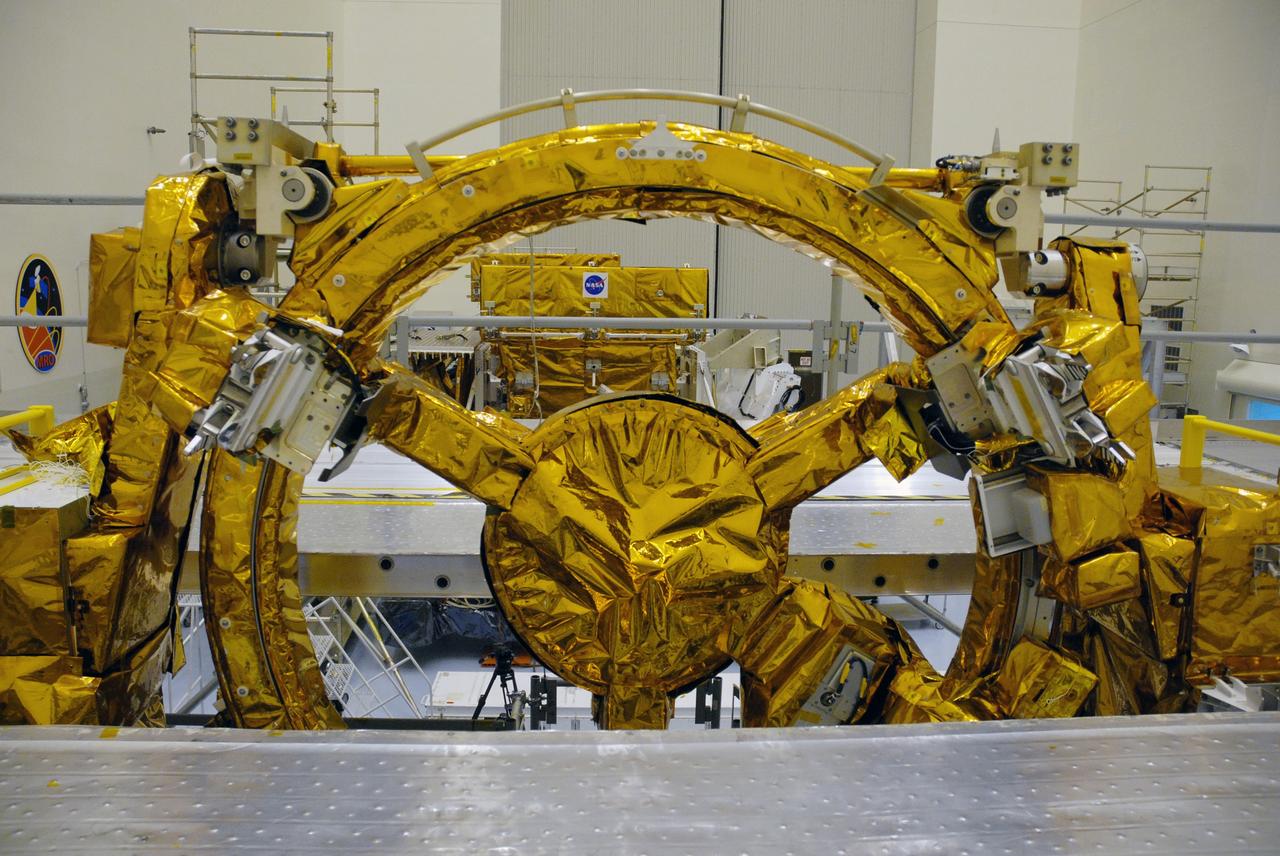
CAPE CANAVERAL, Fla. – In the high bay of the Payload Hazardous Servicing Facility at NASA's Kennedy Space Center, three of four carriers supporting the space shuttle Atlantis STS-125 Hubble Space Telescope servicing mission have been unwrapped for final launch processing. The Super Lightweight Interchangeable Carrier and the Orbital Replacement Unit Carrier can be seen through the distinctive soft capture mechanism, or SCM, of the Flight Support System. The SCM will be permanently attached to Hubble’s aft shroud by spacewalking astronauts and will provide a rendezvous and docking target that can be easily seen and recognized by a docking vehicle. The Multi-Use Lightweight Equipment carrier will be delivered in early August. The carriers will be prepared for the integration of telescope science instruments, both internal and external replacement components, as well as the flight support equipment to be used by the astronauts during the Hubble servicing mission, targeted for launch Oct. 8. Photo credit: NASA/Jack Pfaller
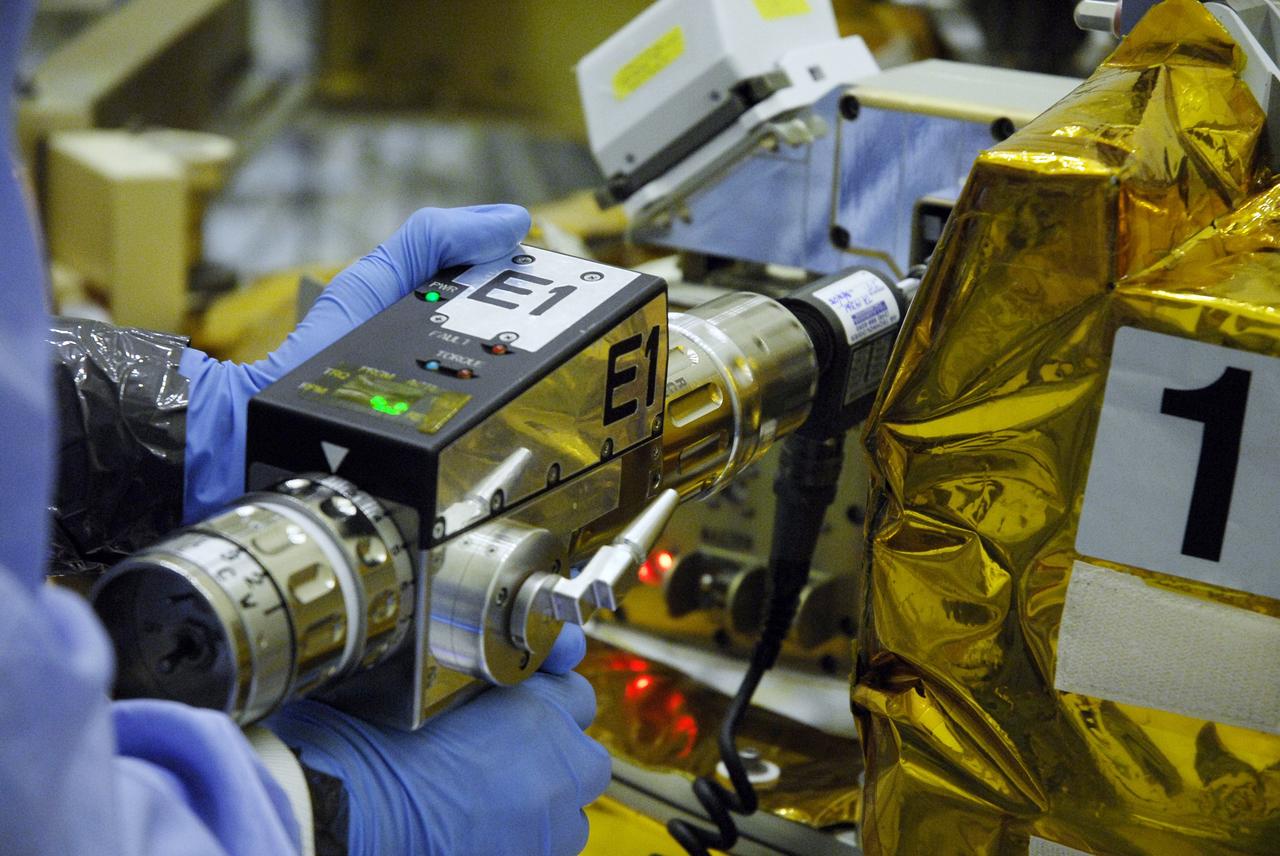
CAPE CANAVERAL, Fla. – In the Payload Hazardous Servicing Facility at NASA's Kennedy Space Center, technicians check the sensors on the Soft Capture Mechanism (SCM), part of the Soft Capture and Rendezvous System, or SCRS, after mating of the SCM to the Flight Support System, or FSS, carrier. The SCRS will enable the future rendezvous, capture and safe disposal of NASA's Hubble Space Telescope by either a crewed or robotic mission. The ring-like device attaches to Hubble’s aft bulkhead. The SCRS greatly increases the current shuttle capture interfaces on Hubble, therefore significantly reducing the rendezvous and capture design complexities associated with the disposal mission. The FSS will join the Multi-Use Lightweight Equipment, or MULE, carrier, the Super Lightweight Interchangeable Carrier and the Orbital Replacement Unit Carrier as payload on space shuttle Atlantis's STS-125 mission. The payload is scheduled to go to Launch Pad 39A in mid-September to be installed into Atlantis' payload bay. Atlantis is targeted to launch Oct. 8 at 1:34 a.m. EDT. Photo credit: NASA/Troy Cryder
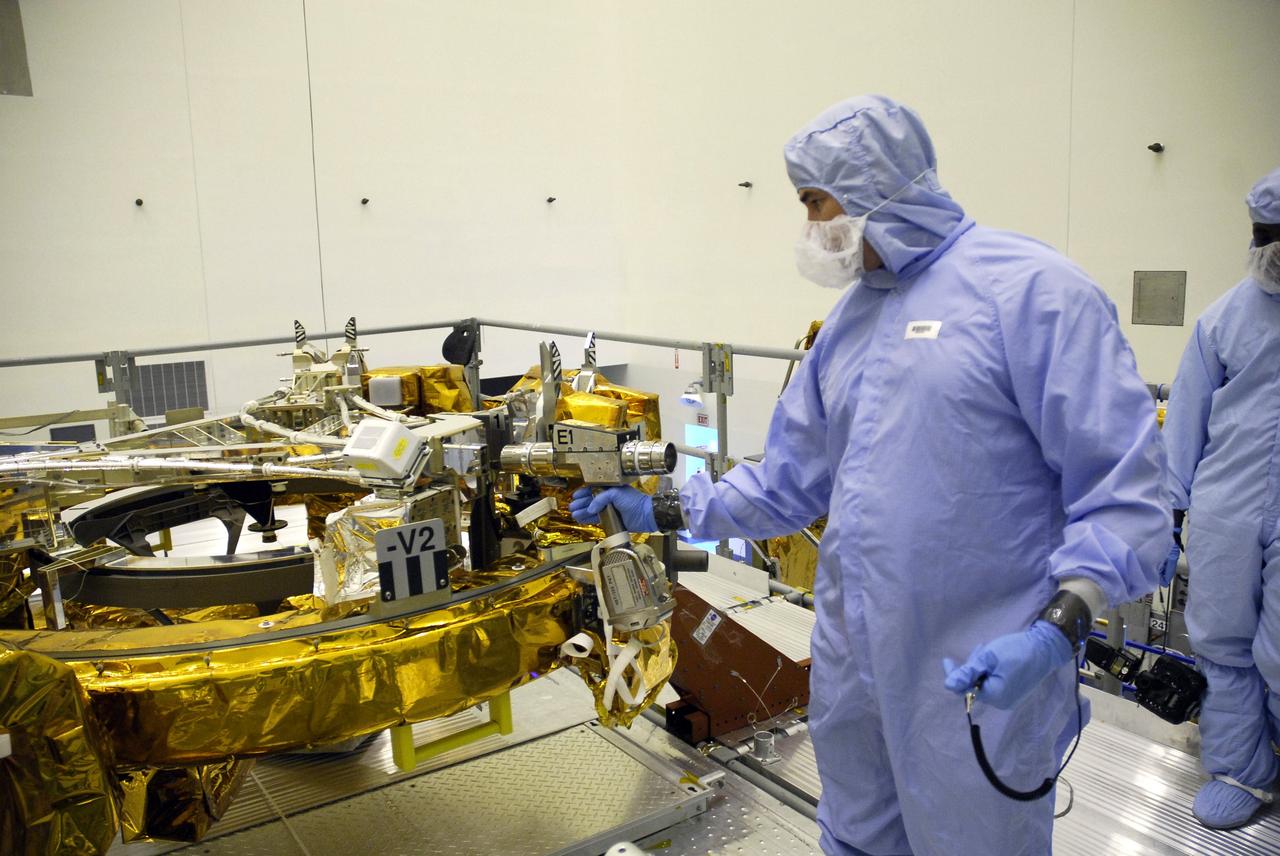
CAPE CANAVERAL, Fla. – In the Payload Hazardous Servicing Facility at NASA's Kennedy Space Center, technicians check the sensors on the Soft Capture Mechanism (SCM), part of the Soft Capture and Rendezvous System, or SCRS, after mating of the SCM to the Flight Support System, or FSS, carrier. The SCRS will enable the future rendezvous, capture and safe disposal of NASA's Hubble Space Telescope by either a crewed or robotic mission. The ring-like device attaches to Hubble’s aft bulkhead. The SCRS greatly increases the current shuttle capture interfaces on Hubble, therefore significantly reducing the rendezvous and capture design complexities associated with the disposal mission. The FSS will join the Multi-Use Lightweight Equipment, or MULE, carrier, the Super Lightweight Interchangeable Carrier and the Orbital Replacement Unit Carrier as payload on space shuttle Atlantis's STS-125 mission. The payload is scheduled to go to Launch Pad 39A in mid-September to be installed into Atlantis' payload bay. Atlantis is targeted to launch Oct. 8 at 1:34 a.m. EDT. Photo credit: NASA/Troy Cryder
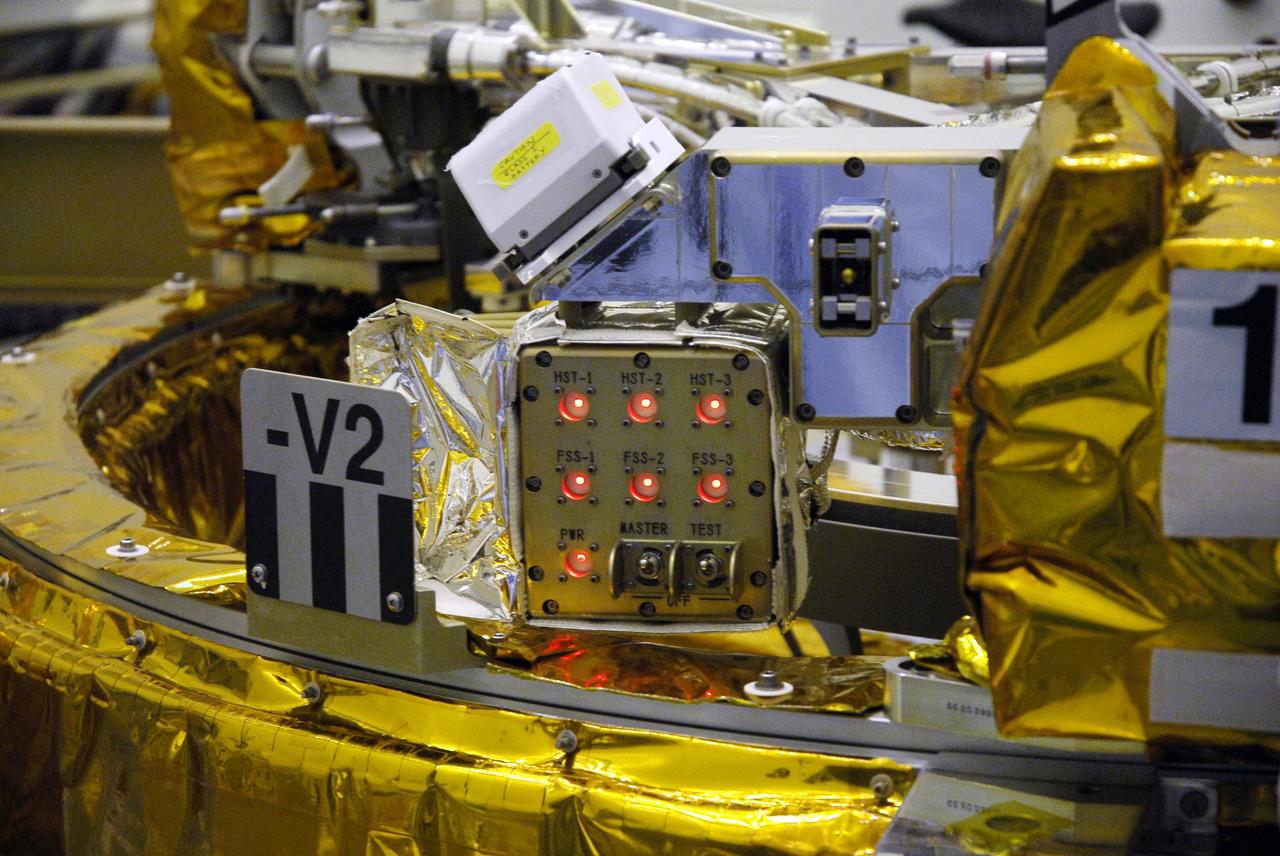
CAPE CANAVERAL, Fla. – In the Payload Hazardous Servicing Facility at NASA's Kennedy Space Center, technicians check the sensors on the Soft Capture Mechanism (SCM), part of the Soft Capture and Rendezvous System, or SCRS, after mating of the SCM to the Flight Support System, or FSS, carrier. The SCRS will enable the future rendezvous, capture and safe disposal of NASA's Hubble Space Telescope by either a crewed or robotic mission. The ring-like device attaches to Hubble’s aft bulkhead. The SCRS greatly increases the current shuttle capture interfaces on Hubble, therefore significantly reducing the rendezvous and capture design complexities associated with the disposal mission. The FSS will join the Multi-Use Lightweight Equipment, or MULE, carrier, the Super Lightweight Interchangeable Carrier and the Orbital Replacement Unit Carrier as payload on space shuttle Atlantis's STS-125 mission. The payload is scheduled to go to Launch Pad 39A in mid-September to be installed into Atlantis' payload bay. Atlantis is targeted to launch Oct. 8 at 1:34 a.m. EDT. Photo credit: NASA/Troy Cryder
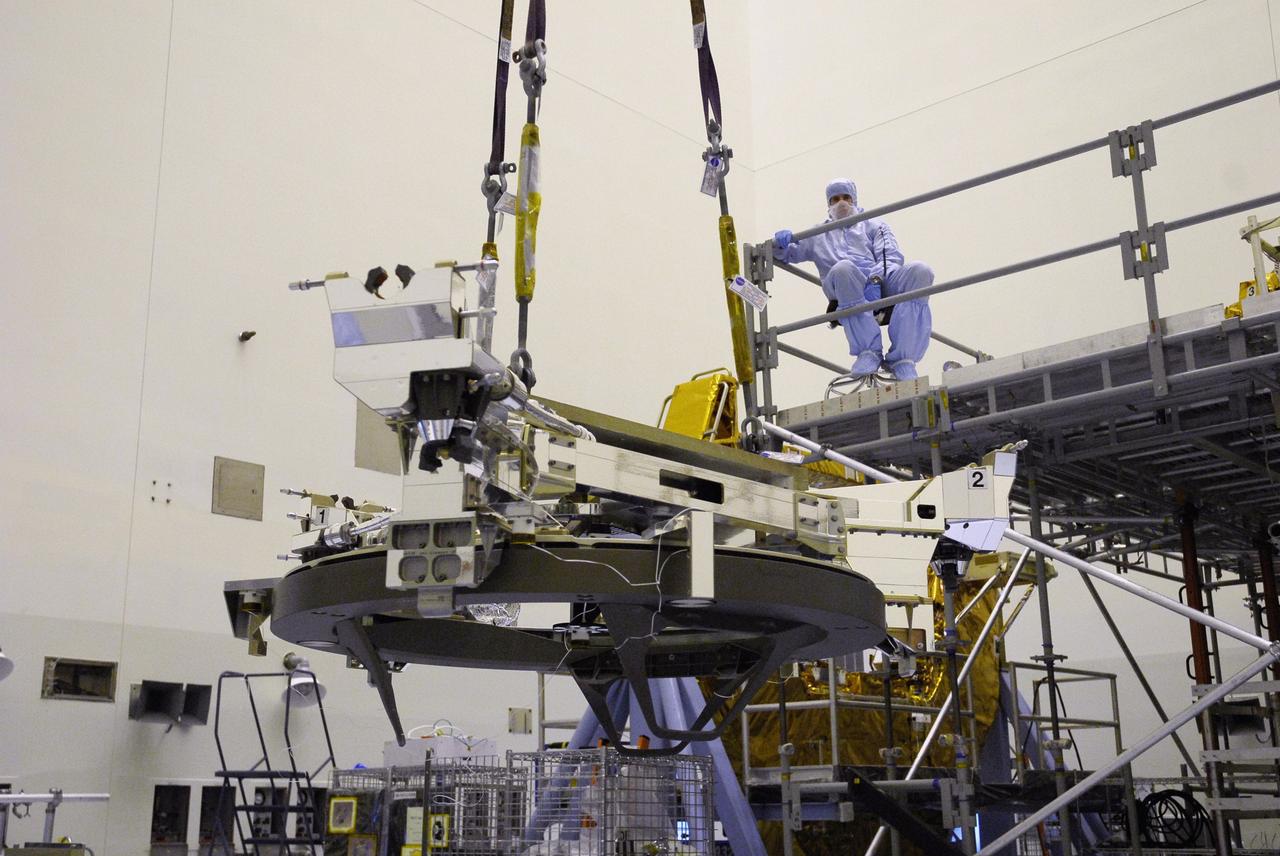
CAPE CANAVERAL, Fla. – In the Payload Hazardous Servicing Facility at NASA's Kennedy Space Center, the Soft Capture Mechanism (SCM), part of the Soft Capture and Rendezvous System, or SCRS, moves above the floor toward the stand holding the Flight Support System, or FSS, carrier where the SCM will be mated to the FSS. The SCRS will enable the future rendezvous, capture and safe disposal of NASA's Hubble Space Telescope by either a crewed or robotic mission. The ring-like device attaches to Hubble’s aft bulkhead. The SCRS greatly increases the current shuttle capture interfaces on Hubble, therefore significantly reducing the rendezvous and capture design complexities associated with the disposal mission. The FSS will join the Multi-Use Lightweight Equipment, or MULE, carrier, the Super Lightweight Interchangeable Carrier and the Orbital Replacement Unit Carrier as payload on space shuttle Atlantis's STS-125 mission. The payload is scheduled to go to Launch Pad 39A in mid-September to be installed into Atlantis' payload bay. Atlantis is targeted to launch Oct. 8 at 1:34 a.m. EDT. Photo credit: NASA/Troy Cryder
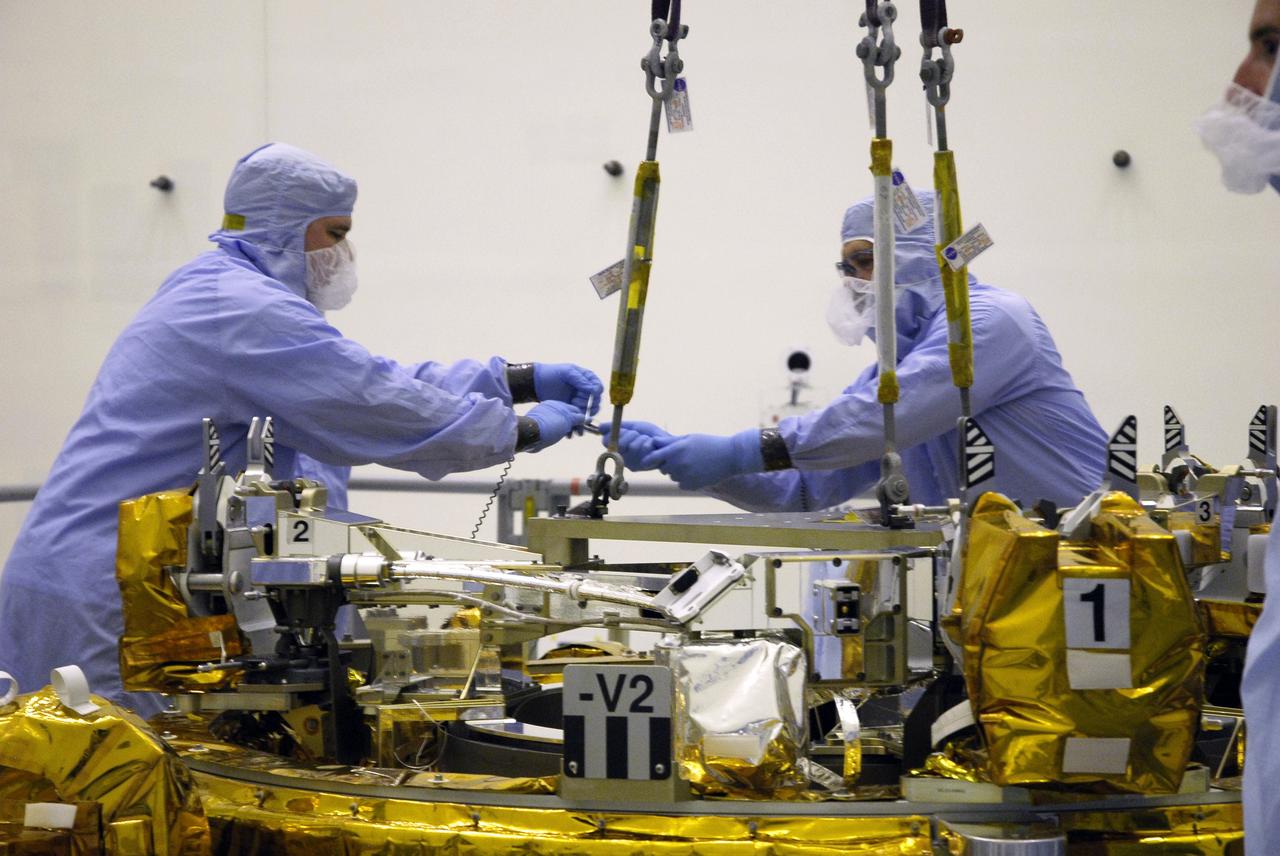
CAPE CANAVERAL, Fla. – In the Payload Hazardous Servicing Facility at NASA's Kennedy Space Center, technicians begin removing the cables from the crane holding the Soft Capture Mechanism (SCM), part of the Soft Capture and Rendezvous System, or SCRS. The SCM rests on the Flight Support System, or FSS,carrier and will be mated to the carrier. The SCRS will enable the future rendezvous, capture and safe disposal of NASA's Hubble Space Telescope by either a crewed or robotic mission. The ring-like device attaches to Hubble’s aft bulkhead. The SCRS greatly increases the current shuttle capture interfaces on Hubble, therefore significantly reducing the rendezvous and capture design complexities associated with the disposal mission. The FSS will join the Multi-Use Lightweight Equipment, or MULE, carrier, the Super Lightweight Interchangeable Carrier and the Orbital Replacement Unit Carrier as payload on space shuttle Atlantis's STS-125 mission. The payload is scheduled to go to Launch Pad 39A in mid-September to be installed into Atlantis' payload bay. Atlantis is targeted to launch Oct. 8 at 1:34 a.m. EDT. Photo credit: NASA/Troy Cryder
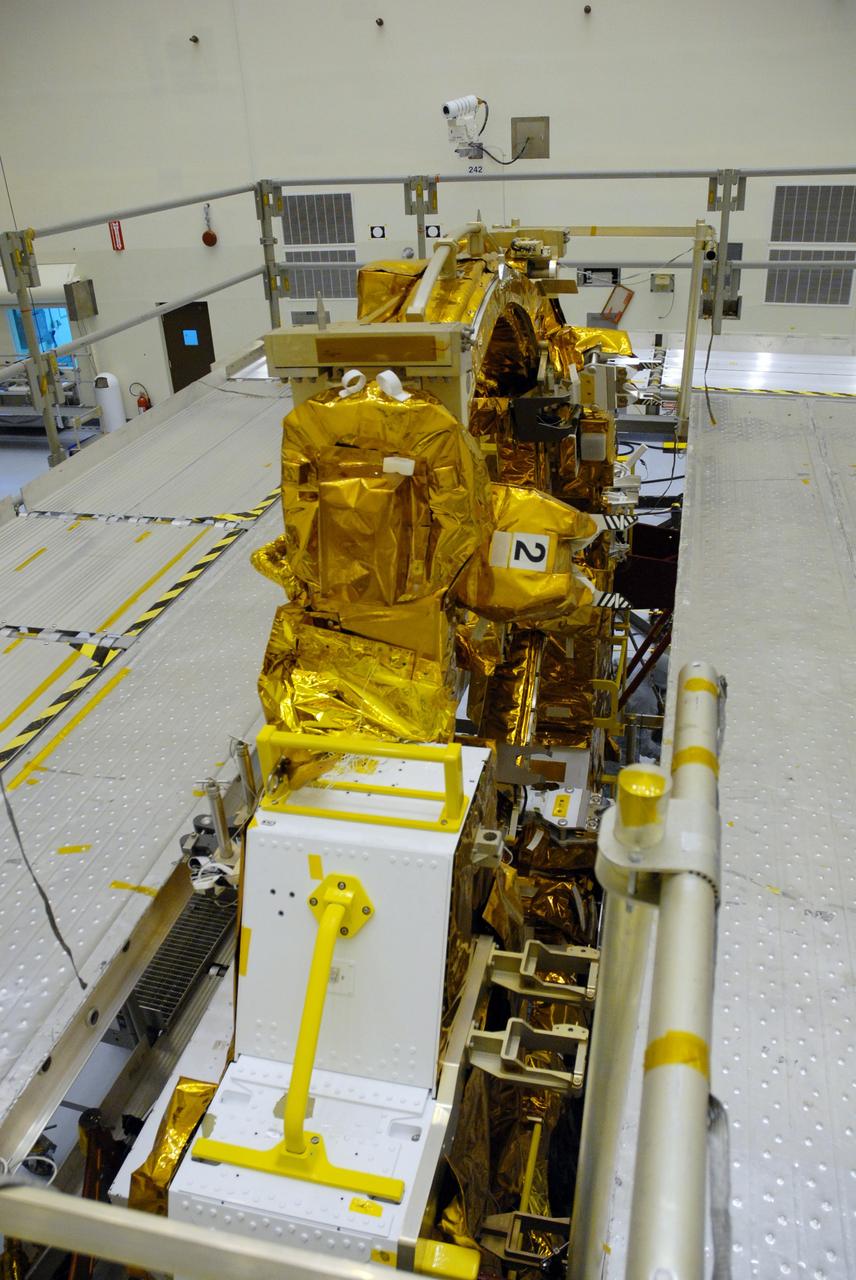
CAPE CANAVERAL, Fla. – In the high bay of the Payload Hazardous Servicing Facility at NASA's Kennedy Space Center, the protective wrapping has been removed from the Flight Support System for the Hubble Space Telescope revealing the soft capture mechanism , or SCM. The SCM will be permanently attached to Hubble’s aft shroud by spacewalking astronauts and will provide a rendezvous and docking target that can be easily seen and recognized by a docking vehicle. The Flight Support System, or FSS, is one of four carriers supporting hardware for space shuttle Atlantis' STS-125 mission to service the telescope. The Super Lightweight Interchangeable Carrier, or SLIC, and the Orbital Replacement Unit Carrier, or ORUC, have also arrived at Kennedy. The Multi-Use Lightweight Equipment carrier will be delivered in early August. The carriers will be prepared for the integration of telescope science instruments, both internal and external replacement components, as well as the flight support equipment to be used by the astronauts during the Hubble servicing mission, targeted for launch Oct. 8. Photo credit: NASA/Jack Pfaller
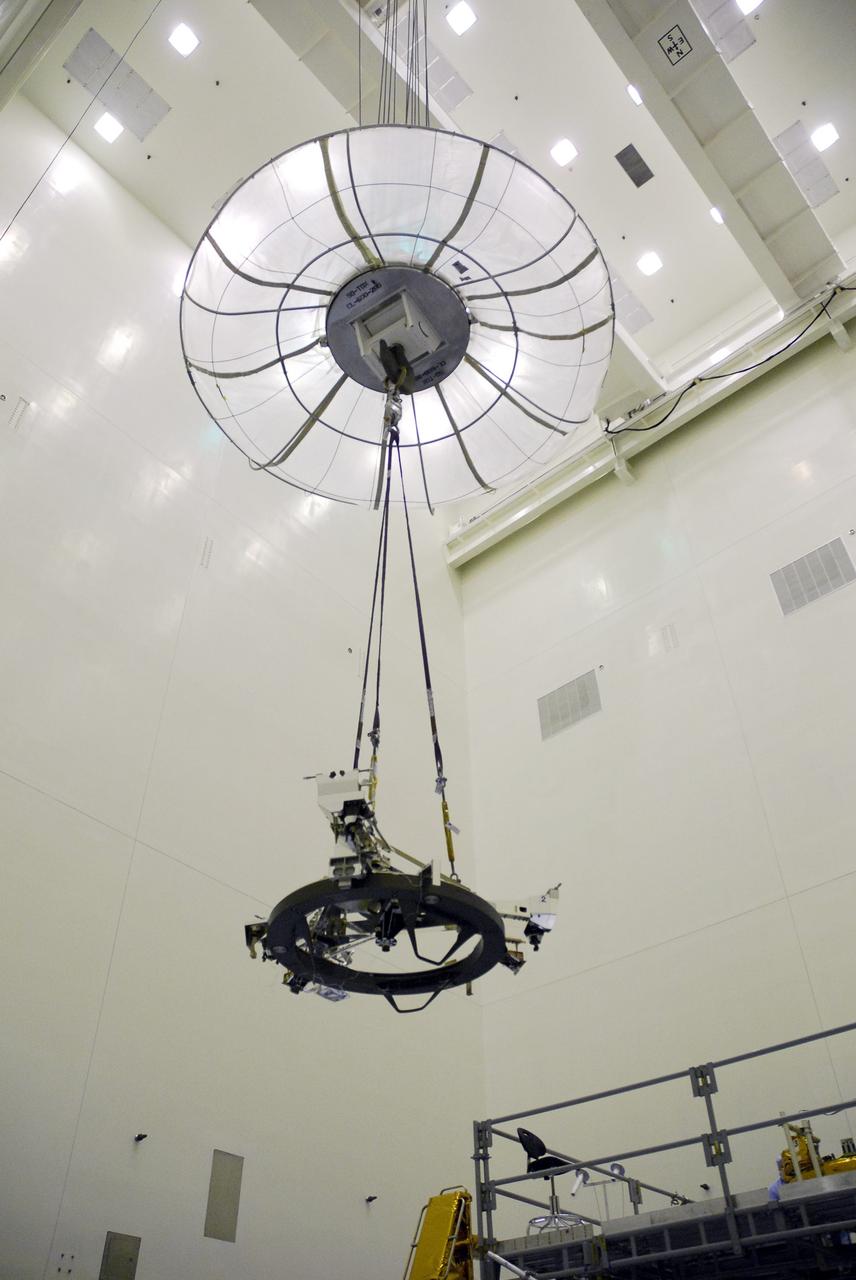
CAPE CANAVERAL, Fla. – In the Payload Hazardous Servicing Facility at NASA's Kennedy Space Center, the Soft Capture Mechanism (SCM), part of the Soft Capture and Rendezvous System, or SCRS, moves above the floor via an overhead crane toward the stand holding the Flight Support System, or FSS,carrier where the SCM will be mated to the FSS. The SCRS will enable the future rendezvous, capture and safe disposal of NASA's Hubble Space Telescope by either a crewed or robotic mission. The ring-like device attaches to Hubble’s aft bulkhead. The SCRS greatly increases the current shuttle capture interfaces on Hubble, therefore significantly reducing the rendezvous and capture design complexities associated with the disposal mission. The FSS will join the Multi-Use Lightweight Equipment, or MULE, carrier, the Super Lightweight Interchangeable Carrier and the Orbital Replacement Unit Carrier as payload on space shuttle Atlantis's STS-125 mission. The payload is scheduled to go to Launch Pad 39A in mid-September to be installed into Atlantis' payload bay. Atlantis is targeted to launch Oct. 8 at 1:34 a.m. EDT. Photo credit: NASA/Troy Cryder

CAPE CANAVERAL, Fla. – In the Payload Hazardous Servicing Facility at NASA's Kennedy Space Center, technicians check the sensors on the Soft Capture Mechanism (SCM), part of the Soft Capture and Rendezvous System, or SCRS, after mating of the SCM to the Flight Support System, or FSS, carrier. The SCRS will enable the future rendezvous, capture and safe disposal of NASA's Hubble Space Telescope by either a crewed or robotic mission. The ring-like device attaches to Hubble’s aft bulkhead. The SCRS greatly increases the current shuttle capture interfaces on Hubble, therefore significantly reducing the rendezvous and capture design complexities associated with the disposal mission. The FSS will join the Multi-Use Lightweight Equipment, or MULE, carrier, the Super Lightweight Interchangeable Carrier and the Orbital Replacement Unit Carrier as payload on space shuttle Atlantis's STS-125 mission. The payload is scheduled to go to Launch Pad 39A in mid-September to be installed into Atlantis' payload bay. Atlantis is targeted to launch Oct. 8 at 1:34 a.m. EDT. Photo credit: NASA/Troy Cryder
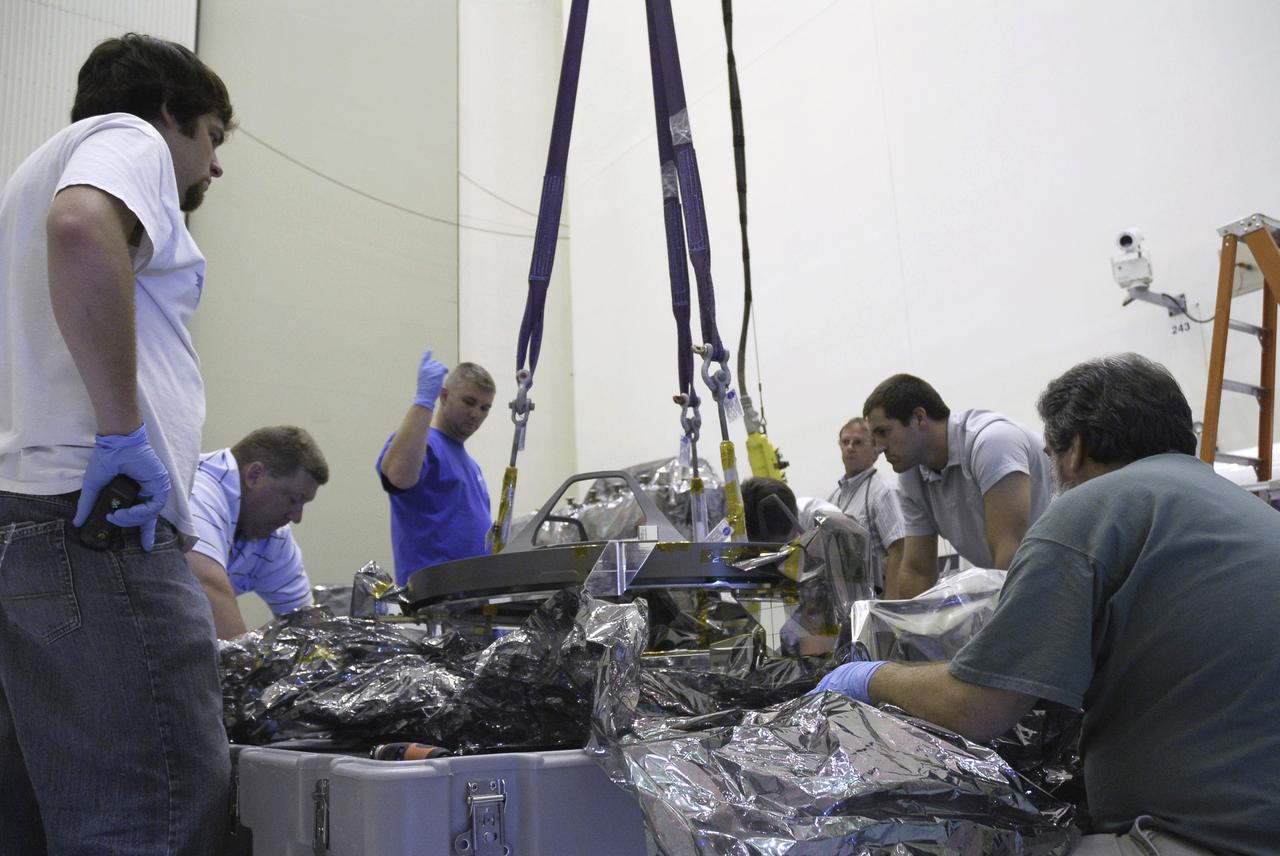
CAPE CANAVERAL, Fla. – In the Payload Hazardous Servicing Facility at NASA's Kennedy Space Center, technicians monitor the lifting of the Soft Capture Mechanism (SCM), part of the Soft Capture and Rendezvous System, or SCRS, from its shipping container. The SCRS will enable the future rendezvous, capture and safe disposal of Hubble by either a crewed or robotic mission. The ring-like device attaches to Hubble’s aft bulkhead. The SCRS greatly increases the current shuttle capture interfaces on Hubble, therefore significantly reducing the rendezvous and capture design complexities associated with the disposal mission. The SCRS comprises the Soft Capture Mechanism system and the Relative Navigation System and is part of the payload on the fifth and final Hubble servicing mission, STS-125, targeted for launch Oct. 8. Photo credit: NASA/Jack Pfaller

CAPE CANAVERAL, Fla. – In the Payload Hazardous Servicing Facility at NASA's Kennedy Space Center, technicians make a final check of the Soft Capture Mechanism (SCM), part of the Soft Capture and Rendezvous System, or SCRS, after its placement on a stand. The SCRS will enable the future rendezvous, capture and safe disposal of Hubble by either a crewed or robotic mission. The ring-like device attaches to Hubble’s aft bulkhead. The SCRS greatly increases the current shuttle capture interfaces on Hubble, therefore significantly reducing the rendezvous and capture design complexities associated with the disposal mission. The SCRS comprises the Soft Capture Mechanism system and the Relative Navigation System and is part of the payload on the fifth and final Hubble servicing mission, STS-125, targeted for launch Oct. 8. Photo credit: NASA/Jack Pfaller
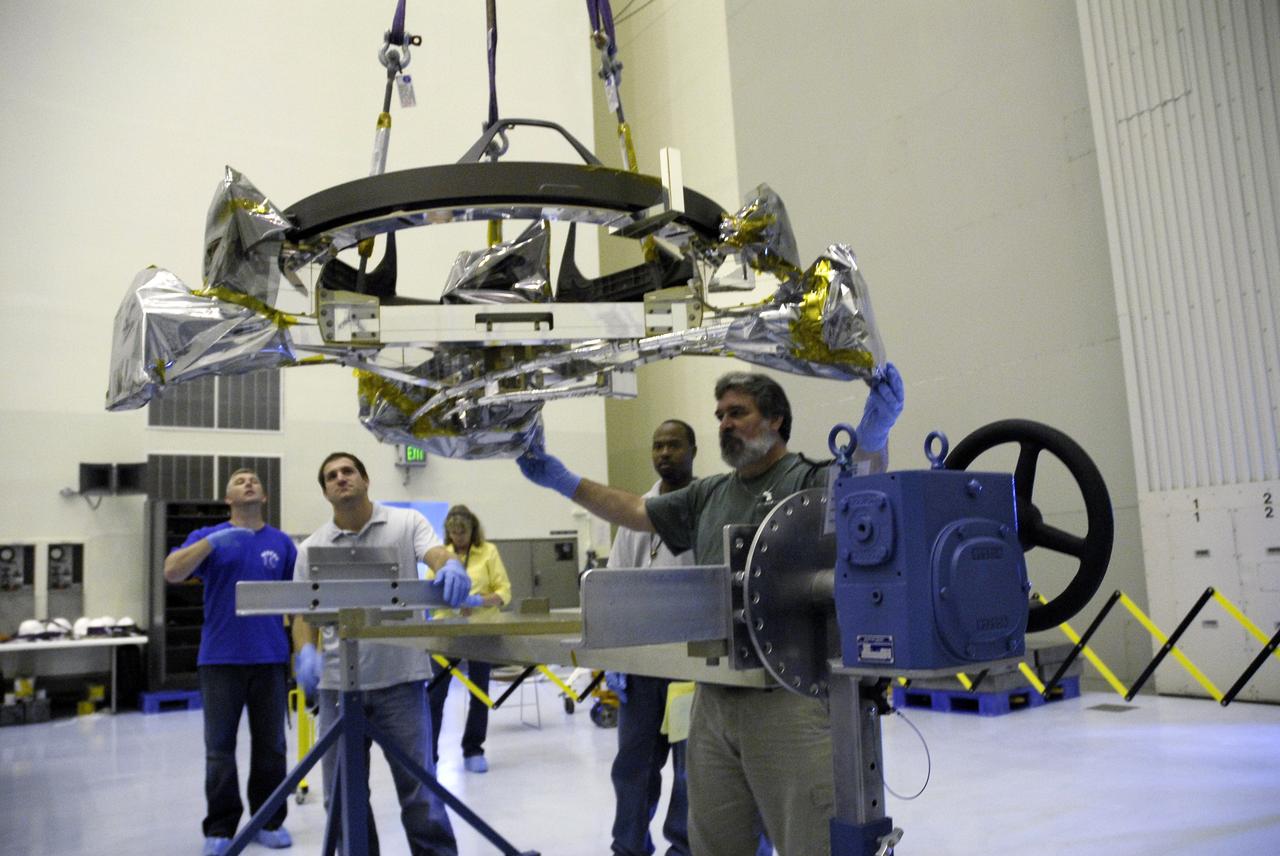
CAPE CANAVERAL, Fla. – In the Payload Hazardous Servicing Facility at NASA's Kennedy Space Center, a technician stabilizes the Soft Capture Mechanism (SCM), part of the Soft Capture and Rendezvous System, or SCRS, as it is lowered onto a stand. The SCRS will enable the future rendezvous, capture and safe disposal of Hubble by either a crewed or robotic mission. The ring-like device attaches to Hubble’s aft bulkhead. The SCRS greatly increases the current shuttle capture interfaces on Hubble, therefore significantly reducing the rendezvous and capture design complexities associated with the disposal mission. The SCRS comprises the Soft Capture Mechanism system and the Relative Navigation System and is part of the payload on the fifth and final Hubble servicing mission, STS-125, targeted for launch Oct. 8. Photo credit: NASA/Jack Pfaller
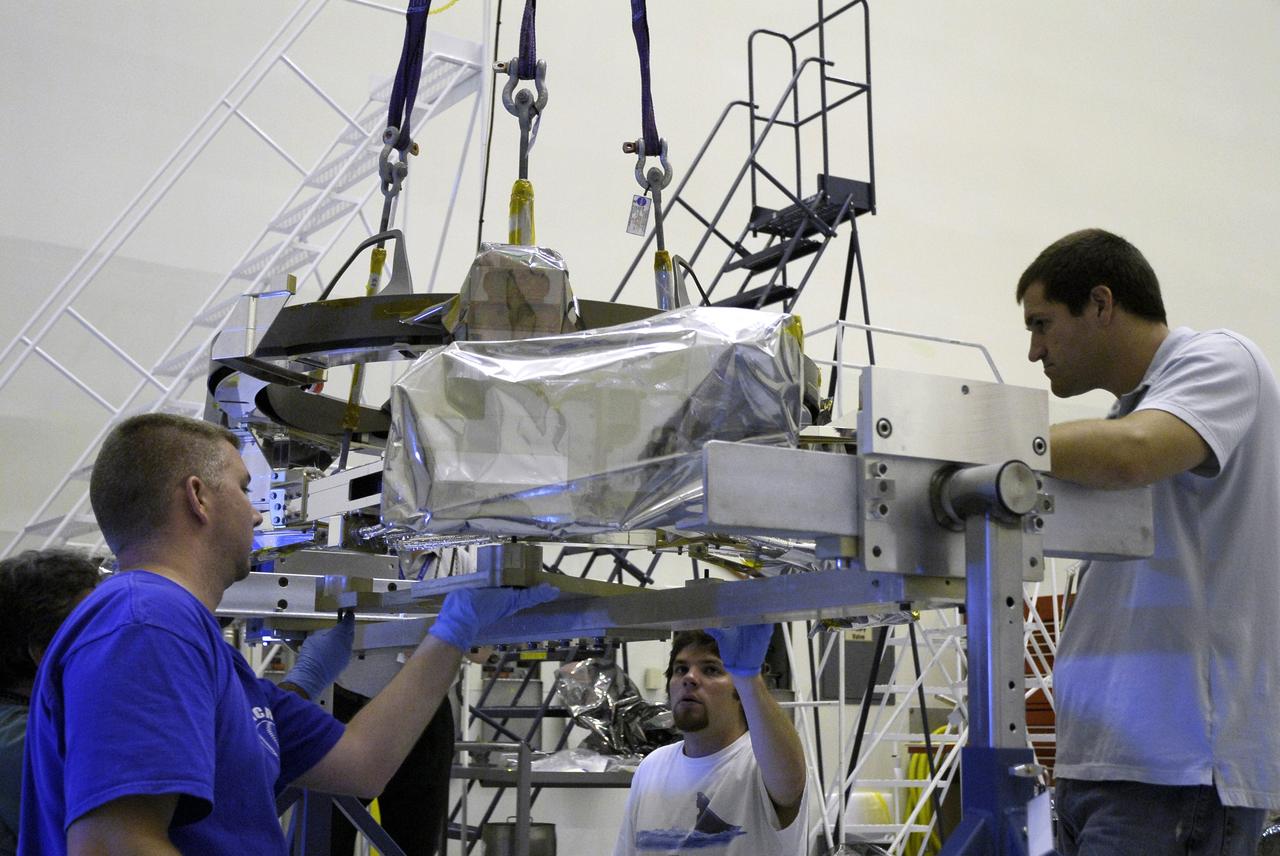
CAPE CANAVERAL, Fla. – In the Payload Hazardous Servicing Facility at NASA's Kennedy Space Center, technicians monitor the placement of the Soft Capture Mechanism (SCM), part of the Soft Capture and Rendezvous System, or SCRS, as it is lowered onto a stand. The SCRS will enable the future rendezvous, capture and safe disposal of Hubble by either a crewed or robotic mission. The ring-like device attaches to Hubble’s aft bulkhead. The SCRS greatly increases the current shuttle capture interfaces on Hubble, therefore significantly reducing the rendezvous and capture design complexities associated with the disposal mission. The SCRS comprises the Soft Capture Mechanism system and the Relative Navigation System and is part of the payload on the fifth and final Hubble servicing mission, STS-125, targeted for launch Oct. 8. Photo credit: NASA/Jack Pfaller

CAPE CANAVERAL, Fla. – In the Payload Hazardous Servicing Facility at NASA's Kennedy Space Center, technicians prepare to mate the Soft Capture Mechanism (SCM), part of the Soft Capture and Rendezvous System, or SCRS, onto the Flight Support System, or FSS, carrier. The SCRS will enable the future rendezvous, capture and safe disposal of NASA's Hubble Space Telescope by either a crewed or robotic mission. The ring-like device attaches to Hubble’s aft bulkhead. The SCRS greatly increases the current shuttle capture interfaces on Hubble, therefore significantly reducing the rendezvous and capture design complexities associated with the disposal mission. The FSS will join the Multi-Use Lightweight Equipment, or MULE, carrier, the Super Lightweight Interchangeable Carrier and the Orbital Replacement Unit Carrier as payload on space shuttle Atlantis's STS-125 mission. The payload is scheduled to go to Launch Pad 39A in mid-September to be installed into Atlantis' payload bay. Atlantis is targeted to launch Oct. 8 at 1:34 a.m. EDT. Photo credit: NASA/Troy Cryder
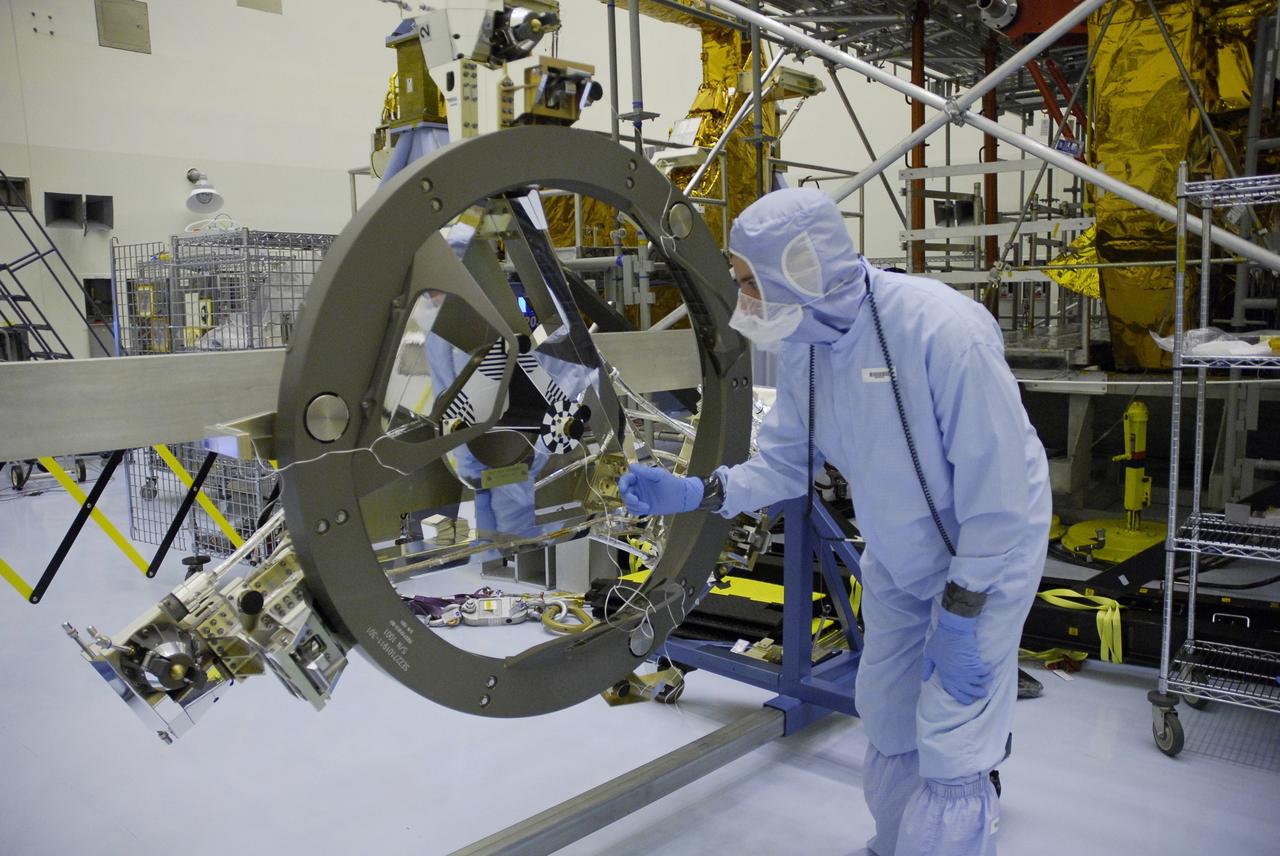
CAPE CANAVERAL, Fla. – In the Payload Hazardous Servicing Facility at NASA's Kennedy Space Center, the Soft Capture Mechanism (SCM), part of the Soft Capture and Rendezvous System, or SCRS, is being prepared for transfer to the Flight Support System, or FSS, carrier. The SCRS will enable the future rendezvous, capture and safe disposal of NASA's Hubble Space Telescope by either a crewed or robotic mission. The ring-like device attaches to Hubble’s aft bulkhead. The SCRS greatly increases the current shuttle capture interfaces on Hubble, therefore significantly reducing the rendezvous and capture design complexities associated with the disposal mission. The FSS will join the Multi-Use Lightweight Equipment, or MULE, carrier, the Super Lightweight Interchangeable Carrier and the Orbital Replacement Unit Carrier as payload on space shuttle Atlantis's STS-125 mission. The payload is scheduled to go to Launch Pad 39A in mid-September to be installed into Atlantis' payload bay. Atlantis is targeted to launch Oct. 8 at 1:34 a.m. EDT. Photo credit: NASA/Troy Cryder
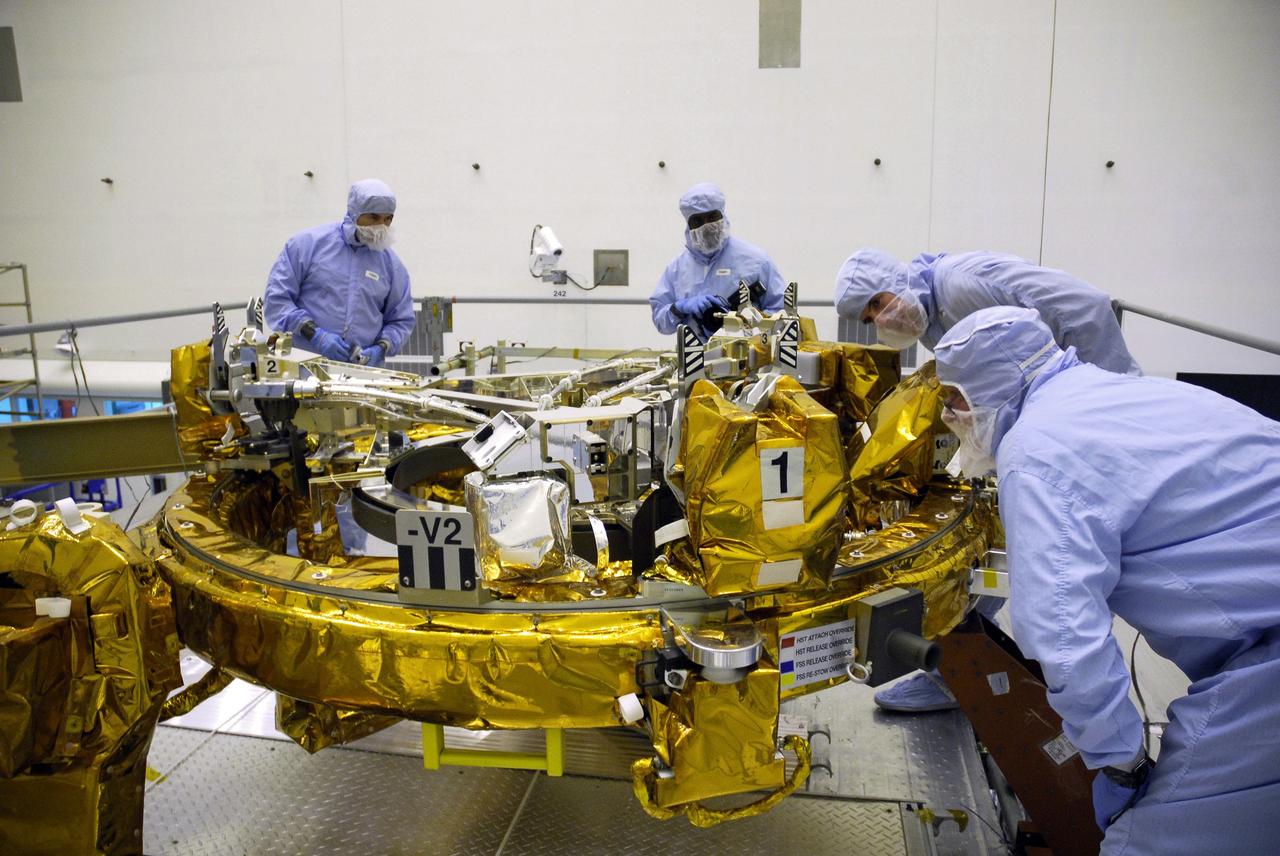
CAPE CANAVERAL, Fla. – In the Payload Hazardous Servicing Facility at NASA's Kennedy Space Center, technicians check the connections on the Soft Capture Mechanism (SCM), part of the Soft Capture and Rendezvous System, or SCRS, being mated to the Flight Support System, or FSS, carrier. The SCRS will enable the future rendezvous, capture and safe disposal of NASA's Hubble Space Telescope by either a crewed or robotic mission. The ring-like device attaches to Hubble’s aft bulkhead. The SCRS greatly increases the current shuttle capture interfaces on Hubble, therefore significantly reducing the rendezvous and capture design complexities associated with the disposal mission. The FSS will join the Multi-Use Lightweight Equipment, or MULE, carrier, the Super Lightweight Interchangeable Carrier and the Orbital Replacement Unit Carrier as payload on space shuttle Atlantis's STS-125 mission. The payload is scheduled to go to Launch Pad 39A in mid-September to be installed into Atlantis' payload bay. Atlantis is targeted to launch Oct. 8 at 1:34 a.m. EDT. Photo credit: NASA/Troy Cryder
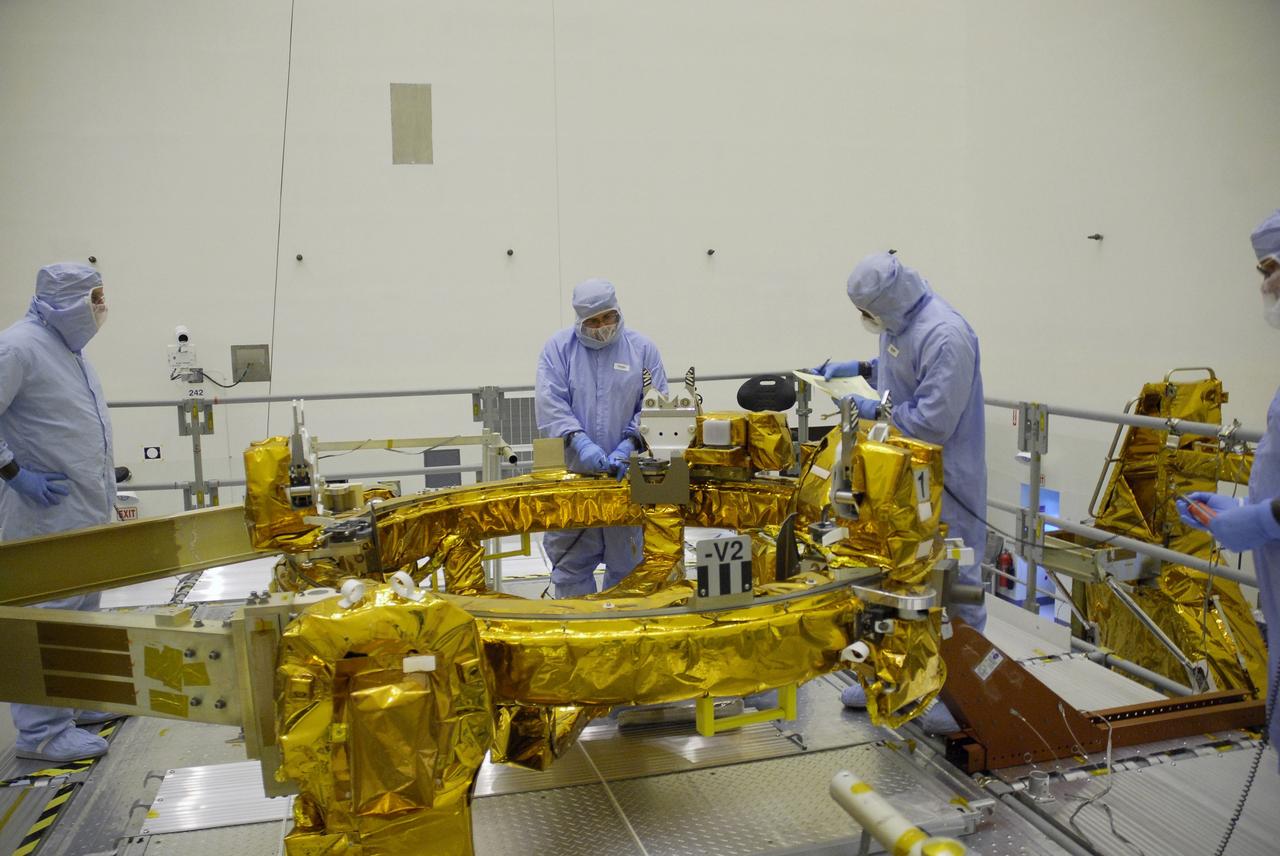
CAPE CANAVERAL, Fla. – In the Payload Hazardous Servicing Facility at NASA's Kennedy Space Center, technicians prepare the Flight Support System, or FSS, carrier to receive the Soft Capture Mechanism (SCM), part of the Soft Capture and Rendezvous System, or SCRS. The SCRS will enable the future rendezvous, capture and safe disposal of NASA's Hubble Space Telescope by either a crewed or robotic mission. The ring-like device attaches to Hubble’s aft bulkhead. The SCRS greatly increases the current shuttle capture interfaces on Hubble, therefore significantly reducing the rendezvous and capture design complexities associated with the disposal mission. The FSS will join the Multi-Use Lightweight Equipment, or MULE, carrier, the Super Lightweight Interchangeable Carrier and the Orbital Replacement Unit Carrier as payload on space shuttle Atlantis's STS-125 mission. The payload is scheduled to go to Launch Pad 39A in mid-September to be installed into Atlantis' payload bay. Atlantis is targeted to launch Oct. 8 at 1:34 a.m. EDT. Photo credit: NASA/Troy Cryder

CAPE CANAVERAL, Fla. – In the Payload Hazardous Servicing Facility at NASA's Kennedy Space Center, the Soft Capture Mechanism (SCM), part of the Soft Capture and Rendezvous System, or SCRS, is being prepared for transfer to the Flight Support System, or FSS, carrier. The SCRS will enable the future rendezvous, capture and safe disposal of NASA's Hubble Space Telescope by either a crewed or robotic mission. The ring-like device attaches to Hubble’s aft bulkhead. The SCRS greatly increases the current shuttle capture interfaces on Hubble, therefore significantly reducing the rendezvous and capture design complexities associated with the disposal mission. The FSS will join the Multi-Use Lightweight Equipment, or MULE, carrier, the Super Lightweight Interchangeable Carrier and the Orbital Replacement Unit Carrier as payload on space shuttle Atlantis's STS-125 mission. The payload is scheduled to go to Launch Pad 39A in mid-September to be installed into Atlantis' payload bay. Atlantis is targeted to launch Oct. 8 at 1:34 a.m. EDT. Photo credit: NASA/Troy Cryder
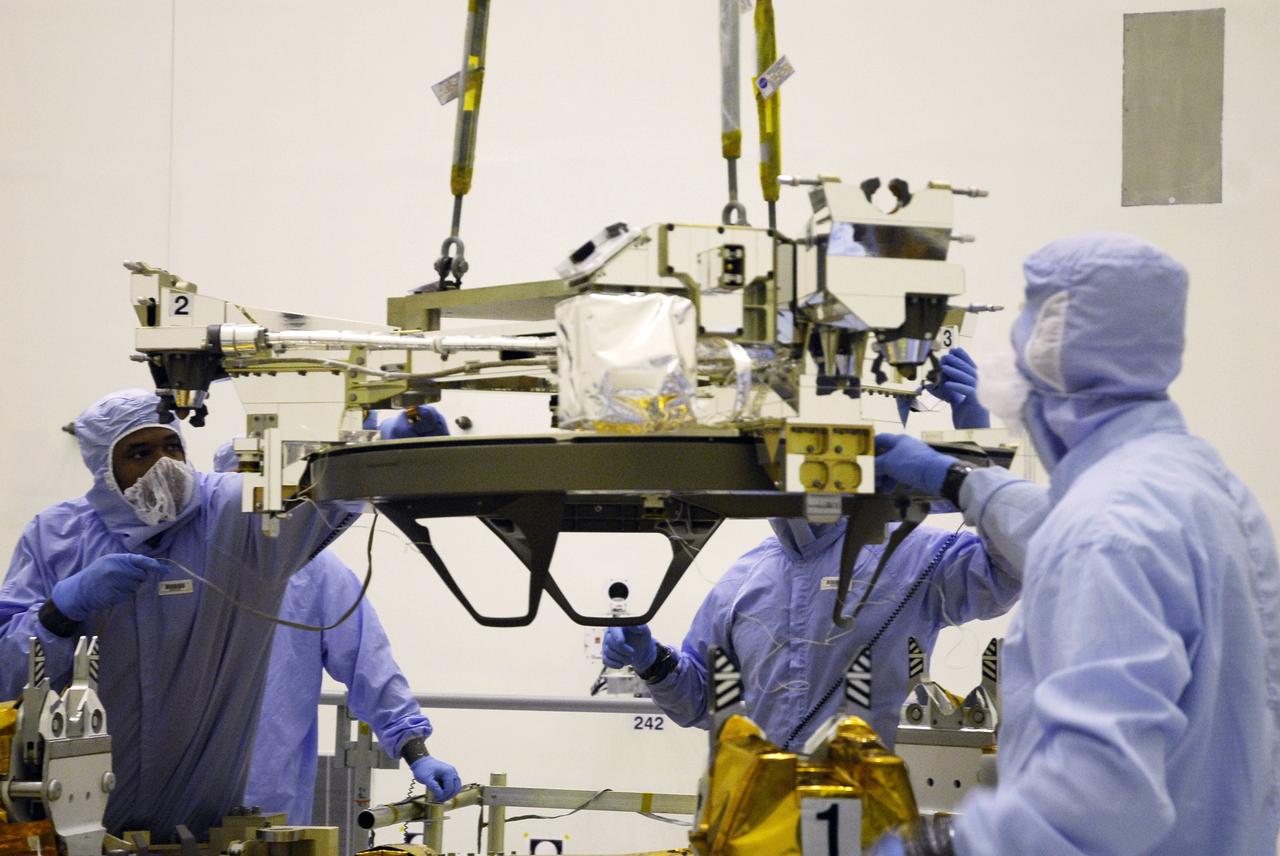
CAPE CANAVERAL, Fla. – In the Payload Hazardous Servicing Facility at NASA's Kennedy Space Center, an overhead crane lowers the Soft Capture Mechanism (SCM), part of the Soft Capture and Rendezvous System, or SCRS, closer to the Flight Support System, or FSS, carrier. The SCRS will enable the future rendezvous, capture and safe disposal of NASA's Hubble Space Telescope by either a crewed or robotic mission. The ring-like device attaches to Hubble’s aft bulkhead. The SCRS greatly increases the current shuttle capture interfaces on Hubble, therefore significantly reducing the rendezvous and capture design complexities associated with the disposal mission. The FSS will join the Multi-Use Lightweight Equipment, or MULE, carrier, the Super Lightweight Interchangeable Carrier and the Orbital Replacement Unit Carrier as payload on space shuttle Atlantis's STS-125 mission. The payload is scheduled to go to Launch Pad 39A in mid-September to be installed into Atlantis' payload bay. Atlantis is targeted to launch Oct. 8 at 1:34 a.m. EDT. Photo credit: NASA/Troy Cryder
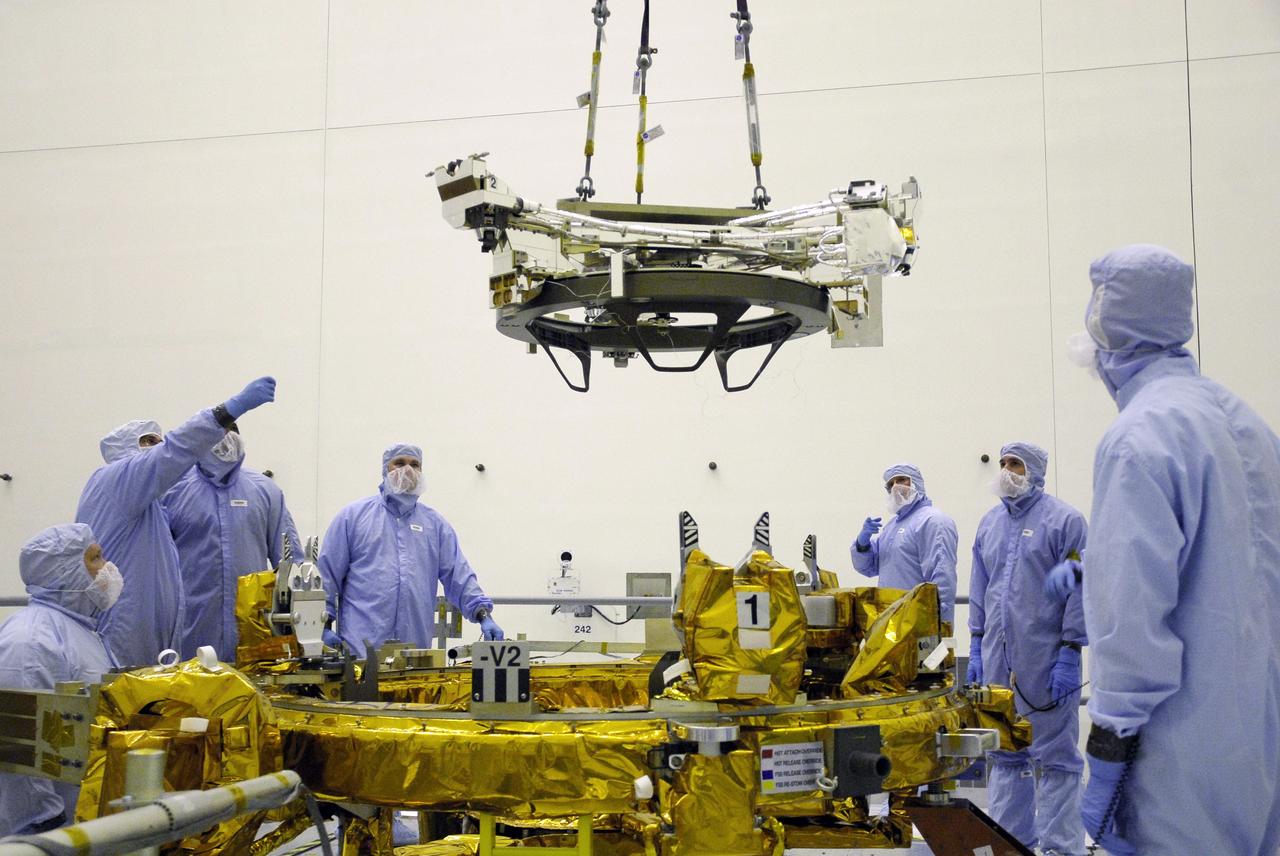
CAPE CANAVERAL, Fla. – In the Payload Hazardous Servicing Facility at NASA's Kennedy Space Center, an overhead crane lowers the Soft Capture Mechanism (SCM), part of the Soft Capture and Rendezvous System, or SCRS, toward the Flight Support System, or FSS, carrier. The SCRS will enable the future rendezvous, capture and safe disposal of NASA's Hubble Space Telescope by either a crewed or robotic mission. The ring-like device attaches to Hubble’s aft bulkhead. The SCRS greatly increases the current shuttle capture interfaces on Hubble, therefore significantly reducing the rendezvous and capture design complexities associated with the disposal mission. The FSS will join the Multi-Use Lightweight Equipment, or MULE, carrier, the Super Lightweight Interchangeable Carrier and the Orbital Replacement Unit Carrier as payload on space shuttle Atlantis's STS-125 mission. The payload is scheduled to go to Launch Pad 39A in mid-September to be installed into Atlantis' payload bay. Atlantis is targeted to launch Oct. 8 at 1:34 a.m. EDT. Photo credit: NASA/Troy Cryder