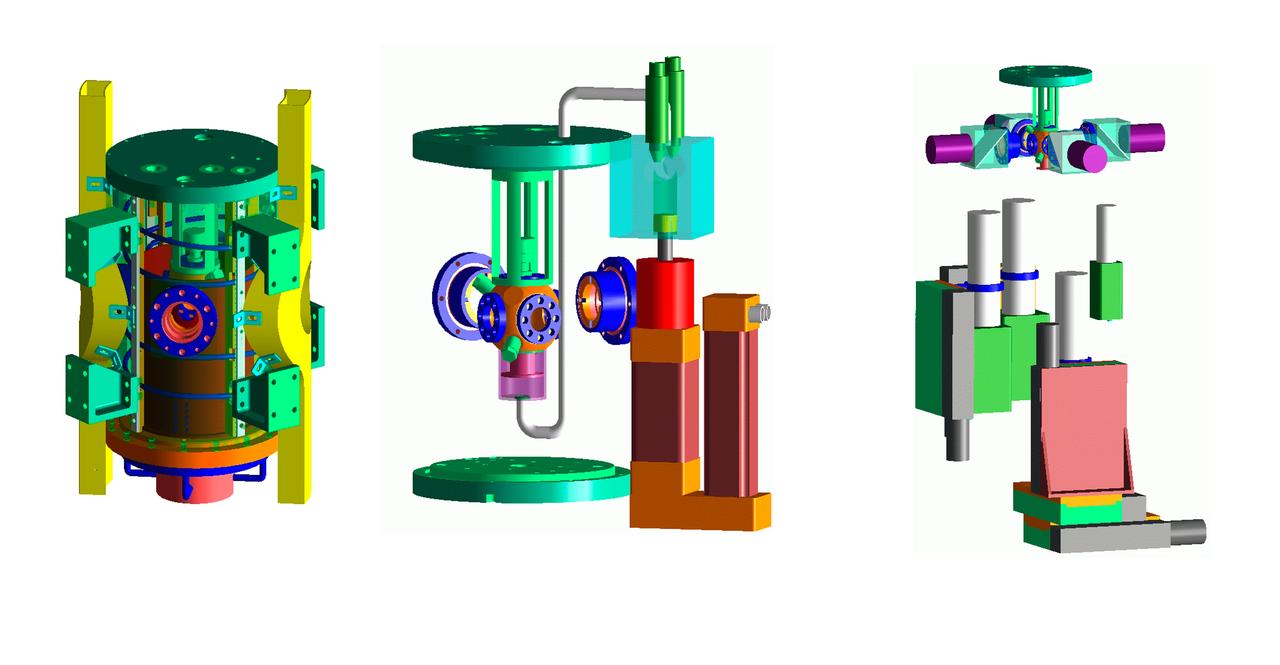
The Transient Dendritic Solidification Expepriment (TDSE) is being developed as a candidate for flight aboard the International Space Station. TDSE will study the growth of dendrites (treelike crystalline structures) in a transparent material (succinonitrile or SCN) that mimics the behavior of widely used iron-based metals. Basic work by three Space Shuttle missions of the Isothermal Dendritic Growth Expepriment (IDGE) is yielding new insights into virtually all industrially relevant metal and alloy forming operations. The TDSE is similar to IDGE, but will maintain a constant temperature while varying pressure on the dendrites. Shown here is an exploded view of major elements of TDSE. A similar view is available with labels. The principal investigator is Matthew Koss of College of the Holy Cross in Worcester, MA. Photo credit: NASA/Marshall Space Flight Center (MSFC)
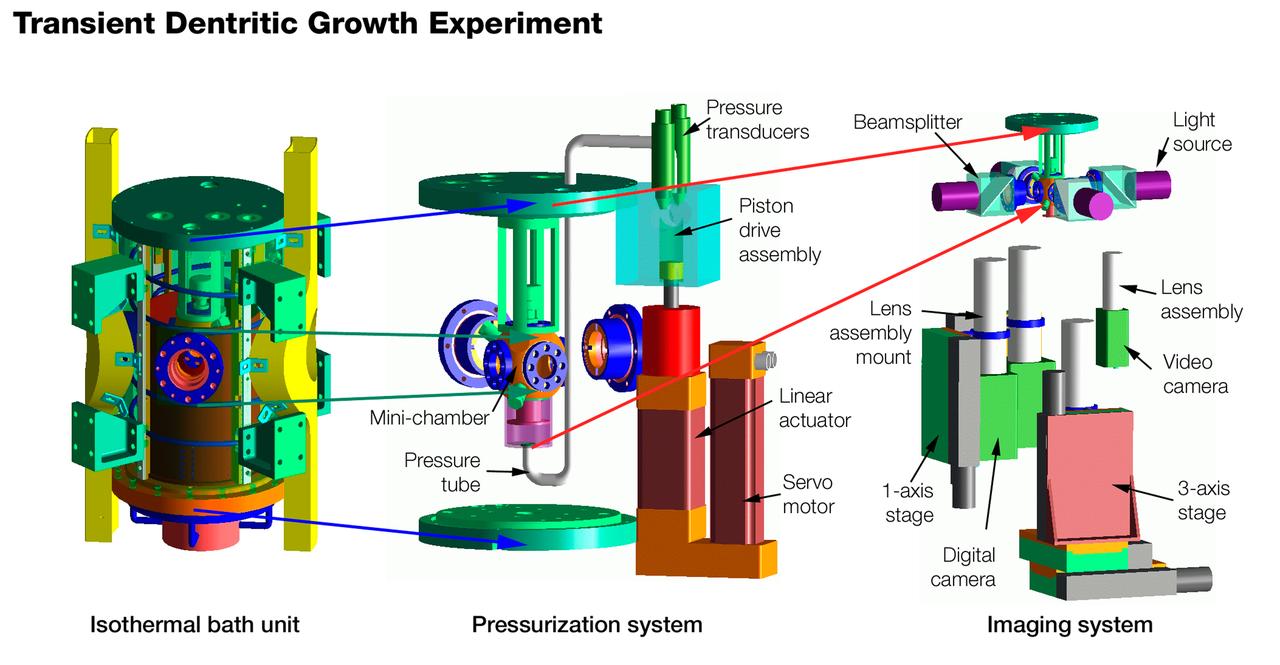
The Transient Dendritic Solidification Experiment (TDSE) is being developed as a candidate for flight aboard the International Space Station. TDSE will study the growth of dendrites (treelike crystalline structures) in a transparent material (succinonitrile or SCN) that mimics the behavior or widely used iron-based metals. Basic work by three Space Shuttle missions of the Isothermal Dendritic Growth Experiment (IDGE) is yielding new insights into virtually all industrially relevant metal and alloy forming operations. The TDSE is similar to IDGE, but will maintain a constant temperature while varying pressure on the dendrites. Shown here is an exploded view of major elements of the TDSE. A similar view is availble without labels. The principal investigator is Matthew Koss of College of the Holy Cross in Worcester, MA. Photo credit: NASA/Marshall Space Flight Center (MSFC)
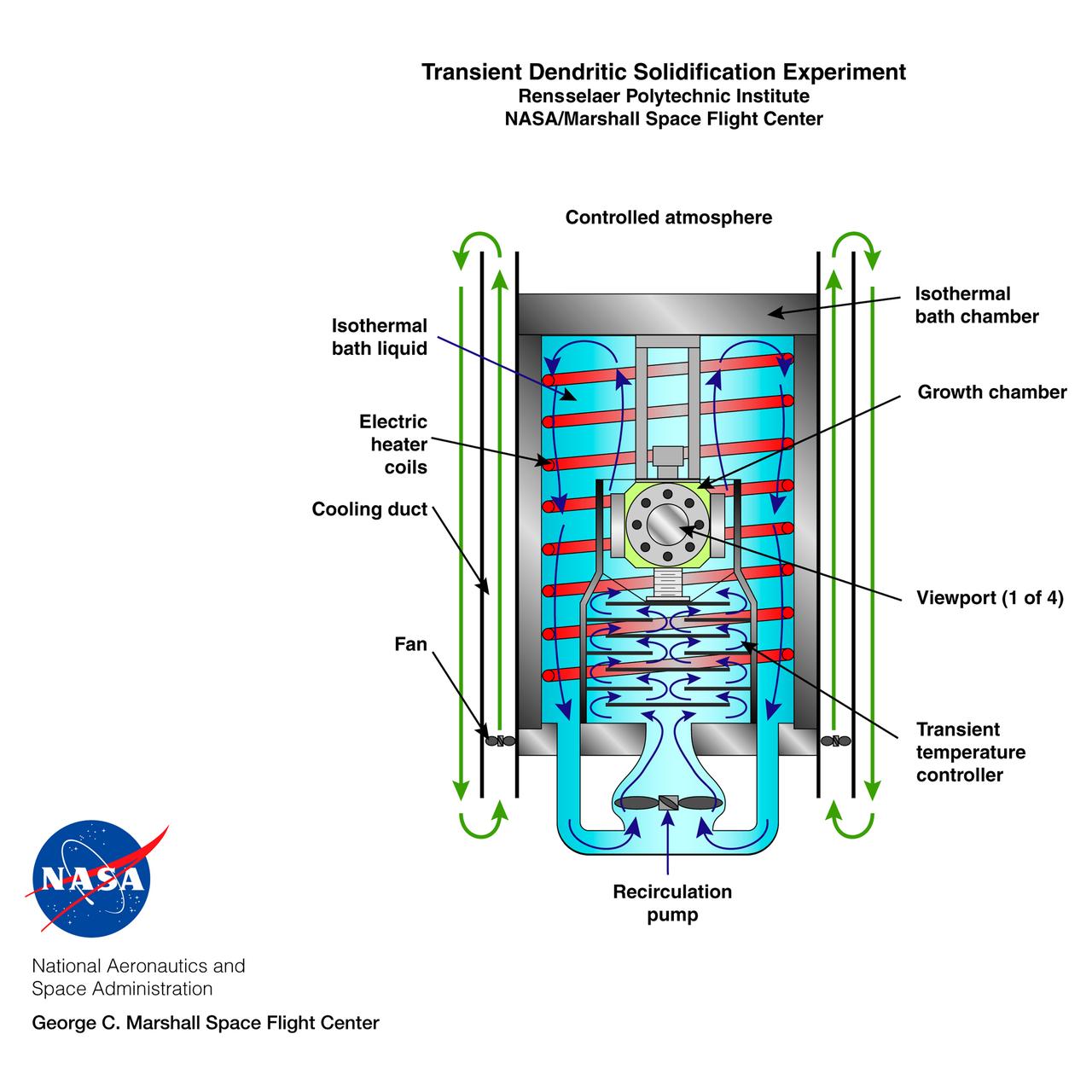
The Transient Dentritic Solidification Experiment (TDSE) is being developed as a candidate for flight aboard the International Space Station. TDSE will study the growth of dentrites (treelike crystalline structures) in a transparent material (succinonitrile or SCN) that mimics the behavior of widely used iron-based metals. Basic work by three Space Shuttle flights (STS-62, STS-75, and STS-87) of the Isothermal Dendritic Growth Experiment (IDGE) is yielding new insights into virtually all industrially relevant metal and alloy forming operations. The TDSE is similar to IDGE, but will maintain a constant temperature while varying pressure on the dentrites. Shown here is a cutaway of the isothermal bath containing its growth cell at the heart of the TDSE. The principal investigator is Matthew Koss of College of the Holy Cross in Worcester, MA. Note: an Acrobat PDF version is available from http://microgravity.nasa.gov/gallery
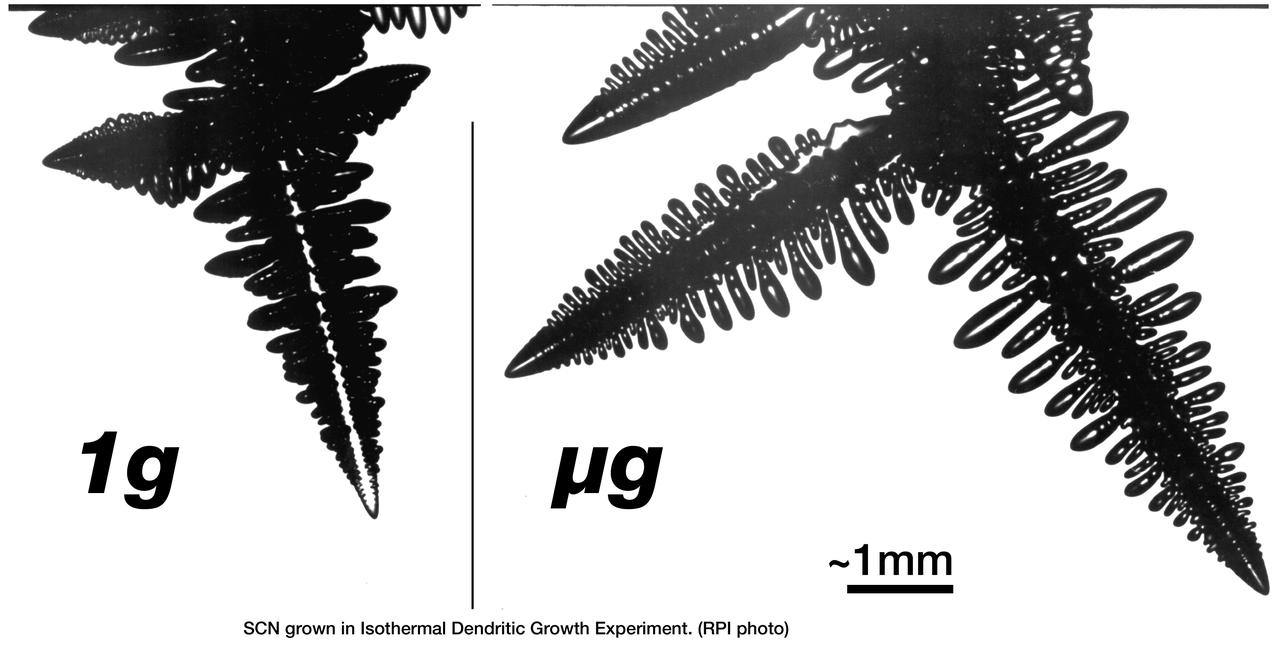
The Isothermal Dendritic Growth Experiment (IDGE), flown on three Space Shuttle missions, is yielding new insights into virtually all industrially relevant metal and alloy forming operations. IDGE used transparent organic liquids that form dendrites (treelike structures) similar to the crystals that form inside metal alloys. Comparing Earth-based and space-based dentrite growth velocity, tip size and shape provid a better understanding of the fundamentals of dentritic growth, including gravity's effects. These shadowgraphic images show succinonitrile (SCN) dentrites growing in a melt (liquid). The space-grown crystals also have cleaner, better defined sidebranches. IDGE was developed by Rensselaer Polytechnic Institude (RPI) and NASA/ Glenn Research Center(GRC). Advanced follow-on experiments are being developed for flight on the International Space Station. Photo gredit: NASA/Glenn Research Center
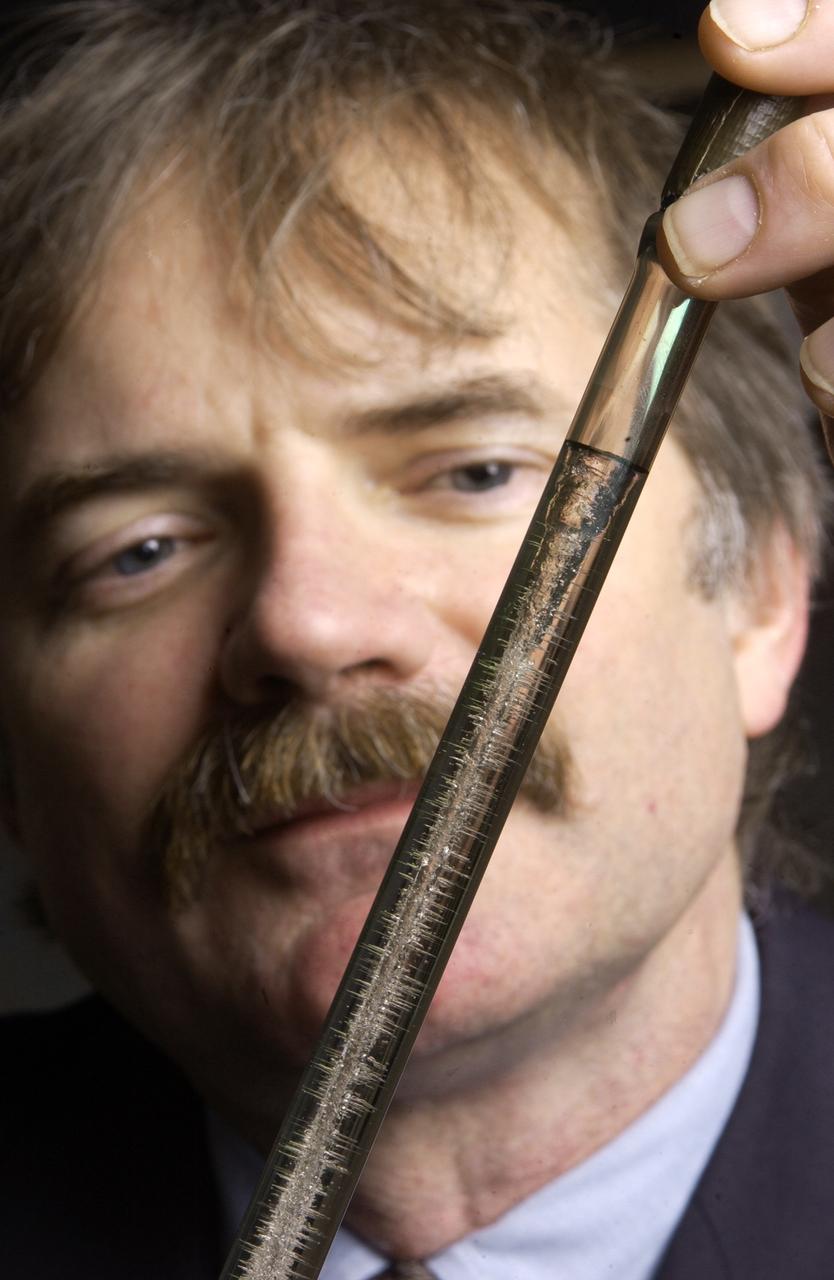
On Earth when scientists melt metals, bubbles that form in the molten material can rise to the surface, pop and disappear. In microgravity -- the near-weightless environment created as the International Space Station orbits Earth -- the lighter bubbles do not rise and disappear. Prior space experiments have shown that bubbles often become trapped in the final metal or crystal sample -similar to the bubbles trapped in this sample. In the solid, these bubbles, or porosity, are defects that diminish both the material's strength and usefulness. The Pore Formation and Mobility Investigation will melt samples of a transparent modeling material, succinonitrile and succinonitrile water mixtures, shown here in an ampoule being examined by Dr. Richard Grugel, the principal investigator for the experiment at NASA's Marshall Space Flight Center in Huntsville, Ala. As the samples are processed in space, Grugel will be able to observe how bubbles form in the samples and study their movements and interactions.
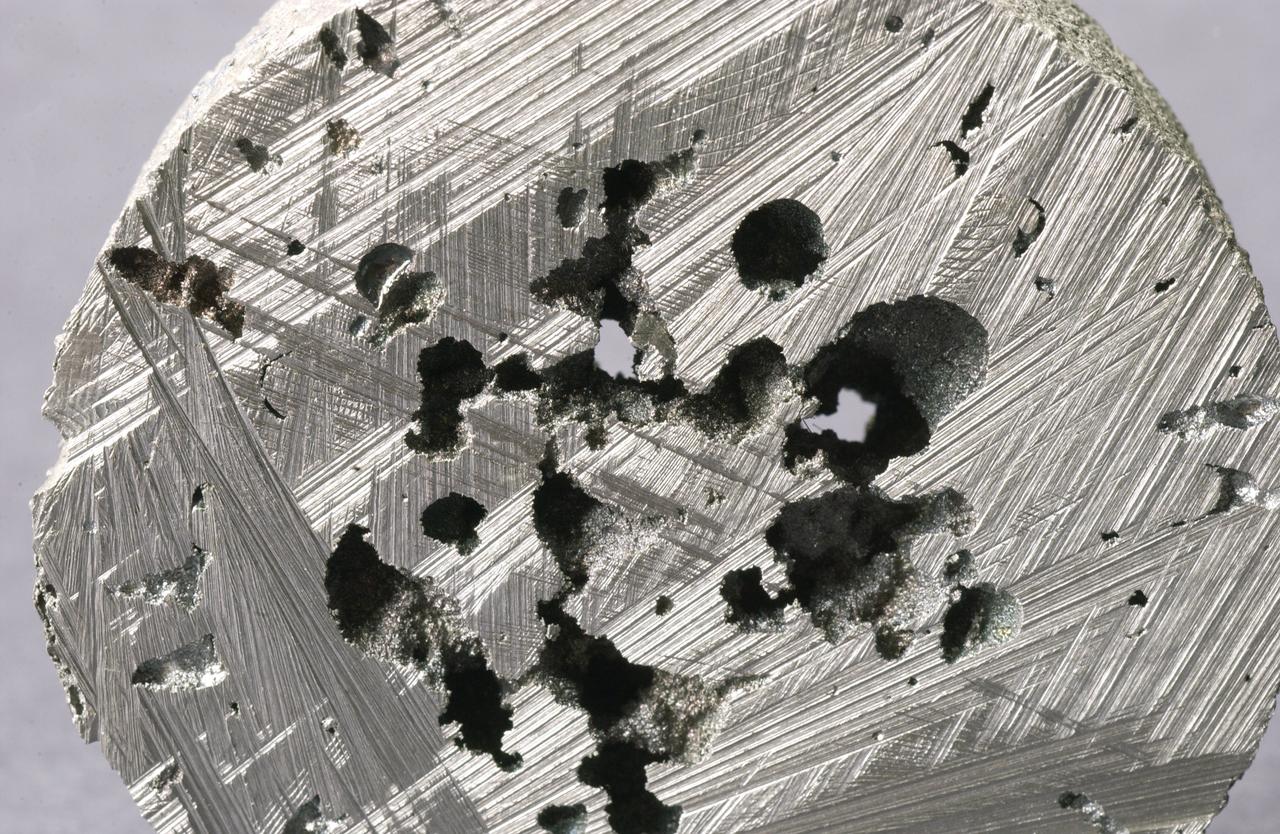
Pores and voids often form in metal castings on Earth (above) making them useless. A transparent material that behaves at a large scale in microgravity the way that metals behave at the microscopic scale on Earth, will help show how voids form and learn how to prevent them. Scientists are using the microgravity environment on the International Space Station to study how these bubbles form, move and interact. The Pore Formation and Mobility Investigation (PFMI) in the Microgravity Science Glovebox aboard the International Space Station uses a transparent material called succinonitrile that behaves like a metal to study this problem. Video images sent to the ground allow scientists to watch the behavior of the bubbles as they control the melting and freezing of the material. The bubbles do not float to the top of the material in microgravity, so they can study their interactions.
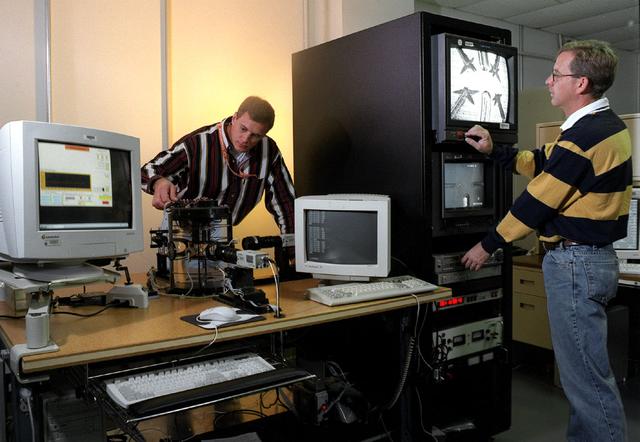
Test engineers, TK Pedergrass and Dave McIntosh, are growing multiple dendrites in an undercooled melt of ultra pure succinonitrile (SCN). Images and temperature measurements will give Dr. Christoph Beckerman, the EDSE Principal Investigator, information on the microstructural evolution of and thermal interactions between several equiaxed crystals growing dendritically. This benchmark data will be used to test and develop equiaxed dendritic solidification models. The monitors show both the 4 stinger and 2 stinger chambers that are placed in the isothermal bath for testing.