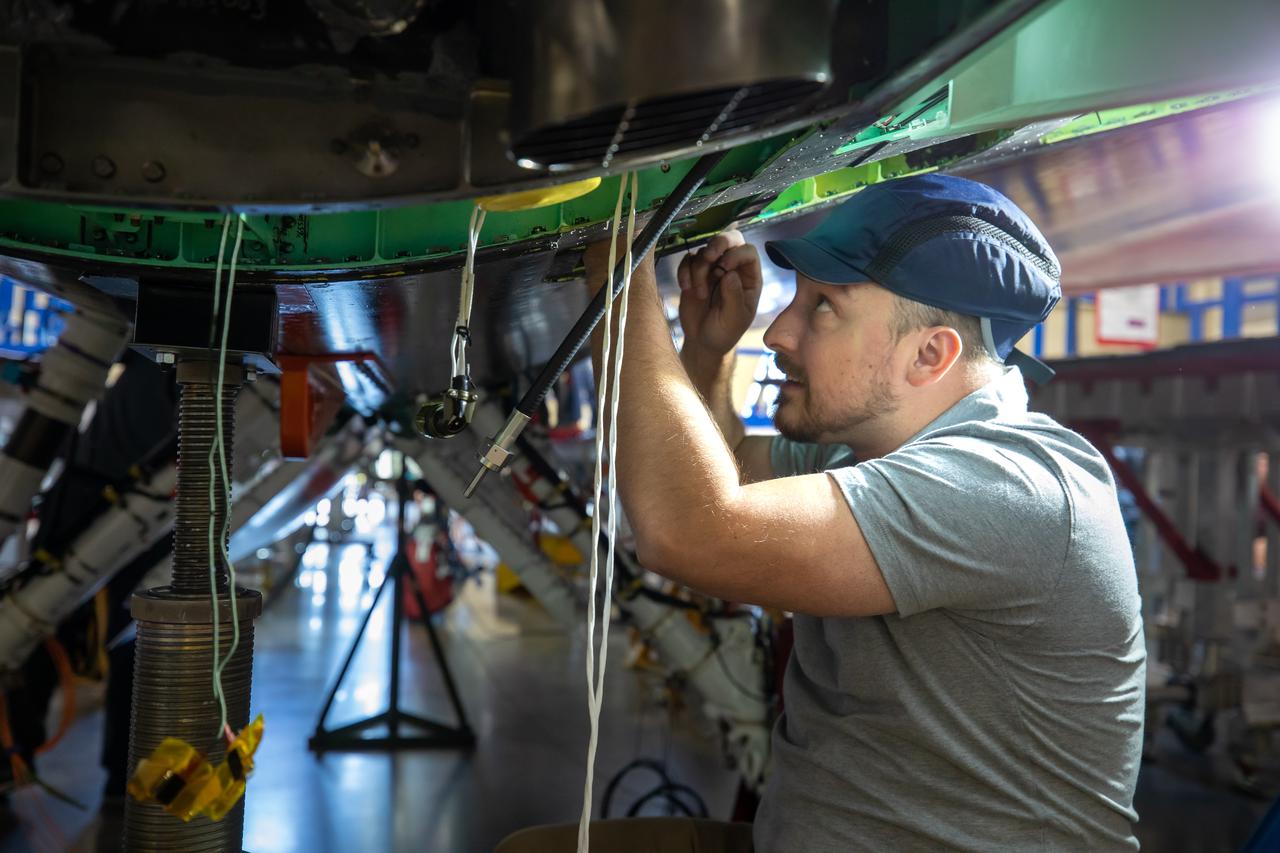
A Lockheed Martin Skunk Works technician inspects some of the wiring and sensors on the X-59 aircraft in preparation for the first power-on system checkouts. Once complete, the X-59 aircraft will demonstrate the ability to fly supersonic while reducing the loud sonic boom to a quiet sonic thump and help enable commercial supersonic air travel over land. This aircraft is the centerpiece of NASA’s Quesst mission.
A Lockheed Martin Skunk Works technician works to complete wiring on the X-59 aircraft in preparation for the power-on system checkouts. Once complete, the X-59 aircraft will demonstrate the ability to fly supersonic while reducing the loud sonic boom to a quiet sonic thump and help enable commercial supersonic air travel over land. This aircraft is the centerpiece of NASA’s Quesst mission.
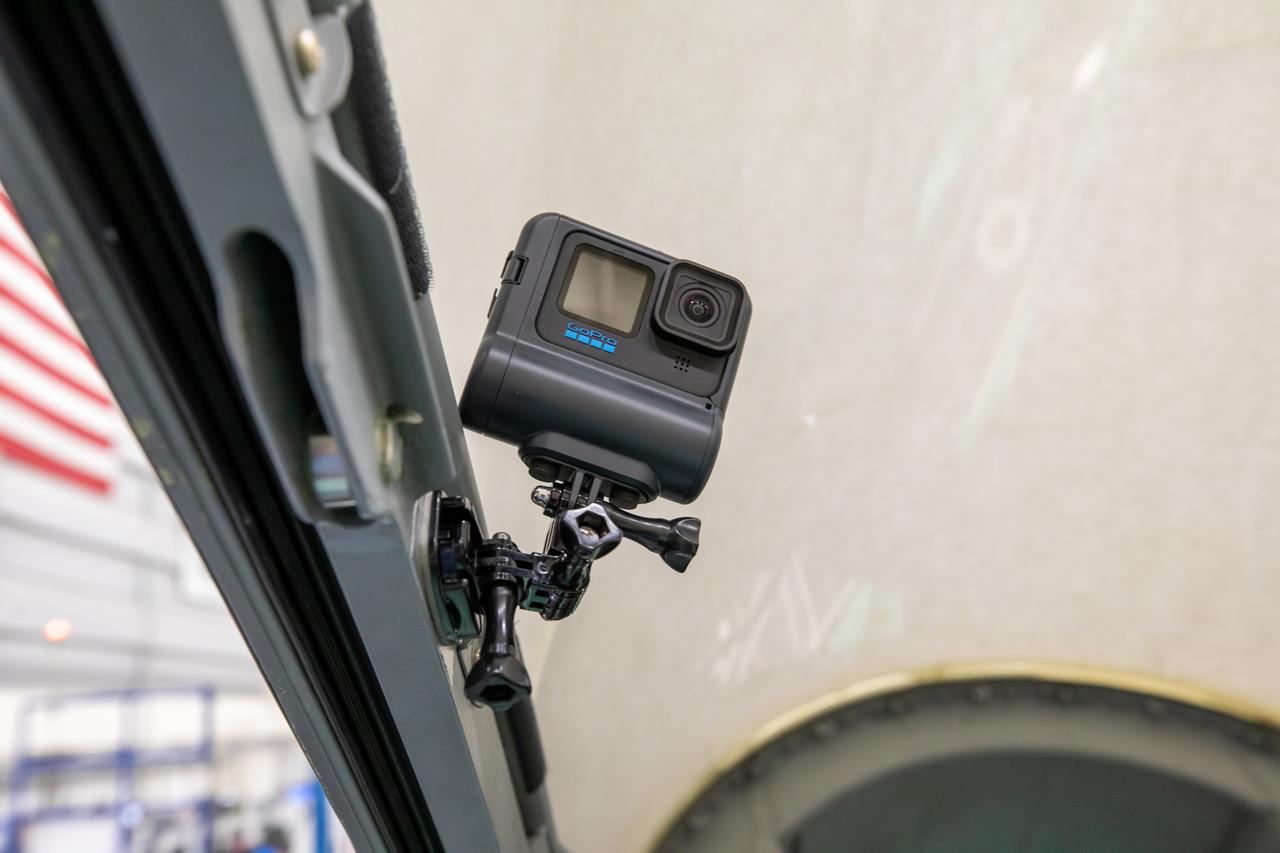
A Go-Pro is mounted on the inside of the X-59’s cockpit to capture the pilots activities during flight.

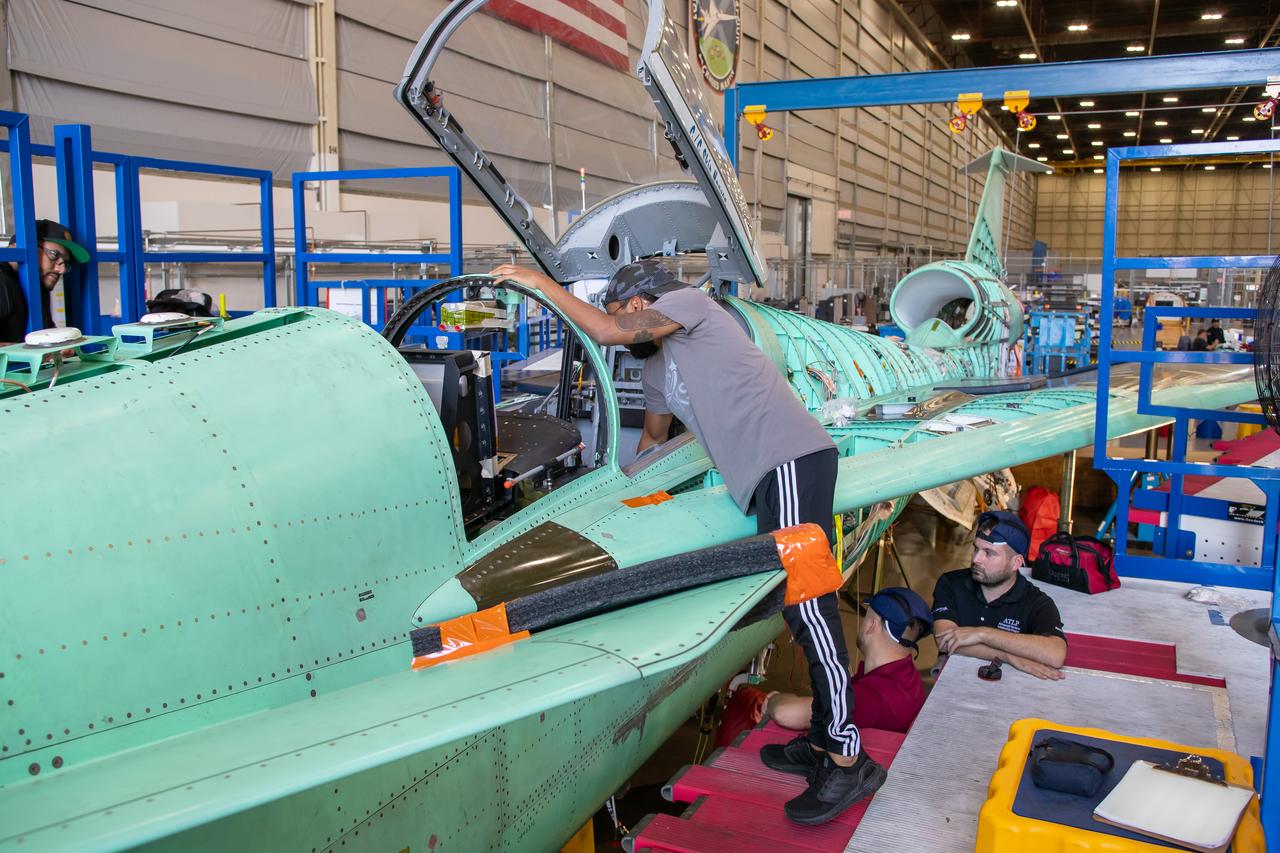
NASA test pilot, Nils Larson, inspects the X-59 cockpit displays and lighting system during system checkouts. The External Vision System (XVS) is displayed on the top screen, and the avionics flight displays, which can show navigation information or aircraft status, are shown on the bottom two screens.
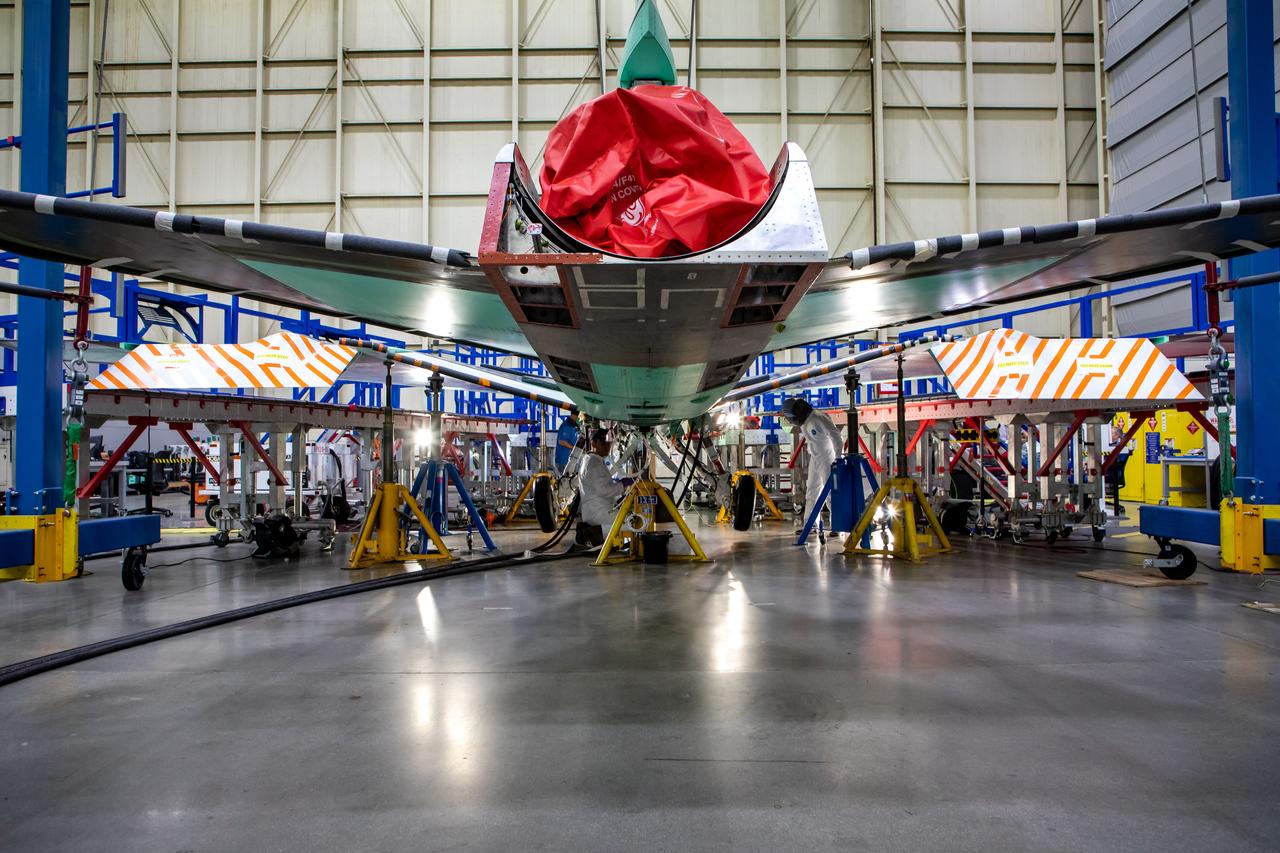
Technicians perform landing gear checkout testing at Lockheed Martin Skunk Works in Palmdale, California. These tests make sure that all the parts of X-59’s landing gear and doors are working in the correct order. The X-59 is the centerpiece of NASA’s Quesst mission, which could help enable commercial supersonic air travel over land.