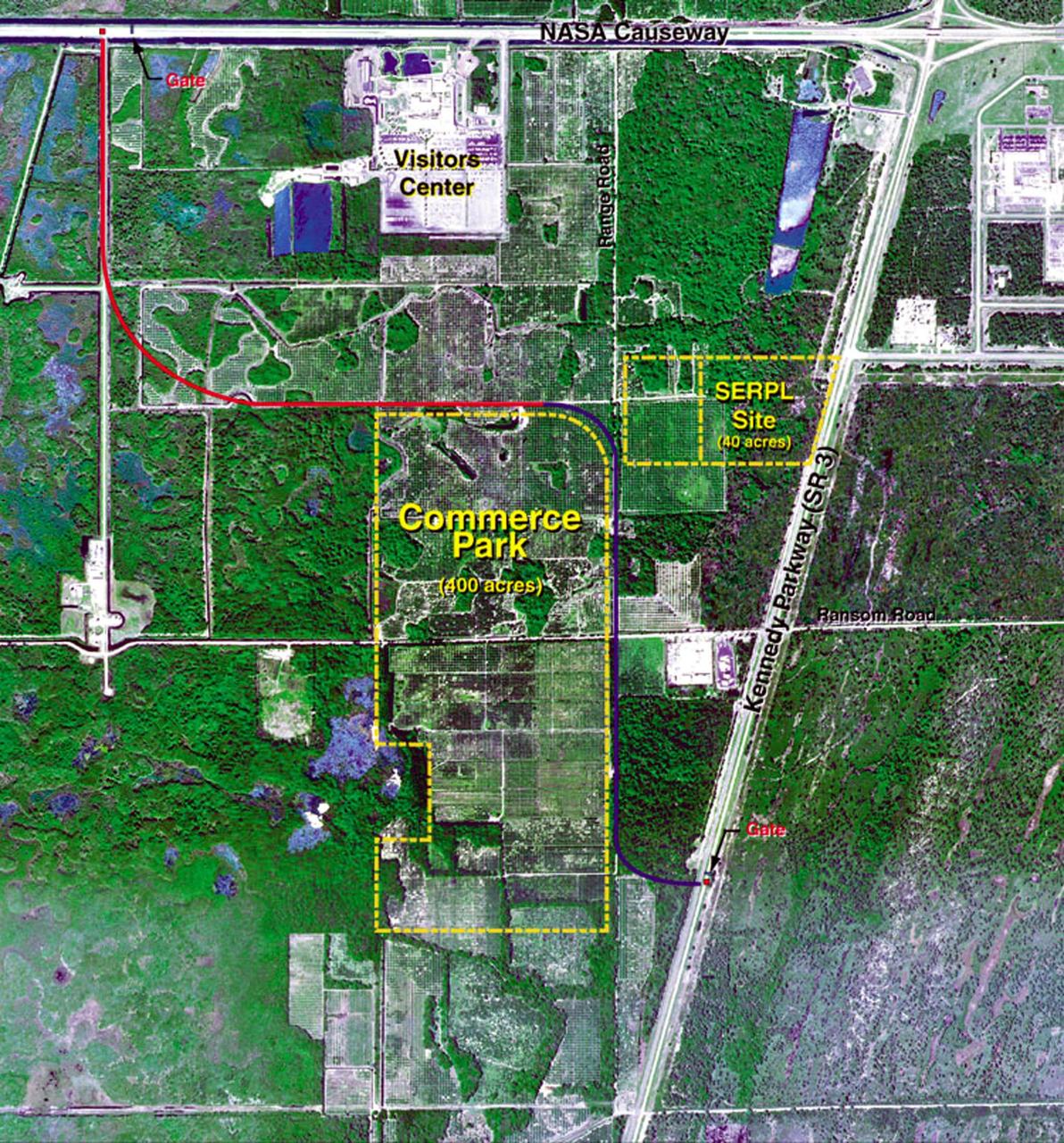
This diagram shows the planned locations of the Space Experiment Research and Processing Laboratory (SERPL) and the Space Station Commerce Park at Kennedy Space Center. The SERPL is a planned 100,000-square-foot laboratory that will provide expanded and upgraded facilities for hosting International Space Station experiment processing. In addition, it will provide better support for other biological and life sciences payload processing at KSC. It will serve as a magnet facility for the planned 400-acre Commerce Park.
KSC-00PADIG-020
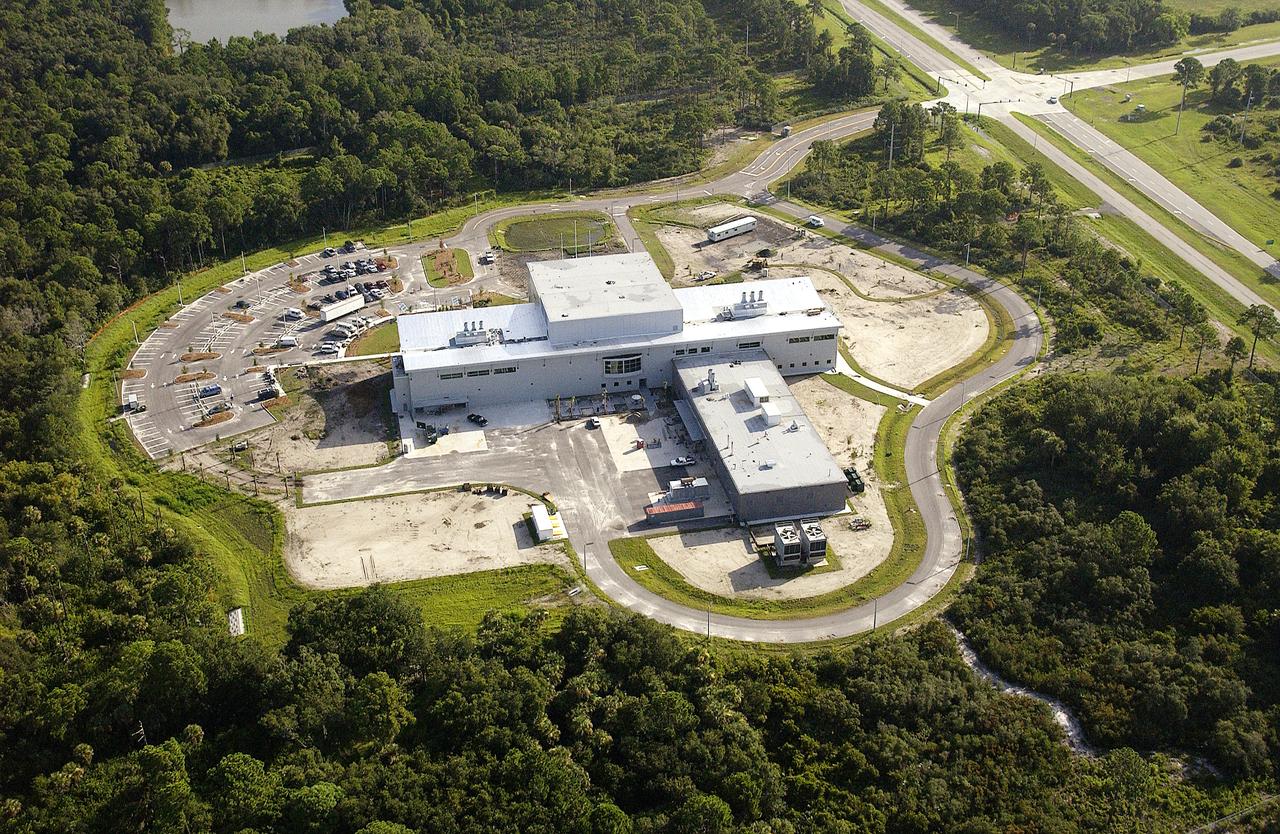
The Space Experiment Research and Processing Laboratory (SERPL) is a major new research facility under construction at the International Space Research Park located on KSC. At right is S.R. 3, which leads into the Center from Merritt Island. Being developed as a partnership between KSC and the State of Florida, SERPL will serve as the primary gateway to the International Space Station for science experiments and as a world-class home to ground-based investigations in fundamental and applied biological science. NASA’s life sciences contractor will be the primary tenant of the facility, leasing space to conduct flight experiment processing and NASA-sponsored research. About 20 percent of the facility will be available for use by Florida’s university researchers through the Florida Space Research Institute.
Aerial Views of KSC
The Space Experiment Research and Processing Laboratory (SERPL) is a major new research facility under construction at the International Space Research Park located on KSC. Being developed as a partnership between KSC and the State of Florida, it will serve as the primary gateway to the International Space Station for science experiments and as a world-class home to ground-based investigations in fundamental and applied biological science. NASA’s life sciences contractor will be the primary tenant of the facility, leasing space to conduct flight experiment processing and NASA-sponsored research. About 20 percent of the facility will be available for use by Florida’s university researchers through the Florida Space Research Institute.
Aerial Views of KSC
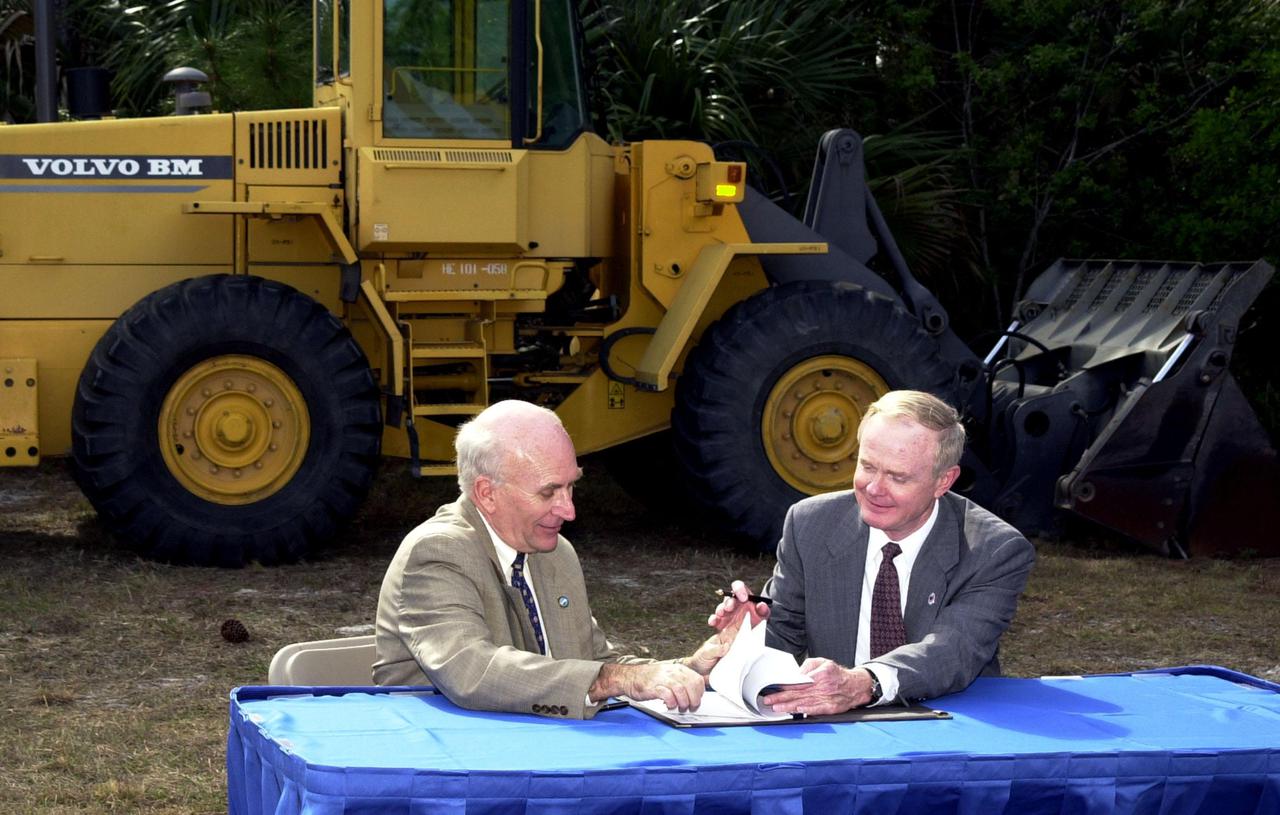
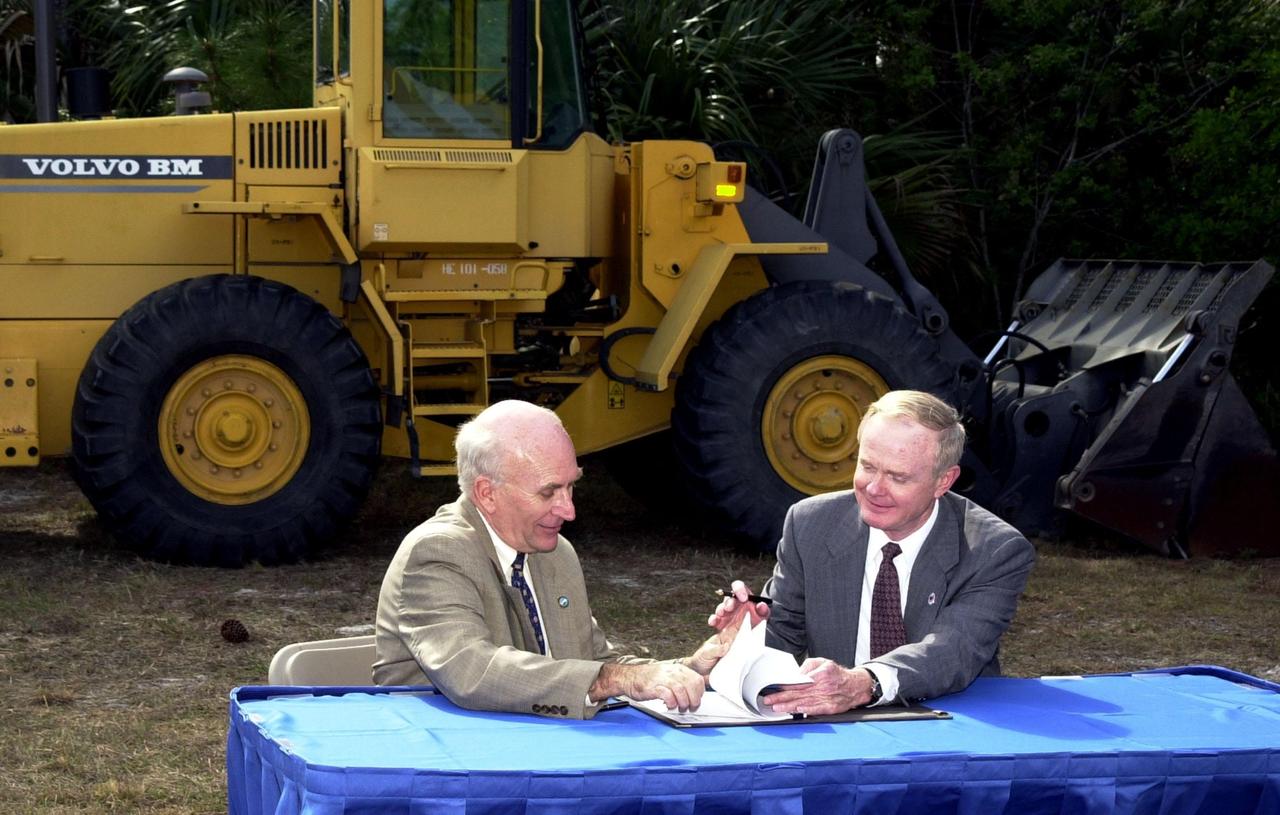
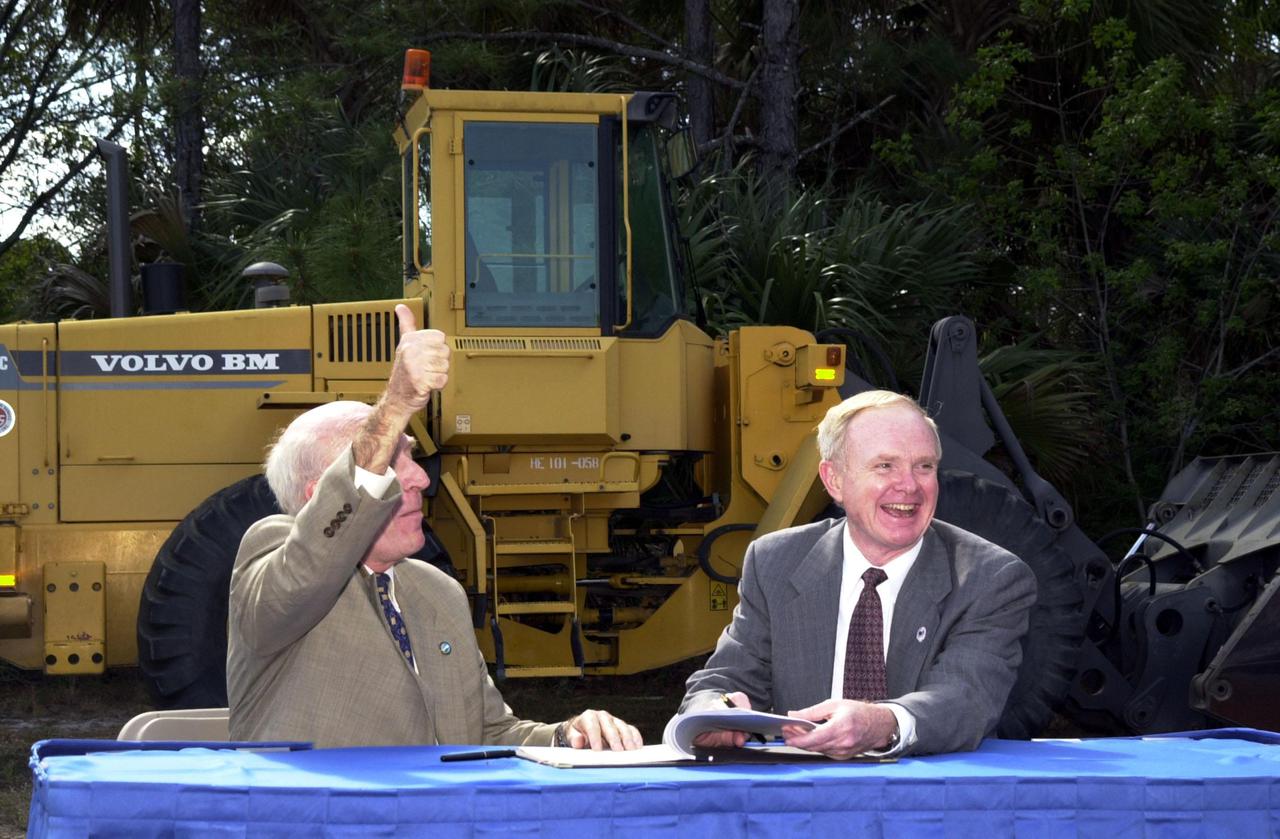
Ed Gormel (left), executive director of Spaceport Florida Authority, and Roy Bridges Jr., Center Director, get ready to sign a SERPL Real Property Use Permit Agreement between the two organizations to construct a three-mile roadway. It is the start of a construction project that includes the Space Experiment Research and Processing Laboratory (SERPL). The signing took place outdoors on S.R. 3 prior to a groundbreaking ceremony for the roadway. The road, to be known as Space Commerce Way, will serve the public by providing a 24-hour access route through KSC from S.R. 3 to the NASA Causeway and KSC Visitor Complex. The SERPL project is enabled by a partnership and collaboration between NASA and the State of Florida to create a vital resource for international and commercial space customers. SERPL is considered a magnet facility, and will support the development and processing of life sciences experiments destined for the International Space Station and accommodate NASA, industry and academic researchers performing associated biological research
KSC-01PADIG-059
Ed Gormel (left), executive director of Spaceport Florida Authority, and Roy Bridges Jr., Center Director, get ready to sign a SERPL Real Property Use Permit Agreement between the two organizations to construct a three-mile roadway. It is the start of a construction project that includes the Space Experiment Research & Processing Laboratory (SERPL). The signing took place outdoors on S.R. 3 prior to a groundbreaking ceremony for the roadway. The road, to be known as Space Commerce Way, will serve the public by providing a 24-hour access route through KSC from S.R. 3 to the NASA Causeway and KSC Visitor Complex. The SERPL project is enabled by a partnership and collaboration between NASA and the State of Florida to create a vital resource for international and commercial space customers. SERPL is considered a magnet facility, and will support the development and processing of life sciences experiments destined for the International Space Station and accommodate NASA, industry and academic researchers performing associated biological research
KSC01padig059
The preliminary design for the Space Experiment Research and Processing Laboratory (SERPL) at Kennedy Space Center is shown in this artist's rendition. The SERPL is a planned 100,000-square-foot laboratory that will provide expanded and upgraded facilities for hosting International Space Station experiment processing. In addition, it will provide better support for other biological and life sciences payload processing at KSC. It will serve as a magnet facility for a planned 400-acre Space Station Commerce Park
KSC-00padig018
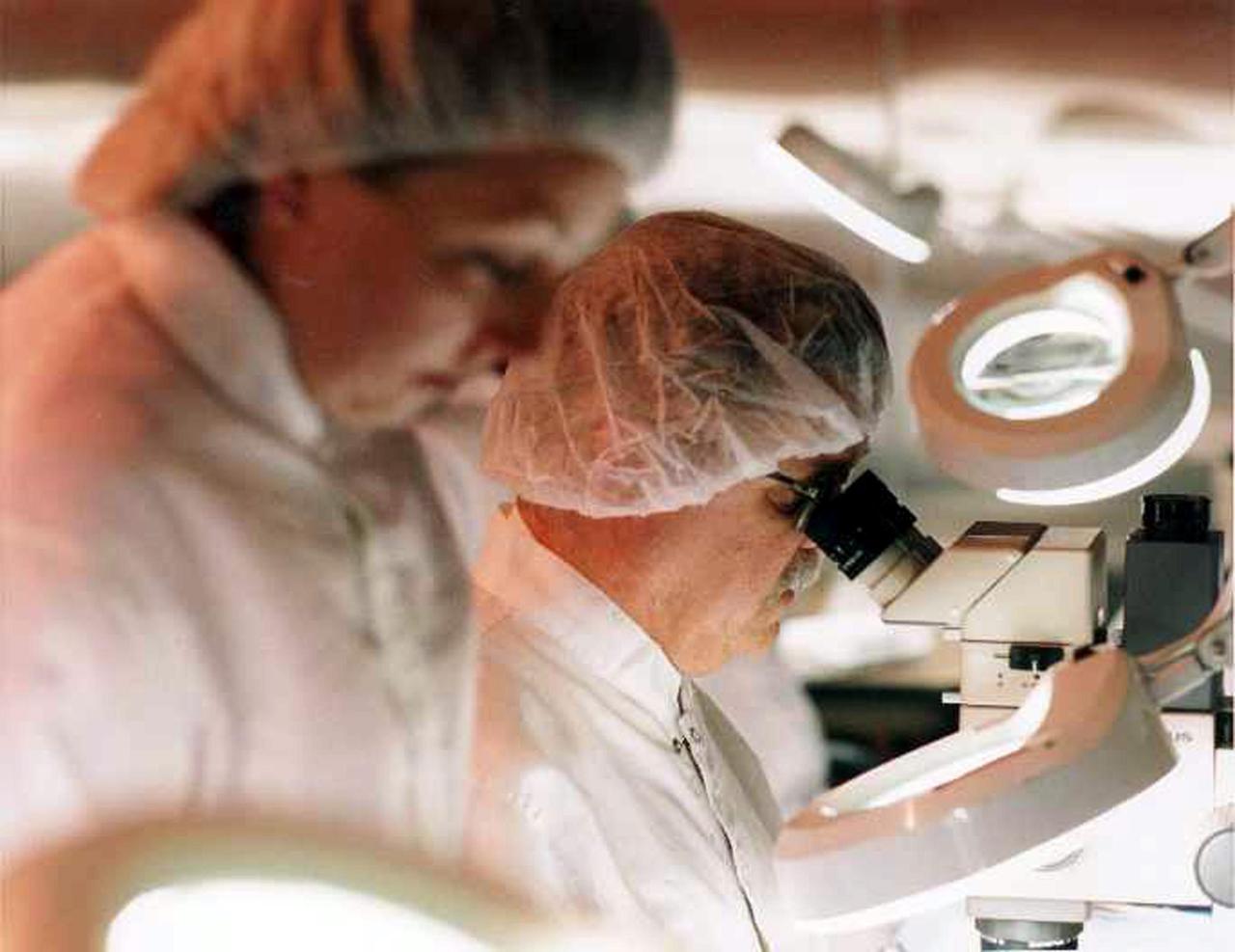
Researchers perform tests at Kennedy Space Center. New facilities for such research will be provided at the Space Experiment Research Procession Laboratory (SERPL). The SERPL is a planned 100,000-square-foot laboratory that will provide expanded and upgraded facilities for hosting International Space Station experiment processing. In addition, it will provide better support for other biological and life sciences payload processing at KSC. It will serve as a magnet facility for a planned 400-acre Space Station Commerce Park
KSC-00padig019
Researchers perform tests at Kennedy Space Center. New facilities for such research will be provided at the Space Experiment Research Procession Laboratory (SERPL). The SERPL is a planned 100,000-square-foot laboratory that will provide expanded and upgraded facilities for hosting International Space Station experiment processing. In addition, it will provide better support for other biological and life sciences payload processing at KSC. It will serve as a magnet facility for a planned 400-acre Space Station Commerce Park
KSC00padig019
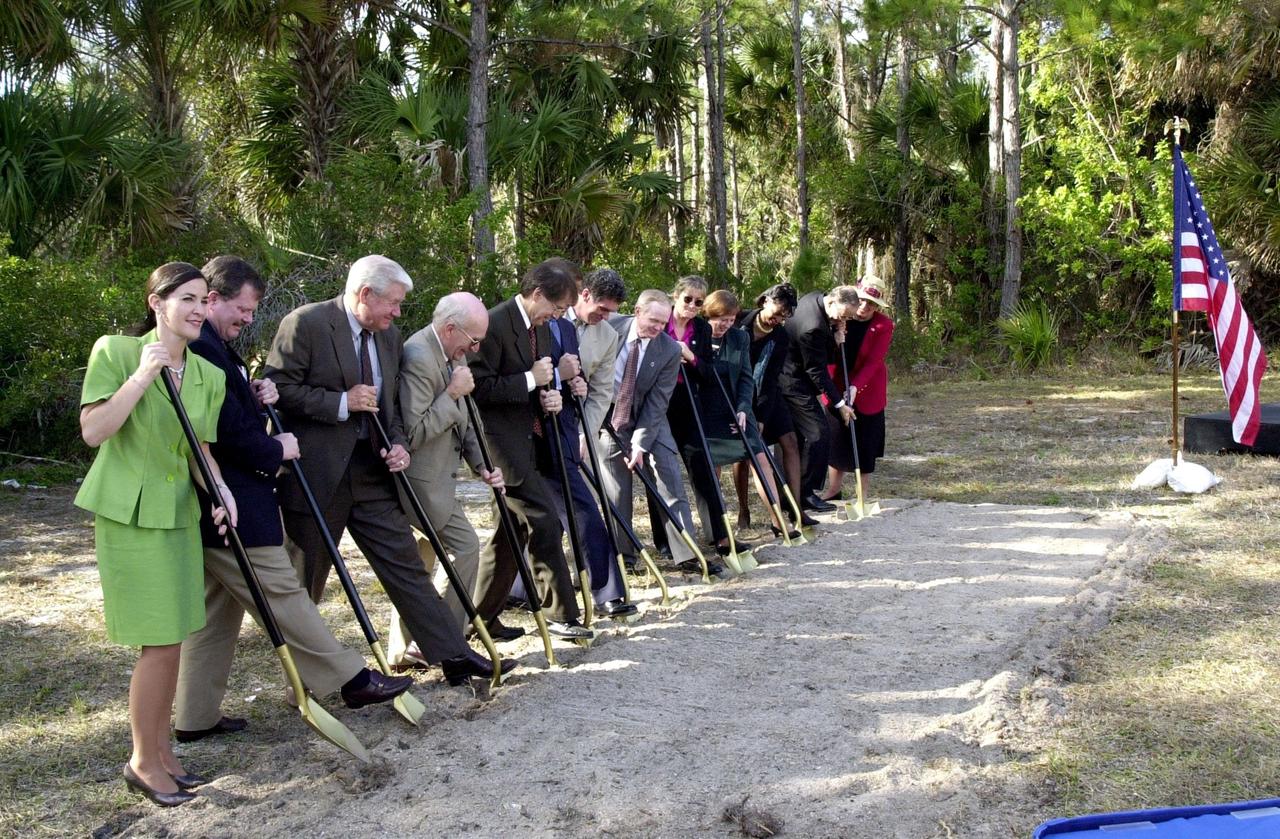
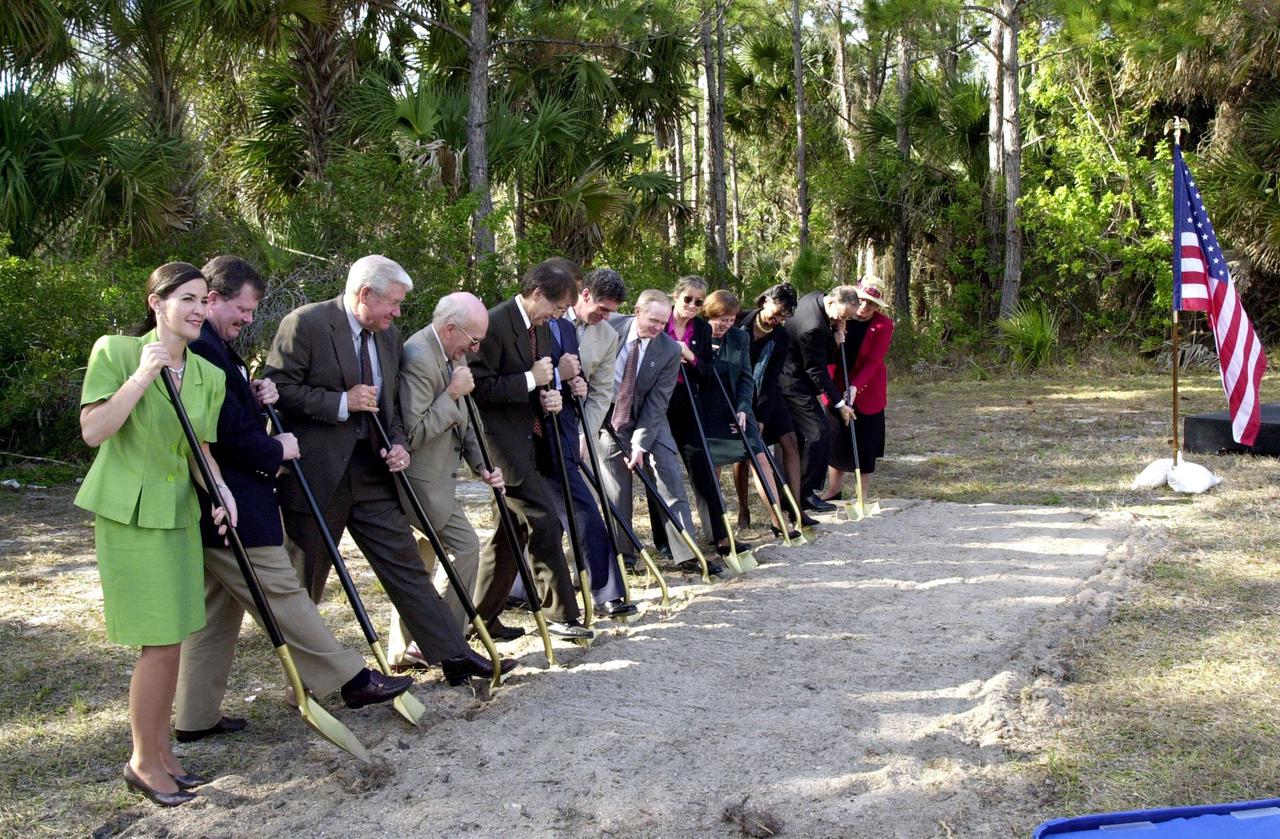
At a groundbreaking ceremony, participants and guests get ready to dig in, signifying the start of construction on a new roadway through KSC. It is the start of a construction project that includes the Space Experiment Research & Processing Laboratory (SERPL). From left are Dr. Pamella J. Dana, from the executive office of Florida’s governor, Jeb Bush; Deputy Associate Administrator Michael Hawes, Space Station, NASA; Sen. George Kirkpatrick; Spaceport Florida Authority Executive Director Ed Gormel; Executive Director Dr. Samuel T. Durrance, Florida Space Research Institute; Florida’s Lt. Gov. Frank Brogan; Congressman Dave Weldon; Center Director Roy Bridges Jr.; SFA SERPL Program Manager Debra Holliday; KSC SERPL Program Manager Jan Heuser; District Manager Cheryl Harrison-Lee, Florida Department of Transportation; State Senator Jim Sebesta; and KSC Director JoAnn H. Morgan, External Relations and Business Development. The project is enabled by a partnership and collaboration between NASA and the State of Florida to create a vital resource for international and commercial space customers. SERPL is considered a magnet facility, and will support the development and processing of life sciences experiments destined for the International Space Station and accommodate NASA, industry and academic researchers performing associated biological research
KSC01padig064
At a groundbreaking ceremony, participants and guests get ready to dig in, signifying the start of construction on a new roadway through KSC. It is the start of a construction project that includes the Space Experiment Research and Processing Laboratory (SERPL). From left are Dr. Pamella J. Dana, from the executive office of Florida’s governor, Jeb Bush; Deputy Associate Administrator Michael Hawes, Space Station, NASA; Sen. George Kirkpatrick; Spaceport Florida Authority Executive Director Ed Gormel; Executive Director Dr. Samuel T. Durrance, Florida Space Research Institute; Florida’s Lt. Gov. Frank Brogan; Congressman Dave Weldon; Center Director Roy Bridges Jr.; SFA SERPL Program Manager Debra Holliday; KSC SERPL Program Manager Jan Heuser; District Manager Cheryl Harrison-Lee, Florida Department of Transportation; State Senator Jim Sebesta; and KSC Director JoAnn H. Morgan, External Relations and Business Development. The project is enabled by a partnership and collaboration between NASA and the State of Florida to create a vital resource for international and commercial space customers. SERPL is considered a magnet facility, and will support the development and processing of life sciences experiments destined for the International Space Station and accommodate NASA, industry and academic researchers performing associated biological research
KSC-01PADIG-064
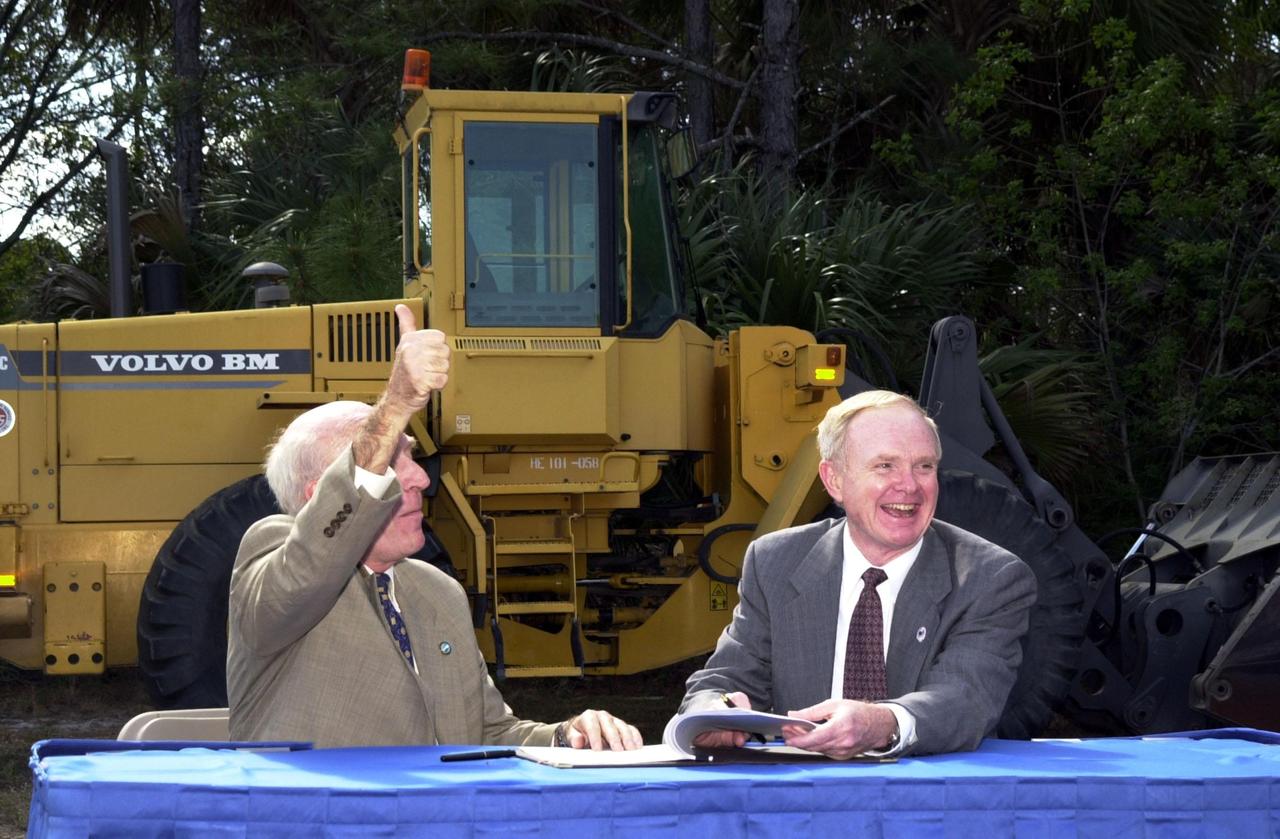
During a signing ceremony, Ed Gormel (left), executive director of Spaceport Florida Authority, and Roy Bridges Jr., Center Director, respond to a remark from the audience. The two are signing a SERPL Real Property Use Permit Agreement between the two organizations to construct a three-mile roadway. It is the start of a construction project that includes the Space Experiment Research & Processing Laboratory (SERPL). The signing took place outdoors on S.R. 3 prior to a groundbreaking ceremony for the roadway. The road, to be known as Space Commerce Way, will serve the public by providing a 24-hour access route through KSC from S.R. 3 to the NASA Causeway and KSC Visitor Complex. The SERPL project is enabled by a partnership and collaboration between NASA and the State of Florida to create a vital resource for international and commercial space customers. SERPL is considered a magnet facility, and will support the development and processing of life sciences experiments destined for the International Space Station and accommodate NASA, industry and academic researchers performing associated biological research
KSC01padig060
During a signing ceremony, Ed Gormel (left), executive director of Spaceport Florida Authority, and Roy Bridges Jr., Center Director, respond to a remark from the audience. The two are signing a SERPL Real Property Use Permit Agreement between the two organizations to construct a three-mile roadway. It is the start of a construction project that includes the Space Experiment Research and Processing Laboratory (SERPL). The signing took place outdoors on S.R. 3 prior to a groundbreaking ceremony for the roadway. The road, to be known as Space Commerce Way, will serve the public by providing a 24-hour access route through KSC from S.R. 3 to the NASA Causeway and KSC Visitor Complex. The SERPL project is enabled by a partnership and collaboration between NASA and the State of Florida to create a vital resource for international and commercial space customers. SERPL is considered a magnet facility, and will support the development and processing of life sciences experiments destined for the International Space Station and accommodate NASA, industry and academic researchers performing associated biological research
KSC-01PADIG-060
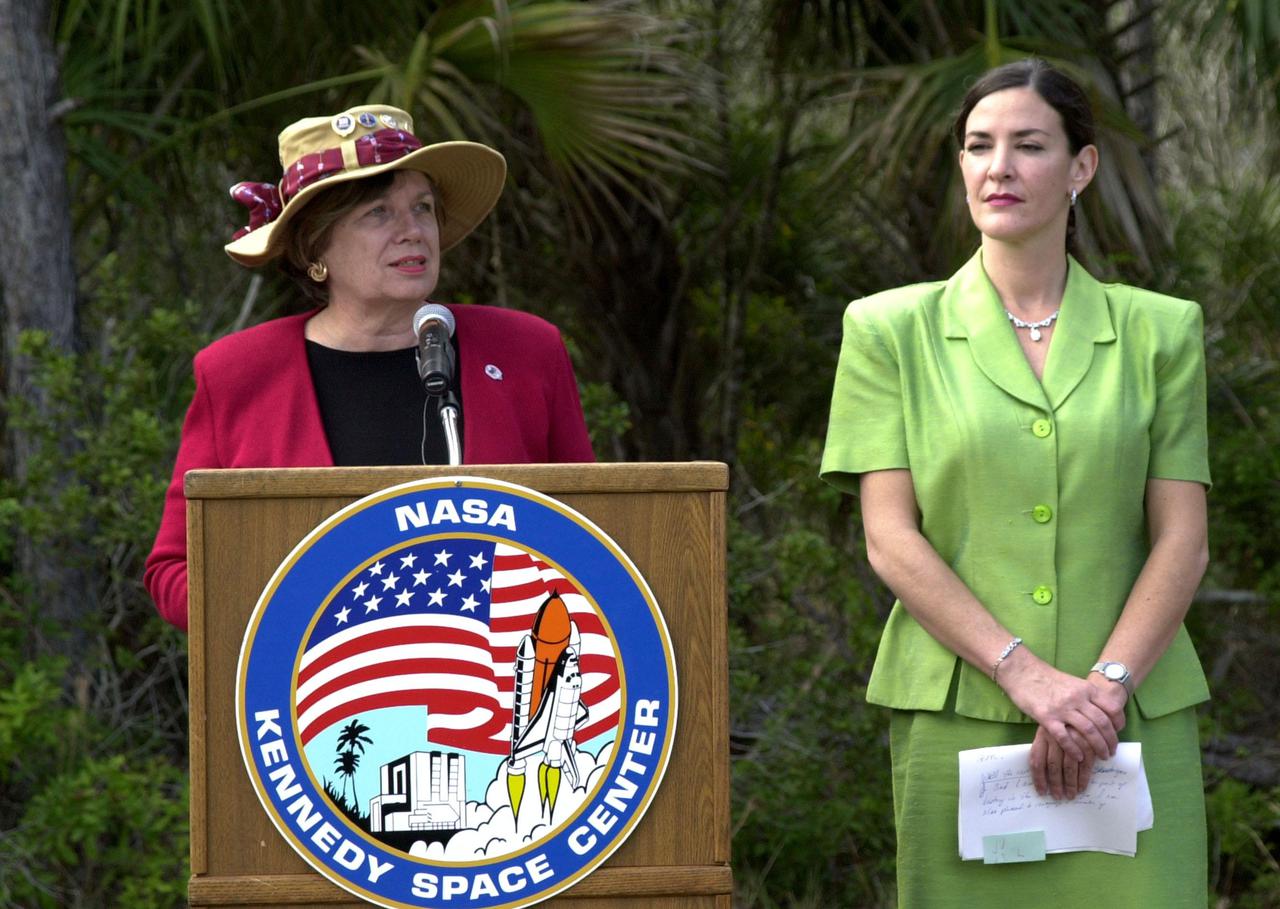
Masters of Ceremony JoAnn H. Morgan, director of External Relations and Business Development at KSC, and Dr. Pamella J. Dana, director of the Office of Tourism, Trade and Economic Development in Florida, introduce guests at a groundbreaking held outdoors on S.R. 3. The groundbreaking is for a roadway, to be known as Space Commerce Way, that will serve the public by providing a 24-hour access route through KSC from S.R. 3 to the NASA Causeway and KSC Visitor Complex. It is the start of a construction project that includes the Space Experiment Research and Processing Laboratory (SERPL). The project is enabled by a partnership and collaboration between NASA and the State of Florida to create a vital resource for international and commercial space customers. SERPL is considered a magnet facility, and will support the development and processing of life sciences experiments destined for the International Space Station and accommodate NASA, industry and academic researchers performing associated biological research
KSC-01PADIG-061
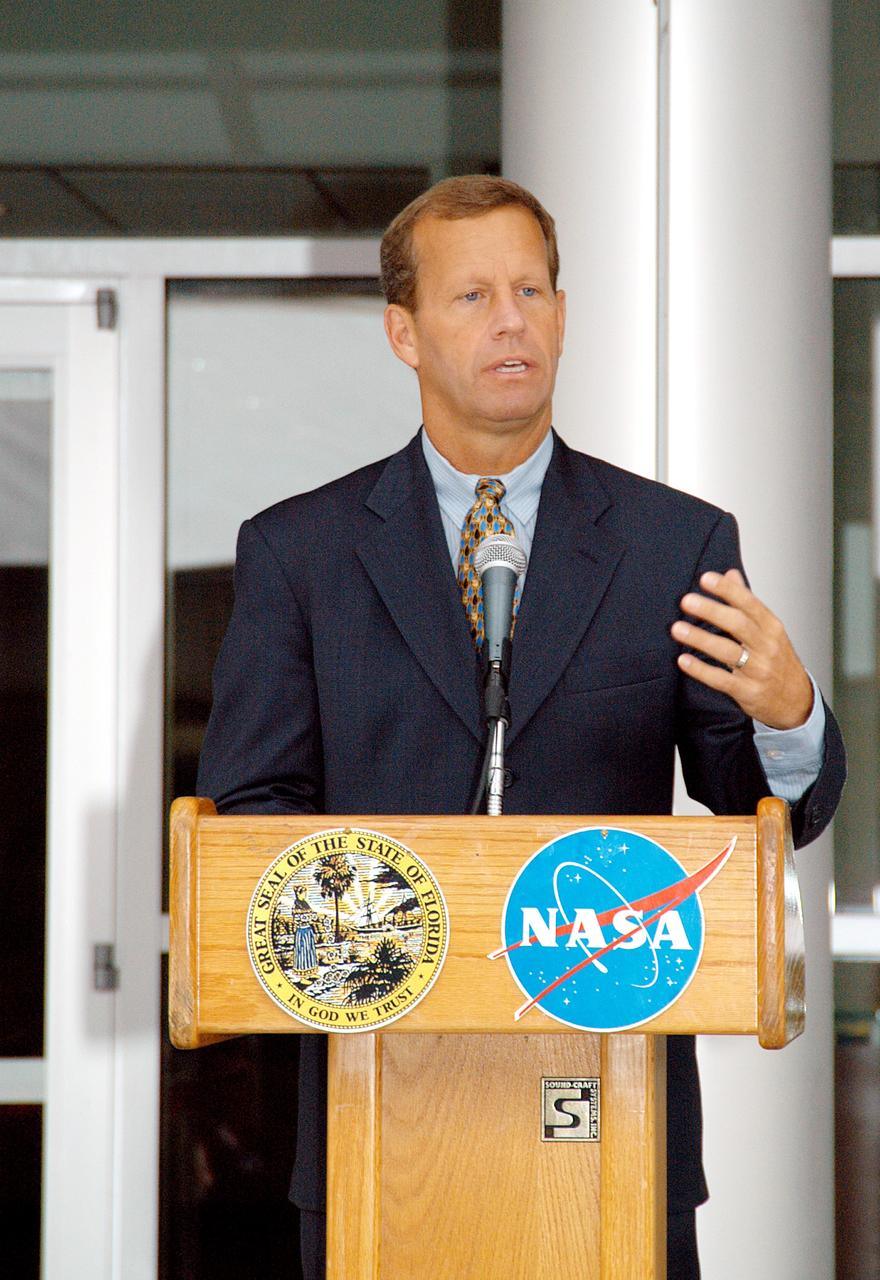
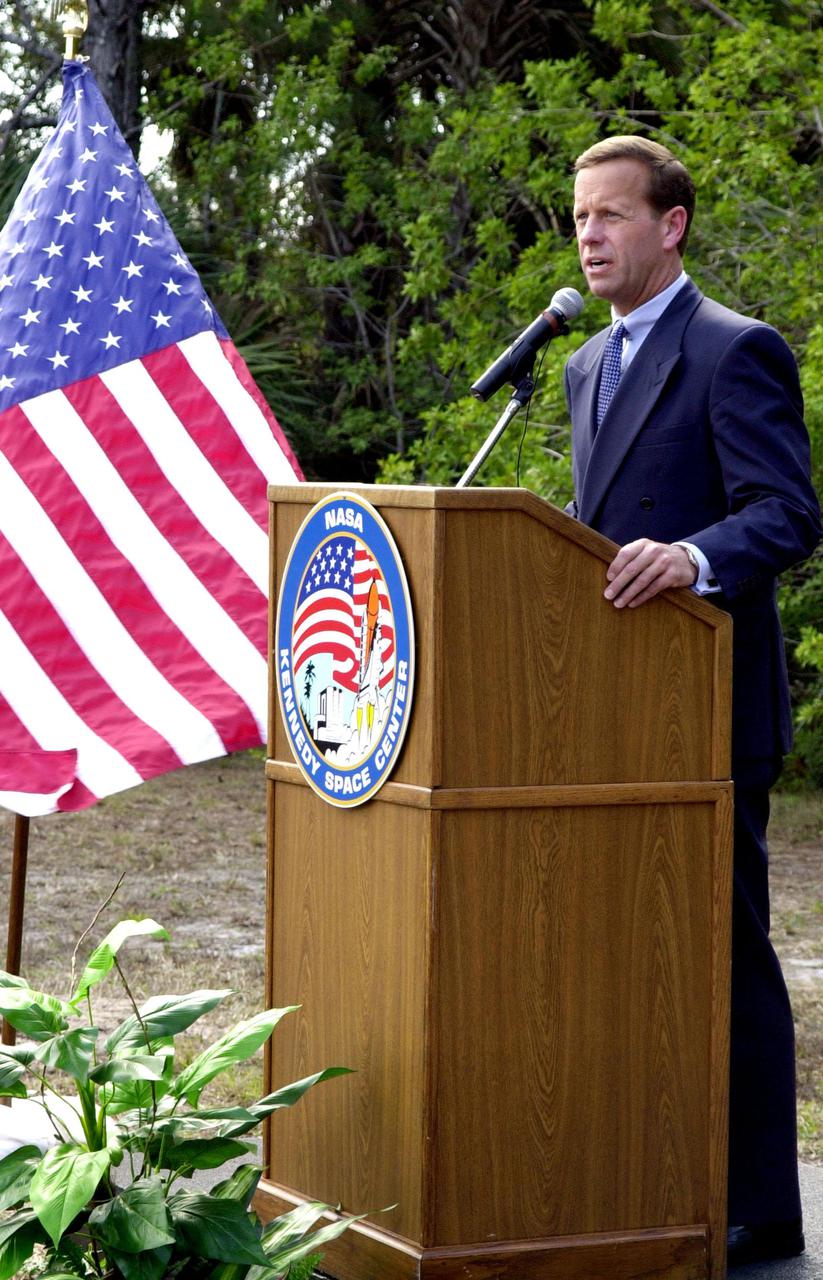
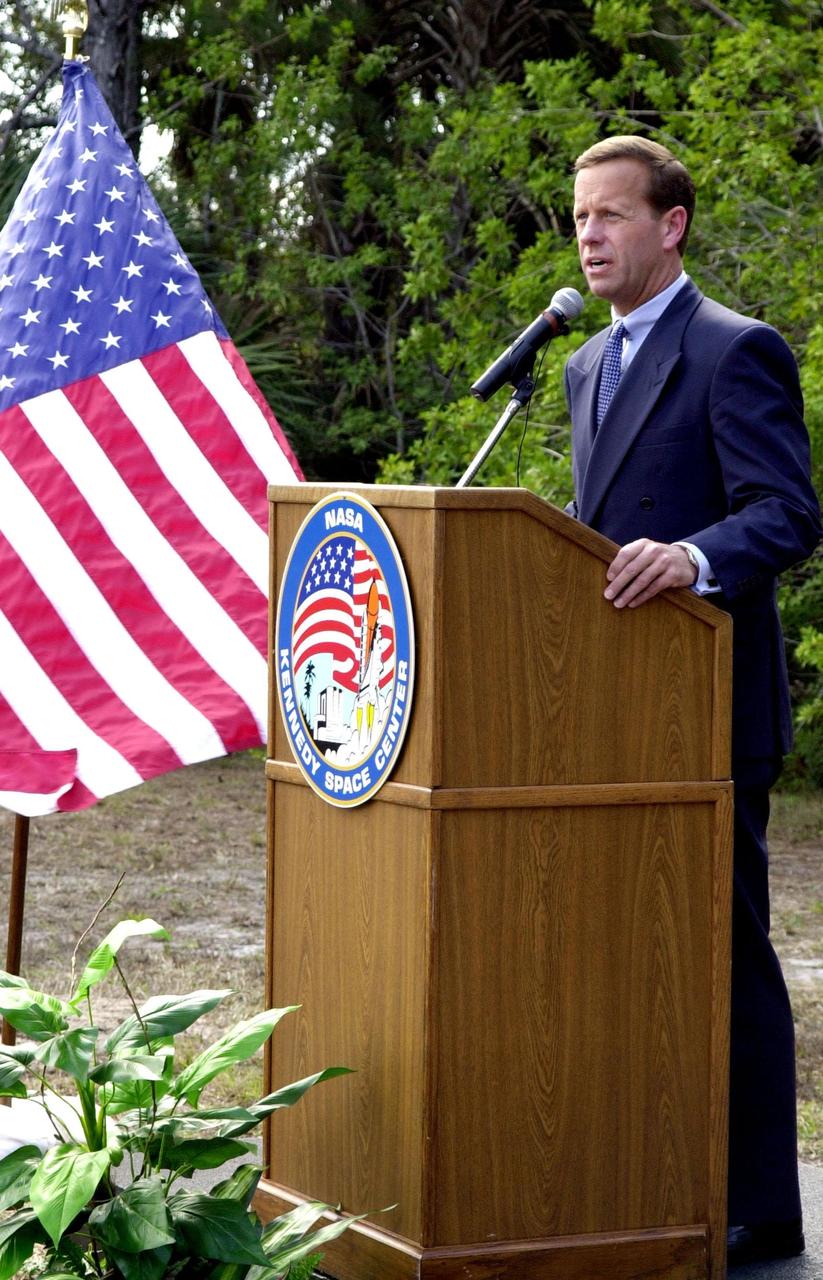
At a groundbreaking ceremony at KSC, Florida’s Lt. Gov. Frank Brogan expresses his support of the Center’s growth and important role of technology, especially through the International Space Station. The groundbreaking is for a roadway, to be known as Space Commerce Way, that will serve the public by providing a 24-hour access route through KSC from S.R. 3 to the NASA Causeway and KSC Visitor Complex. It is the start of a construction project that includes the Space Experiment Research and Processing Laboratory (SERPL). The project is enabled by a partnership and collaboration between NASA and the State of Florida to create a vital resource for international and commercial space customers. SERPL is considered a magnet facility, and will support the development and processing of life sciences experiments destined for the International Space Station and accommodate NASA, industry and academic researchers performing associated biological research
KSC-01PADIG-062
At a groundbreaking ceremony at KSC, Florida’s Lt. Gov. Frank Brogan expresses his support of the Center’s growth and important role of technology, especially through the International Space Station. The groundbreaking is for a roadway, to be known as Space Commerce Way, that will serve the public by providing a 24-hour access route through KSC from S.R. 3 to the NASA Causeway and KSC Visitor Complex. It is the start of a construction project that includes the Space Experiment Research & Processing Laboratory (SERPL). The project is enabled by a partnership and collaboration between NASA and the State of Florida to create a vital resource for international and commercial space customers. SERPL is considered a magnet facility, and will support the development and processing of life sciences experiments destined for the International Space Station and accommodate NASA, industry and academic researchers performing associated biological research
KSC01padig062
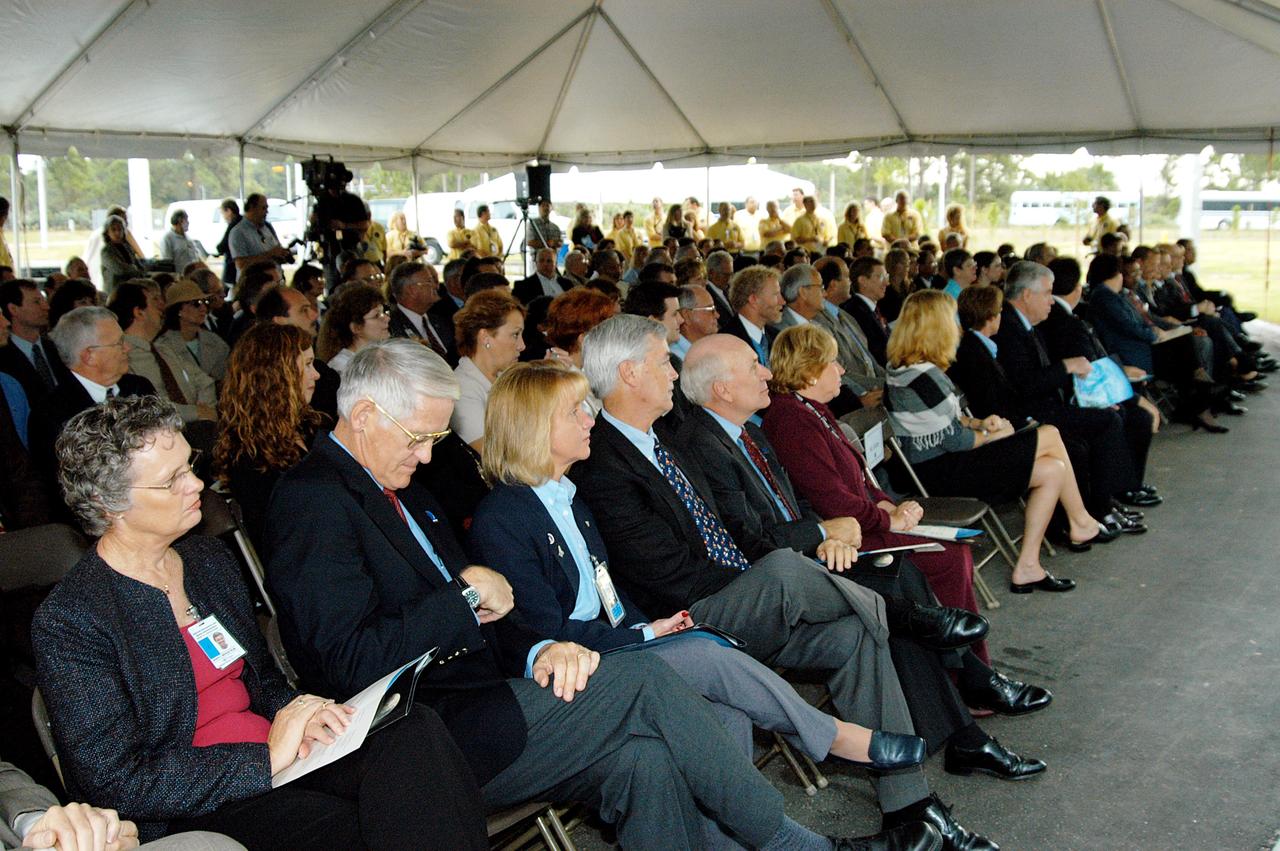
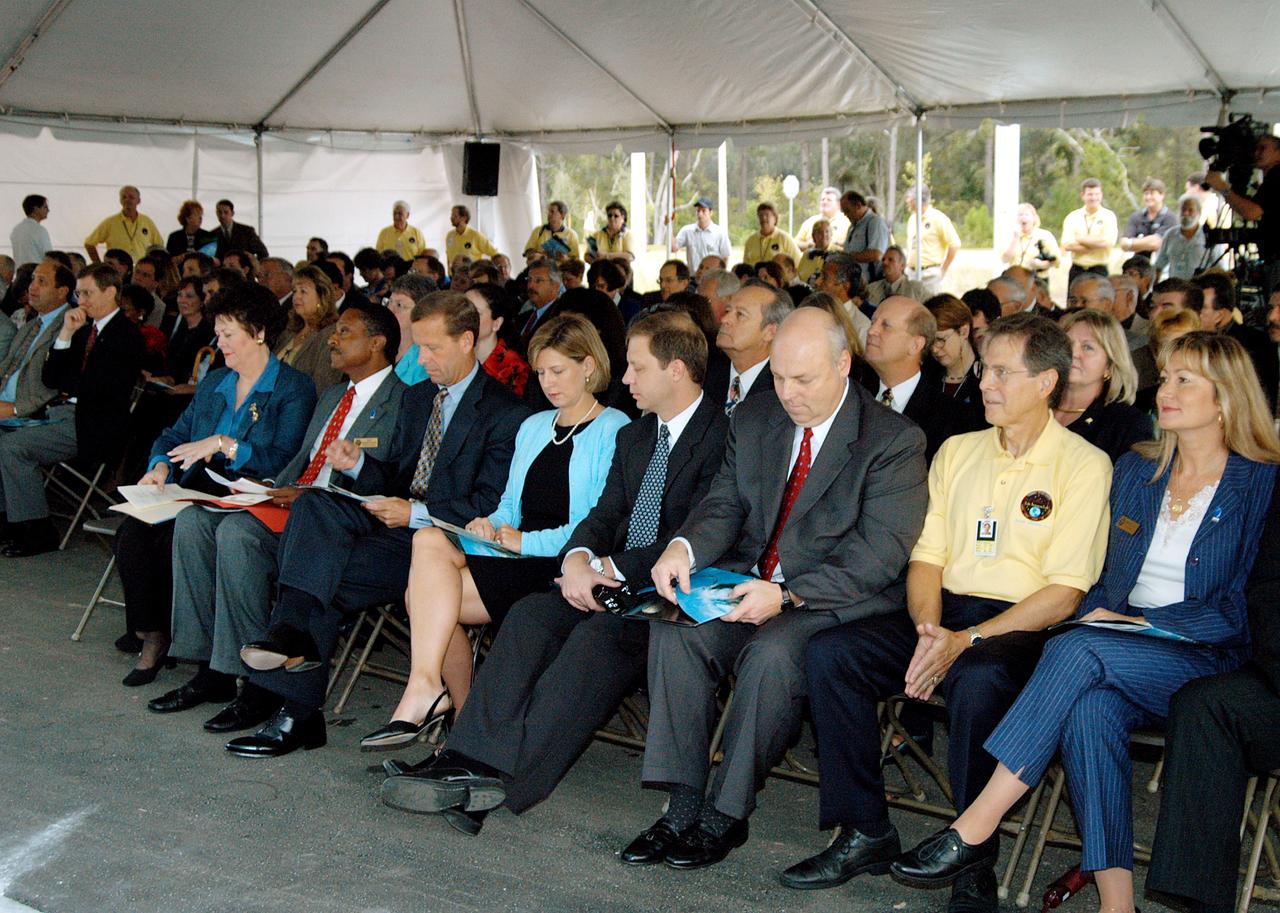
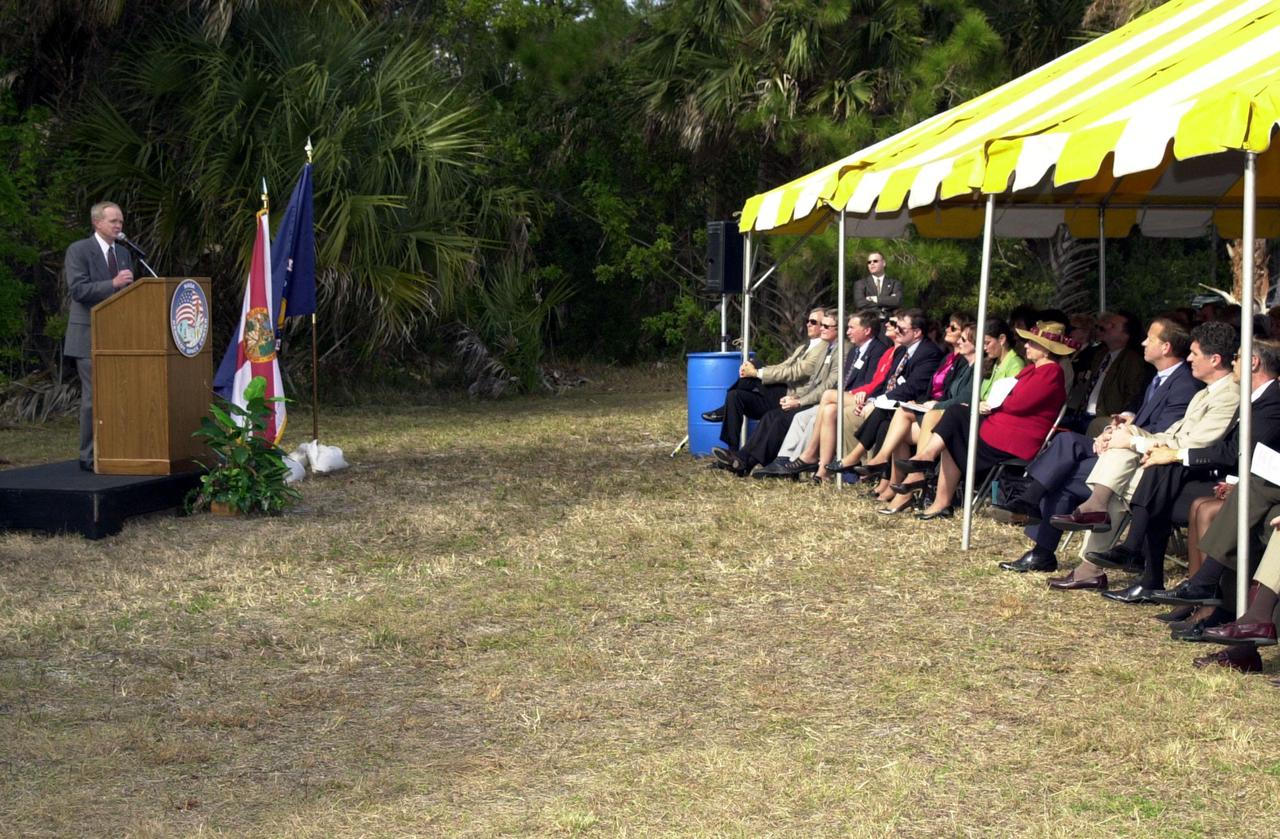
Center Director Roy Bridges Jr. addresses attendees at a groundbreaking ceremony held on S.R. 3. The groundbreaking is for a roadway, to be known as Space Commerce Way, that will serve the public by providing a 24-hour access route through KSC from S.R. 3 to the NASA Causeway and KSC Visitor Complex. It is the start of a construction project that includes the Space Experiment Research and Processing Laboratory (SERPL). The project is enabled by a partnership and collaboration between NASA and the State of Florida to create a vital resource for international and commercial space customers. Among the participants and guests seated under the tent are (in front row, at right) Florida’s Lt. Gov. Frank Brogan and Congressman Dave Weldon. SERPL is considered a magnet facility, and will support the development and processing of life sciences experiments destined for the International Space Station and accommodate NASA, industry and academic researchers performing associated biological research
KSC-01PADIG-063
Center Director Roy Bridges Jr. addresses attendees at a groundbreaking ceremony held on S.R. 3. The groundbreaking is for a roadway, to be known as Space Commerce Way, that will serve the public by providing a 24-hour access route through KSC from S.R. 3 to the NASA Causeway and KSC Visitor Complex. It is the start of a construction project that includes the Space Experiment Research & Processing Laboratory (SERPL). The project is enabled by a partnership and collaboration between NASA and the State of Florida to create a vital resource for international and commercial space customers. Among the participants and guests seated under the tent are (in front row, at right) Florida’s Lt. Gov. Frank Brogan and Congressman Dave Weldon. SERPL is considered a magnet facility, and will support the development and processing of life sciences experiments destined for the International Space Station and accommodate NASA, industry and academic researchers performing associated biological research
KSC01padig063
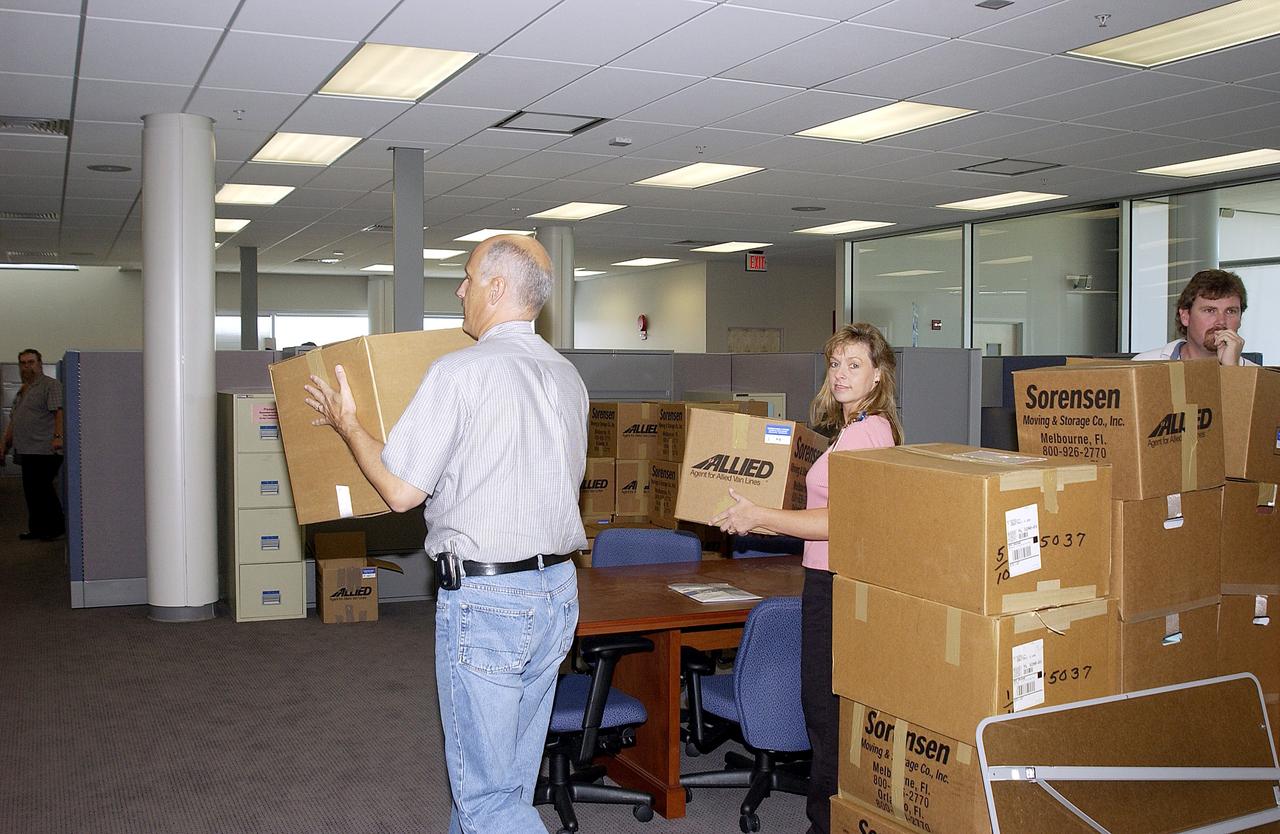
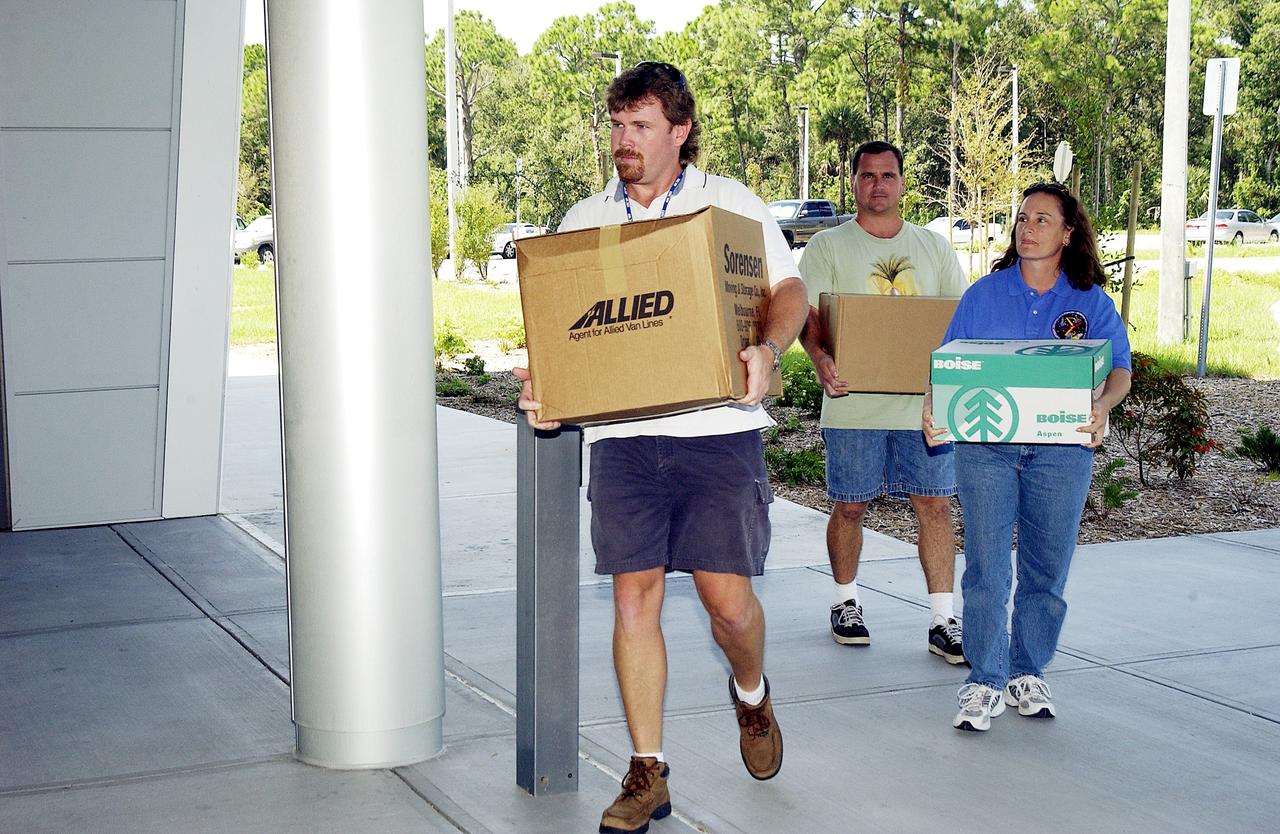
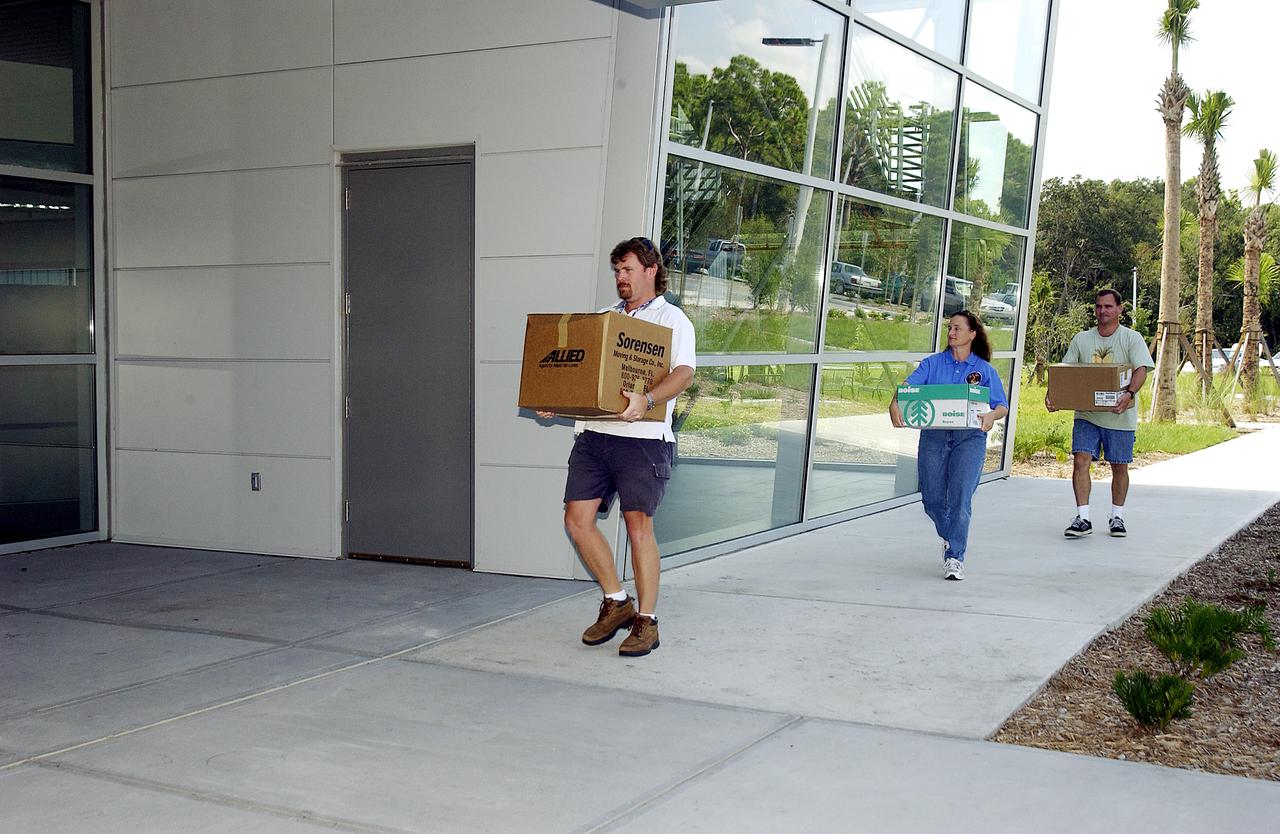
KENNEDY SPACE CENTER, FLA. -  Dynamac employees (from left) Larry Burns, Debbie Wells and Neil  Yorio carry boxes of hardware into the Space Life Sciences Lab (SLSL), formerly known as the Space Experiment Research and Processing Laboratory (SERPL).  They are transferring equipment from Hangar L. The new lab is a state-of-the-art facility being built for ISS biotechnology research. Developed as a partnership between NASA-KSC and the State of Florida, NASA’s life sciences contractor will be the primary tenant of the facility, leasing space to conduct flight experiment processing and NASA-sponsored research. About 20 percent of the facility will be available for use by Florida’s university researchers through the Florida Space Research Institute.
KENNEDY SPACE CENTER, FLA. - Dynamac employees (from left) Larry Burns, Debbie Wells and Neil Yorio carry boxes of hardware into the Space Life Sciences Lab (SLSL), formerly known as the Space Experiment Research and Processing Laboratory (SERPL). They are transferring equipment from Hangar L. The new lab is a state-of-the-art facility being built for ISS biotechnology research. Developed as a partnership between NASA-KSC and the State of Florida, NASA’s life sciences contractor will be the primary tenant of the facility, leasing space to conduct flight experiment processing and NASA-sponsored research. About 20 percent of the facility will be available for use by Florida’s university researchers through the Florida Space Research Institute.
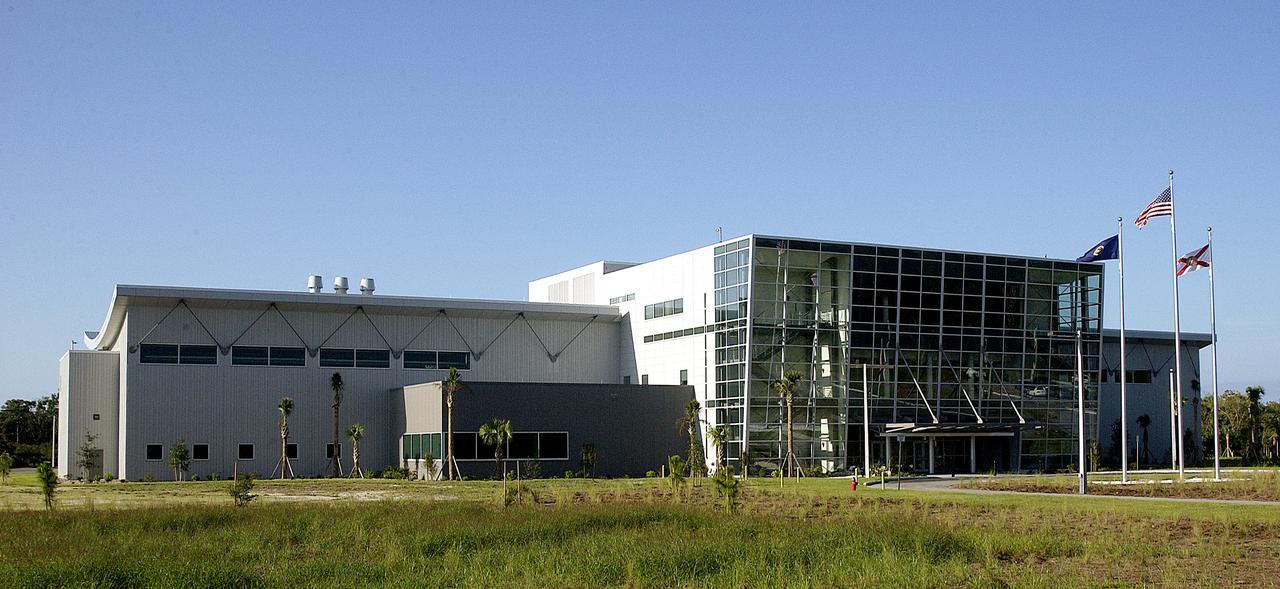
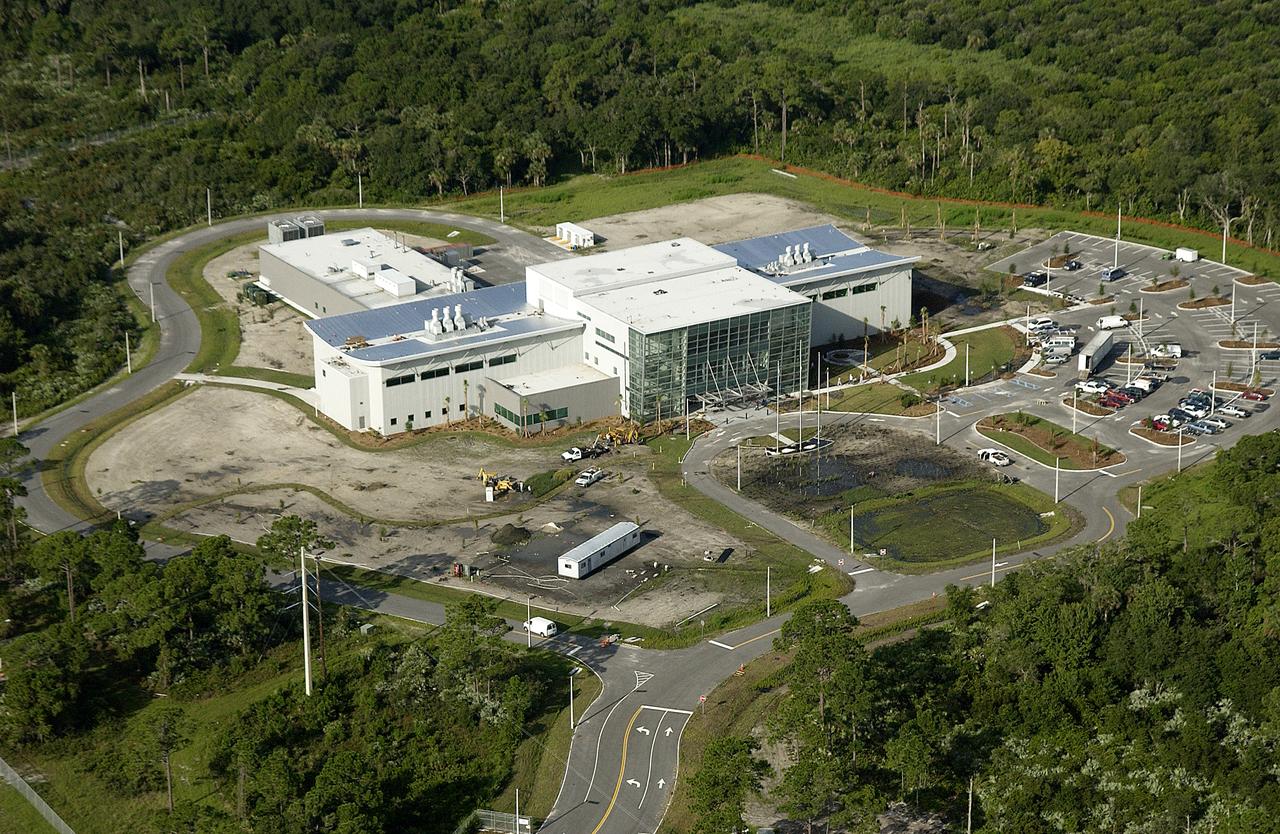
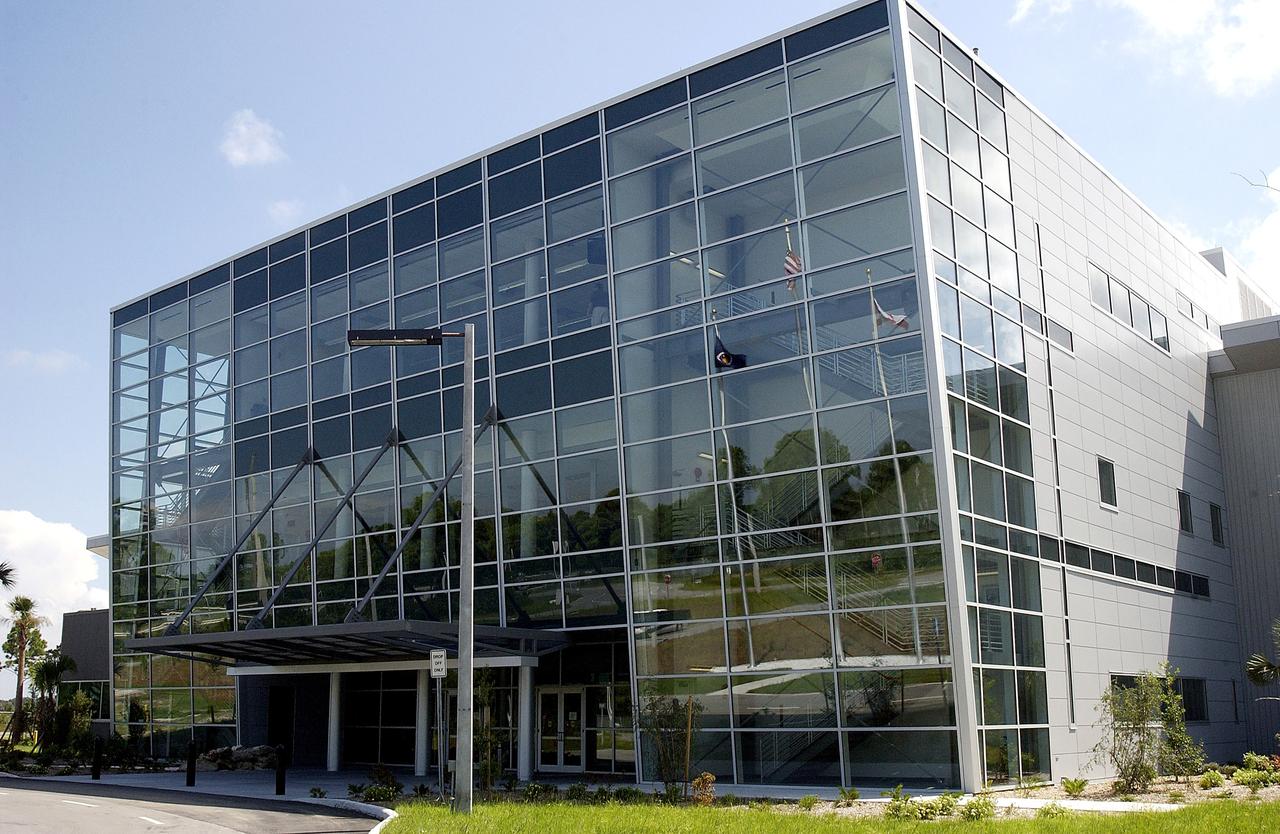
KENNEDY SPACE CENTER, FLA. -  The Space Life Sciences Lab (SLSL), formerly known as the Space Experiment Research and Processing Laboratory (SERPL), is nearing completion.  The new lab is a state-of-the-art facility being built for ISS biotechnology research. Developed as a partnership between NASA-KSC and the State of Florida, NASA’s life sciences contractor will be the primary tenant of the facility, leasing space to conduct flight experiment processing and NASA-sponsored research. About 20 percent of the facility will be available for use by Florida’s university researchers through the Florida Space Research Institute.
KENNEDY SPACE CENTER, FLA. - The Space Life Sciences Lab (SLSL), formerly known as the Space Experiment Research and Processing Laboratory (SERPL), is nearing completion. The new lab is a state-of-the-art facility being built for ISS biotechnology research. Developed as a partnership between NASA-KSC and the State of Florida, NASA’s life sciences contractor will be the primary tenant of the facility, leasing space to conduct flight experiment processing and NASA-sponsored research. About 20 percent of the facility will be available for use by Florida’s university researchers through the Florida Space Research Institute.
KENNEDY SPACE CENTER, FLA. -  Ivan Rodriguez, with Bionetics, and Michelle Crouch and Larry Burns, with Dynamac, carry boxes of equipment into the Space Life Sciences Lab (SLSL), formerly known as the Space Experiment Research and Processing Laboratory (SERPL).    They are transferring equipment from Hangar L. The new lab is a state-of-the-art facility being built for ISS biotechnology research. Developed as a partnership between NASA-KSC and the State of Florida, NASA’s life sciences contractor will be the primary tenant of the facility, leasing space to conduct flight experiment processing and NASA-sponsored research. About 20 percent of the facility will be available for use by Florida’s university researchers through the Florida Space Research Institute.
KENNEDY SPACE CENTER, FLA. - Ivan Rodriguez, with Bionetics, and Michelle Crouch and Larry Burns, with Dynamac, carry boxes of equipment into the Space Life Sciences Lab (SLSL), formerly known as the Space Experiment Research and Processing Laboratory (SERPL). They are transferring equipment from Hangar L. The new lab is a state-of-the-art facility being built for ISS biotechnology research. Developed as a partnership between NASA-KSC and the State of Florida, NASA’s life sciences contractor will be the primary tenant of the facility, leasing space to conduct flight experiment processing and NASA-sponsored research. About 20 percent of the facility will be available for use by Florida’s university researchers through the Florida Space Research Institute.
The Space Life Sciences Lab (SLSL), formerly known as the Space Experiment Research and Processing Laboratory (SERPL), is a state-of-the-art facility built for ISS biotechnology research. Developed as a partnership between NASA-KSC and the State of Florida, NASA’s life sciences contractor is the primary tenant of the facility, leasing space to conduct flight experiment processing and NASA-sponsored research. About 20 percent of the facility will be available for use by Florida’s university researchers through the Florida Space Research Institute.
Space Life Sciences Lab
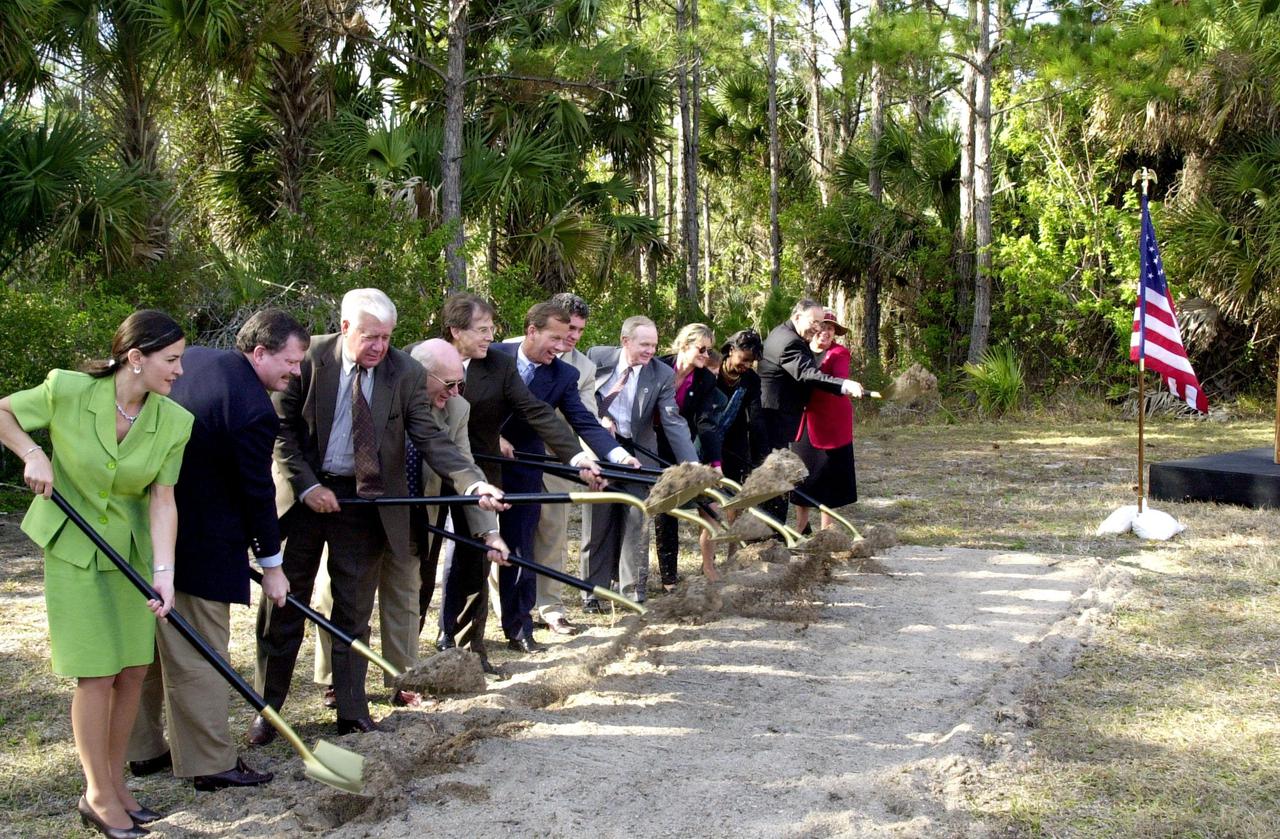
At a groundbreaking ceremony, participants and guests toss their shovelfuls of dirt, signifying the start of construction on a new roadway through KSC. From left are Dr. Pamella J. Dana, from the executive office of Florida’s governor, Jeb Bush; Deputy Associate Administrator Michael Hawes, NASA; Sen. George Kirkpatrick; Spaceport Florida Authority Executive Director Ed Gormel; Executive Director Dr. Samuel T. Durrance, Florida Space Research Institute; Florida’s Lt. Gov. Frank Brogan; Congressman Dave Weldon; Center Director Roy Bridges Jr.; SFA SERPL Program Manager Debra Holliday; KSC SERPL Program Manager Jan Heuser; District Manager Cheryl Harrison-Lee, Florida Department of Transportation; State Senator Jim Sebesta; and KSC Director JoAnn H. Morgan, External Relations and Business Development The roadway, to be known as Space Commerce Way, will serve the public by providing a 24-hour access route through KSC from S.R. 3 to the NASA Causeway and KSC Visitor Complex. It is the start of a construction project that includes the Space Experiment Research and Processing Laboratory (SERPL). Considered a magnet facility, the laboratory will support the development and processing of life sciences experiments destined for the International Space Station and accommodate NASA, industry and academic researchers performing associated biological research.. The project is enabled by a partnership and collaboration between NASA and the State of Florida to create a vital resource for international and commercial space customers
KSC-01PADIG-065
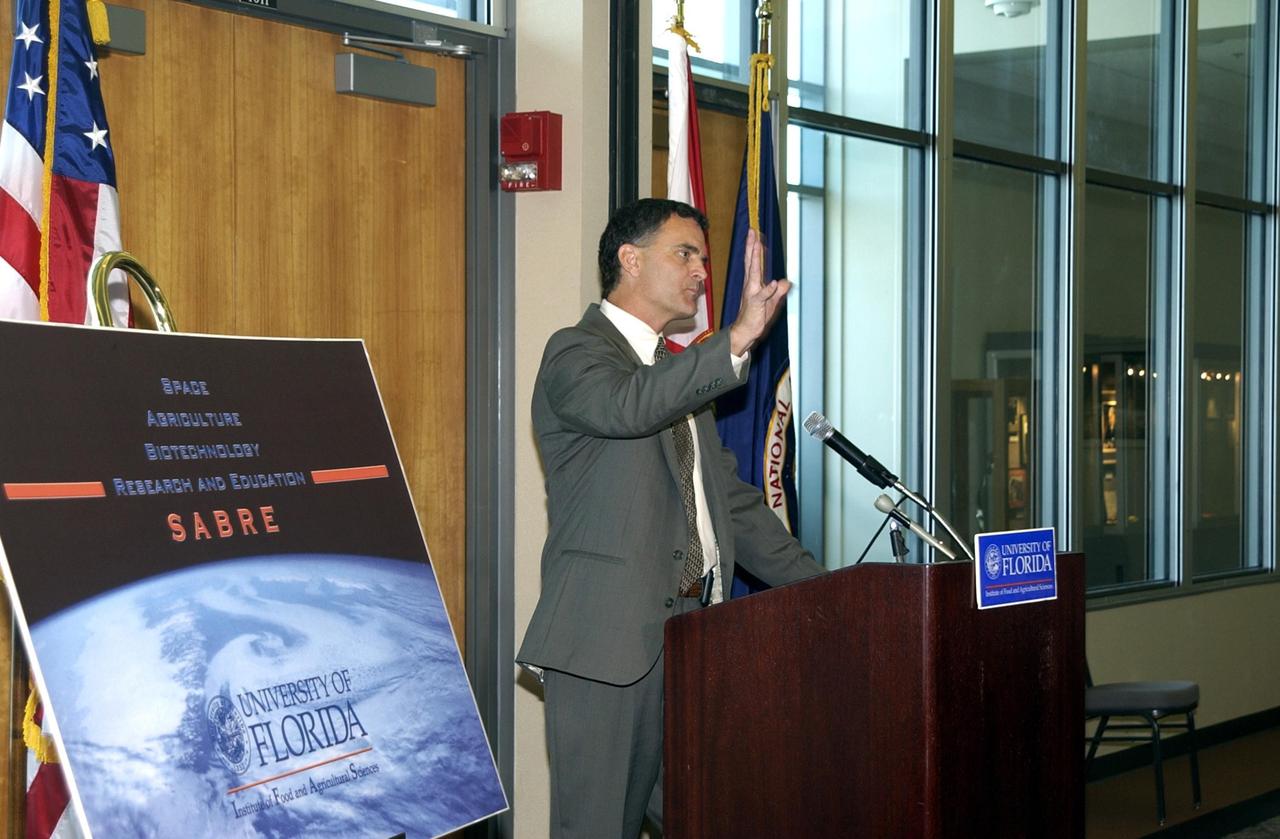
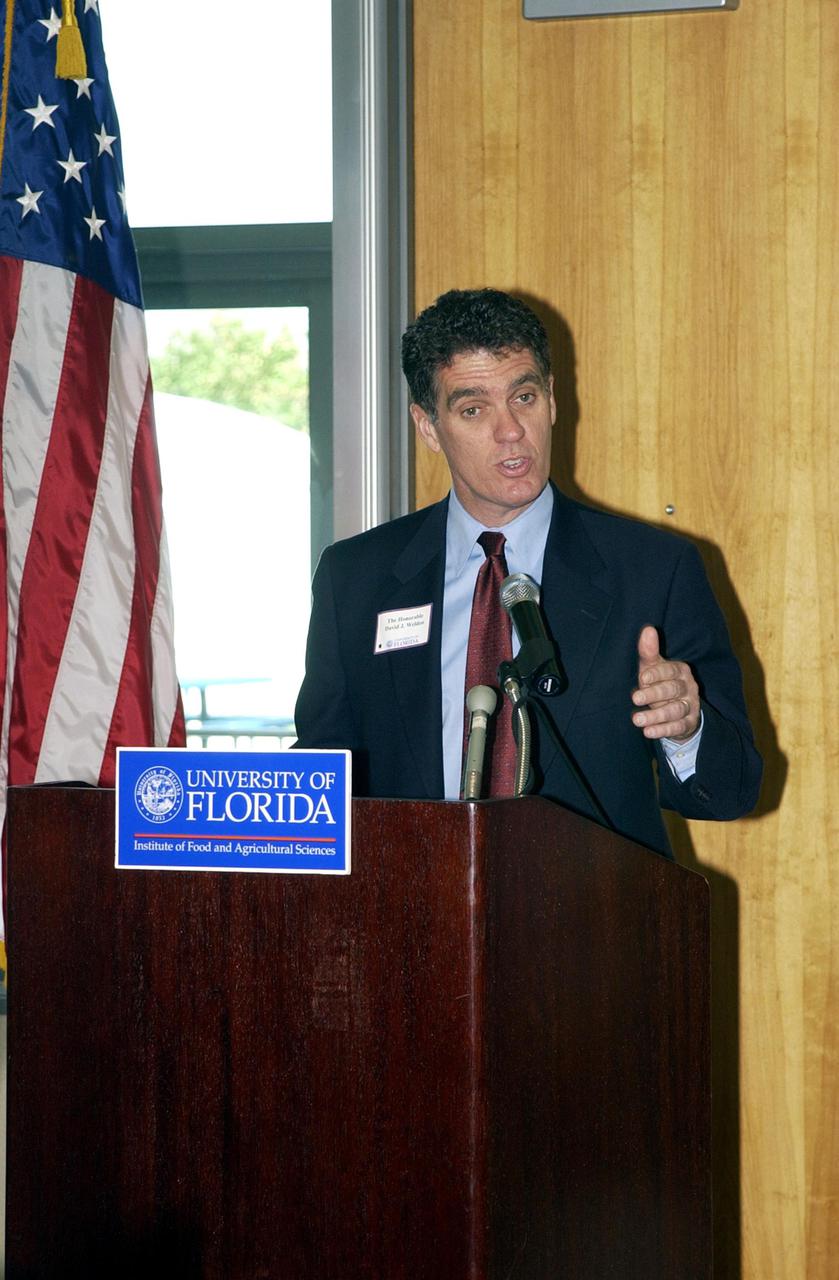
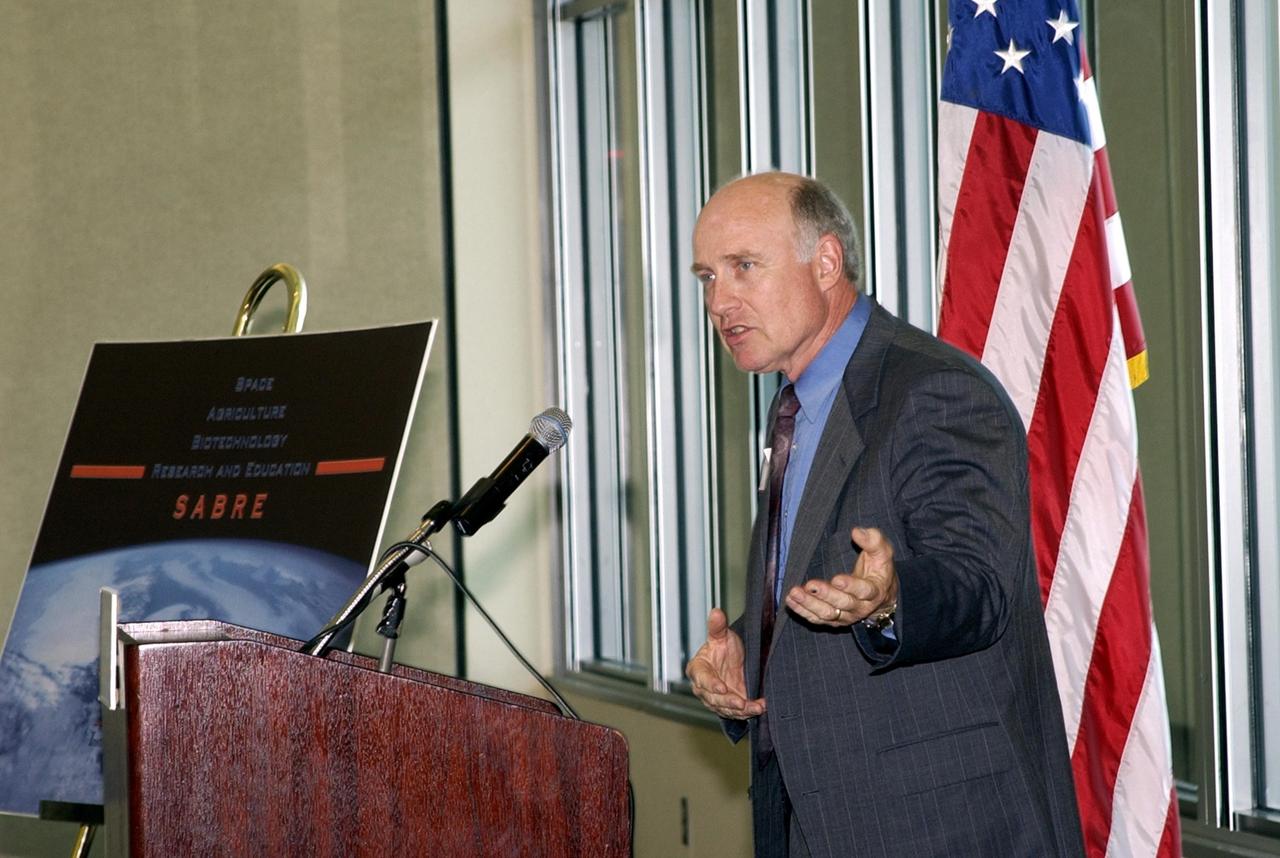
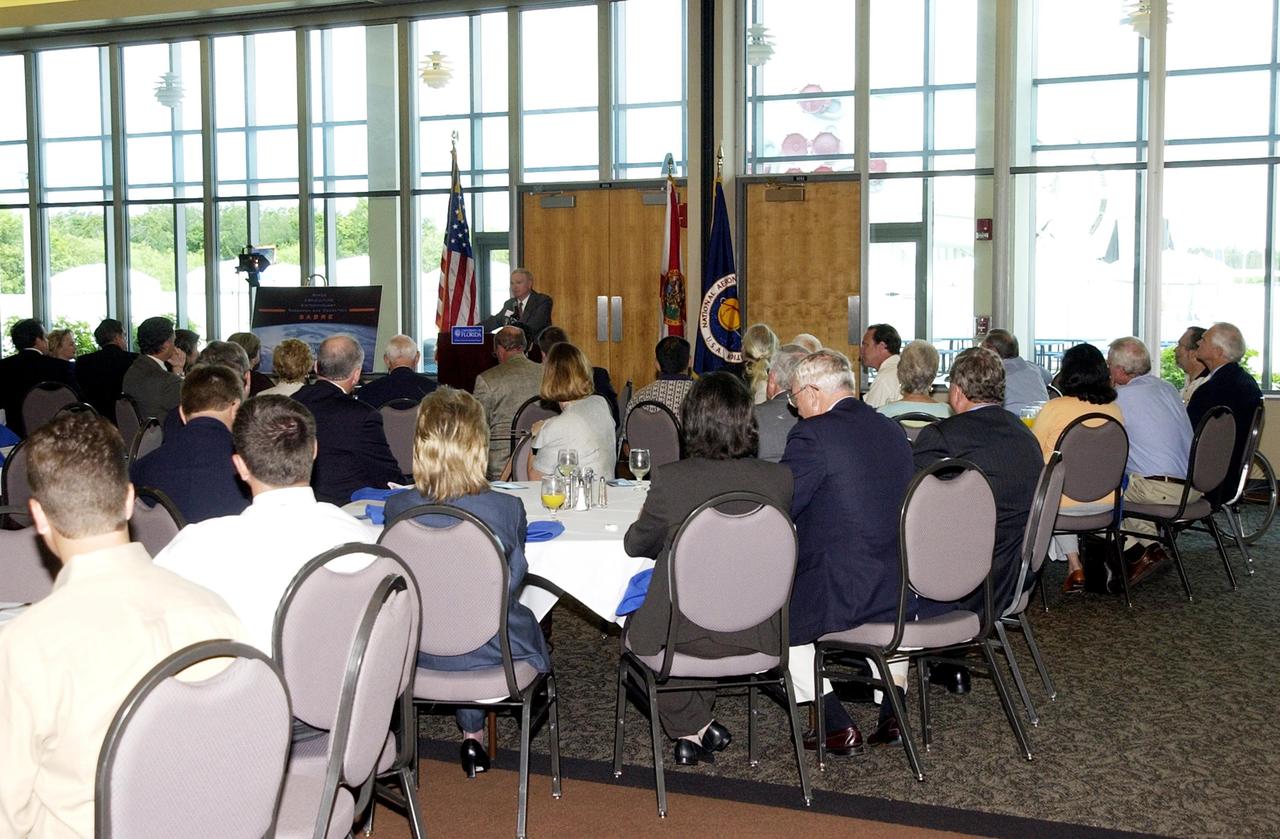
KENNEDY SPACE CENTER, FLA. -- U.S. Representative Dave Weldon addresses a large group attending the opening of a new program known as SABRE, Space Agricultural Biotechnology Research and Education, that involves the University of Florida and NASA. SABRE will focus on the discovery, development and application of the biological aspects of advanced life support strategies. The program will include faculty from UF's Institute of Food and Agricultural Sciences, who will be located at both KSC - in the state-owned Space Experiment Research and Processing Laboratory (SERPL) being built there - and UF in Gainesville. SABRE will be directed by Robert Ferl, professor in the horticultural sciences department and assistant director of UF's Biotechnology Program.  He will be responsible for coordinating the research and education efforts of UF and NASA
KSC-02PD-0615
KENNEDY SPACE CENTER, FLA. -  Dynamac employees (from left) Larry Burns, Debbie Wells and Neil  Yorio carry boxes of hardware into the Space Life Sciences Lab (SLSL), formerly known as the Space Experiment Research and Processing Laboratory (SERPL).   They are transferring equipment from Hangar L. The new lab is a state-of-the-art facility being built for ISS biotechnology research. Developed as a partnership between NASA-KSC and the State of Florida, NASA’s life sciences contractor will be the primary tenant of the facility, leasing space to conduct flight experiment processing and NASA-sponsored research. About 20 percent of the facility will be available for use by Florida’s university researchers through the Florida Space Research Institute.
KSC-03pd-2642
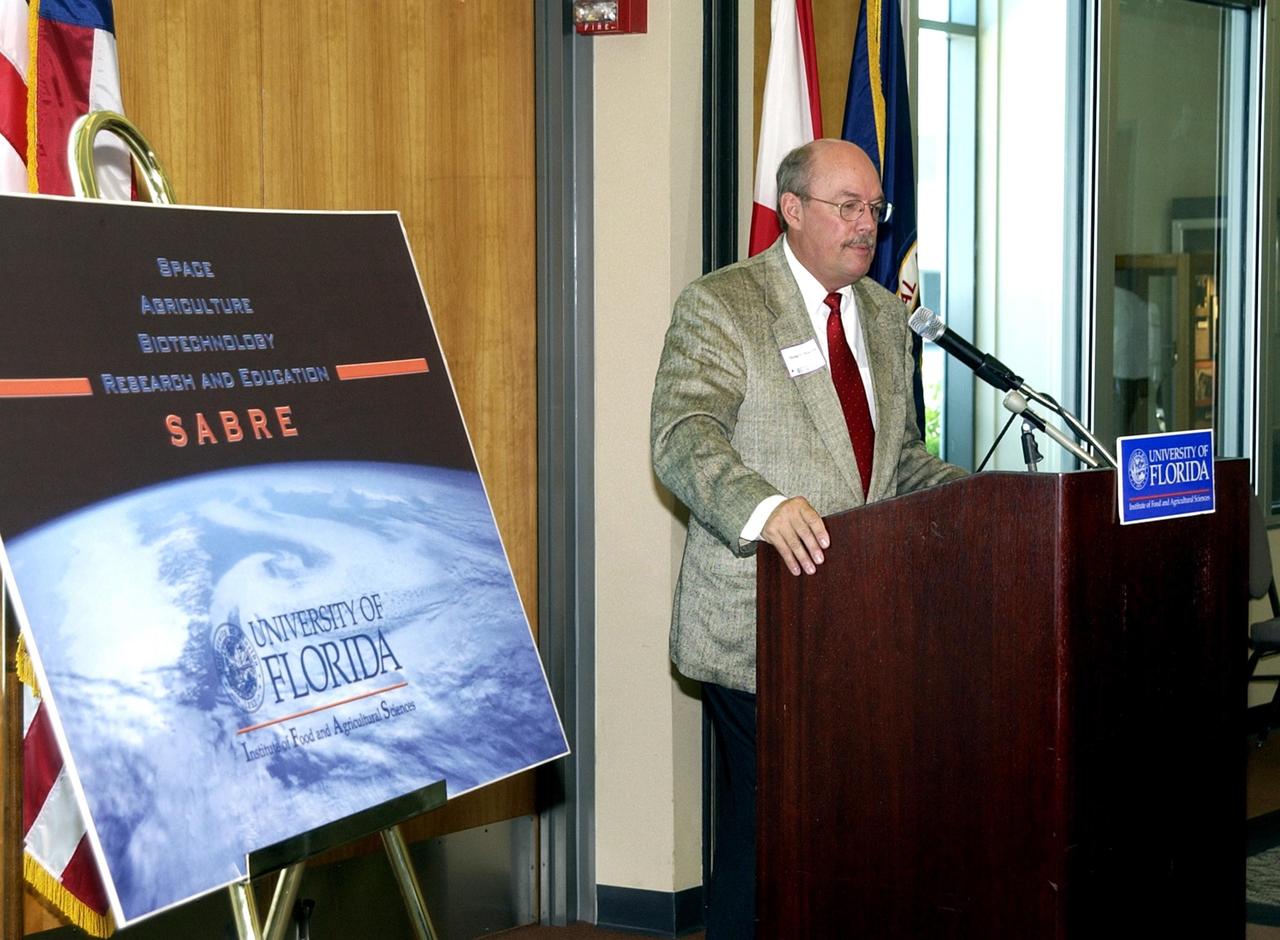
KENNEDY SPACE CENTER, FLA. -- Robert Ferl, professor in the horticultural sciences department and assistant director of the University of Florida Biotechnology Program, speaks during the opening ceremony to launch a new program called SABRE, Space Agricultural Biotechnology Research and Education, that involves UF and NASA. SABRE will focus on the discovery, development and application of the biological aspects of advanced life support strategies. The program will include faculty from UF's Institute of Food and Agricultural Sciences, who will be located at both KSC - in the state-owned Space Experiment Research and Processing Laboratory (SERPL) being built there - and UF in Gainesville. Ferl will direct and be responsible for coordinating the research and education efforts of UF and NASA.
KSC-02pd0618
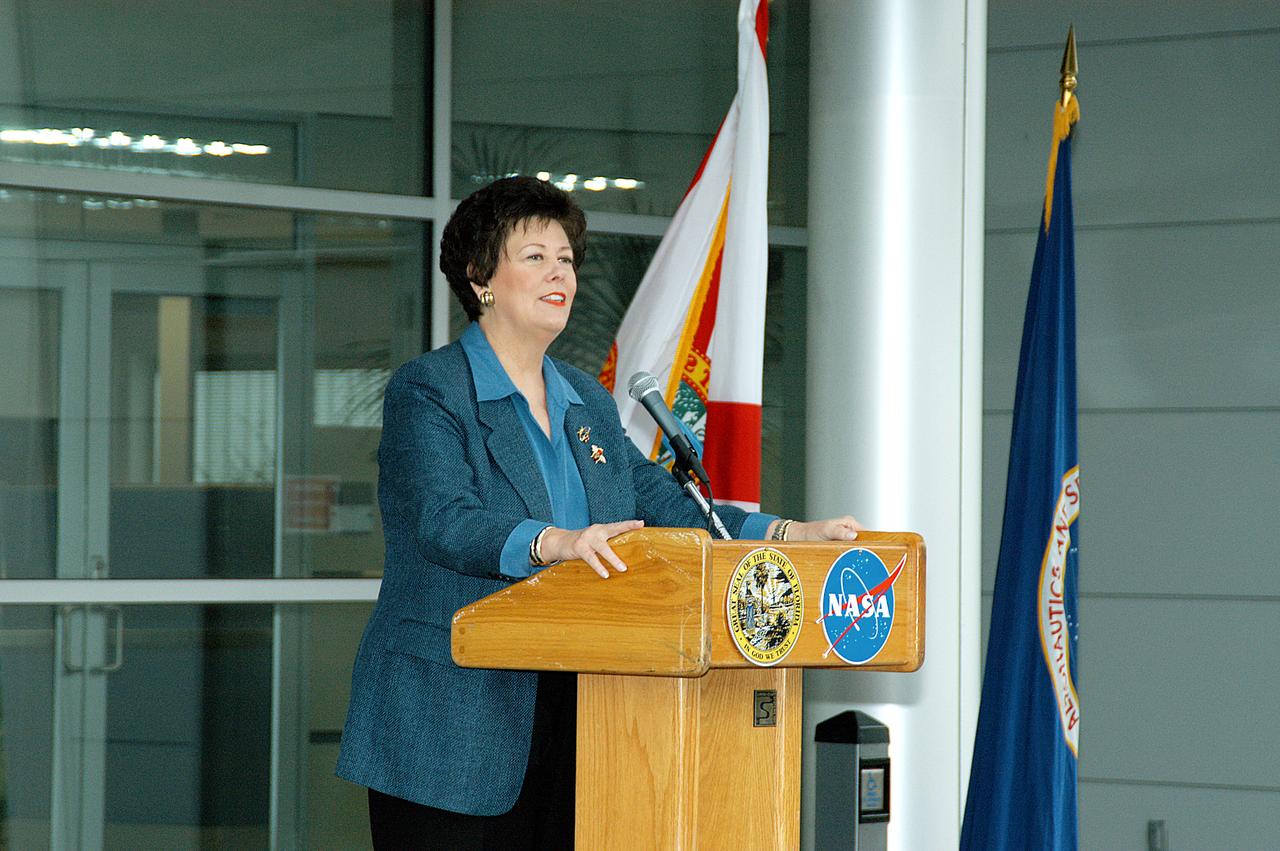
The Honorable Toni Jennings, lieutenant governor of the state of Florida, speaks at a dedication and ribbon-cutting ceremony for the Space Life Sciences Lab hosted by NASA-Kennedy Space Center and the state of Florida at the new lab. Completed in August, the facility encompasses more than 100,000 square feet and was formerly known as the Space Experiment Research and Processing Laboratory or SERPL. The state, through the Florida Space Authority, built the research lab which is host to NASA, NASA’s Life Sciences Services contractor Dynamac Corp., Bionetics Corp., and researchers from the University of Florida. Dynamac Corp. leases the facility. The Florida Space Research Institute is responsible for gaining additional tenants from outside the NASA community.
SLSL Ribbon-cutting Ceremony
KENNEDY SPACE CENTER, FLA. --  U.S. Representative Dave Weldon addresses a large group attending the opening of a new program known as SABRE, Space Agricultural Biotechnology Research and Education, that involves the University of Florida and NASA. SABRE will focus on the discovery, development and application of the biological aspects of advanced life support strategies. The program will include faculty from UF's Institute of Food and Agricultural Sciences, who will be located at both KSC - in the state-owned Space Experiment Research and Processing Laboratory (SERPL) being built there - and UF in Gainesville. SABRE will be directed by Robert Ferl, professor in the horticultural sciences department and assistant director of UF's Biotechnology Program.  He will be responsible for coordinating the research and education efforts of UF and NASA
KSC-02pd0614
KENNEDY SPACE CENTER, FLA. -  Dignitaries, invited guests, space center employees, and the media gather for a dedication and ribbon-cutting ceremony for the Space Life Sciences Lab hosted by NASA-Kennedy Space Center and the state of Florida at the new lab. Completed in August, the facility encompasses more than 100,000 square feet and was formerly known as the Space Experiment Research and Processing Laboratory or SERPL. The state, through the Florida Space Authority, built the research lab which is host to NASA, NASA’s Life Sciences Services contractor Dynamac Corp., Bionetics Corp., and researchers from the University of Florida.  Dynamac Corp. leases the facility.  The Florida Space Research Institute is responsible for gaining additional tenants from outside the NASA community.
KENNEDY SPACE CENTER, FLA. - Dignitaries, invited guests, space center employees, and the media gather for a dedication and ribbon-cutting ceremony for the Space Life Sciences Lab hosted by NASA-Kennedy Space Center and the state of Florida at the new lab. Completed in August, the facility encompasses more than 100,000 square feet and was formerly known as the Space Experiment Research and Processing Laboratory or SERPL. The state, through the Florida Space Authority, built the research lab which is host to NASA, NASA’s Life Sciences Services contractor Dynamac Corp., Bionetics Corp., and researchers from the University of Florida. Dynamac Corp. leases the facility. The Florida Space Research Institute is responsible for gaining additional tenants from outside the NASA community.
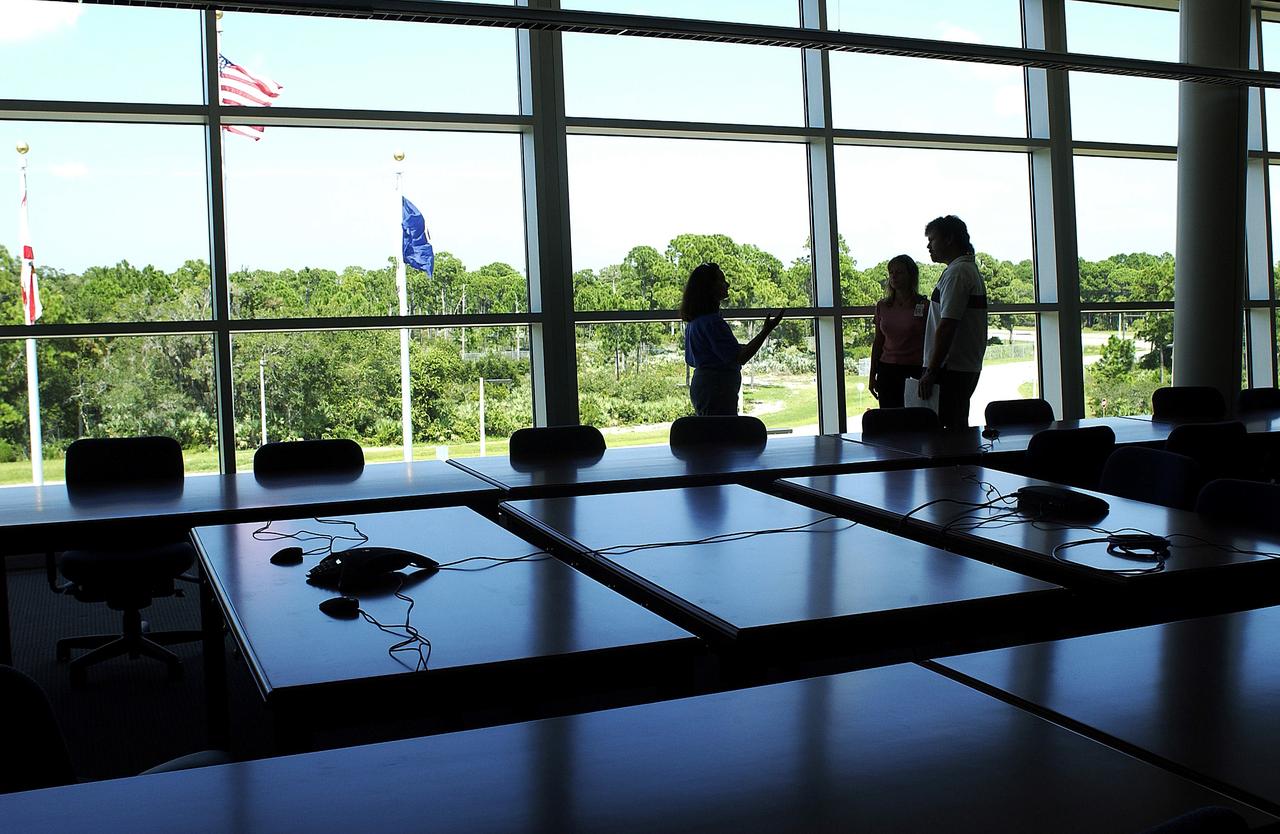
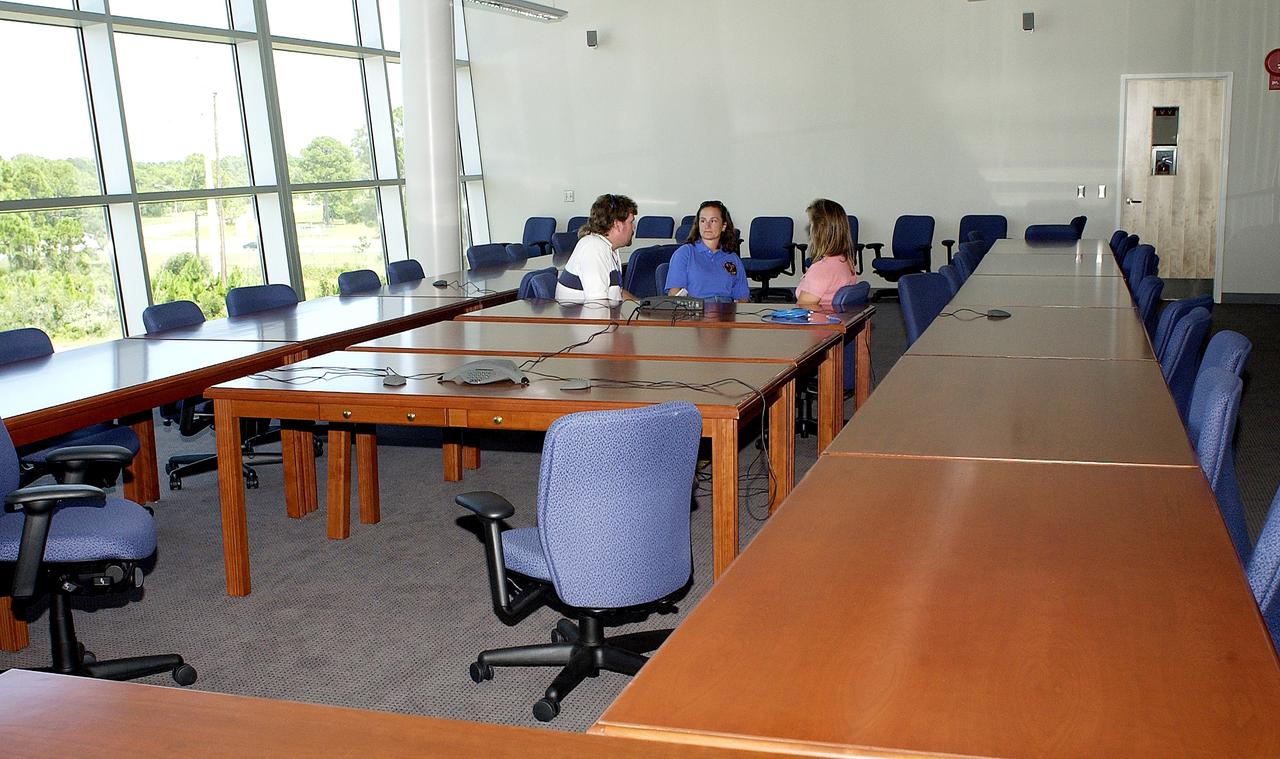
KENNEDY SPACE CENTER, FLA. - Dynamac employees Debbie Wells, Michelle Crouch and Larry Burns are silhouetted as they talk inside a conference room of the Space Life Sciences Lab (SLSL), formerly known as the Space Experiment Research and Processing Laboratory (SERPL).  They have been transferring equipment from Hangar L.  The new lab is a state-of-the-art facility being built for ISS biotechnology research. Developed as a partnership between NASA-KSC and the State of Florida, NASA’s life sciences contractor will be the primary tenant of the facility, leasing space to conduct flight experiment processing and NASA-sponsored research. About 20 percent of the facility will be available for use by Florida’s university researchers through the Florida Space Research Institute.
KENNEDY SPACE CENTER, FLA. - Dynamac employees Debbie Wells, Michelle Crouch and Larry Burns are silhouetted as they talk inside a conference room of the Space Life Sciences Lab (SLSL), formerly known as the Space Experiment Research and Processing Laboratory (SERPL). They have been transferring equipment from Hangar L. The new lab is a state-of-the-art facility being built for ISS biotechnology research. Developed as a partnership between NASA-KSC and the State of Florida, NASA’s life sciences contractor will be the primary tenant of the facility, leasing space to conduct flight experiment processing and NASA-sponsored research. About 20 percent of the facility will be available for use by Florida’s university researchers through the Florida Space Research Institute.
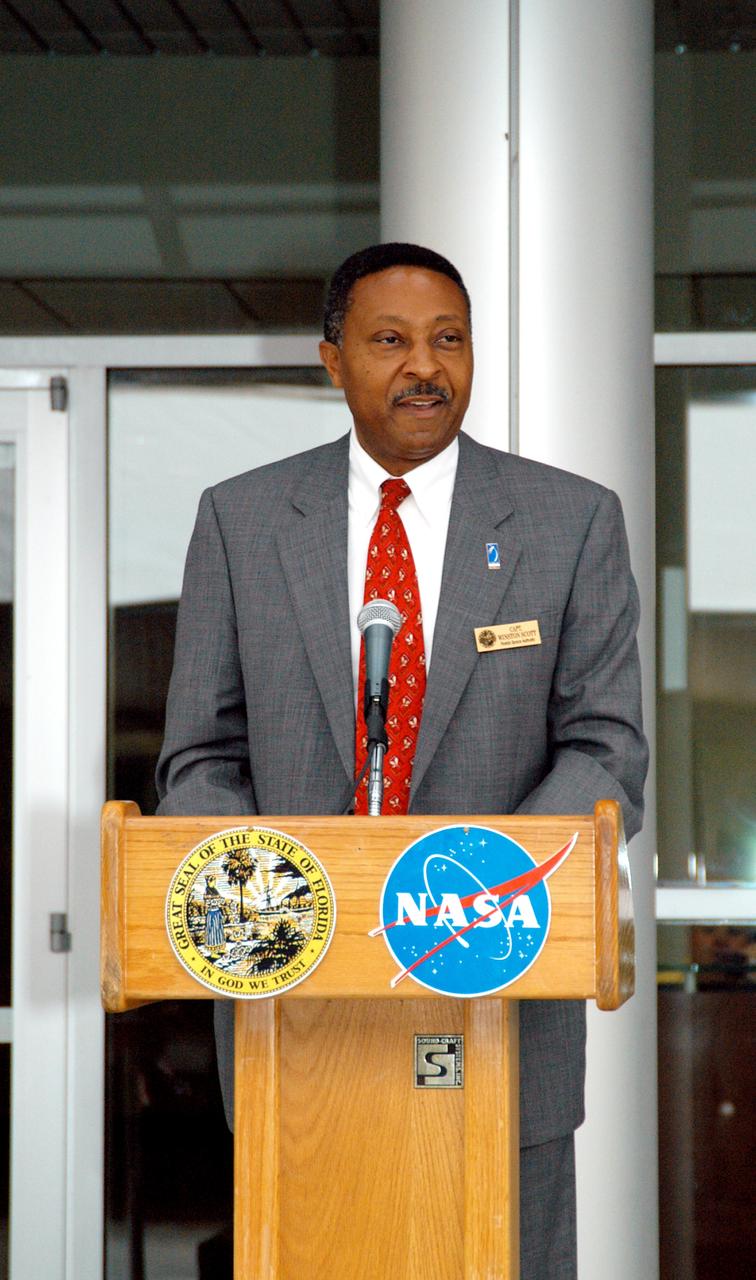
KENNEDY SPACE CENTER, FLA. -  Capt. Winston Scott, executive director of the Florida Space Authority, speaks at a dedication and ribbon-cutting ceremony for the Space Life Sciences Lab hosted by NASA-Kennedy Space Center and the state of Florida at the new lab. Completed in August, the facility encompasses more than 100,000 square feet and was formerly known as the Space Experiment Research and Processing Laboratory or SERPL. The state, through the Florida Space Authority, built the research lab which is host to NASA, NASA’s Life Sciences Services contractor Dynamac Corp., Bionetics Corp., and researchers from the University of Florida.  Dynamac Corp. leases the facility.  The Florida Space Research Institute is responsible for gaining additional tenants from outside the NASA community.
KENNEDY SPACE CENTER, FLA. - Capt. Winston Scott, executive director of the Florida Space Authority, speaks at a dedication and ribbon-cutting ceremony for the Space Life Sciences Lab hosted by NASA-Kennedy Space Center and the state of Florida at the new lab. Completed in August, the facility encompasses more than 100,000 square feet and was formerly known as the Space Experiment Research and Processing Laboratory or SERPL. The state, through the Florida Space Authority, built the research lab which is host to NASA, NASA’s Life Sciences Services contractor Dynamac Corp., Bionetics Corp., and researchers from the University of Florida. Dynamac Corp. leases the facility. The Florida Space Research Institute is responsible for gaining additional tenants from outside the NASA community.
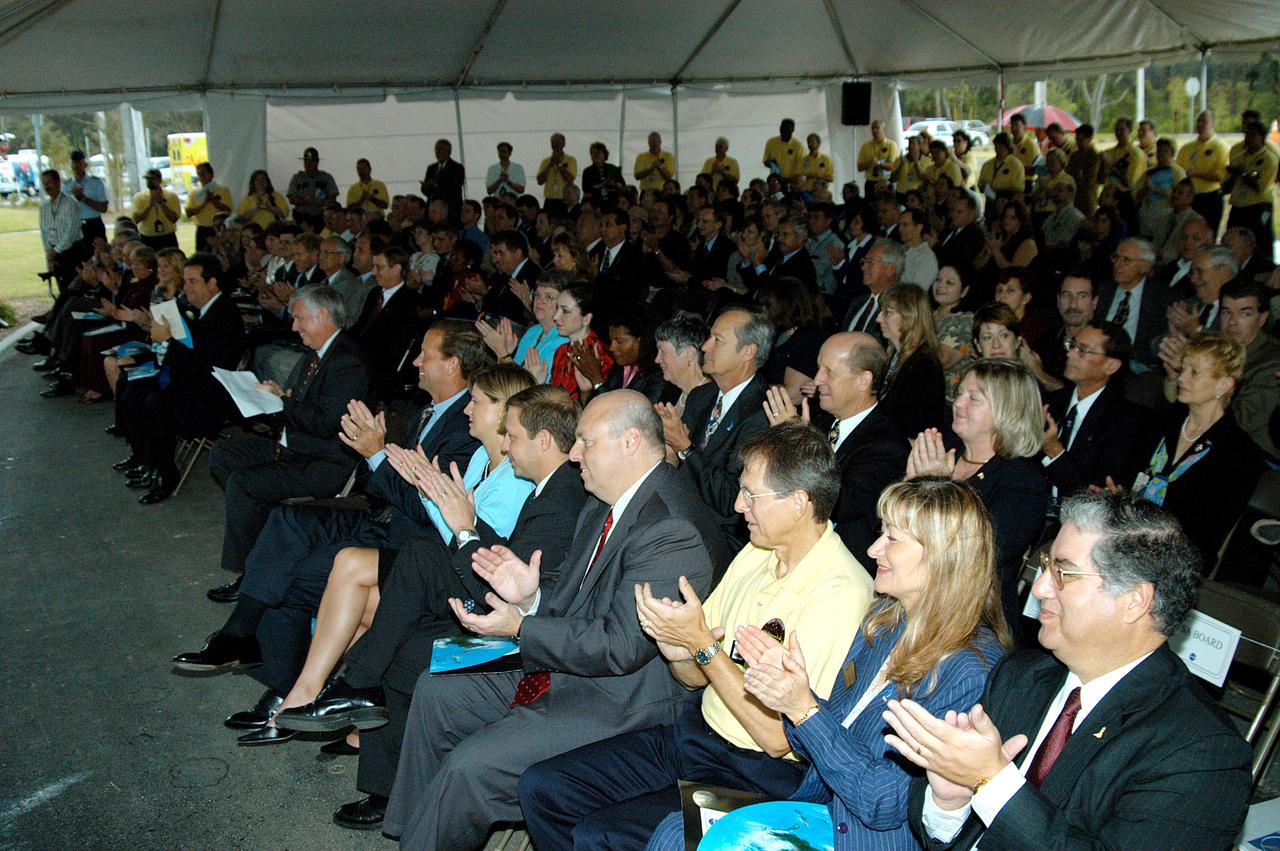
KENNEDY SPACE CENTER, FLA. -  Dignitaries, invited guests, space center employees, and the media show their appreciation for the speakers at a dedication and ribbon-cutting ceremony for the Space Life Sciences Lab hosted by NASA-Kennedy Space Center and the state of Florida at the new lab. Completed in August, the facility encompasses more than 100,000 square feet and was formerly known as the Space Experiment Research and Processing Laboratory or SERPL. The state, through the Florida Space Authority, built the research lab which is host to NASA, NASA’s Life Sciences Services contractor Dynamac Corp., Bionetics Corp., and researchers from the University of Florida.  Dynamac Corp. leases the facility.  The Florida Space Research Institute is responsible for gaining additional tenants from outside the NASA community.
KENNEDY SPACE CENTER, FLA. - Dignitaries, invited guests, space center employees, and the media show their appreciation for the speakers at a dedication and ribbon-cutting ceremony for the Space Life Sciences Lab hosted by NASA-Kennedy Space Center and the state of Florida at the new lab. Completed in August, the facility encompasses more than 100,000 square feet and was formerly known as the Space Experiment Research and Processing Laboratory or SERPL. The state, through the Florida Space Authority, built the research lab which is host to NASA, NASA’s Life Sciences Services contractor Dynamac Corp., Bionetics Corp., and researchers from the University of Florida. Dynamac Corp. leases the facility. The Florida Space Research Institute is responsible for gaining additional tenants from outside the NASA community.
KENNEDY SPACE CENTER, FLA. -  Dignitaries, invited guests, space center employees, and the media gather for a dedication and ribbon-cutting ceremony for the Space Life Sciences Lab hosted by NASA-Kennedy Space Center and the state of Florida at the new lab. Completed in August, the facility encompasses more than 100,000 square feet and was formerly known as the Space Experiment Research and Processing Laboratory or SERPL. The state, through the Florida Space Authority, built the research lab which is host to NASA, NASA’s Life Sciences Services contractor Dynamac Corp., Bionetics Corp., and researchers from the University of Florida.  Dynamac Corp. leases the facility.  The Florida Space Research Institute is responsible for gaining additional tenants from outside the NASA community.
KENNEDY SPACE CENTER, FLA. - Dignitaries, invited guests, space center employees, and the media gather for a dedication and ribbon-cutting ceremony for the Space Life Sciences Lab hosted by NASA-Kennedy Space Center and the state of Florida at the new lab. Completed in August, the facility encompasses more than 100,000 square feet and was formerly known as the Space Experiment Research and Processing Laboratory or SERPL. The state, through the Florida Space Authority, built the research lab which is host to NASA, NASA’s Life Sciences Services contractor Dynamac Corp., Bionetics Corp., and researchers from the University of Florida. Dynamac Corp. leases the facility. The Florida Space Research Institute is responsible for gaining additional tenants from outside the NASA community.
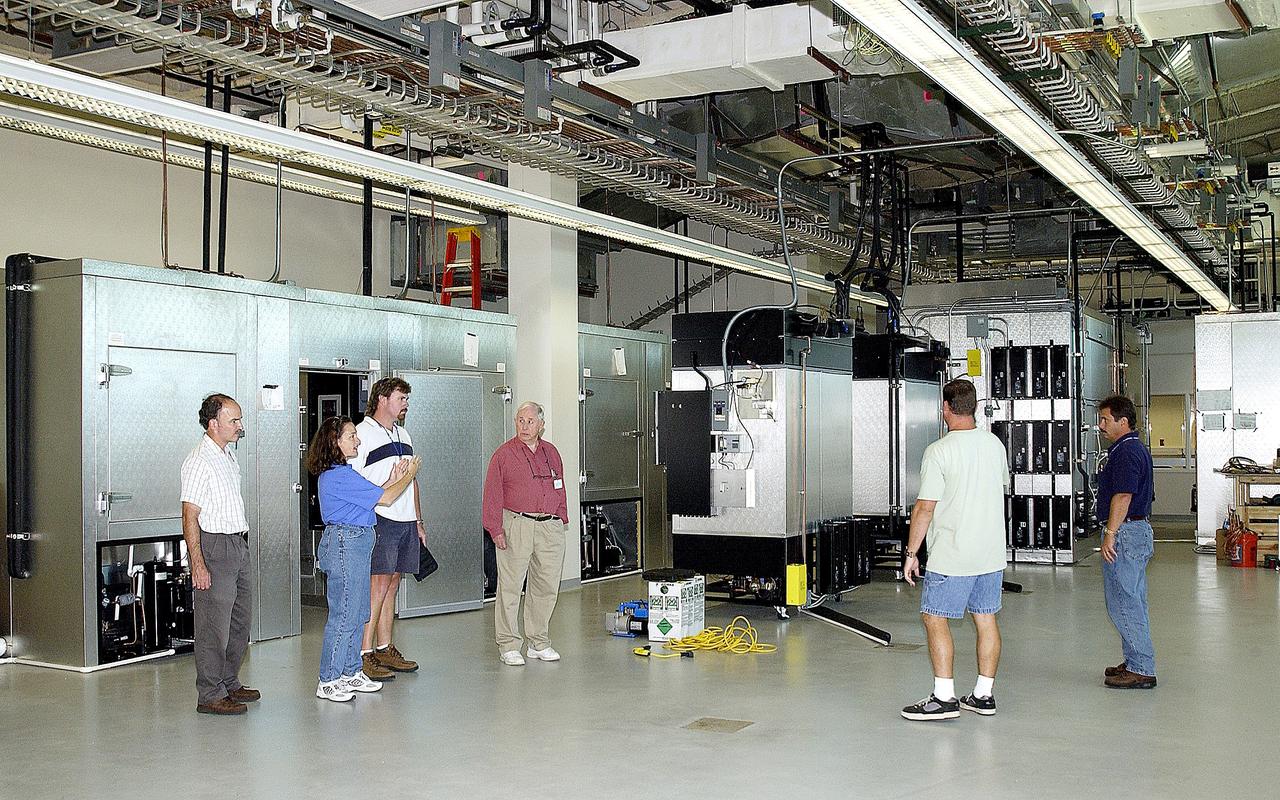
KENNEDY SPACE CENTER, FLA. -  Employees check out the new chamber facilities of the Space Life Sciences Lab (SLSL), formerly known as the Space Experiment Research and Processing Laboratory (SERPL).  From left are Ray Wheeler, with NASA; Debbie Wells and Larry Burns, with Dynamac; A.O. Rule, president of Environmental Growth Chambers, Inc. (ECG); Neil Yorio, with Dynamac; and John Wiezchowski, with ECG.  The SLSL is a state-of-the-art facility being built for ISS biotechnology research. Developed as a partnership between NASA-KSC and the State of Florida, NASA’s life sciences contractor will be the primary tenant of the facility, leasing space to conduct flight experiment processing and NASA-sponsored research. About 20 percent of the facility will be available for use by Florida’s university researchers through the Florida Space Research Institute.
KENNEDY SPACE CENTER, FLA. - Employees check out the new chamber facilities of the Space Life Sciences Lab (SLSL), formerly known as the Space Experiment Research and Processing Laboratory (SERPL). From left are Ray Wheeler, with NASA; Debbie Wells and Larry Burns, with Dynamac; A.O. Rule, president of Environmental Growth Chambers, Inc. (ECG); Neil Yorio, with Dynamac; and John Wiezchowski, with ECG. The SLSL is a state-of-the-art facility being built for ISS biotechnology research. Developed as a partnership between NASA-KSC and the State of Florida, NASA’s life sciences contractor will be the primary tenant of the facility, leasing space to conduct flight experiment processing and NASA-sponsored research. About 20 percent of the facility will be available for use by Florida’s university researchers through the Florida Space Research Institute.
KENNEDY SPACE CENTER, FLA. - Dynamac employees (from left) Larry Burns, Debbie Wells and Michelle Crouch talk in a conference room of the Space Life Sciences Lab (SLSL), formerly known as the Space Experiment Research and Processing Laboratory (SERPL). They have been transferring equipment from Hangar L.  The new lab is a state-of-the-art facility being built for ISS biotechnology research. Developed as a partnership between NASA-KSC and the State of Florida, NASA’s life sciences contractor will be the primary tenant of the facility, leasing space to conduct flight experiment processing and NASA-sponsored research. About 20 percent of the facility will be available for use by Florida’s university researchers through the Florida Space Research Institute.
KENNEDY SPACE CENTER, FLA. - Dynamac employees (from left) Larry Burns, Debbie Wells and Michelle Crouch talk in a conference room of the Space Life Sciences Lab (SLSL), formerly known as the Space Experiment Research and Processing Laboratory (SERPL). They have been transferring equipment from Hangar L. The new lab is a state-of-the-art facility being built for ISS biotechnology research. Developed as a partnership between NASA-KSC and the State of Florida, NASA’s life sciences contractor will be the primary tenant of the facility, leasing space to conduct flight experiment processing and NASA-sponsored research. About 20 percent of the facility will be available for use by Florida’s university researchers through the Florida Space Research Institute.
KENNEDY SPACE CENTER, FLA. -  Frank T. Brogan, president of the Florida Atlantic University, speaks at a dedication and ribbon-cutting ceremony for the Space Life Sciences Lab hosted by NASA-Kennedy Space Center and the state of Florida at the new lab. Completed in August, the facility encompasses more than 100,000 square feet and was formerly known as the Space Experiment Research and Processing Laboratory or SERPL. The state, through the Florida Space Authority, built the research lab which is host to NASA, NASA’s Life Sciences Services contractor Dynamac Corp., Bionetics Corp., and researchers from the University of Florida.  Dynamac Corp. leases the facility.  The Florida Space Research Institute is responsible for gaining additional tenants from outside the NASA community.
KENNEDY SPACE CENTER, FLA. - Frank T. Brogan, president of the Florida Atlantic University, speaks at a dedication and ribbon-cutting ceremony for the Space Life Sciences Lab hosted by NASA-Kennedy Space Center and the state of Florida at the new lab. Completed in August, the facility encompasses more than 100,000 square feet and was formerly known as the Space Experiment Research and Processing Laboratory or SERPL. The state, through the Florida Space Authority, built the research lab which is host to NASA, NASA’s Life Sciences Services contractor Dynamac Corp., Bionetics Corp., and researchers from the University of Florida. Dynamac Corp. leases the facility. The Florida Space Research Institute is responsible for gaining additional tenants from outside the NASA community.
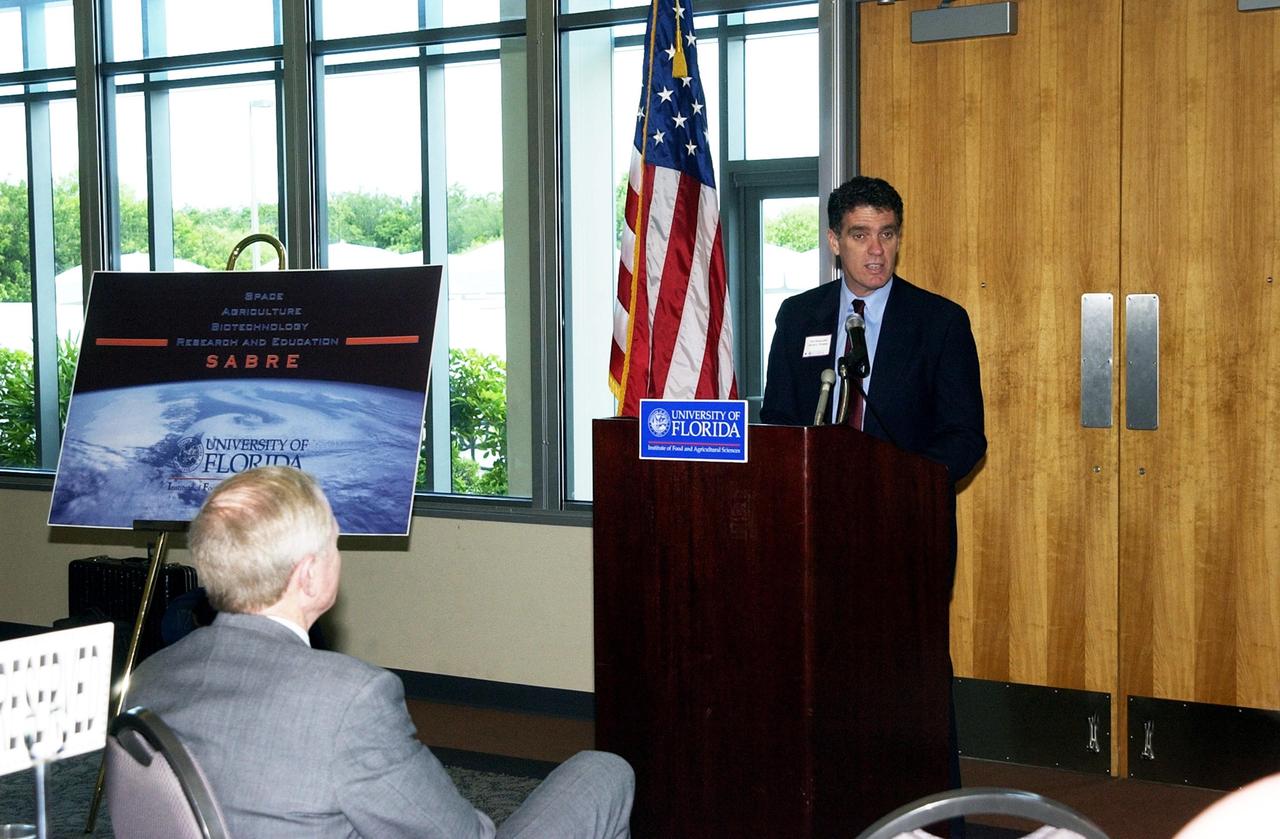
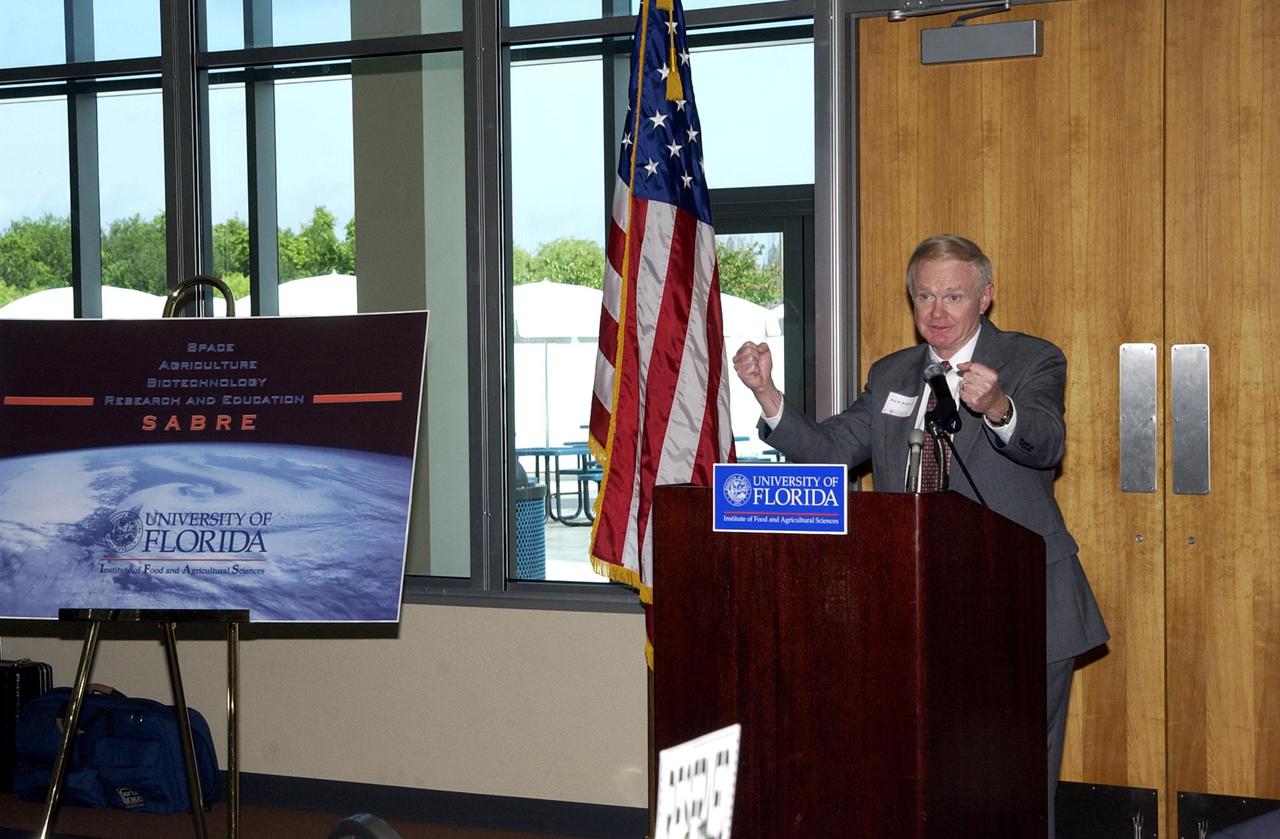
KENNEDY SPACE CENTER, FLA. -- Mike Martin, University of Florida vice president for agriculture and natural resources, speaks during the opening ceremony to launch a new program called SABRE, Space Agricultural Biotechnology Research and Education, that involves UF and NASA.  Officials from UF and NASA attended the event.  SABRE will focus on the discovery, development and application of the biological aspects of advanced life support strategies. The program will include faculty from UF's Institute of Food and Agricultural Sciences, who will be located at both KSC - in the state-owned Space Experiment Research and Processing Laboratory (SERPL) being built there - and UF in Gainesville.  SABRE will be directed by Robert Ferl, professor in the horticultural sciences department and assistant director of UF's Biotechnology Program.  He will be responsible for coordinating the research and education efforts of UF and NASA
KSC-02pd0610
KENNEDY SPACE CENTER, FLA. --  Center Director Roy D. Bridges Jr. speaks at the opening ceremony to launch a new program called SABRE, Space Agricultural Biotechnology Research and Education, involving the University of Florida and NASA.  Officials from UF and NASA attended the event.  SABRE will focus on the discovery, development and application of the biological aspects of advanced life support strategies. The program will include faculty from UF's Institute of Food and Agricultural Sciences, who will be located at both KSC - in the state-owned Space Experiment Research and Processing Laboratory (SERPL) being built there - and UF in Gainesville. SABRE will be directed by Robert Ferl, professor in the horticultural sciences department and assistant director of UF's Biotechnology Program.  He will be responsible for coordinating the research and education efforts of UF and NASA
KSC-02pd0611
KENNEDY SPACE CENTER, FLA. -- Center Director Roy D. Bridges Jr. speaks to a large group attending the opening of a new program known as SABRE, Space Agricultural Biotechnology Research and Education, that involves the University of Florida and NASA. SABRE will focus on the discovery, development and application of the biological aspects of advanced life support strategies. The program will include faculty from UF's Institute of Food and Agricultural Sciences, who will be located at both KSC - in the state-owned Space Experiment Research and Processing Laboratory (SERPL) being built there - and UF in Gainesville. SABRE will be directed by Robert Ferl, professor in the horticultural sciences department and assistant director of UF's Biotechnology Program.  He will be responsible for coordinating the research and education efforts of UF and NASA
KSC-02pd0613
KENNEDY SPACE CENTER, FLA. -- Mike Martin, University of Florida vice president for agriculture and natural resources, speaks during the opening ceremony to launch a new program called SABRE, Space Agricultural Biotechnology Research and Education, that involves UF and NASA.  Officials from UF and NASA attended the event.  In the foreground are Center Director Roy D. Bridges Jr. (left) and U.S. Rep. Dave Weldon (right).  SABRE will focus on the discovery, development and application of the biological aspects of advanced life support strategies. The program will include faculty from UF's Institute of Food and Agricultural Sciences, who will be located at both KSC - in the state-owned Space Experiment Research and Processing Laboratory (SERPL) being built there - and UF in Gainesville.  SABRE will be directed by Robert Ferl, professor in the horticultural sciences department and assistant director of UF's Biotechnology Program.  He will be responsible for coordinating the research and education efforts of UF and NASA
KSC-02pd0609
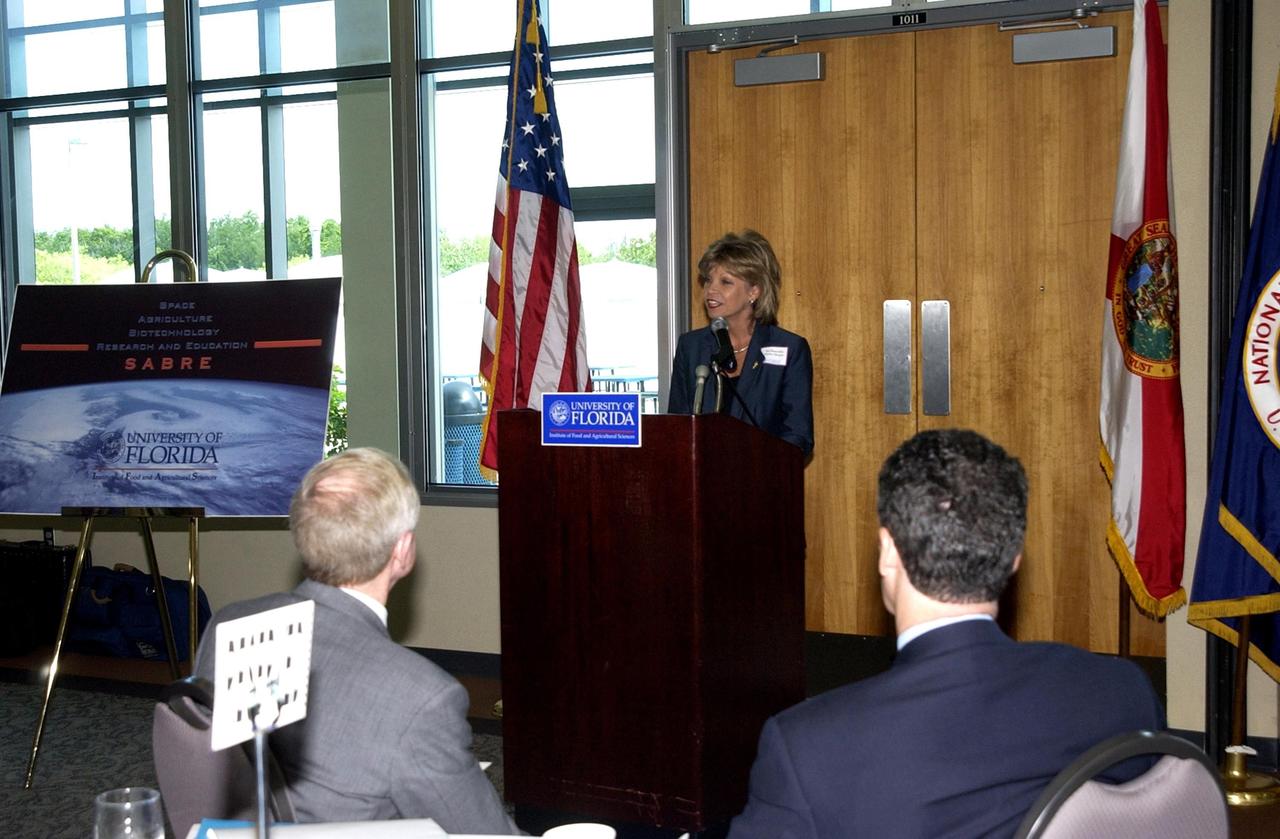
KENNEDY SPACE CENTER, FLA. -- The Honorable Diana Morgan speaks to attendees at the opening ceremony kicking off a new program known as SABRE, Space Agricultural Biotechnology Research and Education.   In the foreground are Center Director Roy D. Bridges Jr. (left) and U.S. Representative Dave Weldon (right).  The SABRE program is a combined effort of the University of Florida and NASA.  Morgan is vice chair on the UF Board of Trustees.   SABRE will focus on the discovery, development and application of the biological aspects of advanced life support strategies. The program will include faculty from UF's Institute of Food and Agricultural Sciences, who will be located at both KSC - in the state-owned Space Experiment Research and Processing Laboratory (SERPL) being built there - and UF in Gainesville. SABRE will be directed by Robert Ferl, professor in the horticultural sciences department and assistant director of UF's Biotechnology Program.  He will be responsible for coordinating the research and education efforts of UF and NASA
KSC-02pd0616
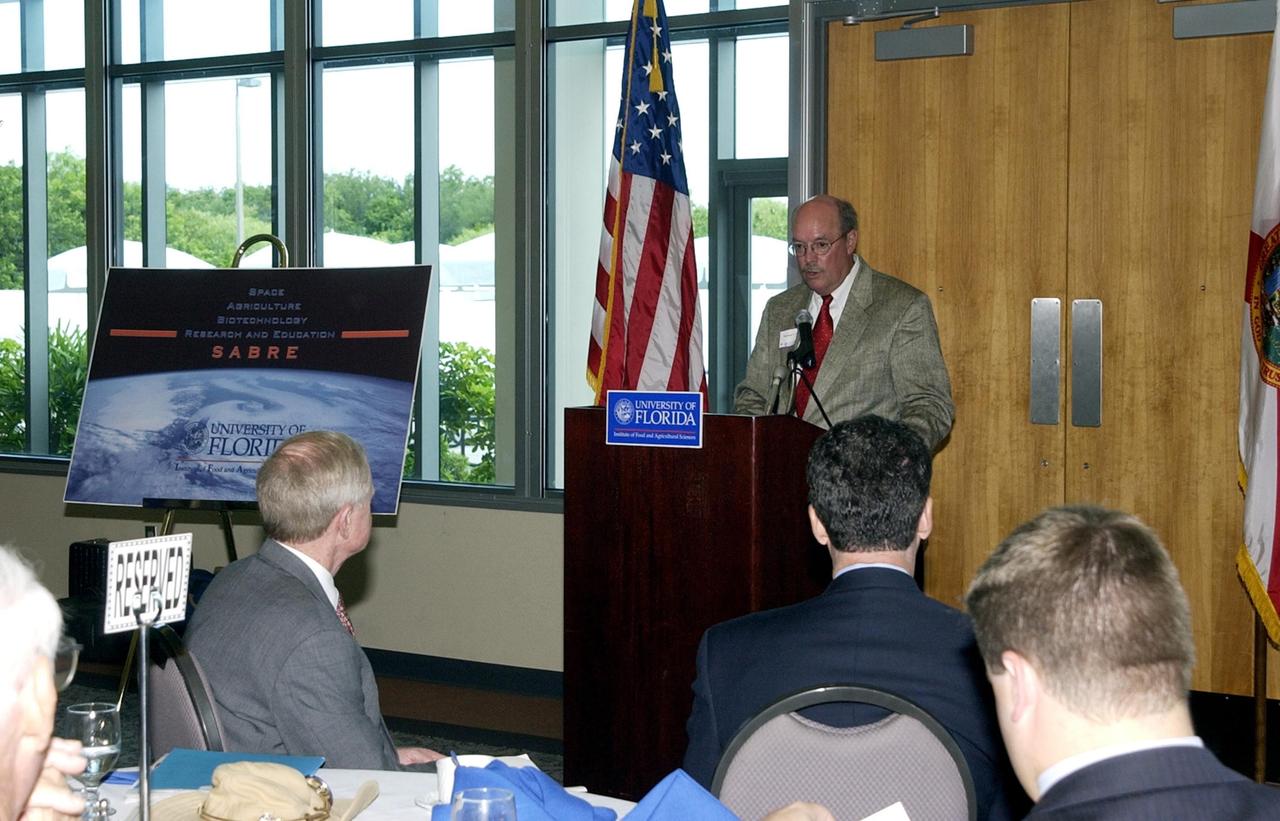
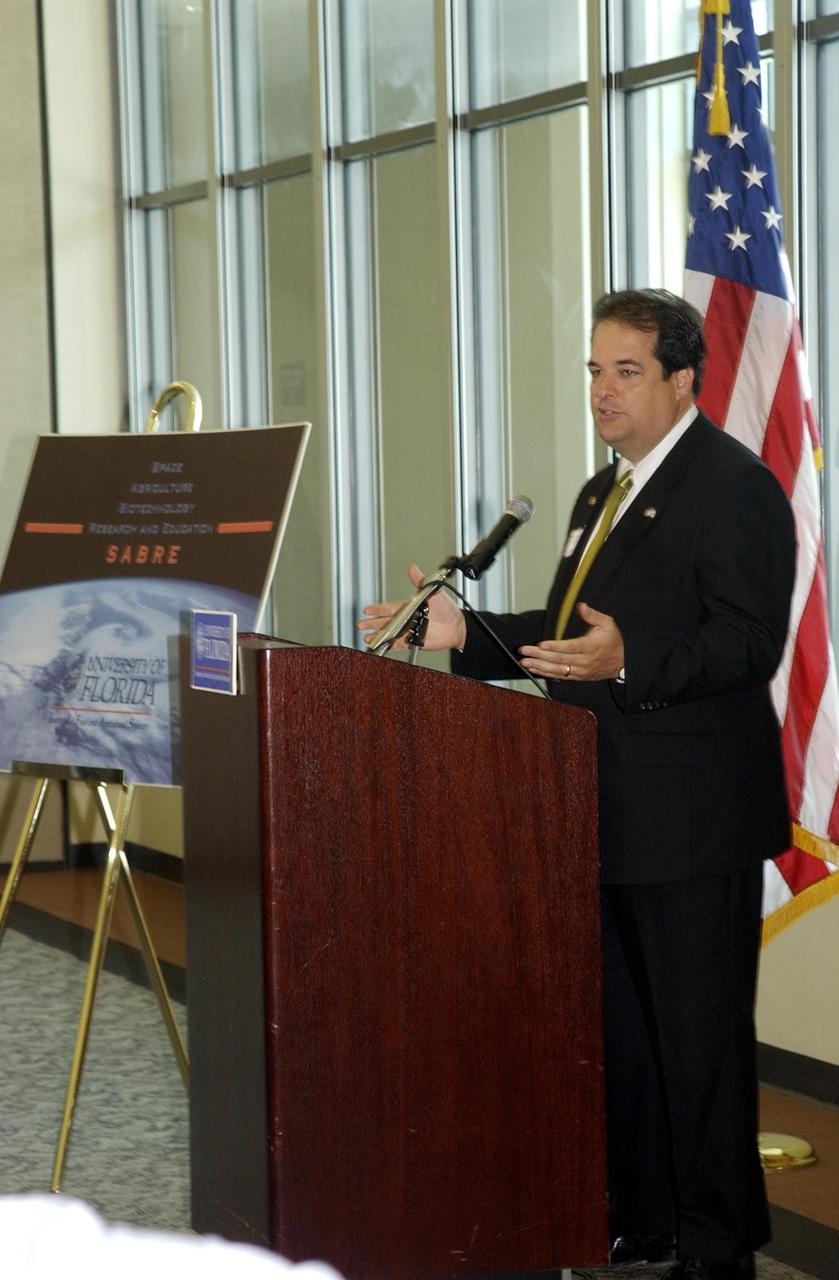
KENNEDY SPACE CENTER, FLA. --  Florida Representative Bob Allen speaks to attendees at the opening ceremony kicking off a new program known as SABRE, Space Agricultural Biotechnology Research and Education.   The program is a combined effort of the University of Florida and NASA. SABRE will focus on the discovery, development and application of the biological aspects of advanced life support strategies. The program will include faculty from UF's Institute of Food and Agricultural Sciences, who will be located at both KSC - in the state-owned Space Experiment Research and Processing Laboratory (SERPL) being built there - and UF in Gainesville. SABRE will be directed by Robert Ferl, professor in the horticultural sciences department and assistant director of UF's Biotechnology Program.  He will be responsible for coordinating the research and education efforts of UF and NASA
KSC-02pd0617
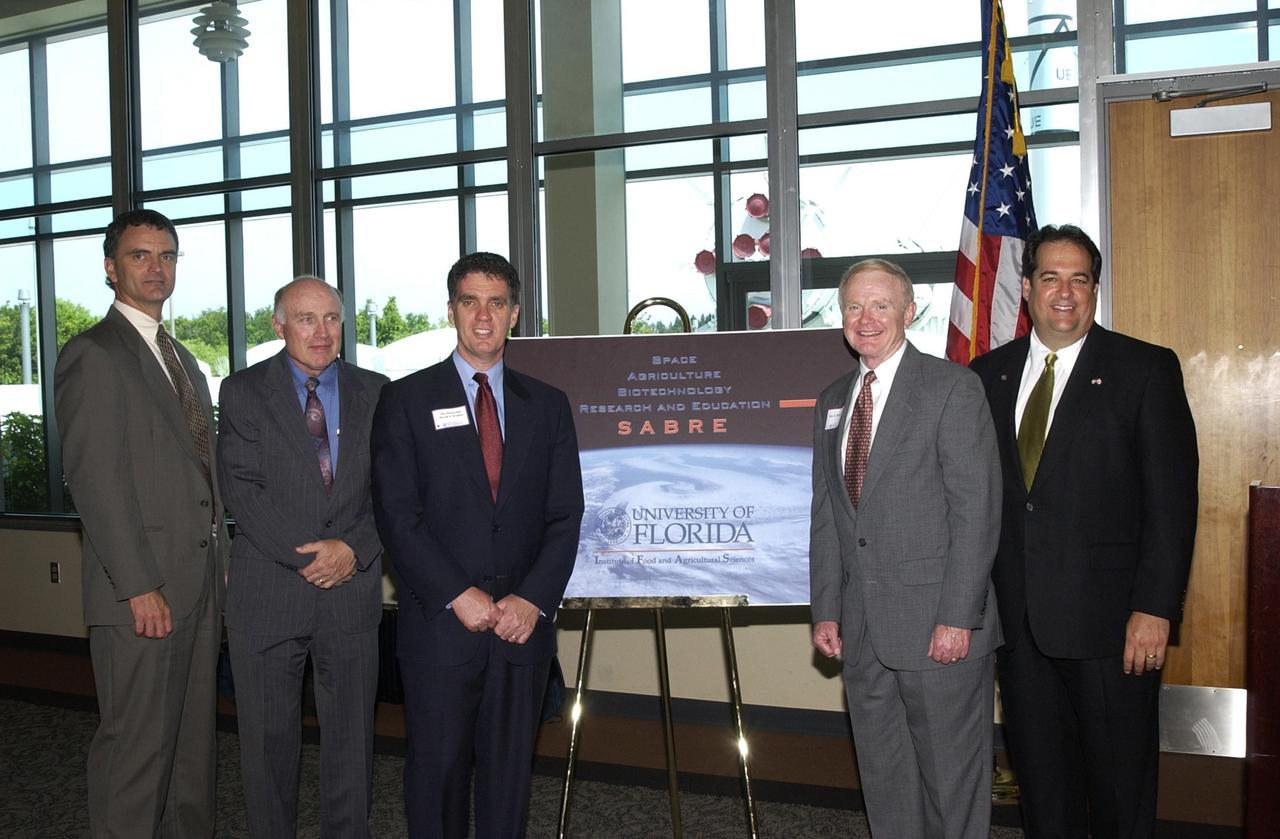
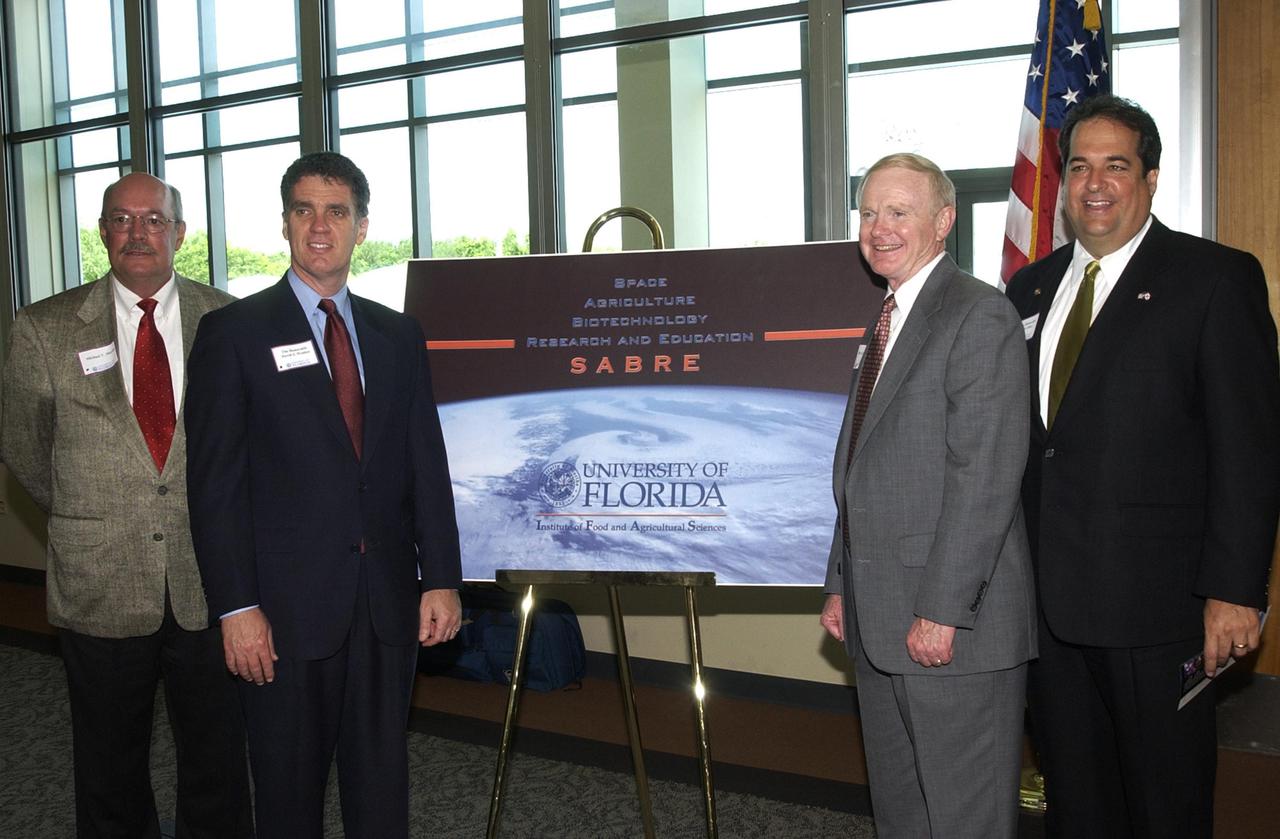
KENNEDY SPACE CENTER, FLA. --  At the opening ceremony for the new program known as SABRE, Space Agricultural Biotechnology Research and Education, four of the speakers gather around the SABRE poster.  From left are University of Florida Vice President for Agriculture and Natural Resources Mike Martin, U.S. Representative Dave Weldon, Center Director Roy D. Bridges Jr., and Florida Representative Bob Allen. Involving UF and NASA,  SABRE will focus on the discovery, development and application of the biological aspects of advanced life support strategies. The program will include faculty from UF's Institute of Food and Agricultural Sciences, who will be located at both KSC - in the state-owned Space Experiment Research and Processing Laboratory (SERPL) being built there - and UF in Gainesville. Robert Ferl, professor in the horticultural sciences department and assistant director of the University of Florida Biotechnology Program, will direct and be responsible for coordinating the research and education efforts of UF and NASA.
KSC-02PD-0620
KENNEDY SPACE CENTER, FLA. -- At the opening ceremony for the new program known as SABRE, Space Agricultural Biotechnology Research and Education, key participants gather around the SABRE poster.  From left are Robert Ferl, professor in the horticultural sciences department and assistant director of the University of Florida Biotechnology Program, who will direct and be responsible for coordinating the research and education; William Knott, senior scientist in the NASA biological sciences office; U.S. Representative Dave Weldon; Center Director Roy D. Bridges Jr.; and Florida Representative Bob Allen. Involving UF and NASA,  SABRE will focus on the discovery, development and application of the biological aspects of advanced life support strategies. The program will include faculty from UF's Institute of Food and Agricultural Sciences, who will be located at both KSC - in the state-owned Space Experiment Research and Processing Laboratory (SERPL) being built there - and UF in Gainesville
KSC-02pd0621
KENNEDY SPACE CENTER, FLA. - Center Director Roy D. Bridges Jr. shows his enthusiasm for the new program SABRE being launched at KSC. SABRE, Space Agricultural Biotechnology Research and Education, involves the University of Florida and NASA.   Bridges was speaking at the opening ceremony that included officials from both organizations. SABRE will focus on the discovery, development and application of the biological aspects of advanced life support strategies. The program will include faculty from UF's Institute of Food and Agricultural Sciences, who will be located at both KSC - in the state-owned Space Experiment Research and Processing Laboratory (SERPL) being built there - and UF in Gainesville. SABRE will be directed by Robert Ferl, professor in the horticultural sciences department and assistant director of UF's Biotechnology Program.  He will be responsible for coordinating the research and education efforts of UF and NASA
KSC-02PD-0612
KENNEDY SPACE CENTER, FLA. -- At the opening ceremony for the new program known as SABRE, Space Agricultural Biotechnology Research and Education, William Knott speaks to attendees.  Knott is senior scientist in the NASA biological sciences office.  SABRE is a joint effort of the University of Florida and NASA and will focus on the discovery, development and application of the biological aspects of advanced life support strategies. The program will include faculty from UF's Institute of Food and Agricultural Sciences, who will be located at both KSC - in the state-owned Space Experiment Research and Processing Laboratory (SERPL) being built there - and UF in Gainesville. Robert Ferl, professor in the horticultural sciences department and assistant director of the University of Florida Biotechnology Program, will direct and be responsible for coordinating the research and education.
KSC-02pd0619
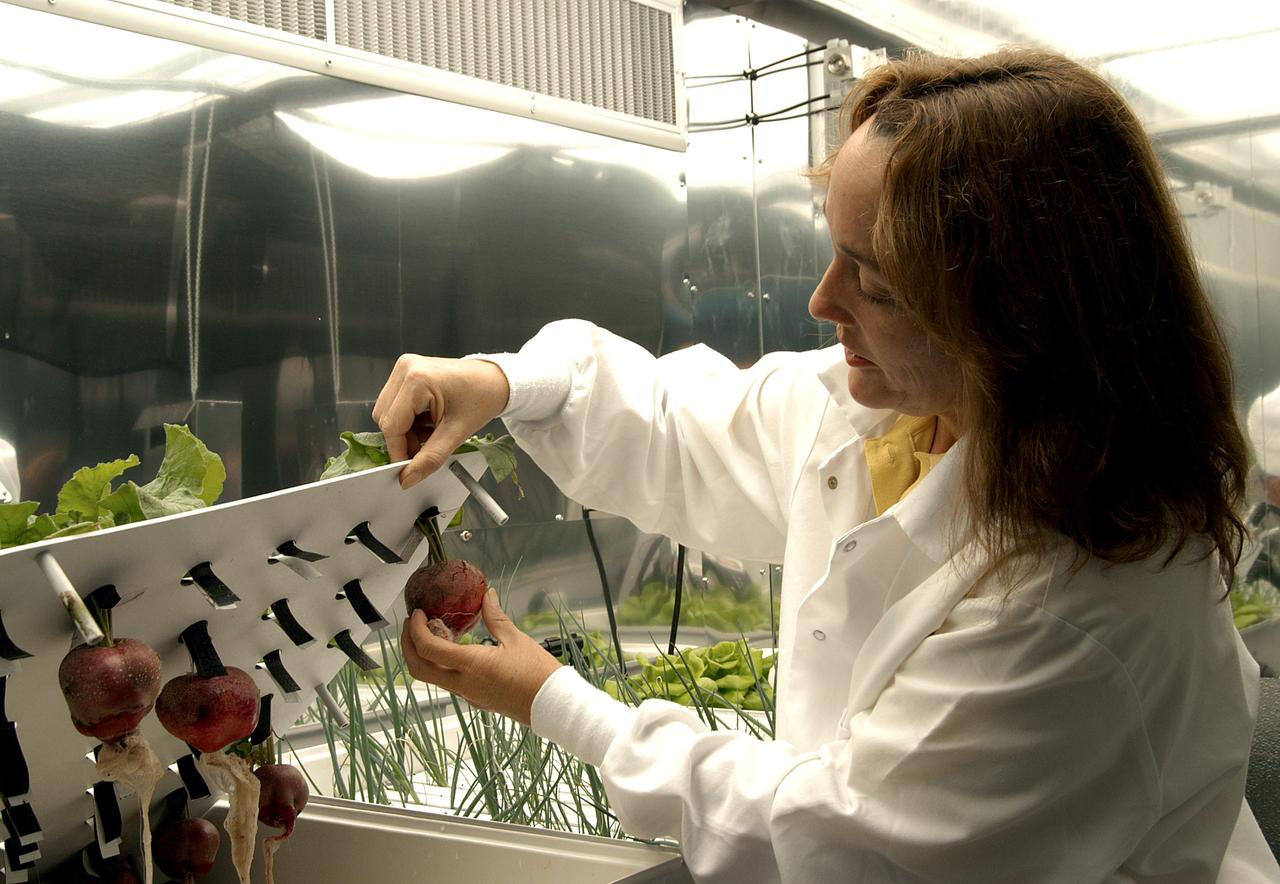
KENNEDY SPACE CENTER, FLA. -- Sharon Edney, with Dynamac Corp., checks the growth of radishes being grown hydroponically for study in the Space Life Sciences Lab.  The 100,000 square-foot facility houses labs for NASA’s ongoing research efforts, microbiology/microbial ecology studies and analytical chemistry labs. Also calling the new lab home are facilities for space flight-experiment and flight-hardware development, new plant growth chambers, and an Orbiter Environment Simulator that will be used to conduct ground control experiments in simulated flight conditions for space flight experiments.  The SLS Lab, formerly known as the Space Experiment Research and Processing Laboratory or SERPL, provides space for NASA’s Life Sciences Services contractor Dynamac Corporation, Bionetics Corporation, and researchers from the University of Florida. NASA’s Office of Biological and Physical Research will use the facility for processing life sciences experiments that will be conducted on the International Space Station. The SLS Lab is the magnet facility for the International Space Research Park at KSC being developed in partnership with Florida Space Authority.
KENNEDY SPACE CENTER, FLA. -- Sharon Edney, with Dynamac Corp., checks the growth of radishes being grown hydroponically for study in the Space Life Sciences Lab. The 100,000 square-foot facility houses labs for NASA’s ongoing research efforts, microbiology/microbial ecology studies and analytical chemistry labs. Also calling the new lab home are facilities for space flight-experiment and flight-hardware development, new plant growth chambers, and an Orbiter Environment Simulator that will be used to conduct ground control experiments in simulated flight conditions for space flight experiments. The SLS Lab, formerly known as the Space Experiment Research and Processing Laboratory or SERPL, provides space for NASA’s Life Sciences Services contractor Dynamac Corporation, Bionetics Corporation, and researchers from the University of Florida. NASA’s Office of Biological and Physical Research will use the facility for processing life sciences experiments that will be conducted on the International Space Station. The SLS Lab is the magnet facility for the International Space Research Park at KSC being developed in partnership with Florida Space Authority.
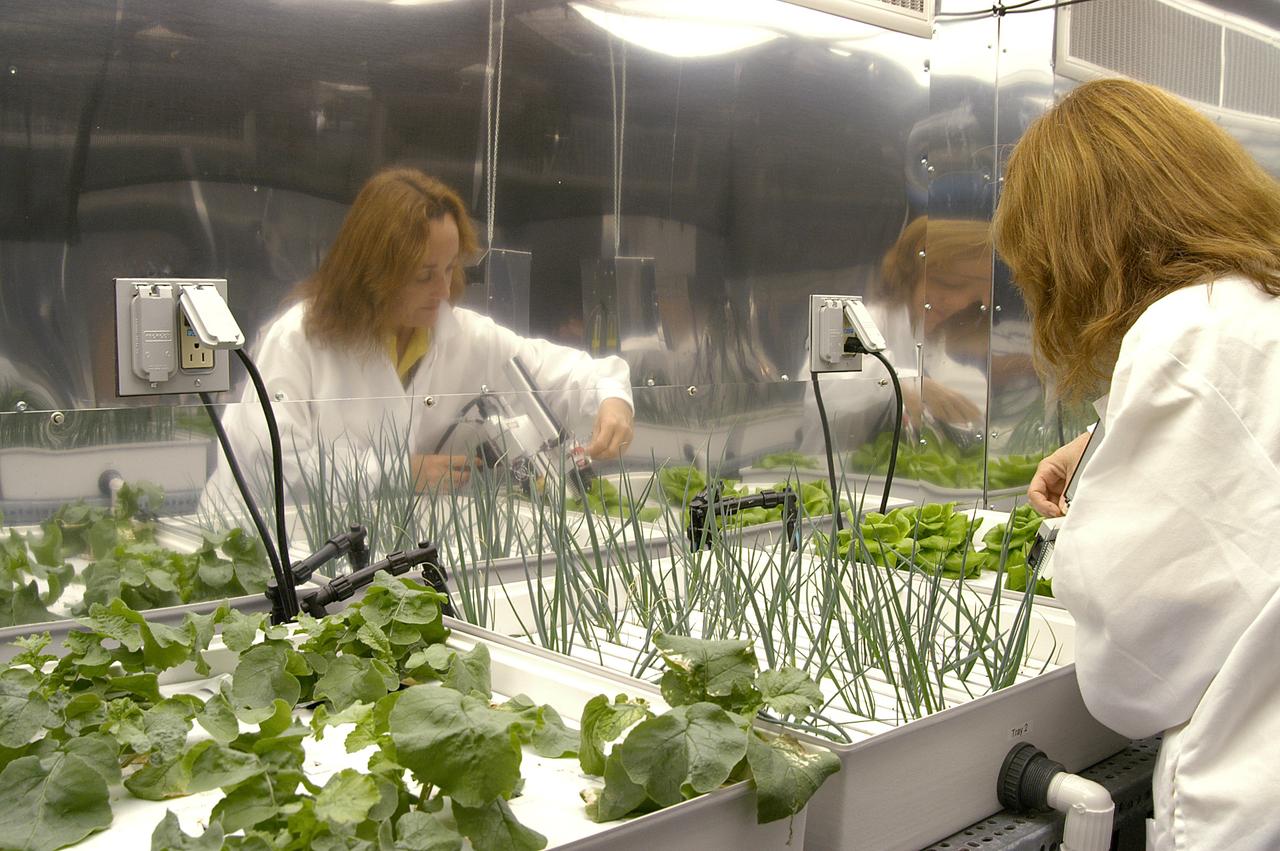
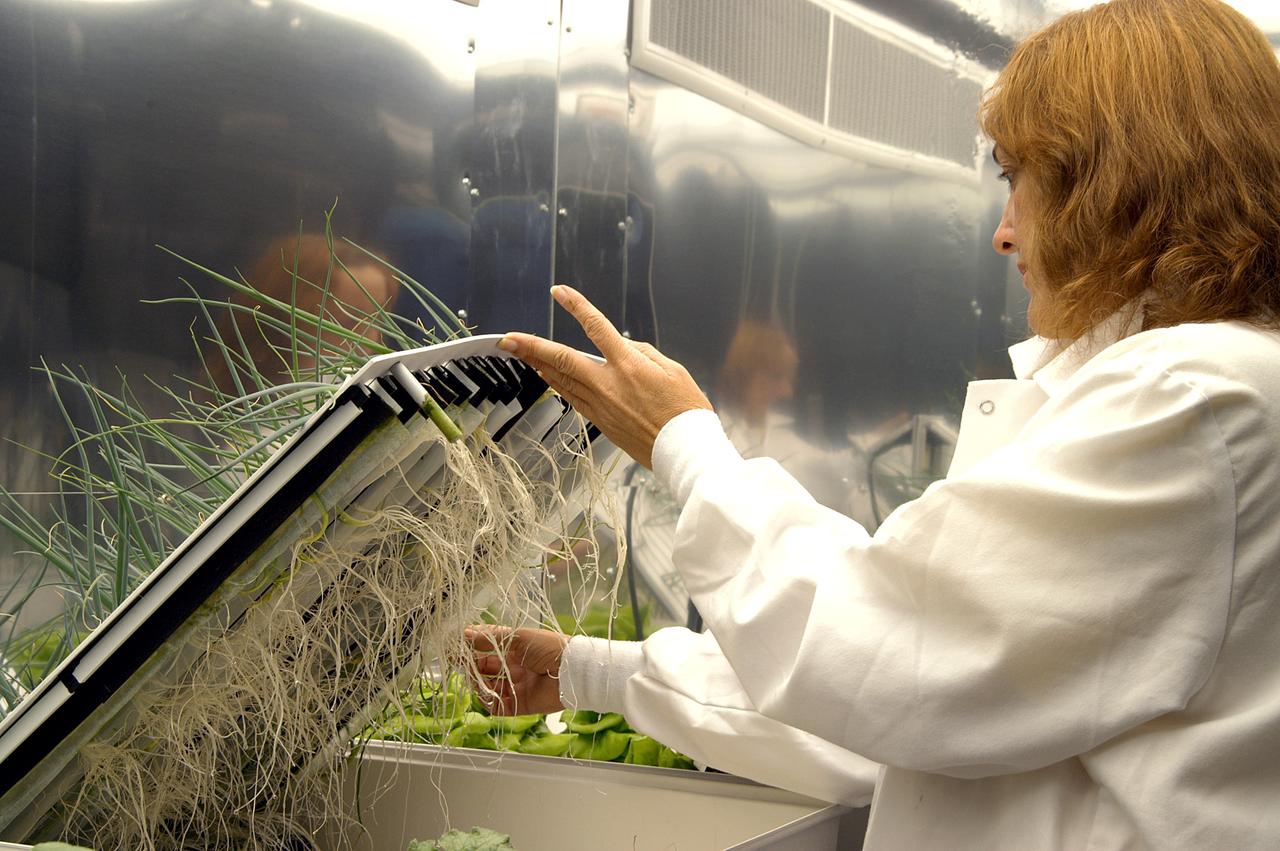
KENNEDY SPACE CENTER, FLA. -- Sharon Edney, with Dynamac Corp., checks the roots of green onions being grown hydroponically for study in the Space Life Sciences Lab.  The 100,000 square-foot facility houses labs for NASA’s ongoing research efforts, microbiology/microbial ecology studies and analytical chemistry labs. Also calling the new lab home are facilities for space flight-experiment and flight-hardware development, new plant growth chambers, and an Orbiter Environment Simulator that will be used to conduct ground control experiments in simulated flight conditions for space flight experiments.  The SLS Lab, formerly known as the Space Experiment Research and Processing Laboratory or SERPL, provides space for NASA’s Life Sciences Services contractor Dynamac Corporation, Bionetics Corporation, and researchers from the University of Florida. NASA’s Office of Biological and Physical Research will use the facility for processing life sciences experiments that will be conducted on the International Space Station. The SLS Lab is the magnet facility for the International Space Research Park at KSC being developed in partnership with Florida Space Authority.
KENNEDY SPACE CENTER, FLA. -- Sharon Edney, with Dynamac Corp., checks the roots of green onions being grown hydroponically for study in the Space Life Sciences Lab. The 100,000 square-foot facility houses labs for NASA’s ongoing research efforts, microbiology/microbial ecology studies and analytical chemistry labs. Also calling the new lab home are facilities for space flight-experiment and flight-hardware development, new plant growth chambers, and an Orbiter Environment Simulator that will be used to conduct ground control experiments in simulated flight conditions for space flight experiments. The SLS Lab, formerly known as the Space Experiment Research and Processing Laboratory or SERPL, provides space for NASA’s Life Sciences Services contractor Dynamac Corporation, Bionetics Corporation, and researchers from the University of Florida. NASA’s Office of Biological and Physical Research will use the facility for processing life sciences experiments that will be conducted on the International Space Station. The SLS Lab is the magnet facility for the International Space Research Park at KSC being developed in partnership with Florida Space Authority.
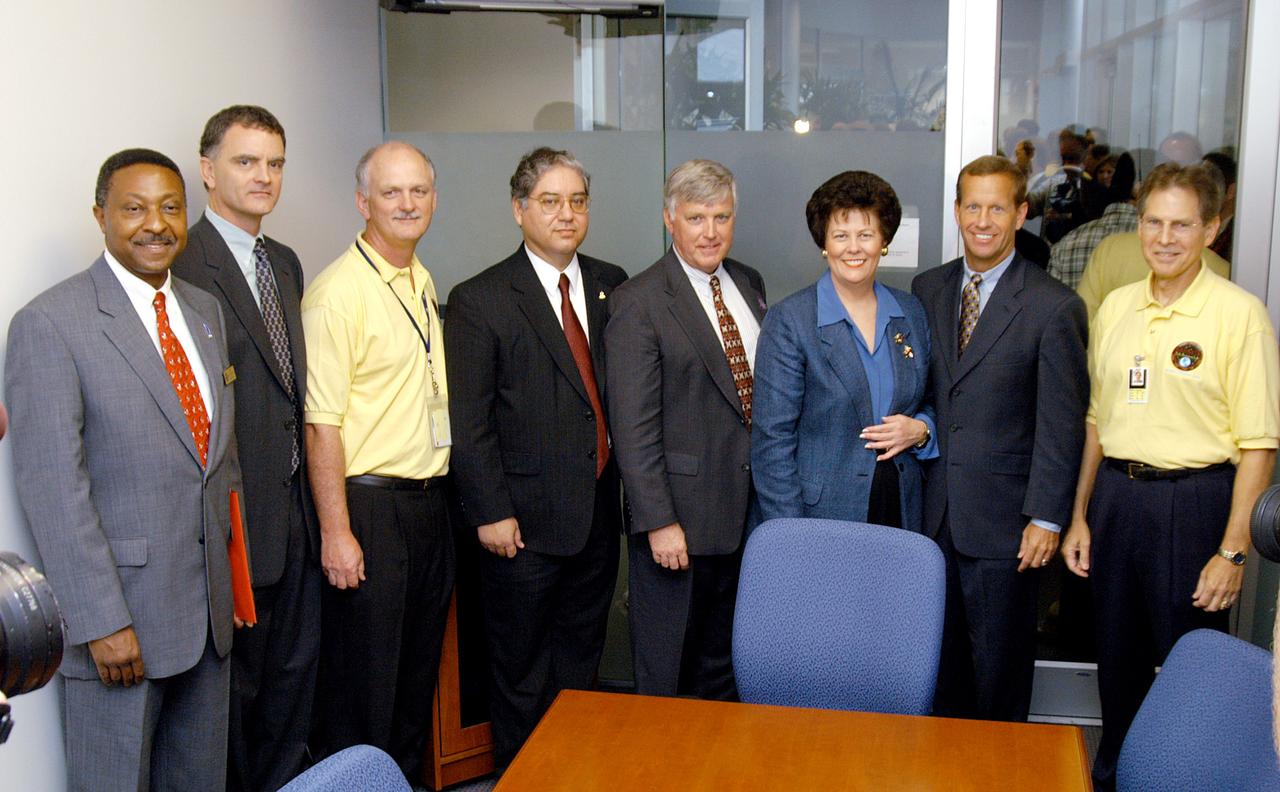
KENNEDY SPACE CENTER, FLA. -  Officials of the NASA-Kennedy Space Center and the state of Florida pose for a group portrait at a dedication and ribbon-cutting ceremony for the Space Life Sciences Lab at the new lab. From left are Capt. Winston Scott, executive director of the Florida Space Authority; Dr. Robert J. Ferl, director of Space Agriculture Biotechnology Research and Education (SABRE), University of Florida; Charlie Quincy, chief of the Biological Sciences Office, Kennedy Space Center; Jose Perez-Morales, NASA Project Manager for the Space Life Sciences Lab; Jim Kennedy, director of the Kennedy Space Center; The Honorable Toni Jennings, lieutenant governor of the state of Florida; Frank T. Brogan, president of the Florida Atlantic University; and Dr. Samuel Durrance, executive director of the Florida Space Research Institute.  Completed in August, the facility encompasses more than 100,000 square feet and was formerly known as the Space Experiment Research and Processing Laboratory or SERPL. The state, through the Florida Space Authority, built the research lab which is host to NASA, NASA’s Life Sciences Services contractor Dynamac Corp., Bionetics Corp., and researchers from the University of Florida.  Dynamac Corp. leases the facility.  The Florida Space Research Institute is responsible for gaining additional tenants from outside the NASA community.
KENNEDY SPACE CENTER, FLA. - Officials of the NASA-Kennedy Space Center and the state of Florida pose for a group portrait at a dedication and ribbon-cutting ceremony for the Space Life Sciences Lab at the new lab. From left are Capt. Winston Scott, executive director of the Florida Space Authority; Dr. Robert J. Ferl, director of Space Agriculture Biotechnology Research and Education (SABRE), University of Florida; Charlie Quincy, chief of the Biological Sciences Office, Kennedy Space Center; Jose Perez-Morales, NASA Project Manager for the Space Life Sciences Lab; Jim Kennedy, director of the Kennedy Space Center; The Honorable Toni Jennings, lieutenant governor of the state of Florida; Frank T. Brogan, president of the Florida Atlantic University; and Dr. Samuel Durrance, executive director of the Florida Space Research Institute. Completed in August, the facility encompasses more than 100,000 square feet and was formerly known as the Space Experiment Research and Processing Laboratory or SERPL. The state, through the Florida Space Authority, built the research lab which is host to NASA, NASA’s Life Sciences Services contractor Dynamac Corp., Bionetics Corp., and researchers from the University of Florida. Dynamac Corp. leases the facility. The Florida Space Research Institute is responsible for gaining additional tenants from outside the NASA community.
KENNEDY SPACE CENTER, FLA. -- In the Space Life Sciences Lab, Lanfang Levine, with Dynamac Corp., transfers material into a sample bottle for analysis.  She is standing in front of new equipment in the lab that will provide gas chromatography and mass spectrometry.  The equipment will enable analysis of volatile compounds, such as from plants.  The 100,000 square-foot facility houses labs for NASA’s ongoing research efforts, microbiology/microbial ecology studies and analytical chemistry labs. Also calling the new lab home are facilities for space flight-experiment and flight-hardware development, new plant growth chambers, and an Orbiter Environment Simulator that will be used to conduct ground control experiments in simulated flight conditions for space flight experiments.  The SLS Lab, formerly known as the Space Experiment Research and Processing Laboratory or SERPL, provides space for NASA’s Life Sciences Services contractor Dynamac Corporation, Bionetics Corporation, and researchers from the University of Florida. NASA’s Office of Biological and Physical Research will use the facility for processing life sciences experiments that will be conducted on the International Space Station. The SLS Lab is the magnet facility for the International Space Research Park at KSC being developed in partnership with Florida Space Authority.
KENNEDY SPACE CENTER, FLA. -- In the Space Life Sciences Lab, Lanfang Levine, with Dynamac Corp., transfers material into a sample bottle for analysis. She is standing in front of new equipment in the lab that will provide gas chromatography and mass spectrometry. The equipment will enable analysis of volatile compounds, such as from plants. The 100,000 square-foot facility houses labs for NASA’s ongoing research efforts, microbiology/microbial ecology studies and analytical chemistry labs. Also calling the new lab home are facilities for space flight-experiment and flight-hardware development, new plant growth chambers, and an Orbiter Environment Simulator that will be used to conduct ground control experiments in simulated flight conditions for space flight experiments. The SLS Lab, formerly known as the Space Experiment Research and Processing Laboratory or SERPL, provides space for NASA’s Life Sciences Services contractor Dynamac Corporation, Bionetics Corporation, and researchers from the University of Florida. NASA’s Office of Biological and Physical Research will use the facility for processing life sciences experiments that will be conducted on the International Space Station. The SLS Lab is the magnet facility for the International Space Research Park at KSC being developed in partnership with Florida Space Authority.
KENNEDY SPACE CENTER, FLA. -- Sharon Edney, with Dynamac Corp., measures photosynthesis on Bibb lettuce being grown hydroponically for study in the Space Life Sciences Lab.  The 100,000 square-foot facility houses labs for NASA’s ongoing research efforts, microbiology/microbial ecology studies and analytical chemistry labs. Also calling the new lab home are facilities for space flight-experiment and flight-hardware development, new plant growth chambers, and an Orbiter Environment Simulator that will be used to conduct ground control experiments in simulated flight conditions for space flight experiments.  The SLS Lab, formerly known as the Space Experiment Research and Processing Laboratory or SERPL, provides space for NASA’s Life Sciences Services contractor Dynamac Corporation, Bionetics Corporation, and researchers from the University of Florida. NASA’s Office of Biological and Physical Research will use the facility for processing life sciences experiments that will be conducted on the International Space Station. The SLS Lab is the magnet facility for the International Space Research Park at KSC being developed in partnership with Florida Space Authority.
KENNEDY SPACE CENTER, FLA. -- Sharon Edney, with Dynamac Corp., measures photosynthesis on Bibb lettuce being grown hydroponically for study in the Space Life Sciences Lab. The 100,000 square-foot facility houses labs for NASA’s ongoing research efforts, microbiology/microbial ecology studies and analytical chemistry labs. Also calling the new lab home are facilities for space flight-experiment and flight-hardware development, new plant growth chambers, and an Orbiter Environment Simulator that will be used to conduct ground control experiments in simulated flight conditions for space flight experiments. The SLS Lab, formerly known as the Space Experiment Research and Processing Laboratory or SERPL, provides space for NASA’s Life Sciences Services contractor Dynamac Corporation, Bionetics Corporation, and researchers from the University of Florida. NASA’s Office of Biological and Physical Research will use the facility for processing life sciences experiments that will be conducted on the International Space Station. The SLS Lab is the magnet facility for the International Space Research Park at KSC being developed in partnership with Florida Space Authority.
KENNEDY SPACE CENTER, FLA. -  The Honorable Toni Jennings (left), lieutenant governor of the state of Florida, and Frank T. Brogan, president of Florida Atlantic University, receive a briefing on the research that will be conducted in the Space Life Sciences Lab from Dr. Robert J. Ferl (right), director of Space Agriculture Biotechnology Research and Education (SABRE), University of Florida.  Jennings and Brogan are speaking at a dedication and ribbon-cutting ceremony for the lab hosted by NASA-Kennedy Space Center and the state of Florida at the new lab. Completed in August, the facility encompasses more than 100,000 square feet and was formerly known as the Space Experiment Research and Processing Laboratory or SERPL. The state, through the Florida Space Authority, built the research lab which is host to NASA, NASA’s Life Sciences Services contractor Dynamac Corp., Bionetics Corp., and researchers from the University of Florida.  Dynamac Corp. leases the facility.  The Florida Space Research Institute is responsible for gaining additional tenants from outside the NASA community.
KENNEDY SPACE CENTER, FLA. - The Honorable Toni Jennings (left), lieutenant governor of the state of Florida, and Frank T. Brogan, president of Florida Atlantic University, receive a briefing on the research that will be conducted in the Space Life Sciences Lab from Dr. Robert J. Ferl (right), director of Space Agriculture Biotechnology Research and Education (SABRE), University of Florida. Jennings and Brogan are speaking at a dedication and ribbon-cutting ceremony for the lab hosted by NASA-Kennedy Space Center and the state of Florida at the new lab. Completed in August, the facility encompasses more than 100,000 square feet and was formerly known as the Space Experiment Research and Processing Laboratory or SERPL. The state, through the Florida Space Authority, built the research lab which is host to NASA, NASA’s Life Sciences Services contractor Dynamac Corp., Bionetics Corp., and researchers from the University of Florida. Dynamac Corp. leases the facility. The Florida Space Research Institute is responsible for gaining additional tenants from outside the NASA community.
KENNEDY SPACE CENTER, FLA. -- In the Space Life Sciences (SLS) Lab, Jan Bauer, with Dynamac Corp., places samples of onion tissue in the elemental analyzer, which analyzes for carbon, hydrogen, nitrogen and sulfur. The 100,000 square-foot SLS houses labs for NASA’s ongoing research efforts, microbiology/microbial ecology studies and analytical chemistry labs. Also calling the new lab home are facilities for space flight-experiment and flight-hardware development, new plant growth chambers, and an Orbiter Environment Simulator that will be used to conduct ground control experiments in simulated flight conditions for space flight experiments.  The SLS Lab, formerly known as the Space Experiment Research and Processing Laboratory or SERPL, provides space for NASA’s Life Sciences Services contractor Dynamac Corporation, Bionetics Corporation, and researchers from the University of Florida. NASA’s Office of Biological and Physical Research will use the facility for processing life sciences experiments that will be conducted on the International Space Station. The SLS Lab is the magnet facility for the International Space Research Park at KSC being developed in partnership with Florida Space Authority.
KENNEDY SPACE CENTER, FLA. -- In the Space Life Sciences (SLS) Lab, Jan Bauer, with Dynamac Corp., places samples of onion tissue in the elemental analyzer, which analyzes for carbon, hydrogen, nitrogen and sulfur. The 100,000 square-foot SLS houses labs for NASA’s ongoing research efforts, microbiology/microbial ecology studies and analytical chemistry labs. Also calling the new lab home are facilities for space flight-experiment and flight-hardware development, new plant growth chambers, and an Orbiter Environment Simulator that will be used to conduct ground control experiments in simulated flight conditions for space flight experiments. The SLS Lab, formerly known as the Space Experiment Research and Processing Laboratory or SERPL, provides space for NASA’s Life Sciences Services contractor Dynamac Corporation, Bionetics Corporation, and researchers from the University of Florida. NASA’s Office of Biological and Physical Research will use the facility for processing life sciences experiments that will be conducted on the International Space Station. The SLS Lab is the magnet facility for the International Space Research Park at KSC being developed in partnership with Florida Space Authority.
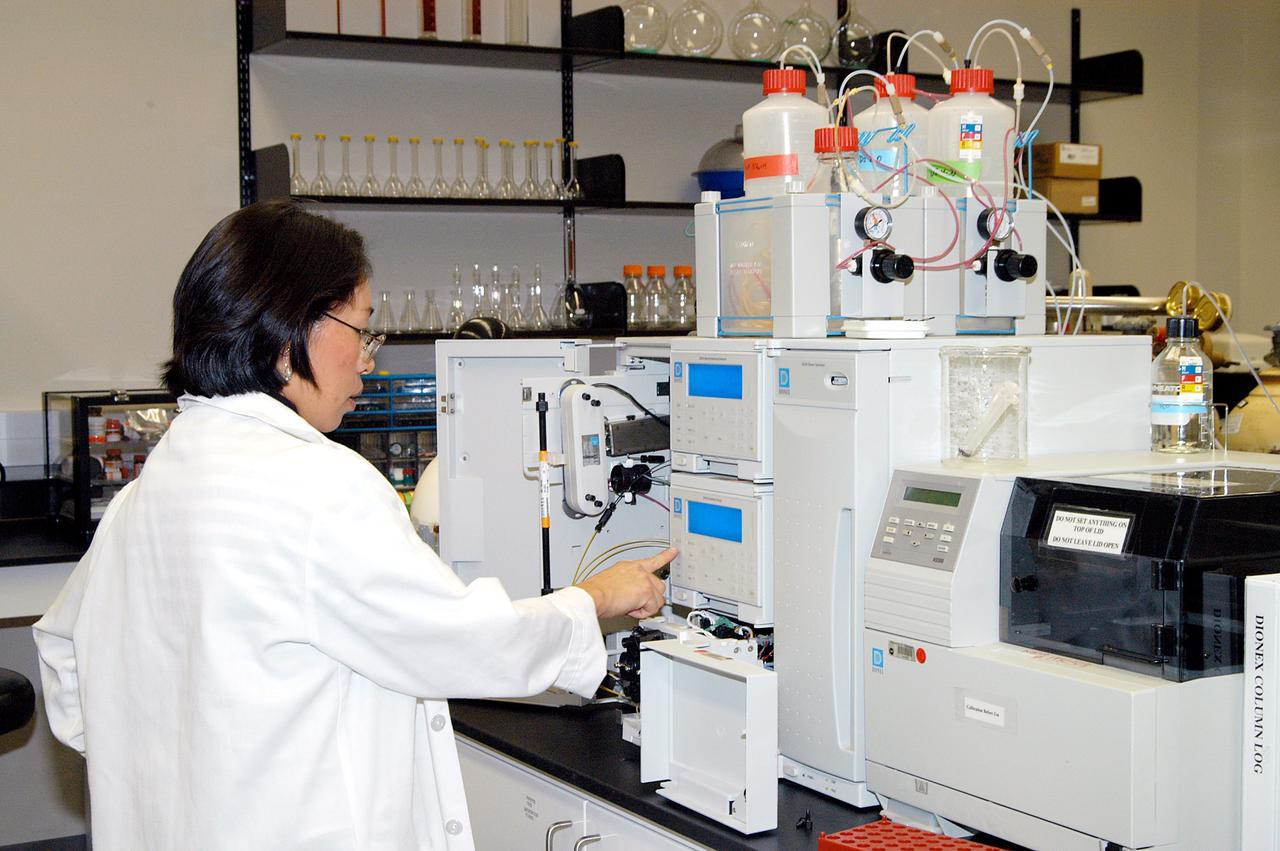
KENNEDY SPACE CENTER, FLA. -- Lanfang Levine, with Dynamac Corp., helps install a Dionex DX-500 IC/HPLC system  in the Space Life Sciences Lab.  The equipment will enable analysis of volatile compounds, such as from plants. The 100,000 square-foot facility houses labs for NASA’s ongoing research efforts, microbiology/microbial ecology studies and analytical chemistry labs. Also calling the new lab home are facilities for space flight-experiment and flight-hardware development, new plant growth chambers, and an Orbiter Environment Simulator that will be used to conduct ground control experiments in simulated flight conditions for space flight experiments.  The SLS Lab, formerly known as the Space Experiment Research and Processing Laboratory or SERPL, provides space for NASA’s Life Sciences Services contractor Dynamac Corporation, Bionetics Corporation, and researchers from the University of Florida. NASA’s Office of Biological and Physical Research will use the facility for processing life sciences experiments that will be conducted on the International Space Station. The SLS Lab is the magnet facility for the International Space Research Park at KSC being developed in partnership with Florida Space Authority.
KENNEDY SPACE CENTER, FLA. -- Lanfang Levine, with Dynamac Corp., helps install a Dionex DX-500 IC/HPLC system in the Space Life Sciences Lab. The equipment will enable analysis of volatile compounds, such as from plants. The 100,000 square-foot facility houses labs for NASA’s ongoing research efforts, microbiology/microbial ecology studies and analytical chemistry labs. Also calling the new lab home are facilities for space flight-experiment and flight-hardware development, new plant growth chambers, and an Orbiter Environment Simulator that will be used to conduct ground control experiments in simulated flight conditions for space flight experiments. The SLS Lab, formerly known as the Space Experiment Research and Processing Laboratory or SERPL, provides space for NASA’s Life Sciences Services contractor Dynamac Corporation, Bionetics Corporation, and researchers from the University of Florida. NASA’s Office of Biological and Physical Research will use the facility for processing life sciences experiments that will be conducted on the International Space Station. The SLS Lab is the magnet facility for the International Space Research Park at KSC being developed in partnership with Florida Space Authority.
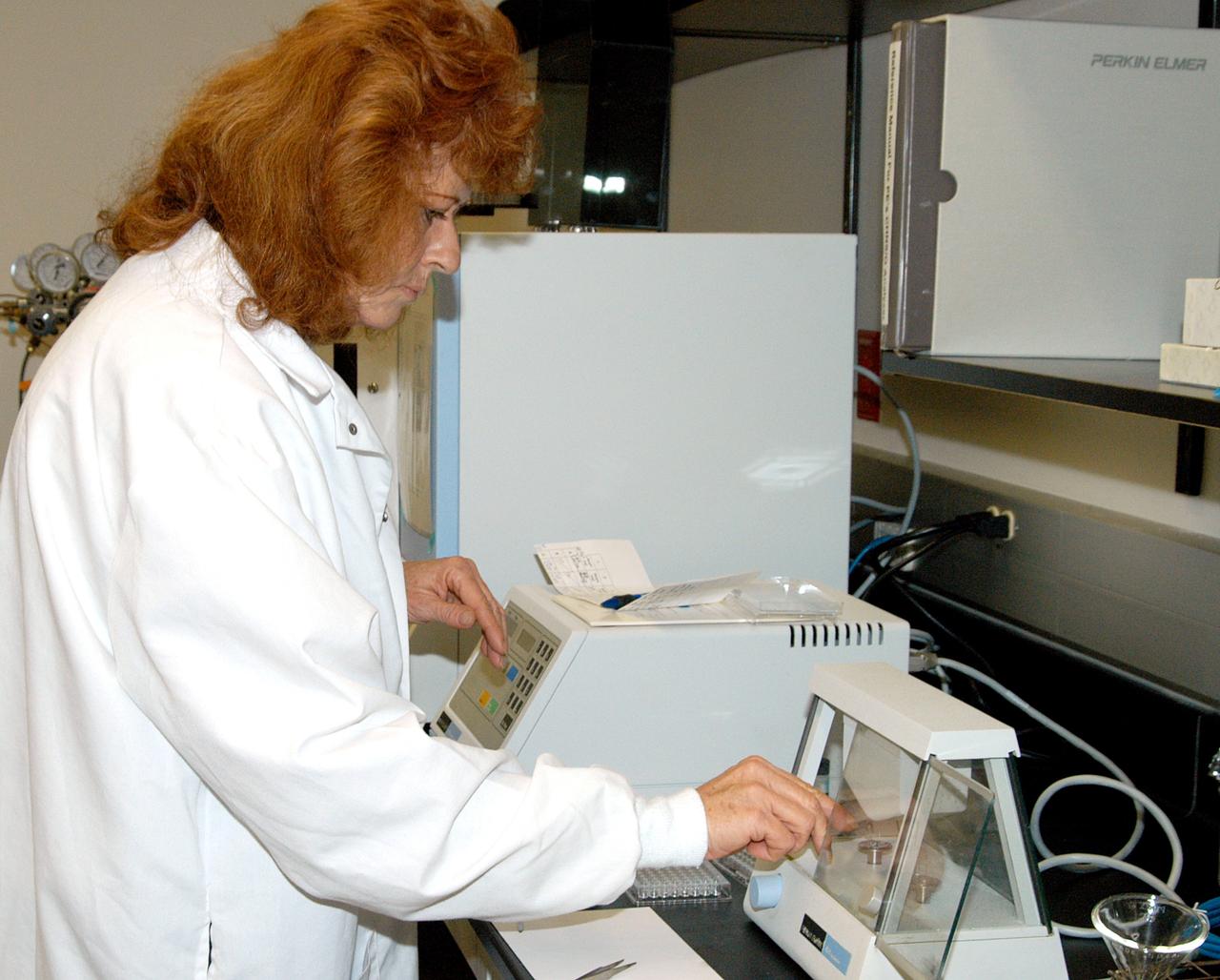
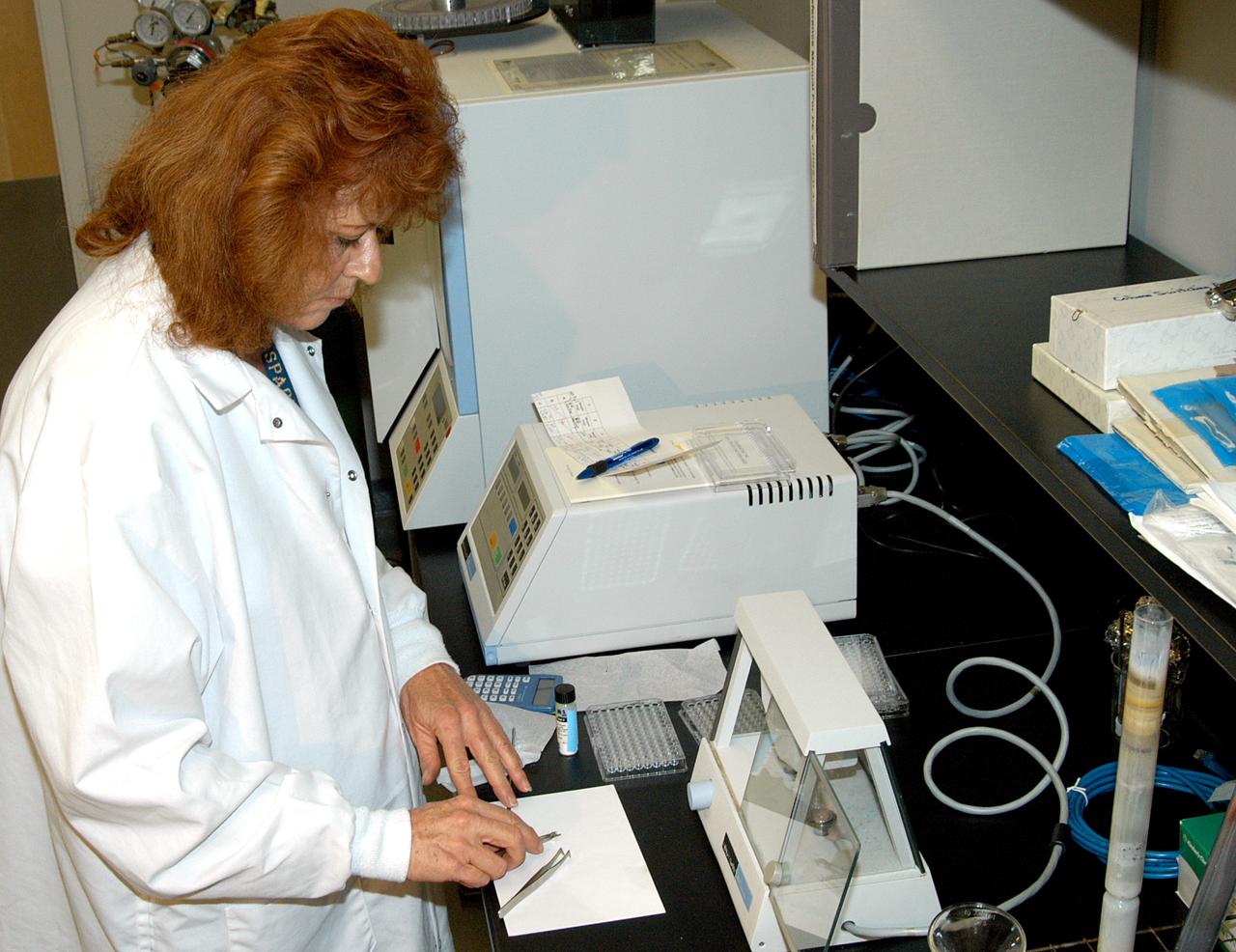
KENNEDY SPACE CENTER, FLA. -- In the Space Life Sciences (SLS) Lab, Jan Bauer, with Dynamac Corp., weighs samples of onion tissue for processing in the elemental analyzer behind it.  The equipment analyzes for carbon, hydrogen, nitrogen and sulfur. The 100,000 square-foot SLS houses labs for NASA’s ongoing research efforts, microbiology/microbial ecology studies and analytical chemistry labs. Also calling the new lab home are facilities for space flight-experiment and flight-hardware development, new plant growth chambers, and an Orbiter Environment Simulator that will be used to conduct ground control experiments in simulated flight conditions for space flight experiments.  The SLS Lab, formerly known as the Space Experiment Research and Processing Laboratory or SERPL, provides space for NASA’s Life Sciences Services contractor Dynamac Corporation, Bionetics Corporation, and researchers from the University of Florida. NASA’s Office of Biological and Physical Research will use the facility for processing life sciences experiments that will be conducted on the International Space Station. The SLS Lab is the magnet facility for the International Space Research Park at KSC being developed in partnership with Florida Space Authority.
KENNEDY SPACE CENTER, FLA. -- In the Space Life Sciences (SLS) Lab, Jan Bauer, with Dynamac Corp., weighs samples of onion tissue for processing in the elemental analyzer behind it. The equipment analyzes for carbon, hydrogen, nitrogen and sulfur. The 100,000 square-foot SLS houses labs for NASA’s ongoing research efforts, microbiology/microbial ecology studies and analytical chemistry labs. Also calling the new lab home are facilities for space flight-experiment and flight-hardware development, new plant growth chambers, and an Orbiter Environment Simulator that will be used to conduct ground control experiments in simulated flight conditions for space flight experiments. The SLS Lab, formerly known as the Space Experiment Research and Processing Laboratory or SERPL, provides space for NASA’s Life Sciences Services contractor Dynamac Corporation, Bionetics Corporation, and researchers from the University of Florida. NASA’s Office of Biological and Physical Research will use the facility for processing life sciences experiments that will be conducted on the International Space Station. The SLS Lab is the magnet facility for the International Space Research Park at KSC being developed in partnership with Florida Space Authority.
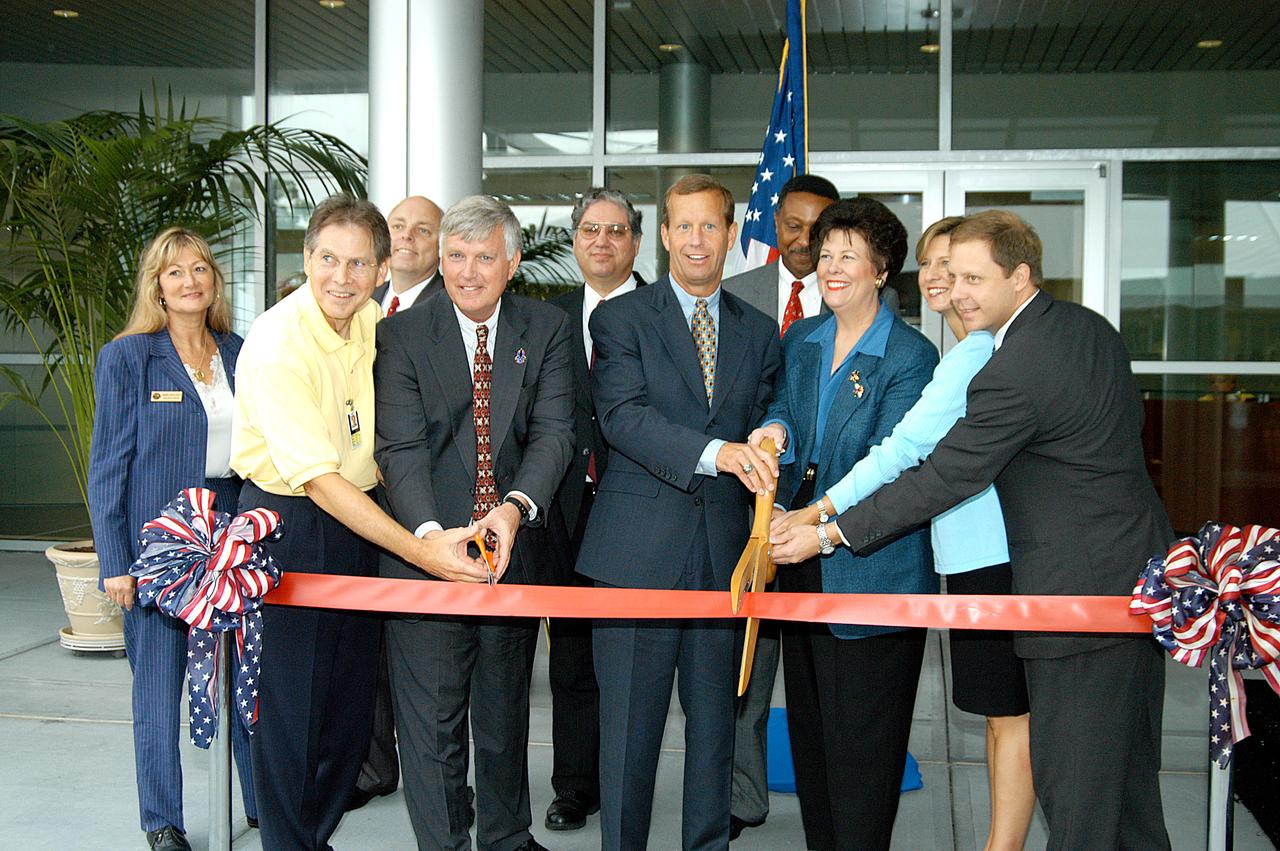
Representatives of the NASA-Kennedy Space Center and the state of Florida prepare to cut the ribbon officially opening the Space Life Sciences Lab at a ceremony at the new lab. In the front row, from left, are Dr. Samuel Durrance, executive director of the Florida Space Research Institute; Jim Kennedy, director of the Kennedy Space Center; Frank T. Brogan, president of the Florida Atlantic University; The Honorable Toni Jennings, lieutenant governor of the state of Florida; and Catherine and Grier Kirkpatrick, children of the late Sen. George Kirkpatrick. In the back row, from left, are Debra Holliday, director for Facilities and Construction, Florida Space Authority; Dan LeBlanc, president and chief operating officer of Delaware North Companies Parks and Resorts at KSC, Inc.; Jose Perez-Morales, NASA Project Manager for the Space Life Sciences Lab; and Capt. Winston E. Scott, executive director of the Florida Space Authority. Completed in August, the facility encompasses more than 100,000 square feet and was formerly known as the Space Experiment Research and Processing Laboratory or SERPL. The state, through the Florida Space Authority, built the research lab which is host to NASA, NASA’s Life Sciences Services contractor Dynamac Corp., Bionetics Corp., and researchers from the University of Florida. Dynamac Corp. leases the facility. The Florida Space Research Institute is responsible for gaining additional tenants from outside the NASA community.
SLSL Ribbon-cutting Ceremony
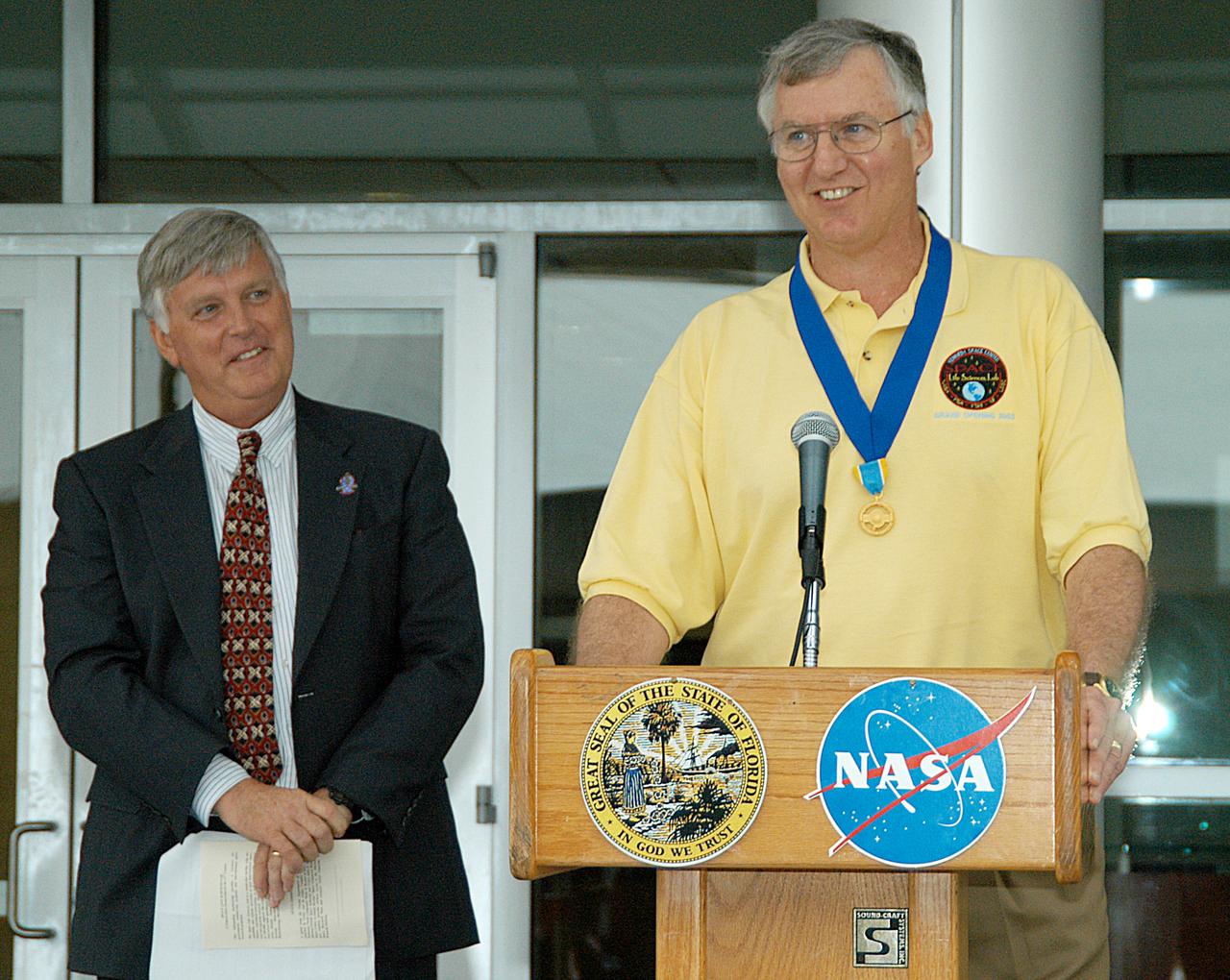
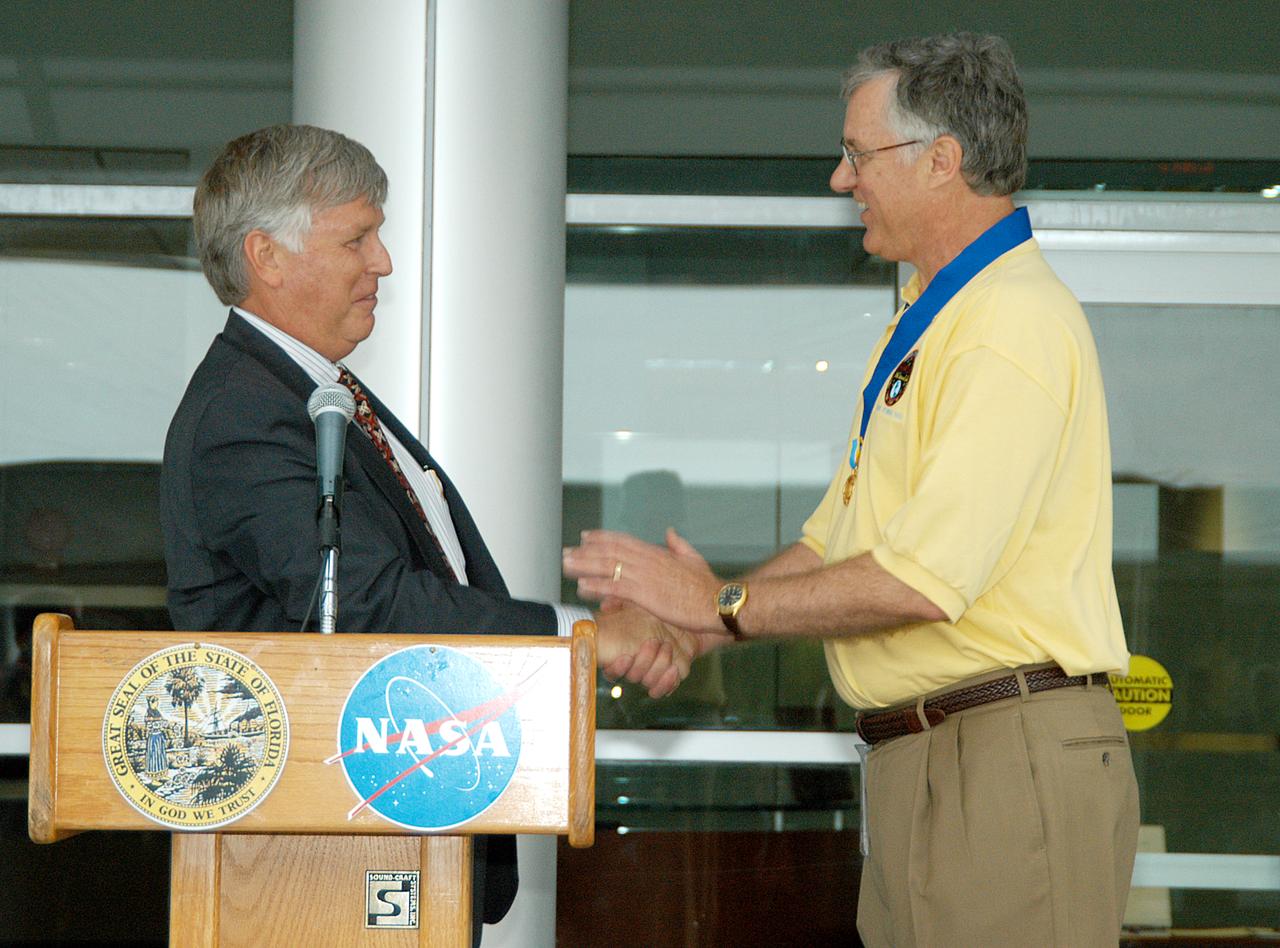
Center Director Jim Kennedy presents a NASA Public Service Award to Douglas Britt of the Dynamac Corp. at a dedication and ribbon-cutting ceremony for the Space Life Sciences Lab hosted by NASA-Kennedy Space Center and the state of Florida at the new lab. Britt received the award for his many years of exceptional service to NASA in managing the Life Sciences contracts at the Kennedy Space Center and his contributions to conceptualization and collaborations that helped make the Space Life Sciences Lab possible. Completed in August, the facility encompasses more than 100,000 square feet and was formerly known as the Space Experiment Research and Processing Laboratory or SERPL. The state, through the Florida Space Authority, built the research lab which is host to NASA, NASA’s Life Sciences Services contractor Dynamac Corp., Bionetics Corp., and researchers from the University of Florida. Dynamac Corp. leases the facility. The Florida Space Research Institute is responsible for gaining additional tenants from outside the NASA community.
SLSL Ribbon-cutting Ceremony
Center Director Jim Kennedy presents a NASA Public Service Award to Douglas Britt of the Dynamac Corp. at a dedication and ribbon-cutting ceremony for the Space Life Sciences Lab hosted by NASA-Kennedy Space Center and the state of Florida at the new lab. Britt received the award for his many years of exceptional service to NASA in managing the Life Sciences contracts at the Kennedy Space Center and his contributions to conceptualization and collaborations that helped make the Space Life Sciences Lab possible. Completed in August, the facility encompasses more than 100,000 square feet and was formerly known as the Space Experiment Research and Processing Laboratory or SERPL. The state, through the Florida Space Authority, built the research lab which is host to NASA, NASA’s Life Sciences Services contractor Dynamac Corp., Bionetics Corp., and researchers from the University of Florida. Dynamac Corp. leases the facility. The Florida Space Research Institute is responsible for gaining additional tenants from outside the NASA community.
SLSL Ribbon-cutting Ceremony