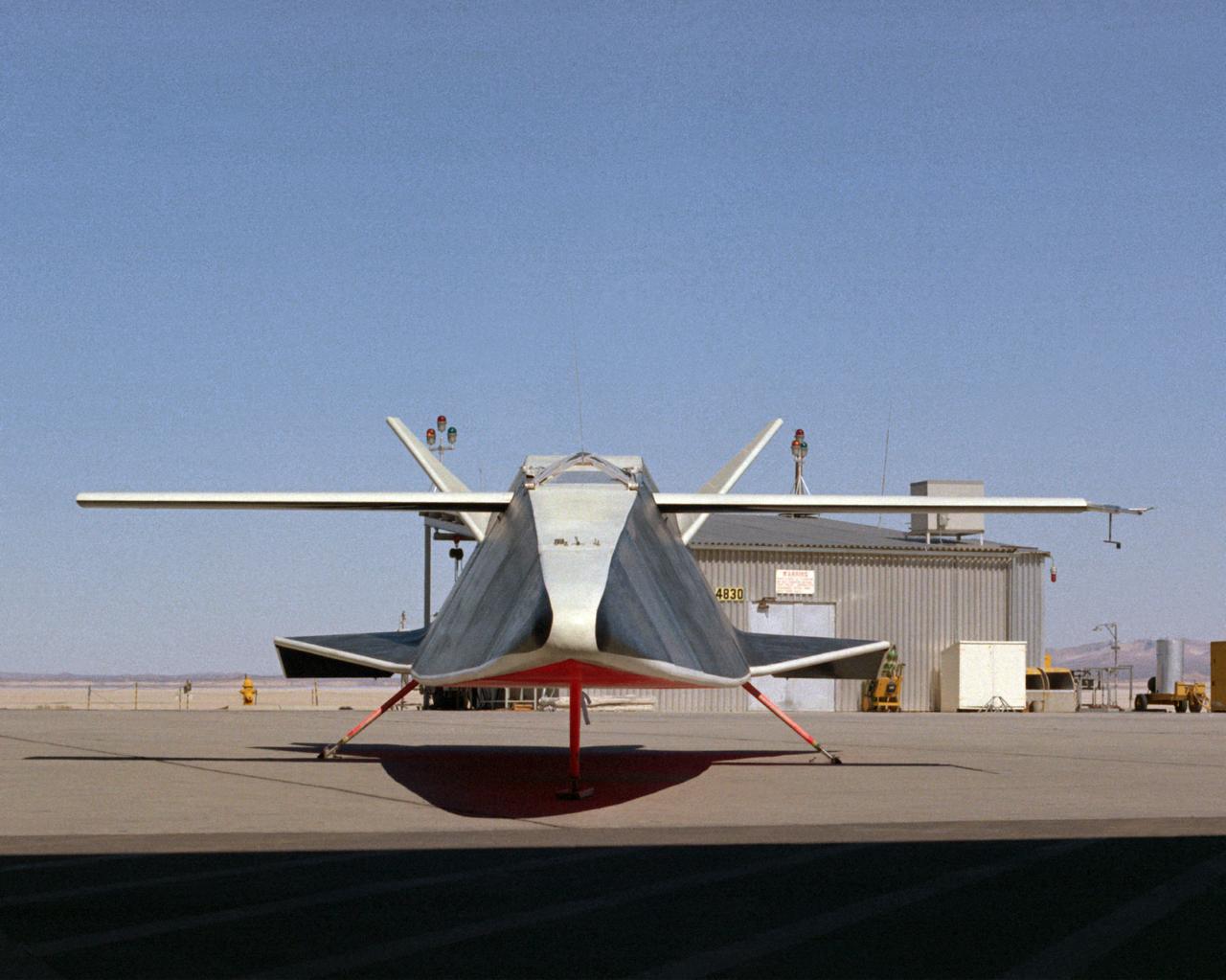
The Hyper III was a low-cost test vehicle for an advanced lifting-body shape. Like the earlier M2-F1, it was a "homebuilt" research aircraft, i.e., built at the Flight Research Center (FRC), later redesignated the Dryden Flight Research Center. It had a steel-tube frame covered with Dacron, a fiberglass nose, sheet aluminum fins, and a wing from an HP-11 sailplane. Construction was by volunteers at the FRC. Although the Hyper III was to be flown remotely in its initial tests, it was fitted with a cockpit for a pilot. On the Hyper III's only flight, it was towed aloft attached to a Navy SH-3 helicopter by a 400-foot cable. NASA research pilot Bruce Peterson flew the SH-3. After he released the Hyper III from the cable, NASA research pilot Milt Thompson flew the vehicle by radio control until the final approach when Dick Fischer took over control using a model-airplane radio-control box. The Hyper III flared, then landed and slid to a stop on Rogers Dry Lakebed.
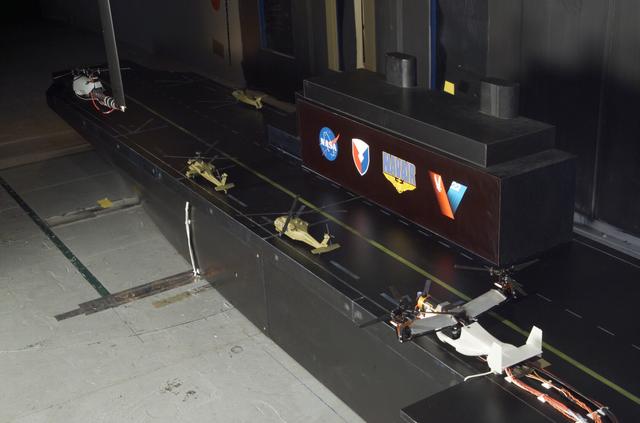
VSHAIP test in 7x10ft#1 W.T. (multiple model configruations) V-22 helicopter shipboard aerodynamic interaction program: SH-3, AH-1G (Cobra) UH-1H (Blackhawk) and Osprey V-22 on deck
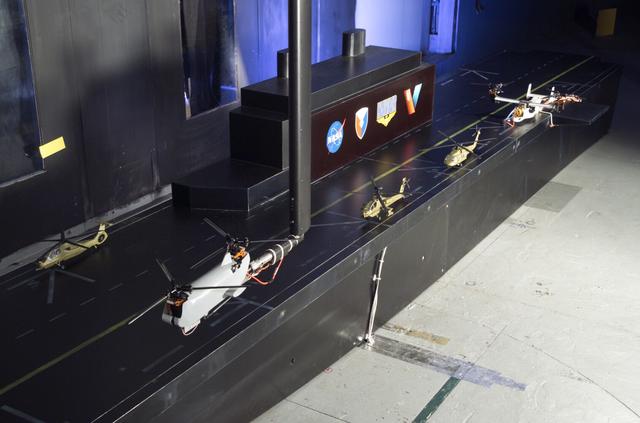
VSHAIP test in 7x10ft#1 W.T. (multiple model configruations) V-22 helicopter shipboard aerodynamic interaction program: SH-3, AH-1G (Cobra) UH-1H (Blackhawk) and Osprey V-22 on deck
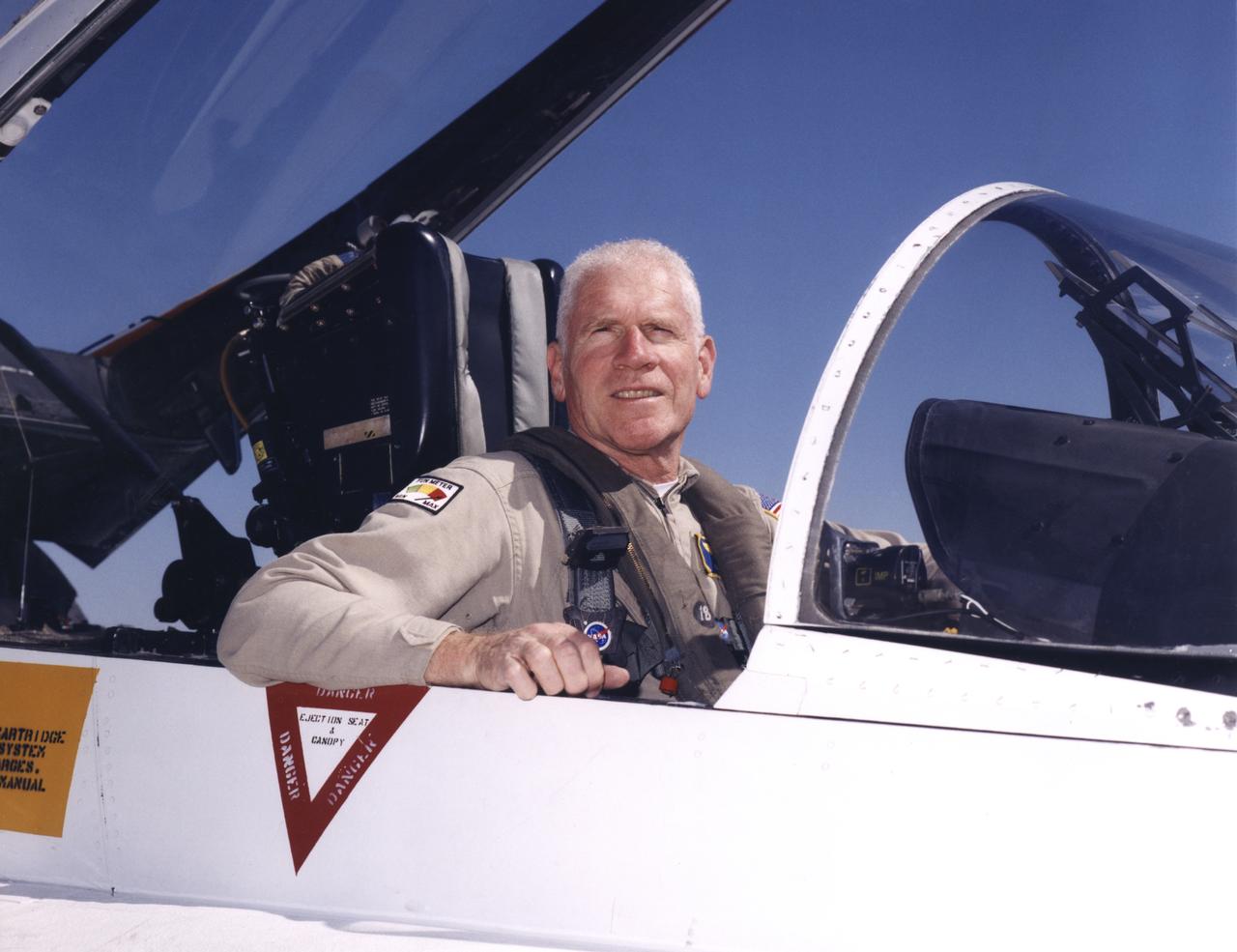
Edwin W. Lewis Jr. is a research pilot in the Airborne Science program, Flight Crew Branch, Dryden Flight Research Center, Edwards, California. He currently flies the DC-8, F/A-18, Lear Jet 24, King Air, and T-34C in support of Dryden's flight operations and is mentor pilot for the King Air and the Lear Jet. Prior to accepting this assignment Lewis was a pilot for eight years at NASA's Ames Research Center, Moffett Field, California, flying 10 different aircraft C-130B, DC-8-72, UH-1, SH-3, King Air, Lear 24, T-38A, T-39G and YO-3A in support of NASA flight missions. Lewis also flew the Kuiper Airborne Observatory (a modified civilian version of the Lockheed C-141 Starlifter). He was project pilot for Ames' 747 and T-38 programs. Lewis was born in New York City on May 19, 1936, and began flight training as a Civil Air Patrol cadet in 1951, ultimately earning his commercial pilot's certificate in 1958. He received a bachelor of arts degree in biology from Hobart College, Geneva, N.Y., and entered the U.S. Air Force through the Reserve Officer Training Corps. Following pilot training he was assigned to Moody Air Force Base, Ga., as an instructor pilot, for both the T-33 and T-37 aircraft. He served in Vietnam in 1965 and 1966, where he was a forward air controller, instructor and standardization/evaluation pilot, flying more than 1,000 hours in the O-1 "Bird Dog." Lewis separated from the regular Air Force and joined Pan American World Airways and the 129th Air Commando Group, California Air National Guard (ANG) based in Hayward, California. During his 18-year career with the California ANG he flew the U-6, U-10, C-119, HC-130 aircraft and the HH-3 helicopter. He retired as commander, 129th Air Rescue and Recovery Group, a composite combat rescue group, in the grade of colonel. During his 22 years as an airline pilot, he flew the Boeing 707, 727 and 747. He took early retirement from Pan American in 1989 to become a pilot with NASA.