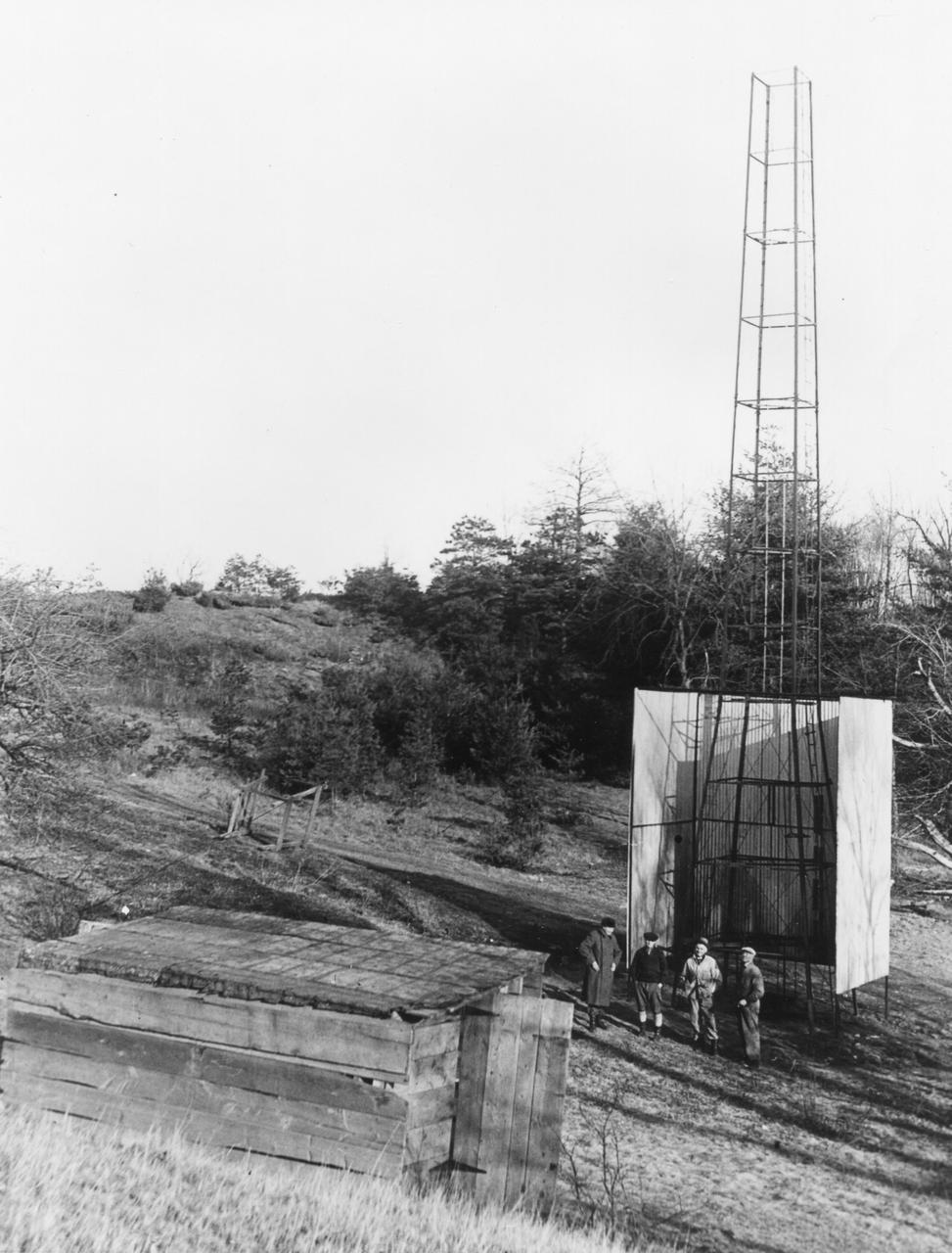
Dr. Robert H. Goddard's tower and shelter at the Army artillery range at Camp Devens, in Ayer, Massachusetts in the winter of 1929-1930. Goddard originally began testing rockets on his aunt's farm in Auburn, Massachusetts until the local police, fire department and townspeople became concerned about the noise and menace to the public the rockets created. Although Goddard maintained that the rockets were not a danger, he soon moved to Camp Devens, Massachusetts. There he was able to launch the rockets without attracting attention. <b><a href="http://www.nasa.gov/centers/goddard/home/index.html" rel="nofollow">NASA Goddard Space Flight Center</a></b> enables NASA’s mission through four scientific endeavors: Earth Science, Heliophysics, Solar System Exploration, and Astrophysics. Goddard plays a leading role in NASA’s accomplishments by contributing compelling scientific knowledge to advance the Agency’s mission. <b>Follow us on <a href="http://twitter.com/NASA_GoddardPix" rel="nofollow">Twitter</a></b> <b>Join us on <a href="http://www.facebook.com/pages/Greenbelt-MD/NASA-Goddard/395013845897?ref=tsd" rel="nofollow">Facebook</a></b>
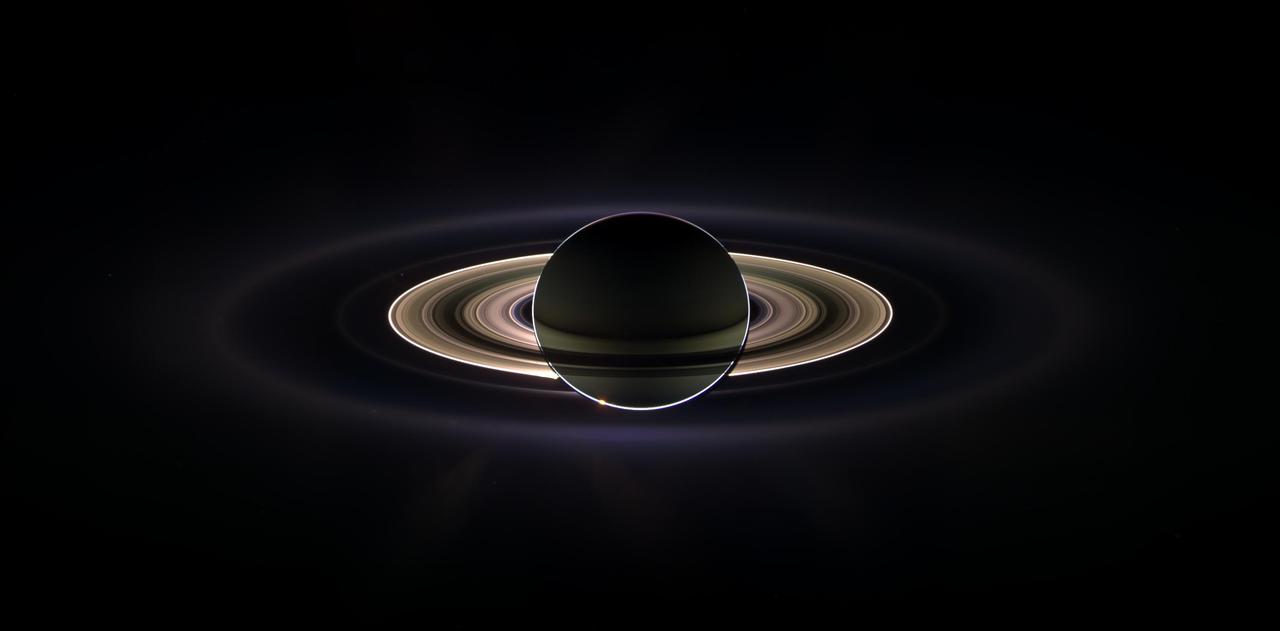
With giant Saturn hanging in the blackness and sheltering Cassini from the sun blinding glare, the spacecraft viewed the rings as never before, revealing previously unknown faint rings and even glimpsing its home world.
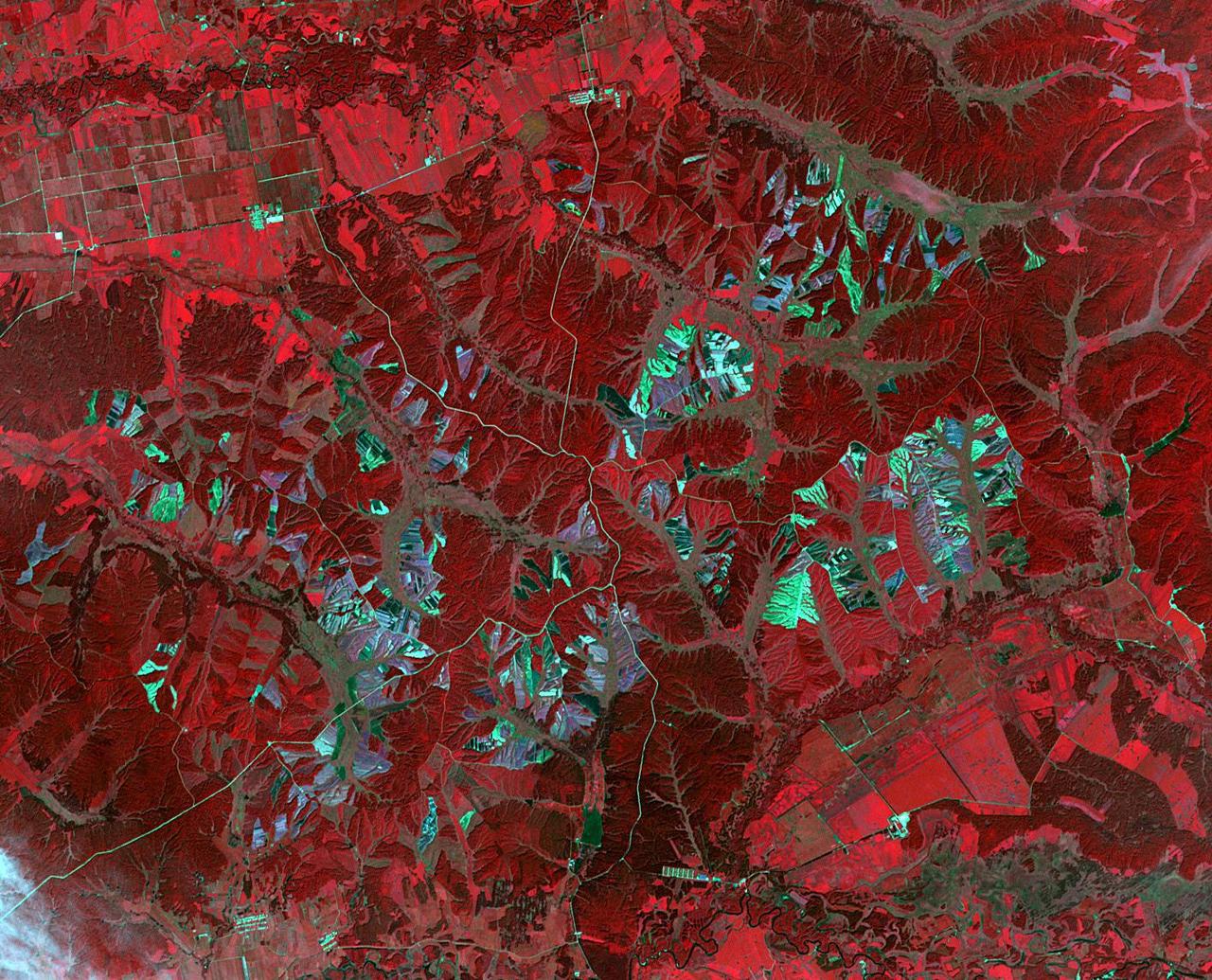
In Heilongjiang province, northeast China, shade covers shelter farmed ginseng from the effects of direct sunlight. China is the world's leading producer of ginseng, a plant believed to have curative properties. It is just as popular in the US as in Asian countries. The image was acquired August 29, 2016, covers an area of 16.7 by 21.2 km, and is located at 47.2 degrees north, 127.9 degrees east. https://photojournal.jpl.nasa.gov/catalog/PIA25895
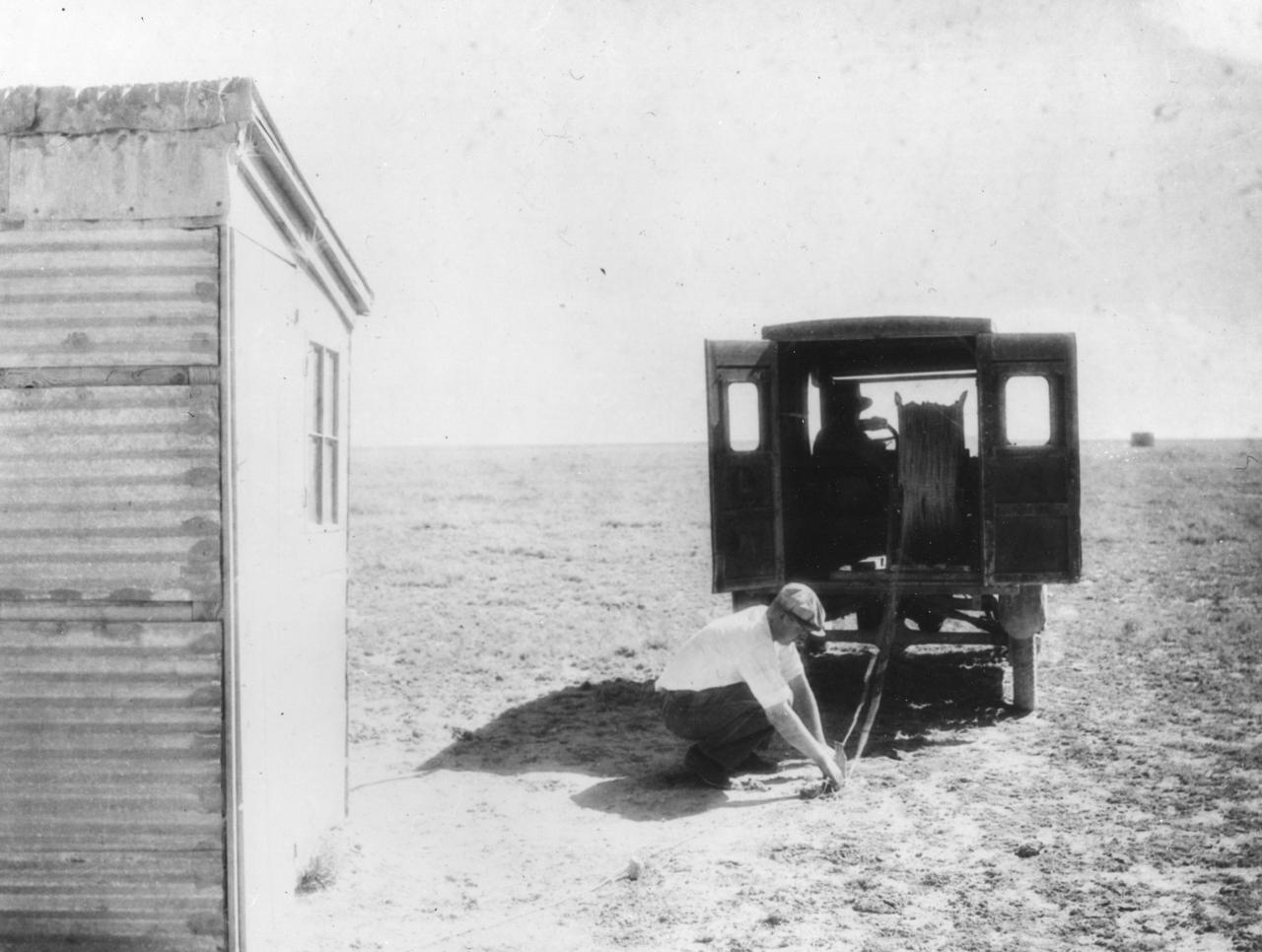
1930—Preparations are made to unreal remote control wires. The shelter in distance is 1,000 feet from Dr. Robert Goddard’s rocket launching tower, 10 miles northwest of Roswell, New Mexico. The shelter at left is 55 feet from the tower, and was used for static test only. It was later removed. <b><a href="http://www.nasa.gov/centers/goddard/home/index.html" rel="nofollow">NASA Goddard Space Flight Center</a></b> enables NASA’s mission through four scientific endeavors: Earth Science, Heliophysics, Solar System Exploration, and Astrophysics. Goddard plays a leading role in NASA’s accomplishments by contributing compelling scientific knowledge to advance the Agency’s mission. <b>Follow us on <a href="http://twitter.com/NASA_GoddardPix" rel="nofollow">Twitter</a></b> <b>Join us on <a href="http://www.facebook.com/pages/Greenbelt-MD/NASA-Goddard/395013845897?ref=tsd" rel="nofollow">Facebook</a></b>
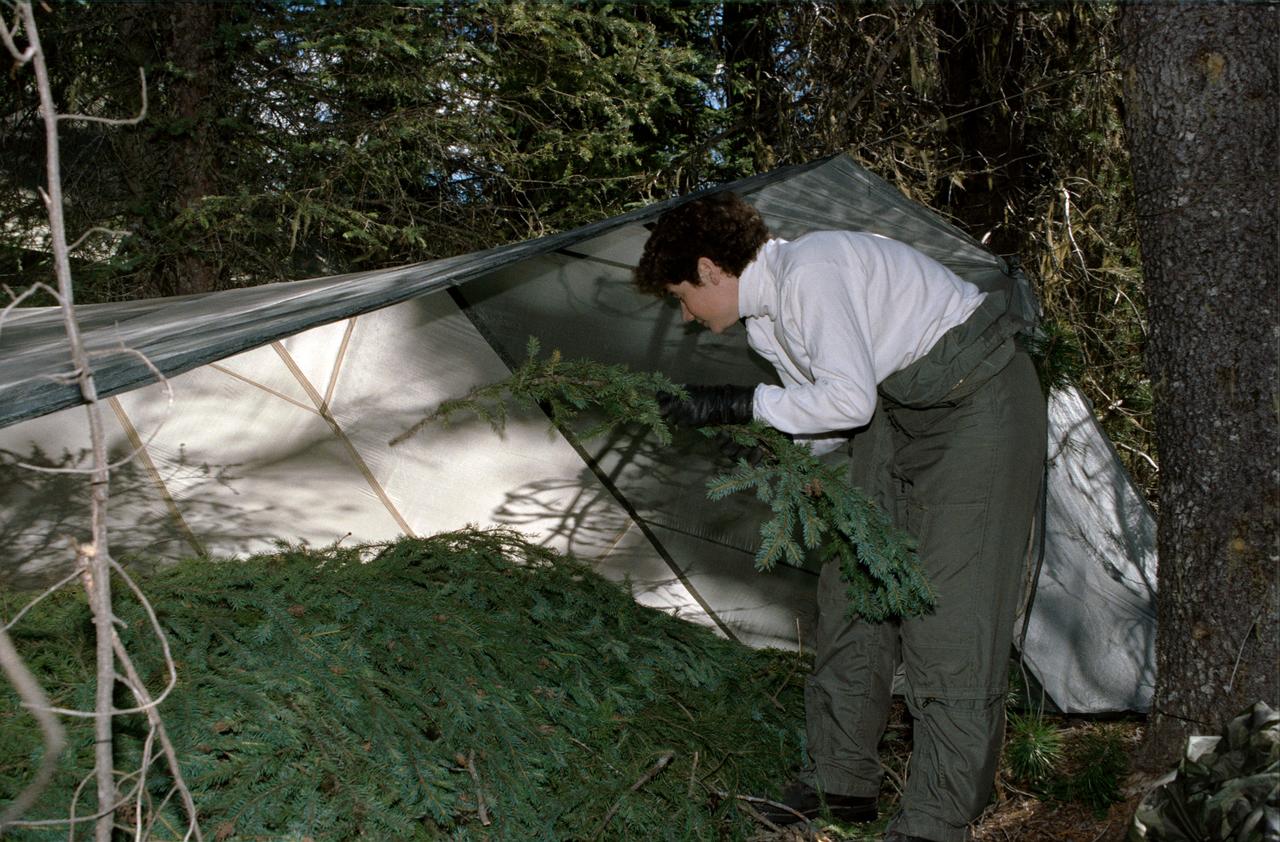
1990 Group 13 Astronaut Candidate (ASCAN) Susan J. Helms gathers pine branches to create bedding under a tent she has constructed from a parachute. Helms, along with her classmates, is participating in wilderness survival training at Fairchild Air Force Base (AFB) Spokane, Washington. The training was conducted in the mountain forests of Washington from 08-26-90 through 08-30-90.

The main gate (Gate 7) of the Michoud Assembly Facility has been demolished and replaced following the tornado that struck the area in February 2017. The project included moving the gate to a position of 300 feet off the property line (away from Old Gentilly Blvd). The configuration included expanding the entrance to the gate from 2 lanes to 3 while maintaining 2 exit lanes. This layout provides for a guard post shelter rain canopy over two of the entrance lanes. Assessments and repairs continue on various structures and facilities across the facility.

The main gate (Gate 7) of the Michoud Assembly Facility has been demolished and replaced following the tornado that struck the area in February 2017. The project included moving the gate to a position of 300 feet off the property line (away from Old Gentilly Blvd). The configuration included expanding the entrance to the gate from 2 lanes to 3 while maintaining 2 exit lanes. This layout provides for a guard post shelter rain canopy over two of the entrance lanes. Assessments and repairs continue on various structures and facilities across the facility.
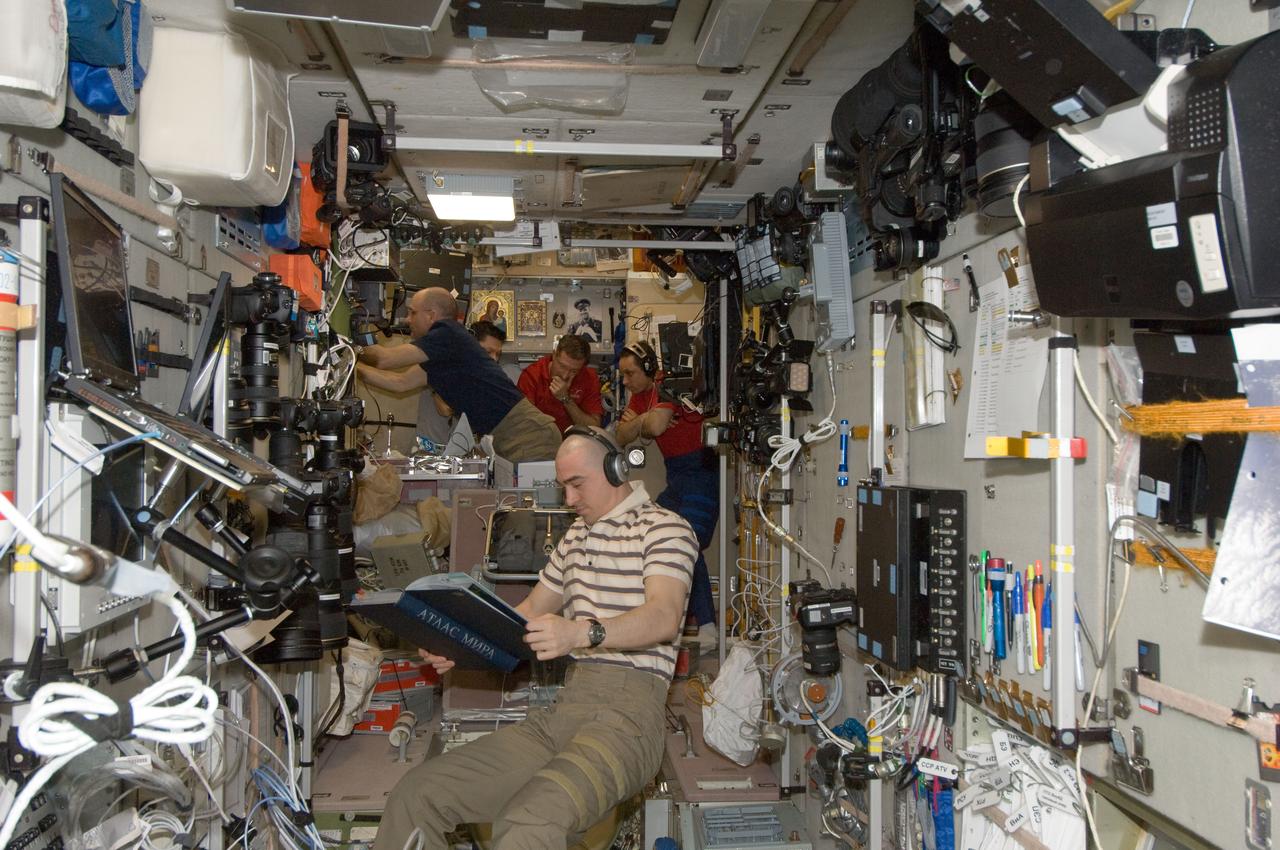
ISS030-E-173969 (24 March 2012) --- Expedition 30 crew members are pictured in the Zvezda Service Module of the International Space Station as they prepare to move to the appropriate Soyuz vehicles, due to the possibility that space debris could pass close to the station. Burbank, Shkaplerov and Ivanishin sheltered in the Soyuz TMA-22 spacecraft attached to the Poisk Mini-Research Module 2 (MRM2) while Kononenko, Kuipers and Pettit took to the Soyuz TMA-03M docked to the Rassvet Mini-Research Module 1 (MRM-1).
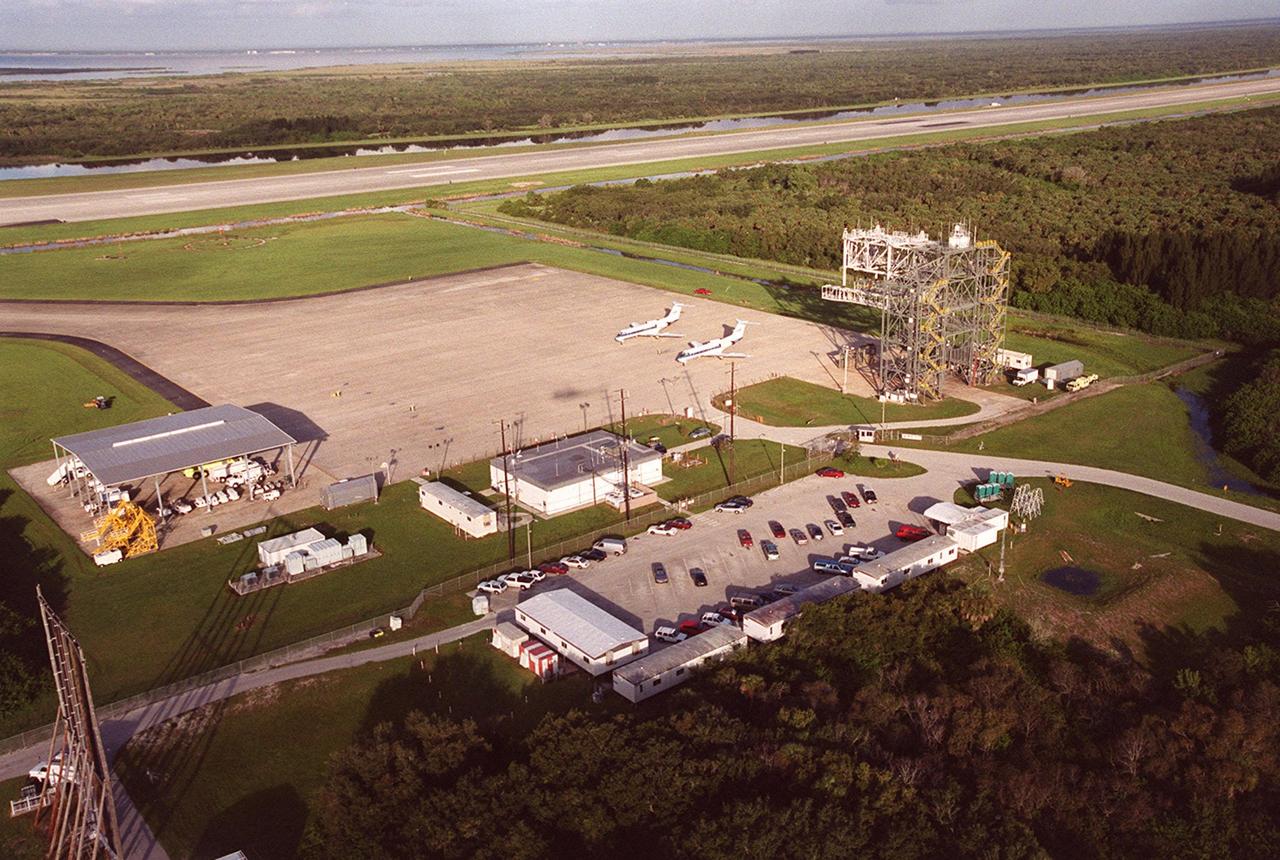
KENNEDY SPACE CENTER, FLA. -- An aerial view of the Shuttle Landing Facility shows the fuel truck shelter (left), administrative building (center) with parking lot behind it (foreground), two Shuttle Training Aircraft (STA) parked on the apron and the mate/demate device (right). In the background is the runway. The STAs are Grumman Gulfstream 2 aircraft with converted cockpits that emulate those in the Shuttles for practice landings at the SLF. The mate/demate device is used to lift the orbiter onto or off a Shuttle Carrier Aircraft when it has to be ferried to or from KSC
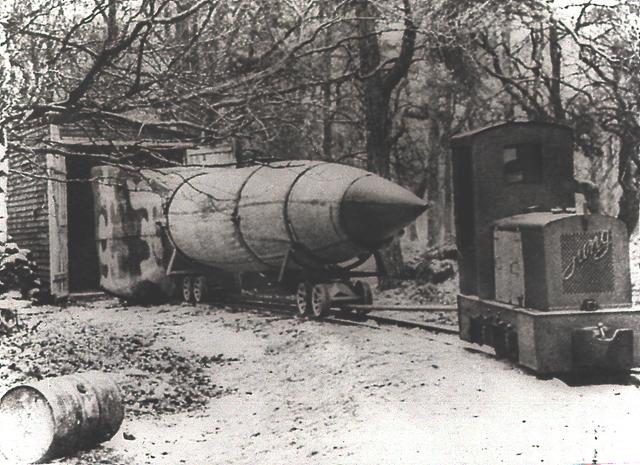
In this undated file photo, probably from World War II, a V-2 rocket emerges from its camouflaged shelter. The team of German engineers and scientists who developed the V-2 came to the United States after World War II and worked for the U. S. Army at Fort Bliss, Texas and Redstone Arsenal in Huntsville, Alabama.
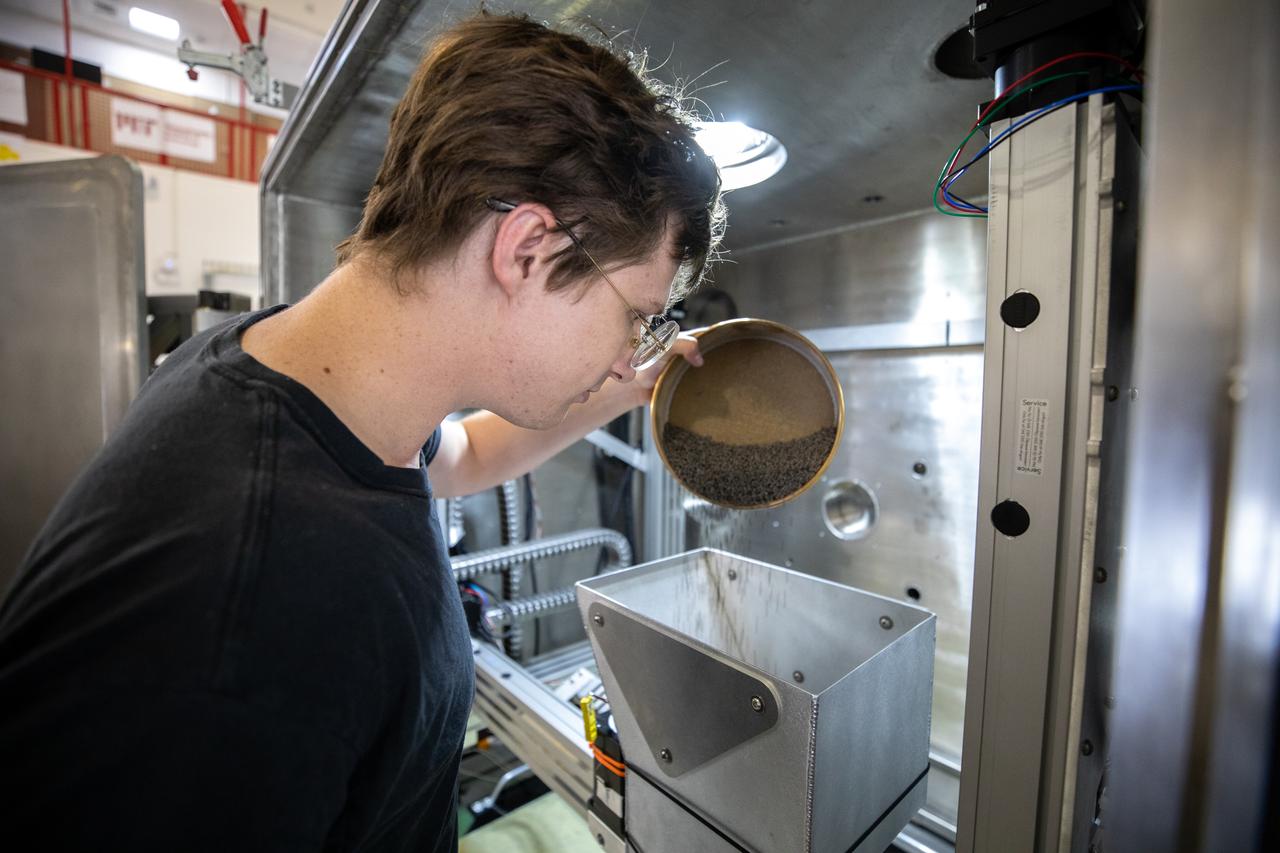
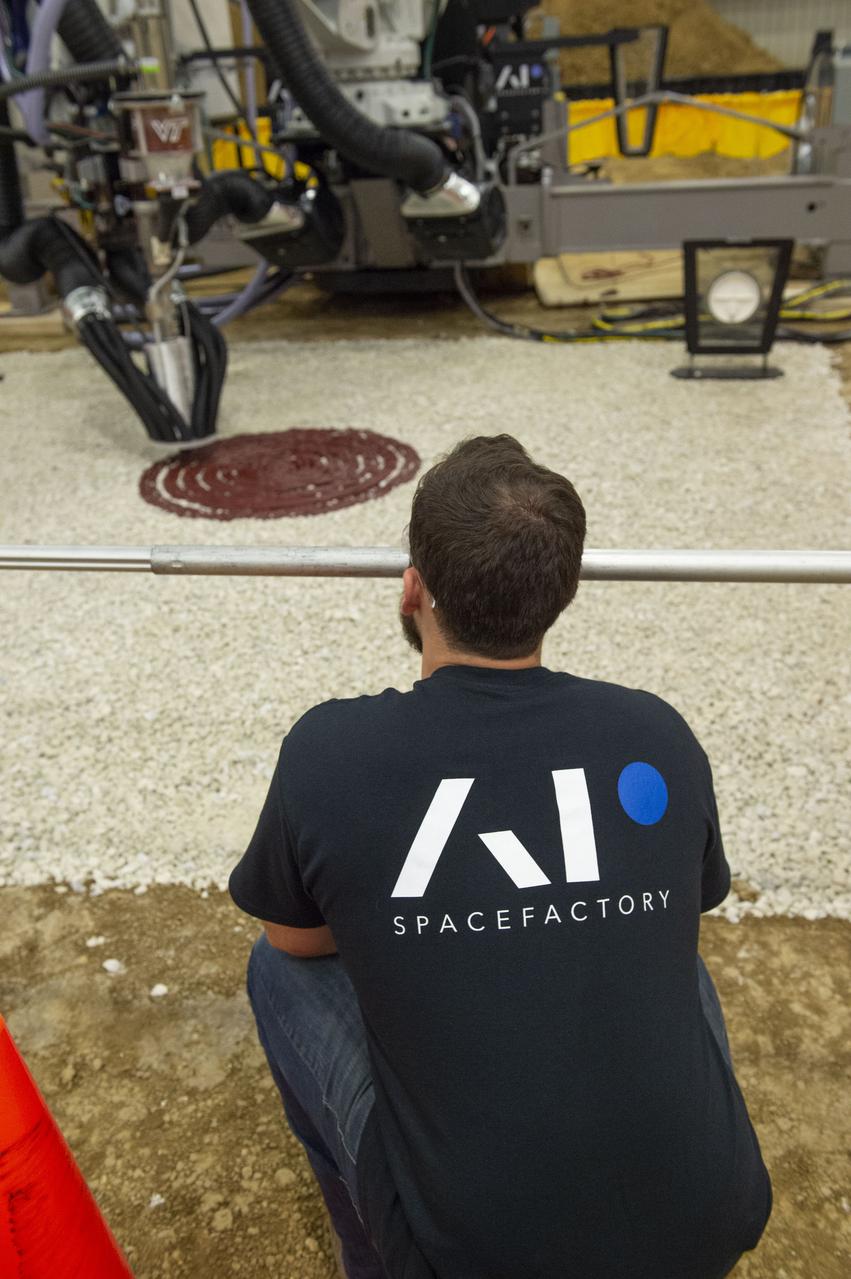
Materials engineer Thomas Lipscomb tests a 3D printer on July 28, 2022, at Swamp Works at NASA’s Kennedy Space Center in Florida, as part of the Relevant Environment Additive Construction Technology (REACT) project. Among the key objectives of the project is developing an architectural and structural design for a shelter that provides protection to habitable assets on the lunar surface. Testing REACT derives from NASA’s 2020 Announcement of Collaboration Opportunity with AI SpaceFactory – an architectural and construction technology company and winner of NASA’s 3D Printed Habitat Challenge.
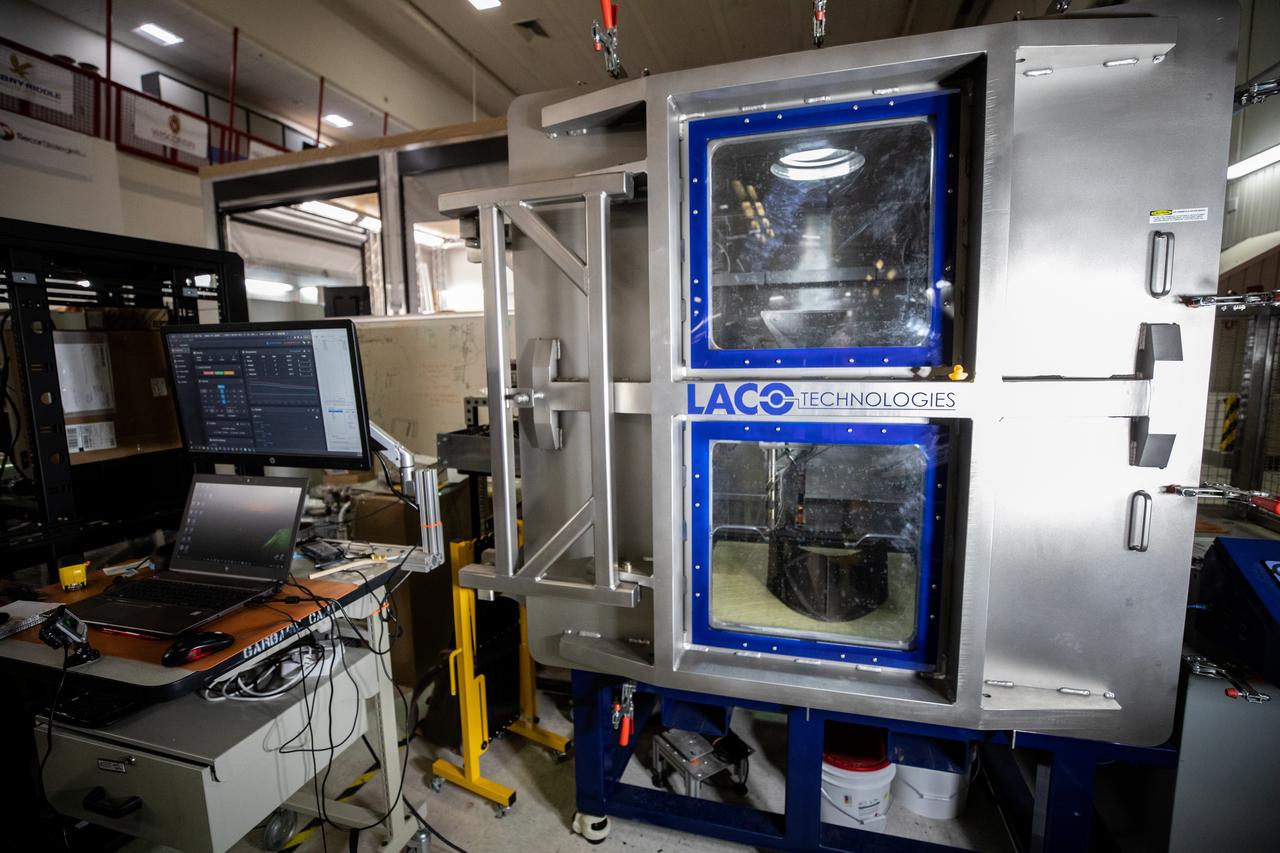
A team at NASA’s Kennedy Space Center in Florida tests a 3D printer on July 28, 2022, at the Florida spaceport’s Swamp Works, as part of the Relevant Environment Additive Construction Technology (REACT) project. Among the key objectives of the project is developing an architectural and structural design for a shelter that provides protection to habitable assets on the lunar surface. Testing REACT derives from NASA’s 2020 Announcement of Collaboration Opportunity with AI SpaceFactory – an architectural and construction technology company and winner of NASA’s 3D Printed Habitat Challenge.

Chemist Tesia Irwin tests a 3D printer on July 28, 2022, at Swamp Works at NASA’s Kennedy Space Center in Florida, as part of the Relevant Environment Additive Construction Technology (REACT) project. Among the key objectives of the project is developing an architectural and structural design for a shelter that provides protection to habitable assets on the lunar surface. Testing REACT derives from NASA’s 2020 Announcement of Collaboration Opportunity with AI SpaceFactory – an architectural and construction technology company and winner of NASA’s 3D Printed Habitat Challenge.
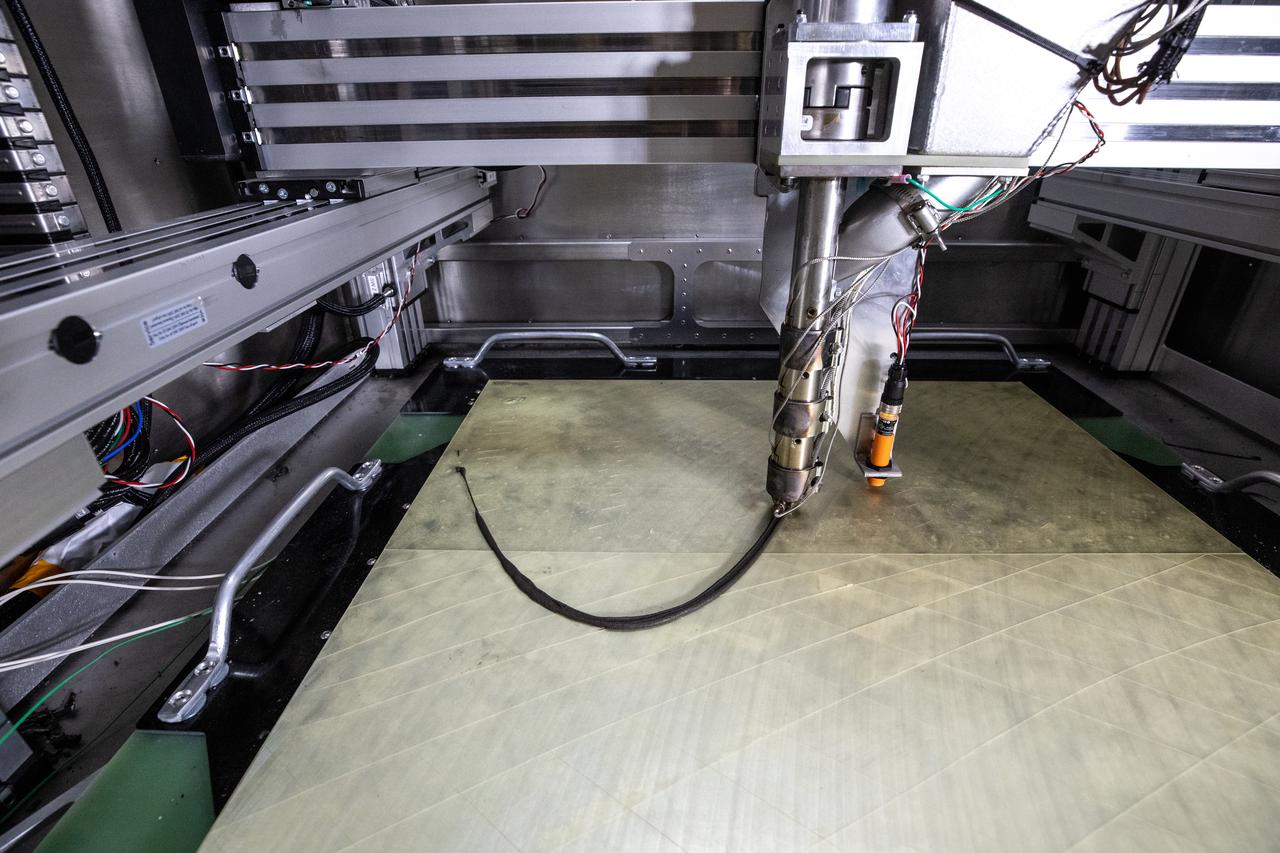
Shown is a Zero Launch Mass 3D printer on July 28, 2022, at NASA’s Kennedy Space Center’s Swamp Works. A team at the Florida spaceport tested the printer as part of the Relevant Environment Additive Construction Technology (REACT) project. Among the key objectives of the project is developing an architectural and structural design for a shelter that provides protection to habitable assets on the lunar surface. Testing REACT derives from NASA’s 2020 Announcement of Collaboration Opportunity with AI SpaceFactory – an architectural and construction technology company and winner of NASA’s 3D Printed Habitat Challenge.
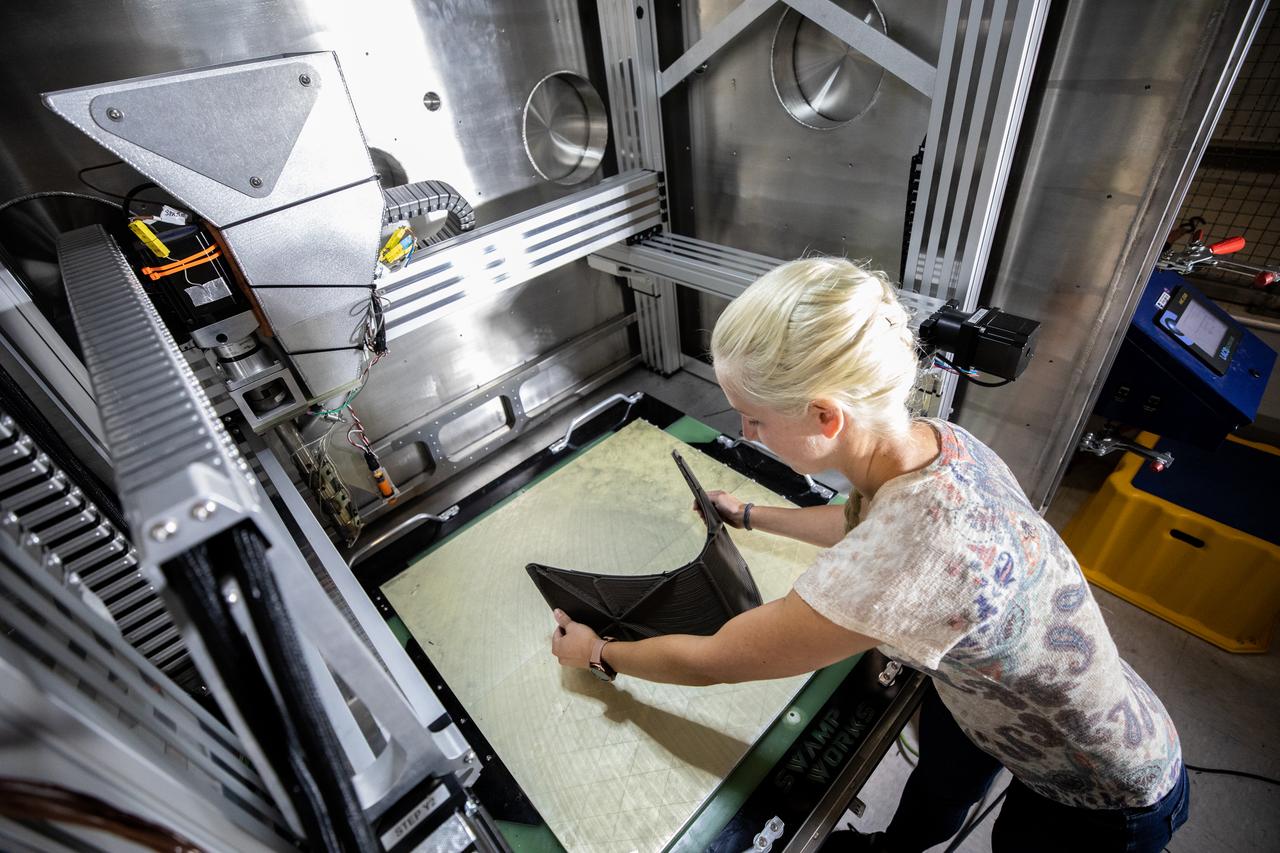
Chemist Tesia Irwin tests a 3D printer on July 28, 2022, at Swamp Works at NASA’s Kennedy Space Center in Florida, as part of the Relevant Environment Additive Construction Technology (REACT) project. Among the key objectives of the project is developing an architectural and structural design for a shelter that provides protection to habitable assets on the lunar surface. Testing REACT derives from NASA’s 2020 Announcement of Collaboration Opportunity with AI SpaceFactory – an architectural and construction technology company and winner of NASA’s 3D Printed Habitat Challenge.
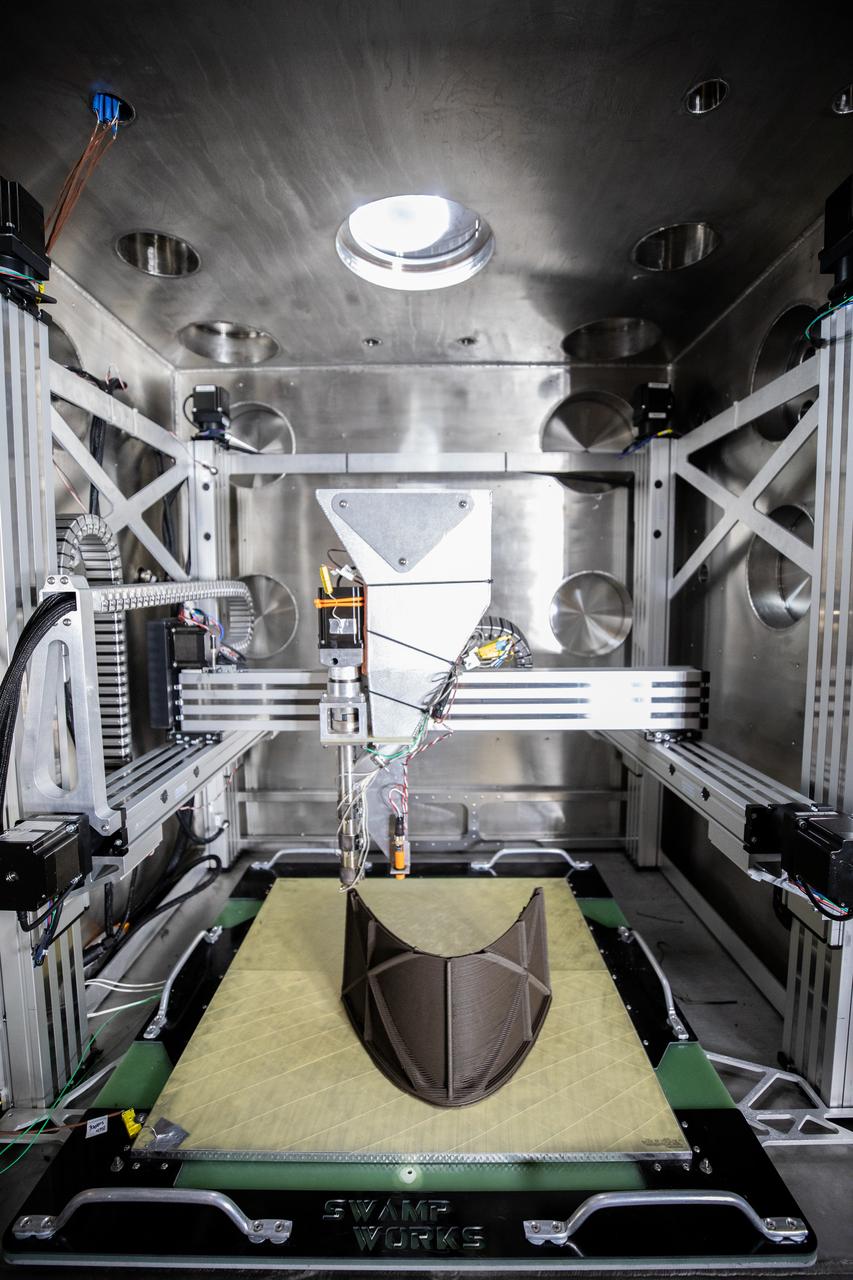
A team at NASA’s Kennedy Space Center in Florida tests a 3D printer on July 28, 2022, at the Florida spaceport’s Swamp Works, as part of the Relevant Environment Additive Construction Technology (REACT) project. Among the key objectives of the project is developing an architectural and structural design for a shelter that provides protection to habitable assets on the lunar surface. Testing REACT derives from NASA’s 2020 Announcement of Collaboration Opportunity with AI SpaceFactory – an architectural and construction technology company and winner of NASA’s 3D Printed Habitat Challenge.
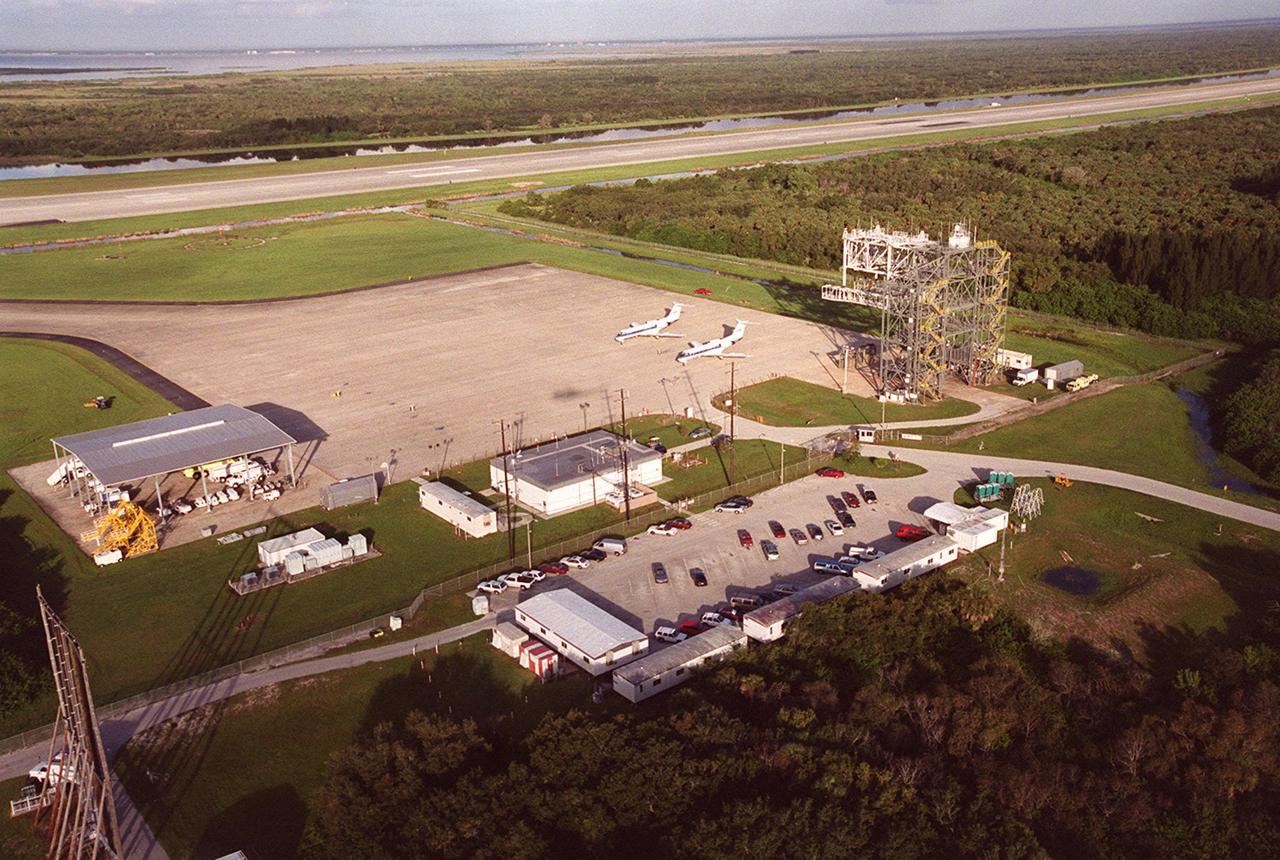
KENNEDY SPACE CENTER, FLA. -- An aerial view of the Shuttle Landing Facility shows the fuel truck shelter (left), administrative building (center) with parking lot behind it (foreground), two Shuttle Training Aircraft (STA) parked on the apron and the mate/demate device (right). In the background is the runway. The STAs are Grumman Gulfstream 2 aircraft with converted cockpits that emulate those in the Shuttles for practice landings at the SLF. The mate/demate device is used to lift the orbiter onto or off a Shuttle Carrier Aircraft when it has to be ferried to or from KSC

Team AI. SpaceFactory's printer autonomously inserts a window into their 3D-printed subscale habitat structure at NASA's 3D-Printed Habitat Challenge, held at the Caterpillar Edwards Demonstration & Learning Center in Edwards, Illinois, May 1-4, 2019. The habitat print is the final level of the multi-phase competition, which began in in 2015. The 3D-Printed Habitat Challenge is a competition to create sustainable shelters suitable for the Moon, Mars or beyond using resources available on-site in these locations. The challenge is managed by NASA's Centennial Challenges program, and partner Bradley University of Peoria, Illinois.
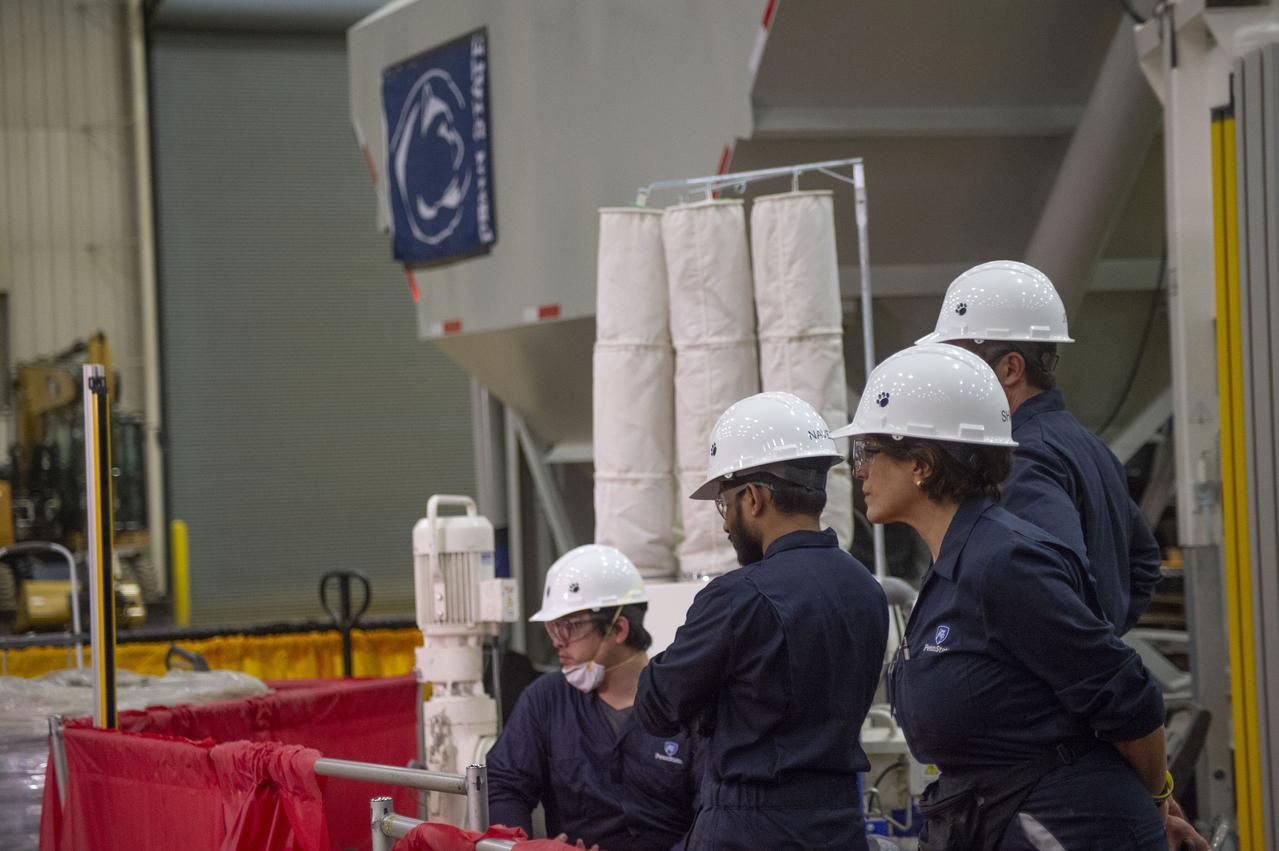
Team Penn State prepares their 3D-printer to begin printing a subscale habitat structure at NASA's 3D-Printed Habitat Challenge, held at the Caterpillar Edwards Demonstration & Learning Center in Edwards, Illinois, May 1-4, 2019. The habitat print is the final level of the multi-phase competition, which began in in 2015. The 3D-Printed Habitat Challenge is a competition to create sustainable shelters suitable for the Moon, Mars or beyond using resources available on-site in these locations. The challenge is managed by NASA's Centennial Challenges program, and partner Bradley University of Peoria, Illinois.
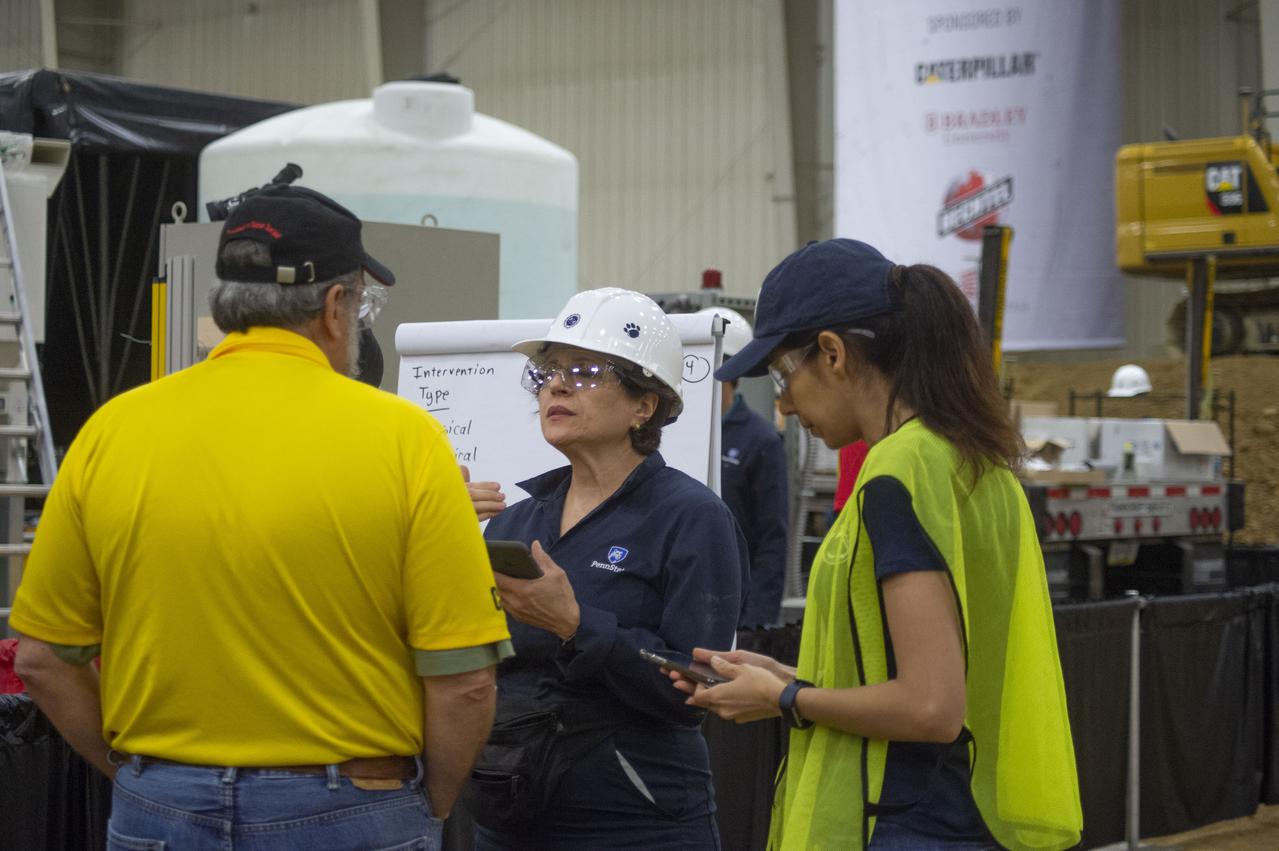
Team Penn State prepares their 3D-printer to begin printing a subscale habitat structure at NASA's 3D-Printed Habitat Challenge, held at the Caterpillar Edwards Demonstration & Learning Center in Edwards, Illinois, May 1-4, 2019. The habitat print is the final level of the multi-phase competition, which began in in 2015. The 3D-Printed Habitat Challenge is a competition to create sustainable shelters suitable for the Moon, Mars or beyond using resources available on-site in these locations. The challenge is managed by NASA's Centennial Challenges program, and partner Bradley University of Peoria, Illinois.
Team Penn State prepares their 3D-printer to begin printing a subscale habitat structure at NASA's 3D-Printed Habitat Challenge, held at the Caterpillar Edwards Demonstration & Learning Center in Edwards, Illinois, May 1-4, 2019. The habitat print is the final level of the multi-phase competition, which began in in 2015. The 3D-Printed Habitat Challenge is a competition to create sustainable shelters suitable for the Moon, Mars or beyond using resources available on-site in these locations. The challenge is managed by NASA's Centennial Challenges program, and partner Bradley University of Peoria, Illinois.
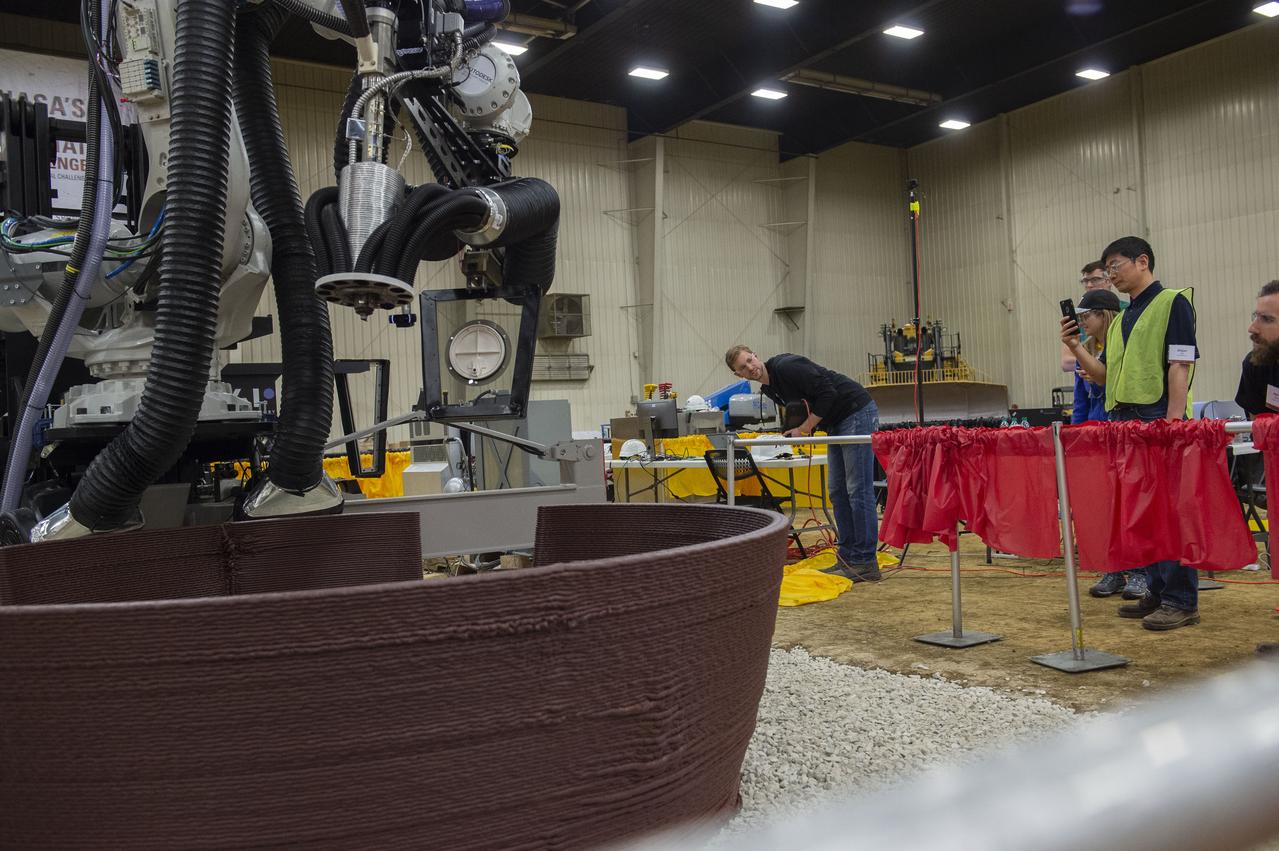
Team AI. SpaceFactory's printer autonomously inserts a window into their 3D-printed subscale habitat structure at NASA's 3D-Printed Habitat Challenge, held at the Caterpillar Edwards Demonstration & Learning Center in Edwards, Illinois, May 1-4, 2019. The habitat print is the final level of the multi-phase competition, which began in in 2015. The 3D-Printed Habitat Challenge is a competition to create sustainable shelters suitable for the Moon, Mars or beyond using resources available on-site in these locations. The challenge is managed by NASA's Centennial Challenges program, and partner Bradley University of Peoria, Illinois.
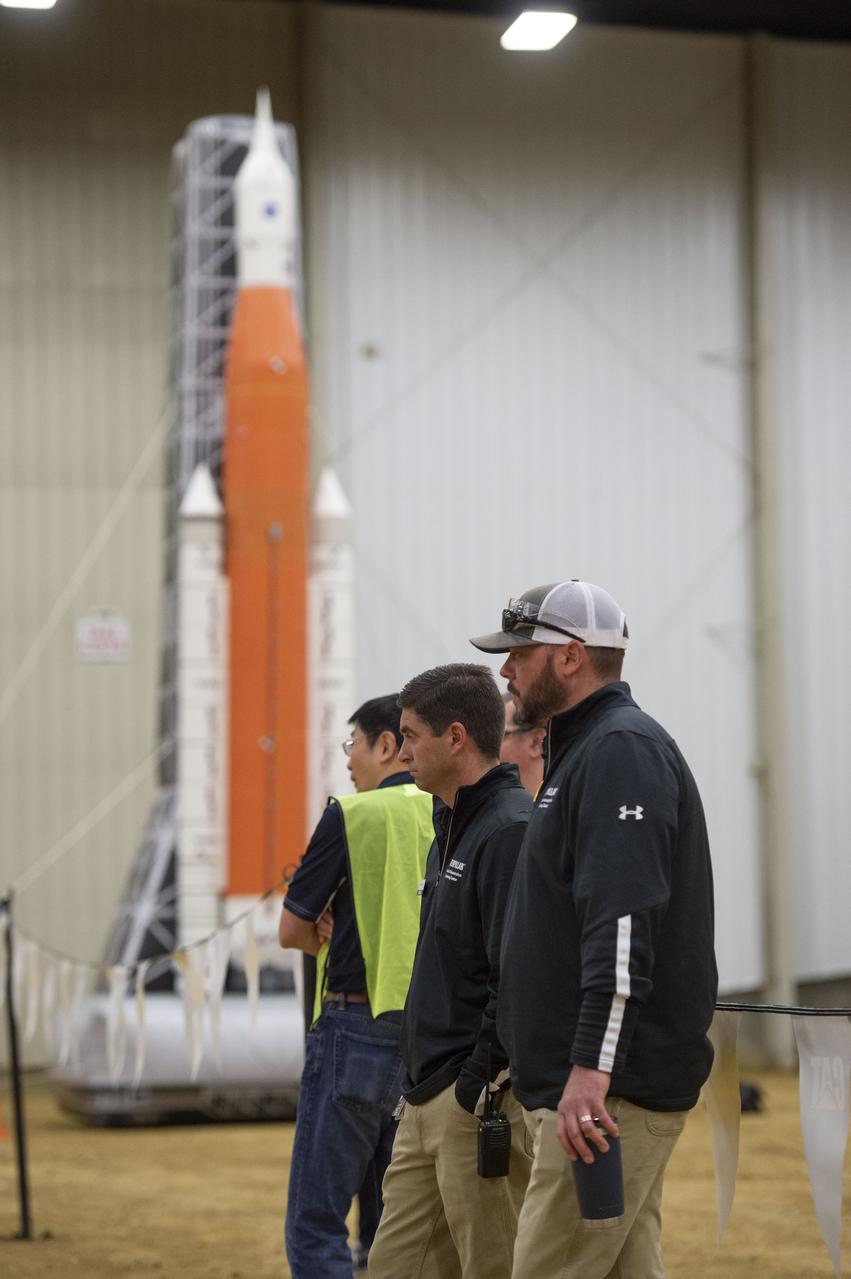
Team Penn State prepares their 3D-printer to begin printing a subscale habitat structure at NASA's 3D-Printed Habitat Challenge, held at the Caterpillar Edwards Demonstration & Learning Center in Edwards, Illinois, May 1-4, 2019. The habitat print is the final level of the multi-phase competition, which began in in 2015. The 3D-Printed Habitat Challenge is a competition to create sustainable shelters suitable for the Moon, Mars or beyond using resources available on-site in these locations. The challenge is managed by NASA's Centennial Challenges program, and partner Bradley University of Peoria, Illinois.
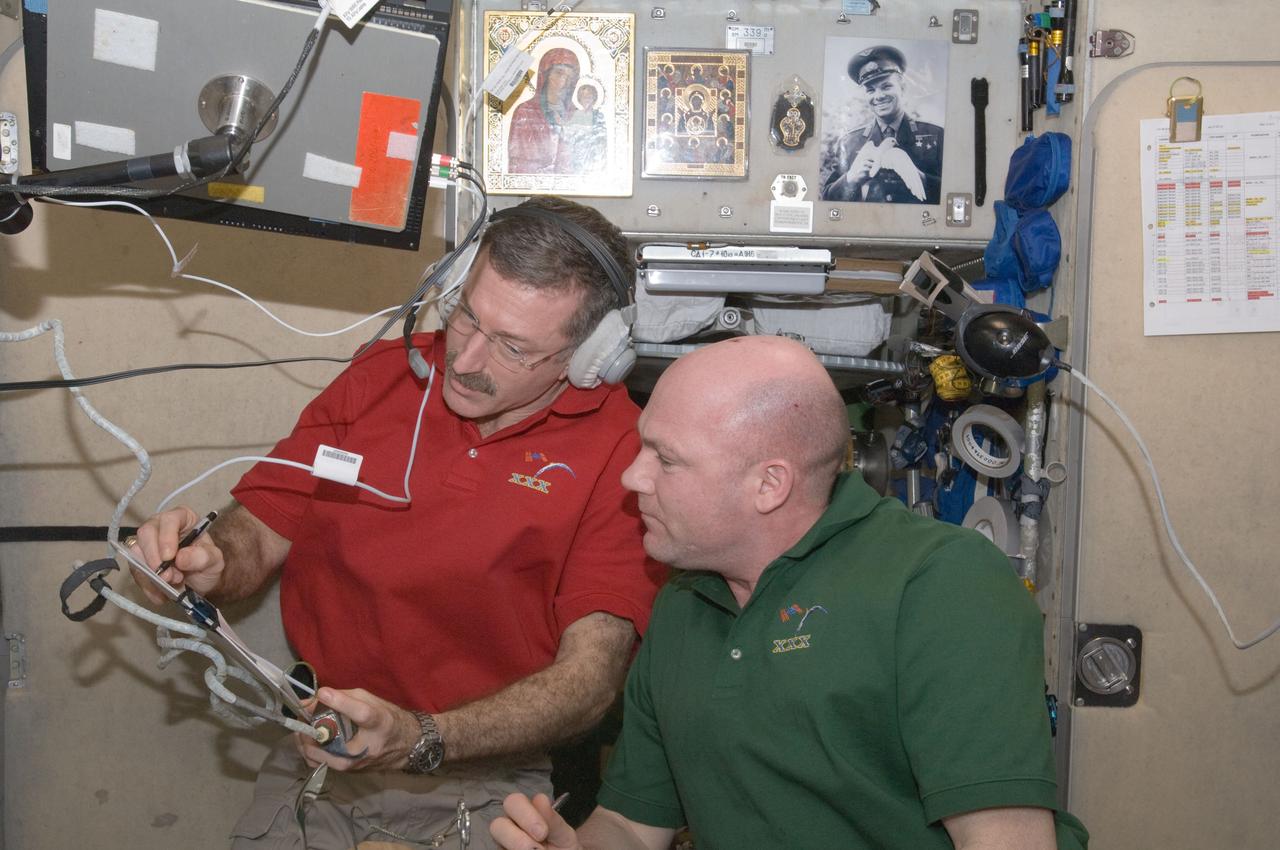
ISS030-E-171113 (24 March 2012) --- NASA astronaut Dan Burbank (wearing a communication headset), Expedition 30 commander; and European Space Agency astronaut Andre Kuipers, flight engineer, review crew procedures in the Zvezda Service Module of the International Space Station in preparation of moving to the appropriate Soyuz vehicles, due to the possibility that space debris could pass close to the station. Burbank, Shkaplerov and Ivanishin sheltered in the Soyuz TMA-22 spacecraft attached to the Poisk Mini-Research Module 2 (MRM2) while Kononenko, Kuipers and Pettit took to the Soyuz TMA-03M docked to the Rassvet Mini-Research Module 1 (MRM-1).
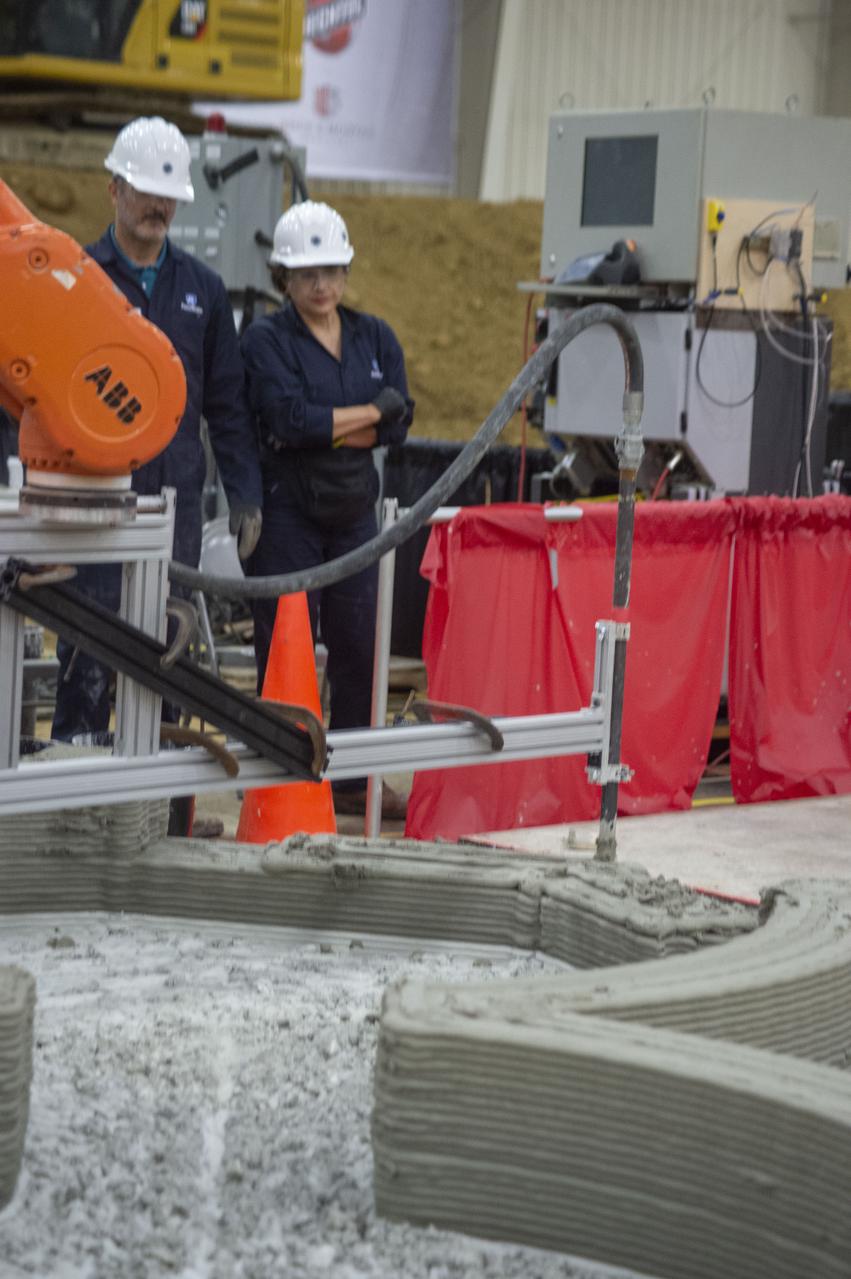
Team Penn State prepares their 3D-printer to begin printing a subscale habitat structure at NASA's 3D-Printed Habitat Challenge, held at the Caterpillar Edwards Demonstration & Learning Center in Edwards, Illinois, May 1-4, 2019. The habitat print is the final level of the multi-phase competition, which began in in 2015. The 3D-Printed Habitat Challenge is a competition to create sustainable shelters suitable for the Moon, Mars or beyond using resources available on-site in these locations. The challenge is managed by NASA's Centennial Challenges program, and partner Bradley University of Peoria, Illinois.
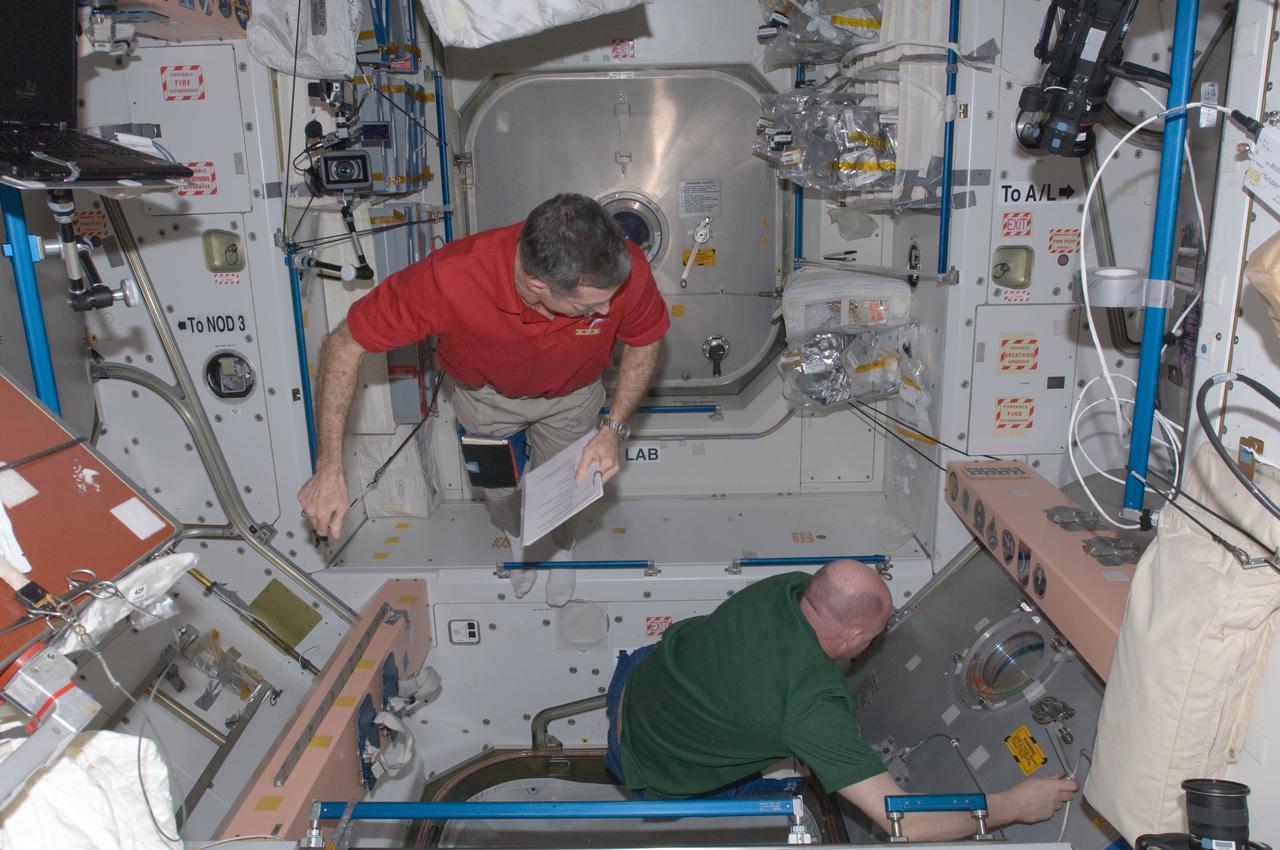
ISS030-E-171093 (24 March 2012) --- NASA astronaut Dan Burbank (left), Expedition 30 commander; and European Space Agency astronaut Andre Kuipers, flight engineer, work in the Unity node of the International Space Station. Crew members were preparing for their move to the appropriate Soyuz vehicles, due to the possibility that space debris could pass close to the station. Burbank, Shkaplerov and Ivanishin sheltered in the Soyuz TMA-22 spacecraft attached to the Poisk Mini-Research Module 2 (MRM2) while Kononenko, Kuipers and Pettit took to the Soyuz TMA-03M docked to the Rassvet Mini-Research Module 1 (MRM-1).
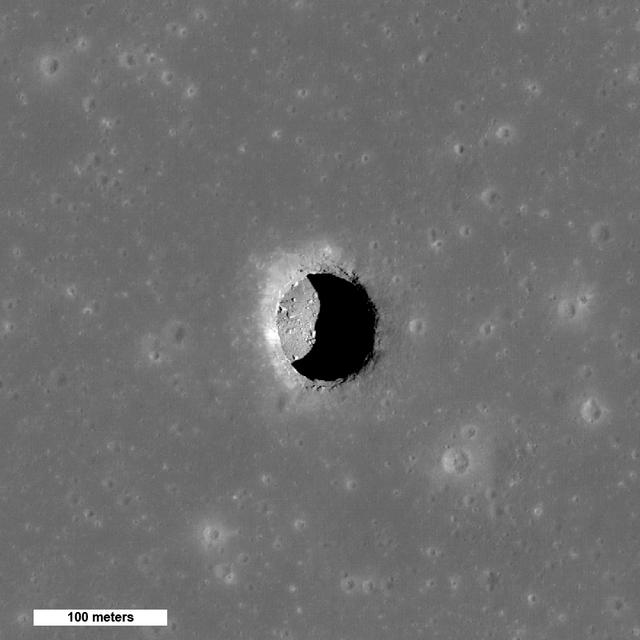
While the moon's surface is battered by millions of craters, it also has over 200 holes – steep-walled pits that in some cases might lead to caves that future astronauts could explore and use for shelter, according to new observations from NASA's Lunar Reconnaissance Orbiter (LRO) spacecraft. This is a spectacular high-Sun view of the Mare Tranquillitatis pit crater revealing boulders on an otherwise smooth floor. This image from LRO's NAC is 400 meters (1,312 feet) wide, north is up. Read more here: <a href="http://1.usa.gov/1ruEYXj" rel="nofollow">1.usa.gov/1ruEYXj</a> Credit: NASA/GSFC/Arizona State University
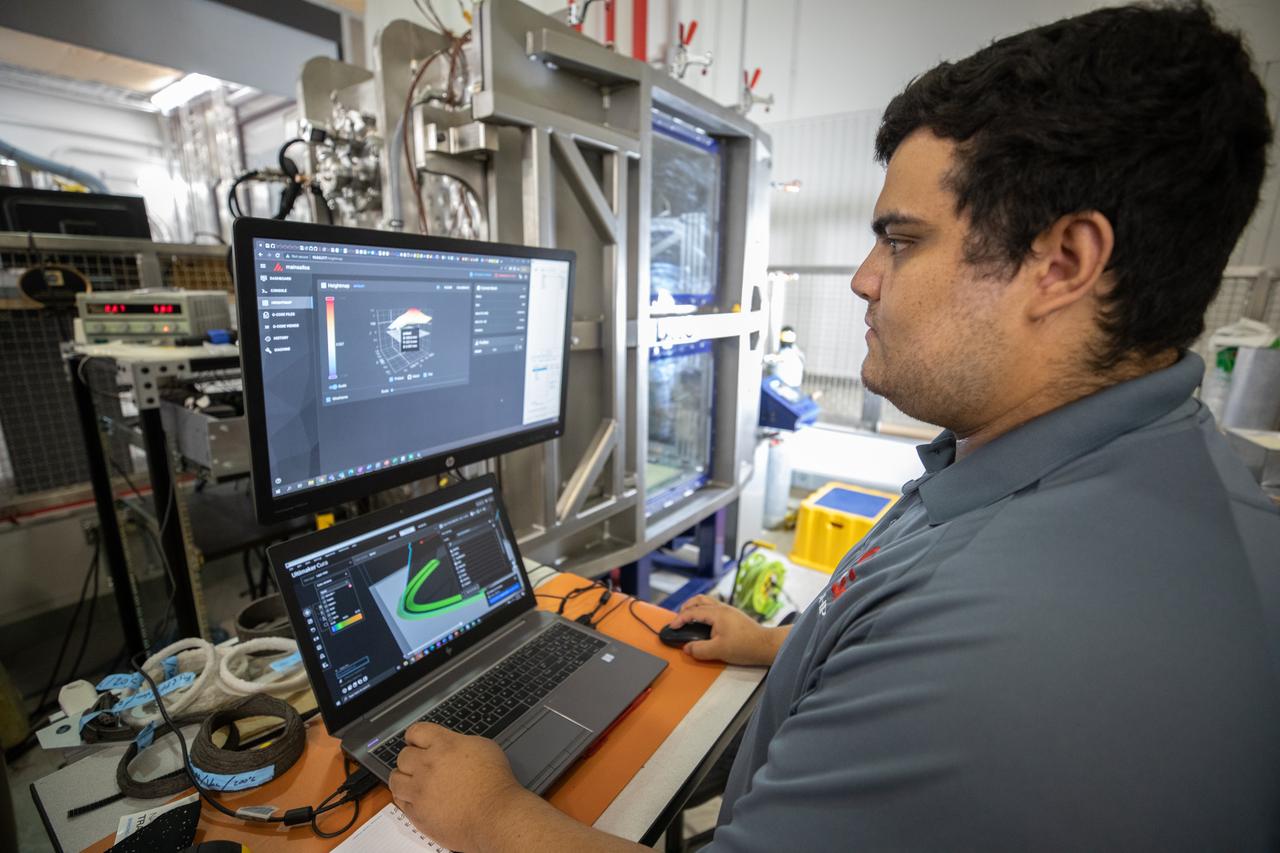
NASA Internships, Fellowships, and Scholarships (NIFS) intern Leonel Herrera tests a 3D printer on July 28, 2022, at Swamp Works at NASA’s Kennedy Space Center in Florida, as part of the Relevant Environment Additive Construction Technology (REACT) project. Among the key objectives of the project is developing an architectural and structural design for a shelter that provides protection to habitable assets on the lunar surface. Testing REACT derives from NASA’s 2020 Announcement of Collaboration Opportunity with AI SpaceFactory – an architectural and construction technology company and winner of NASA’s 3D Printed Habitat Challenge.
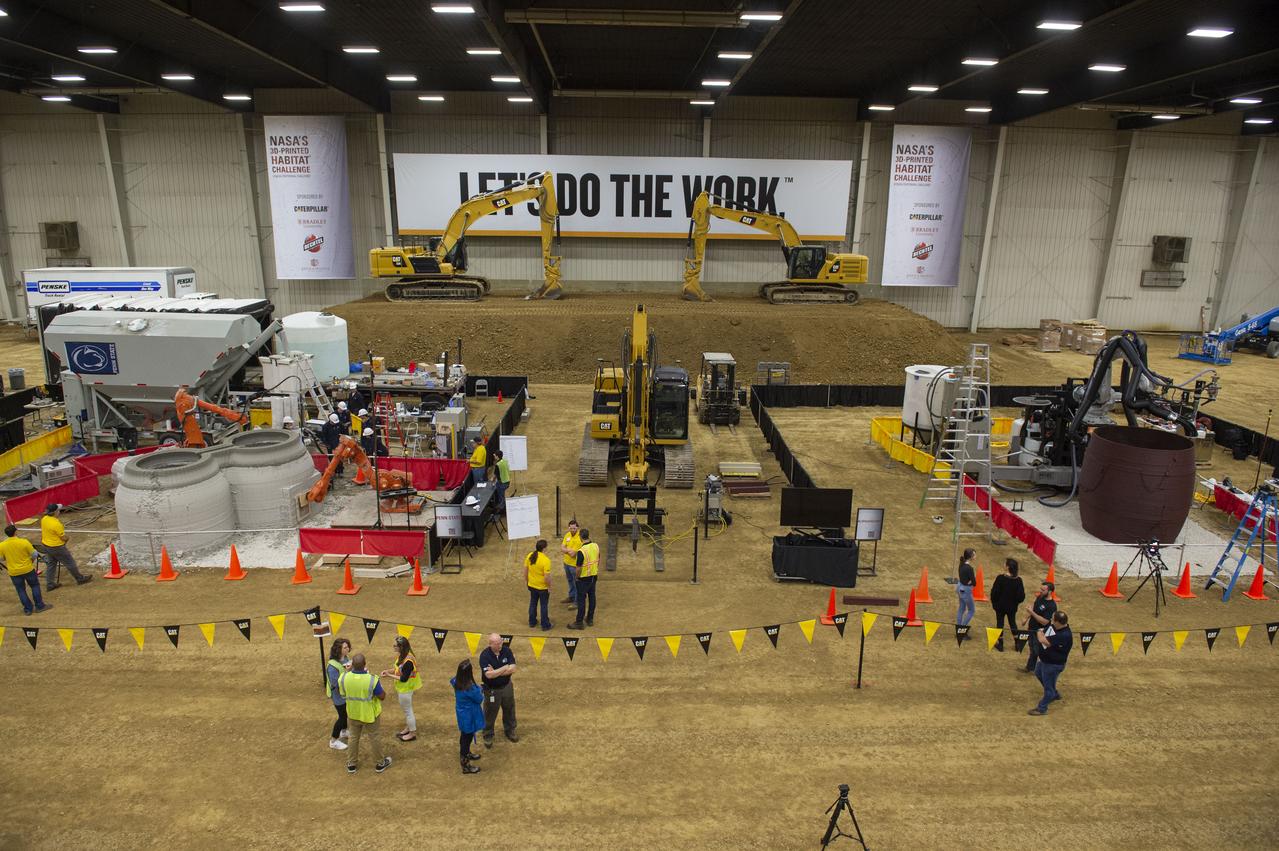
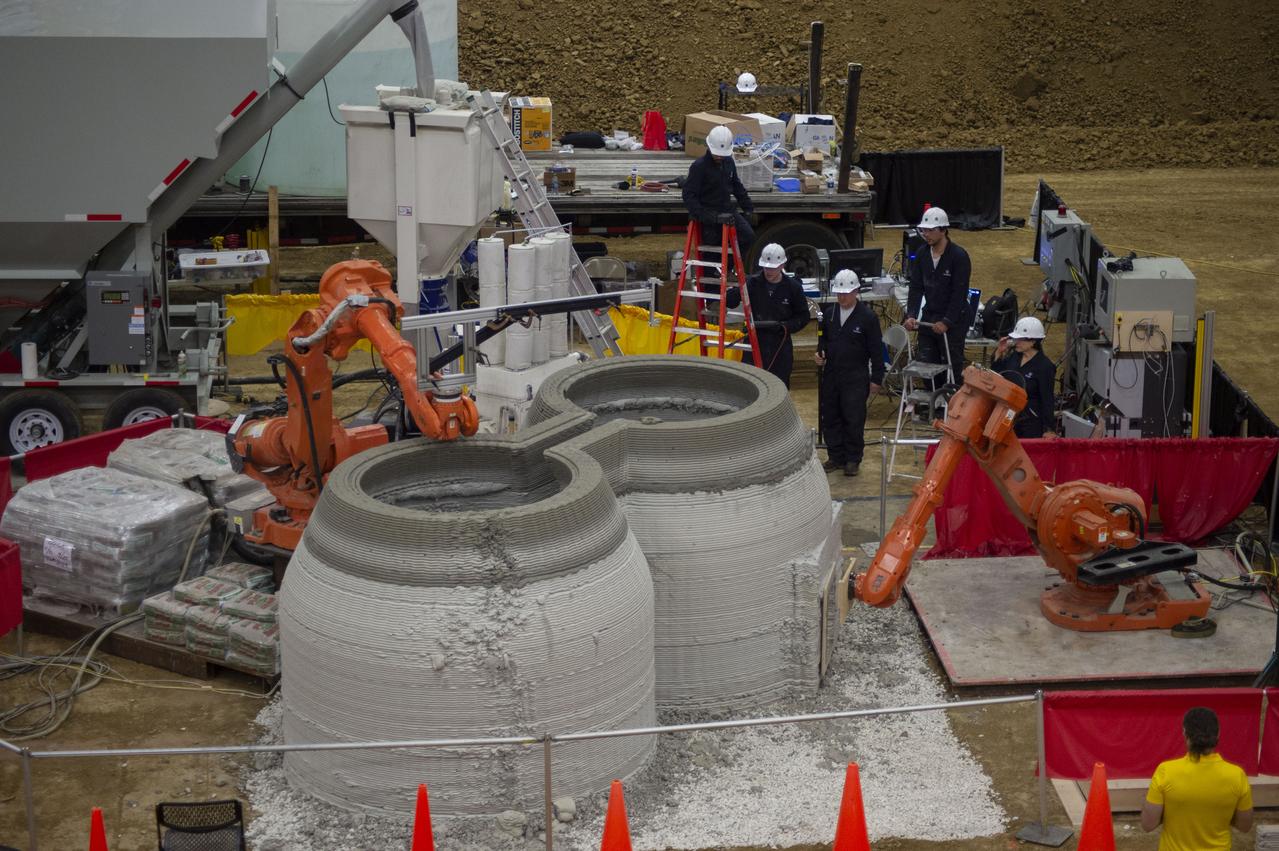
Two teams - Penn State (left) and AI. SpaceFactory (right) competed to 3D-print subscale habitat structures at NASA's 3D-Printed Habitat Challenge, held at the Caterpillar Edwards Demonstration & Learning Center in Edwards, Illinois, May 1-4, 2019. The habitat print is the final level of the multi-phase competition, which began in in 2015. The 3D-Printed Habitat Challenge is a competition to create sustainable shelters suitable for the Moon, Mars or beyond using resources available on-site in these locations. The challenge is managed by NASA's Centennial Challenges program, and partner Bradley University of Peoria, Illinois.
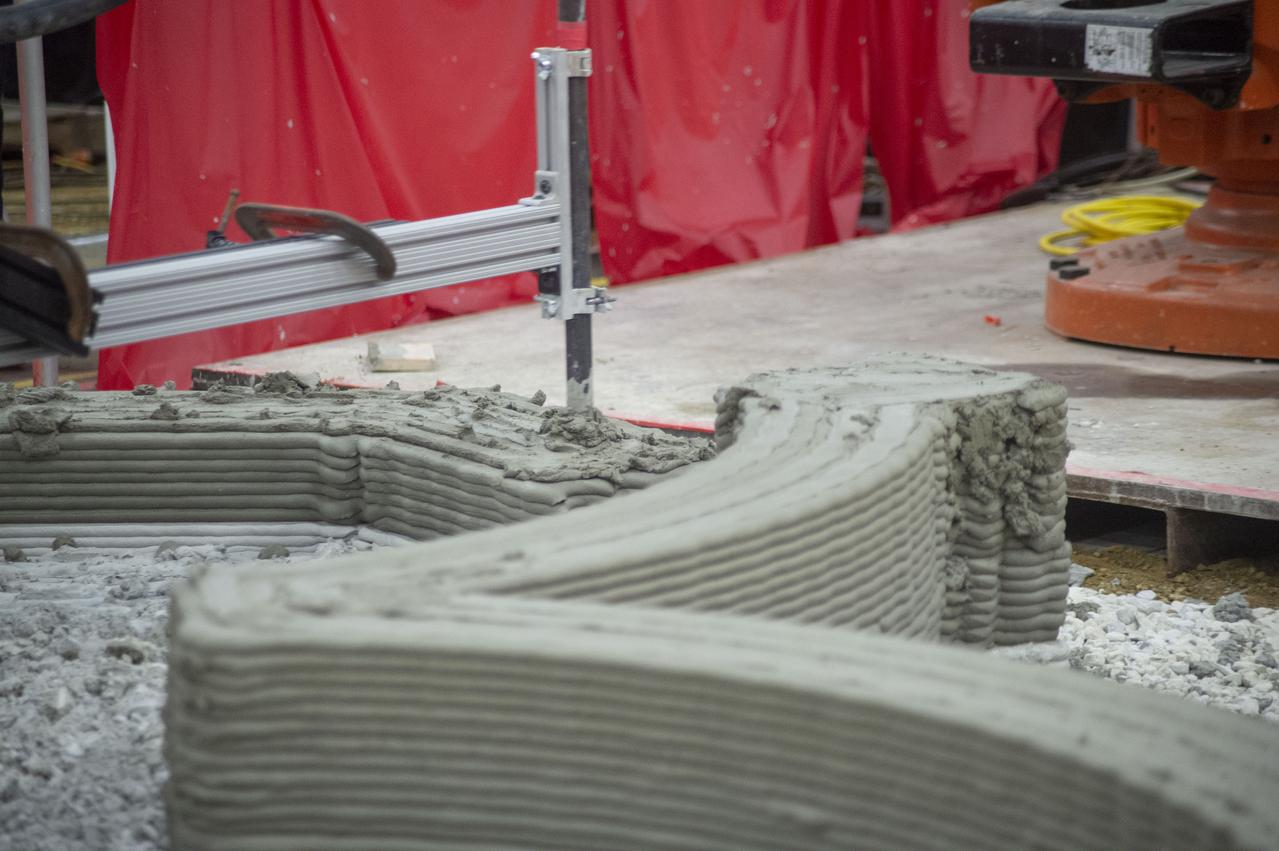
Team Penn State prepares their 3D-printer to begin printing a subscale habitat structure at NASA's 3D-Printed Habitat Challenge, held at the Caterpillar Edwards Demonstration & Learning Center in Edwards, Illinois, May 1-4, 2019. The habitat print is the final level of the multi-phase competition, which began in in 2015. The 3D-Printed Habitat Challenge is a competition to create sustainable shelters suitable for the Moon, Mars or beyond using resources available on-site in these locations. The challenge is managed by NASA's Centennial Challenges program, and partner Bradley University of Peoria, Illinois.
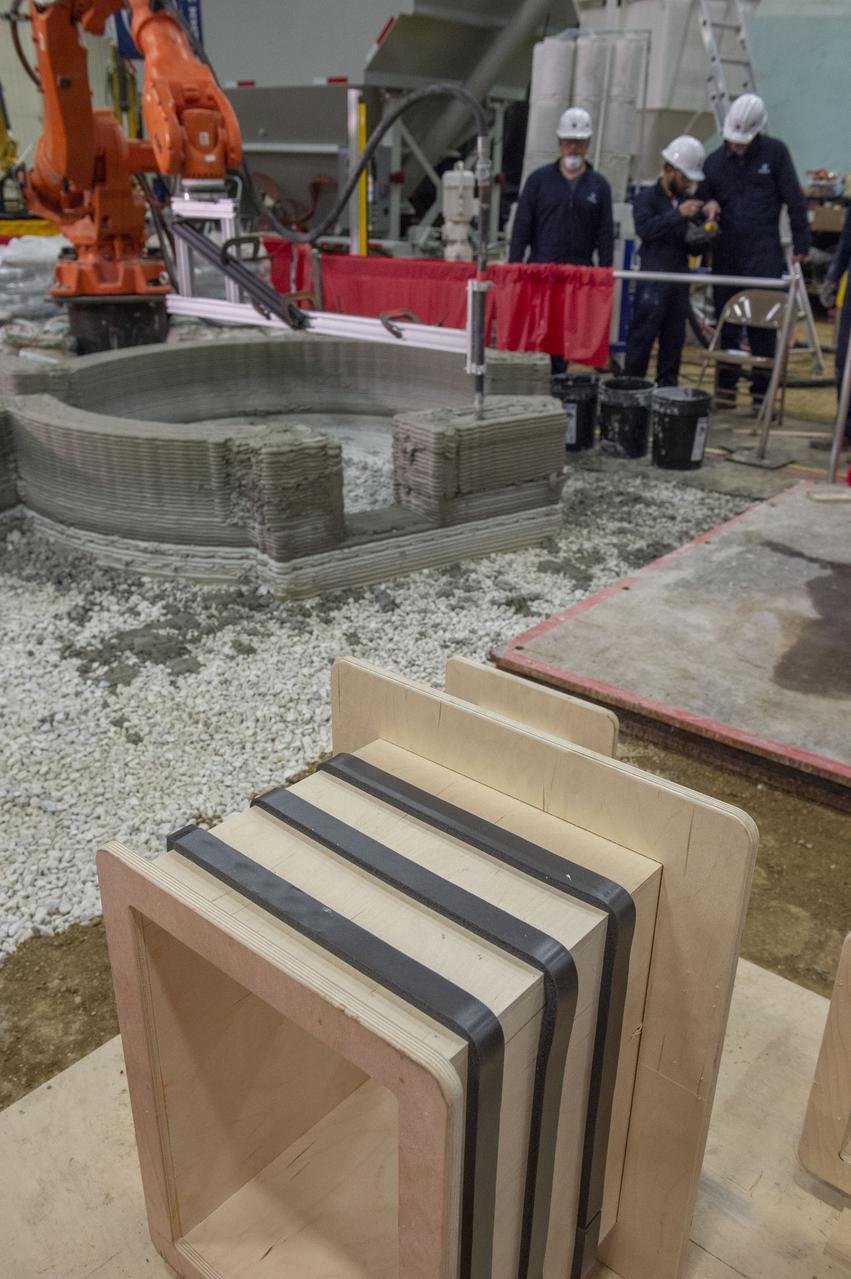
Team Penn State prepares their 3D-printer to begin printing a subscale habitat structure at NASA's 3D-Printed Habitat Challenge, held at the Caterpillar Edwards Demonstration & Learning Center in Edwards, Illinois, May 1-4, 2019. The habitat print is the final level of the multi-phase competition, which began in in 2015. The 3D-Printed Habitat Challenge is a competition to create sustainable shelters suitable for the Moon, Mars or beyond using resources available on-site in these locations. The challenge is managed by NASA's Centennial Challenges program, and partner Bradley University of Peoria, Illinois.
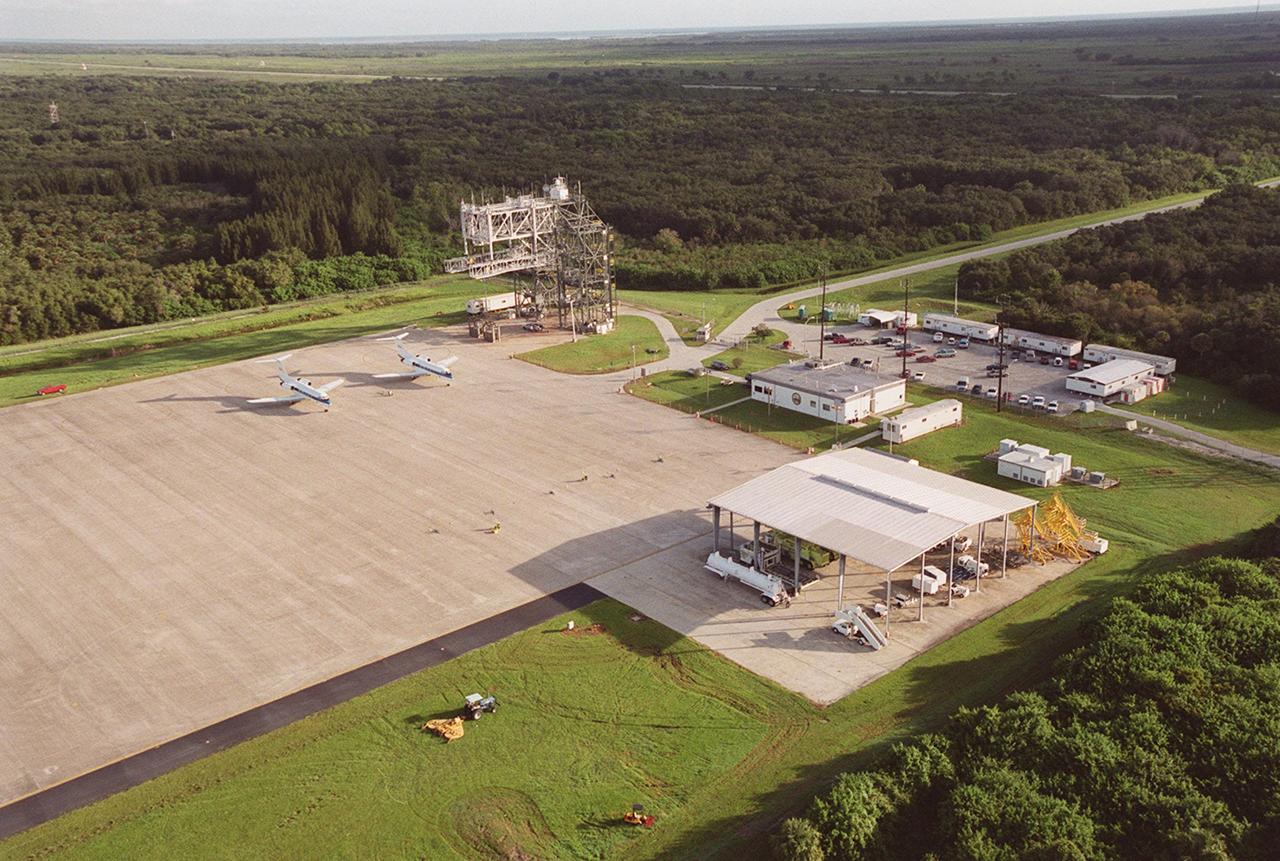
KENNEDY SPACE CENTER, FLA. -- This aerial view of the Shuttle Landing Facility (SLF) faces northeast, with the Atlantic Ocean in the distance. In the center is the apron of the SLF with two Shuttle Training Aircraft (STA) parked there, the mate/demate device behind them, a shelter for fuel trucks (foreground), and an administrative building between. The STAs are Grumman Gulfstream 2 aircraft with converted cockpits that emulate those in the Shuttles for practice landings at the SLF. The mate/demate device is used to lift the orbiter onto or off a Shuttle Carrier Aircraft when it has to be ferried to or from KSC
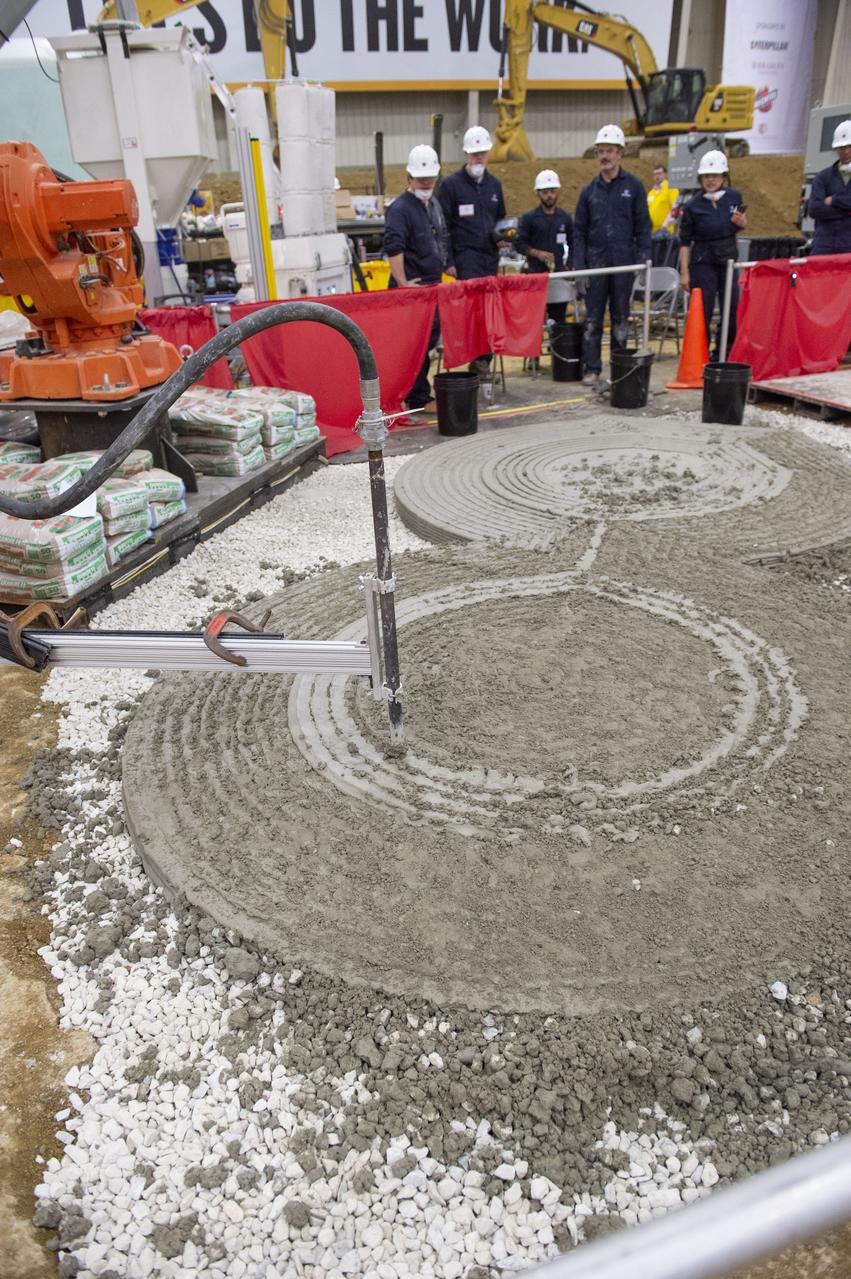
Team Penn State prepares their 3D-printer to begin printing a subscale habitat structure at NASA's 3D-Printed Habitat Challenge, held at the Caterpillar Edwards Demonstration & Learning Center in Edwards, Illinois, May 1-4, 2019. The habitat print is the final level of the multi-phase competition, which began in in 2015. The 3D-Printed Habitat Challenge is a competition to create sustainable shelters suitable for the Moon, Mars or beyond using resources available on-site in these locations. The challenge is managed by NASA's Centennial Challenges program, and partner Bradley University of Peoria, Illinois.
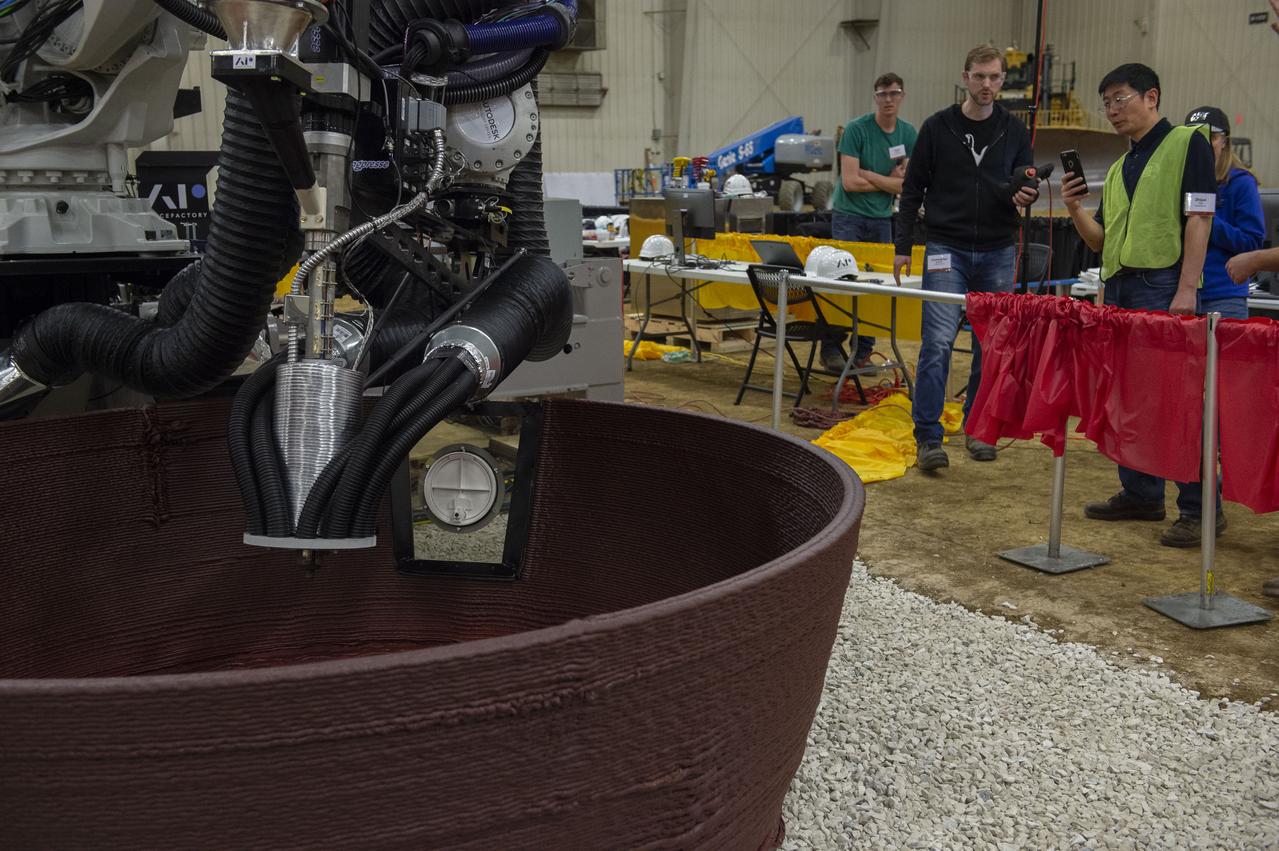
Team AI. SpaceFactory's printer autonomously inserts a window into their 3D-printed subscale habitat structure at NASA's 3D-Printed Habitat Challenge, held at the Caterpillar Edwards Demonstration & Learning Center in Edwards, Illinois, May 1-4, 2019. The habitat print is the final level of the multi-phase competition, which began in in 2015. The 3D-Printed Habitat Challenge is a competition to create sustainable shelters suitable for the Moon, Mars or beyond using resources available on-site in these locations. The challenge is managed by NASA's Centennial Challenges program, and partner Bradley University of Peoria, Illinois.
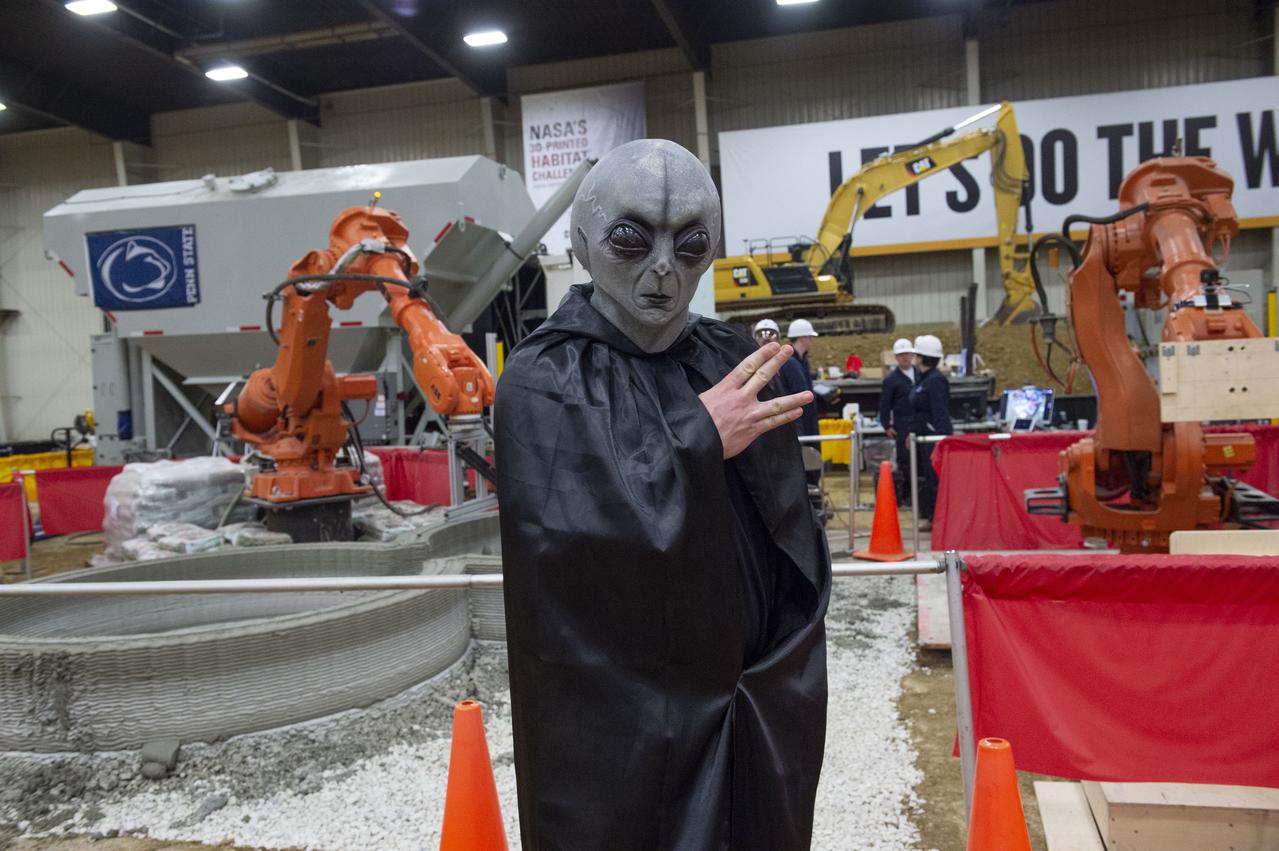
Team Penn State prepares their 3D-printer to begin printing a subscale habitat structure at NASA's 3D-Printed Habitat Challenge, held at the Caterpillar Edwards Demonstration & Learning Center in Edwards, Illinois, May 1-4, 2019. The habitat print is the final level of the multi-phase competition, which began in in 2015. The 3D-Printed Habitat Challenge is a competition to create sustainable shelters suitable for the Moon, Mars or beyond using resources available on-site in these locations. The challenge is managed by NASA's Centennial Challenges program, and partner Bradley University of Peoria, Illinois.
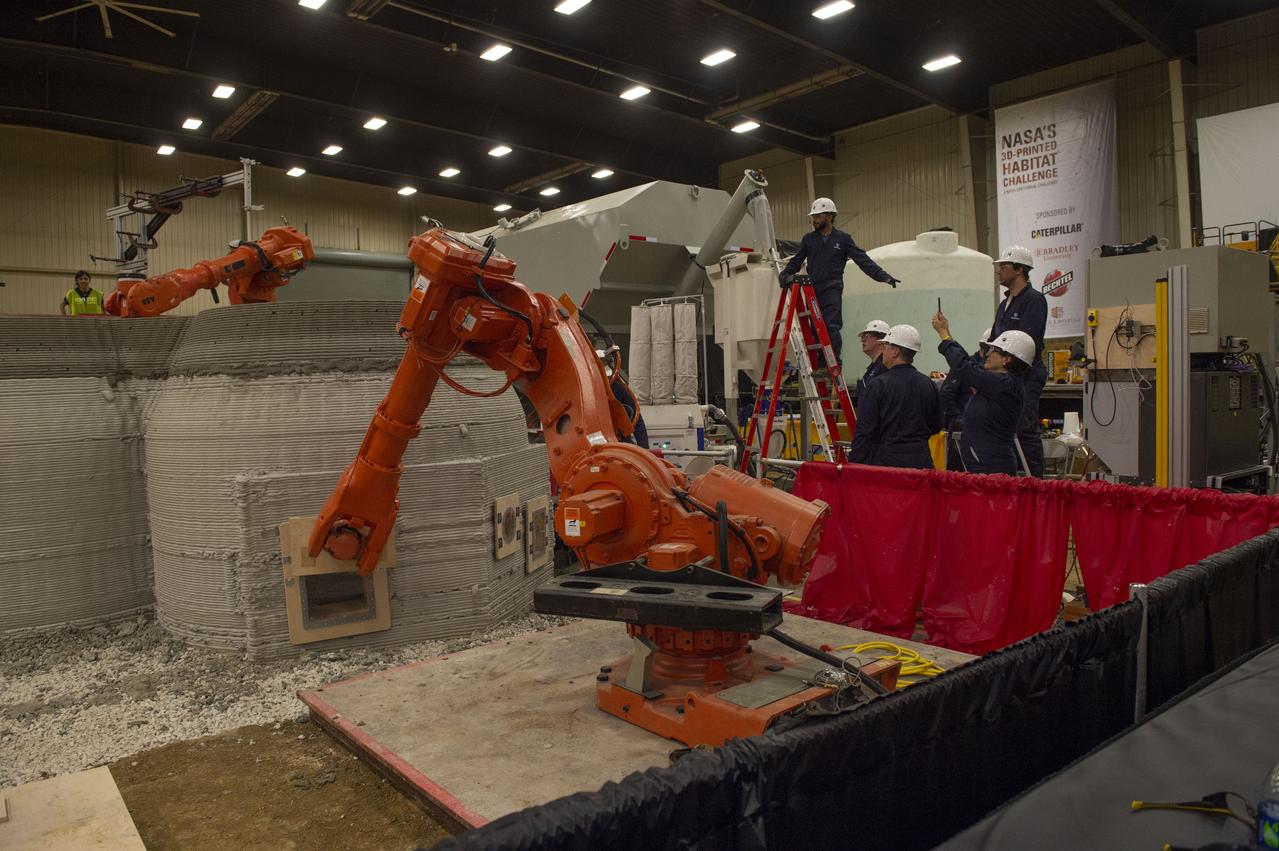
Team Penn State prepares their 3D-printer to begin printing a subscale habitat structure at NASA's 3D-Printed Habitat Challenge, held at the Caterpillar Edwards Demonstration & Learning Center in Edwards, Illinois, May 1-4, 2019. The habitat print is the final level of the multi-phase competition, which began in in 2015. The 3D-Printed Habitat Challenge is a competition to create sustainable shelters suitable for the Moon, Mars or beyond using resources available on-site in these locations. The challenge is managed by NASA's Centennial Challenges program, and partner Bradley University of Peoria, Illinois.
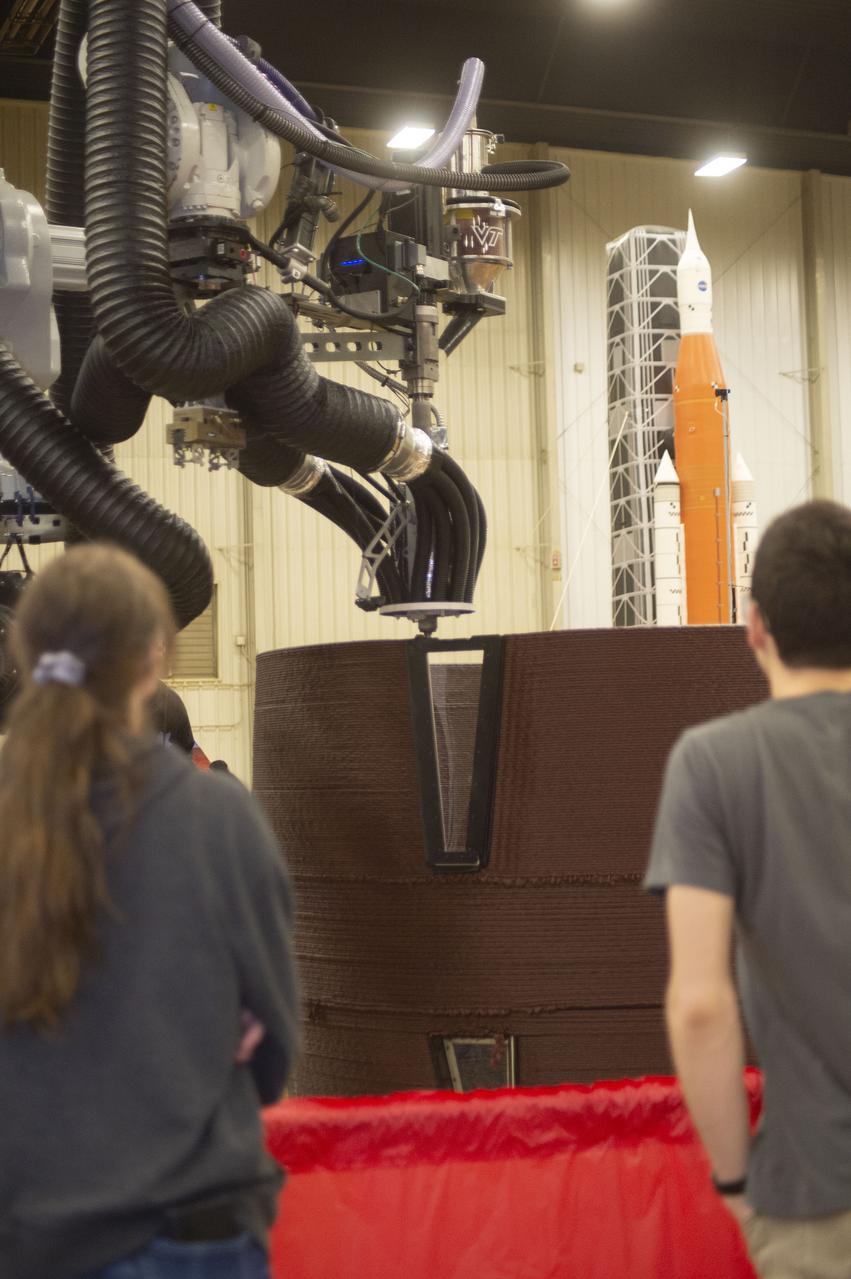
Team AI. SpaceFactory's printer autonomously inserts a window into their 3D-printed subscale habitat structure at NASA's 3D-Printed Habitat Challenge, held at the Caterpillar Edwards Demonstration & Learning Center in Edwards, Illinois, May 1-4, 2019. The habitat print is the final level of the multi-phase competition, which began in in 2015. The 3D-Printed Habitat Challenge is a competition to create sustainable shelters suitable for the Moon, Mars or beyond using resources available on-site in these locations. The challenge is managed by NASA's Centennial Challenges program, and partner Bradley University of Peoria, Illinois.
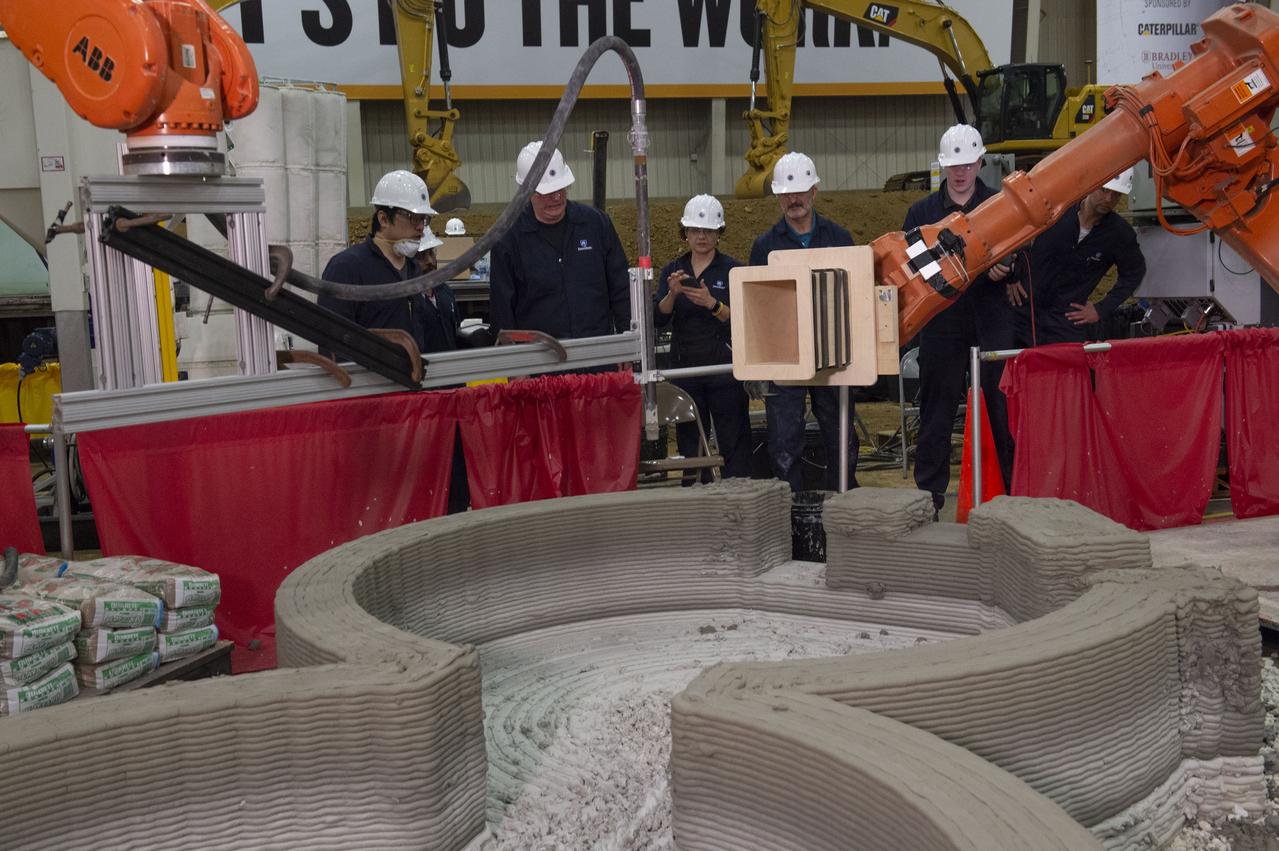
Team Penn State prepares their 3D-printer to begin printing a subscale habitat structure at NASA's 3D-Printed Habitat Challenge, held at the Caterpillar Edwards Demonstration & Learning Center in Edwards, Illinois, May 1-4, 2019. The habitat print is the final level of the multi-phase competition, which began in in 2015. The 3D-Printed Habitat Challenge is a competition to create sustainable shelters suitable for the Moon, Mars or beyond using resources available on-site in these locations. The challenge is managed by NASA's Centennial Challenges program, and partner Bradley University of Peoria, Illinois.
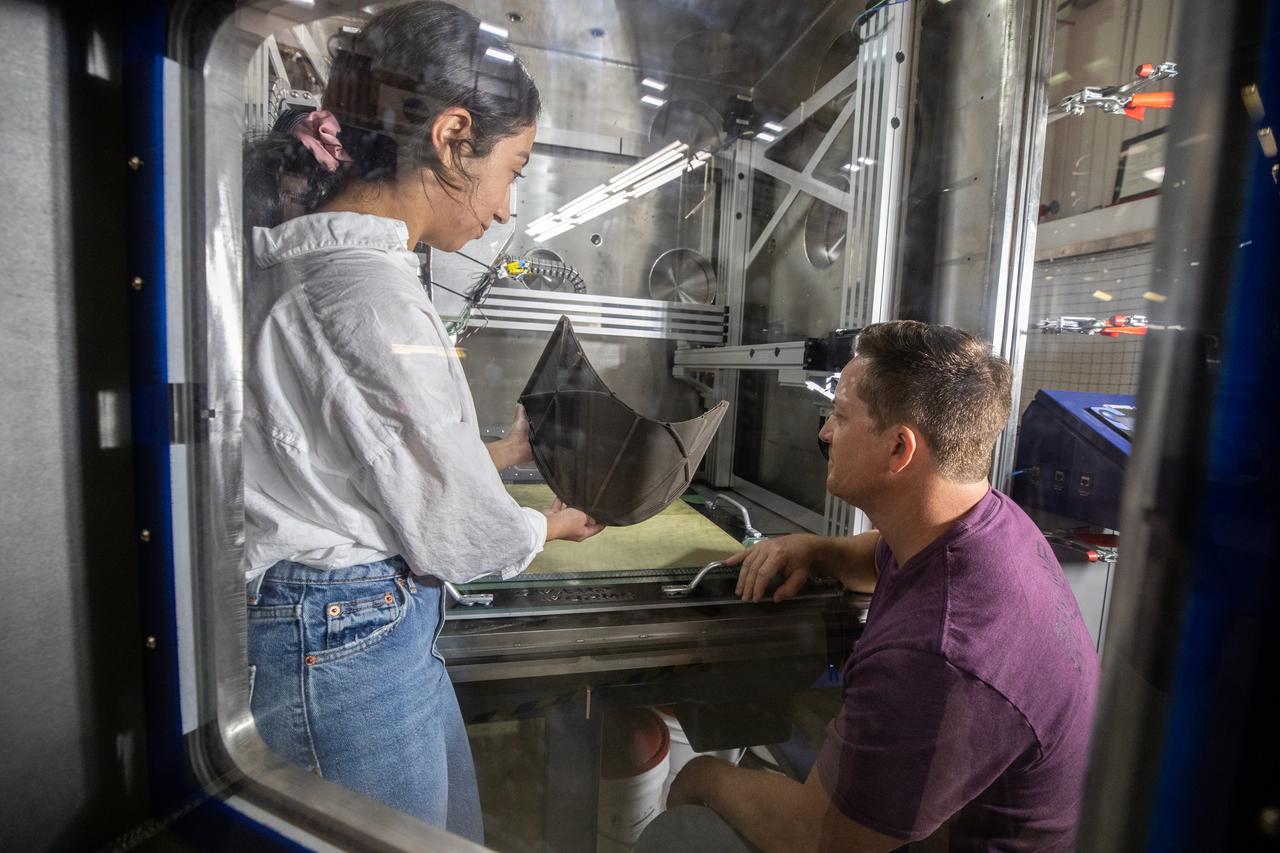
Chemist Nilab Azim, left, and Nathan Gelino, principal investigator with NASA’s Exploration Research and Technology programs, test a 3D printer on July 28, 2022, at Swamp Works at the agency’s Kennedy Space Center in Florida, as part of the Relevant Environment Additive Construction Technology (REACT) project. Among the key objectives of the project is developing an architectural and structural design for a shelter that provides protection to habitable assets on the lunar surface. Testing REACT derives from NASA’s 2020 Announcement of Collaboration Opportunity with AI SpaceFactory – an architectural and construction technology company and winner of NASA’s 3D Printed Habitat Challenge.
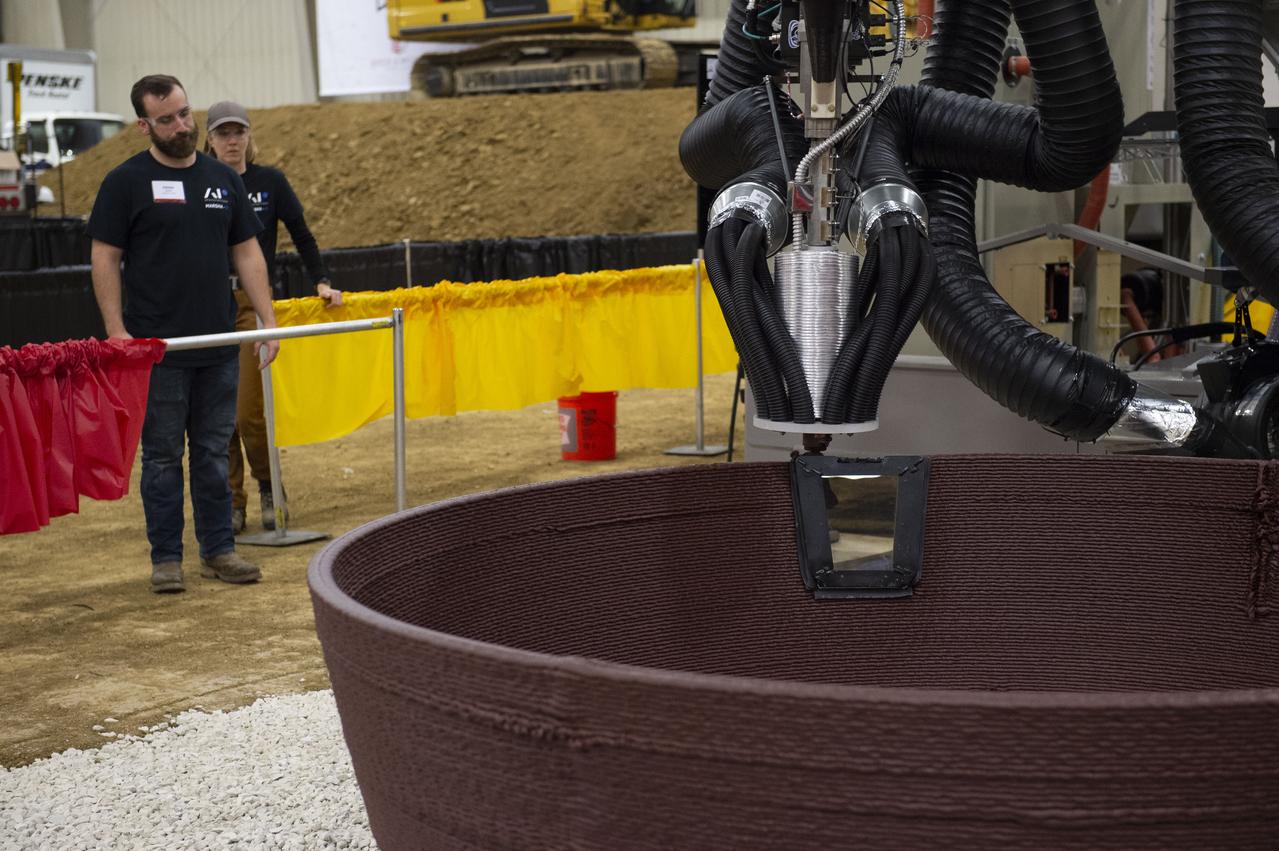
Team AI. SpaceFactory's printer autonomously inserts a window into their 3D-printed subscale habitat structure at NASA's 3D-Printed Habitat Challenge, held at the Caterpillar Edwards Demonstration & Learning Center in Edwards, Illinois, May 1-4, 2019. The habitat print is the final level of the multi-phase competition, which began in in 2015. The 3D-Printed Habitat Challenge is a competition to create sustainable shelters suitable for the Moon, Mars or beyond using resources available on-site in these locations. The challenge is managed by NASA's Centennial Challenges program, and partner Bradley University of Peoria, Illinois.
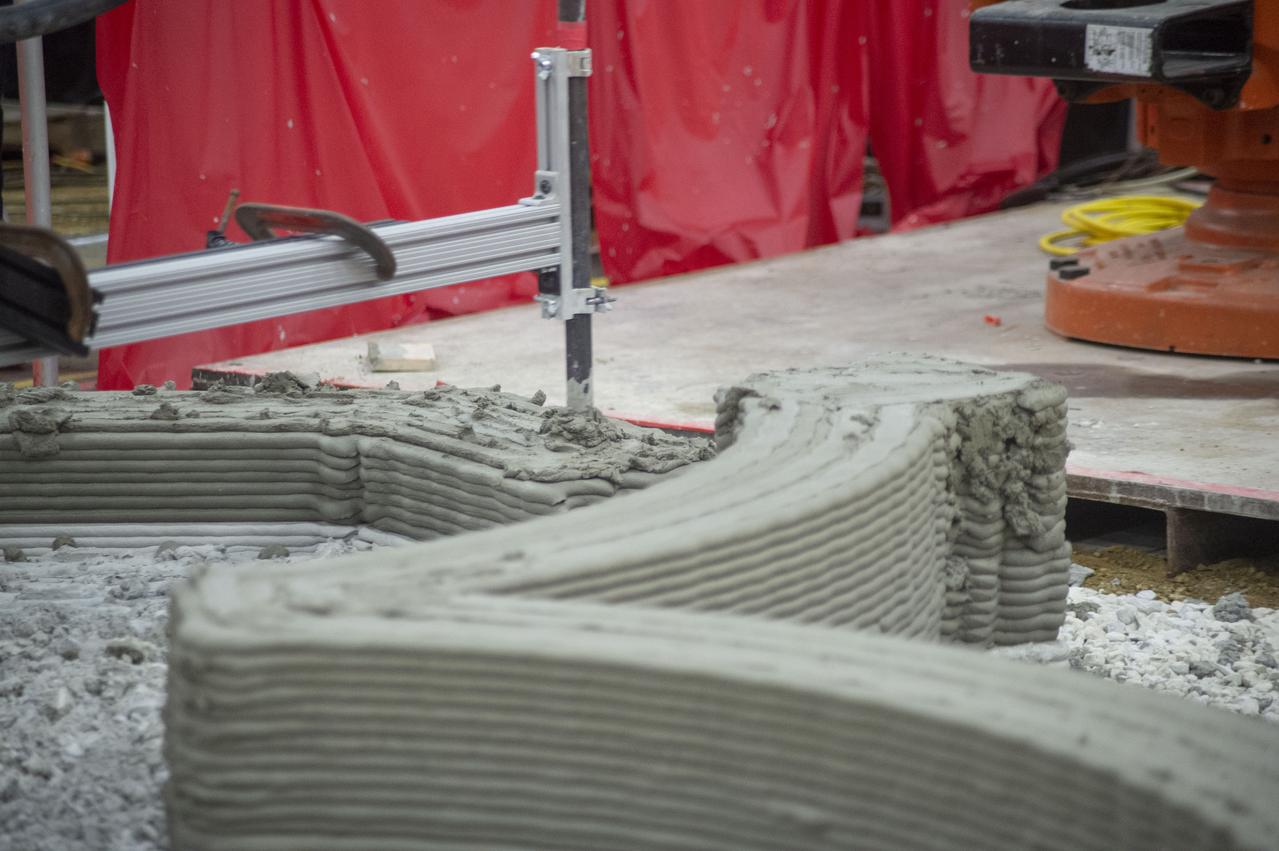
Team AI. SpaceFactory's printer autonomously inserts a window into their 3D-printed subscale habitat structure at NASA's 3D-Printed Habitat Challenge, held at the Caterpillar Edwards Demonstration & Learning Center in Edwards, Illinois, May 1-4, 2019. The habitat print is the final level of the multi-phase competition, which began in in 2015. The 3D-Printed Habitat Challenge is a competition to create sustainable shelters suitable for the Moon, Mars or beyond using resources available on-site in these locations. The challenge is managed by NASA's Centennial Challenges program, and partner Bradley University of Peoria, Illinois.

CAPE CANAVERAL, Fla. - At NASA's Kennedy Space Center in Florida, a Florida scrub jay is caught taking a break from his daily routine. The birds are one of several threatened species that reside on the Merritt Island National Wildlife Refuge which coexists with Kennedy Space Center. Scrub is a habitat unique to Florida, and one of the most important habitats for endangered species in the state. Species like the scrub jay, gopher tortoise and indigo snake rely on this habitat for food and shelter. The scrub oak acorn, for example, is a primary food source for the Florida scrub jay. Photo credit: NASA_Jim Grossmann
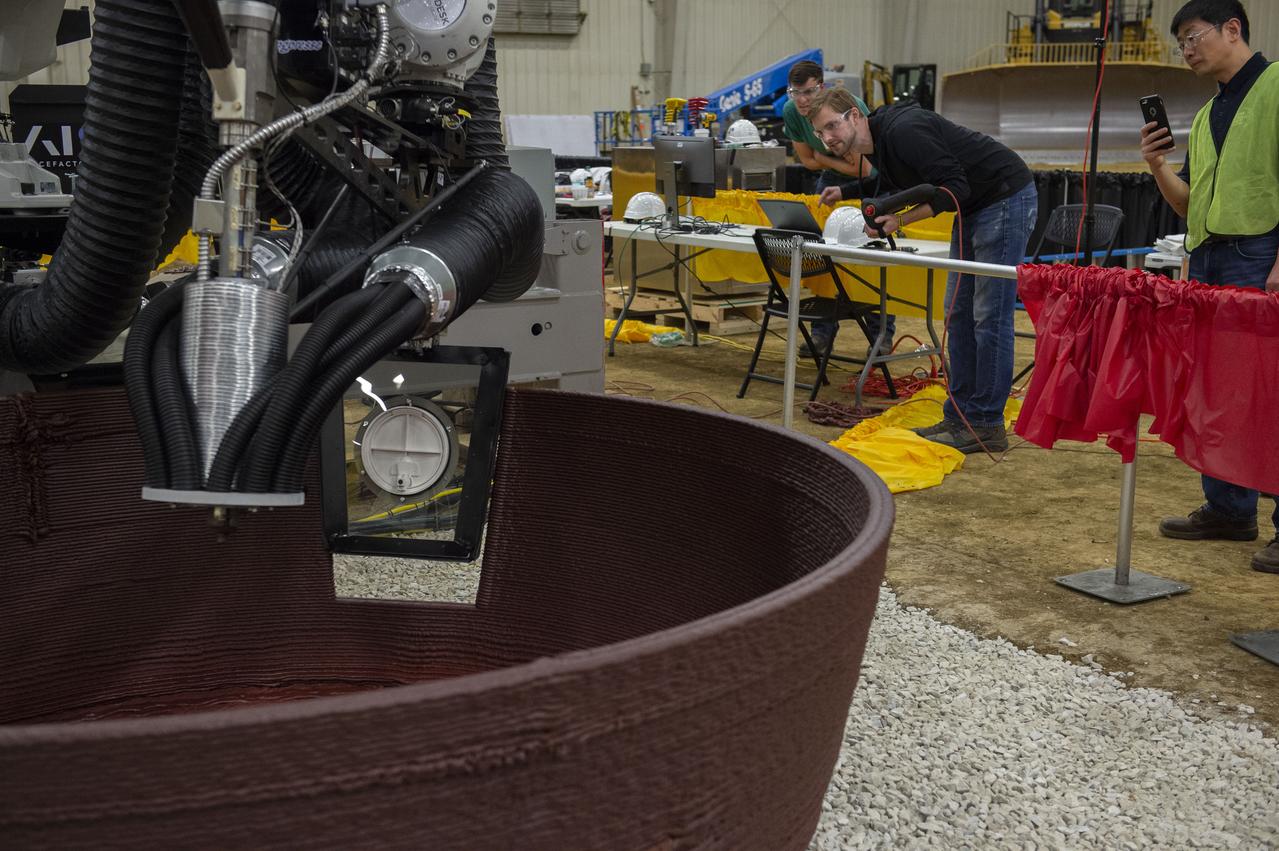
Team AI. SpaceFactory's printer autonomously inserts a window into their 3D-printed subscale habitat structure at NASA's 3D-Printed Habitat Challenge, held at the Caterpillar Edwards Demonstration & Learning Center in Edwards, Illinois, May 1-4, 2019. The habitat print is the final level of the multi-phase competition, which began in in 2015. The 3D-Printed Habitat Challenge is a competition to create sustainable shelters suitable for the Moon, Mars or beyond using resources available on-site in these locations. The challenge is managed by NASA's Centennial Challenges program, and partner Bradley University of Peoria, Illinois.
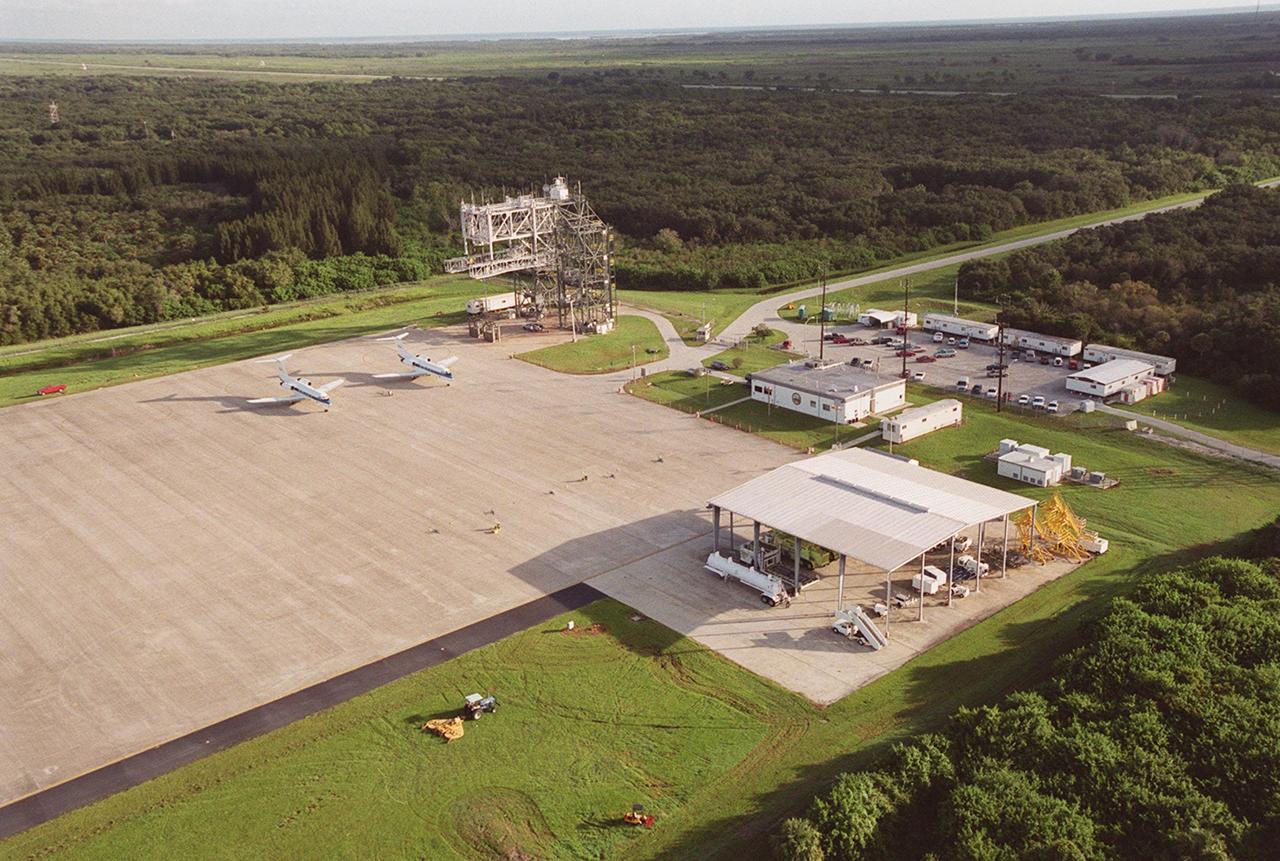
KENNEDY SPACE CENTER, FLA. -- This aerial view of the Shuttle Landing Facility (SLF) faces northeast, with the Atlantic Ocean in the distance. In the center is the apron of the SLF with two Shuttle Training Aircraft (STA) parked there, the mate/demate device behind them, a shelter for fuel trucks (foreground), and an administrative building between. The STAs are Grumman Gulfstream 2 aircraft with converted cockpits that emulate those in the Shuttles for practice landings at the SLF. The mate/demate device is used to lift the orbiter onto or off a Shuttle Carrier Aircraft when it has to be ferried to or from KSC
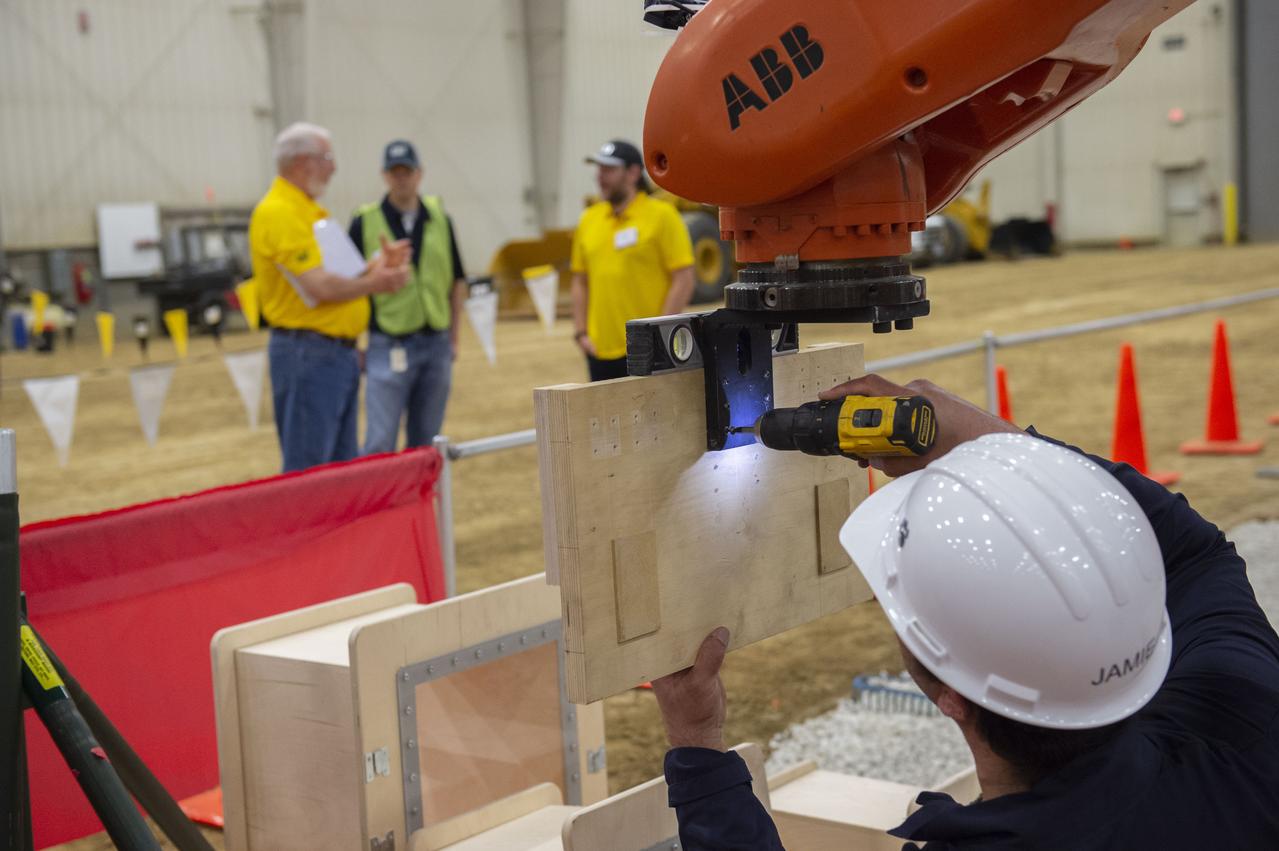
Team Penn State prepares their 3D-printer to begin printing a subscale habitat structure at NASA's 3D-Printed Habitat Challenge, held at the Caterpillar Edwards Demonstration & Learning Center in Edwards, Illinois, May 1-4, 2019. The habitat print is the final level of the multi-phase competition, which began in in 2015. The 3D-Printed Habitat Challenge is a competition to create sustainable shelters suitable for the Moon, Mars or beyond using resources available on-site in these locations. The challenge is managed by NASA's Centennial Challenges program, and partner Bradley University of Peoria, Illinois.
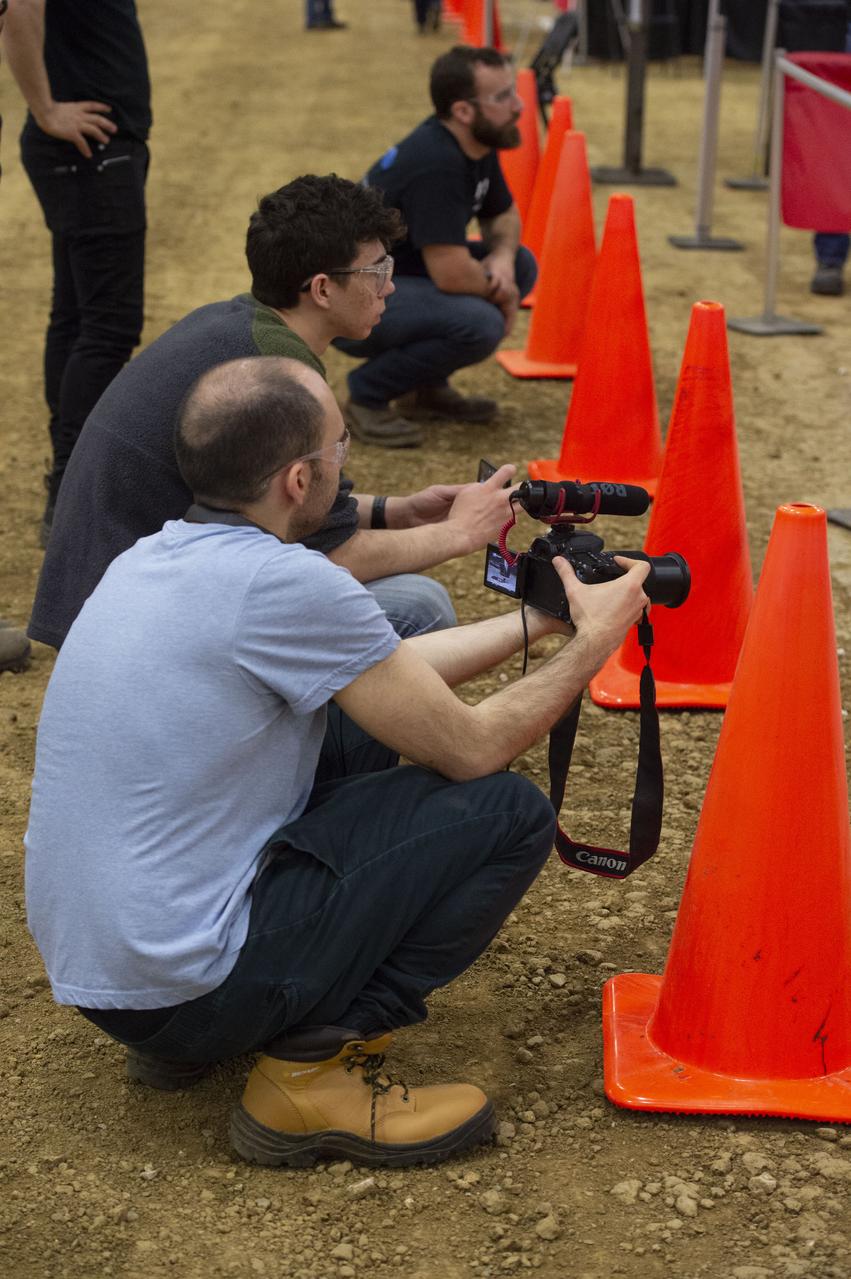
Team Penn State prepares their 3D-printer to begin printing a subscale habitat structure at NASA's 3D-Printed Habitat Challenge, held at the Caterpillar Edwards Demonstration & Learning Center in Edwards, Illinois, May 1-4, 2019. The habitat print is the final level of the multi-phase competition, which began in in 2015. The 3D-Printed Habitat Challenge is a competition to create sustainable shelters suitable for the Moon, Mars or beyond using resources available on-site in these locations. The challenge is managed by NASA's Centennial Challenges program, and partner Bradley University of Peoria, Illinois.
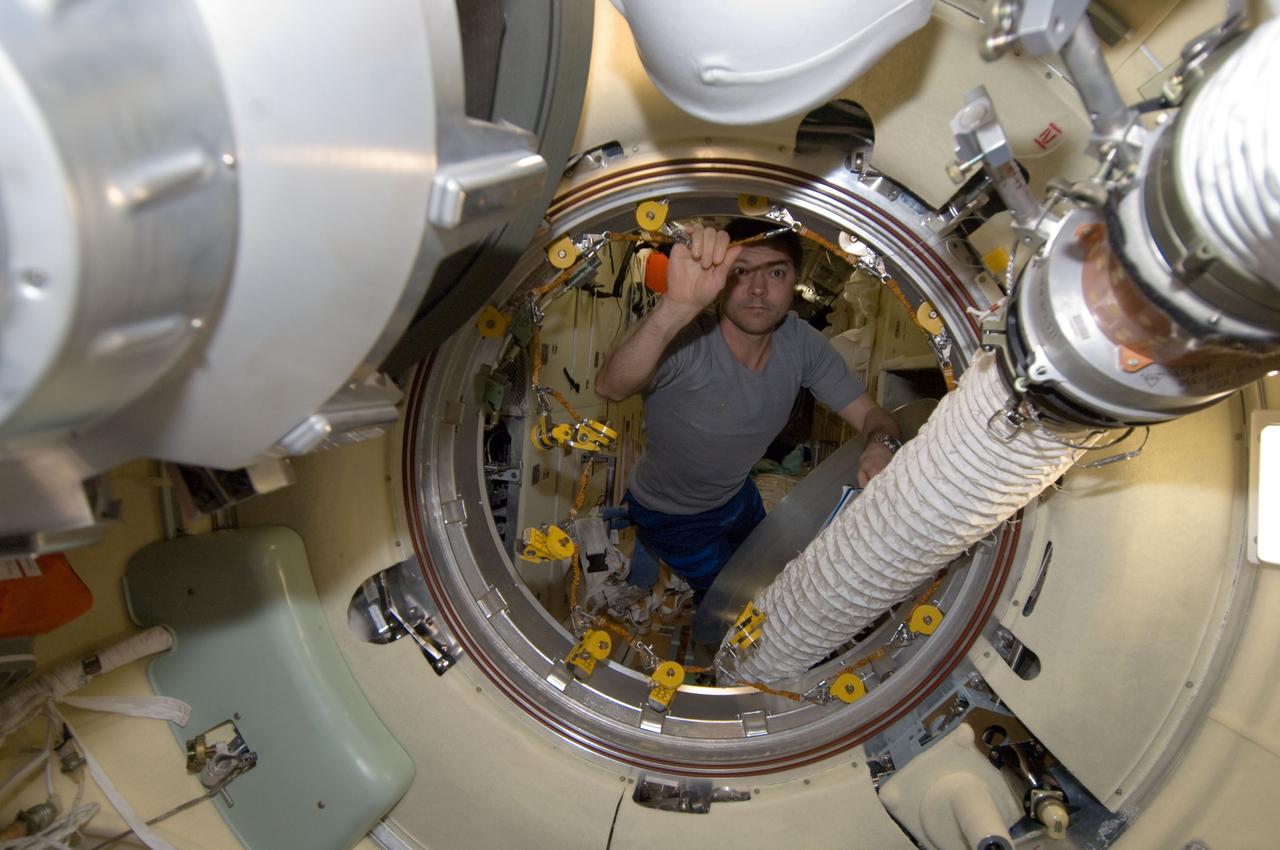
ISS030-E-173974 (24 March 2012) --- Russian cosmonaut Oleg Kononenko, Expedition 30 flight engineer, works in a hatchway on the International Space Station as crew members prepare to move to the appropriate Soyuz vehicles, due to the possibility that space debris could pass close to the station. Burbank, Shkaplerov and Ivanishin sheltered in the Soyuz TMA-22 spacecraft attached to the Poisk Mini-Research Module 2 (MRM2) while Kononenko, Kuipers and Pettit took to the Soyuz TMA-03M docked to the Rassvet Mini-Research Module 1 (MRM-1).
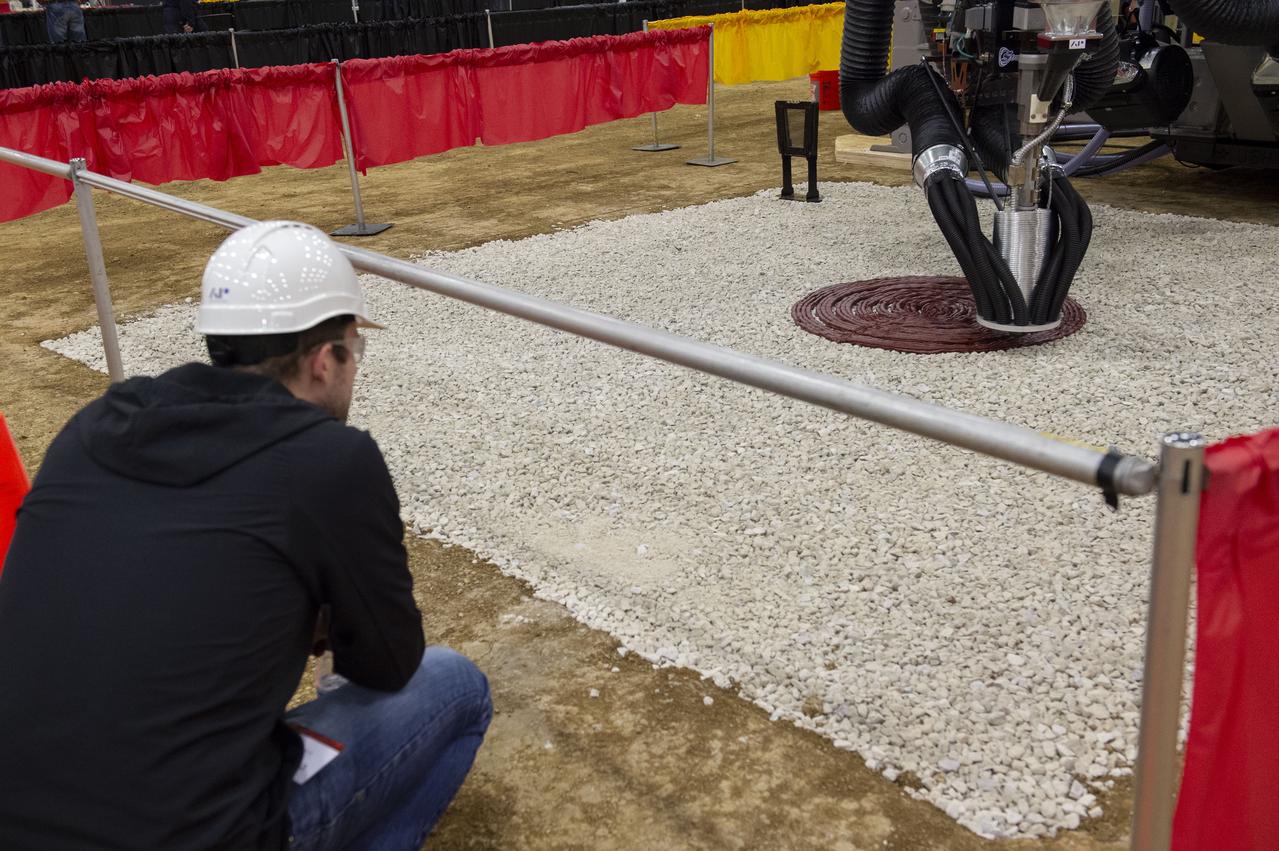
Team Penn State prepares their 3D-printer to begin printing a subscale habitat structure at NASA's 3D-Printed Habitat Challenge, held at the Caterpillar Edwards Demonstration & Learning Center in Edwards, Illinois, May 1-4, 2019. The habitat print is the final level of the multi-phase competition, which began in in 2015. The 3D-Printed Habitat Challenge is a competition to create sustainable shelters suitable for the Moon, Mars or beyond using resources available on-site in these locations. The challenge is managed by NASA's Centennial Challenges program, and partner Bradley University of Peoria, Illinois.
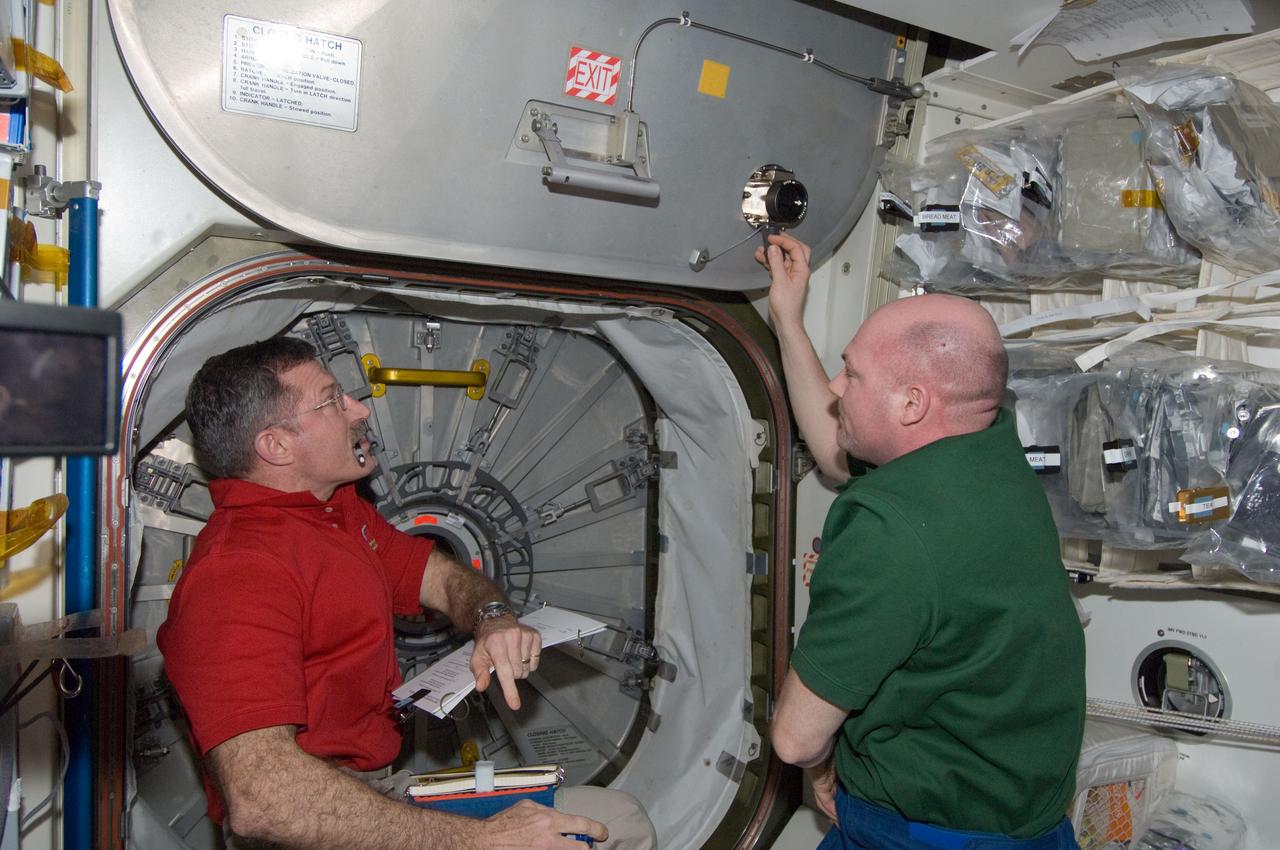
ISS030-E-173929 (24 March 2012) --- NASA astronaut Dan Burbank (left), Expedition 30 commander; and European Space Agency astronaut Andre Kuipers, flight engineer, are pictured near a hatch in the International Space Station as crew members prepare to move to the appropriate Soyuz vehicles, due to the possibility that space debris could pass close to the station. Burbank, Shkaplerov and Ivanishin sheltered in the Soyuz TMA-22 spacecraft attached to the Poisk Mini-Research Module 2 (MRM2) while Kononenko, Kuipers and Pettit took to the Soyuz TMA-03M docked to the Rassvet Mini-Research Module 1 (MRM-1).
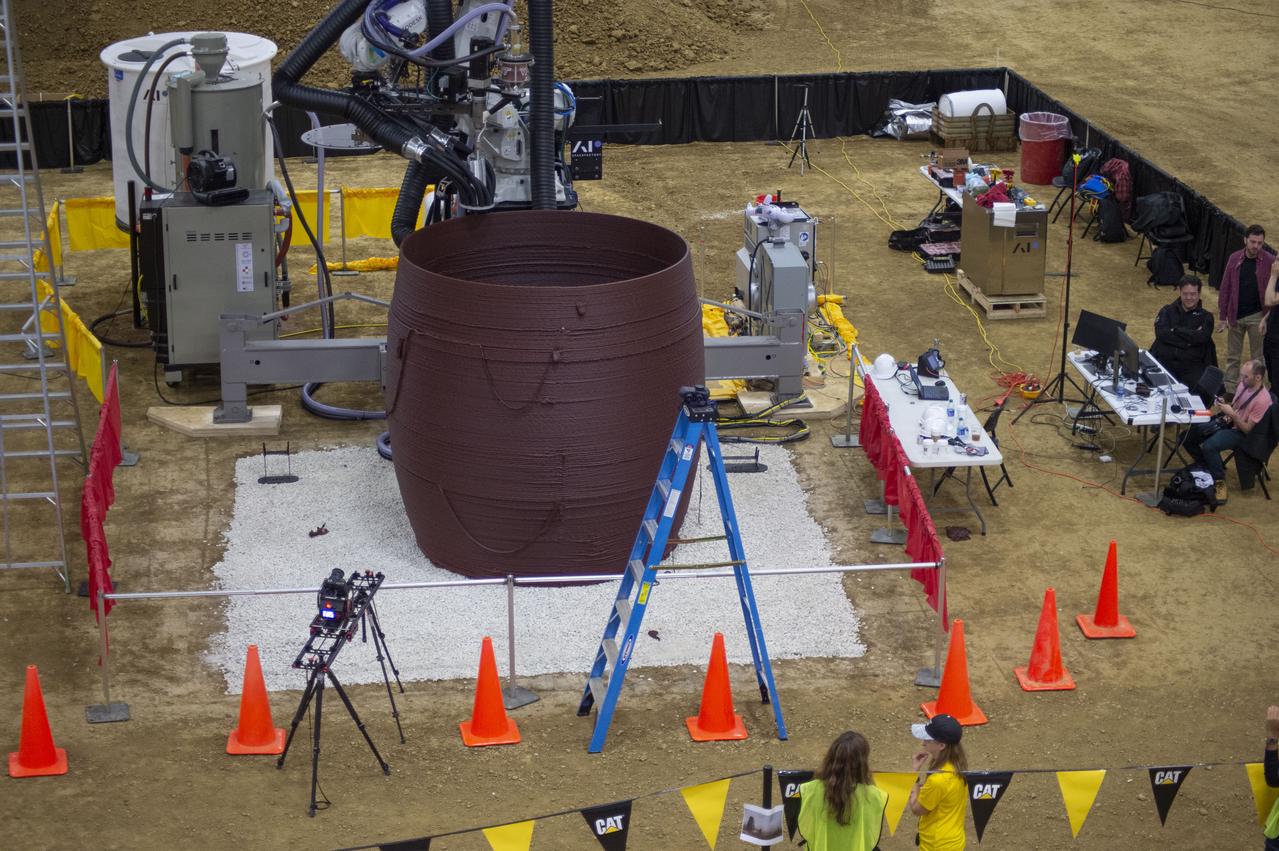
Two teams - Penn State (left) and AI. SpaceFactory (right) competed to 3D-print subscale habitat structures at NASA's 3D-Printed Habitat Challenge, held at the Caterpillar Edwards Demonstration & Learning Center in Edwards, Illinois, May 1-4, 2019. The habitat print is the final level of the multi-phase competition, which began in in 2015. The 3D-Printed Habitat Challenge is a competition to create sustainable shelters suitable for the Moon, Mars or beyond using resources available on-site in these locations. The challenge is managed by NASA's Centennial Challenges program, and partner Bradley University of Peoria, Illinois.
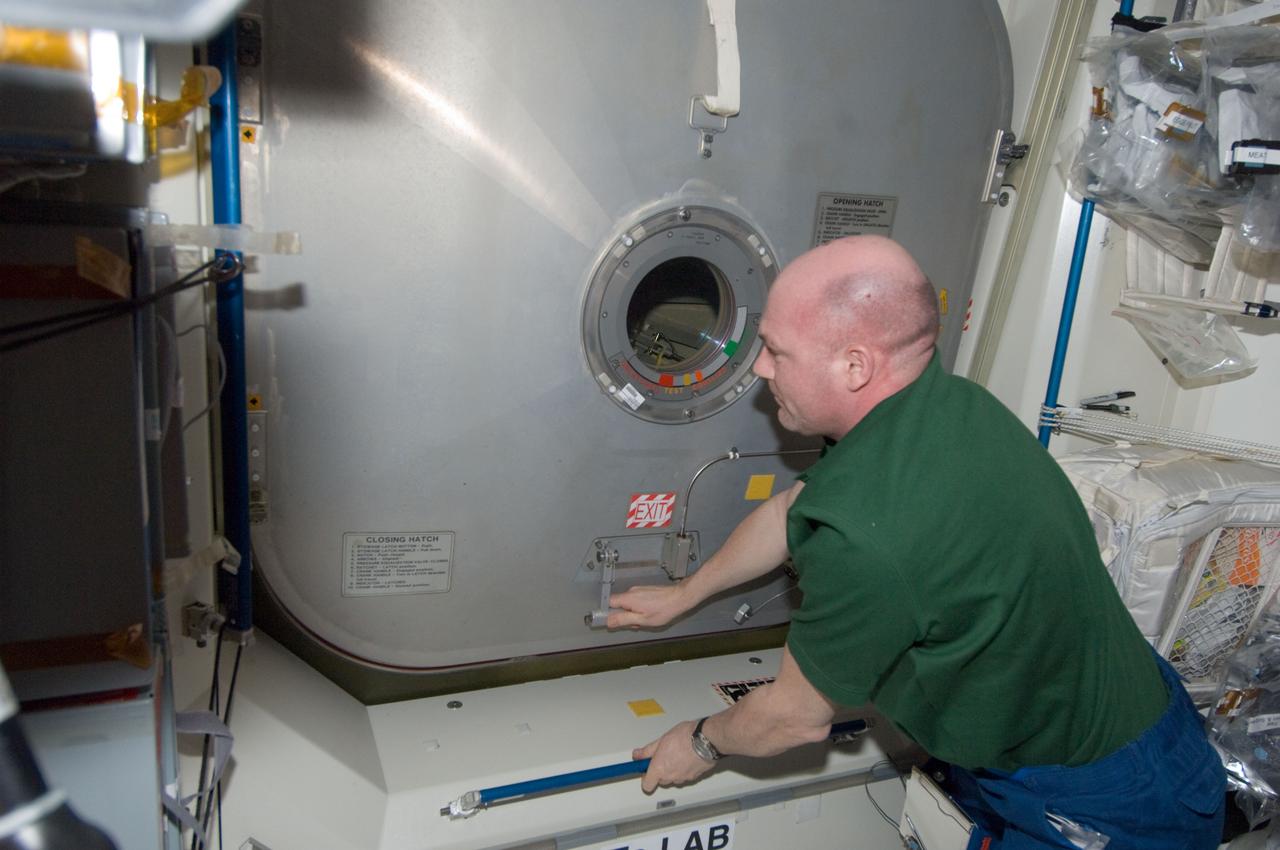
ISS030-E-173931 (24 March 2012) --- European Space Agency astronaut Andre Kuipers, Expedition 30 flight engineer, closes a hatch in the International Space Station as crew members prepare to move to the appropriate Soyuz vehicles, due to the possibility that space debris could pass close to the station. Burbank, Shkaplerov and Ivanishin sheltered in the Soyuz TMA-22 spacecraft attached to the Poisk Mini-Research Module 2 (MRM2) while Kononenko, Kuipers and Pettit took to the Soyuz TMA-03M docked to the Rassvet Mini-Research Module 1 (MRM-1).
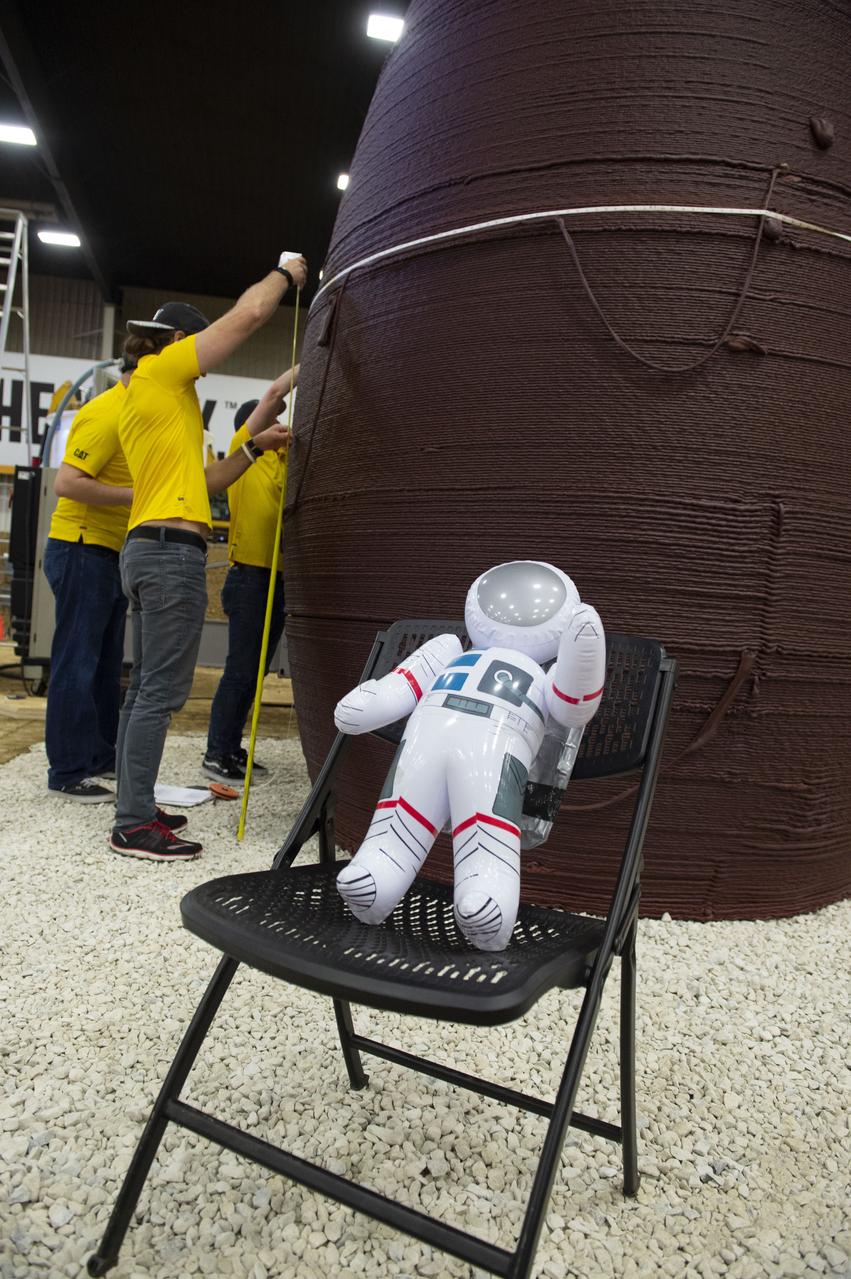
Team AI. SpaceFactory's subscale habitat structure about two-thirds complete at NASA's 3D-Printed Habitat Challenge, held at the Caterpillar Edwards Demonstration & Learning Center in Edwards, Illinois, May 1-4, 2019. The habitat print is the final level of the multi-phase competition, which began in in 2015. The 3D-Printed Habitat Challenge is a competition to create sustainable shelters suitable for the Moon, Mars or beyond using resources available on-site in these locations. The challenge is managed by NASA's Centennial Challenges program, and partner Bradley University of Peoria, Illinois.
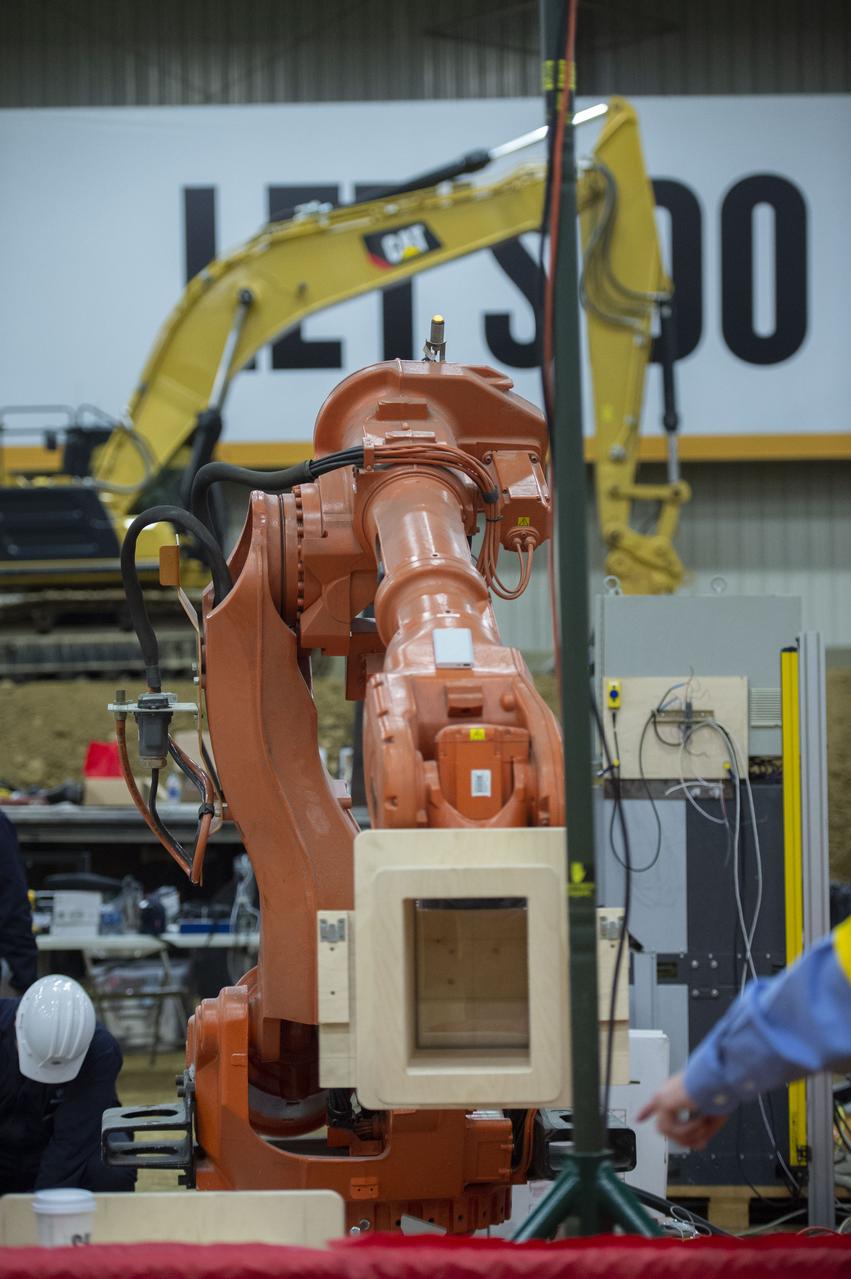
Team Penn State prepares their 3D-printer to begin printing a subscale habitat structure at NASA's 3D-Printed Habitat Challenge, held at the Caterpillar Edwards Demonstration & Learning Center in Edwards, Illinois, May 1-4, 2019. The habitat print is the final level of the multi-phase competition, which began in in 2015. The 3D-Printed Habitat Challenge is a competition to create sustainable shelters suitable for the Moon, Mars or beyond using resources available on-site in these locations. The challenge is managed by NASA's Centennial Challenges program, and partner Bradley University of Peoria, Illinois.
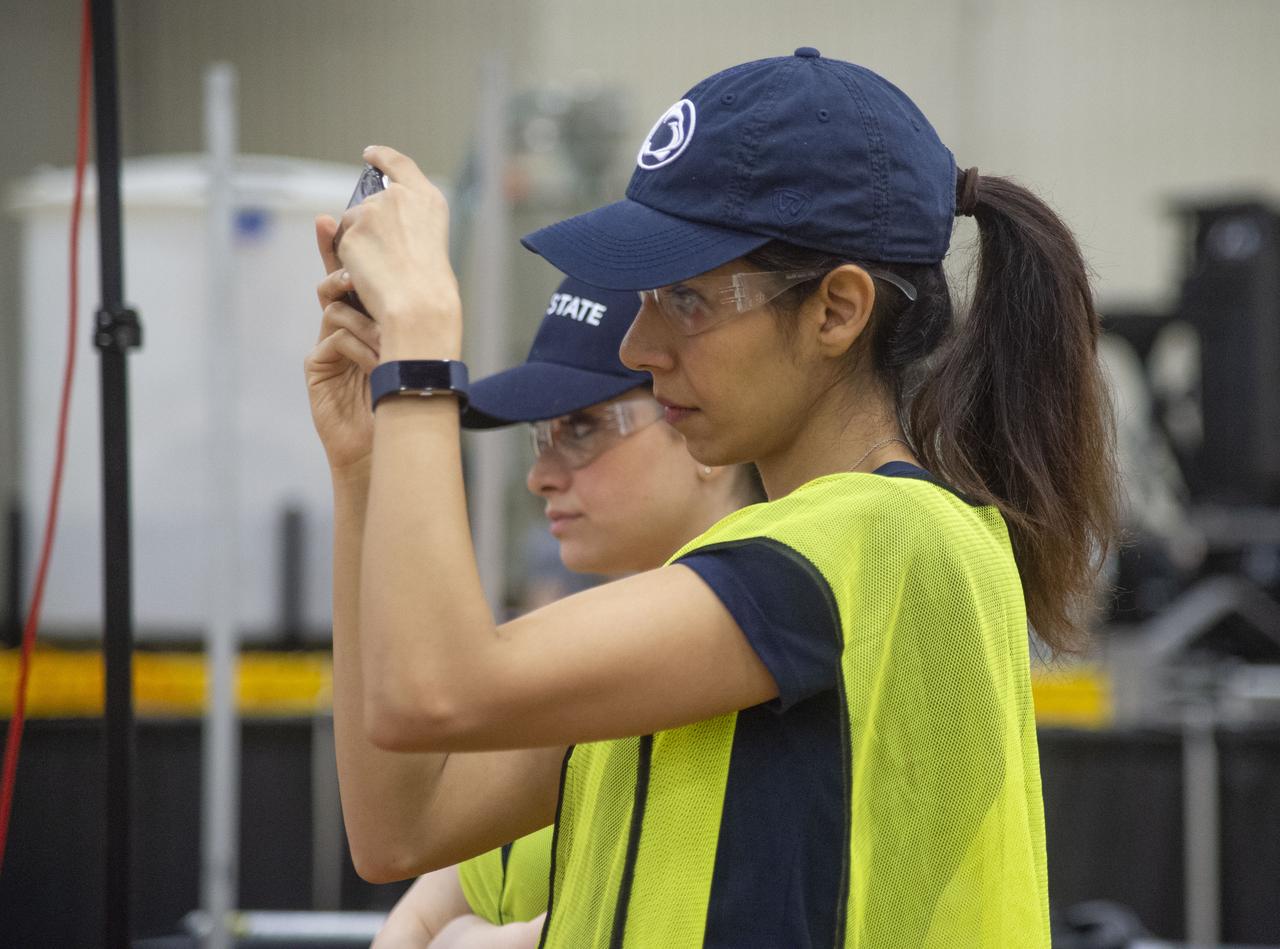
Team Penn State prepares their 3D-printer to begin printing a subscale habitat structure at NASA's 3D-Printed Habitat Challenge, held at the Caterpillar Edwards Demonstration & Learning Center in Edwards, Illinois, May 1-4, 2019. The habitat print is the final level of the multi-phase competition, which began in in 2015. The 3D-Printed Habitat Challenge is a competition to create sustainable shelters suitable for the Moon, Mars or beyond using resources available on-site in these locations. The challenge is managed by NASA's Centennial Challenges program, and partner Bradley University of Peoria, Illinois.
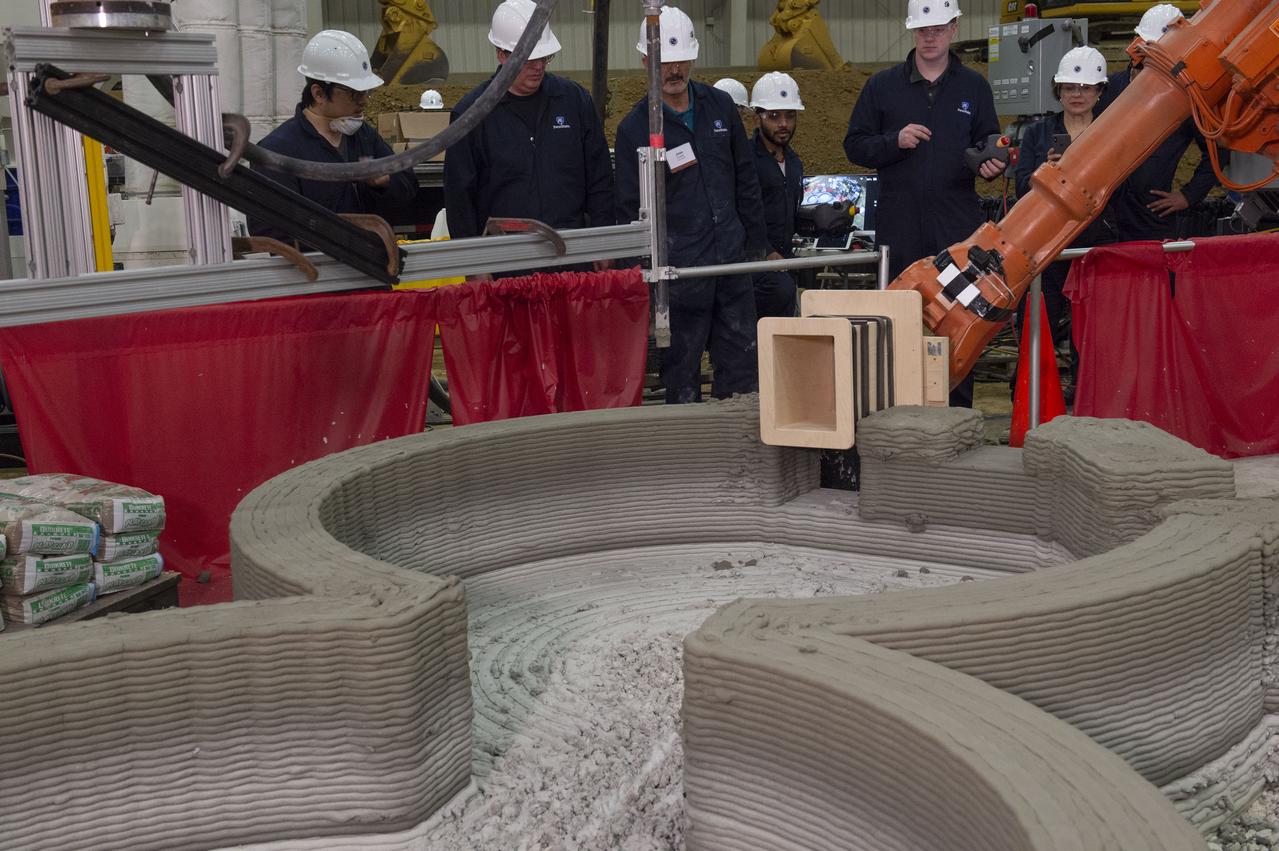
Team Penn State prepares their 3D-printer to begin printing a subscale habitat structure at NASA's 3D-Printed Habitat Challenge, held at the Caterpillar Edwards Demonstration & Learning Center in Edwards, Illinois, May 1-4, 2019. The habitat print is the final level of the multi-phase competition, which began in in 2015. The 3D-Printed Habitat Challenge is a competition to create sustainable shelters suitable for the Moon, Mars or beyond using resources available on-site in these locations. The challenge is managed by NASA's Centennial Challenges program, and partner Bradley University of Peoria, Illinois.
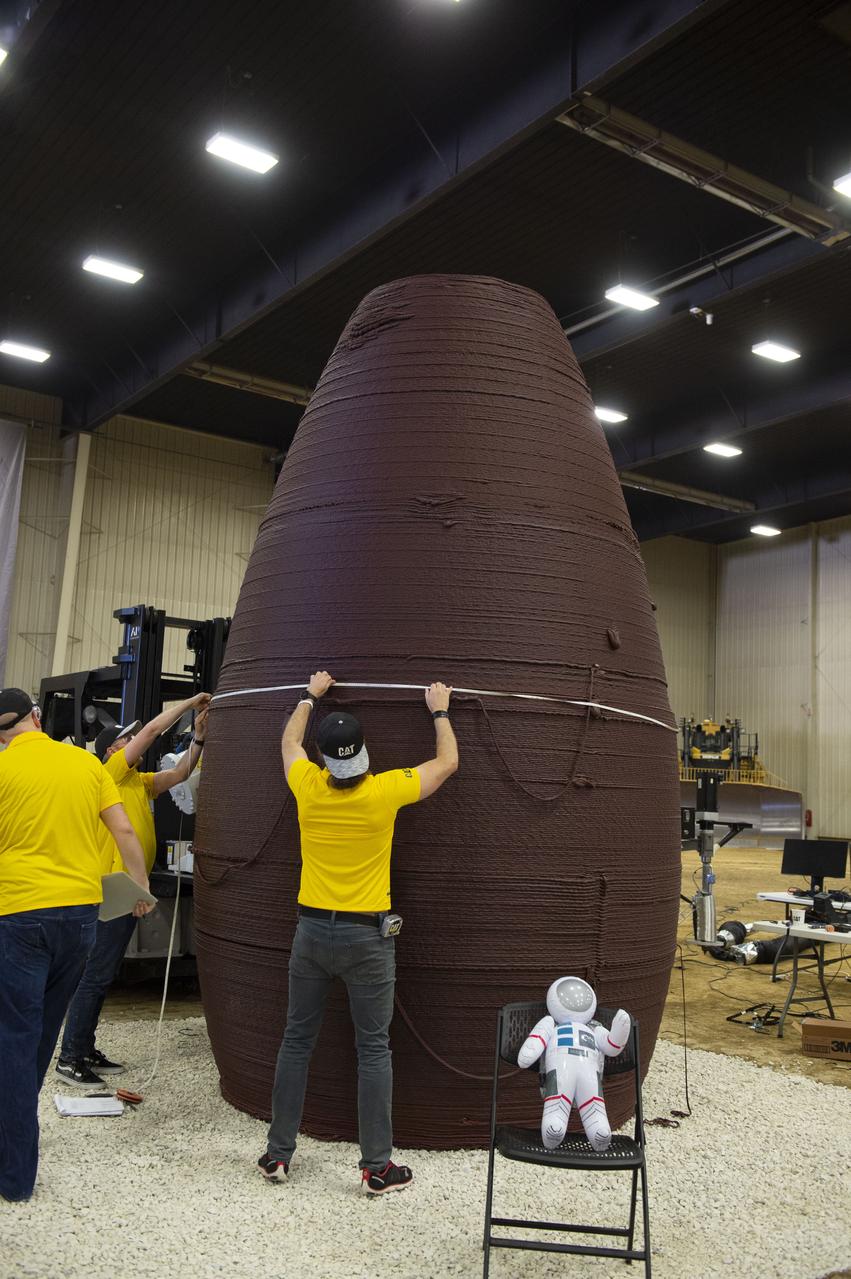
Two teams - Penn State (left) and AI. SpaceFactory (right) competed to 3D-print subscale habitat structures at NASA's 3D-Printed Habitat Challenge, held at the Caterpillar Edwards Demonstration & Learning Center in Edwards, Illinois, May 1-4, 2019. The habitat print is the final level of the multi-phase competition, which began in in 2015. The 3D-Printed Habitat Challenge is a competition to create sustainable shelters suitable for the Moon, Mars or beyond using resources available on-site in these locations. The challenge is managed by NASA's Centennial Challenges program, and partner Bradley University of Peoria, Illinois.
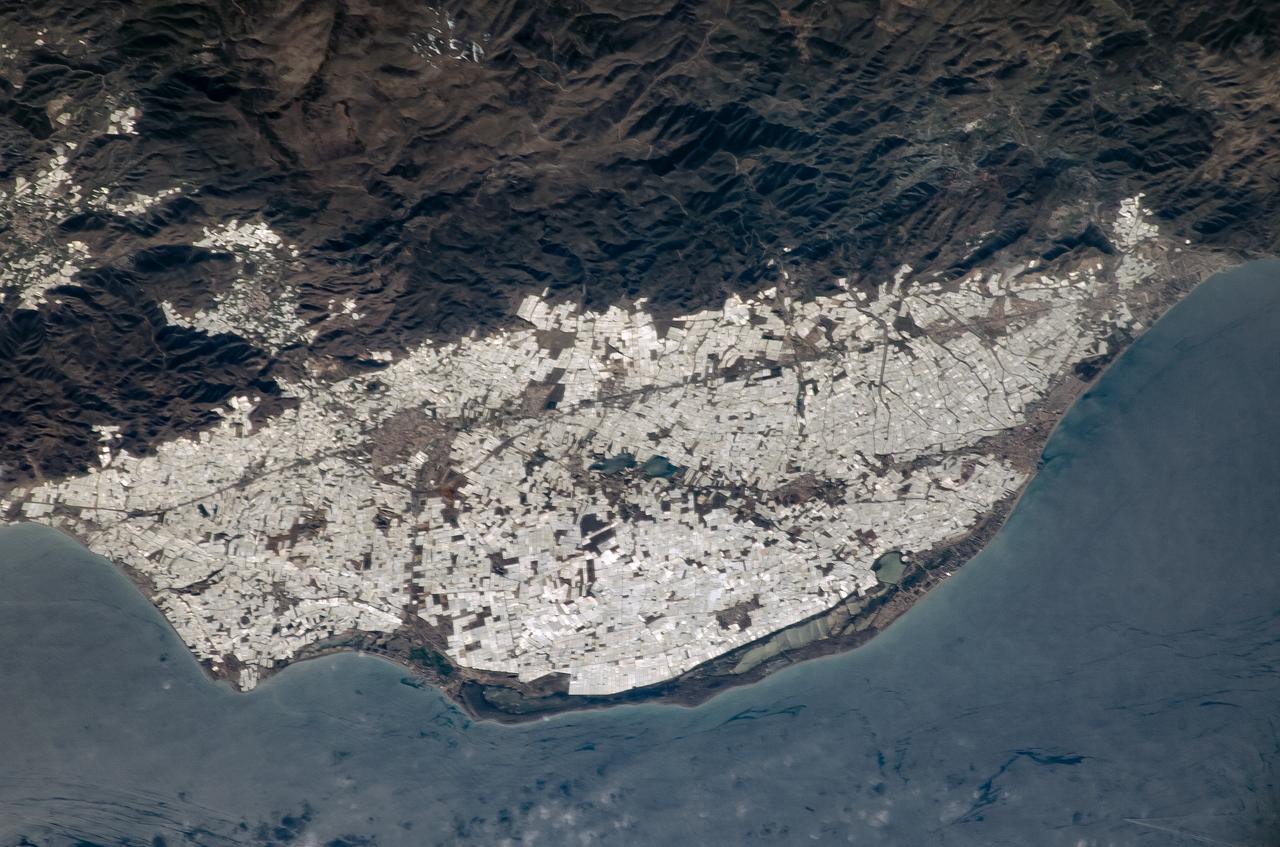
ISS008-E-14686 (7 February 2004) --- This image featuring southern Spain was photographed by an Expedition 8 crewmember on the International Space Station (ISS). Over the past 50 years, the small coastal plain (campo), some 30 kilometers southwest of the city of Almeria, has been intensively developed for agriculture. The area has a dry mild, Mediterranean climate and is further sheltered on the north by the Sierra de Gador. Note the dense, bright pattern of thousands of greenhouses extending from the shoreline right up to the base of the mountains and even into some of the smaller valleys. Saltpan operations can also be seen in the long coastal lagoons.
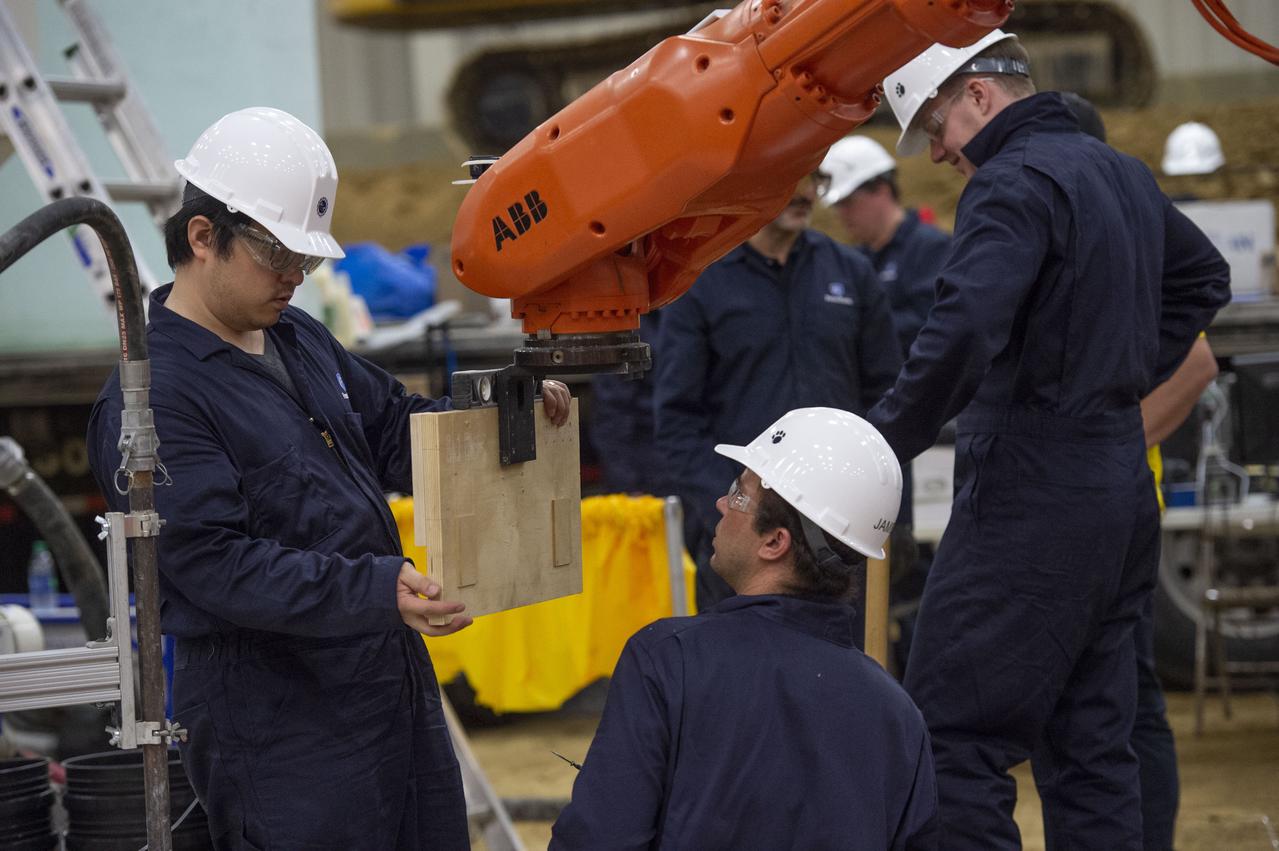
Team Penn State prepares their 3D-printer to begin printing a subscale habitat structure at NASA's 3D-Printed Habitat Challenge, held at the Caterpillar Edwards Demonstration & Learning Center in Edwards, Illinois, May 1-4, 2019. The habitat print is the final level of the multi-phase competition, which began in in 2015. The 3D-Printed Habitat Challenge is a competition to create sustainable shelters suitable for the Moon, Mars or beyond using resources available on-site in these locations. The challenge is managed by NASA's Centennial Challenges program, and partner Bradley University of Peoria, Illinois.
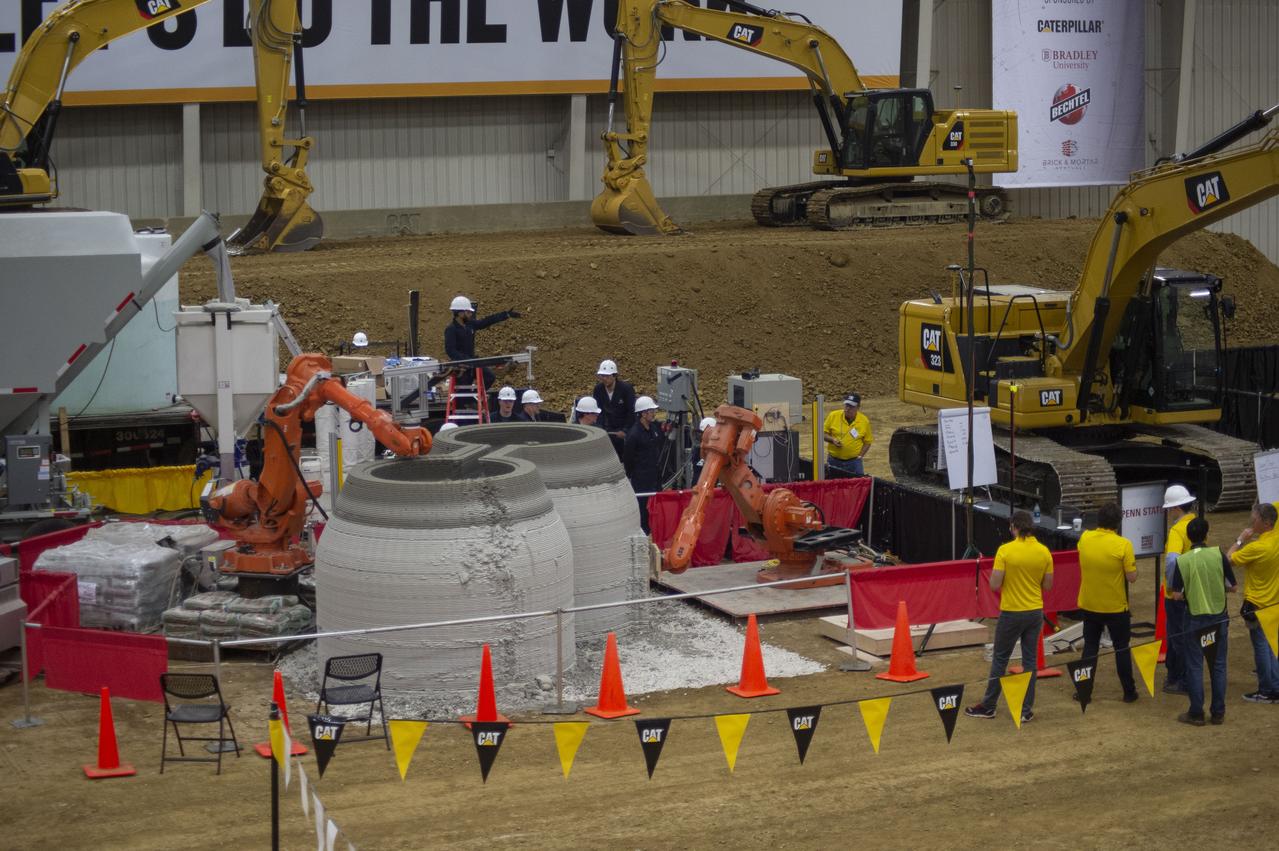
Team Penn State prepares their 3D-printer to begin printing a subscale habitat structure at NASA's 3D-Printed Habitat Challenge, held at the Caterpillar Edwards Demonstration & Learning Center in Edwards, Illinois, May 1-4, 2019. The habitat print is the final level of the multi-phase competition, which began in in 2015. The 3D-Printed Habitat Challenge is a competition to create sustainable shelters suitable for the Moon, Mars or beyond using resources available on-site in these locations. The challenge is managed by NASA's Centennial Challenges program, and partner Bradley University of Peoria, Illinois.
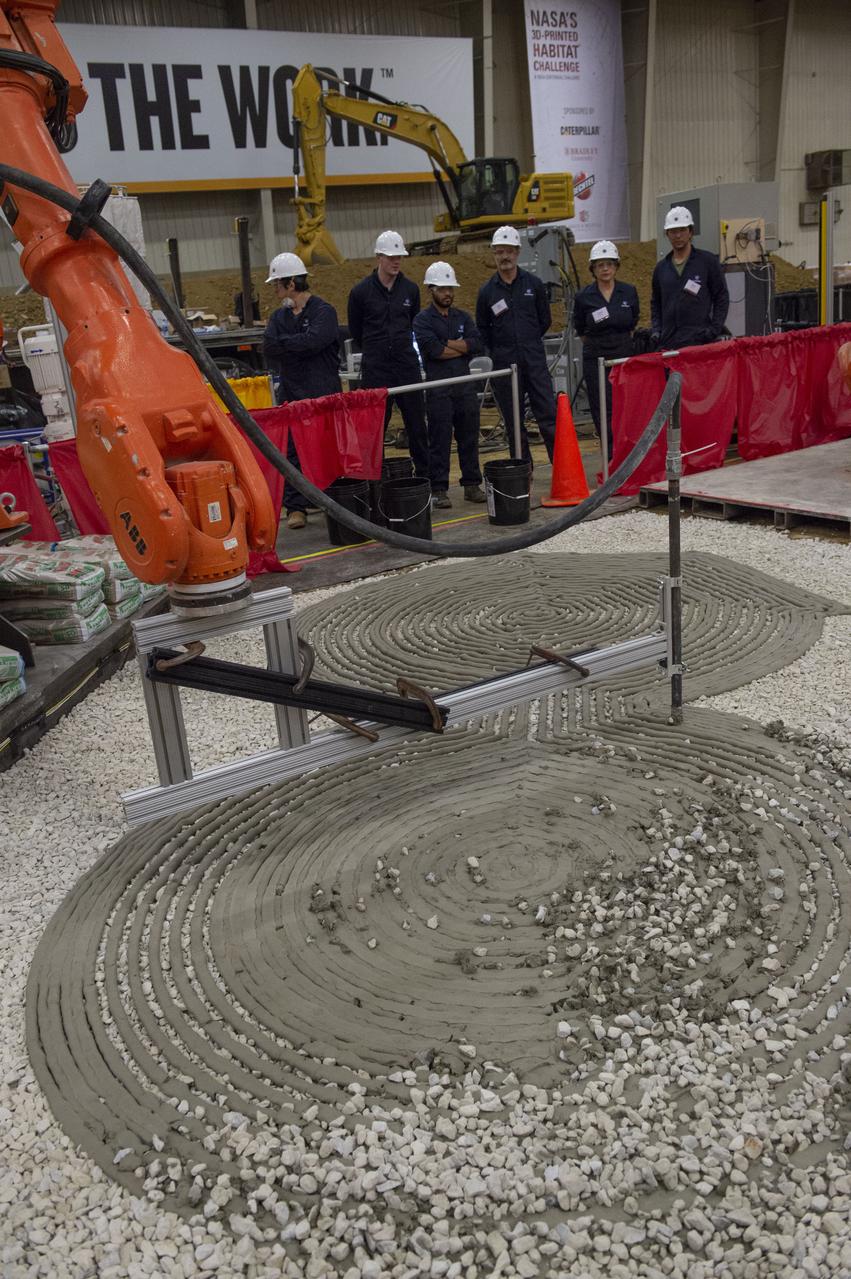
Team Penn State prepares their 3D-printer to begin printing a subscale habitat structure at NASA's 3D-Printed Habitat Challenge, held at the Caterpillar Edwards Demonstration & Learning Center in Edwards, Illinois, May 1-4, 2019. The habitat print is the final level of the multi-phase competition, which began in in 2015. The 3D-Printed Habitat Challenge is a competition to create sustainable shelters suitable for the Moon, Mars or beyond using resources available on-site in these locations. The challenge is managed by NASA's Centennial Challenges program, and partner Bradley University of Peoria, Illinois.
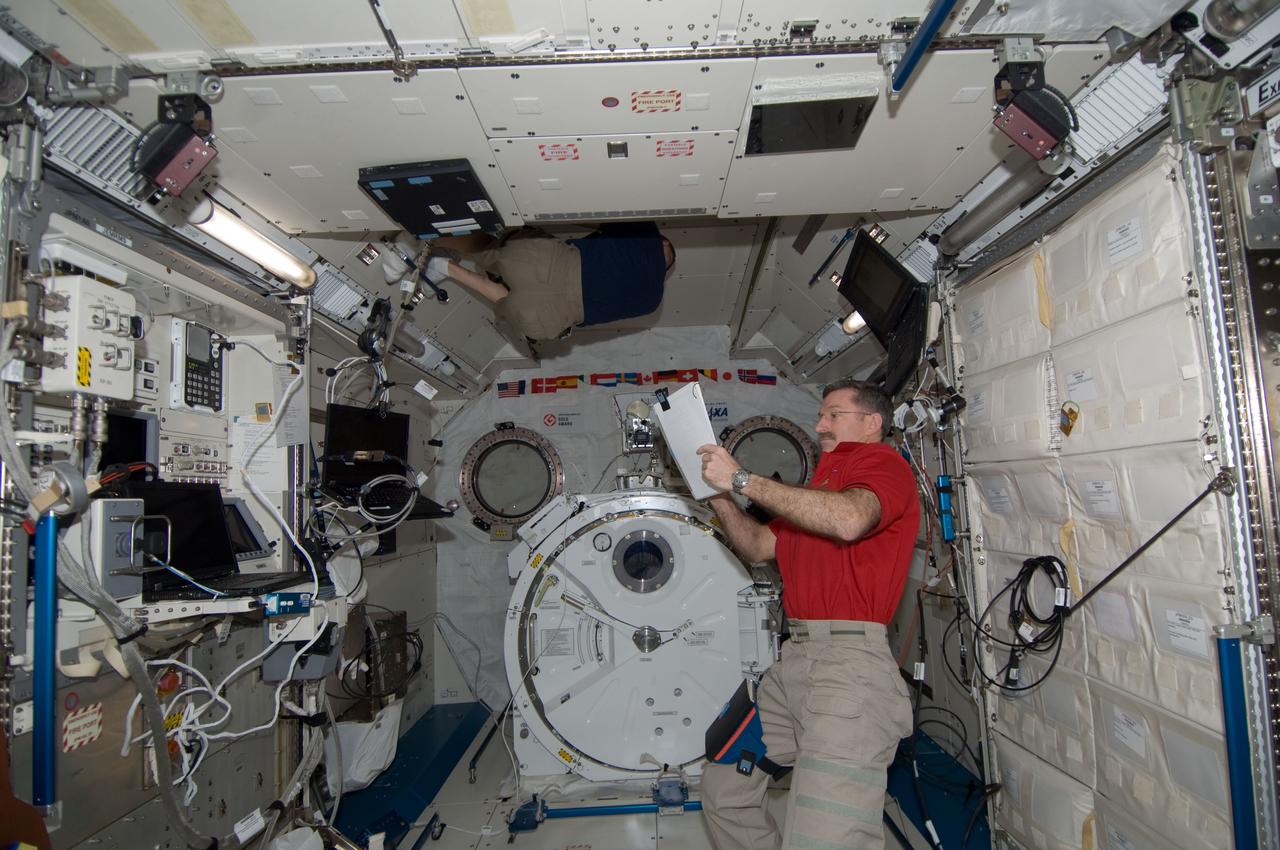
ISS030-E-173911 (24 March 2012) --- NASA astronaut Dan Burbank, Expedition 30 commander, reviews crew procedures in the Kibo laboratory of the International Space Station as crew members prepare to move to the appropriate Soyuz vehicles, due to the possibility that space debris could pass close to the station. Burbank, Shkaplerov and Ivanishin sheltered in the Soyuz TMA-22 spacecraft attached to the Poisk Mini-Research Module 2 (MRM2) while Kononenko, Kuipers and Pettit took to the Soyuz TMA-03M docked to the Rassvet Mini-Research Module 1 (MRM-1).

Team Penn State prepares their 3D-printer to begin printing a subscale habitat structure at NASA's 3D-Printed Habitat Challenge, held at the Caterpillar Edwards Demonstration & Learning Center in Edwards, Illinois, May 1-4, 2019. The habitat print is the final level of the multi-phase competition, which began in in 2015. The 3D-Printed Habitat Challenge is a competition to create sustainable shelters suitable for the Moon, Mars or beyond using resources available on-site in these locations. The challenge is managed by NASA's Centennial Challenges program, and partner Bradley University of Peoria, Illinois.
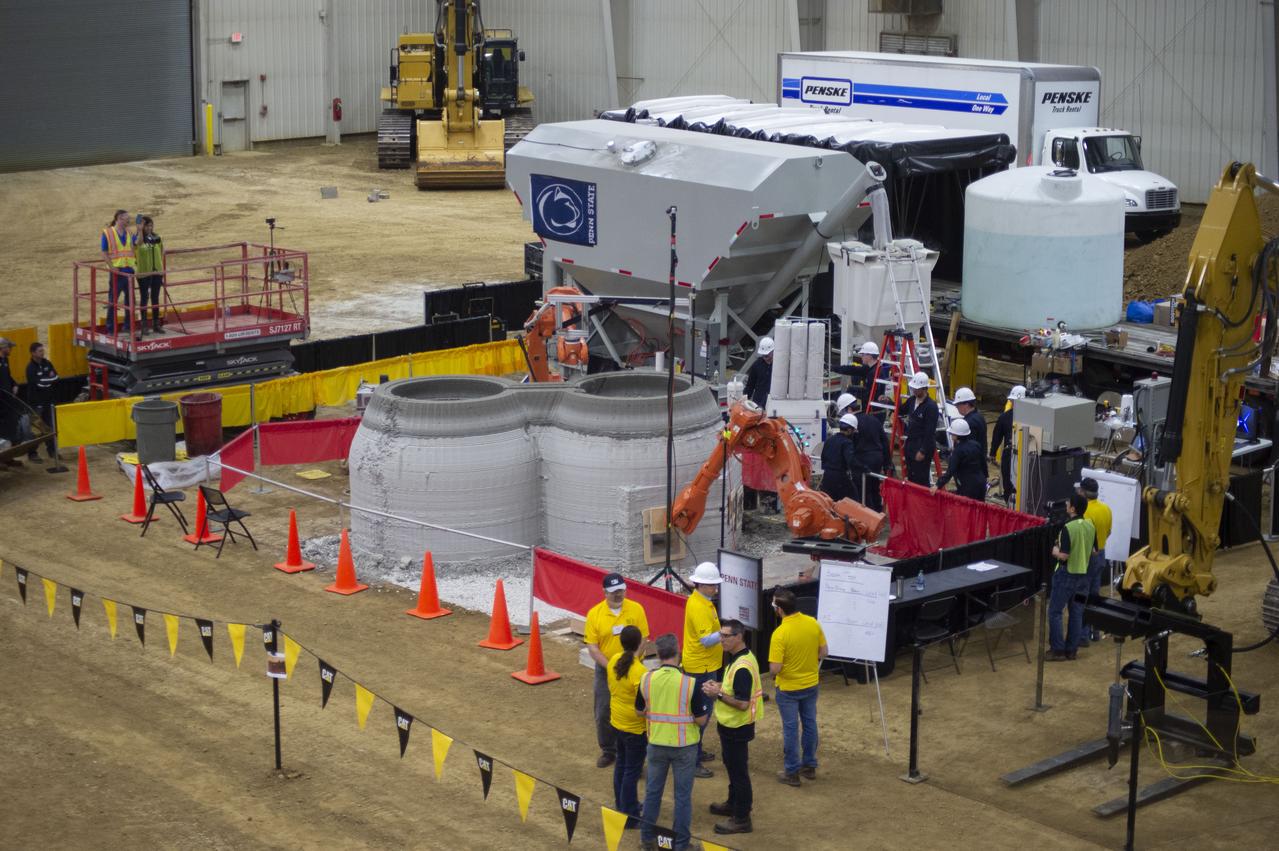
Team Penn State prepares their 3D-printer to begin printing a subscale habitat structure at NASA's 3D-Printed Habitat Challenge, held at the Caterpillar Edwards Demonstration & Learning Center in Edwards, Illinois, May 1-4, 2019. The habitat print is the final level of the multi-phase competition, which began in in 2015. The 3D-Printed Habitat Challenge is a competition to create sustainable shelters suitable for the Moon, Mars or beyond using resources available on-site in these locations. The challenge is managed by NASA's Centennial Challenges program, and partner Bradley University of Peoria, Illinois.
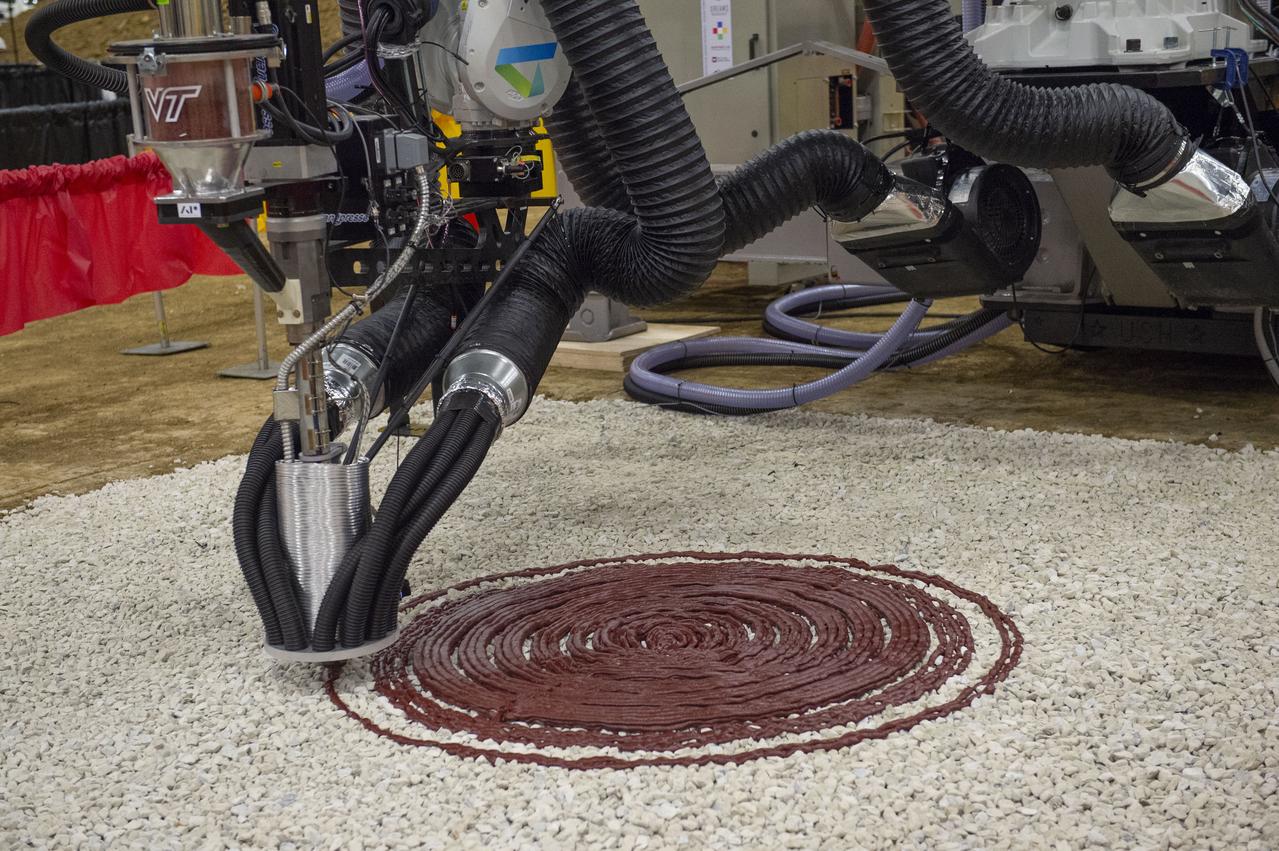
AI. SpaceFactory of New York and Pennsylvania State Team Penn State prepares their 3D-printer to begin printing a subscale habitat structure at NASA's 3D-Printed Habitat Challenge, held at the Caterpillar Edwards Demonstration & Learning Center in Edwards, Illinois, May 1-4, 2019. The habitat print is the final level of the multi-phase competition, which began in in 2015. The 3D-Printed Habitat Challenge is a competition to create sustainable shelters suitable for the Moon, Mars or beyond using resources available on-site in these locations. The challenge is managed by NASA's Centennial Challenges program, and partner Bradley University of Peoria, Illinois.
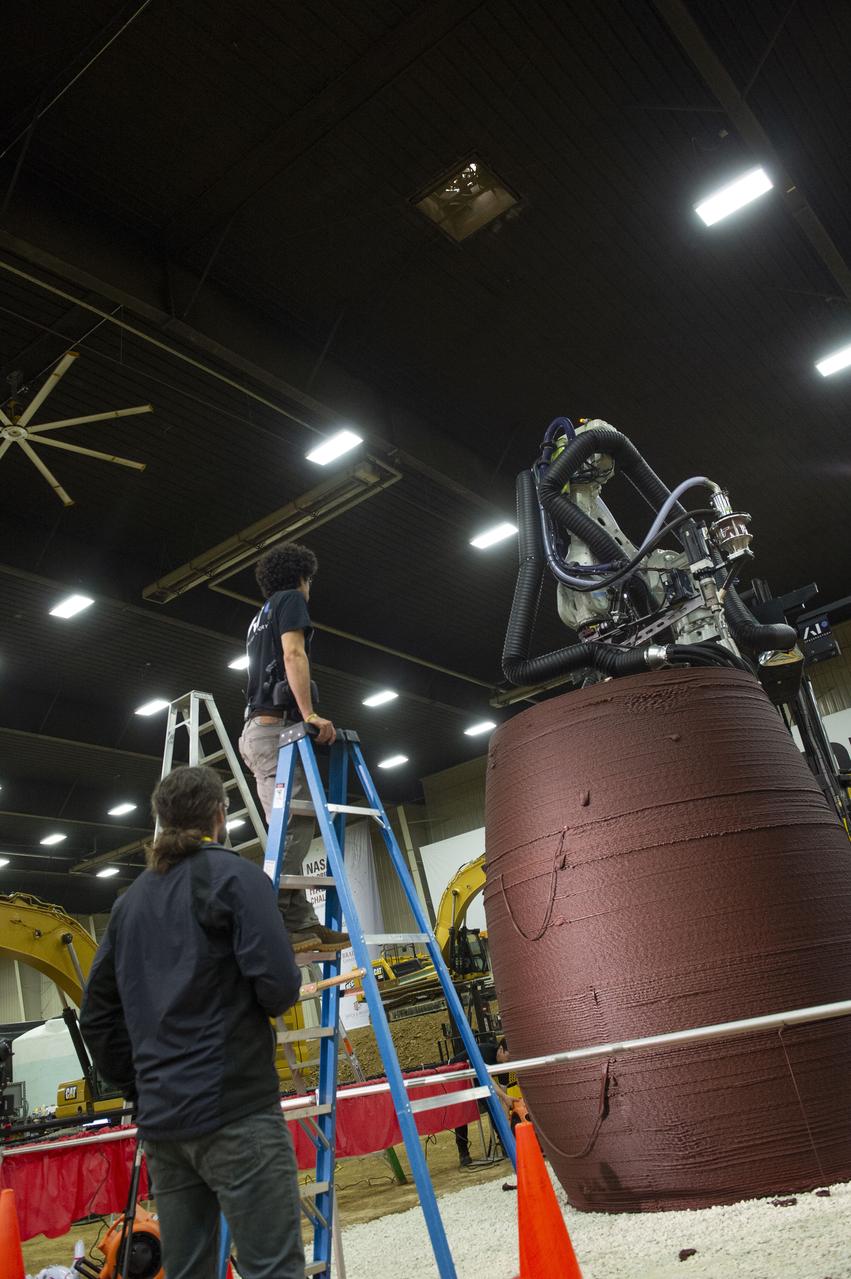
Two teams - Penn State (left) and AI. SpaceFactory (right) competed to 3D-print subscale habitat structures at NASA's 3D-Printed Habitat Challenge, held at the Caterpillar Edwards Demonstration & Learning Center in Edwards, Illinois, May 1-4, 2019. The habitat print is the final level of the multi-phase competition, which began in in 2015. The 3D-Printed Habitat Challenge is a competition to create sustainable shelters suitable for the Moon, Mars or beyond using resources available on-site in these locations. The challenge is managed by NASA's Centennial Challenges program, and partner Bradley University of Peoria, Illinois.
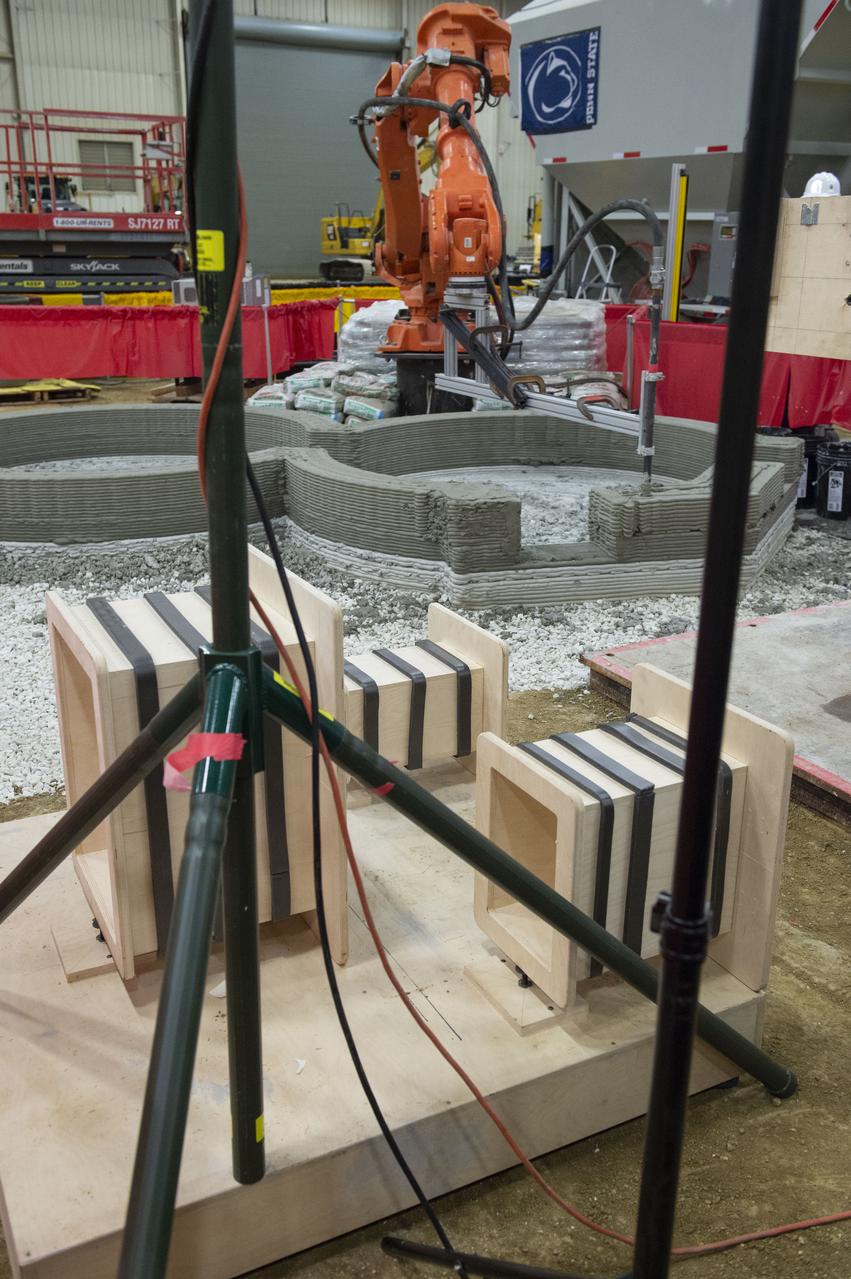
Team Penn State prepares their 3D-printer to begin printing a subscale habitat structure at NASA's 3D-Printed Habitat Challenge, held at the Caterpillar Edwards Demonstration & Learning Center in Edwards, Illinois, May 1-4, 2019. The habitat print is the final level of the multi-phase competition, which began in in 2015. The 3D-Printed Habitat Challenge is a competition to create sustainable shelters suitable for the Moon, Mars or beyond using resources available on-site in these locations. The challenge is managed by NASA's Centennial Challenges program, and partner Bradley University of Peoria, Illinois.
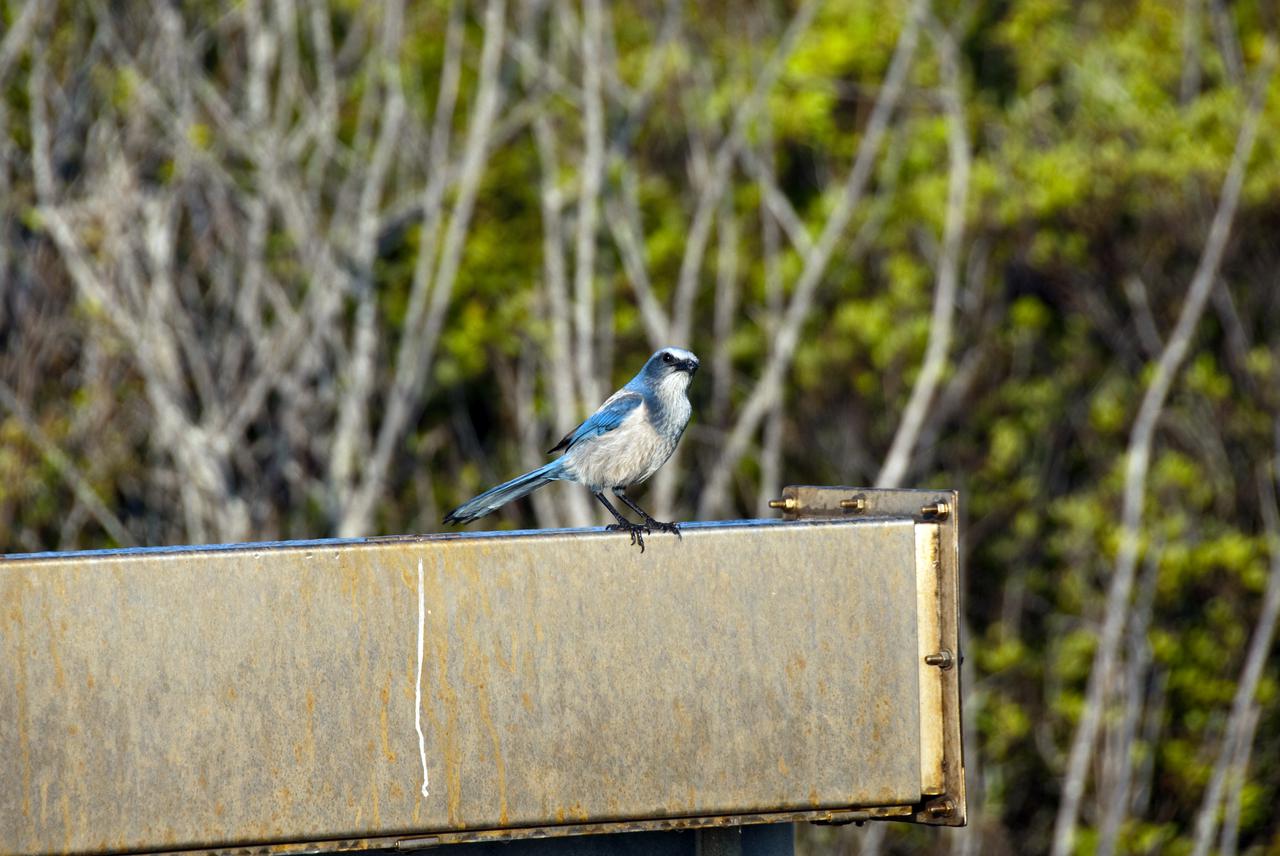
CAPE CANAVERAL, Fla. - At NASA's Kennedy Space Center in Florida, curiosity motivates a Florida scrub jay to investigate the activities of a NASA cameraman. The birds are one of several threatened species that reside on the Merritt Island National Wildlife Refuge which coexists with Kennedy Space Center. Scrub is a habitat unique to Florida, and one of the most important habitats for endangered species in the state. Species like the scrub jay, gopher tortoise and indigo snake rely on this habitat for food and shelter. The scrub oak acorn, for example, is a primary food source for the Florida scrub jay. Photo credit: NASA_Jim Grossmann
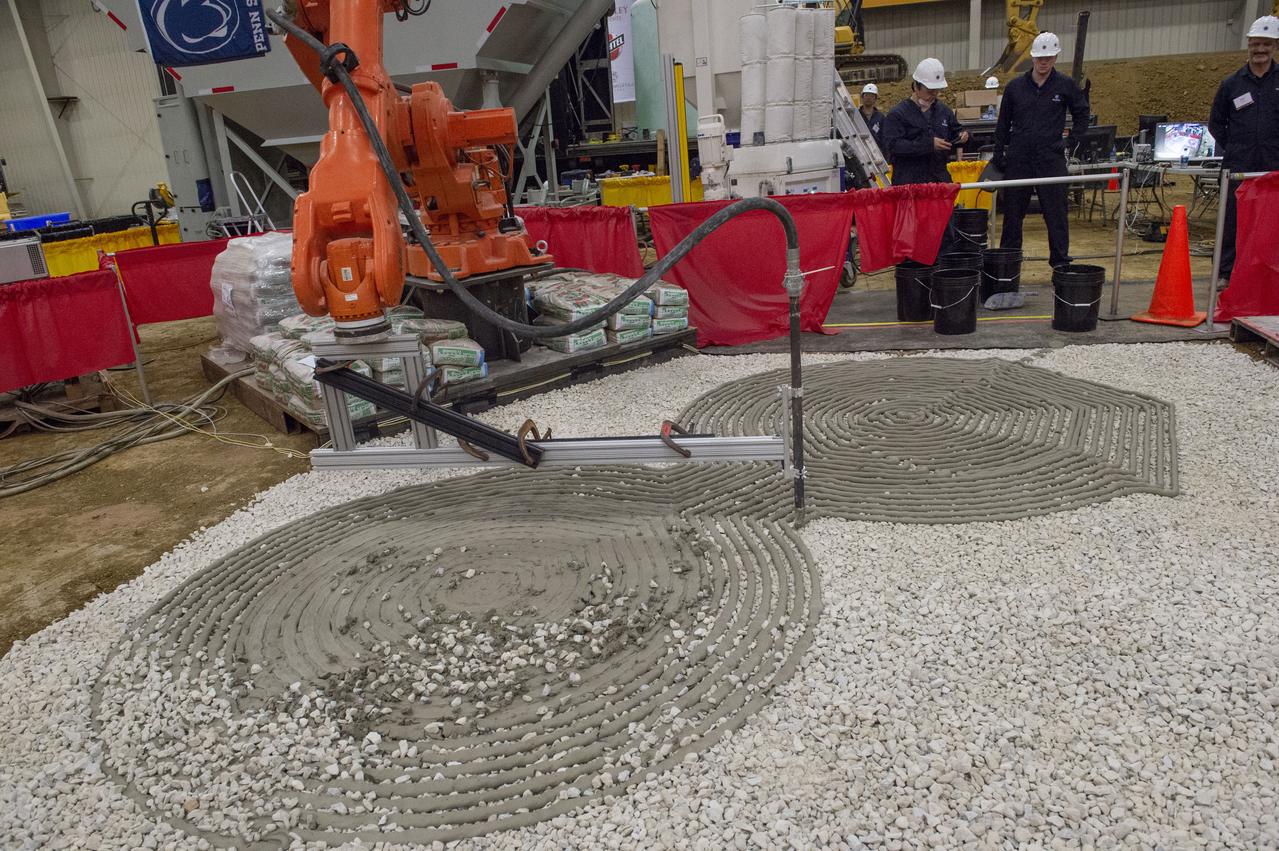
Team Penn State prepares their 3D-printer to begin printing a subscale habitat structure at NASA's 3D-Printed Habitat Challenge, held at the Caterpillar Edwards Demonstration & Learning Center in Edwards, Illinois, May 1-4, 2019. The habitat print is the final level of the multi-phase competition, which began in in 2015. The 3D-Printed Habitat Challenge is a competition to create sustainable shelters suitable for the Moon, Mars or beyond using resources available on-site in these locations. The challenge is managed by NASA's Centennial Challenges program, and partner Bradley University of Peoria, Illinois.
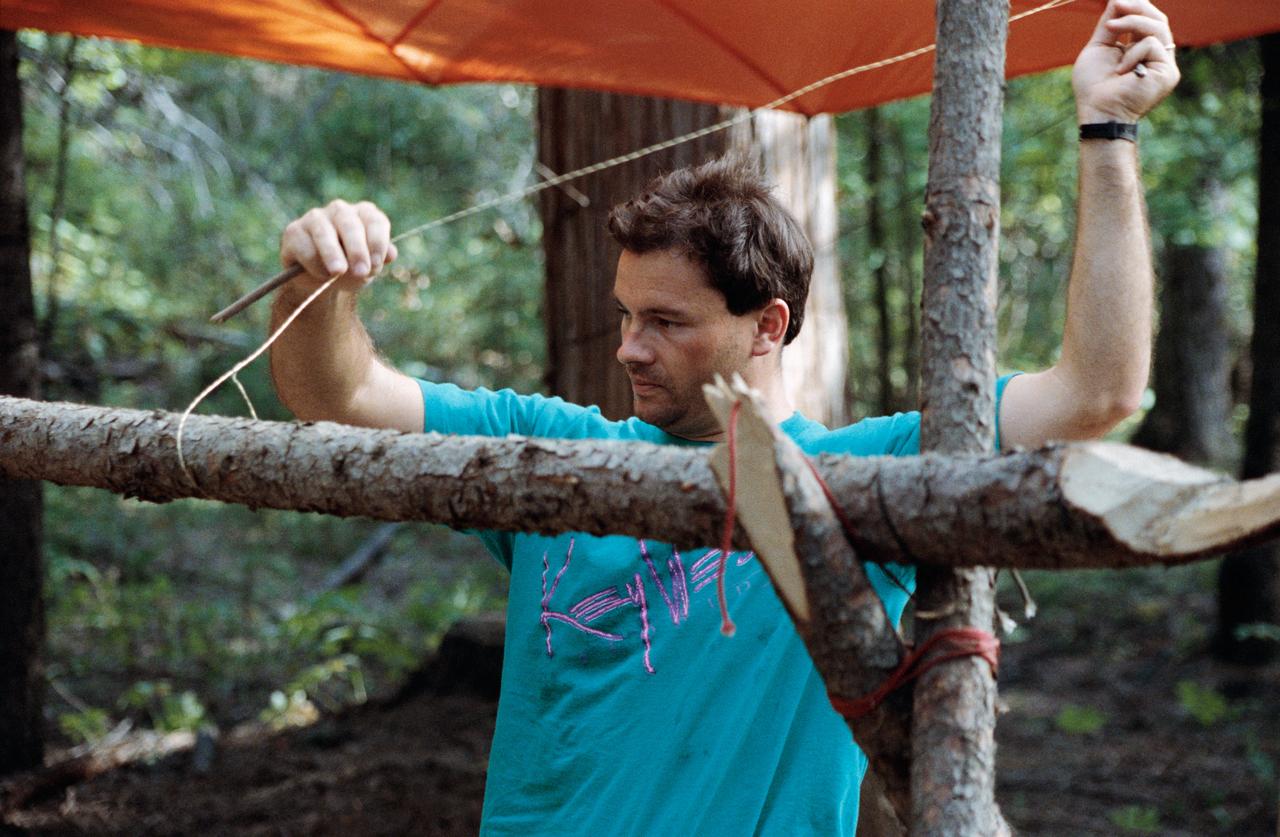
S92-46167 (16-20 Aug. 1992) --- Michael E. Lopez-Alegria, one of 19 astronaut candidates announced in March, fashions a shelter from wood and parachute material. He was taking in a four-day wilderness survival training course at Fairchild Air Force Base in Washington. Lopez-Alegria and his class mates had reported to the Johnson Space Center (JSC) in Houston, Texas, for initial training and evaluation earlier this month. EDITOR?S NOTE: Lopez-Alegria has been named fly aboard the Space Shuttle Columbia for the STS-73 mission, scheduled for 1995

Team AI. SpaceFactory's printer autonomously inserts a window into their 3D-printed subscale habitat structure at NASA's 3D-Printed Habitat Challenge, held at the Caterpillar Edwards Demonstration & Learning Center in Edwards, Illinois, May 1-4, 2019. The habitat print is the final level of the multi-phase competition, which began in in 2015. The 3D-Printed Habitat Challenge is a competition to create sustainable shelters suitable for the Moon, Mars or beyond using resources available on-site in these locations. The challenge is managed by NASA's Centennial Challenges program, and partner Bradley University of Peoria, Illinois.
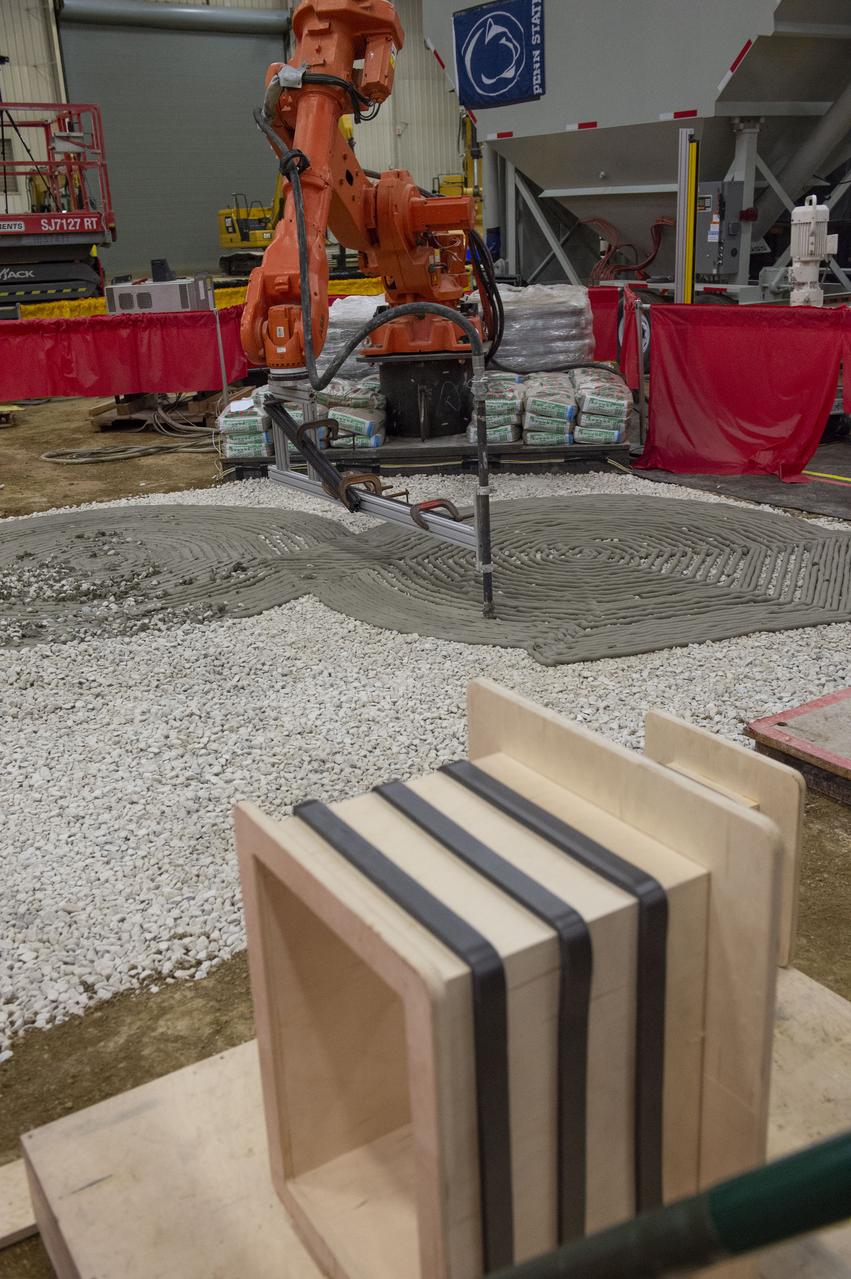
Team Penn State prepares their 3D-printer to begin printing a subscale habitat structure at NASA's 3D-Printed Habitat Challenge, held at the Caterpillar Edwards Demonstration & Learning Center in Edwards, Illinois, May 1-4, 2019. The habitat print is the final level of the multi-phase competition, which began in in 2015. The 3D-Printed Habitat Challenge is a competition to create sustainable shelters suitable for the Moon, Mars or beyond using resources available on-site in these locations. The challenge is managed by NASA's Centennial Challenges program, and partner Bradley University of Peoria, Illinois.
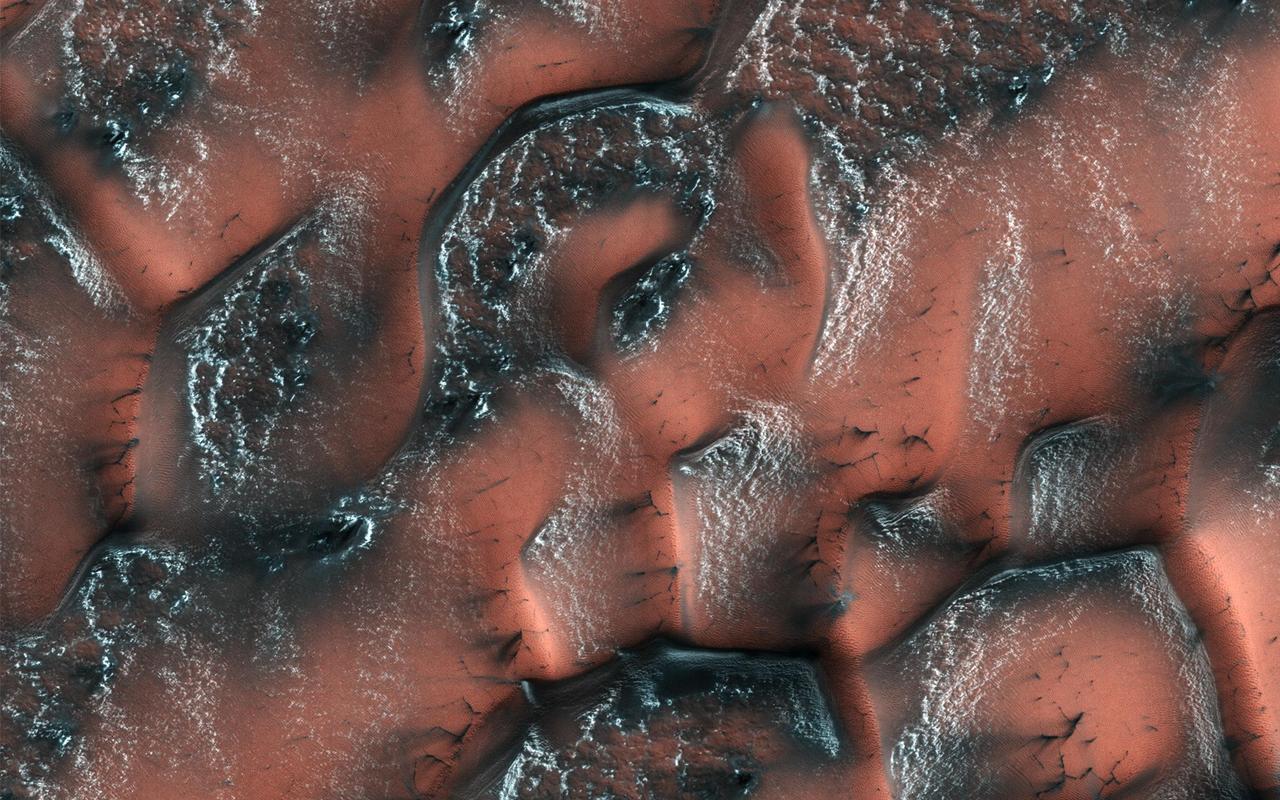
It is spring in the Northern hemisphere when NASA's Mars Reconnaissance Orbiter took this image. Over the winter, snow and ice have inexorably covered the dunes. Unlike on Earth, this snow and ice is carbon dioxide, better known to us as dry ice. When the sun starts shining on it in the spring, the ice on the smooth surface of the dune cracks and escaping gas carries dark sand out from the dune below, often creating beautiful patterns. On the rough surface between the dunes, frost is trapped behind small sheltered ridges. https://photojournal.jpl.nasa.gov/catalog/PIA21882
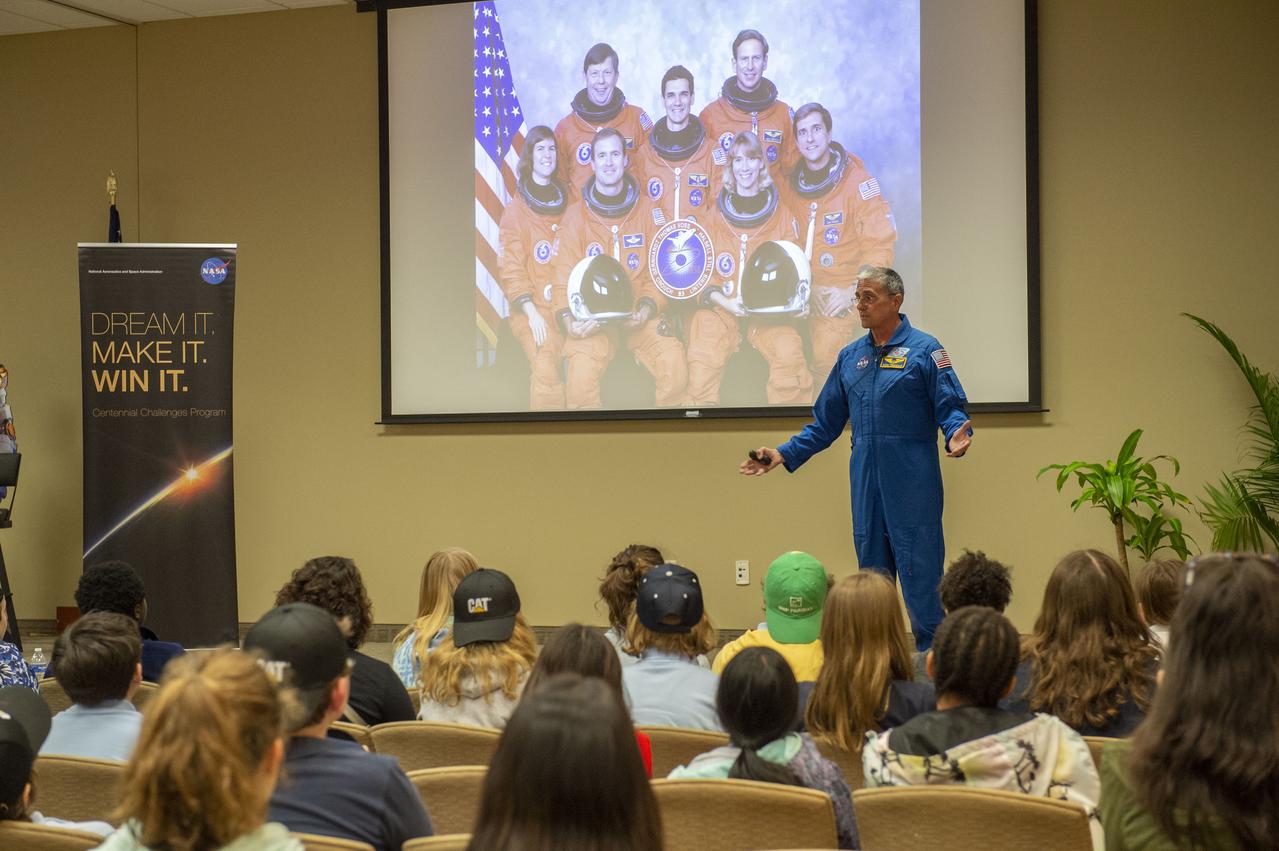
Team Penn State prepares their 3D-printer to begin printing a subscale habitat structure at NASA's 3D-Printed Habitat Challenge, held at the Caterpillar Edwards Demonstration & Learning Center in Edwards, Illinois, May 1-4, 2019. The habitat print is the final level of the multi-phase competition, which began in in 2015. The 3D-Printed Habitat Challenge is a competition to create sustainable shelters suitable for the Moon, Mars or beyond using resources available on-site in these locations. The challenge is managed by NASA's Centennial Challenges program, and partner Bradley University of Peoria, Illinois.
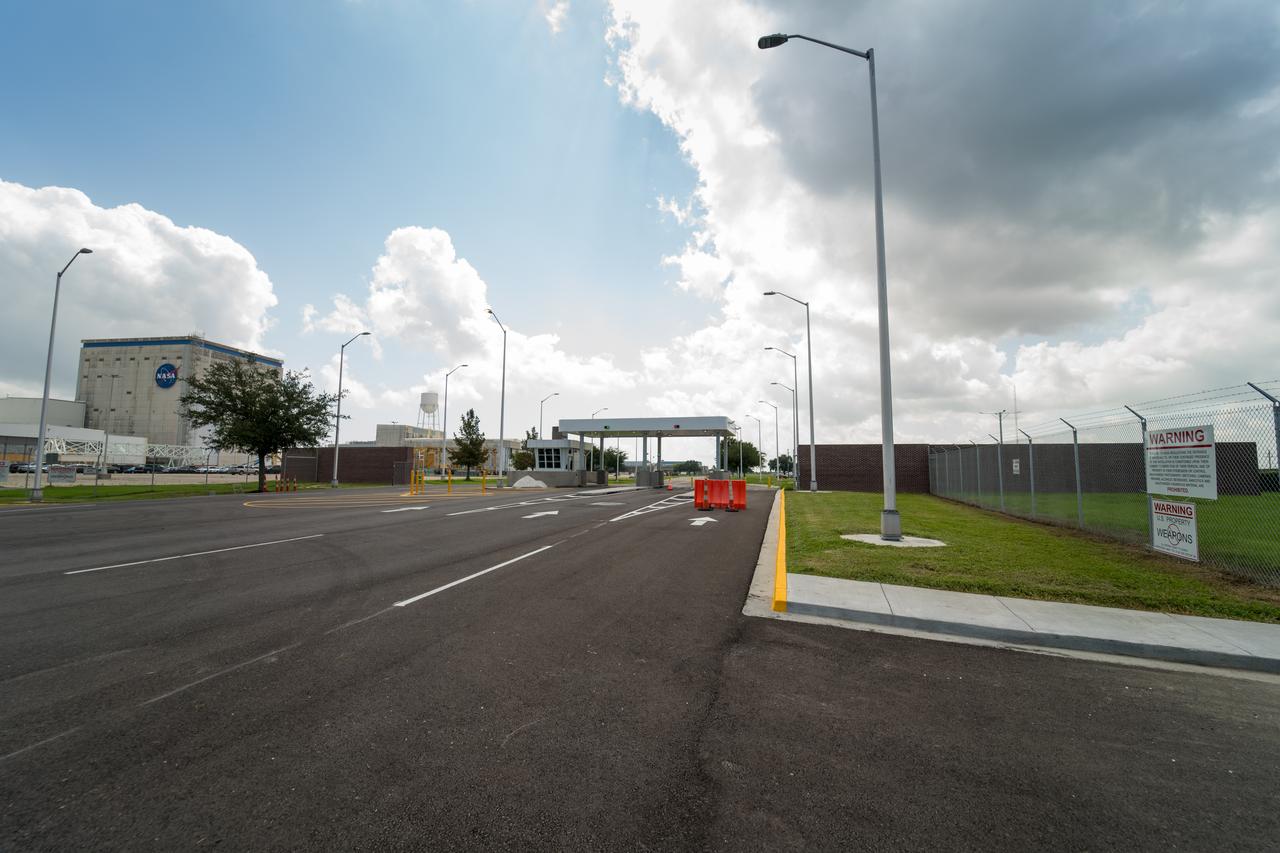
The main gate (Gate 7) of the Michoud Assembly Facility has been demolished and replaced following the tornado that struck the area in February 2017. The project included moving the gate to a position of 300 feet off the property line (away from Old Gentilly Blvd). The configuration included expanding the entrance to the gate from 2 lanes to 3 while maintaining 2 exit lanes. This layout provides for a guard post shelter rain canopy over two of the entrance lanes. Assessments and repairs continue on various structures and facilities across the facility.
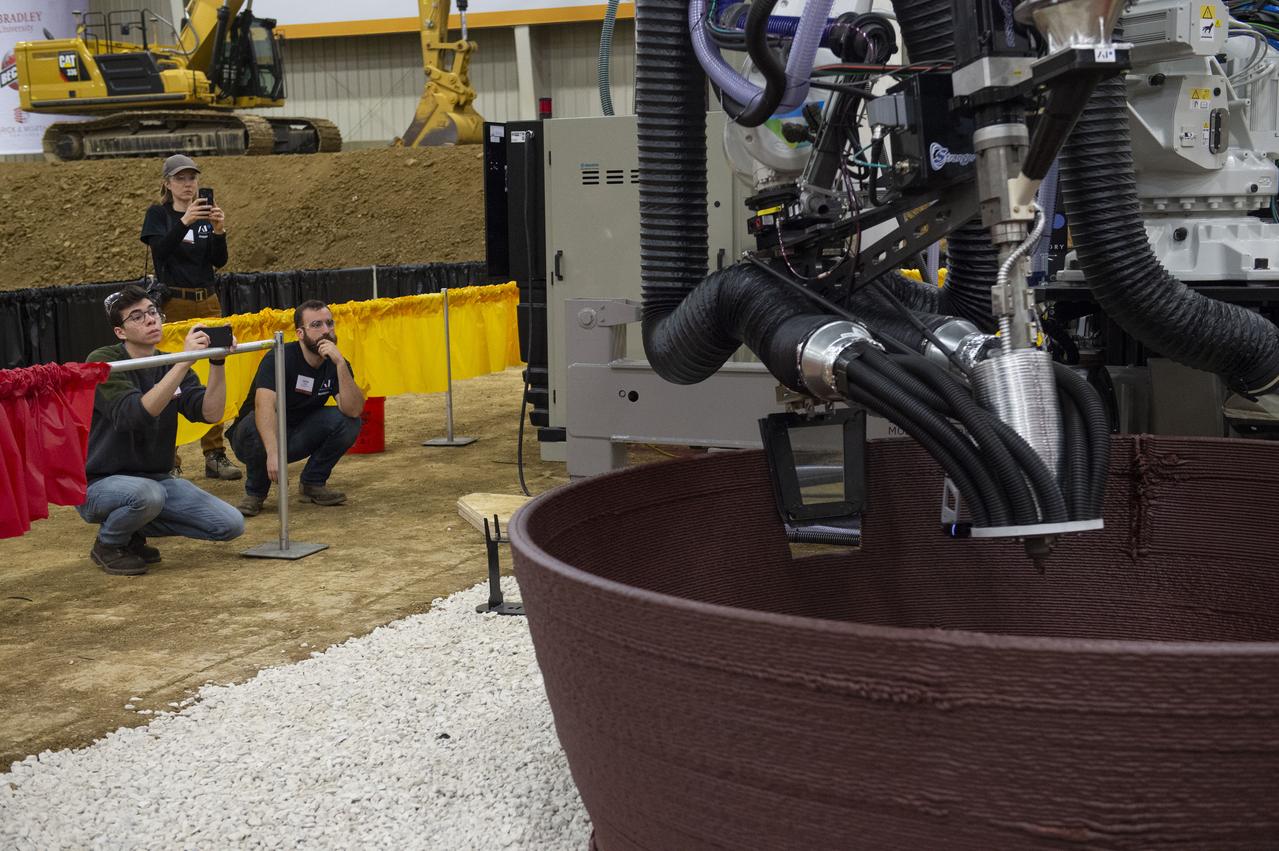
Team AI. SpaceFactory's printer autonomously inserts a window into their 3D-printed subscale habitat structure at NASA's 3D-Printed Habitat Challenge, held at the Caterpillar Edwards Demonstration & Learning Center in Edwards, Illinois, May 1-4, 2019. The habitat print is the final level of the multi-phase competition, which began in in 2015. The 3D-Printed Habitat Challenge is a competition to create sustainable shelters suitable for the Moon, Mars or beyond using resources available on-site in these locations. The challenge is managed by NASA's Centennial Challenges program, and partner Bradley University of Peoria, Illinois.
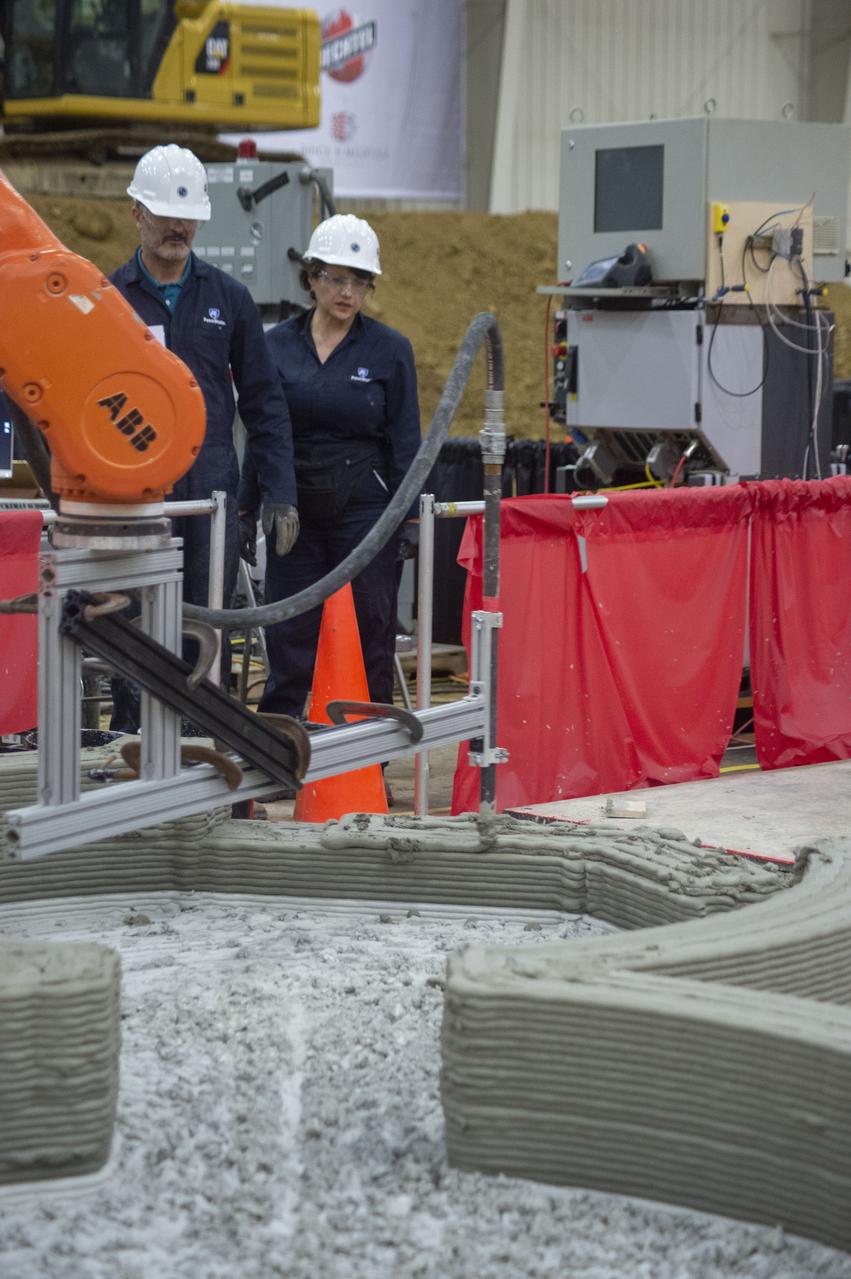
Team Penn State prepares their 3D-printer to begin printing a subscale habitat structure at NASA's 3D-Printed Habitat Challenge, held at the Caterpillar Edwards Demonstration & Learning Center in Edwards, Illinois, May 1-4, 2019. The habitat print is the final level of the multi-phase competition, which began in in 2015. The 3D-Printed Habitat Challenge is a competition to create sustainable shelters suitable for the Moon, Mars or beyond using resources available on-site in these locations. The challenge is managed by NASA's Centennial Challenges program, and partner Bradley University of Peoria, Illinois.
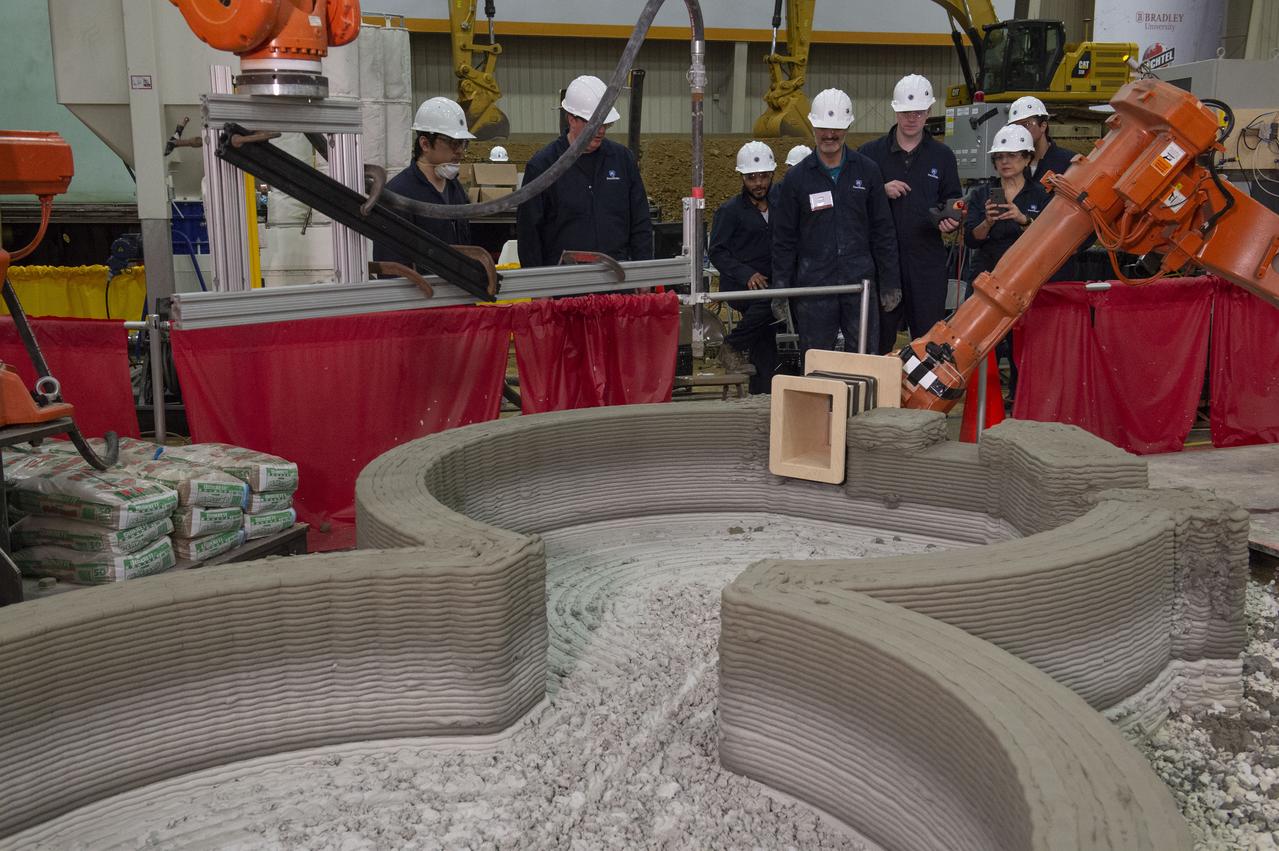
Team Penn State prepares their 3D-printer to begin printing a subscale habitat structure at NASA's 3D-Printed Habitat Challenge, held at the Caterpillar Edwards Demonstration & Learning Center in Edwards, Illinois, May 1-4, 2019. The habitat print is the final level of the multi-phase competition, which began in in 2015. The 3D-Printed Habitat Challenge is a competition to create sustainable shelters suitable for the Moon, Mars or beyond using resources available on-site in these locations. The challenge is managed by NASA's Centennial Challenges program, and partner Bradley University of Peoria, Illinois.
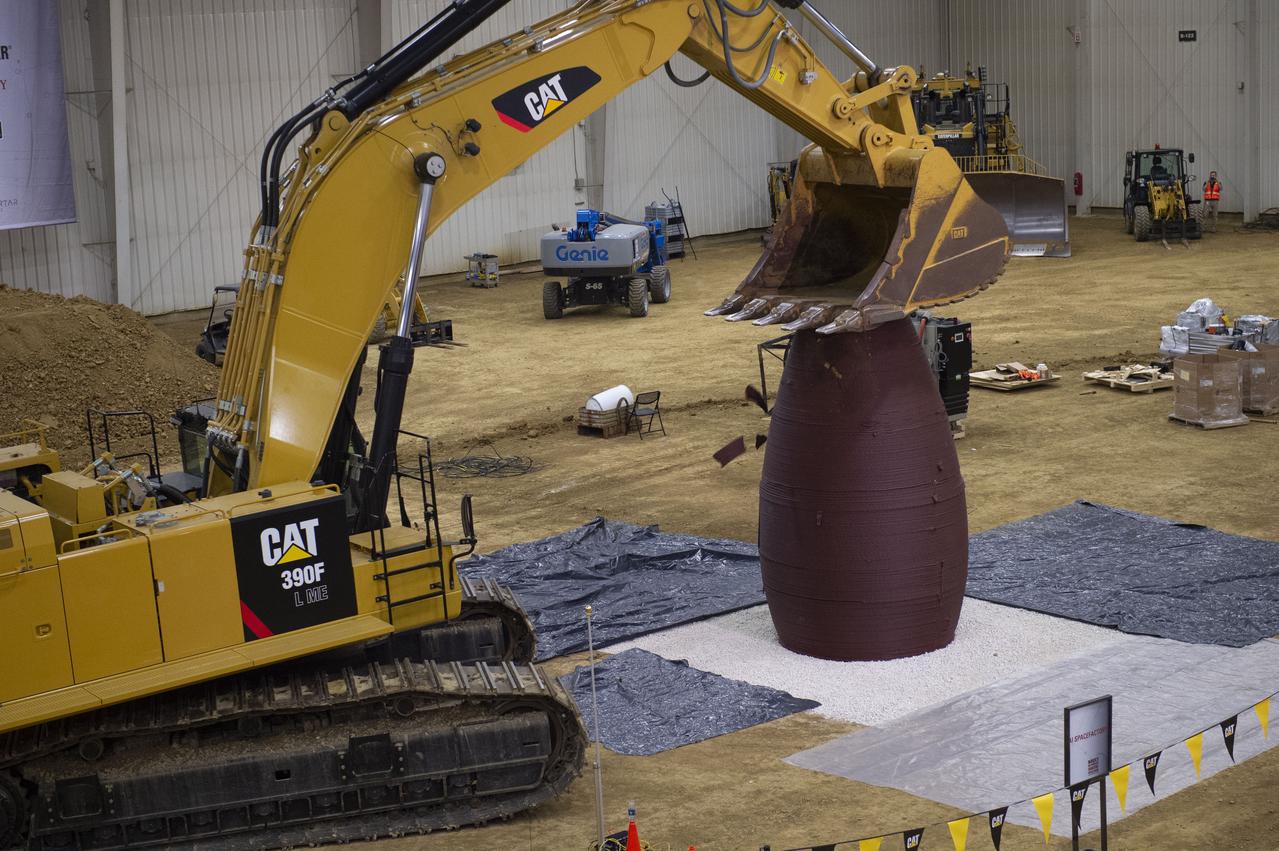
Two teams - Penn State (left) and AI. SpaceFactory (right) competed to 3D-print subscale habitat structures at NASA's 3D-Printed Habitat Challenge, held at the Caterpillar Edwards Demonstration & Learning Center in Edwards, Illinois, May 1-4, 2019. The habitat print is the final level of the multi-phase competition, which began in in 2015. The 3D-Printed Habitat Challenge is a competition to create sustainable shelters suitable for the Moon, Mars or beyond using resources available on-site in these locations. The challenge is managed by NASA's Centennial Challenges program, and partner Bradley University of Peoria, Illinois.
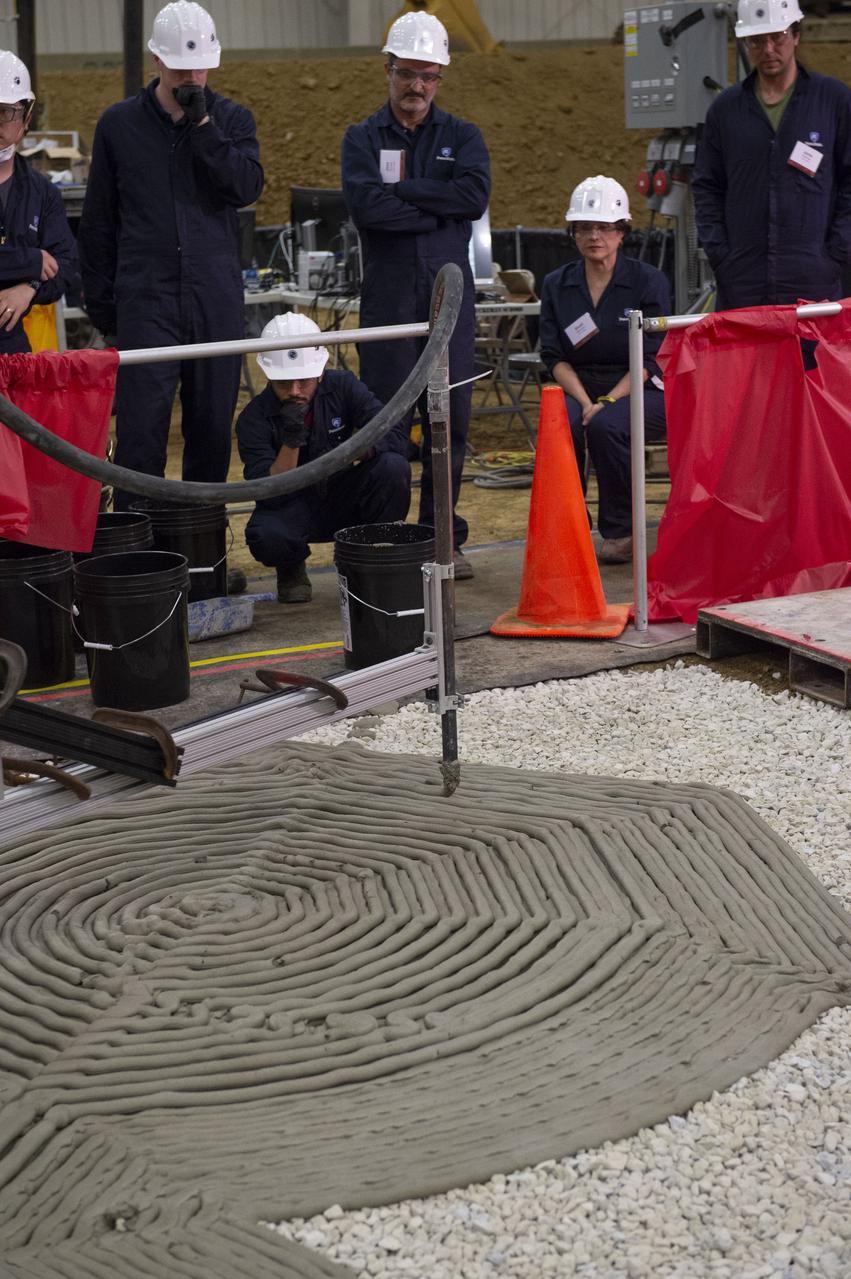
Team Penn State prepares their 3D-printer to begin printing a subscale habitat structure at NASA's 3D-Printed Habitat Challenge, held at the Caterpillar Edwards Demonstration & Learning Center in Edwards, Illinois, May 1-4, 2019. The habitat print is the final level of the multi-phase competition, which began in in 2015. The 3D-Printed Habitat Challenge is a competition to create sustainable shelters suitable for the Moon, Mars or beyond using resources available on-site in these locations. The challenge is managed by NASA's Centennial Challenges program, and partner Bradley University of Peoria, Illinois.
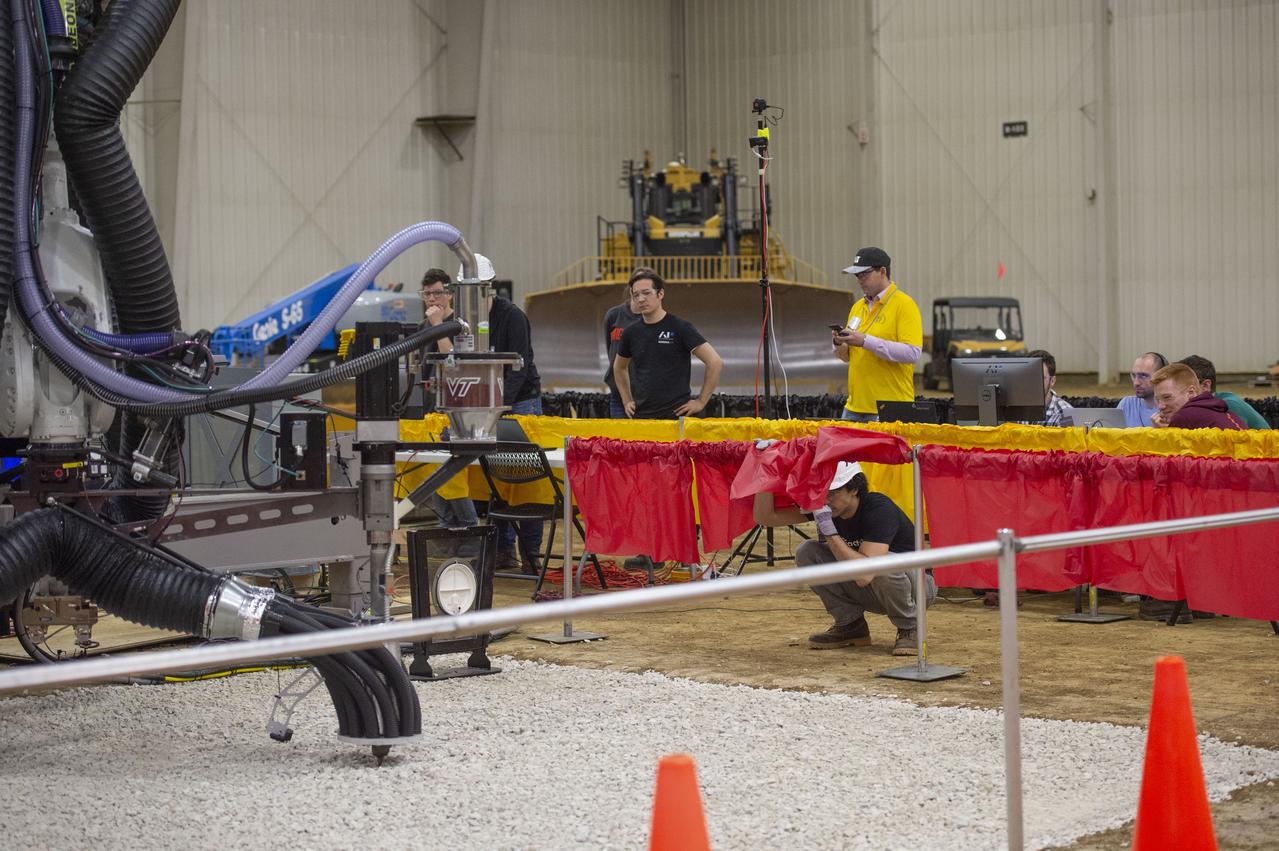
Team Penn State prepares their 3D-printer to begin printing a subscale habitat structure at NASA's 3D-Printed Habitat Challenge, held at the Caterpillar Edwards Demonstration & Learning Center in Edwards, Illinois, May 1-4, 2019. The habitat print is the final level of the multi-phase competition, which began in in 2015. The 3D-Printed Habitat Challenge is a competition to create sustainable shelters suitable for the Moon, Mars or beyond using resources available on-site in these locations. The challenge is managed by NASA's Centennial Challenges program, and partner Bradley University of Peoria, Illinois.
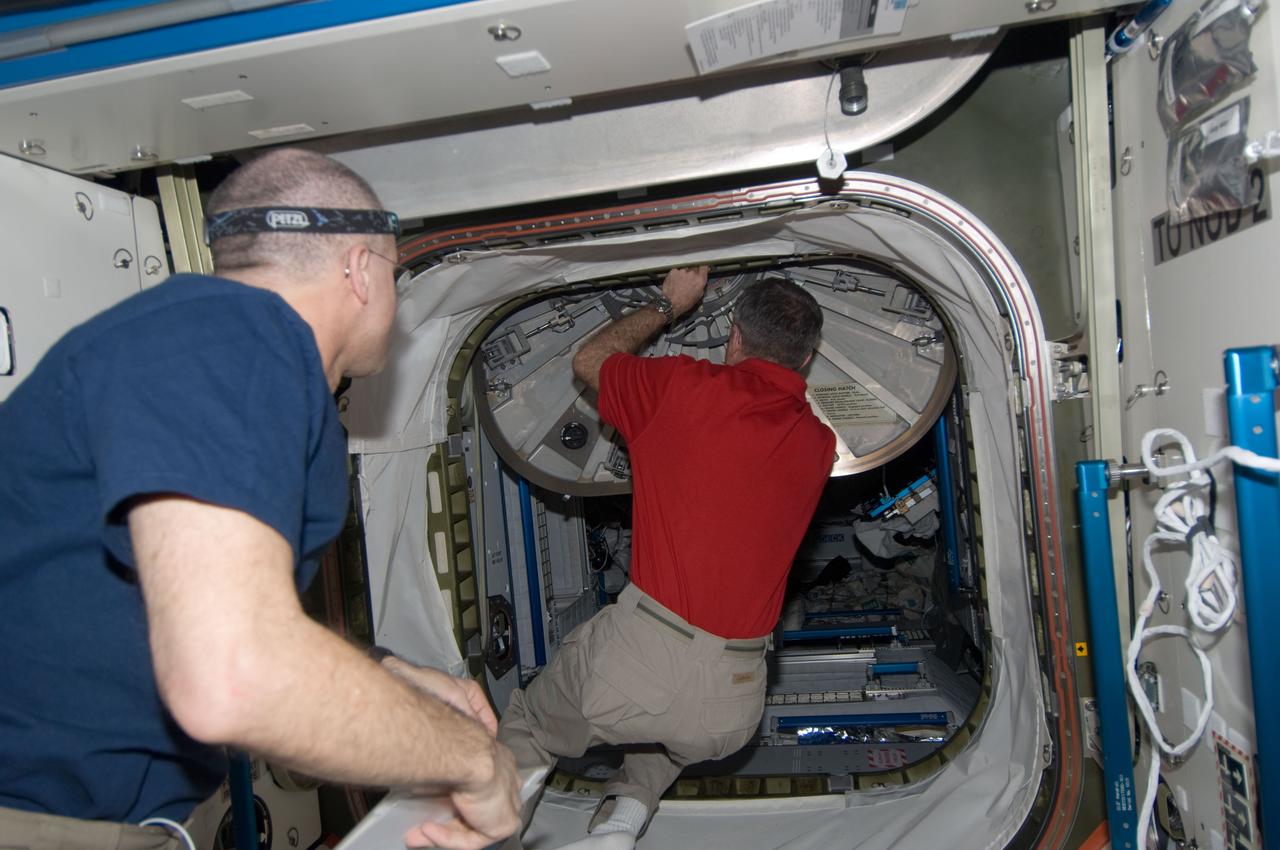
ISS030-E-173920 (24 March 2012) --- NASA astronaut Dan Burbank, Expedition 30 commander, closes a hatch in the International Space Station as crew members prepare to move to the appropriate Soyuz vehicles, due to the possibility that space debris could pass close to the station. NASA astronaut Don Pettit, flight engineer, is at left. Burbank, Shkaplerov and Ivanishin sheltered in the Soyuz TMA-22 spacecraft attached to the Poisk Mini-Research Module 2 (MRM2) while Kononenko, Kuipers and Pettit took to the Soyuz TMA-03M docked to the Rassvet Mini-Research Module 1 (MRM-1).
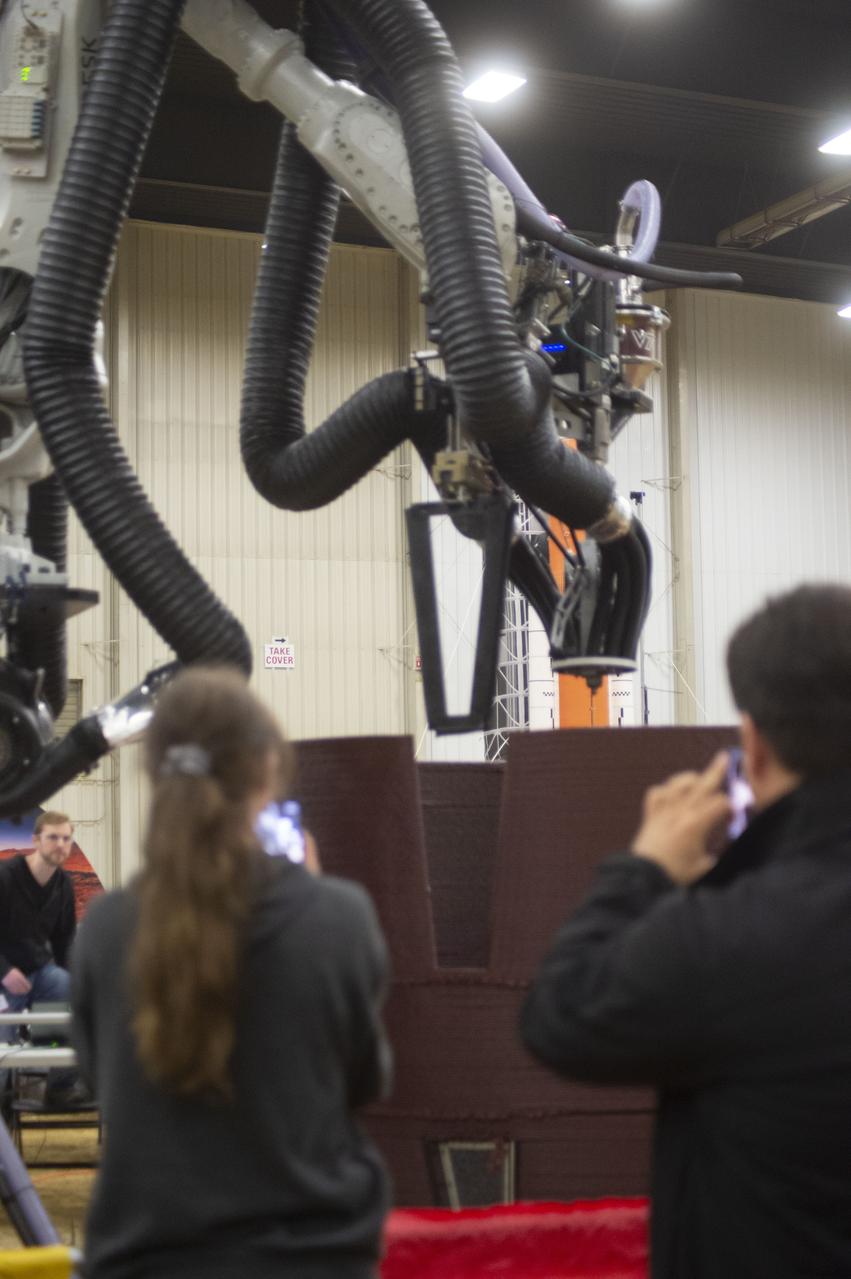
Team AI. SpaceFactory's printer autonomously inserts a window into their 3D-printed subscale habitat structure at NASA's 3D-Printed Habitat Challenge, held at the Caterpillar Edwards Demonstration & Learning Center in Edwards, Illinois, May 1-4, 2019. The habitat print is the final level of the multi-phase competition, which began in in 2015. The 3D-Printed Habitat Challenge is a competition to create sustainable shelters suitable for the Moon, Mars or beyond using resources available on-site in these locations. The challenge is managed by NASA's Centennial Challenges program, and partner Bradley University of Peoria, Illinois.
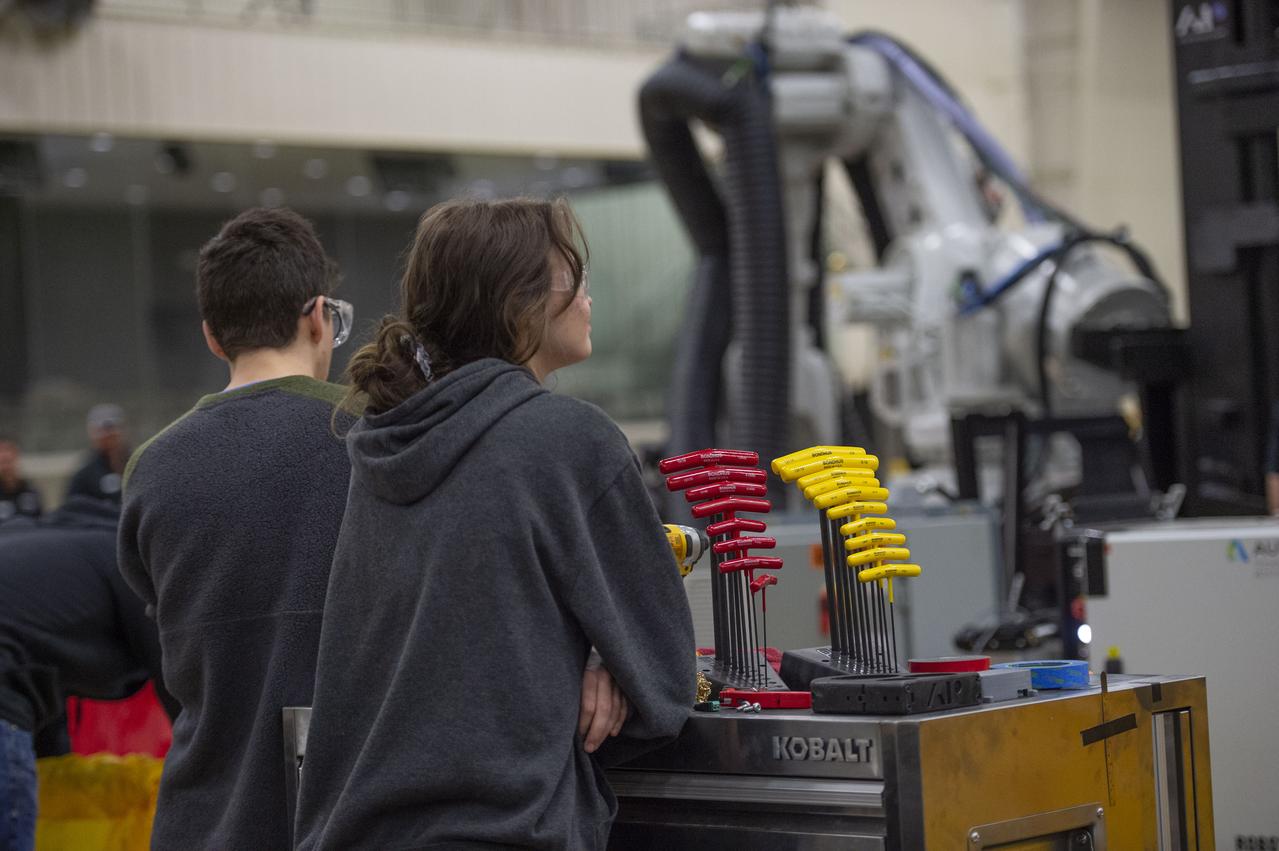
Team Penn State prepares their 3D-printer to begin printing a subscale habitat structure at NASA's 3D-Printed Habitat Challenge, held at the Caterpillar Edwards Demonstration & Learning Center in Edwards, Illinois, May 1-4, 2019. The habitat print is the final level of the multi-phase competition, which began in in 2015. The 3D-Printed Habitat Challenge is a competition to create sustainable shelters suitable for the Moon, Mars or beyond using resources available on-site in these locations. The challenge is managed by NASA's Centennial Challenges program, and partner Bradley University of Peoria, Illinois.
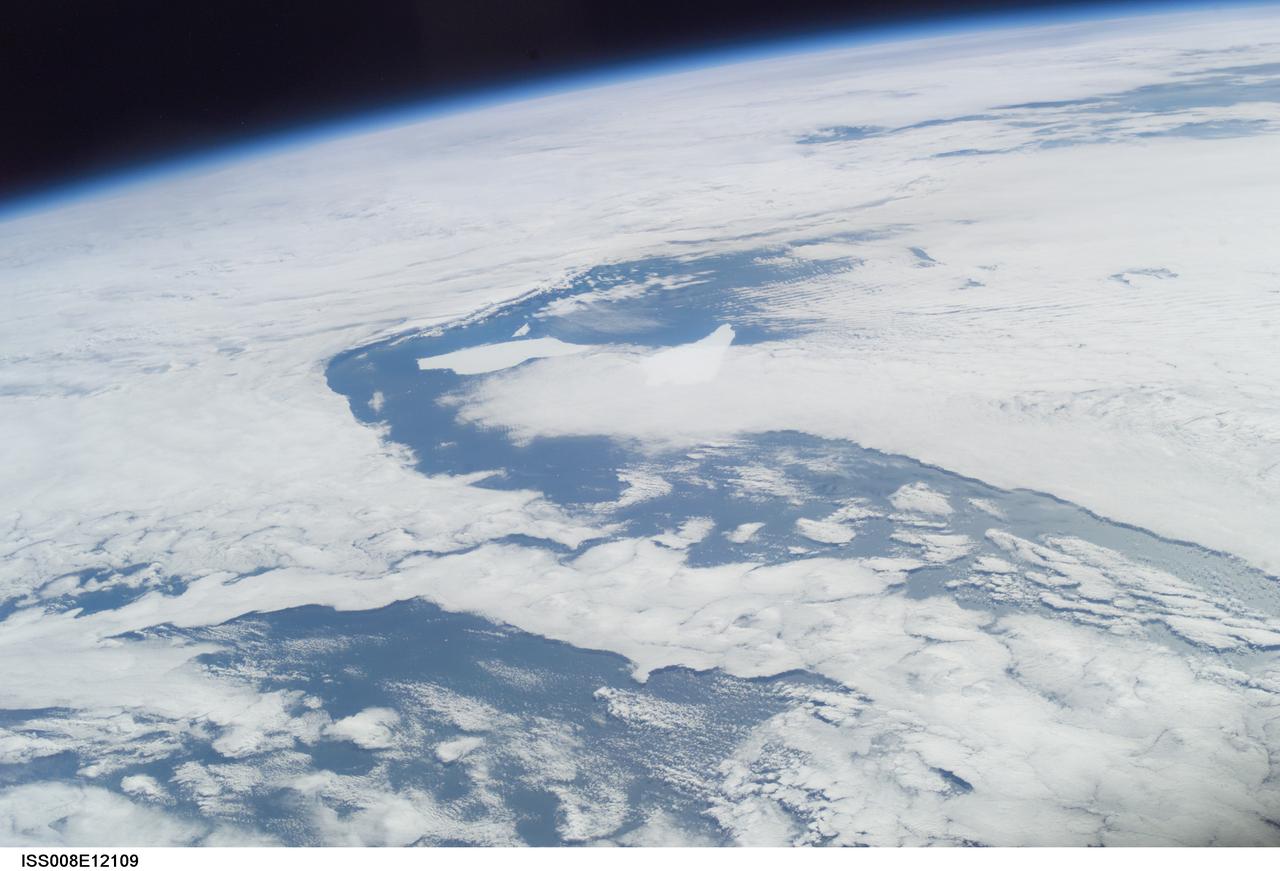
ISS008-E-12109 (6 January 2004) --- Five year old icebergs near South Georgia Island are featured in this image photographed by an Expedition 8 crewmember onboard the International Space Station (ISS). This oblique image shows two pieces of a massive iceberg that broke off from the Antarctica Ronne Ice Shelf in October 1998. The pieces of iceberg A-38 have floated relatively close to South Georgia Island. After five years and 3 months, they are approximately 1500 nautical miles from their origin. The cloud pattern is indicative of the impact of the mountainous islands on the local wind field. At the time this image was taken, the icebergs were sheltered in the lee side of the island.
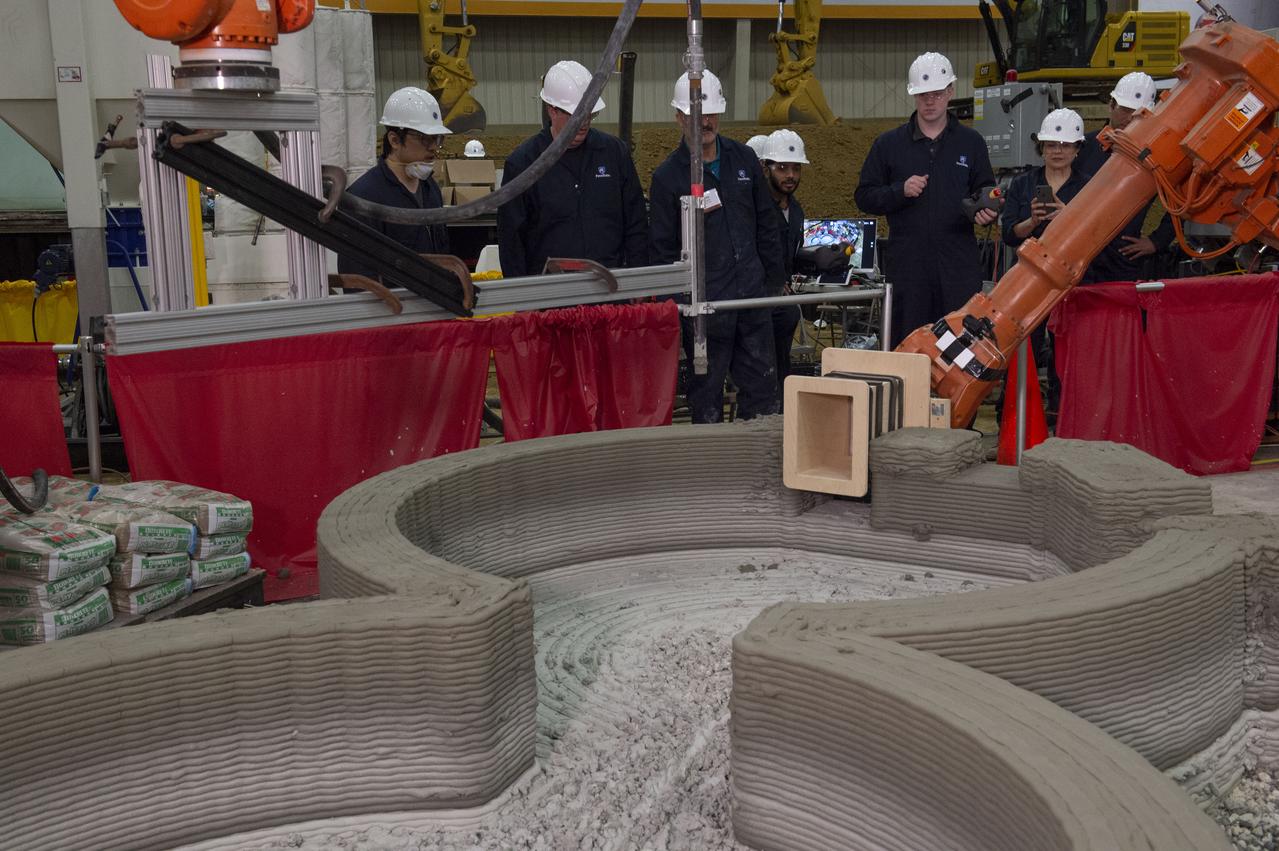
Team Penn State prepares their 3D-printer to begin printing a subscale habitat structure at NASA's 3D-Printed Habitat Challenge, held at the Caterpillar Edwards Demonstration & Learning Center in Edwards, Illinois, May 1-4, 2019. The habitat print is the final level of the multi-phase competition, which began in in 2015. The 3D-Printed Habitat Challenge is a competition to create sustainable shelters suitable for the Moon, Mars or beyond using resources available on-site in these locations. The challenge is managed by NASA's Centennial Challenges program, and partner Bradley University of Peoria, Illinois.
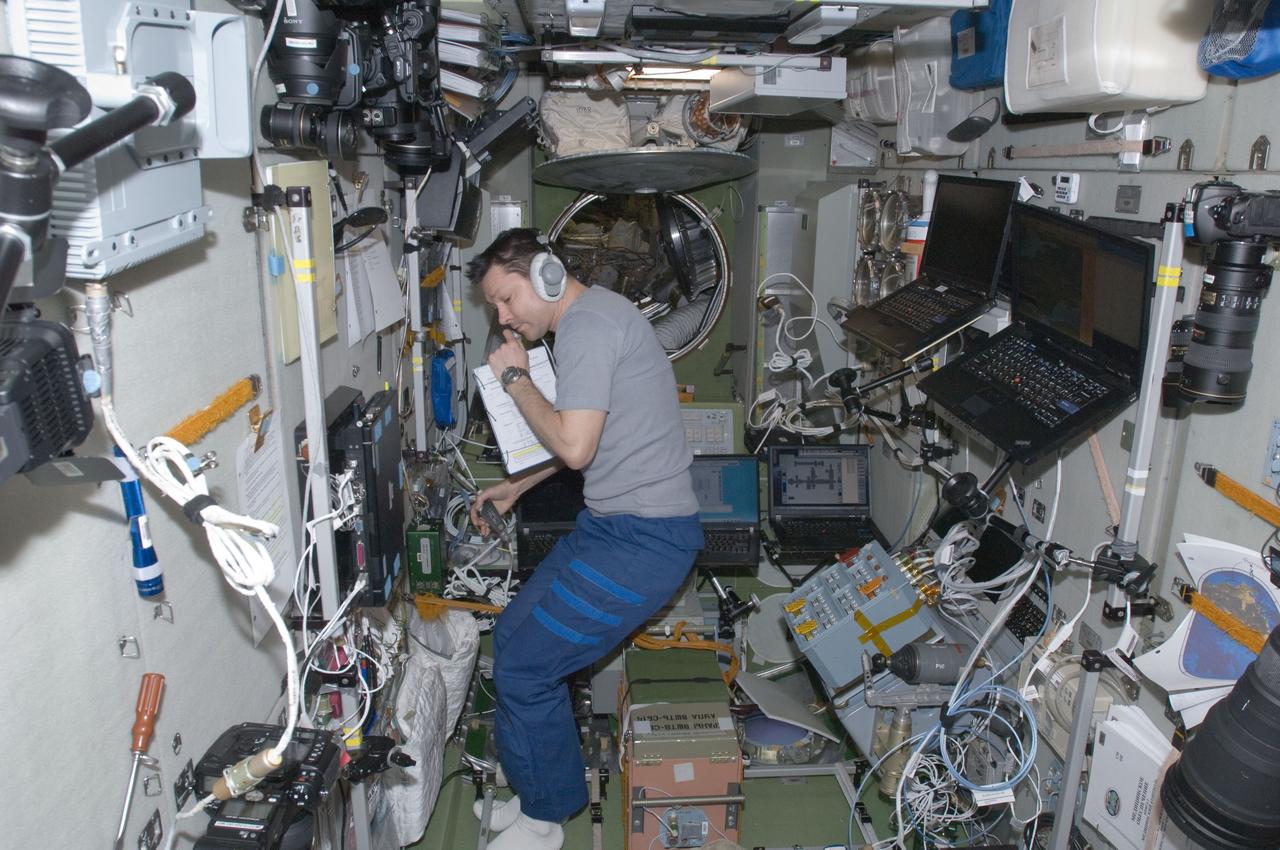
ISS030-E-171108 (24 March 2012) --- Russian cosmonaut Oleg Kononenko, Expedition 30 flight engineer, wearing a communication headset, is pictured in the Zvezda Service Module of the International Space Station as crew members prepare for their move to the appropriate Soyuz vehicles, due to the possibility that space debris could pass close to the station. Burbank, Shkaplerov and Ivanishin sheltered in the Soyuz TMA-22 spacecraft attached to the Poisk Mini-Research Module 2 (MRM2) while Kononenko, Kuipers and Pettit took to the Soyuz TMA-03M docked to the Rassvet Mini-Research Module 1 (MRM-1).
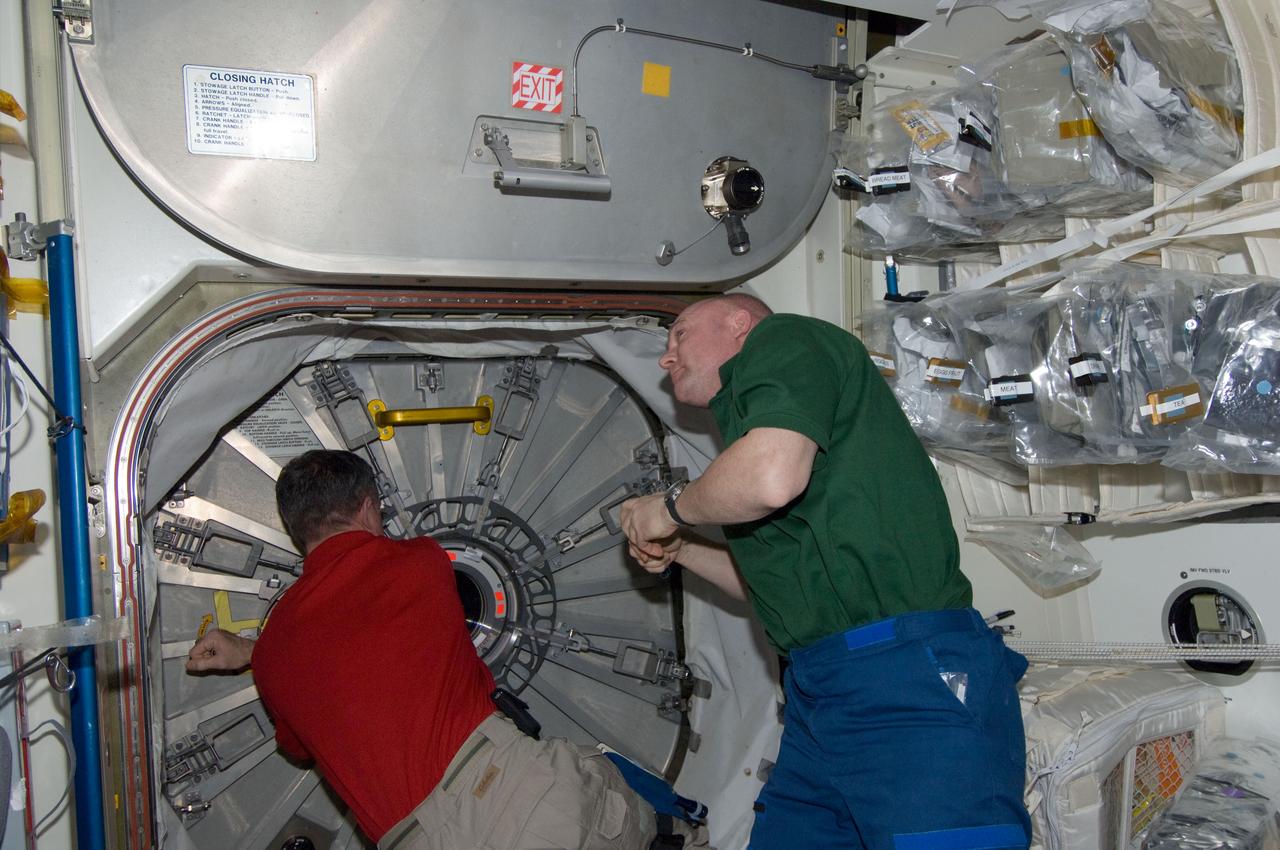
ISS030-E-173924 (24 March 2012) --- NASA astronaut Dan Burbank (left), Expedition 30 commander; and European Space Agency astronaut Andre Kuipers, flight engineer, close a hatch in the International Space Station as crew members prepare to move to the appropriate Soyuz vehicles, due to the possibility that space debris could pass close to the station. Burbank, Shkaplerov and Ivanishin sheltered in the Soyuz TMA-22 spacecraft attached to the Poisk Mini-Research Module 2 (MRM2) while Kononenko, Kuipers and Pettit took to the Soyuz TMA-03M docked to the Rassvet Mini-Research Module 1 (MRM-1).
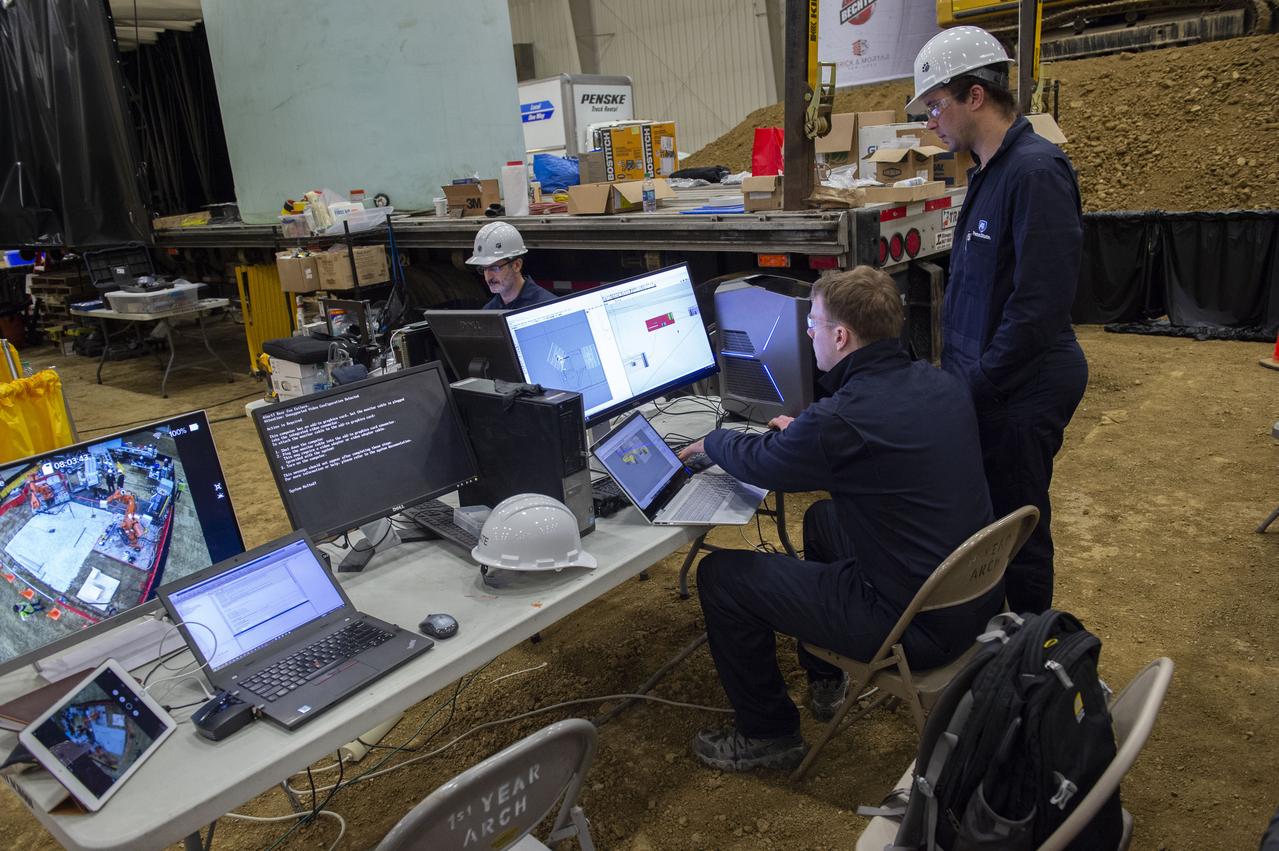
Team Penn State prepares their 3D-printer to begin printing a subscale habitat structure at NASA's 3D-Printed Habitat Challenge, held at the Caterpillar Edwards Demonstration & Learning Center in Edwards, Illinois, May 1-4, 2019. The habitat print is the final level of the multi-phase competition, which began in in 2015. The 3D-Printed Habitat Challenge is a competition to create sustainable shelters suitable for the Moon, Mars or beyond using resources available on-site in these locations. The challenge is managed by NASA's Centennial Challenges program, and partner Bradley University of Peoria, Illinois.
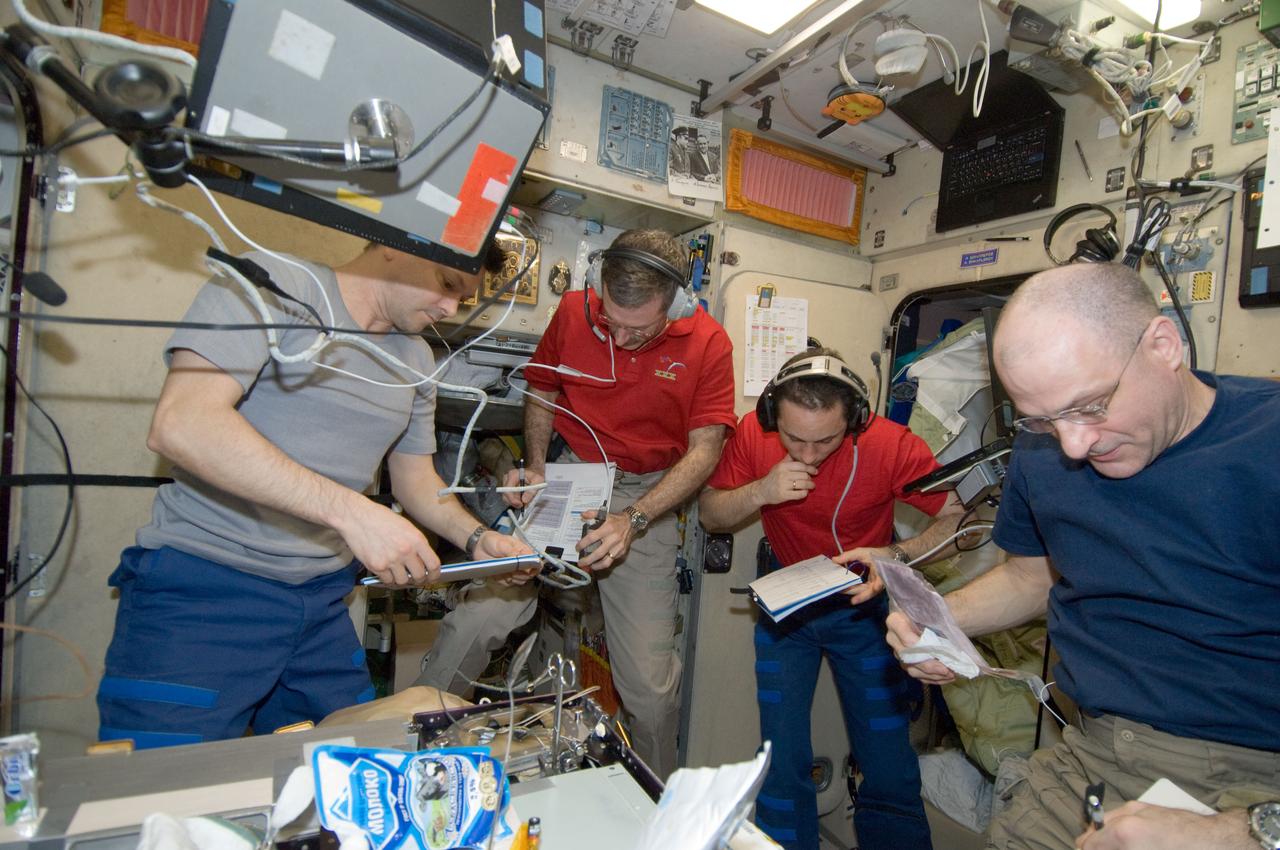
ISS030-E-173973 (24 March 2012) --- NASA astronaut Dan Burbank (second left), Expedition 30 commander; along with Russian cosmonauts Oleg Kononenko (left) and Anton Shkaplerov and NASA astronaut Don Pettit, all flight engineers, are pictured in the Zvezda Service Module of the International Space Station as they prepare to move to the appropriate Soyuz vehicles, due to the possibility that space debris could pass close to the station. Burbank, Shkaplerov and Ivanishin sheltered in the Soyuz TMA-22 spacecraft attached to the Poisk Mini-Research Module 2 (MRM2) while Kononenko, Kuipers and Pettit took to the Soyuz TMA-03M docked to the Rassvet Mini-Research Module 1 (MRM-1).
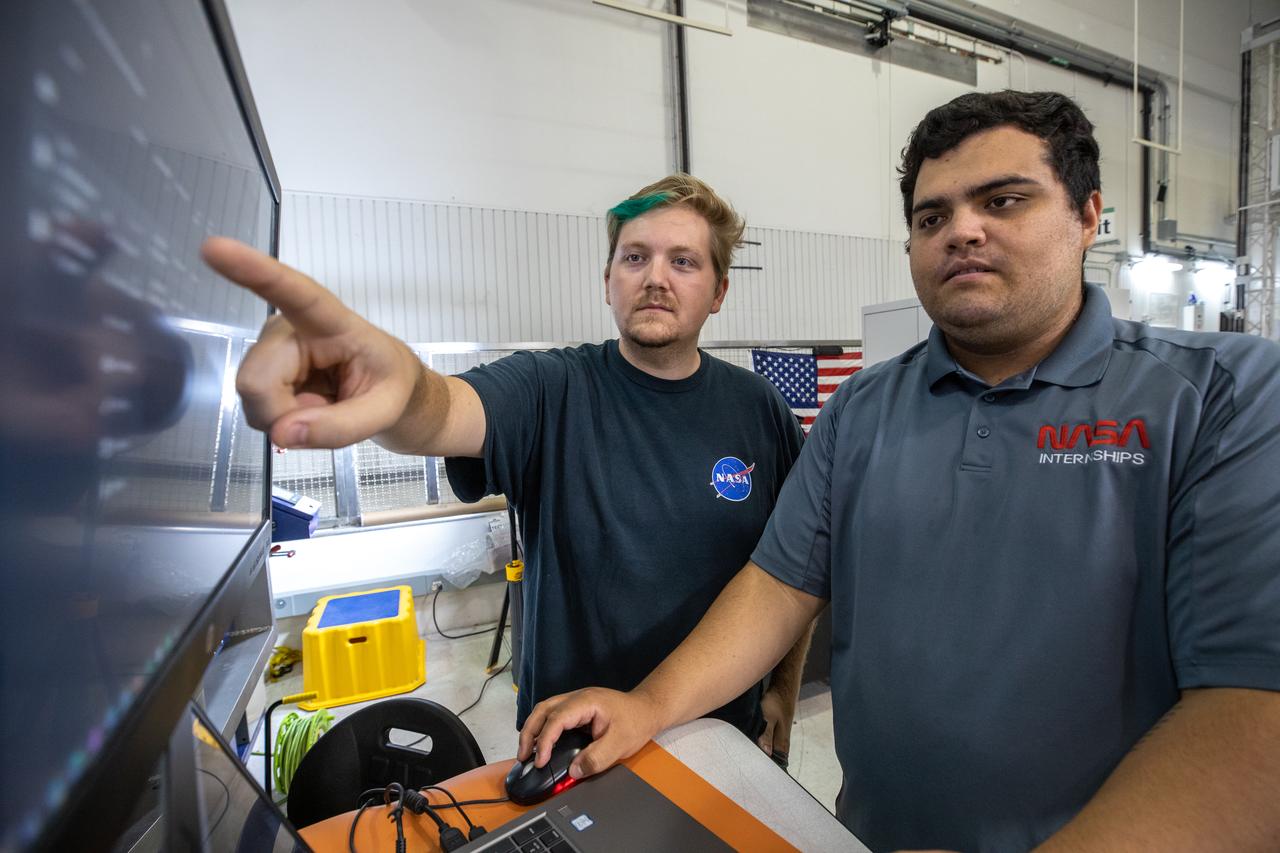
NASA engineer Evan Bell, left, and NASA Internships, Fellowships, and Scholarships (NIFS) intern Leonel Herrera test a 3D printer on July 28, 2022, at Swamp Works at NASA’s Kennedy Space Center in Florida, as part of the Relevant Environment Additive Construction Technology (REACT) project. Among the key objectives of the project is developing an architectural and structural design for a shelter that provides protection to habitable assets on the lunar surface. Testing REACT derives from NASA’s 2020 Announcement of Collaboration Opportunity with AI SpaceFactory – an architectural and construction technology company and winner of NASA’s 3D Printed Habitat Challenge.
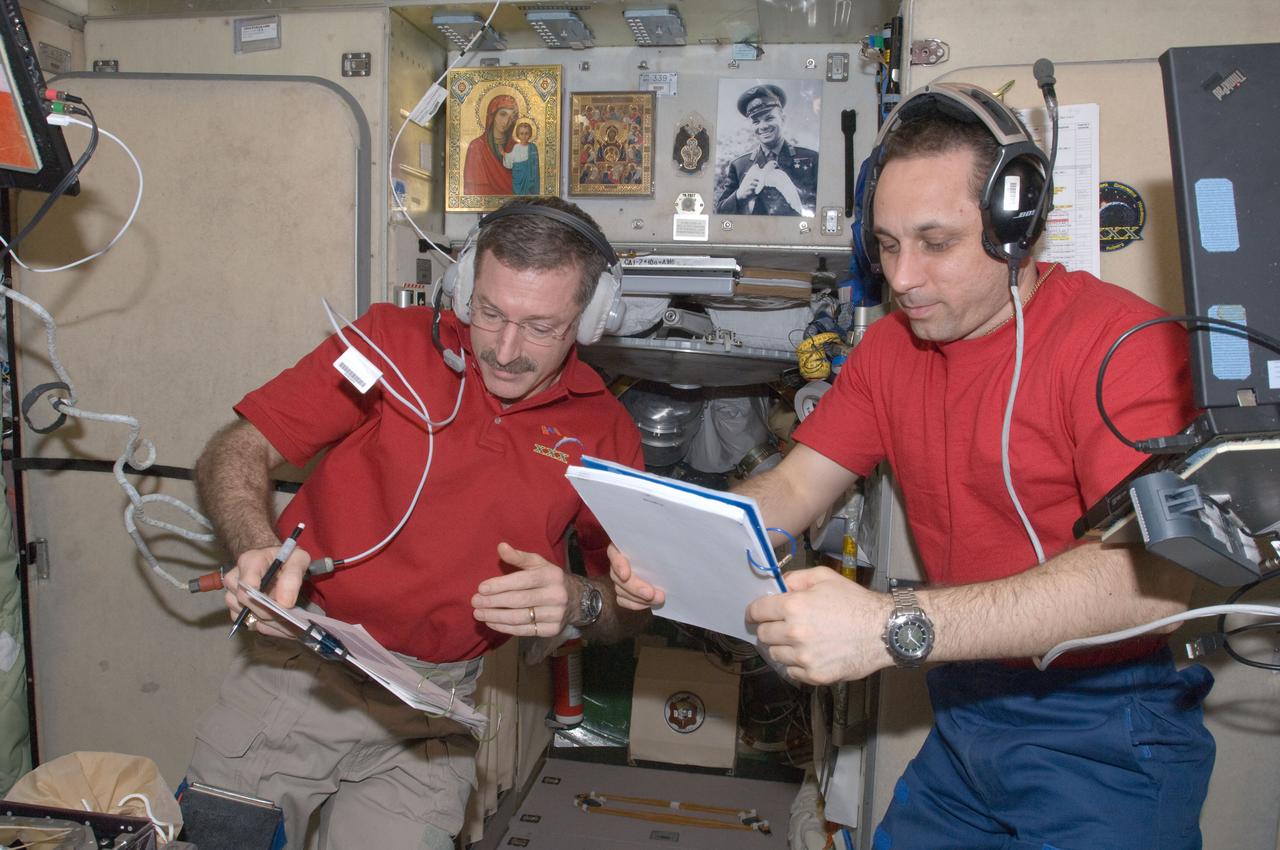
ISS030-E-171107 (24 March 2012) --- NASA astronaut Dan Burbank (left), Expedition 30 commander; and Russian cosmonaut Anton Shkaplerov, flight engineer, wearing communication headsets, review crew procedures in the Zvezda Service Module of the International Space Station in preparation of moving to the appropriate Soyuz vehicles, due to the possibility that space debris could pass close to the station. Burbank, Shkaplerov and Ivanishin sheltered in the Soyuz TMA-22 spacecraft attached to the Poisk Mini-Research Module 2 (MRM2) while Kononenko, Kuipers and Pettit took to the Soyuz TMA-03M docked to the Rassvet Mini-Research Module 1 (MRM-1).
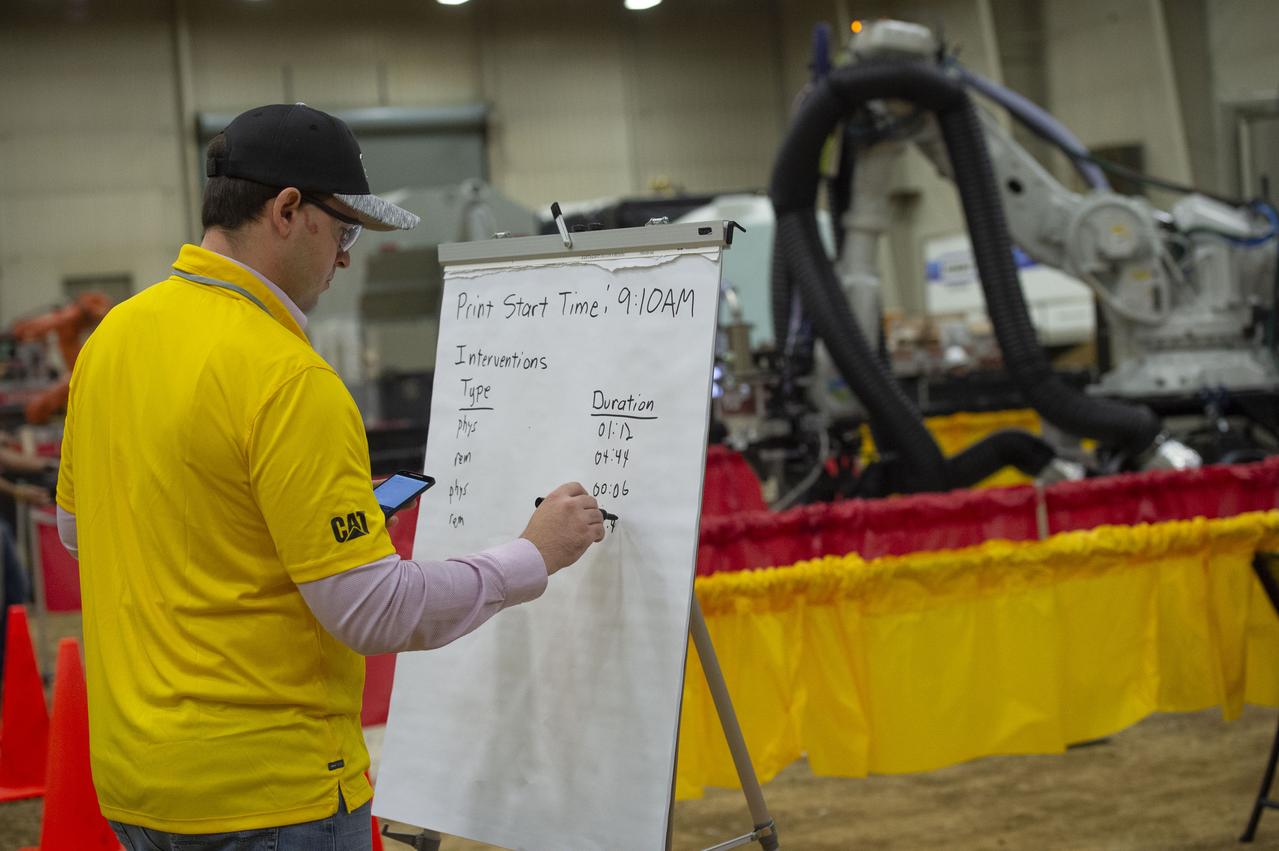
Team Penn State prepares their 3D-printer to begin printing a subscale habitat structure at NASA's 3D-Printed Habitat Challenge, held at the Caterpillar Edwards Demonstration & Learning Center in Edwards, Illinois, May 1-4, 2019. The habitat print is the final level of the multi-phase competition, which began in in 2015. The 3D-Printed Habitat Challenge is a competition to create sustainable shelters suitable for the Moon, Mars or beyond using resources available on-site in these locations. The challenge is managed by NASA's Centennial Challenges program, and partner Bradley University of Peoria, Illinois.
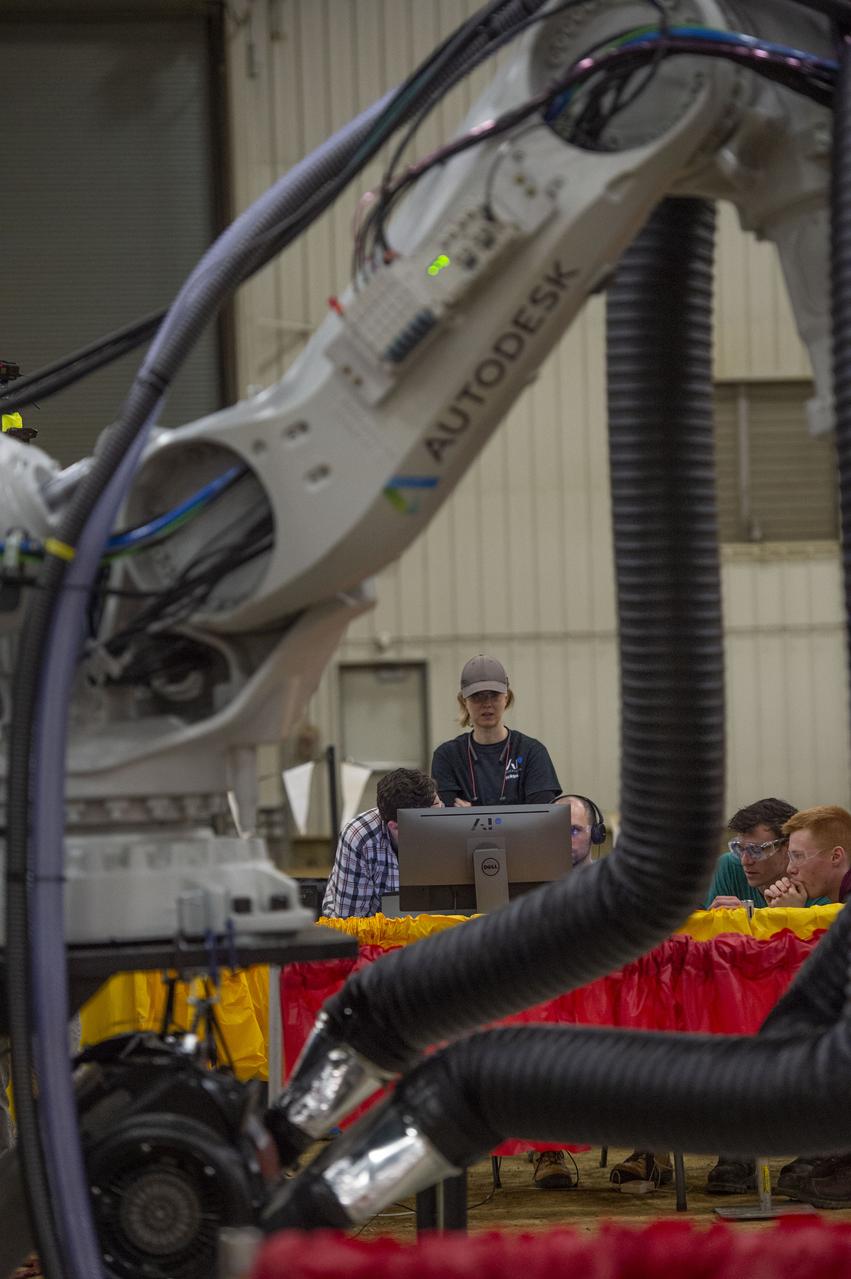
Team Penn State prepares their 3D-printer to begin printing a subscale habitat structure at NASA's 3D-Printed Habitat Challenge, held at the Caterpillar Edwards Demonstration & Learning Center in Edwards, Illinois, May 1-4, 2019. The habitat print is the final level of the multi-phase competition, which began in in 2015. The 3D-Printed Habitat Challenge is a competition to create sustainable shelters suitable for the Moon, Mars or beyond using resources available on-site in these locations. The challenge is managed by NASA's Centennial Challenges program, and partner Bradley University of Peoria, Illinois.
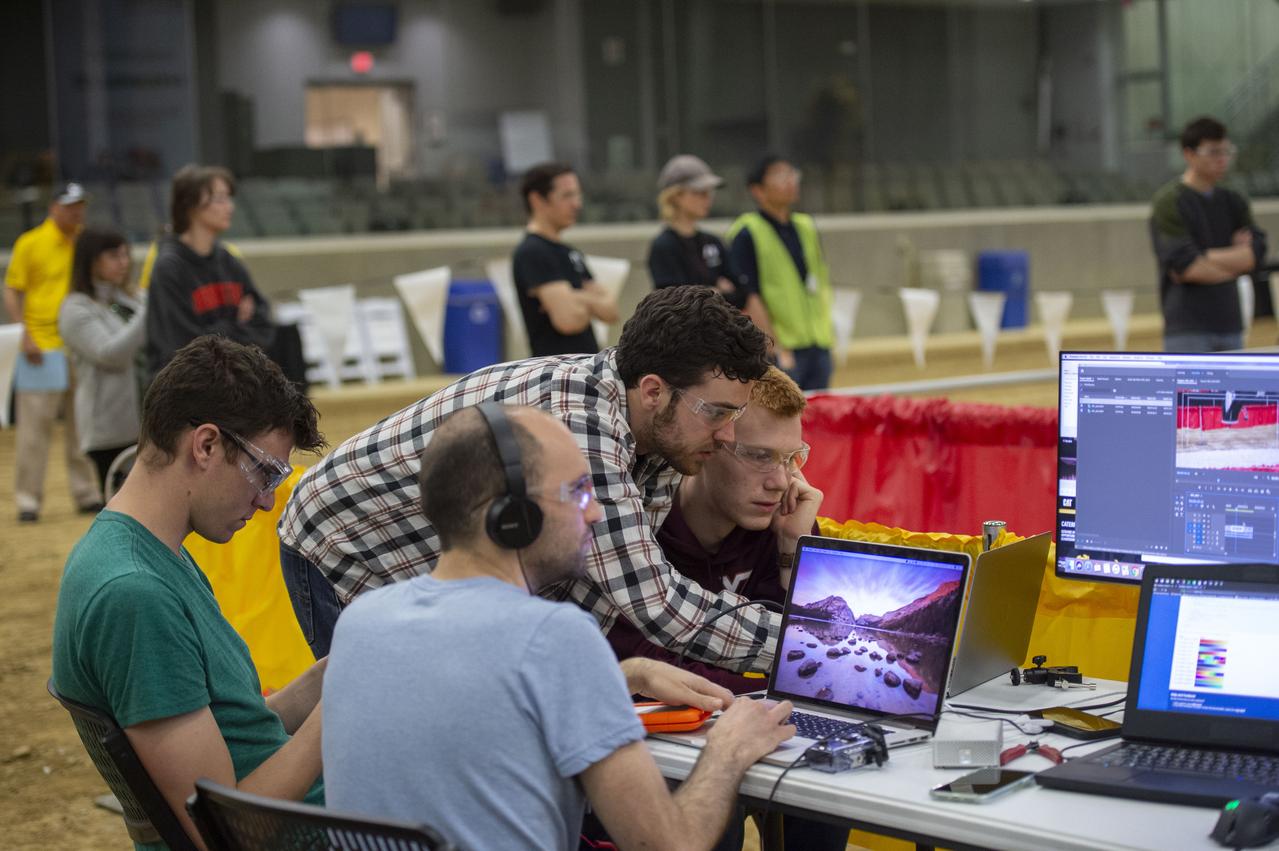
Team Penn State prepares their 3D-printer to begin printing a subscale habitat structure at NASA's 3D-Printed Habitat Challenge, held at the Caterpillar Edwards Demonstration & Learning Center in Edwards, Illinois, May 1-4, 2019. The habitat print is the final level of the multi-phase competition, which began in in 2015. The 3D-Printed Habitat Challenge is a competition to create sustainable shelters suitable for the Moon, Mars or beyond using resources available on-site in these locations. The challenge is managed by NASA's Centennial Challenges program, and partner Bradley University of Peoria, Illinois.
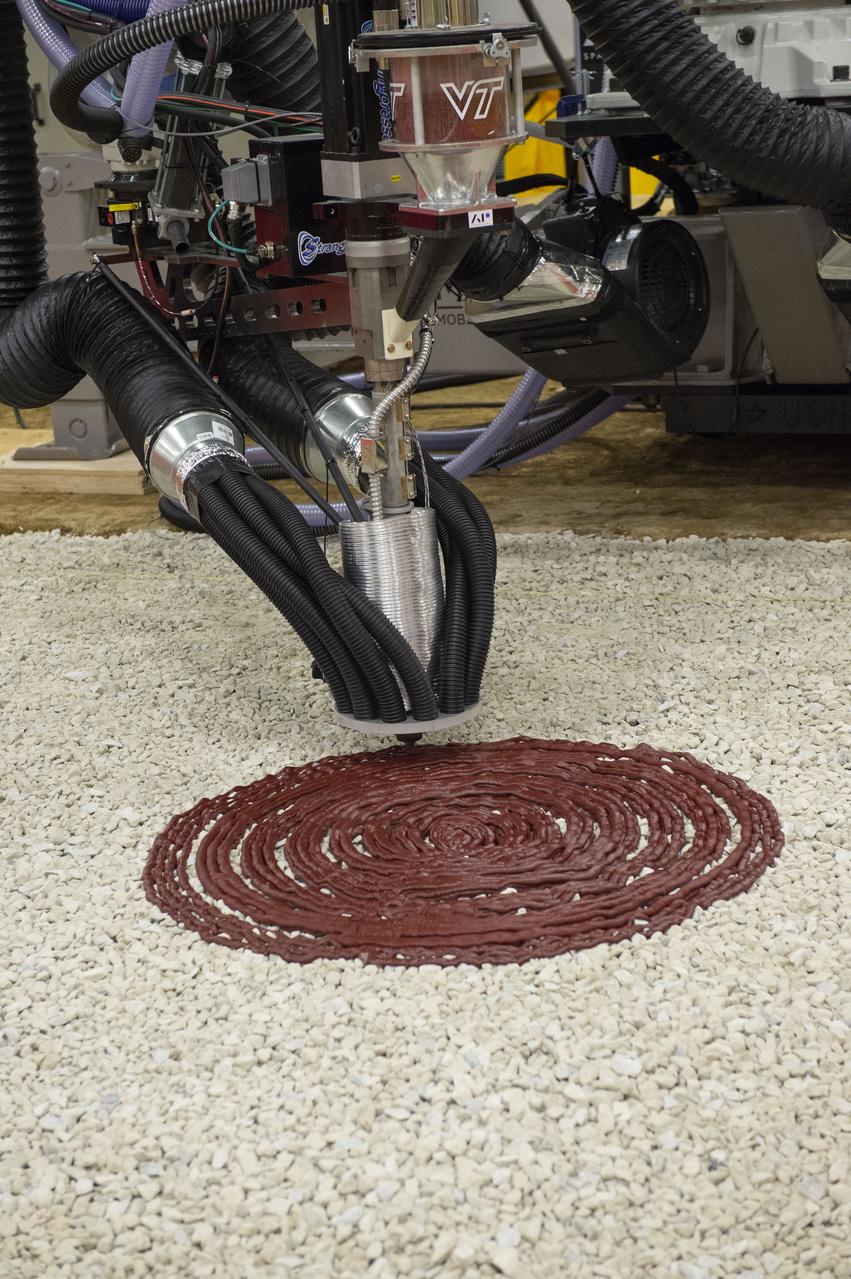
Team Penn State prepares their 3D-printer to begin printing a subscale habitat structure at NASA's 3D-Printed Habitat Challenge, held at the Caterpillar Edwards Demonstration & Learning Center in Edwards, Illinois, May 1-4, 2019. The habitat print is the final level of the multi-phase competition, which began in in 2015. The 3D-Printed Habitat Challenge is a competition to create sustainable shelters suitable for the Moon, Mars or beyond using resources available on-site in these locations. The challenge is managed by NASA's Centennial Challenges program, and partner Bradley University of Peoria, Illinois.
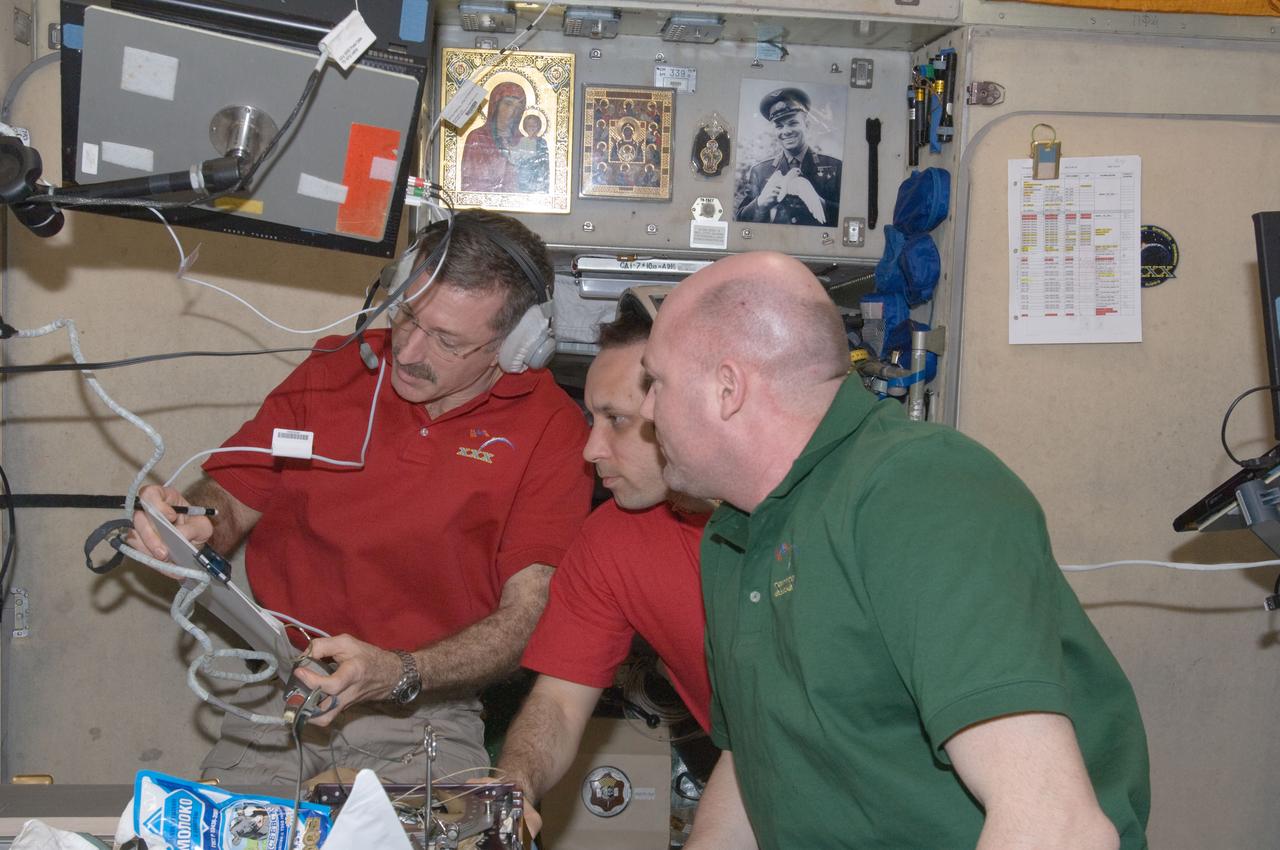
ISS030-E-171111 (24 March 2012) --- NASA astronaut Dan Burbank (left), Expedition 30 commander; along with Russian cosmonaut Anton Shkaplerov (center) and European Space Agency astronaut Andre Kuipers, both flight engineers, review crew procedures in the Zvezda Service Module of the International Space Station in preparation of moving to the appropriate Soyuz vehicles, due to the possibility that space debris could pass close to the station. Burbank, Shkaplerov and Ivanishin sheltered in the Soyuz TMA-22 spacecraft attached to the Poisk Mini-Research Module 2 (MRM2) while Kononenko, Kuipers and Pettit took to the Soyuz TMA-03M docked to the Rassvet Mini-Research Module 1 (MRM-1).
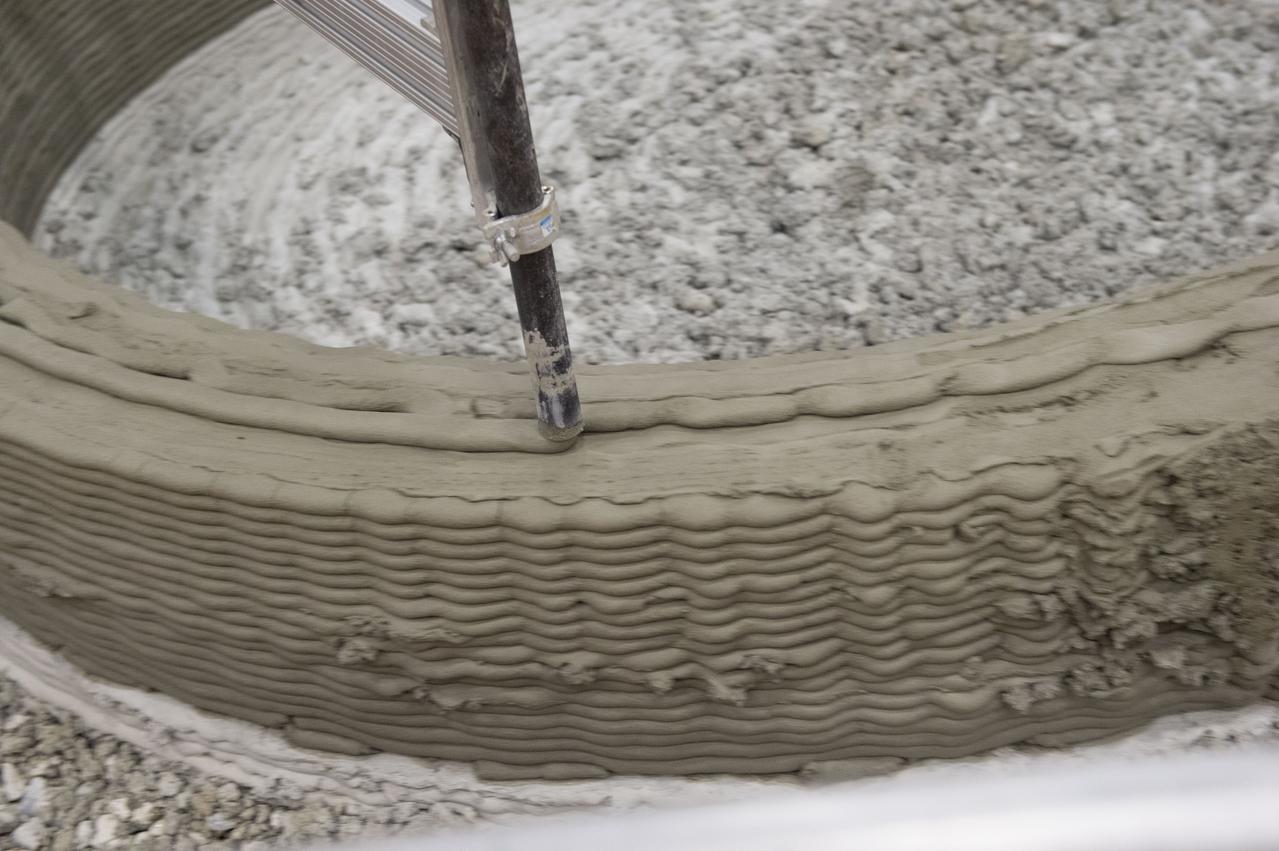
Team Penn State prepares their 3D-printer to begin printing a subscale habitat structure at NASA's 3D-Printed Habitat Challenge, held at the Caterpillar Edwards Demonstration & Learning Center in Edwards, Illinois, May 1-4, 2019. The habitat print is the final level of the multi-phase competition, which began in in 2015. The 3D-Printed Habitat Challenge is a competition to create sustainable shelters suitable for the Moon, Mars or beyond using resources available on-site in these locations. The challenge is managed by NASA's Centennial Challenges program, and partner Bradley University of Peoria, Illinois.
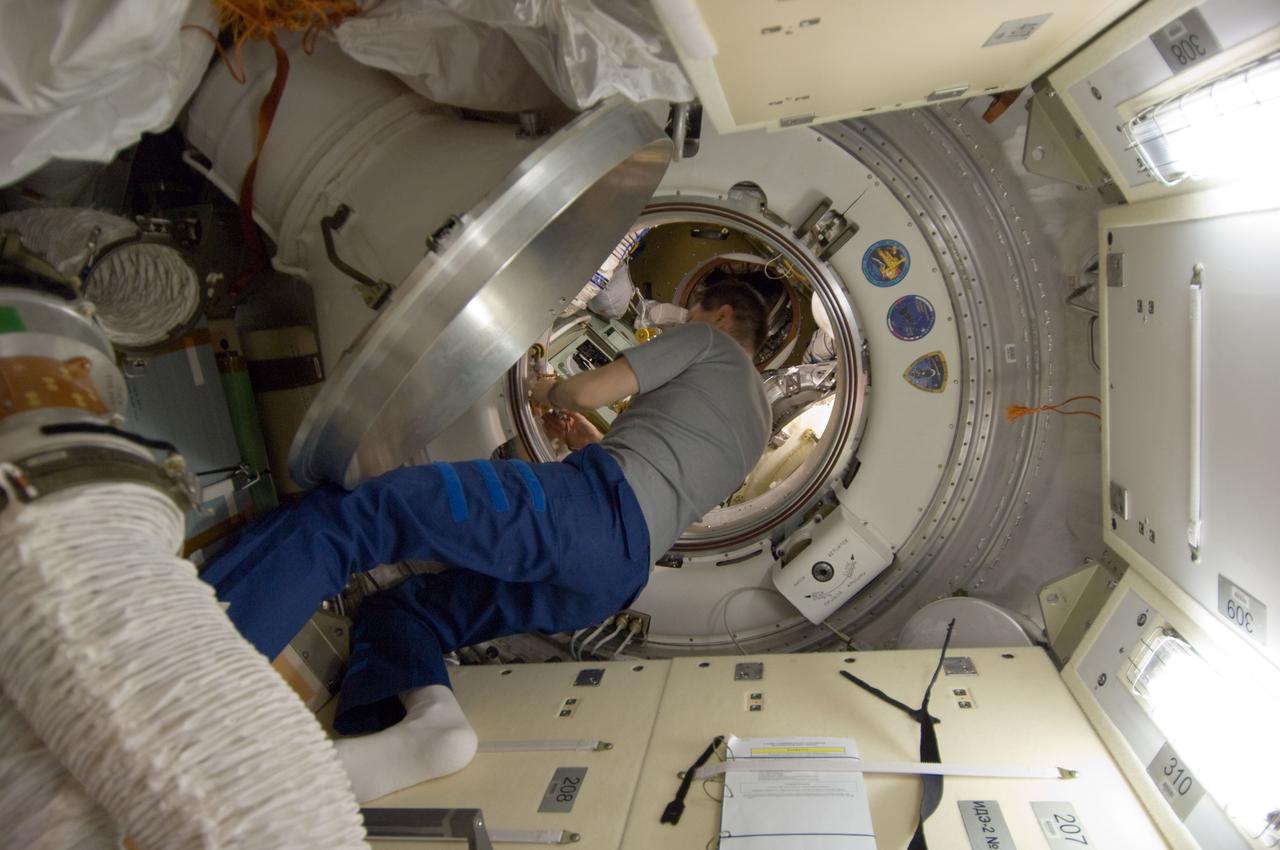
ISS030-E-173977 (24 March 2012) --- Russian cosmonaut Oleg Kononenko, Expedition 30 flight engineer, works in a hatchway on the International Space Station as crew members prepare to move to the appropriate Soyuz vehicles, due to the possibility that space debris could pass close to the station. Burbank, Shkaplerov and Ivanishin sheltered in the Soyuz TMA-22 spacecraft attached to the Poisk Mini-Research Module 2 (MRM2) while Kononenko, Kuipers and Pettit took to the Soyuz TMA-03M docked to the Rassvet Mini-Research Module 1 (MRM-1).
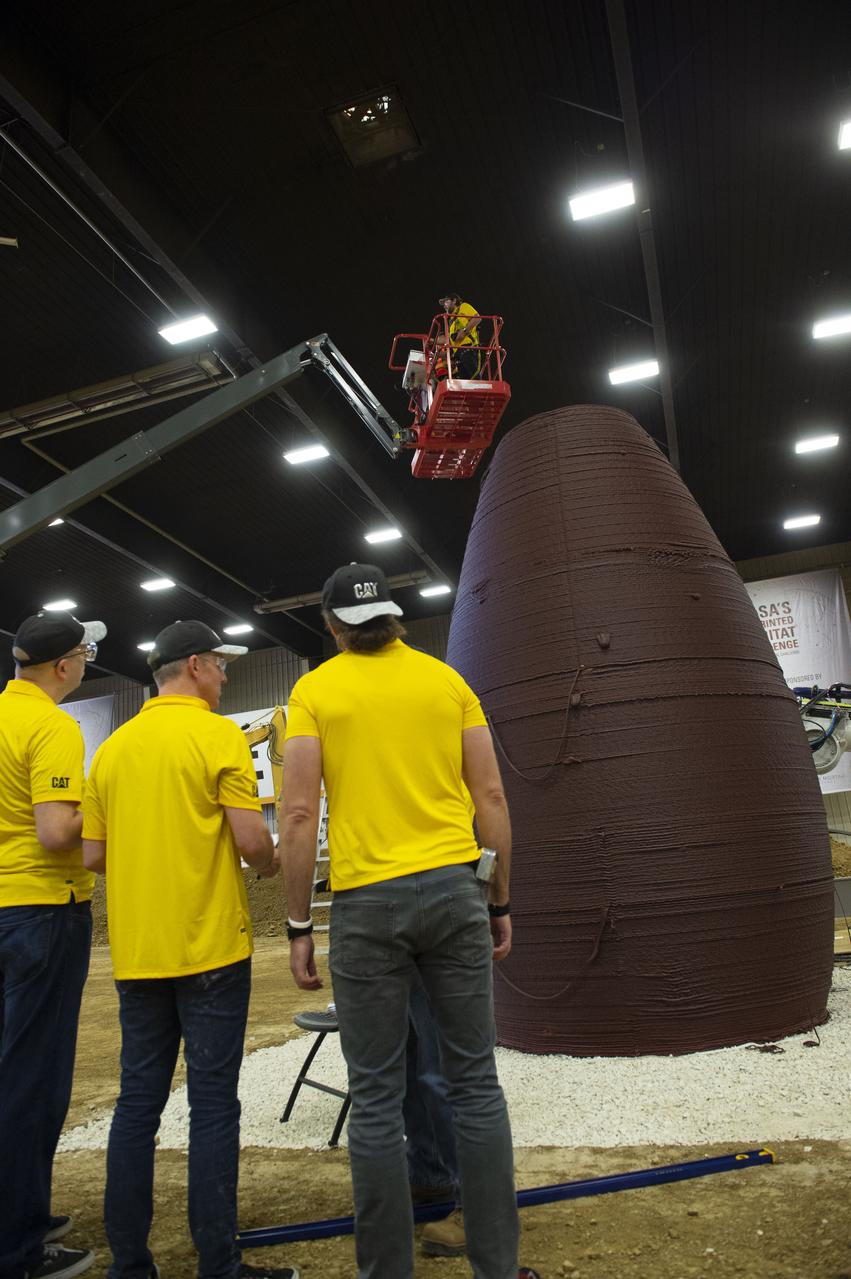
Two teams - Penn State (left) and AI. SpaceFactory (right) competed to 3D-print subscale habitat structures at NASA's 3D-Printed Habitat Challenge, held at the Caterpillar Edwards Demonstration & Learning Center in Edwards, Illinois, May 1-4, 2019. The habitat print is the final level of the multi-phase competition, which began in in 2015. The 3D-Printed Habitat Challenge is a competition to create sustainable shelters suitable for the Moon, Mars or beyond using resources available on-site in these locations. The challenge is managed by NASA's Centennial Challenges program, and partner Bradley University of Peoria, Illinois.
Team Penn State prepares their 3D-printer to begin printing a subscale habitat structure at NASA's 3D-Printed Habitat Challenge, held at the Caterpillar Edwards Demonstration & Learning Center in Edwards, Illinois, May 1-4, 2019. The habitat print is the final level of the multi-phase competition, which began in in 2015. The 3D-Printed Habitat Challenge is a competition to create sustainable shelters suitable for the Moon, Mars or beyond using resources available on-site in these locations. The challenge is managed by NASA's Centennial Challenges program, and partner Bradley University of Peoria, Illinois.