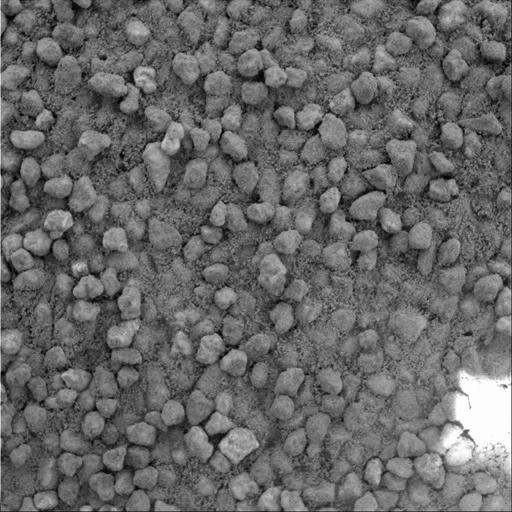
Angular Grains of Sand Hint at Short Transport Distance
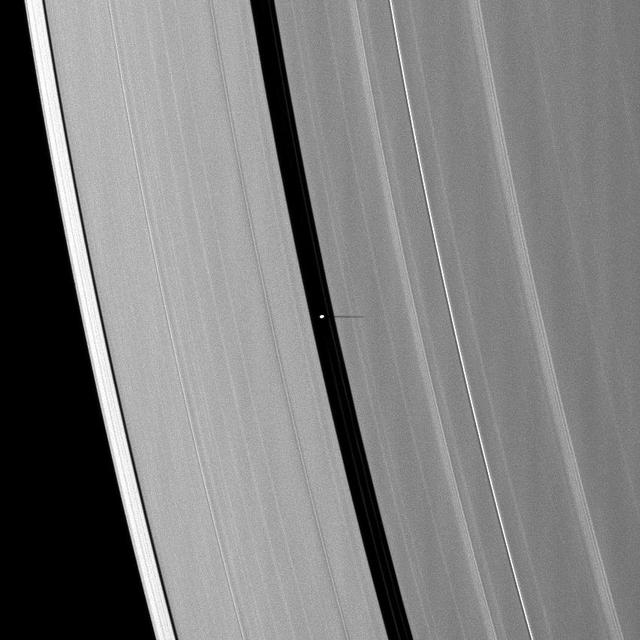
The small moon Pan casts a short shadow on Saturn A ring in this image taken by NASA Cassini spacecraft as the planet approached its August 2009 equinox.
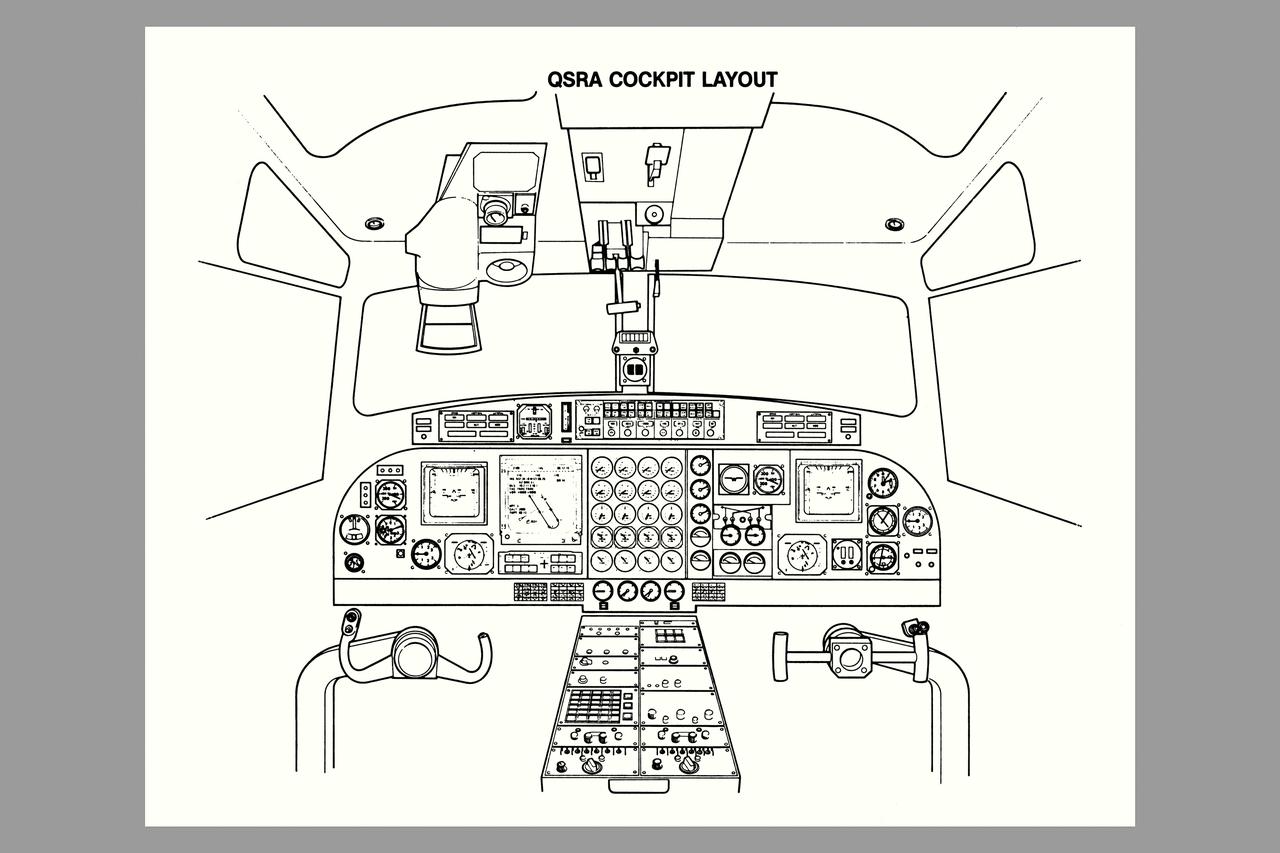
DeHavilland QSRA (Quite Short Haul Research Aircraft) cockpit layout drawing
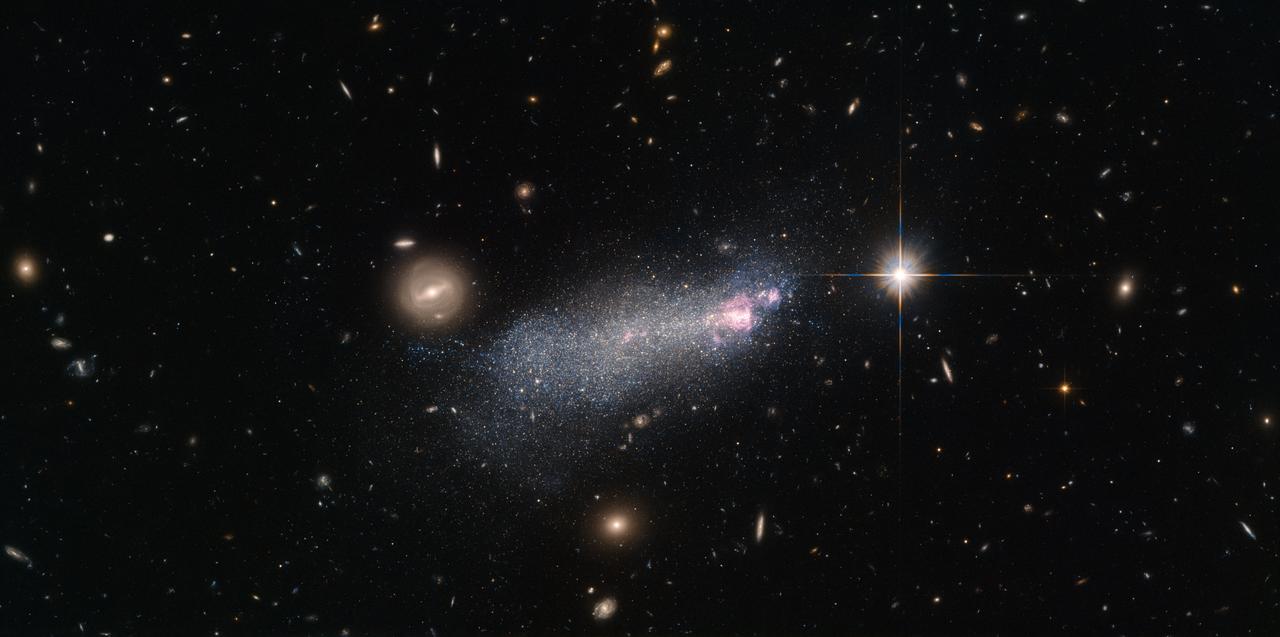
This NASA/ESA Hubble Space Telescope picture shows a galaxy named SBS 1415+437 or SDSS CGB 12067.1, located about 45 million light-years from Earth. SBS 1415+437 is a Wolf–Rayet galaxy, a type of starbursting galaxy with an unusually high number of extremely hot and massive stars known as Wolf–Rayet stars. These stars can be around 20 times as massive as the Sun, but seem to be on a mission to shed surplus mass as quickly as possible — they blast substantial winds of particles out into space, causing them to dwindle at a rapid rate. A typical star of this type can lose a mass equal to that of our Sun in just 100 000 years! These massive stars are also incredibly hot, with surface temperatures some 10 to 40 times that of the Sun, and very luminous, glowing at tens of thousands to several million times the brightness of the Sun. Many of the brightest and most massive stars in the Milky Way are Wolf–Rayet stars. Because these stars are so intense they do not last very long, burning up their fuel and blasting their bulk out into the cosmos on very short timescale ‒ only a few hundred thousand years. Because of this it is unusual to find more than a few of these stars per galaxy — except in Wolf–Rayet galaxies, like the one in this image.
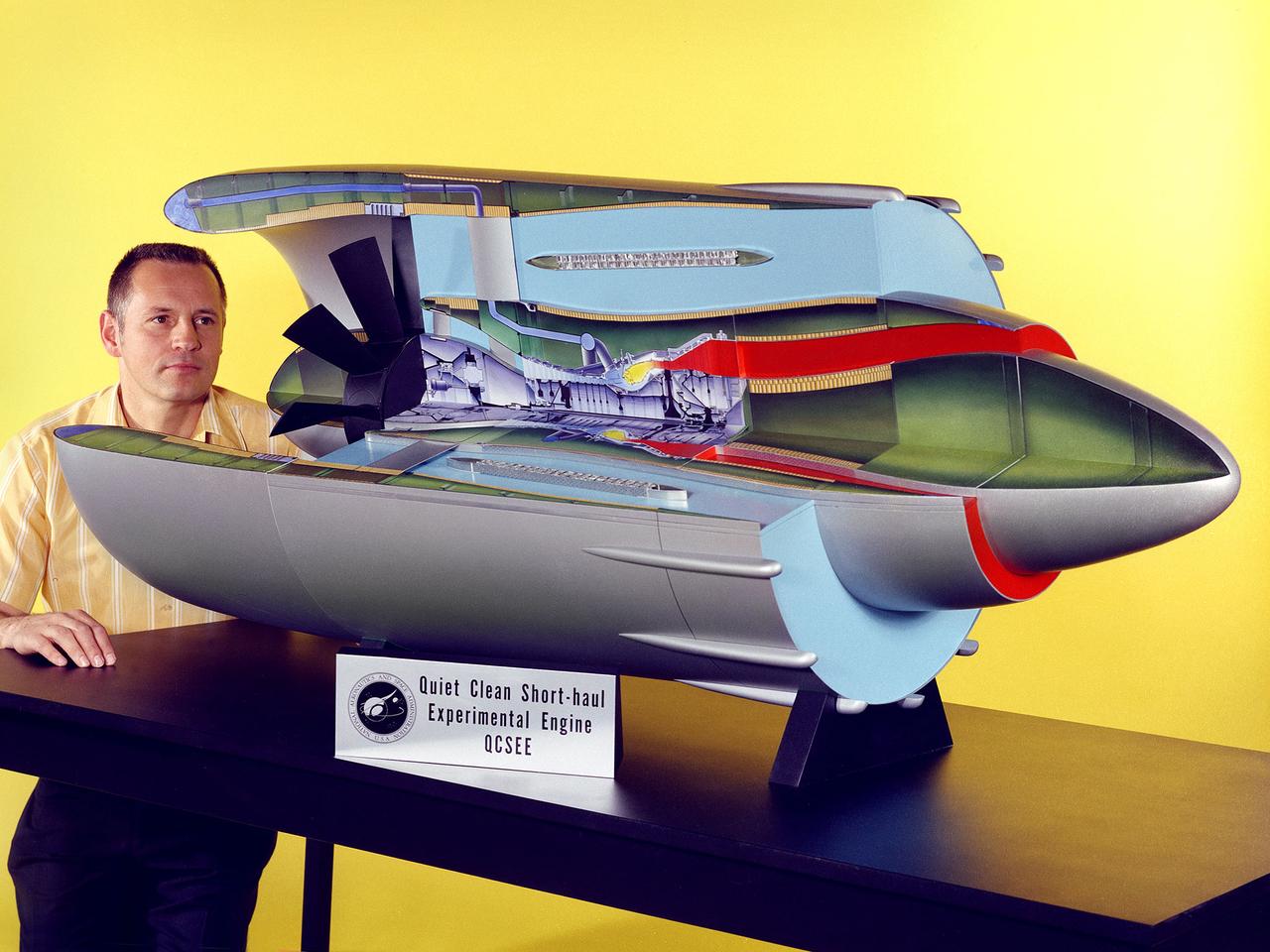
Program manager Carl Ciepluch poses with a model of the Quiet Clean Short Haul Experimental Engine (QCSEE) conceived by the National Aeronautics and Space Administration (NASA) Lewis Research Center. The QCSEE engine was designed to power future short-distance transport aircraft without generating significant levels of noise or pollution and without hindering performance. The engines were designed to be utilized on aircraft operating from small airports with short runways. Lewis researchers investigated two powered-lift designs and an array of new technologies to deal with the shorter runways. Lewis contracted General Electric to design the two QCSEE engines—one with over-the-wing power-lift and one with an under-the-wing design. A scale model of the over-the-wing engine was tested in the Full Scale Tunnel at the Langley Research Center in 1975 and 1976. Lewis researchers investigated both versions in a specially-designed test stand, the Engine Noise Test Facility, on the hangar apron. The QCSEE engines met the goals set out by the NASA researchers. The aircraft industry, however, never built the short-distance transport aircraft for which the engines were intended. Different technological elements of the engine, however, were applied to some future General Electric engines.
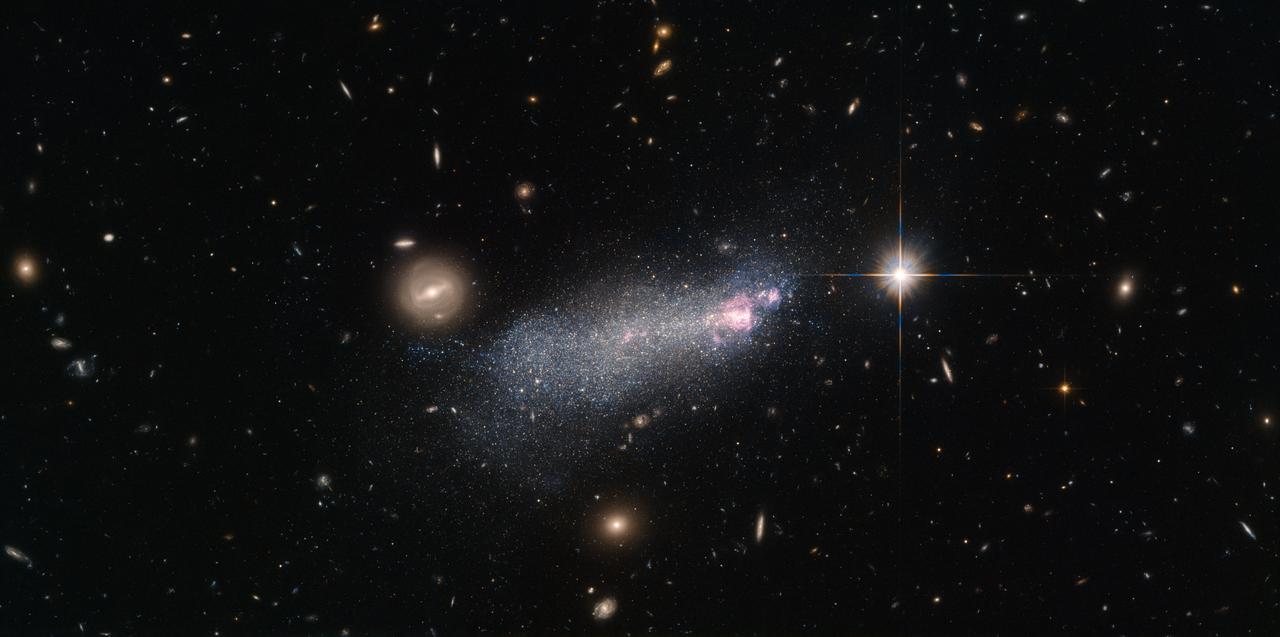
This NASA/European Space Agency (ESA) Hubble Space Telescope picture shows a galaxy named SBS 1415+437 (also called SDSS CGB 12067.1), located about 45 million light-years from Earth. SBS 1415+437 is a Wolf-Rayet galaxy, a type of star-bursting galaxy with an unusually high number of extremely hot and massive stars known as Wolf-Rayet stars. These stars can be around 20 times as massive as the sun, but seem to be on a mission to shed surplus mass as quickly as possible — they blast substantial winds of particles out into space, causing them to dwindle at a rapid rate. A typical star of this type can lose a mass equal to that of our sun in just 100,000 years! These massive stars are also incredibly hot, with surface temperatures some 10 to 40 times that of the sun, and very luminous, glowing at tens of thousands to several million times the brightness of the sun. Many of the brightest and most massive stars in the Milky Way are Wolf-Rayet stars. Because these stars are so intense they do not last very long, burning up their fuel and blasting their bulk out into the cosmos on very short timescale — only a few hundred thousand years. Because of this it is unusual to find more than a few of these stars per galaxy — except in Wolf-Rayet galaxies, like the one in this image. Credit: ESA/Hubble & NASA <b><a href="http://www.nasa.gov/audience/formedia/features/MP_Photo_Guidelines.html" rel="nofollow">NASA image use policy.</a></b> <b><a href="http://www.nasa.gov/centers/goddard/home/index.html" rel="nofollow">NASA Goddard Space Flight Center</a></b> enables NASA’s mission through four scientific endeavors: Earth Science, Heliophysics, Solar System Exploration, and Astrophysics. Goddard plays a leading role in NASA’s accomplishments by contributing compelling scientific knowledge to advance the Agency’s mission. <b>Follow us on <a href="http://twitter.com/NASAGoddardPix" rel="nofollow">Twitter</a></b> <b>Like us on <a href="http://www.facebook.com/pages/Greenbelt-MD/NASA-Goddard/395013845897?ref=tsd" rel="nofollow">Facebook</a></b> <b>Find us on <a href="http://instagrid.me/nasagoddard/?vm=grid" rel="nofollow">Instagram</a></b> <b><a href="http://goes.gsfc.nasa.gov/" rel="nofollow">Credit: NOAA/NASA GOES Project</a></b>

National Weather Service Director Louis Uccellini and deputy director Mary Erickson hear from Short-term Prediction Research and Transition (SPoRT) team members during a visit Sept. 11 to the National Space Science and Technology Center. Managed by NASA’s Marshall Space Flight Center, SPoRT is a project to transition unique Earth observations and research capabilities to the operational weather community to improve short-term forecasts on a regional scale.

National Weather Service Director Louis Uccellini and deputy director Mary Erickson hear from Short-term Prediction Research and Transition (SPoRT) team members during a visit Sept. 11 to the National Space Science and Technology Center. Managed by NASA’s Marshall Space Flight Center, SPoRT is a project to transition unique Earth observations and research capabilities to the operational weather community to improve short-term forecasts on a regional scale.

National Weather Service Director Louis Uccellini and deputy director Mary Erickson hear from Short-term Prediction Research and Transition (SPoRT) team members during a visit Sept. 11 to the National Space Science and Technology Center. Managed by NASA’s Marshall Space Flight Center, SPoRT is a project to transition unique Earth observations and research capabilities to the operational weather community to improve short-term forecasts on a regional scale.
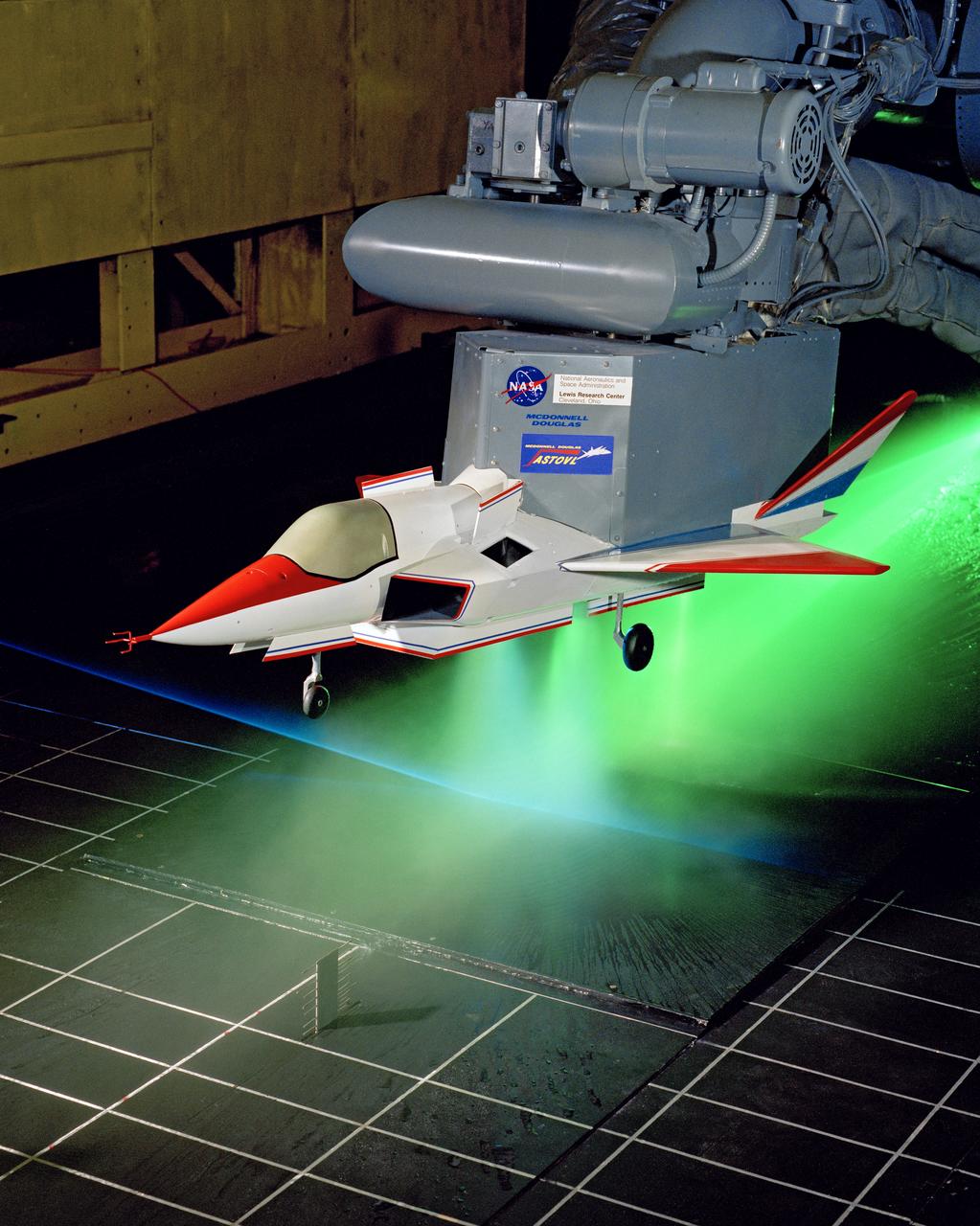
SUPERSONIC SHORT TAKE OFF Vertical LANDING HOT GAS INGESTION MODEL 9X15 WIND TUNNEL
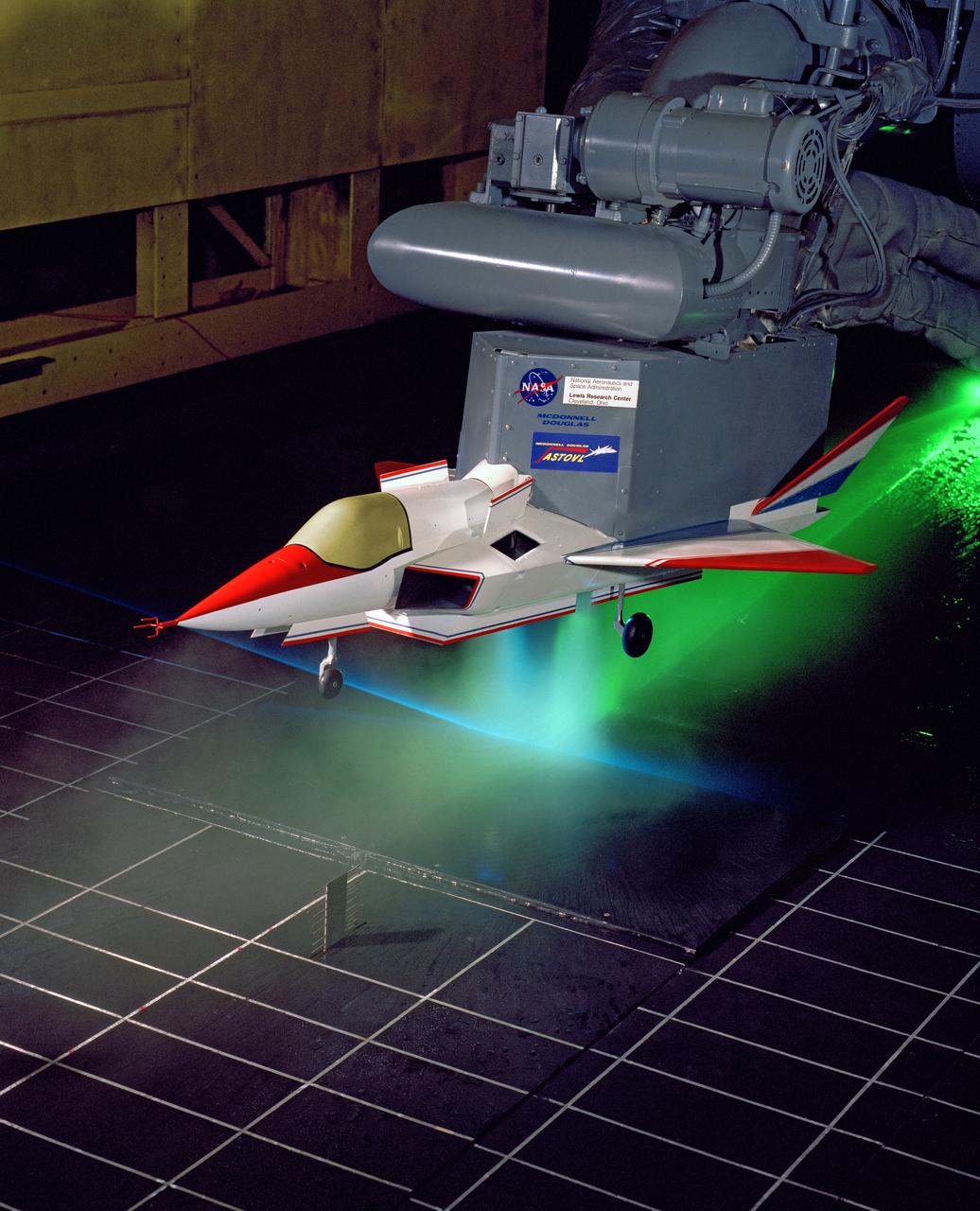
Supersonic Short Take Off Vertical Landing Hot Gas Ingestion Model Testing in the 9x15-foot Low Speed Wind Tunnel, LSWT
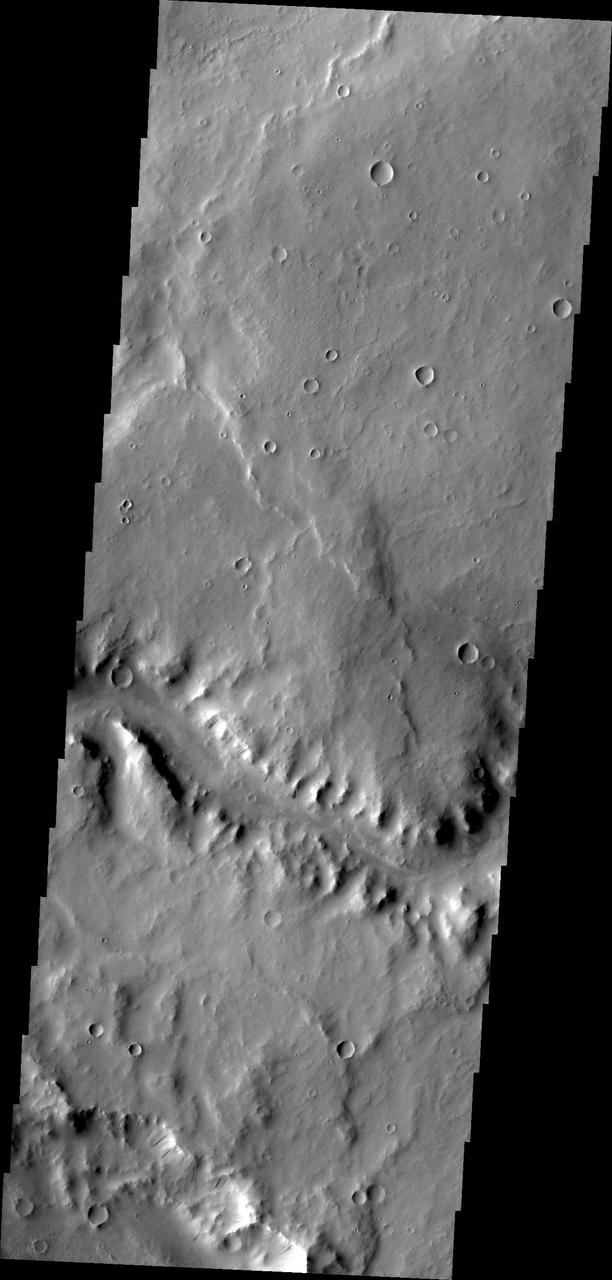
This image from NASA Mars Odyssey shows a short section of Naktong Vallis.
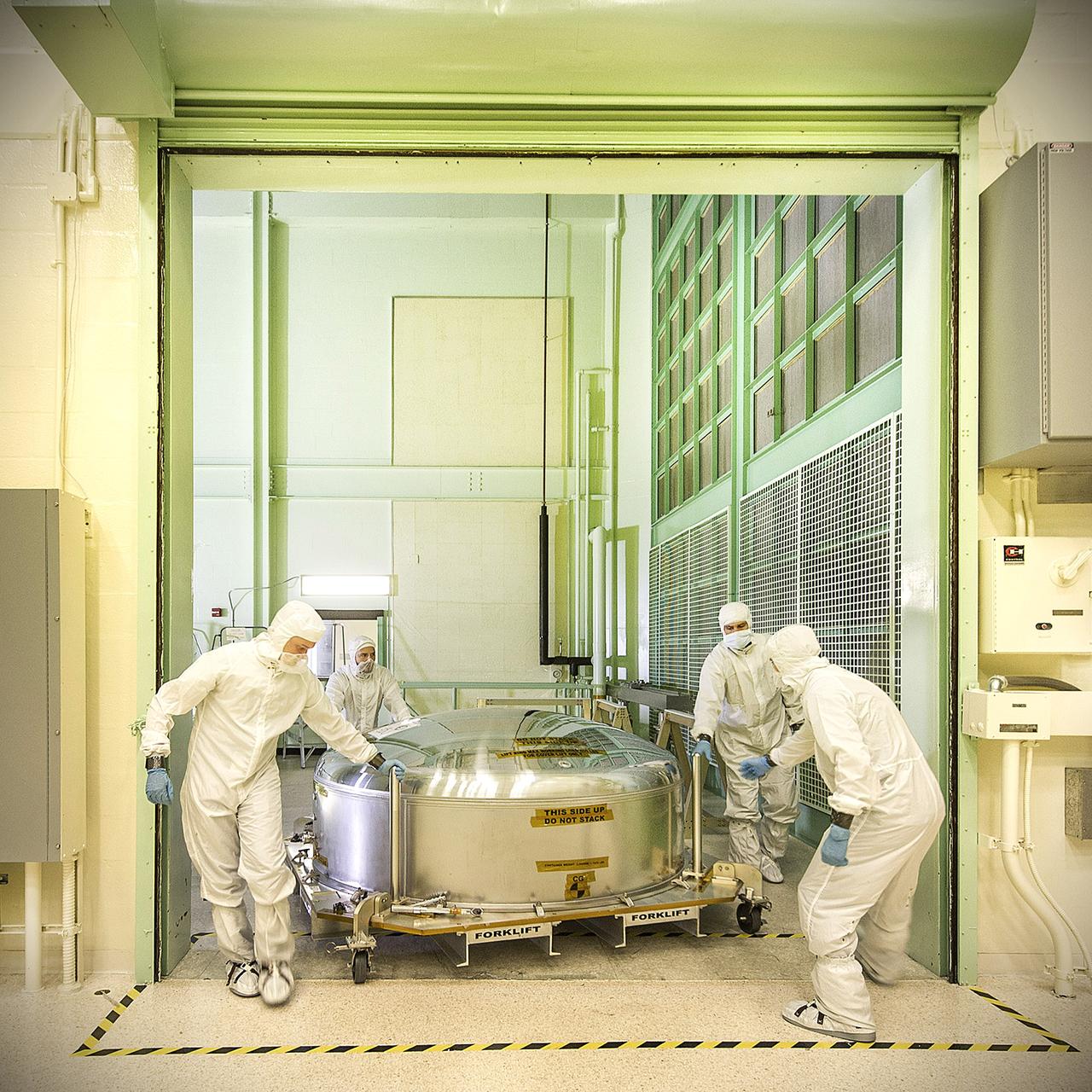
This is the James Webb Space Telescope ETU (engineering test unit) primary mirror segment returning to the cleanroom at NASA Goddard after undergoing some tests at our new Calibration, Integration, and Alignment Facility (CIAF). Credit: NASA/Goddard/Chris Gunn <b><a href="http://www.nasa.gov/audience/formedia/features/MP_Photo_Guidelines.html" rel="nofollow">NASA image use policy.</a></b> <b><a href="http://www.nasa.gov/centers/goddard/home/index.html" rel="nofollow">NASA Goddard Space Flight Center</a></b> enables NASA’s mission through four scientific endeavors: Earth Science, Heliophysics, Solar System Exploration, and Astrophysics. Goddard plays a leading role in NASA’s accomplishments by contributing compelling scientific knowledge to advance the Agency’s mission. <b>Follow us on <a href="http://twitter.com/NASA_GoddardPix" rel="nofollow">Twitter</a></b> <b>Like us on <a href="http://www.facebook.com/pages/Greenbelt-MD/NASA-Goddard/395013845897?ref=tsd" rel="nofollow">Facebook</a></b> <b>Find us on <a href="http://instagram.com/nasagoddard?vm=grid" rel="nofollow">Instagram</a></b>
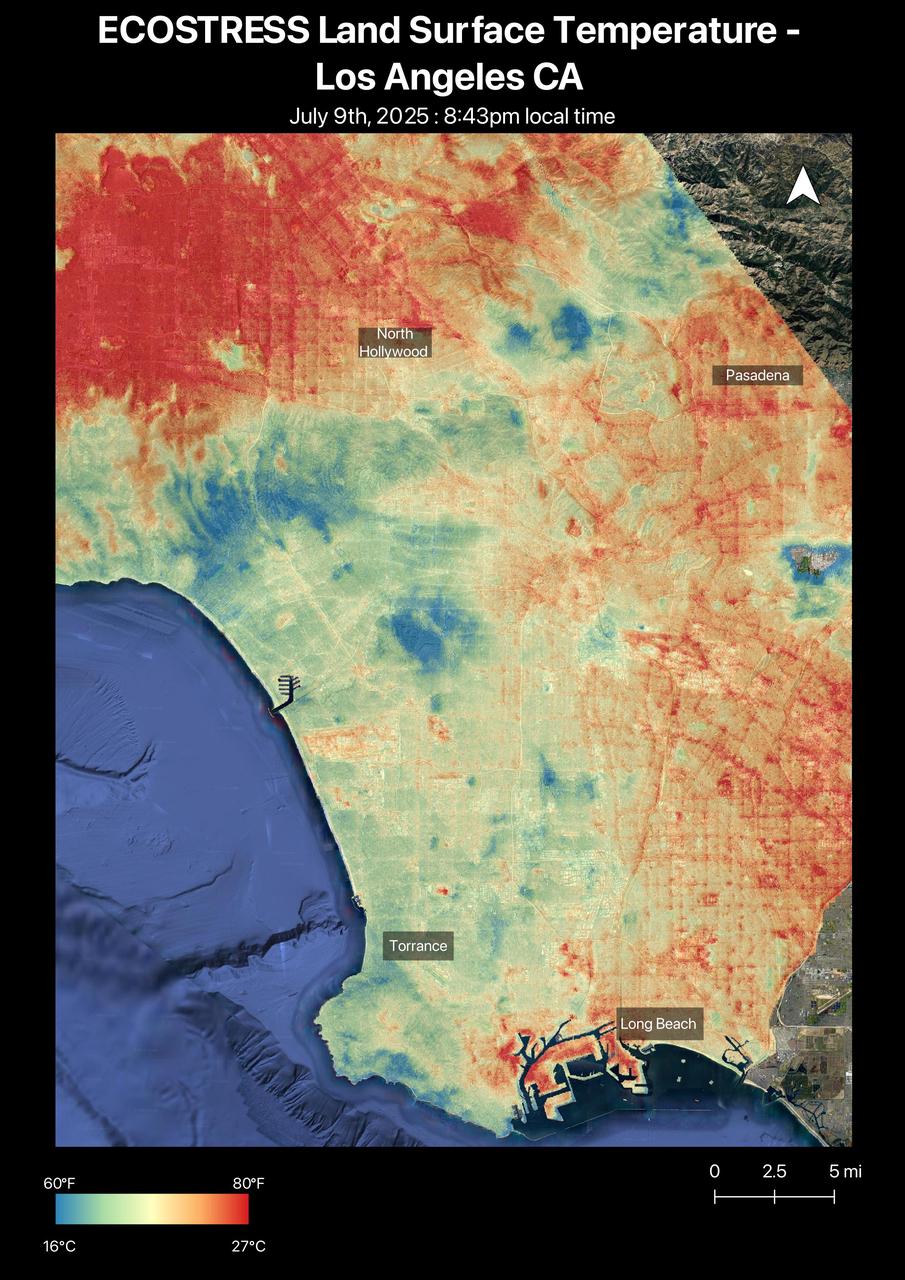
A short-lived heat wave that hit the Los Angeles area the week of July 7, 2025, was the first of summer. The heat lingered into the evening hours, as captured by NASA's Ecosystem Spaceborne Thermal Radiometer Experiment on Space Station (ECOSTRESS) instrument. By nearly 8:45 p.m. local time July 9, surface temperatures in the San Fernando Valley were still over 80 degrees Fahrenheit (27 degrees Celsius). The ECOSTRESS sensor recorded similar temperatures for downtown Pasadena (Figure A) and parts of Altadena, east of NASA's Jet Propulsion Laboratory, which manages the mission. In these data visualizations, dark red indicates higher temperatures, while areas in blue and green are cooler. Coastal regions remained significantly cooler than inland areas. The ECOSTRESS instrument measures thermal infrared emissions from Earth's surface. This enables researchers to monitor plant health, the progress of wildfires, land surface temperatures, and the burn risk to people from hot surfaces such as asphalt. Land surface temperatures are hotter than air temperatures during the day. Air temperatures, which are measured out of direct sunlight, are usually what meteorologists report in a weather forecast. https://photojournal.jpl.nasa.gov/catalog/PIA26651
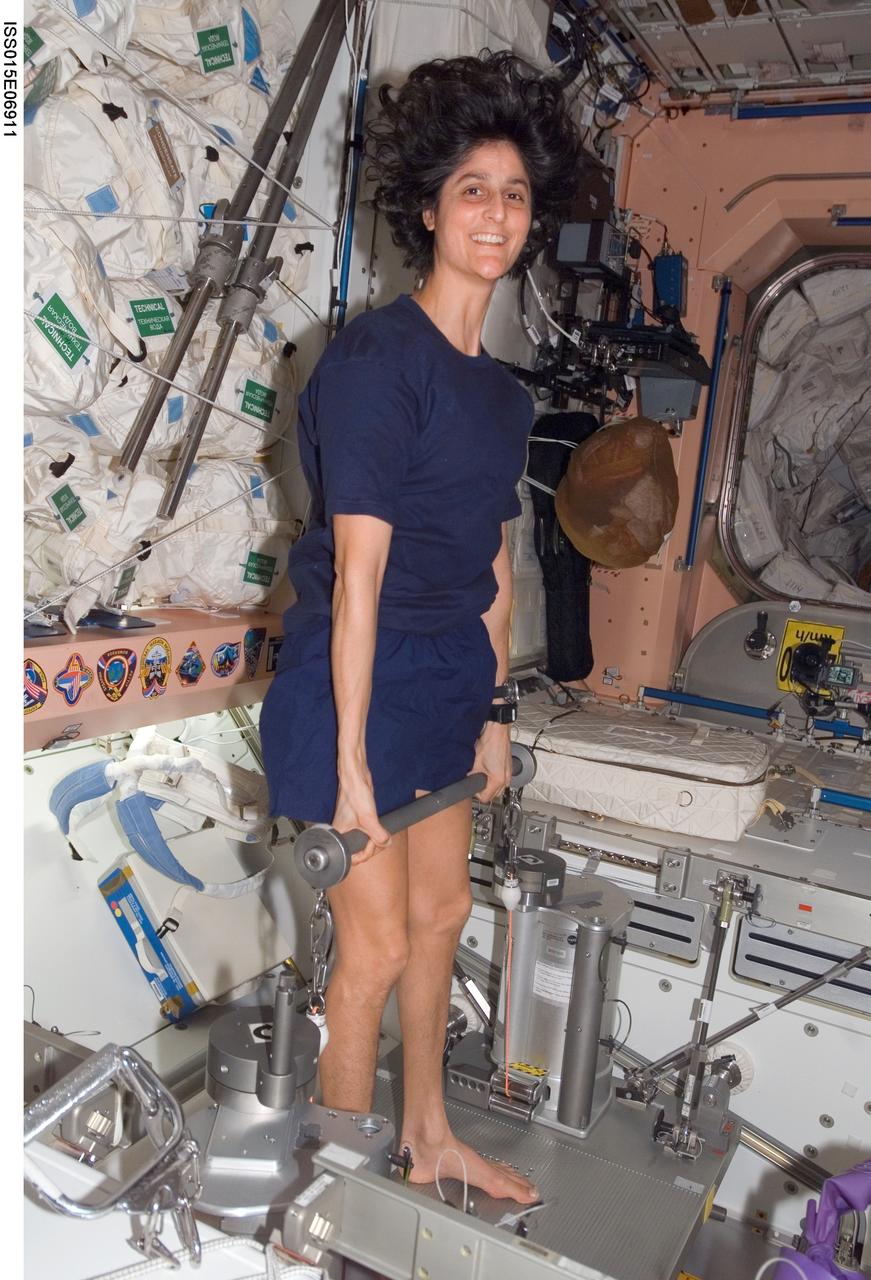
ISS015-E-06911 (7 May 2007) --- Astronaut Sunita L. Williams, Expedition 15 flight engineer, uses the short bar for the Interim Resistive Exercise Device (IRED) to perform upper body strengthening pull-ups. The IRED hardware is located in the Unity node of the International Space Station.
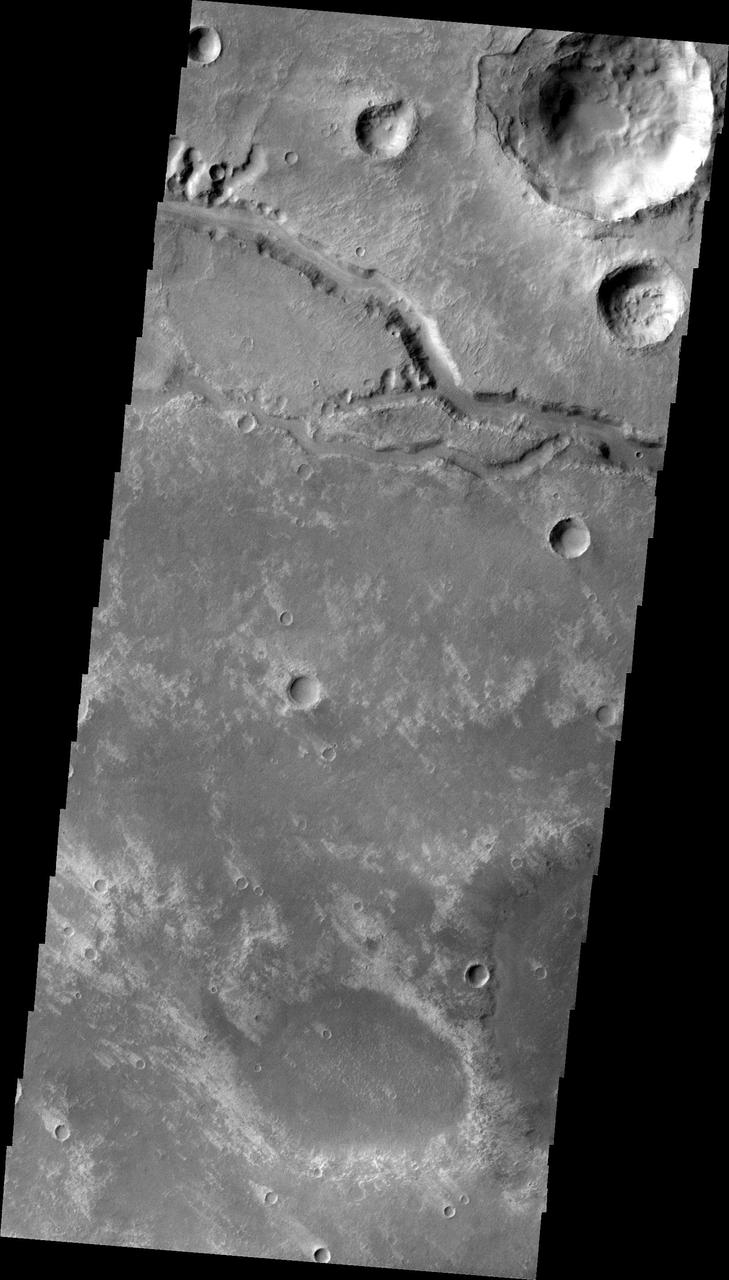
This image, taken by NASA Mars Odyssey, shows a short section of Nirgal Vallis. Several tributaries are visible in this image.
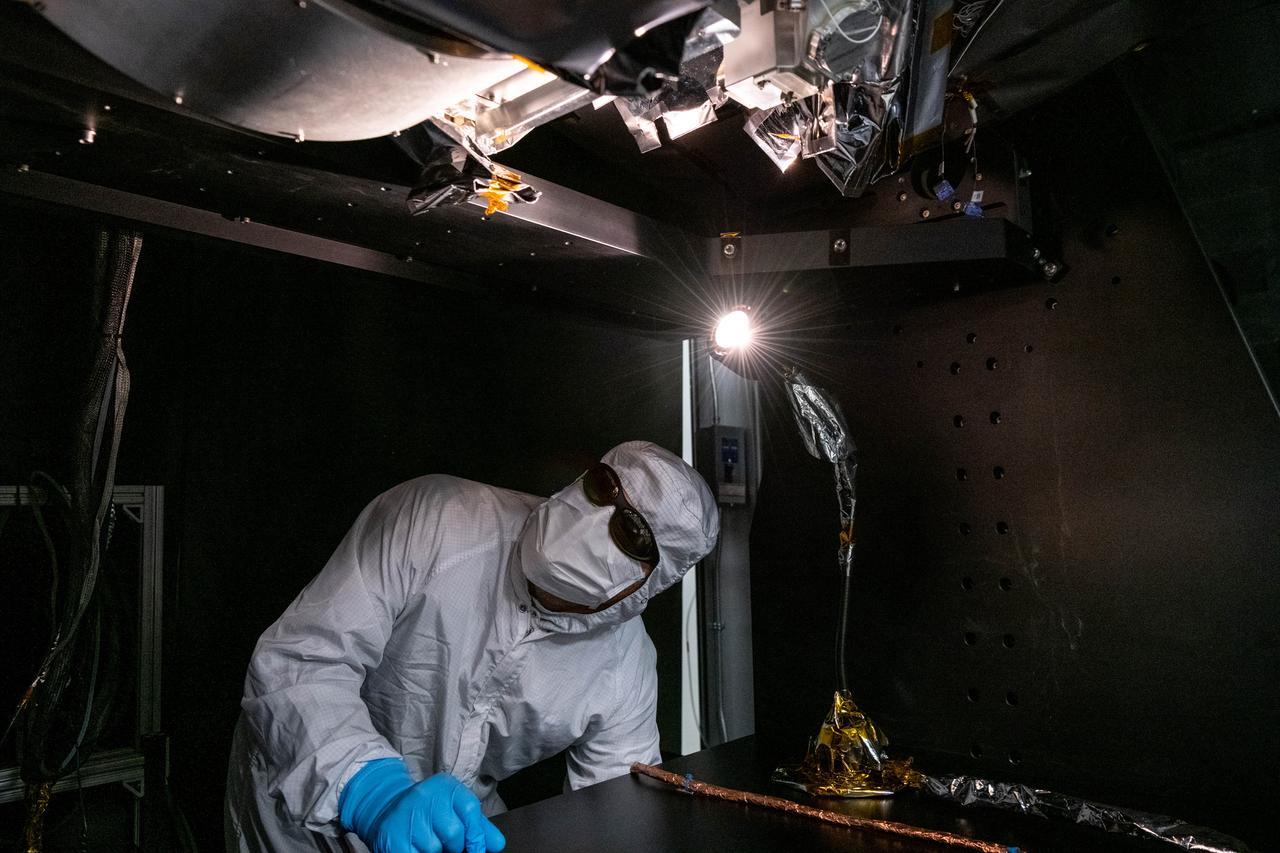
Manufacturing engineer, Roman Nilov, inspects flight hardware after technicians install the Short Wave Infrared (SWIR) Pulse Calibration Assembly (SPCA) fold mirror assembly to the Ocean Color Instrument (OCI). OCI is a highly advanced optical spectrometer that will be used to measure properties of light over portions of the electromagnetic spectrum. It will enable continuous measurement of light at finer wavelength resolution than previous NASA satellite sensors, extending key system ocean color data records for climate studies. OCI is PACE's (Plankton, Aerosol, Cloud, ocean Ecosystem) primary sensor built at Goddard Space Flight Center in Greenbelt, MD.
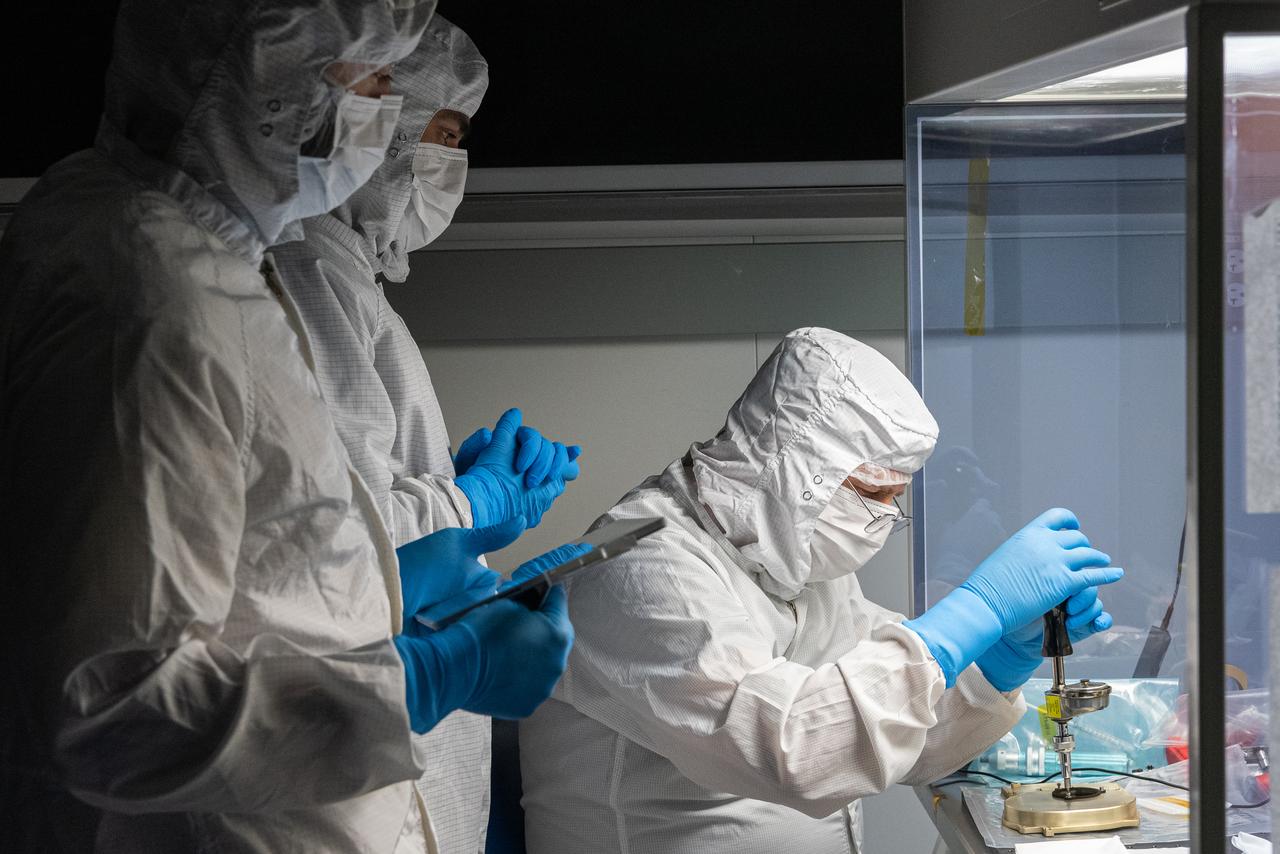
Mechanical technician, Dave Nolan, tightens bolts on the Ocean Color Instrument (OCI) Short Wave Infrared (SWIR) Pulse Calibration Assembly (SPCA). OCI is a highly advanced optical spectrometer that will be used to measure properties of light over portions of the electromagnetic spectrum. It will enable continuous measurement of light at finer wavelength resolution than previous NASA satellite sensors, extending key system ocean color data records for climate studies. OCI is PACE's (Plankton, Aerosol, Cloud, ocean Ecosystem) primary sensor built at Goddard Space Flight Center in Greenbelt, MD.
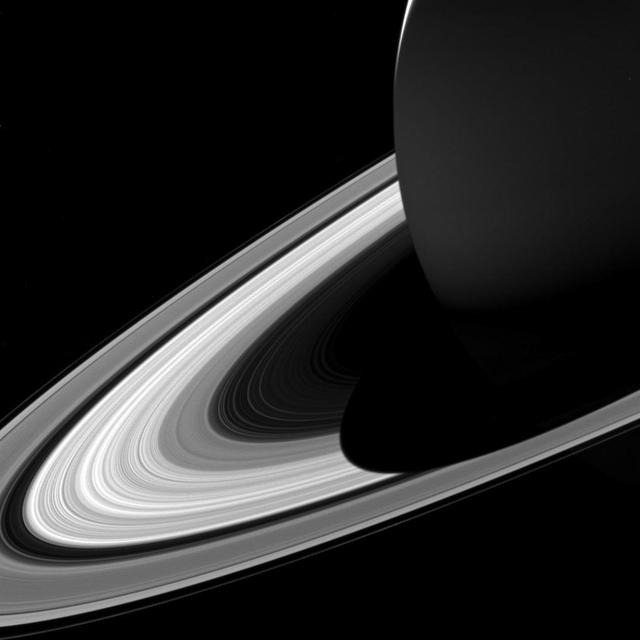
The projection of Saturn's shadow on the rings grows shorter as Saturn's season advances toward northern summer, thanks to the planet's permanent tilt as it orbits the sun. This will continue until Saturn's solstice in May 2017. At that point in time, the shadow will extend only as far as the innermost A ring, leaving the middle and outer A ring completely free of the planet's shadow. Over the course of NASA's Cassini mission, the shadow of Saturn first lengthened steadily until equinox in August 2009. Since then, the shadow has been shrinking. This view looks toward the sunlit side of the rings from about 10 degrees above the ring plane. The image was taken in visible light with the Cassini spacecraft wide-angle camera on Feb. 3, 2017. The view was acquired at a distance of approximately 760,000 miles (1.2 million kilometers) from Saturn. Image scale is 46 miles (73 kilometers) per pixel. https://photojournal.jpl.nasa.gov/catalog/PIA21328
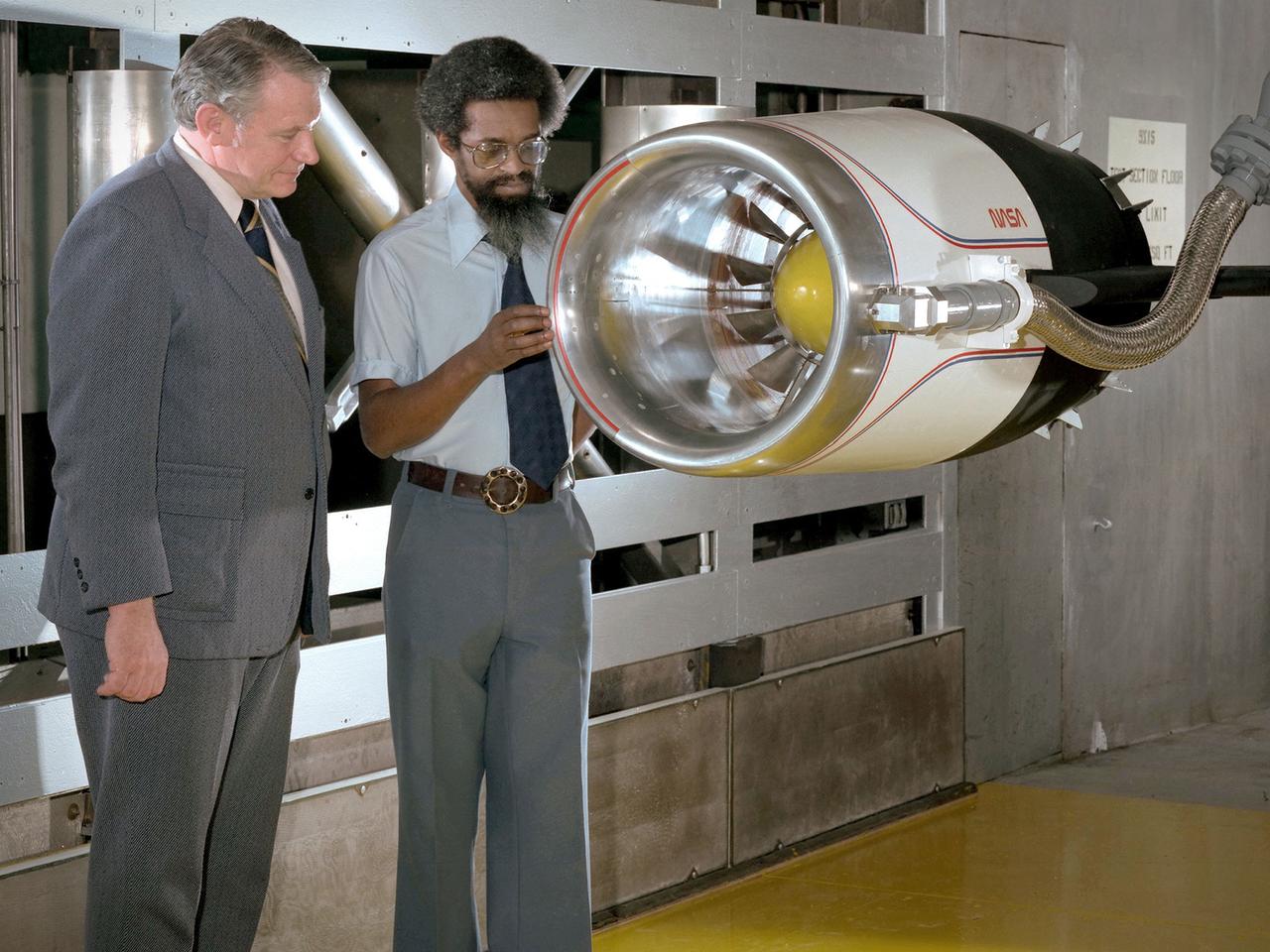
Center Director John McCarthy, left, and researcher Al Johns pose with a one-third scale model of a Grumman Aerospace tilt engine nacelle for Vertical and Short Takeoff and Landing (V/STOL) in the 9- by 15-Foot Low Speed Wind Tunnel at the National Aeronautics and Space Administration (NASA) Lewis Research Center. Lewis researchers had been studying tilt nacelle and inlet issues for several years. One area of concern was the inlet flow separation during the transition from horizontal to vertical flight. The separation of air flow from the inlet’s internal components could significantly stress the fan blades or cause a loss of thrust. In 1978 NASA researchers Robert Williams and Al Johns teamed with Grumman’s H.C. Potonides to develop a series of tests in the Lewis 9- by 15-foot tunnel to study a device designed to delay the flow separation by blowing additional air into the inlet. A jet of air, supplied through the hose on the right, was blown over the inlet surfaces. The researchers verified that the air jet slowed the flow separation. They found that the blowing on boundary layer control resulted in a doubling of the angle-of-attack and decreases in compressor blade stresses and fan distortion. The tests were the first time the concept of blowing air for boundary layer control was demonstrated. Boundary layer control devices like this could result in smaller and lighter V/STOL inlets.
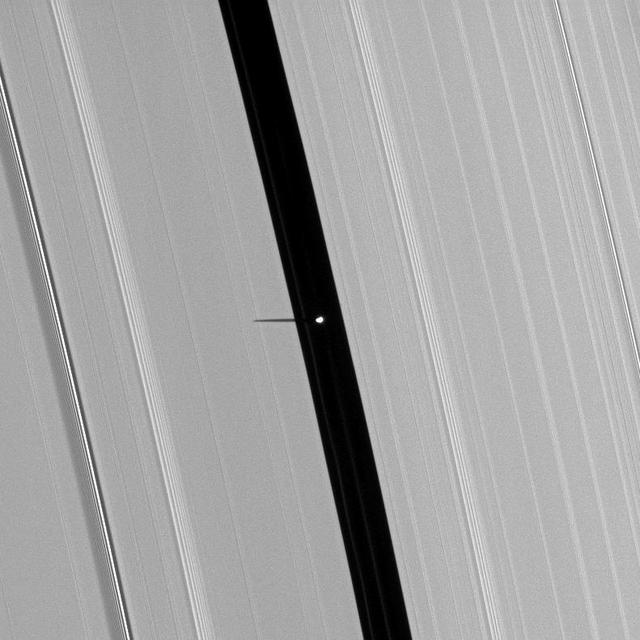
Saturn small moon Pan, brightly overexposed, casts a short shadow on the A ring in this image taken by NASA Cassini spacecraft before the planet August 2009 equinox.
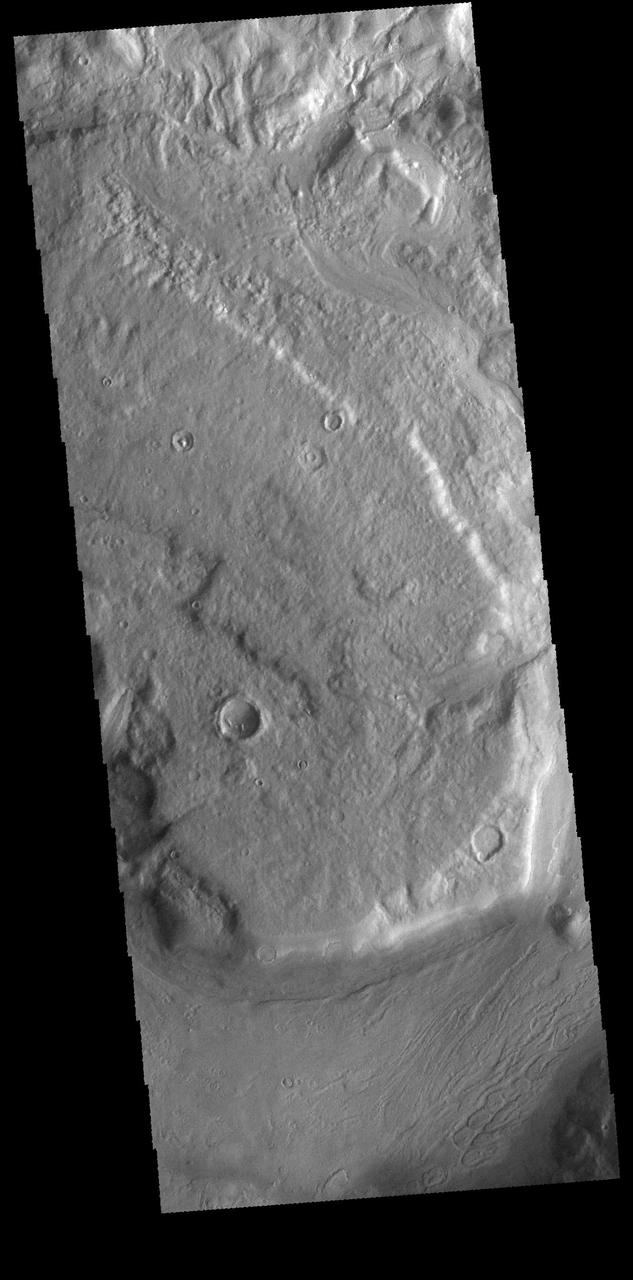
This VIS image captured by NASA 2001 Mars Odyssey spacecraft shows a short section of Reull Vallis. Reull Vallis starts in Promethei Terra and ends in Hellas Plainitia. Orbit Number: 67310 Latitude: -40.6272 Longitude: 100.468 Instrument: VIS Captured: 2017-02-15 05:44 https://photojournal.jpl.nasa.gov/catalog/PIA21527
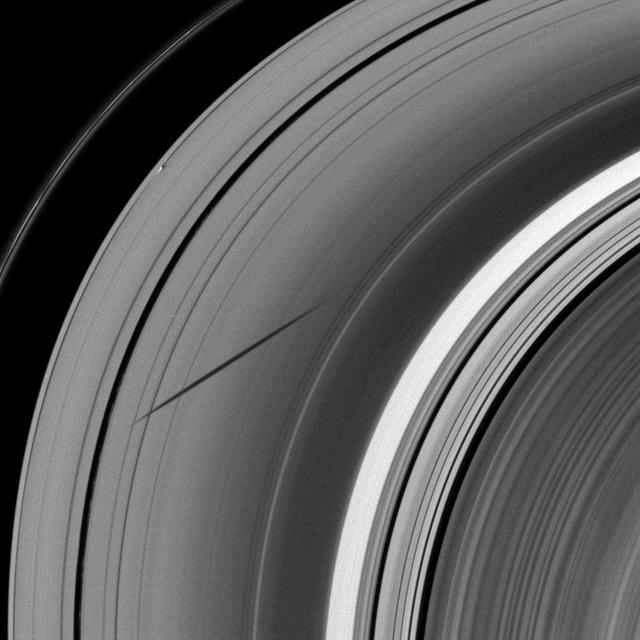
The shadow of the moon Janus dwarfs the shadow of Daphnis on Saturn A ring in this image taken as the planet approached its August 2009 equinox.
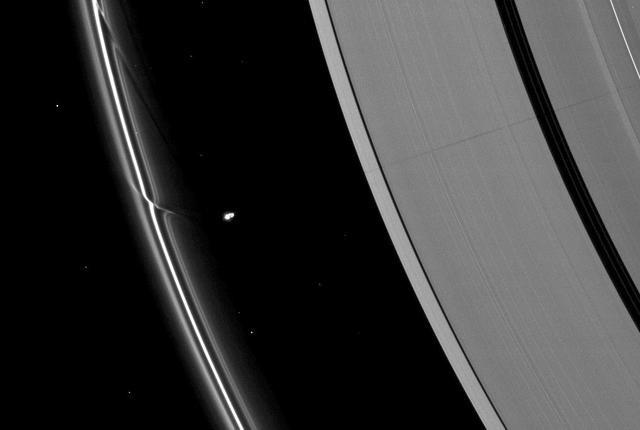
The effects of the small moon Prometheus loom large on two of Saturn rings in this image taken by NASA Cassini spacecraft a short time before Saturn August 2009 equinox.
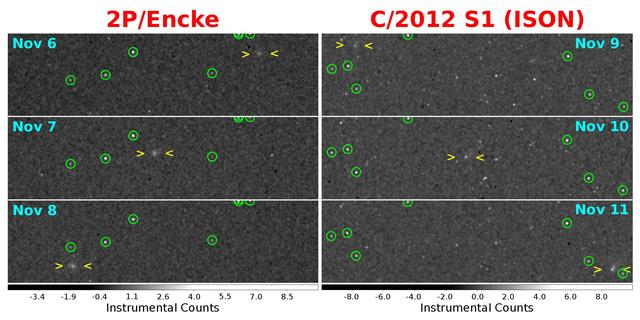
As comets C/2012 S1 ISON and the well-known short-period comet 2P/Encke both approached their closest distances to the Sun in November, 2013, they also passed close to the MESSENGER spacecraft orbiting the innermost planet Mercury.
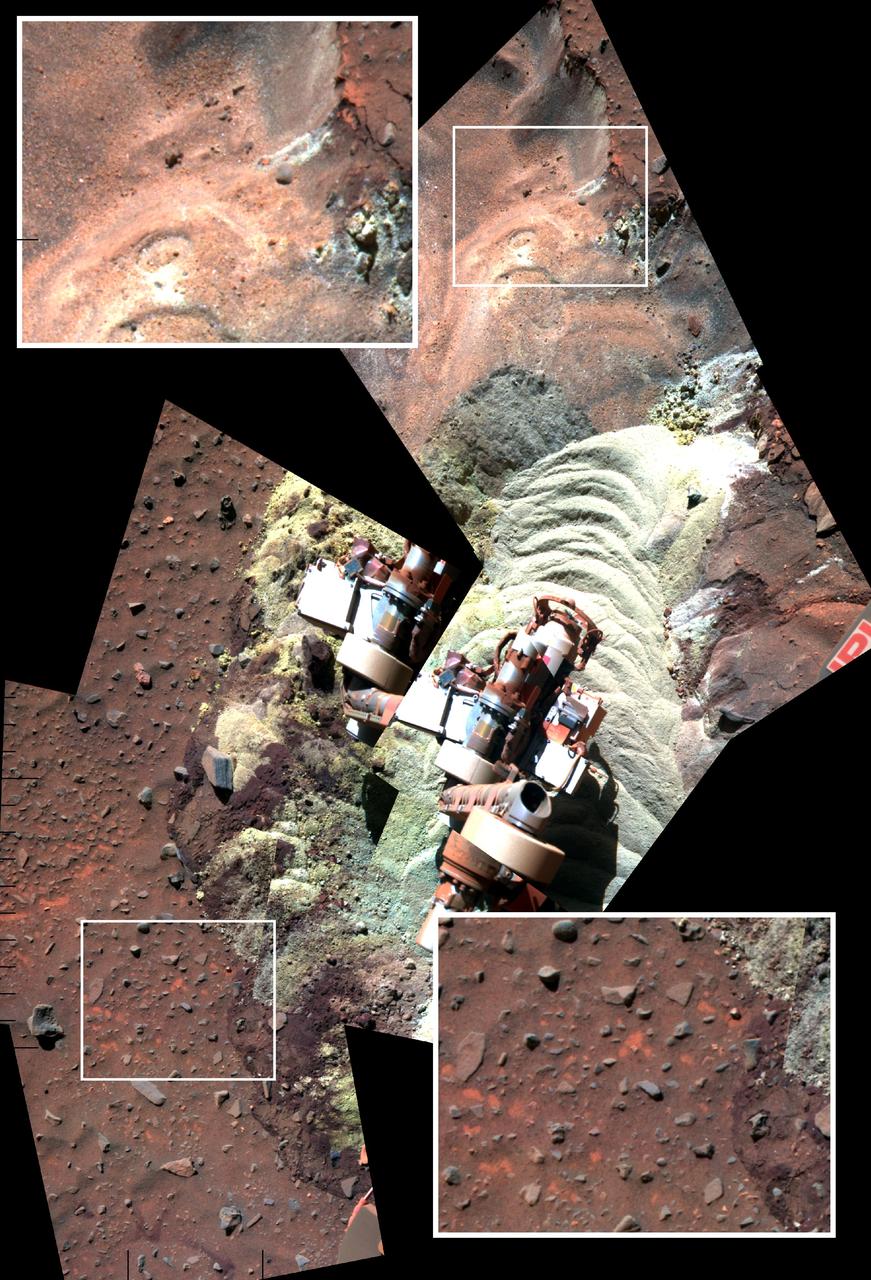
This mosaic of images shows the soil in front of NASA Mars Exploration Rover Spirit after a series of short backward drives during attempts to extricate the rover from a sand trap in January and early February 2010.
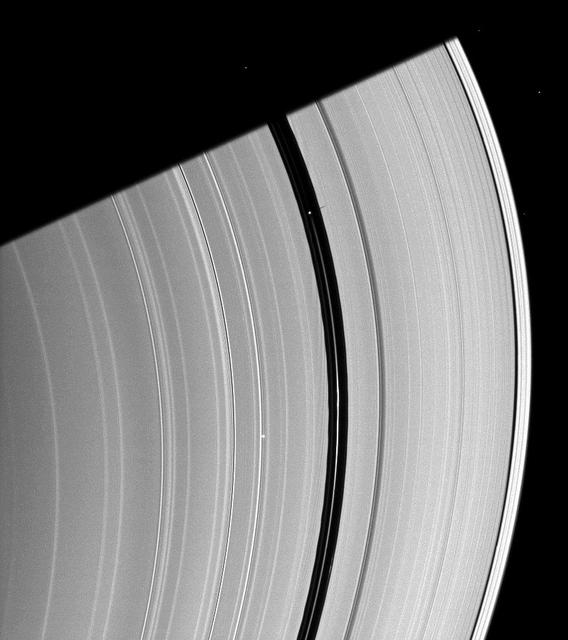
Saturn moon Pan, orbiting in the Encke Gap near the top of the image, casts a short shadow on the A ring in this image taken by NASA Cassini spacecraft about six months after the planet August 2009 equinox.
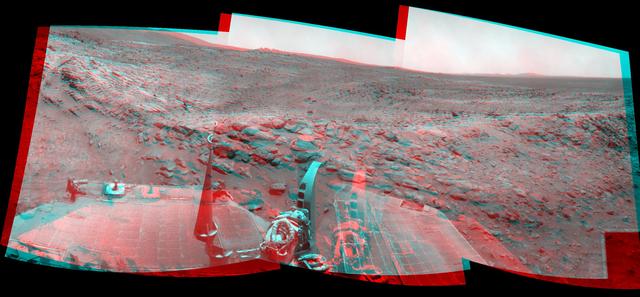
NASA Mars Exploration Rover Spirit used its navigation camera to take the images assembled into this stereo, 120-degree view southward after a short drive on February 3, 2009. 3D glasses are necessary to view this image.
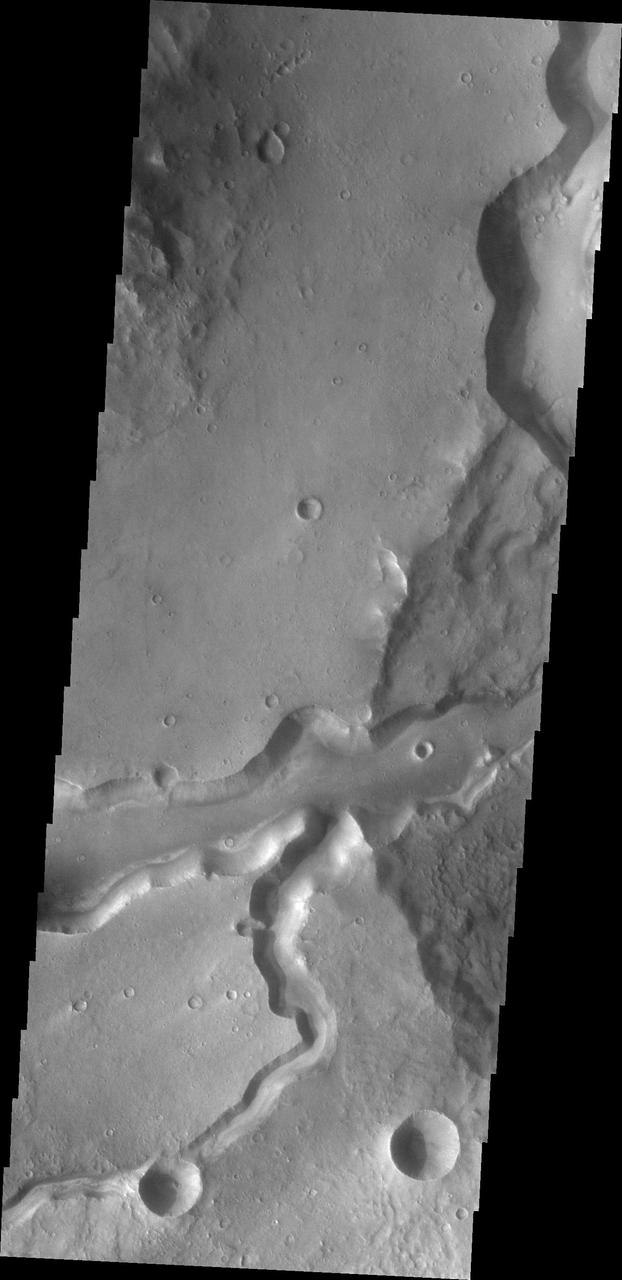
This image from NASA Mars Odyssey shows Bahram Vallis where it enters Waspam Crater. Bahram Vallis exits the crater to the north a short distance from this location along the rim of Waspam Crater.
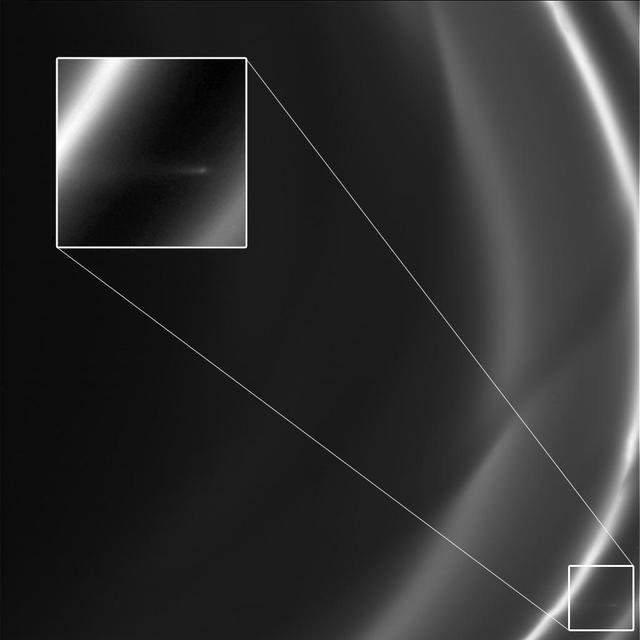
This image obtained by NASA Cassini spacecraft around the time it went into orbit around Saturn in 2004 shows a short trail of icy particles dragged out from Saturn F ring.
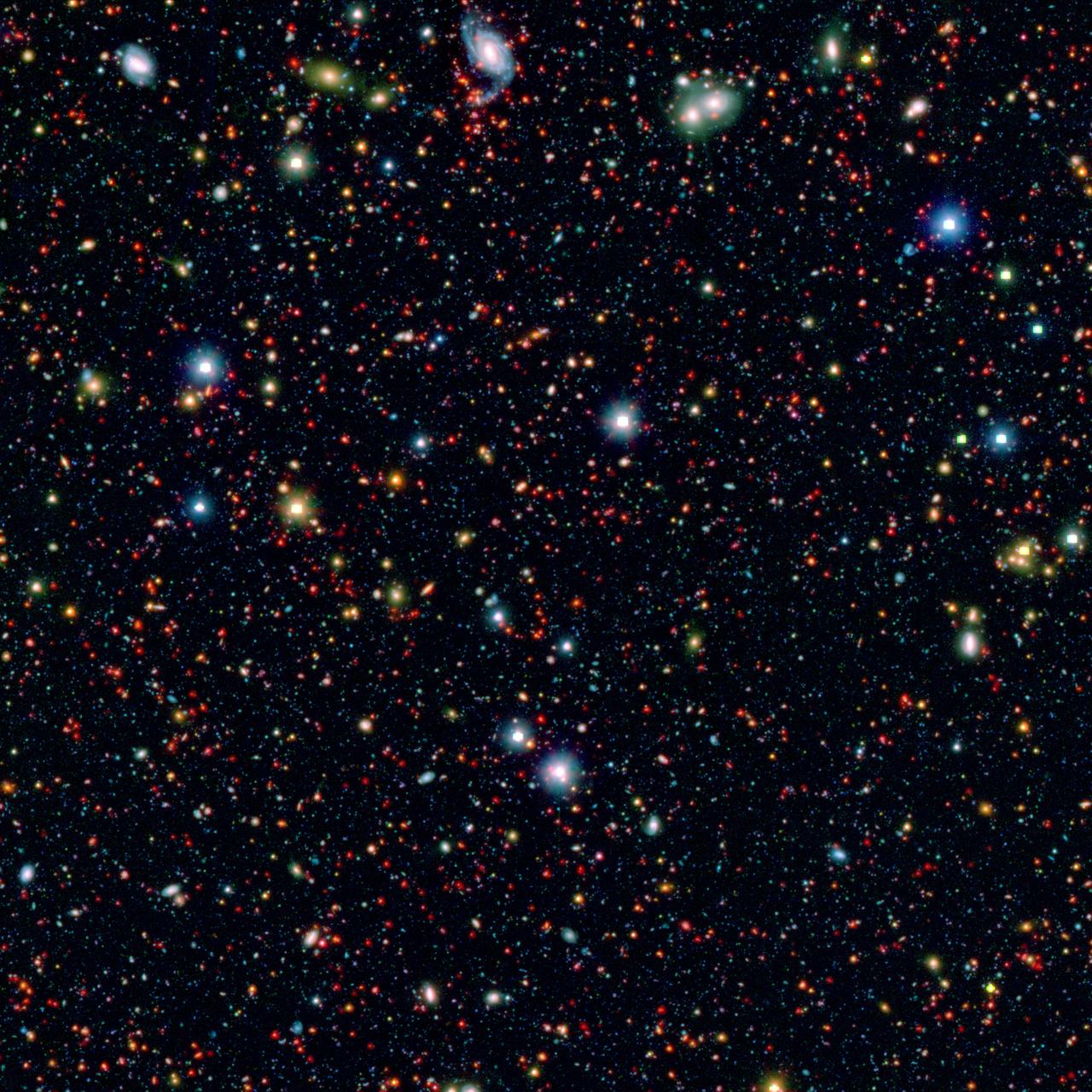
Millions of galaxies populate the patch of sky known as the COSMOS field, short for Cosmic Evolution Survey, a portion of which is shown here. Even the smallest dots in this image are galaxies, some up to 12 billion light-years away.
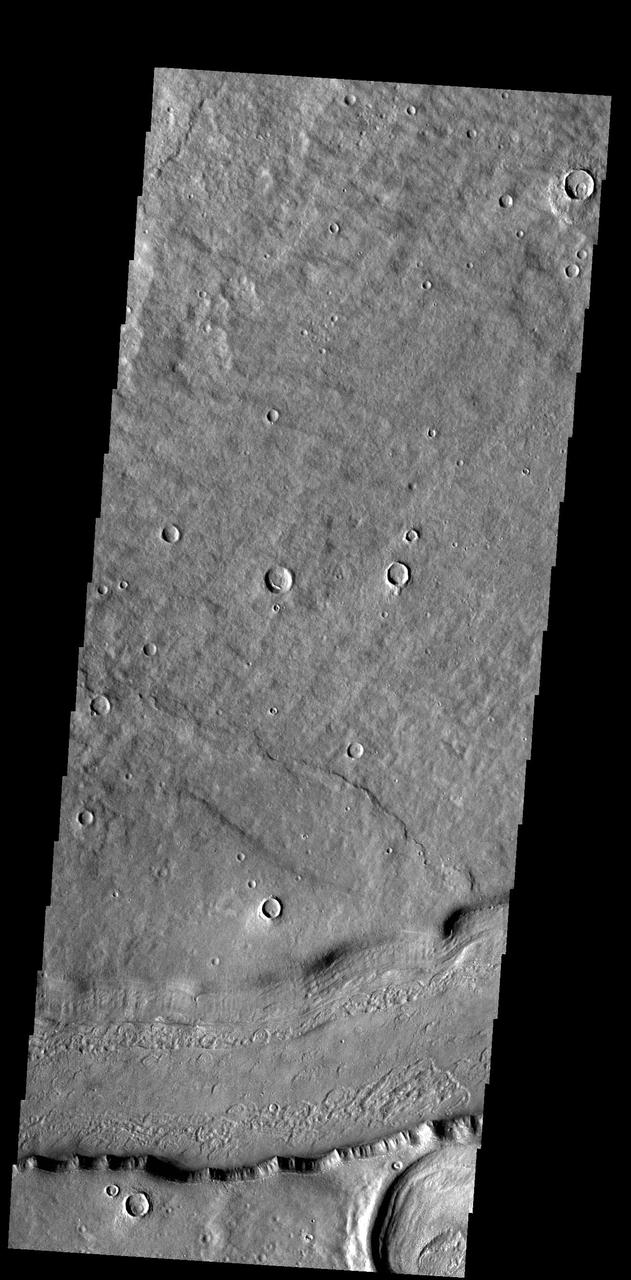
This VIS image shows a short section of Reull Vallis. Reull Vallis starts in Promethei Terra and empties into Hellas Plainitia. Reull Vallis is 1051km (653 miles) long. Orbit Number: 92169 Latitude: -41.0221 Longitude: 107.284 Instrument: VIS Captured: 2022-09-24 11:18 https://photojournal.jpl.nasa.gov/catalog/PIA25750
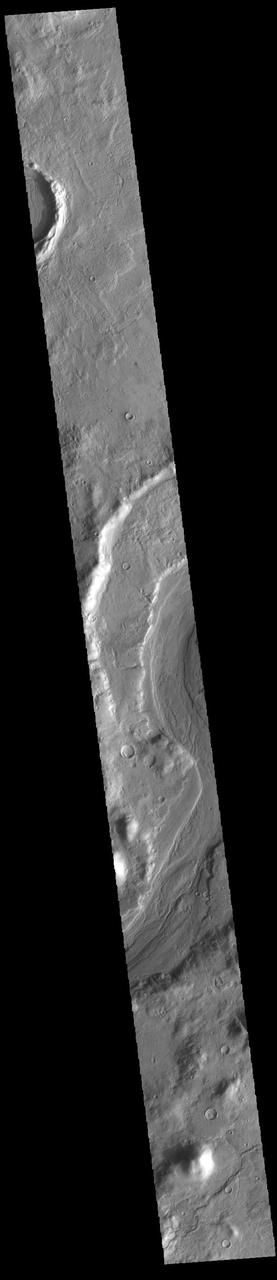
This VIS image shows a short section of Reull Vallis. Reull Vallis starts in Promethei Terra and empties into Hellas Plainitia. Reull Vallis is 1051km (653 miles) long. Orbit Number: 92175 Latitude: -38.4731 Longitude: 111.272 Instrument: VIS Captured: 2022-09-24 23:41 https://photojournal.jpl.nasa.gov/catalog/PIA25751
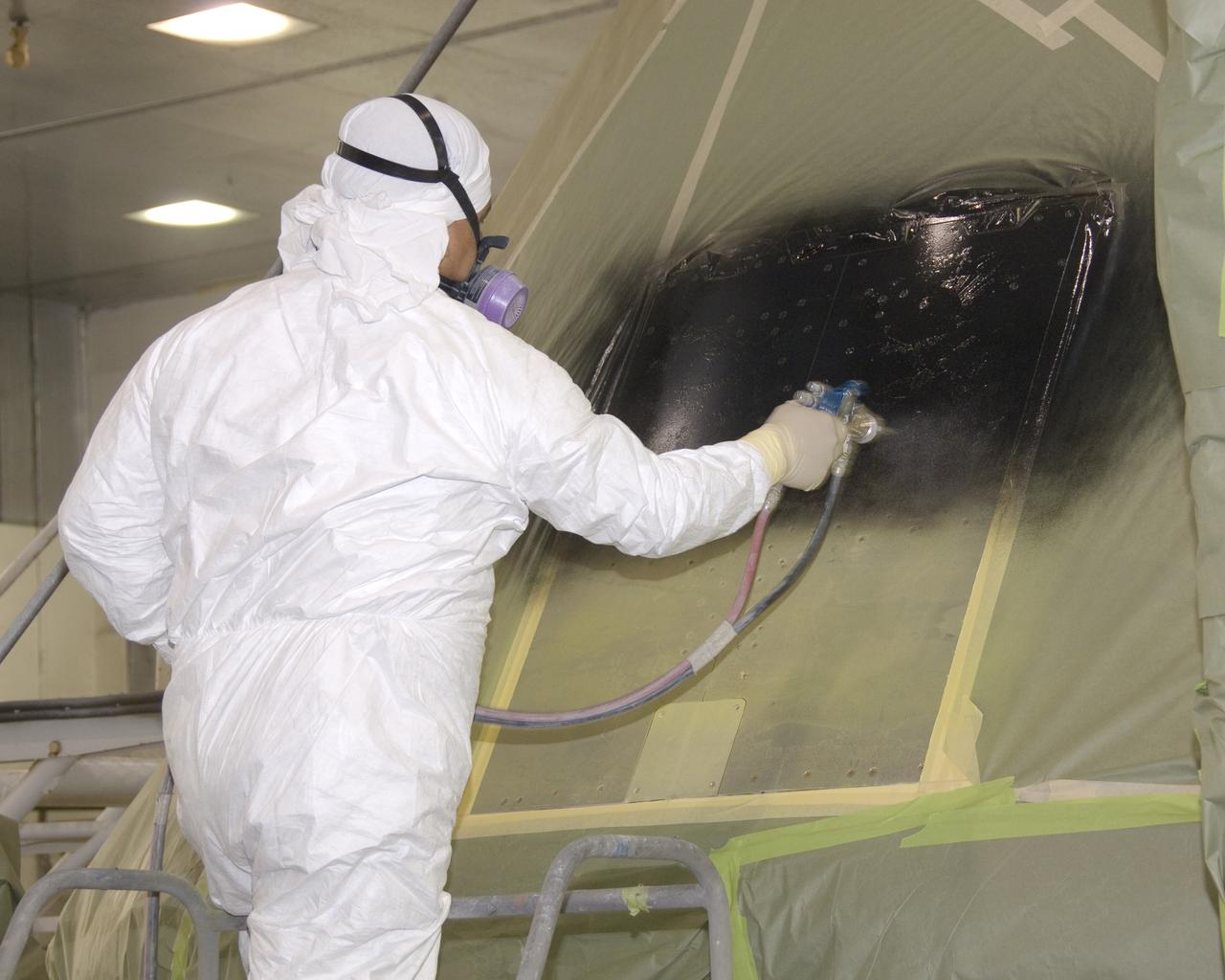
A full-scale flight-test mockup of the Constellation program's Orion crew vehicle arrived at NASA's Dryden Flight Research Center in late March 2008 to undergo preparations for the first short-range flight test of the spacecraft's astronaut escape system later that year. Engineers and technicians at NASA's Langley Research Center fabricated the structure, which precisely represents the size, outer shape and mass characteristics of the Orion space capsule. The Orion crew module mockup was ferried to NASA Dryden on an Air Force C-17. After painting in the Edwards Air Force Base paint hangar, the conical capsule was taken to Dryden for installation of flight computers, instrumentation and other electronics prior to being sent to the U.S. Army's White Sands Missile Range in New Mexico for integration with the escape system and the first abort flight test in late 2008. The tests were designed to ensure a safe, reliable method of escape for astronauts in case of an emergency.
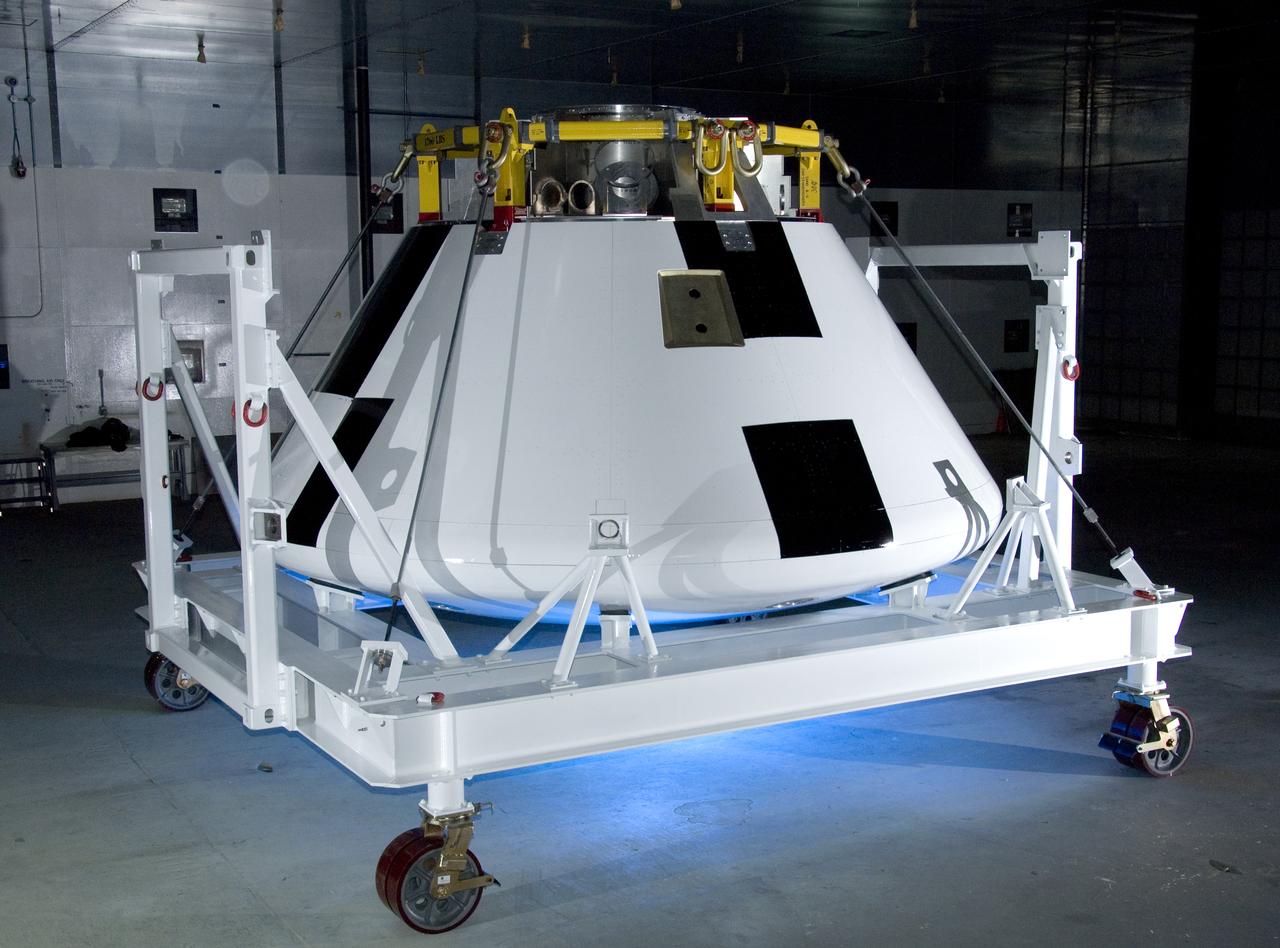
A full-scale flight-test mockup of the Constellation program's Orion crew vehicle arrived at NASA's Dryden Flight Research Center in late March 2008 to undergo preparations for the first short-range flight test of the spacecraft's astronaut escape system later that year. Engineers and technicians at NASA's Langley Research Center fabricated the structure, which precisely represents the size, outer shape and mass characteristics of the Orion space capsule. The Orion crew module mockup was ferried to NASA Dryden on an Air Force C-17. After painting in the Edwards Air Force Base paint hangar, the conical capsule was taken to Dryden for installation of flight computers, instrumentation and other electronics prior to being sent to the U.S. Army's White Sands Missile Range in New Mexico for integration with the escape system and the first abort flight test in late 2008. The tests were designed to ensure a safe, reliable method of escape for astronauts in case of an emergency.
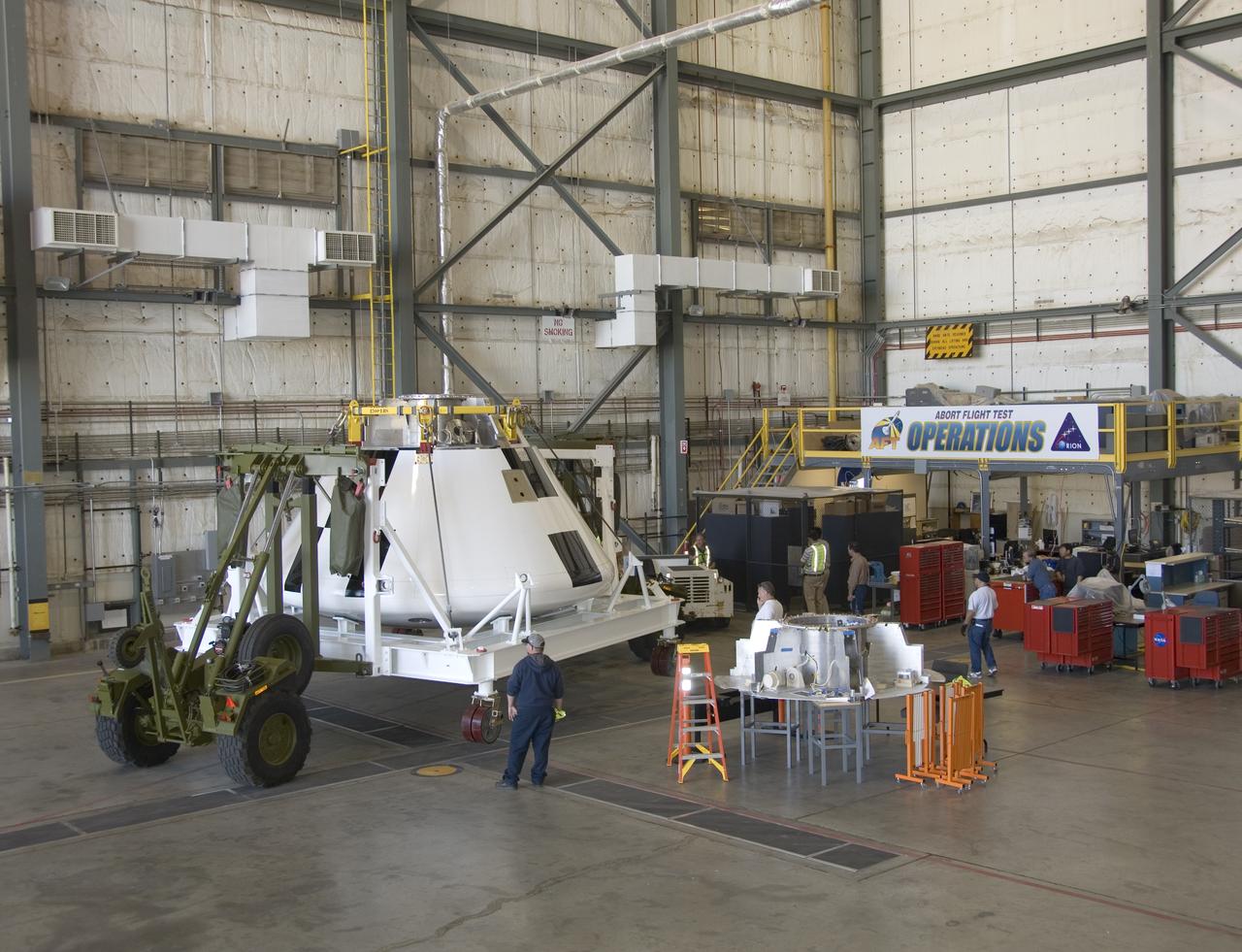
A full-scale flight-test mockup of the Constellation program's Orion crew vehicle arrived at NASA's Dryden Flight Research Center in late March 2008 to undergo preparations for the first short-range flight test of the spacecraft's astronaut escape system later that year. Engineers and technicians at NASA's Langley Research Center fabricated the structure, which precisely represents the size, outer shape and mass characteristics of the Orion space capsule. The Orion crew module mockup was ferried to NASA Dryden on an Air Force C-17. After painting in the Edwards Air Force Base paint hangar, the conical capsule was taken to Dryden for installation of flight computers, instrumentation and other electronics prior to being sent to the U.S. Army's White Sands Missile Range in New Mexico for integration with the escape system and the first abort flight test in late 2008. The tests were designed to ensure a safe, reliable method of escape for astronauts in case of an emergency.
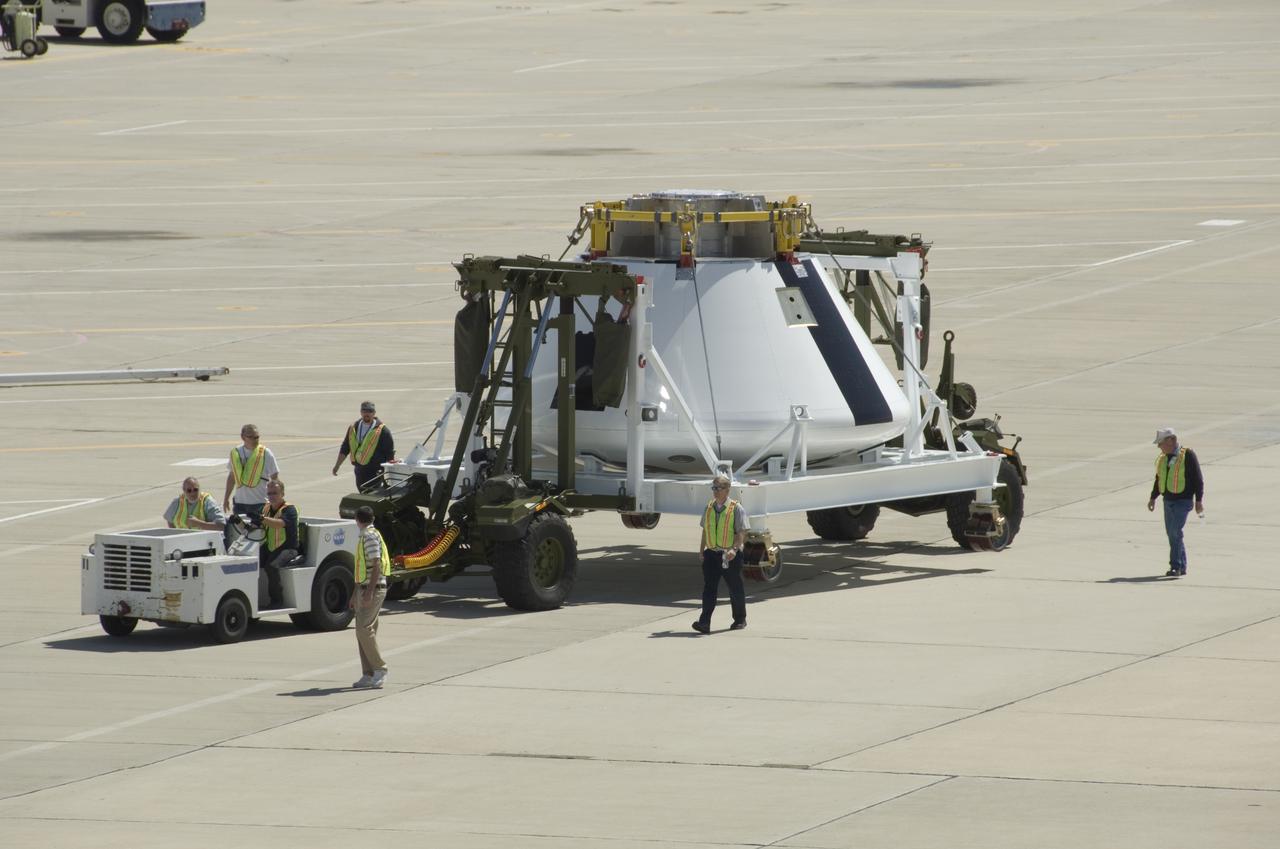
A full-scale flight-test mockup of the Constellation program's Orion crew vehicle arrived at NASA's Dryden Flight Research Center in late March 2008 to undergo preparations for the first short-range flight test of the spacecraft's astronaut escape system later that year. Engineers and technicians at NASA's Langley Research Center fabricated the structure, which precisely represents the size, outer shape and mass characteristics of the Orion space capsule. The Orion crew module mockup was ferried to NASA Dryden on an Air Force C-17. After painting in the Edwards Air Force Base paint hangar, the conical capsule was taken to Dryden for installation of flight computers, instrumentation and other electronics prior to being sent to the U.S. Army's White Sands Missile Range in New Mexico for integration with the escape system and the first abort flight test in late 2008. The tests were designed to ensure a safe, reliable method of escape for astronauts in case of an emergency.
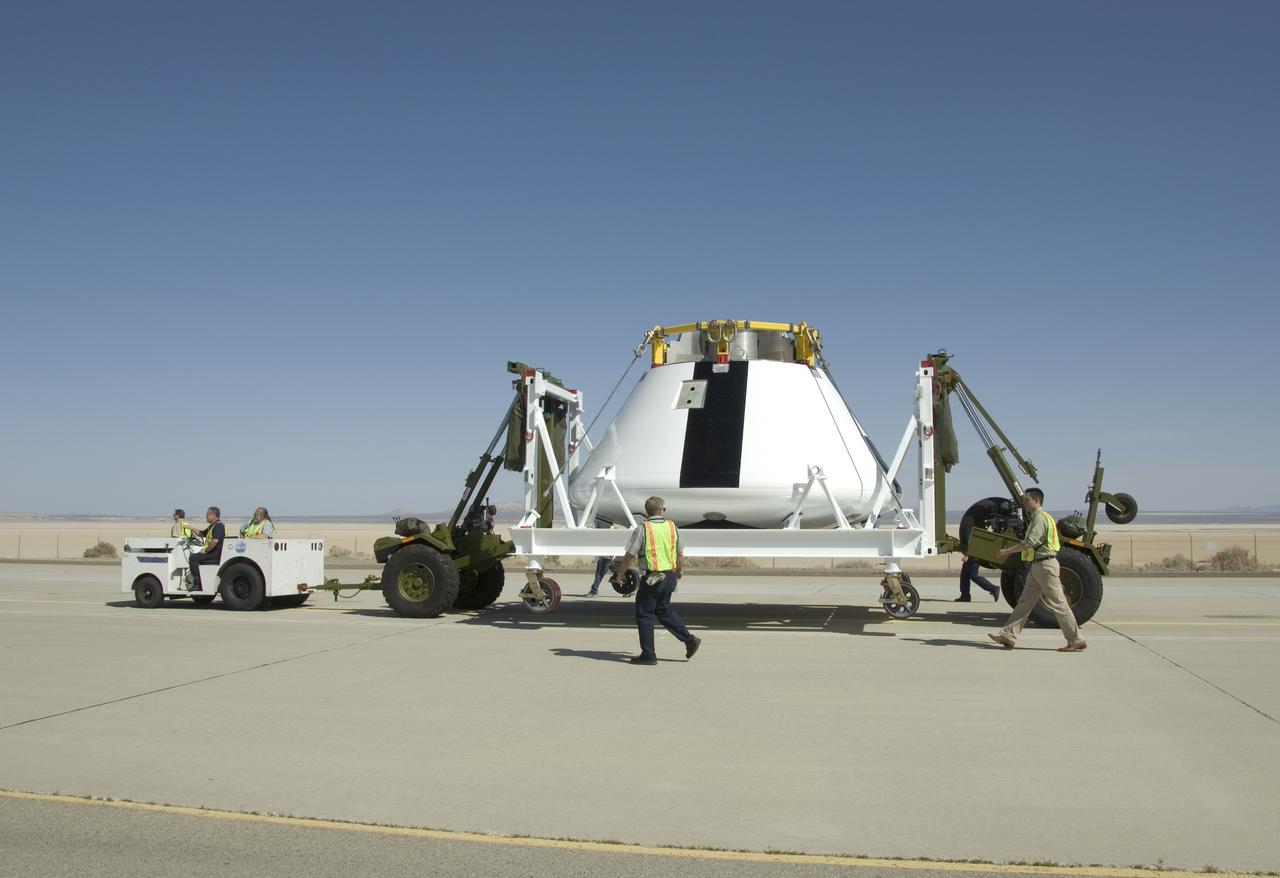
A full-scale flight-test mockup of the Constellation program's Orion crew vehicle arrived at NASA's Dryden Flight Research Center in late March 2008 to undergo preparations for the first short-range flight test of the spacecraft's astronaut escape system later that year. Engineers and technicians at NASA's Langley Research Center fabricated the structure, which precisely represents the size, outer shape and mass characteristics of the Orion space capsule. The Orion crew module mockup was ferried to NASA Dryden on an Air Force C-17. After painting in the Edwards Air Force Base paint hangar, the conical capsule was taken to Dryden for installation of flight computers, instrumentation and other electronics prior to being sent to the U.S. Army's White Sands Missile Range in New Mexico for integration with the escape system and the first abort flight test in late 2008. The tests were designed to ensure a safe, reliable method of escape for astronauts in case of an emergency.
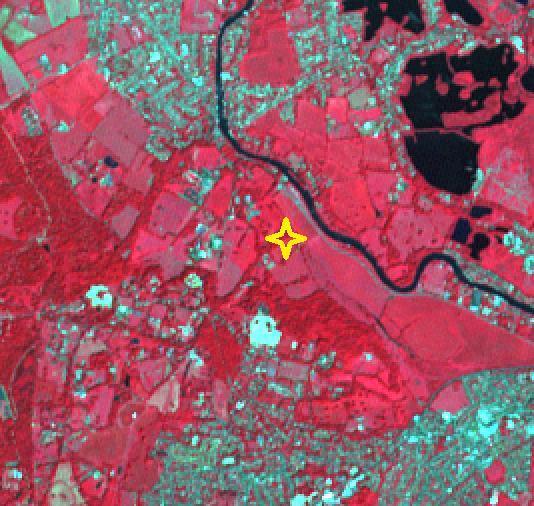
A short drive from Windsor, England, west of London, near the Thames, lies Runnymede meadow. Following John Kennedy's 1963 assassination, the British government commemorated his life by gifting 1.6 ha to the US federal government, making it the only piece of American soil in Britain. The image was acquired June 6, 2016, covers an area of 7.5 by 8 km, and is located at 51.4 degrees north, 0.6 degrees west. https://photojournal.jpl.nasa.gov/catalog/PIA26508
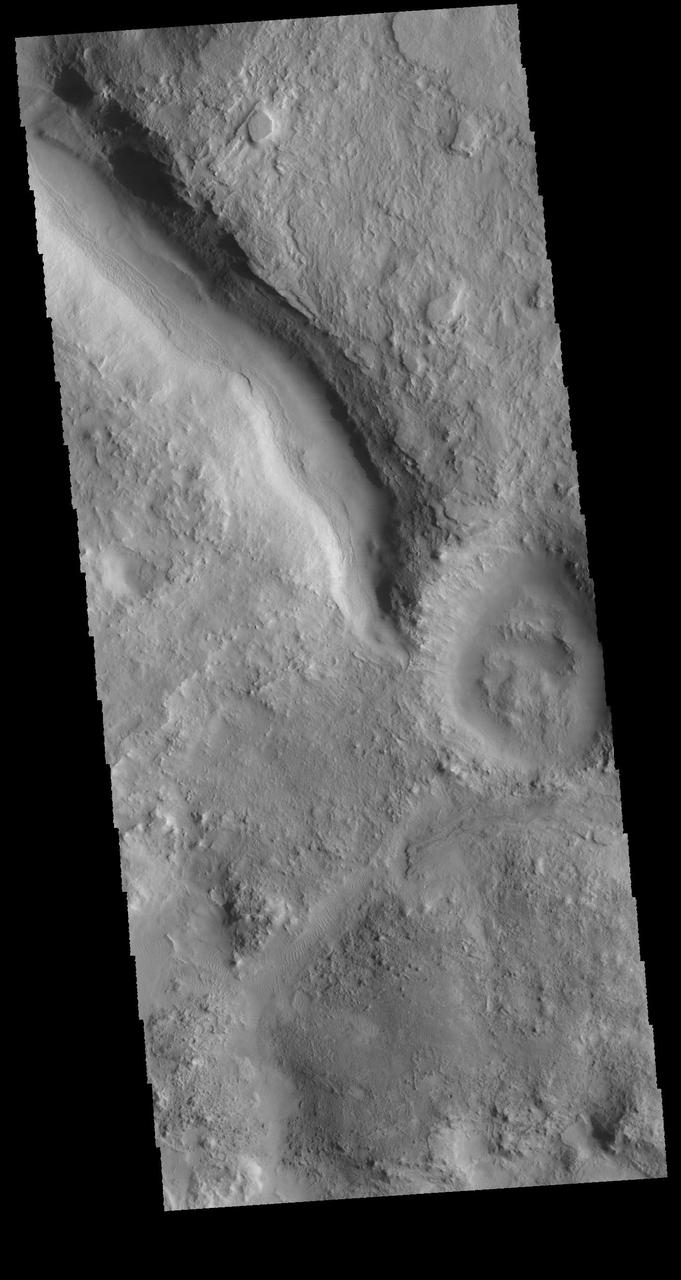
This image captured by NASA 2001 Mars Odyssey spacecraft shows a short section of channel between two craters in Terra Sabaea. One crater is outside the image area at the upper left of the image. The channel appears to stop in the center of the image, which is the location of the rim of the second crater. Orbit Number: 64018 Latitude: 29.7122 Longitude: 68.385 Instrument: VIS Captured: 2016-05-20 01:27 http://photojournal.jpl.nasa.gov/catalog/PIA20784
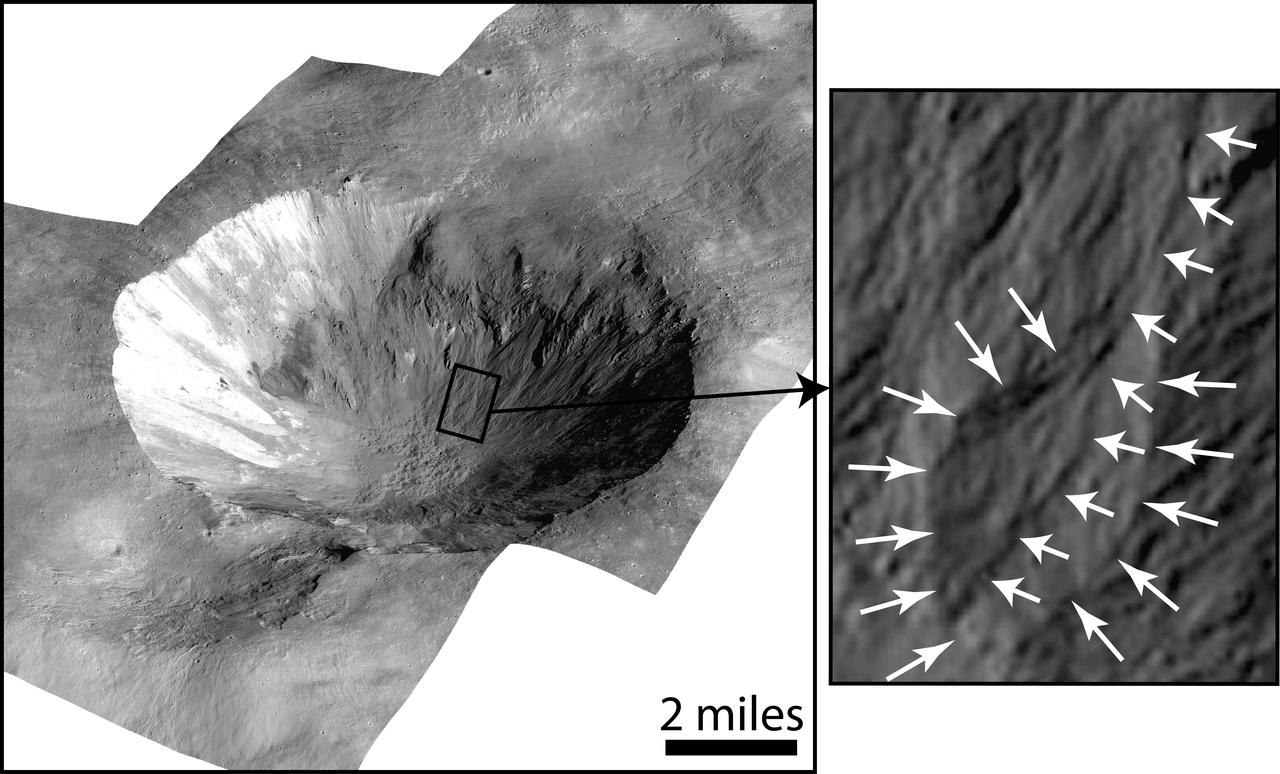
This image shows Cornelia Crater on the large asteroid Vesta. On the right is an inset image showing an example of curved gullies, indicated by the short white arrows, and a fan-shaped deposit, indicated by long white arrows. http://photojournal.jpl.nasa.gov/catalog/PIA19170
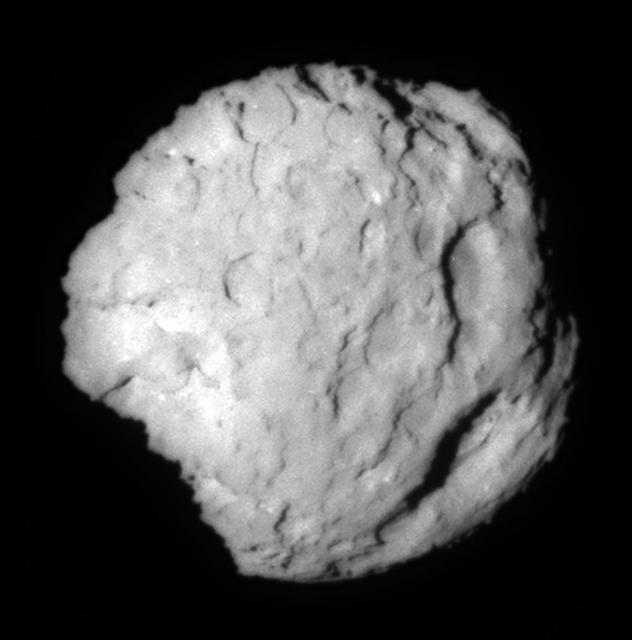
This image shows the comet Wild 2, which NASA's Stardust spacecraft flew by on Jan. 2, 2004. This image is the closest short exposure of the comet, taken at an11.4-degree phase angle, the angle between the camera, comet and the Sun. http://photojournal.jpl.nasa.gov/catalog/PIA06285
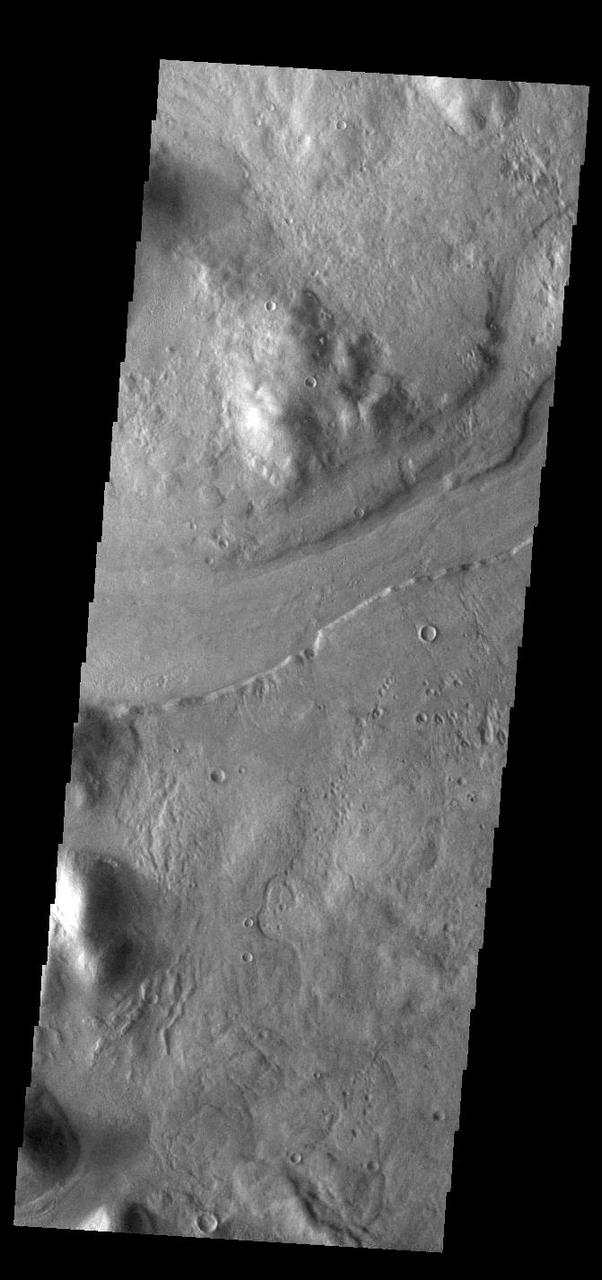
This VIS image shows a short section of Reull Vallis. Reull Vallis starts in Promethei Terra and empties into Hellas Plainitia. In other regions of the channel the floor contains ridged and grooved materials. In some sections of the channel these materials appear to deflect around obstacles. These features are proposed to be ice-rich materials similar to glaciers on Earth. Reull Vallis is 1051km (653 miles) long. Orbit Number: 92980 Latitude: -39.6307 Longitude: 110.597 Instrument: VIS Captured: 2022-11-30 05:57 https://photojournal.jpl.nasa.gov/catalog/PIA25803
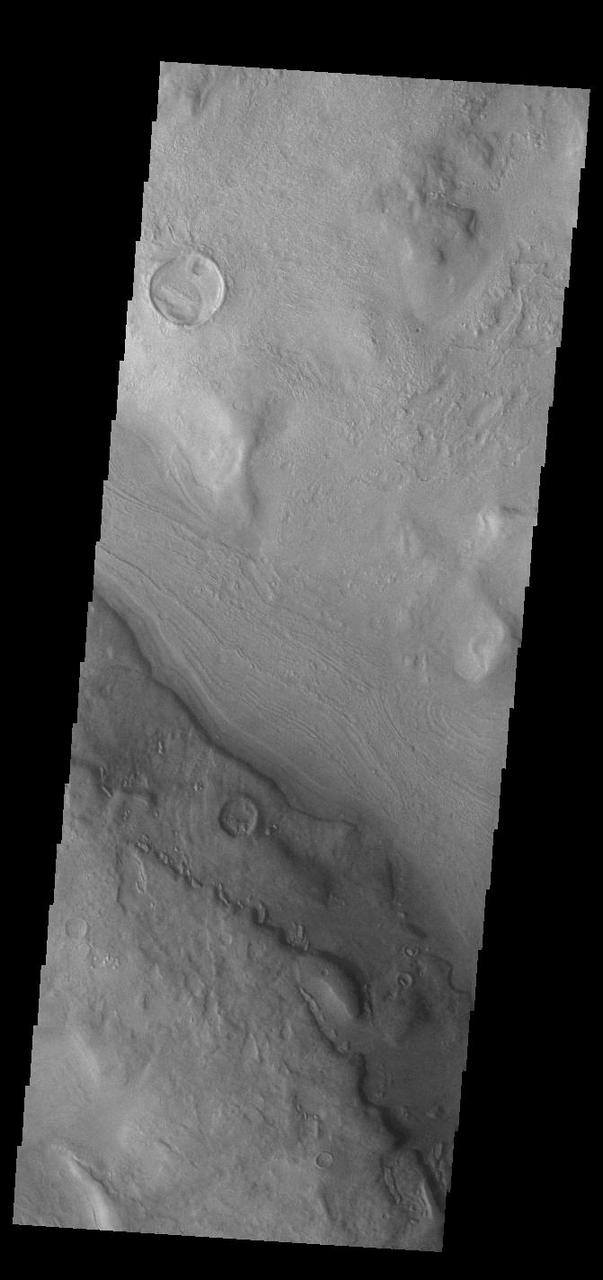
This VIS image shows a short section of Reull Vallis. Reull Vallis starts in Promethei Terra and empties into Hellas Plainitia. On the floor of this channel are ridged and grooved materials. In other sections of the channel these materials appear to deflect around obstacles. These features are proposed to be ice-rich materials similar to glaciers on Earth. Reull Vallis is 1051km (653 miles) long. Orbit Number: 91670 Latitude: -42.326 Longitude: 103.002 Instrument: VIS Captured: 2022-08-14 09:12 https://photojournal.jpl.nasa.gov/catalog/PIA25617
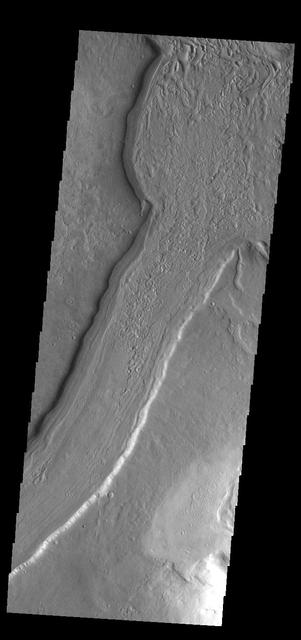
This VIS image shows a short section of Reull Vallis. Reull Vallis starts in Promethei Terra and empties into Hellas Plainitia. On the floor of this channel are ridged and grooved materials that seem to deflect around obstacles. These features are proposed to be ice-rich materials similar to glaciers on Earth. Reull Vallis is 1051km (653 miles) long. Orbit Number: 83958 Latitude: -40.8313 Longitude: 108.188 Instrument: VIS Captured: 2020-11-17 09:14 https://photojournal.jpl.nasa.gov/catalog/PIA24355
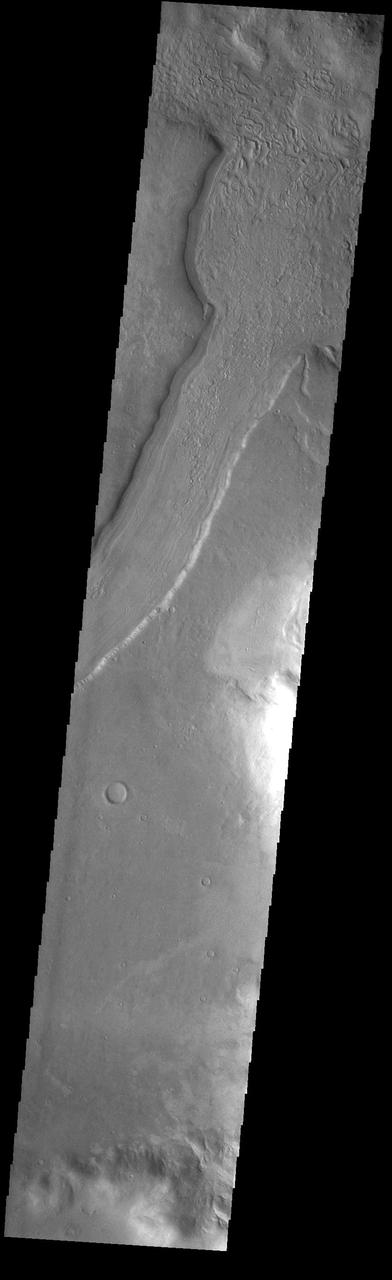
This VIS image shows a short section of Reull Vallis. Reull Vallis starts in Promethei Terra and empties into Hellas Plainitia. On the floor of this channel are ridged and grooved materials. In other sections of the channel these materials appear to deflect around obstacles. These features are proposed to be ice-rich materials similar to glaciers on Earth. Reull Vallis is 1051km (653 miles) long. Orbit Number: 91570 Latitude: -41.1029 Longitude: 108.157 Instrument: VIS Captured: 2022-08-06 03:34 https://photojournal.jpl.nasa.gov/catalog/PIA25606
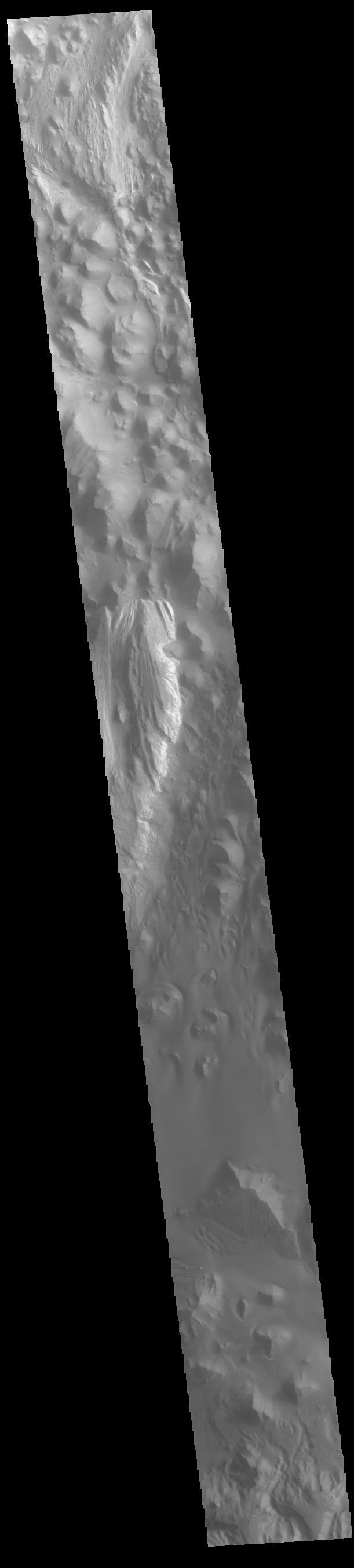
This VIS image runs from northern Juventae Chasma to just short of the southern canyon wall. Illustrating the variety of landforms within the chasma, this image contains the rough canyon floor at the northern extent of the chasma, layered materials in the center of the image and dunes located in the southern, deepest section of the chasma. Orbit Number: 71356 Latitude: -3.55335 Longitude: 298.389 Instrument: VIS Captured: 2018-01-14 14:25 https://photojournal.jpl.nasa.gov/catalog/PIA22381
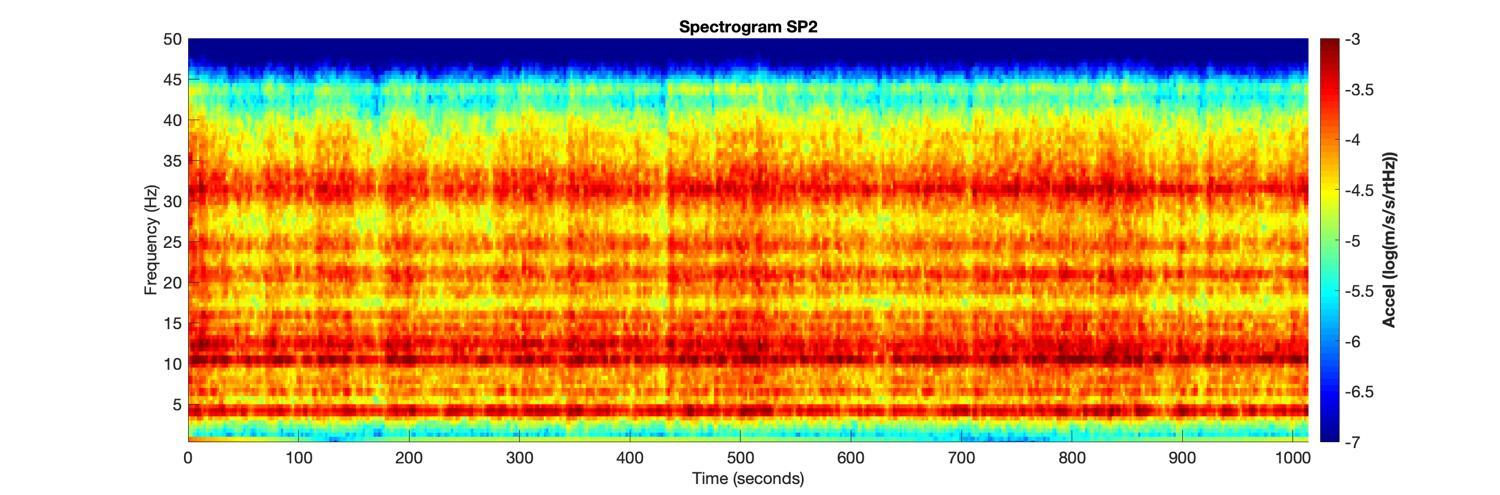
The spectrogram of vibrations (frequency spectrum over time) recorded by two of the three sensors of the short period seismometer on NASA's InSight lander on Mars. This spectrogram shows the first 1,000 seconds, roughly 20 minutes, of InSight's first seismic data from the Red Planet. The vibrations of the lander are due to the wind passing over the spacecraft, particularly the large solar arrays. https://photojournal.jpl.nasa.gov/catalog/PIA22925
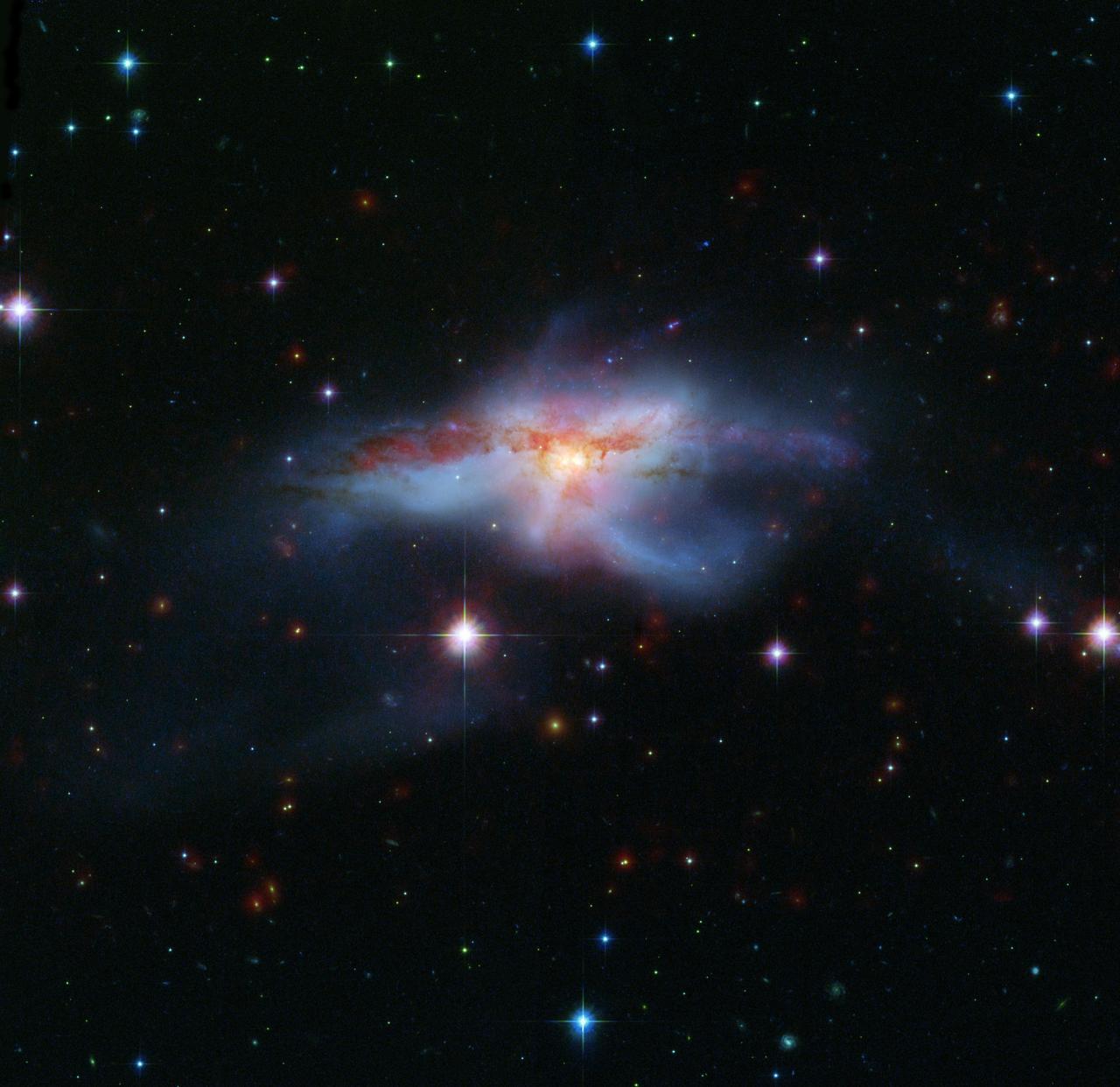
NASA Spitzer Space Telescope and Hubble Space Telescope combined to make this image of a pair of colliding galaxies called NGC 6240 shows them in a rare, short-lived phase of their evolution just before they merge into a single, larger galaxy.
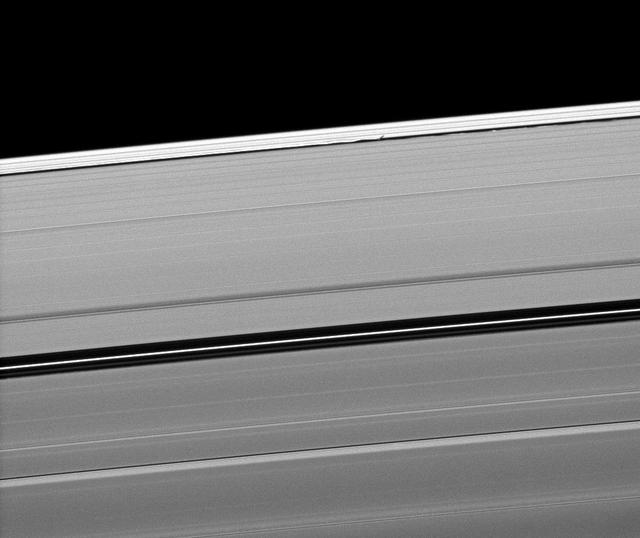
Saturn moon Daphnis casts a short shadow on the A ring in this image taken by NASA Cassini spacecraftabout six months after the planet August 2009 equinox. Daphnis appears as a tiny bright dot in the Keeler Gap of the A ring near the center top.
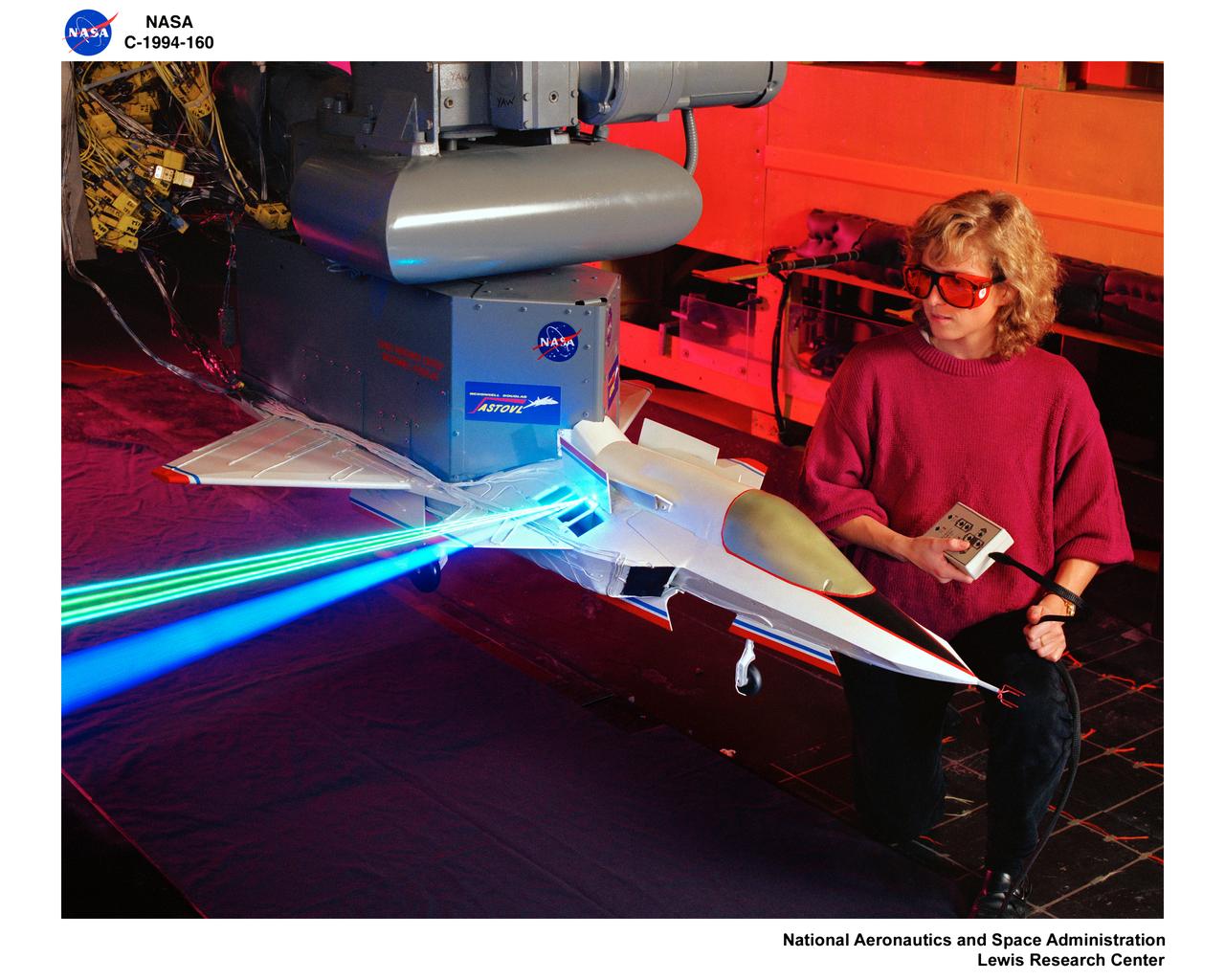
LASER Velocimetry System for Flow Measurement. Advanced Short Takeoff and Vertical Landing, ASTOVL model n the 9x15 foot Low Speed Wind Tunnel, LSWT
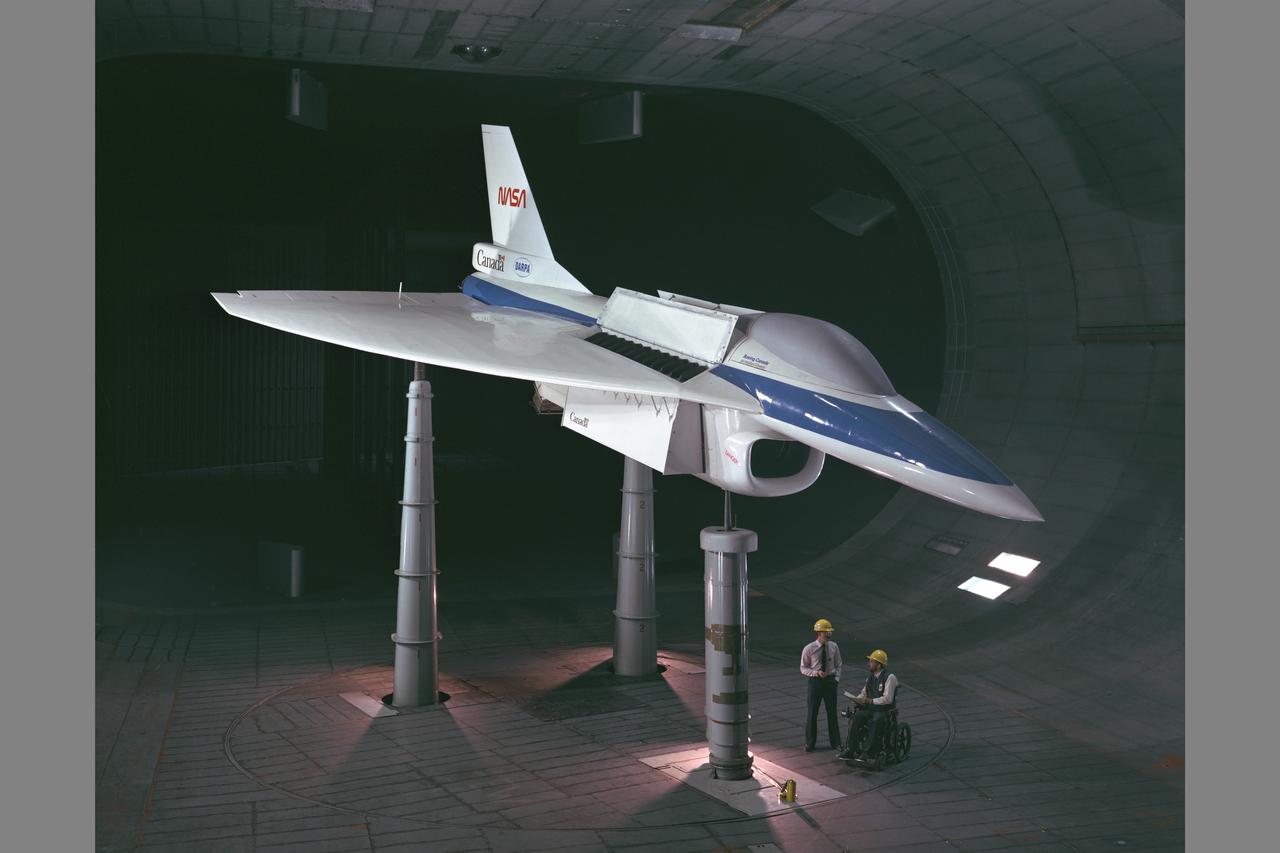
E-7 STOVL fighter model testing in Ames 40x80ft Subsonic wind tunnel. Investigating Supersonic Short Take-off and Vertical Landing (STOVL) technology.
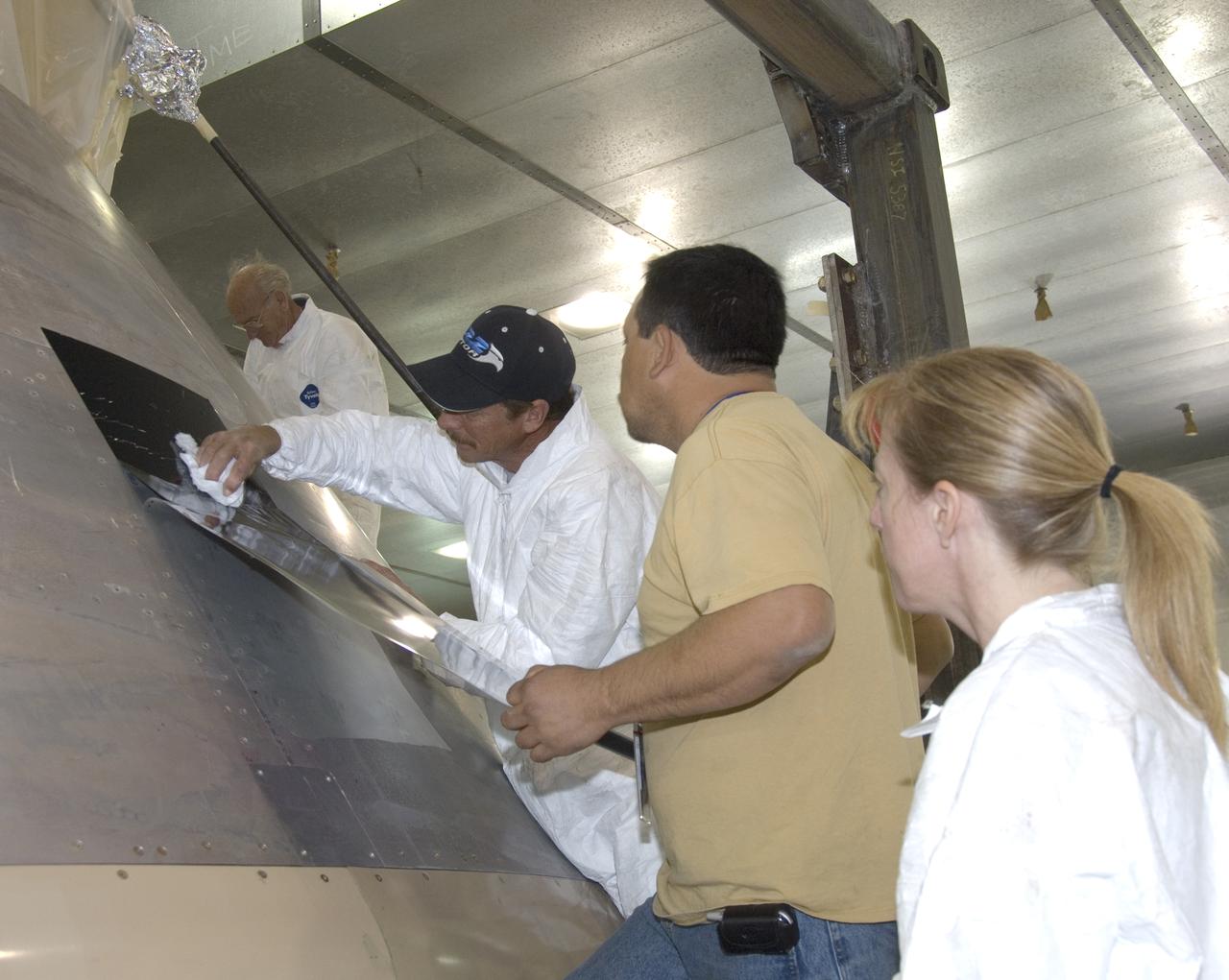
A full-scale flight-test mockup of the Constellation program's Orion crew vehicle arrived at NASA's Dryden Flight Research Center in late March 2008 to undergo preparations for the first short-range flight test of the spacecraft's astronaut escape system later that year. Engineers and technicians at NASA's Langley Research Center fabricated the structure, which precisely represents the size, outer shape and mass characteristics of the Orion space capsule. The Orion crew module mockup was ferried to NASA Dryden on an Air Force C-17. After painting in the Edwards Air Force Base paint hangar, the conical capsule was taken to Dryden for installation of flight computers, instrumentation and other electronics prior to being sent to the U.S. Army's White Sands Missile Range in New Mexico for integration with the escape system and the first abort flight test in late 2008. The tests were designed to ensure a safe, reliable method of escape for astronauts in case of an emergency.
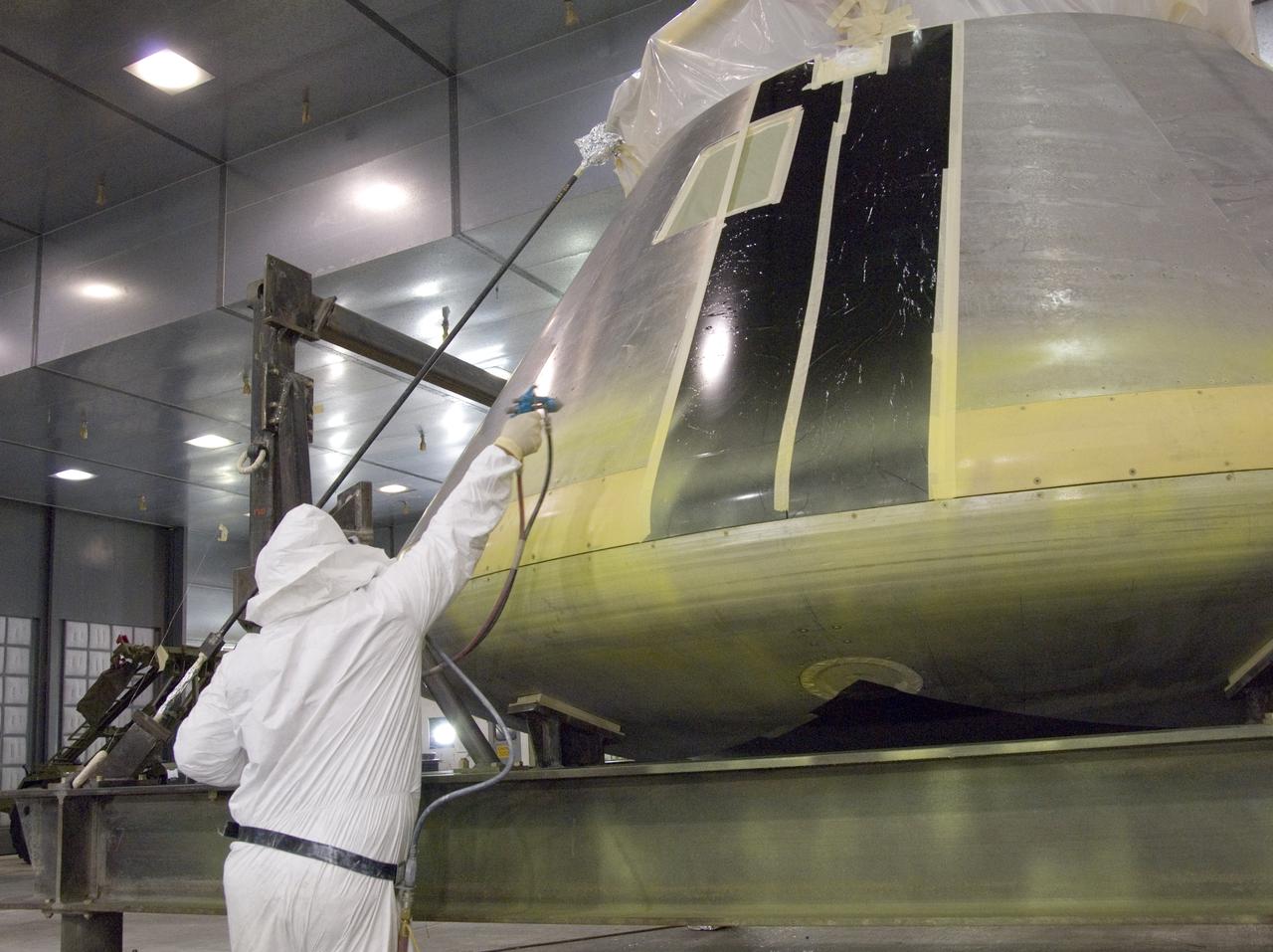
A full-scale flight-test mockup of the Constellation program's Orion crew vehicle arrived at NASA's Dryden Flight Research Center in late March 2008 to undergo preparations for the first short-range flight test of the spacecraft's astronaut escape system later that year. Engineers and technicians at NASA's Langley Research Center fabricated the structure, which precisely represents the size, outer shape and mass characteristics of the Orion space capsule. The Orion crew module mockup was ferried to NASA Dryden on an Air Force C-17. After painting in the Edwards Air Force Base paint hangar, the conical capsule was taken to Dryden for installation of flight computers, instrumentation and other electronics prior to being sent to the U.S. Army's White Sands Missile Range in New Mexico for integration with the escape system and the first abort flight test in late 2008. The tests were designed to ensure a safe, reliable method of escape for astronauts in case of an emergency.
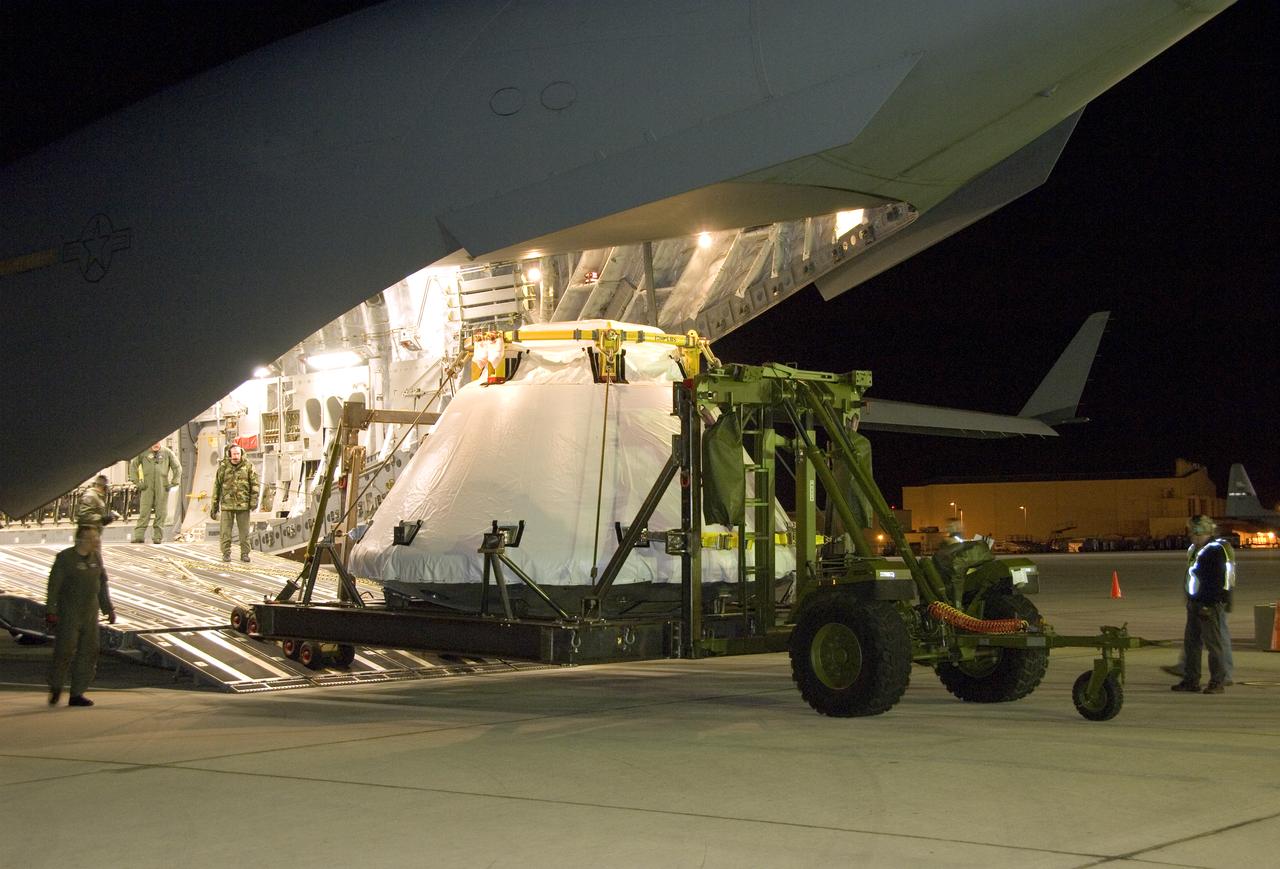
A full-scale flight-test mockup of the Constellation program's Orion crew vehicle arrived at NASA's Dryden Flight Research Center in late March 2008 to undergo preparations for the first short-range flight test of the spacecraft's astronaut escape system later that year. Engineers and technicians at NASA's Langley Research Center fabricated the structure, which precisely represents the size, outer shape and mass characteristics of the Orion space capsule. The Orion crew module mockup was ferried to NASA Dryden on an Air Force C-17. After painting in the Edwards Air Force Base paint hangar, the conical capsule was taken to Dryden for installation of flight computers, instrumentation and other electronics prior to being sent to the U.S. Army's White Sands Missile Range in New Mexico for integration with the escape system and the first abort flight test in late 2008. The tests were designed to ensure a safe, reliable method of escape for astronauts in case of an emergency.
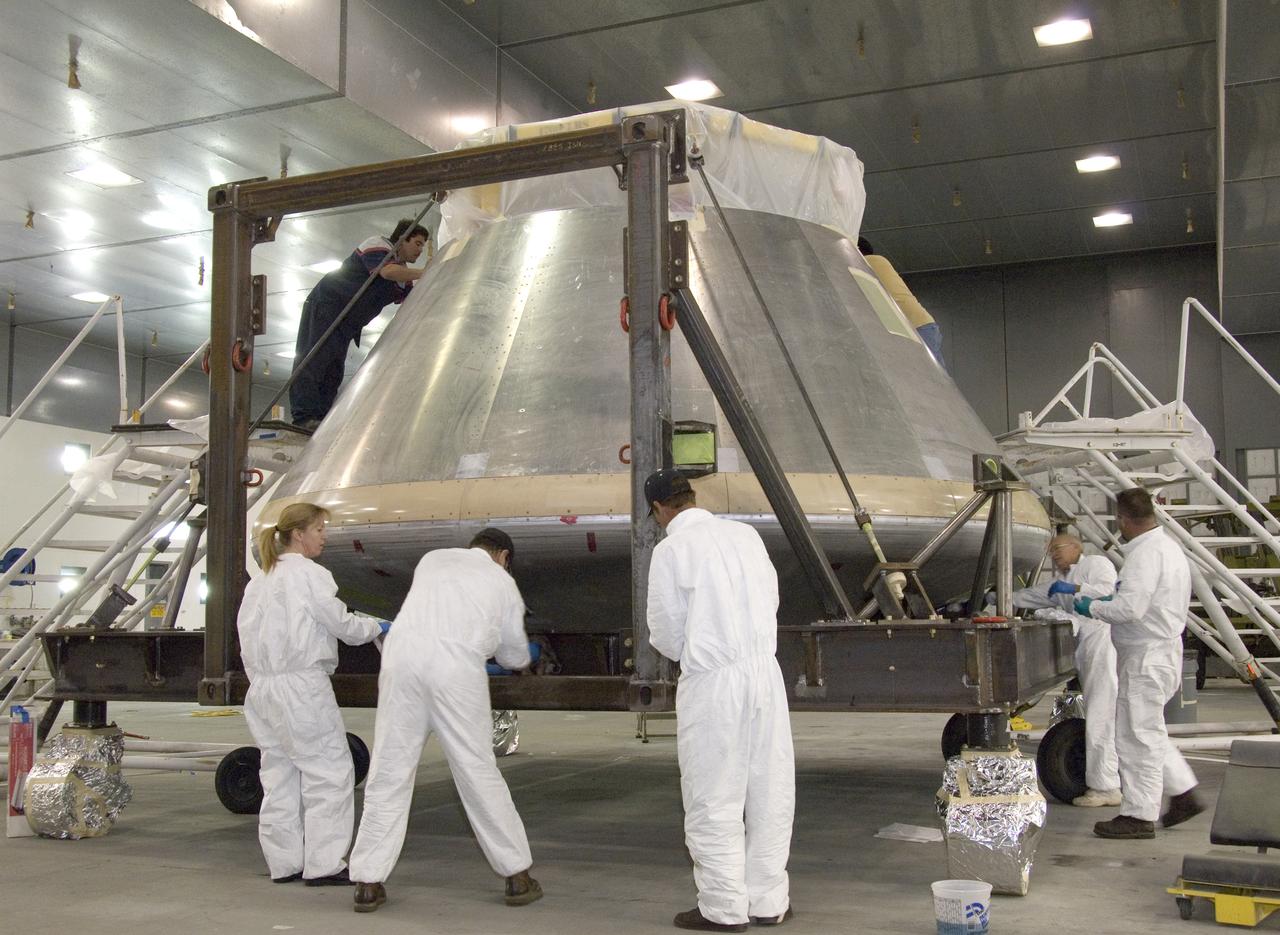
A full-scale flight-test mockup of the Constellation program's Orion crew vehicle arrived at NASA's Dryden Flight Research Center in late March 2008 to undergo preparations for the first short-range flight test of the spacecraft's astronaut escape system later that year. Engineers and technicians at NASA's Langley Research Center fabricated the structure, which precisely represents the size, outer shape and mass characteristics of the Orion space capsule. The Orion crew module mockup was ferried to NASA Dryden on an Air Force C-17. After painting in the Edwards Air Force Base paint hangar, the conical capsule was taken to Dryden for installation of flight computers, instrumentation and other electronics prior to being sent to the U.S. Army's White Sands Missile Range in New Mexico for integration with the escape system and the first abort flight test in late 2008. The tests were designed to ensure a safe, reliable method of escape for astronauts in case of an emergency.
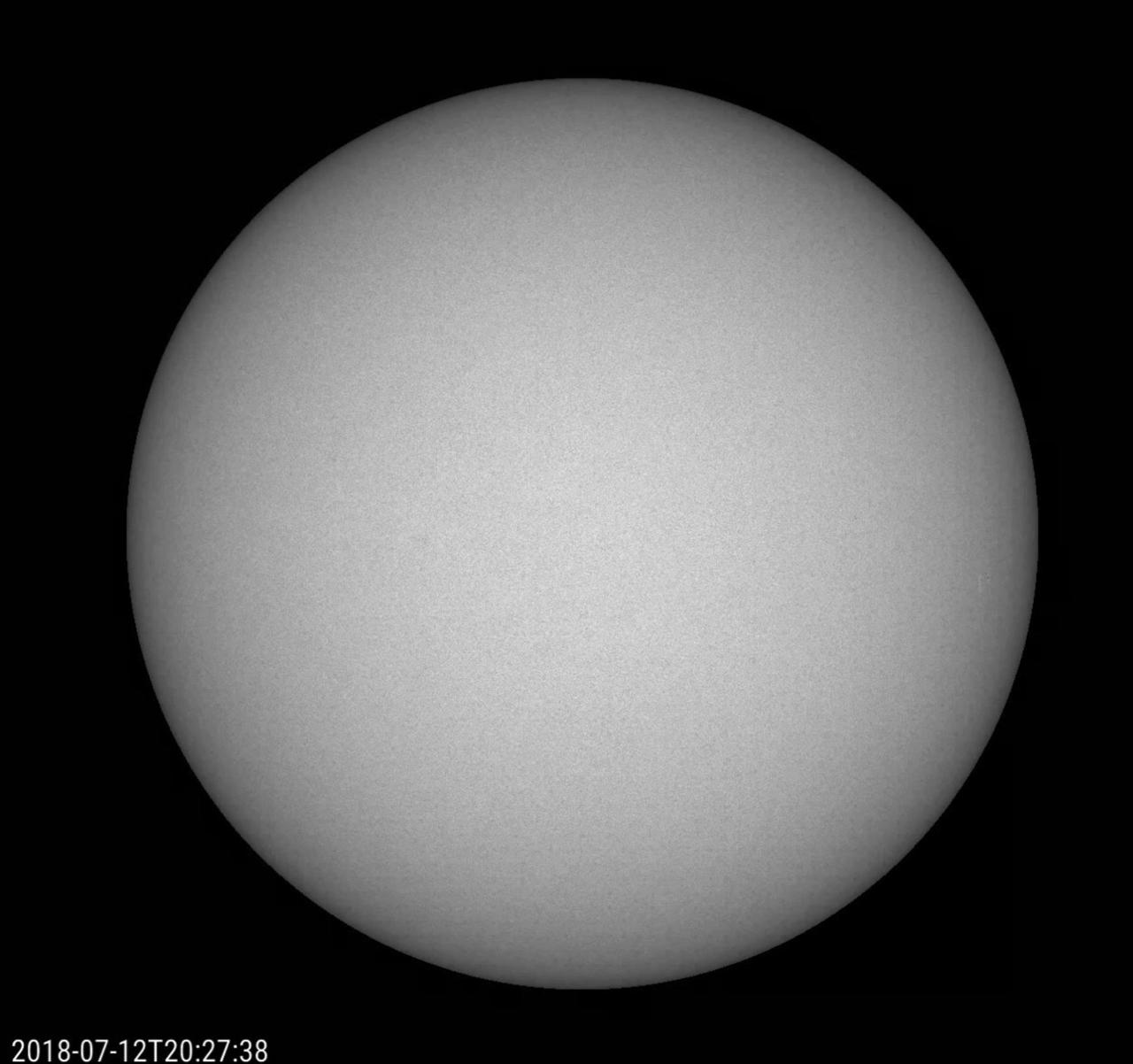
Over a three-week period (July 3-24, 2018), the Sun produced just one small, short-lived sunspot -- but it tells a big story. Up until July 22, the Sun had no sunspots for 23 consecutive days, the first time that has happened in nine years. The Sun is rapidly approaching solar minimum, a period of very low solar activity in its 11-year cycle -- and doing so more rapidly than many scientists predicted. Movies are available at https://photojournal.jpl.nasa.gov/catalog/PIA22646

New Zealand contains over 3,000 glaciers, most of which are in the Southern Alps on the South Island. Since 1890, the glaciers have been retreating, with short periods of small advances, as shown in this image from NASA Terra spacecraft. The image cover an area of 39 by 46 km, and are located at 43.7 degrees south, 170 degrees east. http://photojournal.jpl.nasa.gov/catalog/PIA21509
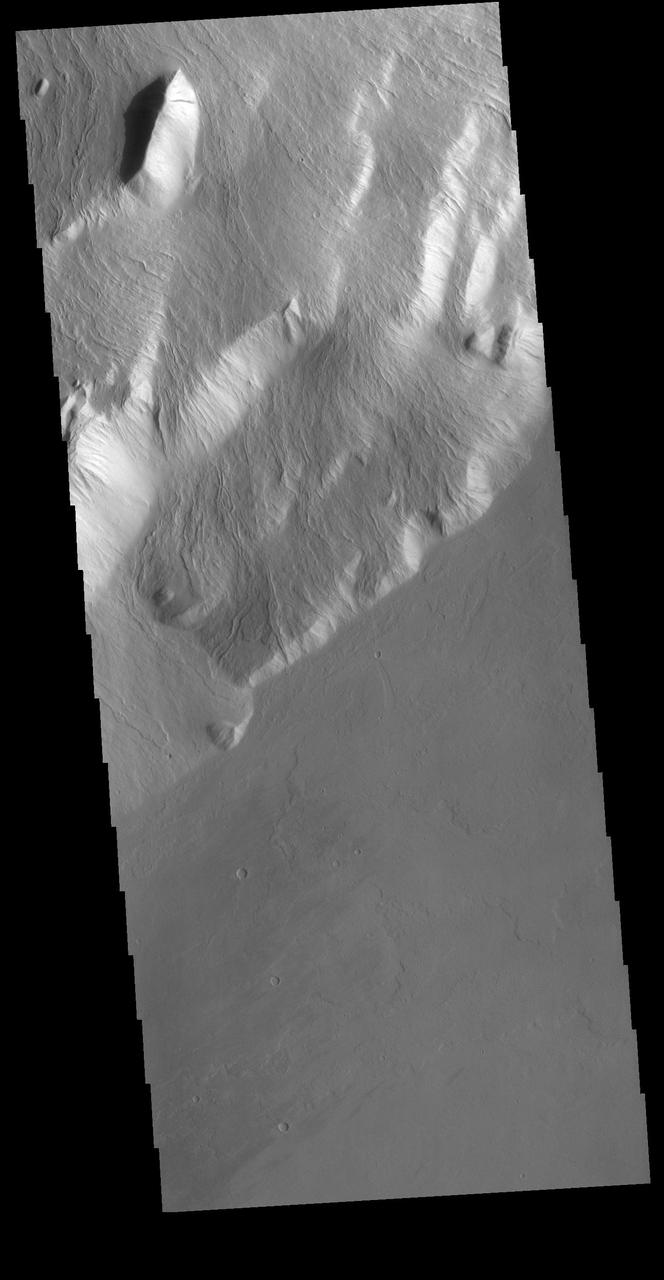
Olympus Rupes is the name of the large escarpment surrounding Olympus Mons. The escarpment is a cliff where there is a large elevation change over a short distance. This VIS image is located along the southeastern margin of Olympus Mons, the largest Martian volcano. Orbit Number: 72406 Latitude: 14.4639 Longitude: 229.509 Instrument: VIS Captured: 2018-04-11 02:30 https://photojournal.jpl.nasa.gov/catalog/PIA22598
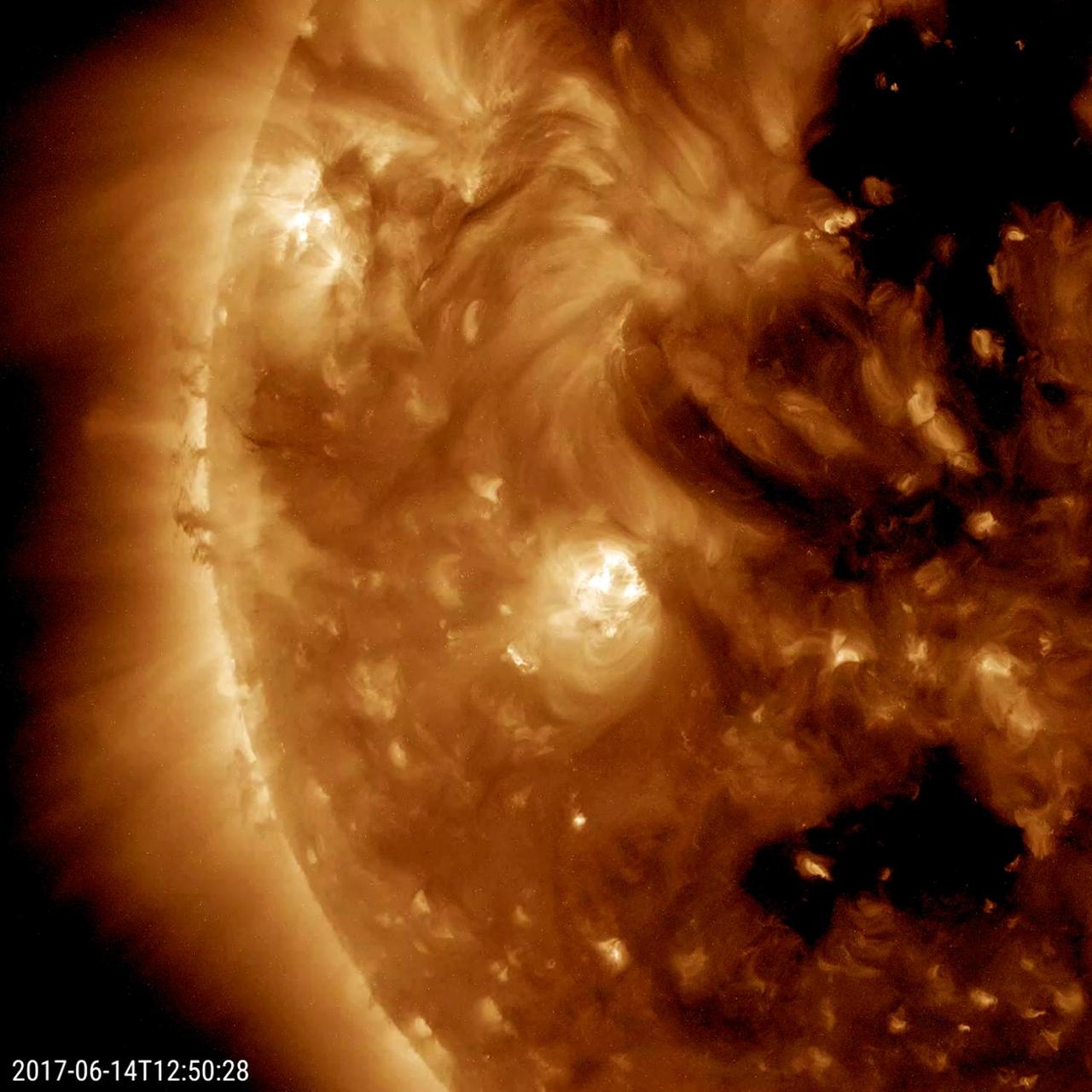
Several short stalks of cooler, darker plasma spun and twisted as they interacted with each other at the sun's edge (June 14-15, 2017). The row of strands, which together form a prominence, were being pulled back and forth by magnetic forces. The dynamic action was observed for just over one day. Also noteworthy is the rapid development of a bright active region in the upper right about halfway through the clip. Movies are available at https://photojournal.jpl.nasa.gov/catalog/PIA21761
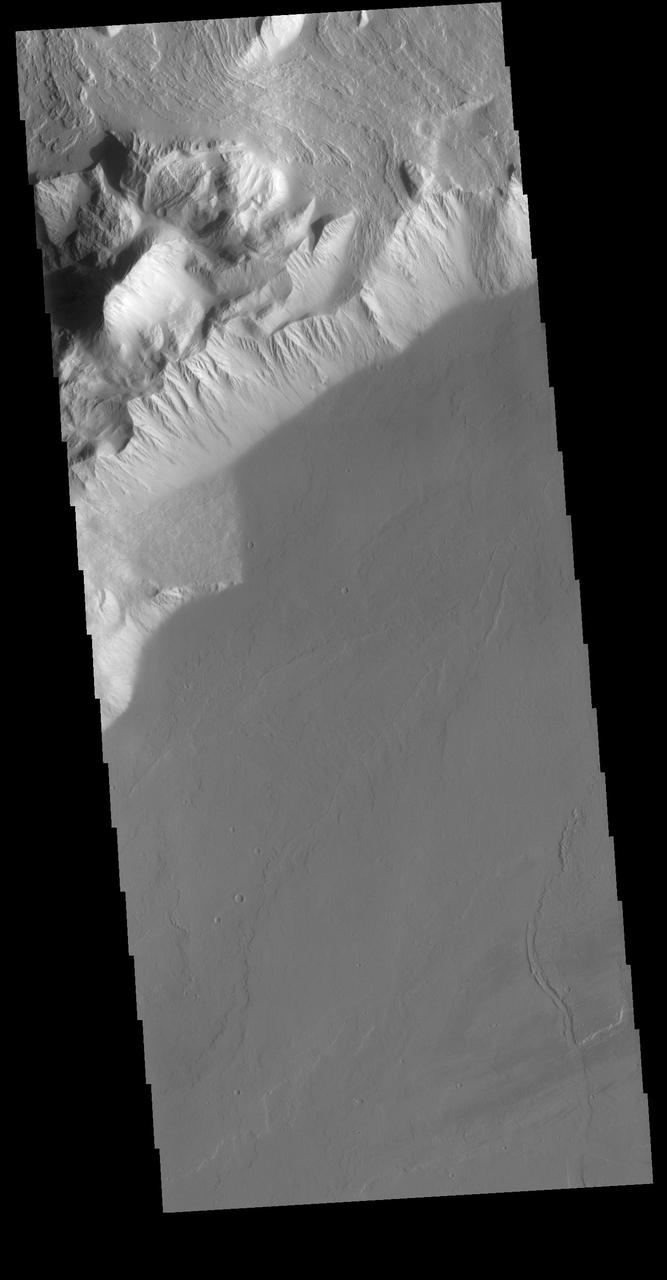
Olympus Rupes is the name of the large escarpment surrounding Olympus Mons. The escarpment is a cliff where there is a large elevation change over a short distance. The elevation change from the lower volcanic plains to the volcano flank is up to 5 miles (26,400 feet), almost the height of Mount Everest. This VIS image is located along the southeastern margin of Olympus Mons, the largest Martian volcano. Orbit Number: 72880 Latitude: 13.9993 Longitude: 228.976 Instrument: VIS Captured: 2018-05-20 03:37 https://photojournal.jpl.nasa.gov/catalog/PIA22659
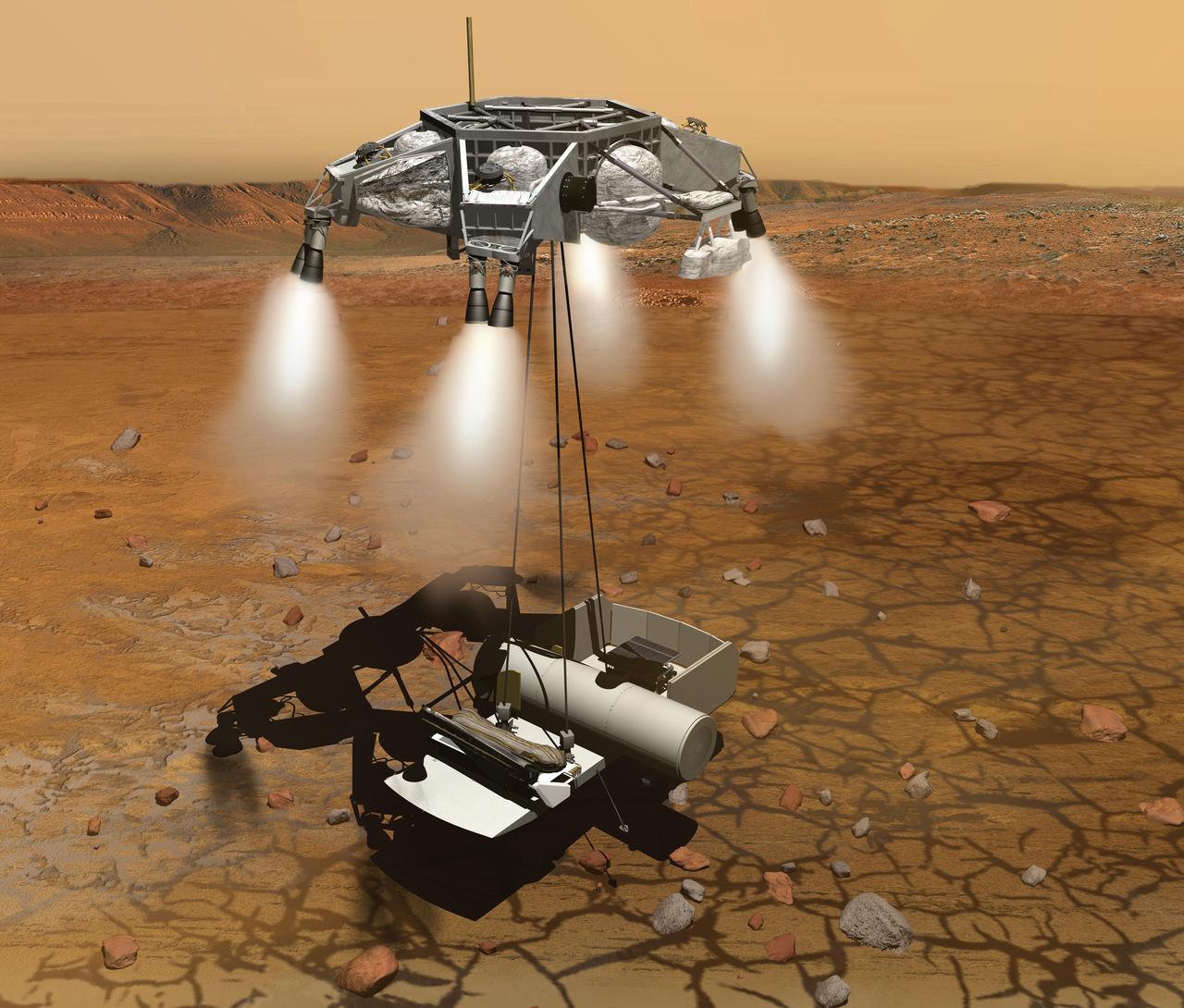
This artist concept of a proposed Mars sample return mission portrays a rocket-powered descent stage lowering a sample-retrieving rover and an ascent vehicle to the surface.
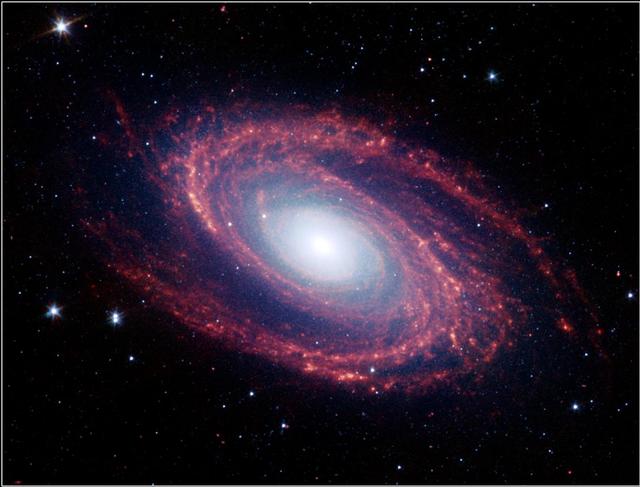
The magnificent spiral arms of the nearby galaxy Messier 81 are highlighted in this NASA Spitzer Space Telescope image. Located in the northern constellation of Ursa Major which also includes the Big Dipper.
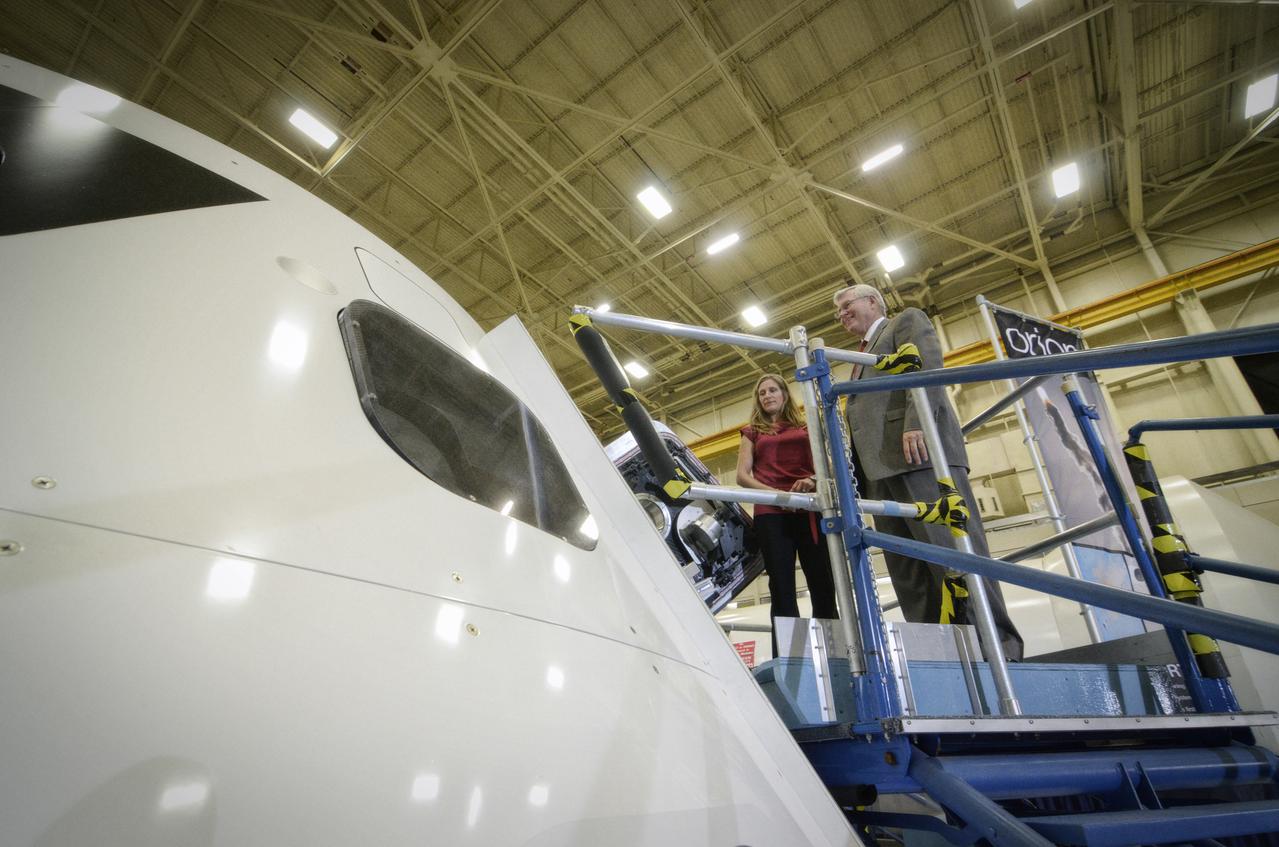
JSC Director Mike Coats tours the Orion mockups in Bldg. 9 at Johnson Space Center in Houston followed by a short Q&A in front of the mockup on Sept. 26, 2011. Part of Batch image transfer from Flickr.
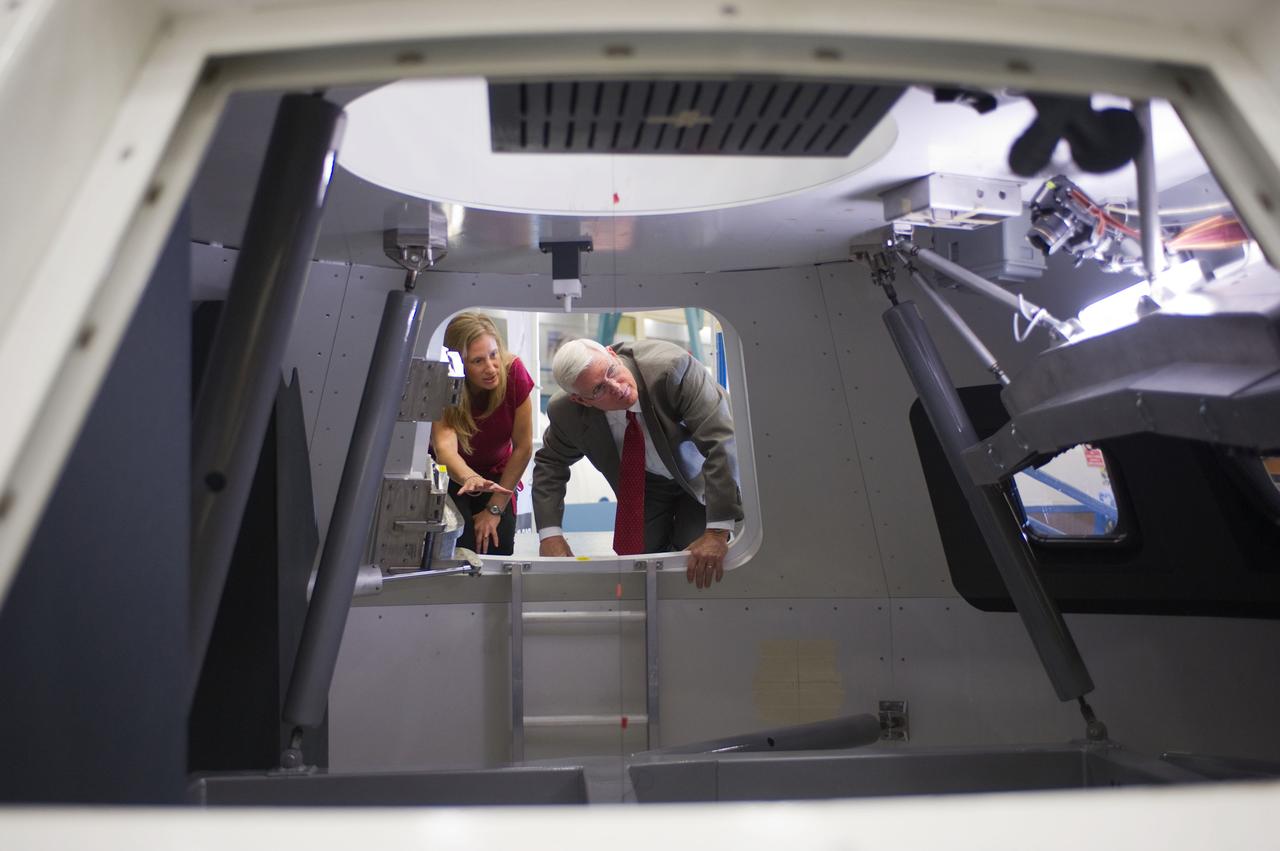
JSC Director Mike Coats tours the Orion mockups in Bldg. 9 at Johnson Space Center in Houston followed by a short Q&A in front of the mockup on Sept. 26, 2011. Part of Batch image transfer from Flickr.
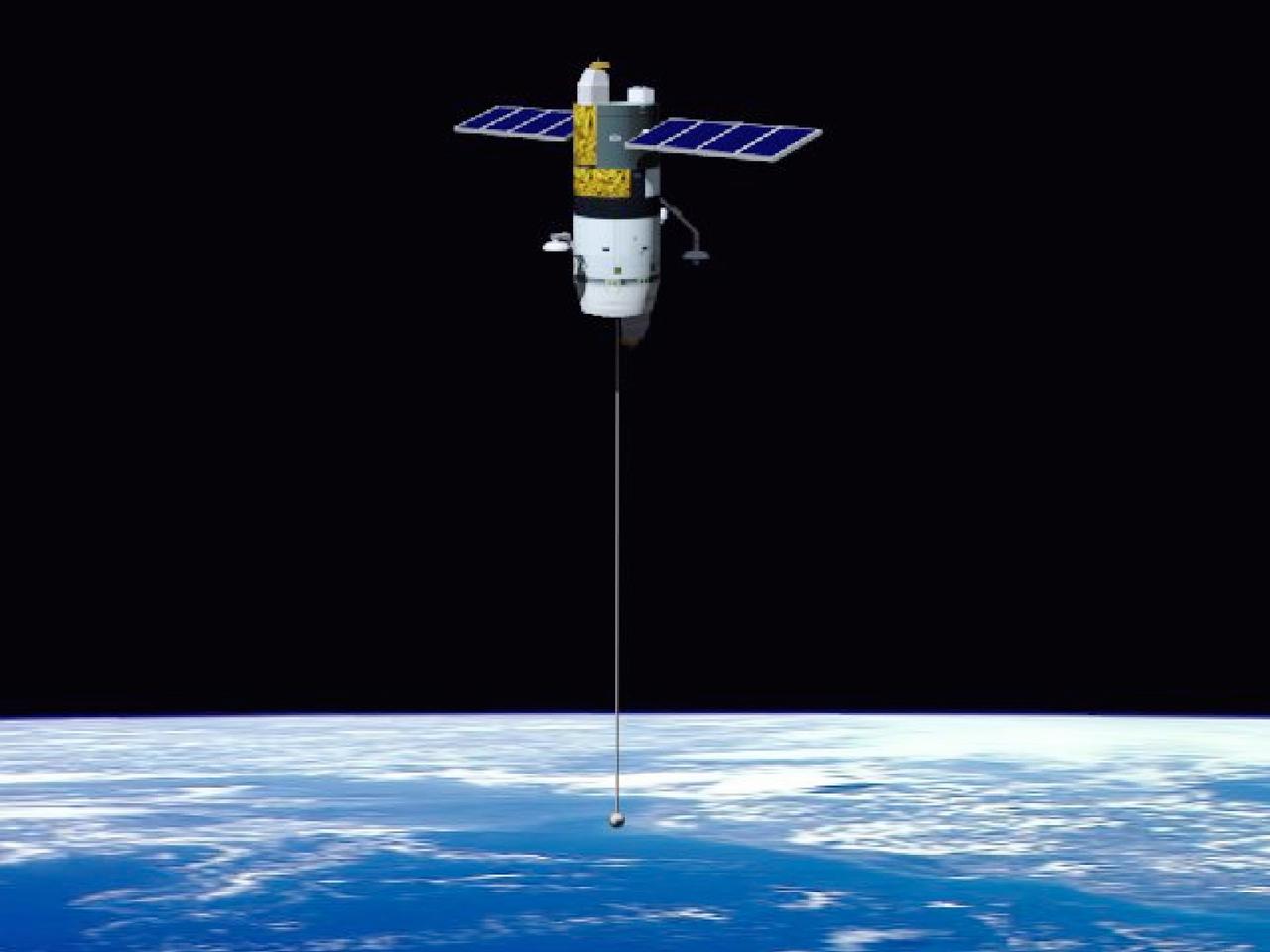
This picture is an artist's concept of an orbiting vehicle using the Electrodynamic Tethers Propulsion System. Relatively short electrodynamic tethers can use solar power to push against a planetary magnetic field to achieve propulsion without the expenditure of propellant.
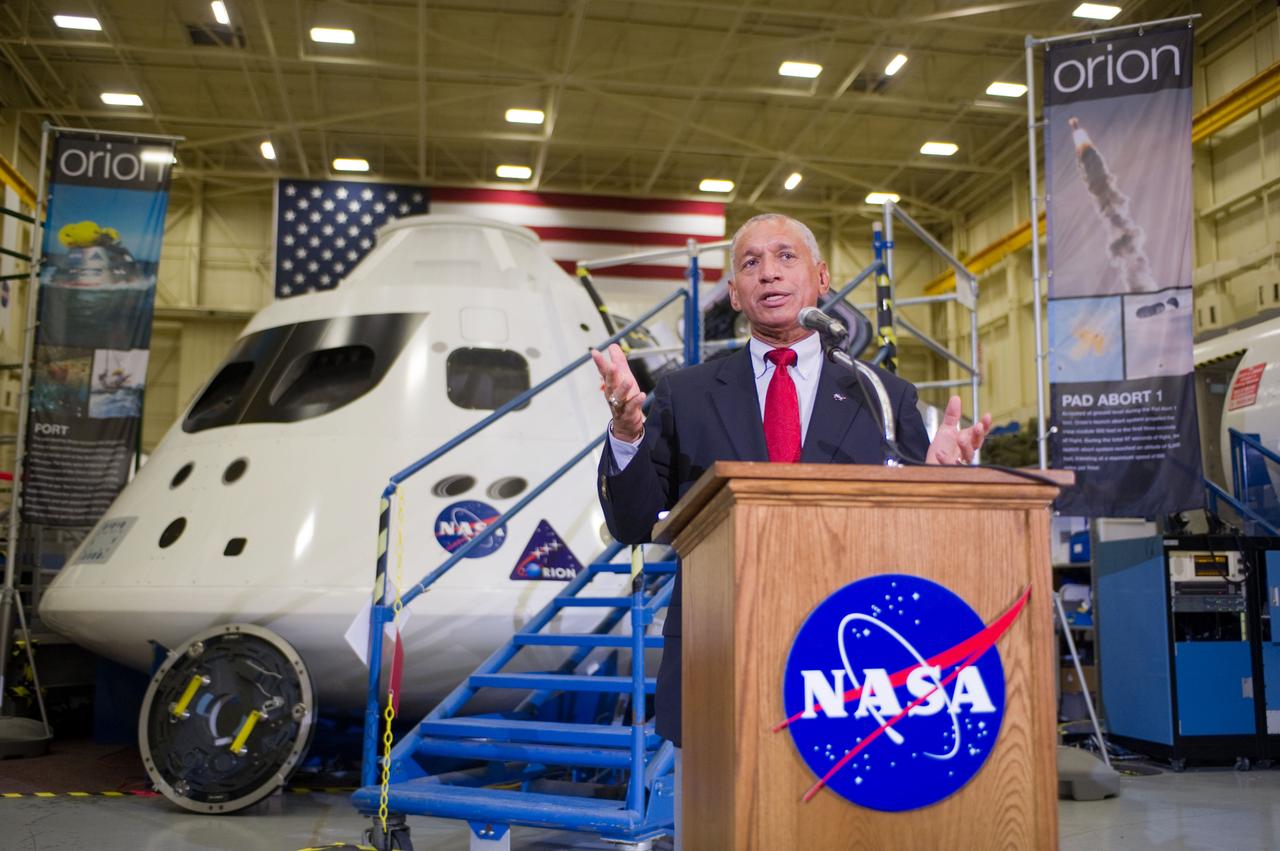
NASA Administrator Charlie Bolden tours the Orion mockups in Bldg. 9 at Johnson Space Center in Houston followed by a short Q&A in front of the mockup on Sept. 26, 2011. Part of Batch image transfer from Flickr.

Students watch a short video on NASA's ICESat-2 at one of NASA's exhibits at the Earth Day event on Monday, April 22, 2019, at Union Station in Washington, D.C. Photo Credit: (NASA/Joel Kowsky)
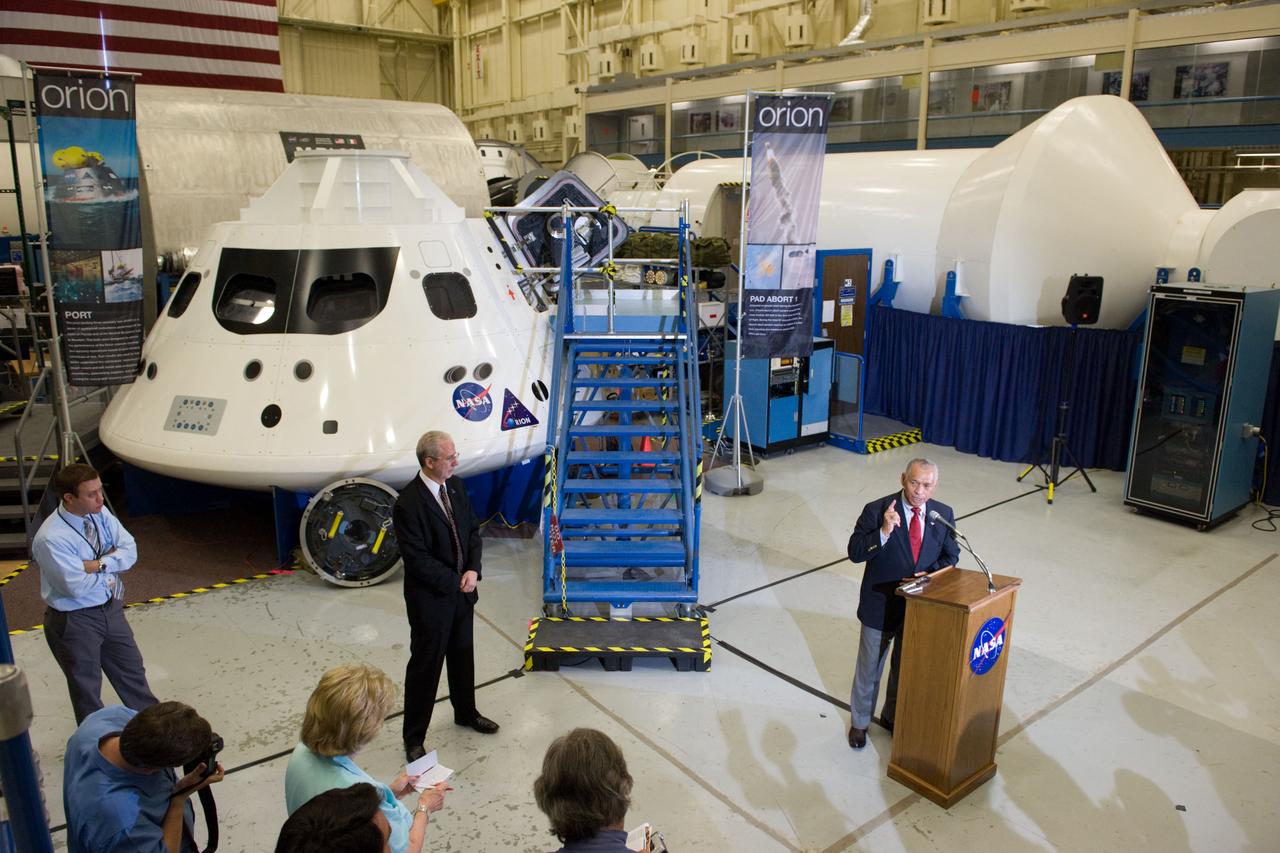
NASA Administrator Charlie Bolden tours the Orion mockups in Bldg. 9 at Johnson Space Center in Houston followed by a short Q&A in front of the mockup on Sept. 26, 2011. Part of Batch image transfer from Flickr.
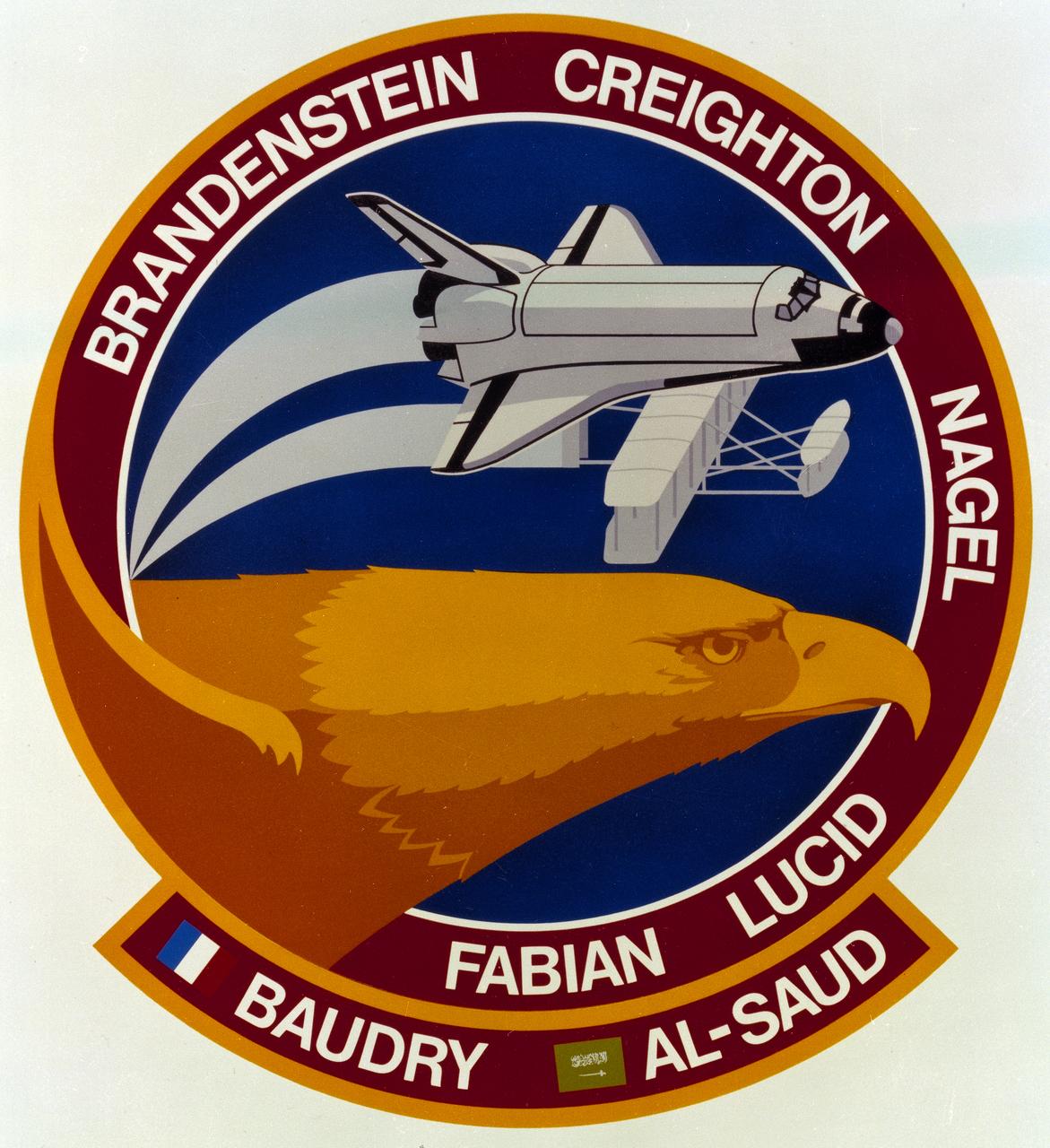
The STS-51G insignia illustrates the advances in aviation technology in the United States within a relatively short span of the twentieth century. The surnames of the crewmembers for the Discovery's mission appear near the center edge of the circular design.
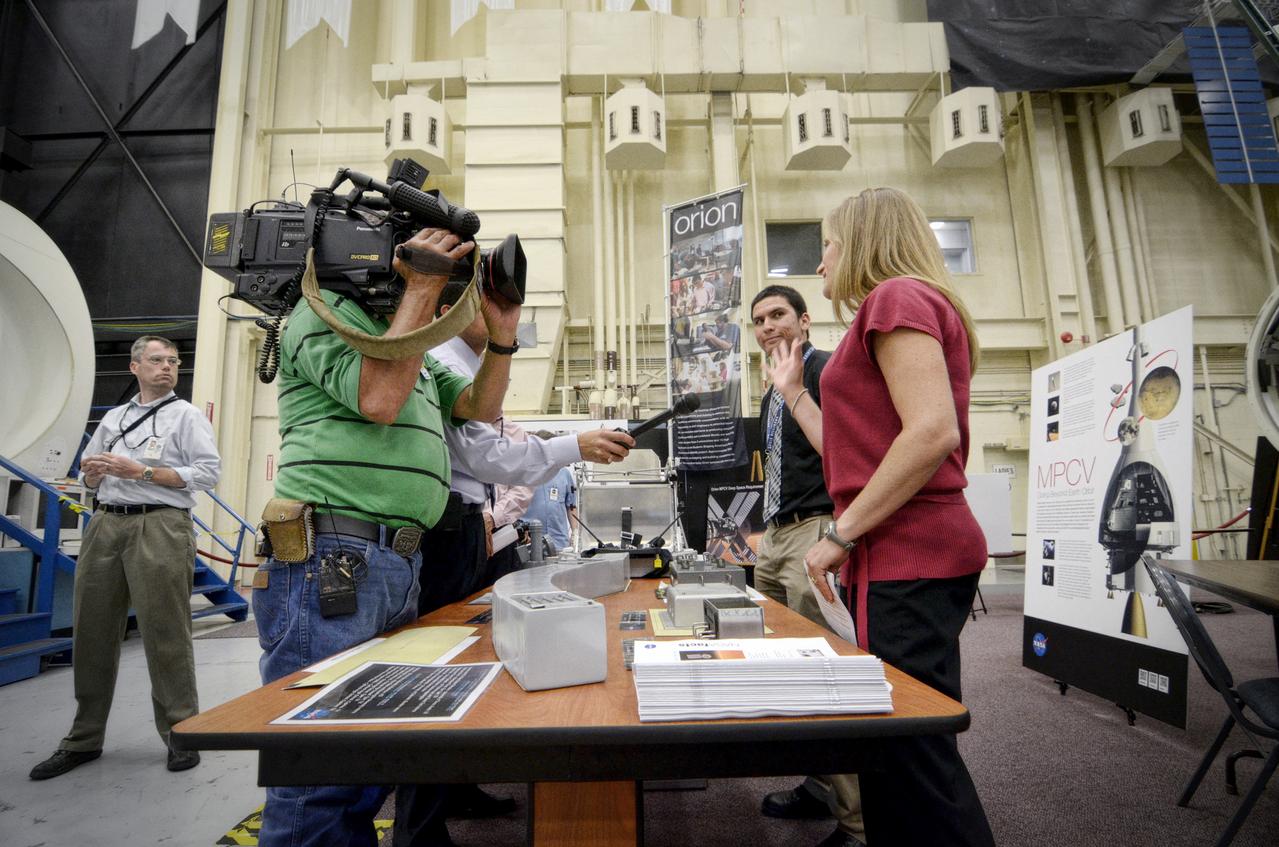
View taken during tour of the Orion mockups in Bldg. 9 at Johnson Space Center in Houston followed by a short Q&A in front of the mockup on Sept. 26, 2011. . Part of Batch image transfer from Flickr.
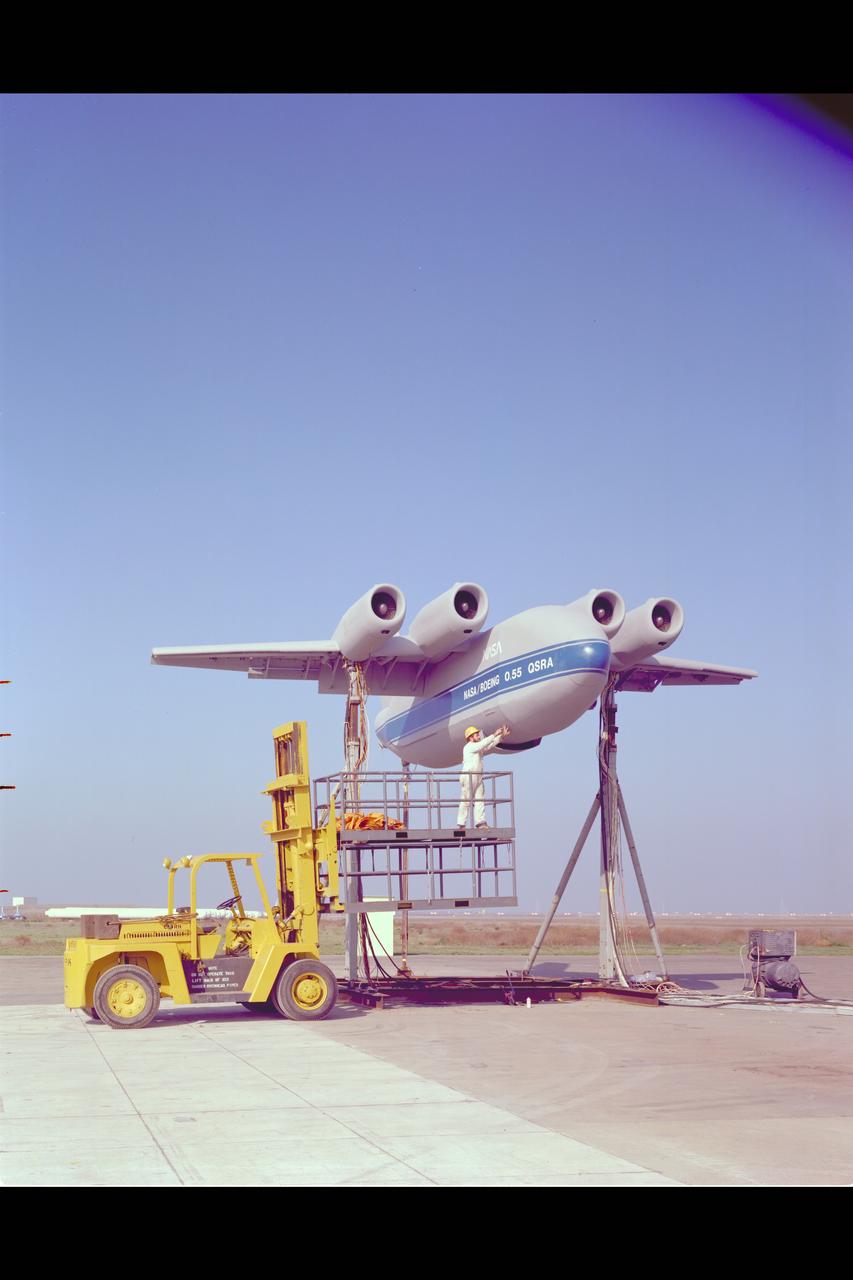
QSRA (Quiet Short-Haul Research Aircraft) S-Duct Test: Static test facility installation (Appeared on the cover of the Avaiation Week & Space Technology on March 21, 1977)
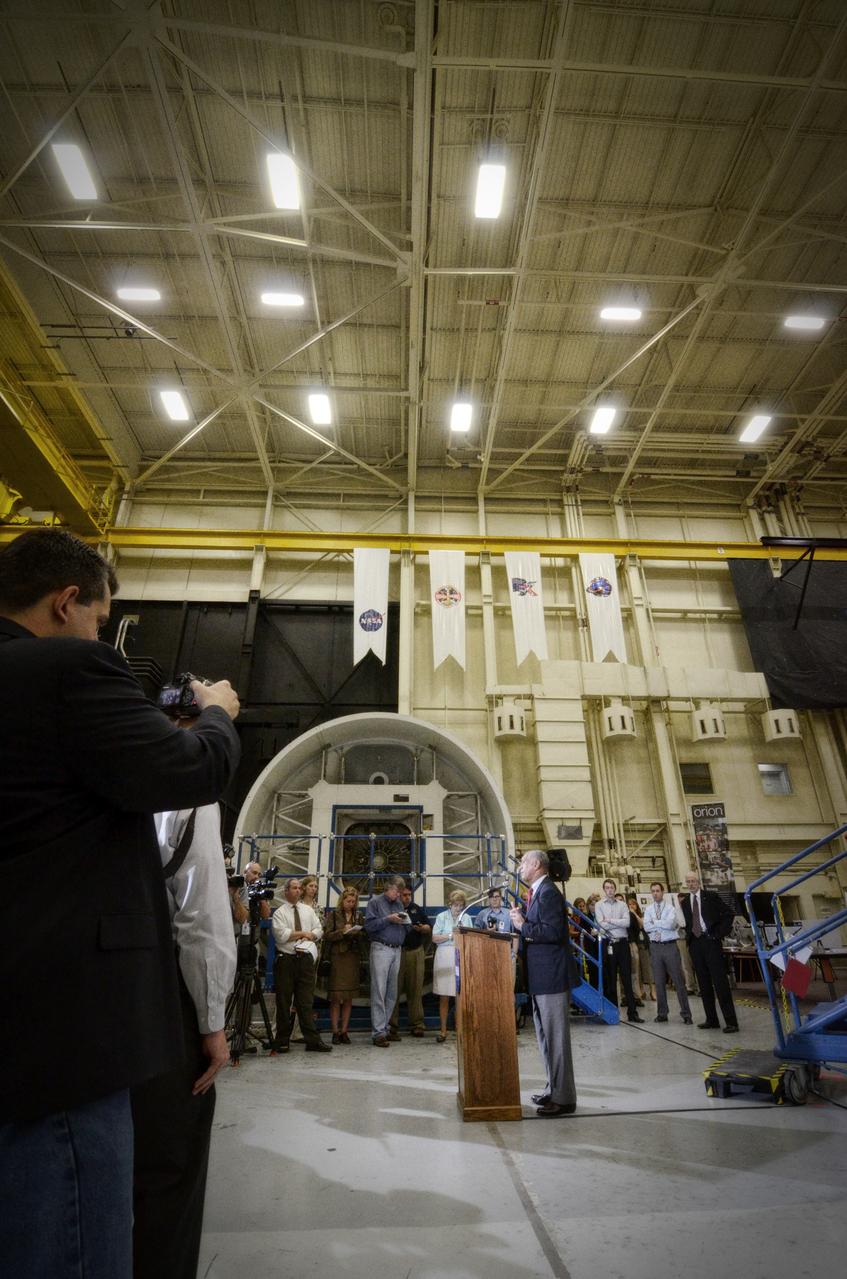
NASA Administrator Charlie Bolden tours the Orion mockups in Bldg. 9 at Johnson Space Center in Houston followed by a short Q&A in front of the mockup on Sept. 26, 2011. Part of Batch image transfer from Flickr.
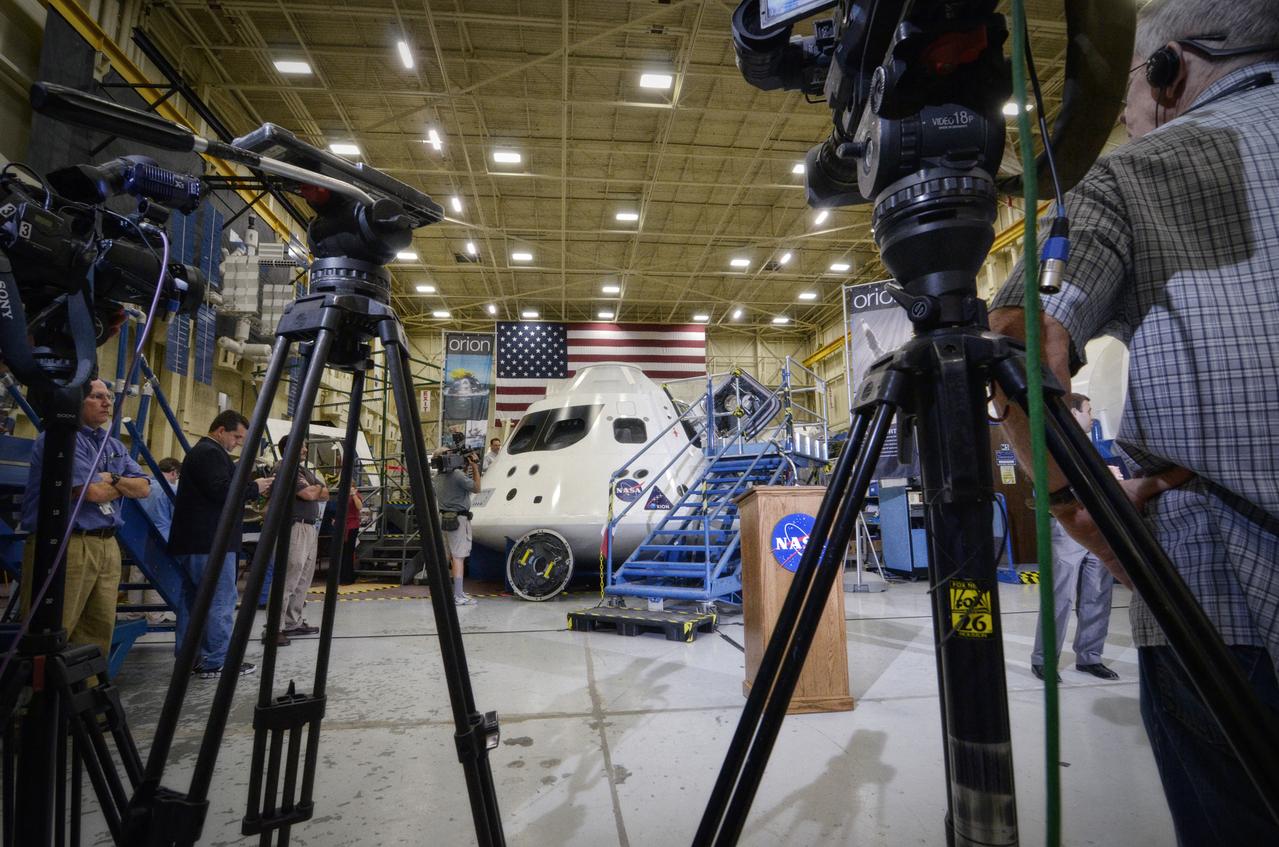
View taken during tour of the Orion mockups in Bldg. 9 at Johnson Space Center in Houston followed by a short Q&A in front of the mockup on Sept. 26, 2011. . Part of Batch image transfer from Flickr.
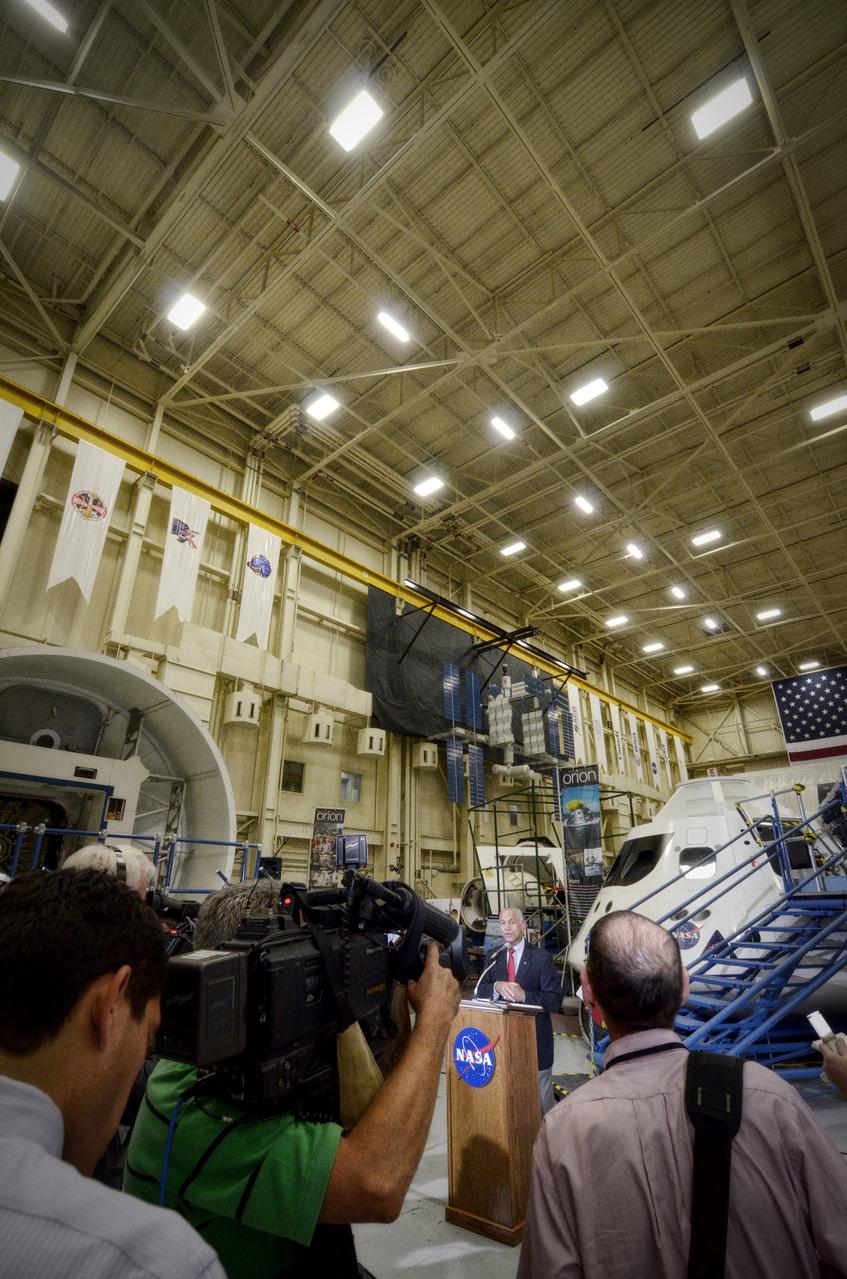
NASA Administrator Charlie Bolden tours the Orion mockups in Bldg. 9 at Johnson Space Center in Houston followed by a short Q&A in front of the mockup on Sept. 26, 2011. Part of Batch image transfer from Flickr.
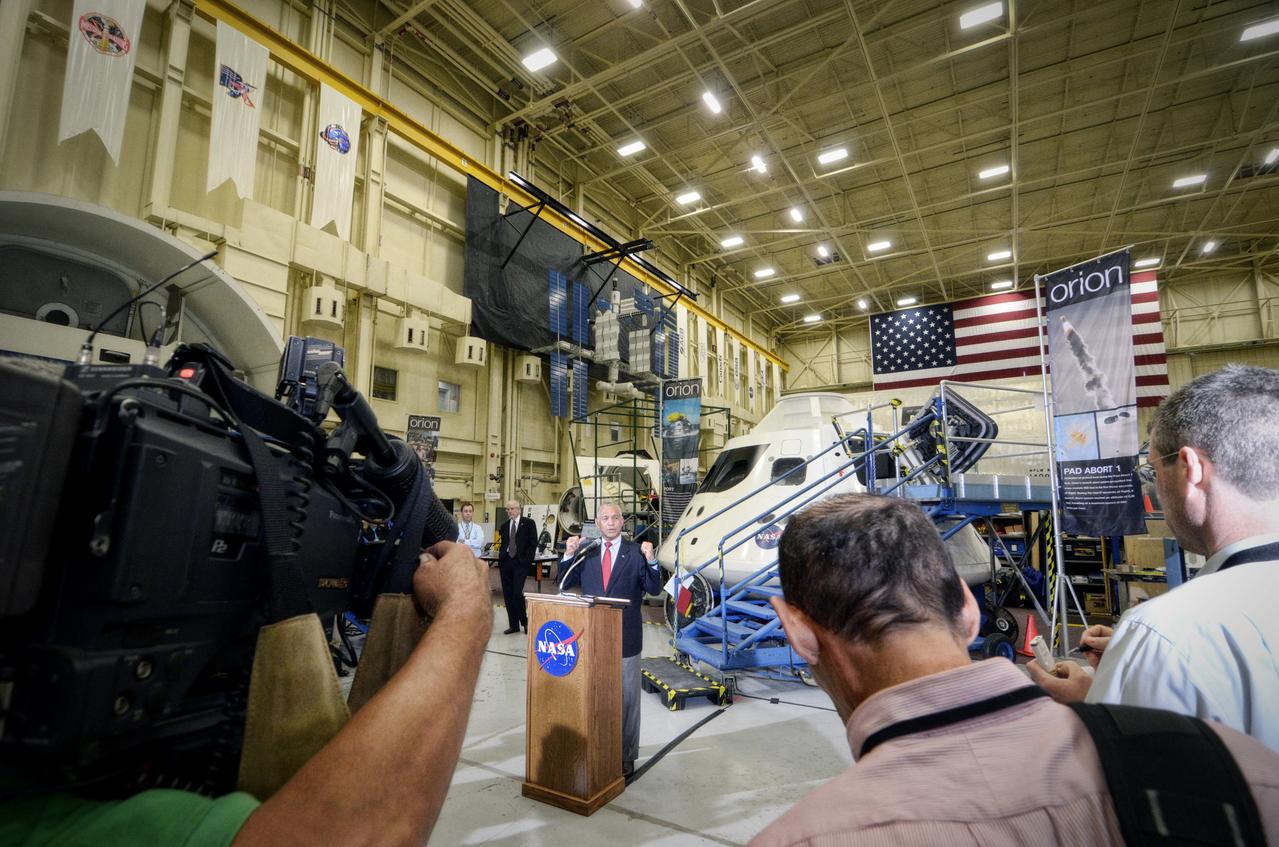
NASA Administrator Charlie Bolden tours the Orion mockups in Bldg. 9 at Johnson Space Center in Houston followed by a short Q&A in front of the mockup on Sept. 26, 2011. Part of Batch image transfer from Flickr.
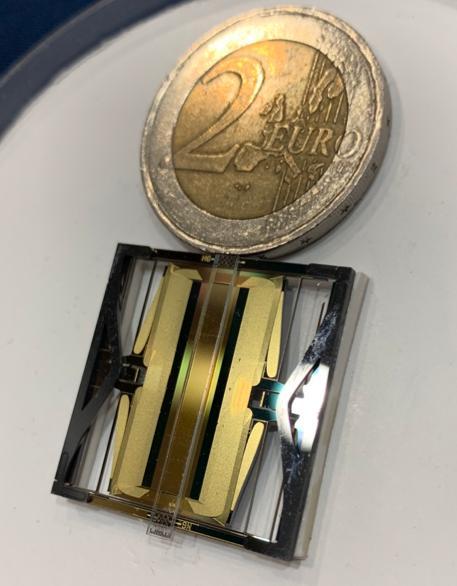
A copy of one of the sensors on NASA InSight's seismometer, compared to a 2-euro coin (about 1 inch wide). The short-period seismometer has three of these sensors. https://photojournal.jpl.nasa.gov/catalog/PIA22926
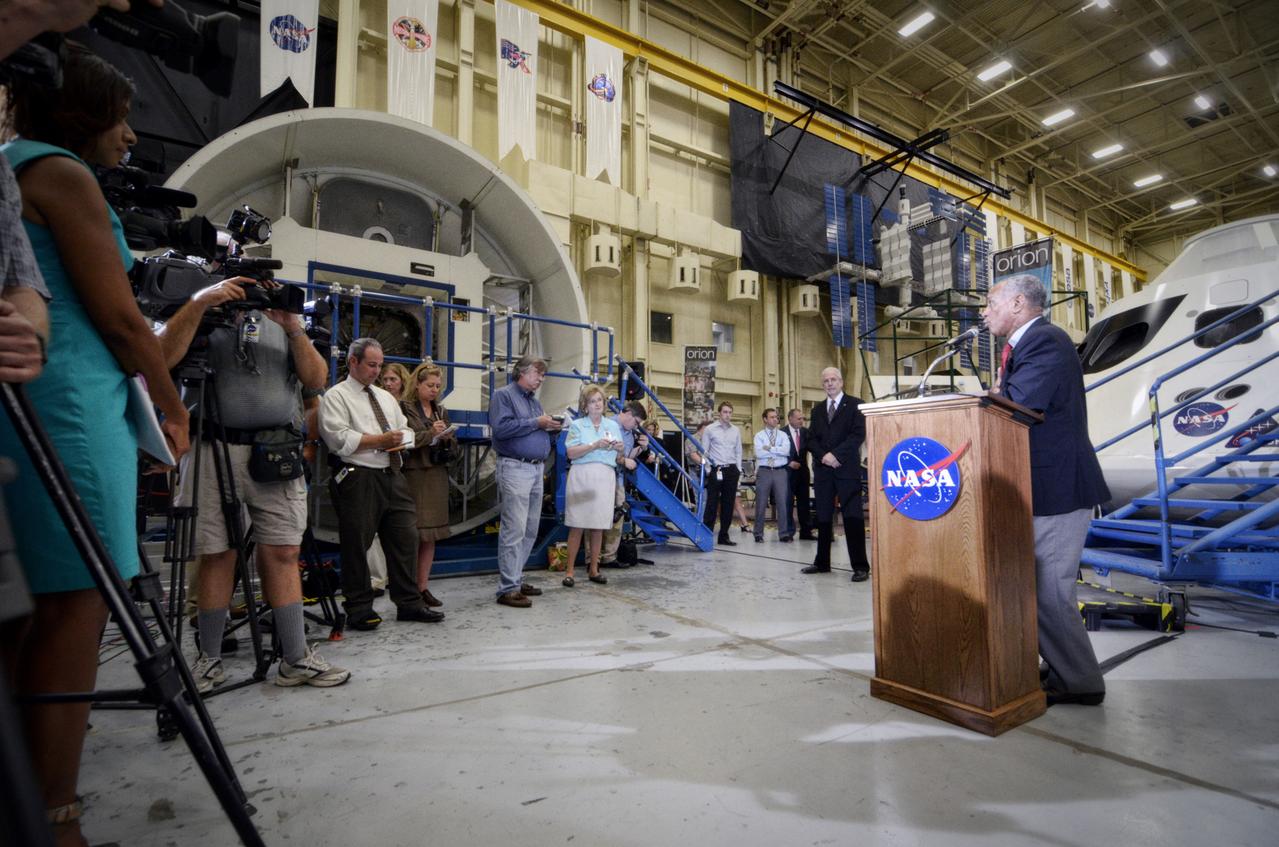
NASA Administrator Charlie Bolden tours the Orion mockups in Bldg. 9 at Johnson Space Center in Houston followed by a short Q&A in front of the mockup on Sept. 26, 2011. Part of Batch image transfer from Flickr.
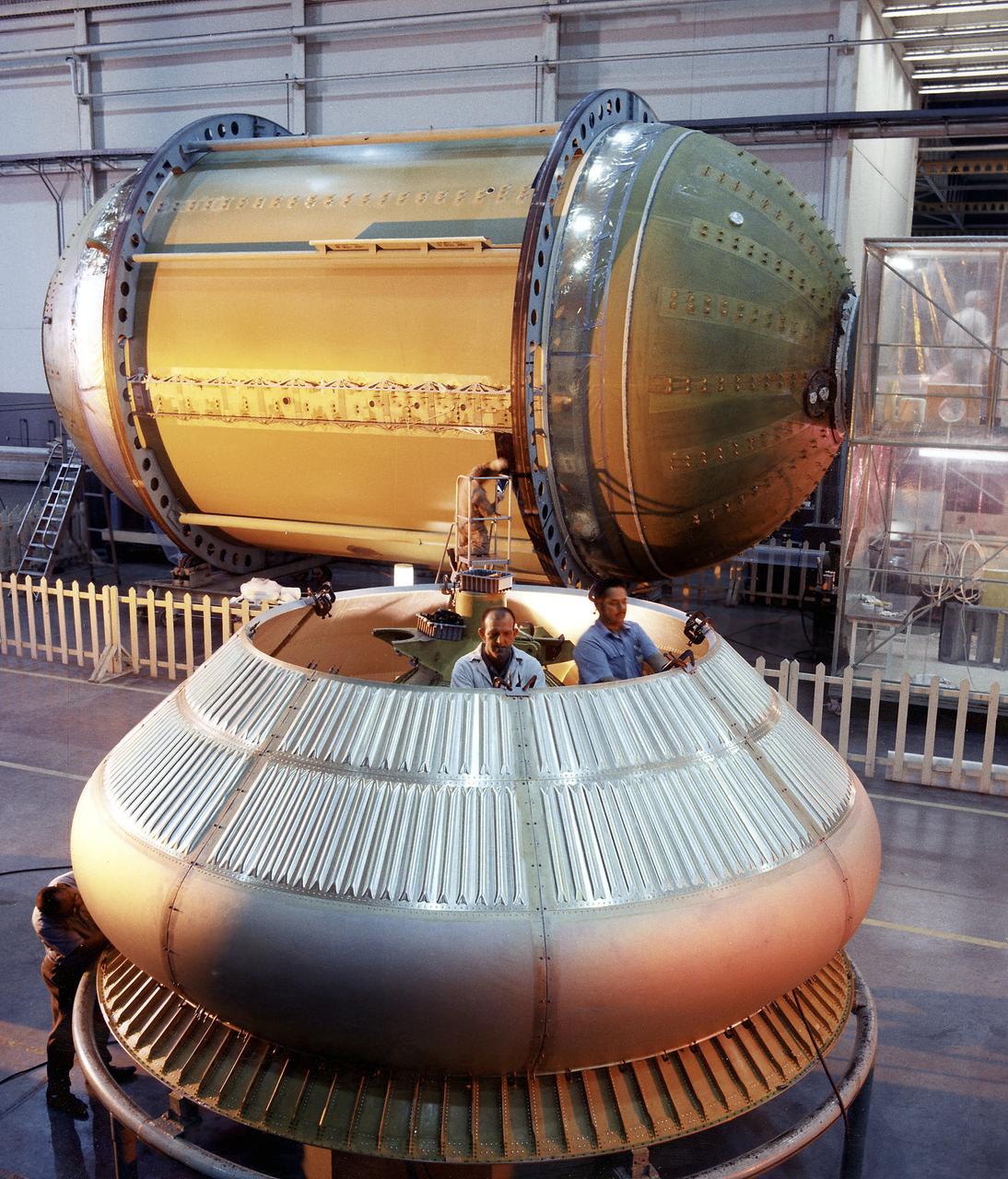
This photograph shows technicians installing the meteoroid shield on the Thruster Attitude Control Subsystem (TACS). At one end of the Orbital Workshop (OWS), the TACS provided short-term control of the attitude of the Skylab.
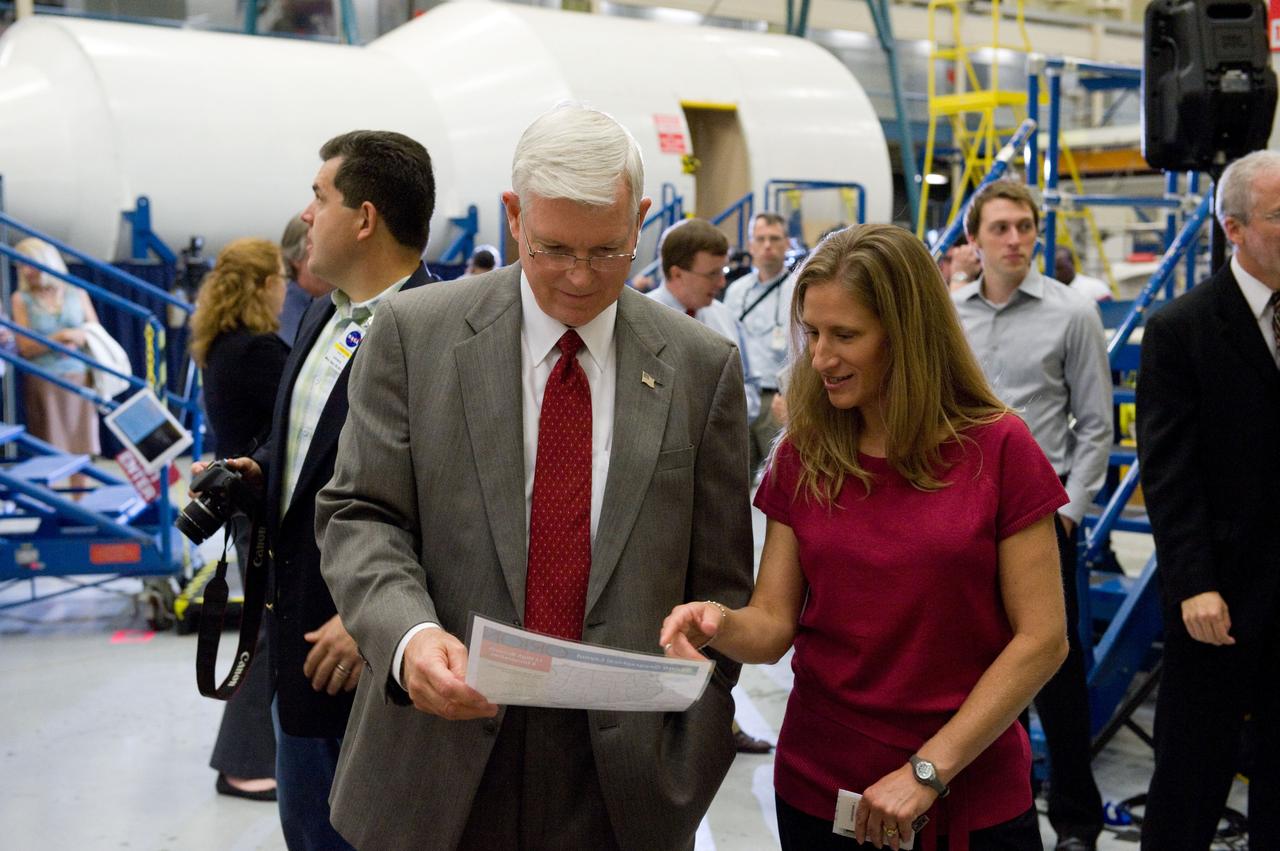
JSC Director Mike Coats tours the Orion mockups in Bldg. 9 at Johnson Space Center in Houston followed by a short Q&A in front of the mockup on Sept. 26, 2011. Part of Batch image transfer from Flickr.
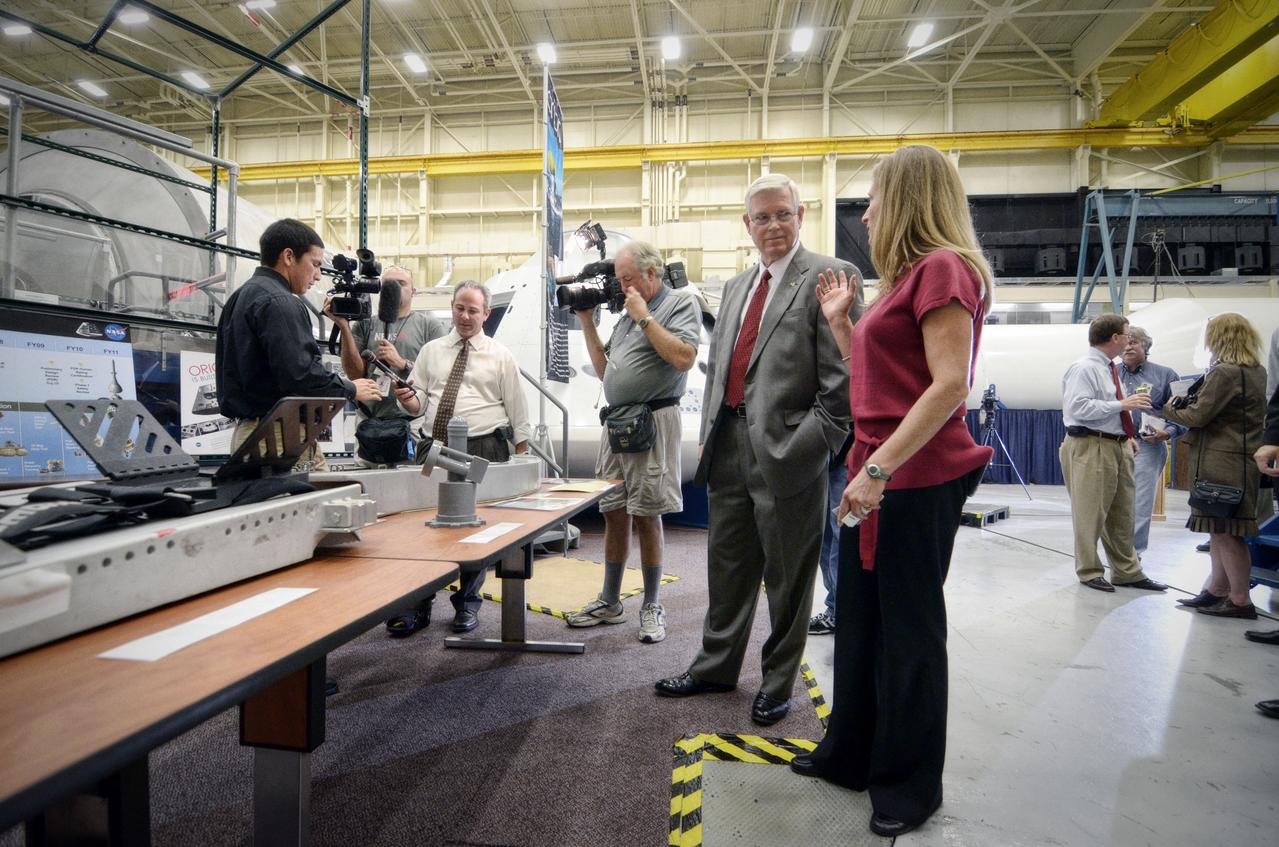
JSC Director Mike Coats tours the Orion mockups in Bldg. 9 at Johnson Space Center in Houston followed by a short Q&A in front of the mockup on Sept. 26, 2011. Part of Batch image transfer from Flickr.
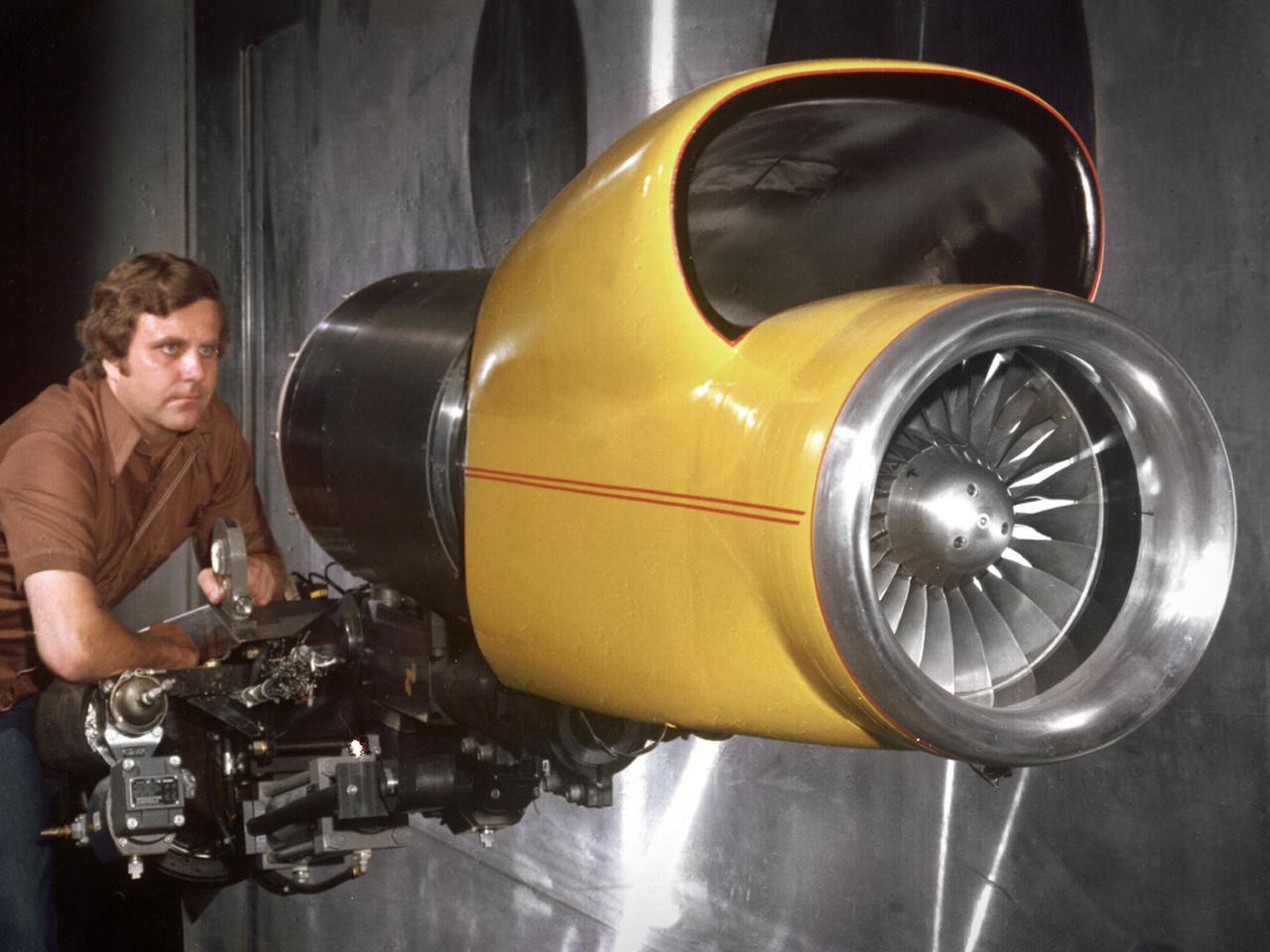
A technician checks a 0.25-scale engine model of a Vought Corporation V-530 engine in the test section of the 10- by 10-Foot Supersonic Wind Tunnel at the National Aeronautics and Space Administration (NASA) Lewis Research Center. Vought created a low-drag tandem-fan Vertical/Short and Takeoff and Landing (V/STOL) engine in the mid-1970s, designated as the V-530. The first fan on the tandem-fan engine was supplied with air through a traditional subsonic inlet, seen on the lower front of the engine. The air was exhausted through the nacelle during normal flight and directed down during takeoffs. The rear fan was supplied by the oval-shaped top inlet during all phases of the flight. The second fan exhausted its air through a rear vectorable nozzle. NASA Lewis and Vought partnered in the late 1970s to collect an array of inlet and nozzle design information on the tandem fan engines for the Navy. Vought created this .25-scale model of the V-530 for extensive testing in Lewis' 10- by 10-foot tunnel. During an early series of tests, the front fan was covered, and a turbofan simulator was used to supply air to the rear fan. The researchers then analyzed the performance of only the front fan inlet. During the final series of tests, the flow from the front fan was used to supply airflow to the rear fan. The researchers studied the inlet's recovery, distortion, and angle-of-attack limits over various flight conditions.
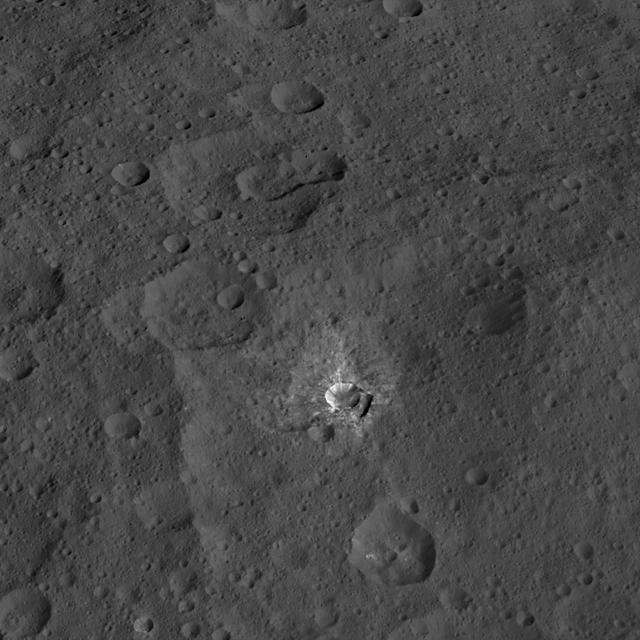
This view from NASA Dawn spacecraft features a crater named Oxo, which is about 6 miles 9 kilometers in diameter. A short, linear slump, where a mass of material has dropped below the surface, is seen to the left of Oxo crater rim. Dawn took this image on Oct. 17, 2015, from an altitude of 915 miles (1,470 kilometers). It has a resolution of 450 feet (140 meters) per pixel. http://photojournal.jpl.nasa.gov/catalog/PIA20136

F-15B ACTIVE in flight
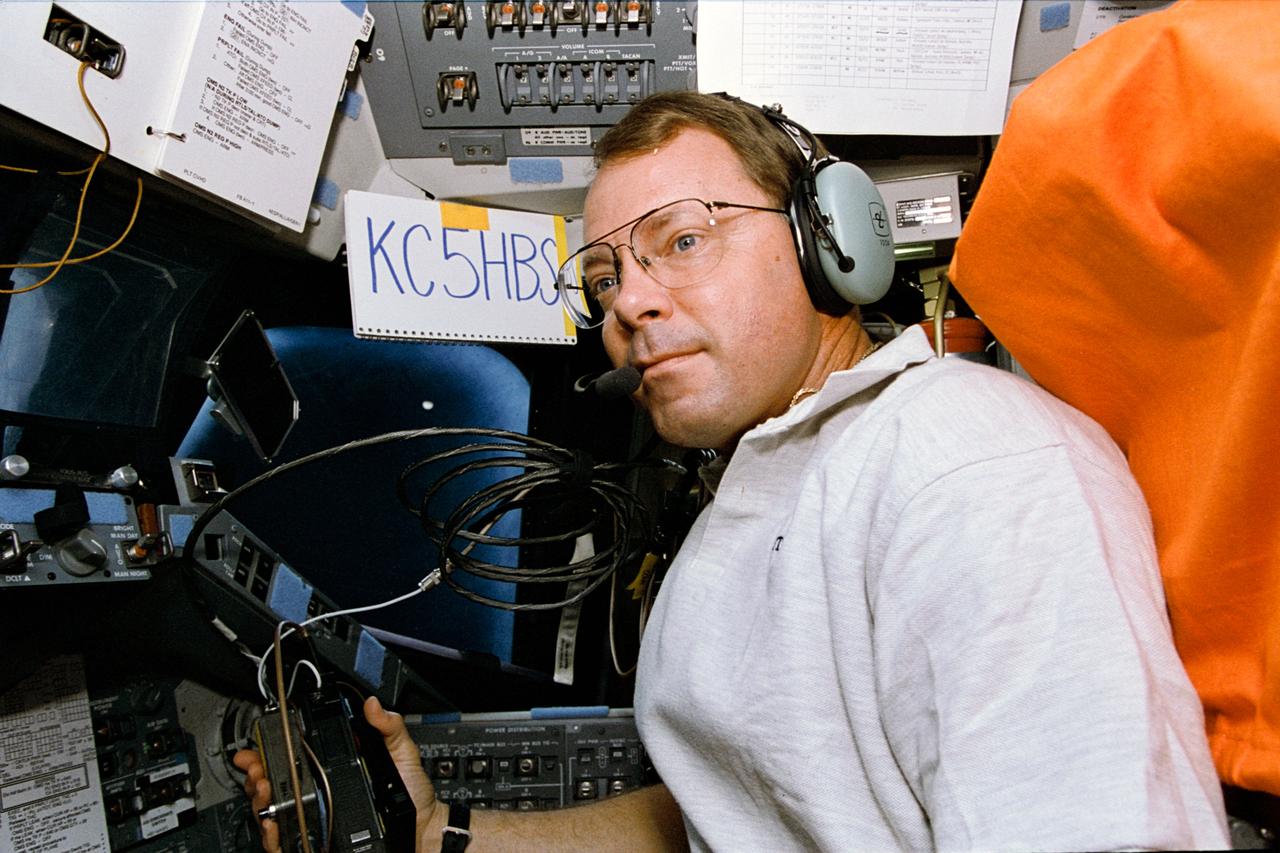
STS064-04-009 (9-20 Sept. 1994) --- Astronaut L. Blaine Hammond, STS-64 pilot, talks to students on Earth via the Shuttle Amateur Radio Experiment (SAREX) on the space shuttle Discovery's flight deck. The recently licensed "Ham" operator and several other crew members throughout the mission were connected with schools around the world with the aid of a number of amateur radio operators. Hammond joined five other NASA astronauts for almost 11 days in Earth orbit aboard Discovery. Photo credit: NASA or National Aeronautics and Space Administration
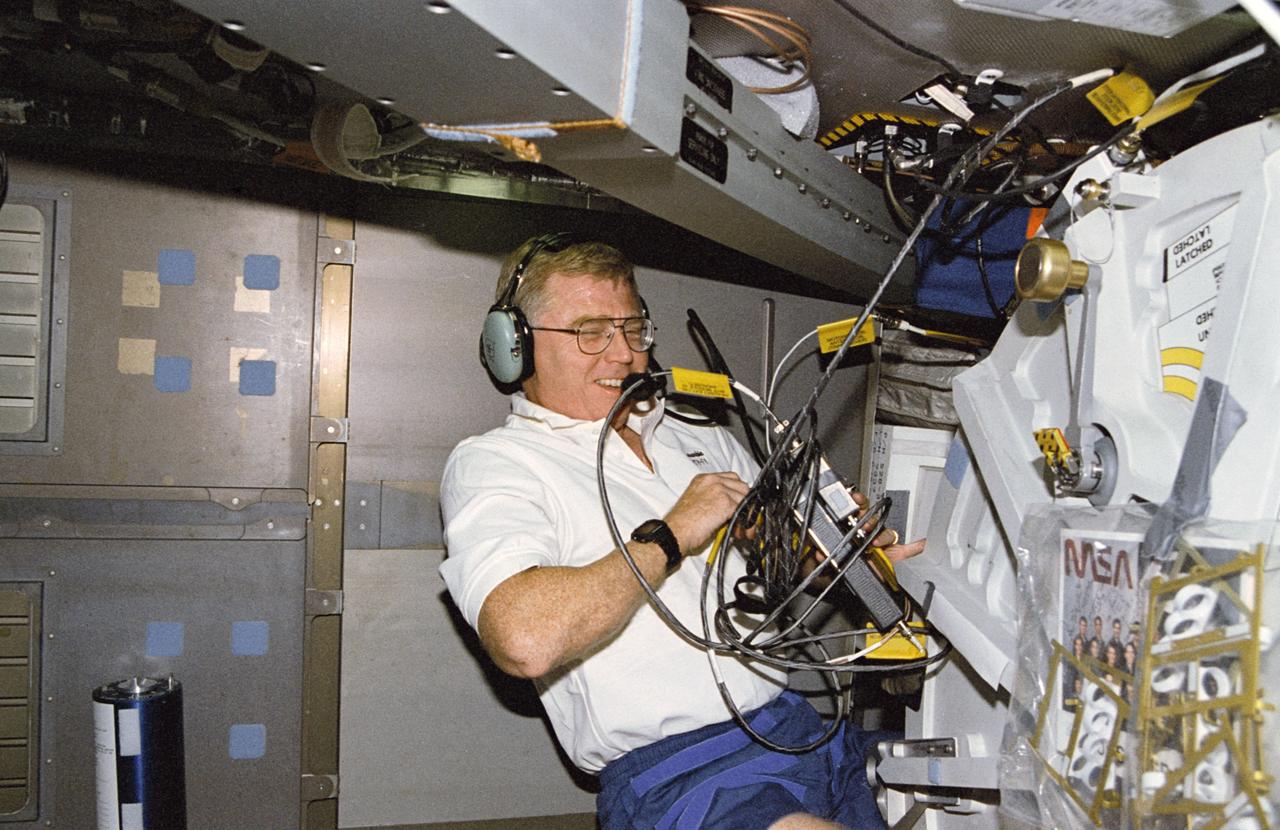
STS078-429-017 (20 June-7 July 1996) --- Aboard the middeck of the Earth-orbiting space shuttle Columbia, astronaut Charles J. Brady, mission specialist and a licensed amateur radio operator or "ham", talks to students on Earth. Some of the crew members devoted some of their off-duty time to continue a long-standing Shuttle tradition of communicating with students and other hams between their shifts of assigned duty. Brady joined four other NASA astronauts and two international payload specialists for almost 17-days of research in support of the Life and Microgravity Spacelab (LMS-1) mission.

Portrait of Marshall's eighth Center Director Dr. Jerroll W. Littles (1996-1998). During the two short years as Center Director, Dr. Littles' administration was responsible for the space lab mission, the space science projects, alternative light-weight launch vehicles and their engine development.
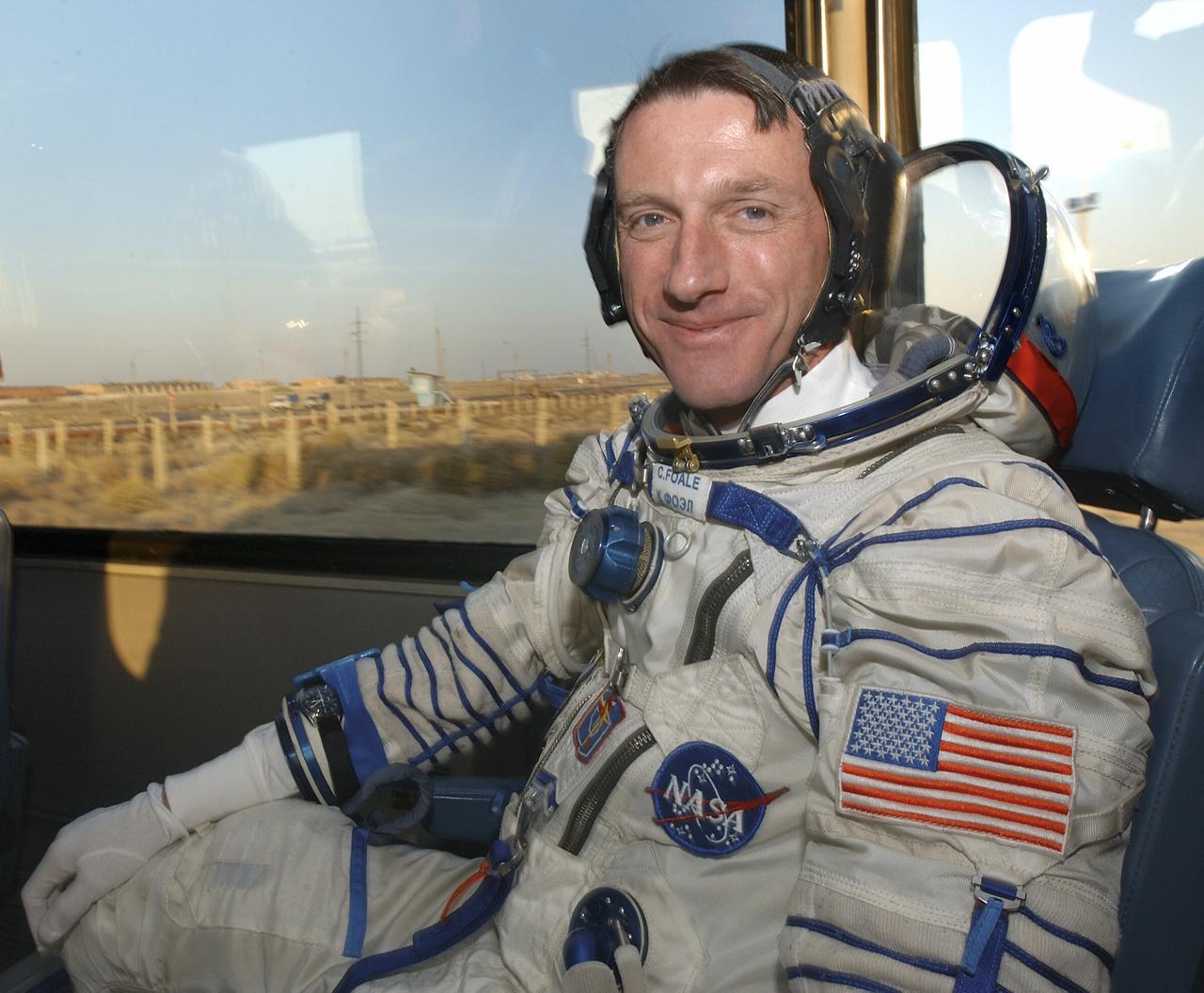
Expedition 8 Commander and NASA Science Officer Michael Foale smiles for the camera during the short bus ride to the launch pad for liftoff in a Soyuz TMA-3 vehicle to the International Space Station, Saturday, Oct. 18, 2003, at the Baikonur Cosmodrome, Kazakhstan. Photo Credit (NASA/Bill Ingalls)

A guest uses some virtual reality viewers before a showing of the Project Mars Competition's short films winners and the Mars series, Monday, November 5, 2018 at National Geographic Society Headquarters in Washington. Photo Credit: (NASA/Aubrey Gemignani)
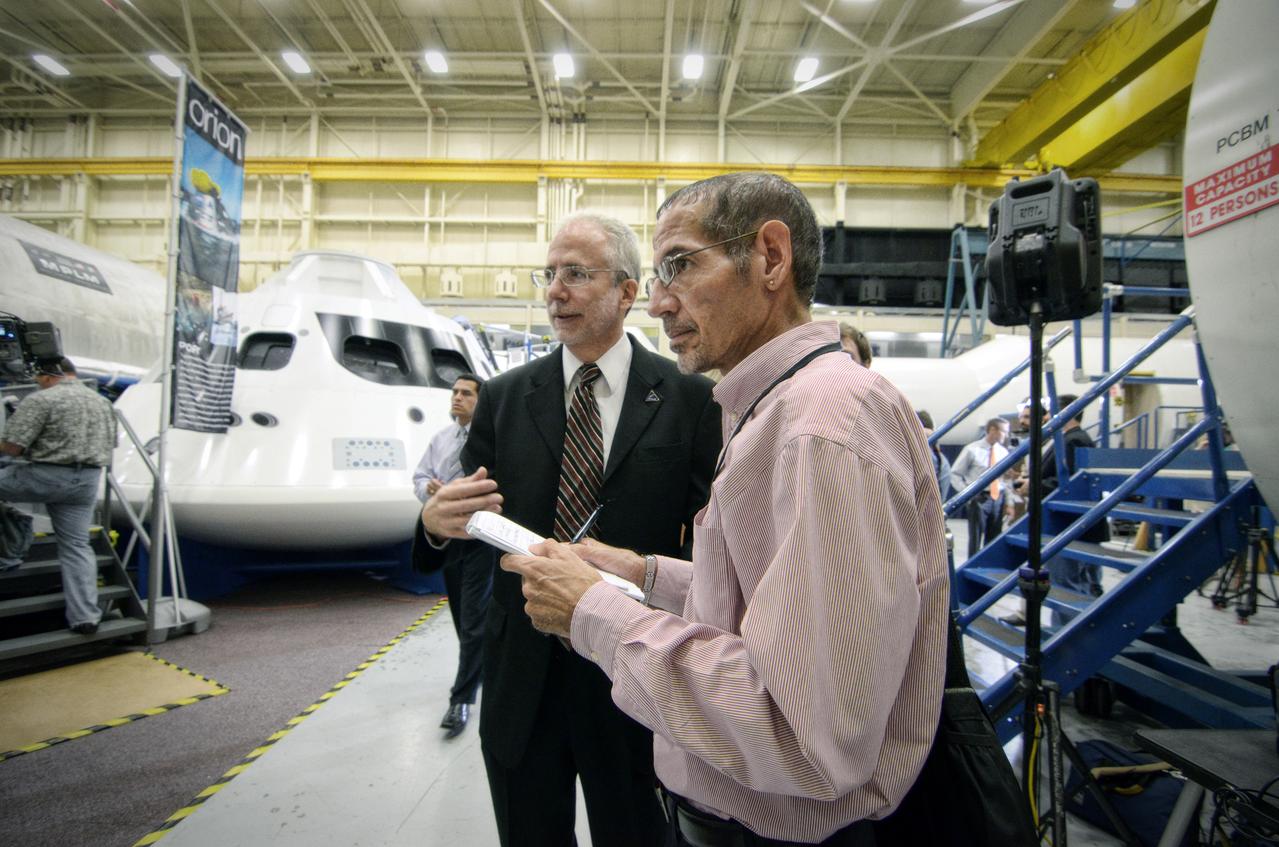
Orion Program Manager Mark Geyer tours the Orion mockups in Bldg. 9 at Johnson Space Center in Houston followed by a short Q&A in front of the mockup on Sept. 26, 2011. Part of Batch image transfer from Flickr.
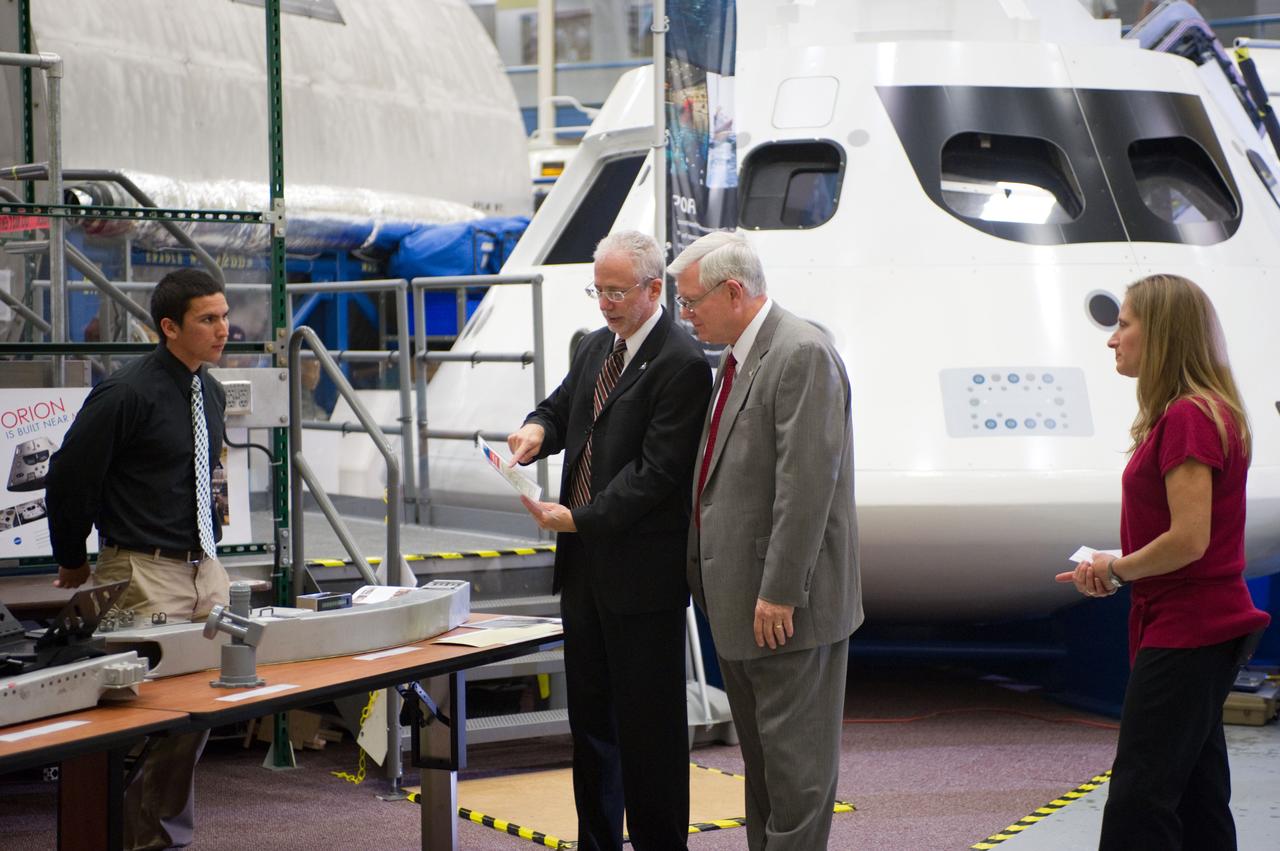
JSC Director Mike Coats and Orion Program Manager Mark Geyer tour the Orion mockups in Bldg. 9 at Johnson Space Center in Houston followed by a short Q&A in front of the mockup on Sept. 26, 2011. Part of Batch image transfer from Flickr.
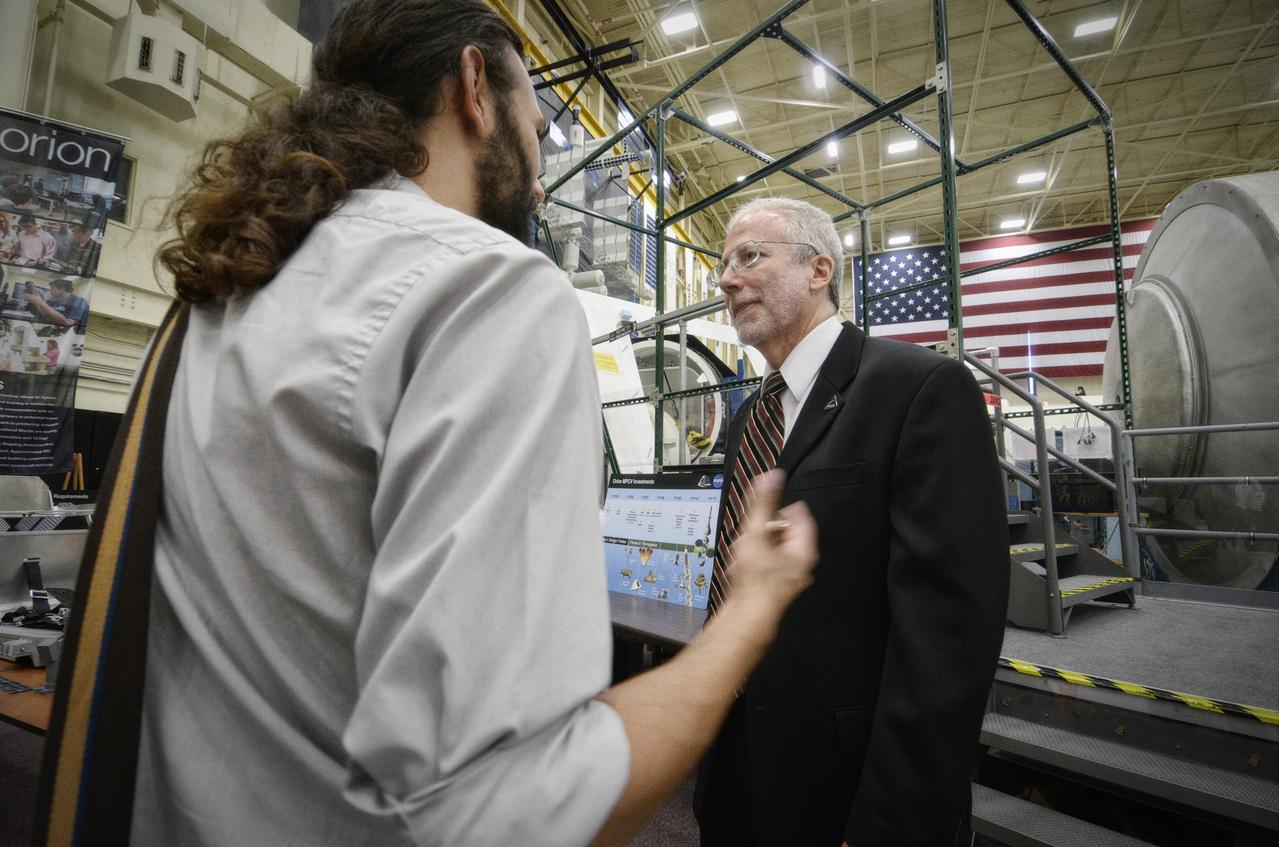
Orion Program Manager Mark Geyer tours the Orion mockups in Bldg. 9 at Johnson Space Center in Houston followed by a short Q&A in front of the mockup on Sept. 26, 2011. . Part of Batch image transfer from Flickr.
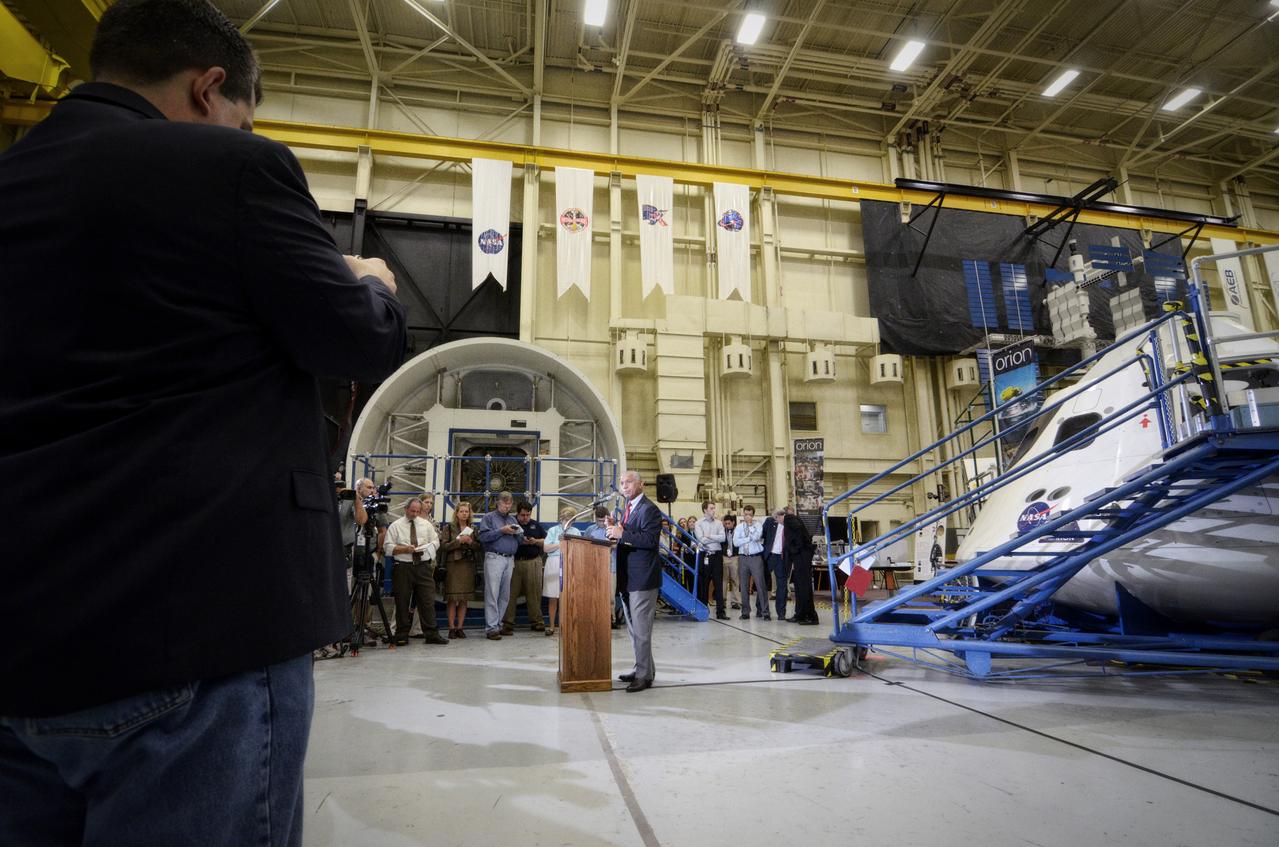
NASA Administrator Charlie Bolden at podium after tour of the Orion mockups in Bldg. 9 at Johnson Space Center in Houston followed by a short Q&A in front of the mockup on Sept. 26, 2011. Part of Batch image transfer from Flickr.
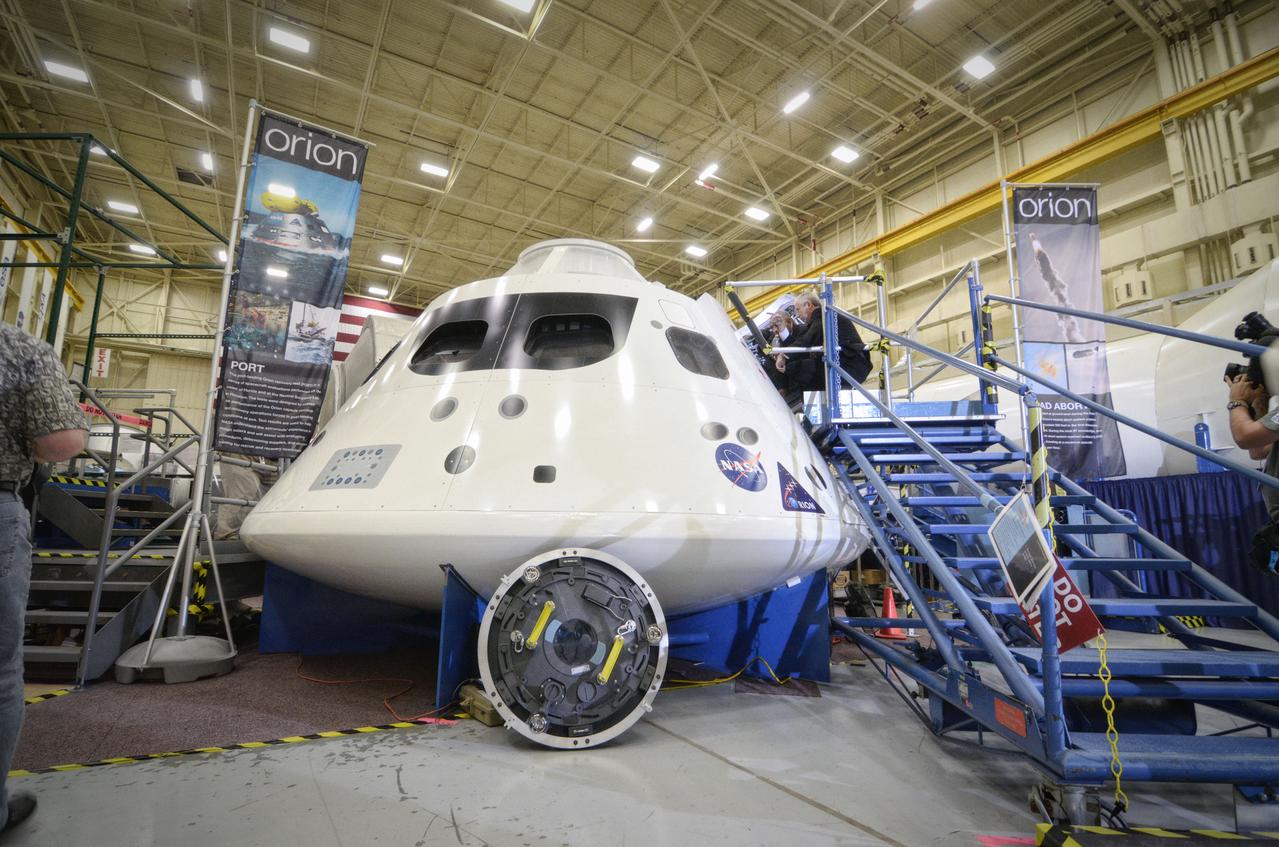
NASA Administrator Charlie Bolden, accompanied by JSC Director Mike Coats and Orion Program Manager Mark Geyer, tours the Orion mockups in Bldg. 9 at Johnson Space Center in Houston followed by a short Q&A in front of the mockup on Sept. 26, 2011. Part of Batch image transfer from Flickr.
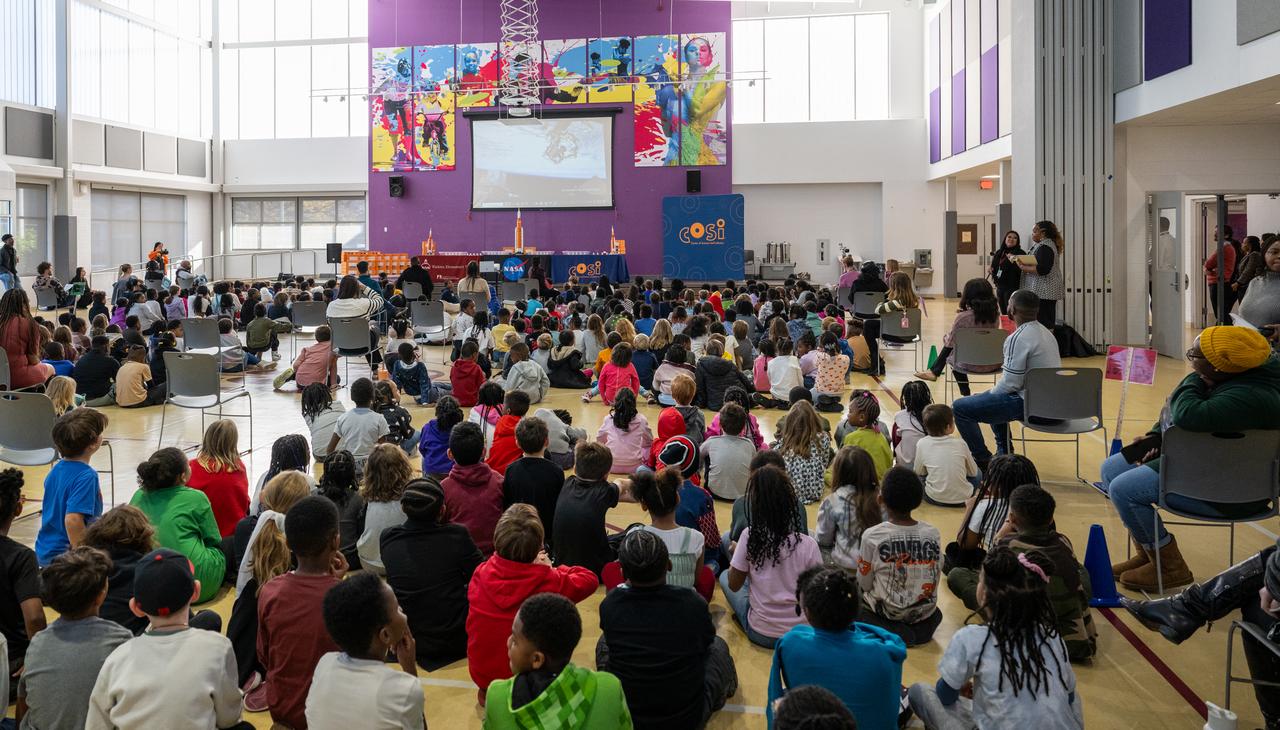
Students watch a short video presentation during an engagement event at Catherine Watkins Elementary School Monday, Dec. 2, 2024 in Washington. O’Hara and Moghbeli spent six months in space as part of Expedition 70 aboard the International Space Station. Photo Credit: (NASA/Keegan Barber)

Chris Davenport, Washington Post space reporter, moderates a panel after a showing of the Project Mars Competition's short films and the Mars series, Monday, November 5, 2018 at National Geographic Society Headquarters in Washington. Photo Credit: (NASA/Aubrey Gemignani)
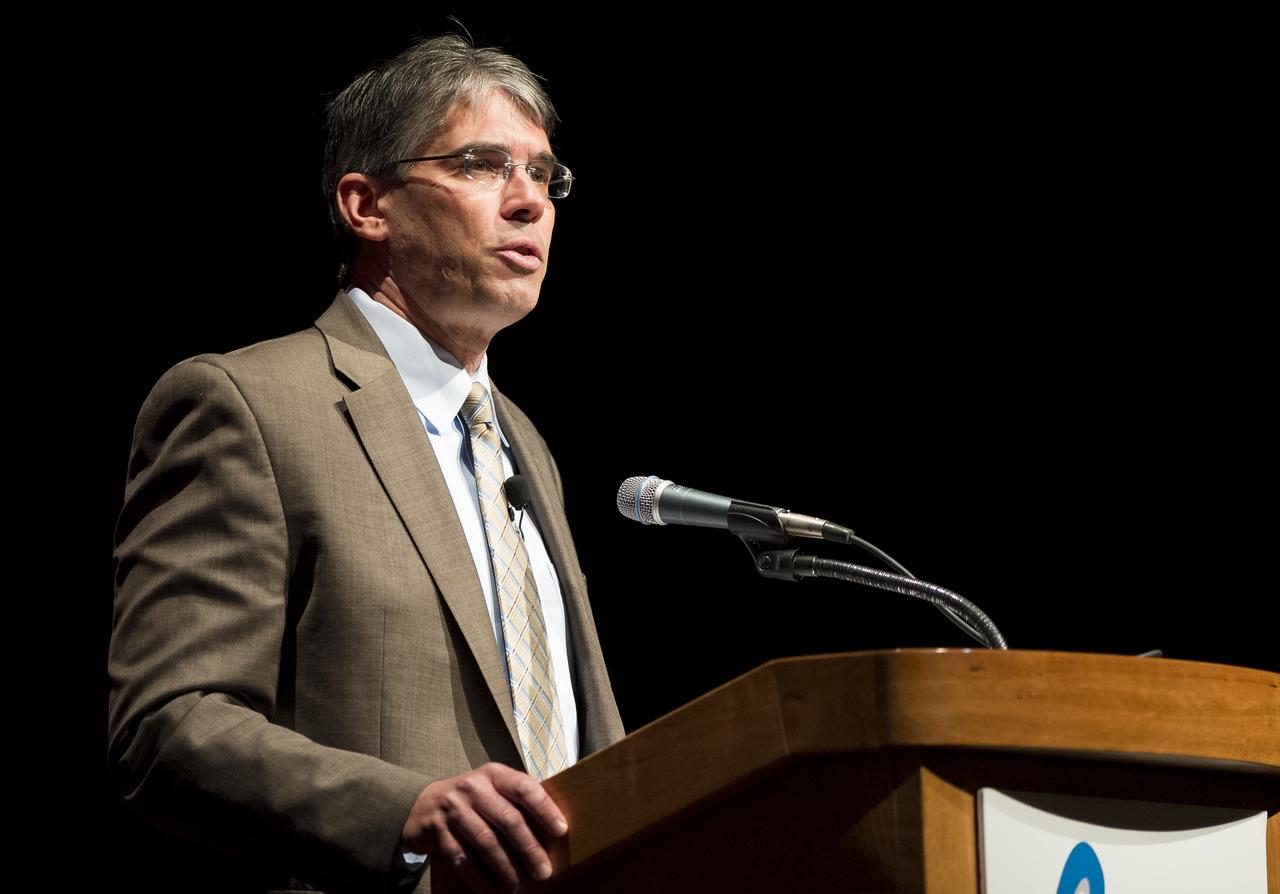
Michael Gazarik, NASA Associate Administrator for Space Technology gives a short presentation on NASA's human exploration path to Mars during a panel discussion moderated by PBS NewsHour's Miles O'Brien at the Humans to Mars Summit on April 22, 2014 at George Washington University in Washington, DC. Photo Credit: (NASA/Joel Kowsky)
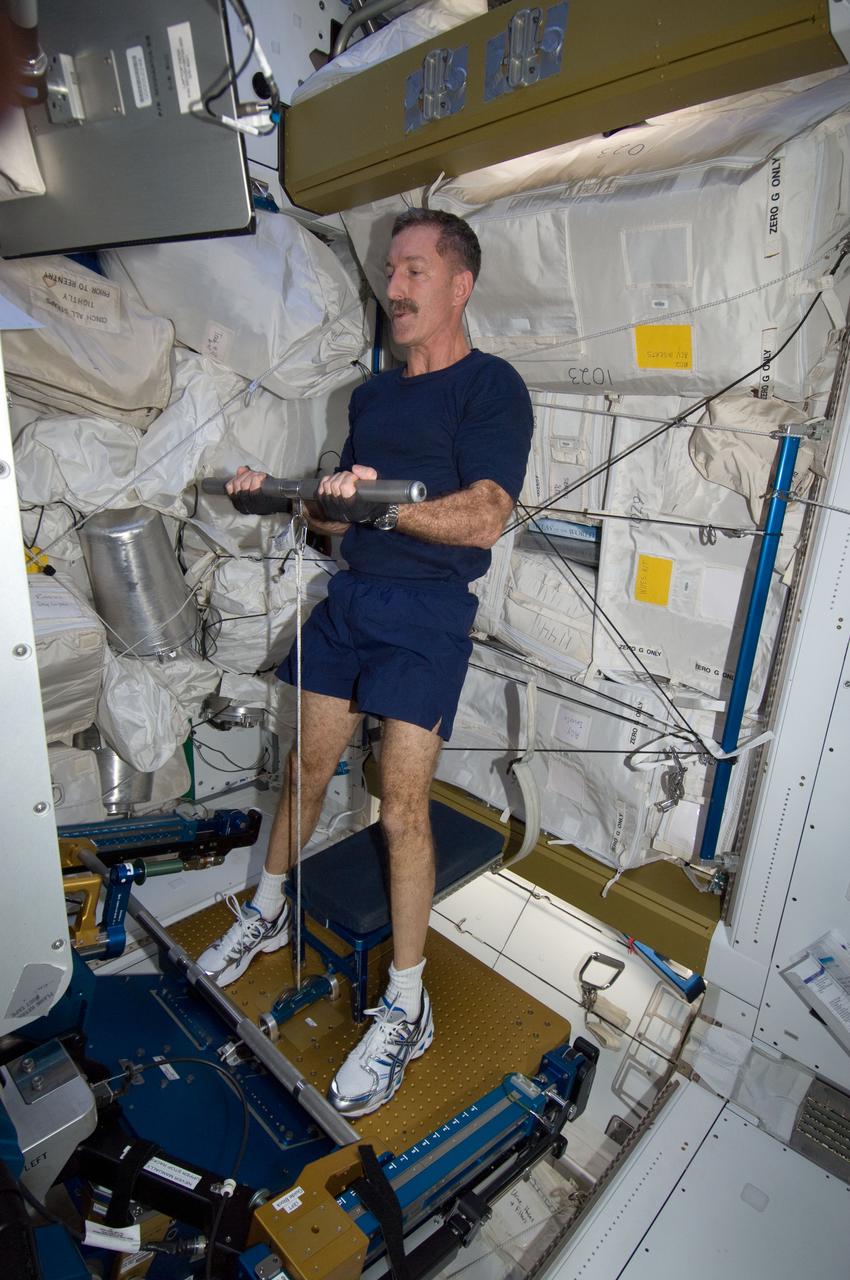
ISS030-E-012727 (18 Dec. 2011) --- NASA astronaut Dan Burbank, Expedition 30 commander, uses the short bar for the advanced Resistive Exercise Device (aRED) equipment to perform upper body strengthening pull-ups in the Tranquility node of the International Space Station.
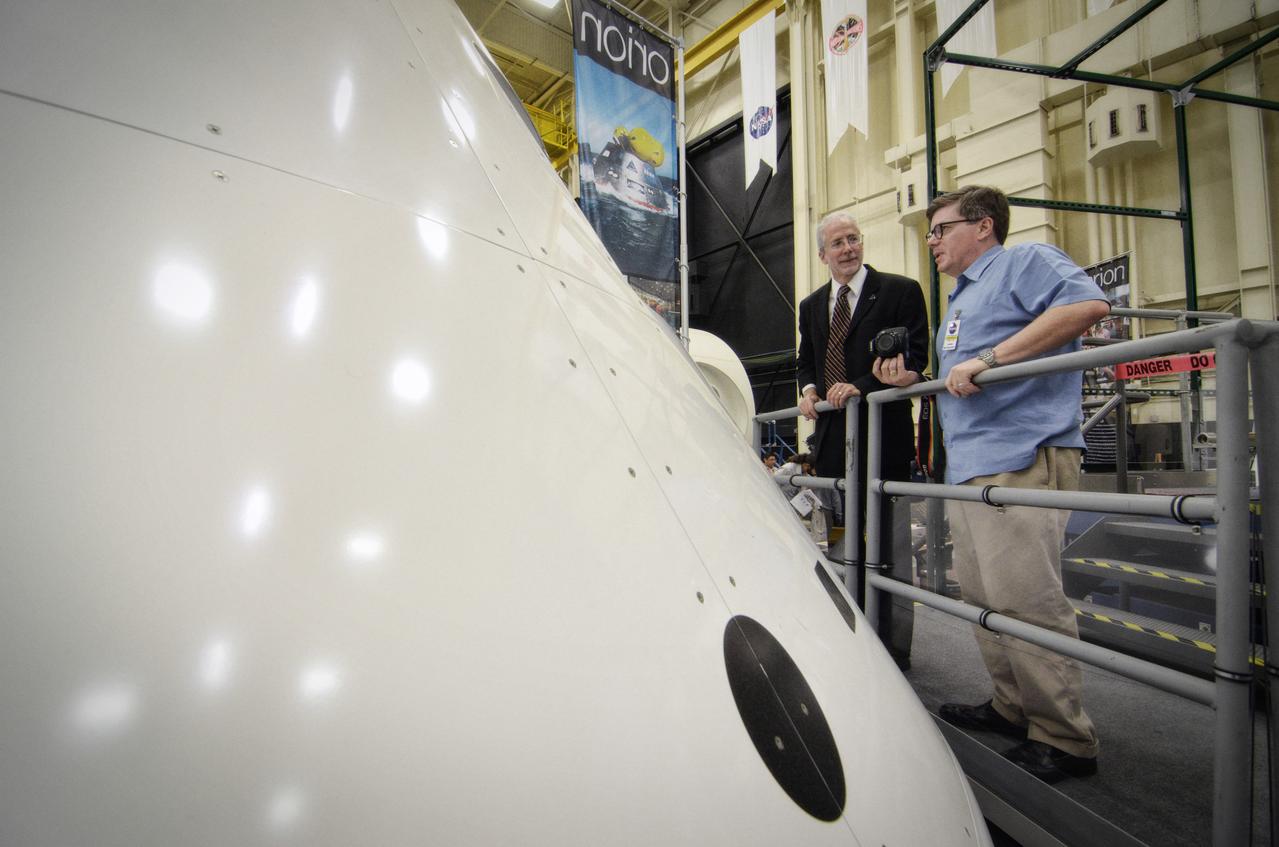
Orion Program Manager Mark Geyer tours the Orion mockups in Bldg. 9 at Johnson Space Center in Houston followed by a short Q&A in front of the mockup on Sept. 26, 2011. Part of Batch image transfer from Flickr.
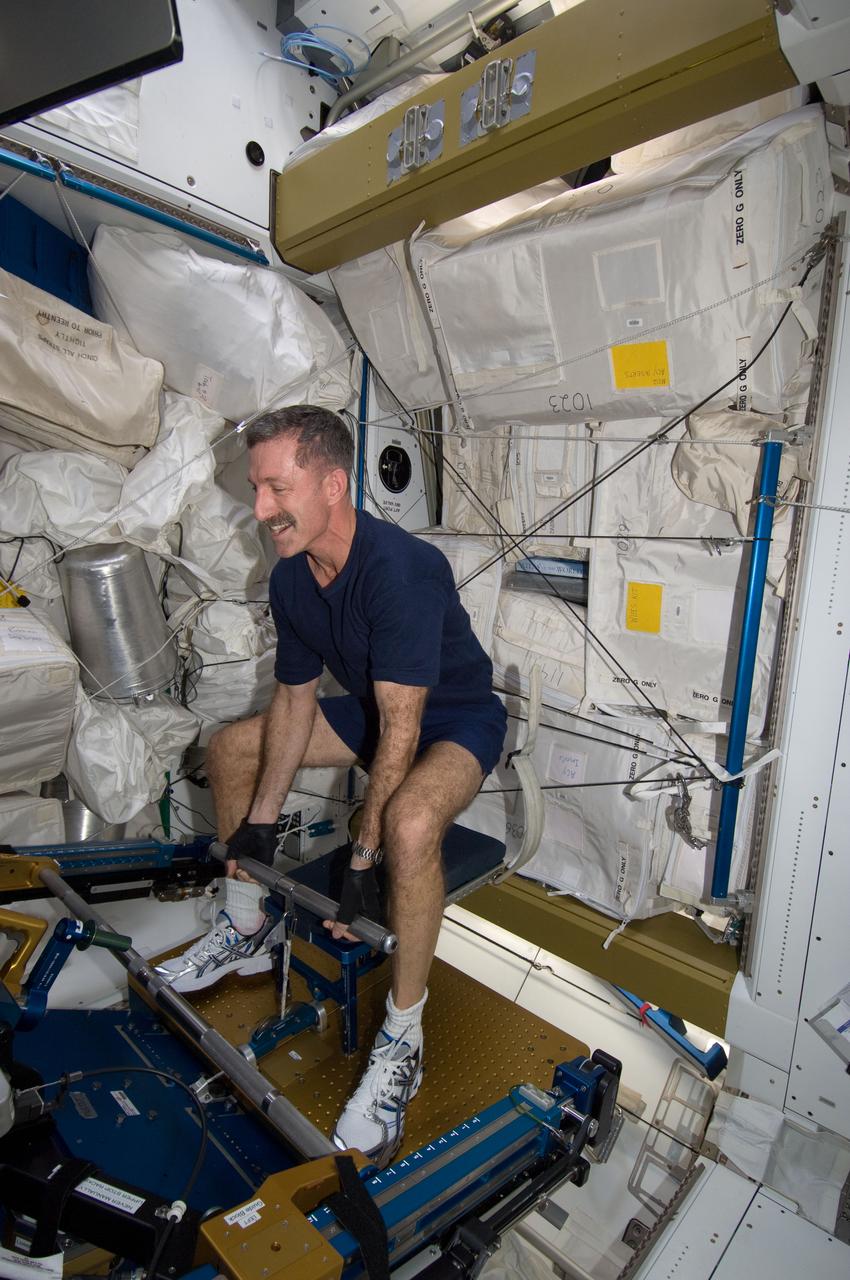
ISS030-E-012725 (18 Dec. 2011) --- NASA astronaut Dan Burbank, Expedition 30 commander, uses the short bar for the advanced Resistive Exercise Device (aRED) equipment to perform upper body strengthening pull-ups in the Tranquility node of the International Space Station.