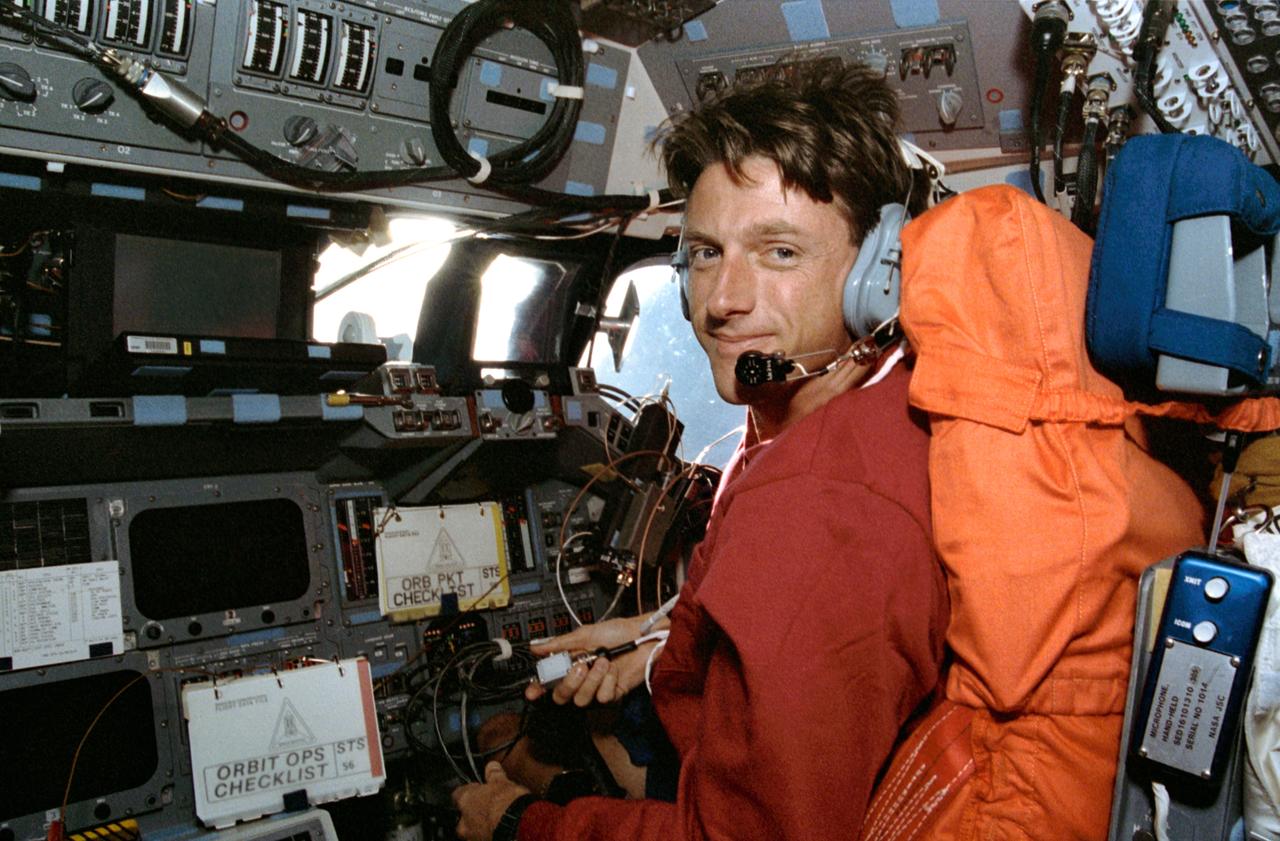
STS056-30-001 (8-17 April 1993) --- Aboard Discovery, astronaut C. Michael Foale, (call letters KB5UAC), talks to amateur radio operators on Earth via the Shuttle Amateur Radio Experiment (SAREX). SAREX was established by NASA, the American Radio League/Amateur Radio Satellite Corporation and the Johnson Space Center Amateur Radio Club to encourage public participation in the space program through an endeavor to demonstrate the effectiveness of conducting short-wave radio transmissions. These transmissions occur between the Shuttle and ground-based radio operators at low cost ground stations with amateur and digital techniques. As on several previous missions, SAREX was used on this flight as an educational opportunity for students around the world to learn about space firsthand by speaking directly to astronauts aboard the Shuttle.
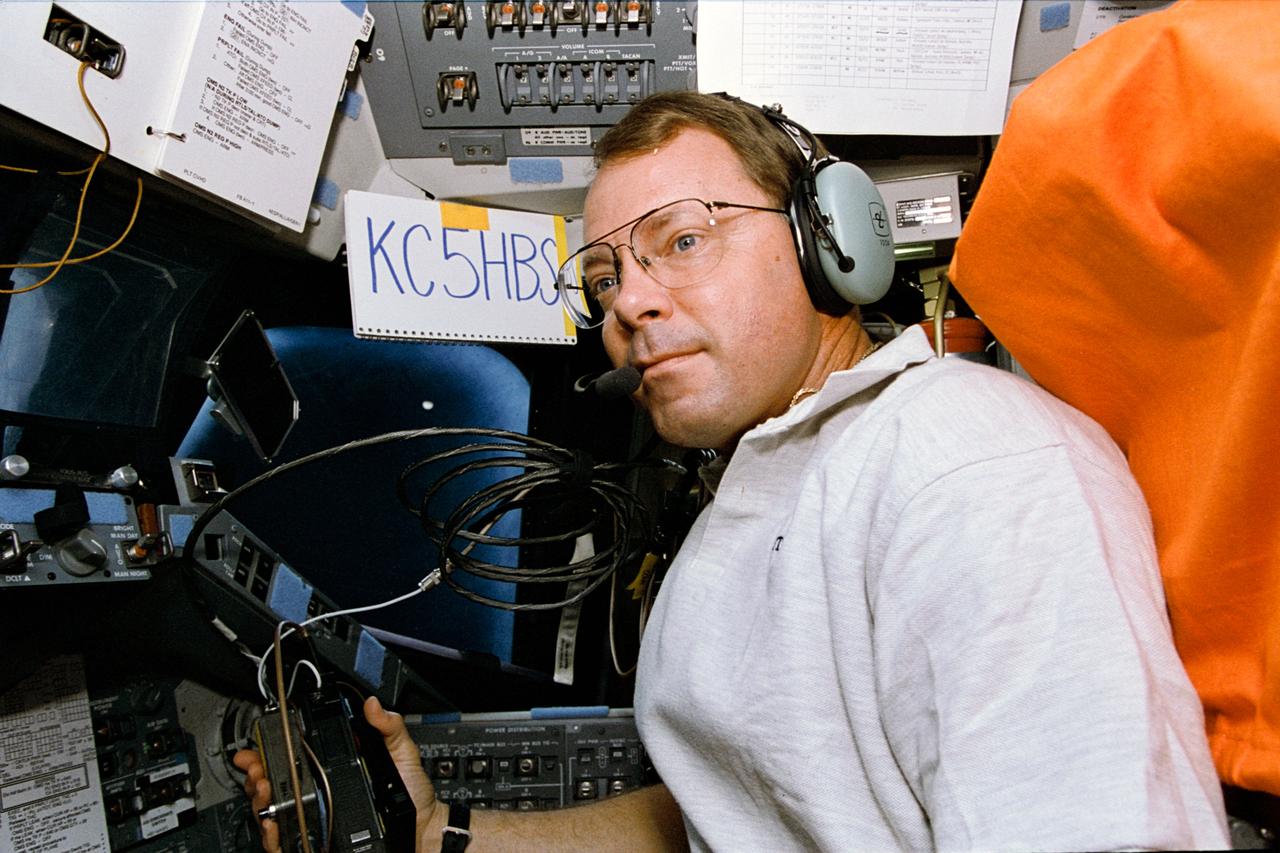
STS064-04-009 (9-20 Sept. 1994) --- Astronaut L. Blaine Hammond, STS-64 pilot, talks to students on Earth via the Shuttle Amateur Radio Experiment (SAREX) on the space shuttle Discovery's flight deck. The recently licensed "Ham" operator and several other crew members throughout the mission were connected with schools around the world with the aid of a number of amateur radio operators. Hammond joined five other NASA astronauts for almost 11 days in Earth orbit aboard Discovery. Photo credit: NASA or National Aeronautics and Space Administration
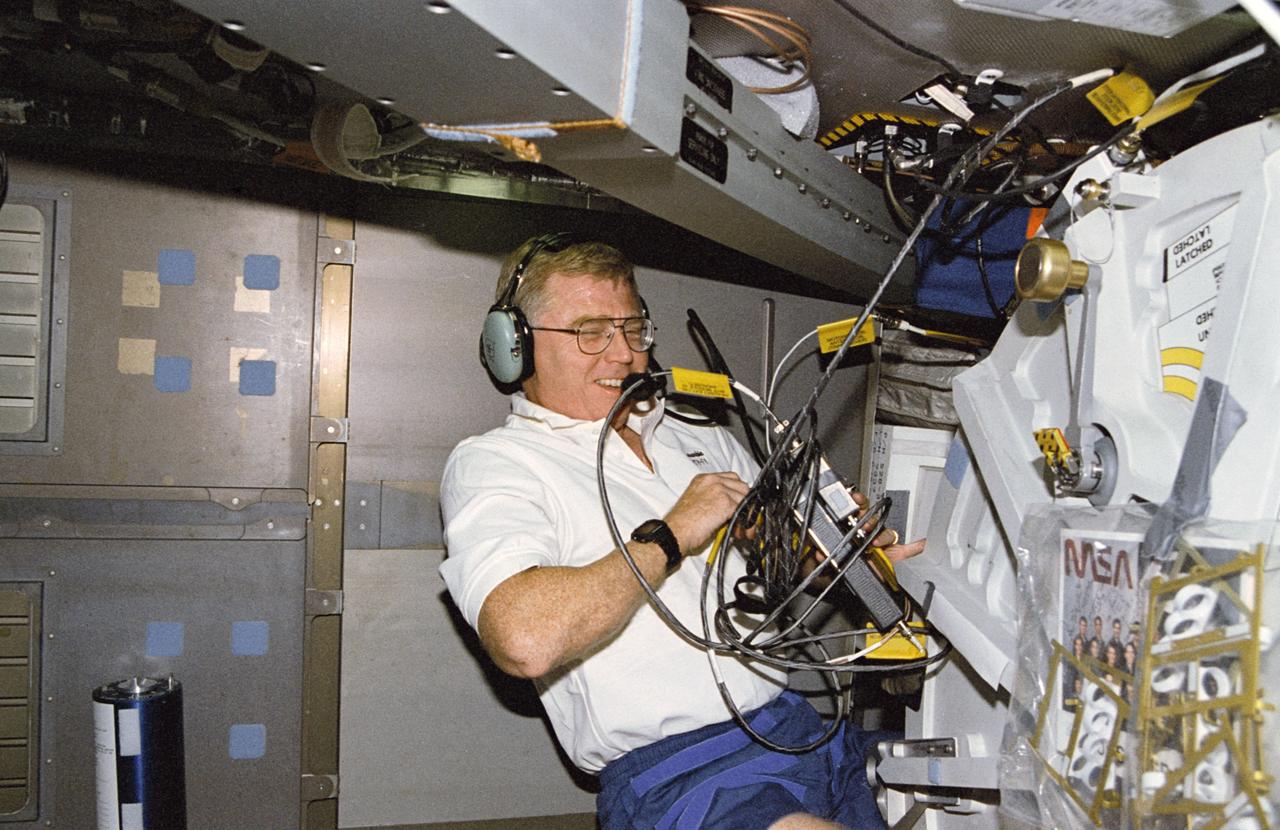
STS078-429-017 (20 June-7 July 1996) --- Aboard the middeck of the Earth-orbiting space shuttle Columbia, astronaut Charles J. Brady, mission specialist and a licensed amateur radio operator or "ham", talks to students on Earth. Some of the crew members devoted some of their off-duty time to continue a long-standing Shuttle tradition of communicating with students and other hams between their shifts of assigned duty. Brady joined four other NASA astronauts and two international payload specialists for almost 17-days of research in support of the Life and Microgravity Spacelab (LMS-1) mission.
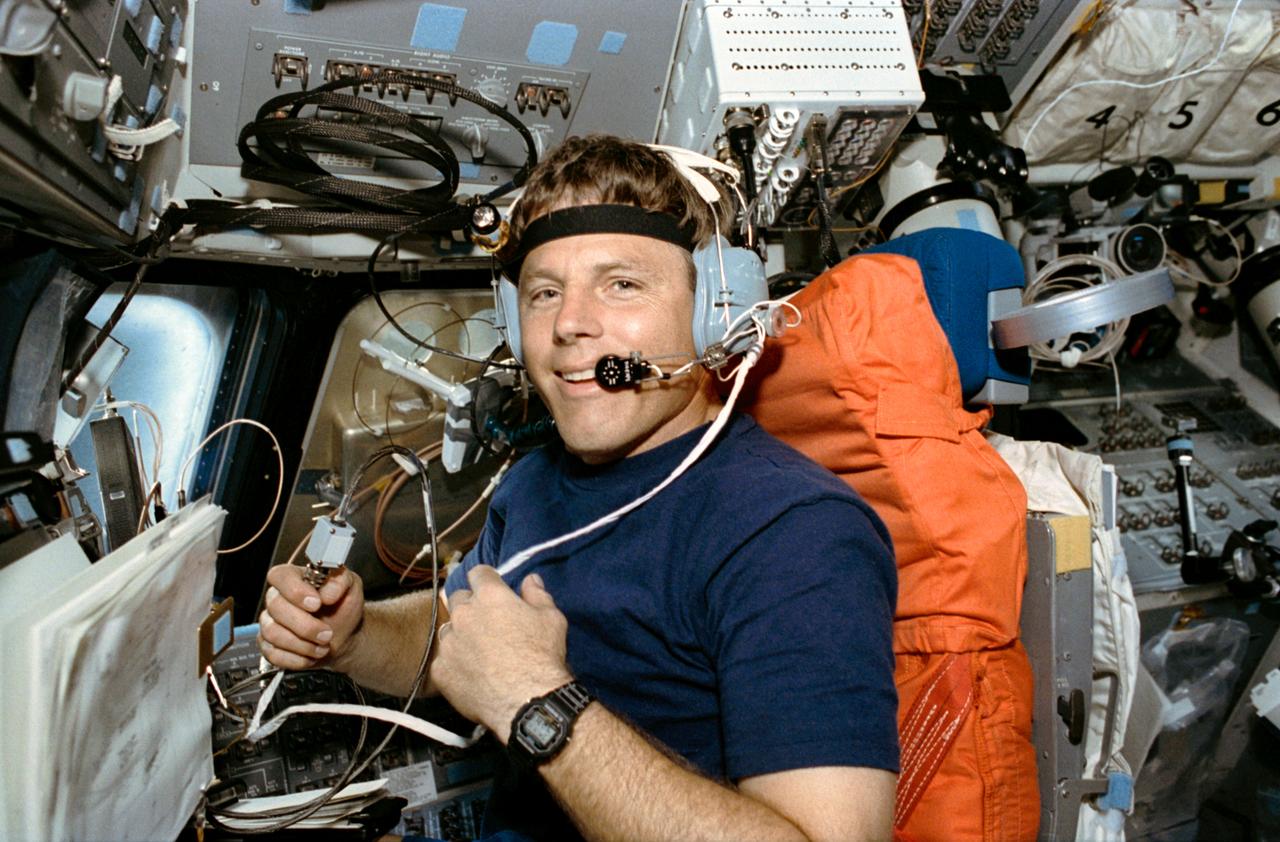
STS056-04-004 (8-17 April 1993) --- Aboard Discovery, Astronaut Stephen S. Oswald, Pilot, talks to amateur radio operators on Earth via the Shuttle Amateur Radio Experiment (SAREX). SAREX was established by NASA, the American Radio League/Amateur Radio Satellite Corporation and the Johnson Space Center Amateur Radio Club to encourage public participation in the space program through a program to demonstrate the effectiveness of conducting short-wave radio transmissions between the Shuttle and ground-based radio operators at low-cost ground stations with amateur and digital techniques. As on several previous missions, SAREX was used on this flight as an educational opportunity for students around the world to learn about space firsthand by speaking directly to astronauts aboard the Shuttle.
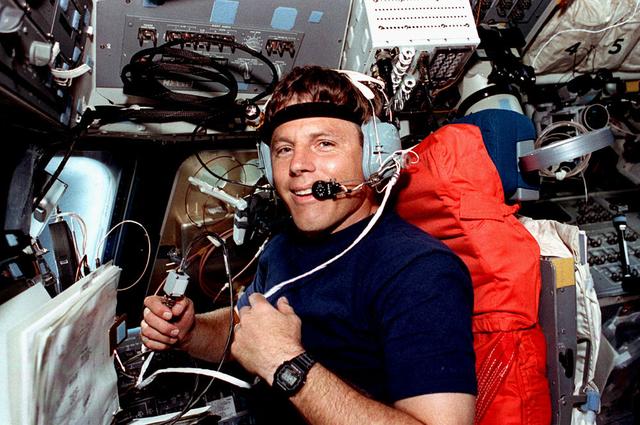
Space Shuttle Discovery (STS-56) onboard photo of Pilot Stephen S. Oswald (wearing a headset) uses the Shuttle Amateur Radio Experiment II (SAREX-II) while sitting at the pilot's station on the forward flight deck. Oswald smiled from behind the microphone as he talks to amateur radio operators on Earth via the SAREX equipment. SAREX cables and the interface module freefloat in front of Oswald. The anterna located in the forward flight deck window is visible in the background. SAREX was established by NASA, the American Radio League/Amateur Radio Satellite Corporation and the Johnson Space Center (JSC) Amateur Radio Club to encourage public participation in the space program through a program to demonstrate the effectiveness of conducting short-wave radio transmissions between the Shuttle and ground-based radio operators at low-cost ground stations with amateur and digital techniques.
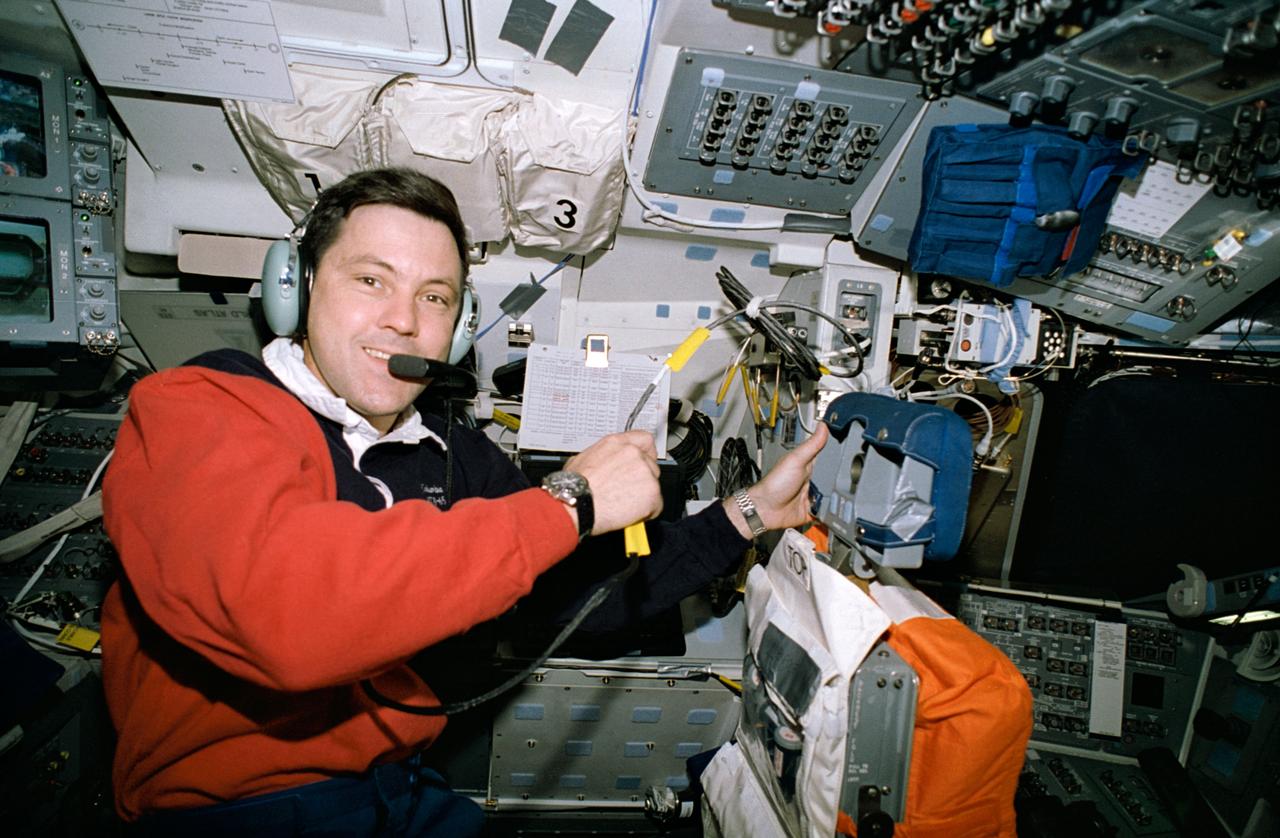
STS065-44-014 (8-23 July 1994) --- Astronaut Robert D. Cabana, mission commander, is seen on the Space Shuttle Columbia's flight deck with the Shuttle Amateur Radio Experiment (SAREX). SAREX was established by NASA, the American Radio League/Amateur Radio Satellite Corporation and the Johnson Space Center (JSC) Amateur Radio Club to encourage public participation in the space program through a project to demonstrate the effectiveness of conducting short-wave radio transmissions between the Shuttle and ground-based radio operators at low-cost ground stations with amateur and digital techniques. As on several previous missions, SAREX was used on this flight as an educational opportunity for students around the world to learn about space firsthand by speaking directly to astronauts aboard the Shuttle.
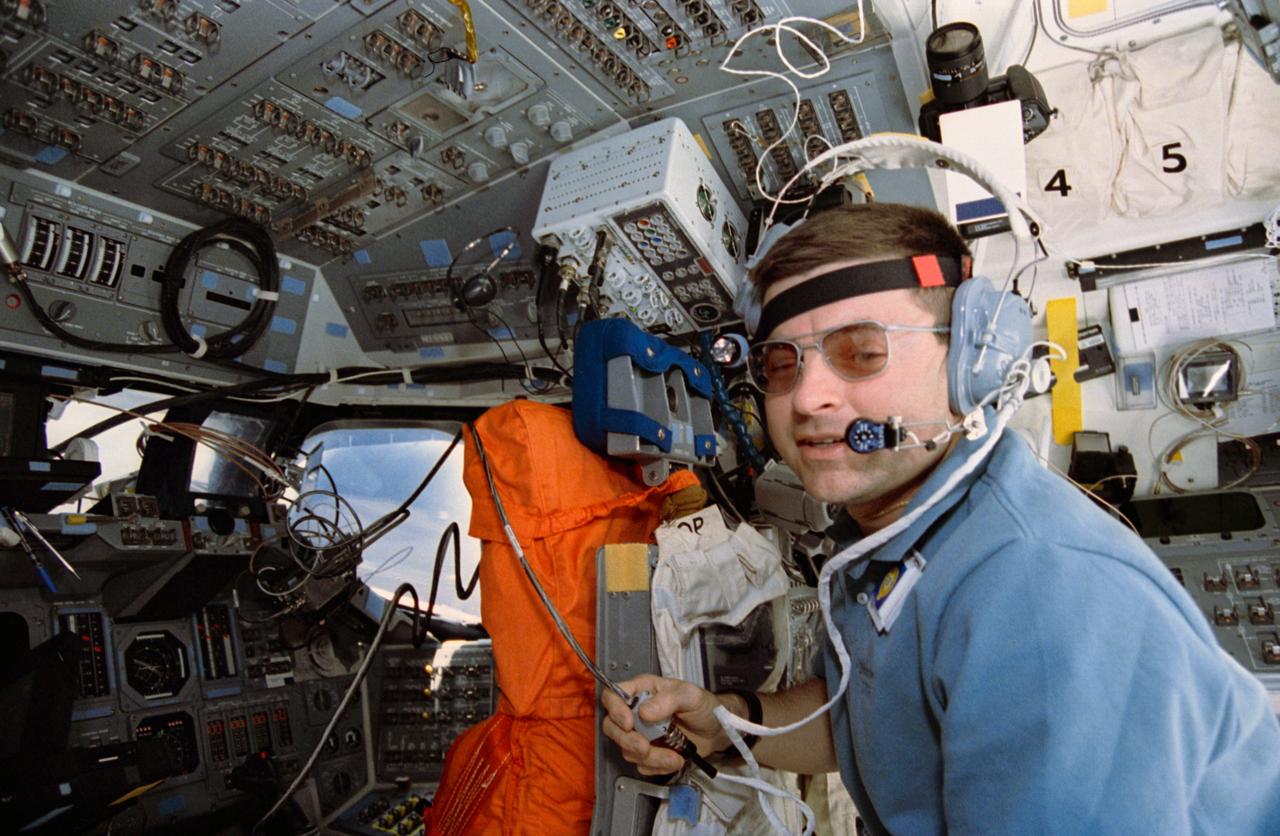
STS056-30-022 (8-17 April 1993) --- Aboard Discovery, astronaut Kenneth D. Cameron (call letters N5AWP), talks to amateur radio operators on Earth via the Shuttle Amateur Radio Experiment (SAREX). SAREX was established by NASA, the American Radio League\Amateur Satellite Corporation and the Johnson Space Center Amateur Radio Club to encourage public participation in the space program. It is part of an endeavor to demonstrate the effectiveness of conducting short-wave radio transmissions between the Shuttle and ground-based radio operators at low cost ground stations with amateur and digital techniques. As on several previous missions, SAREX was used on this flight as an educational opportunity for students around the world to learn about space firsthand by speaking directly to astronauts aboard the Shuttle.
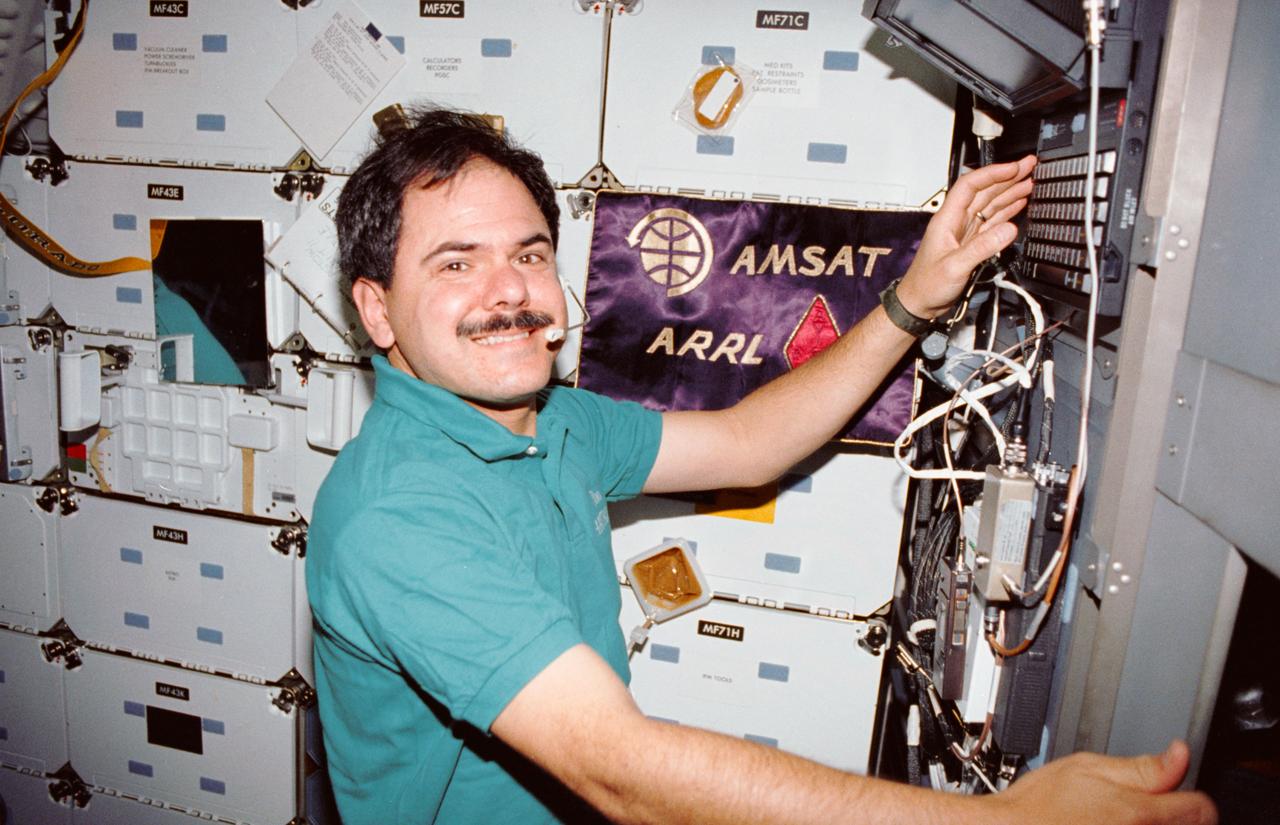
STS-35 Payload Specialist Ronald A. Parise enters data into the payload and general support computer (PGSC) in preparation for Earth communication via the Shuttle Amateur Radio Experiment (SAREX) aboard Columbia, Orbiter Vehicle (OV) 102. The SAREX equipment is secured to the middeck starboard sleep station. SAREX provided radio transmissions between ground based amateur radio operators around the world and Parise, a licensed amateur radio operator. The experiment enabled students to communicate with an astronaut in space, as Parise (call-sign WA4SIR) devoted some of his off-duty time to that purpose. Displayed on the forward lockers beside Parise is a AMSAT (Amateur Radio Satellite Corporation) / ARRL (American Radio Relay League) banner. Food items and checklists are attached to the lockers. In locker position MF43G, the Development Test Objective (DTO) Trash Compaction and Retention System Demonstration extended duration orbiter (EDO) compactor is visible.
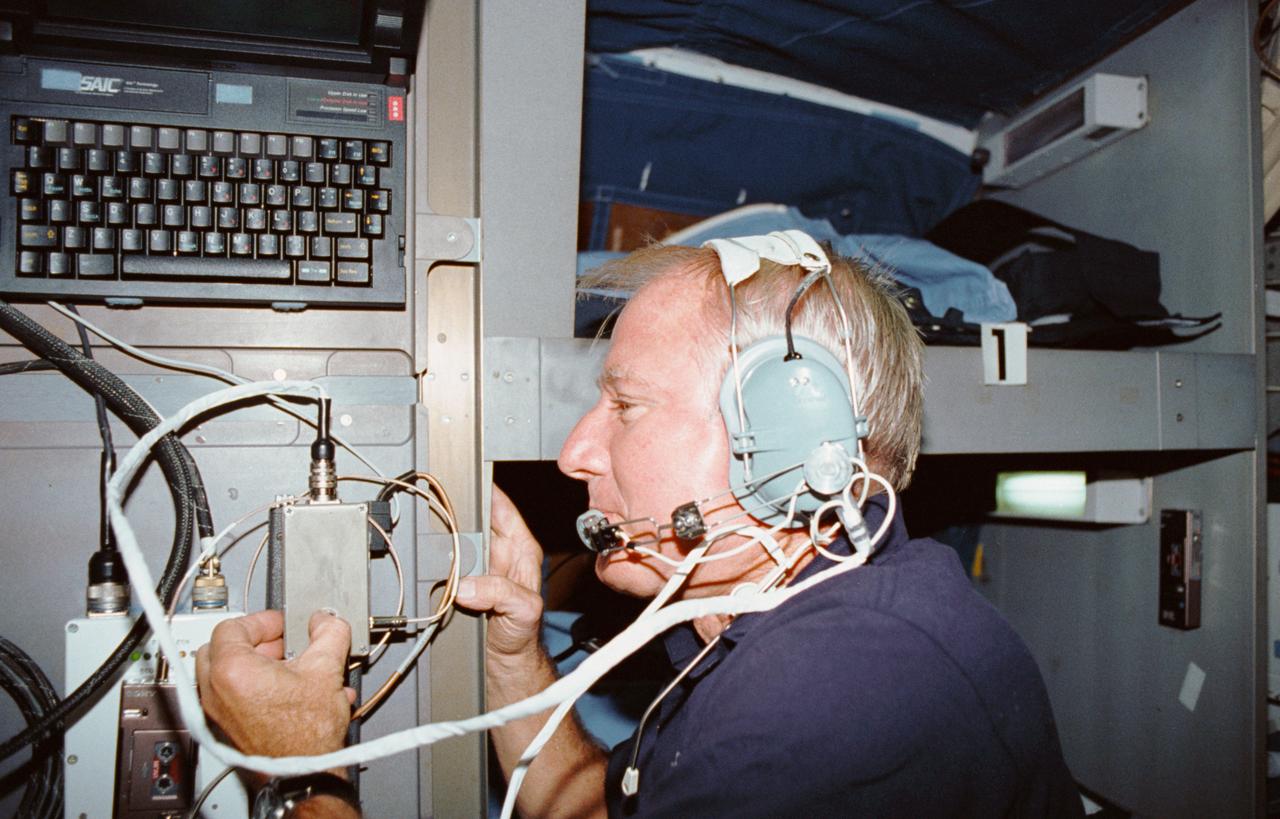
STS035-05-036 (2-10 Dec 1990) --- STS-35 Commander Vance D. Brand, wearing headset, communicates with family members using Shuttle Amateur Radio Experiment (SAREX) on Columbia's, Orbiter Vehicle (OV) 102's, middeck. SAREX and its portable laptop computer mounted on the outside of the middeck sleep station allowed the STS-35 crewmembers to "visit" and briefly share some of their in space experiences with family members. It also provided radio transmissions between ground based amateur radio operators around the world and OV-102. The experiment enabled students from all over the United States to have a chance to communicate with a crewmember in space.
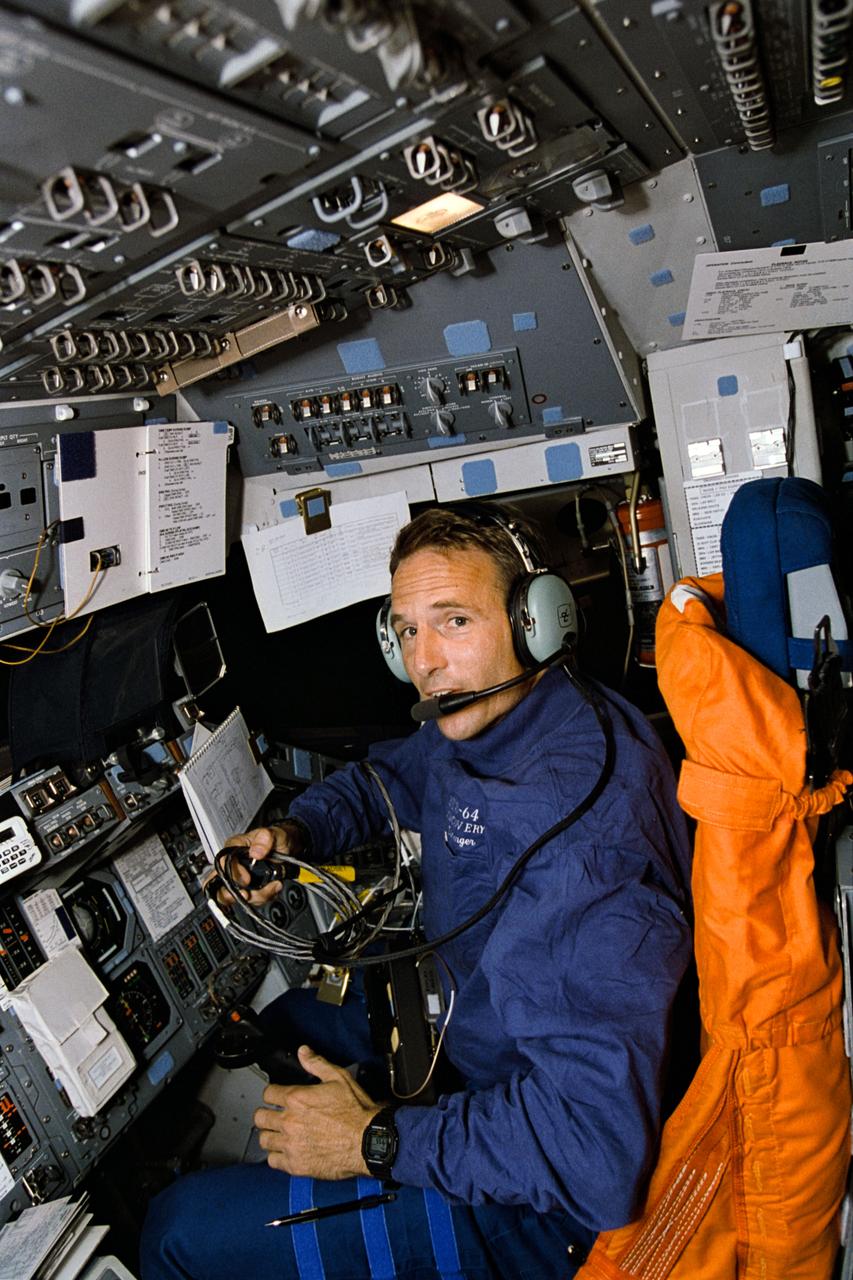
STS064-20-026 (9-20 Sept. 1994) --- Astronaut Jerry M. Linenger, STS-64 mission specialist, uses the Shuttle Amateur Radio Experiment (SAREX) to communicate with students on Earth. Various members of the crew made contact with a number of other "hams" around the world during the almost 11-day mission in Earth orbit. Photo credit: NASA or National Aeronautics and Space Administration
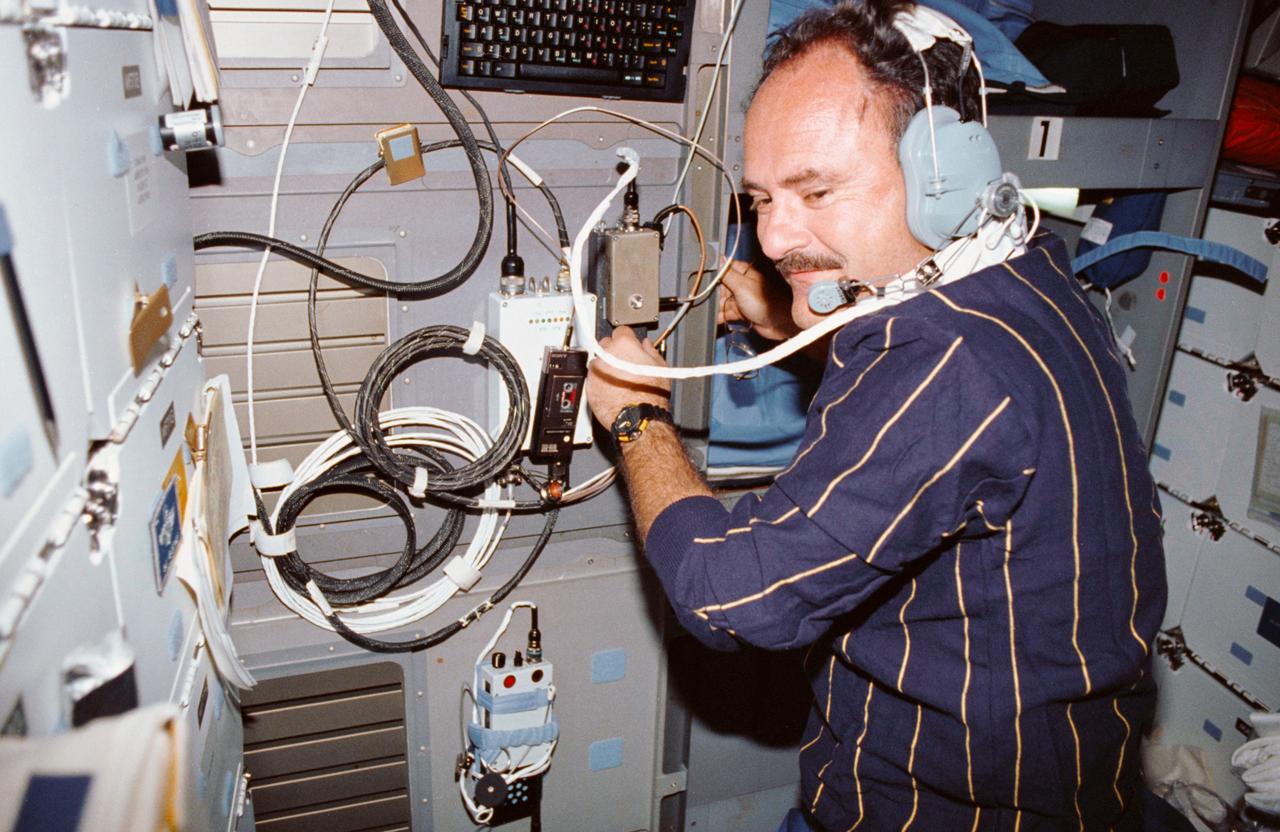
STS035-15-010 (2-11 Dec 1990) --- Astronaut John M. (Mike) Lounge, STS-35 mission specialist, communicates with family members from the middeck of Space Shuttle Columbia in Earth orbit. The STS-35 Shuttle amateur radio experiment (SAREX), allowed the Astro 1 crewmembers to "visit" and briefly share some of their in space experiences with family members. The picture was made with a 35mm camera. Note: Used by Astronomer Ronald A. Parise on his off-duty hours, SAREX provided radio transmissions between ground based amateur radio operators around the world and the Shuttle. Parise is a payload specialist who is also a licensed amateur radio operator (call-sign WA4SIR). The experiment enabled students from all over the United States to have a chance to communicate with an astronaut in space.

STS055-203-034 (26 April-6 May 1993) --- Astronaut Steven R. Nagel, STS-55 mission commander, has found an isolated station in the D-2 science module from which to talk to students on Earth. Like many before it, the seven member crew participated in communications with students and licensed radio operators via the Shuttle Amateur Radio Experiment (SAREX). Photo credit: NASA