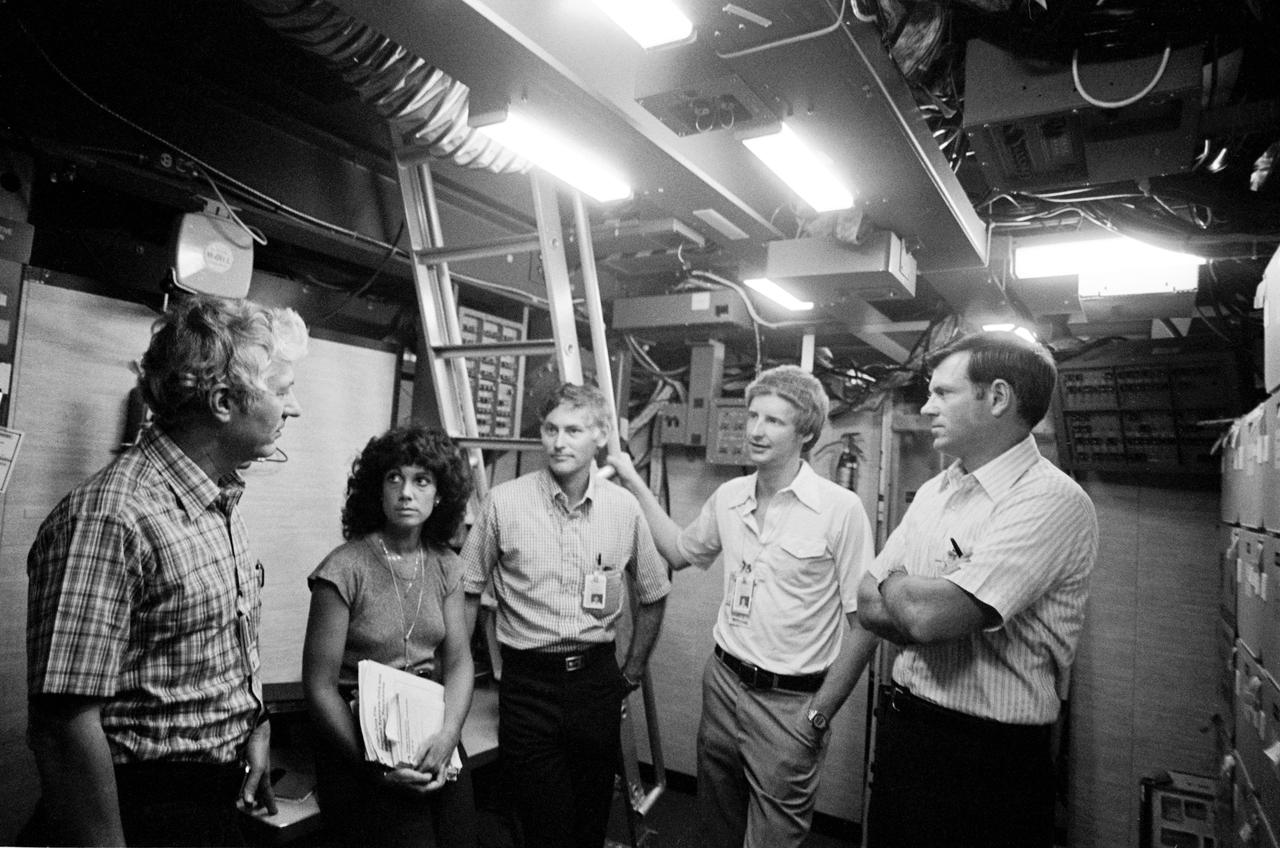
View of STS 41-D mission crew training in Shuttle Mission simulator. From left to right are Henry Hartsfield, Jr., commander; mission specialists Judith Resnik, Richard Mullane, and Steven Hawley; and Michael Coats, pilot. They appear to be standing in the middeck mockup, preparing for training.
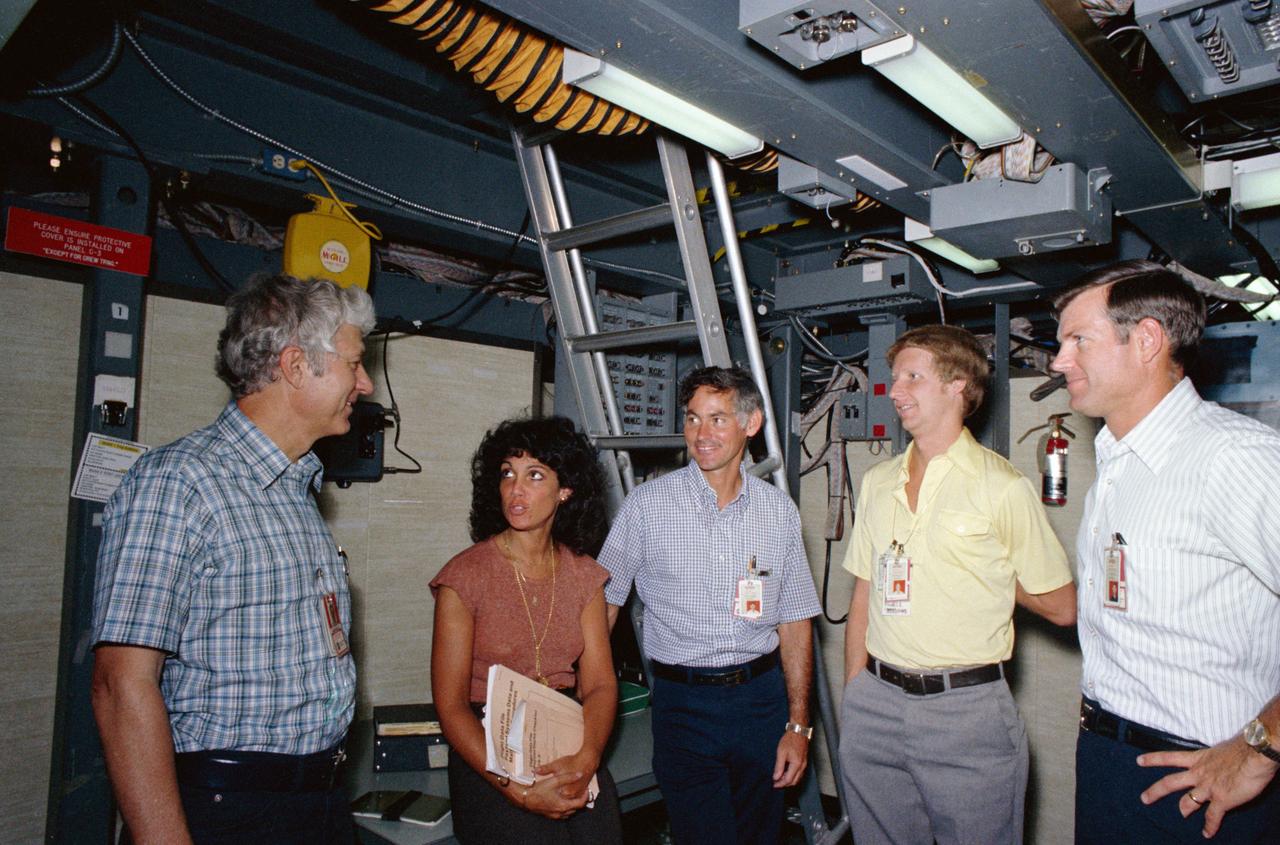
View of STS 41-D mission crew training in Shuttle Mission simulator. From left to right are Henry Hartsfield, Jr., commander; mission specialists Judith Resnik, Richard Mullane, and Steven Hawley; and Michael Coats, pilot. They appear to be standing in the middeck mockup, preparing for training.
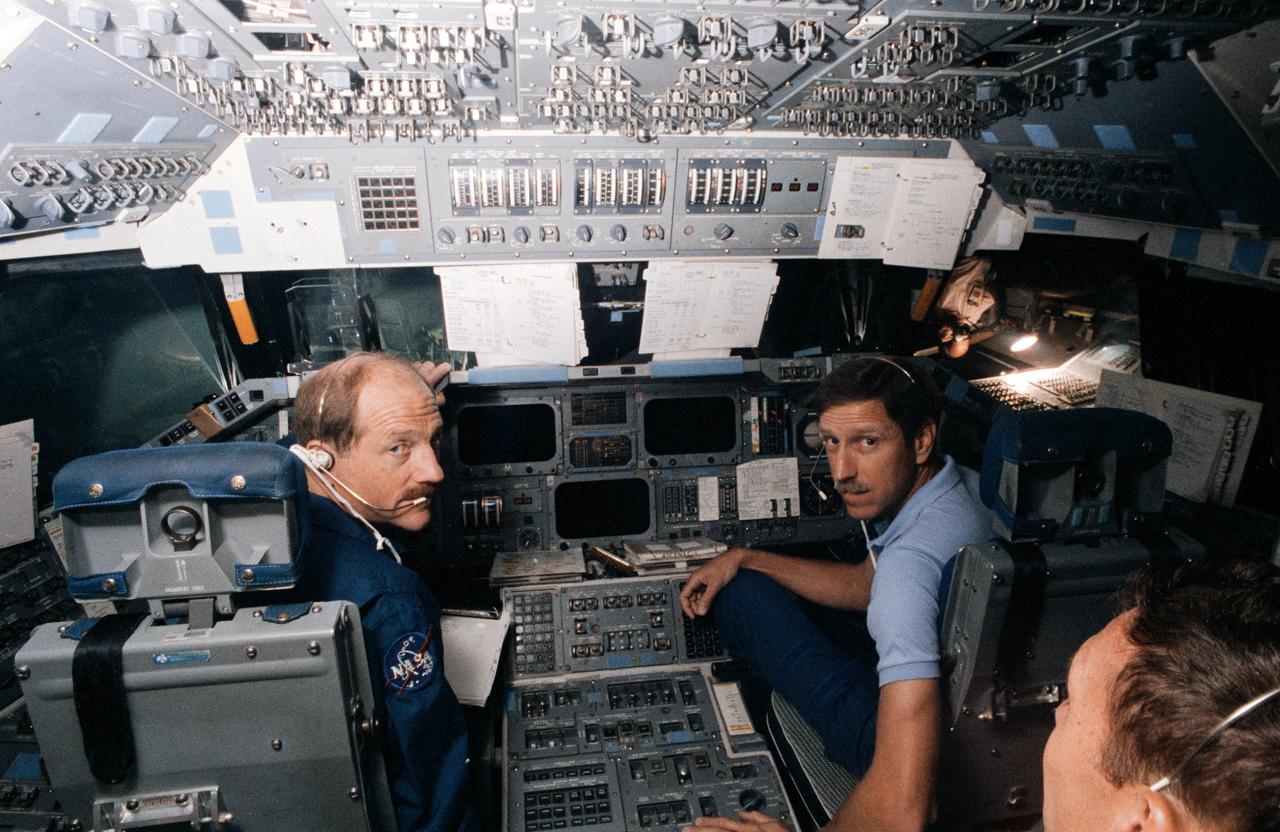
S87-46304 (20 Oct 1987) --- Astronauts Frederick H. (Rick) Hauck, left, STS-26 commander, and Richard O. Covey, pilot, man their respective stations in the Shuttle mission simulator (fixed base) at the Johnson Space Center. A simulation for their anticipated June 1988 flight aboard the space shuttle Discovery began Oct. 20. Astronaut David C. Hilmers, one of three mission specialists for the flight, is partially visible in the foreground.
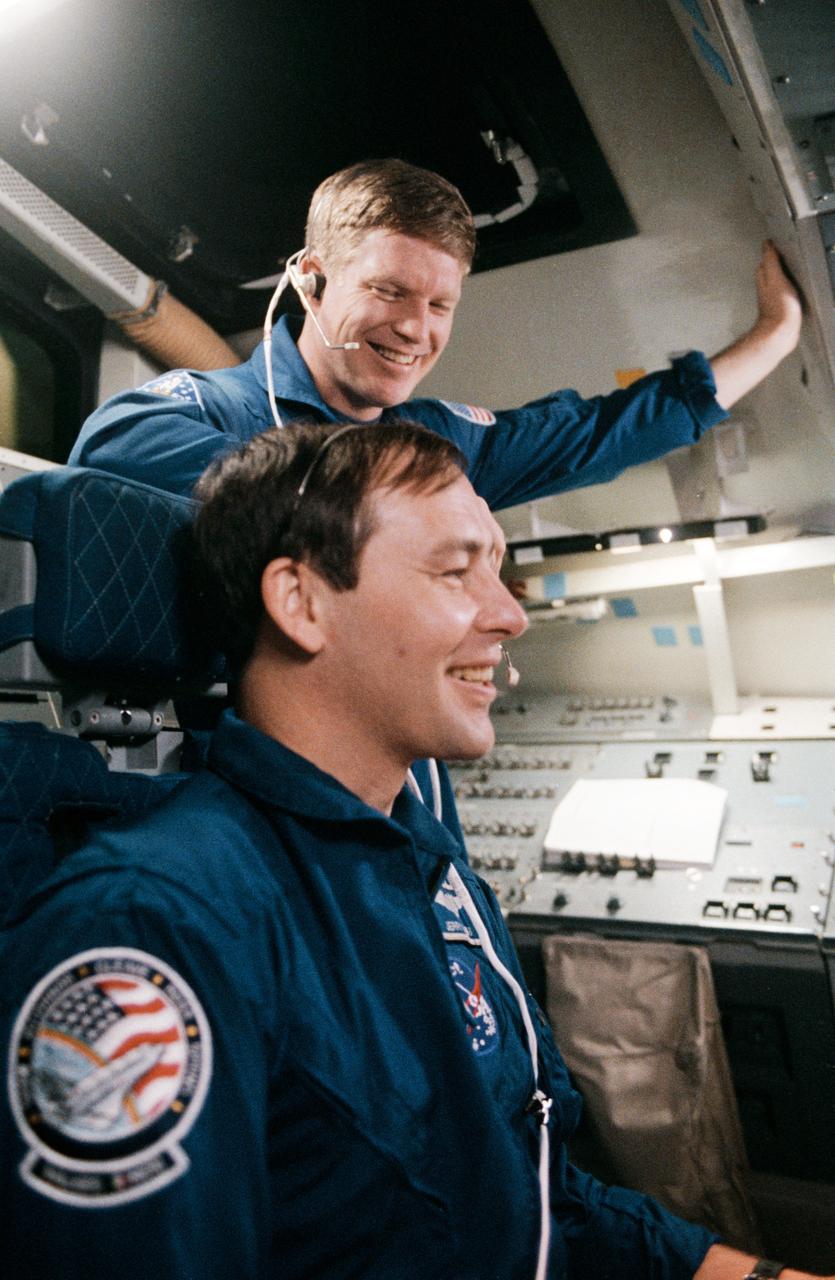
S88-27505 (3 Feb. 1988) --- Astronauts William M. Shepherd (standing) and Jerry L. Ross, both STS-27 mission specialists, get in some training time on the flight deck of the Shuttle Mission Simulator in the Jake Garn Mission Simulation and Training Facility at NASA's Johnson Space Center. Photo credit: NASA

S86-28458 (28 Feb. 1986) --- Astronaut Michael L. Coats participates in a rehearsal for his assigned flight at the commander's station of the Shuttle Mission Simulator (SMS) at the Johnson Space Center (JSC). NOTE: Coats, a veteran of spaceflight, originally trained for STS 61-H, which was cancelled in the wake of the Challenger accident. Following the Janaury 1986 accident he was named to serve on a mock crew (STS-61M) for personnel training and simulation purposes. Photo credit: NASA
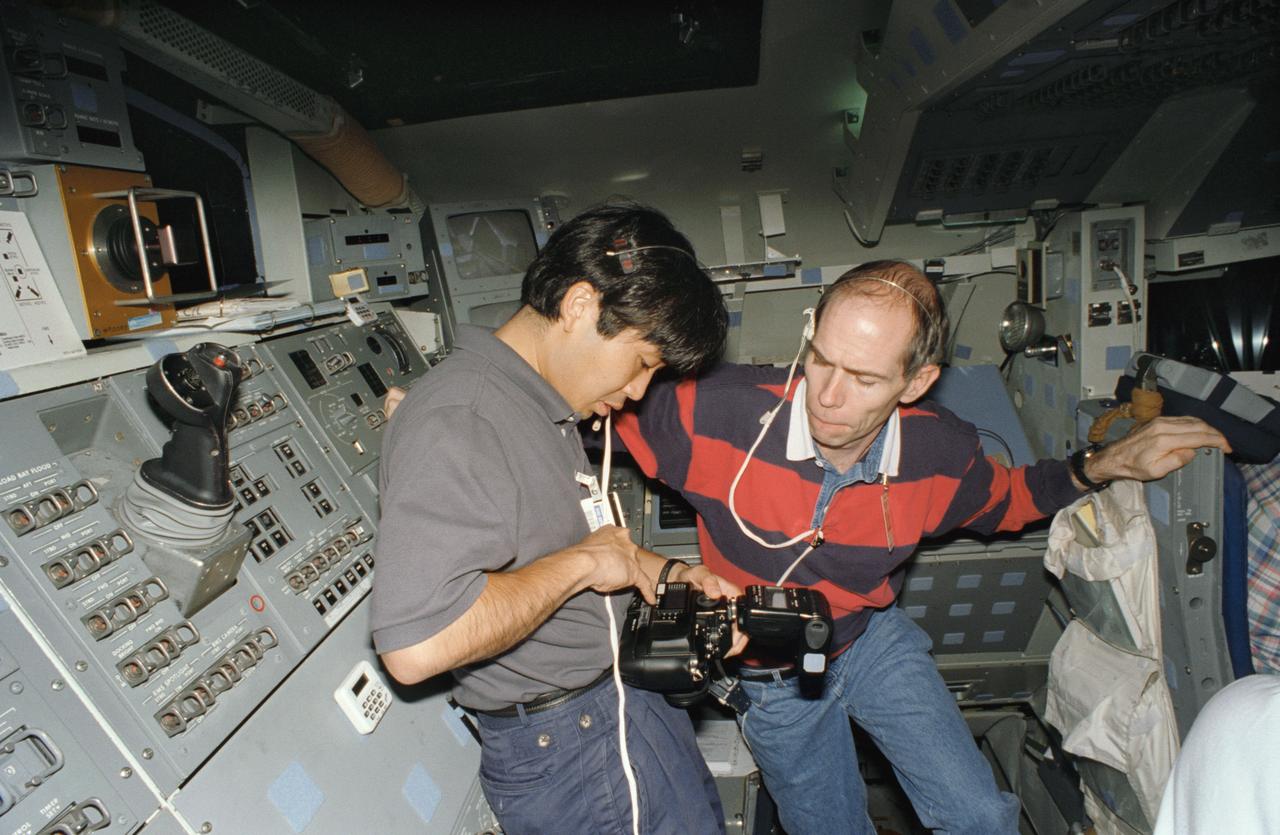
S95-12703 (May 1995) --- Astronauts Koichi Wakata (left) and Daniel T. Barry check the settings on a 35mm camera during an STS-72 training session. Wakata is a mission specialist, representing Japan's National Space Development Agency (NASDA) and Barry is a United States astronaut assigned as mission specialist for the same mission. The two are on the aft flight deck of the fixed base Shuttle Mission Simulator (SMS) at the Johnson Space Center (JSC).
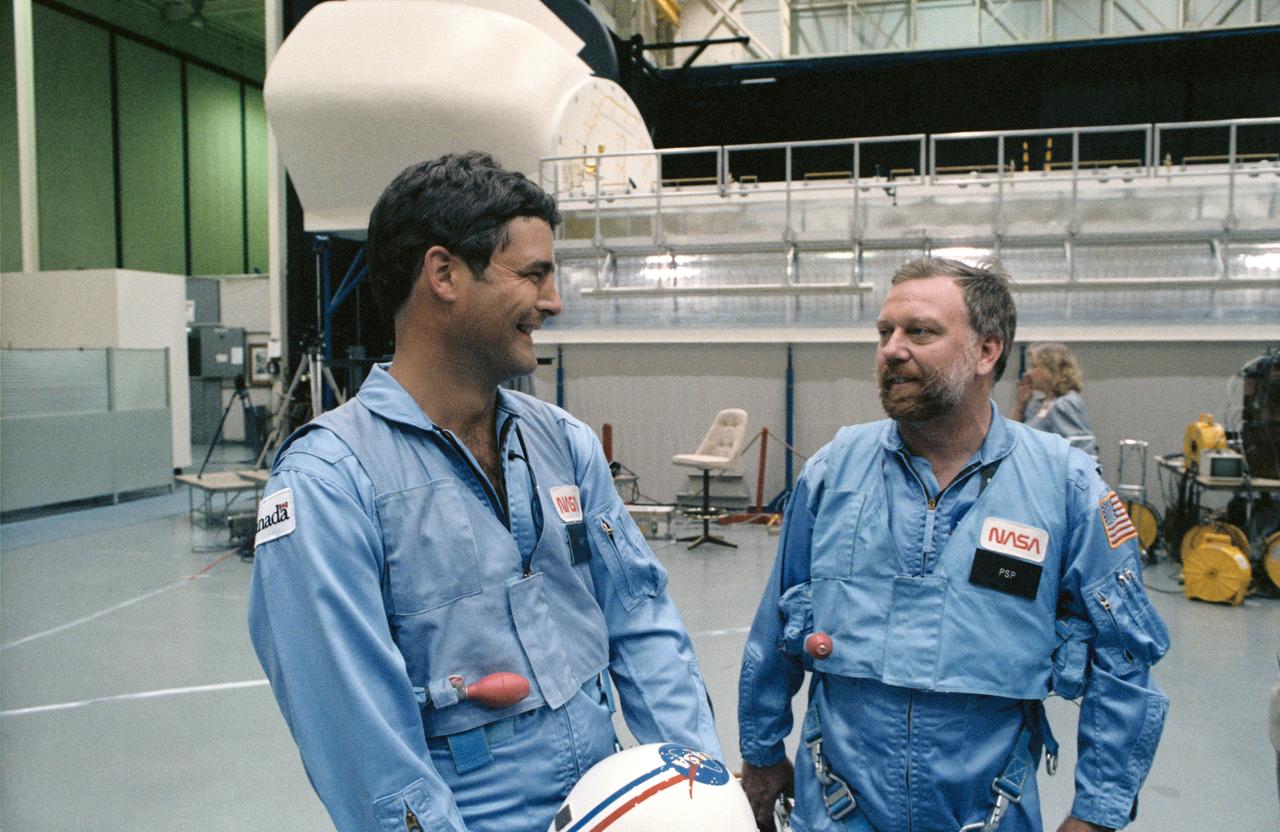
41D-3185 (S14-3185) (4 Sept 1984) --- The two payload specialists for NASA's 41-G mission aboard the Challenger chat prior to a simulation session in the Shuttle mockup and integration laboratory at the Johnson Space Center. They are Marc Garneau, left, representing the Canadian National Research Council, and Paul D. Scully-Power, an oceanographer with the U.S. Navy. They are standing near the manipulator development facility (MDF), pictured in background.
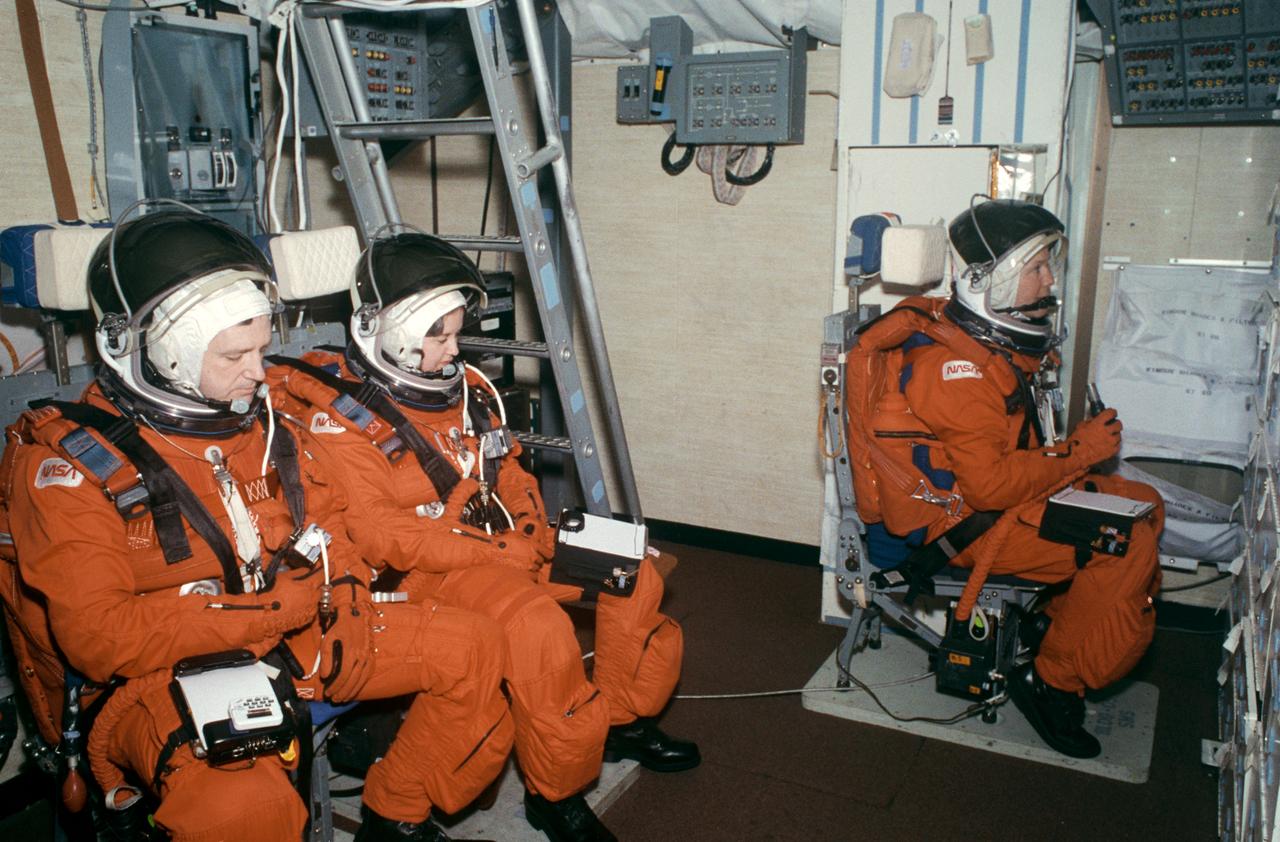
S92-29406 (Feb 1992) --- Three mission specialists assigned to the STS-49 flight occupy temporary stations on the "middeck" of a Johnson Space Center (JSC) Shuttle trainer during a rehearsal of Endeavour's launch and entry phases. Left to right are astronauts Thomas D. Akers, Kathryn C. Thornton and Pierre J. Thuot. The three, along with four other NASA astronauts, will be aboard Endeavour in May for a week-long mission during which a satellite will be retrieved and boosted toward a higher orbit and extravehicular activity evaluations for Space Station Freedom assembly techniques will be conducted.
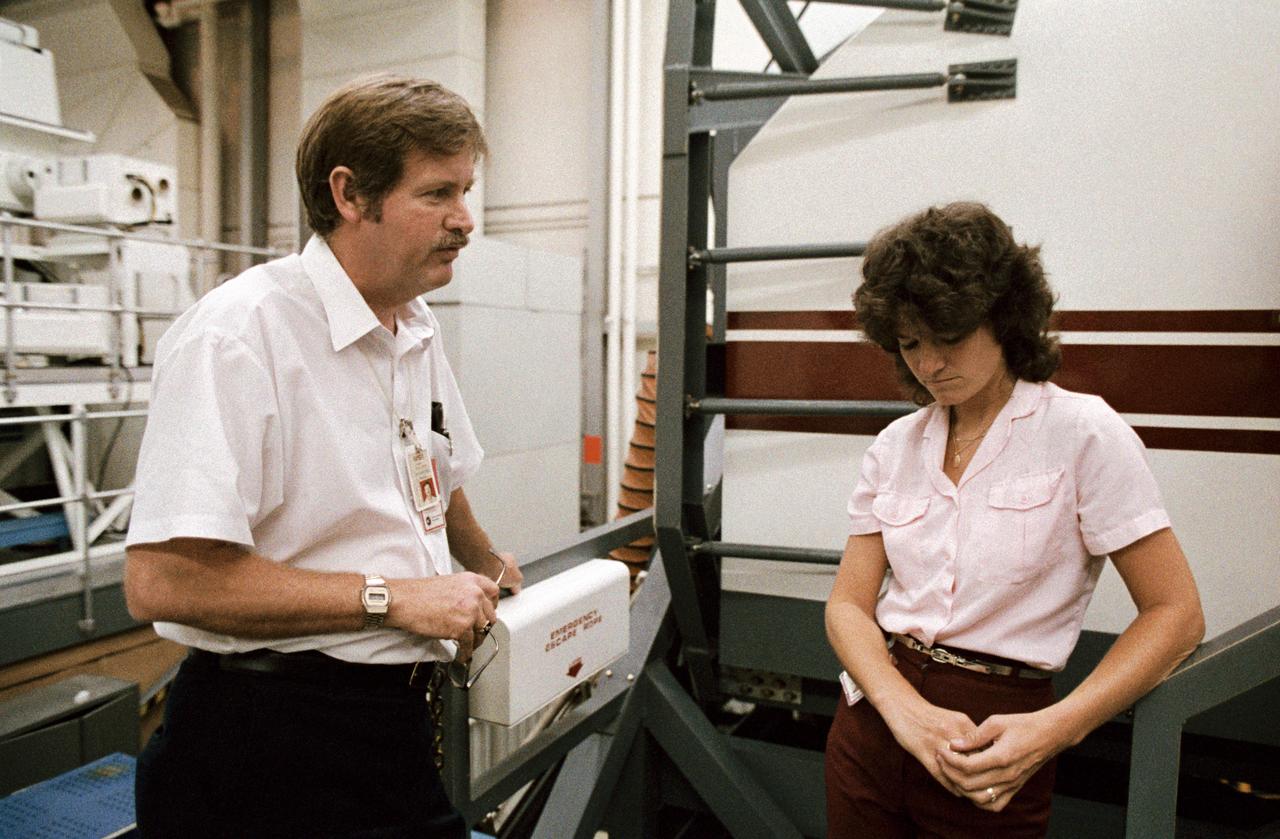
S83-32890 (23 May 1983) --- Astronaut Sally K. Ride, STS-7 mission specialist, stands near the Shuttle Mission Simulator (SMS) in Johnson Space Center's (JSC) Mission Simulation and Training Facility with suit specialist Alan M. Rochford after simulation of various phases of the upcoming STS-7 flight. Photo credit: NASA
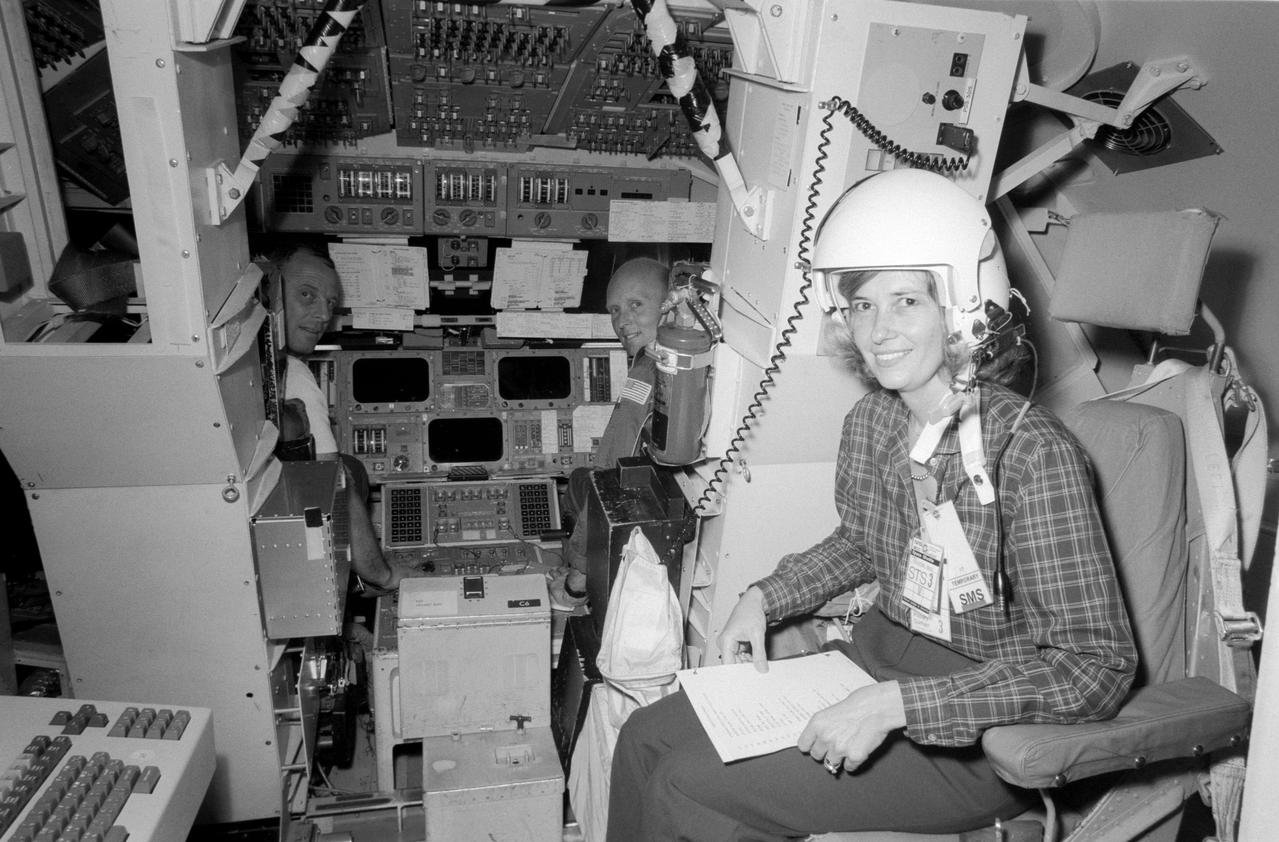
S82-28535 (16 March 1982) --- One of the more pleasant surprises of what are usually routine training sessions today was Mrs. Marie Fullerton, seated in the foreground in a special chair. Astronauts Jack R. Lousma, left background, and C. Gordon Fullerton, center, take a brief break in their simulation session to look back toward their visitor, wife of the pilot for NASA?s next flight. They are in the shuttle mission simulator (SMS) in the LBJ Space Center?s mission simulation and training facility. The crew is in training for its scheduled March 22 launch aboard the space shuttle Columbia for a week?s stay in Earth orbit. Photo credit: NASA
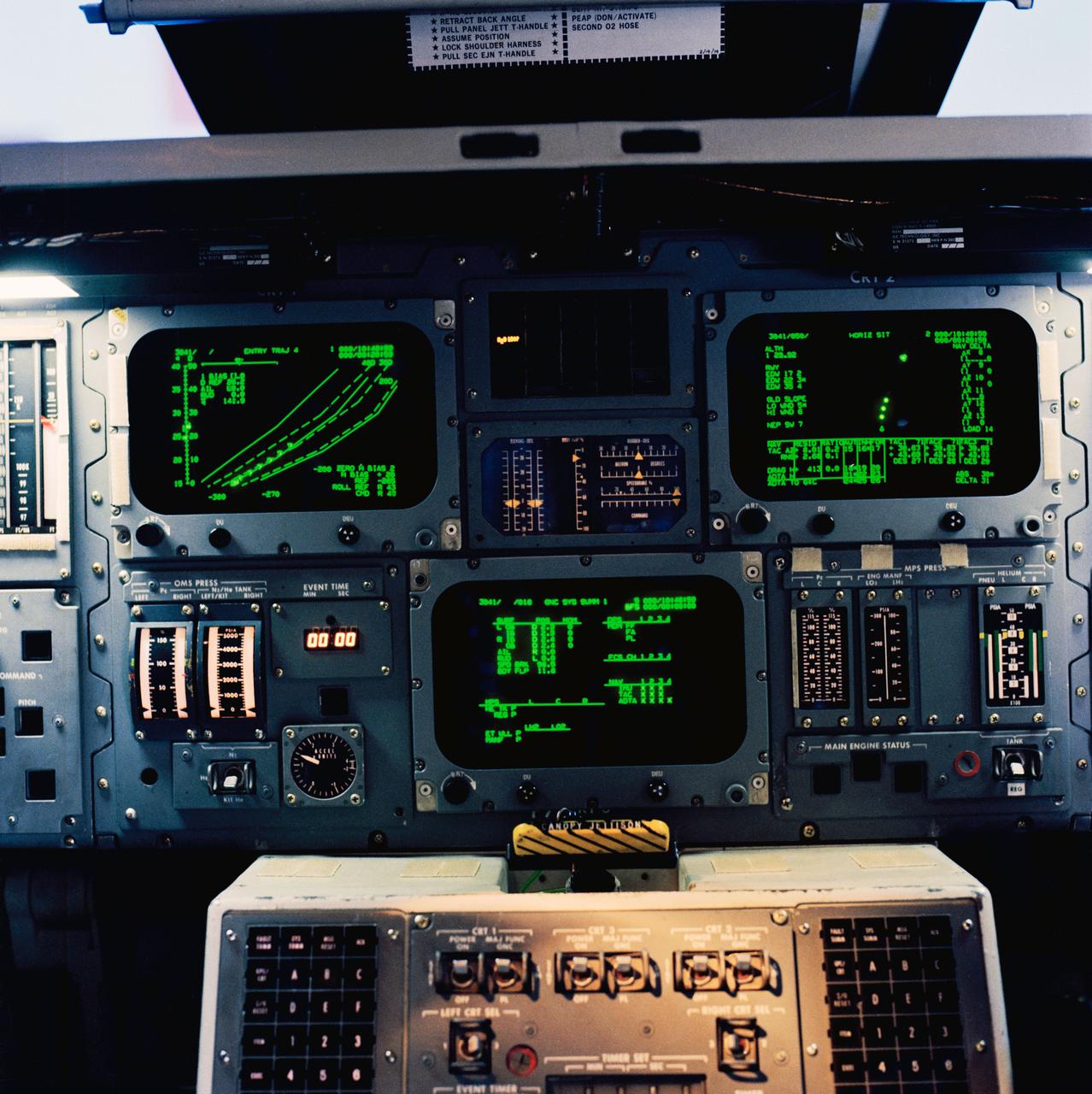
S79-29067 (15 March 1979) --- An interior view of the space shuttle mission simulator (SMS), featuring the area between the commander and pilot positions which houses displays and controls. The cathode ray tube (CRT) computer displays are at top; a portion of the computer keyboards for the commander and pilot can be seen at bottom center. This SMS motion base simulator is located in the mission simulation and training facility at NASA's Johnson Space Center (JSC). Photo credit: NASA
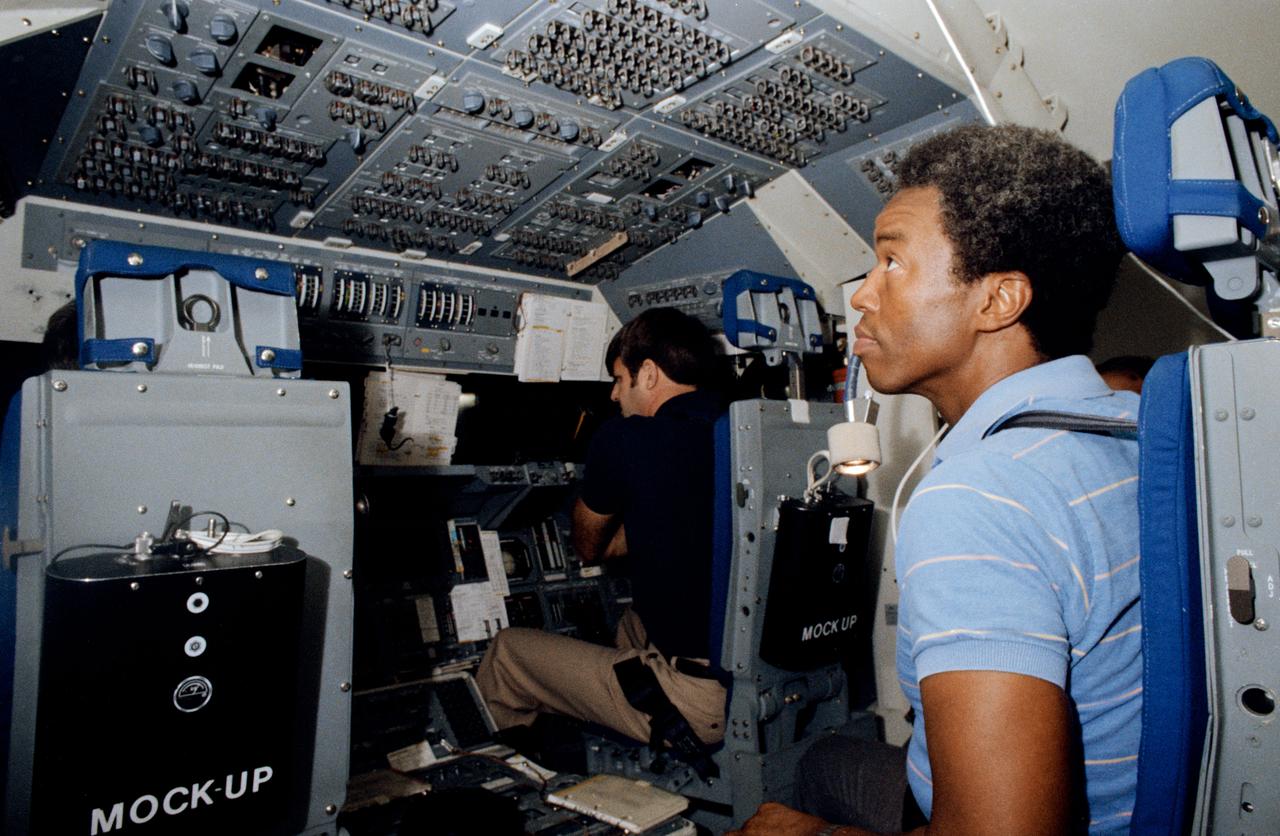
S83-33032 (23 May 1983) --- Astronauts Guion S. Bluford, right, and Daniel C. Brandenstein man their respective Challenger entry and ascent stations in the Shuttle Mission Simulator (SMS) at NASA's Johnson Space Center (JSC) during a training session for the STS-8 mission. Brandenstein is in the pilot's station, while Bluford, a mission specialist, occupies one of the two aft flight deck seats. Both are wearing civilian clothes for this training exercise. This motion based simulator represents the scene of a great deal of training and simulation activity, leading up to crew preparedness for Space Transportation System (STS) mission. Photo credt: NASA/Otis Imboden, National Geographic
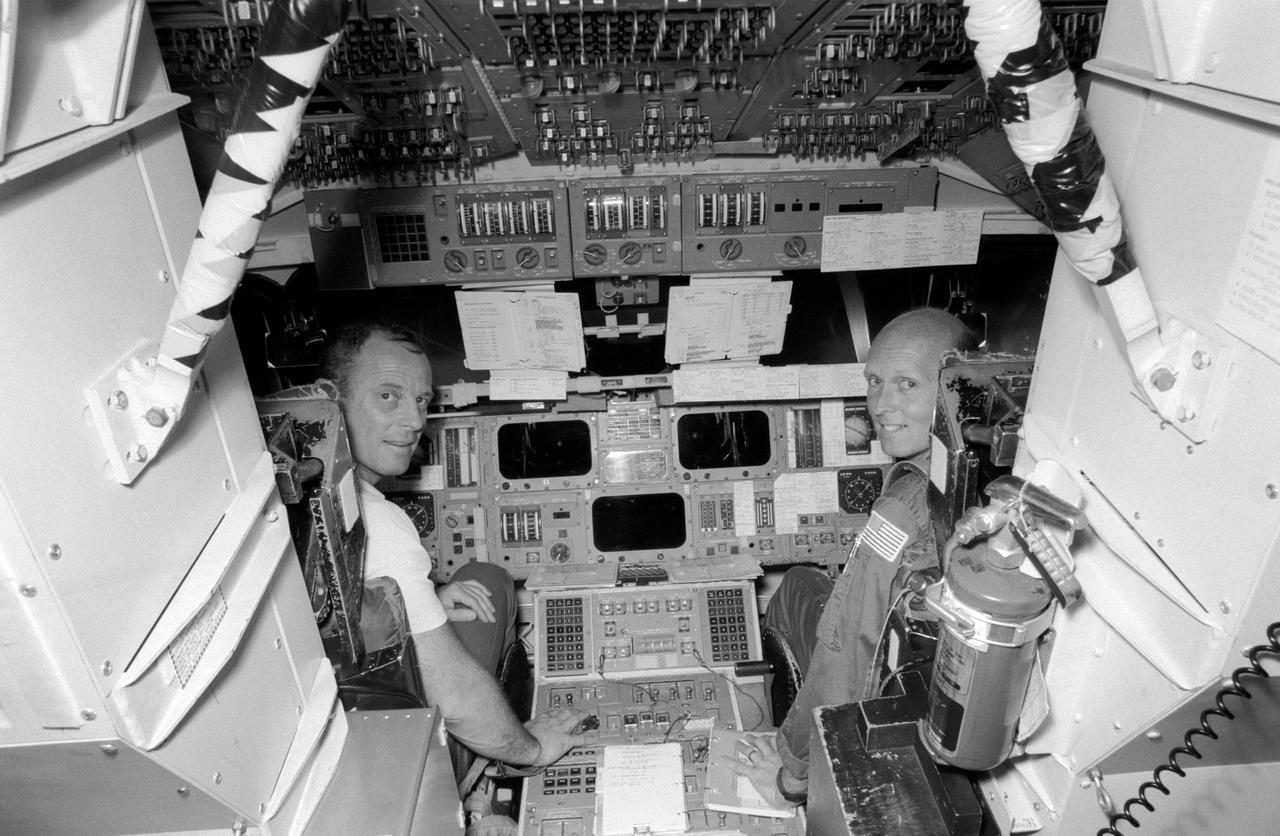
S82-28534 (16 March 1982) --- Astronauts Jack R. Lousma, left, and C. Gordon Fullerton are at the commander and pilot?s station, respectively, in the shuttle mission simulator at the LBJ Space Centers mission simulation and training facility. They have less than a week of training left in preparation for NASA?s third space transportation system (STS-3) flight. Scheduled to launch on March 22, STS-3 in expected to give space shuttle Columbia its longest stay (seven days) thus far. Photo credit: NASA
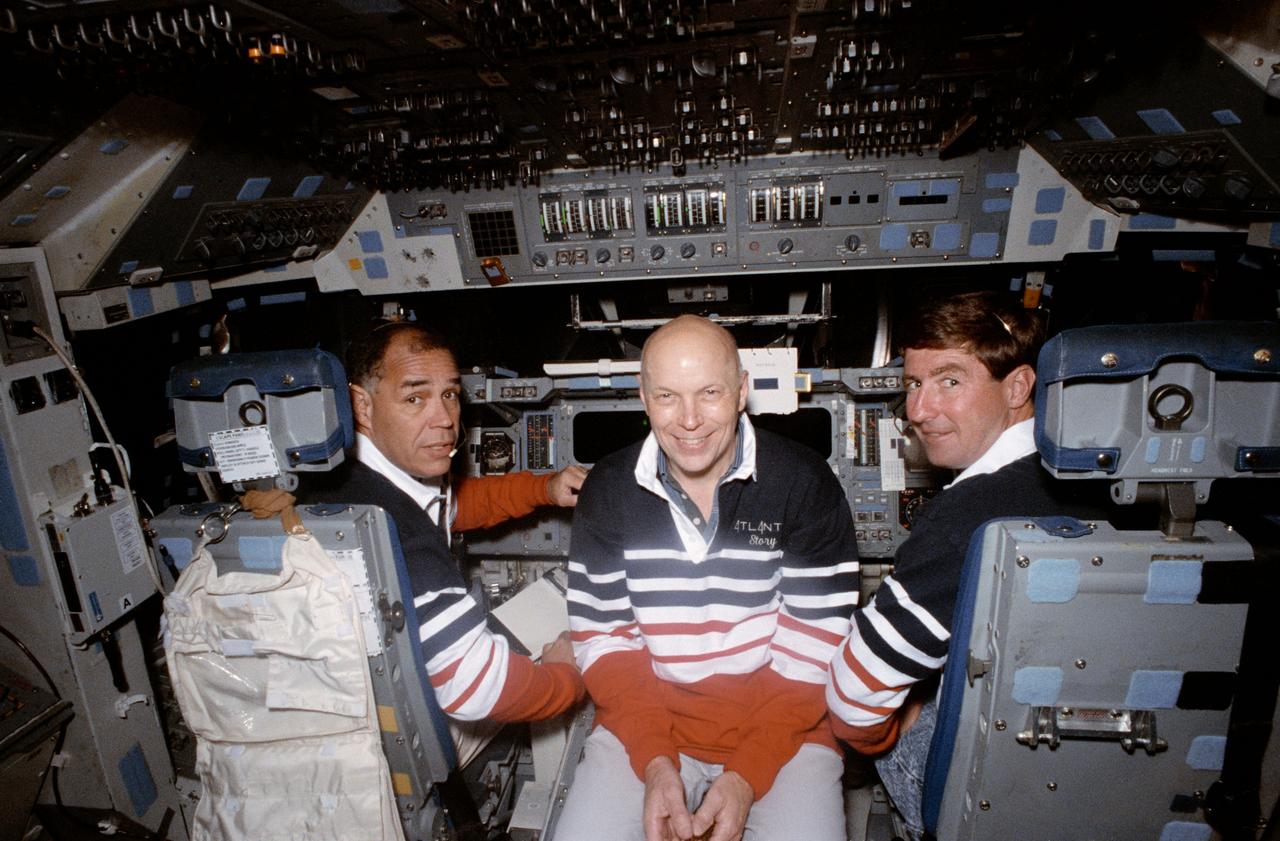
S91-35303 (22 April 1991) --- Astronauts Frederick D. Gregory (left) and Terrence T. Henricks (right), STS-44 commander and pilot, respectively, are joined near their launch and entry stations by F. Story Musgrave, mission specialist. The three pause while rehearsing some of the activities that will be performed during the scheduled ten-day November flight. Musgrave will be in a rear cabin station during launch and entry phases of the flight deck of the fixed-base Shuttle Mission Simulator (SMS) in the Johnson Space Center's mission simulation and training facility.
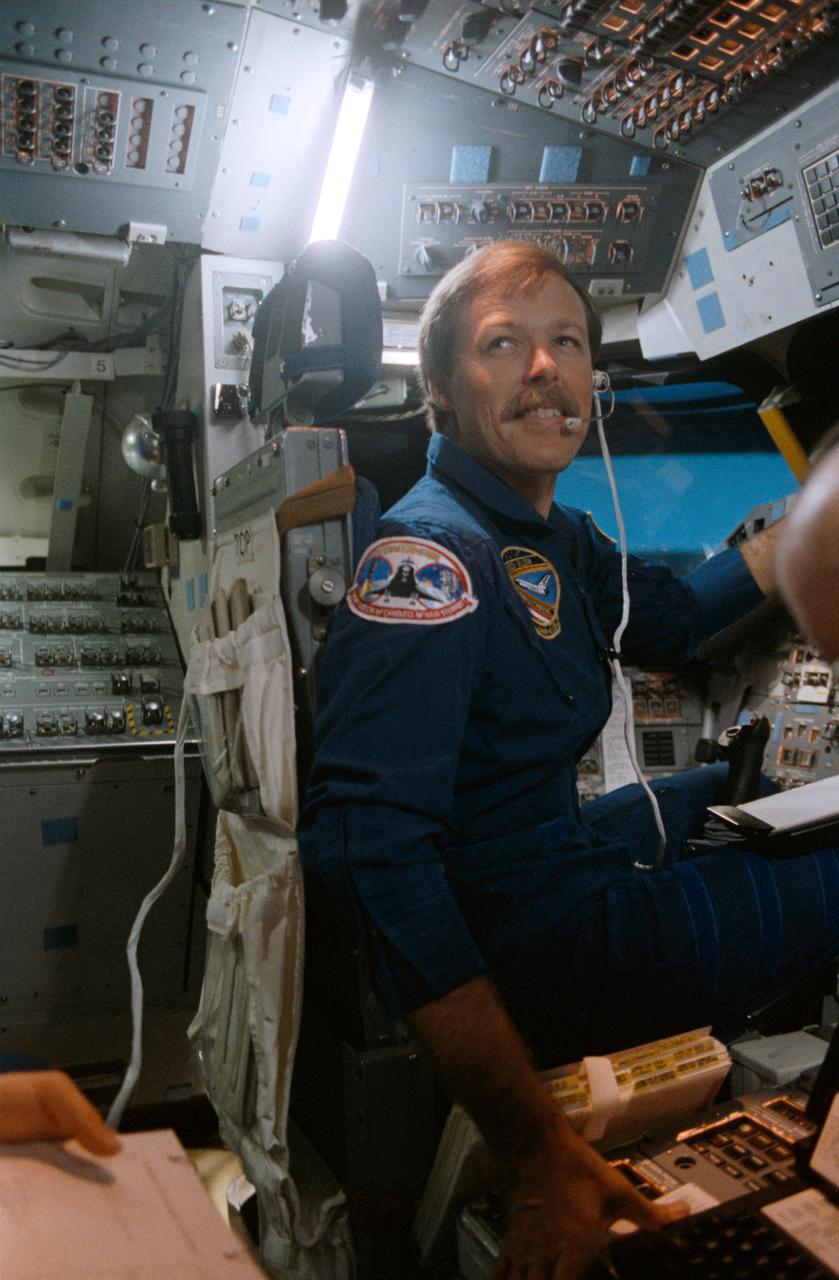
STS-27 Atlantis, Orbiter Vehicle (OV) 104, Commander Robert L. Gibson, wearing flight coveralls and communications kit assembly, sits at commanders station controls on JSC shuttle mission simulator (SMS) forward flight deck during training session. Gibson looks at crewmember on aft flight deck. SMS is located in the Mission Simulation and Training Facility Bldg 5.
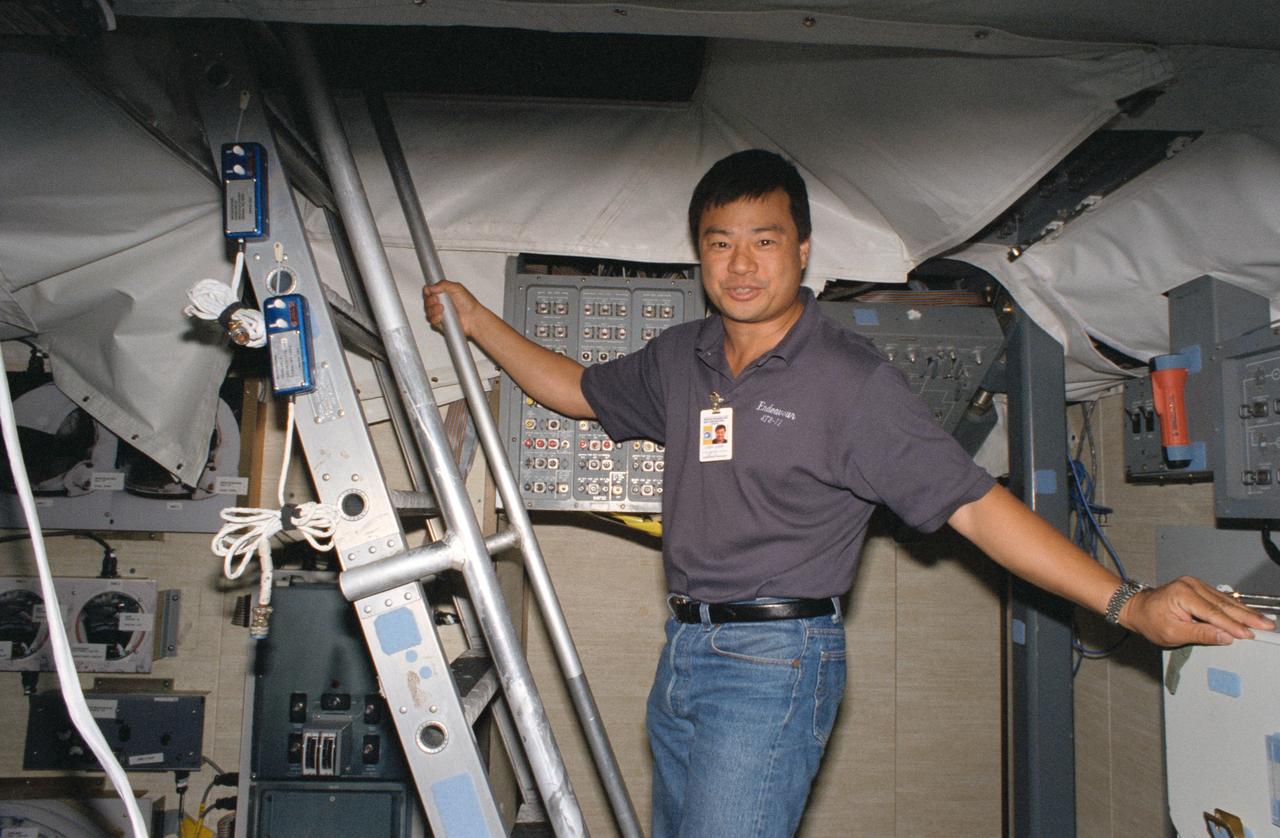
S95-12711 (May 1995) --- Astronaut Leroy Chiao, assigned as mission specialist for the STS-72 mission, prepares to ascend stairs to the flight deck of the fixed base Shuttle Mission Simulator (SMS) at the Johnson Space Center (JSC). Chiao will join an international mission specialist and four other NASA astronauts aboard the Space Shuttle Endeavour for a scheduled nine-day mission, now set for the winter of this year.
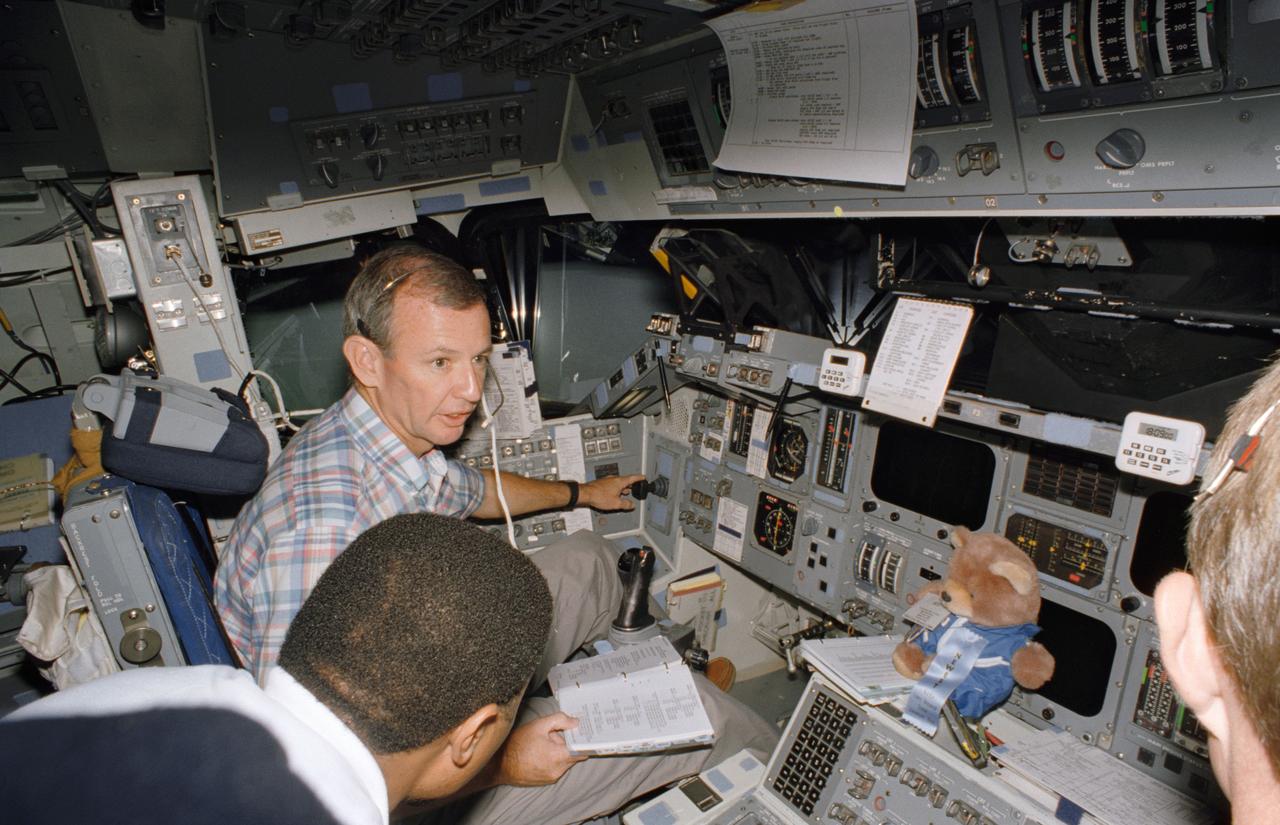
S95-12716 (May 1995) --- Astronauts Brian Duffy, in commander's seat, and Winston E. Scott discuss their scheduled flight aboard the Space Shuttle Endeavour. The two are on the flight deck of the Johnson Space Center's (JSC) fixed base Shuttle Mission Simulator (SMS). Duffy, mission commander, and Scott, mission specialist, will be joined for the winter flight by three other NASA astronauts and an international mission specialist representing NASDA.
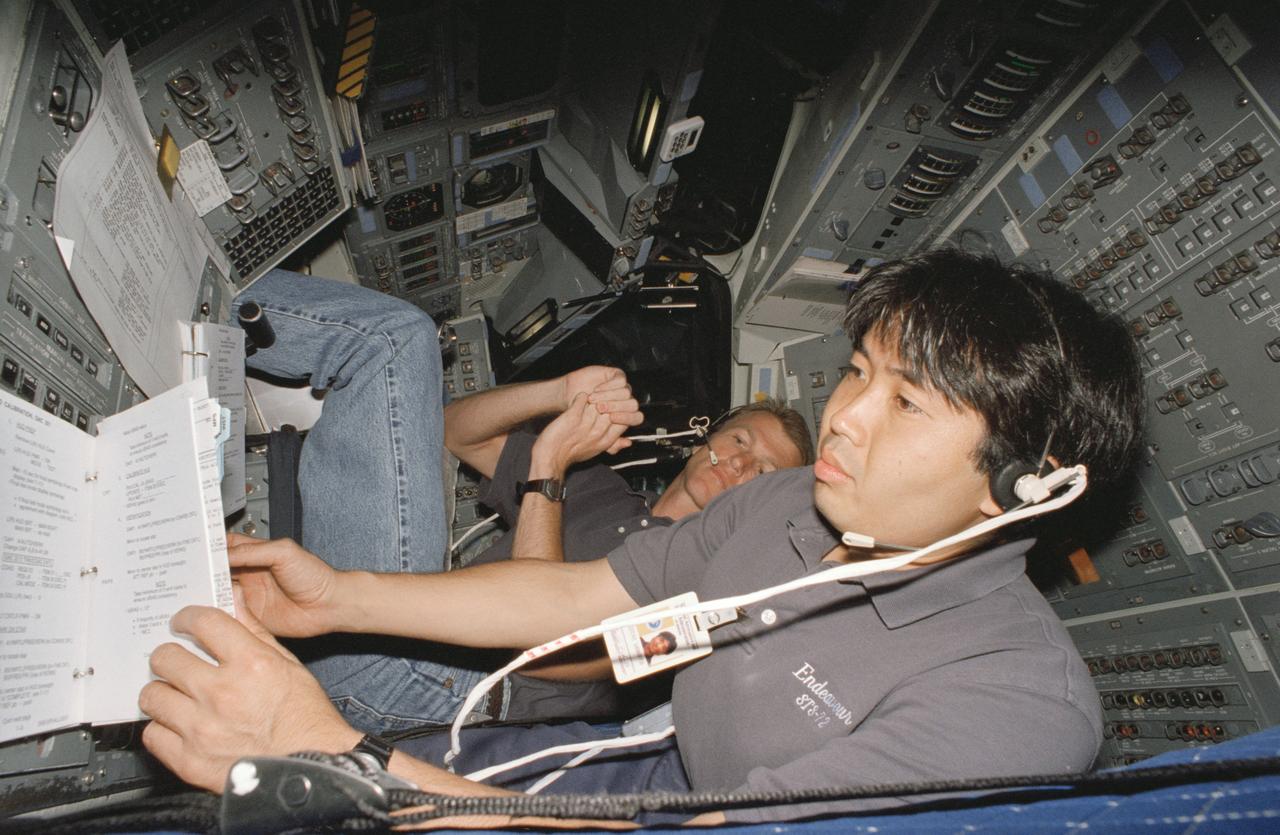
S95-12725 (May 1995) --- Astronaut Koichi Wakata, representing Japan's National Space Development Agency (NASDA) and assigned as mission specialist for the STS-72 mission, checks over a copy of the flight plan. Wakata is on the flight deck of the fixed base Shuttle Mission Simulator (SMS) at the Johnson Space Center (JSC). In the background is astronaut Brent W. Jett, pilot. The two will join four NASA astronauts aboard Space Shuttle Endeavour for a scheduled nine-day mission, now set for the winter of this year.
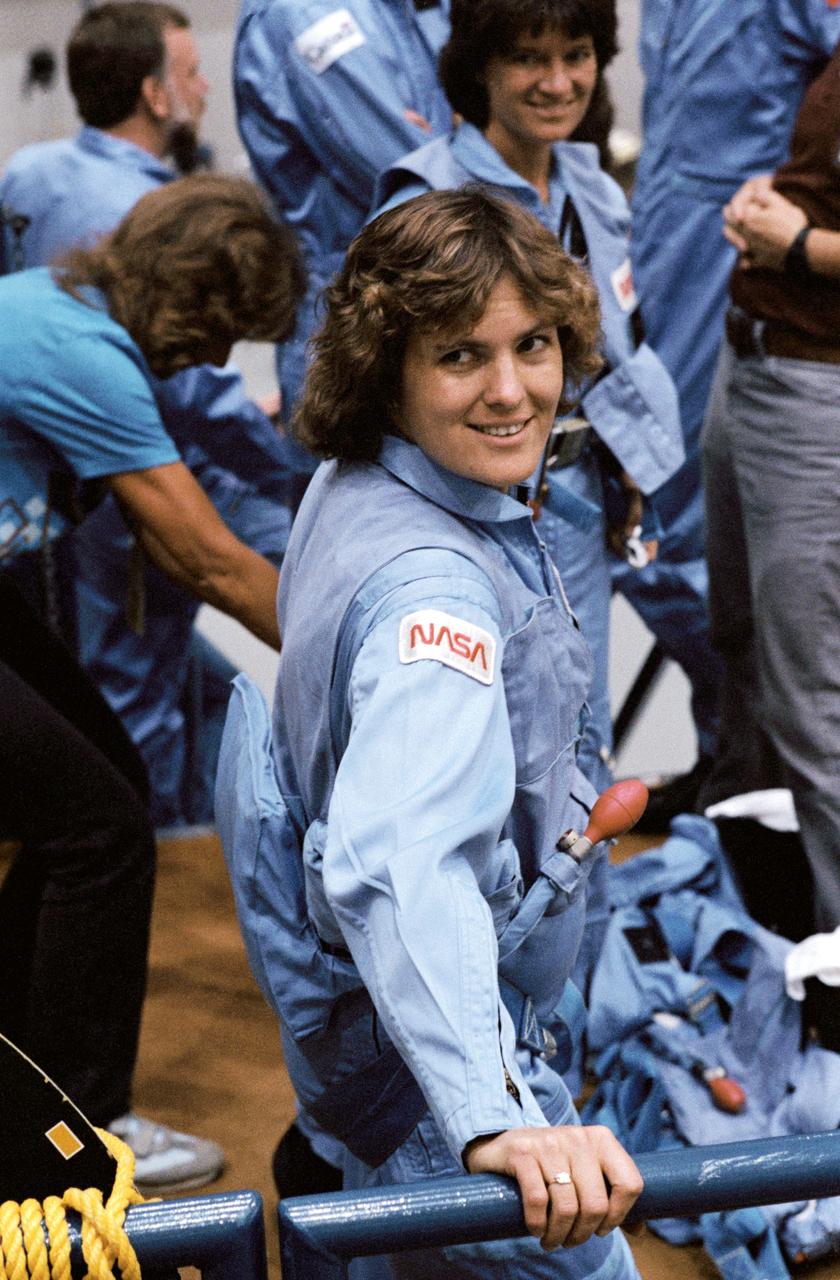
41D-3188 (2 September 1984) --- Astronaut Kathryn D. Sullivan, 41-G mission specialist, joins with other members of the seven-person crew prior to a training session in the Shuttle mockup and integration laboratory at the Johnson Space Center. Dr. Sullivan will be the first American woman to perform an extravehicular activity (EVA) in space when she joins Astronaut David C. Leestma for some outside-the-Challenger duty on October 9. The mission is scheduled for an October 5, 1984 launch.
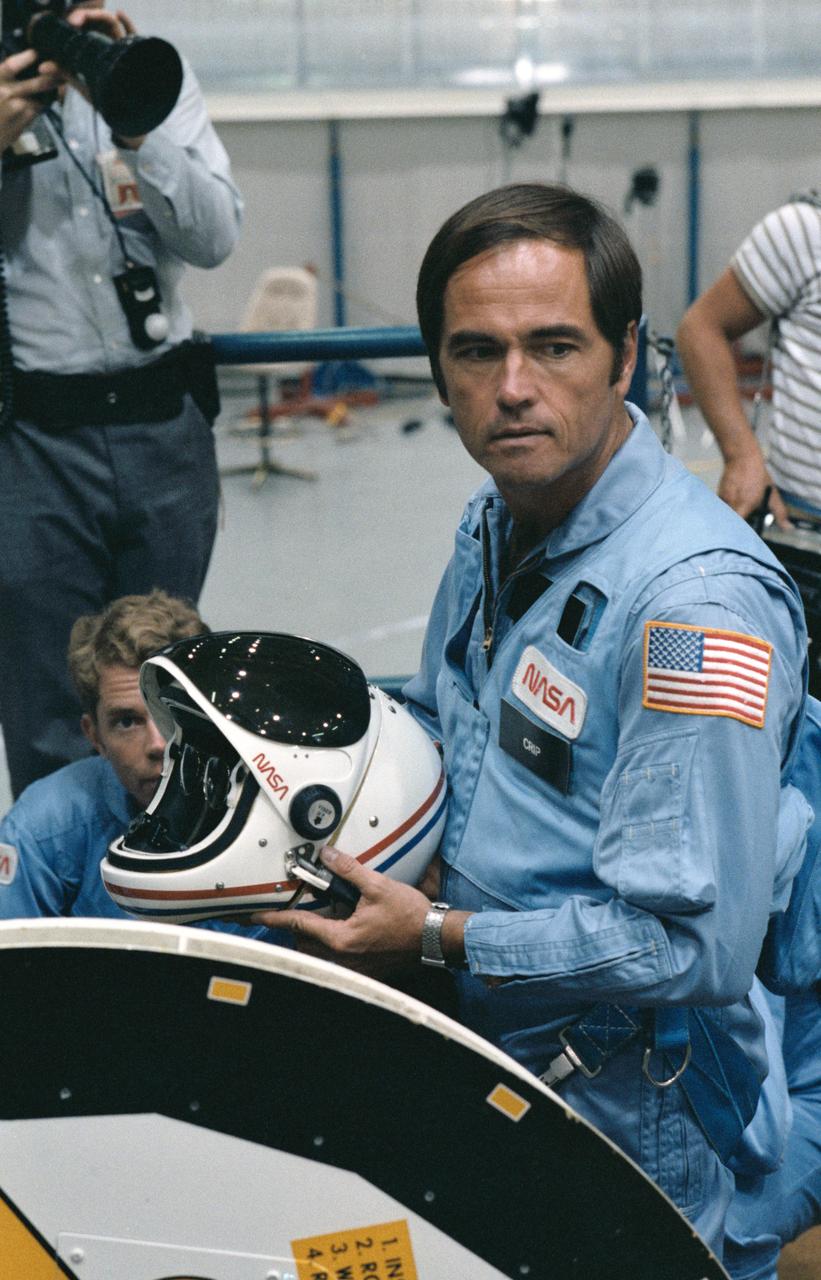
41D-3186 (4 Sept 1984) --- Astronaut Robert L. Crippen, 41-G crew commander, prepares to join his six fellow crewmembers for some training in the mockup and integration laboratory at the Johnson Space Center. Astronaut David C. Leestma, 41-G mission specialist, left, will participate in a scheduled extravehicular activity (EVA) on the Challenger's next mission. Today's training is for launch phase procedures.
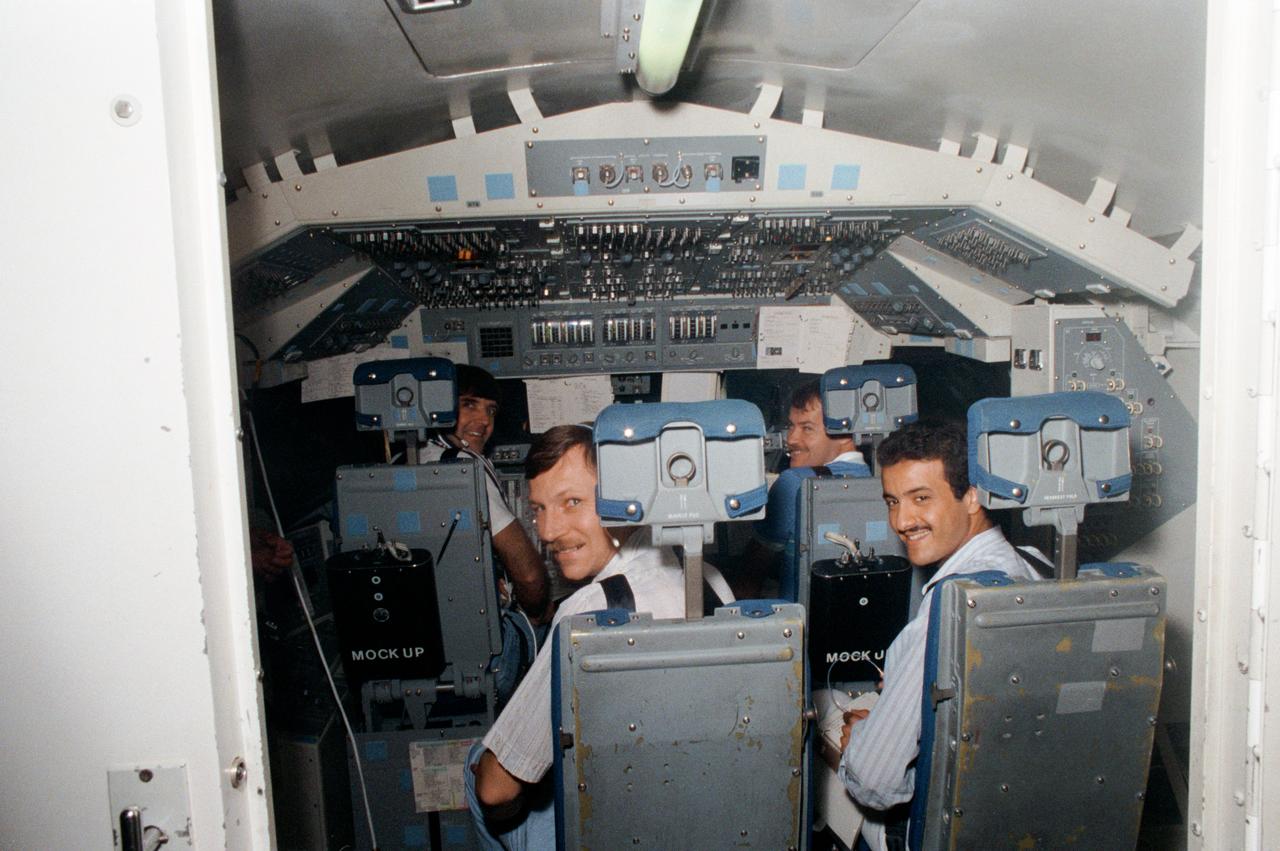
S85-31933 (17 May 1985) --- Four members of the STS 51-G crew participate in a training exercise in the shuttle mission simulation and training facility at the Johnson Space Center. Steven R. Nagel, left foreground, is a mission specialist for the flight, while Sultan Salman Abdelazize Al-Saud (right foreground) is a payload specialist. In the background are astronauts Daniel C. Brandenstein (left) in the commander's station and John O. Creighton in the pilot's position. Photo credit: NASA/ Otis Imboden of National Geographic
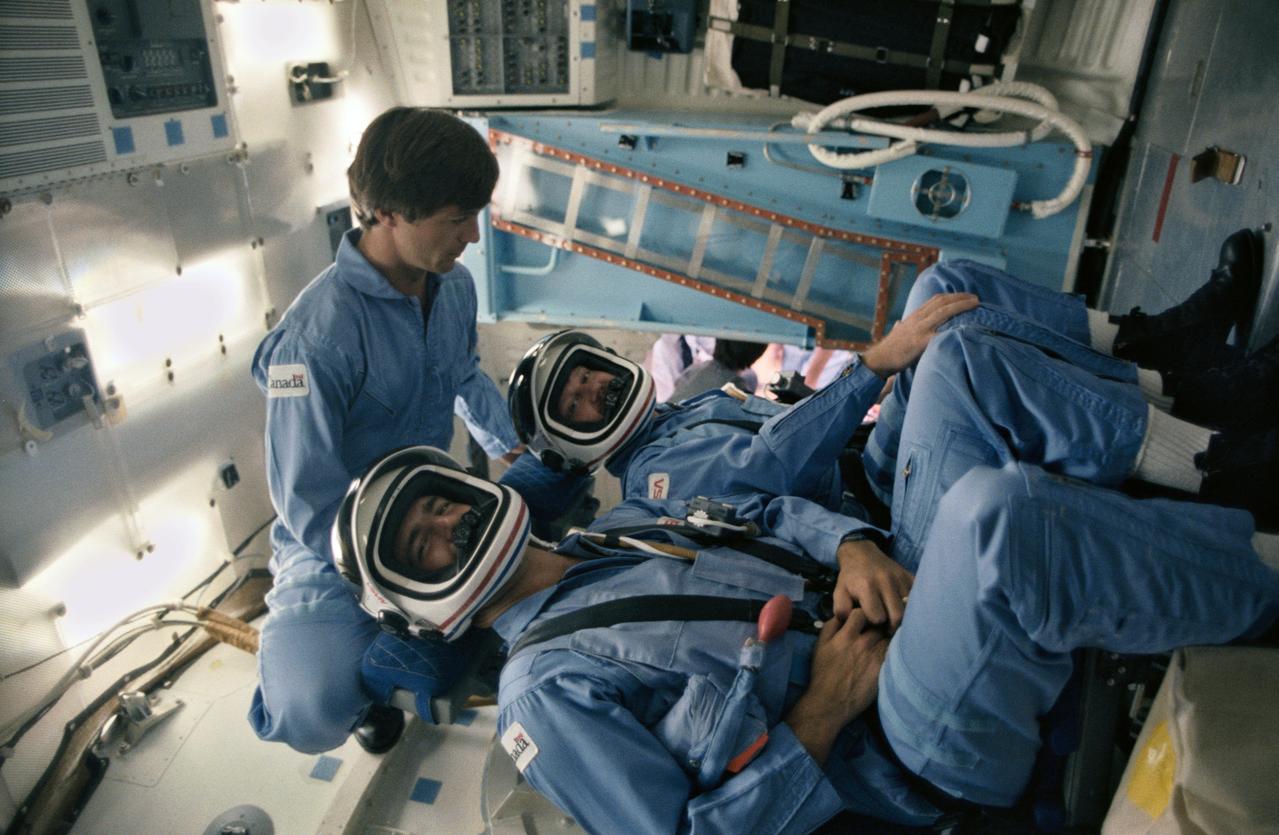
41D-3138 (4 Sept 1984)--- Canada's backup payload specialist assists the two 41-G prime payload specialists during a training session in the Johnson Space Center's Shuttle mockup and integration laboratory. Robert Thirsk (without helmet) represents the National Research Council (NRC) and is backup to Marc Garneau (nearest camera), also of the NRC. Paul D. Scully-Power, seated in the other middeck seat for the launch phase, is a civilian oceanographer with the U.S. Navy. The 41-G flight aboard the Challenger is NASA's first to utilize a crew of more than six persons. This photograph was taken by Otis Imboden.
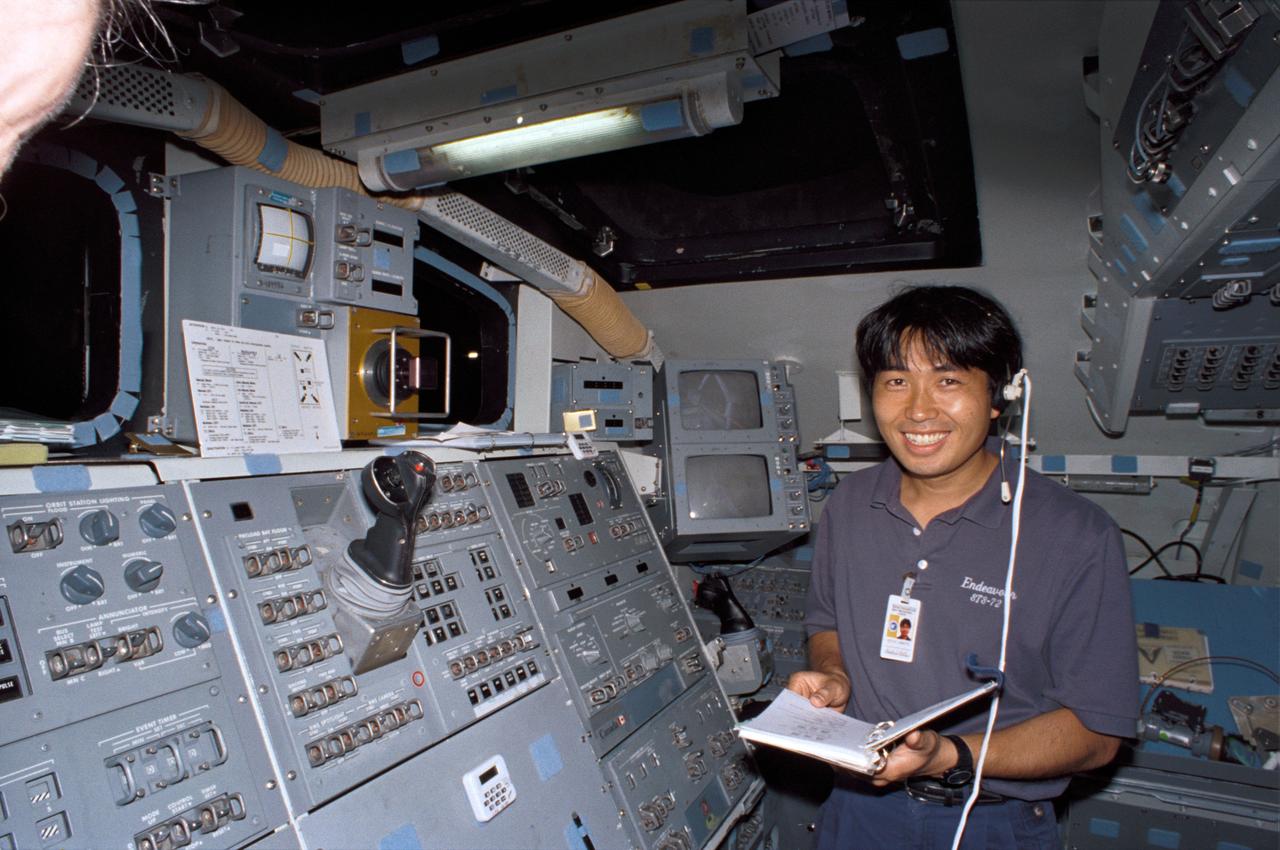
S95-12706 (May 1995) --- Astronaut Koichi Wakata, representing Japan's National Space Development Agency (NASDA) and assigned as mission specialist for the STS-72 mission, checks over a copy of the flight plan. Wakata is on the flight deck of the fixed base Shuttle Mission Simulator (SMS) at the Johnson Space Center (JSC). He will join five NASA astronauts aboard Endeavour for a scheduled nine-day mission, now set for the winter of this year.
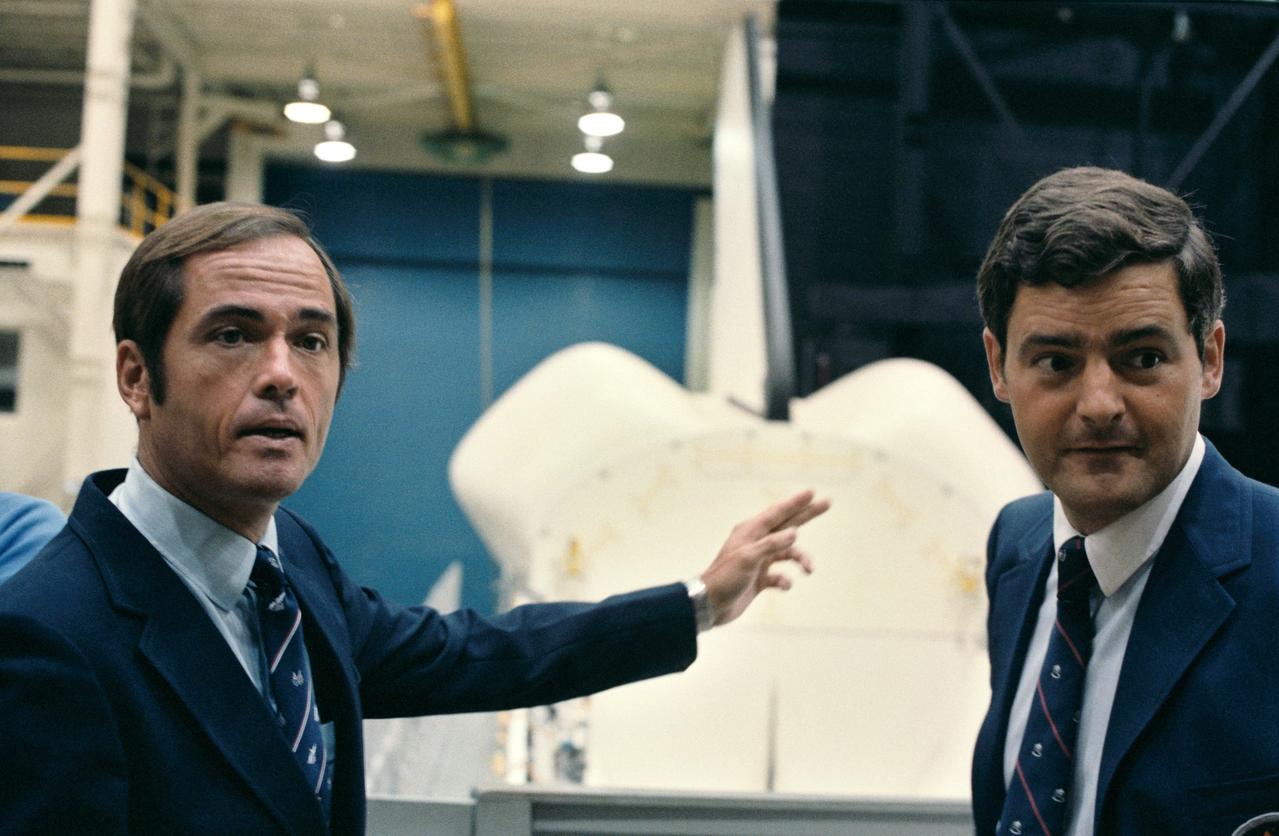
41D-3142 (3 Sept 1984) --- Astronaut Robert L. Crippen, left, crew commander for NASA's 41-G flight, and Marc Garneau, payload specialist representing the Canadian National Research Council (NRC), participate in a briefing in the Shuttle mockup and integration laboratory at the Johnson Space Center.
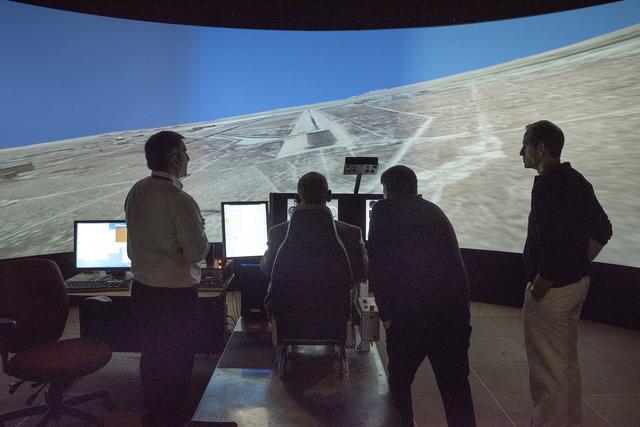
NASA Administrator Charlie Bolden, a former pilot and astronaut who flew on four shuttle missions, appeared natural at the controls of the X-57 simulator cockpit, and flew a pair of simulations where he landed on the Edwards Air Force Base runway.
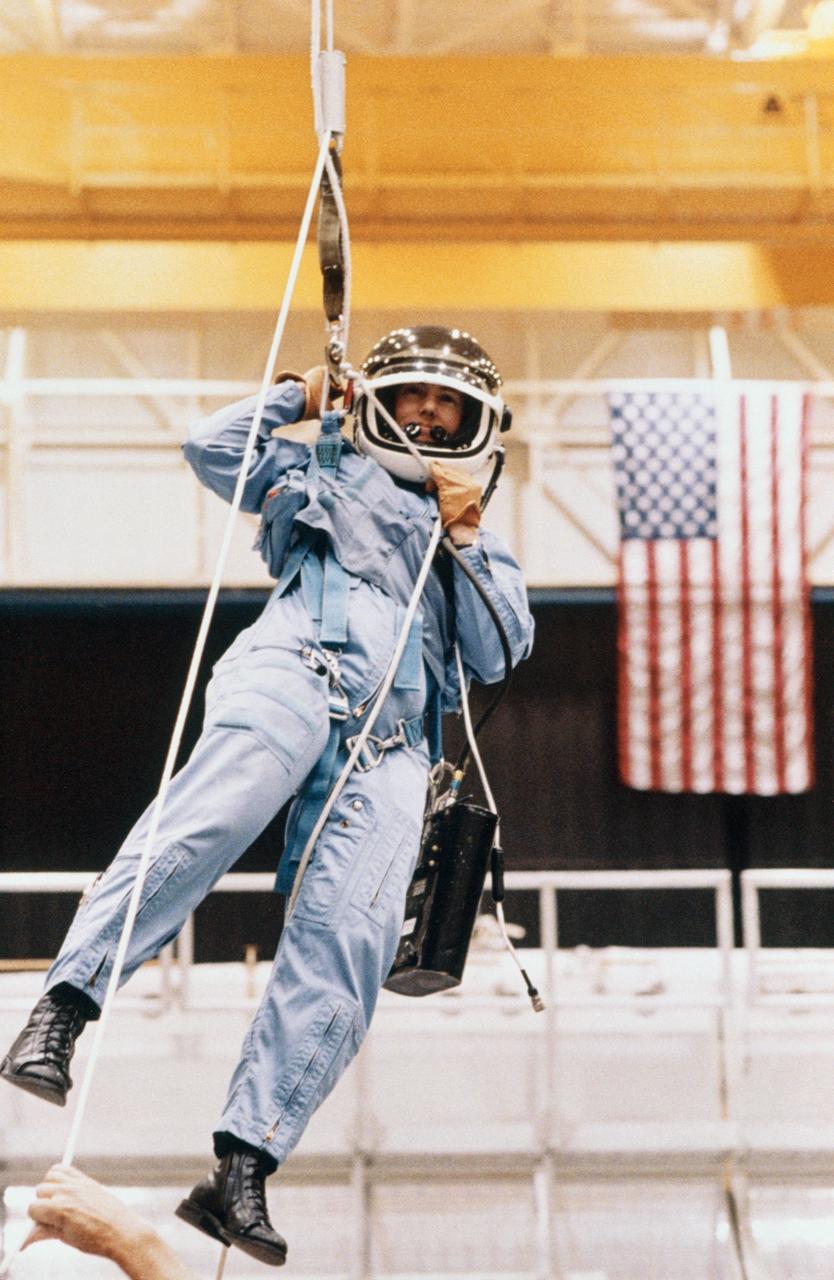
S86-25183 (for release January 1986) --- Sharon Christa McAuliffe, STS-51L payload specialist representing the Teacher-in-Space Project, descends from a mock-up of the space shuttle using a sky-genie device during an emergency training session in the Johnson Space Center?s (JSC) Shuttle Mock-up and Integration Laboratory. The photograph was taken by Keith Meyers of the New York Times. EDITOR?S NOTE: The STS-51L crew members lost their lives in the space shuttle Challenger accident moments after launch on Jan. 28, 1986 from the Kennedy Space Center (KSC). Photo credit: NASA
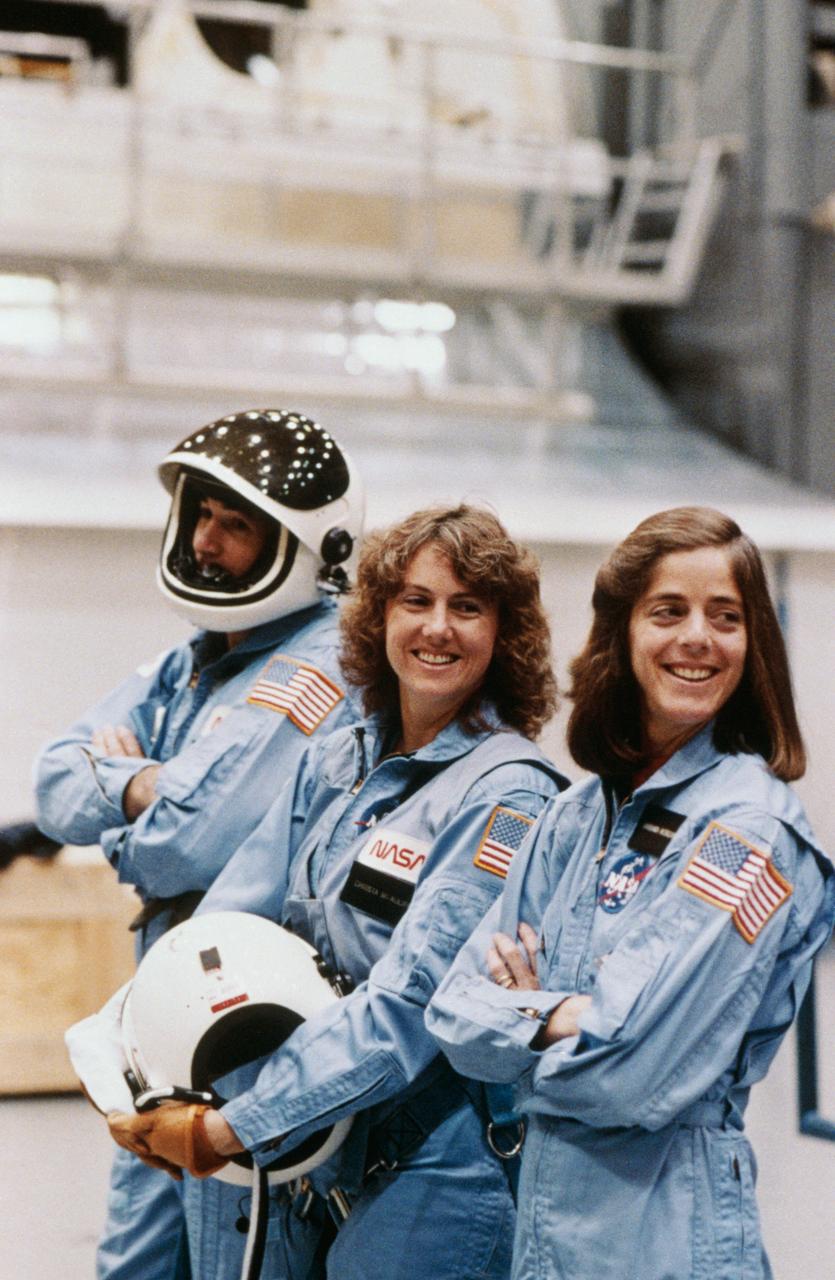
S86-25254 (January 1986) --- Payload specialists in training for STS-51L take a break in shuttle emergency egress training at the Johnson Space Center's (JSC) Shuttle Mock-up and Integration Laboratory. Left to right are Gregory Jarvis of Hughes, Sharon Christa McAuliffe and Barbara Morgan of the Teacher-in-Space Project. McAuliffe was selected as NASA's first citizen observer in the Space Shuttle Program and Morgan was named her backup. The photo was taken by Keith Meyers of the New York Times. EDITOR?S NOTE: The STS-51L crew members lost their lives in the space shuttle Challenger accident moments after launch on Jan. 28, 1986 from the Kennedy Space Center (KSC). Photo credit: NASA
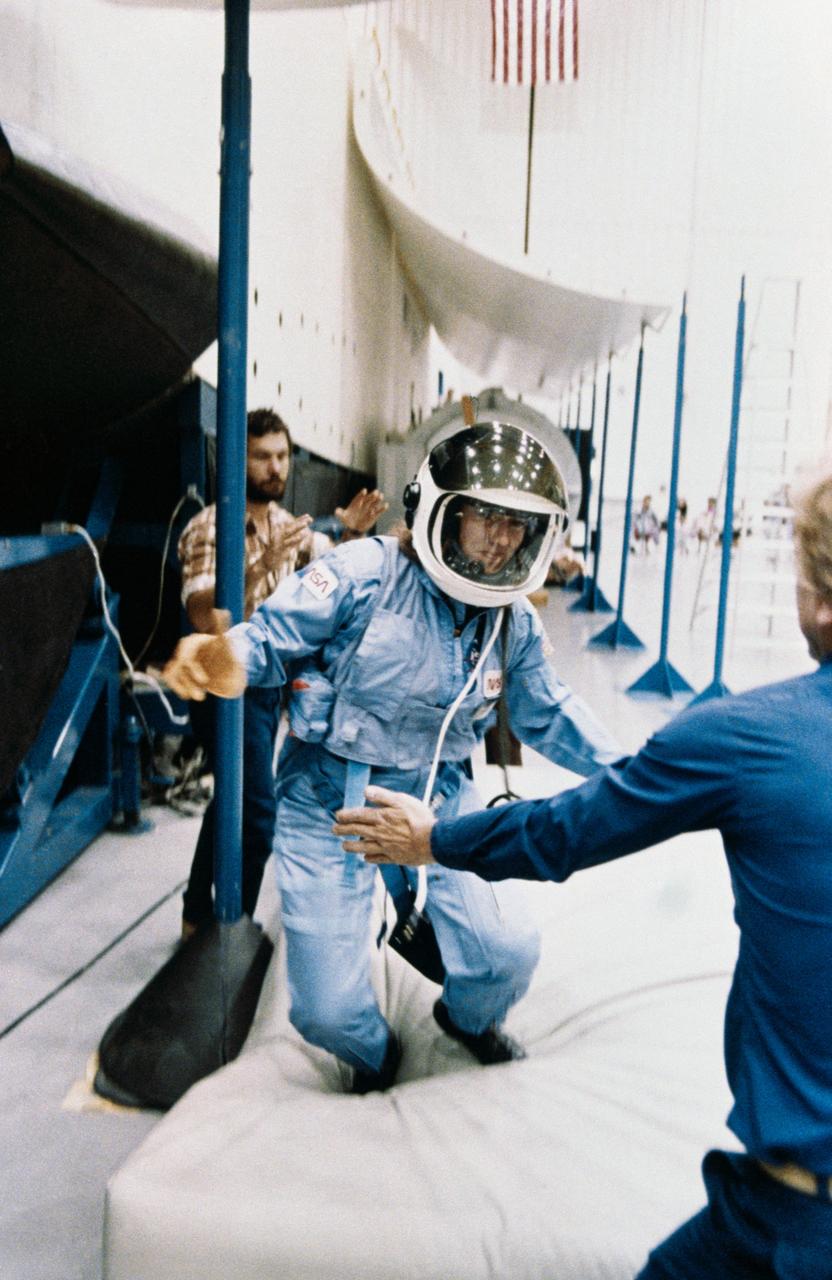
Sharon Christa McAuliffe, 51-L payload specialist representing the Teacher in Space project, jumps down onto a cushion during an emergency egress training session in JSC's mockup and integration laboratory. She had been descending from the mockup using a Sky-genie.
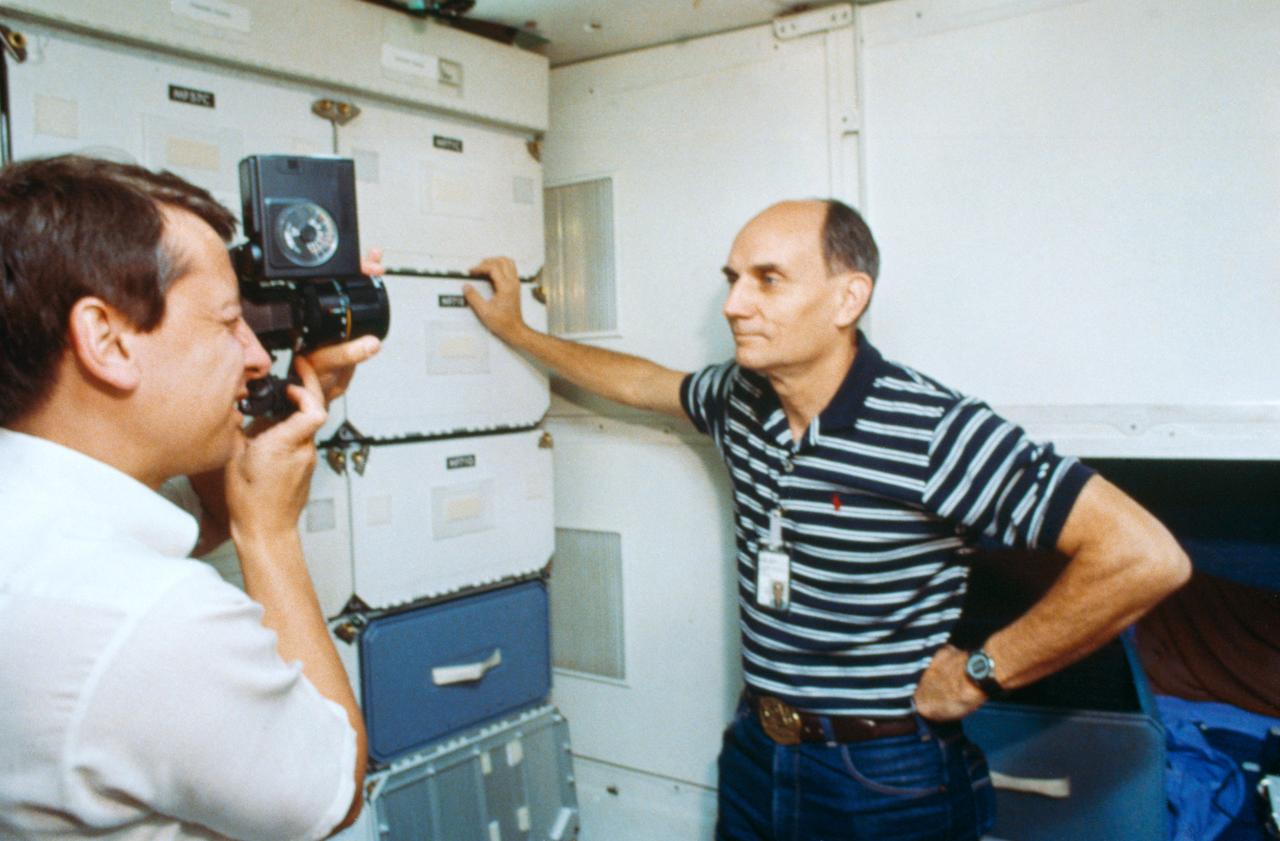
Two payload specialists for the STS 51-D mission get in some training time in the crew compartment trainerat JSC. Charles D. Walker, left, rehearses photography of U.S. Senator E.J. (Jake) Garn in the middeck section of the trainer.
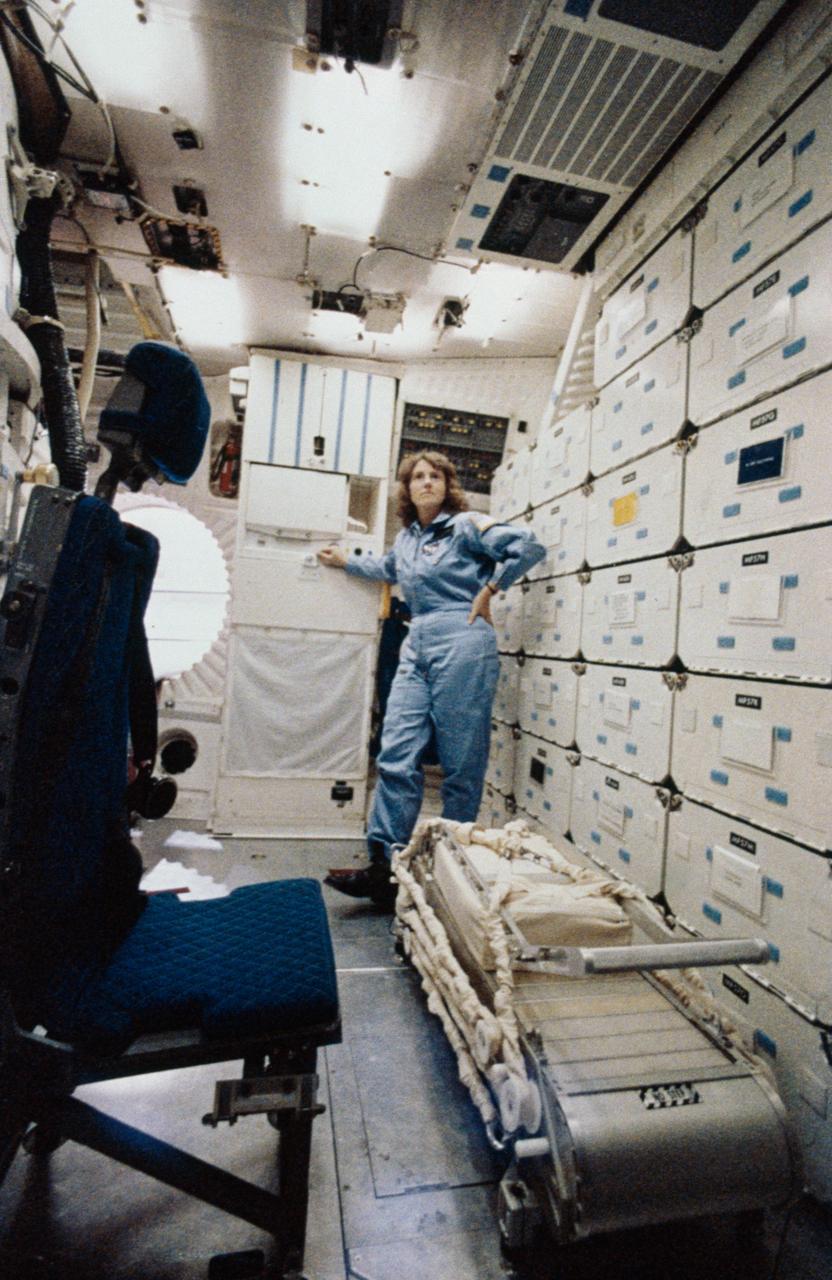
S86-25188 (December 1985) --- Sharon Christa McAuliffe, a school teacher Concord New Hampshire, surveys a ground training replica of the quarters she?ll be using in space when the space shuttle Challenger taxis two women and five men into space in January of 1986. The STS-51L citizen observer/payload specialist is in training at the Johnson Space Center, representing the Teacher-in-Space Project. The photo was taken by Keith Meyers of the New York Times. Photo credit: NASA
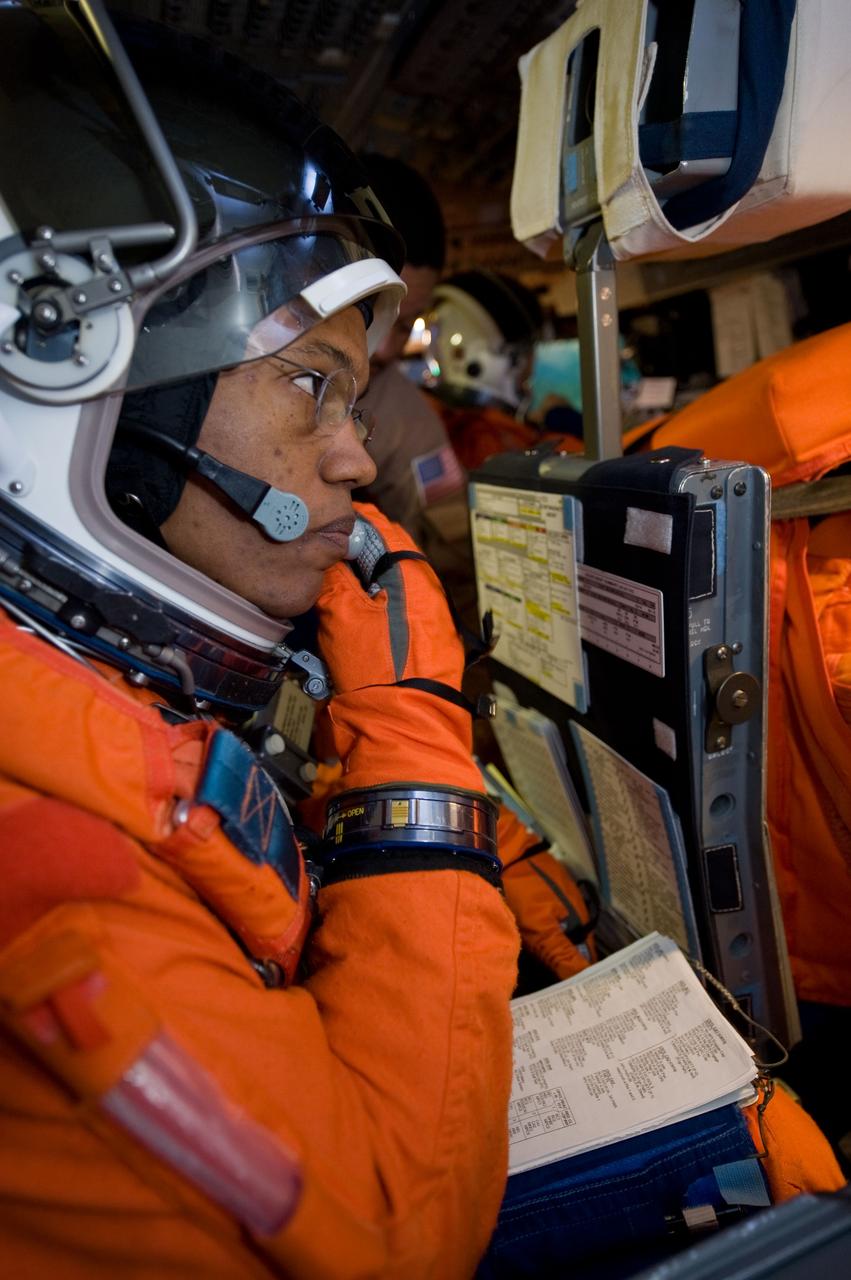
JSC2010-E-014042 (25 Jan. 2010) --- Attired in a training version of his shuttle launch and entry suit, NASA astronaut Alvin Drew, STS-133 mission specialist, participates in a simulation exercise in the motion-base shuttle mission simulator in the Jake Garn Simulation and Training Facility at NASA?s Johnson Space Center.
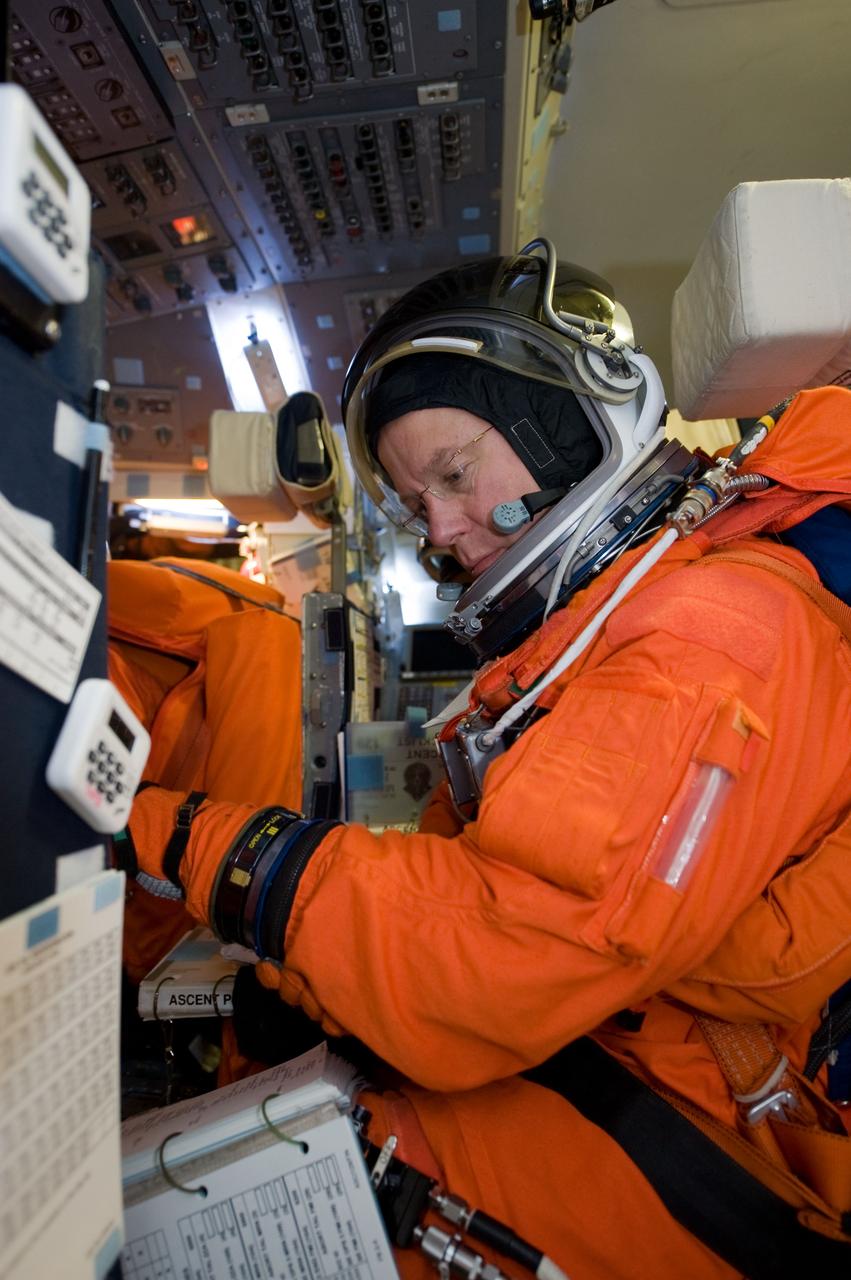
JSC2010-E-014043 (25 Jan. 2010) --- Attired in a training version of his shuttle launch and entry suit, NASA astronaut Tim Kopra, STS-133 mission specialist, participates in a simulation exercise in the motion-base shuttle mission simulator in the Jake Garn Simulation and Training Facility at NASA?s Johnson Space Center.

JSC2010-E-014041 (25 Jan. 2010) --- Attired in a training version of his shuttle launch and entry suit, NASA astronaut Alvin Drew, STS-133 mission specialist, participates in a simulation exercise in the motion-base shuttle mission simulator in the Jake Garn Simulation and Training Facility at NASA?s Johnson Space Center.
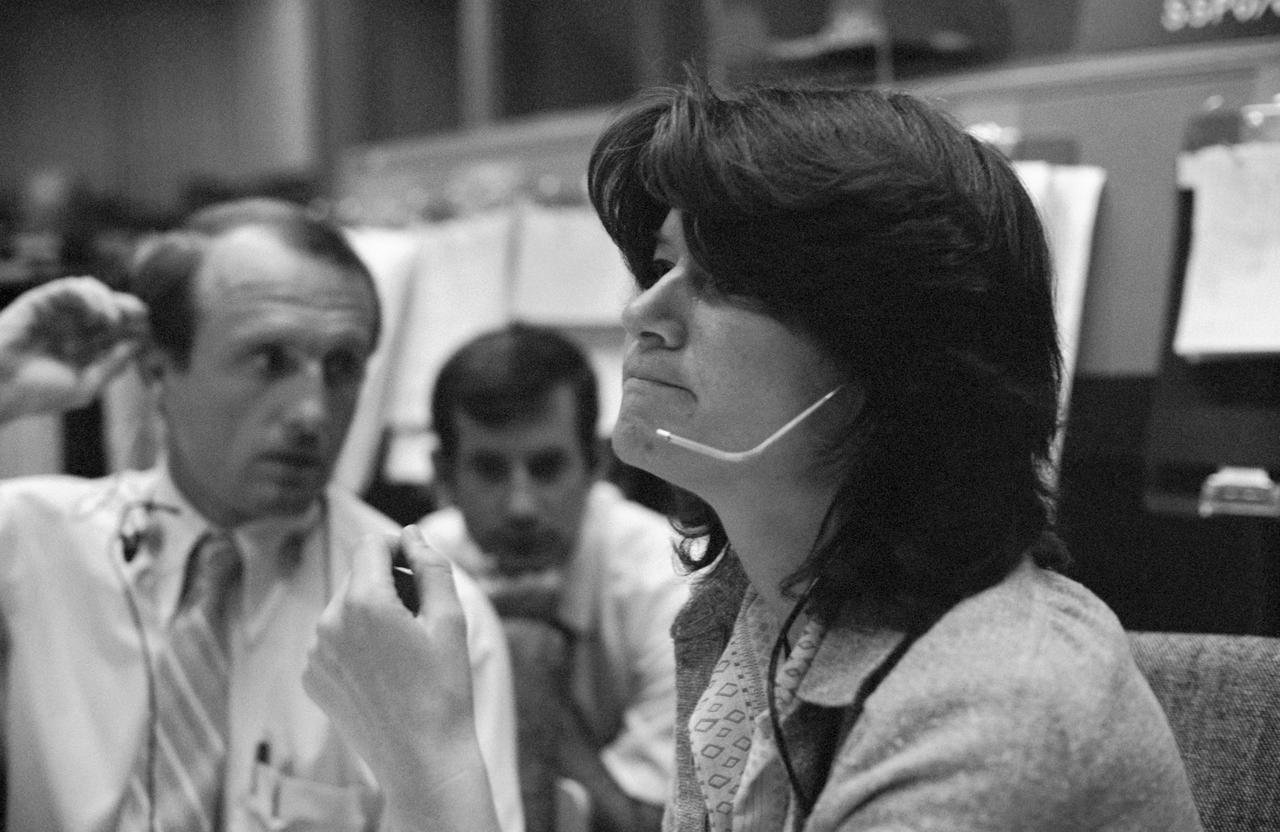
Astronaut Sally Ride at the CapCom console during the STS-2 simulation. She appears to be speaking to the crew using a headset.
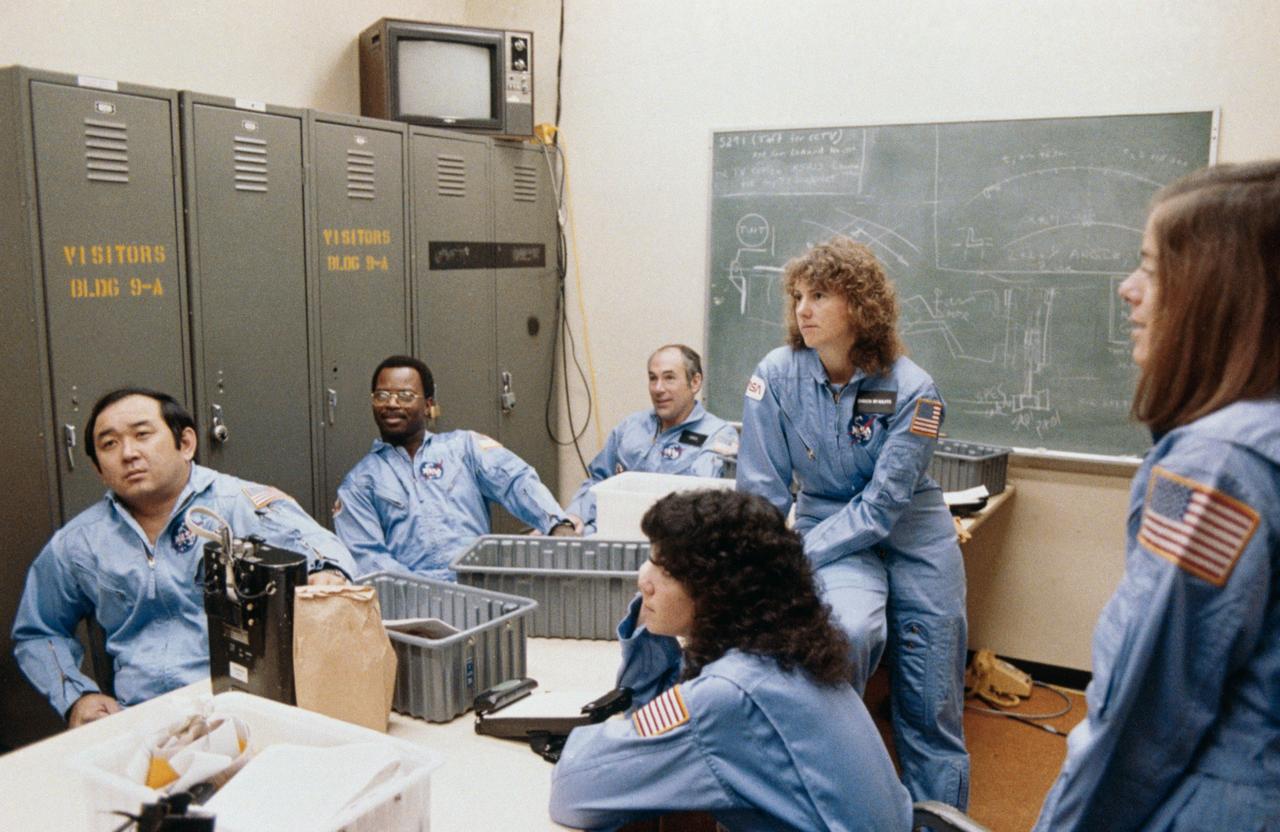
S86-25186 (December 1985) --- Five members of the prime crew for NASA?s STS-51L mission and a backup crew member are briefed during a training session in the Johnson Space Center?s (JSC) Shuttle Mock-up and Integration Laboratory. From left to right are astronaut Ellison S. Onizuka, mission specialist; Ronald E. McNair, mission specialist; Gregory D. Jarvis, Hughes payload specialist; Judith A. Resnik, mission specialist; Sharon Christa McAuliffe, citizen observer/payload specialist representing the Teacher-in-Space Project; and Barbara R. Morgan, backup payload specialist. The photograph was taken by Keith Meyers of the New York Times. EDITOR?S NOTE: The STS-51L crew members lost their lives in the space shuttle Challenger accident moments after launch on Jan. 28, 1986 from the Kennedy Space Center (KSC). Photo credit: NASA
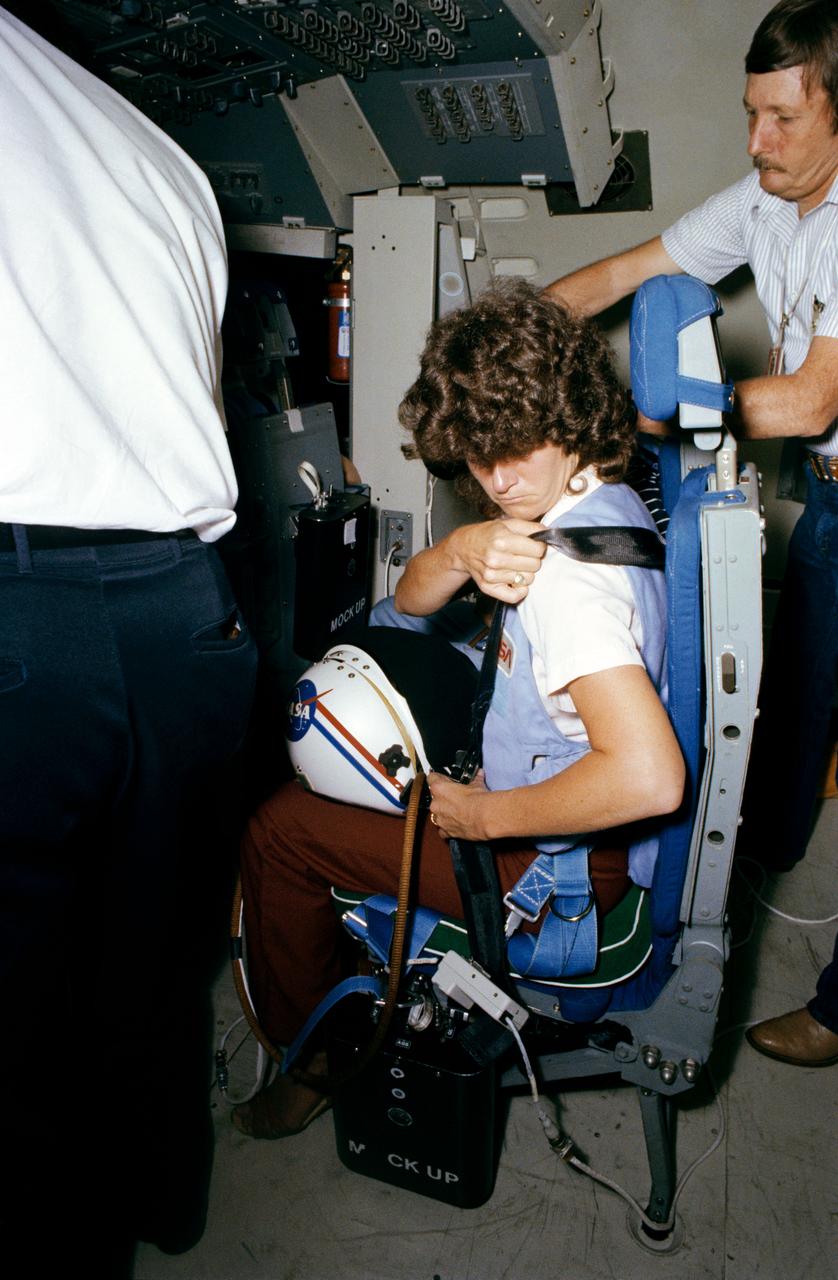
S83-32568 (23 May 1983) --- Astronaut Sally K. Ride, STS-7 mission specialist, straps herself into a seat in the Shuttle Mission Simulator (SMS) in Johnson Space Center?s Mission Simulation and Training Facility. Dr. Ride and the other STS-7 crew members continue their simulations in the motion base simulator in preparation for their flight in the space shuttle Challenger. Launch is scheduled for June 18. Troy Stewart, suit technician, assisted Dr. Ride. Photo credit: NASA
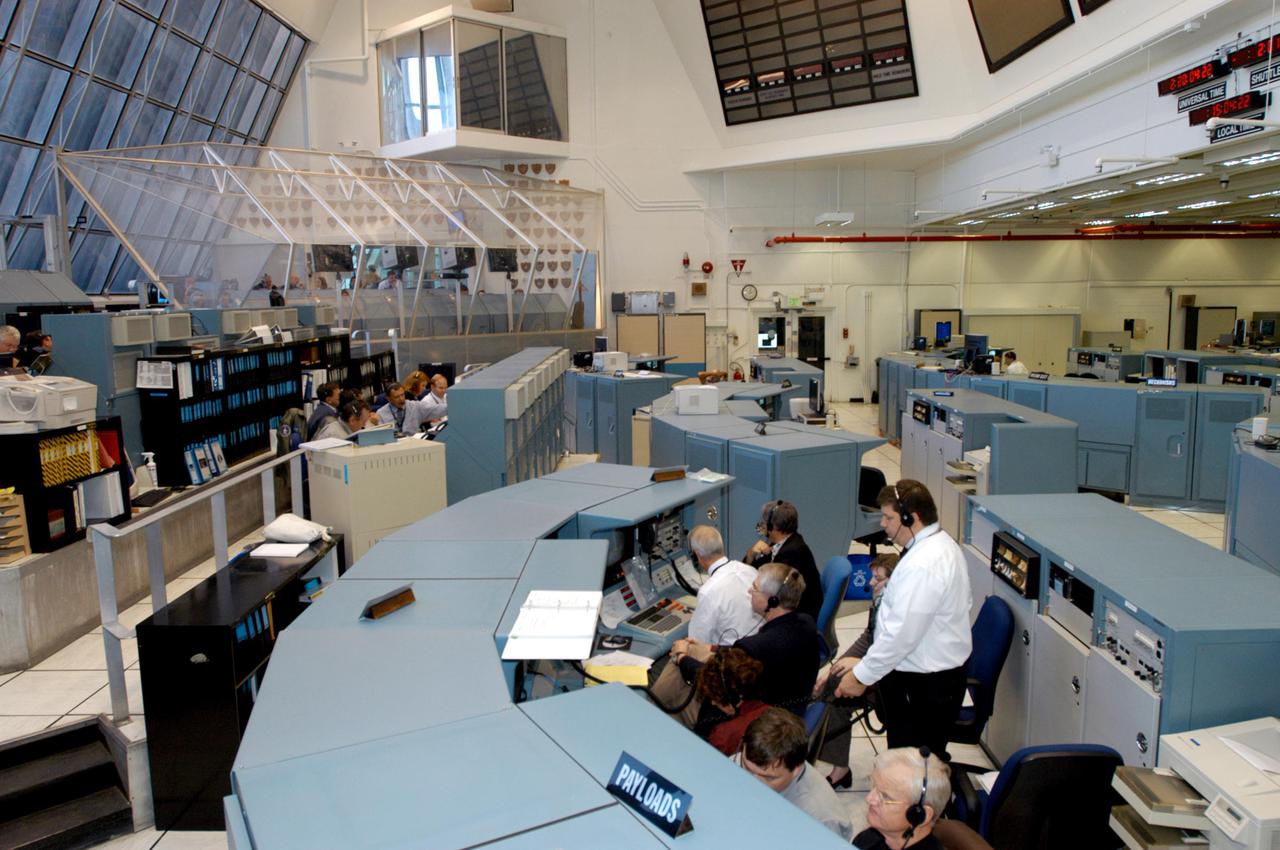
KENNEDY SPACE CENTER, FLA. - In Firing Room 1 at KSC, Shuttle launch team members put the Shuttle system through an End-to-End (ETE) Mission Management Team (MMT) launch simulation. The control room is set up with software used to simulate flight and ground systems in the launch configuration. The ETE MMT simulation included L-2 and L-1 day Prelaunch MMT meetings, an external tanking_weather briefing, and a launch countdown. The ETE transitioned to the Johnson Space Center for the flight portion of the simulation, with the STS-114 crew in a simulator at JSC. Such simulations are common before a launch to keep the Shuttle launch team sharp and ready for liftoff.
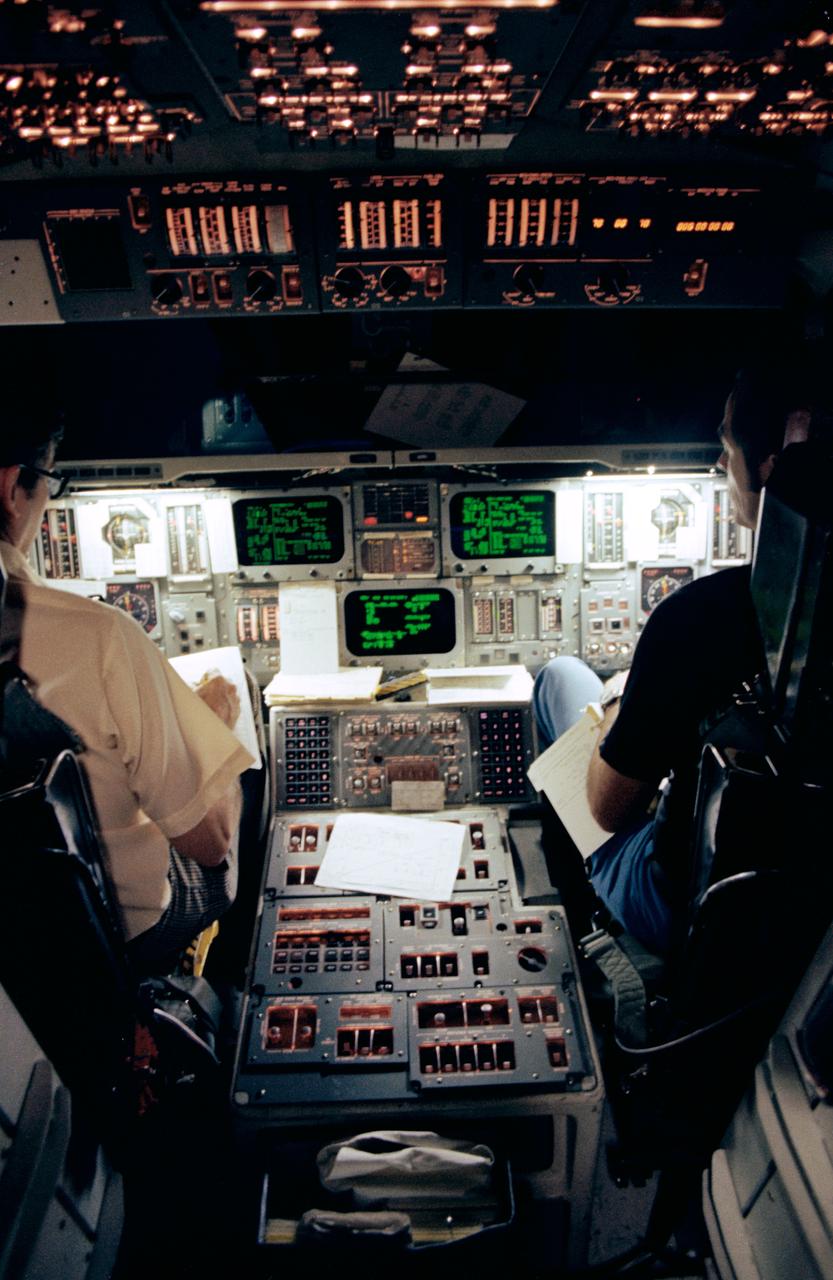
S79-31075 (5 April 1979) --- Astronauts John W. Young, left, and Robert L. Crippen, crewmen for the first space transportation system (STS-1) mission, go over a check off list during simulations in the Johnson Space Center?s shuttle mission simulator in the mission simulation and training facility. Young will be crew commander and Crippen, pilot, for the mission-shuttle?s initial orbital flight test (OFT). Photo credit: NASA
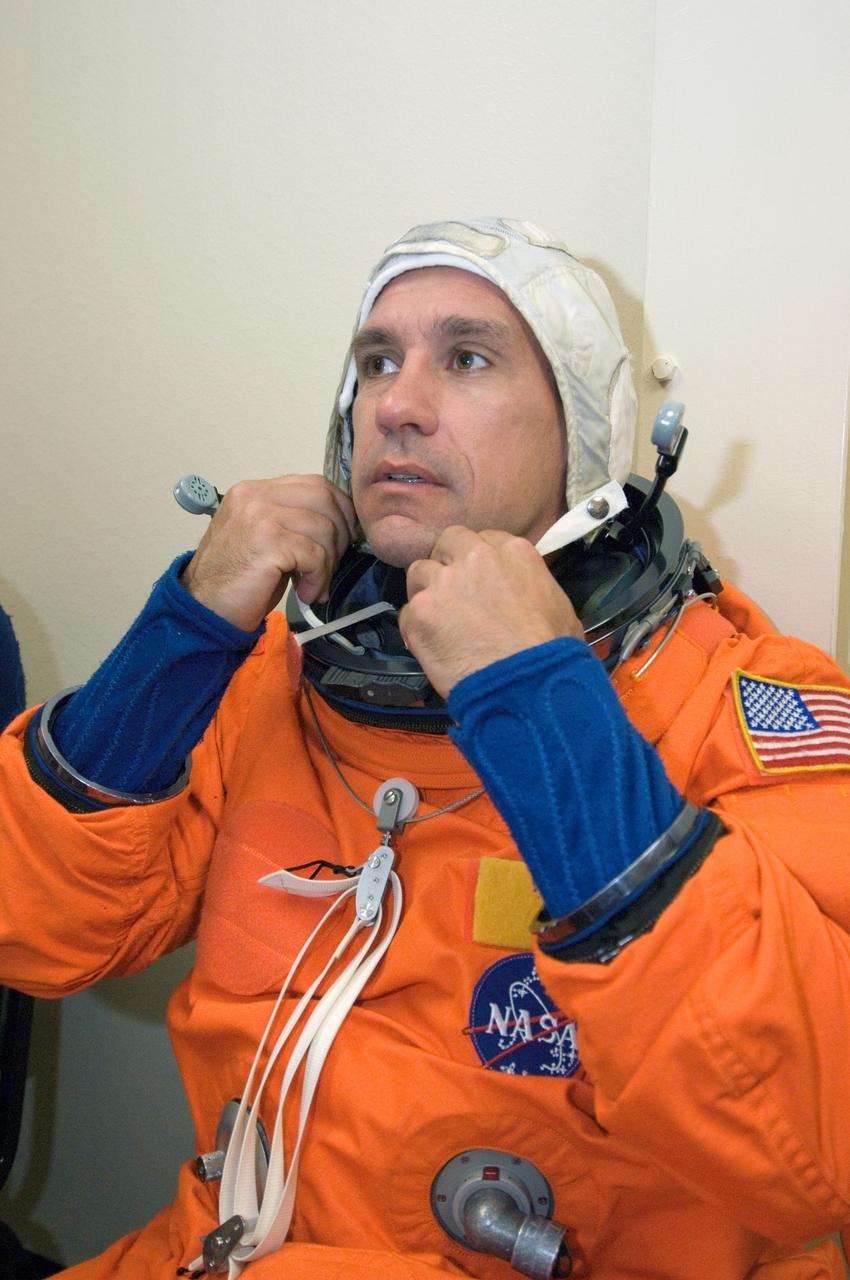
JSC2006-E-23021 (15 June 2006) --- Astronaut William A. Oefelein, STS-116 pilot, dons his training version of the shuttle launch and entry suit prior to a training session in the fixed-base shuttle mission simulator (SMS) in the Jake Garn Mission Simulation and Training Facility at Johnson Space Center.
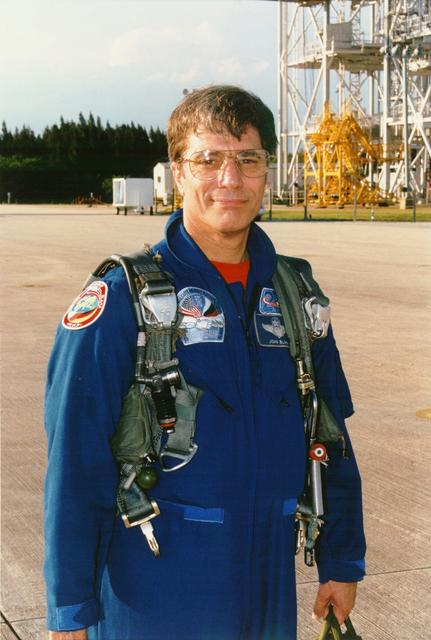
KENNEDY SPACE CENTER, FLA. - STS-79 Mission Specialist John E. Blaha arrives at KSC's Shuttle Landing Facility with five fellow astronauts, ready to participate in the Terminal Countdown Demonstration Test (TCDT). The TCDT is a dress rehearsal for launch for the flight crew and launch team. Over the next several days, the astronauts will take part in training exercises at the launch pad that will culminate in a simulated launch countdown. The Space Shuttle Atlantis is being prepared for liftoff around Sept. 12 on STS-79, the fourth docking between the U.S. Shuttle and Russian Space Station Mir. During the approximately nine-day flight, Blaha will change places with fellow spaceflight veteran Shannon Lucid, who is wrapping up a record-setting stay on Mir. Blaha will remain aboard the Station for about four months, returning to Earth in January 1997 withthe crew of Shuttle Mission STS-81.
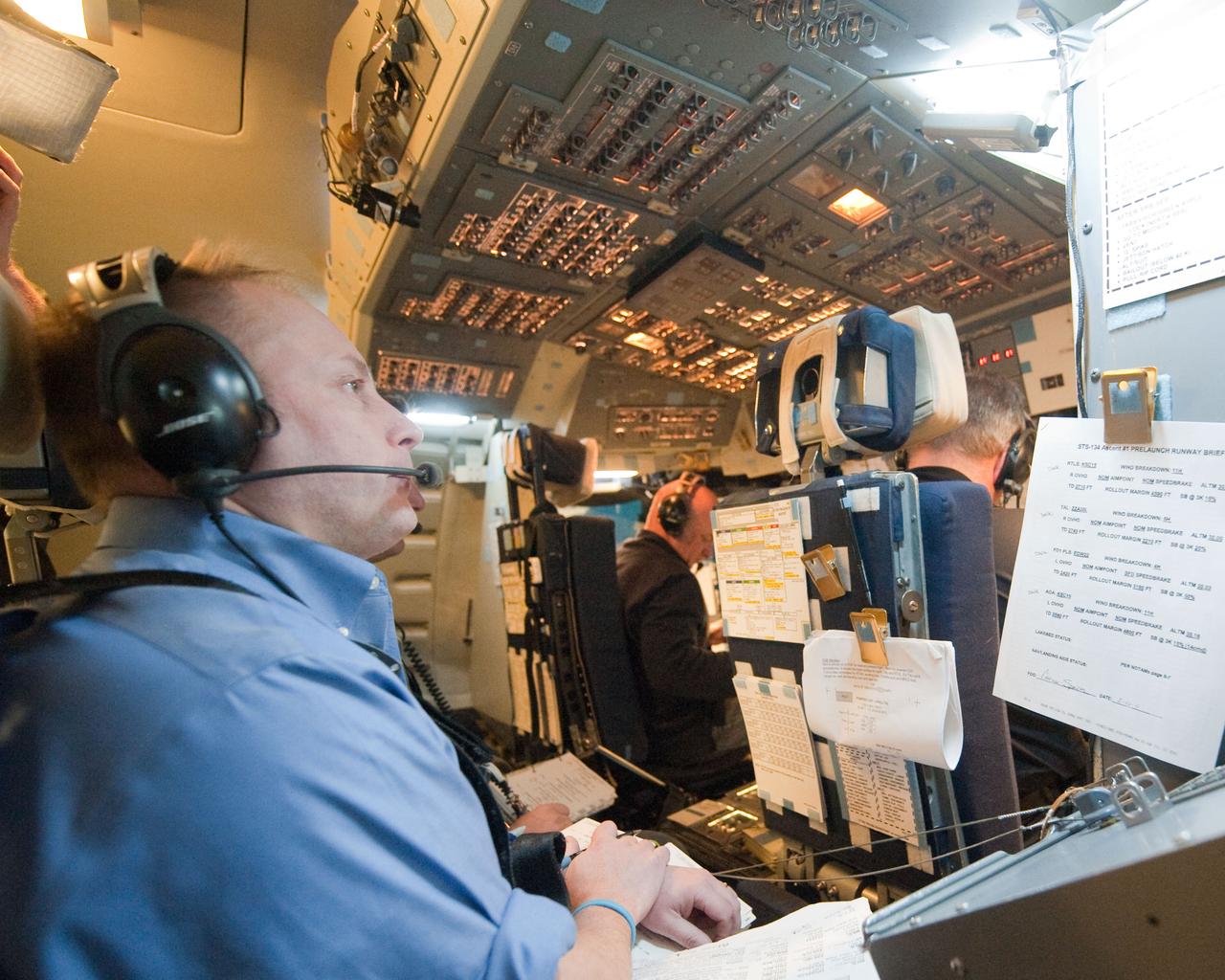
JSC2011-E-016860 (11 Feb. 2011) --- NASA astronaut Michael Fincke, STS-134 mission specialist, participates in a simulation exercise in the motion-base shuttle mission simulator in the Jake Garn Simulation and Training Facility at NASA's Johnson Space Center. Photo credit: NASA or National Aeronautics and Space Administration
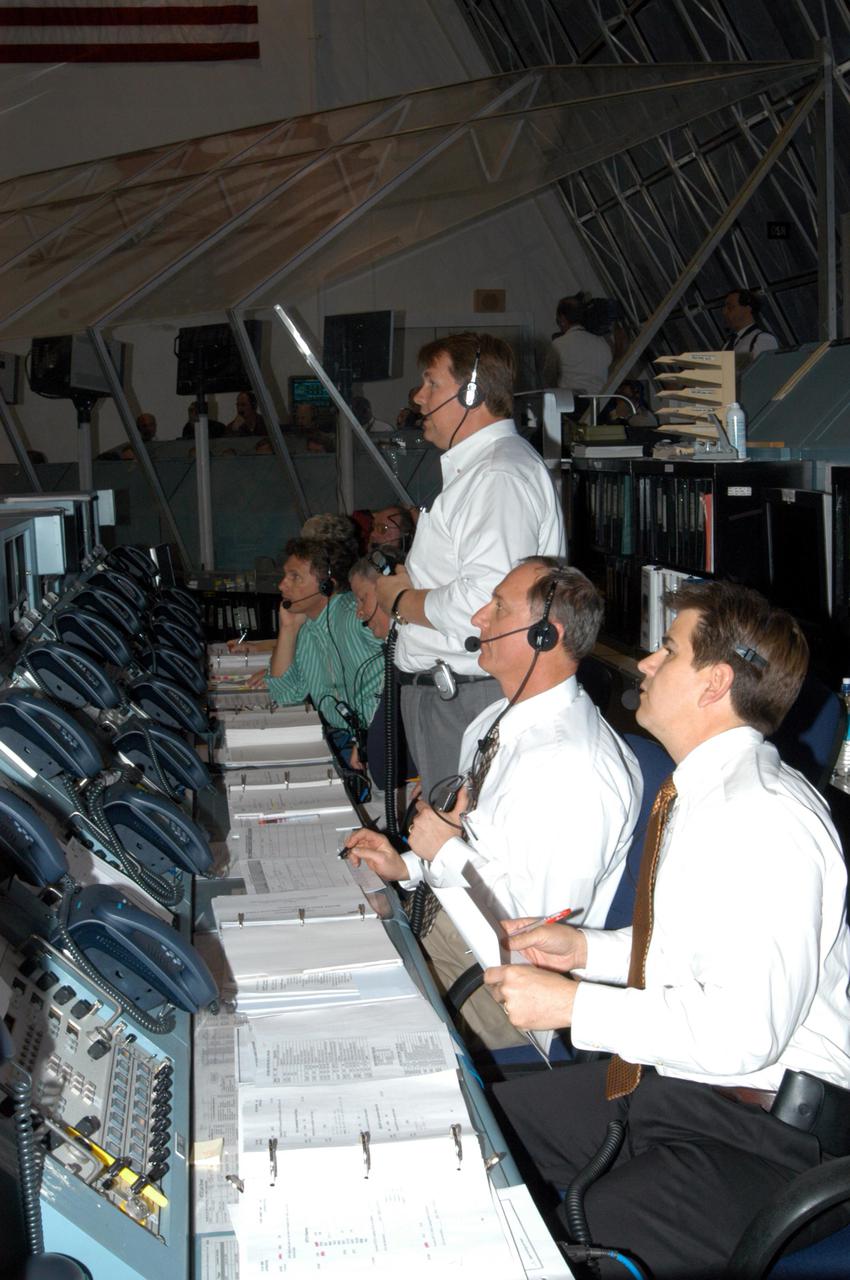
KENNEDY SPACE CENTER, FLA. - Space Shuttle Program managers, directors and engineers man the consoles in the Launch Control Center. They are taking part in an End-to-End (ETE) Mission Management Team (MMT) launch simulation at KSC. In Firing Room 1 at KSC, Shuttle launch team members put the Shuttle system through an integrated simulation. The control room is set up with software used to simulate flight and ground systems in the launch configuration. The ETE MMT simulation included L-2 and L-1 day Prelaunch MMT meetings, an external tanking_weather briefing, and a launch countdown. The ETE transitioned to the Johnson Space Center for the flight portion of the simulation, with the STS-114 crew in a simulator at JSC. Such simulations are common before a launch to keep the Shuttle launch team sharp and ready for liftoff.
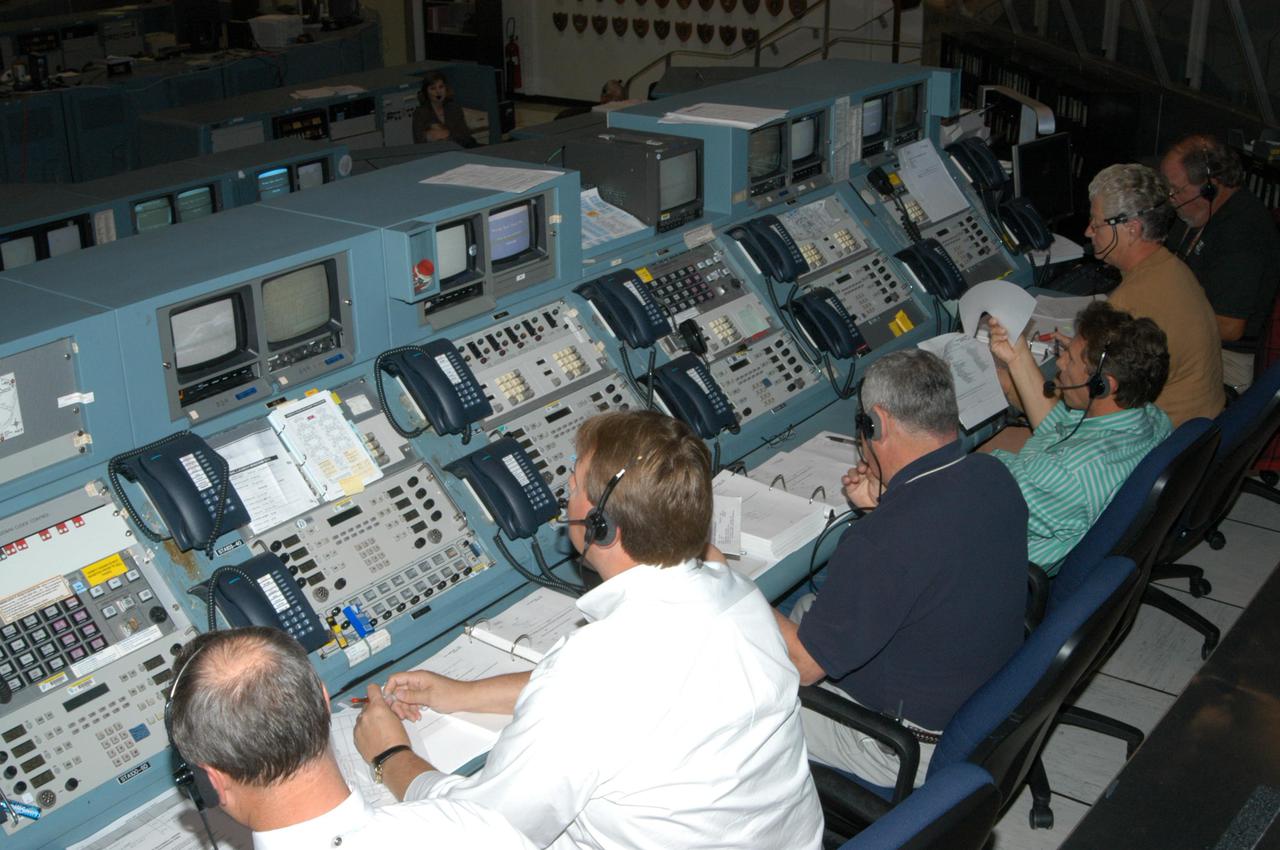
KENNEDY SPACE CENTER, FLA. - Space Shuttle Program managers, directors and engineers work the consoles in the Launch Control Center. They are taking part in an End-to-End (ETE) Mission Management Team (MMT) launch simulation at KSC. In Firing Room 1 at KSC, Shuttle launch team members put the Shuttle system through an integrated simulation. The control room is set up with software used to simulate flight and ground systems in the launch configuration. The ETE MMT simulation included L-2 and L-1 day Prelaunch MMT meetings, an external tanking_weather briefing, and a launch countdown. The ETE transitioned to the Johnson Space Center for the flight portion of the simulation, with the STS-114 crew in a simulator at JSC. Such simulations are common before a launch to keep the Shuttle launch team sharp and ready for liftoff.
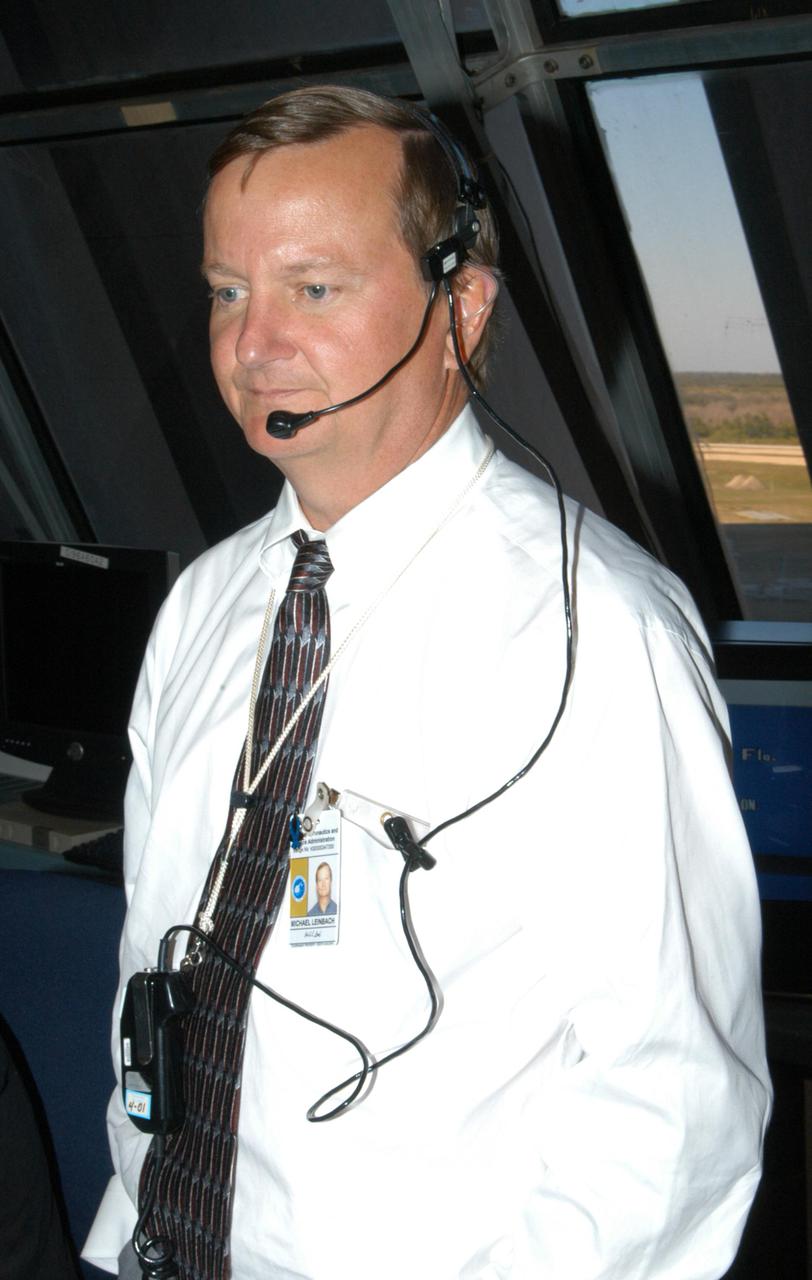
KENNEDY SPACE CENTER, FLA. - Shuttle Launch Director Mike Leinbach takes part in an End-to-End (ETE) Mission Management Team (MMT) launch simulation at KSC. In Firing Room 1 at KSC, Shuttle launch team members put the Shuttle system through an integrated simulation. The control room is set up with software used to simulate flight and ground systems in the launch configuration. The ETE MMT simulation included L-2 and L-1 day Prelaunch MMT meetings, an external tanking_weather briefing, and a launch countdown. The ETE transitioned to the Johnson Space Center for the flight portion of the simulation, with the STS-114 crew in a simulator at JSC. Such simulations are common before a launch to keep the Shuttle launch team sharp and ready for liftoff.
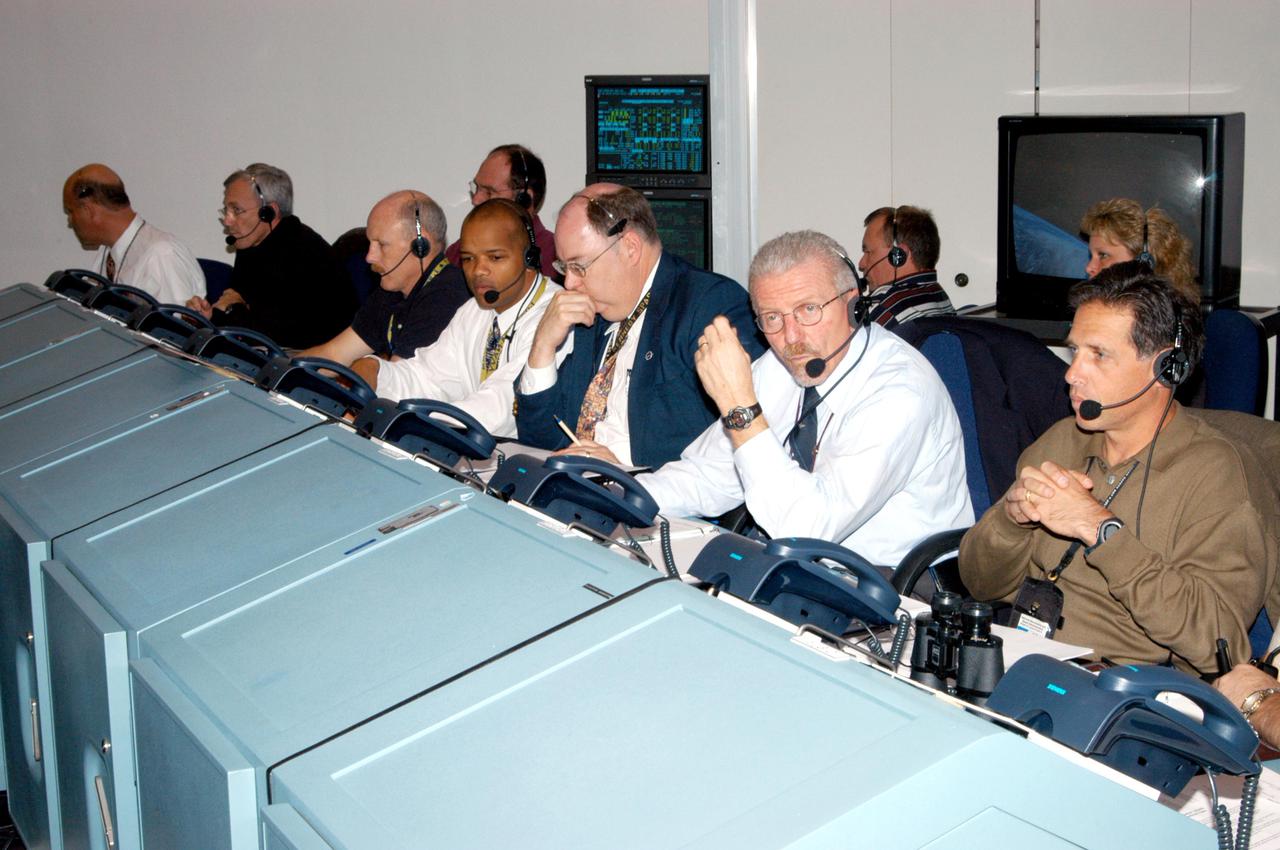
KENNEDY SPACE CENTER, FLA. - Space Shuttle Program managers, directors and engineers work the consoles in the Launch Control Center. They are taking part in an End-to-End (ETE) Mission Management Team (MMT) launch simulation at KSC. In Firing Room 1 at KSC, Shuttle launch team members put the Shuttle system through an integrated simulation. The control room is set up with software used to simulate flight and ground systems in the launch configuration. The ETE MMT simulation included L-2 and L-1 day Prelaunch MMT meetings, an external tanking_weather briefing, and a launch countdown. The ETE transitioned to the Johnson Space Center for the flight portion of the simulation, with the STS-114 crew in a simulator at JSC. Such simulations are common before a launch to keep the Shuttle launch team sharp and ready for liftoff.

JSC2010-E-014044 (25 Jan. 2010) --- Attired in training versions of their shuttle launch and entry suits, NASA astronauts Steve Lindsey (left), STS-133 commander; Eric Boe (background), pilot; Tim Kopra (right foreground) and Alvin Drew, both mission specialists, participate in a simulation exercise in the motion-base shuttle mission simulator in the Jake Garn Simulation and Training Facility at NASA?s Johnson Space Center.

JSC2000-04779 (16 June 2000) --- Astronaut Mark Polansky, STS-98 pilot, secures the head gear on a training version of the shuttle full-pressure launch and entry garment. He was about to join his crew mates for a simulation exercise in the motion-base shuttle mission simulator in the Johnson Space Center's Mission Simulation and Training Facility. Launch for STS-98 is scheduled for early next year.
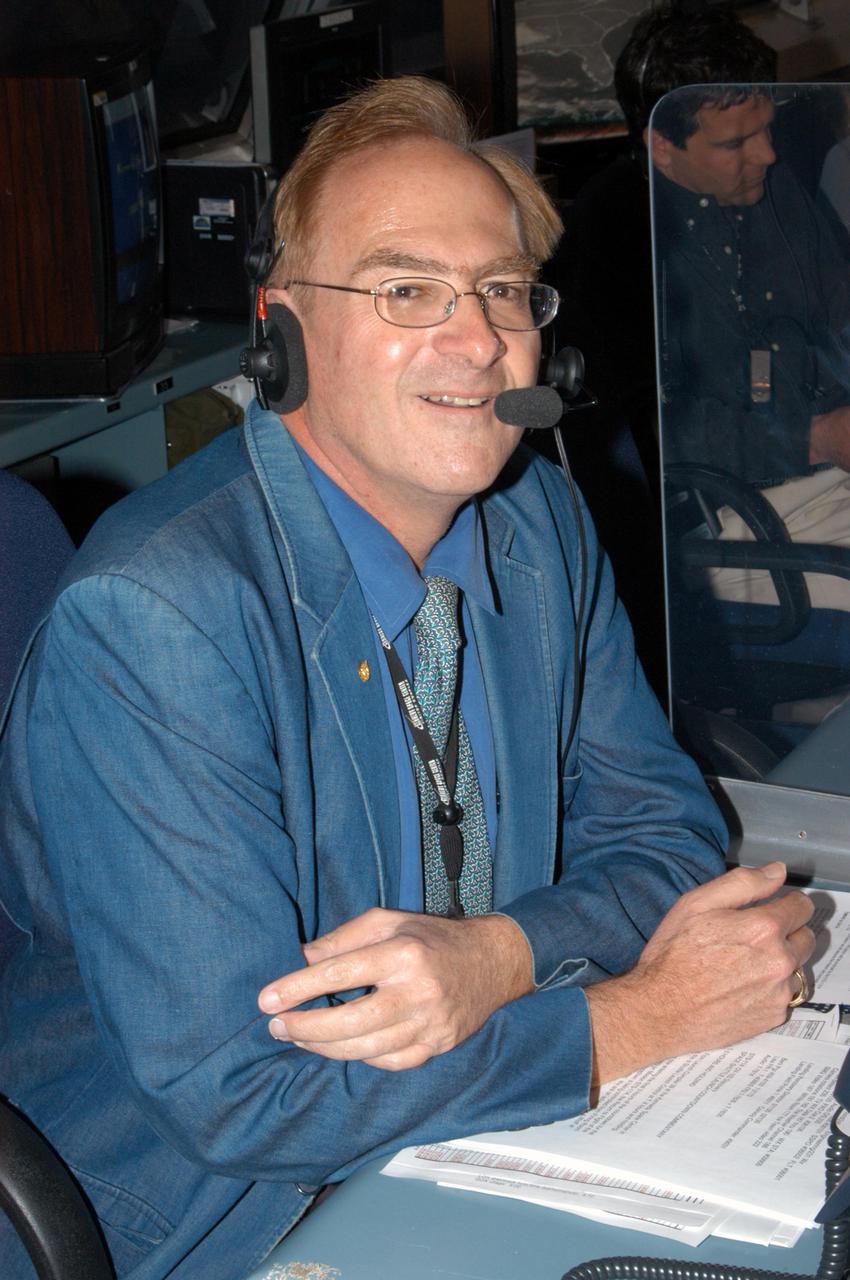
KENNEDY SPACE CENTER, FLA. - Public Information Officer George Diller plays his role as commentator during in an End-to-End (ETE) Mission Management Team (MMT) launch simulation at KSC. In Firing Room 1 at KSC, Shuttle launch team members put the Shuttle system through an integrated simulation. The control room is set up with software used to simulate flight and ground systems in the launch configuration. The ETE MMT simulation included L-2 and L-1 day Prelaunch MMT meetings, an external tanking_weather briefing, and a launch countdown. The ETE transitioned to the Johnson Space Center for the flight portion of the simulation, with the STS-114 crew in a simulator at JSC. Such simulations are common before a launch to keep the Shuttle launch team sharp and ready for liftoff.
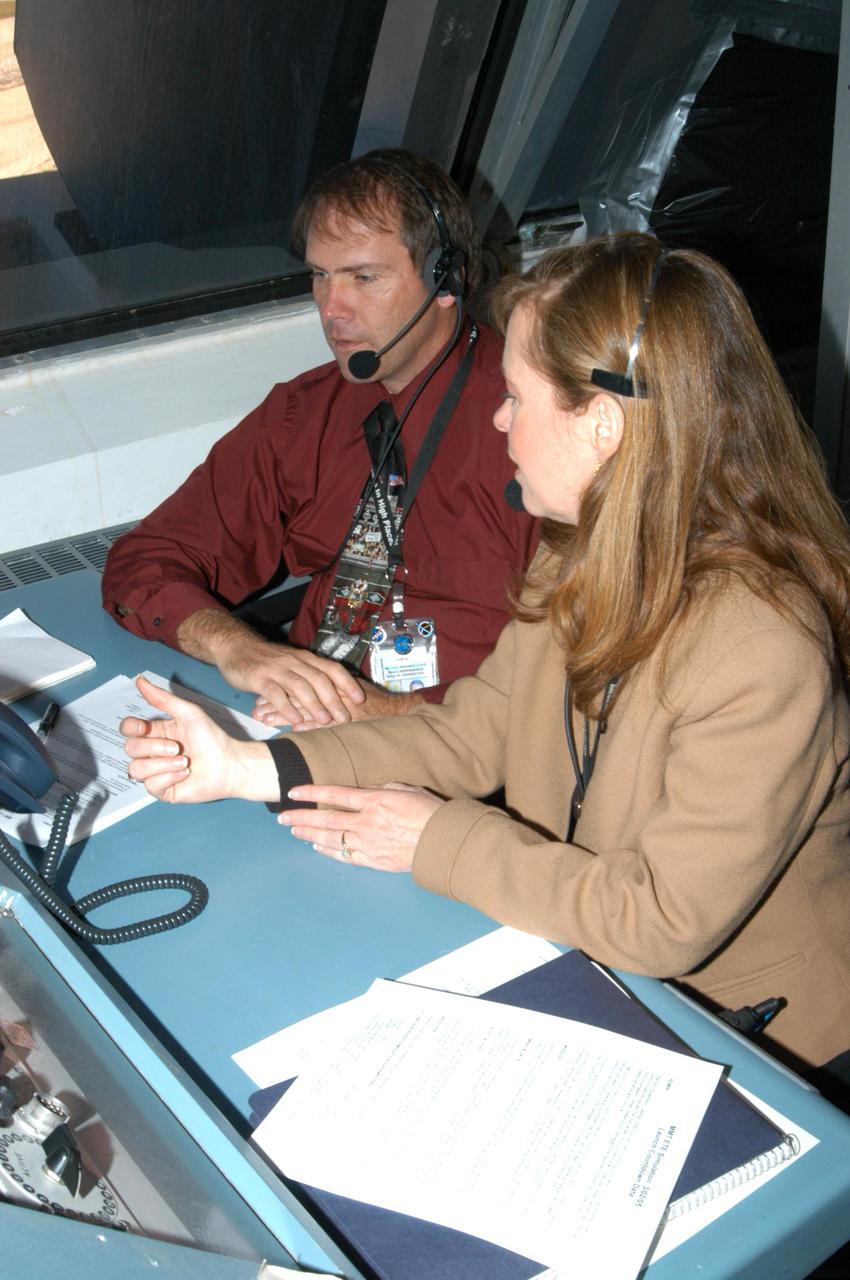
KENNEDY SPACE CENTER, FLA. - During an End-to-End (ETE) Mission Management Team (MMT) launch simulation at KSC, Mike Rein, division chief of Media Services, and Lisa Malone, director of External Relations and Business Development at KSC, work the consoles. In Firing Room 1 at KSC, Shuttle launch team members put the Shuttle system through an integrated simulation. The control room is set up with software used to simulate flight and ground systems in the launch configuration. The ETE MMT simulation included L-2 and L-1 day Prelaunch MMT meetings, an external tanking_weather briefing, and a launch countdown. The ETE transitioned to the Johnson Space Center for the flight portion of the simulation, with the STS-114 crew in a simulator at JSC. Such simulations are common before a launch to keep the Shuttle launch team sharp and ready for liftoff.
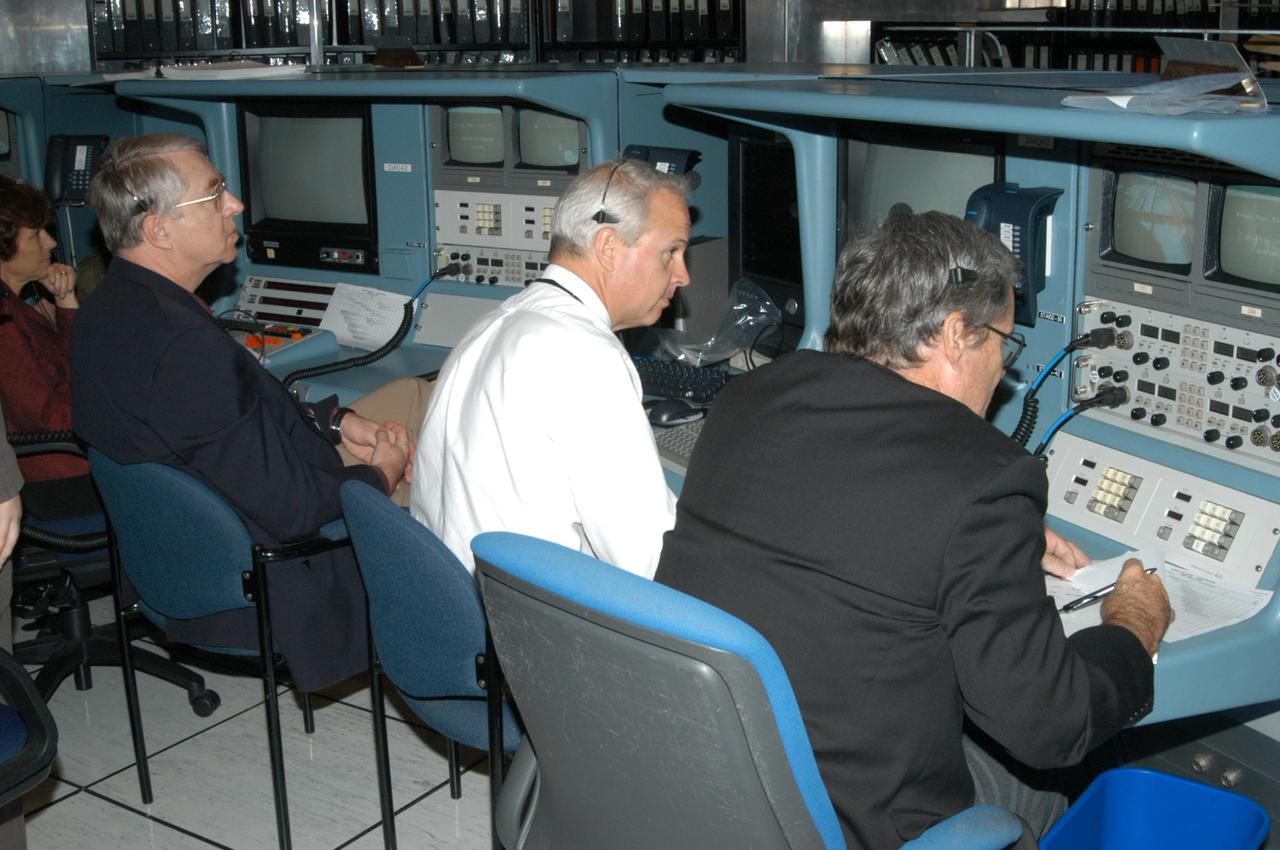
KENNEDY SPACE CENTER, FLA. - Sitting at consoles, journalists Marsha Dunn, Craig Covault, Mike Cabbage and Bill Harwood witness an End-to-End (ETE) Mission Management Team (MMT) launch simulation at KSC. In Firing Room 1 at KSC, Shuttle launch team members put the Shuttle system through an integrated simulation. The control room is set up with software used to simulate flight and ground systems in the launch configuration. The ETE MMT simulation included L-2 and L-1 day Prelaunch MMT meetings, an external tanking_weather briefing, and a launch countdown. The ETE transitioned to the Johnson Space Center for the flight portion of the simulation, with the STS-114 crew in a simulator at JSC. Such simulations are common before a launch to keep the Shuttle launch team sharp and ready for liftoff.
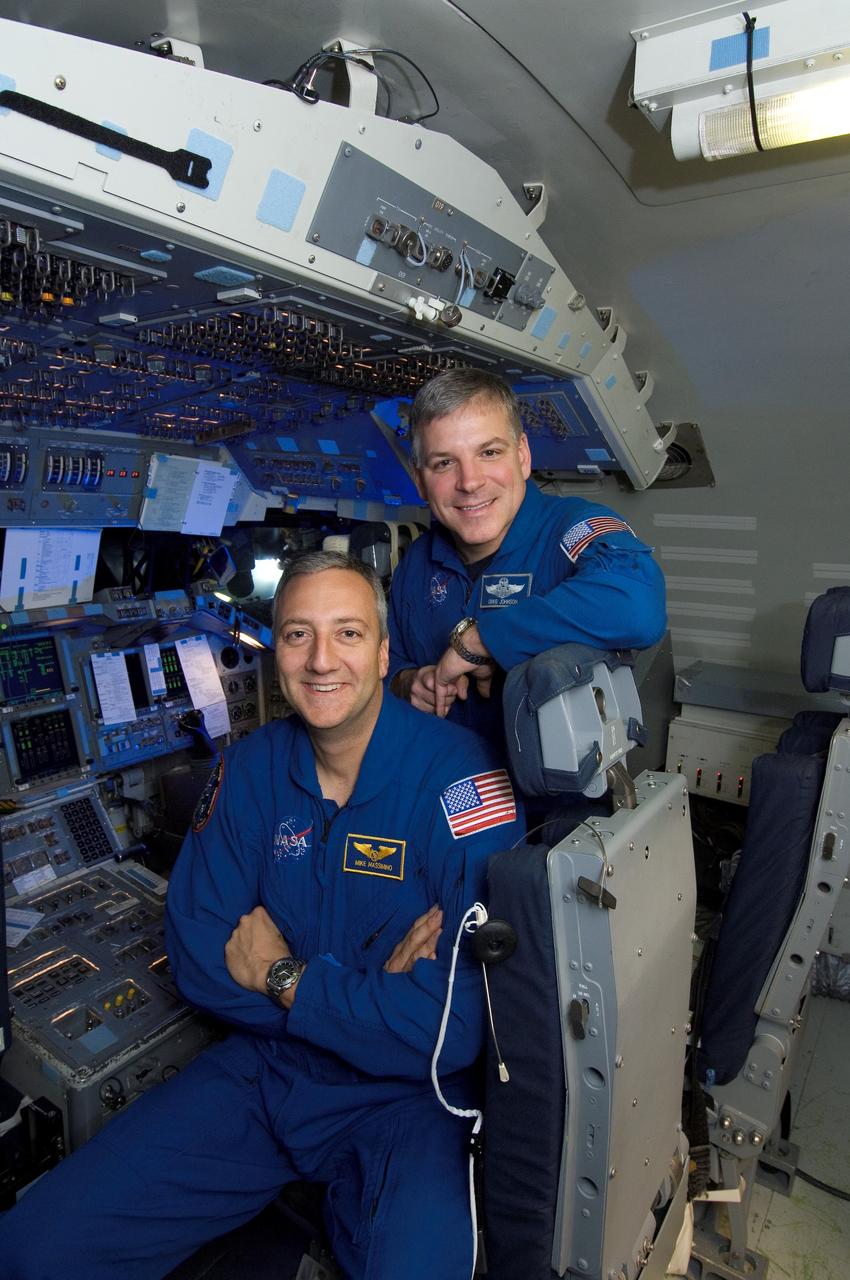
JSC2007-E-113866 (19 Dec. 2007) --- Astronauts Michael J. Massimino (seated), STS-125 mission specialist; and Gregory H. Johnson, STS-123 pilot, pose for a photo in the motion-base shuttle mission simulator (SMS) in the Jake Garn Simulation and Training Facility at the Johnson Space Center.
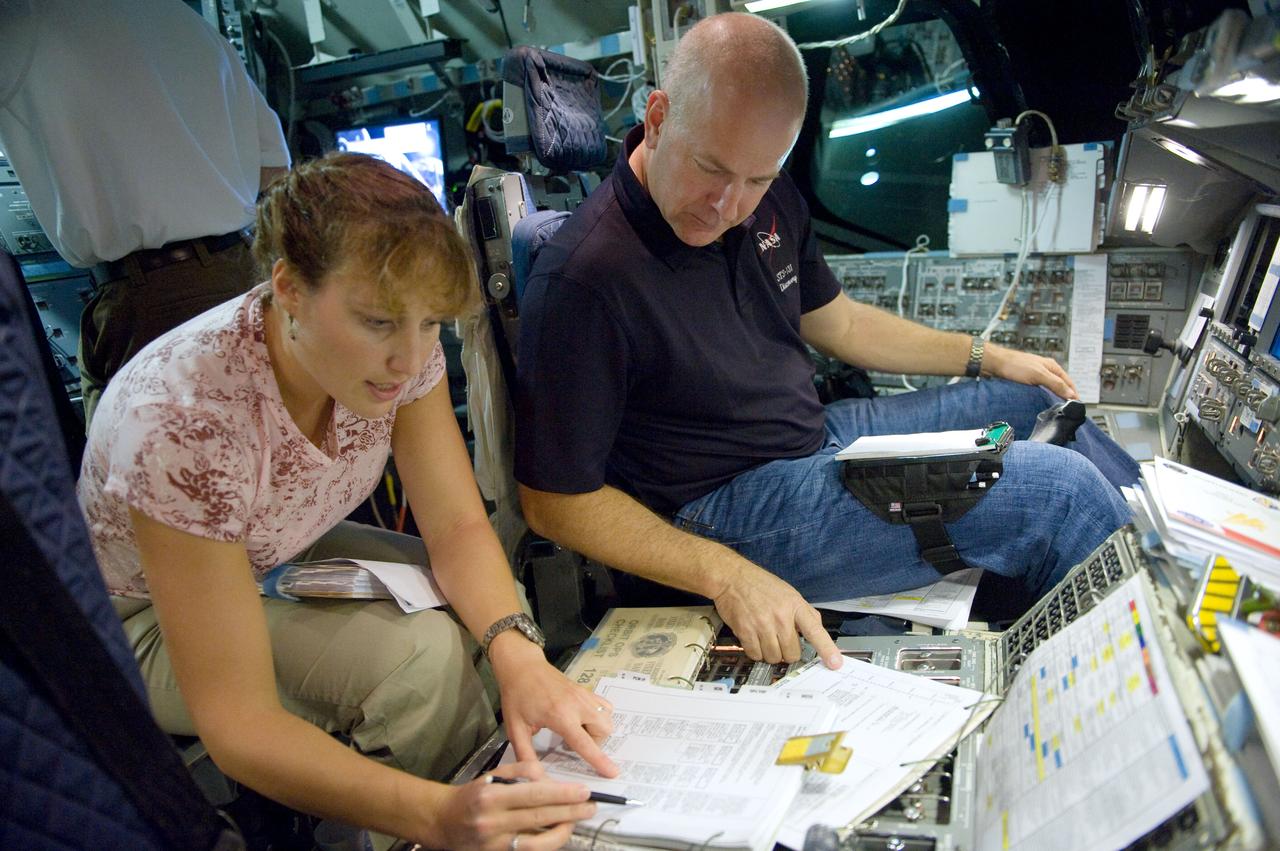
JSC2009-E-207361 (11 Sept. 2009) --- NASA astronauts Alan Poindexter, STS-131 commander; and Dorothy Metcalf-Lindenburger, mission specialist, participate in a training session in the shuttle mission simulator (SMS) in the Jake Garn Simulation and Training Facility at NASA?s Johnson Space Center.
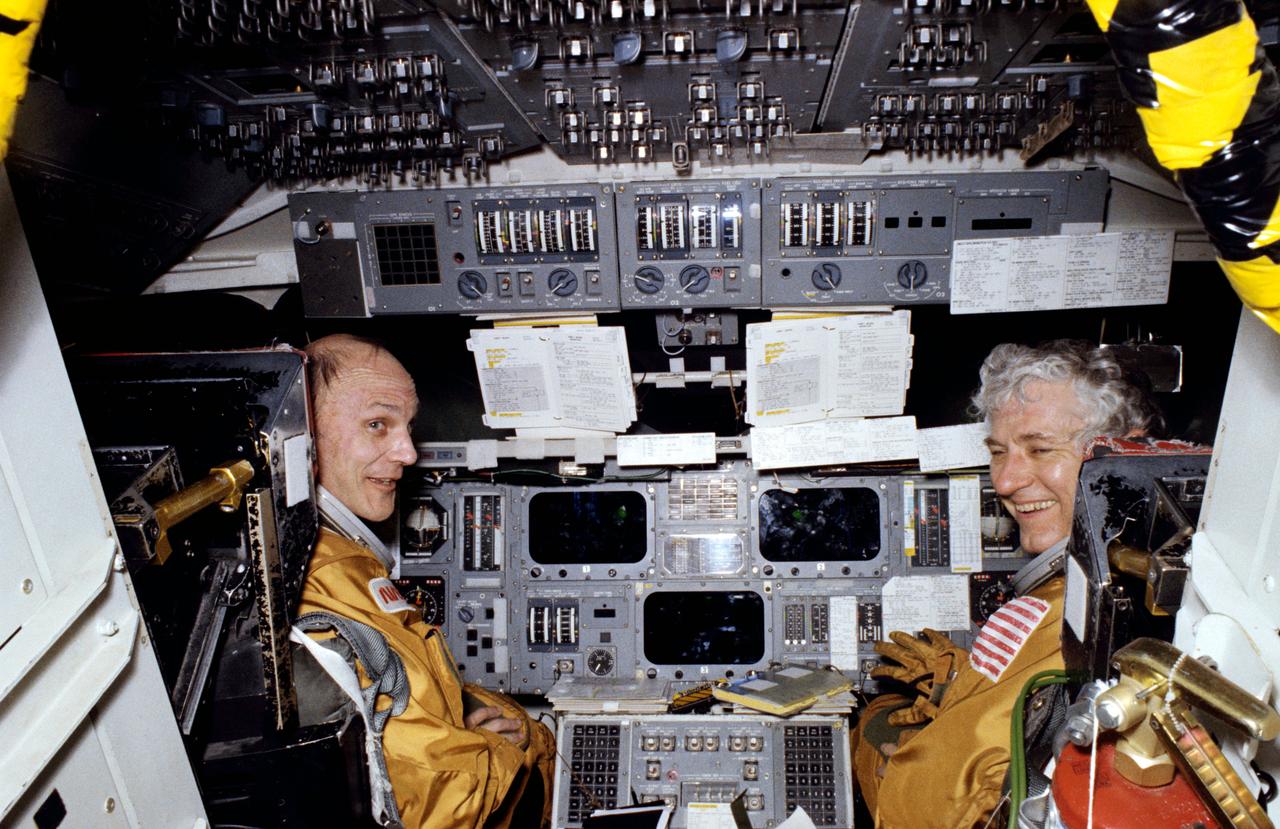
S82-31527 (15 May 1982) --- Astronauts Thomas K. Mattingly II (left) and Henry W. Hartsfield Jr., STS-4 commander and pilot, respectively, get in some training time in the motion base Shuttle Mission Simulator (SMS) at the Johnson Space Center's Mission Simulations and Training Facility. Photo credit: NASA
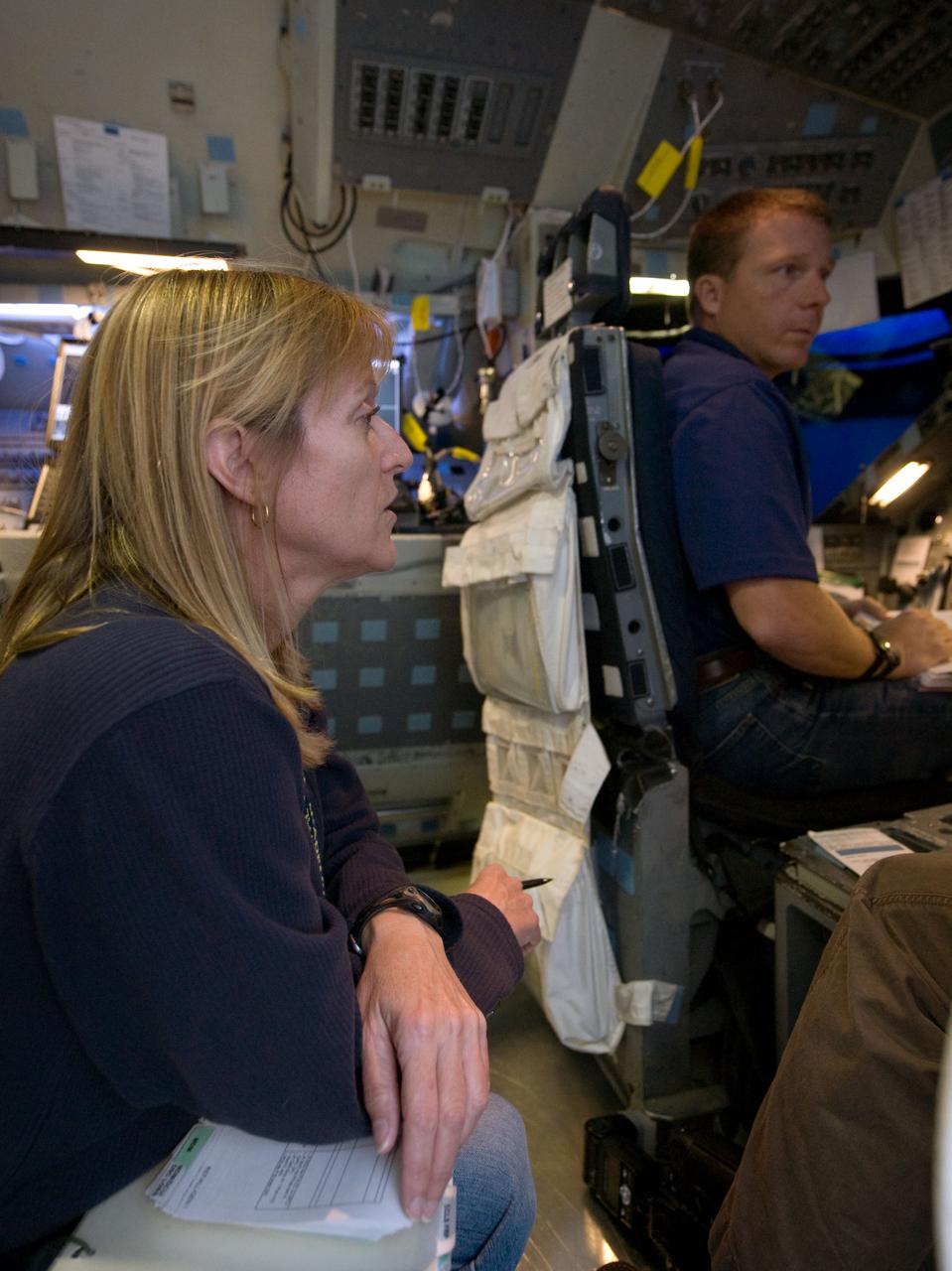
JSC2009-E-240768 (12 Nov. 2009) --- Astronauts Terry Virts, STS-130 pilot; and Kathryn Hire, mission specialist, participate in a training session in the fixed-base shuttle mission simulator (SMS) in the Jake Garn Simulation and Training Facility at Johnson Space Center.
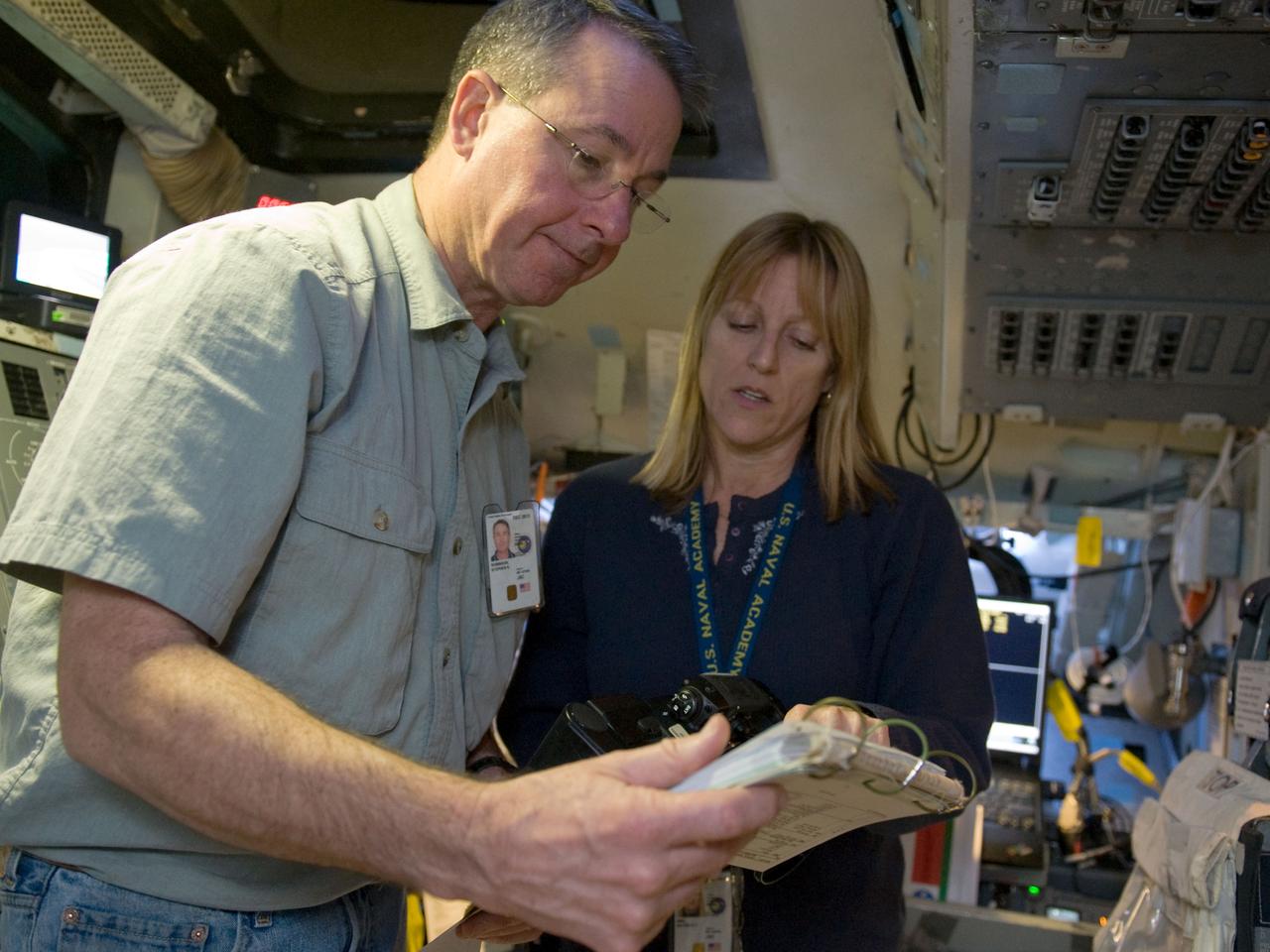
JSC2009-E-240765 (12 Nov. 2009) --- Astronauts Stephen Robinson and Kathryn Hire, both STS-130 mission specialists, read a procedure checklist during a training session in a fixed-base shuttle mission simulator (SMS) training session in the Jake Garn Simulation and Training Facility at NASA's Johnson Space Center.
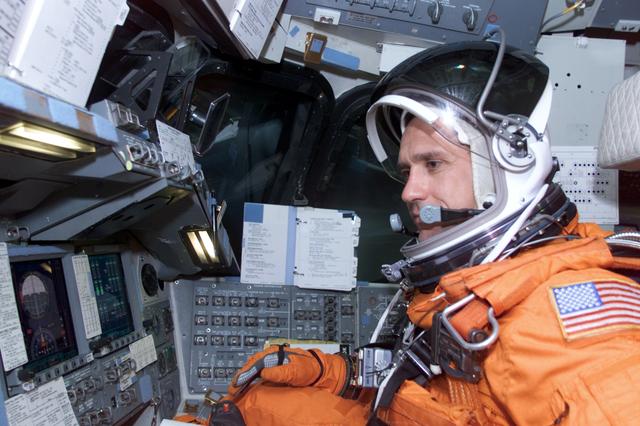
JSC2002-E-33379 (29 July 2002) --- Astronaut William A. Oefelein, STS-116 pilot, occupies the pilot’s station during a mission training session in the Shuttle Mission Simulator (SMS) in the Jake Garn Simulation and Training Facility at Johnson Space Center (JSC).
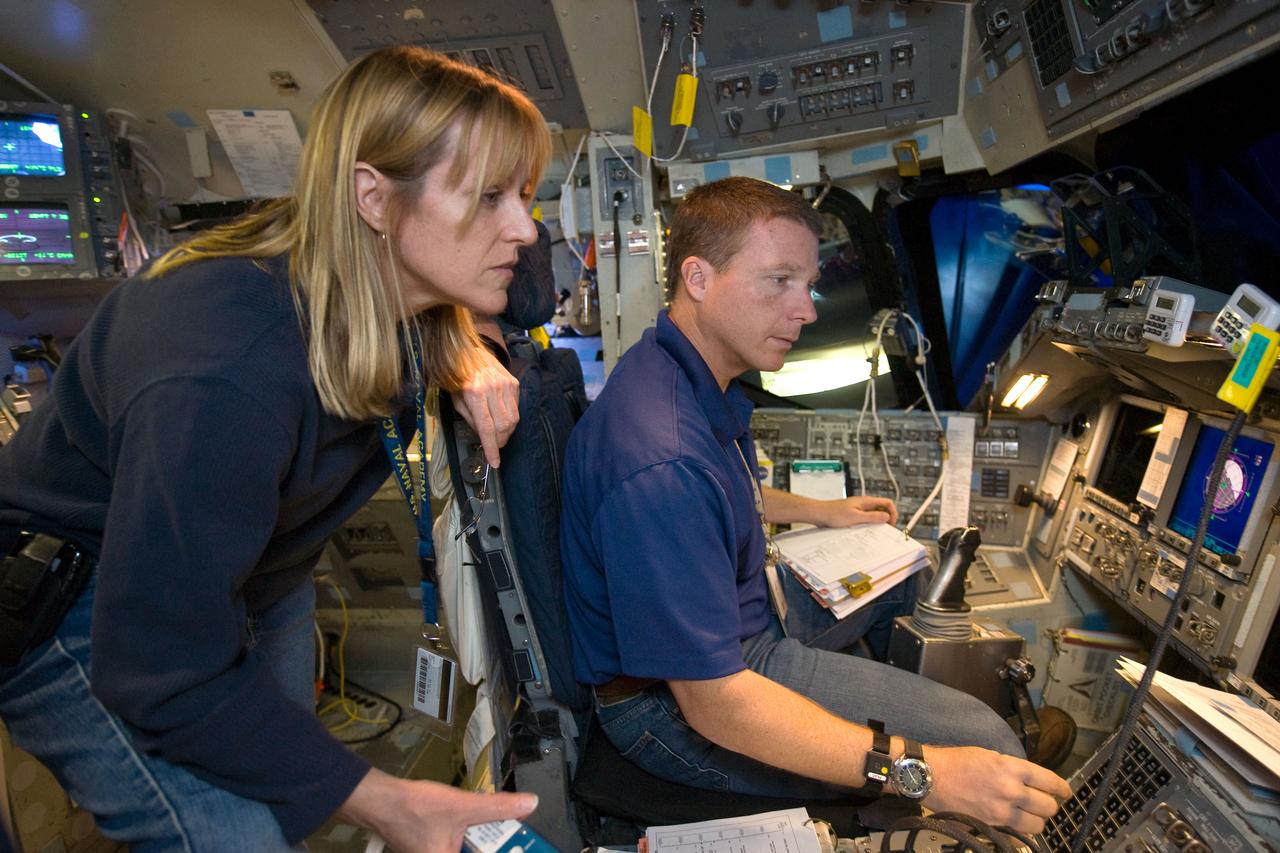
JSC2009-E-240767 (12 Nov. 2009) --- Astronauts Terry Virts, STS-130 pilot; and Kathryn Hire, mission specialist, participate in a training session in the fixed-base shuttle mission simulator (SMS) in the Jake Garn Simulation and Training Facility at Johnson Space Center.
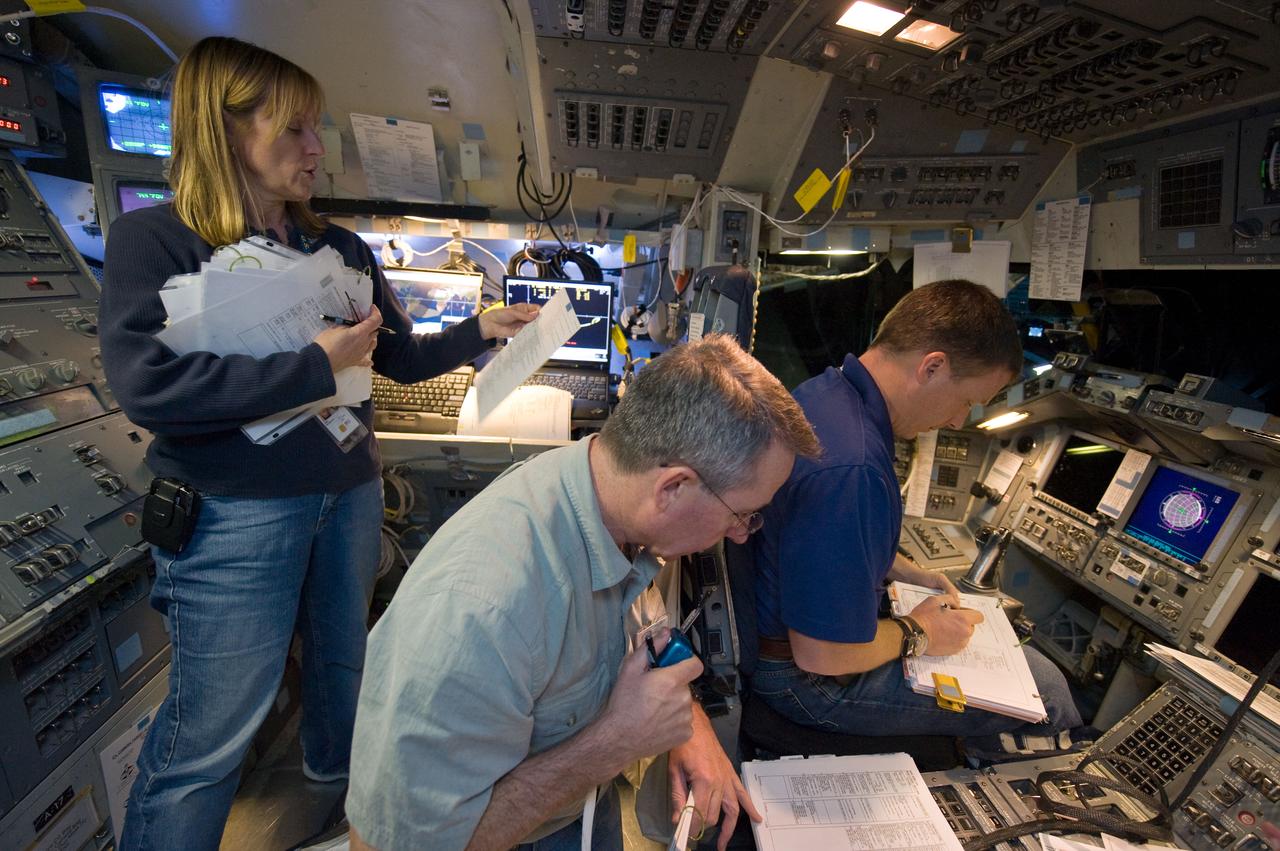
JSC2009-E-240771 (12 Nov. 2009) --- Astronauts Terry Virts (right), STS-130 pilot; Kathryn Hire and Stephen Robinson, both mission specialists, participate in a training session in the fixed-base shuttle mission simulator (SMS) in the Jake Garn Simulation and Training Facility at Johnson Space Center.
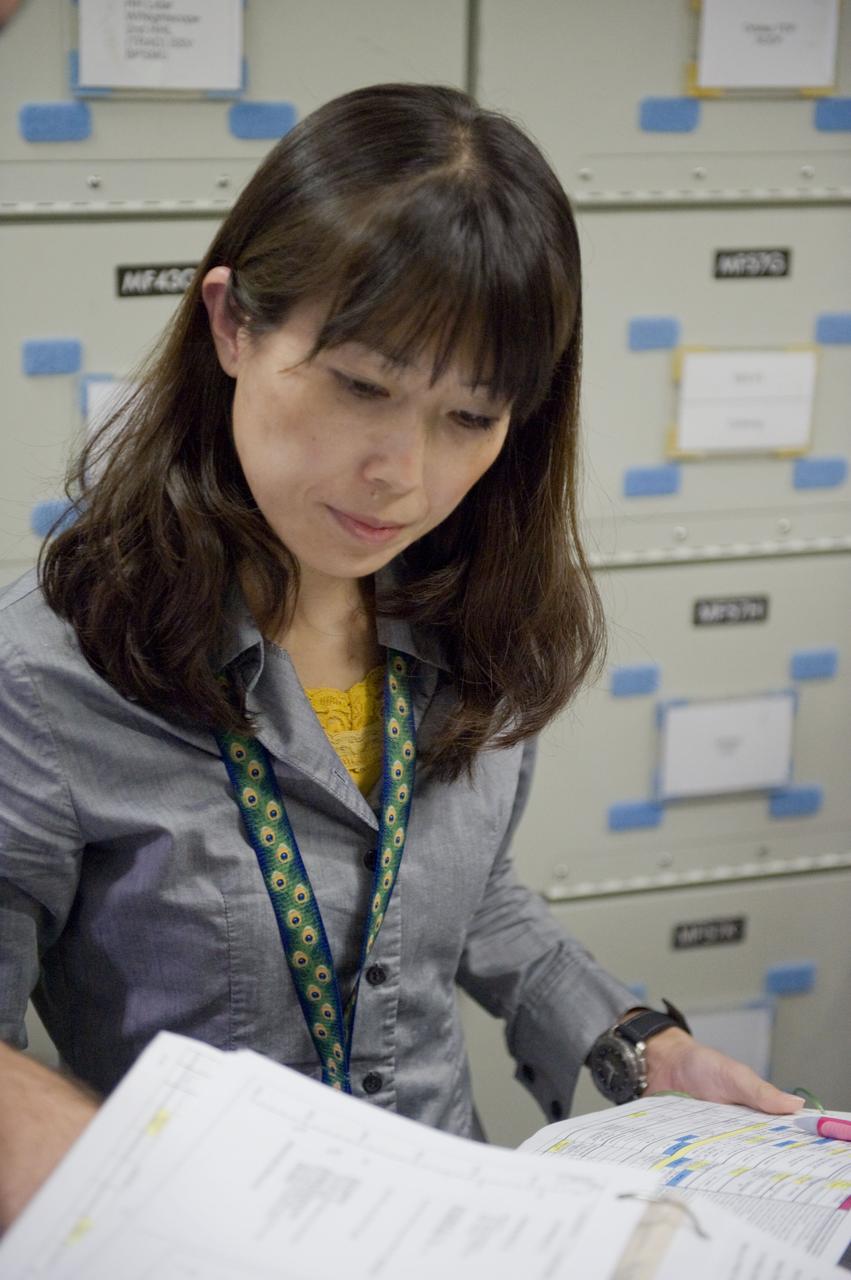
JSC2009-E-207342 (11 Sept. 2009) --- Japan Aerospace Exploration Agency (JAXA) astronaut Naoko Yamazaki, STS-131 mission specialist, participates in a training session in the shuttle mission simulator (SMS) in the Jake Garn Simulation and Training Facility at NASA?s Johnson Space Center.
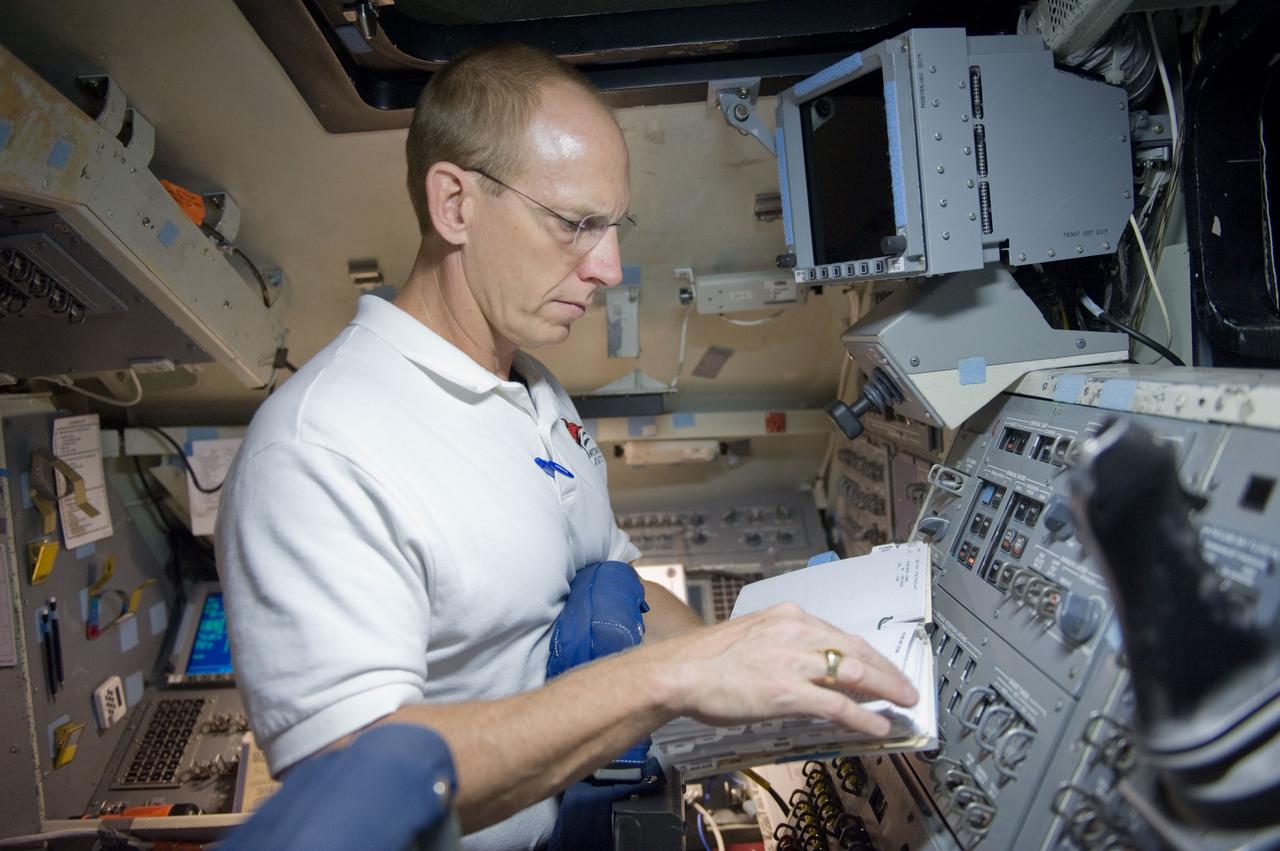
JSC2009-E-207371 (11 Sept. 2009) --- NASA astronaut Clay Anderson, STS-131 mission specialist, reads a procedures checklist during a training session in the shuttle mission simulator (SMS) in the Jake Garn Simulation and Training Facility at NASA?s Johnson Space Center.
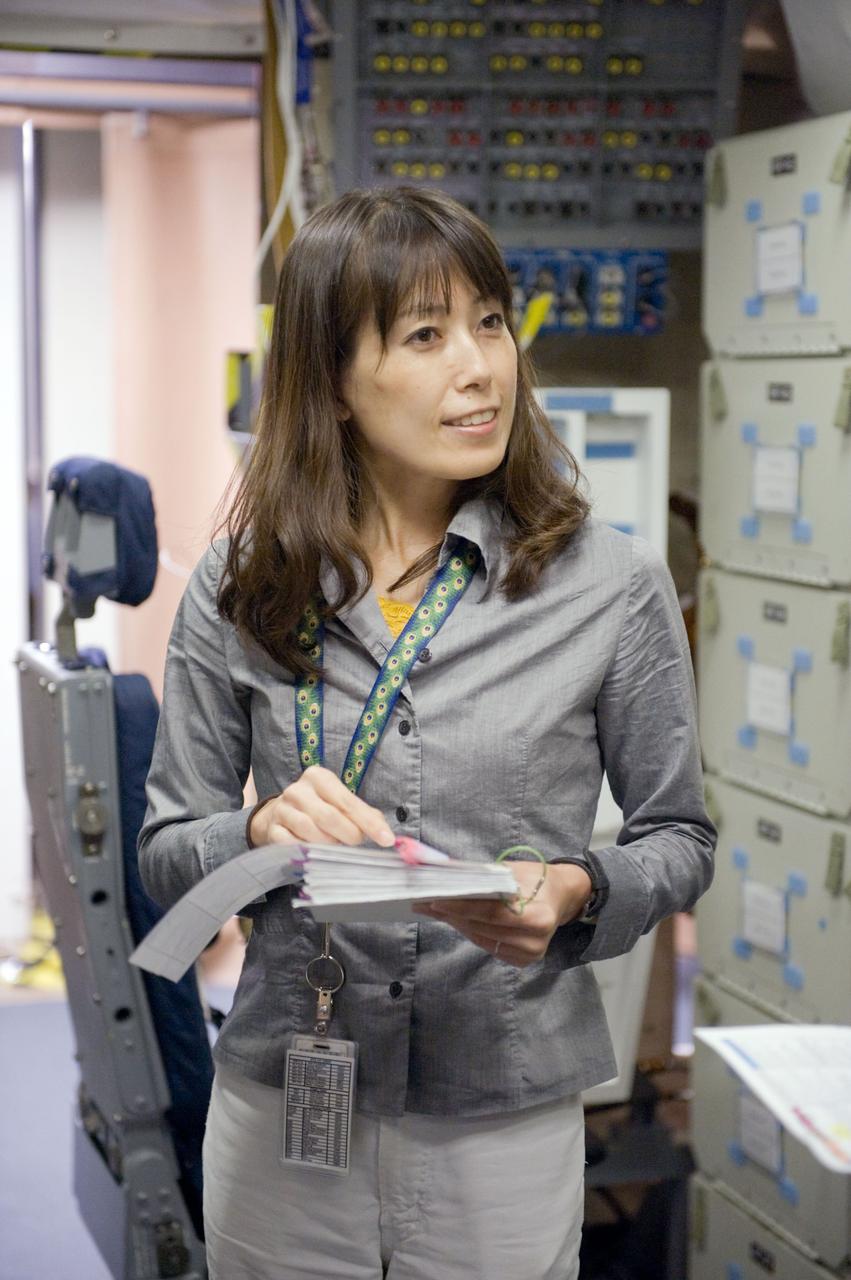
JSC2009-E-207346 (11 Sept. 2009) --- Japan Aerospace Exploration Agency (JAXA) astronaut Naoko Yamazaki, STS-131 mission specialist, participates in a training session in the shuttle mission simulator (SMS) in the Jake Garn Simulation and Training Facility at NASA?s Johnson Space Center.
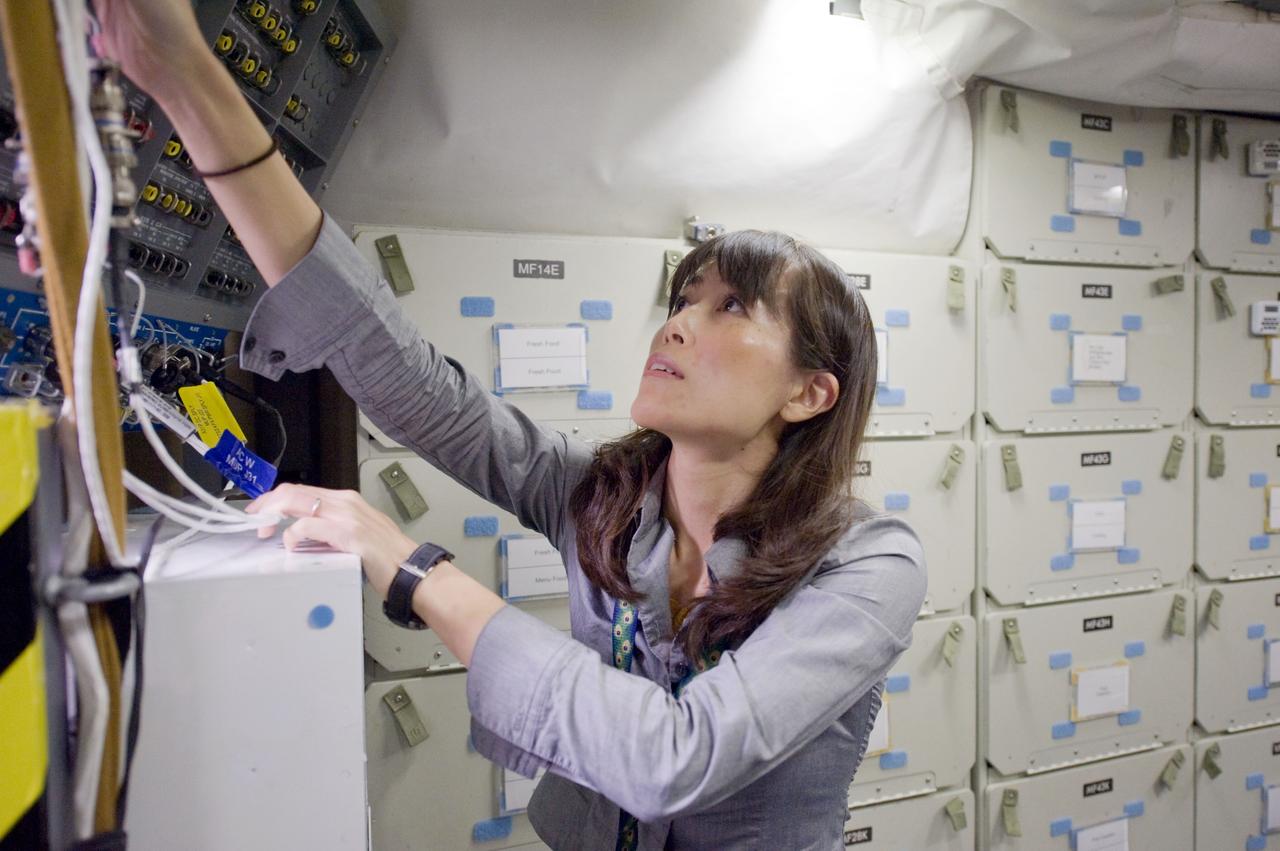
JSC2009-E-207336 (11 Sept. 2009) --- Japan Aerospace Exploration Agency (JAXA) astronaut Naoko Yamazaki, STS-131 mission specialist, participates in a training session in the shuttle mission simulator (SMS) in the Jake Garn Simulation and Training Facility at NASA?s Johnson Space Center.
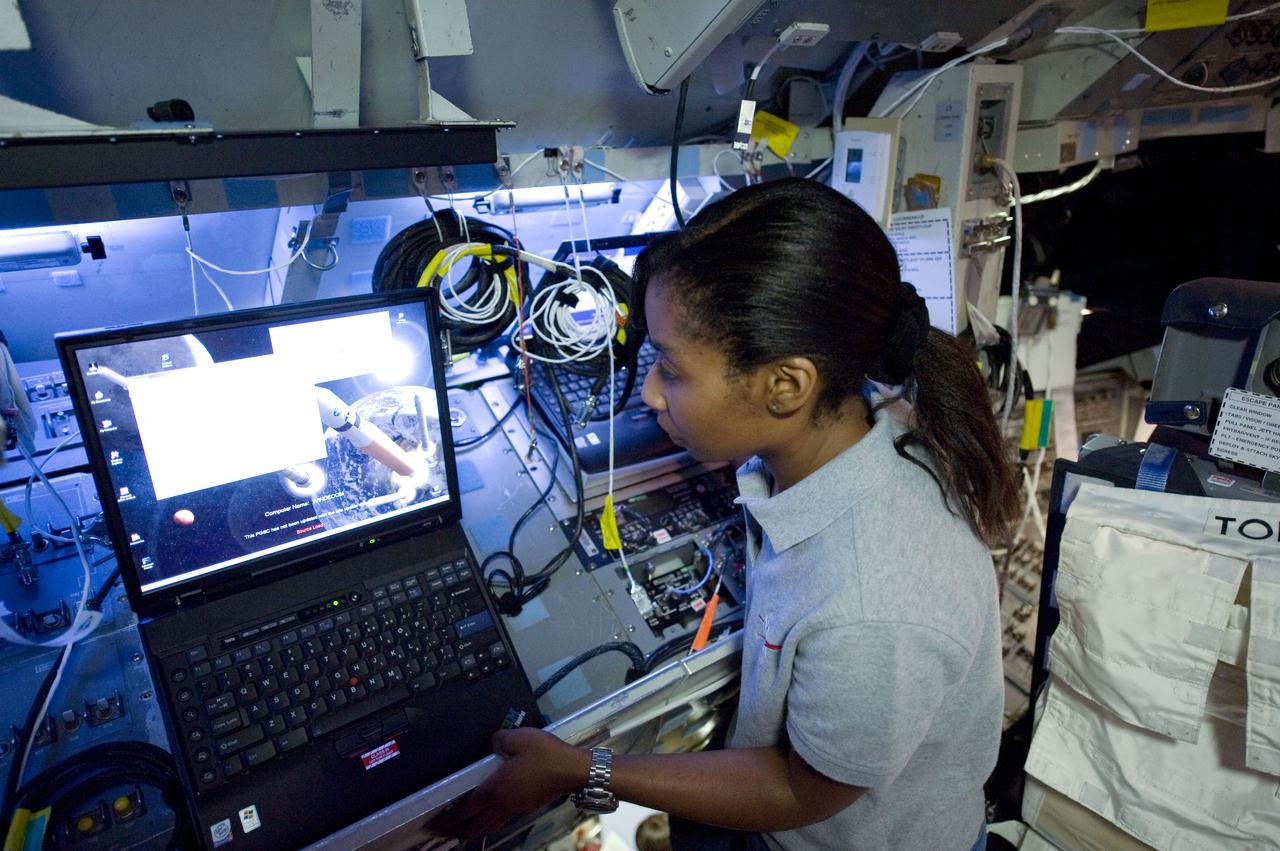
JSC2009-E-207322 (11 Sept. 2009) --- NASA astronaut Stephanie Wilson, STS-131 mission specialist, uses a computer during a training session in the shuttle mission simulator (SMS) in the Jake Garn Simulation and Training Facility at NASA?s Johnson Space Center.
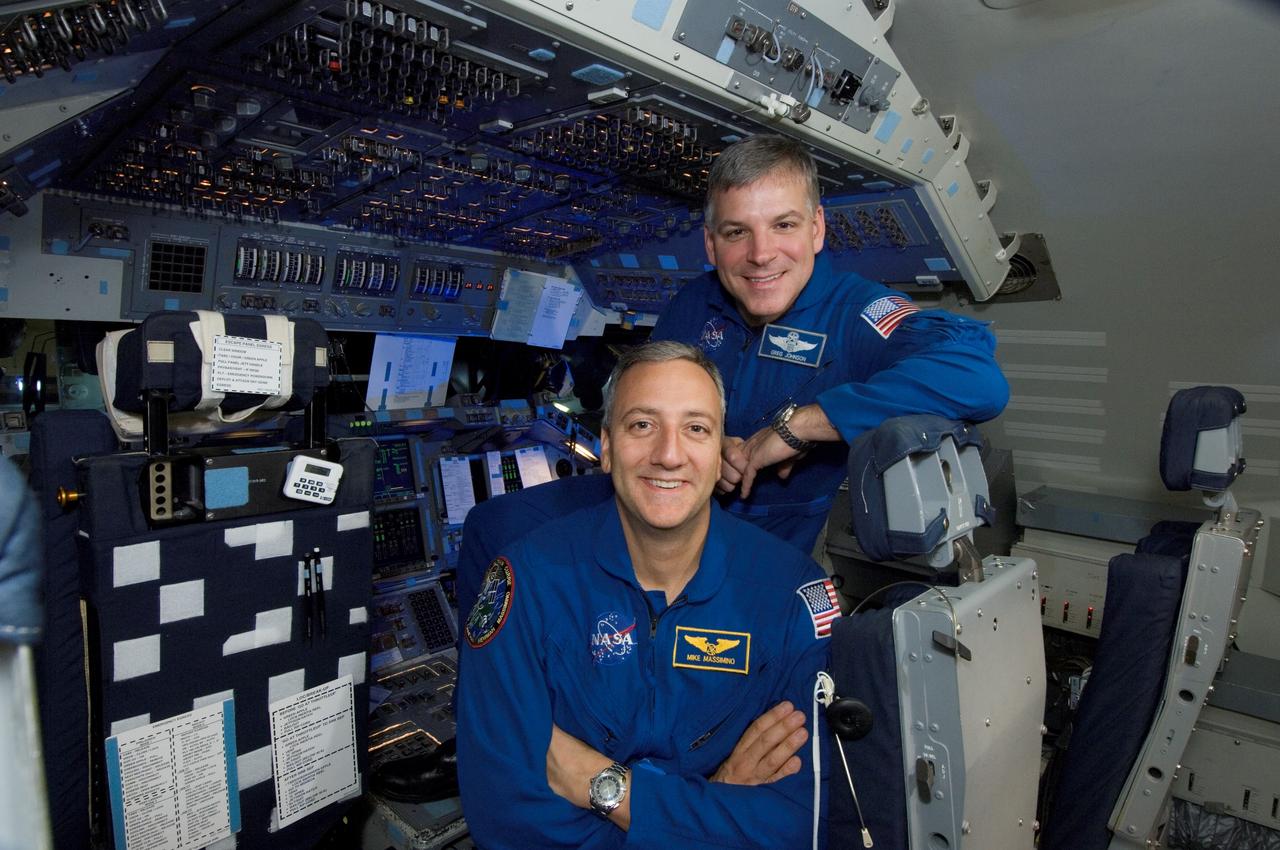
JSC2007-E-113868 (19 Dec. 2007) --- Astronauts Michael J. Massimino (seated), STS-125 mission specialist; and Gregory H. Johnson, STS-123 pilot, pose for a photo in the motion-base shuttle mission simulator (SMS) in the Jake Garn Simulation and Training Facility at the Johnson Space Center.
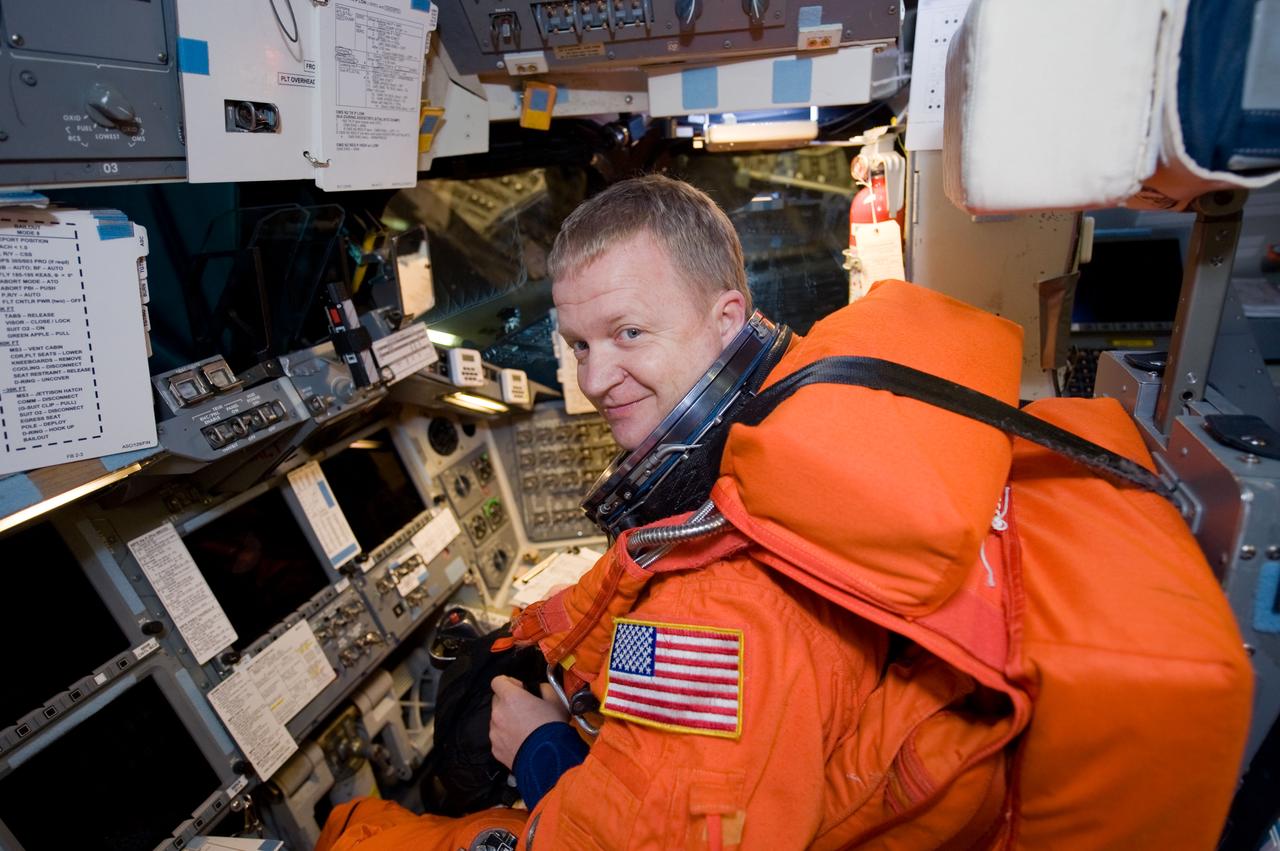
JSC2010-E-014039 (25 Jan. 2010) --- Attired in a training version of his shuttle launch and entry suit, NASA astronaut Eric Boe, STS-133 pilot, occupies the pilot?s station during a simulation exercise in the motion-base shuttle mission simulator in the Jake Garn Simulation and Training Facility at NASA?s Johnson Space Center.
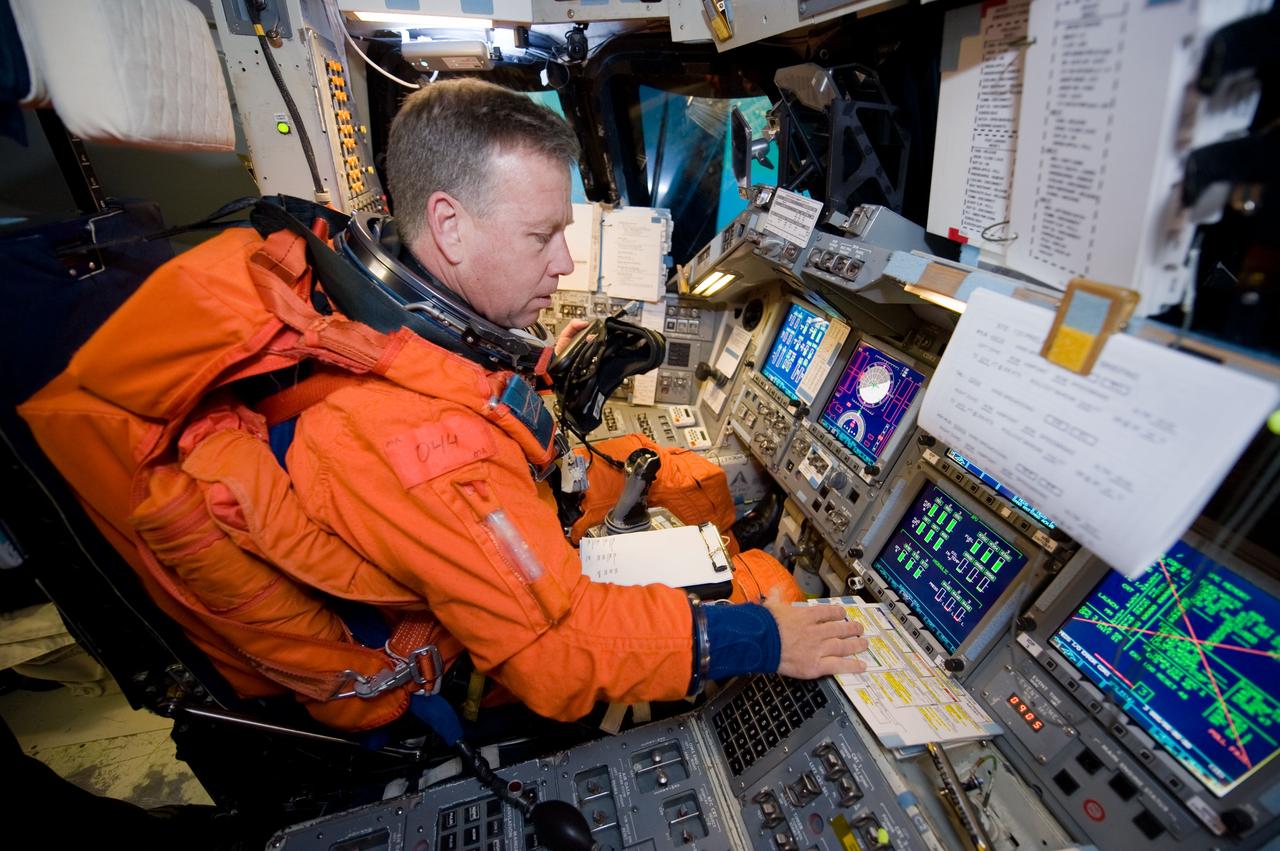
JSC2010-E-014040 (25 Jan. 2010) --- Attired in a training version of his shuttle launch and entry suit, NASA astronaut Steven Lindsey, STS-133 commander, occupies the commander?s station during a simulation exercise in the motion-base shuttle mission simulator in the Jake Garn Simulation and Training Facility at NASA?s Johnson Space Center.
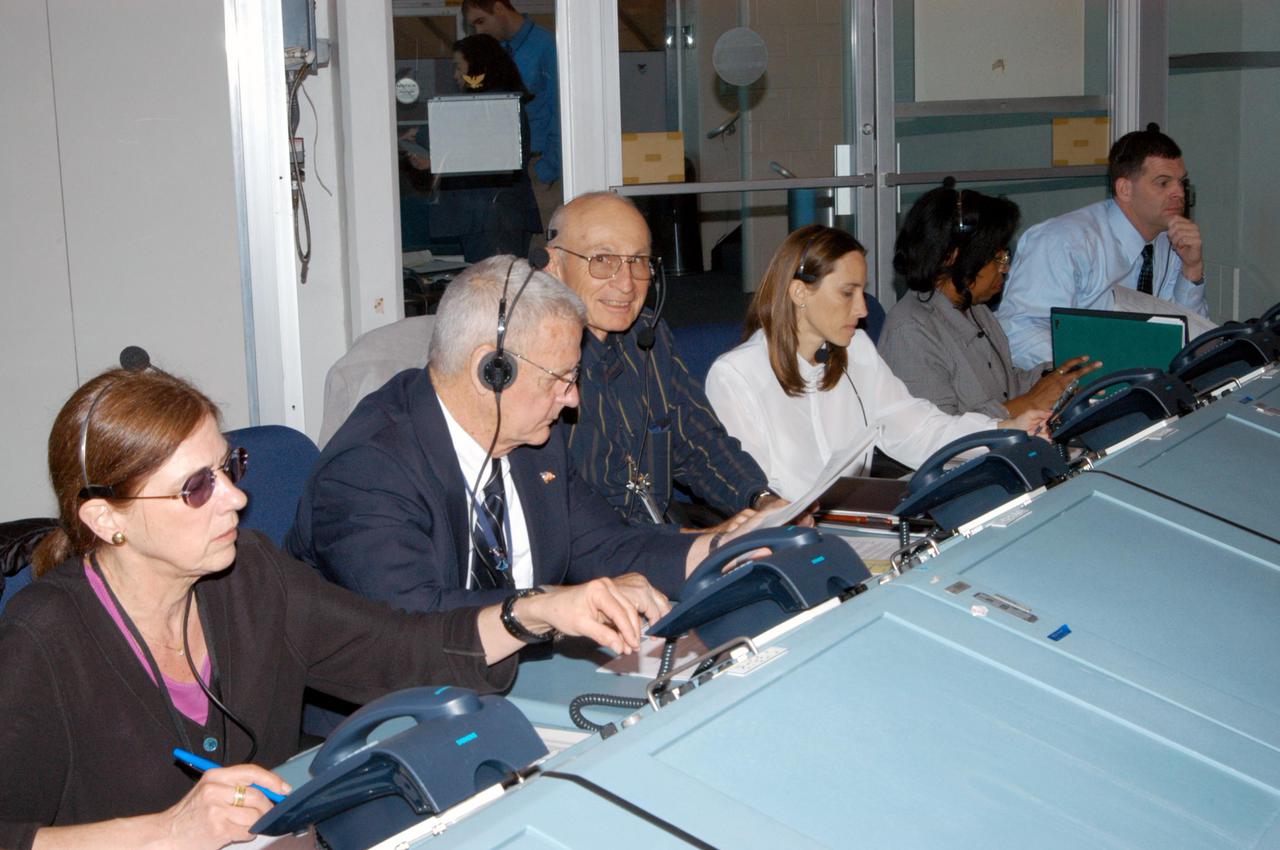
KENNEDY SPACE CENTER, FLA. - Space Shuttle Program managers, directors and engineers man the consoles in the Launch Control Center. They are taking part in an End-to-End (ETE) Mission Management Team (MMT) launch simulation at KSC. In Firing Room 1 at KSC, Shuttle launch team members put the Shuttle system through an integrated simulation. The control room is set up with software used to simulate flight and ground systems in the launch configuration. Seated in the center is Bob Sieck, a member of the Stafford-Covey Shuttle Return to Flight Task Group; at his left is Forrest McCartney, former Kennedy Space Center director. Sieck served as launch director and director of Shuttle Processing in the 80s and 90s. The ETE MMT simulation included L-2 and L-1 day Prelaunch MMT meetings, an external tanking_weather briefing, and a launch countdown. The ETE transitioned to the Johnson Space Center for the flight portion of the simulation, with the STS-114 crew in a simulator at JSC. Such simulations are common before a launch to keep the Shuttle launch team sharp and ready for liftoff.
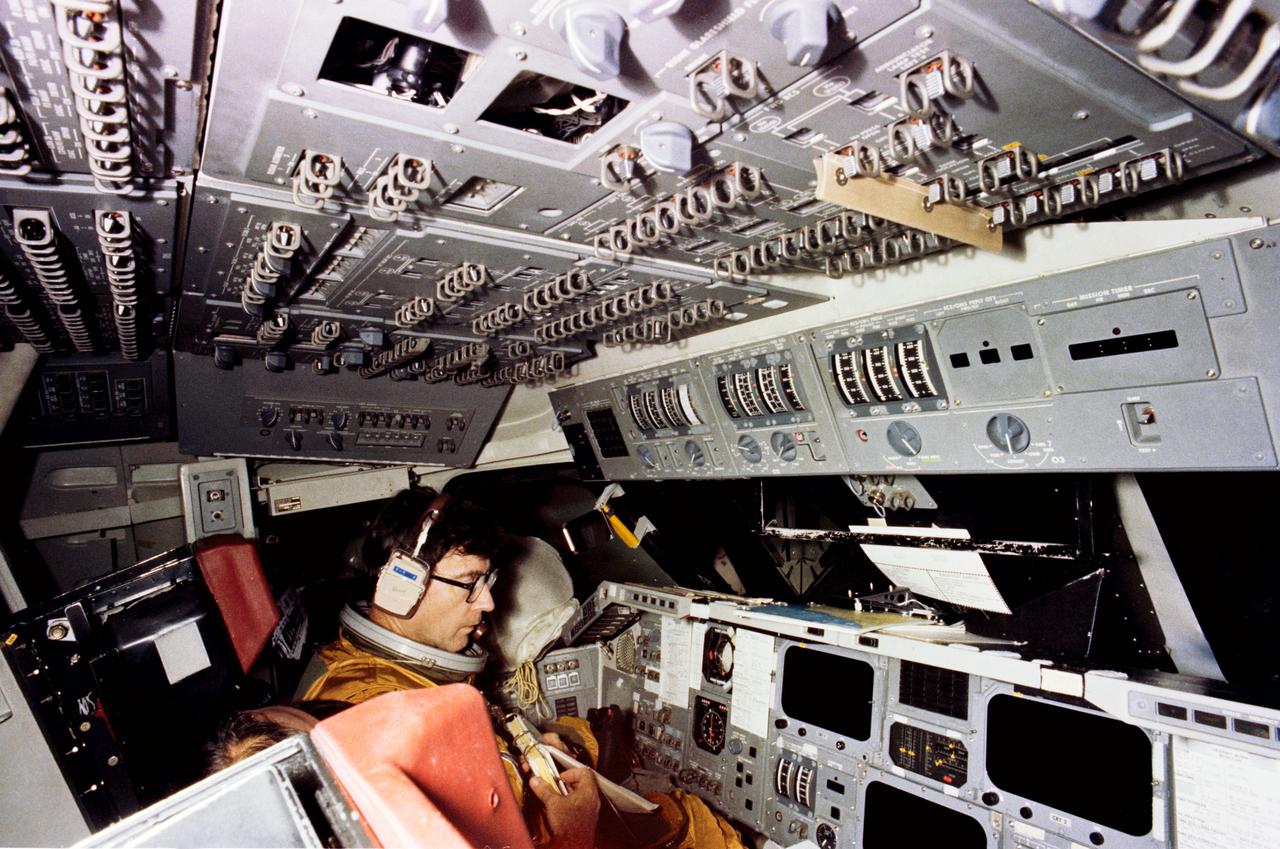
S79-37006 (29 Sept. 1979) --- Astronaut John W. Young, commander of STS-1, goes through a simulation exercises in the shuttle mission simulator (SMS) in the mission simulation and training facility at NASA's Johnson Space Center (JSC). Young and astronaut Robert L. Crippen, prime crew pilot, are in training for the first of series of orbital test missions aboard the Columbia. Photo credit: NASA
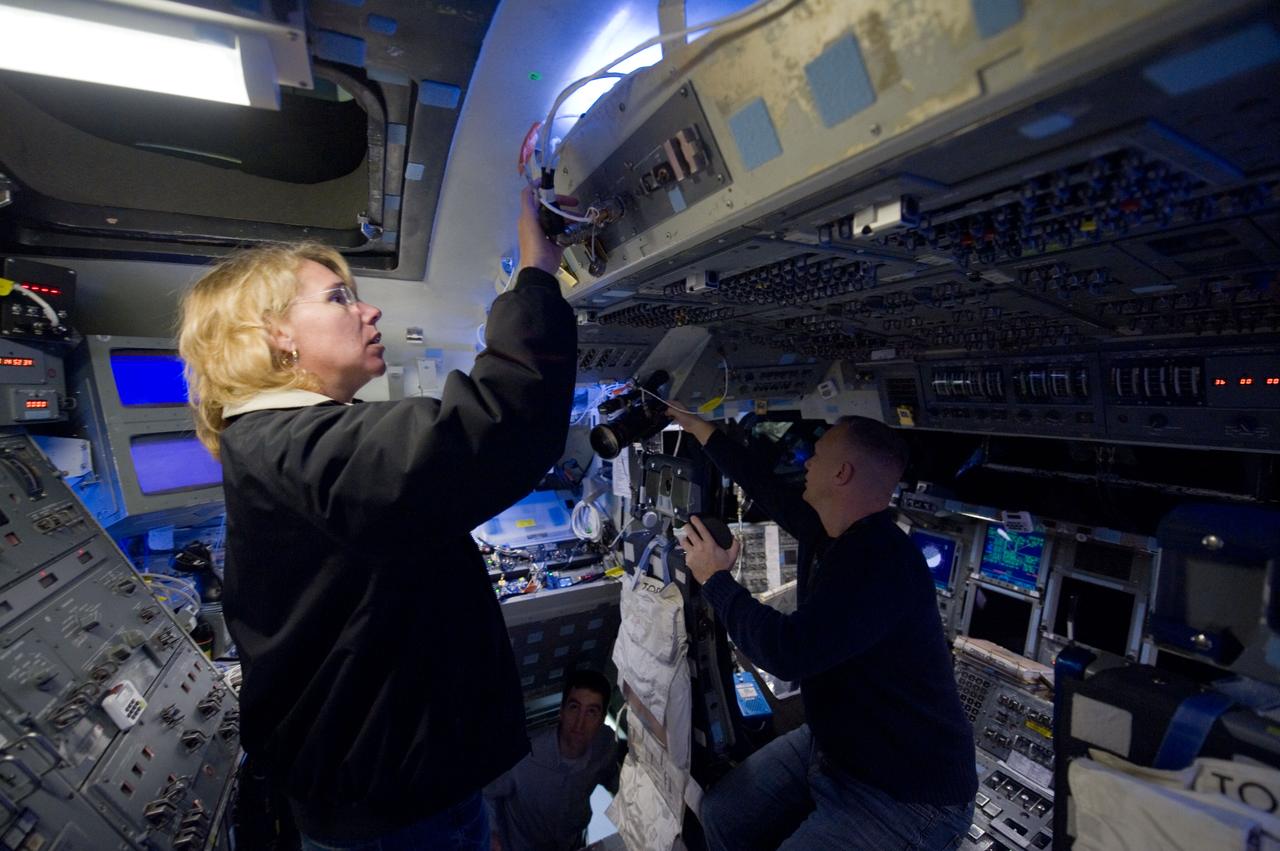
JSC2010-E-193961 (2 Dec. 2010) --- NASA astronauts Doug Hurley, STS-135 pilot; and Sandy Magnus, mission specialist, participate in a training session in the fixed-base shuttle mission simulator (SMS) in the Jake Garn Simulation and Training Facility at NASA's Johnson Space Center. STS-135 is planned to be the final mission of the space shuttle program. Photo credit: NASA or National Aeronautics and Space Administration
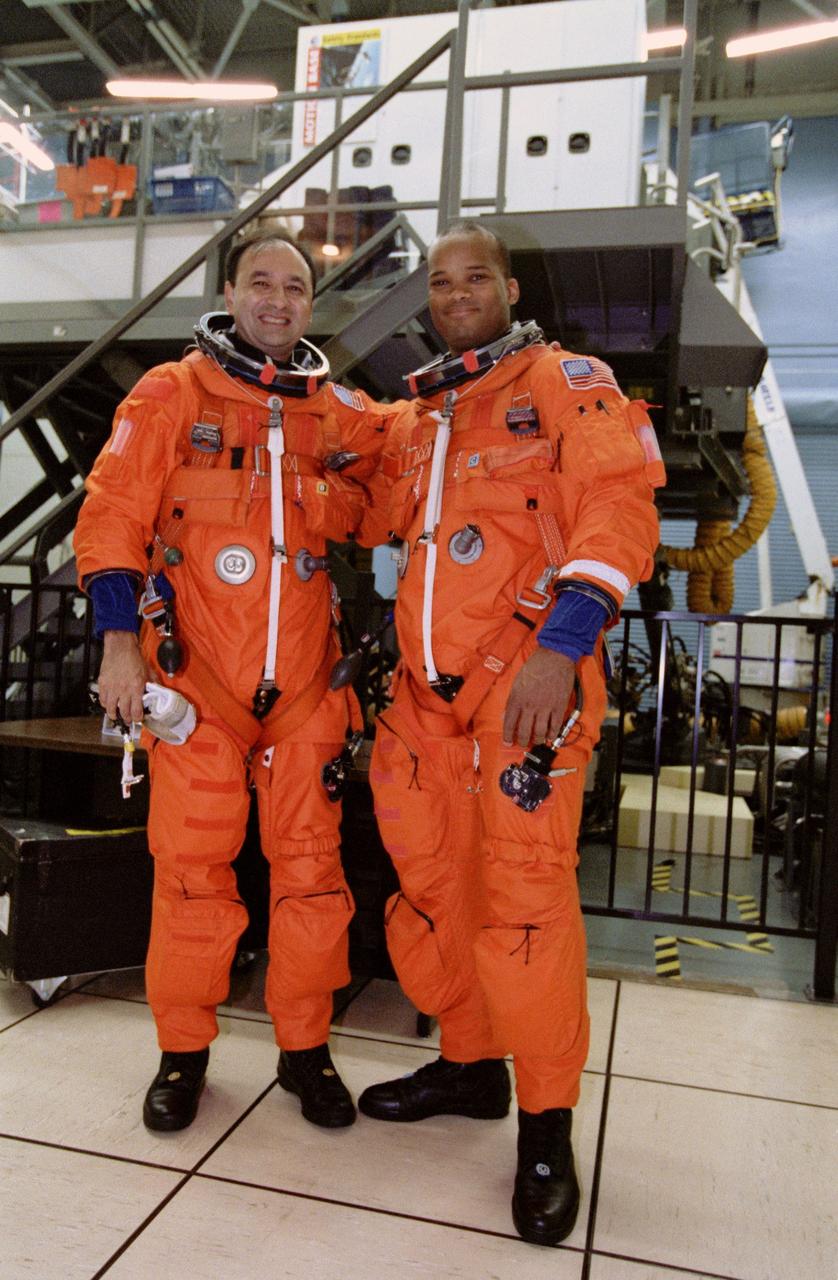
JSC2000-04778 (16 June 2000) --- Attired in training versions of the shuttle launch and entry garment, astronauts Mark Polansky (left) and Robert L. Curbeam take a break from a simulation exercise in the motion-base shuttle mission simulator (seen in the background) at the Johnson Space Center (JSC). Polansky is STS-98 pilot and Curbeam doubles as a mission specialist and flight engineer for the scheduled January 2000 5a mission to the International Space Station (ISS).
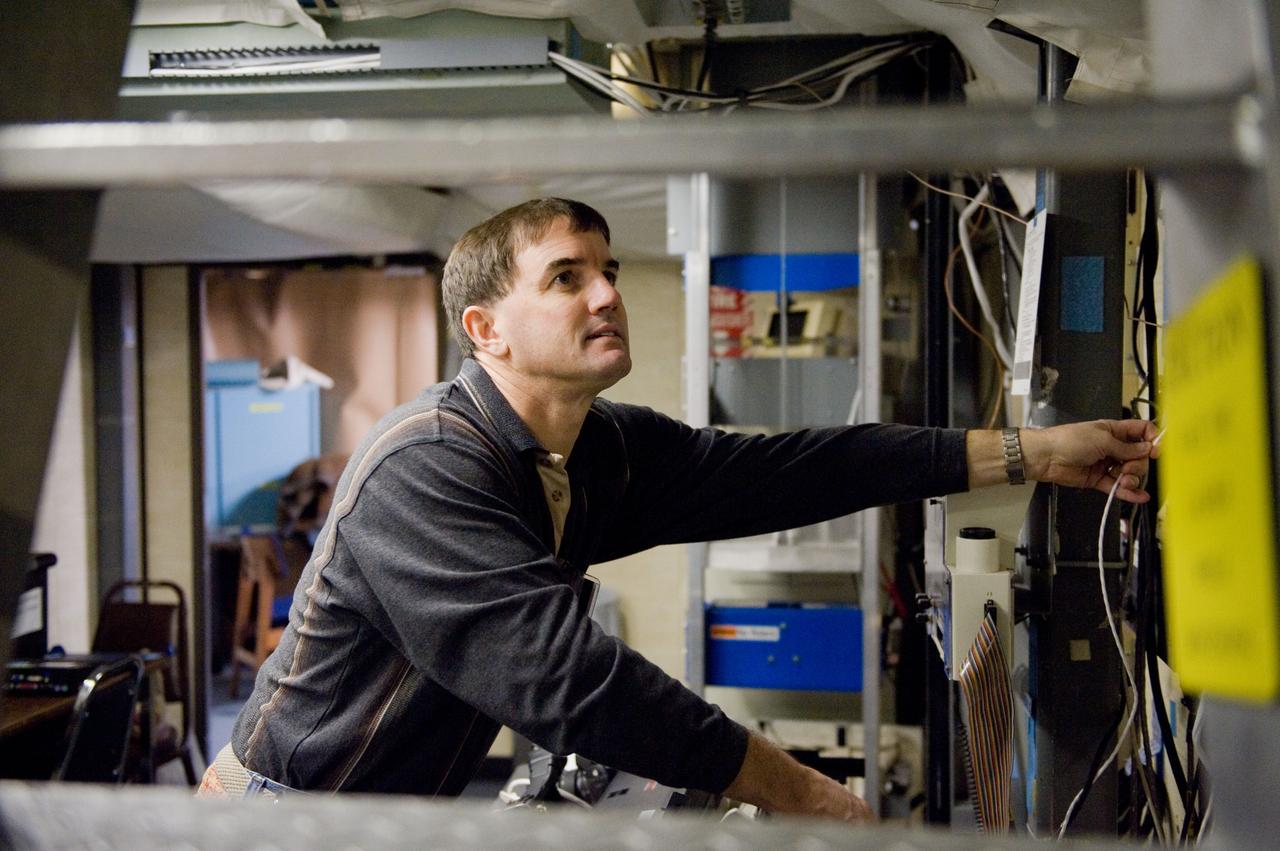
JSC2010-E-193959 (2 Dec. 2010) --- NASA astronaut Rex Walheim, STS-135 mission specialist, participates in a training session in the fixed-base shuttle mission simulator (SMS) in the Jake Garn Simulation and Training Facility at NASA's Johnson Space Center. STS-135 is planned to be the final mission of the space shuttle program. Photo credit: NASA or National Aeronautics and Space Administration
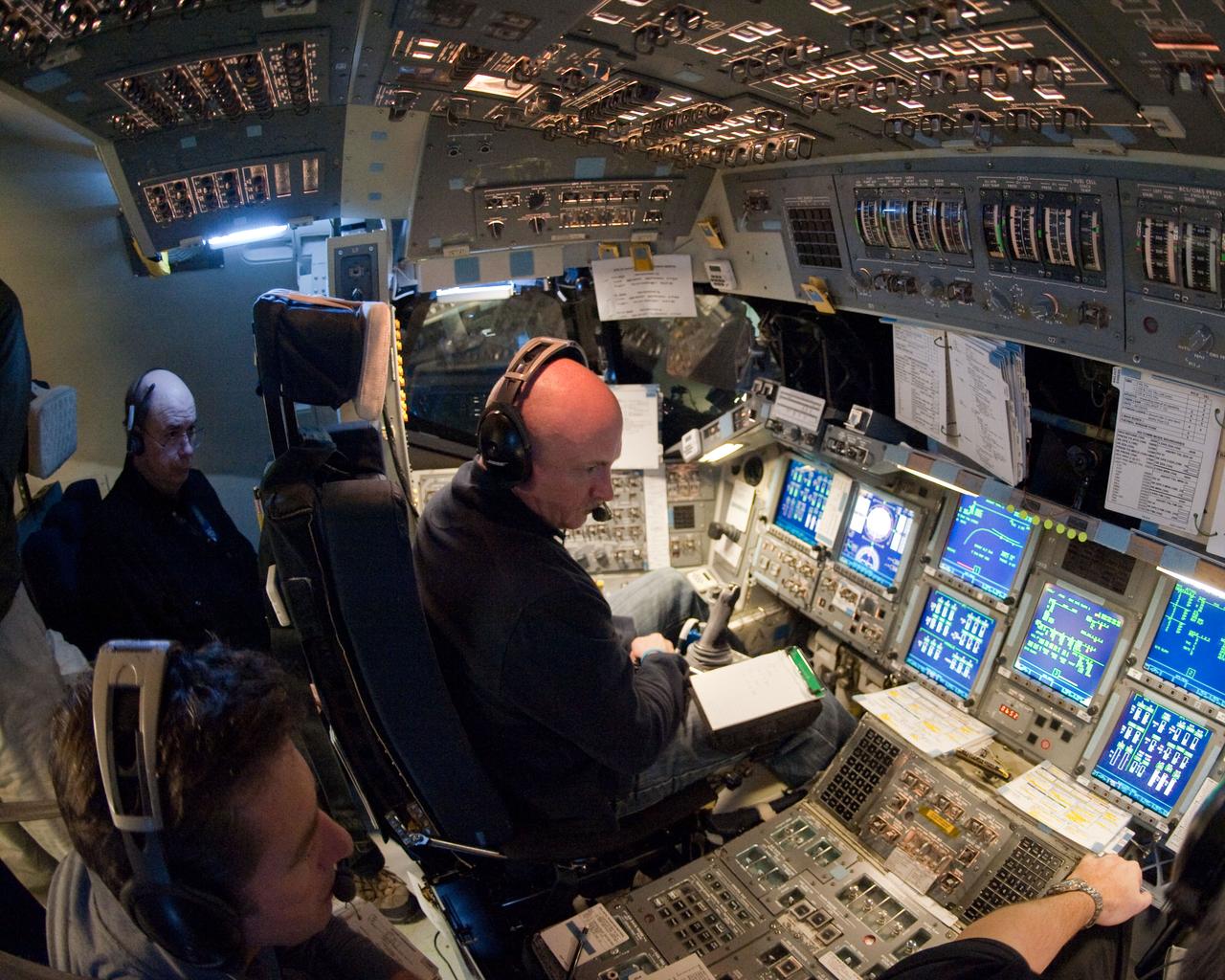
JSC2011-E-016874 (11 Feb. 2011) --- NASA astronaut Mark Kelly (right foreground), STS-134 commander, and European Space Agency astronaut Roberto Vittori (left foreground), mission specialist, participate in a simulation exercise in the motion-base shuttle mission simulator in the Jake Garn Simulation and Training Facility at NASA's Johnson Space Center. Photo credit: NASA or National Aeronautics and Space Administration
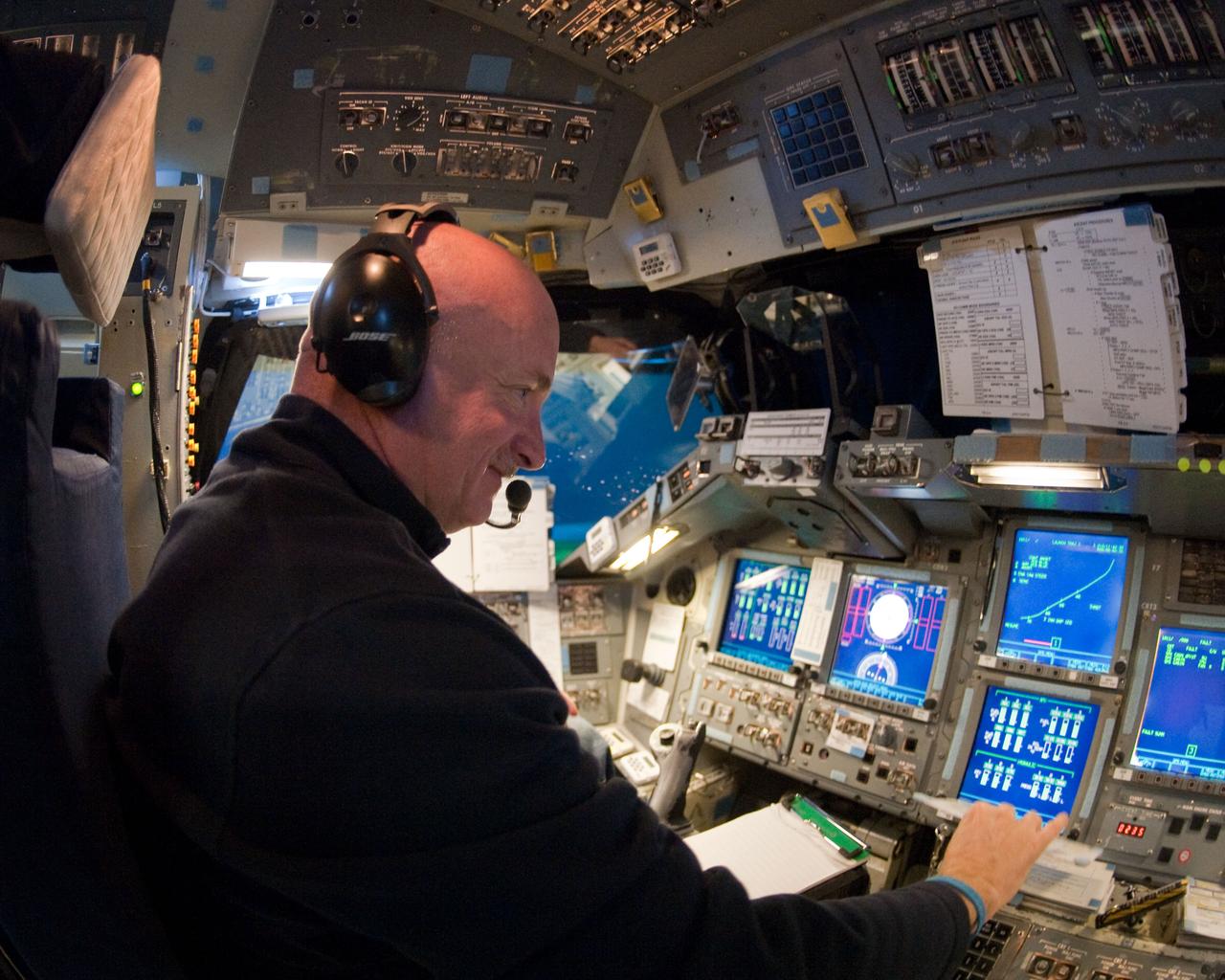
JSC2011-E-016868 (11 Feb. 2011) --- NASA astronaut Mark Kelly, STS-134 commander, occupies the commander's station during a simulation exercise in the motion-base shuttle mission simulator in the Jake Garn Mission and Simulation Training Facility at NASA's Johnson Space Center. Photo credit: NASA or National Aeronautics and Space Administration
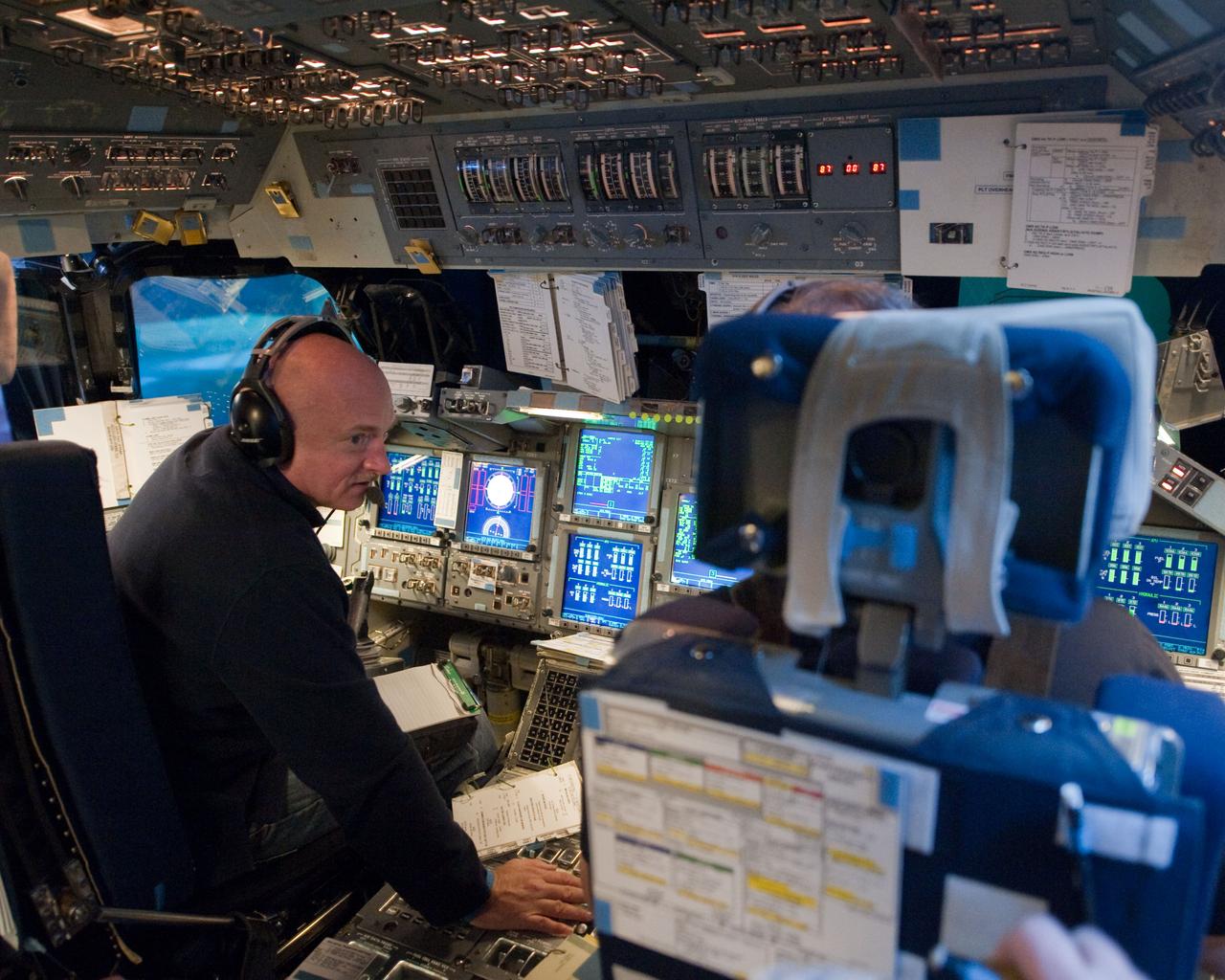
JSC2011-E-016861 (11 Feb. 2011) --- NASA astronaut Mark Kelly, STS-134 commander, occupies the commander's station during a simulation exercise in the motion-base shuttle mission simulator in the Jake Garn Mission and Simulation Training Facility at NASA's Johnson Space Center. Photo credit: NASA or National Aeronautics and Space Administration
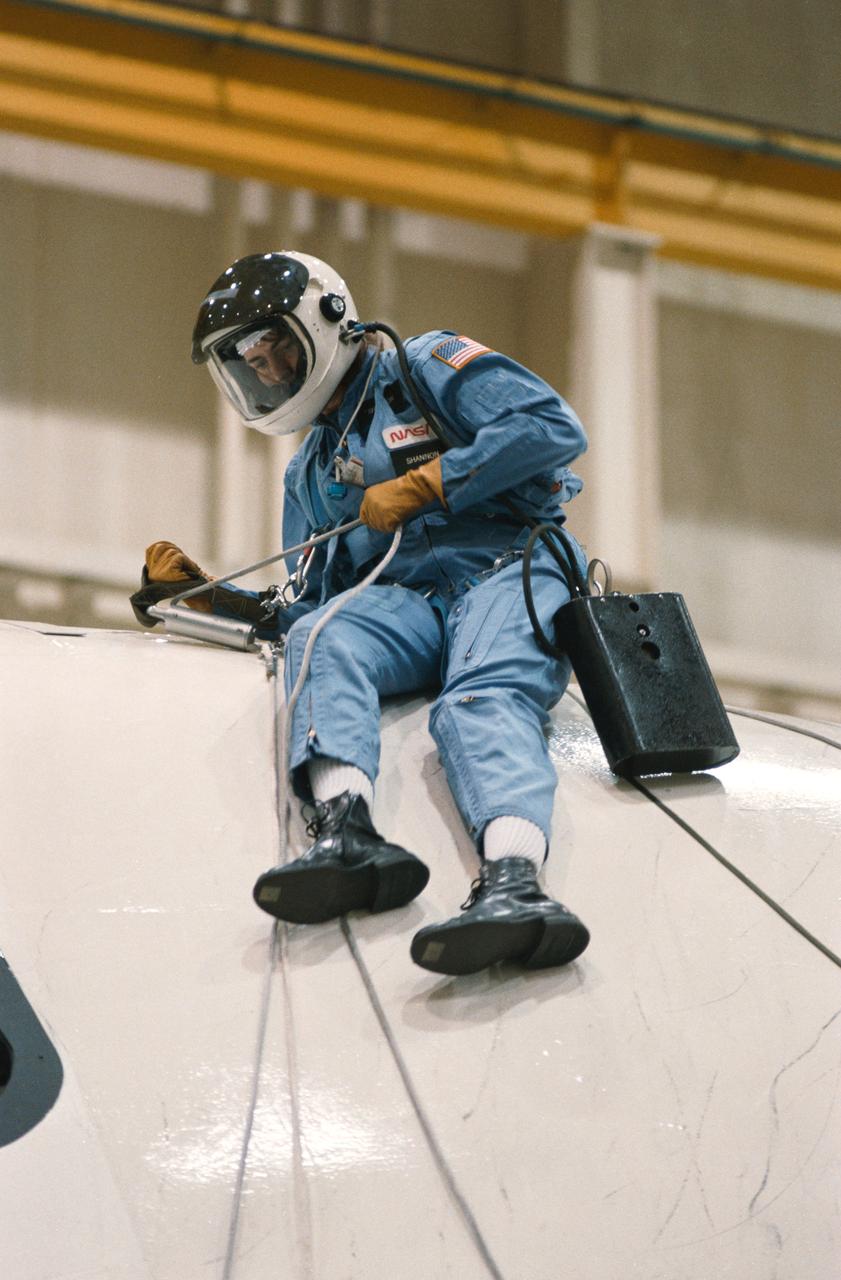
Mission Specialist Shannon W. Lucid, STS 51-G, descends from the top of the crew compartment trainer in bldg 9A, the mockup and integration laboratory, during emergency egress training.
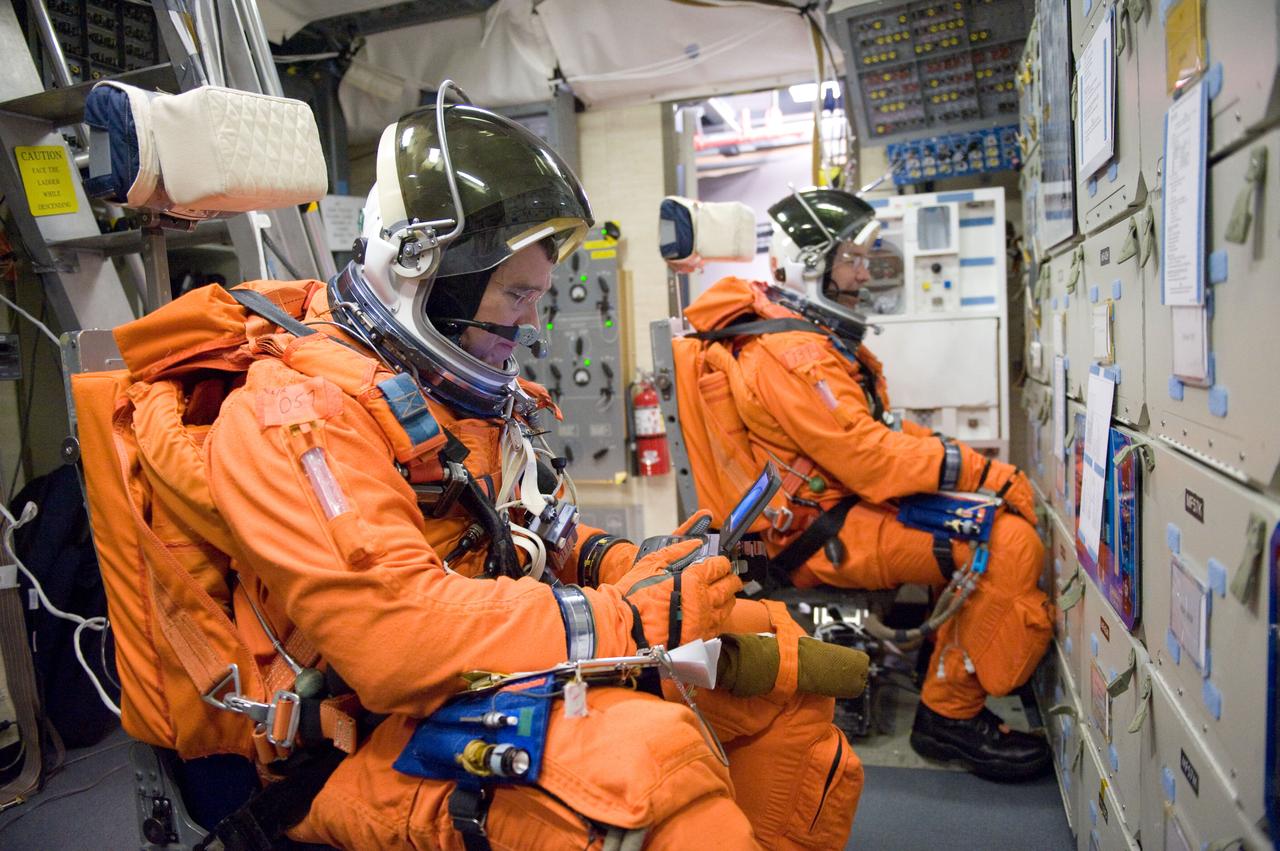
JSC2011-E-006690 (27 Jan. 2011) --- NASA astronauts Steve Bowen (foreground) and Michael Barratt, both STS-133 mission specialists, attired in training versions of their shuttle launch and entry suits, participate in a training session in the fixed-base shuttle mission simulator (SMS) in the Jake Garn Simulation and Training Facility at NASA's Johnson Space Center. Photo credit: NASA or National Aeronautics and Space Administration
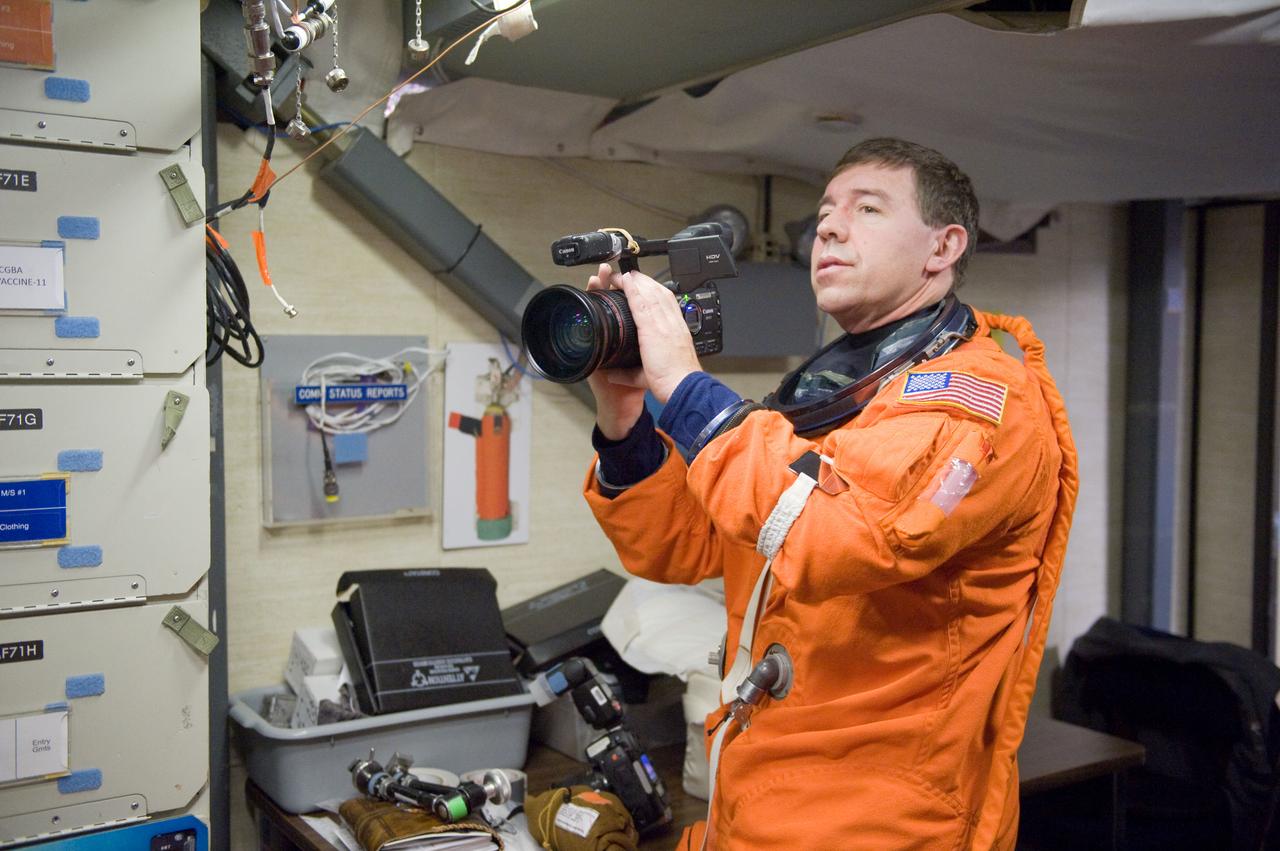
JSC2011-E-006704 (27 Jan. 2011) --- NASA astronaut Michael Barratt, STS-133 mission specialist, attired in a training version of his shuttle launch and entry suit, uses a High Definition Video (HDV) camera during a training session in the fixed-base shuttle mission simulator (SMS) in the Jake Garn Simulation and Training Facility at NASA's Johnson Space Center. Photo credit: NASA or National Aeronautics and Space Administration
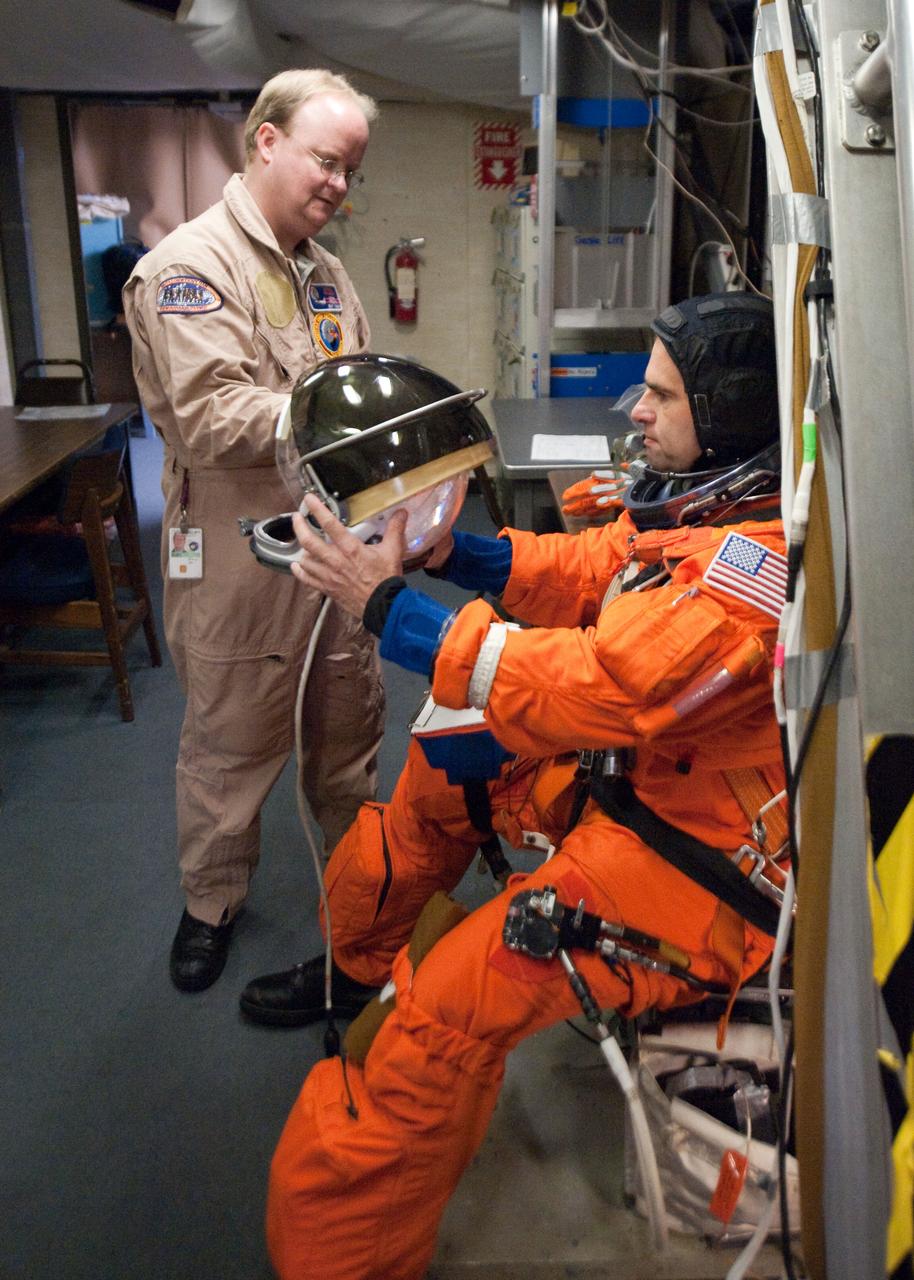
JSC2010-E-124282 (8 Sept. 2010) --- NASA astronaut Greg Chamitoff, STS-134 mission specialist, attired in a training version of his shuttle launch and entry suit, prepares for a training session in the fixed-base shuttle mission simulator (SMS) in the Jake Garn Simulation and Training Facility at NASA?s Johnson Space Center. United Space Alliance suit technician Daniel Palmer assisted Chamitoff. Photo credit: NASA or National Aeronautics and Space Administration
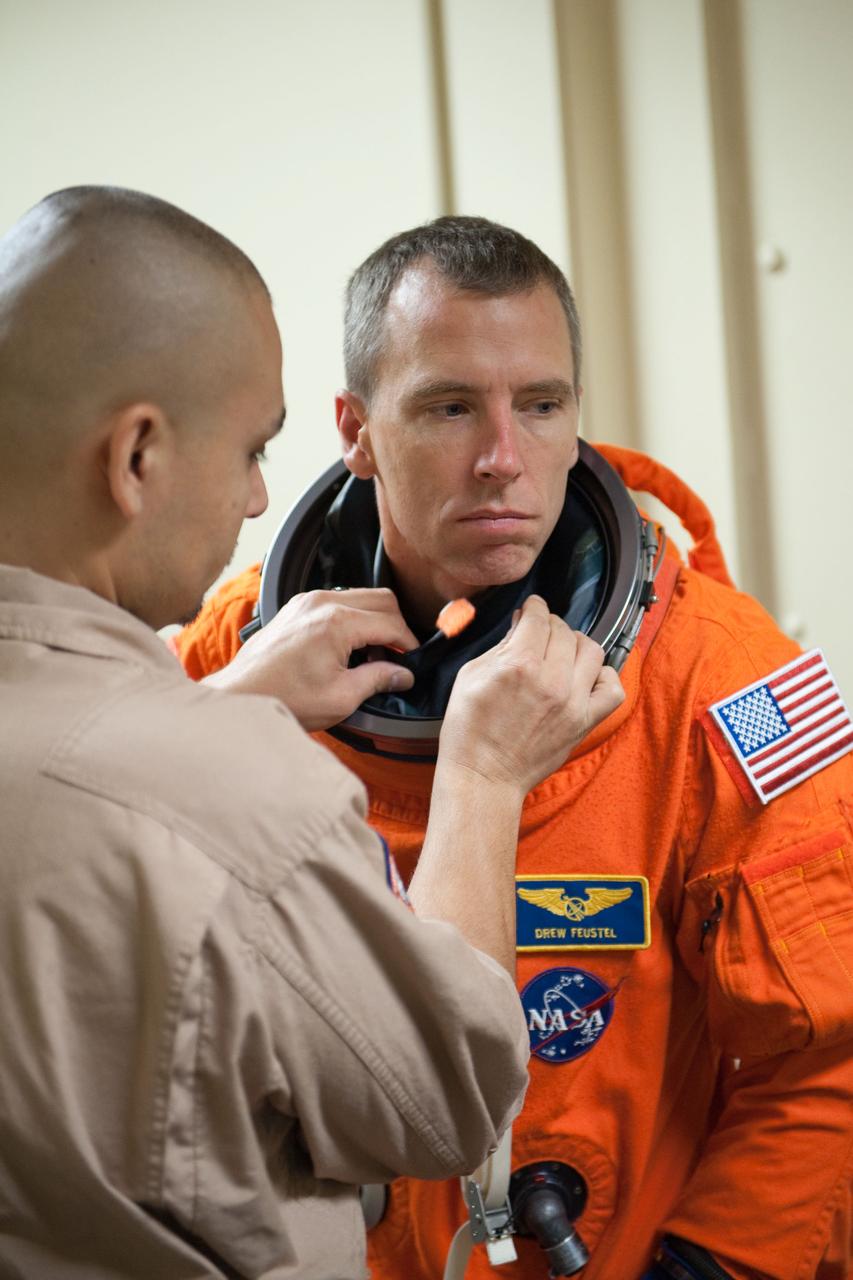
JSC2010-E-124260 (8 Sept. 2010) --- NASA astronaut Andrew Feustel, STS-134 mission specialist, dons a training version of his shuttle launch and entry suit in preparation for a training session in the fixed-base shuttle mission simulator (SMS) in the Jake Garn Simulation and Training Facility at NASA?s Johnson Space Center. United Space Alliance suit technician Russ Baker assisted Feustel. Photo credit: NASA or National Aeronautics and Space Administration
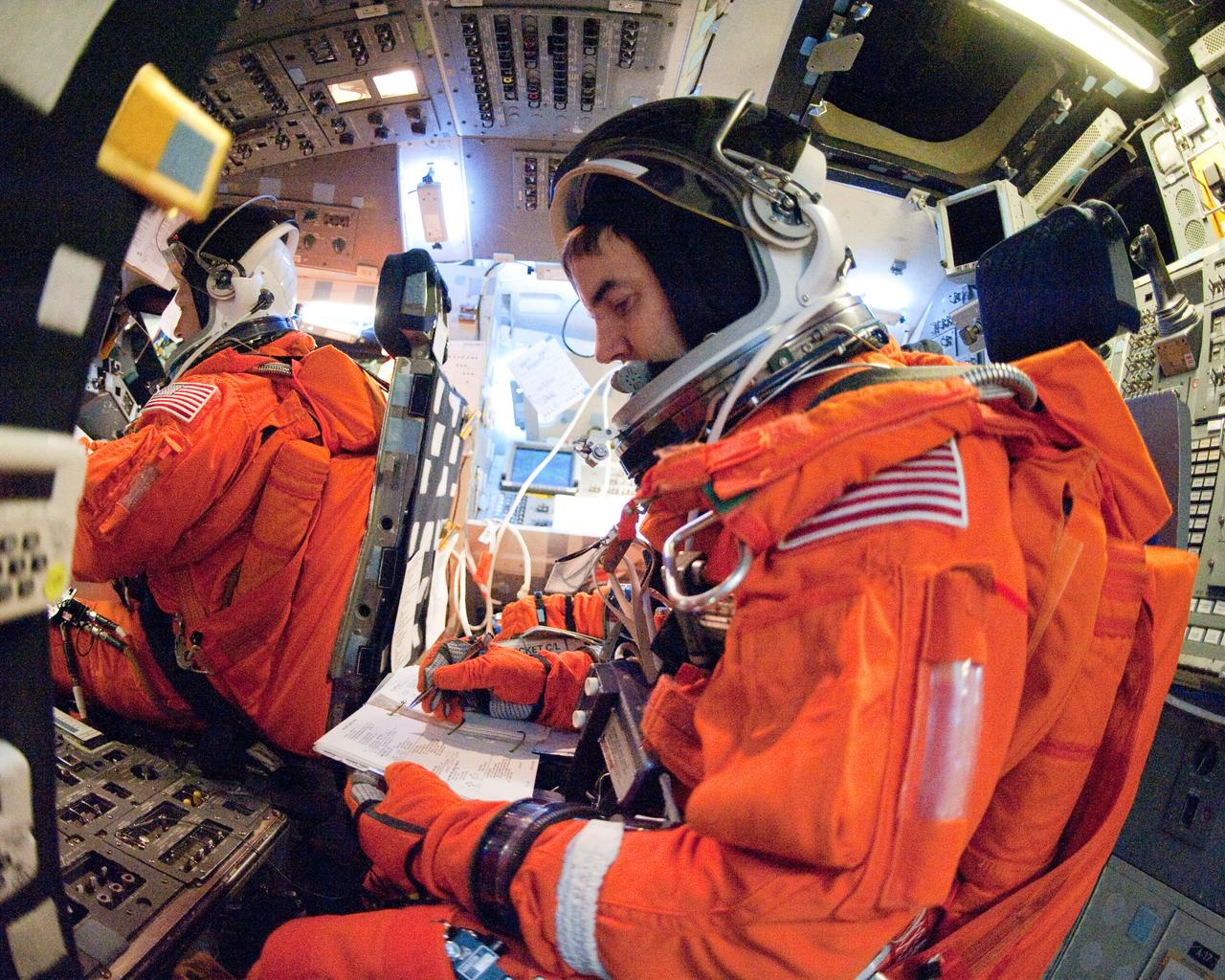
JSC2011-E-023121 (2 March 2011) --- NASA astronauts Rex Walheim, STS-135 mission specialist; and Doug Hurley (background), pilot, attired in training versions of their shuttle launch and entry suits, participate in a training session in the fixed-base shuttle mission simulator (SMS) in the Jake Garn Simulation and Training Facility at NASA's Johnson Space Center. Photo credit: NASA or National Aeronautics and Space Administration
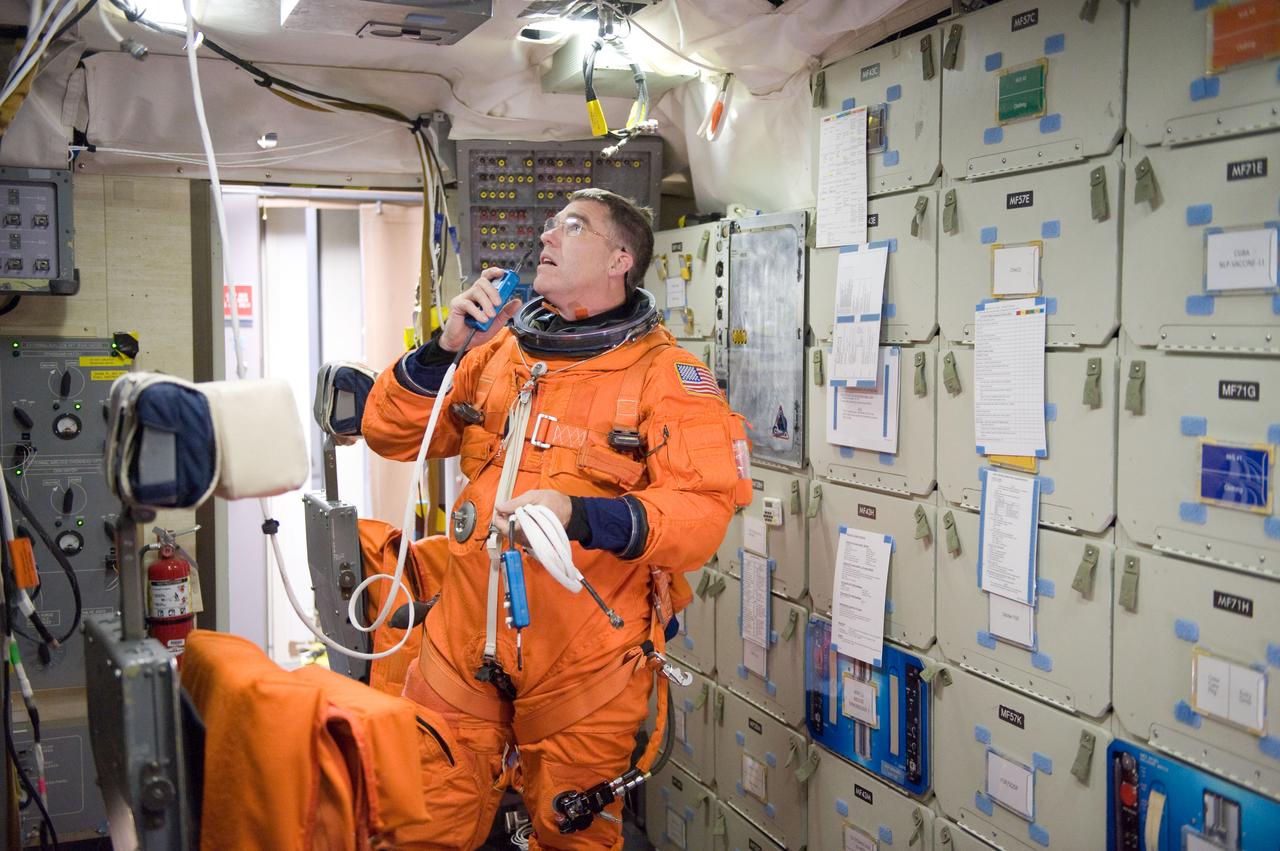
JSC2011-E-006696 (27 Jan. 2011) --- NASA astronaut Steve Bowen, STS-133 mission specialist, attired in a training version of his shuttle launch and entry suit, uses a communication system during a training session in the fixed-base shuttle mission simulator (SMS) in the Jake Garn Simulation and Training Facility at NASA's Johnson Space Center. Photo credit: NASA or National Aeronautics and Space Administration
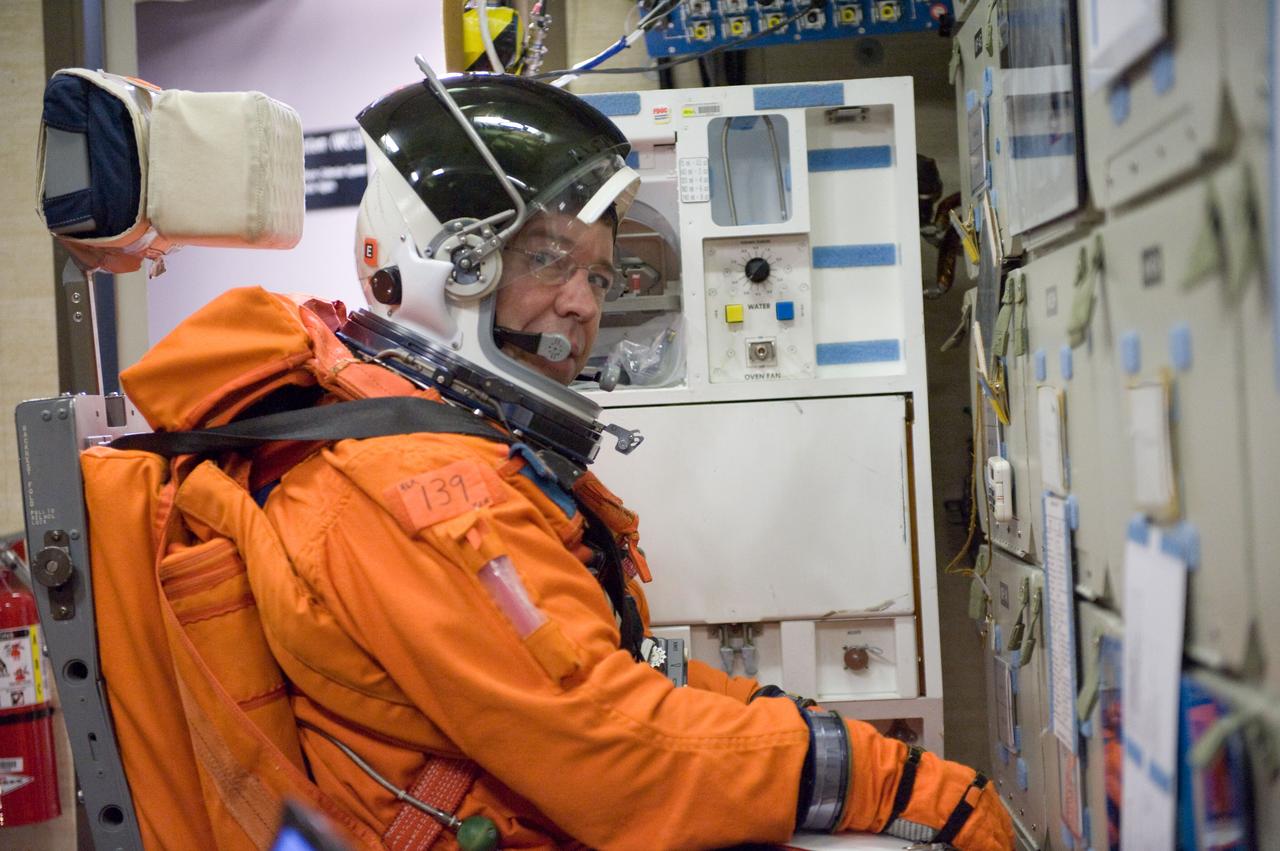
JSC2011-E-006691 (27 Jan. 2011) --- NASA astronaut Steve Bowen, STS-133 mission specialist, attired in a training version of his shuttle launch and entry suit, participates in a training session in the fixed-base shuttle mission simulator (SMS) in the Jake Garn Simulation and Training Facility at NASA's Johnson Space Center. Photo credit: NASA or National Aeronautics and Space Administration
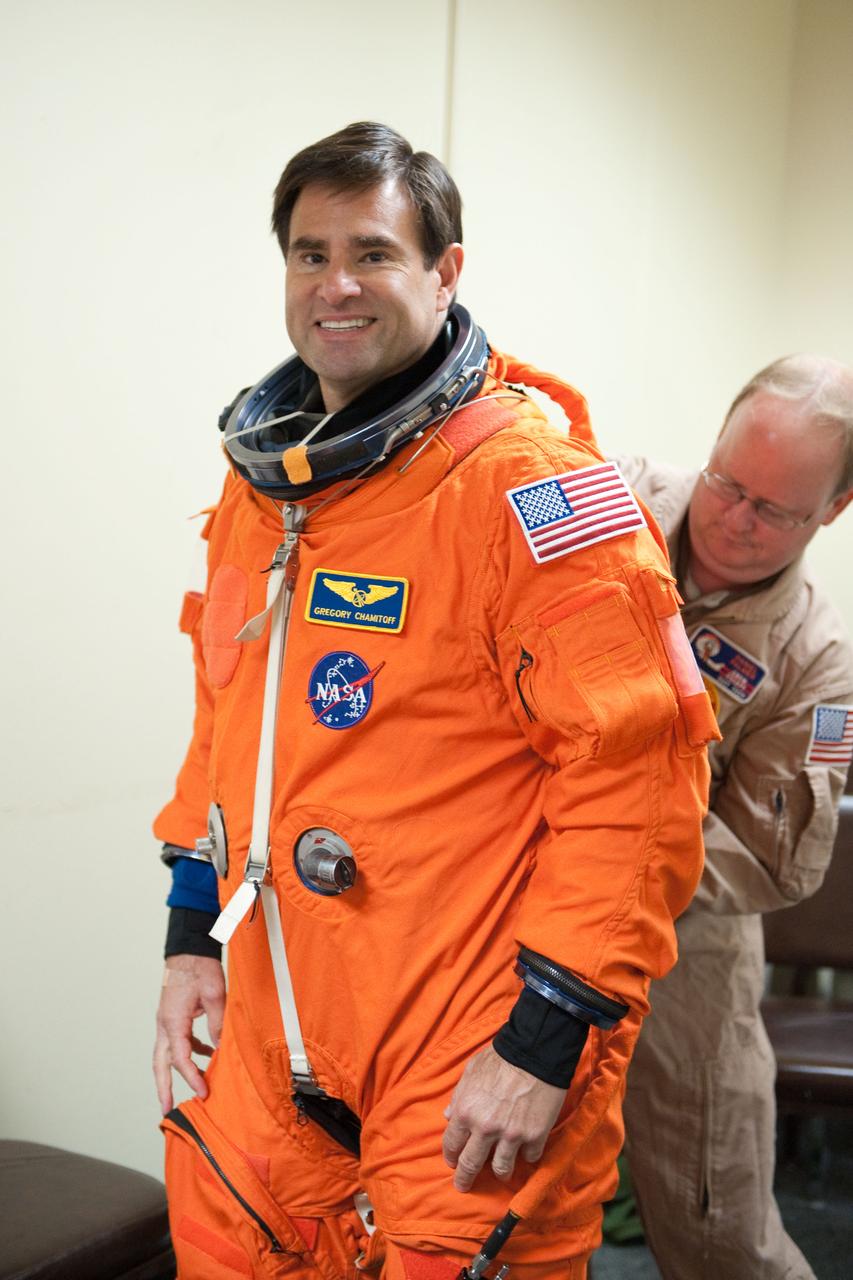
JSC2010-E-124263 (8 Sept. 2010) --- NASA astronaut Greg Chamitoff, STS-134 mission specialist, dons a training version of his shuttle launch and entry suit in preparation for a training session in the fixed-base shuttle mission simulator (SMS) in the Jake Garn Simulation and Training Facility at NASA?s Johnson Space Center. United Space Alliance suit technician Daniel Palmer assisted Chamitoff. Photo credit: NASA or National Aeronautics and Space Administration
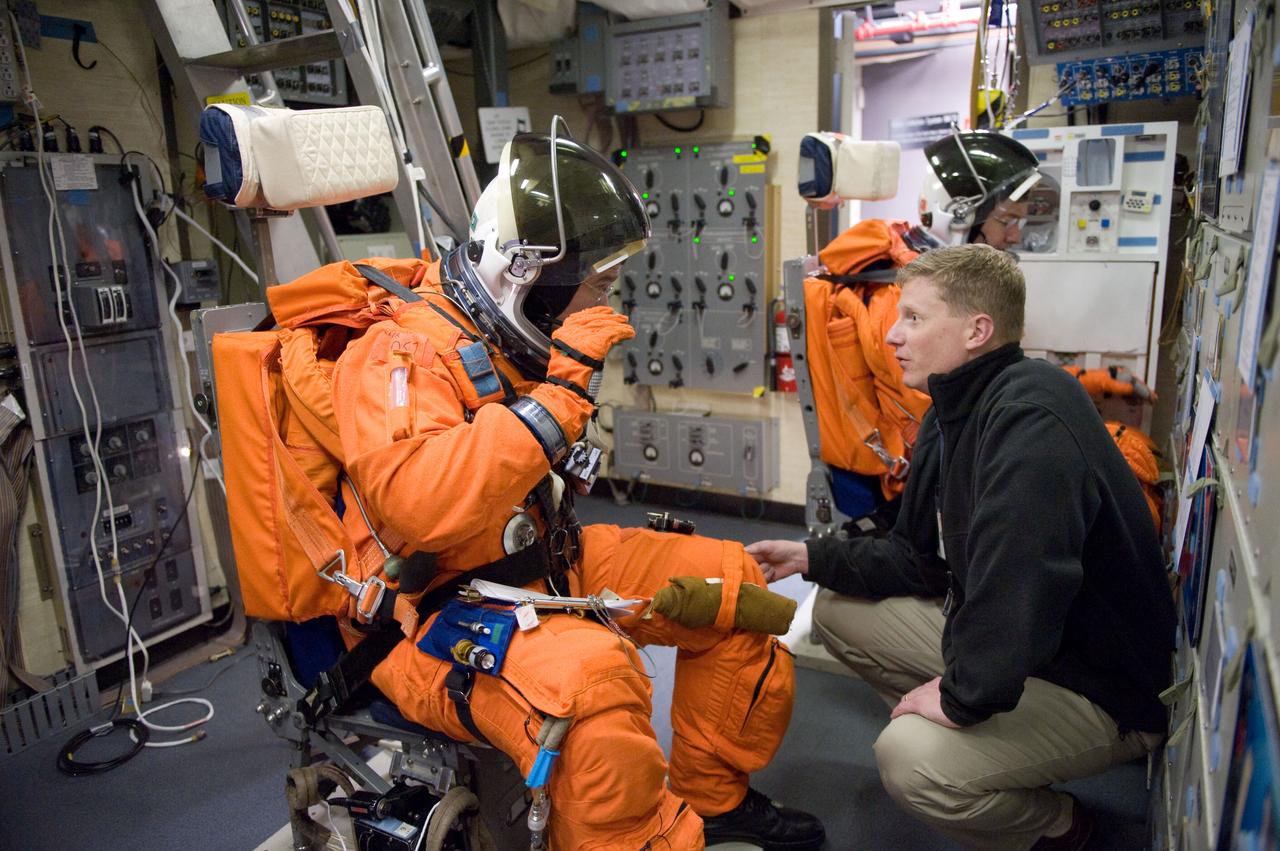
JSC2011-E-006687 (27 Jan. 2011) --- NASA astronauts Steve Bowen (left foreground) and Michael Barratt, both STS-133 mission specialists, attired in training versions of their shuttle launch and entry suits, participate in a training session in the fixed-base shuttle mission simulator (SMS) in the Jake Garn Simulation and Training Facility at NASA's Johnson Space Center. Crew instructor Gary W. Kilgo assisted the crew members. Photo credit: NASA or National Aeronautics and Space Administration
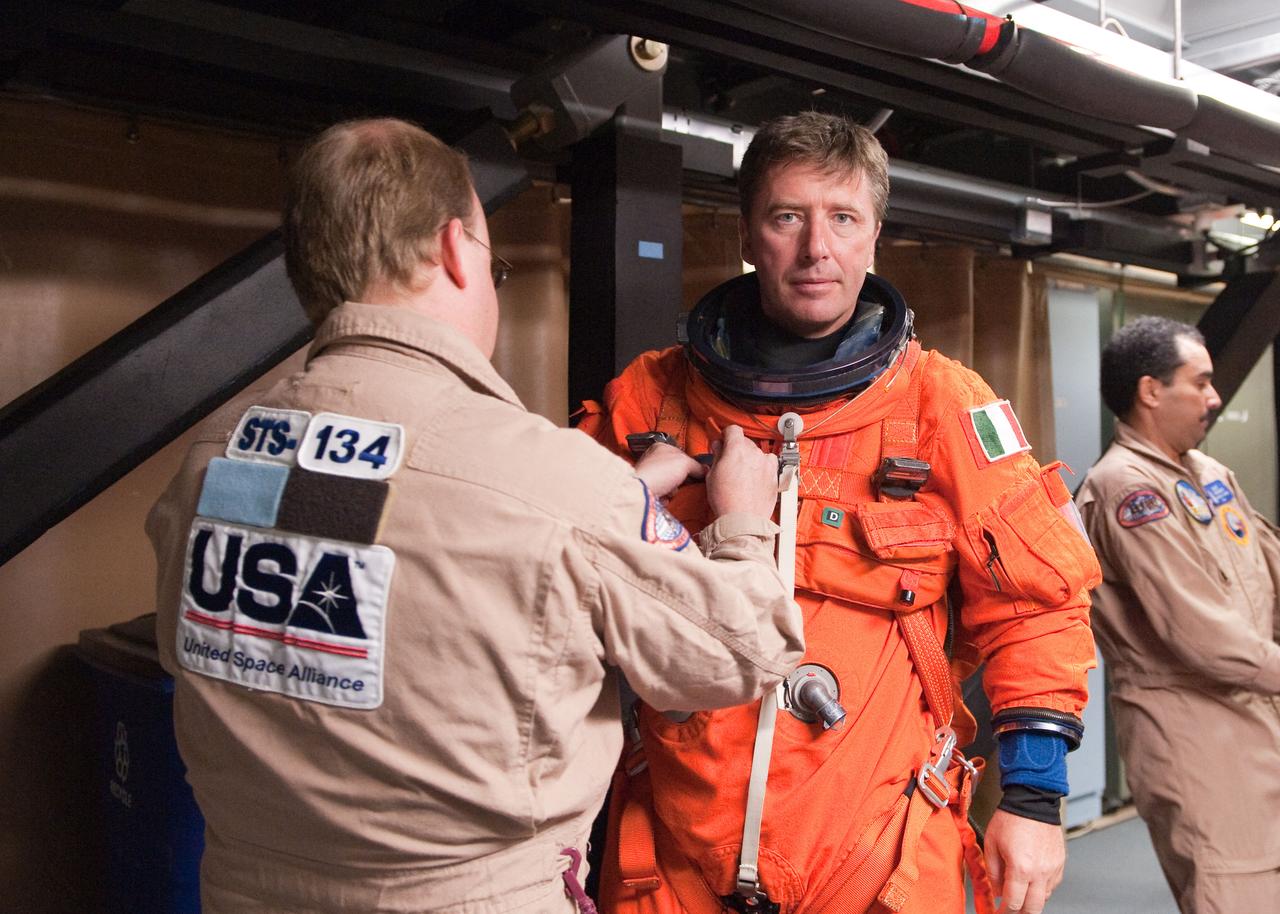
JSC2010-E-124278 (8 Sept. 2010) --- European Space Agency astronaut Roberto Vittori, STS-134 mission specialist, dons a training version of his shuttle launch and entry suit in preparation for a training session in the fixed-base shuttle mission simulator (SMS) in the Jake Garn Simulation and Training Facility at NASA?s Johnson Space Center. United Space Alliance suit technician Daniel Palmer assisted Vittori. Photo credit: NASA or National Aeronautics and Space Administration
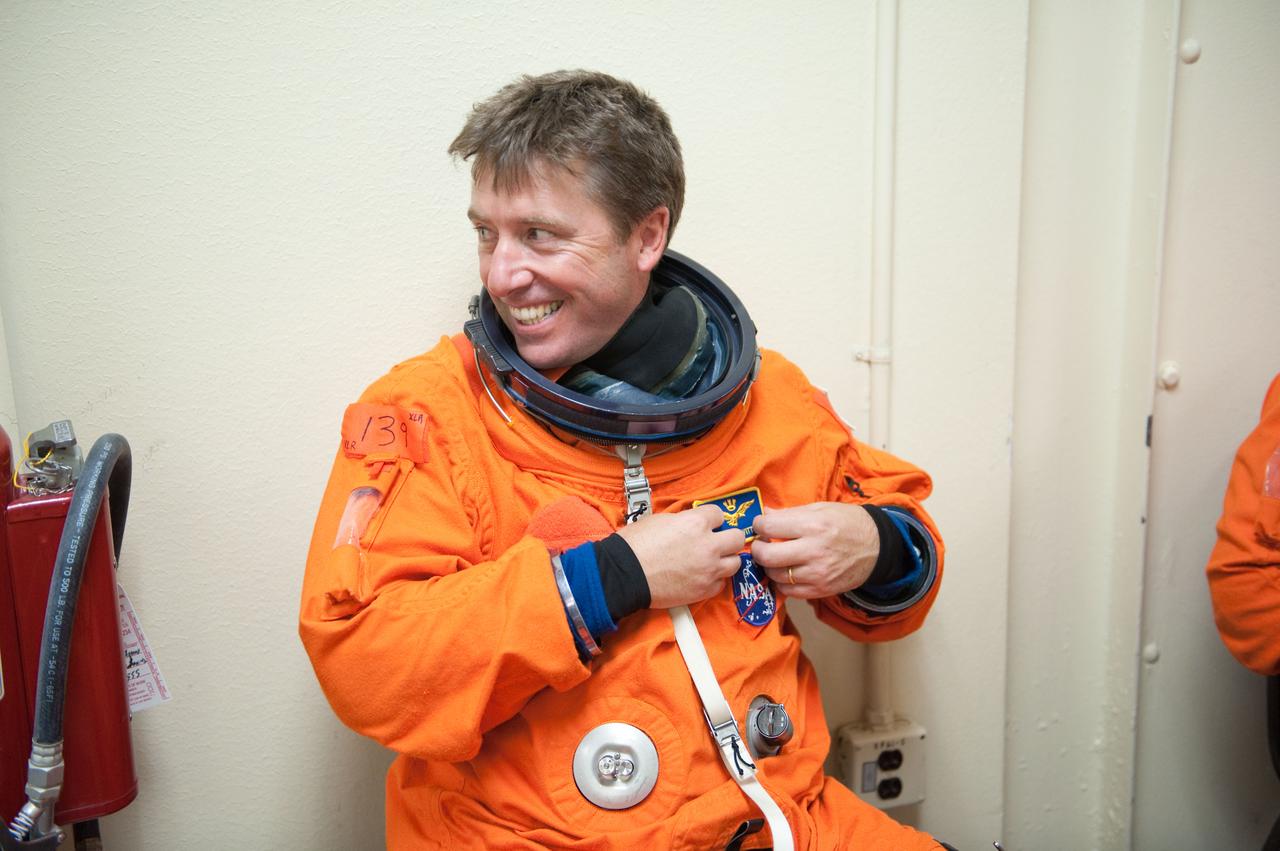
JSC2010-E-124262 (8 Sept. 2010) --- European Space Agency astronaut Roberto Vittori, STS-134 mission specialist, attired in a training version of his shuttle launch and entry suit, prepares for a training session in the fixed-base shuttle mission simulator (SMS) in the Jake Garn Simulation and Training Facility at NASA?s Johnson Space Center. Photo credit: NASA or National Aeronautics and Space Administration
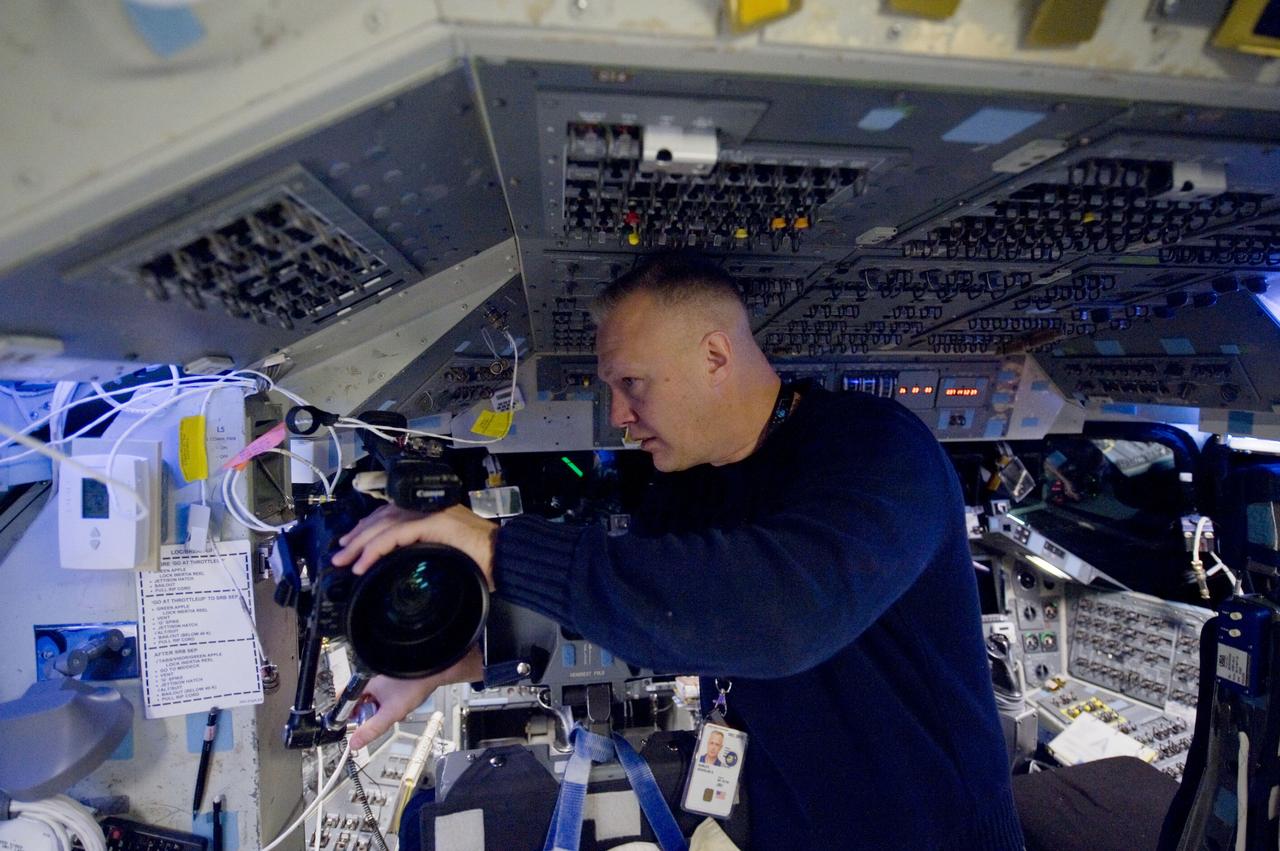
JSC2010-E-193962 (2 Dec. 2010) --- NASA astronaut Doug Hurley, STS-135 pilot, participates in a training session in the fixed-base shuttle mission simulator (SMS) in the Jake Garn Simulation and Training Facility at NASA's Johnson Space Center. STS-135 is planned to be the final mission of the space shuttle program. Photo credit: NASA or National Aeronautics and Space Administration
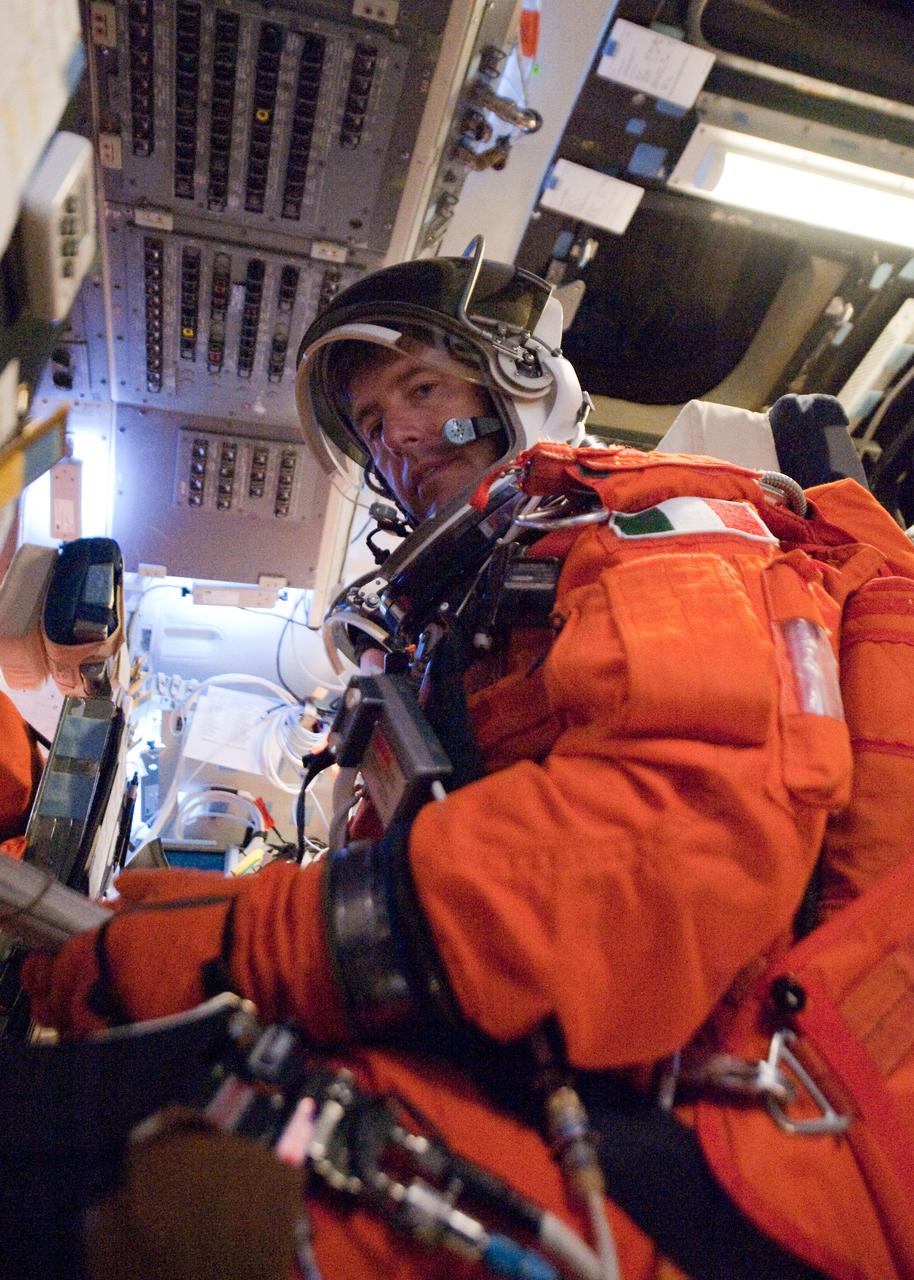
JSC2010-E-124289 (8 Sept. 2010) --- European Space Agency astronaut Roberto Vittori, STS-134 mission specialist, attired in a training version of his shuttle launch and entry suit, participates in a training session in the fixed-base shuttle mission simulator (SMS) in the Jake Garn Simulation and Training Facility at NASA?s Johnson Space Center. Photo credit: NASA or National Aeronautics and Space Administration
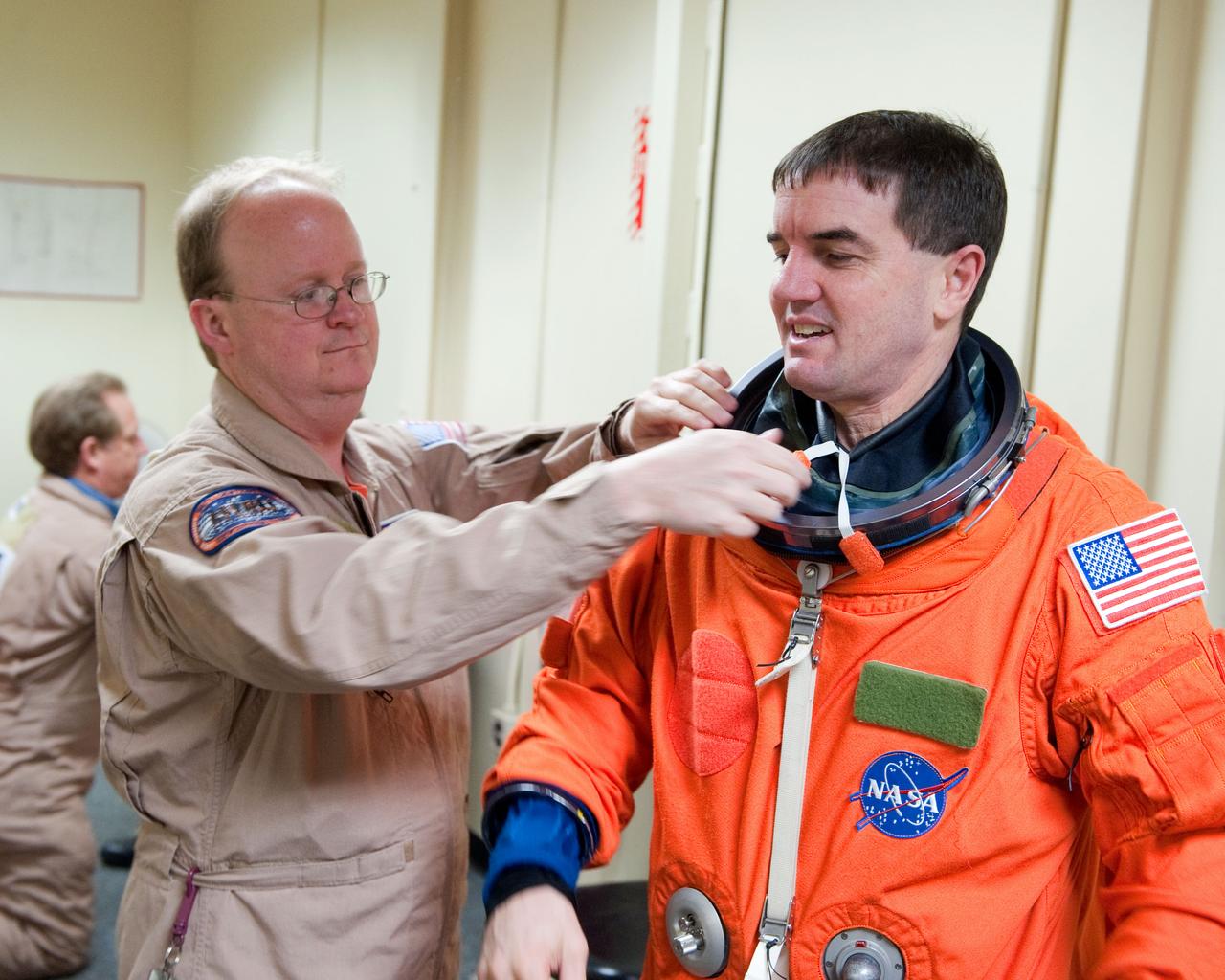
JSC2011-E-023118 (2 March 2011) --- NASA astronaut Rex Walheim, STS-135 mission specialist, dons a training version of his shuttle launch and entry suit in preparation for a training session in the fixed-base shuttle mission simulator (SMS) in the Jake Garn Simulation and Training Facility at NASA's Johnson Space Center. Suit technician Daniel Palmer assisted Walheim. Photo credit: NASA or National Aeronautics and Space Administration
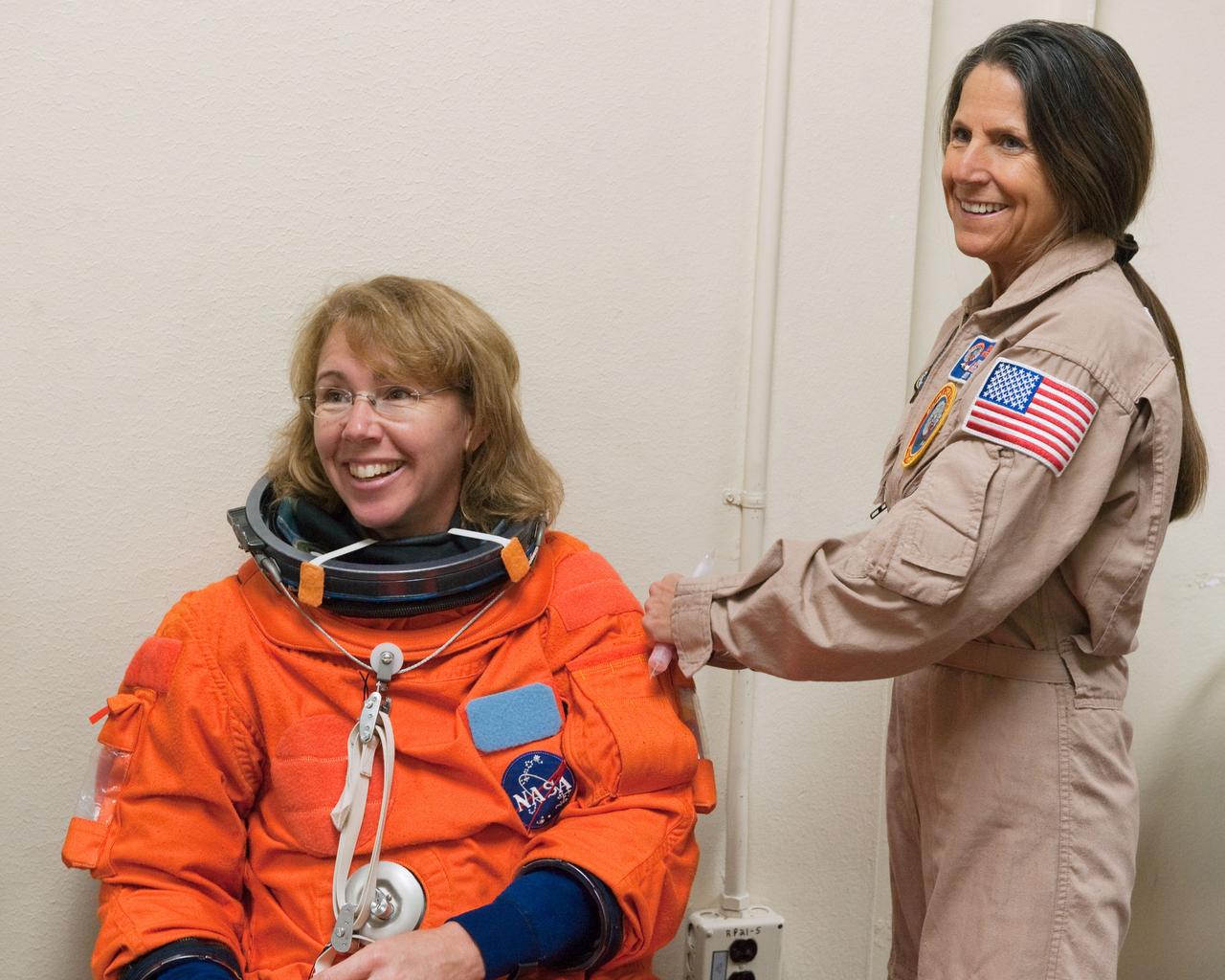
JSC2011-E-023112 (2 March 2011) --- NASA astronaut Sandy Magnus, STS-135 mission specialist, dons a training version of her shuttle launch and entry suit in preparation for a training session in the fixed-base shuttle mission simulator (SMS) in the Jake Garn Simulation and Training Facility at NASA's Johnson Space Center. Suit technician Toni Cost-Davis assisted Magnus. Photo credit: NASA or National Aeronautics and Space Administration
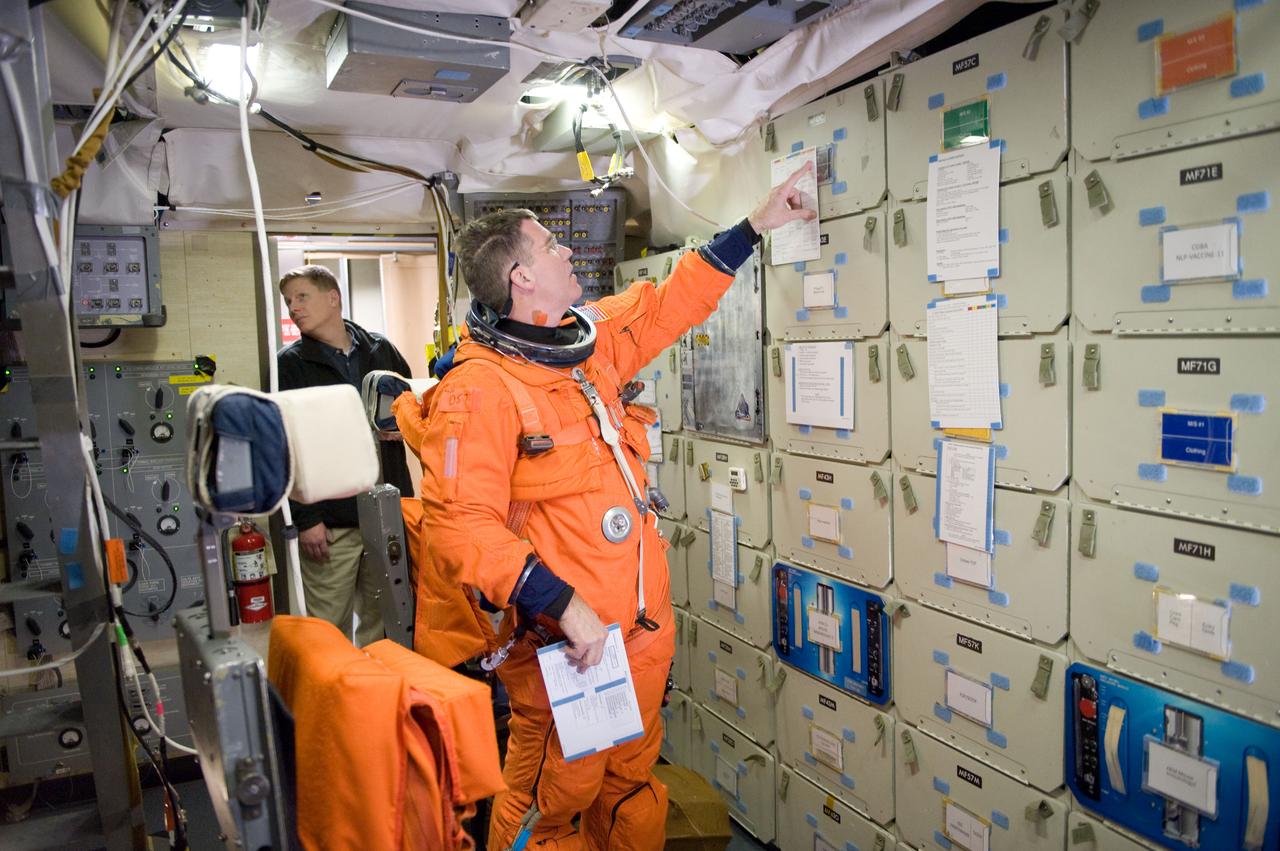
JSC2011-E-006699 (27 Jan. 2011) --- NASA astronaut Steve Bowen, STS-133 mission specialist, attired in a training version of his shuttle launch and entry suit, participates in a training session in the fixed-base shuttle mission simulator (SMS) in the Jake Garn Simulation and Training Facility at NASA's Johnson Space Center. Photo credit: NASA or National Aeronautics and Space Administration
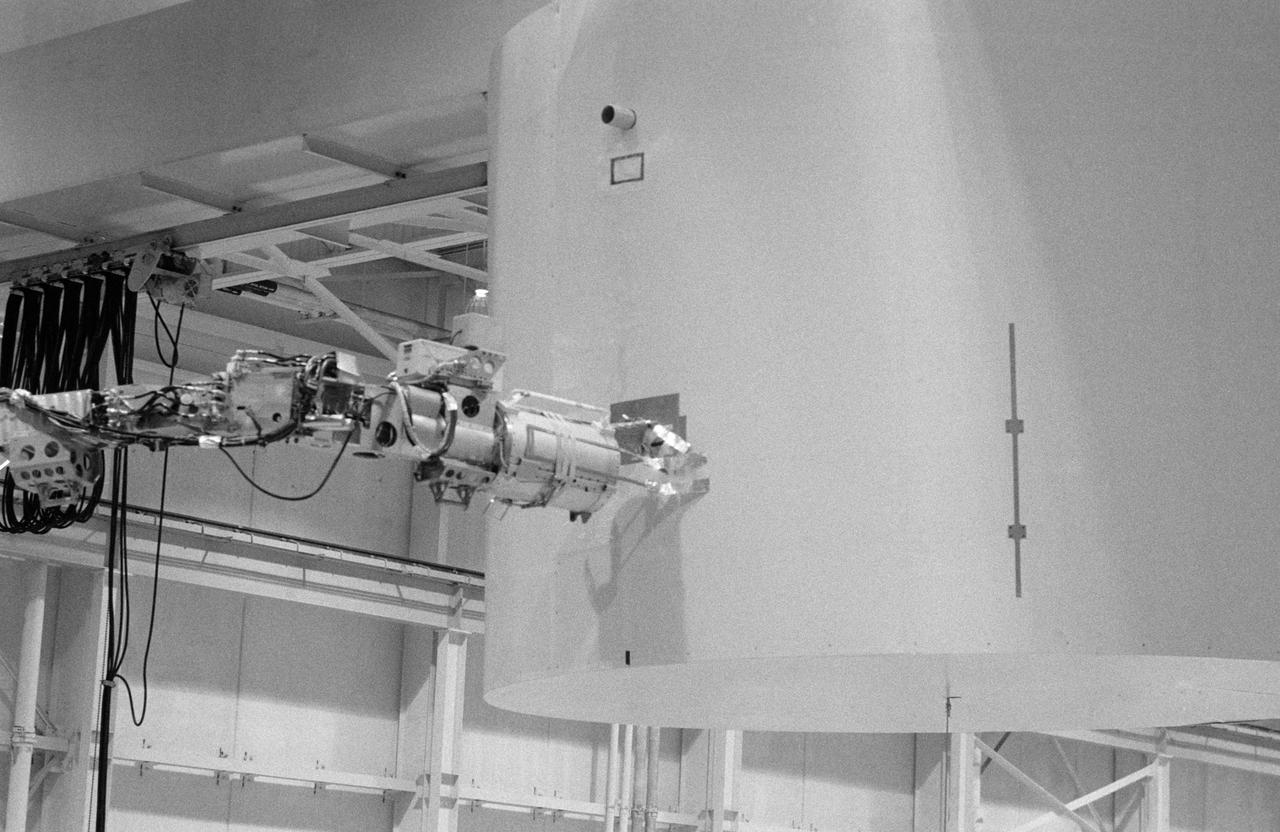
Simulation activities with the RMS in Bldg. 9A, with Astronaut Sally Ride testing the feasibility of the "Flyswatter" design for the STS-23/51D Mission on 04/15/16/1985. 1. STS-23/51D - Crew Training (Flyswatter) 2. Shuttle - Simulation (Flyswatter) JSC, Houston, TX
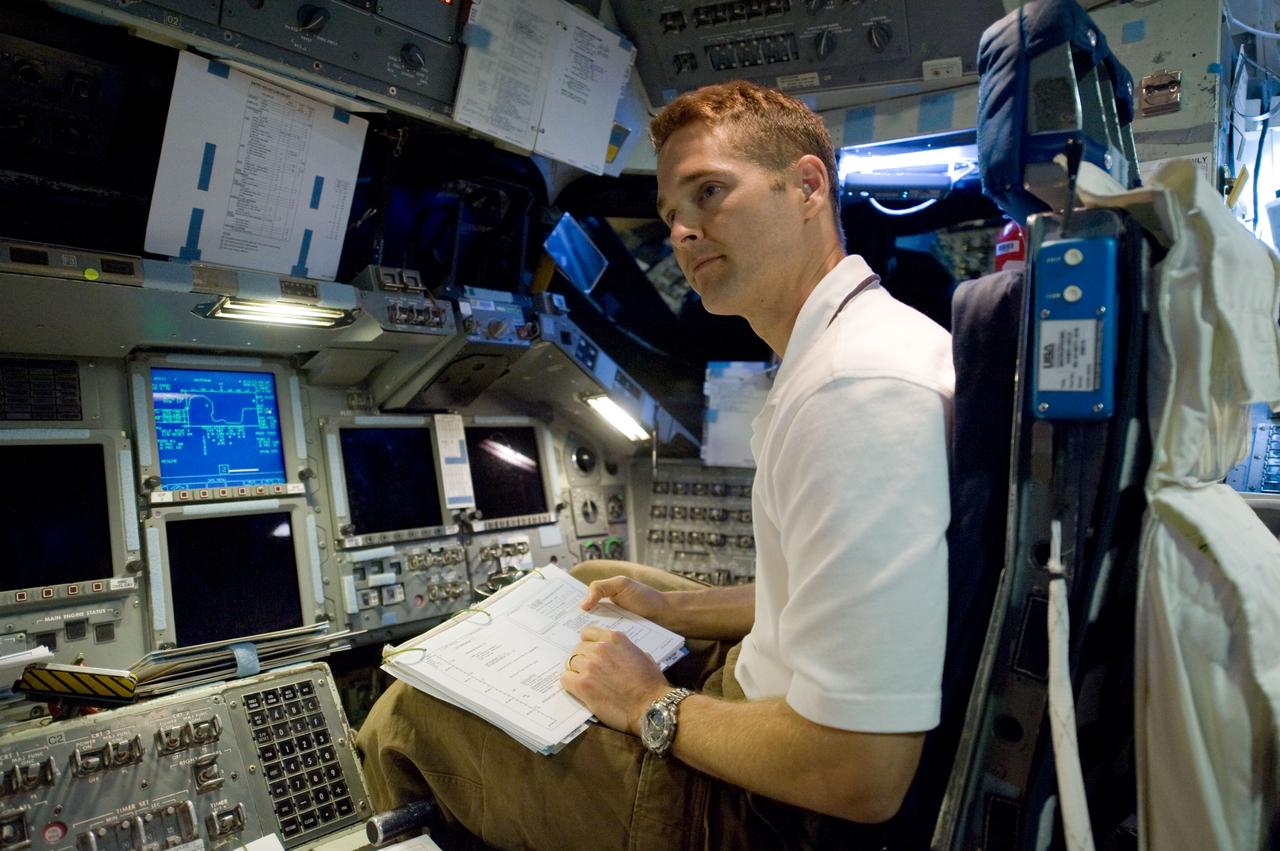
JSC2009-E-207326 (11 Sept. 2009) --- NASA astronaut James P. Dutton Jr., STS-131 pilot, occupies the pilot?s station during a training session in the shuttle mission simulator (SMS) in the Jake Garn Simulation and Training Facility at NASA?s Johnson Space Center.
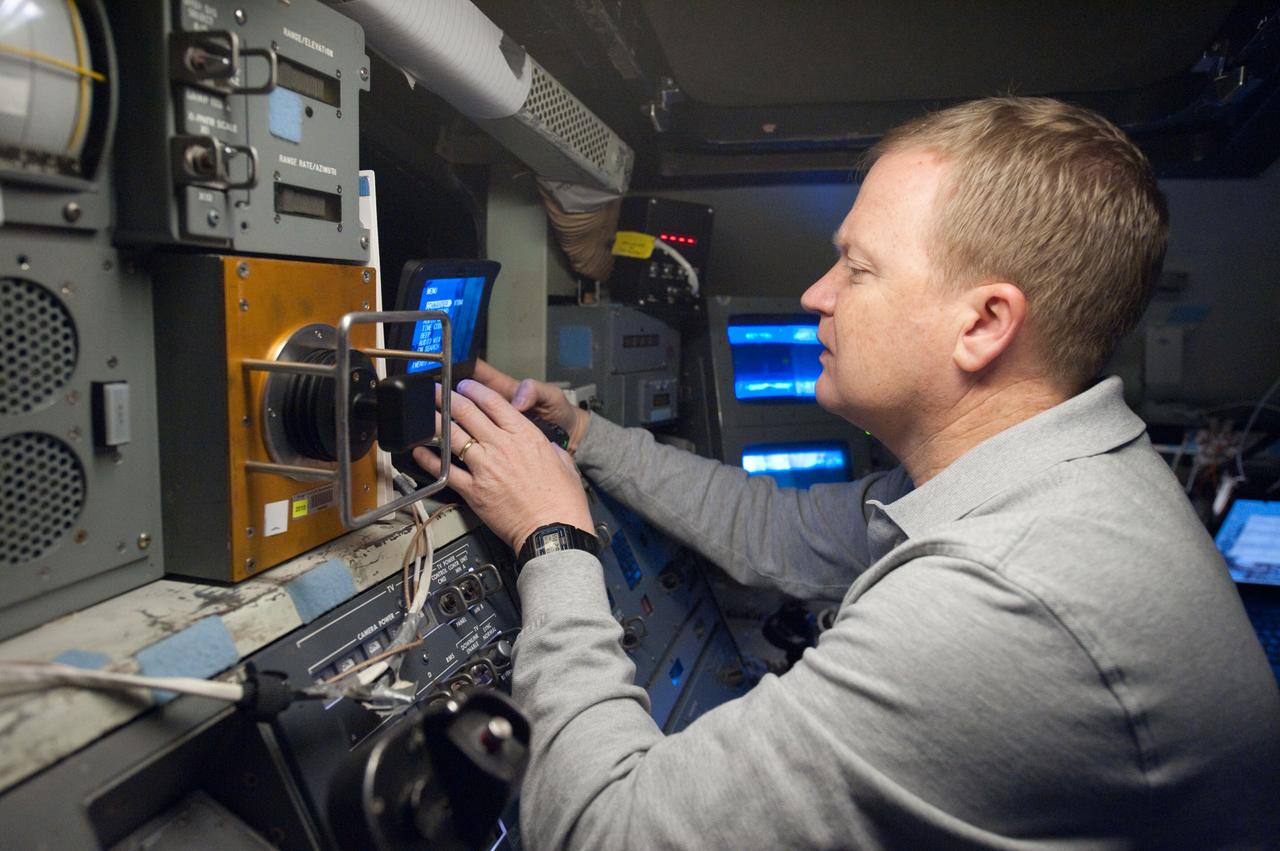
JSC2011-E-003045 (14 Jan. 2011) --- NASA astronaut Eric Boe, STS-133 pilot, participates in a training session in the fixed-base shuttle mission simulator (SMS) in the Jake Garn Simulation and Training Facility at NASA's Johnson Space Center. Photo credit: NASA or National Aeronautics and Space Administration
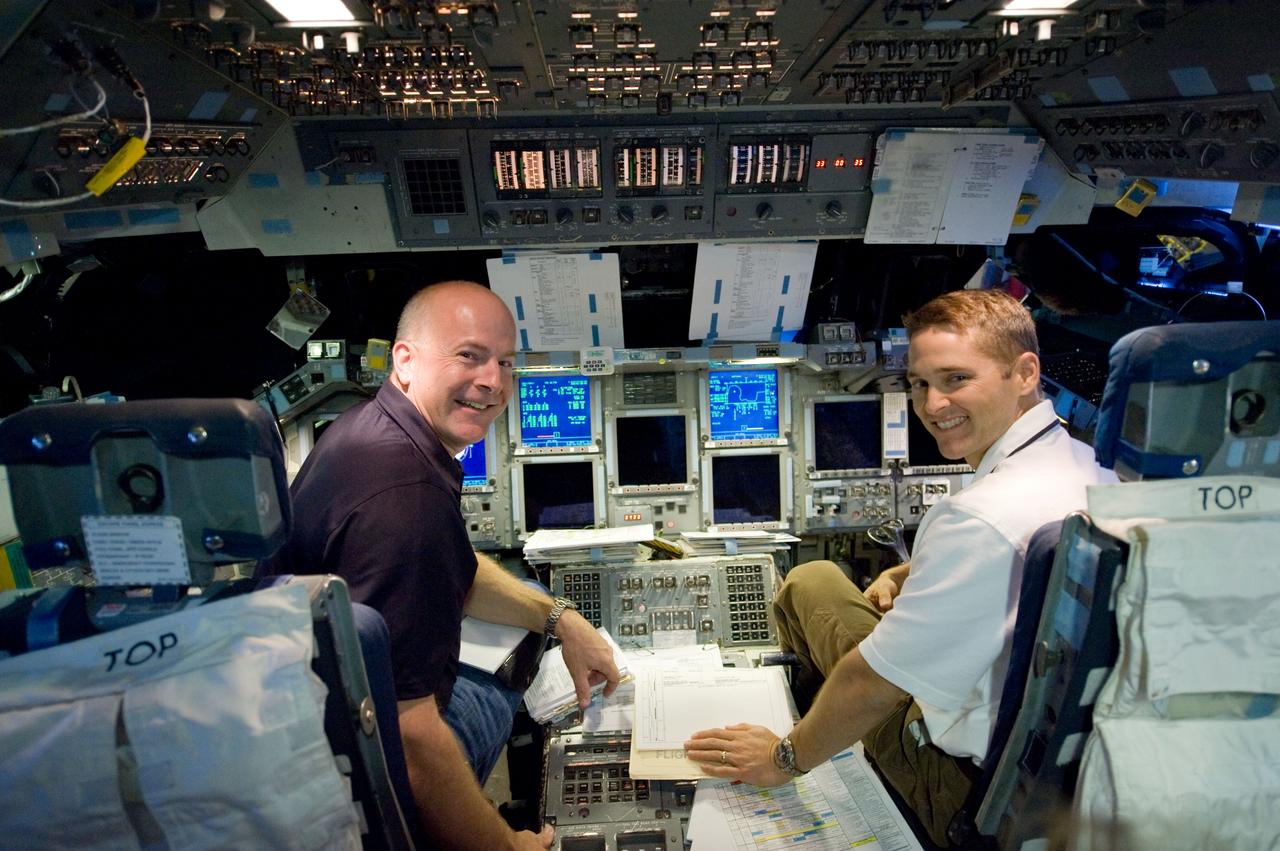
JSC2009-E-207318 (11 Sept. 2009) --- NASA astronauts Alan Poindexter (left) and James P. Dutton Jr., STS-131 commander and pilot, respectively, participate in a training session in the shuttle mission simulator (SMS) in the Jake Garn Simulation and Training Facility at NASA?s Johnson Space Center.

JSC2009-E-207324 (11 Sept. 2009) --- NASA astronaut James P. Dutton Jr., STS-131 pilot, occupies the pilot?s station during a training session in the shuttle mission simulator (SMS) in the Jake Garn Simulation and Training Facility at NASA?s Johnson Space Center.
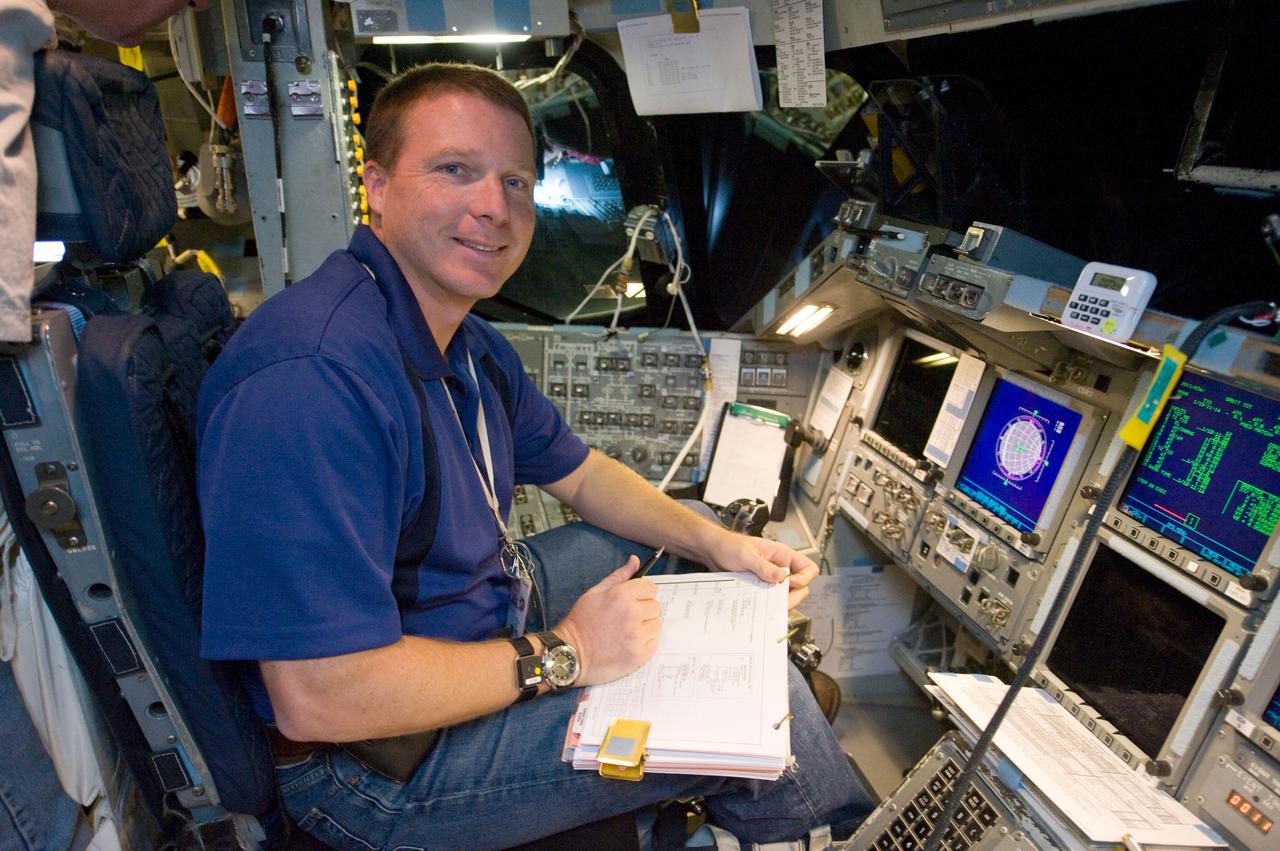
JSC2009-E-240773 (12 Nov. 2009) --- Astronaut Terry Virts, STS-130 pilot, occupies the commander?s station during a training session in the fixed-base shuttle mission simulator (SMS) in the Jake Garn Simulation and Training Facility at Johnson Space Center.
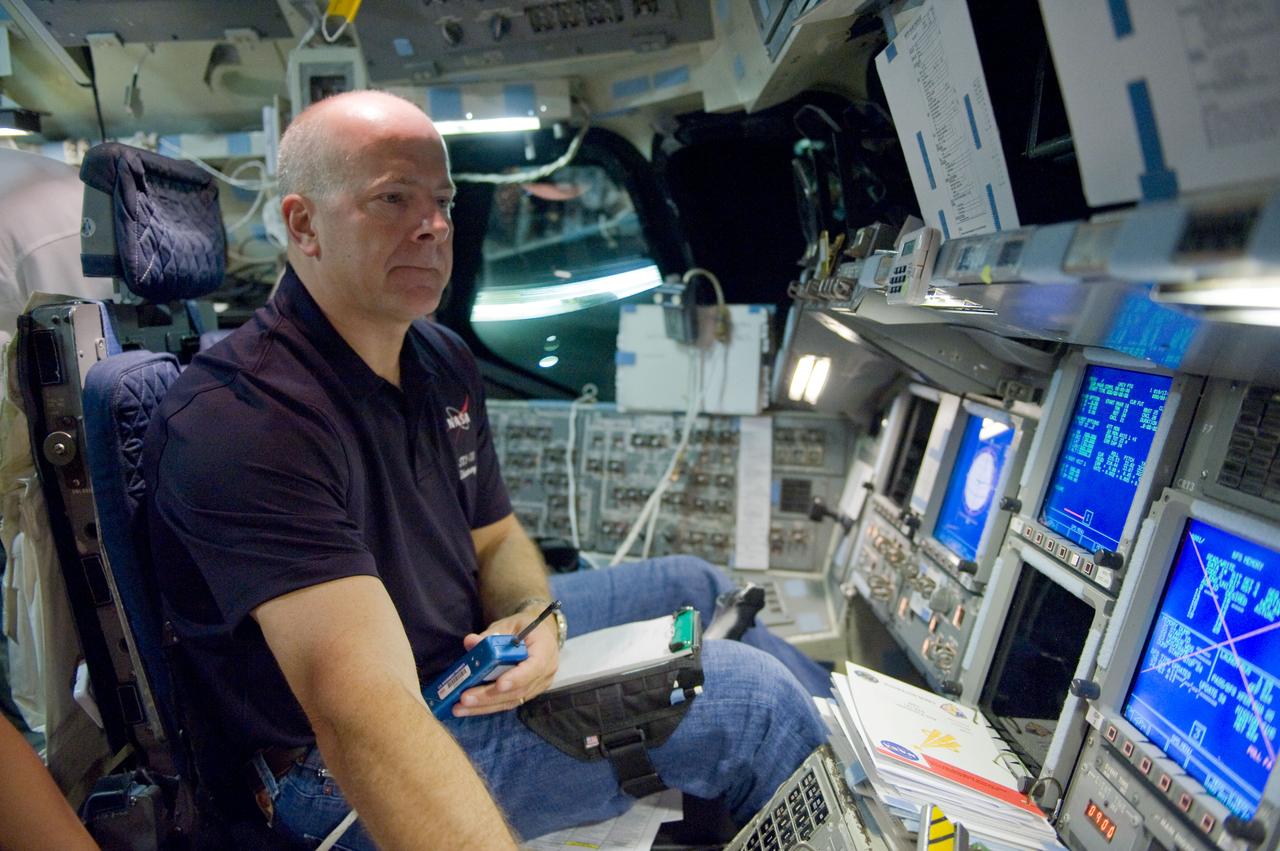
JSC2009-E-207369 (11 Sept. 2009) --- NASA astronaut Alan Poindexter, STS-131 commander, occupies the commander?s station during a training session in the shuttle mission simulator (SMS) in the Jake Garn Simulation and Training Facility at NASA?s Johnson Space Center.
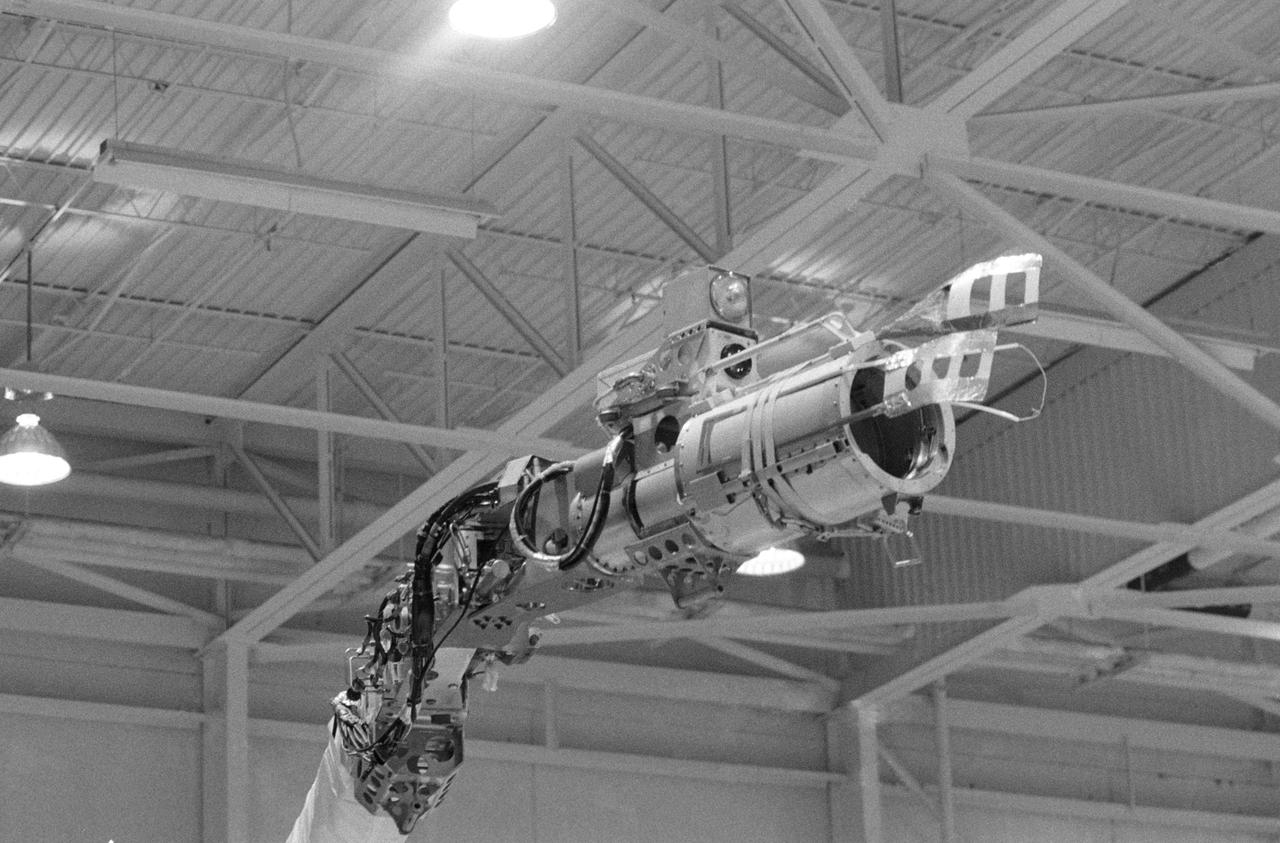
Simulation activities with the RMS in Bldg. 9A, with Astronaut Sally Ride testing the feasibility of the "Flyswatter" design for the STS-23/51D Mission on 04/15/16/1985. 1. STS-23/51D - Crew Training (Flyswatter) 2. Shuttle - Simulation (Flyswatter) JSC, Houston, TX
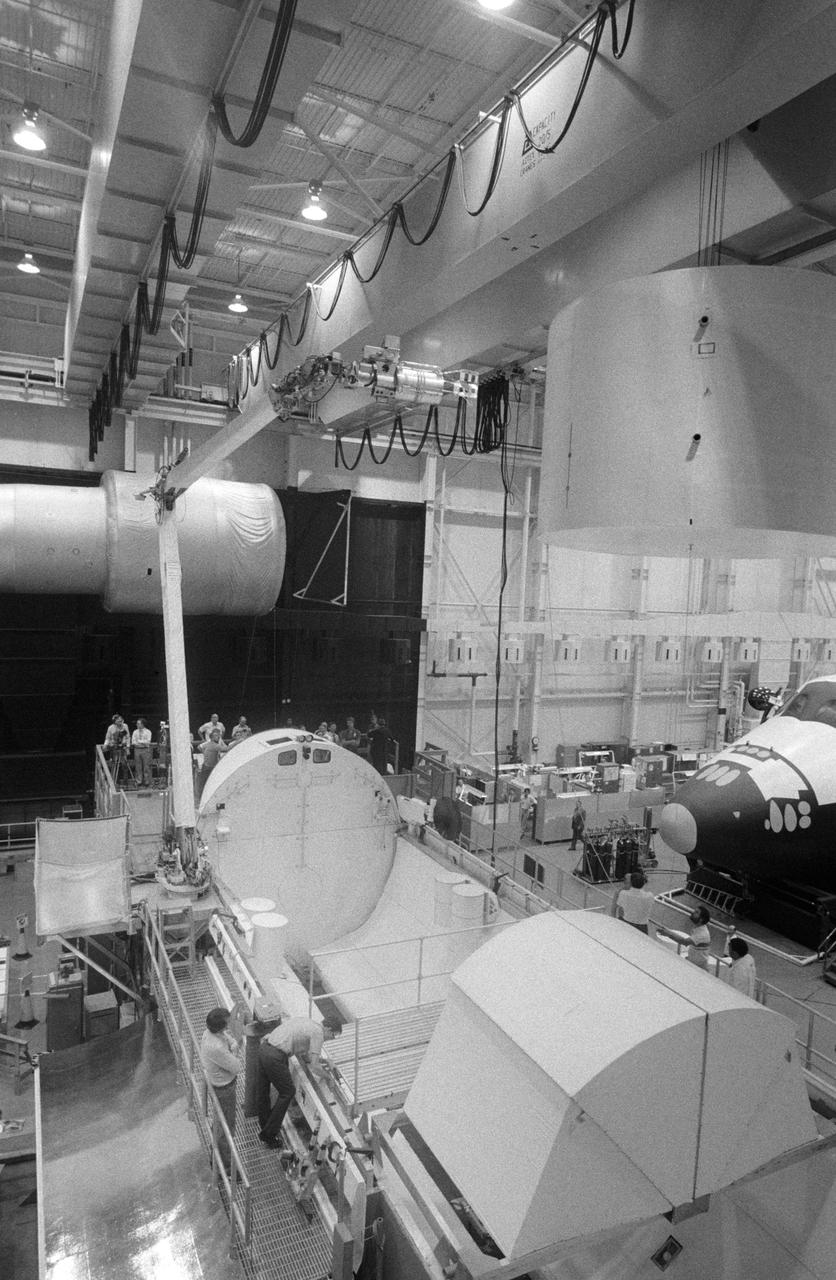
Simulation activities with the RMS in Bldg. 9A, with Astronaut Sally Ride testing the feasibility of the "Flyswatter" design for the STS-23/51D Mission on 04/15/16/1985. 1. STS-23/51D - Crew Training (Flyswatter) 2. Shuttle - Simulation (Flyswatter) JSC, Houston, TX